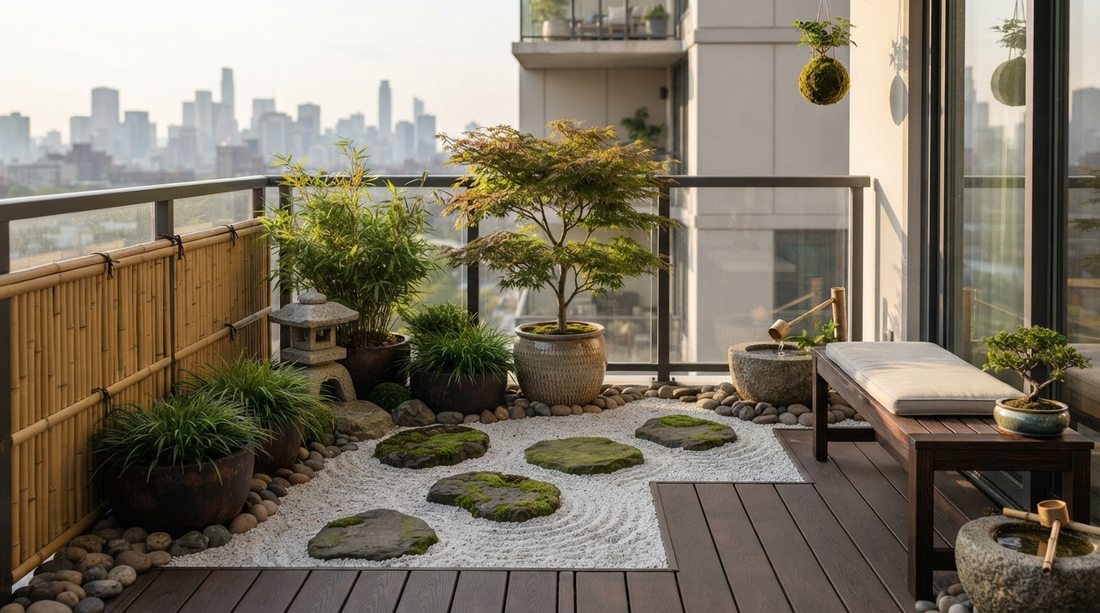
Creating a premium japanese balcony garden doesn’t require massive landscaping budgets. Smart stone placements and right-sized flora deliver absolute tranquility instantly. Grab specific durable materials below for an authentic urban sanctuary.
Design Snapshot: Key Principles
- Asymmetrical Groupings: Arrange rocks, plants, and features in odd numbers (3, 5, 7) to mirror natural landscapes rather than formal Western symmetry
- Kanso (Simplicity): Remove unnecessary elements; each stone, plant, and object must serve a defined visual or spiritual purpose within the composition
- Ma (Negative Space): Empty areas allow the garden to breathe and prevent visual clutter; spacing between elements affects the entire experience
- Shakkei (Borrowed Scenery): Frame distant views or architectural elements to expand perceived space and integrate the balcony with surrounding context
Stone and Gravel Foundations for Balcony Garden Japan Designs
Stone arrangements form the structural backbone of authentic zen gardens. Gravel floors and carefully positioned boulders create the karesansui (dry landscape) aesthetic that defines contemplative Japanese spaces.
1. Sanzon-ishigumi Three-Stone Grouping
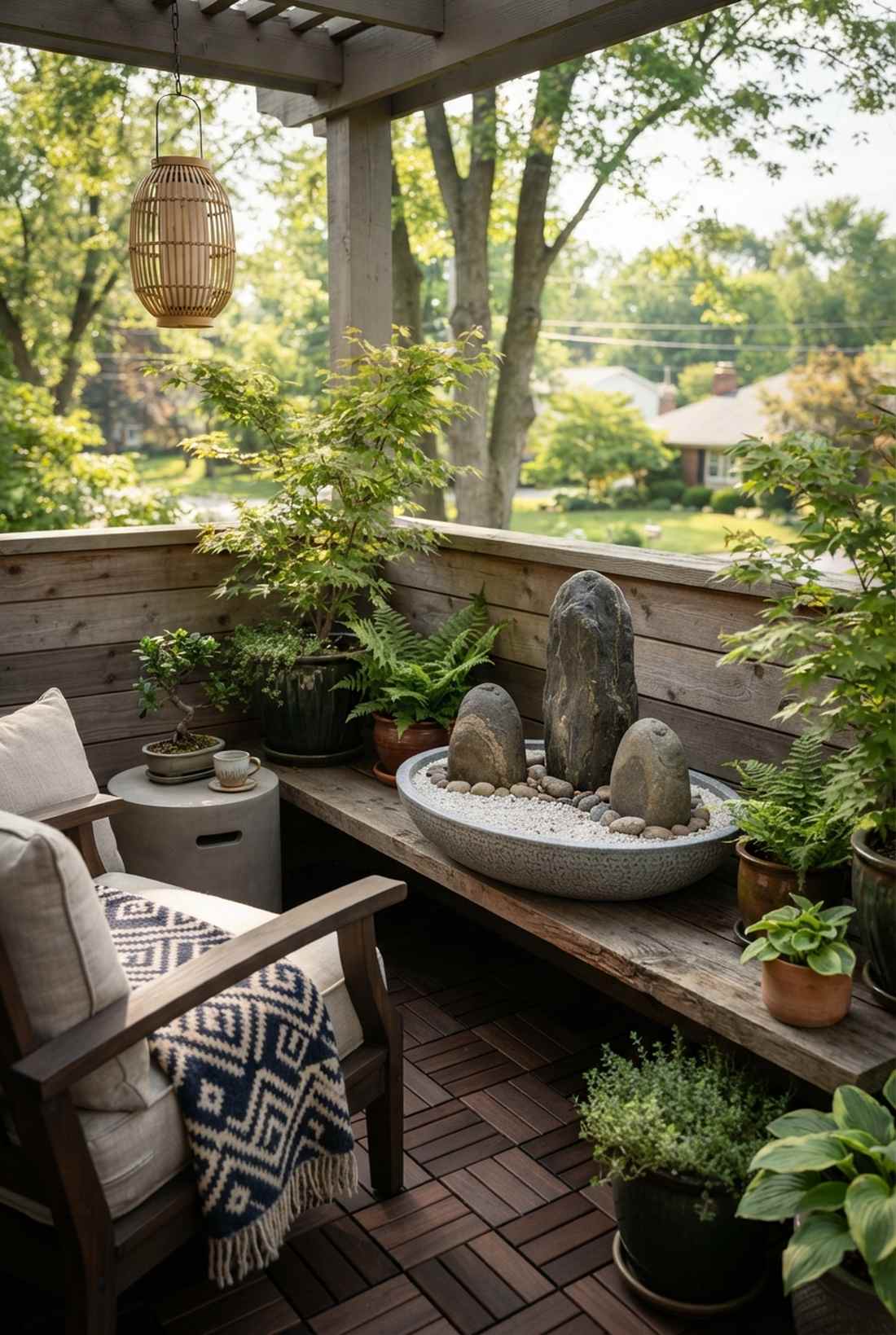
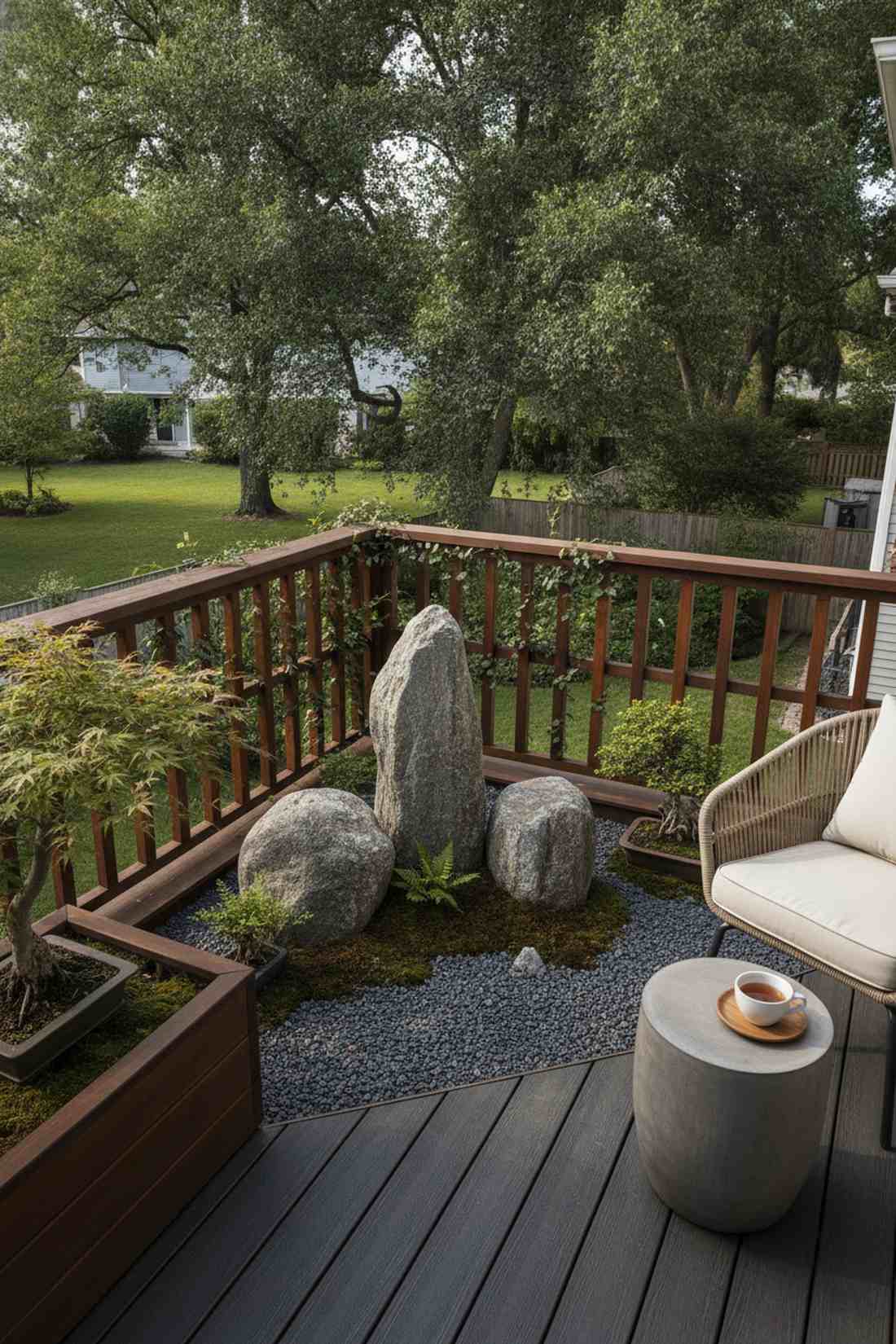
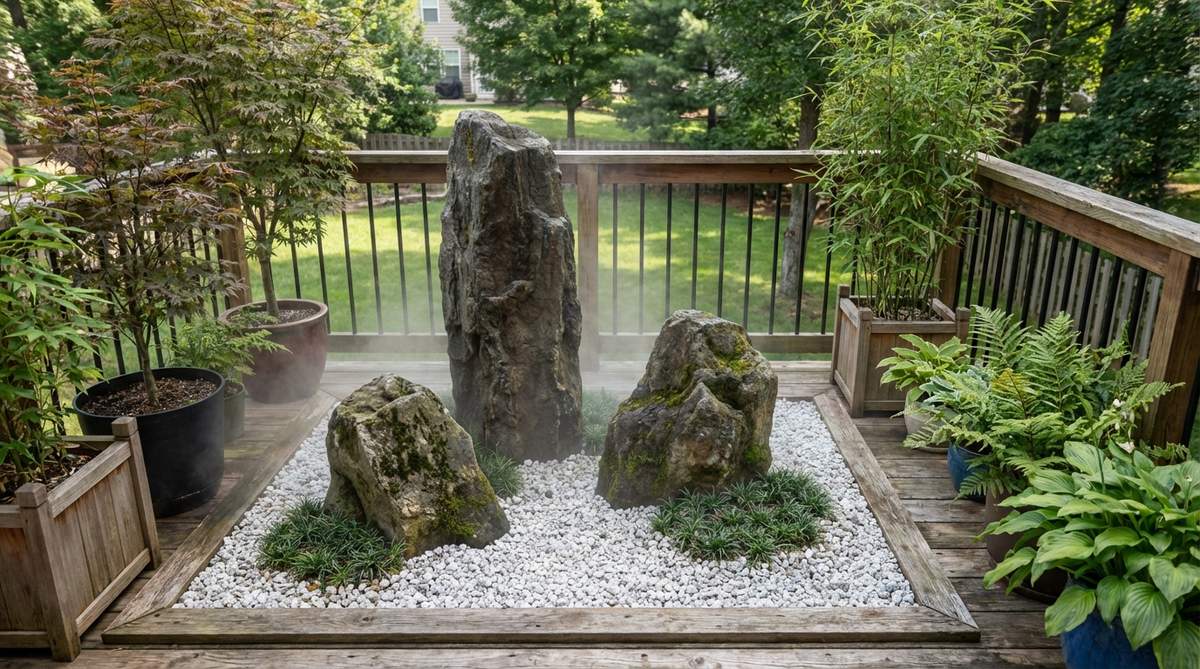
Feels like an ancient temple grounds you accidentally discovered. This minimalist rock garden decor works exceptionally well for anchoring a shaded balcony corner.
Amateurs often clutter their space, but an asymmetrical 3-stone grouping looks far more expensive than it is. Place a tall vertical stone as the centerpiece flanked by two smaller rocks, sneaking in quality miniature garden supplies for accurate scaling.
You can easily pull this off for around $45. Save this to your DIY weekend garden board!
- Key Materials: Asymmetrical vertical river stones
- Vibe / Style: Ancient spiritual focal point
- Difficulty: Easy beginner setup
- Budget Breakdown: Materials: $30 | Base: $15
- Creator’s Tip: Bury the bottom third of the stones to make them look naturally grounded.
- Smart Sourcing: Grab pre-washed landscape boulders (3-pack) or weather-resistant faux stone kits.
2. Raked Gravel Meditation Platform
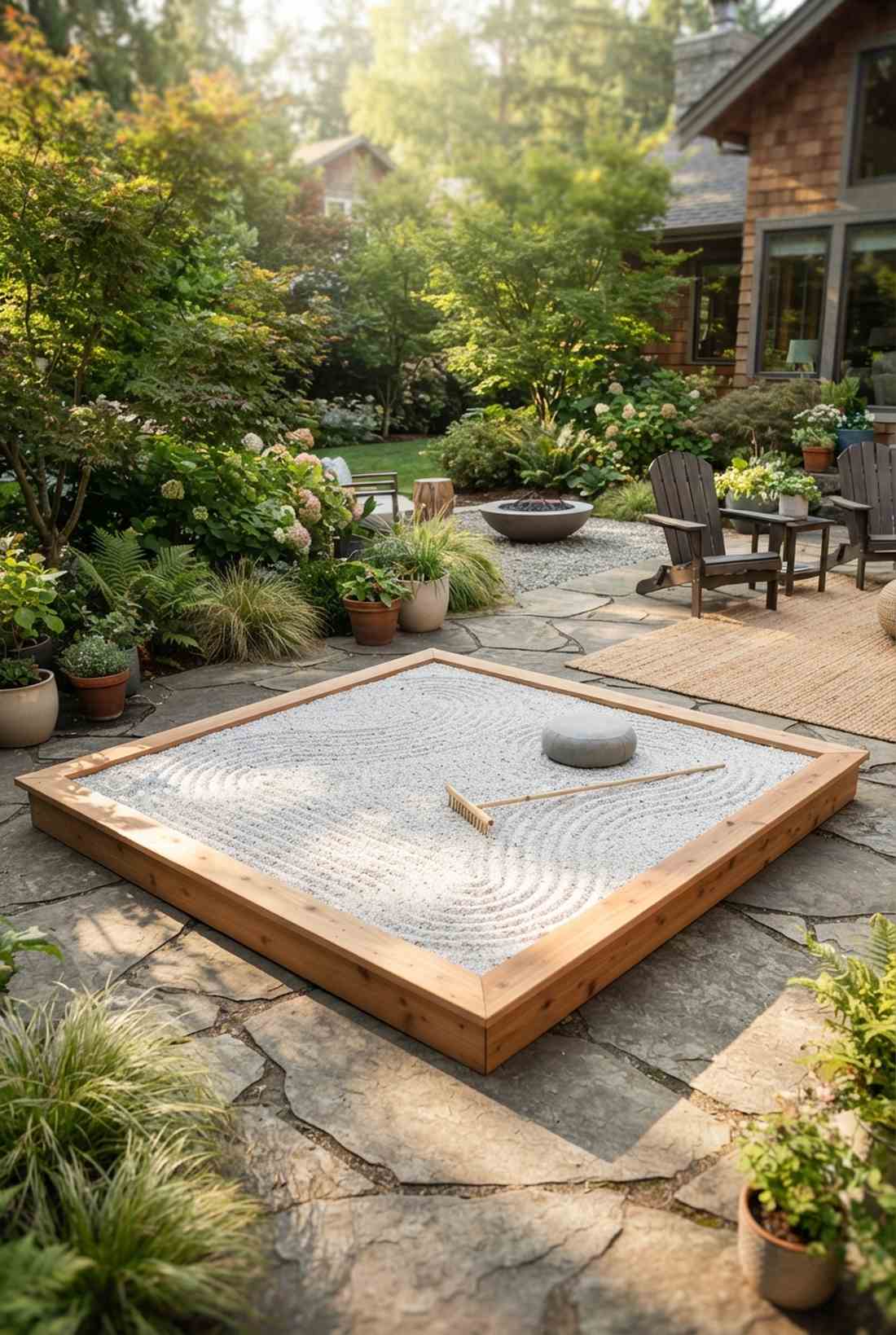
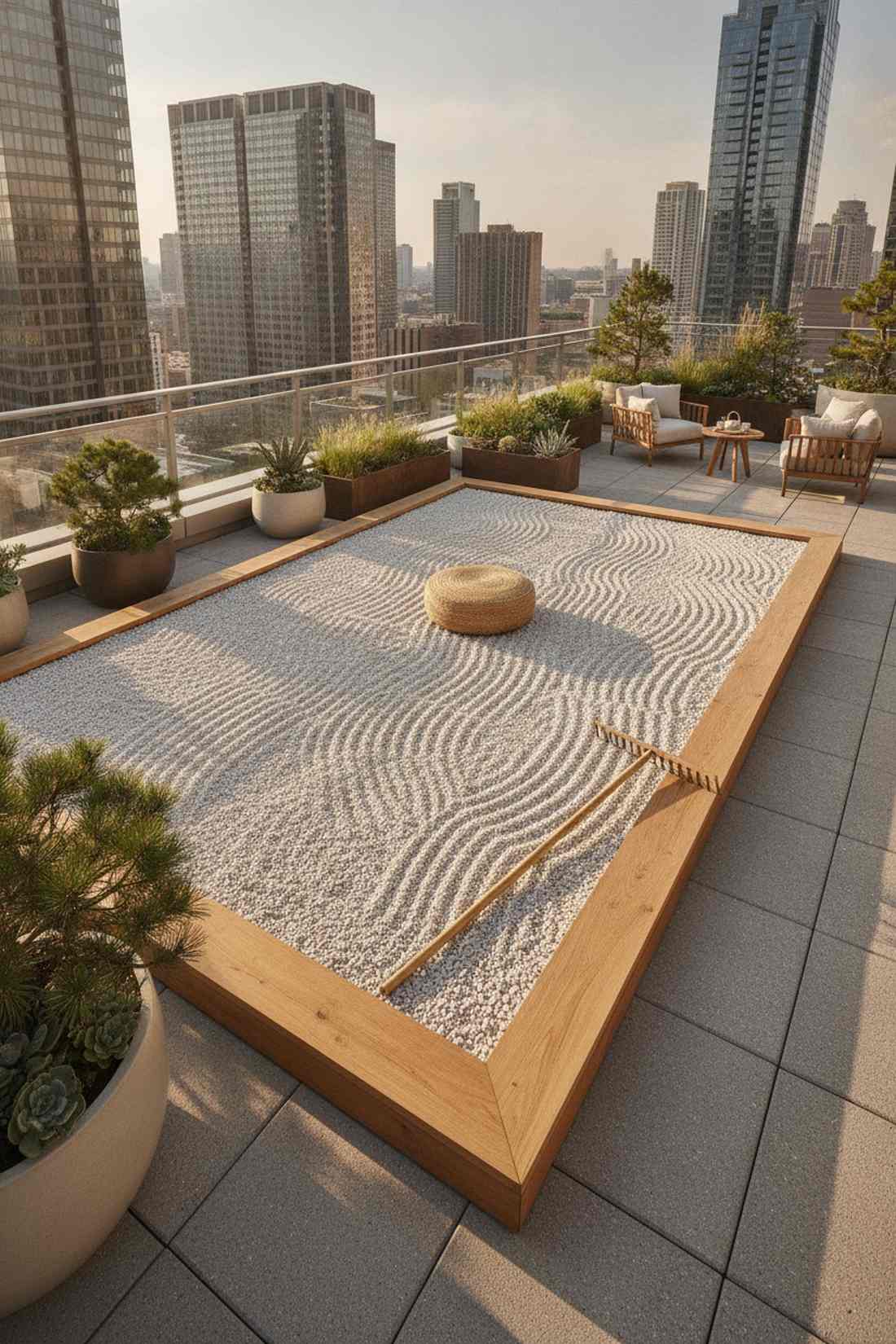
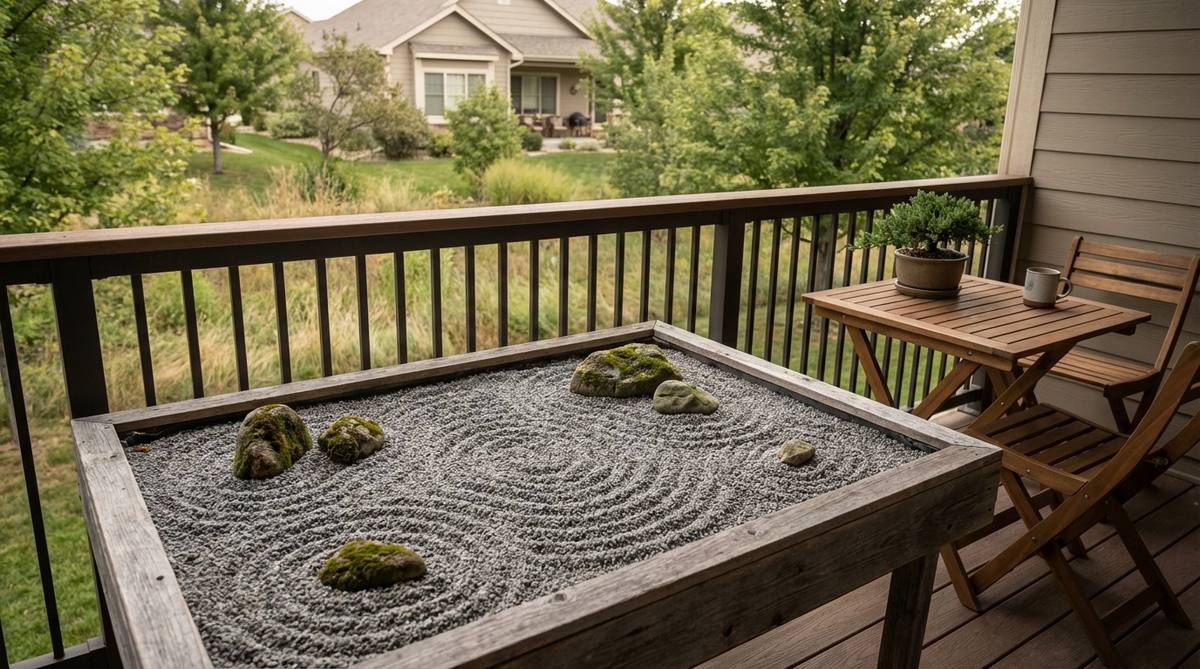
Evokes absolute silence and profound mental clarity. A desktop-style sand display scaled up provides the ultimate grounding use-case for a busy apartment terrace.
Ditching traditional patio rugs for a shallow gravel bed gives a designer-level finish. Simply build a low wooden frame, fill it with crushed granite, and establish a weekly raking routine that mimics rolling ocean waves.
Expect to spend about $30 to $50 on base frame materials.
- Key Materials: Fine white gravel, wooden border frame, bamboo rake
- Vibe / Style: Interactive sensory calm
- Difficulty: Moderate DIY framing
- Budget Breakdown: Gravel: $25 | Frame Wood: $20
- Creator’s Tip: Use slightly damp gravel to make the raked lines hold their shape much longer.
- Smart Sourcing: Use pre-sifted white granite bags (bulk pack) and a hardwood zen garden rake kit.
3. River Stone Pathway Border
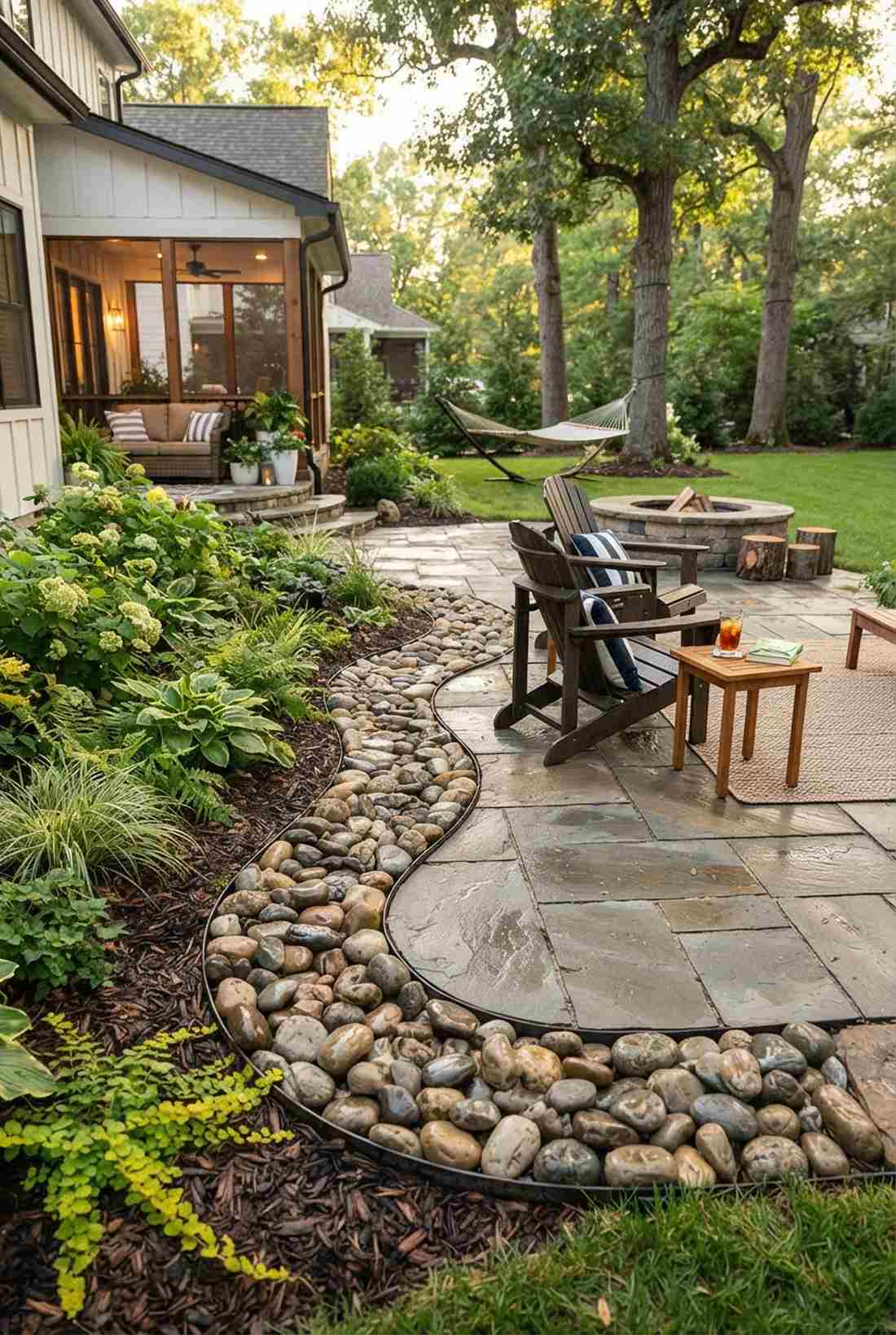
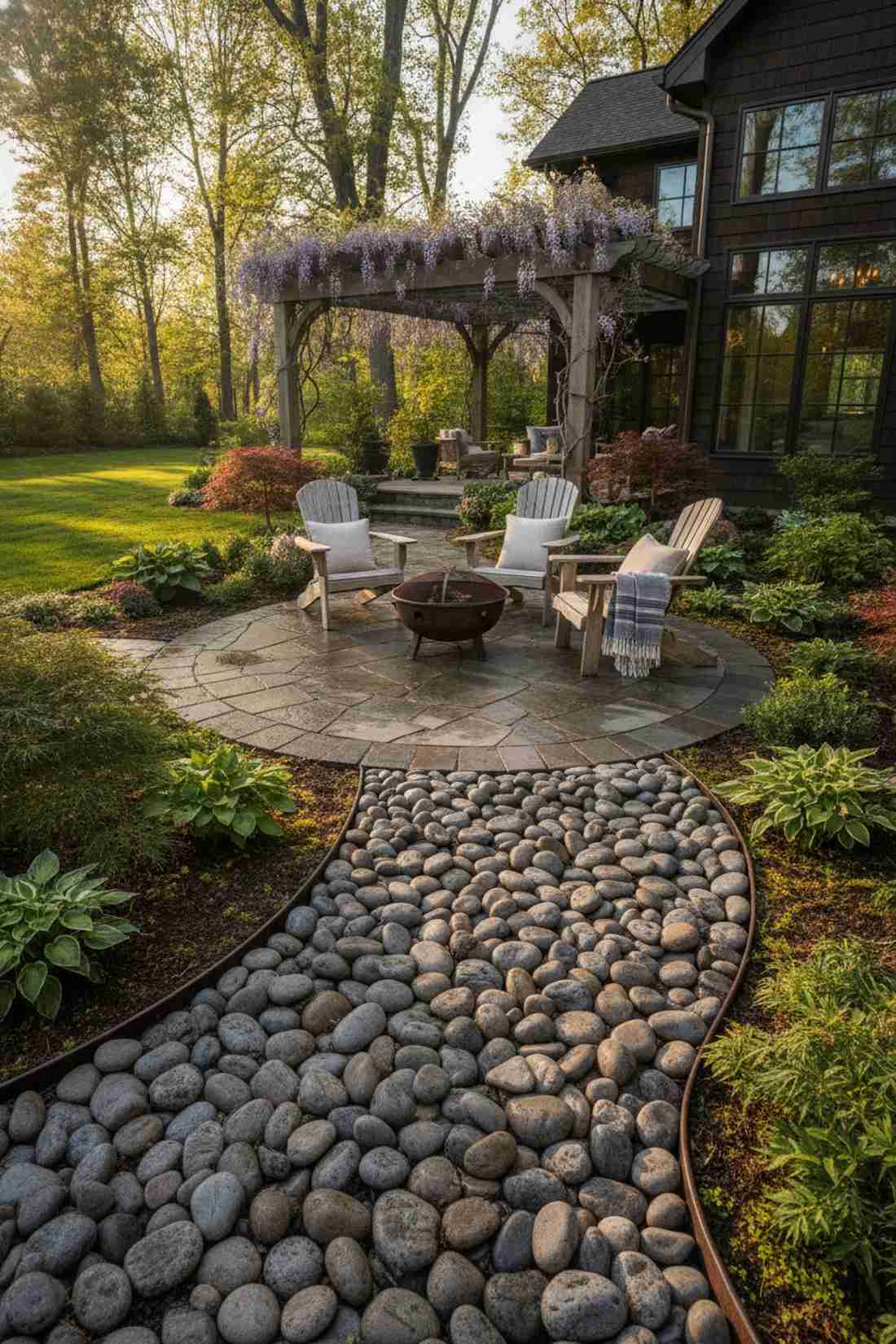
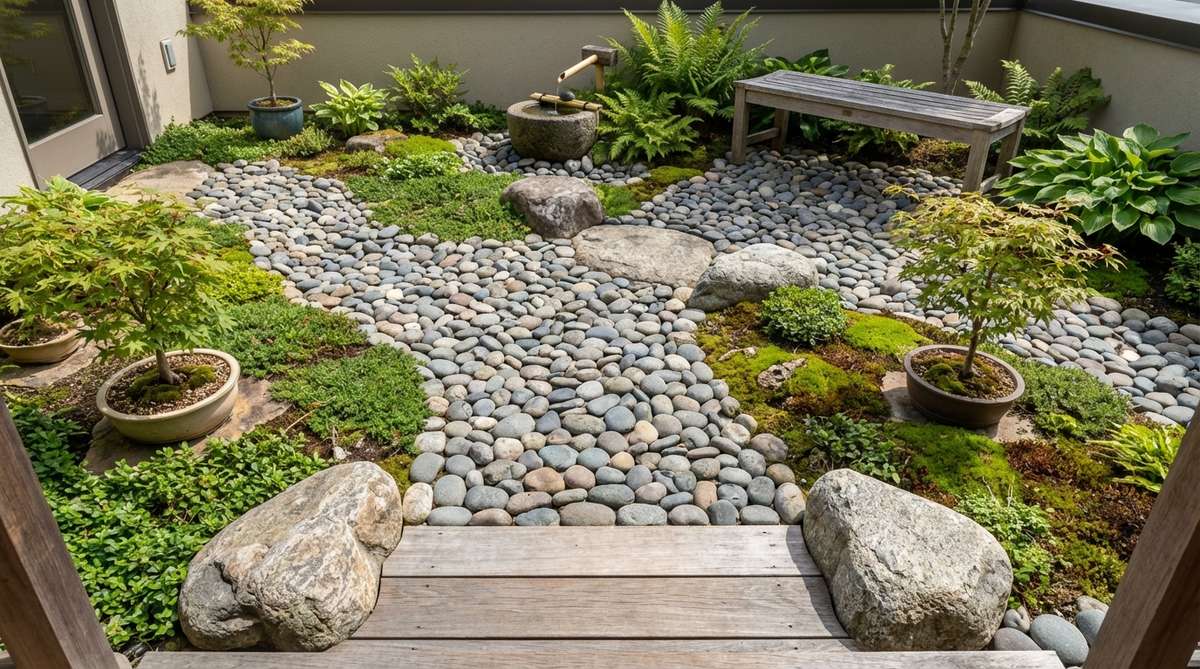
Straight out of a hidden Kyoto courtyard. A natural stone pathway border is perfect for framing patio seating zones beautifully.
Many urban renters ignore floor transitions, yet edging your balcony with smooth rocks elevates the whole aesthetic instantly. Arrange varying sizes of grey and brown stones along your plant beds, serving as a symbolic threshold for your space.
Grabbing bags locally keeps this upgrade under $20. Pin this if you’re planning a small space upgrade!
- Key Materials: Assorted smooth river rocks
- Vibe / Style: Organic structured flow
- Difficulty: Zero-skill arrangement
- Budget Breakdown: Stones: $15 | Liner: $5
- Creator’s Tip: Wash the stones before laying them down to reveal their true deep colors.
- Smart Sourcing: Look for polished river pebbles (bulk bag) or UV-coated border edging kits.
4. Stacked Stone Mountain Representation
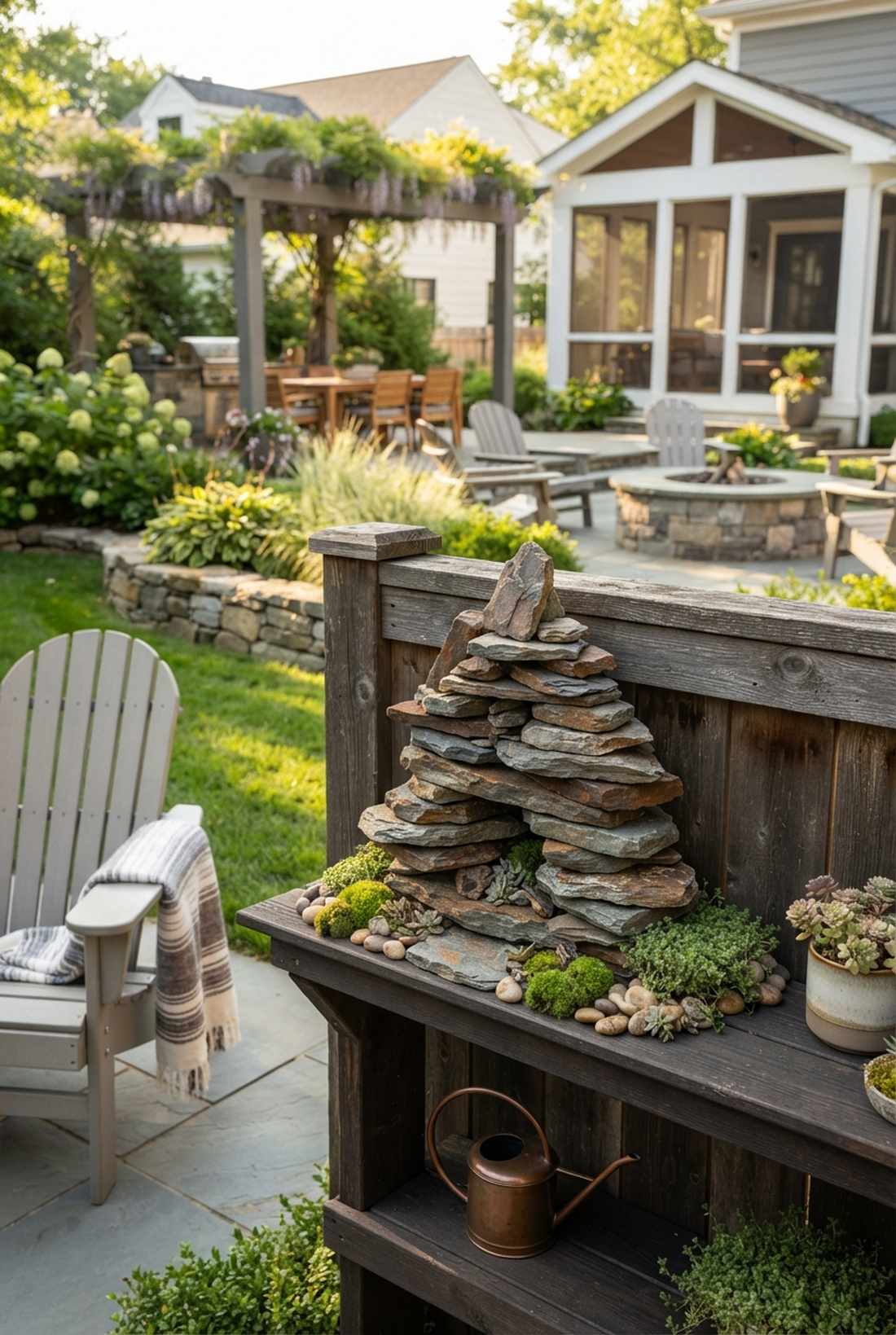
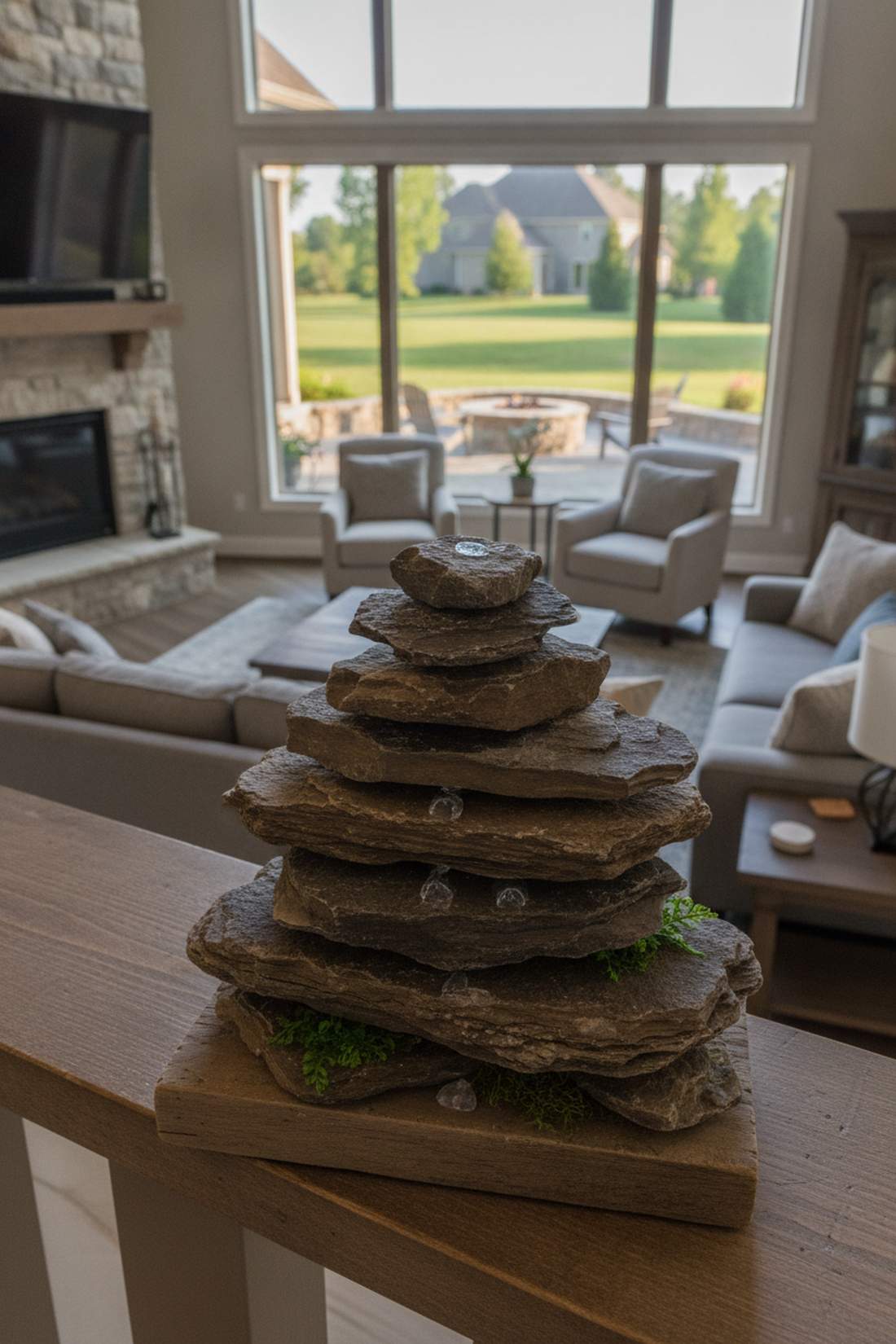
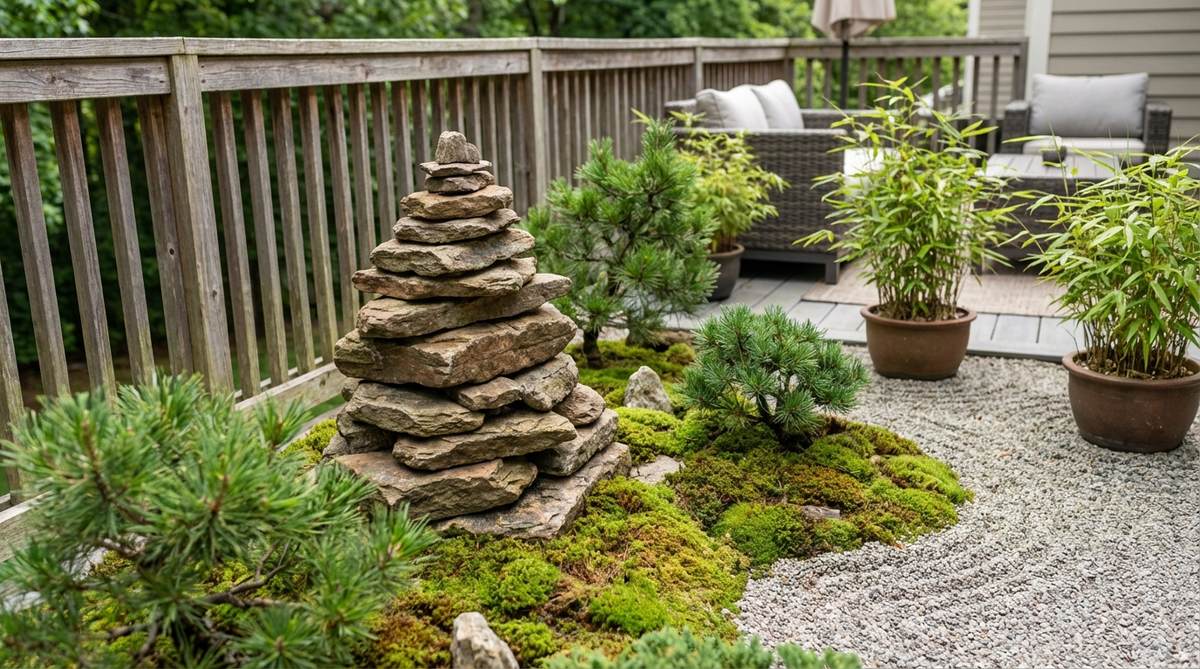
Brings a towering mountain range directly to eye level. This zen cairn structure acts as a brilliant micro-focal point for compact ledges.
While highly intricate setups fail over time, stacking flat stones under 24 inches tall creates immediate visual depth. Choose deeply weathered rocks instead of polished ones, seamlessly integrating premium terrarium accessories if desired for texture.
Sourcing from nature makes this virtually free, or $15 for bought stones.
- Key Materials: Flat, textured stacking stones
- Vibe / Style: Rugged miniature landscape
- Difficulty: Fun balancing project
- Budget Breakdown: Rocks: $15 | Hidden Adhesive: $5
- Creator’s Tip: Use a tiny dab of outdoor landscape glue between layers if you live in high-wind areas.
- Smart Sourcing: Pre-cut flat stacking slates and clear waterproof landscape adhesive.
5. Decomposed Granite Base Layer
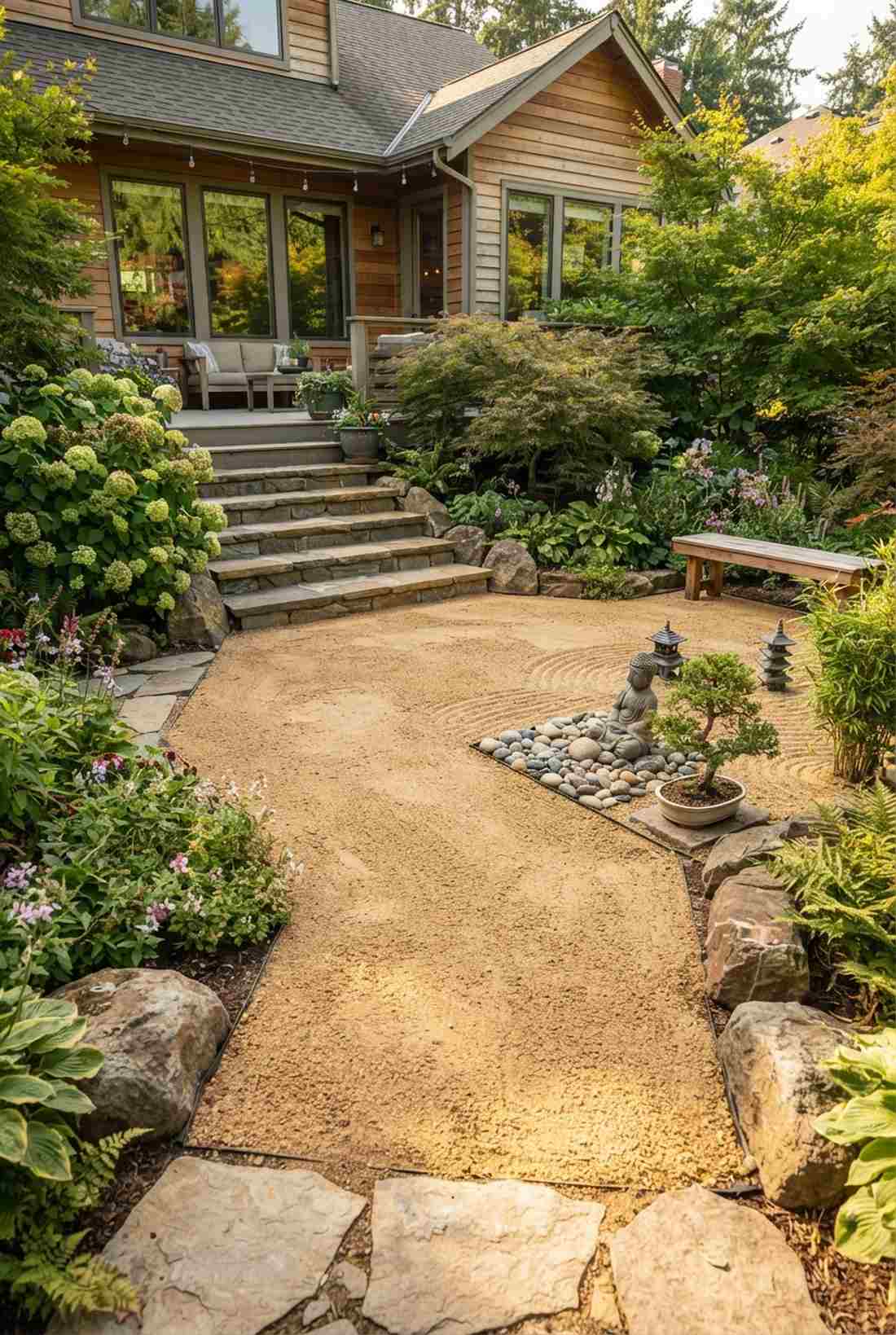
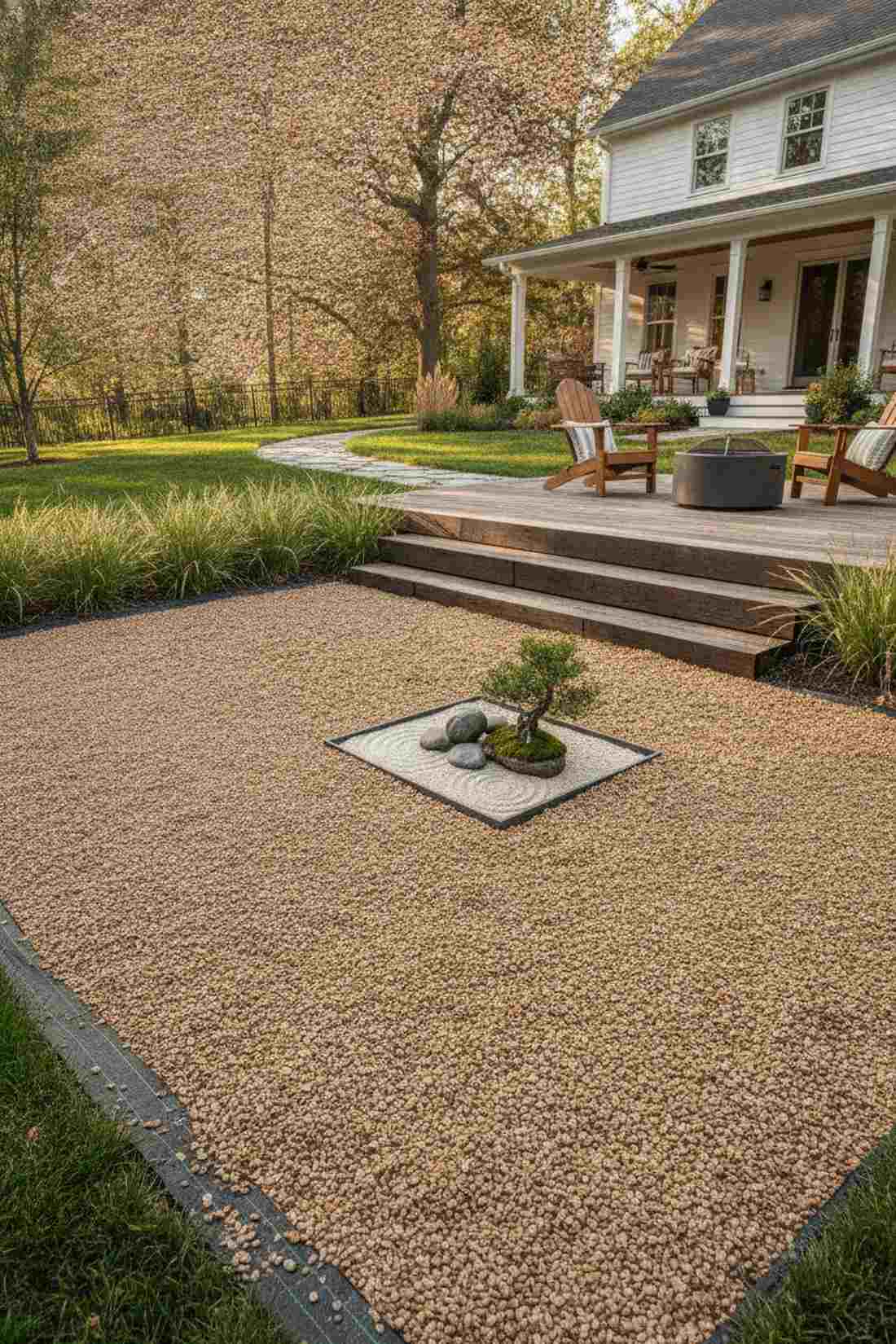
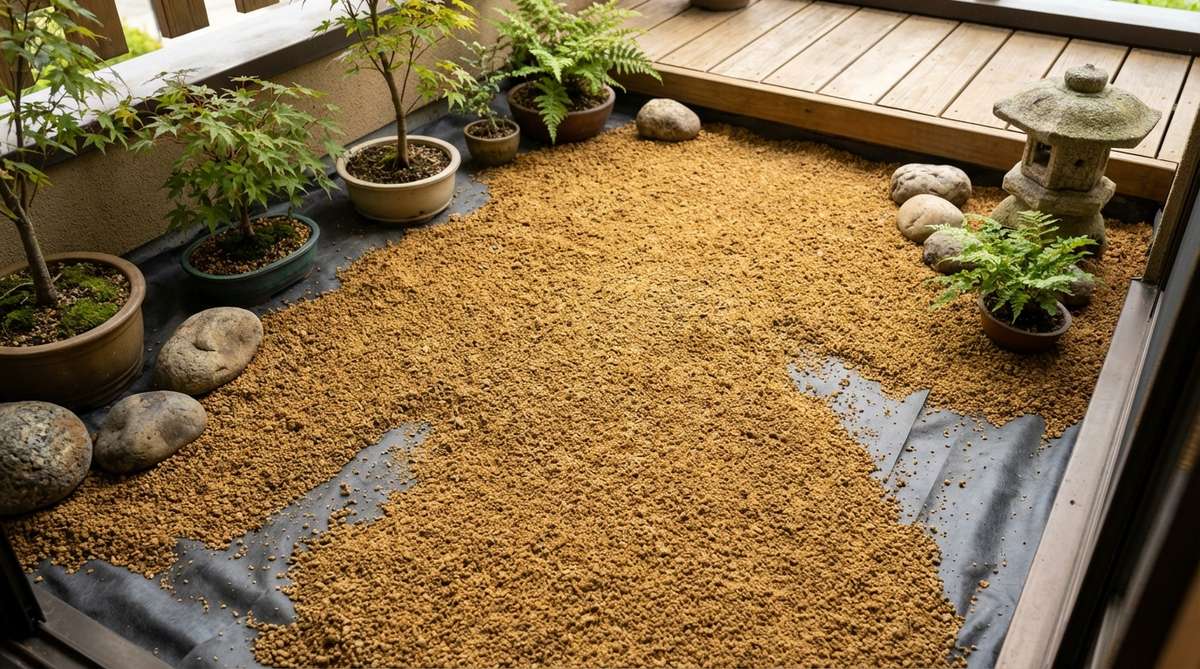
Delivers that authentic, earthy crunch beneath your outdoor steps. Applying an organic granite floor layer is the ultimate foundational use-case for high-traffic outdoor sanctuaries.
Most people just leave bare concrete, but spreading decomposed granite completely redefines the layout’s vibe. Apply a 2-inch layer over landscape fabric for a permeable base that easily accommodates zen garden starter kits right on top.
Coverage for a standard small balcony runs around $40.
- Key Materials: Decomposed granite, landscape weed fabric
- Vibe / Style: Earthy, authentic temple grounds
- Difficulty: Heavy lifting involved
- Budget Breakdown: Granite: $30 | Fabric: $10
- Creator’s Tip: Tamp the granite down with a flat board to create a stable, non-shifting floor surface.
- Smart Sourcing: Pre-mixed stabilized decomposed granite and heavy-duty porous landscape fabric.
Most people get their balcony flooring completely wrong… until they try the exact layout coming up next.
Bamboo and Maple Compositions for Japanese Balcony Garden Structure
Japanese maples and clumping bamboo species provide signature plant forms while remaining manageable in containers. These woody plants establish vertical structure and seasonal interest without overwhelming limited square footage.
6. Weeping Japanese Maple Focal Point
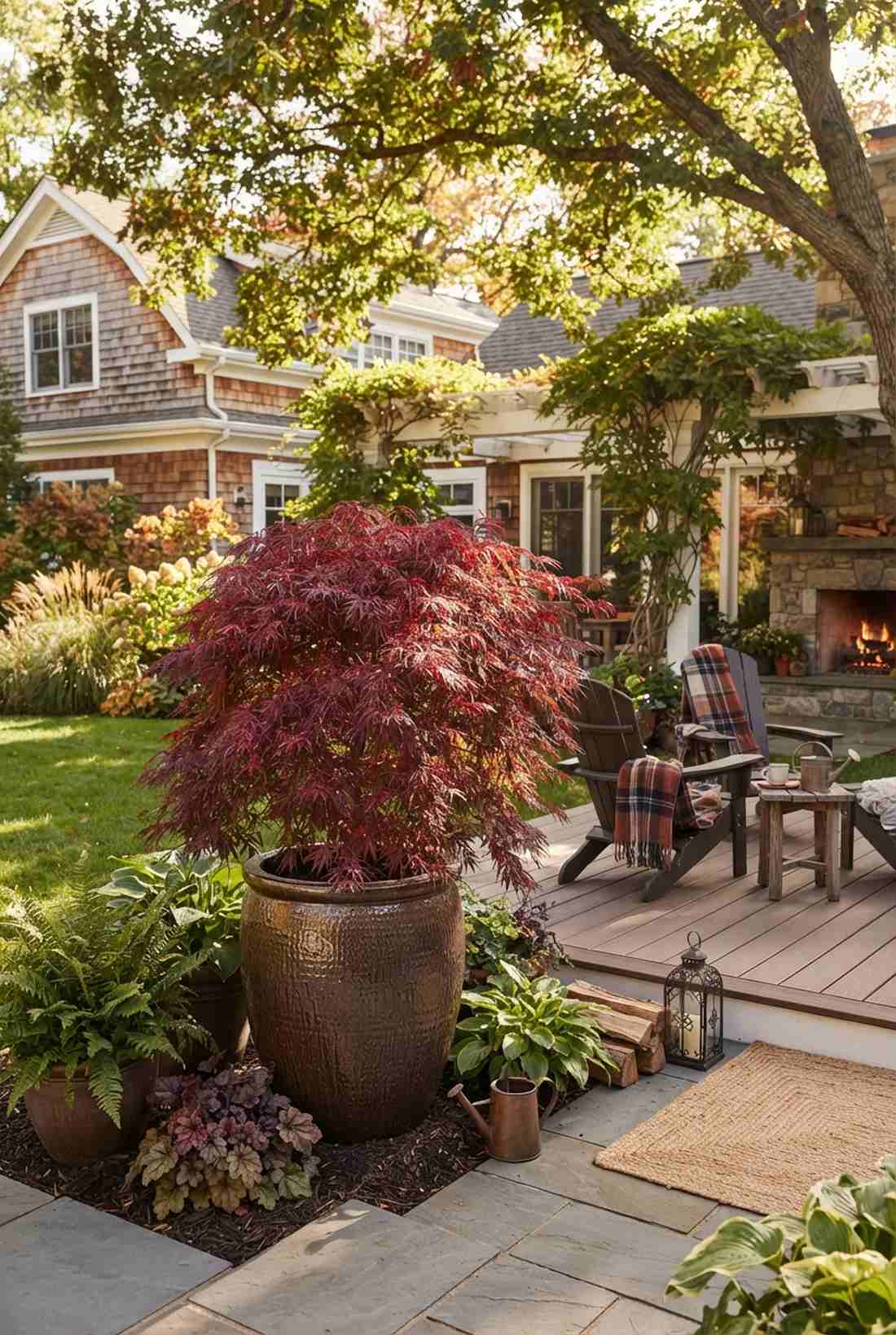
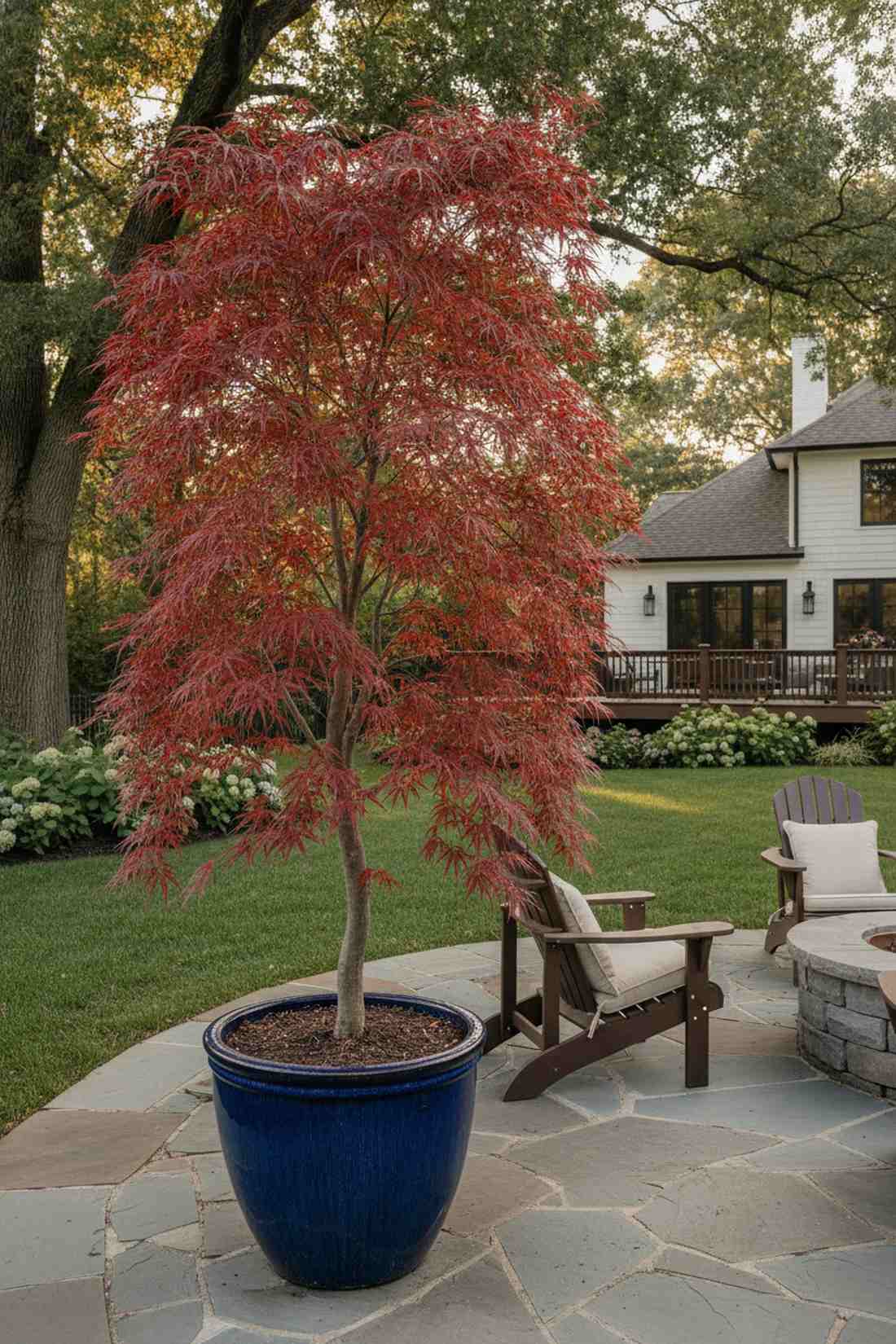
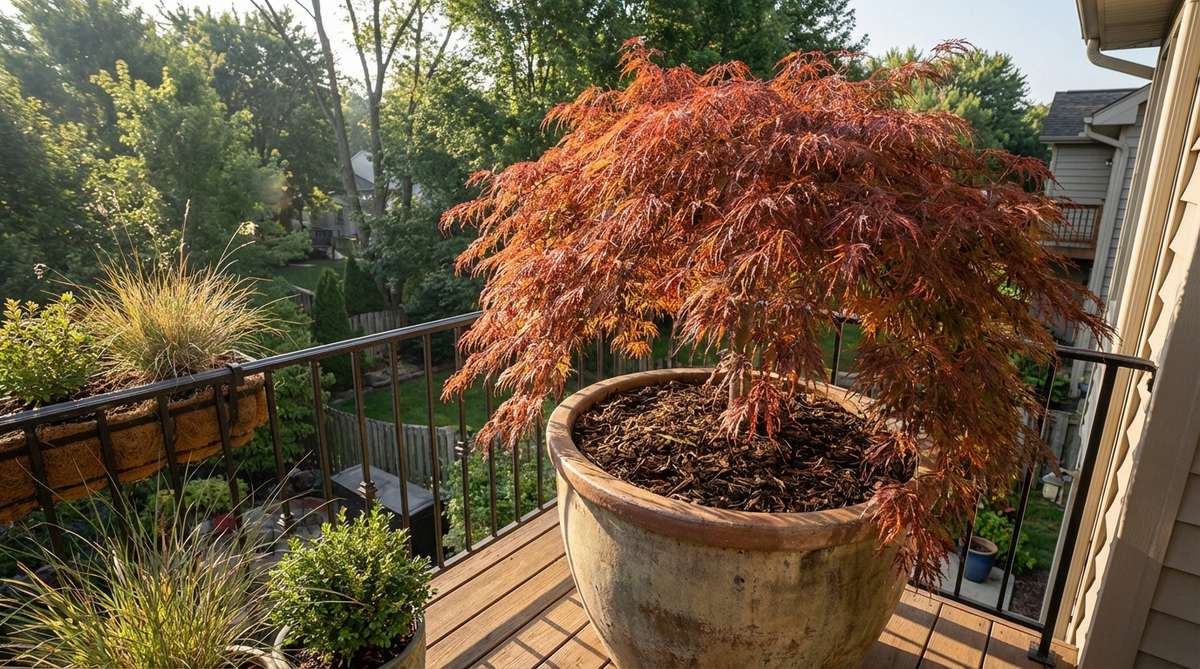
Feels like stepping into a vibrant autumn painting. A potted weeping tree arrangement works flawlessly as a standalone centerpiece on partially shaded patios.
Generic outdoor shrubs often look cheap, but a ‘Red Dragon’ maple delivers a surprisingly premium look. Position this cascading beauty in a ceramic pot away from afternoon heat, adding rich mulch to protect the root system.
An established sapling and pot will run you about $85. Pin this layout to remember the specific tree type!
- Key Materials: Acer palmatum ‘Red Dragon’, large ceramic planter
- Vibe / Style: Dramatic cascading elegance
- Difficulty: Moderate maintenance
- Budget Breakdown: Tree: $50 | Pot & Soil: $35
- Creator’s Tip: Rotate the pot 90 degrees every month to ensure even leaf growth on all sides.
- Smart Sourcing: Pre-formulated acidic potting soil and frost-resistant glazed ceramic pots.
7. Clumping Bamboo Privacy Screen
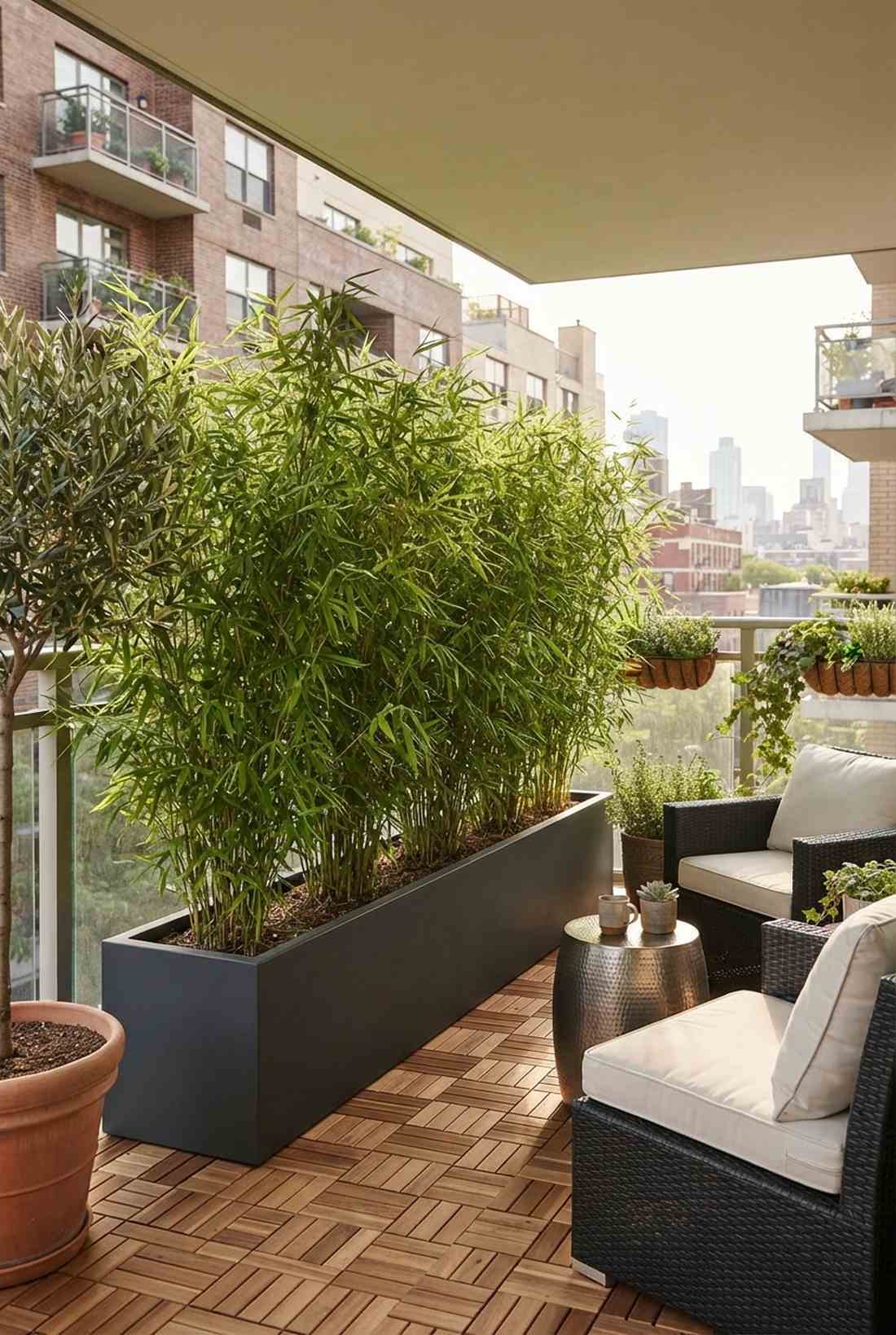
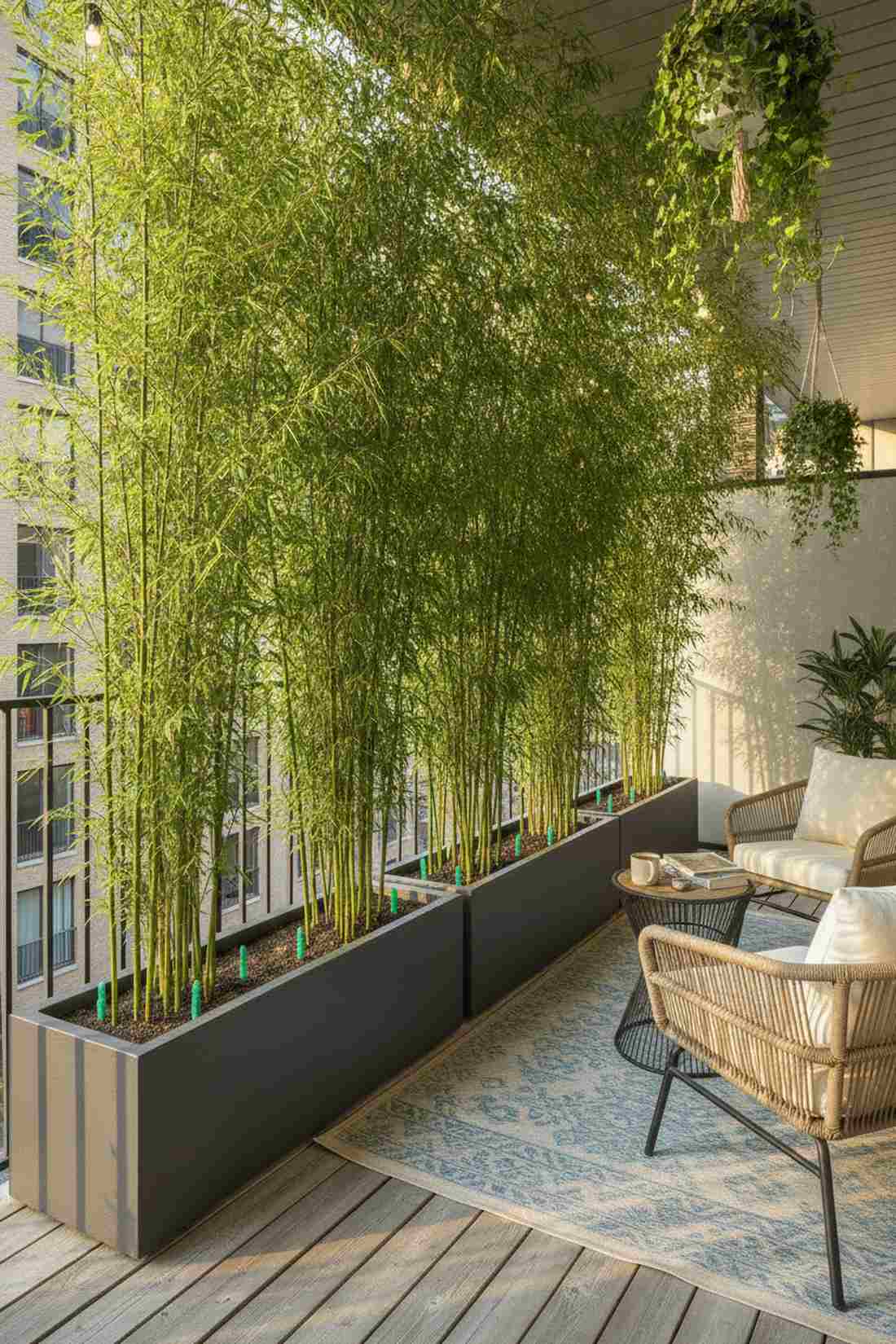
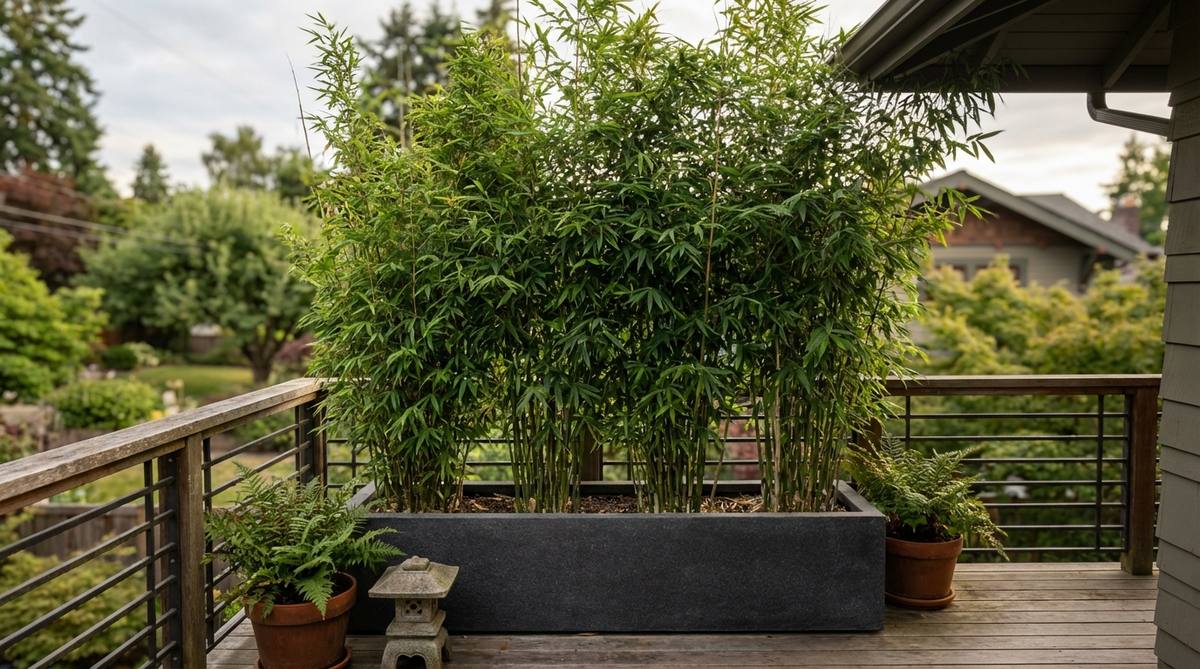
The ultimate organic shield from nosy apartment neighbors. A dense living privacy wall creates incredible enclosure for exposed city balconies.
Artificial partitions fade terribly in the sun, but a rectangular planter filled with Fargesia rufa gives an upscale, lush finish. Space these clumping bamboo plants out evenly, and watch them create an impenetrable green screen without invasive spreading.
Creating a full wall takes roughly $100 in initial plants.
- Key Materials: Fargesia rufa plants, rectangular trough planter
- Vibe / Style: Secluded green sanctuary
- Difficulty: Easy planting, high watering needs
- Budget Breakdown: Plants (x3): $60 | Planter: $40
- Creator’s Tip: Never use running bamboo varieties in containers, as their root pressure will crack the pots.
- Smart Sourcing: UV-coated fiberglass trough planters and slow-release bamboo fertilizer spikes.
8. Bamboo Grove Miniature Forest
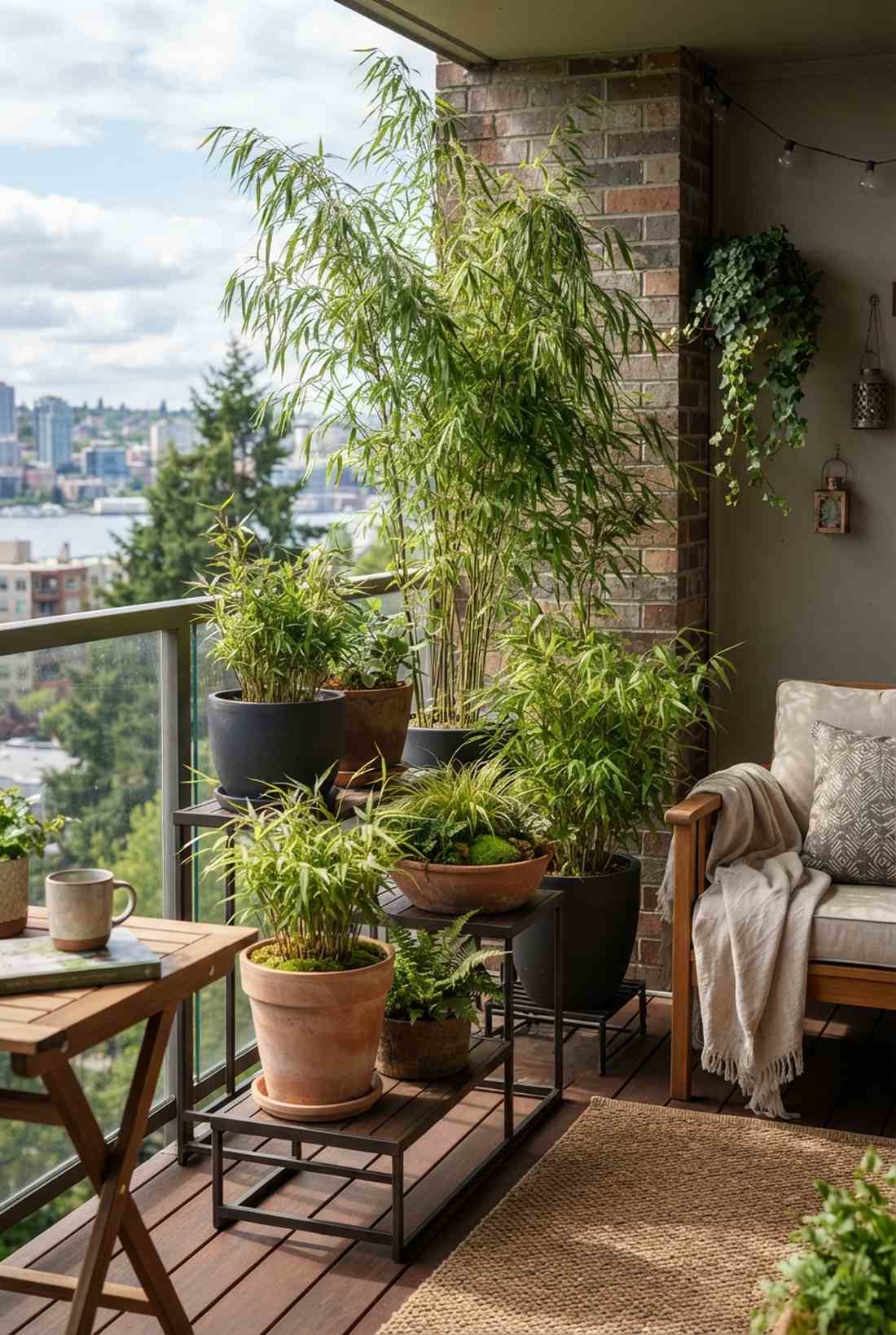
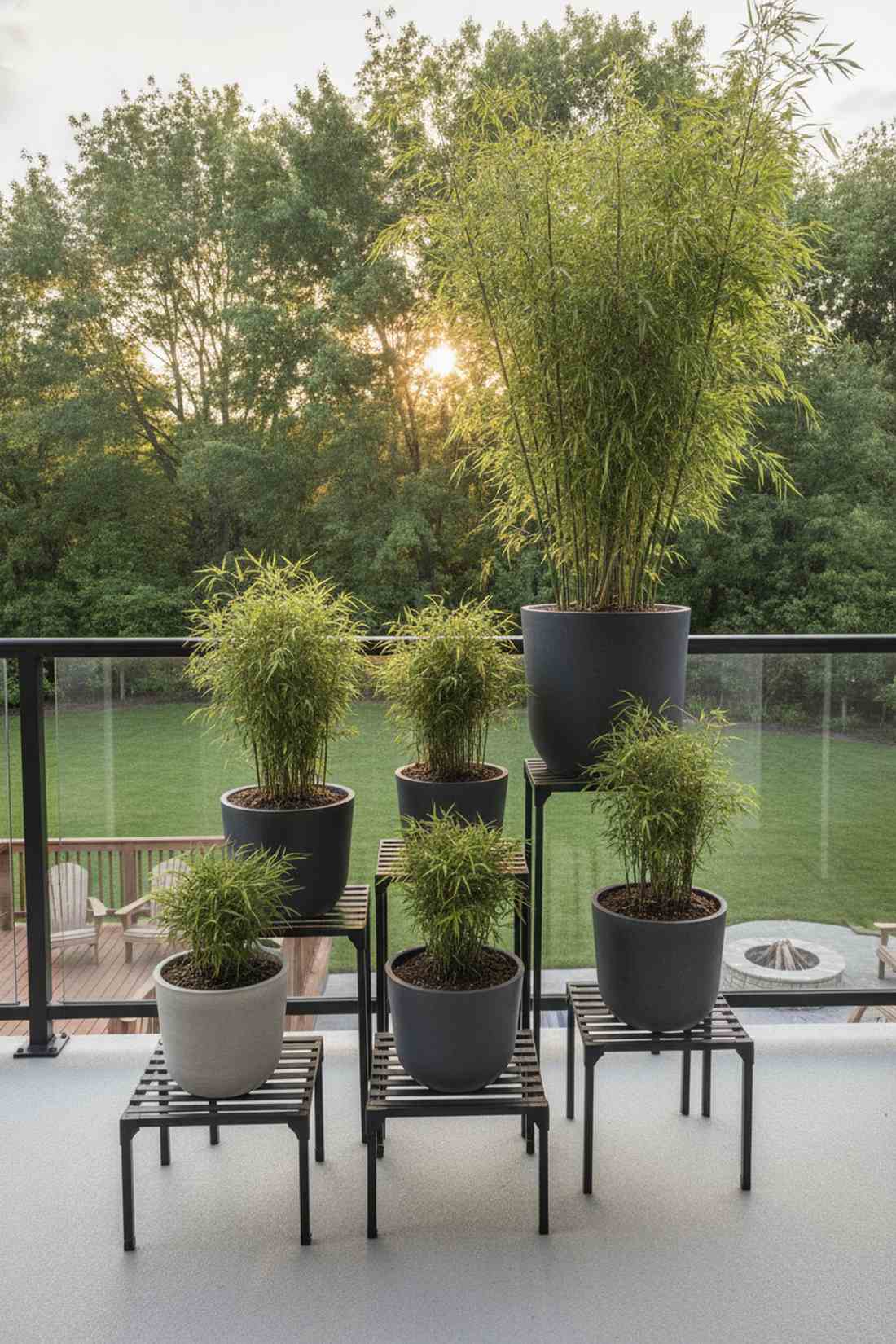
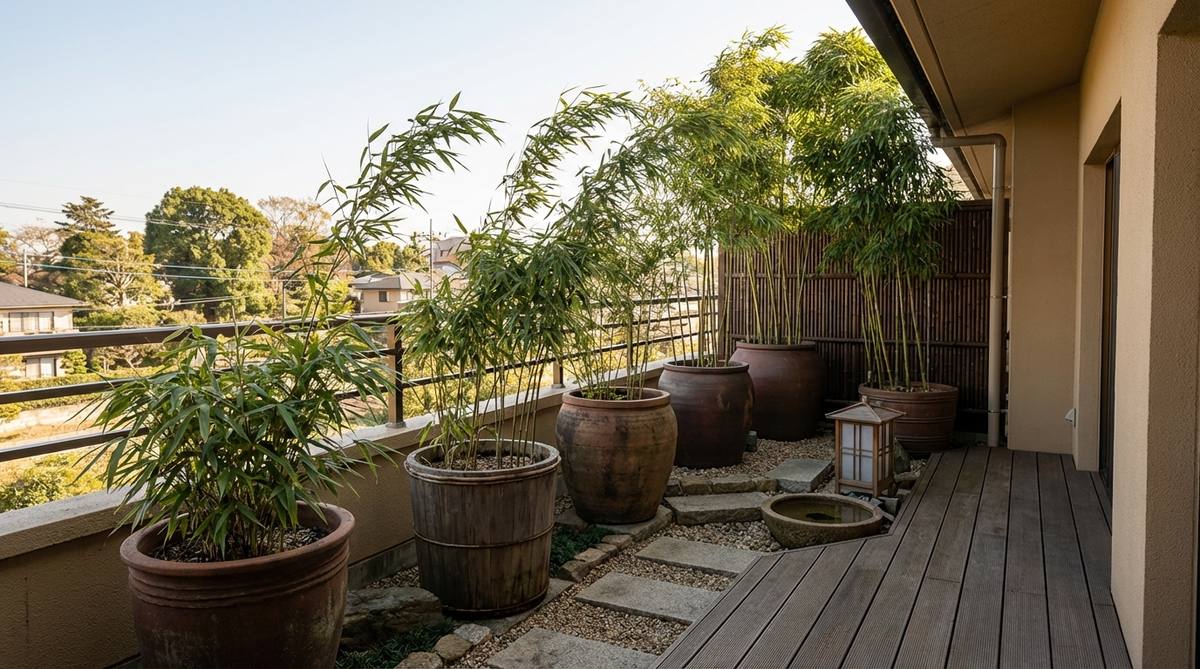
Instantly transports you to the famous Arashiyama forest. A tiered multi-pot bamboo display provides forced perspective perfect for incredibly shallow balconies.
Instead of pushing everything against the wall, staggering five containers of varying heights makes the space appear magically deeper. Place the tallest Dragon’s head bamboo in the back, letting the weeping culms sway naturally in the breeze.
You can arrange this dynamic forest illusion for $70 to $120.
- Key Materials: Multi-height plant stands, clumping bamboo variations
- Vibe / Style: Deep forest illusion
- Difficulty: Requires spatial planning
- Budget Breakdown: Plants: $50 | Stands & Pots: $70
- Creator’s Tip: Use dark-colored pots in the back and lighter pots in the front to force the perspective even further.
- Smart Sourcing: Multi-tier outdoor plant stands (rust-proof) and bulk organic bamboo soil mixes.
9. Maple and Bamboo Layered Planting
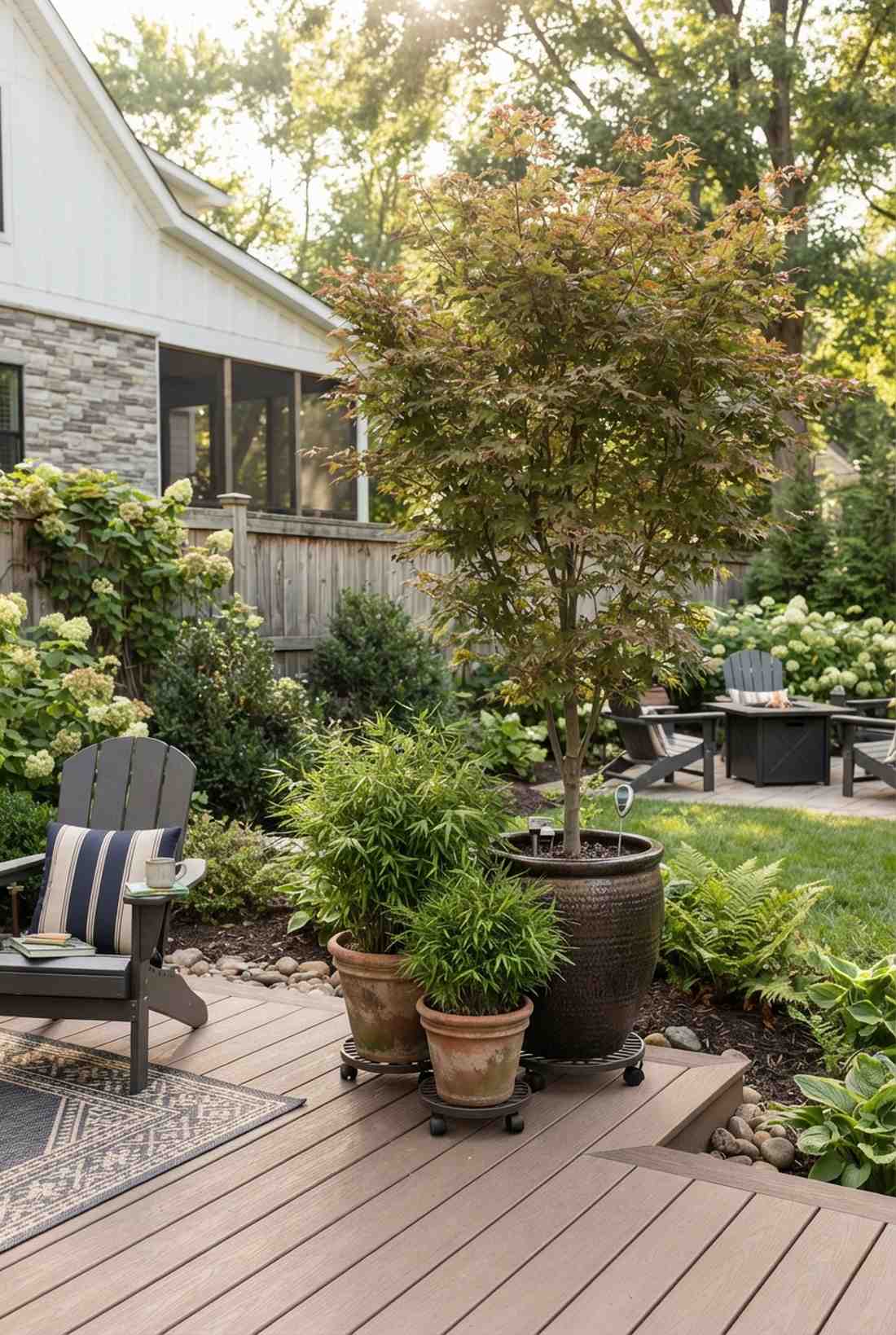
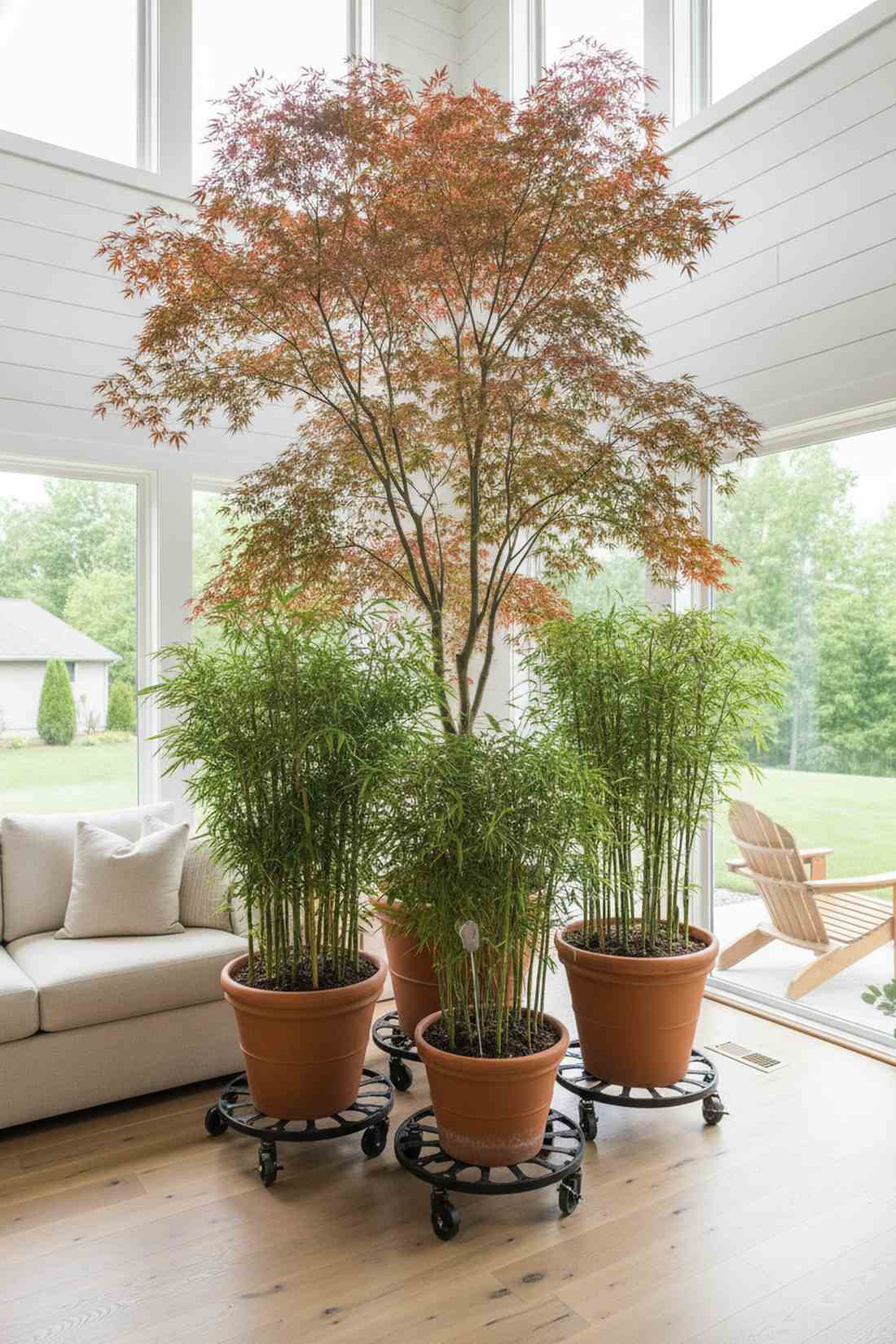
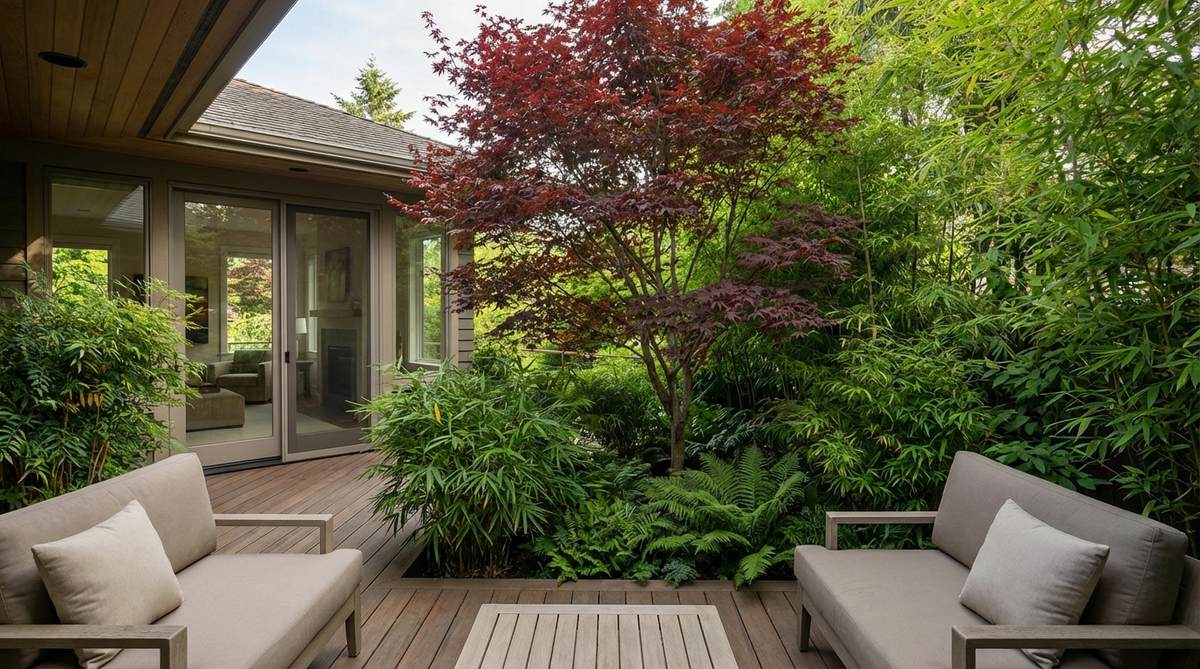
Creates a deeply layered, wild mountain ecosystem vibe. This multi-tier botanical setup is an amazing layout for corners needing intense vertical interest.
Combining disparate plants can look messy, but pairing a structural maple with understory bamboo yields a fiercely professional aesthetic. Ensure the bamboo varieties remain shorter than the tree canopy, establishing a clear visual hierarchy.
Setup costs float around $130 for quality greenery. Save this idea for a massive corner upgrade!
- Key Materials: Upright maple, dwarf bamboo species
- Vibe / Style: Layered mountain canopy
- Difficulty: Advanced pruning required
- Budget Breakdown: Maple: $60 | Bamboo: $40 | Pots: $30
- Creator’s Tip: Keep them in separate pots placed closely together rather than sharing soil, as their watering needs differ slightly.
- Smart Sourcing: Pre-calibrated moisture meter probes and heavy-duty rolling plant caddies.
💡 Must-Have Supplies for High-End Setups
To build these setups faster and ensure they last, skip the generic craft aisles and invest in the right foundational kits.
- Base & Support: UV-coated fiberglass outdoor planters (frost-proof)
- Setup Tools: Premium zen garden starter kits (with specialized rakes)
- Weather/Durability Protection: Clear acrylic waterproof sealant spray (for bamboo structures)
10. Coral Bark Maple Winter Interest
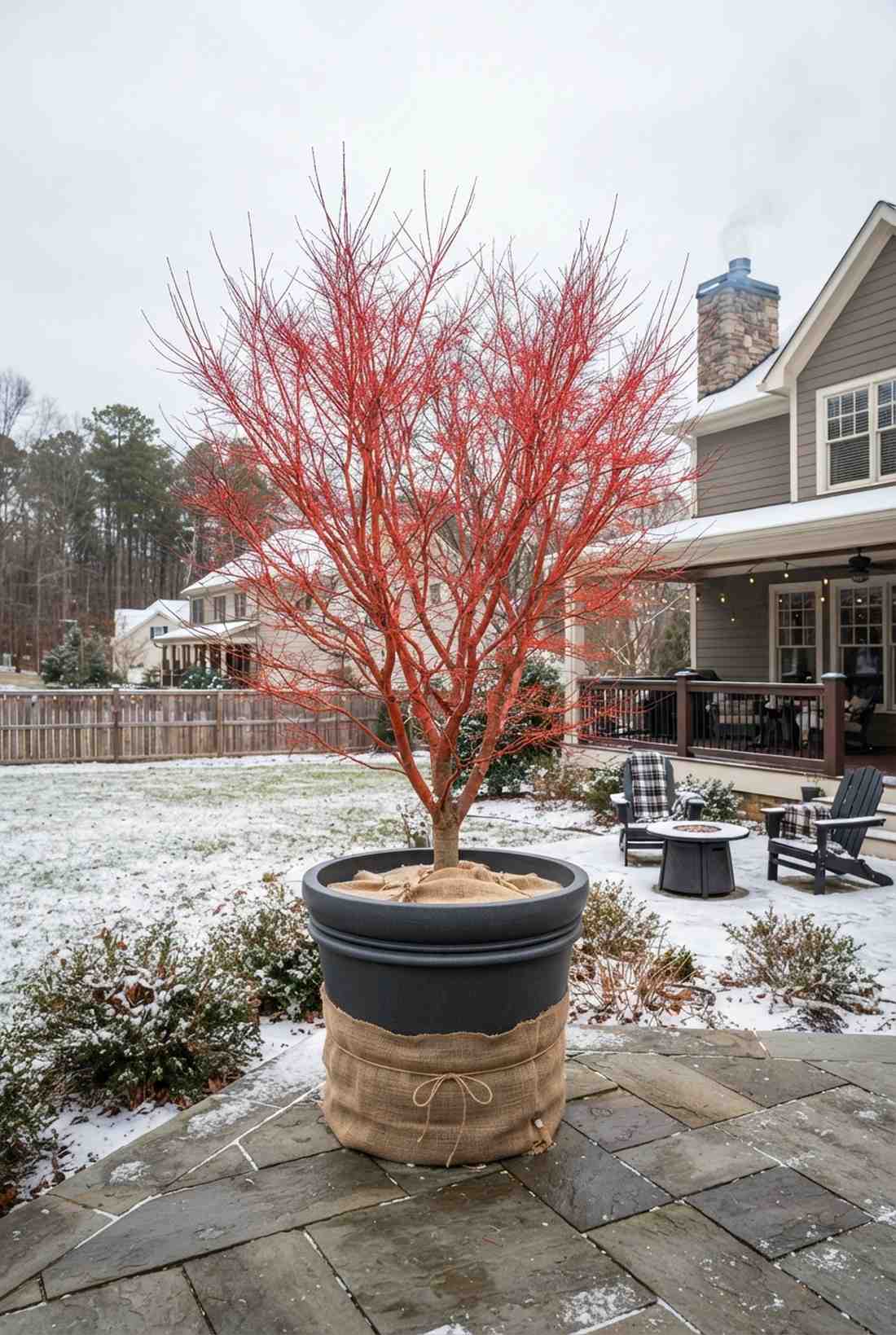
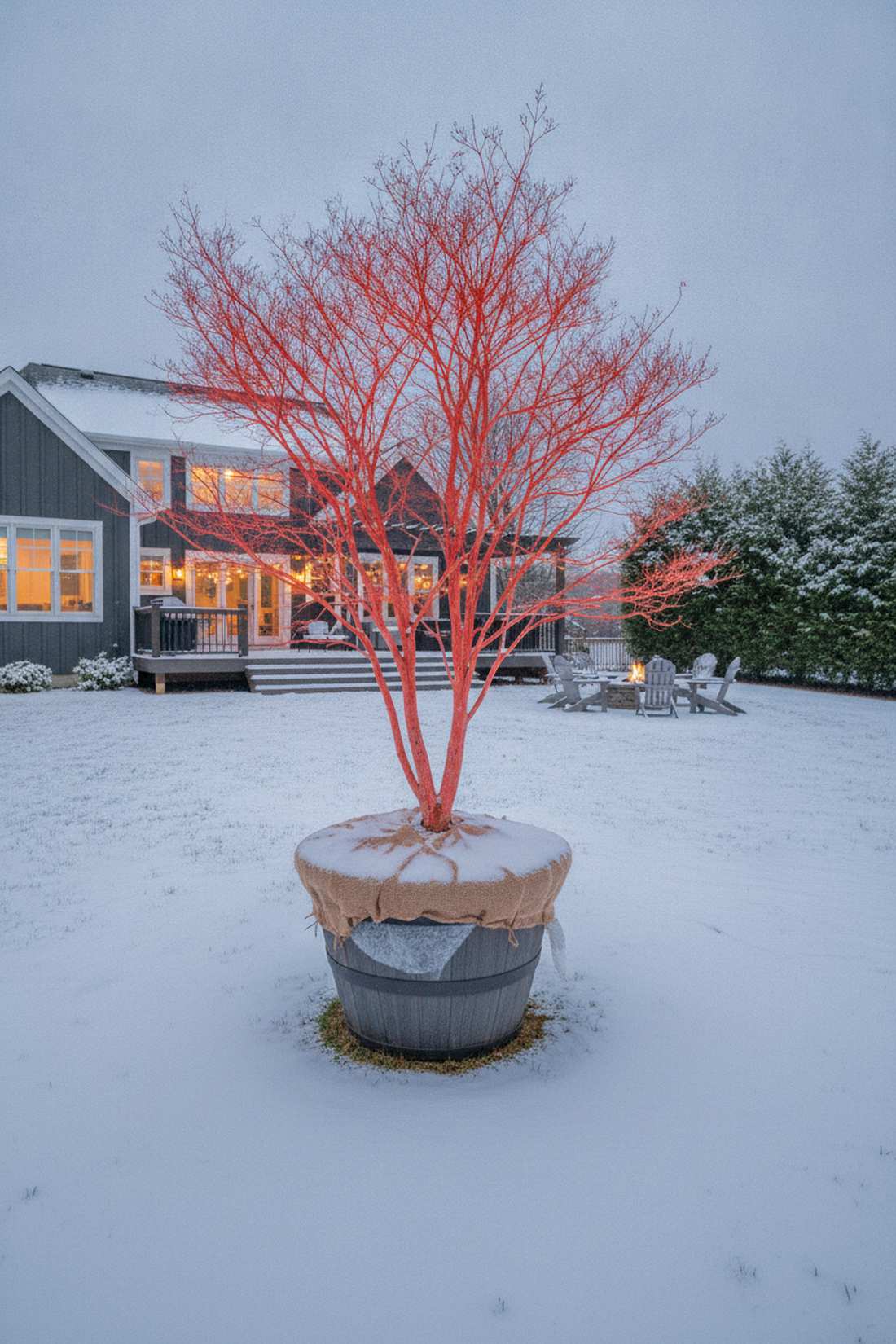
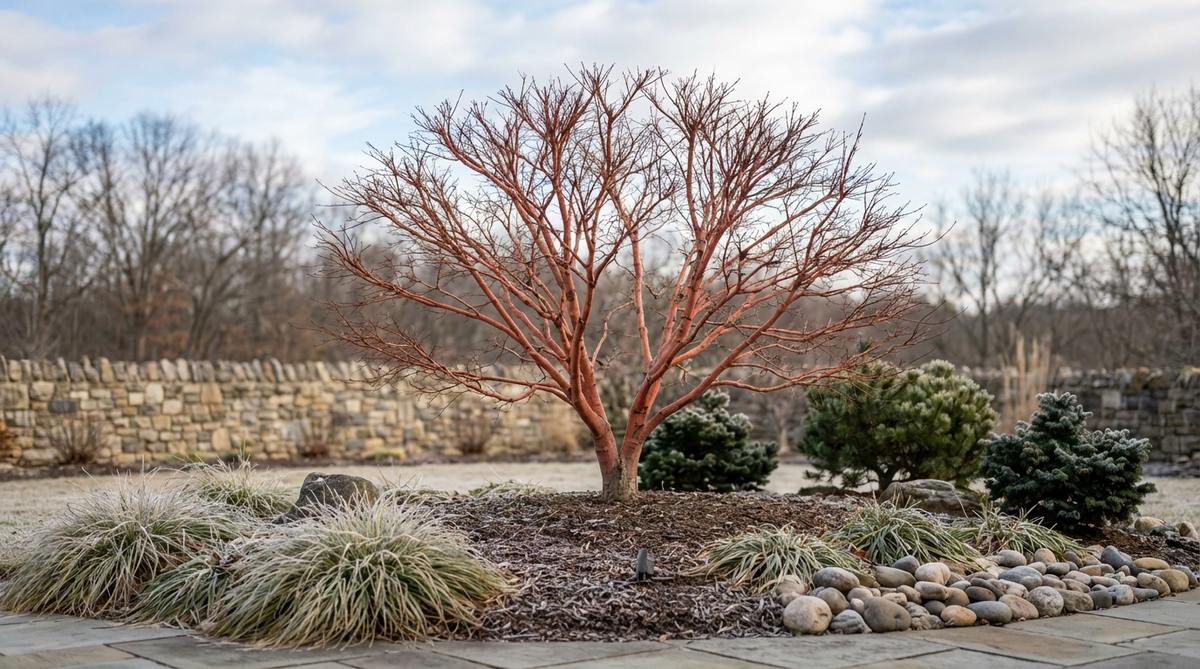
Like a glowing fire against a snowy grey sky. The striking winter bark display provides year-round magic, especially for cold-climate apartments.
Many gardens die completely in winter, yet the ‘Sangokaku’ maple looks far more expensive than it is when the temperature drops. Its architectural coral-red branches act as a living sculpture even when entirely bare, acting as a stunning focal point.
Expect to invest about $60-$90 for a healthy winter-ready sapling.
- Key Materials: Acer palmatum ‘Sangokaku’, insulated pot
- Vibe / Style: Striking winter architectural contrast
- Difficulty: Requires winterization prep
- Budget Breakdown: Tree: $70 | Insulated Pot: $20
- Creator’s Tip: Wrap the pot in bubble wrap underneath the decorative cover to prevent root freeze in January.
- Smart Sourcing: Double-walled insulated resin planters and pre-cut burlap winter wraps.
This next auditory setup is ridiculously cheap but sounds like a $500 custom spa installation…
Water Features for Tranquility in Small Japanese Gardens
Moving water introduces sound and reflection into balcony gardens. Properly scaled water features enhance the meditative atmosphere without overwhelming tight spaces or creating maintenance burdens.
11. Bamboo Fountain Tsukubai Style
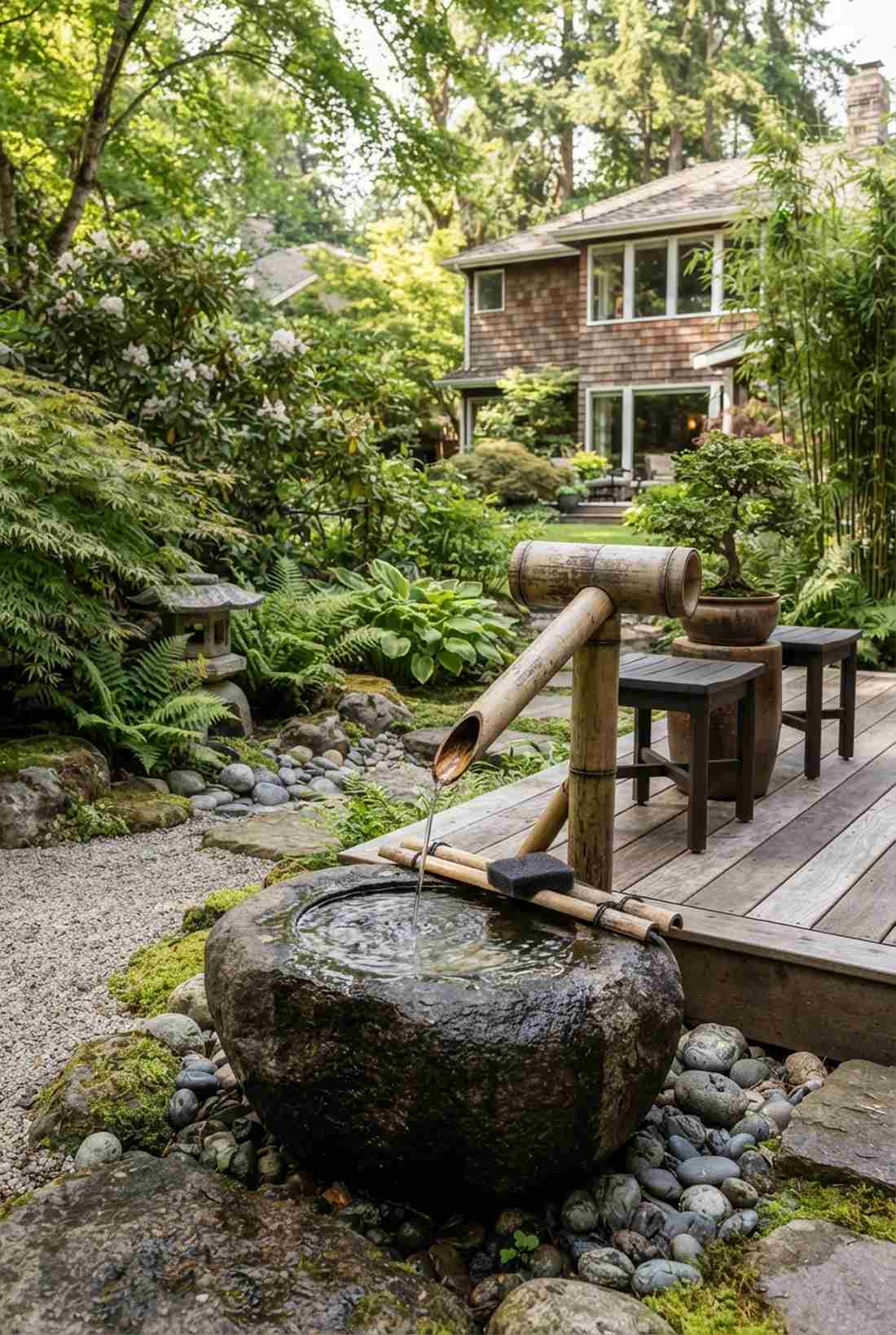
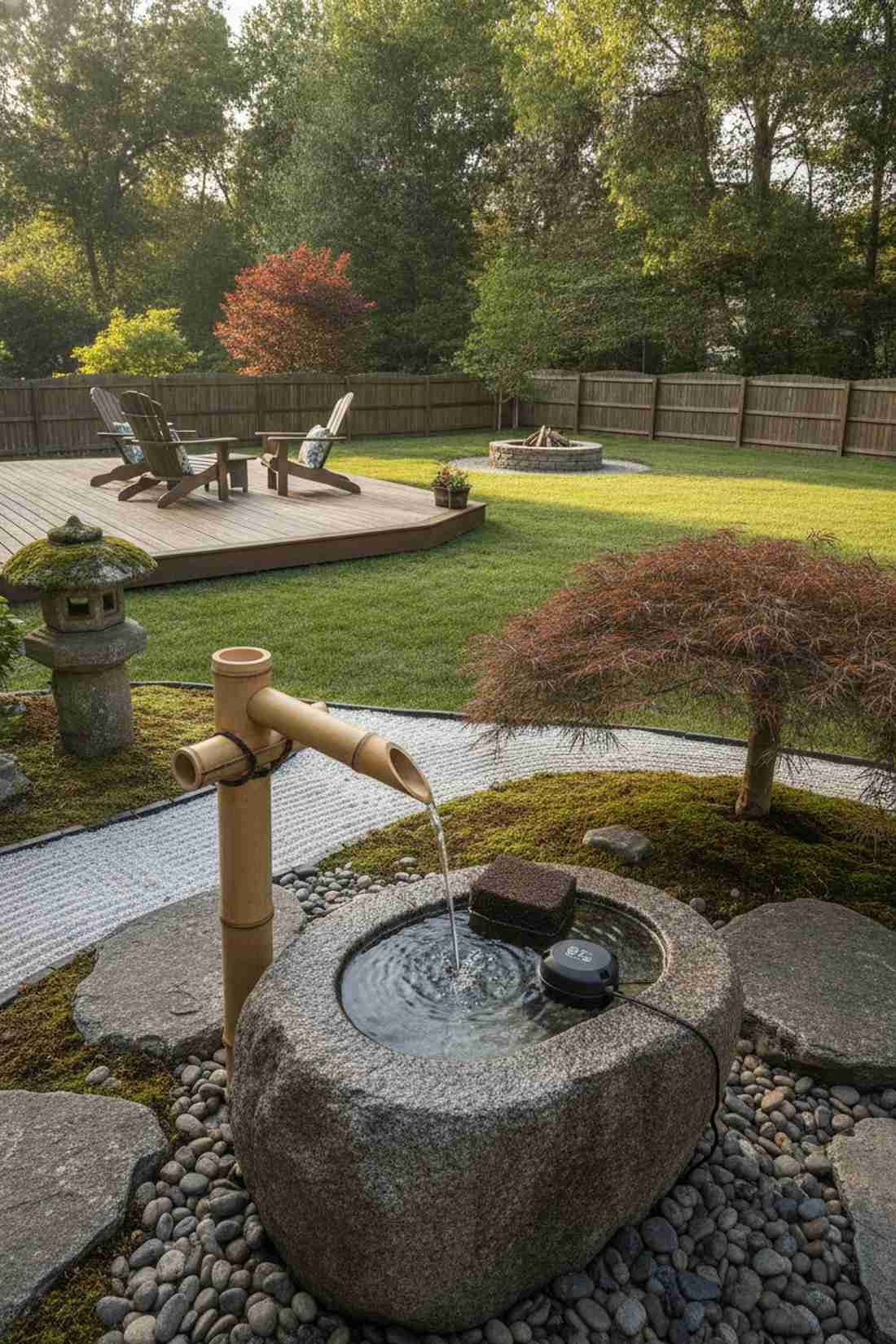
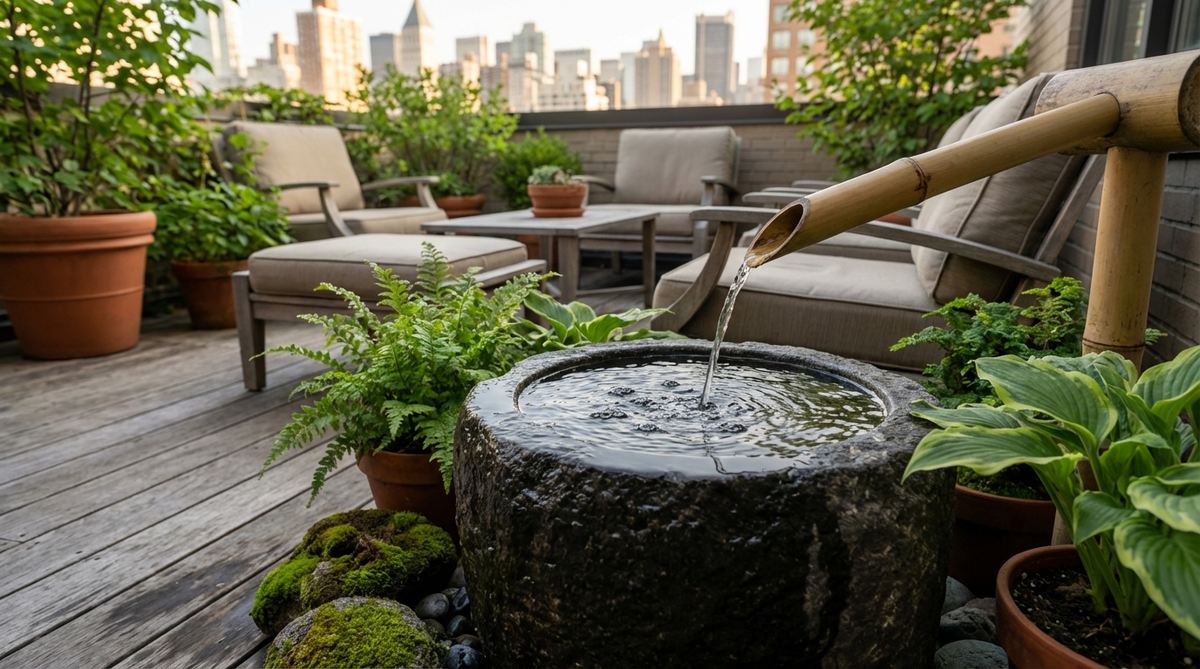
Provides that rhythmic, soul-soothing water trickling sound. A traditional trickling fountain is the absolute pinnacle of sensory decor for meditation spaces.
Flimsy plastic features break instantly, but a true bamboo spout pouring into a heavy stone basin brings designer-level tranquility. Pair it with a high-quality recirculating pump to ensure a gentle, splash-free flow right beside your seating area.
You can build this exact auditory escape for roughly $65. Pin this to your outdoor oasis board!
- Key Materials: Bamboo spout kit, stone basin, mini water pump
- Vibe / Style: Traditional temple entrance
- Difficulty: Moderate plumbing setup
- Budget Breakdown: Spout Kit: $30 | Pump: $15 | Basin: $20
- Creator’s Tip: Place a small piece of sponge where the water hits the rock to eliminate harsh splashing noises.
- Smart Sourcing: Pre-treated bamboo fountain kits and adjustable ultra-quiet submersible pumps.
12. Stone Basin with Moss Surround
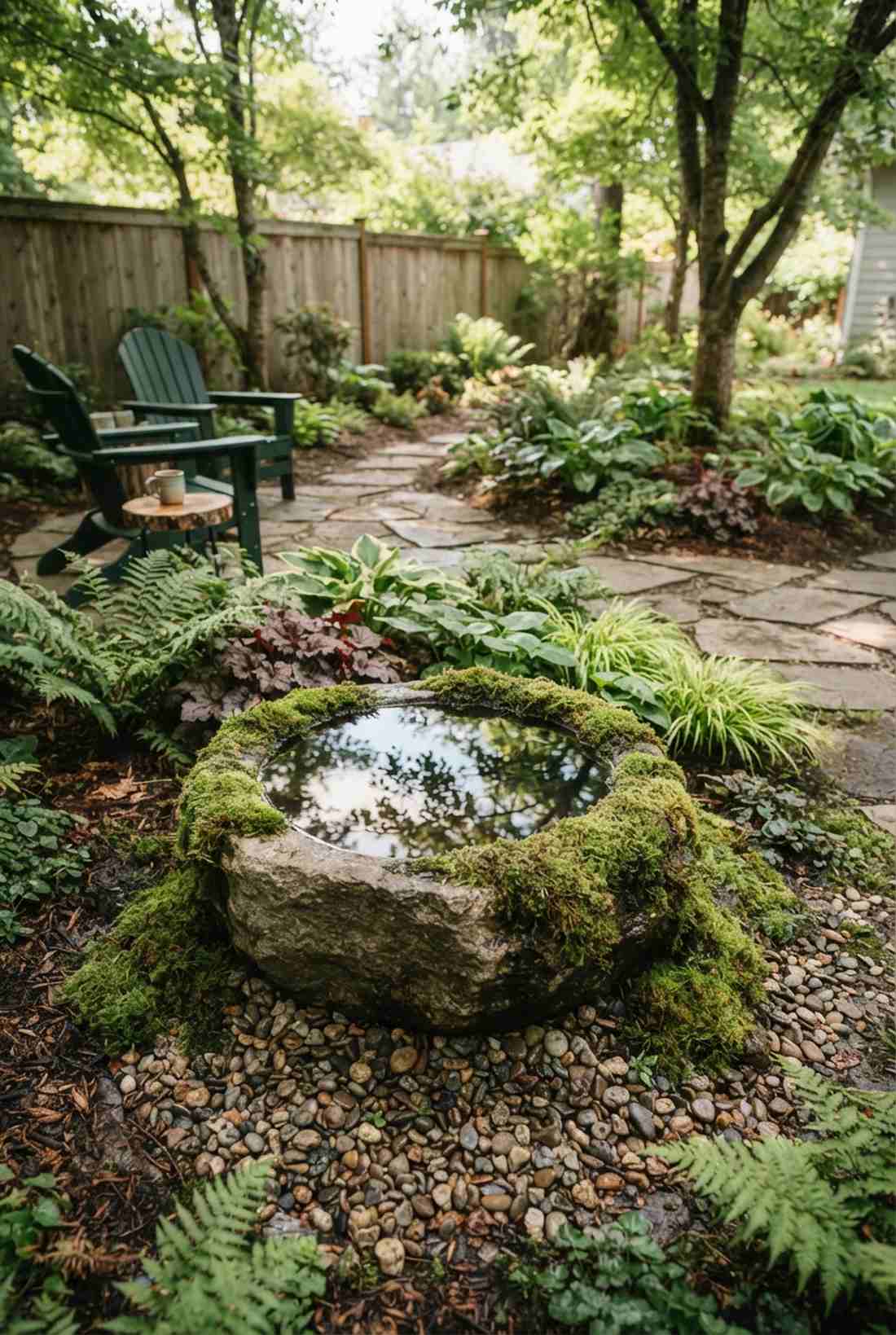
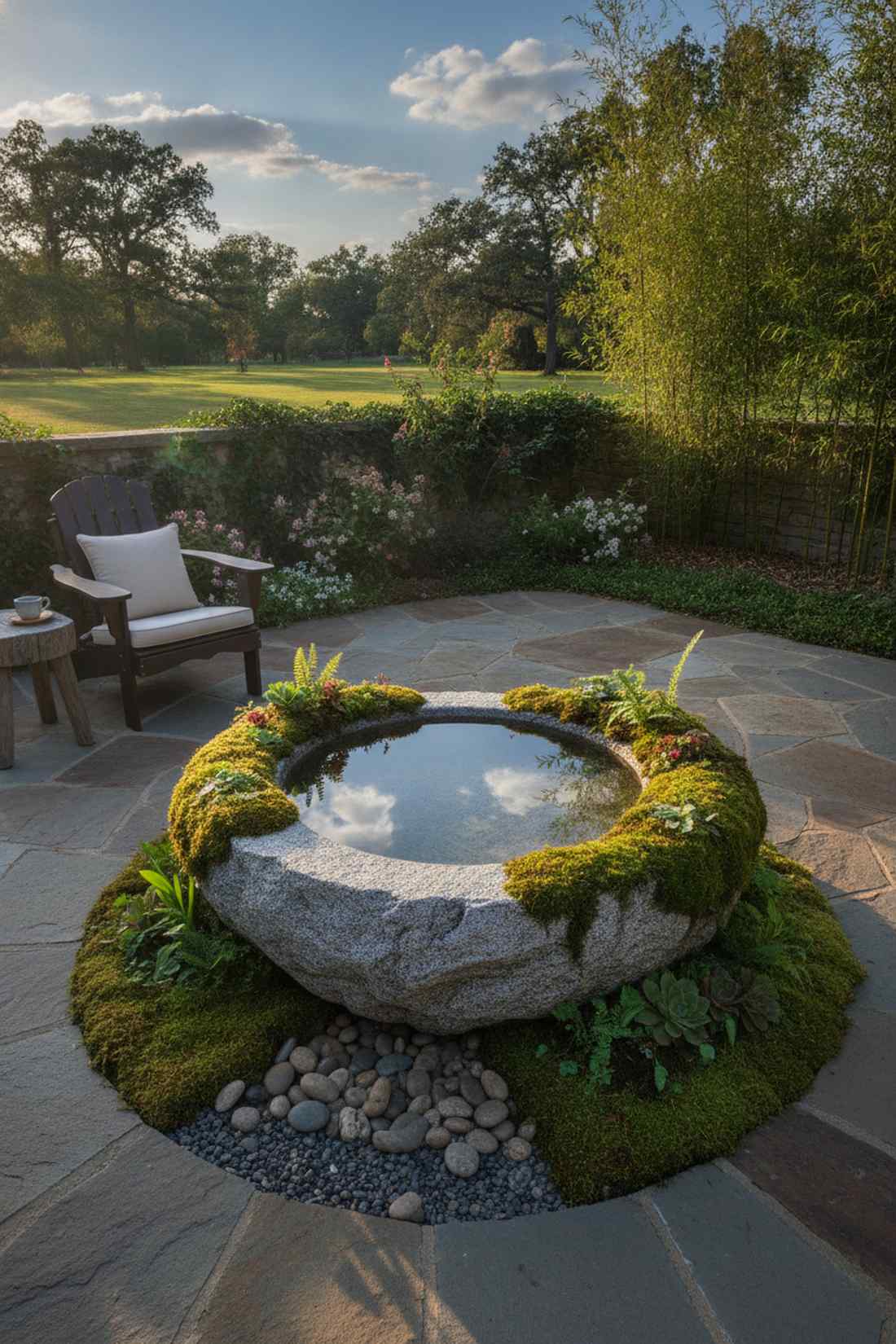
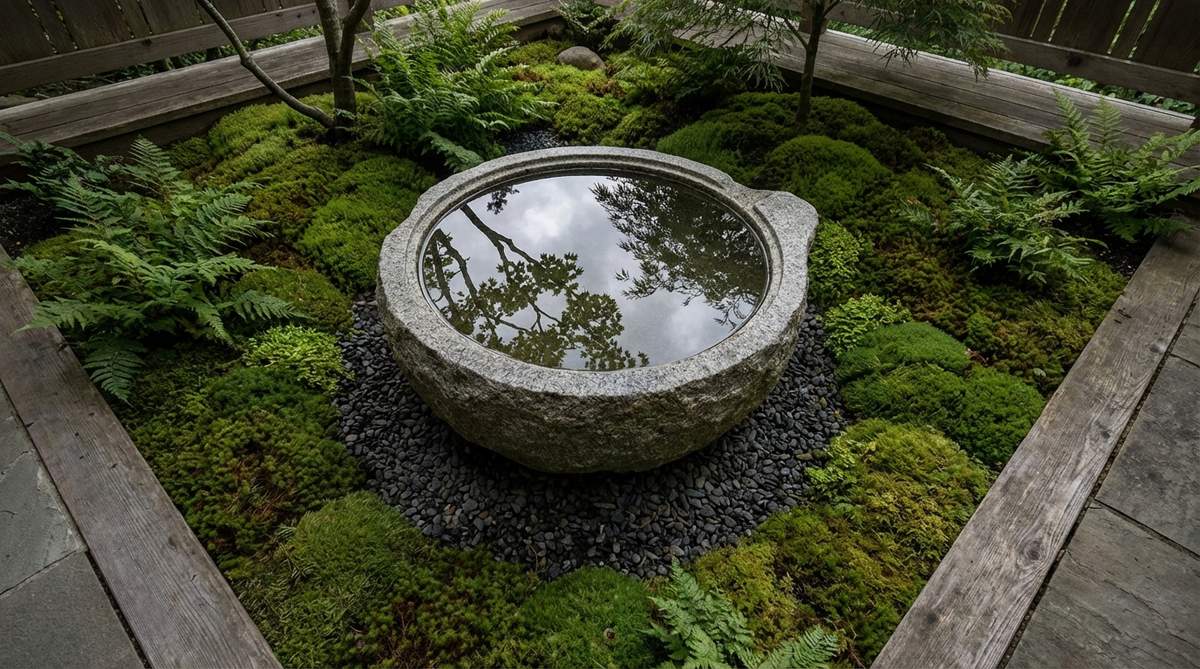
Feels like a deeply untouched ancient forest puddle. A still mirror water basin surrounded by greenery is perfect for capturing sky reflections on tight terraces.
Over-animated fountains can be loud, while a carved granite bowl resting on gravel guarantees a deeply grounding aura. Embed it with vibrant live mosses, creating a micro-ecosystem that easily rivals expensive fairy garden kits.
Sourcing a solid basin and moss costs about $40 to $80.
- Key Materials: Carved stone bowl, live moss sheets, pebbles
- Vibe / Style: Still reflection and deep calm
- Difficulty: Easy, requires shading
- Budget Breakdown: Basin: $45 | Moss: $15
- Creator’s Tip: Add a drop of natural mosquito dunk liquid weekly to keep the still water perfectly clean and bug-free.
- Smart Sourcing: Pre-cut live sheet moss (bulk pack) and cast-stone replica water basins.
13. Ceramic Urn Bubbler Fountain
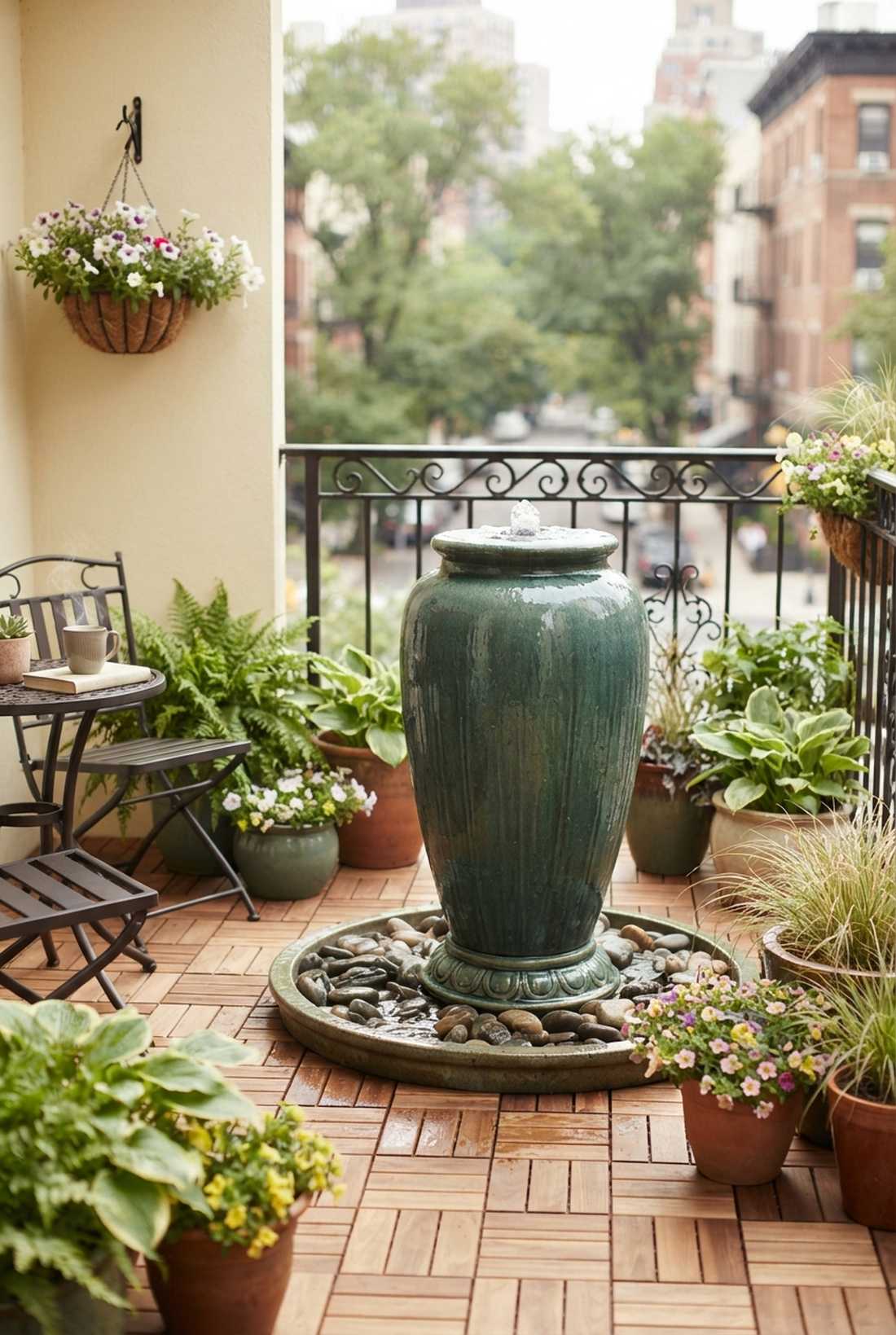
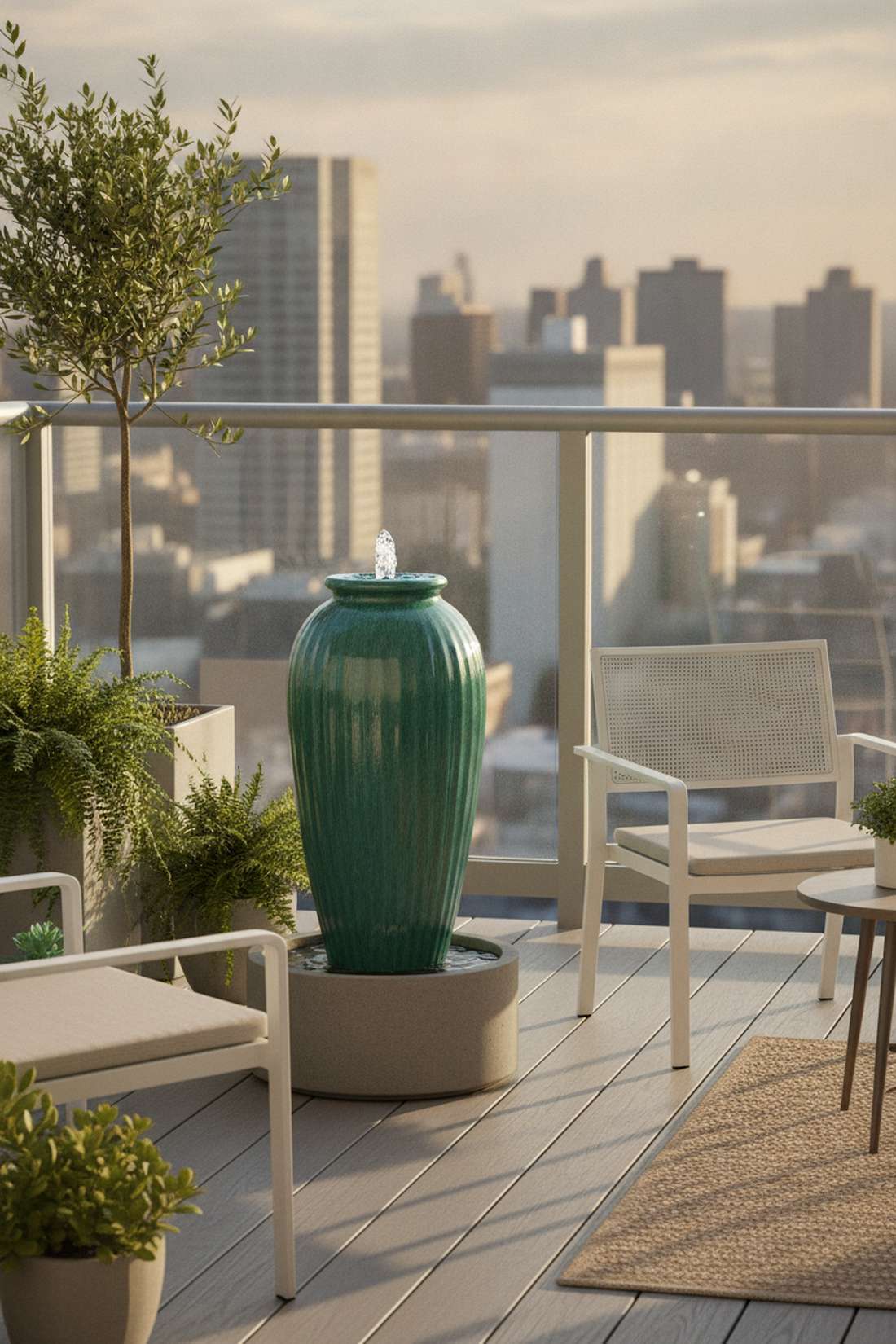
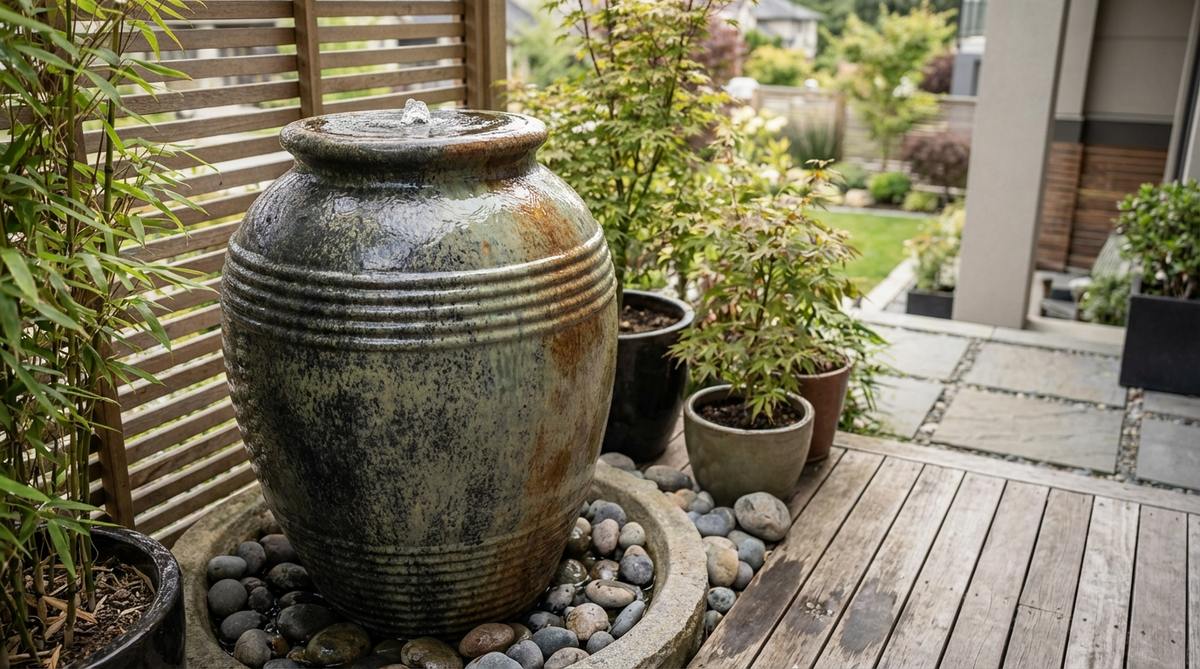
Radiates understated luxury and continuous movement. A tall cascading urn occupies almost zero floor footprint, making it ideal for the smallest apartment patios.
Standard flat bowls take up too much room, but pushing water upward through a deep celadon vessel perfectly utilizes vertical space. The hidden pump mechanism keeps the aesthetic clean while the water softly sheets down the sides, delivering an outdoor patio water feature feel.
A reliable ceramic bubbler setup ranges from $75 to $120.
- Key Materials: Tall glazed urn, internal tubing, pump
- Vibe / Style: Modern vertical elegance
- Difficulty: Moderate assembly
- Budget Breakdown: Urn: $60 | Pump/Tubing: $25
- Creator’s Tip: Seal the interior of the ceramic pot with waterproofing spray before adding water to prevent slow weeping leaks.
- Smart Sourcing: UV-coated sealed ceramic urns and all-in-one patio bubbler kits.
14. Shishi-odoshi Bamboo Rocker
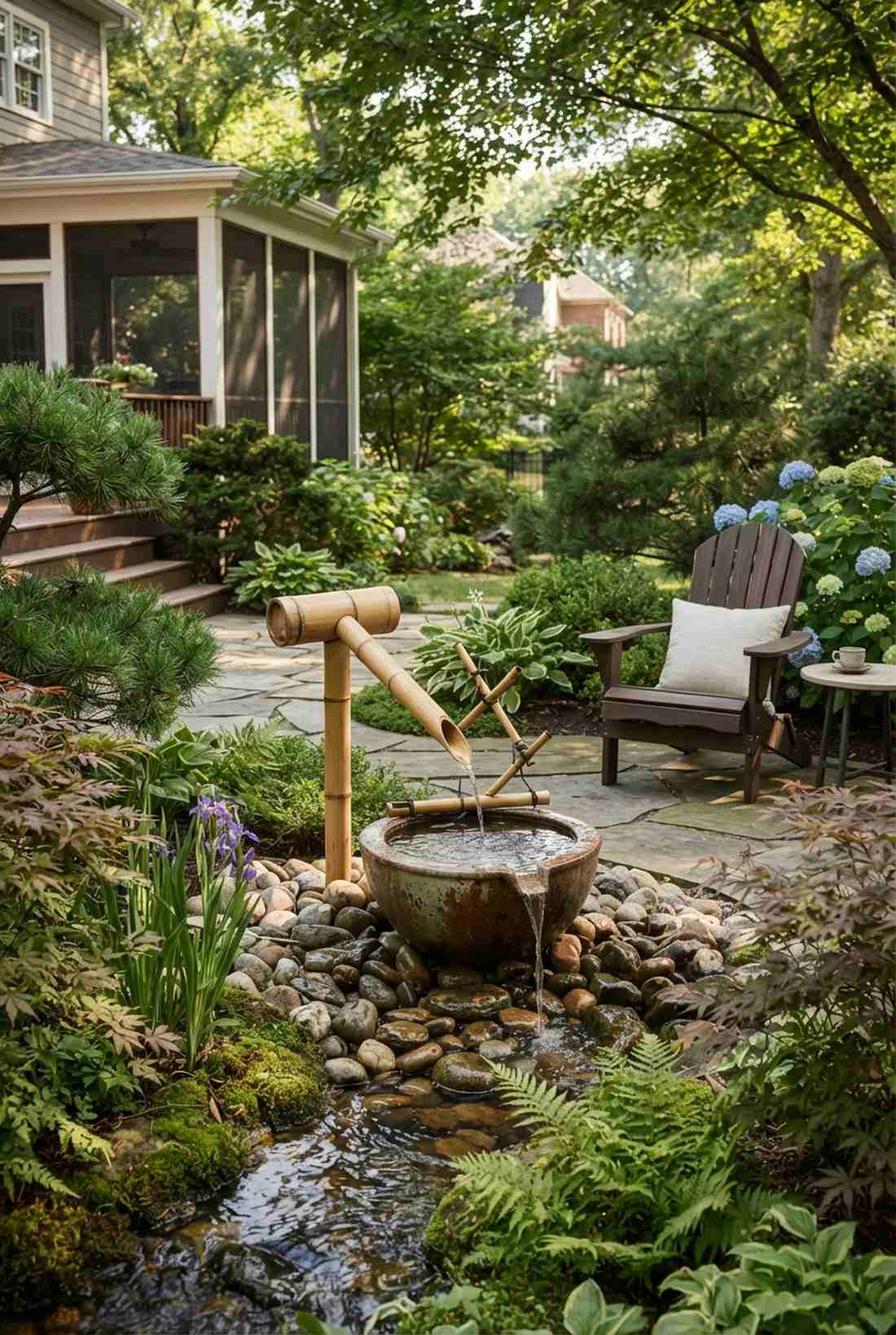
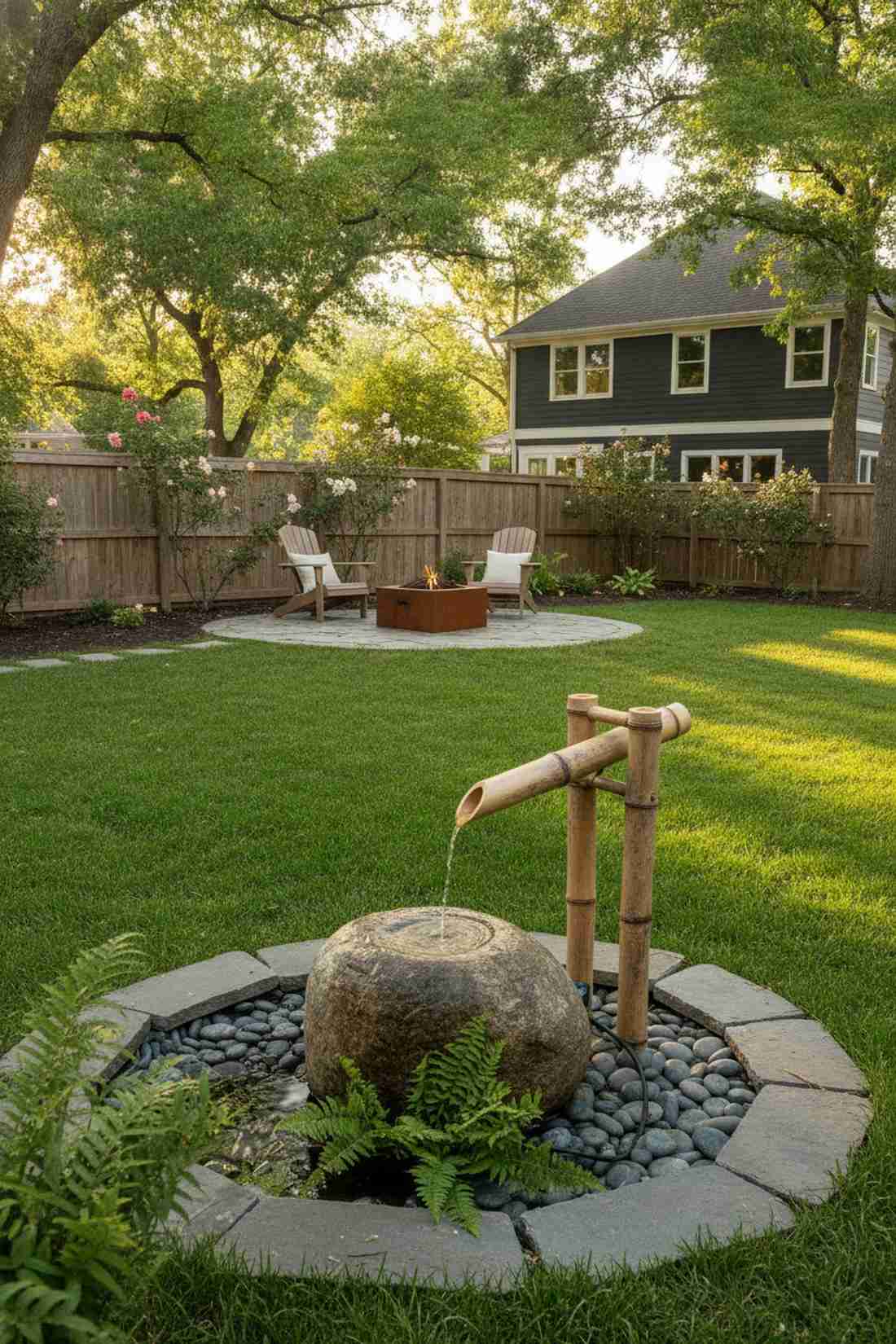
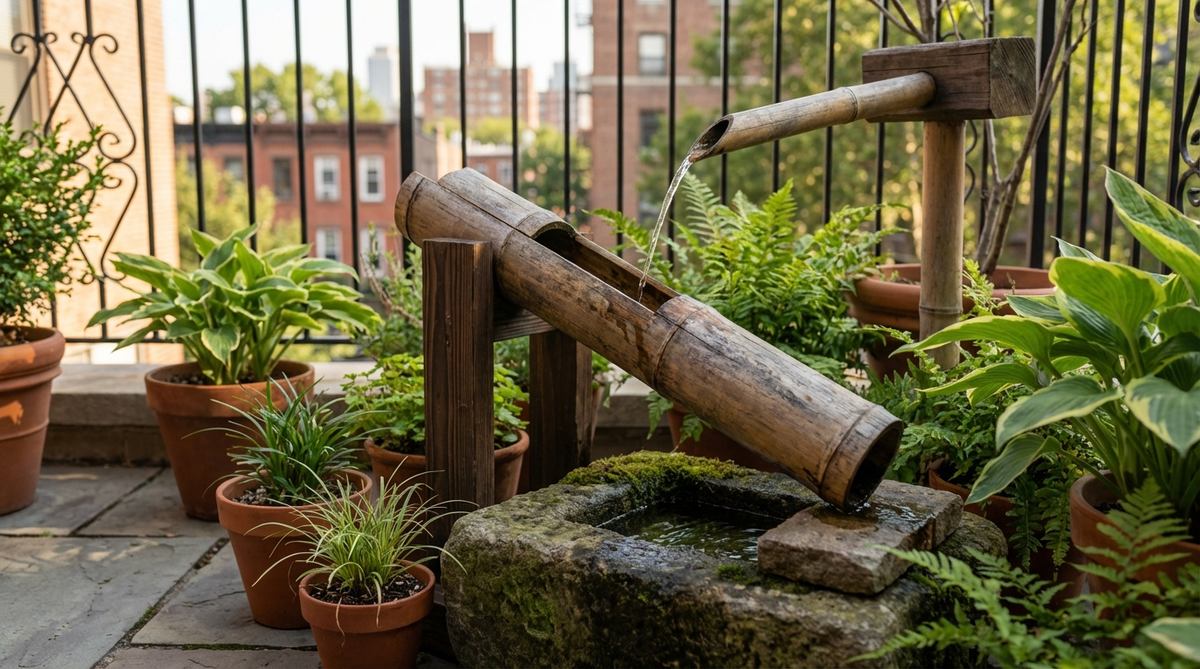
The iconic, hypnotic clack of ancient Japanese estates. An acoustic bamboo rocker feature is unmatched for breaking up harsh urban noise pollution.
Electronic noise machines sound incredibly fake, but this traditional tipping tube delivers organic acoustic punctuation. The hollow bamboo fills, rocks back, and strikes, functioning as both kinetic art and a beautiful marker of passing time.
Buying a pre-balanced rocker kit costs around $45. Highly recommended for a quick weekend win.
- Key Materials: Balanced bamboo rocker, catch basin, pump
- Vibe / Style: Rhythmic kinetic art
- Difficulty: Intermediate calibration
- Budget Breakdown: Rocker Unit: $30 | Catch Basin: $15
- Creator’s Tip: Adjust the water flow to minimum capacity so the “clack” happens only once every 30 seconds to avoid annoyance.
- Smart Sourcing: Pre-calibrated Shishi-odoshi starter kits and weatherproof catch basins.
15. Recessed Water Bowl with Pebbles
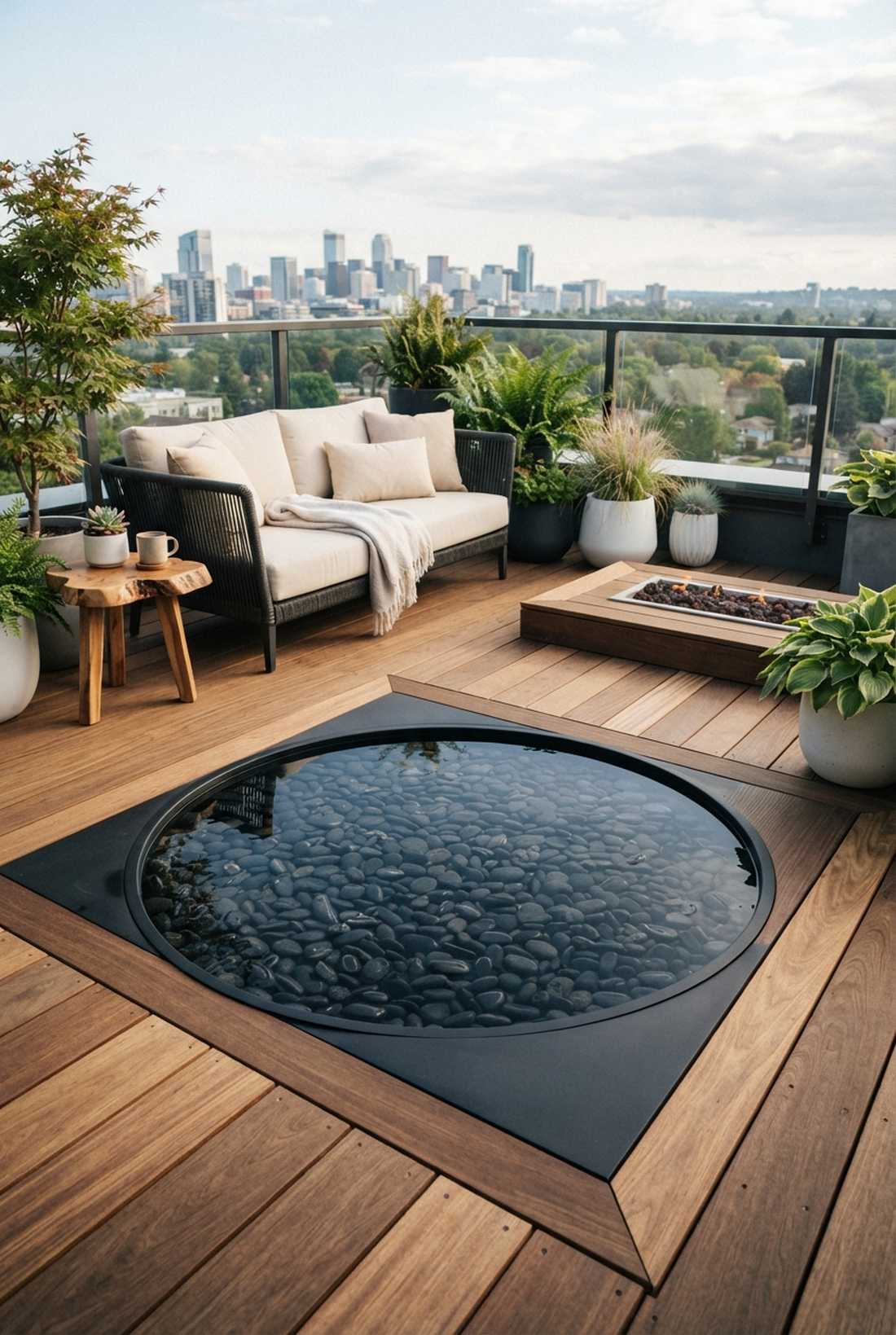
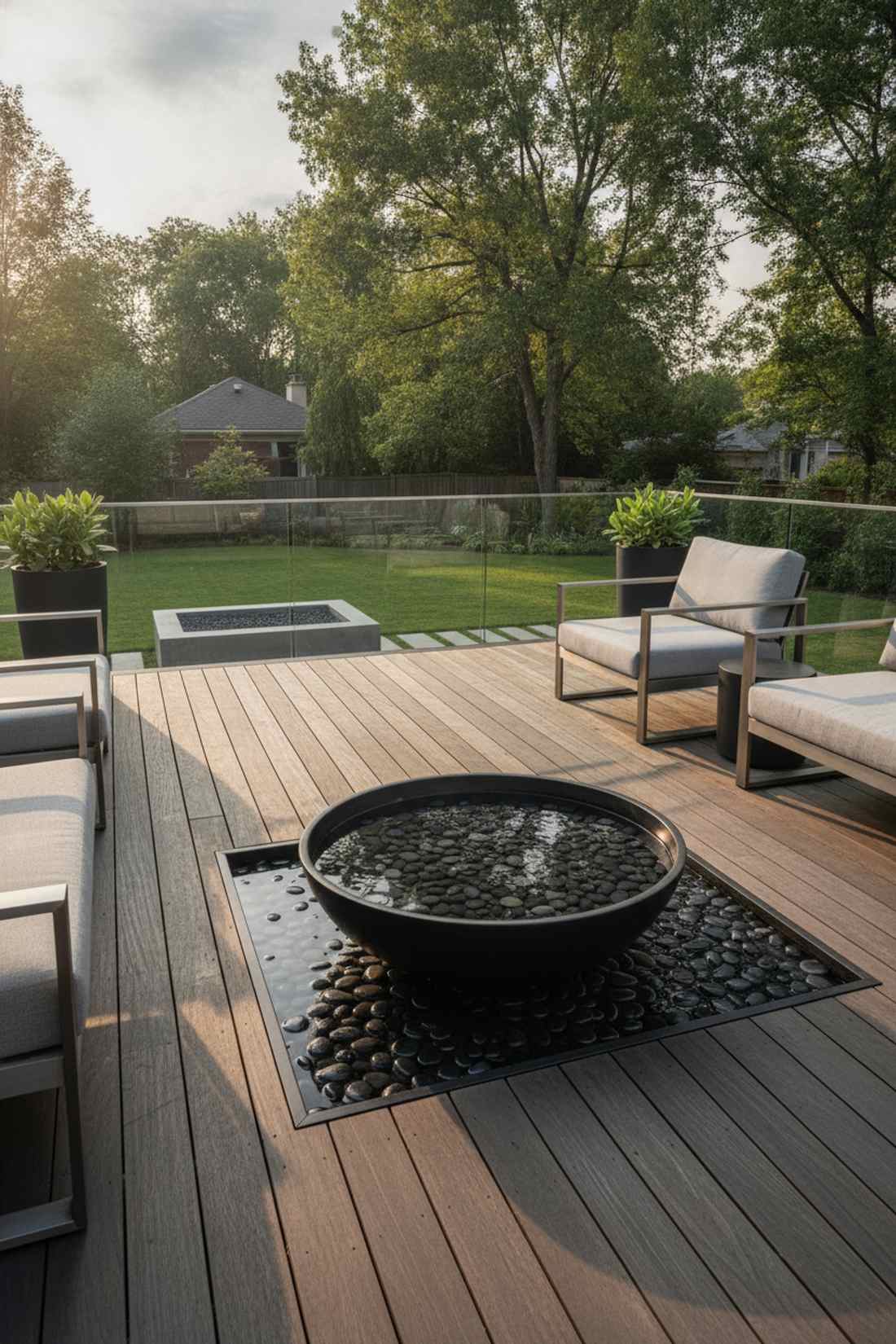
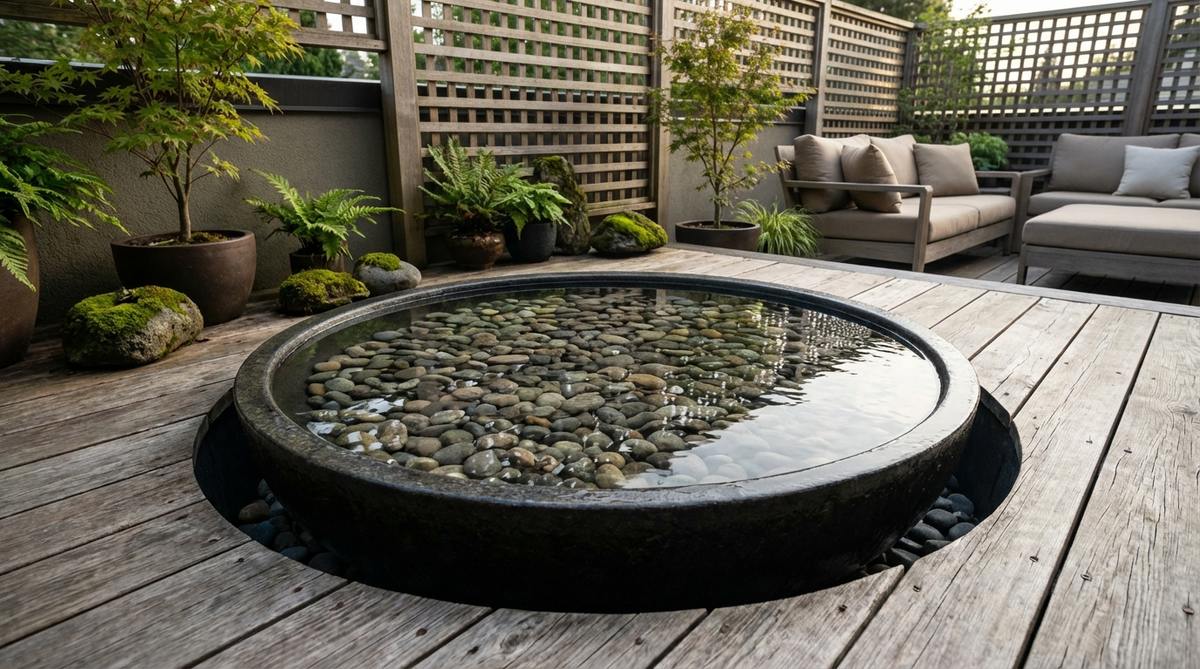
Blends seamlessly right into the very floor of your space. A submerged pebble pool offers pet-safe, low-profile tranquility for active balconies.
Bulky birdbaths often tip over, but sinking a shallow bowl flush with the decking delivers a remarkably sleek, modern edge. Fill it with smooth dark stones beneath a whisper-thin layer of water, utilizing premium outdoor patio water features concepts for instant cooling.
This hyper-minimalist addition is super affordable at around $25.
- Key Materials: Shallow wide bowl, dark river stones, water
- Vibe / Style: Ultra-modern integrated zen
- Difficulty: Easy placement
- Budget Breakdown: Bowl: $15 | Pebbles: $10
- Creator’s Tip: Use dark black river stones; they make the water look infinitely deeper than it actually is.
- Smart Sourcing: Matte black shallow resin bowls and high-polish black river pebbles (bulk pack).
This next structural trick completely changes how cramped spaces feel without breaking the bank…
Minimalist Plant Arrangements Following Zen Garden Principles
Plant selection in zen gardens emphasizes form, texture, and symbolic meaning over flower color. Restrained plantings with ample spacing between specimens allow each plant to display its natural character.
16. Bonsai Trio Display
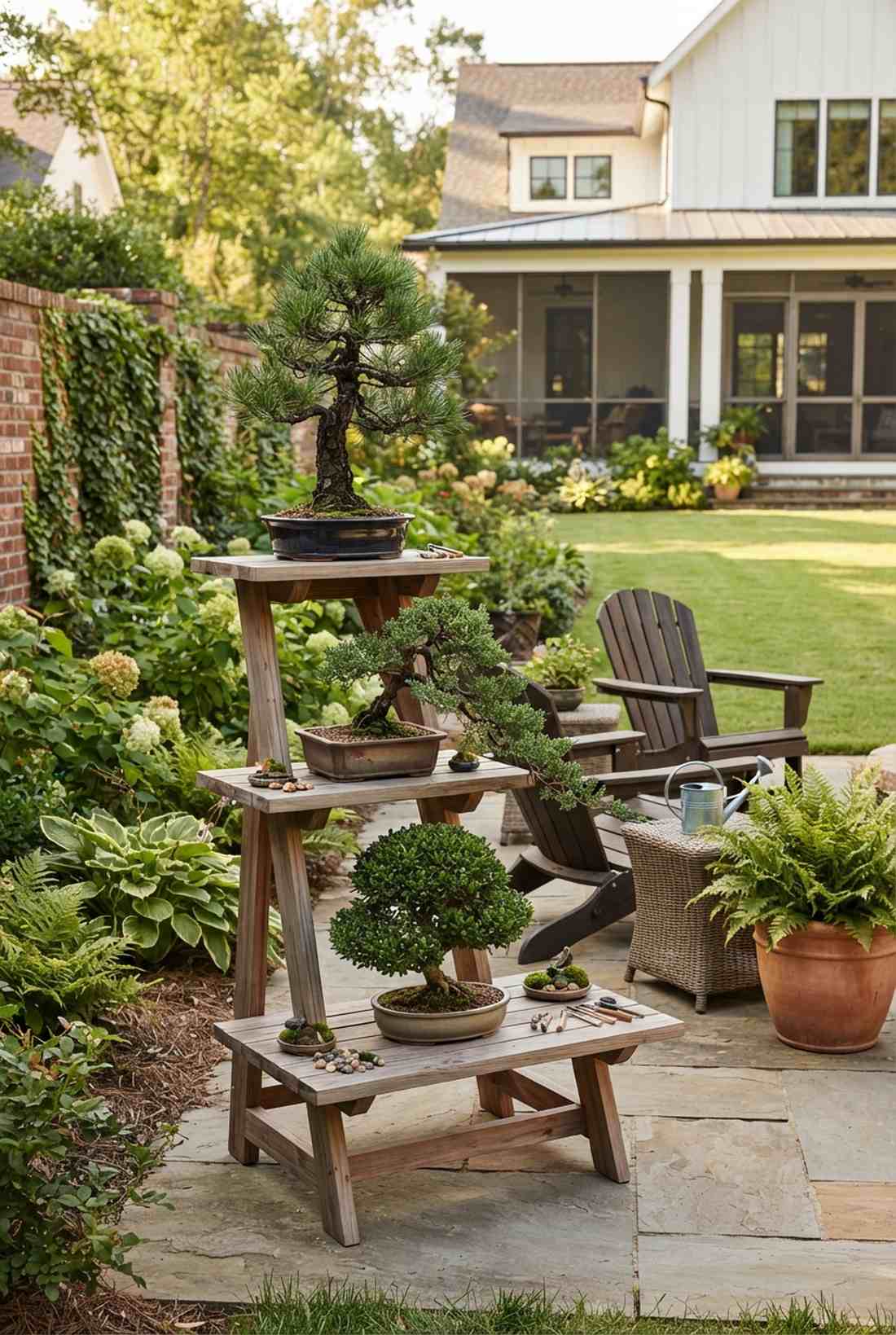
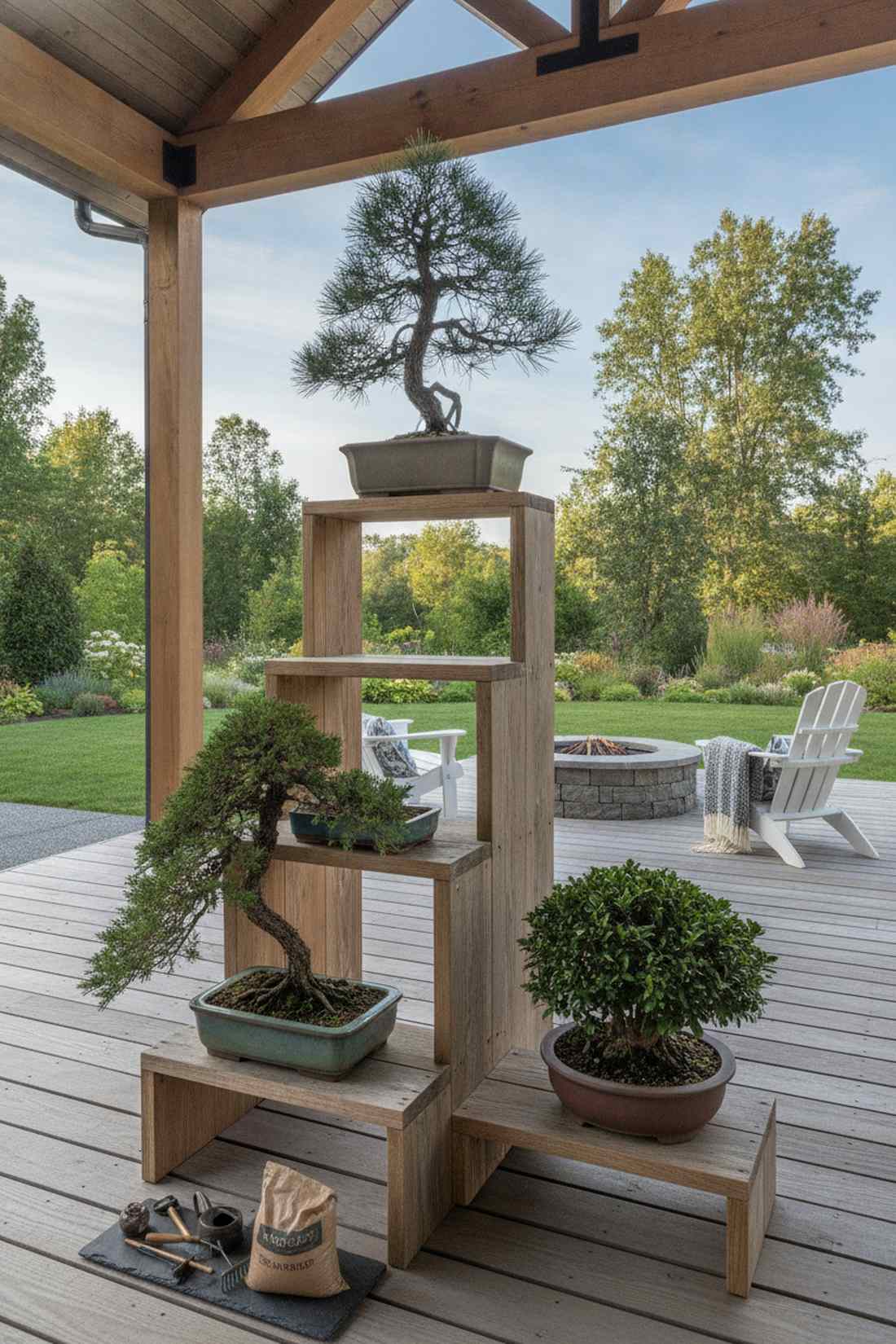
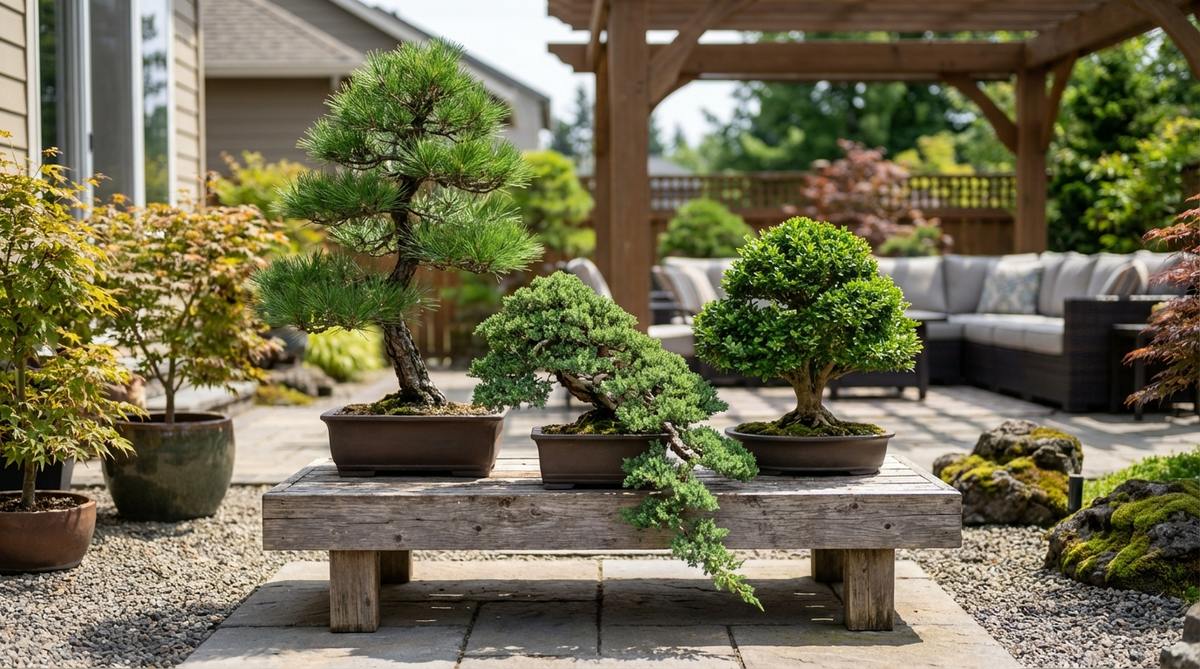
Showcases decades of meticulous patience in miniature form. A dedicated three-tier bonsai stand acts as a highly prestigious focal point for serious hobbyists.
Scattering tiny plants randomly looks chaotic, but an asymmetrical trio of contrasting bonsai commands absolute respect. Arrange an upright pine, a cascading juniper, and a rounded boxwood to create profound visual tension, incorporating high-end miniature garden supplies for staging.
High-quality bonsai start at $50 each, making this a premium investment. Save this to your master gardening board!
- Key Materials: 3 distinct bonsai trees, tiered wooden stand
- Vibe / Style: Prestigious gallery display
- Difficulty: High maintenance/watering needs
- Budget Breakdown: Trees: $150 | Display Stand: $40
- Creator’s Tip: Water bonsai by fully submerging the pot in a tub of water for 5 minutes rather than top-watering.
- Smart Sourcing: Pre-aged bonsai starter kits and weatherproof cedar display risers.
17. Moss Garden Ground Cover
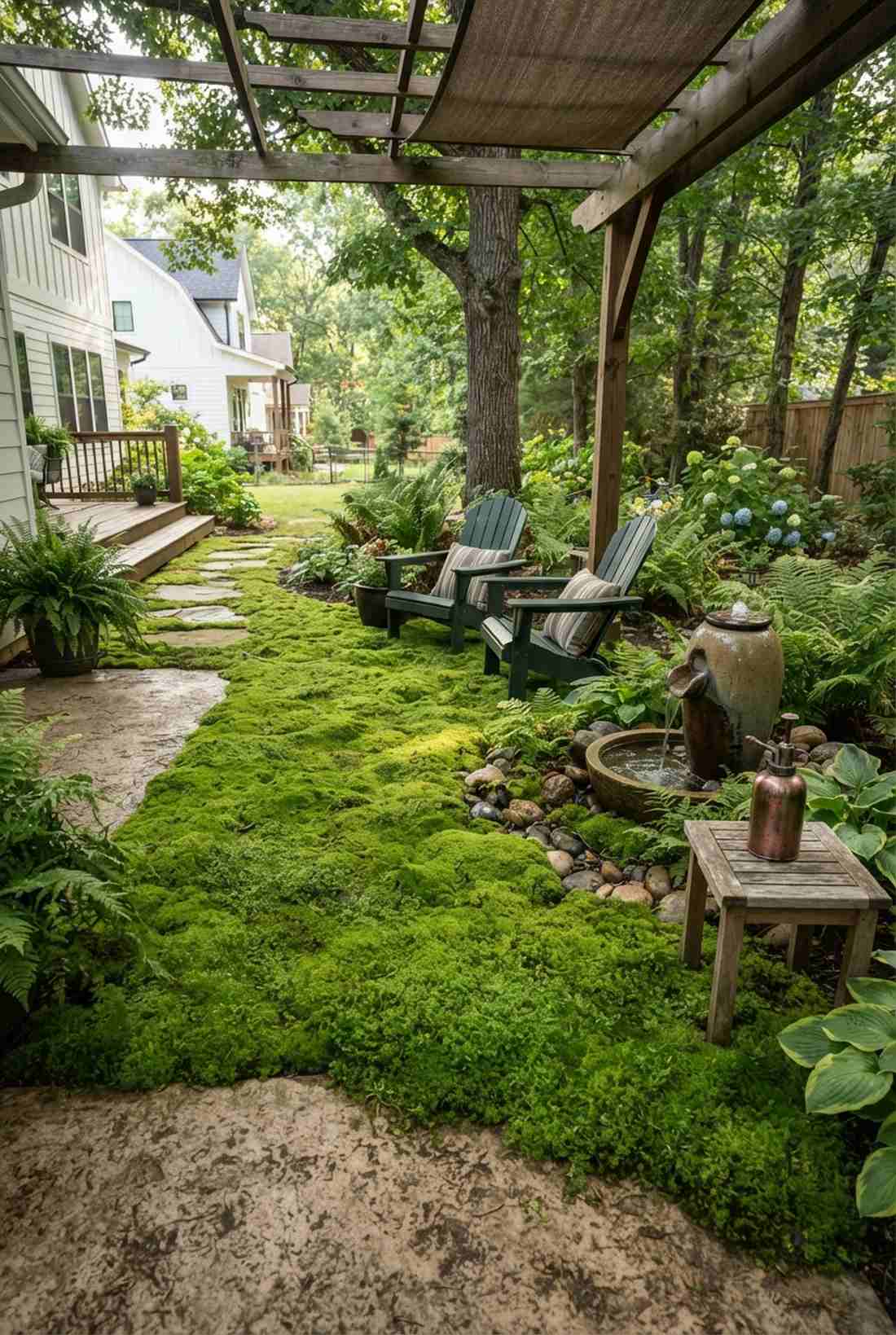
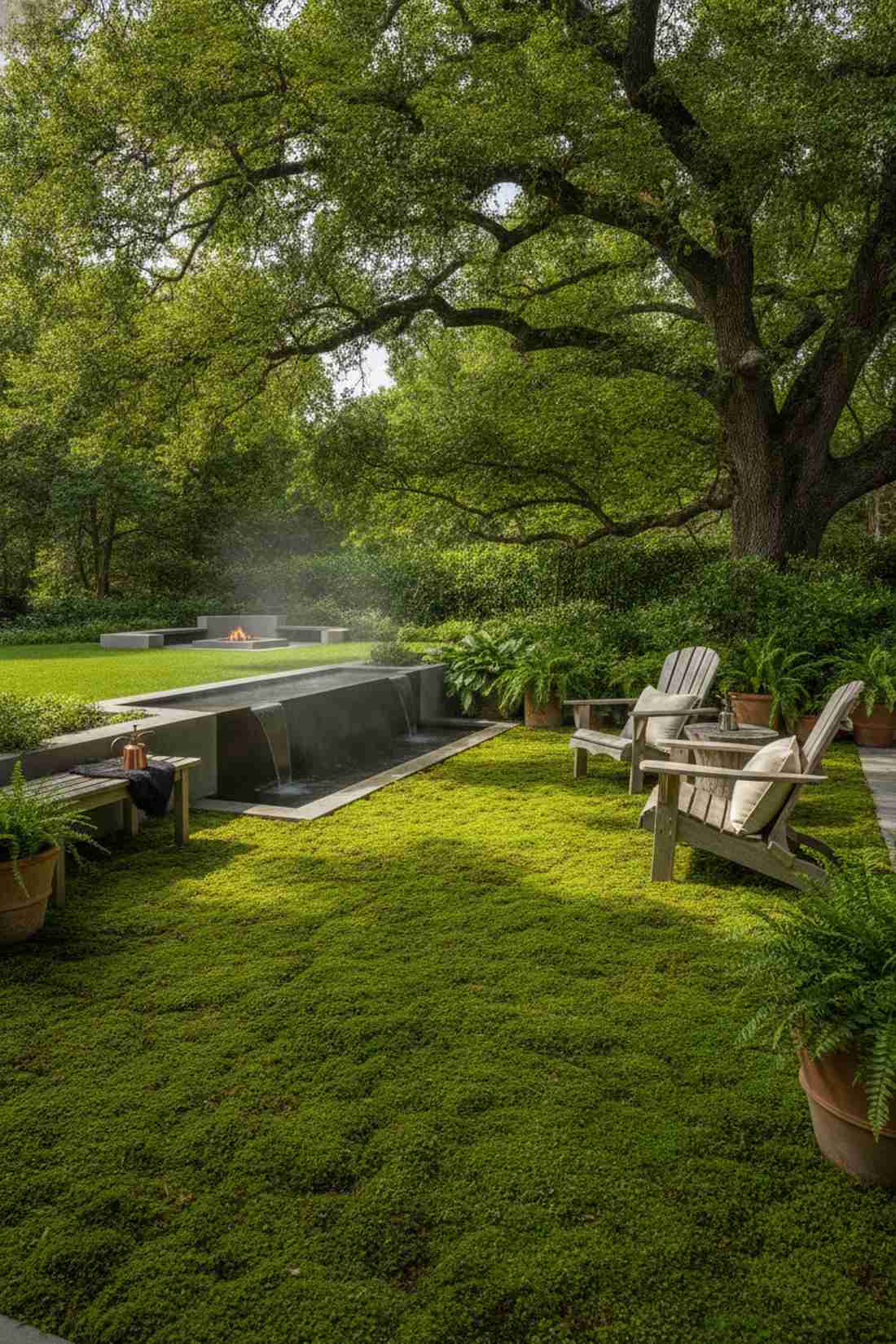
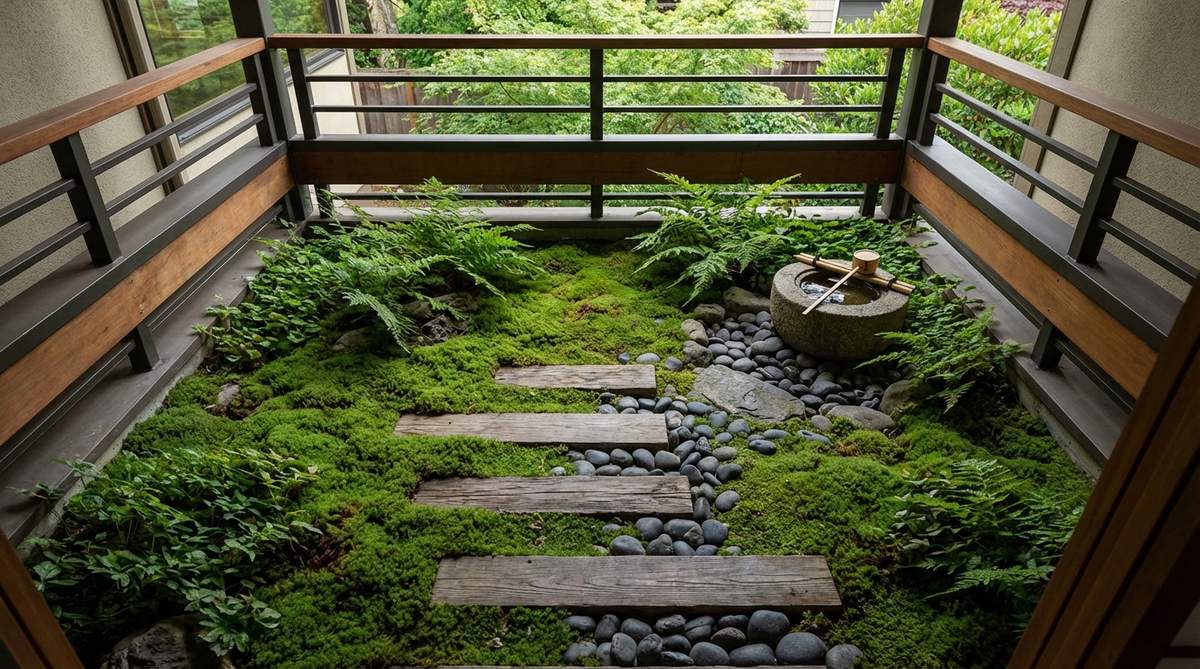
Feels like a plush, living emerald carpet underfoot. Cultivating a lush moss floor is the perfect low-height solution for fully shaded concrete slabs.
Grass absolutely refuses to grow on balconies, yet cultivating Scleranthus biflorus creates a breathtakingly dense horizontal plane. Misting this living texture daily brings an undeniable ancient aesthetic that pairs flawlessly with your outdoor patio water features.
Moss slurries and starters cost roughly $30 to cover a corner.
- Key Materials: Live moss slurry, shade fabric, spray bottle
- Vibe / Style: Soft woodland floor
- Difficulty: Requires strict moisture control
- Budget Breakdown: Moss Starters: $25 | Misting Bottle: $5
- Creator’s Tip: Blend buttermilk and moss fragments in a blender to create a paintable slurry that grows anywhere.
- Smart Sourcing: Live terrarium moss bulk packs and continuous fine-mist spray bottles.
18. Single Specimen Pine Placement
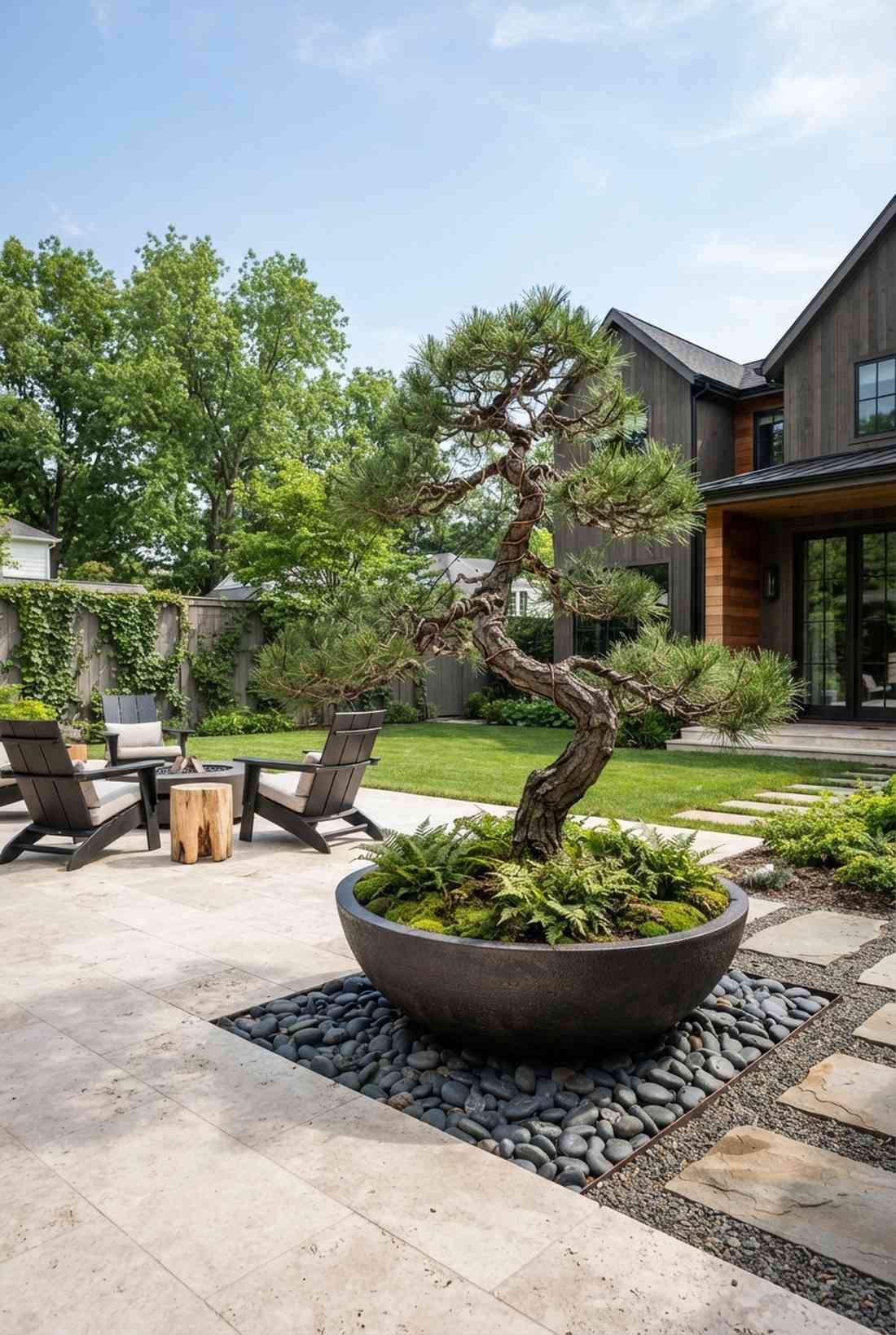
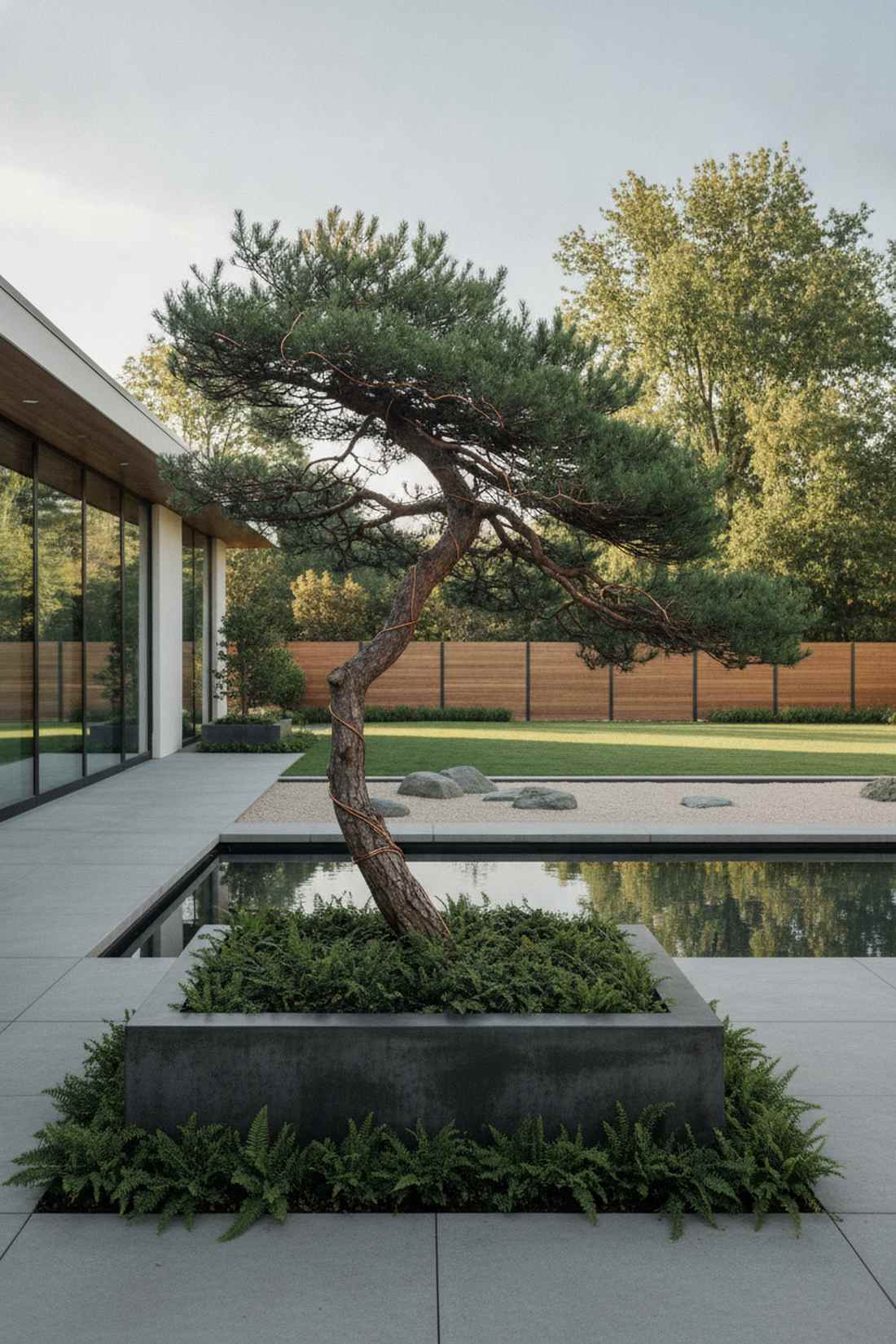
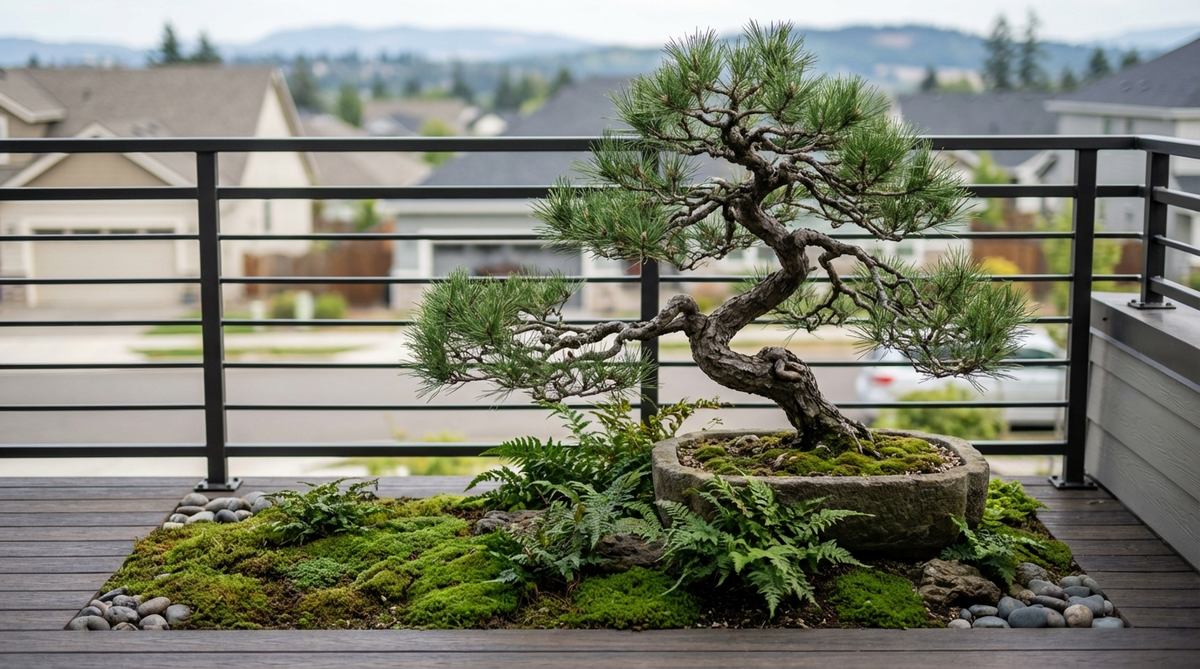
Embodying the fierce, windswept energy of coastal Japan. A standalone sculptural pine tree is the ultimate power move for minimalist exterior styling.
Cramming twenty different flowers together screams amateur, while isolating one pruned Japanese black pine creates massive architectural drama. Underplanting it strictly with low ferns forces the eye to appreciate the gnarled bark, giving a designer-level finish.
A mature, styled black pine easily runs $150+, but it’s worth every penny.
- Key Materials: Pruned Pinus thunbergii, large flat planter
- Vibe / Style: Dramatic lone survivor aesthetic
- Difficulty: Advanced pruning skills
- Budget Breakdown: Specimen Pine: $120 | Pot: $50
- Creator’s Tip: Use copper wire to gently bend and train young branches into that iconic windswept shape.
- Smart Sourcing: Pre-wired structural pine saplings and anodized bonsai training wire kits.
19. Fern Collection in Shadow
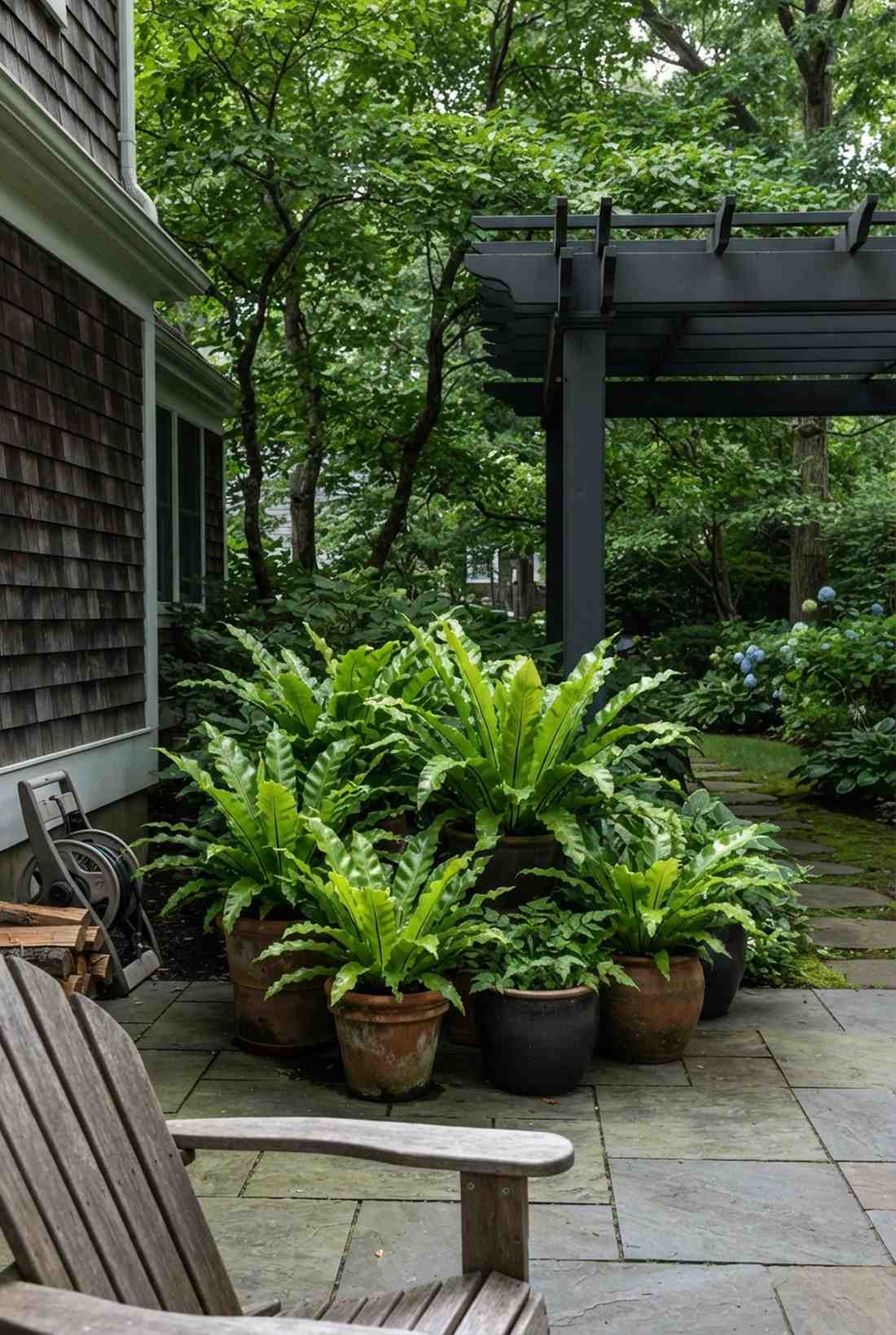
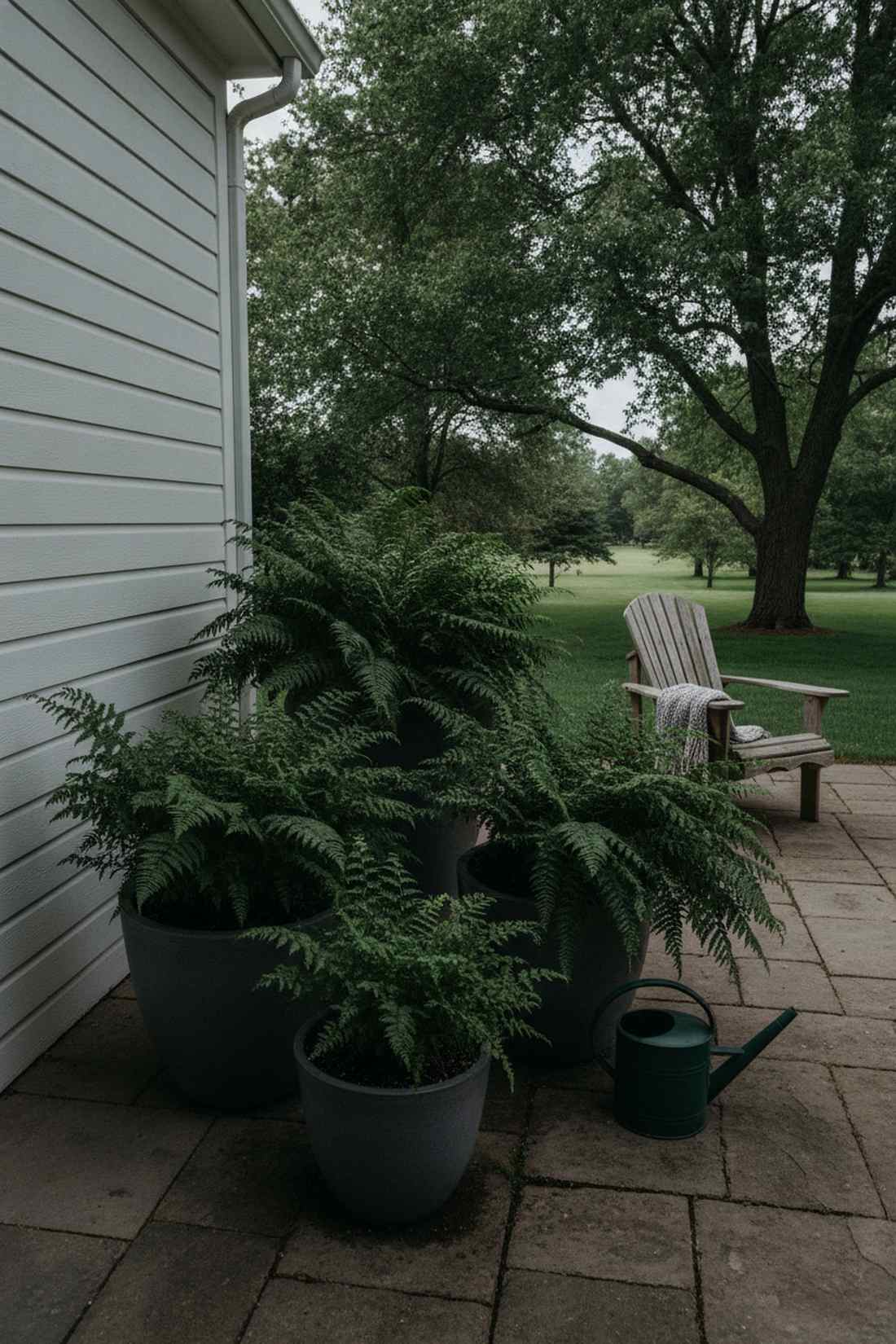
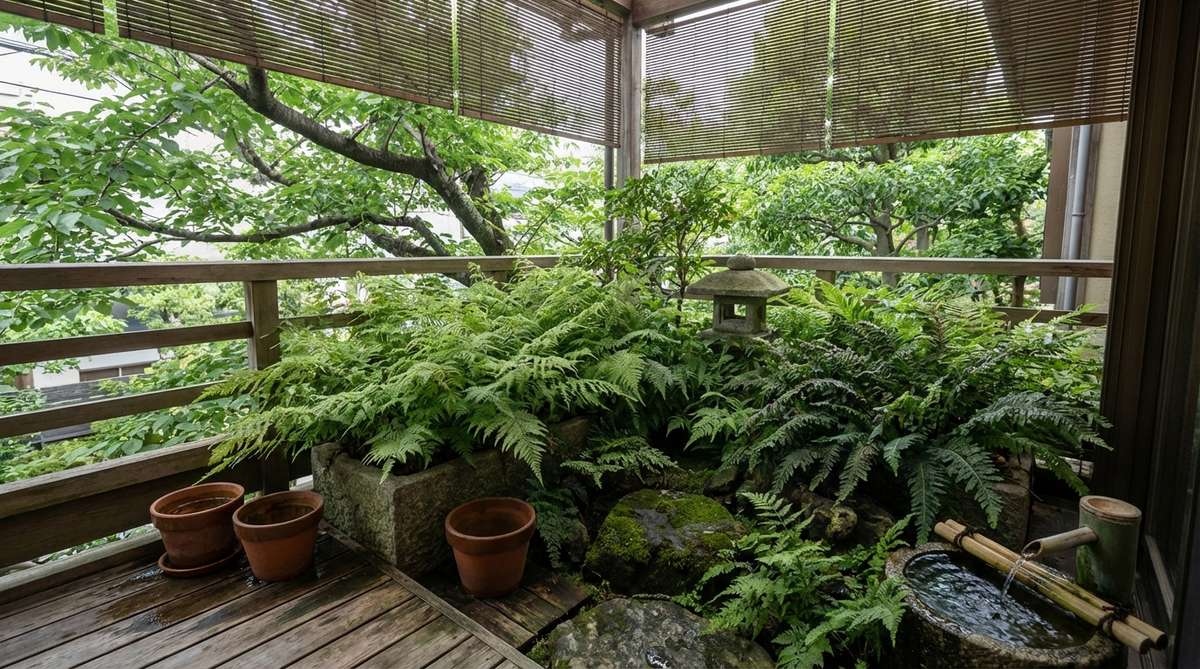
Transmits a cool, prehistoric calm to forgotten corners. A deep shade foliage arrangement thrives where nothing else survives on north-facing patios.
Forcing sun-loving blooms into the dark always fails, but grouping prickly rasp ferns brings incredible fine-textured foliage that looks extremely lush. Clustering three to five of the exact same species provides that coveted designer cohesion without any messy flowering distractions.
Fern bundles are highly economical, usually under $35 total. Pin this if your space gets zero direct sunlight!
- Key Materials: Asplenium ferns, moisture-retaining soil
- Vibe / Style: Dense, cool undergrowth
- Difficulty: Extremely low maintenance
- Budget Breakdown: Ferns: $25 | Soil: $10
- Creator’s Tip: Add water-retaining hydrogels to the soil mix so you only have to water them once a week.
- Smart Sourcing: Pre-potted shade fern multi-packs and moisture-control potting soil blends.
20. Evergreen Azalea Seasonal Accent
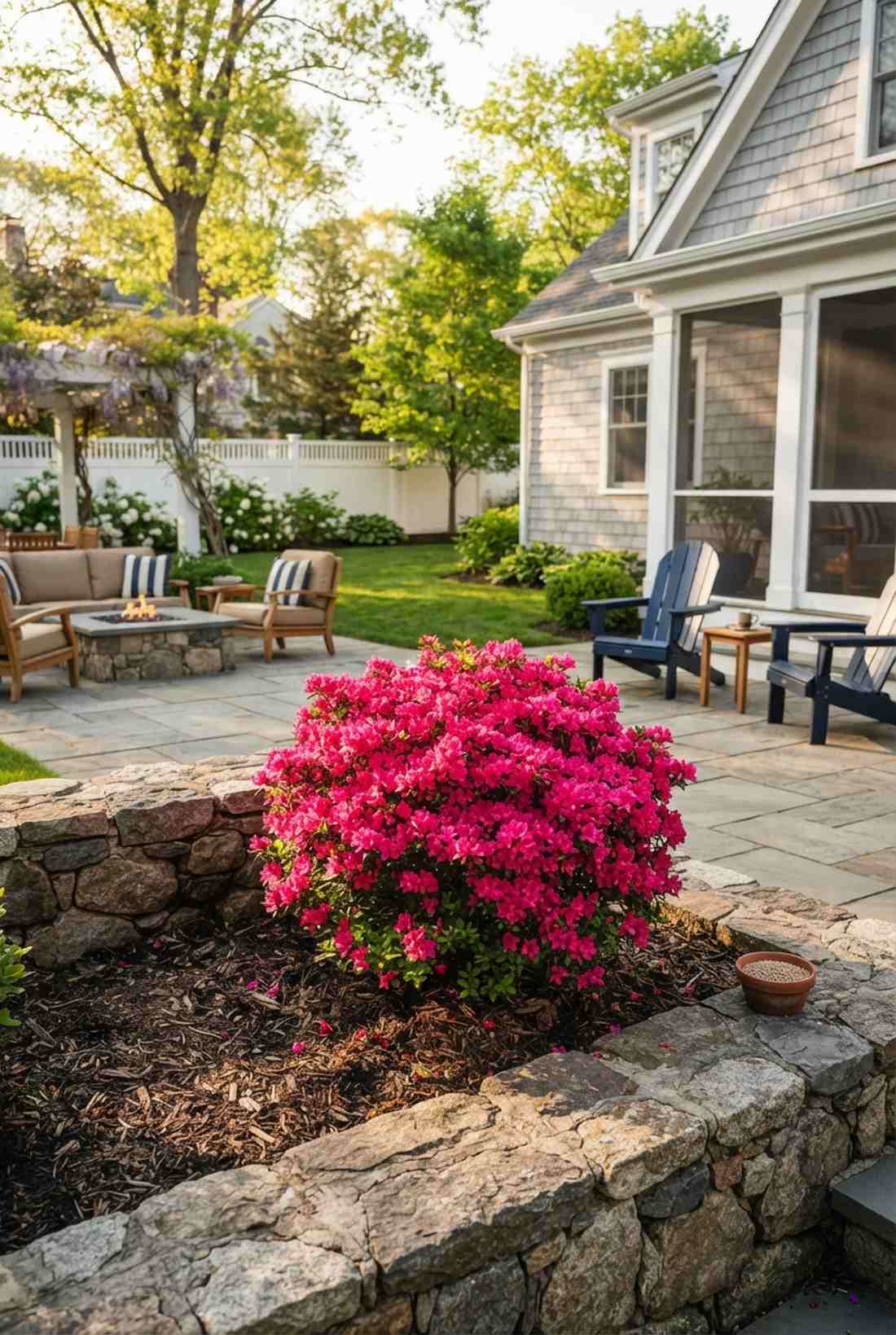
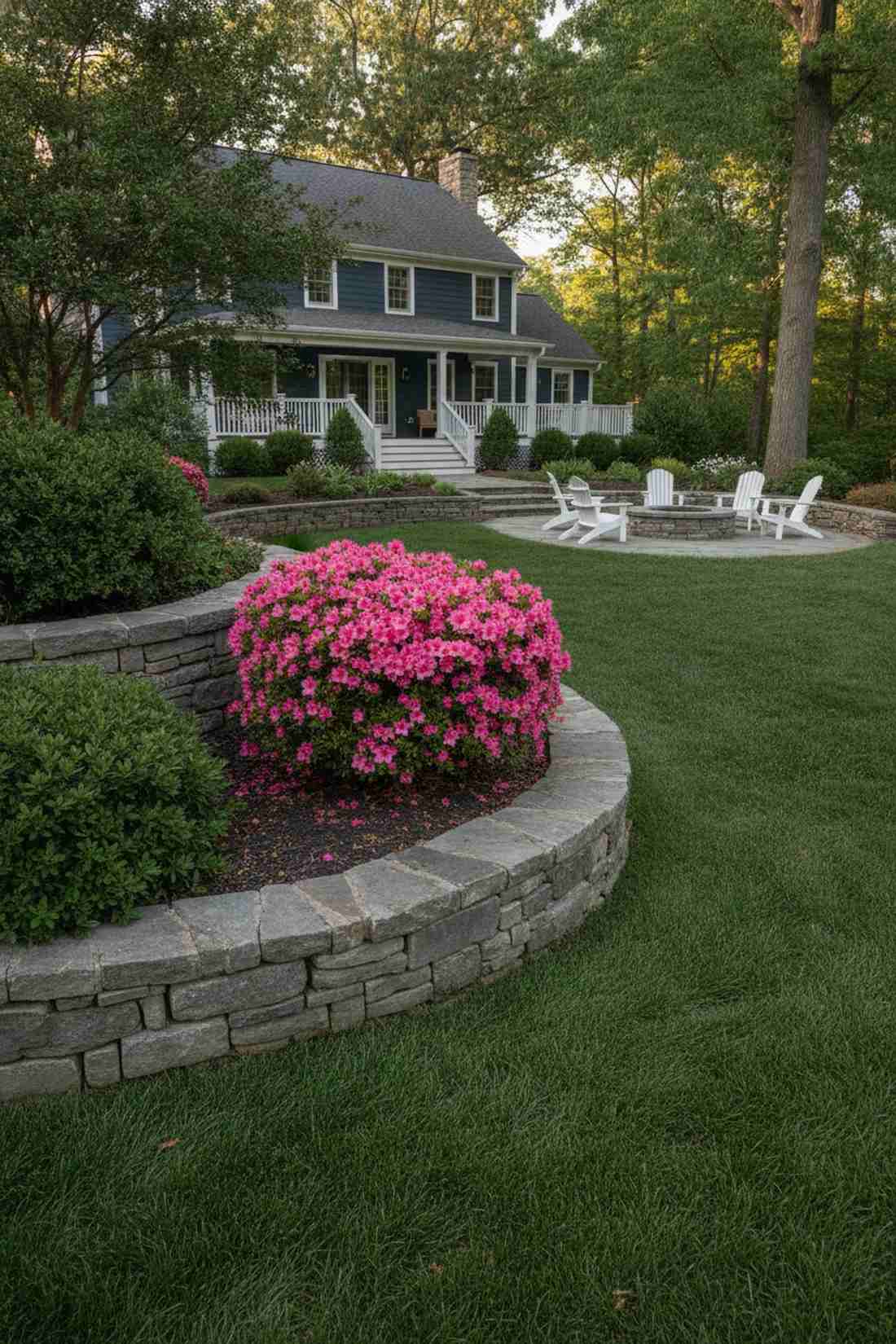
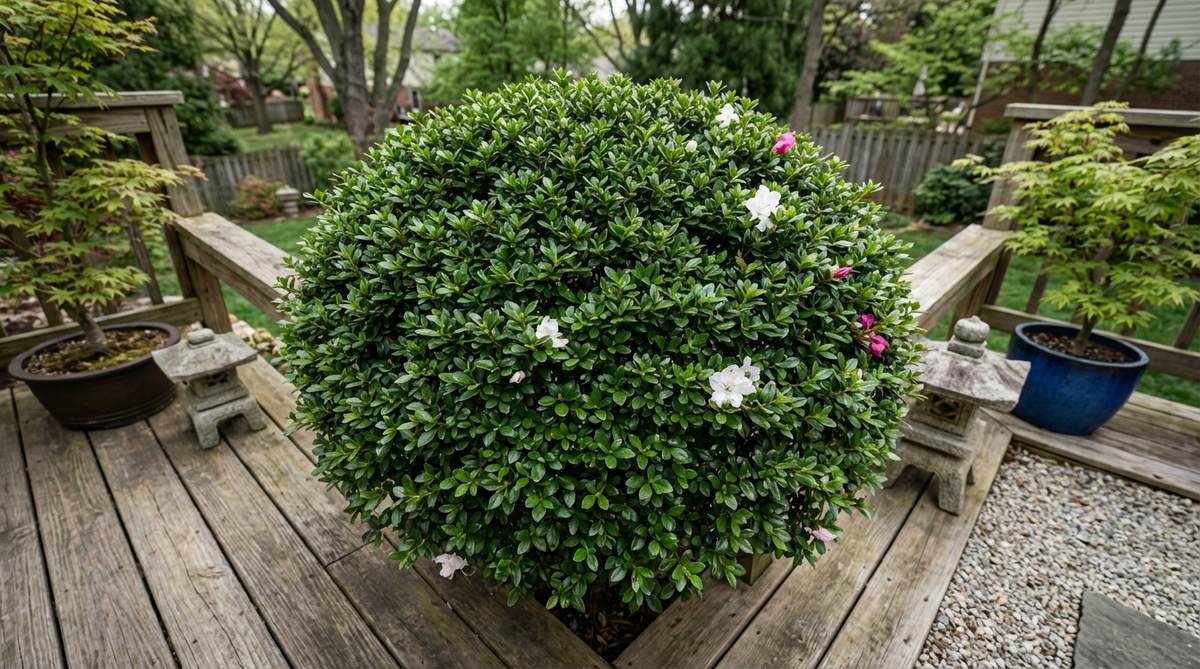
A sudden, brilliant flash of spring color against deep greens. A single flowering evergreen shrub balances harsh stonework with soft seasonal blooms.
Overdosing on colorful annuals destroys the zen vibe, but a restrained compact azalea looks wildly sophisticated. Rely on its dense, rounded evergreen leaves for ten months, allowing the brief floral explosion to feel incredibly special.
A healthy 2-gallon azalea costs merely $25.
- Key Materials: Compact evergreen azalea, acidic fertilizer
- Vibe / Style: Restrained floral burst
- Difficulty: Easy seasonal pruning
- Budget Breakdown: Shrub: $20 | Fertilizer: $5
- Creator’s Tip: Prune them immediately after the spring blooms fade; waiting too long will cut off next year’s flower buds.
- Smart Sourcing: Pre-shaped dwarf azalea shrubs and slow-release acid-loving plant food.
You are probably ignoring your vertical space. The upcoming layouts transform blank walls into immediate high-end focal pieces.
Vertical Zen Elements for Compact Balcony Spaces
Vertical features draw the eye upward and create the illusion of greater height. Lanterns, screens, and climbing supports add dimension without consuming precious floor area.
21. Stone Pagoda Lantern
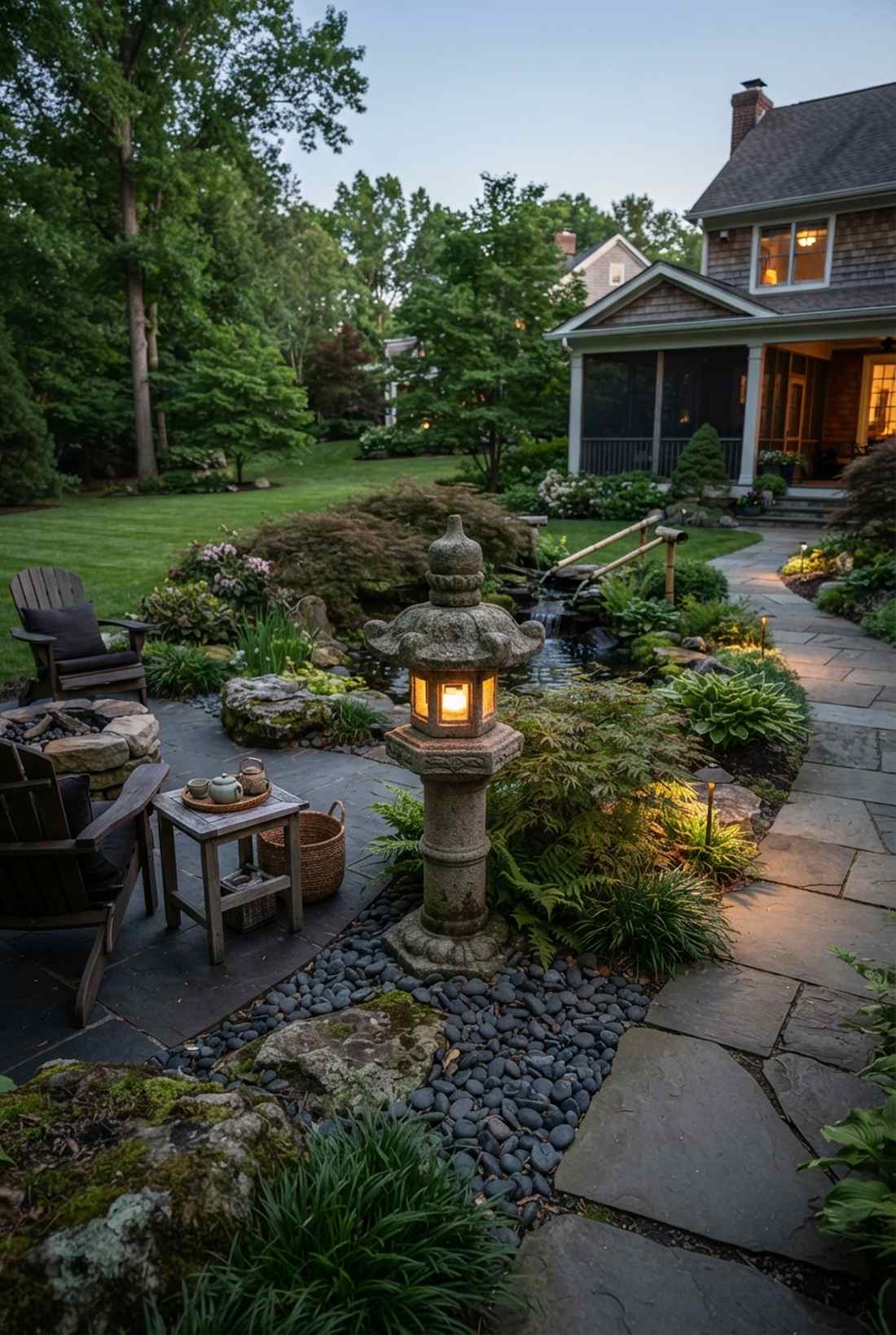
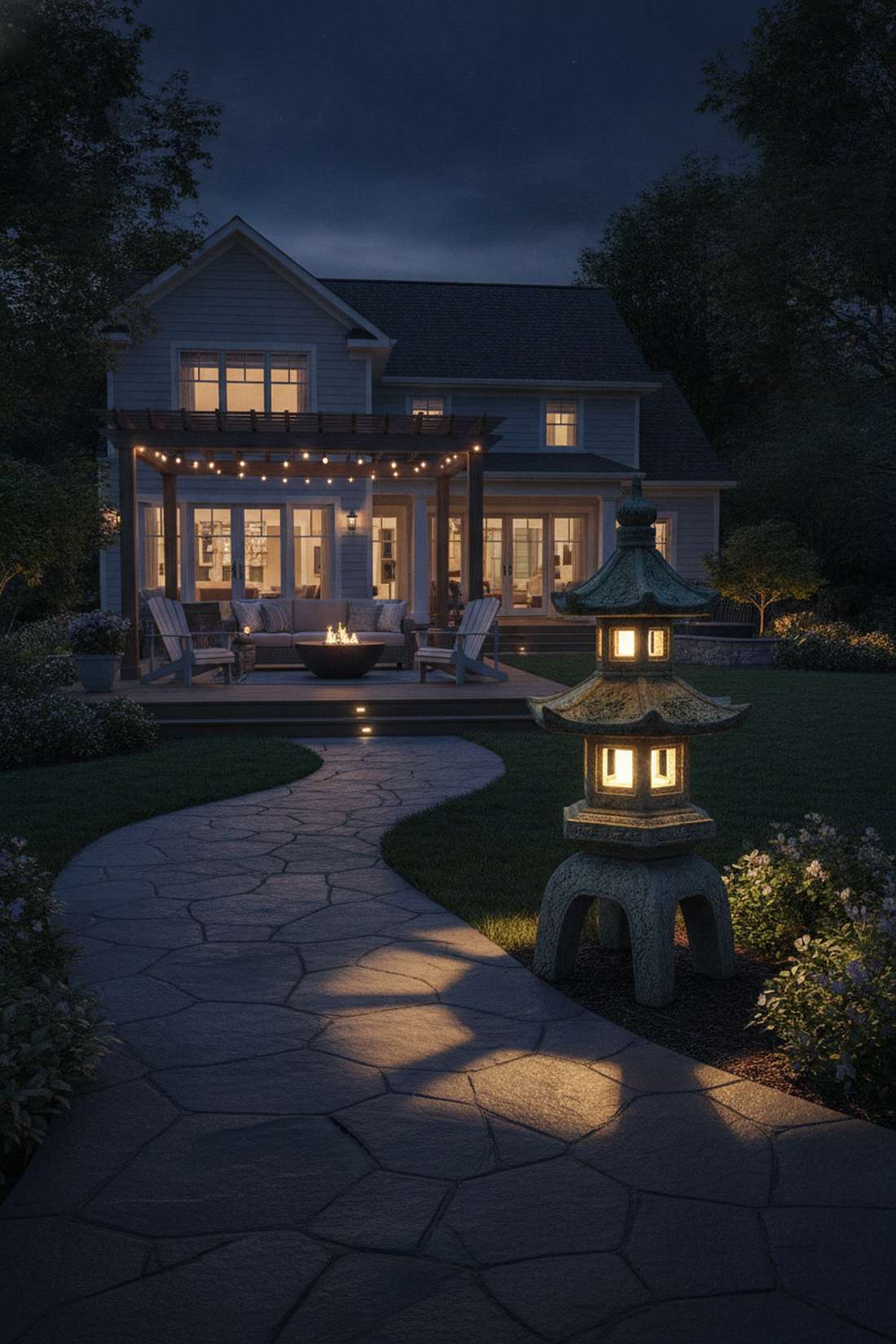
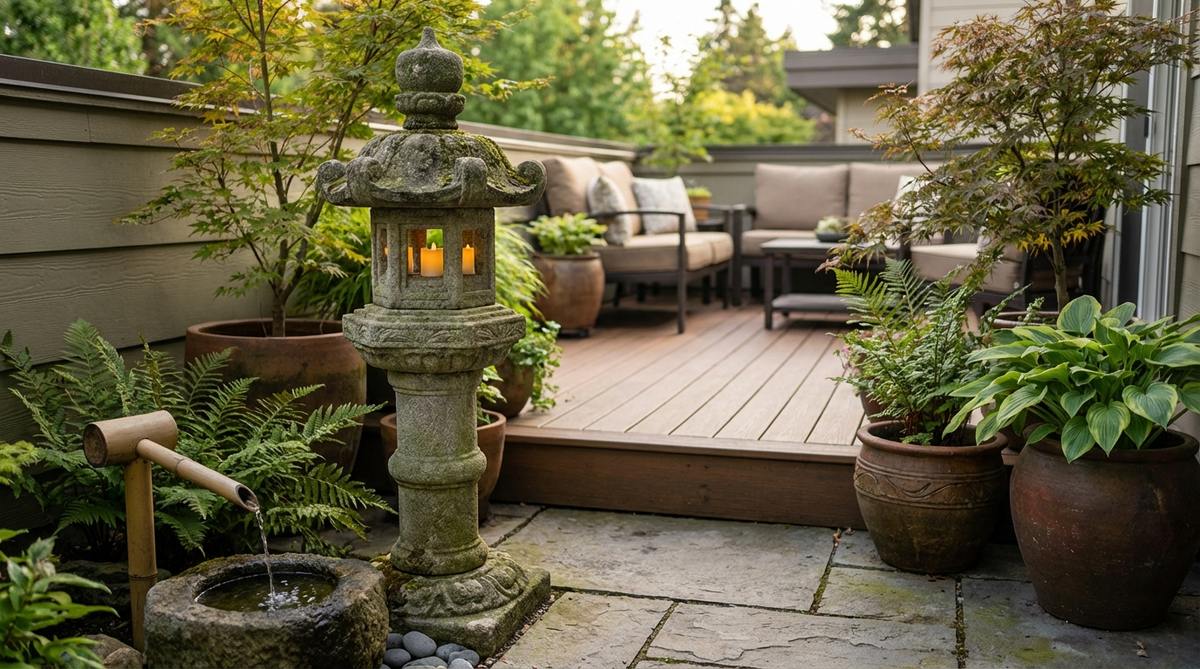
Casts long, dramatic shadows across the patio at midnight. A tiered classic stone lantern provides deep historical anchoring for any seating arrangement.
String lights can sometimes look like a college dorm, but a carved granite toro introduces profound architectural gravity. Place it asymmetrically near a pathway juncture, slipping a warm LED inside to create a deeply meditative evening ambiance.
Authentic carved pieces start at $100, though heavy resin replicas cost half that. Save this to your outdoor lighting board!
- Key Materials: Multi-tier pagoda lantern, waterproof LED puck
- Vibe / Style: Historic temple pathway
- Difficulty: Zero installation required
- Budget Breakdown: Lantern: $75 | LED Light: $15
- Creator’s Tip: Smear plain yogurt on a resin lantern and leave it in the shade to rapidly grow a faux-ancient moss patina.
- Smart Sourcing: Weatherproof cast-resin pagoda lanterns and remote-control outdoor LED puck lights.
22. Bamboo Privacy Screen Panel
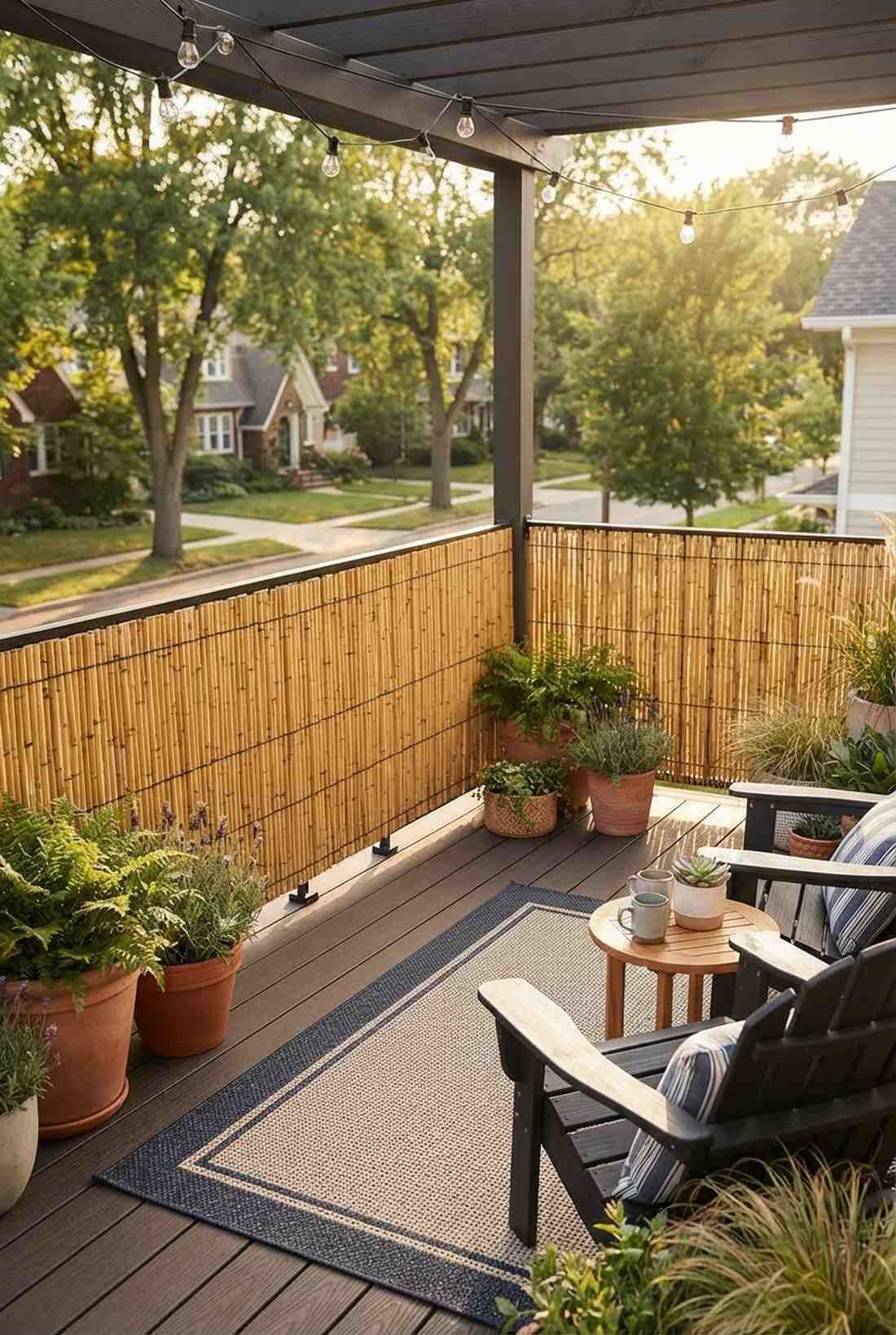
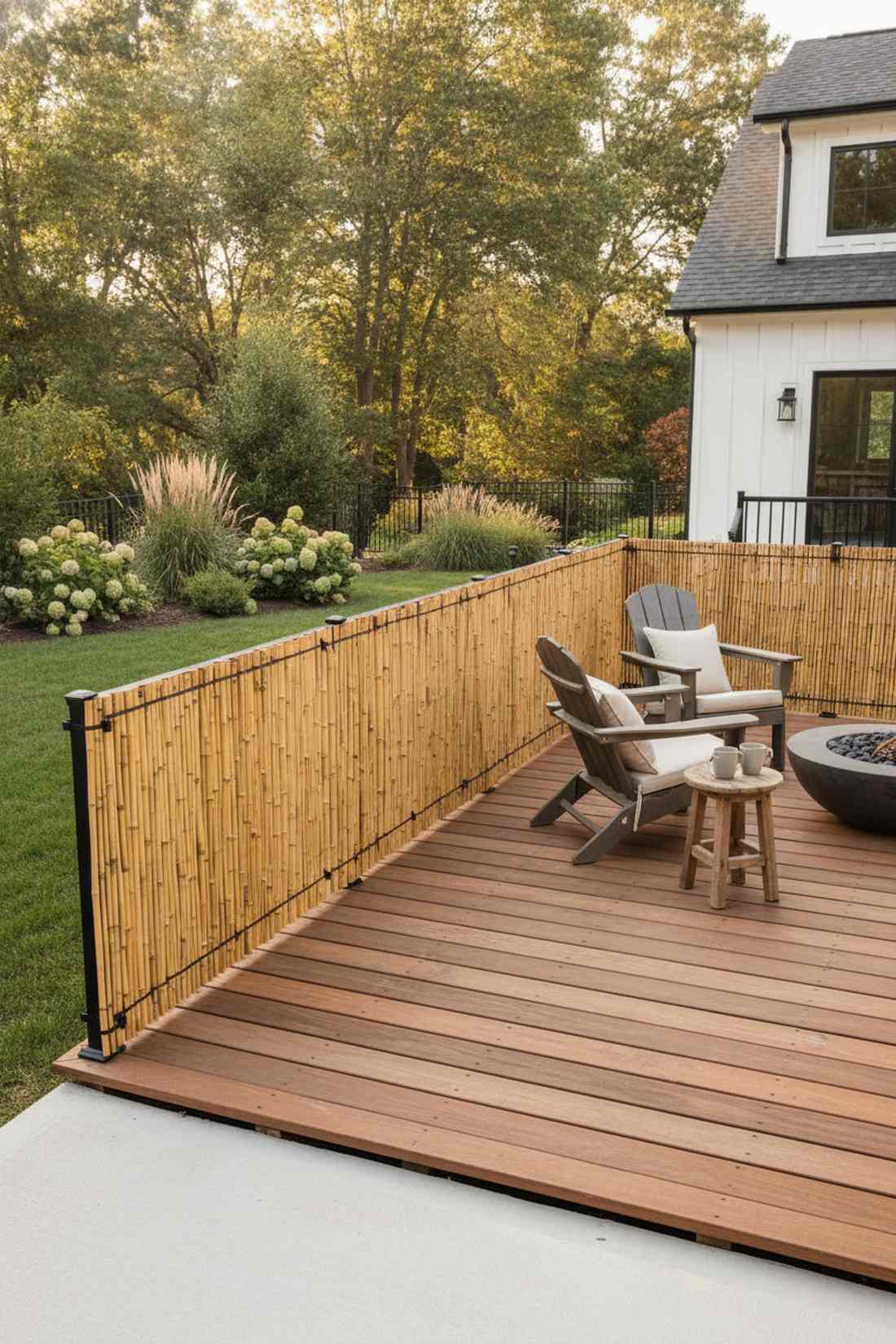
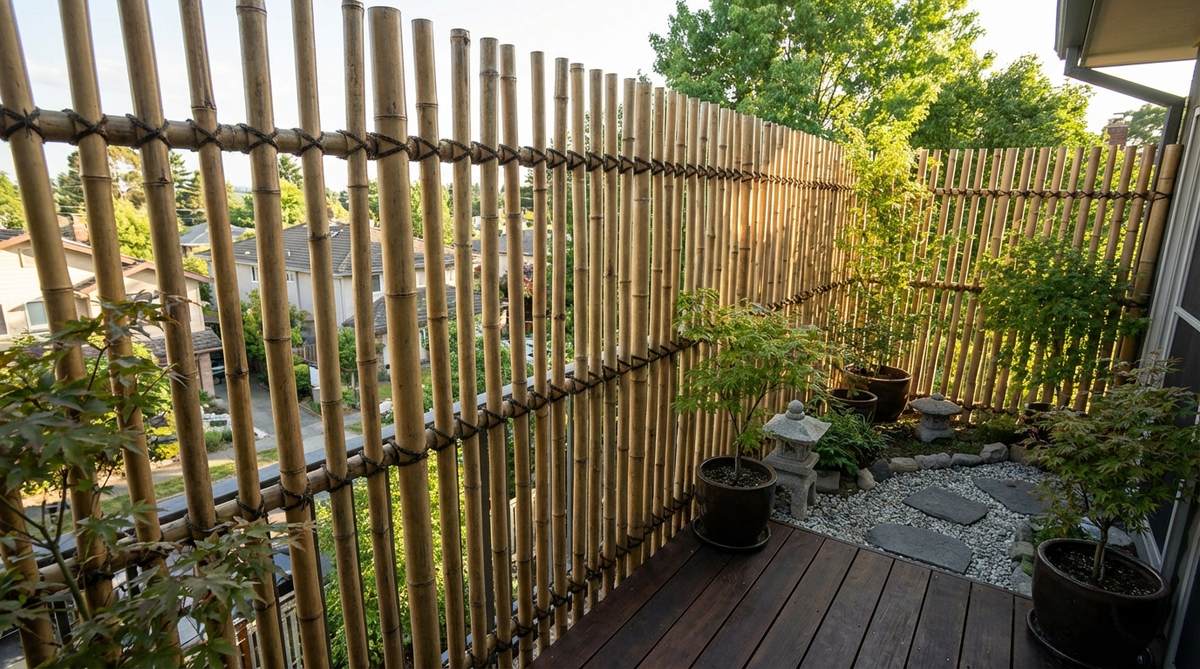
Wraps your entire space in an organic, golden-hued embrace. A rolled bamboo fencing roll is the fastest way to hide ugly metal railings.
Leaving standard iron grates exposed ruins the illusion, whereas lashing dark-corded natural poles across the perimeter completely shifts the atmosphere. The slight gaps between the canes allow cross-breezes while thoroughly blocking unwanted street-level views, outperforming basic terrarium accessories in scale.
Quality fencing panels run about $45 to $80 each.
- Key Materials: Natural bamboo fencing rolls, black zip ties
- Vibe / Style: Warm, enclosed privacy
- Difficulty: Quick 10-minute install
- Budget Breakdown: Fence Roll: $50 | Zip Ties: $5
- Creator’s Tip: Keep the bottom of the bamboo roll one inch off the concrete floor to prevent wood rot from standing puddle water.
- Smart Sourcing: UV-coated natural bamboo fence rolls (bulk pack) and heavy-duty UV-resistant black zip ties.
Material Guide: Cheap vs. Premium Aesthetic
Knowing exactly where to save and where to spend makes all the difference in achieving that “looks expensive but isn’t” vibe.
- Standard vs. UV-Resistant/Premium: Cheap untreated bamboo and plastic splits within a month. Upgrading to UV-coated fiberglass planters and sealed fencing ensures your layout survives extreme summer sun.
- Pre-made Kits vs. Sourcing Locally: While river rocks should be bought locally to avoid shipping weight costs, opting for pre-calibrated fountain starter kits saves you hours of frustrating plumbing leaks.
23. Climbing Vine on Minimal Trellis
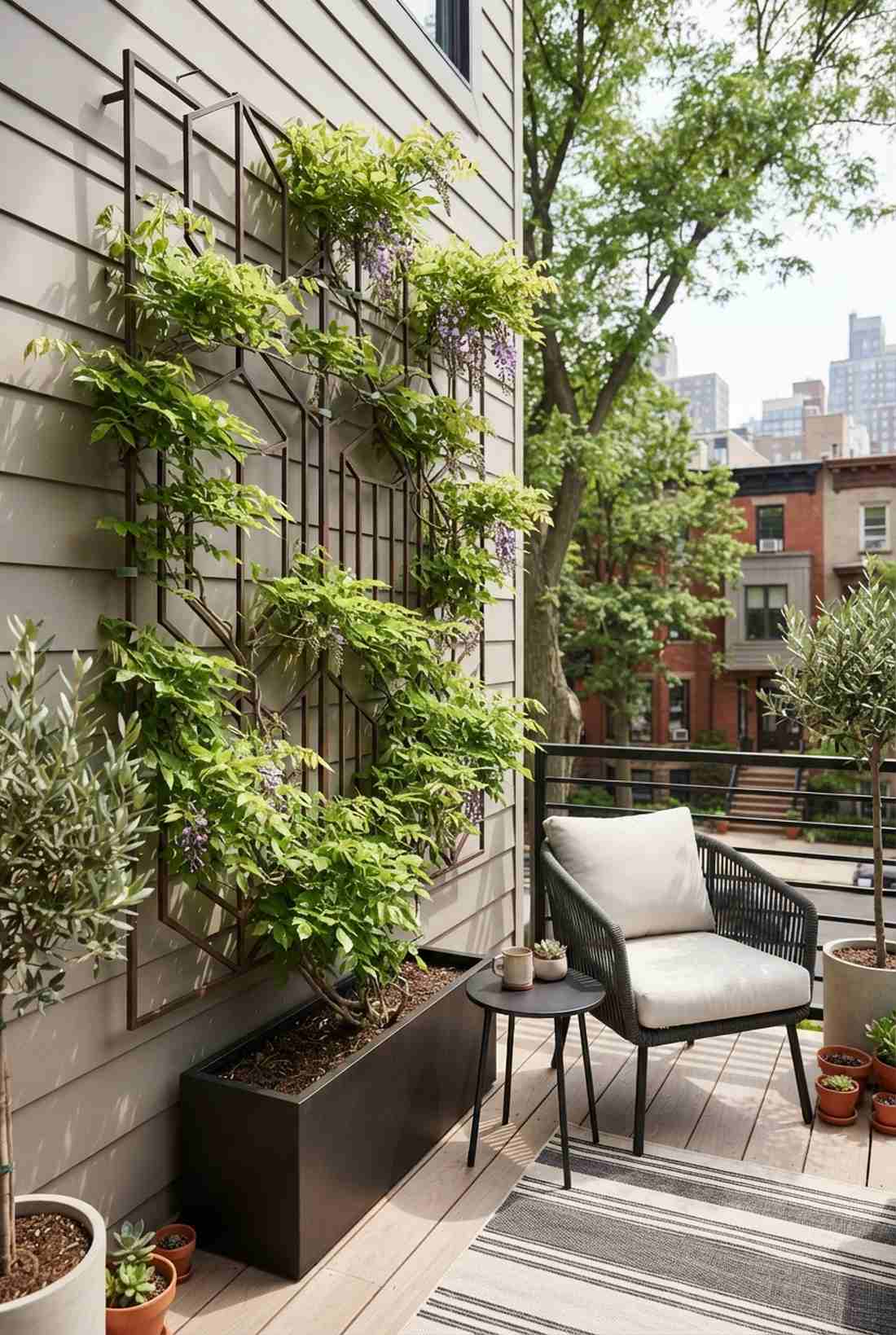
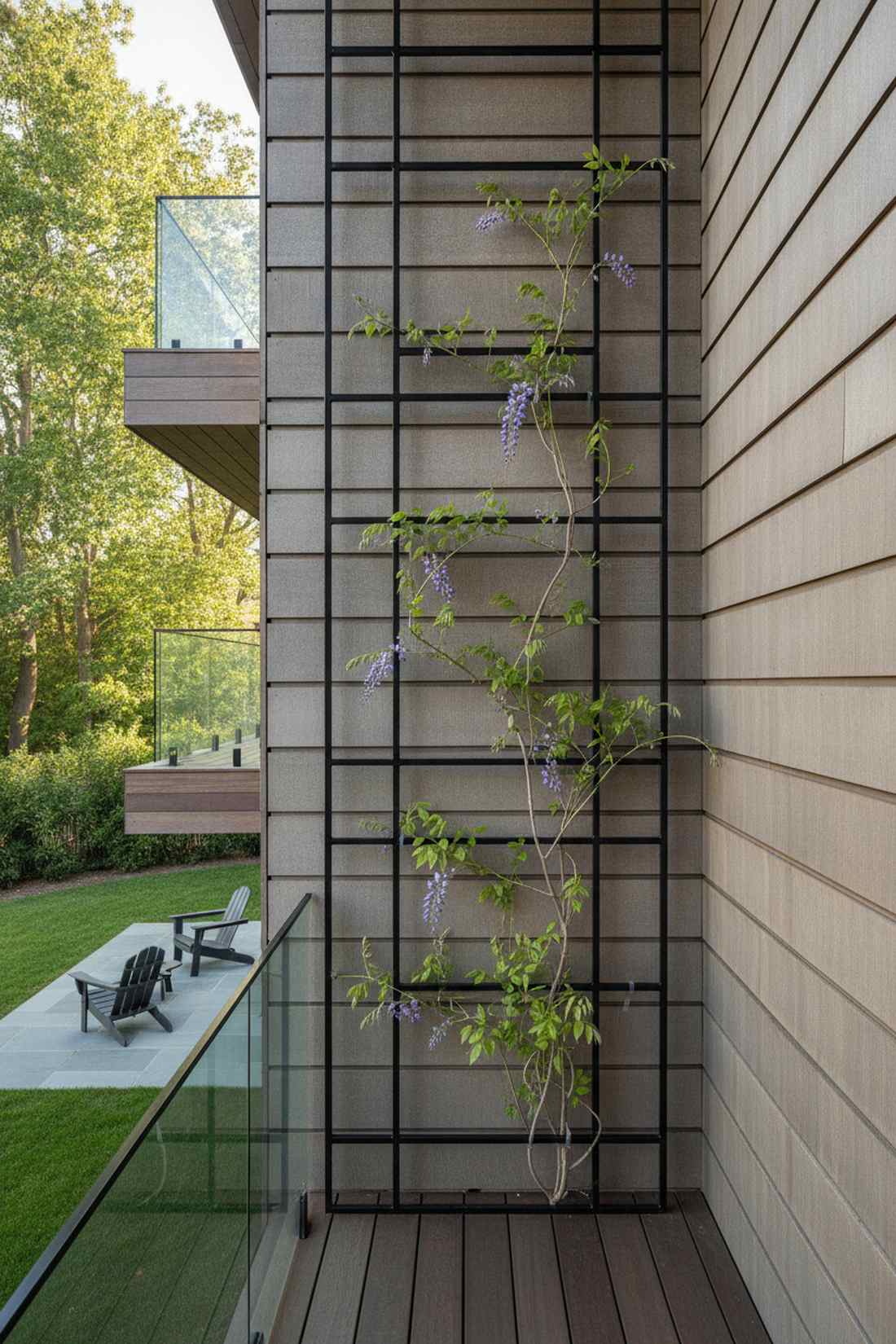
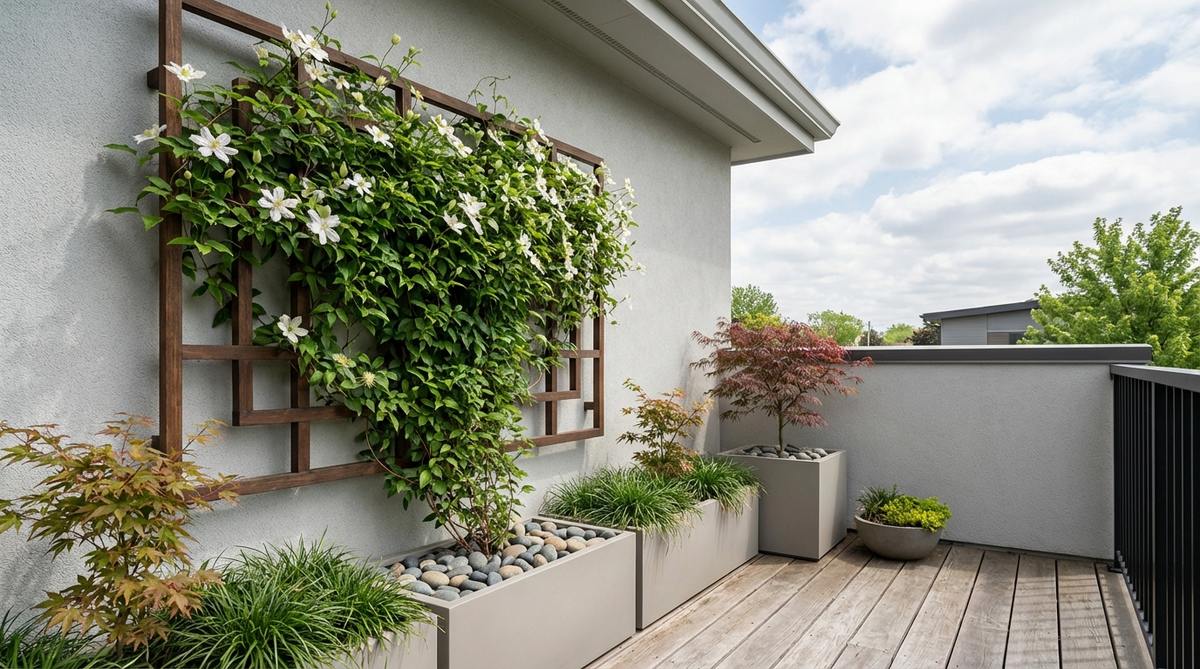
Paints living green geometry against barren exterior siding. A clean geometric vine support pulls the eye upward on incredibly narrow balconies.
Overgrown ivy wreaks havoc on brickwork, but training Japanese wisteria on a strictly linear frame delivers a highly controlled, upscale look. Regular pruning prevents it from turning into a messy jungle, maintaining the perfect balance of raw nature and sleek architecture.
Trellis and vine combos cost around $50. Pin this for small-space wall ideas!
- Key Materials: Minimalist wooden/metal trellis, climbing wisteria
- Vibe / Style: Controlled architectural green wall
- Difficulty: Requires diligent training clips
- Budget Breakdown: Trellis: $35 | Vine: $20
- Creator’s Tip: Use soft silicone plant ties instead of wire to prevent cutting into the vine as it expands over the summer.
- Smart Sourcing: Rust-proof geometric metal trellises and reusable silicone plant training ties.
24. Vertical Cedar Board Backdrop
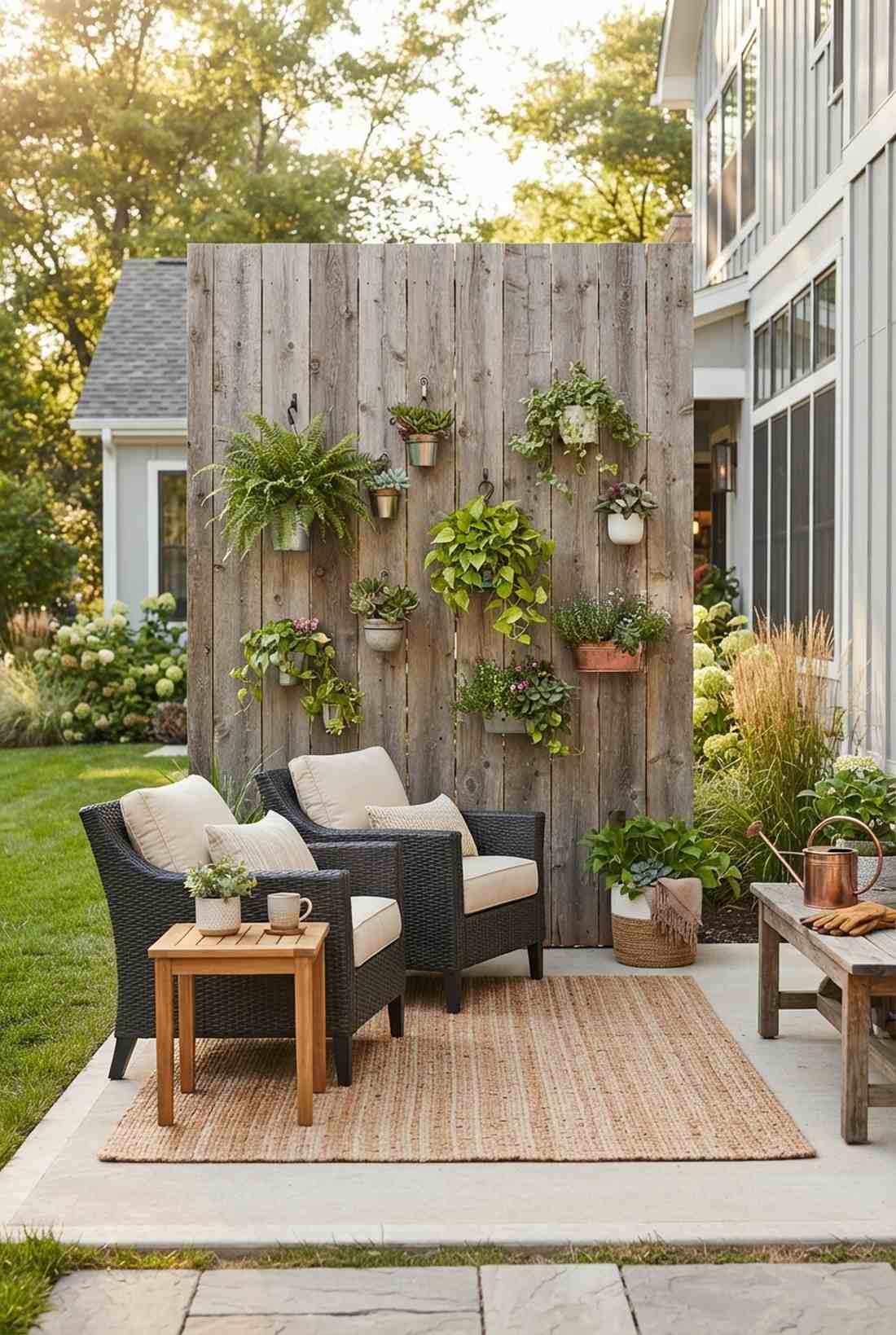
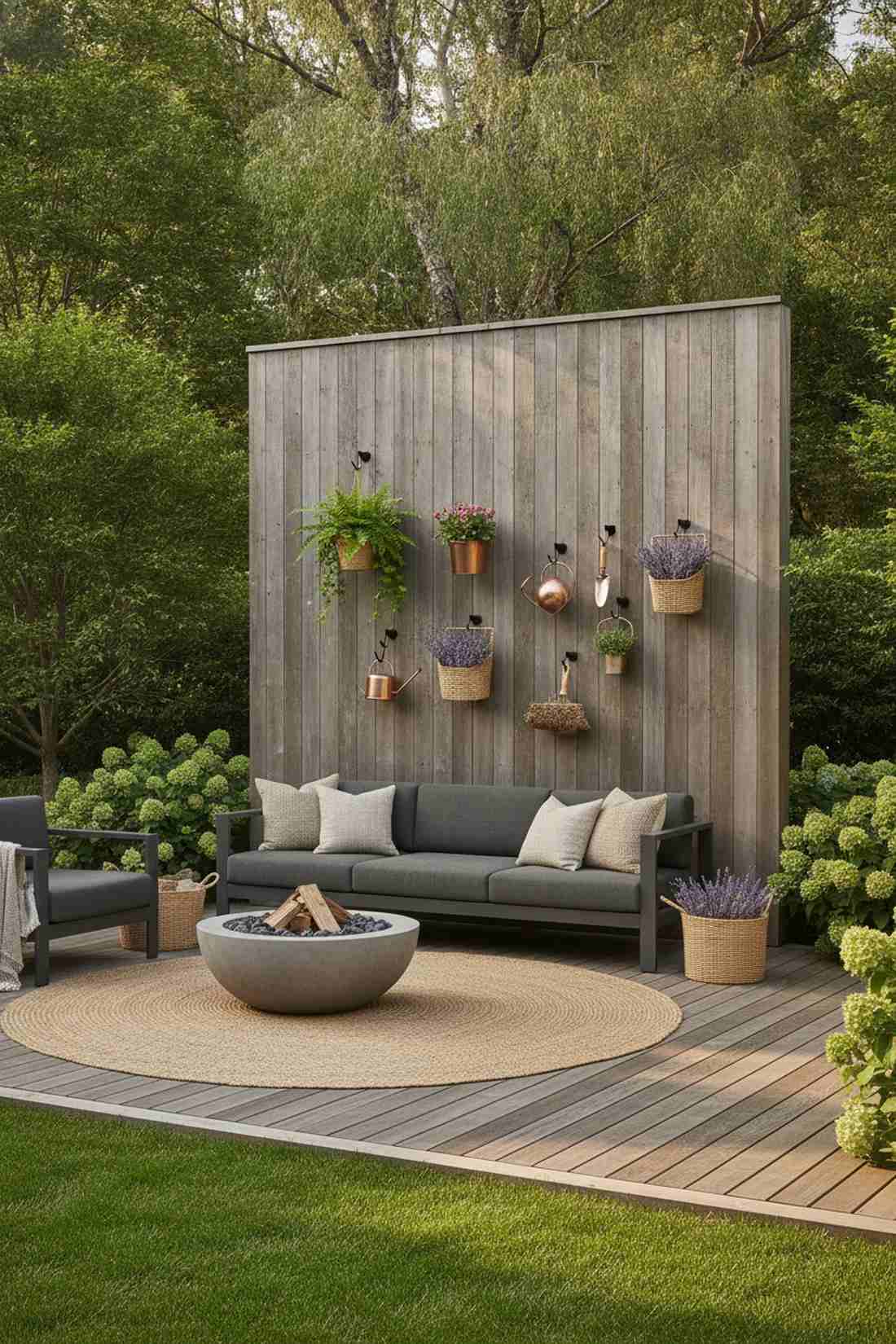
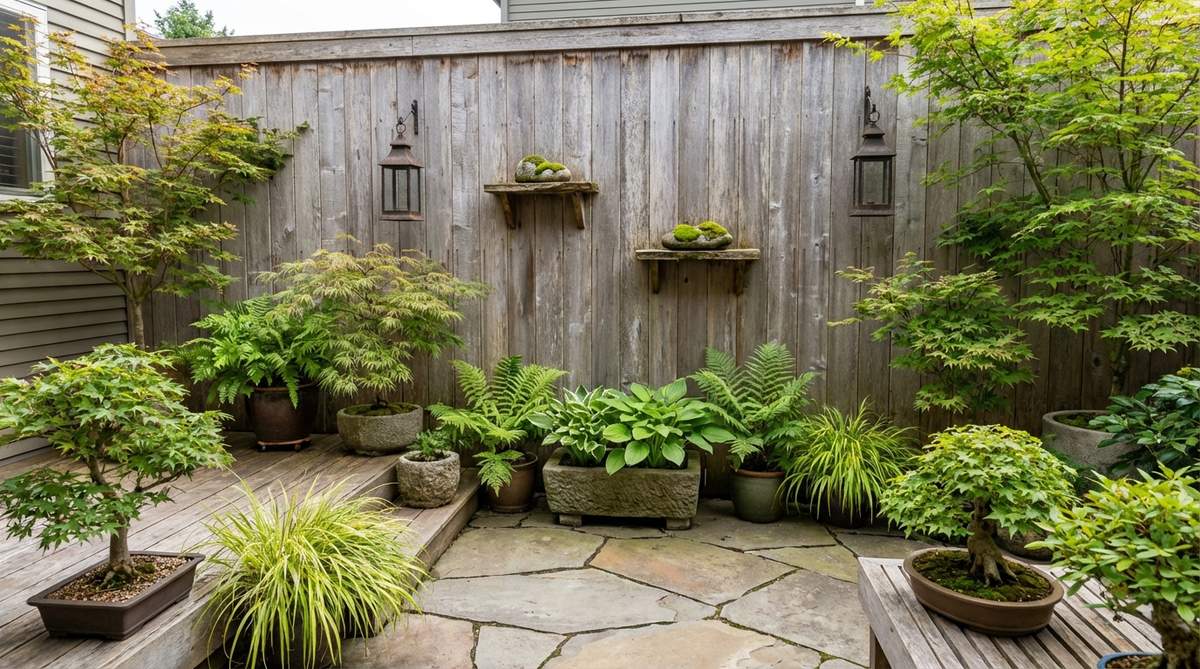
Gives off serious high-end spa resort energy. Installing a weathered wood accent wall creates the ultimate neutral canvas for highlighting bright green foliage.
Staring at generic apartment stucco is depressing, but mounting raw silvered cedar instantly injects organic warmth into the design. Leaving the wood entirely unsealed allows it to age gracefully, providing the perfect backdrop for hanging premium miniature garden supplies.
Lumber for a 4×6 foot wall costs roughly $60.
- Key Materials: Raw cedar planks, structural mounting tape
- Vibe / Style: Premium rustic spa wall
- Difficulty: Moderate DIY mounting
- Budget Breakdown: Cedar Boards: $50 | Mounting Gear: $15
- Creator’s Tip: If you can’t drill into the balcony walls, use heavy-duty outdoor mounting tape on smooth siding.
- Smart Sourcing: Pre-cut cedar plank paneling (bulk pack) and extreme-hold outdoor mounting tape.
25. Hanging Wind Chime Placement
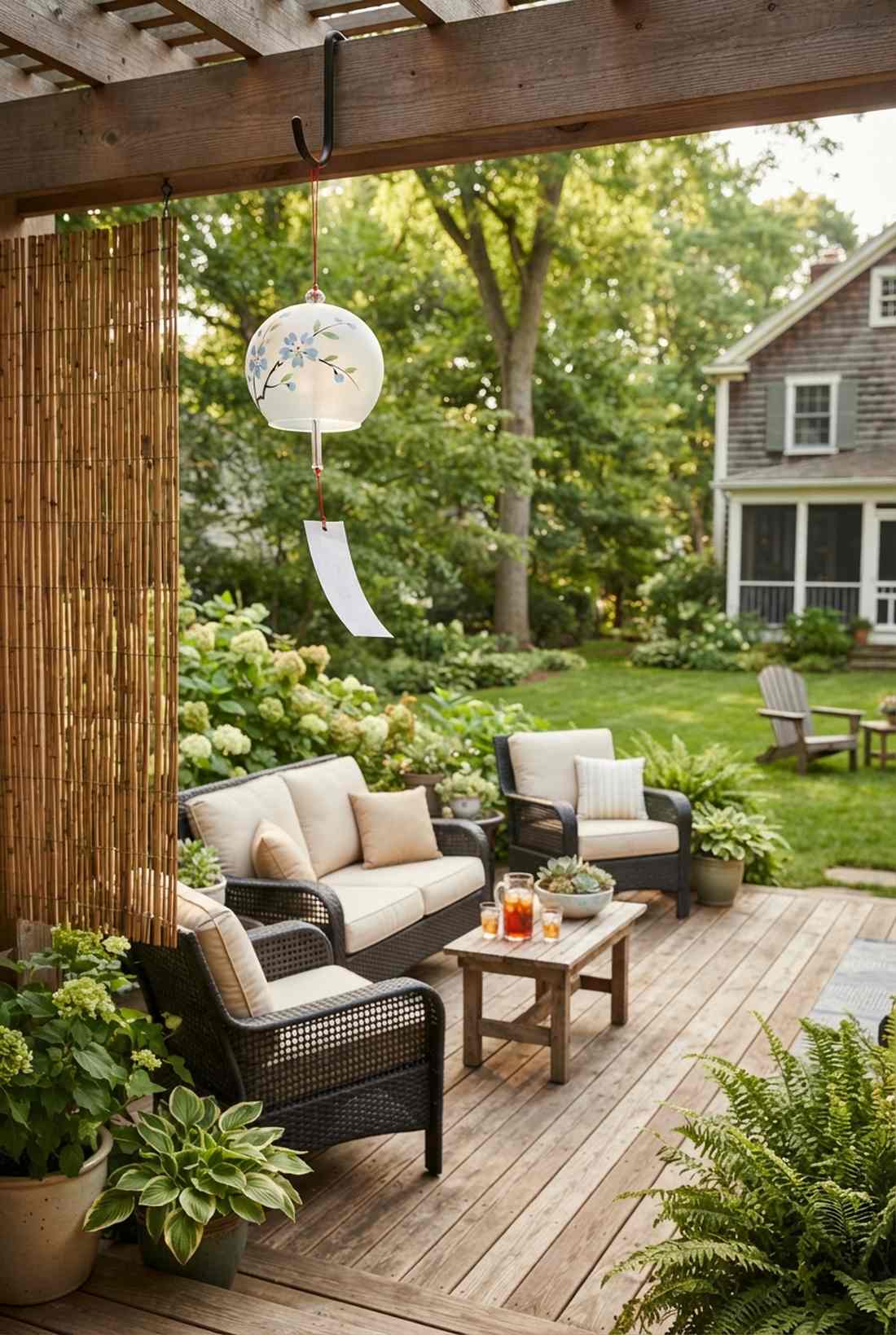
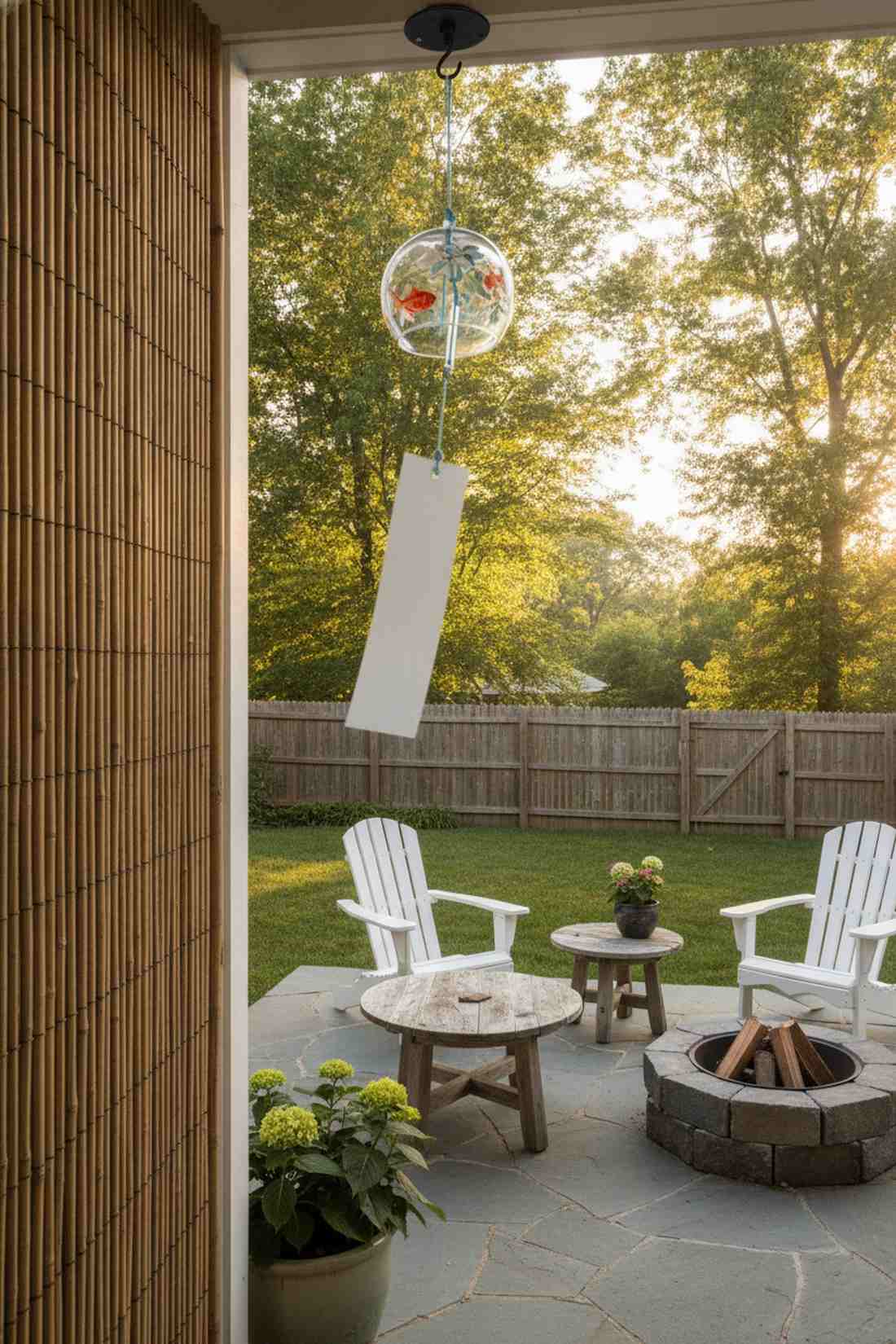
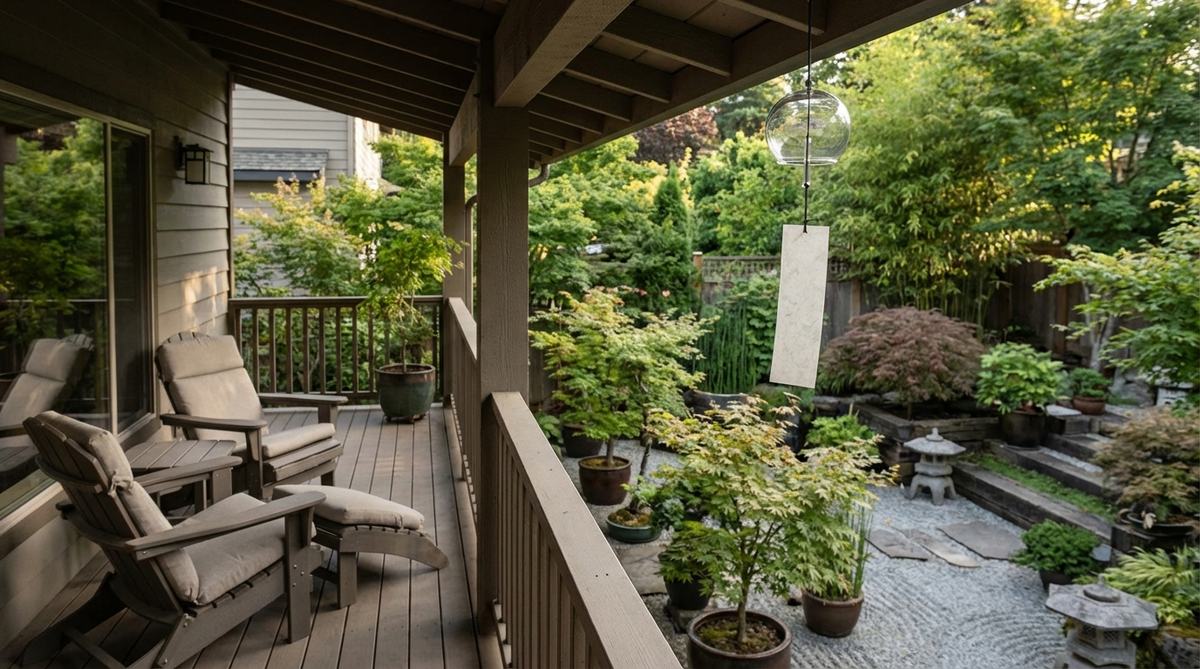
Catches the invisible breeze and turns it into delicate music. A glass traditional furin chime adds a layer of kinetic and auditory brilliance.
Heavy metal tubes often sound clunky and obnoxious, but a paper-sailed Japanese bell produces incredibly subtle, crystalline tones. Suspend it just outside the main seating zone so the intermittent rings never overwhelm your conversation or annoy neighbors.
Authentic glass chimes cost as little as $15. Pin this for the easiest sensory upgrade!
- Key Materials: Glass furin chime, ceiling hook
- Vibe / Style: Nostalgic summer breeze audio
- Difficulty: Instant hanging setup
- Budget Breakdown: Chime: $15 | Hook: $2
- Creator’s Tip: Hang it near your bamboo screen where natural air currents get funneled for maximum activation.
- Smart Sourcing: Authentic hand-painted glass furin chimes and damage-free outdoor ceiling hooks.
Your design is completely useless without the right vantage point. These final setups dictate exactly how to enjoy your new sanctuary.
Meditation and Seating Zones for Contemplation
Functional seating allows extended garden engagement. Seating areas should integrate with the overall design rather than interrupt the zen aesthetic with bulky patio furniture.
26. Low Wooden Meditation Bench
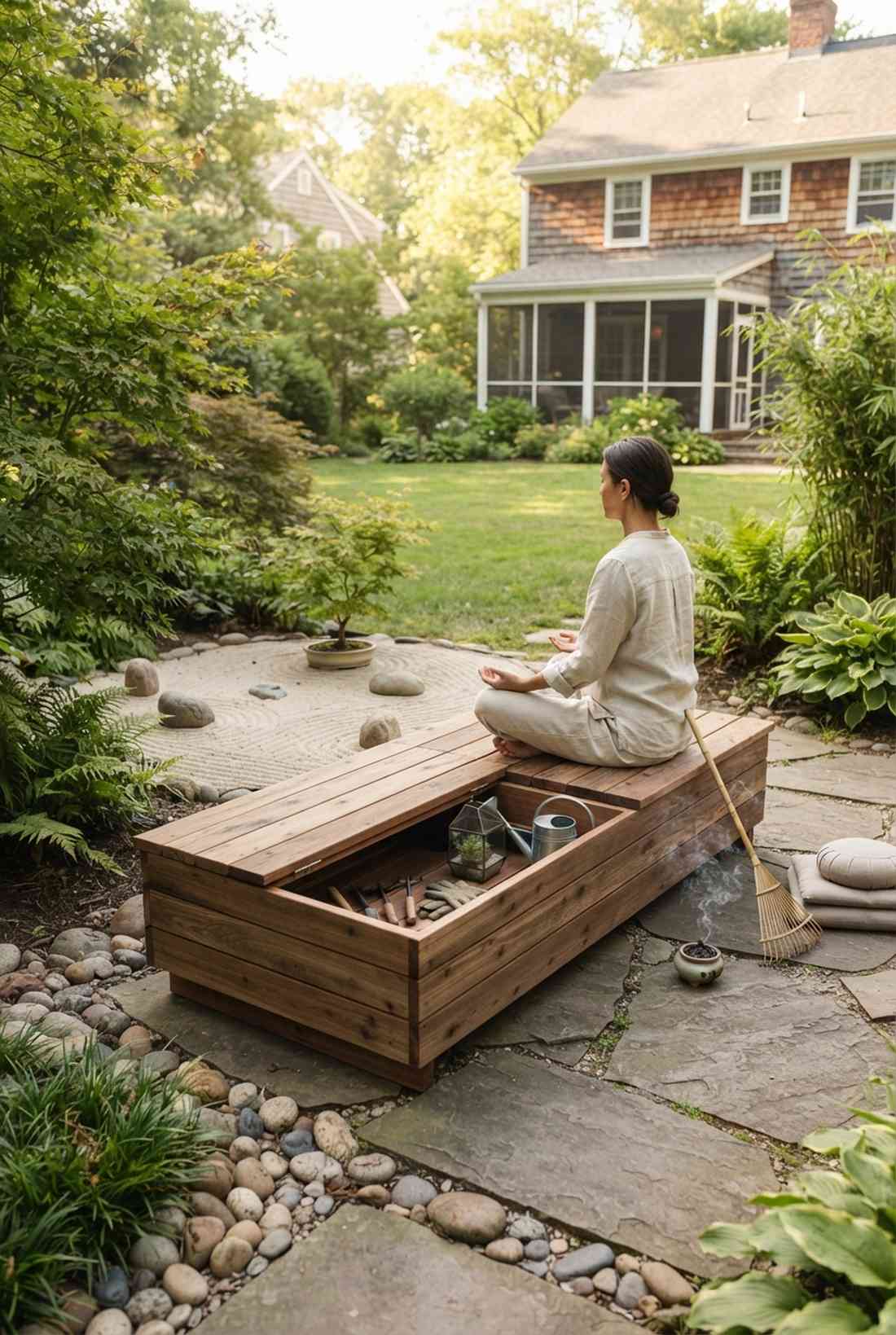
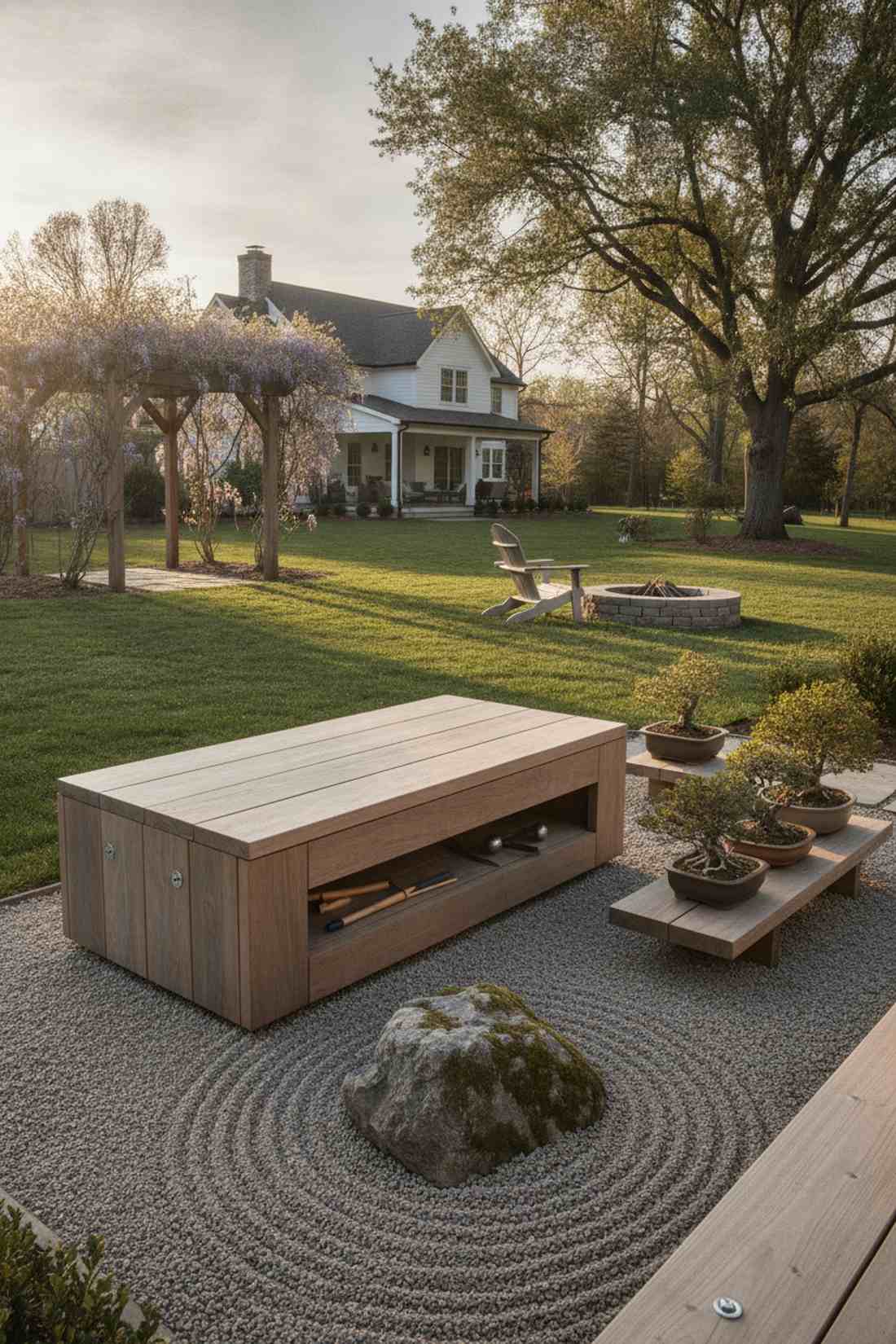
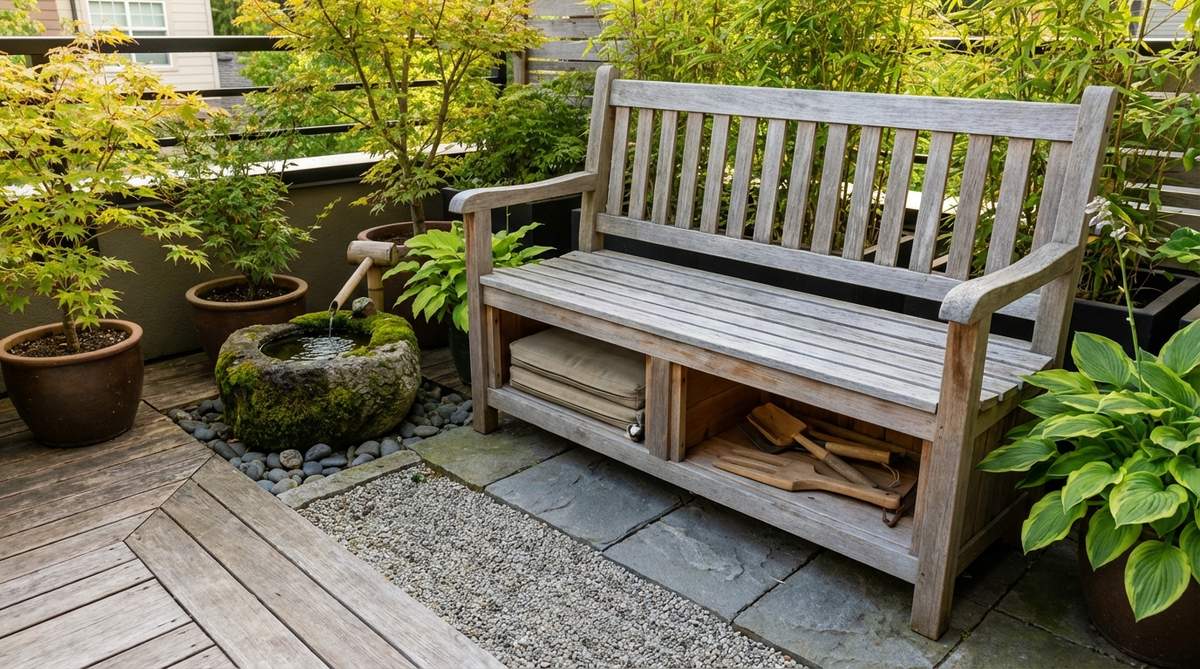
Grounds your posture and connects you directly to the earth. A simple low profile seating deck forces you to view your layout from the intended, traditional angle.
Bulky outdoor sofas absolutely devour tight spaces, but a 14-inch-high cedar bench maintains the critical horizontal emphasis of zen design. Left untreated to weather naturally, it effortlessly doubles as hidden storage for your raking tools and terrarium accessories.
Building a custom bench costs about $40 in lumber.
- Key Materials: Cedar or teak wood, weatherproofing oil
- Vibe / Style: Minimalist grounded resting spot
- Difficulty: Basic woodworking
- Budget Breakdown: Wood: $35 | Screws: $5
- Creator’s Tip: Build the top on hinges so the hollow inside acts as a waterproof stash box for soil and tools.
- Smart Sourcing: Pre-drilled cedar bench starter kits and marine-grade stainless wood screws.
27. Floor Cushion on Platform
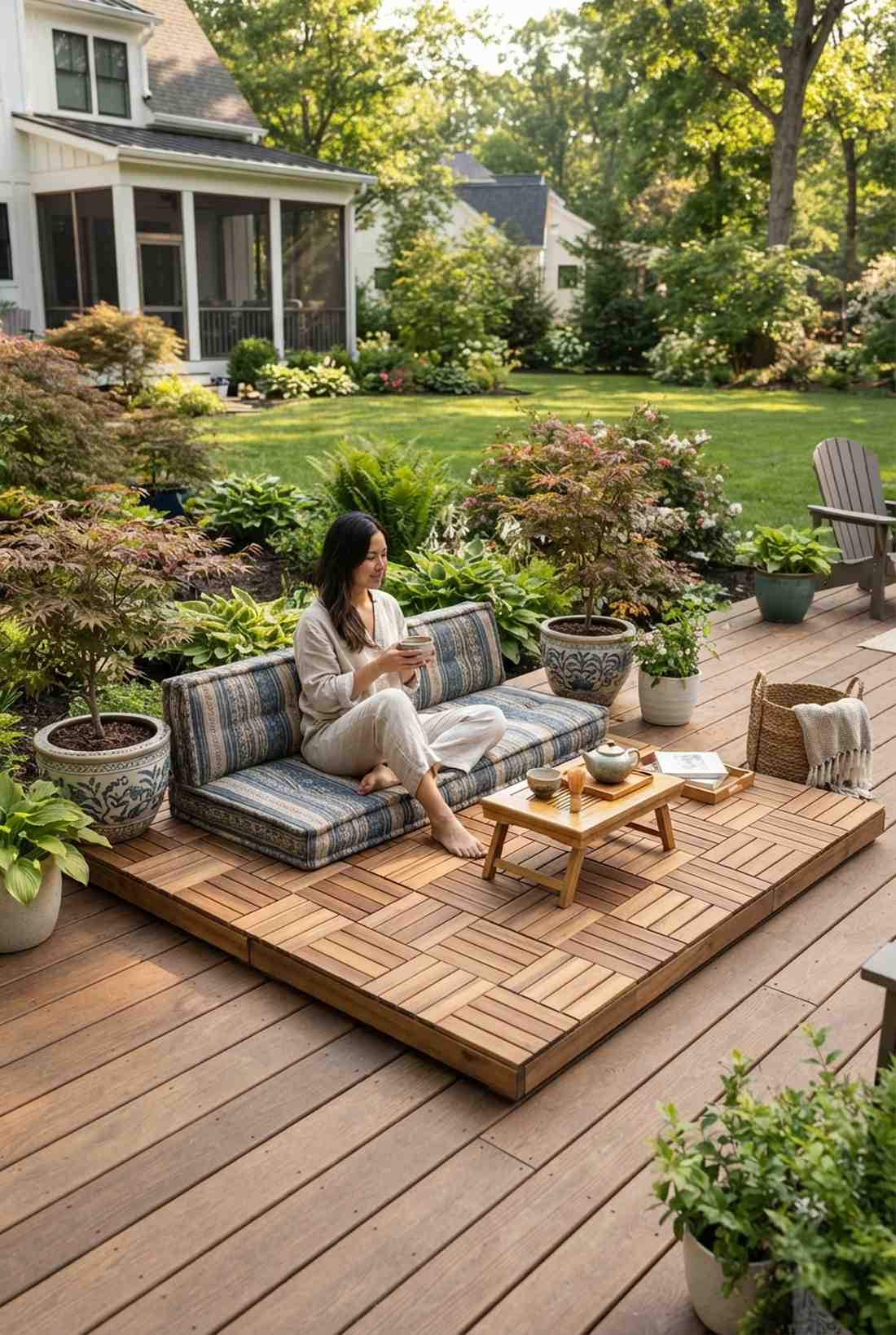
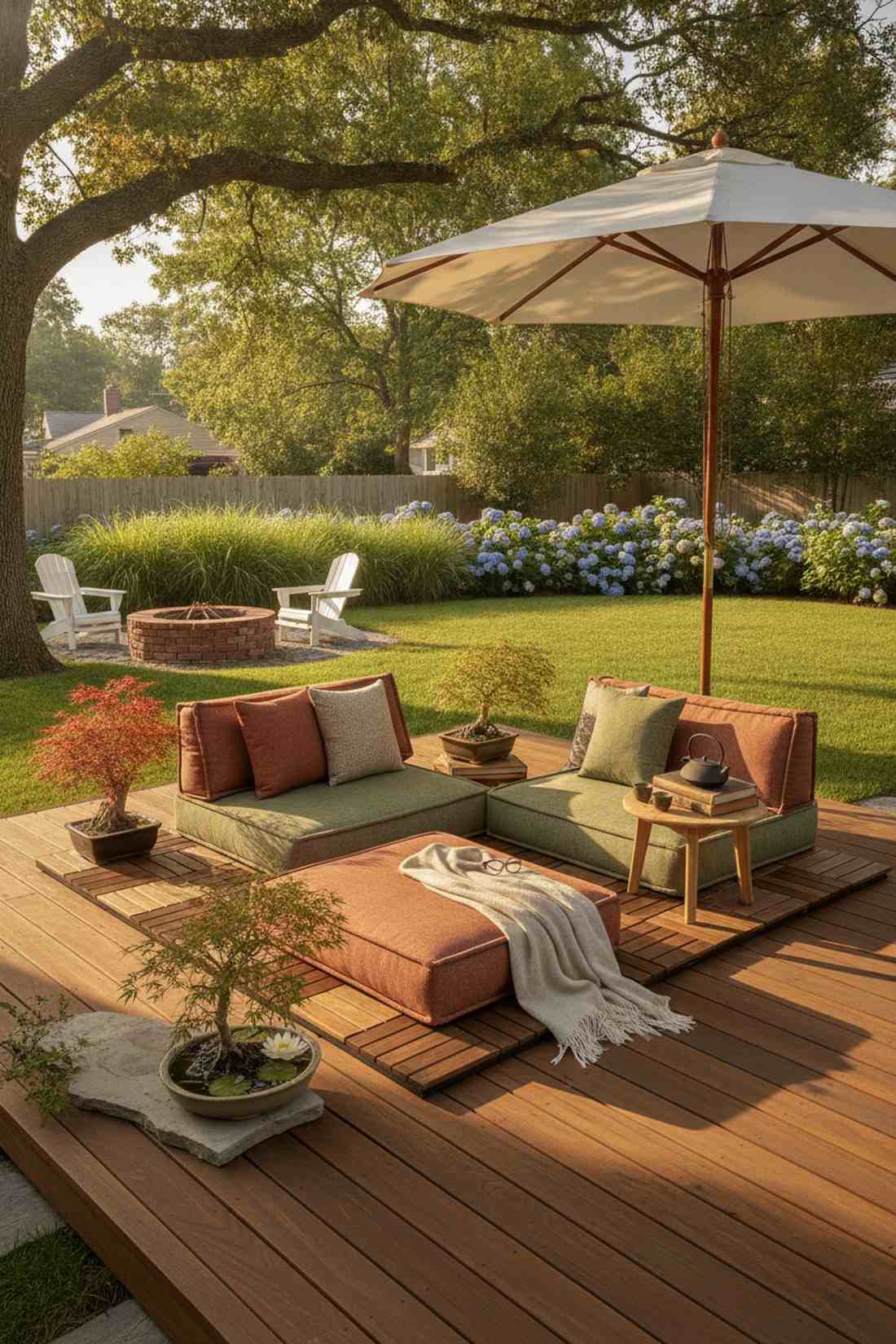
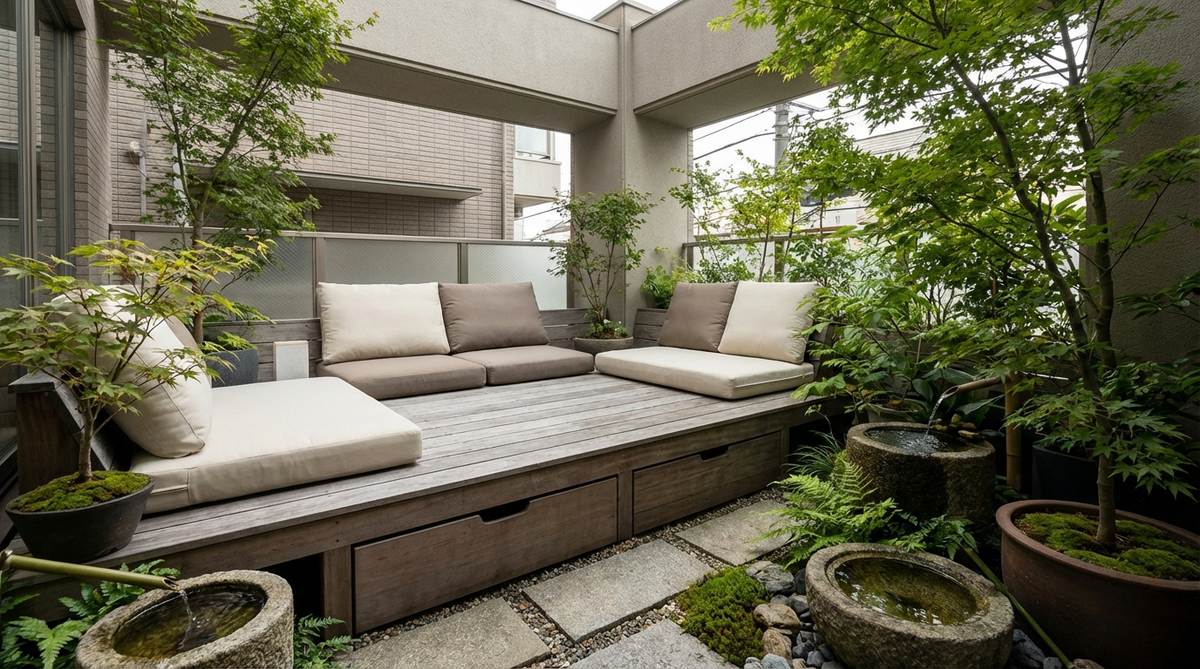
Encourages long, deep breaths and extended morning tea sessions. A raised cushioned floor platform completely eliminates the need for clumsy patio chairs.
Sitting on hard concrete is a miserable experience, yet throwing weather-resistant pads onto a slight wooden elevation feels incredibly luxurious. This grounded posture physically lowers your eyeline, making miniature maples and basins appear majestically large.
A platform and quality pillows run around $85. Save this idea for creating a cozy reading nook!
- Key Materials: Wooden decking squares, outdoor zabuton cushions
- Vibe / Style: Plush traditional tea ceremony
- Difficulty: Easy modular click-together
- Budget Breakdown: Deck Tiles: $40 | Cushions: $45
- Creator’s Tip: Buy machine-washable cushion covers because ground-level seating collects dust twice as fast.
- Smart Sourcing: Snap-together acacia wood deck tiles (bulk pack) and UV-resistant outdoor floor cushions.
28. Corner Contemplation Nook
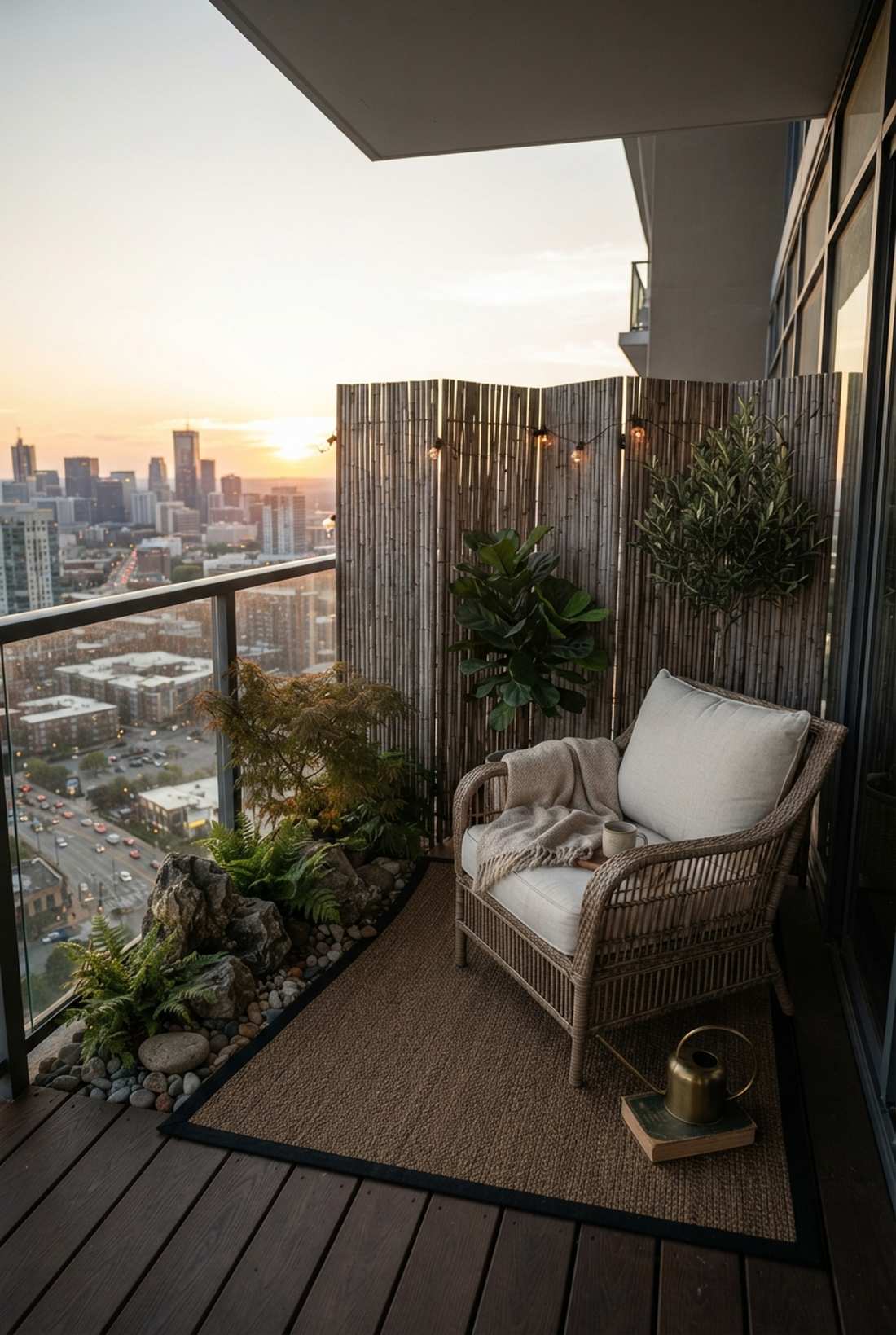
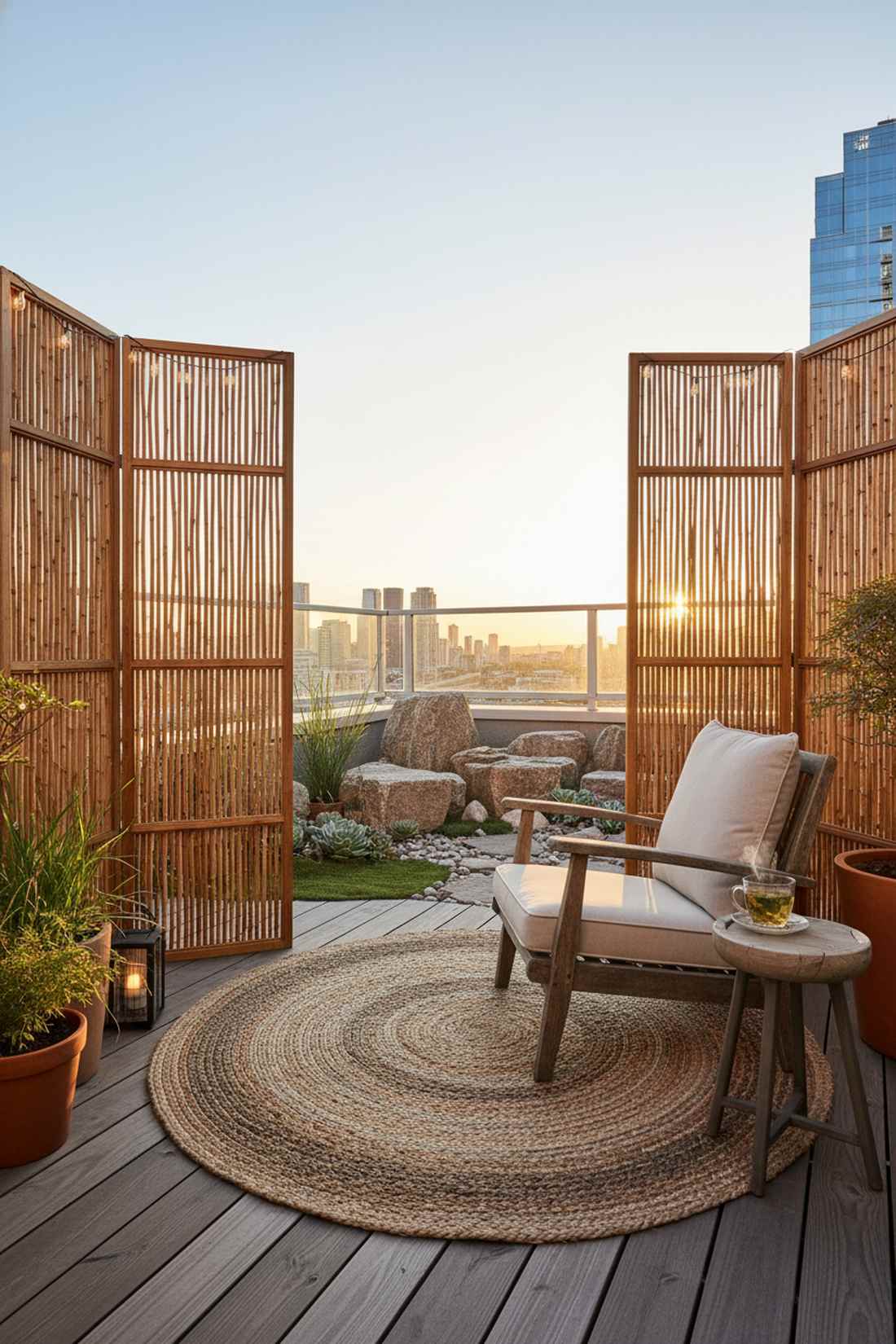
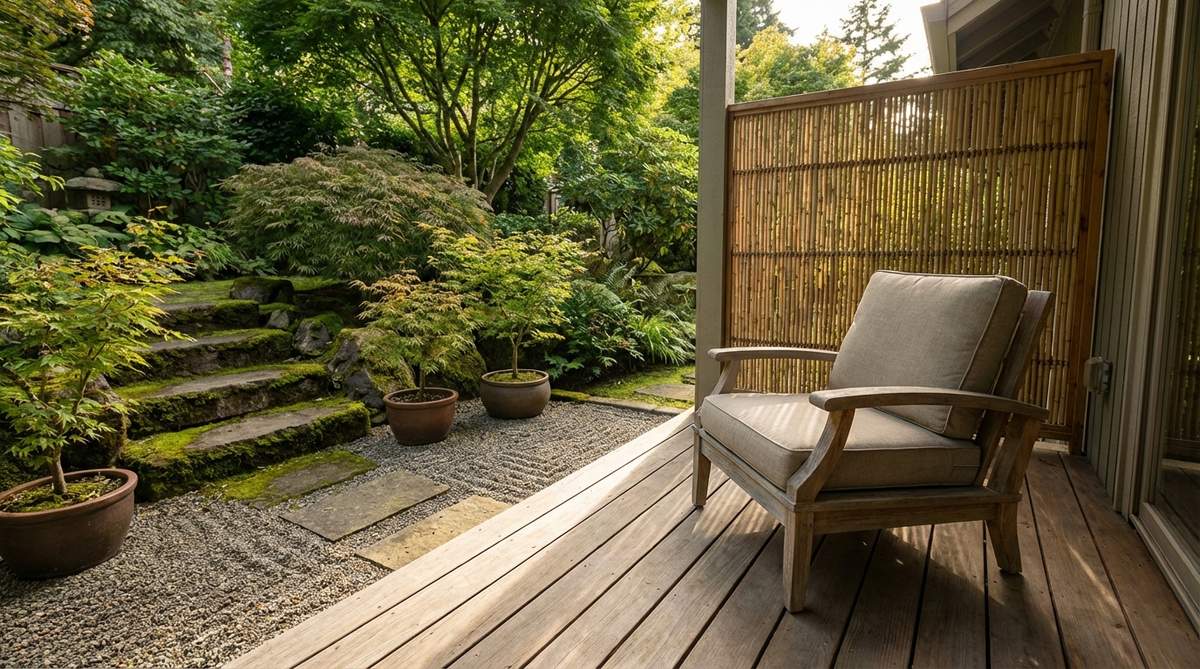
A private, secluded escape from the digital world. Creating a dedicated corner observation zone maximizes the psychological benefits of your new garden.
Blending dining spaces with meditation zones causes visual stress, while screening off one specific corner dedicated strictly to sitting works wonders. Point the seat toward the most complex rock grouping, utilizing borrowed scenery from the city skyline beyond.
Carving out this layout costs nothing but deliberate spatial planning.
- Key Materials: Corner floor mat, bamboo screen divider
- Vibe / Style: Introverted hidden sanctuary
- Difficulty: Zero tools required
- Budget Breakdown: Screen: $40 | Mat: $20
- Creator’s Tip: Face the seating diagonally toward the longest line of sight to make the balcony feel twice as big.
- Smart Sourcing: Freestanding folding bamboo room dividers and weatherproof woven corner mats.
Bringing Zen Balance to Your Space
These exactly 28 japanese balcony garden layouts demonstrate how ancient design principles translate into premium, high-end outdoor aesthetics without the luxury price tag. Success relies purely on smart sourcing—grabbing pre-cut materials and specific starter kits—rather than cramming chaotic elements into a small footprint. Start with a foundational stone grouping or a UV-coated bamboo screen, then expand progressively. By utilizing these visual blueprints, you can engineer an expensive-looking, deeply restorative sanctuary that perfectly merges traditional balance with modern apartment living.
Frequently Asked Questions
What are the essential elements for an authentic Japanese balcony garden?
The core setup thrives on minimalist structure: use odd-numbered asymmetrical stones, a stabilized decomposed granite base, and a focal point like a premium Japanese maple or UV-resistant bamboo screen. To keep it authentic without overspending, integrate quality zen garden starter kits and an outdoor patio water feature. Empty space is your greatest asset—resist the urge to overstuff the layout.
Can I create a Japanese zen garden on a small apartment balcony?
Absolutely. Tiny footprints are perfect because the style is heavily reliant on scaling down. Use a tabletop karesansui gravel display, a single high-end bonsai, and a space-saving recessed water bowl. Sourcing miniature garden supplies and terrarium accessories allows you to create massive visual depth even on a restricted 4×6 foot concrete slab.
How do I maintain a Japanese balcony garden with minimal effort?
Ditch thirsty annuals and stick to drought-tolerant pines or clumping bamboo planted in self-watering pots. Swap messy natural grass for pre-washed landscape boulders and crushed granite that never needs trimming. By investing in all-in-one patio bubbler kits with minimal evaporation, your only real chore becomes a relaxing, meditative weekly raking of the gravel.
What plants work best in shaded Japanese balcony gardens?
Deeply shaded spaces are a blessing for this aesthetic. Use live terrarium moss bulk packs for ground cover, and pair them with prickly rasp ferns and Japanese maples, which actually thrive away from harsh afternoon rays. Potted hostas and dwarf evergreen azaleas provide lush textures without requiring the heavy sunlight that ruins cheap plastic setups.
How much does it cost to create a Japanese balcony garden?
A highly visual budget upgrade starts around $150 if you utilize smart sourcing like pre-cut flat stacking slates and bulk gravel packs. Mid-tier setups featuring UV-coated fiberglass outdoor planters and a dedicated ceramic water fountain usually run between $400 and $800. For a massive premium aesthetic (including mature maples and carved granite lanterns), expect to invest upwards of $1,500.
Should I use real or artificial bamboo for balcony screens?
Real bamboo fencing rolls (bulk pack) are far superior because they age into a beautiful, authentic silver patina. While cheap plastic bamboo looks fake instantly, investing in UV-coated natural bamboo ensures durability against the sun. Alternatively, buy living Fargesia rufa plants in frost-proof pots to grow an impenetrable, ever-renewing privacy wall.