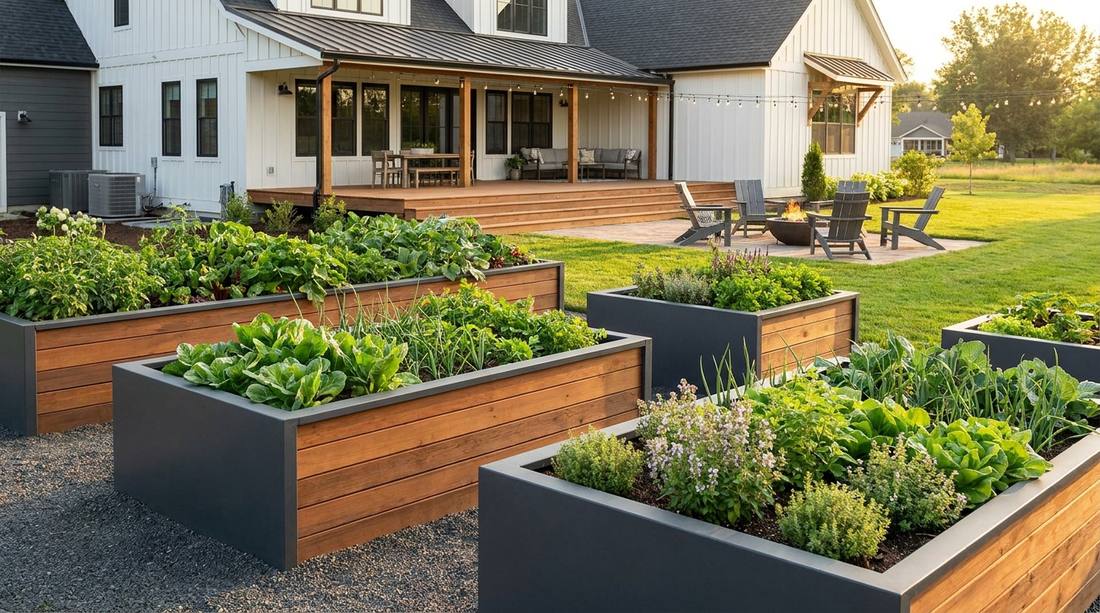
Designing a sleek modern garden bed instantly upgrades your yard’s aesthetic. You get high-yield production with affordable, premium-looking materials. This blueprint guarantees a designer-level finish for less.
Design Snapshot Key Principles
- Orientation Matters: Position beds north-south for consistent sun exposure throughout the growing season
- Access Width: Keep bed width at 4 feet maximum to reach center areas without compacting soil
- Pathway Planning: Allow 2-3 feet between beds for wheelbarrow access and comfortable movement
- Depth Standards: Build beds 12-18 inches deep for most vegetables, deeper for root crops
Geometric Precision Layouts For Contemporary Gardens
Geometric configurations bring architectural discipline to garden spaces, creating visual focal points while optimizing growing area. These layouts work particularly well in modern landscapes where clean lines and symmetry define the aesthetic.
1. Hexagonal Hub System
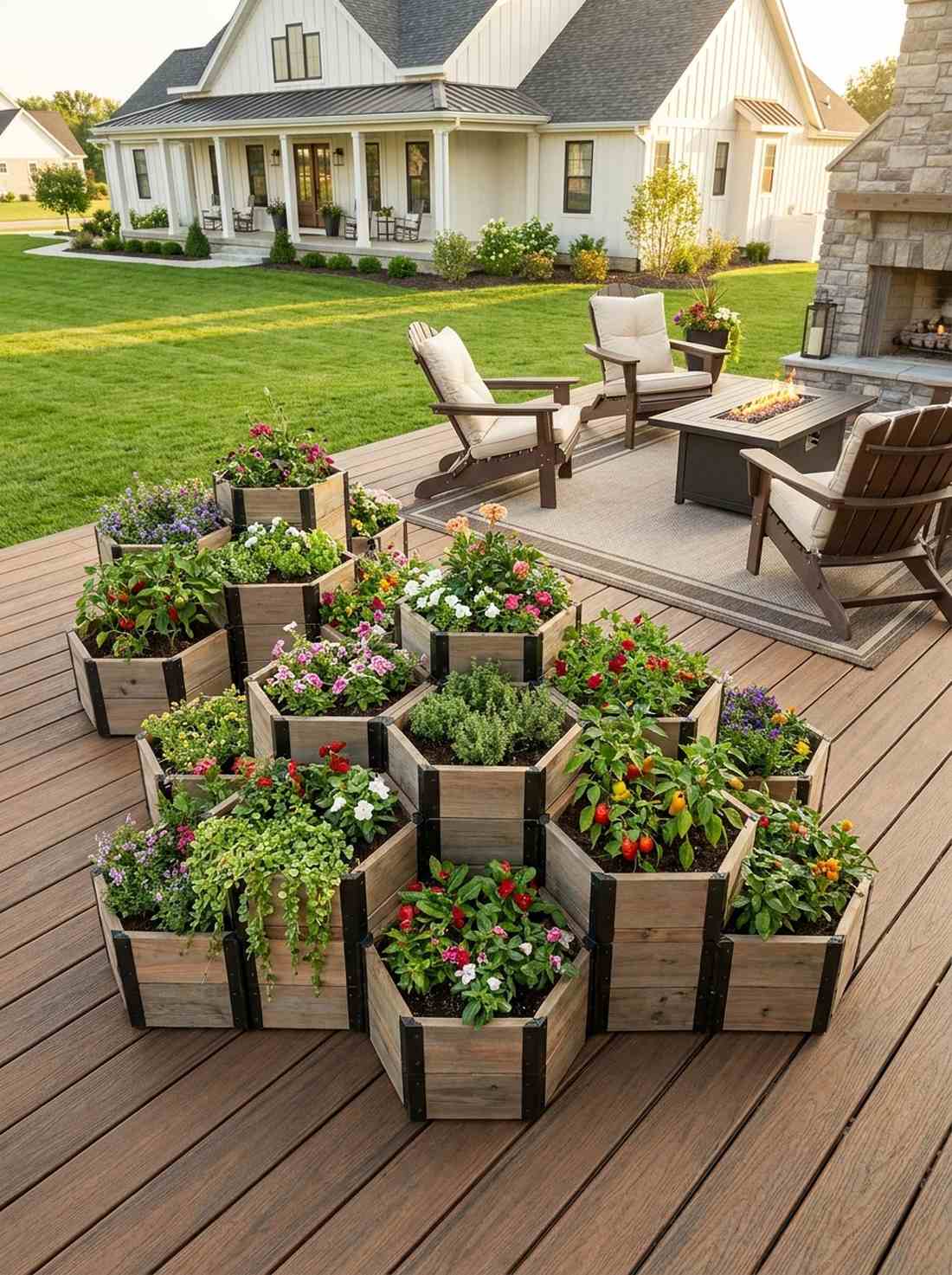
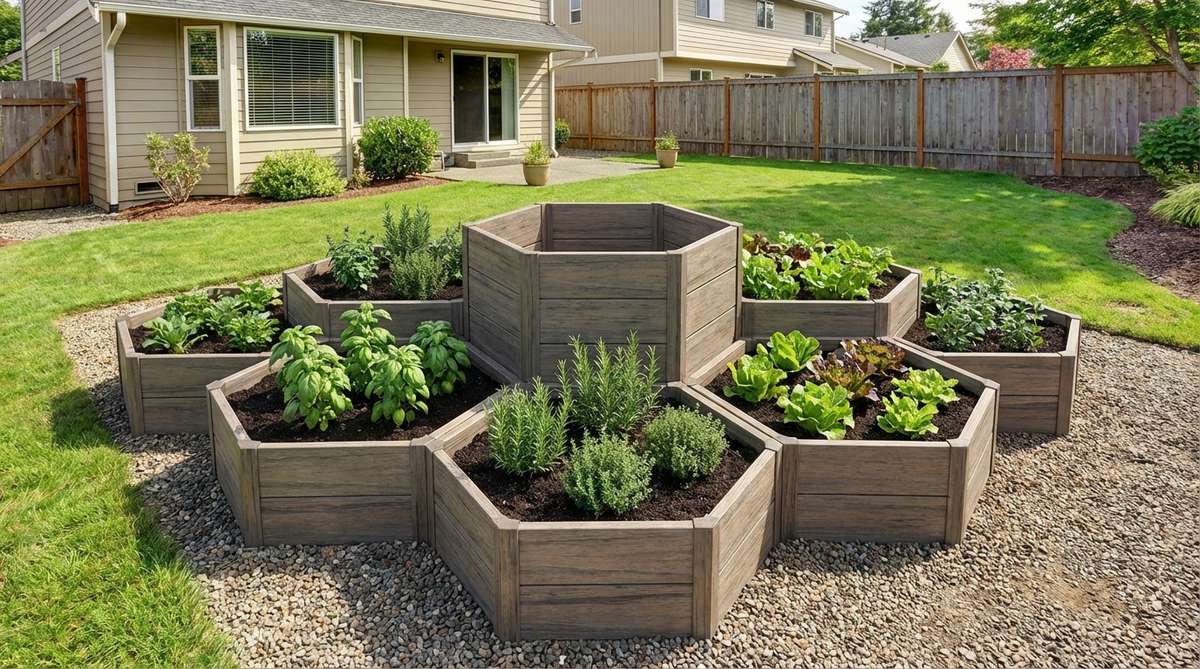
This aesthetic feels like a futuristic botanical sanctuary. The honeycomb modular garden planter works exceptionally well as a striking centerpiece for an empty patio space.
People often ignore corner planting zones, but this radiating pattern delivers a surprisingly premium look while maximizing every inch. Grab high-quality raised bed bracket kits to snap this together without heavy tools.
You can effortlessly set this up for around $80–$120. Save this to your DIY weekend garden board for easy reference!
- Key Materials: Pre-cut cedar panels and heavy-duty corner hinges
- Vibe / Style: Futuristic organic geometric
- Difficulty: Easy beginner setup
- Budget Breakdown: Frame kits: $70 | Soil blend: $40.
- Creator’s Tip: Stagger the heights of the outer hexagons to create a cascading, multi-level visual.
- Smart Sourcing: weather-resistant snap-together polymer kits and bulk organic raised bed soil mix.
2. Circular Accent Beds
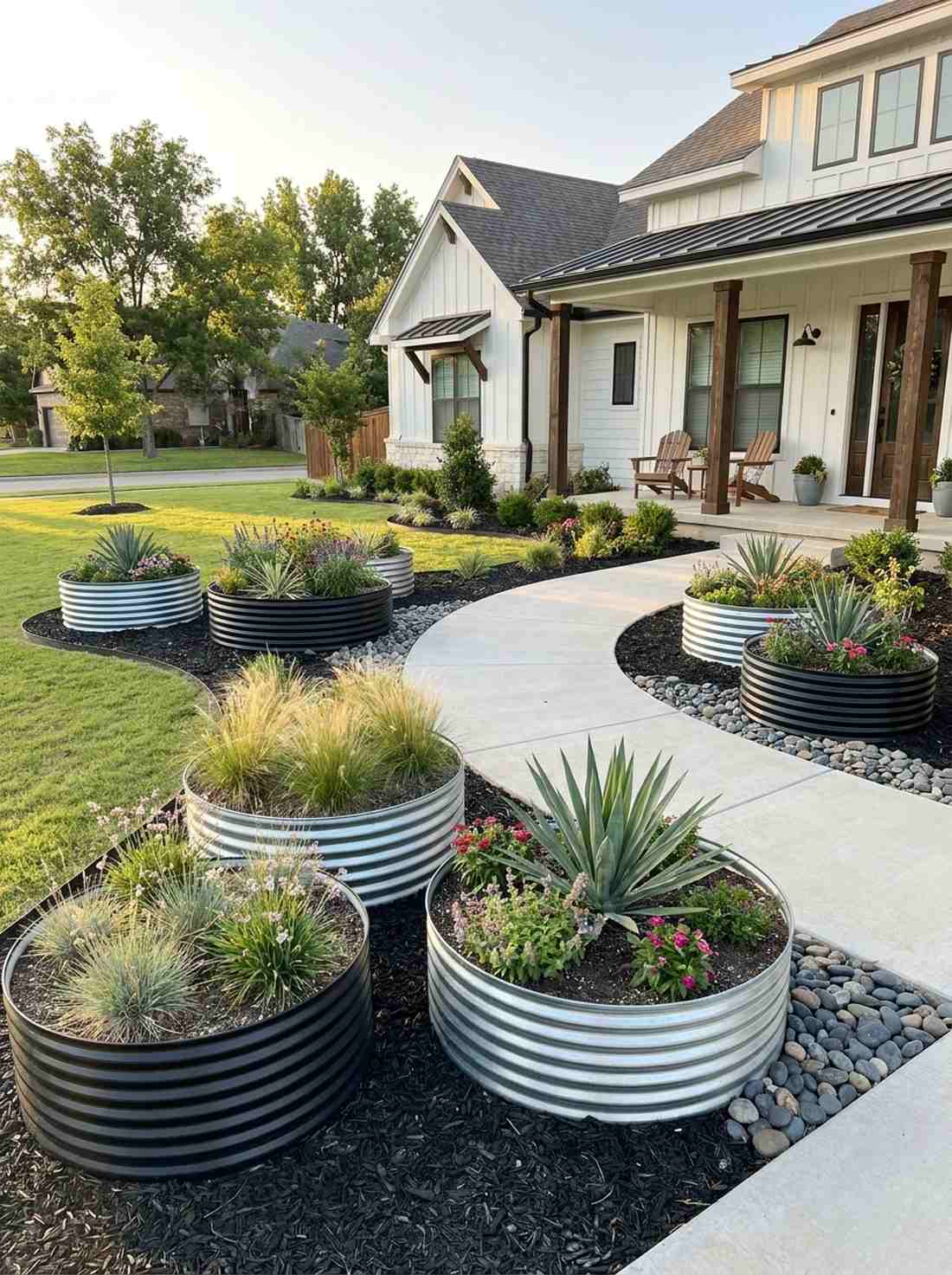
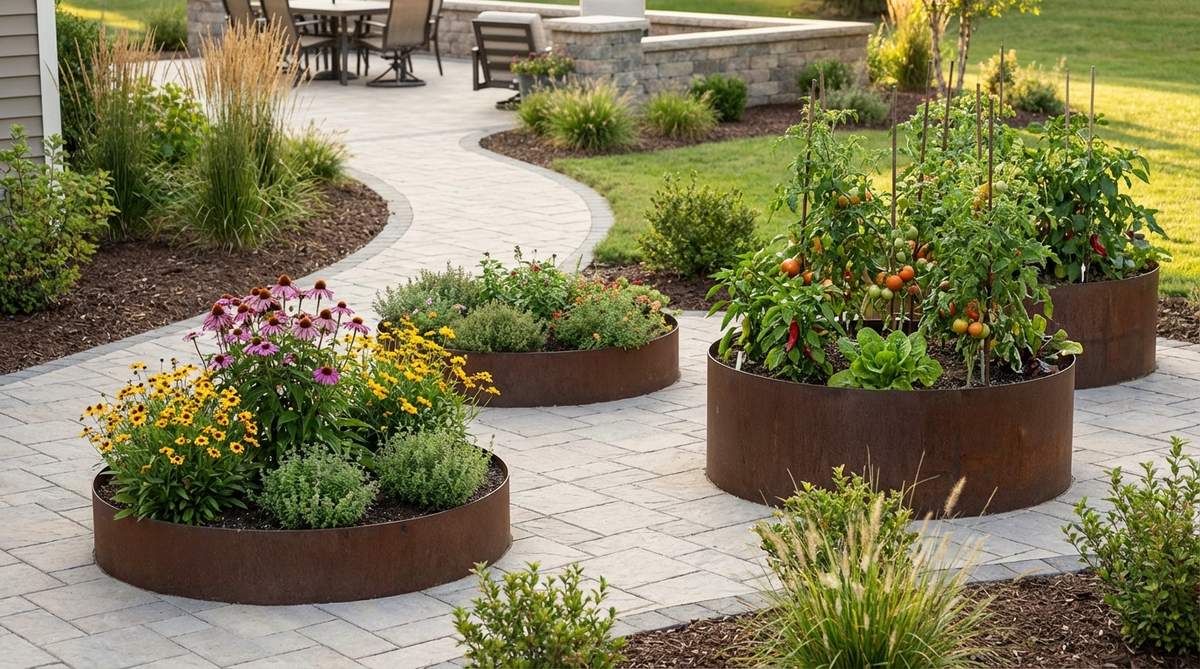
This layout feels straight out of a modern art museum. A galvanized round planter aesthetic is absolutely perfect for softening harsh concrete walkways.
Standard rectangles are everywhere, but adding curves looks far more expensive than it actually is. Implementing commercial-grade landscaping fabric underneath keeps it pristine and weed-free.
Expect to spend about $45–$85 for a decent-sized ring. It’s a fast upgrade that completely changes the vibe of your entrance.
- Key Materials: Corrugated steel rings
- Vibe / Style: Industrial modern chic
- Difficulty: Quick afternoon project
- Budget Breakdown: Metal ring: $50 | Base drainage rock: $15.
- Creator’s Tip: Paint the exterior matte black for an ultra-contemporary contrast against green foliage.
- Smart Sourcing: powder-coated round metal planter kits and pre-bagged river rock bulk packs.
3. Pyramid Tier Planter
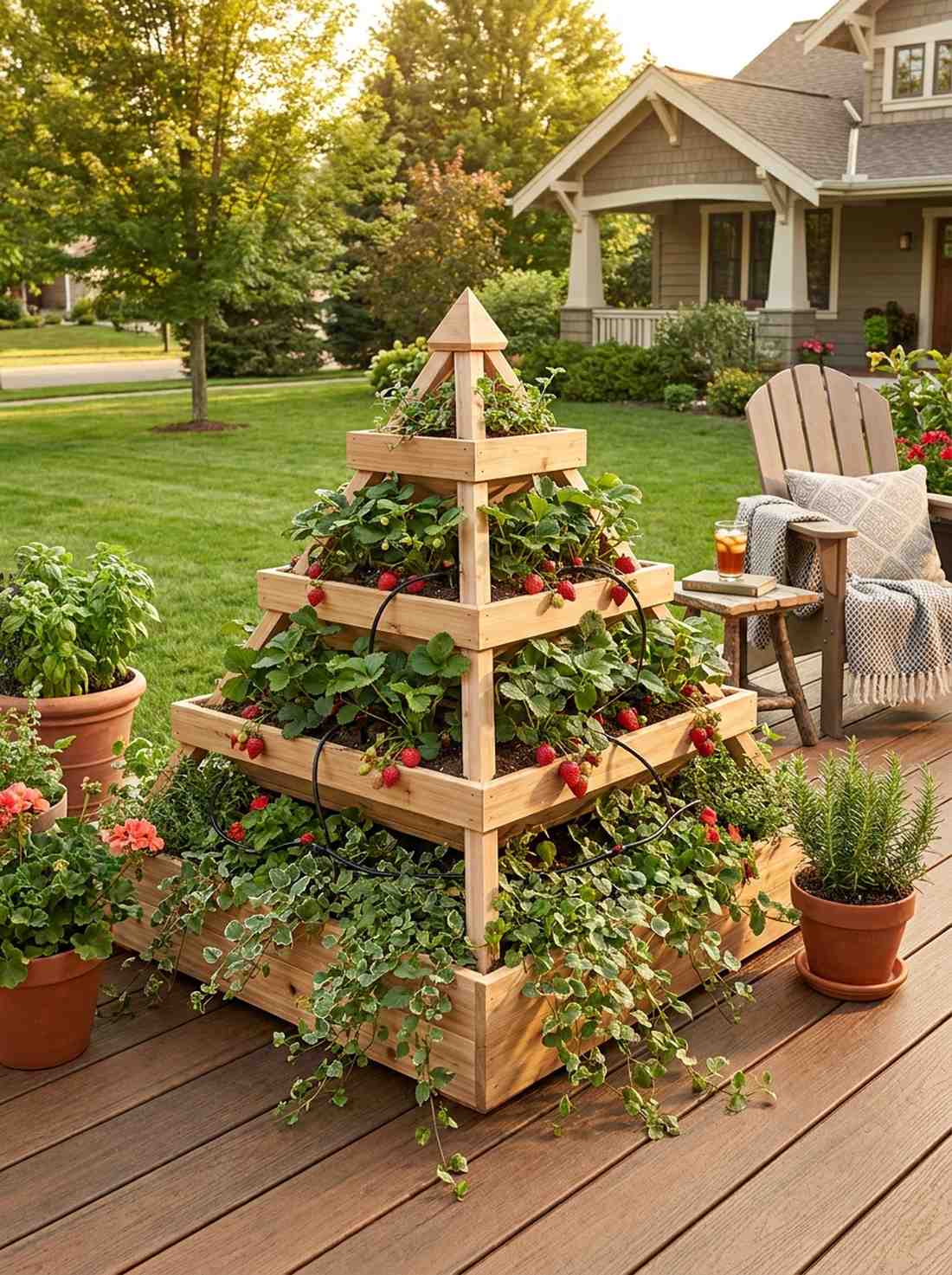
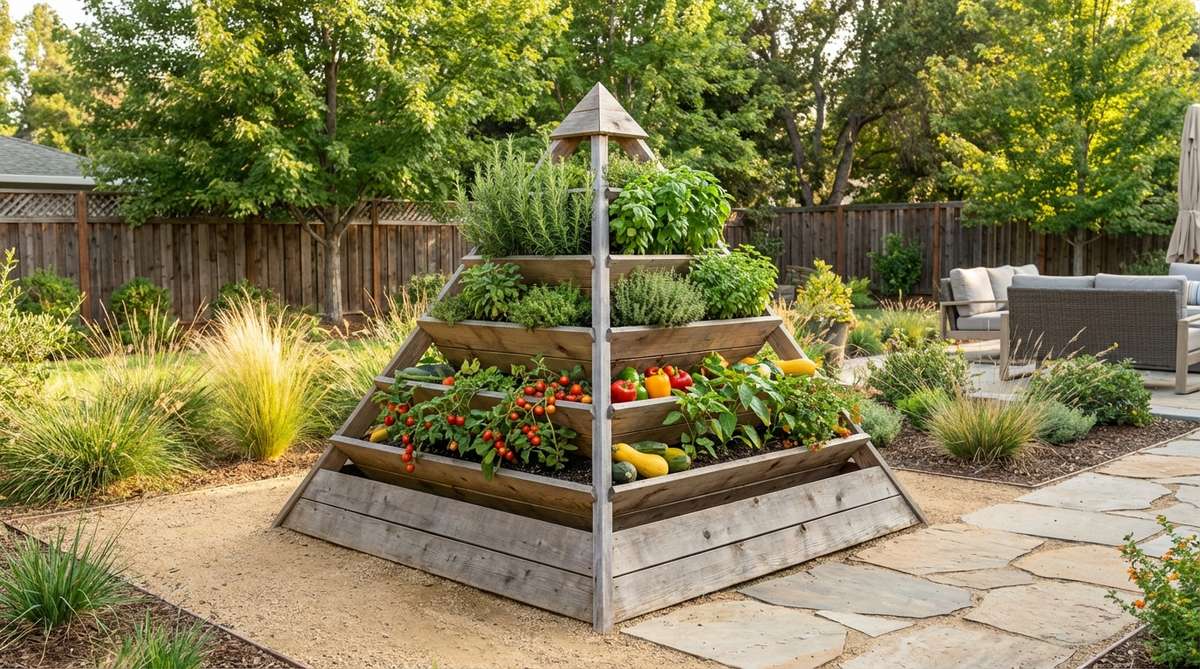
It feels like discovering a lush hanging garden in miniature form. A stepped vertical strawberry tower is an incredible use-case for a sun-drenched balcony.
Flat gardens often lack dimension, but this ascending structure gives a designer-level finish while doubling your yield. Sneak in miniature garden supplies like automated drip lines to keep it thriving on autopilot.
Building this from scratch usually runs $60–$100. Pin this if you’re planning a small space upgrade this spring!
- Key Materials: Stackable wooden frames or modular resin
- Vibe / Style: Structural abundance
- Difficulty: Moderate DIY build
- Budget Breakdown: Lumber: $50 | Drip tubing: $20.
- Creator’s Tip: Put trailing vines on the bottom layer to hide the base and soften the edges.
- Smart Sourcing: pre-cut tiered cedar planter sets and micro-drip irrigation starter kits.
4. Diamond Grid Arrangement
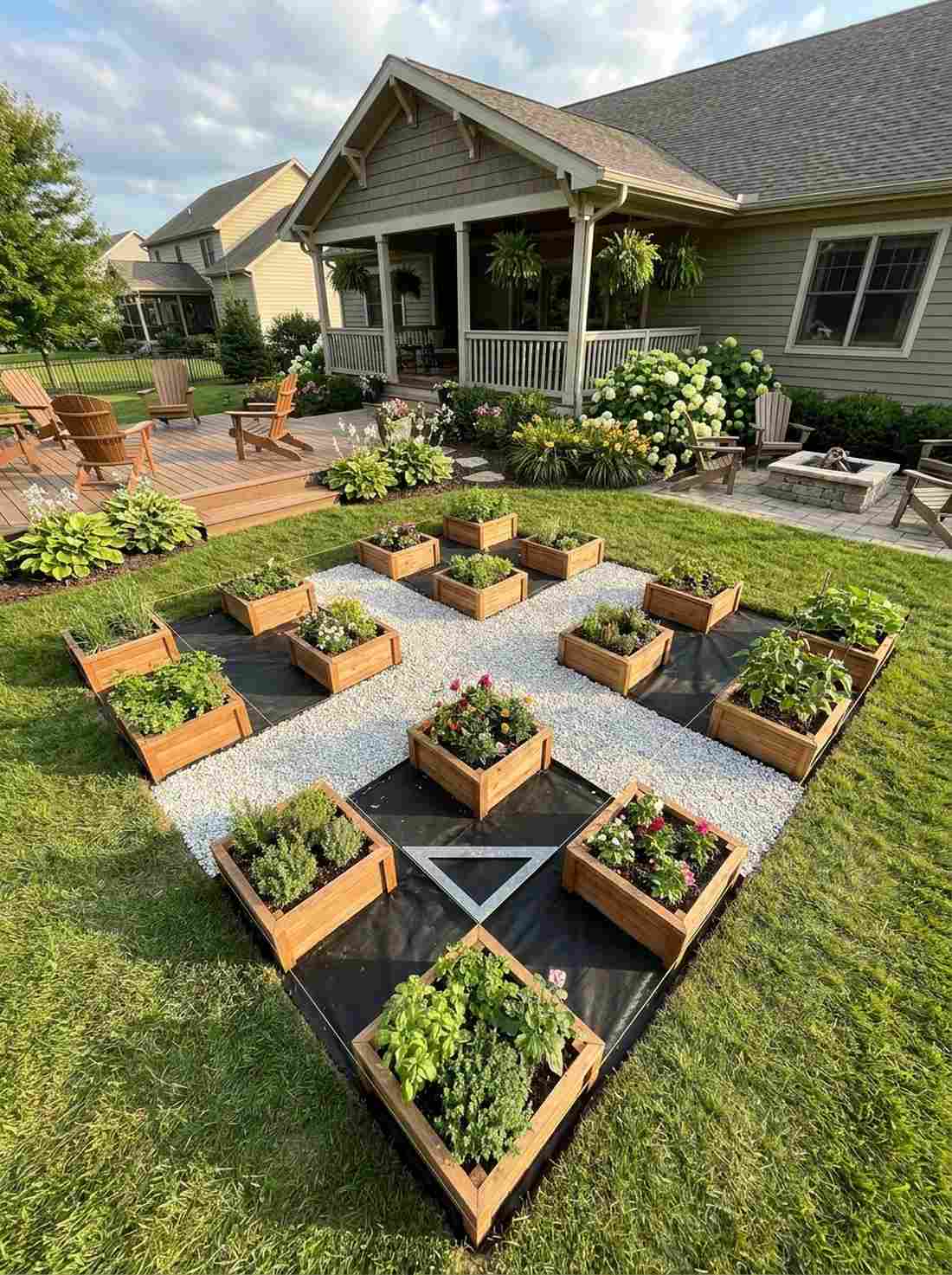
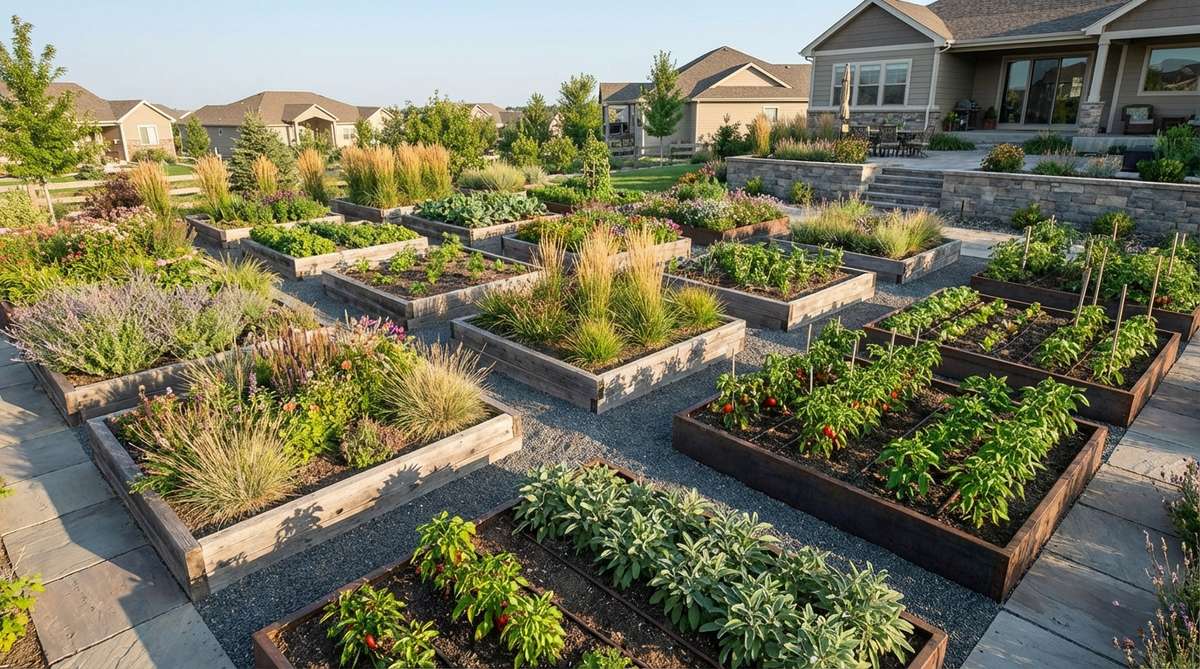
This feels like stepping into a high-end European courtyard. A diagonal geometric layout works magic for transforming a boring, flat backyard into a dynamic space.
Rotating your boxes just 45 degrees transforms a basic yard into something that looks professionally architected. Line the intersecting paths with heavy-duty weed barrier and bright gravel to make the shapes pop.
The layout itself costs nothing extra, just your standard material budget of $150–$300.
- Key Materials: Standard square planter boxes angled at 45 degrees
- Vibe / Style: Dynamic European formal
- Difficulty: Careful measuring required
- Budget Breakdown: Boxes: $150 | Pathway gravel: $80.
- Creator’s Tip: Use a string line and a large framing square to ensure perfect diagonal alignment before filling.
- Smart Sourcing: heavy-duty square planter kits and commercial-grade landscaping fabric rolls.
This next setup is ridiculously cheap but looks like a $500 custom landscape installation…
5. Concentric Ring Design
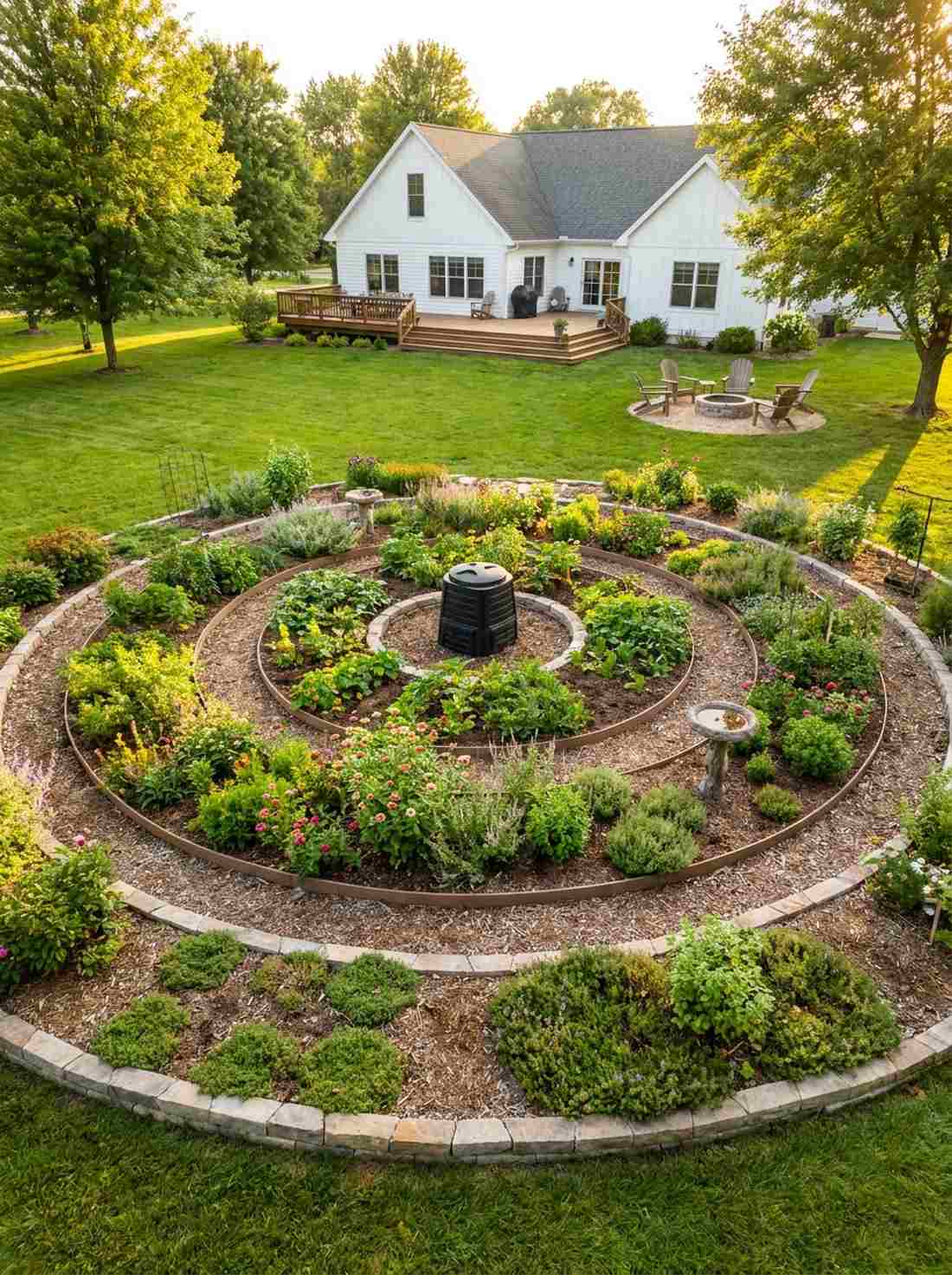
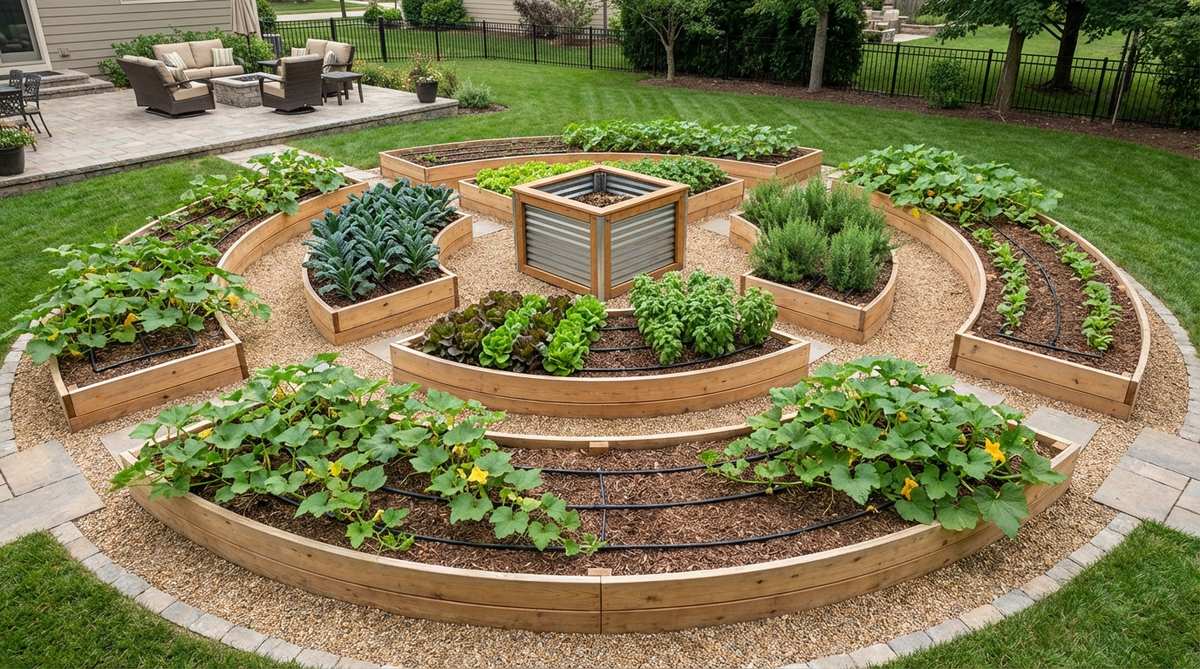
Imagine a lush oasis rippling outward from a single point. This mandala garden layout is the ultimate blueprint for a dedicated community garden or large sunny yard.
Many traditional rows look sterile, but this nested circle technique creates a breathtaking, cohesive ecosystem. Adding premium terrarium accessories or a central birdbath elevates the entire focal point.
Pulling off this master layout usually requires $200–$400 in edging materials. Save this masterpiece to your dream garden board!
- Key Materials: Flexible landscape edging or curved stones
- Vibe / Style: Holistic permaculture haven
- Difficulty: Advanced planning
- Budget Breakdown: Edging borders: $150 | Compost center: $40.
- Creator’s Tip: Design the innermost circle as an active compost hub to naturally feed the surrounding rings.
- Smart Sourcing: flexible composite edging bulk spools and UV-coated central compost bins.
Space-Efficient Systems For Maximum Productivity
Urban gardeners and those with limited square footage require layouts that extract maximum yield from minimal footprint. These configurations prioritize vertical space, intensive planting, and strategic design.
6. Keyhole Access Bed
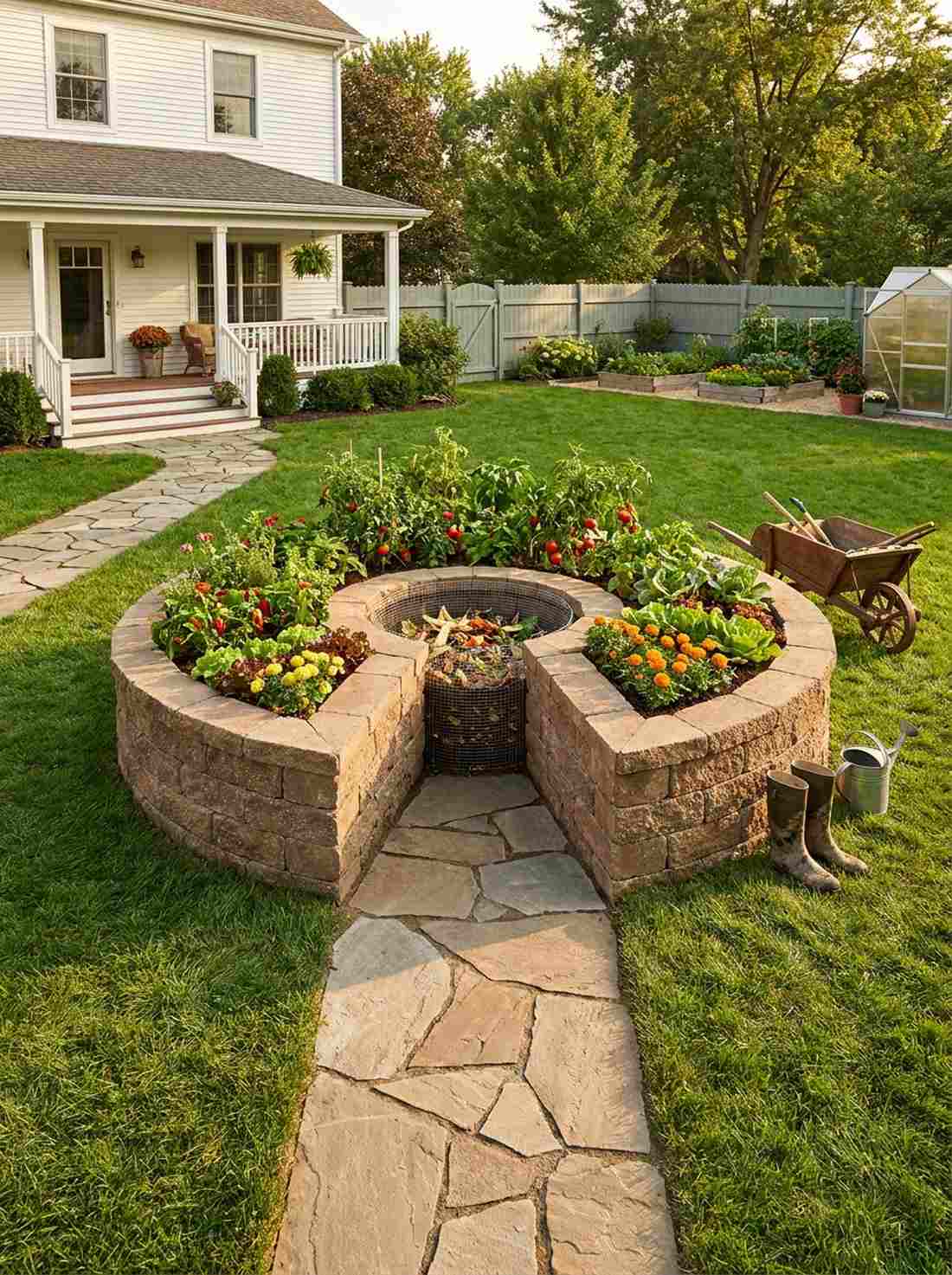
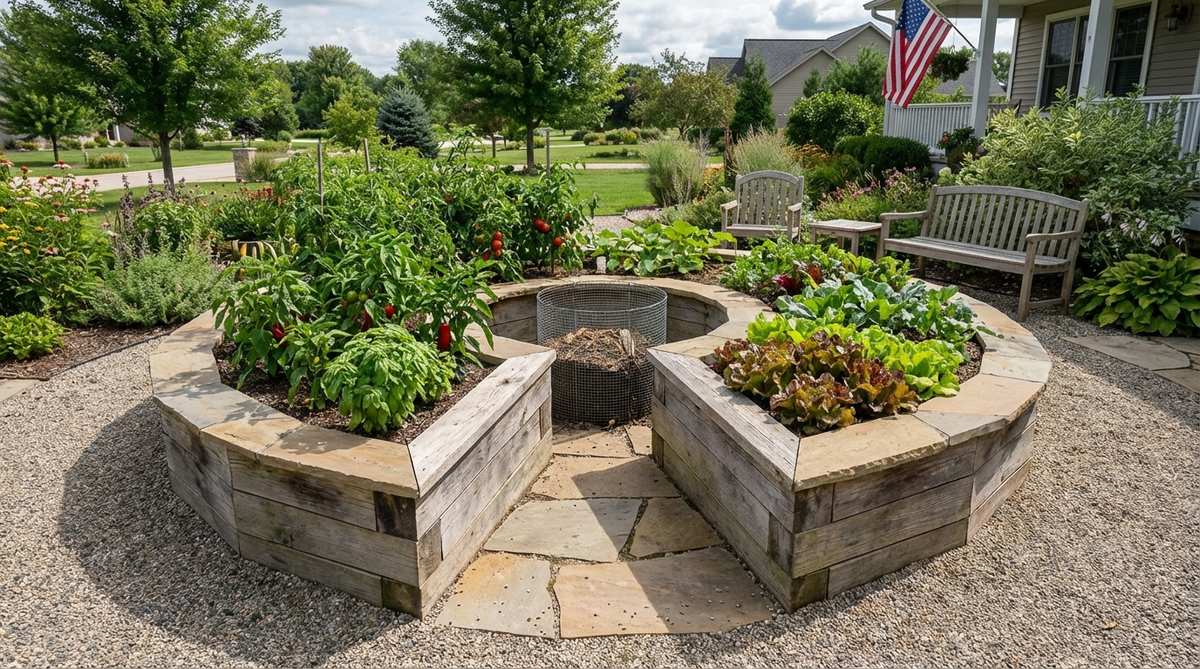
This layout feels like a clever secret hidden in plain sight. A notched circular planter is the absolute perfect use-case for someone who wants to harvest without muddy boots.
Standard deep beds destroy your back, but this smart wedge cutout makes your yard look like a high-end permaculture farm. Integrating a central composting basket turns waste into pure garden gold.
You can build a reliable keyhole frame for roughly $100–$180.
- Key Materials: Retaining wall blocks and chicken wire core
- Vibe / Style: Clever rustic utility
- Difficulty: Weekend earthwork
- Budget Breakdown: Blocks: $120 | Wire core: $15.
- Creator’s Tip: Face the keyhole opening toward your kitchen door so throwing away scraps is totally frictionless.
- Smart Sourcing: galvanized hardware cloth rolls and pre-cast concrete garden wall blocks.
7. Narrow Corridor Beds
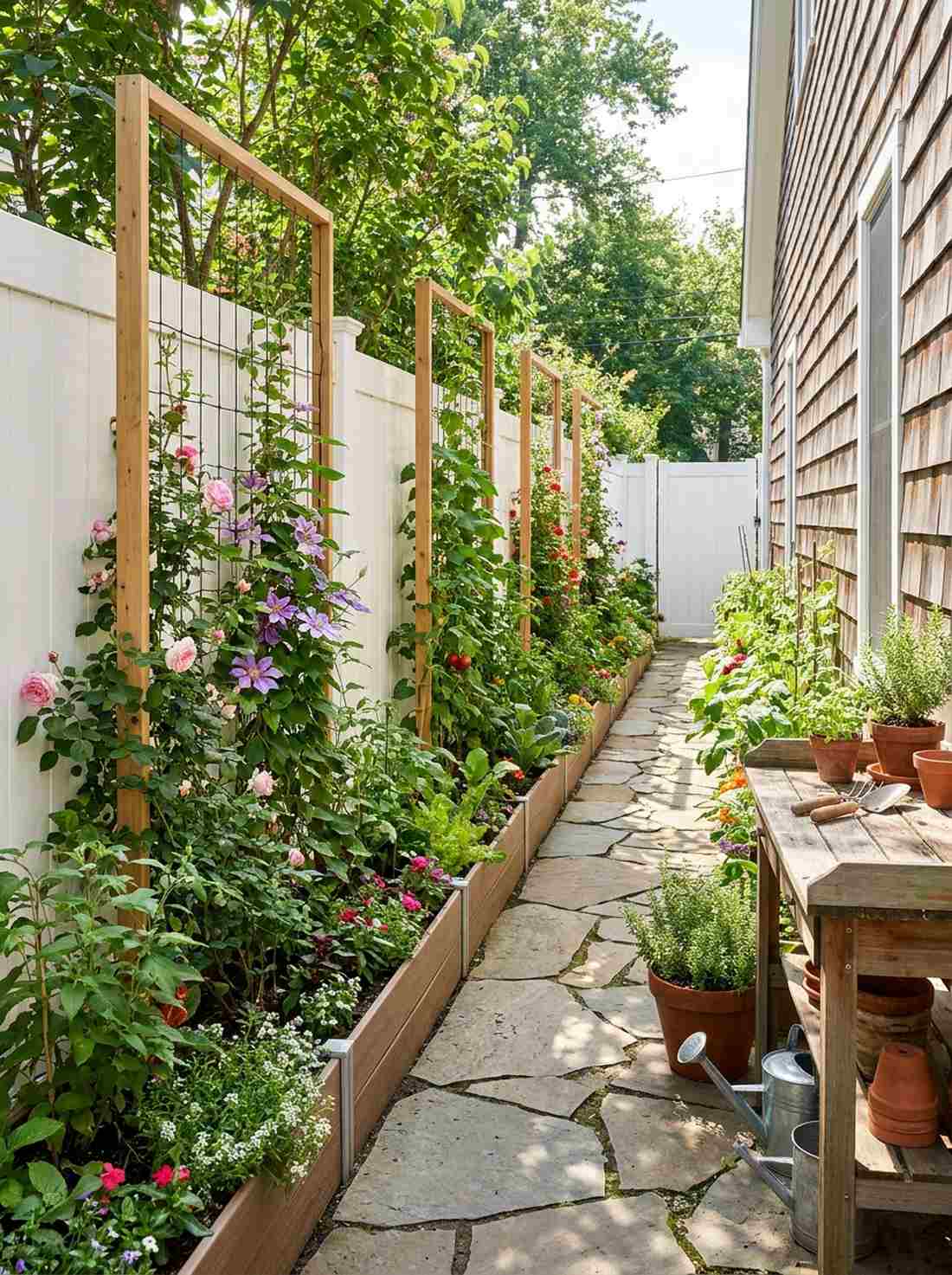
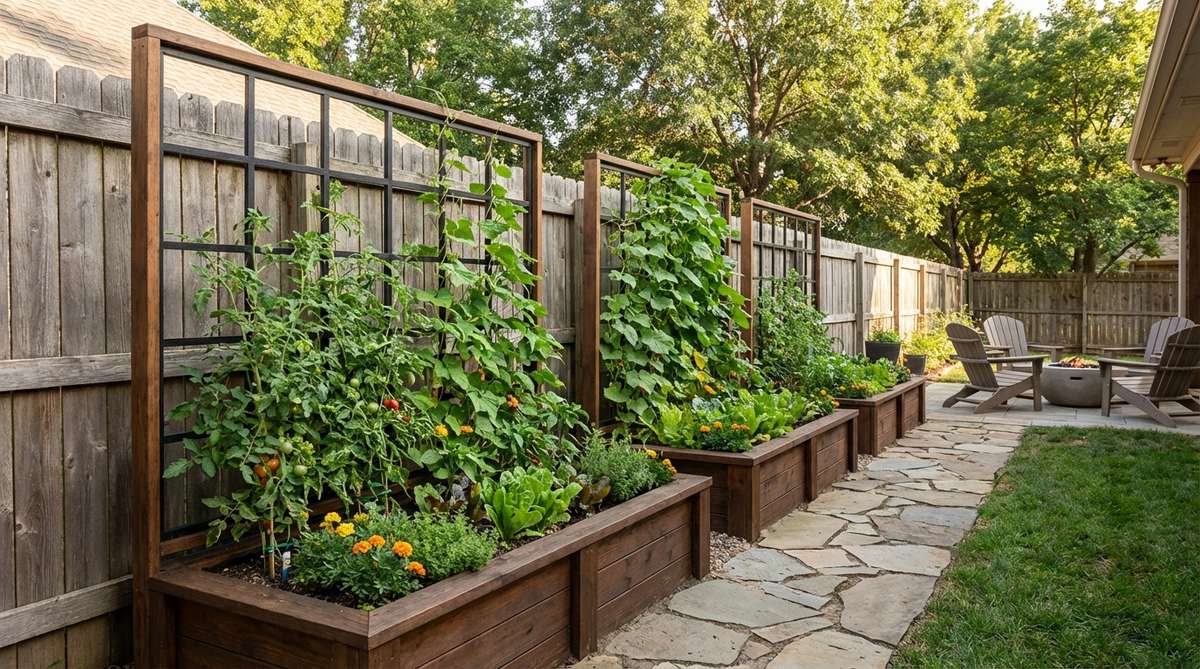
Feels like a secret garden pathway you accidentally stumbled upon. A slim vertical-growth border is exceptionally brilliant for transforming dead side-yard space.
Most side yards are wasted as dirt paths, but squeezing in a two-foot border gives a surprisingly premium look while producing massive yields. Utilize tall trellises to drag the eye upward and maximize square footage.
This ultra-efficient footprint costs as little as $40–$70 per section. Pin this for your next side-yard makeover!
- Key Materials: Slim profile lumber and wall-mounted netting
- Vibe / Style: Lush alleyway charm
- Difficulty: Very beginner friendly
- Budget Breakdown: Wood: $35 | Trellis netting: $15.
- Creator’s Tip: Paint the adjacent fence white to bounce more sunlight onto your corridor crops.
- Smart Sourcing: heavy-duty nylon trellis netting bulk packs and composite slim border kits.
8. Modular Reconfigurable Units
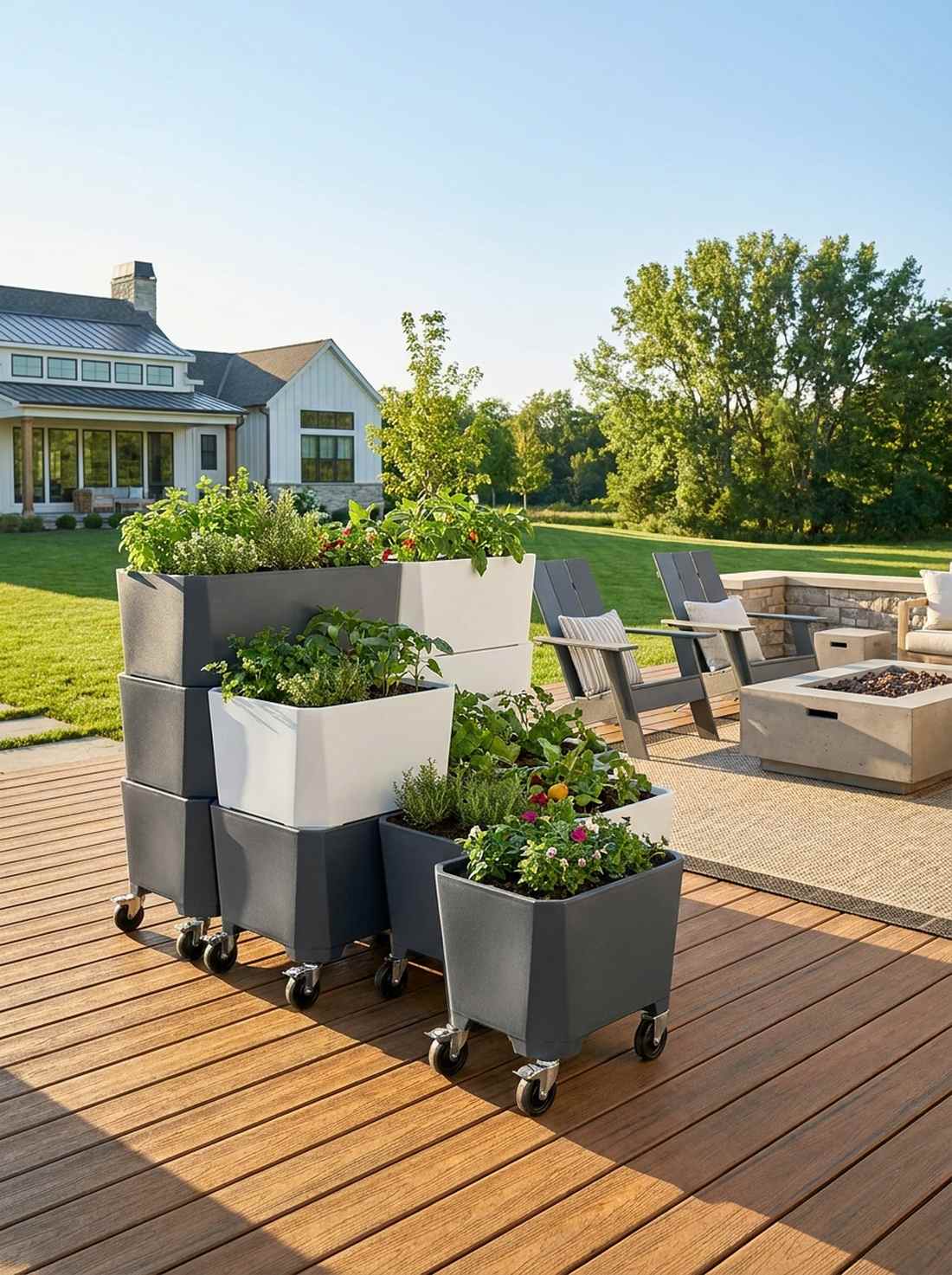
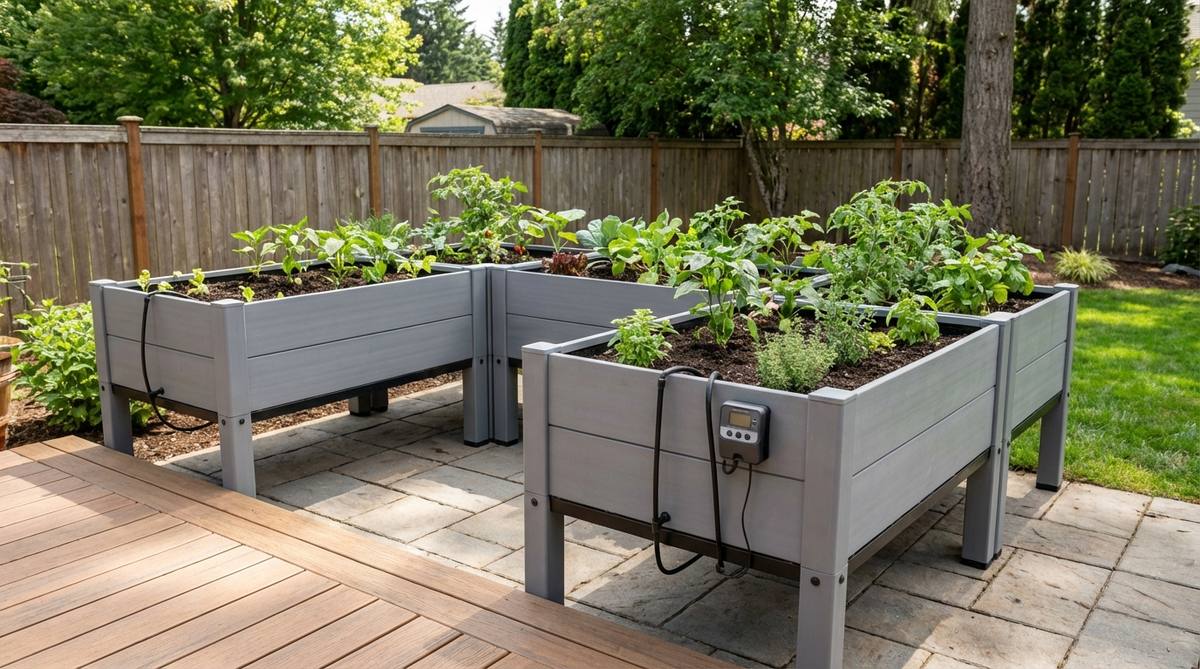
This gives off major modern laboratory vibes but in the best way possible. A customizable block planter system works perfectly for renters who might need to move their setup.
Permanent installations can be intimidating, but these snap-together units offer a high-tech vibe without the commitment. Grabbing a few modular starter kits lets you change the shape every single season.
A basic three-module setup runs about $90–$140.
- Key Materials: Interlocking polypropylene planters
- Vibe / Style: Urban adaptive tech
- Difficulty: Tool-free assembly
- Budget Breakdown: Modular kit: $100 | Potting mix: $30.
- Creator’s Tip: Add locking caster wheels to the bottom so you can chase the sun across your patio.
- Smart Sourcing: UV-resistant modular planter starter kits and heavy-duty caster wheel 4-packs.
9. Stacked Vertical Columns
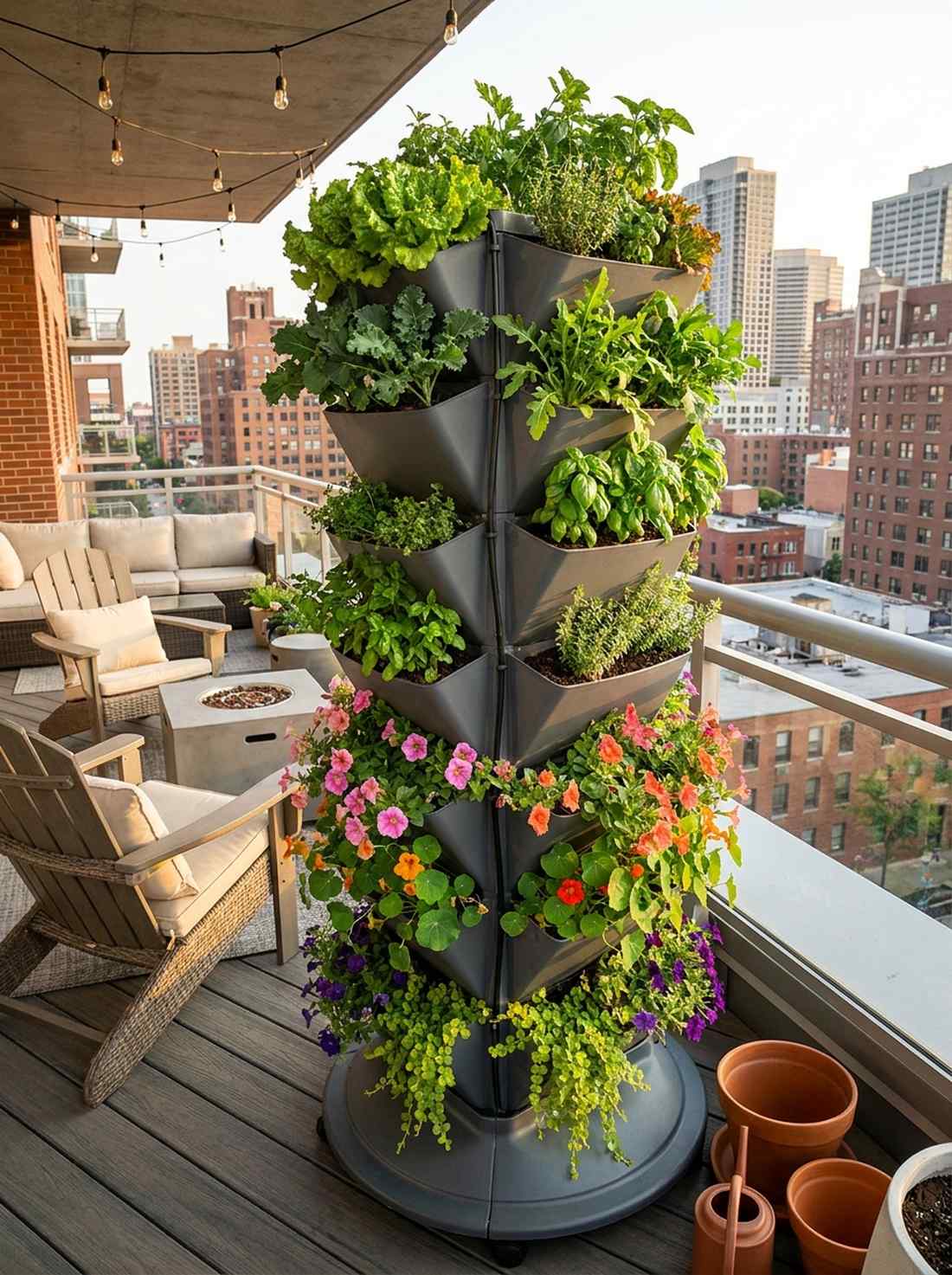
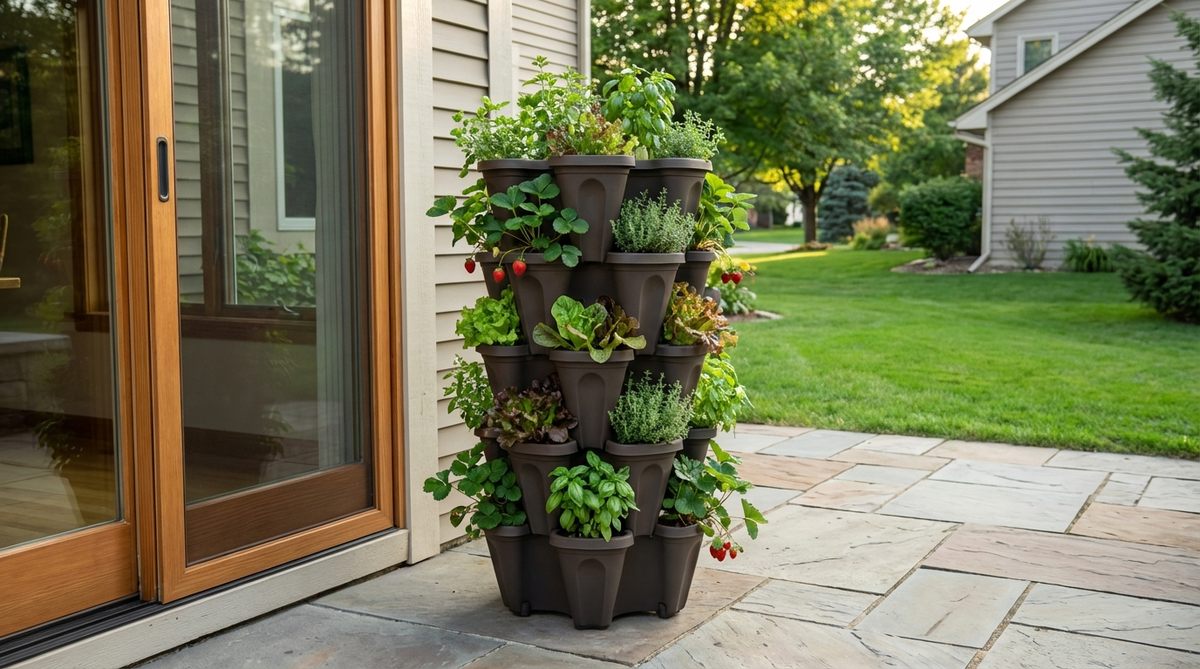
This setup feels like a living pillar breathing life into the space. A rotating tiered growth tower is the ultimate solution for a tiny apartment balcony.
Horizontal planting is heavily limiting, but going vertical looks far more impressive and triples your harvest. Investing in self-watering hydroponic or soil-based towers completely automates the hardest parts of gardening.
Premium tower systems cost between $120–$250 but pay for themselves in fresh greens. Save this to your urban gardening board!
- Key Materials: Multi-pocket tiered towers
- Vibe / Style: Futuristic hyper-growth
- Difficulty: Plug and play
- Budget Breakdown: Tower system: $150 | Nutrients/Soil: $25.
- Creator’s Tip: Plant trailing flowers in the bottom pockets and edible greens up top for a stunning visual mix.
- Smart Sourcing: five-tier vertical planter bulk towers and automated gravity drip irrigation sets.
💡 Must-Have Supplies for High-End Setups
To build these modern garden raised beds faster and ensure they last, skip the generic craft aisles and invest in the right foundational kits.
- Base & Support: Heavy-duty powder-coated corner brackets (bulk packs)
- Setup Tools: Laser-leveling tool kits for perfect alignment
- Weather/Durability Protection: Commercial-grade non-toxic wood sealant
Most beginners get this completely wrong… until they try the exact layout coming up next.
10. Tiered Platform Cascade
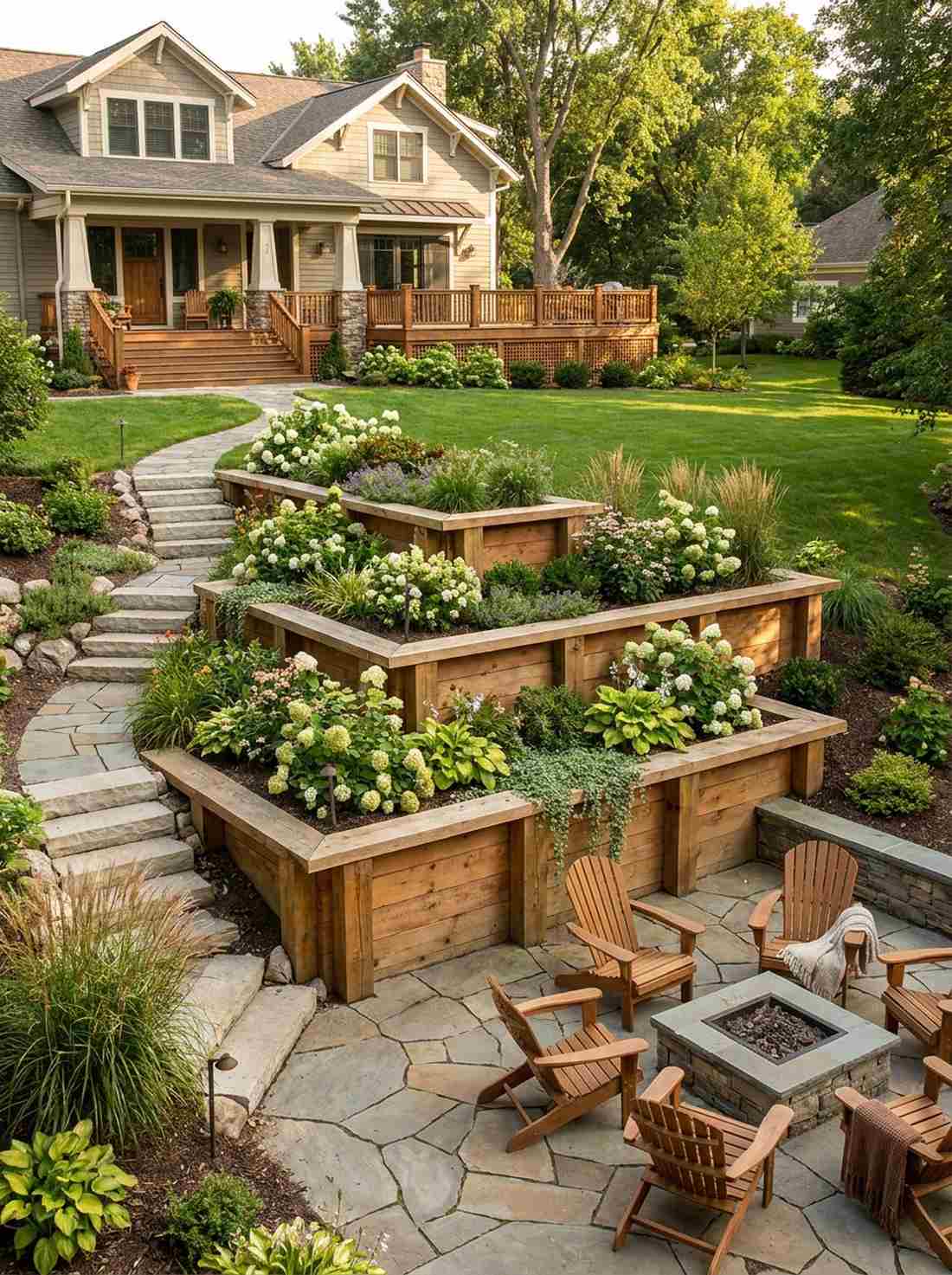
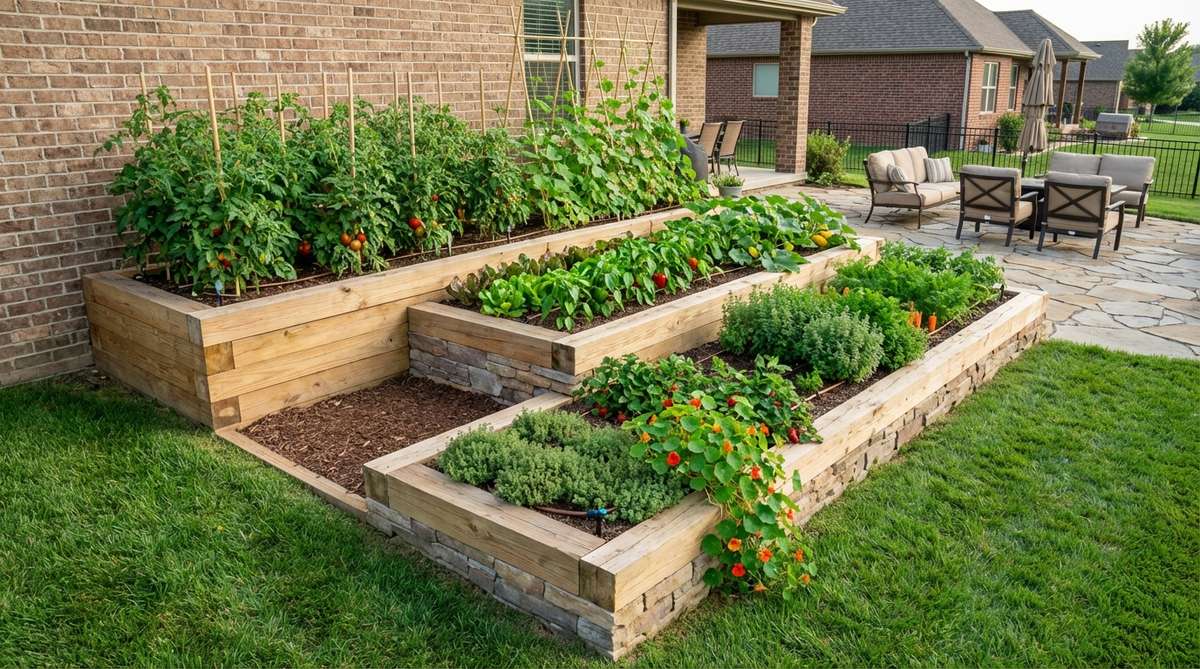
It feels like a beautifully manicured hillside right in your backyard. The staircase garden layout is a brilliant use-case for yards dealing with awkward slopes.
Battling a sloped lawn is a nightmare, but building step-down platforms delivers a surprisingly premium look while stopping soil erosion. Reinforce the front panels with thick timber to ensure total structural integrity.
Expect a material cost of $200–$350 for a solid three-tier cascade.
- Key Materials: 4×4 posts and 2×10 retaining planks
- Vibe / Style: Architectural terracing
- Difficulty: Advanced leveling required
- Budget Breakdown: Structural lumber: $200 | Fasteners: $40.
- Creator’s Tip: Overhang the top board slightly to create a shadow line that makes the tiers look professionally built.
- Smart Sourcing: heavy-duty structural timber screws and pre-cut cedar staircase stringers.
Modern Garden Raised Beds That Define Contemporary Spaces
Elevated planting systems offer superior drainage, soil control, and ergonomic benefits while establishing strong visual structure. These modern garden raised beds combine functional advantages with architectural presence.
11. Twelve-Bed Production Grid
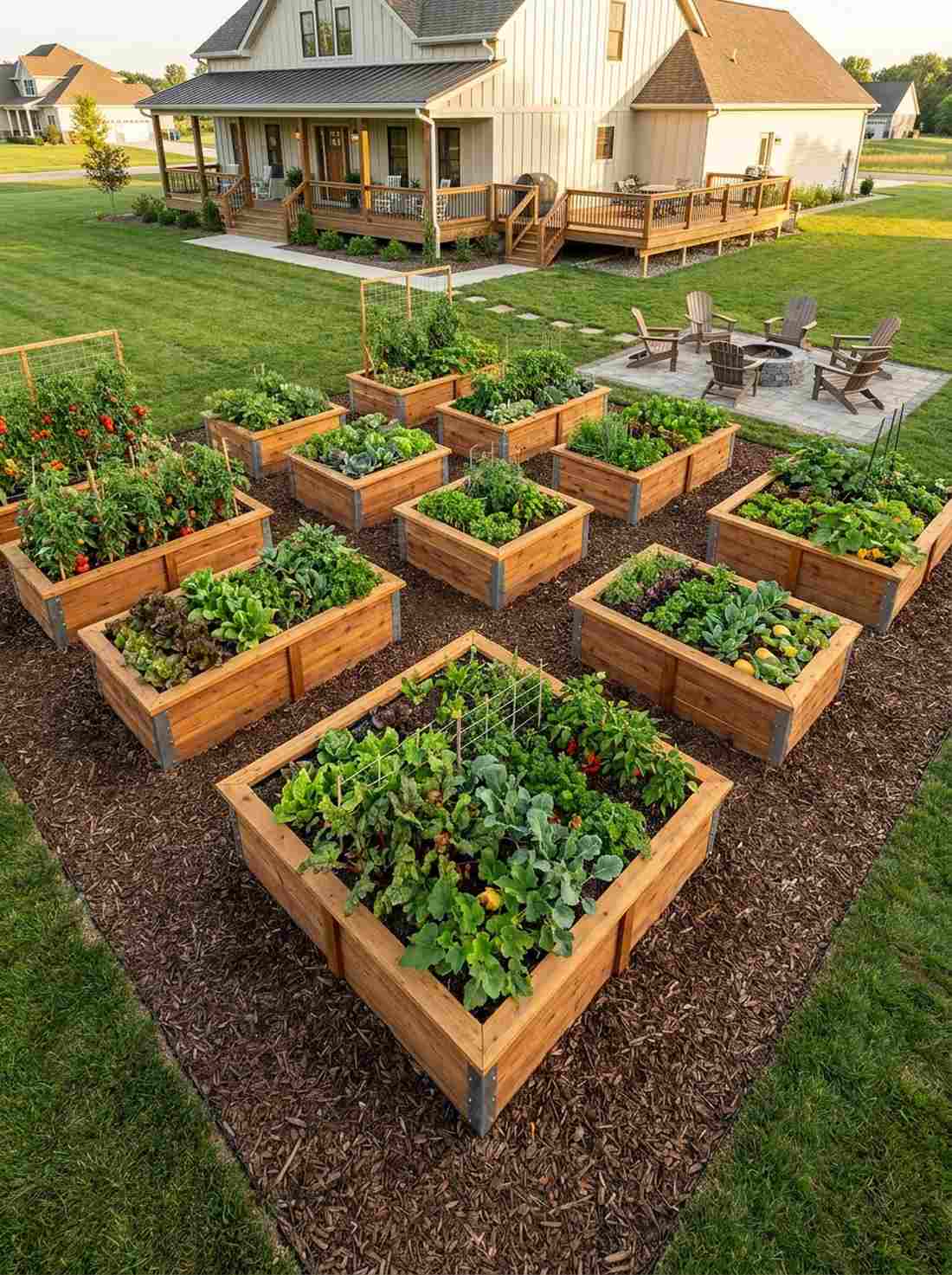
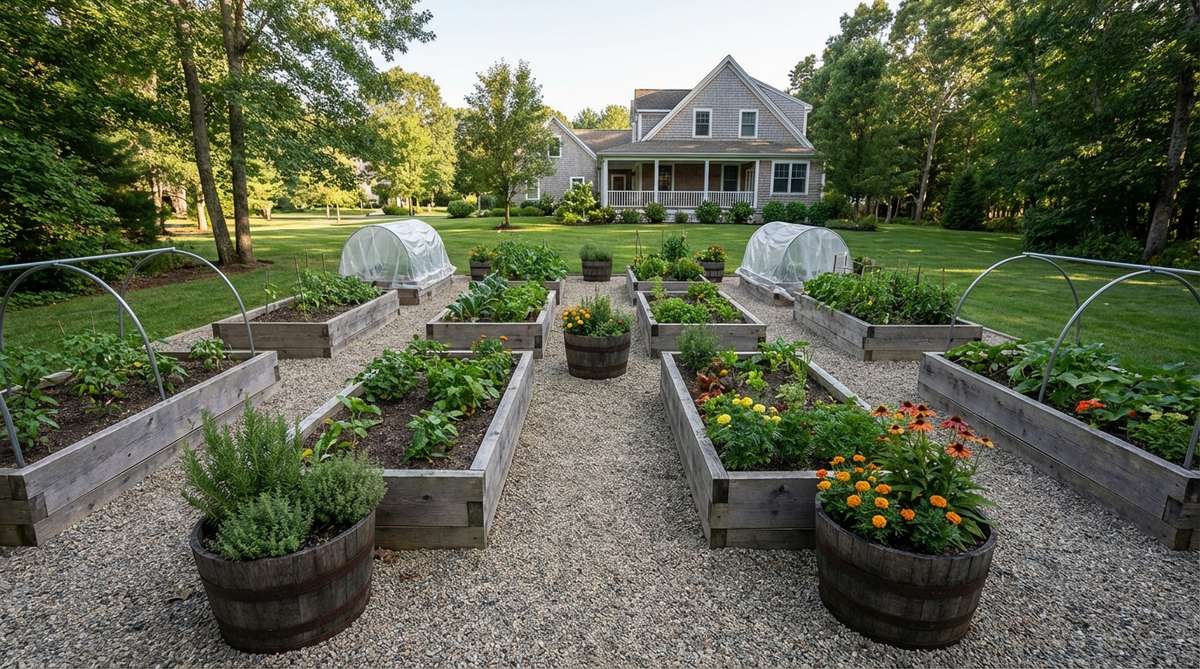
This layout feels like a highly organized professional farm estate. A symmetrical grid garden system is explicitly designed for a serious homesteader wanting massive food production.
Haphazard placement looks messy, but a strict grid provides a designer-level finish while making crop rotation a breeze. Lay down thick premium weed barrier in those 3-foot pathways so you never have to trim grass between boxes.
Building this large-scale system runs about $600–$1200 depending on lumber quality. Pin this if you dream of a massive backyard harvest!
- Key Materials: Standard 4×8 boxes and pathway mulch
- Vibe / Style: Professional agrarian chic
- Difficulty: Labor intensive but simple
- Budget Breakdown: 12 Boxes: $800 | Pathway materials: $150.
- Creator’s Tip: Cap the top edges of the boxes with a flat 2×4 so you have a comfortable seat while weeding.
- Smart Sourcing: raised bed corner bracket bulk sets and premium weed barrier fabric rolls.
12. Double-Height Vegetable Boxes
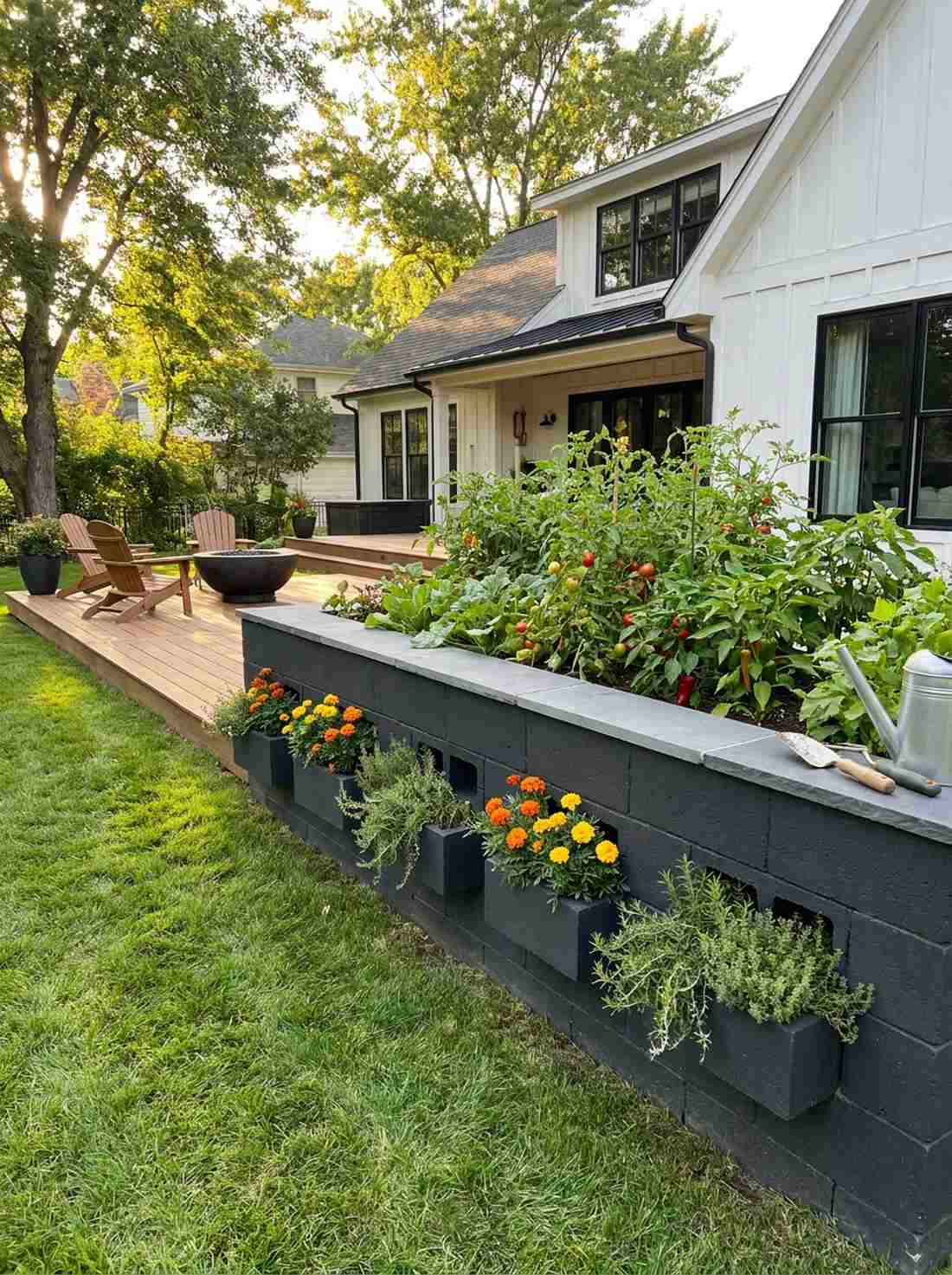
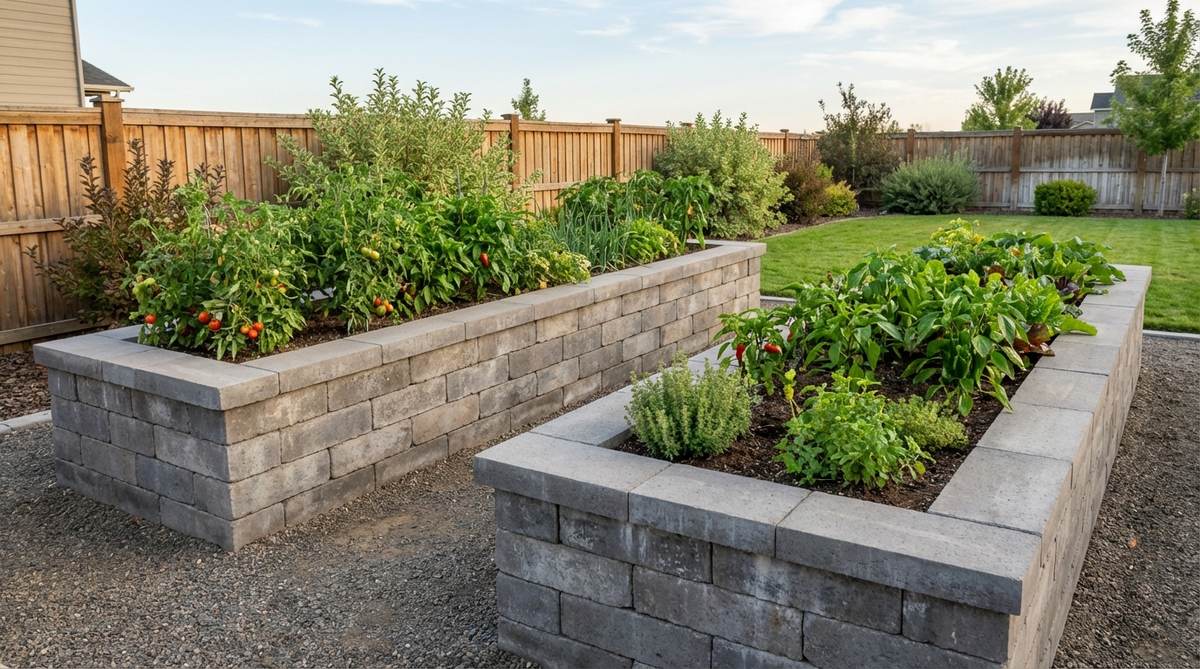
Feels like a permanent, upscale masonry installation. A tall block planter wall is a phenomenal setup for elderly gardeners who want zero bending.
Flimsy wood rots over time, but stacking concrete blocks looks far more expensive than it is and lasts for generations. You can paint the blocks or cap them with sleek slate for an ultra-modern finish.
A sturdy double-height bed costs roughly $120–$200 in materials.
- Key Materials: Cinder blocks and concrete capstones
- Vibe / Style: Brutalist modern utility
- Difficulty: Heavy lifting required
- Budget Breakdown: Blocks: $90 | Capstones: $60.
- Creator’s Tip: Plant marigolds or trailing herbs inside the hollow outer holes of the cinder blocks.
- Smart Sourcing: outdoor-grade masonry adhesive tubes and pre-cast flat capstones.
13. Mixed-Dimension Cluster
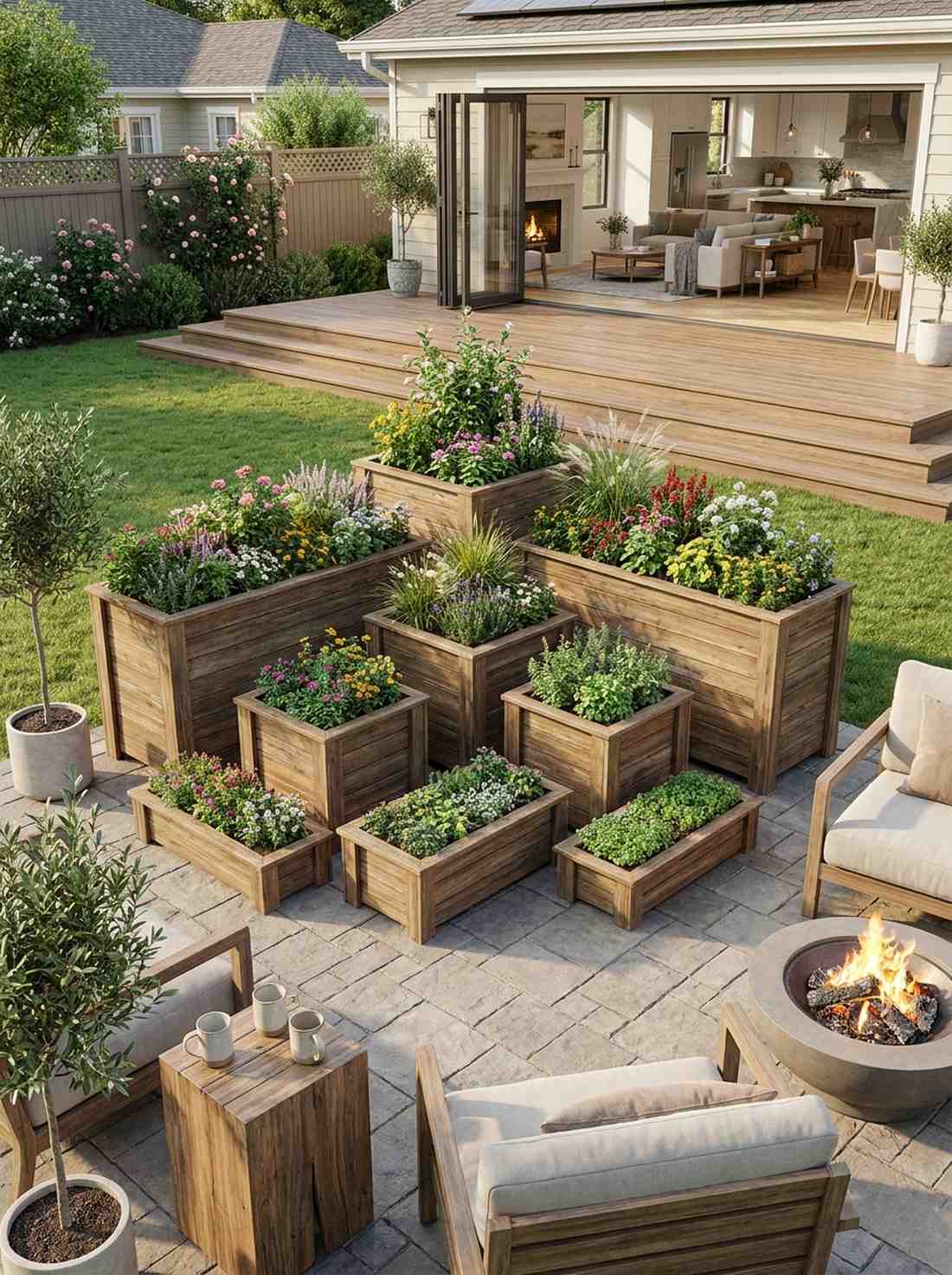
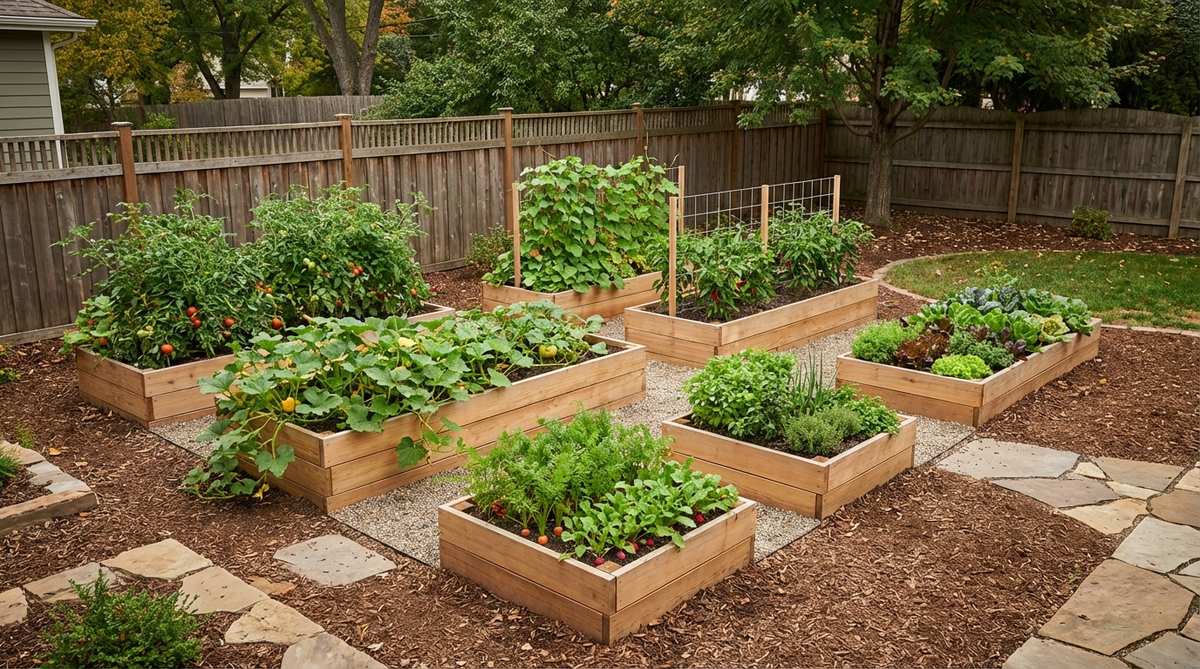
This feels like a curated boutique nursery display. A varied-size box grouping is ideal for filling an irregularly shaped backyard patio.
Rigid uniformity can feel institutional, but mixing scales and heights delivers a surprisingly premium look that feels highly customized. Keep the material identical across all boxes so the chaotic sizing still looks intentionally unified.
You can mix and match a set of 4 boxes for around $180–$250. Save this idea to break up a boring flat lawn!
- Key Materials: Assorted galvanized steel or matching lumber
- Vibe / Style: Eclectic organized cluster
- Difficulty: Easy mixing
- Budget Breakdown: Small boxes: $60 | Large boxes: $120.
- Creator’s Tip: Place the tallest boxes in the back or center so they don’t shade out your smaller micro-greens.
- Smart Sourcing: galvanized multi-size planter kit bundles and organic bulk soil delivery.
14. Elevated Waist-Height Planters
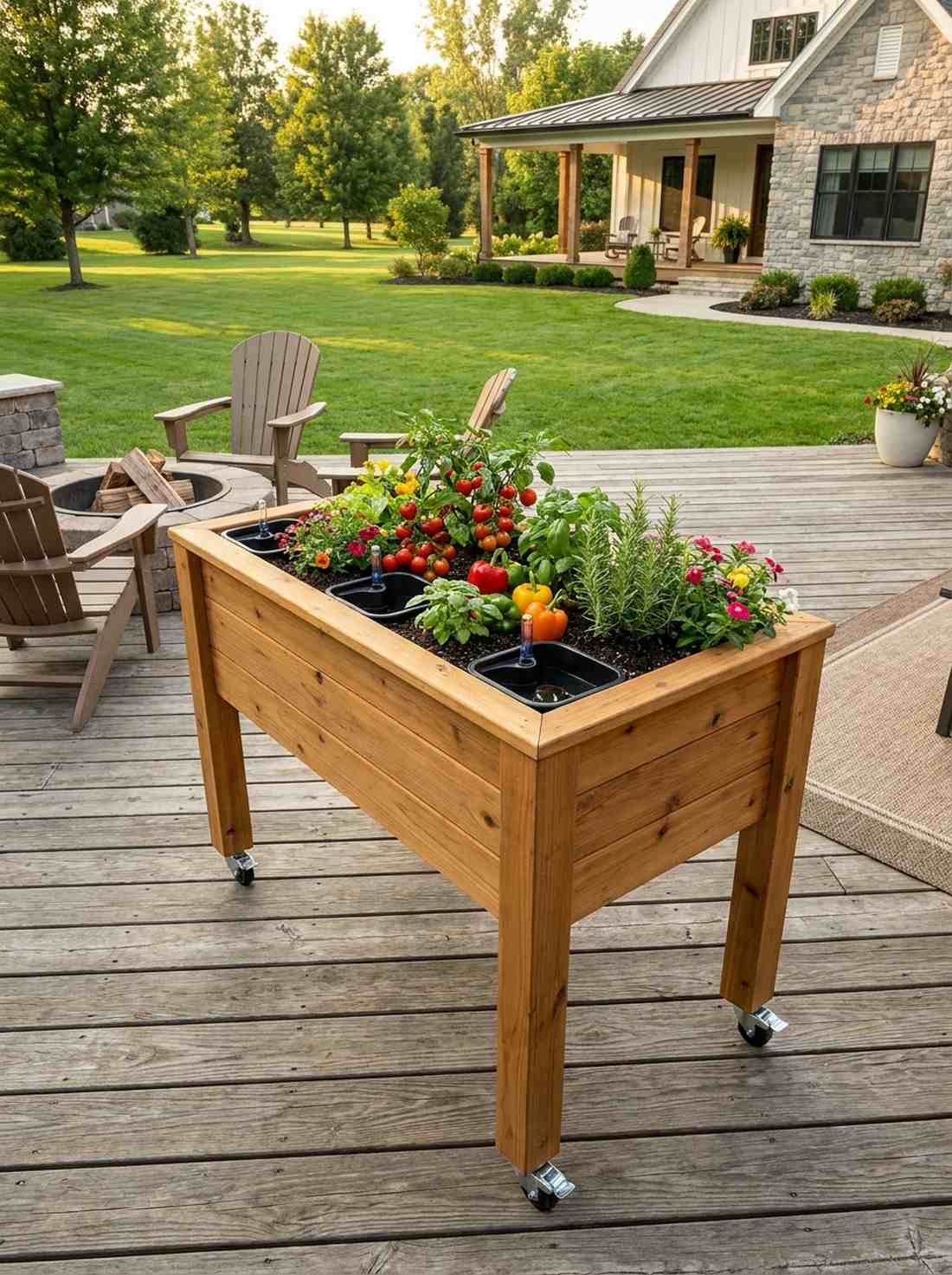
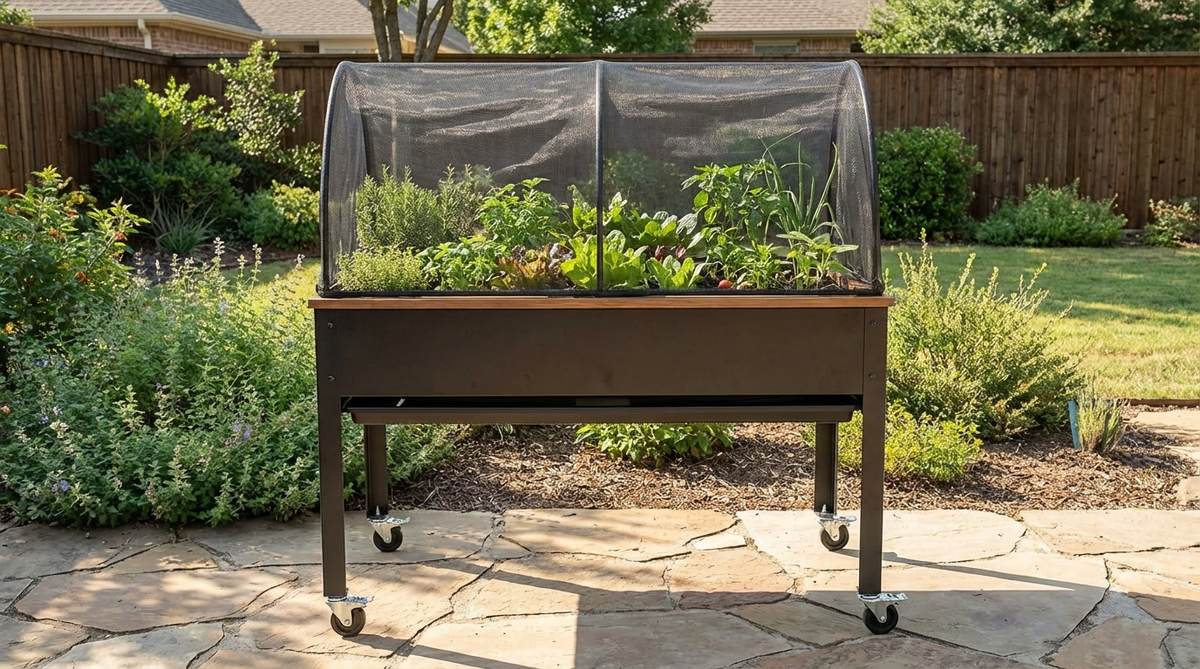
Feels like a luxurious standing desk, but for gardening. A tall legged planter basin is the perfect use-case for a fully wheelchair-accessible patio.
Ground-level pests destroy harvests, but elevating the entire root zone provides a designer-level finish while completely eliminating rabbit problems. Dropping in custom self-watering inserts guarantees your soil never dries out mid-summer.
A high-quality elevated bed usually costs $100–$180.
- Key Materials: Sturdy 4×4 legs and deep planter boxes
- Vibe / Style: Ergonomic contemporary
- Difficulty: Moderate woodworking
- Budget Breakdown: Leg posts: $40 | Box frame: $80.
- Creator’s Tip: Line the bottom with a layer of sealed rigid foam board to reduce the total weight and insulate roots.
- Smart Sourcing: pre-built waist-high cedar planter kits and heavy-duty locking caster wheels.
If you’re tight on space, the next configuration will literally double your harvest area…
15. L-Shaped Corner Maximizer
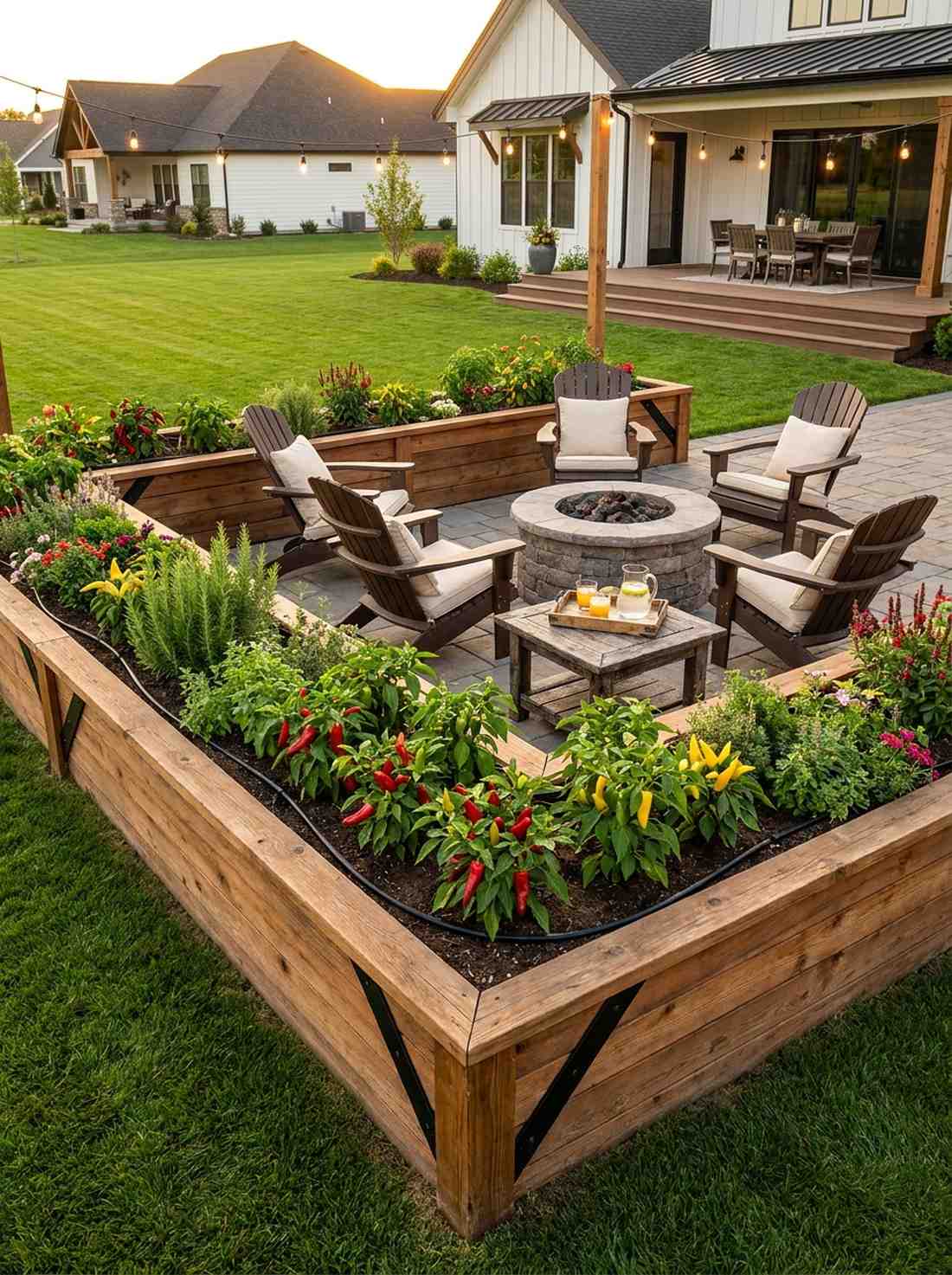
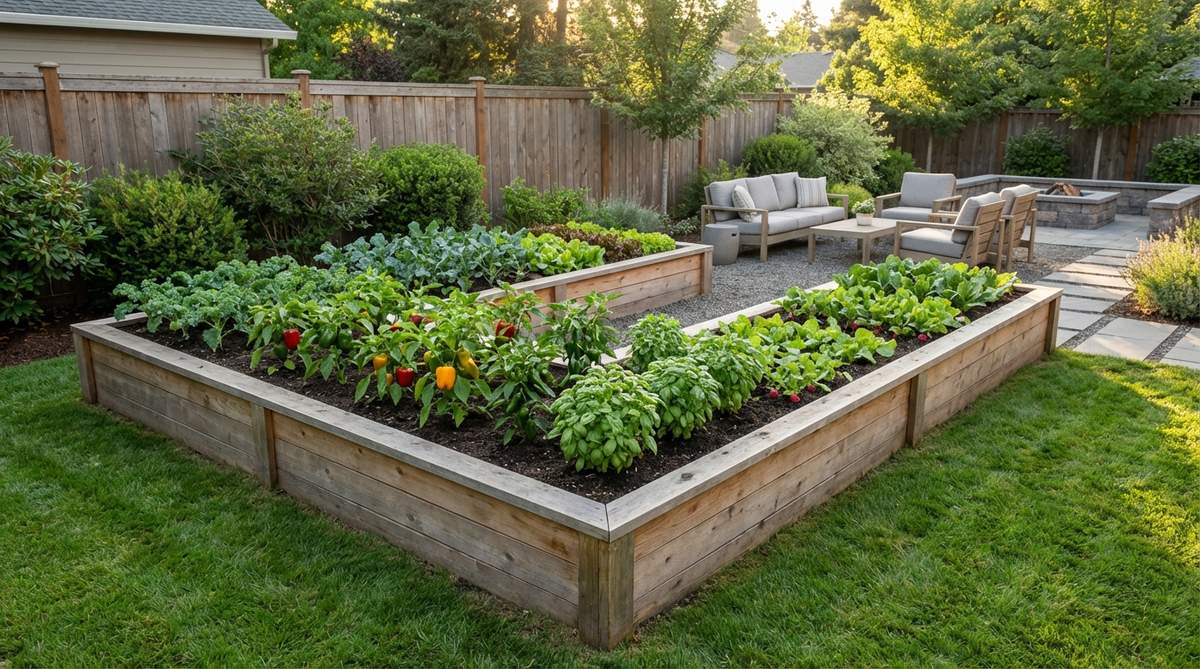
This layout feels like a cozy, wrap-around outdoor living room. An L-shaped corner border works brilliantly for framing a fire pit or patio seating area.
Most corners collect junk and dead leaves, but this wraparound design looks far more expensive than it is and traps a warm microclimate. Install a hidden drip tape system along the inner edge for invisible watering.
Customizing an L-shape frame usually requires $150–$250 in lumber. Pin this to your backyard layout board!
- Key Materials: Long lumber cuts and internal brace brackets
- Vibe / Style: Seamless spatial flow
- Difficulty: Intermediate measuring
- Budget Breakdown: Wood: $180 | Brackets: $30.
- Creator’s Tip: Use the protected inside corner to grow heat-loving peppers that struggle in open wind.
- Smart Sourcing: heavy-duty 90-degree corner brace kits and commercial drip line starter packs.
16. U-Shaped Courtyard System
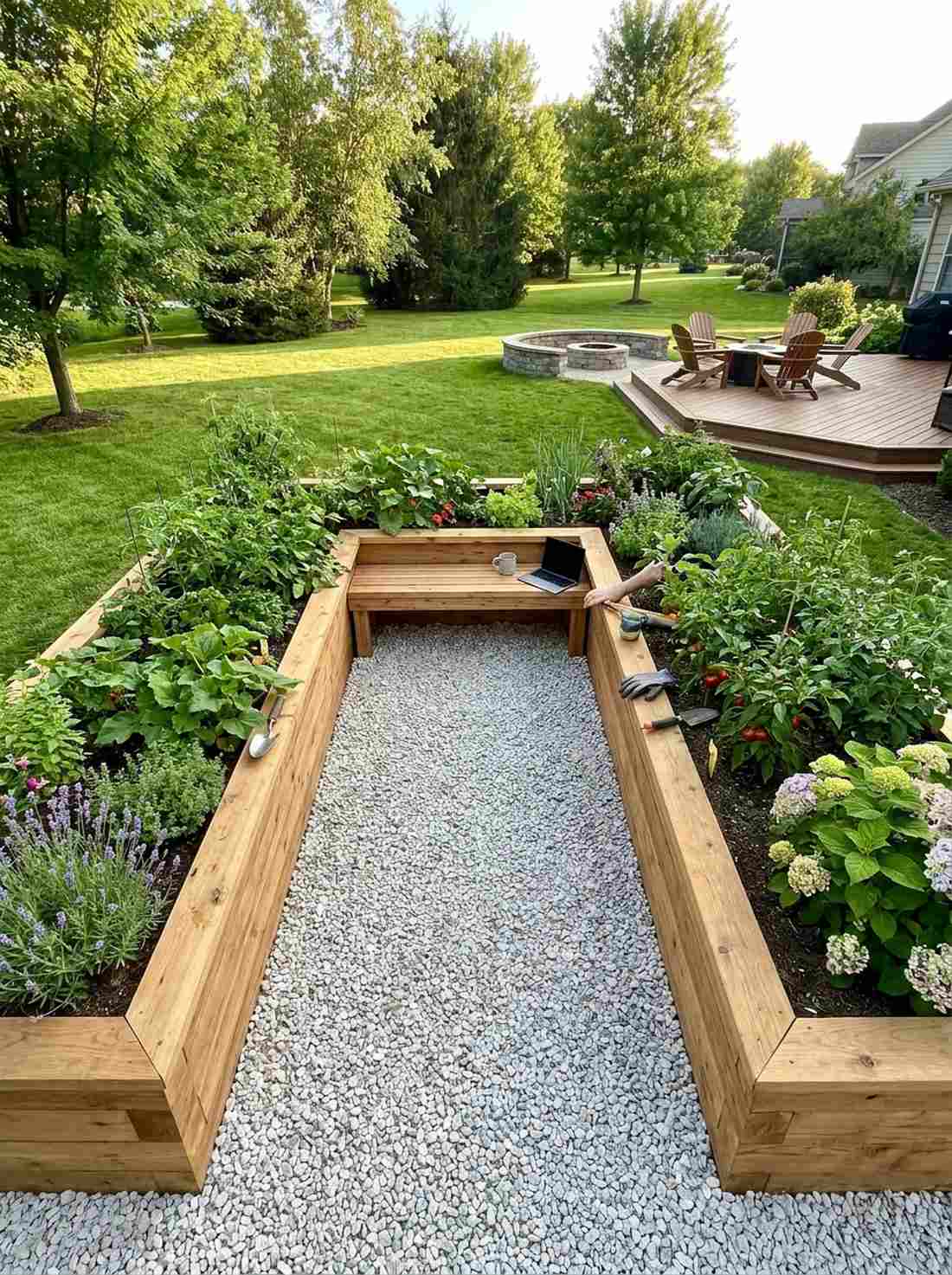
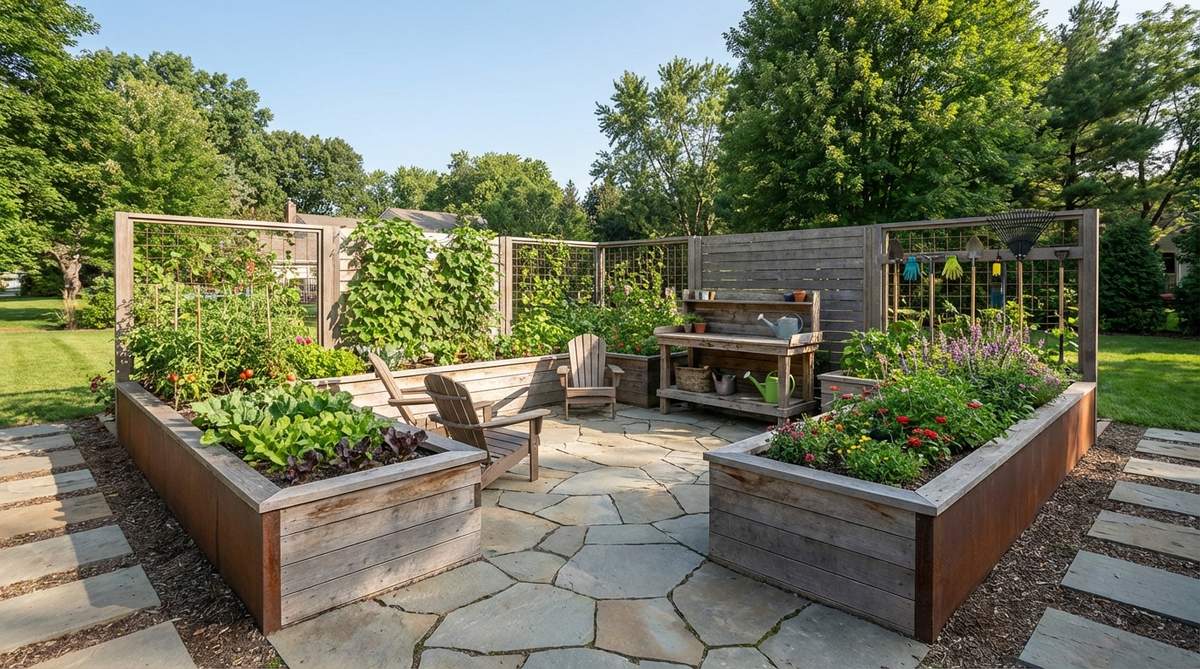
Imagine stepping into a private, green-walled sanctuary. The three-sided courtyard planter is the ultimate setup for creating an immersive outdoor workspace.
Floating beds look disconnected, but enclosing a space gives a designer-level finish while keeping tools within an arm’s reach. Fill the central area with crushed limestone for a crisp, high-end contrast.
Building this large immersive setup generally costs $300–$500.
- Key Materials: Extensive framing lumber and center gravel
- Vibe / Style: Enclosed private oasis
- Difficulty: Weekend-long project
- Budget Breakdown: Lumber: $300 | Center gravel: $80.
- Creator’s Tip: Add a small wooden bench bridging the gap at the back of the U for an integrated resting spot.
- Smart Sourcing: pre-cut U-shaped modular raised kits and bulk decorative limestone bags.
Functional Specialty Designs For Specific Growing Needs
Purpose-built layouts address particular crops, growing methods, or site challenges. These specialized configurations optimize conditions for targeted production goals.
17. Vine Crop Expansion Bed
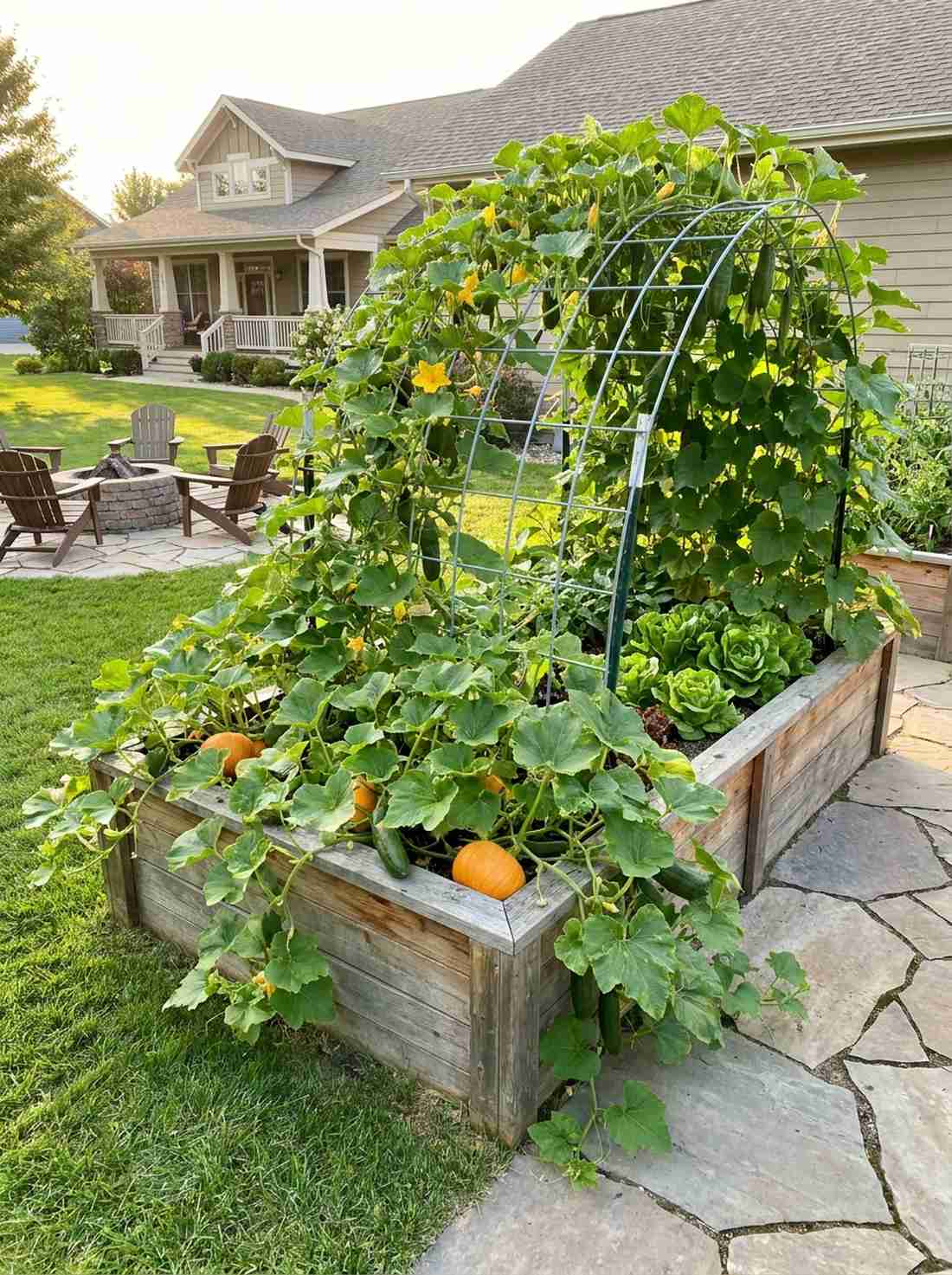
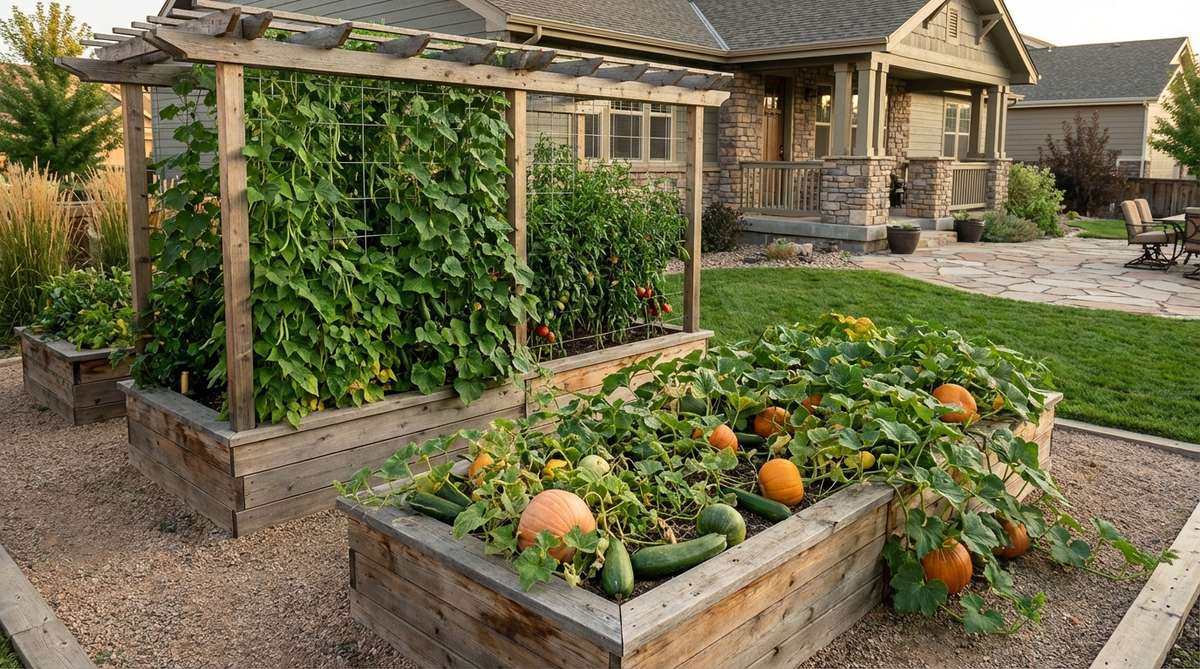
This setup feels like a lush, cascading waterfall of green. A split-zone trellis layout is exceptionally smart for taming wild pumpkin or cucumber vines.
Sprawling vines usually choke out other plants, but giving them a designated ramp delivers a surprisingly premium look while keeping your yard walkable. Secure a heavy-duty arched wire panel to the back side.
You can upgrade a standard bed for just $40–$60 in trellis materials. Save this if you love growing massive squashes!
- Key Materials: Standard box plus arched cattle panels
- Vibe / Style: Controlled wild abundance
- Difficulty: Easy add-on
- Budget Breakdown: Cattle panel: $30 | U-nails/Staples: $10.
- Creator’s Tip: Plant lettuce in the shade directly underneath the arching trellis to prevent them from bolting in summer.
- Smart Sourcing: galvanized arch trellis kits and heavy-duty fence staple bulk packs.
18. Succession Planting Modules
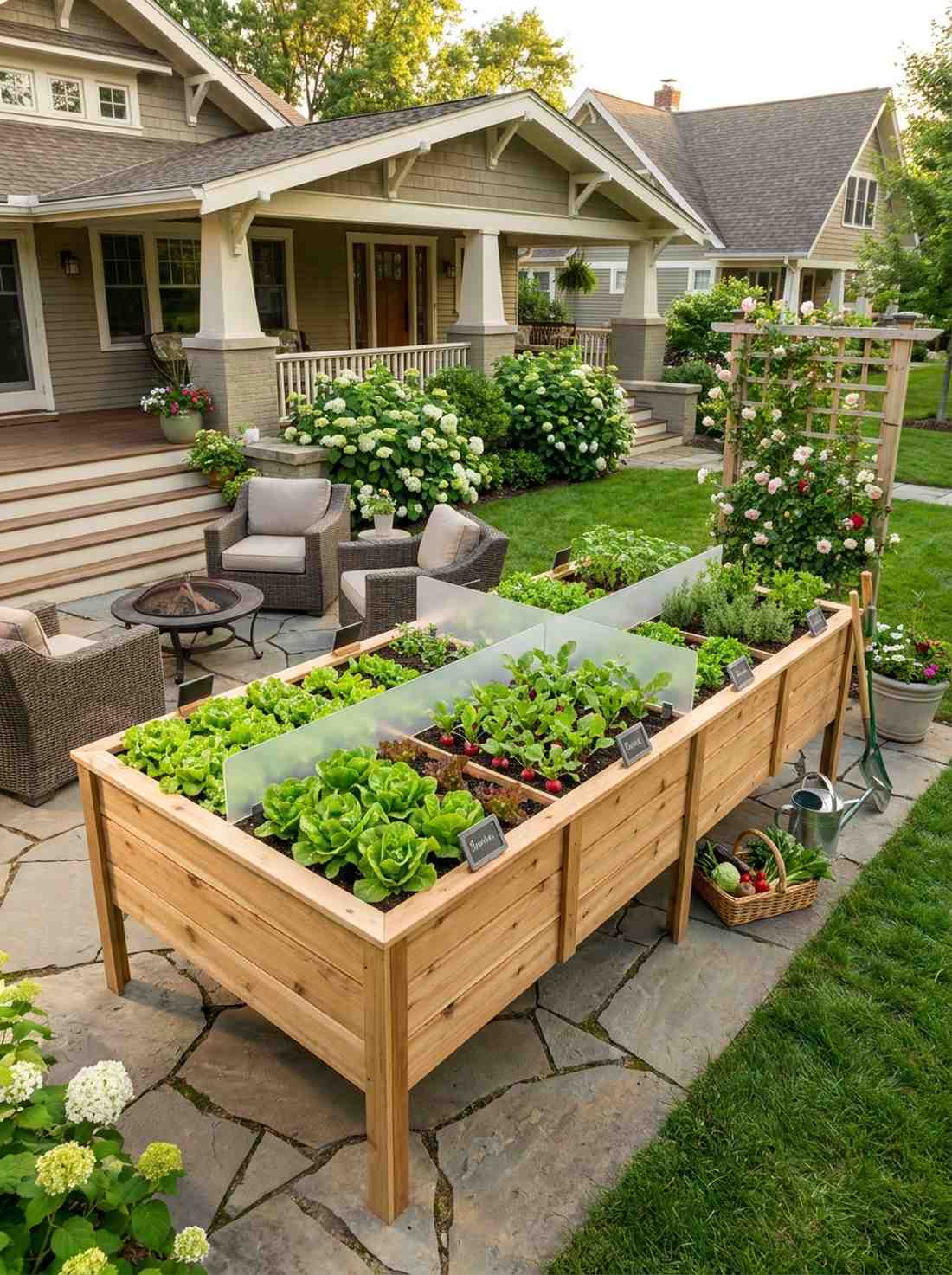
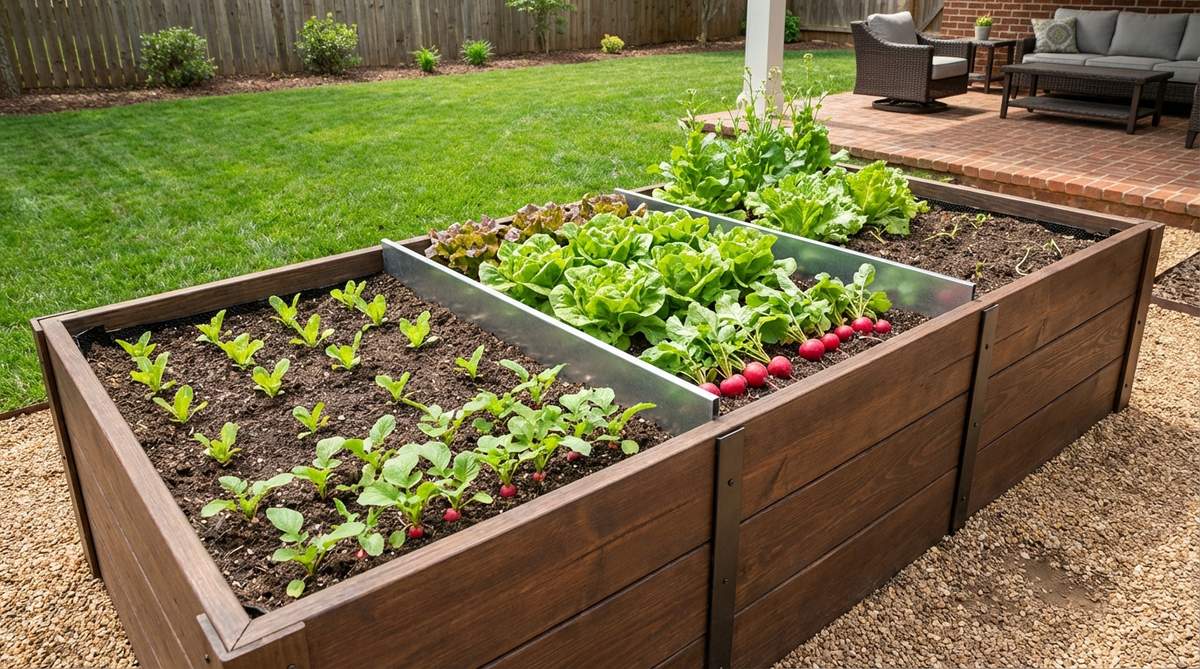
Feels like a perfectly timed, highly calibrated machine. The slotted divider garden box is the ultimate use-case for a family wanting fresh salads every single week.
Planting everything at once leaves you with rotting gluts, but this compartmentalized strategy looks far more expensive than it is and guarantees continuous harvests. Slide in sleek acrylic dividers for a hyper-modern aesthetic.
Adding slots and dividers to an existing setup costs barely $20–$40.
- Key Materials: Custom routed side rails and drop-in boards
- Vibe / Style: Methodical segmented clean
- Difficulty: Intermediate routing
- Budget Breakdown: Divider panels: $25 | Router bit: $15.
- Creator’s Tip: Label each section with waterproof slate tags noting the exact date of the next required sowing.
- Smart Sourcing: UV-coated acrylic separator panels and slate garden marker bulk sets.
19. Square Foot Intensive Grid
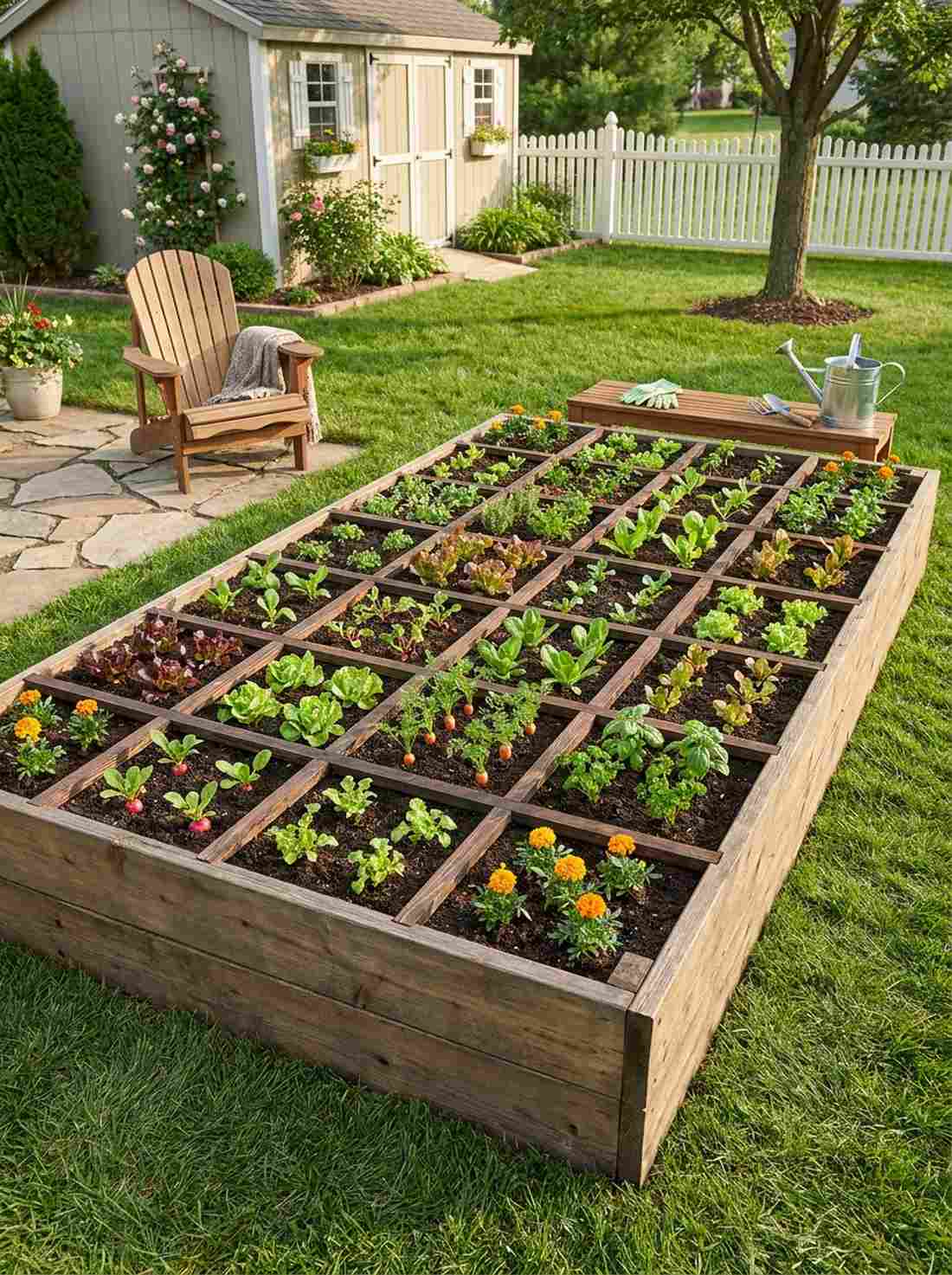
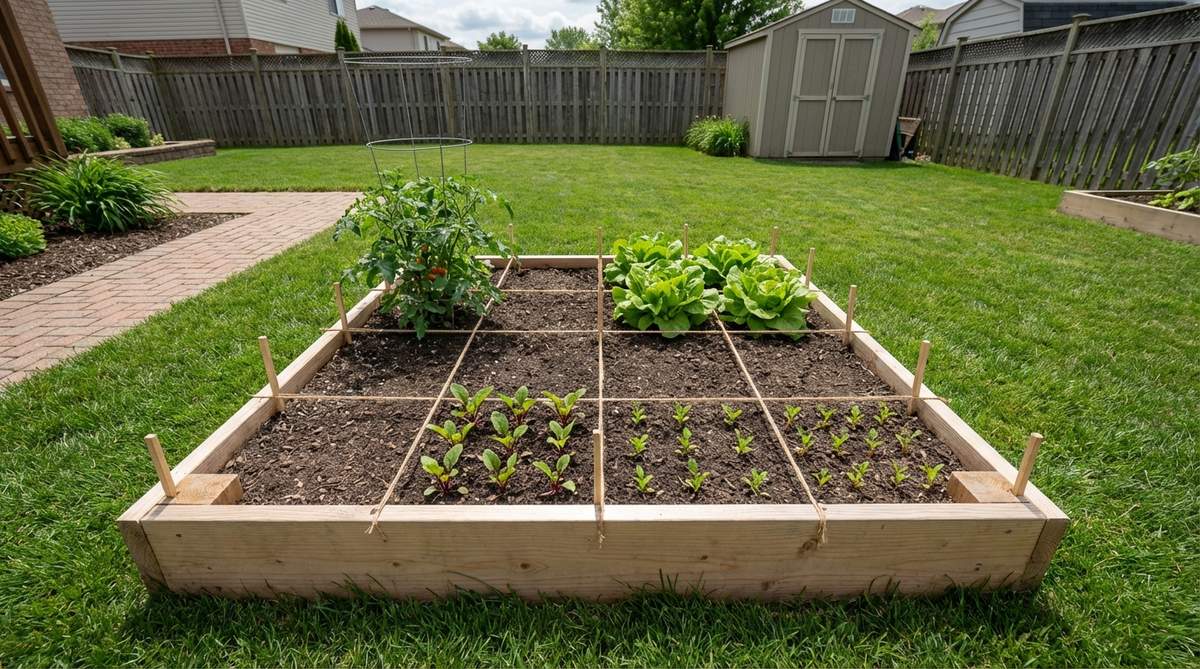
This layout feels like a beautifully detailed horticultural chessboard. A geometric string-grid overlay works absolute wonders for maximizing a tiny urban raised bed.
Eyeballing your seeds leads to chaotic overcrowding, but this strict mapping system provides a designer-level finish while doubling your yield per foot. Swap out cheap string for stained wood lath to make it permanent.
A grid overlay costs around $15–$25. Pin this for a hyper-organized spring garden!
- Key Materials: Wooden lath strips or high-visibility paracord
- Vibe / Style: Micro-managed perfection
- Difficulty: Quick afternoon craft
- Budget Breakdown: Grid strips: $15 | Fasteners: $5.
- Creator’s Tip: Paint the grid lines a contrasting dark color so the geometry pops against the brown soil.
- Smart Sourcing: pre-cut wooden garden grid overlays and weather-resistant paracord spools.
Warning: Once you see how clean this next design looks, you’ll want to rip out your old garden…
20. Cut Flower Production Bed
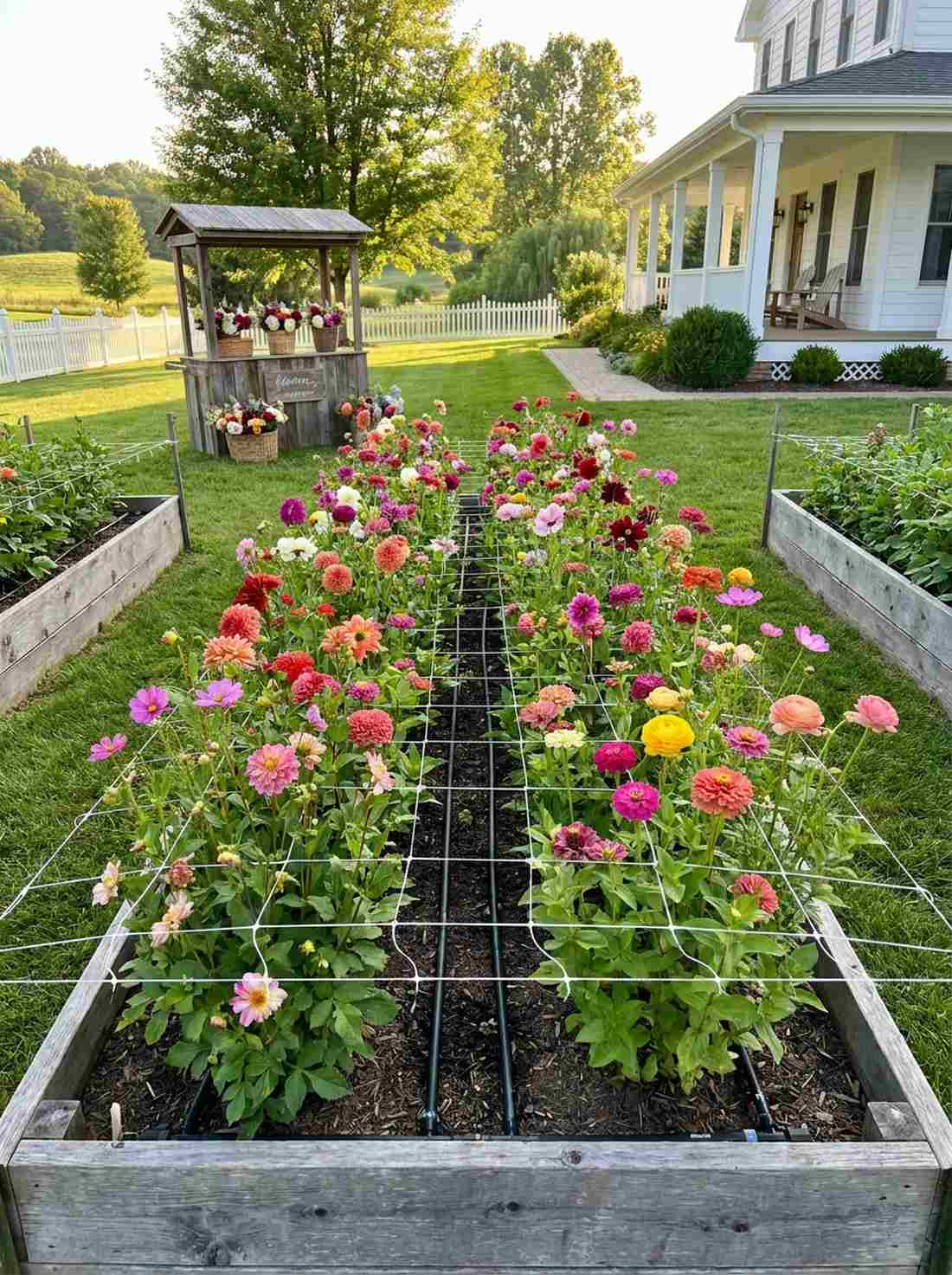
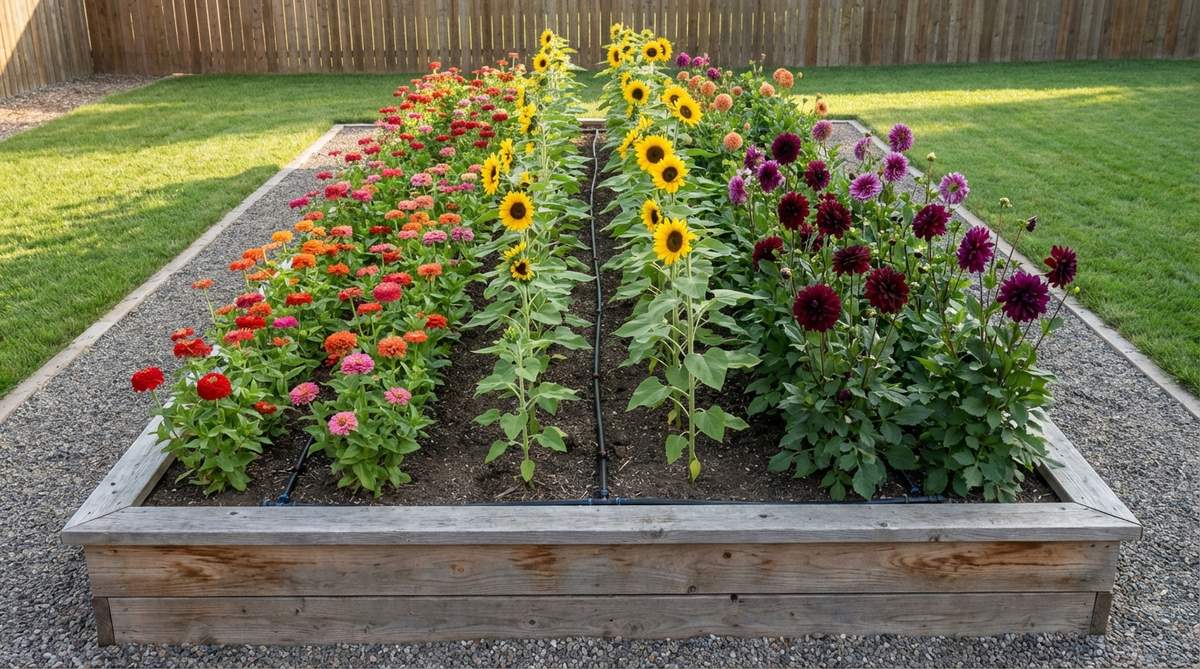
Imagine stepping into a vibrant ribbon of exploding colors. A slender floral production row is the absolute perfect layout for starting a side-hustle flower stand.
Wide beds make harvesting the center a nightmare, but this hyper-narrow design gives a surprisingly premium look while letting you snip stems effortlessly. Install a specialized floral support net horizontally as they grow.
Creating a 2×12 floral run costs roughly $90–$140.
- Key Materials: Long narrow framing and horizontal netting
- Vibe / Style: Vibrant commercial runway
- Difficulty: Easy straight build
- Budget Breakdown: Long boards: $90 | Support net: $20.
- Creator’s Tip: Run a double line of drip tape straight down the center to prevent powdery mildew on your flower leaves.
- Smart Sourcing: horizontal floral support netting bulk packs and commercial drip tape rolls.
21. Root Vegetable Deep Bed
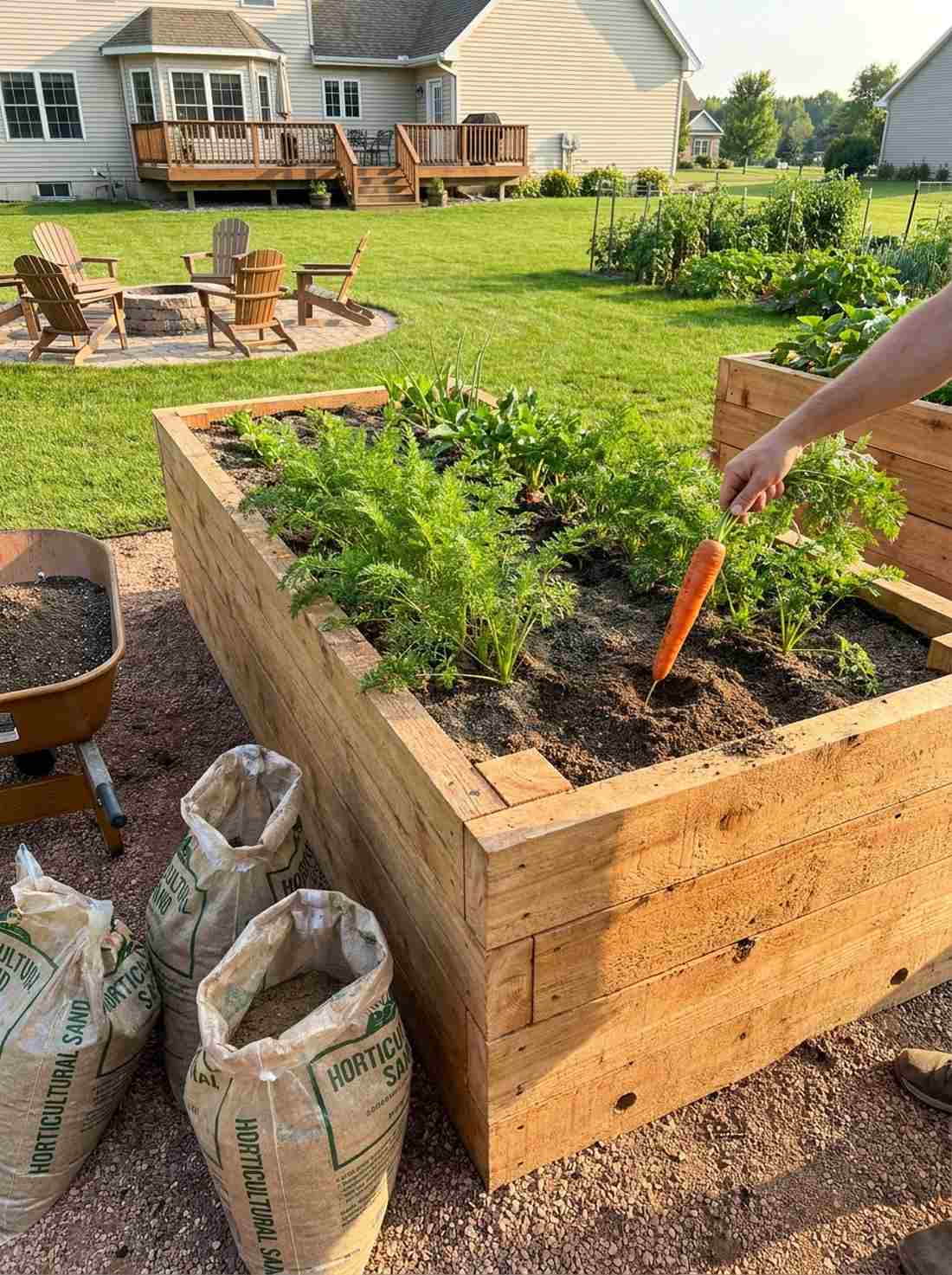
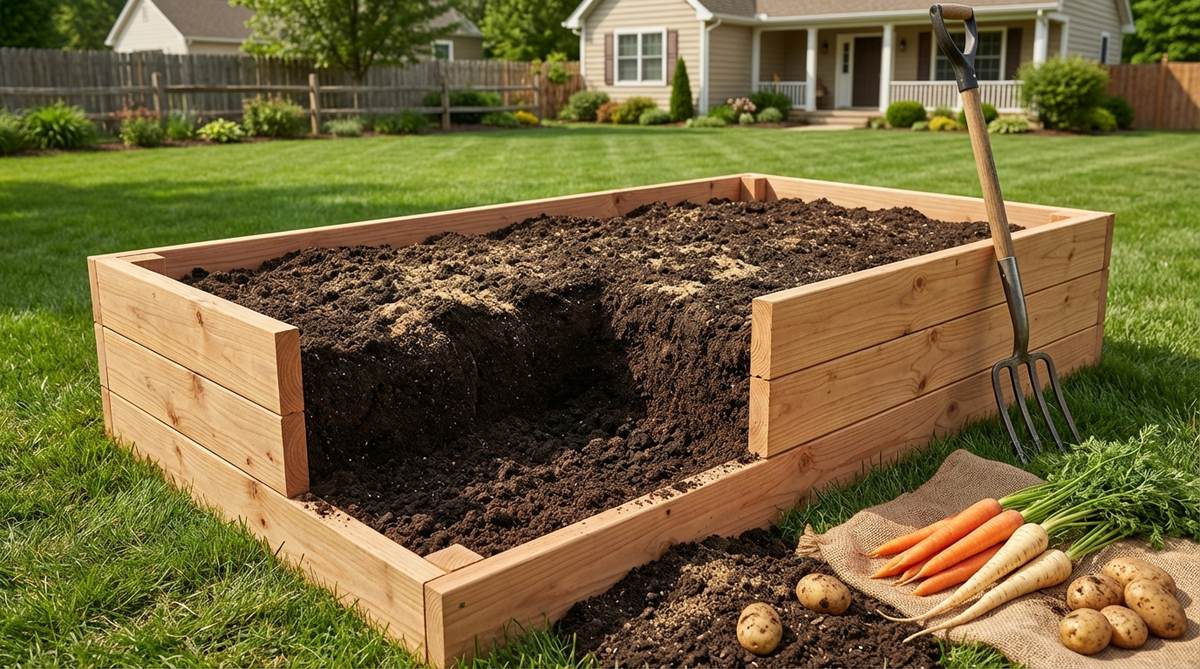
This feels like a massive, earthy treasure chest waiting to be opened. A 24-inch deep sandy planter is the definitive use-case for growing perfect, straight carrots.
Standard shallow soil causes bent, ugly root crops, but this massive depth looks far more expensive than it is and yields prize-winning veggies. Blend in heavy amounts of builder’s sand for effortless harvesting.
A deep-fill setup costs about $150–$250 due to the high soil volume required. Save this if you’re tired of stunted root veggies!
- Key Materials: Double-stacked thick lumber and sand-heavy soil
- Vibe / Style: Substantial earthy depth
- Difficulty: Heavy soil moving
- Budget Breakdown: Frame: $100 | Soil/Sand mix: $120.
- Creator’s Tip: Drill extra drainage holes near the bottom corners to ensure the deep core never becomes waterlogged.
- Smart Sourcing: extra-deep corrugated metal bed kits and bulk horticultural sand bags.
22. Companion Planting Zones
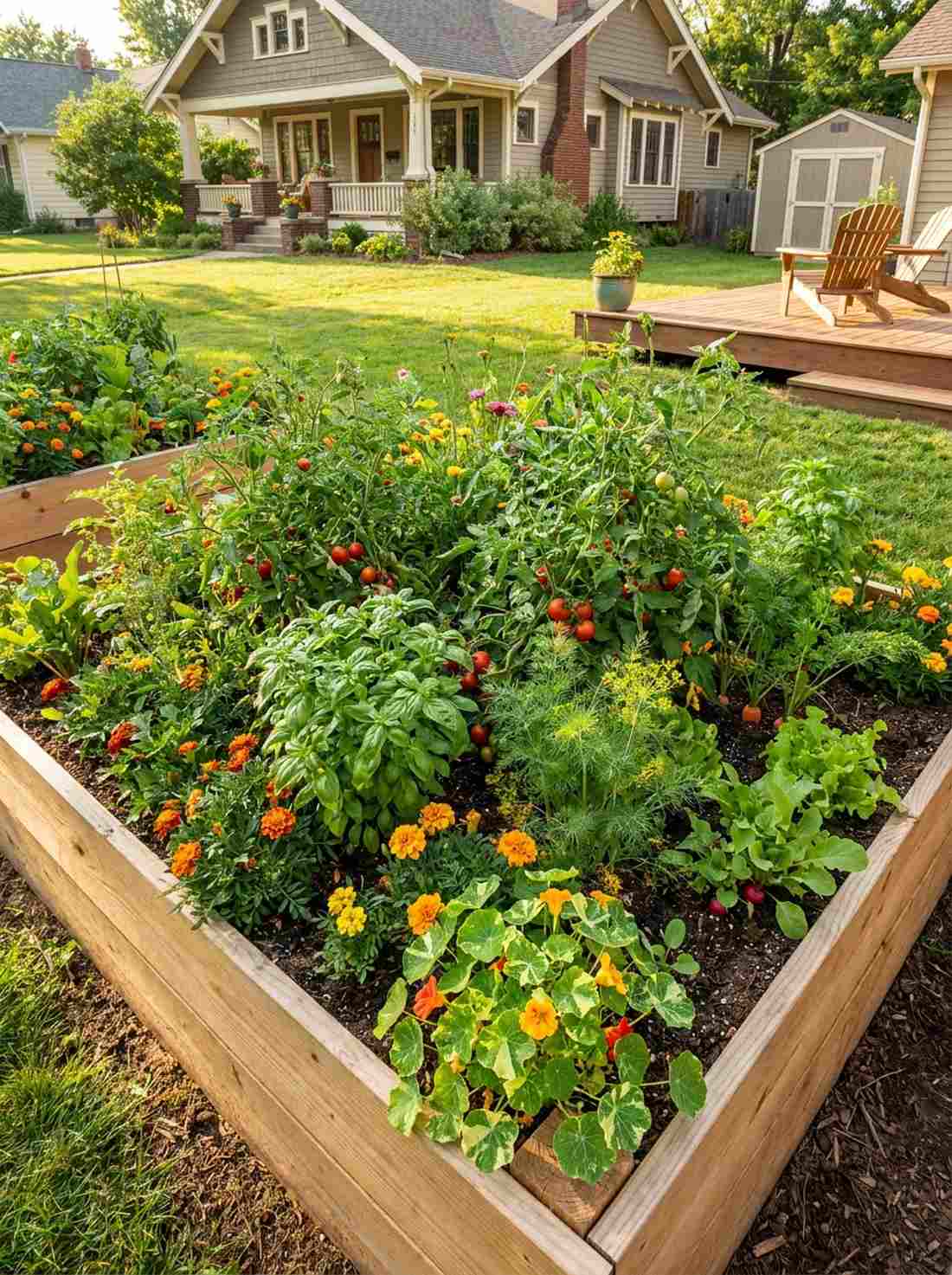
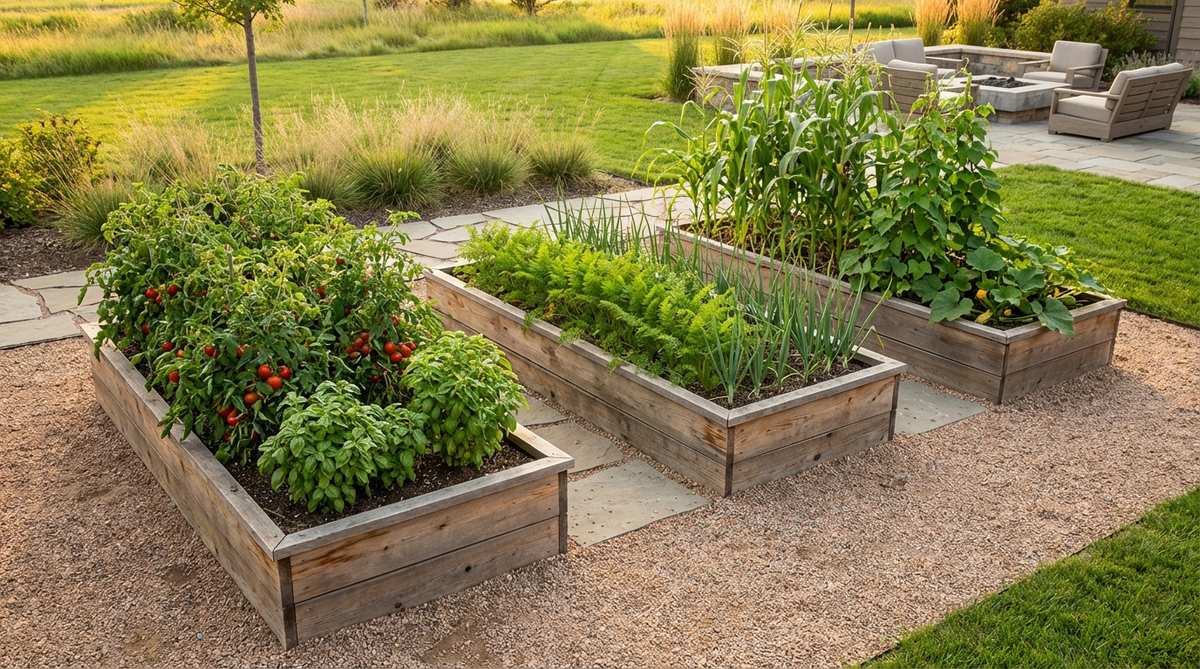
Feels like a thriving, self-sustaining botanical cocktail. A paired species bed layout is a genius setup for anyone wanting to ditch chemical pesticides forever.
Monoculture planting invites rapid pest invasions, but mixing species provides a designer-level finish while naturally repelling bugs. Using premium organic garden supplies ensures your symbiotic layout thrives rapidly.
This layout requires zero extra building cost, just smart seed grouping!
- Key Materials: Standard bed with diverse seed pairings
- Vibe / Style: Wild symbiotic harmony
- Difficulty: Strategic planning
- Budget Breakdown: Seeds: $30 | Organic compost: $20.
- Creator’s Tip: Plant pungent basil directly alongside your tomatoes to mask their scent from hornworms.
- Smart Sourcing: companion planting seed bundle kits and premium organic compost bags.
Material Guide: Cheap vs. Premium Aesthetic
Knowing exactly where to save and where to spend makes all the difference in achieving that “looks expensive but isn’t” modern garden raised beds vibe.
- Standard Pine vs. UV-Resistant Composite: Cheap pine rots in 2 years. Upgrading to composite or treated cedar stops warping and fading, saving you a massive rebuild.
- Pre-made Kits vs. Sourcing Locally: Pre-cut starter kits often save both time and money by eliminating the need for expensive power saws and wasted lumber scraps.
23. Weathered Cedar Classics
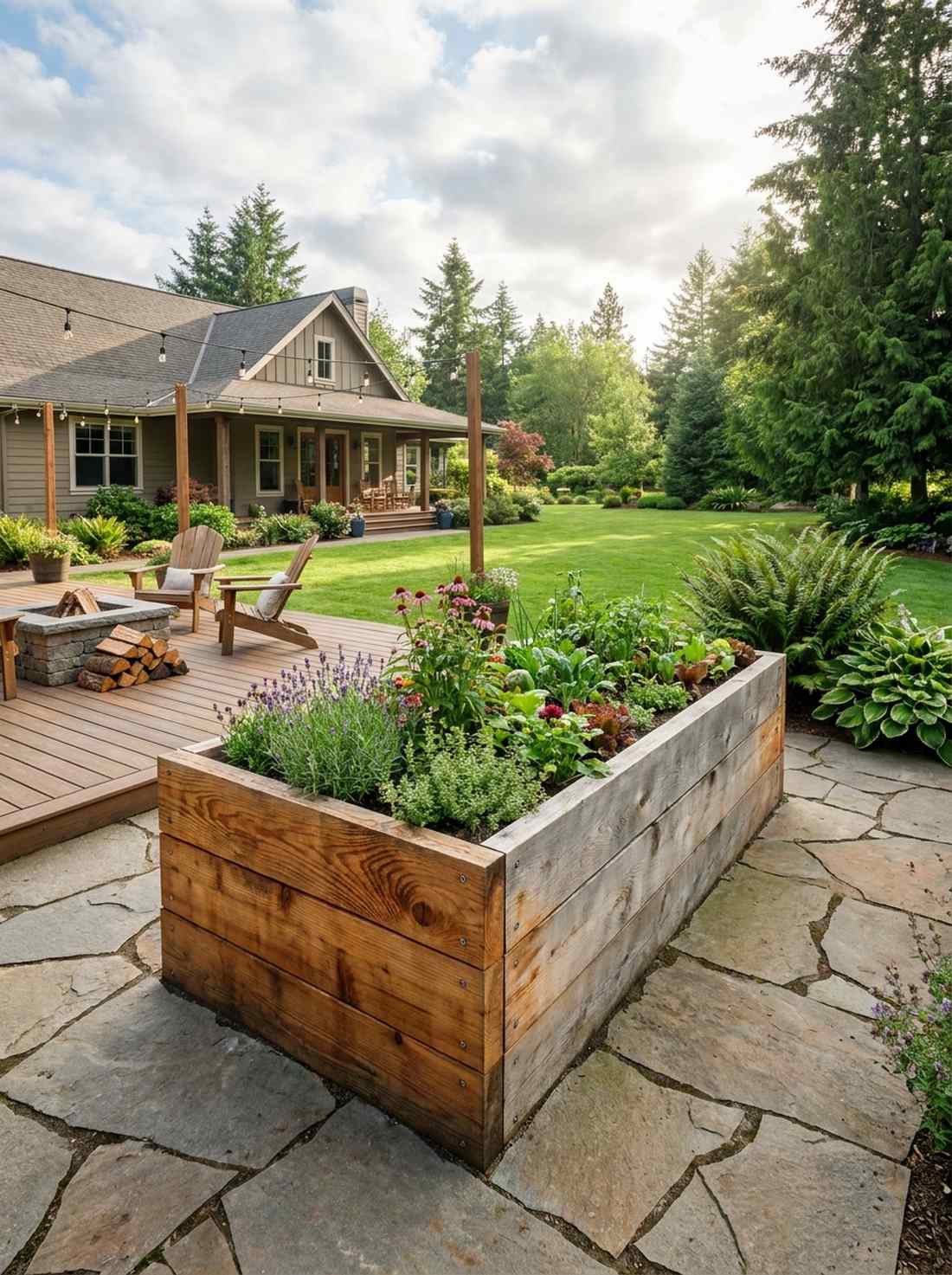
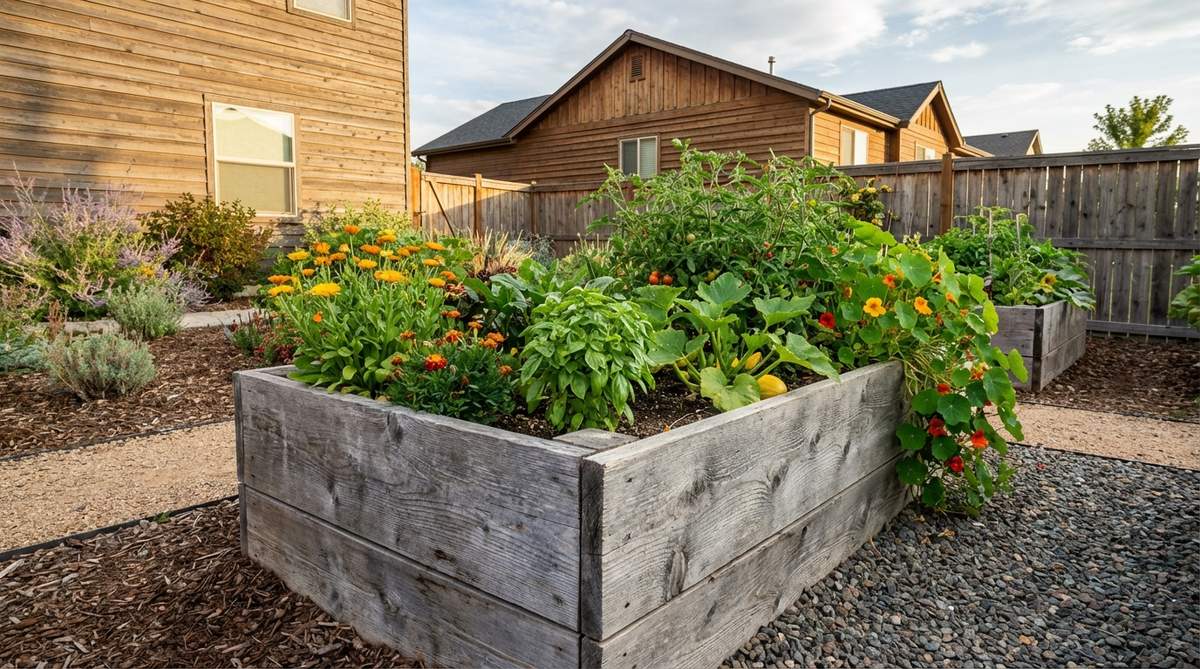
This aesthetic feels like a luxurious spa retreat in the Pacific Northwest. A thick-cut raw cedar frame is the absolute perfect vibe for an organic, health-conscious homestead.
Chemically treated woods can leach, but raw cedar delivers a surprisingly premium look that naturally turns a stunning silver patina over time. Seal the outside with raw linseed oil to make the grain explode visually.
A premium cedar bed costs around $180–$300, but it outlasts cheap pine by a decade. Pin this if you love natural wood aesthetics!
- Key Materials: 2-inch thick rough-sawn cedar boards
- Vibe / Style: Rustic high-end natural
- Difficulty: Standard woodworking
- Budget Breakdown: Cedar lumber: $220 | Stainless screws: $30.
- Creator’s Tip: Use only stainless steel or exterior coated screws; standard screws will leave ugly black rust streaks on cedar.
- Smart Sourcing: pre-cut premium cedar raised bed kits and bulk stainless exterior deck screws.
24. Galvanized Metal Planters
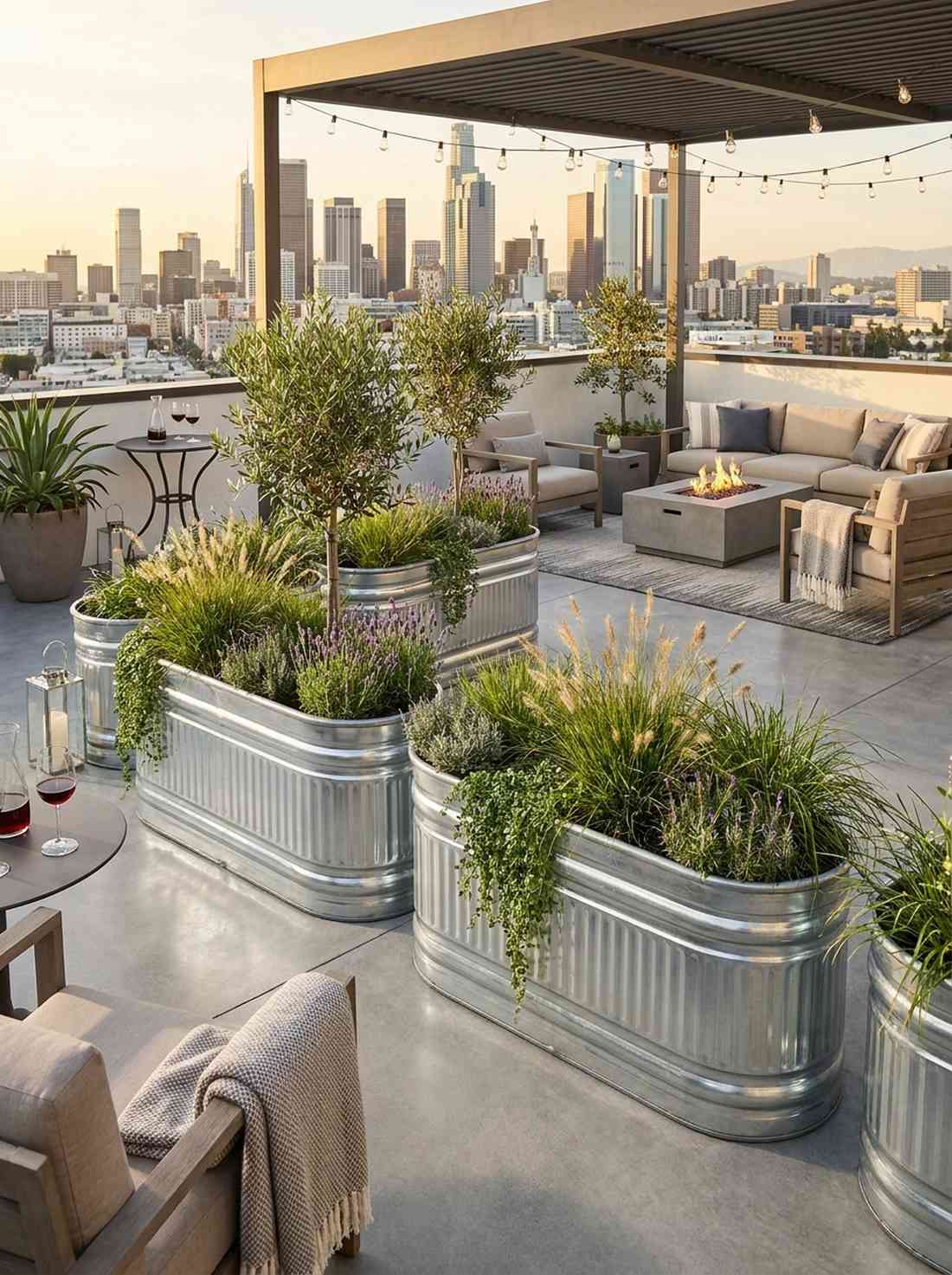
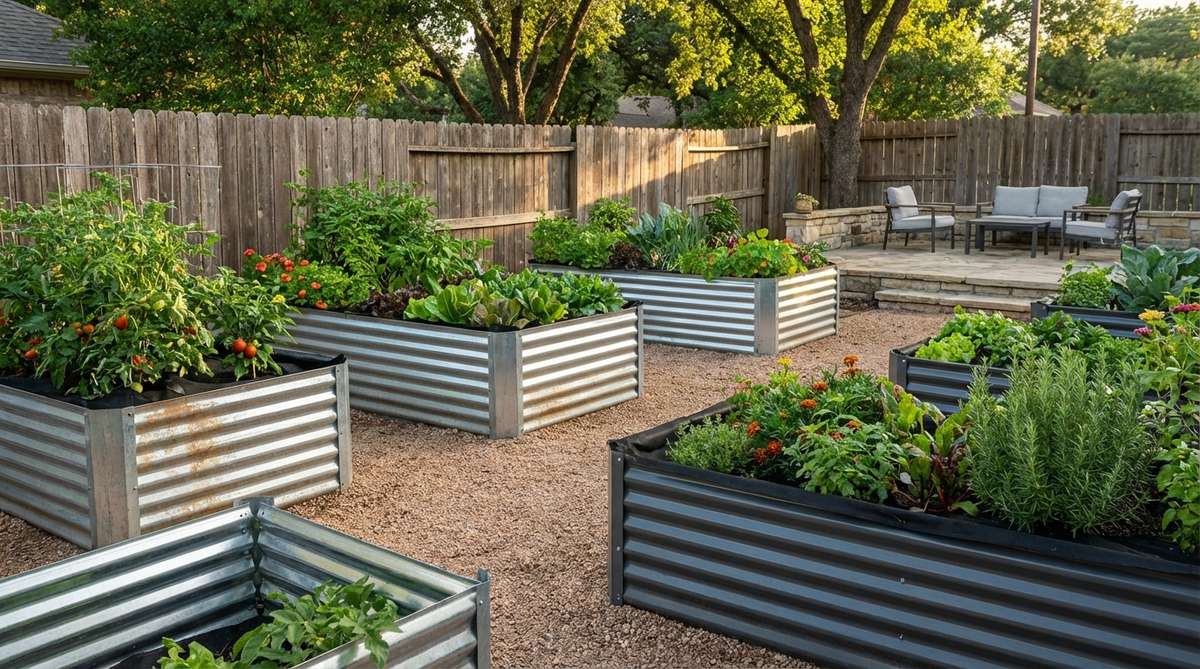
Feels like a chic, high-end rooftop bistro in the city. A corrugated steel trough bed is a flawless use-case for a sleek, modern concrete patio.
Wood requires endless maintenance, but metal troughs look far more expensive than they are and literally never rot. Line the inside edges with rigid foam to prevent the summer sun from cooking your soil.
Large galvanized setups run between $100–$250.
- Key Materials: Corrugated roofing metal or pre-made stock tanks
- Vibe / Style: Reflective industrial sleek
- Difficulty: Fast tool-free setup
- Budget Breakdown: Metal tank/kit: $150 | Drainage rock: $40.
- Creator’s Tip: Drill at least ten 1-inch holes in the bottom of a stock tank before adding dirt to ensure massive drainage.
- Smart Sourcing: powder-coated galvanized steel bed kits and heavy-duty metal step bits.
The upcoming material choice is a well-kept secret among high-end landscape architects…
25. Composite Lumber Frames
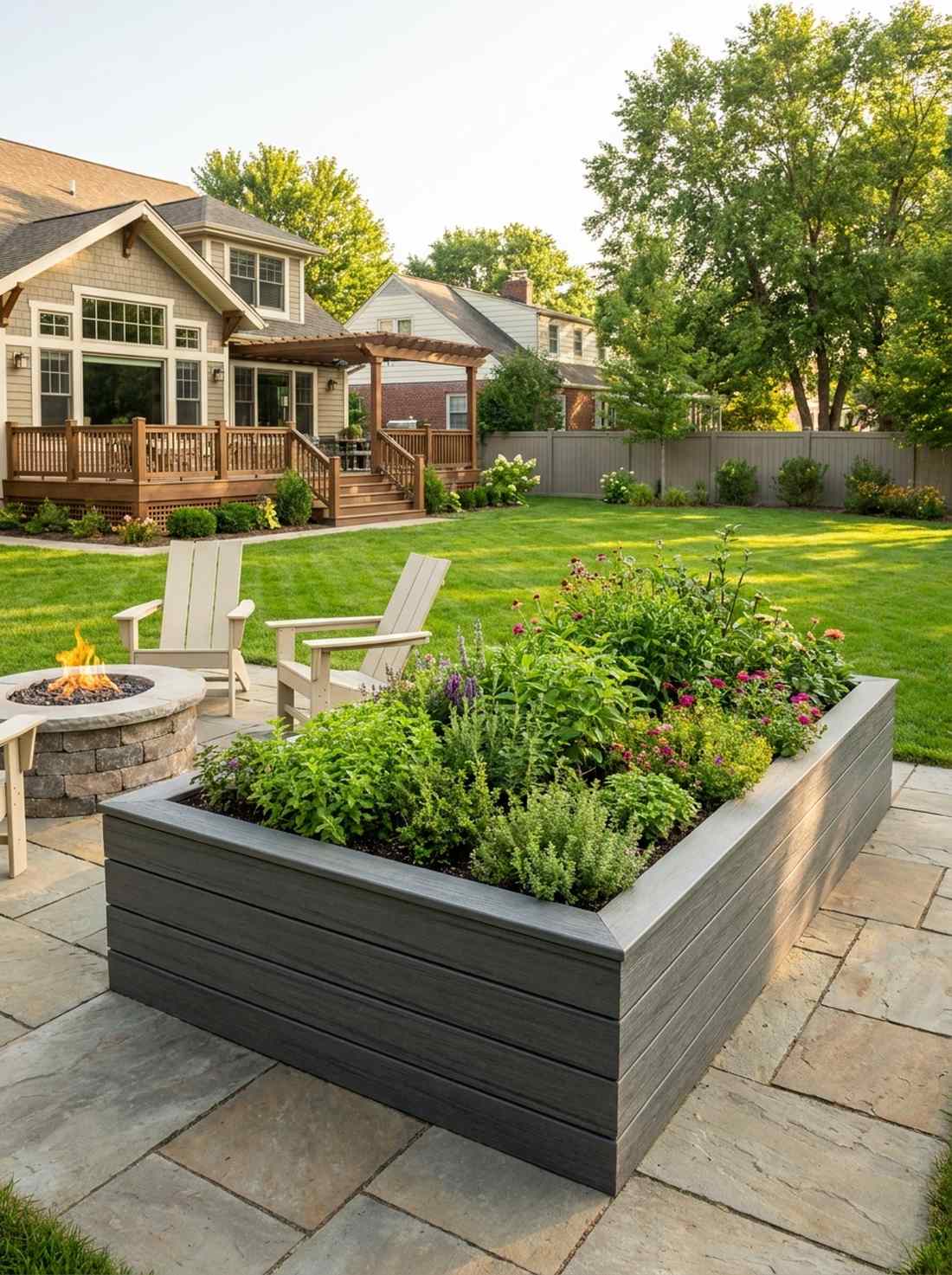
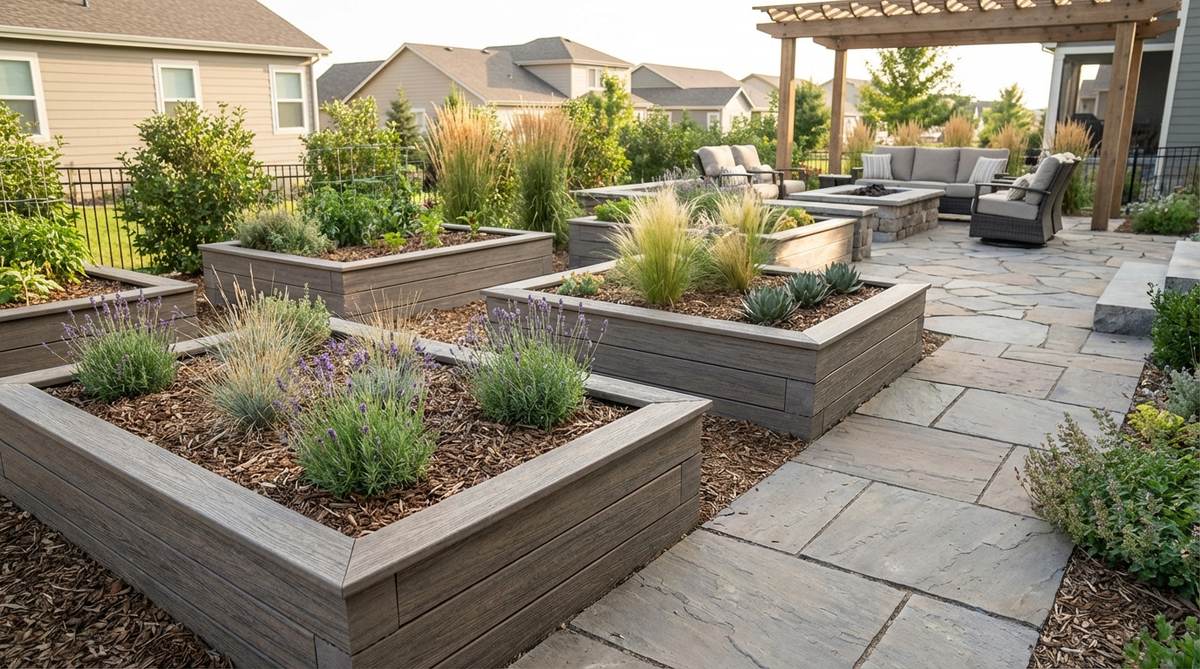
This layout gives off a flawlessly clean, zero-maintenance architectural vibe. A recycled plastic composite border is the ultimate solution for a homeowner who hates sanding and staining.
Natural wood inevitably splinters, but composite boards provide a designer-level finish that stays perfectly pristine for 20 years. Use specialty hidden fasteners to keep the exterior completely sleek and screw-free.
A composite build runs higher at $250–$400, but the zero-maintenance factor is priceless. Save this to your forever-garden board!
- Key Materials: Trex or similar composite decking boards
- Vibe / Style: Flawless modern permanence
- Difficulty: Intermediate carpentry
- Budget Breakdown: Composite boards: $300 | Hidden fasteners: $50.
- Creator’s Tip: Composite expands in the heat, so leave a tiny 1/8-inch gap at the corners to prevent bowing.
- Smart Sourcing: recycled composite planter starter kits and hidden deck fastener bulk packs.
26. Stone Masonry Permanence
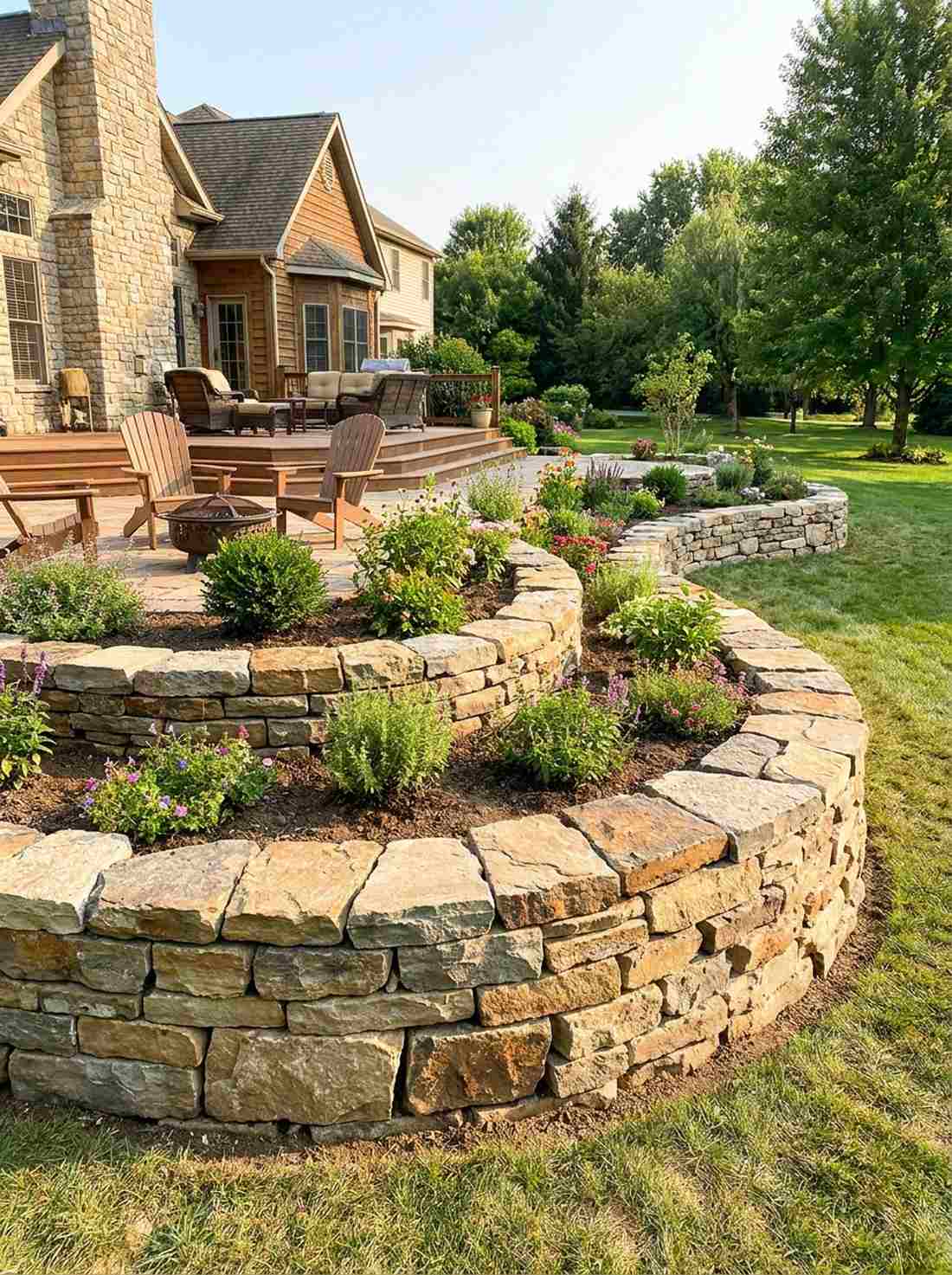
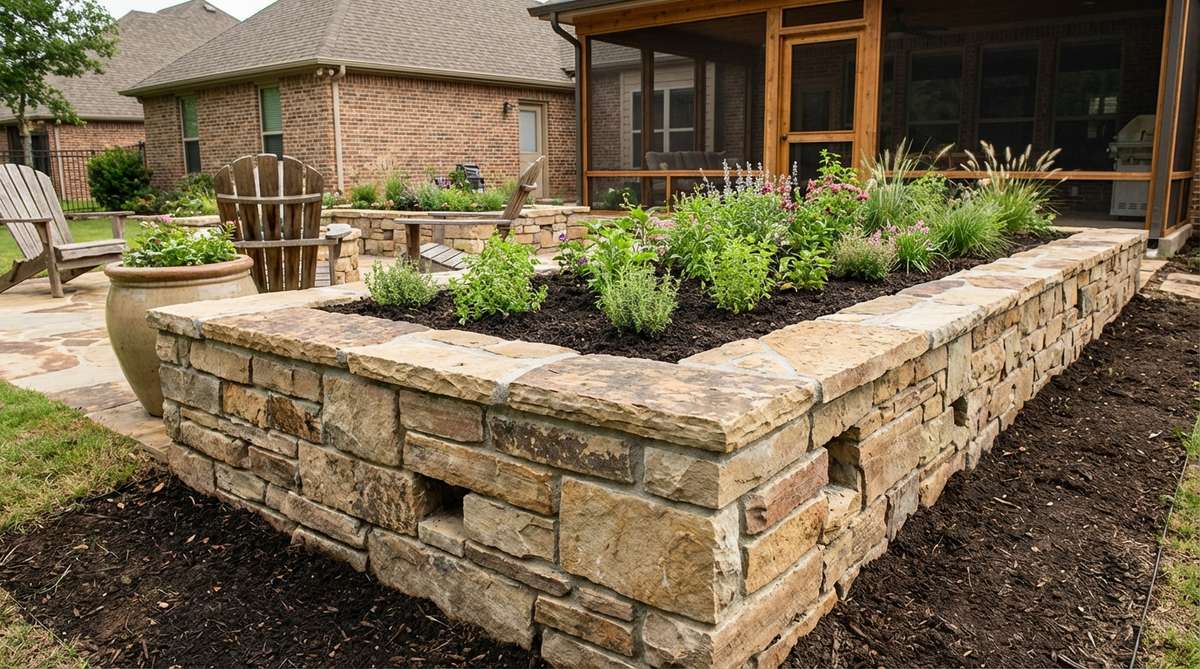
Feels like an ancient, timeless courtyard in the Mediterranean. A dry-stacked flagstone border works absolute wonders for blending into historic or traditional architecture.
Wooden boxes degrade, but heavy stone delivers a surprisingly premium look while acting as a massive thermal battery for early spring planting. Skip the mortar and dry-stack them so you can adjust the height later.
Sourcing stone can cost $200–$500 depending on your local quarry.
- Key Materials: Natural flagstone or tumbled retaining blocks
- Vibe / Style: Heavy heirloom classic
- Difficulty: Physically demanding puzzle
- Budget Breakdown: Pallet of stone: $350 | Base sand: $30.
- Creator’s Tip: Always lay a heavy trench of compacted gravel beneath the first layer of stone to prevent winter heaving.
- Smart Sourcing: pre-cast faux stone edging kits and commercial-grade leveling sand bags.
27. Reclaimed Wood Character
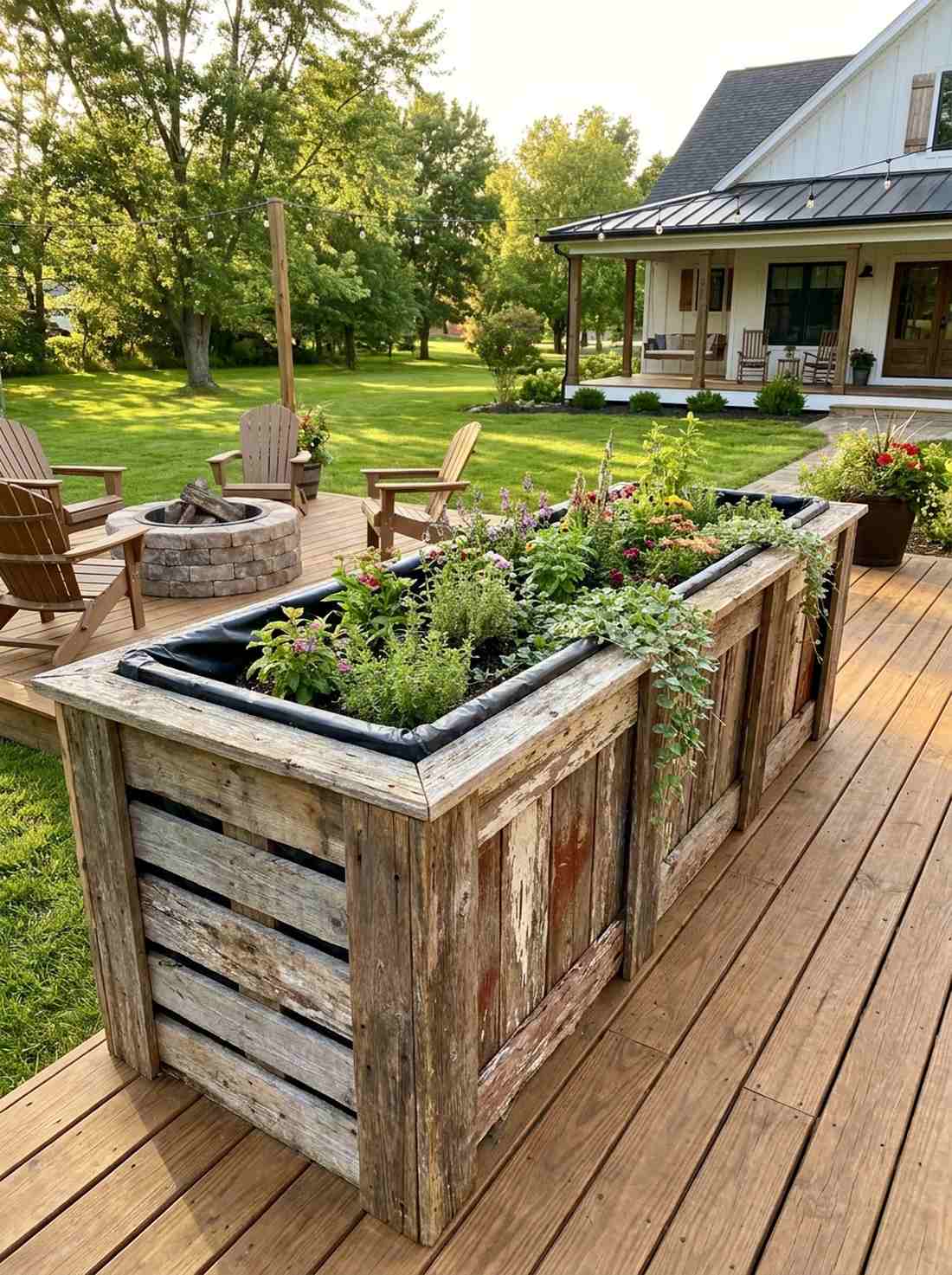
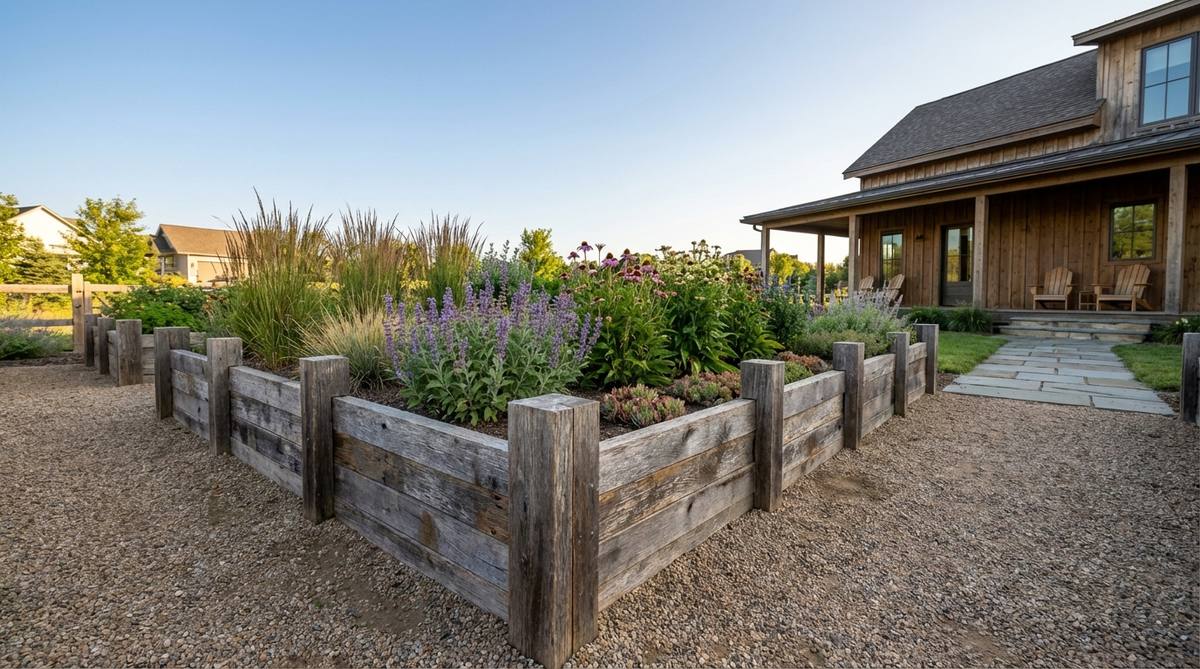
This gives off a cozy, beautifully weathered farmhouse aesthetic. A salvaged barn wood planter is the perfect use-case for adding instant soul to a brand-new yard.
Store-bought lumber looks sterile, but reclaimed timber looks far more expensive than it is and adds massive textural contrast. Always line the interior with thick, food-safe plastic to block any old unknown chemicals.
You can often build this for $0–$50 if you source the wood locally! Pin this if you love a good upcycling project.
- Key Materials: Pallets, old fencing, or barn siding
- Vibe / Style: Soulful rustic upcycled
- Difficulty: Requires heavy sanding/prep
- Budget Breakdown: Reclaimed wood: $0 | Safe liner: $25.
- Creator’s Tip: Run a metal detector wand over old wood before cutting to avoid destroying your saw blade on hidden nails.
- Smart Sourcing: food-safe heavy-duty plastic liner rolls and industrial metal-cutting saw blades.
28. Trellis Arches For Climbing Vegetables
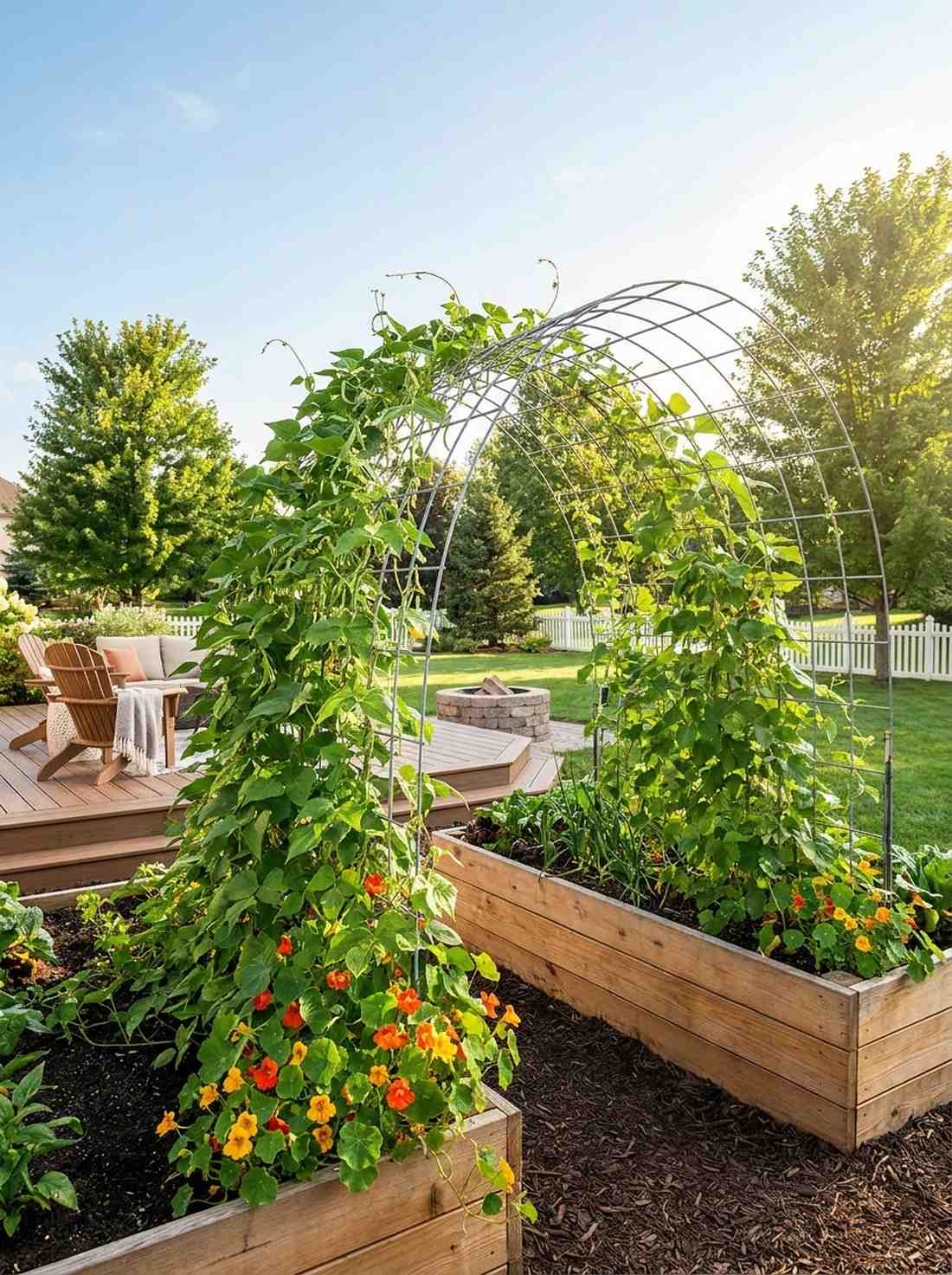
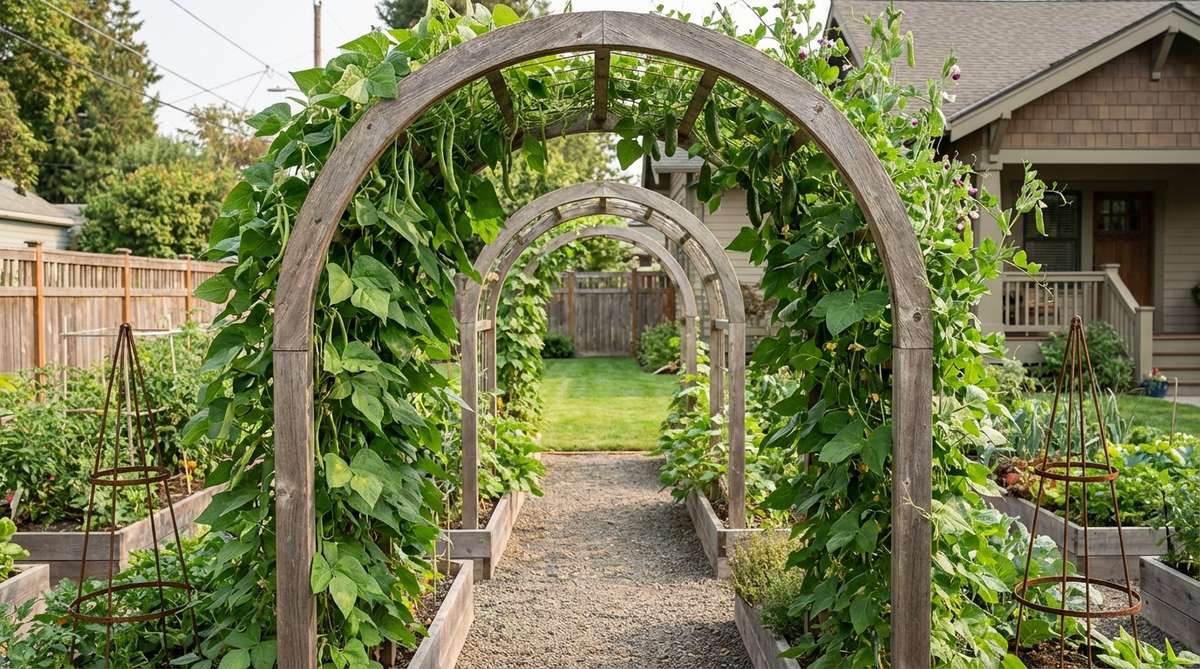
Imagine walking through a magical, shaded tunnel of hanging green beans. A cattle panel archway is an incredibly brilliant layout connecting two separate raised boxes.
Standard flat trellises look basic, but an overhead canopy provides a designer-level finish while doubling as a stunning garden entrance. Secure the panels tightly to the inside walls of the beds to make it hurricane-proof.
Adding a sturdy arch to your setup costs only $30–$60.
- Key Materials: 16-foot wire panels and heavy staples
- Vibe / Style: Whimsical living architecture
- Difficulty: Two-person bending job
- Budget Breakdown: Wire panel: $35 | Fasteners: $10.
- Creator’s Tip: Plant trailing nasturtium flowers at the base of the arch to draw pollinators directly up into the canopy.
- Smart Sourcing: pre-bent galvanized garden arch kits and heavy-duty zip tie bulk packs.
29. Obelisk Accent Supports
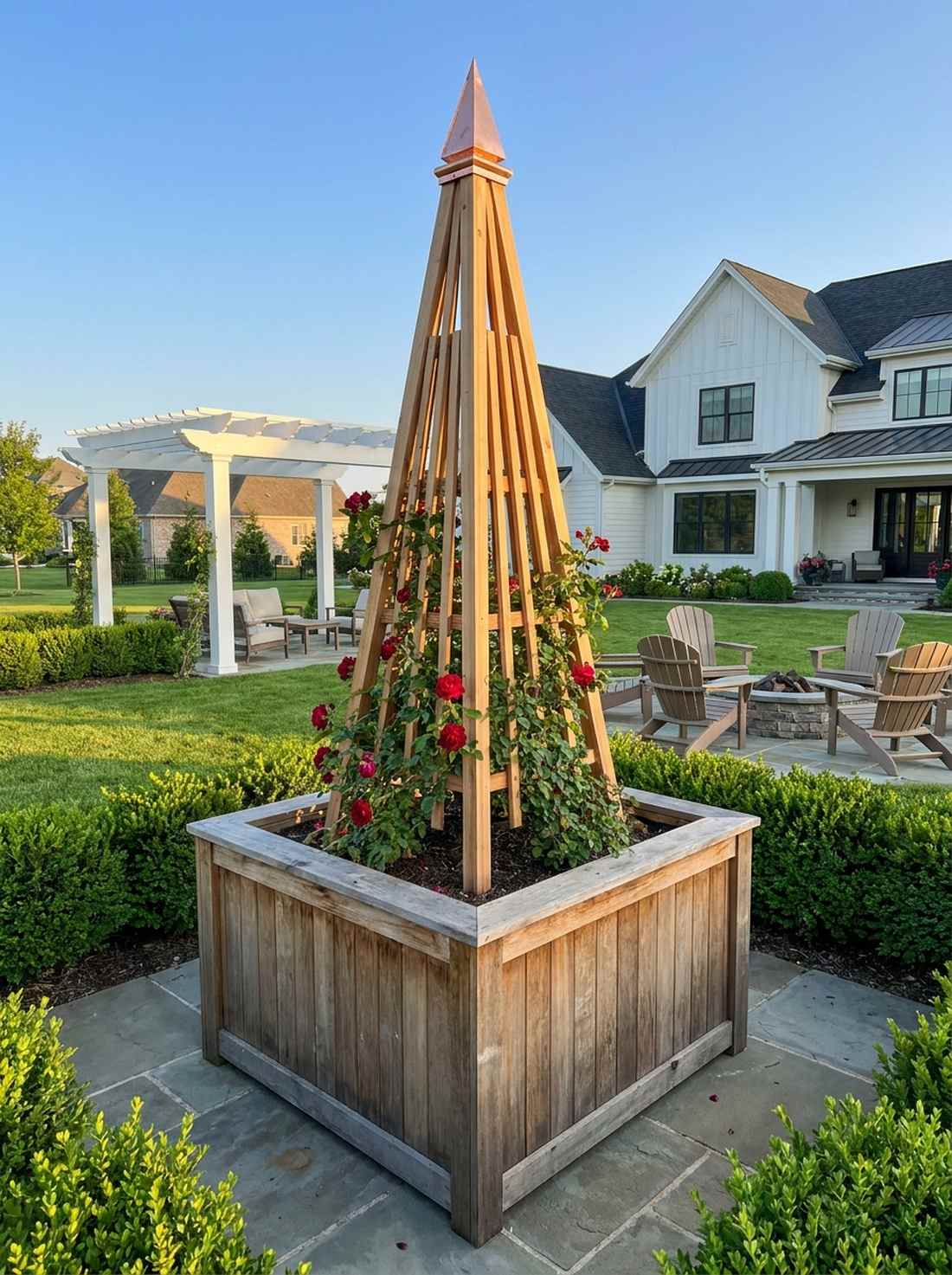
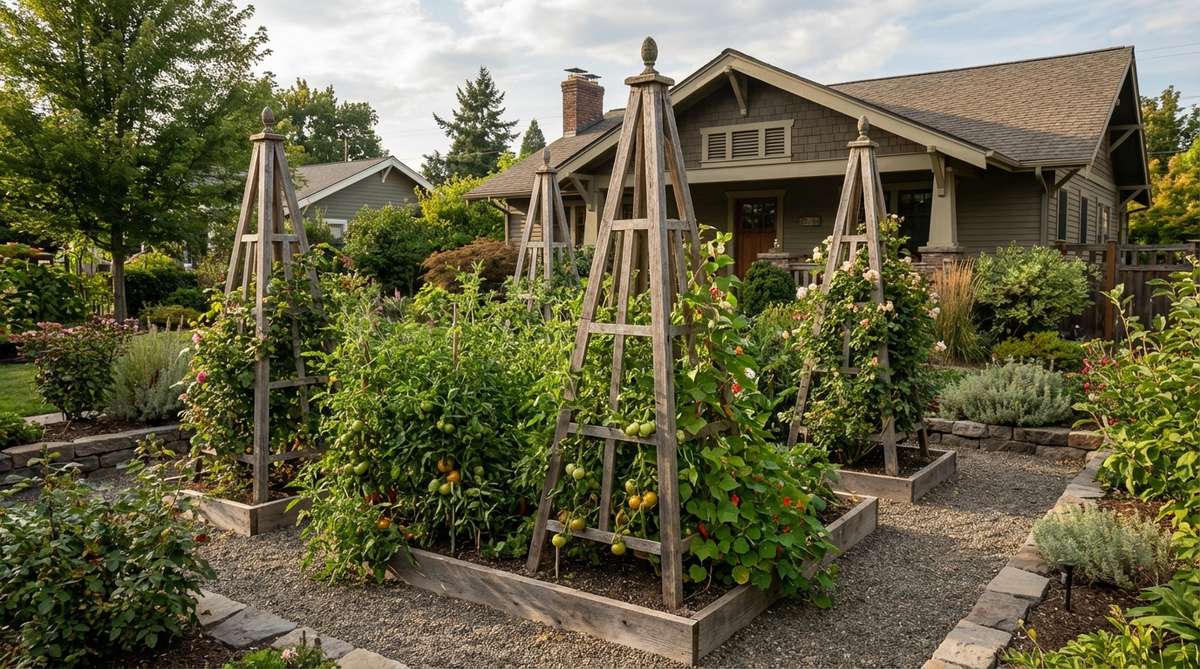
This feels like a formal, manicured estate garden focal point. A pyramidal climbing structure is perfectly suited for the dead center of a large square planter.
Flimsy wire tomato cages look terrible, but a sharp wooden obelisk delivers a surprisingly premium look while keeping massive plants perfectly contained. Top it with a copper cap to add a striking metallic accent.
You can build or buy a high-end obelisk for $40–$90. Save this idea to ditch ugly tomato cages forever!
- Key Materials: 1×2 cedar strips and an elegant finial cap
- Vibe / Style: Sharp vertical elegance
- Difficulty: Precise angle cuts
- Budget Breakdown: Cedar strips: $35 | Copper cap: $15.
- Creator’s Tip: Build the base exactly 2 inches smaller than your garden bed width so it drops perfectly into the frame.
- Smart Sourcing: pre-cut wooden obelisk starter kits and decorative copper post caps.
This final trick completely transforms dead vertical space into a high-yield jungle…
30. Living Wall Integration
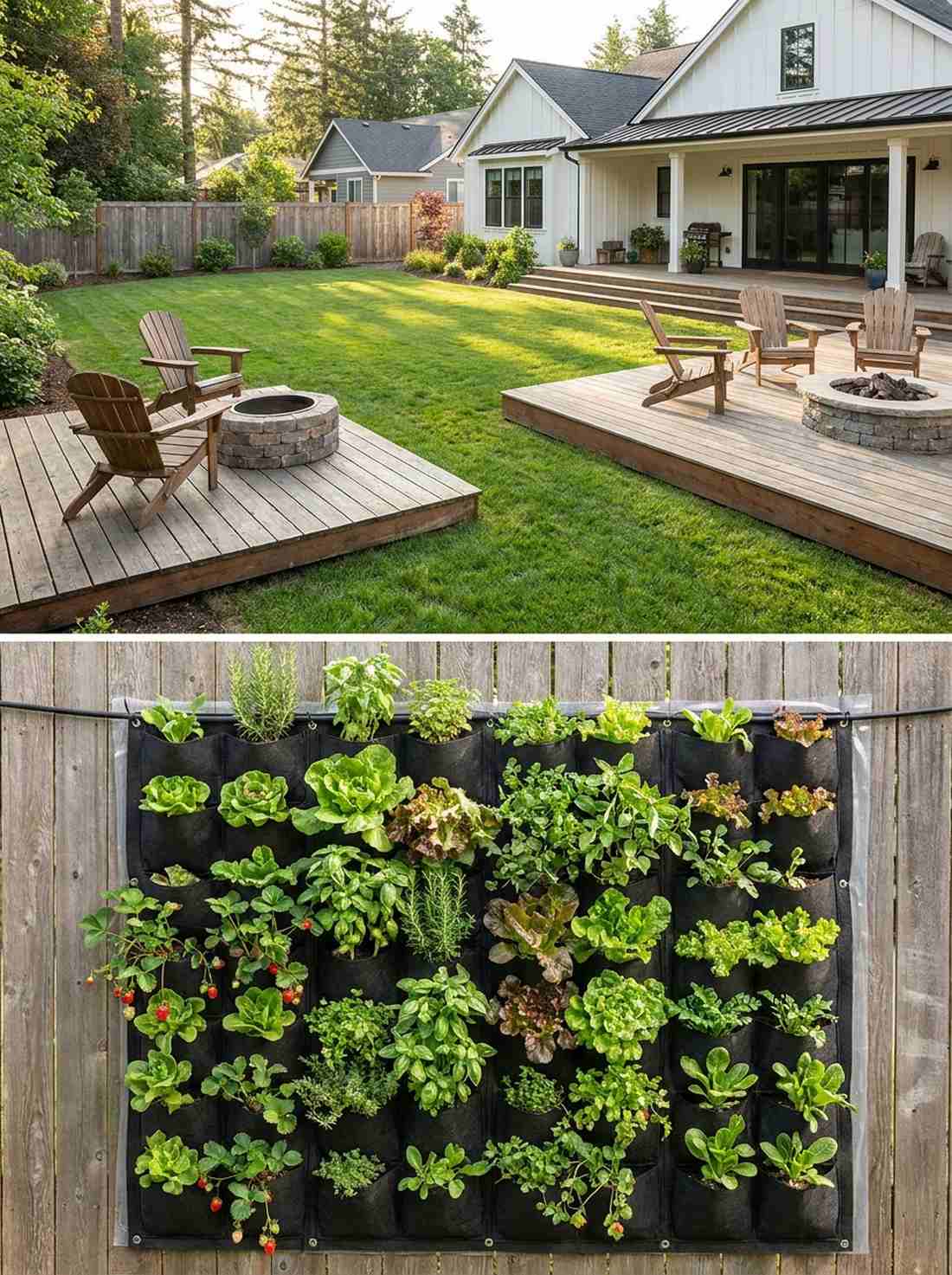
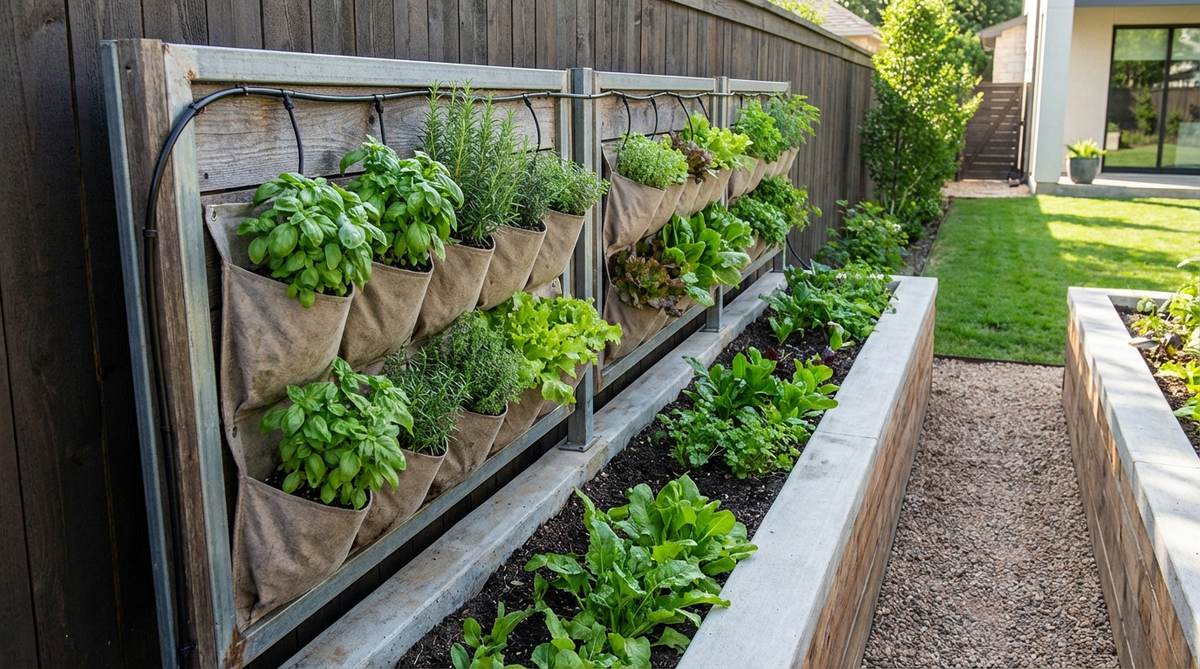
Imagine a lush, cascading waterfall of edible greens right against your fence. A vertical pocket planter wall is the ultimate use-case for an ugly, barren property line.
Blank fences are an eyesore, but attaching felt grow-pockets looks far more expensive than it is and creates a massive micro-climate. Sneak an automatic drip hose across the top row to let gravity water the entire wall.
A full wall system runs roughly $60–$120 depending on pocket count.
- Key Materials: Heavy-duty felt pocket panels
- Vibe / Style: Immersive jungle boundary
- Difficulty: Simple wall mounting
- Budget Breakdown: Felt wall panels: $70 | Potting mix: $30.
- Creator’s Tip: Line the fence behind the pockets with a waterproof plastic sheet to prevent wood rot from daily moisture.
- Smart Sourcing: heavy-duty felt vertical pocket kits and gravity-fed micro-drip hoses.
31. A-Frame Trellis Beds
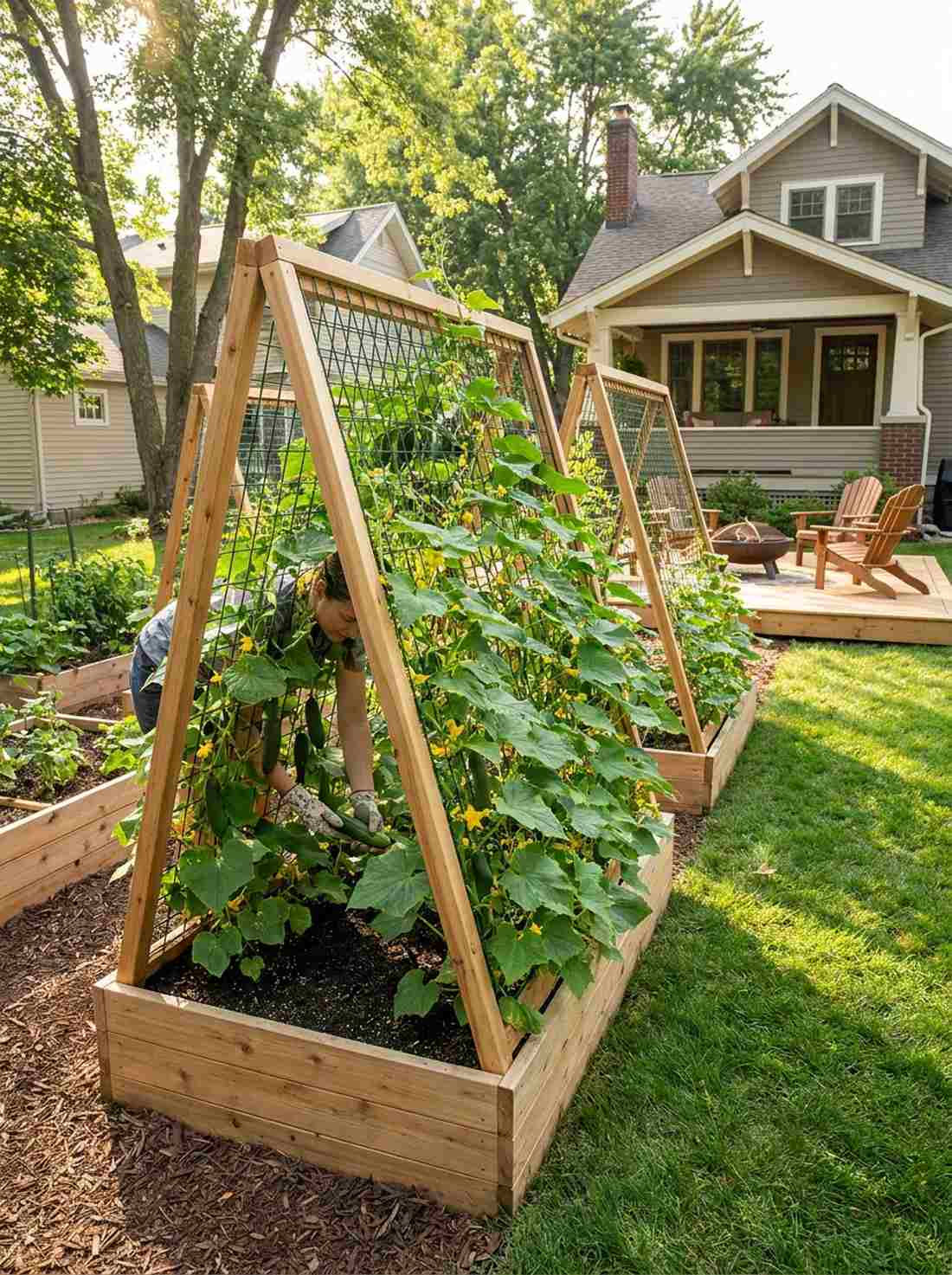
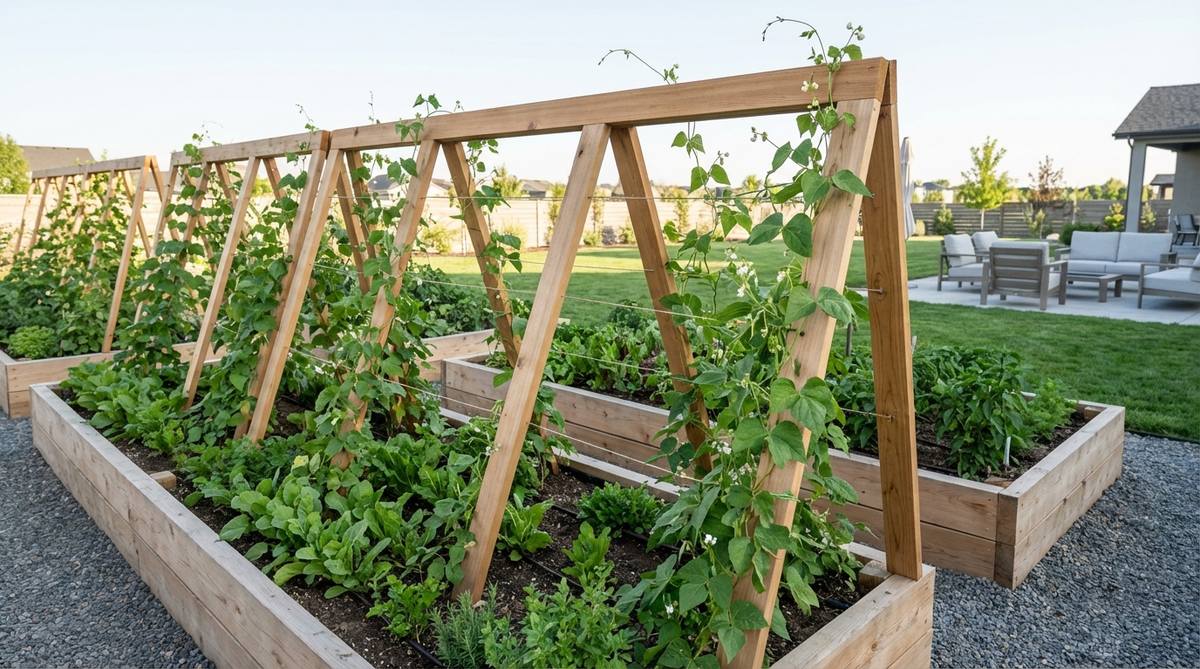
This layout gives off a hyper-efficient, clever homesteader vibe. The steep peaked A-frame structure works incredibly well for squeezing two rows of crops into a single narrow box.
Vertical walls cast too much shadow, but this slanted angle provides a designer-level finish while letting maximum sunlight hit every leaf. You can easily harvest the hanging fruit from the shaded underbelly.
An A-frame upgrade typically costs $30–$50 per bed. Pin this for a massive cucumber harvest this summer!
- Key Materials: Hinged wood frames and climbing mesh
- Vibe / Style: Clever dual-sided efficiency
- Difficulty: Easy hinge assembly
- Budget Breakdown: Wood frame: $25 | Mesh netting: $15.
- Creator’s Tip: Use removable pin hinges at the top so you can fold the trellis flat and store it away during winter.
- Smart Sourcing: pre-built A-frame garden trellis kits and heavy-duty rust-proof door hinges.
32. Pergola-Integrated Growing
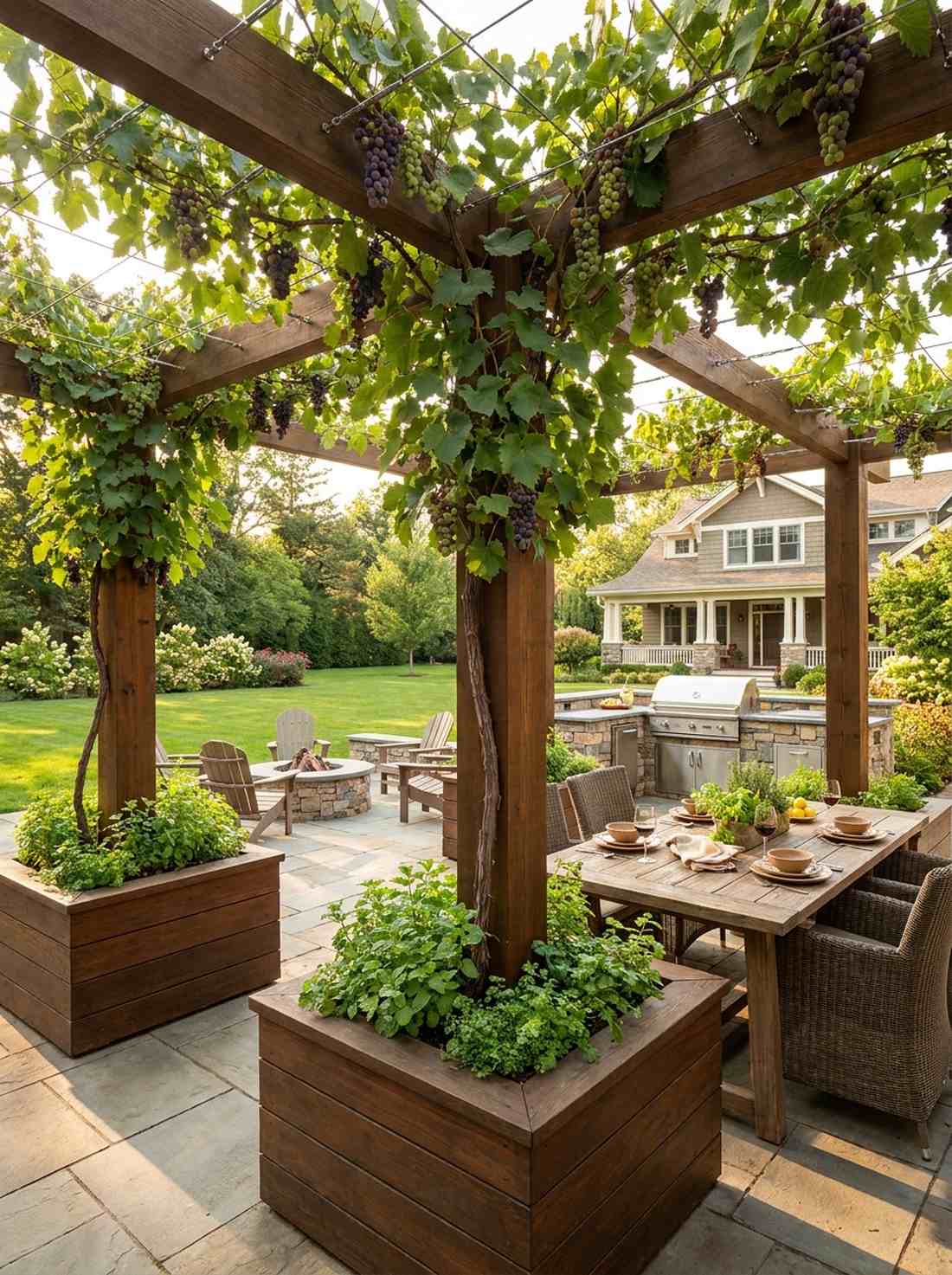
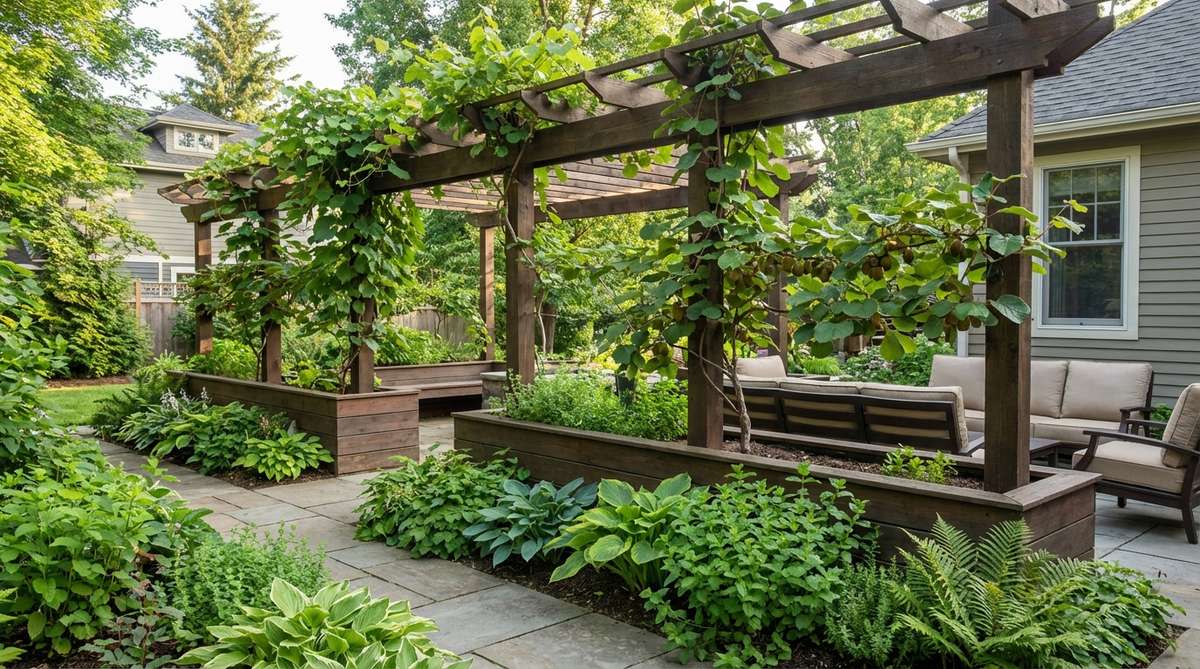
Feels like dining in a shaded, romantic Italian vineyard. A column-based planter system is the absolute perfect use-case for upgrading an existing patio shade structure.
Standard pergolas just offer shade, but wrapping the bases in planter boxes delivers a surprisingly premium look while letting you grow grapes right overhead. Utilize deep custom modern garden raised beds to anchor the massive vines.
Adding integration boxes to your pergola posts costs about $150–$250.
- Key Materials: Post-hugging lumber boxes and strong wire
- Vibe / Style: Lush Mediterranean overhead
- Difficulty: Moderate custom fitting
- Budget Breakdown: Lumber boxes: $150 | Vine support wire: $30.
- Creator’s Tip: Plant shade-tolerant mint or cilantro around the base of the thick vines to utilize the lower shadowed soil.
- Smart Sourcing: wrap-around modular post planter kits and heavy-duty stainless steel training wire.
33. Tiered Fence-Line Cascade
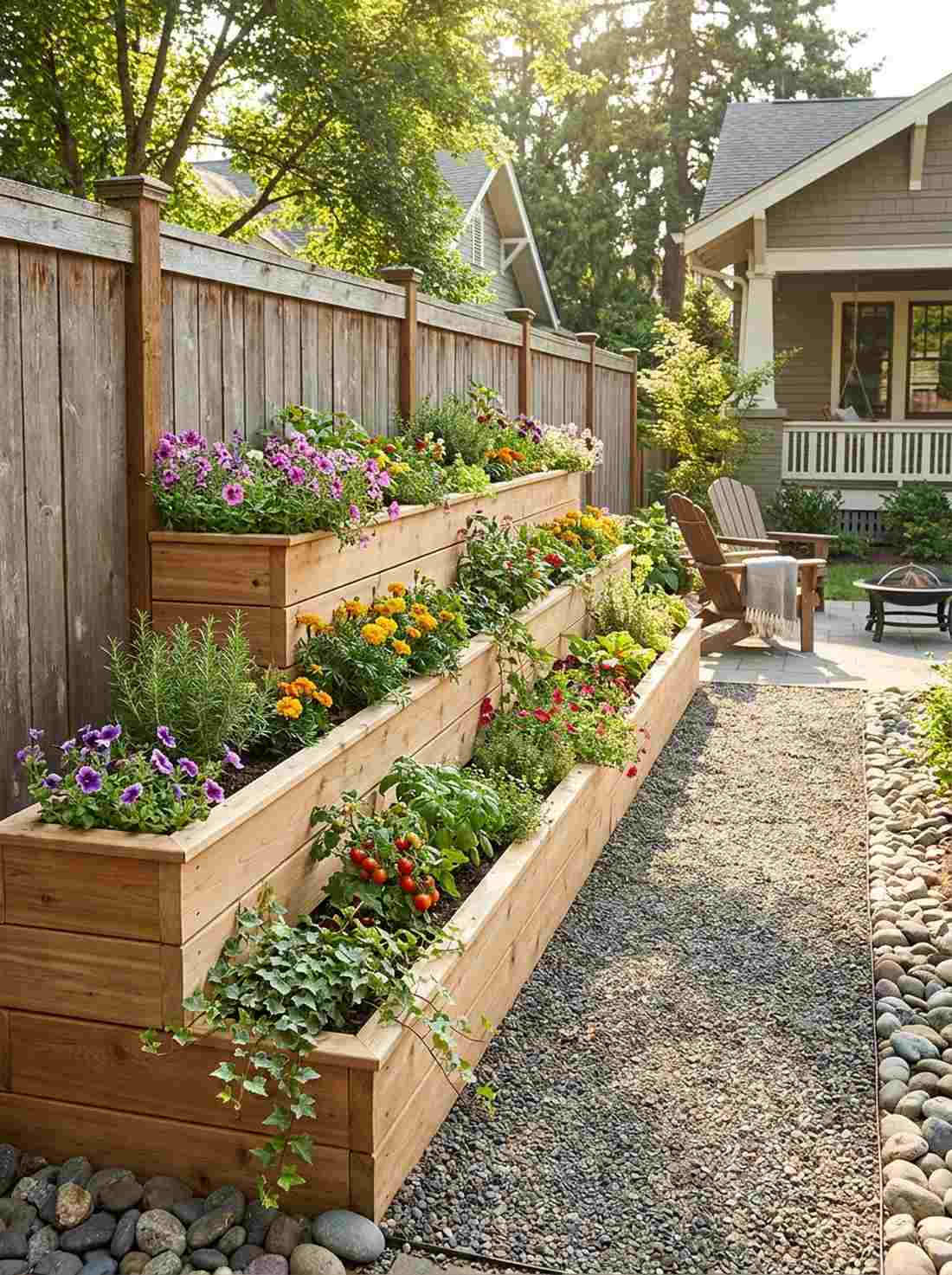
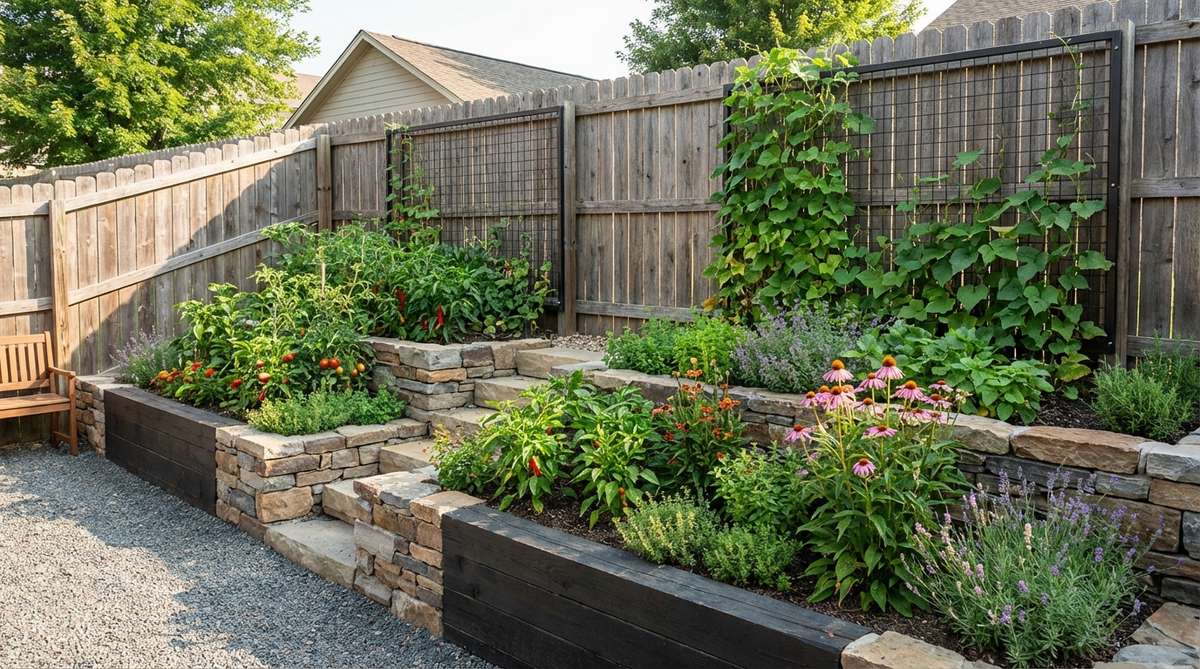
Imagine a staircase of greenery leaning beautifully against your boundary wall. The stepped perimeter planter layout is a phenomenal setup for maximizing sunlight on a cramped side yard.
Flat border beds get shaded out easily, but terracing them upward looks far more expensive than it is and catches morning rays perfectly. Anchor the top tier directly to the fence posts for unbreakable stability.
Building a long 3-tier cascade requires roughly $200–$400 in materials. Save this if you want to completely hide an ugly fence!
- Key Materials: Long terracing boards and robust stakes
- Vibe / Style: Ascending green boundary
- Difficulty: Advanced leveling
- Budget Breakdown: Long boards: $250 | Support stakes: $60.
- Creator’s Tip: Fill the deepest bottom sections with a base layer of cheap logs (hügelkultur) to drastically reduce your expensive soil costs.
- Smart Sourcing: pre-cut tiered cedar garden starter kits and heavy-duty galvanized ground stakes.
Conclusion
Strategic modern garden bed layouts transform basic yards into high-yield, visually stunning outdoor spaces. Whether you choose a geometric grid or an aggressive space-saving vertical tower, these 33 exact setups deliver a premium aesthetic without the luxury price tag. By utilizing smart material sourcing and high-quality kits, you can easily build modern garden raised beds that perform beautifully and look incredible year after year. Start with one blueprint this weekend and completely redefine your outdoor vibe.
Frequently Asked Questions
What is the ideal width for a modern garden bed?
Four feet wide represents the absolute optimal dimension for most modern garden raised beds. This allows you to comfortably reach the center without stepping on and crushing your soil. If you are using ergonomic raised bed kits placed against a wall, keep it to 2-3 feet wide. Always line your pathways with commercial-grade weed barrier to keep the whole area looking sharp.
Should garden beds run north-south or east-west?
A north-south orientation guarantees the most consistent, high-yield sunlight distribution, especially if you are investing in high-quality setups. This prevents tall crops from casting brutal shadows on your shorter greens. If you must run east-west, consider installing UV-resistant canopy covers or specialized shading kits to protect the highly exposed side.
How deep should raised beds be for vegetables?
For a truly premium aesthetic and massive yields, build your beds 12-18 inches deep. Deep setups drain perfectly and allow you to mix in high-quality bulk organic soil delivery blends. If you want to grow massive carrots, look into 24-inch extra-deep corrugated metal bed kits for unimpeded root growth.
What spacing is needed between raised garden beds?
You must allow a minimum of 2-3 feet between beds to comfortably fit a wheelbarrow. Tight pathways look terrible when plants spill over the edges. To give it a high-end designer finish, fill these gaps with commercial-grade pathway mulch and secure the borders with heavy-duty landscape edging kits.
Can you mix different bed sizes in one garden layout?
Absolutely, mixing dimensions gives your yard a highly customized, expensive landscaping vibe. Combine long 4×8 boxes with compact 2×2 squares to fit awkward corners perfectly. To maintain visual unity, use modular raised bed kits that share the exact same finish and heavy-duty corner brackets.
What materials work best for modern garden raised beds?
If you want a flawless aesthetic that lasts decades, upgrade to powder-coated galvanized steel kits or composite lumber bulk packs. Standard pine rots quickly, but premium composite or thick raw cedar provides a luxury look with zero maintenance. Investing in better materials upfront saves you from totally rebuilding your garden in three years.