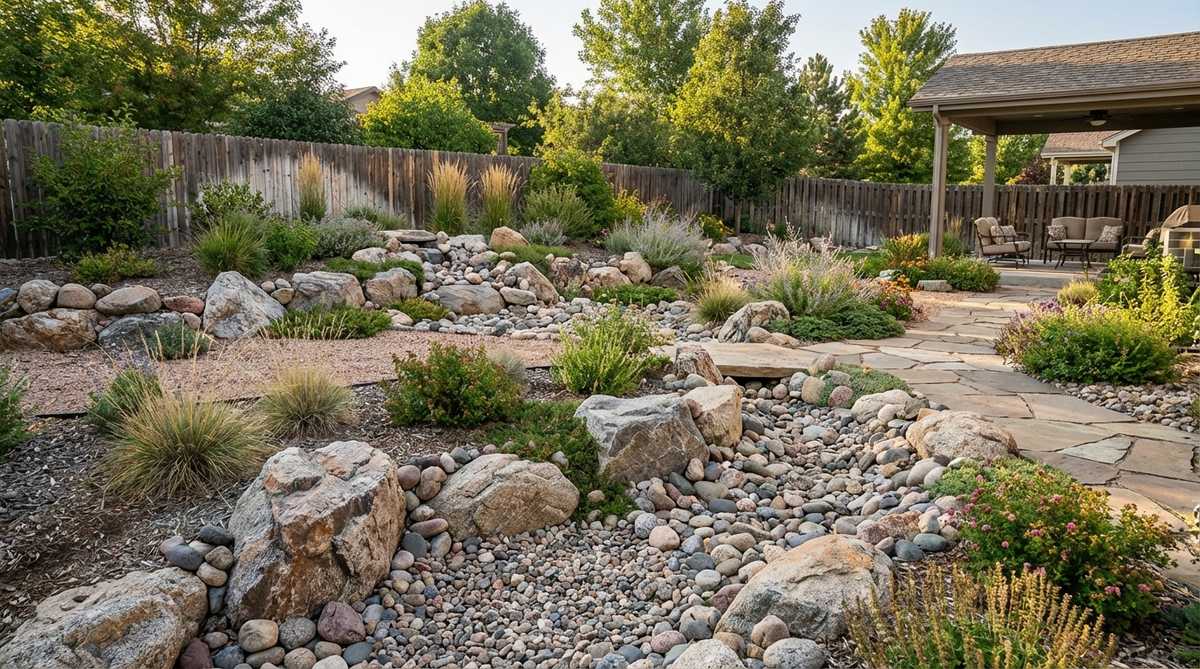
Mastering garden design rock arrangements transforms ordinary outdoor spaces into captivating landscapes that command attention year-round. Fresh Garden Ideas brings you a comprehensive collection of boulder and gravel bed techniques that landscape architects use to create depth, texture, and architectural interest in residential gardens across America.
Design SnapshotKey Principles
- Scale Balance: Match rock size to garden proportions—large boulders anchor expansive spaces while smaller stones define intimate areas
- Natural Placement: Bury one-third of each boulder below ground and tilt backward to mimic geological formations
- Textural Contrast: Pair smooth gravel beds with rough boulder surfaces to create visual rhythm and tactile interest
- Strategic Focal Points: Position statement rocks at garden intersections and sightlines to guide movement through the landscape
Boulder Focal Point Compositions That Command Attention
Strategic boulder placement creates instant visual hierarchy in garden design with rocks. These permanent installations serve as anchor points that organize surrounding plantings and hardscape elements into cohesive compositions.
1. Asymmetric Triplet Boulder Cluster
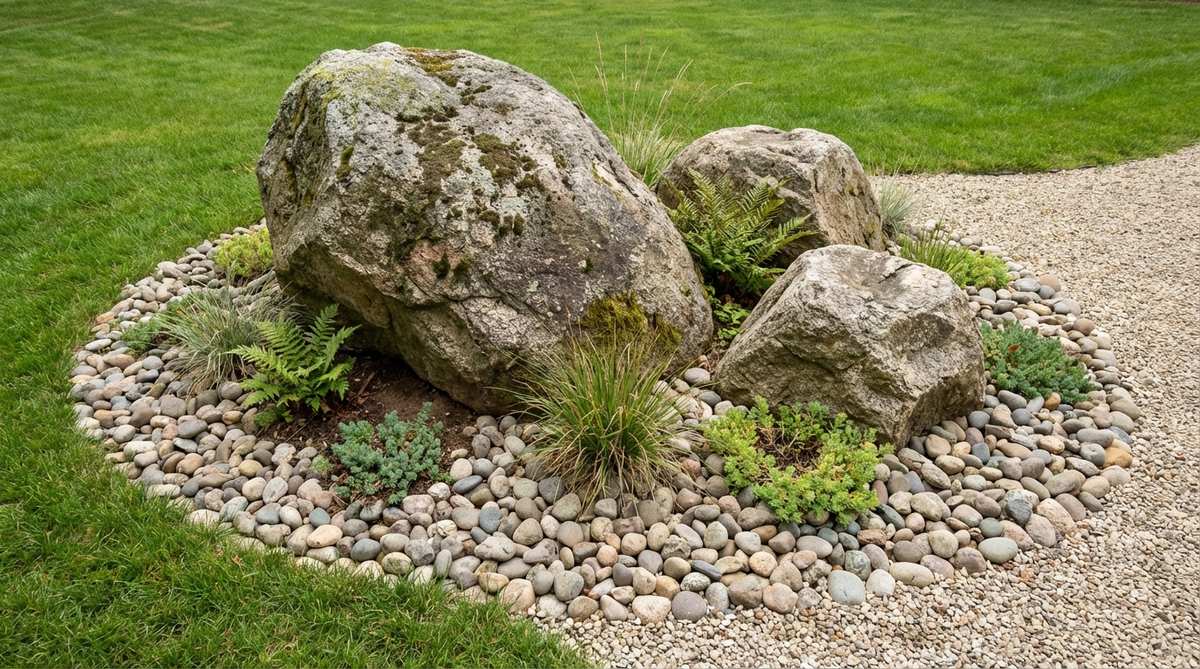
Three boulders of graduated sizes arranged in a triangular formation establish immediate depth and visual weight. The largest stone positioned off-center creates organic asymmetry while the two supporting rocks frame negative space for low-growing perennials.
Designers embed each boulder at varying depths to suggest natural geological emergence. This technique works particularly well when the primary boulder shows weathered striations that run horizontally.
Surround the base with 2-4 inch river rock to transition smoothly into adjacent gravel beds or lawn areas. The elevation change prevents soil erosion while highlighting the boulder’s sculptural profile.
2. Sentinel Boulder with Halo Gravel
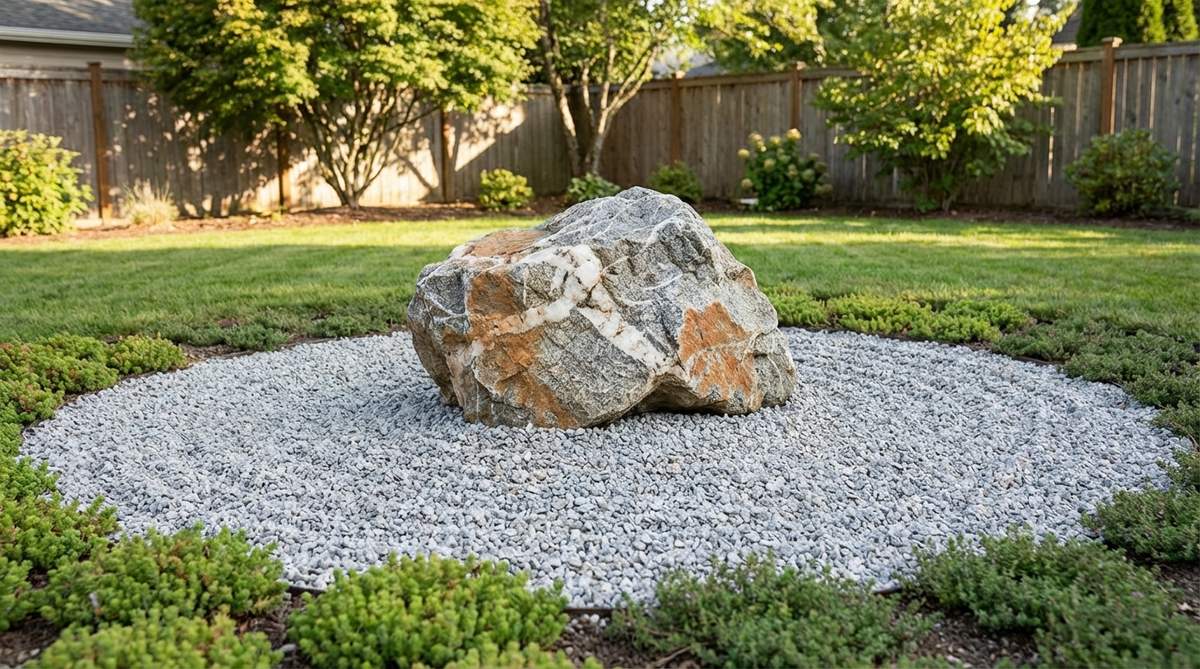
A single statement boulder rises from a circular gravel bed that radiates outward like ripples on water. This minimalist approach draws attention without overwhelming smaller garden spaces.
Select a boulder with distinctive coloring or unusual shape—granite with quartz veining or limestone with fossil inclusions adds geological interest. Plant low-growing sedums or creeping thyme at the perimeter where gravel meets soil.
The gravel ring should extend 3-5 feet from the boulder’s base to create proportional balance. Use 3/4 inch crushed stone in complementary tones that contrast with the boulder’s dominant color.
3. Tiered Hillside Boulder Cascade
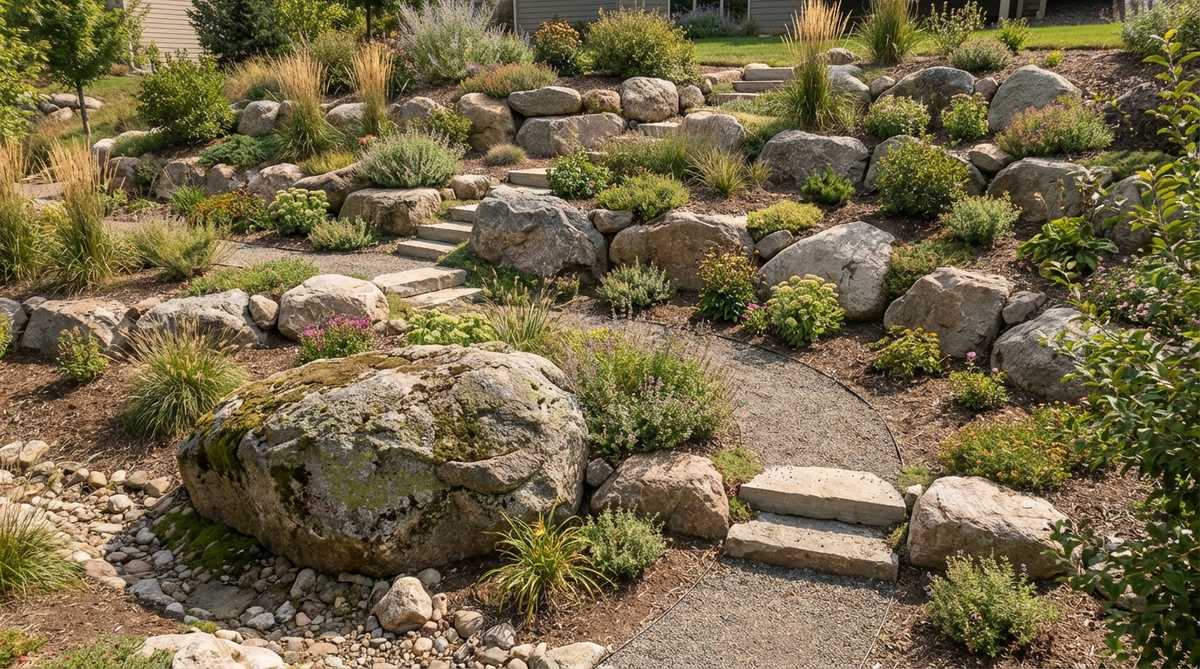
Multiple boulders positioned at staggered elevations on slopes create terraced visual movement. Each rock anchors a planting pocket while controlling erosion along the grade.
Install the largest boulder at the lowest point to establish gravitational logic in the arrangement. Position progressively smaller stones uphill, angling each backward into the slope for stability.
4. Corner Anchor Boulder Formation
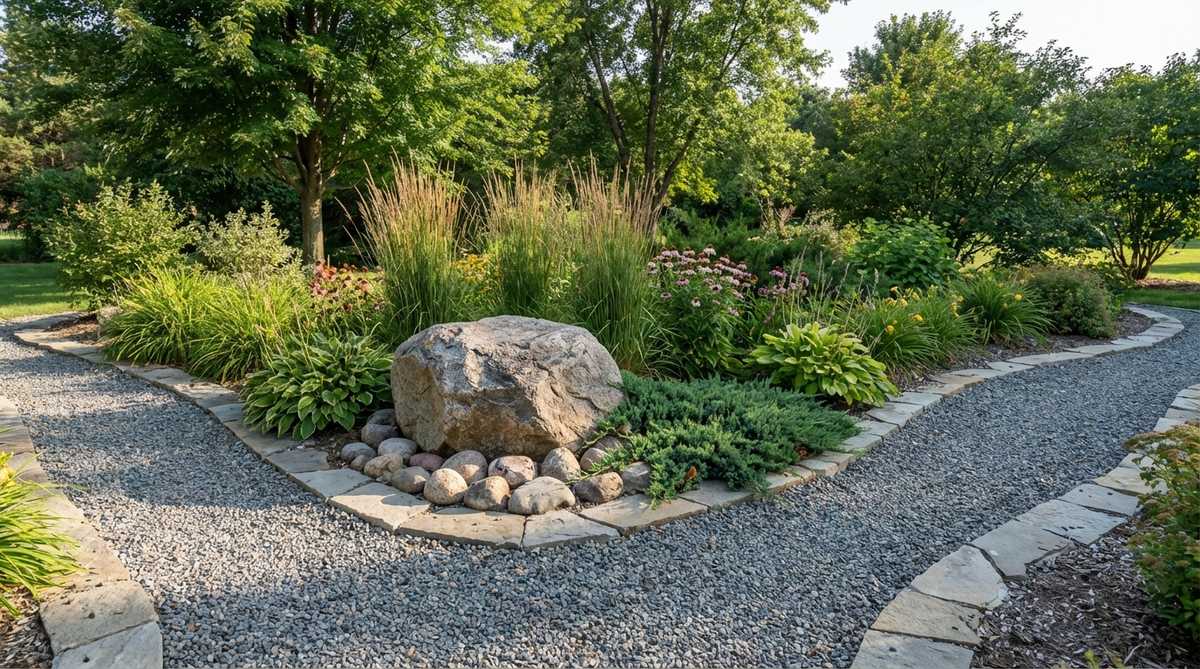
Garden corners gain definition when a substantial boulder occupies the junction of two bed lines. This placement softens harsh 90-degree angles while marking transition zones between garden rooms.
Flank the primary boulder with medium-sized companion rocks on each side to extend the visual line along both axes. Fill surrounding space with 1-2 inch decorative gravel that unifies the corner treatment.
5. Pathway Guardian Boulder Pair
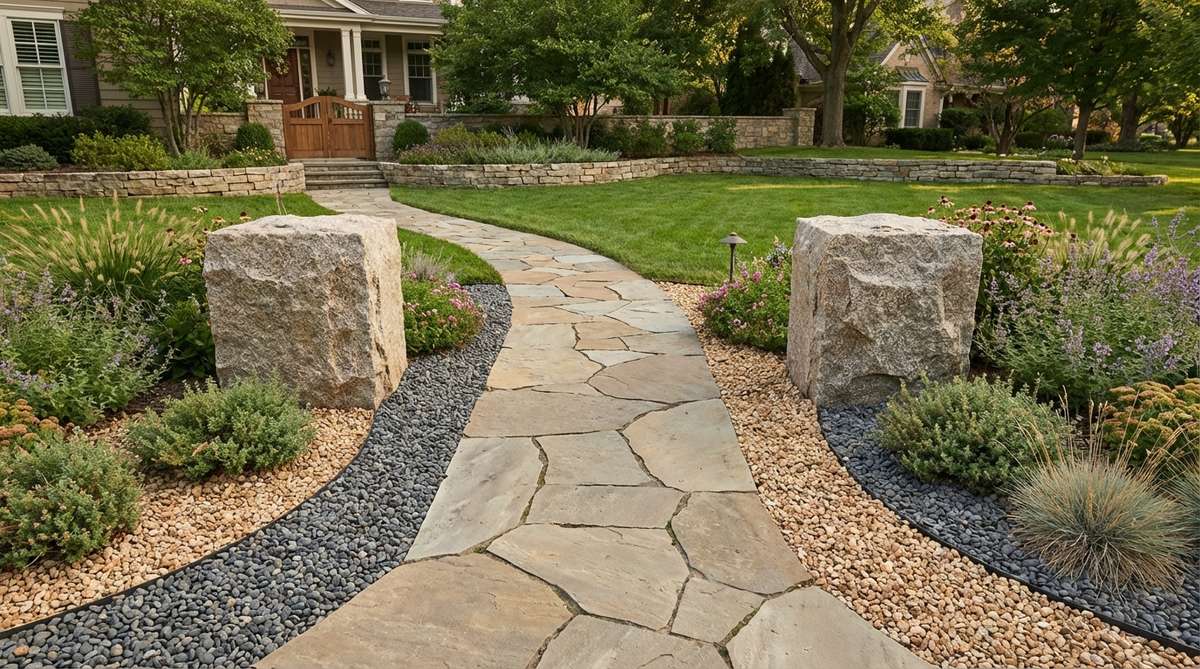
Two matched boulders positioned on opposite sides of a garden entrance create symmetrical framing that signals transition. The mirror placement guides foot traffic while establishing formal structure.
Each boulder should be buried to the same depth to maintain level visual weight. Surround bases with contrasting gravel colors—dark stones around light-colored boulders or vice versa—to sharpen the gateway effect.
6. Layered Backdrop Boulder Wall
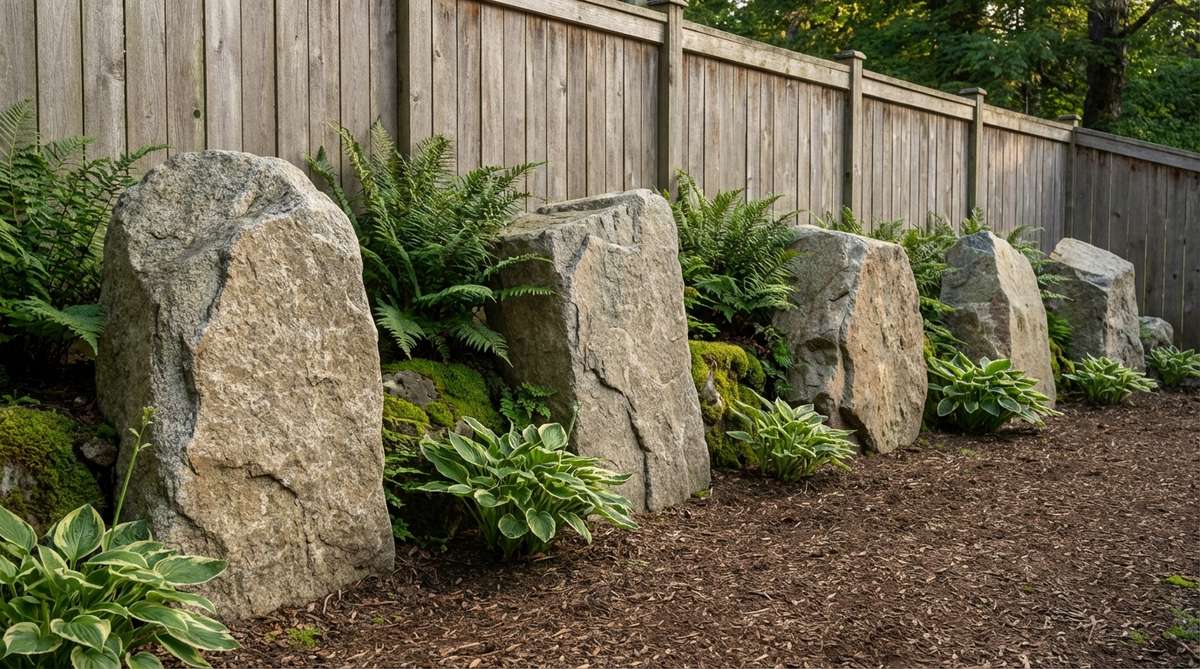
A linear arrangement of large boulders against property lines or fence backgrounds provides vertical dimension to flat garden beds. This technique creates the impression of exposed bedrock.
Position boulders with their flattest faces forward and tallest dimensions vertical. Plant shade-tolerant ferns or hostas in the protected microclimates behind each stone where moisture accumulates.
Gravel Bed Foundation Designs for Low-Maintenance Elegance
Properly designed gravel beds eliminate weeding while providing excellent drainage for drought-tolerant plantings. These garden design with stones foundations work across diverse climate zones and soil conditions.
7. Mediterranean Olive Grove Gravel Base
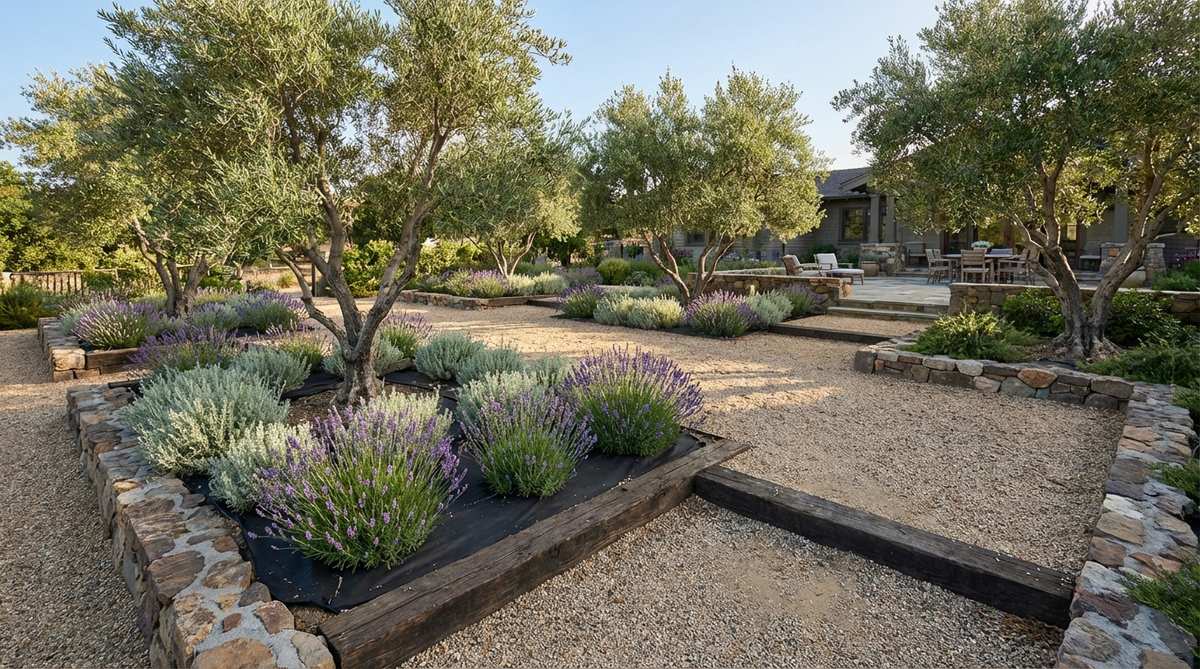
A continuous gravel field dotted with drought-adapted specimens mimics Mediterranean landscapes. Use 3-4 inch depth of decomposed granite or buff-colored crushed limestone as the foundational layer.
Plant lavender, santolina, and ornamental grasses directly through landscape fabric openings. The gravel mulch reflects heat upward while keeping roots cool below ground.
Edge the gravel bed with weathered timbers or stacked fieldstone to contain the material. This prevents gravel migration into lawn areas during heavy rainfall.
8. Monochrome Slate Chip Carpet
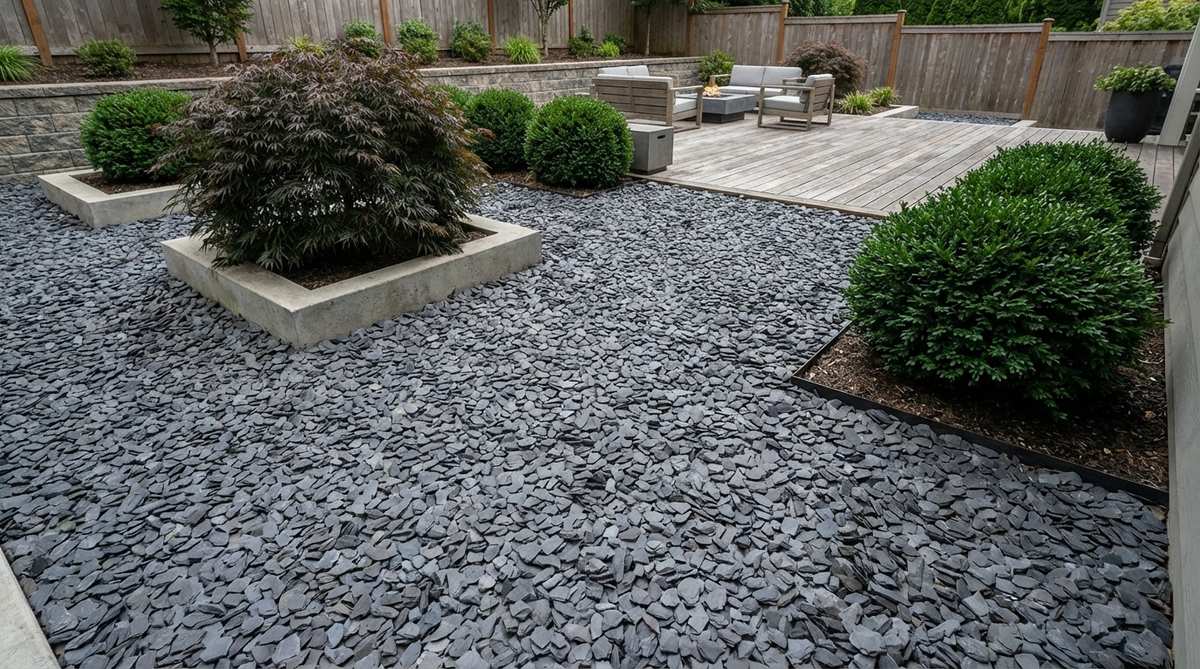
Uniform grey slate chips create sophisticated simplicity in contemporary garden design with rocks. The flat angular fragments interlock naturally to resist displacement from foot traffic.
Install over compacted subgrade with landscape fabric barrier to prevent weed emergence. Slate’s neutral tone provides ideal backdrop for specimen shrubs with bold foliage or architectural form.
9. River Pebble Mosaic Sections
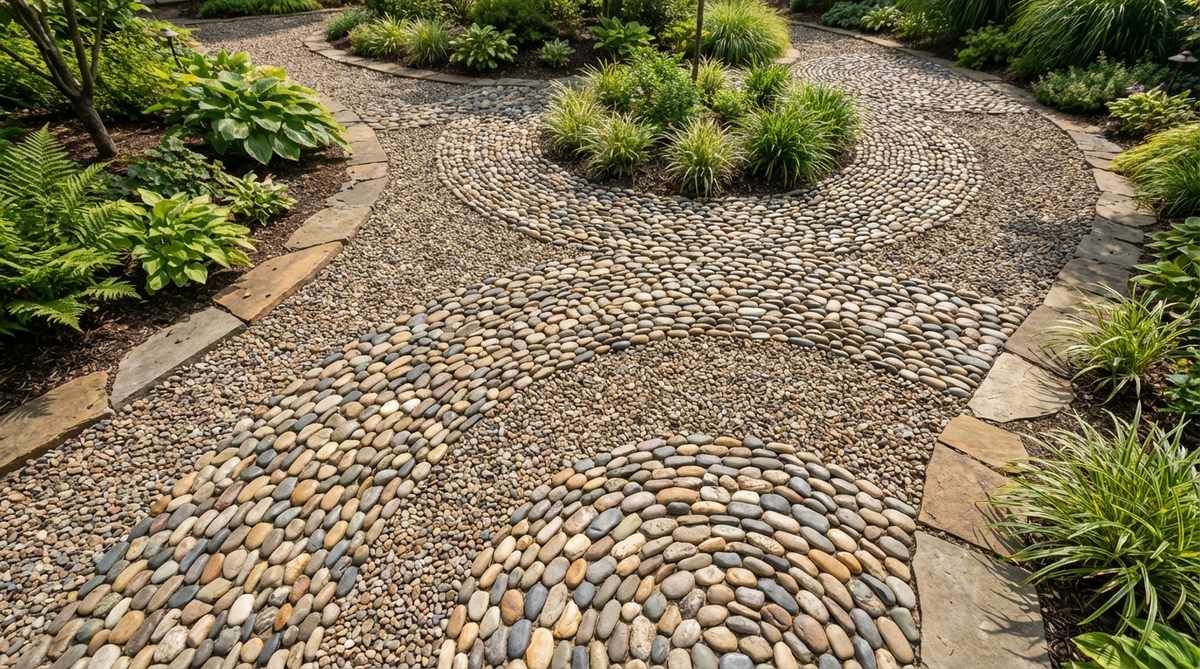
Smooth river pebbles sorted by color and size allow pattern creation within gravel beds. Designers use this technique to delineate planting zones or create decorative bands that guide the eye.
Arrange pebbles while substrate remains slightly moist to enable minor adjustments before final settling. The rounded stones massage feet on barefoot garden paths while providing sensory texture.
10. Crushed Granite Xeriscape Field
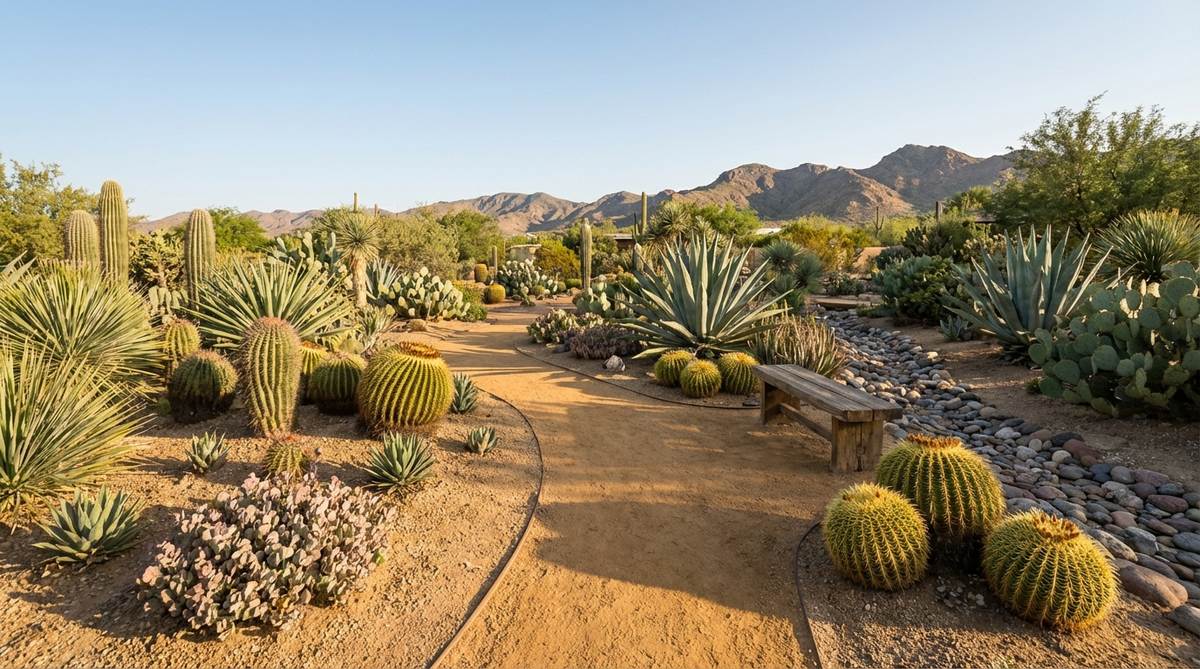
Decomposed granite provides the optimal surface for water-conserving desert gardens. Its fine texture compacts moderately underfoot while allowing water penetration to plant roots.
Spread 3-4 inches over properly graded subsoil sloped for drainage. Plant native succulents and cacti directly through the granite layer for authentic regional character.
11. Variegated Gravel Stream Pattern
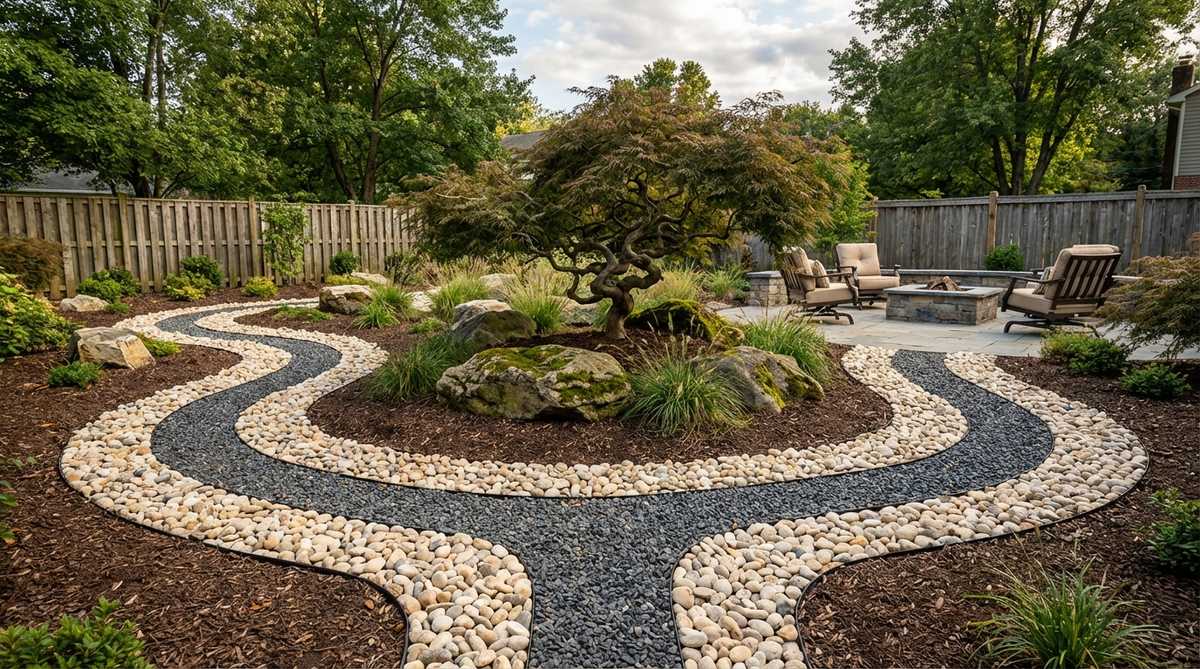
Alternating bands of contrasting gravel colors simulate flowing water when installed in sinuous curves. Use light and dark tones in 12-18 inch wide ribbons that weave through the bed.
This technique works effectively when the gravel flow directs attention toward a focal point sculpture or specimen tree. Transition between colors should remain distinct rather than blended for maximum visual impact.
12. Pea Gravel Courtyard Foundation
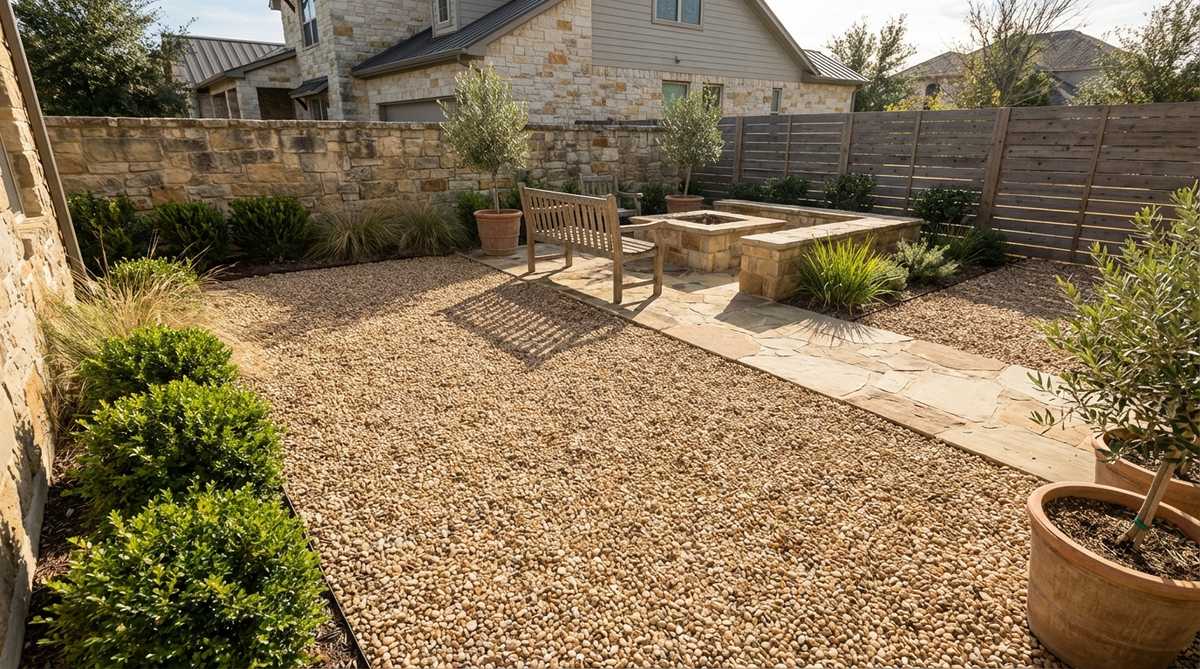
Small rounded pea gravel creates permeable surfaces ideal for enclosed courtyard spaces. The mobile stones allow excellent drainage while providing comfortable walking surface.
Install 4 inch depth over compacted base with adequate edge restraint to prevent spillover. Pea gravel’s neutral tan tones complement both traditional and modern architectural styles.
Dry Creek Bed Installations for Drainage and Drama
Functional dry creek beds manage stormwater runoff while introducing naturalistic garden design with stones elements. These features mimic seasonal waterways that remain visually compelling during dry periods.
13. Meandering River Rock Channel
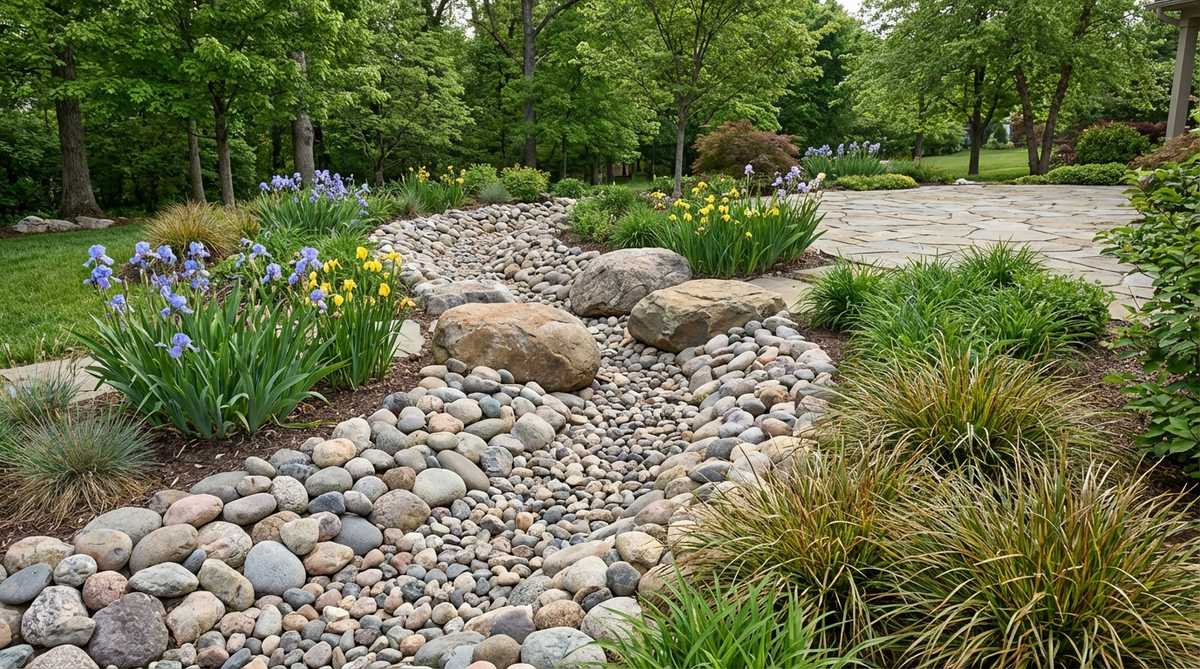
A curved creek bed using graduated river rocks creates authentic stream aesthetics. Place 6-12 inch diameter stones along the outer bends to simulate erosion patterns where water would flow fastest.
Line the creek bottom with 2-4 inch river cobbles that expose underlying landscape fabric. Add several accent boulders mid-stream to suggest natural obstacles water would navigate around.
Plant moisture-loving perennials like iris and sedge along banks to reinforce the illusion of a functioning waterway. The textural contrast between smooth river rocks and surrounding plantings enhances realism.
14. Cobblestone Rapids Section
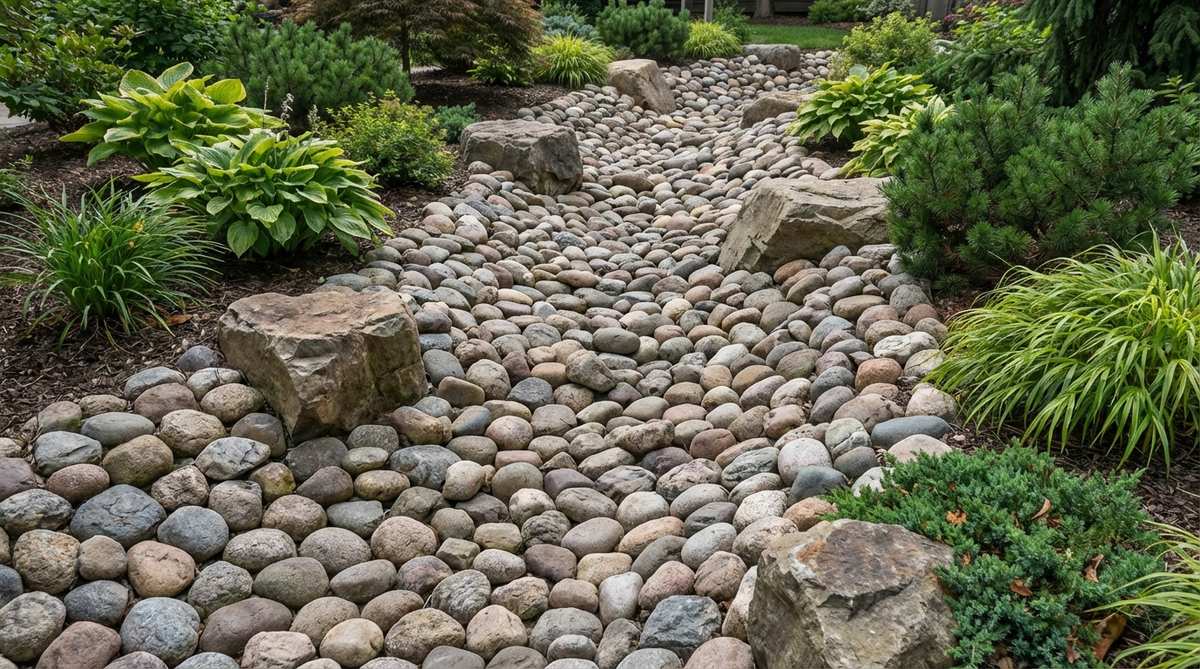
Densely packed cobblestones in the 3-6 inch range create turbulent water effects. Angle stones diagonally across the creek bed width to suggest current direction.
Intersperse larger accent rocks that protrude above the cobblestone matrix. These elevated stones break the visual plane and add dimensional complexity to the dry streambed.
15. Boulder Cascade Drop Pools
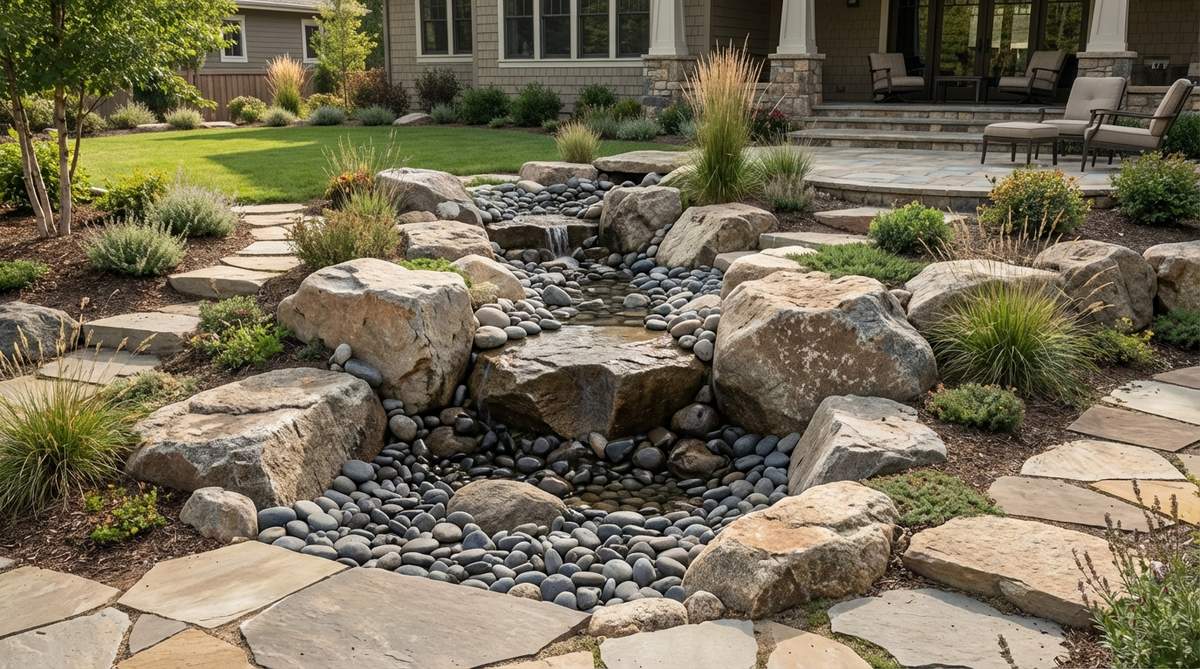
Staggered boulders positioned at elevation changes mimic waterfalls in dry creek designs. Each large stone creates a visual drop where water would tumble during rain events.
Excavate shallow depressions below each boulder to suggest pool formation. Fill these areas with darker, smaller stones to contrast with the surrounding creek bed and emphasize depth.
16. Braided Stream Gravel Pattern
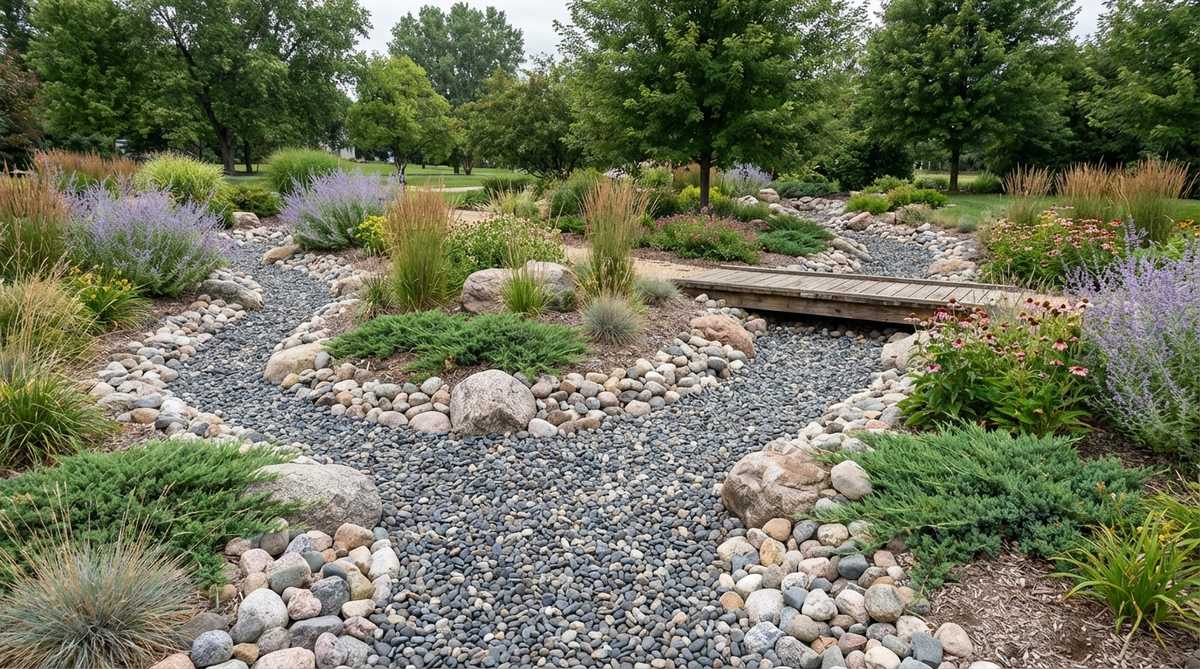
Multiple narrow gravel channels that diverge and reconnect replicate complex stream hydrology. Use 1-2 inch gravel for the flowing channels and embed larger cobbles as dividing islands.
This design excels in wider creek bed installations where space allows intricate patterns. The braided effect adds visual interest while maintaining functional drainage capacity.
17. Spring Source Boulder Grotto
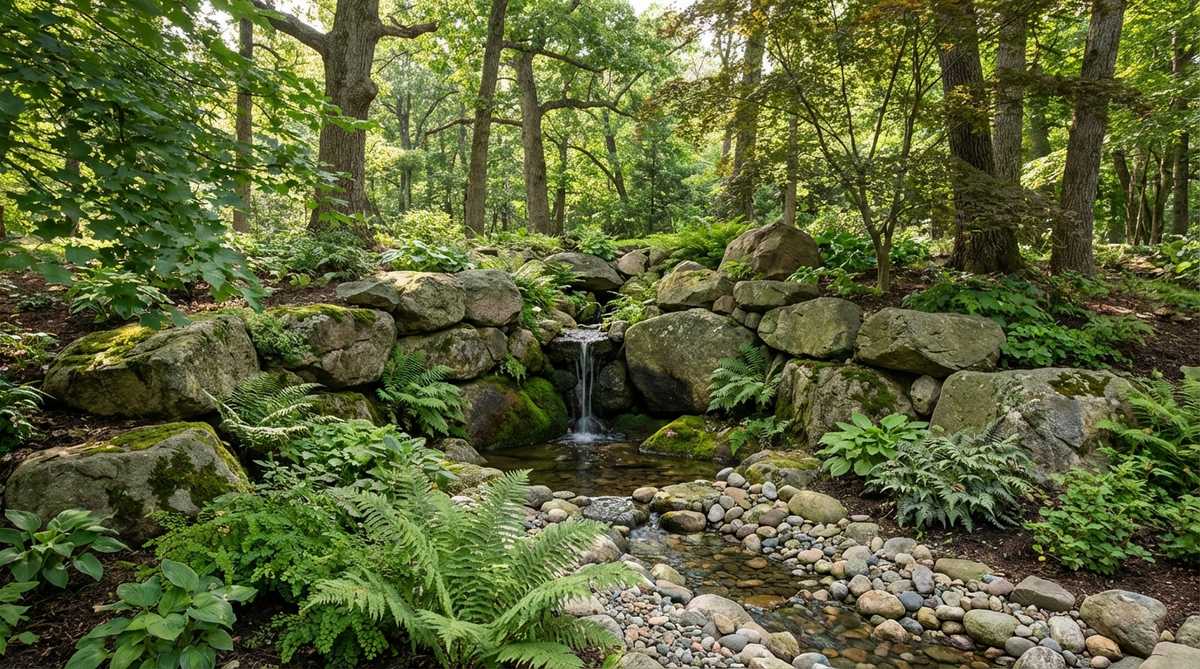
Large boulders clustered at the creek bed origin suggest underground water emergence. Position rocks in a semicircular arrangement with the opening facing downhill.
Fill the grotto interior with smaller river rocks and plant shade-tolerant ferns in crevices. This creates a cool microclimate that appears authentically spring-fed even without water flow.
18. Delta Fan Gravel Terminus
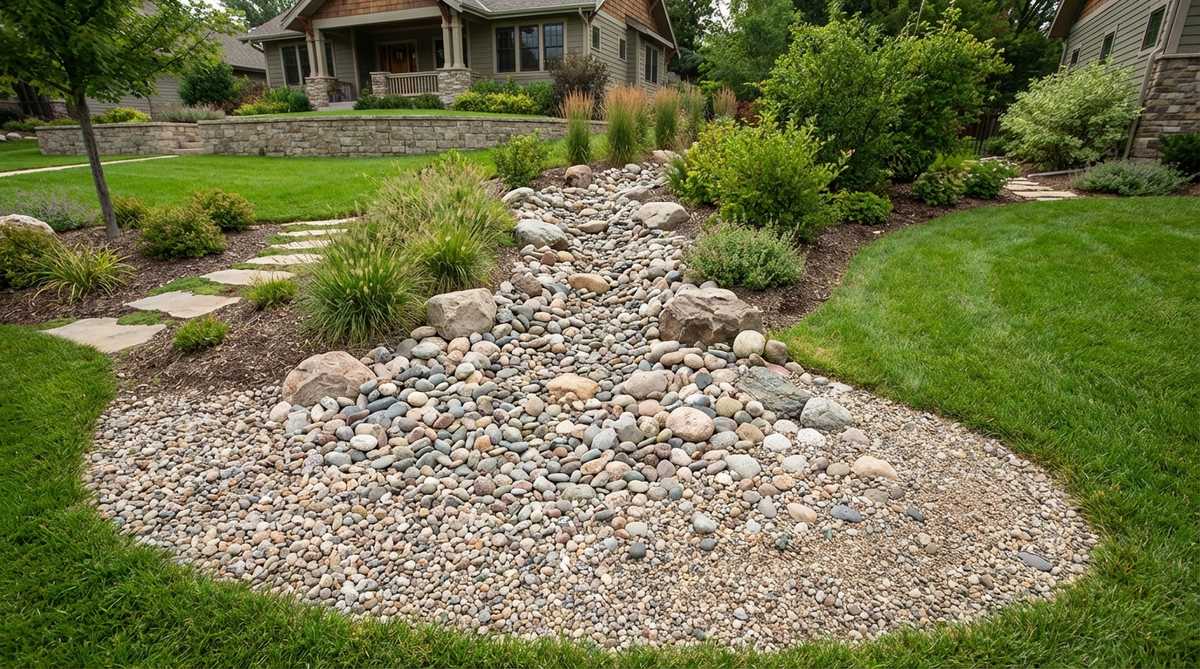
Creek beds that terminate in spreading gravel fans mimic river delta formations. The bed widens gradually as it reaches the endpoint, with stones decreasing in size toward the perimeter.
Use this design where the dry creek empties into lawn or garden bed areas. The gradual transition prevents abrupt visual breaks in the landscape composition.
Zen-Inspired Rock Gardens for Contemplative Spaces
Japanese garden principles applied to garden design rock create meditative environments emphasizing simplicity and balance. These arrangements use negative space as deliberately as solid elements.
19. Raked Gravel Island Composition
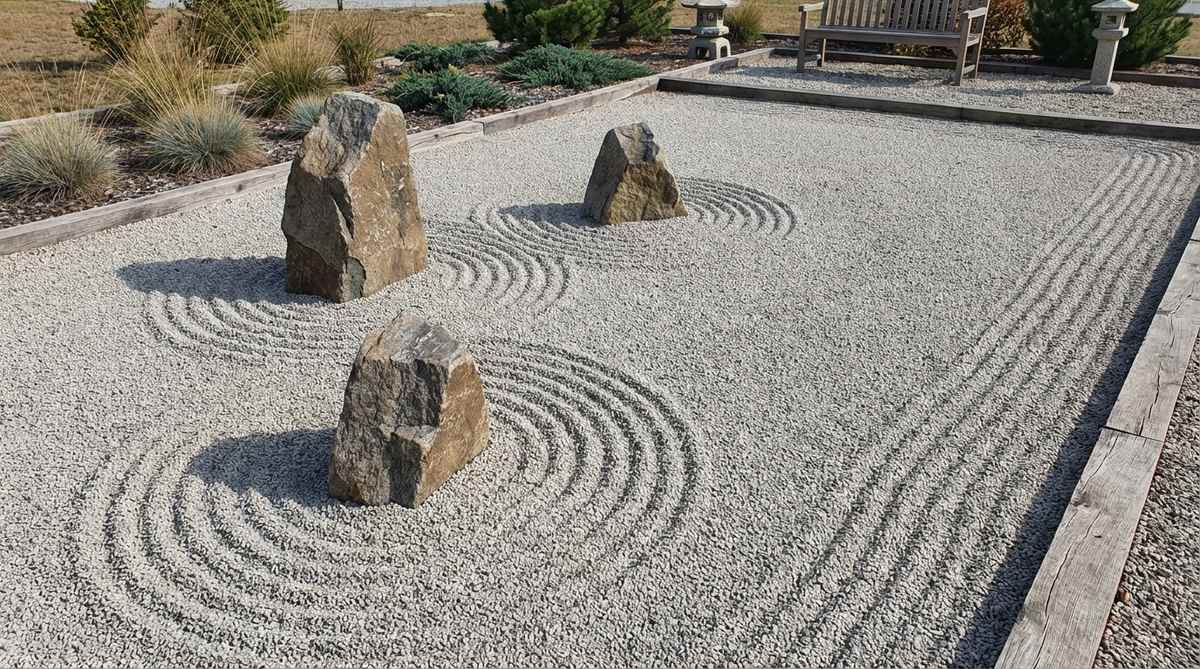
Three stones emerging from raked crushed granite represent the Buddhist triad concept. Use angular granite chips in 2-6mm size that hold rake patterns effectively.
Position stones in asymmetric triangle formation with unequal spacing between elements. Rake concentric circles around each stone to symbolize rippling water, maintaining 3 inch gravel depth for pattern retention.
The empty gravel field surrounding the stones holds equal importance to the rocks themselves. Daily raking becomes a meditative practice that refreshes the garden’s appearance.
20. Moss-Boulder Cluster with Gravel Sea
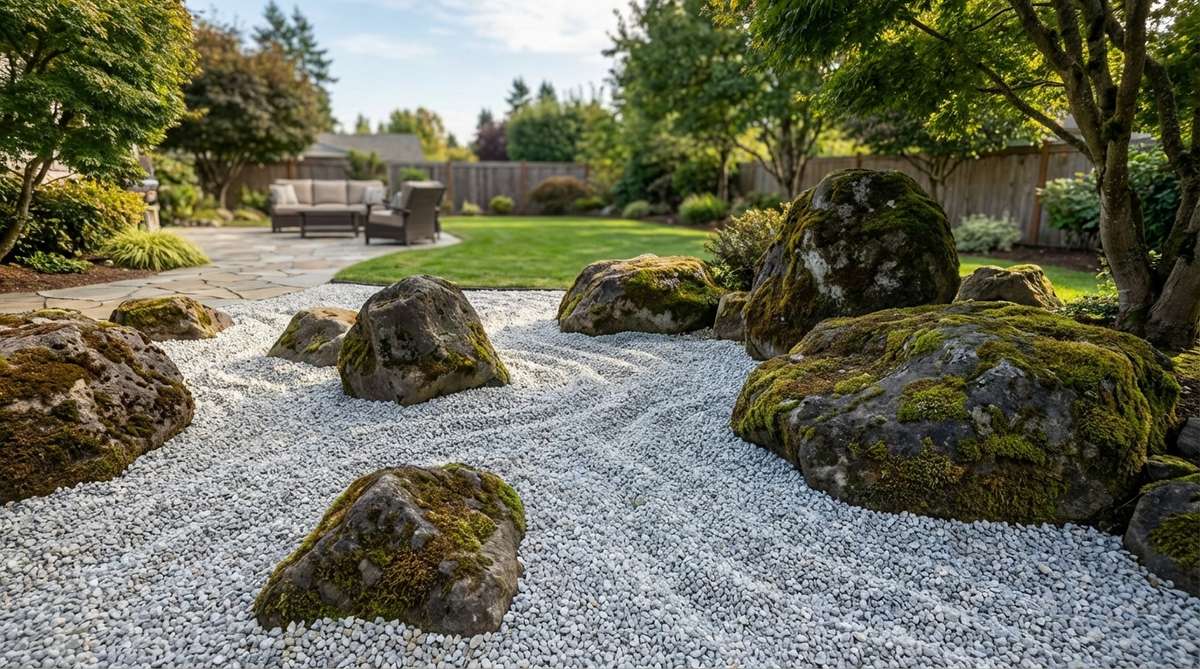
Weathered boulders partially covered with moss rise from pale gravel representing ocean. Select stones with naturally aged patina and encourage moss growth on north-facing surfaces.
Use light grey crushed limestone or granite chips to maximize contrast with dark moss-covered stone. The color opposition creates dramatic visual tension within minimalist composition.
21. Linear Rake Pattern Meditation Path
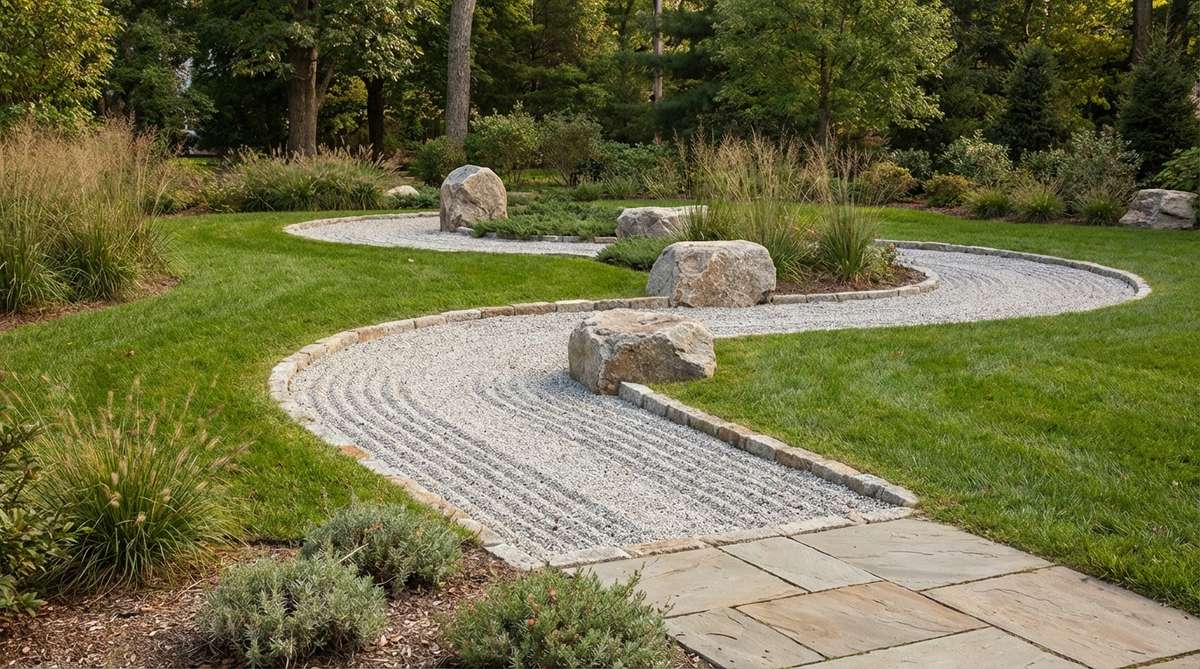
Parallel lines raked through fine gravel create pathways for walking meditation. Install edging to maintain crisp boundaries and rake fresh patterns weekly.
Place single statement boulders at path intersections to serve as contemplation points. The geometric precision of raked lines contrasts with organic boulder forms.
22. Karesansui Dry Landscape Garden
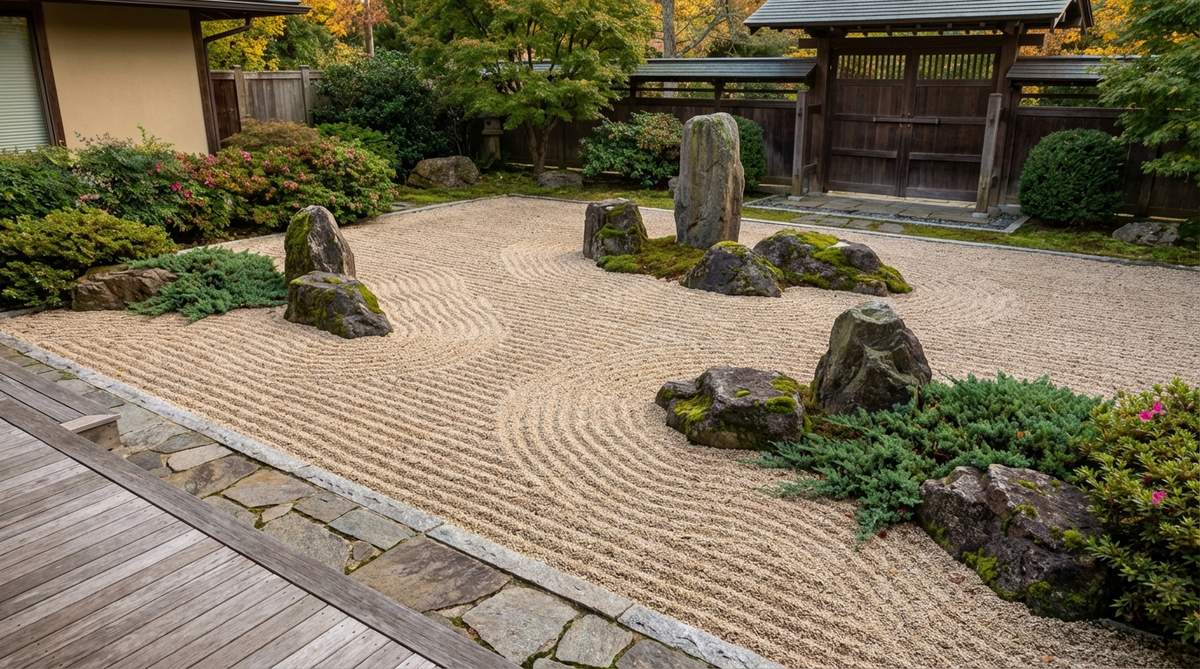
Traditional Japanese dry landscape uses rocks to represent mountains and gravel for water. Select stones with vertical orientation to suggest mountain peaks rising from horizontal gravel plane.
Arrange rocks in odd-numbered groupings following asymmetric balance principles. The largest stone should dominate while supporting stones create visual rhythm without competing.
23. Wave Pattern Gravel Surrounding
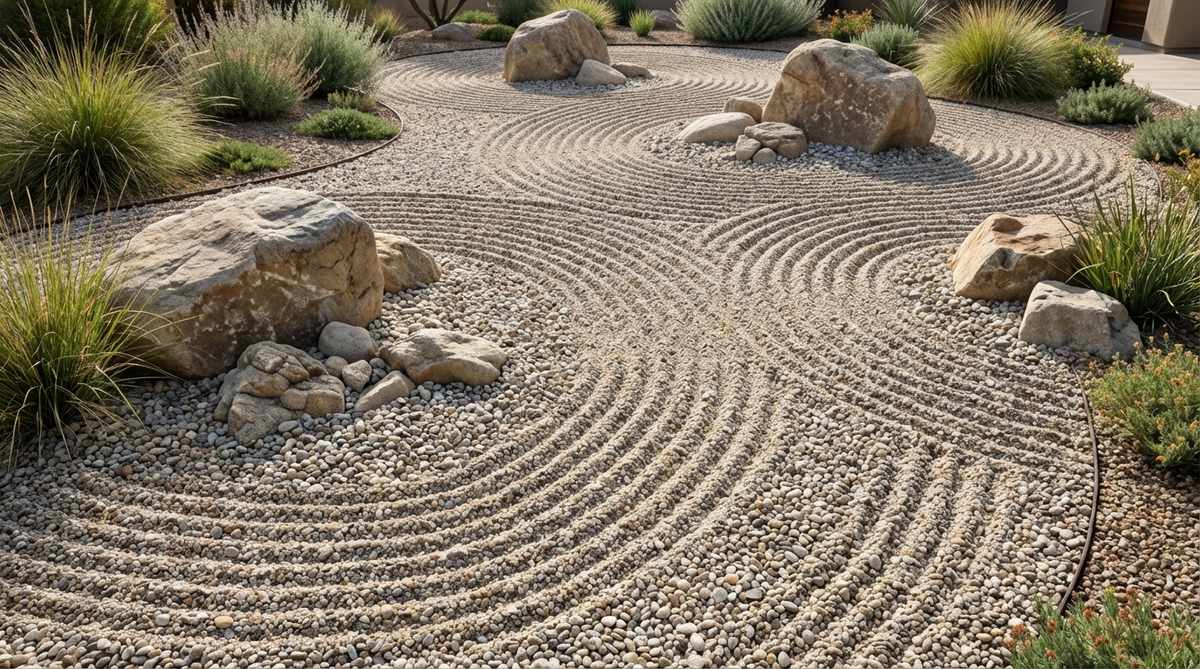
Curved rake lines flowing around boulder groupings mimic ocean currents. Start raking from the stones outward, creating progressively wider arcs that suggest wave propagation.
This pattern requires regular maintenance but transforms simple gravel beds into dynamic garden design with stones features. Use a traditional wooden rake with evenly spaced tines for authentic appearance.
Mixed Stone Arrangements Combining Size and Texture
Layering different rock sizes and types within single compositions adds complexity to garden design with rocks. The interplay between contrasting materials generates visual richness that monolithic designs lack.
24. Alpine Scree Slope Recreation
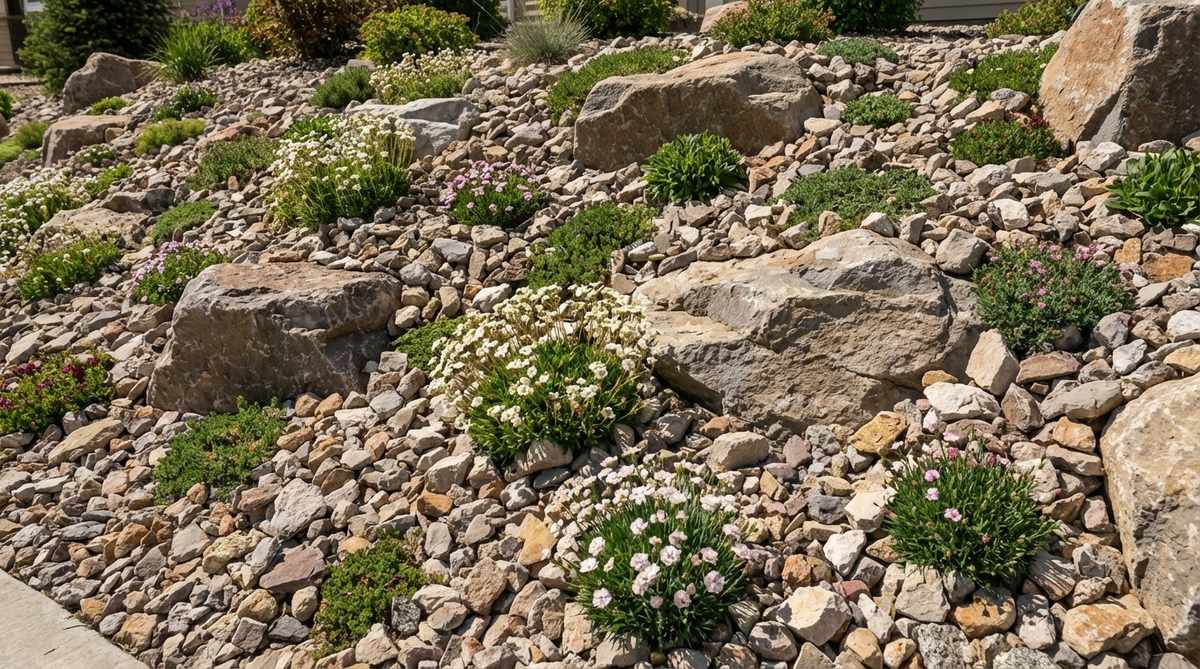
Combining angular rock chips with occasional larger stones replicates high-elevation scree fields. Use limestone or granite fragments in mixed sizes from 1/4 inch to 4 inches for authentic appearance.
Embed larger accent rocks at irregular intervals to interrupt the scree field. Plant alpine species like saxifraga and dianthus in pockets between stones for ecological accuracy.
Slope the scree bed to enhance the mountain impression and improve drainage for alpine plants. This arrangement works particularly well in rock garden niches or raised bed corners.
25. Cobble and Boulder Beach Edge
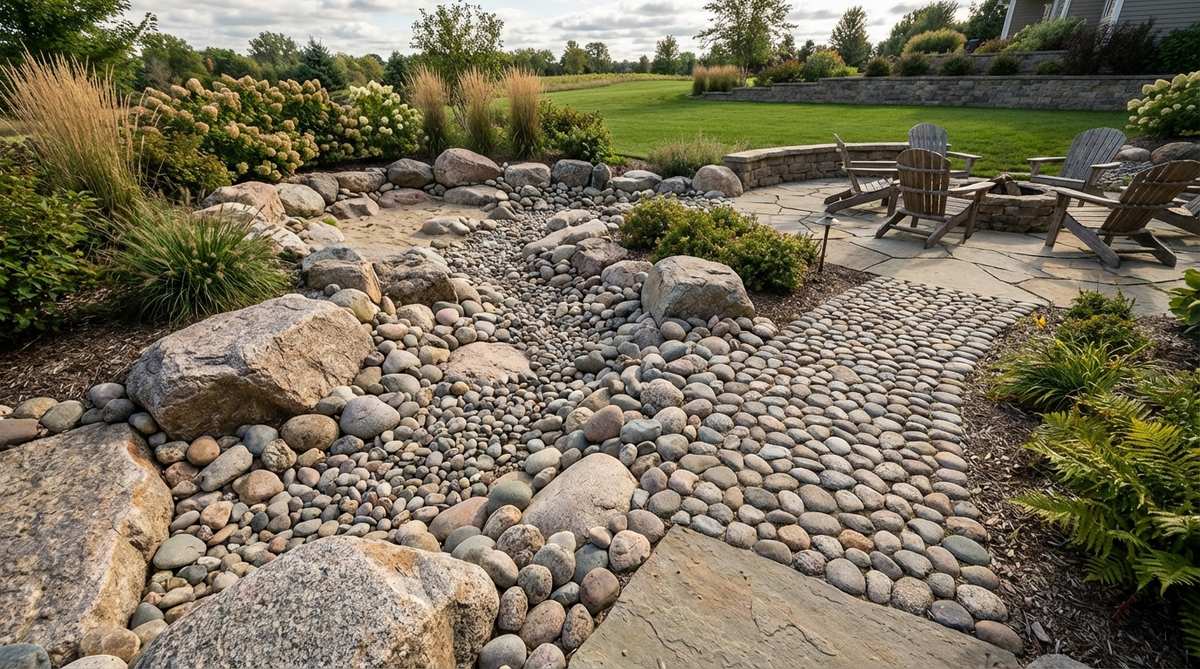
Gradated stone sizes from large boulders down to small cobbles simulate shoreline erosion patterns. Position the largest boulders as if deposited by wave action, then surround with progressively smaller materials.
Use rounded river rocks exclusively for authentic beach character. The smooth stones create comfortable surfaces for barefoot walking while suggesting water-worn geological processes.
26. Fieldstone Wall with Gravel Base
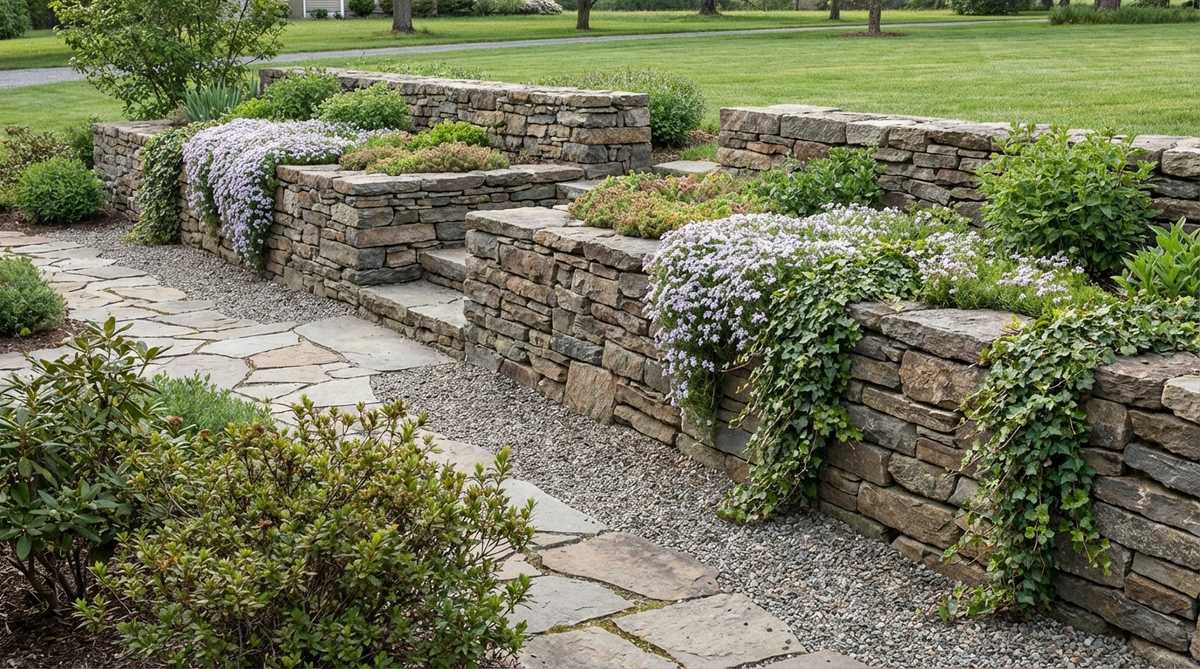
Dry-stacked fieldstone walls rising from gravel beds provide vertical structure in flat gardens. Select stones with at least one flat face for stable stacking without mortar.
Build walls 18-30 inches high to create raised planting zones behind the stone face. Backfill with quality soil and plant trailing species that cascade over the stone surface.
27. Quarried Block and Pebble Contrast
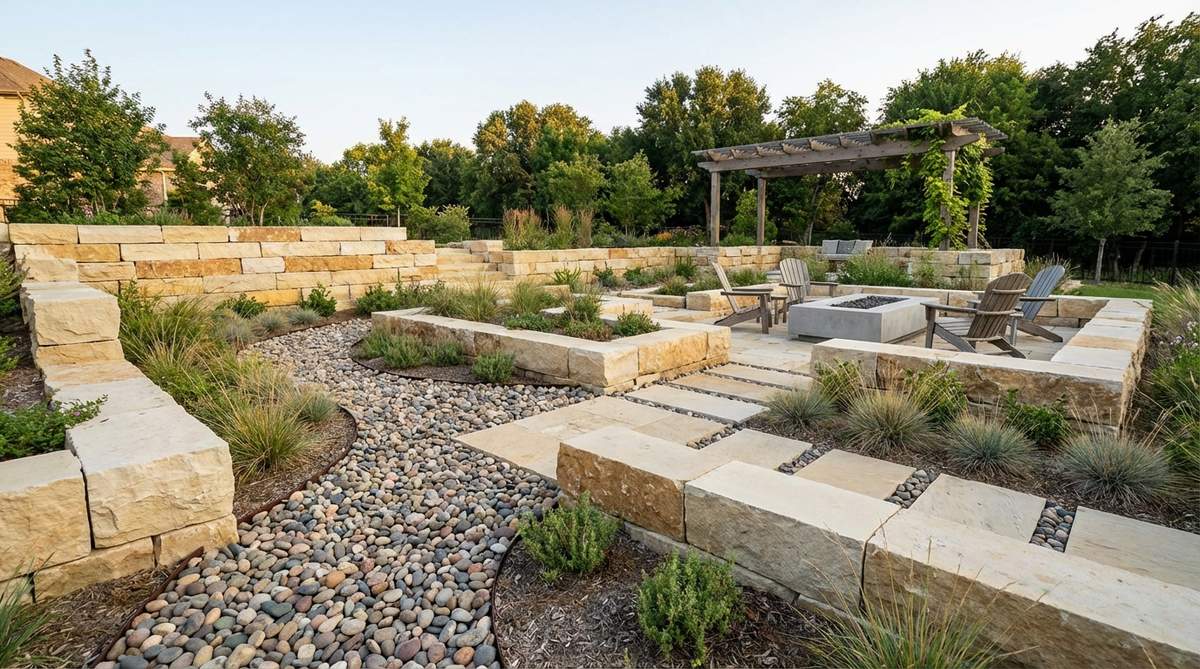
Geometric cut stone blocks juxtaposed with organic pebble fields emphasize manufactured versus natural materials. Use rectangular limestone or sandstone blocks as architectural elements.
Surround blocks with 1 inch river pebbles in contrasting color. The opposition between angular and rounded forms creates sophisticated tension in contemporary landscape designs.
28. Lava Rock and Basalt Gravel Bed
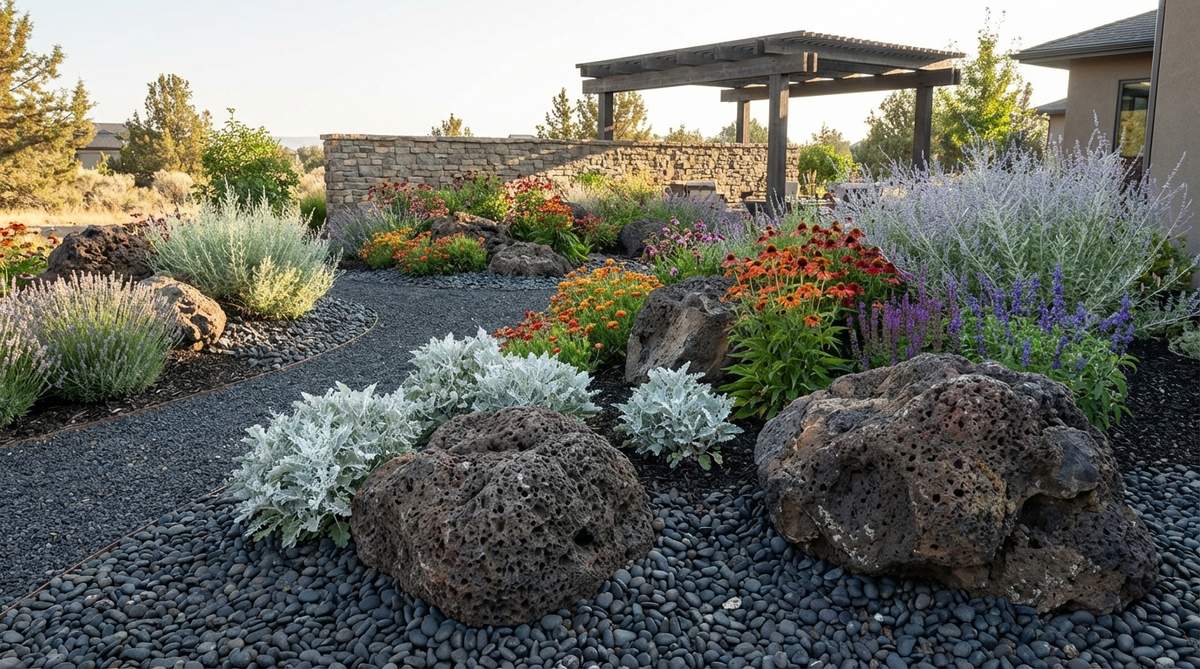
Dark volcanic materials create dramatic garden design with stones in modern landscapes. Porous lava rock boulders contrast texturally with smooth black basalt gravel.
The monochromatic dark palette provides striking backdrop for silver-leaved plants or bright flowering perennials. Volcanic rocks also offer excellent drainage and insulation for plant roots.
29. Stacked Slate Outcropping
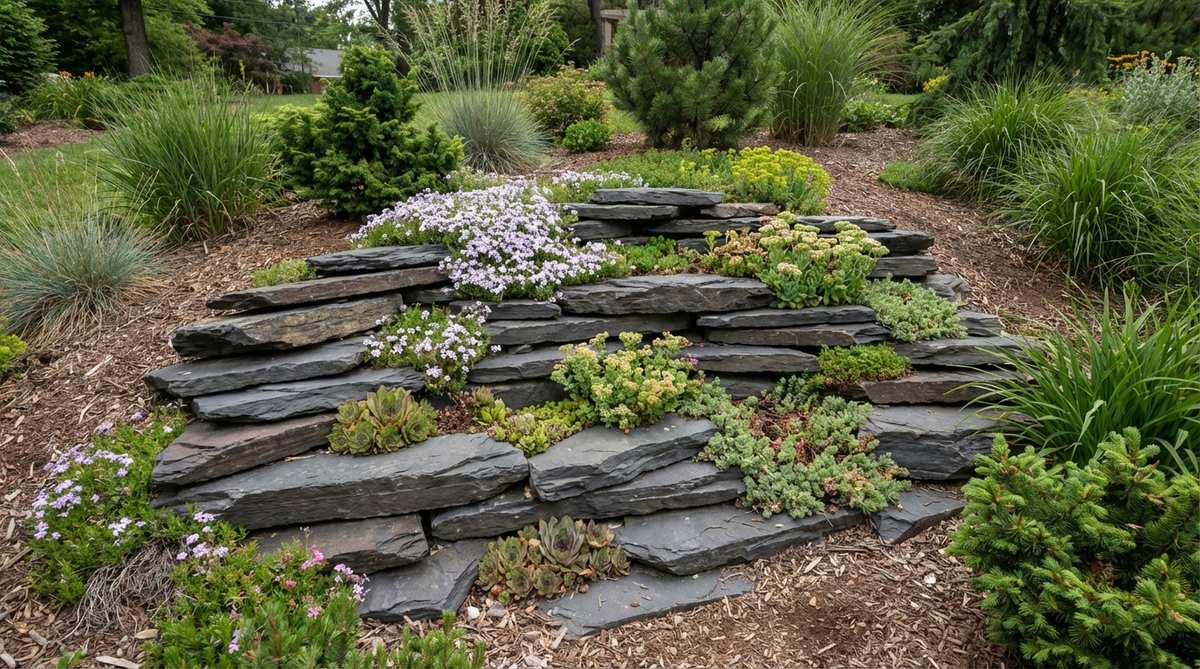
Flat slate pieces stacked horizontally mimic sedimentary rock layers exposed by erosion. Position slates with slight backward tilt and irregular staggering for natural appearance.
Plant alpines and succulents in the horizontal crevices between slate layers. The vertical stone face provides excellent drainage and creates varied sun exposure zones.
Functional Rock Features That Solve Landscape Challenges
Strategic garden design rock placement addresses practical issues while enhancing aesthetic appeal. These arrangements prevent erosion, define borders, and create usable outdoor spaces.
30. Erosion Control Boulder Terracing
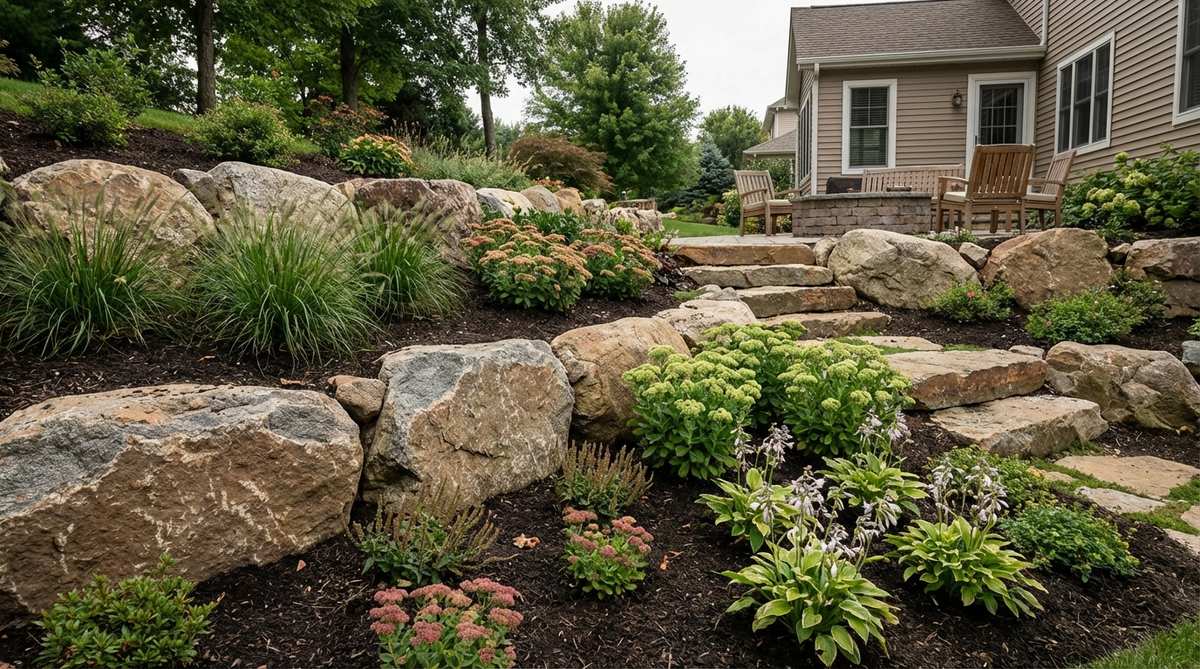
Large boulders embedded across slopes interrupt water flow and create level planting terraces. Position each boulder perpendicular to the slope with the majority of its mass buried.
Backfill uphill side of each boulder with quality soil to form planting pockets. The rocks act as miniature retaining walls that prevent soil loss during heavy rainfall.
Plant deep-rooted perennials in the terraced pockets to further stabilize slopes. The combination of rock structure and plant roots provides superior erosion resistance.
31. Gravel Patio with Boulder Seating
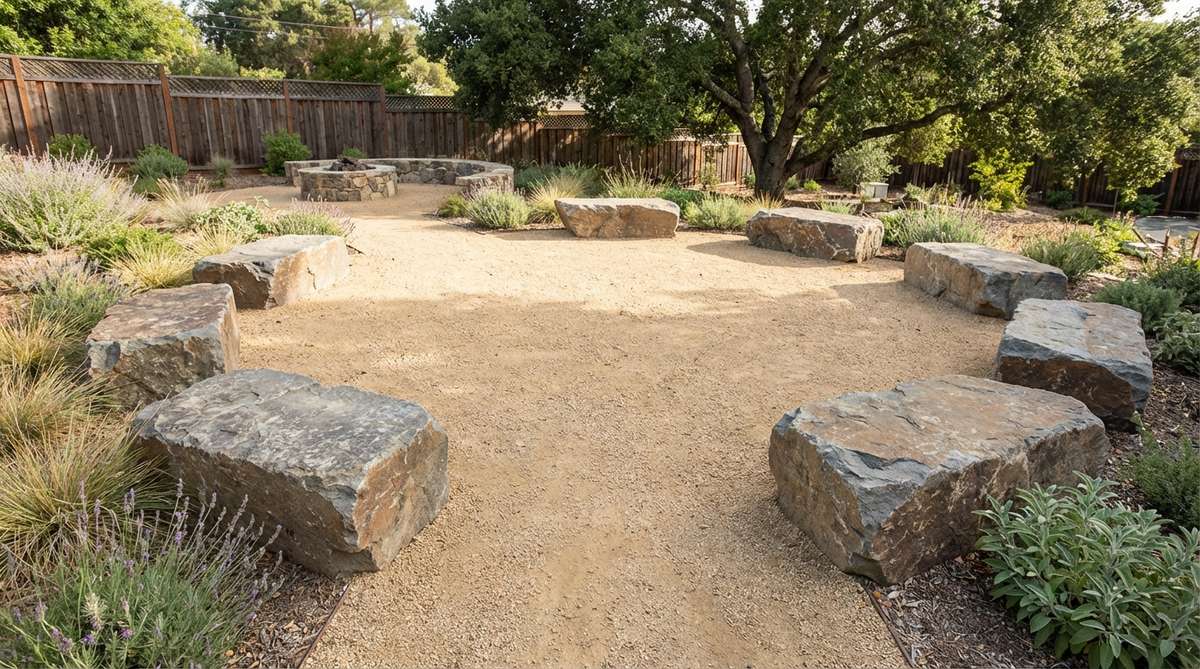
Flat-topped boulders positioned around gravel patios function as natural seating. Select stones with relatively level surfaces at 16-18 inch height for comfortable seating.
Surround the patio perimeter with these seating boulders spaced for conversation groupings. Fill the central area with compacted pea gravel over well-drained base.
32. Rock Garden Retaining System
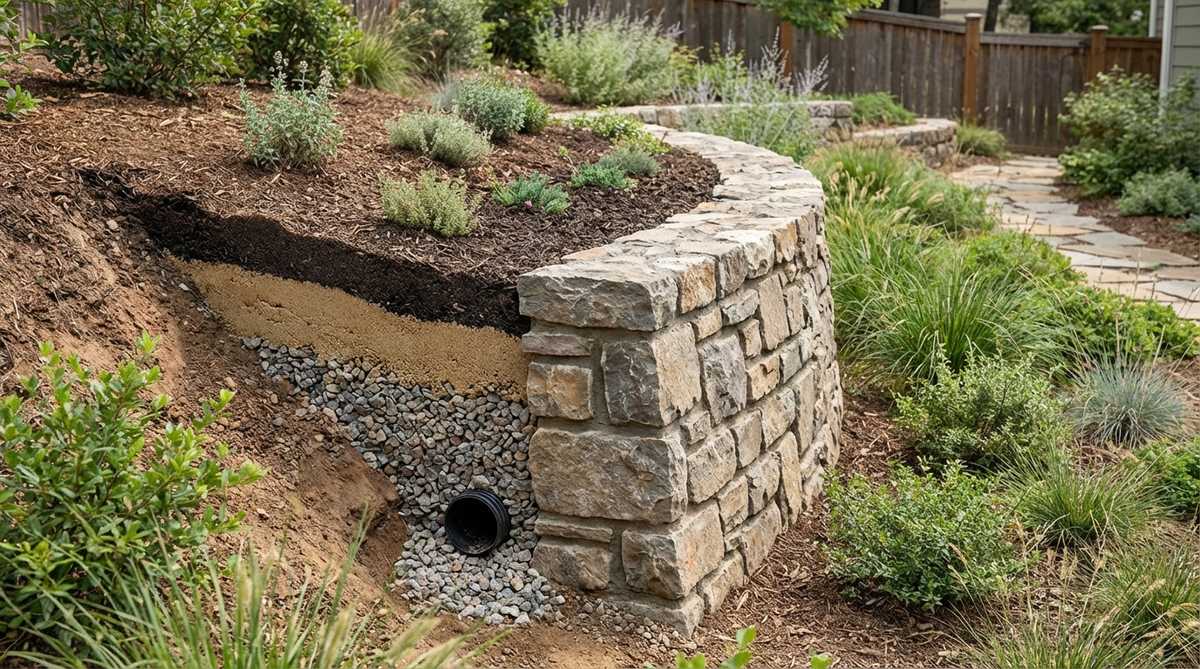
Mortared stone walls combined with gravel backfill create permanent grade changes in sloped yards. Build walls using flat fieldstones with staggered joints for structural integrity.
Install drainage pipe behind walls and backfill with 3/4 inch crushed stone before adding topsoil. This prevents hydrostatic pressure buildup that could compromise wall stability.
33. Stepping Stone Path Through Gravel
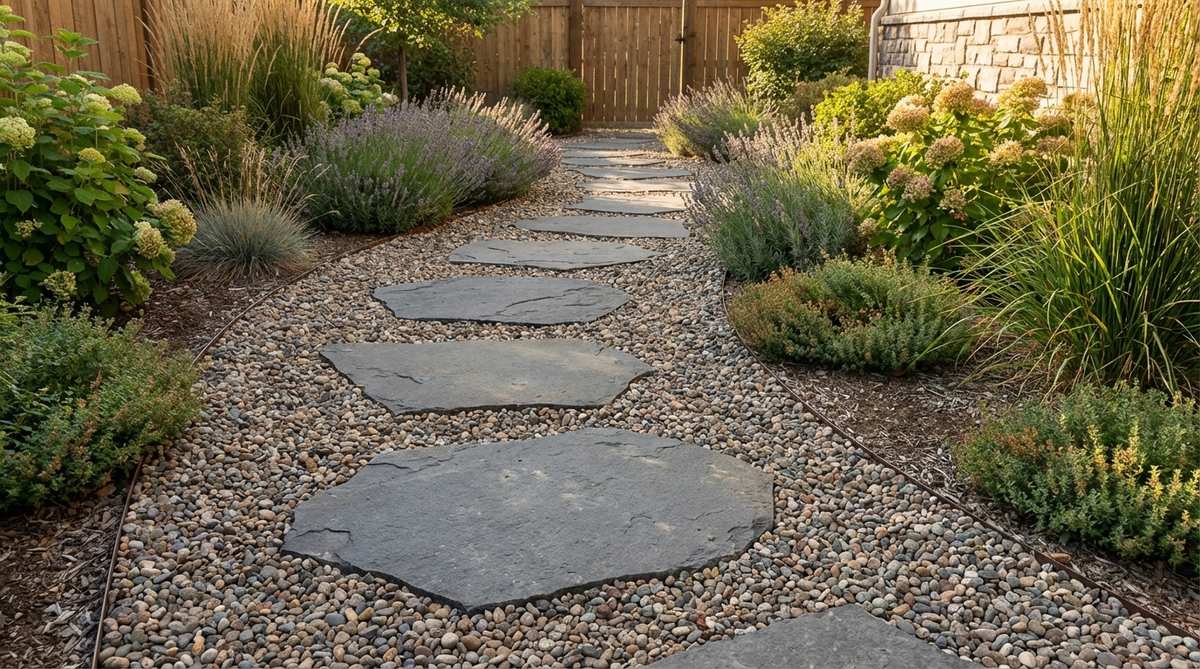
Large flat stones embedded in gravel beds create functional pathways while maintaining design cohesion. Space stepping stones 18-24 inches apart for comfortable stride length.
Set each stone flush with surrounding gravel surface to prevent tripping hazards. Choose stones that contrast texturally or chromatically with the base gravel for clear path definition.
34. French Drain Decorative Rock Cover
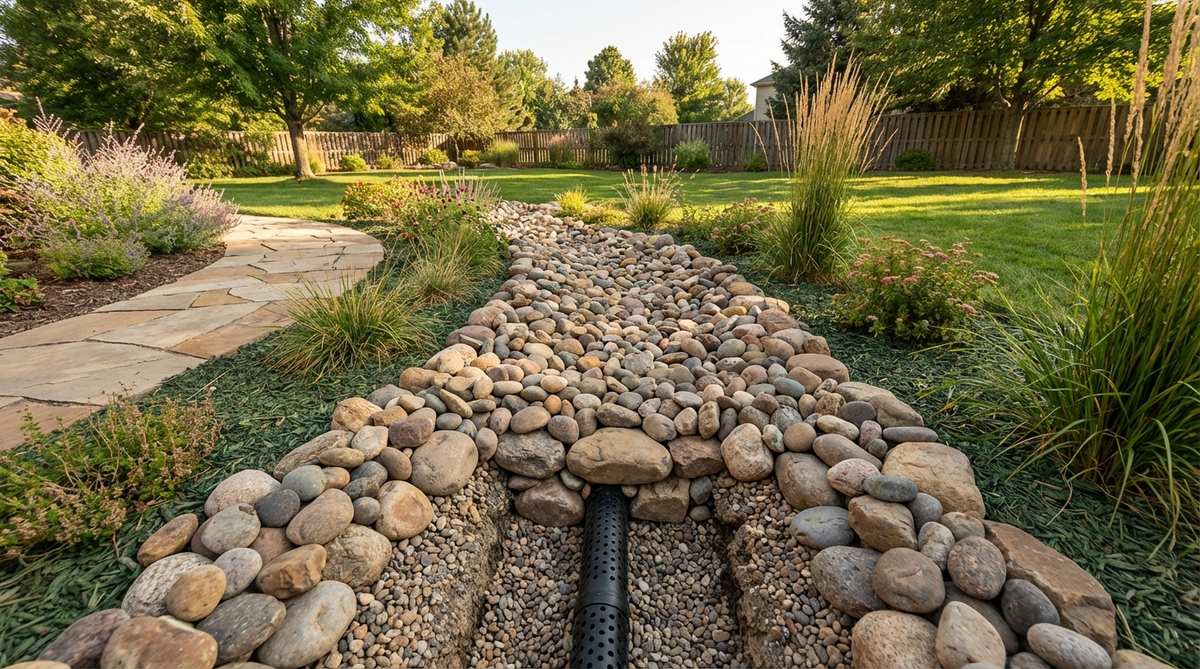
River rocks and decorative stones conceal functional drainage systems while adding garden design with rocks interest. Install perforated drainage pipe in gravel-filled trench, then cap with attractive stones.
Use 3-6 inch river cobbles that allow water infiltration while providing finished appearance. This approach solves drainage issues without sacrificing landscape aesthetics.
Architectural Stone Groupings for Contemporary Landscapes
Modern garden design with stones emphasizes clean lines and intentional placement. These arrangements complement contemporary architecture with geometric precision and restrained material palettes.
35. Monolith Sculpture Installation
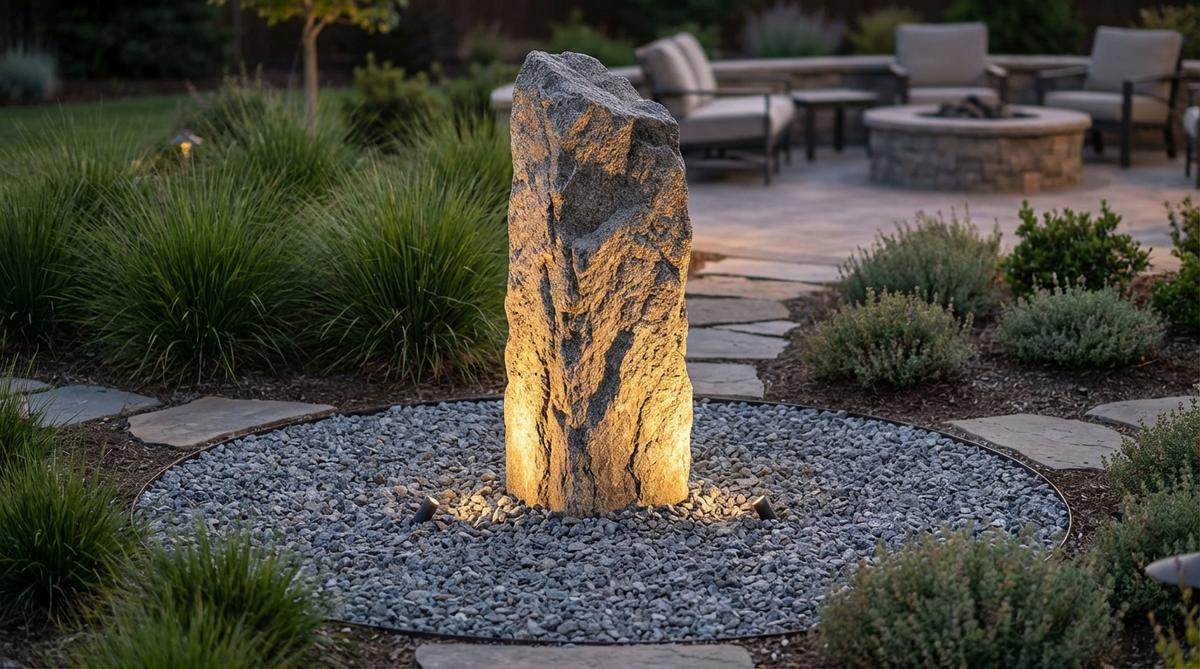
A single vertical stone positioned with deliberate precision functions as outdoor sculpture. Select a tall narrow boulder with interesting surface texture or natural striations.
Embed the monolith in a circular gravel bed that isolates it from surrounding landscape elements. Lighting the stone from below after dark transforms it into dramatic nighttime focal point.
This minimalist approach works effectively in contemporary gardens where restraint and negative space receive equal emphasis as solid forms.
36. Geometric Stone Grid Pattern
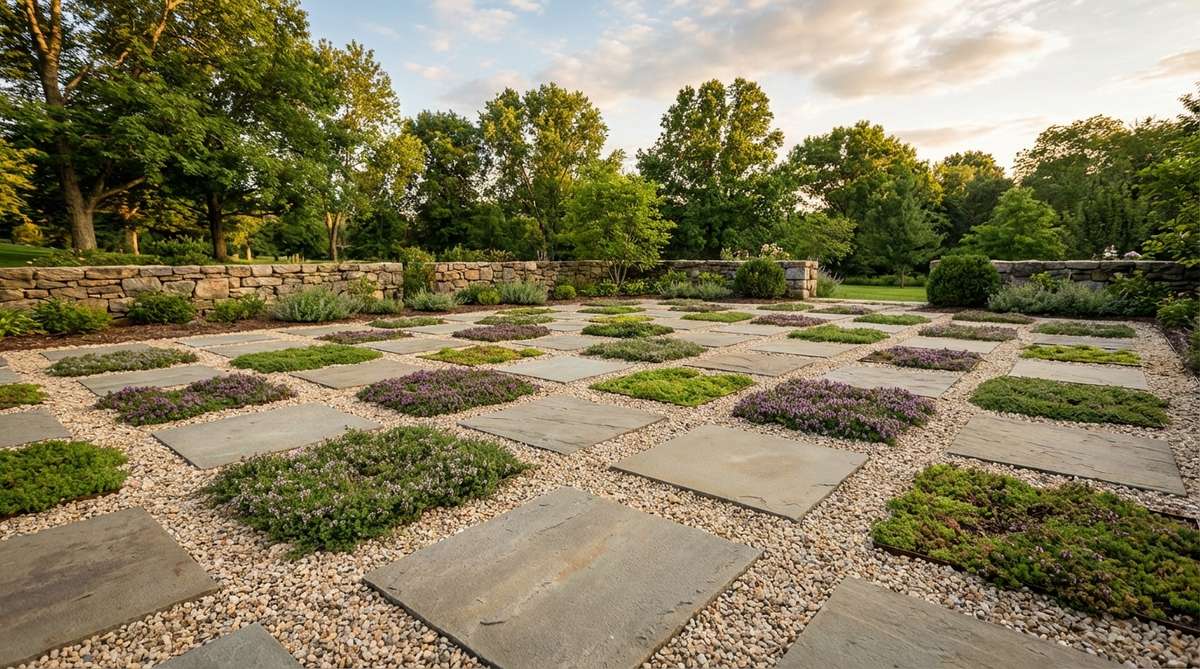
Square-cut stones arranged in precise grid formation create strong architectural statements. Space uniform stones at exact intervals over light-colored gravel base.
Plant low-growing groundcovers in alternating grid squares to soften the geometric rigidity. The interplay between manufactured stone and organic plant growth balances formality with naturalism.
37. Linear Boulder Alignment
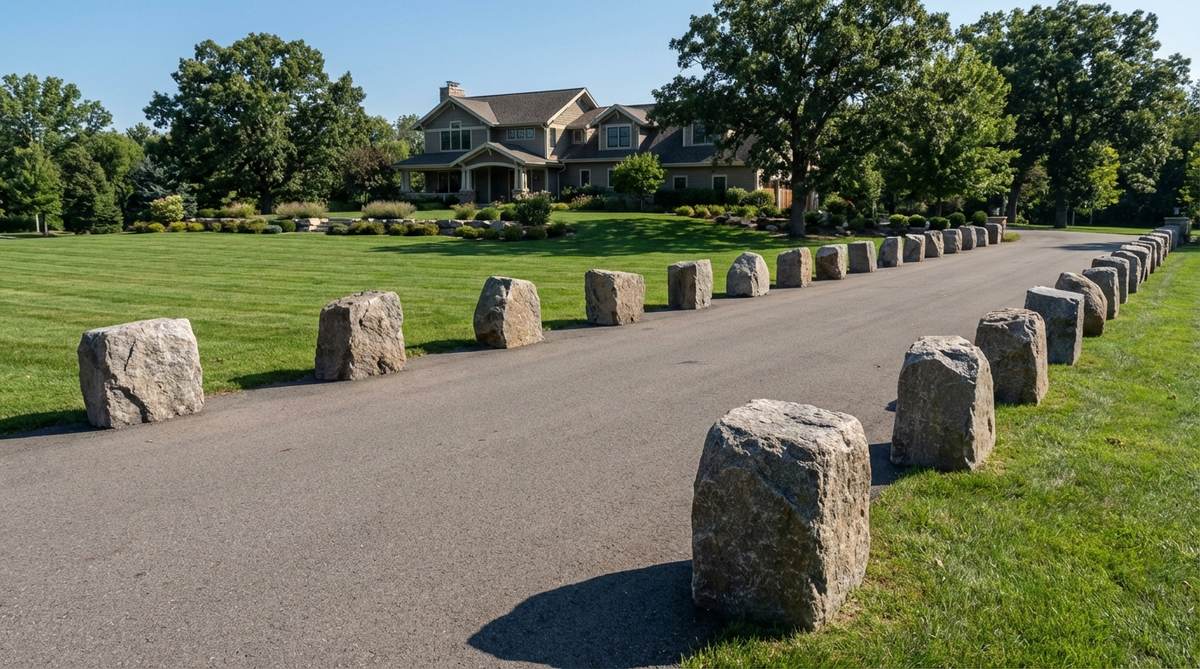
Boulders positioned in strict linear arrangement emphasize axes and sightlines in formal gardens. Select stones of similar size and shape for consistency along the line.
This technique works effectively flanking long driveways or defining property boundaries. The repetition creates rhythm while the natural stone character prevents excessive formality.
Transforming Your Landscape with Strategic Rock Design
Implementing effective garden design rock arrangements requires understanding both aesthetic principles and functional requirements. Whether creating erosion control solutions, establishing focal points, or developing contemplative spaces, rocks and gravel provide permanent landscape structure that matures beautifully over time. Start with proper site preparation, select materials appropriate to your climate and architectural style, and position elements following natural geological patterns for authentic results. Your investment in quality stone placement will reward you with low-maintenance beauty that endures through all seasons.
Frequently Asked Questions
How deep should gravel beds be for garden design?
Install gravel beds at 3-4 inches depth for optimal weed suppression and drainage. Deeper installations up to 6 inches work well in high-traffic areas or where you plan to rake decorative patterns. Always place landscape fabric beneath the gravel to prevent weed emergence and stone migration into underlying soil.
What size boulders work best for residential gardens?
Residential landscapes typically benefit from boulders ranging 18-36 inches in diameter. Larger properties can accommodate specimens up to 48 inches, while smaller gardens require proportionally smaller stones to maintain visual balance. The boulder should appear substantial without overwhelming surrounding plantings or hardscape elements.
How do I prevent gravel from spreading into lawn areas?
Install permanent edging materials such as steel landscape edging, thick timber borders, or mortared stone curbing to contain gravel. The edging should extend 2-3 inches above the gravel surface and be anchored firmly into the ground. This creates a physical barrier that prevents gravel migration during rain events or lawn maintenance.
Should I use landscape fabric under rock arrangements?
Professional-grade landscape fabric prevents weed growth beneath gravel beds while allowing water and air penetration to plant roots. Install fabric after removing existing vegetation and before placing stones. Cut X-shaped openings for plants rather than large holes that compromise weed suppression. Skip fabric under large boulders where it provides no functional benefit.
What rocks complement contemporary versus traditional architecture?
Contemporary designs favor uniform angular stones like crushed granite, basalt, or cut limestone in monochromatic color schemes. Traditional landscapes work well with varied river rocks, weathered fieldstone, and warm-toned sandstone that provide organic character. Match stone formality to architectural style for cohesive design that connects house and garden.
How many boulders create an effective focal point?
Use odd-numbered groupings of 1, 3, or 5 boulders for natural-appearing arrangements. Single statement boulders work effectively in minimalist designs, while triplet arrangements provide more visual complexity. Avoid even numbers and symmetrical placement, which appear contrived rather than geological. Graduate sizes within groups with the largest stone dominant.