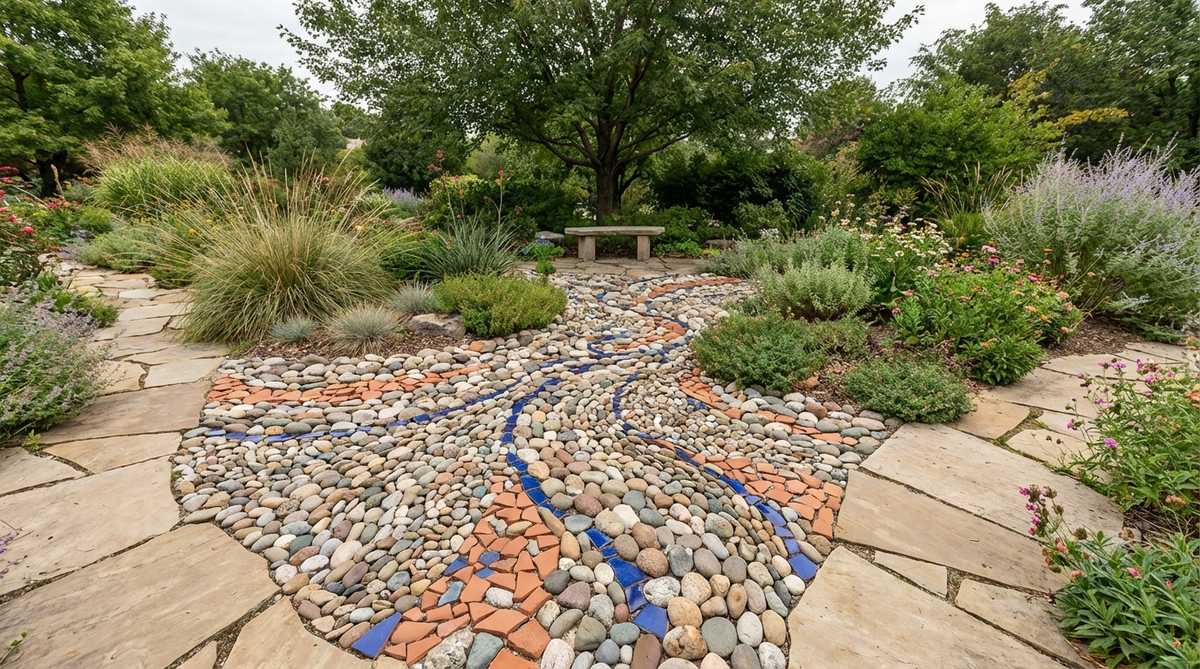
Stone garden mosaic transforms ordinary pathways and patios into artful expressions of texture, color, and pattern using natural materials like river rocks, pebbles, and broken ceramics. This comprehensive guide from Fresh Garden Ideas showcases over 25 proven patterns that landscape architects use to create durable, visually striking ground covers suitable for American gardens.
Design SnapshotKey Principles
- Material Selection: Choose flat pebbles with consistent thickness for easier installation and a level finished surface
- Contrast & Color: Use contrasting stone colors to make patterns visible and create visual impact in the landscape
- Proper Base: Install 2-3 inches of compacted gravel beneath a 3-inch mortar bed for stability and drainage
- Tight Spacing: Place stones close together with minimal mortar showing for professional-looking results
Classic Geometric Stone Designs
Geometric patterns form the foundation of traditional stone garden mosaic work, offering timeless appeal and structural clarity. These designs work particularly well in formal gardens and structured landscapes where symmetry matters.
1. Centered Spiral Vortex
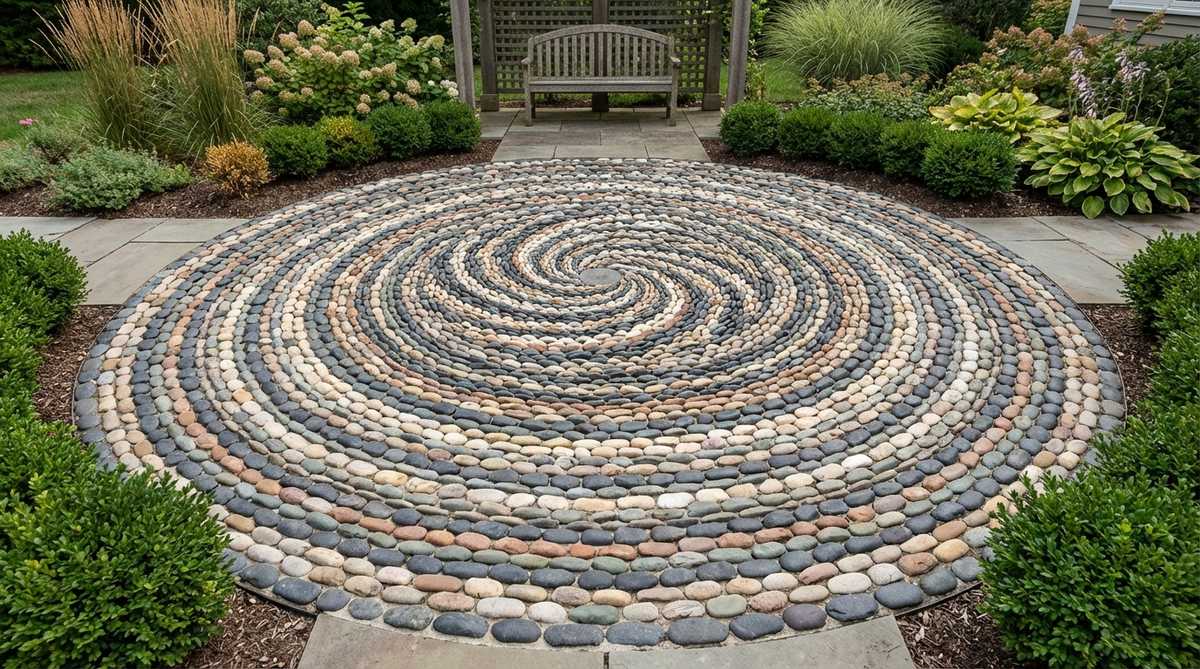
This concentric pattern radiates outward from a central point, creating mesmerizing movement that draws the eye inward. The spiral uses equally sized pebbles arranged in tight formation, with subtle color variations between rings enhancing the vortex effect.
Start with a single stone at the center and work outward in continuous curves, maintaining consistent spacing throughout. Use contrasting colors for the innermost and outermost rings to emphasize the spiral’s depth and dimension.
This pattern works exceptionally well as a focal point in circular spaces or surrounded by container plantings. The design’s natural flow complements curved garden beds and round patio areas.
2. Sunburst Medallion
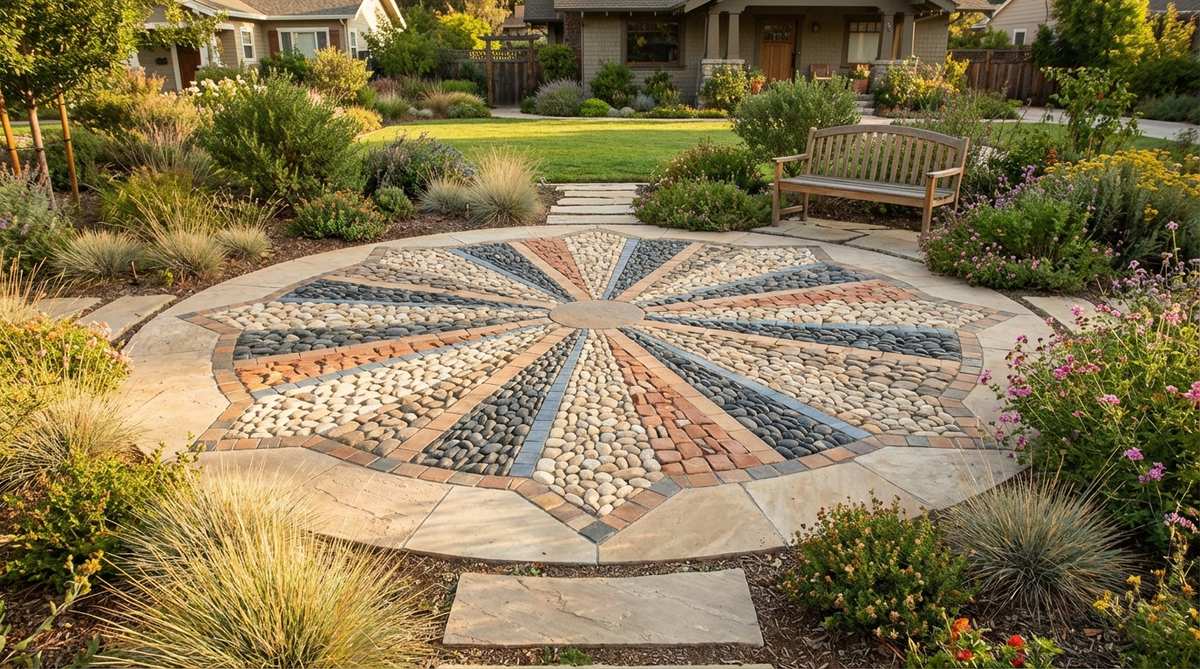
Flat river stones and colored tiles arranged in radiating layers create a bold solar motif perfect for pathway entrances or circular patios. The pattern typically features a round center stone surrounded by wedge-shaped sections that expand outward like sun rays.
Designers use contrasting stone colors to define each ray, alternating light and dark tones for maximum visual impact. The wedge shapes require careful stone selection to maintain clean lines between sections.
Position sunburst mosaics at decision points in garden paths or as welcome features near entryways. The pattern’s radial energy creates natural gathering spaces in landscape designs.
3. Checkerboard Grid
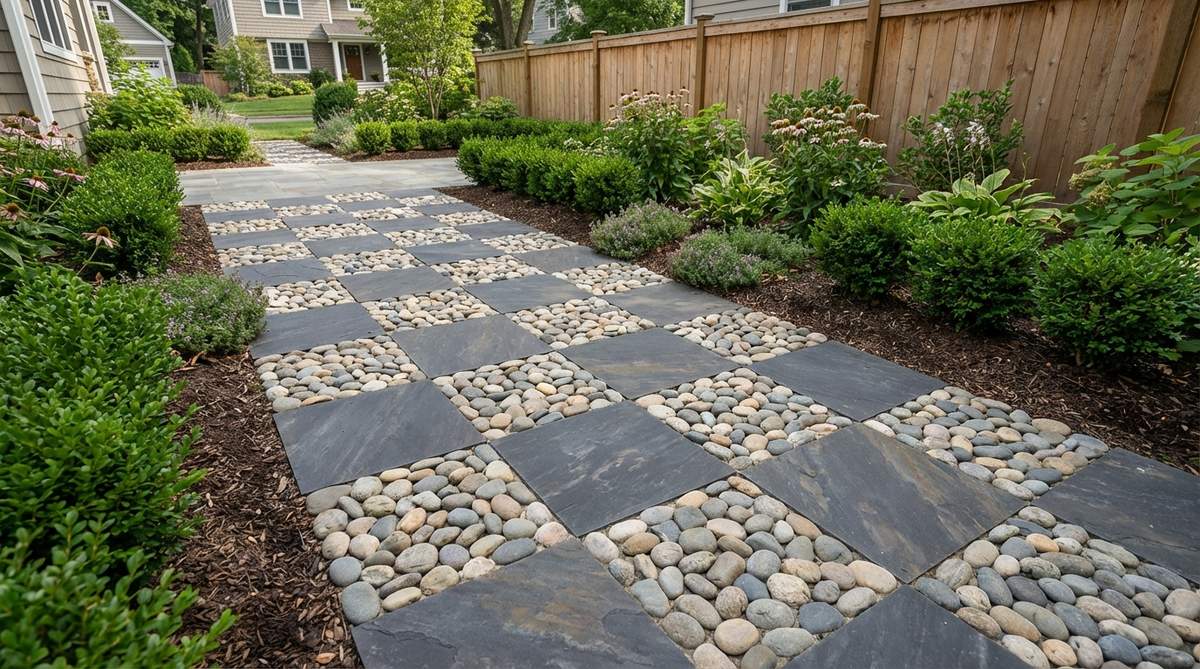
Alternating squares of flat pebbles and tile create a playful pattern suited to cottage-style and formal gardens alike. Each square measures 4-6 inches, with contrasting materials defining the checkerboard effect.
Mix smooth river rocks in one color with flat slate or ceramic tiles in another, maintaining consistent square dimensions throughout. This pattern requires precise edge forms to keep grid lines straight and squares uniform.
The checkerboard adapts well to rectangular pathway sections and works particularly effectively in side yards or narrow garden corridors. Its geometric clarity adds structure to informal planting schemes.
4. Diamond Lattice
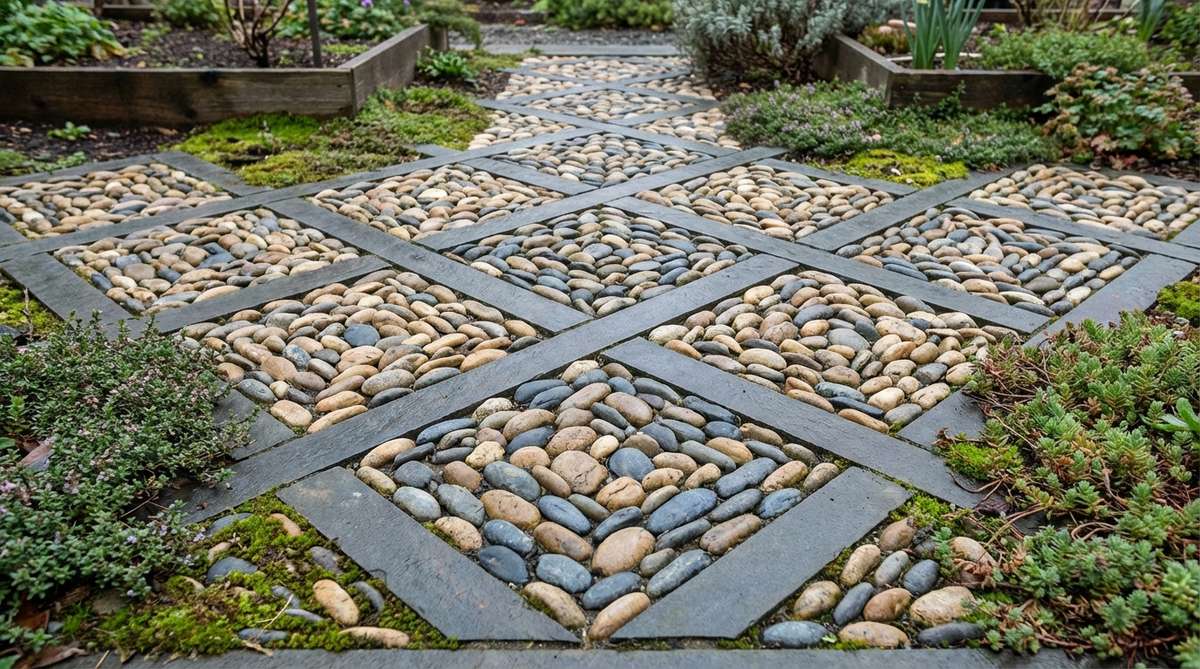
Diagonal lines of contrasting pebbles form interlocking diamonds that create sophisticated texture underfoot. This pattern uses two or three stone colors arranged in crisscross diagonals, with diamond shapes emerging at the intersections.
Lay border stones first to establish the pattern’s angle, then fill diamonds with a single pebble color for clarity. Designers often use small rounded pebbles within diamonds and larger flat stones for the lattice framework.
Diamond lattice suits transitional spaces between garden rooms and provides visual interest without overwhelming adjacent plantings. The diagonal orientation makes narrow spaces appear wider.
5. Hexagonal Honeycomb
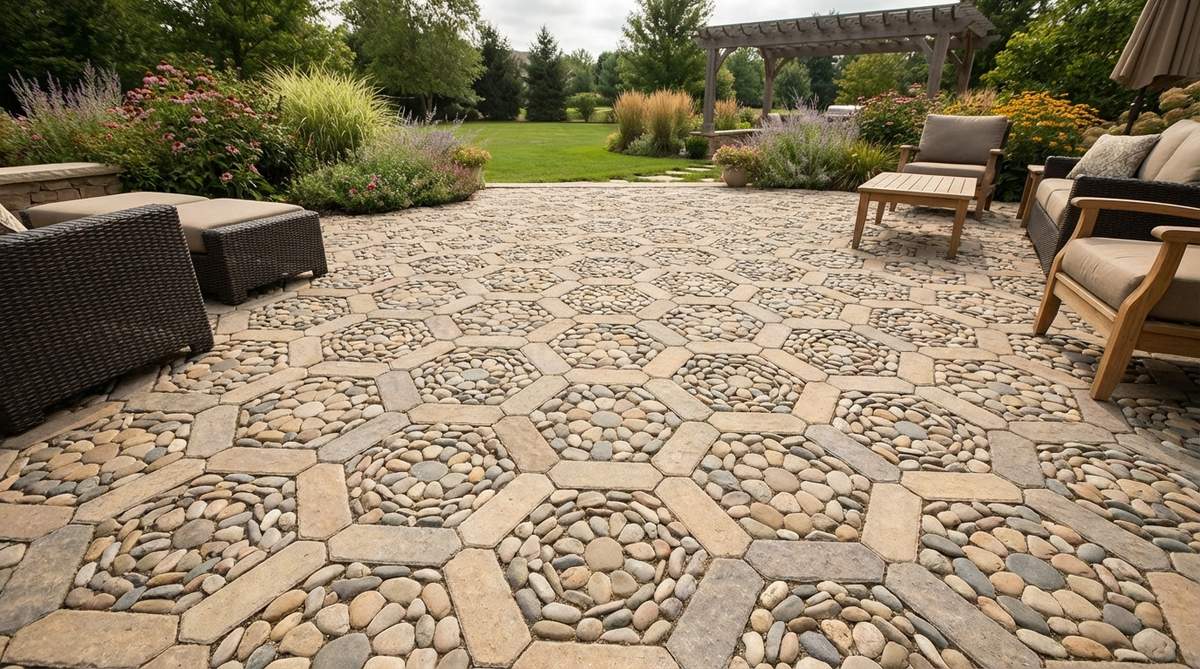
Six-sided cells interlock to form an organic geometric pattern inspired by natural structures. Each hexagon measures 8-12 inches across and contains pebbles arranged in concentric rings or single-color fills.
Use wooden hexagonal forms or create templates from cardboard to ensure consistent cell shapes. Varying the internal pebble arrangements between cells adds complexity while maintaining overall pattern unity.
This pattern excels in larger patio areas where the repeating honeycomb creates rhythmic visual texture. The organic geometry bridges formal and naturalistic garden styles effectively.
Nature-Inspired Mosaic Motifs
Organic forms drawn from natural elements create mosaics that feel integrated with surrounding landscapes. These patterns celebrate botanical and ecological themes while maintaining the artistic character of intentional design.
6. Cobbled Blooms
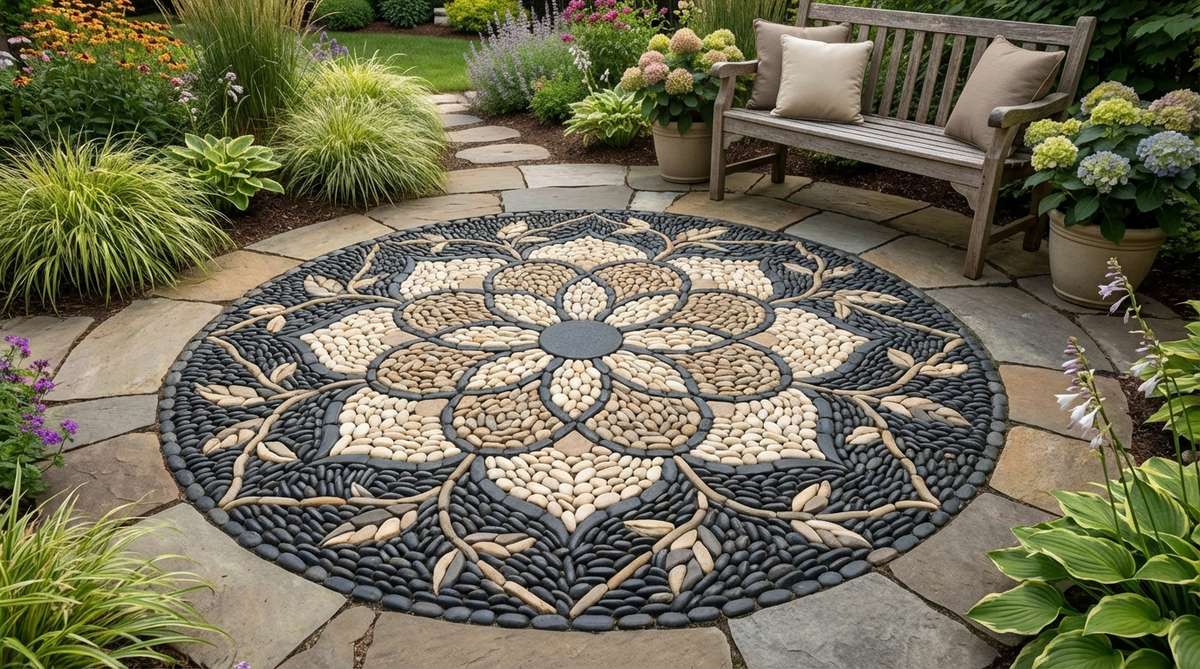
Stylized flowers crafted from stones in black, white, and beige tones create playful focal points in garden settings. Petals form from larger flat stones arranged around a contrasting center, with stem and leaf details extending outward.
This design works particularly well as an accent within larger paved areas or as standalone stepping stones. The muted palette allows colorful container plants and perennials to remain the visual priority.
Position floral mosaics near seating areas where visitors can appreciate the intricate stonework up close. Multiple blooms can create a meadow effect along pathway edges.
7. Leaf Imprint Accents
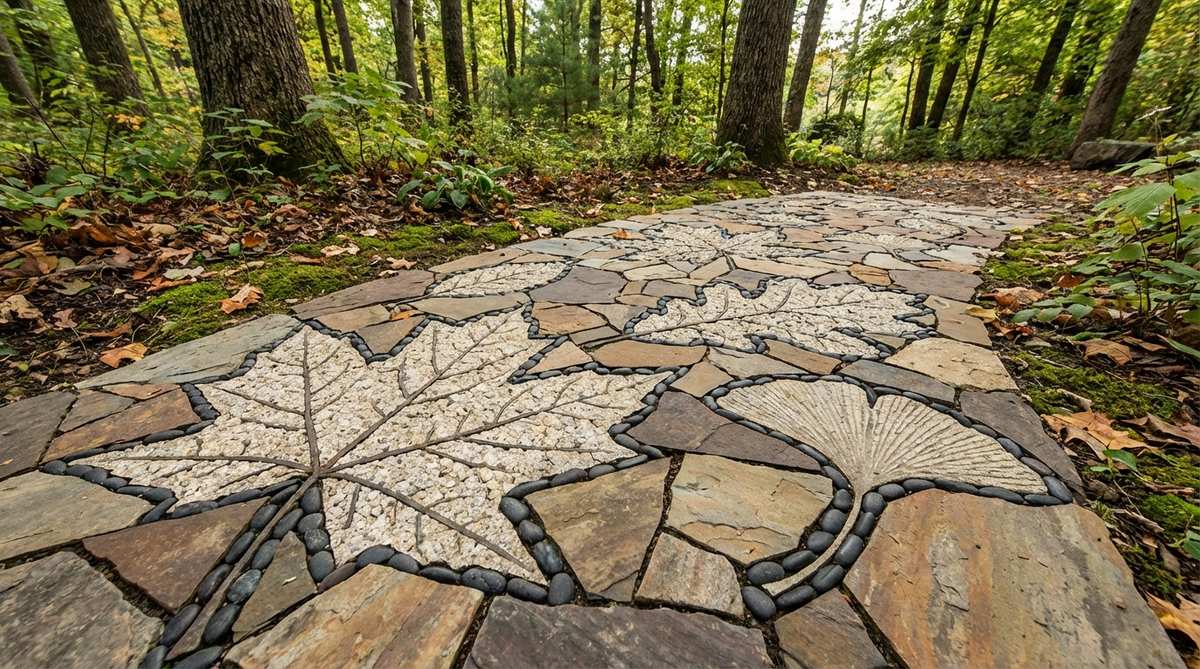
Realistic leaf shapes outlined in contrasting pebbles bring botanical detail to ground-level designs. Large leaves like maple, oak, or ginkgo provide recognizable silhouettes that translate well into stone arrangements.
Create leaf outlines using dark stones against lighter backgrounds, then fill interiors with small pebbles arranged to suggest veining patterns. Real leaves pressed into wet mortar can serve as temporary guides during installation.
These accents scatter beautifully along woodland paths or beneath deciduous trees, echoing the natural leaf litter overhead. The botanical theme strengthens connections between hardscape and planted areas.
8. River Flow Curves
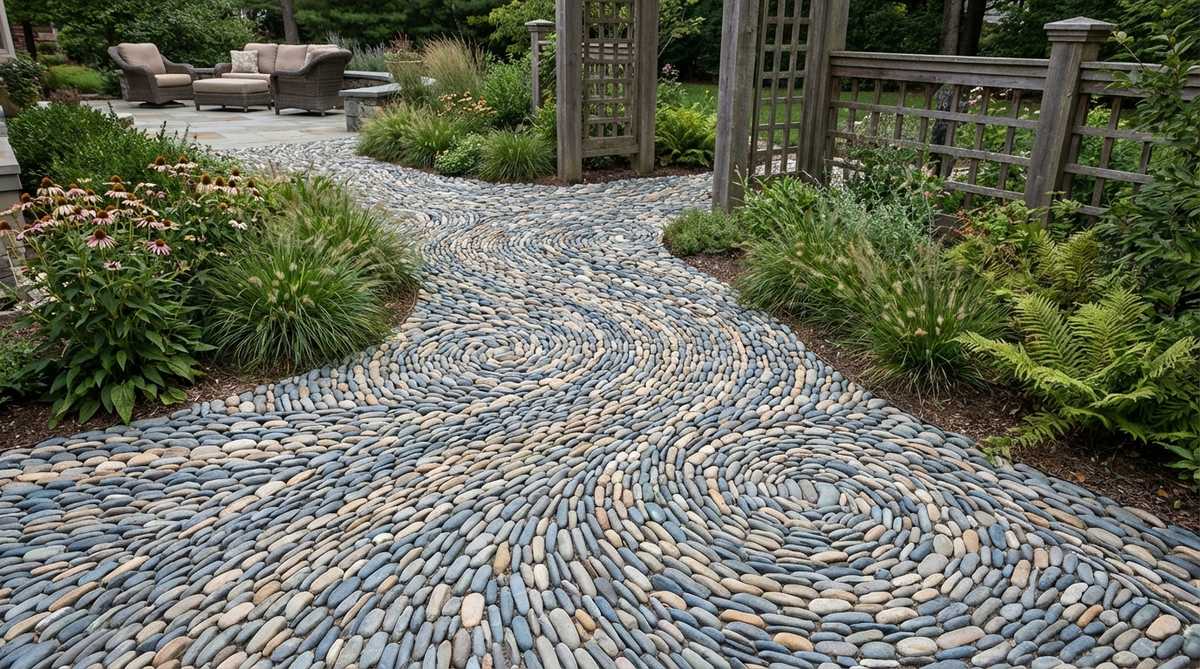
Undulating lines of blue, gray, and tan pebbles mimic water movement through the landscape. Stones align in parallel curves that suggest current, with occasional swirls indicating eddies or rapids.
Designers arrange elongated pebbles lengthwise to emphasize directional flow, using color gradients from dark to light to suggest depth. The pattern works best in slightly curved pathways that enhance the sense of movement.
River flow mosaics create meditative qualities in garden spaces and provide conceptual links to actual water features. The flowing lines guide visitors naturally through garden transitions.
9. Tree Ring Circles
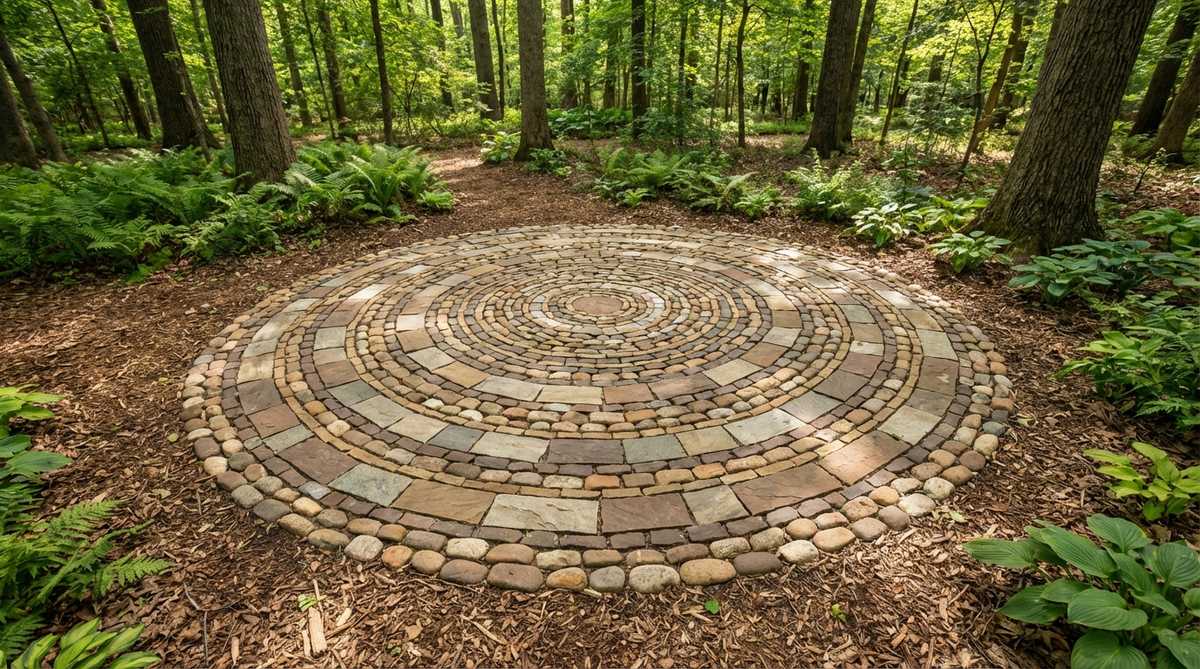
Concentric rings in varying widths create patterns reminiscent of tree cross-sections. Alternating colors between rings emphasize the growth pattern effect, with irregular spacing mimicking natural annual variations.
Install these mosaics around existing trees to frame trunks with complementary circular patterns, or use them as standalone medallions in open lawn areas. Vary ring widths intentionally rather than maintaining uniform spacing for authentic organic character.
The tree ring motif resonates particularly well in woodland gardens and naturalistic landscapes. Multiple tree ring mosaics at different scales create visual rhythm across garden spaces.
10. Pebble Stream Bed
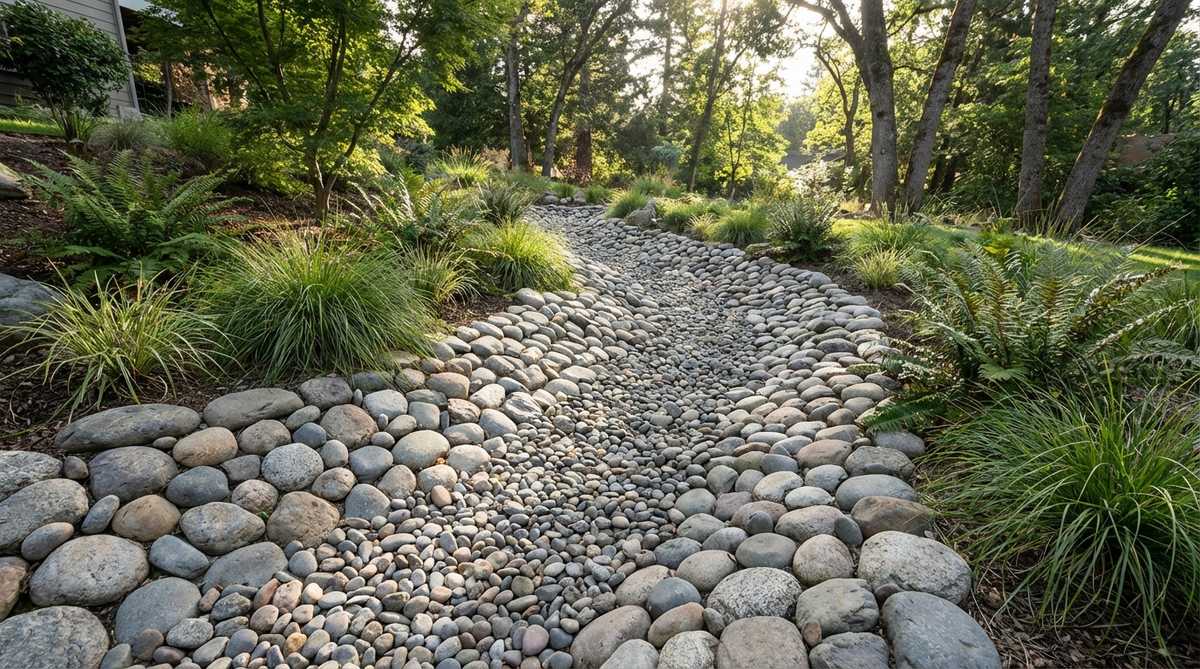
Smooth river rocks arranged to simulate dry creek beds bring natural drainage aesthetics to functional hardscaping. Stones grade from larger cobbles at edges to smaller pebbles in the center channel, mimicking water-sorted geology.
This design excels in sloped areas where actual drainage needs align with aesthetic goals. Layer stones vertically rather than flat to create realistic stream bed texture and improve water movement.
Integrate native grasses and moisture-loving plants along edges to enhance the naturalistic effect. The design functions beautifully as both visual feature and practical water management solution.
Cultural & Artistic Patterns
Traditional motifs from various artistic traditions translate beautifully into durable stone garden mosaic installations. These patterns carry cultural significance while providing sophisticated visual interest in contemporary landscapes.
11. Mandala Mosaic Circle
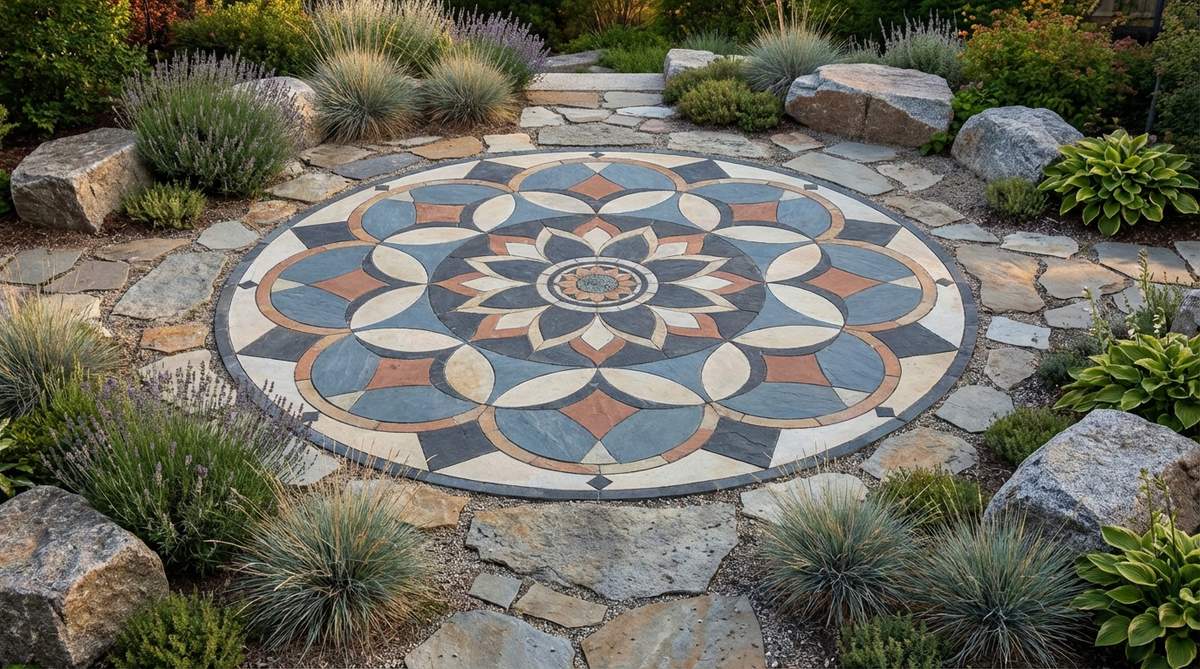
Symmetrical geometric patterns radiate from a central point in arrangements inspired by sacred art traditions. Mandalas incorporate interlocking circles, diamonds, and lotus petals in balanced compositions that encourage contemplation.
Create mandala mosaics within round forms using contrasting stone colors to define each geometric element. Work from the center outward in concentric layers, maintaining strict symmetry throughout the installation process.
These designs transform meditation zones and quiet garden corners into intentional reflection spaces. The balanced geometry provides visual calm that contrasts effectively with organic plantings.
12. Greek Key Border
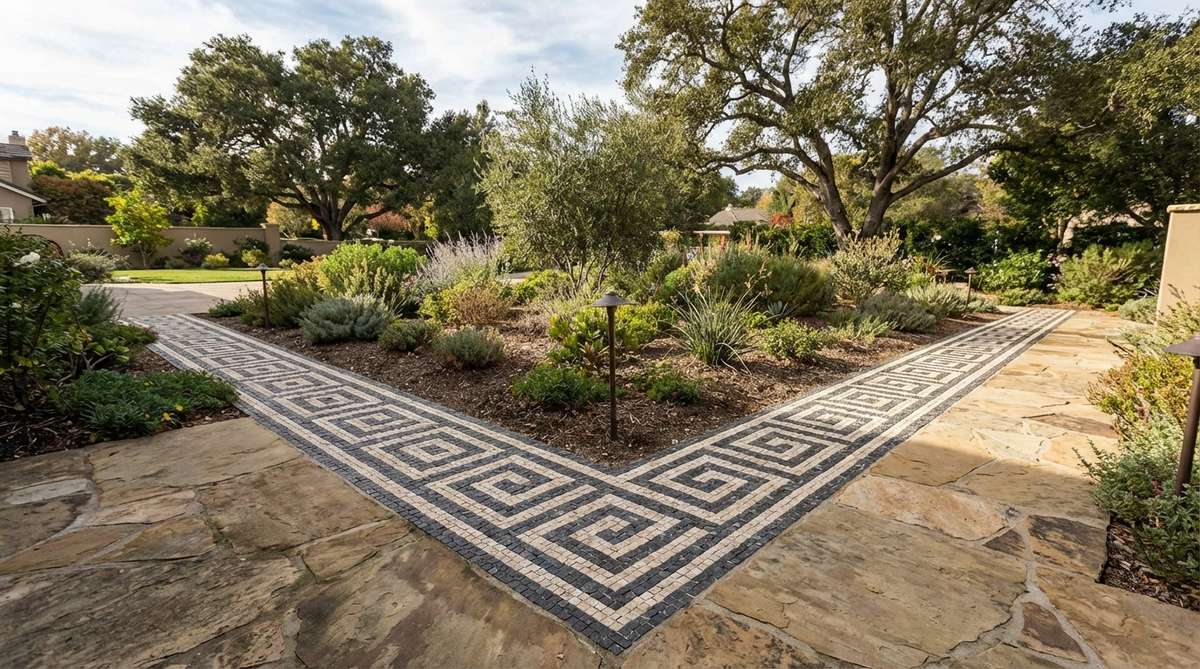
Interlocking rectangular spirals form classical borders that frame larger mosaic areas or define garden edges. This ancient pattern uses continuous lines that turn at right angles, creating maze-like geometry.
Install Greek key patterns as perimeter details around simpler central mosaics or use them to delineate transitions between paved and planted areas. The pattern requires precise stone cutting to maintain clean angular turns.
The classical motif brings formality to Mediterranean-style gardens and provides architectural character to modern landscapes. Its linear quality complements rectangular patios and straight pathway edges.
13. Celtic Knot Weave
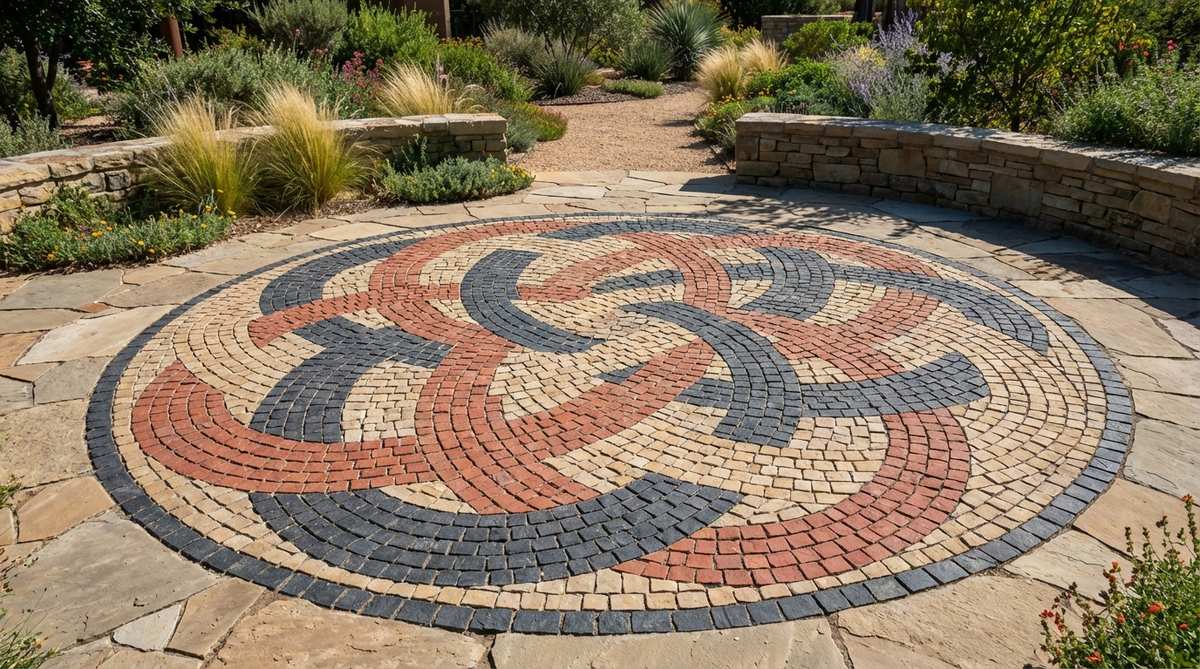
Continuous interwoven bands create intricate patterns without beginning or end, symbolizing eternal connection. The over-under weaving effect requires careful stone color placement to maintain the illusion of dimensional braiding.
Outline each band first with border stones, then fill interiors while maintaining the alternating over-under sequence. Use three contrasting colors to clarify the weaving pattern and enhance the dimensional effect.
Celtic knots work beautifully as accent mosaics within larger paved areas or as standalone features in intimate garden spaces. The complexity rewards close viewing and creates conversation-worthy focal points.
14. Moroccan Zellige Inspired
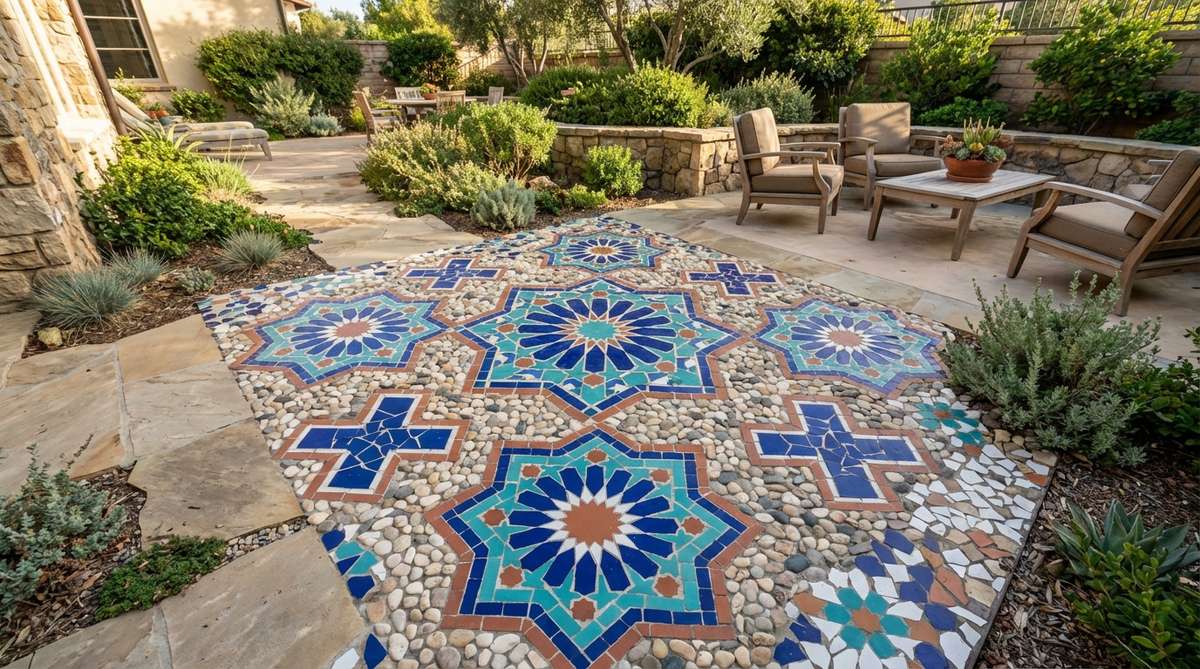
Star and cross patterns based on Islamic geometric traditions create dense, intricate ground covers. These designs use mathematical precision to generate complex tessellations from relatively simple base shapes.
Broken ceramic tiles in jewel tones combine with neutral pebbles to evoke traditional Moroccan tilework. The color palette typically includes cobalt blue, turquoise, white, and terra cotta against neutral stone backgrounds.
This pattern style elevates courtyard spaces and brings exotic sophistication to enclosed gardens. The dense patterning reads as richly textured from a distance while revealing intricate detail up close.
15. Star Struck Medallion
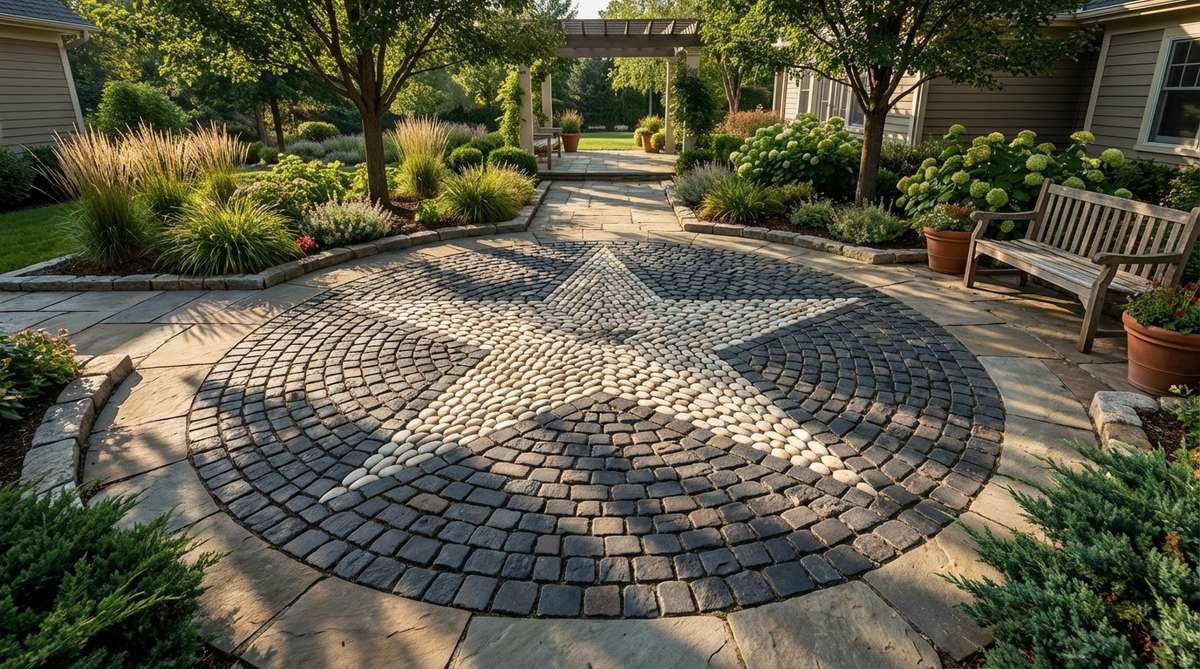
Bold star shapes in contrasting colors create striking focal points against dark cobblestone backgrounds. Traditional designs feature white or light-colored stones forming five or eight-pointed stars surrounded by darker materials.
The stark contrast between light stars and dark backgrounds generates maximum visual impact, making these patterns ideal for small courtyard centerpieces. Multiple stars of varying sizes can create celestial compositions.
Position star medallions where overhead lighting will cast interesting shadows through nearby structures or trees. The graphic quality suits both traditional and contemporary garden aesthetics.
Modern & Contemporary Layouts
Contemporary stone garden mosaic designs embrace asymmetry, negative space, and bold color contrasts. These patterns align with modern architectural elements and minimalist landscape philosophies.
16. Free-Form Stone Carpet
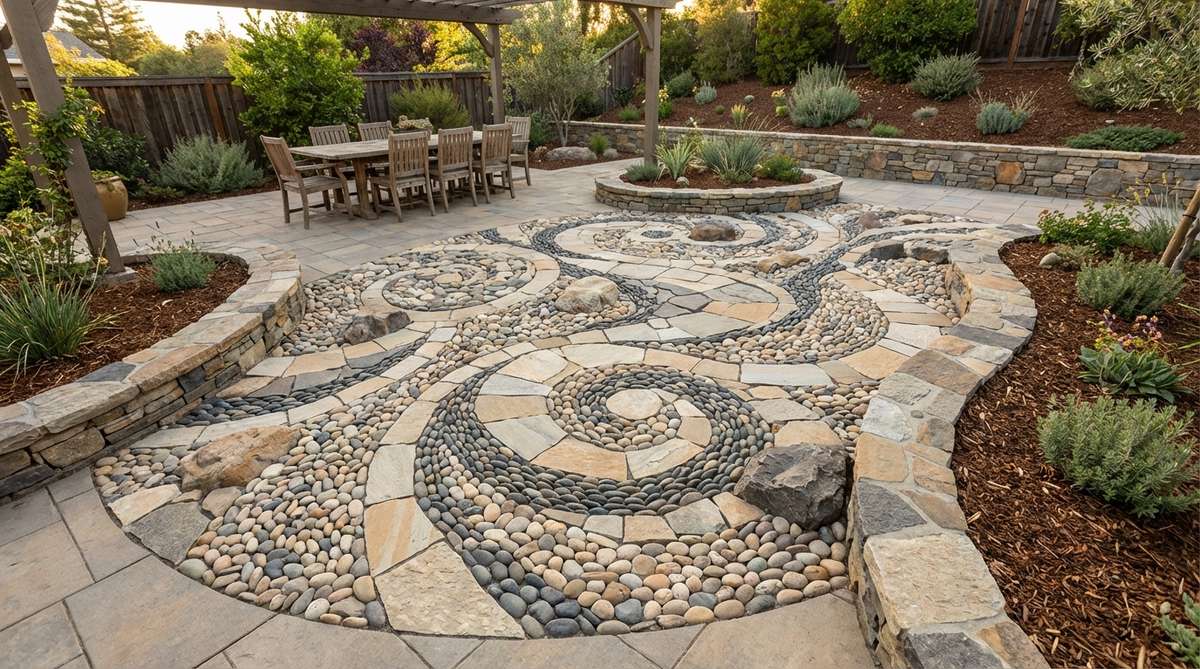
Abstract arrangements create the illusion of permanent outdoor rugs without rigid geometric constraints. Curved borders contain organic internal patterns where “imperfections” function as intentional design elements.
Set brick or large stone edging first to define the carpet perimeter, then fill interiors with improvisational pebble arrangements. Concentric ovals, irregular stripes, or abstract cellular patterns work effectively within the carpet format.
This approach suits eclectic gardens where artistic expression takes priority over formal symmetry. The carpet concept provides visual grounding for outdoor seating areas and dining spaces.
17. Linear Stripe Modern
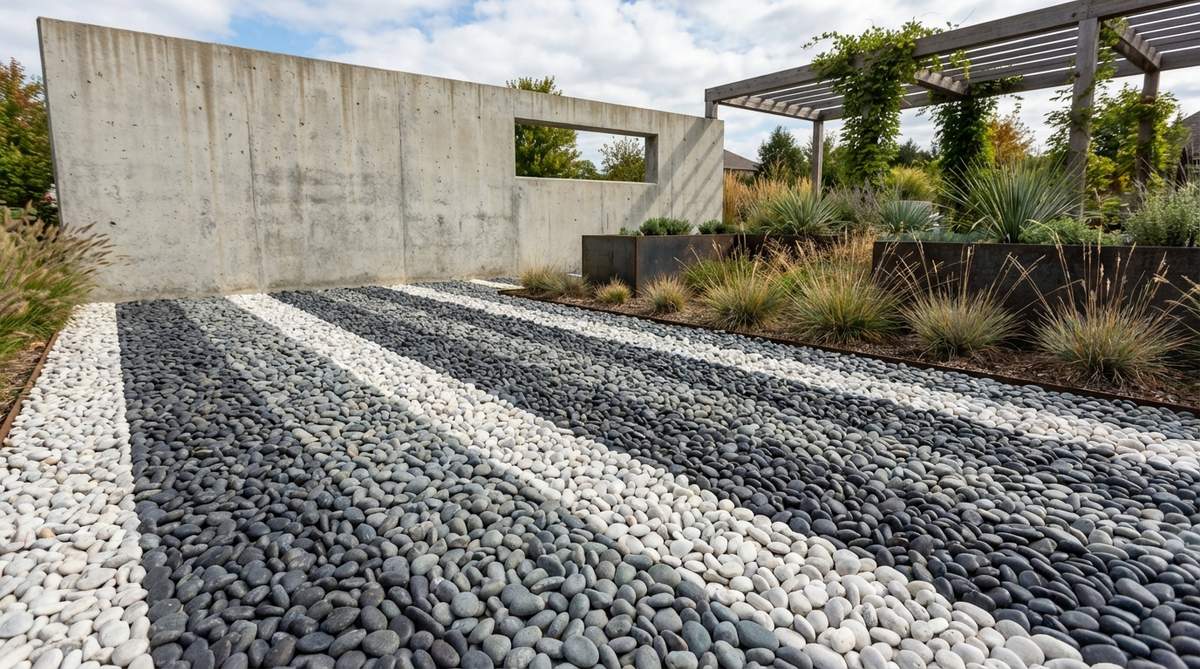
Parallel bands of contrasting pebbles create clean contemporary patterns with strong directional emphasis. Stripes run perpendicular to the primary walking direction to create visual width or parallel to emphasize length.
Vary stripe widths intentionally rather than maintaining uniform dimensions for more sophisticated visual rhythm. Monochromatic schemes using charcoal, gray, and white pebbles reinforce modern aesthetics.
Striped mosaics pair exceptionally well with minimalist architecture and contemporary garden design. The linear quality complements rectangular planters and geometric hardscape elements.
18. Asymmetric Color Blocks
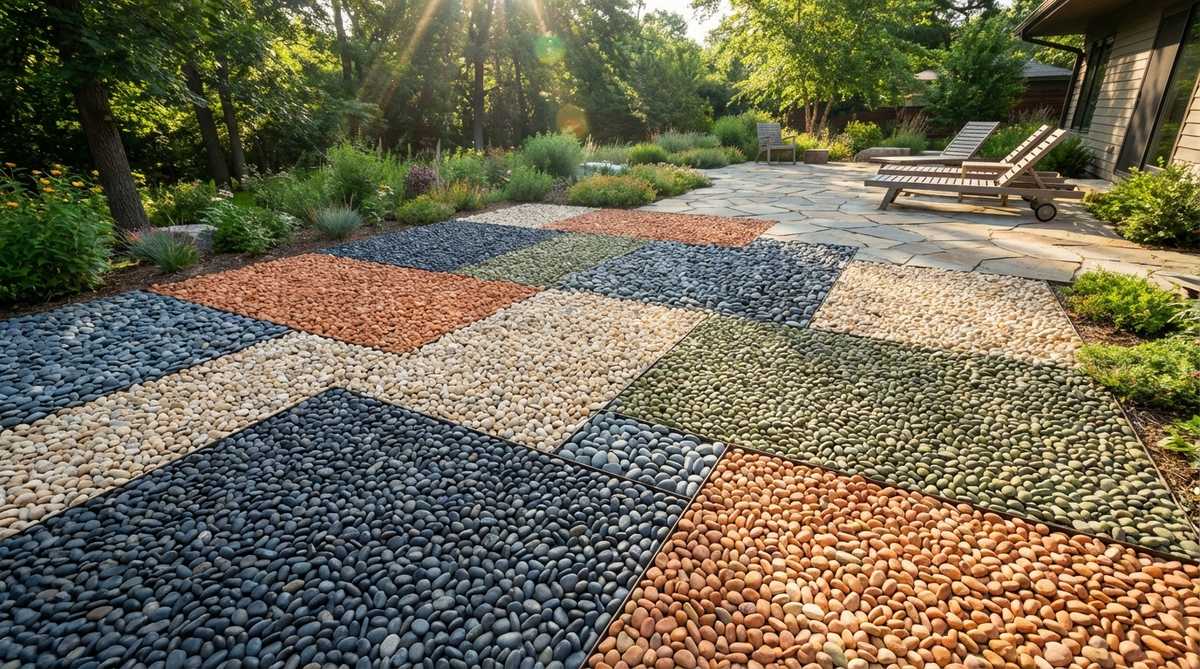
Irregular sections of solid-color pebbles meet at angular boundaries without overall symmetry. This pattern embraces negative space principles and compositional balance through color weight rather than mirror imagery.
Select four or five stone colors and arrange them in unequal sections that balance visually across the composition. Allow some sections to dominate while others provide accent punctuation.
The abstract approach suits modern residential landscapes and artistic garden installations. Asymmetric designs create dynamic visual interest without requiring complex technical execution.
19. Galaxy Swirl Abstract
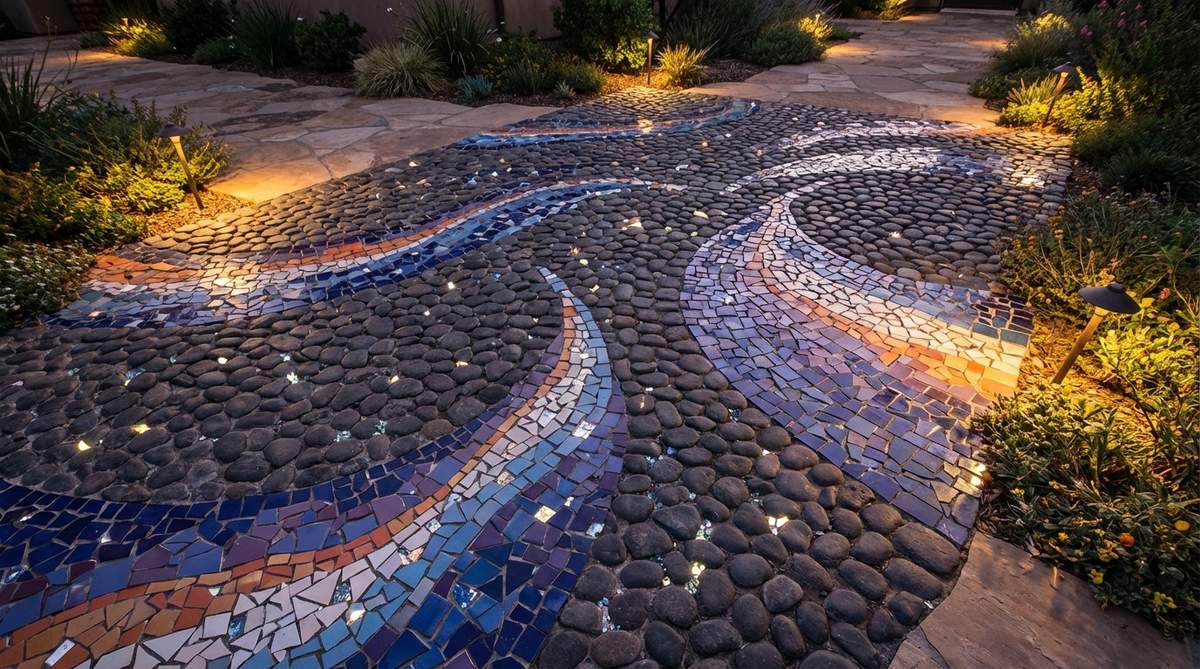
Dark cobblestones combined with colorful broken ceramic tiles create cosmic imagery reminiscent of nebulae and star fields. The pattern uses concentric circles or loose spirals with scattered bright tile fragments suggesting distant stars.
Mix pebble sizes intentionally, using larger stones for the dark background and smaller colorful pieces for the luminous elements. Arrange colors in gradient patterns that suggest depth and astronomical distance.
This dramatic pattern functions beautifully in evening gardens where landscape lighting enhances the celestial effect. The cosmic theme appeals to contemporary tastes while maintaining organic material character.
20. Minimalist Zen Circles
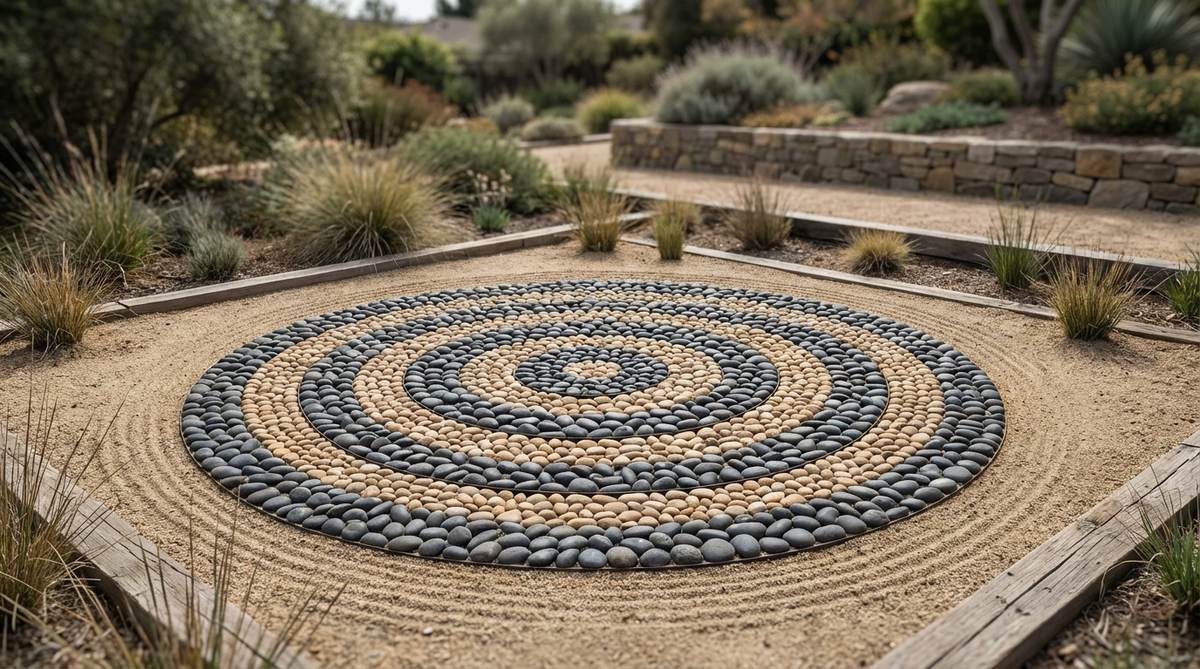
Simple rings of contrasting pebbles float in fields of uniform background material with generous negative space. This restrained approach emphasizes mindfulness and intentional simplicity.
Create single or paired circles using just two stone colors, allowing the background to dominate compositionally. The circles can remain empty or contain raked patterns for added contemplative character.
Zen circle mosaics enhance meditation gardens and minimalist landscape designs. The simplicity provides visual rest in gardens with complex plantings or active water features.
Functional Pathway Mosaics
These practical patterns prioritize durability and comfortable walking surfaces while maintaining visual appeal. Functional designs balance artistic expression with the technical requirements of high-traffic areas.
21. Pebbled Pathway Traditional
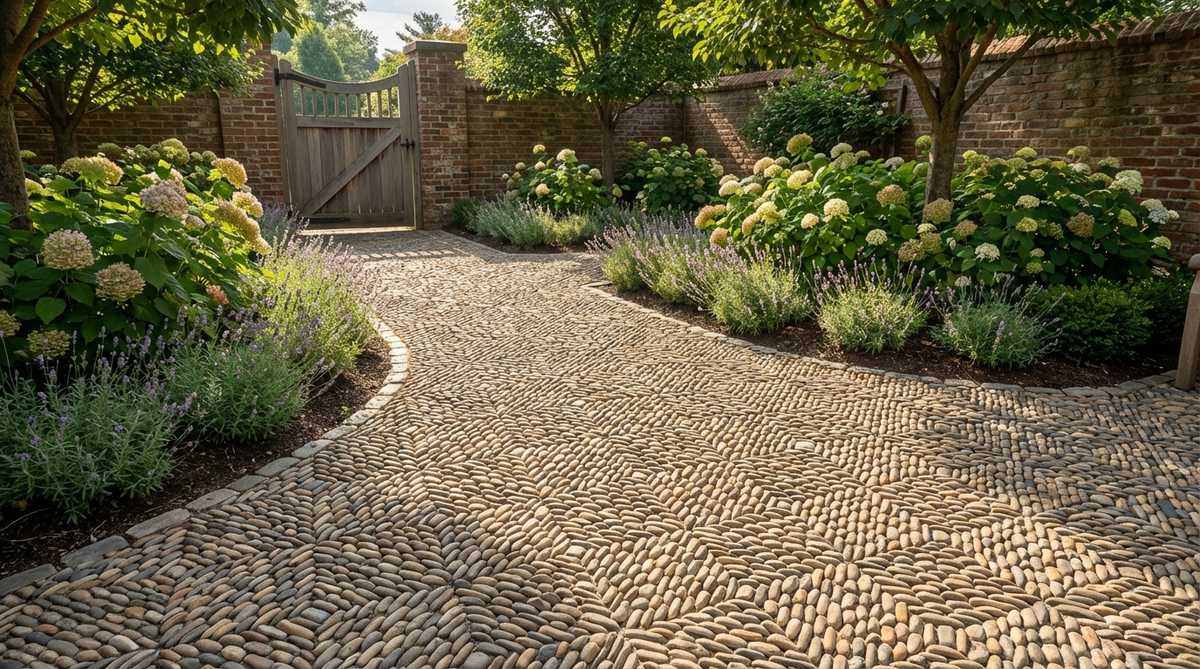
Intricate repeating patterns create cohesive winding garden paths and entryways. Pebbles set on edge and packed tightly generate durable surfaces that withstand regular foot traffic.
Vary stone directions within the overall pattern to create visual texture while maintaining structural integrity. Geometric focal points at regular intervals break monotony in longer pathway sections.
Traditional pebbled paths suit cottage gardens and historic landscape restorations. The technique produces surfaces that improve with age as stones settle and patina develops.
22. Stepping Stone Accents
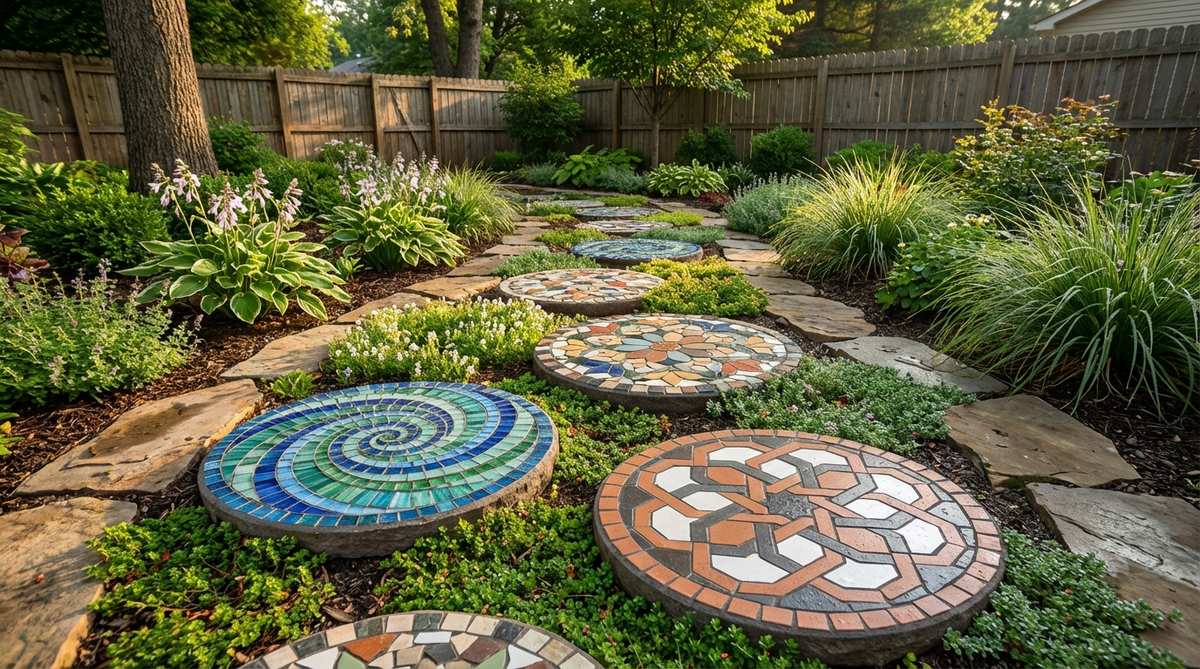
Individual mosaic medallions function as discrete stepping stones through planted areas. Each stone features a complete miniature pattern—spirals, flowers, or geometric designs—within a 16-24 inch diameter.
Build these without permanent forms, creating freestanding mosaic elements that can be relocated as garden layouts evolve. The portable nature allows seasonal adjustments and experimental placement.
Stepping stone mosaics protect lawn areas from wear while adding artistic detail at ground level. Space them according to comfortable stride length for functional pathway creation.
23. Rustic Brick & Stone Mix
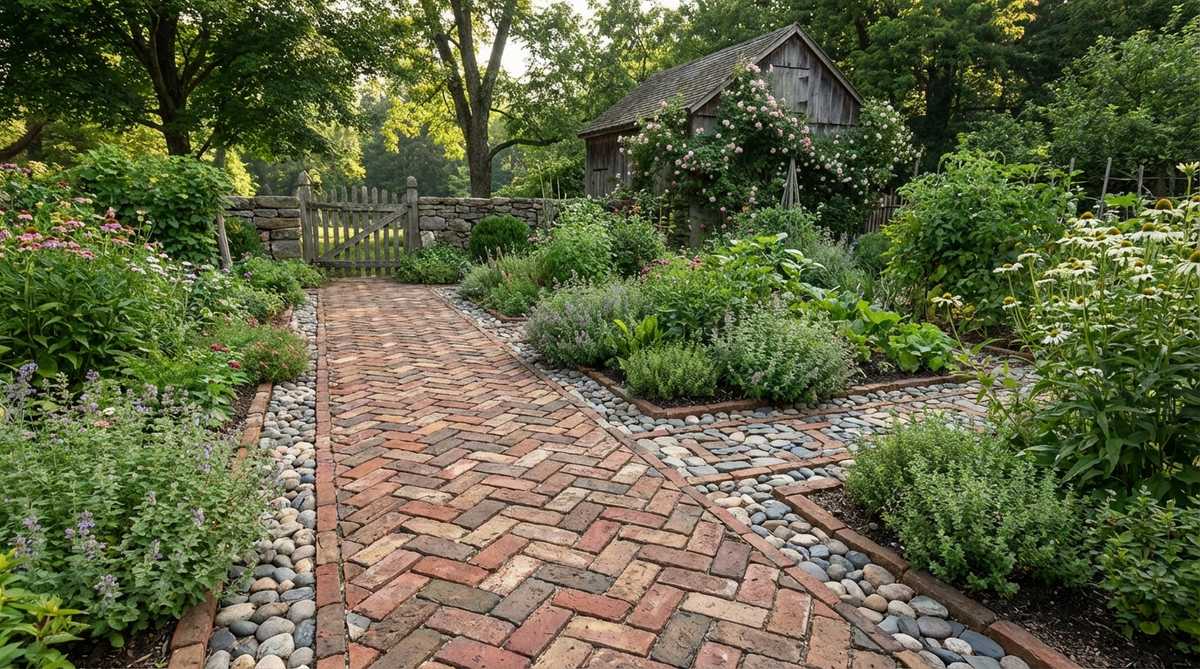
Reclaimed bricks combined with pebble or slate infills create farmhouse-style pathways with historical character. The mixed materials provide textural variety while maintaining cohesive earth-tone palettes.
Arrange bricks in herringbone or basket weave patterns, filling gaps with small pebbles for organic texture. The combination offers lower material costs while achieving sophisticated visual results.
This approach suits cottage gardens, kitchen gardens, and landscapes inspired by agricultural traditions. The mixed materials age gracefully and accommodate ground movement better than solid surfaces.
24. Gravel & Stone Border
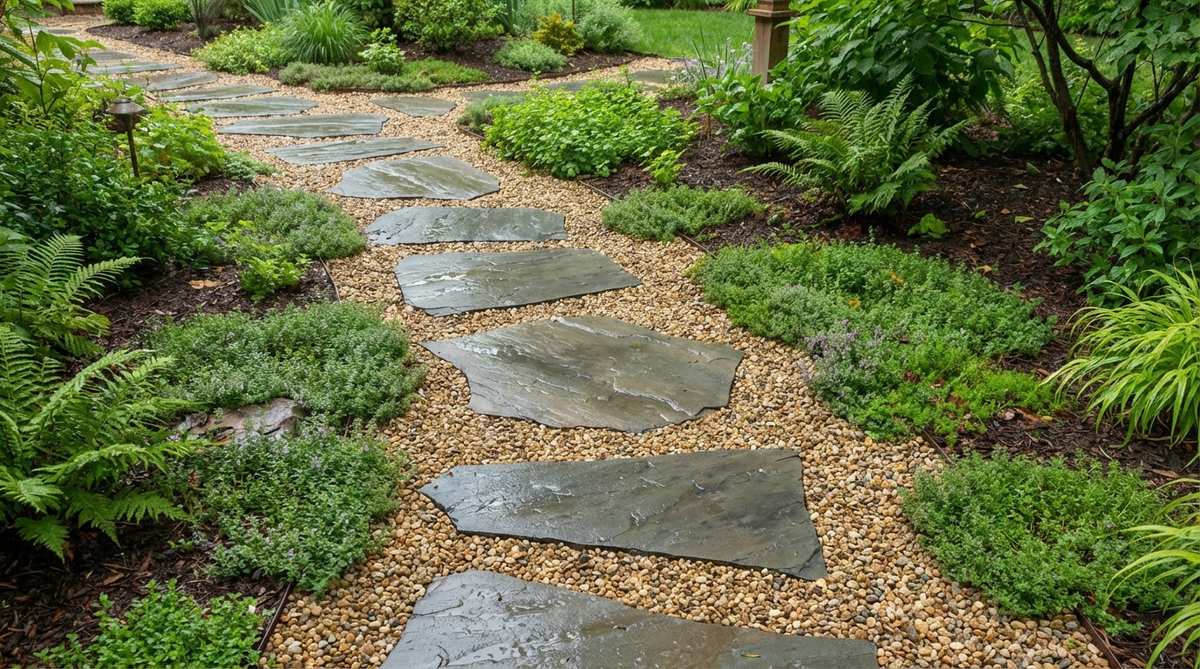
Large flat stones set in gravel fields create stable walking surfaces with permeable edges. The stones provide secure footing while surrounding gravel handles drainage and prevents mud accumulation.
Position larger stones at regular intervals along primary walking lines, surrounding them with smaller pebbles to fill the pathway width. This pattern requires minimal mortar, making it ideal for DIY installations.
The permeable design suits rainy climates and areas with drainage concerns. Native groundcovers can colonize gravel edges for naturalistic pathway integration.
25. Cobblestone Edging
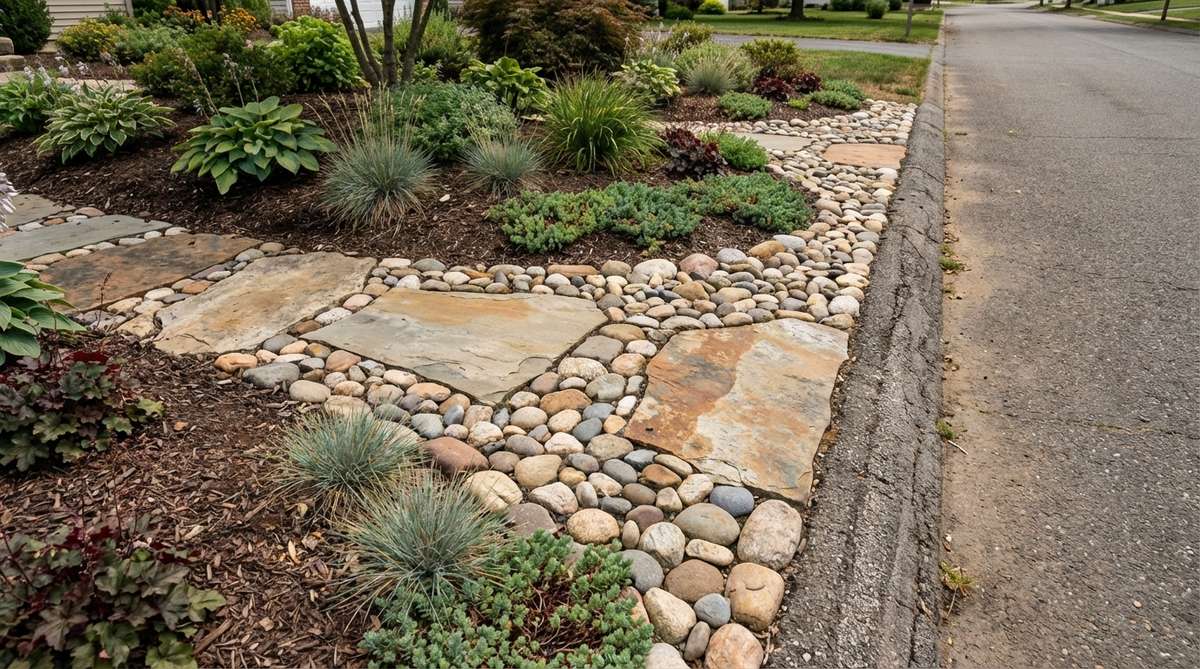
Pebble mosaics fill spaces between large flat stepping stones along streetside curbs or garden borders. The mosaic material provides textural transition between dominant hardscape elements and adjacent plantings.
Select pebbles in colors that harmonize with both the primary stones and nearby plant palettes. Install edging mosaics to define boundaries without creating visual barriers.
This detail-oriented approach elevates standard pathway installations into refined landscape features. The edging technique frames primary walking surfaces while managing material transitions elegantly.
Specialty Installation Techniques
Advanced applications push stone garden mosaic beyond traditional ground covers. These specialized approaches create unique landscape features with expanded functional and artistic possibilities.
26. Vertical Wall Mosaic
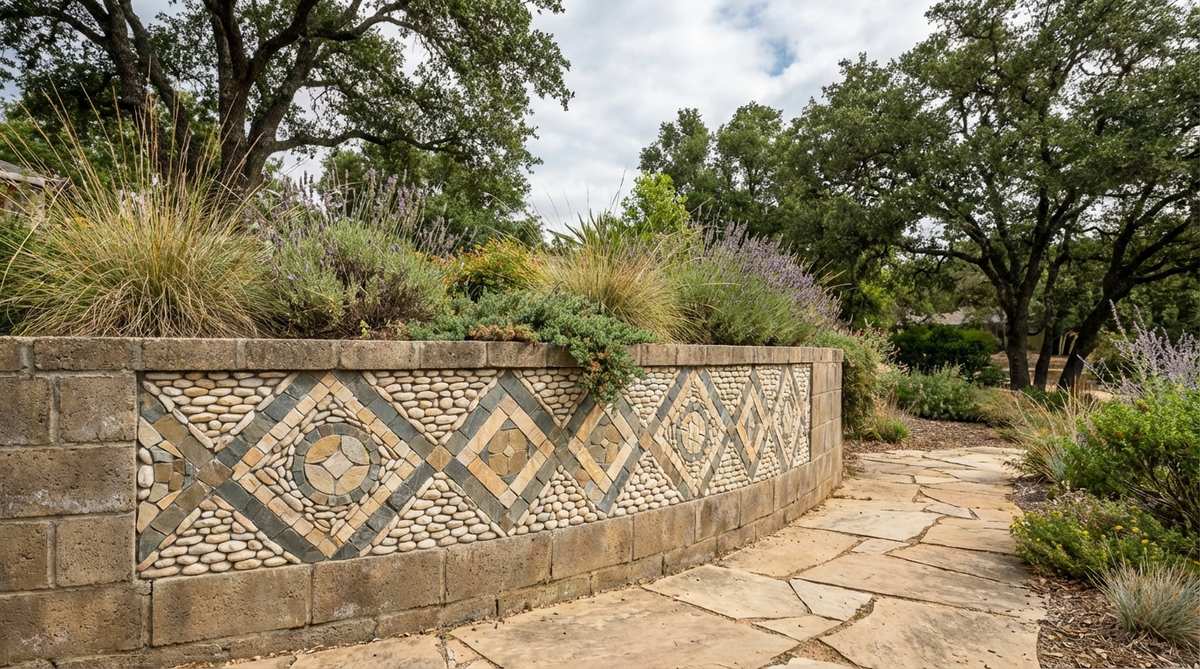
Stone mosaics applied to vertical garden walls and raised bed facades extend the art form into three-dimensional space. These installations require stronger adhesive mortars and backing support to counter gravity.
Create designs with smaller, lighter stones to reduce weight load on vertical surfaces. Geometric patterns work more reliably than complex organic designs in vertical applications.
Wall mosaics transform plain retaining walls into artistic focal points and add textural interest to solid barriers. The vertical orientation creates opportunities for larger-scale imagery visible from a distance.
27. Fountain & Pool Surround
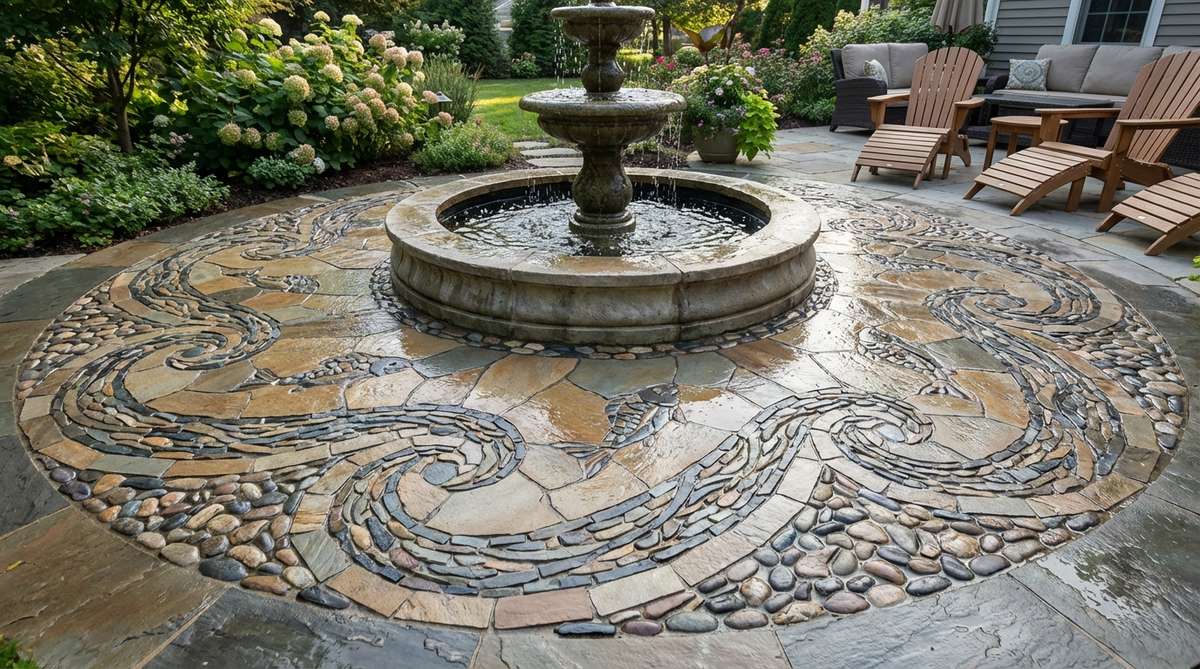
Mosaics ringing water features frame pools and fountains with complementary artistic detail. Designs often incorporate wave patterns, aquatic life, or concentric rings that echo water’s circular ripples.
Use non-porous stones in areas subject to splash and standing water to prevent deterioration. Seal completed mosaics with appropriate products rated for continuous moisture exposure.
Pool surrounds benefit from stones with textured surfaces that provide slip resistance when wet. The water-adjacent location makes these mosaics central to garden focal point compositions.
28. Herb & Groundcover Gaps
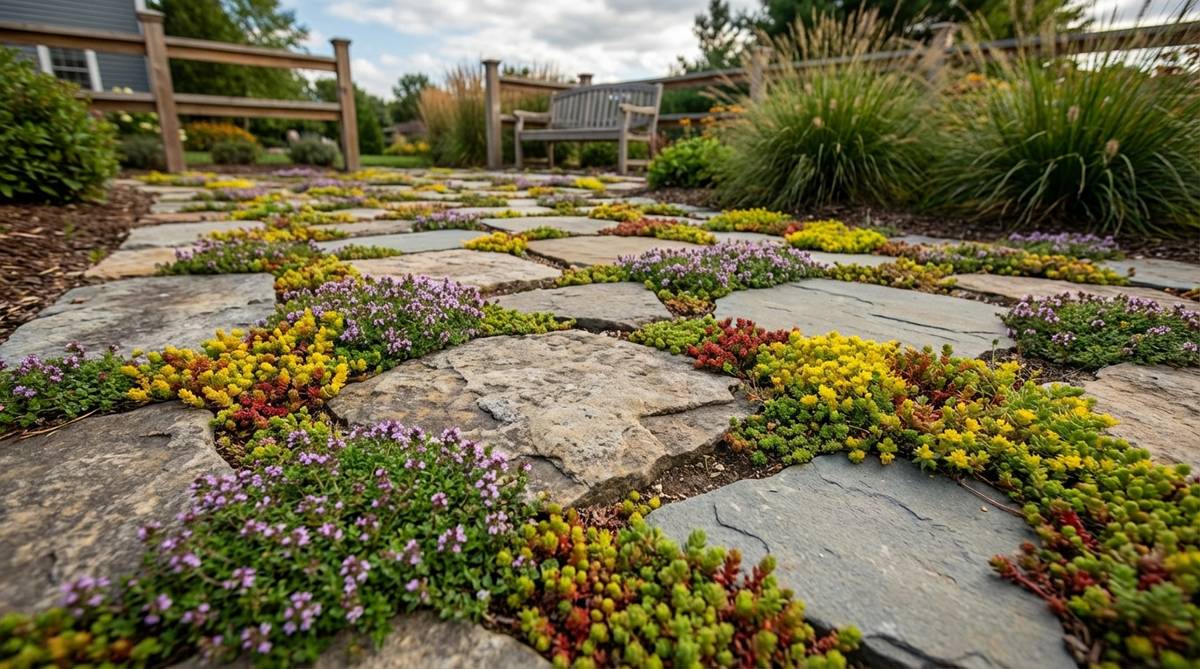
Intentional planting gaps within stone mosaics allow low-growing herbs and groundcovers to colonize the hardscape. Creeping thyme, sedum, and woolly thyme soften rigid stone patterns while contributing fragrance.
Leave irregular openings during installation or remove sections of cured mosaic to create planting pockets. The living elements introduce color variation and seasonal change to permanent stone designs.
This biointegrated approach suits permaculture-inspired gardens and landscapes prioritizing ecological function. The plants also provide habitat for beneficial insects at ground level.
29. Patchwork Squares Eclectic
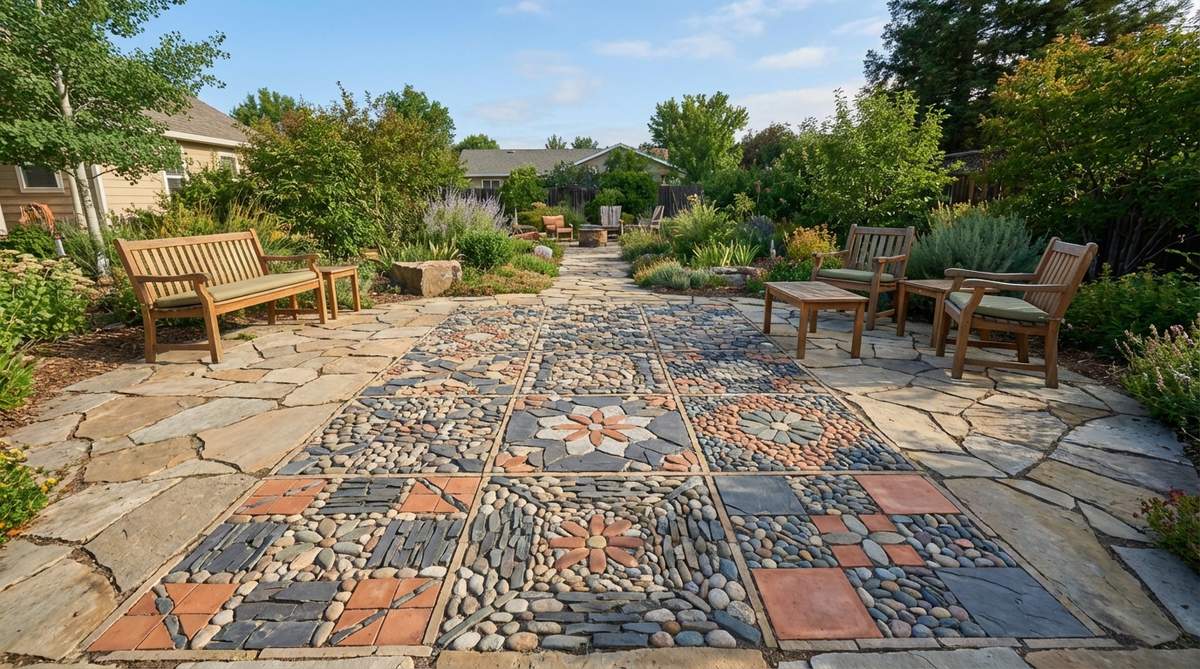
Grid layouts featuring unique patterns within each square create quilt-like compositions with maximum creative flexibility. Each square showcases different stone arrangements, colors, or materials while maintaining unified scale.
Divide the design area into consistent square dimensions, then develop individual patterns for each cell. Maintain cohesive color palettes or repeat certain elements throughout to prevent visual chaos.
The patchwork approach allows collaborative family installations where each member contributes a square. The eclectic style suits both small accent areas and larger patio installations.
30. Broken Pottery Patchwork
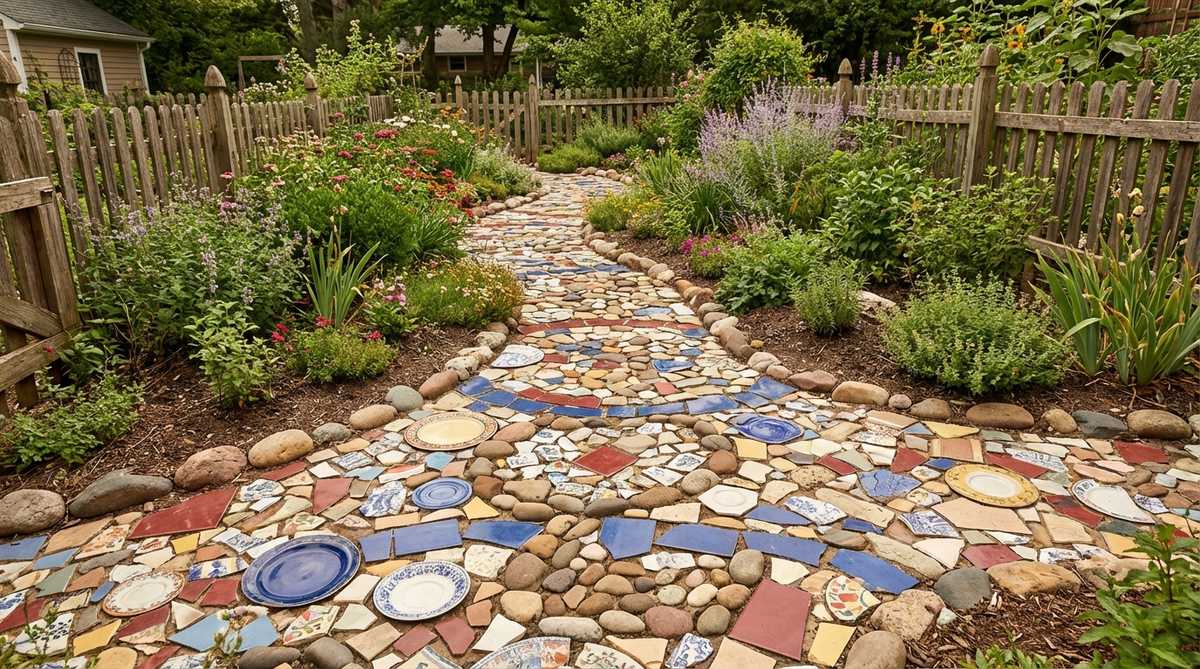
Mismatched ceramic fragments combine with natural stones to create colorful sustainable mosaics. This budget-friendly technique repurposes damaged dishware and tiles into unique artistic expressions.
Mix pottery colors deliberately to create either rainbow effects or more controlled color schemes. The irregular ceramic shapes contrast beautifully with uniform rounded pebbles.
Pottery patchwork mosaics bring bohemian character to cottage gardens and eclectic landscapes. The technique reduces landfill waste while producing visually striking ground covers.
Transform Your Landscape With Stone Garden Mosaics
These 30 stone garden mosaic patterns demonstrate the remarkable versatility of natural materials in creating durable, artistic ground covers. From classic spirals to contemporary abstracts, each design offers opportunities to elevate ordinary pathways and patios into landscape focal points that reflect personal style while withstanding years of use.
Success with stone mosaics depends on proper base preparation, thoughtful material selection, and patient installation techniques that honor both artistic vision and structural requirements. Fresh Garden Ideas encourages experimentation with these patterns, adapting designs to your specific site conditions, available materials, and aesthetic preferences for truly customized landscape expressions.
Frequently Asked Questions
What type of mortar should I use for garden stone mosaics?
Use standard masonry mortar (sand and cement mix without gravel) rather than concrete for stone mosaics. Mortar adheres better to stones and creates smoother installations than concrete. Mix mortar to thick pudding consistency and work in small batches covering 3-4 square feet at a time, as it sets within 20 minutes in moderate temperatures. Avoid installation during hot, sunny days when rapid drying compromises adhesion.
How do I prepare the base for a stone mosaic pathway?
Excavate the pathway area to accommodate 2 inches of compacted crushed gravel plus 3 inches of mortar bed. Spread crushed gravel over the bottom and compact thoroughly by tamping with a post or renting a vibrating plate compactor for larger areas. The compacted base prevents settling and provides essential drainage beneath the mosaic. Install solid edging materials like lumber or plastic bender board to contain the mortar and stones during installation.
What stones work best for garden mosaic patterns?
Choose smooth drain-rock pebbles with relatively flat sides for easiest installation and most level finished surfaces. Stones should be similar in thickness (typically 1-2 inches) to simplify leveling during installation. Wet stones before placing them to accentuate color distinctions and preview the final appearance, as moisture brings out natural stone pigments. Contrasting colors between pattern elements make designs more visible—pair dark stones with light ones for maximum impact.
How long does a stone garden mosaic last?
Properly installed stone mosaics last decades with minimal maintenance when built on adequate bases with correct mortar formulations. The natural materials withstand freeze-thaw cycles better than poured concrete in most climates. Mosaics actually improve aesthetically with age as stones develop patina and settle into place. Occasional repairs may be needed if ground movement occurs, but the modular nature of mosaic work makes localized fixes straightforward without replacing entire sections.
Can I install stone mosaics directly on existing concrete?
Existing concrete slabs provide excellent stable bases for stone mosaic installations. Clean the concrete thoroughly and roughen smooth surfaces with a grinder or acid etching to improve mortar adhesion. Apply a bonding agent designed for masonry applications before spreading mortar. The existing concrete eliminates excavation and base preparation steps, making these overlay projects faster than ground-level installations while achieving identical visual results.
How do I maintain proper drainage in stone mosaic installations?
Install mosaics with a slight slope (1-2 percent grade) away from structures to direct water runoff. The compacted gravel base layer provides primary drainage beneath the mortar bed. For areas with heavy water exposure, consider using permeable designs that incorporate gravel sections or planting gaps between mosaic elements. Seal completed mosaics in wet climates with breathable masonry sealers that allow moisture vapor transmission while protecting surface stones.