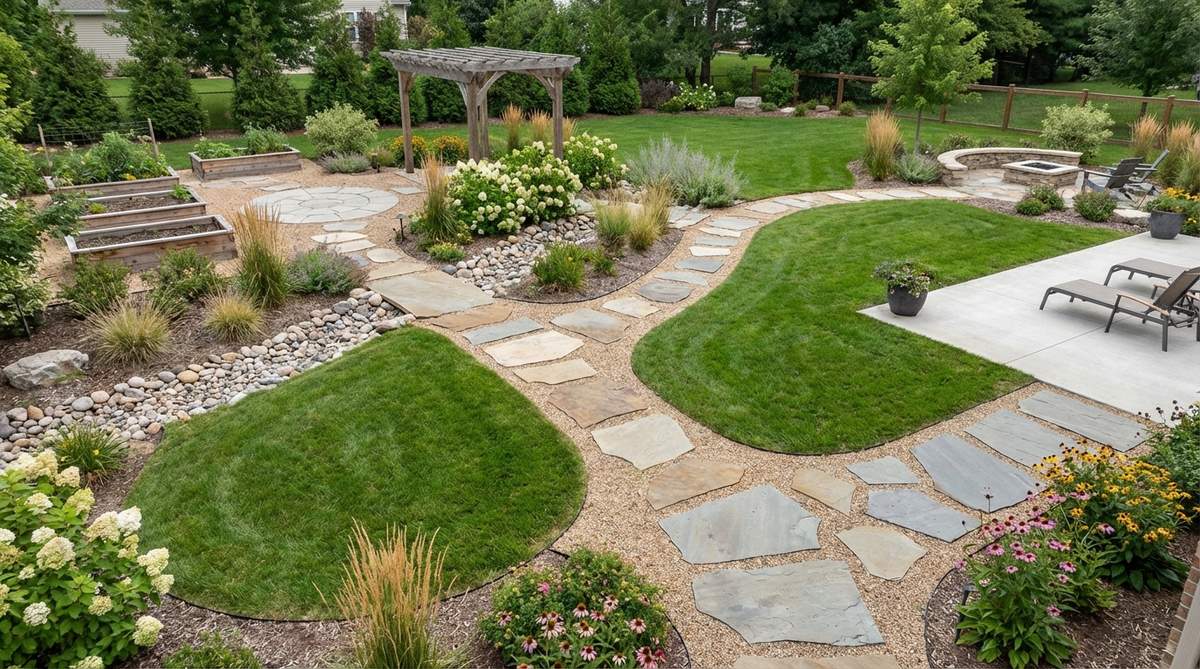
A well-designed stepping stones garden transforms ordinary lawns and gravel beds into functional, visually striking pathways. Whether you’re working with lush grass or textured gravel, the right layout balances aesthetics with practical navigation. Fresh Garden Ideas brings you over 30 professionally curated designs that work beautifully in American landscapes, from modern suburban yards to rustic cottage gardens.
Design SnapshotKey Principles
- Height Matters: Set stones flush with grass for easy mowing; raise them slightly above gravel to prevent slipping on loose material
- Spacing Strategy: Position stones 18-24 inches apart for comfortable walking stride and natural flow through the garden
- Material Harmony: Match stone color and texture to existing hardscape elements while contrasting with ground cover for visual definition
- Drainage First: Install proper base layers of sand or gravel beneath stones to prevent settling and ensure long-term stability
Grass-Embedded Stepping Stone Layouts
Stepping stones set into lawn create subtle pathways that preserve the garden’s green expanse while directing foot traffic. These designs work exceptionally well in American yards where lawn culture dominates, offering both function and refined visual appeal.
1. Diagonal Square Pavers in Lawn
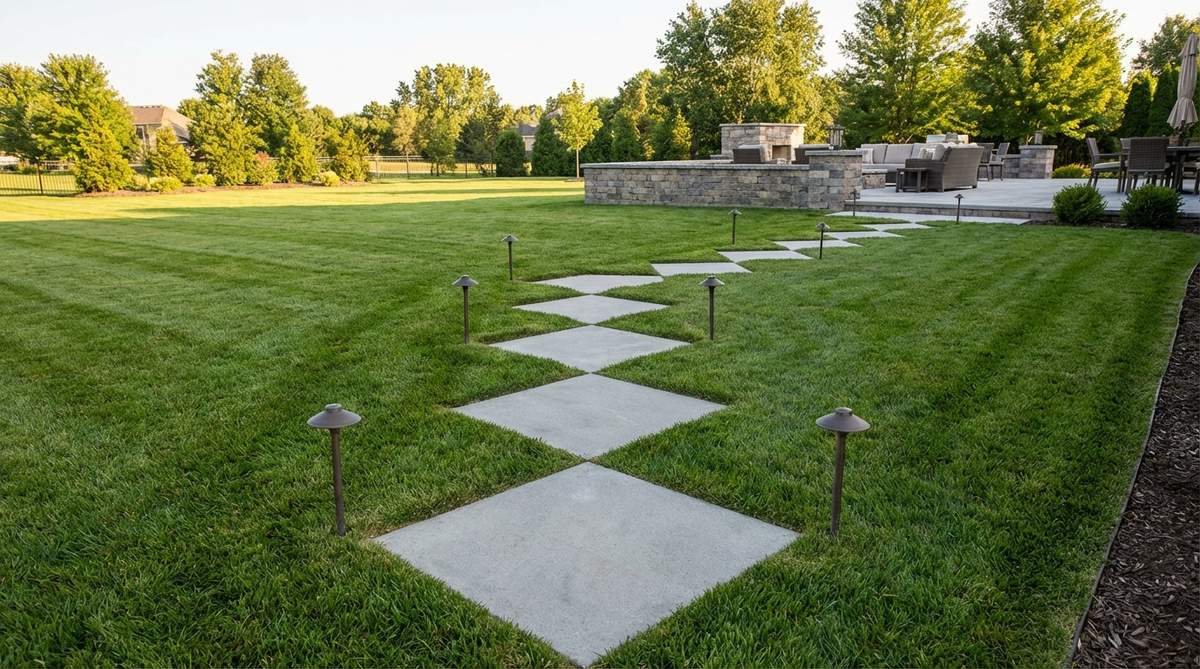
Large square concrete pavers rotated 45 degrees create dynamic visual movement across open lawn areas. The diamond orientation draws the eye forward while maintaining clean, modern lines.
Cut precise squares into the turf, excavate 4-6 inches deep, and establish a sand base before setting pavers level with grass height. This method ensures your mower glides smoothly over the surface.
The angular placement makes standard materials feel contemporary and unexpected. Pair with low-profile landscape lighting along the path edge for evening navigation.
2. Circular Stepping Stones with Natural Spacing
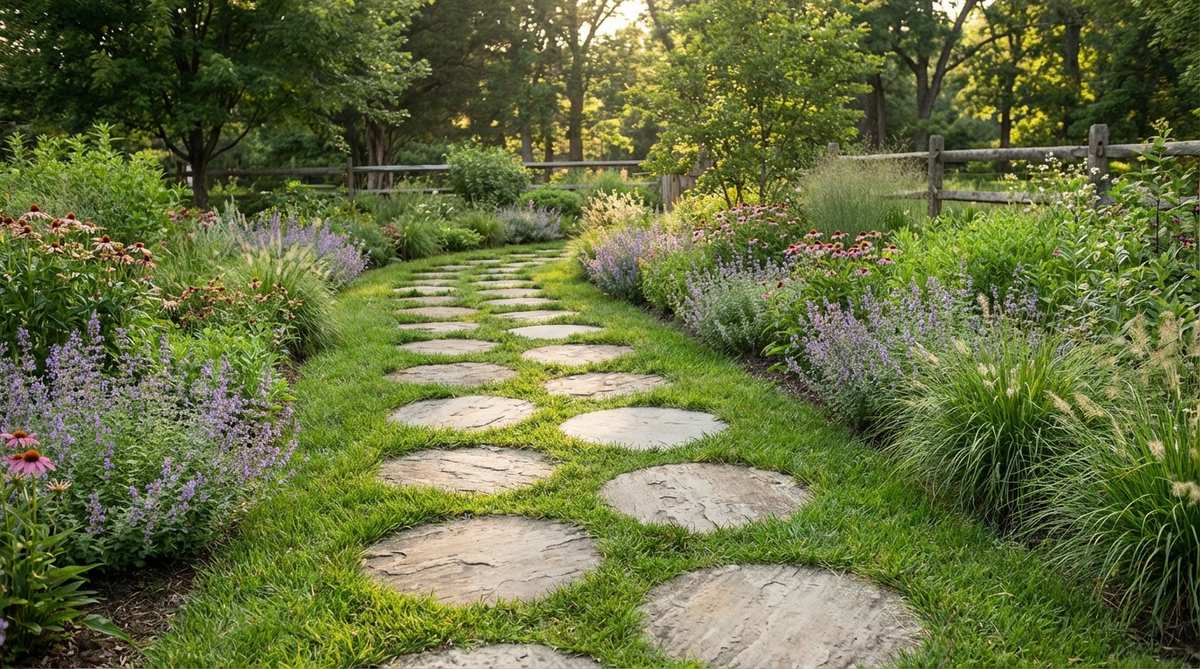
Round stones placed at walking intervals create a relaxed, pastoral pathway that feels organic rather than rigid. The circular form softens formal garden elements and complements curved planting beds.
Space 18-inch diameter rounds 20-22 inches apart center-to-center for adult stride comfort. Vary stone diameter slightly to enhance the natural aesthetic.
This layout reduces visual weight compared to continuous paving and allows grass to remain the dominant feature. Perfect for cottage-style or meadow gardens.
3. Irregular Flagstone Meandering Path
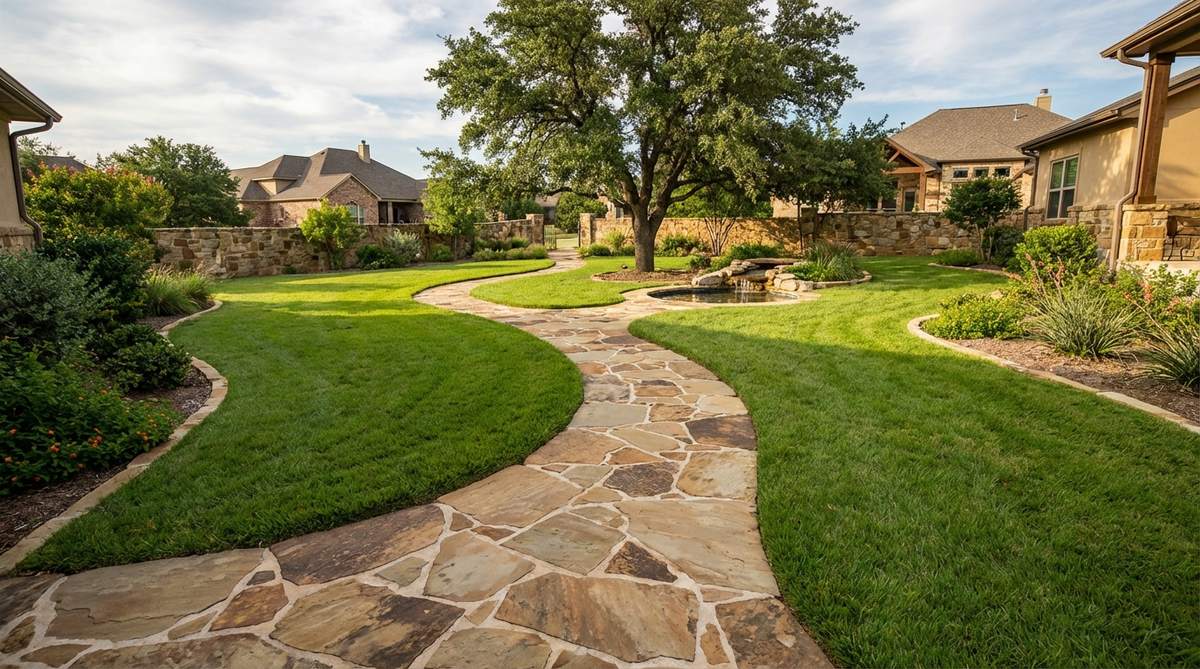
Natural flagstone pieces in varying sizes create an informal route through lawn areas. The uneven edges and organic shapes echo natural rock formations.
Select stones between 18-30 inches across and arrange them to form a gentle curve. Sink each piece so the top surface sits 1/4 inch below grass level to accommodate mower blades.
This design works brilliantly for guiding visitors through expansive lawns toward focal points like specimen trees or water features.
4. Rectangular Bluestone Offset Pattern
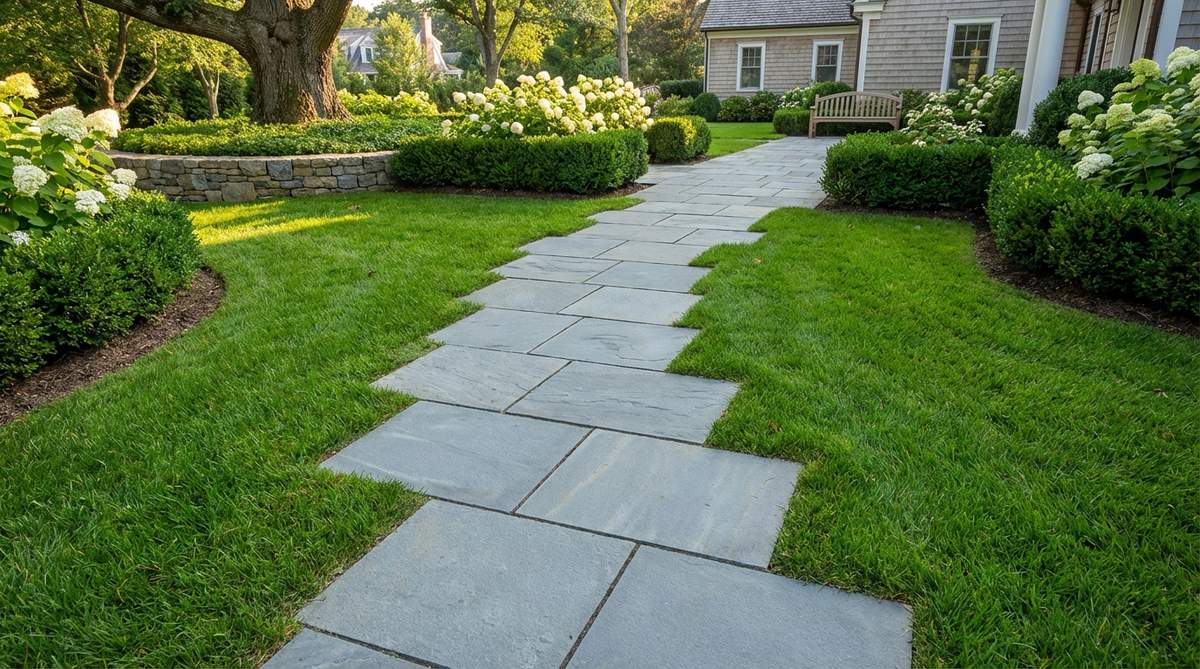
Uniform rectangular bluestone pieces arranged in an offset or running bond pattern deliver formal structure. The consistent sizing creates rhythm while the staggered placement adds sophistication.
Use 12×24-inch bluestone rectangles offset by half their length. This creates a pathway approximately 24 inches wide, suitable for single-file garden strolls.
Bluestone’s natural blue-gray tones contrast beautifully with green turf and remain cool underfoot during summer months.
5. Tree Trunk Slice Woodland Walkway
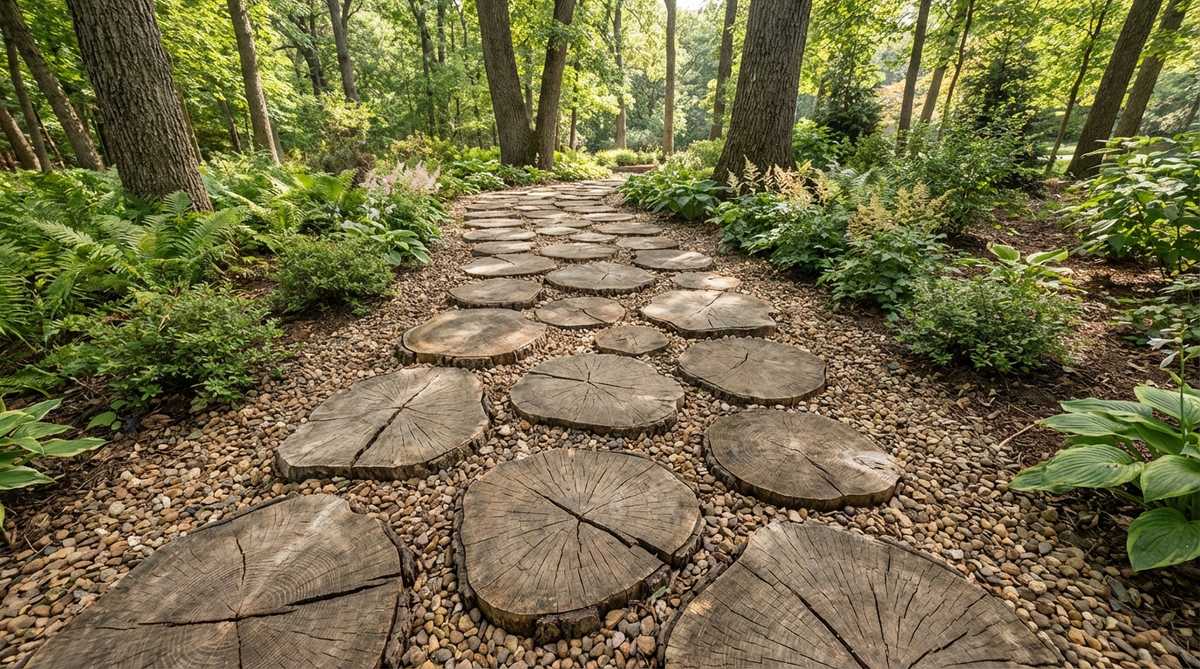
Cross-sections of hardwood logs create rustic stepping stones with distinctive annual ring patterns. Each piece becomes a unique decorative element.
Select 3-4 inch thick slices from decay-resistant species like oak or cedar, sized 14-20 inches in diameter. Treat with wood sealant and set on a gravel drainage layer.
This layout suits woodland or native plant gardens where natural materials reinforce the organic aesthetic. Replace pieces as they age for ongoing maintenance.
6. Hexagonal Concrete Honeycomb Layout
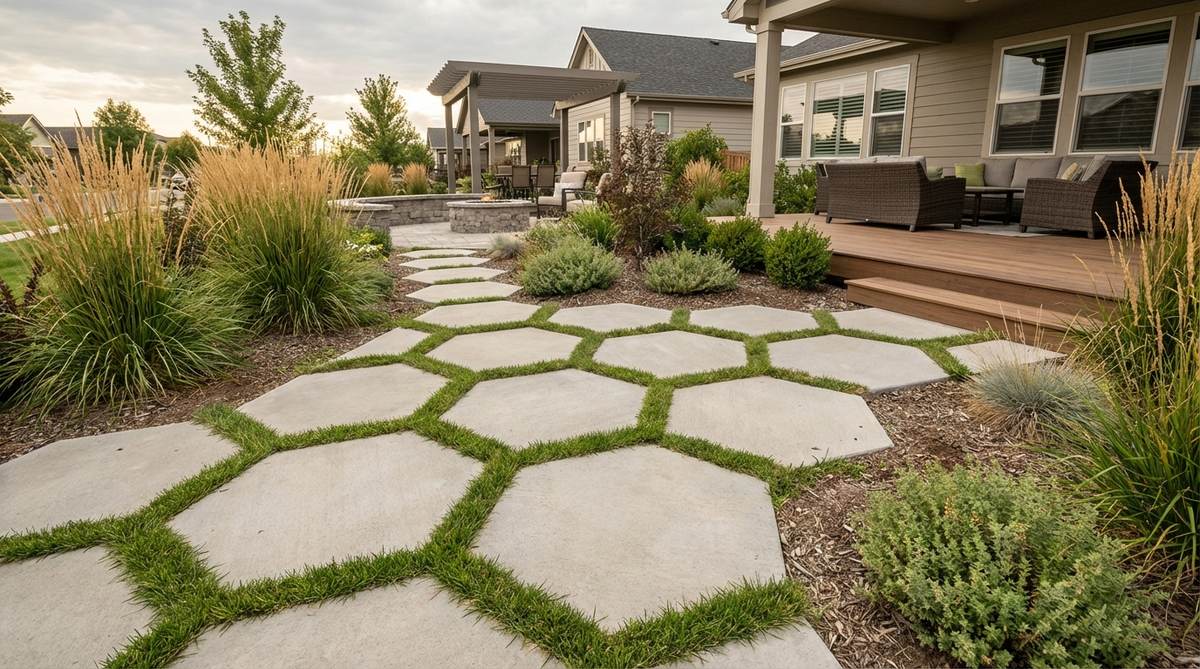
Hexagonal pavers fit together in a honeycomb configuration that maximizes coverage while maintaining distinct stepping zones. The geometric tessellation creates modern visual interest.
Install hexagons with minimal gaps between pieces, allowing grass to grow in the joints. This hybrid approach combines the coverage of solid paving with the softness of turf.
The honeycomb pattern distributes weight efficiently and works well in high-traffic areas where traditional spaced stones might leave worn grass patches.
7. Alternating Size Random Placement
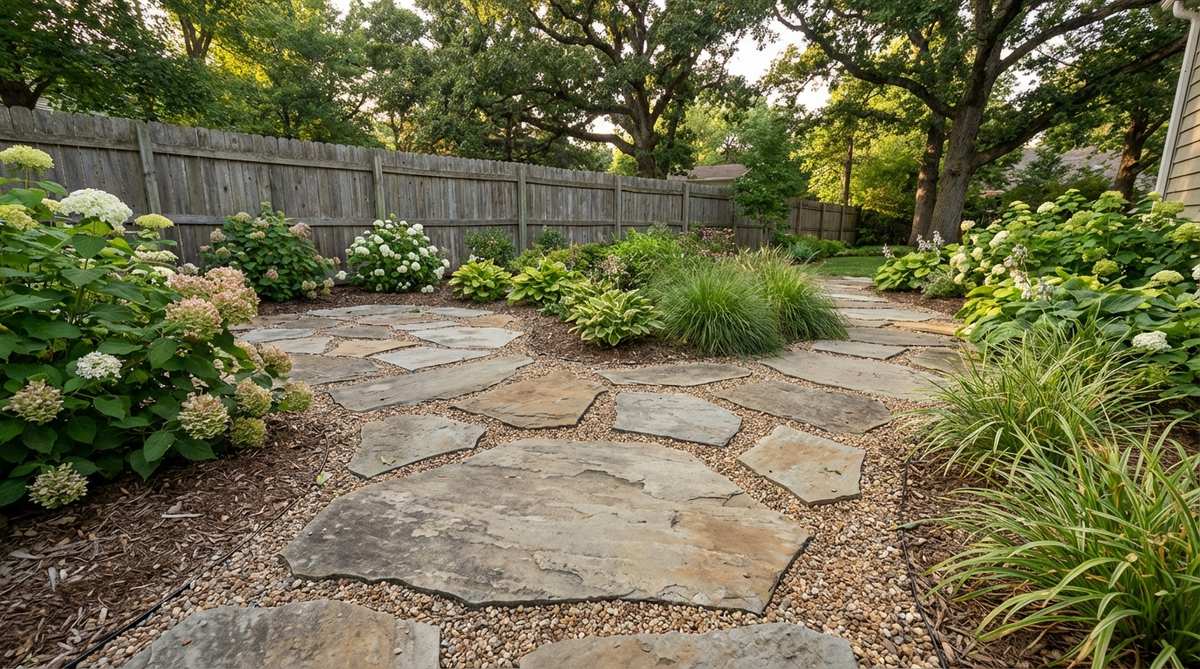
Mixing large and small stepping stones in an asymmetric pattern creates visual texture while accommodating varied stride lengths. This approach feels spontaneous yet remains functional.
Combine 24-inch primary stones with 12-16 inch secondary stones, spacing them so walkers can easily reach the next stone. Avoid creating awkward gaps that force uncomfortable steps.
The varied sizing prevents monotony in long pathways and allows for cost savings by supplementing expensive large stones with smaller budget-friendly pieces.
Gravel-Bed Stepping Stone Designs
Gravel provides excellent drainage, weed suppression, and textural contrast for stepping stone pathways. These layouts leverage the visual interplay between solid stone surfaces and the fine texture of crushed or pea gravel.
8. Slate Slabs Over Pea Gravel
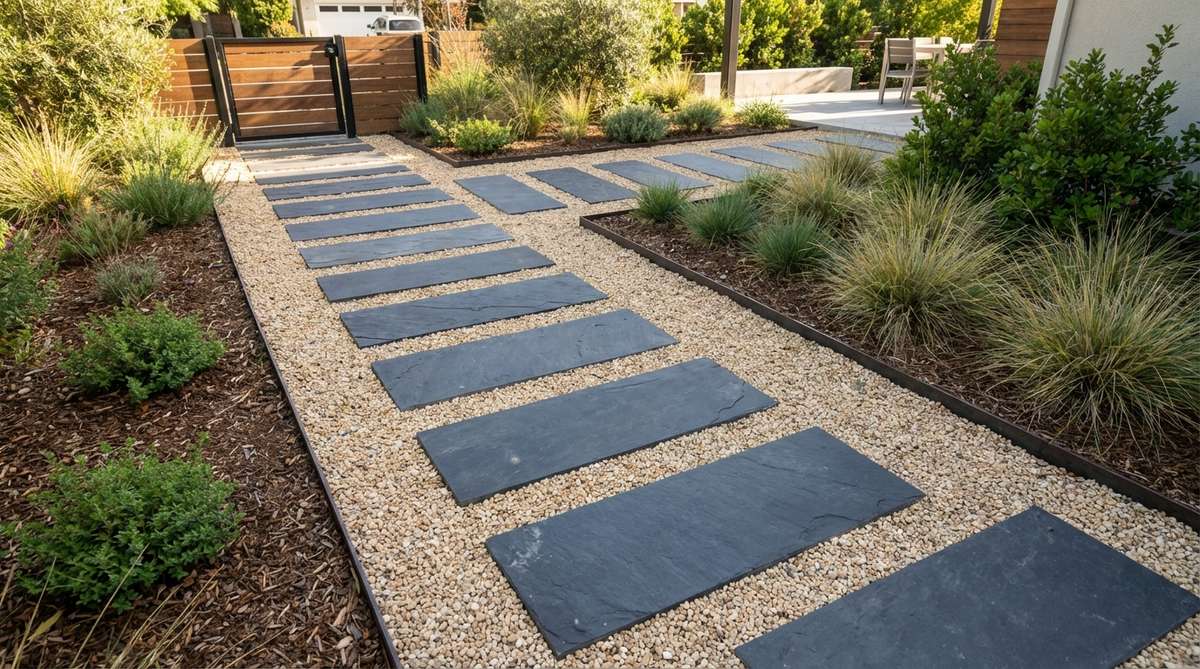
Dark rectangular slate pieces set against light-colored pea gravel create dramatic contrast. The smooth slate surface stands distinctly apart from the surrounding loose stone texture.
Elevate slate 1/2 inch above the gravel surface to prevent stone migration onto the walking surface. Edge the pathway with metal or plastic borders to contain gravel.
This combination suits contemporary garden designs and provides year-round visual interest even when plantings are dormant.
9. Large Format Sandstone Stepping Islands
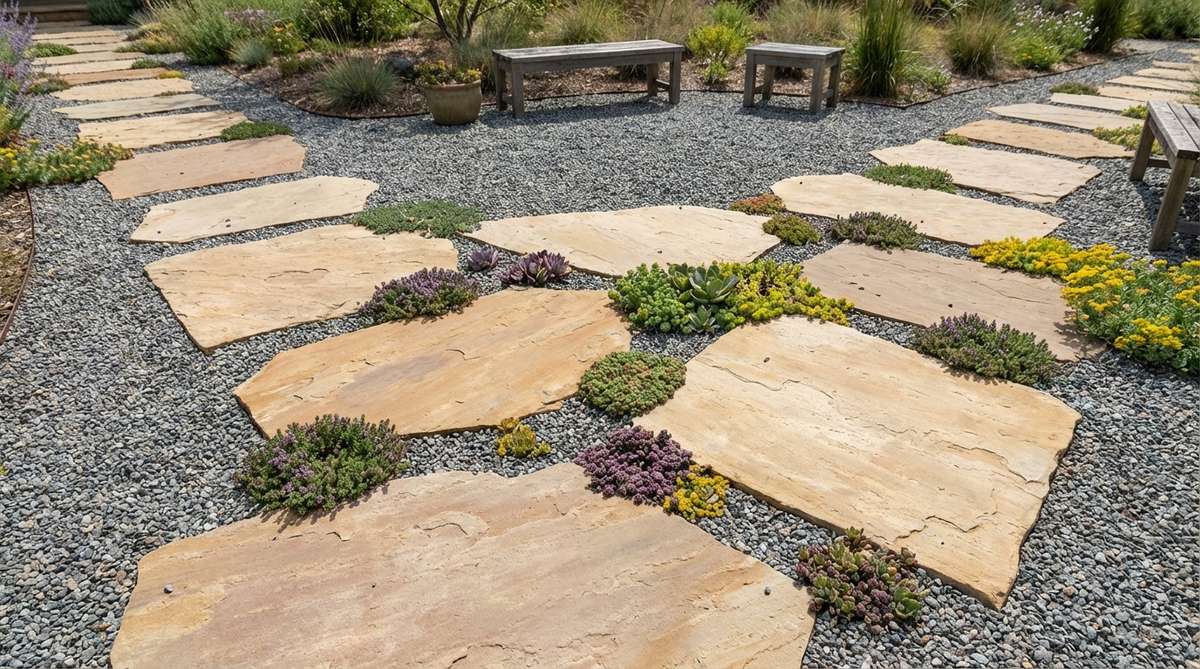
Oversized sandstone pieces spaced generously apart become sculptural elements within a gravel expanse. Each stone functions as a distinct landing pad.
Select irregular sandstone pieces measuring 30-40 inches across and space them 24-30 inches apart. The generous size creates confidence when stepping, especially in wet conditions.
Buff or tan sandstone warms the aesthetic of gray gravel beds. Plant low-growing succulents or creeping thyme in gravel pockets for added color.
10. River Rock Mosaic Surround
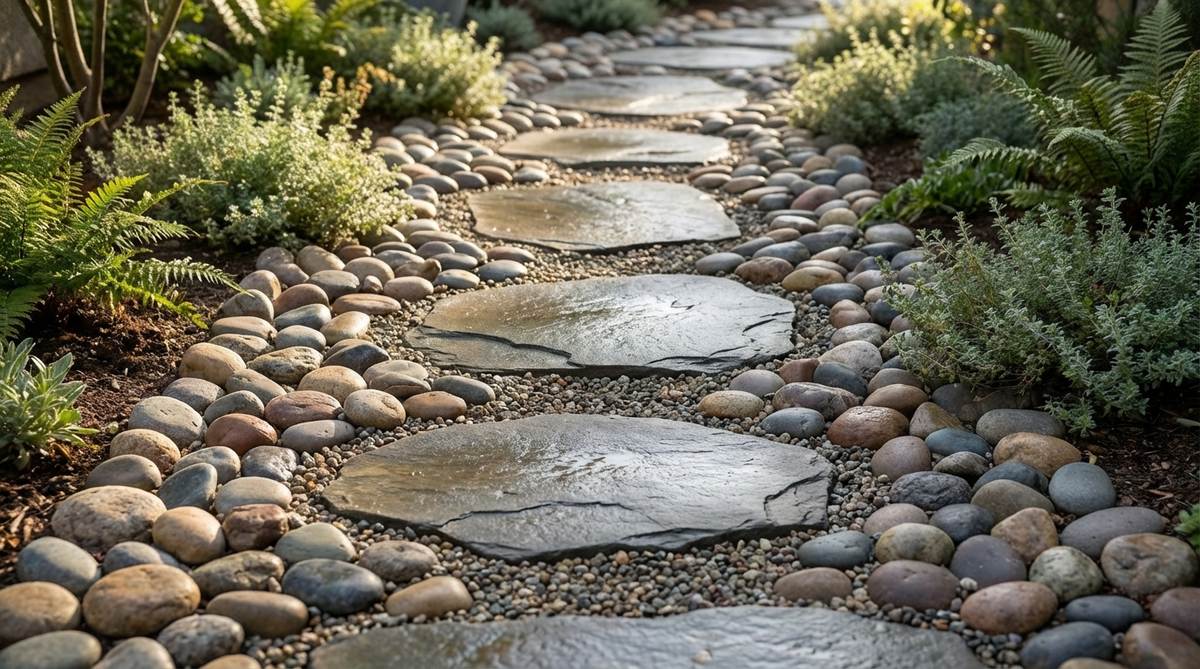
Flat stepping stones bordered by river rock create textured halos around each walking surface. The varied sizes and colors of river rocks add handcrafted detail.
Set concrete or flagstone steppers in place first, then arrange 2-4 inch river rocks in a 6-inch band around each stone. Fill remaining space with fine gravel.
This design slows the visual pace of the pathway and draws attention to material quality. Works particularly well in Zen or Asian-inspired gardens.
11. Limestone Squares on Crushed Granite
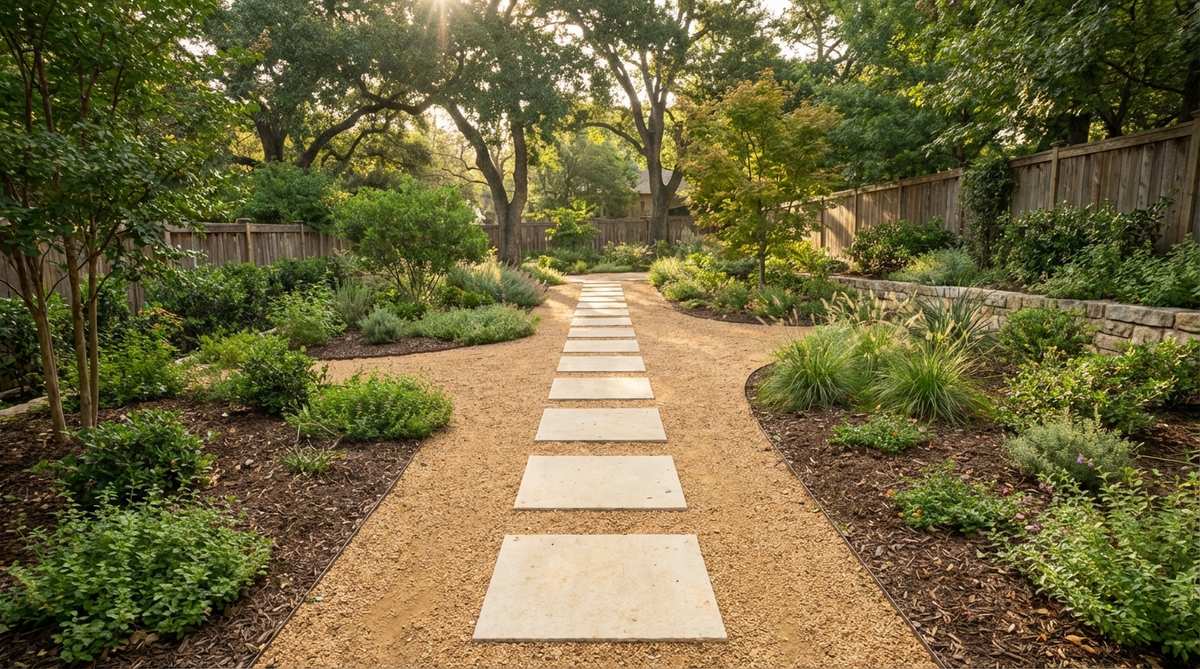
Uniform cut limestone squares create order within the naturalistic texture of crushed granite. The square geometry reads as intentional and refined.
Position 18×18-inch limestone squares in a straight or gently curved line, maintaining consistent 20-inch gaps. The warm cream tones of limestone complement golden-tan granite.
Crushed granite compacts well and resists displacement better than rounded gravel options. This makes it ideal for frequently traveled routes.
12. Reclaimed Brick Pavers in Gray Stone
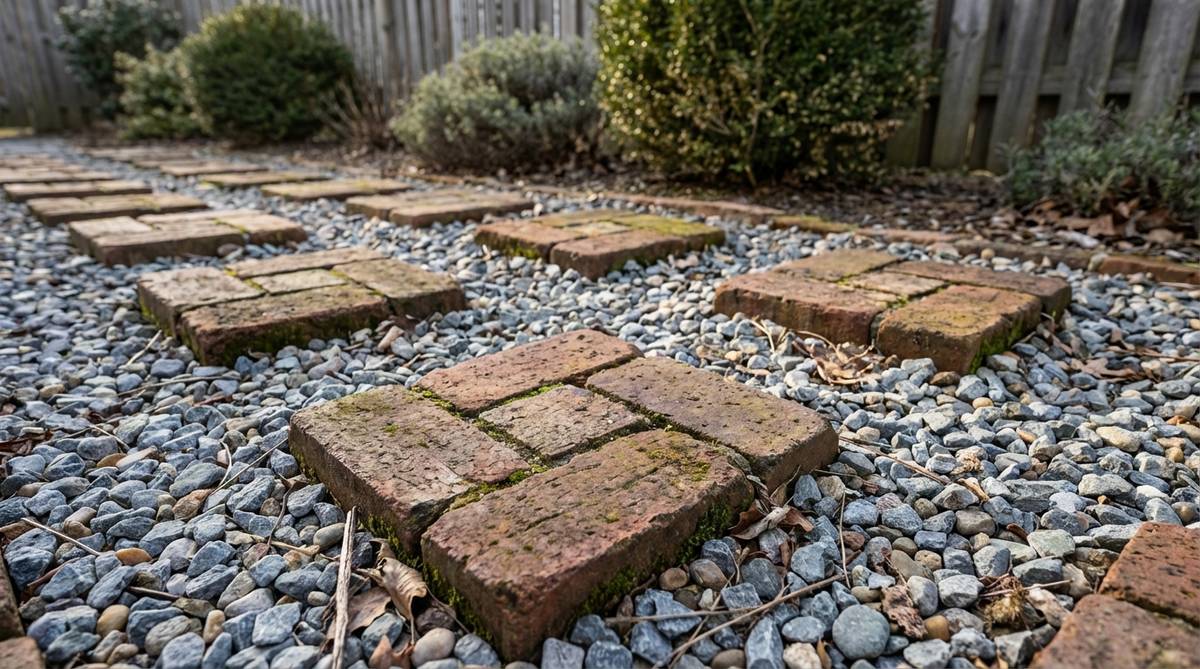
Vintage brick stepping stones introduce warmth and history into modern gravel gardens. The red-brown tones create inviting contrast against cool gray aggregate.
Lay three bricks side-by-side to form 12×12-inch stepping platforms. Space these platforms to create a pathway approximately 16-18 inches wide.
Reclaimed materials add character while supporting sustainable design practices. Source bricks from architectural salvage yards for authentic weathered patina.
13. Granite Cobblestone Clusters
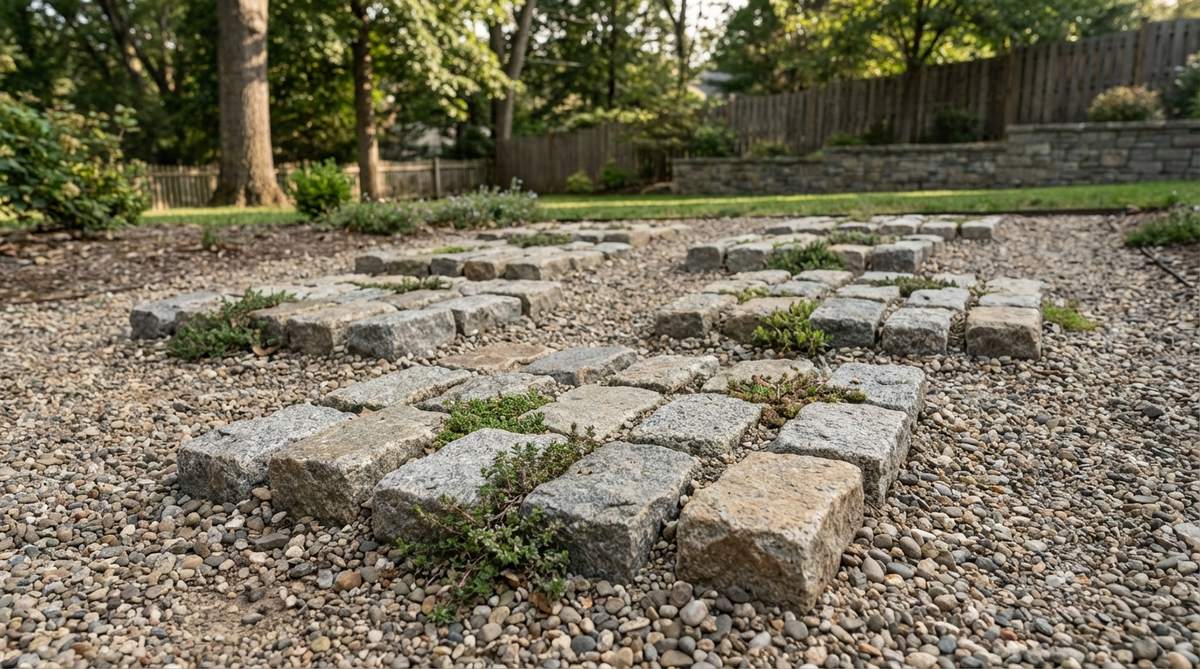
Groups of three to five granite cobblestones create sturdy stepping zones within gravel beds. The clustered arrangement provides stable footing while maintaining visual interest.
Select rectangular cobbles measuring 4×8 inches and arrange them in tight groupings. Space clusters 18-20 inches apart for comfortable walking rhythm.
This European-influenced design brings Old World charm to American gardens and stands up to heavy foot traffic and weather extremes.
14. Concrete Rounds with Exposed Aggregate
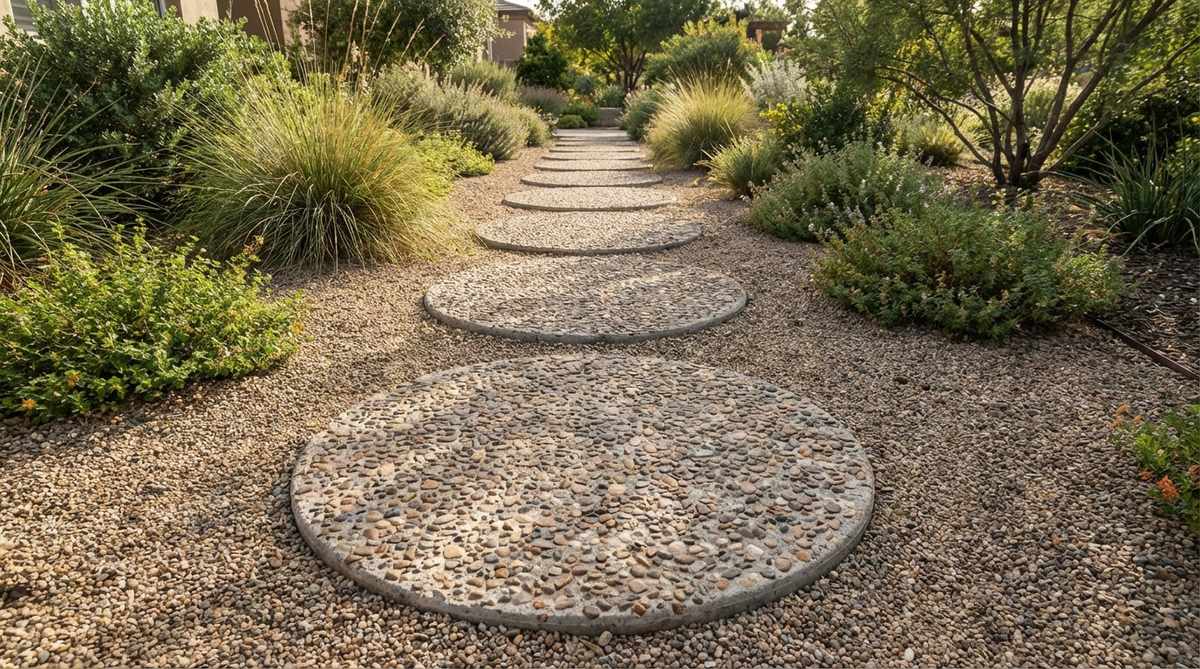
Cast concrete stepping stones with exposed aggregate surfaces unify with surrounding gravel through shared material language. The texture provides slip resistance.
Pour 20-inch diameter rounds and seed the surface with small stones matching your gravel before concrete sets. After curing, wash to expose aggregate.
This DIY-friendly option allows customization of color and stone type while maintaining a cohesive design vocabulary throughout the pathway.
Geometric and Modern Patterns
Contemporary gardens benefit from precise geometric layouts that emphasize clean lines and mathematical relationships. These patterns work equally well in grass or gravel settings when sharp edges are maintained.
15. Linear Alignment Single File
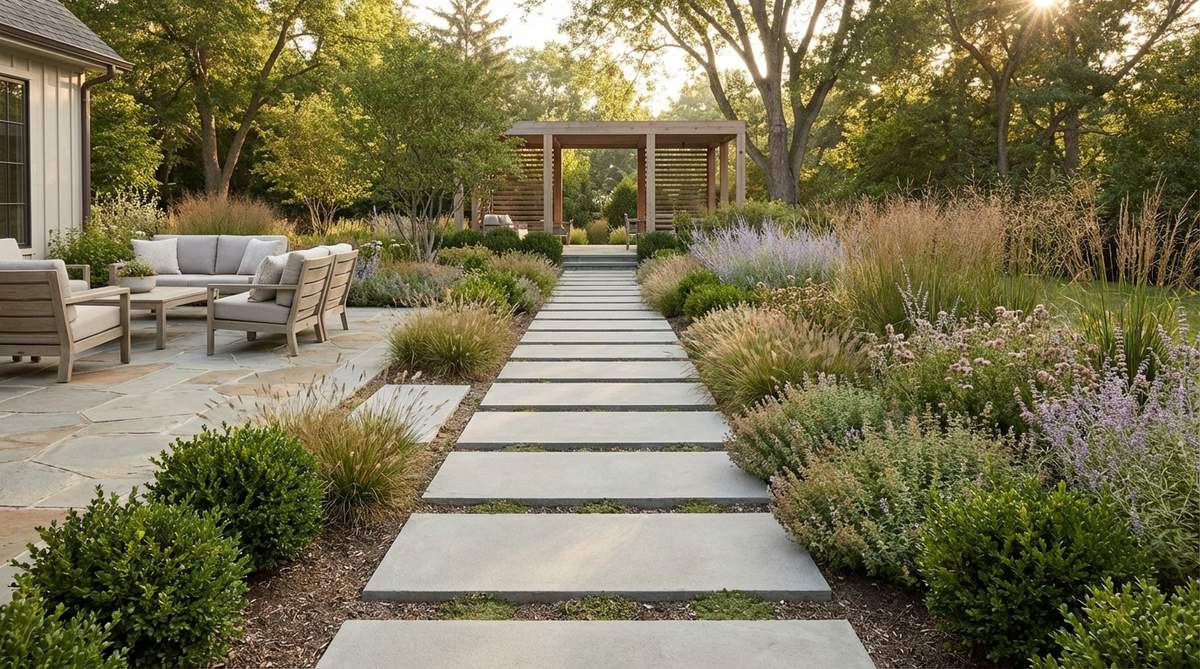
Stones placed in perfect linear sequence create strong directional pull toward destination points. This most minimalist approach suits modernist landscape design.
Position identical stones at exact intervals along a sight line. Use string and stakes during installation to ensure perfect alignment.
The rigid geometry contrasts effectively with organic plantings and works particularly well connecting architectural elements like patios to garden structures.
16. Double-Width Parallel Tracks
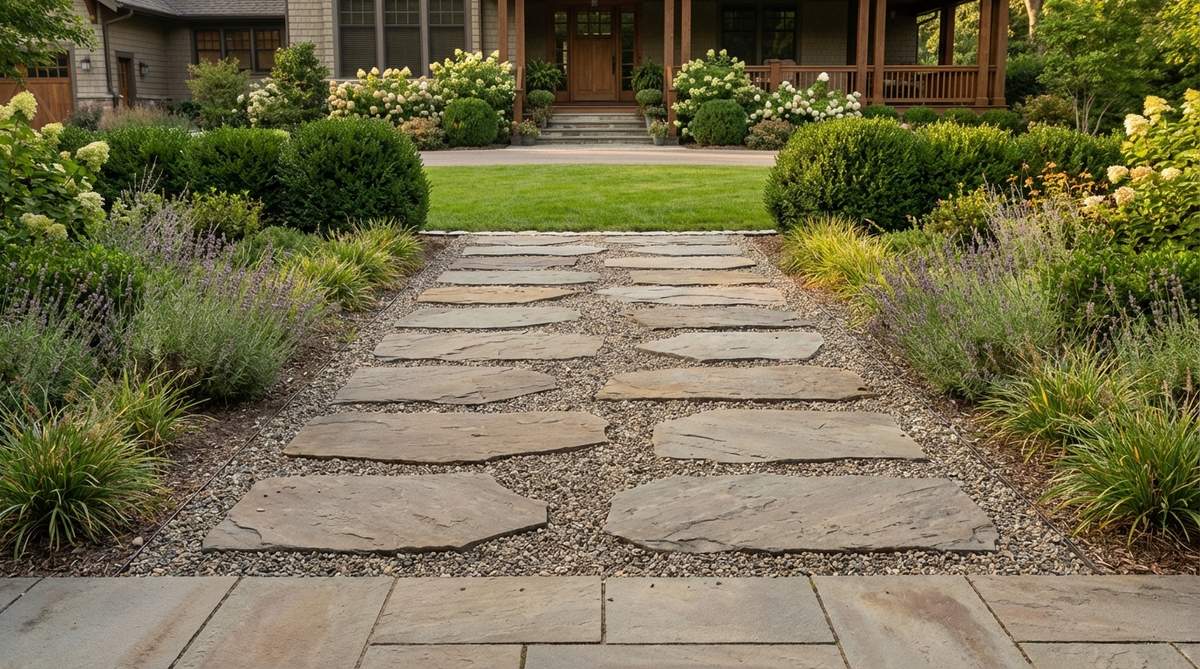
Two parallel rows of stepping stones accommodate side-by-side walking and create a more substantial pathway presence. The paired arrangement suggests formality and invitation.
Space rows 12-14 inches apart center-to-center. Stagger stone placement between rows to create a syncopated rhythm that adds visual dynamism.
This layout works well for main garden routes where couples or companions walk together, particularly approaching front entries or patio spaces.
17. Staggered Offset Grid
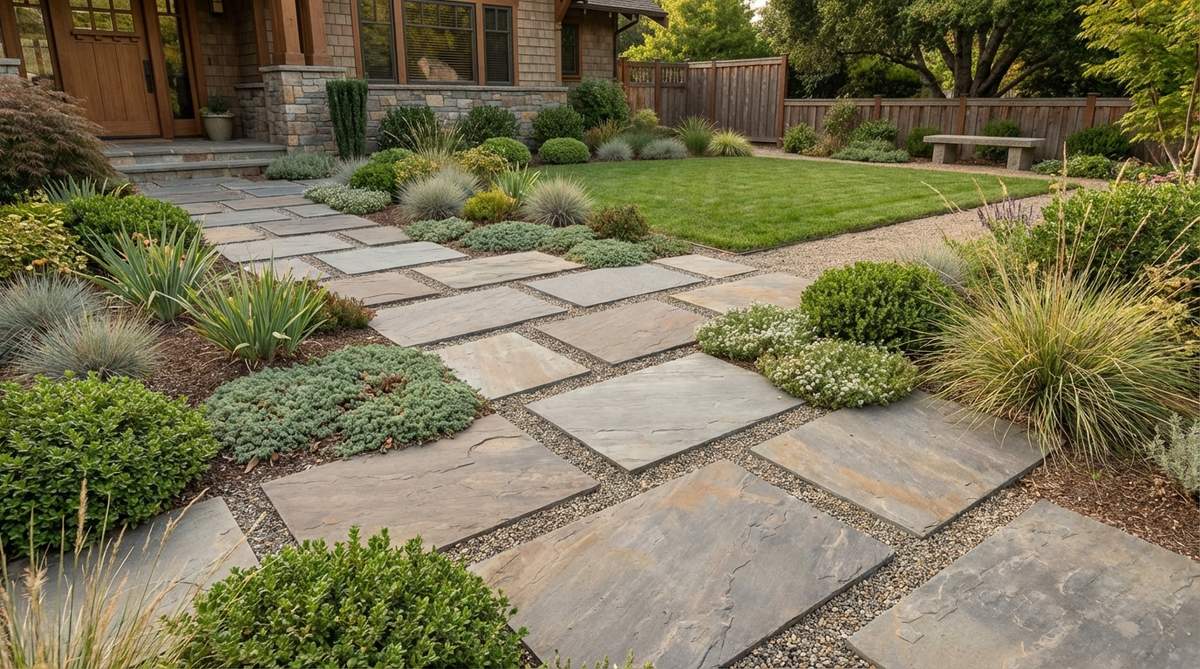
Square or rectangular stones arranged in a grid with alternating offsets combine order with visual movement. The pattern reads as structured yet dynamic.
Use identical stones positioned so each piece aligns with the midpoint of stones in adjacent rows. Maintain consistent spacing in both directions.
This design bridges traditional and contemporary aesthetics, making it versatile for various architectural styles from Craftsman to mid-century modern.
18. Chevron Directional Pattern
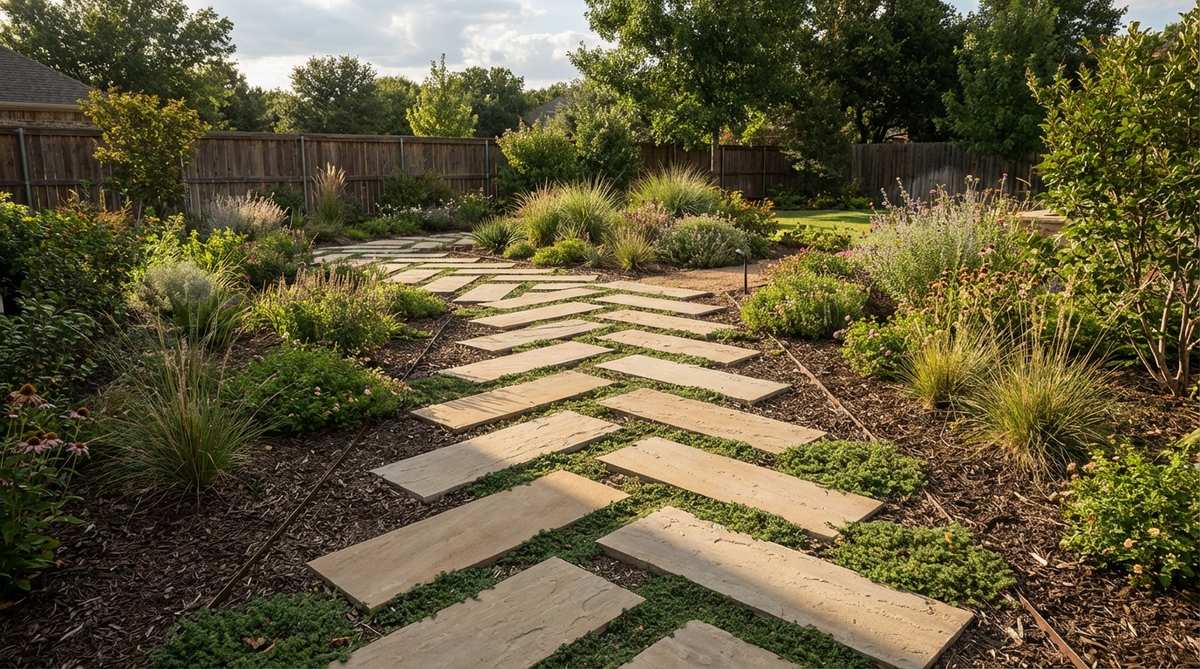
Rectangular stones arranged in a chevron or herringbone pattern create strong directional emphasis. The zigzag configuration adds energy to the pathway.
Cut stones into uniform rectangles and position them at 45-degree angles alternating left and right. This requires precise cutting for professional results.
The chevron pattern works beautifully when you want to draw attention to the path itself as a design feature rather than a purely functional element.
19. Square Grid with Planted Joints
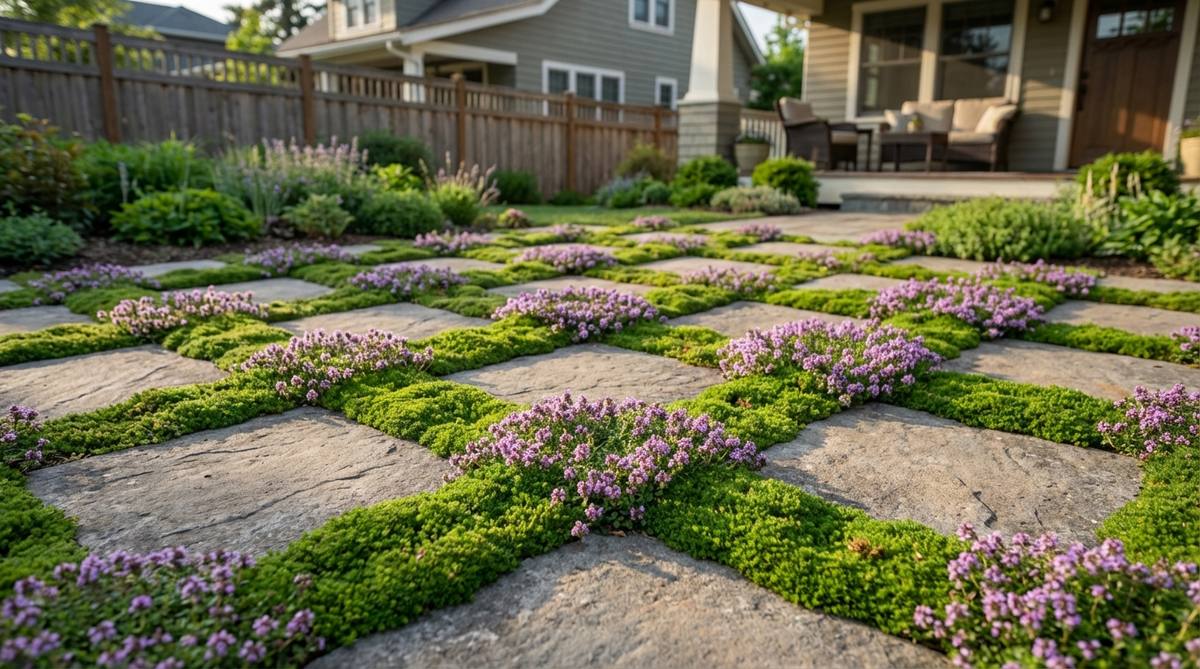
Tight grid of square pavers with planted joints between creates a hybrid surface that’s predominantly hard but softened with greenery. Low-growing plants colonize the gaps.
Set squares 2-3 inches apart and plant the joints with creeping thyme, Irish moss, or blue star creeper. These species tolerate foot traffic and fill spaces attractively.
The living joints add color, fragrance, and textural complexity while reducing heat reflection compared to solid paving.
20. Modular Tile Pattern
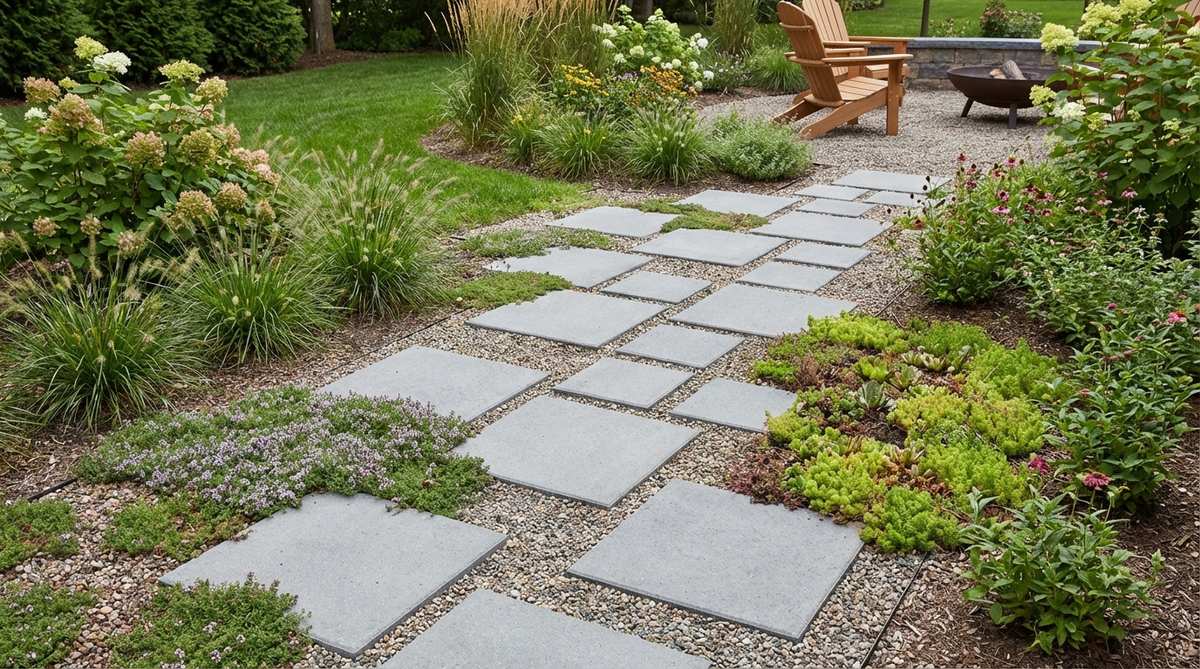
Concrete tiles in modular sizes (combining 12-inch, 18-inch, and 24-inch squares) create complex geometric compositions. The varied sizing adds visual richness.
Plan the pattern on graph paper first to ensure pieces fit together efficiently. This approach requires careful measuring during installation.
Modular patterns transform utilitarian concrete into artistic garden features and allow for creative expression within budget-conscious material choices.
Natural and Organic Pathways
These designs embrace irregular forms and naturalistic placement that echo wilderness trails and forest paths. The informal aesthetic suits cottage gardens, native plantings, and woodland settings throughout American landscapes.
21. Fieldstone Scattered Arrangement
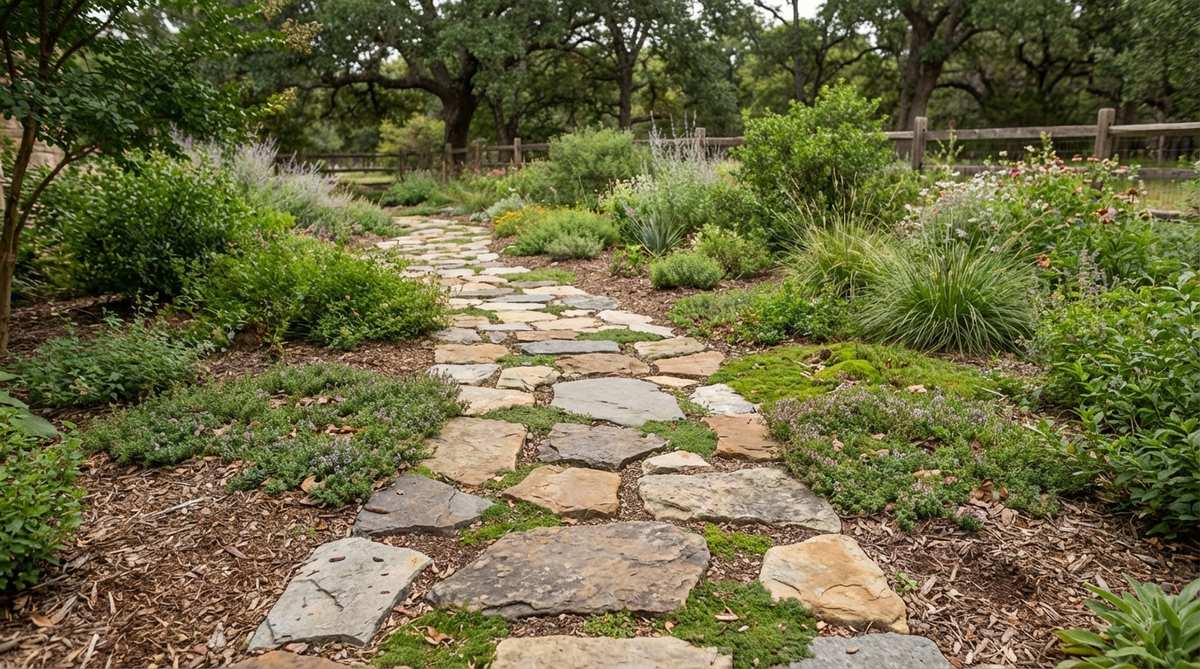
Locally sourced fieldstones placed with intentional irregularity create pathways that appear to have emerged naturally. Each stone’s unique shape contributes to the organic whole.
Select flat-topped fieldstones of varying sizes and arrange them to accommodate walking patterns without rigid spacing. Allow the natural stone shapes to guide placement decisions.
This approach celebrates regional geology and connects gardens to their surrounding landscape context. Ideal for properties transitioning between cultivated and natural areas.
22. Moss-Edged Slate Fragments
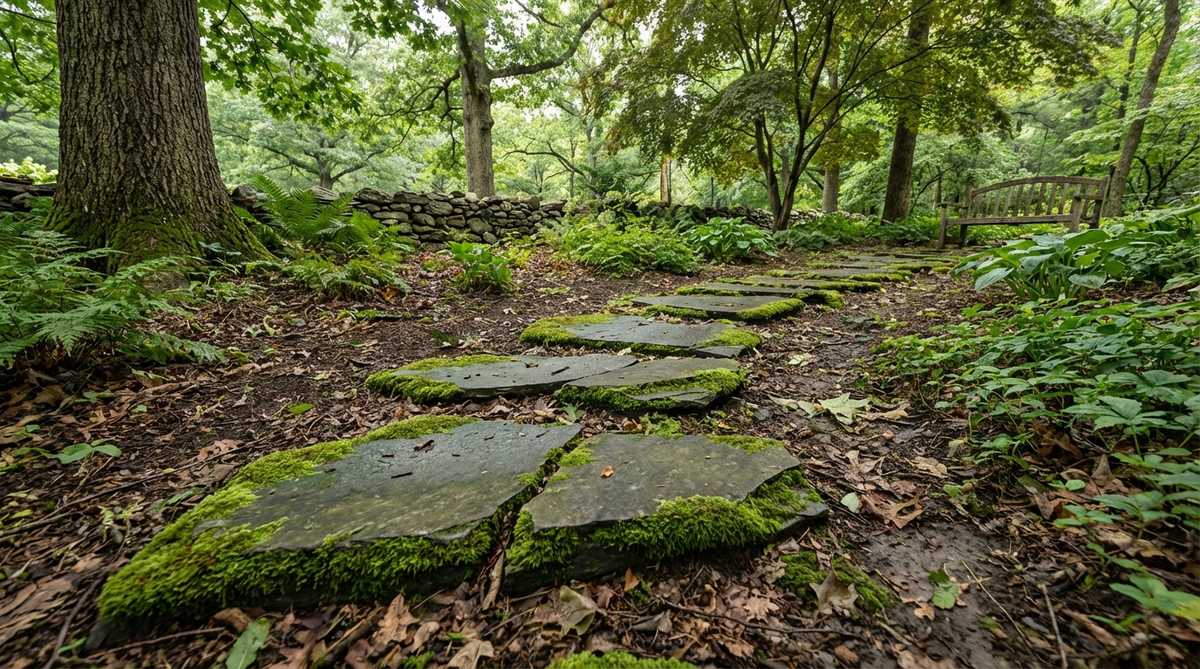
Broken slate pieces with moss colonizing their edges create an aged, woodland aesthetic. The moss softens hard edges and adds vibrant green contrast.
Choose irregularly broken slate 1-2 inches thick and encourage moss growth by keeping edges shaded and moist. Buttermilk-moss slurry can accelerate establishment.
This design thrives in damp, partially shaded garden areas where conventional grass struggles. The moss requires minimal maintenance once established.
23. Boulders with Ground Cover Fill
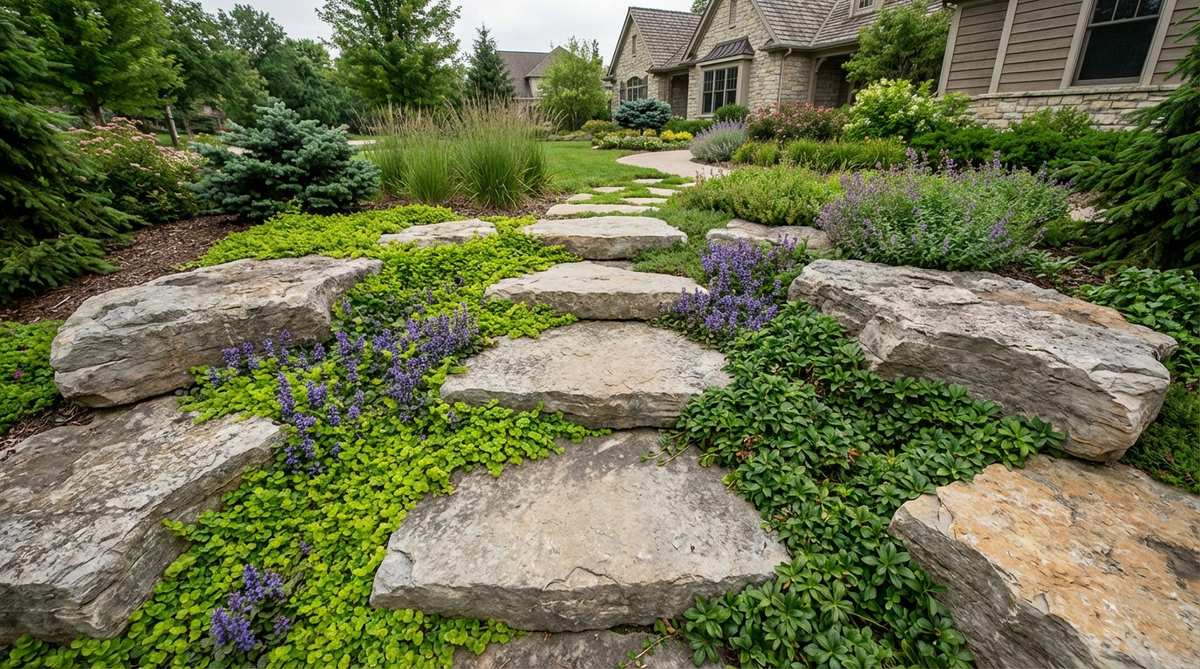
Large flat-topped boulders serve as dramatic stepping stones with low-growing plants filling the spaces between. The scale creates sculptural impact.
Select boulders with relatively flat upper surfaces measuring 24-36 inches across. Plant creeping jenny, ajuga, or pachysandra in surrounding soil.
This bold approach suits larger properties where substantial stone can be sourced and positioned with equipment. The permanent installation requires minimal ongoing care.
24. Weathered Limestone Irregular Spacing
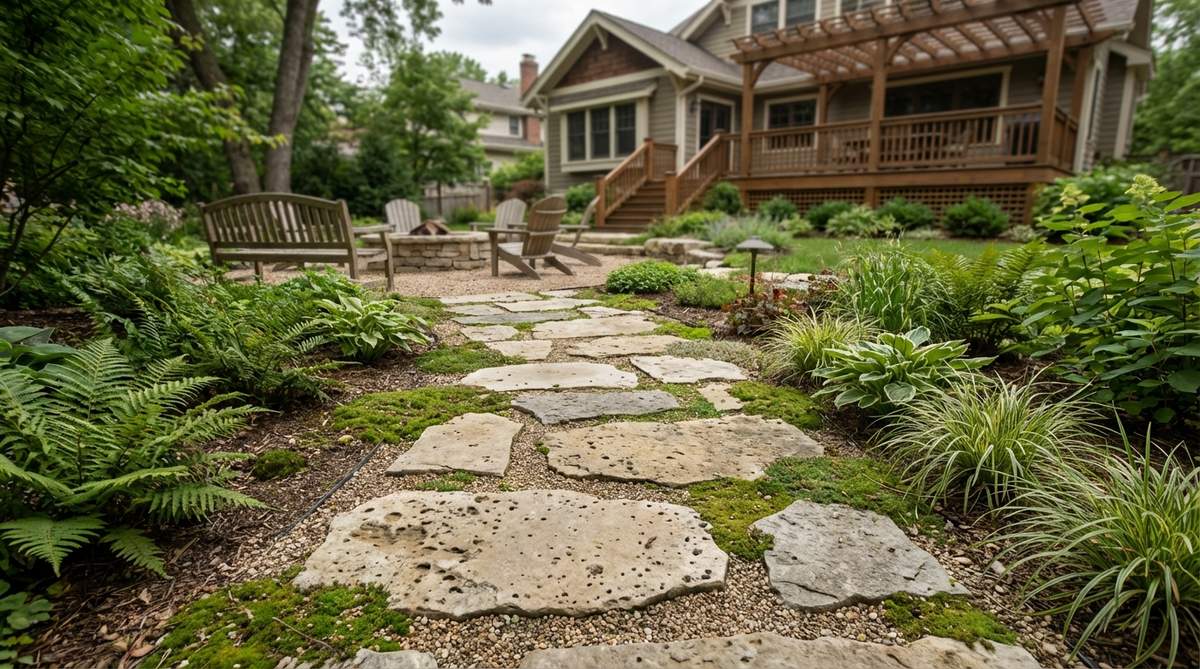
Aged limestone pieces with naturally pitted surfaces arranged at varying intervals create an ancient pathway feeling. The weathered character suggests timeless permanence.
Seek out salvaged limestone that shows natural erosion patterns. Vary spacing from 16 to 30 inches to create an unpredictable, discovered quality.
The neutral tones of limestone work with nearly any planting palette while adding subtle texture through surface variation and fossil inclusions.
25. Curved Natural-Edge Flagstone
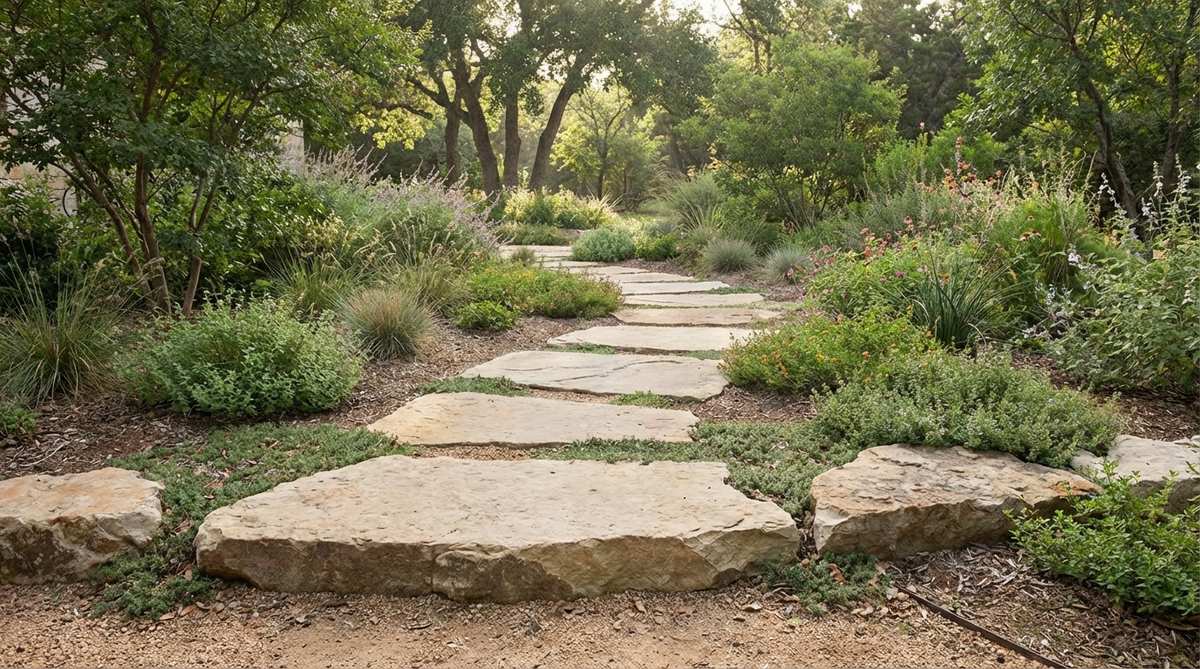
Flagstone pieces selected for pronounced natural edges create flowing, meandering pathways. The curves guide movement while maintaining organic character.
Choose flagstones 18-24 inches wide and arrange them to form a gentle S-curve through the garden. The natural edges eliminate the need for cutting.
Curved pathways slow walking pace and reveal garden views gradually, enhancing the experience of moving through the space.
26. Sandstone with Native Grasses
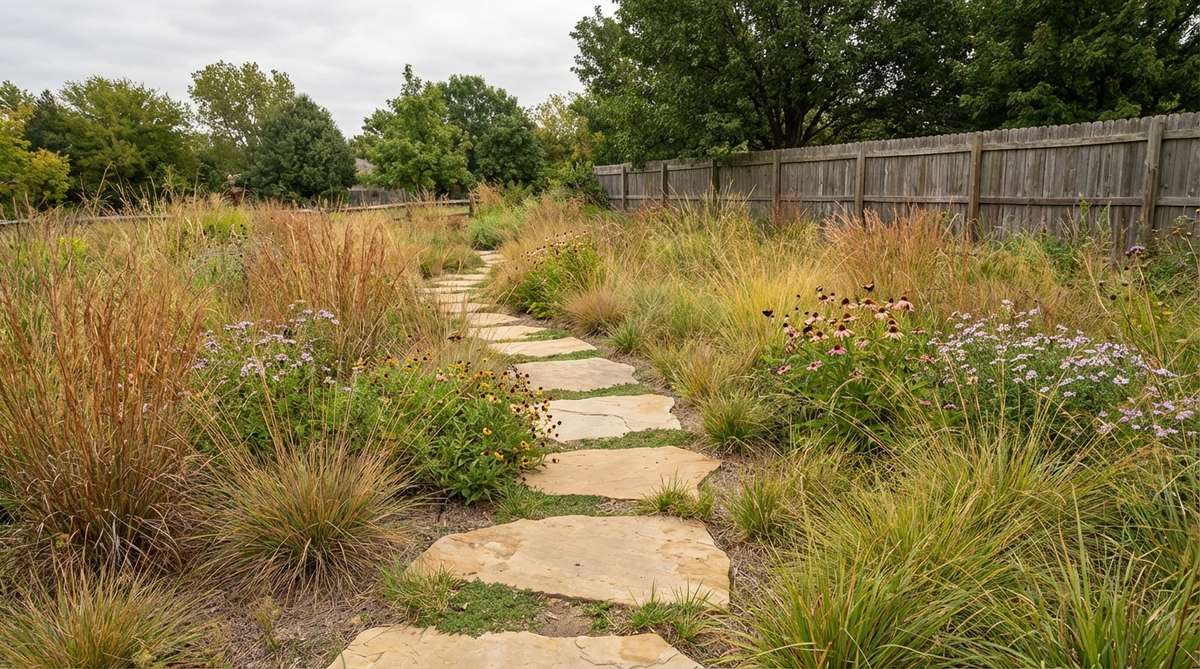
Flat sandstone steppers integrated with native grass meadows create low-maintenance pathways that support local ecology. The grasses provide habitat and seasonal interest.
Set sandstone pieces into established native grass plantings, allowing grasses to grow up to stone edges. Choose drought-tolerant species appropriate to your region.
This sustainable approach reduces irrigation needs, supports pollinators, and creates dynamic seasonal changes as grasses shift color and texture.
Creative Mixed-Material Combinations
Combining different stone types, textures, and complementary materials expands design possibilities and creates unique visual statements. These innovative approaches push beyond traditional single-material pathways.
27. Stone with Brick Border Frames
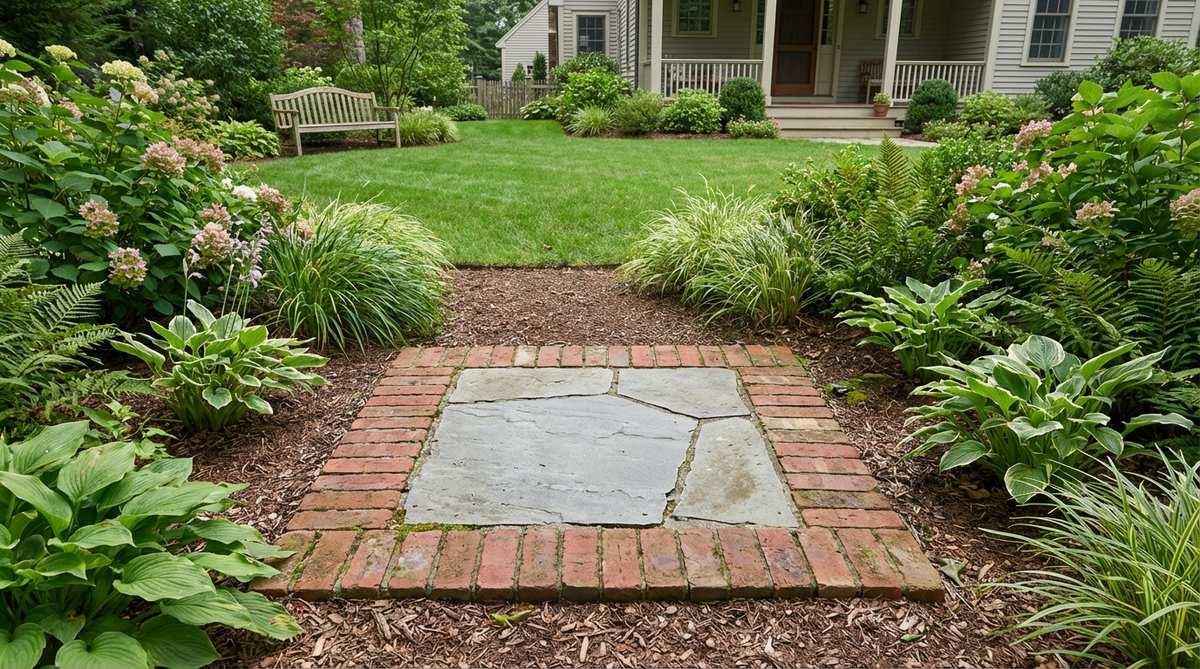
Central flagstone or concrete pavers surrounded by brick borders create defined stepping platforms with Victorian-era charm. The framing device adds architectural detail.
Set a 16-inch square stone and surround it with a single course of bricks laid on edge. This creates a 20-inch square overall platform with contrasting materials.
The color variation between materials adds depth and the brick edges protect the center stone from chipping. This technique elevates modest materials into refined features.
28. Concrete with Glass Aggregate
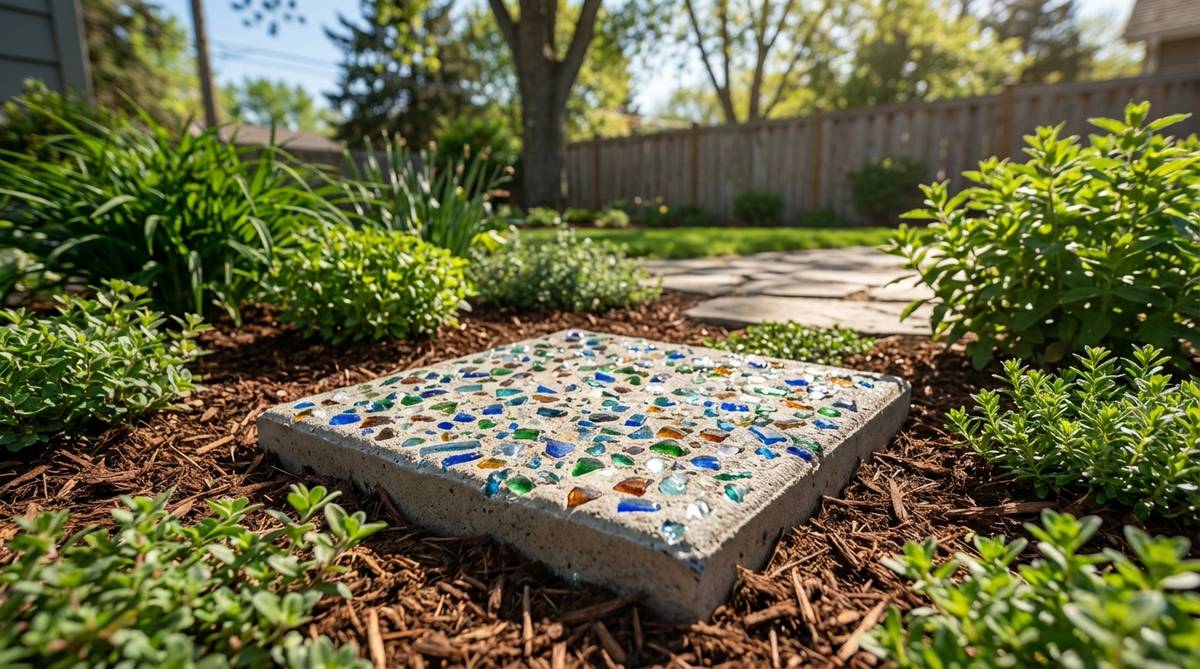
Cast concrete stepping stones embedded with recycled glass aggregate sparkle with captured light. The glass inclusions transform utilitarian concrete into decorative elements.
Seed wet concrete surfaces with tumbled glass pieces in selected colors, then expose after curing. The smooth glass creates slip-resistant texture while adding visual interest.
This eco-conscious design repurposes waste glass and allows color customization to coordinate with garden palettes or architectural elements.
29. Wood Plank and Stone Combination
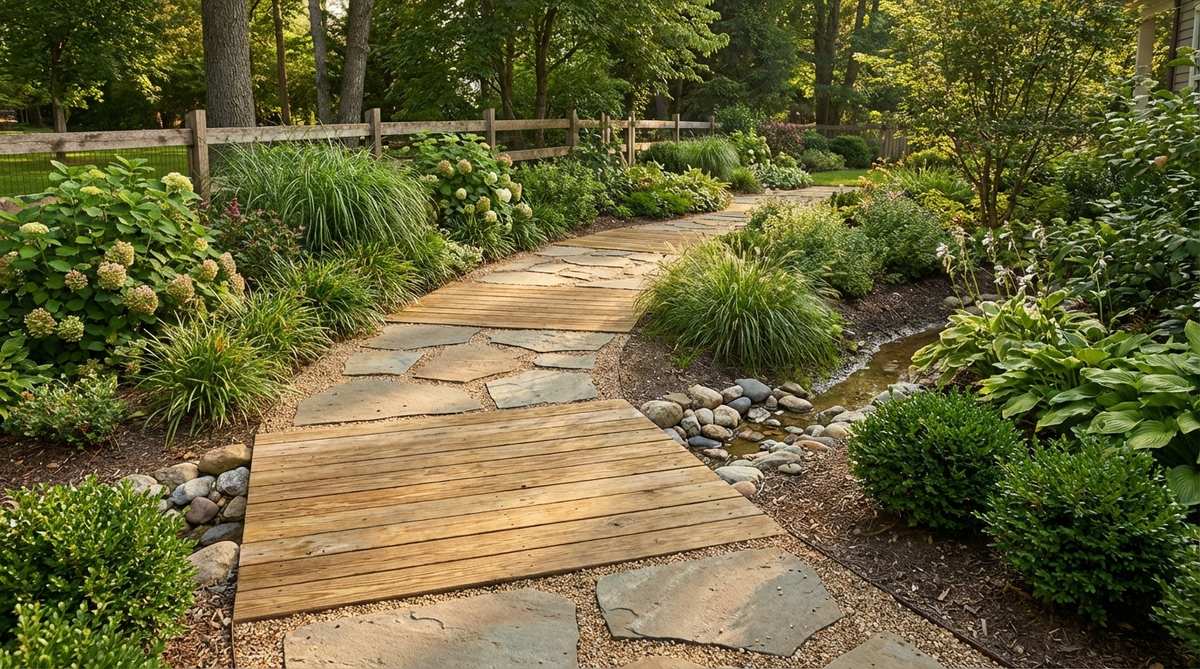
Alternating wooden deck boards with stone pavers creates textural rhythm and material contrast. The warm wood tones complement cool stone surfaces.
Use pressure-treated lumber or naturally rot-resistant species like cedar for 6-foot sections between stone landings. This hybrid approach suits transitional spaces.
The mixed materials define different zones along the pathway and can help navigate grade changes or direct drainage away from walking surfaces.
30. Metal Grid with Stone Infill
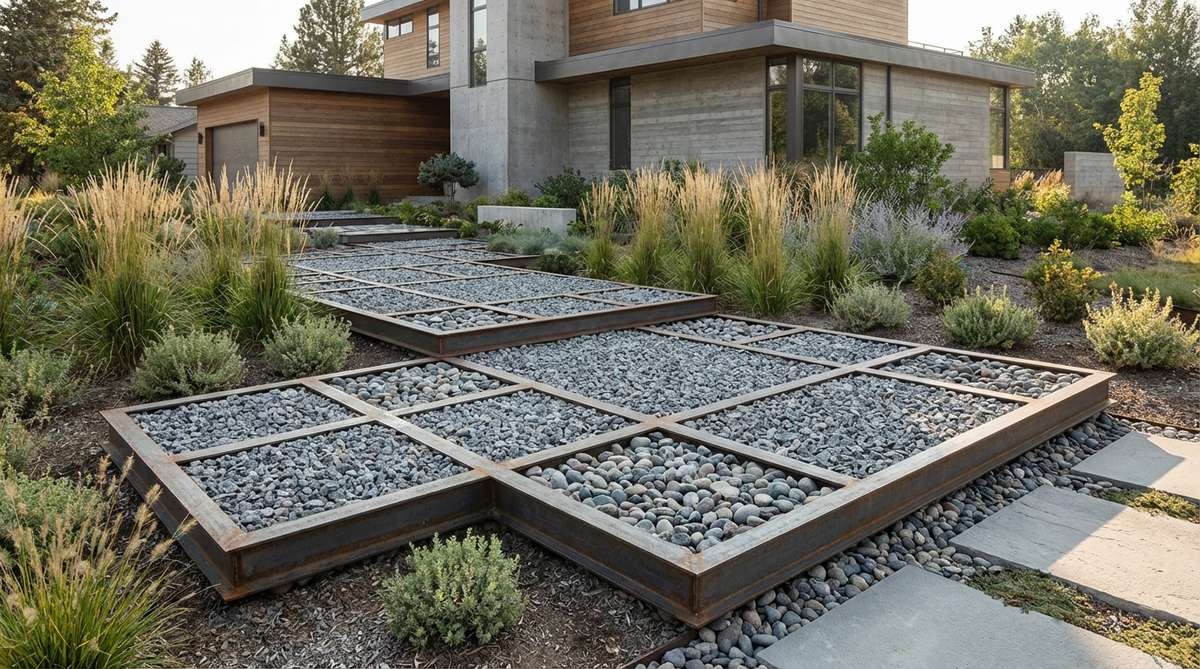
Geometric metal frames filled with stones or gravel create an industrial-chic pathway aesthetic. The metal provides structure while stone supplies texture.
Install steel or aluminum grid sections and fill cells with crushed stone or small pavers. This modular system allows easy repairs and design modifications.
The contemporary edge suits modern architecture and urban gardens where hardscape innovation is welcomed and maintained regularly.
31. Pebble Mosaic Inlay Stones
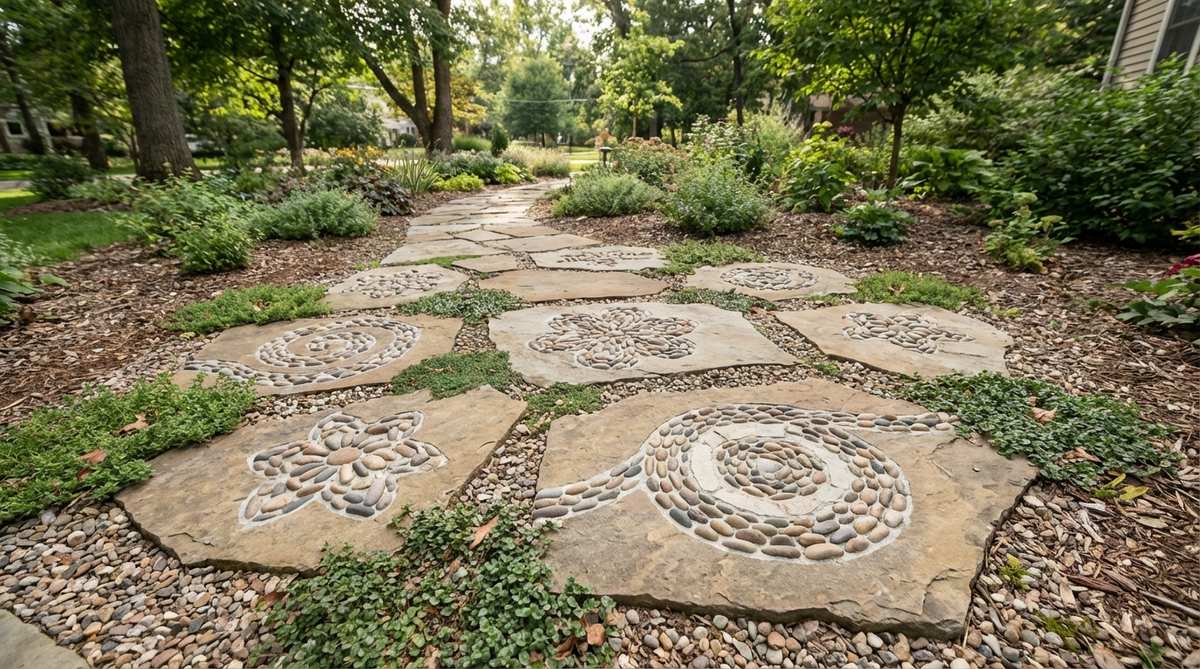
Large stepping stones featuring inlaid pebble mosaics become functional art pieces within the pathway. The detailed pebble work adds craftsmanship and visual focal points.
Create mosaics by setting small river rocks into mortar beds within stone borders. Traditional patterns include spirals, flowers, or geometric designs.
This labor-intensive technique transforms ordinary paths into gallery-worthy features and can incorporate meaningful symbols or family emblems.
32. Colored Concrete Mixed Palette
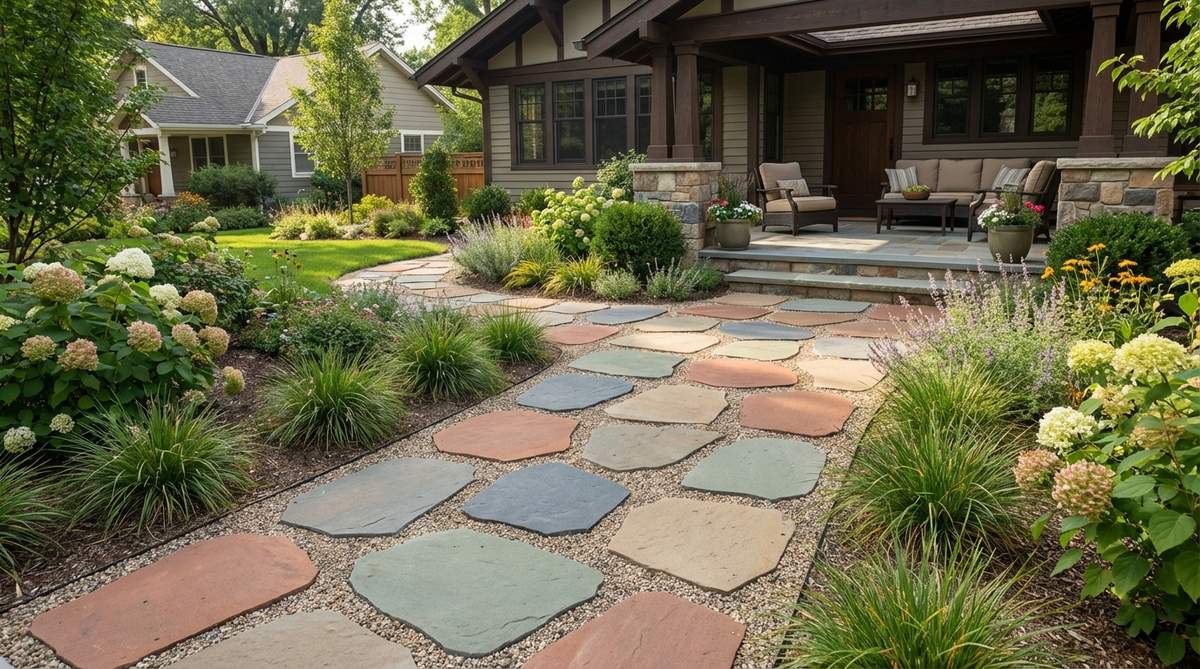
Stepping stones cast from tinted concrete in complementary colors create a painterly pathway. The color variation adds playfulness and contemporary flair.
Mix concrete with permanent oxide pigments in several batches to create a family of related tones. Cast identical shapes for consistency while varying color.
This approach allows precise color coordination with house trim, furniture, or flowering plants, creating a highly personalized garden statement.
33. Crushed Shell with Tropical Stone
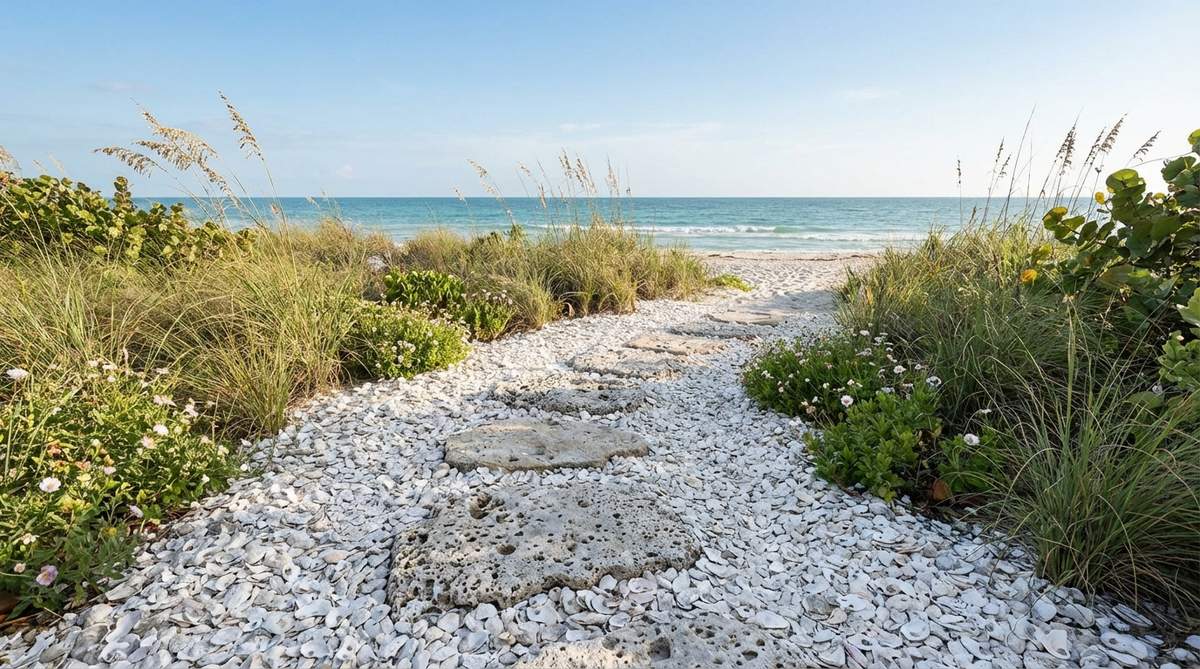
In coastal gardens, local crushed shell provides a bright white base for stepping stones in coral stone or travertine. The materials echo beach environments.
Use crushed oyster, clam, or mixed seashells as the base layer and select porous tropical stones that complement the coastal palette.
This regional material choice creates authentic coastal character while supporting excellent drainage in sandy soils common to waterfront properties.
Bringing Your Stepping Stone Vision to Life
Whether you choose classic flagstone in grass, contemporary concrete over gravel, or innovative mixed-material designs, your stepping stones garden will define how visitors experience and navigate your landscape. Successful installations balance aesthetic vision with practical considerations like drainage, spacing, and maintenance requirements. Start by assessing your site conditions, traffic patterns, and design style, then select the layout that best serves your functional needs while expressing your personal aesthetic. Transform your outdoor spaces with confidence using these proven designs from Fresh Garden Ideas.
Frequently Asked Questions
How far apart should stepping stones be placed in grass or gravel?
Position stepping stones 18-24 inches apart, measured from center to center, to accommodate average adult walking stride. For children or elderly users, reduce spacing to 16-18 inches for easier, more confident steps. In informal garden areas, slight spacing variations create a more natural feel, while formal designs benefit from precise, consistent intervals.
Should stepping stones sit above or below the surrounding surface?
In grass lawns, set stones flush or slightly below turf level (approximately 1/4 inch) to allow mower blades to pass over without damage. In gravel beds, elevate stones 1/2 to 1 inch above the loose material to prevent slipping on displaced gravel and to keep walking surfaces clear of migrating stones.
What base preparation is needed under stepping stones?
Excavate 4-6 inches below the finished stone height and install 2-3 inches of compacted gravel for drainage, topped with 1-2 inches of coarse sand for leveling. This base prevents settling, provides stable footing, and facilitates drainage to extend the life of your pathway. Heavier stones require deeper excavation and thicker base layers.
Which stone materials work best for stepping stone pathways?
Flagstone, bluestone, and slate offer natural beauty with good slip resistance and weather durability. Concrete pavers provide affordable uniformity and modern aesthetics. Granite and sandstone deliver exceptional longevity but at higher cost. Choose materials based on your climate, budget, desired aesthetic, and regional availability for the most sustainable option.
How do I prevent weeds between stepping stones?
Install landscape fabric beneath gravel pathways before placing stones to block weed growth from below. In grass pathways, maintain healthy turf through proper mowing and watering to naturally suppress weeds. For gravel beds, apply fresh stone mulch annually and spot-treat emerging weeds promptly. Pre-emergent herbicides can be used in spring where appropriate for your landscape.