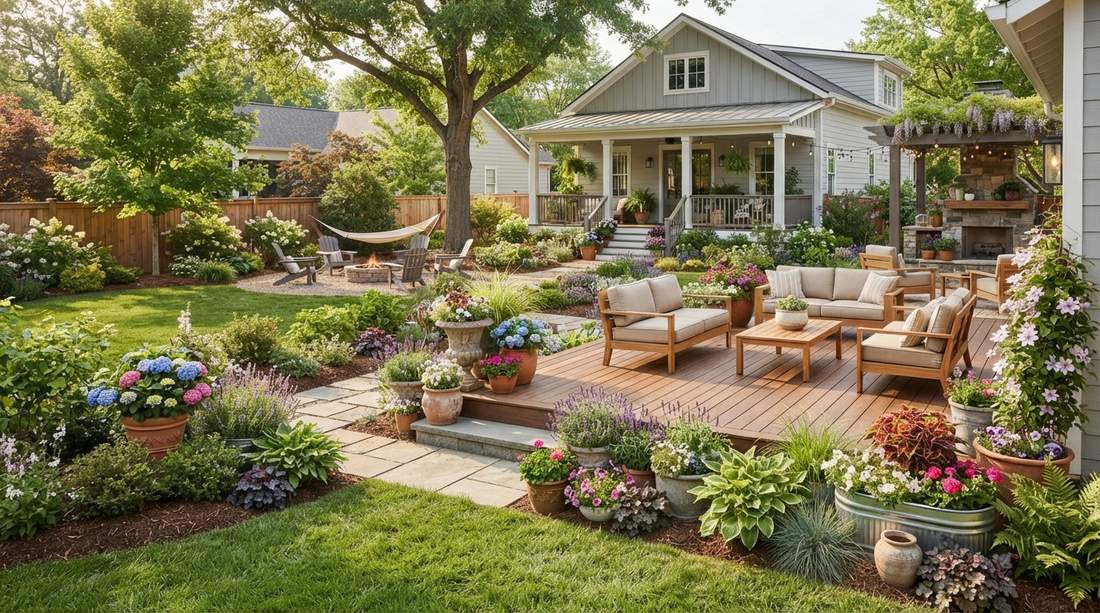
Professional plant arrangements instantly elevate basic yards into stunning visual retreats. Upgrading your outdoor aesthetic requires smart sourcing rather than unlimited budgets. These precise layout blueprints deliver premium landscaping finishes using accessible materials.
Design Snapshot: Key Principles
- Repetition Creates Rhythm: Repeating plants or colors throughout the garden establishes visual flow and unity
- Odd-Number Groupings: Arranging plants in groups of 3, 5, or 7 creates natural, asymmetrical balance
- Layering Adds Depth: Positioning tall, medium, and low plants in tiers maximizes spatial dimension
- Focal Points Direct Attention: Strategic placement of standout specimens guides the viewer’s eye through the composition
Color-Driven Botanical Arrangements
Color theory transforms basic setups from random collections into intentional visual compositions. These strategic plant arrangement ideas use contrast and harmony to mimic high-end landscape architecture.
1. Complementary Purple-Yellow Pairing
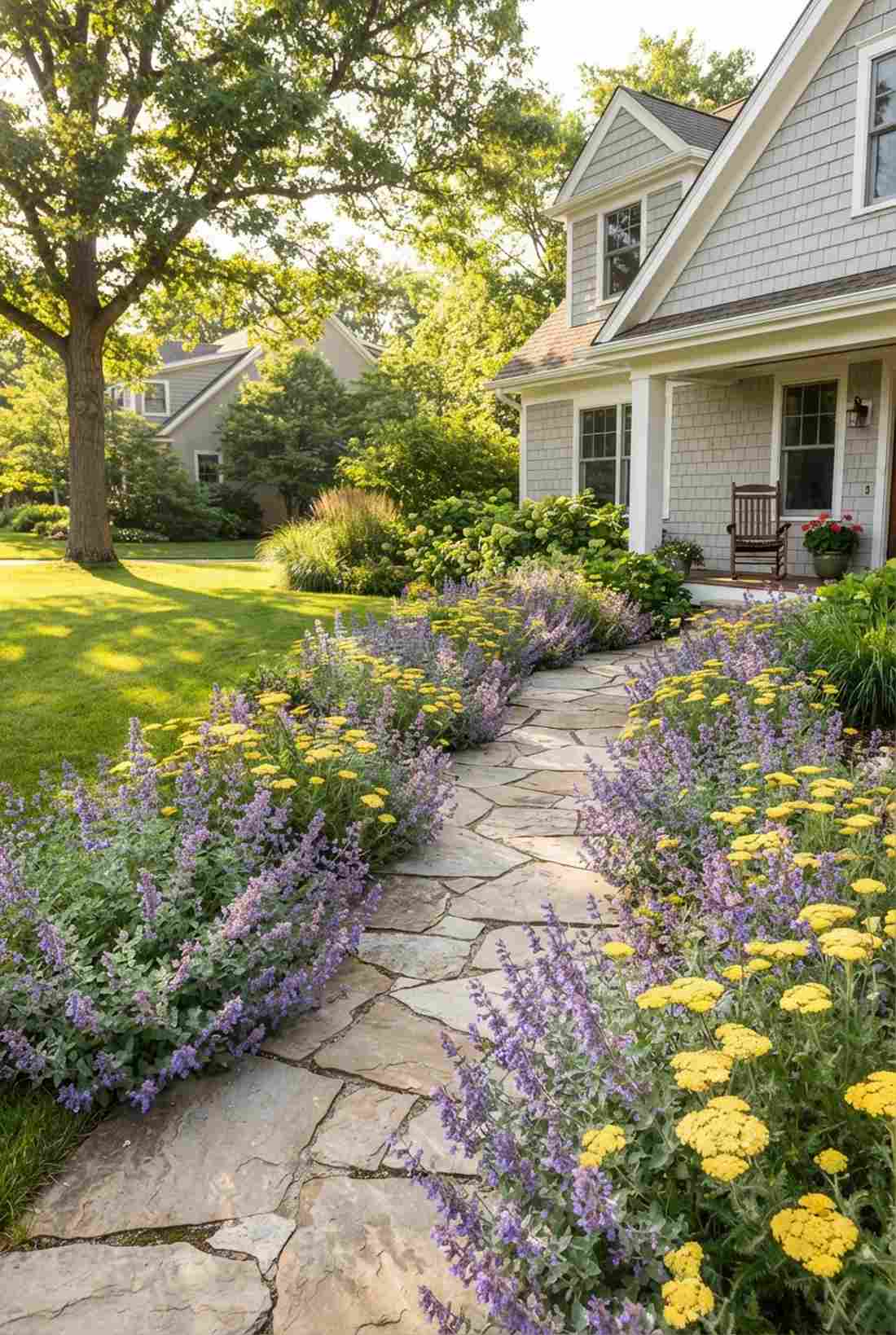
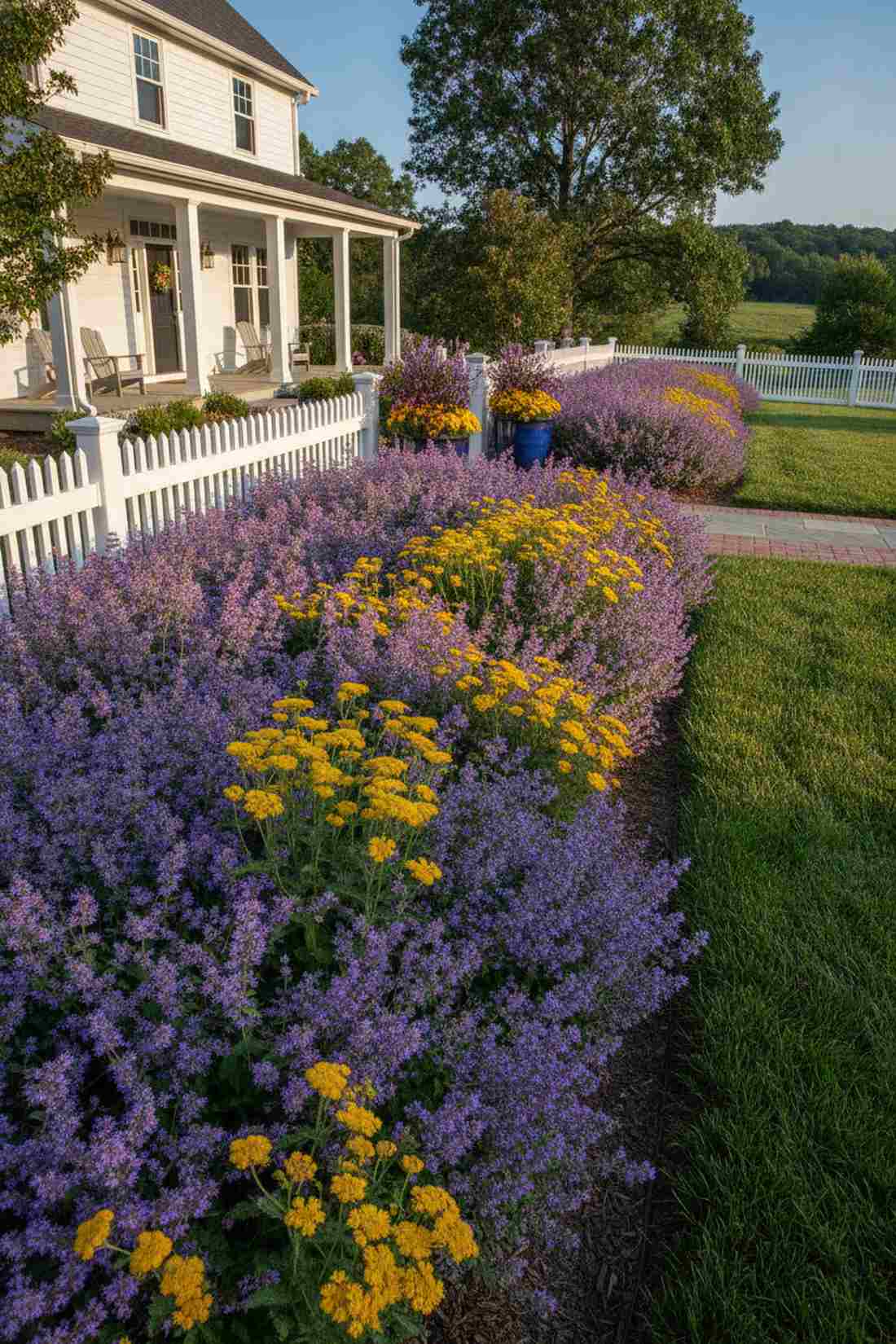
This layout feels like a vibrant royal tapestry unfurling across your yard. High-contrast perennial borders work exceptionally well for defining property lines or framing a sun-drenched front walkway.
Pairing purple catmint with ‘Moonshine’ yarrow delivers a surprisingly premium look without the designer price tag. By utilizing bulk pack flower bulbs and commercial-grade soil amendments, you create a dense, professional finish that stops neighbors in their tracks.
You can easily pull this off for around $30–$50 per bed. Pin this if you’re planning a bold front yard upgrade this spring.
- Key Materials: Bare-root catmint, yellow yarrow starters
- Vibe / Style: Bold cottage elegance
- Difficulty: Beginner-friendly
- Budget Breakdown: Soil prep: $15 | Bare-root plants: $35
- Creator’s Tip: Plant in tight, odd-numbered clusters to instantly mimic mature, expensive landscaping.
- Smart Sourcing: Pre-mixed blooming perennial fertilizer and bulk bare-root purple perennials.
2. Analogous Blue-Purple Progression
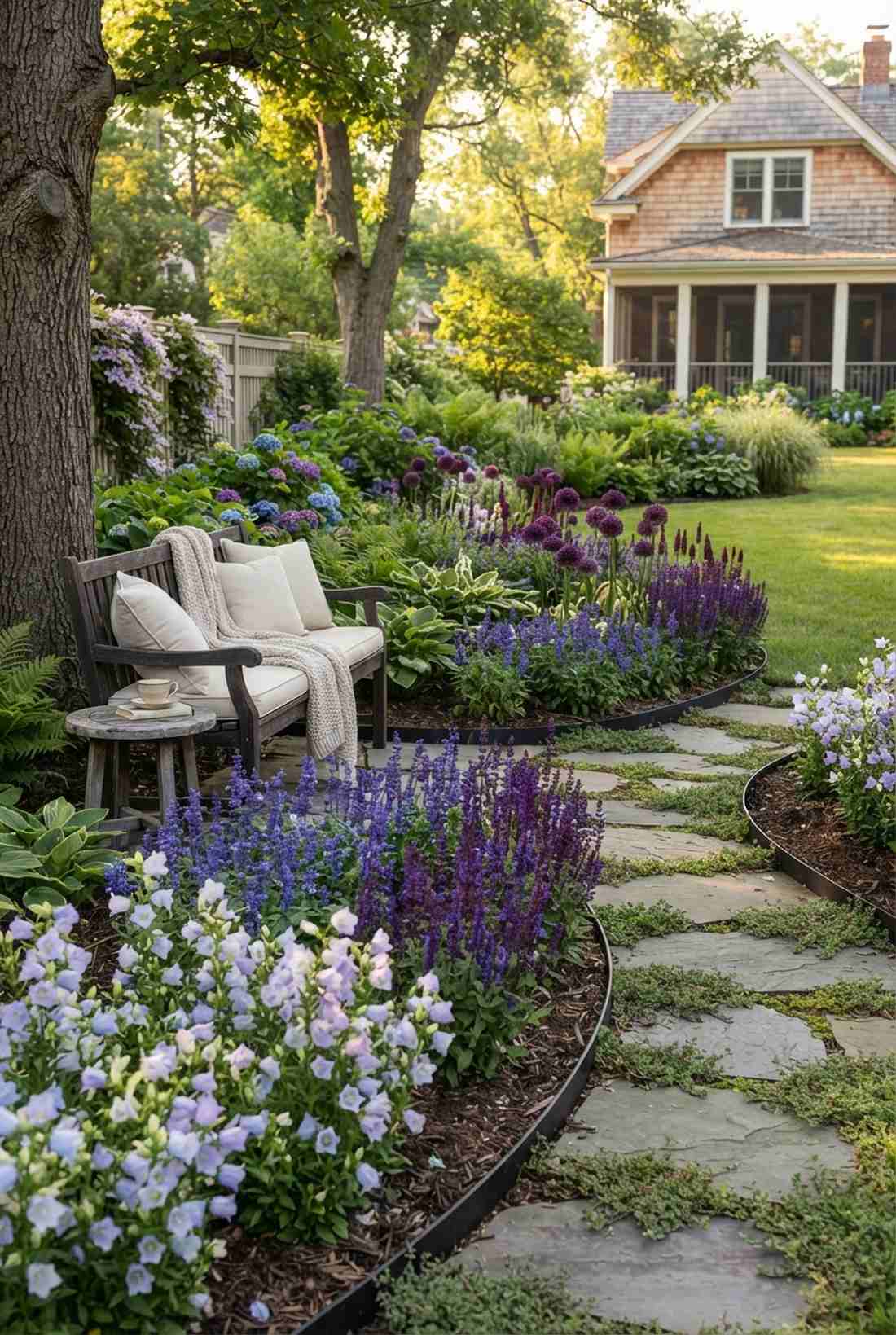
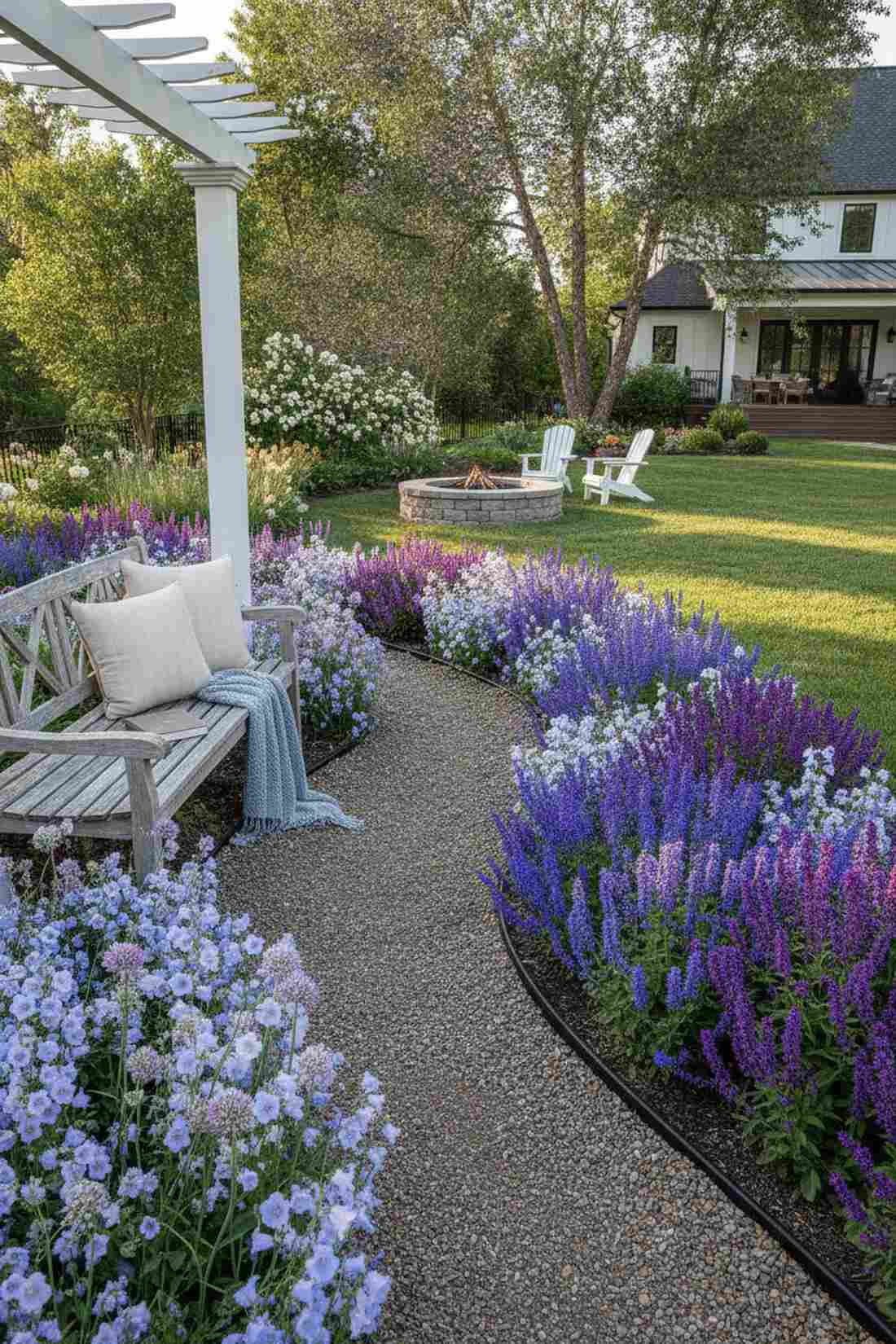
Stepping into this space feels like plunging into a calm, cooling botanical ocean. A gradient floral pathway is the perfect use-case for bordering a reading bench or a meditation corner.
Gradually shifting from pale Campanula bells into deep ‘Blue Queen’ salvia looks far more expensive than it is. Integrating UV-resistant garden edging ensures this seamless blue-to-purple wave stays perfectly contained and meticulously sharp.
Expect to spend about $40–$60 to build a seamless gradient. It’s a fast weekend upgrade that completely changes your yard’s vibe.
- Key Materials: Salvia, allium bulbs, campanula flats
- Vibe / Style: Tranquil spa garden
- Difficulty: Intermediate plotting
- Budget Breakdown: Edging: $20 | Plant flats: $40
- Creator’s Tip: Always place the lightest colors in the foreground to create the illusion of deeper yard space.
- Smart Sourcing: Flexible no-dig landscape edging kits and premium organic bulb starter mix.
3. Monochromatic White Garden
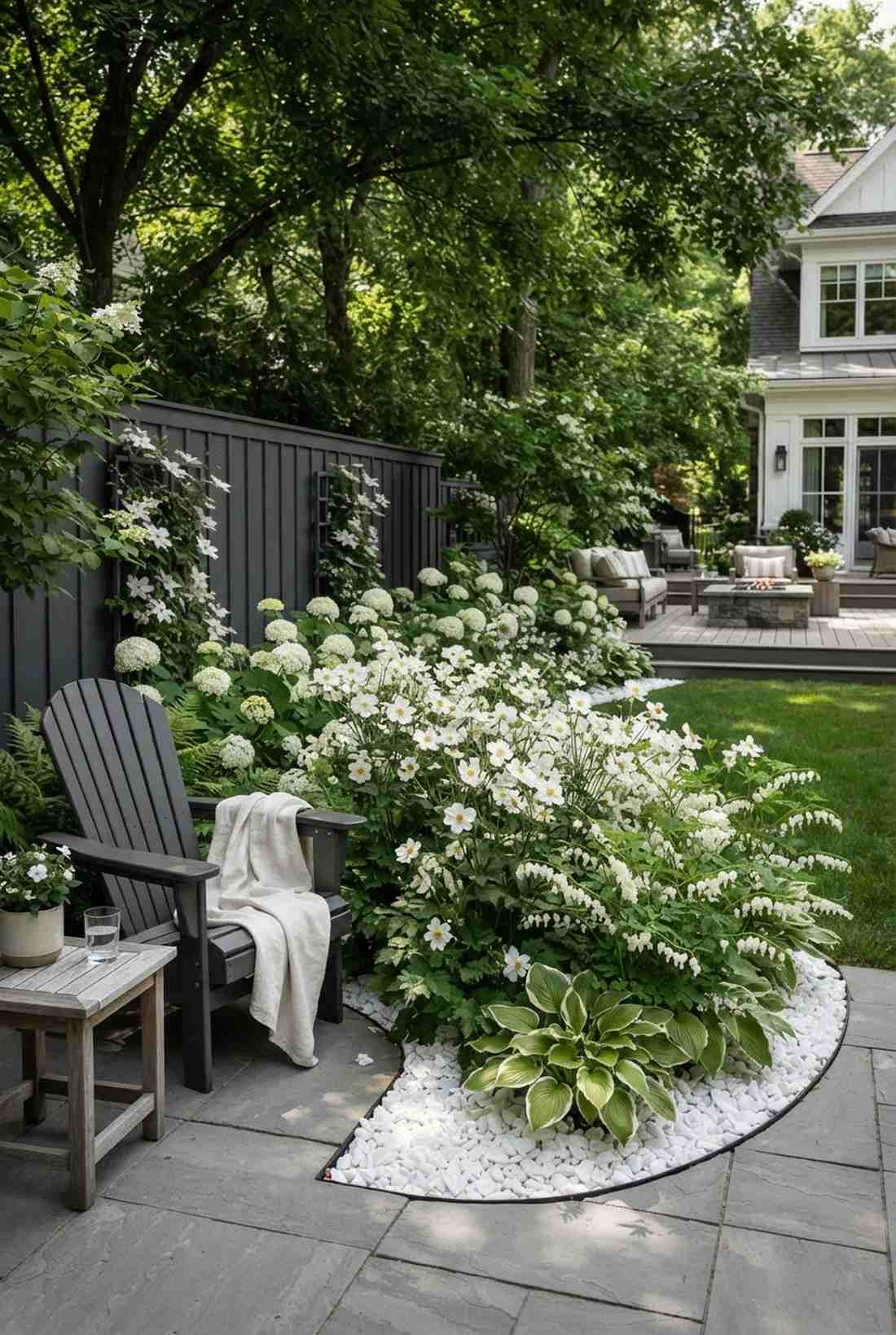
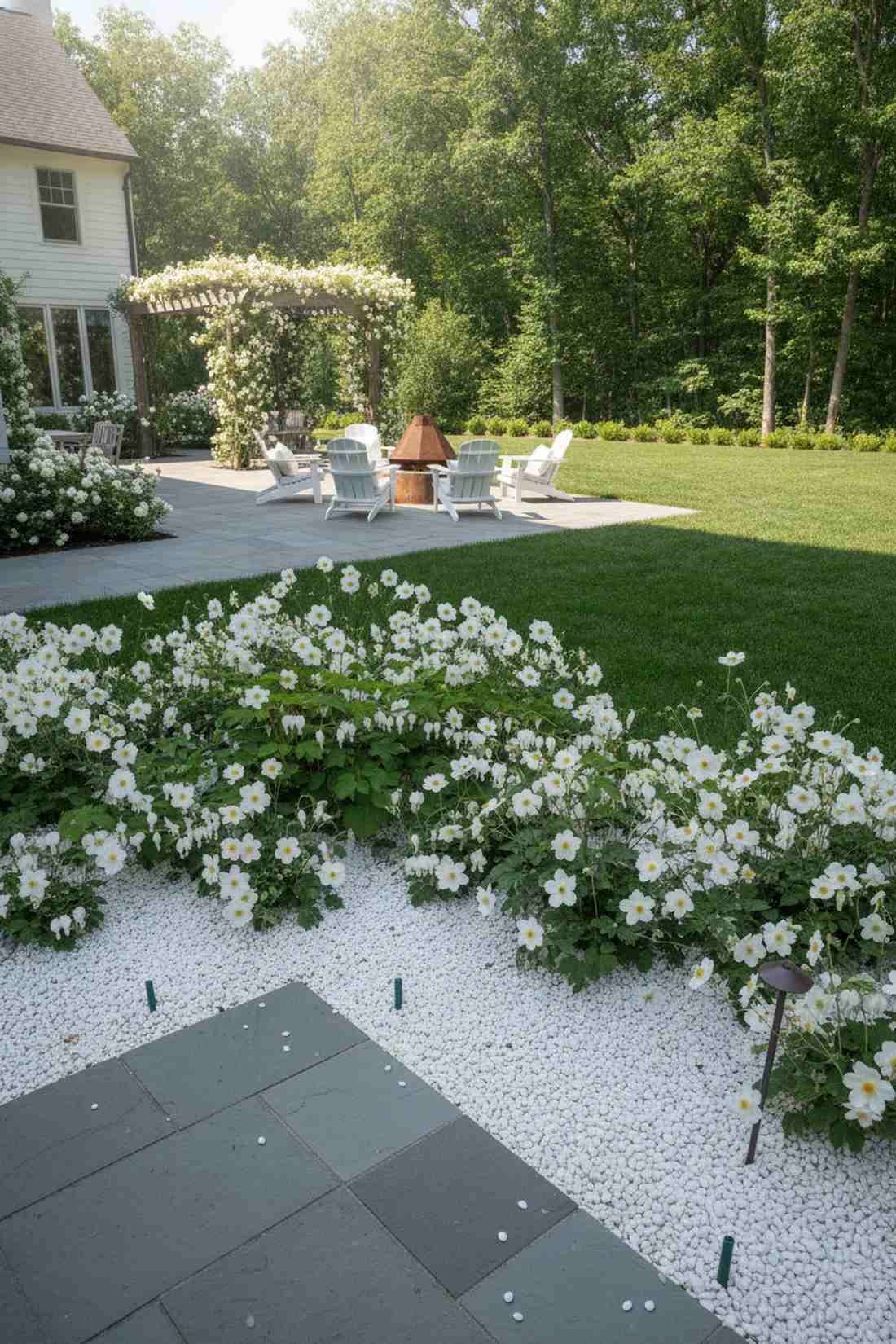
This glowing setup feels like a moonlit fairytale even in the middle of the day. A textured white botanical display works beautifully to illuminate dark, shaded patio corners.
Focusing purely on white blooms alongside deep green foliage gives a designer-level finish that most amateur gardeners miss. Enhance this pure aesthetic by incorporating white marble landscaping chips as mulch to reflect light upward and multiply the glow.
This striking monochromatic look typically costs around $50–$75 depending on your hydrangea sizes. Save this to your luxury backyard inspiration board.
- Key Materials: White Japanese anemones, bleeding hearts
- Vibe / Style: Modern estate luxury
- Difficulty: Advanced (requires bloom timing)
- Budget Breakdown: Base plants: $45 | White stone mulch: $30
- Creator’s Tip: Mix matte and glossy leaves to keep a single-color palette from looking flat.
- Smart Sourcing: Bulk pure white marble pebbles and slow-release hydrangea fertilizer spikes.
4. Warm Spectrum Sunrise Blend
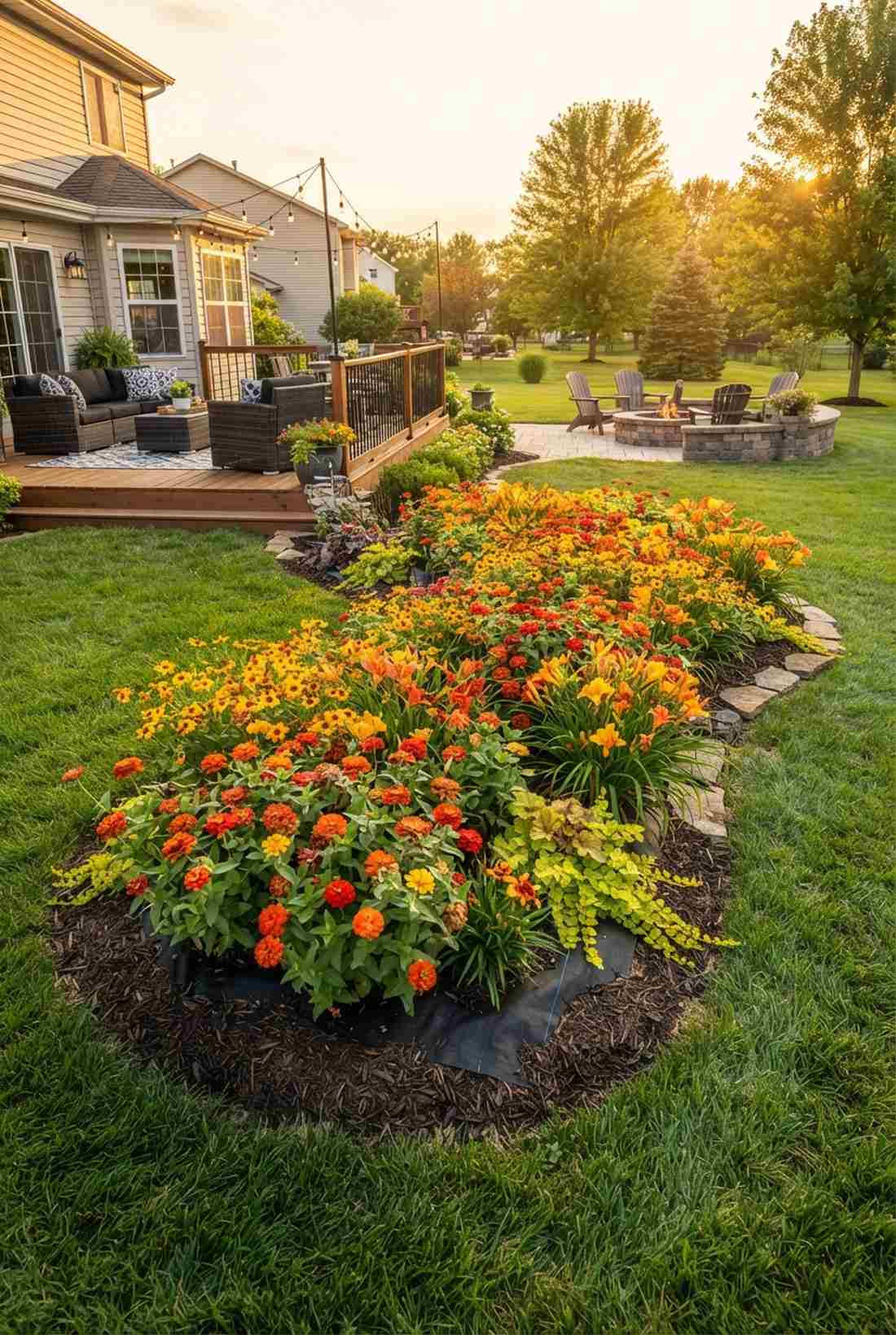
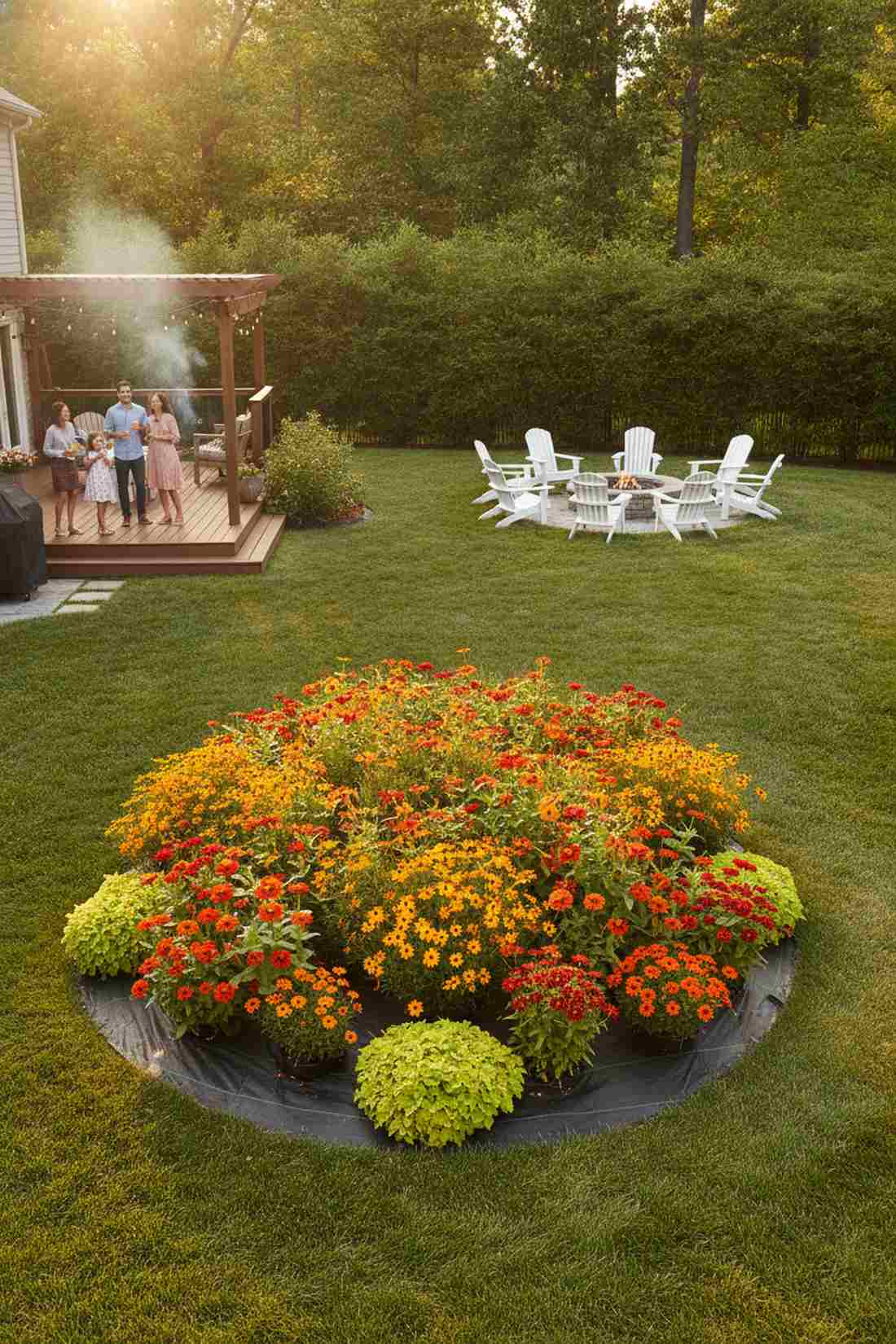
Bursting with energy, this layout feels like a permanent golden-hour sunset right on your lawn. Warm-toned landscape islands are incredible for drawing the eye toward the center of an otherwise flat backyard.
Blending fiery zinnias with sunset daylilies creates a high-impact focal point that outshines basic green lawns. Using a heavy-duty weed barrier landscape fabric underneath guarantees these bright colors pop without messy weed interference.
You can establish this high-energy bed for roughly $35. Highly recommended for a quick visual win before hosting summer parties.
- Key Materials: Coreopsis seeds, daylily tubers, zinnias
- Vibe / Style: Tropical summer heat
- Difficulty: Easy
- Budget Breakdown: Seed packs: $10 | Weed barrier: $25
- Creator’s Tip: Use chartreuse foliage plants as a bridge to prevent reds and yellows from clashing.
- Smart Sourcing: Commercial-grade weed block fabric and bulk wildflower seed blends.
Most people get this completely wrong… until they try the exact layout coming up next.
5. Cool Spectrum Retreat
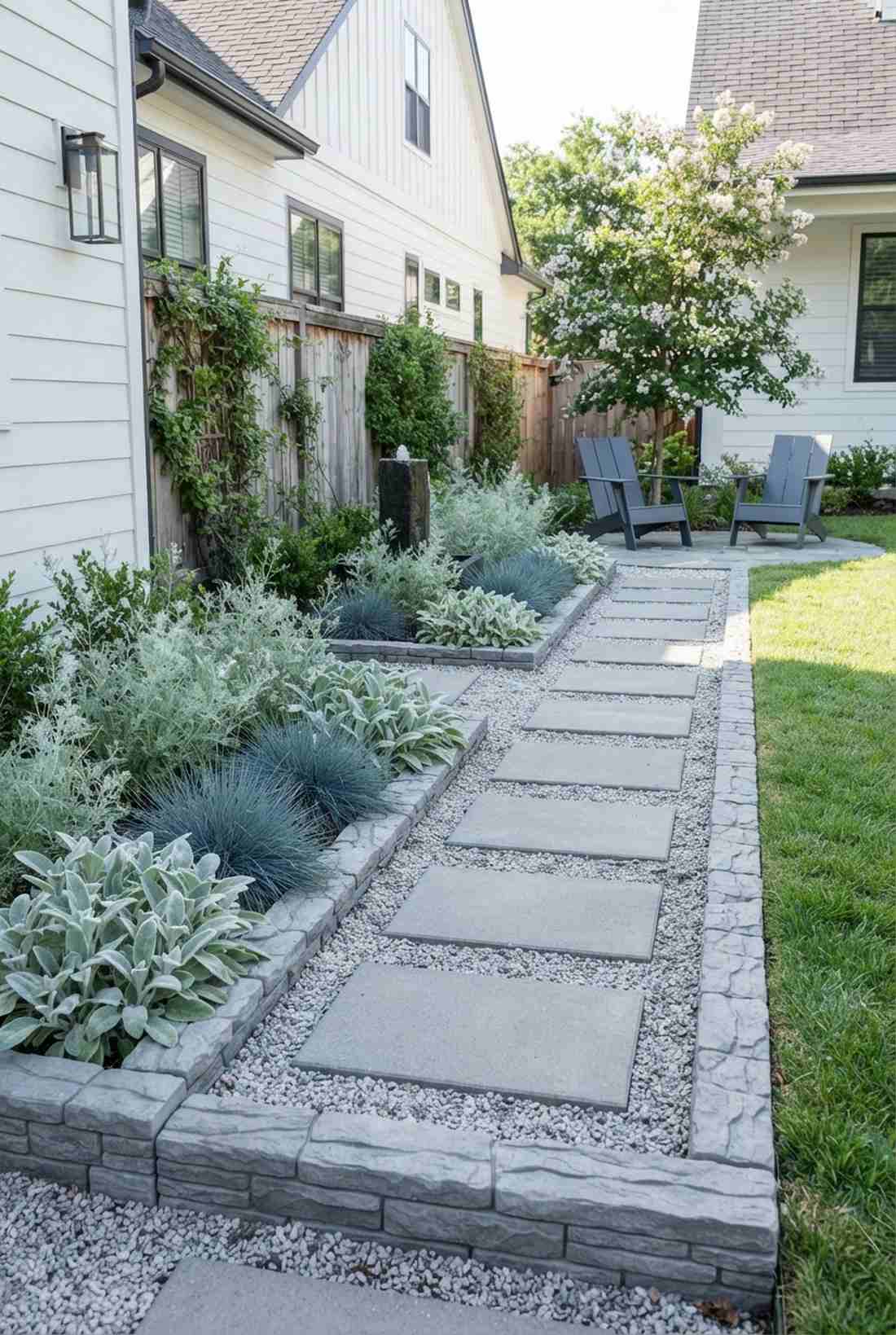
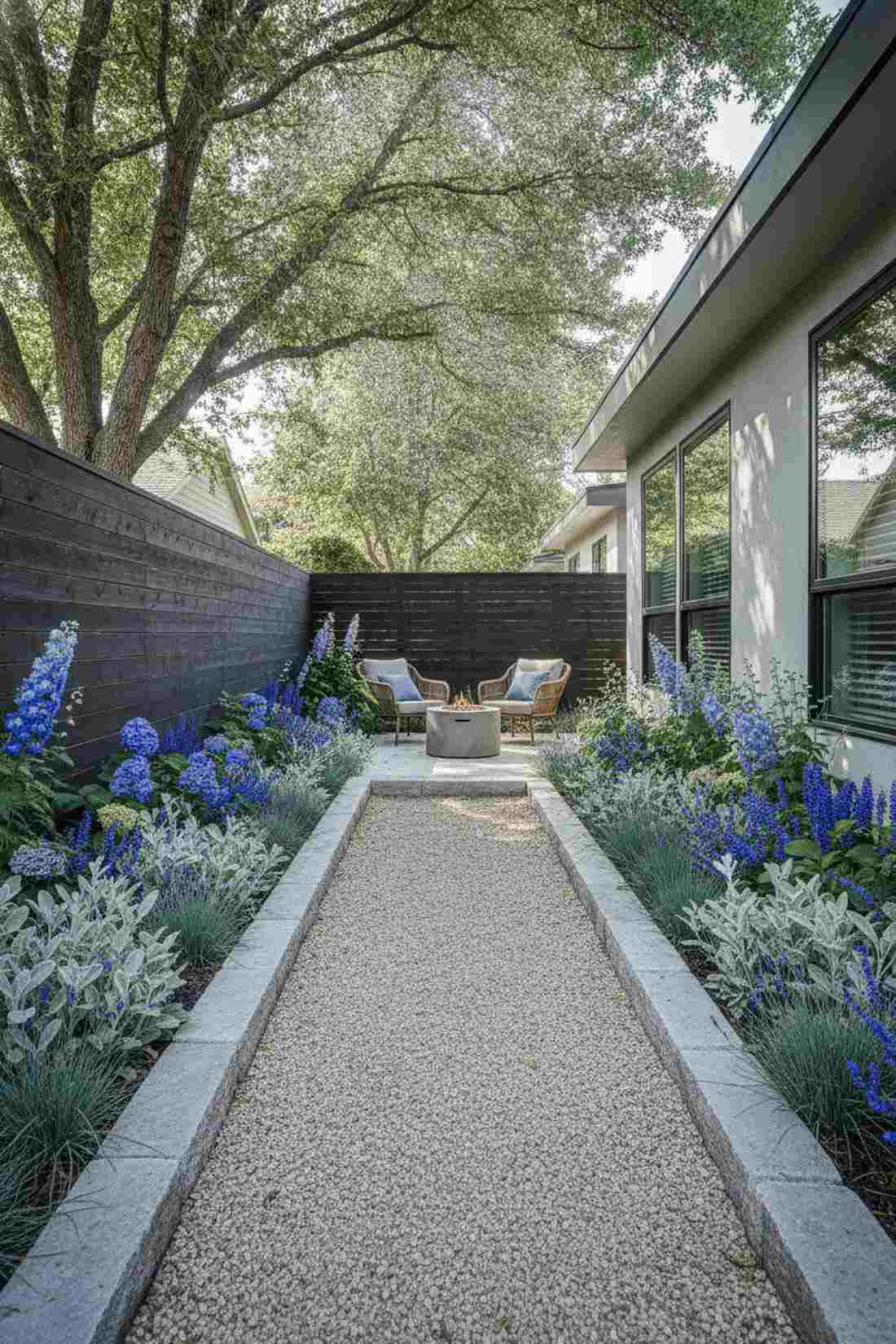
Wandering through this palette feels like finding a shaded alpine oasis on a hot day. These exact plant arrangement ideas are perfectly suited to make narrow side-yards feel twice as wide.
Pairing frosty artemisia with deep blue flowers instantly delivers a visually expansive, architectural aesthetic. Introducing weatherproof faux stone borders frames the cool tones perfectly while maintaining a high-end, structured appearance.
This cooling visual trick can be executed for around $40–$65. Pin this if you have a cramped outdoor space that needs opening up.
- Key Materials: Silver lamb’s ear, blue fescue grass
- Vibe / Style: Minimalist modern retreat
- Difficulty: Easy
- Budget Breakdown: Foliage plants: $30 | Stone borders: $35
- Creator’s Tip: Keep white flowers to an absolute minimum here, or they will wash out the subtle blues.
- Smart Sourcing: Interlocking faux stone edging (bulk pack) and drought-tolerant perennial starter kits.
6. Orange-Blue Contrast
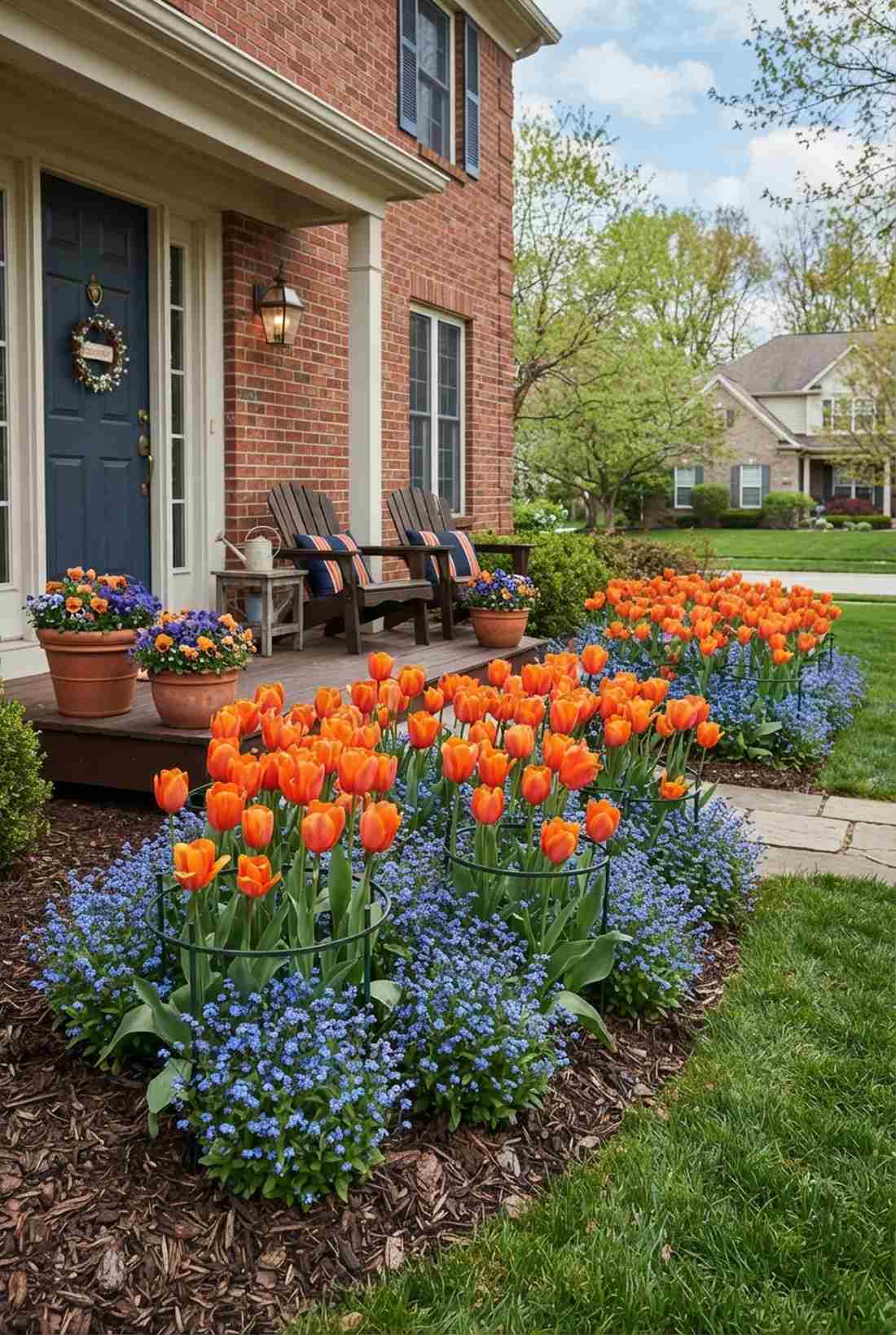
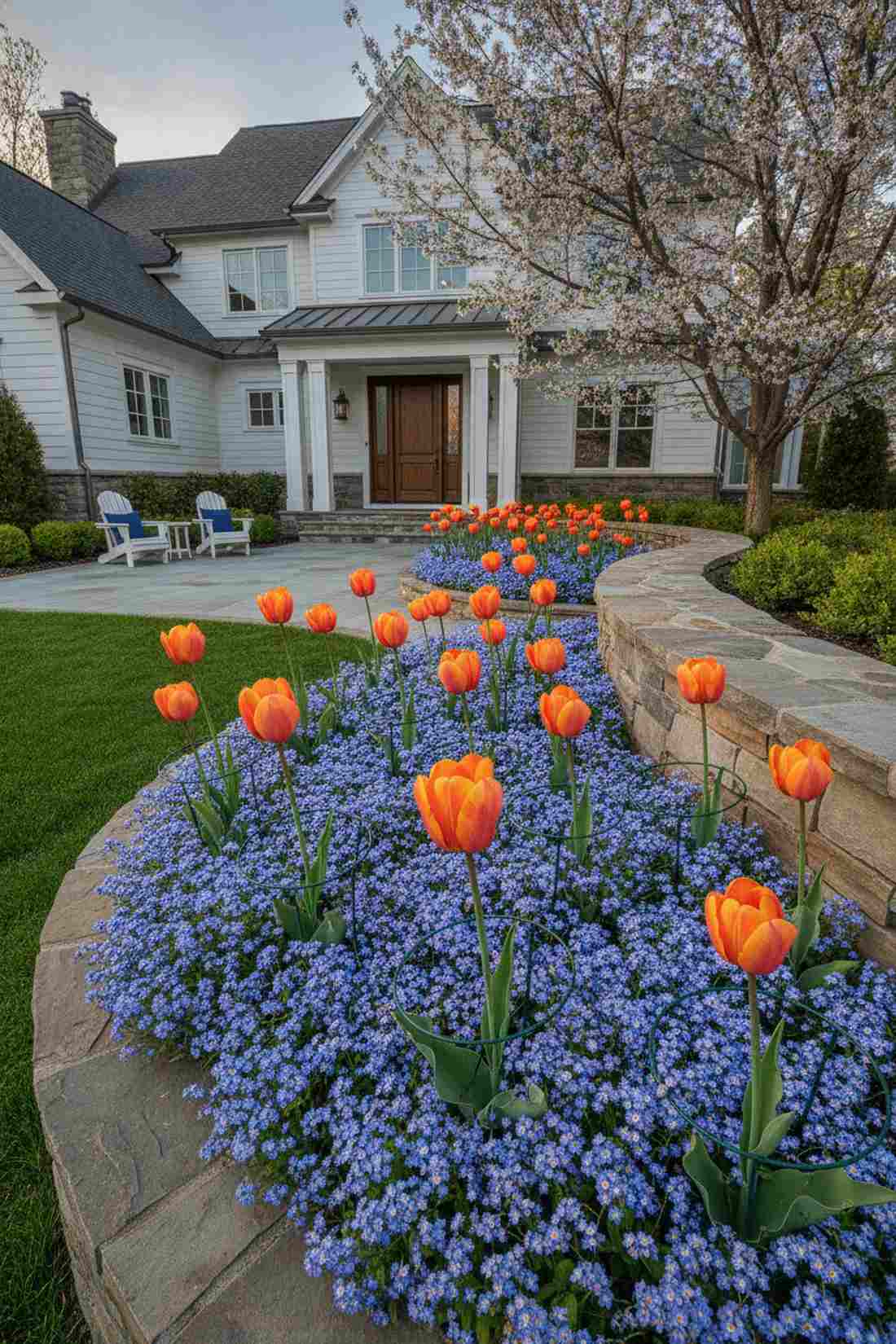
This intense pairing feels like a bold contemporary art gallery installation brought to life. A complementary spring bulb display serves as the ultimate entryway statement piece.
Forcing orange Emperor tulips through a sea of blue forget-me-nots commands attention and looks incredibly bespoke. Staking them with rust-resistant plant support rings ensures those heavy orange blooms stay upright and perfectly photogenic through spring storms.
This breathtaking contrast costs about $45 for premium bulbs and groundcover. The resulting curb appeal is absolutely unmatched.
- Key Materials: Orange tulip bulbs, forget-me-not seed tape
- Vibe / Style: High-drama spring showpiece
- Difficulty: Intermediate
- Budget Breakdown: Premium bulbs: $30 | Support rings: $15
- Creator’s Tip: True blue is rare; use deep violet-blue varieties to maintain that striking complementary tension.
- Smart Sourcing: Pre-spaced flower seed tape rolls and heavy-duty metal plant supports.
7. Red-Green Intensity
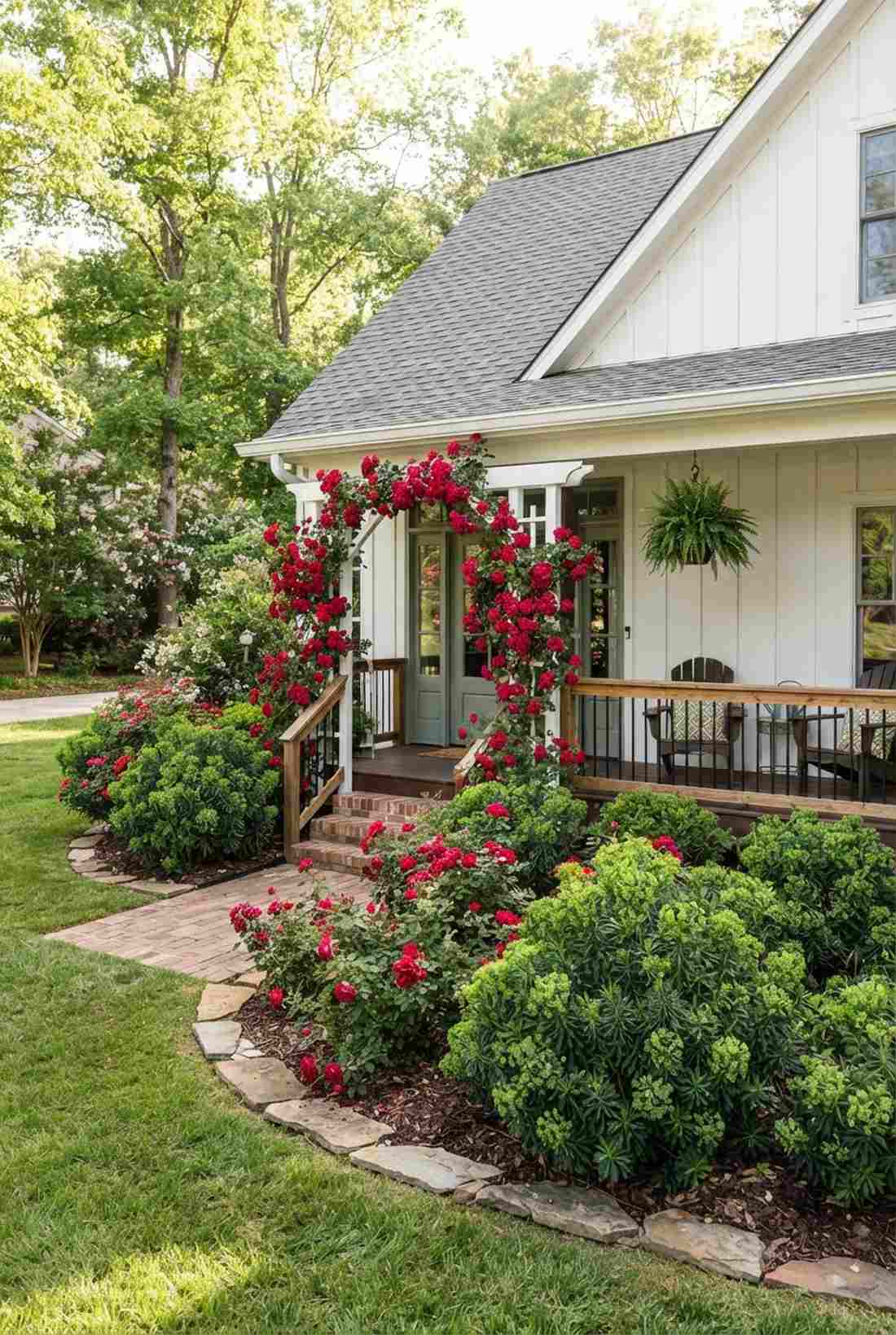
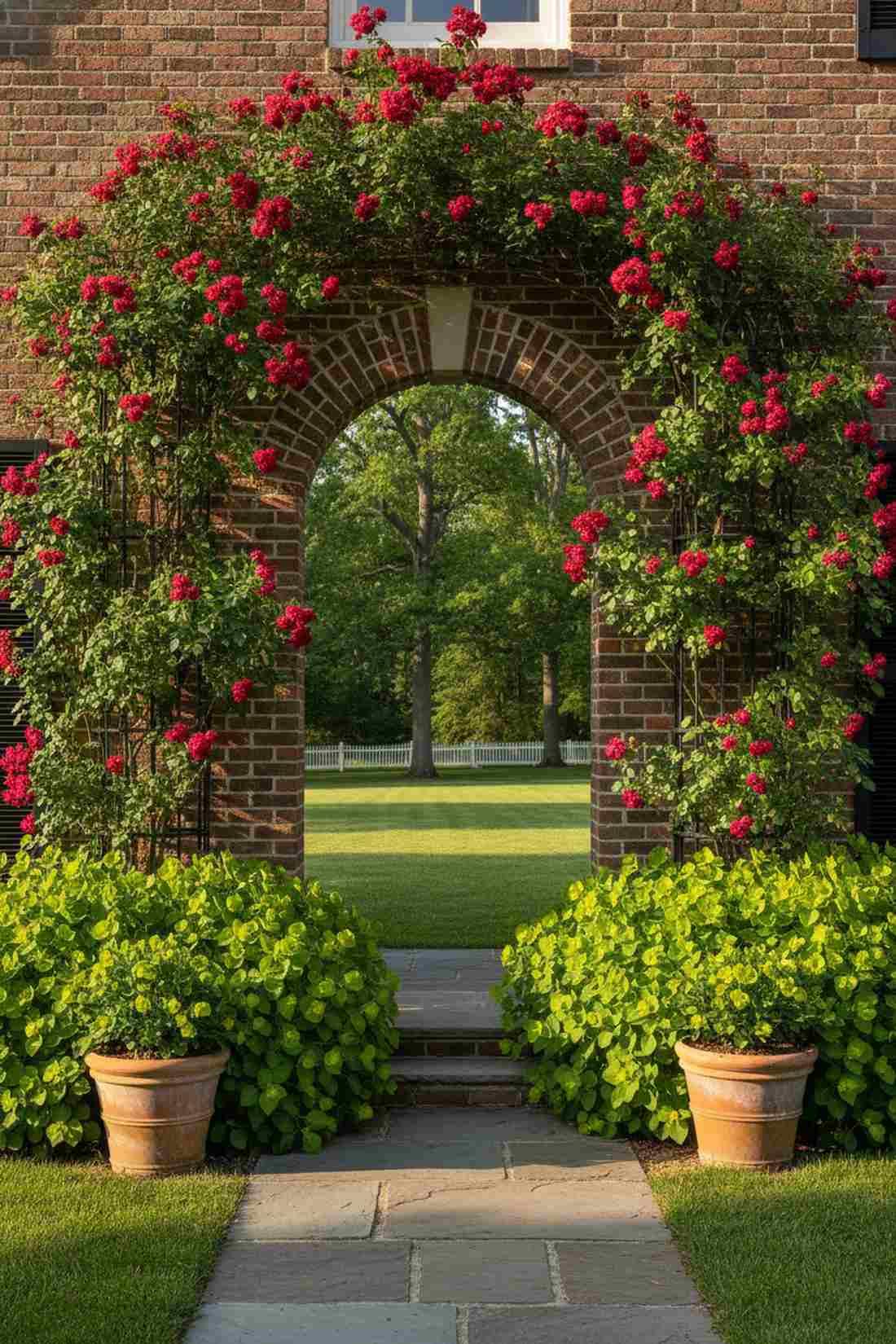
This classic combo feels like a lush, secluded rose garden at an old English manor. Saturated floral anchor points are ideal for framing front doors or breaking up long, monotonous fences.
Setting crimson roses against dense euphorbia foliage guarantees a hyper-pigmented pop that traditional pastel gardens lack. Upgrading your base with moisture-control potting mixes keeps the green foliage intensely vibrant, acting as the perfect deep backdrop for the reds.
You can set up this striking contrast zone for roughly $50–$80. Save this to your curb-appeal upgrade board immediately.
- Key Materials: Red climbing roses, euphorbia base plants
- Vibe / Style: Classic romantic drama
- Difficulty: Intermediate (requires pruning skills)
- Budget Breakdown: Premium rose bush: $45 | Base foliage: $35
- Creator’s Tip: Never mix other colors near this setup; let the pure red and green do all the heavy lifting.
- Smart Sourcing: High-nitrogen foliar spray kits and premium rose bush starter packs.
8. Pink-Fuchsia-Lime Accent
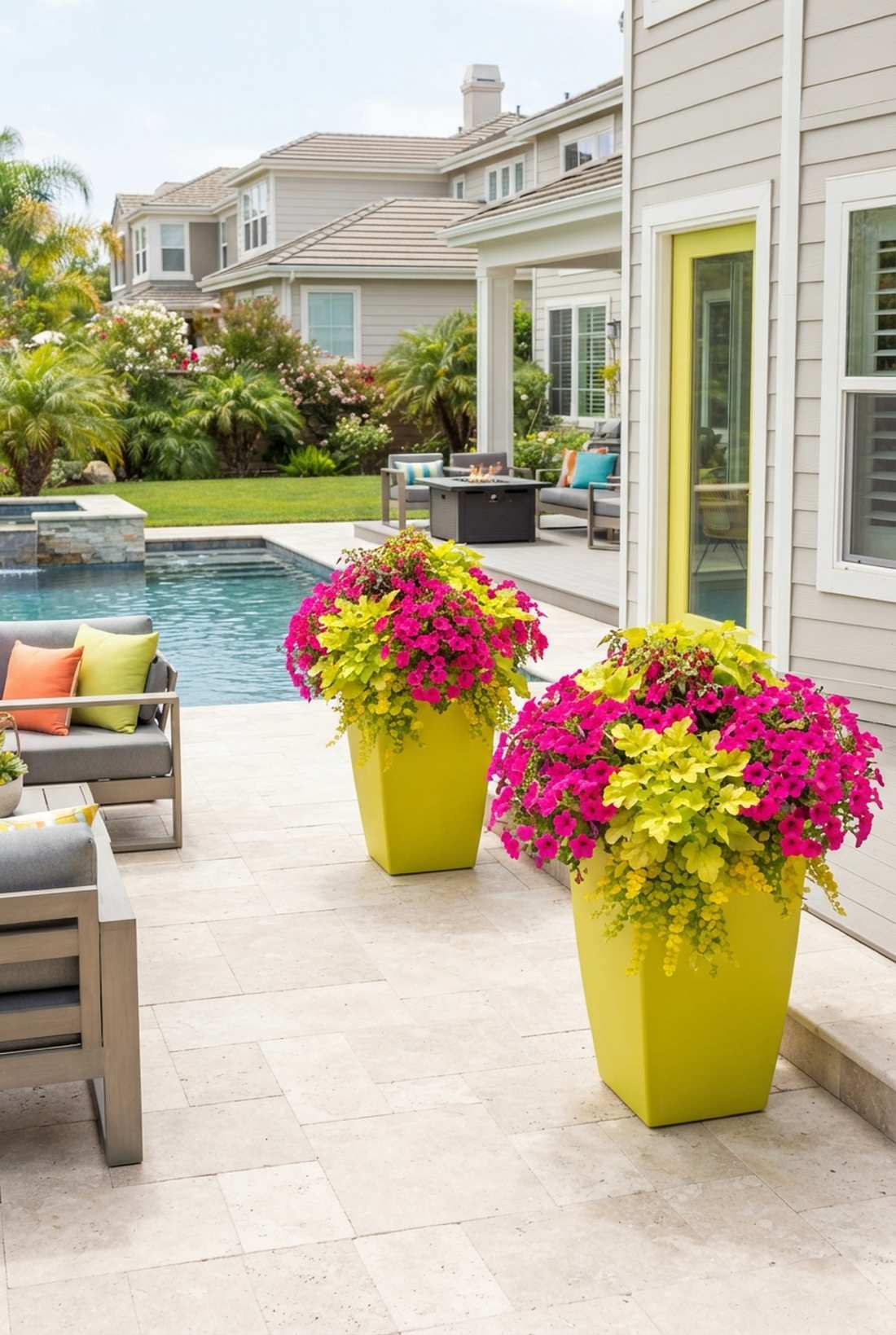
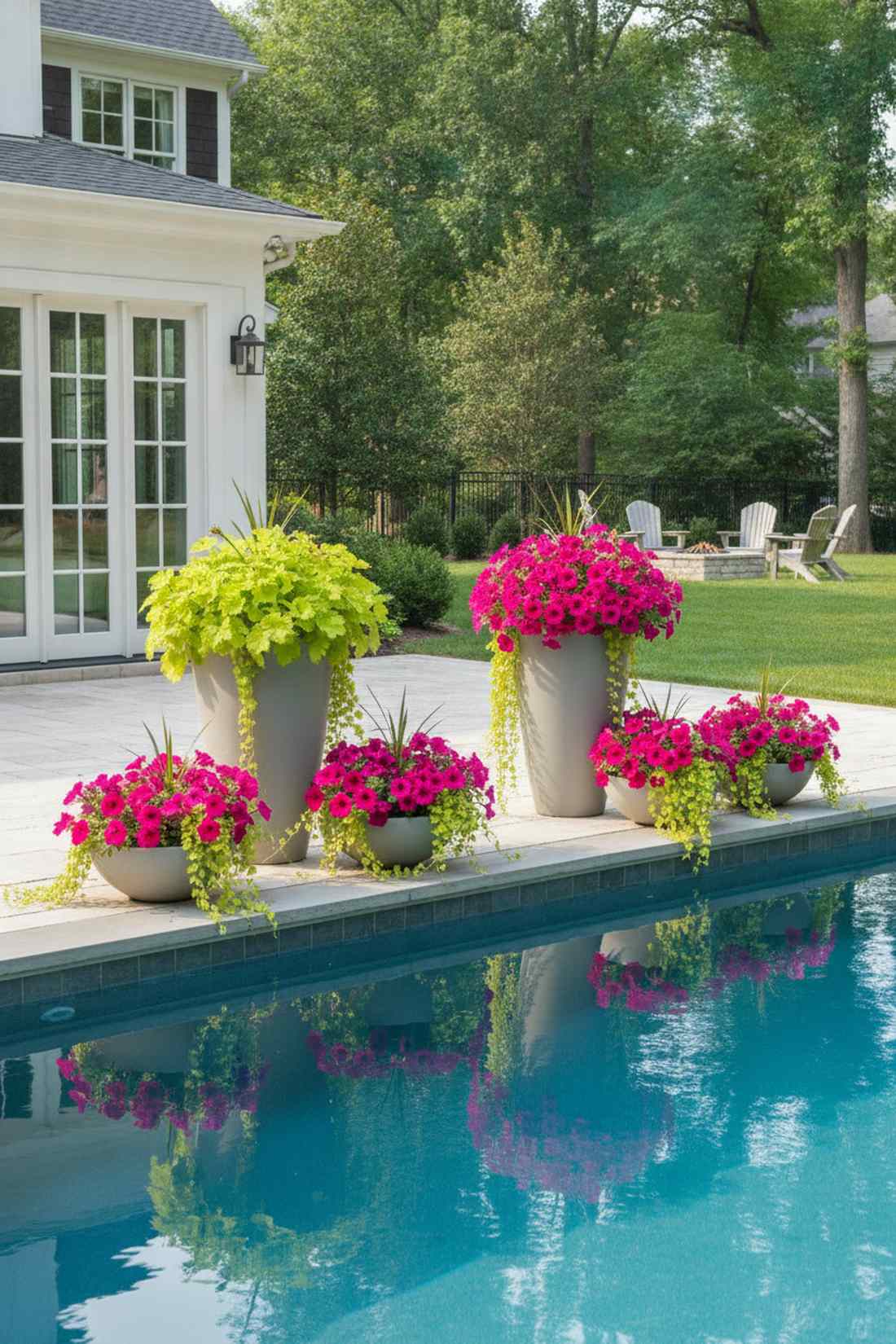
This neon-infused arrangement feels like a vibrant tropical resort lounge right on your patio. A bright chartreuse foliage planter is the ultimate use-case for flanking pool decks or sunny back doors.
Surrounding hot pink petunias with golden creeping jenny is a landscaping cheat code for instant modern edge. Securing them in UV-coated fiberglass planters guarantees those blinding neon hues aren’t distracted by cheap, fading plastic pots.
This electric vibe typically costs $30–$55 to achieve. It’s a massive visual upgrade that takes less than an hour to plant.
- Key Materials: Lime heuchera, fuchsia petunias
- Vibe / Style: Neon contemporary chic
- Difficulty: Easy
- Budget Breakdown: Trailing foliage: $20 | Vivid florals: $35
- Creator’s Tip: Keep the lime green to roughly 30% of the display so it accents rather than overpowers the pink.
- Smart Sourcing: UV-coated tall modern planters and water-retaining soil crystal packs.
9. Burgundy-Silver Sophistication
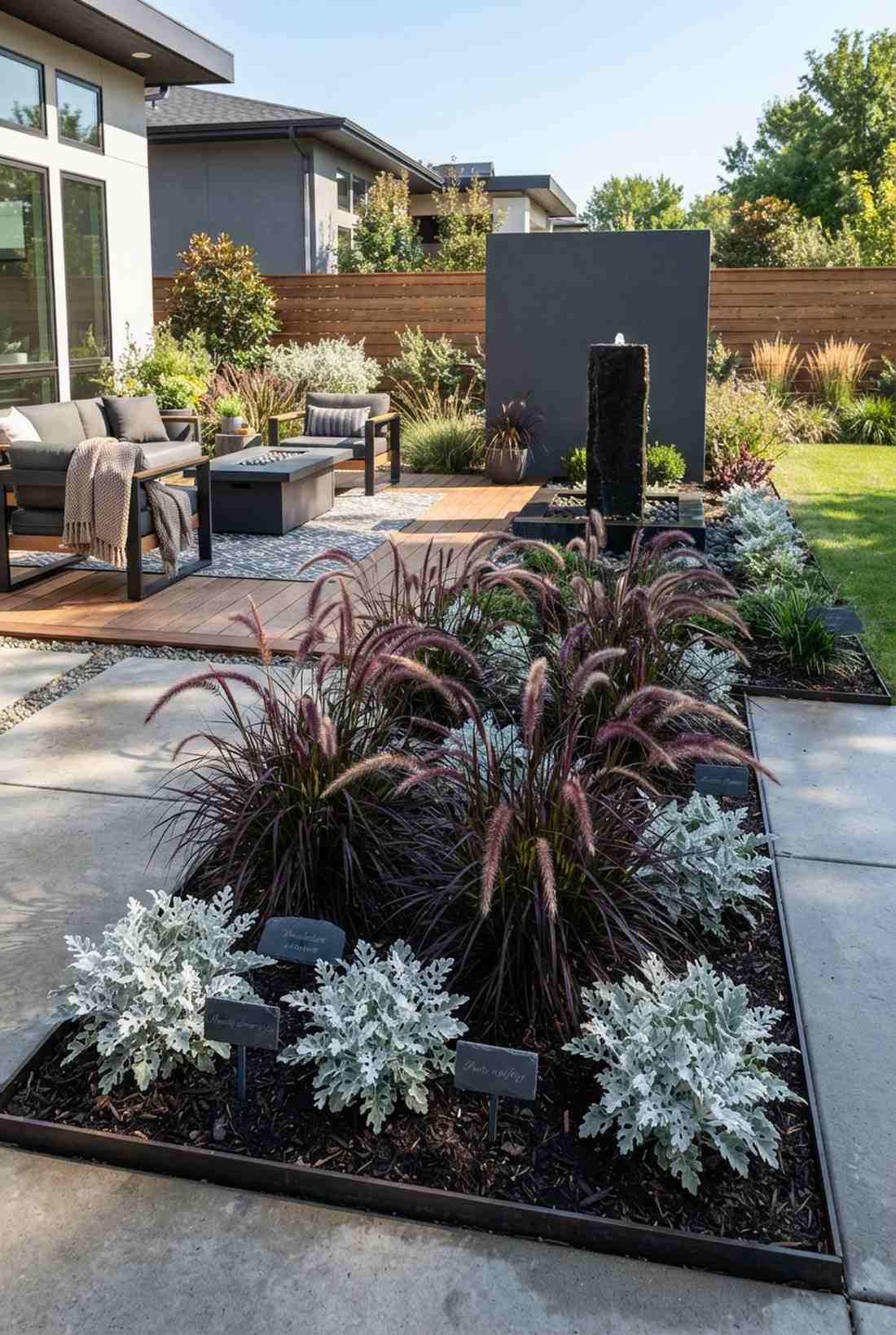
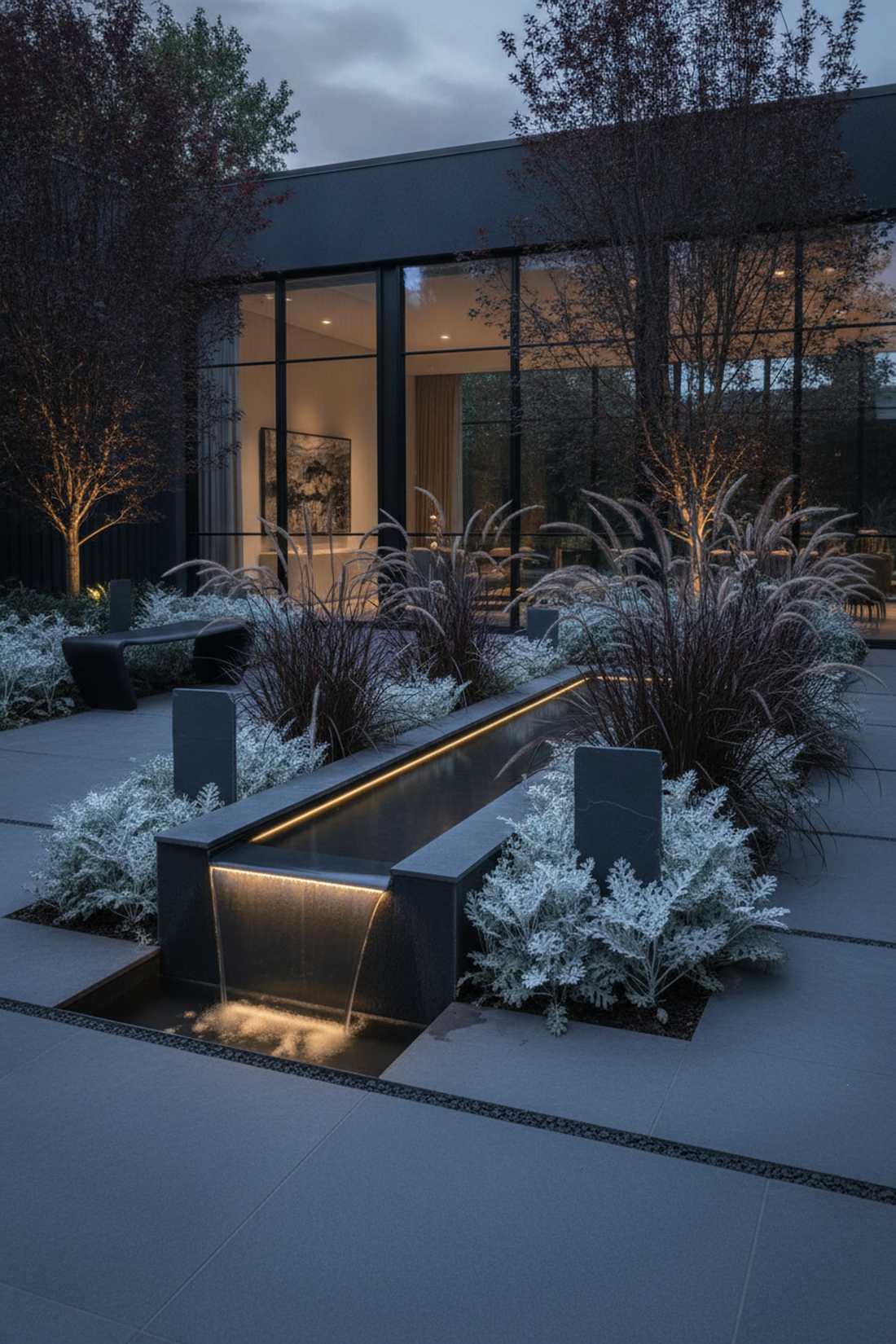
This dark, moody display feels like stepping into a high-end gothic boutique hotel courtyard. Foliage-first luxury arrangements work spectacularly in contemporary minimalist courtyards or beside sleek water features.
Pairing deep purple fountain grass with icy dusty miller provides an incredibly upscale texture without relying on finicky flowers. Utilizing weatherproof slate garden markers elevates the entire bed, making it look like a curated botanical garden display.
You can execute this sophisticated, no-bloom aesthetic for around $40. Pin this to your modern landscaping Pinterest board.
- Key Materials: Purple fountain grass, dusty miller
- Vibe / Style: Upscale moody minimalism
- Difficulty: Easy
- Budget Breakdown: Ornamental grasses: $25 | Silver accents: $15
- Creator’s Tip: This setup relies on texture; ensure you have enough sun to keep the burgundy colors deeply saturated.
- Smart Sourcing: Natural slate garden label kits and pre-potted ornamental grass trios.
This next setup is ridiculously cheap but looks like a $300 custom display you’d see in a magazine…
💡 Must-Have Supplies for High-End Setups
To build these setups faster and ensure they last, skip the generic craft aisles and invest in the right foundational kits.
- Base & Support: Commercial-grade weed barrier rolls (bulk pack)
- Setup Tools: Ergonomic landscape edging trenchers
- Weather/Durability Protection: UV-resistant clear acrylic plant sealants
10. Pastel Rainbow Softness
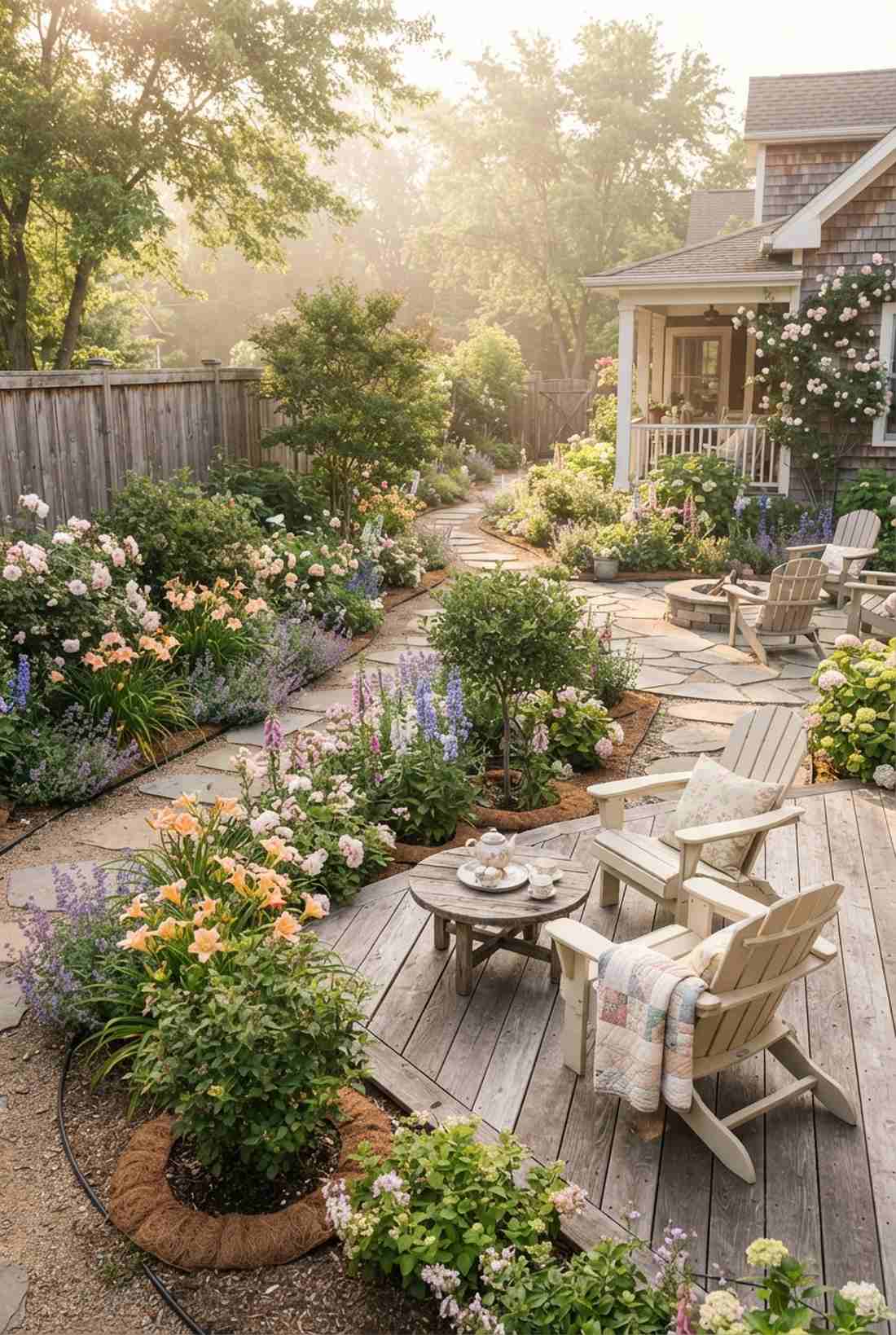
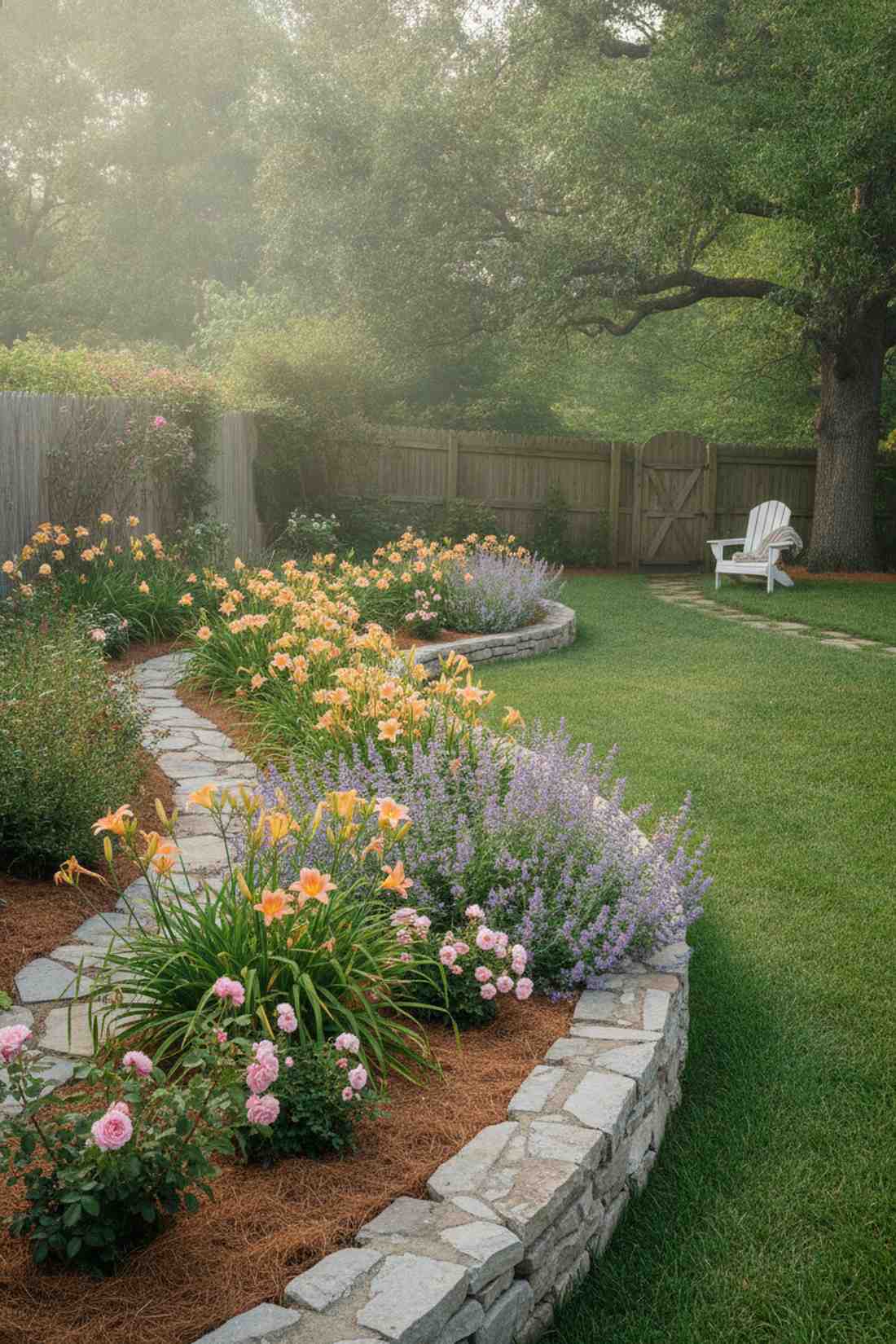
Walking through this gentle garden feels like wandering into a hazy, sunlit watercolor painting. A multi-hue pastel border is phenomenal for softening harsh concrete retaining walls or stark wooden fencing.
Mixing pale pinks, peaches, and lavenders side-by-side relies heavily on matching color values to achieve that expensive, cohesive softness. Using pre-cut coco coir mulch rings around the bases ensures moisture stays locked in without disrupting the delicate color palette.
This harmonious blend will run you about $45–$70 to establish properly. It’s the perfect layout for a relaxed cottage-core backyard.
- Key Materials: Peach daylilies, lavender nepeta, pale pink roses
- Vibe / Style: Soft cottage-core romance
- Difficulty: Intermediate
- Budget Breakdown: Mixed pastels: $55 | Coir rings: $15
- Creator’s Tip: If you introduce even one dark or neon flower, the entire soft watercolor illusion is shattered.
- Smart Sourcing: Pre-cut natural coco coir tree rings and bulk pastel perennial collections.
Structural Composition Techniques for Plant Arrangement in Garden
These frameworks elevate your outdoor aesthetic from scattered plants to architectural mastery. Use these structural plant arrangement in garden blueprints to dictate eye movement and spatial flow.
11. Drift Planting Method
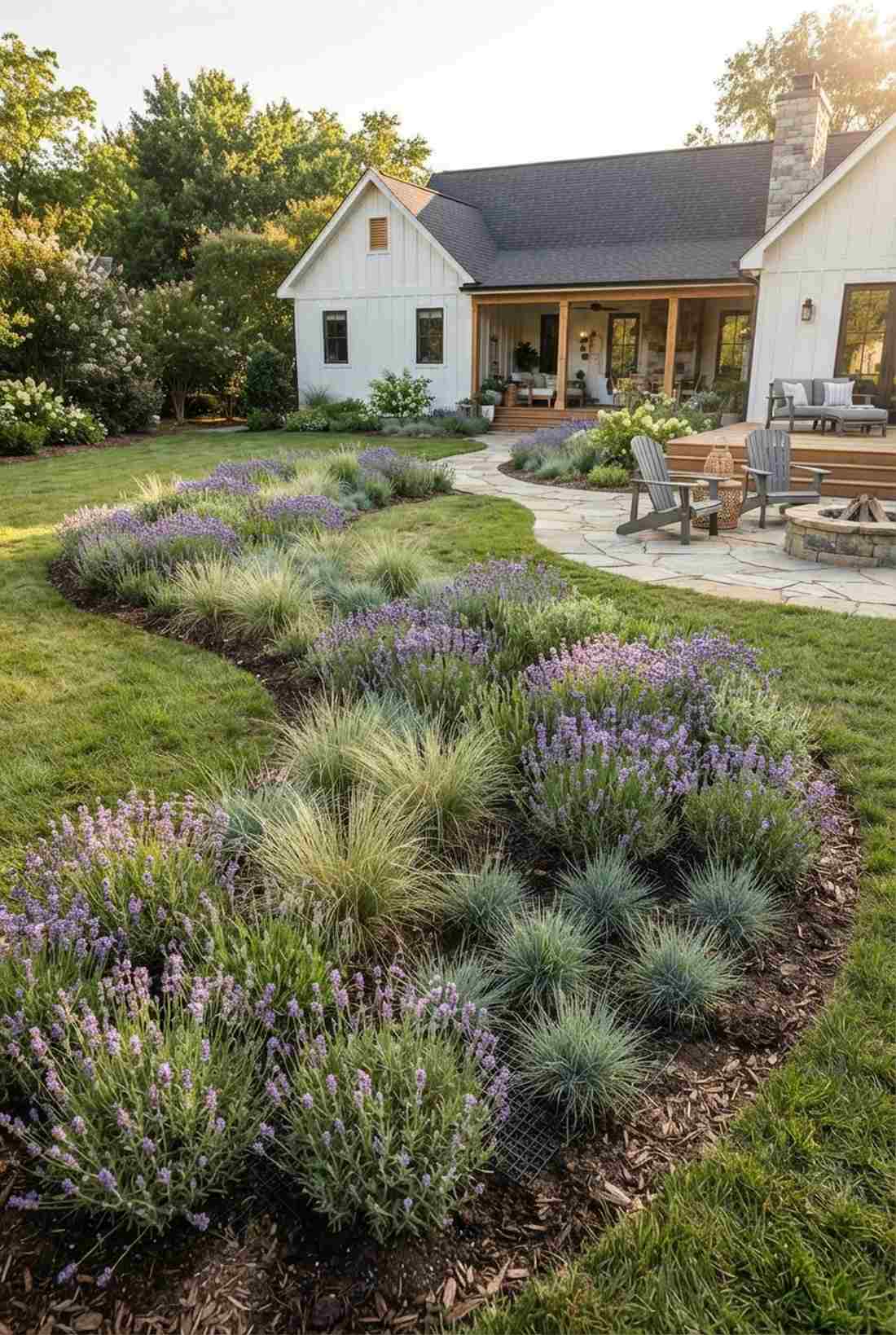
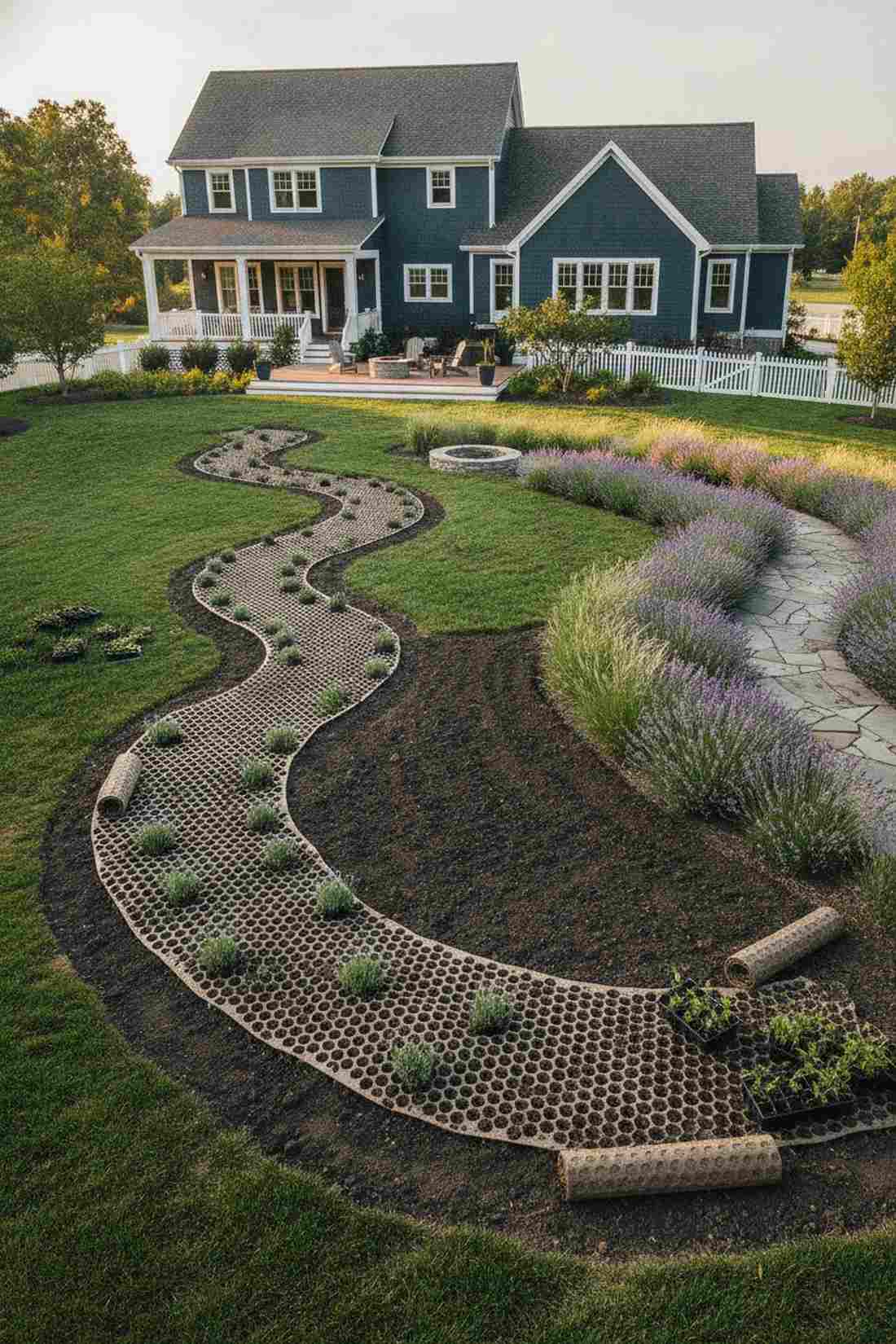
This organic flow feels like a gentle river of flora sweeping right through your property. Asymmetrical drift plantings are the ultimate solution for breaking up rigid, boring, square garden plots.
Grouping identical plants in elongated, flowing masses naturally mimics wild growth patterns for a highly professional finish. Utilizing biodegradable planting grid templates guarantees your spacing remains completely organic without looking accidentally messy.
Creating a beautiful drift effect usually costs around $60–$90 due to the volume of plants needed. Pin this if you want to ditch straight lines forever.
- Key Materials: Lavender flats, ornamental grass plugs
- Vibe / Style: Naturalistic sweeping landscape
- Difficulty: Intermediate (requires volume planning)
- Budget Breakdown: Bulk plugs: $75 | Spacing grids: $15
- Creator’s Tip: Always plant drifts in odd numbers (5, 7, 9) and interlock the edges with neighboring drifts.
- Smart Sourcing: Bulk perennial starter plugs (trays of 50) and biodegradable spacing template grids.
12. Star Focal Arrangement
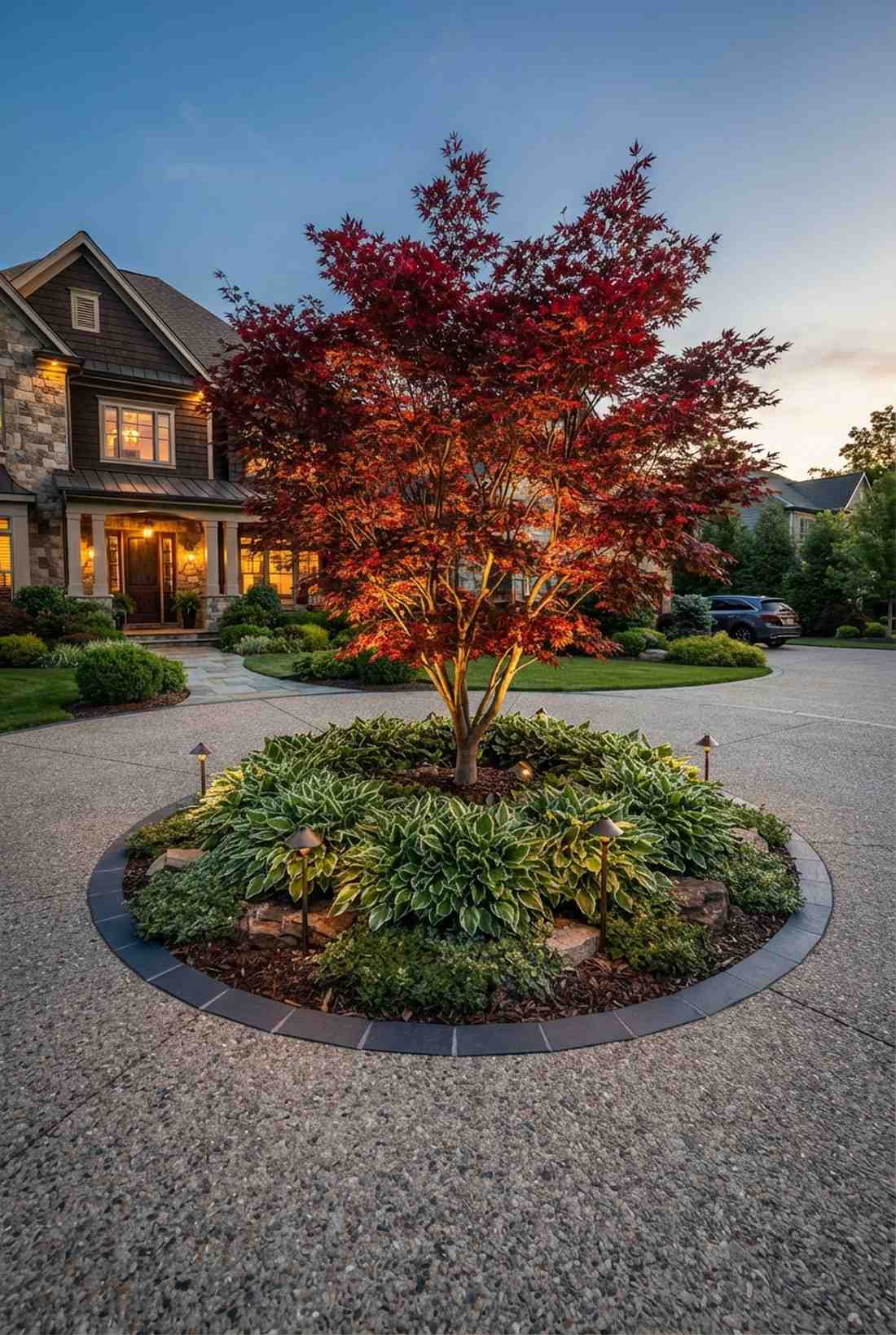
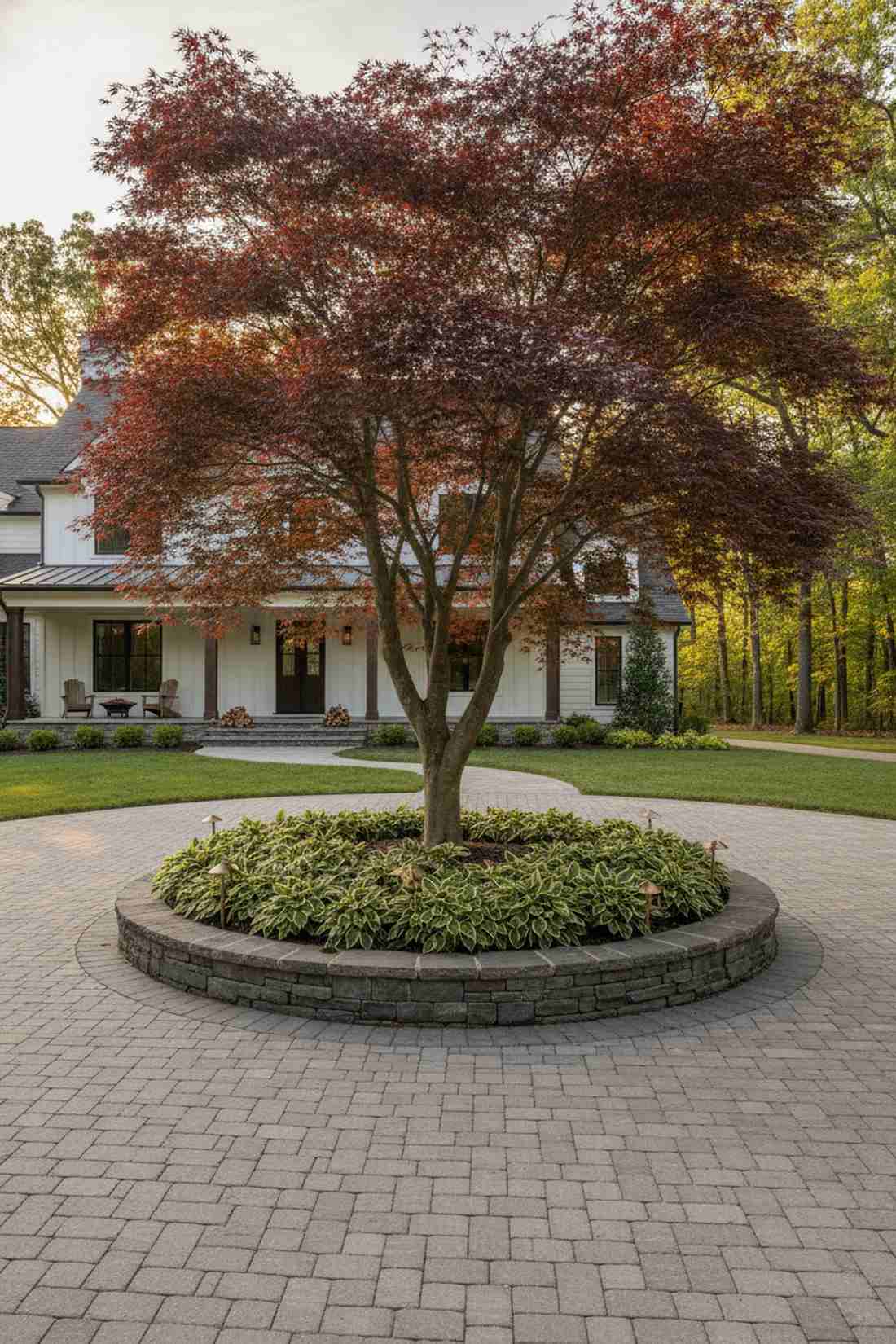
This striking layout feels like a museum exhibit showcasing a rare, priceless botanical artifact. A central focal anchor bed is perfect for commanding attention in the absolute center of a circular driveway.
Using a premium specimen tree surrounded by low, supporting hostas creates an undeniable hierarchy that screams luxury real estate. Anchoring the base with commercial-grade landscape spotlights ensures the star plant remains a dramatic showpiece long after the sun goes down.
Expect to invest $100–$250 depending heavily on your central specimen tree. It’s a one-and-done feature that instantly boosts home value.
- Key Materials: Japanese Maple, dwarf hostas
- Vibe / Style: High-end architectural focus
- Difficulty: Easy
- Budget Breakdown: Specimen tree: $150 | Support plants: $50
- Creator’s Tip: Position your focal point slightly off-center using the rule-of-thirds for a modern, dynamic look.
- Smart Sourcing: Solar-powered brass landscape spotlights and premium bare-root specimen trees.
13. Tier Height Layering
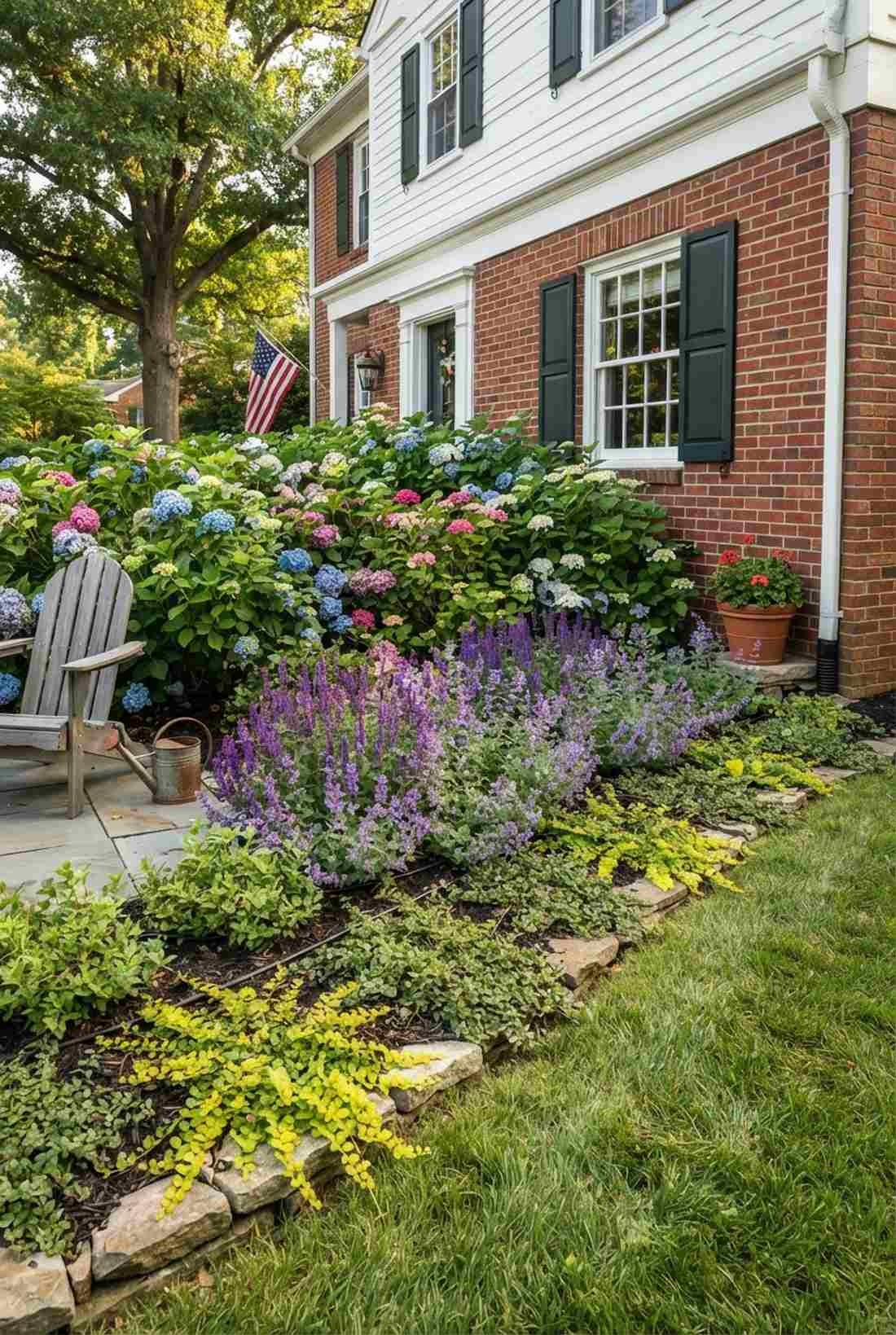
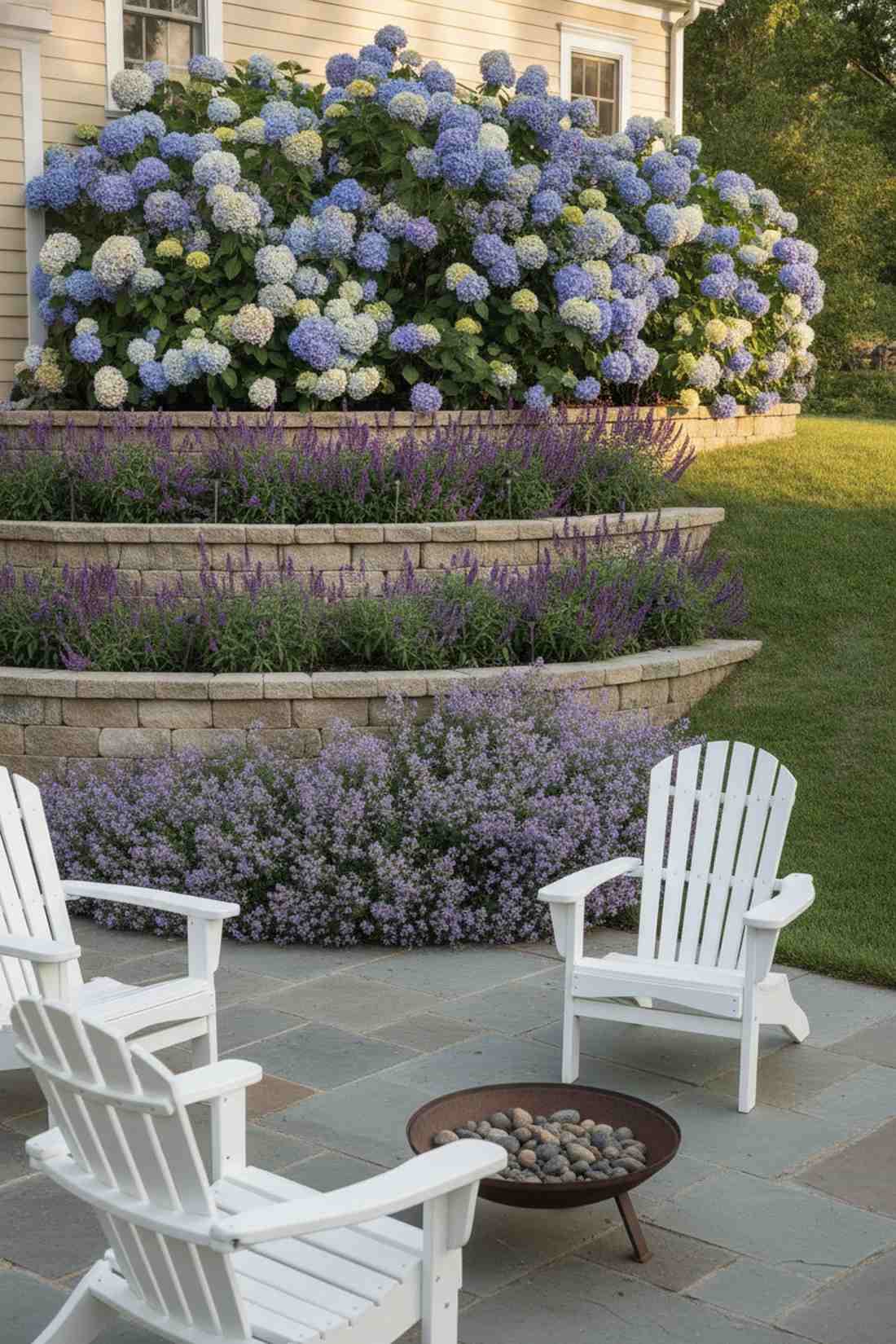
This stadium-seating setup feels like a lush amphitheater of greenery rising perfectly against your home. Graduated tiered borders are specifically designed to maximize visual depth against flat exterior house walls.
Stacking tall hydrangeas in the back down to creeping groundcovers in the front is a foolproof way to ensure zero visual dead space. Installing hidden drip irrigation starter kits behind the foliage ensures every single tier gets watered evenly without splashing the front row.
Building a robust 3-tier system costs approximately $80–$120 for a small section. Save this to your foundation planting DIY board.
- Key Materials: Hydrangeas (tall), Salvia (mid), Catmint (low)
- Vibe / Style: Classic estate foundation
- Difficulty: Intermediate
- Budget Breakdown: Tiered shrubs/perennials: $90 | Drip kit: $30
- Creator’s Tip: Always account for the mature height of the middle tier, or it will quickly swallow your front border.
- Smart Sourcing: Automatic micro-drip irrigation kits and tiered perennial bundle packs.
14. Weave Informal Integration
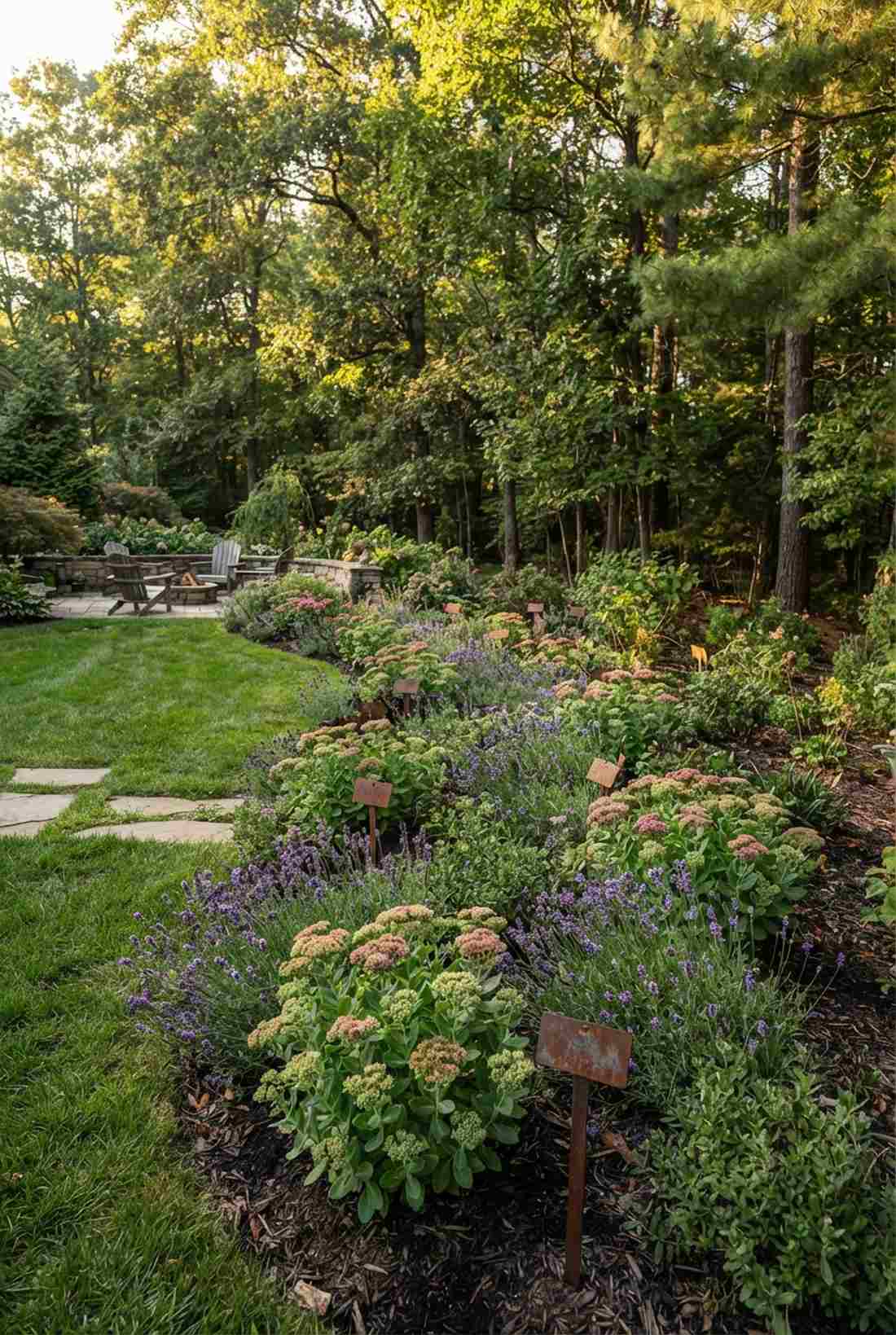
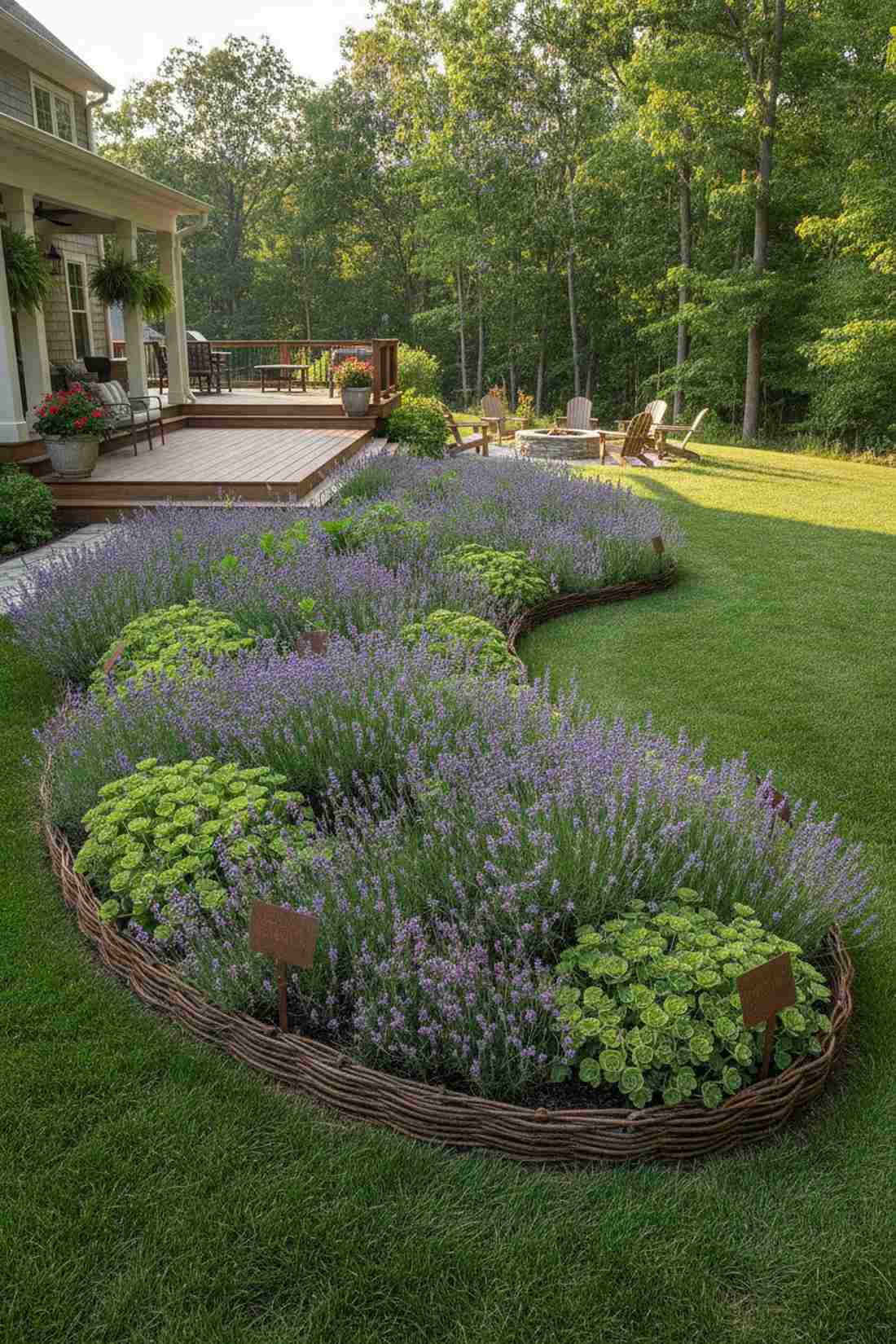
This textured layout feels like a wild, enchanting meadow that magically grew perfectly balanced. A woven botanical border acts as a brilliant transition zone between a manicured lawn and a wild forest edge.
Zigzagging sedum and lavender interchangeably shatters boring, rigid rows, delivering a relaxed, cottage-core charm. Adding rustic rusted-metal plant markers throughout the weave enhances that charming, slightly untamed aesthetic while keeping things organized.
You can execute a beautiful garden weave for roughly $40–$65. It’s the ultimate method for softening harsh landscaping lines.
- Key Materials: Sedum, English lavender
- Vibe / Style: Charming untamed cottage
- Difficulty: Easy
- Budget Breakdown: Mixed flats: $45 | Metal markers: $20
- Creator’s Tip: Pull a few background plants forward and push a few foreground plants back to erase any visible grid lines.
- Smart Sourcing: Weathered corten steel plant labels and mixed groundcover seed shaker jugs.
Before you buy another expensive plant, check out this brilliant hack that uses cheap materials to create a luxury footprint…
15. Mass Planting Impact
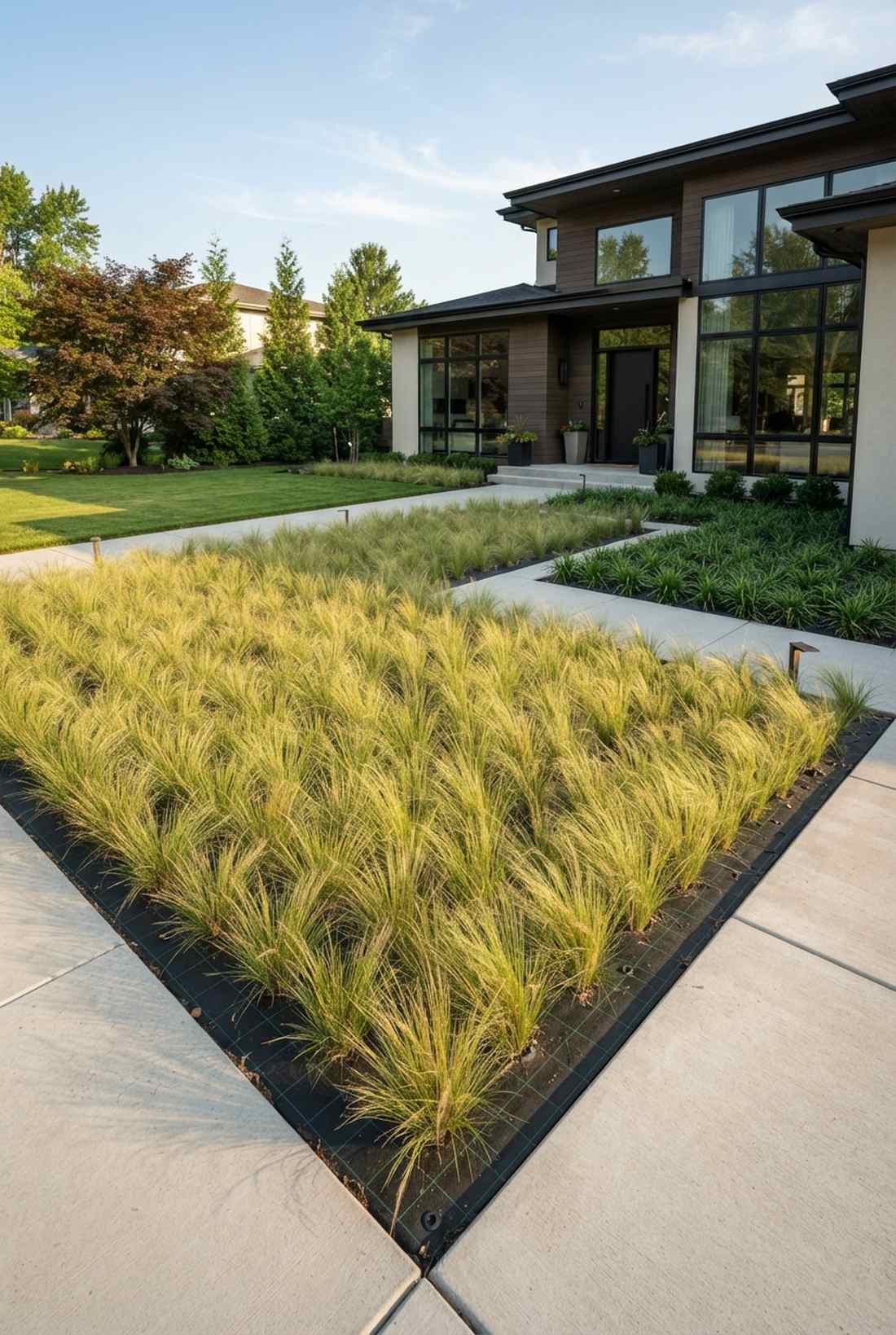
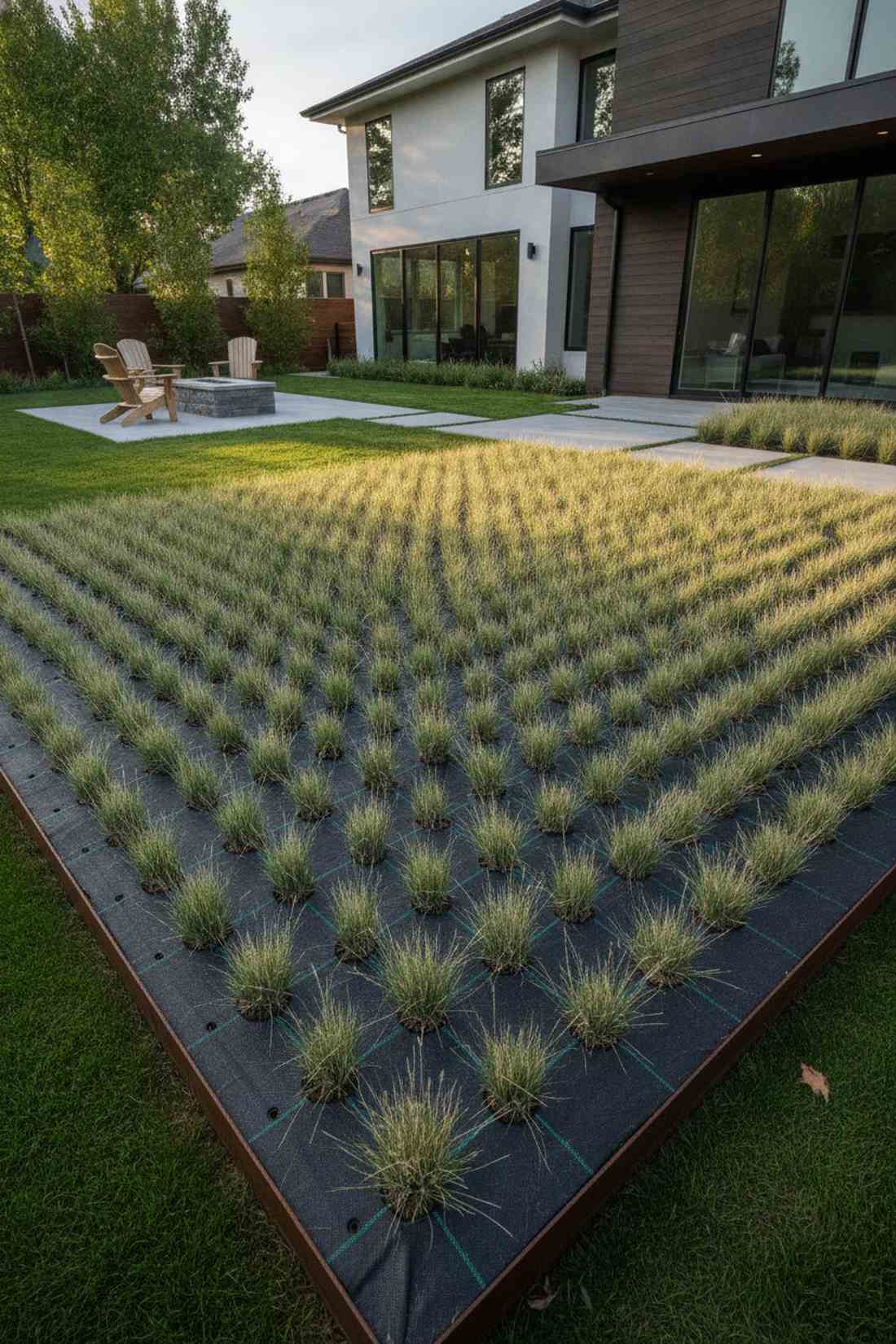
This bold design feels like a modern corporate plaza’s sweeping minimalist entryway. Implementing single-species mass plantings is your best defense against visually cluttered, overwhelming garden spaces.
Filling massive square footage with just one type of ornamental grass provides high-impact simplicity and dramatically cuts down on maintenance. Laying down heavy-duty pre-punched weed mats guarantees perfect, geometric spacing while completely eliminating weekend weeding chores.
A large mass planting area typically costs $80–$150 if you use bulk plugs. Pin this if you crave a modern, low-maintenance yard.
- Key Materials: Mexican feather grass or Liriope
- Vibe / Style: Sleek commercial modernism
- Difficulty: Easy (but labor-intensive)
- Budget Breakdown: Bulk plugs: $100 | Pre-punched mat: $40
- Creator’s Tip: Always measure “on center” spacing meticulously; even a slight deviation ruins the geometric illusion.
- Smart Sourcing: Pre-punched exact-spacing landscape fabric and bulk ornamental grass plug trays.
16. Triangle Natural Grouping
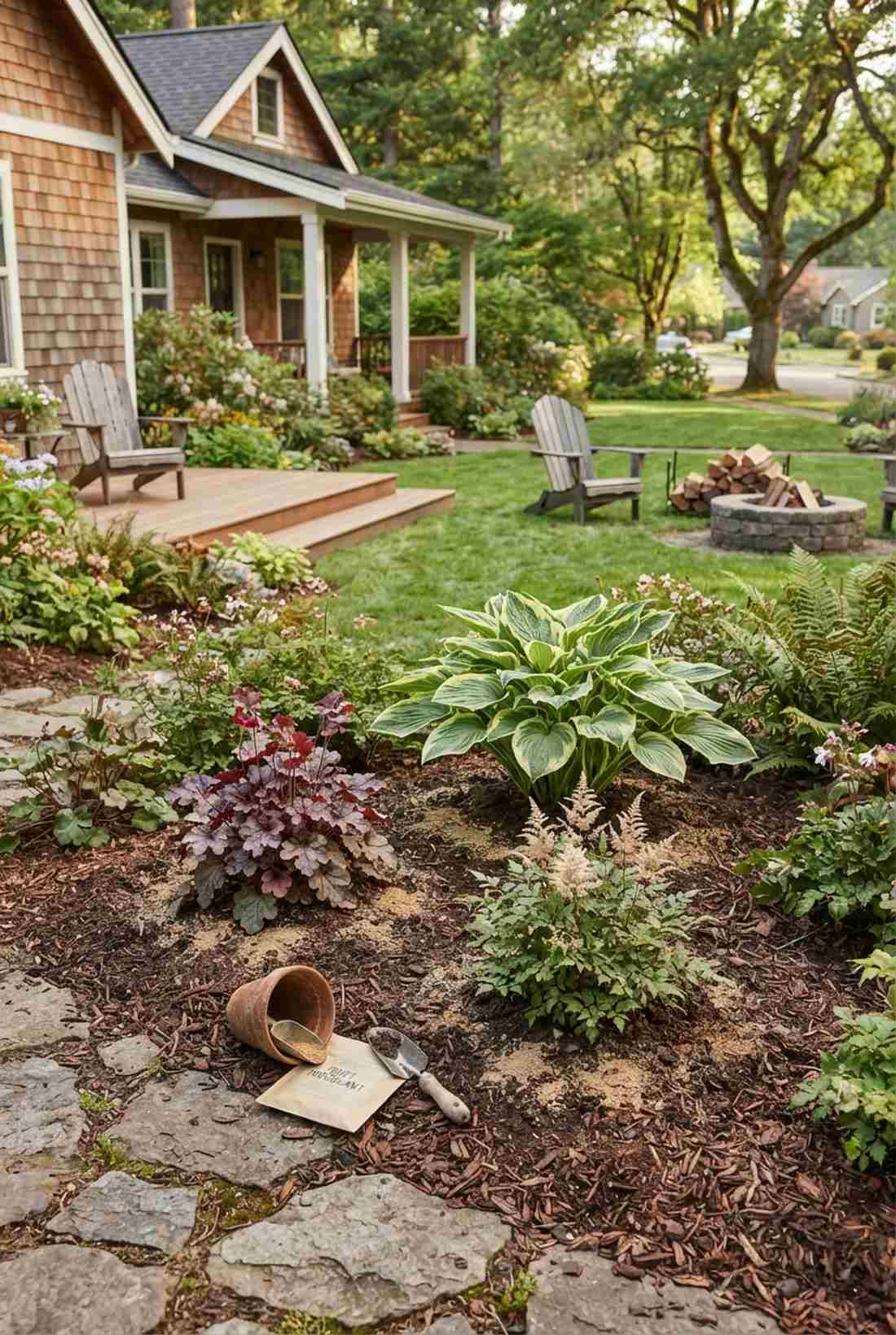
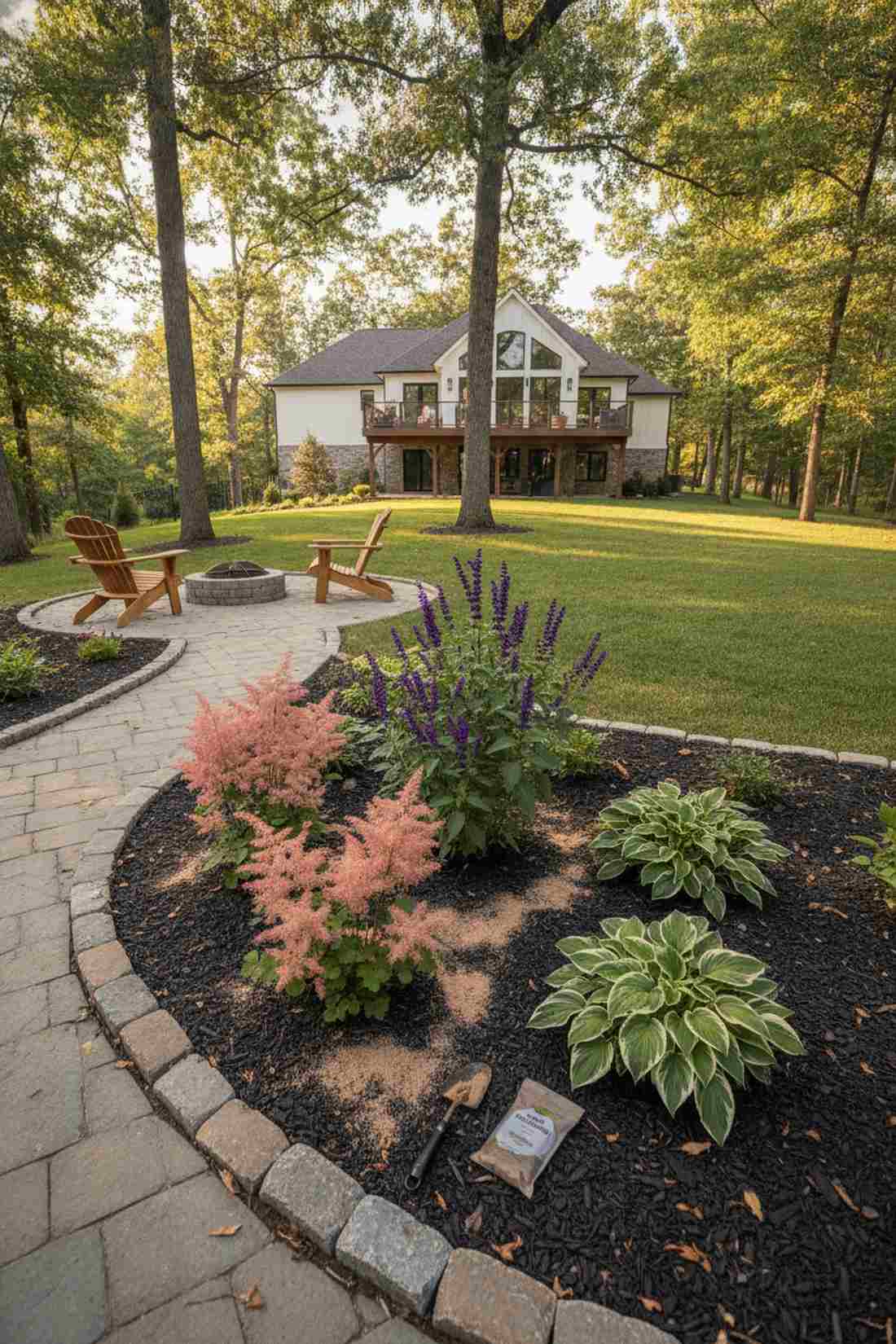
This core setup feels like a naturally occurring woodland cluster you’d spot on a hike. The asymmetrical triangle formation is the fundamental building block for filling awkward, empty corners in your garden bed.
By positioning three distinct plants in a varied triangle rather than a straight line, you instantly generate professional depth and balance. Using root-boosting mycorrhizal fungi powder during planting ensures this tight-knit trio establishes a shared, dominant root network quickly.
You can build these dynamic little trios for just $20–$35 each. It’s an incredibly cheap way to make small vignettes look professionally styled.
- Key Materials: Assorted mid-size perennials
- Vibe / Style: Organic woodland balance
- Difficulty: Easy
- Budget Breakdown: 3-plant combo: $25 | Root powder: $10
- Creator’s Tip: Avoid perfect equilateral triangles; push one plant further back to force a deeper perspective.
- Smart Sourcing: Premium mycorrhizal root inoculant powder and curated 3-plant perennial kits.
17. Four-One Expansion
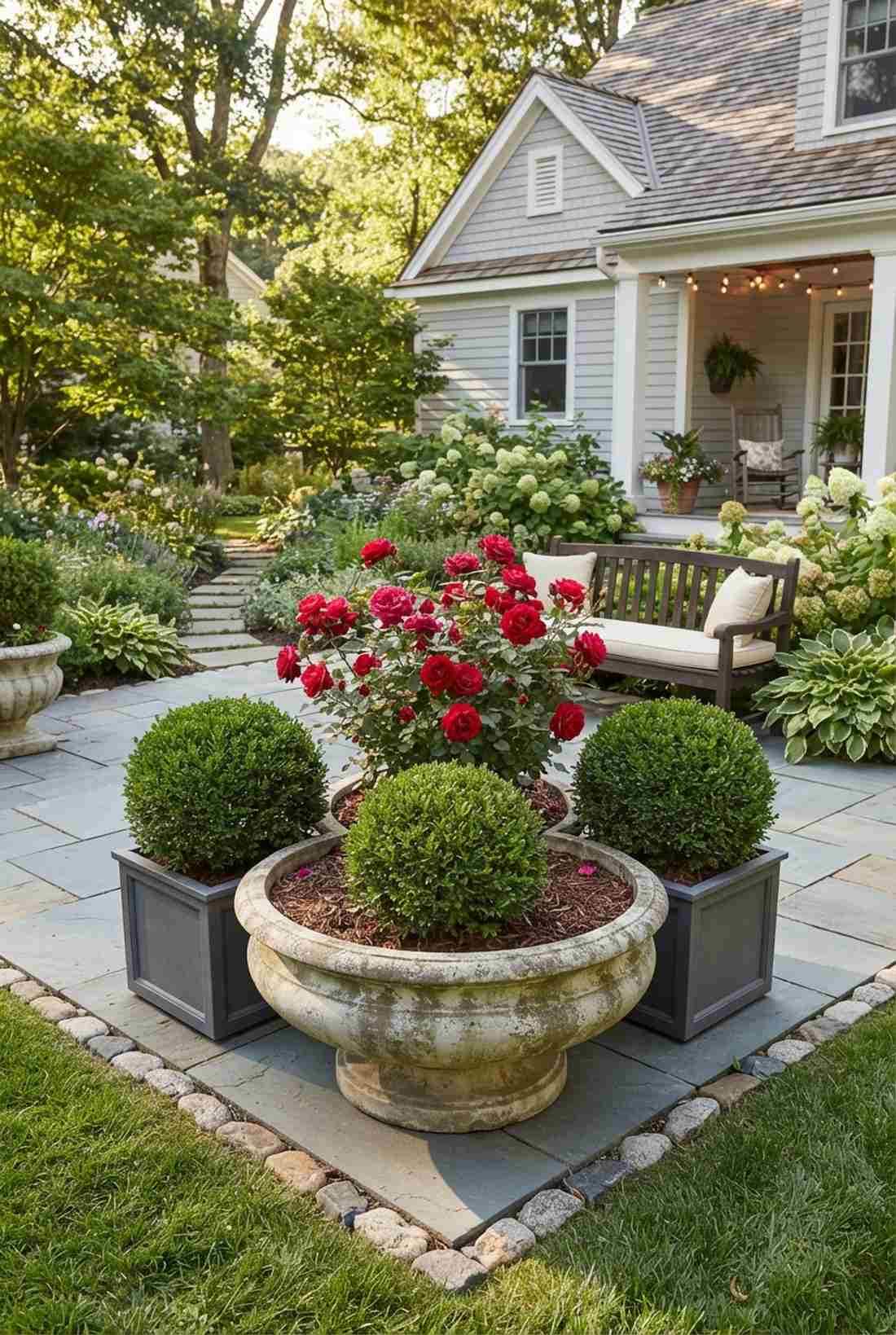
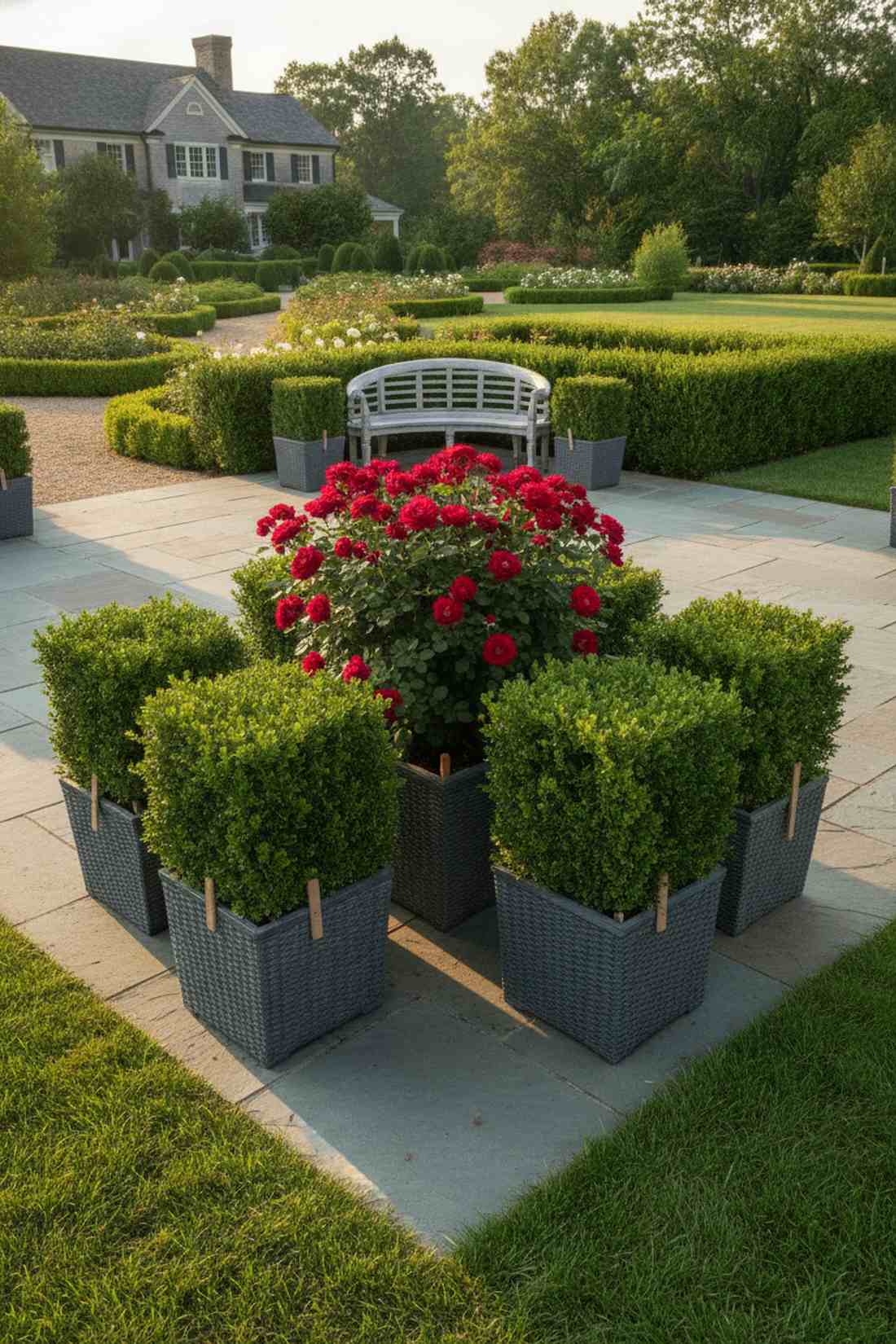
This arrangement feels like a VIP guest surrounded by a dedicated security detail. A four-to-one accent pod is wildly effective for anchoring large patio corners or flanking a garden bench.
Surrounding a single vibrant rose bush with four identical boxwoods provides structured, year-round architecture while maintaining a pop of focal interest. Utilizing slow-release fertilizer spikes around the border plants ensures they never compete with the central specimen for nutrients.
This balanced, architectural look generally runs about $60–$90. Save this idea if you want formal structure with just a hint of flair.
- Key Materials: Boxwood shrubs (4), red rose bush (1)
- Vibe / Style: Structured estate elegance
- Difficulty: Easy
- Budget Breakdown: Shrubs: $65 | Focal plant: $25
- Creator’s Tip: Keep the four supporting plants immaculately pruned so the central plant remains the undisputed star.
- Smart Sourcing: Pre-measured slow-release shrub spikes and matching structural evergreen quart pots.
18. Five-Three Depth Creation
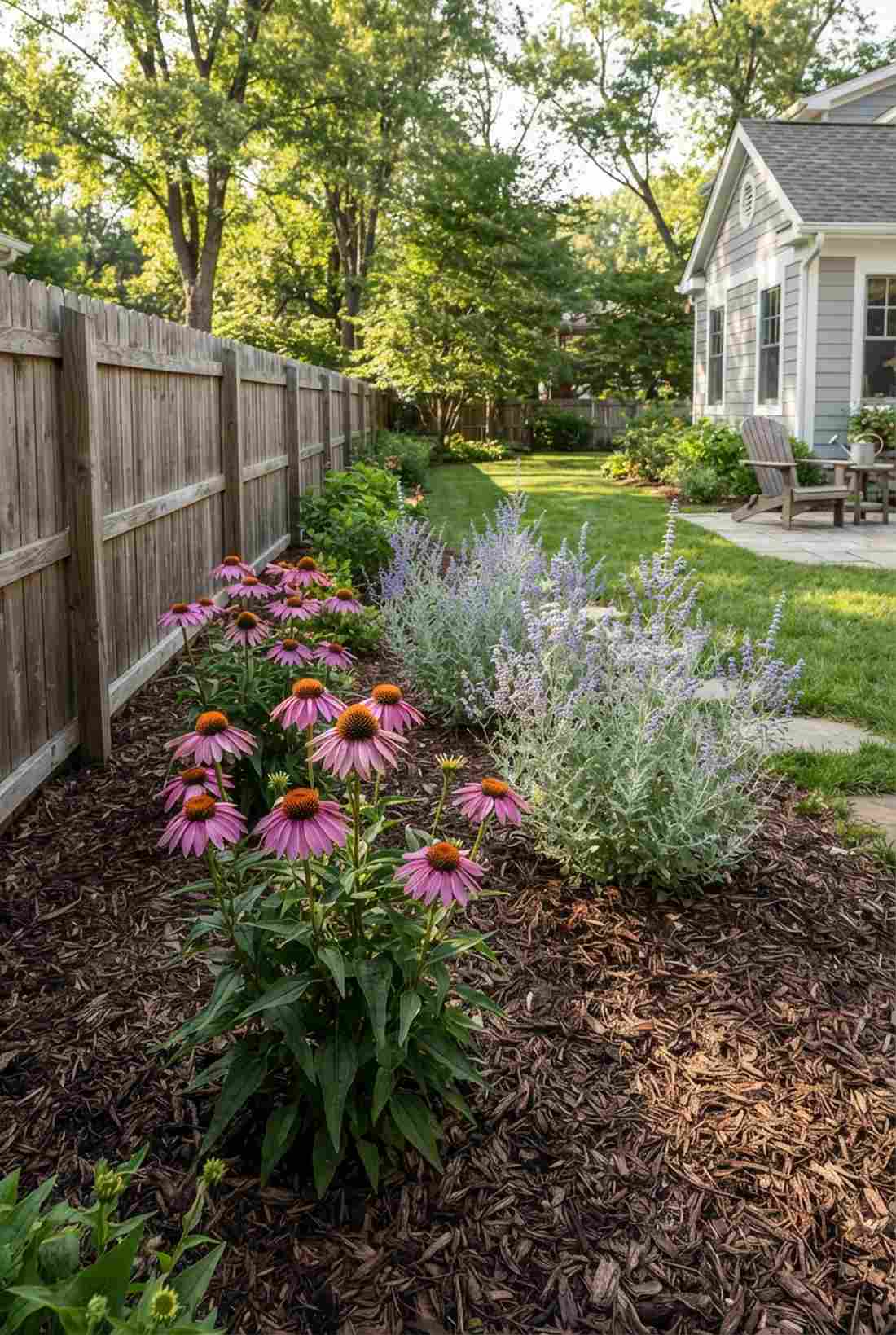
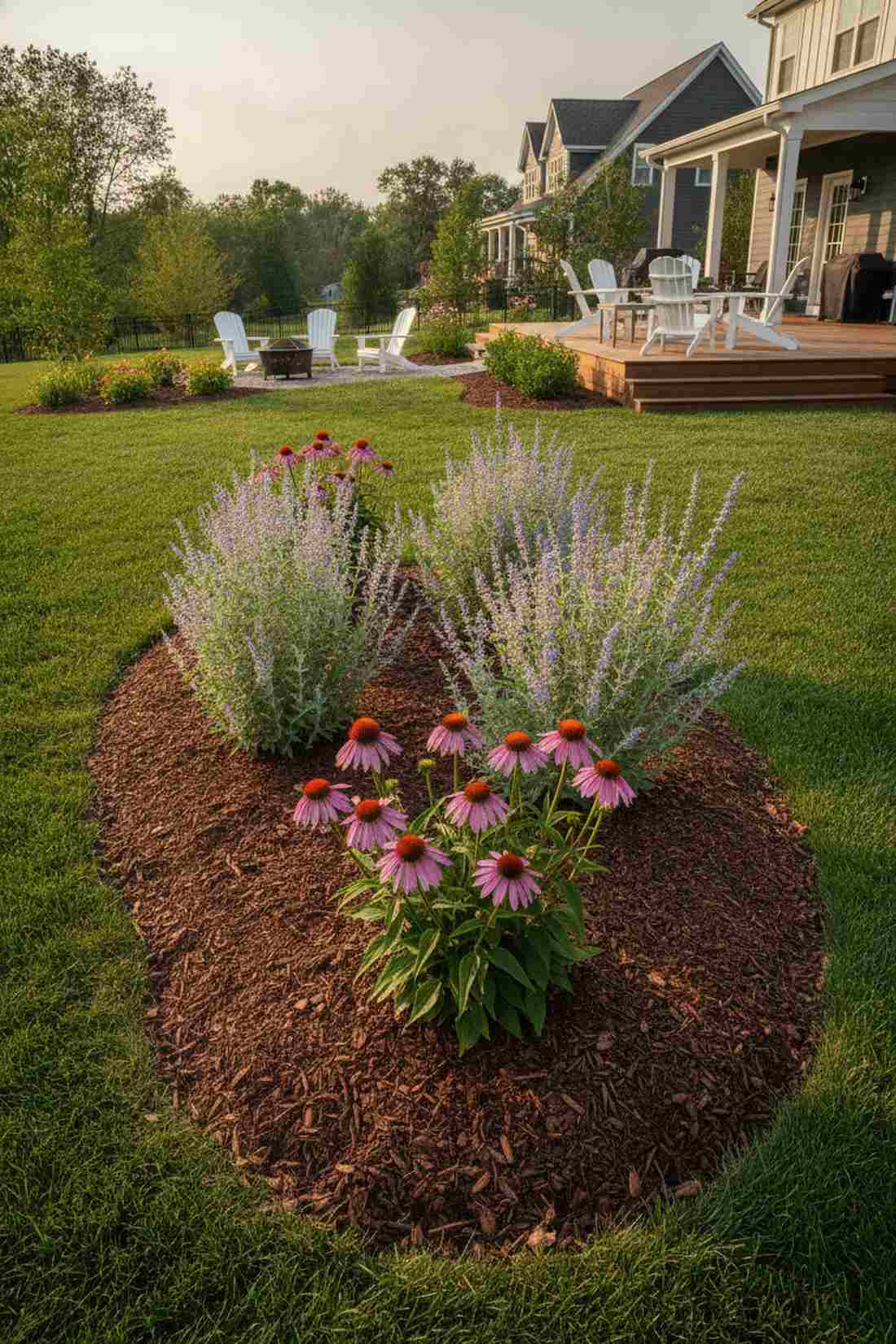
This layout feels like a perfectly choreographed dance between two competing textures. Ratio-based hierarchical clusters are the absolute best way to add complexity to long, boring property line borders.
Placing five purple coneflowers against three Russian sages establishes primary and secondary sightlines without descending into chaotic randomness. Adding premium dark walnut mulch underneath deeply contrasts with the blooms, forcing the five-to-three ratio to stand out visually.
Setting up this proportional depth costs roughly $50–$85. It’s a brilliant designer trick that elevates basic plant choices.
- Key Materials: Purple coneflowers, Russian sage
- Vibe / Style: Calculated prairie depth
- Difficulty: Intermediate
- Budget Breakdown: 8 mixed perennials: $65 | Premium mulch: $15
- Creator’s Tip: Never mix the plants evenly; keep the larger group dominant and the smaller group slightly offset.
- Smart Sourcing: Bulk dark walnut shredded mulch and drought-resistant perennial multi-packs.
19. Layer Overlap Interface
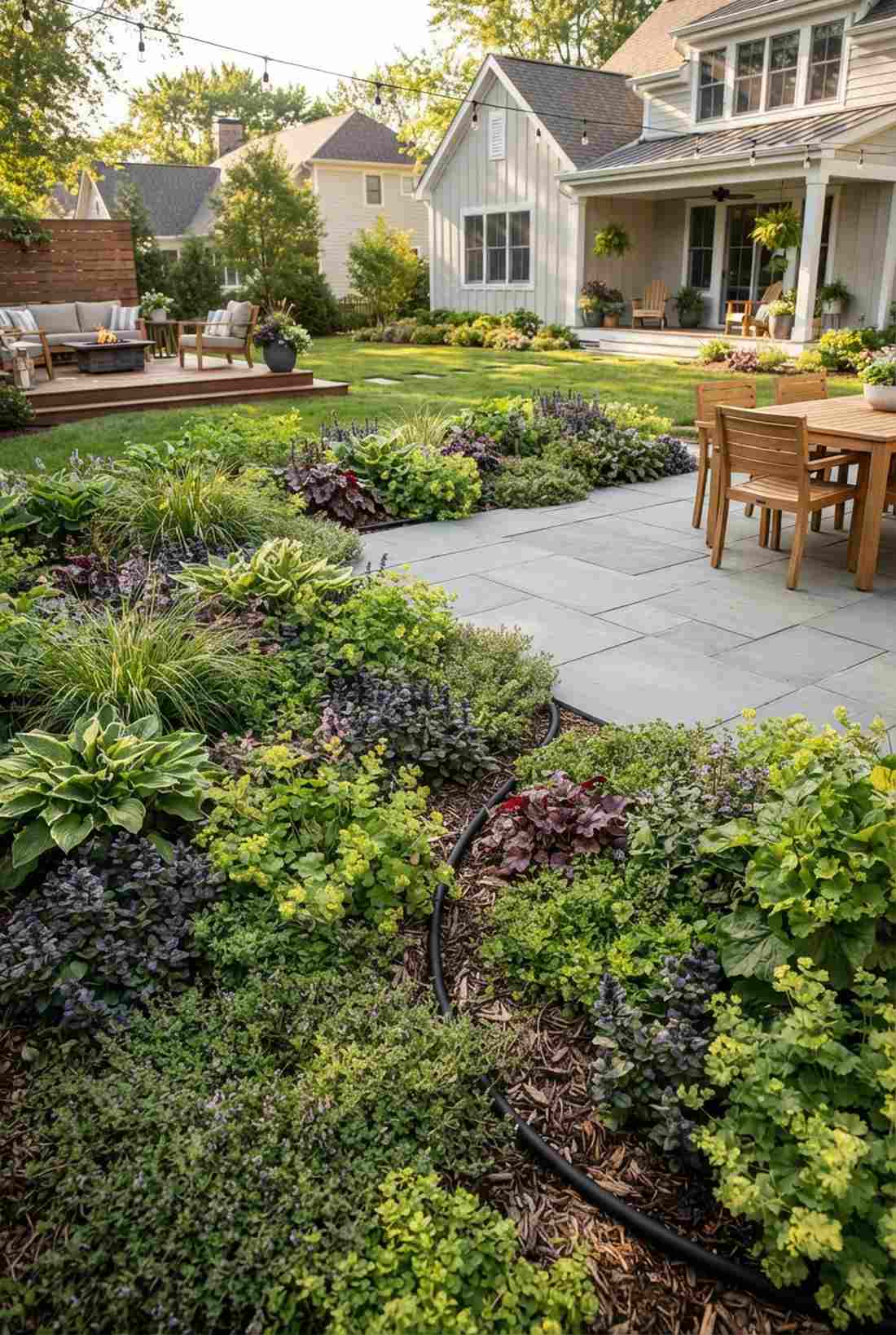
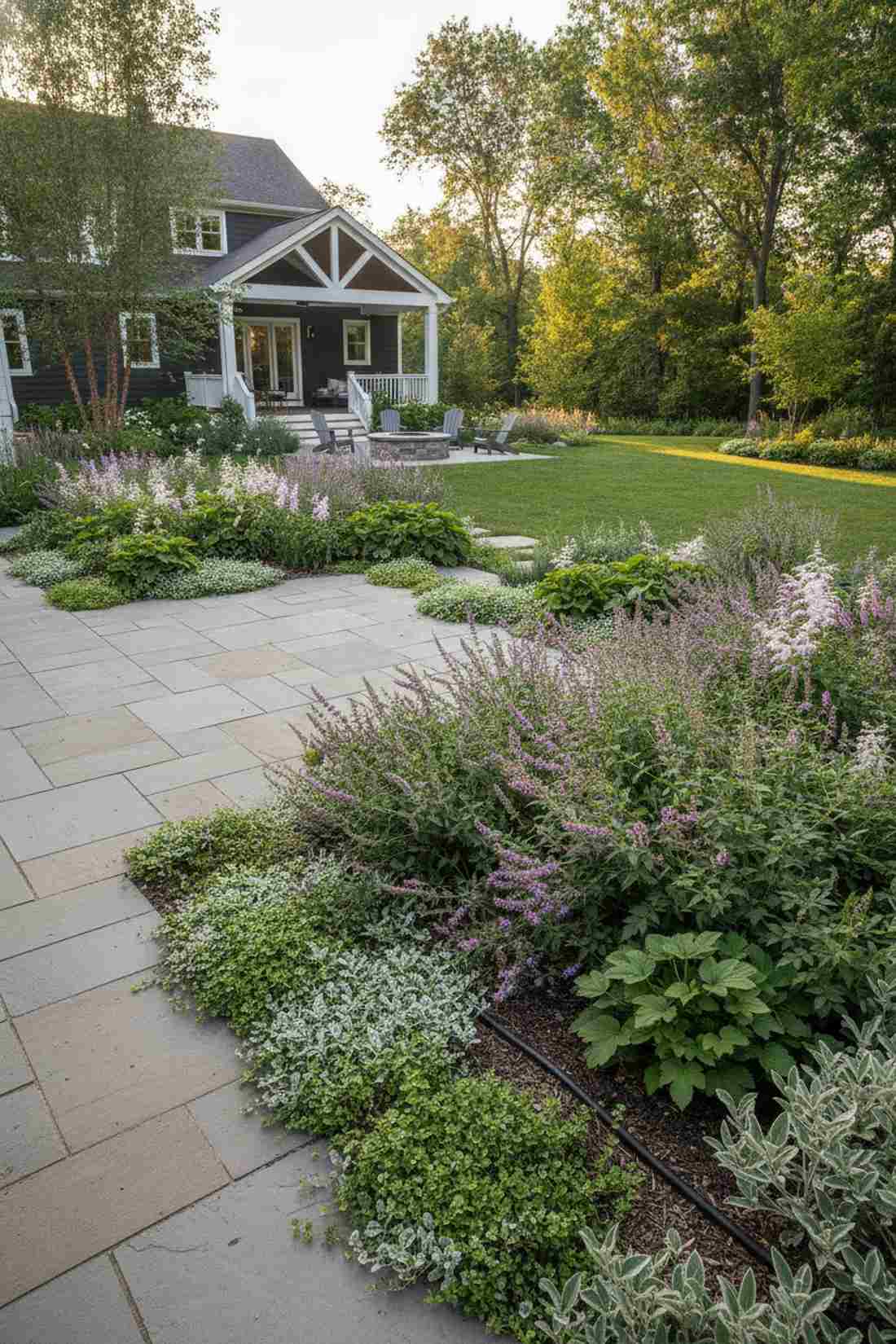
This blended transition feels like a seamless botanical tapestry woven by Mother Nature herself. An interpenetrating plant boundary works magic to soften hard angles around square patios or rigid decking.
Forcing mature plant masses to overlap by 6-12 inches eliminates that stiff, artificial “cookie-cutter” look that plagues beginner gardens. Laying down a flexible soaker hose system through the overlap zone ensures these densely packed root systems stay perfectly hydrated.
Creating these lush intersection zones is virtually free if you just adjust your spacing! Pin this if you want a softer, more professional garden flow.
- Key Materials: Sprawling groundcovers, wide perennials
- Vibe / Style: Lush organic integration
- Difficulty: Intermediate (requires mature size calculation)
- Budget Breakdown: Base plants: $40 | Soaker hose: $20
- Creator’s Tip: Don’t plant right on the line; intentionally plant species a few inches into the neighboring plant’s territory.
- Smart Sourcing: Heavy-duty flat soaker hoses and fast-spreading groundcover starter flats.
If you’ve been planting everything in straight lines, this next diagonal trick is going to completely blow your mind…
20. Diagonal Flow Lines
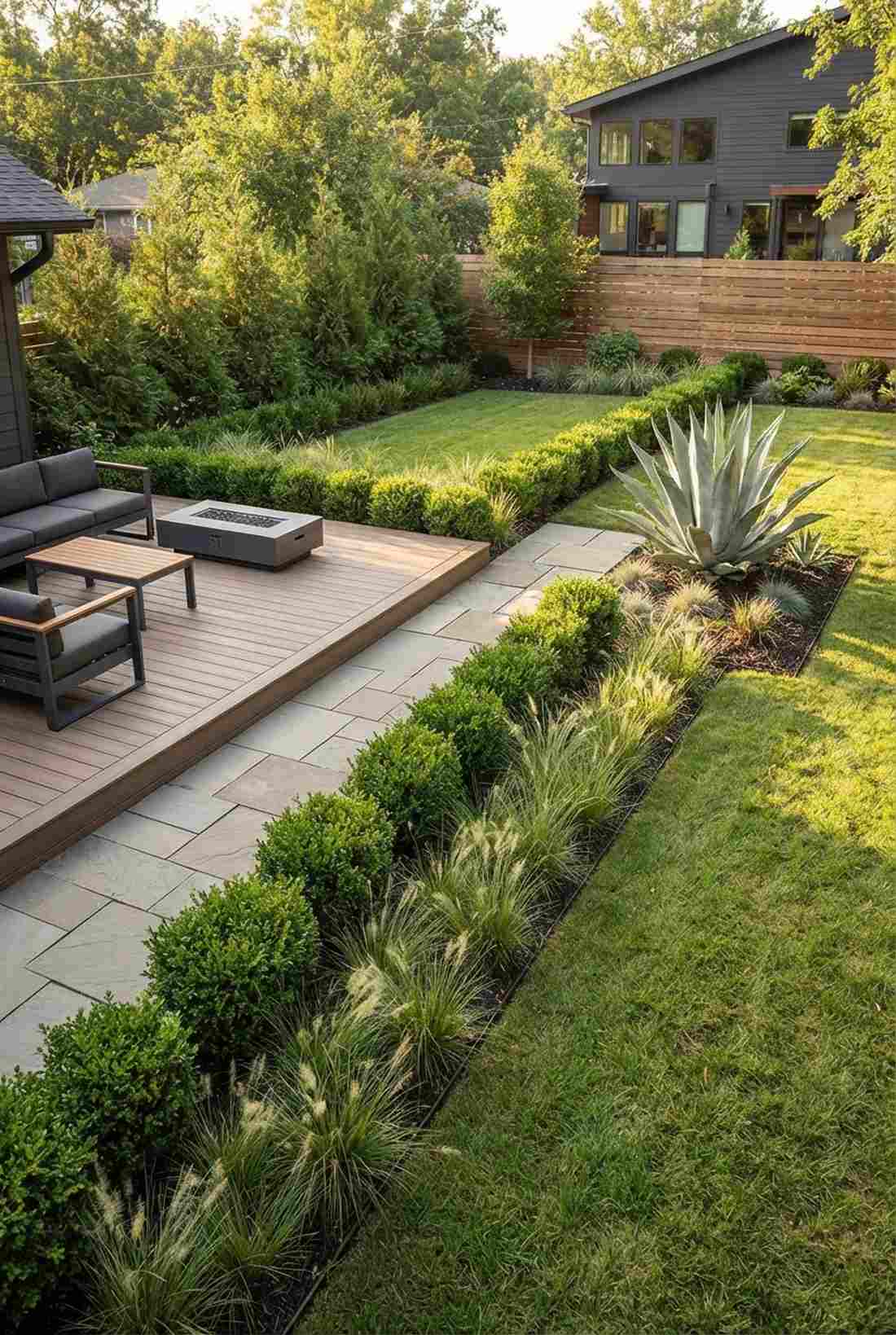
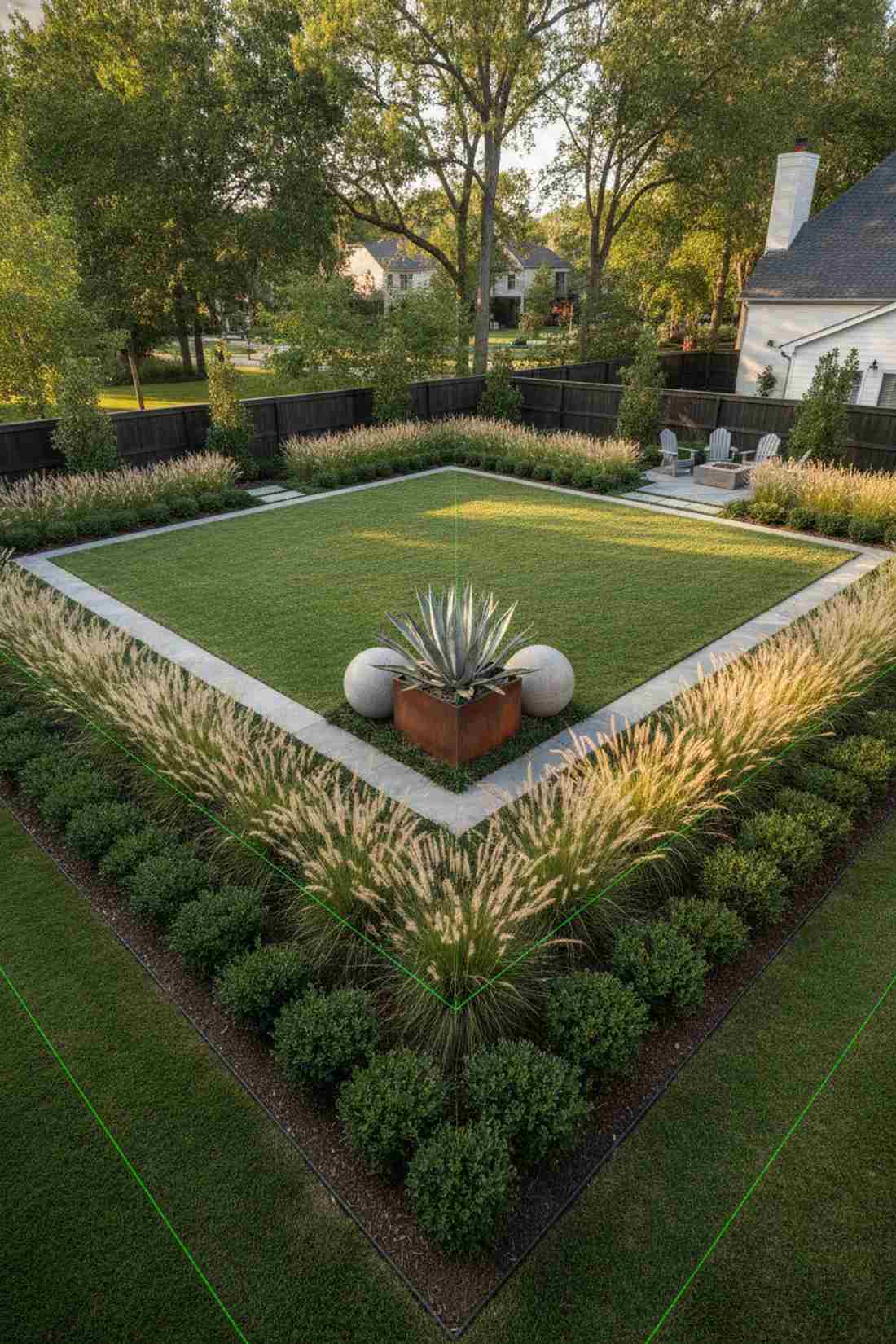
Looking down this yard feels like being pulled into a dynamic, moving landscape painting. Angled sightline arrangements are incredibly powerful for making short, boxy backyards appear significantly longer.
Tilting your plant drifts 45 degrees away from pathways creates aggressive visual movement that tricks the eye into perceiving deeper space. Using laser-level landscaping alignment tools ensures your diagonals are razor-sharp and intentional, rather than looking like a planting mistake.
You can execute this spatial illusion using standard plants for around $50–$80. It’s the easiest way to add drama to a boring square lawn.
- Key Materials: Low hedging, linear ornamental grasses
- Vibe / Style: Dynamic contemporary illusion
- Difficulty: Advanced (requires precise plotting)
- Budget Breakdown: Linear plants: $65 | Alignment tools: $15
- Creator’s Tip: Anchor the ends of your diagonals with a bold focal plant to give the eye a clear destination to travel toward.
- Smart Sourcing: Outdoor laser alignment levels and bulk linear border plants.
Vertical & Spatial Arrangements Maximizing Garden Dimensions
These vertical plant arrangement ideas outdoor are built to conquer limited square footage. Use these elevated blueprints to turn blank walls and tiny patios into lush, three-dimensional ecosystems.
21. Trellis Climbing Walls
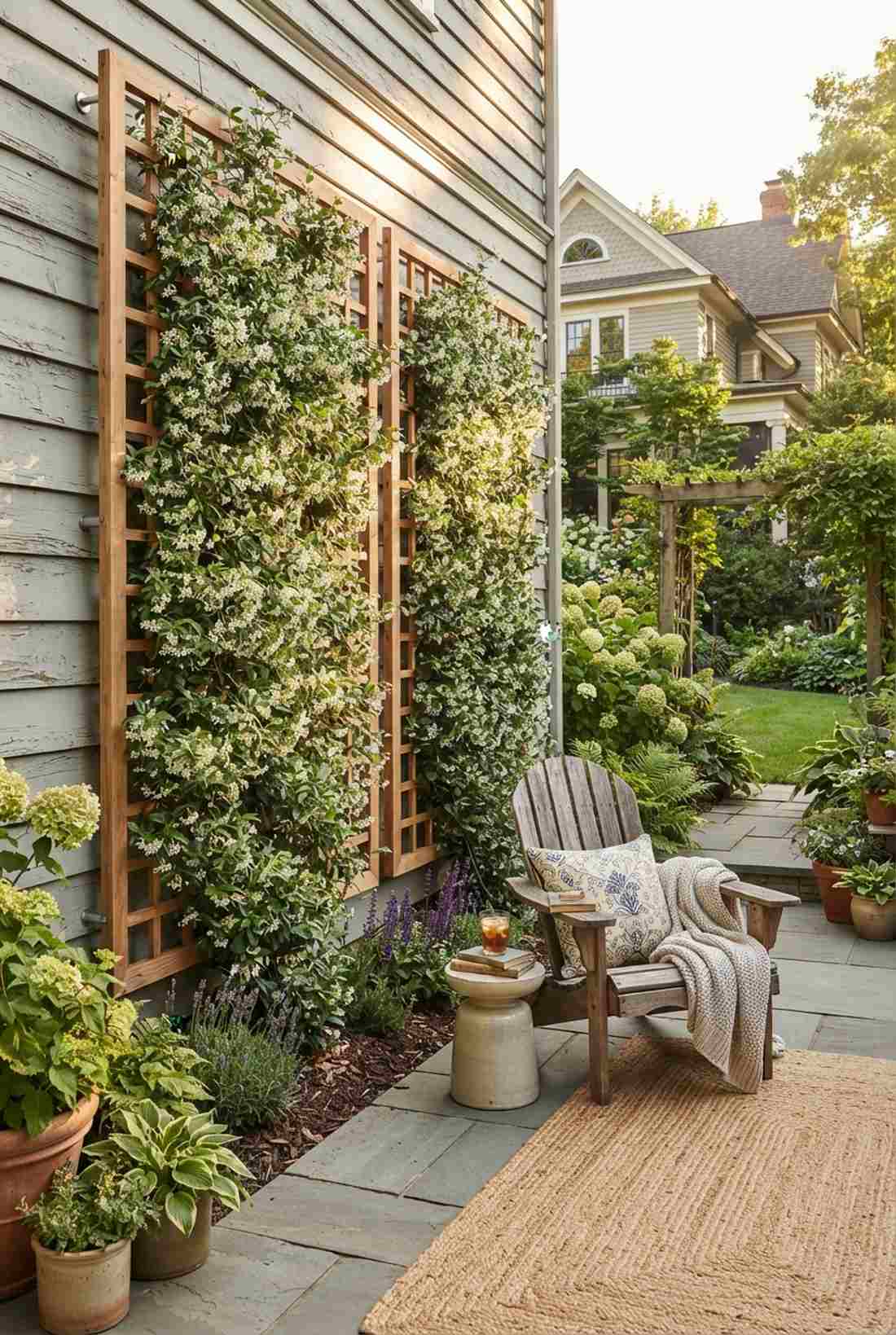
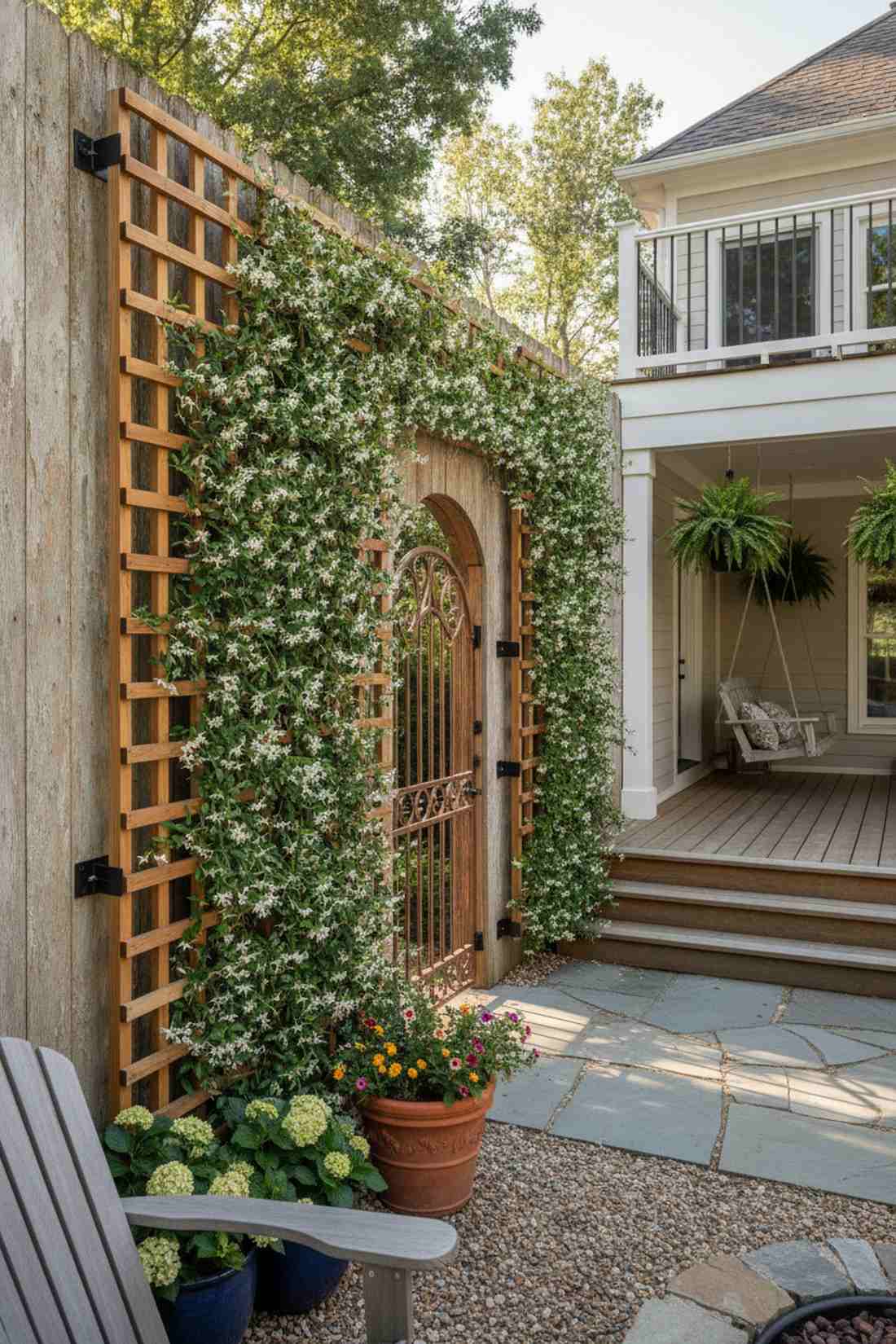
This vertical display feels like a secret garden portal hidden right against your house. Flat-mount climbing grids are the absolute best way to disguise ugly utility walls or peeling fence panels.
Training star jasmine up a wooden frame instantly transforms wasted vertical space into a high-end, fragrant green wall. Snagging heavy-duty cedar grid trellises ensures the structure won’t rot or collapse under the massive weight of mature climbing vines.
Building a robust living wall usually costs $60–$100. Save this to your small-patio upgrade board right now.
- Key Materials: Star jasmine, wood or metal trellis
- Vibe / Style: Secret garden charm
- Difficulty: Easy
- Budget Breakdown: Heavy trellis: $65 | Climbing vine: $25
- Creator’s Tip: Keep the trellis at least 2 inches off the wall to prevent mold and give the vines room to wrap.
- Smart Sourcing: Pre-treated cedar trellis panels and heavy-duty wall standoff mounting brackets.
22. Living Wall Pocket Systems
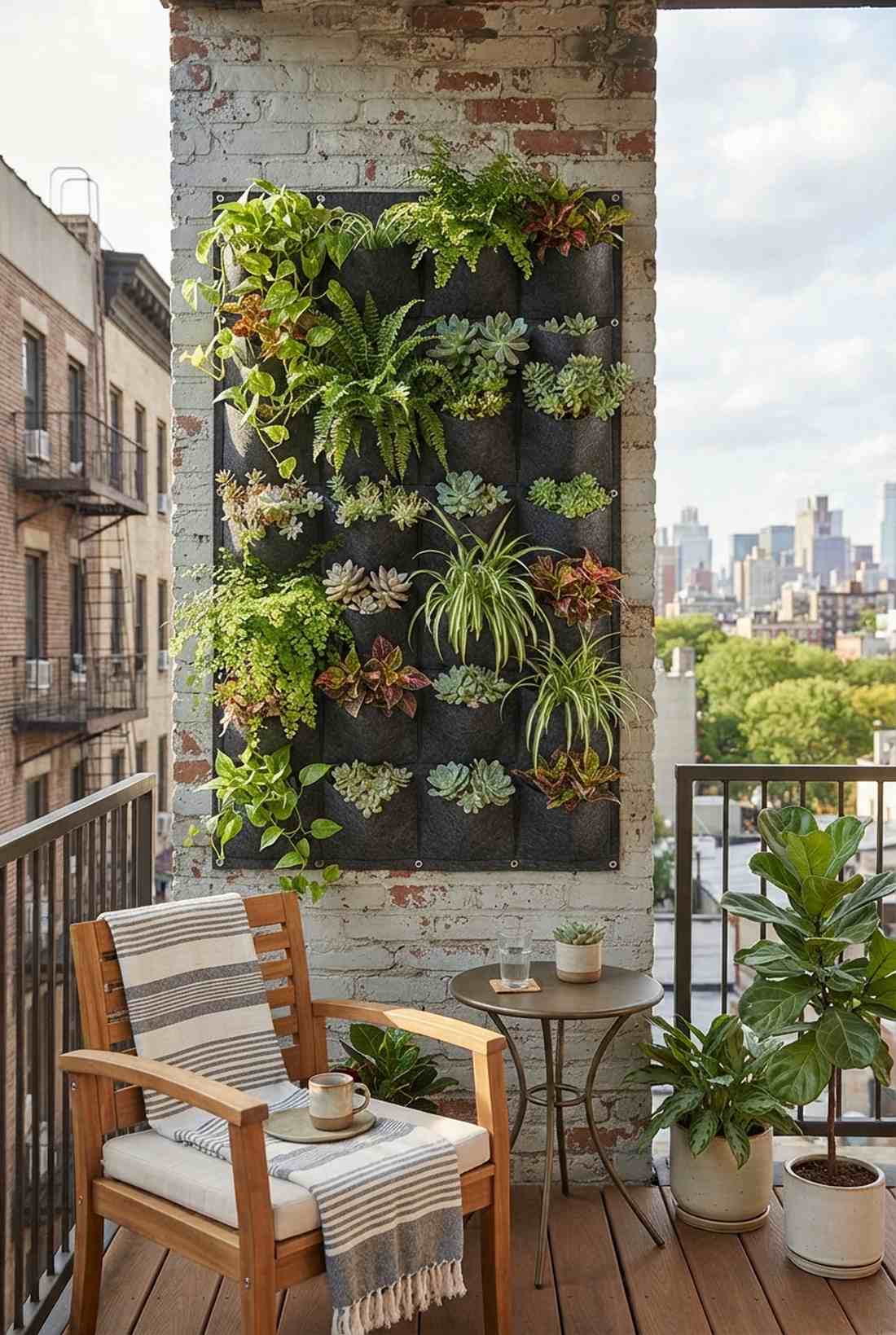
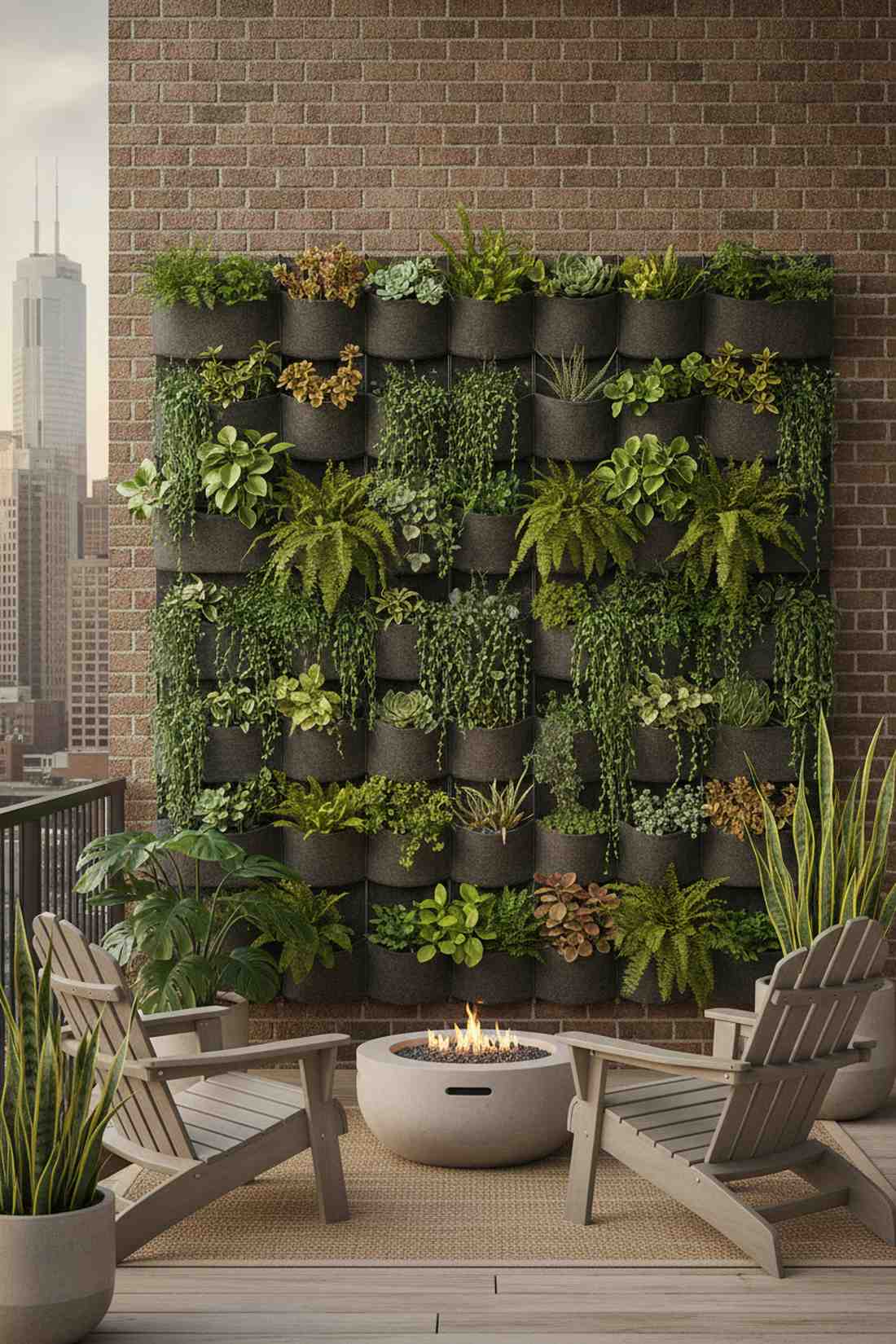
This lush hanging matrix feels like a futuristic eco-art installation hanging on your balcony. Modular wall-mounted planters are a massive trend for turning sterile apartment decks into tropical retreats.
Stuffing individual fabric pockets with trailing ferns and succulents delivers a wildly expensive, custom look with minimal effort. Investing in waterproof self-watering wall pockets prevents messy drainage from ruining your outdoor walls or bothering downstairs neighbors.
You can hang a complete pocket garden for around $40–$75. It’s a game-changer for renters with zero yard space.
- Key Materials: Ferns, trailing pothos, pocket planter
- Vibe / Style: Urban jungle loft
- Difficulty: Intermediate (requires wall mounting)
- Budget Breakdown: Pocket system: $35 | Plant assortment: $40
- Creator’s Tip: Put drought-tolerant plants at the top and moisture-loving plants at the bottom, as water naturally drips down.
- Smart Sourcing: Waterproof felt wall planter pockets (multi-pack) and indoor/outdoor hanging plant starter bundles.
23. Tiered Plant Stands
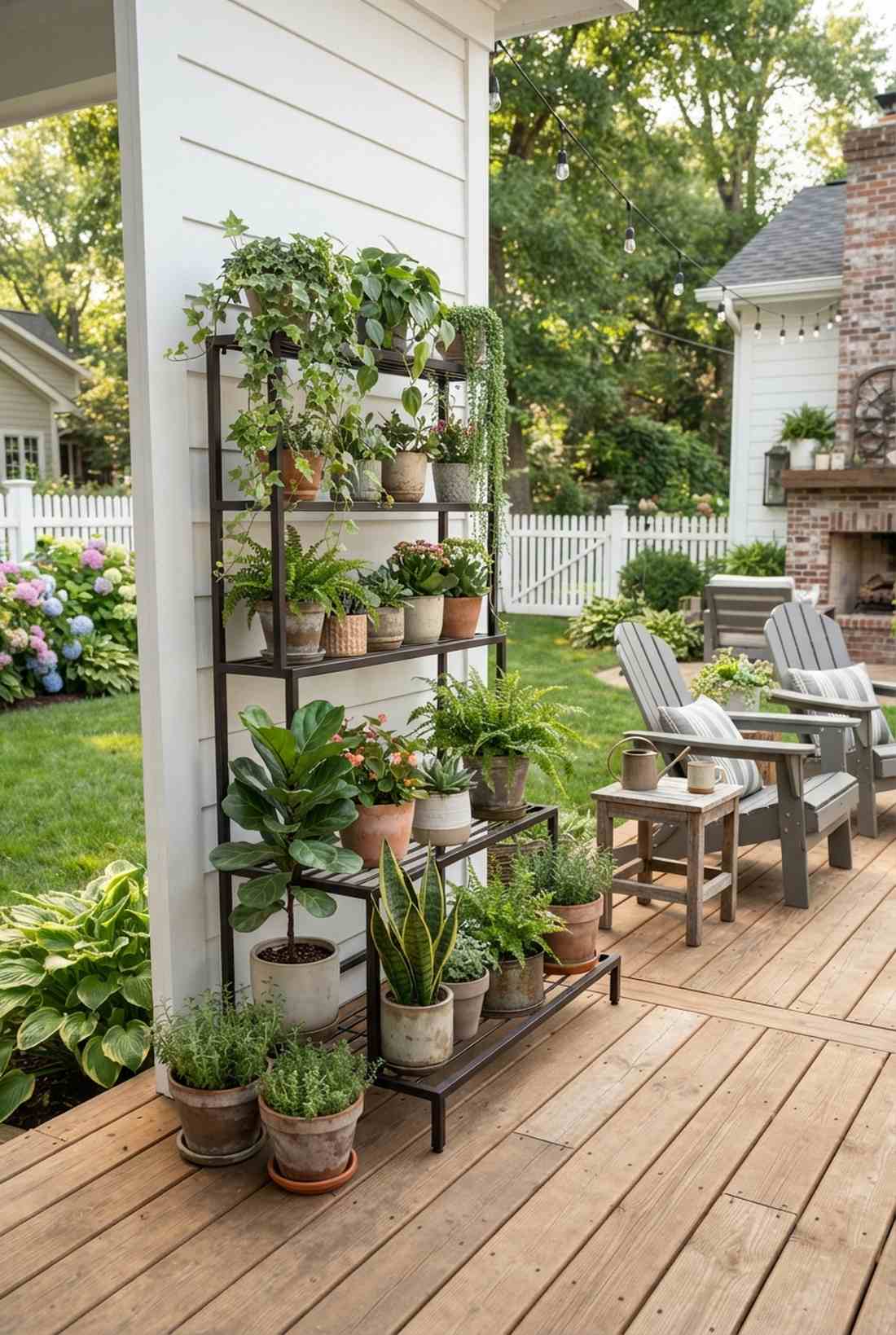
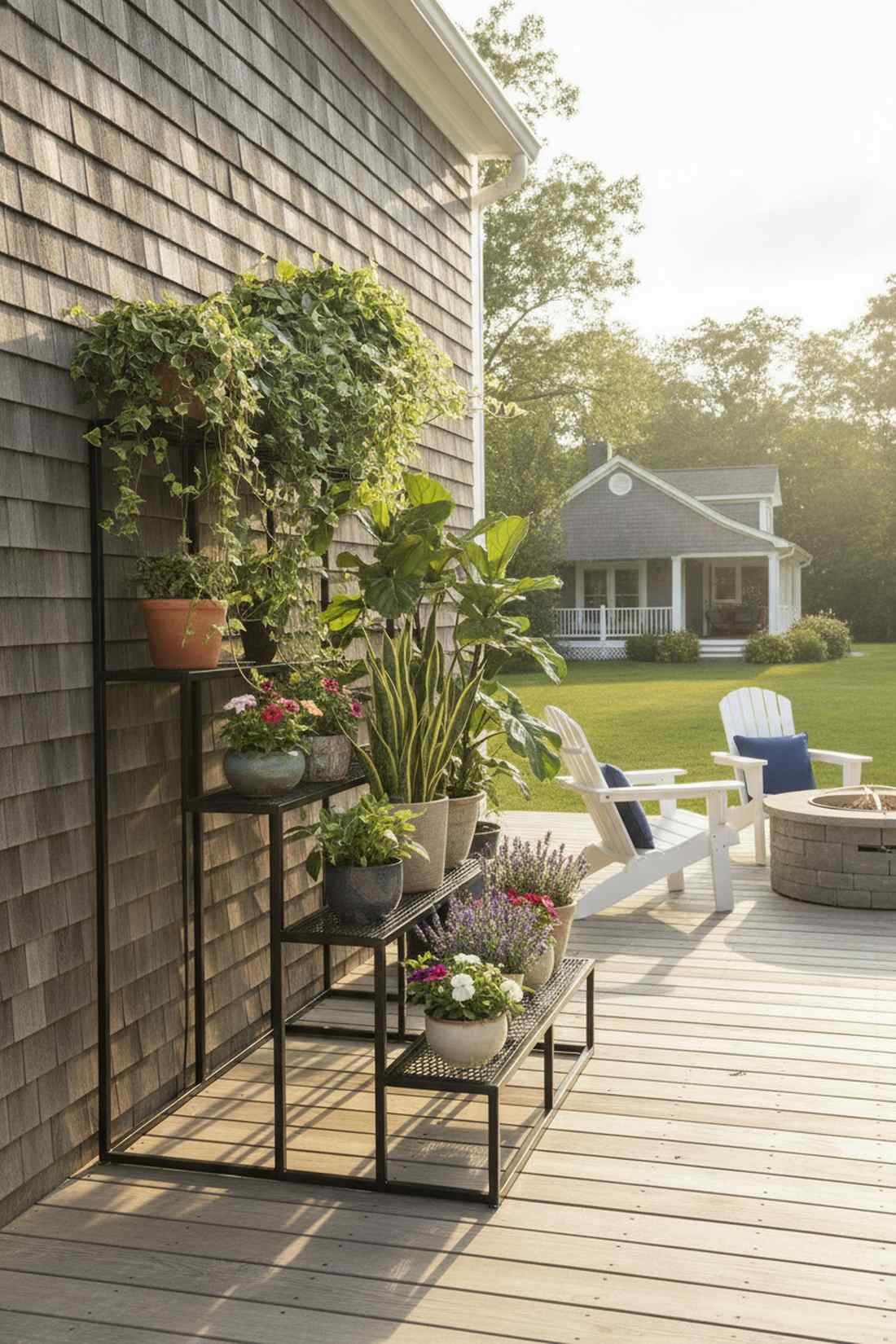
This stacked arrangement feels like an elegant botanical staircase leading up your patio wall. A multi-level vertical staging stand is the perfect use-case for organizing a chaotic collection of mismatched flower pots.
Layering cascading vines on top and heavy structural plants on the bottom immediately looks curated, tidy, and intentional. Upgrading to rust-proof powder-coated iron stands guarantees your display won’t leave ugly orange stains on your expensive deck boards.
You can score a great stand and fill it for roughly $50–$90. Pin this if your porch currently looks like a messy plant graveyard.
- Key Materials: Assorted potted plants, metal stand
- Vibe / Style: Curated patio chic
- Difficulty: Easy
- Budget Breakdown: Iron stand: $60 | Fresh potting soil: $15
- Creator’s Tip: Rotate the pots a quarter-turn every week to ensure all sides get sunlight and prevent lopsided growth.
- Smart Sourcing: Powder-coated rust-proof metal plant stands and bulk lightweight perlite potting mixes.
24. Ladder-Style Vertical Gardens
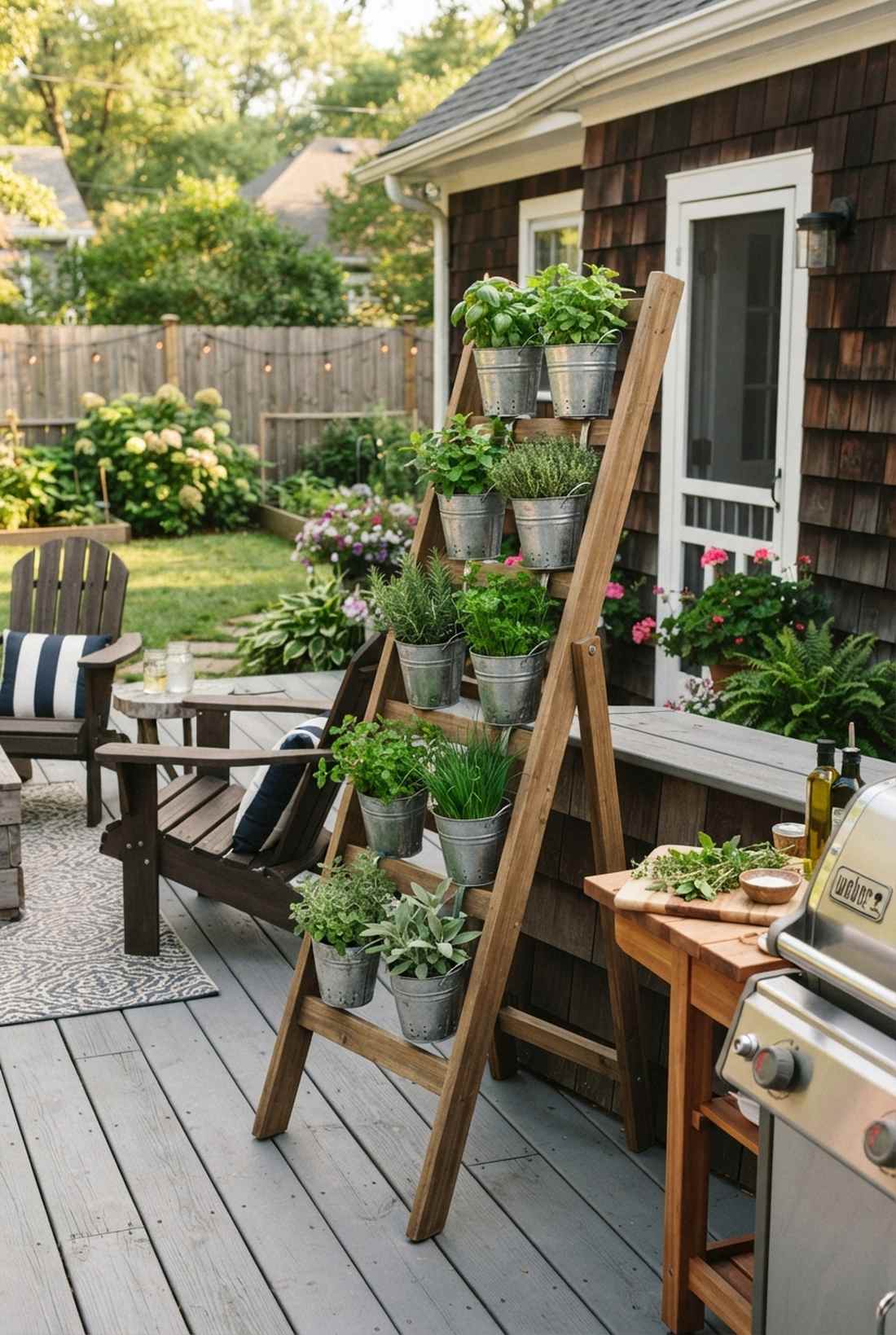
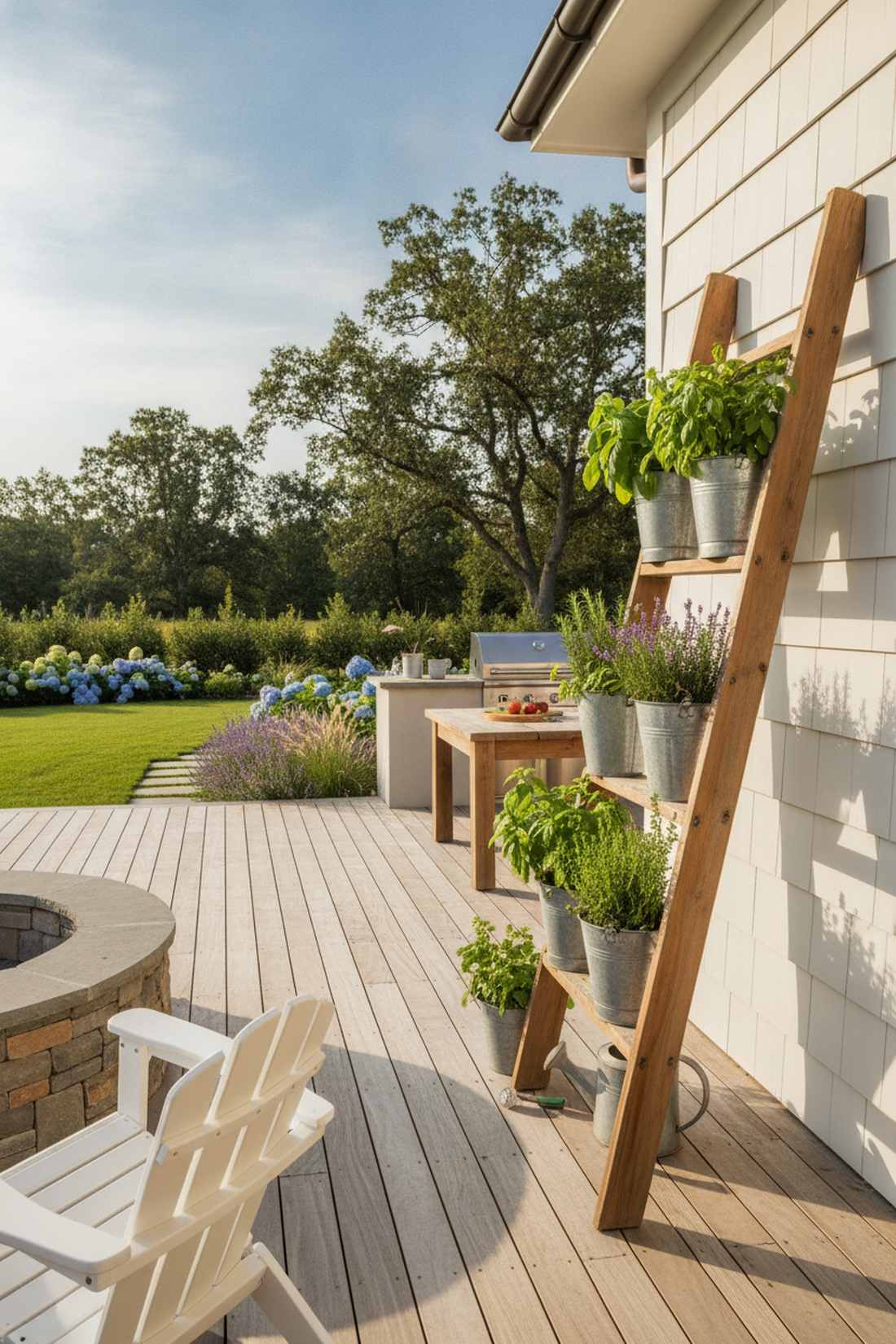
This rustic setup feels like a charming farmers’ market display right on your back deck. A leaning wooden shelf ladder is absolutely brilliant for growing a full herb garden in just two square feet of space.
Lining the wooden rungs with galvanized buckets of basil and mint provides a functional, aesthetic cooking station. Using weather-sealed teak or cedar ladders prevents the entire structure from warping and collapsing after one heavy summer rainstorm.
You can set up a beautiful herb ladder for about $45–$80. It’s a must-have for anyone who loves cooking outdoors.
- Key Materials: Wooden ladder frame, galvanized herb pots
- Vibe / Style: Rustic farm-to-table
- Difficulty: Easy
- Budget Breakdown: Ladder shelf: $55 | Herb starters: $20
- Creator’s Tip: Angle the ladder slightly steeper than you think is necessary, and anchor the top to prevent wind tip-overs.
- Smart Sourcing: Weather-sealed wooden ladder planters and galvanized steel bucket planter kits.
Most people ignore the space above their heads… this next cascading trick utilizes 100% dead space for maximum visual impact.
25. Hanging Cascade Layers
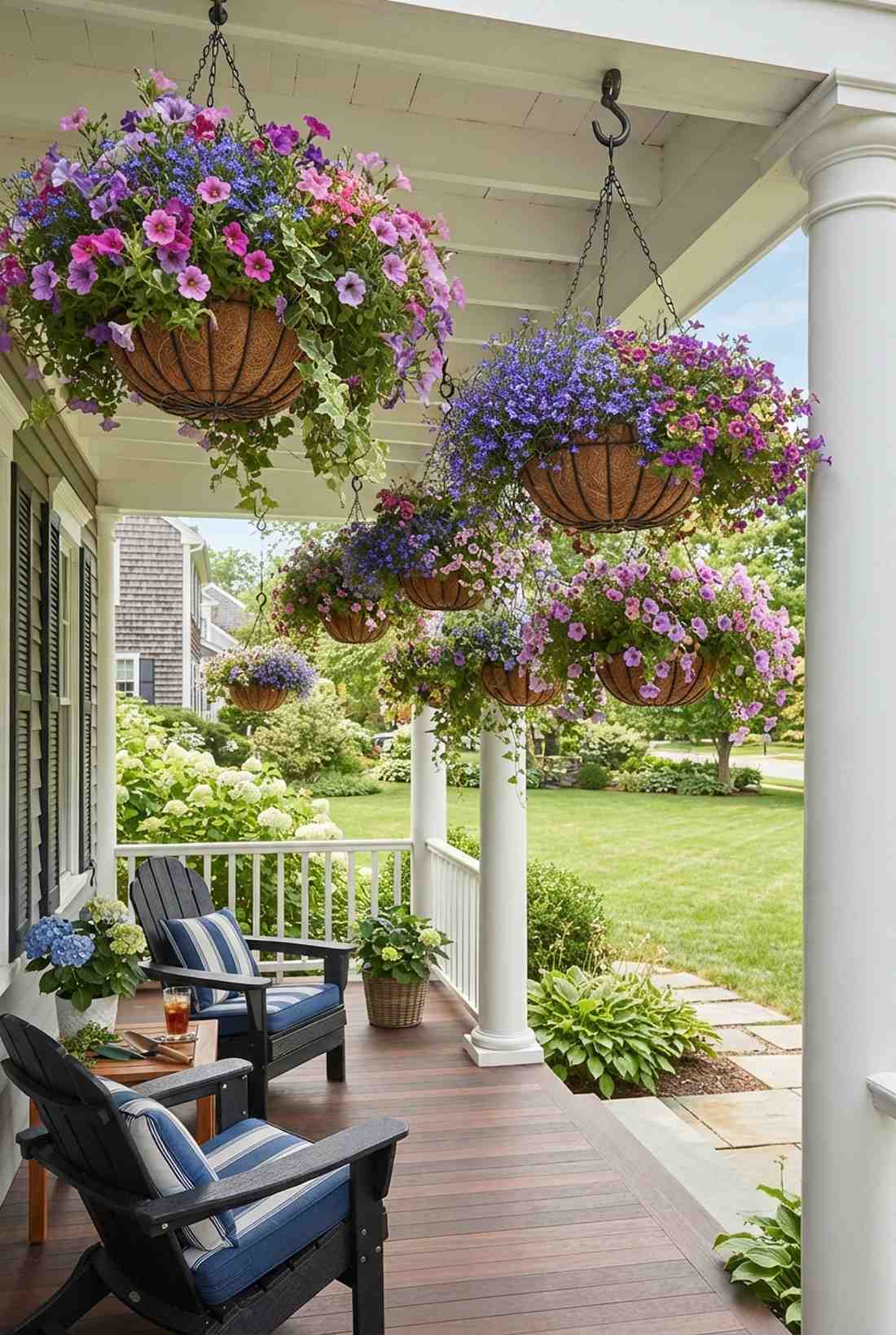
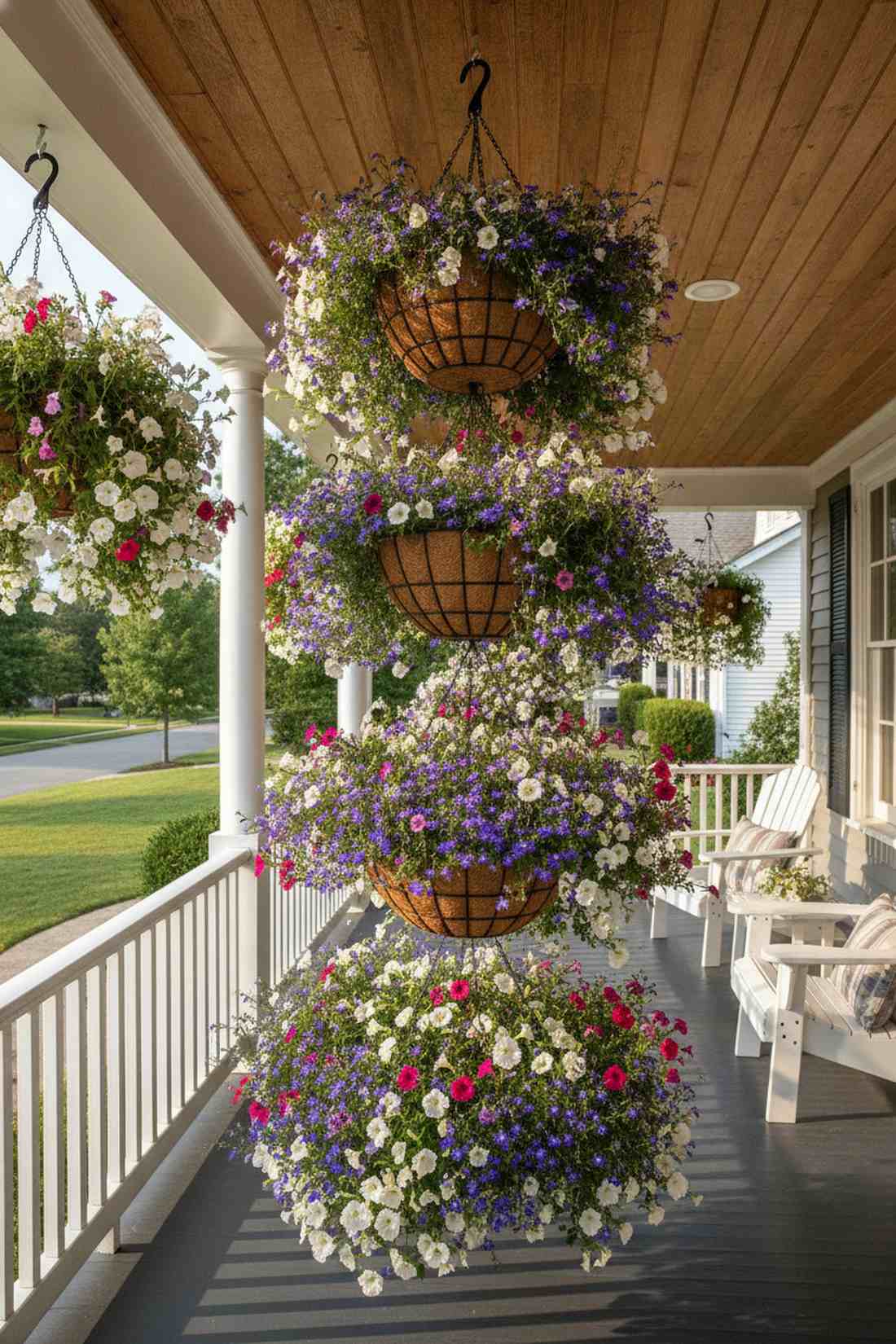
Looking up at this display feels like walking beneath a floating canopy of bright, trailing flowers. Suspended multi-level baskets are perfect for enclosing a porch without blocking the summer breeze.
Staggering the heights of lobelia and trailing petunias creates a massive three-dimensional floral sphere that draws eyes from the street. Utilizing heavy-duty swivel hanging hooks allows you to easily spin the heavy baskets for watering and even sun exposure.
Hanging a luxurious tiered setup will cost you about $60–$100. Save this idea for upgrading an empty wraparound porch.
- Key Materials: Trailing petunias, wire baskets, coco liners
- Vibe / Style: Floating floral canopy
- Difficulty: Intermediate (requires secure ceiling anchors)
- Budget Breakdown: Basket kits: $45 | Trailing plants: $40
- Creator’s Tip: Use a soil mix heavily amended with moisture-retaining crystals, as hanging baskets dry out twice as fast.
- Smart Sourcing: Pre-formed coco coir basket liners (bulk pack) and heavy-duty ceiling swivel hooks.
26. Obelisk Tower Structures
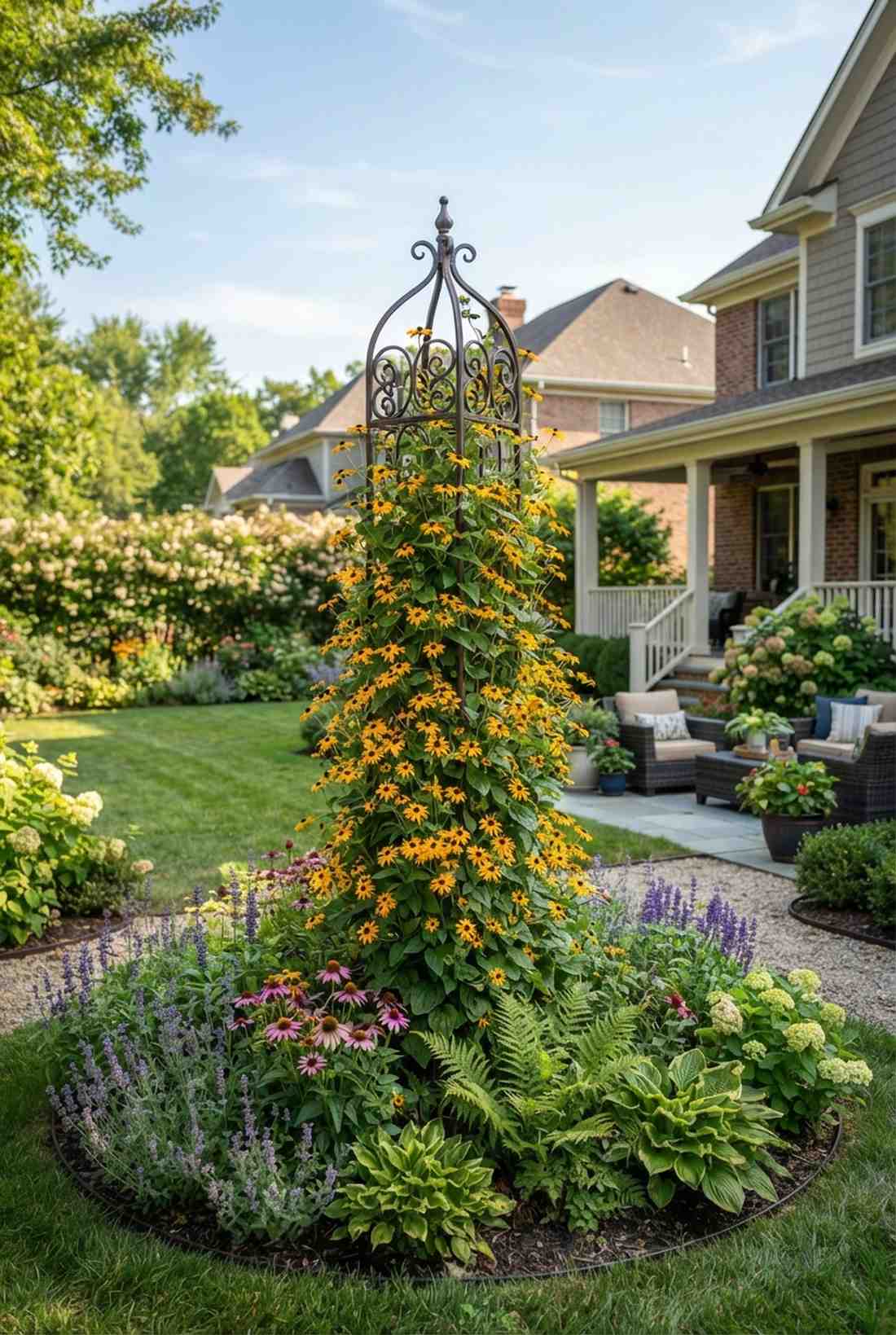
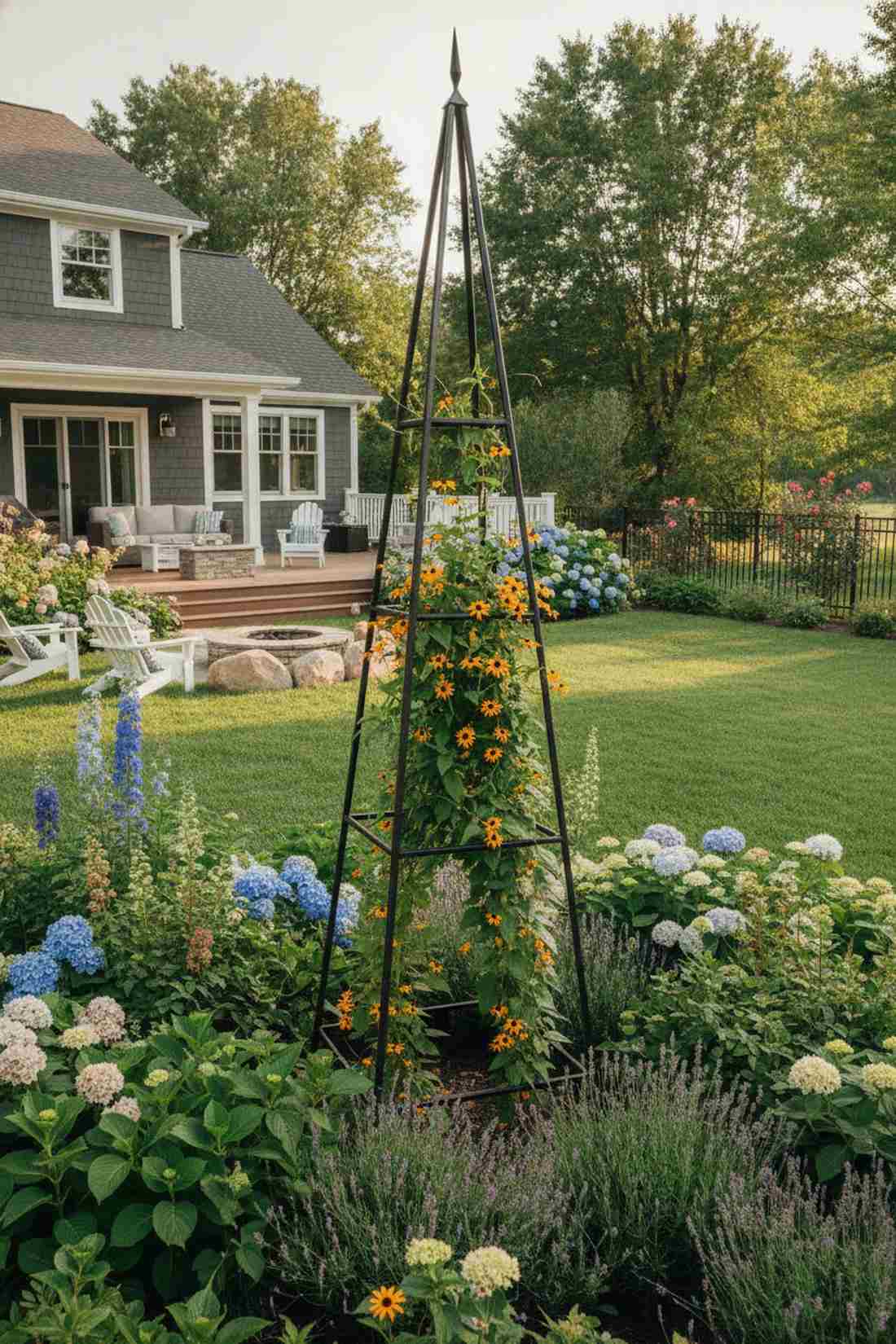
This towering feature feels like a regal architectural spire rising from a sea of green. A freestanding metal climbing obelisk is the ultimate solution for adding height to the dead center of a flat perennial bed.
Wrapping a black-eyed Susan vine around a sharp metal tower immediately injects a sense of upscale, formal English garden design. Opting for heavy-gauge steel garden obelisks prevents the structure from buckling when the vine reaches its heavy, mature peak in late summer.
You can install this striking vertical accent for around $50–$85. It’s a high-impact architectural upgrade that takes minutes.
- Key Materials: Metal obelisk, climbing annual vines
- Vibe / Style: Formal English estate
- Difficulty: Easy
- Budget Breakdown: Steel tower: $60 | Vine seeds/starters: $15
- Creator’s Tip: Plant exactly three vines evenly spaced around the base to ensure the tower fills out symmetrically.
- Smart Sourcing: Heavy-gauge steel climbing obelisks and fast-growing flowering vine seed packs.
27. Columnar Vertical Accents
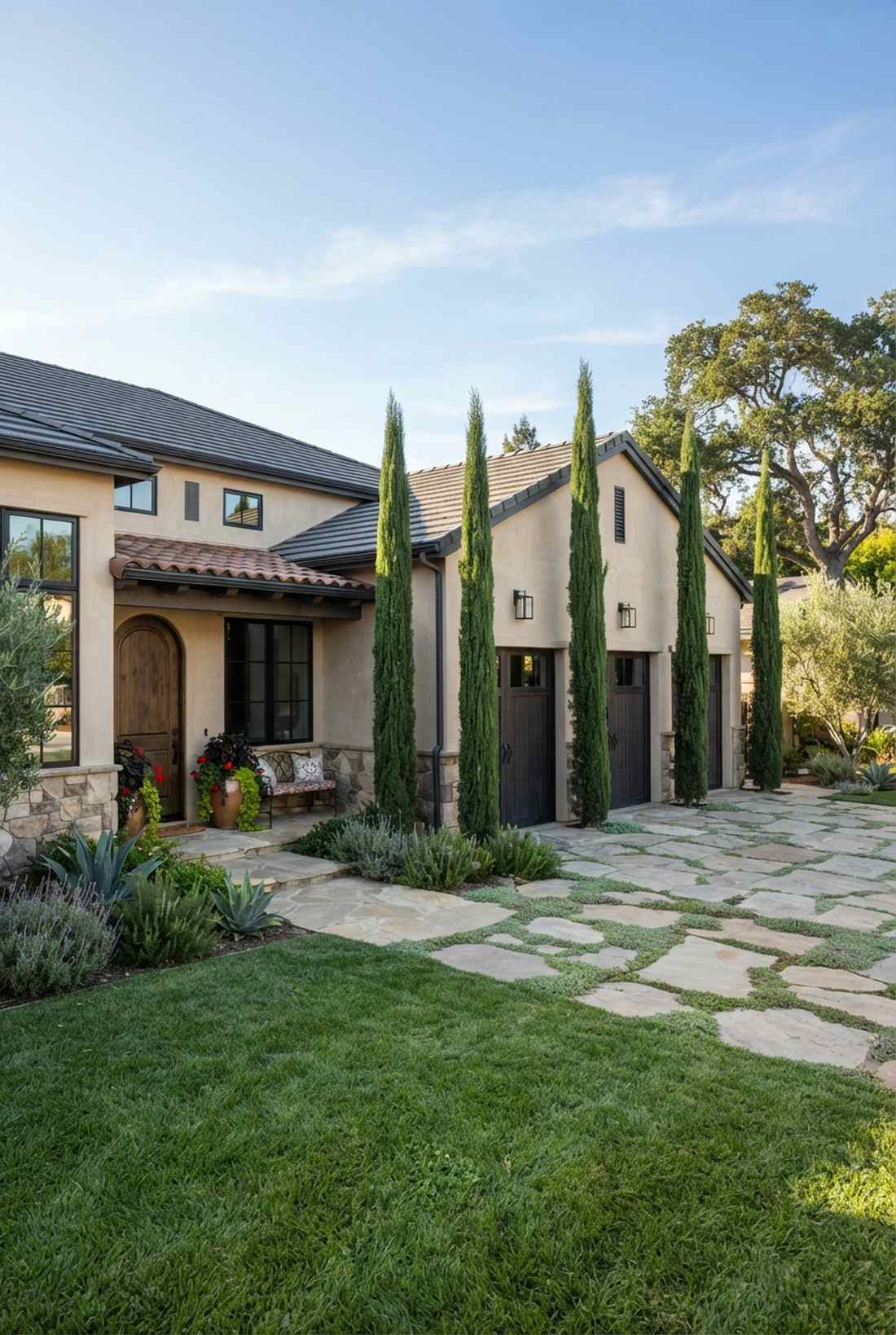
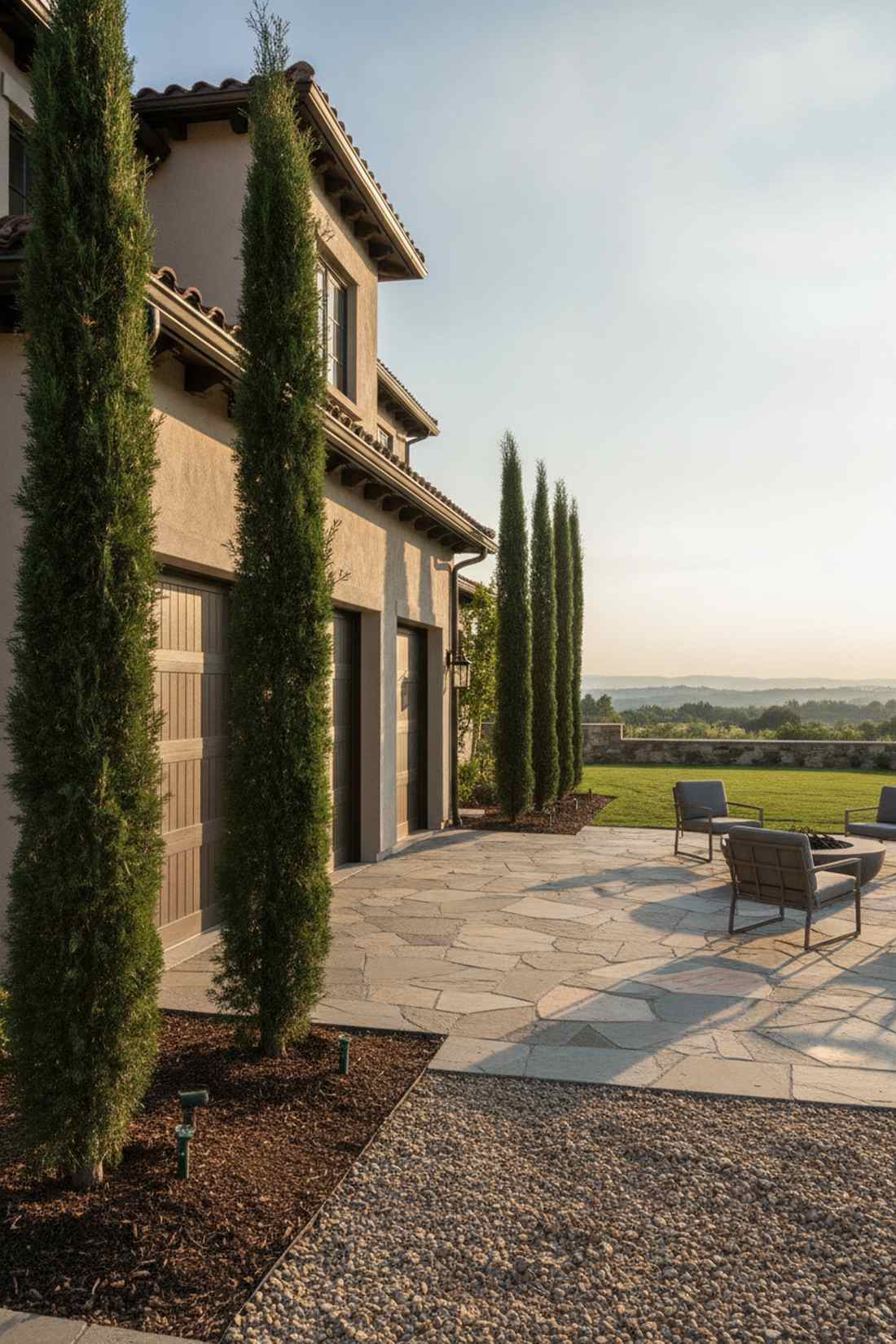
This sleek arrangement feels like a modern Tuscan villa courtyard lined with living pillars. Living architectural columns are phenomenal for framing garage doors or defining strict property boundaries without building a fence.
Using sky pencil hollies or Italian cypress gives a razor-sharp, expensive silhouette that never requires messy pruning. Feeding them with evergreen-specific slow-release fertilizer ensures they keep their dense, dark green color all the way to the base.
Adding columnar accents costs roughly $70–$120 per pillar. Pin this if you love ultra-sleek, low-maintenance modern landscaping.
- Key Materials: Sky pencil holly or Italian cypress
- Vibe / Style: Sleek Mediterranean modern
- Difficulty: Easy
- Budget Breakdown: Tall tree stock: $90 | Fertilizer: $15
- Creator’s Tip: Space them identically using a tape measure; inconsistent gaps will ruin the architectural illusion.
- Smart Sourcing: Pre-measured evergreen fertilizer spikes and premium columnar tree stock.
28. Stacked Container Towers
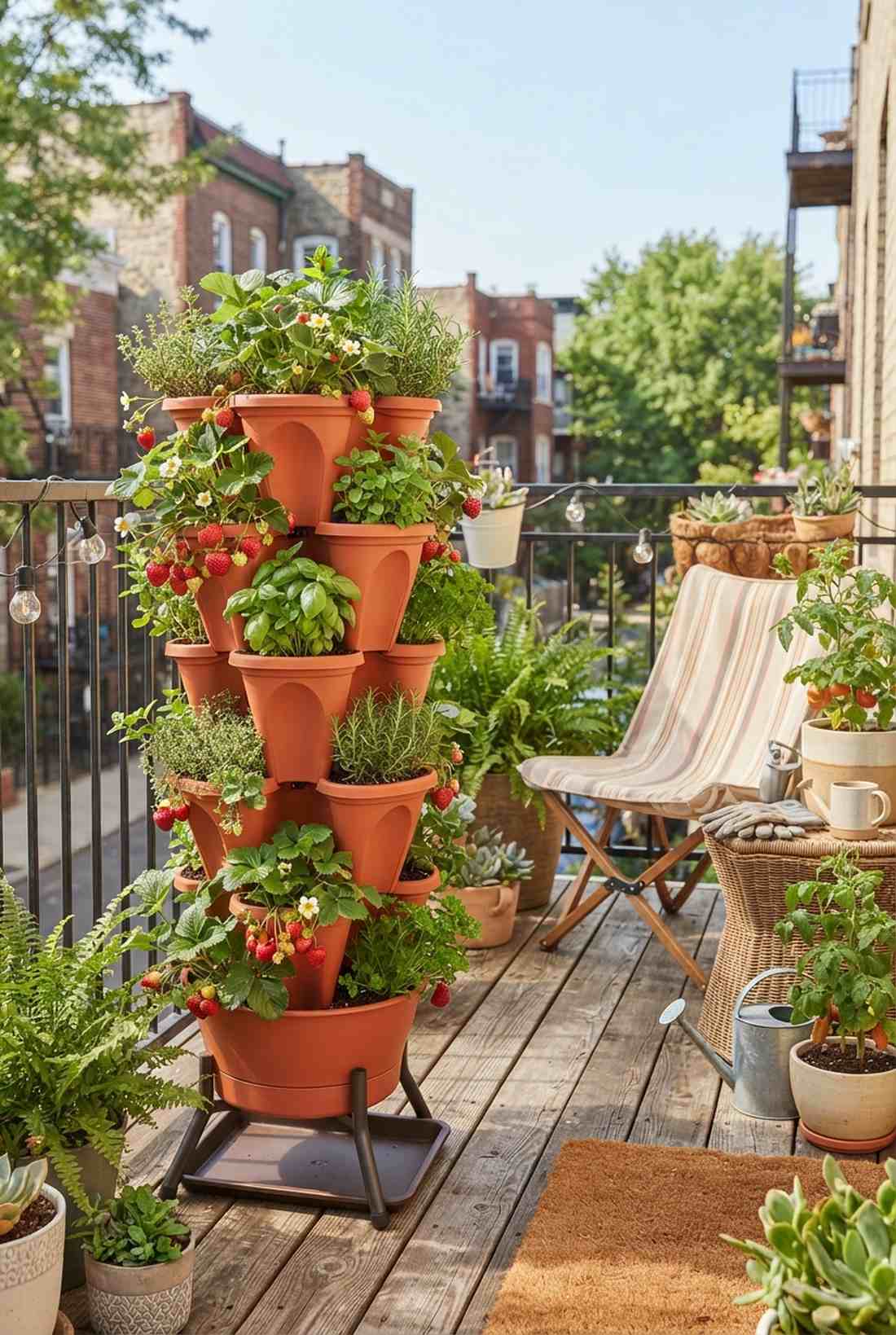
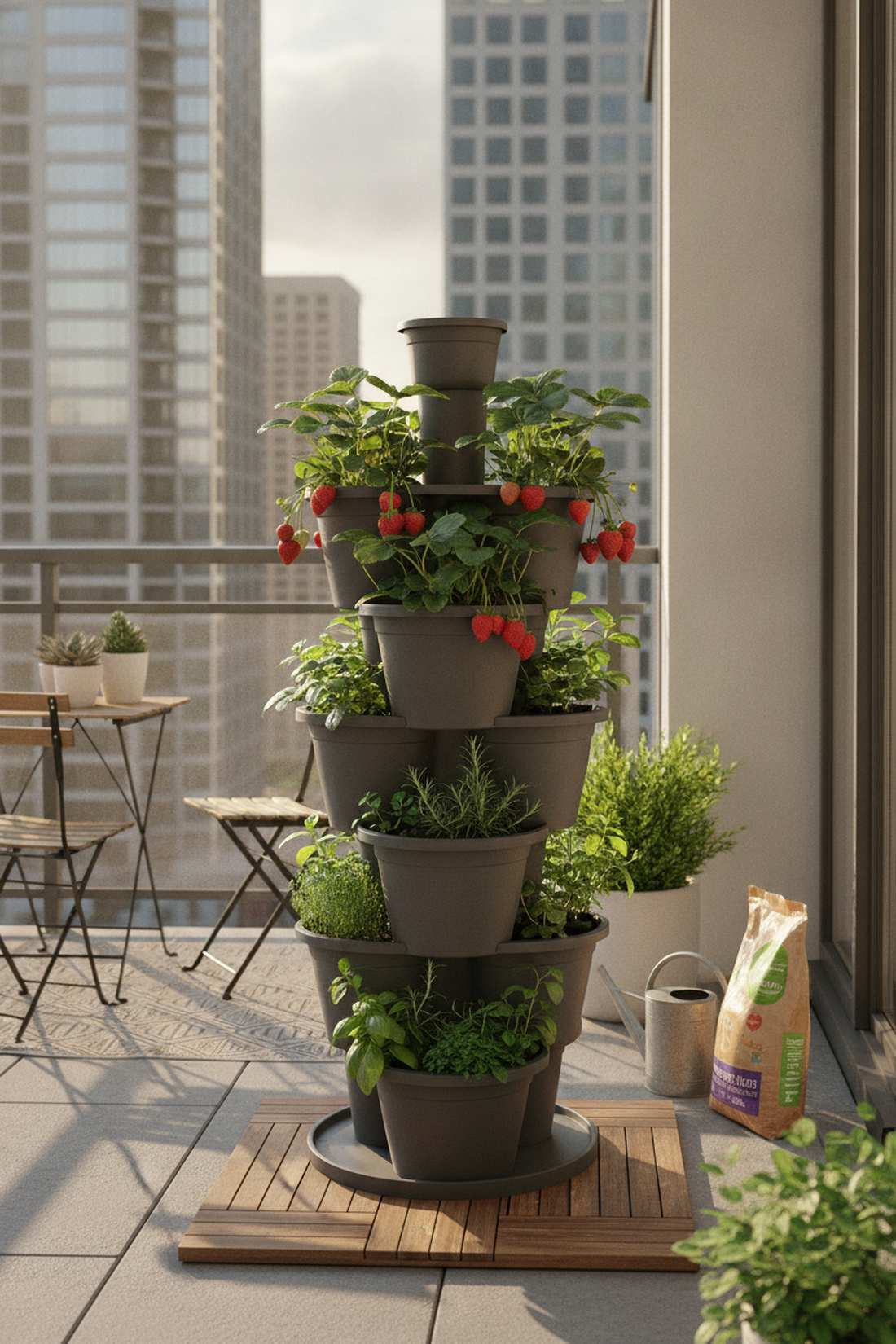
This compact powerhouse feels like a futuristic hydroponic farm perfectly scaled for a tiny balcony. A multi-tiered stacking planter is absolutely essential for growing massive strawberry or herb yields in urban spaces.
Interlocking these offset pots creates a massive vertical footprint that makes practical gardening possible on a 3×3 patio. Snagging a UV-resistant heavy plastic stacking kit ensures the tower won’t crack under the weight of wet soil and extreme summer sun.
You can build a high-yield vertical tower for about $40–$60. Save this if you want to grow food but have zero lawn.
- Key Materials: Stacking planter kit, strawberries/herbs
- Vibe / Style: Urban functional farming
- Difficulty: Easy
- Budget Breakdown: Stacking kit: $35 | Soil & Plants: $25
- Creator’s Tip: Water purely from the very top center reservoir, allowing gravity to naturally trickle moisture to the lower tiers.
- Smart Sourcing: UV-resistant 5-tier vertical planter kits and moisture-control potting soil bags.
29. Pallet Vertical Gardens
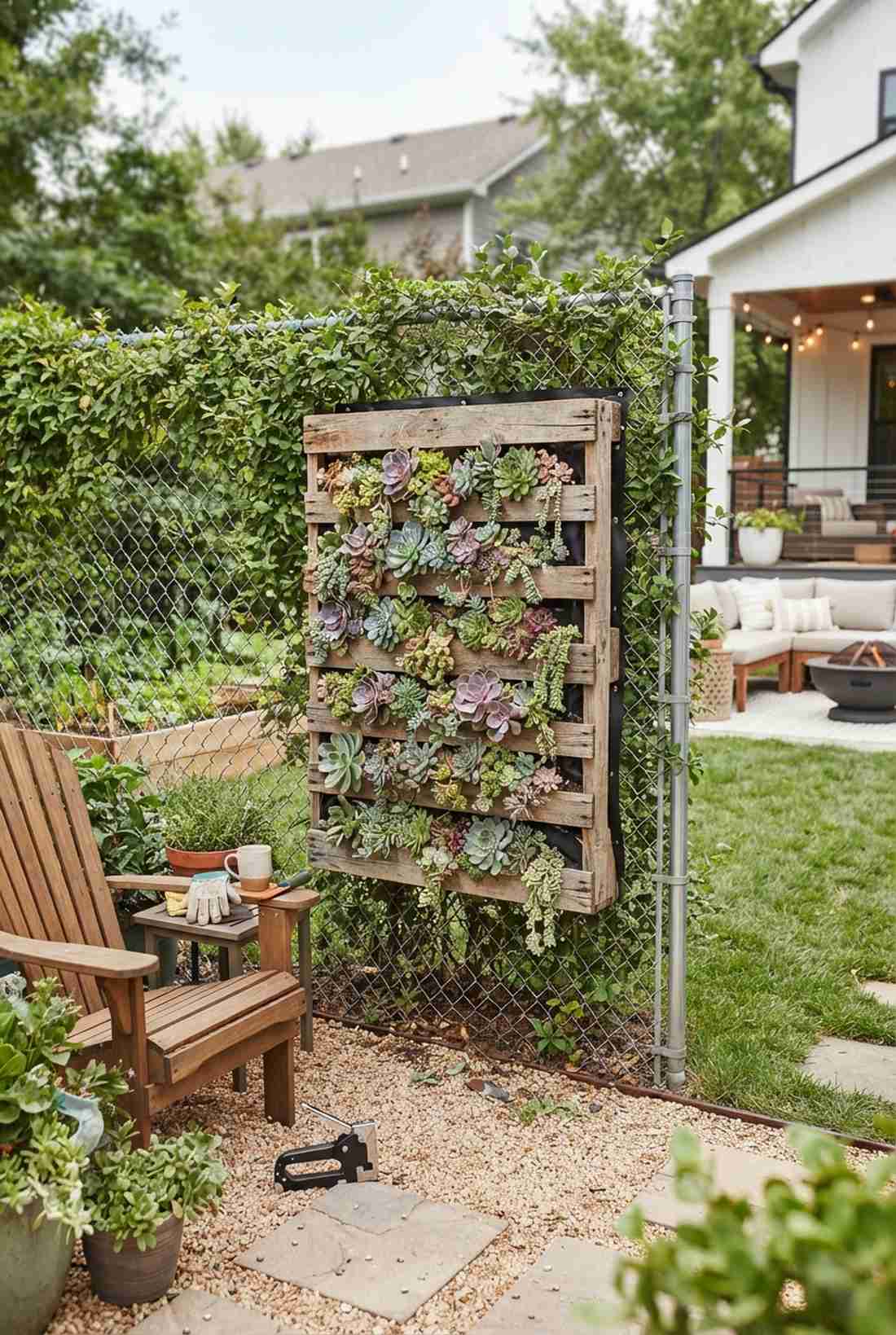
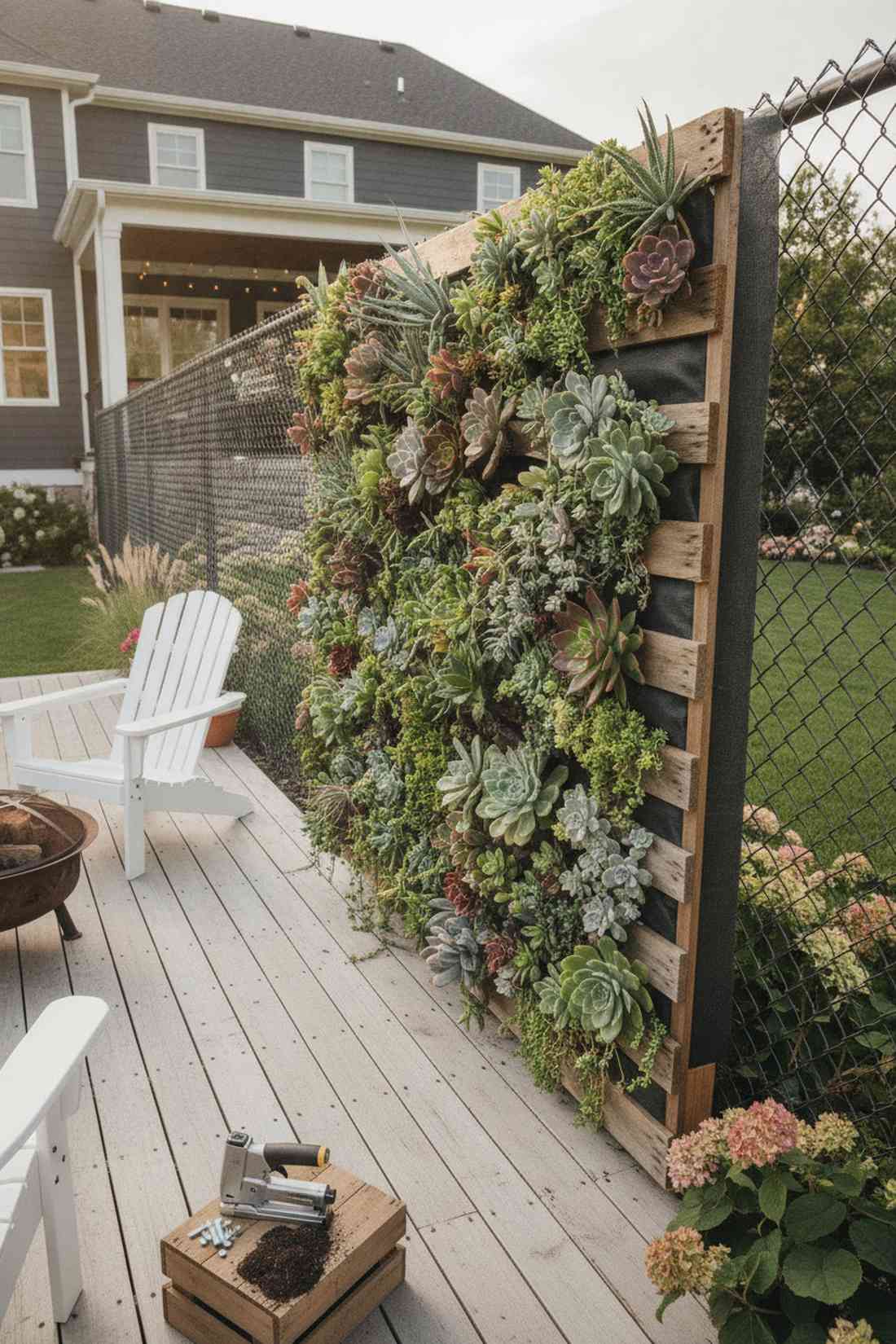
This upcycled wall feels like a trendy, eco-friendly coffee shop installation right in your backyard. A repurposed wood vertical planter is an incredibly cheap way to cover an ugly stretch of chain-link fence.
Packing succulents between pallet slats delivers a highly textured, Pinterest-perfect living wall for pennies on the dollar. Stapling commercial heavy-duty landscape fabric to the back is the secret to holding the soil perfectly in place while the roots establish.
This trendy upcycle project can be done for as little as $25–$45. It’s the ultimate weekend DIY for budget decorators.
- Key Materials: Wooden pallet, succulents, landscape fabric
- Vibe / Style: Eco-chic upcycled modern
- Difficulty: Intermediate (requires staple gun & patience)
- Budget Breakdown: Pallet: $0 | Fabric & Succulents: $35
- Creator’s Tip: Leave the pallet lying completely flat on the ground for 3 weeks so the roots anchor before you stand it up.
- Smart Sourcing: Heavy-duty staple guns with rust-proof staples and bulk succulent cutting assortment packs.
You’re probably underestimating the weight of your climbing plants. This next overhead trick ensures your canopy doesn’t crash down…
30. Arbor Overhead Canopy
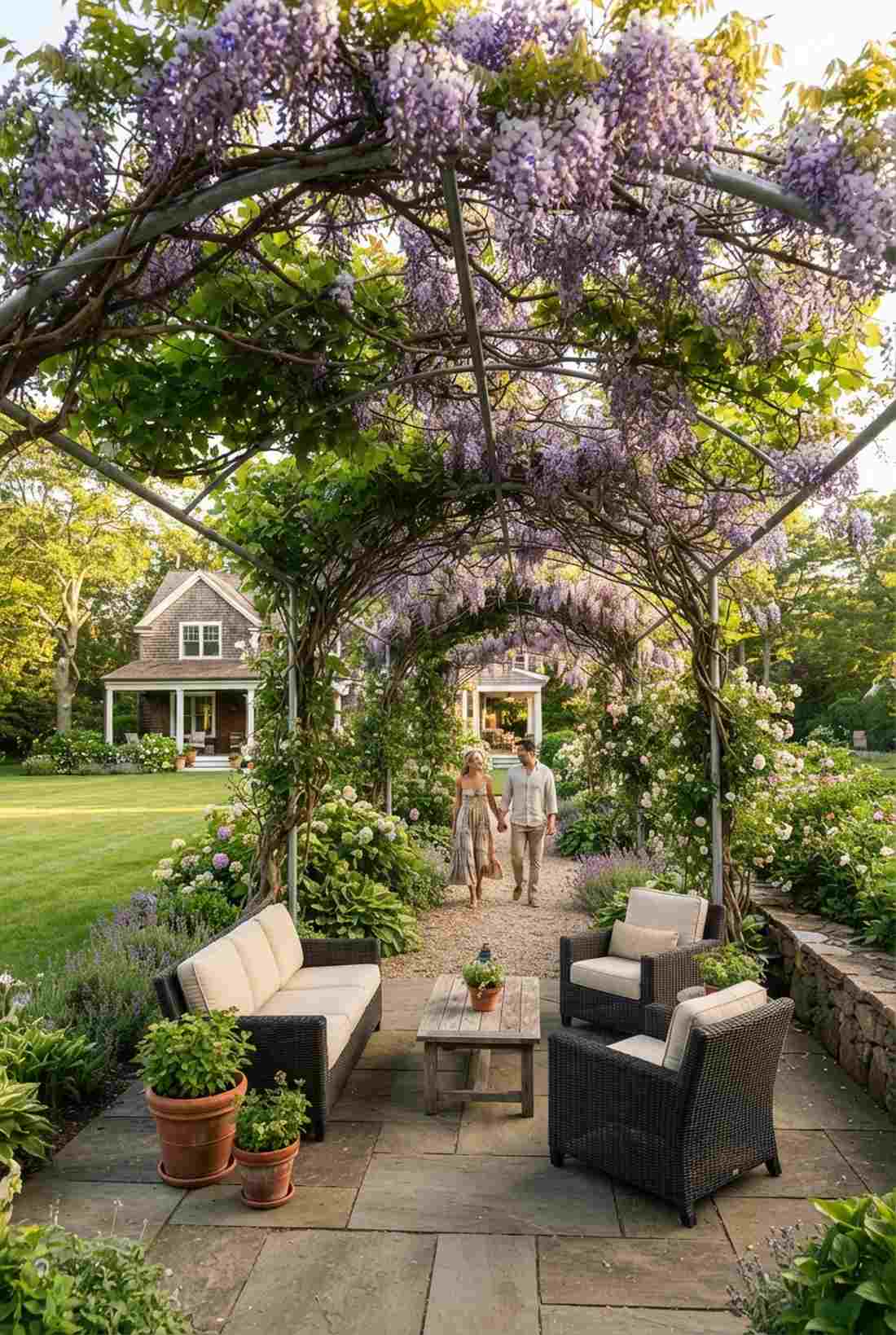
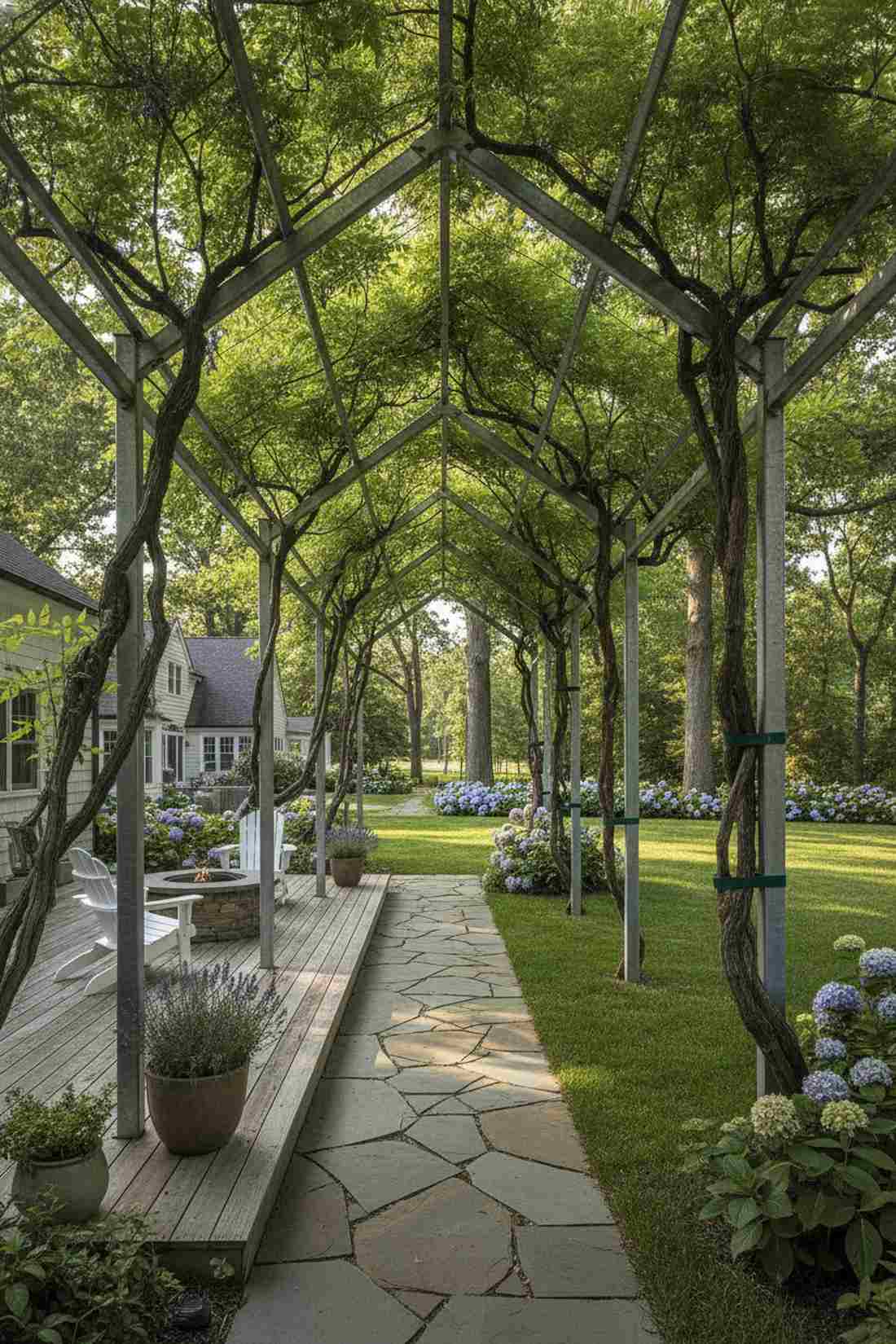
Walking under this structure feels like stepping through a romantic, shaded tunnel at a vineyard. An overhead botanical arbor is the perfect use-case for creating a shaded transition zone between your patio and lawn.
Training heavy wisteria or grapes over a sturdy frame provides a spectacular living ceiling that cools the area naturally. Investing in commercial-grade galvanized steel arbors is absolutely critical, as mature woody vines can easily crush cheap wooden or plastic structures.
Building a permanent living canopy costs $150–$300 for a quality frame. Pin this if you want to build a truly permanent garden room.
- Key Materials: Steel arbor frame, wisteria or grape vines
- Vibe / Style: Romantic vineyard estate
- Difficulty: Advanced (requires heavy lifting/assembly)
- Budget Breakdown: Heavy arbor: $200 | Vine starters: $50
- Creator’s Tip: Prune aggressively in the first two years to force the vine to grow up the sides rather than bushing out at the bottom.
- Smart Sourcing: Commercial-grade galvanized steel garden arbors and heavy-duty vine training ties.
Style-Specific Garden Compositions
Unlock the exact visual codes needed to replicate famous global garden aesthetics. These targeted plant arrangements mimic everything from Zen minimalism to lush tropical escapes.
31. Cottage Garden Abundance
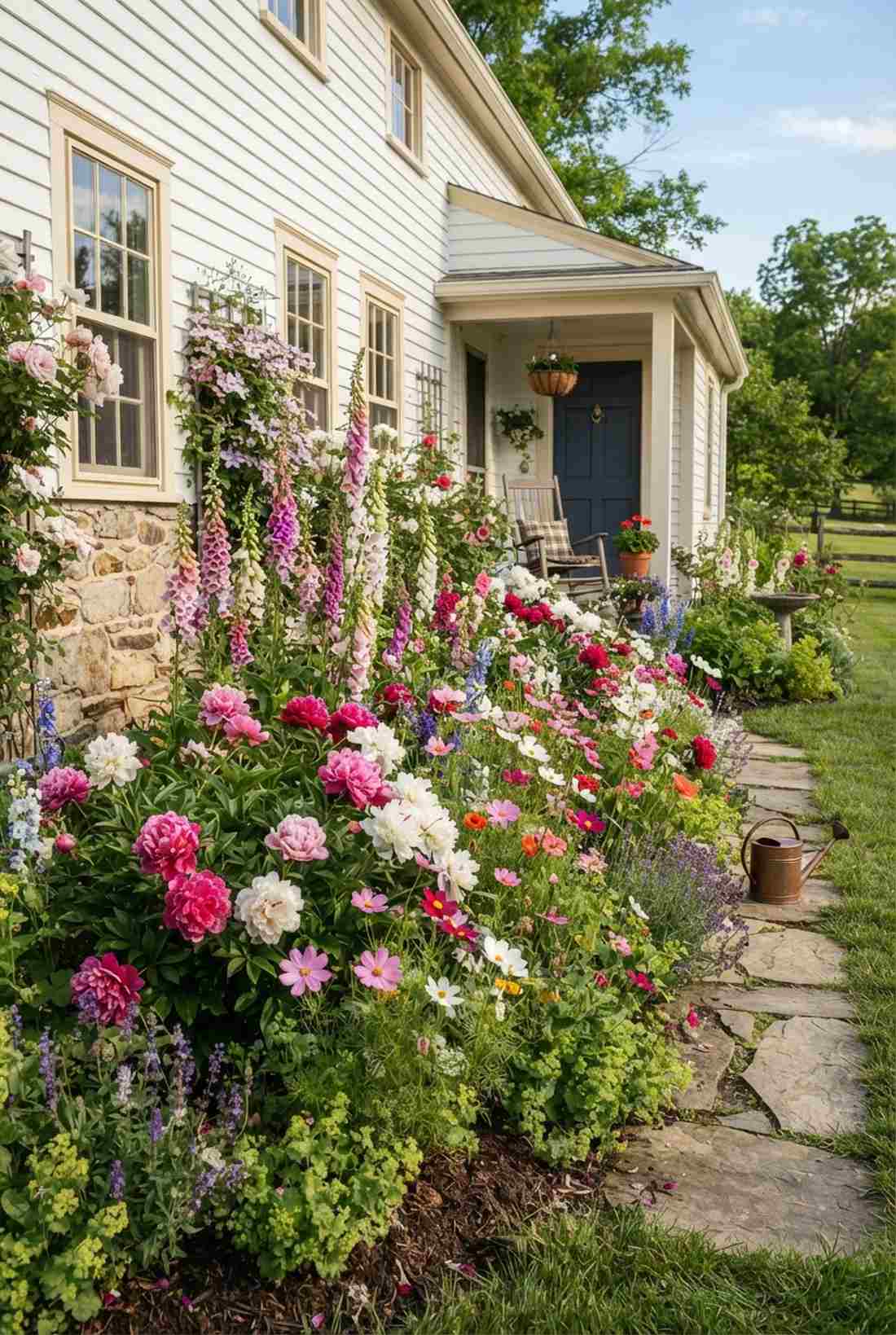
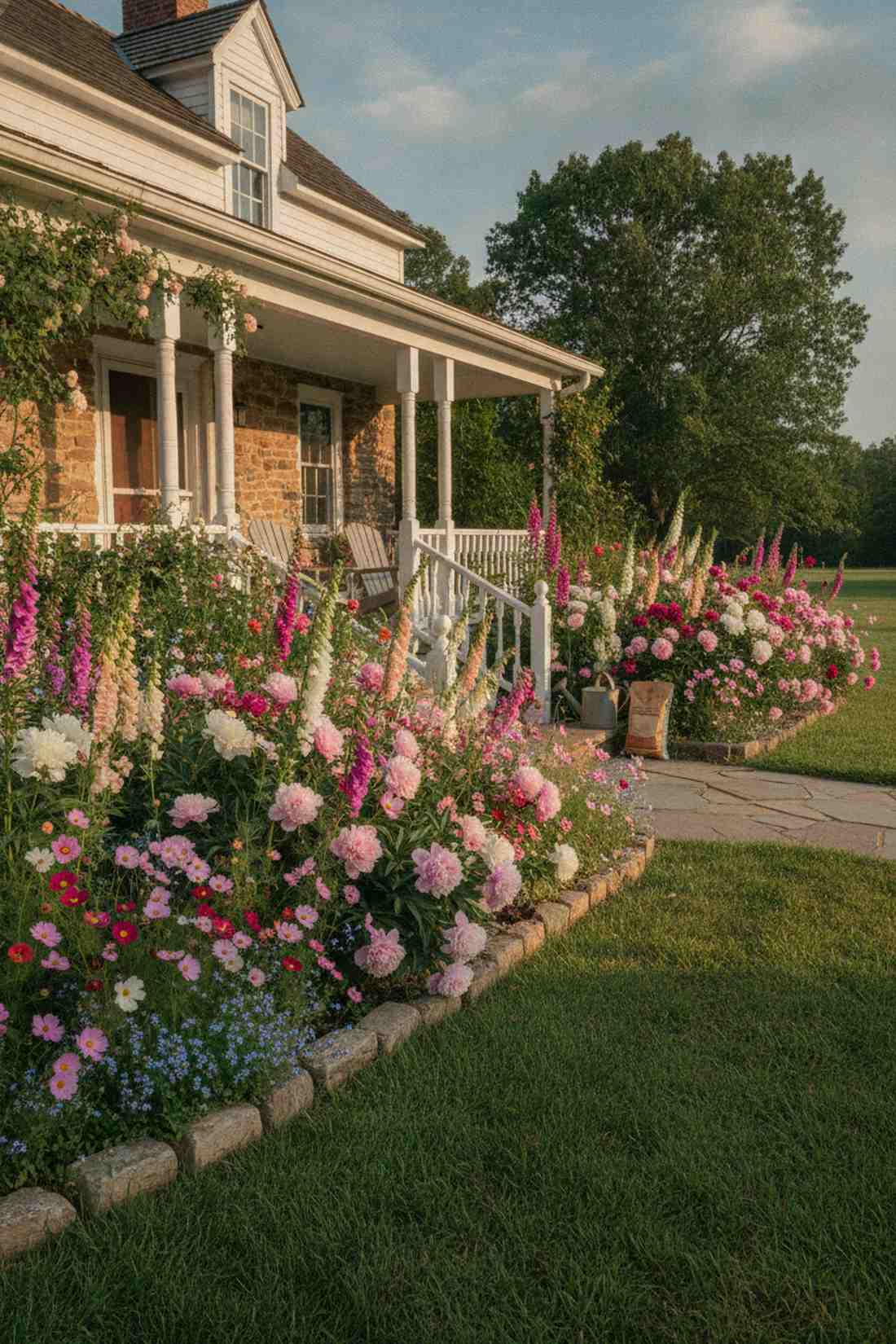
This overflowing display feels like stepping right into an old English storybook illustration. A dense, layered floral mass is the ultimate solution for hiding an ugly front foundation behind a wall of romantic color.
Packing peonies, foxgloves, and cosmos incredibly close together eliminates empty soil and blocks weeds naturally. Generously broadcasting bulk self-sowing wildflower seeds guarantees that delightfully chaotic, overgrown aesthetic that makes cottage gardens look effortlessly expensive.
You can establish this massive burst of color for about $60–$90. Pin this to your dream cottage exterior board.
- Key Materials: Foxgloves, peonies, cosmos seeds
- Vibe / Style: Romantic overgrown cottage
- Difficulty: Intermediate
- Budget Breakdown: Perennials: $60 | Seed mixes: $20
- Creator’s Tip: Plant your tall spiked flowers (foxgloves) in the back, but let a few wander to the front to break up rigid rows.
- Smart Sourcing: Bulk cottage garden seed shaker jugs and premium organic compost blends.
32. Formal Symmetrical Parterre
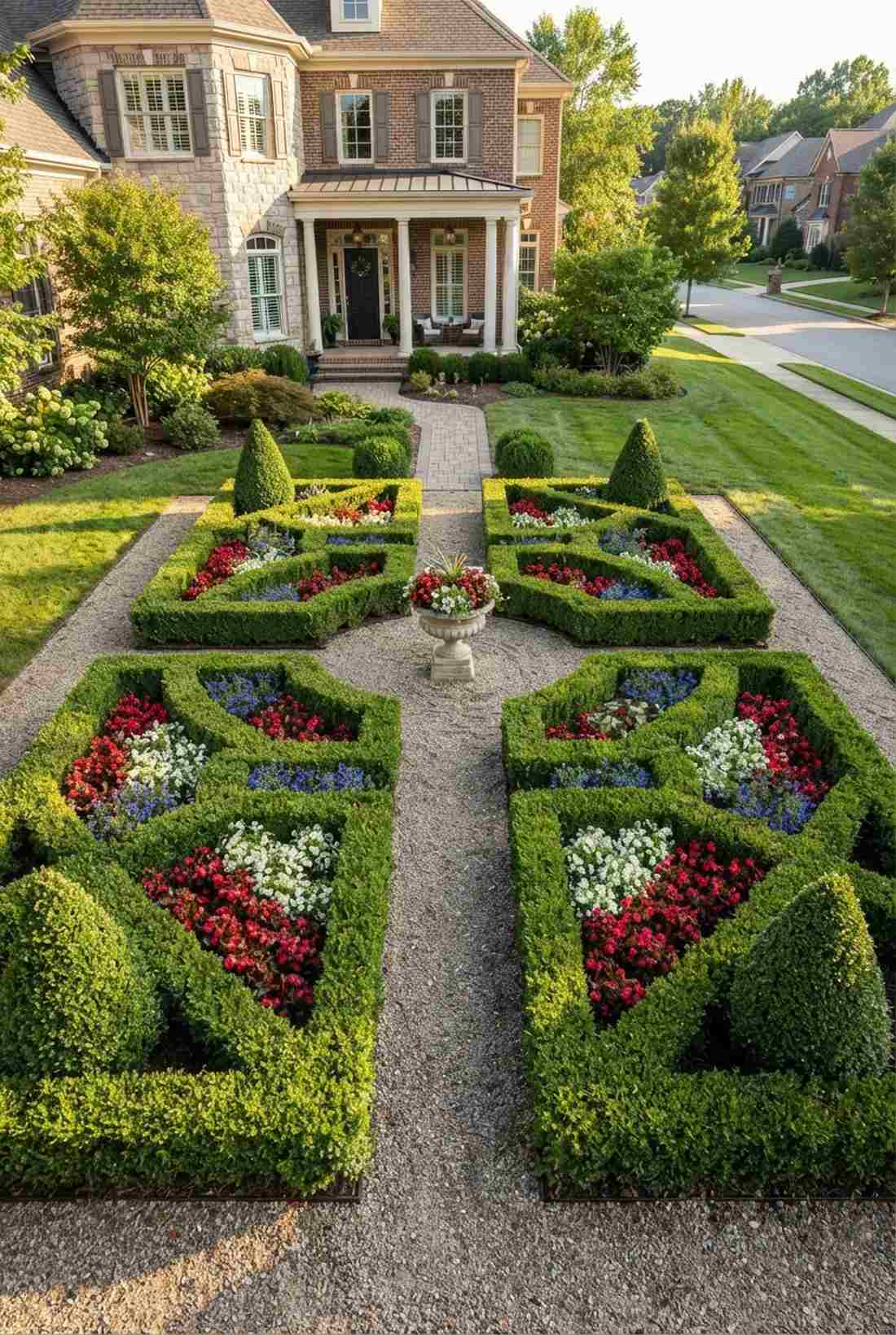
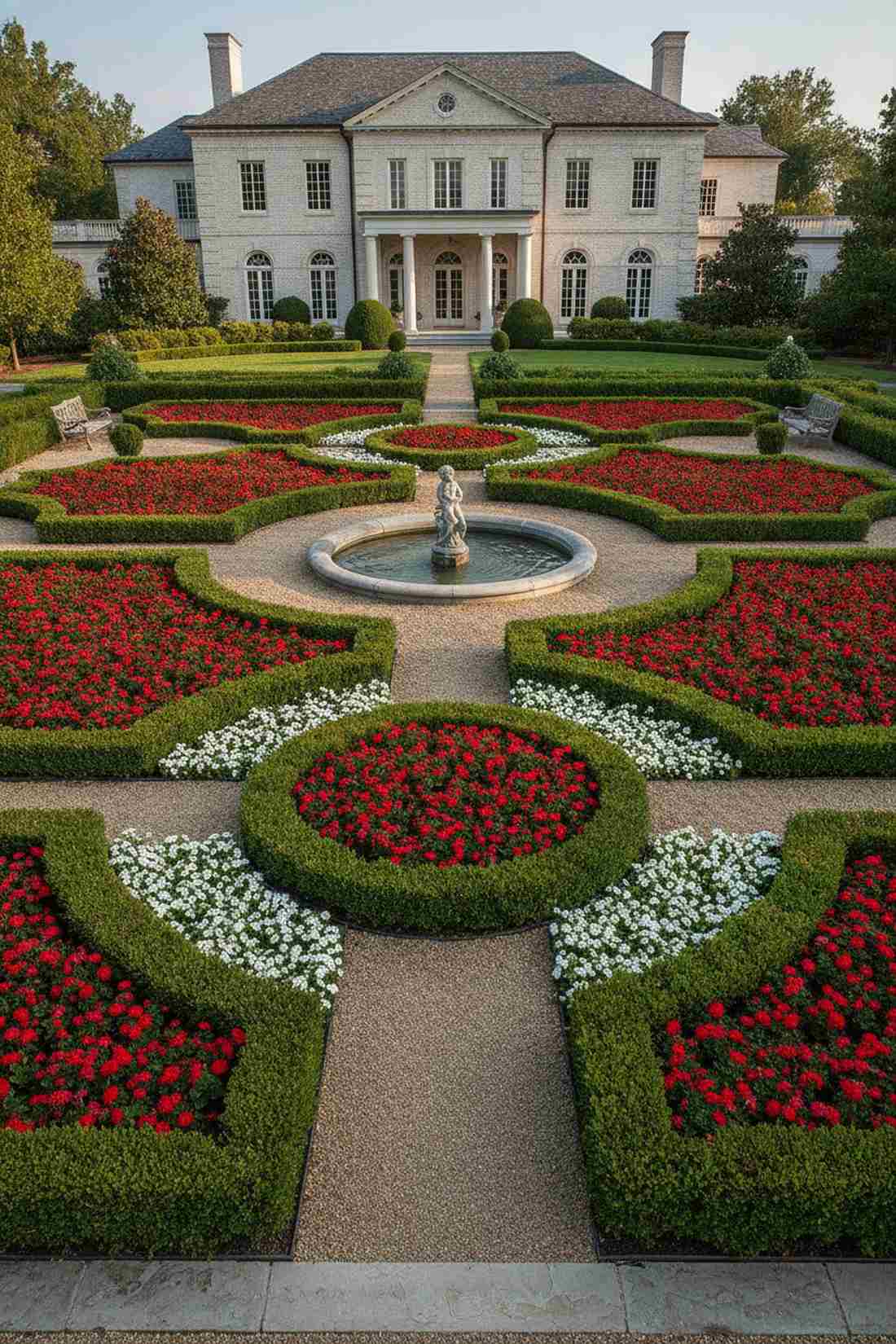
This razor-sharp layout feels like you’re touring the manicured grounds of a French chateau. A mirror-image geometric parterre is wildly effective for transforming a flat, boring front yard into a high-end luxury focal point.
Using clipped boxwood hedges to draw strict geometric outlines gives a designer-level finish that demands respect. Investing in laser-cut weed barrier templates ensures your inner floral plantings remain mathematically perfect without a single weed ruining the symmetry.
Creating formal symmetry usually runs $100–$200 for the structural hedging. It’s an instant curb-appeal multiplier.
- Key Materials: Boxwood shrubs, uniform annuals
- Vibe / Style: Classical French luxury
- Difficulty: Advanced (requires precision measuring)
- Budget Breakdown: Boxwoods: $120 | Center annuals: $40
- Creator’s Tip: If one plant dies, replace it immediately with the exact same size; a gap instantly ruins the formal illusion.
- Smart Sourcing: Electric precision hedge trimmers and bulk uniform boxwood starter pots.
33. Prairie Naturalistic Drifts
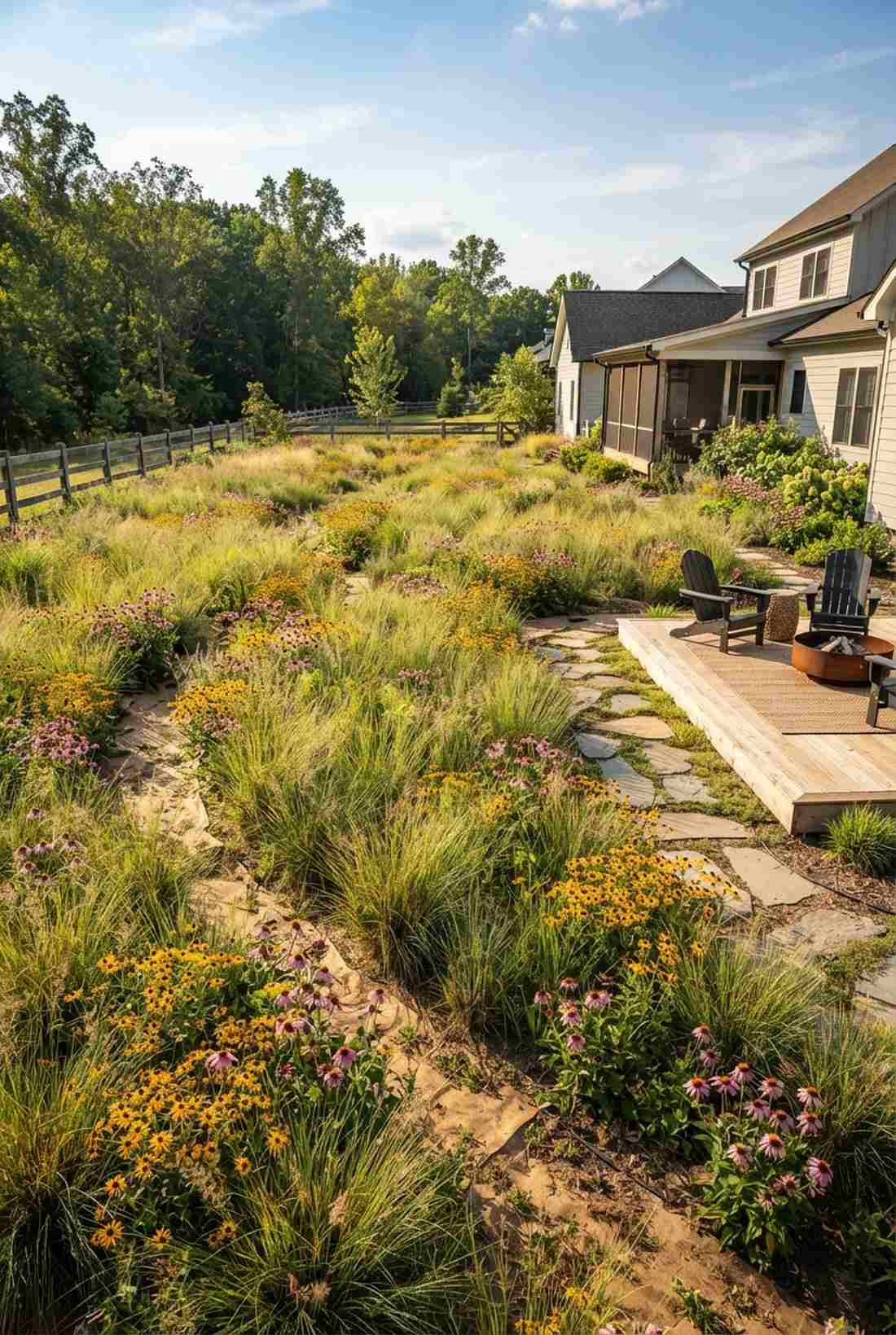
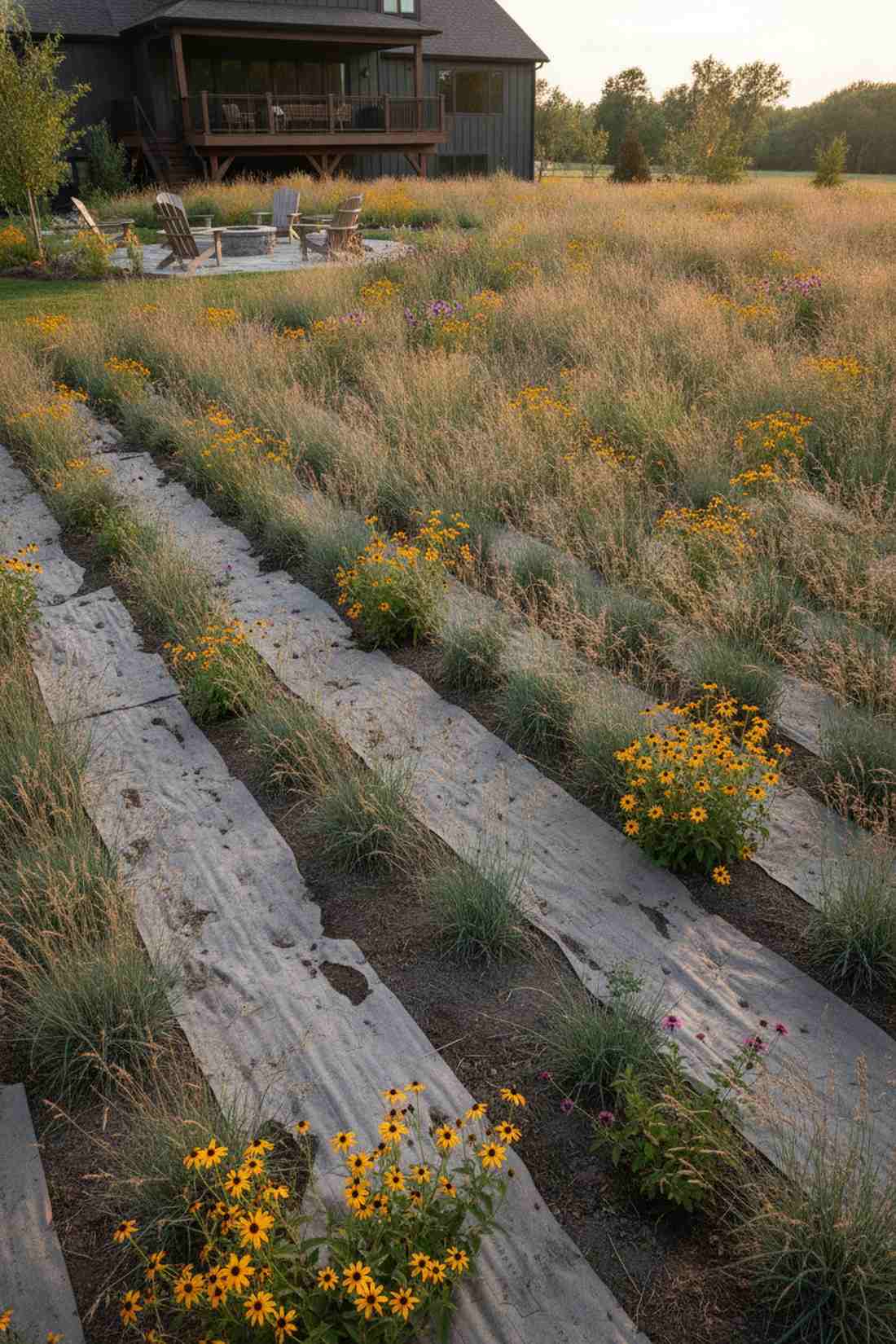
This windswept setup feels like a deep breath of fresh air on a wide-open golden savanna. A native grass matrix is the smartest layout for covering massive, water-starved backyard spaces.
Mixing large sweeping drifts of switchgrass with scattered black-eyed Susans perfectly mimics natural ecology while drastically cutting your water bill. Laying down biodegradable paper weed block rolls protects the young plugs while naturally dissolving back into the soil as the prairie establishes.
You can seed and plug a massive prairie section for roughly $75–$120. Save this if you’re tired of watering a useless lawn.
- Key Materials: Little bluestem grass, coneflowers
- Vibe / Style: Wild ecological modernism
- Difficulty: Easy
- Budget Breakdown: Native grass plugs: $80 | Flower seed: $25
- Creator’s Tip: Maintain a strict ratio: 70% grasses to 30% flowers for an authentic, structural prairie look.
- Smart Sourcing: Biodegradable landscaping paper rolls and native prairie grass plug trays.
34. Zen Minimalist Simplicity
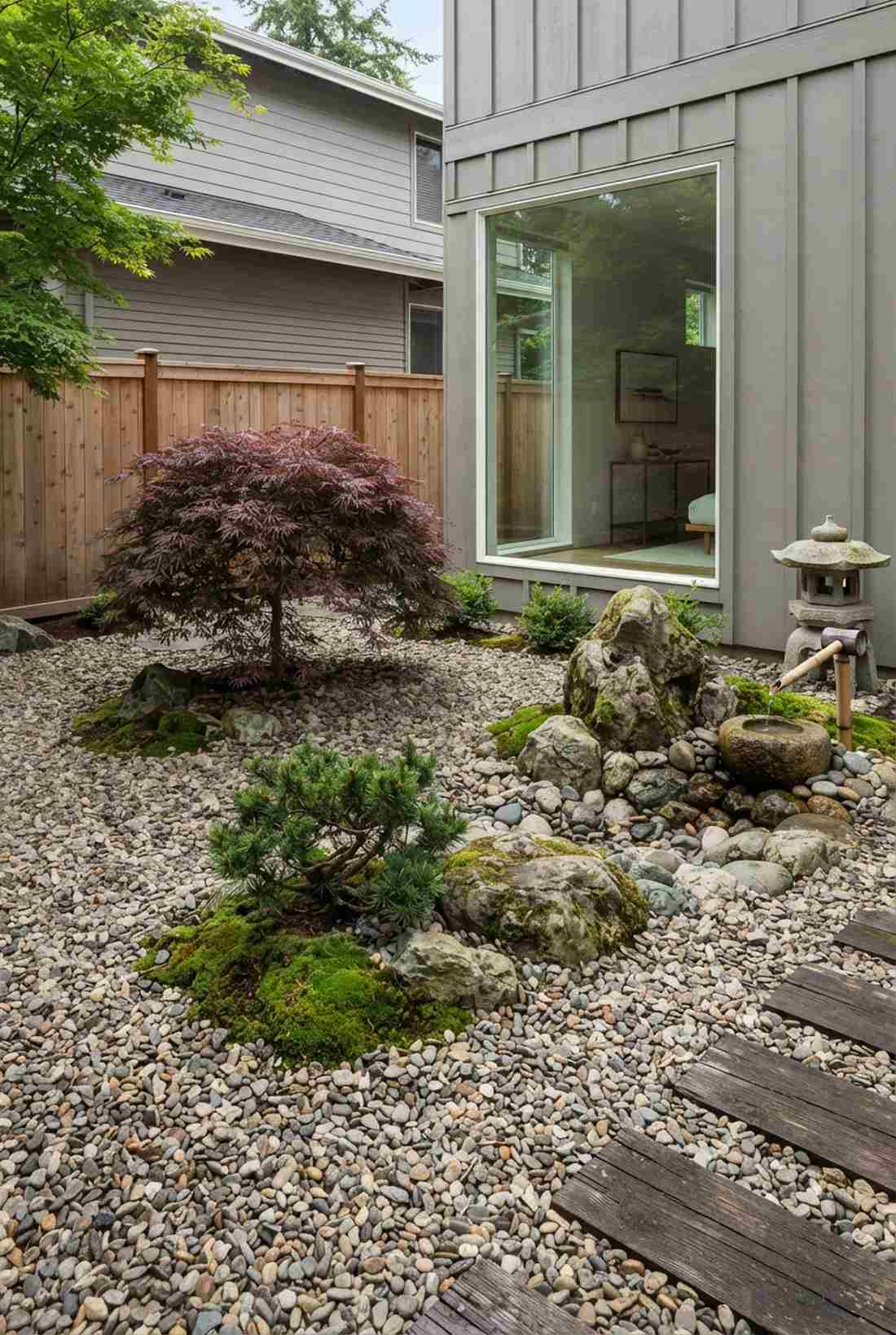
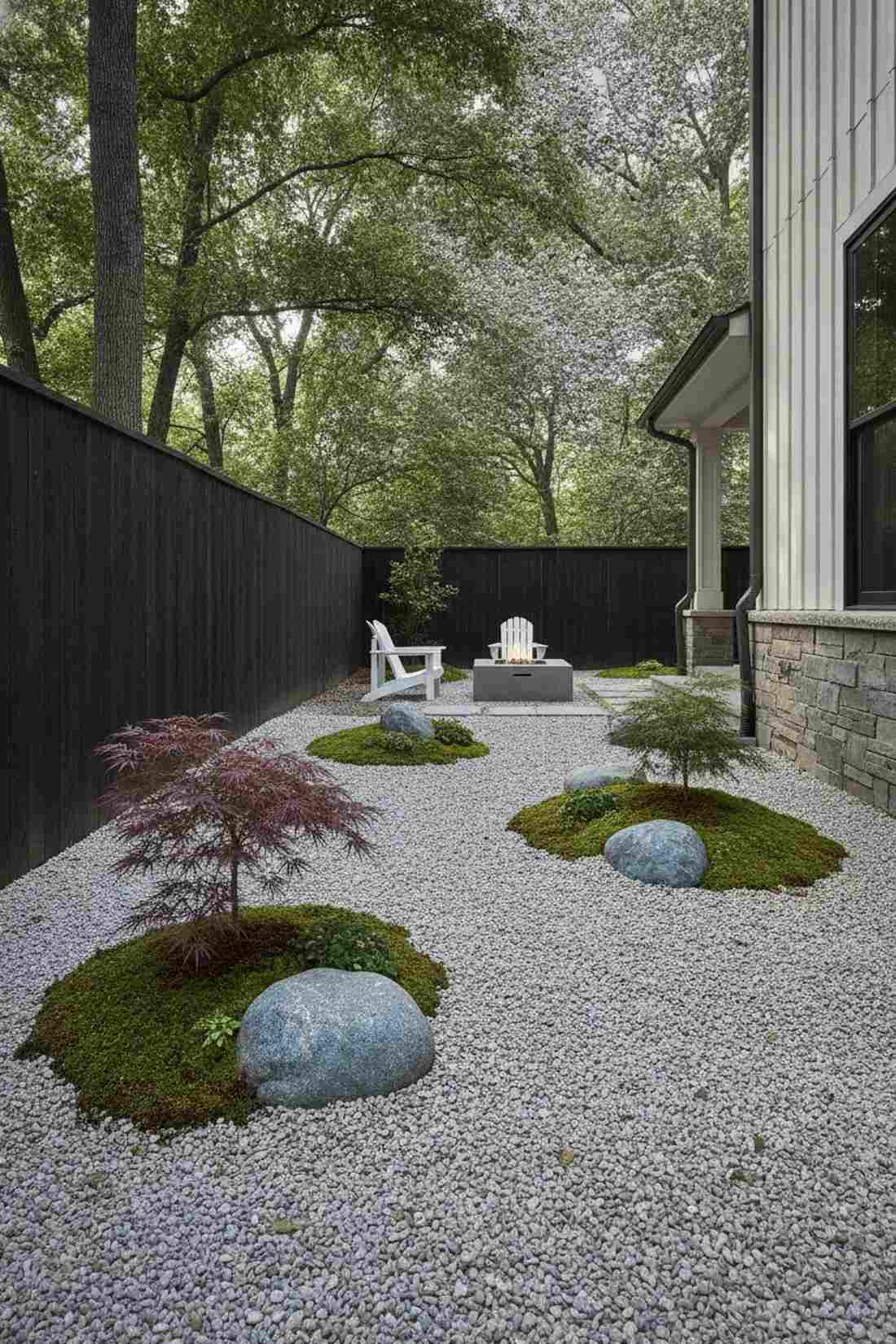
Standing near this space feels like an instant drop in your blood pressure. An asymmetrical evergreen rock garden is exactly what you need to turn a dead, shaded side-yard into a peaceful meditation zone.
Focusing on heavy negative space with just three to five structural plants looks far more expensive than a cluttered flower bed. Spreading premium washed river gravel as the base makes the sculptural green foliage pop while preventing any messy mud splashes.
This ultra-clean aesthetic costs about $80–$130 depending on rock volume. Pin this to your minimalist backyard mood board.
- Key Materials: Japanese maple, moss patches, river rock
- Vibe / Style: Tranquil Asian minimalism
- Difficulty: Easy
- Budget Breakdown: River rock: $70 | Structural plants: $50
- Creator’s Tip: Never place your rocks or plants in the exact center; offset them slightly to create dynamic, natural tension.
- Smart Sourcing: Bulk washed river gravel bags and live moss starter slurry kits.
Most DIY tropical gardens look incredibly cheap and fake… unless you use this specific massive-scale layout trick.
35. Tropical Bold Foliage
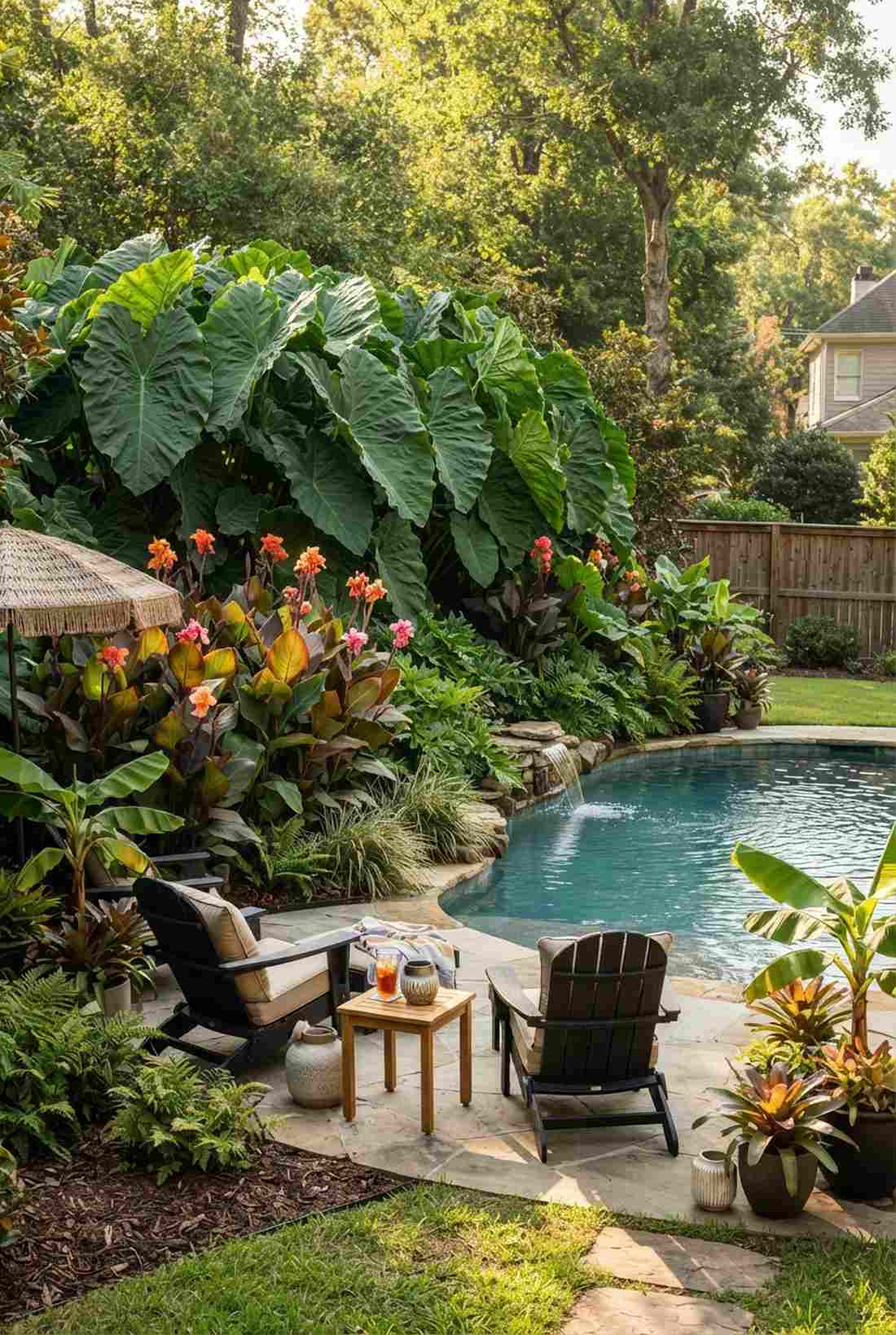
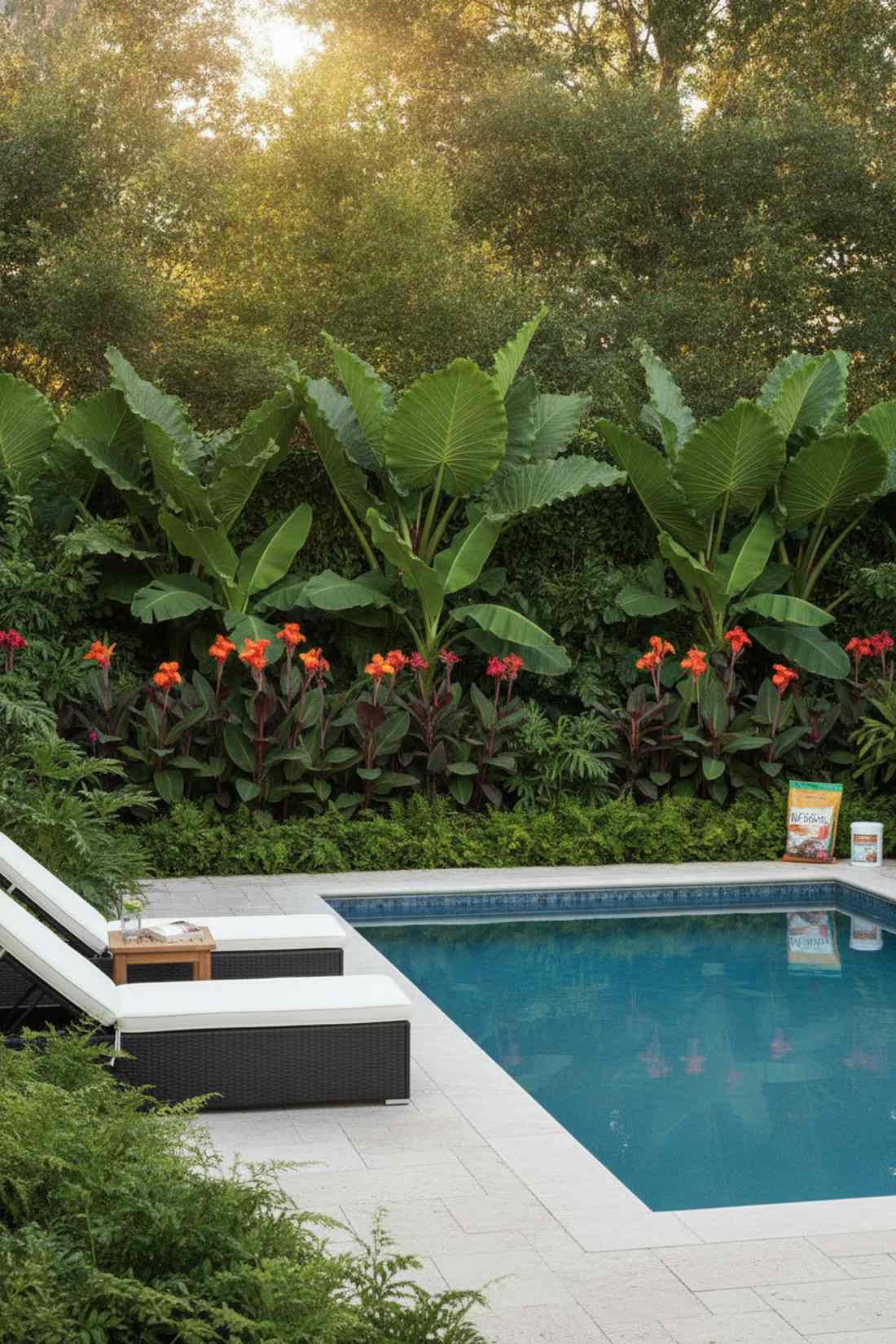
This lush jungle layout feels like you’re hiding out at an exclusive resort in Bali. Oversized architectural leaf layering is the absolute best way to enclose a pool deck and create instant privacy.
Stacking giant elephant ears behind vibrant canna lilies creates a dense, exotic wall that completely blocks out nosy neighbors. Mixing in slow-release palm and tropical fertilizer granules ensures those massive leaves stay a deep, rich green rather than turning a sickly, nutrient-starved yellow.
You can build a tropical privacy wall for around $70–$110. It’s a high-impact, fast-growing solution for summer privacy.
- Key Materials: Elephant ears (Colocasia), Canna lilies, Bananas
- Vibe / Style: Exotic resort jungle
- Difficulty: Intermediate (requires heavy watering)
- Budget Breakdown: Giant bulbs/rhizomes: $65 | Tropical food: $20
- Creator’s Tip: Layer strictly by leaf size: the largest mammoth leaves go in the back, and fine-textured ferns go in the front.
- Smart Sourcing: Jumbo-sized elephant ear bulbs and premium tropical slow-release fertilizer.
Material Guide: Cheap vs. Premium Aesthetic
Knowing exactly where to save and where to spend makes all the difference in achieving that “looks expensive but isn’t” vibe.
- Standard vs. UV-Resistant/Premium: Cheap plastic pots and borders turn gray and crack after one summer. Upgrading to UV-coated resin or powder-coated metal ensures your architecture looks luxury year-round.
- Pre-made Kits vs. Sourcing Locally: While local nurseries are great for live plants, buying your hardscaping tools, weed barriers, and fertilizers in bulk online starter kits often cuts costs by 40%.
36. Mediterranean Arid Adaptation
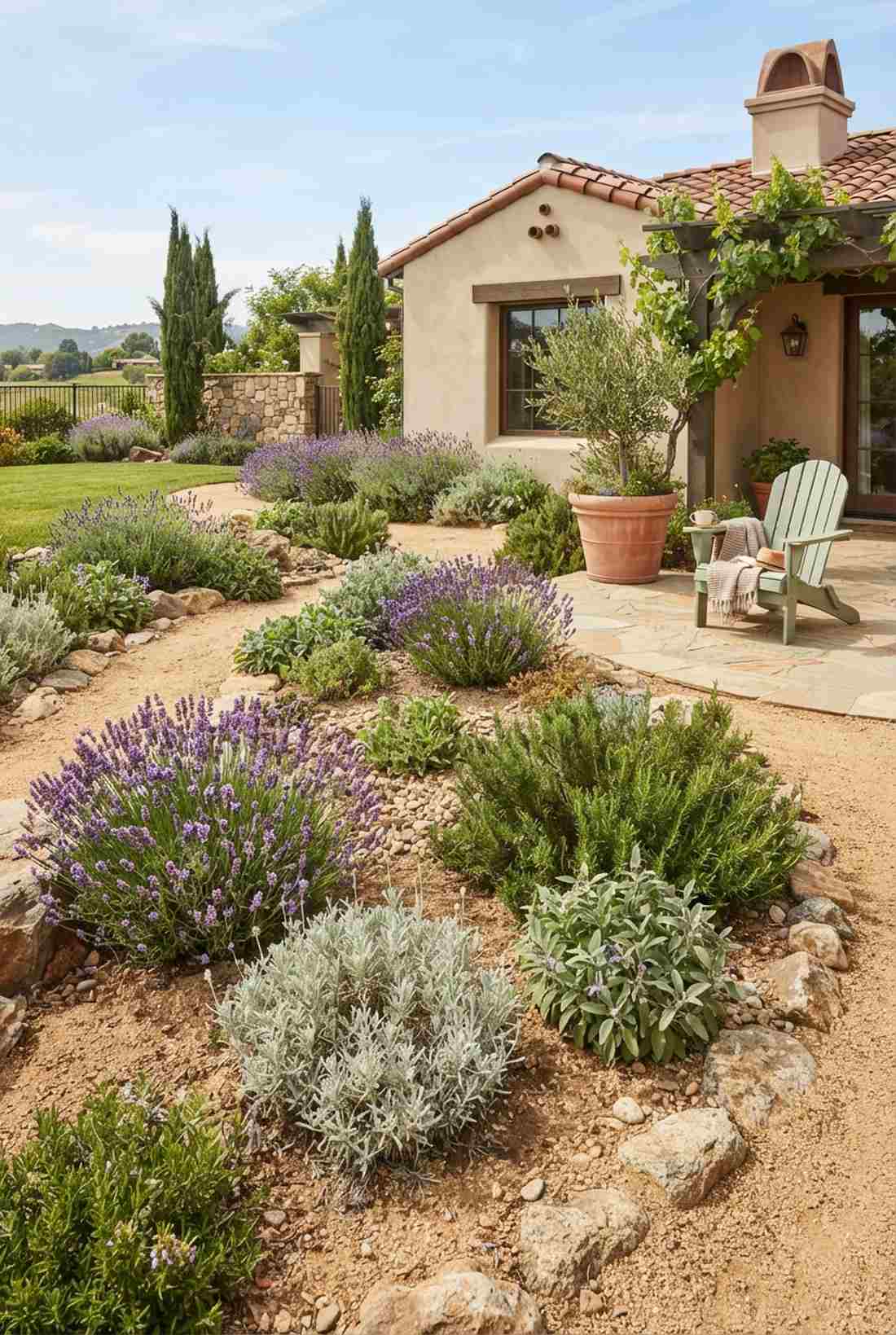
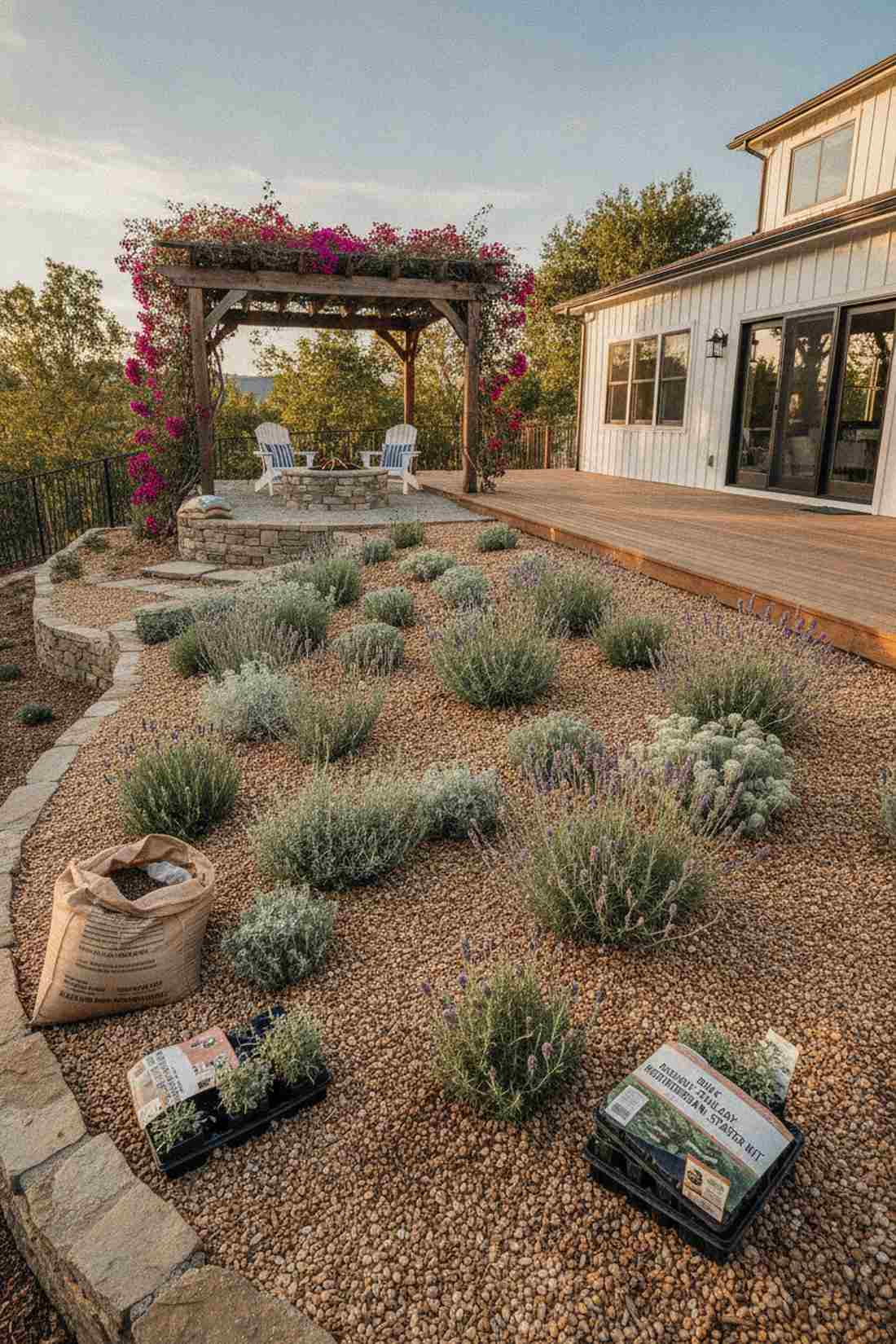
This sun-baked arrangement feels like a warm afternoon on a hillside in Tuscany. A drought-resistant silver foliage bed is the perfect money-saving layout for areas with strict summer water bans.
Grouping lavender, rosemary, and sage in lean soils delivers a fragrant, upscale aesthetic that thrives on pure neglect. Swapping out wood mulch for decomposed granite base rock prevents root rot and perfectly mimics that dry, authentic European hillside look.
Establishing this water-wise setup costs roughly $50–$85. Save this to your low-maintenance landscaping board immediately.
- Key Materials: Lavender, rosemary, santolina
- Vibe / Style: Coastal European arid
- Difficulty: Easy
- Budget Breakdown: Mediterranean herbs: $45 | Granite base: $35
- Creator’s Tip: Never use rich compost or heavy organic mulches here; these plants actively prefer poor, fast-draining rocky soil.
- Smart Sourcing: Bulk decomposed granite bags and drought-tolerant Mediterranean starter kits.
37. Woodland Shade Layers
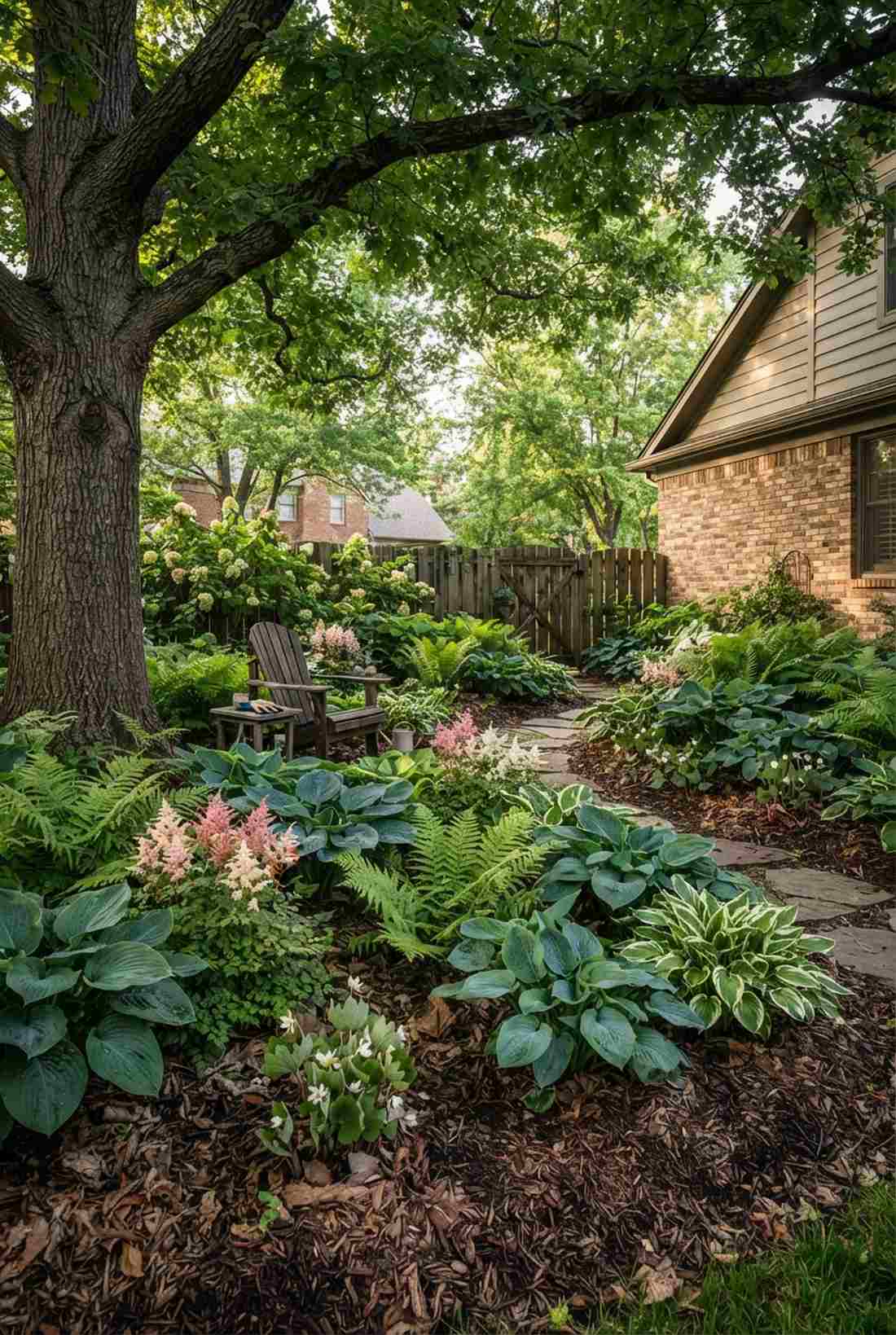
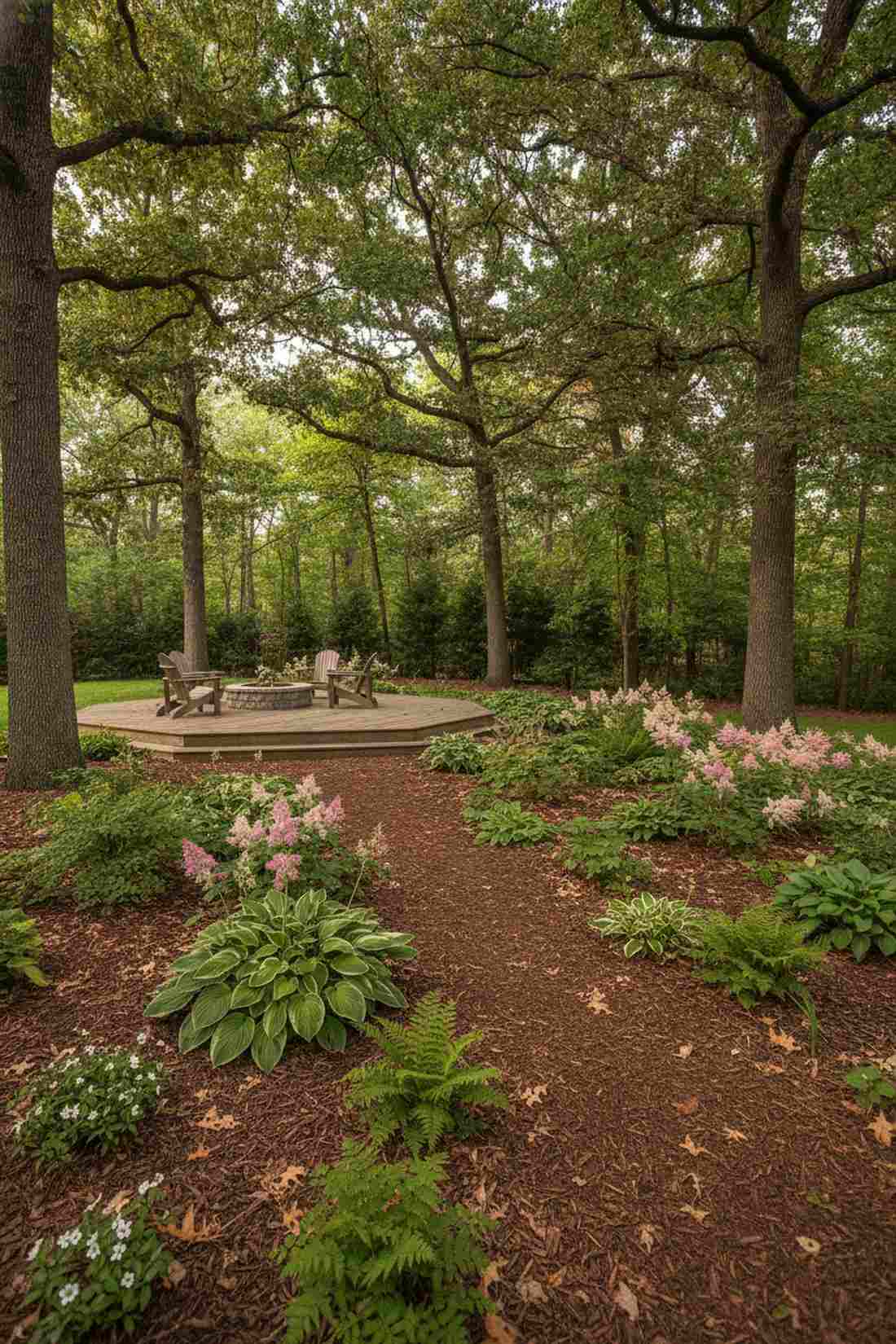
Walking into this space feels like finding a cool, secret glade hidden deep in the forest. A layered shade understory is the only reliable way to fix those frustrating, dark areas beneath large, mature oak trees.
Layering delicate ferns and structural hostas mimics natural forest ecology, bringing lush life to spots where grass refuses to grow. Leaving natural leaf litter and adding premium pine bark fines acts as an acidic mulch that shade-loving plants desperately crave.
You can transform a dead shade zone for about $60–$90. It’s a gorgeous solution for the darkest corners of your yard.
- Key Materials: Mixed hostas, native ferns, astilbe
- Vibe / Style: Lush forest floor
- Difficulty: Easy
- Budget Breakdown: Shade perennials: $70 | Pine bark: $15
- Creator’s Tip: Plant spring ephemerals like bloodroot to provide early color before the overhead tree canopy fully leafs out.
- Smart Sourcing: Bulk pine bark fine mulch and bare-root shade perennial bundles.
38. English Border Herbaceous Depth
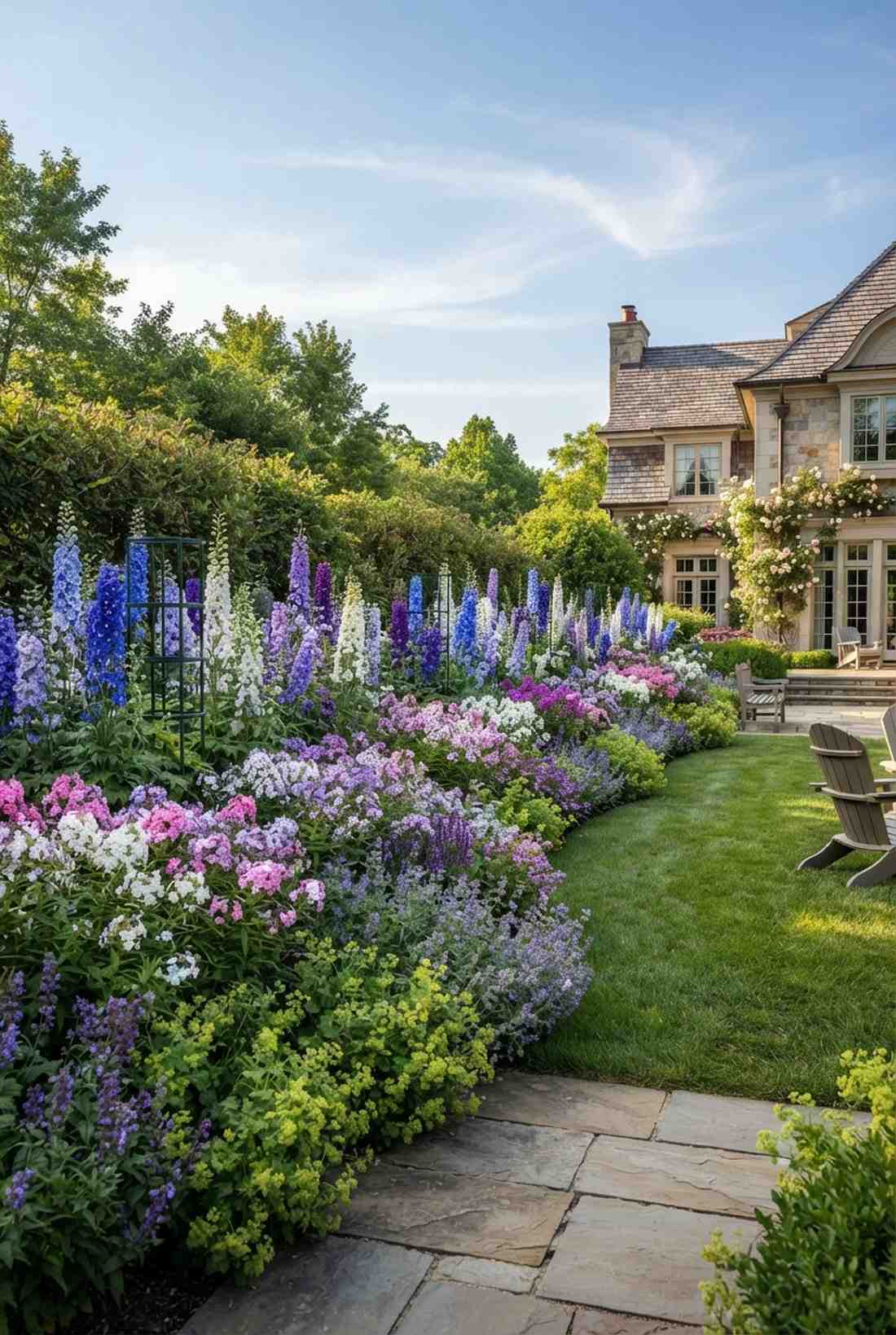
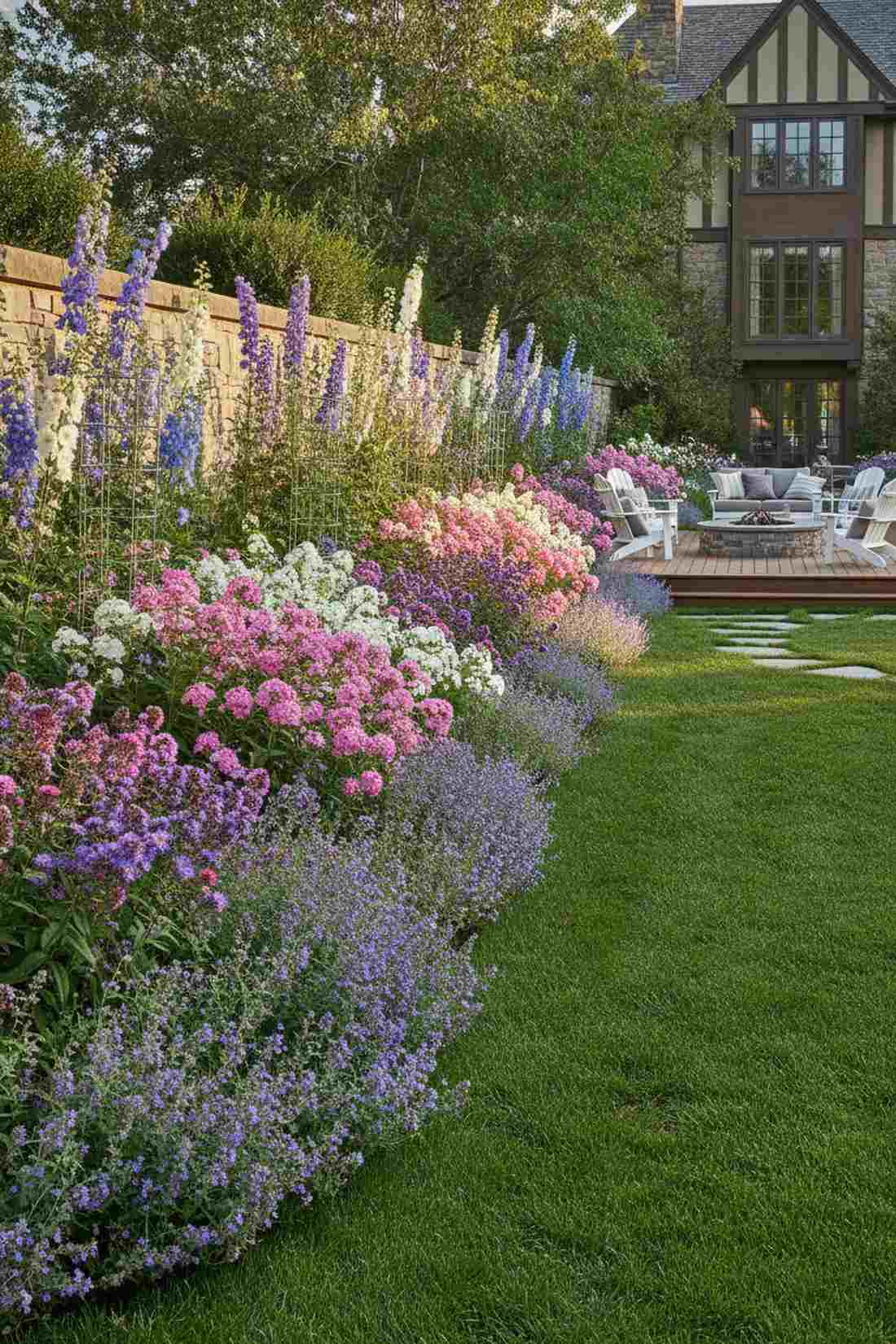
This massive floral display feels like an elite botanical estate open for a private tour. A deep tiered herbaceous border is the absolute pinnacle of luxury property line framing.
Stair-stepping towering delphiniums down to low-growing border catmint guarantees continuous, overwhelming bloom succession all summer long. Setting up hidden heavy-duty grid plant supports early in the season ensures these massive floral spikes don’t flop over after a heavy rain.
Building a true English border requires an investment of $150–$300 for a large stretch. Pin this if you want the ultimate show-stopping yard.
- Key Materials: Delphiniums, phlox, asters
- Vibe / Style: High-end manor estate
- Difficulty: Advanced (requires staking and deadheading)
- Budget Breakdown: Mixed perennials: $200 | Staking grids: $45
- Creator’s Tip: Repeat a signature plant every 5 feet down the line to tie the massive chaos into a unified, deliberate rhythm.
- Smart Sourcing: Heavy-duty metal grow-through support grids and premium tall perennial root stocks.
39. Rock Garden Alpine Niche
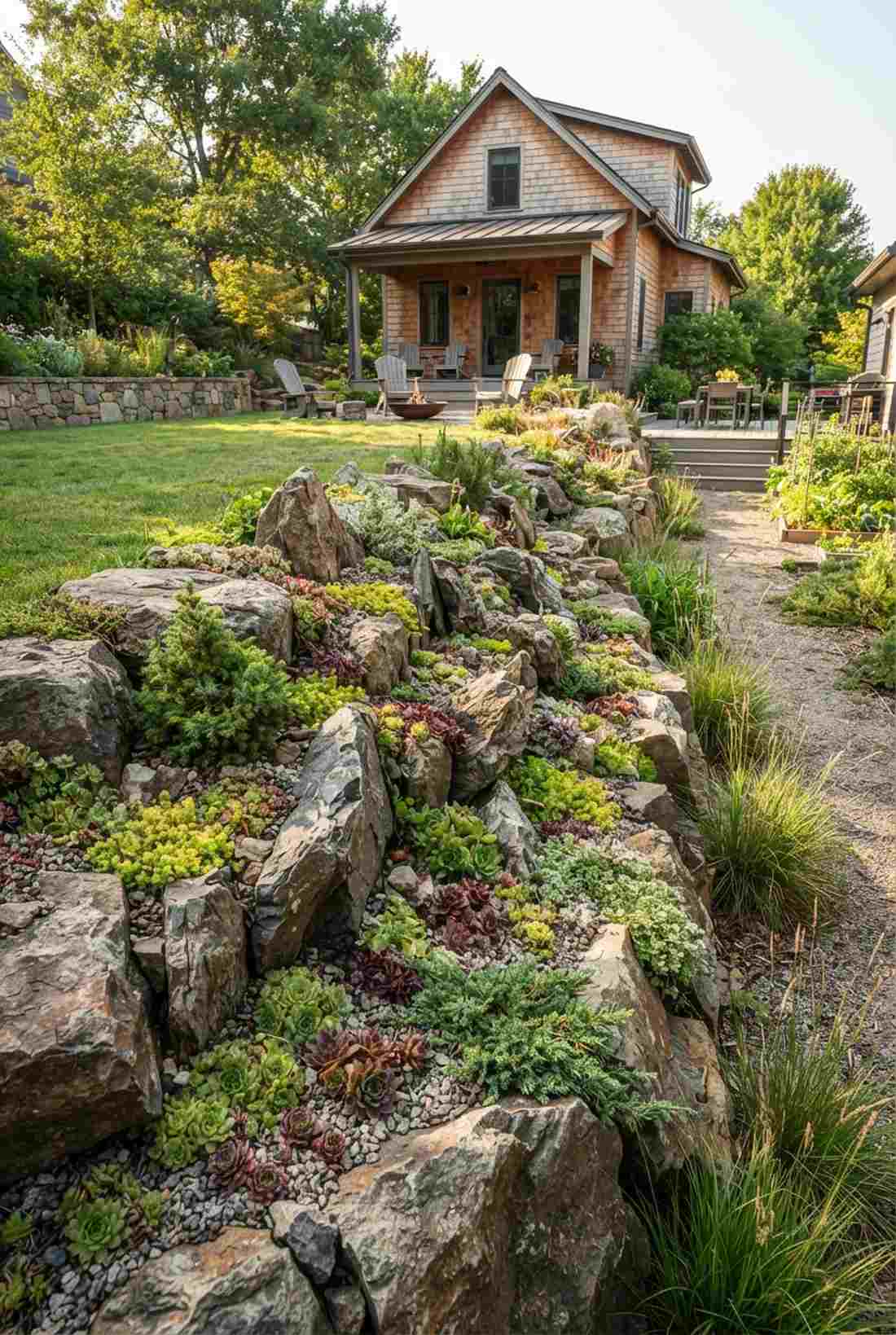
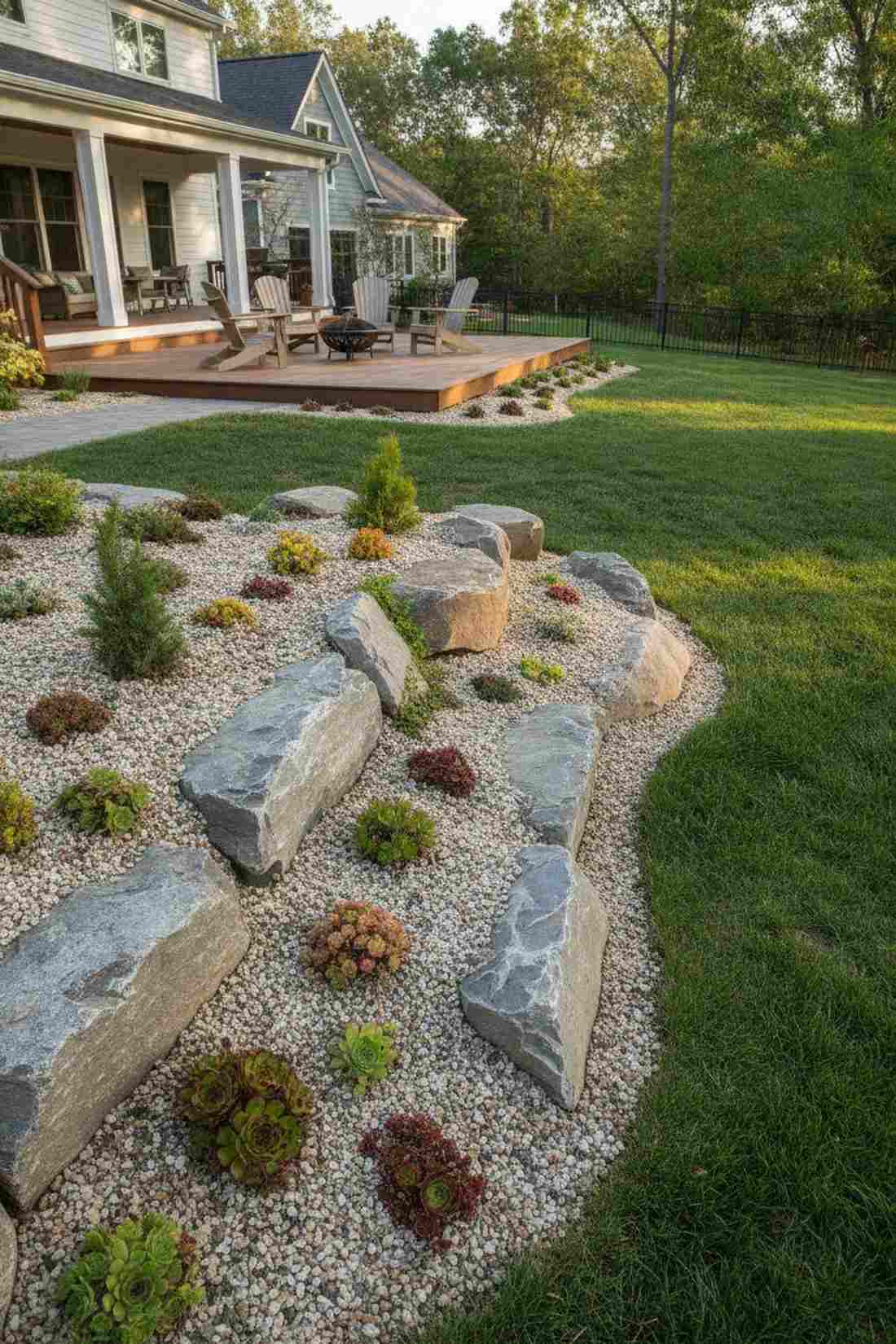
This rugged miniature setup feels like a pristine slice of a high-altitude mountain peak. An alpine crevice rockery works exceptionally well for transforming steep, un-mowable slopes into detailed focal points.
Tucking tiny sedums and dwarf conifers between heavy boulders gives a highly specialized, custom-built appearance. Blending coarse horticultural pumice into the planting pockets guarantees the razor-sharp drainage these rare little plants need to survive.
You can build a small alpine niche for roughly $45–$80. It’s a highly textured, low-water marvel.
- Key Materials: Sedums, sempervivums, dwarf conifers
- Vibe / Style: Rugged mountain miniature
- Difficulty: Intermediate
- Budget Breakdown: Alpine succulents: $40 | Drainage pumice: $20
- Creator’s Tip: Angle your rocks slightly backward into the hill so rainwater naturally flows back into the plant roots.
- Smart Sourcing: Coarse horticultural pumice bags and alpine succulent starter trays.
Before you spend hours designing a complex bed, check out this purely functional layout that produces massive yields…
40. Cutting Garden Production Rows
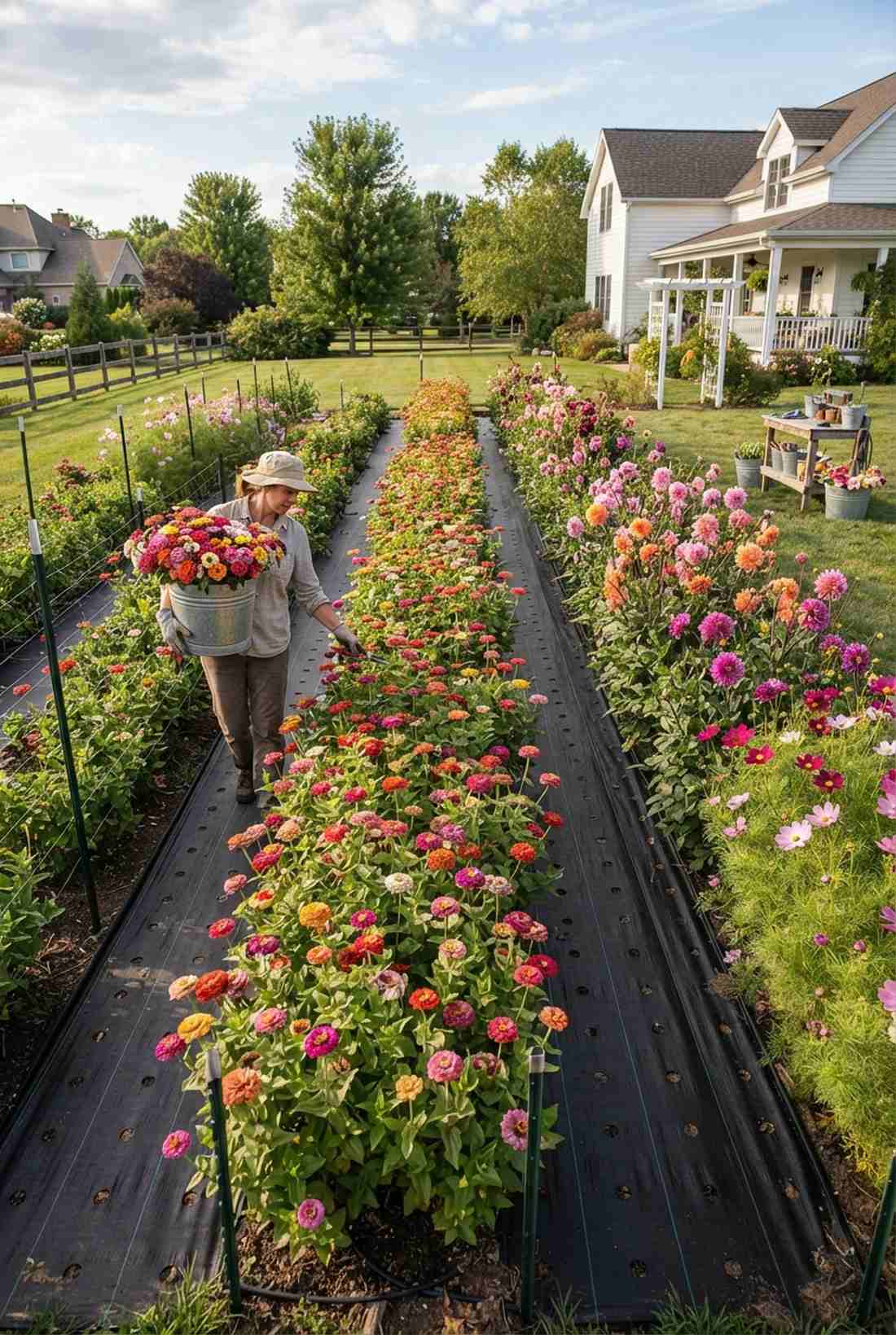
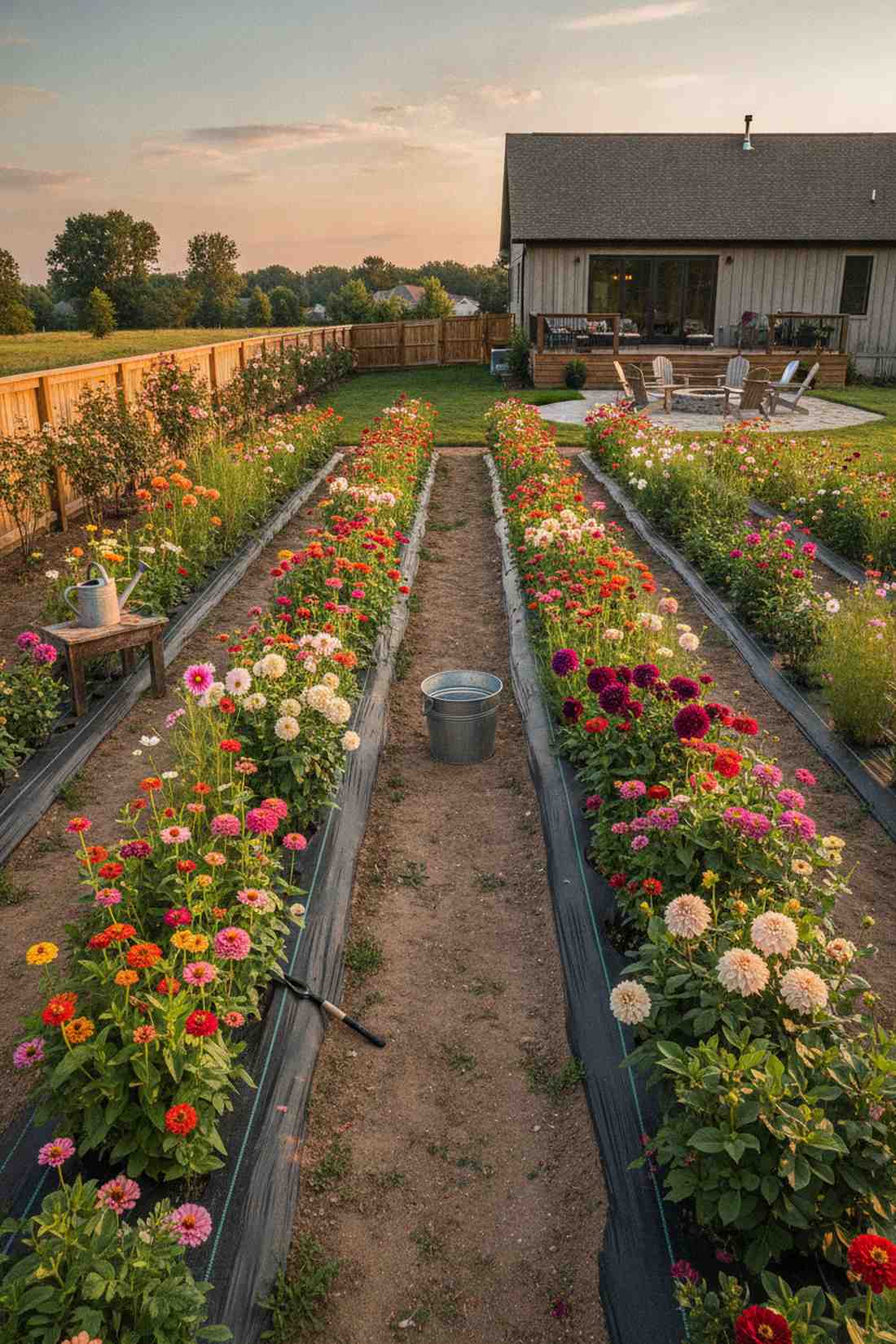
Stepping into this plot feels like walking the vibrant aisles of a wholesale floral farm. Straight agricultural production rows are designed purely to maximize your harvest for endless indoor vase arrangements.
Planting zinnias and dahlias in accessible, parallel lines prioritizes massive yield and easy access over front-yard aesthetics. Laying down heavy-duty perforated agricultural plastic between rows eliminates weeding entirely, letting you focus solely on harvesting.
Setting up a massive cutting plot costs just $30–$50 if grown from seed. Save this if you want free fresh bouquets all summer.
- Key Materials: Zinnia seeds, dahlia tubers, cosmos
- Vibe / Style: Functional floral farm
- Difficulty: Easy
- Budget Breakdown: Seed & Tubers: $35 | Ag plastic: $15
- Creator’s Tip: Space your rows wide enough to comfortably walk down with a large bucket and clipping shears.
- Smart Sourcing: Commercial perforated agricultural mulch film and bulk cut-flower seed mixes.
Container Arrangement Strategies for Flexible Plant Arrangements
These garden plant arrangement ideas pack massive aesthetic punch into tiny footprints. Use these container blueprints to bring professional botanical design to your porch, balcony, or front steps.
41. Thriller-Filler-Spiller Formula
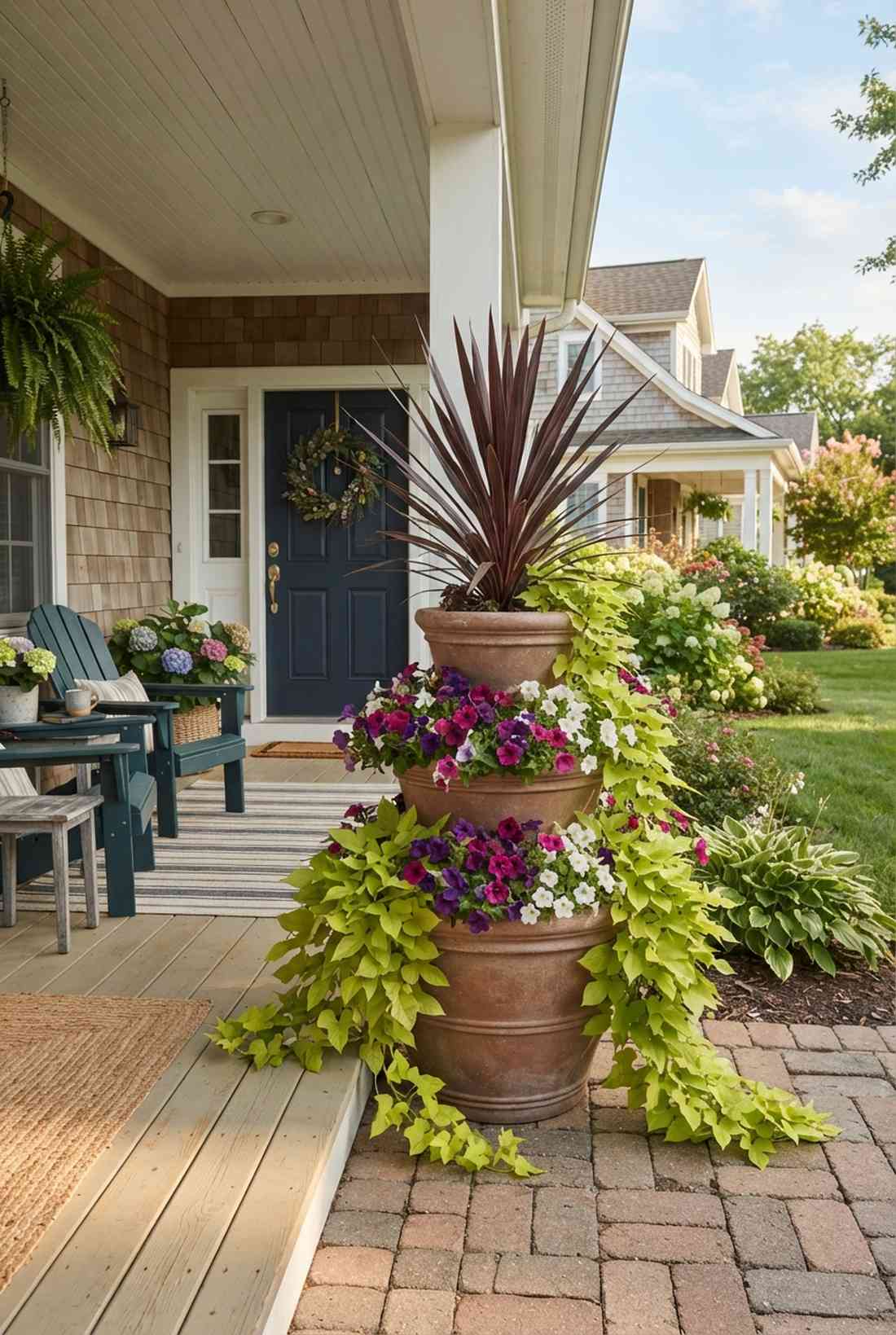
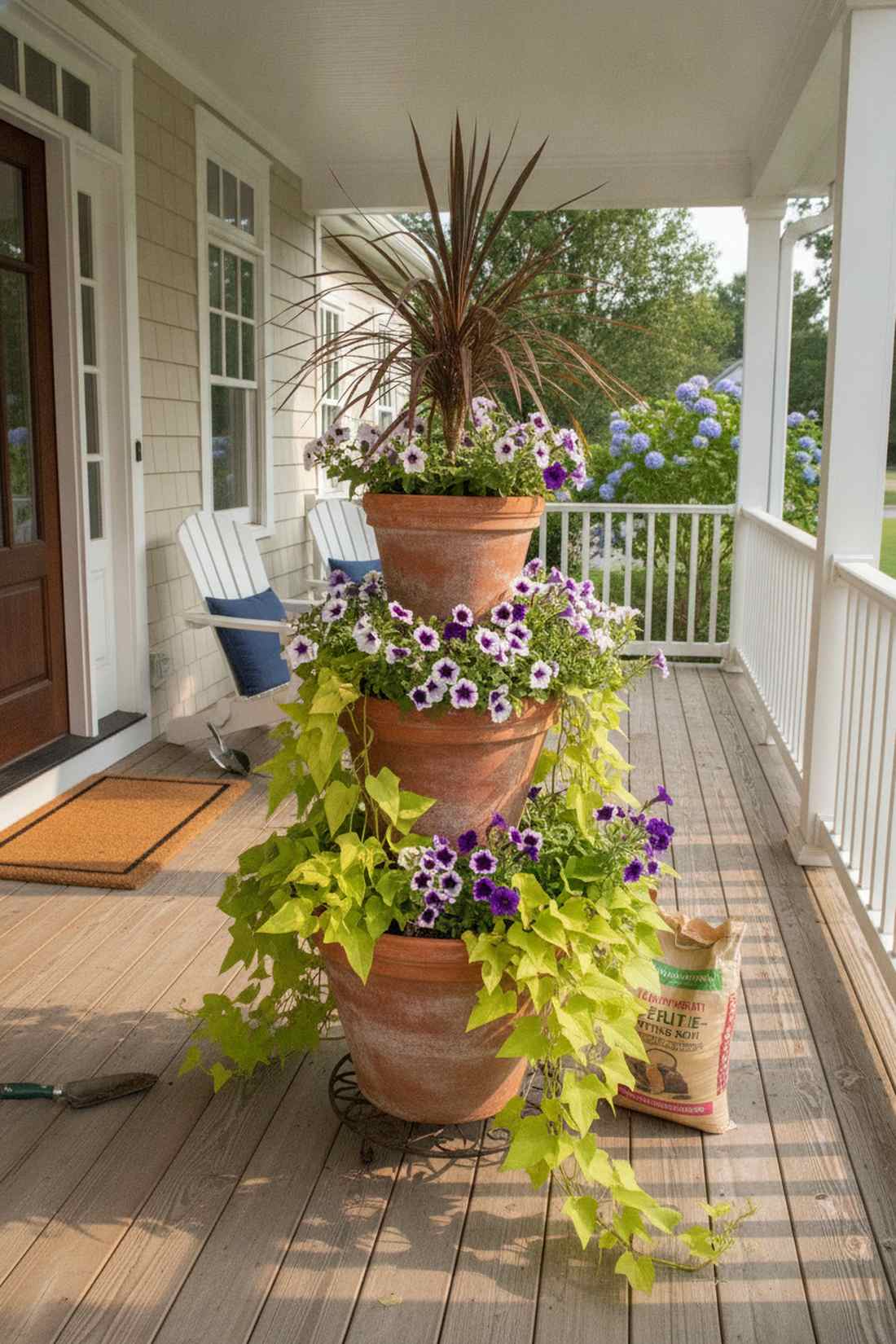
This classic setup feels like a bursting firework of greenery erupting right on your front porch. The three-tier pot composition is the absolute holy grail for making standard patio planters look professionally designed.
Pairing a towering cordyline with mid-level petunias and trailing vines creates a flawless, expensive-looking silhouette from every angle. Upgrading your base with lightweight premium potting mix prevents the container from becoming too heavy to move while preventing root suffocation.
You can execute this foolproof recipe for around $25–$40 per pot. It’s the ultimate hack for instant front door curb appeal.
- Key Materials: Cordyline (tall), Petunias (mid), Sweet Potato Vine (trail)
- Vibe / Style: Classic porch luxury
- Difficulty: Easy beginner setup
- Budget Breakdown: 3-plant combo: $25 | Premium soil: $10
- Creator’s Tip: Position your tall “thriller” plant slightly off-center to give the arrangement a more modern, dynamic balance.
- Smart Sourcing: Lightweight perlite-heavy potting soil and pre-selected container garden plant bundles.
42. Monochromatic Container Harmony
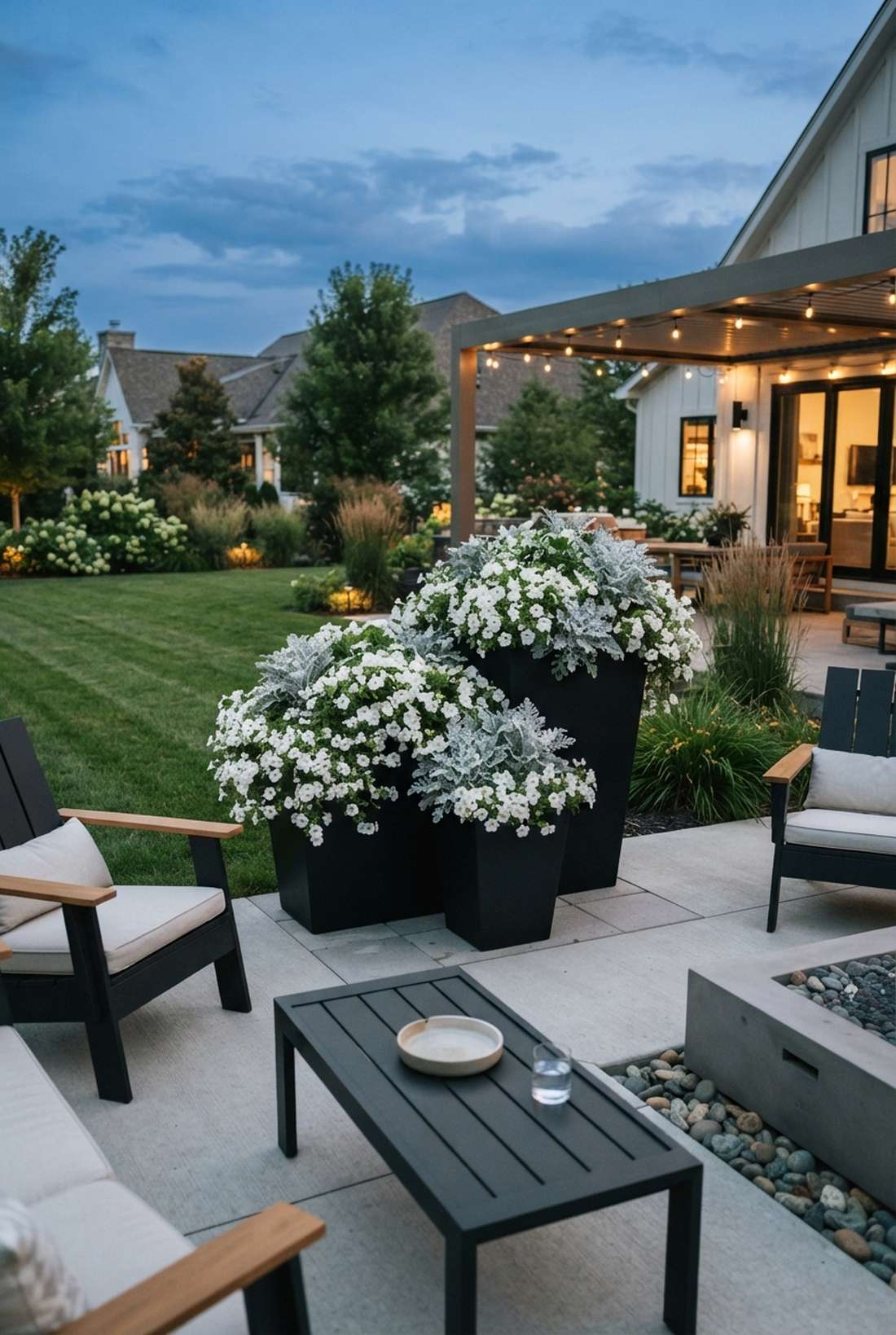
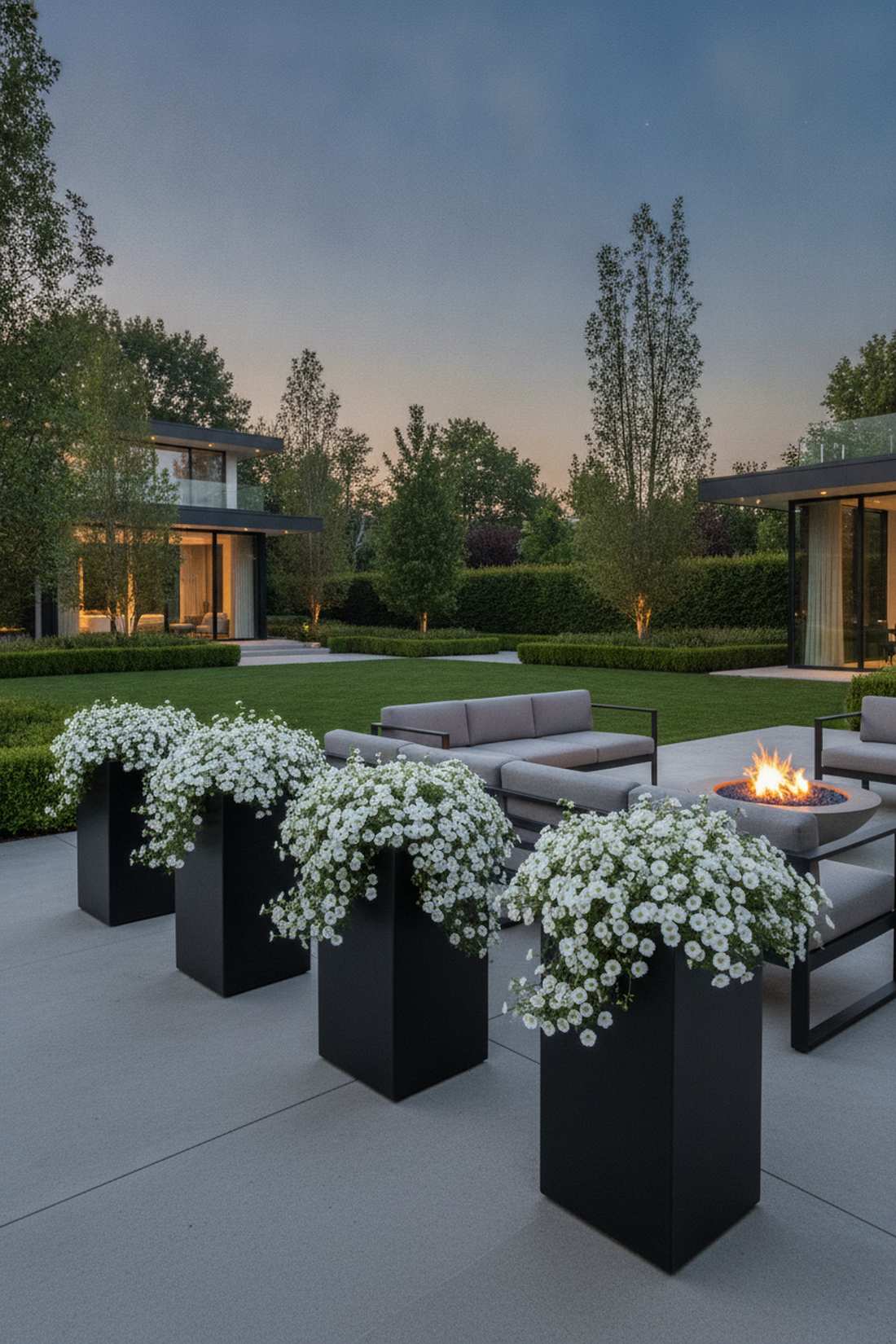
This sleek arrangement feels like a high-end designer piece sitting in a luxury modern art gallery. A single-color structural planter is ideal for complementing modern outdoor furniture without causing visual clutter.
Forcing all white flowers alongside silver foliage highlights structural differences and delivers a strikingly sophisticated finish. Planting them in matte black fiberglass modern planters provides an extreme contrast that makes the white blooms practically glow at dusk.
This chic, modern look usually costs $40–$70 including the premium pot. Pin this if you love minimalist, clean aesthetics.
- Key Materials: White bacopa, white petunias, dusty miller
- Vibe / Style: Ultra-modern chic
- Difficulty: Easy
- Budget Breakdown: White florals: $25 | Black planter: $40
- Creator’s Tip: Since color is restricted, you must use plants with drastically different leaf and petal shapes to avoid a mushy look.
- Smart Sourcing: UV-coated matte black fiberglass planters and bulk white annual flats.
43. Edible-Ornamental Containers
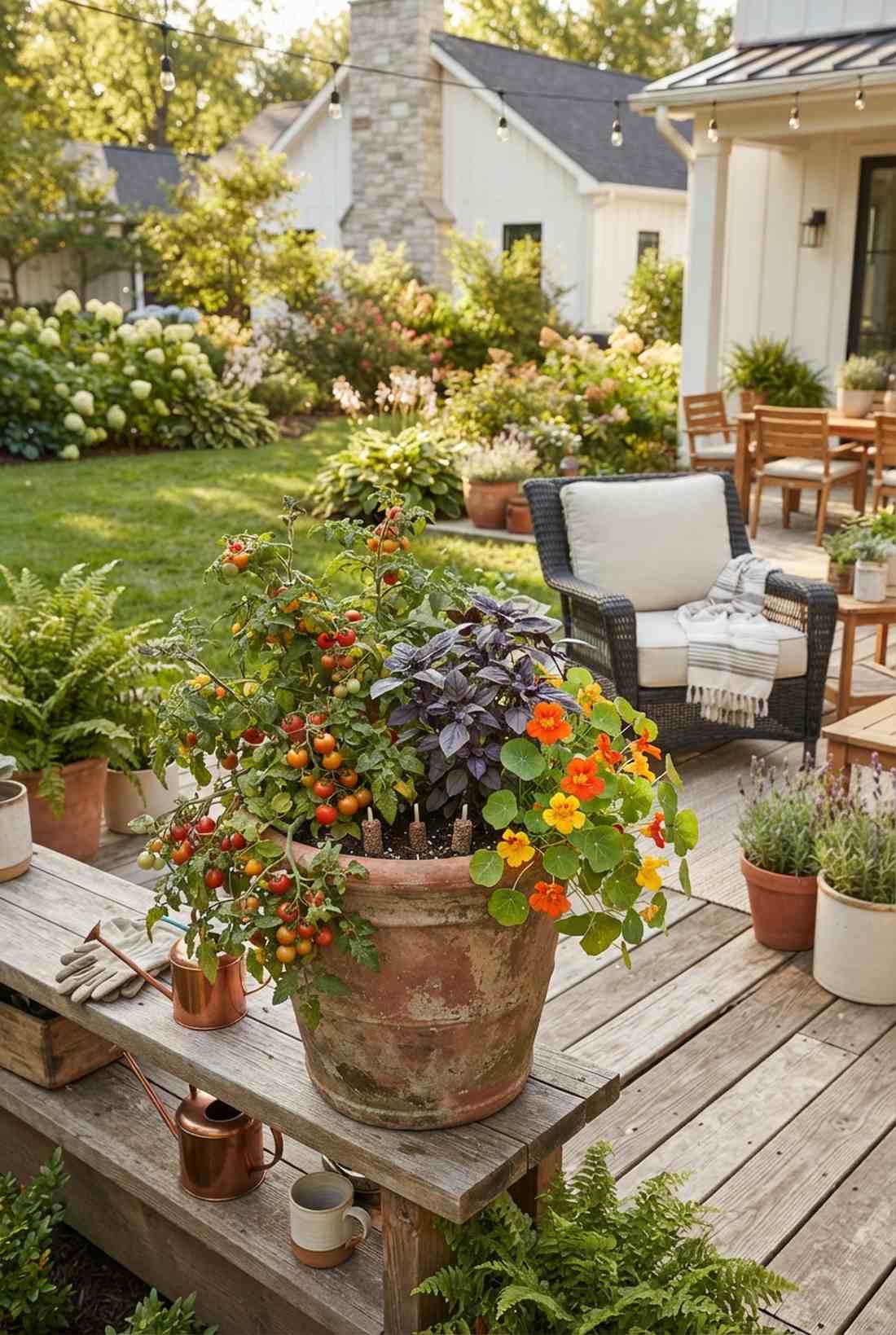
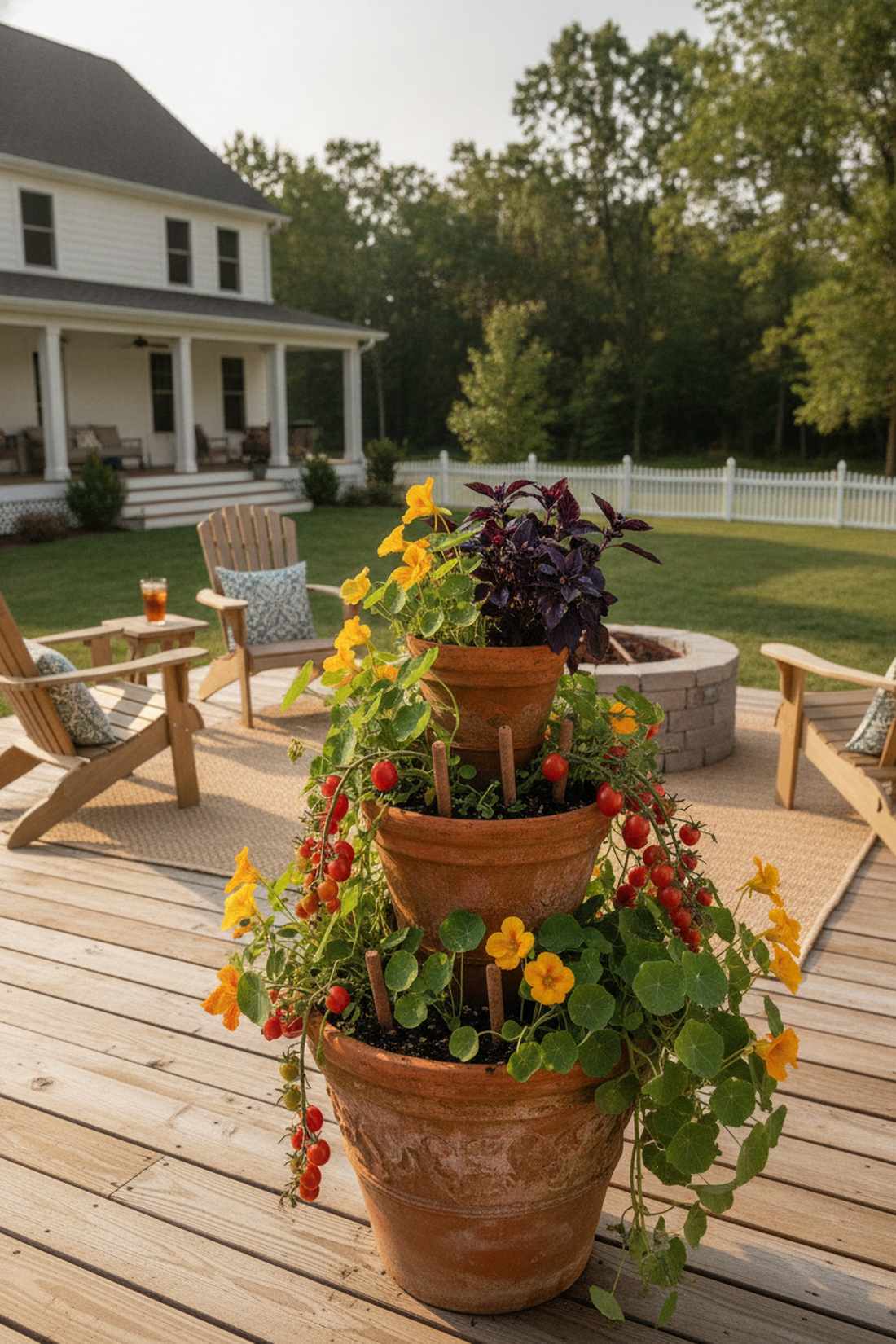
This clever pot feels like a beautiful, secret mini-farm hiding in plain sight on your patio. A mixed culinary aesthetic pot is perfect for sunny kitchen balconies where space is at a premium.
Weaving trailing cherry tomatoes and bright nasturtiums alongside purple basil looks far more expensive than a basic vegetable bucket. Using organic slow-release vegetable spikes ensures you get massive harvests without sacrificing the lush, ornamental appearance.
You can build this functional beauty for roughly $30. Save this idea if you want to grow food but need it to look pretty.
- Key Materials: Purple basil, patio tomatoes, nasturtium
- Vibe / Style: Functional rustic beauty
- Difficulty: Easy
- Budget Breakdown: Veggie starters: $15 | Organic spikes: $10
- Creator’s Tip: Nasturtium flowers are totally edible and act as a trap crop to keep pests away from your tomatoes!
- Smart Sourcing: Organic slow-release vegetable fertilizer spikes and compact patio vegetable seed kits.
44. Seasonal Rotation Containers
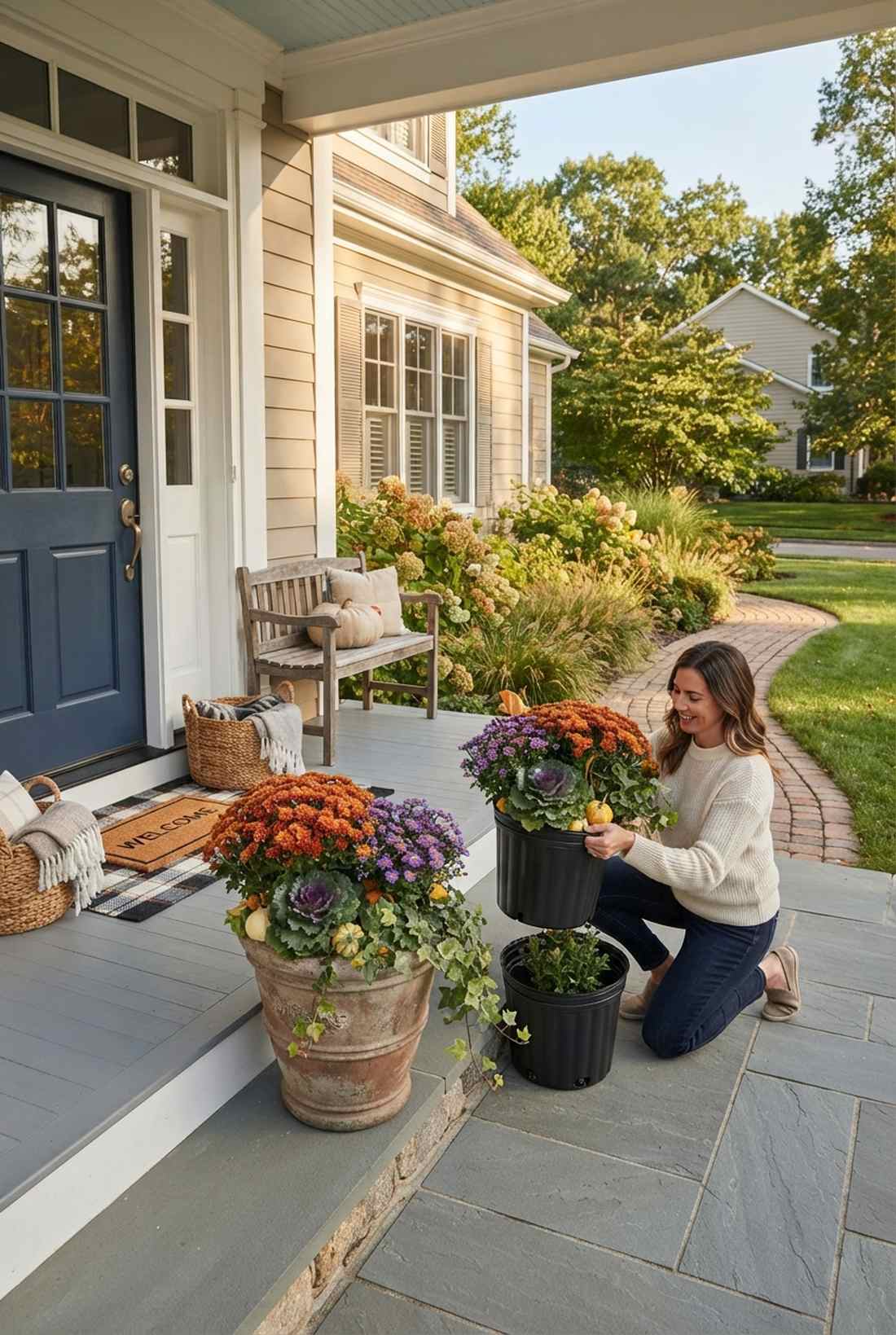
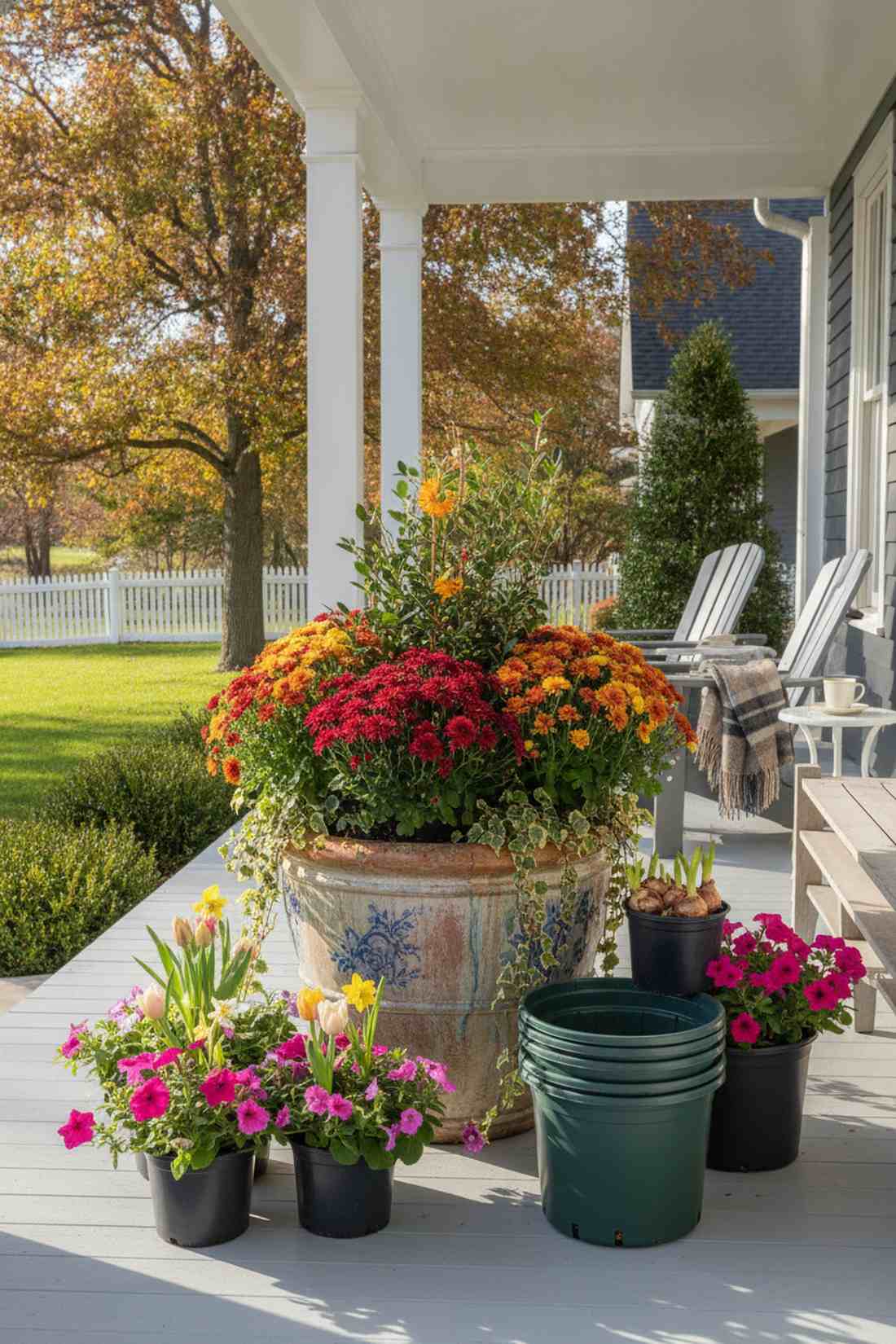
This dynamic setup feels like your porch has a magical wardrobe that updates perfectly with every holiday. A perpetual seasonal display pot guarantees your entryway never looks dead or out of style.
Swapping spring bulbs for summer annuals, then fall mums, keeps your curb appeal looking highly maintained and expensive year-round. Utilizing drop-in nursery pot liners allows you to switch out the entire display in 60 seconds without ever touching a trowel.
Maintaining a rotation costs about $20–$30 per season. It’s the secret to having the best-looking house on the block.
- Key Materials: Seasonal annuals, drop-in liner pots
- Vibe / Style: Year-round perfection
- Difficulty: Easy
- Budget Breakdown: Seasonal plants: $25 | Drop-in liners: $10
- Creator’s Tip: Keep your next season’s plants growing in backup liners out of sight, ready to drop in the moment the current ones fade.
- Smart Sourcing: Heavy-duty plastic drop-in planter liners and four-season bulb/annual collections.
Most people drown their succulents by putting them in the wrong pots. This next tapestry bowl solves that instantly…
45. Succulent Tapestry Bowls
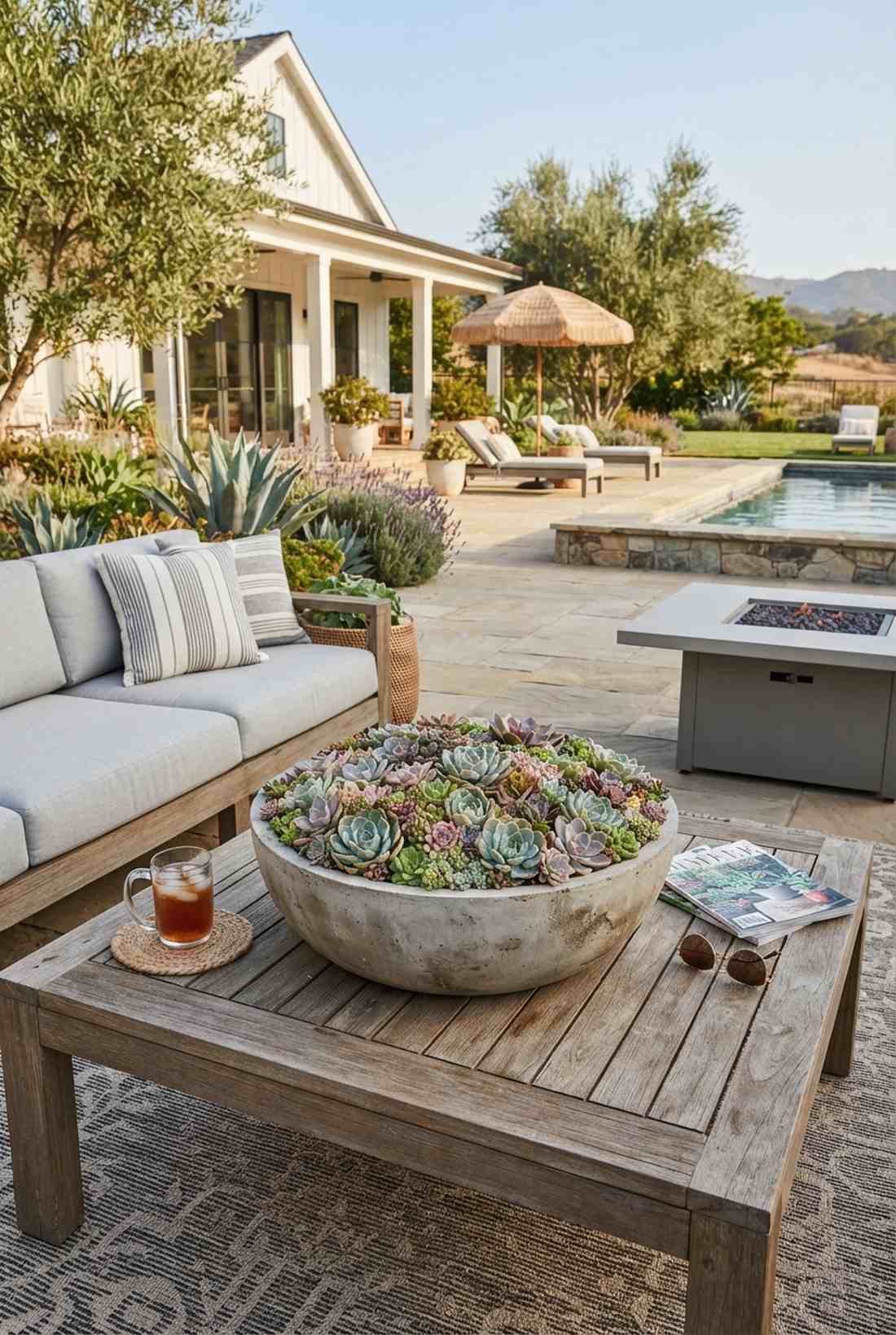
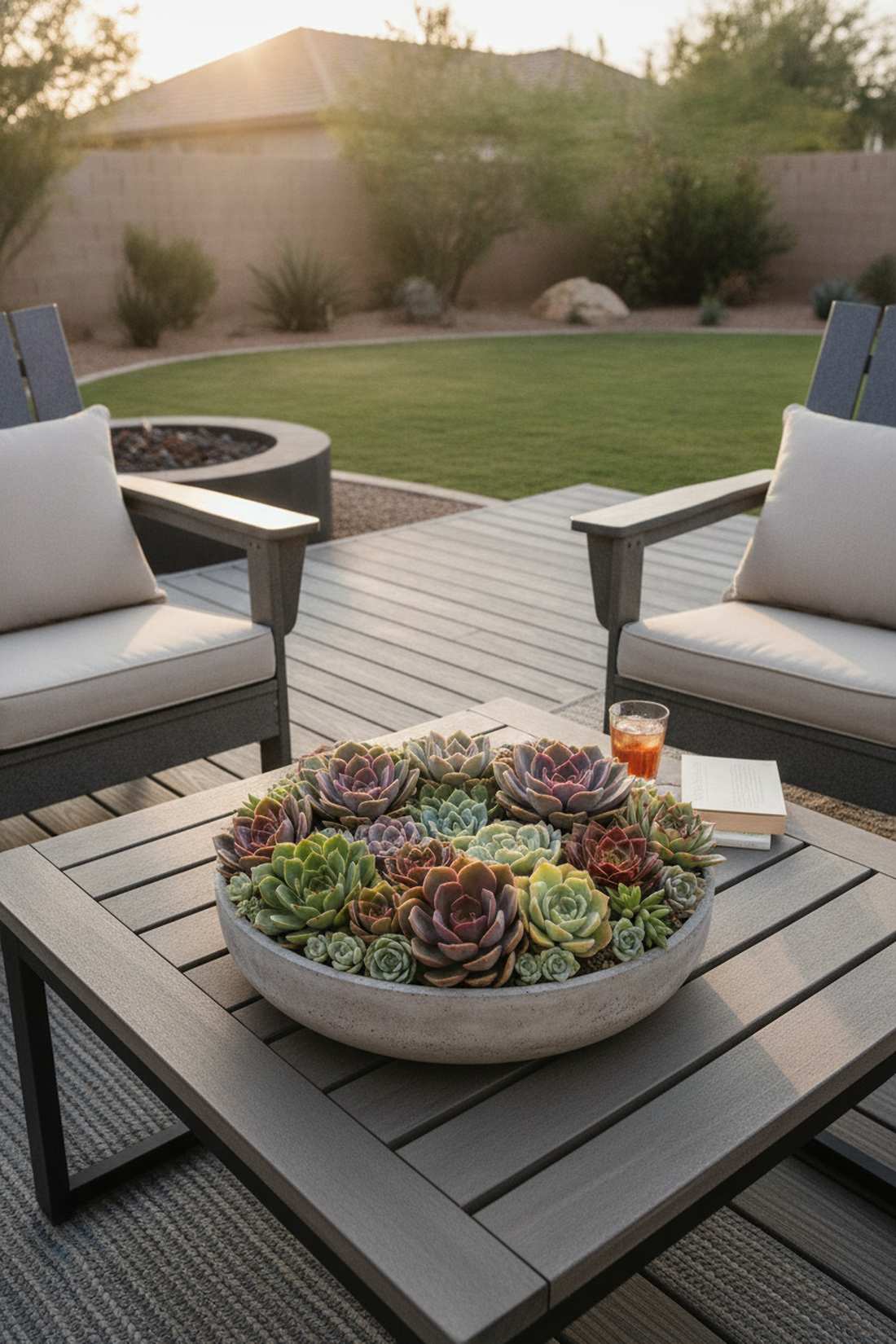
This intricate bowl feels like an expensive, living mosaic tile sitting on your outdoor coffee table. A shallow succulent mosaic planter is the ultimate low-maintenance centerpiece for hot, sun-baked patios.
Packing diverse succulent rosettes incredibly tight creates a textured, jewelry-box effect that looks far more premium than scattered individual pots. Planting them in a shallow concrete low-bowl planter provides the perfect modern aesthetic while naturally limiting deep moisture retention.
You can design a premium succulent bowl for about $35–$60. Pin this for your next outdoor table styling project.
- Key Materials: Mixed echeveria, sedum, shallow bowl
- Vibe / Style: Modern desert mosaic
- Difficulty: Intermediate (requires precise watering)
- Budget Breakdown: Succulent cuttings: $30 | Concrete bowl: $25
- Creator’s Tip: Use a specialized cactus soil mix; standard potting soil will hold too much water and rot the tapestry.
- Smart Sourcing: Premium fast-draining cactus/succulent soil mix and bulk succulent rosette cuttings.
46. Texture Contrast Containers
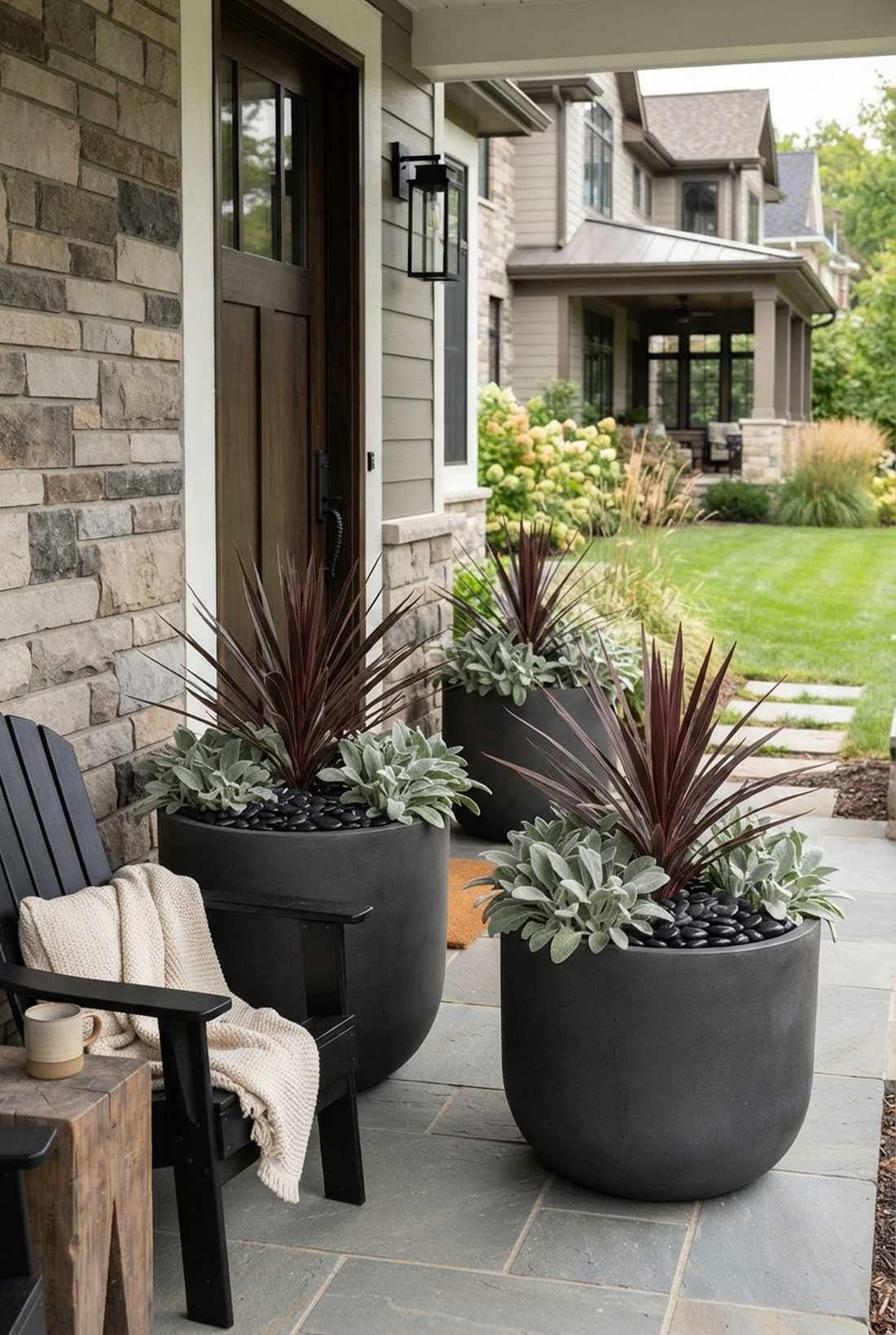
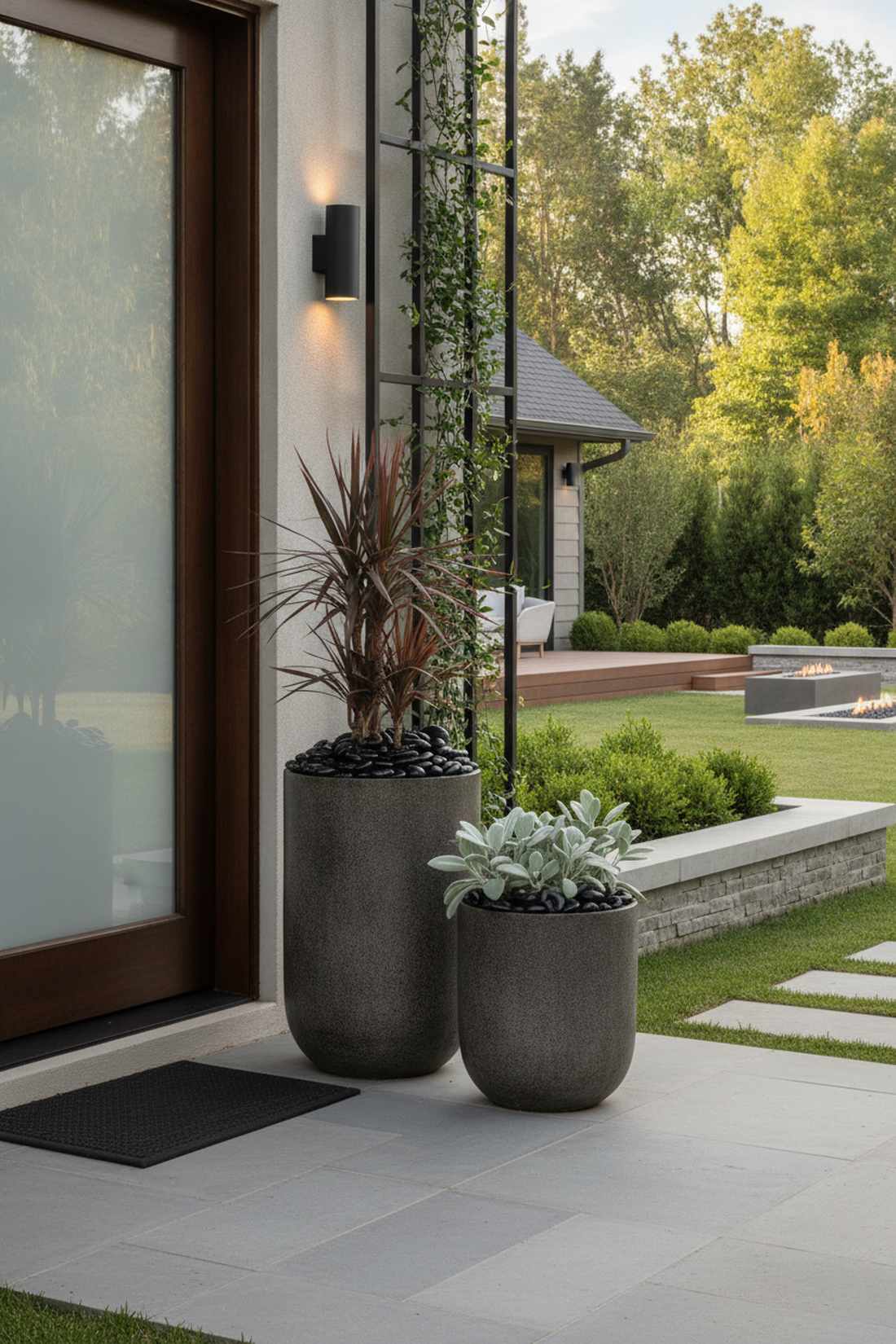
This striking pairing feels like a high-fashion runway look translated directly into botanical form. A tactile foliage contrast pot is spectacular for contemporary entryways where colorful flowers might feel too traditional.
Slamming a spiky, rigid cordyline right up against soft, fuzzy lamb’s ear creates an aggressive tactile contrast that screams high-end design. Utilizing premium decorative soil toppers like polished black river stones hides the dirt and completes the luxury aesthetic.
This sophisticated, texture-heavy look costs roughly $40 to put together. Save this if you prefer modern structure over bright blooms.
- Key Materials: Spiky cordyline, fuzzy lamb’s ear
- Vibe / Style: High-fashion tactile modernism
- Difficulty: Easy
- Budget Breakdown: Foliage plants: $25 | Black stones: $15
- Creator’s Tip: Keep the color palette restricted to just two shades; let the extreme texture differences be the primary focus.
- Smart Sourcing: Polished black river stone soil toppers and high-contrast architectural foliage pairs.
47. Matching Planter Pairs
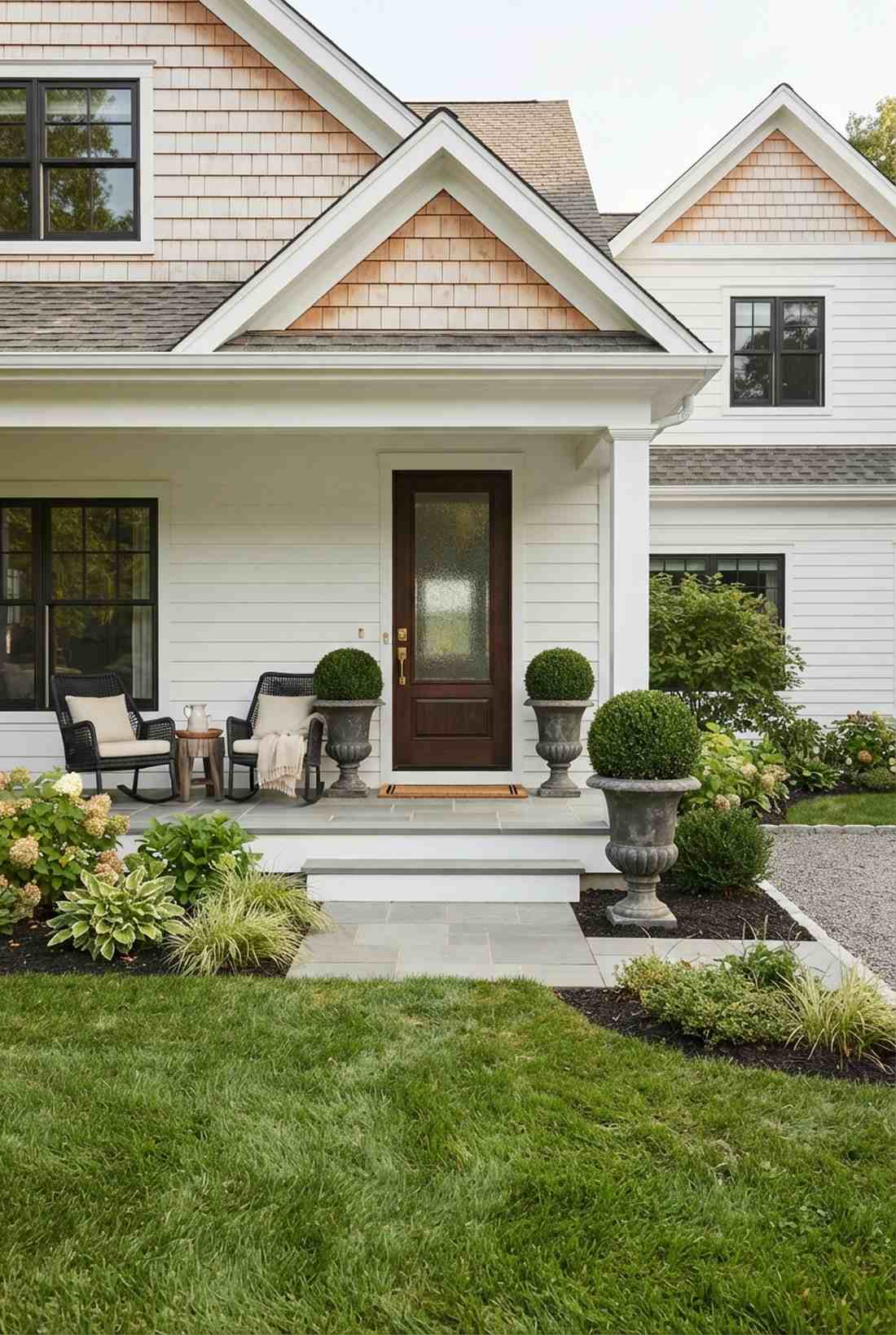
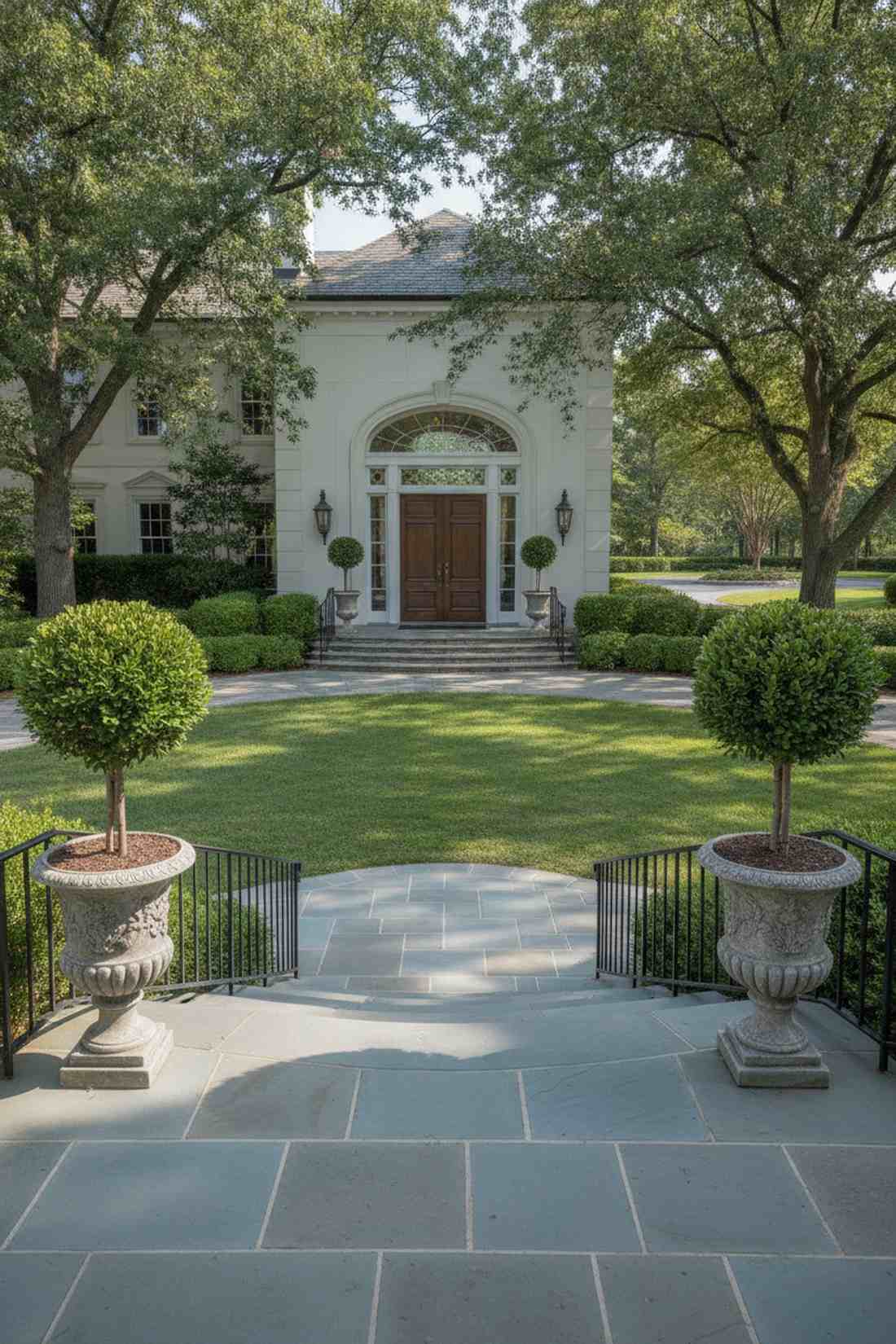
This layout feels like two regal guards standing at attention outside a grand estate. Identical architectural flanking pots are the absolute best way to make a cheap front door look like a million bucks.
Using mirror-image boxwoods or tall evergreens in matching containers delivers strict formal symmetry that immediately elevates property value. Upgrading to heavyweight commercial-grade faux-stone urns ensures they won’t blow over in a storm or crack in freezing winter temperatures.
A set of premium flanking planters will cost $100–$250 depending on the urn quality. It’s the most reliable curb appeal trick in the book.
- Key Materials: Twin boxwoods, matching premium urns
- Vibe / Style: Symmetrical estate grandeur
- Difficulty: Easy
- Budget Breakdown: Twin urns: $120 | Twin shrubs: $60
- Creator’s Tip: Prune both sides on the exact same day; if one grows slightly larger than the other, the grand illusion is broken.
- Smart Sourcing: Weatherproof faux-stone commercial urns and matching twin evergreen topiaries.
48. Grouped Container Vignettes
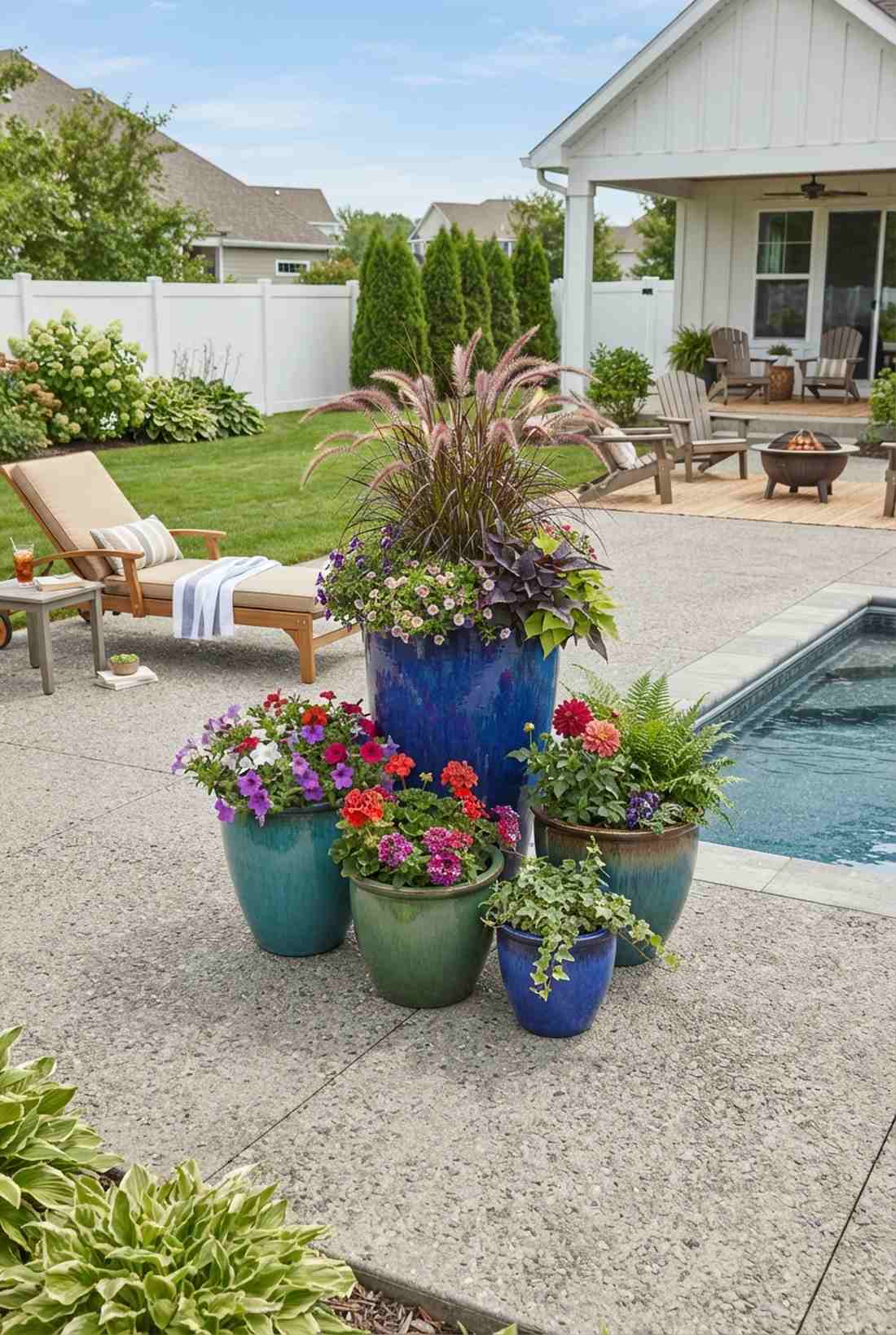
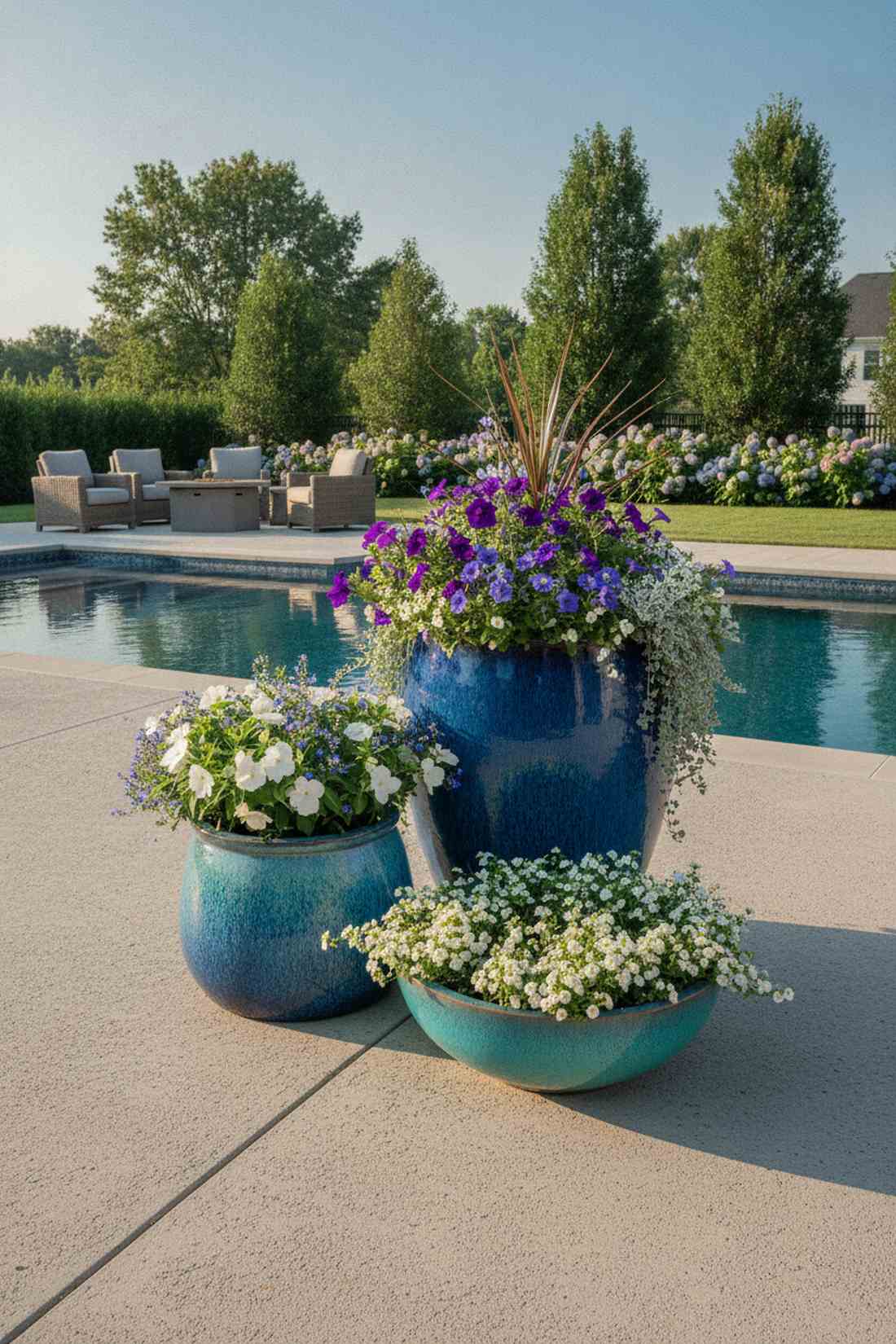
This clustered arrangement feels like an eclectic, curated art exhibit taking over an empty corner. A multi-pot asymmetrical grouping works wonders for filling dead space on large, empty concrete pool decks.
Arranging three to five varied pots in a tight triangle creates a massive footprint of color without the commitment of digging up your yard. Sticking to a unified color palette while using frost-resistant glazed ceramic pots ties the whole vignette together into a single, cohesive design piece.
Building a multi-pot vignette costs around $80–$150. Pin this if you have a massive, boring patio to fill.
- Key Materials: Assorted glazed pots, mixed annuals
- Vibe / Style: Eclectic curated patio
- Difficulty: Easy
- Budget Breakdown: Pot trio: $80 | Plant assortments: $50
- Creator’s Tip: Always place the tallest, largest pot in the back to act as the anchor, stepping down to smaller pots in the front.
- Smart Sourcing: Frost-resistant glazed ceramic pot sets (trio) and coordinated color-theme seed bundles.
49. Water Garden Containers
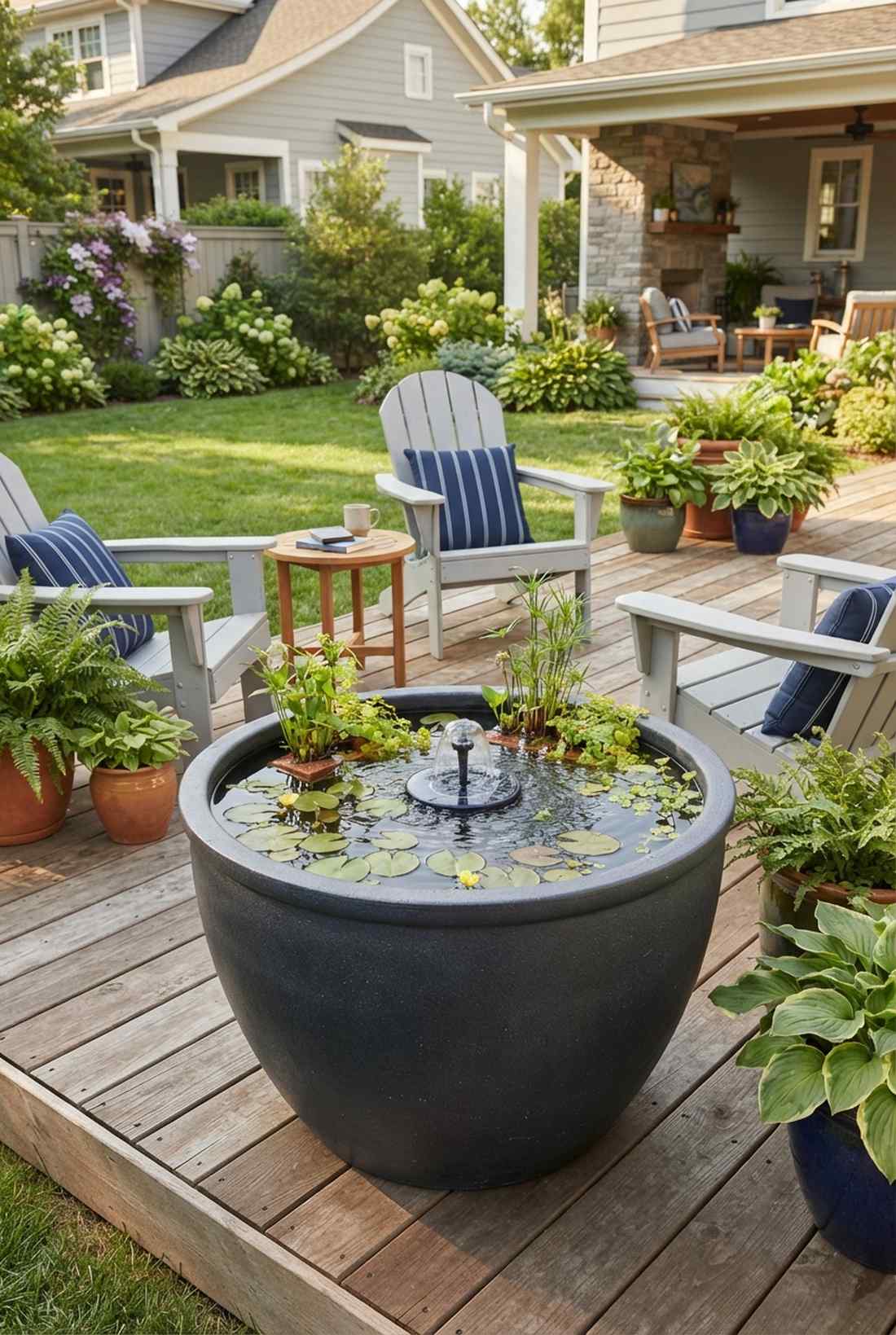
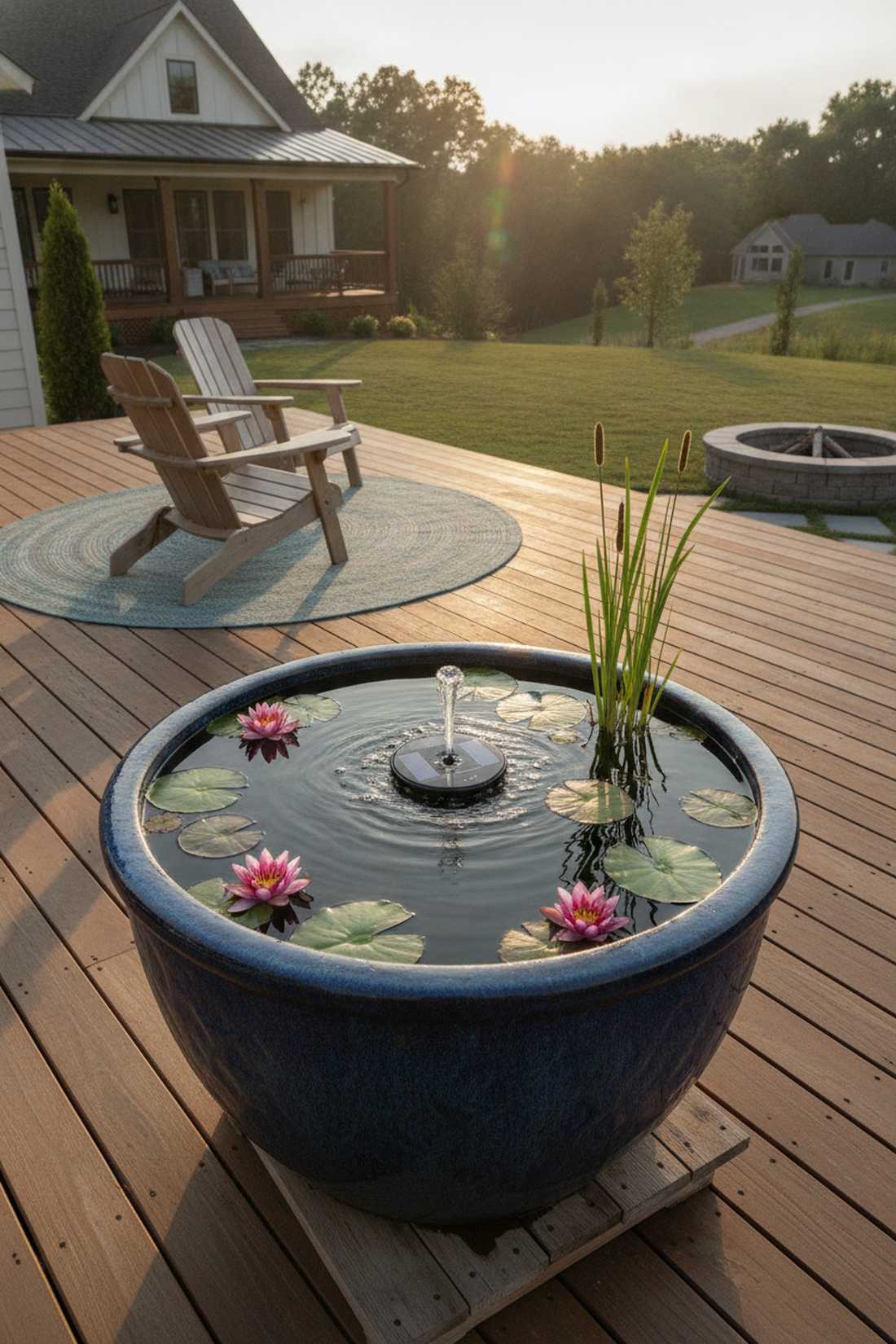
This mini-oasis feels like you brought a serene, floating lily pond right onto your wooden deck. A sealed aquatic container garden is an incredible conversation starter that adds the element of water without expensive plumbing.
Floating miniature lotus and marginal plants in a large watertight vessel gives a hyper-expensive, boutique resort vibe. Dropping in a solar-powered floating fountain pump adds the soothing sound of moving water while preventing mosquitoes from breeding.
You can set up a gorgeous mini water feature for about $60–$100. It’s an unforgettable upgrade for small outdoor spaces.
- Key Materials: Watertight pot, water lilies, aquatic plants
- Vibe / Style: Serene resort oasis
- Difficulty: Intermediate
- Budget Breakdown: Sealed planter: $45 | Aquatic plants/pump: $40
- Creator’s Tip: Use submerged bricks to elevate marginal plants so their crowns sit perfectly at the water’s surface.
- Smart Sourcing: Solar-powered floating fountain pumps and miniature aquatic plant starter kits.
Most hanging baskets look dead by August. This next trick ensures your floating florals survive the summer heat…
50. Trailing Hanging Baskets
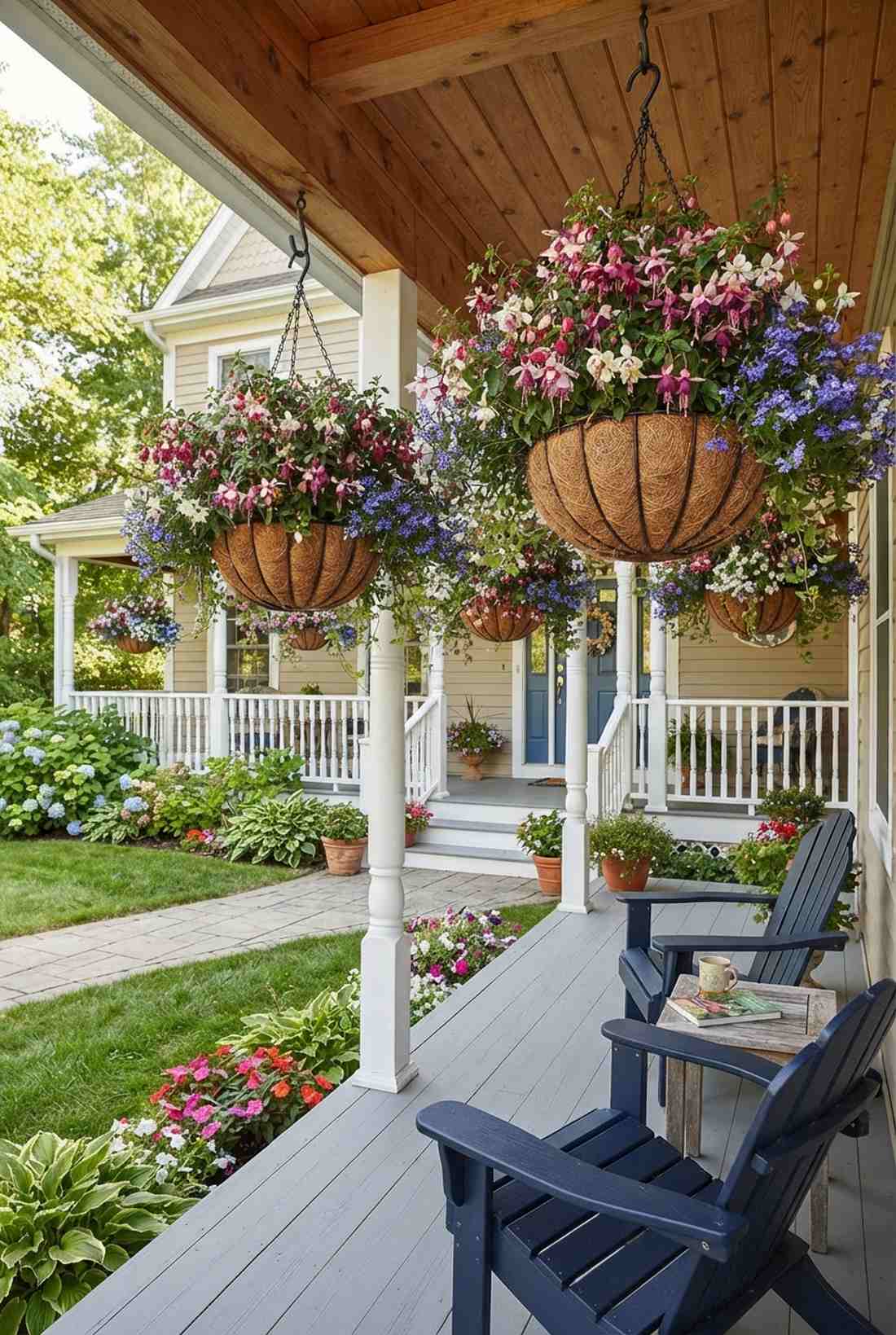
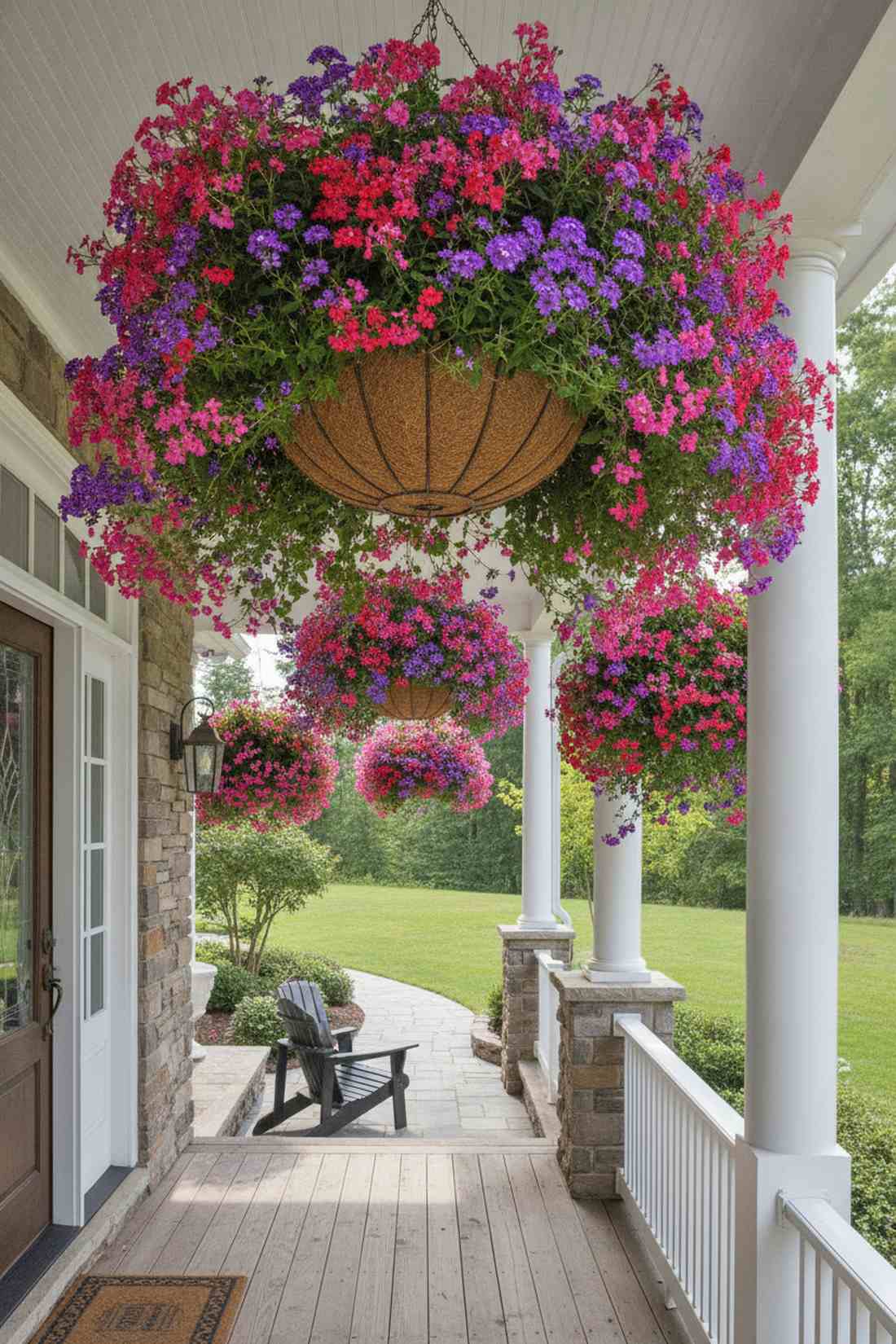
Looking at these feels like bright floral chandeliers have been hung all around your porch. Cascading wire suspension baskets are the absolute best way to draw the eye upward and utilize vertical air space.
Letting fuchsias and verbena naturally trail down creates massive floral spheres that look wildly expensive from the street. Lining the wire frames with extra-thick coco coir moss liners is mandatory to keep the soil from baking and falling out through the bottom.
You can hang premium cascading baskets for about $30–$50 each. Save this idea for a massive porch curb-appeal boost.
- Key Materials: Fuchsias, wire baskets, coco liners
- Vibe / Style: Bountiful floating floral
- Difficulty: Easy
- Budget Breakdown: Wire frames: $20 | Plants & Liners: $25
- Creator’s Tip: Hanging baskets dry out incredibly fast; water them daily during peak summer or install a micro-drip line.
- Smart Sourcing: Extra-thick pre-molded coco basket liners and trailing annual plug trays.
Seasonal & Transitional Designs
Never let your yard look dead again. These strategic plant arrangement ideas outdoor guarantee your landscape transitions beautifully through all four seasons with zero awkward gap periods.
51. Spring Bulb Layering
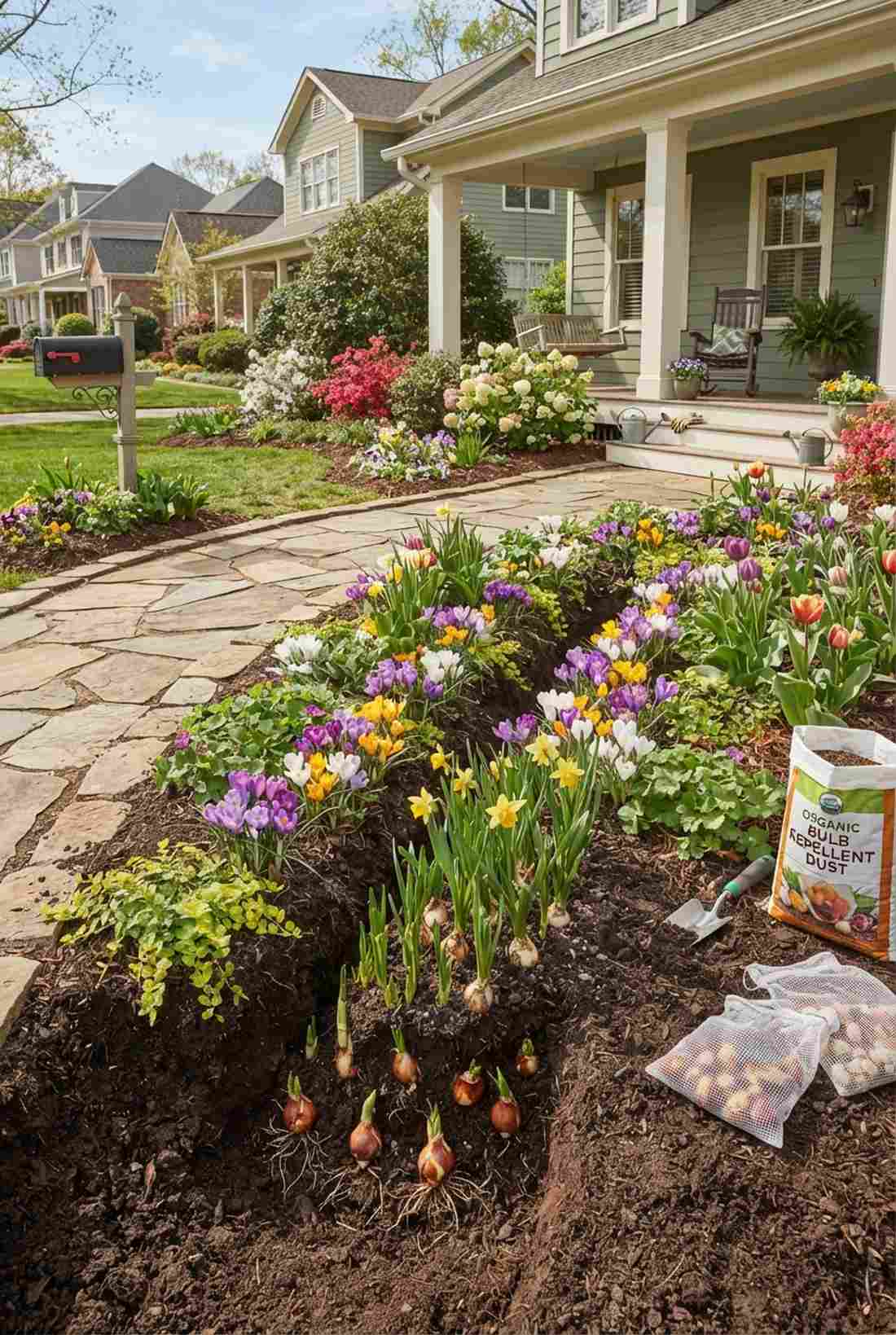
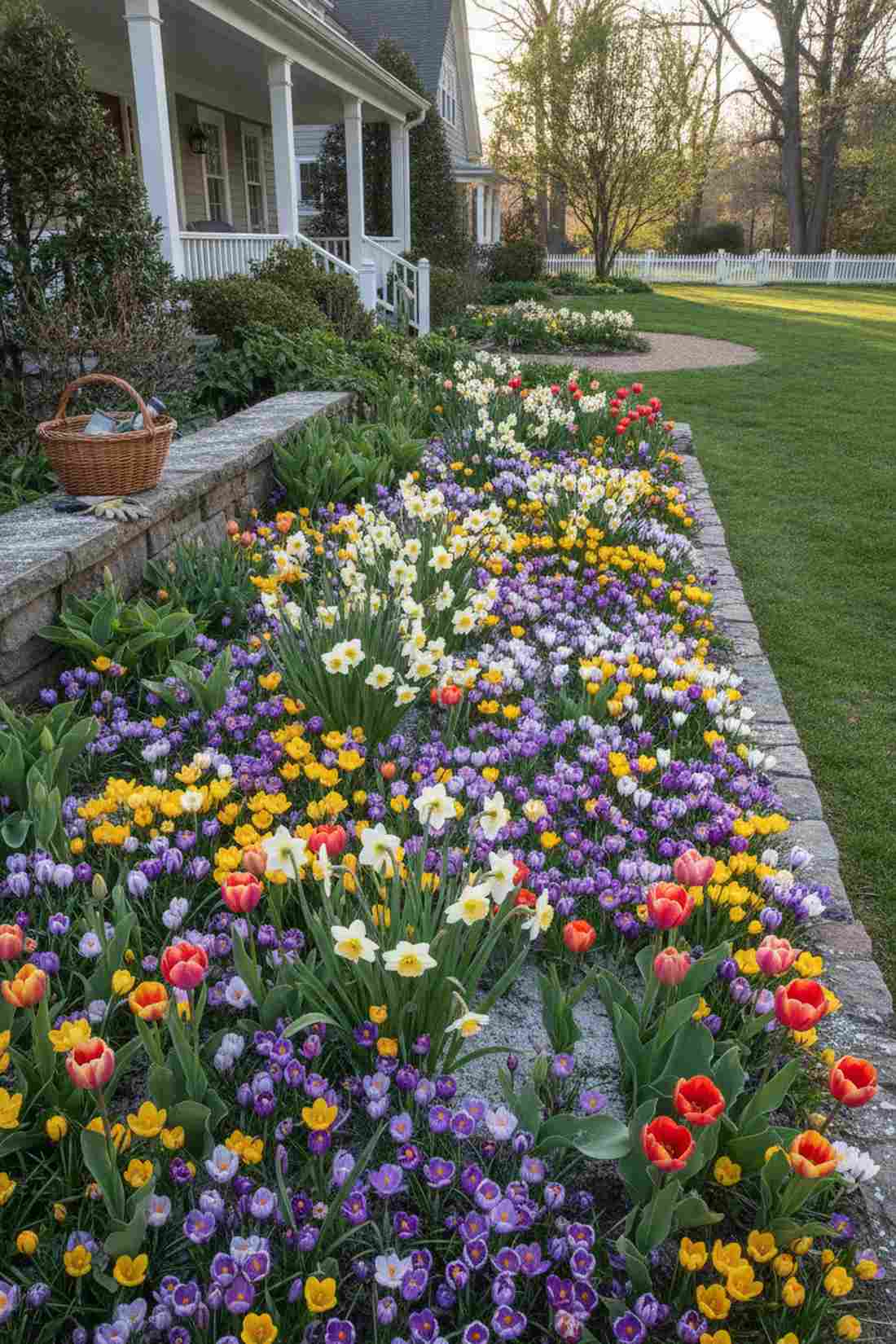
This hidden setup feels like a magical time-release capsule of continuous color erupting from the ground. A vertical bulb trench is a genius space-saving hack for small front borders that need massive spring impact.
Stacking tulips deep, daffodils in the middle, and crocuses on top delivers three distinct waves of flowers from the exact same footprint. Applying squirrel-repellent bulb dust during planting ensures expensive bulbs aren’t dug up and eaten before they even sprout.
You can plant a multi-layered bulb trench for about $35–$60. Pin this now so you don’t forget to plant in the fall!
- Key Materials: Crocus, daffodil, tulip bulbs
- Vibe / Style: Explosive spring sequence
- Difficulty: Intermediate (requires deep digging)
- Budget Breakdown: Mixed bulbs: $45 | Repellent dust: $10
- Creator’s Tip: Interplant the top layer with leafy perennials; as the bulb flowers die, the perennial leaves grow in to hide the ugly fading foliage.
- Smart Sourcing: Organic squirrel/deer bulb repellent dust and succession-blooming spring bulb variety packs.
52. Four-Season Shrub Backbone
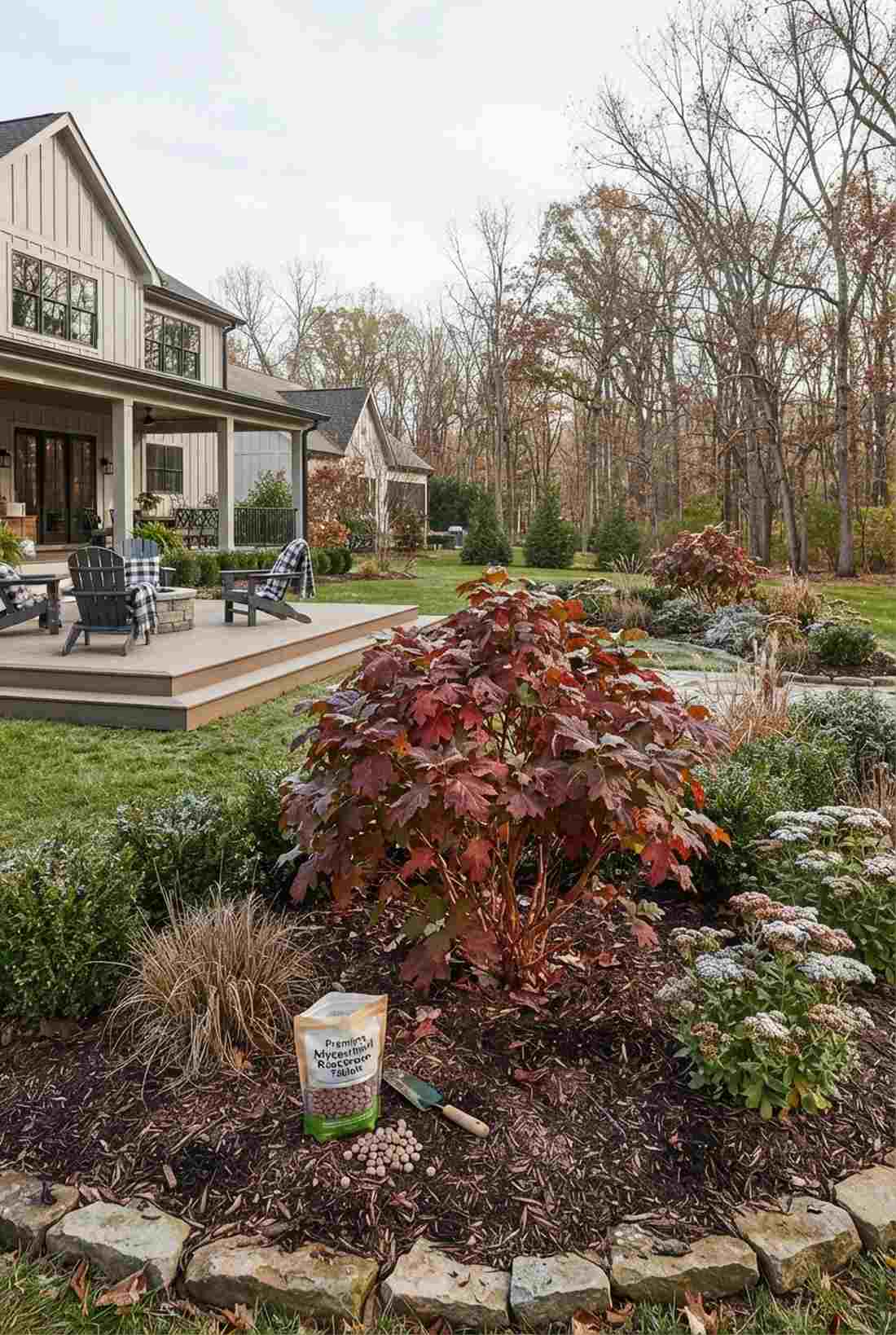
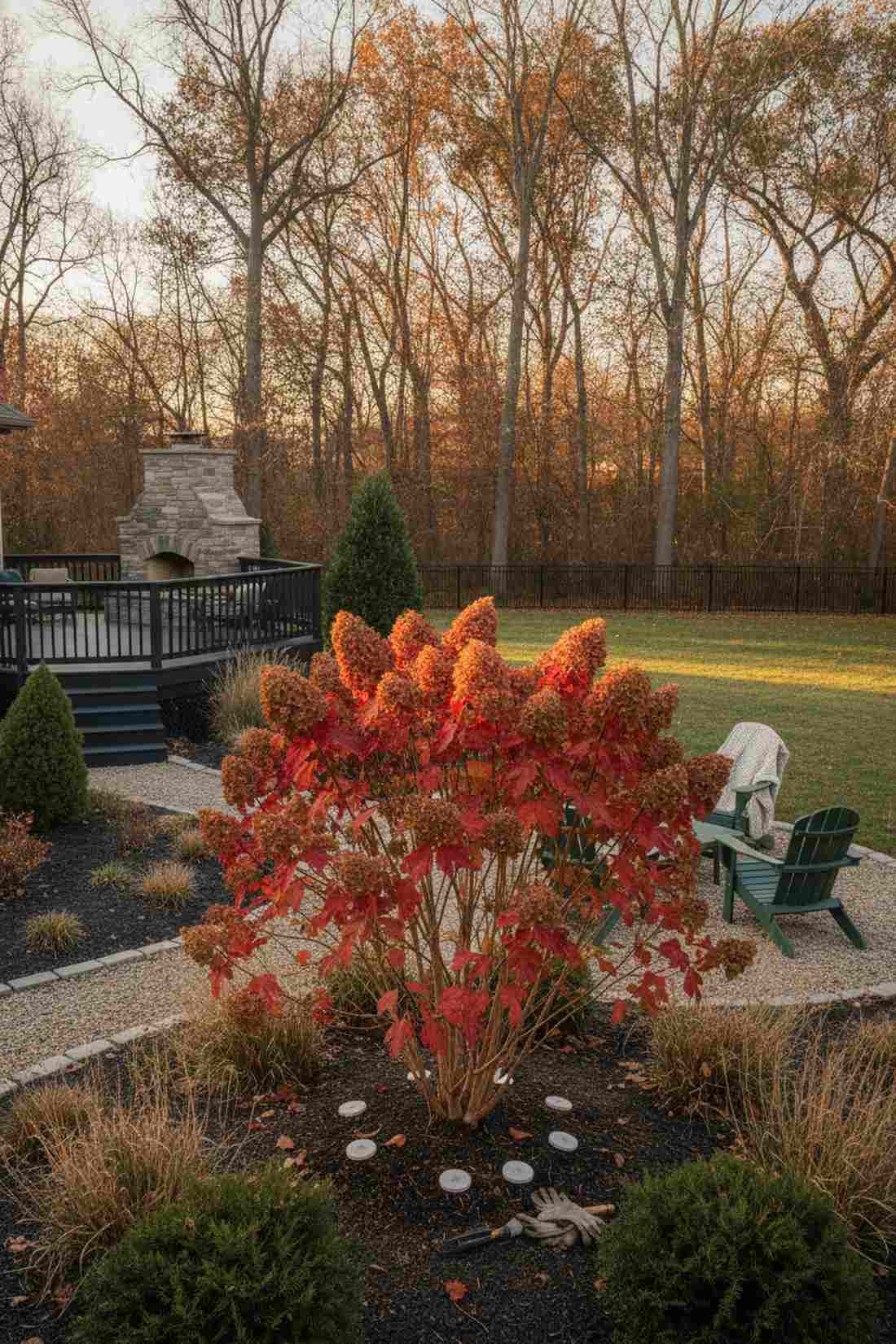
This layout feels like a perfectly tailored suit that looks great no matter the occasion. A multi-season structural anchor is the most critical investment for preventing your yard from looking completely barren in November.
Planting an Oakleaf hydrangea provides spring blooms, summer canopy, red fall leaves, and peeling winter bark all in one plant. Adding mycorrhizal root starter tablets when planting guarantees this expensive foundational shrub survives its first harsh winter.
A premium multi-season shrub will run you about $45–$85. It’s the ultimate workhorse of expensive-looking landscape design.
- Key Materials: Oakleaf Hydrangea or similar multi-season shrub
- Vibe / Style: Permanent architectural framework
- Difficulty: Easy
- Budget Breakdown: Premium shrub: $60 | Root tabs: $15
- Creator’s Tip: Position this plant in the absolute center of your sightlines, as it will be the only thing providing structure in the dead of winter.
- Smart Sourcing: Premium shrub root-starter fertilizer tablets and multi-season bare-root shrub kits.
53. Summer Succession Planting
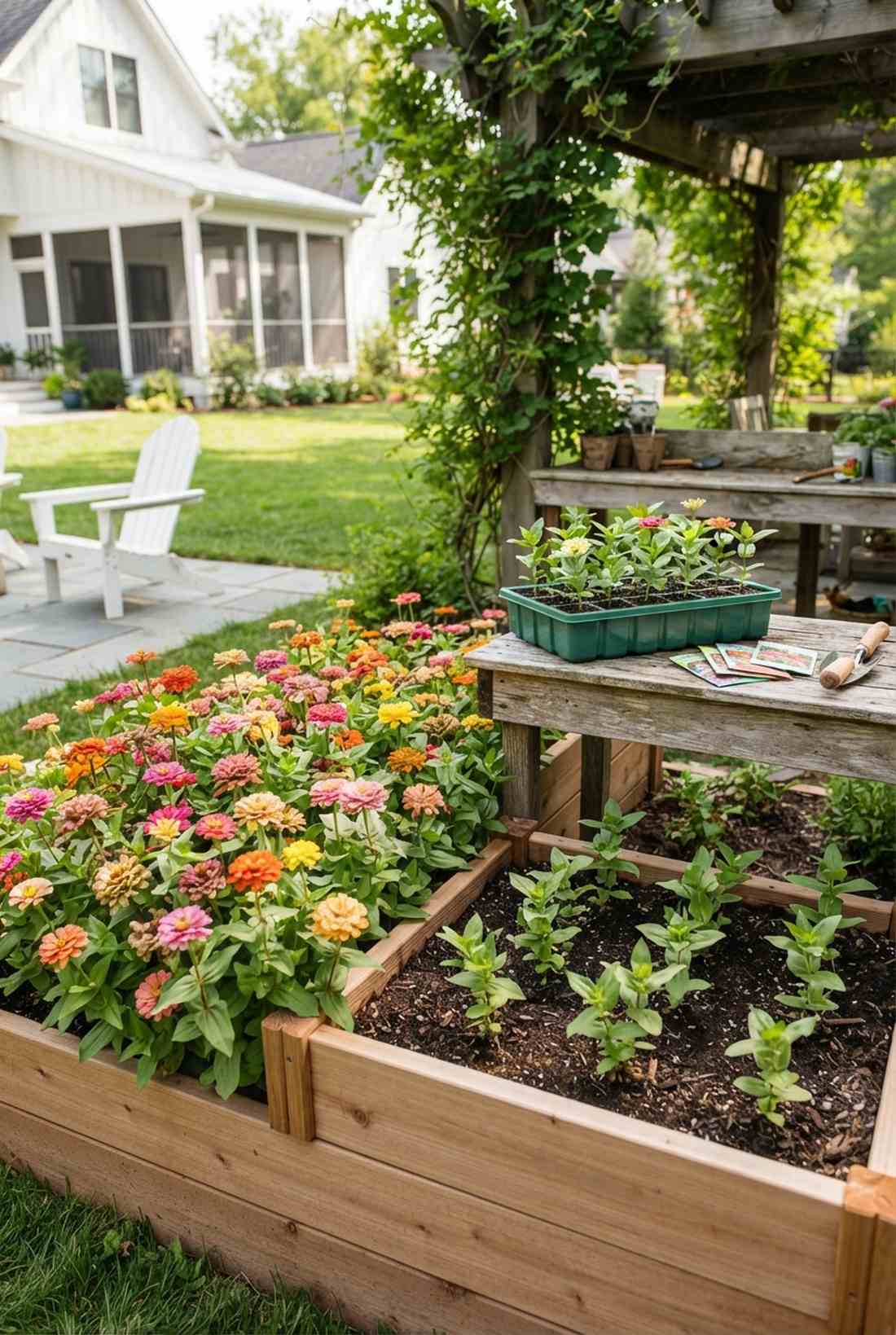
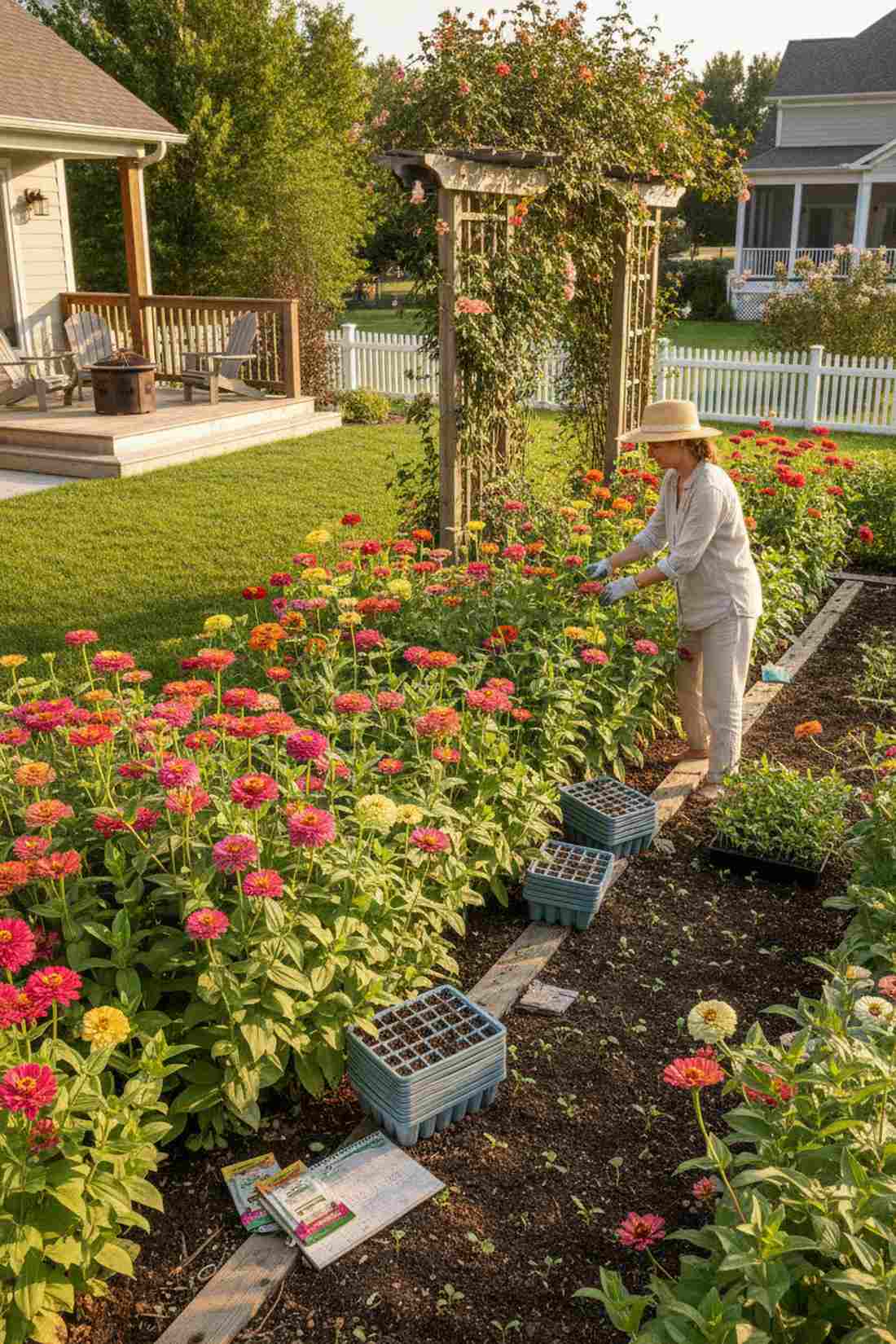
This ongoing display feels like you have a professional landscaping crew refreshing your yard every single week. Staggered phase planting is the ultimate cheat code to avoid the dreaded mid-August garden burnout.
Planting a new batch of zinnias every three weeks guarantees fresh, vibrant blooms long after the first batch has died of heat exhaustion. Utilizing seed starting cell trays keeps your backup plants growing safely in the shade until space opens up in the main bed.
This perpetual-bloom strategy costs less than $15 in seeds! Save this trick to keep your yard looking flawless all summer.
- Key Materials: Packets of fast-growing annual seeds
- Vibe / Style: Endless summer vibrancy
- Difficulty: Easy (requires calendar planning)
- Budget Breakdown: Seed packets: $10 | Starter trays: $5
- Creator’s Tip: As soon as the first wave of flowers starts looking ragged, ruthlessly pull them out; your second wave is already ready to take over.
- Smart Sourcing: Reusable silicone seed starting cell trays and bulk fast-blooming annual seed varieties.
54. Fall Extended Color
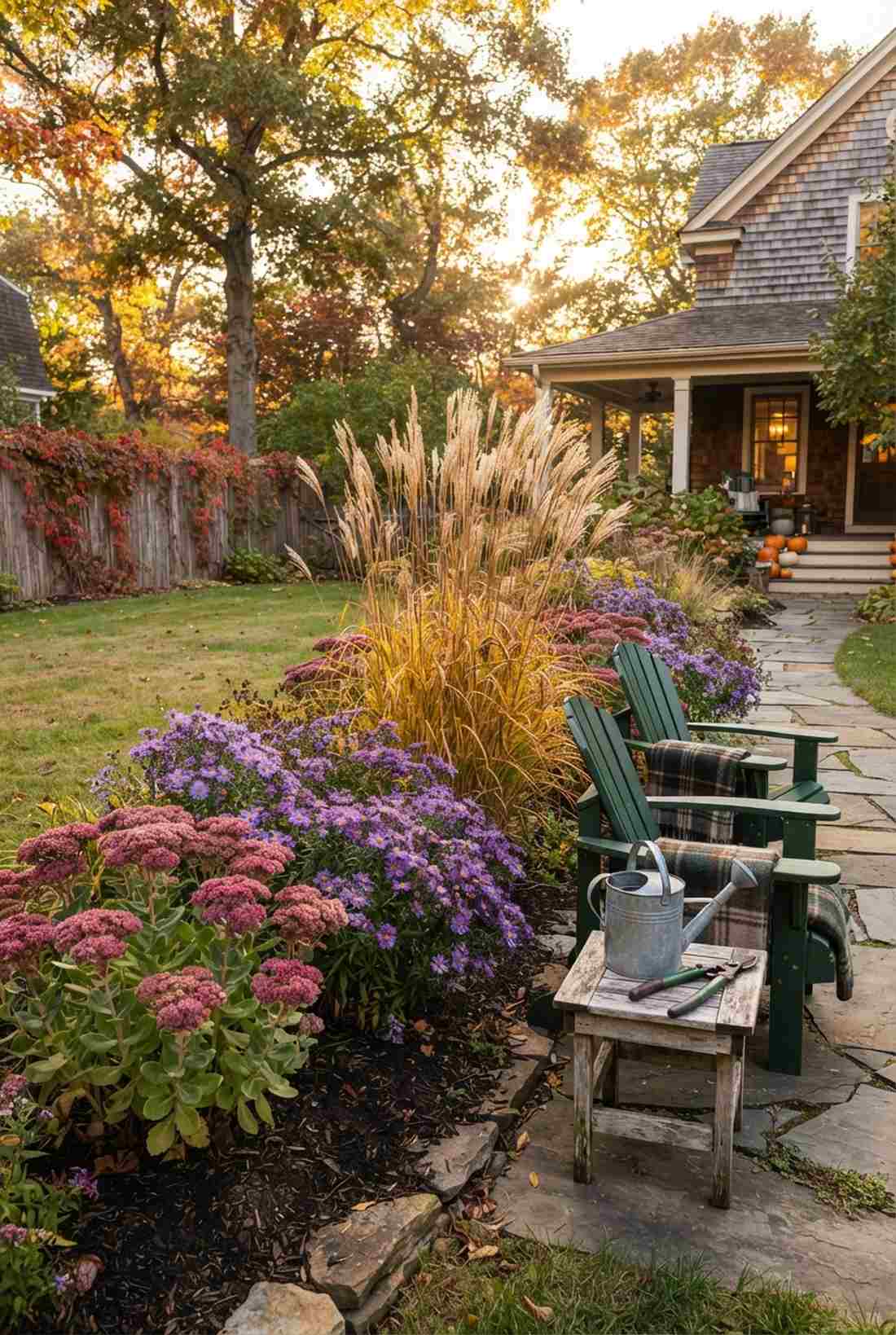
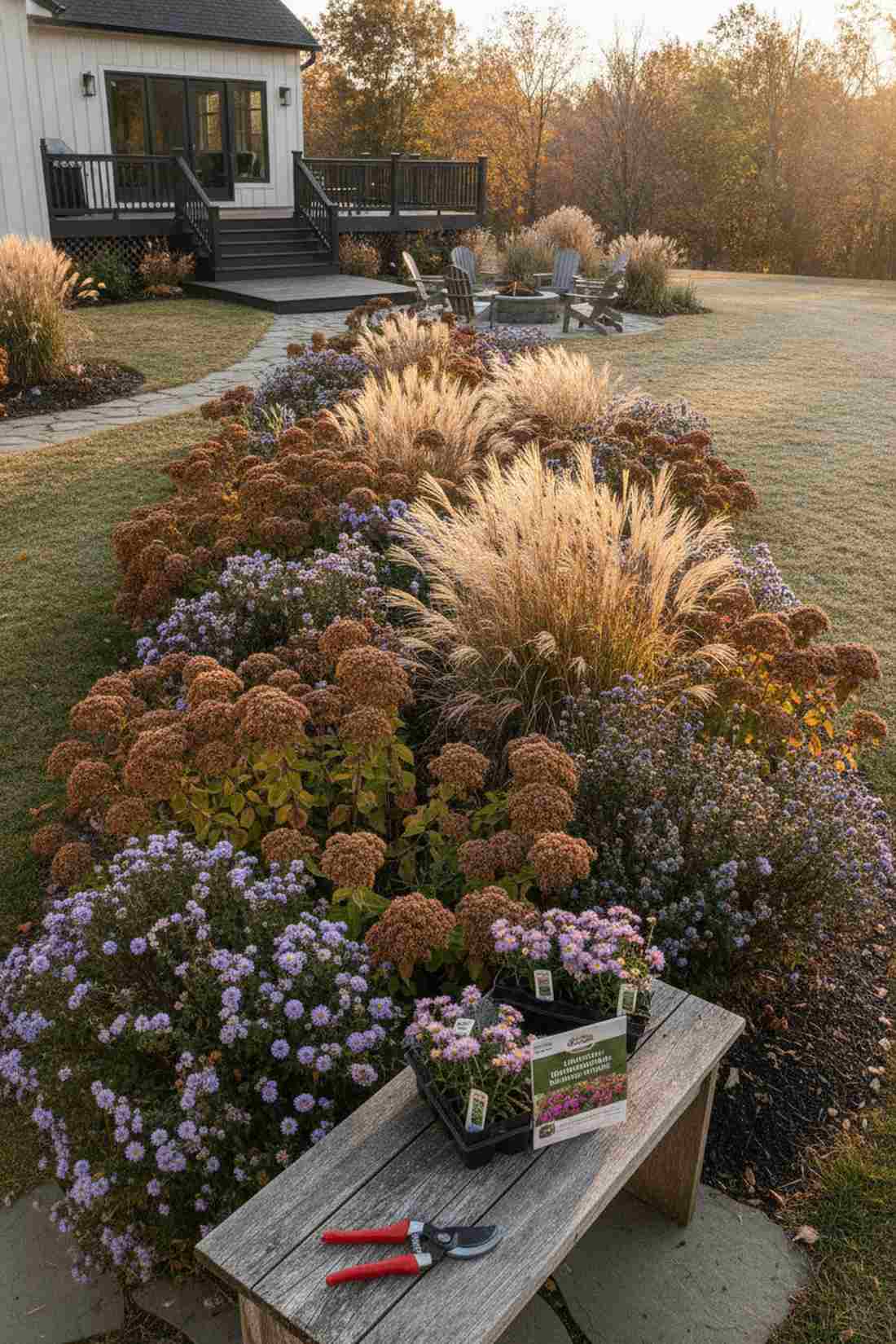
Walking past this garden feels like stepping into a crisp, golden autumn postcard. A late-season structural transition bed is essential so your yard doesn’t suddenly look abandoned in September.
Pivoting heavily into tall sedums, asters, and golden maiden grass looks incredibly rich and expensive against the fading summer lawns. Leaving the dried ornamental grass seed heads intact and un-pruned provides striking, icy architecture well into December.
You can establish a stunning fall-focused transition zone for around $50–$80. Pin this to your autumn outdoor decor board.
- Key Materials: Asters, Autumn Joy sedum, Maiden grass
- Vibe / Style: Crisp autumn richness
- Difficulty: Easy
- Budget Breakdown: Fall perennials: $50 | Ornamental grasses: $25
- Creator’s Tip: Do not cut back your ornamental grasses in the fall! Leave them standing all winter for structural interest and bird habitat.
- Smart Sourcing: Heavy-duty bypass pruning shears and late-blooming autumn perennial starter packs.
Most gardens completely disappear when it snows. This next architectural trick keeps your yard looking expensive in January…
55. Winter Structure Evergreens
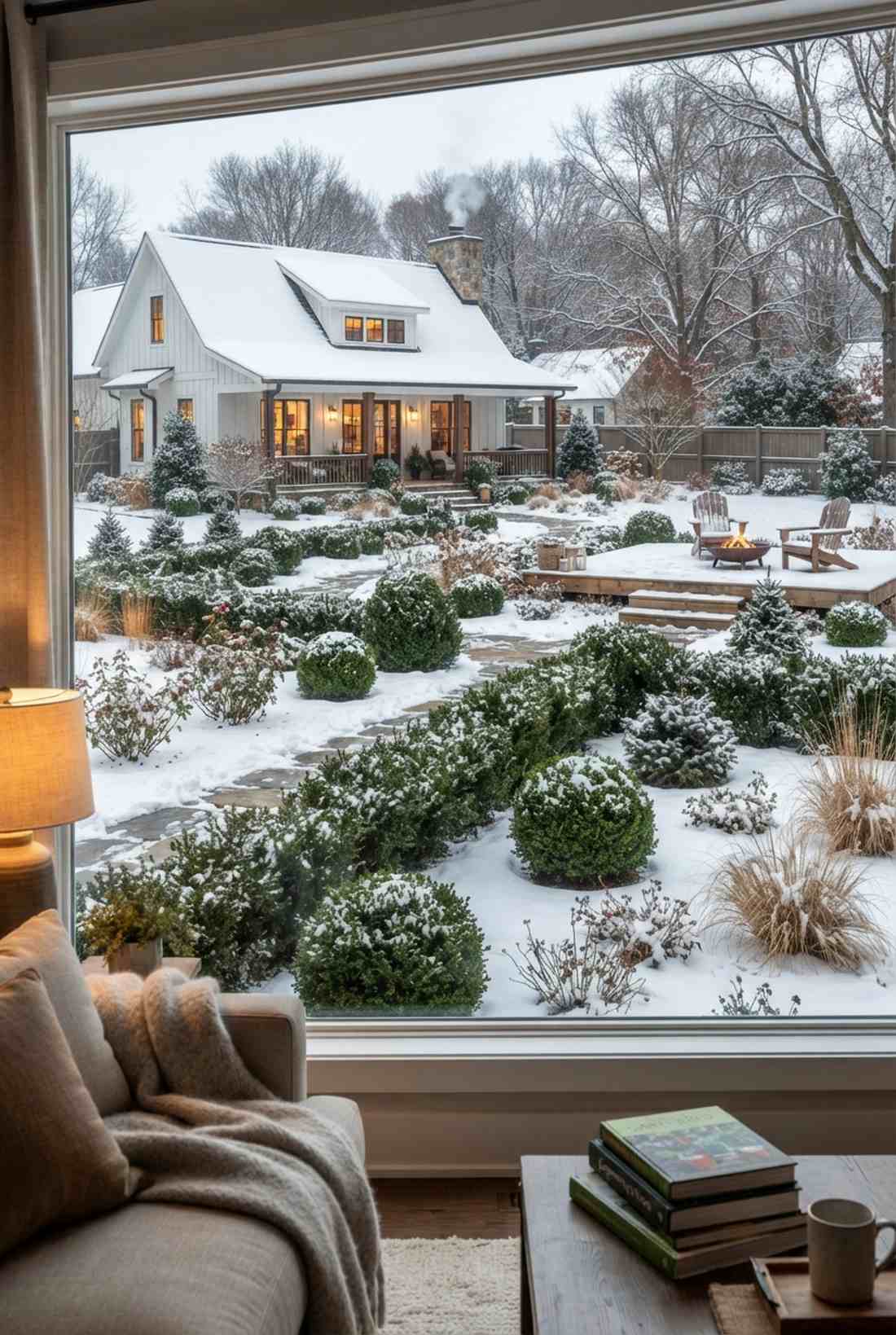
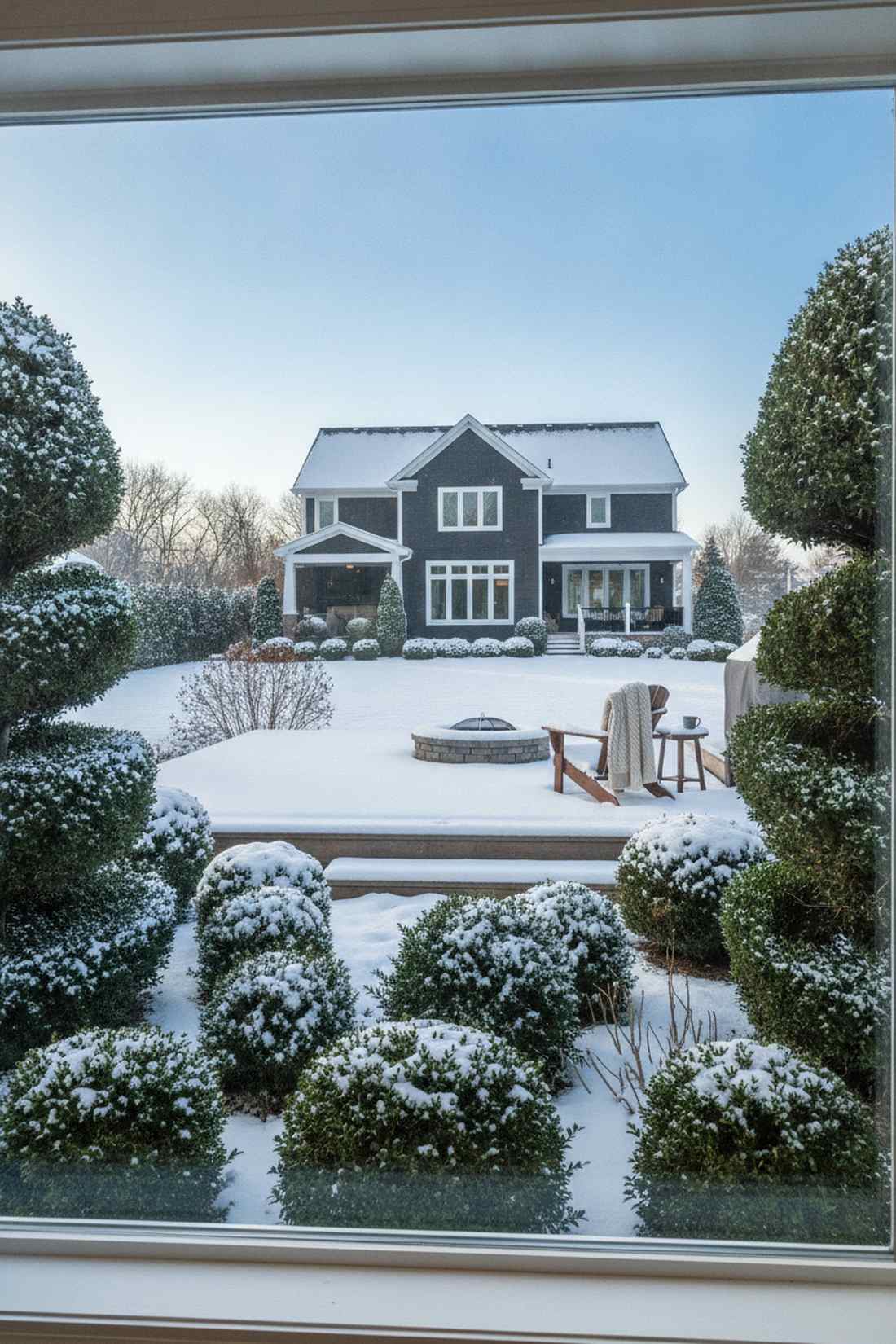
This bold layout feels like a stoic, beautifully carved green statue standing strong against the snow. An evergreen winter skeleton is the absolute secret to expensive landscape design that most homeowners miss completely.
Strategically dotting dense boxwoods and yews throughout a sleeping flower bed prevents the yard from looking like a flat, muddy wasteland in January. Spraying them with anti-desiccant winter protection sprays prevents the harsh freezing winds from turning your expensive evergreens brown and crispy.
Establishing this winter framework costs about $80–$150. It’s a mandatory upgrade if you live in a snowy climate.
- Key Materials: Boxwood, yew, or dwarf pine
- Vibe / Style: Stoic winter architecture
- Difficulty: Easy
- Budget Breakdown: Evergreen shrubs: $100 | Winter spray: $20
- Creator’s Tip: Plant these where they will be clearly visible from your living room windows, as you’ll be viewing them from inside all winter.
- Smart Sourcing: Professional anti-desiccant winter plant protector sprays and cold-hardy evergreen shrub bundles.
56. Ornamental Bark Interest
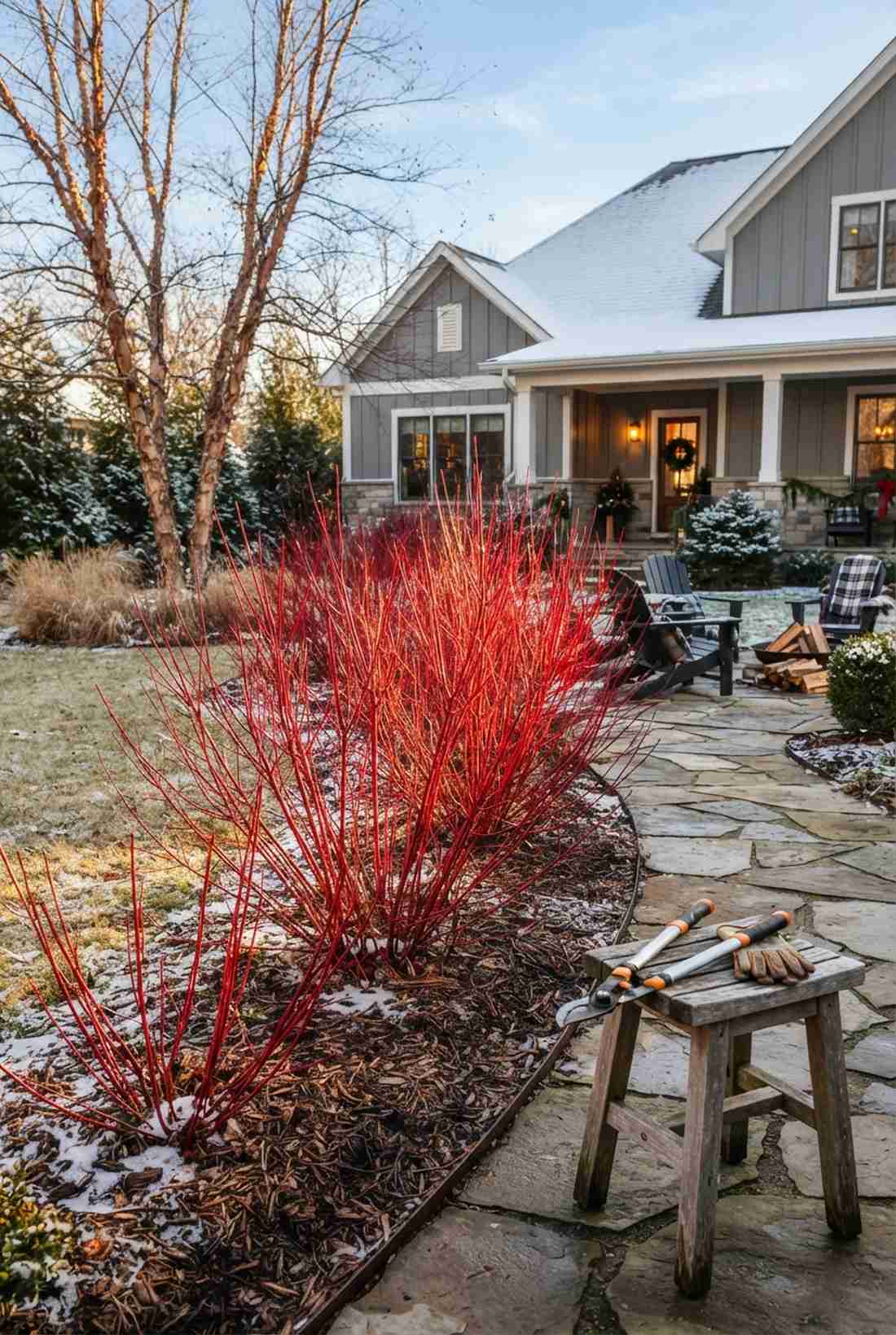
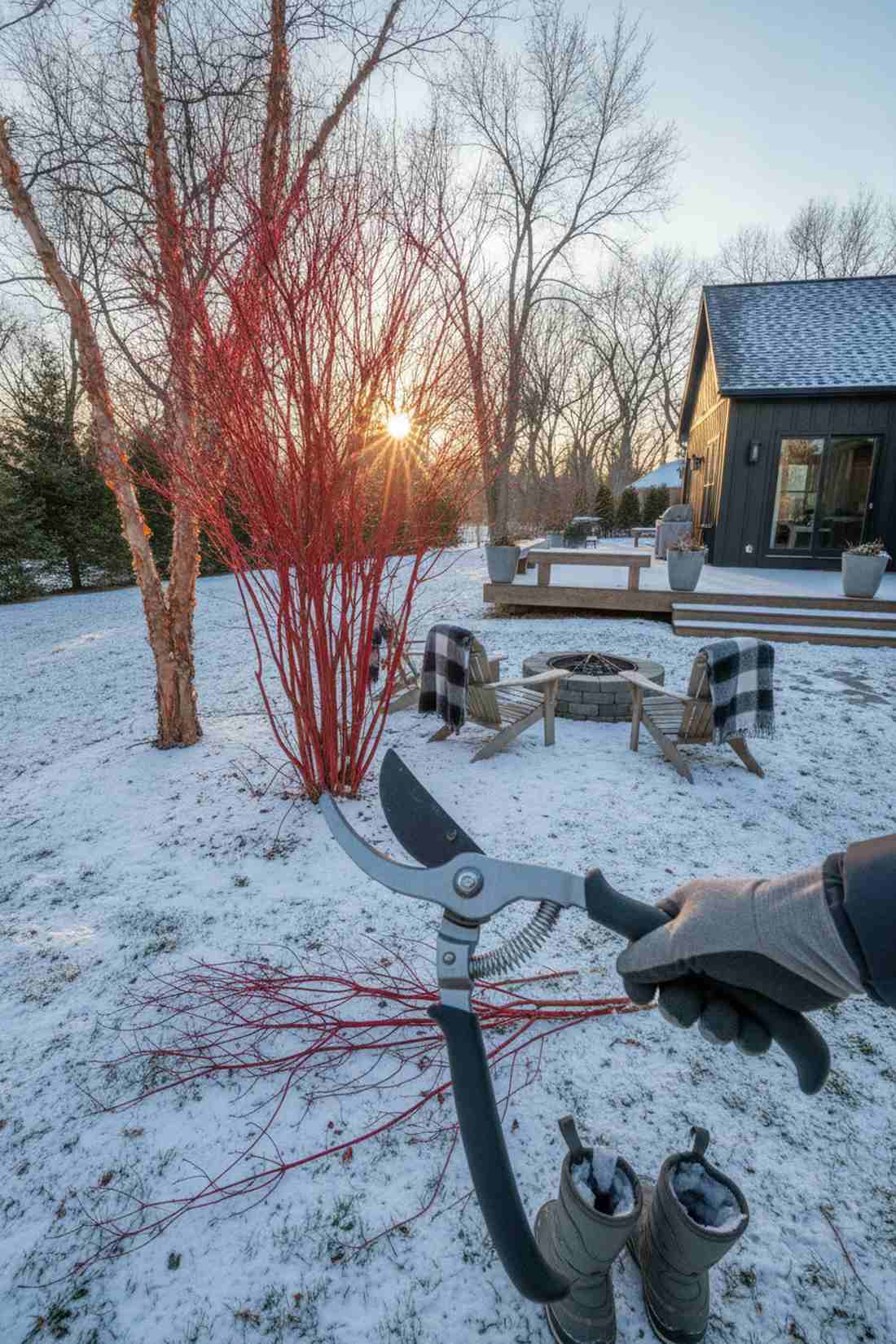
This striking feature feels like a bright, fiery sculpture rising out of a desolate winter landscape. A colored bark focal point is an incredibly clever way to add vibrant color when absolutely nothing is blooming.
Planting a red-twig dogwood where the low winter sun can backlight its blazing crimson stems looks unbelievably high-end and intentional. Using a sharp heavy-duty lopper tool to cut back the oldest wood every spring guarantees the plant pushes out the brightest red stems possible for the next winter.
Adding this winter drama piece usually costs $35–$60. Save this if you want the most unique winter yard in the neighborhood.
- Key Materials: Red-twig dogwood, paperbark maple
- Vibe / Style: Fiery winter starkness
- Difficulty: Intermediate (requires annual pruning)
- Budget Breakdown: Bark shrub: $45 | Pruning tools: $25
- Creator’s Tip: Only the youngest, newest branches turn bright red; if you don’t aggressively prune it every year, it will just look like a brown stick.
- Smart Sourcing: Titanium blade heavy-duty pruning loppers and vibrant colored-bark bare-root shrubs.
Bringing Plant Arrangement Mastery to Your Garden
These 56 premium plant arrangements provide the exact blueprints you need to build high-end botanical compositions without paying expensive landscape architects. By shifting your focus toward smart sourcing—like buying bulk starter kits, UV-coated planters, and commercial-grade edging—you can replicate luxury setups on a realistic budget. Start by choosing 3-4 layout blueprints that solve your immediate spatial or color needs, and utilize the recommended tools to ensure they thrive. Armed with these specific visual hooks and aesthetic strategies, you can confidently upgrade your outdoor aesthetic into a truly professional, Pinterest-worthy landscape.
Frequently Asked Questions
What is the best plant arrangement for beginners?
The thriller-filler-spiller formula is the ultimate foolproof plant arrangement for beginners wanting a high-end look fast. Instead of buying individual expensive plants, snagging a pre-selected container starter kit ensures your tall focal plant, bushy fillers, and trailing edges all have matching water and light requirements. For under $40, you can drop these into a UV-resistant pot and instantly achieve that professional, dense aesthetic without any guesswork.
How many plants should I group together in a garden arrangement?
Professional landscape designers strictly use odd-numbered groupings of 3, 5, or 7 identical plants to create premium, natural-looking drifts. Even numbers create boxy, artificial lines that look cheap. To achieve this look on a budget without breaking the bank, buy bulk plug trays or bare-root bundles rather than fully mature potted plants. This allows you to plant massive, sweeping odd-numbered groups that establish quickly and fill in perfectly within a single season.
What colors work best together in plant arrangements?
Complementary color pairings—like purple with yellow or deep red with green—create the high-impact visual drama seen in luxury gardens. For a sleek, modern aesthetic, a monochromatic palette using only white blooms and silver foliage looks incredibly expensive. To keep these colors popping aggressively without fading, ensure you are supplementing your soil with premium slow-release color-boosting fertilizers specific to your bloom types.
How do I create year-round interest with plant arrangements?
Building a four-season aesthetic requires a permanent structural backbone, which is why investing in cold-hardy evergreen starter kits is so critical. Once your evergreens and ornamental bark shrubs are established, you layer around them: spring bulbs deep in the soil, summer annuals on top, and late-blooming grasses for fall. Using anti-desiccant sprays on your evergreens ensures that your winter structure looks vibrant and expensive even in January.
What is the difference between formal and informal plant arrangements?
Formal plant arrangements rely on strict symmetry, geometric parterres, and perfectly mirrored pots to create a classic, wealthy estate vibe. Informal arrangements use organic sweeping drifts, woven cottage borders, and asymmetrical triangles to feel natural and untamed. If you are building a formal setup, you absolutely must use laser-alignment tools and precision hedging shears, as even a one-inch mistake will ruin the expensive architectural illusion.