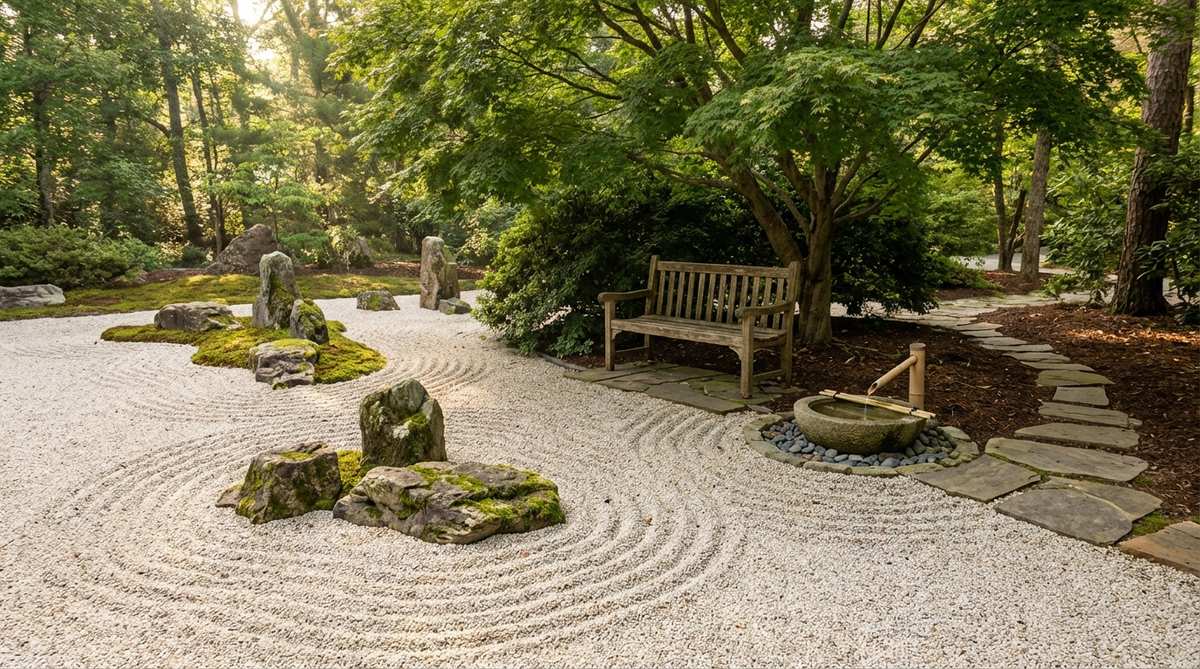
Authentic garden design zen practices transform outdoor spaces into contemplative retreats through the deliberate arrangement of rocks, carefully raked gravel patterns, and minimalist principles rooted in Japanese karesansui traditions. Fresh Garden Ideas presents these curated zen garden concepts that prioritize simplicity, natural materials, and the meditative practice of sand raking to create tranquil landscapes suited for American homes.
Design SnapshotKey Principles
- Kanso (Simplicity): Eliminate excess elements and focus on essential features that serve both functional and aesthetic purposes
- Fukinsei (Asymmetry): Arrange rocks and patterns in irregular, natural formations rather than symmetrical layouts
- Koko (Austerity): Use limited material palettes—typically white sand, gravel, and carefully selected stones
- Seijaku (Stillness): Design spaces that promote quiet contemplation through visual balance and intentional negative space
Traditional Raking Patterns & Textures
Raked patterns in zen gardens symbolize water movement and natural flow. These meditative designs require wide-toothed bamboo rakes and consistent technique to achieve clean, parallel lines.
1. Parallel Wave Ripples
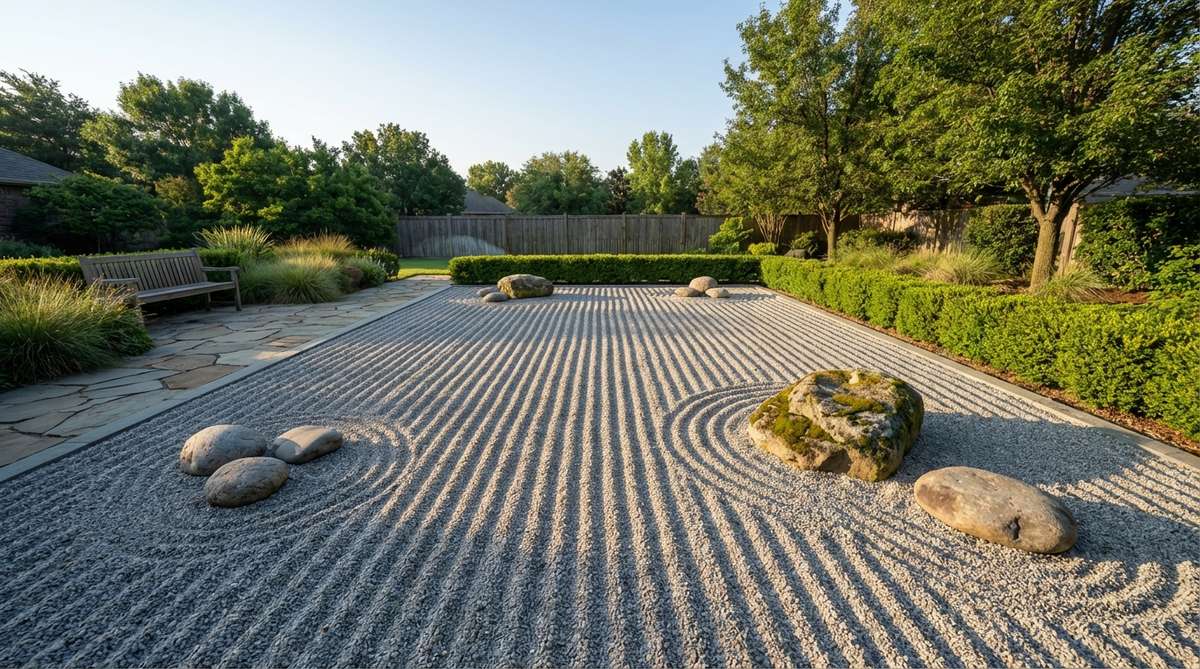
Straight, evenly spaced lines raked across the entire gravel bed create the illusion of calm water surfaces. The low-angle morning and evening sun highlights these parallel grooves, producing dramatic shadow effects that shift throughout the day.
Start at one edge and pull the rake steadily to the opposite side, maintaining consistent pressure. Turn and create the next line directly adjacent to the first, ensuring uniform spacing between each row.
This pattern works best in rectangular garden beds where the uninterrupted lines emphasize length and tranquility. Rake fresh patterns weekly to maintain crisp edges and remove debris.
2. Concentric Water Drop Circles
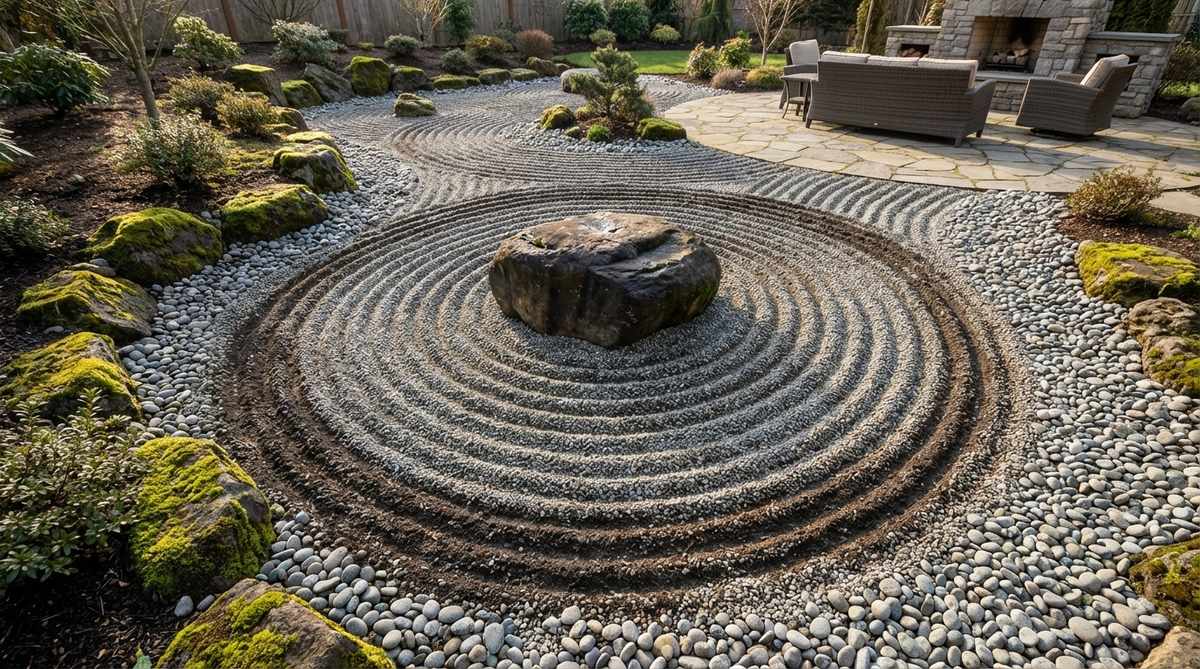
Circular patterns radiating outward from a central stone mimic raindrops hitting a pond surface. Each ring increases in diameter while maintaining equal spacing, creating hypnotic visual rhythm.
Position a prominent rock as the focal point, then rake circles around it using smooth, continuous motions. Designers use adjustable-width rakes to vary line thickness and enhance the ripple effect.
3. Flowing River Curves
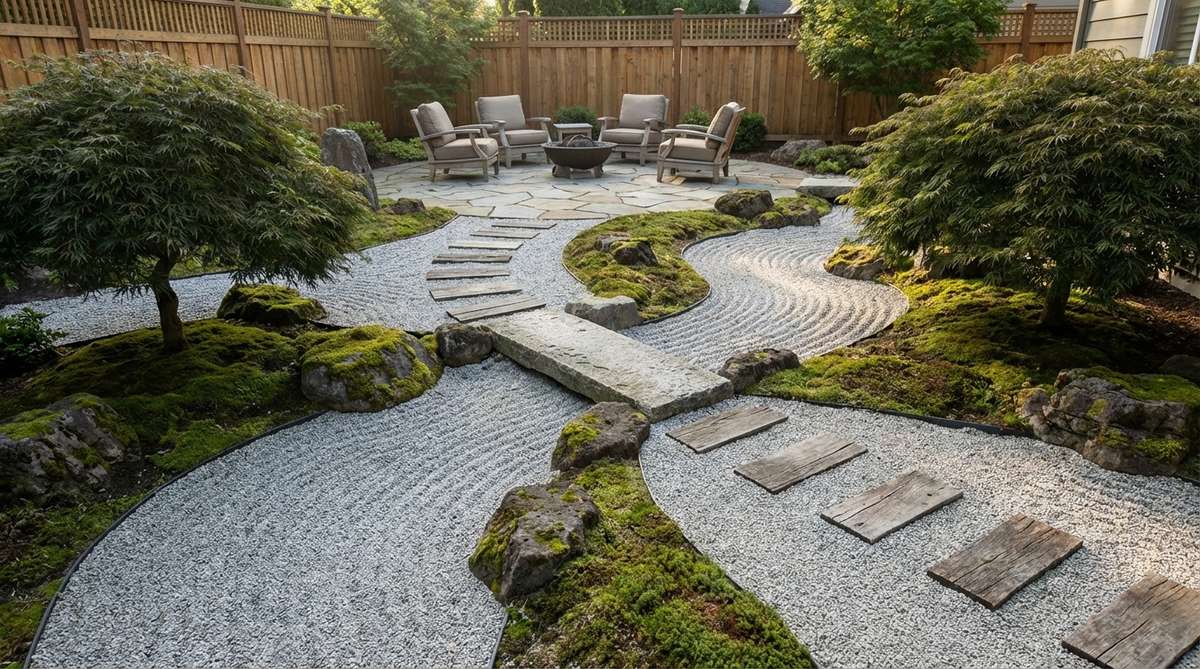
Curved, S-shaped lines suggest flowing streams or gentle currents moving through the landscape. This organic pattern contrasts with rigid geometric designs and introduces movement to static spaces.
Rake in sweeping arcs that meander across the gravel bed, avoiding sharp angles. The undulating lines guide the eye through the garden and create visual depth in small areas.
4. Spiral Vortex Formation
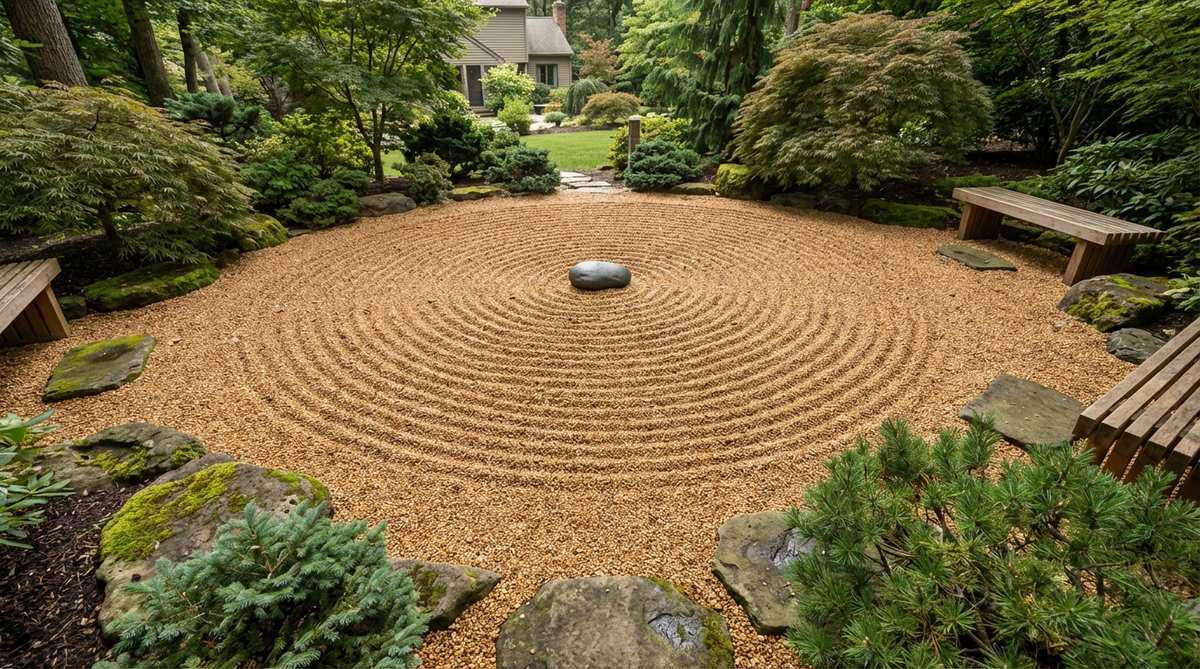
A continuous spiral pattern emanating from a center point represents energy, transformation, and the cyclical nature of existence. The tightening coil draws attention inward toward a meditation focal point.
Begin raking at the outer perimeter and work inward with gradually decreasing circles. This pattern requires patience and steady hand control to maintain smooth transitions between rotations.
5. Ocean Wave Crests
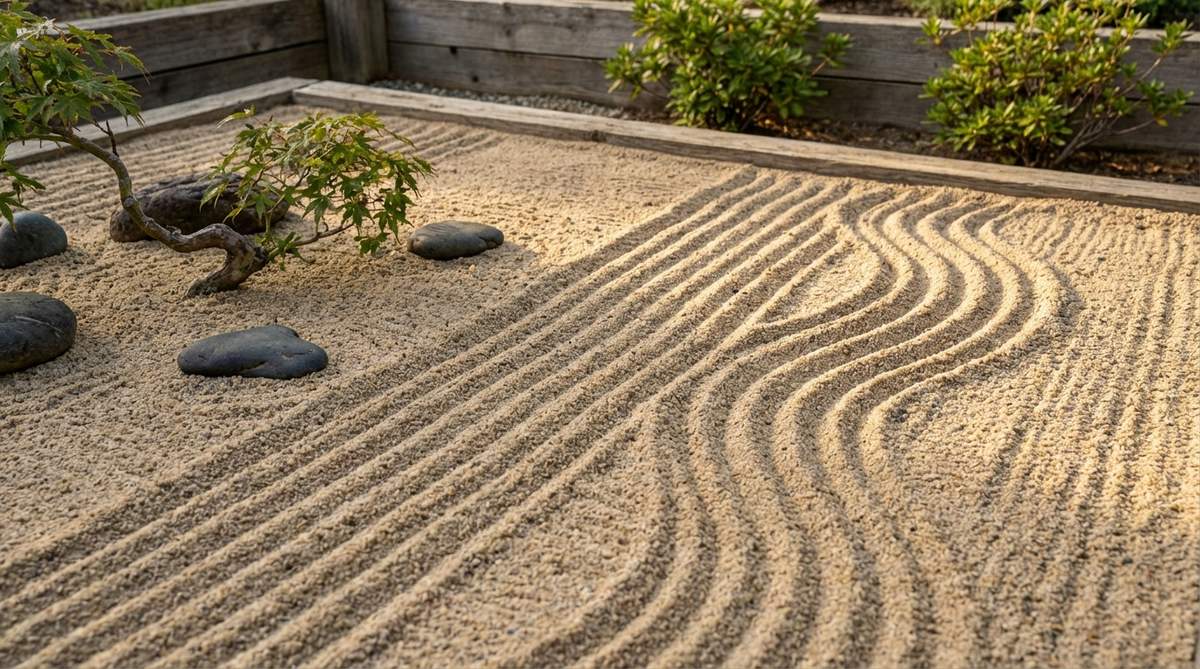
Alternating curved and straight segments mimic ocean swells and breaking waves. This dynamic pattern adds visual interest while maintaining the meditative quality of traditional zen raking.
Rake three to four straight lines, then introduce a curved section before returning to parallel lines. The rhythm of repetition creates a gentle visual pulse across the sand surface.
6. Cross-Hatch Diamond Grid
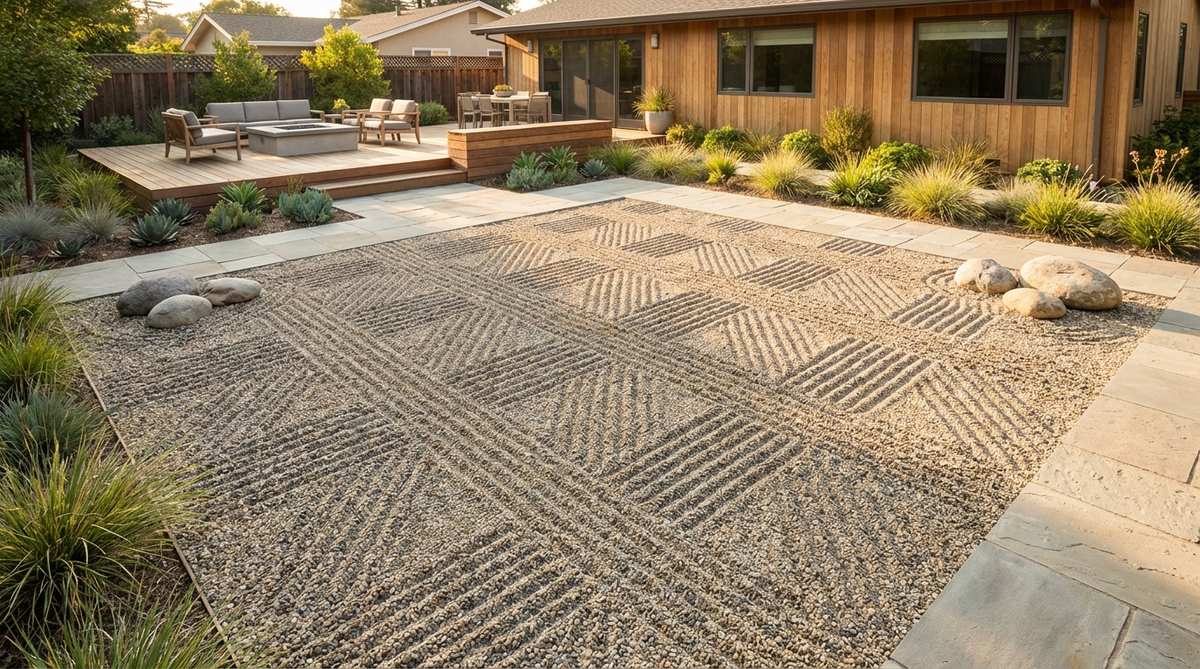
Intersecting diagonal lines form diamond shapes across the gravel bed, representing order and structure. This geometric approach offers a contemporary interpretation of traditional zen aesthetics.
Rake parallel diagonal lines at 45-degree angles, then repeat in the perpendicular direction. The resulting grid pattern works particularly well in square or diamond-shaped garden plots.
Rock & Stone Compositions
Stone placement in zen gardens follows specific principles where rocks represent mountains, islands, or natural elements. The arrangement creates visual balance through asymmetry and careful attention to scale.
7. Three-Stone Mountain Triad
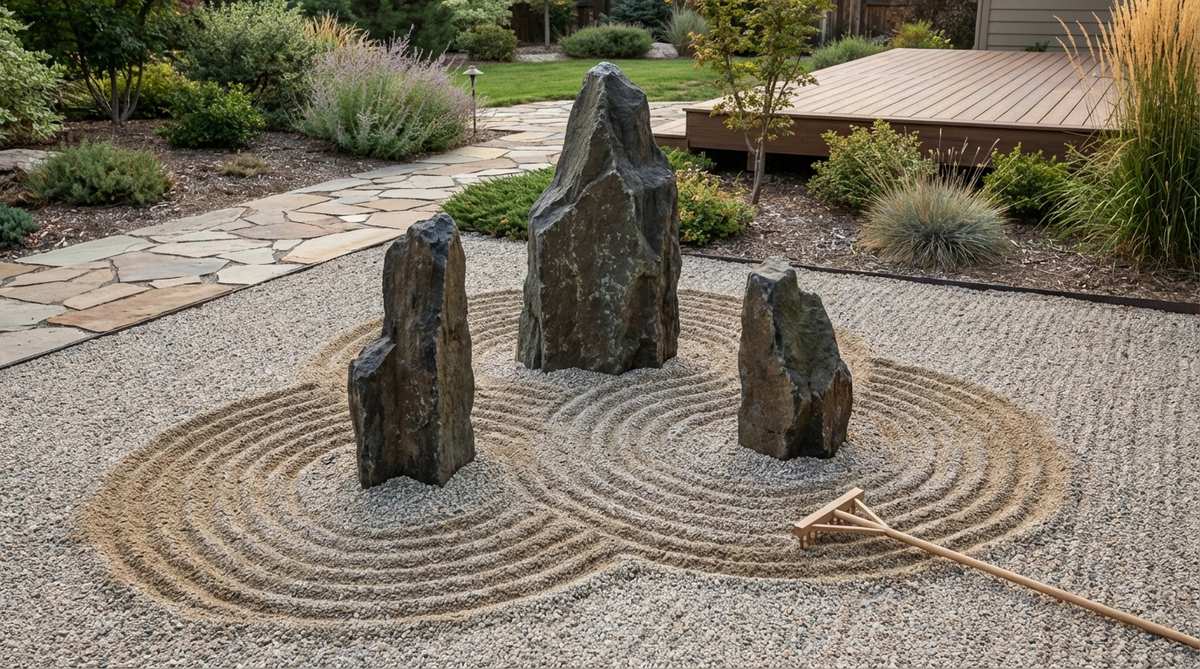
Three vertically oriented rocks of varying heights form the foundation of traditional zen garden composition. The tallest stone represents the mountain peak, while the two shorter stones provide visual support and balance.
Position the primary rock slightly off-center, then place supporting stones at angles that create a triangular relationship. The negative space between rocks holds equal importance to the stones themselves.
Rake sand in concentric patterns around each stone to suggest erosion and the passage of time. This classic arrangement works in spaces from 4×6 feet to expansive courtyard settings.
8. Flat Island Groupings
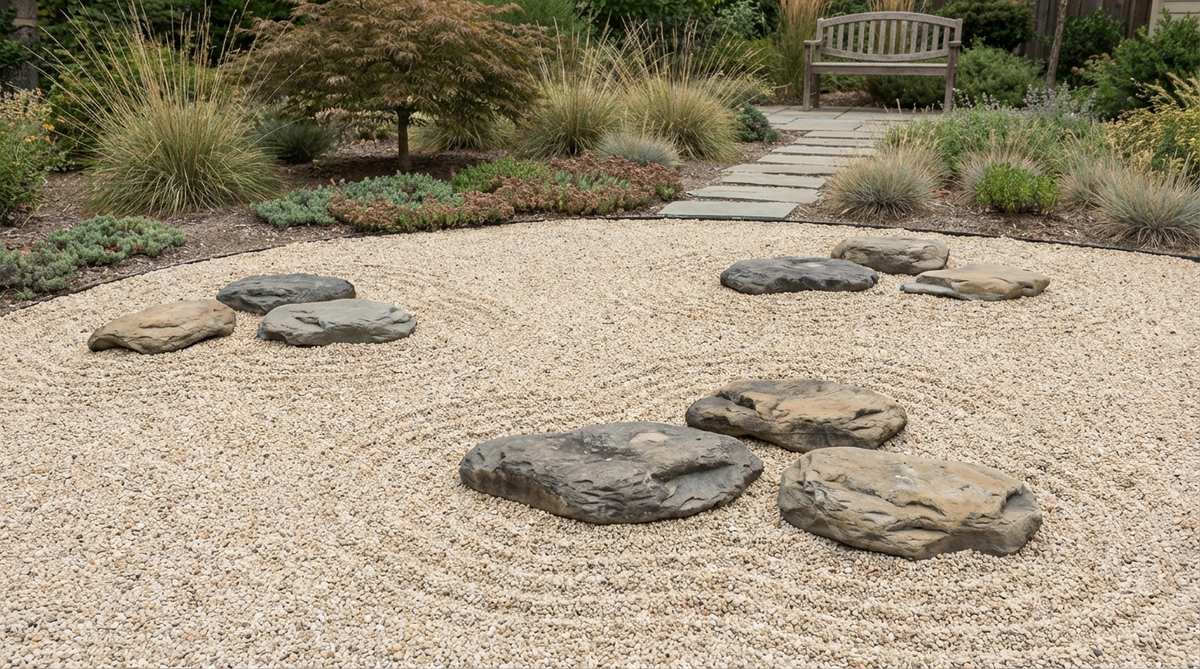
Low, horizontal stones arranged in small clusters emerge from raked gravel like islands in a calm sea. These flat formations create visual anchors without dominating the landscape.
Select stones with weathered, naturally eroded surfaces that suggest water exposure. Group three to five stones of similar height but varying lengths to form each island cluster.
9. Dry Waterfall Cascade
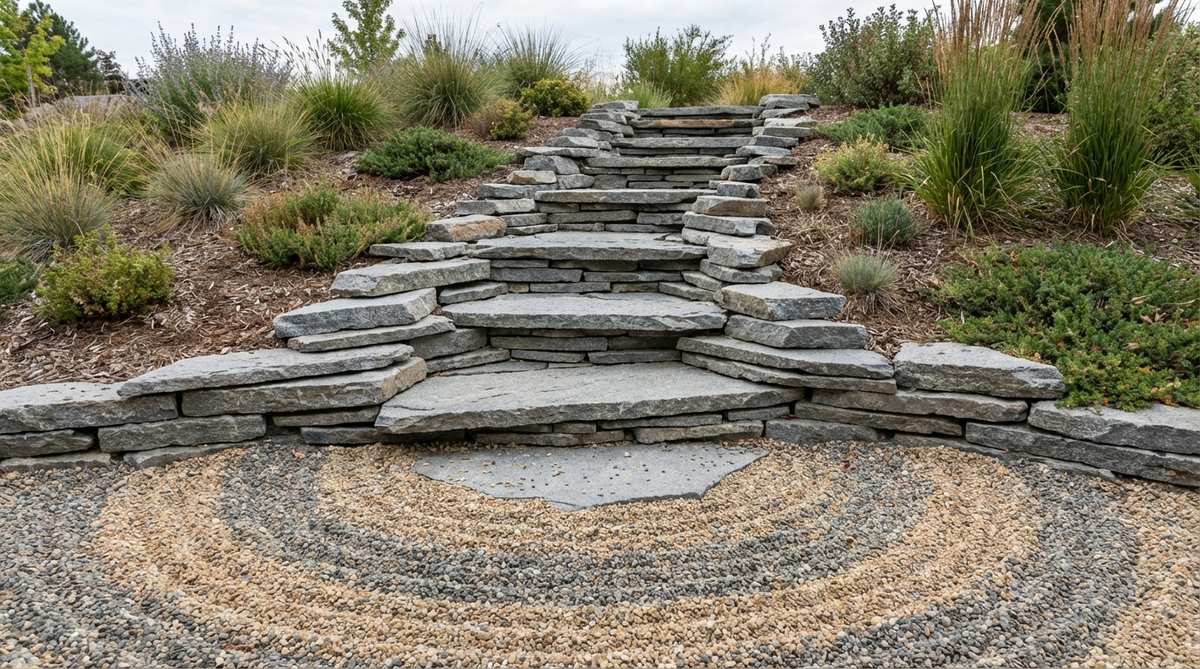
Stacked flat stones arranged in descending tiers simulate a waterfall frozen in time. The vertical composition draws the eye upward and introduces height variation to horizontal raked patterns.
Layer granite or slate pieces in overlapping steps, angling each tier slightly forward. Rake gravel at the base in curved patterns to represent the splash zone where water would land.
10. Single Meditation Boulder
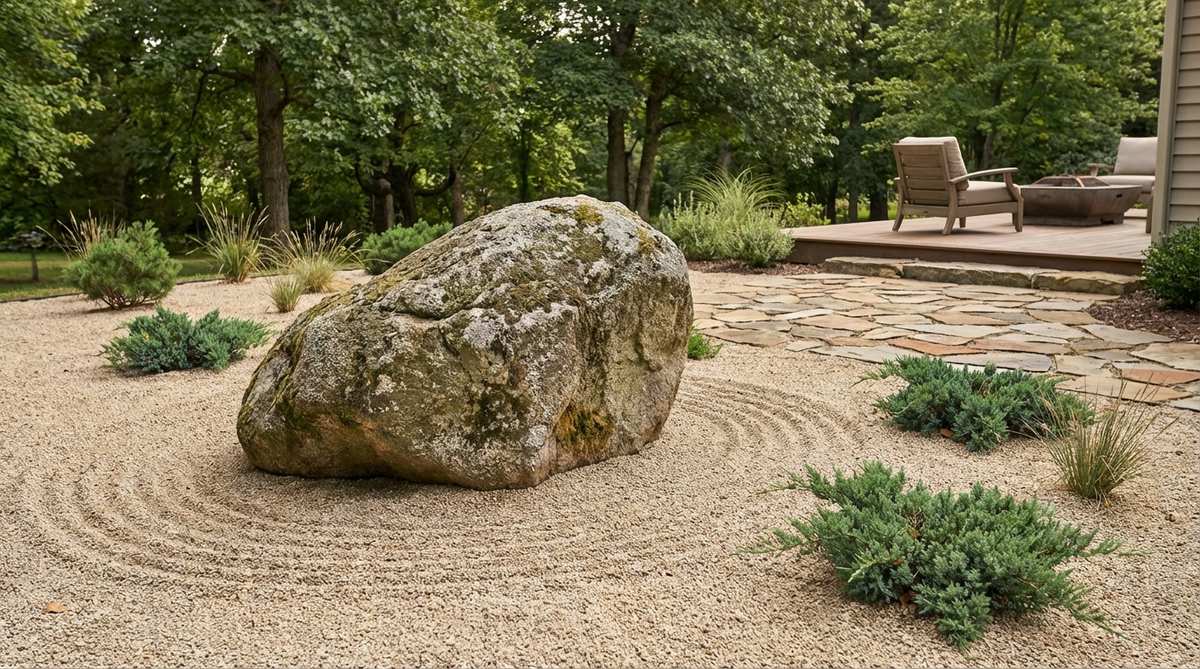
A solitary large stone positioned prominently in the garden serves as both focal point and meditation object. The rock’s isolation emphasizes its presence and invites prolonged contemplation.
Choose a boulder with interesting texture, color variation, or natural patina. Place it asymmetrically within the raked area, leaving substantial negative space to enhance its visual impact.
11. River Stone Pathway
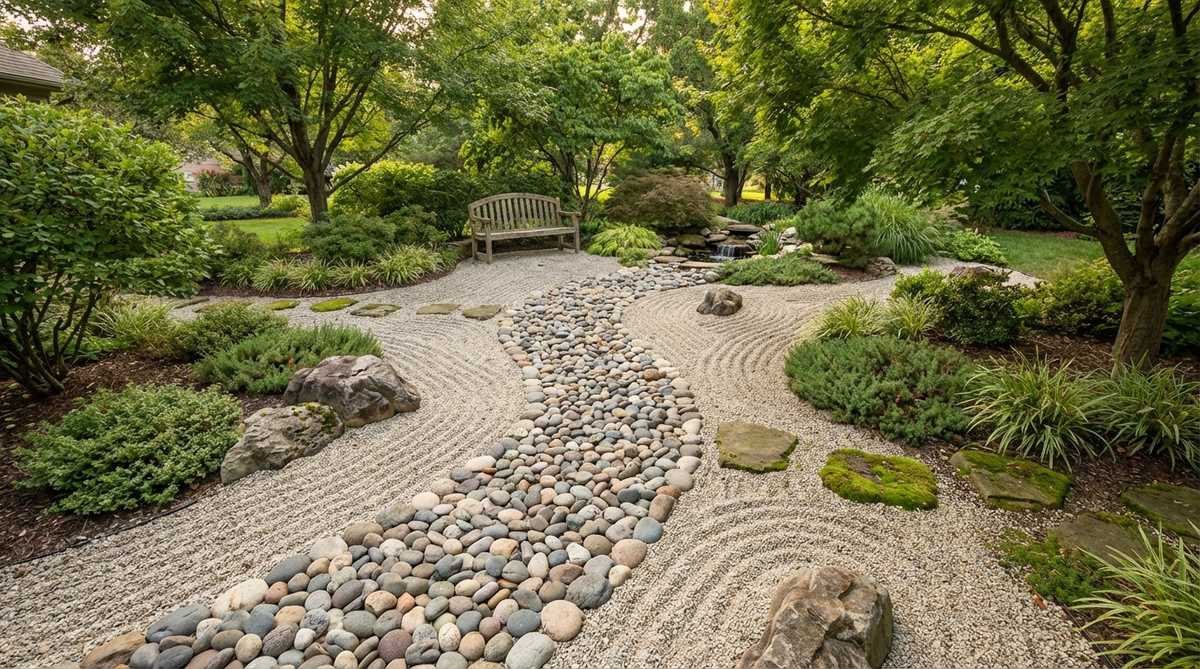
Smooth, rounded stones embedded in raked gravel create a functional walking path while maintaining zen aesthetics. Each stepping stone acts as a pause point for mindful movement through the garden.
Position stones at comfortable stride intervals, varying their placement slightly to prevent rigid symmetry. Rake concentric circles around each stone to emphasize their individual presence.
12. Volcanic Lava Rock Accents
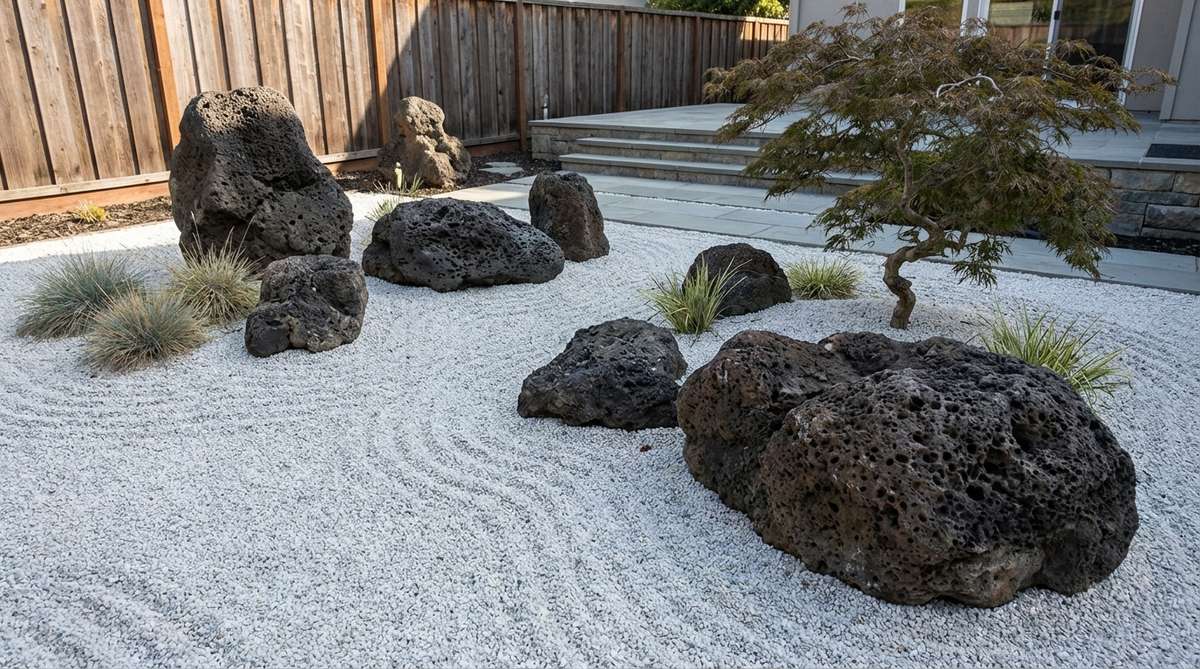
Dark, porous lava stones create striking contrast against white sand or light-colored gravel. The rough texture and irregular shapes introduce visual weight and earthy authenticity.
Use lava rocks sparingly as accent pieces rather than primary elements. Their dramatic appearance works best when balanced with smoother stones and refined raking patterns.
Minimalist Boundary Elements
Defined edges and screening elements establish the zen garden as a distinct contemplative space separate from surrounding landscapes. Boundaries frame the meditation area while maintaining visual simplicity.
13. Bamboo Fence Enclosure
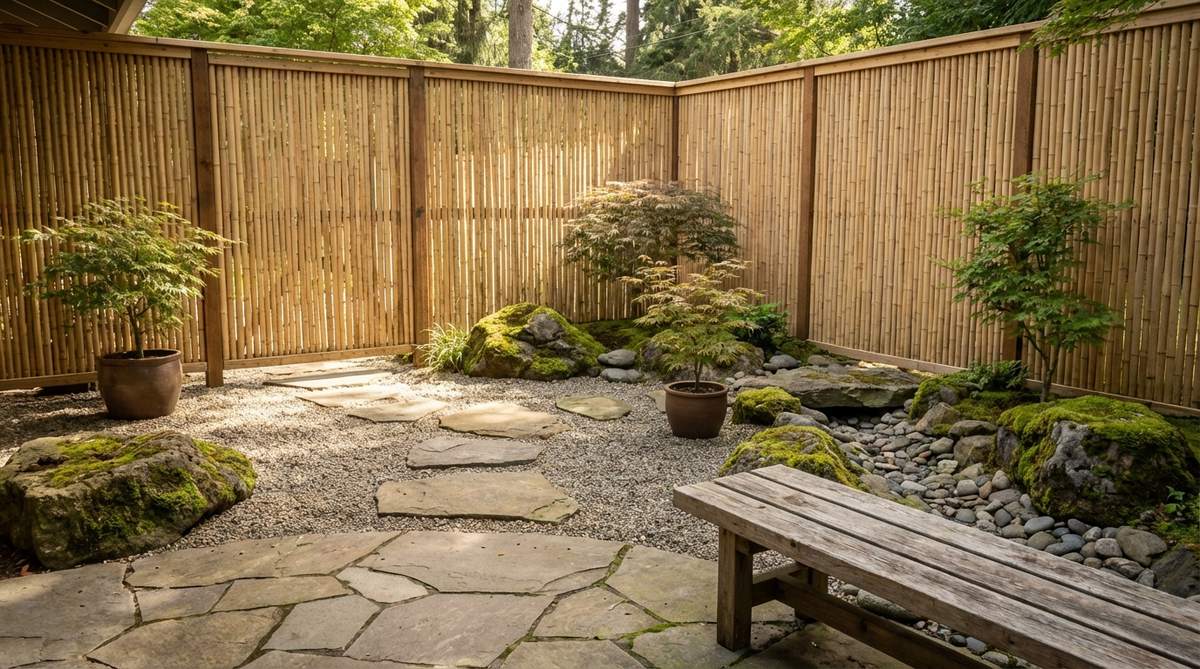
Natural bamboo screening creates privacy and acoustic separation without imposing visual heaviness. The vertical slats allow filtered light while blocking distractions from adjacent spaces.
Install bamboo panels in modular sections ranging from 4 to 6 feet in height. The warm, organic tones complement gravel and stone without competing for attention.
Bamboo fencing establishes clear spatial definition while maintaining the natural material palette essential to authentic zen aesthetics. Weather the bamboo naturally or apply light oil to enhance durability.
14. Low Stone Border Wall
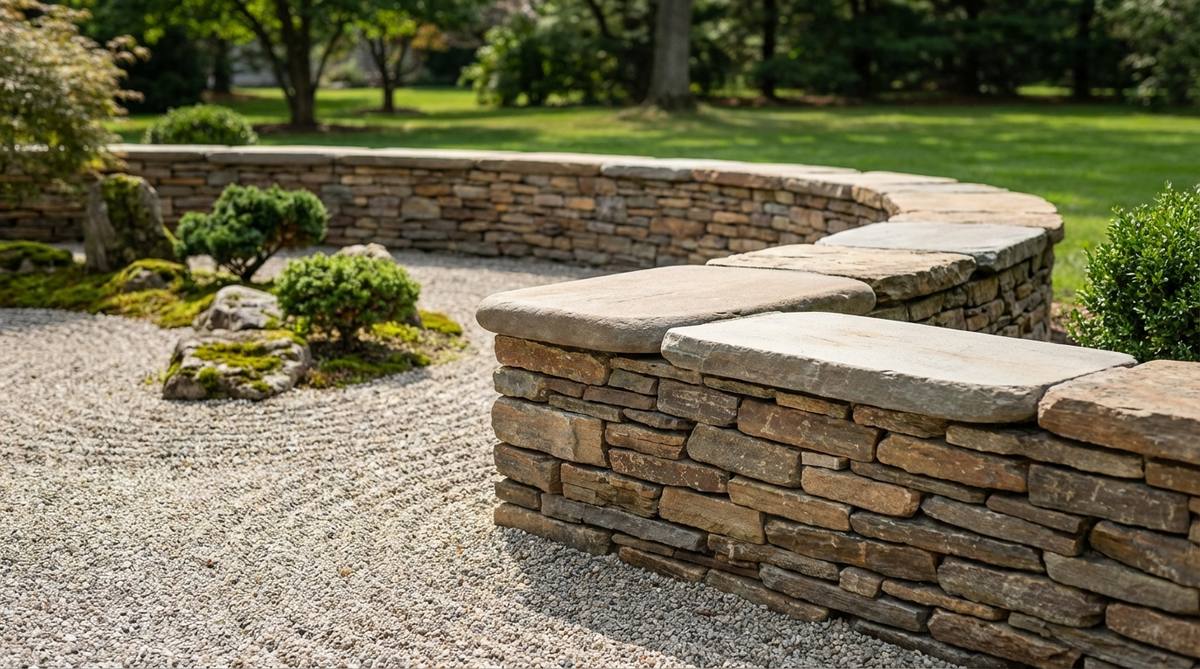
A 12 to 18-inch stacked stone wall delineates the zen garden perimeter while providing a seat edge for meditation. Flat-topped stones invite users to pause and observe raking patterns from an elevated perspective.
Build the wall using dry-stack techniques without mortar to allow natural drainage and maintain rustic simplicity. Select stones with consistent thickness for stable, level construction.
15. Minimalist Hedge Boundary
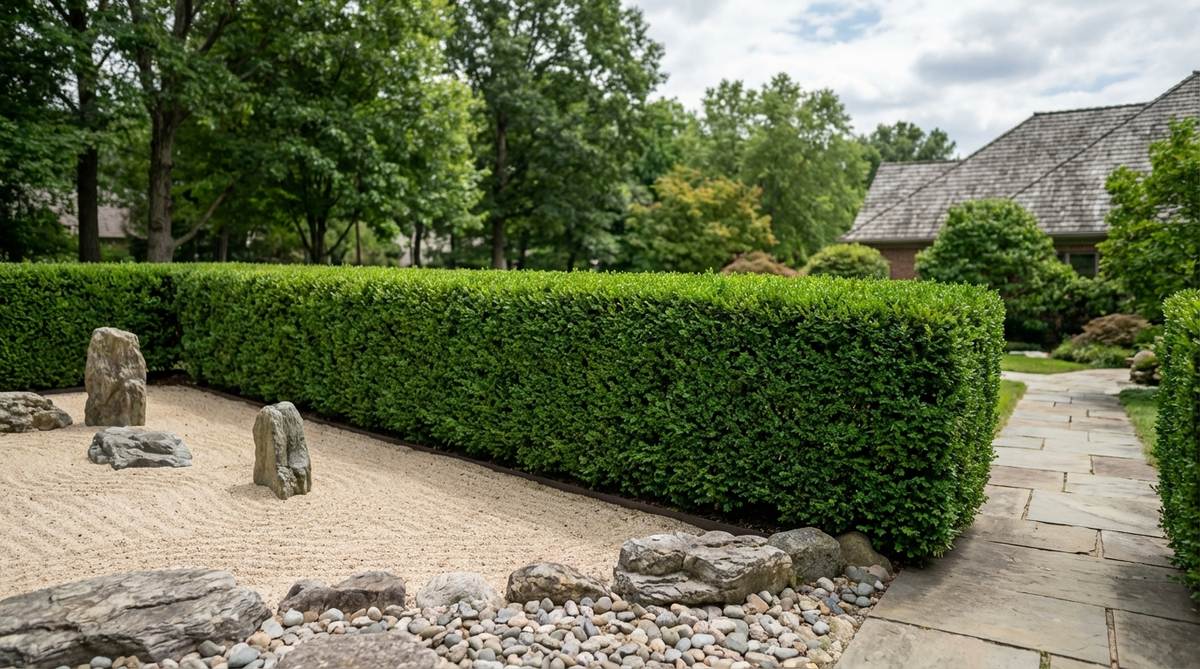
Tightly clipped boxwood or Japanese holly hedges form living walls that define garden edges. The uniform green backdrop emphasizes the neutral tones of sand and stone.
Maintain hedges at 2 to 3 feet height with monthly trimming during the growing season. The geometric precision of sheared hedges reinforces the intentional design of the zen space.
16. Reclaimed Wood Plank Edging
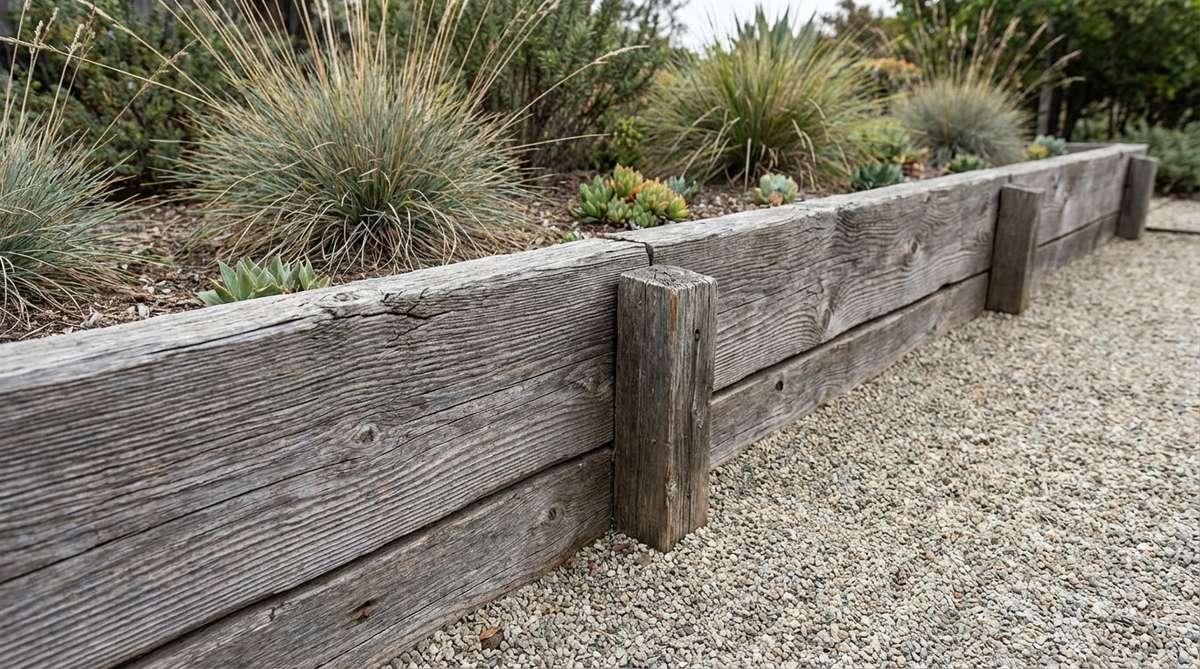
Weathered timber planks laid horizontally at ground level contain gravel while introducing warm wood tones. The aged patina suggests impermanence and natural decay central to zen philosophy.
Use rot-resistant woods like cedar or redwood in 6-inch width planks. Secure edges with ground stakes to prevent shifting when raking near boundaries.
17. Poured Concrete Edge Strip
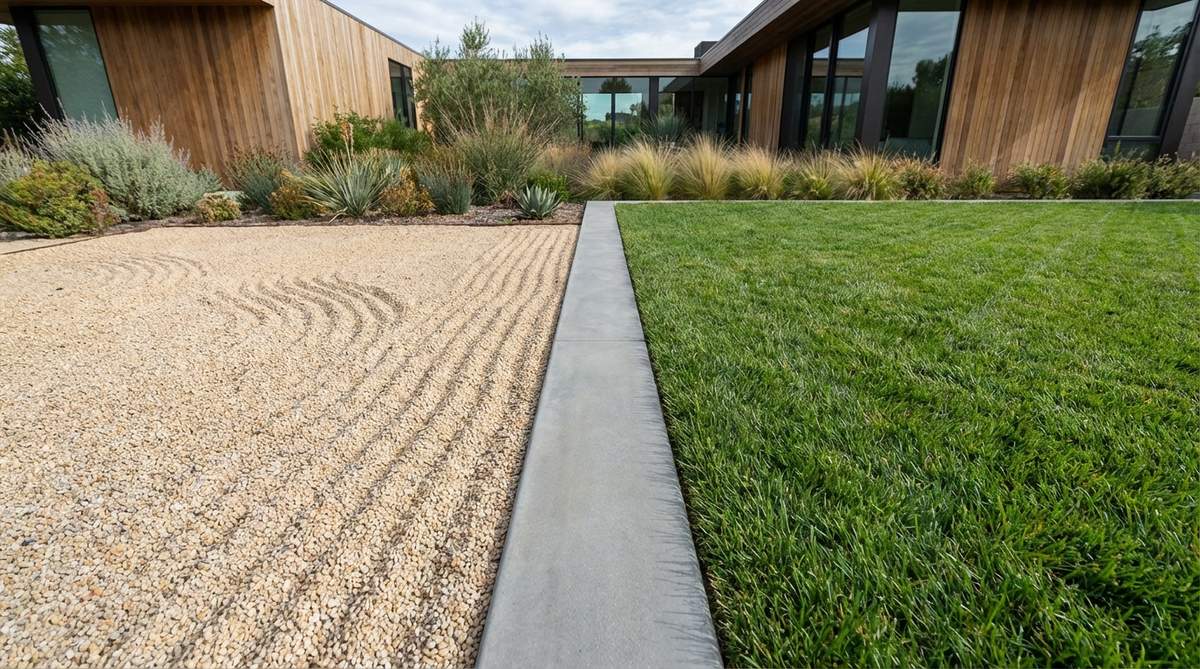
A 4-inch wide concrete mow strip provides clean separation between raked areas and adjacent lawns. The modern material offers durability while maintaining minimalist lines.
Pour the edging flush with surrounding grade to eliminate tripping hazards and simplify maintenance. Smooth-finished concrete complements contemporary home architecture without disrupting zen principles.
Compact Meditation Corners
Small-scale zen gardens fit urban yards, apartment balconies, and indoor spaces. These miniature interpretations maintain authentic design principles while adapting to space constraints.
18. Desktop Tabletop Zen Garden
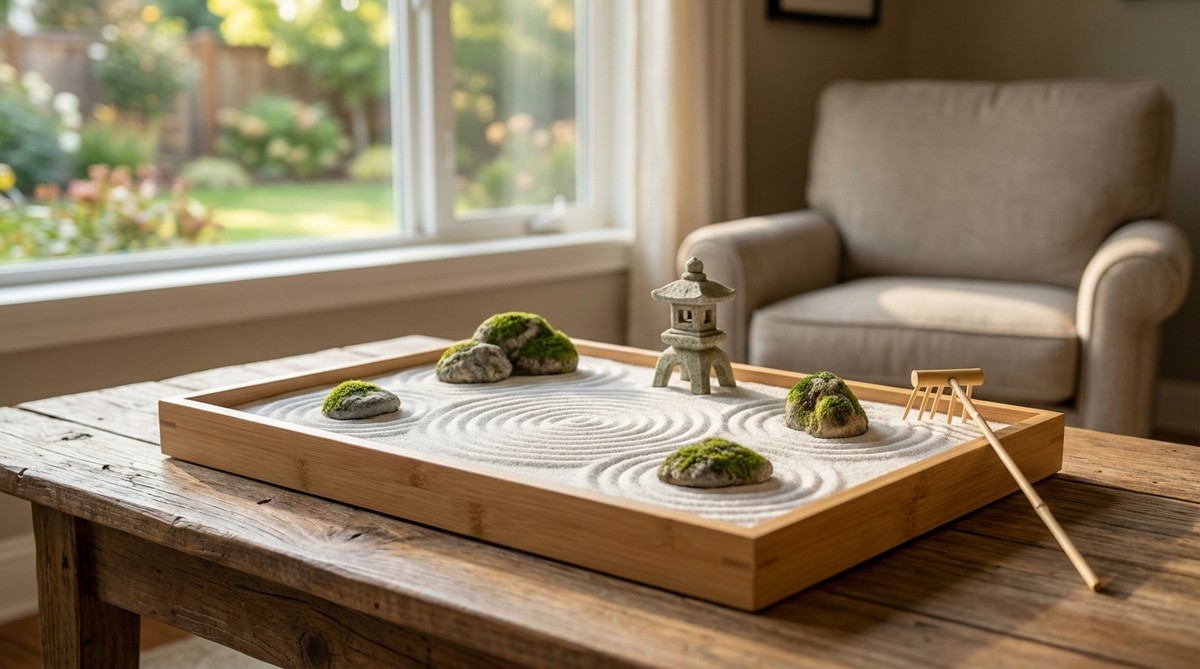
A contained tray measuring 12×18 inches holds fine white sand, miniature rocks, and a small bamboo rake. This portable version brings meditative raking practice to office environments and indoor settings.
Use food-grade sand or crushed marble that flows smoothly under small rakes. The daily ritual of raking fresh patterns provides stress relief and mindfulness breaks during work hours.
Position the tabletop garden on a stable surface near natural light but away from drafts that disturb sand patterns. Clear glass or dark wood trays showcase the sand contrast effectively.
19. Balcony Container Zen Scape
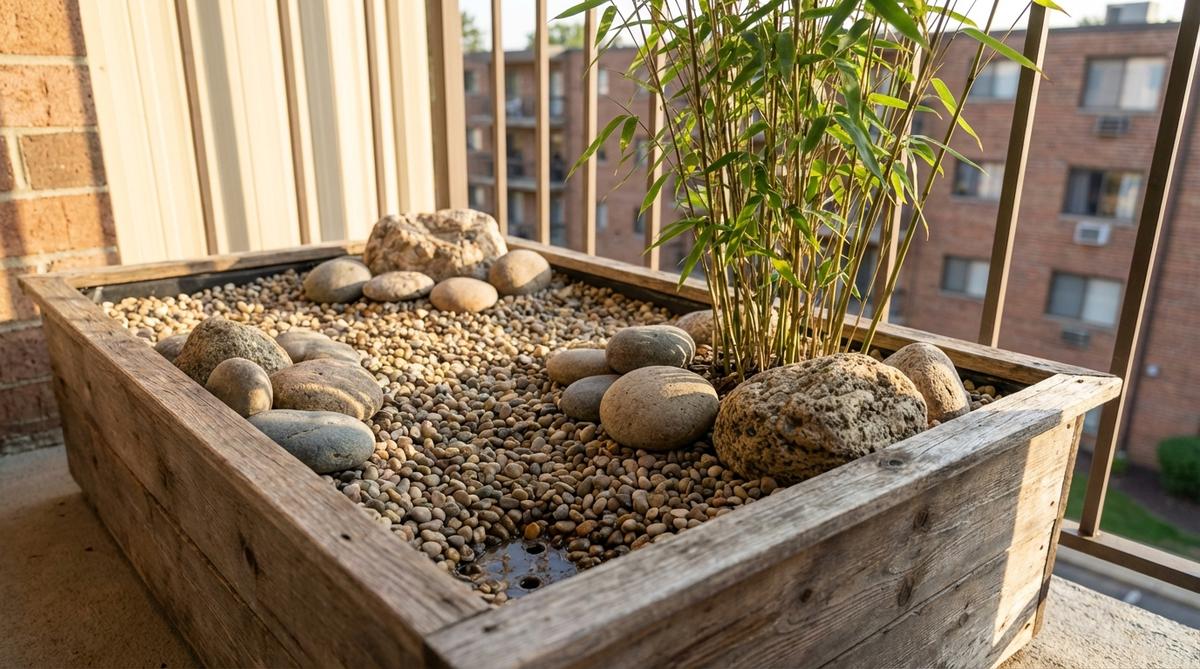
A large rectangular planter filled with pea gravel and accent stones creates a meditation spot on apartment balconies. Drainage holes prevent water accumulation during rainfall.
Select a container at least 18 inches deep to accommodate 4 inches of gravel and allow proper stone placement. Add a dwarf bamboo or small evergreen in one corner for vertical interest.
20. Under-Stair Alcove Garden
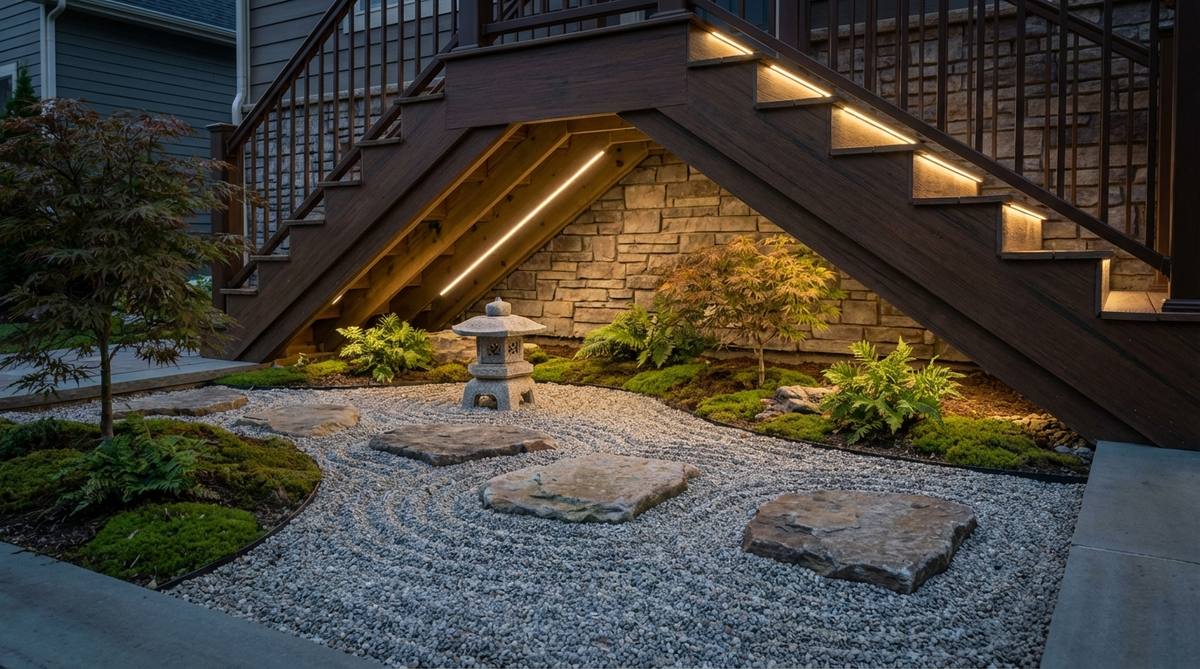
Unused space beneath outdoor or indoor staircases transforms into intimate zen gardens. The overhead structure provides natural enclosure and shade for the meditation area.
Install a moisture barrier before adding gravel if building indoors. Recessed lighting highlights raked patterns and creates a glowing focal point visible from adjacent rooms.
21. Raised Platform Meditation Square
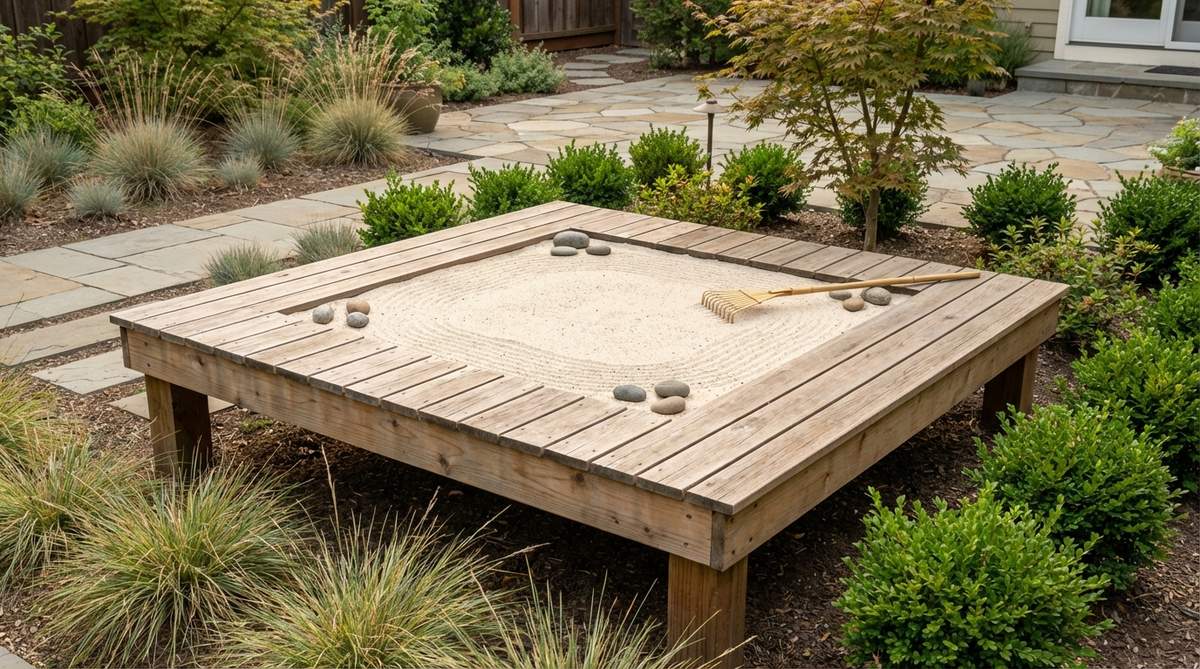
An elevated 4×4 foot wooden platform filled with sand creates a dedicated raking space at comfortable standing height. The raised design prevents pets and wildlife from disturbing patterns.
Build the frame using 2×10 lumber with drainage gaps between bottom boards. The platform height of 18 to 24 inches allows rake use without bending.
22. Narrow Side-Yard Zen Corridor
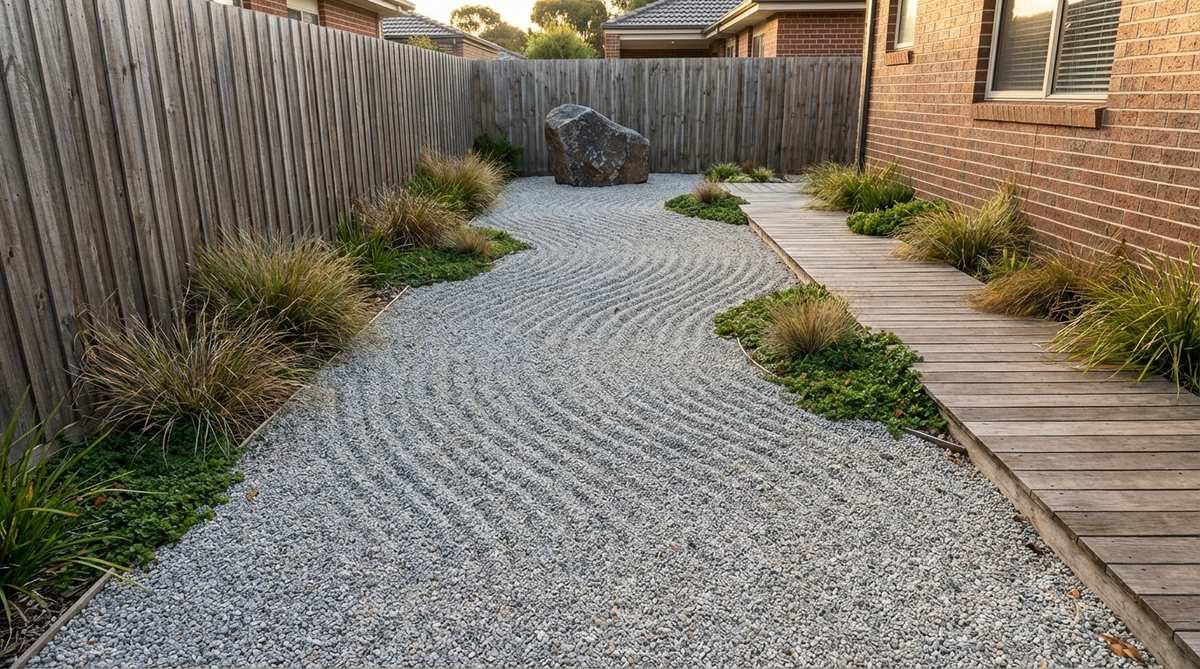
Unused side yards measuring 3 to 4 feet wide become linear zen gardens with lengthwise raked patterns. The confined space intensifies the meditation experience through focused simplicity.
Install the longest possible rake strokes along the corridor length to emphasize depth. Position a single boulder at the far end as a visual destination point.
23. Window-View Zen Box
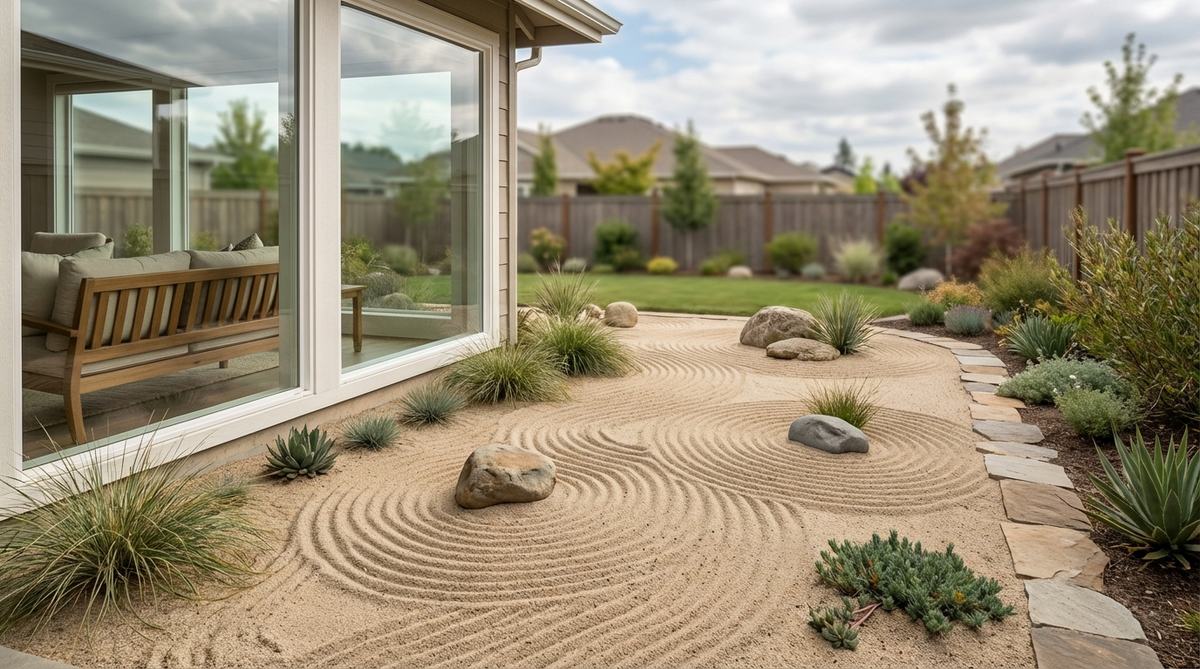
A shallow sand garden positioned outside a frequently used window provides ongoing visual meditation. The framed view becomes a living artwork that changes with each raking session.
Dimension the garden to fit within the window frame when viewed from a seated indoor position. This strategic placement allows contemplation during meals, work, or relaxation.
Modern Zen Interpretations
Contemporary designers adapt traditional zen principles to modern materials and architectural contexts. These interpretations honor meditative intent while incorporating current design trends.
24. Black-White Gravel Contrast
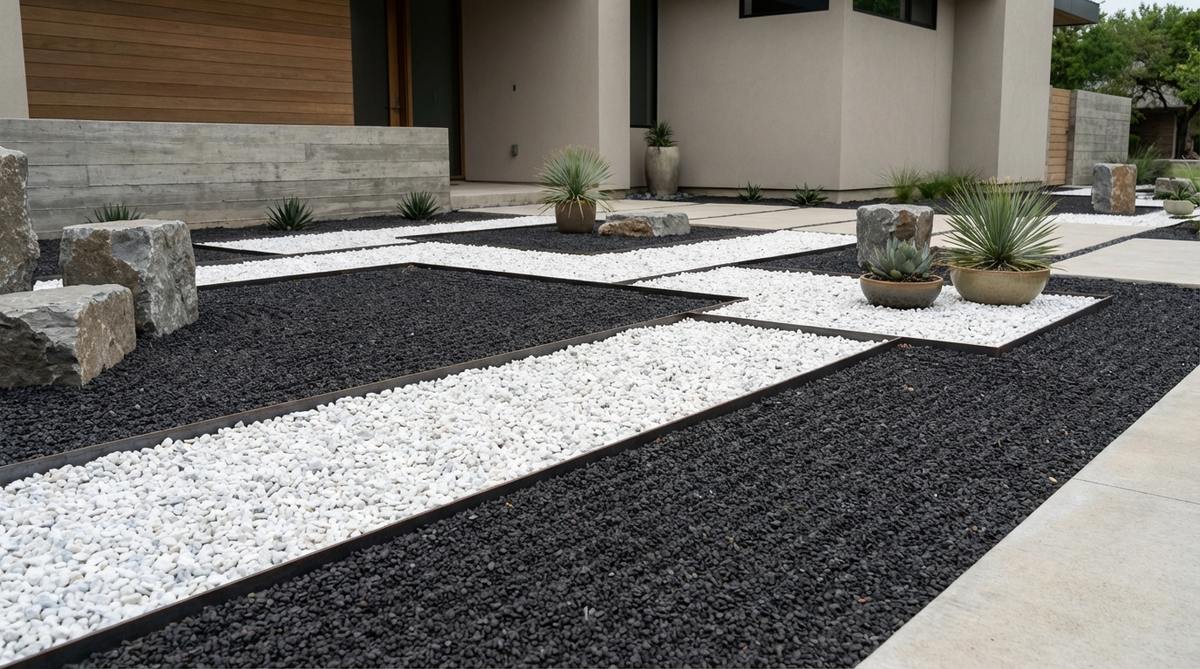
Alternating zones of black lava gravel and white marble chips create bold graphic patterns. The high contrast emphasizes geometric shapes and modern minimalism while maintaining zen simplicity.
Separate color zones with metal edging strips to prevent mixing during raking. Rake each section in perpendicular directions to enhance the visual division between materials.
This contemporary approach works particularly well with modern architecture featuring strong horizontal lines and neutral color palettes. The dramatic contrast photographs exceptionally well for design documentation.
25. Integrated Deck Sand Panels
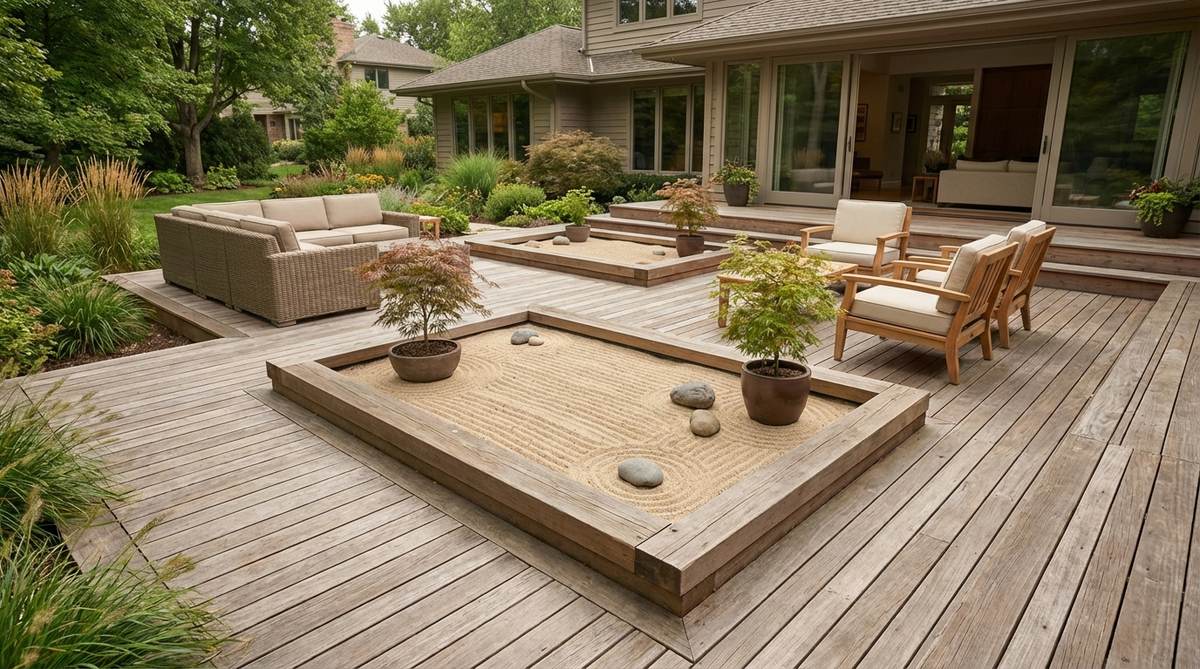
Recessed sections within wooden decking accommodate raked sand areas that blend indoor-outdoor living. The sand panels punctuate hardscape surfaces with meditative focal points.
Frame deck cutouts with doubled joists to support contained gravel beds. The functional deck space remains intact while introducing zen elements at strategic locations.
26. Glass-Box Enclosed Garden
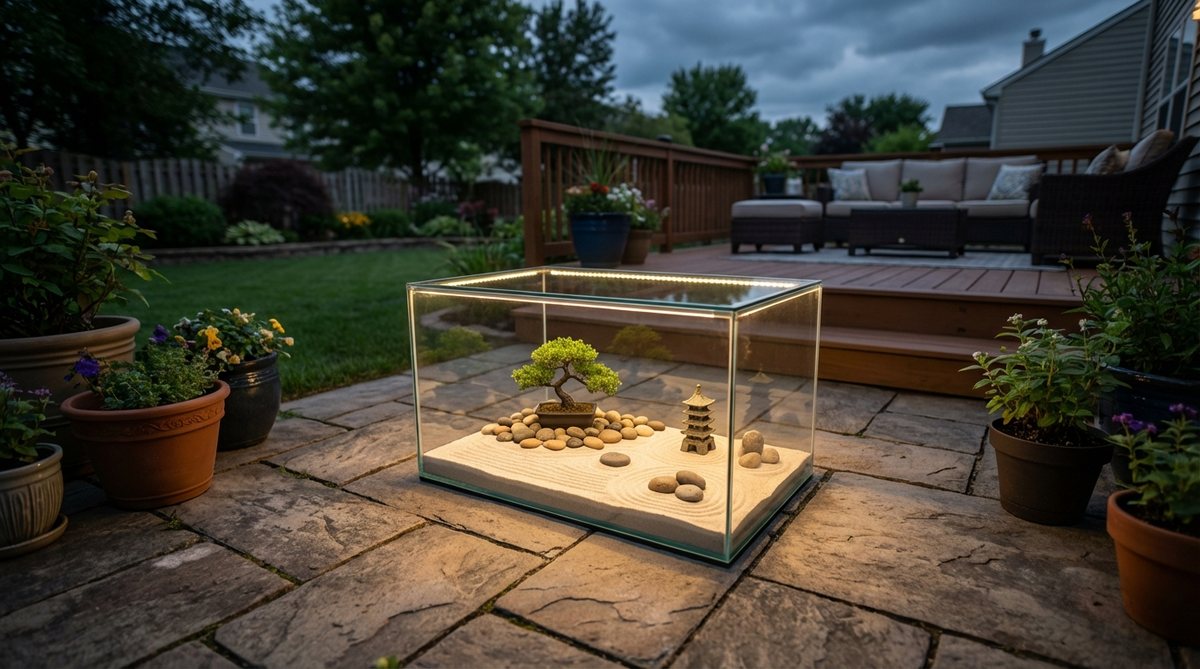
A transparent acrylic or glass case protects miniature zen gardens from wind and weather while displaying the composition as sculptural art. The sealed environment eliminates maintenance between rakings.
Dimension the enclosure to allow rake access through a removable top panel. Interior LED lighting transforms the piece into an illuminated display for evening viewing.
27. Vertical Wall-Mounted Zen Frame
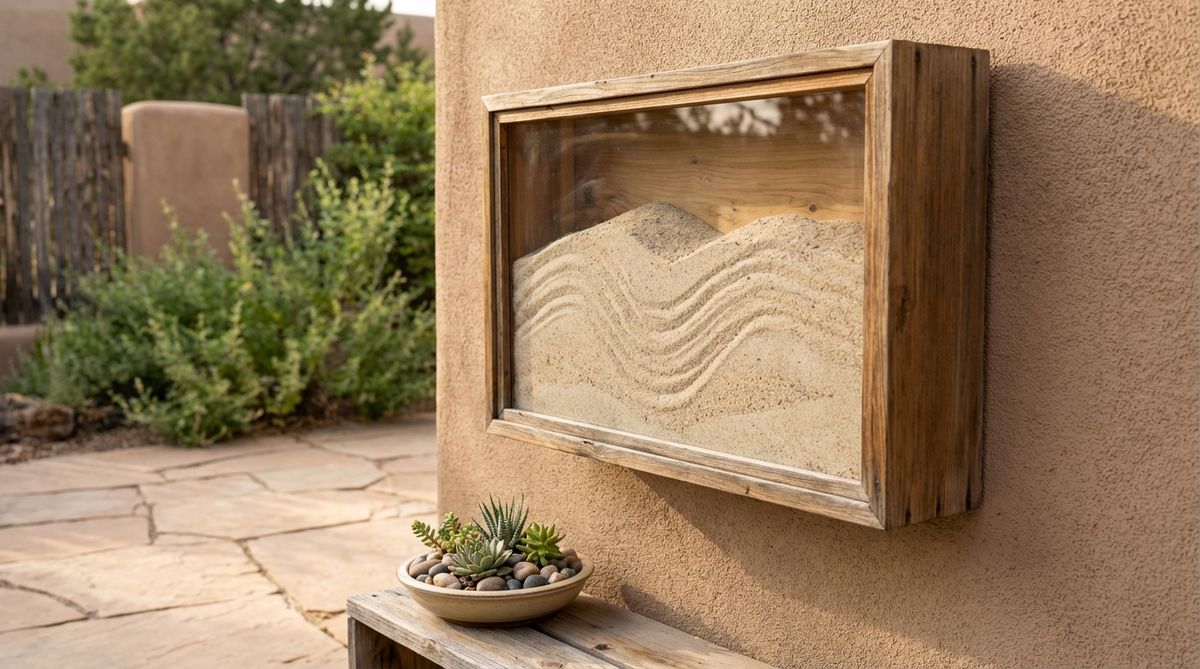
A shallow shadow box mounted on exterior or interior walls holds sand secured by a transparent front panel. The vertical orientation saves floor space while maintaining meditative aesthetics.
Rotate the frame quarterly to refresh the sand pattern, treating each rotation as a ceremonial raking session. The wall-mounted format works in small apartments and urban environments with limited ground space.
28. Terraced Multi-Level Zen Scape
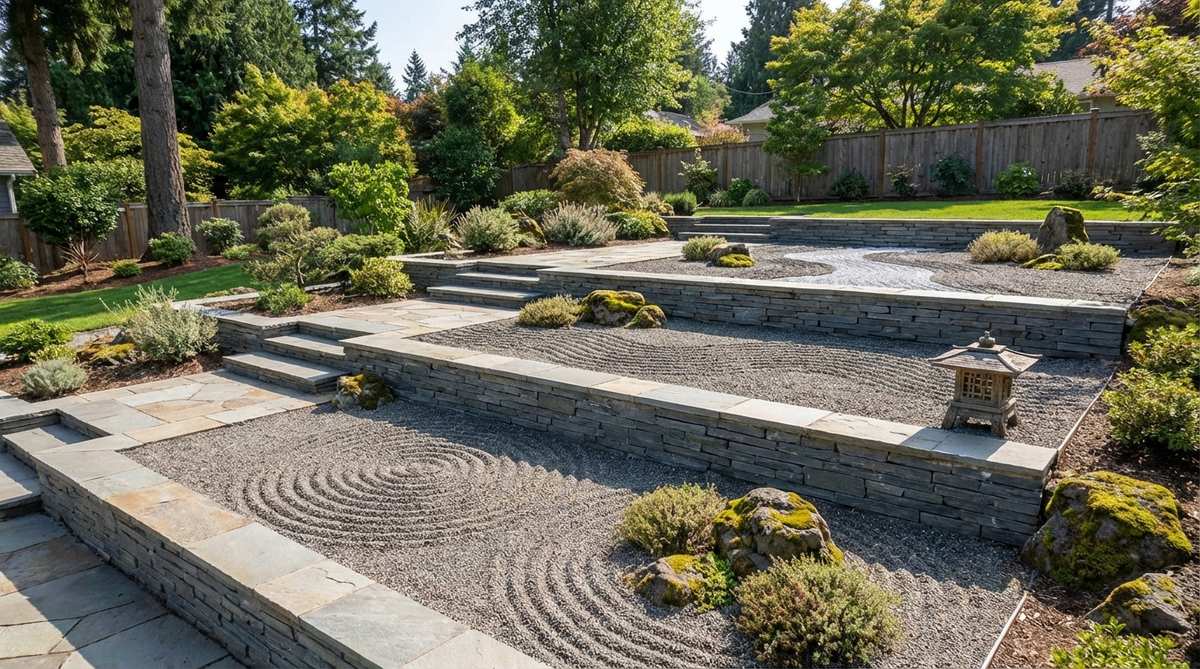
Stepped platforms at varying elevations create layered raking zones with distinct visual planes. Each terrace holds a separate pattern style, offering multiple meditation focal points within one garden.
Build retaining walls 8 to 12 inches high between levels using stacked stone or concrete blocks. The elevation changes add architectural interest to flat lots while maintaining horizontal raking surfaces.
Bringing Zen Garden Design to Your Landscape
Implementing authentic garden design zen principles creates outdoor spaces that promote mindfulness, reduce visual clutter, and provide daily opportunities for meditative practice through sand raking. These 28 design concepts demonstrate how traditional karesansui elements adapt to American landscapes, from expansive suburban yards to compact urban balconies. Start with a simple rectangular gravel bed, invest in a quality wide-toothed rake, and commit to regular pattern maintenance as part of your contemplative routine.
Frequently Asked Questions
What type of sand works best for zen garden raking?
Fine crushed granite, decomposed granite, or white marble chips in 1/8 to 1/4 inch particle size rake smoothly and hold patterns well. Avoid beach sand, which contains salt and organic matter that promotes weed growth. Crushed white limestone offers excellent contrast against darker stones while remaining affordable for larger installations.
How often should I rake patterns in my zen garden?
Rake fresh patterns weekly or whenever debris accumulates on the sand surface. The raking process itself serves as meditation practice rather than purely aesthetic maintenance. Daily raking works well for small desktop gardens, while larger outdoor installations typically require attention every 5 to 7 days depending on weather and foot traffic.
Can zen gardens include plants or should they remain completely dry?
Traditional karesansui gardens emphasize dry landscapes with minimal planting, though a single sculptural evergreen or moss accent maintains authenticity. Contemporary interpretations successfully incorporate low-maintenance plants like mondo grass, dwarf conifers, or bamboo at garden perimeters. Keep planted areas separate from raked zones to preserve clean sand patterns and simplify maintenance.
What rake specifications create the best sand patterns?
Wide-toothed bamboo or wooden rakes with teeth spaced 1/2 to 3/4 inch apart produce clean, defined lines in standard zen garden gravel. The rake width should match your garden scale—12-inch rakes suit tabletop gardens while 24 to 36-inch models work efficiently in larger outdoor spaces. Adjustable-tine rakes allow pattern variation within a single garden.
How do I prevent weeds in my zen garden gravel?
Install landscape fabric beneath the gravel layer before filling with sand or stone. Apply 3 to 4 inches of gravel depth to suppress weed germination through light exclusion. Regular raking naturally disrupts emerging seedlings before they establish roots. For persistent weed issues, apply a pre-emergent organic herbicide specifically formulated for gravel landscapes twice annually.