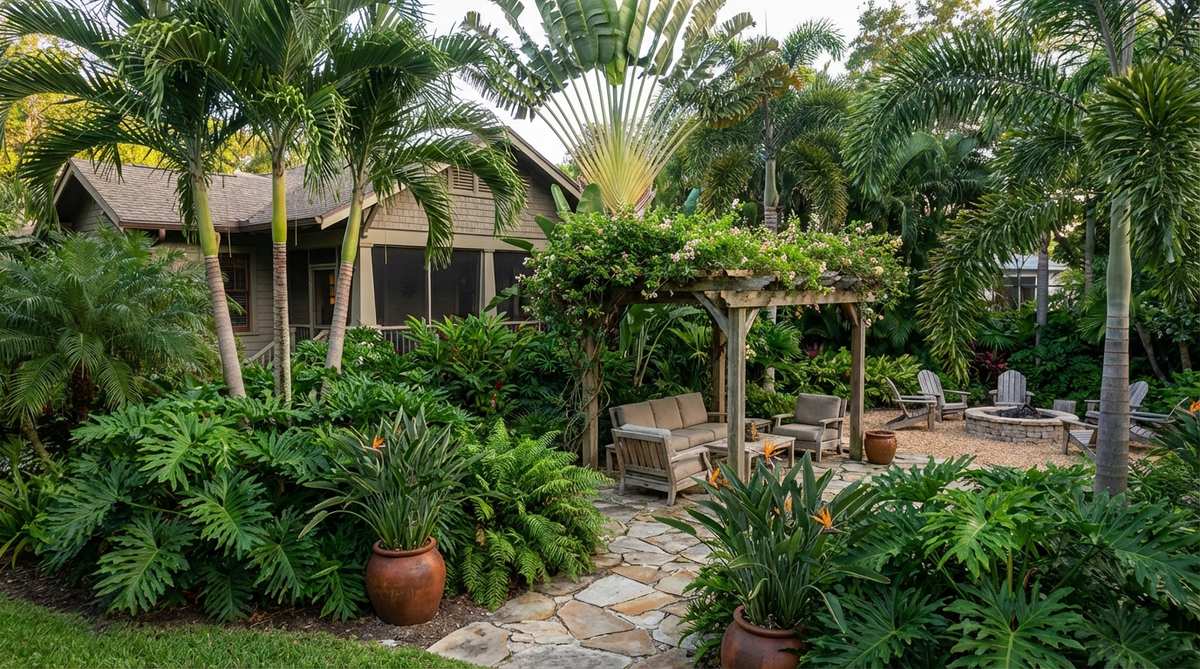
Creating a garden design tropical oasis transforms ordinary outdoor spaces into lush retreats that evoke the serenity of far-flung destinations. Palms and large-leafed plants anchor these landscapes with their bold textures and architectural presence, offering homeowners a chance to craft year-round beauty with minimal maintenance. Fresh Garden Ideas brings you expert-vetted strategies to build your own verdant escape, whether you have a sprawling estate or a compact urban lot.
Design SnapshotKey Principles
- Layering Heights: Combine tall palms, mid-sized shrubs, and low ground covers to mimic natural tropical ecosystems
- Bold Foliage: Prioritize large-leafed specimens like banana plants and elephant ears for instant drama and visual weight
- Water Integration: Incorporate ponds, fountains, or waterfalls to amplify humidity and create soothing soundscapes
- Strategic Grouping: Cluster plants in odd numbers and varying textures to achieve organic, resort-quality compositions
Foundation Palms for Structure and Scale
Palms deliver the vertical lines and symmetrical crowns that define authentic tropical landscapes. Designers rely on these specimens to establish garden bones before layering in secondary plantings. Their fine root systems allow installation near hardscaping without infrastructure damage, while mature transplants offer instant gratification.
1. Queen Palm Canopy Clusters
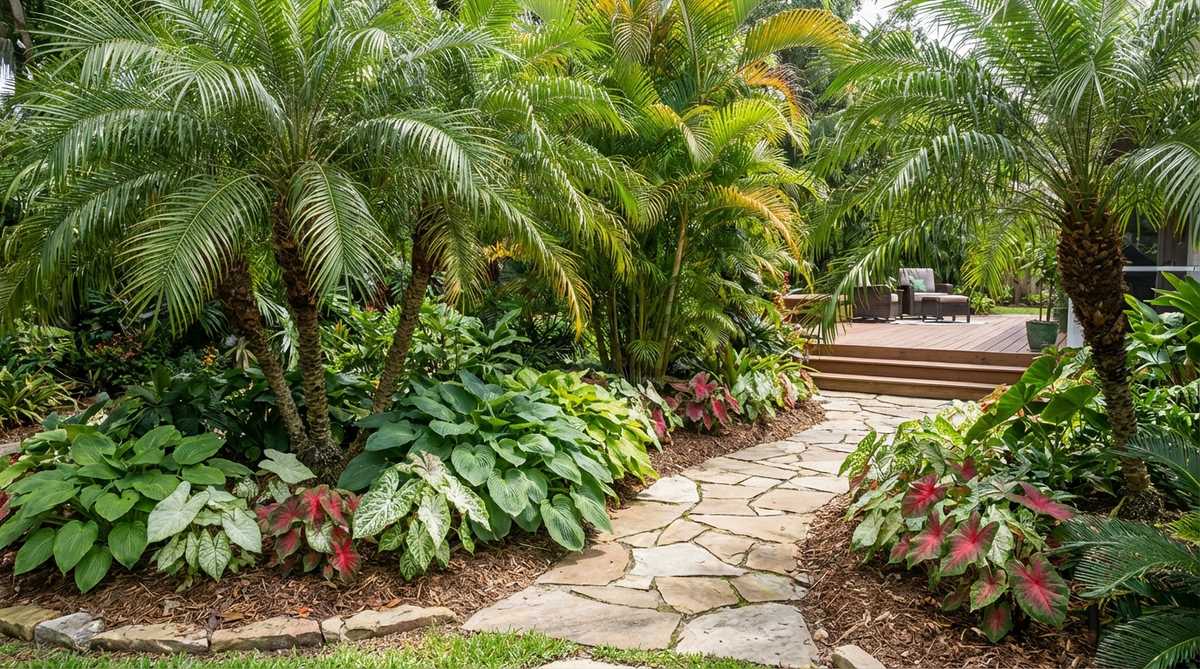
Queen palms rise 30 to 50 feet with feathery fronds that sway gracefully in breezes, creating dappled shade patterns ideal for understory plants. Their slender trunks occupy minimal ground space, allowing designers to plant them in tight groupings of three or five for maximum impact.
Position queen palms along property lines or behind seating areas to frame views without overwhelming sight lines. Pair them with golden cane palms at mid-height to establish a multi-tiered canopy that mimics rainforest structure.
This combination provides filtered light for shade-loving species like hostas and caladiums while maintaining the open, airy feel that distinguishes professional tropical designs from cluttered plantings.
2. Mexican Fan Palm Skyline Statement
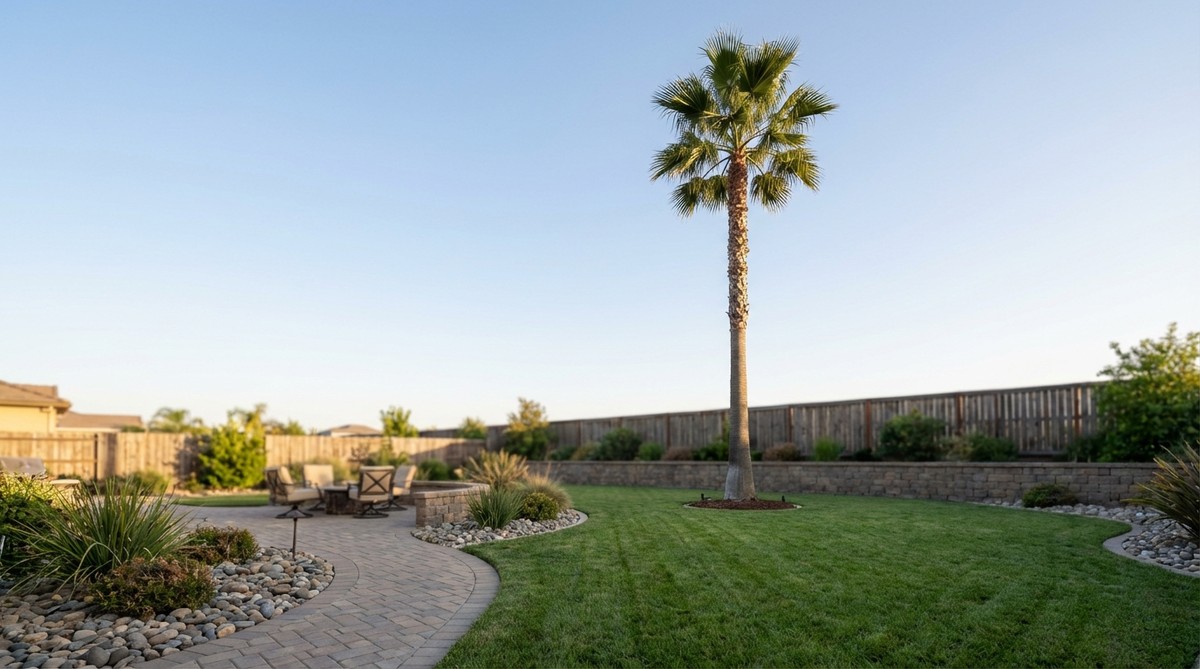
Mexican fan palms reach 100 feet in ideal conditions, making them the go-to choice for creating dramatic skyline silhouettes. Their fast growth rate delivers mature scale within a decade, and their drought tolerance suits water-conscious landscapes.
Plant them as solo specimens in open lawn areas where their full form can be appreciated from multiple angles. Alternatively, line driveways or property entries with evenly spaced individuals to establish a grand, resort-style approach.
These palms thrive in full sun and require minimal pruning, reducing long-term maintenance while providing year-round architectural interest that anchors garden compositions.
3. Areca Palm Privacy Screens
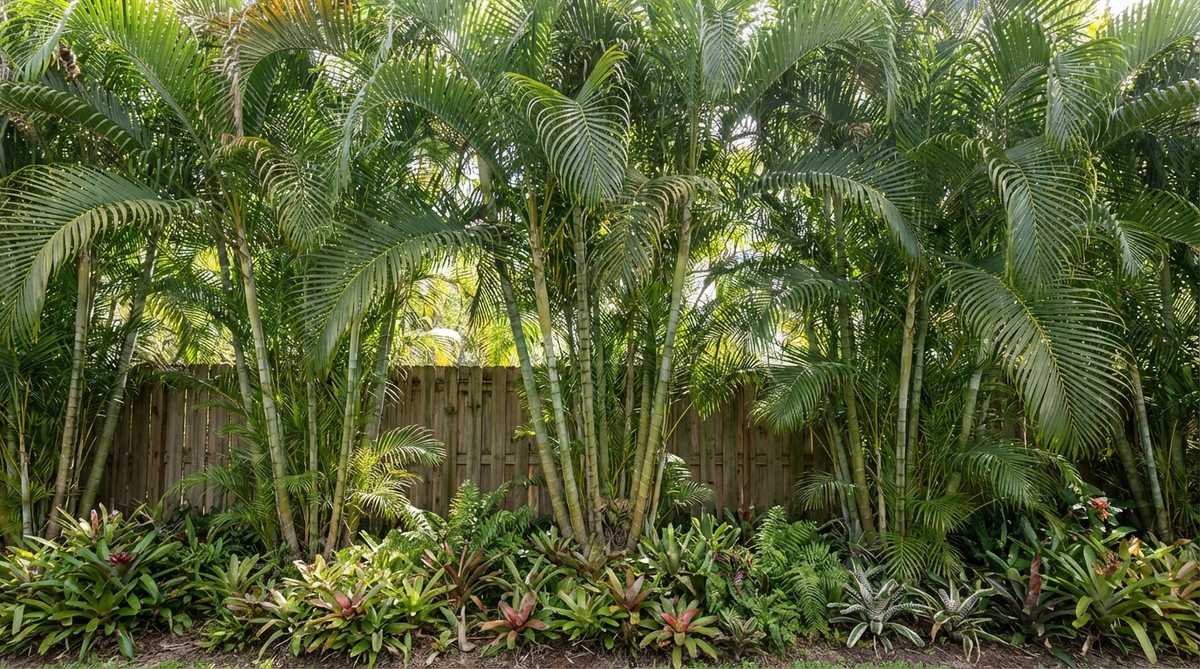
Areca palms grow in dense clumps with multiple stems reaching 15 to 25 feet, creating natural privacy barriers that soften hardscape boundaries. Their soft, feathery fronds filter light without blocking airflow, maintaining comfort in outdoor living zones.
Install arecas along fence lines or pool perimeters, spacing clumps 8 to 10 feet apart for seamless coverage within two growing seasons. Their non-invasive roots permit planting near patios and foundations, and they tolerate container culture for portable screening solutions.
Supplement areca screens with lower-growing bromeliads or ferns to fill visual gaps at ground level and introduce contrasting leaf forms that enhance textural richness.
4. Windmill Palm Cold-Hardy Backbone
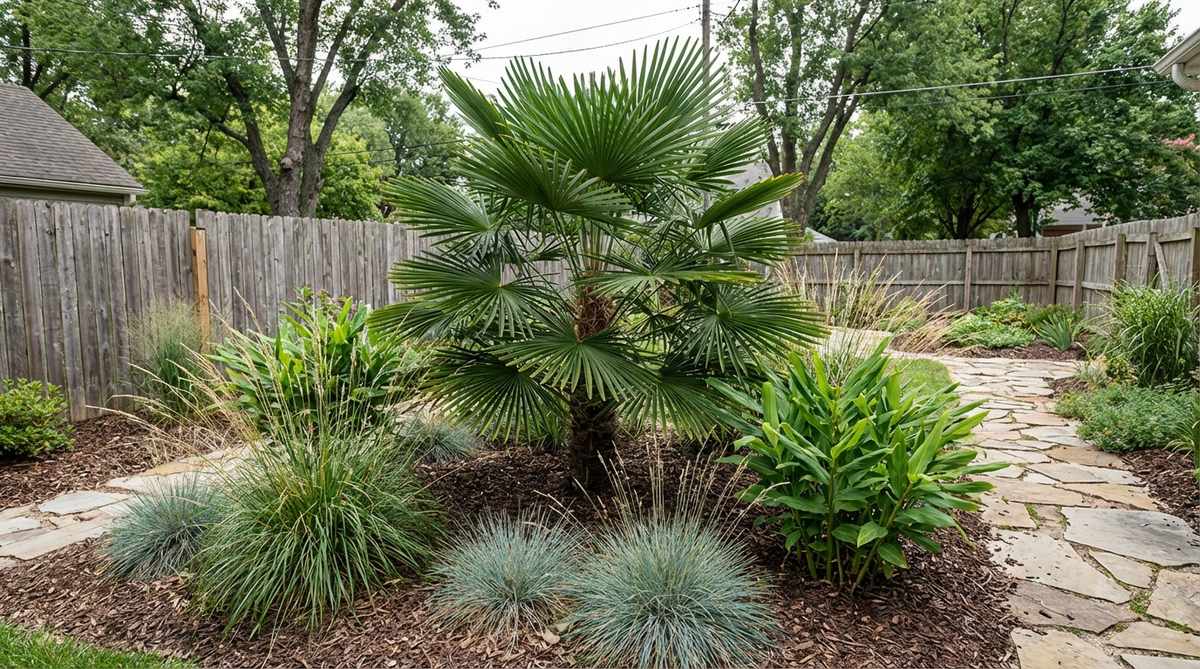
Windmill palms survive temperatures down to 5°F, extending tropical aesthetics into temperate zones where most palms fail. Their compact 10-foot spread suits small yards, and their dark green fans add coarse texture that contrasts beautifully with fine-leafed companions.
Use windmill palms as anchor plants in foundation beds or courtyard gardens where their moderate size won’t overwhelm adjacent structures. Their slow growth maintains design proportions without requiring frequent trimming.
Combine them with cold-tolerant gingers and ornamental grasses to create transition zones that blend tropical flair with regional plant palettes, expanding design possibilities for northern gardens.
5. Golden Cane Palm Midlevel Bridge
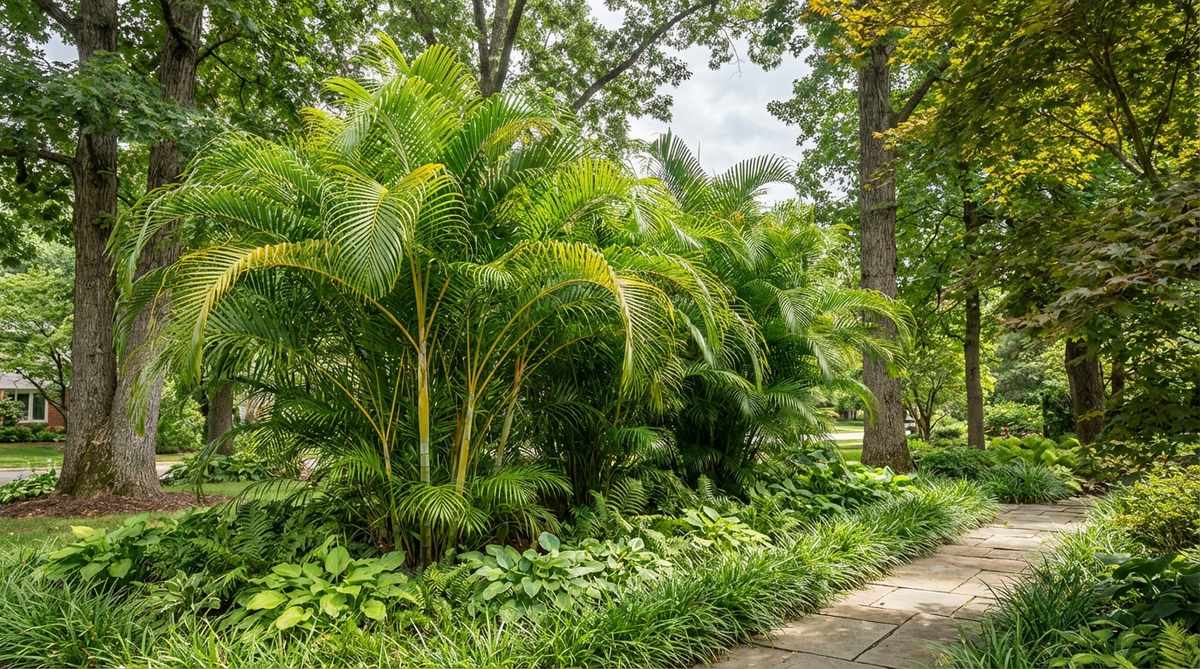
Golden cane palms reach 12 to 20 feet with bright yellow-green stems that illuminate shaded garden corners. Their clumping habit produces dense masses that transition smoothly between tall canopy palms and low ground covers.
Position golden canes in dappled shade beneath taller trees or along shaded walkways where their luminous stems brighten dim zones. Space multiple clumps irregularly to avoid rigid, artificial-looking rows.
Their moderate size accommodates narrow planting beds and courtyard gardens where larger palms would overwhelm the space, making them ideal for urban tropical oases.
Dramatic Foliage Accents
Large-leafed plants inject instant drama and tropical authenticity into garden compositions. These specimens command attention as focal points while creating bold textural contrasts against fine-leafed palms. Designers layer them strategically to guide the eye through spaces and establish visual rhythm.
6. Banana Plant Vertical Drama
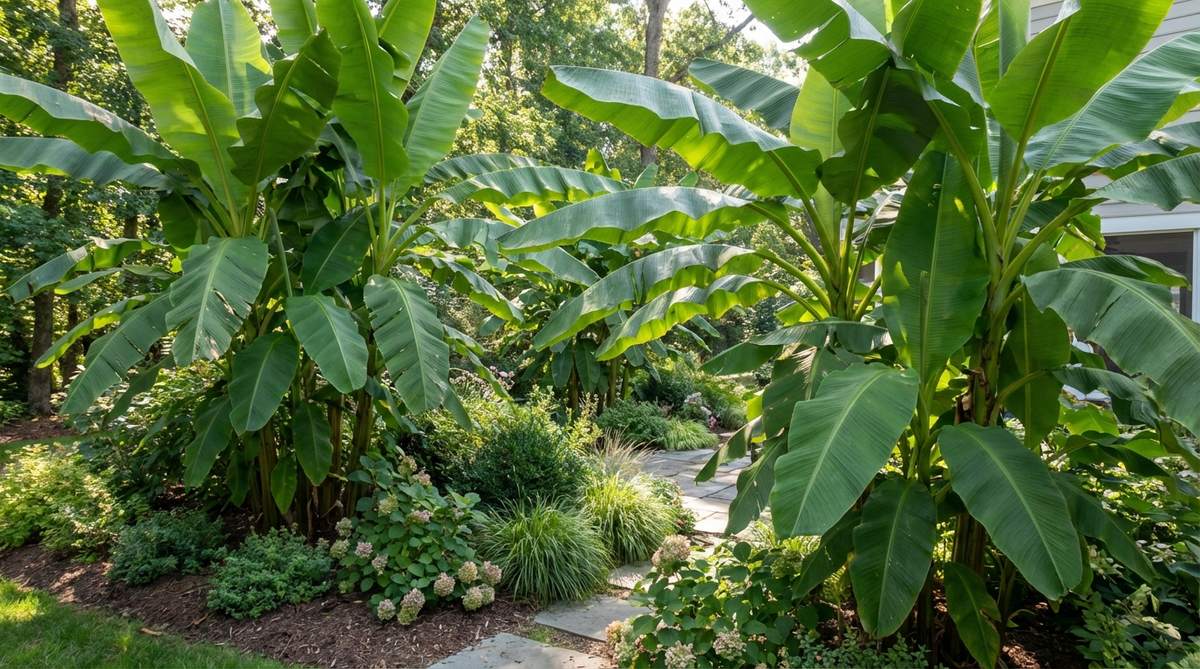
Banana plants produce paddle-shaped leaves up to 9 feet long, delivering unmatched scale and presence in temperate and tropical gardens alike. Their fast growth fills bare spaces within months, and their upright form adds vertical interest without requiring permanent tree-scale commitments.
Plant bananas in groups of three or five behind lower shrubs to create layered backdrops for seating areas. Cut stems back to the ground after frost and mulch heavily to protect rhizomes for next season’s regrowth.
Varieties like Musa basjoo tolerate cold better than most, allowing gardeners in Zone 7 and warmer to enjoy authentic tropical foliage without annual replanting expenses.
7. Elephant Ear Ground-Level Impact
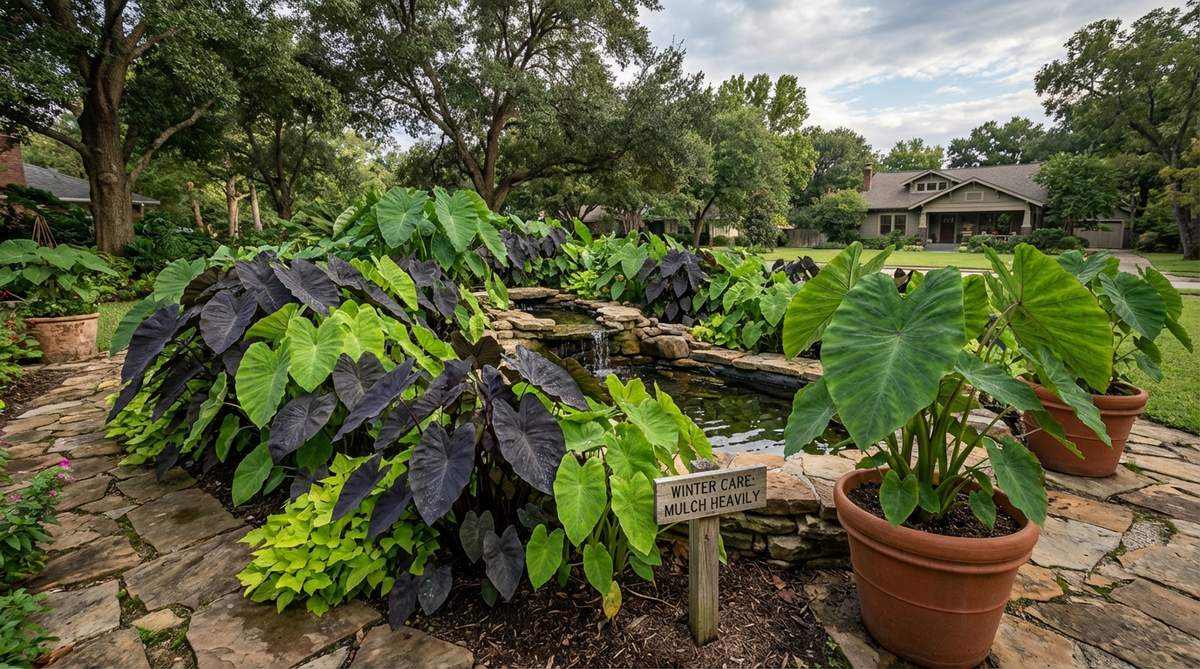
Elephant ears unfurl heart-shaped leaves spanning 3 feet across, creating lush carpets that suppress weeds while establishing jungle-like density. Dark varieties like Black Magic provide striking contrast against lime-green companions, and chartreuse types brighten shaded understories.
Mass elephant ears in damp areas near water features or rain gardens where their high moisture requirements are naturally met. Alternatively, use them as thriller components in large containers mixed with trailing vines and upright grasses.
Dig tubers before frost in cold climates and store them indoors through winter, or treat them as annuals and replant fresh stock each spring for hassle-free maintenance.
8. Bird of Paradise Architectural Sculpture
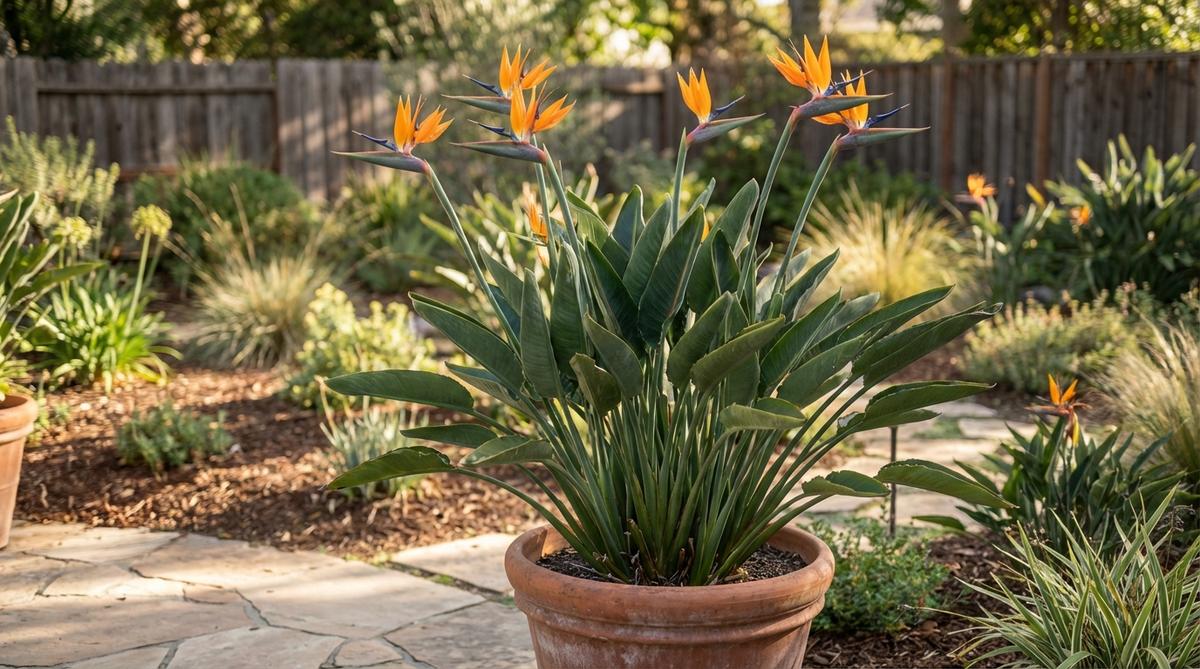
Bird of paradise plants produce rigid, banana-like leaves arranged in fan patterns that mimic abstract sculptures. Their exotic orange and blue flowers emerge on tall stalks, adding seasonal color to year-round foliage interest.
Position bird of paradise as specimen plants in containers flanking entryways, or cluster them in garden beds where their stiff, vertical form provides contrast against loose, flowing grasses. They tolerate drought once established, suiting low-water tropical themes.
Full sun exposure maximizes flowering potential, though plants tolerate partial shade and continue to contribute bold foliage even when blooms are sparse.
9. Traveler’s Palm Fan-Shaped Focal Point
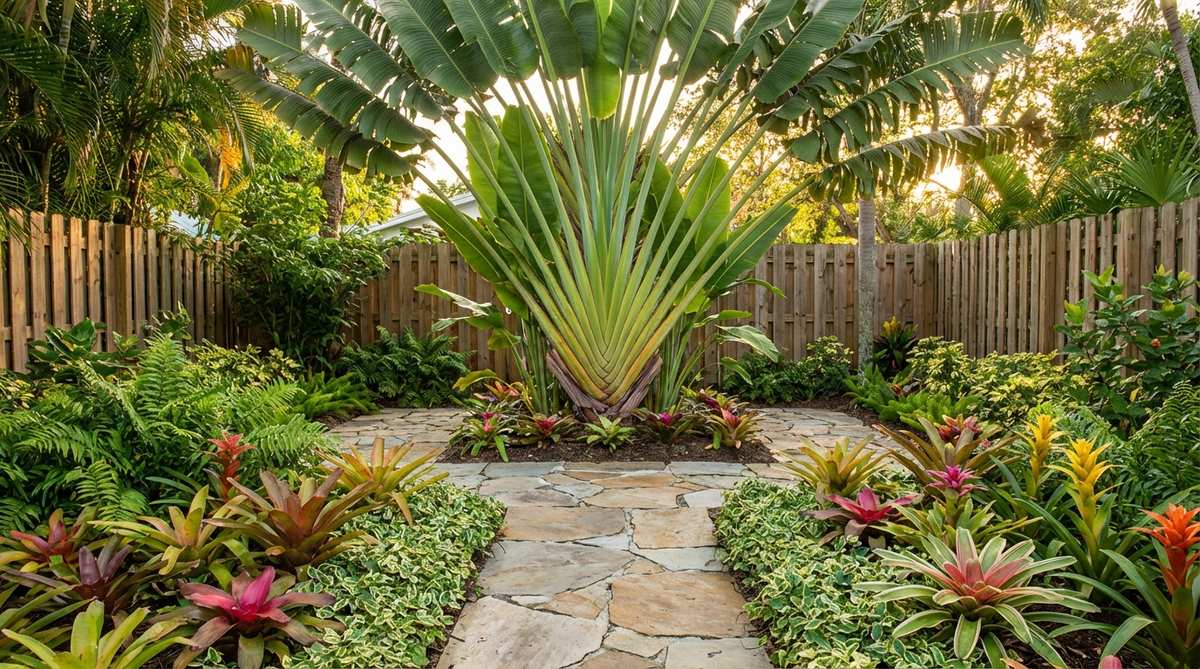
Traveler’s palm arranges its massive leaves in a single plane, creating a fan that resembles an oversized peacock tail. Despite its name, this plant belongs to the bird-of-paradise family and delivers unmatched architectural presence.
Use traveler’s palm as the ultimate garden focal point, positioning it at the terminus of walkways or centered in courtyard views where its symmetrical form anchors compositions. It requires ample space to display its full width, making it best suited to larger properties.
Pair it with low-growing bromeliads and ground covers that won’t compete for visual attention, allowing the fan form to dominate the design plane.
10. Monstera Deliciosa Swiss Cheese Texture
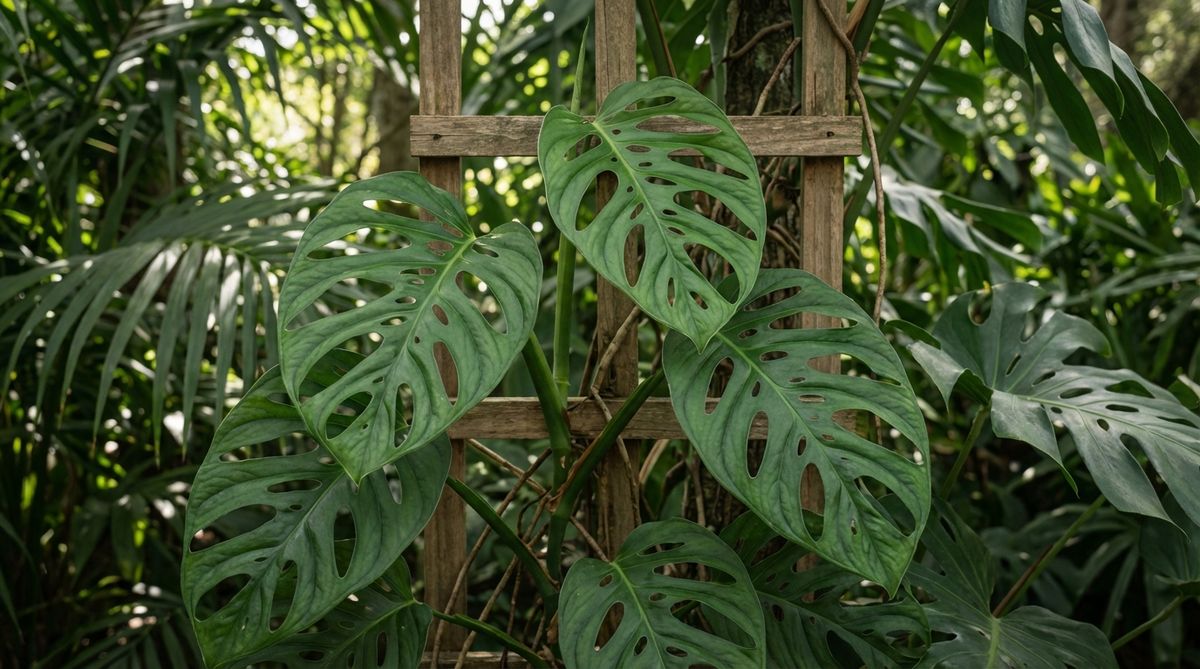
Monstera produces glossy, perforated leaves that add exotic texture to shaded garden zones and covered patios. Its climbing habit allows it to scale trellises or tree trunks, introducing vertical greenery without consuming ground space.
Train monstera along pergola posts or privacy screens to create living walls that filter light and soften architectural edges. In frost-prone areas, grow it in containers that can be moved indoors during winter.
Its tolerance for low light makes it invaluable for dark corners beneath dense canopies where few other large-leafed plants thrive, expanding design options in challenging microclimates.
Layered Planting Strategies
Professional designers build depth by stacking plants at varying heights, creating compositions that reveal new elements as viewers move through spaces. This technique mimics natural tropical forests where competition for light drives vertical stratification. Proper layering prevents flat, two-dimensional landscapes and maximizes planting density without crowding.
11. Tall Palms with Understory Ferns
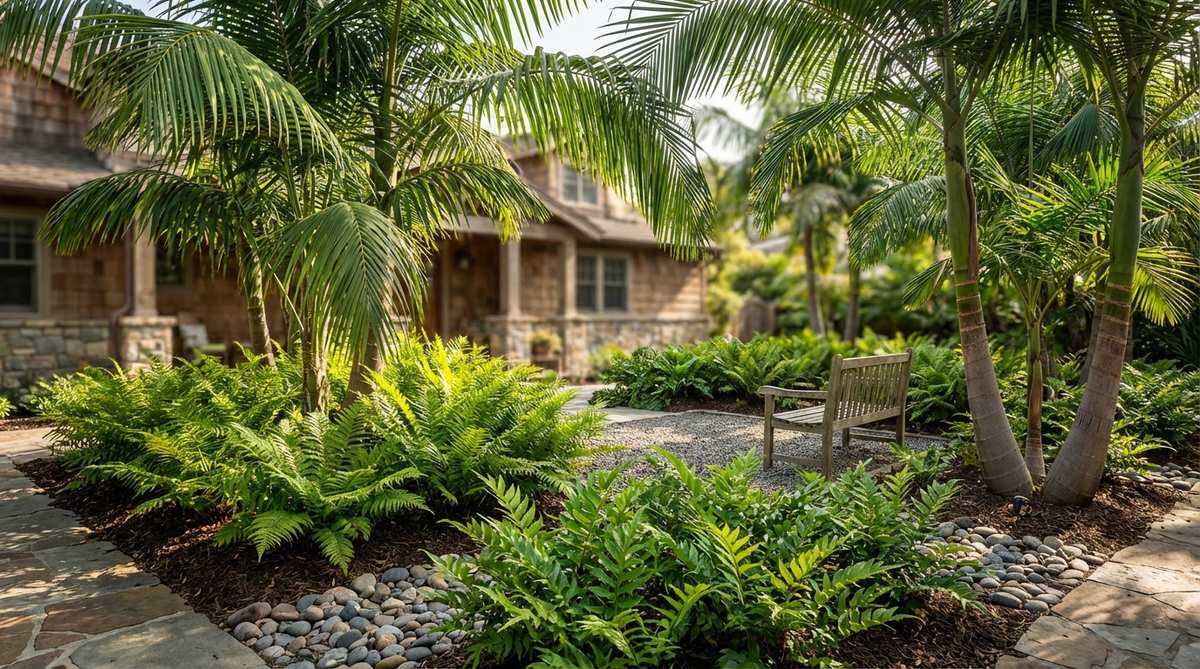
Pair towering queen or king palms with waist-high ferns to establish a classic two-tier structure. The palm canopy filters harsh sunlight, creating ideal dappled shade for fern fronds that add fine texture and emerald color.
Plant ferns in sweeping drifts that extend 8 to 10 feet from palm trunks, avoiding rigid circles that look unnatural. Varieties like autumn fern and holly fern tolerate moderate drought once established, reducing irrigation demands.
This combination requires minimal maintenance after establishment—palms shed old fronds occasionally, and ferns need only annual cleanup of dead material in spring.
12. Mid-Height Gingers Bridge Canopy and Ground
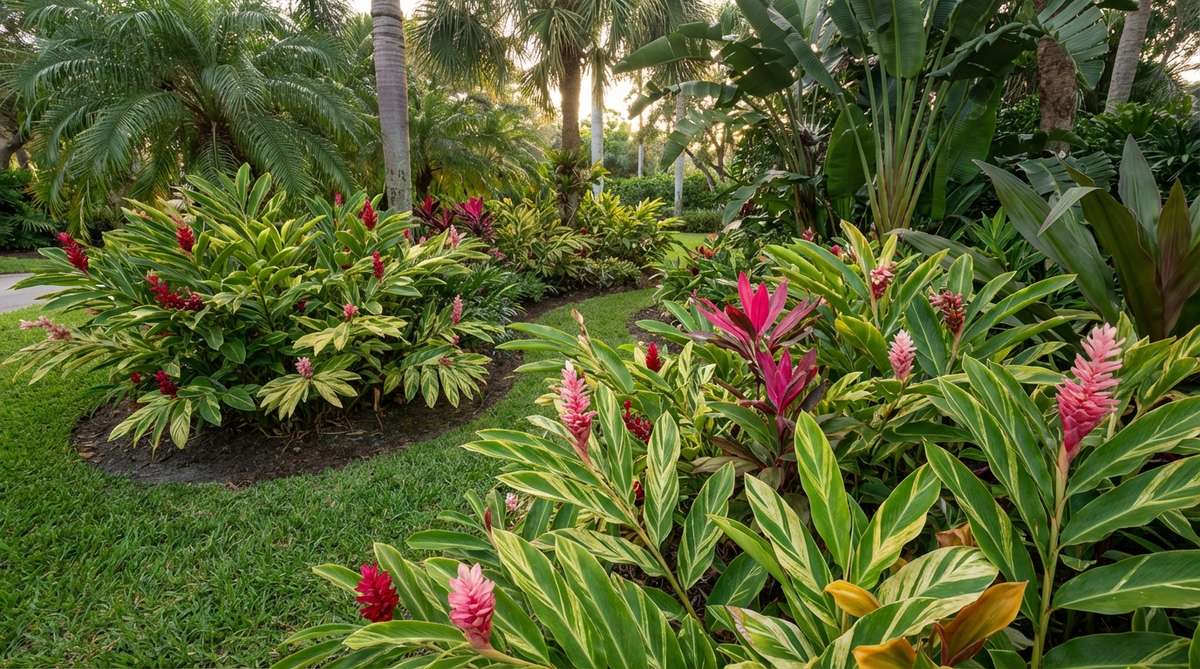
Gingers reach 3 to 6 feet with lush foliage and showy blooms, occupying the critical middle zone between tall palms and low ground covers. Red ginger and shell ginger varieties deliver months of color while their broad leaves maintain visual presence during off-seasons.
Position gingers in irregular clusters throughout planting beds, varying group sizes to create natural-looking distributions. Their spreading rhizomes fill gaps over time, reducing weed pressure and maintenance needs.
Supplement them with variegated forms to introduce cream and gold accents that brighten shaded zones without requiring flowering performance.
13. Ground Cover Bromeliads Complete the Stack
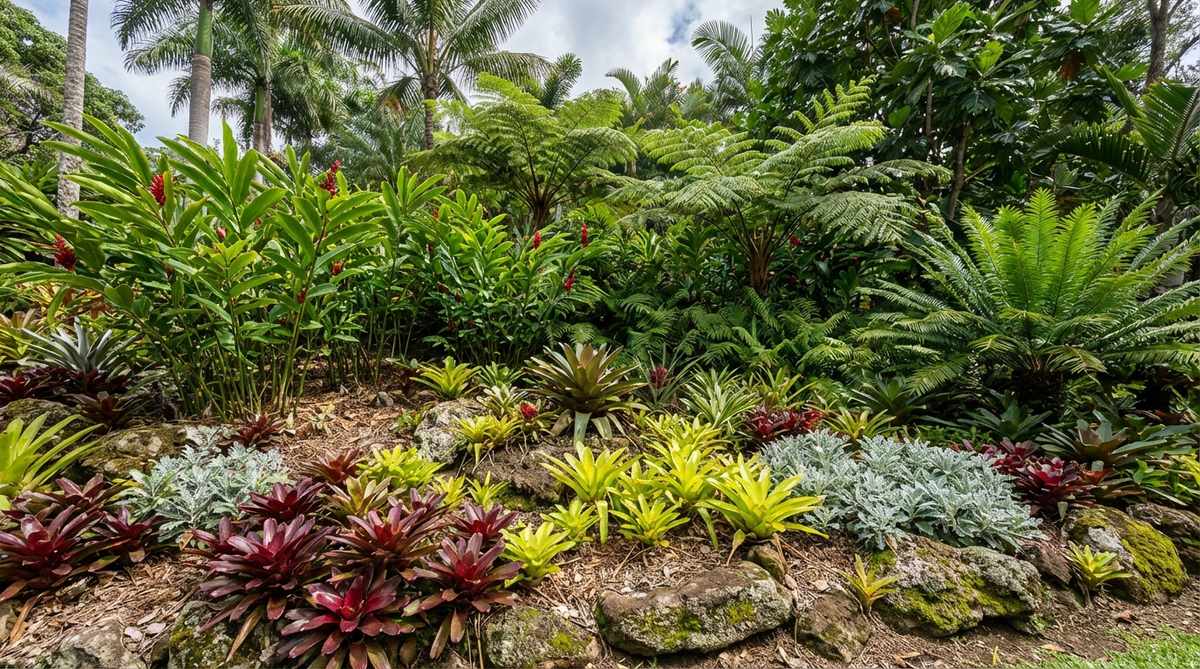
Bromeliads hug the ground with rosettes of colorful foliage, completing the vertical stack while adding jewel-toned hues. Their minimal root systems allow planting in shallow soils or on rocky slopes where other ground covers struggle.
Mass bromeliads beneath ginger and fern layers, mixing species with contrasting leaf colors—burgundy, chartreuse, and silver—to create living mosaics. They require virtually no maintenance once established and tolerate neglect better than most ornamentals.
This three-tier strategy—palms, gingers/ferns, and bromeliads—delivers professional-grade complexity while keeping plant counts manageable and care routines simple.
14. Canna Lily Vertical Color Punches
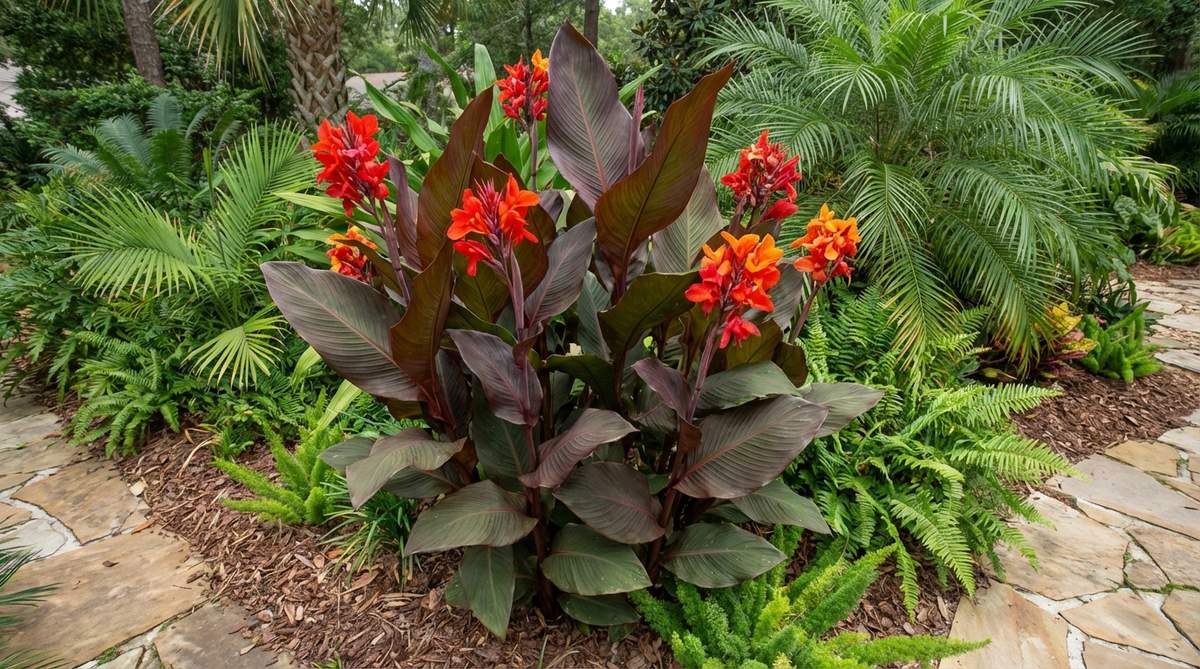
Cannas shoot up 4 to 8 feet with banana-like foliage in bronze, burgundy, or green tones, topped by vibrant red, orange, or yellow blooms. They bridge the gap between low perennials and tall palms, adding mid-level color that draws the eye upward.
Plant cannas in bold sweeps along property boundaries or massed behind seating walls where their height provides privacy without permanent screening. Cut spent blooms to extend flowering and divide rhizomes every few years to maintain vigor.
Their tolerance for wet soils makes them ideal for bog gardens or pond margins, expanding design possibilities in areas too damp for most ornamentals.
Water Features and Focal Points
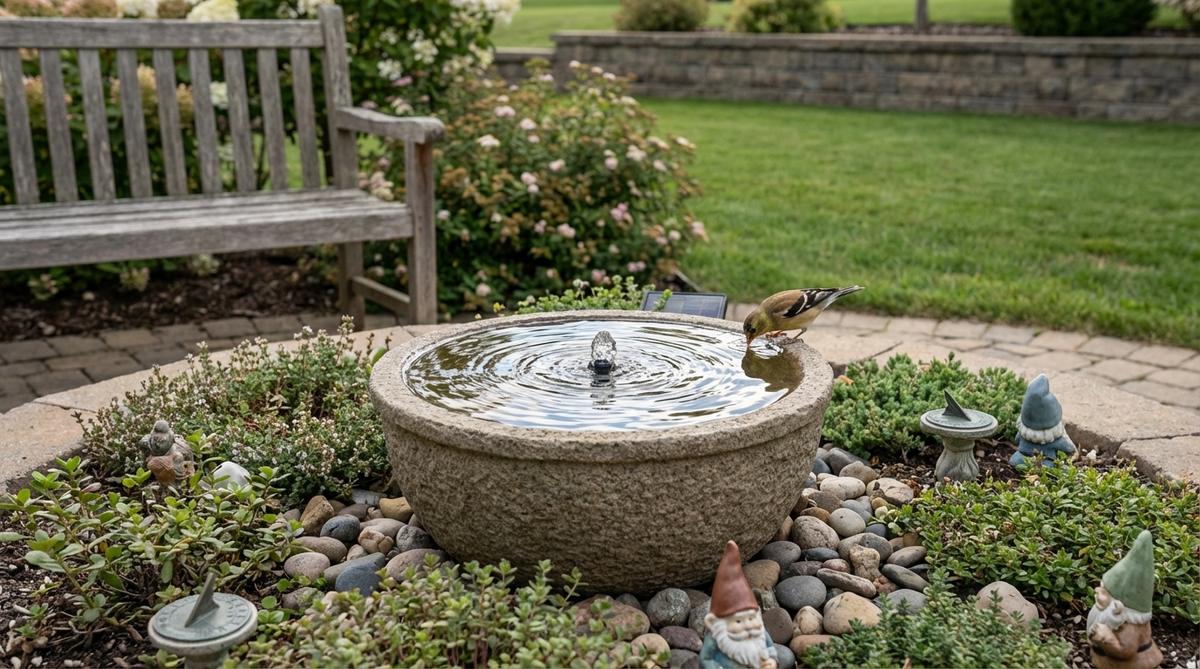
Water elements amplify tropical ambiance through sound, movement, and reflected light. They also increase local humidity, benefiting moisture-loving plants and creating comfortable microclimates. Designers use water to establish primary focal points that organize surrounding plantings and guide circulation through garden rooms.
15. Koi Pond Surrounded by Elephant Ears
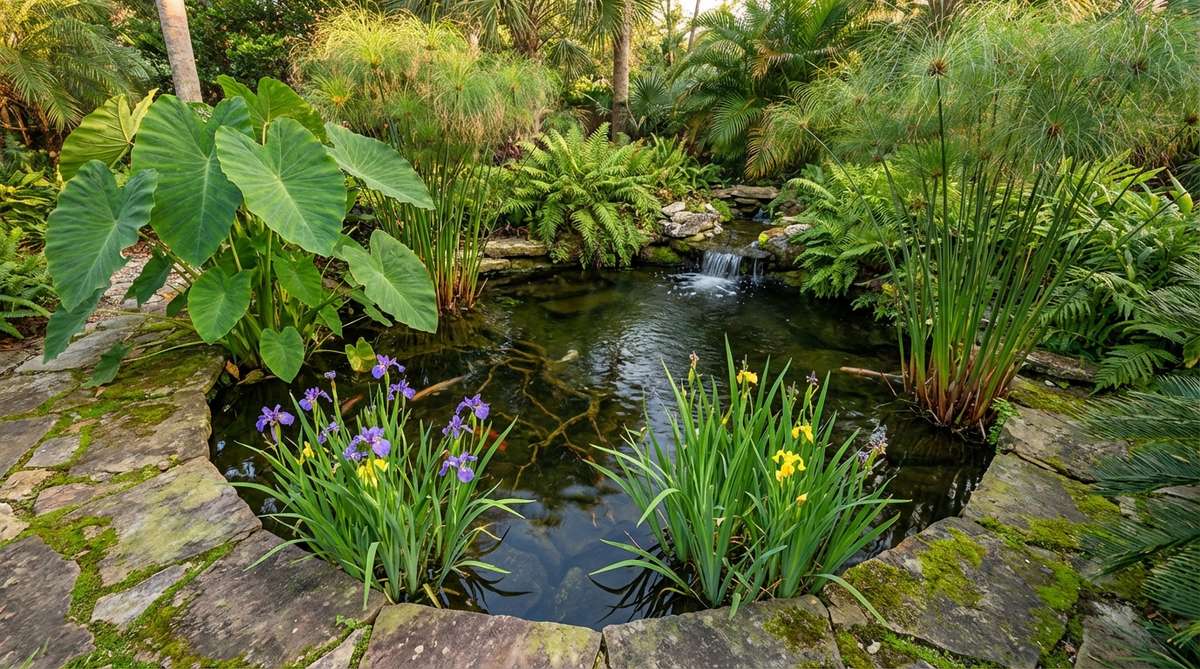
A naturalistic koi pond becomes an instant tropical centerpiece when ringed with elephant ears and papyrus. The large leaves overhang the water, creating shade for fish while softening hardscape edges with organic forms.
Install ponds in low-lying areas where they appear geologically natural, and use recirculating pumps to create gentle water movement that aerates the pond while producing soothing sounds. Edge the pond with flat stones that provide comfortable viewing platforms.
Combine elephant ears with water-loving irises and pickerel rush to introduce vertical variation and ensure something is in bloom throughout the growing season.
16. Cascading Waterfall with Palm Backdrop
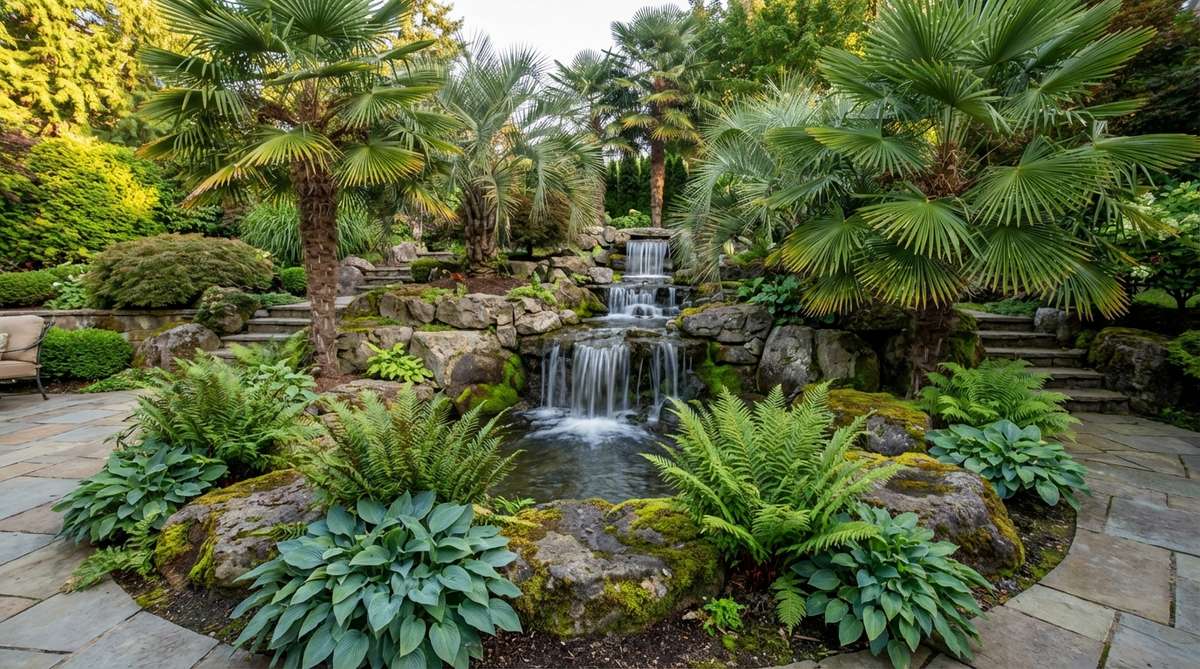
A multi-tier waterfall framed by tall palms recreates resort-style luxury in residential settings. The vertical water movement adds drama and masks ambient noise, while palms provide scale and frame the feature from multiple viewing angles.
Build waterfalls into hillsides or berms to avoid artificial-looking mounds, and use locally sourced stone to ensure visual cohesion with regional aesthetics. Plant palms asymmetrically around the feature rather than in rigid flanking pairs.
Underplant the waterfall base with moisture-tolerant ferns and hostas that thrive in the humid microclimate created by constant water movement and spray.
17. Fountain Courtyard with Potted Palms
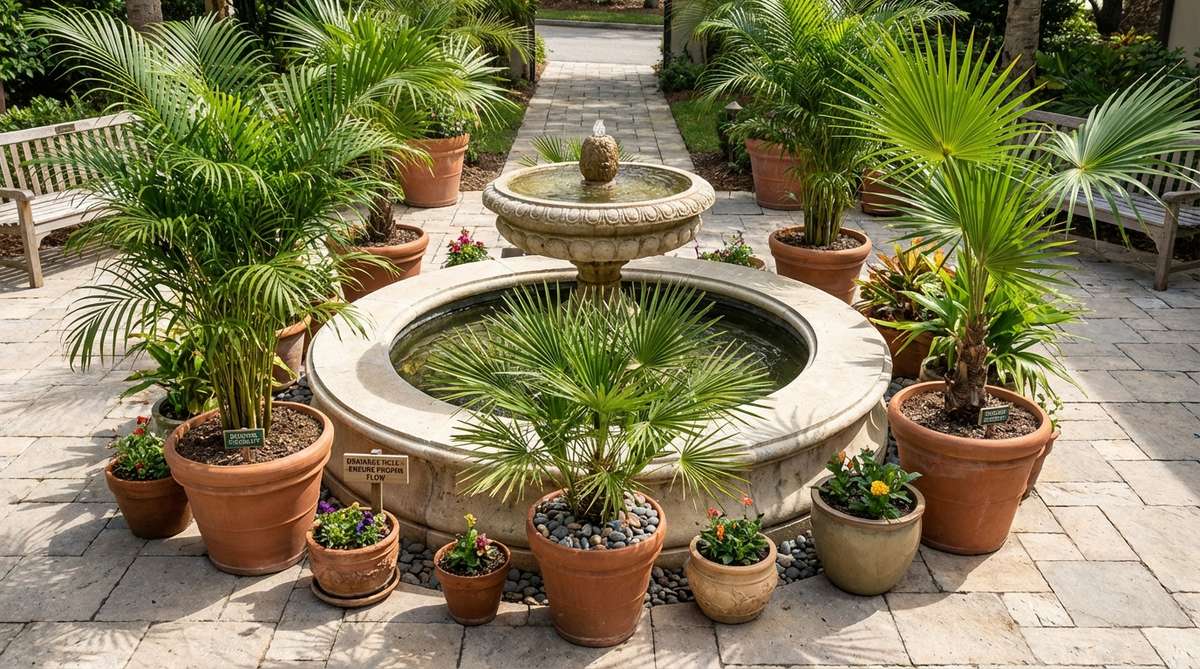
A central fountain surrounded by container-grown palms transforms patios and courtyards into intimate tropical retreats. The portability of containers allows seasonal rearrangement and protection of tender palms during cold snaps.
Select glazed ceramic or fiberglass pots in colors that complement architectural finishes, and use pot feet to elevate containers for drainage and airflow. Size pots proportionally to palm height—generally, pot diameter should equal one-third of plant height.
Supplement potted palms with flowering annuals in coordinating containers to inject seasonal color without altering the core design structure.
18. Rain Garden with Banana and Canna Masses
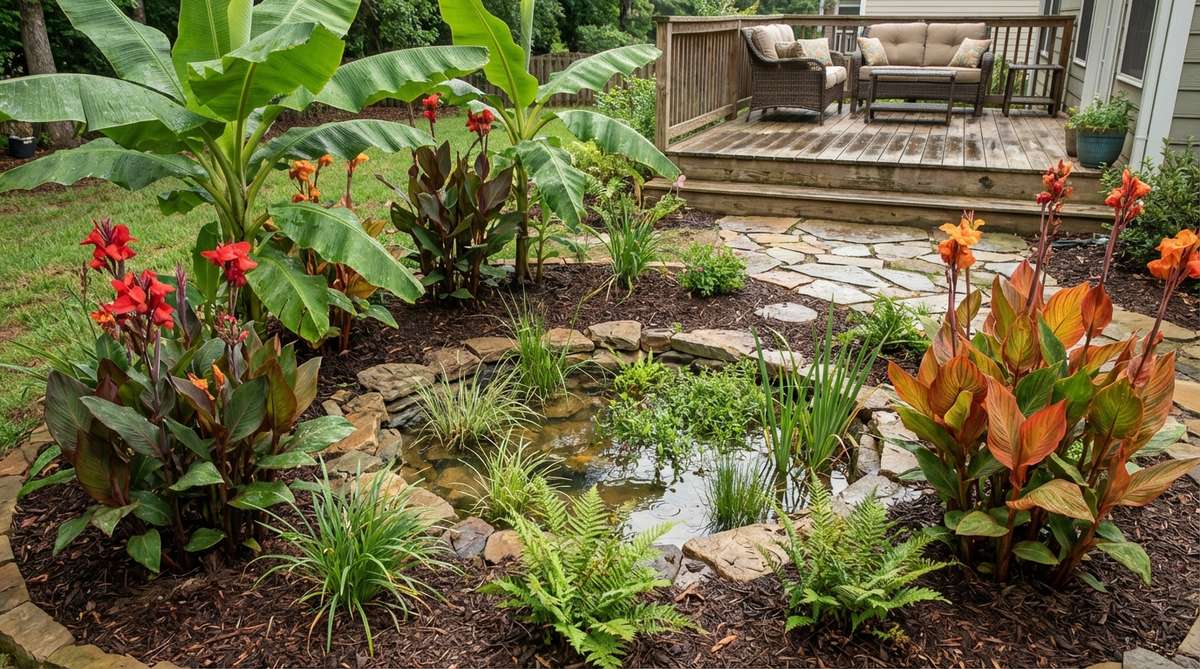
Rain gardens capture runoff in shallow depressions planted with water-tolerant species, combining ecological function with ornamental beauty. Bananas and cannas thrive in these periodically saturated conditions while delivering the lush foliage that defines tropical aesthetics.
Excavate rain gardens 6 to 12 inches deep in areas that receive runoff from roofs or paved surfaces. Plant the center with cannas and elephant ears that tolerate standing water, then transition to better-drained edges with bananas and gingers.
This design solves drainage problems while creating focal points that look intentional and luxurious rather than utilitarian, proving that functional landscapes can deliver high aesthetic value.
Intimate Tropical Corners
Small-scale tropical vignettes bring exotic ambiance to compact yards and overlooked corners. These designs prove that effective garden design tropical themes don’t require sprawling acreage—strategic plant selection and thoughtful arrangement create immersive experiences in minimal square footage.
19. Container Cluster Patio Oasis
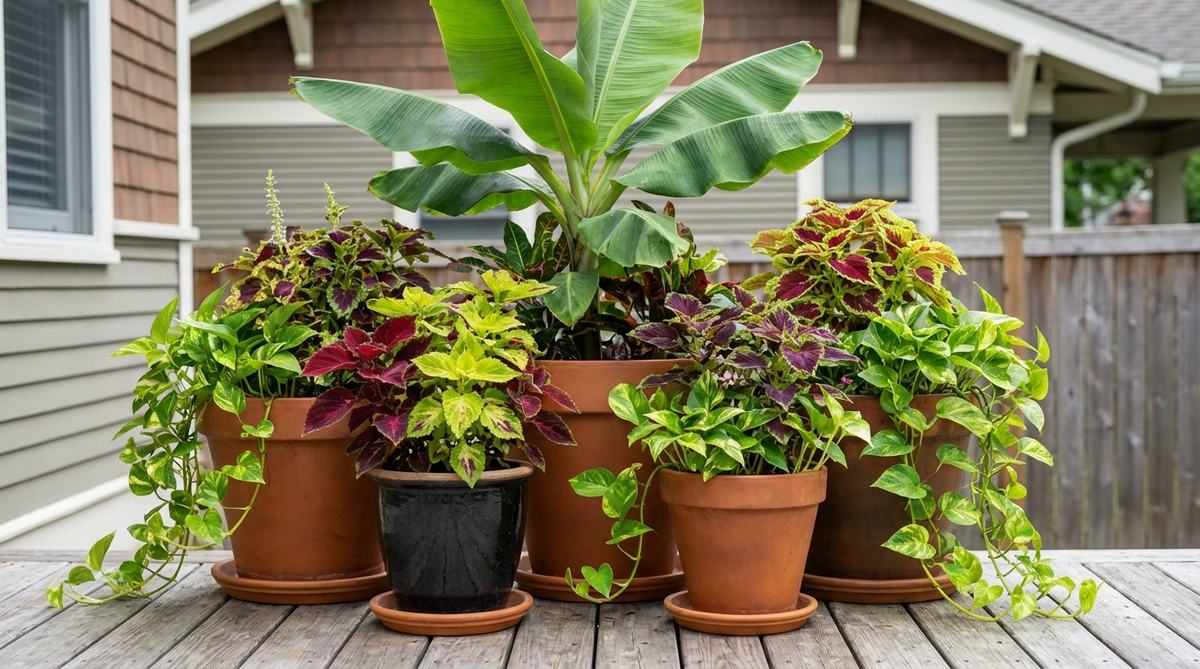
Group large containers filled with mixed tropical plants to create portable garden rooms on patios and decks. Combine an upright palm or banana as the thriller with trailing pothos and coleus as fillers and spillers.
Arrange containers in odd-numbered groups of varying heights, and leave space between pots for air circulation and maintenance access. Use pot saucers to protect deck surfaces and trap excess moisture for plants to reabsorb.
This approach allows renters and urban gardeners to enjoy tropical landscapes without permanent installations, and the containers move indoors during winter to protect investments.
20. Shaded Walkway with Low-Light Tropicals
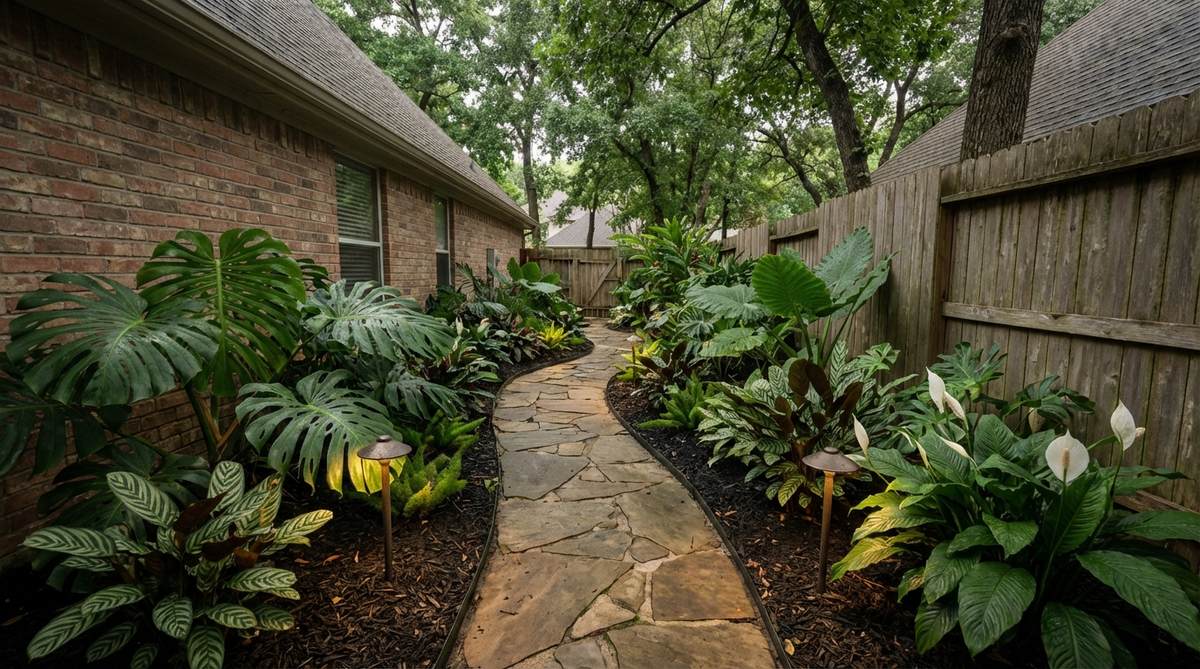
Transform dim side yards into lush passages using shade-tolerant tropicals like monstera, calathea, and peace lily. These plants thrive in low light while delivering the bold foliage that defines tropical themes.
Line walkways with staggered plantings that create a corridor effect, and add uplighting at night to showcase leaf textures and cast dramatic shadows on adjacent walls. Mulch heavily to retain moisture and suppress weeds in these often-neglected zones.
This design turns problem areas into garden assets, proving that every square foot offers design potential when matched with appropriate plant selections.
21. Vertical Garden Wall with Epiphytes
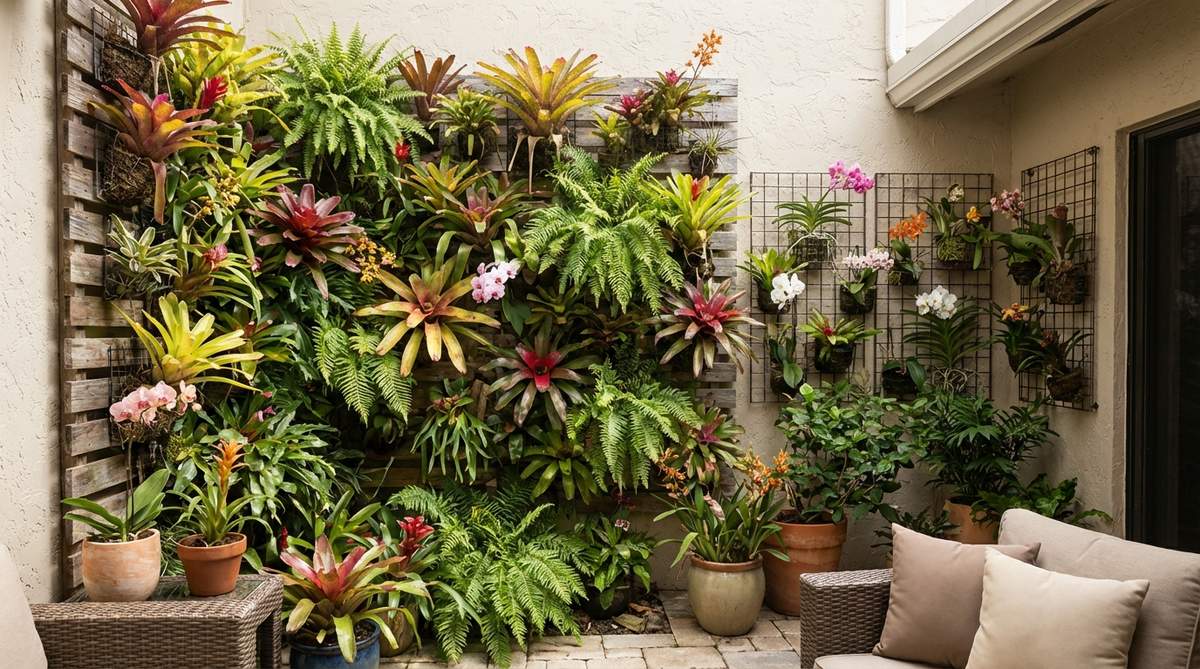
Mount bromeliads, ferns, and orchids on vertical supports to create living walls that maximize greenery in minimal footprints. Epiphytes require no soil, absorbing moisture and nutrients from air and rain, making them ideal for vertical installations.
Attach plants to wooden slat walls or wire grids using landscape fabric pockets or specialized mounting clips. Position the wall where it receives bright indirect light and can be misted easily to maintain humidity.
Vertical gardens deliver striking visual impact in courtyard gardens and balconies where ground space is limited but wall area is abundant, expanding tropical design possibilities in urban contexts.
22. Entry Garden with Specimen Palm
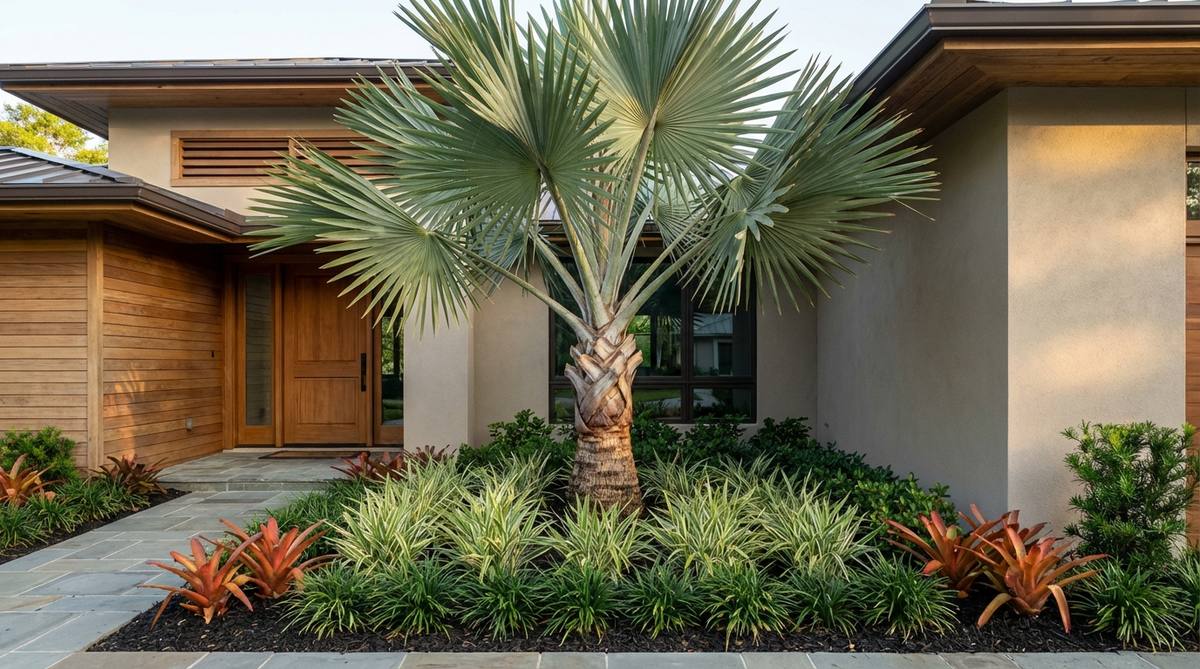
A single statement palm flanked by low-growing tropicals creates an elegant entry sequence that establishes tropical tone before visitors reach the front door. The restraint prevents visual clutter while delivering immediate curb appeal.
Select a palm with strong architectural form like a windmill or king palm, and underplant it with a simple palette of two or three species—perhaps variegated ginger, dwarf mondo grass, and a colorful bromeliad.
Keep the composition tight and the plant count low to maintain a refined, intentional appearance that complements architectural styles from modern to traditional.
23. Poolside Plunge with Tropical Surround
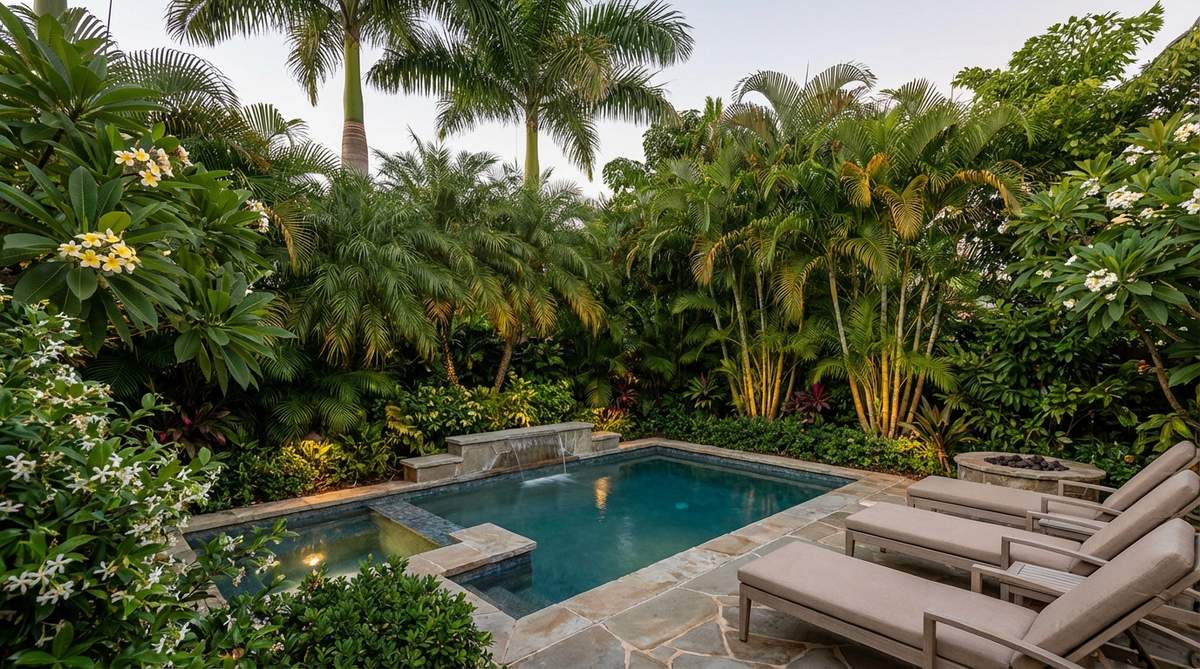
Ring small plunge pools or spas with dense tropical plantings to create private resort-style retreats. The greenery screens views from neighbors while establishing an immersive environment that transports users mentally to distant locales.
Plant tall palms on the side opposite prevailing breezes to provide wind protection without blocking cooling airflow. Use non-shedding species like areca and golden cane near the pool to minimize debris in the water.
Incorporate night-blooming jasmine or plumeria for fragrance that enhances evening soaks, engaging multiple senses in the tropical experience.
24. Mixed Border with Hibiscus Color Waves
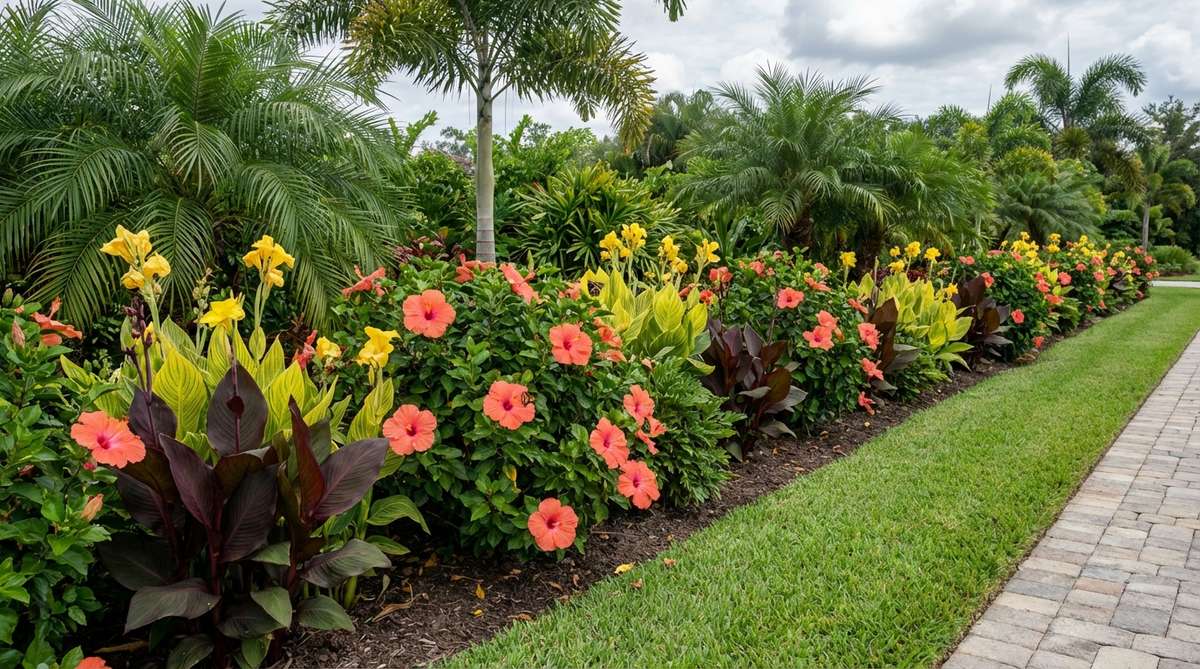
Hibiscus delivers large, vibrant blooms in waves throughout the growing season, injecting tropical color into mixed borders anchored by palms and foliage plants. Their open, airy growth habit prevents visual heaviness while flowers provide focal points.
Plant hibiscus in drifts of single colors rather than mixed rainbows to create cohesive color schemes—perhaps a sweep of coral hibiscus transitioning into yellow cannas and burgundy elephant ears. Prune lightly after each bloom cycle to encourage repeat flowering.
This design delivers months of color with minimal input, and the tropical blooms attract pollinators that benefit the entire garden ecosystem.
Bringing Your Tropical Vision to Life
Creating a garden design tropical oasis hinges on layering palms and large-leafed plants at varying heights, integrating water features for ambiance and humidity, and selecting species appropriate to your climate zone. Start with foundation palms to establish structure, layer in dramatic foliage for texture and color, then refine with water elements and intimate planting clusters that invite exploration. Whether you’re transforming a sprawling suburban lot or carving out a tropical corner on an urban balcony, these strategies deliver professional results that transport you to paradise without leaving home. Begin with a single high-impact element—perhaps a specimen palm or container cluster—and expand your oasis as confidence and experience grow.
Frequently Asked Questions
What are the best low-maintenance palms for tropical garden designs?
Areca palms, windmill palms, and Mexican fan palms top the list for low-maintenance tropical landscapes. Areca palms require minimal pruning and thrive in clumps that naturally fill space, while windmill palms tolerate cold and drought with little intervention. Mexican fan palms grow rapidly with infrequent watering once established. All three species resist pests and diseases better than high-maintenance varieties, and their fine root systems allow planting near hardscaping without long-term infrastructure concerns.
Can I create a tropical garden in cold climates?
Cold-climate gardeners successfully create tropical effects using hardy palms like windmill and needle palms, combined with tropical-looking perennials such as hardy bananas, cold-tolerant gingers, and ornamental grasses with broad leaves. Many tropical plants can be grown in containers and moved indoors during winter, or treated as annuals and replanted each spring. Focus on bold foliage textures and layered heights rather than specific species to achieve authentic tropical aesthetics regardless of climate zone.
How do I layer plants for a professional tropical garden look?
Professional layering follows a three-tier strategytall palms or banana plants in back, mid-height specimens like gingers and cannas in the middle, and low ground covers such as bromeliads or ferns in front. Plant in odd-numbered groups rather than evenly spaced rows, varying cluster sizes to mimic natural distributions. Leave 2 to 3 feet between layers for air circulation and maintenance access, and ensure each tier receives appropriate light—full sun for palms, filtered light for mid-tier plants, and shade for ground covers.
What large-foliage plants pair best with palms in tropical designs?
Banana plants, elephant ears, and bird of paradise create stunning contrasts with palm fronds through their broad, paddle-shaped leaves. Elephant ears work particularly well in damp areas and shaded zones beneath palm canopies, while bananas provide fast vertical growth that fills spaces quickly. Bird of paradise adds rigid architectural form that complements the flowing movement of palm fronds. For understory layers, monstera and large-leafed hostas introduce bold textures at ground level without competing for vertical space.
How much water do tropical garden designs require?
Water requirements vary significantly by species and climate. Many palms tolerate drought once established—Mexican fan palms and windmill palms thrive with monthly deep watering in temperate zones. Moisture-loving plants like elephant ears and bananas need consistent water, making them ideal for rain gardens or areas with automatic irrigation. Container plantings require more frequent watering than in-ground installations. Reduce overall water use by mulching heavily, grouping plants with similar needs, and installing drip irrigation that delivers water directly to root zones rather than broadcasting it wastefully.