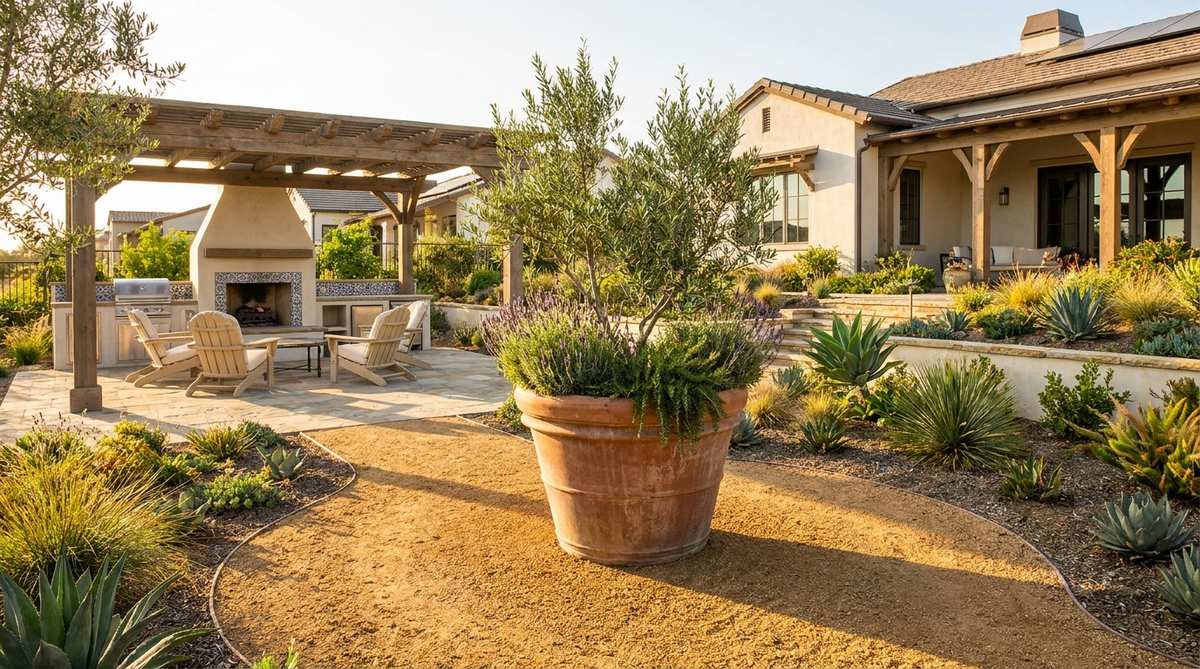
The baked scent of sun-warmed terracotta paired with bruised rosemary isn’t just a nostalgic European memory—it’s the exact sensory blueprint for a resilient, drought-proof yard. Rather than fighting local climates with water-guzzling lawns, high-end outdoor spaces are pivoting toward crushed mineral surfaces and architectural foliage that actually look better as they age. Whether you are mapping out modern mediterranean garden design plans or simply looking to anchor a patio corner, the secret lies in sourcing commercial-grade materials that mimic centuries of coastal weathering right out of the box.
Design Snapshot Key Principles
- Earthy Color Palette: Terracotta, ochre, sand, and stone tones with pops of azure blue and vibrant green
- Drought-Tolerant Plants: Lavender, rosemary, olive trees, cistus, and silver-leaved specimens requiring minimal water
- Natural Materials: Terracotta pots, natural stone pathways, gravel mulch, and weathered wood structures
- Architectural Elements: Pergolas for shade, water features for ambiance, and wrought iron accents
Terracotta Container Gardens That Define Mediterranean Style
Terracotta planters serve as the foundation for authentic Mediterranean garden design, offering both functional benefits and visual warmth. The porous clay material allows plant roots to breathe while naturally regulating moisture levels.
1. Aged Tuscan Urn Clusters
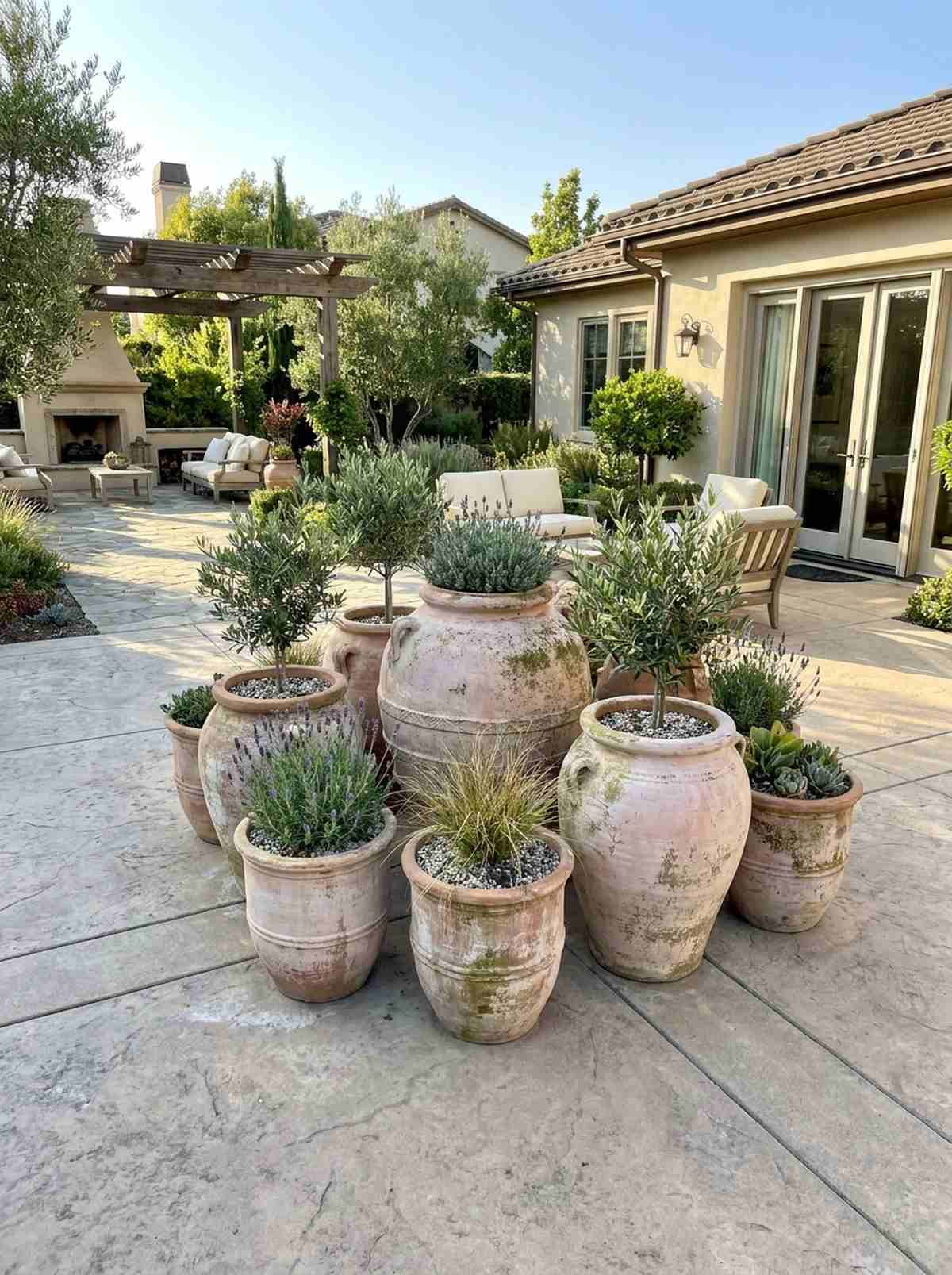
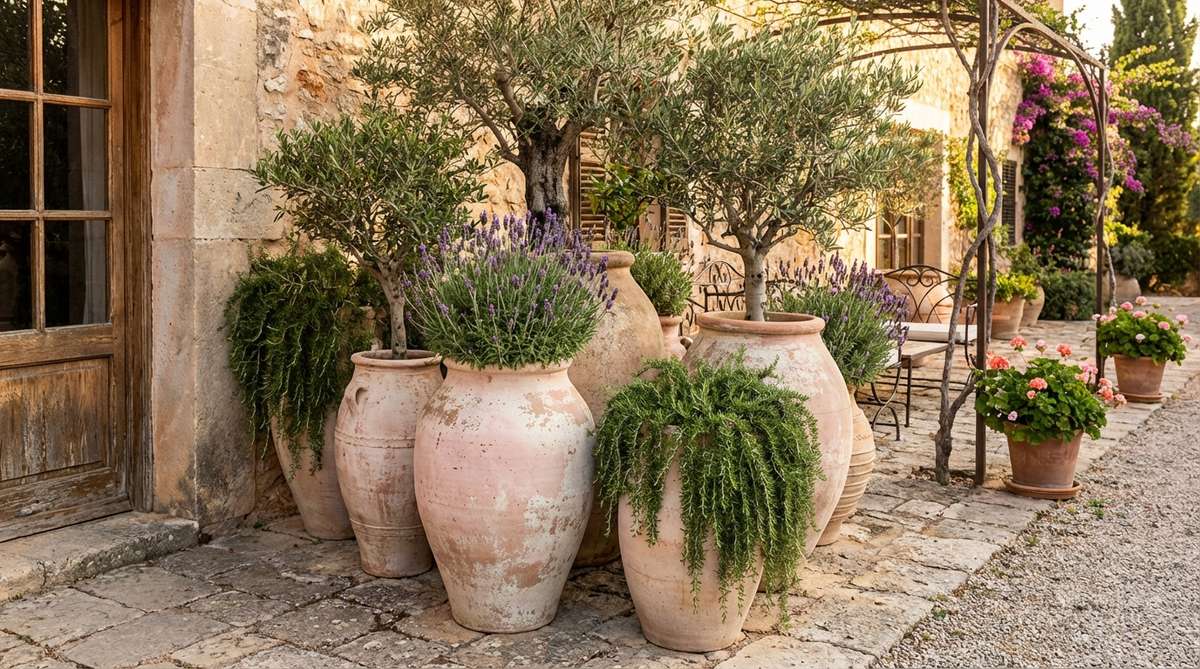
There is an undeniable old-world charm that feels like a forgotten villa courtyard when you arrange weathered rustic urn displays. The pale pinkish patina instantly elevates plain concrete patios, making it a stellar focal point for a bare entryway.
A fatal flaw in many backyard setups is relying on single, isolated pots rather than massing them for impact. Grouping large commercial-grade clay vessels in varying heights establishes a designer-level hierarchy that looks incredibly intentional. This clustered arrangement anchors spaces effortlessly while serving as a foundational piece for mediterranean courtyard garden design.
Pulling off this sophisticated layering usually runs between $150–$300 depending on vessel size. Pin this if you’re planning a small space upgrade that requires maximum visual weight.
- Key Materials: Heavy-duty terracotta urns, fast-draining potting grit
- Vibe / Style: Tuscan estate entrance
- Difficulty: Moderate heavy lifting
- Budget Breakdown: Urns: $120 | Specialty Soil: $30.
- Creator’s Tip: Brush plain yogurt onto new terracotta to accelerate mossy, aged patina growth.
- Smart Sourcing: bulk-pack weathered clay urns and pre-mixed cactus & citrus soil bags.
2. Mixed-Size Pot Groupings
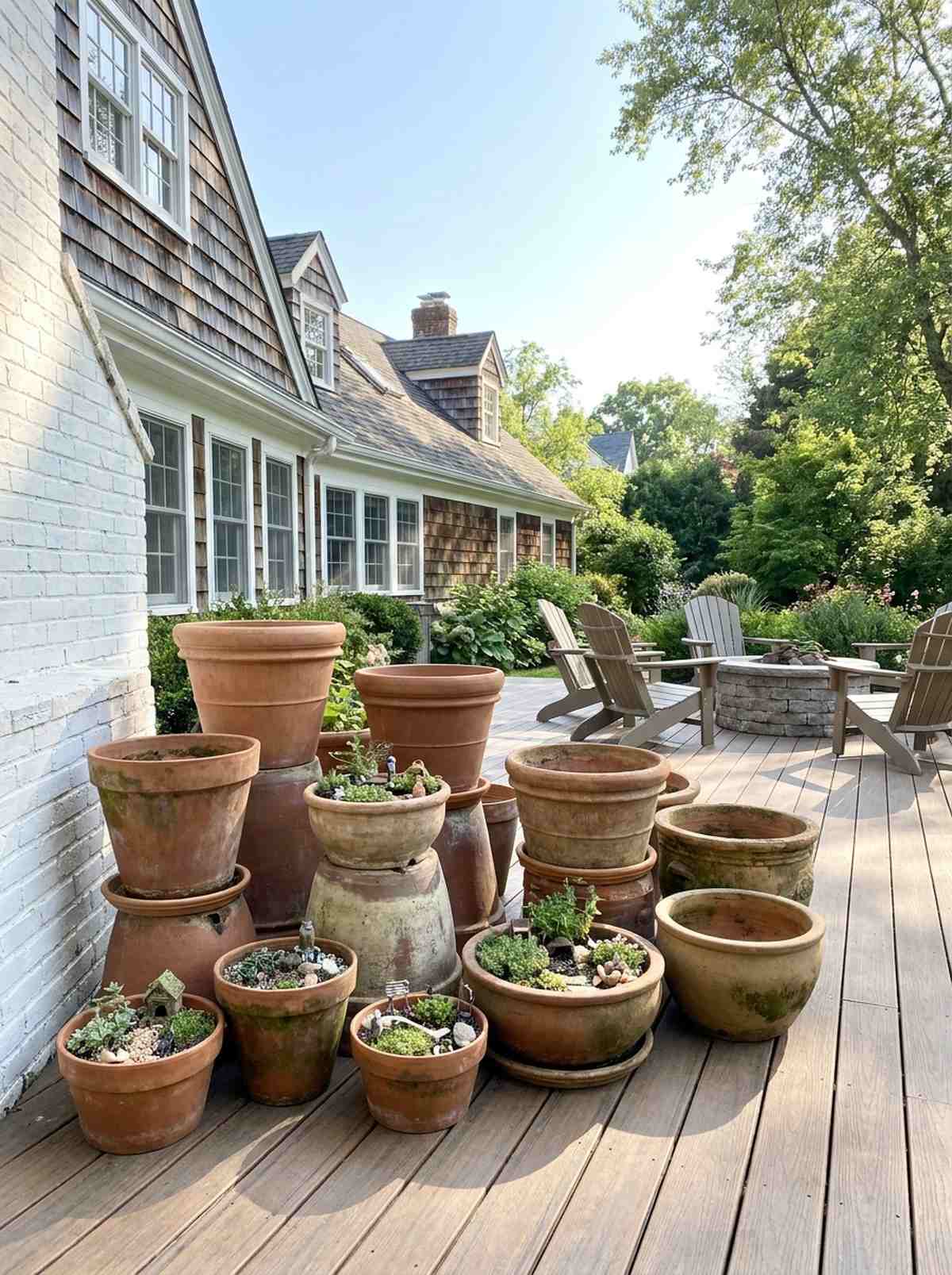
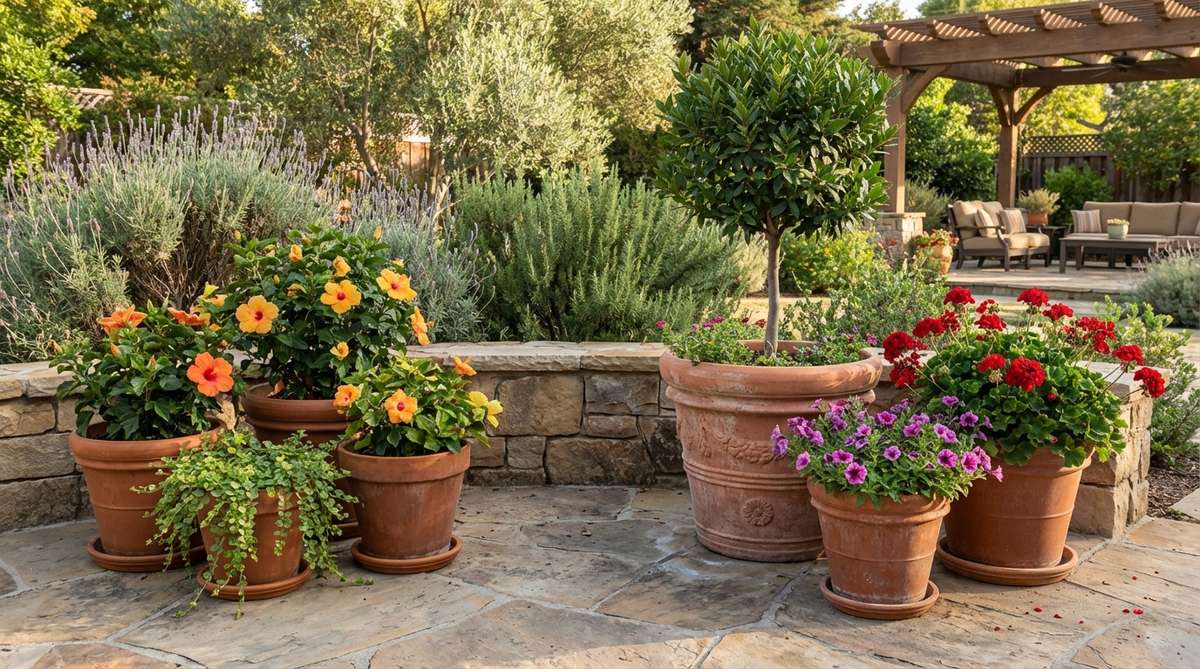
The organic, almost chaotic accumulation of pots gives off a distinctly relaxed energy that feels like a sleepy coastal village. Setting up a layered patio container corner is an ingenious use-case for softening harsh architectural corners and hiding unsightly utility boxes.
Buying perfectly matching pots is a rookie mistake that makes a space feel stiff and artificial. Purposely clashing 12-inch to 24-inch planters creates that coveted “collected over time” aesthetic without waiting decades. You can easily integrate premium miniature garden supplies into the smaller pots for eye-catching micro-landscapes.
Expect to spend roughly $60–$120 assembling a diverse cluster of varied vessels. It’s a fast upgrade that completely changes the vibe of a sterile deck.
- Key Materials: Assorted unglazed pots, ceramic risers
- Vibe / Style: Coastal village casual
- Difficulty: Easy beginner setup
- Budget Breakdown: Planter Assortment: $80 | Base Risers: $15.
- Creator’s Tip: Use inverted plastic nursery pots inside massive terracotta bases to save money on expensive potting soil.
- Smart Sourcing: assorted terracotta starter sets and heavy-duty invisible pot feet.
3. Hand-Painted Mediterranean Patterns
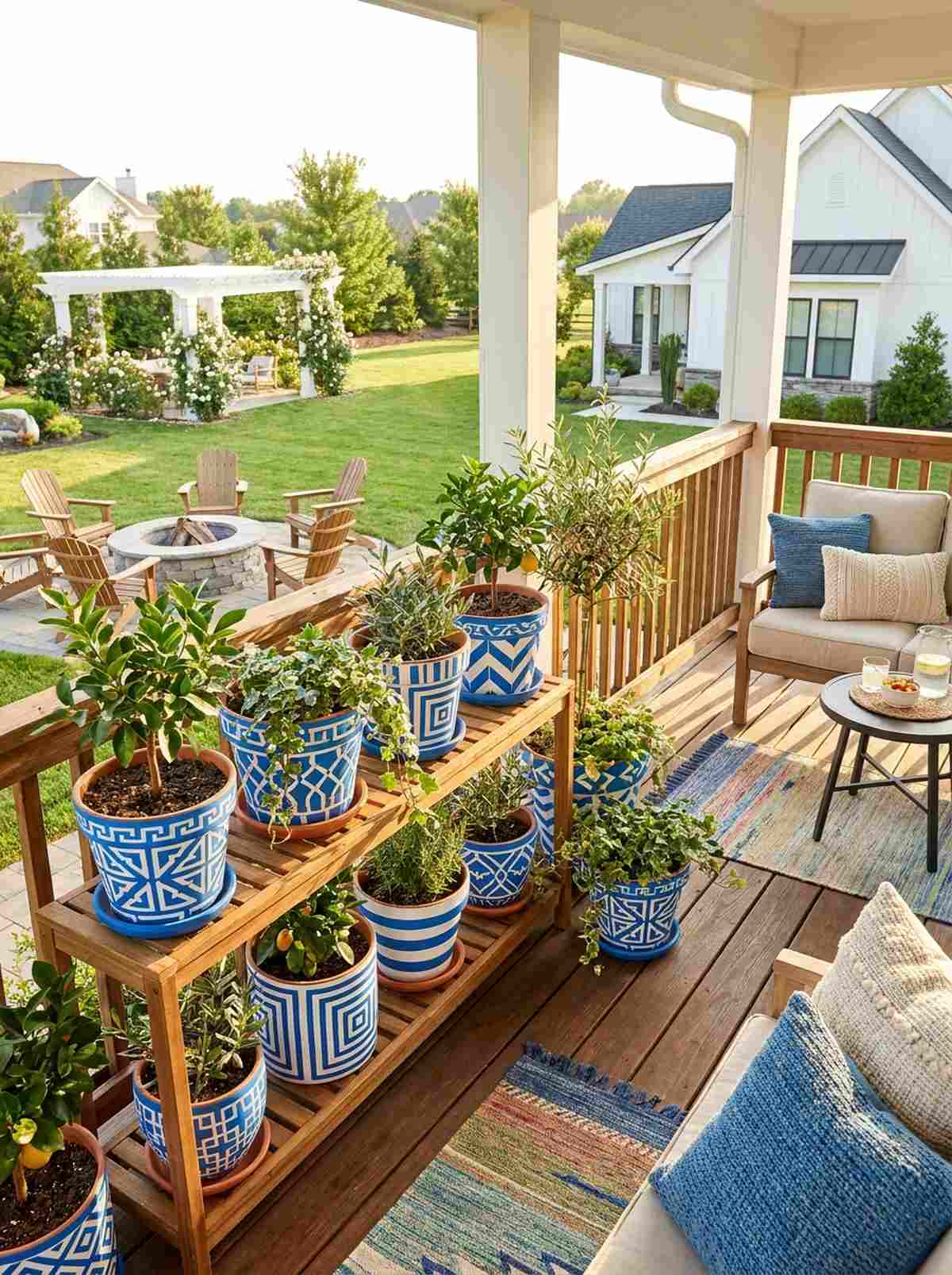
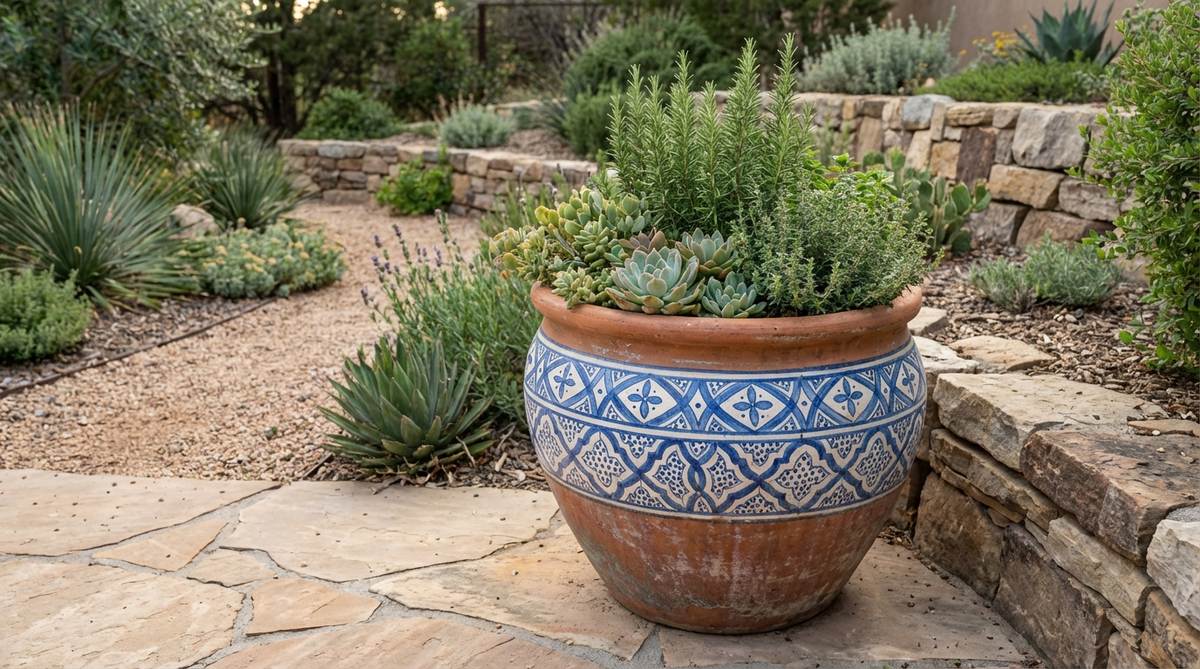
Striking azure and crisp white geometric lines inject an upbeat, sun-drenched emotion that feels straight out of a Greek island holiday. A brightly patterned ceramic balcony display works exceptionally well for injecting vibrant personality into shaded or otherwise gloomy outdoor nooks.
Many homeowners settle for dull factory finishes, completely ignoring how easy it is to customize cheap clay with the right protective coatings. Applying outdoor-grade acrylics sealed with UV-resistant sprays delivers a surprisingly premium look that defies its budget origins. This bespoke approach is heavily featured in modern mediterranean garden design ideas to bridge traditional materials with contemporary graphics.
You can execute this artsy transformation for around $25–$45 in craft materials. Save this to your DIY weekend garden board for a highly rewarding paint project.
- Key Materials: Unglazed pots, outdoor acrylics, stencil kits
- Vibe / Style: Santorini summer pop
- Difficulty: Fun weekend craft
- Budget Breakdown: Paint & Stencils: $20 | Sealant: $10.
- Creator’s Tip: Always sand the rim lightly before painting to ensure the acrylic bonds flawlessly to the porous clay.
- Smart Sourcing: UV-resistant outdoor acrylic paint kits and reusable geometric stencil packs.
4. Tiered Terracotta Fountain Planters
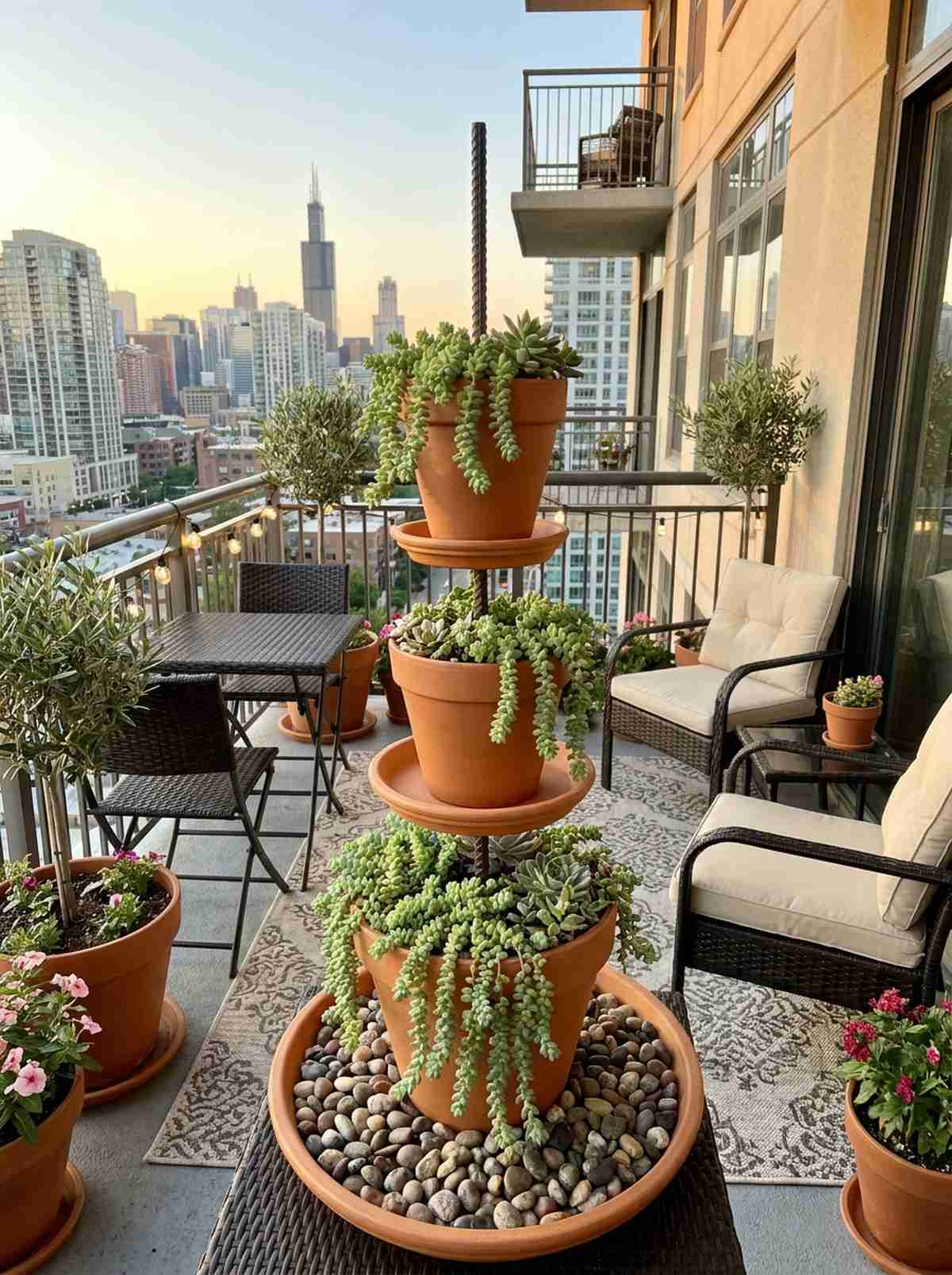
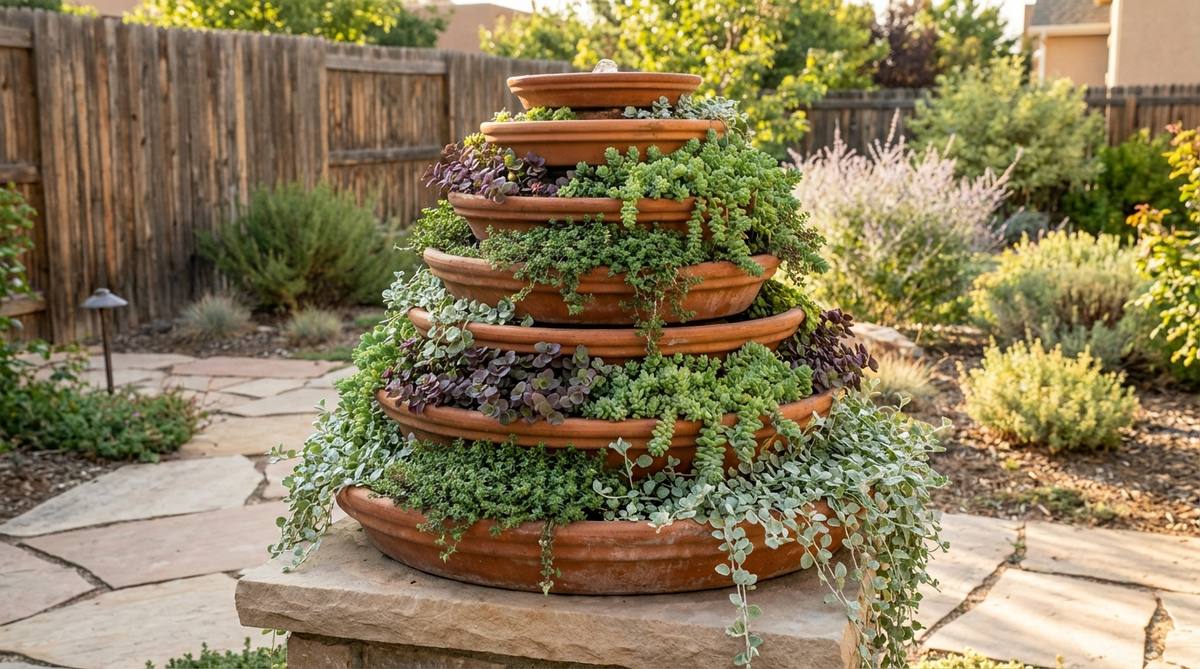
There is a deeply soothing, oasis-like quality to cascading greenery that mimics the motion of spilling water. Building a stacked vertical spillway planter is the ultimate use-case for maximizing square footage on a tiny high-rise terrace.
Dropping hundreds of dollars on custom vertical shelving is entirely unnecessary when you can exploit the architecture of nested pots. By threading graduated saucers and pots onto a central structural rod, you yield a designer-level finish that defies gravity. Sneaking cascading trailing sedums into this setup brings instant texture.
This space-saving vertical illusion costs about $40–$75 to engineer. Highly recommended for a quick weekend win that immediately draws the eye upward.
- Key Materials: Graduated pots, central rebar stake, trailing succulents
- Vibe / Style: Gravity-defying oasis
- Difficulty: Requires basic drilling
- Budget Breakdown: Pots: $40 | Hardware/Rebar: $15.
- Creator’s Tip: Place an oversized terracotta saucer at the very bottom filled with pebbles to catch any muddy runoff.
- Smart Sourcing: pre-drilled terracotta stacking kits and galvanized steel rebar supports.
This next setup is ridiculously cheap but looks like a $1,000 custom landscape installation…
5. Rustic Oil Jar Focal Points
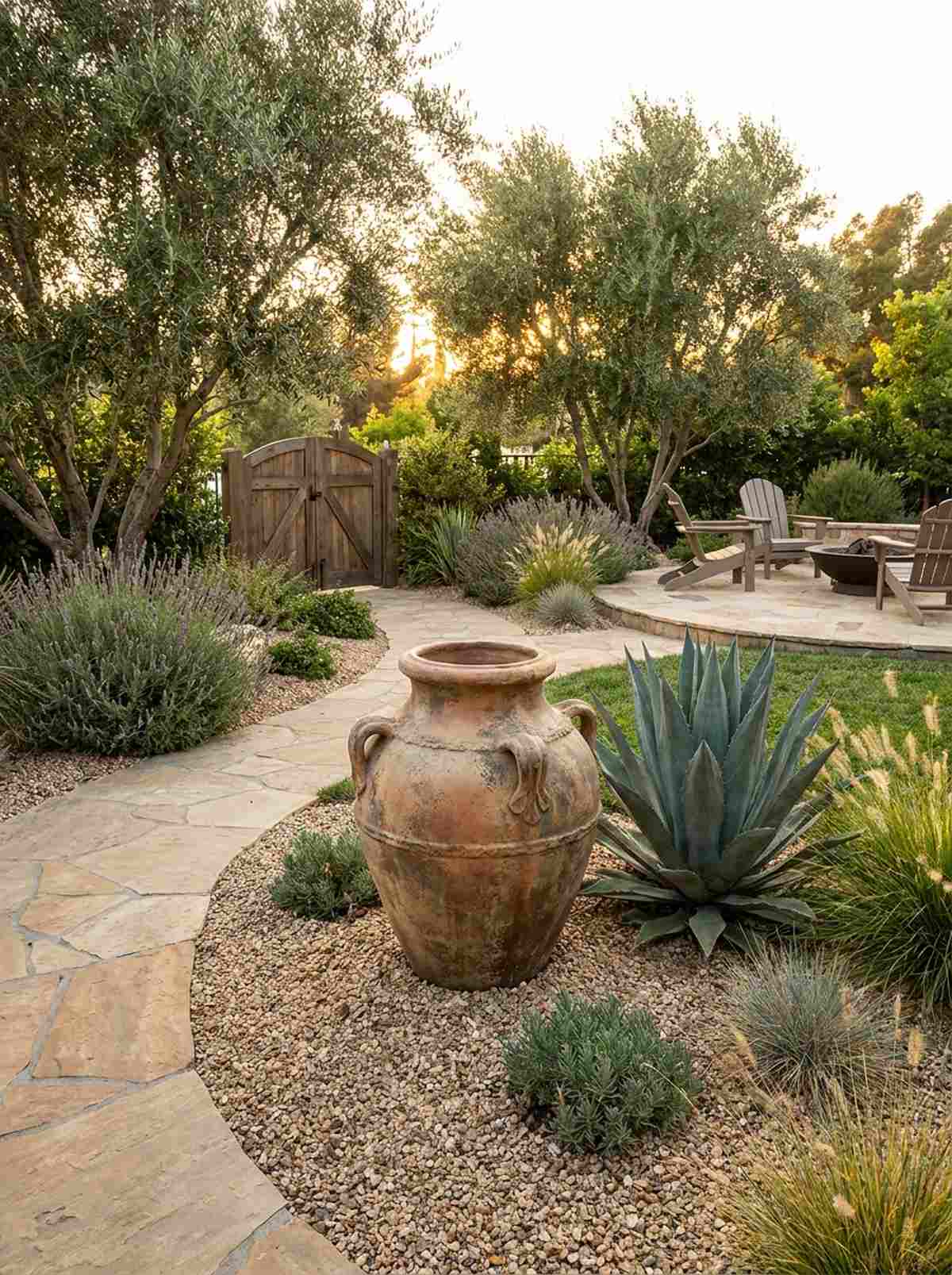
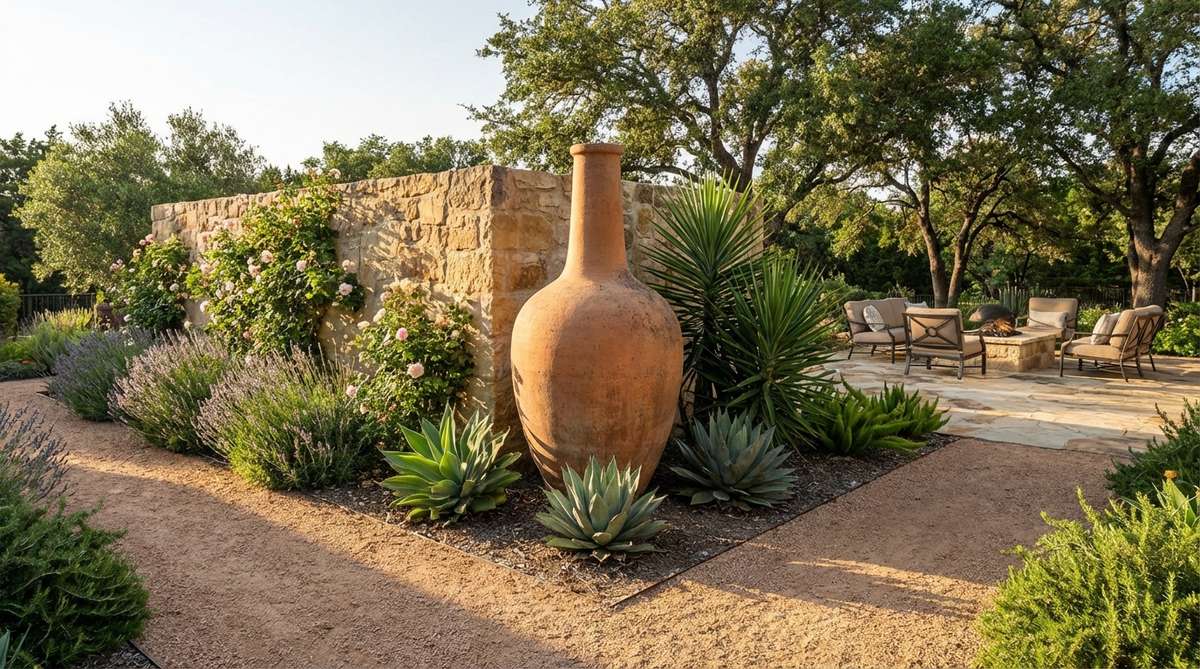
Commanding and mysterious, an oversized vessel feels like an ancient artifact you accidentally unearthed in an olive grove. Positioning a sculptural landscape amphora at the end of a sightline is a powerful use-case for drawing guests deeper into your property.
Amateur landscapers scatter tiny items everywhere, but true impact requires one massive, unapologetic anchor piece. Opting for weather-proof resin replicas that mimic ancient clay provides historical authenticity without the terrifying fragility of actual antiques. This is a staple in professional mediterranean garden design uk where frost resistance is absolutely mandatory.
Investing in a high-quality replica jar will set you back $90–$200, depending on scale. Pin this if you need a dramatic solution for a boring pathway intersection.
- Key Materials: Frost-proof replica oil jar, structural agave
- Vibe / Style: Ancient architectural anchor
- Difficulty: Minimal effort, maximum impact
- Budget Breakdown: Replica Jar: $150 | Base leveling sand: $10.
- Creator’s Tip: Partially bury the bottom third of the jar into the soil so it looks naturally settled rather than just placed.
- Smart Sourcing: high-density resin replica amphoras and pre-cut weed barrier squares.
6. Terracotta Wall Pocket Gardens
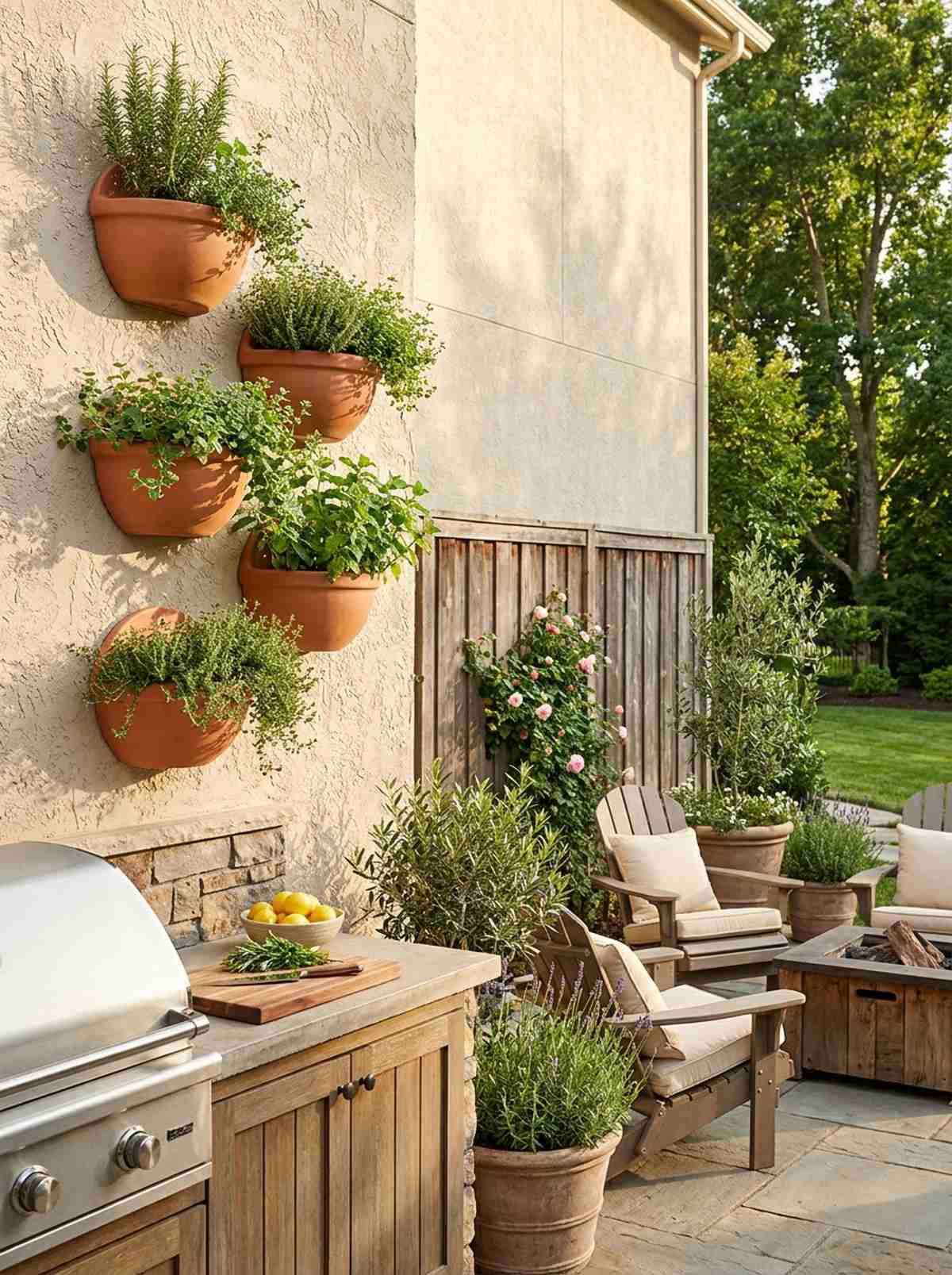
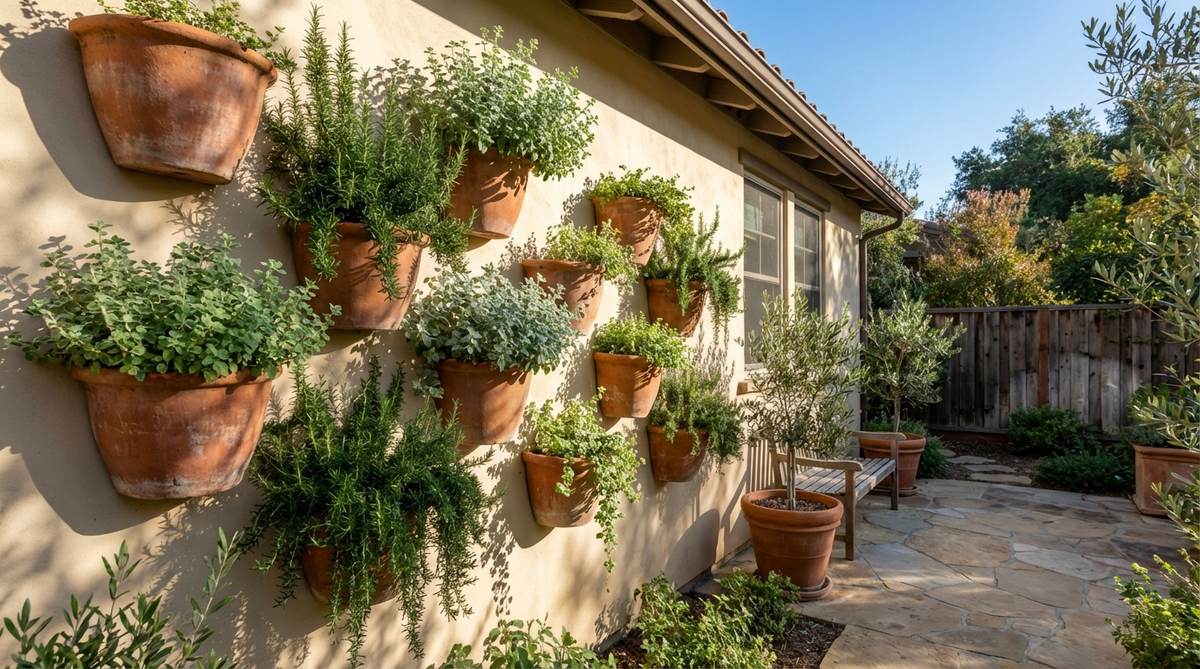
Blank stucco suddenly feels warm and alive when adorned with aromatic herbs spilling gracefully at eye level. A mounted clay pocket wall is the perfect use-case for disguising ugly fencing or sprucing up an outdoor kitchen backsplash.
Leaving vertical space completely bare is a missed opportunity that makes courtyards feel like prison yards. Securing specialized semi-circular vessels directly to masonry turns dead zones into lush, breathable installations that look far more expensive than they are. Adding culinary herb garden starter kits into these pockets delivers both visual punch and chef-ready garnishes.
A modest layout of five to seven pockets ranges from $50–$90. It’s an ingenious weekend project that immediately softens harsh masonry.
- Key Materials: Flat-backed wall pots, masonry anchors, trailing herbs
- Vibe / Style: Vertical chef’s alcove
- Difficulty: Requires a hammer drill
- Budget Breakdown: Wall Pockets: $60 | Masonry Hardware: $15.
- Creator’s Tip: Line the bottom of each pocket with sphagnum moss before adding soil to prevent dirt from washing out of the drainage holes.
- Smart Sourcing: flat-backed terracotta pocket sets and heavy-duty masonry anchor kits.
Drought Plant Combinations For Water-Wise Landscapes
Selecting the right drought-tolerant plants ensures your Mediterranean garden thrives with minimal irrigation while delivering year-round visual interest. These combinations pair plants with similar water needs and complementary textures.
7. Lavender and Rosemary Hedges
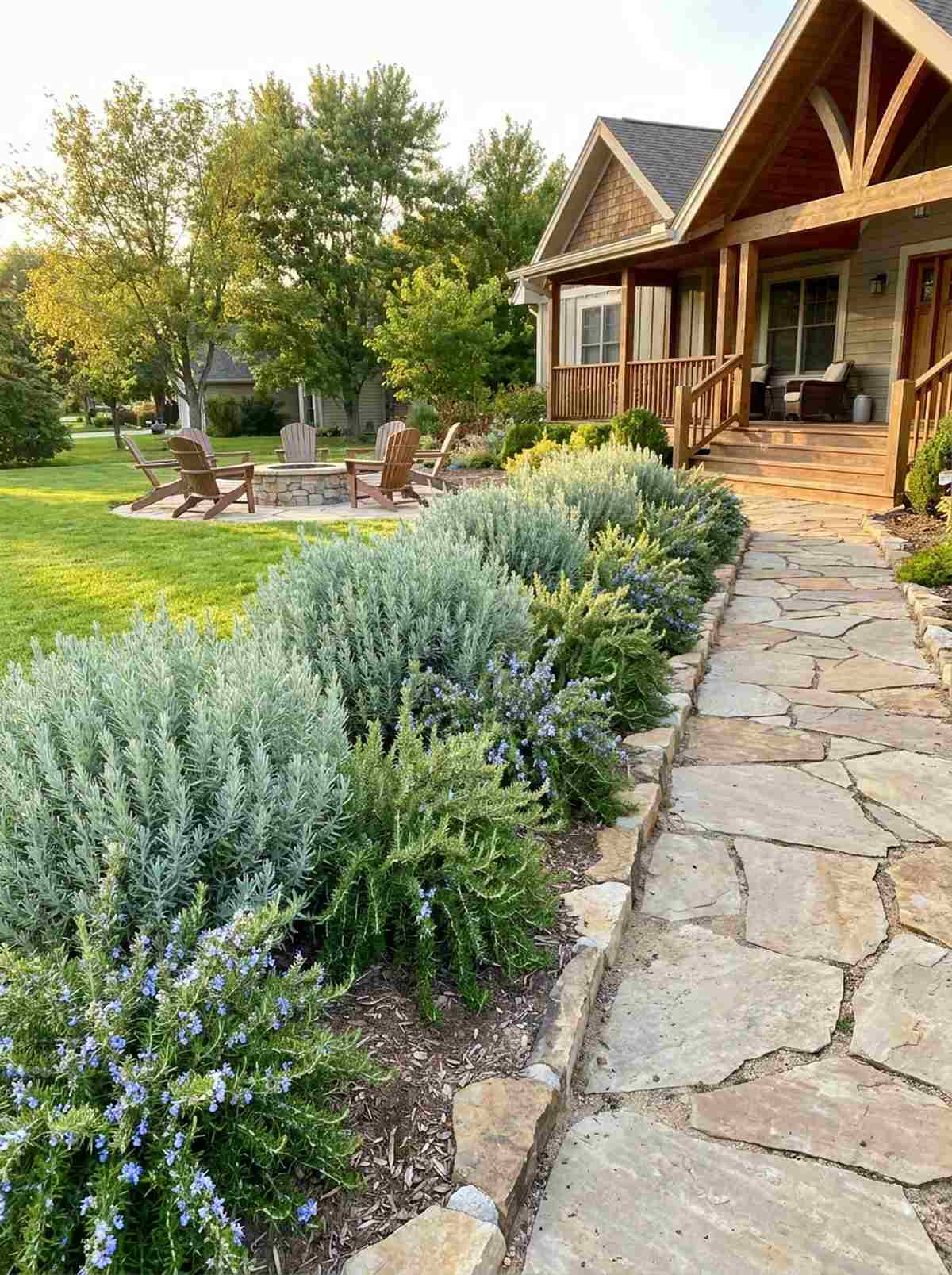
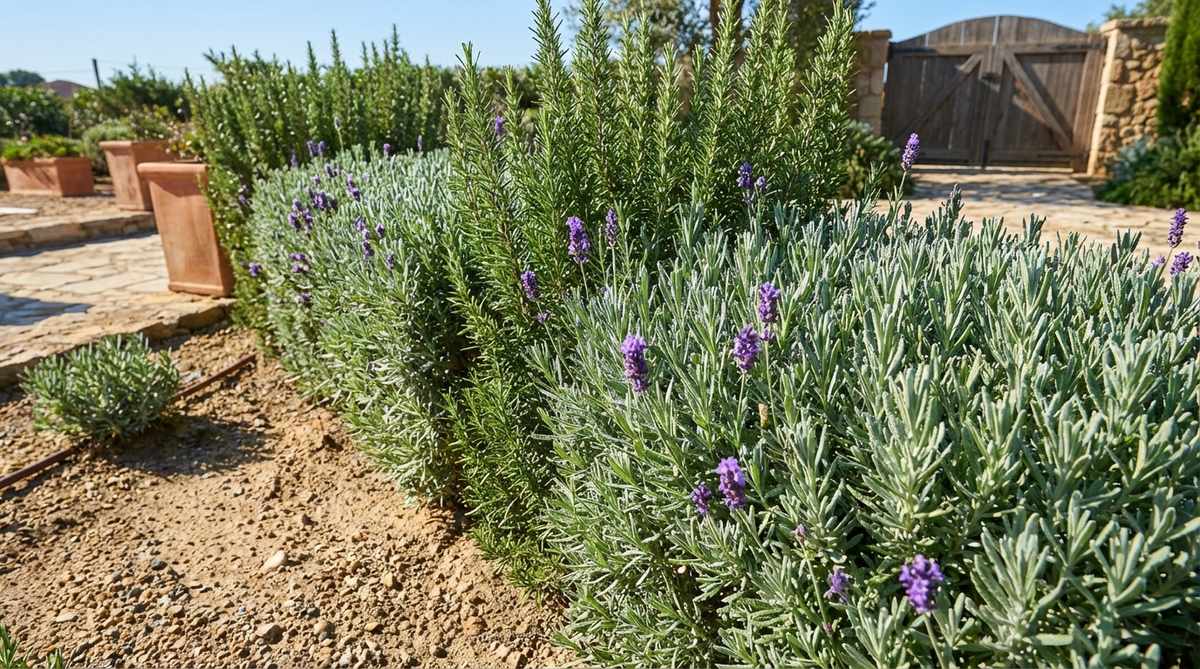
Brushing past these fragrant shrubs releases a spicy, intoxicating perfume that instantly calms the nervous system. Establishing a drought-proof sensory border works wonders as a low-maintenance pathway edge that naturally deters garden pests.
Relying on thirsty boxwoods for hedging is an outdated practice that drives up water bills exponentially. Alternating resilient silver-leaved specimens creates a textural tapestry that thrives on pure neglect and intense sunlight. This specific combination is widely utilized in mediterranean garden design australia due to its extreme heat tolerance.
You can establish a solid 10-foot border for roughly $40–$70 using starter plugs. Save this to your front yard renovation board to drastically cut down on summer watering.
- Key Materials: Lavender plugs, trailing rosemary, horticultural sand
- Vibe / Style: Aromatic rustic boundary
- Difficulty: Easy planting, requires pruning
- Budget Breakdown: Plant Plugs: $45 | Soil Amendment: $15.
- Creator’s Tip: Never add rich compost to the planting holes; these herbs actually produce more essential oils in poor, rocky soil.
- Smart Sourcing: bulk-pack lavender starter plugs and commercial-grade horticultural sand.
8. Silver Foliage Tapestry
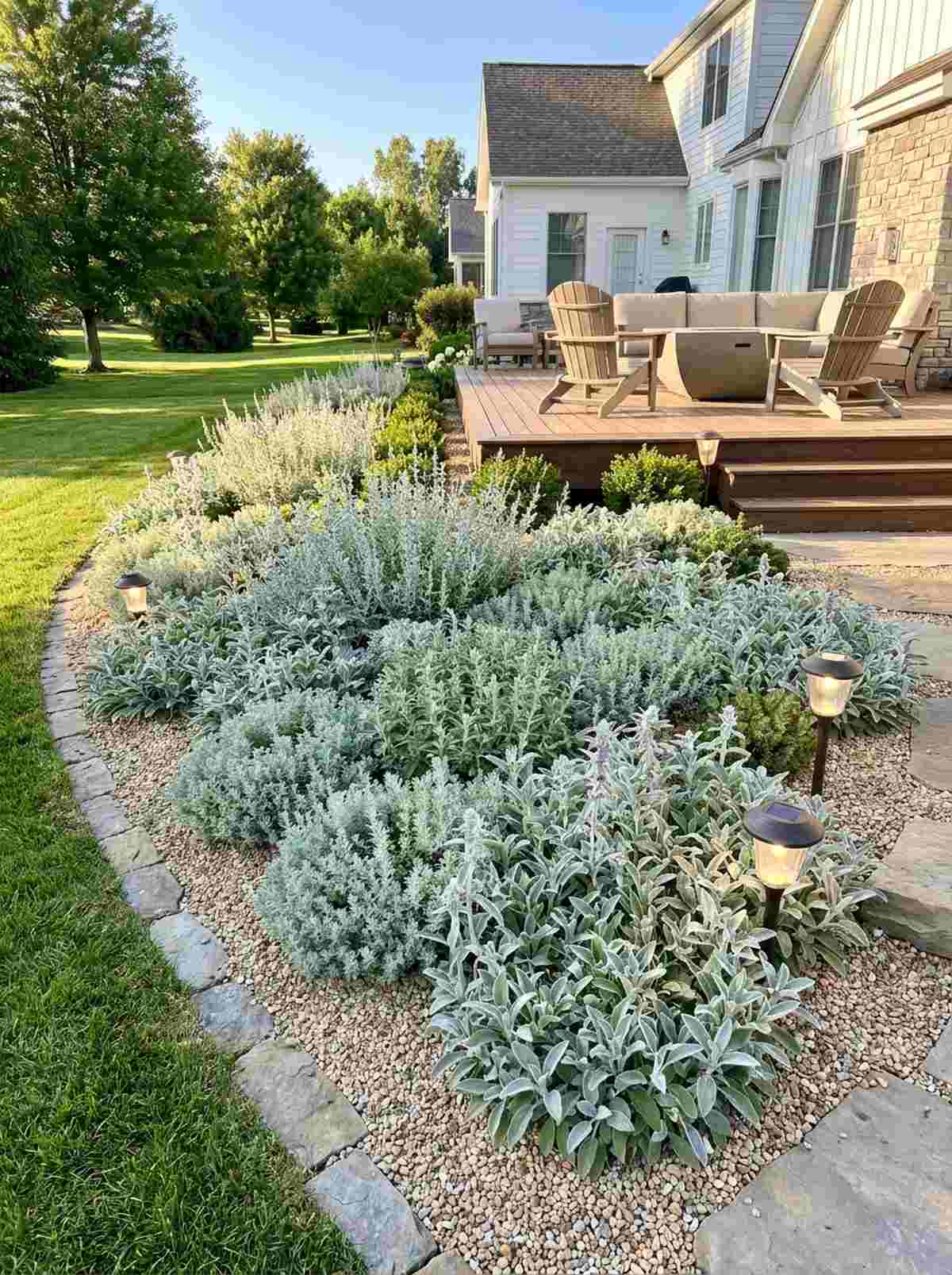
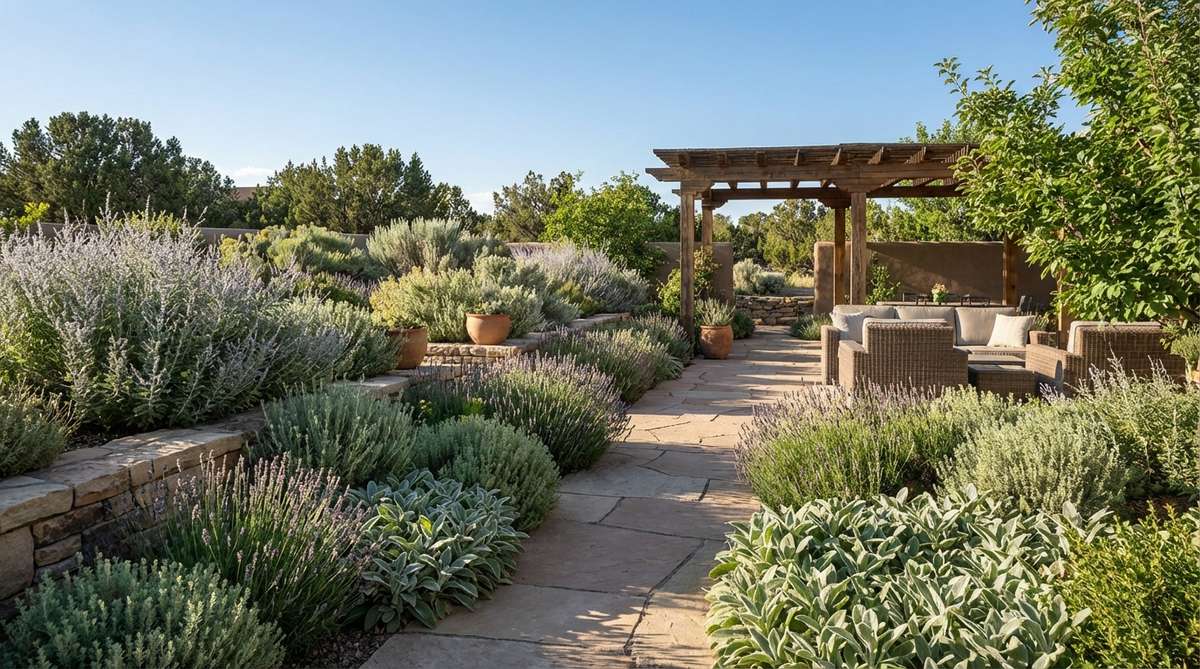
The shimmering, almost icy aesthetic of gray leaves visually cools down a sun-baked yard with stunning elegance. A metallic foliage groundcover zone is an elite use-case for sloped areas that receive punishing, unfiltered afternoon rays.
Most beginners mistakenly crave constant blooms, failing to realize that foliage color provides permanent, unwavering structure. Blending curry plant, sage, and lamb’s ear generates a dense, weed-suppressing mat that gives a designer-level finish without constant deadheading. You can easily integrate glowing solar pathway lights to illuminate this silver carpet at night.
Creating this cooling optical illusion generally costs $50–$85 for a dense grouping. It’s a highly strategic planting method that practically eliminates weekend weeding.
- Key Materials: Assorted silver perennials, fine gravel mulch
- Vibe / Style: Sun-bleached coastal elegance
- Difficulty: Very low maintenance
- Budget Breakdown: Silver Perennials: $60 | Gravel Topcoat: $20.
- Creator’s Tip: Space plants slightly closer than the tag recommends to achieve an unbroken, tapestry-like look faster.
- Smart Sourcing: drought-resistant perennial assortments and bulk pea gravel bags.
9. Olive Tree Understory Planting
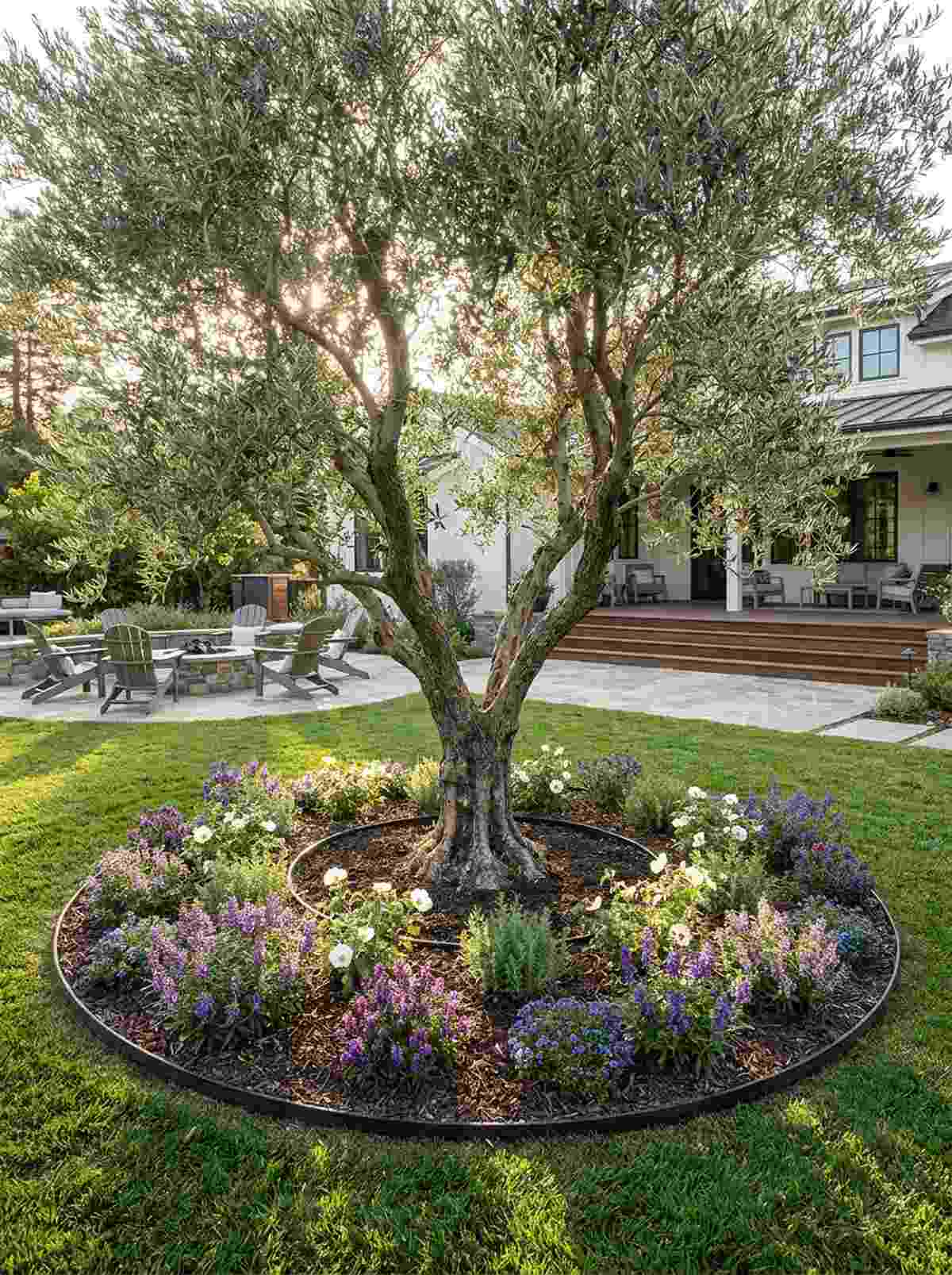
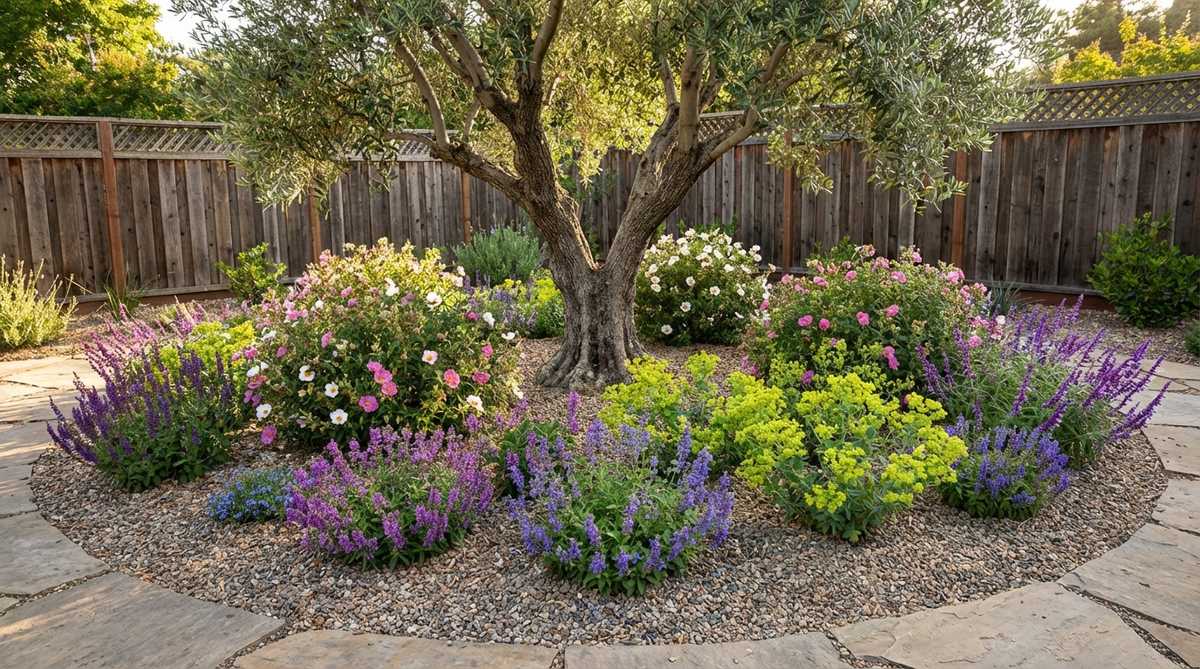
There is a profound, almost sacred tranquility found in the dappled light filtering through silvery, gnarly branches. Designing a textured tree base ring perfectly anchors an existing mature olive or citrus tree in the center of a lawn.
Leaving the ground bare beneath structural trees looks completely unfinished and invites aggressive weed invasions. Circling the trunk with low-growing salvias and cistus conceals bare lower branches and introduces a brilliant micro-ecosystem. When figuring out how to design a mediterranean garden, nailing the understory scale is what separates amateur attempts from professional landscapes.
Outfitting the base of a mature tree costs roughly $60–$100. Pin this if you want to elevate a standalone tree into a massive landscape feature.
- Key Materials: Dwarf salvias, flexible edging, compost mix
- Vibe / Style: Shaded orchard floor
- Difficulty: Moderate digging
- Budget Breakdown: Understory Plants: $75 | Edging: $20.
- Creator’s Tip: Keep all new plantings at least 12 inches away from the tree trunk to prevent fungal rot on the bark.
- Smart Sourcing: flexible heavy-duty landscape edging and mycorrhizal root booster packets.
💡 Must-Have Supplies for High-End Setups
To build these stunning Mediterranean blueprints faster and ensure they survive harsh sun and heavy rain, skip the generic craft aisles and invest in the right foundational kits.
- Base & Drainage: Commercial-grade non-woven geotextile fabric
- Setup Tools: Ergonomic heavy-duty digging kits
- Weather/Durability Protection: UV-blocking invisible masonry sealant spray
10. Rockrose and Bougainvillea Slopes
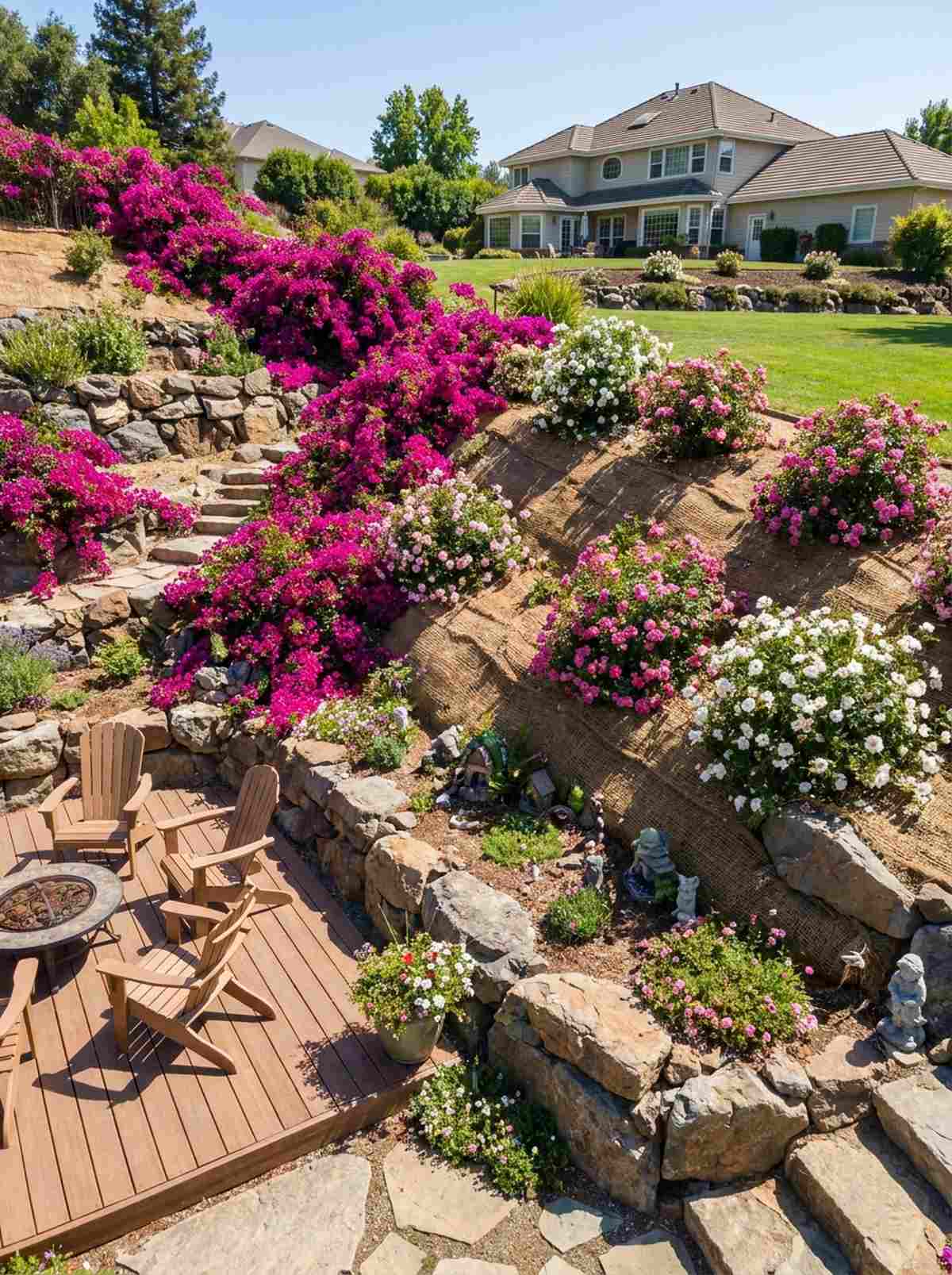
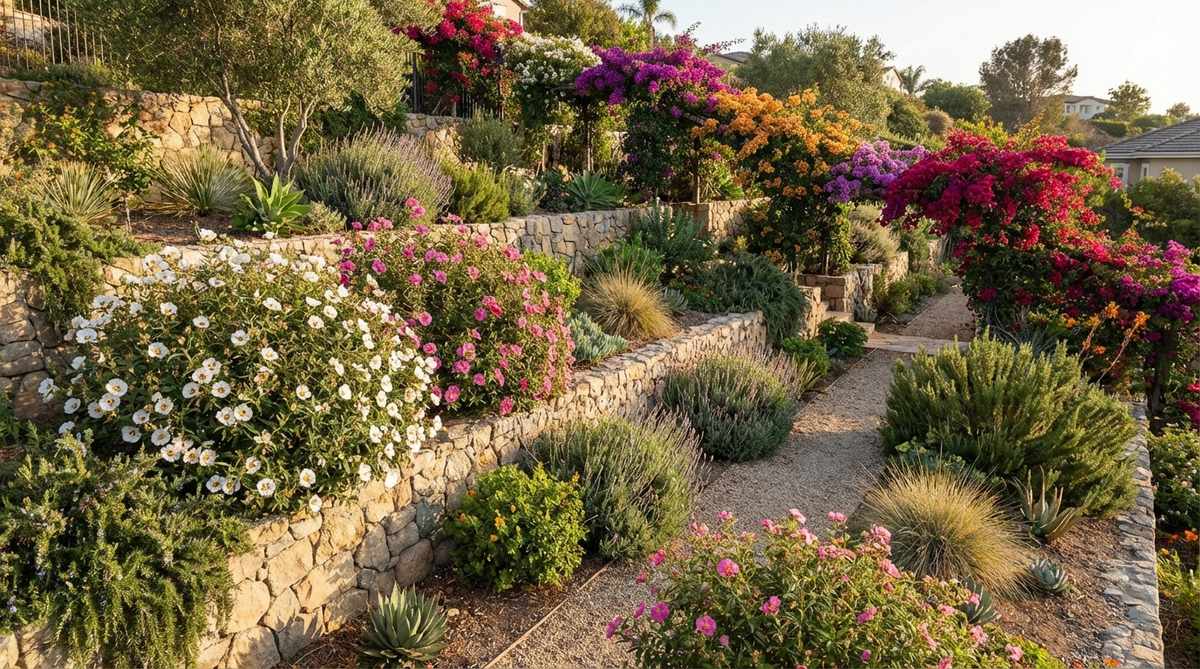
An explosive riot of papery magenta blooms cascading over rocky terrain feels vibrantly wild and wonderfully untamed. A spilling vibrant hillside display is the ultimate use-case for turning a steep, un-mowable hill into an absolute showstopper.
Battling gravity with traditional turf on an incline is a miserable, dangerous chore that wastes endless gallons of water. Pegging down resilient rockrose with aggressive bougainvillea forms an impenetrable, erosion-proof net that thrives in devastatingly poor soils. Securing heavy-duty fairy garden kits or miniature statues amidst the rocks adds whimsical, hidden surprises for visitors.
Tackling a difficult slope with these tough performers costs about $80–$150. Highly recommended for instantly curing steep-grade landscaping headaches.
- Key Materials: Bougainvillea starters, rockrose plugs, erosion netting
- Vibe / Style: Explosive coastal cliffside
- Difficulty: Strenuous slope planting
- Budget Breakdown: Vining Plants: $90 | Biodegradable Netting: $40.
- Creator’s Tip: Plant the bougainvillea at the very top of the slope so its thorny branches can cascade downward naturally without requiring trellises.
- Smart Sourcing: biodegradable jute erosion control netting and slow-release bloom booster spikes.
11. Yucca and Agapanthus Accents
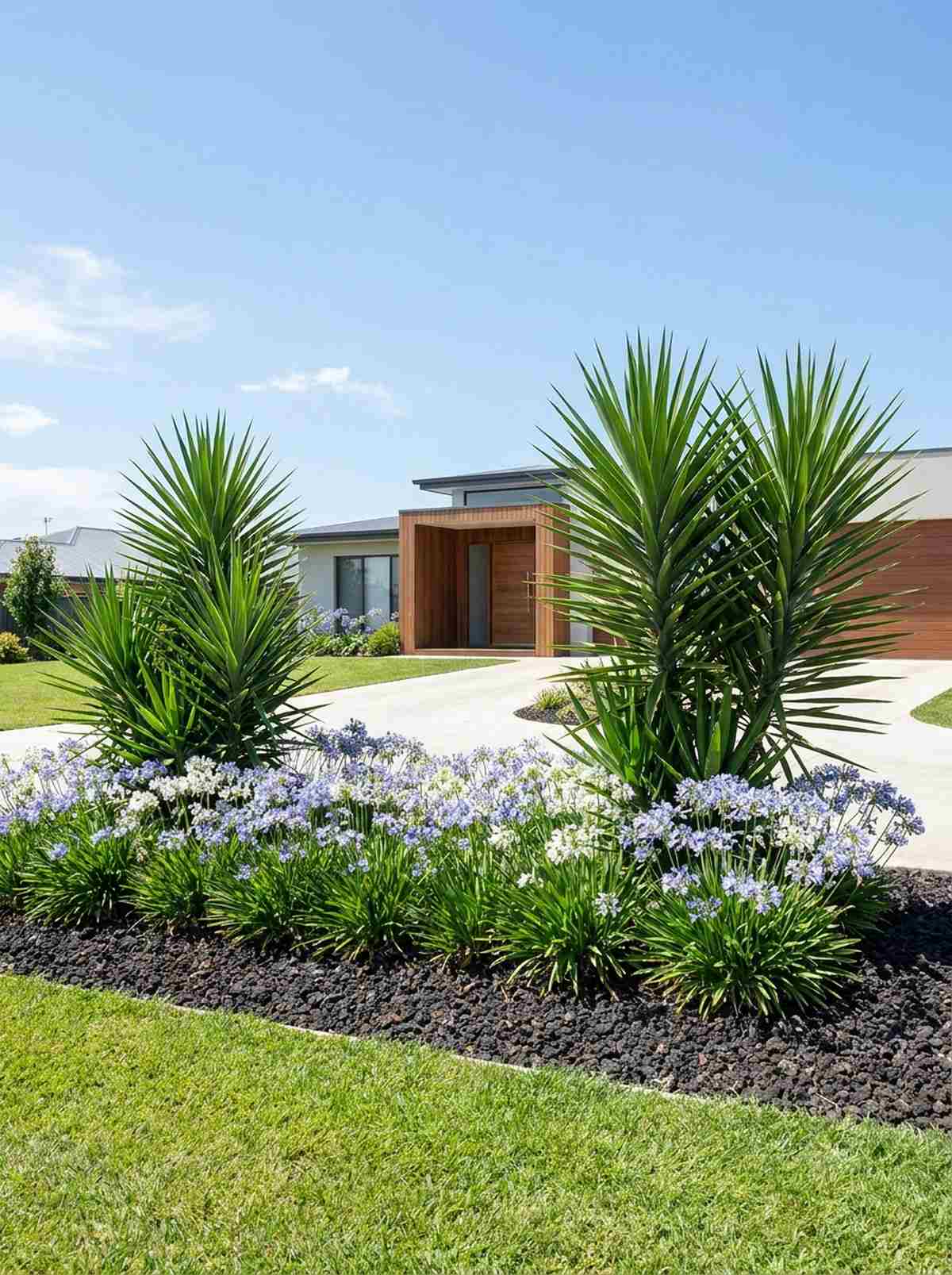
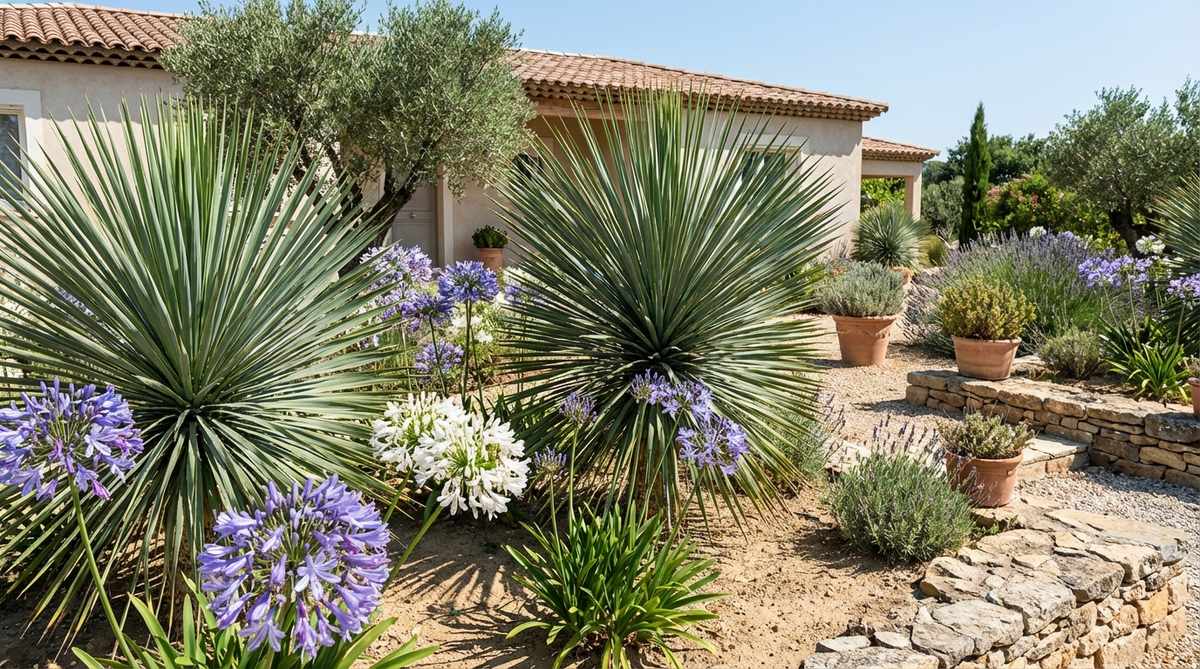
The stark, architectural swords piercing through a cloud of soft blue blossoms creates an arresting, high-drama focal point. Setting up an evergreen structural accent bed works perfectly flanking a modern driveway or minimalist front entry.
Soft, floppy perennial beds often look messy and chaotic when left unattended for more than a week. Anchoring a space with rigid, imposing yucca silhouettes guaranteed by surrounding agapanthus delivers a surprisingly premium look that requires zero pruning. This bold geometric approach is the hallmark of contemporary mediterranean garden design.
You can achieve this high-contrast pairing for around $70–$120. Save this to your curb appeal board if you want an upscale look with zero maintenance.
- Key Materials: Spineless yucca, agapanthus bulbs, volcanic rock
- Vibe / Style: Modern architectural oasis
- Difficulty: Digging in rocky soil
- Budget Breakdown: Yuccas: $60 | Bulbs: $30.
- Creator’s Tip: Choose the ‘spineless’ yucca variety to avoid dangerous needle-sharp tips near pedestrian walkways.
- Smart Sourcing: bulk agapanthus bare roots and bagged black volcanic rock mulch.
12. Herb Spiral Microclimate
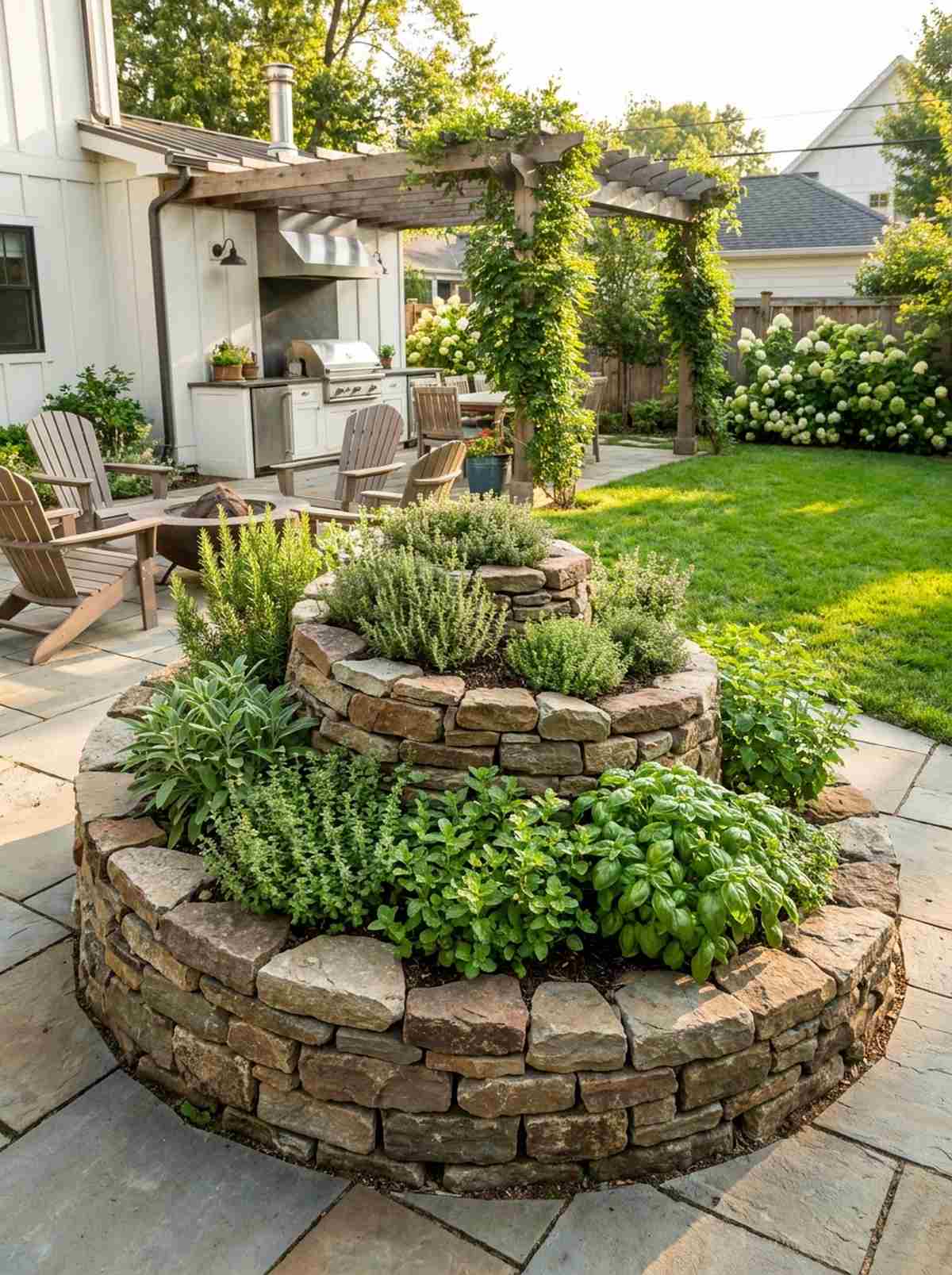
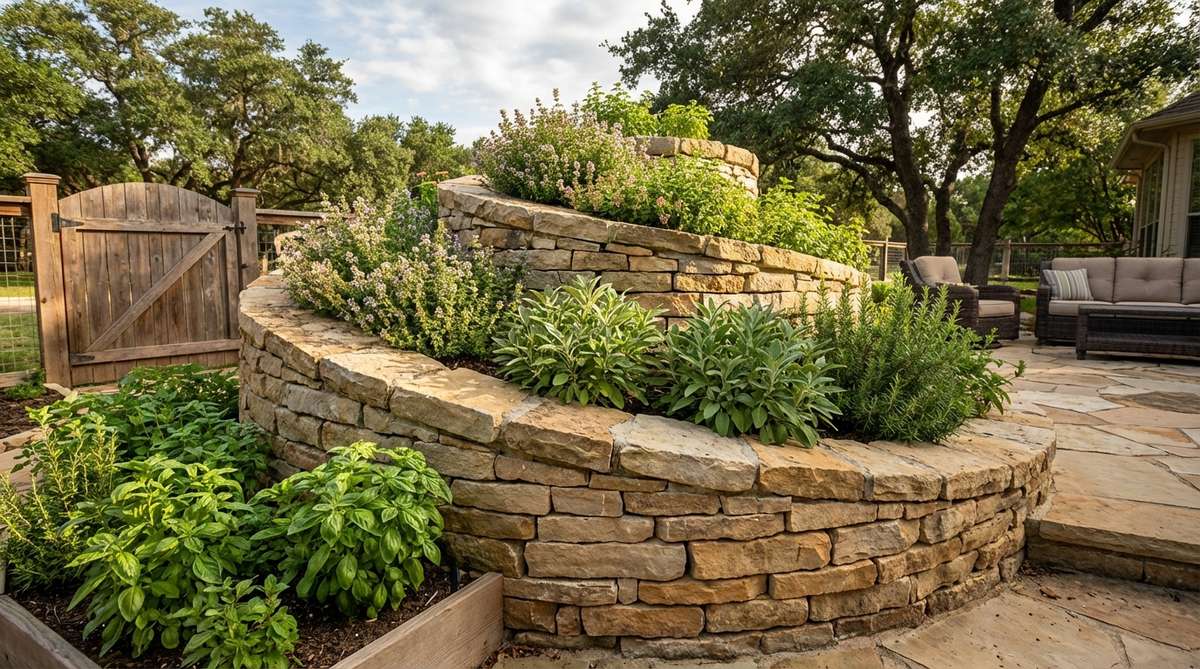
A swirling mound of fragrant greens feels like a functional piece of rustic land art that yields fresh dinners. Constructing a stacked stone culinary spiral is a brilliant use-case for maximizing harvest yields in a tight urban courtyard.
Planting herbs in a flat, single-level bed completely ignores their vastly different moisture and drainage requirements. By building upward with loose stones, you engineer multiple microclimates—allowing dry-loving thyme at the peak and thirsty basil at the base. This vertical layout is a massive trend in smart mediterranean herb garden design.
Gathering the stones and soil to build this spiral runs roughly $40–$80. It’s an incredibly satisfying weekend build that revolutionizes your outdoor cooking.
- Key Materials: Reclaimed fieldstones, organic compost, mixed herb plugs
- Vibe / Style: Permaculture chef’s dream
- Difficulty: Fun masonry puzzle
- Budget Breakdown: Soil/Compost: $30 | Herb Plugs: $40.
- Creator’s Tip: Orient the lowest, wettest part of the spiral facing north to retain maximum moisture for the shade-loving herbs.
- Smart Sourcing: pre-sorted organic culinary herb kits and bulk palletized retaining stones.
Most people get this completely wrong… until they try the exact pathway layout coming up next.
Courtyard and Pathway Designs With Gravel and Stone
Mediterranean gardens rely on hardscaping to define spaces and reduce lawn areas that demand irrigation. Gravel and natural stone create permeable surfaces that manage water while establishing authentic visual character.
13. Golden Gravel Pathways
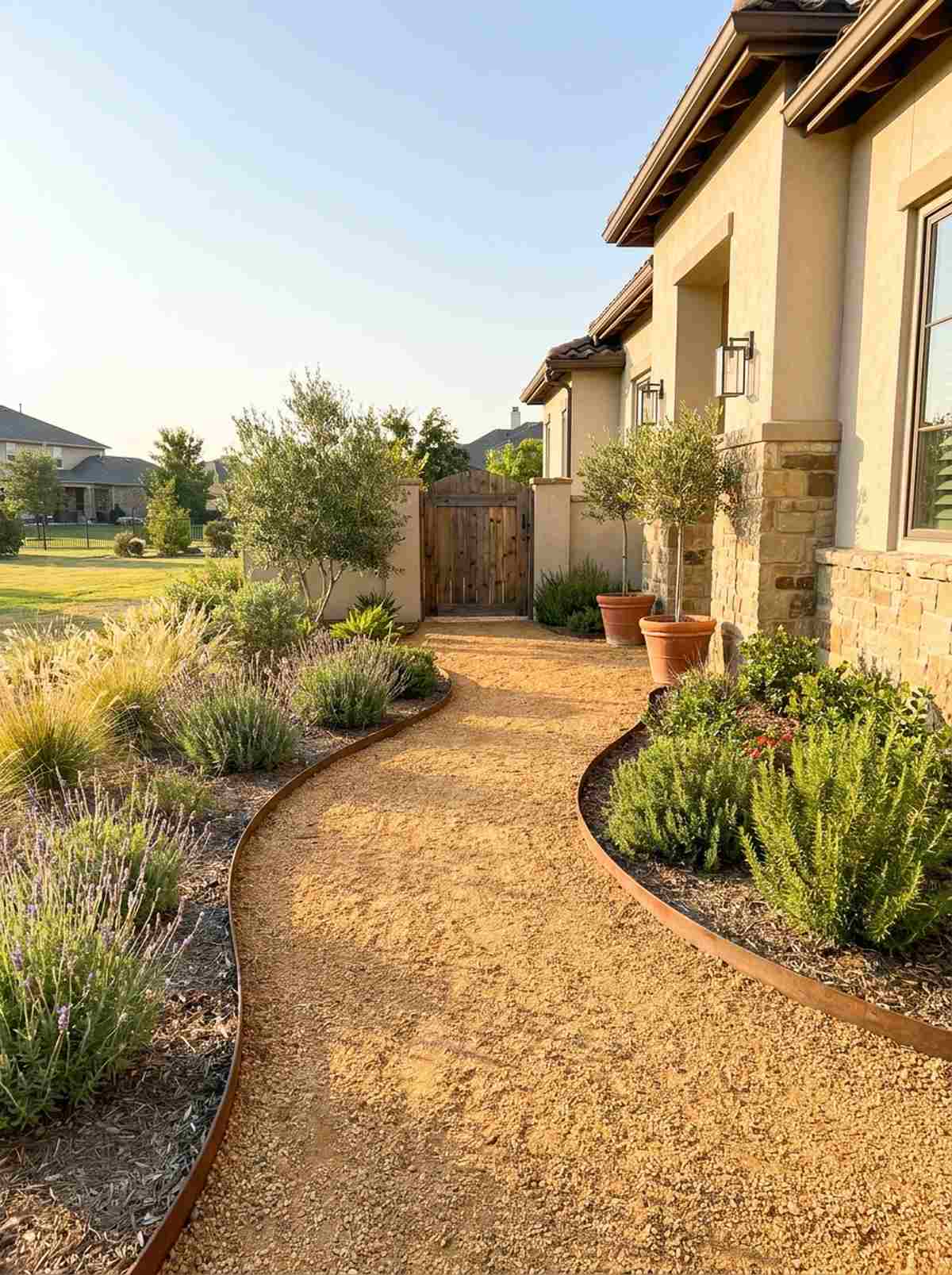
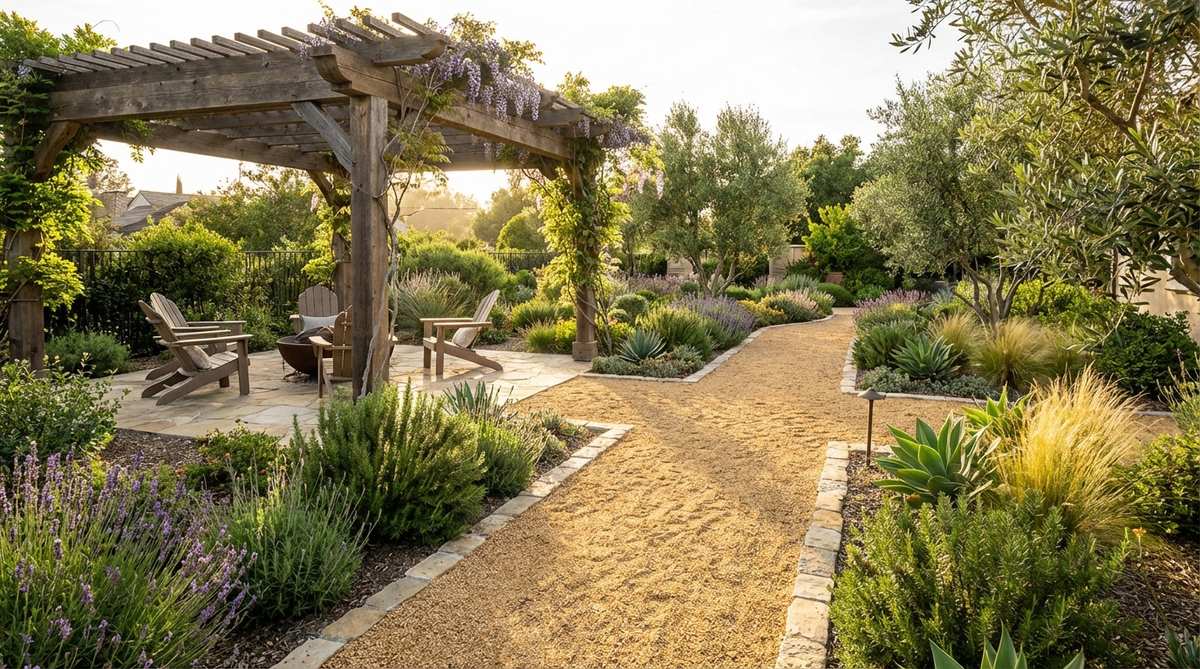
The satisfying, crunchy acoustic feedback under your shoes instantly transports you to a historic chateau walking path. Installing a crushed honey-stone walkway is the ideal use-case for replacing thirsty, struggling grass strips down the side of a house.
Pouring solid concrete slabs creates heat islands and completely destroys the natural drainage of a property. Raking out a thick layer of yellow-toned angular stones allows rainwater to infiltrate naturally while locking together to form a stable, elegant surface. This permeability is vital for any serious mediterranean garden landscape design.
You can transform a massive side yard for about $150–$250 using bulk delivery. Pin this if you are desperate to rip out your lawn and save on water.
- Key Materials: 20mm golden gravel, commercial landscape fabric, steel edging
- Vibe / Style: Sun-drenched villa stroll
- Difficulty: Heavy hauling/raking
- Budget Breakdown: Bulk Gravel: $150 | Base Fabric: $40.
- Creator’s Tip: Always use ‘angular’ crushed gravel, never smooth river rock, because angular edges lock together so you don’t sink when walking.
- Smart Sourcing: heavy-duty non-woven weed barriers and flexible steel pathway edging strips.
14. Mosaic Pebble Courtyard
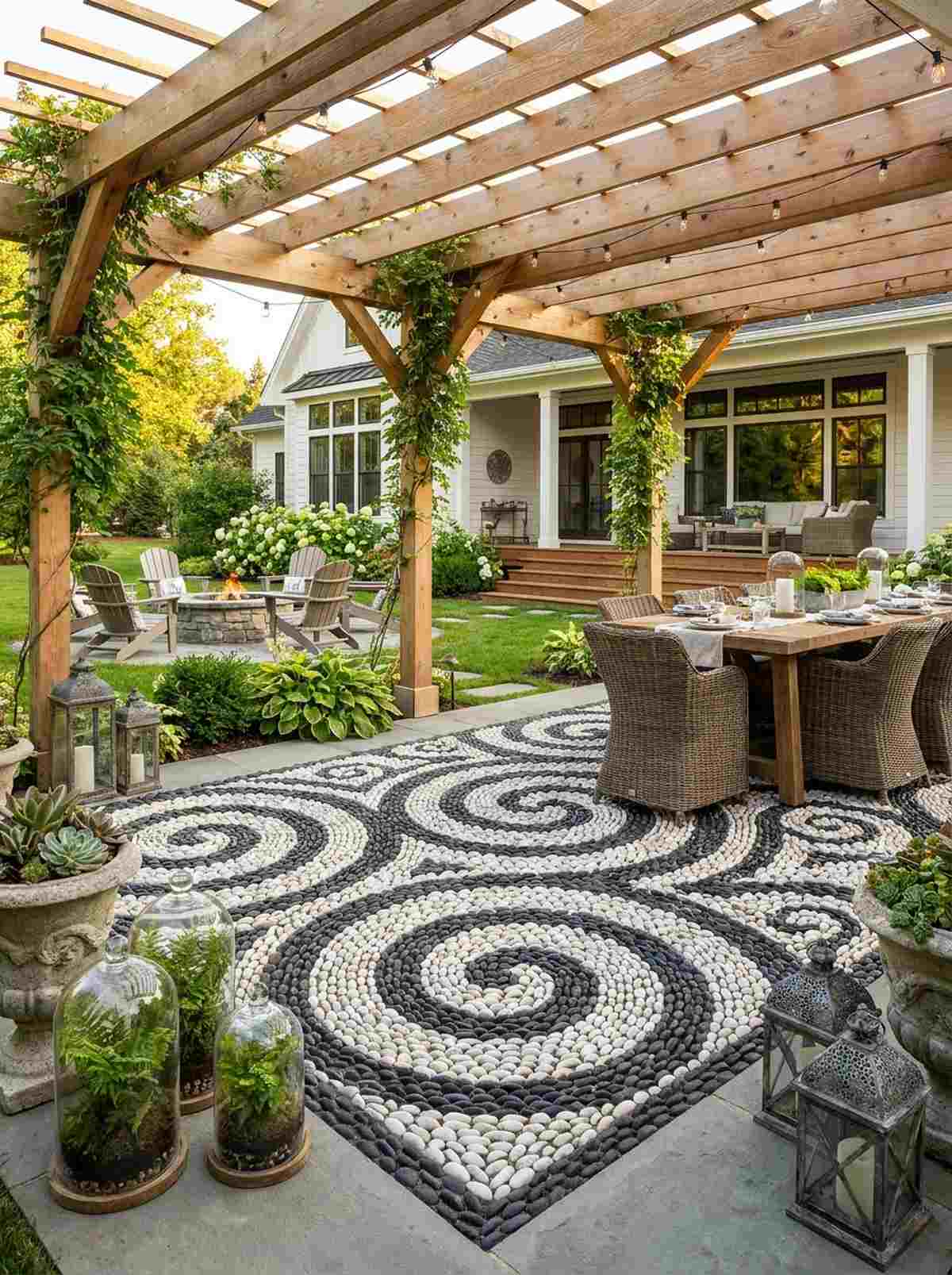
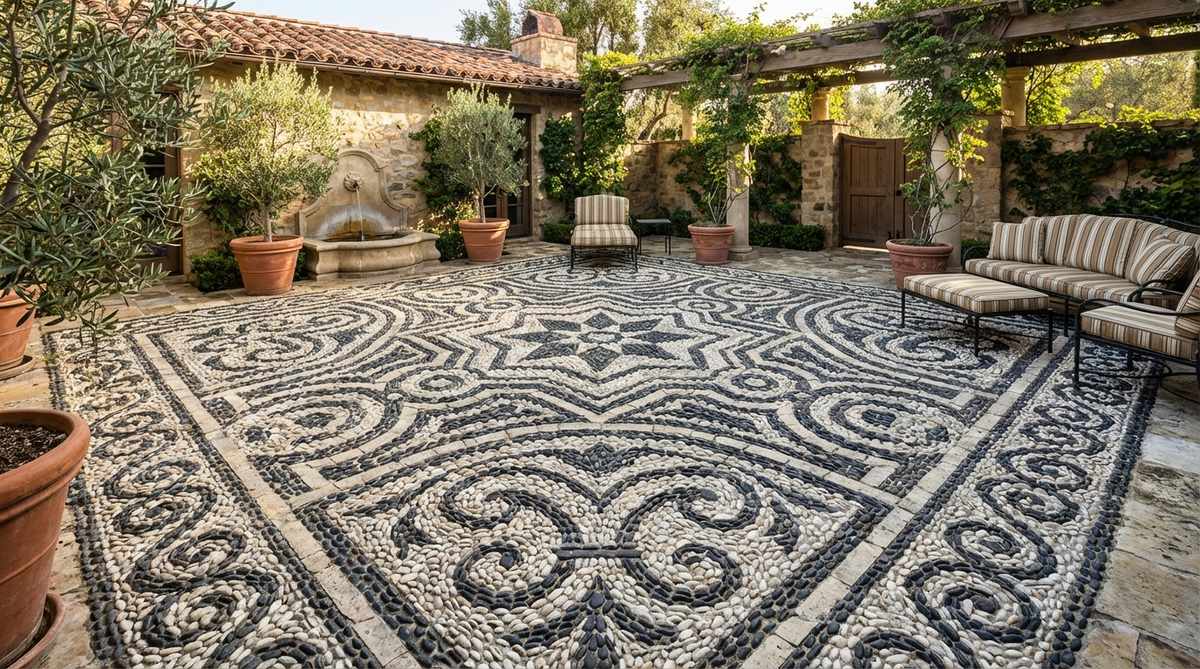
Intricate, sweeping spirals of contrasting stones feel like a sacred, permanent rug laid out by ancient artisans. Creating a hand-laid geometric stone patio is a majestic use-case for a central courtyard where outdoor dining takes place.
Settling for plain, stamped concrete completely robs a patio of narrative and historical soul. Setting black and white river pebbles vertically into a dry mortar bed looks incredibly expensive and offers a tactile, reflexology-like experience under bare feet. Including high-end terrarium accessories around the borders can transition the large scale into micro-visuals.
This labor of love costs surprisingly little—around $100–$200—but requires massive patience. Highly recommended for a focal point under a pergola.
- Key Materials: Sorted river stones, sand-cement mix, sponge
- Vibe / Style: Old-world artisan floor
- Difficulty: High patience, back-intensive
- Budget Breakdown: River Stones: $120 | Mortar: $40.
- Creator’s Tip: Work in very small 2-foot sections at a time so the mortar doesn’t dry out before you place the pebbles.
- Smart Sourcing: pre-sorted polished river pebbles (bulk packs) and pre-meshed pebble mosaic tiles.
15. Reclaimed Stone Terrace
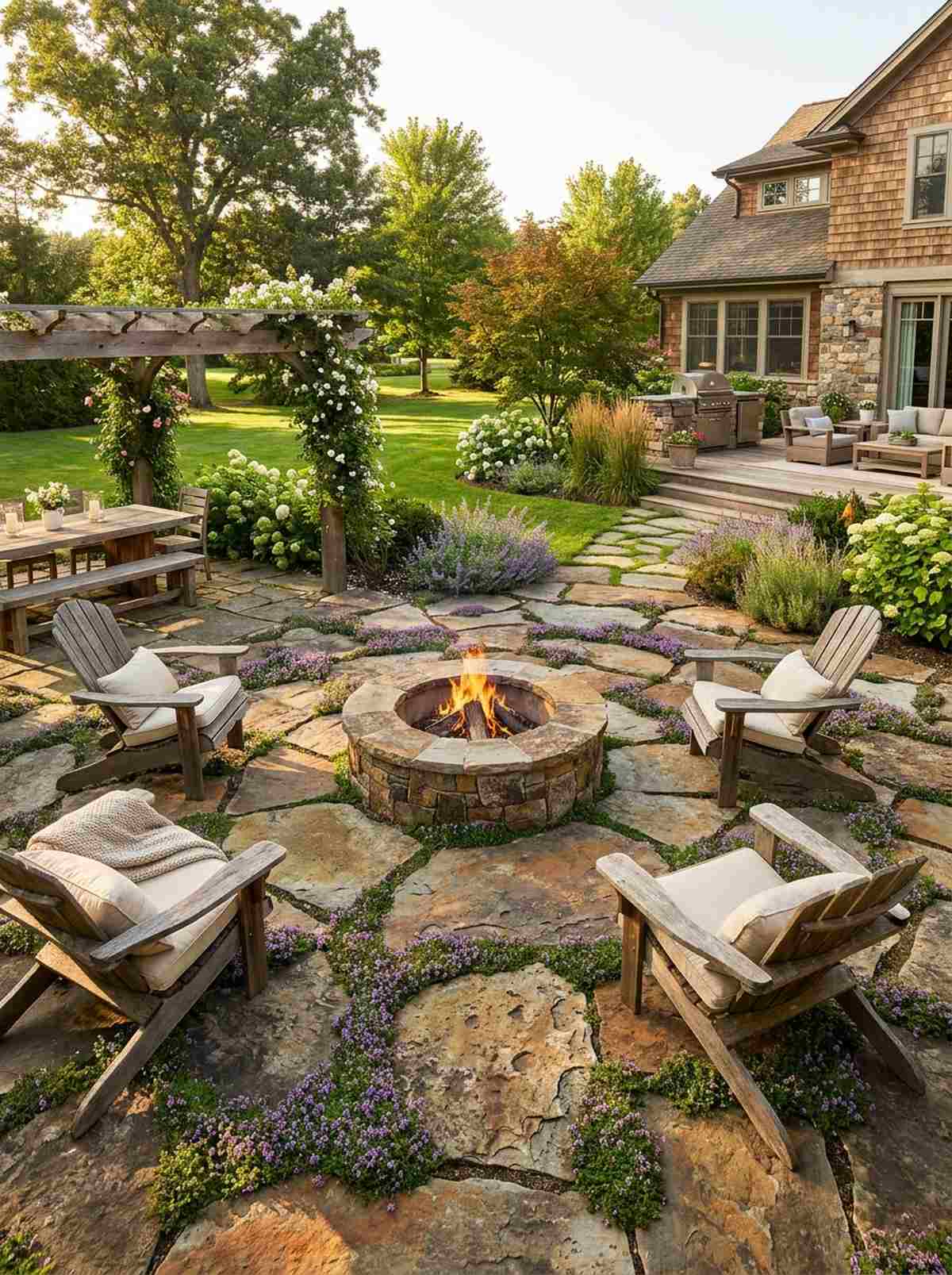
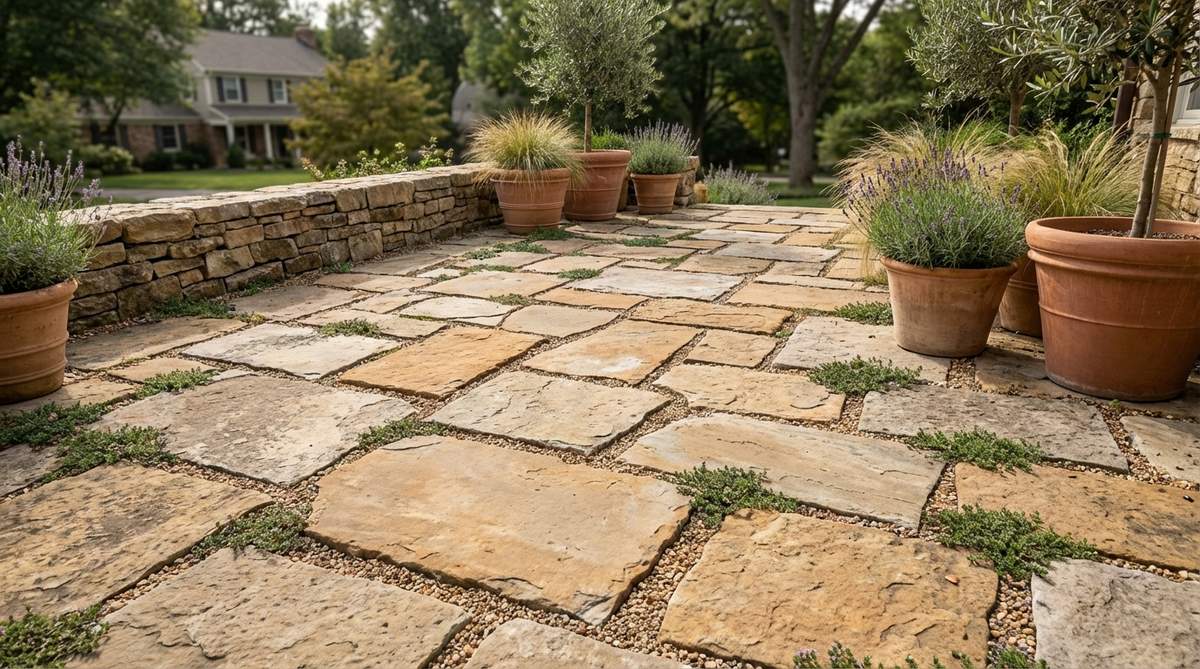
The chipped edges and pitted surfaces of old stone possess a rugged, timeless soul that brand-new pavers simply cannot fake. Laying out a weathered flagstone seating area is the premium use-case for a fire pit zone that blends seamlessly into nature.
Buying perfectly square, uniformly colored pavers from a big box store immediately makes a garden feel like a commercial parking lot. Hunting down salvaged limestone or sandstone chunks and leaving wide, creeping-thyme-filled gaps gives a designer-level finish of casual luxury. Finding authentic materials is a core pillar of high-end mediterranean style garden design.
Sourcing reclaimed stone pushes the budget to $300–$600, but the result is a permanent, century-lasting upgrade. Save this to your ultimate backyard blueprint board.
- Key Materials: Salvaged flagstones, leveling sand, creeping thyme
- Vibe / Style: Historic ruin retreat
- Difficulty: Very heavy lifting
- Budget Breakdown: Palletized Stone: $400 | Leveling Sand: $50.
- Creator’s Tip: Sweep a mixture of compost and sand into the wide joints before planting the thyme to give the roots a nutrient-rich start.
- Smart Sourcing: bulk creeping thyme seeds and commercial polymeric jointing sand.
16. Gravel Mulch Borders
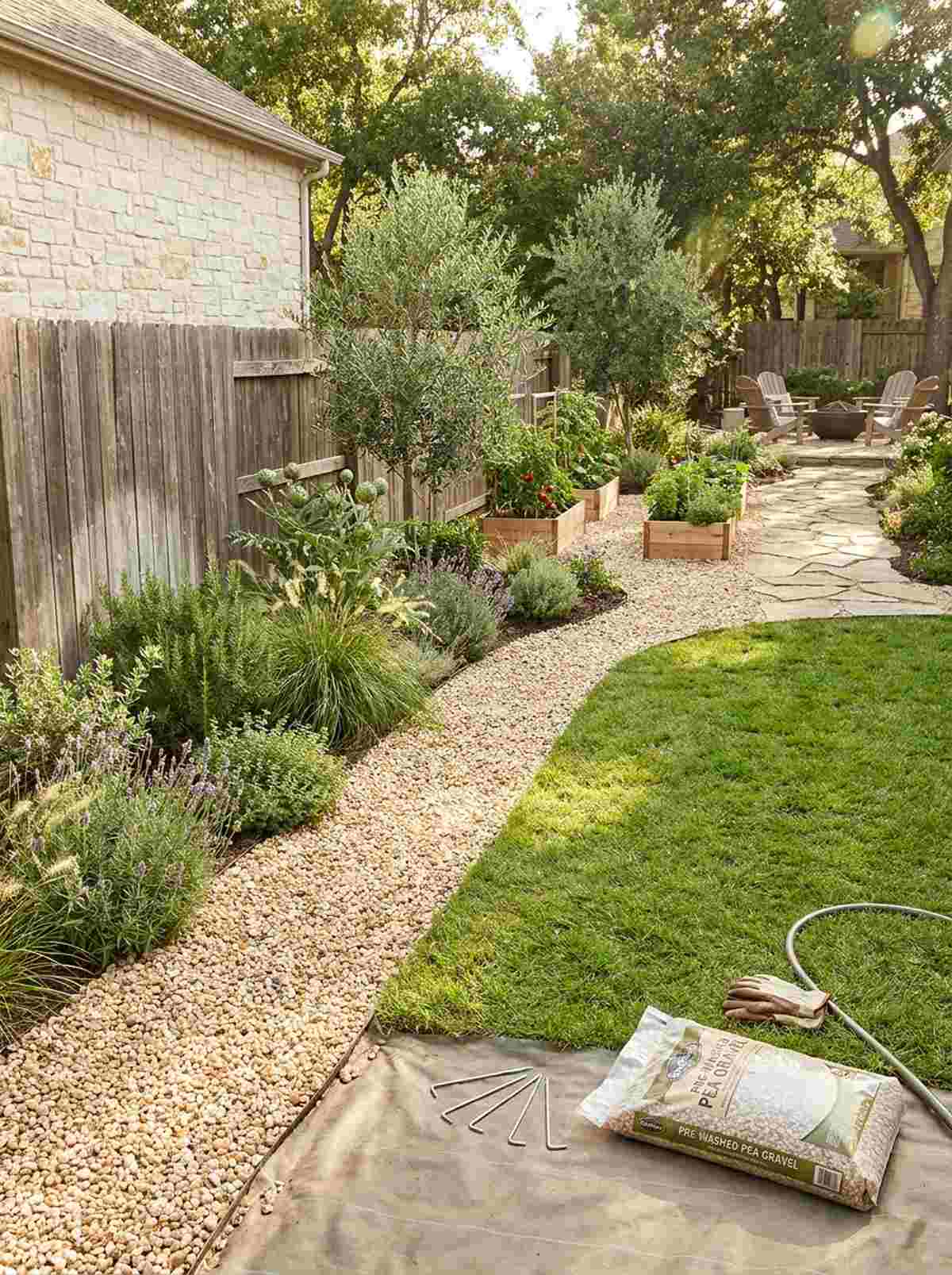
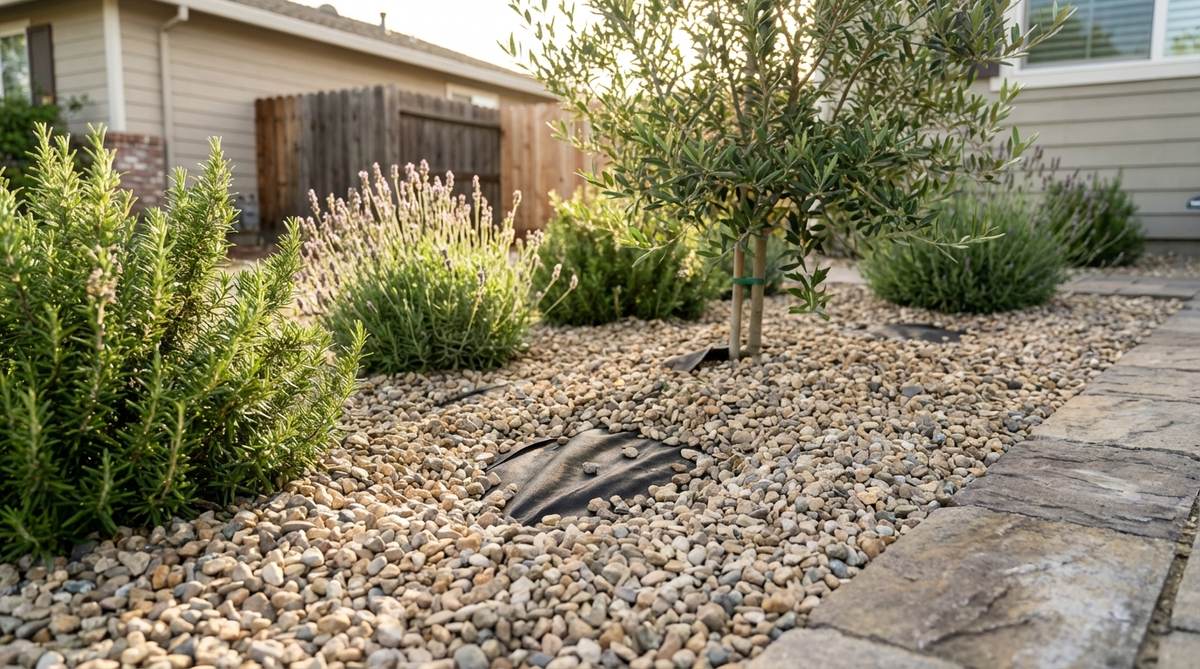
The crisp, clean transition between lush foliage and pristine mineral rock feels fiercely modern yet completely natural. Spreading a heat-reflective mineral topcoat is a flawless use-case for illuminating dark, shady borders next to property walls.
Smothering drought-tolerant plants in thick, moisture-retaining wood bark is a guaranteed way to rot their delicate roots during winter rains. Upgrading to a 10mm pea gravel mulch reflects vital sunlight back up into the canopy while ensuring the crown of the plant stays bone dry. This is an insider secret used heavily in mediterranean vegetable garden design to prevent soil-borne diseases.
Bagging out a fresh gravel boundary typically costs $60–$100 depending on yard size. It’s a fast upgrade that completely changes the vibe of your beds.
- Key Materials: 10mm pea gravel, landscape pins, weed barrier
- Vibe / Style: Crisp modern arid bed
- Difficulty: Easy hauling
- Budget Breakdown: Pea Gravel Bags: $70 | Pins: $10.
- Creator’s Tip: Keep the gravel layer strictly 2 inches deep; any deeper and small plants will struggle to expand their base.
- Smart Sourcing: rust-proof landscape staple bulk packs and pre-washed pea gravel sacks.
Stop scrolling. The next architectural feature completely alters how a garden sounds and feels.
17. Dry Stream Bed Feature
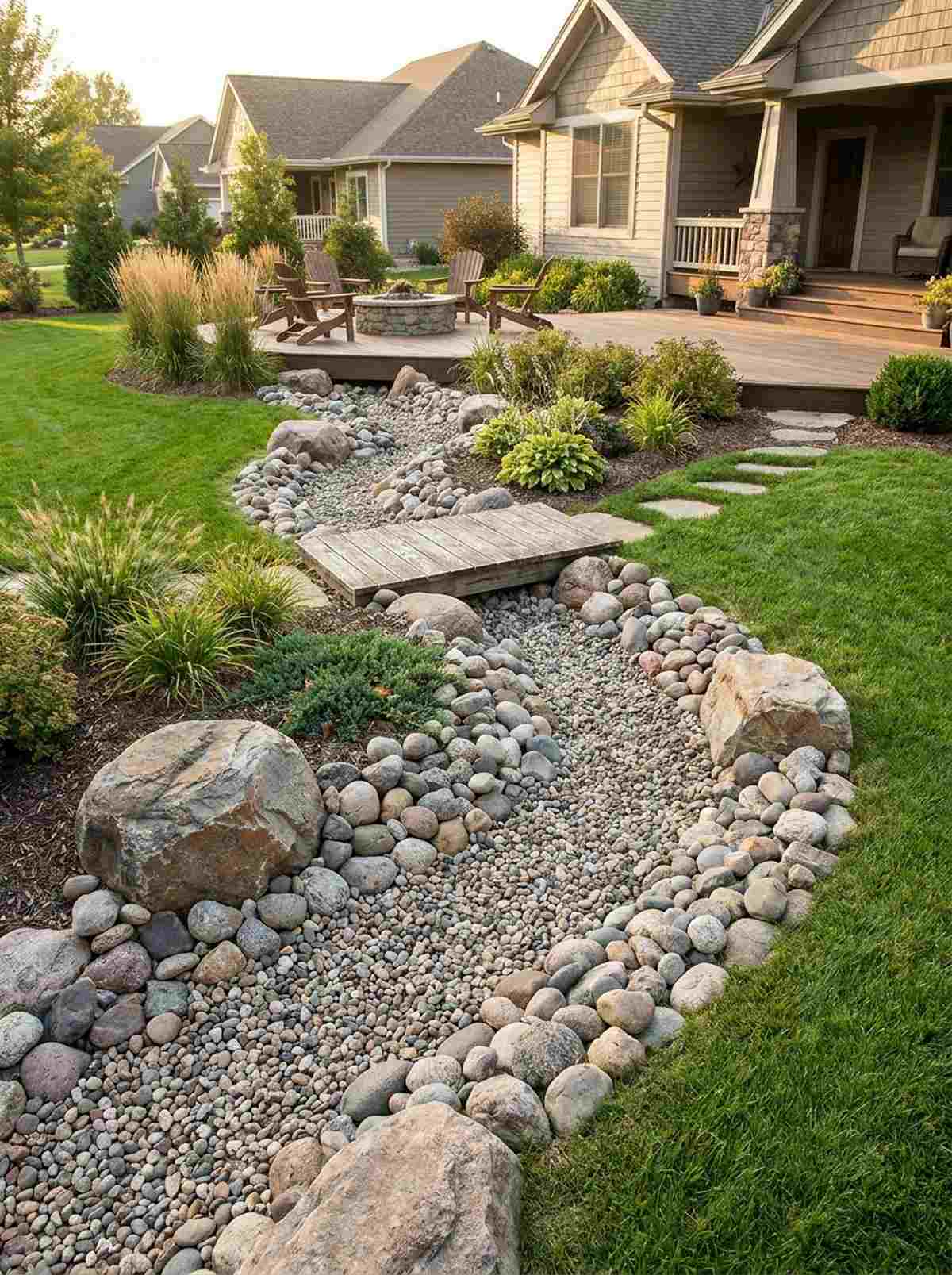
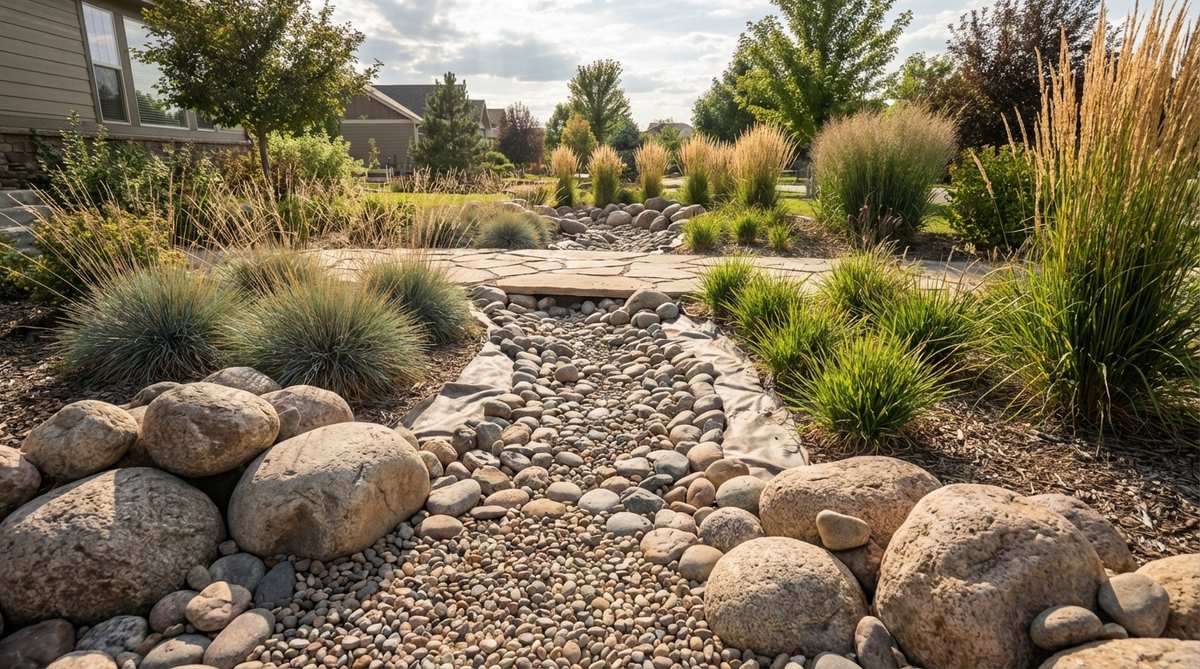
The winding, fluid arrangement of boulders mimicking a dried riverbed introduces a powerful sense of organic movement without a single drop of water. Sculpting a meandering rock drainage channel is a life-saving use-case for yards that suffer from seasonal flooding or severe runoff issues.
Most homeowners try to fight ugly drainage ditches with plastic piping that eventually clogs and cracks. Excavating a shallow trench and armoring it with graduated river cobbles solves the plumbing nightmare while creating a stunning visual anchor. You can tuck miniature garden supplies like tiny ceramic bridges over the stones for a delightful scale shift.
Engineering this faux waterway usually runs between $100–$250 in bulk stone. Pin this if you need a gorgeous solution for muddy yard trenches.
- Key Materials: Boulders, medium cobbles, pea gravel, trenching shovel
- Vibe / Style: Zen seasonal riverbed
- Difficulty: Heavy digging and lifting
- Budget Breakdown: Mixed Stone Delivery: $180 | Fabric Line: $30.
- Creator’s Tip: Place the largest boulders strictly on the outside edges of curves, just as fast-moving water would naturally deposit them.
- Smart Sourcing: assorted polished river rock bundles and heavy-duty pond underlayment fabric.
Architectural and Shade Elements For Outdoor Living
Shade structures extend the usability of Mediterranean gardens during peak heat while providing vertical frameworks for climbing plants. These architectural elements blend function with aesthetic appeal.
18. Wisteria-Draped Pergola
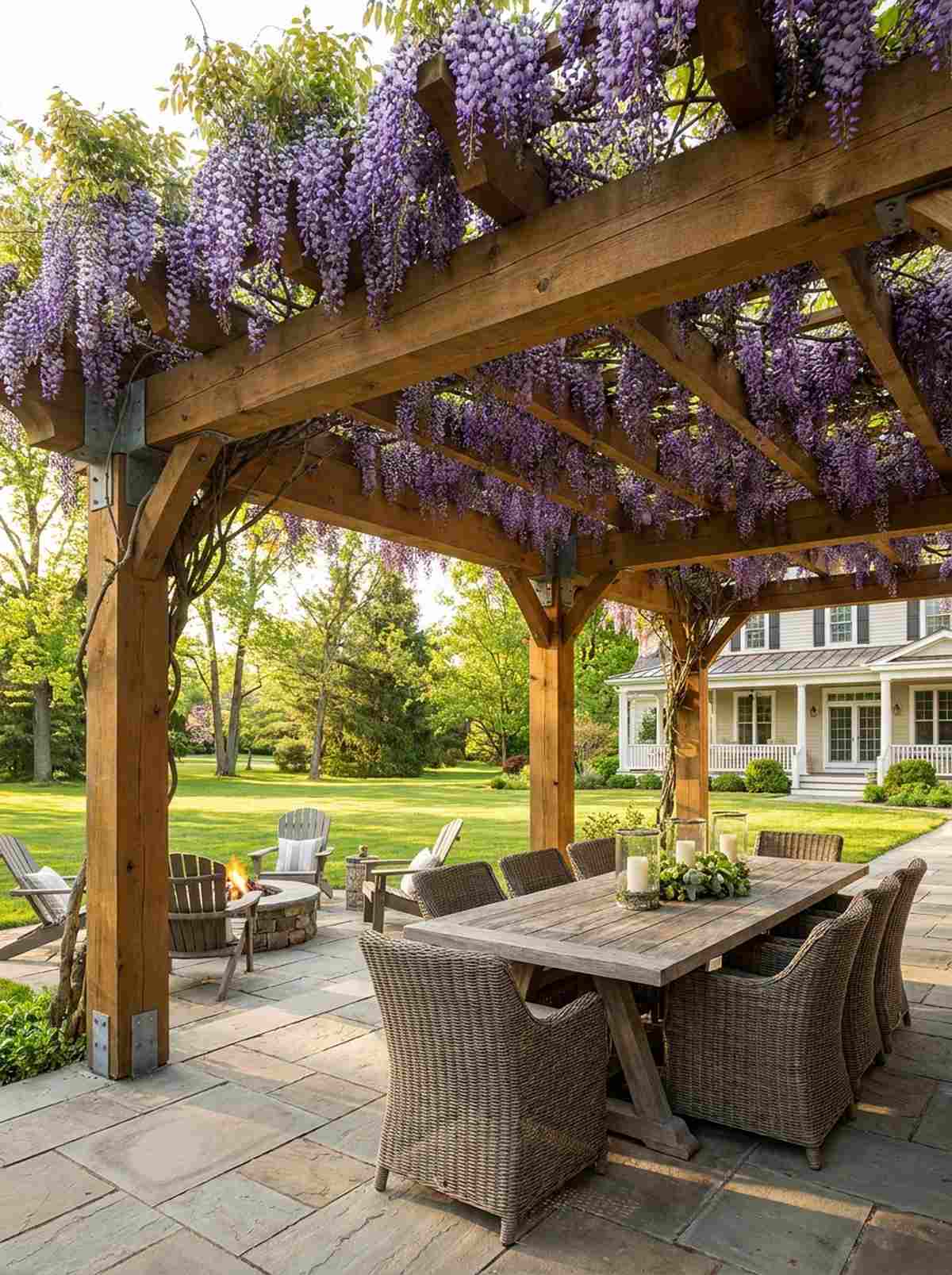
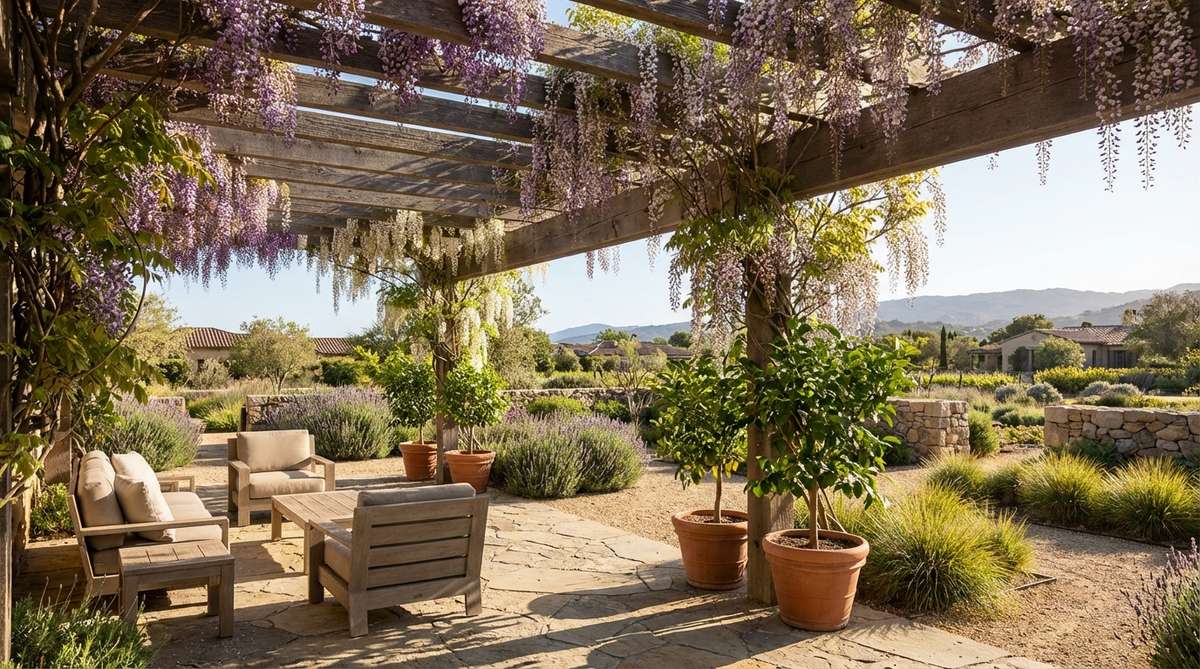
Dripping with heavy, fragrant purple racemes, a shaded wooden canopy feels like the ultimate romantic escape from the blazing midday sun. Erecting a heavy-timber vine canopy is the absolute best use-case for covering an exposed, blisteringly hot western patio.
Throwing up a cheap aluminum pop-up tent instantly cheapens a yard and gets shredded by the first strong wind. Bolting together massive timber beams capable of supporting the aggressive, twisting weight of mature wisteria looks far more expensive than it is. The resulting dappled shade is the crown jewel of high-end outdoor entertaining areas.
Building a robust wooden framework will run about $400–$800. Save this to your dream patio board if you want a permanent, living roof over your dining table.
- Key Materials: Cedar timbers, heavy galvanized brackets, wisteria vines
- Vibe / Style: Romantic shaded veranda
- Difficulty: Advanced carpentry
- Budget Breakdown: Lumber: $500 | Bracket Hardware: $150.
- Creator’s Tip: Wisteria vines can actually crush flimsy wood as they thicken; always use 6×6 posts rather than standard 4x4s for safety.
- Smart Sourcing: heavy-duty pergola bracket kits and galvanized post base anchors.
19. Bougainvillea Arbor Entrance
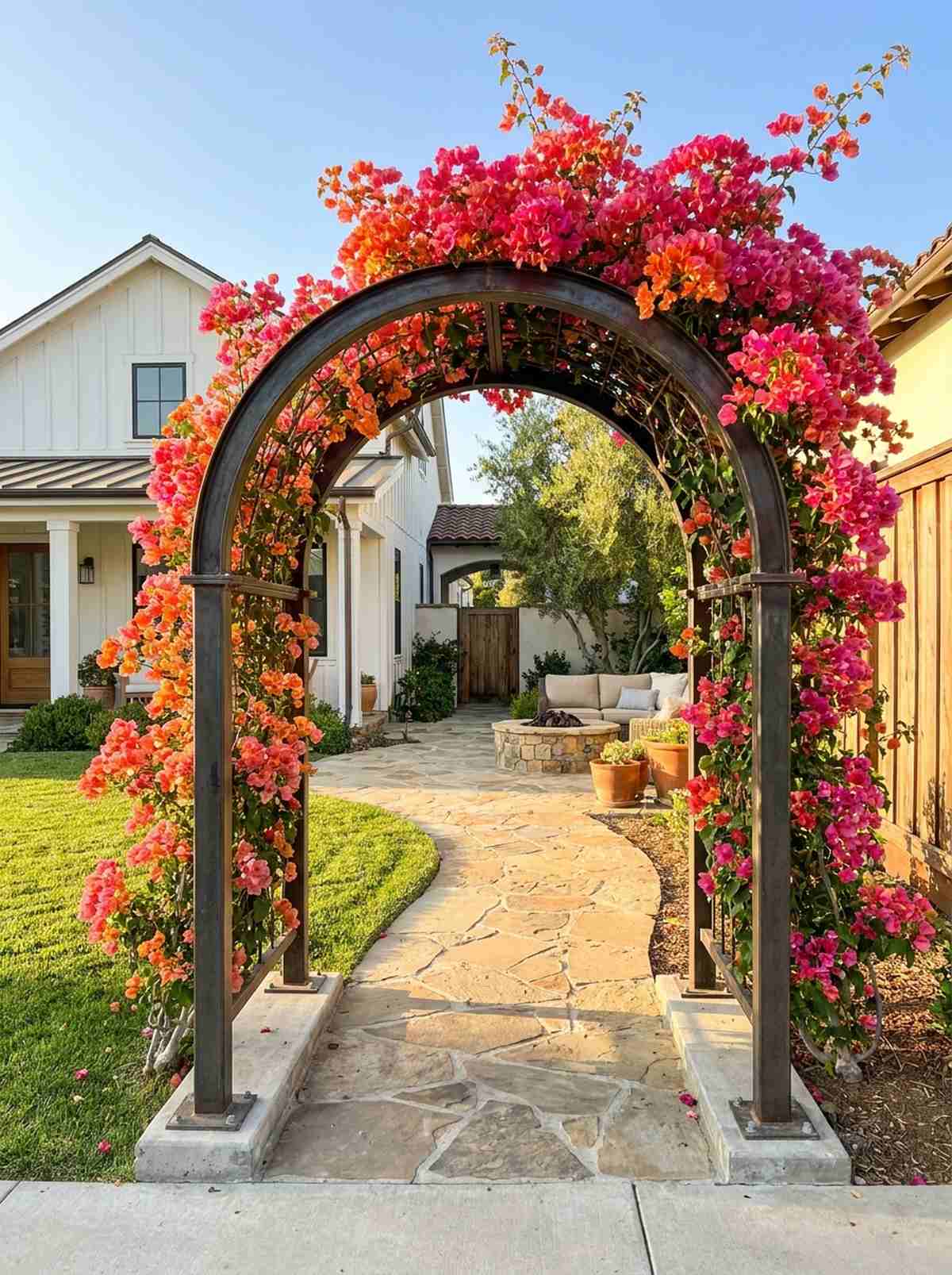
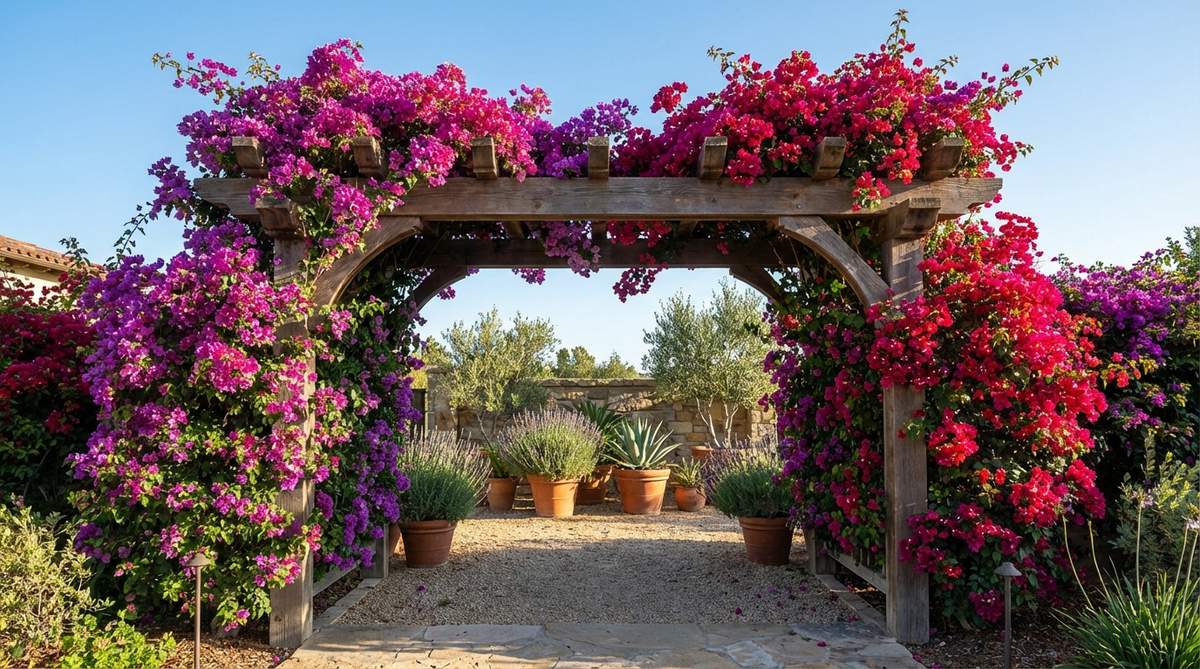
Walking through a vibrant tunnel of neon pink and orange bracts creates a breathtaking sense of arrival and transition. Installing a floral threshold archway is a magnificent use-case for separating a mundane driveway from a secluded private courtyard.
Using flimsy plastic trellises for aggressive climbing vines is a recipe for a collapsed, tangled mess within two seasons. Anchoring a commercial-grade steel arch ensures the structure can handle the intense weight and wind-load of a thriving bougainvillea. This architectural framing trick is widely celebrated in top-tier mediterranean garden design ideas to force perspective.
A sturdy metal arbor and starter vines cost roughly $150–$250. It’s a fast upgrade that completely changes the vibe of your entry sequence.
- Key Materials: Steel archway, concrete post mix, vining bougainvillea
- Vibe / Style: Dramatic botanical gateway
- Difficulty: Moderate, requires concrete setting
- Budget Breakdown: Metal Arch: $180 | Concrete/Vines: $40.
- Creator’s Tip: Dig the arch legs at least 18 inches down and set them in quick-crete to prevent the top-heavy vine from blowing over in a storm.
- Smart Sourcing: UV-coated rust-proof metal archways and fast-setting post hole concrete.
20. Canvas Shade Sail Dining
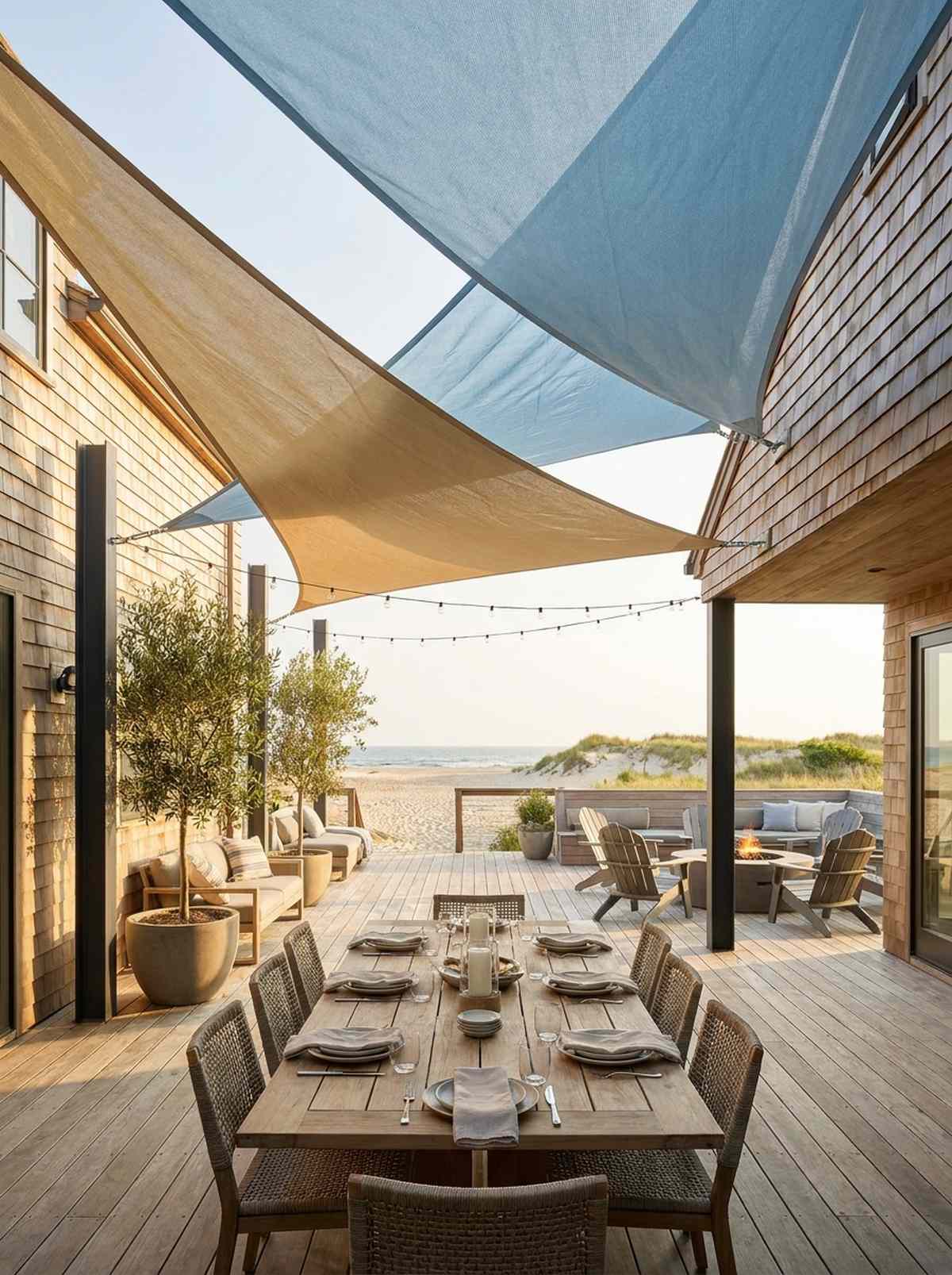
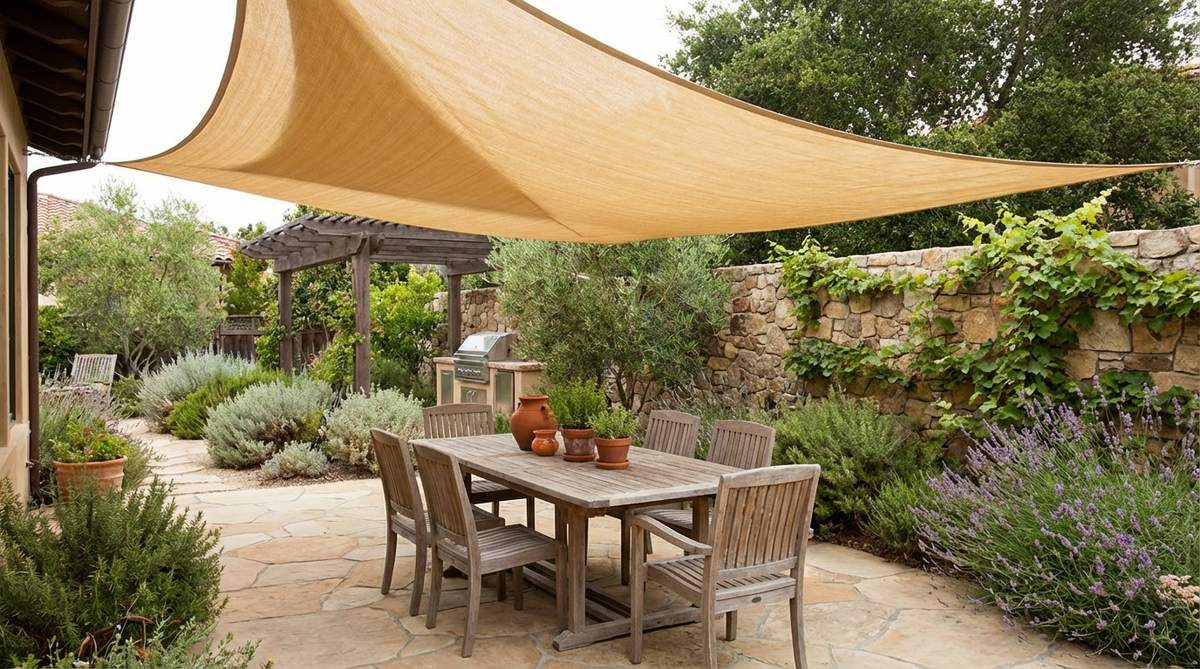
Billowing gently in the coastal breeze, taut fabric triangles evoke the chic, minimalist energy of an Ibiza beach club. Stringing up a suspended architectural shade canopy is a brilliant use-case for awkwardly shaped decks that cannot accommodate a traditional square pergola.
Struggling with heavy, fading patio umbrellas that constantly blow over is a miserable way to host a summer lunch. Tensioning premium commercial sails across varying heights delivers a surprisingly premium look that cuts UV rays without trapping stifling hot air underneath. By crossing two different colored sails, you add a dynamic, modern sculptural element.
You can engineer this sleek, floating shade solution for $100–$200. Pin this if you’re planning a small space upgrade that requires instant sun protection.
- Key Materials: High-density polyethylene (HDPE) sails, stainless turnbuckles, steel posts
- Vibe / Style: Modern coastal resort
- Difficulty: Requires precise tensioning
- Budget Breakdown: Sail Kit: $90 | Stainless Hardware: $40.
- Creator’s Tip: Always install one corner of the sail significantly lower than the others to ensure torrential rain sheets off rather than pooling and ripping the fabric.
- Smart Sourcing: commercial UV-blocking shade sails (bulk pack) and marine-grade stainless turnbuckle kits.
Material Guide: Cheap vs. Premium Aesthetic
Knowing exactly where to save and where to spend makes all the difference in achieving that “looks expensive but isn’t” vibe across your Mediterranean setups.
- Standard vs. UV-Resistant Coatings: Unsealed terracotta and cheap acrylics will fade to a chalky pink in one summer. Upgrading to UV-coated sprays prevents micro-cracking and keeps your painted patterns crisp.
- Pre-made Hardware Kits vs. Local Sourcing: While buying loose screws seems cheaper, heavy-duty pergola and sail bracket starter kits save hours of frustration and are load-tested to prevent dangerous structural collapses under heavy vine weight.
21. Stone Wall Fountain Accent
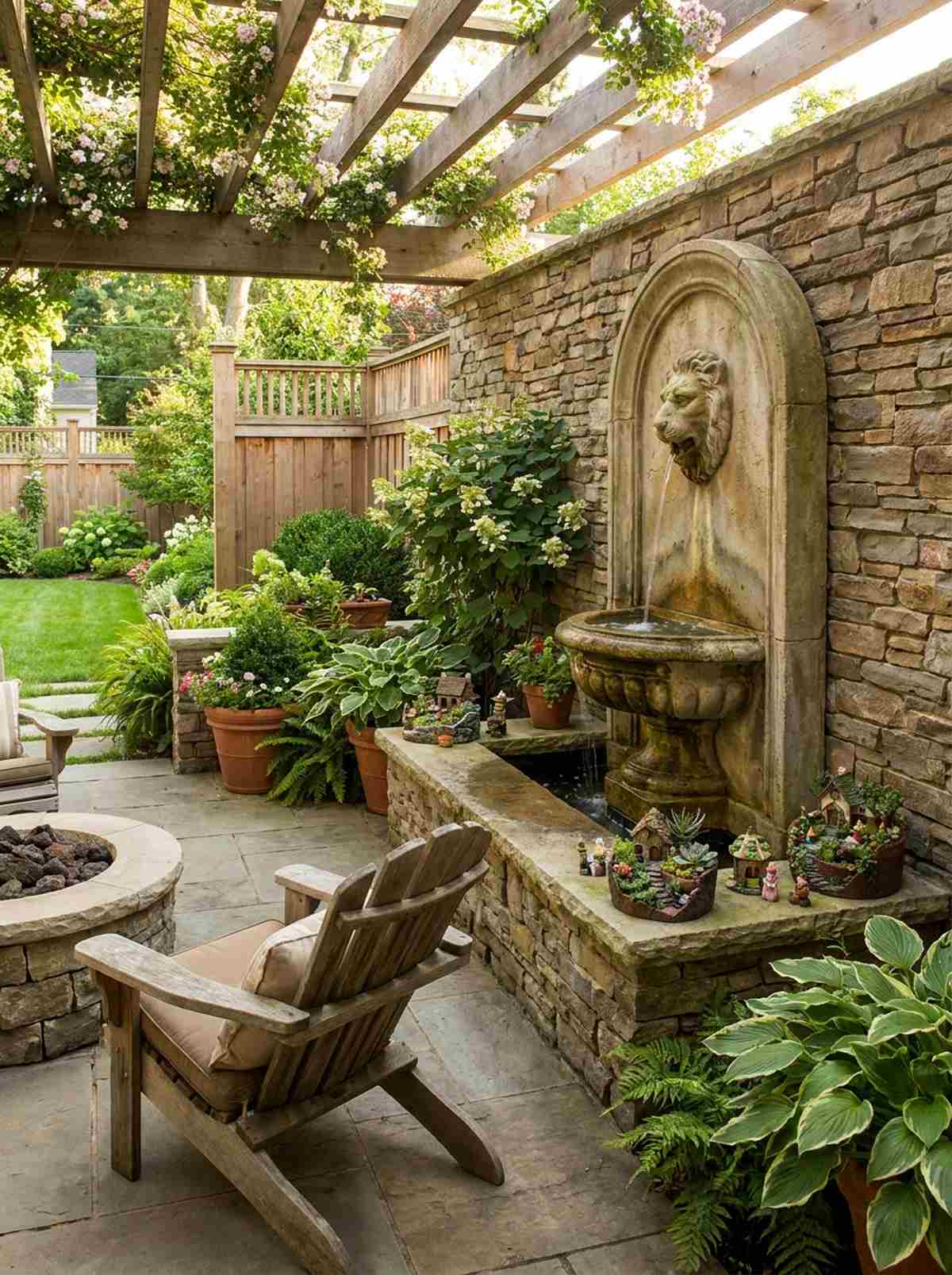
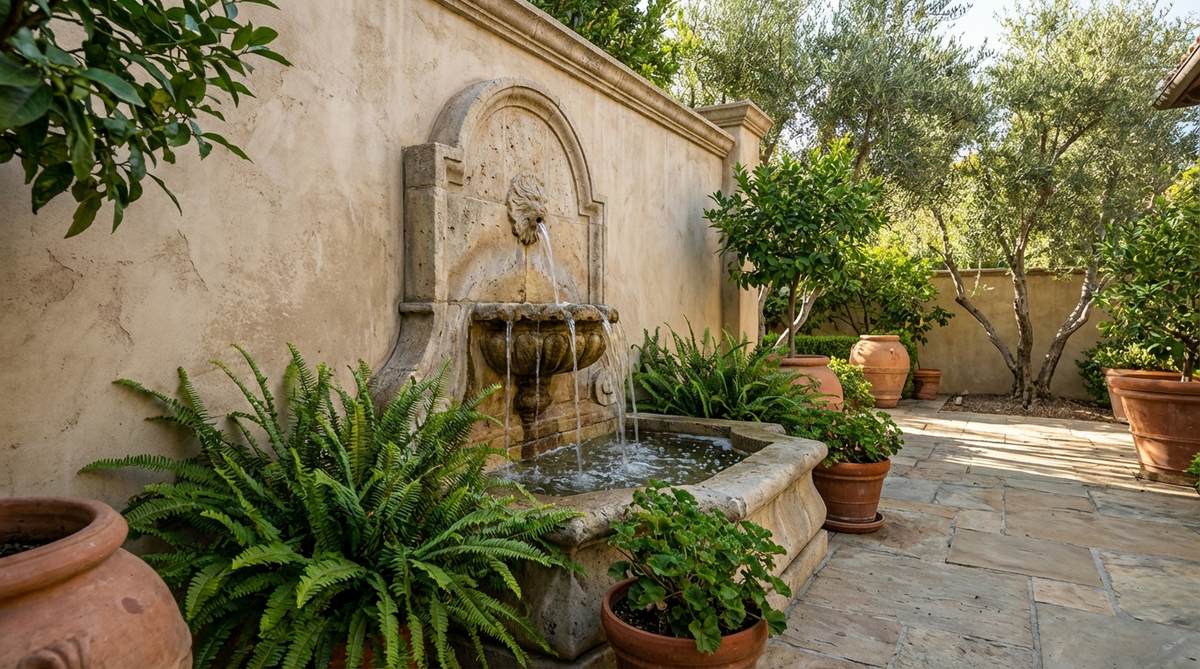
The gentle, rhythmic trickling of water over carved stone instantly drowns out neighborhood traffic and induces a spa-like calm. Mounting a vertical courtyard water feature is an elite use-case for tight, walled-in patios where a full pond is impossible.
Wasting precious ground space on bulky, plastic birdbaths clutters a yard and looks terribly dated. Attaching a recirculating cast-stone spout directly to a masonry wall gives a designer-level finish that cools the immediate air temperature through evaporation. Slipping a few high-quality fairy garden kits onto the fountain’s ledge adds a tiny touch of hidden magic.
Installing a self-contained wall fountain typically runs $150–$350. Highly recommended for a quick weekend win that adds critical acoustic ambiance.
- Key Materials: Wall-mounted fountain unit, solar pump, waterproof sealant
- Vibe / Style: Secluded monastery courtyard
- Difficulty: Basic plumbing/mounting
- Budget Breakdown: Fountain Basin: $200 | Solar Pump: $40.
- Creator’s Tip: Hide a few drops of natural algae inhibitor in the basin to keep the water crystal clear without smelling like a chlorinated swimming pool.
- Smart Sourcing: solar recirculating pump kits and eco-friendly fountain algae controllers.
22. Wrought Iron Bistro Nook
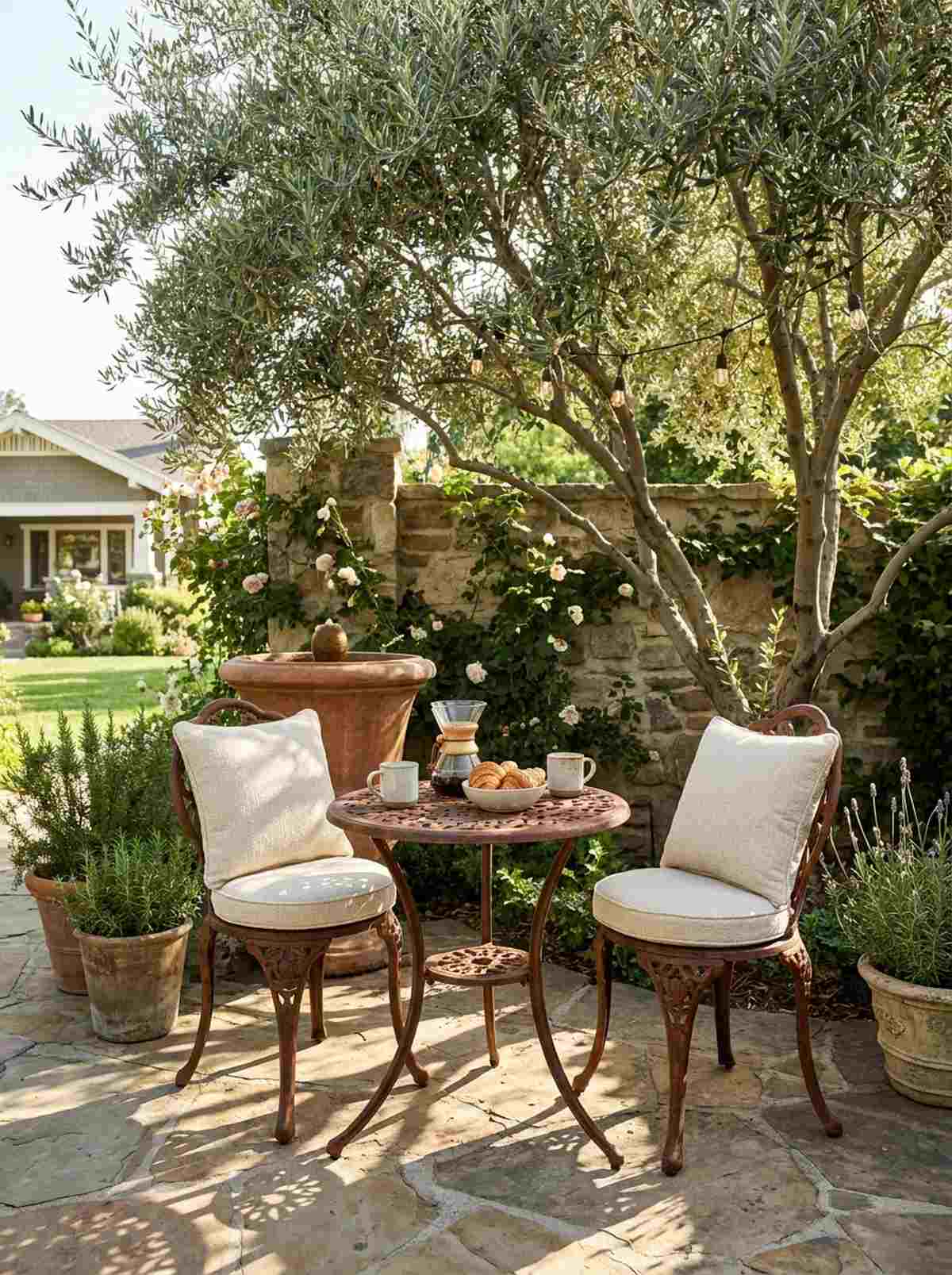
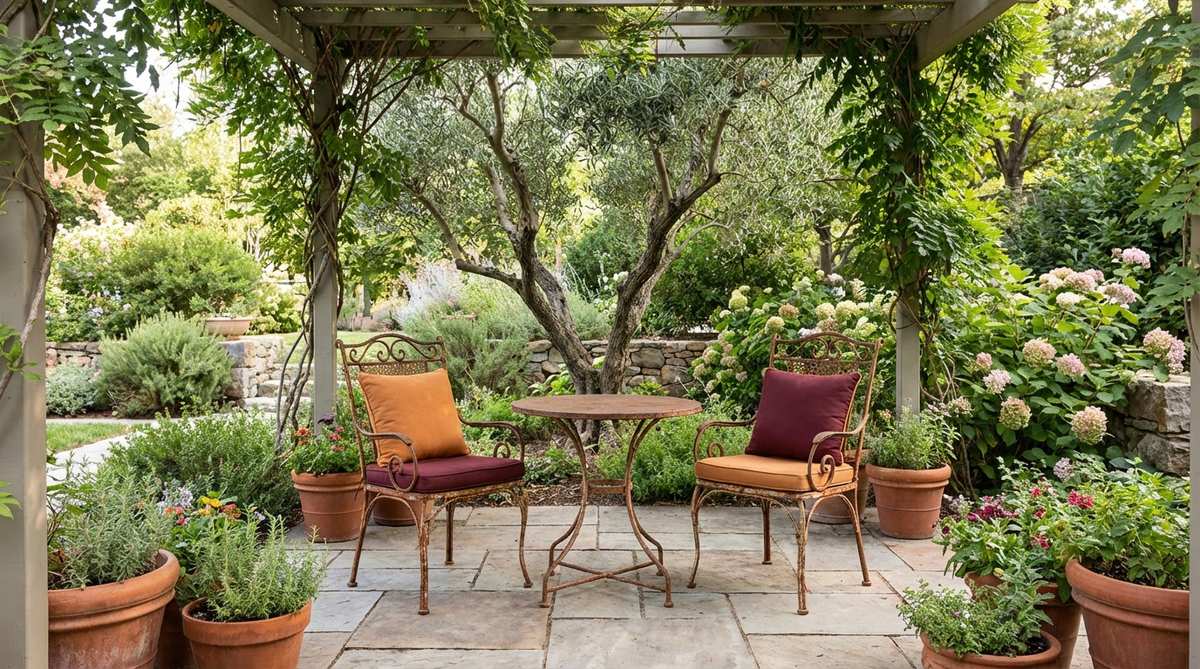
Tucked under a shady olive branch, an ornate metal table for two feels like a secret café discovered in a narrow European alleyway. Positioning a cast-metal morning coffee station is the perfect use-case for utilizing a tiny, overlooked corner of the side yard.
Bulky outdoor sectionals dominate patios and force everyone into a single, overwhelming conversation circle. Creating intimate, secondary seating zones with heavy, rust-patinated iron furniture looks incredibly intentional and invites quiet morning reflection. This tactic is heavily featured in modern mediterranean courtyard garden design blueprints.
A quality heavy-duty bistro set will cost around $120–$250. Save this to your DIY weekend garden board to carve out a peaceful morning retreat.
- Key Materials: Cast aluminum/iron bistro set, weatherproof cushions
- Vibe / Style: Secret Parisian/Tuscan café
- Difficulty: Unboxing and placement
- Budget Breakdown: Bistro Set: $180 | Seat Cushions: $40.
- Creator’s Tip: Spray the feet of the iron chairs with clear rust-oleum enamel to prevent orange rust rings from staining your expensive patio stones.
- Smart Sourcing: rust-proof cast aluminum bistro sets and fade-resistant acrylic outdoor cushions.
You won’t believe how much square footage you actually have until you implement this next vertical trick…
Vertical and Fragrant Gardens Maximizing Sensory Appeal
Mediterranean gardens engage all senses through aromatic plants and vertical growing techniques that make efficient use of space. These designs prioritize fragrance and three-dimensional interest.
23. Climbing Jasmine Trellis
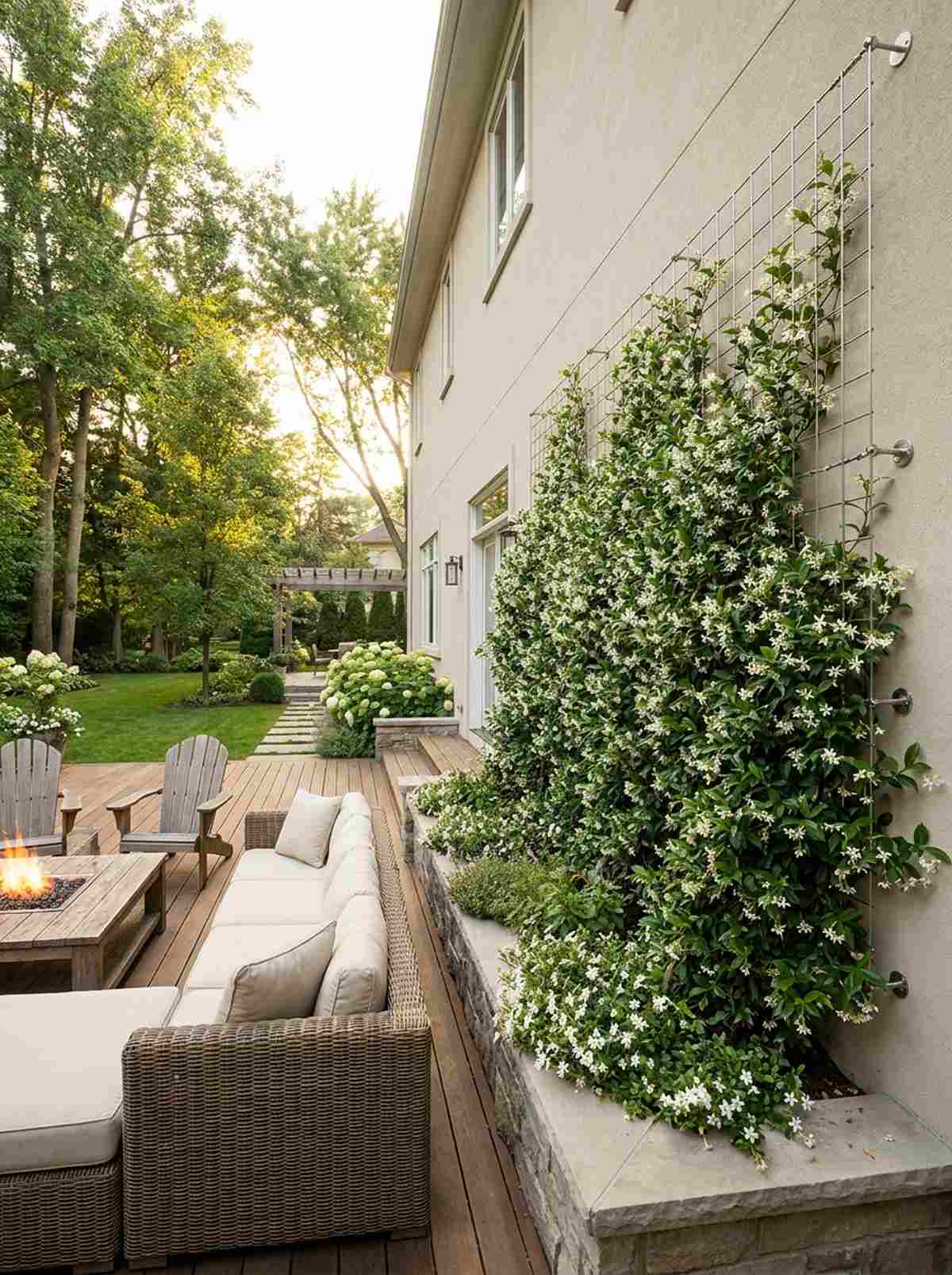
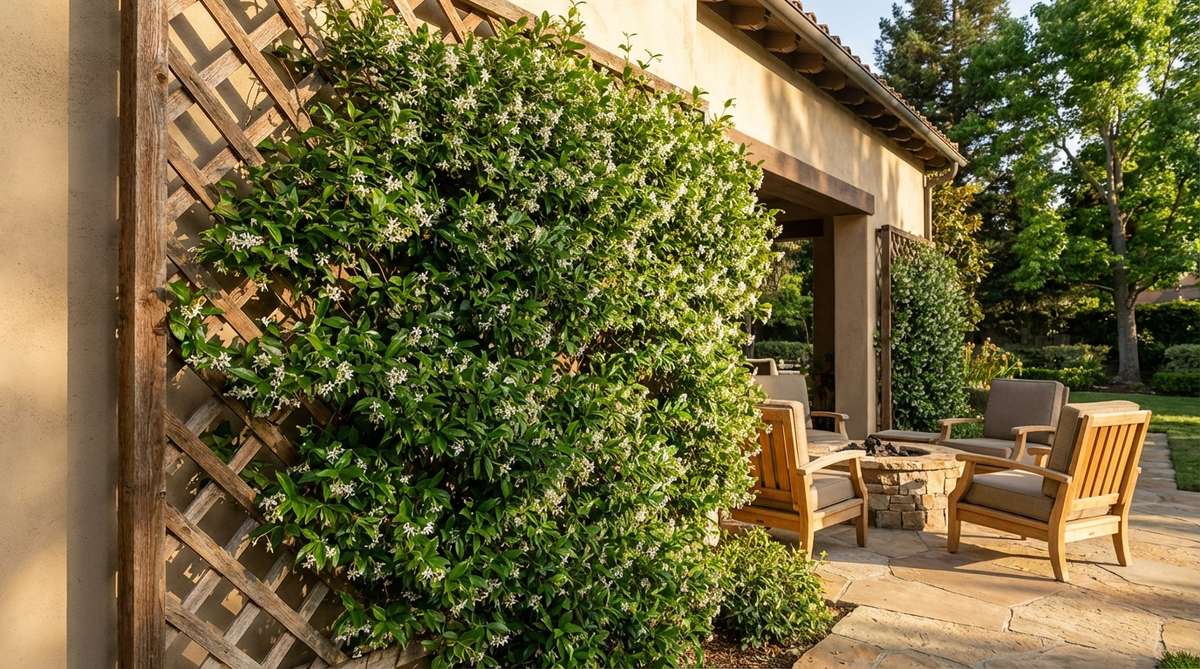
The intoxicating, sweet perfume that drifts through open windows at dusk is the absolute peak of summer romance. Training an evergreen fragrant star vine upwards is a brilliant use-case for disguising ugly utility meters or masking chain-link fences.
Allowing vines to haphazardly rip into your home’s siding is a structural nightmare that will cost thousands in repairs. Installing a rigid, offset wire grid allows the jasmine to aggressively climb while keeping damaging moisture away from the stucco. Integrating this lush, vertical perfumery is a major secret in luxury mediterranean garden design uk adaptations.
You can securely rig up a professional wire trellis system for $40–$80. Pin this if you are planning a small space upgrade that requires vertical greenery.
- Key Materials: Star jasmine starters, stainless steel wire hubs, masonry drill
- Vibe / Style: Perfumed living wall
- Difficulty: Precision measuring and drilling
- Budget Breakdown: Wire Hub Kit: $45 | Jasmine Plugs: $30.
- Creator’s Tip: Use vinyl-coated wire instead of bare metal, as bare steel can actually burn the delicate vine tendrils during peak summer heat.
- Smart Sourcing: stainless steel wire trellis grid kits and heavy-duty vinyl coated climbing wire.
24. Vertical Succulent Living Wall
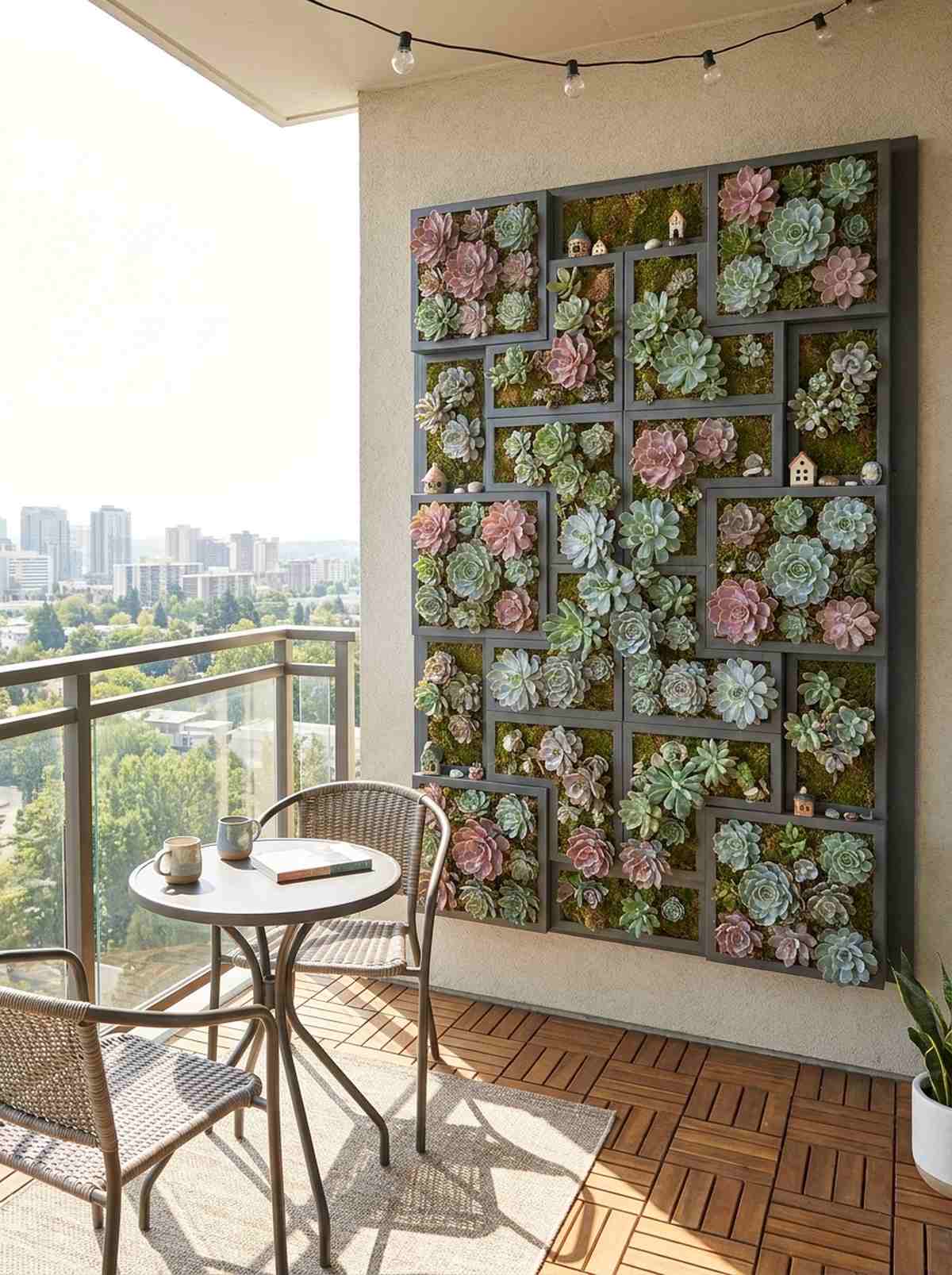
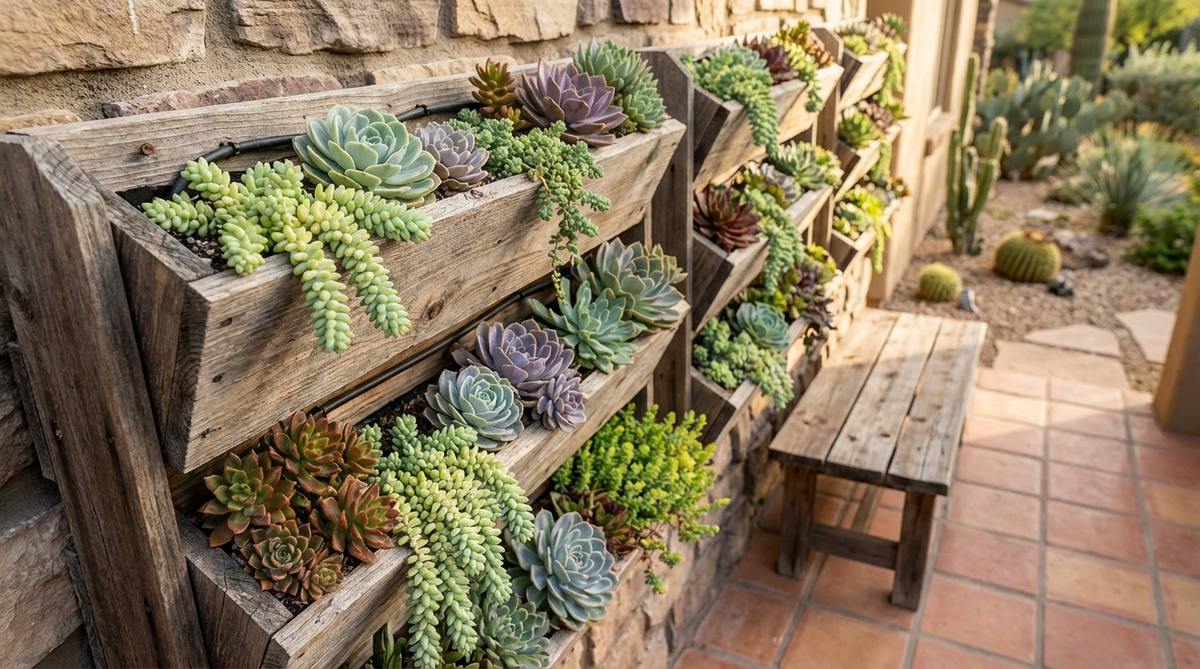
A mesmerizing tapestry of geometric rosettes in dusty pinks and sea-greens looks like a piece of high-end modern art hung outdoors. Mounting a modular drought-proof botanical frame is a stellar use-case for a sun-drenched balcony that has absolutely zero floor space left.
Traditional hanging baskets dry out in hours and look incredibly messy when the wind kicks up. Snapping together interlocking shadowbox frames packed with tight echeverias delivers a surprisingly premium look that survives weeks without a single drop of water. You can even tuck tiny terrarium accessories into the mossy gaps for added dimension.
Building a robust living wall frame system costs roughly $70–$150. Highly recommended for a quick weekend win on a bare apartment terrace.
- Key Materials: Modular wall planters, sphagnum moss, assorted succulents
- Vibe / Style: Modern arid art gallery
- Difficulty: Fun planting puzzle
- Budget Breakdown: Planter Frames: $60 | Succulent Plugs: $50.
- Creator’s Tip: Leave the planted frame laying flat on the ground for 4 full weeks so the roots can anchor deeply before you hang it vertically.
- Smart Sourcing: modular succulent wall frames (bulk pack) and pre-cut preserved moss sheets.
25. Fig Tree Espalier
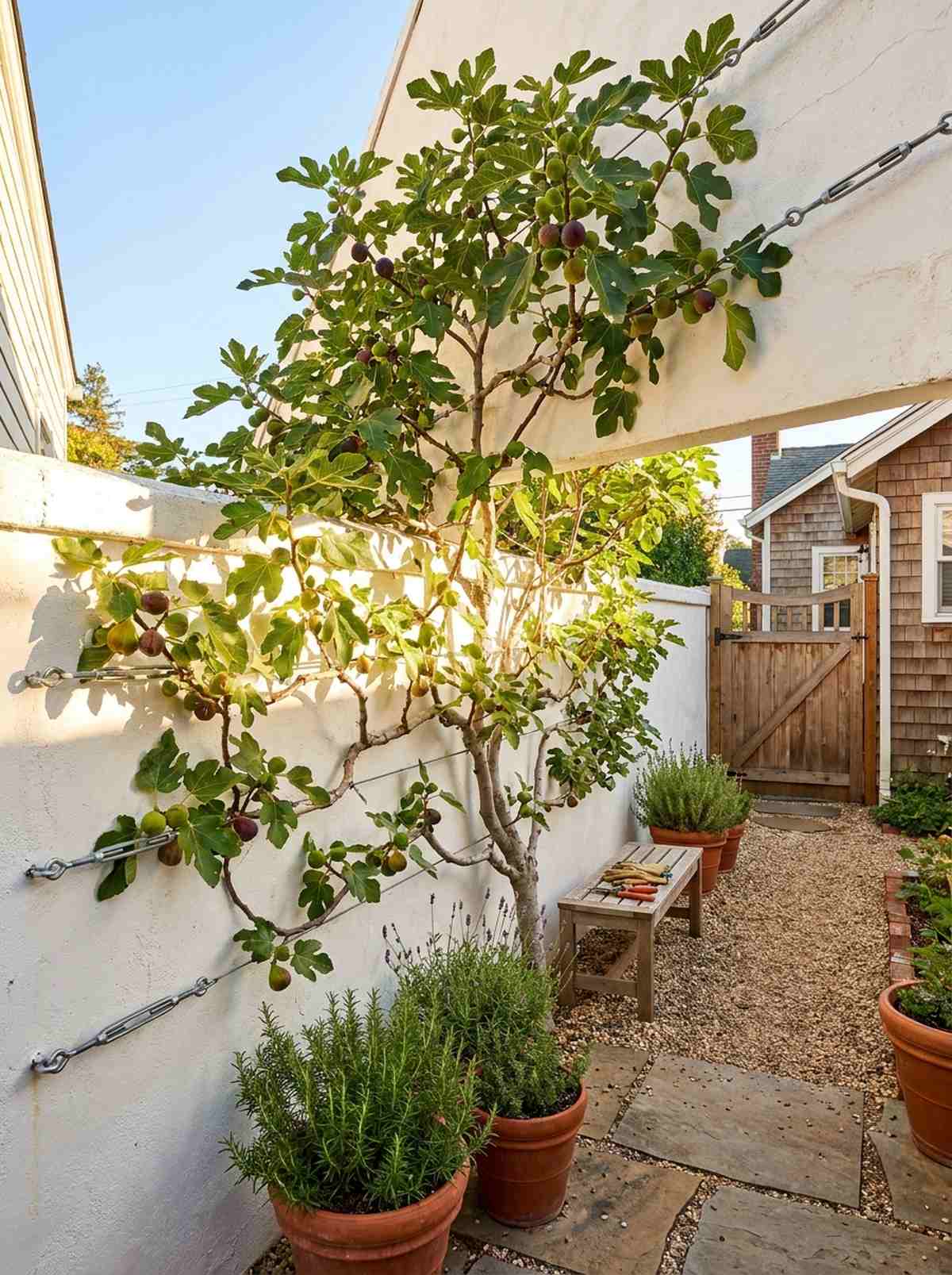
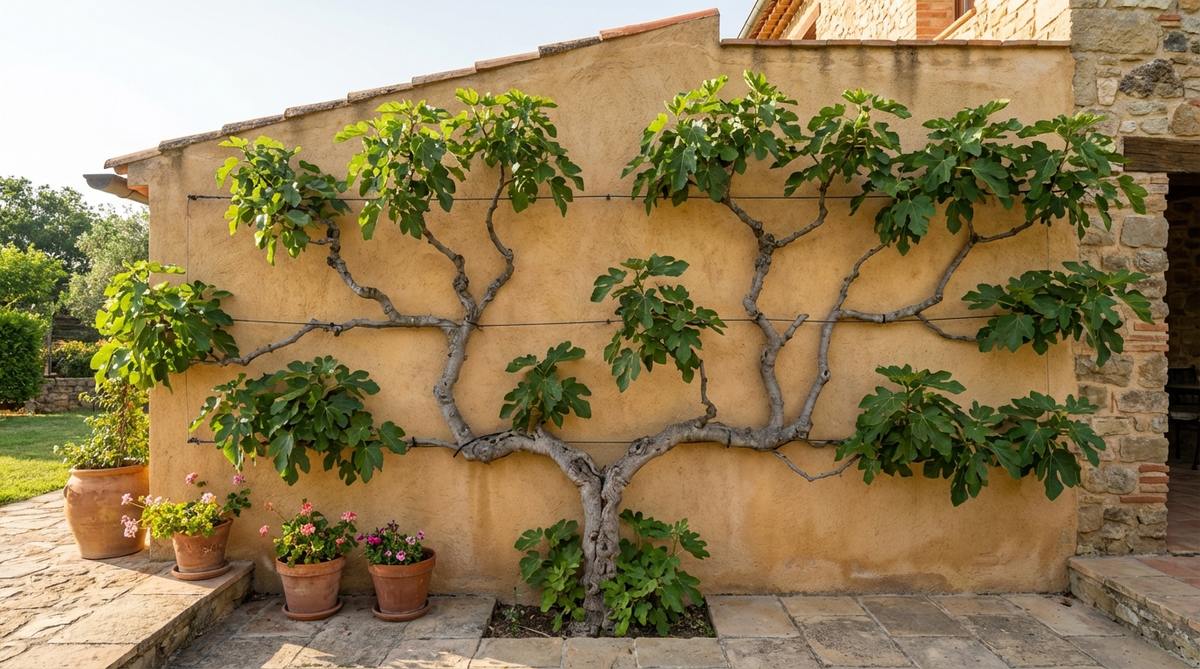
Flattened perfectly against a sun-baked wall, the sprawling, sculptural branches loaded with sweet fruit feel like a masterclass in ancient agriculture. Cultivating a two-dimensional orchard tree is an elite use-case for a narrow side alley where a traditional bushy tree would block the path completely.
Letting fruit trees grow wild in tight urban spaces results in zero yield and angry neighbors complaining about shade. Ruthlessly training a fig tree along tensioned horizontal wires forces the plant’s energy into massive fruit production while turning the brick wall into a thermal heat sink. This hyper-efficient method is a cornerstone of smart mediterranean vegetable garden design.
Setting up the heavy-duty wire framework costs about $50–$90. Save this to your DIY weekend garden board if you want to harvest fresh fruit in a tiny yard.
- Key Materials: Bare-root fig tree, heavy gauge wire, turnbuckles, masonry eye-lags
- Vibe / Style: Historic monastery orchard
- Difficulty: Requires aggressive, confident pruning
- Budget Breakdown: Tree: $40 | Tension Wire Kit: $35.
- Creator’s Tip: Paint the masonry wall white behind the tree; the reflected sunlight will ripen the figs weeks faster than a dark wall.
- Smart Sourcing: heavy-duty fruit tree training wire kits and forged steel turnbuckle anchors.
26. Hanging Terracotta Herb Garden
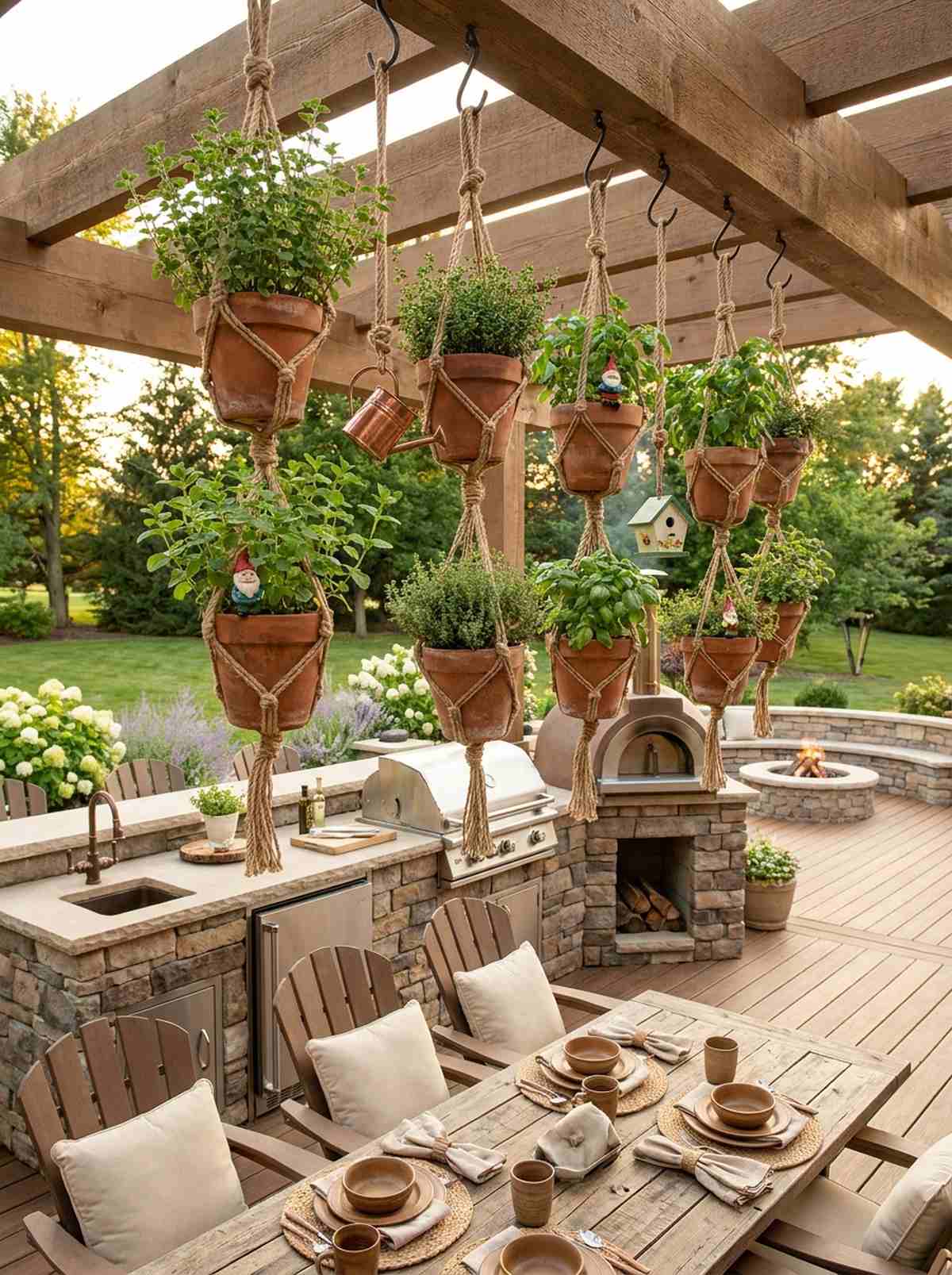
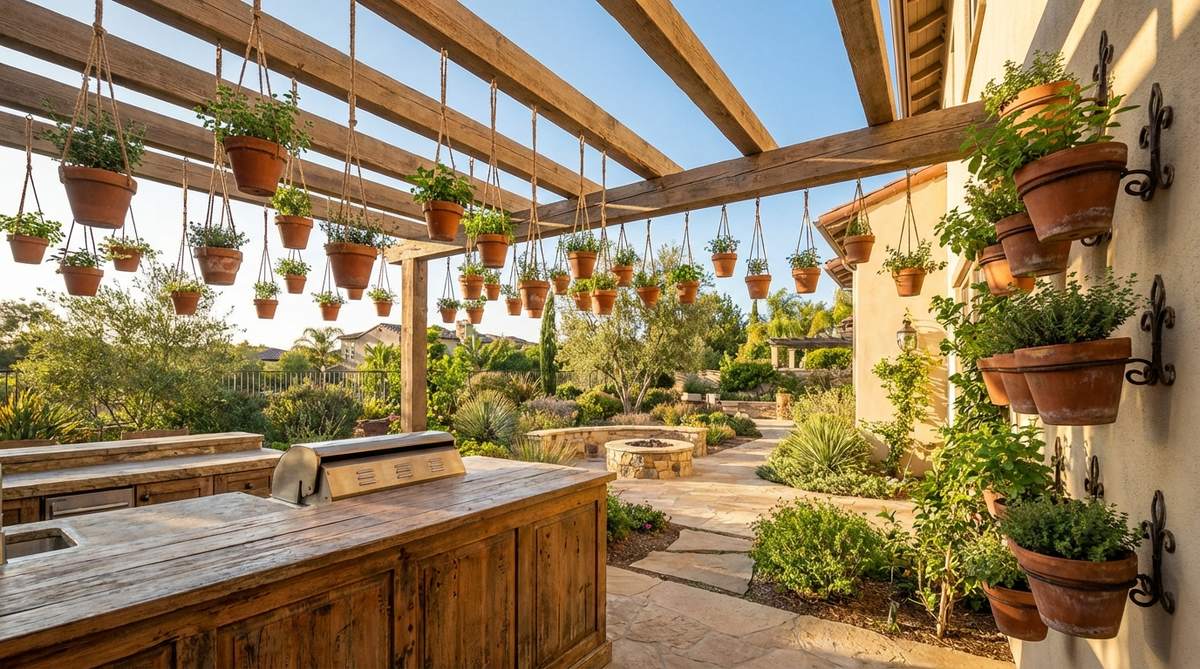
Swaying gently above the outdoor kitchen, tiny clay pots overflowing with fresh oregano and mint look endlessly charming and incredibly appetizing. Rigging up a suspended culinary pot system is the perfect use-case for keeping delicate herbs safe from ground pests like slugs and rabbits.
Lining up flimsy plastic pots on a windowsill looks cheap and blocks your indoor light. Knotting sturdy weatherproof ropes to suspend thick clay vessels gives a designer-level finish that maximizes airflow, preventing the powdery mildew that usually ruins basil. Sneaking high-end miniature garden supplies into the tops of the pots adds a fun, whimsical flair.
You can rig up this floating chef’s garden for a mere $20–$45. It’s a fast upgrade that completely changes the vibe of your cooking area.
- Key Materials: Small clay pots, marine rope/macrame, hanging hooks
- Vibe / Style: Floating Tuscan pantry
- Difficulty: Easy knot tying
- Budget Breakdown: Small Pots: $15 | Marine Rope: $15.
- Creator’s Tip: Widen the drainage hole of the terracotta pot slightly so you can thread the suspension rope directly through the center for perfect balance.
- Smart Sourcing: weatherproof outdoor macrame hangers and bulk-pack mini terracotta pots.
This final architectural framing trick is what separates expensive estate designs from basic suburban yards…
27. Cypress Allee Entrance
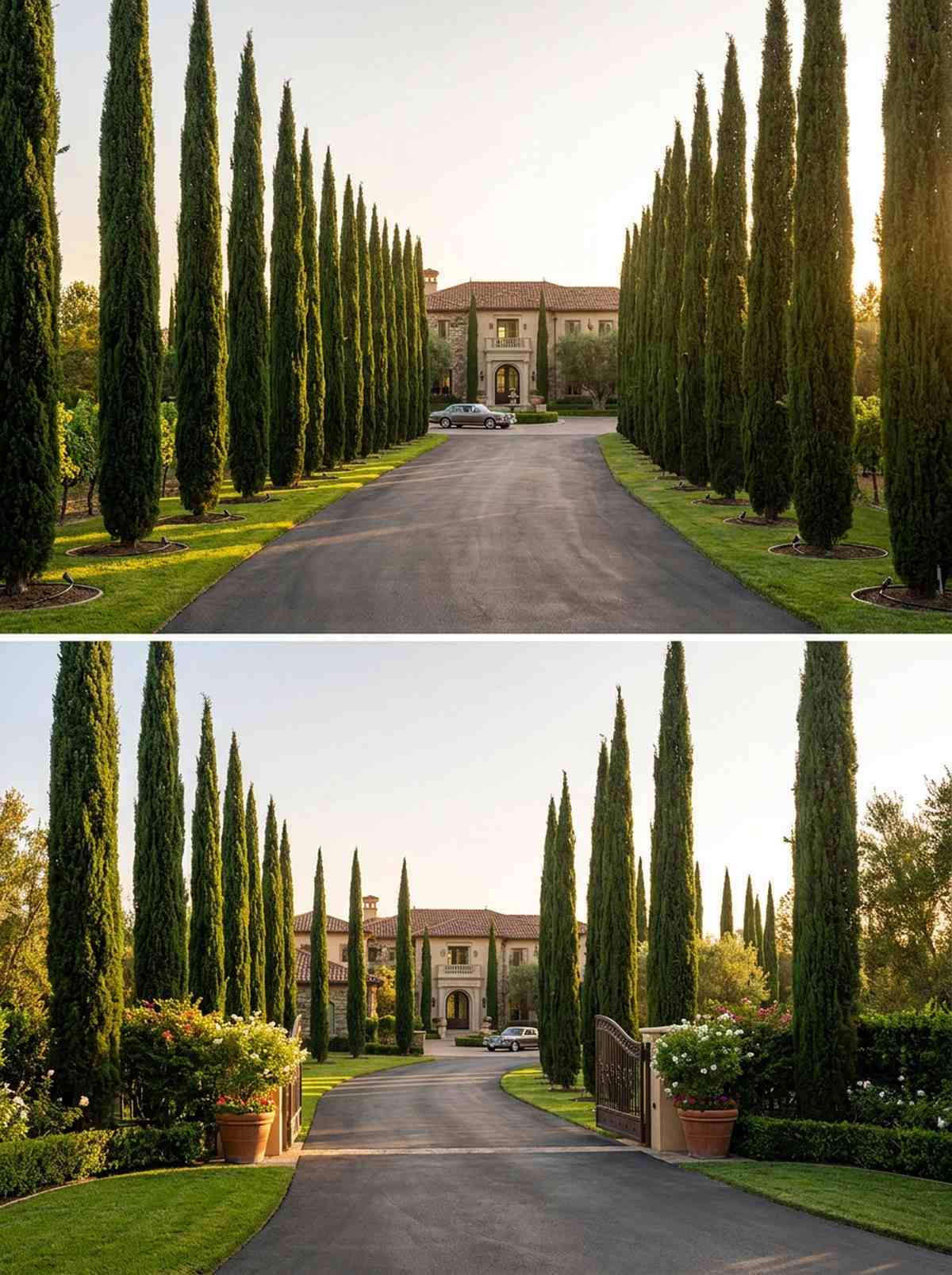
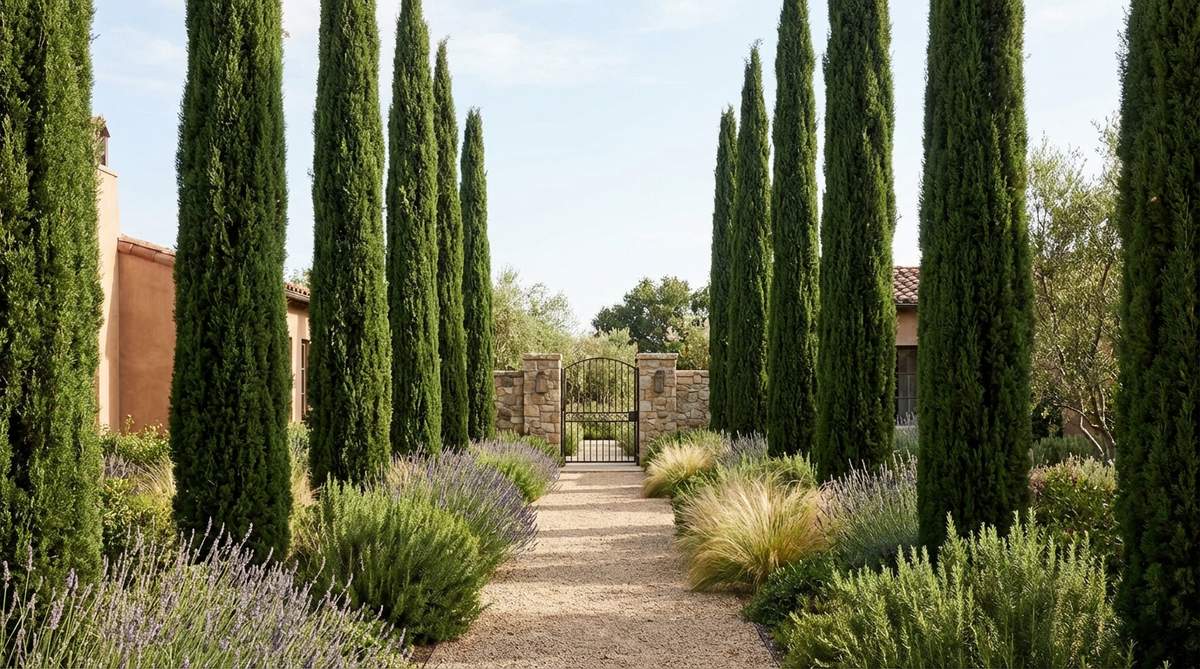
Towering, pencil-thin evergreens standing like silent sentinels along a driveway scream old-money estate elegance. Planting a formal columnar tree boundary is a majestic use-case for defining property lines without building an aggressive, unfriendly fence.
Planting sprawling, messy bushes along a driveway guarantees you will be violently scratching your car doors for the next ten years. Opting for extremely narrow Italian cypress trees pulls the eye straight up to the sky, creating jaw-dropping vertical drama in a footprint less than two feet wide. This optical illusion is a mandatory technique in luxury mediterranean garden design australia estates.
Depending on the height of the starter trees, this formal alley will run $200–$500. Pin this if you want to add instant, skyrocketing real estate value.
- Key Materials: Italian cypress trees, root barrier plastic, deep drip tubing
- Vibe / Style: Billionaire villa driveway
- Difficulty: Deep trench digging
- Budget Breakdown: Cypress Trees: $300 | Irrigation Tubing: $50.
- Creator’s Tip: Install a deep-drip watering spike next to each root ball; surface watering will cause these tall trees to easily blow over in high winds.
- Smart Sourcing: commercial root barrier roll kits and deep-drip tree watering stakes.
28. Scented Geranium Collection
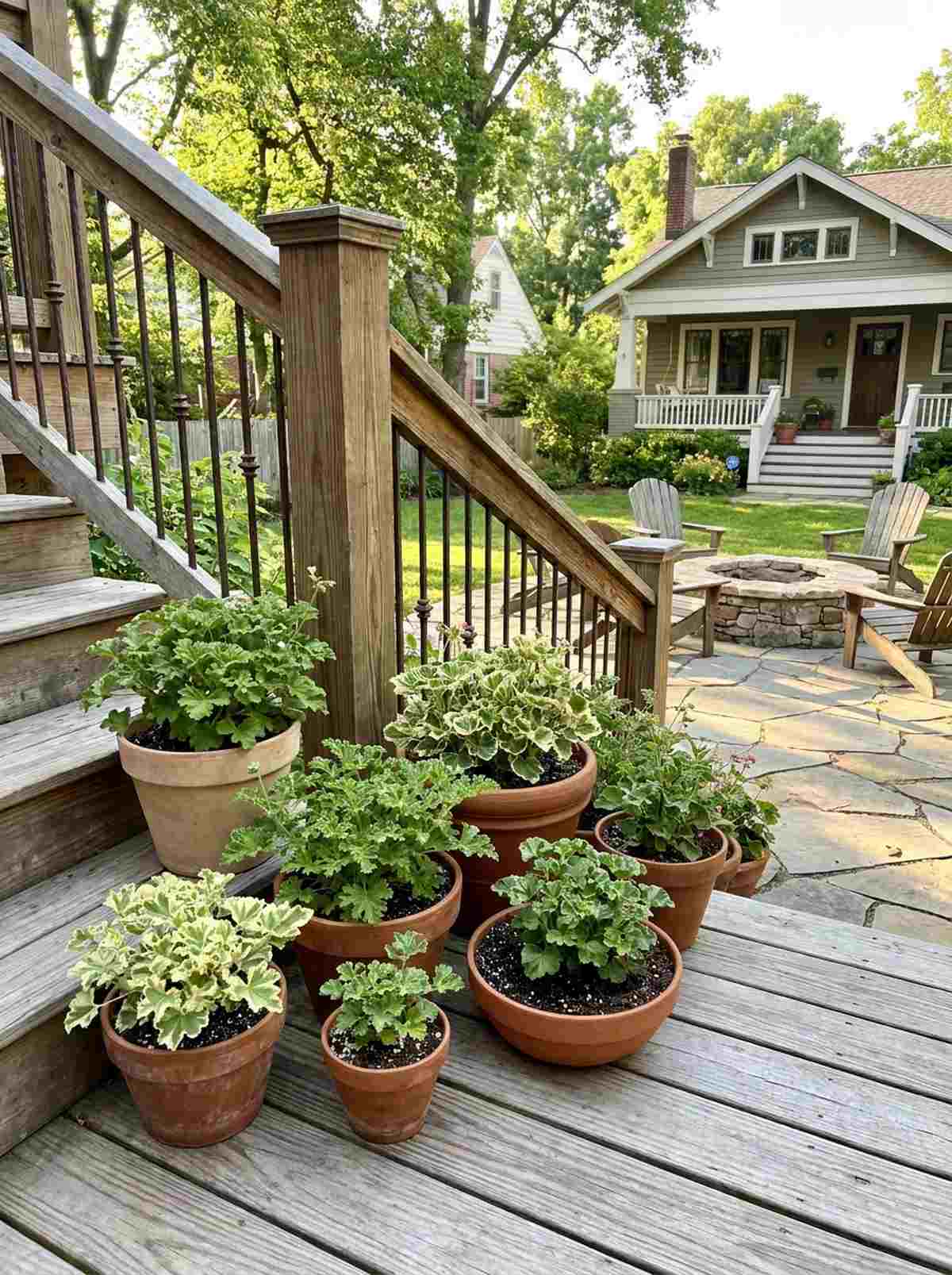
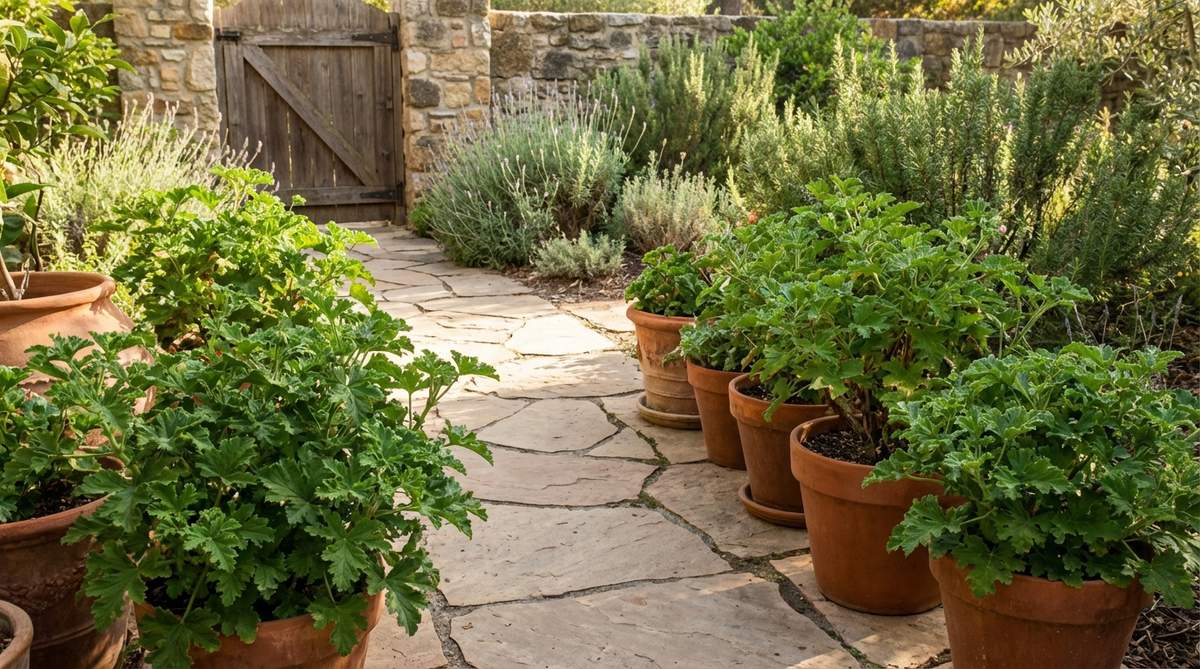
Brushing your hand across these ruffled leaves releases a shocking burst of lemon, nutmeg, or rose that feels like pure botanical magic. Curating a tactile aromatic container cluster is a fantastic use-case for high-traffic staircase landings where guests naturally brush against the foliage.
Most gardeners obsess purely over visual flowers, completely neglecting the massive psychological impact of a scent-driven space. Hoarding a bizarre, textured collection of pelargoniums in mismatched clay pots delivers a surprisingly premium look that acts as an interactive, scratch-and-sniff experience for visitors. These specific varieties are a staple in historic how to design a mediterranean garden guides.
Building this sensory collection costs about $35–$65. Save this to your DIY weekend garden board for an immediate upgrade to your patio’s ambiance.
- Key Materials: Scented geranium plugs, gritty potting mix, terracotta bowls
- Vibe / Style: Interactive apothecary garden
- Difficulty: Very easy potting
- Budget Breakdown: Rare Plugs: $40 | Gritty Soil: $15.
- Creator’s Tip: Pinch off the tiny, insignificant flowers immediately; this forces the plant to pump all its energy into producing heavily scented oils in the leaves.
- Smart Sourcing: scented pelargonium starter plug packs and ultra-fast draining pumice soil additives.
Conclusion
Mastering a high-end mediterranean garden design doesn’t require an infinite budget; it requires ruthless intention and premium material sourcing. These 28 themes prove that by ditching thirsty lawns and replacing them with structural terracotta elements, commercial-grade gravel, and hard-working drought-resistant plant plugs, you can engineer an indestructible landscape. Stop settling for flimsy hardware store aesthetics. Start with heavily textured container groupings, scale up to tensioned architectural shade structures, and utilize specialized foundation kits to transform your yard into a sun-drenched, water-wise European retreat that looks expensive but thrives on pure neglect.
Frequently Asked Questions
What are the best drought-tolerant plants for Mediterranean garden design?
Sourcing premium drought-tolerant plant plugs like lavender, rosemary, sage, olive trees, cistus, and bougainvillea is the absolute foundation of any high-end landscape. These species feature deep root systems and silvery or succulent foliage that practically eliminates water loss. Yucca, agapanthus, and various sedums also thrive with minimal irrigation once established. Always select plants rated for your specific USDA hardiness zone and utilize commercial-grade horticultural sand to replicate the fast-draining, lean soils of their native coastal environments.
How do terracotta pots benefit Mediterranean garden plants?
Unlike cheap plastic that suffocates roots, terracotta’s porous clay composition acts as a highly efficient, breathable lung, preventing root rot by enabling excess water to evaporate rapidly. This natural breathability regulates soil temperature and prevents fragile root systems from boiling in intense summer sun. Furthermore, investing in heavy-duty bulk pack terracotta vessels provides necessary architectural stability for top-heavy plants like olive trees, while the natural weathering process heavily boosts the coveted, historic aesthetic of your overall mediterranean garden design ideas.
Can I create a Mediterranean garden in regions with cold winters?
Absolutely, but you must strategically substitute classic Mediterranean plants with cold-hardy alternatives while relying heavily on hardscaping. Hardy lavender varieties, Russian sage, catmint, and certain rosemary cultivars easily survive harsh zone 5 winters. For tender citrus, olive trees, and bougainvillea, utilize lightweight resin replica pots or heavy-duty caster wheels so they can be seamlessly moved indoors before the first frost strikes. By focusing on architectural golden gravel pathways and reclaimed stone patios, the core aesthetic remains intact year-round regardless of the temperature.
What type of soil works best for Mediterranean garden plants?
Mediterranean plants demand aggressively fast-draining soil; pooling water will rot them out in a matter of days. You must ruthlessly mix native soil with coarse sand, bulk perlite, or fine pea gravel to guarantee a rocky, highly porous consistency. Most of these resilient species prefer a slightly alkaline to neutral pH hovering between 6.5 and 8.0. A major amateur mistake is dumping expensive organic compost into drought-tolerant beds—these plants evolved to thrive in violently lean, nutrient-poor soils, and overly rich earth simply causes weak, floppy overgrowth.
How much water does a Mediterranean garden require once established?
An established, professionally sourced Mediterranean garden typically requires deep watering only every two to three weeks during peak active growth, with many premium specimens surviving months without a single drop of supplemental irrigation. While exact needs vary by microclimate, the ultimate goal of modern mediterranean garden design is radical water independence. Using deep-drip tree watering stakes encourages roots to aggressively hunt downward rather than weakly spreading near the surface, ensuring the landscape remains resilient during severe municipal drought restrictions.
What gravel size is ideal for Mediterranean garden pathways?
For high-traffic walking paths, always order bulk deliveries of 20mm angular gravel; the sharp edges lock together securely, preventing the displacement and sinking feeling caused by smooth round stones. Conversely, 10mm pea gravel works phenomenally well as a moisture-protecting decorative mulch tightly hugging the base of plants. For dynamic visual features like dry stream beds, purchasing assorted polished river rock bundles that mix large boulders with tiny pebbles ensures a breathtakingly natural, flood-proof landscape upgrade.