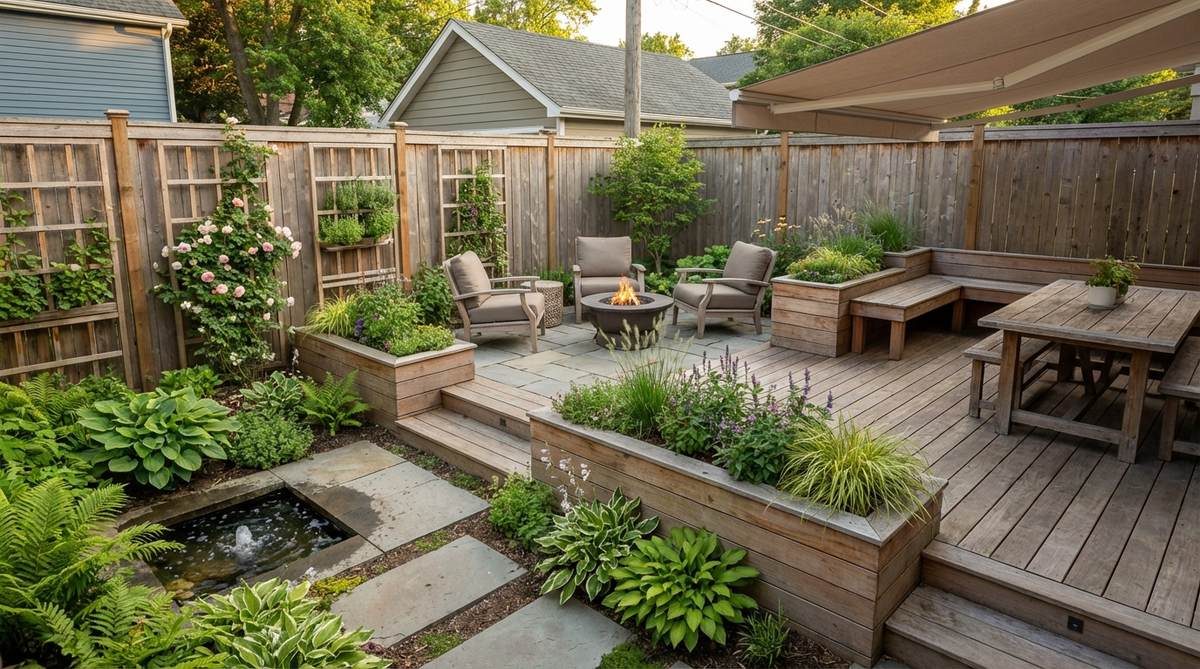
Homeowners across America face the challenge of garden design small backyard projects that feel cramped and underutilized. At Fresh Garden Ideas, we recognize that limited square footage doesn’t mean limited potential—strategic planning transforms even the tiniest plots into functional, beautiful outdoor retreats that serve multiple purposes throughout the year.
Design SnapshotKey Principles
- Vertical Integration: Expand growing area upward using walls, trellises, and tiered structures to multiply planting capacity without expanding footprint
- Multi-Functionality: Select furnishings and features that serve dual purposes—storage benches, foldable tables, and planters with integrated seating
- Layered Planting: Combine ground covers, mid-height specimens, and tall focal points to create depth perception in shallow spaces
- Strategic Illusion: Apply mirrors, diagonal pathways, and partial screening to trick the eye into perceiving more square footage than actually exists
Vertical StructuresGrowing Upward When Space Runs Out
When horizontal expansion hits a wall, designers shift focus to the third dimension. Vertical gardening doubles or triples usable growing area while keeping the ground-level footprint minimal, allowing small backyards to support far more plants than traditional horizontal layouts would permit.
1. Trellis Arches for Climbing Vegetables
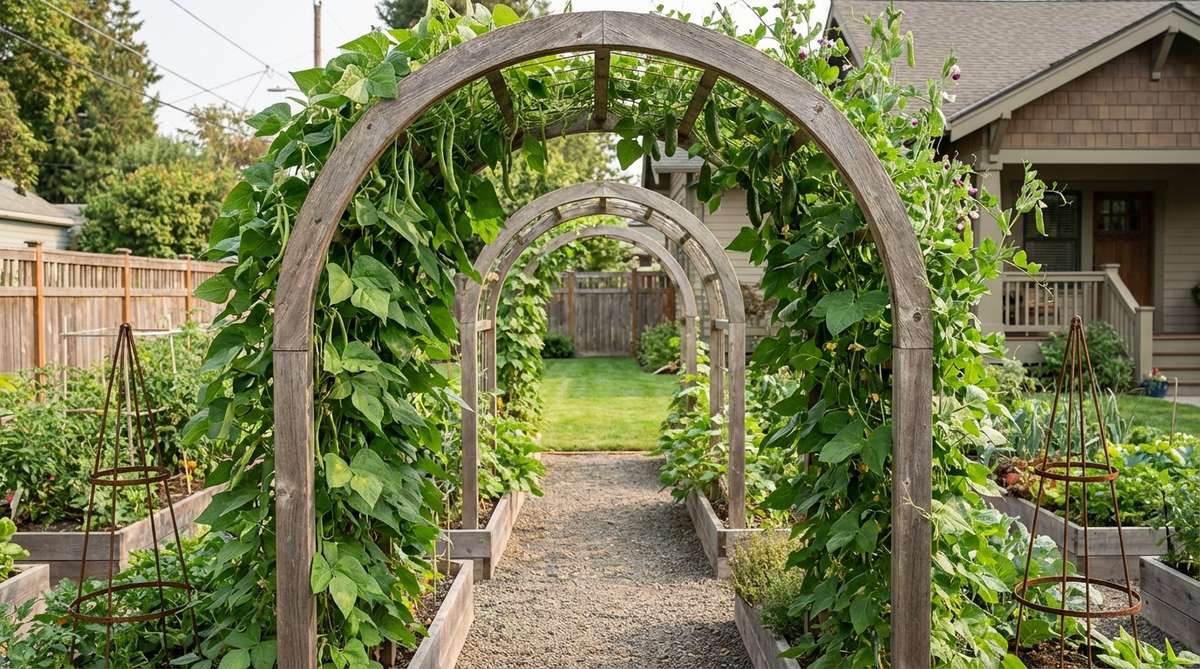
Metal or wooden arches positioned over pathways support pole beans, cucumbers, and peas that climb upward rather than sprawling across valuable ground space. This vertical approach yields three times the harvest per square foot compared to bush varieties.
Position arches along the north-south axis to distribute sunlight evenly on both sides. Choose varieties specifically bred for vertical growth—’Sugar Snap’ peas and ‘Marketmore’ cucumbers perform exceptionally well on 6-8 foot structures.
2. Living Walls with Pocket Planters
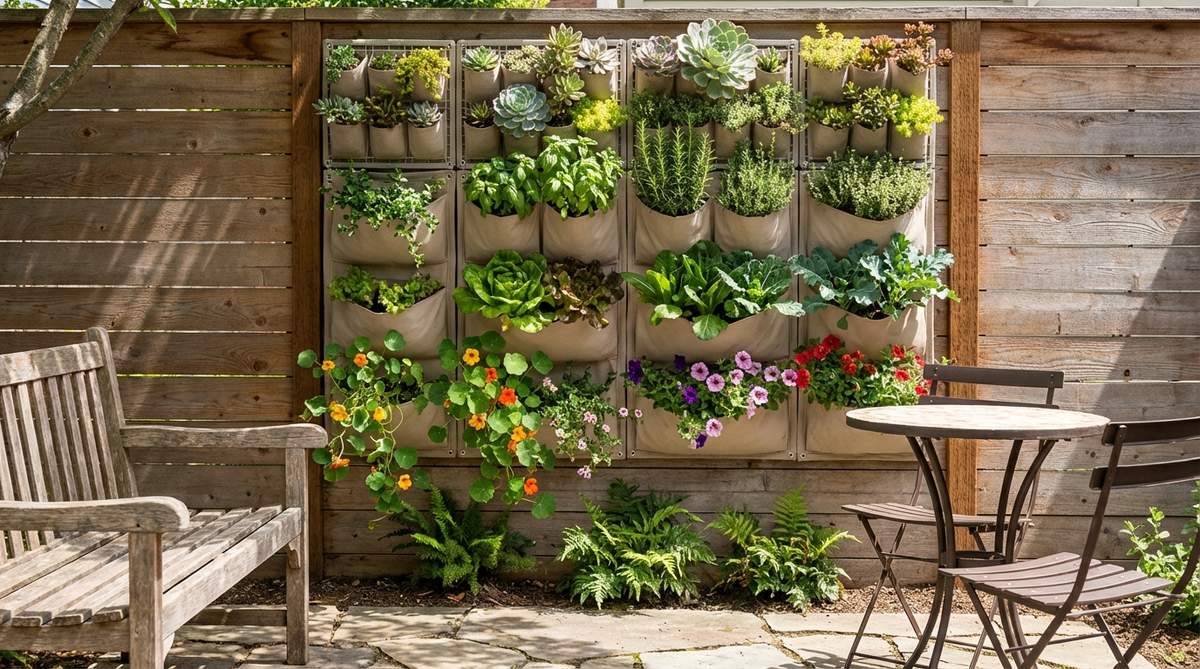
Fabric pocket systems or modular plastic grids mount directly to fences and exterior walls, transforming vertical surfaces into planting zones. Each pocket holds 2-4 quarts of growing medium, sufficient for herbs, leafy greens, or trailing flowers.
Install these systems on west or south-facing walls where they’ll receive 6+ hours of direct sun. Group plants by water requirements—place moisture-loving ferns at the bottom where runoff collects, drought-tolerant succulents toward the top.
3. Ladder-Style Plant Stands
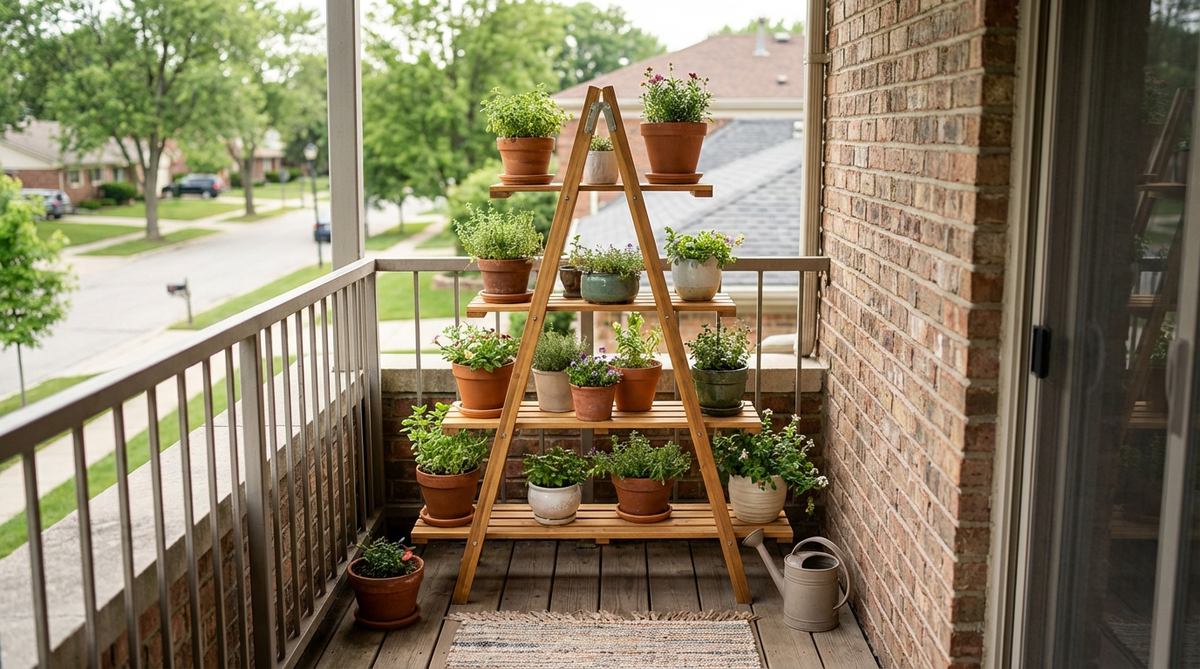
A-frame ladder structures occupy just 2-3 square feet of ground while providing 4-6 tiers of container display space. These freestanding units work particularly well in rental properties where permanent installation isn’t permitted.
Load heavier pots on lower rungs for stability. Rotate the entire unit quarterly to ensure all plants receive balanced sun exposure throughout the growing season.
4. Wall-Mounted Gutter Gardens
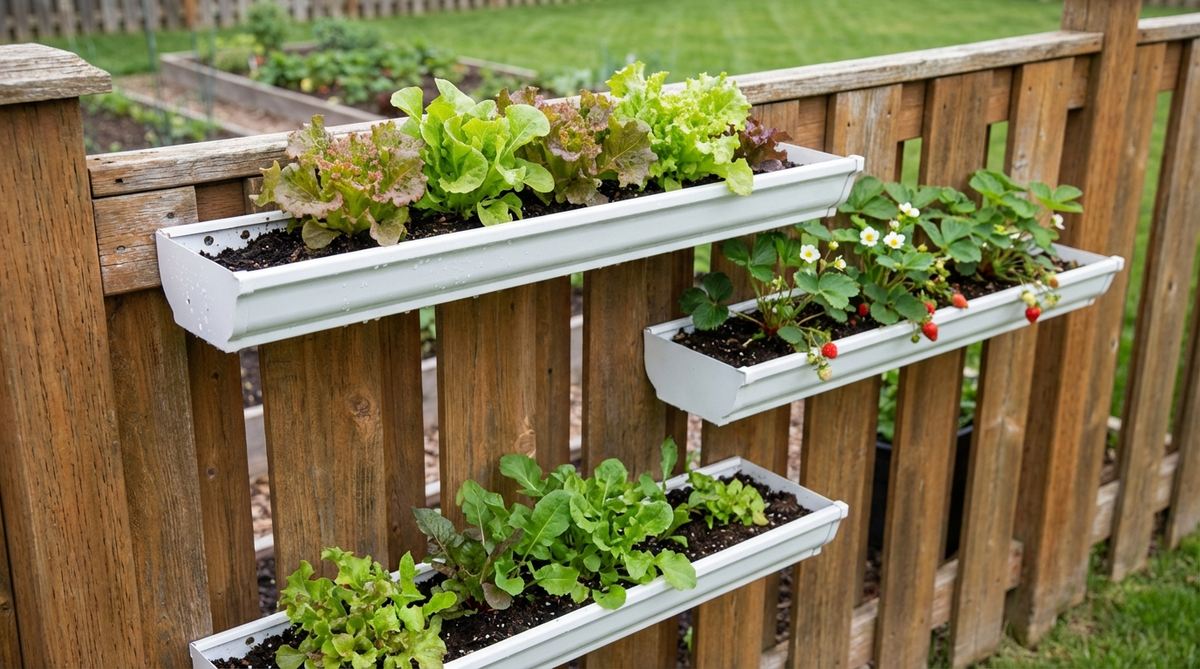
Repurposed vinyl gutters attached horizontally to fence posts create shallow planters perfect for shallow-rooted crops. Each 10-foot section supports 8-12 lettuce heads or 20+ strawberry plants.
Drill drainage holes every 8 inches to prevent waterlogging. Mount gutters at staggered heights—18, 36, and 54 inches—to create a cascading effect that doesn’t shade lower levels.
5. Obelisk Structures for Roses and Clematis
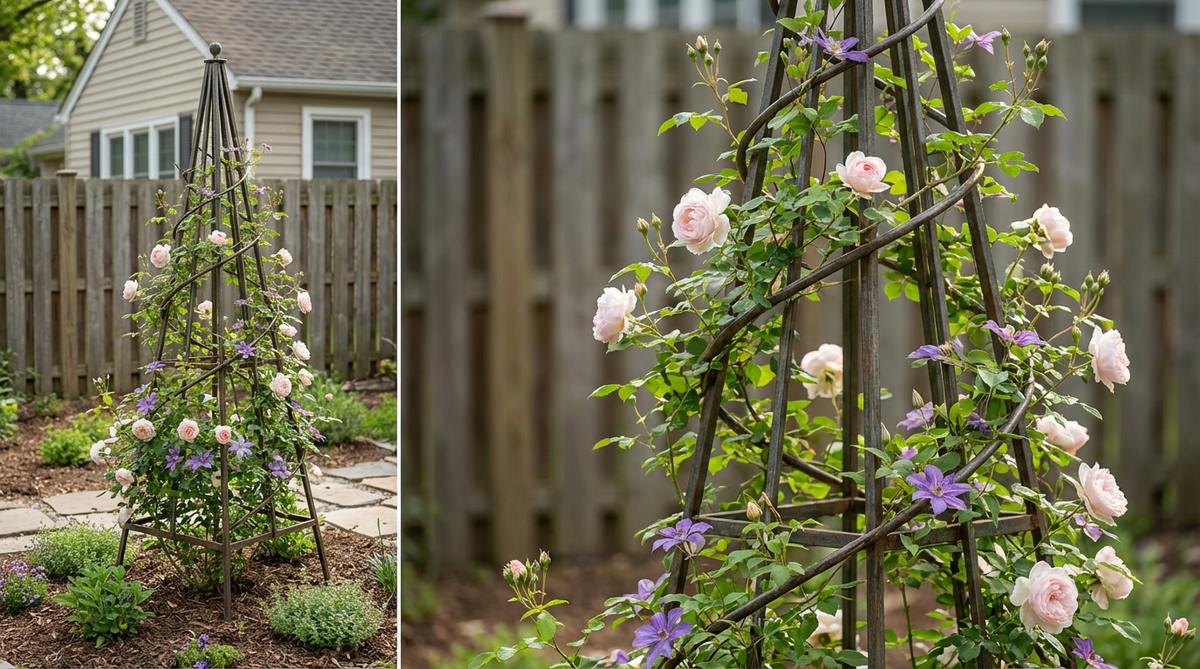
Four-sided tapered obelisks made from bamboo or metal tubing provide elegant support for climbing roses and clematis while occupying a circular footprint of just 18 inches diameter. These structures add architectural interest even during winter dormancy.
Train stems in a spiral pattern around the frame to encourage blooms at multiple heights. Pair climbing roses like ‘New Dawn’ with spring-blooming clematis for extended color.
6. Hanging Basket Arrays
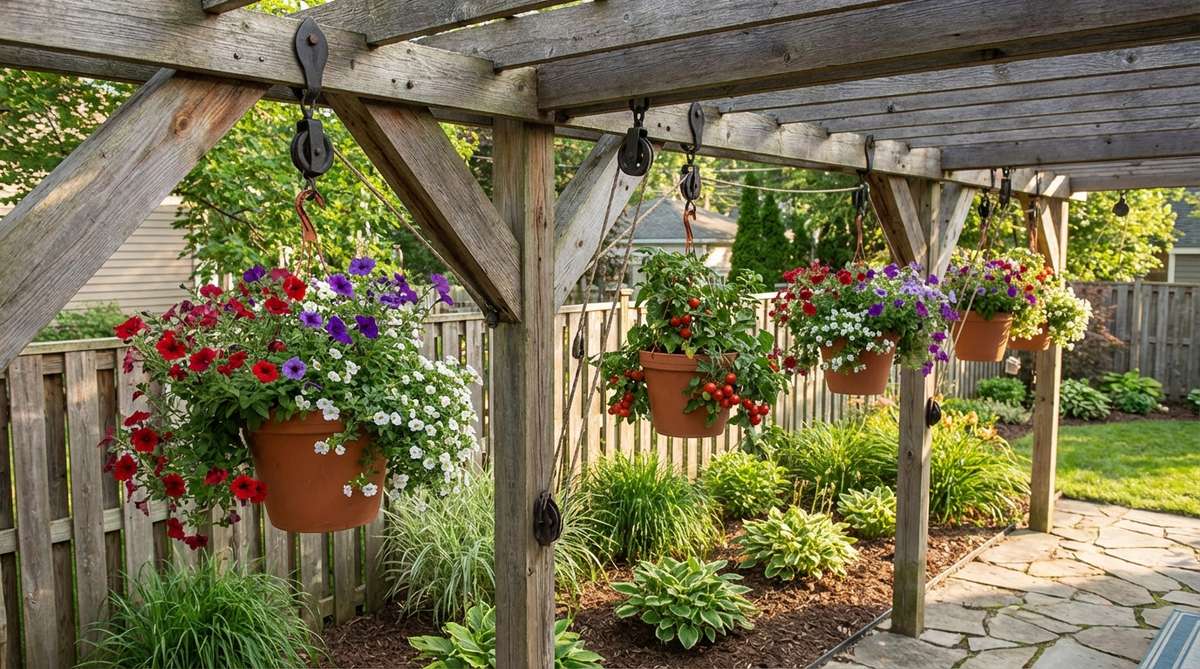
Overhead beams or pergola crossbars support multiple hanging baskets that don’t compete with ground plantings. This airborne approach works especially well for trailing varieties—petunias, bacopa, and tumbling tomatoes.
Space baskets 24-30 inches apart to allow air circulation and prevent fungal issues. Install pulley systems for easy lowering during watering and deadheading tasks.
7. Vertical Pallet Gardens
Shipping pallets stood on end and backed with landscape fabric create rustic vertical planters with multiple compartments. Each pallet provides 8-12 planting pockets suitable for herbs, succulents, or annual flowers.
Treat untreated wood with linseed oil to extend lifespan. Allow the planted pallet to rest flat for two weeks before standing upright—this gives roots time to establish and prevents soil spillage.
8. Espalier Fruit Trees
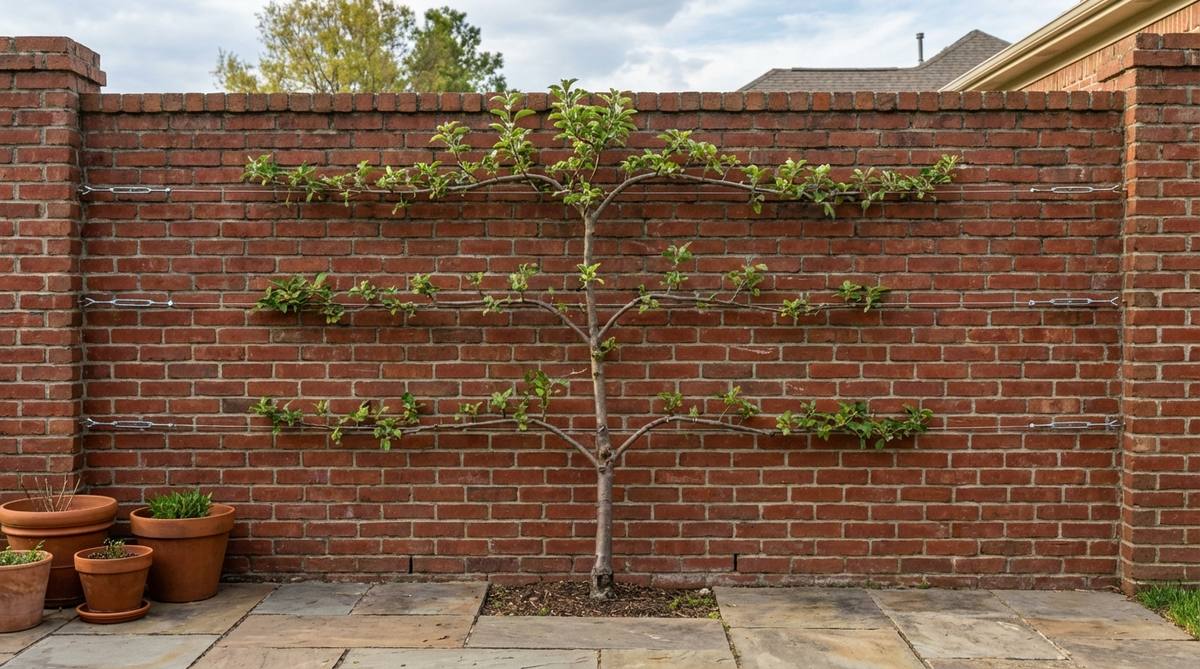
Training apple, pear, or fig trees flat against walls or fences reduces their footprint to just 12 inches depth while maintaining fruit production. This centuries-old technique transforms vertical surfaces into productive orchards.
Select spur-bearing varieties that produce fruit on short stems rather than branch tips. Prune annually in late winter to maintain the desired shape—horizontal cordons, fans, or candelabras work well for different spaces.
9. Tower Gardens (Hydroponic)
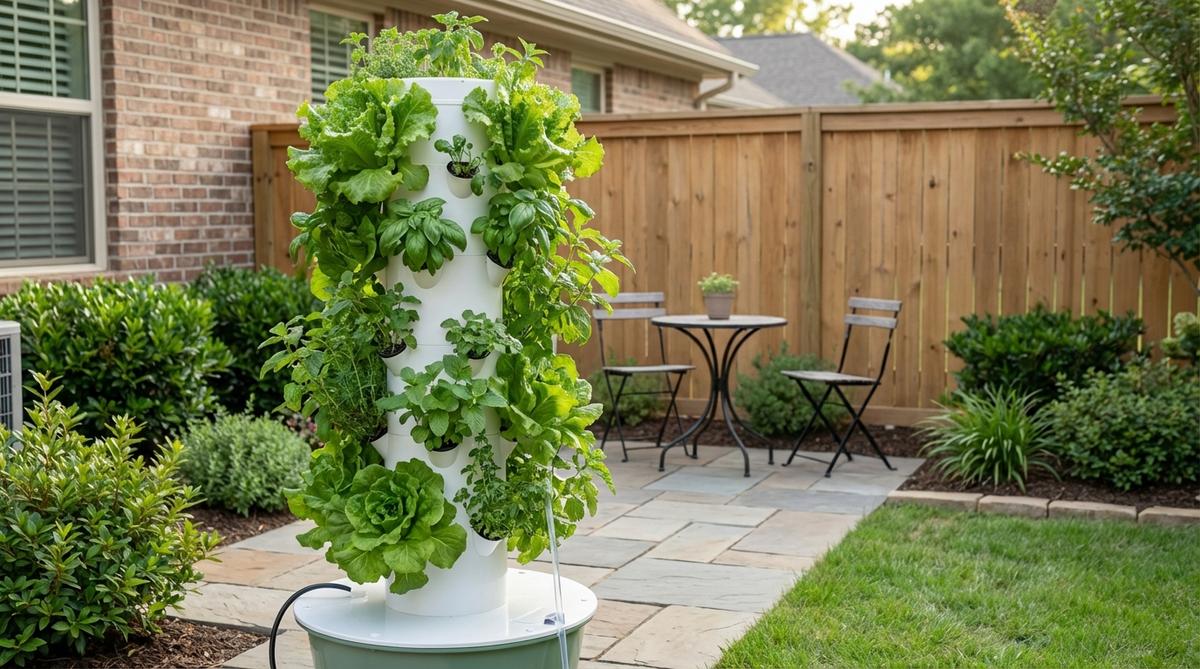
Vertical hydroponic systems stack 20-40 planting sites in a 3-square-foot footprint, using recirculating water rather than soil. These towers produce restaurant-quality greens, herbs, and compact fruiting vegetables year-round.
Position towers in full sun and connect to a standard outdoor outlet for the pump. Expect 30% faster growth compared to soil-based gardens due to optimized nutrient delivery.
10. Pleached Screening Trees
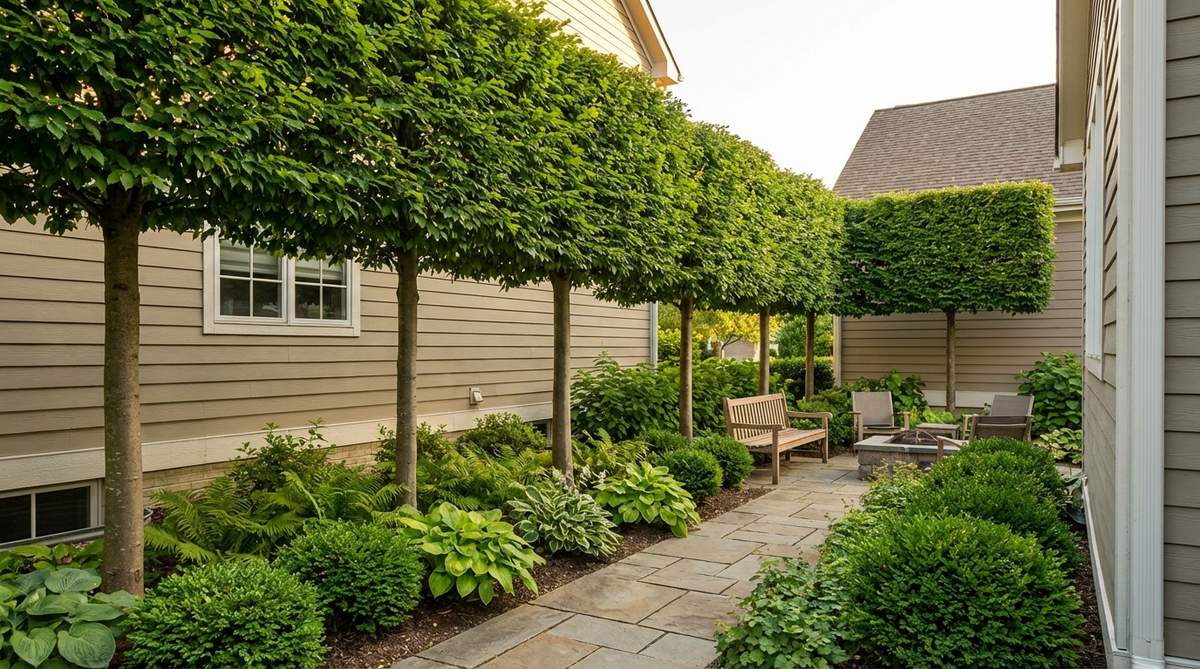
Hornbeam, linden, or photinia trees trained with clear trunks and flat horizontal canopies block neighbor views at window height without stealing ground space. The elevated foliage creates privacy while allowing movement underneath.
Plant specimens 3-4 feet apart and attach horizontal wires to posts at 6-foot height. Weave new growth through the wire framework twice annually to maintain the flat plane.
Container Solutions for Maximum Flexibility
Container gardening liberates small yards from fixed layouts, allowing seasonal rearrangement to follow sunlight patterns or accommodate gatherings. This approach works particularly well for renters who need portable gardens that move with them.
11. Wheeled Planter Boxes
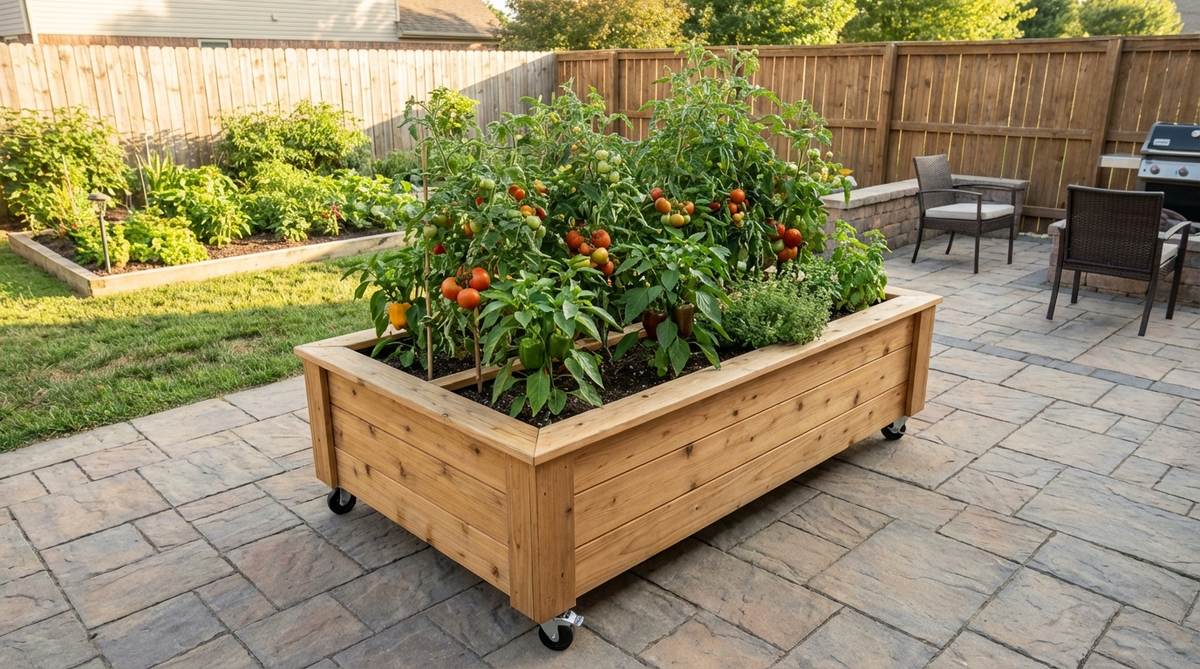
Large containers mounted on lockable casters roll easily across patios and decks, chasing optimal sun exposure throughout the day. This mobility proves invaluable for tomatoes and peppers that require 8+ hours of direct light.
Choose casters rated for outdoor use with rust-resistant bearings. For containers exceeding 50 pounds when watered, use four heavy-duty swivel casters rather than two fixed and two swivel.
12. Self-Watering Containers
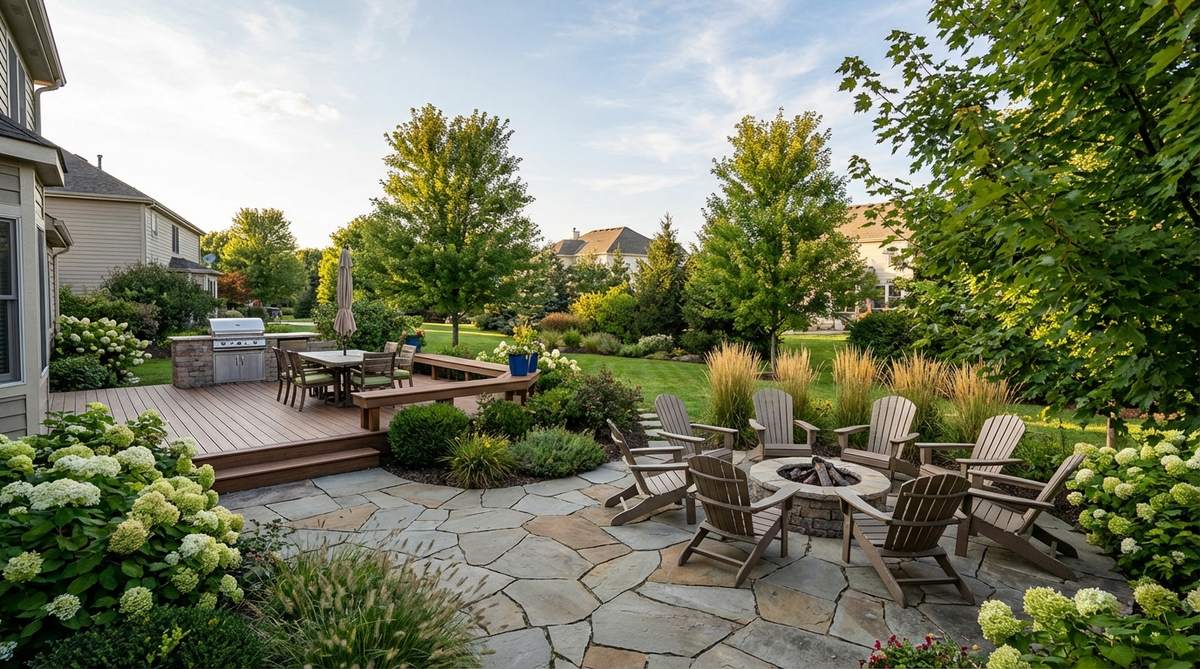
Planters with built-in reservoirs separate water storage from the growing medium, drawing moisture upward through capillary action. This system maintains consistent moisture levels and reduces watering frequency from daily to weekly.
Fill reservoirs completely, then allow them to empty before refilling—this wet-dry cycle encourages deeper root development. Add liquid fertilizer to the reservoir monthly during active growth.
13. Tiered Corner Plant Stands
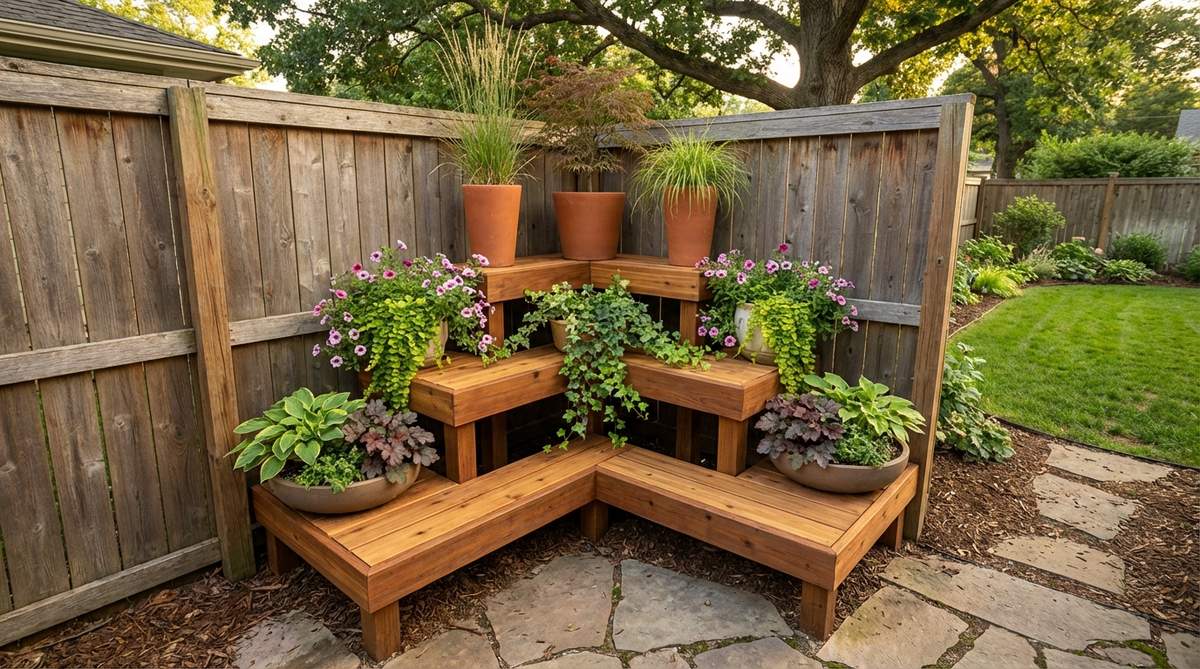
L-shaped or quarter-circle staging units fit snugly into corner spaces that typically go unused, creating 3-4 levels of container display within a 30-inch footprint. These maximize awkward angles where fences meet.
Arrange plants by height—tallest on top shelves, trailing specimens on middle tiers, and low mounds at ground level. This creates a flowing waterfall effect that draws the eye upward.
14. Half Barrel Planters
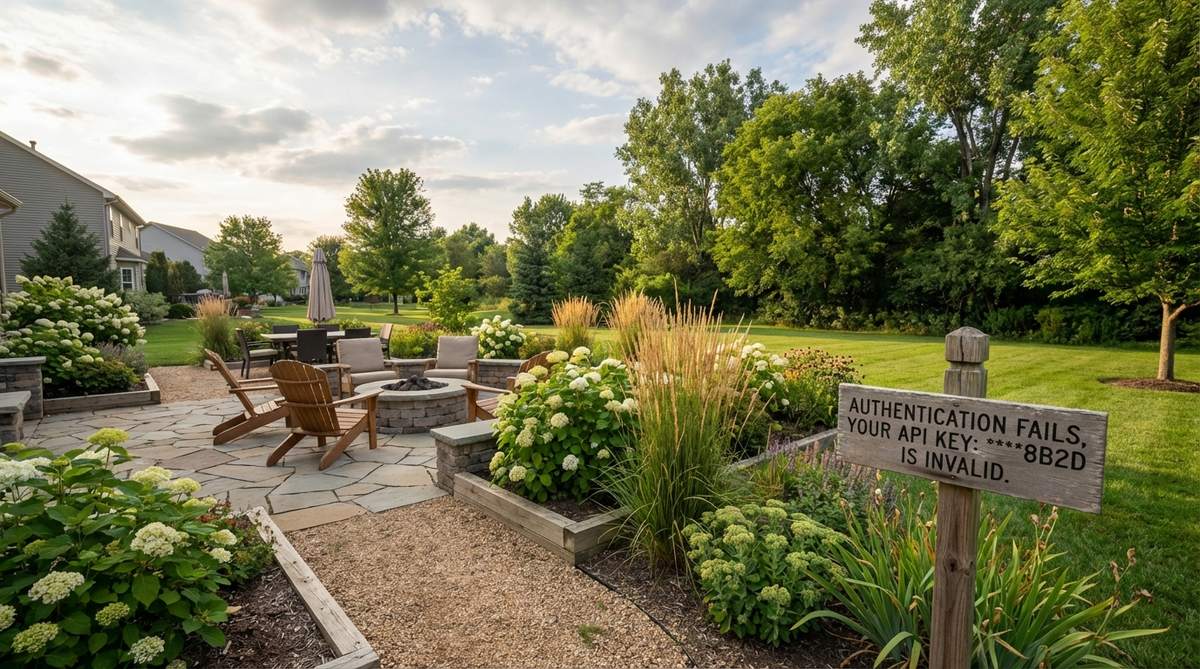
Oak wine barrels cut in half provide generous 25-gallon capacity suitable for dwarf fruit trees, large tomato plants, or mixed vegetable combinations. The rustic appearance complements both traditional and contemporary landscapes.
Line barrels with landscape fabric to slow wood decay from constant moisture. Raise them on pot feet or bricks to improve drainage and prevent ground contact rot.
15. Window Box Arrays
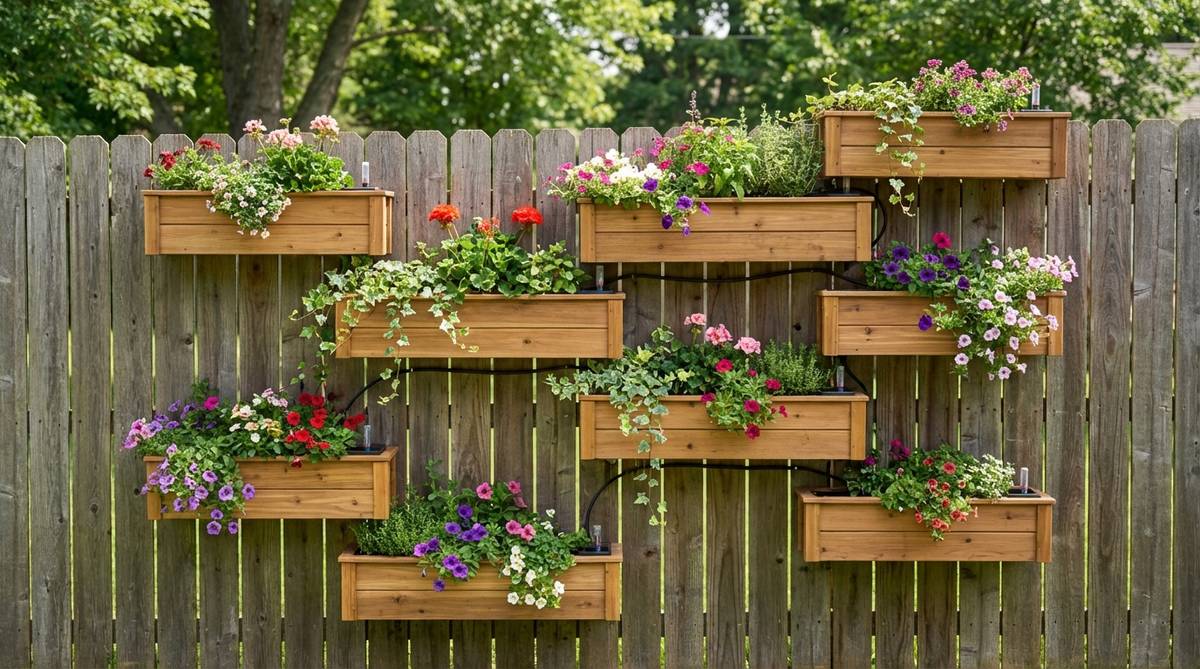
Multiple window boxes mounted along fence rails or deck railings create linear planting space that doesn’t consume usable floor area. Each 36-inch box supports 3-5 culinary herbs or 6-8 annual flowers.
Secure boxes with metal brackets rated for twice the wet soil weight. Plant tall specimens in the back, medium heights in the center, and trailing varieties at the front edge.
16. Fabric Grow Bags
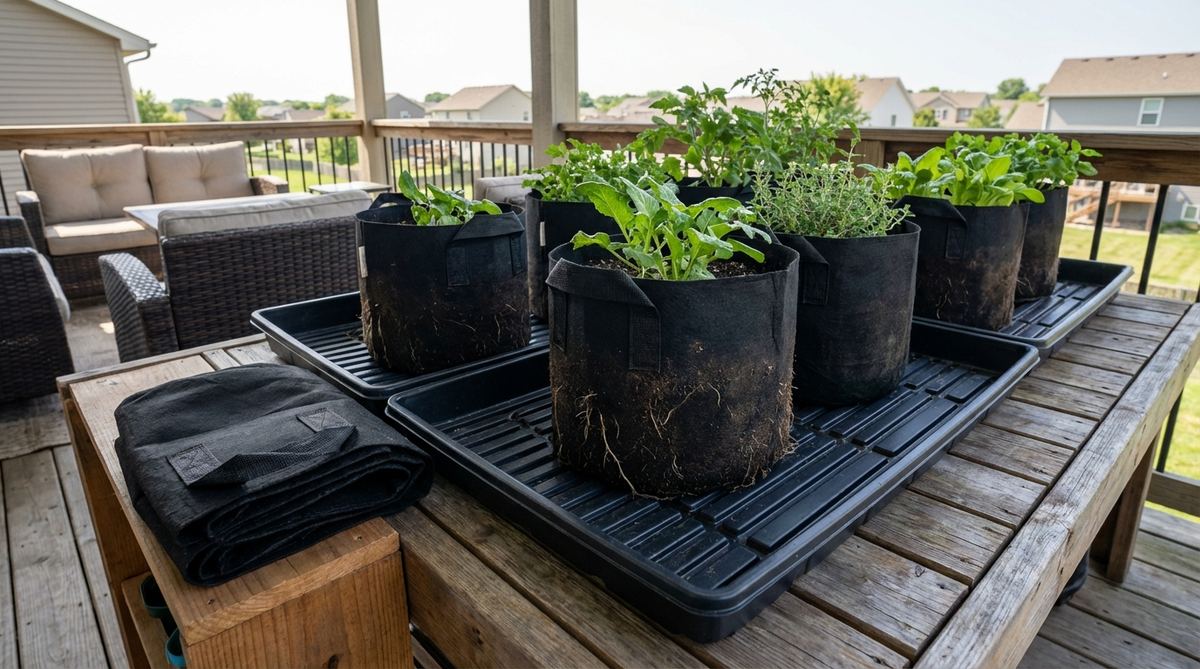
Breathable fabric containers promote air-pruning of roots, preventing the circling pattern that stunts growth in solid-wall pots. These lightweight bags fold flat for off-season storage and cost significantly less than ceramic alternatives.
Choose bags with reinforced handles for easy repositioning. The porous fabric dries faster than plastic—plan to water fabric containers 2-3 times weekly in hot weather.
17. Stacked Pot Towers
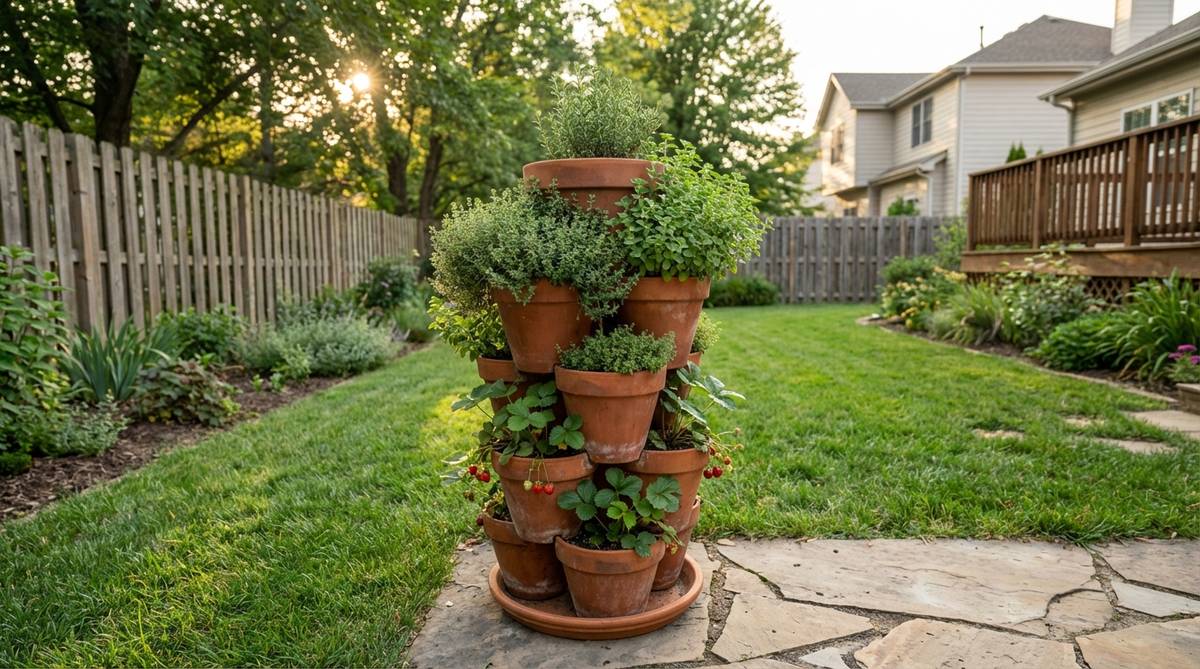
Progressively smaller pots stacked offset from each other create vertical herb spirals or strawberry towers. A 4-tier arrangement uses just 20 inches of ground space while providing 8-12 planting pockets.
Use heavy potting mix in the bottom tier to anchor the structure. Plant drought-tolerant herbs like thyme and oregano in upper tiers where soil dries fastest.
18. Railing Planters with Adjustable Brackets
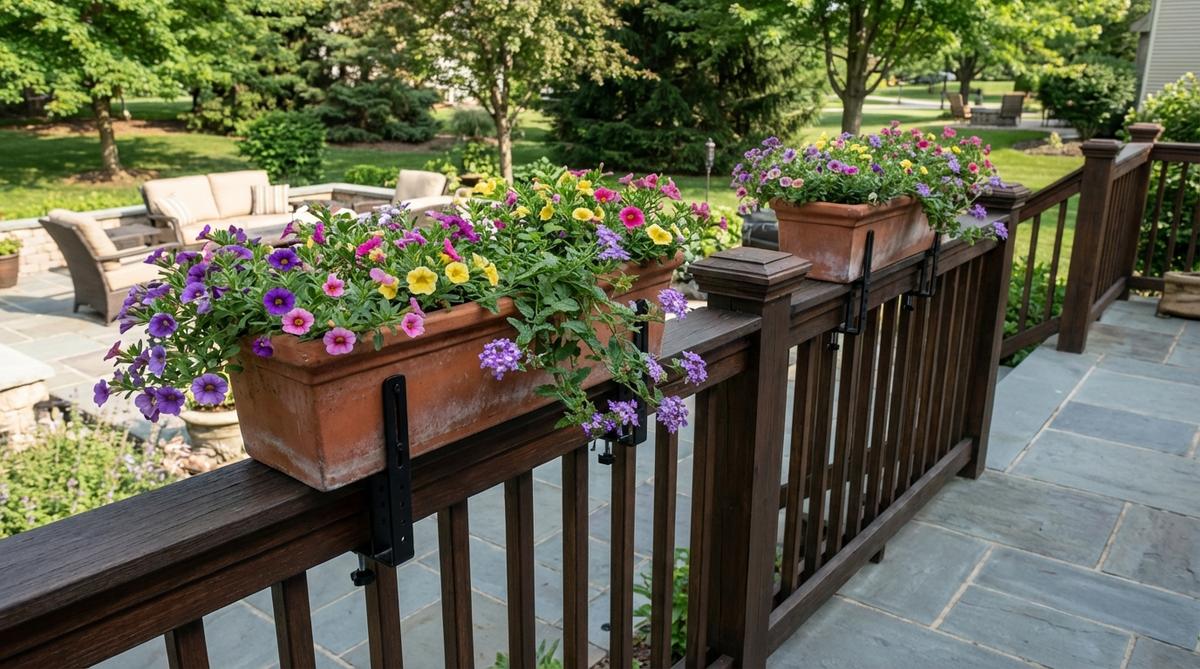
Specialized containers hook over deck railings or balcony edges, requiring zero floor space. Adjustable brackets fit railing widths from 2-6 inches, making them compatible with most residential construction.
Plant cascading varieties that soften the railing edge—million bells, trailing verbena, or ornamental sweet potato vine. Check bracket security monthly, especially after storms.
19. Colander and Basket Upcycling
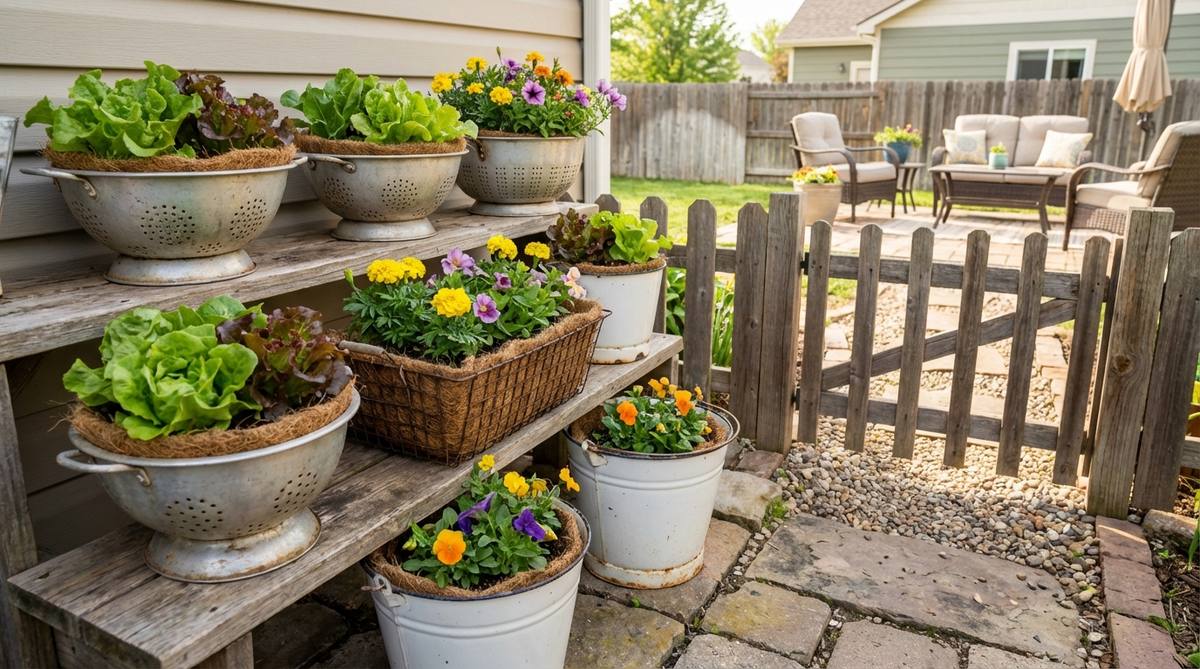
Metal colanders, wire baskets, and enamelware buckets become whimsical planters that add personality to small gardens. Pre-existing drainage holes eliminate the need for drilling.
Line porous containers with coco fiber to slow moisture loss while maintaining drainage. These work particularly well for shallow-rooted lettuces and annual flowers.
20. Sink and Trough Gardens
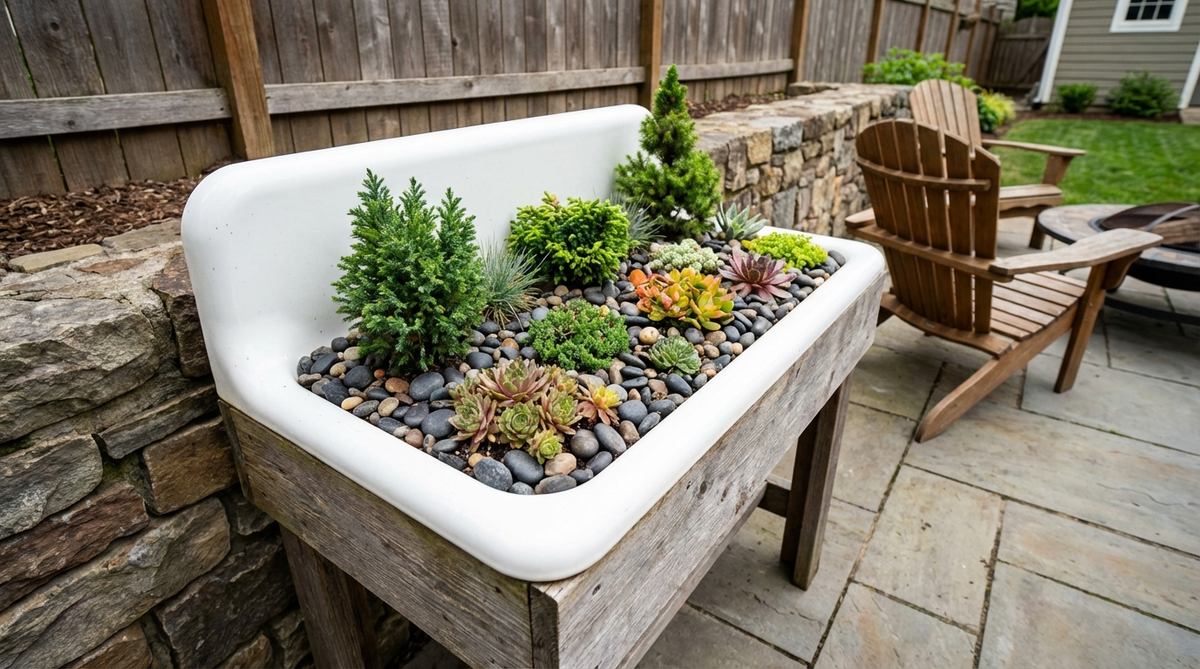
Retired porcelain sinks and stone troughs provide substantial depth for alpine plants, dwarf conifers, and succulent collections. Their weight and visual mass ground small gardens that might otherwise feel too busy.
Add a 2-inch gravel layer at the bottom before filling with gritty, well-draining mix. Top-dress with decorative stone that complements the container’s color.
Raised Bed Systems That Organize Efficiently
Elevated planting beds define zones, improve drainage, and reduce bending for gardeners with mobility concerns. Strategic configuration maximizes production while maintaining accessibility from all sides.
21. Keyhole Garden Design
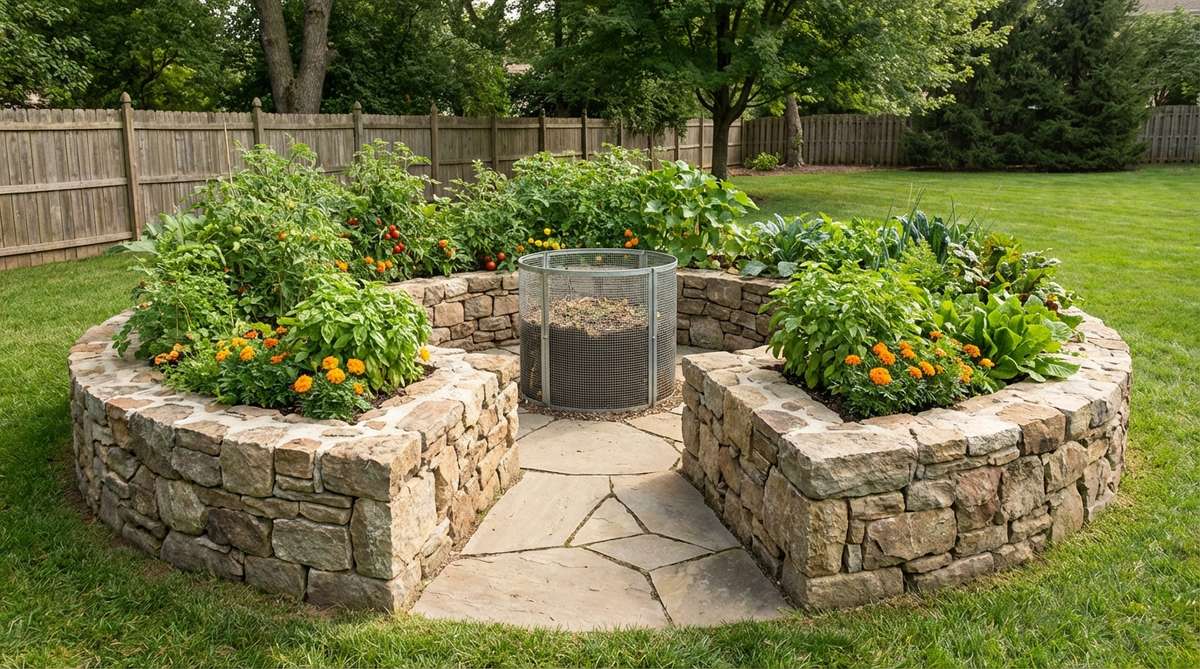
Circular raised beds with a wedge-shaped access path reaching to a central composting basket allow gardeners to reach all planting areas without stepping on soil. The 6-foot diameter produces as much as a traditional 4×8 bed while using 30% less space.
Build walls 32 inches high using stone, brick, or composite lumber. Fill the center basket with kitchen scraps that decompose and feed surrounding plants through the growing season.
22. L-Shaped Perimeter Beds
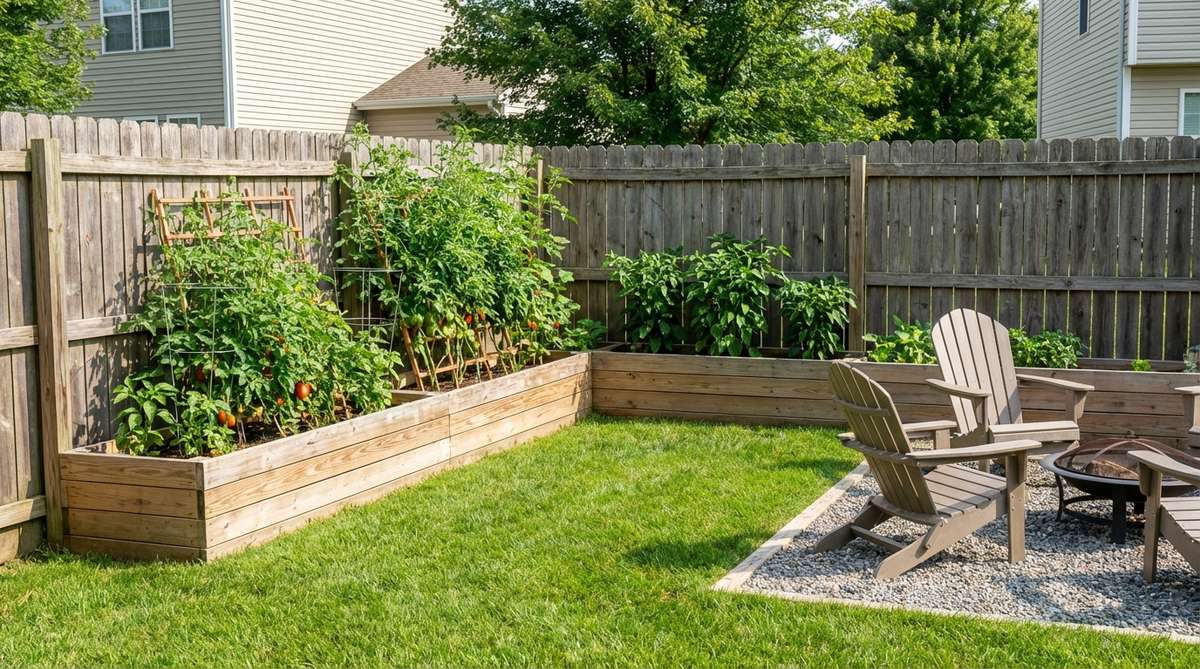
Beds built along two adjacent fence lines create protected microclimates while leaving the center open for seating or play areas. This configuration works especially well in corner yards where two property lines meet.
Make beds 24-30 inches wide for comfortable reach from outside. Plant heat-loving crops like tomatoes and peppers against the fence where reflected warmth accelerates ripening.
23. Tiered Terrace Beds
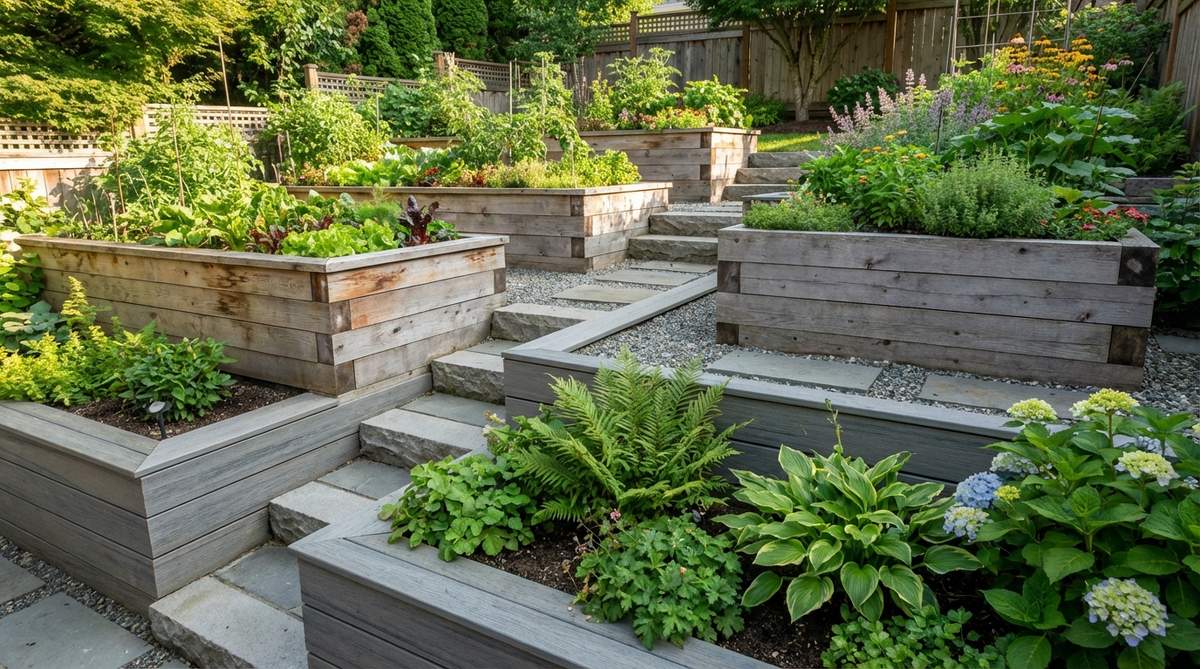
Stepped beds built into slopes create multiple planting levels that prevent erosion while maximizing square footage on challenging topography. Each 18-inch rise provides distinct growing conditions—better drainage at the top, more moisture retention at the bottom.
Use rot-resistant cedar or composite materials to frame each level. Install landscape fabric against the back wall to prevent soil migration between tiers.
24. Square Foot Gardening Grids
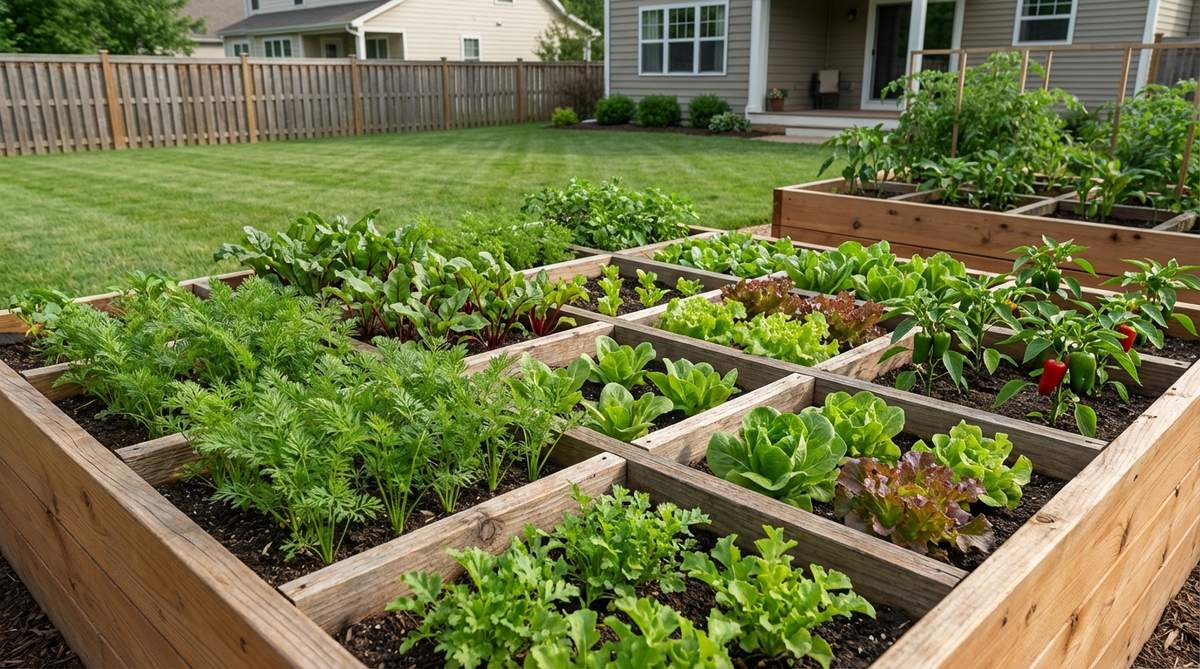
A 4×4 foot raised bed divided into sixteen 1-foot squares allows intensive planting based on each crop’s spacing needs—16 carrots per square, 9 beets, 4 lettuces, or 1 pepper plant. This method eliminates wasted space between rows.
Attach a permanent grid using vinyl lattice strips or paracord stretched between screw eyes. Rotate crops by square rather than by entire beds to maintain soil fertility.
25. Waist-High Accessible Beds
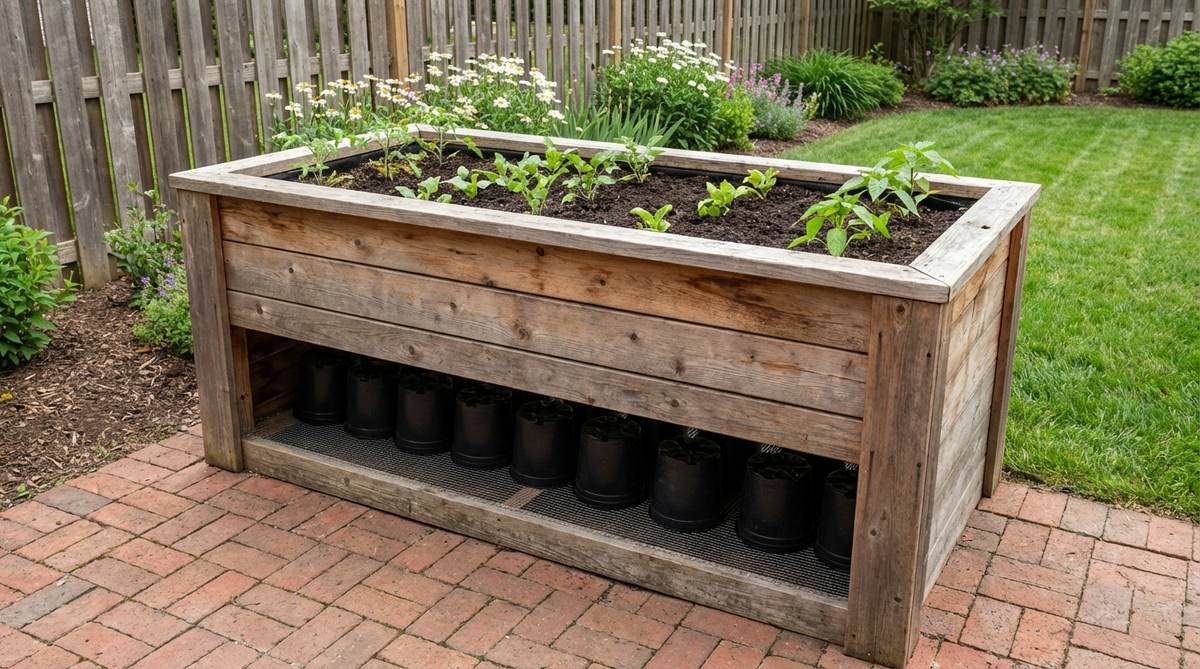
Raised beds built 30-36 inches tall eliminate stooping and kneeling, making gardening comfortable for those with back issues or limited mobility. The increased height also deters rabbits and groundhogs.
Line the bottom with hardware cloth to exclude burrowing pests. These tall beds require more growing medium—consider using the lower 12 inches for drainage material like inverted plastic nursery pots before adding quality soil mix.
26. U-Shaped Gathering Beds
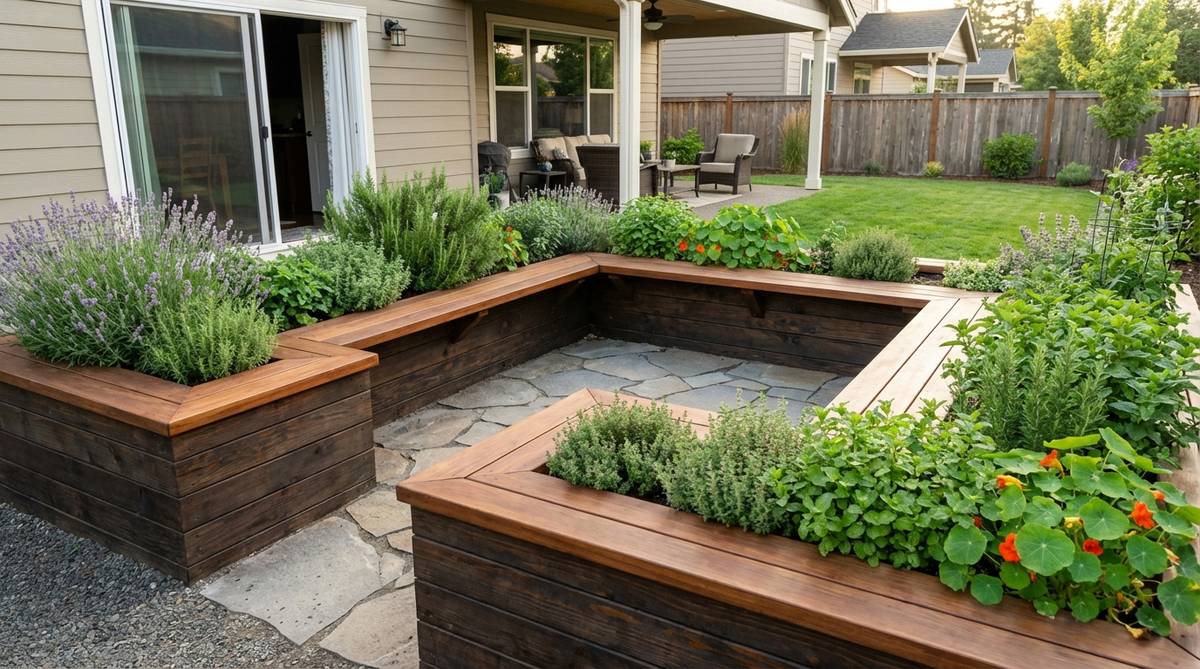
Three raised beds arranged in a U-shape create an outdoor room with built-in seating on the bed caps. The open side faces the house, integrating the garden space with indoor living areas.
Cap walls with 2×10 smooth boards that serve as bench seating. Plant perennial herbs and edible flowers in the beds—they’ll be within arm’s reach during outdoor meals.
27. Narrow Pathway Beds
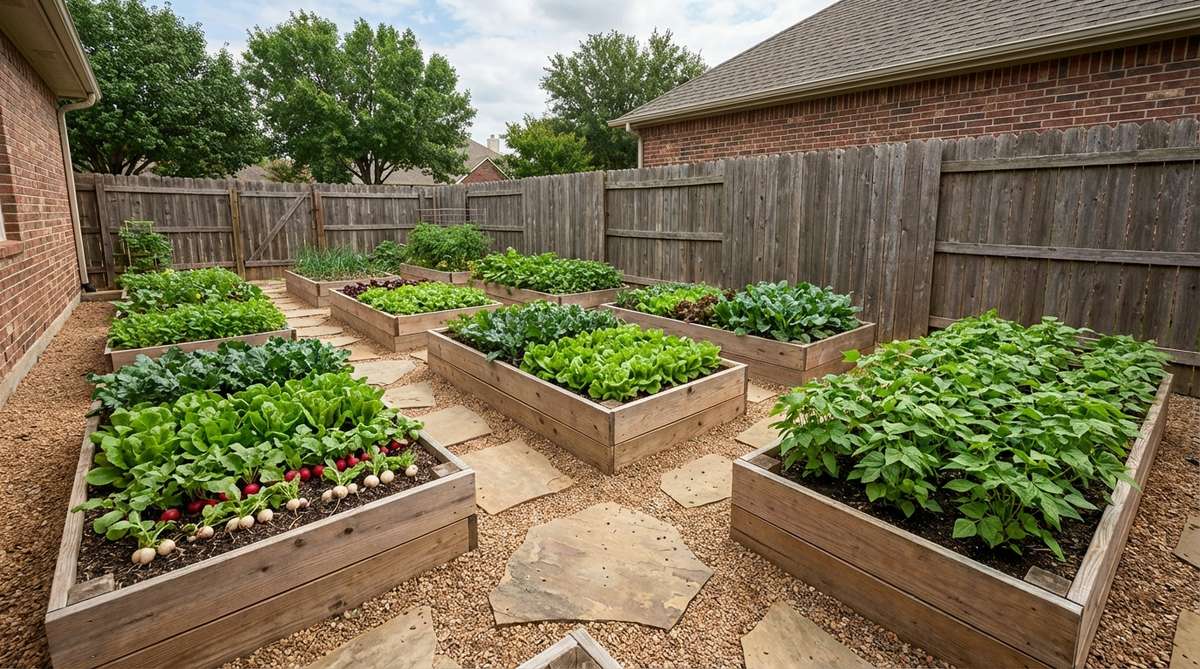
Beds just 18 inches wide fit along side yards and narrow passages between structures. Though individually small, multiple narrow beds linked by stepping stones accumulate significant growing space.
Plant in blocks rather than rows to maximize the limited width. Leafy greens, radishes, and compact bush beans work particularly well in these slim configurations.
28. Modular Snap-Together Beds
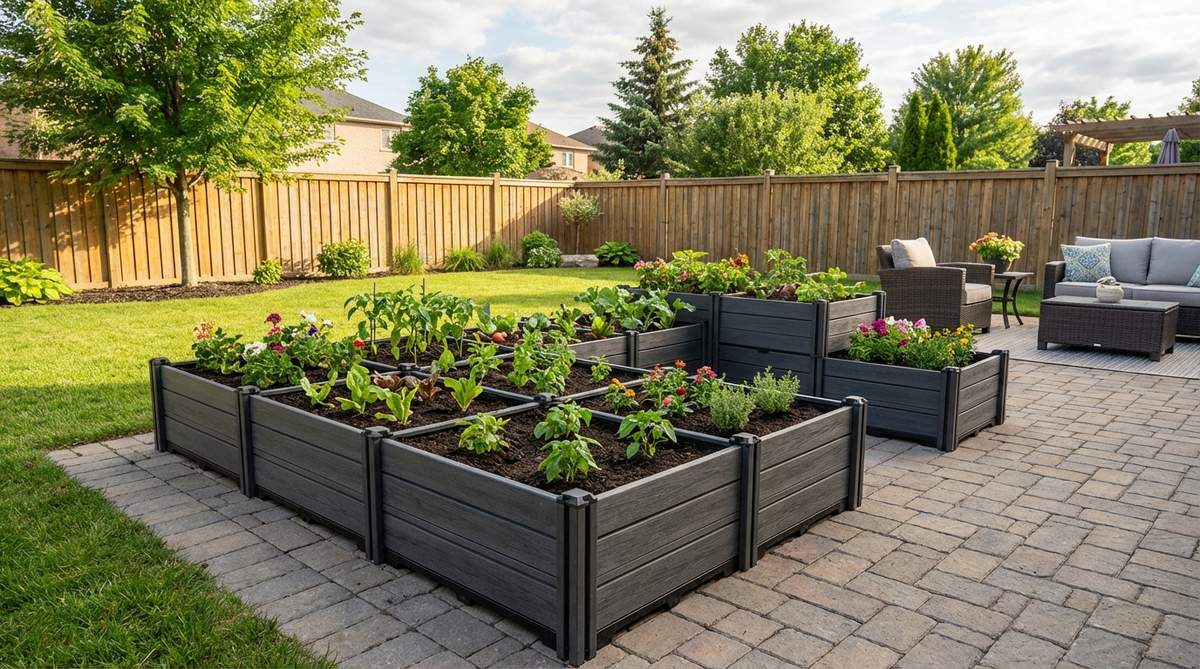
Composite plastic or aluminum panels that connect without tools allow seasonal reconfiguration as garden needs evolve. Start with two small beds and expand by adding panels as experience and ambition grow.
These lightweight systems work well for renters who need portable gardens. Disassemble and move them without losing soil—just tarp the bottoms during transport.
29. Stock Tank Raised Beds
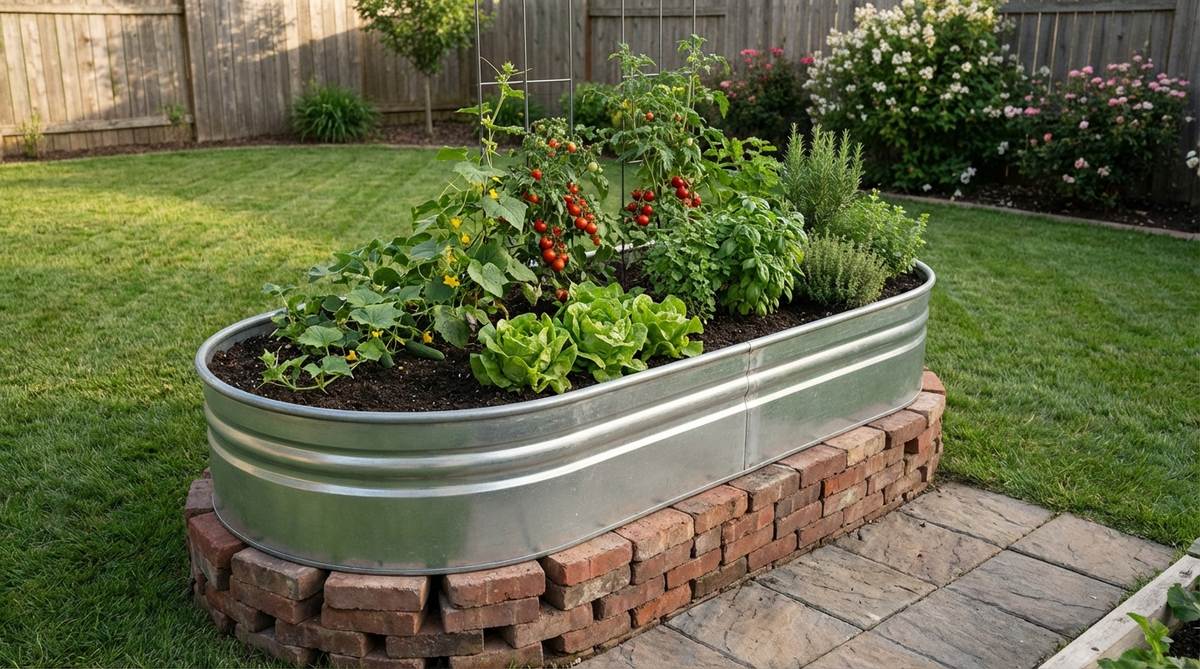
Galvanized stock tanks from farm supply stores provide instant raised beds with rustic appeal. The 3-foot diameter version holds enough soil for a complete salad garden—lettuce, tomatoes, cucumbers, and herbs.
Drill 1/2-inch drainage holes every 6 inches across the bottom. Set tanks on bricks or pavers to ensure water can escape and air can circulate underneath.
30. Cinder Block Beds with Pocket Planting
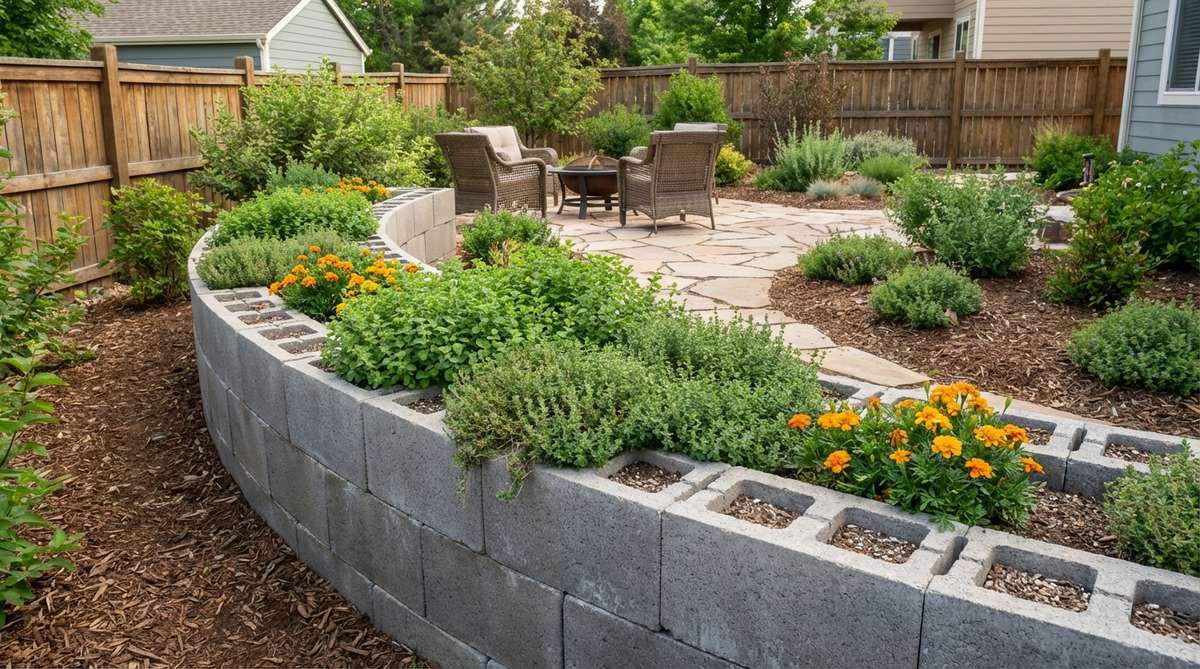
Concrete masonry blocks stacked two or three high create sturdy bed walls, while the hollow cores provide additional planting pockets for herbs and trailing flowers. This dual-purpose approach squeezes extra growing space from the structural elements.
Fill cores with quality potting mix rather than garden soil—the confined space requires excellent drainage. Plant shallow-rooted herbs like thyme, oregano, and dwarf marigolds in the pockets.
Multi-Functional Furniture and Built-In Features
Dual-purpose elements reduce clutter while increasing functionality in small gardens. Every square foot earns its place by serving multiple roles throughout the day and across seasons.
31. Storage Benches with Lift Lids
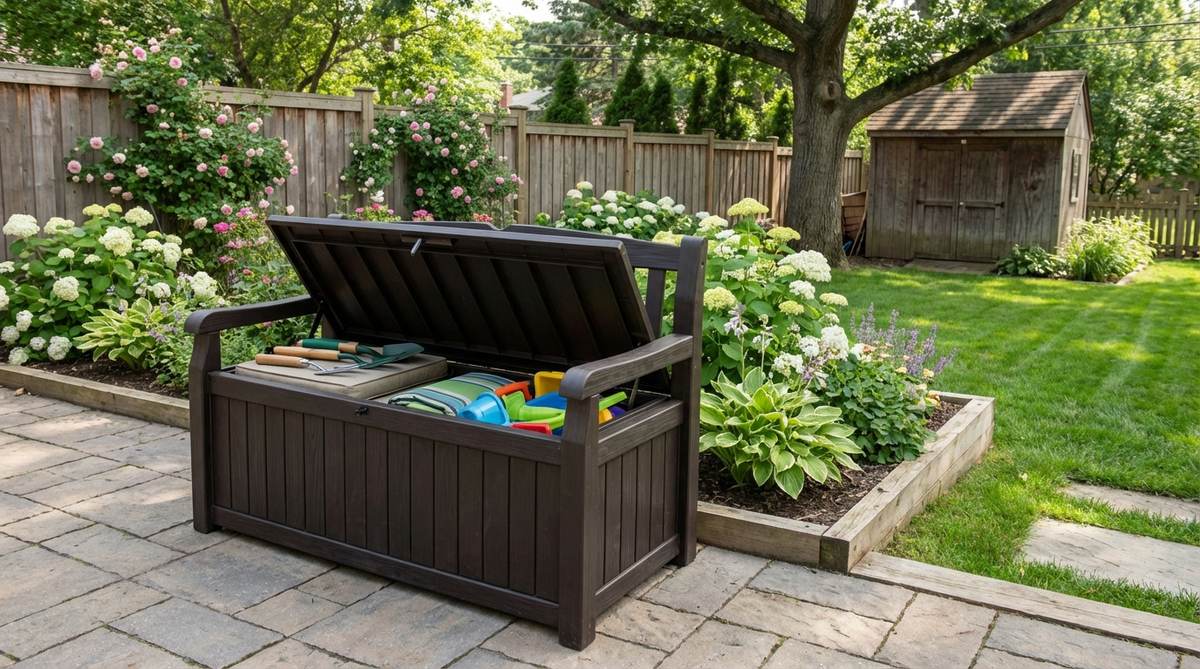
Outdoor benches with waterproof storage compartments hide garden tools, cushions, and children’s toys while providing seating for six. This eliminates the need for separate shed space in tiny yards.
Choose resin or treated wood construction rated for outdoor exposure. Add waterproof liners to protect stored items from condensation that forms inside sealed compartments.
32. Folding Bistro Sets
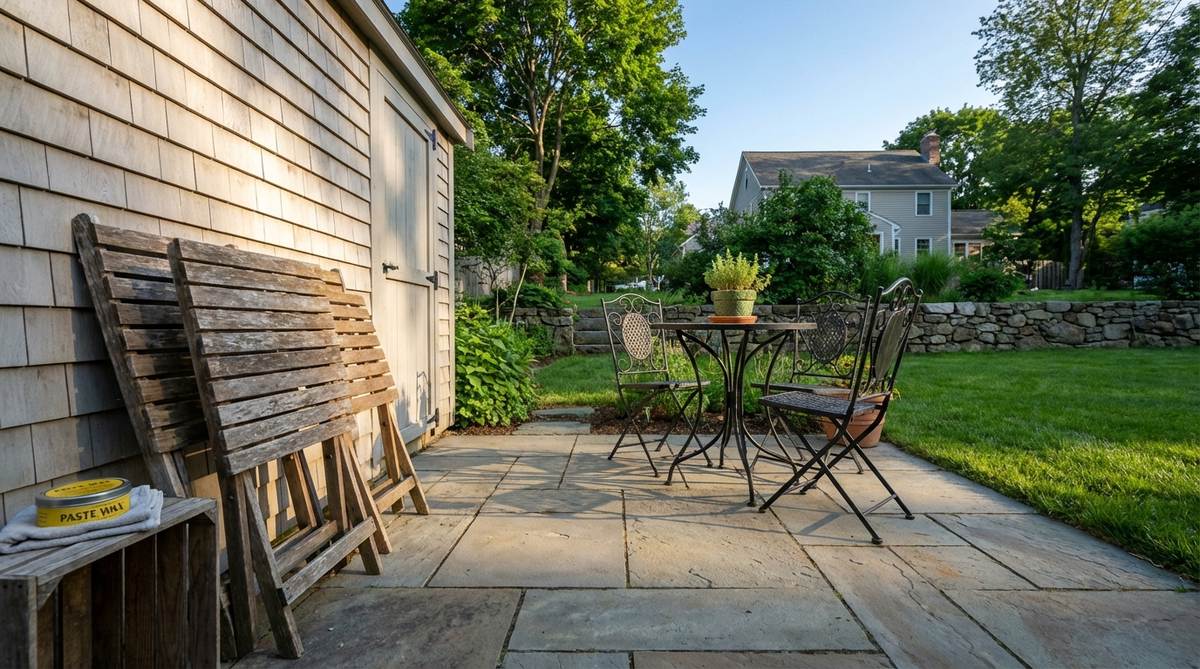
Metal or wooden folding tables and chairs collapse flat to hang on fence hooks or store in narrow gaps between structures. Deploy them for weekend entertaining, then reclaim the space for weekday activities.
Apply paste wax to folding mechanisms annually to prevent rust and ensure smooth operation. Store folded furniture under cover to extend lifespan.
33. Planter Box Bench Combos
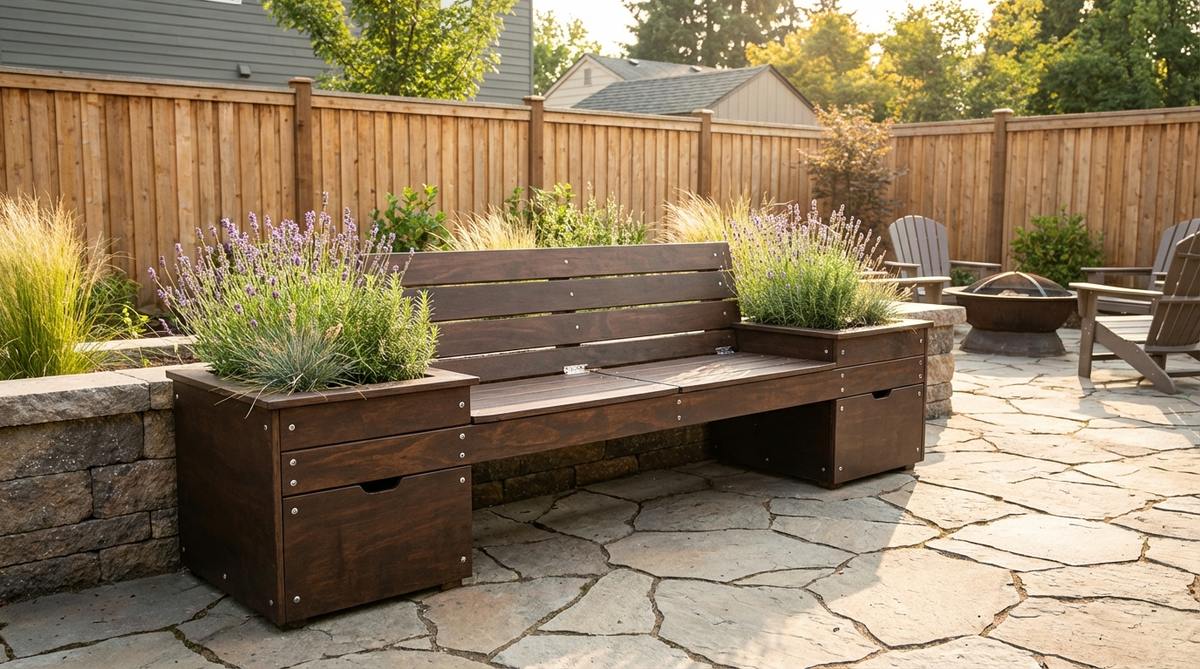
Custom-built benches with integrated planter boxes on each side combine seating, storage beneath the seat, and growing space in a single footprint. These anchoring pieces define outdoor rooms within small yards.
Use marine-grade plywood and stainless fasteners for longevity. Line planter sections with pond liner before adding soil to protect the wood structure from constant moisture.
34. Murphy-Style Fold-Down Tables
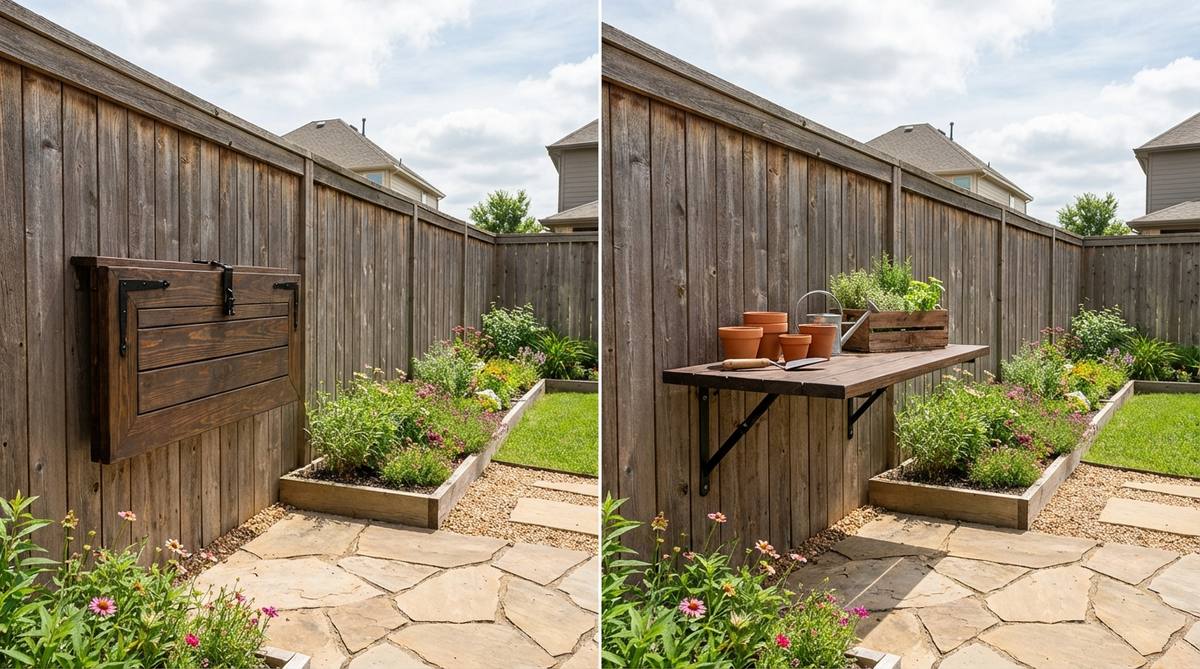
Wall-mounted tables with hinged brackets fold flat against fences when not needed, then swing down to provide dining or potting surfaces. A 4-foot table serves six yet occupies just 2 inches of space when stowed.
Install into fence posts or directly into exterior wall studs for secure anchoring. Add a center support leg that folds with the table for extra stability during use.
35. Stackable Resin Chairs
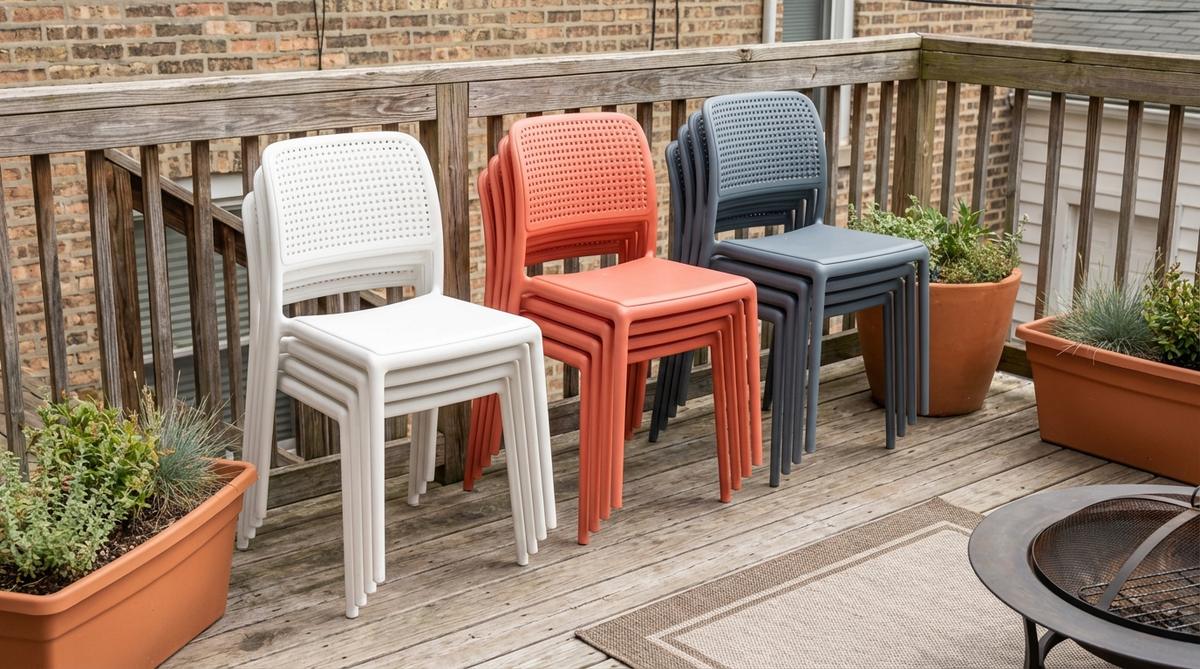
Modern stacking chairs nest vertically to occupy the footprint of a single chair. Keep one set deployed for everyday use, stack the extras until company arrives.
Choose UV-resistant resin that won’t fade or crack in direct sun. Six chairs stack to just 36 inches height for compact storage in corners or under stairs.
36. Built-In Perimeter Seating
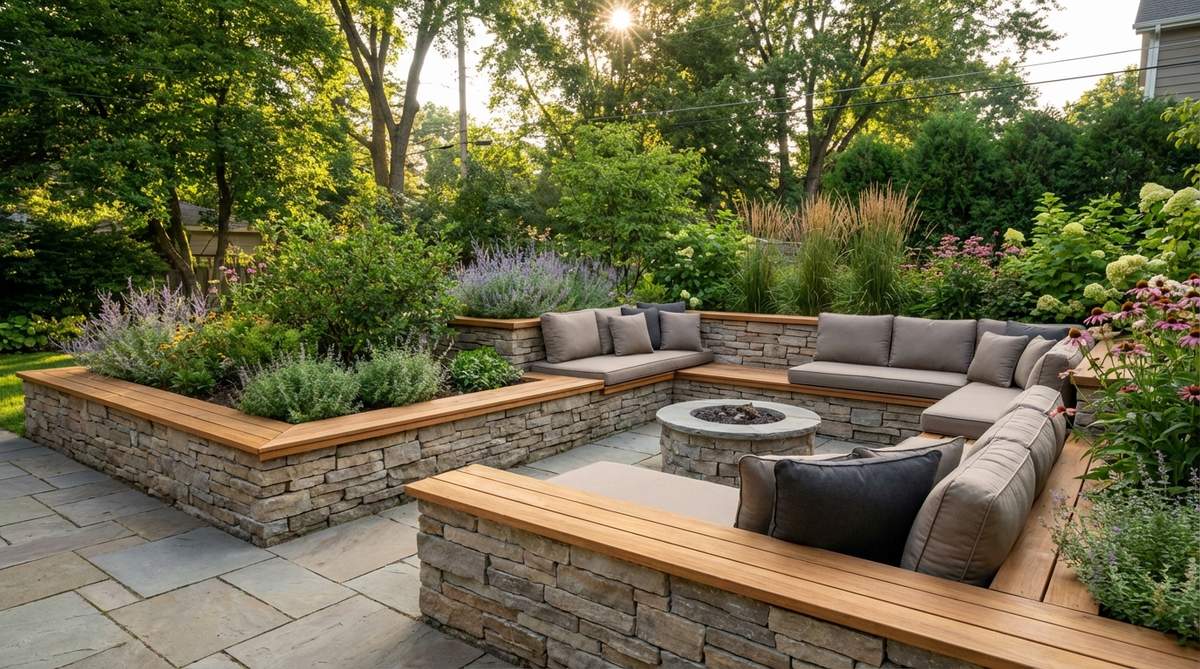
Low walls capped with comfortable seating wrap around garden edges, providing places to sit without freestanding furniture. The walls double as raised bed edges or retaining structures for grade changes.
Build walls 18 inches tall and cap with smooth 2×12 boards for comfortable seating height. Add waterproof cushions in conversation areas for extra comfort.
37. Ottoman Planters
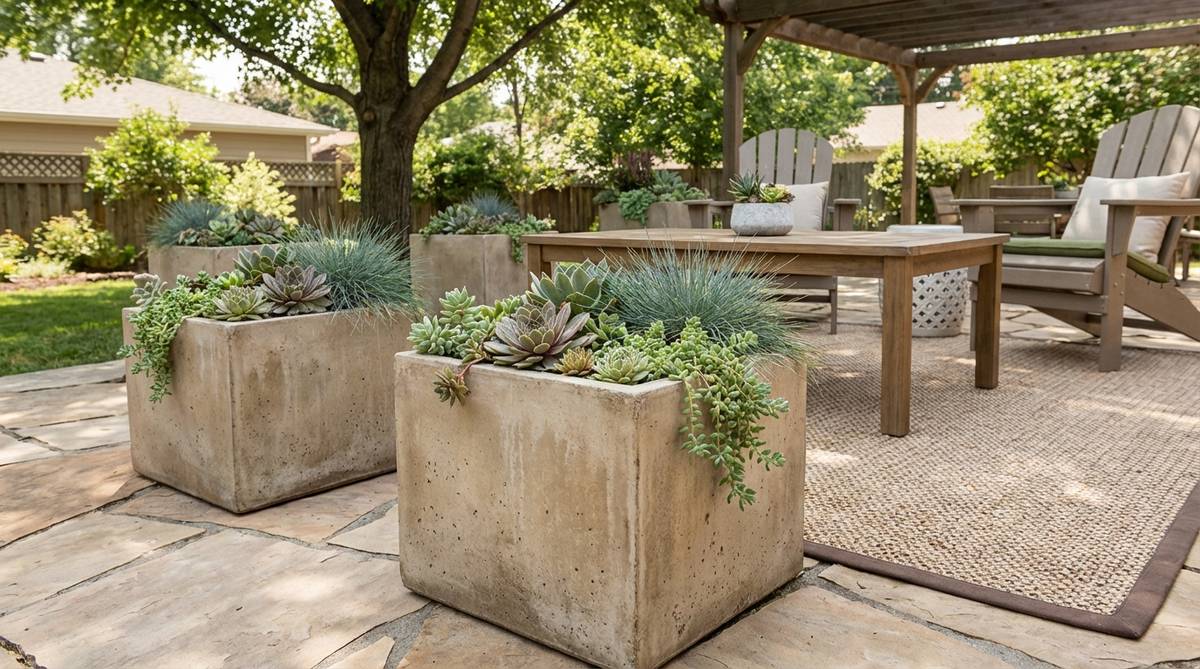
Cube-shaped planters at coffee table height serve as both footrests and container gardens. Planted with low-maintenance succulents or ornamental grasses, they require minimal care while providing visual interest.
Use 18-inch cubes for proper scale. Plant drought-tolerant species that don’t require frequent attention—sedums, hens-and-chicks, or blue fescue grass.
38. Side Table Planters
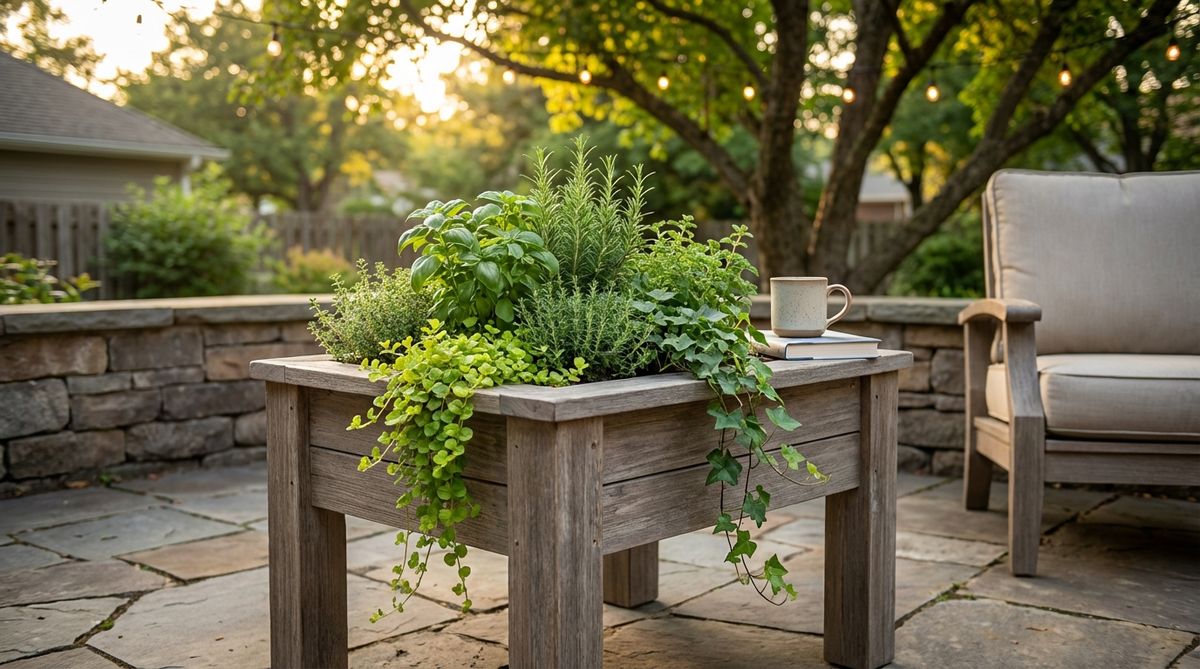
End tables with recessed planter wells in the center provide surfaces for drinks while incorporating living plants. These hybrid pieces bridge furniture and garden elements.
Install removable plastic liners in planter wells to protect the table structure. Plant compact herbs or trailing annuals that won’t obstruct the table surface.
39. Pergola with Storage Posts
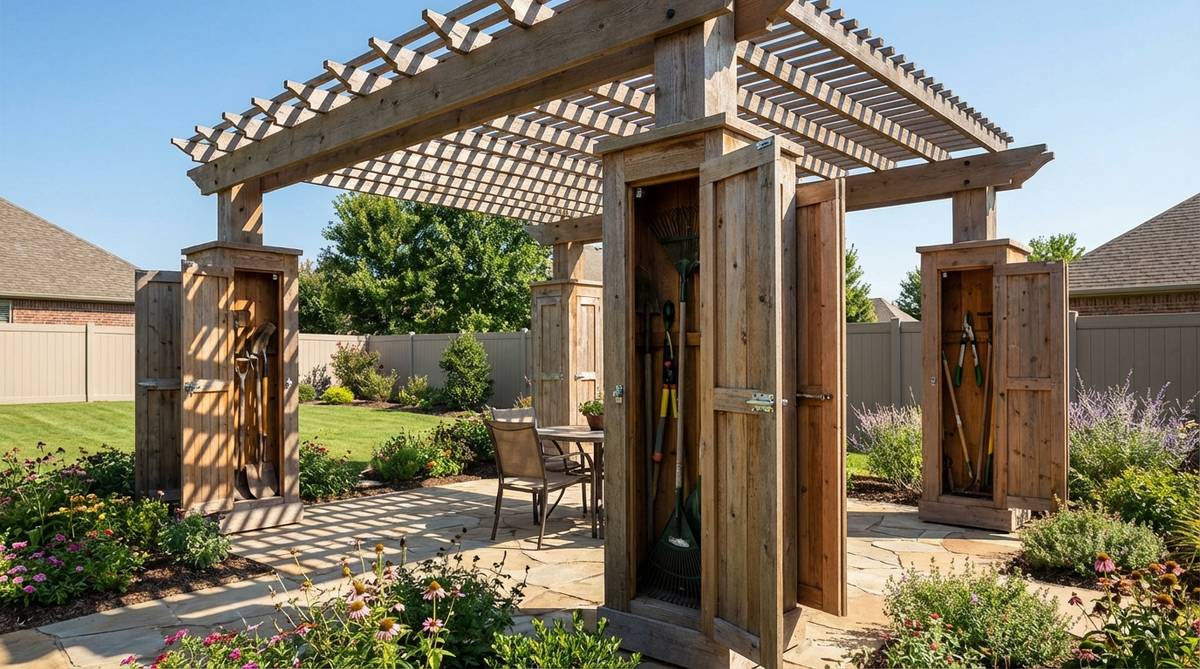
Pergola support posts built as hollow columns with hinged doors conceal vertical storage for long-handled tools. The overhead structure provides light shade while the posts eliminate above-ground clutter.
Frame each post with 2×6 boards to create a 5×5-inch interior cavity. Add shelves or tool clips inside for organized storage.
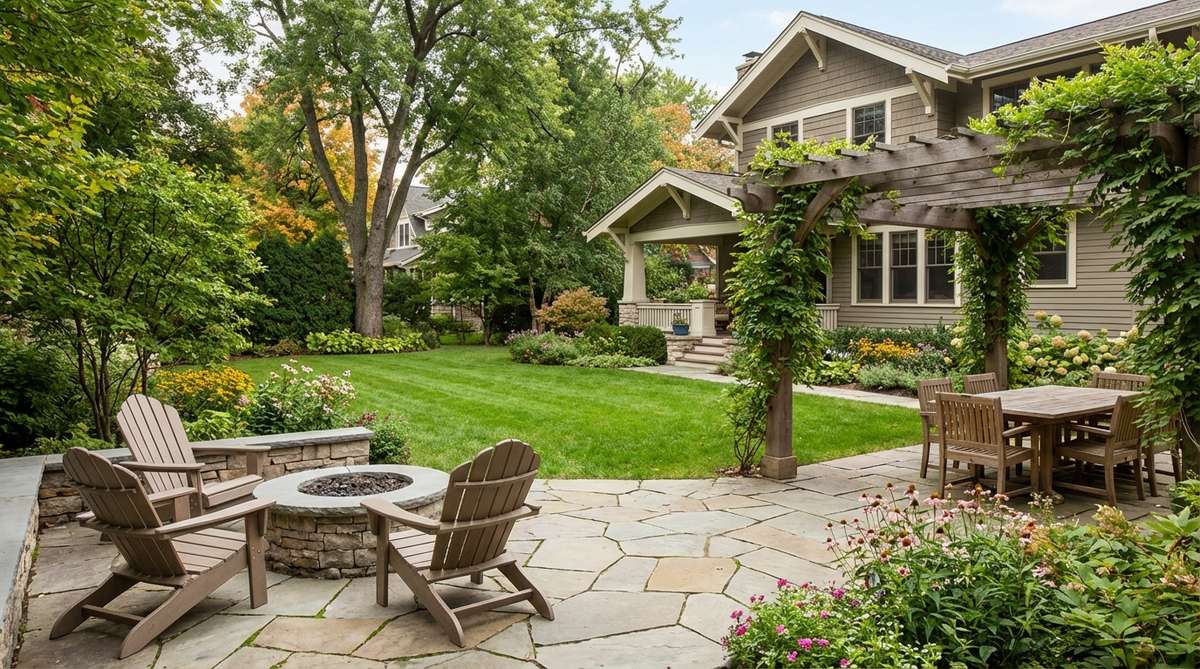
40. Fire Pit with Surrounding Wall Seating
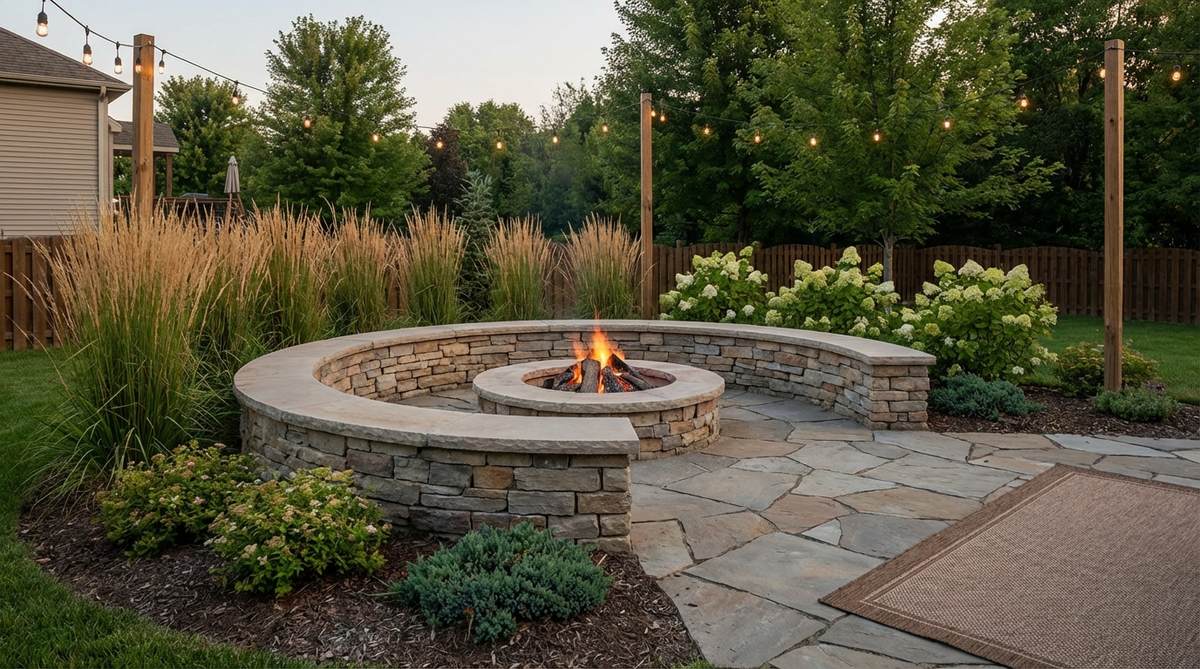
In-ground or raised fire pits surrounded by curved seating walls create entertainment zones that don’t require portable furniture. The permanent structure anchors the small yard’s layout.
Build seating walls 18 inches tall with fire-rated materials. Position the fire feature at least 10 feet from structures and under no overhead branches.
Layered Planting for Visual Depth
Three-dimensional plant arrangements create the illusion of greater space by guiding the eye through foreground, middle, and background zones. This technique borrows from landscape painting principles to add perceived depth.
41. Ground Cover Carpet Layer
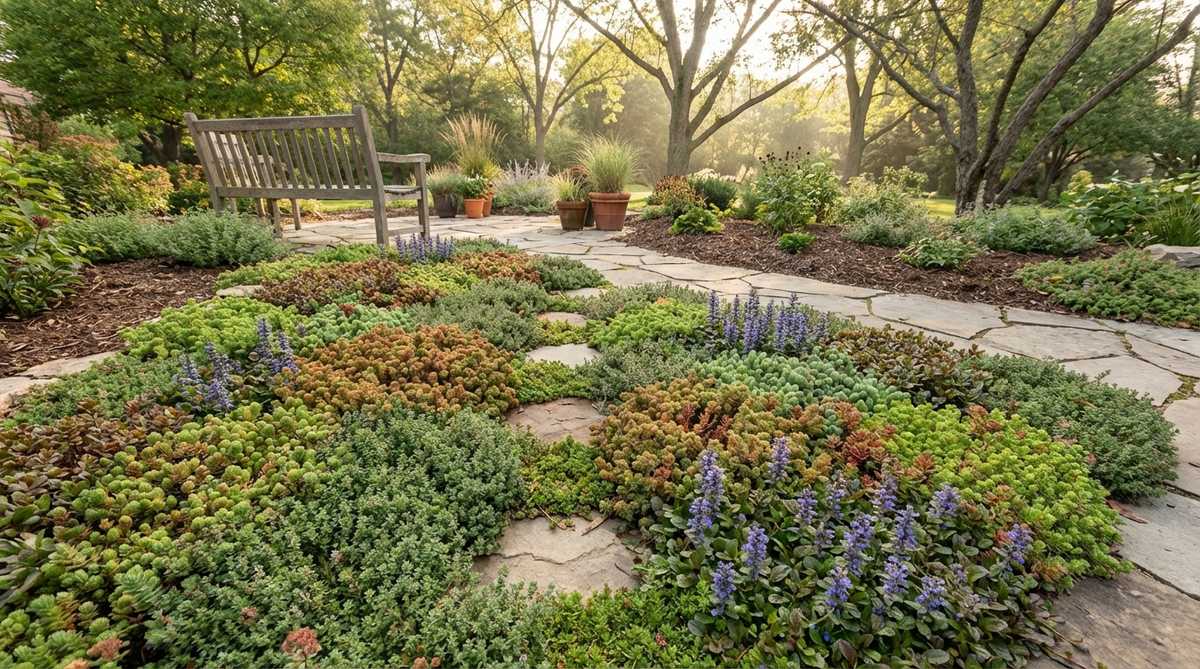
Low-growing spreaders like creeping thyme, sedum, or ajuga form living carpets that require no mowing while suppressing weeds. These mat-forming plants unify the lowest visual plane.
Choose varieties under 4 inches tall that tolerate foot traffic for areas near pathways. Plant on 8-inch centers for coverage within one season.
42. Mid-Height Perennial Band
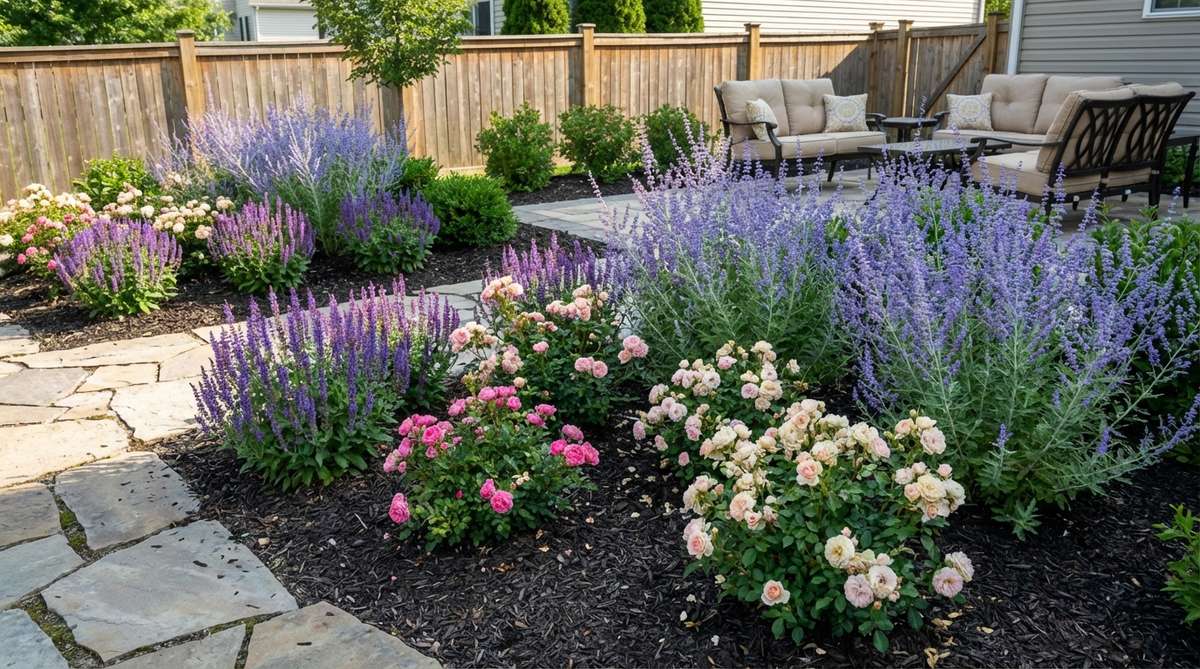
Specimens ranging 18-36 inches tall—salvias, Russian sage, compact roses—create the middle visual layer. This band carries most of the garden’s color and seasonal interest.
Group in odd numbers (3, 5, or 7) of the same variety for impact rather than scattering single plants. Space according to mature width to prevent overcrowding.
43. Tall Focal Specimens
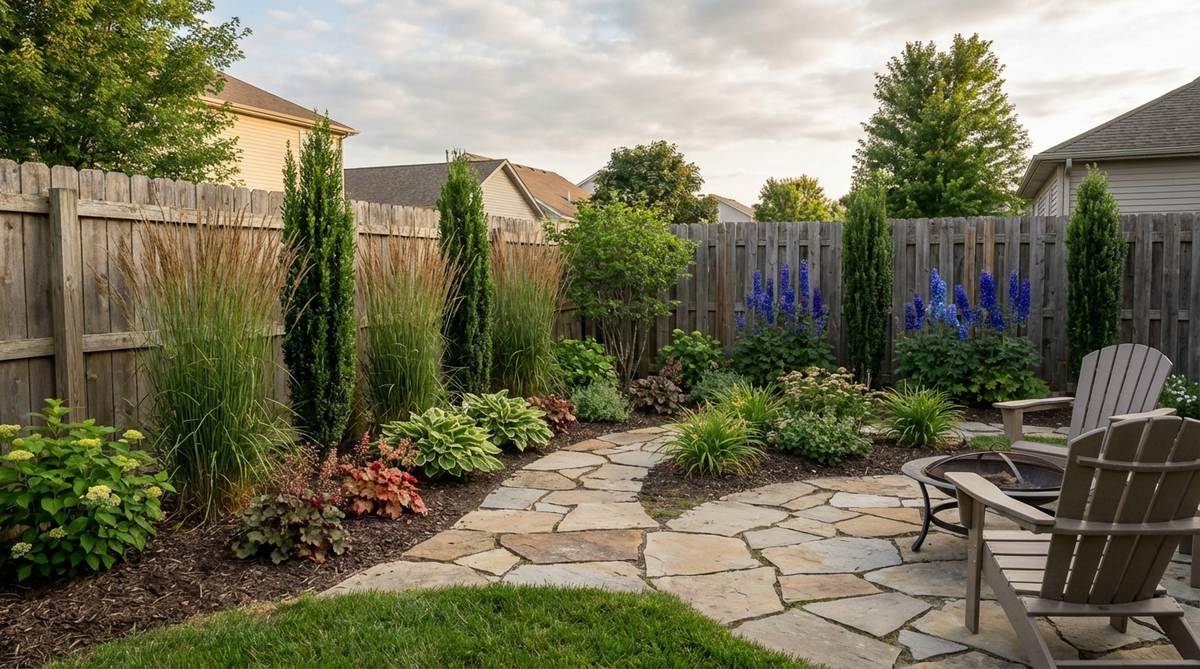
Ornamental grasses, columnar evergreens, or tall perennials like delphiniums provide vertical accents that draw the eye upward. These architectural elements add drama without consuming much horizontal space.
Place tall specimens at bed backs or corners rather than centered—this allows viewing from multiple angles while maintaining proportional balance.
44. Graduated Color Progression
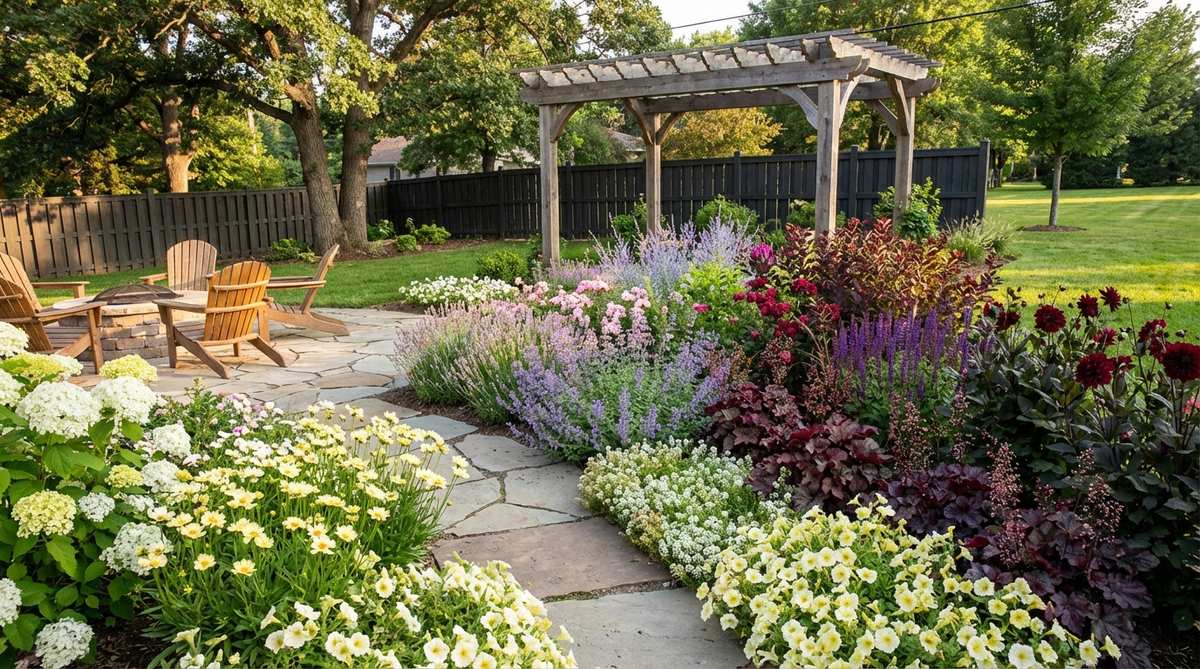
Arranging plants from light colors in front to darker shades at the back creates atmospheric perspective, mimicking the way distant objects appear hazier. This visual trick extends perceived depth.
Start with white or pale yellow flowers at the front edge, progress through pinks and oranges in the middle, and finish with deep purples and burgundies at the back.
45. Seasonal Succession Planting
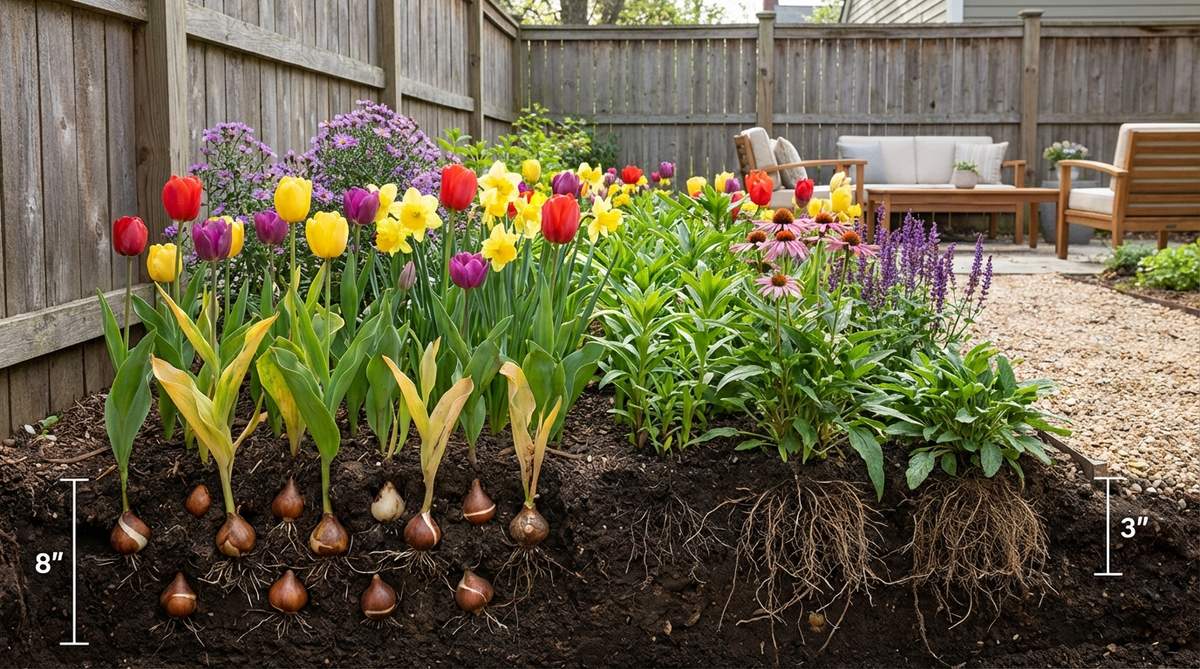
Layering spring bulbs with summer perennials and fall-blooming asters ensures continuous interest through three seasons. Early bloomers go dormant as later performers reach their peak.
Plant spring bulbs 8 inches deep with perennial crowns 3 inches deep above them. The perennial foliage hides fading bulb leaves in late spring.
46. Texture Contrast Combinations
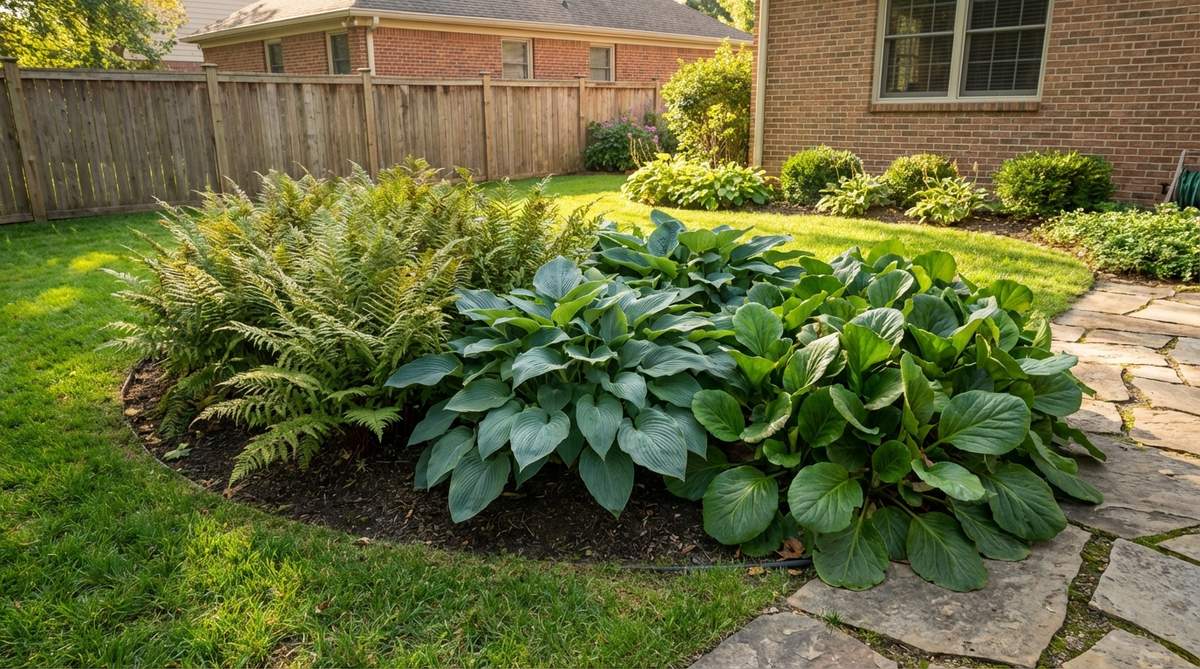
Pairing fine-textured plants like ferns with bold-leaved hostas or broad-leaved bergenia creates visual interest even without flowers. Textural variety prevents monotony in small spaces.
Follow the one-third rule—use fine textures for two-thirds of the planting and bold textures for one-third to maintain balance.
47. Evergreen Backbone Structure
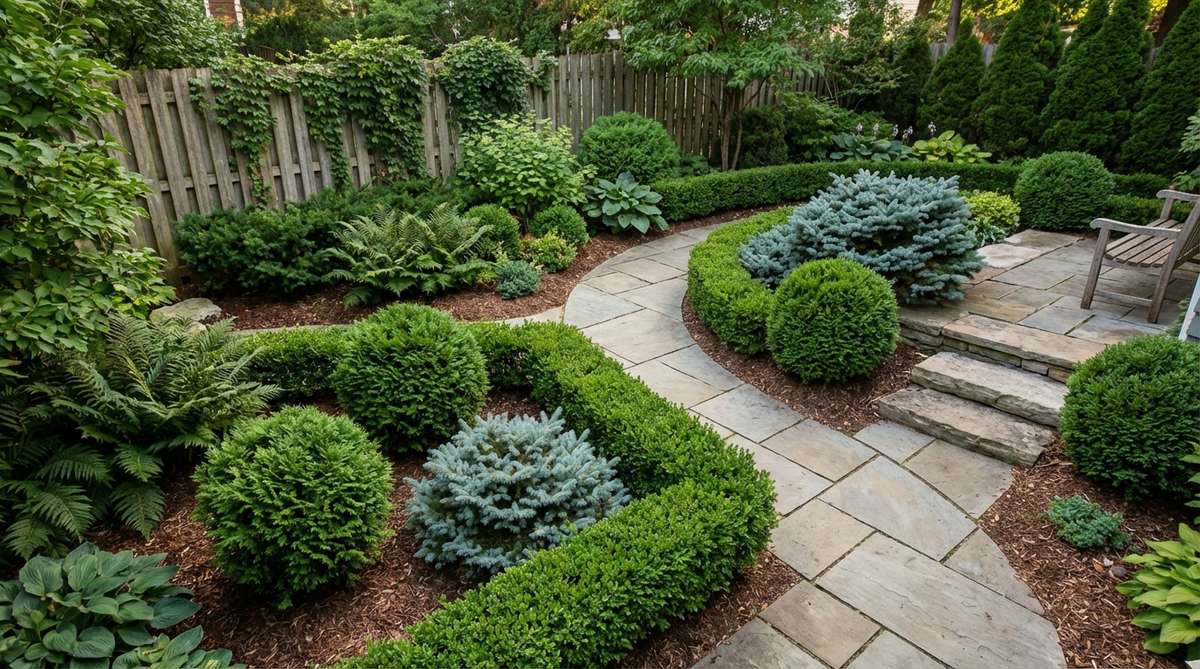
Dwarf conifers, boxwood, or evergreen ferns provide year-round structure that holds the garden together during winter dormancy. These anchor plants prevent the small space from appearing barren off-season.
Allocate 40% of planting space to evergreens for four-season interest. Choose slow-growing varieties that won’t outgrow the small space—’Hetz Midget’ arborvitae or ‘Blue Star’ juniper.
48. Filler-Spiller-Thriller Containers
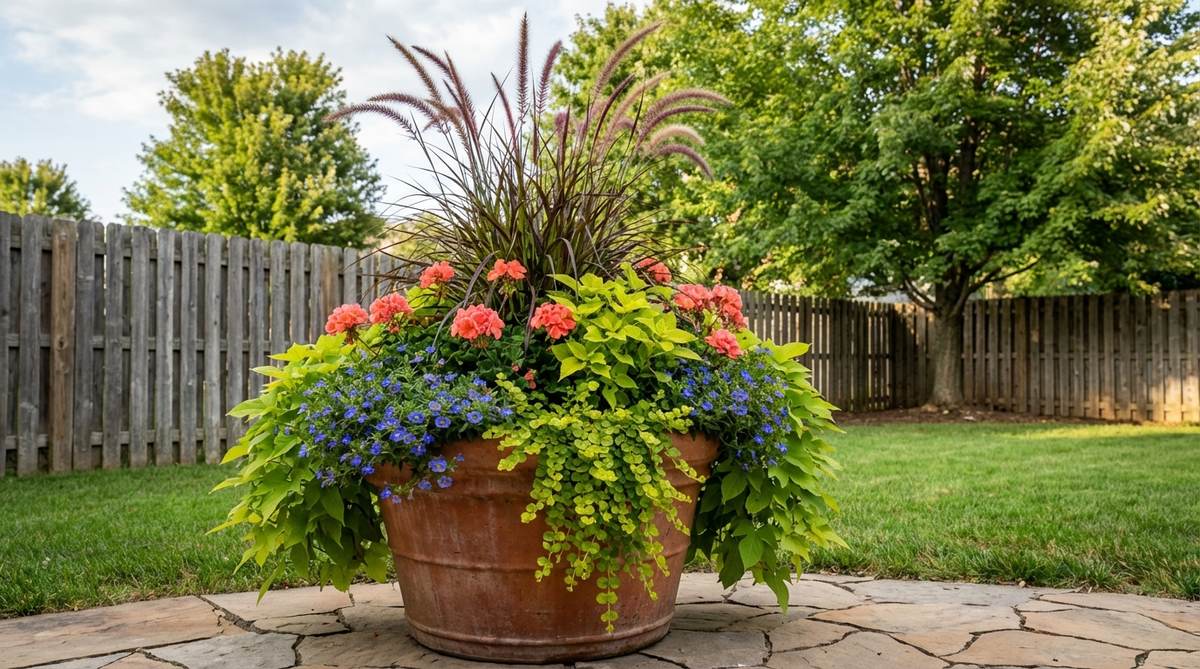
This formula combines upright focal plants (thrillers), mounding fill plants (fillers), and cascading edge plants (spillers) in single containers to create complete layered compositions in portable packages.
Position the thriller slightly off-center rather than centered for more dynamic arrangements. Allow spillers to cascade at least 8-12 inches beyond the container edge.
49. Underplanting Trees and Shrubs
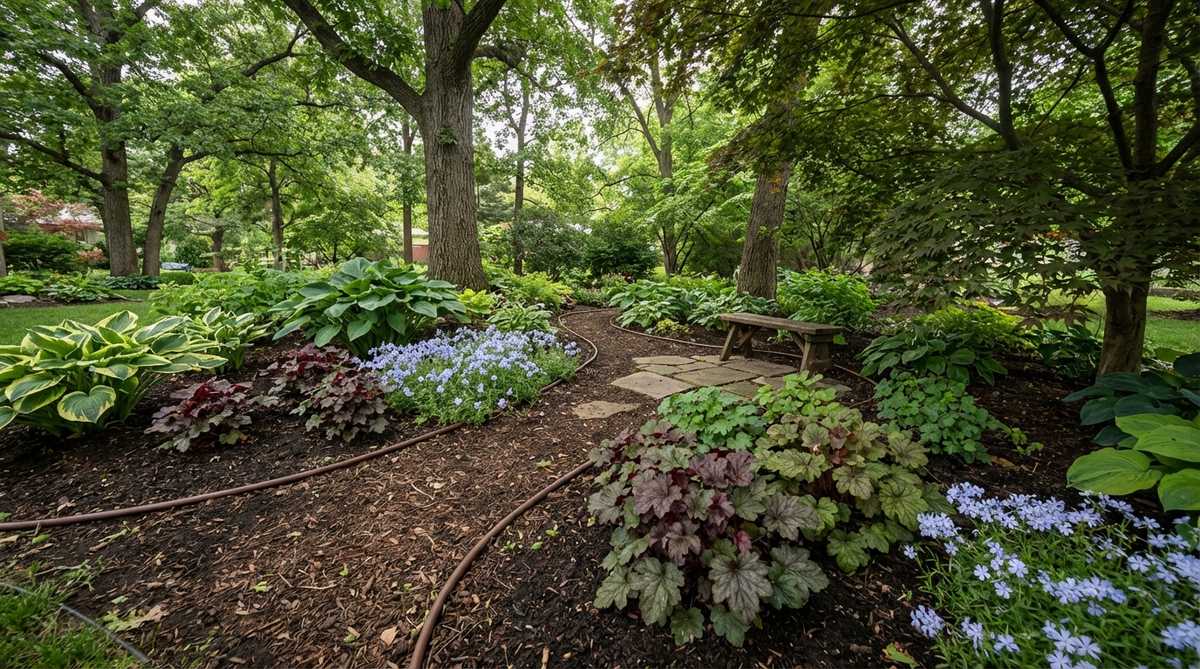
The area beneath established trees and shrubs offers planting opportunities for shade-tolerant ground layers. Hostas, coral bells, and woodland phlox thrive in these overlooked zones.
Amend soil with compost before underplanting—tree roots have depleted nutrients. Water understory plantings separately from the tree, as tree canopies deflect rain away from the trunk zone.
50. Vertical Plane Climbing Combinations
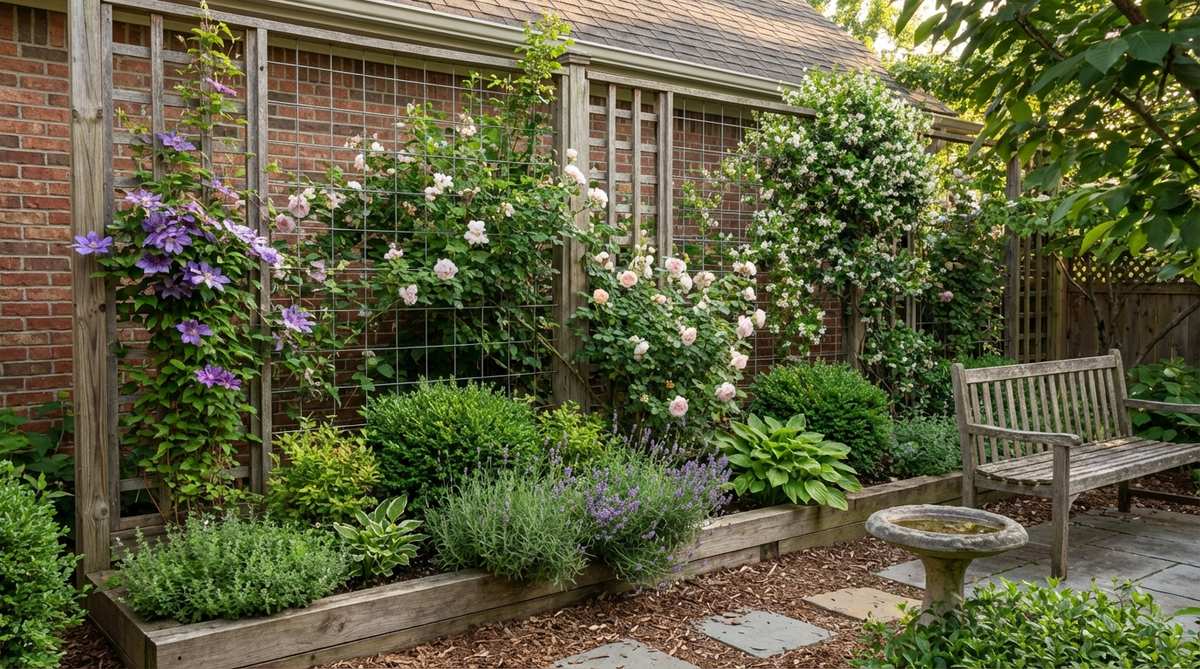
Growing multiple climbers on the same support structure layers bloom times and colors throughout the season. Pair spring-flowering clematis with summer roses for extended vertical interest.
Choose partners with different root depths—shallow-rooted clematis pairs well with deeper-rooted roses. Prune at different times to avoid cutting off next season’s blooms.
Space Illusion Techniques
Optical tricks borrowed from interior design enlarge perceived space through strategic material choices, reflective surfaces, and sightline manipulation. These methods cost little but deliver significant visual impact.
51. Garden Mirrors on Fences
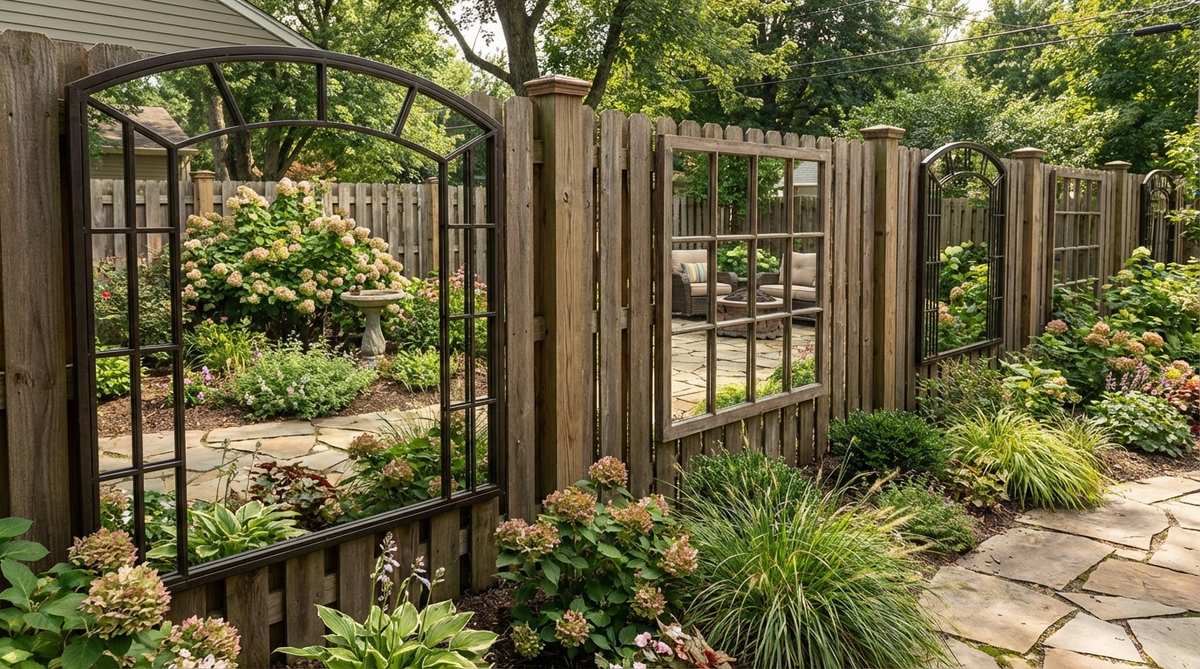
Weatherproof mirrors mounted on back fences reflect the garden forward, creating the illusion of depth and additional space beyond. The brain interprets the reflection as a continuation of the yard.
Position mirrors to reflect the most attractive garden views rather than directly facing seating areas where the illusion becomes obvious. Frame mirrors to resemble garden gates or windows for convincing depth effects.
52. Diagonal Pathway Layouts
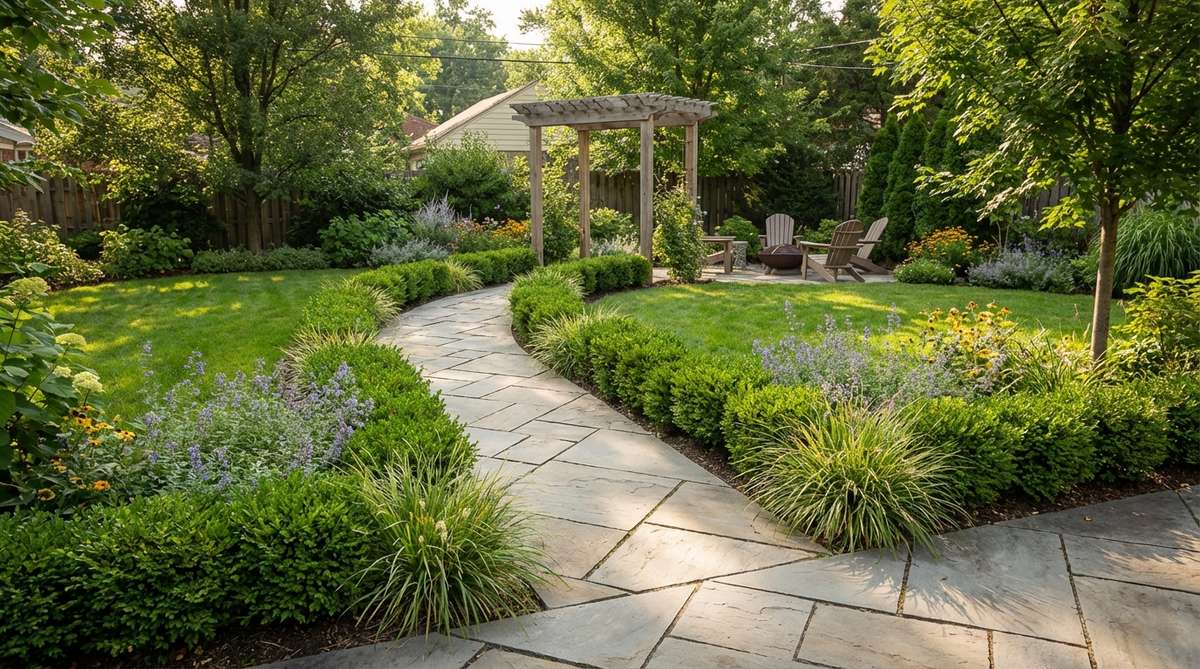
Paths running diagonally corner-to-corner measure longer than straight perimeter walks, increasing the perceived yard size. The angled approach also reveals more garden area gradually as visitors progress along the route.
Use a consistent paving material to strengthen the line. Add low edging plants that emphasize the diagonal direction and guide the eye along the extended sight line.
53. Curved Boundary Plantings
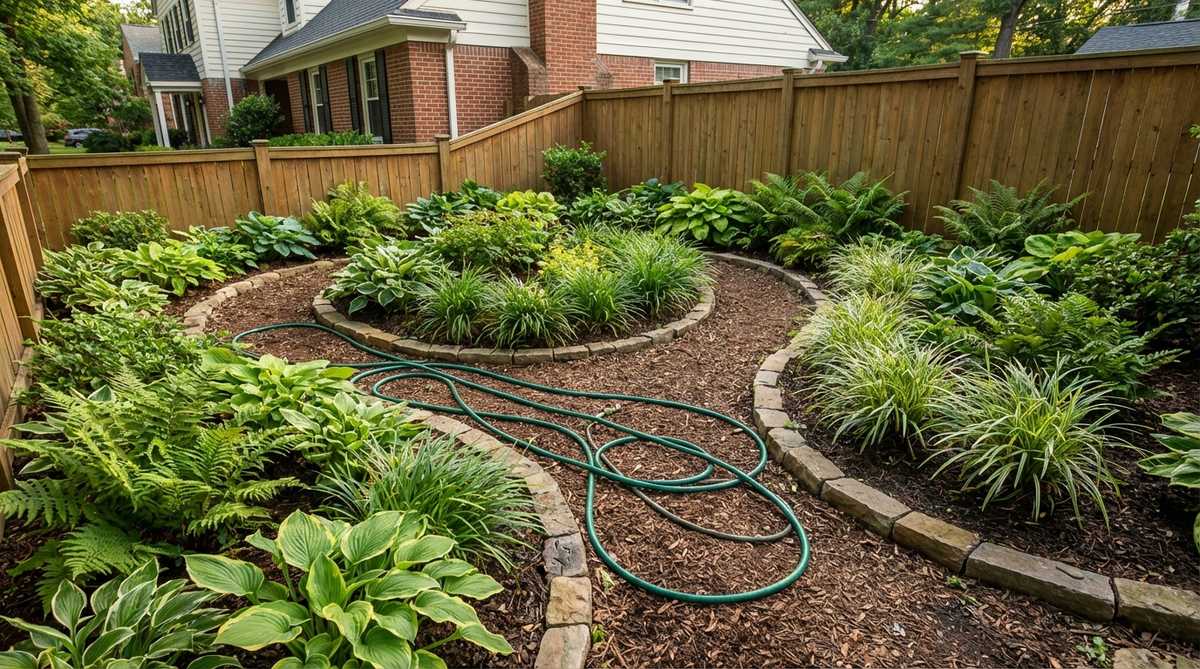
Planting beds with flowing curves rather than straight edges create the impression that borders extend beyond their actual limits. The eye travels along curves more slowly, increasing perceived distance.
Use garden hoses to lay out curves before digging. Aim for gentle, sweeping lines rather than tight squiggles—broad curves read as more spacious.
54. Partial Screening with Arches
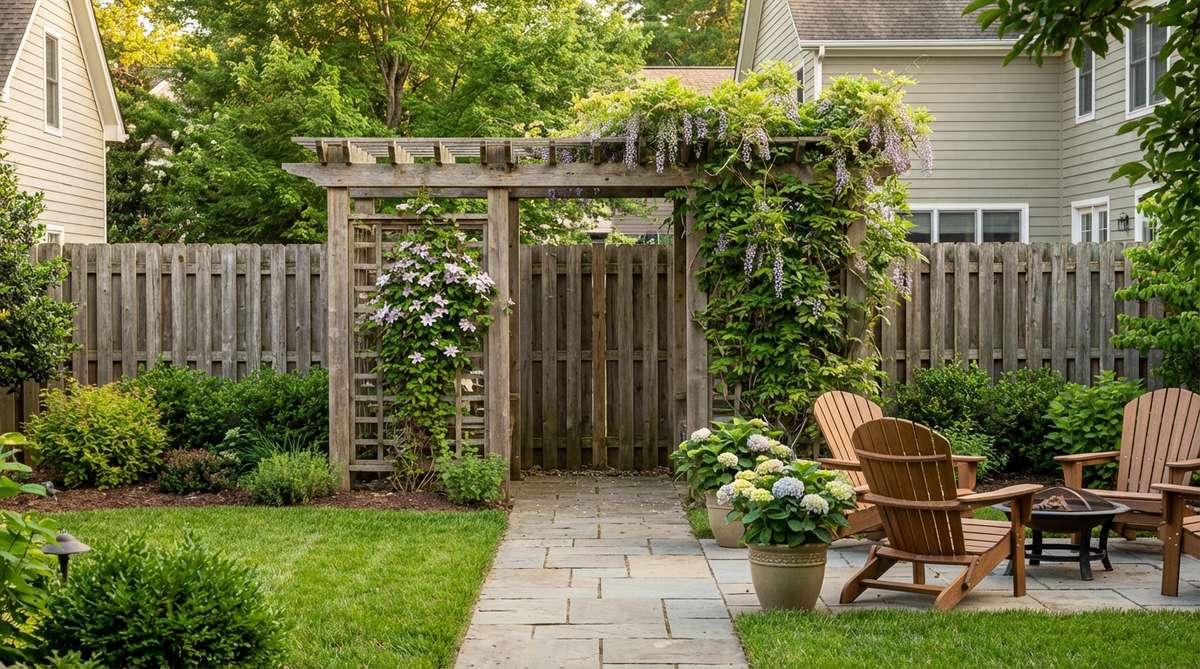
Placing an arbor or trellis screen midway through the garden obscures the back fence, creating mystery about what lies beyond. The partial view triggers the brain to assume additional space exists out of sight.
Keep screens see-through rather than solid—40-50% coverage with climbing vines provides enough visual interruption while maintaining the suggestion of depth.
55. Light-Colored Boundary Treatments
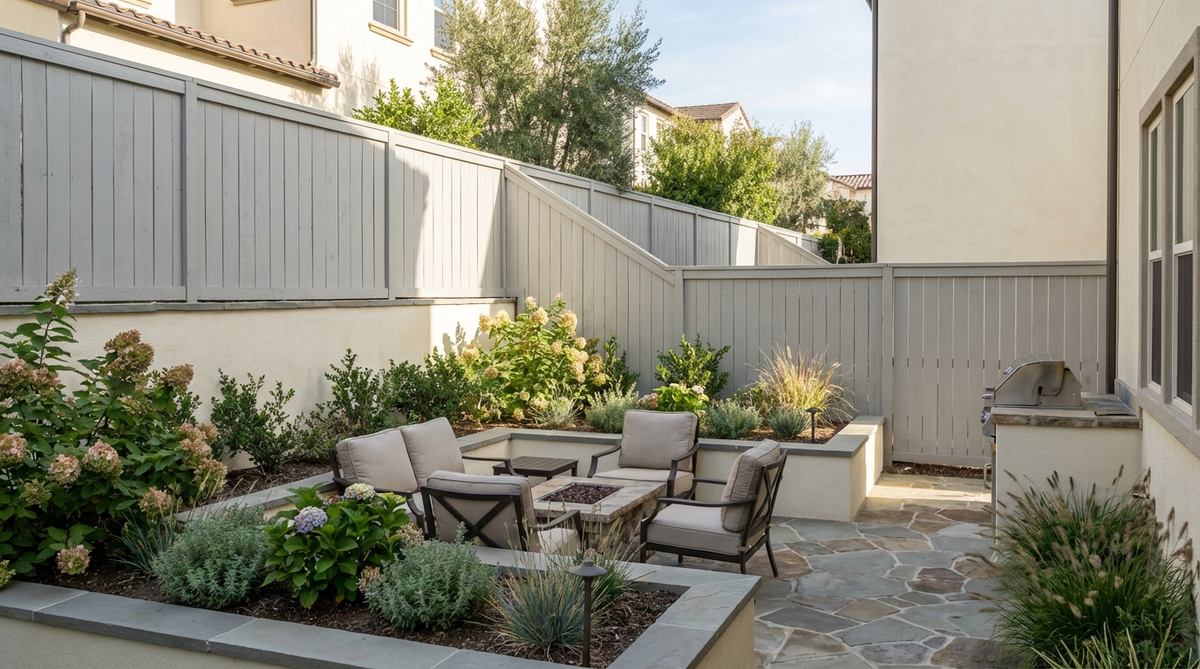
Painting fences and walls in pale colors—soft gray, cream, or cloud white—makes them recede visually, enlarging the perceived yard size. Dark boundaries advance forward, shrinking space.
Use exterior-grade paint in semi-gloss finish to reflect more light. Refresh every 3-4 years to maintain the brightening effect.
56. Forced Perspective with Plant Sizing
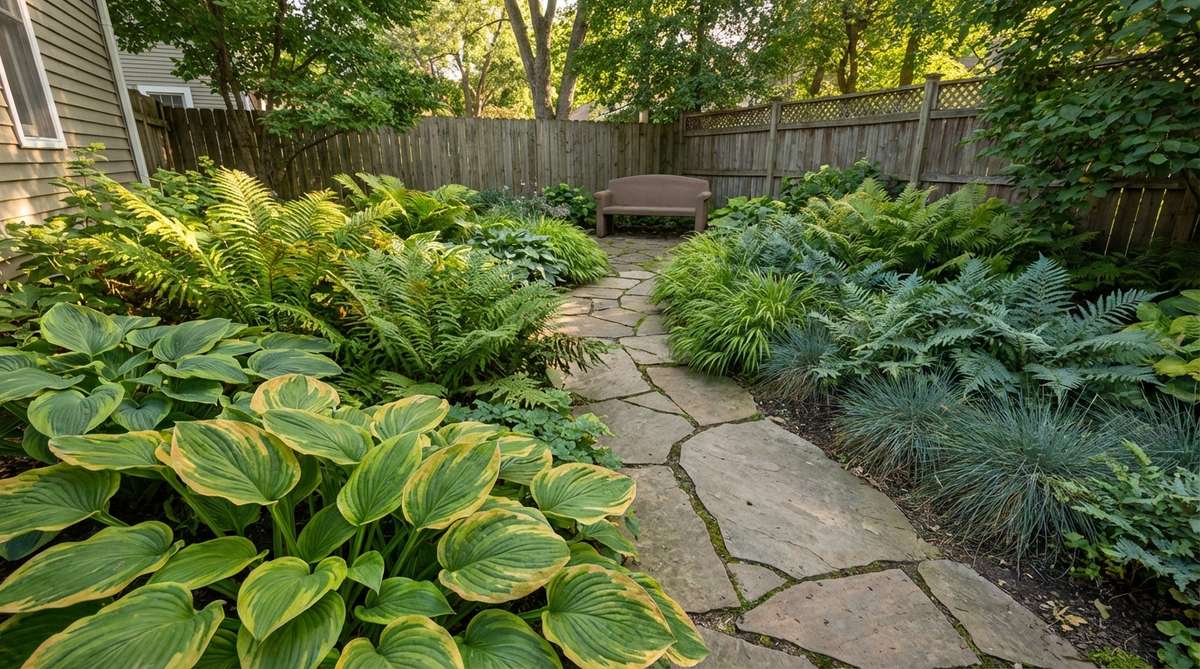
Planting progressively smaller specimens toward the back boundary mimics natural perspective, tricking the eye into perceiving greater depth. Large-leaved hostas in front paired with fine-textured ferns behind enhances this effect.
Reduce plant size by 20-30% in the back third of borders. Combine this with color gradation from warm to cool tones for maximum depth illusion.
57. Continuous Flooring Materials
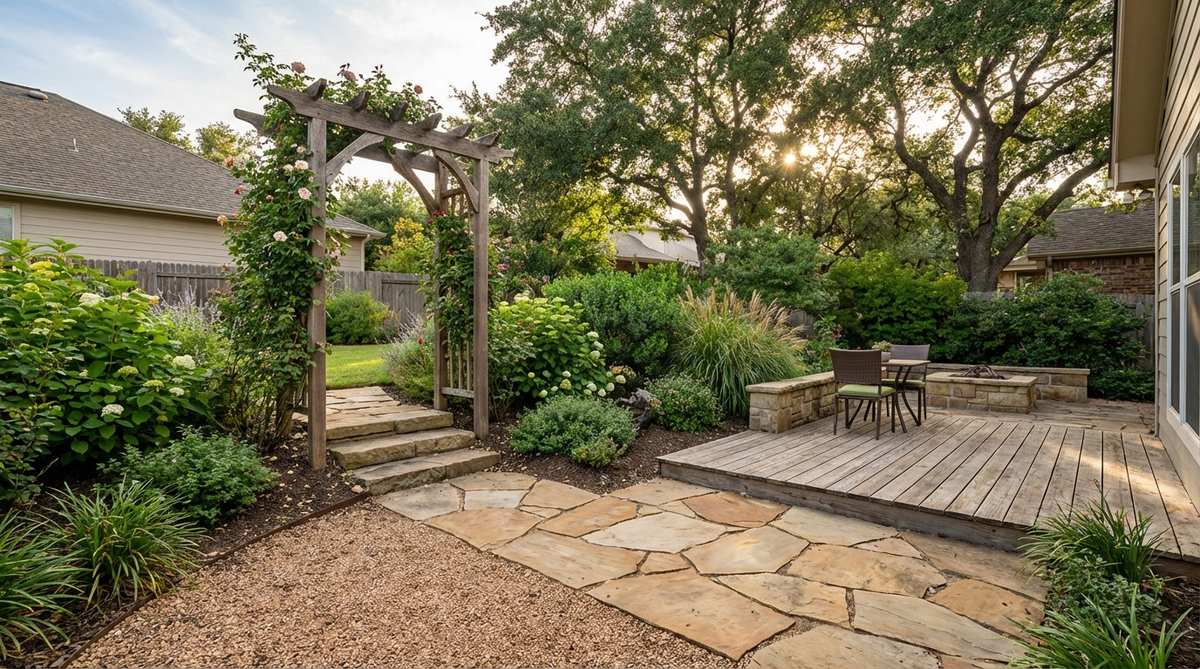
Using the same paving throughout—whether gravel, pavers, or decking—creates visual continuity that makes the space read as larger. Mixed materials chop the area into smaller perceived sections.
If multiple materials are necessary, transition at logical division points like steps or archways rather than randomly across open areas.
58. Uplighting for Evening Expansion
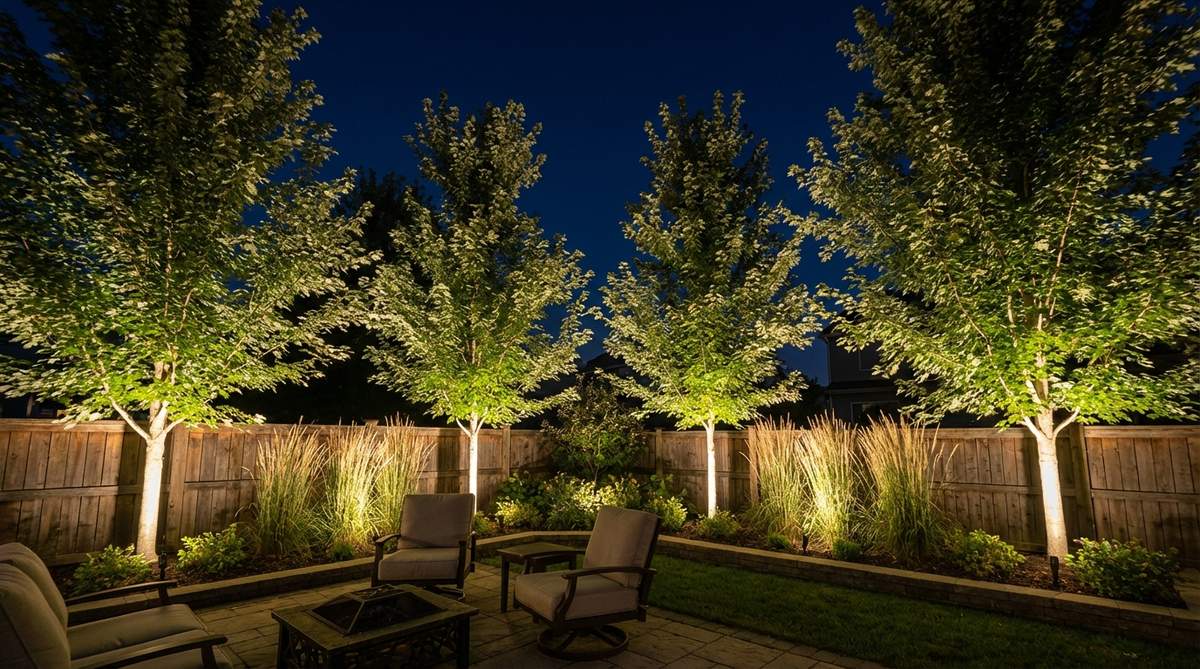
Low-voltage lights aimed upward into tree canopies and tall grasses extend perceived space after dark. The illuminated upper zones expand the garden vertically when ground-level boundaries disappear in darkness.
Position uplights 2-3 feet from tree trunks at ground level. Use warm white LEDs (2700-3000K) for natural appearance.
59. See-Through Furniture Selections
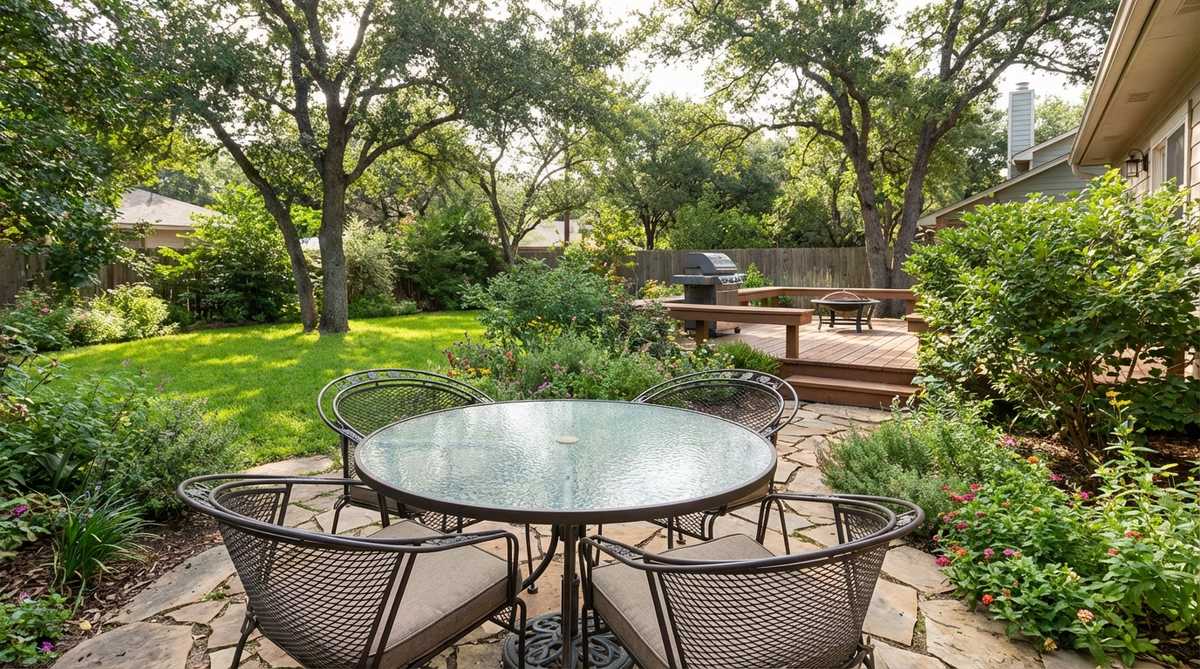
Glass-topped tables and open-back chairs minimize visual obstruction, allowing sightlines to flow through rather than stopping at solid furniture masses. This maintains the sense of openness.
Choose metal or acrylic furniture over bulky wood pieces. Avoid skirts on tables—exposed legs create more perceived space beneath.
50. Borrowed Scenery Framing
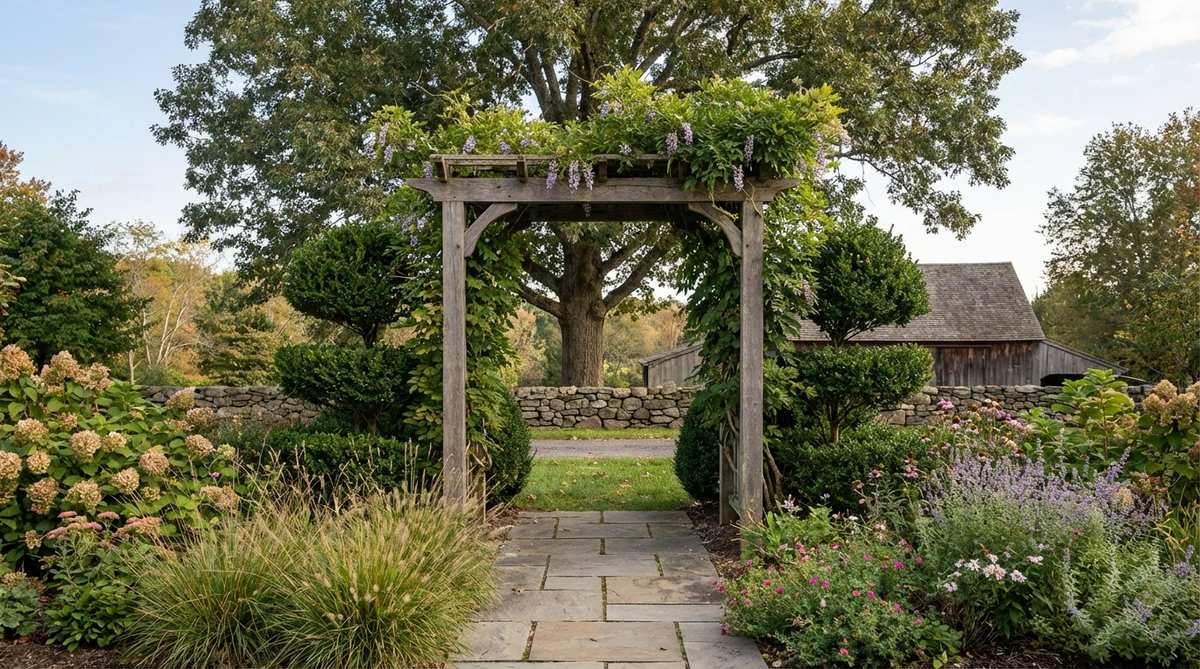
Deliberately framing views of trees or structures beyond property lines incorporates distant elements into your garden composition. This Asian design principle expands perceived ownership beyond actual boundaries.
Prune your trees to reveal attractive borrowed views. Add framing elements like arbors that direct attention toward the external feature.
Edible Gardens in Compact Footprints
Food production doesn’t require sprawling plots—strategic variety selection and intensive planting methods yield substantial harvests from minimal square footage. These approaches prioritize crops with the highest return on space invested.
61. Potager-Style Mixed Beds
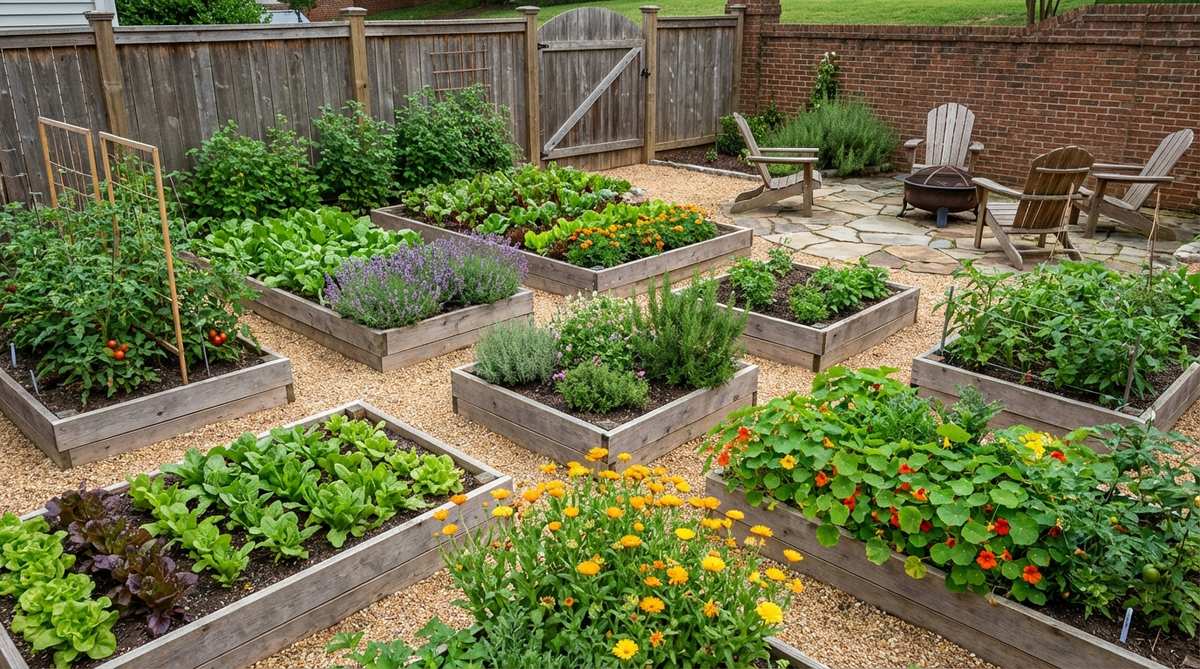
French kitchen gardens combine vegetables, herbs, and edible flowers in decorative patterns rather than utilitarian rows. This ornamental approach makes food production visually appealing in highly visible small yards.
Arrange plants in geometric blocks or triangles within a square or circular bed. Edge with parsley, chives, or alpine strawberries to define the pattern.
62. Salad Bowl Succession Planting
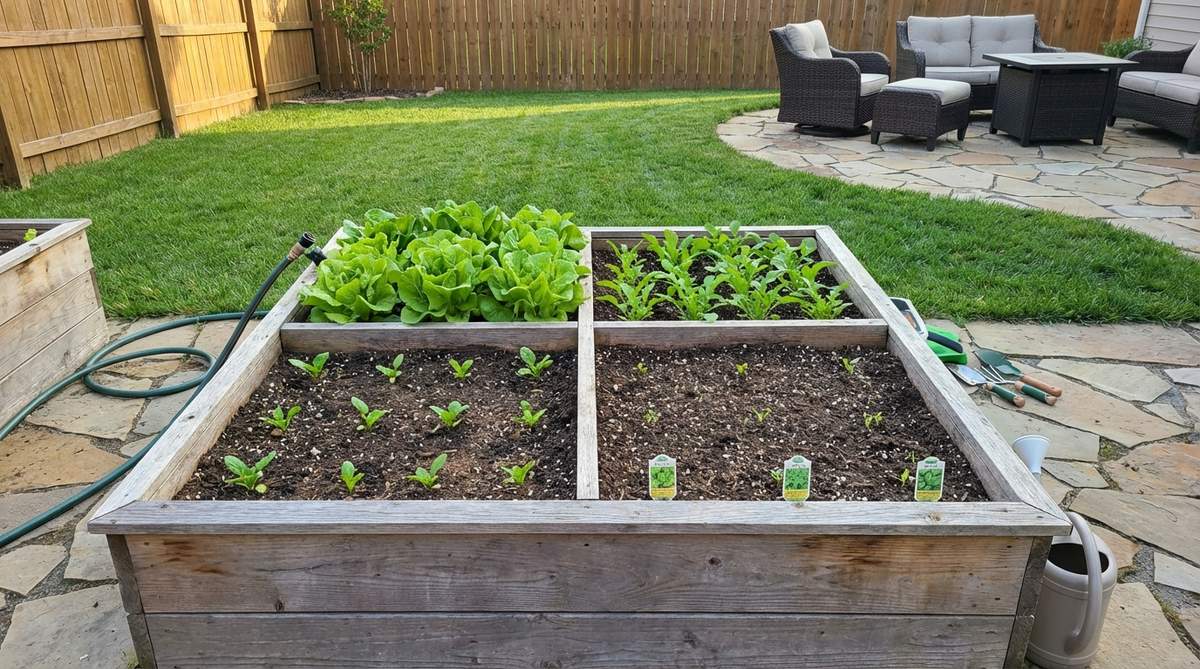
Sowing lettuce, arugula, and spinach every two weeks from spring through fall provides continuous harvests from the same bed. As one section matures, the next sowing is sizing up to replace it.
Divide a 4×4 bed into four sections. Plant one section every 14 days. Harvest entire plants from the oldest section just as the newest germinate.
63. Dwarf Fruit Tree Espaliers
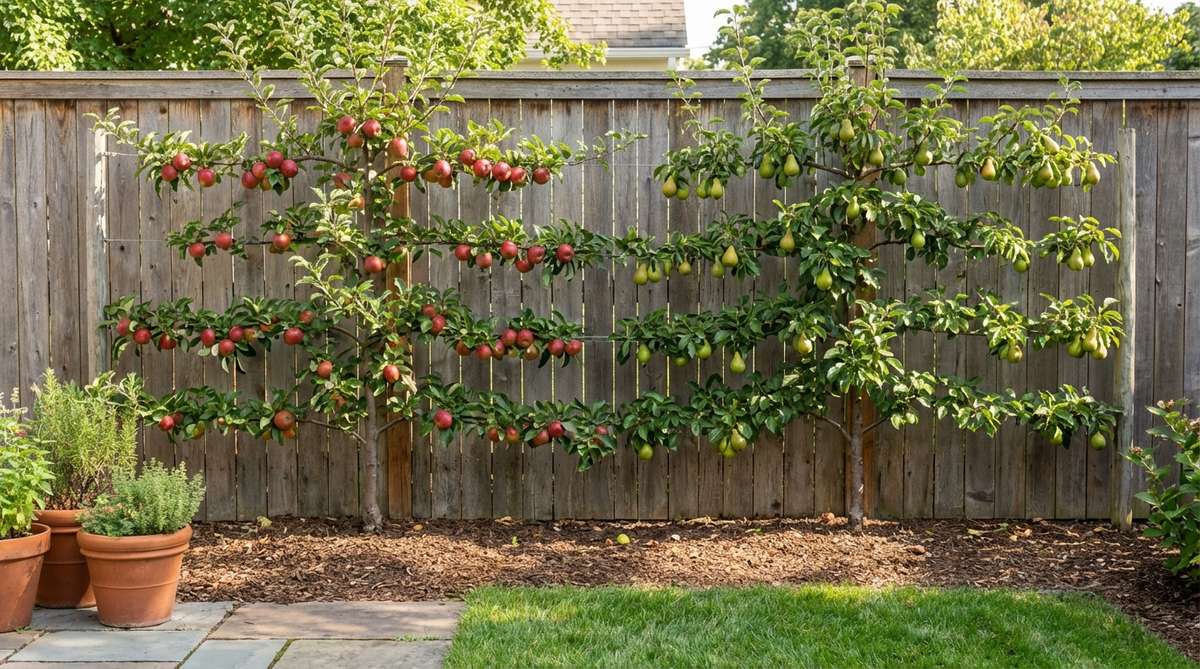
Training dwarf apples, pears, or peaches flat against sunny fences produces full-size fruit from trees occupying just 12 inches of depth. Genetic dwarfs on semi-dwarf rootstock remain under 6 feet tall.
Select spur-type varieties that fruit on short stems. Prune to horizontal cordons with 3-4 tiers spaced 12 inches apart vertically.
64. Herb Spiral Structures
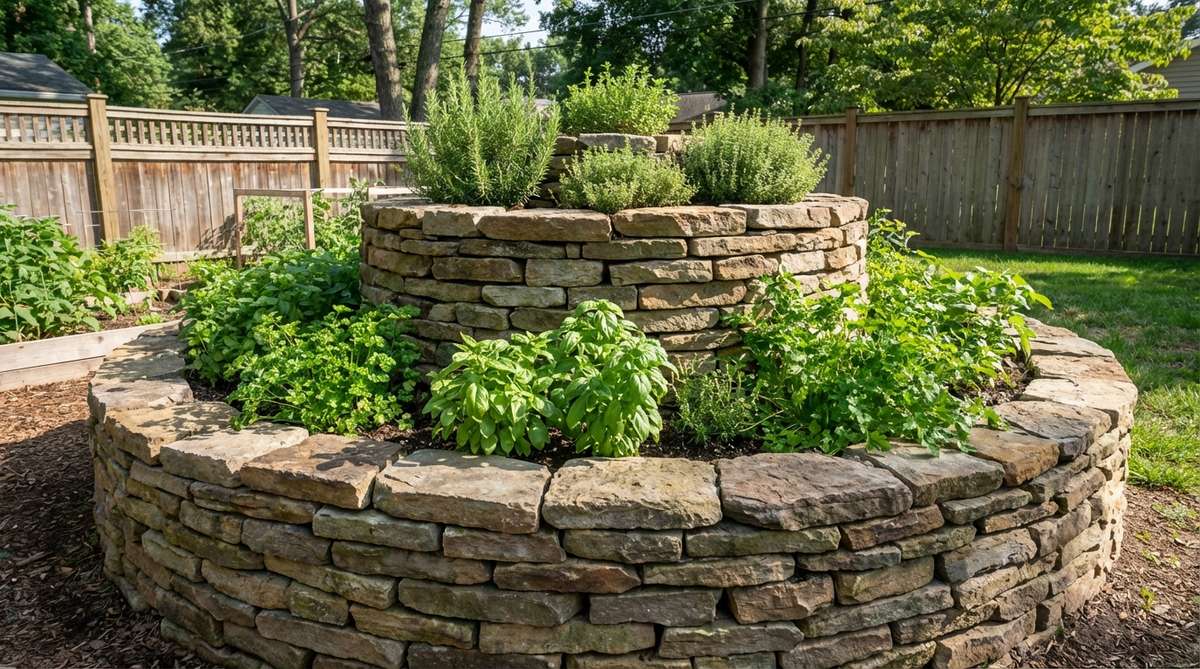
Raised spiral beds built 3-4 feet tall create multiple microclimates within a 6-foot diameter footprint. Mediterranean herbs occupy the well-drained summit while moisture-loving herbs thrive at the base.
Build spirals using stone or urbanite in a gradually ascending coil. Plant rosemary and thyme at the top, basil and parsley at the bottom where water collects.
65. Compact Berry Patches
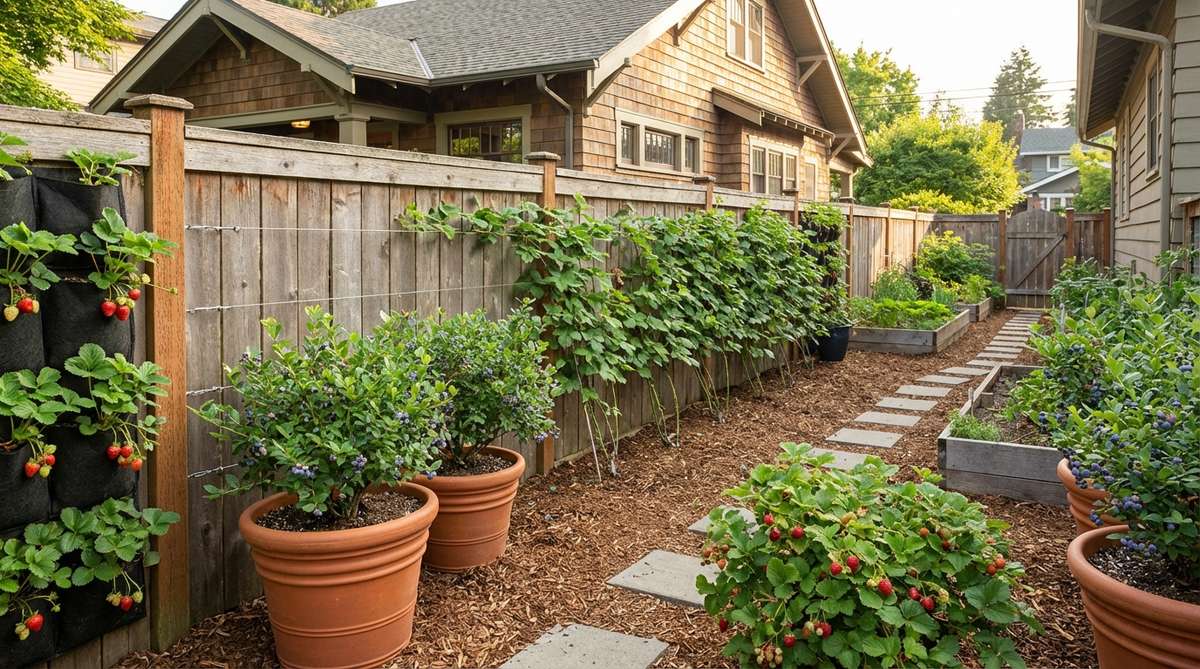
Thornless blackberries trained on single wires, day-neutral strawberries in vertical pockets, and dwarf blueberries in containers deliver berry harvests without the sprawl of traditional fruit plantings.
Choose compact varieties specifically—’Raspberry Shortcake’ grows just 2 feet tall, ‘Top Hat’ blueberry reaches 20 inches.
Pathway Solutions That Maximize Flow
Efficient circulation patterns prevent wasted space while ensuring comfortable access to all garden areas. Paths should guide movement without dominating limited square footage.
66. Stepping Stone Sequences
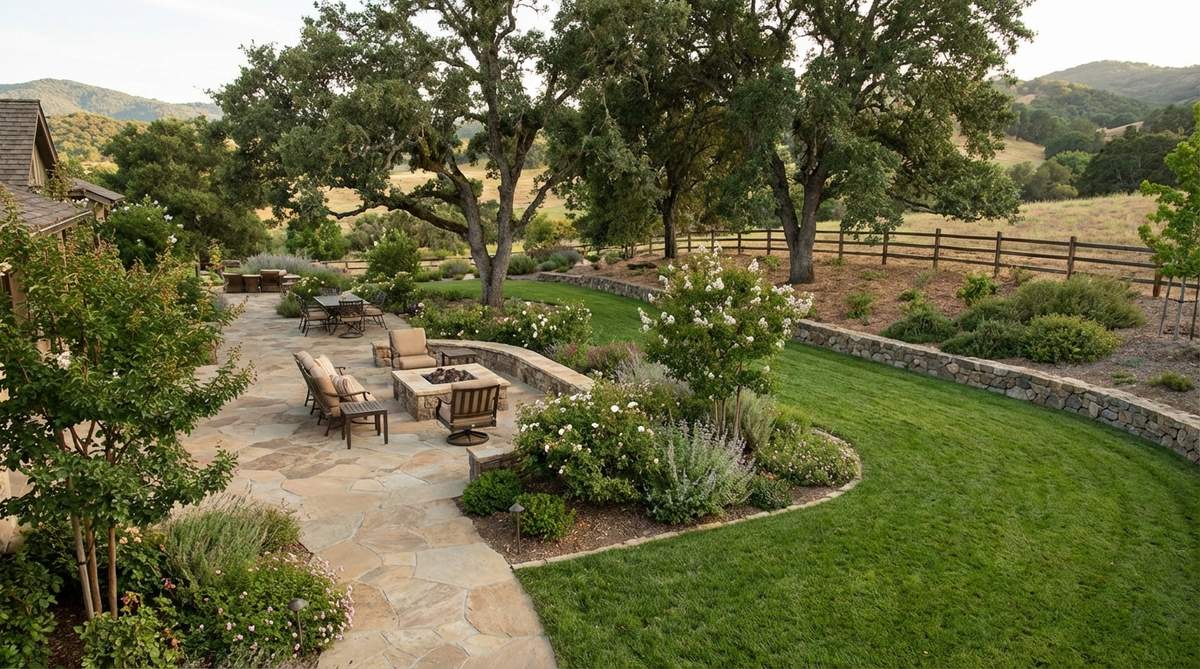
Individual pavers set into ground cover or gravel provide walking surfaces while using 70% less material than solid paths. The gaps between stones allow planting right up to the walking route.
Space stones 18-24 inches on center for comfortable stride length. Set tops flush with surrounding grade to prevent tripping hazards and simplify mowing.
67. Minimum-Width Efficiency Paths
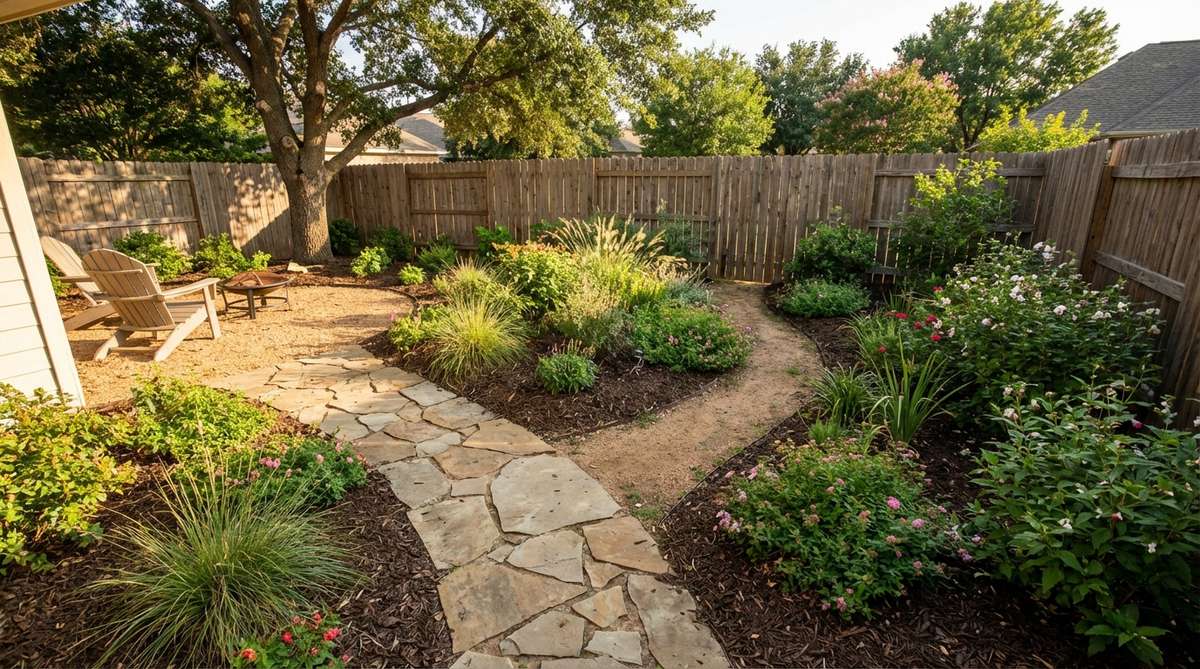
Primary paths need only 24 inches width for single-file traffic—significantly narrower than the 36-48 inches often recommended for larger properties. This reclaims valuable planting space.
Use 24 inches for main routes, 18 inches for secondary access paths between beds. Keep edges crisp to maintain the efficient width visually.
Lighting Strategies for Small Yards
Strategic illumination extends usability into evening hours while enhancing safety and ambiance. Low-voltage LED systems deliver professional results with minimal electrical expertise required.
68. Uplighting Specimen Trees
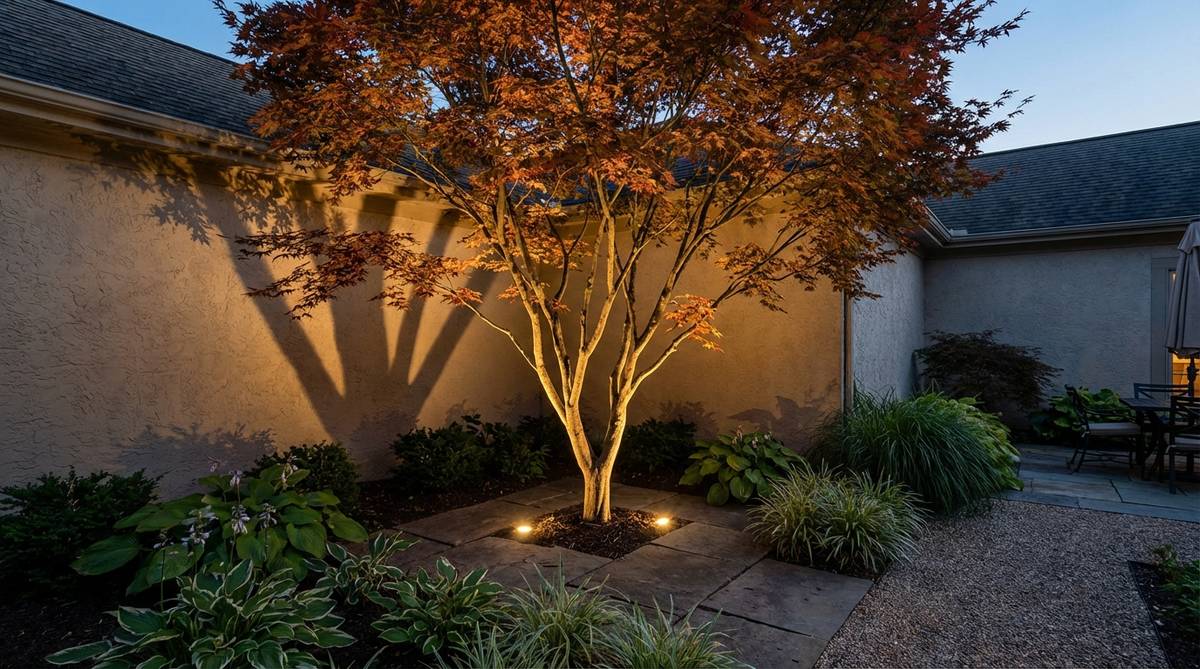
Well-placed uplights transform mature trees into living sculptures after dark. The dramatic shadows cast on fences and structures multiply the visual impact of each tree.
Position fixtures 24-30 inches from trunks, aiming upward at 30-degree angles. Use narrow beam LEDs to highlight structure without light spill.
69. Pathway Step Lights
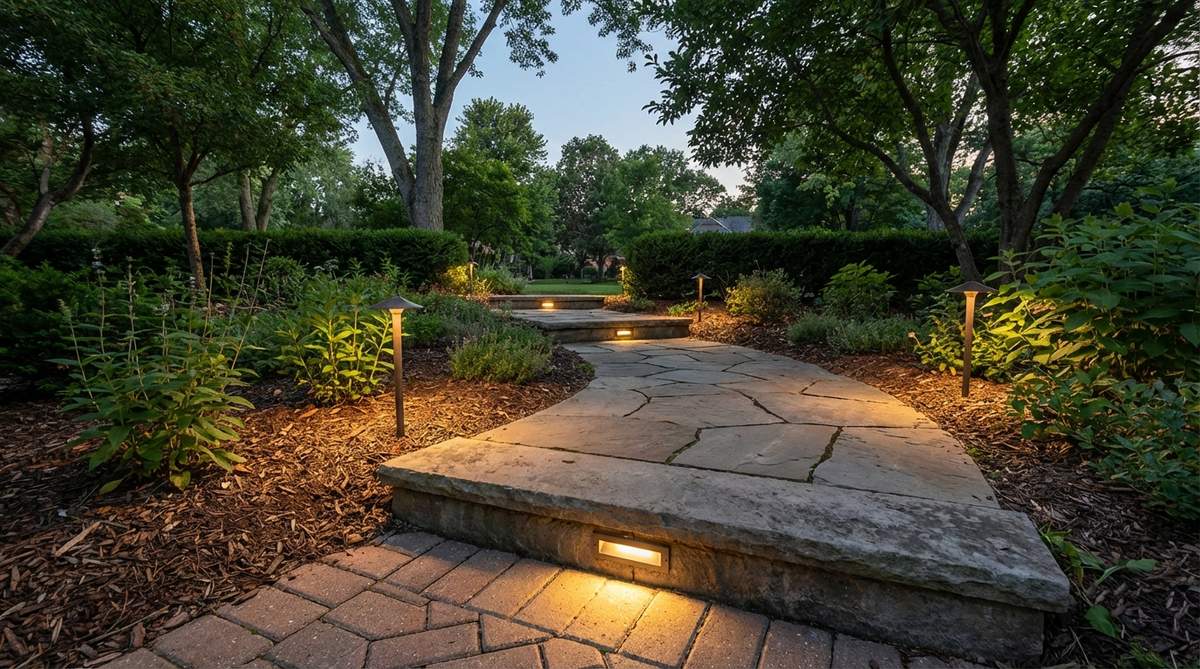
Low-profile fixtures recessed into vertical path edges provide safety lighting without cluttering the small space with above-ground fixtures. These cast pools of light every 6-8 feet along walking routes.
Install LEDs in weather-resistant housings rated for ground burial. Connect to timers or photocells for automatic operation.
Water Features Scaled for Limited Space
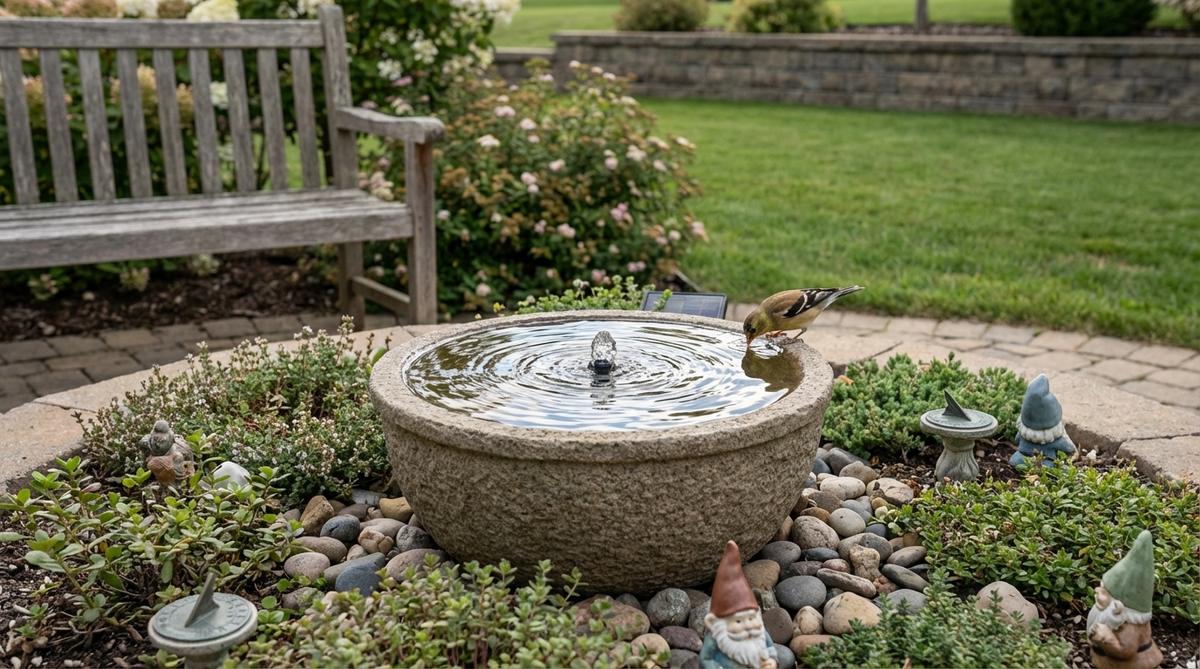
Moving water adds sensory richness without consuming significant square footage. Modern recirculating systems operate reliably with minimal maintenance.
70. Bubbling Urn Fountains
Self-contained fountains with water bubbling from decorative vessels require just 2-3 square feet of space. The gurgling sound masks neighborhood noise while attracting beneficial birds and insects.
Set urns on stable bases with hidden reservoir basins below. Choose pumps rated 50% higher than minimum specifications to prevent strain and extend lifespan.
71. Wall-Mounted Water Spouts
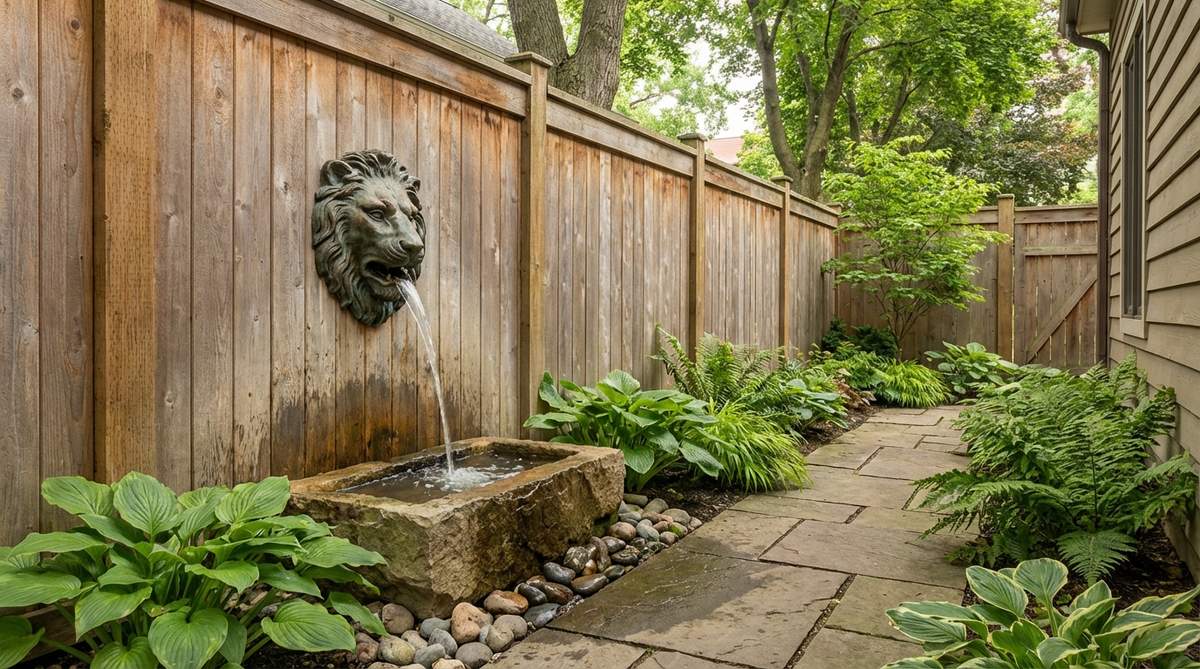
Decorative spouts attached to fences or walls spill water into small catch basins below, creating soothing sounds without ground-level footprint. These work particularly well in narrow side yards.
Install spouts 24-30 inches above basin water level for optimal sound. Use recirculating pumps concealed in the basin to return water to the spout.
Conclusion
Effective garden design small backyard spaces hinges on maximizing vertical dimension, employing multi-functional elements, and applying visual tricks that expand perceived boundaries. The 71 solutions presented here demonstrate that limited square footage need not limit creative potential—strategic planning transforms even the smallest plots into productive, beautiful outdoor retreats. At Fresh Garden Ideas, we encourage experimentation with these proven techniques, adapting them to your specific site conditions, climate zone, and personal style preferences. Start with 3-5 solutions that address your most pressing spatial challenges, then gradually layer additional strategies as your garden matures and your confidence grows.
Frequently Asked Questions
What is the minimum size backyard that can support a functional garden?
Backyards as small as 50 square feet support productive gardens using vertical growing methods, container arrangements, and intensive planting techniques. A 5×10 foot area accommodates two raised beds or twelve large containers sufficient for a family’s fresh herbs and salad greens throughout the growing season.
How do I make my small backyard garden look larger?
Create depth illusion using diagonal pathways rather than straight perimeter walks, install mirrors on back fences to reflect the garden forward, and plant progressively smaller specimens toward rear boundaries. Unified paving materials and light-colored boundary treatments further expand perceived space by 30-40%.
What are the best plants for small backyard gardens?
Prioritize vertical climbers like pole beans and clematis that grow upward rather than outward, dwarf fruit tree varieties that remain under 6 feet tall, and compact perennials like dwarf salvia and creeping thyme. Select multi-season performers with extended bloom periods or evergreen foliage to maximize year-round interest from limited plantings.
How much does it cost to design a small backyard garden?
Basic small backyard transformations using DIY methods, repurposed containers, and seed-grown plants cost $300-800 for a 200-square-foot space. Mid-range projects incorporating raised beds, quality soil amendments, and starter plants range $1,200-2,500. Professional design and installation with custom features, mature specimens, and permanent structures typically run $3,000-7,000 for compact residential yards.
Can I grow vegetables in a small backyard with partial shade?
Leafy greens including lettuce, spinach, arugula, and Asian greens produce well with just 4-5 hours of sun daily. Herbs like parsley, cilantro, and mint tolerate partial shade, as do root crops like radishes and carrots. Position taller sun-demanding crops like tomatoes and peppers along south-facing boundaries where they’ll receive maximum light while shorter shade-tolerant crops occupy shadier zones.
How do I maintain privacy in a small backyard garden?
Install tall narrow evergreens like ‘Green Giant’ arborvitae or ‘Sky Pencil’ holly along property lines—these screen views without consuming excessive ground space. Alternatively, erect trellis panels with fast-growing annual vines like morning glory or perennial climbers like clematis for seasonal screening. Pleached trees with elevated canopies block upper-story sight lines while maintaining airflow underneath.