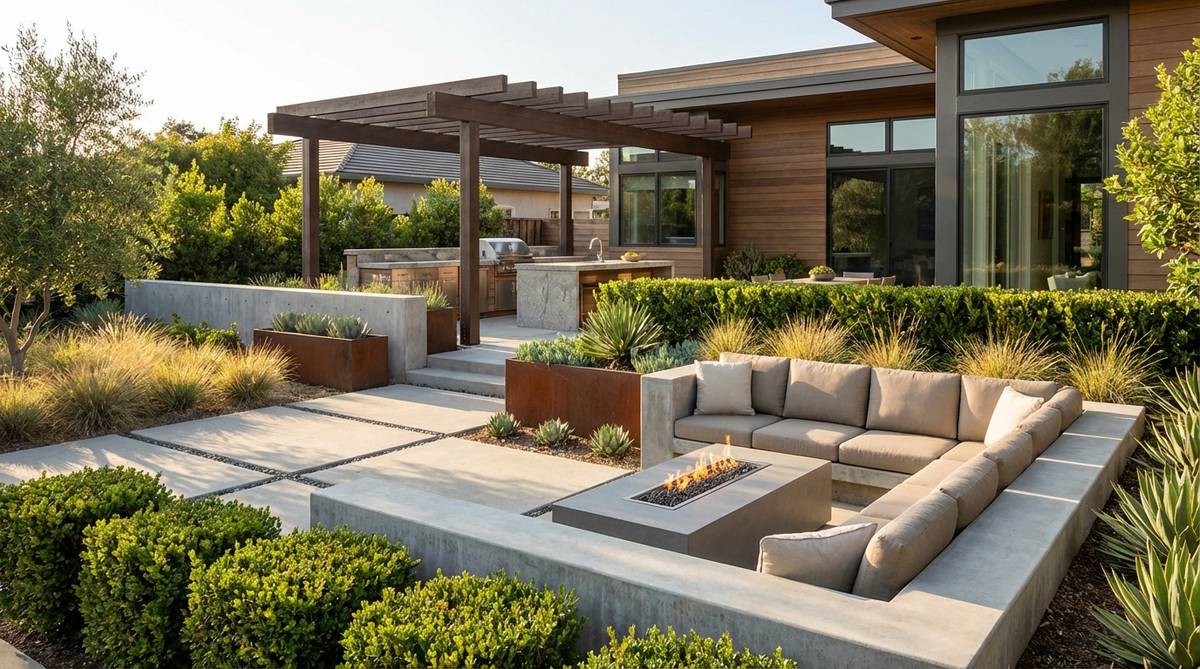
Garden design modern aesthetics merge architectural precision with natural beauty through geometric forms and concrete elements. This comprehensive collection from Fresh Garden Ideas showcases over 50 innovative ways to integrate clean lines, structured layouts, and durable materials into contemporary outdoor spaces that balance functionality with visual impact.
Design SnapshotKey Principles
- Geometric Precision: Straight pathways, rectangular planters, and linear borders create order and visual flow
- Material Contrast: Concrete paired with wood, gravel, or greenery adds depth without clutter
- Minimalist Restraint: Fewer elements used thoughtfully highlight individual features and maintain open space
- Functional Structure: Every hardscape element serves both aesthetic and practical purposes
Contemporary Garden Design Through Strategic Pathways
Pathways establish the foundation for modern garden layouts, guiding movement while defining spatial relationships. Concrete offers unmatched versatility in creating these circulation routes with materials that age gracefully and require minimal upkeep.
1. Grid Pattern Paver System
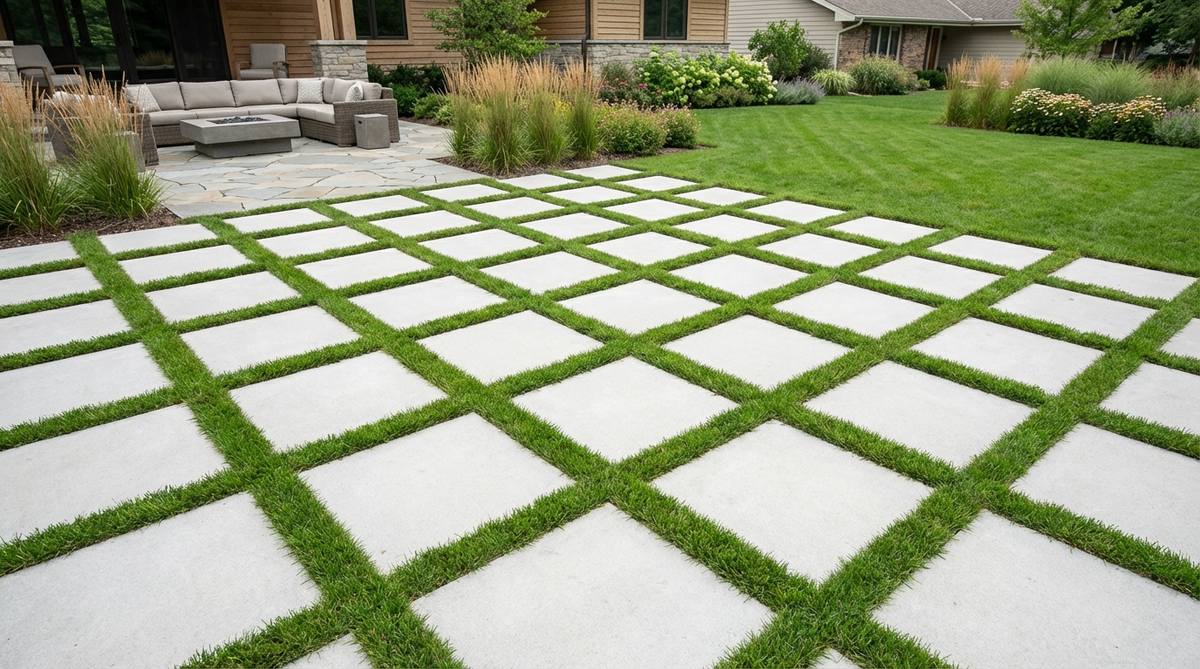
Square concrete pavers arranged in precise grids create visual rhythm across lawn areas. The uniform spacing between pavers allows grass or ground cover to emerge, softening the hardscape.
This layout works exceptionally well for high-traffic zones, distributing weight while maintaining drainage. Install pavers level with surrounding turf for seamless mowing.
2. Floating Concrete Stepping Stones
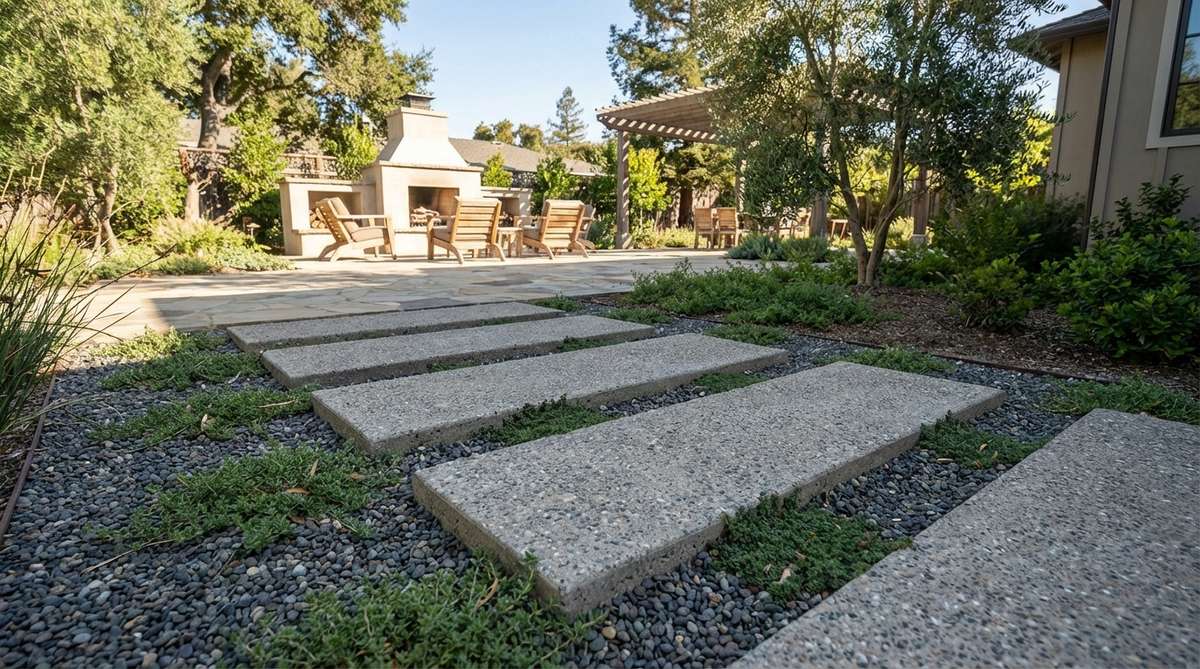
Individual rectangular slabs appear to float above gravel beds or low ground cover. The negative space between stones adds lightness to the design.
Position stones 18-24 inches apart for comfortable stride patterns. Choose aggregate finishes to prevent slipping during wet conditions.
3. Dual-Strip Driveway Approach
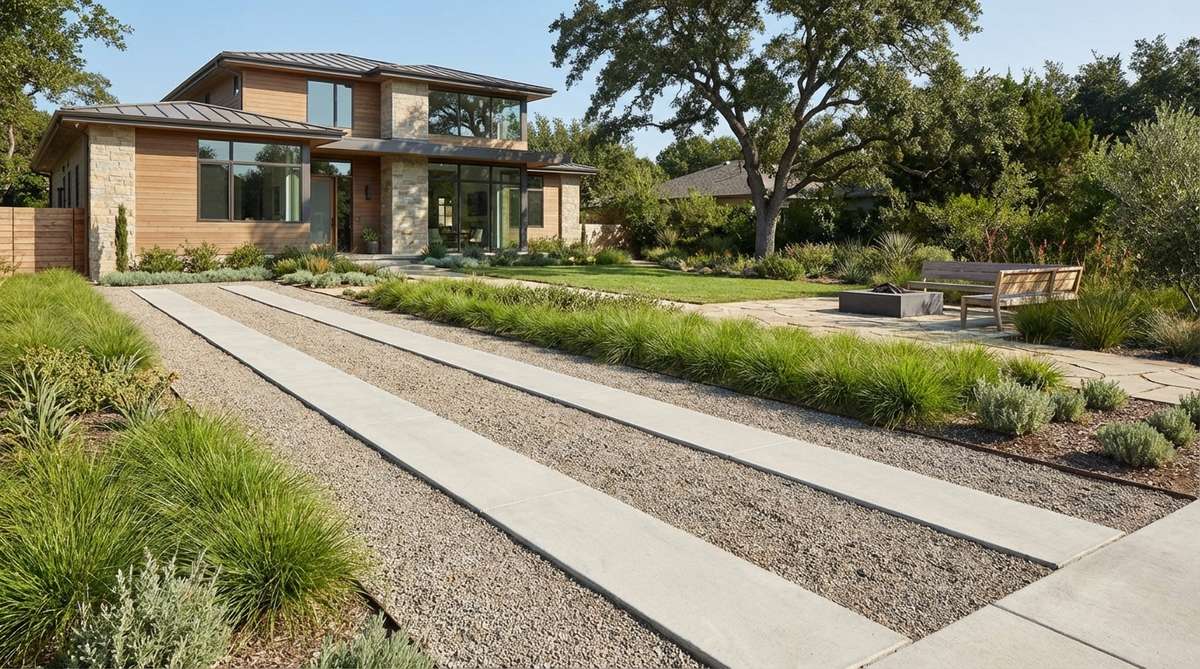
Two parallel concrete strips set within gravel or grass reduce impervious coverage. This Hollywood-style driveway increases rainwater absorption while maintaining structural integrity.
The linear design creates strong sightlines toward focal points. Width each strip at 12-15 inches to accommodate standard vehicle tires.
4. Scored Concrete Tile Effect
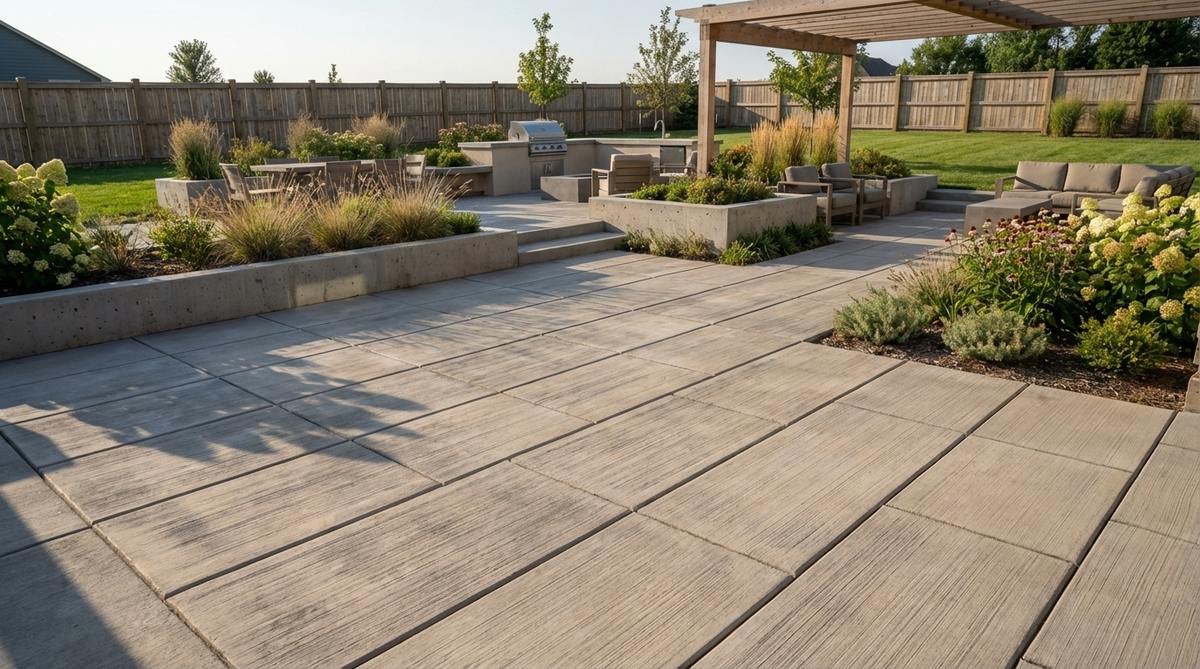
Poured concrete scored to resemble large-format tiles delivers monolithic durability with refined detail. Scoring depths of 1/8 to 1/4 inch create shadow lines that emphasize geometry.
This technique costs less than individual pavers while achieving similar visual impact. Seal surfaces to protect against staining and weathering.
5. Staggered Rectangular Walkway
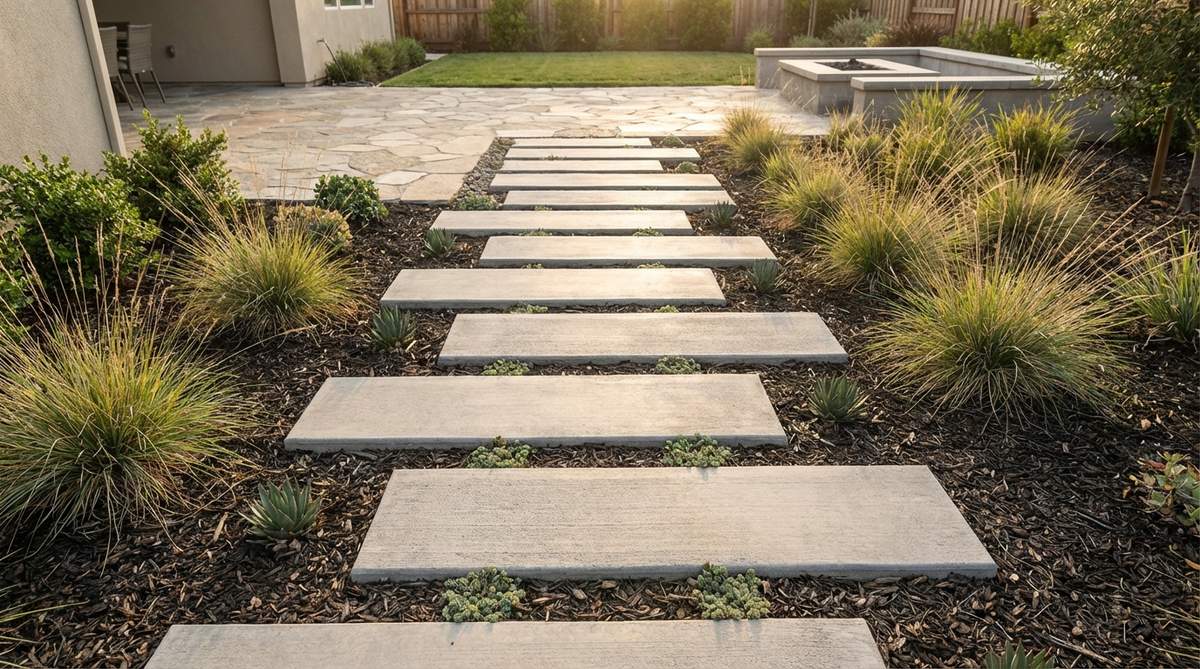
Varying lengths of concrete rectangles create dynamic borders and visual interest. The staggered edges break monotony while maintaining modern aesthetics.
This pattern guides the eye forward along pathways. Use consistent width but alternate lengths between 18, 24, and 36 inches.
6. Circular Concrete Medallion Inlay
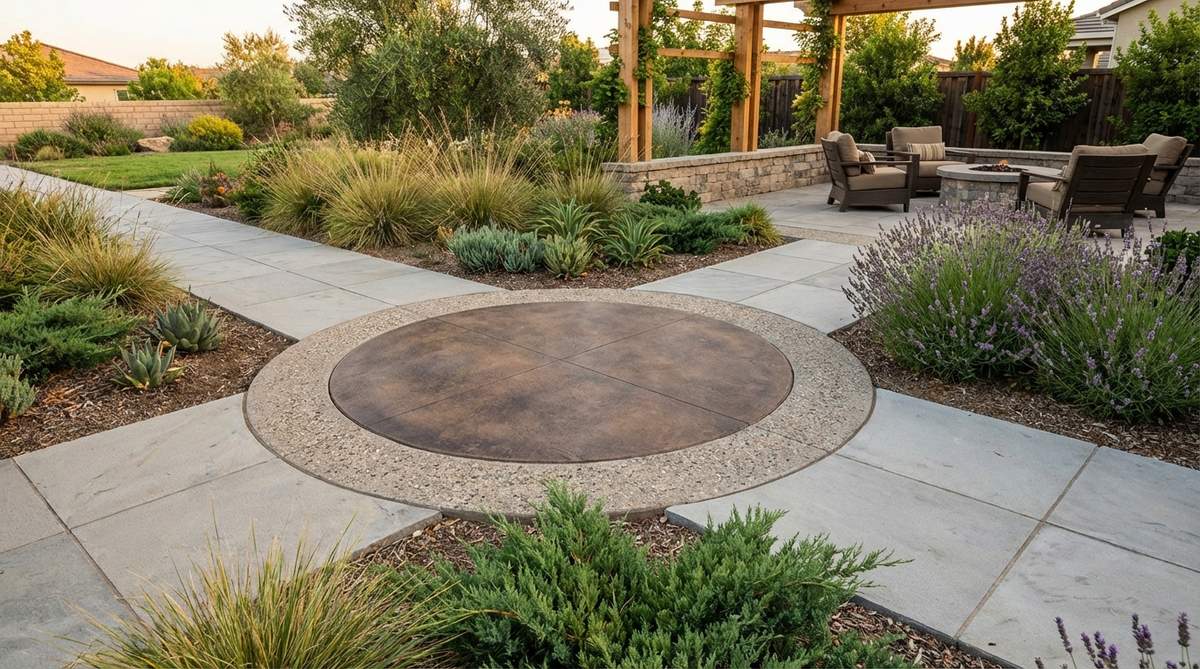
A single circular element embedded within rectangular pathways serves as a focal anchor. Contrast is achieved through stained concrete, exposed aggregate, or textured finishes.
Position medallions at pathway intersections or garden entries. Diameter of 36-48 inches provides appropriate scale for most residential gardens.
7. Overlapping Geometric Step Design
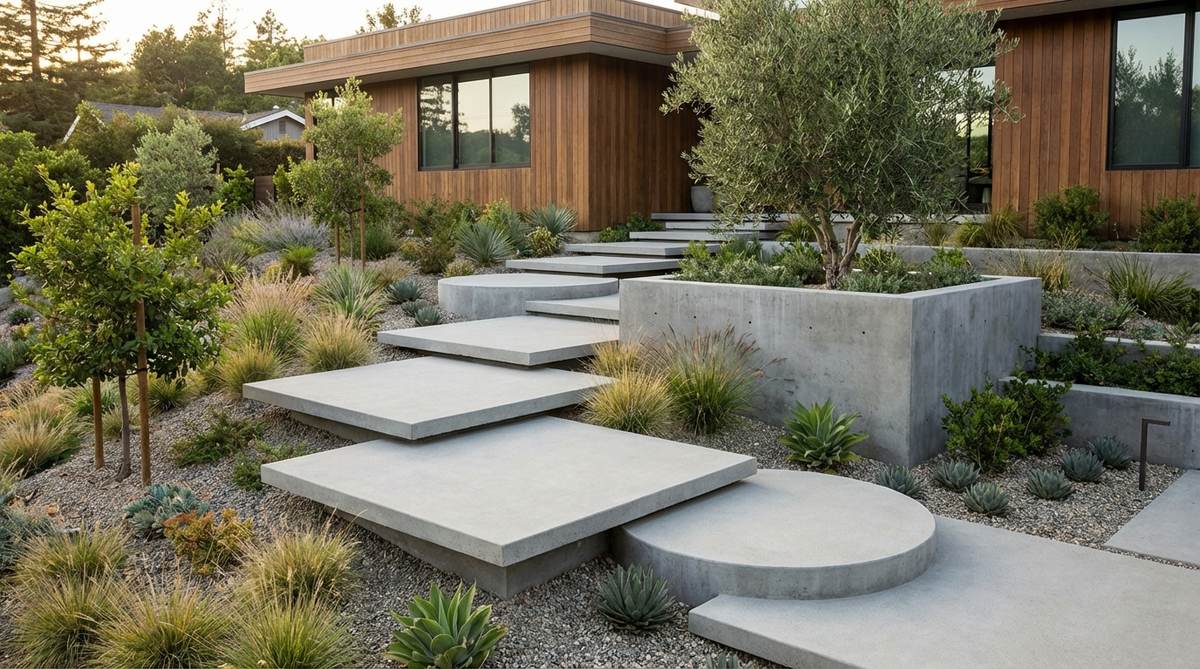
Concrete forms shaped as squares or circles overlap to create terraced steps on slopes. Each level appears to float independently while maintaining structural connection.
This design addresses grade changes with architectural flair. Ensure 6-8 inch risers for comfortable ascent and descent.
Garden Design Minimalist Planting Strategies
Planting beds with defined geometric boundaries create visual order and simplify maintenance routines. Concrete edging establishes permanent demarcations that keep mulch, soil, and plants contained while providing clean transitions between garden zones.
8. Raised Rectangular Bed Modules
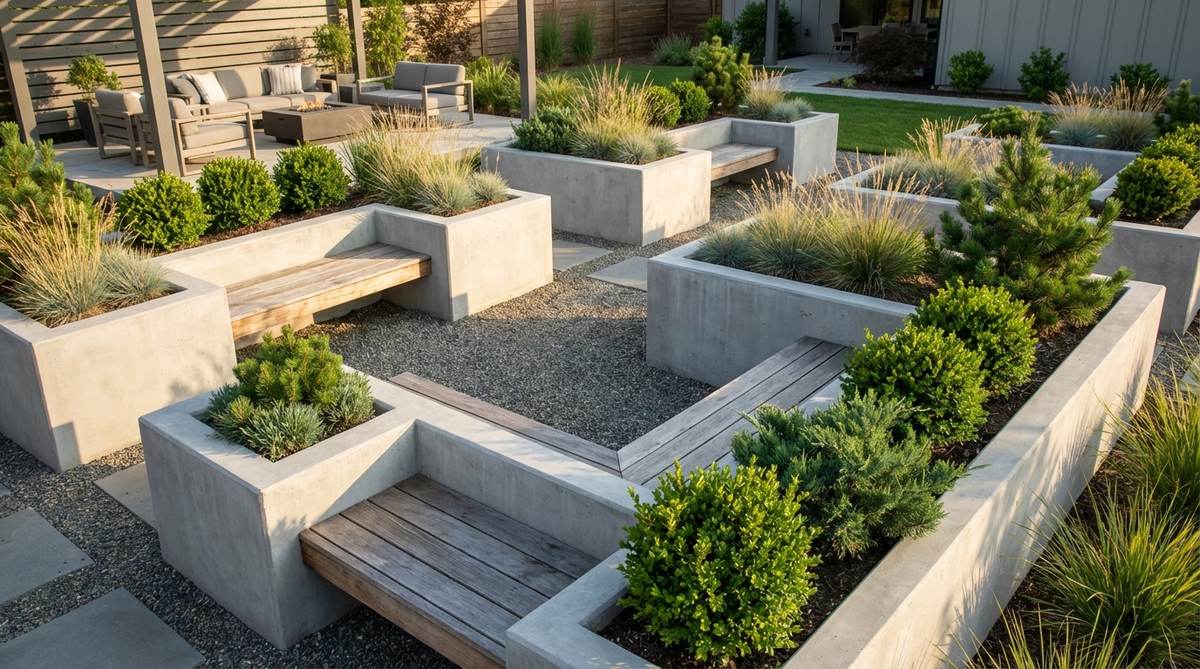
Concrete-walled planters in matching rectangular dimensions create modular compositions. Arrange multiple units in linear sequences or grid patterns.
Walls at 18-24 inches allow for deeper root zones while doubling as casual seating. Fill with quality soil mix to support healthy plant growth.
Select low-maintenance evergreens or ornamental grasses for year-round structure. The repetition of plant species reinforces geometric intentions.
9. Linear Border Strips
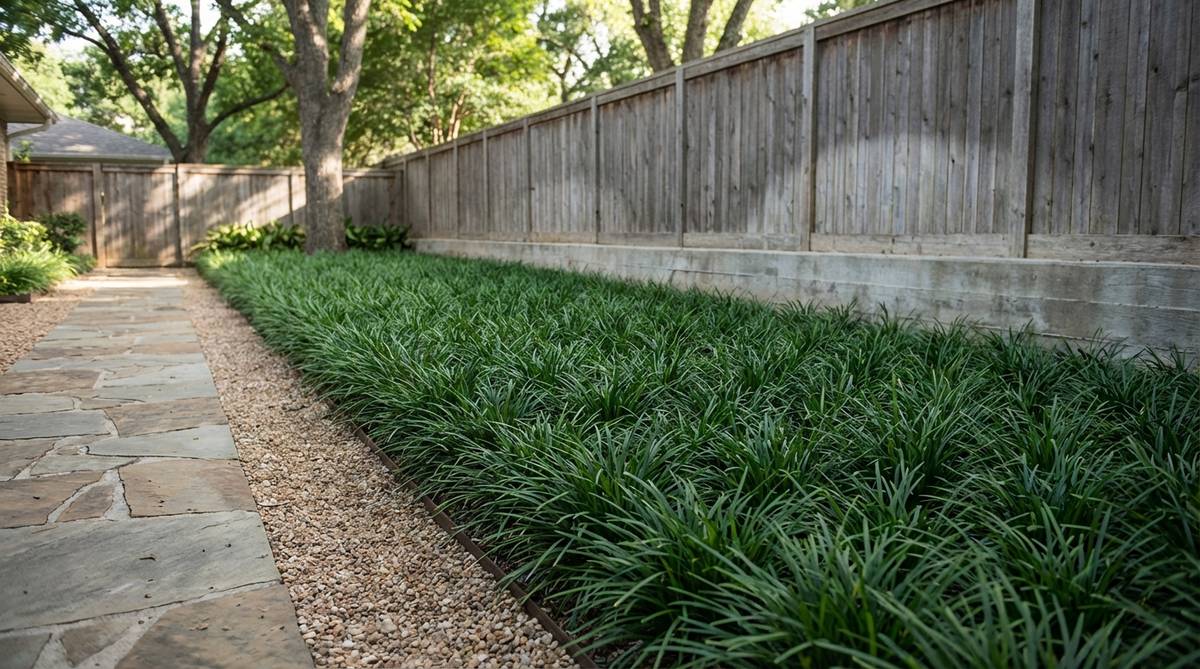
Narrow planting strips running parallel to pathways or walls contain single-species plantings. This block-planting approach emphasizes clean lines through repetition.
Maintain strip widths at 12-18 inches for optimal visual impact. Plants like mondo grass or silver ponyfoot work well in these confined spaces.
10. Concrete-Edged Lawn Panels
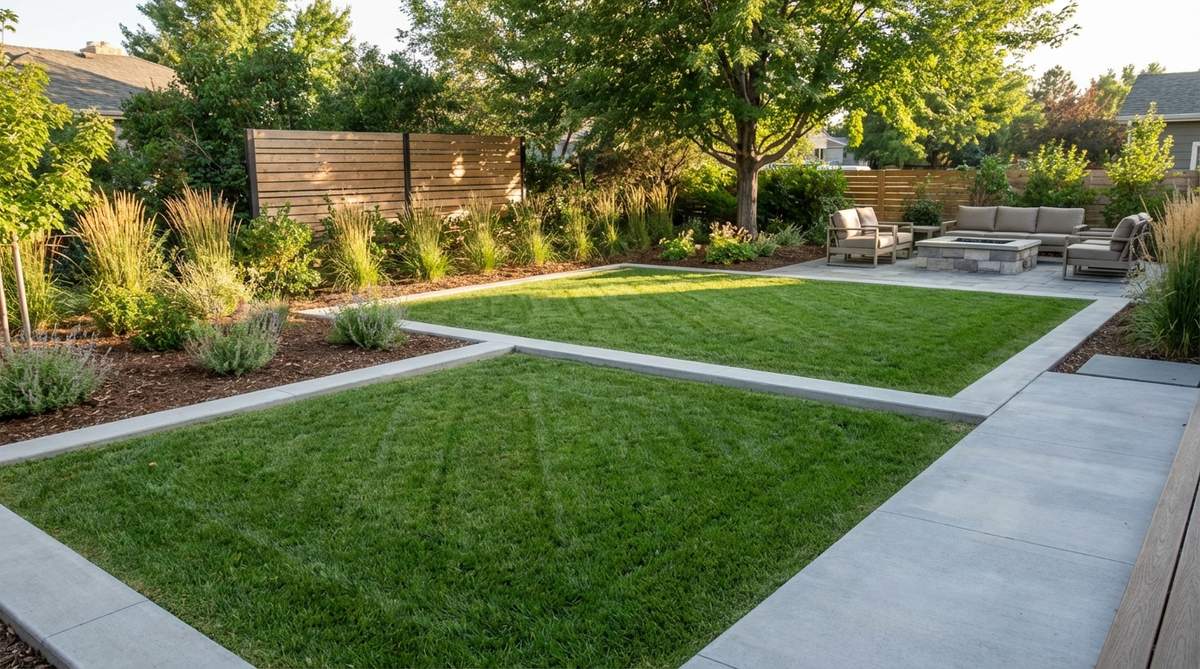
Turf areas bordered by flush concrete edging create distinct green panels. The crisp demarcation prevents grass encroachment into adjacent beds.
Install edging level with lawn surface to enable mower wheels to roll over. This detail eliminates tedious edge trimming.
11. Terraced Geometric Garden Beds
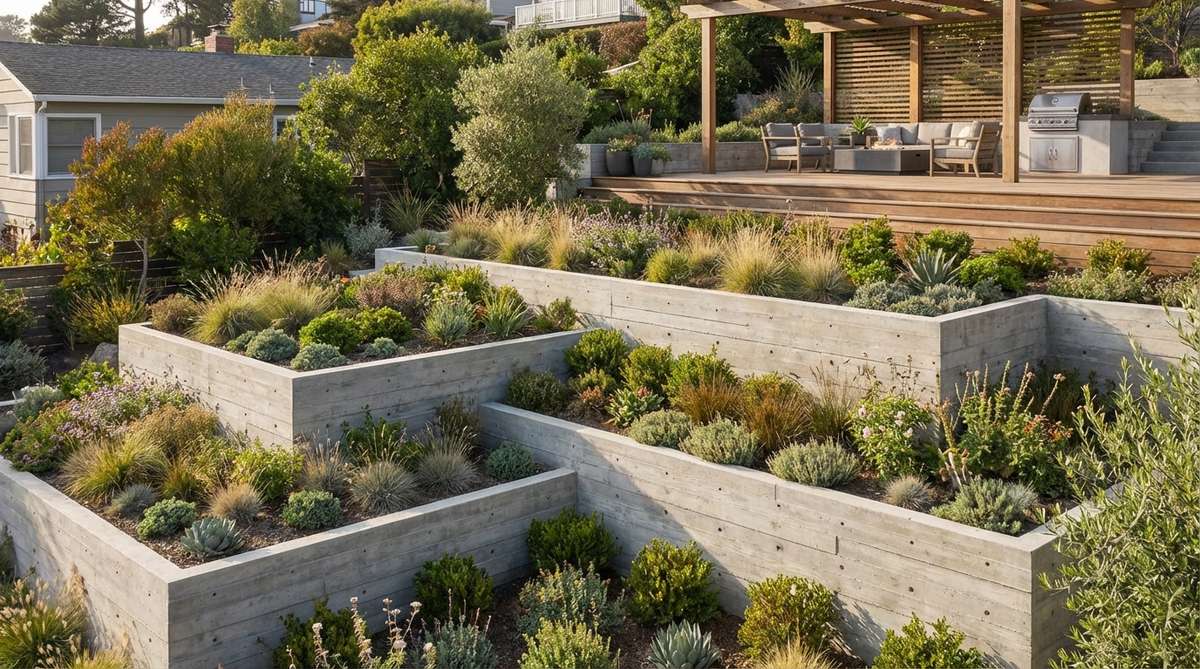
Concrete retaining walls create level planting platforms on sloped terrain. Each terrace presents opportunities for different plant heights and textures.
Design wall heights between 18-36 inches for structural stability. Incorporate weep holes for proper drainage behind walls.
12. Square Planting Grid Layout
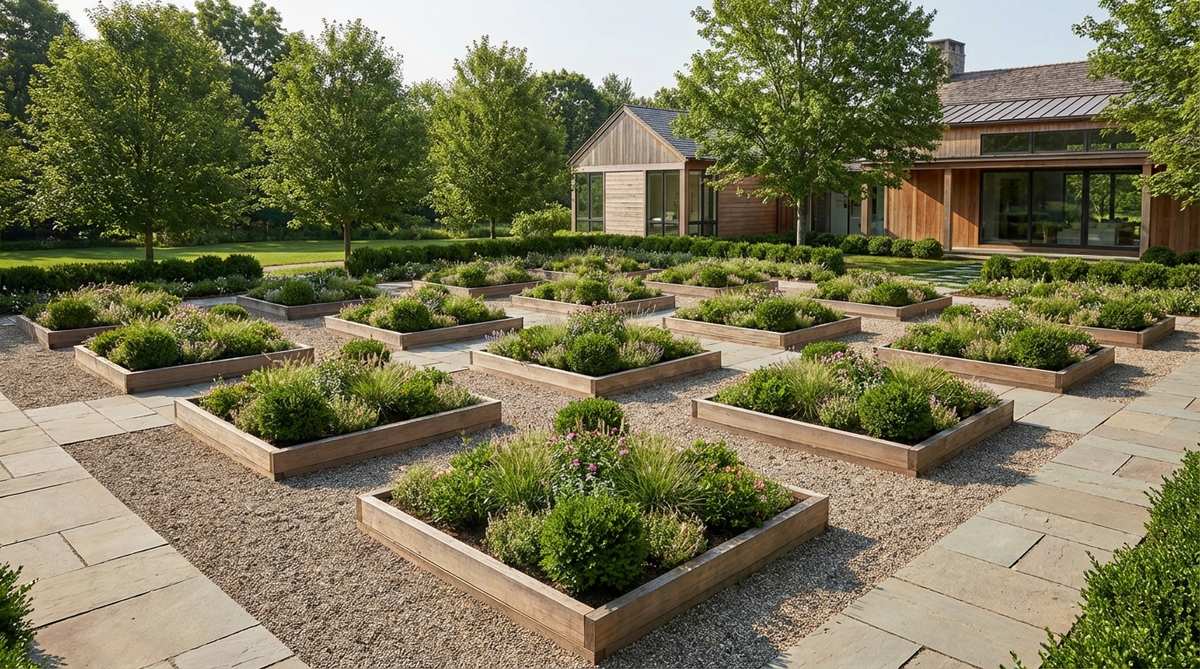
Multiple square beds arranged in grid formation create rhythmic patterns. Each square contains identical plantings for maximum visual cohesion.
Space squares evenly with pathways between for maintenance access. Dimension squares at 4×4 feet or 5×5 feet for practical planting areas.
13. Concrete Inlay Planting Pockets
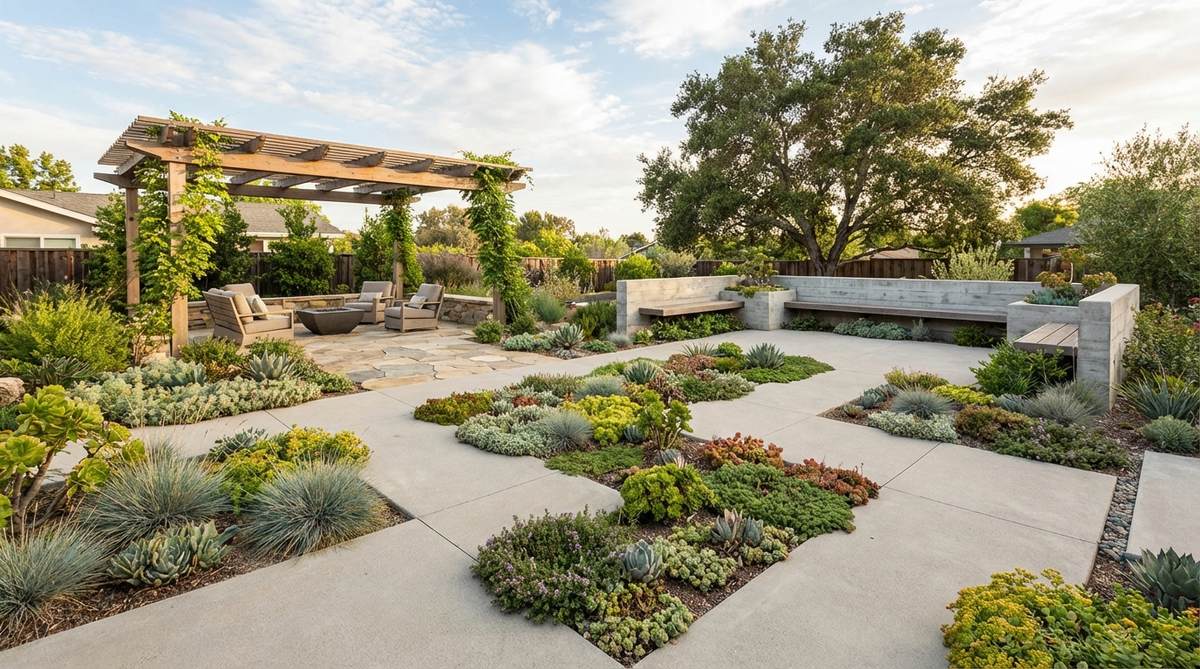
Poured concrete pathways incorporate openings filled with soil and low-growing plants. Greenery emerges through the hardscape, blending materials seamlessly.
This technique reduces heat absorption while adding organic texture. Select drought-tolerant species that withstand foot traffic.
14. Framed Ornamental Grass Blocks
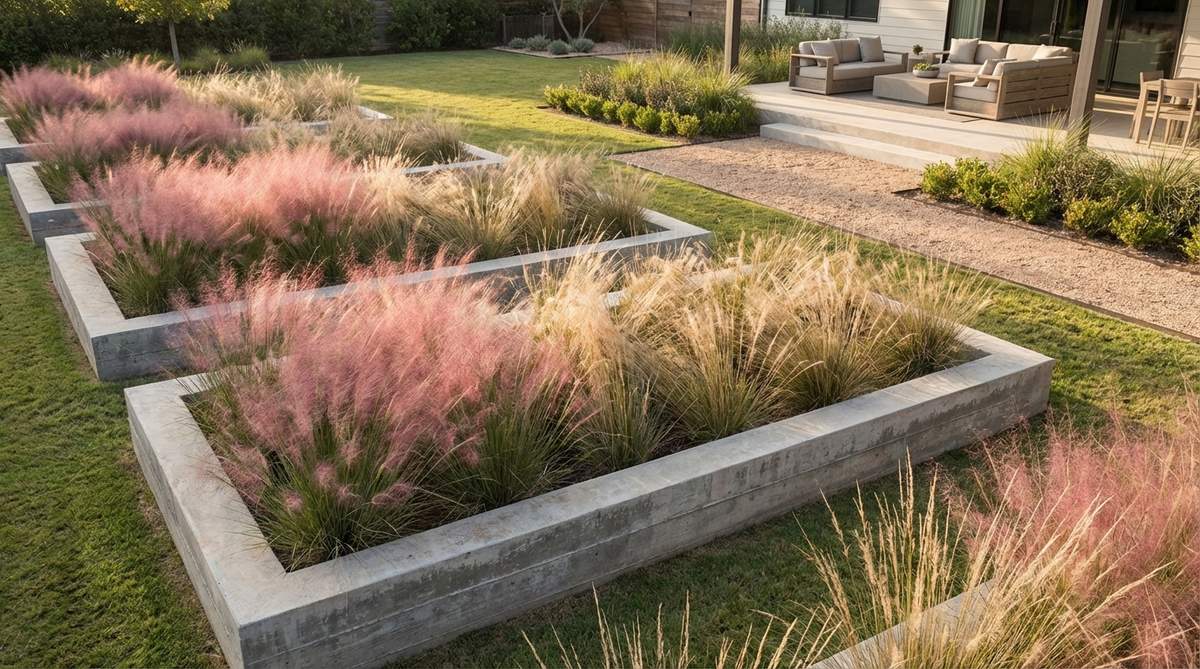
Concrete borders contain masses of ornamental grasses like Muhlenbergia or fountain grass. The grasses provide movement and softness against rigid frames.
Plant grasses in repeating blocks for contemporary rhythm. Trim annually to maintain neat appearance within defined boundaries.
15. Succulent Panel Gardens
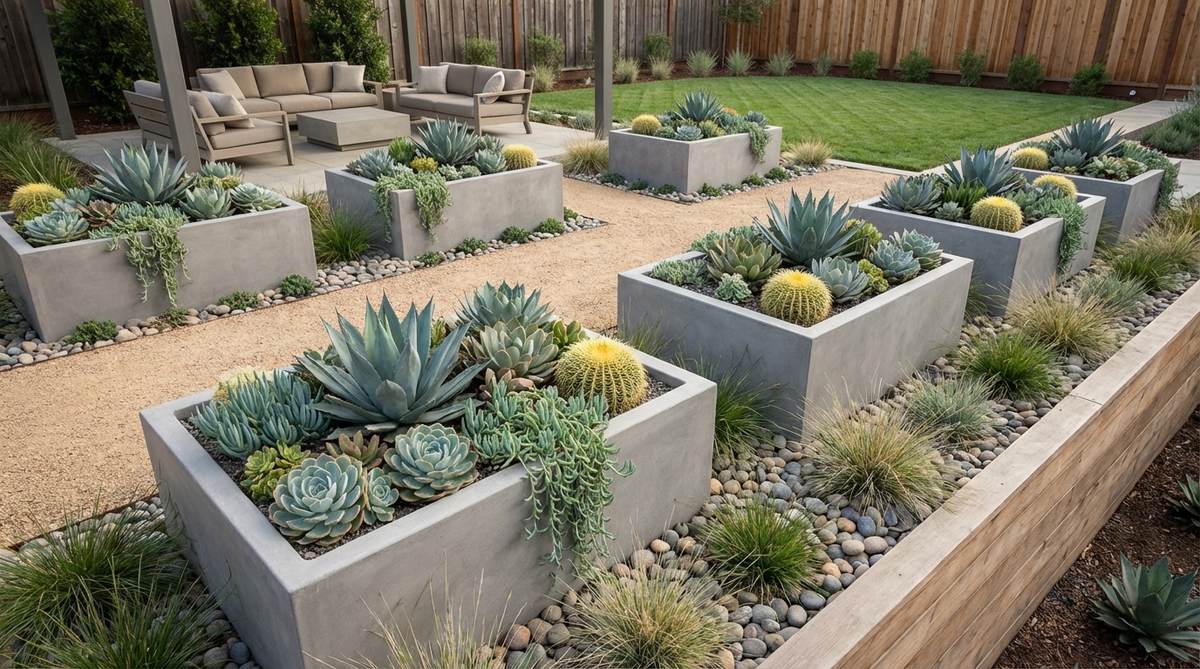
Rectangular concrete planters filled exclusively with succulents create living geometric art. The plants’ sculptural forms complement angular containers.
Arrange varied succulent species within single planters for textural interest. Ensure excellent drainage to prevent root rot.
Contemporary Garden Design With Concrete Water Elements
Water features constructed from concrete introduce tranquility while serving as sculptural focal points. The material’s moldability allows for custom shapes that align with modern design principles while its durability withstands constant water exposure.
16. Rectangular Reflecting Pool
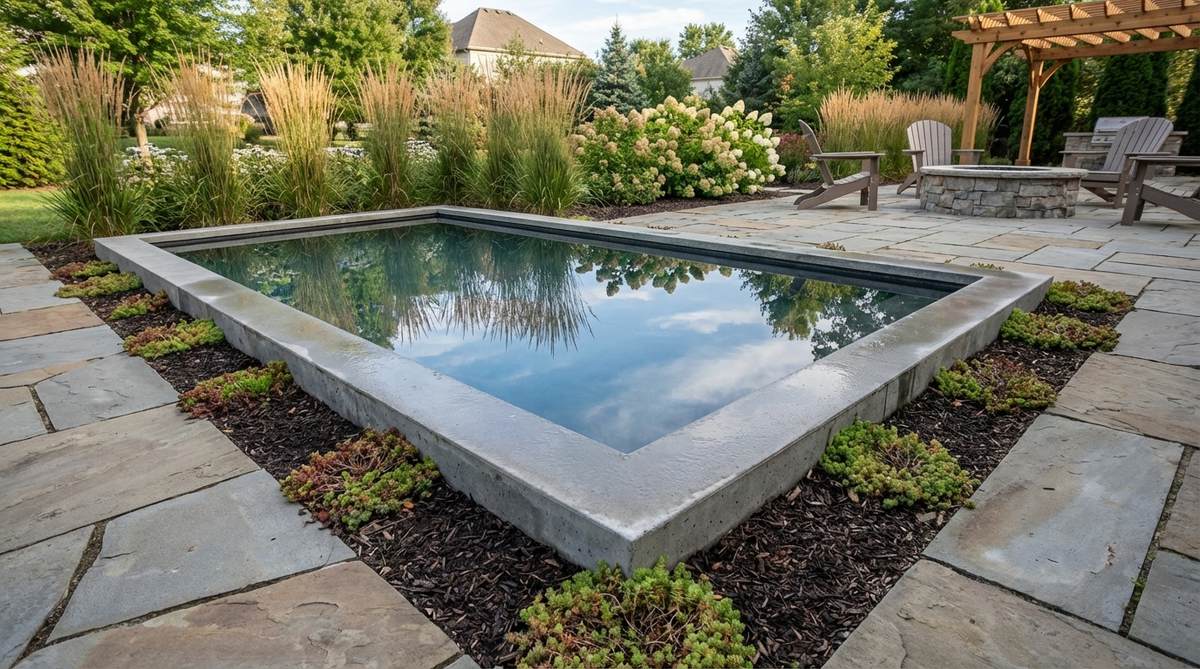
A shallow concrete basin with still water creates mirror-like reflections of sky and surrounding plantings. The geometric form anchors garden compositions.
Design pools 4-6 inches deep for optimal reflection without safety concerns. Dark interior finishes enhance reflective properties.
Position pools to capture specific views or architectural elements. Edge details should remain minimal to emphasize clean geometry.
17. Linear Channel Water Feature
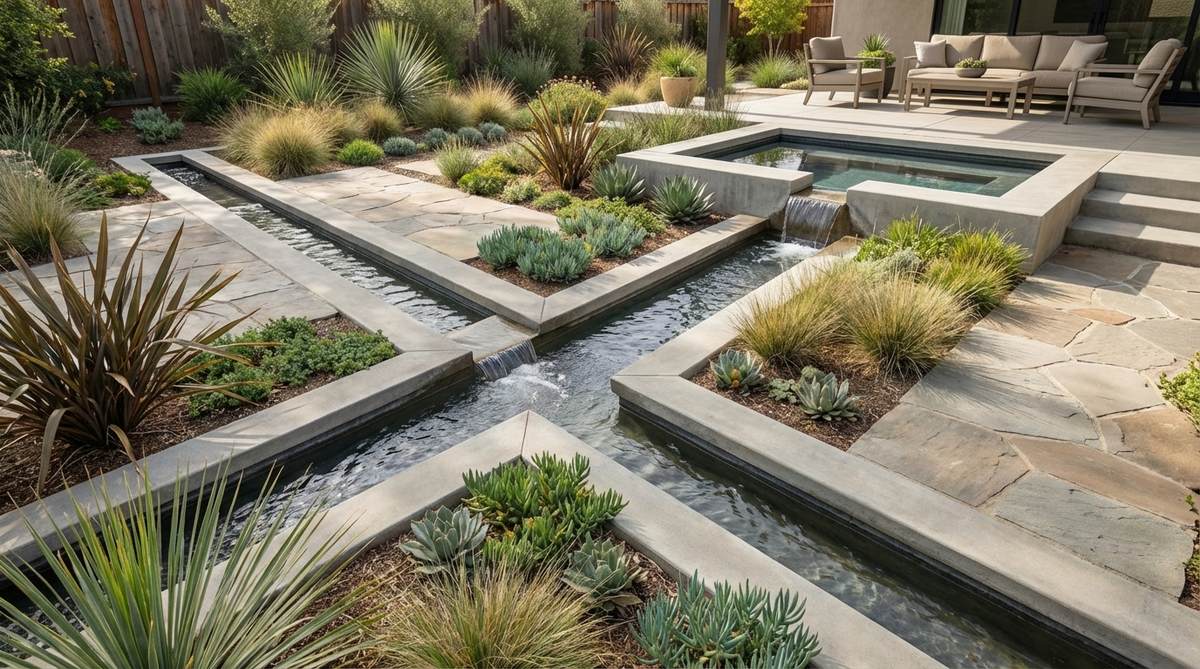
Narrow concrete channels direct water flow through garden spaces. Water travels along linear paths, creating sound and movement.
Install gentle slopes for gravity-fed flow or incorporate recirculating pumps. Channel widths of 6-12 inches fit within compact spaces.
18. Concrete Fountain Basin
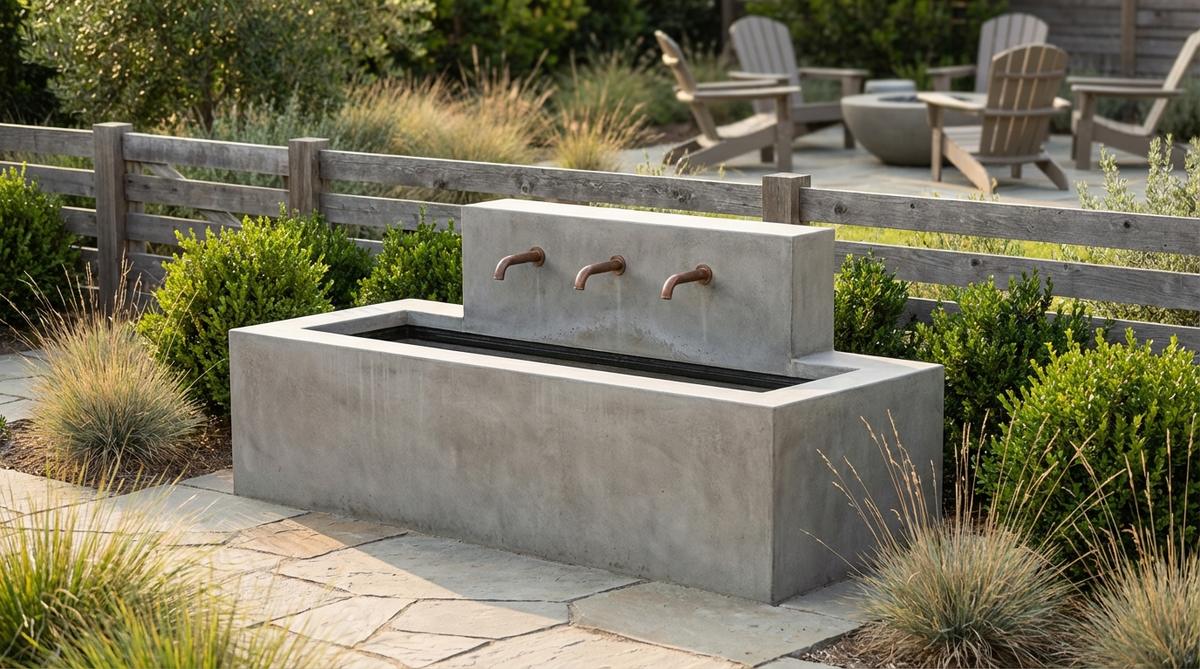
A simple circular or square concrete basin catches water from minimalist spouts. The fountain becomes a sculptural element rather than ornamental excess.
Select single-stream fountains for contemporary aesthetics. Basin dimensions should scale appropriately with garden size.
19. Cascading Concrete Waterfall
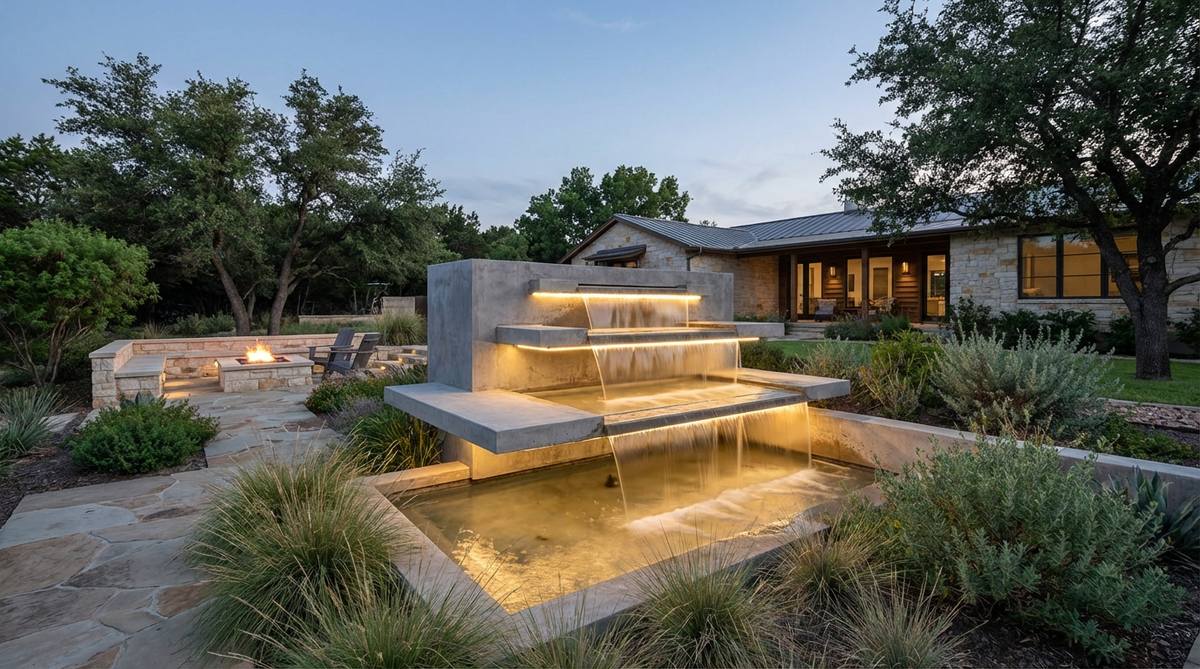
Stacked concrete planes create graduated water descents. Each level produces distinct water sounds as flow transitions between elevations.
Smooth troweled finishes encourage laminar flow patterns. Incorporate LED lighting beneath water sheets for evening drama.
20. Wall-Mounted Water Spout
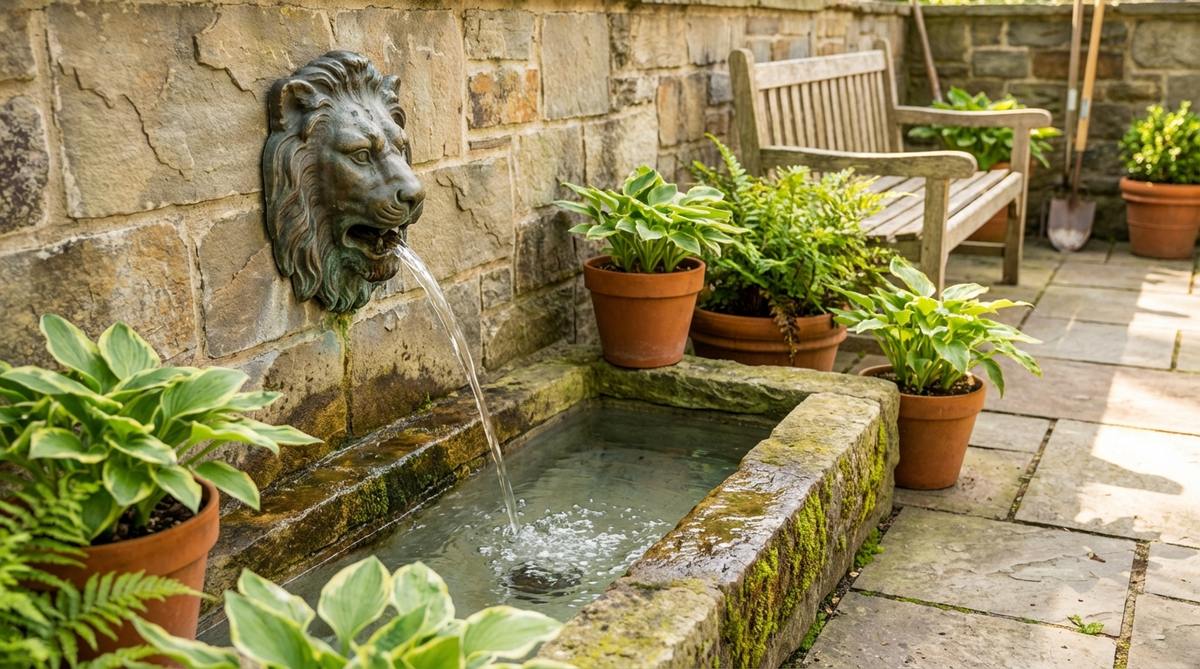
A single spout emerges from concrete walls, filling basins below. The vertical installation conserves ground space while providing focal interest.
Position spouts at eye level for maximum visual impact. Basins should catch all water without splashing.
21. Geometric Koi Pond
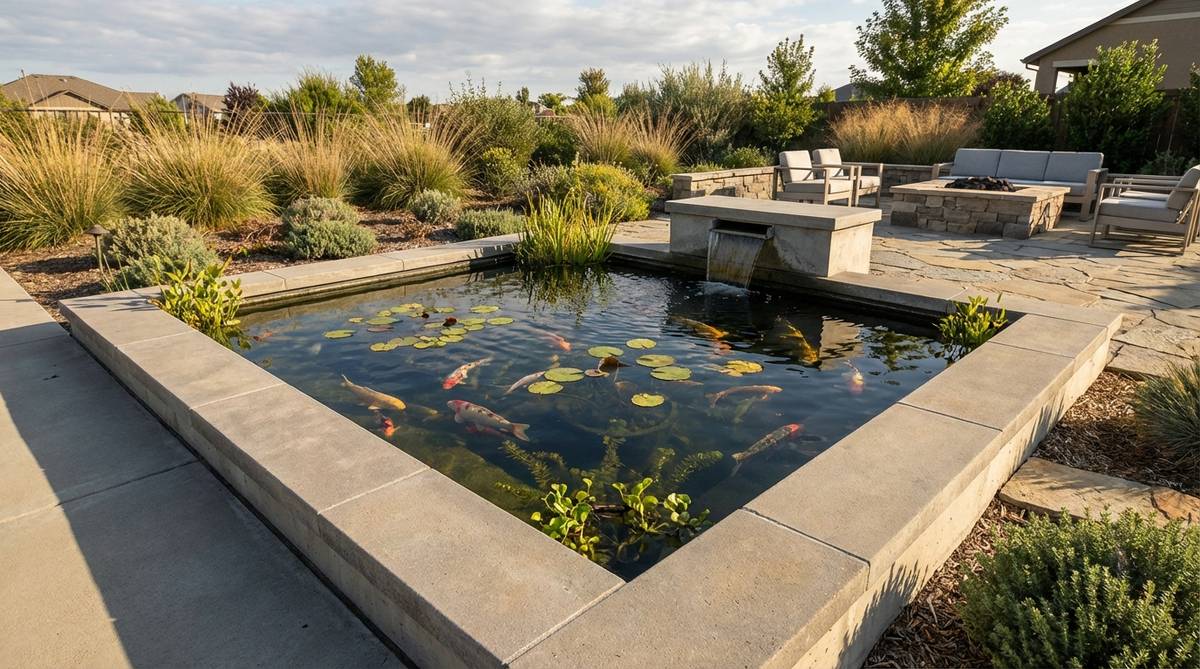
Square or rectangular concrete ponds with straight edges house koi or aquatic plants. The formal geometry contrasts with organic water life.
Design depths of 3-4 feet for healthy fish habitat. Include filtration systems and overflow mechanisms.
22. Infinity Edge Water Basin
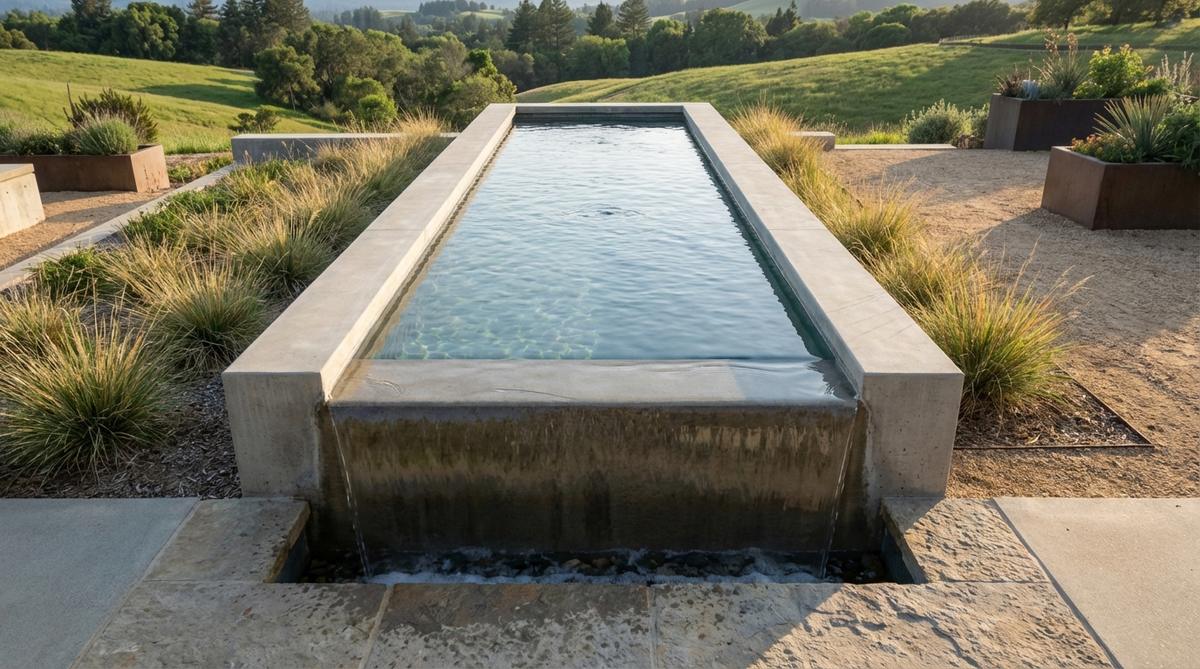
Water flows over one edge of a concrete basin, creating the illusion of endless extension. The knife-edge detail demands precise construction.
This feature works best on properties with views or grade changes. Catch basins below recirculate water efficiently.
Modern Garden Borders And Enclosures
Boundaries in modern gardens extend beyond traditional fencing to include concrete walls, screens, and edging that define spaces while maintaining visual continuity. These elements provide privacy and structure without overwhelming the design.
23. Poured Concrete Retaining Walls
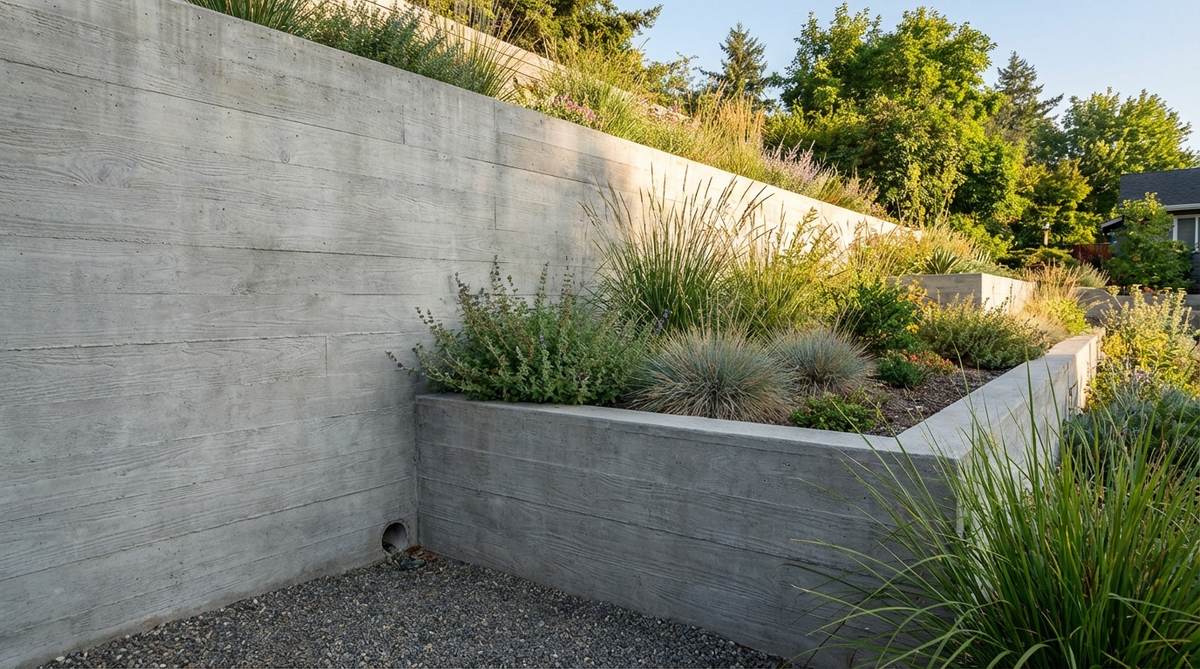
Monolithic concrete walls address grade changes while creating dramatic backdrops for plantings. The smooth surfaces provide neutral canvases that highlight foreground elements.
Design walls with adequate footing and drainage to prevent failure. Heights above 4 feet typically require engineering calculations.
Consider board-formed finishes for subtle texture. Seal concrete to prevent staining from soil and water.
24. Concrete Block Privacy Screen
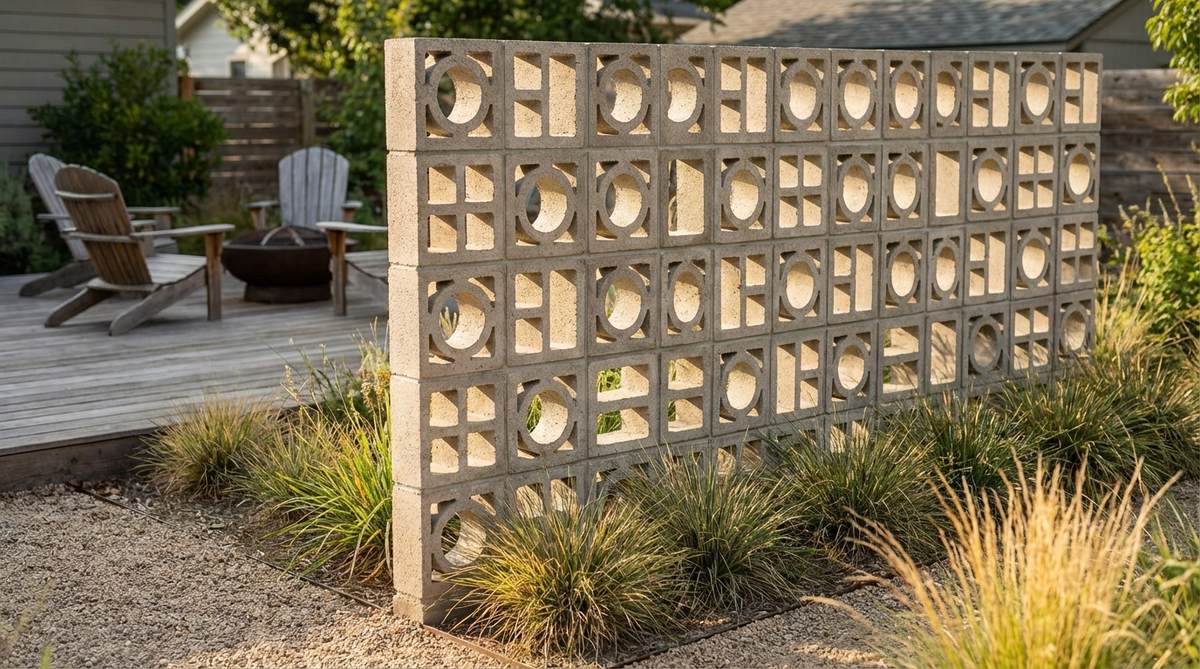
Decorative concrete blocks arranged in geometric patterns create semi-transparent boundaries. Light filters through openings while maintaining privacy.
Select blocks with angular or circular voids for contemporary patterns. Arrange in running bond or stacked layouts.
25. Low Concrete Seat Wall
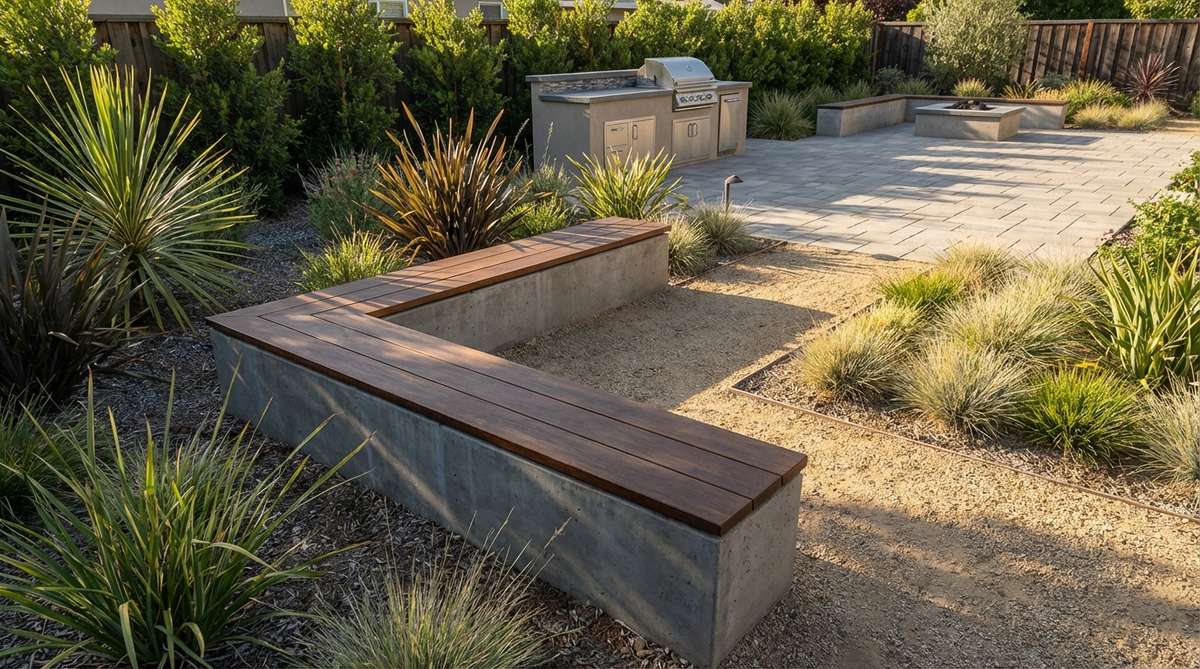
Walls at 18 inches high define garden zones while providing casual seating. The dual function maximizes spatial efficiency.
Cap walls with smooth concrete or contrasting materials like wood. Ensure adequate width of 12-15 inches for comfortable seating.
26. Linear Concrete Landscape Edging
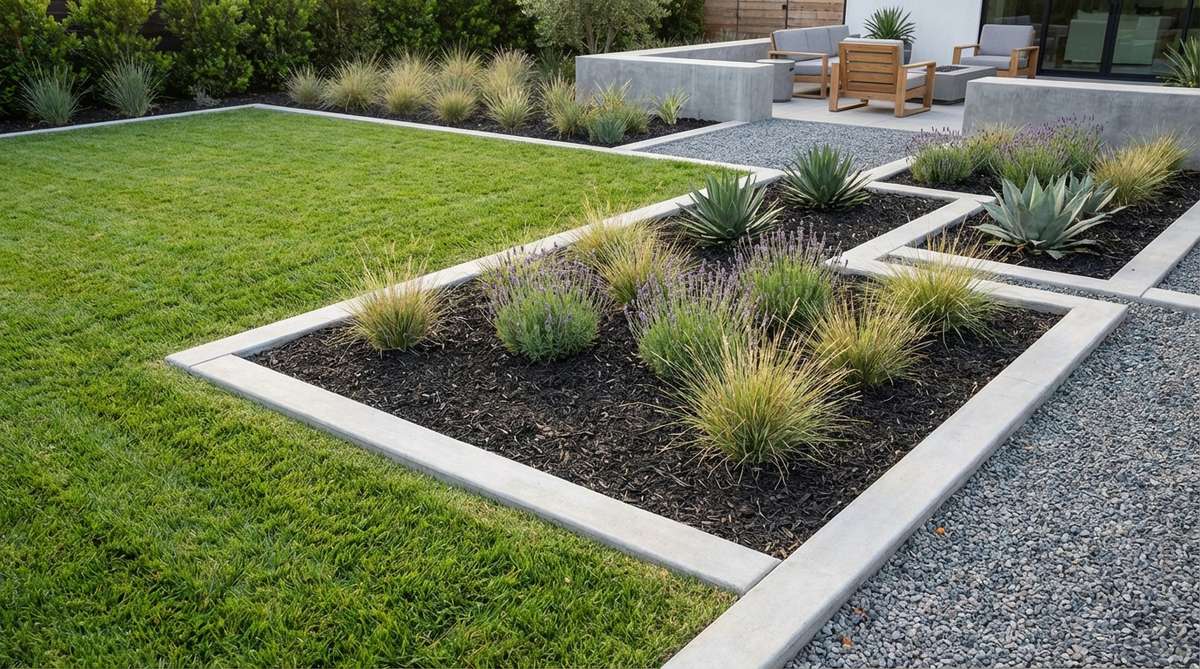
Continuous concrete strips separate different ground materials like gravel from mulch or lawn from beds. The permanent edging prevents material migration.
Install edging flush with mowing surfaces or slightly raised. Typical heights range from 3-6 inches above grade.
27. Concrete and Wood Composite Fence
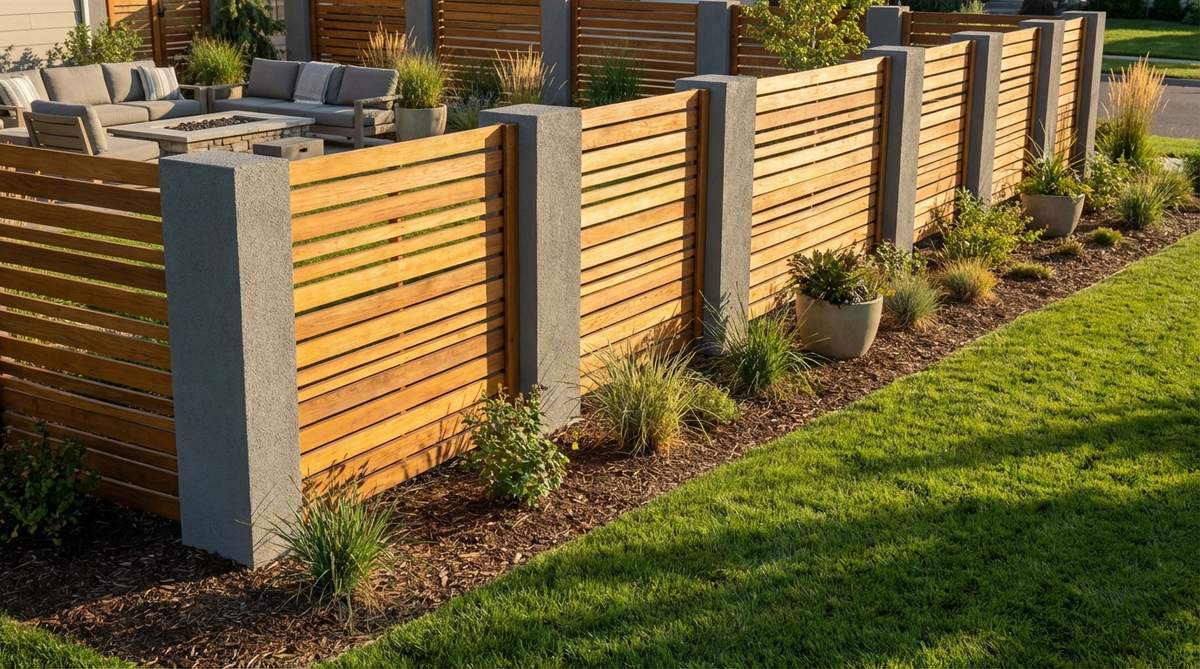
Concrete posts support horizontal wood slats in alternating patterns. The material contrast adds warmth to otherwise stark boundaries.
Space slats to control sightlines and airflow. Use weather-resistant wood species or composite alternatives.
28. Stepped Concrete Boundary Wall
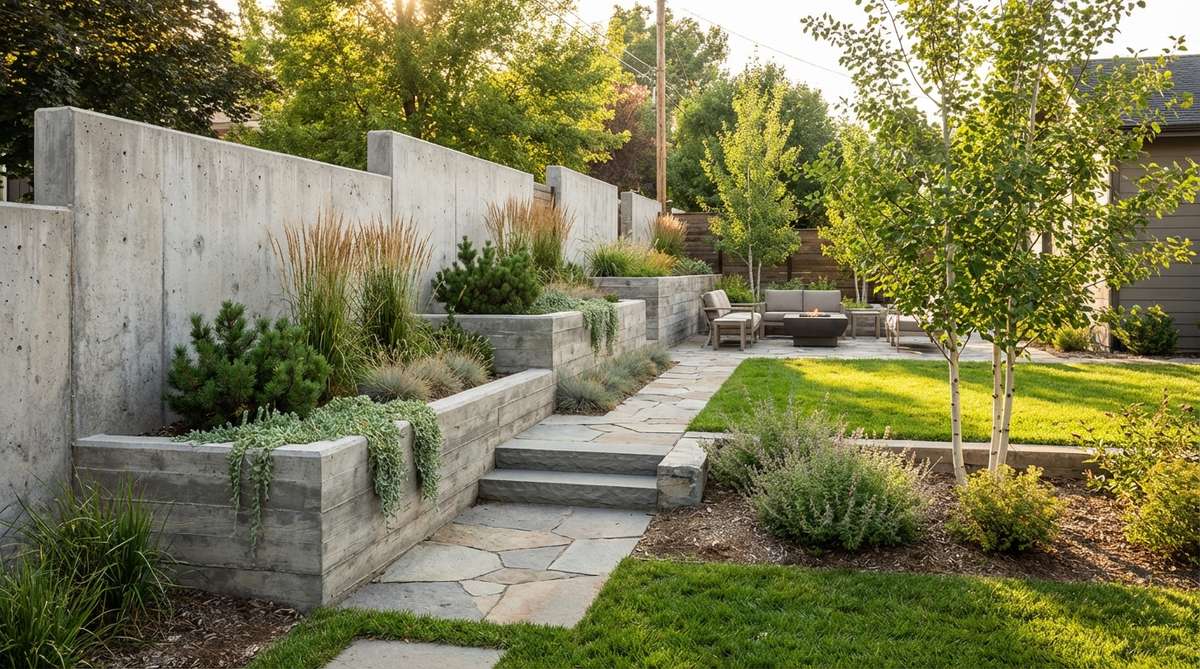
Wall heights vary in stepped progressions, creating visual interest along property lines. The dimensional changes break up long spans.
Align steps with grade changes or architectural features. Incorporate planting pockets within stepped sections.
Built-In Concrete Seating Solutions
Integrated seating carved from concrete provides permanent gathering spaces that reinforce geometric design intentions. These features eliminate the need for movable furniture while defining functional zones within gardens.
29. L-Shaped Bench Configuration
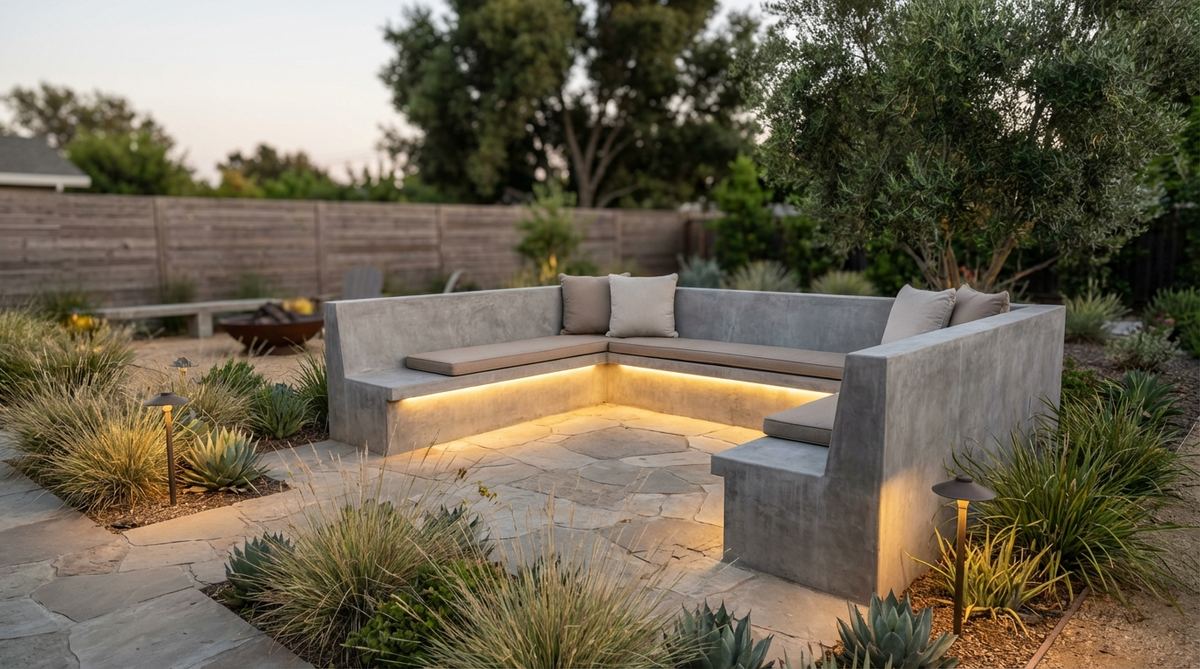
Two concrete benches meet at right angles, forming conversational seating areas. The L-shape defines intimate corners within larger gardens.
Incorporate back supports at 15-degree angles for comfort. Add cushions or timber slat overlays to soften concrete surfaces.
Design seat depths at 18 inches and heights at 18 inches for ergonomic comfort. Integrate lighting beneath benches for ambient glow.
30. Linear Bench With Planters
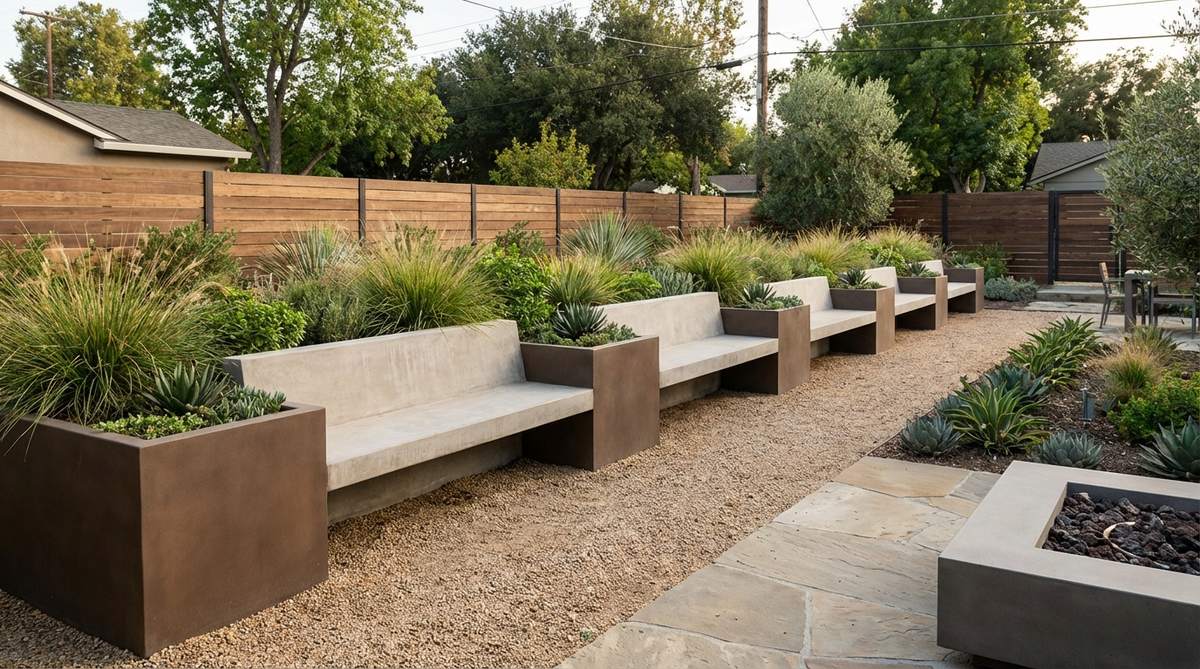
A continuous concrete bench integrates raised planters at intervals. Greenery breaks up seating spans while maintaining geometric order.
Alternate seating and planting sections in rhythmic patterns. Planter depths should accommodate root growth of selected plants.
31. Floating Concrete Bench Slab
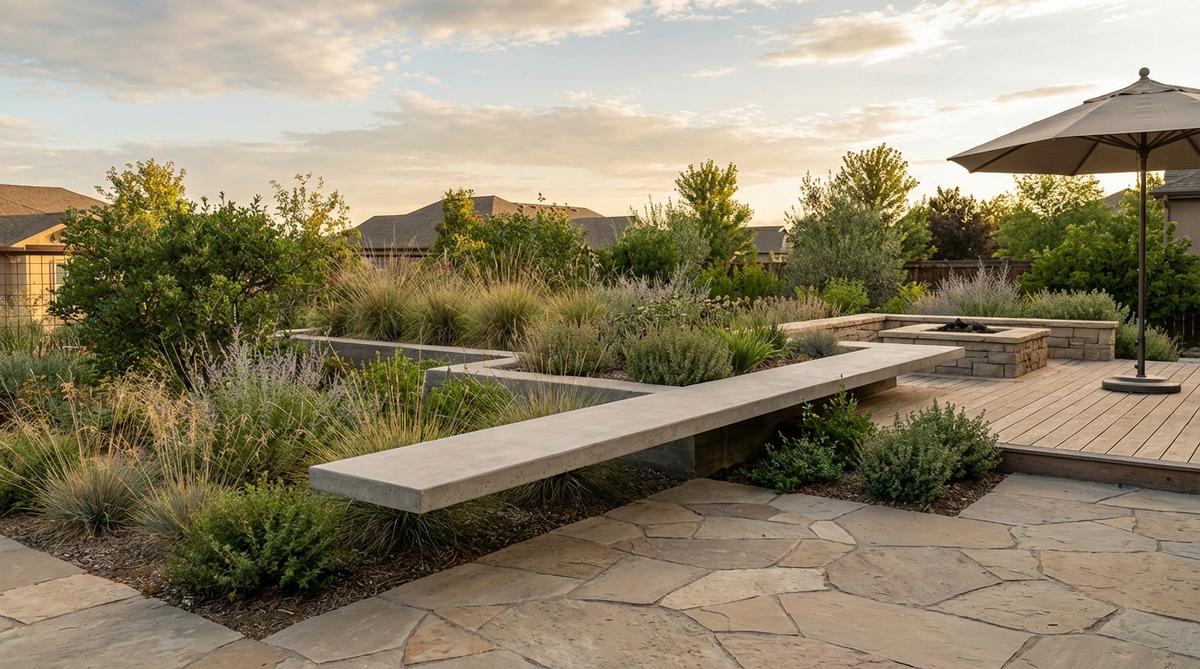
Cantilevered concrete appears to float above ground, supported by hidden structural elements. The levitating effect adds sculptural intrigue.
Ensure adequate reinforcement within the slab for cantilever support. Conceal footings within adjacent planting beds.
32. Modular Cube Seating
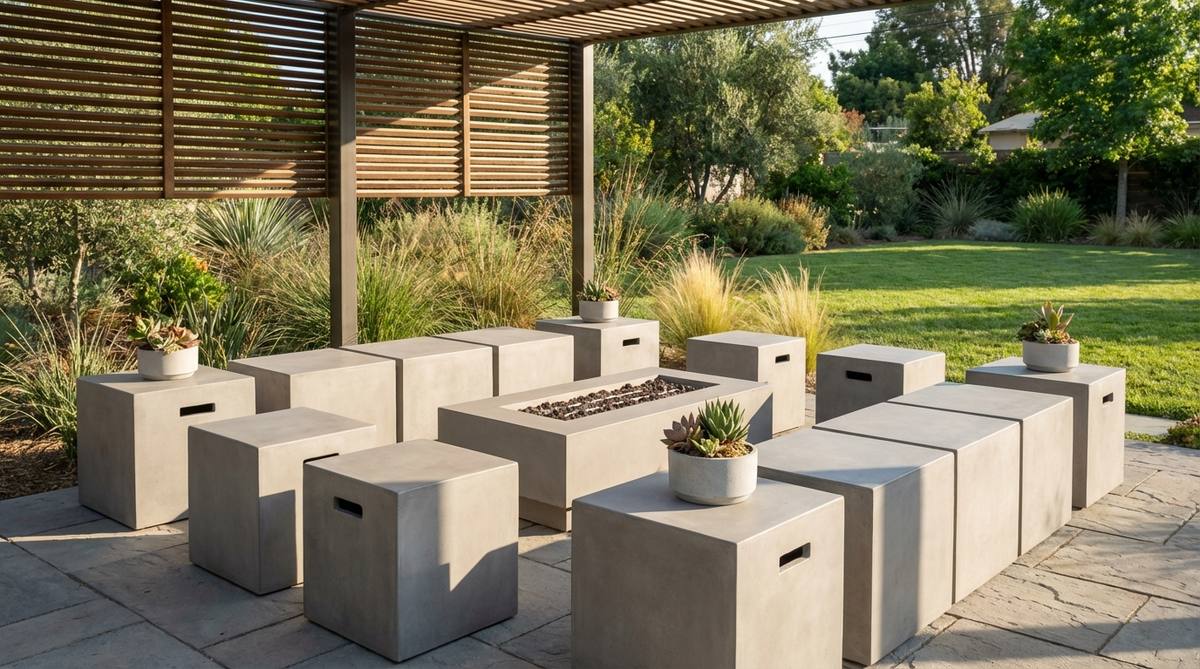
Individual concrete cubes serve as flexible seating elements. Users rearrange cubes to accommodate different gathering sizes.
Dimension cubes at 18x18x18 inches for multi-use as seats or side tables. Finish with smooth troweling for comfortable surfaces.
33. Circular Conversation Pit
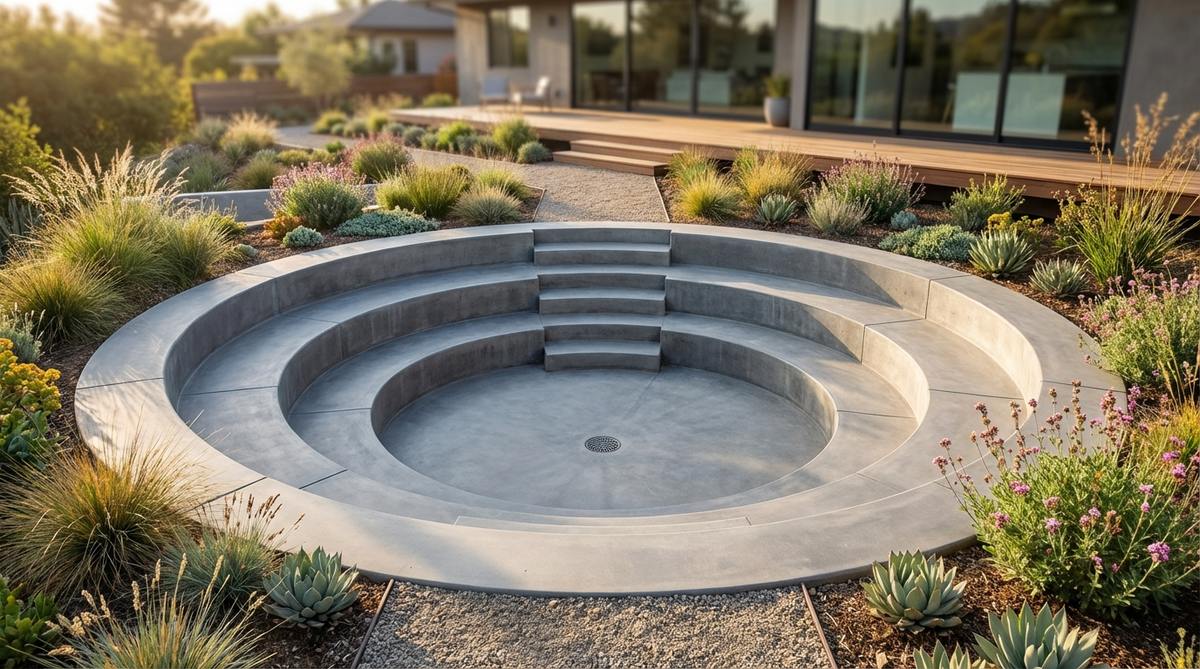
Concentric concrete rings descend into the ground, creating amphitheater-style seating. The sunken feature offers wind protection and intimacy.
Design with gradual steps for easy access. Include drainage at the lowest point to prevent water accumulation.
34. Perimeter Bench Border
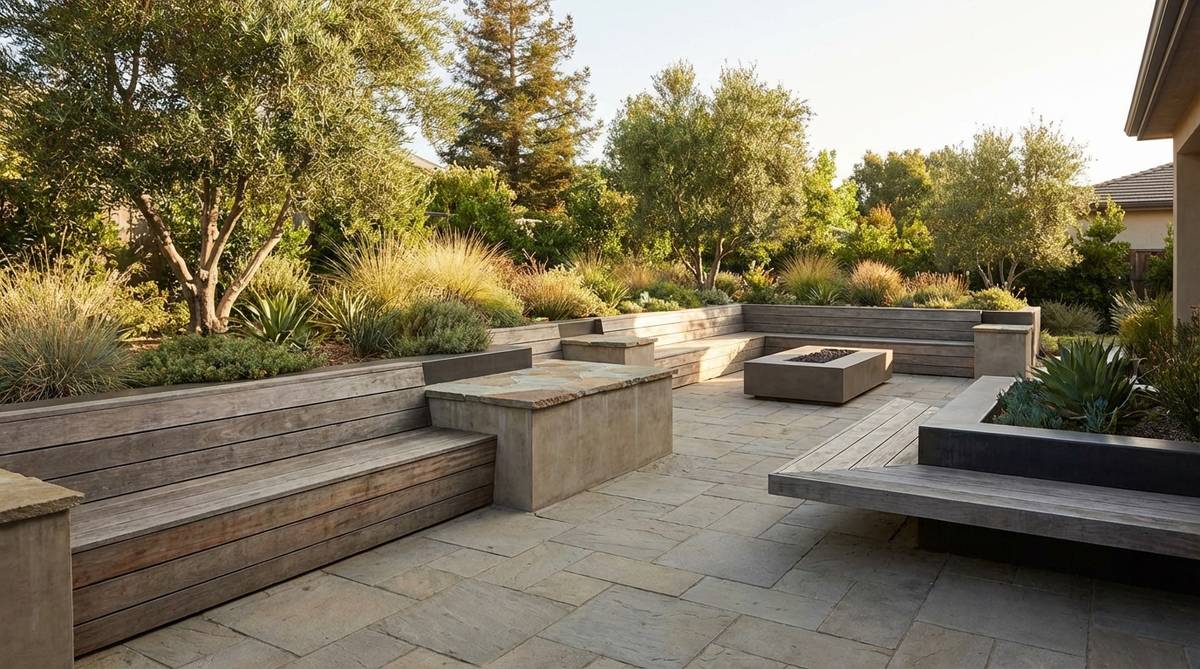
Continuous seating wraps around garden edges or patio perimeters. The boundary bench defines space while maximizing seating capacity.
Vary bench heights slightly to indicate entrances or focal views. Cap with contrasting materials for visual interest.
Vertical Features And Sculptural Accents
Upright concrete elements add three-dimensional interest to garden designs while serving functional roles. These vertical features draw the eye upward, creating focal points that balance horizontal planes.
35. Concrete Column Planters
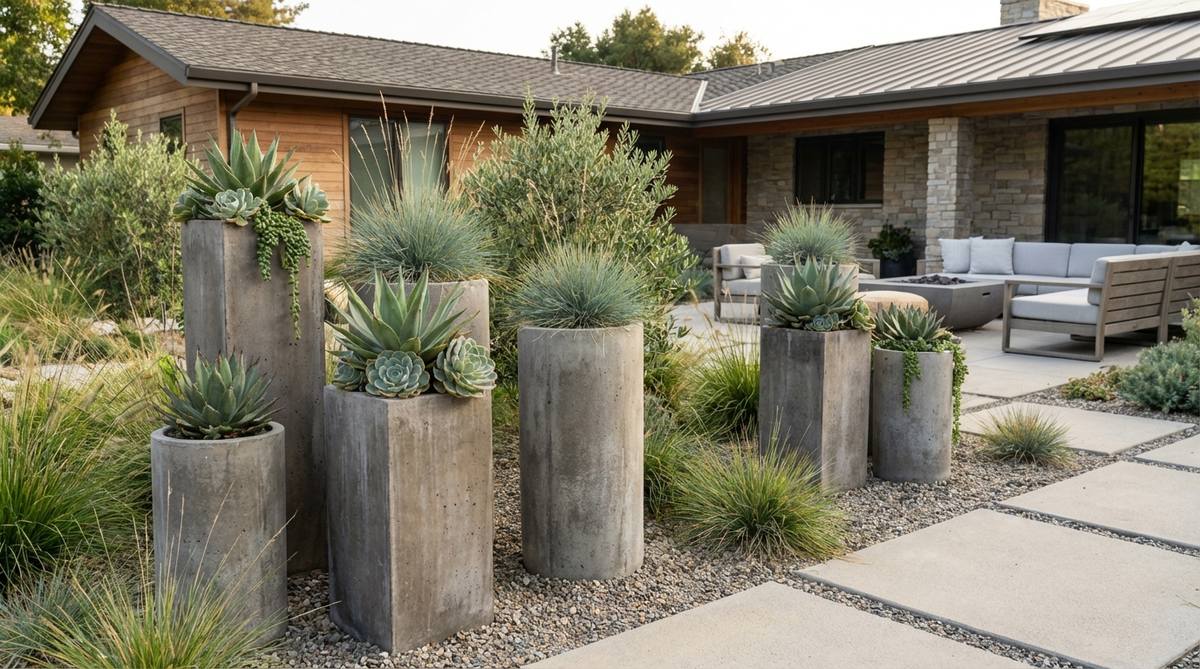
Tall cylindrical or rectangular concrete columns contain trailing or upright plants. The elevated plantings add height variation.
Group columns in odd numbers for dynamic compositions. Drainage holes at column bases prevent waterlogging.
Select plants with architectural forms that complement column geometry. Succulents, grasses, and small shrubs work effectively.
36. Geometric Concrete Sculpture
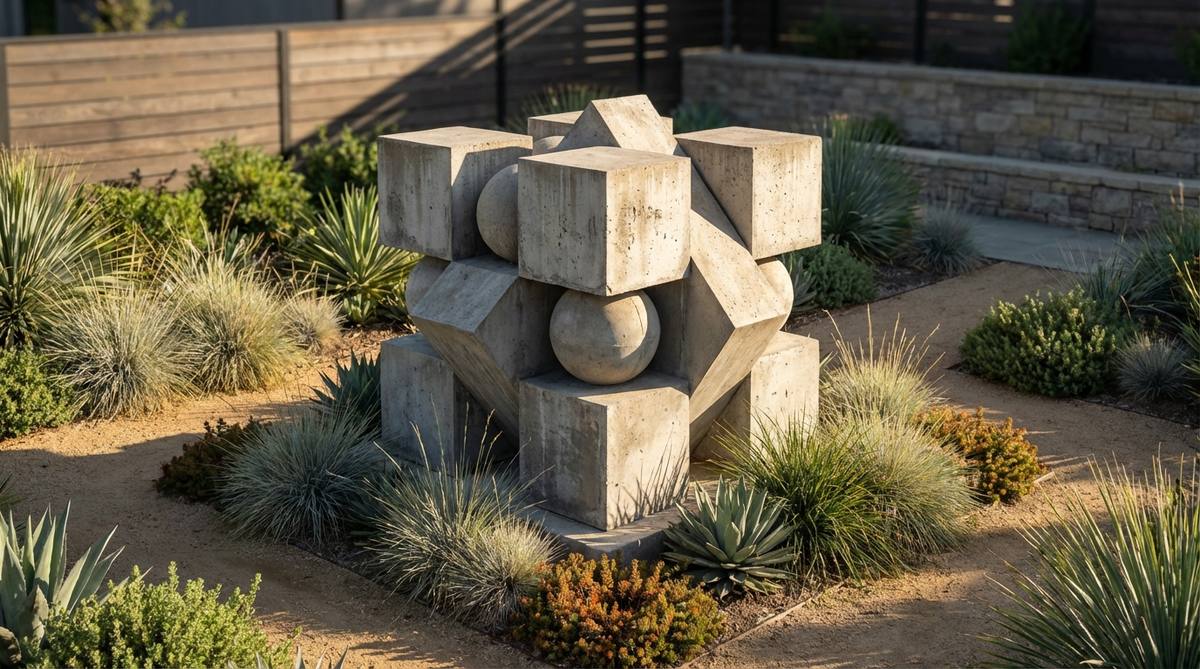
Abstract concrete forms serve as pure sculpture within garden spaces. Cubes, spheres, or angular compositions anchor planting schemes.
Position sculptures where they catch dramatic lighting. Scale pieces appropriately to garden dimensions.
37. Vertical Concrete Screen Wall
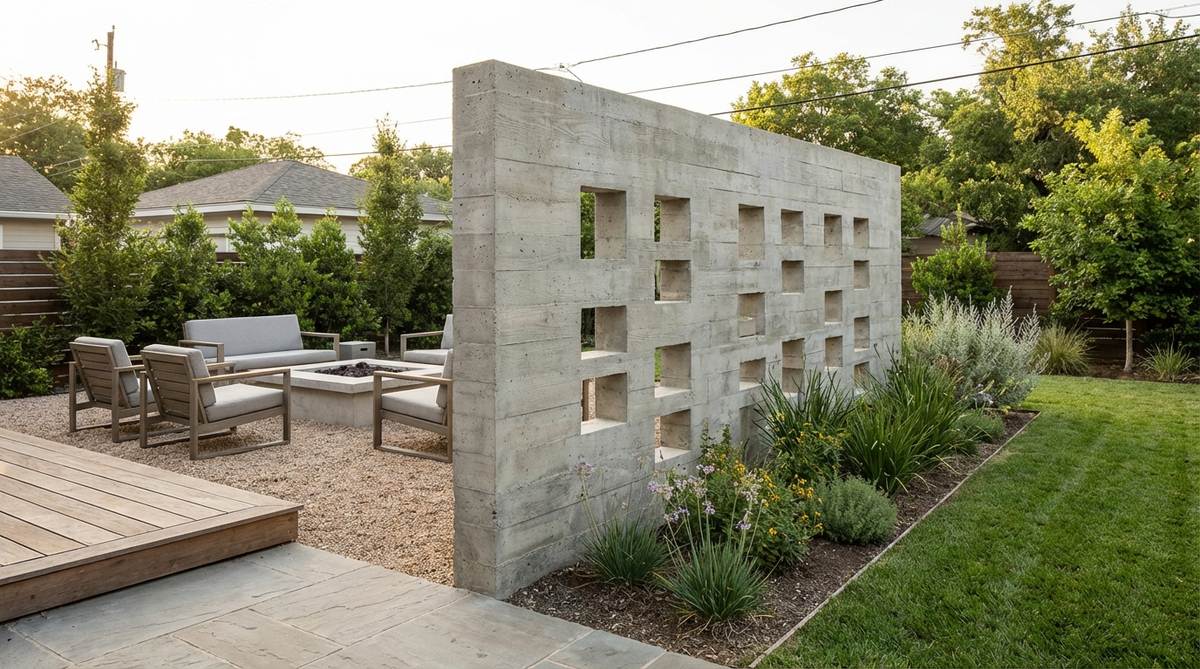
Freestanding concrete walls punctuated with geometric openings create vertical room dividers. The screens partition spaces without complete enclosure.
Design openings in repeating patterns for visual rhythm. Typical wall thicknesses of 6-8 inches provide stability.
38. Concrete Obelisk Marker
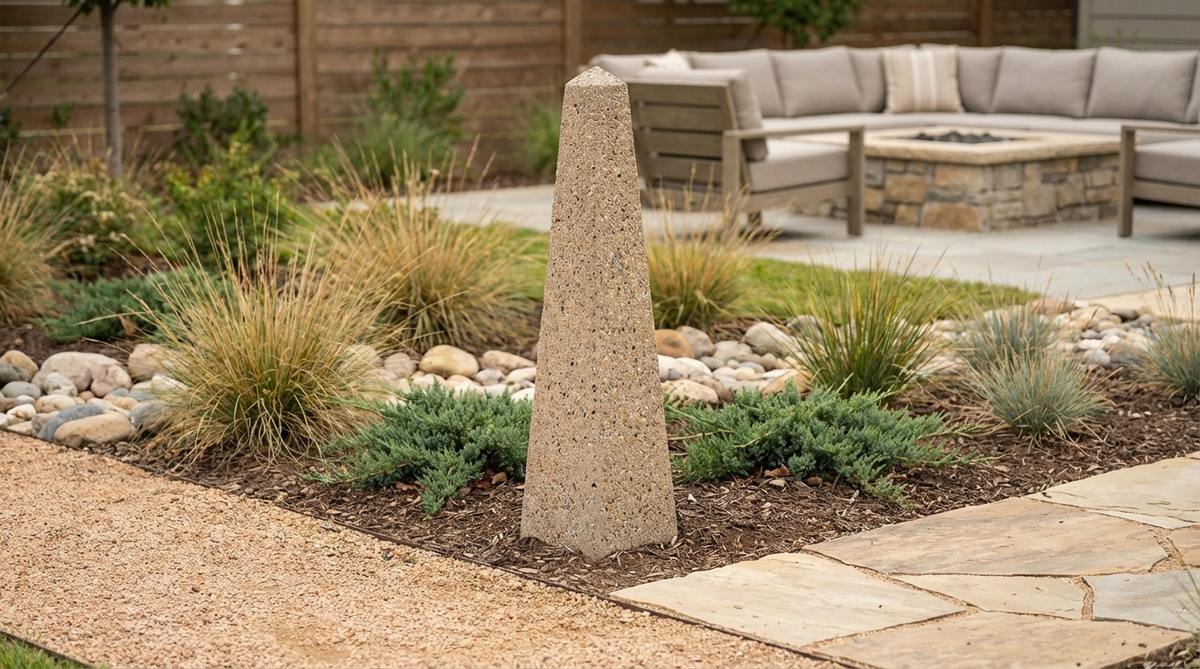
Tapered concrete pillars mark garden entries, pathway intersections, or bed corners. The classic obelisk form translates well into modern contexts.
Finish with smooth or exposed aggregate surfaces. Heights of 4-6 feet provide presence without overwhelming.
39. Stacked Concrete Totem
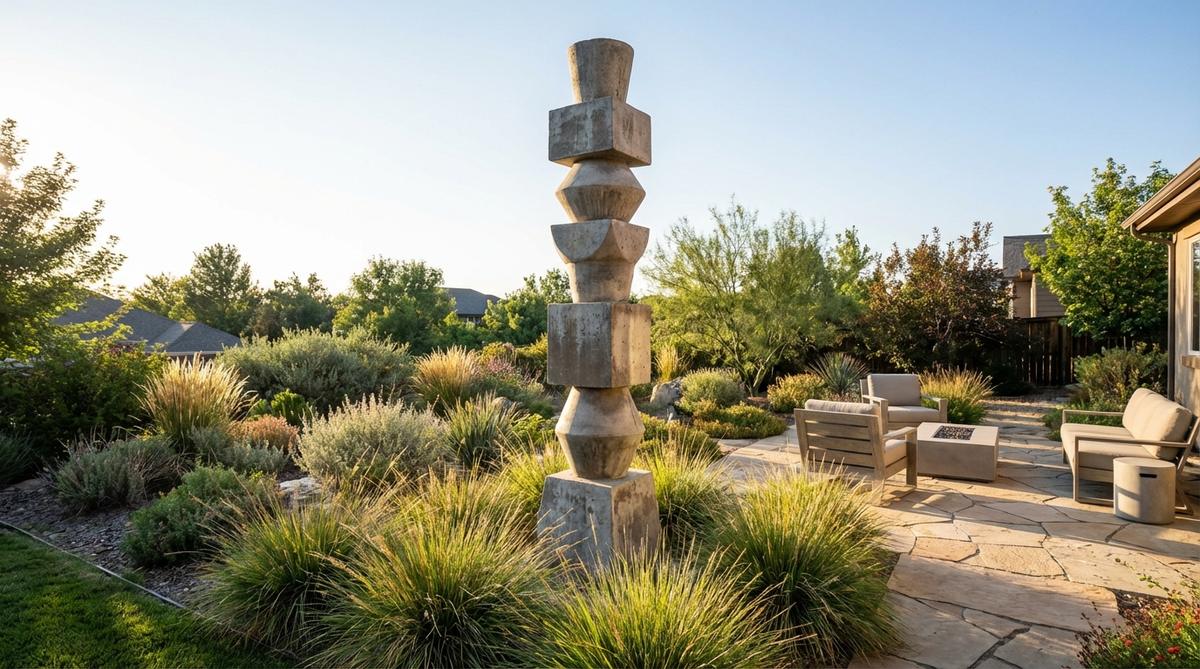
Multiple concrete forms stacked vertically create totem-like sculptures. Varying shapes and sizes within the stack add visual complexity.
Secure elements with internal rebar or adhesive. Weather naturally or apply sealers for consistent appearance.
40. Concrete Trellis Support
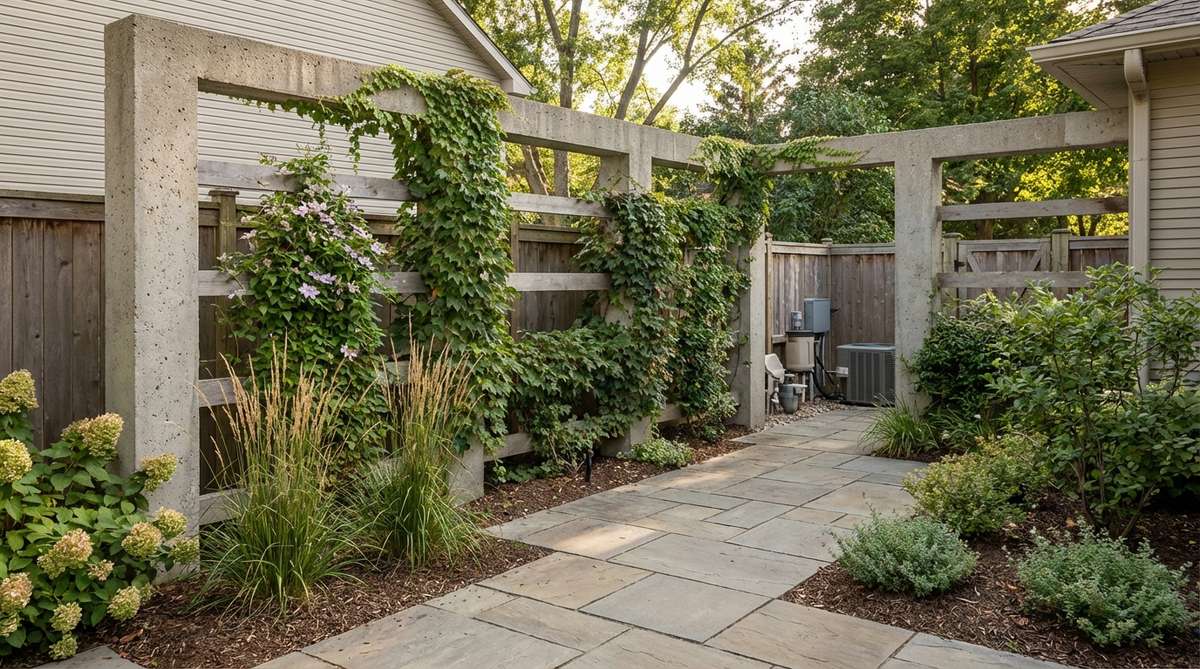
Vertical concrete frames support climbing plants while maintaining architectural presence. The structure remains attractive during dormant seasons.
Design with horizontal crossbars or cable systems for vine attachment. Position to screen undesirable views.
Statement Features With Maximum Impact
Focal points in modern gardens often rely on singular dramatic elements rather than collections of objects. Concrete’s versatility enables creation of oversized planters, fire features, and architectural accents that command attention.
41. Oversized Concrete Planter Box
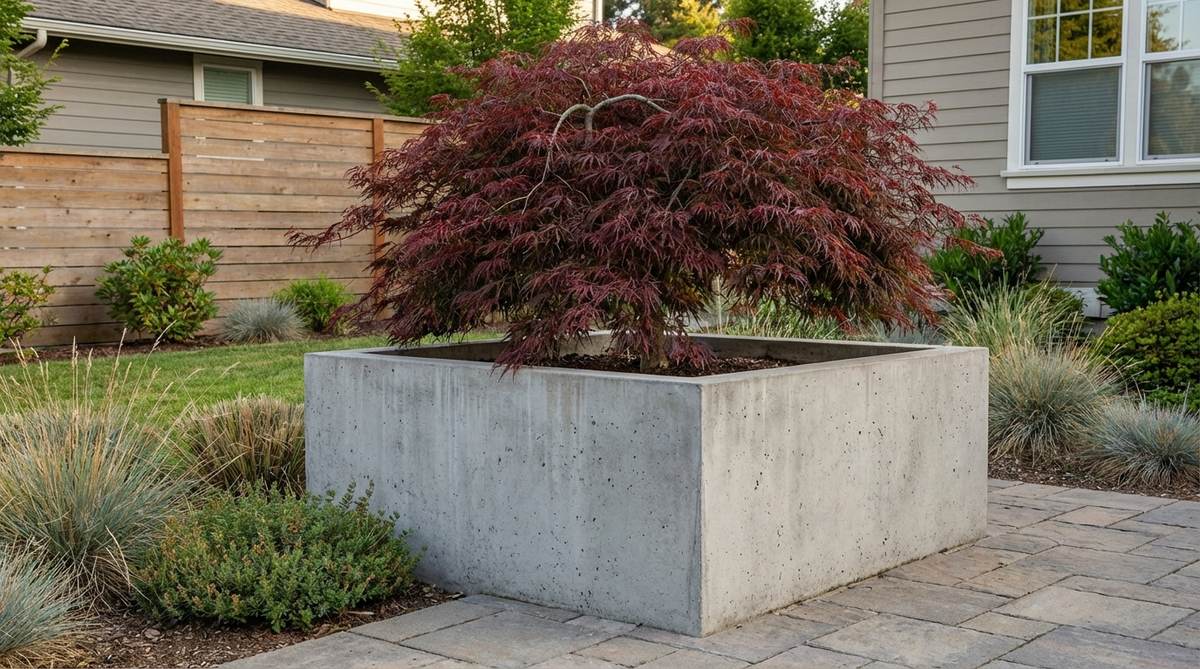
A single large-scale rectangular planter contains specimen plants or small trees. The bold proportion establishes immediate hierarchy.
Dimension planters at minimum 3×3 feet for tree planting. Reinforce walls adequately to contain soil weight.
Select plants with strong architectural forms like Japanese maple or sculptural agave. The plant becomes sculpture within its concrete frame.
42. Concrete Fire Pit Square
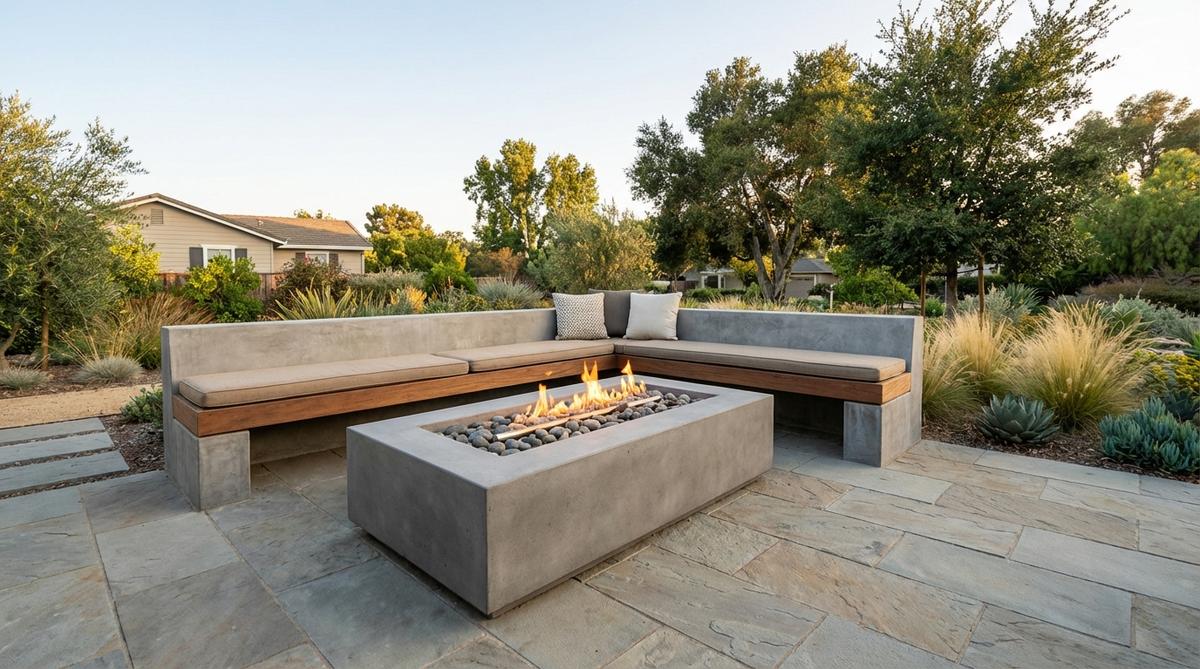
A square concrete fire pit anchors outdoor gathering spaces. The geometric form aligns with modern design language while providing functional warmth.
Line pits with fire-resistant materials rated for high temperatures. Include adequate ventilation and gas line access.
43. Monolithic Concrete Table
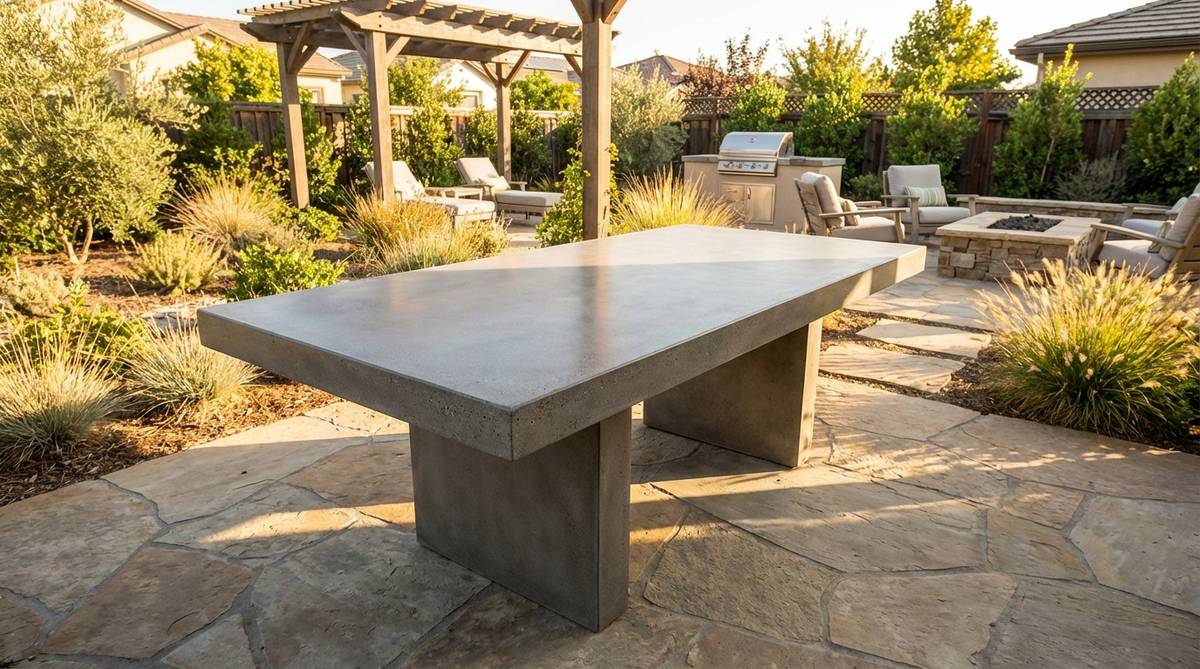
A poured concrete dining or work table provides permanent outdoor furniture. The single-piece construction ensures durability and weather resistance.
Reinforce tabletops adequately to prevent cracking. Seal surfaces thoroughly for stain resistance.
44. Concrete Sphere Accent
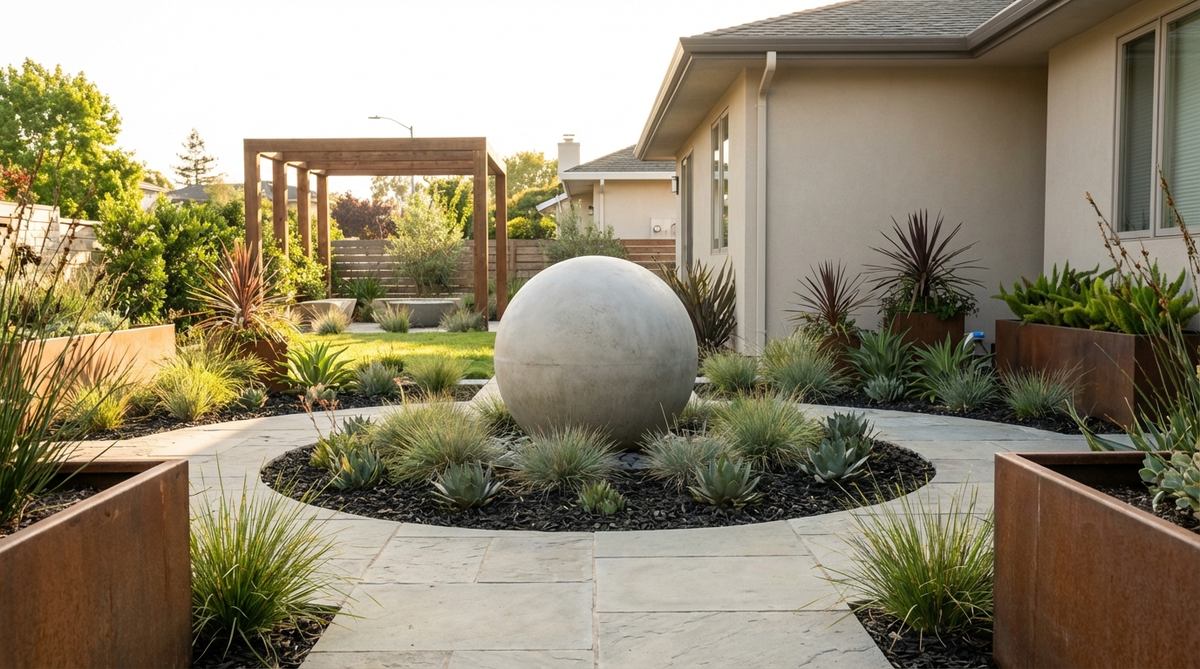
Large concrete spheres placed strategically within gardens serve as sculptural punctuation. The curved form contrasts with angular surroundings.
Position spheres at pathway terminations or bed centers. Diameters of 24-36 inches provide appropriate scale.
45. Cantilevered Concrete Platform
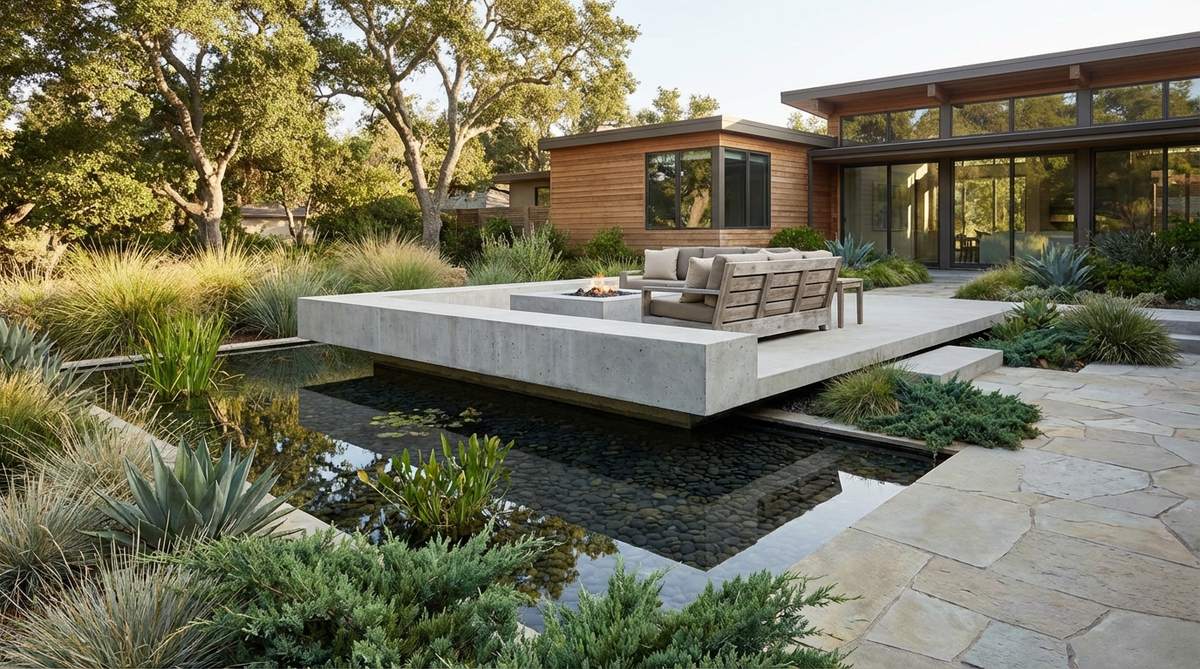
A concrete deck extends over water features or grade changes without visible support. The floating platform creates drama and invites exploration.
Engineering calculations ensure structural integrity for cantilevered spans. Incorporate adequate reinforcement and proper footing.
46. Geometric Concrete Pergola
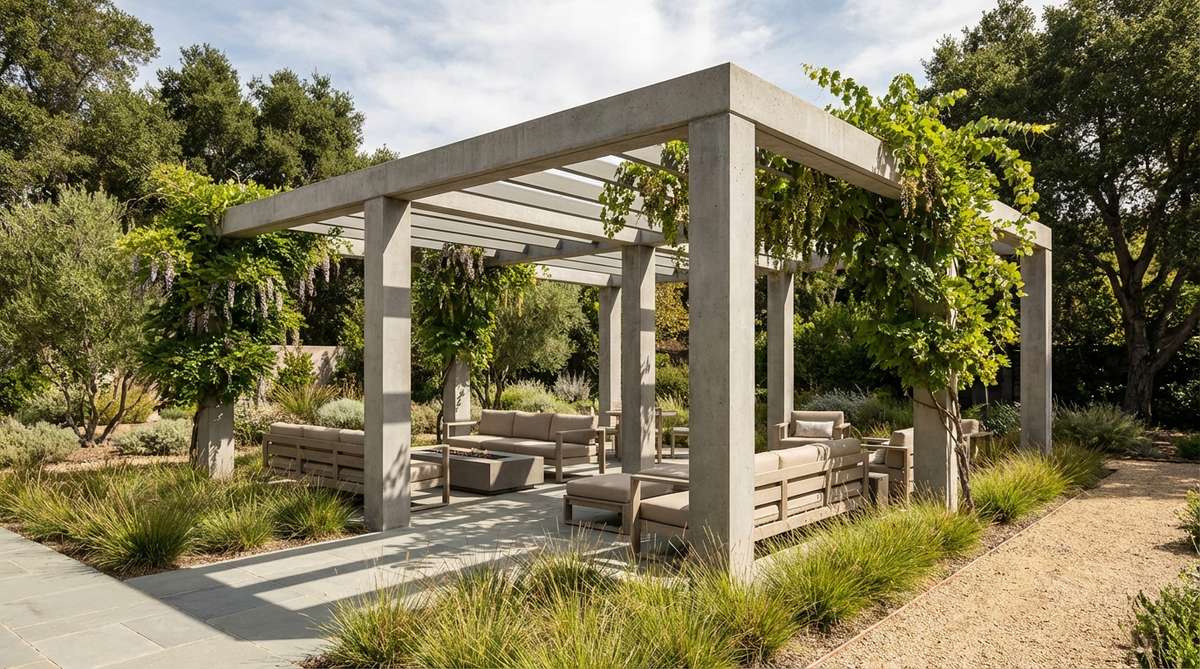
Concrete posts and beams form pergola structures with clean rectangular profiles. The material choice ensures longevity compared to wood alternatives.
Design beam spacing to provide appropriate shade patterns. Consider climbing plants for additional coverage.
Illumination Strategies For Modern Gardens
Lighting integration within concrete elements extends garden usability into evening hours while highlighting architectural features. Strategic illumination emphasizes geometry and creates dramatic shadow play.
47. Recessed Pathway Lighting
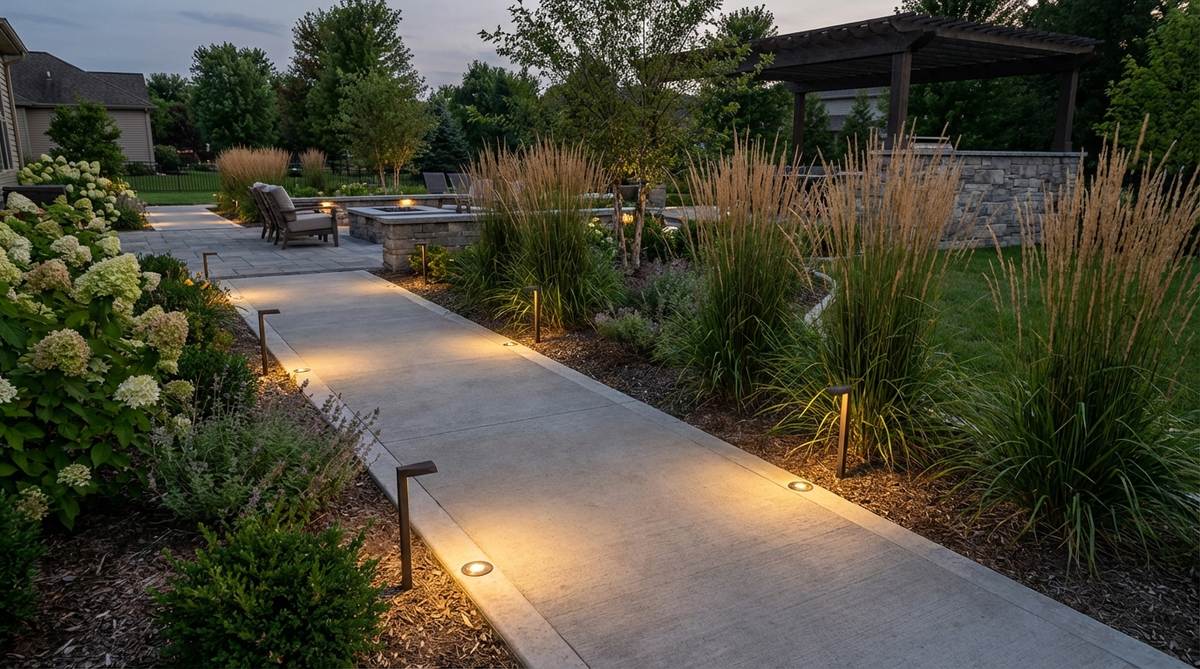
LED fixtures embedded within concrete pathways provide subtle ground-level illumination. The flush installation prevents tripping hazards.
Space fixtures at 6-8 foot intervals along pathway edges. Select warm color temperatures for inviting ambiance.
Ensure proper waterproofing and access for bulb replacement. Low-voltage systems offer safety and efficiency.
48. Uplighting Beneath Concrete Benches
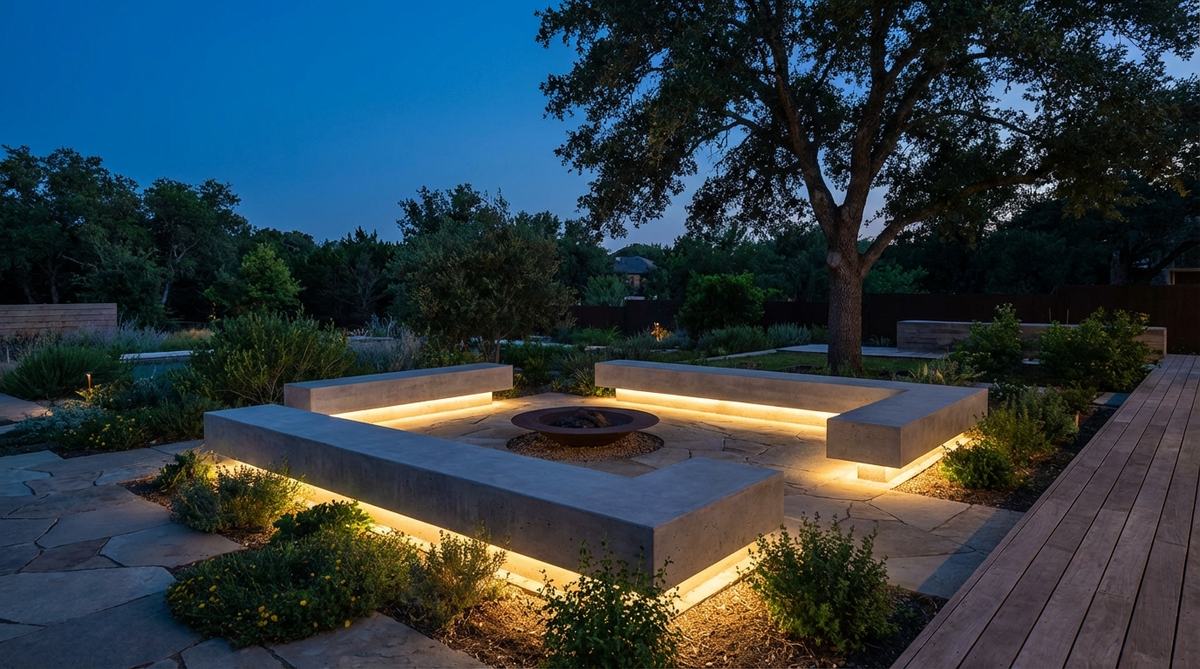
Light strips installed under bench edges create floating illusions at night. The upward glow defines seating areas without harsh brightness.
Position lighting to avoid direct eye contact. Dimming capabilities allow ambiance adjustment.
49. Illuminated Water Feature Basin
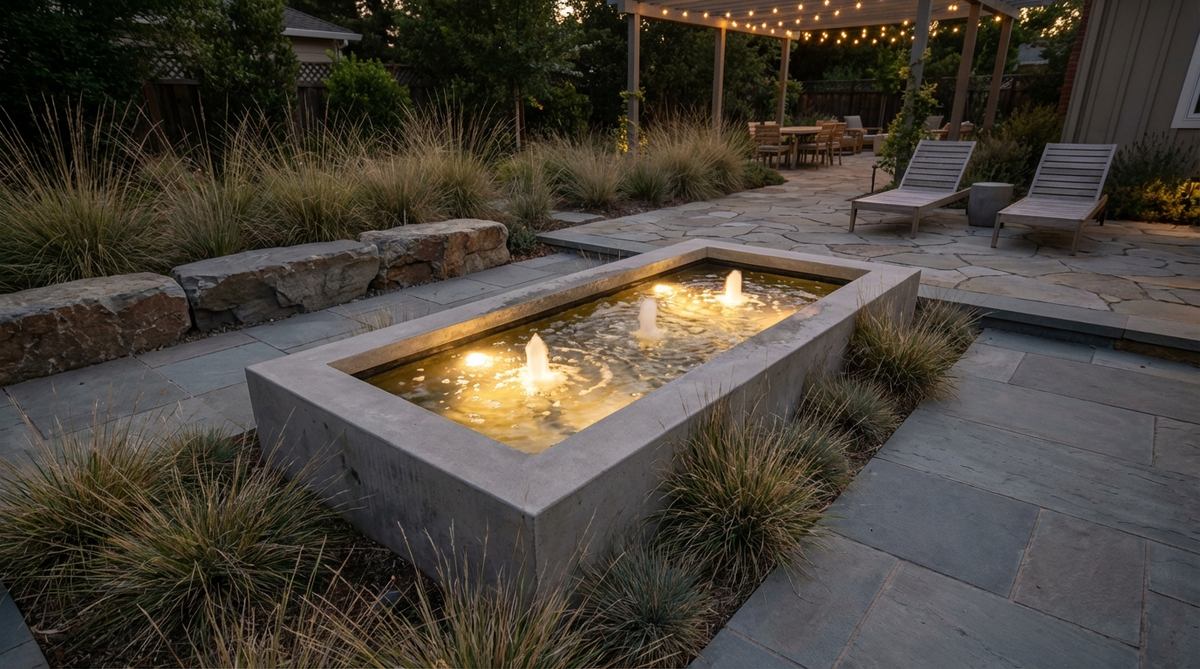
Submersible lights within concrete water features transform them into glowing focal points after dark. Water amplifies and diffuses light.
Use waterproof LED fixtures rated for submersion. Position lights to avoid visible bulbs while maximizing effect.
50. Backlit Concrete Screen Panels
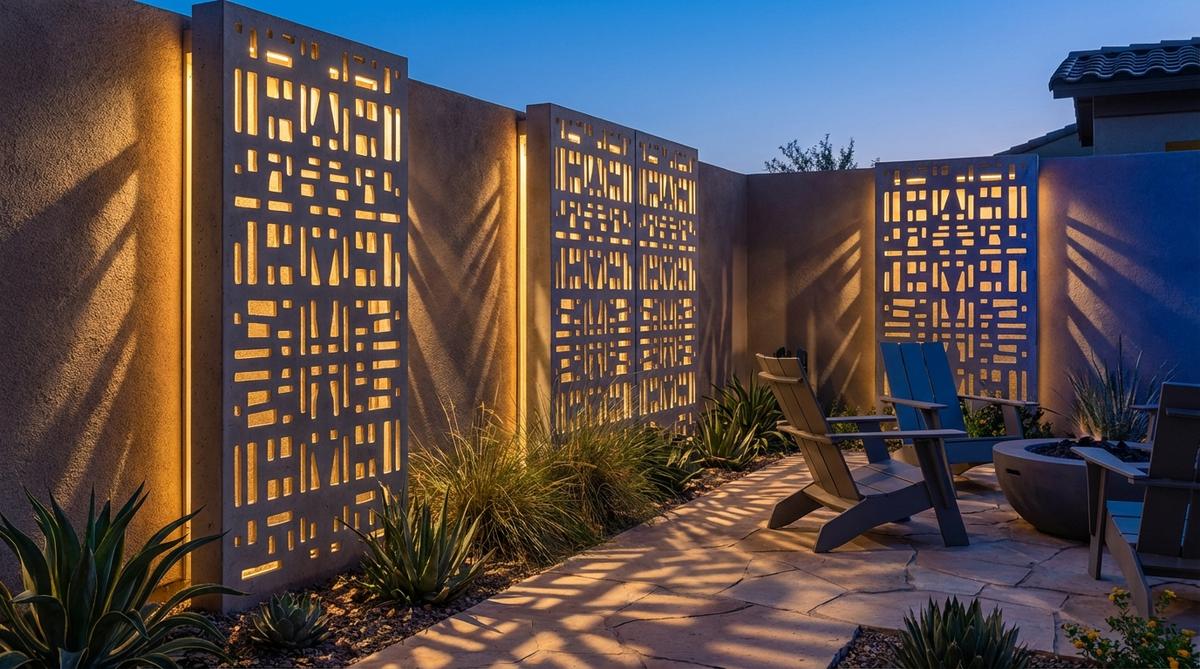
Lighting positioned behind perforated concrete screens creates dramatic shadow patterns. Geometric openings project onto surrounding surfaces.
Experiment with colored filters for varied effects. Automated controls enable programmed lighting sequences.
51. Linear LED Concrete Edging
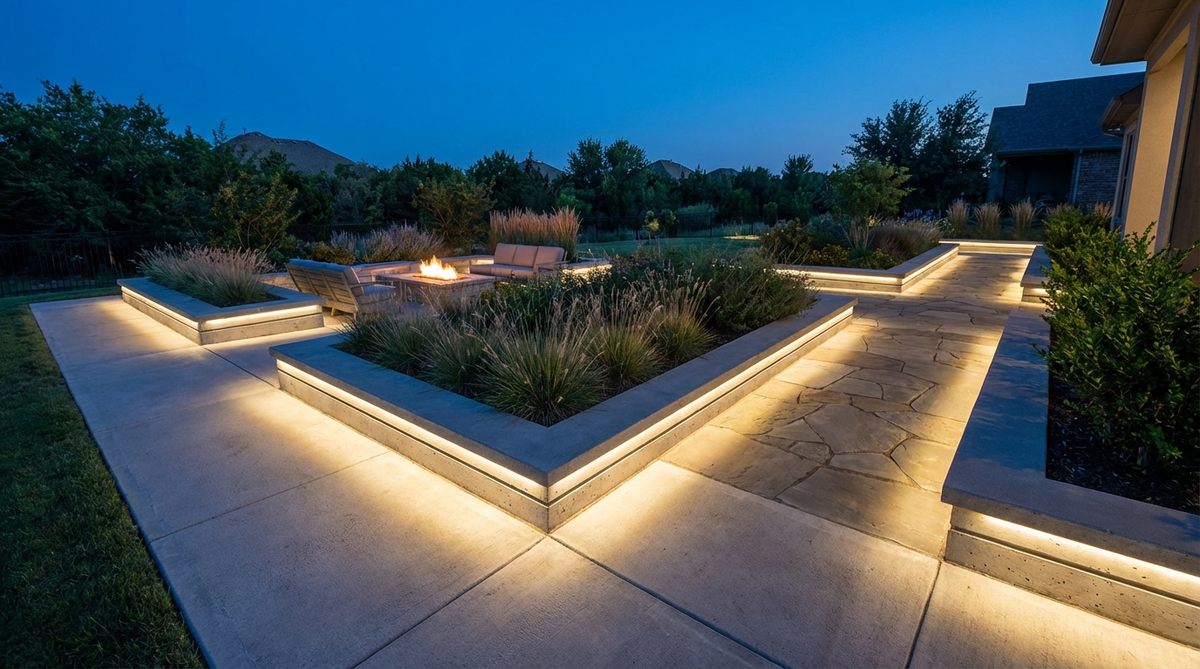
Continuous LED strips installed along concrete borders outline garden geometry. The linear lighting emphasizes clean edges and guides movement.
Embed lights within recessed channels for protection. Select IP-rated fixtures for outdoor durability.
52. Illuminated Step Risers
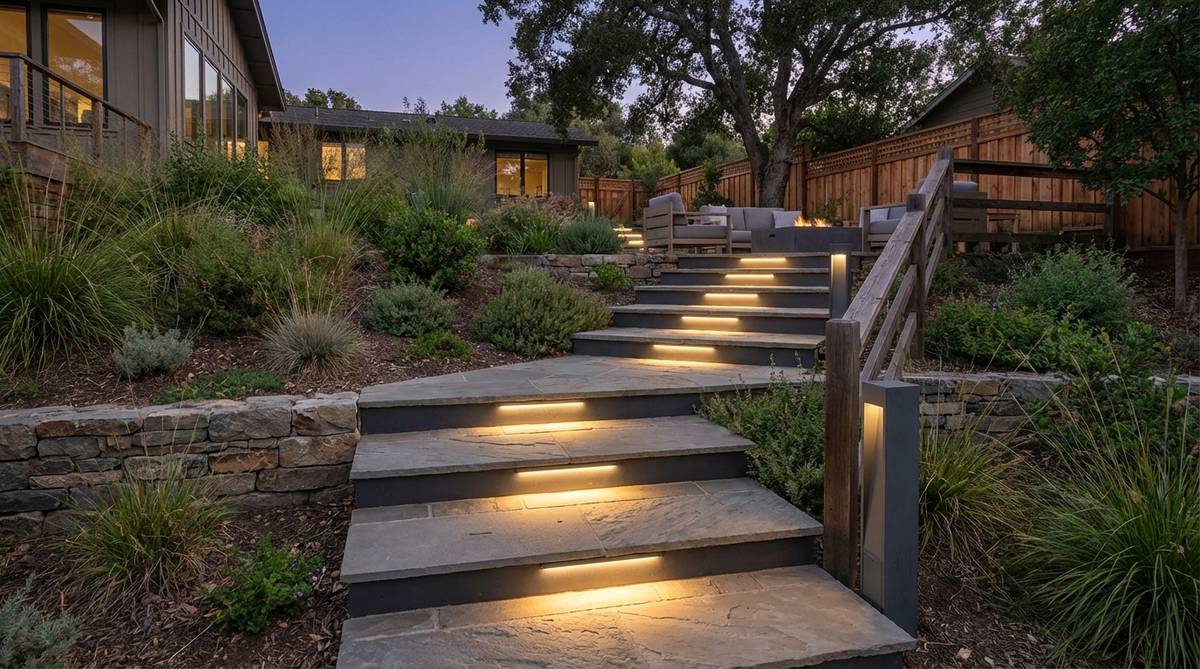
Light strips integrated into step risers improve safety while adding architectural detail. Each tread becomes clearly defined.
Install lighting on vertical faces rather than treads. Ensure fixtures withstand foot traffic impact.
53. Spotlight on Concrete Sculpture
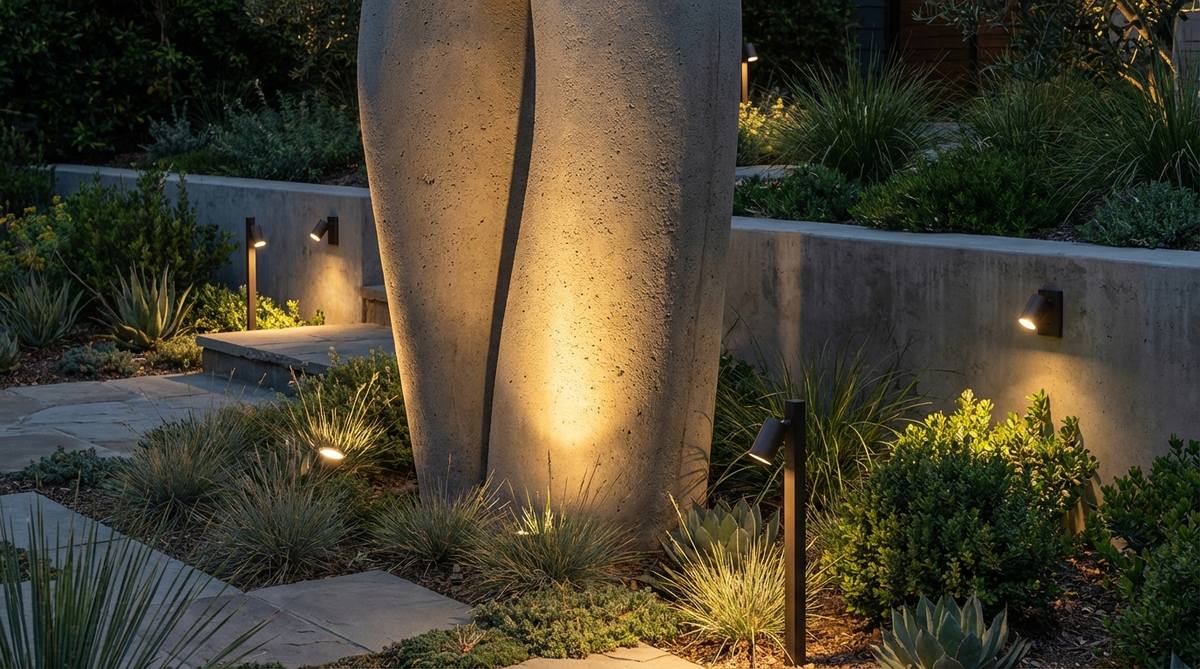
Directional spotlights positioned to graze concrete sculptures emphasize texture and form. Adjustable fixtures allow seasonal refocusing.
Use narrow beam angles for dramatic effect. Conceal fixture housings within plantings or behind walls.
54. Overhead String Lights With Concrete Posts
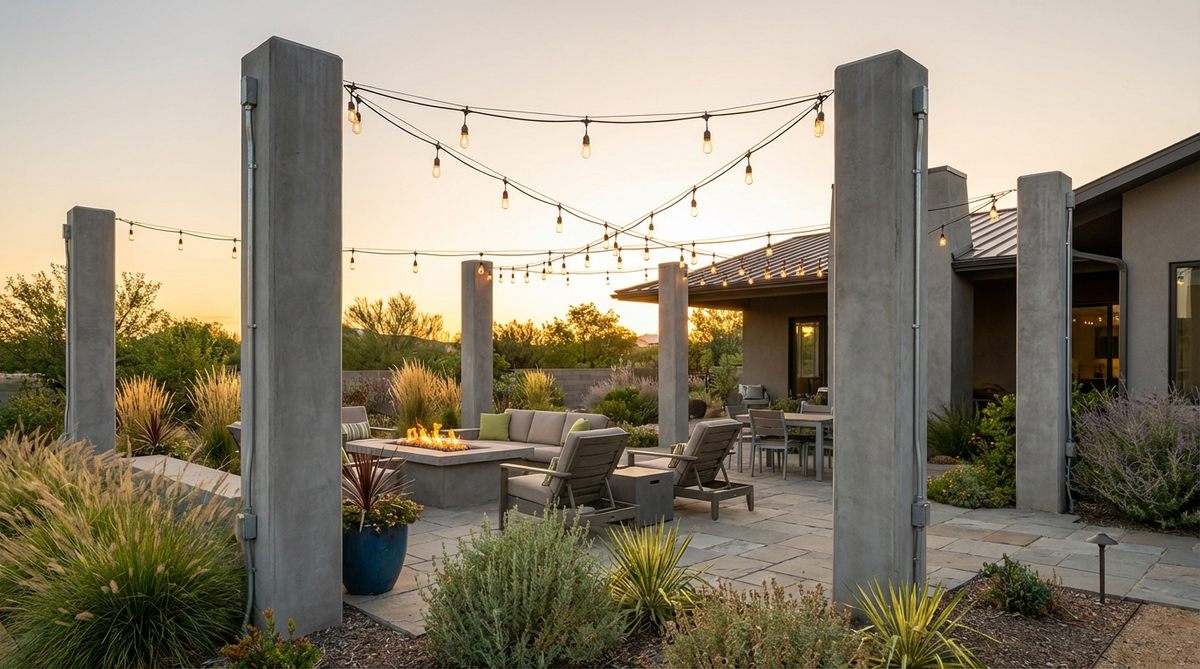
Concrete posts serve as permanent anchors for suspended string lighting. The posts maintain modern aesthetics while supporting festive illumination.
Design posts tall enough for clearance beneath lights. Include conduit for electrical routing.
Bringing Modern Precision To Your Garden
These 54 garden design modern concepts demonstrate how concrete and geometric principles create outdoor spaces with lasting appeal and minimal maintenance demands. Designers successfully blend architectural rigor with natural elements, producing gardens that feel both structured and inviting. Whether incorporating a single concrete pathway or executing a comprehensive landscape overhaul, these strategies from Fresh Garden Ideas provide actionable frameworks for contemporary outdoor design. Start by selecting two or three elements that align with your space and lifestyle, then expand your modern garden gradually while maintaining the clean lines and intentional geometry that define this timeless aesthetic.
Frequently Asked Questions
What concrete finish works best for modern garden pathways?
Smooth troweled finishes offer sleek contemporary appearance, while broom finishes provide better traction in wet conditions. Exposed aggregate combines slip resistance with textural interest, making it ideal for high-traffic areas. For ultimate durability and ease of maintenance, sealed concrete withstands staining and weathering better than unsealed surfaces.
How do I prevent concrete from looking too cold or institutional?
Balance concrete hardscapes with warm wood accents, lush plantings, and strategic lighting to create inviting atmospheres. Incorporate texture through board-forming or aggregate exposure rather than relying on uniform smooth surfaces. Limit concrete to 40-50% of visible surfaces, allowing greenery and other natural materials to soften the overall composition.
Can concrete work in small urban gardens?
Concrete excels in compact spaces because it defines clear zones without requiring extensive planting area. Vertical elements like walls and columns add dimension without consuming ground space. Light-colored concrete finishes reflect light, making small gardens feel more expansive than darker materials.
What plants complement geometric concrete designs?
Ornamental grasses provide movement against rigid structures, while evergreen shrubs maintain year-round presence. Architectural plants like agave, yucca, and phormium echo geometric intentions through their strong forms. For softness, select plants with fine textures such as ferns or trailing ground covers that spill over concrete edges.
How does concrete garden design perform in freeze-thaw climates?
Properly installed concrete with adequate drainage and air-entrained mix designs withstands freeze-thaw cycles effectively. Ensure minimum 4-inch thickness for pathways and include control joints every 8-10 feet to manage cracking. Seal surfaces biannually in cold climates to prevent moisture infiltration that leads to spalling.