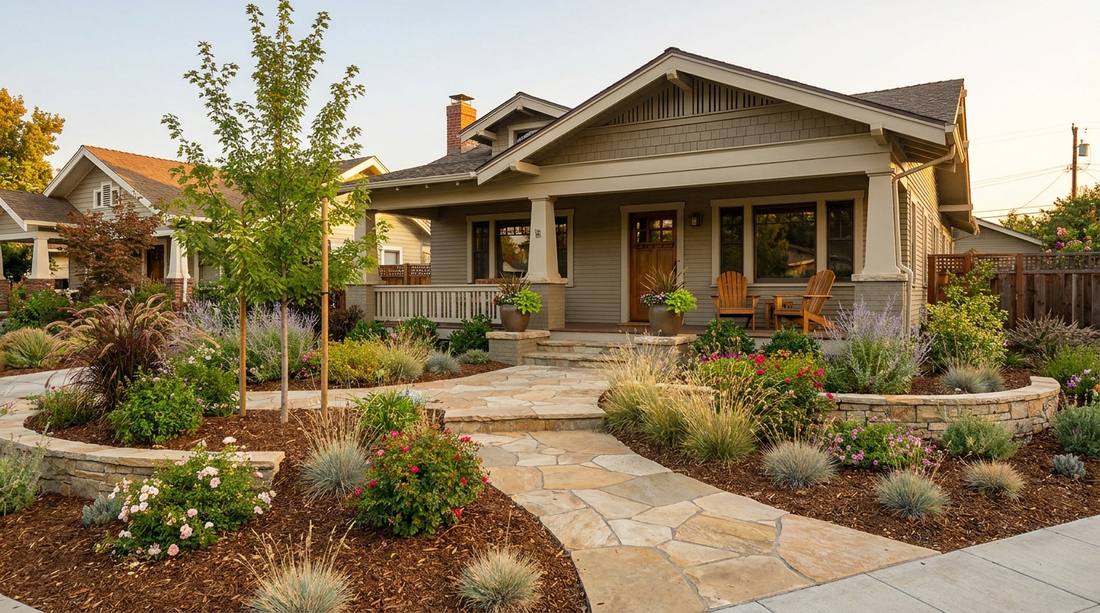
Most homeowners waste thousands of dollars on generic landscaping, believing a magazine-worthy garden design front yard requires hiring a luxury architect. The truth is, building a high-end entryway is entirely about strategic material sourcing and knowing exactly where to place high-impact, low-cost features. This guide breaks down the exact budget tricks, commercial-grade starter kits, and insider design rules needed to achieve a premium front garden design without the staggering agency markups.
Design Snapshot Key Principles
- Layered Heights: Arrange plants from tallest at the foundation to shortest at the edge for visual depth and architectural balance
- Cohesive Palette: Limit your color scheme to 3-4 hues that complement your home’s exterior for a polished, intentional look
- Functional Pathways: Design walkways at least 4-5 feet wide to accommodate comfortable two-person passage and clear sightlines
- Year-Round Interest: Mix 50% evergreens with 25% flowering shrubs and 25% perennials to maintain structure through all seasons
Modern & Contemporary Frontyards That Command Attention
Clean lines and architectural precision define contemporary front garden design, where intentional spacing and neutral materials create instant sophistication. These plans emphasize geometry, texture contrast, and minimalist plant selections that feel fresh and future-ready.
1. Monochromatic Green Palette
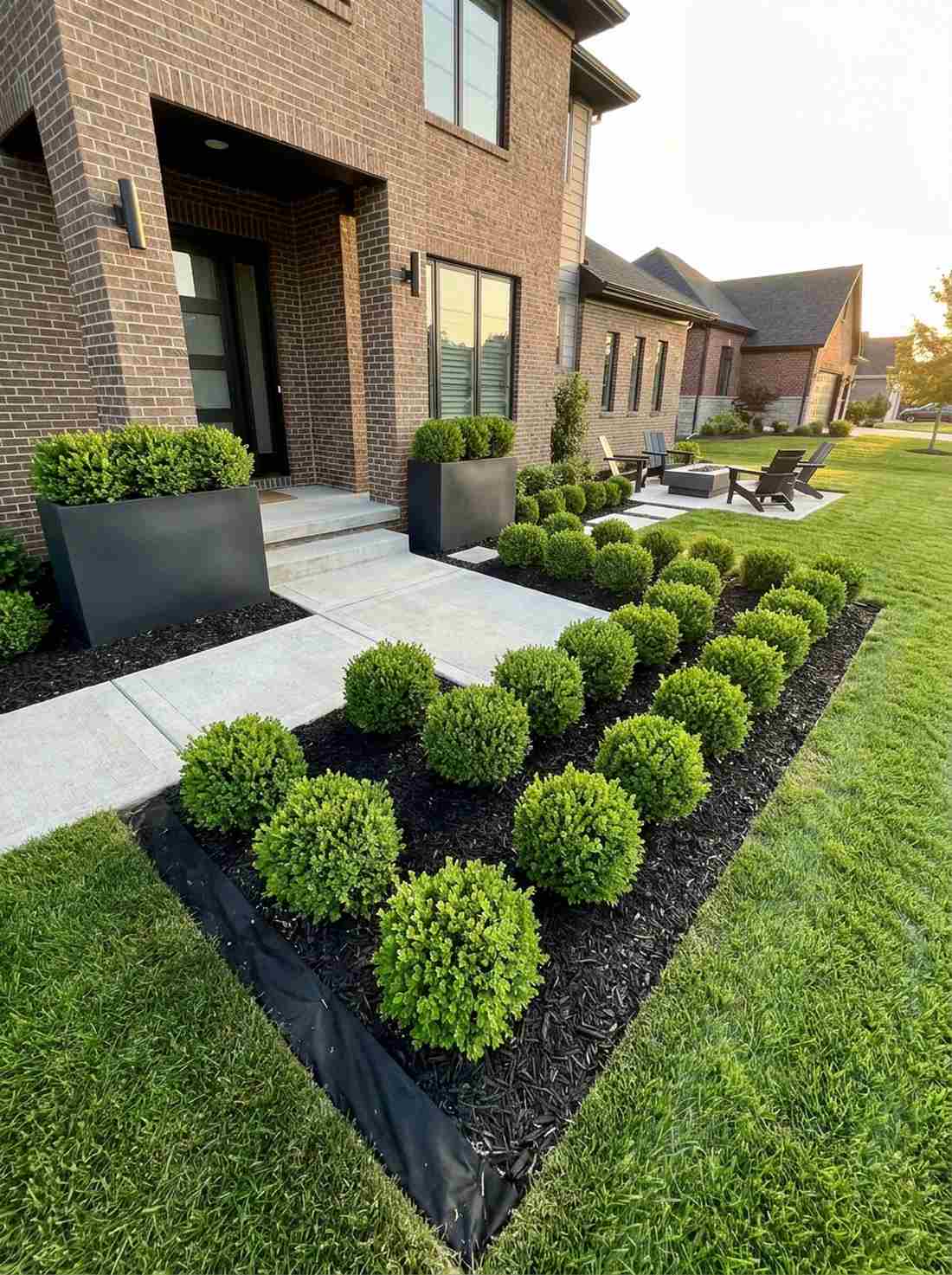
This layout feels like a calming architectural retreat tucked away in the suburbs. Using a monochromatic modern garden design creates an ultra-sophisticated aesthetic that works exceptionally well for stark brick exteriors or geometric pathways.
Relying solely on green foliage delivers a surprisingly premium look that bypasses the typical chaotic flower bed. By layering structured shrubs with heavy-duty landscaping fabric beneath black mulch, you establish a weed-free, museum-like quality.
You can easily pull this off for around $150–$300 depending on your starting plant sizes. Pin this if you’re planning a minimalist property upgrade.
- Key Materials: Pre-potted dwarf boxwoods, black dyed hardwood mulch
- Vibe / Style: Minimalist luxury
- Difficulty: Easy beginner setup
- Budget Breakdown: Shrubs: $150 | Mulch & Base: $60.
- Creator’s Tip: Use dark charcoal planters near the front door to seamlessly anchor the green tones.
- Smart Sourcing: commercial-grade weed barrier rolls and bulk-pack slow-release evergreen fertilizer.
2. Gravel Courtyard Garden
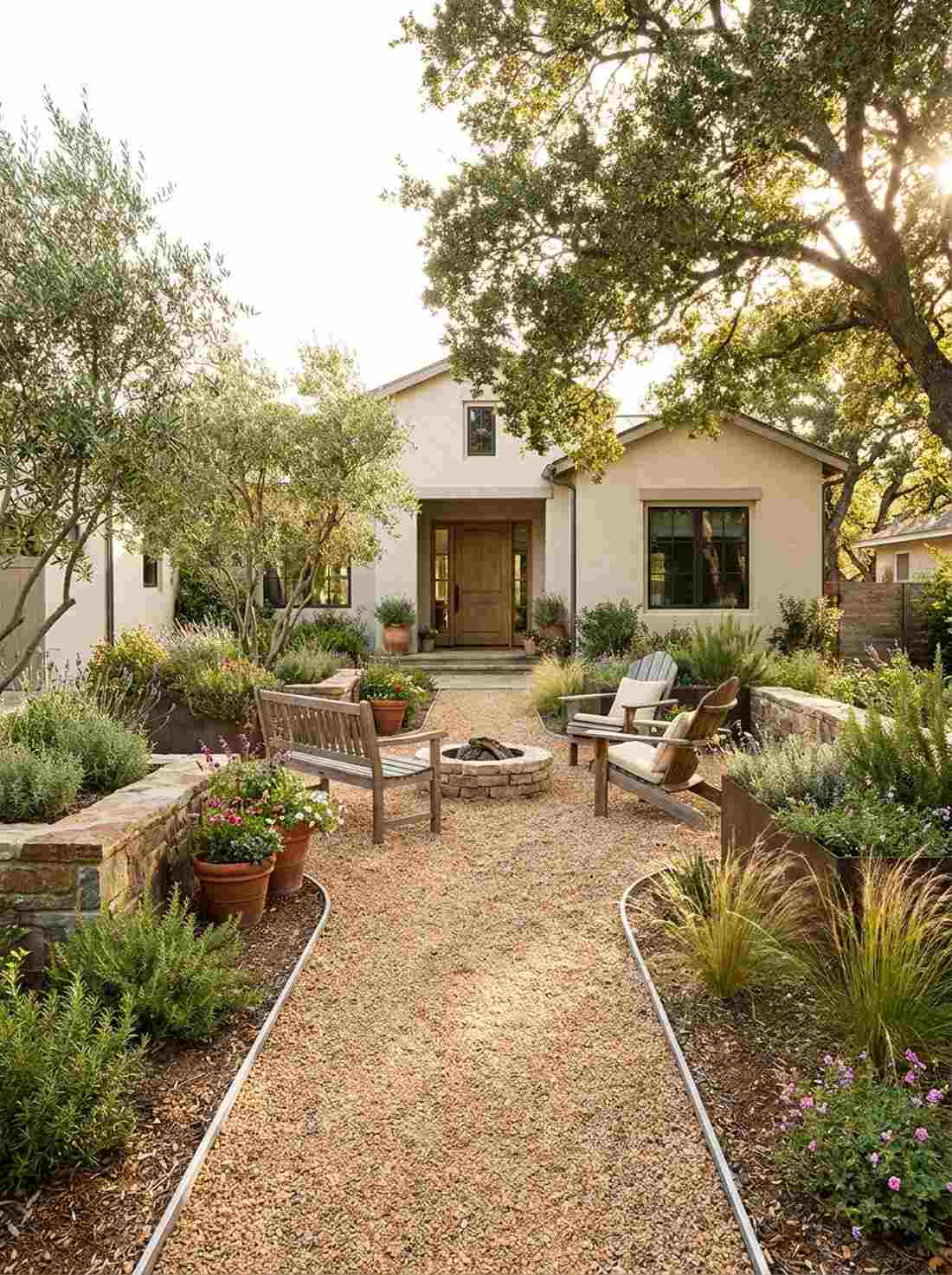
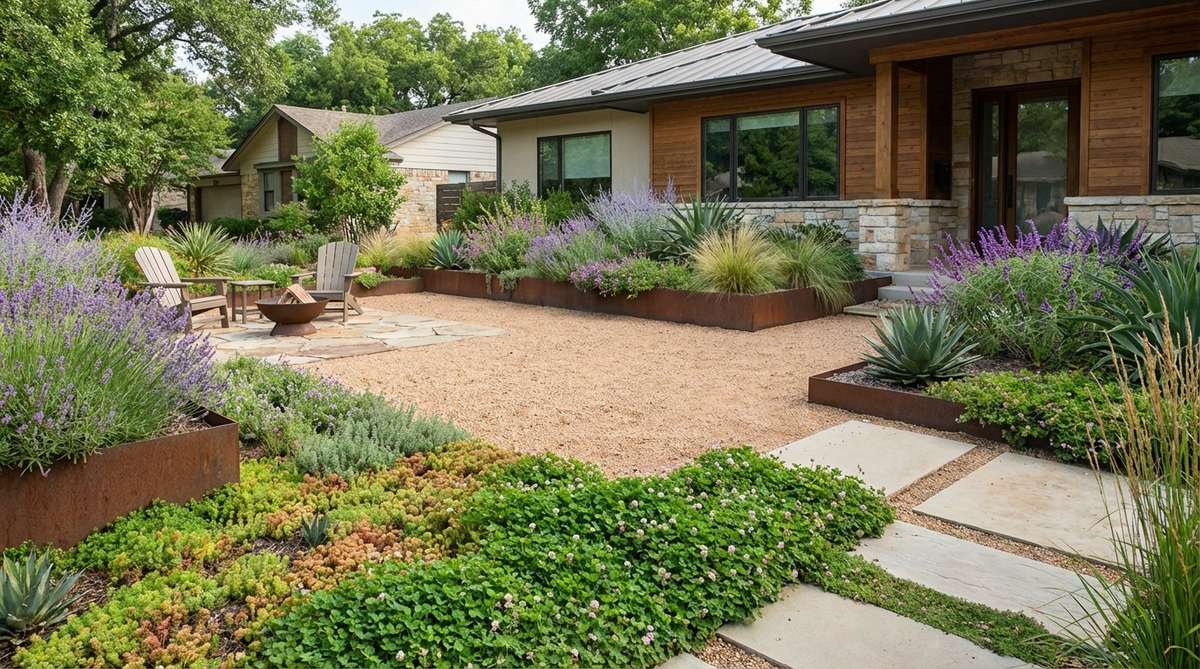
Stepping into this space feels like arriving at a boutique European villa. A gravel courtyard front yard is the ultimate hack for homeowners who want zero lawn maintenance while maximizing usable entryway space.
Replacing thirsty turf with stone instantly gives a designer-level finish that looks far more expensive than it is. Utilizing drought-tolerant plant starter kits in deep beds breaks up the stone and saves hundreds on monthly water bills.
Expect to spend about $200–$500 on gravel delivery and edging. It’s a fast upgrade that completely changes the vibe of your home’s facade.
- Key Materials: Pea gravel or decomposed granite, metal edging strips
- Vibe / Style: Mediterranean drought-friendly
- Difficulty: Moderate weekend project
- Budget Breakdown: Gravel delivery: $250 | Edging: $80.
- Creator’s Tip: Tamp the dirt firmly before laying the stone to prevent messy sinking spots later.
- Smart Sourcing: rust-proof galvanized steel landscape edging and heavy-duty leveling rakes.
3. Oversized Pavers with Grass Grouting
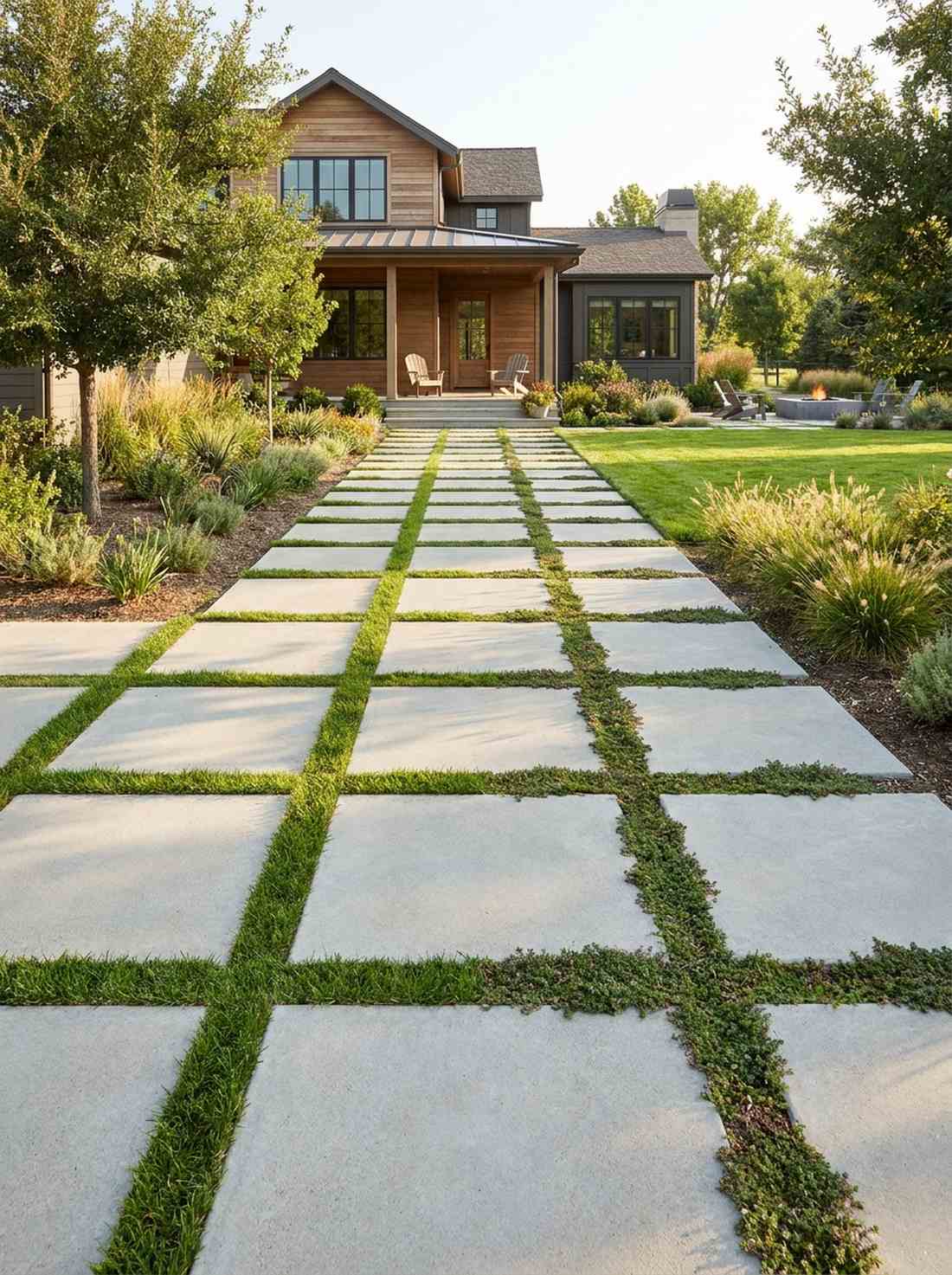
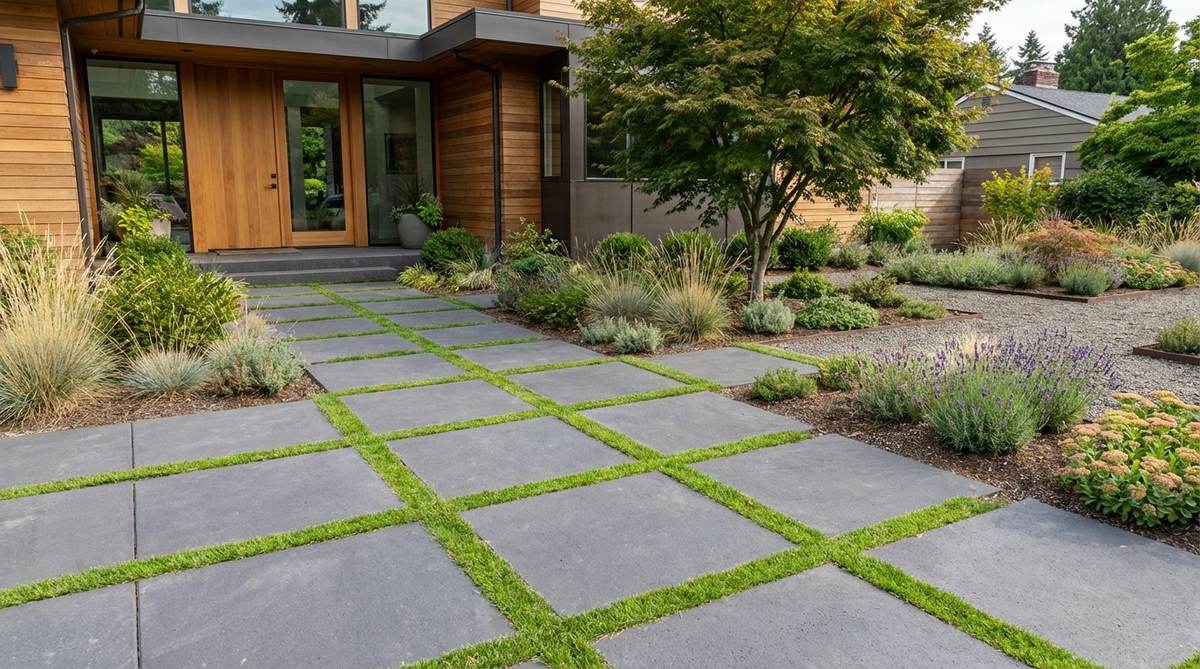
This path layout looks like it was ripped straight out of a high-end architectural digest. The oversized concrete paver grid design provides a brilliant balance of hardscape and soft greenery, perfect for guiding guests to the front door.
This simple geometry makes any budget home look like a million bucks. Instead of pouring a solid driveway, spacing out pre-cast concrete stepping stones with moss or creeping thyme creates an organic, permeable surface.
A DIY installation costs roughly $300–$600 depending on the paver dimensions. Save this to your outdoor styling board for inspiration.
- Key Materials: Large format pavers, creeping thyme seed
- Vibe / Style: Contemporary organic
- Difficulty: Medium effort (requires heavy lifting)
- Budget Breakdown: Pavers: $350 | Base Sand: $50 | Seeds: $20.
- Creator’s Tip: Use polymeric sand as a base to keep the pavers perfectly level through winter freezes.
- Smart Sourcing: bulk creeping thyme seed packs and pre-cut paver leveling mats.
4. Corten Steel Boundaries
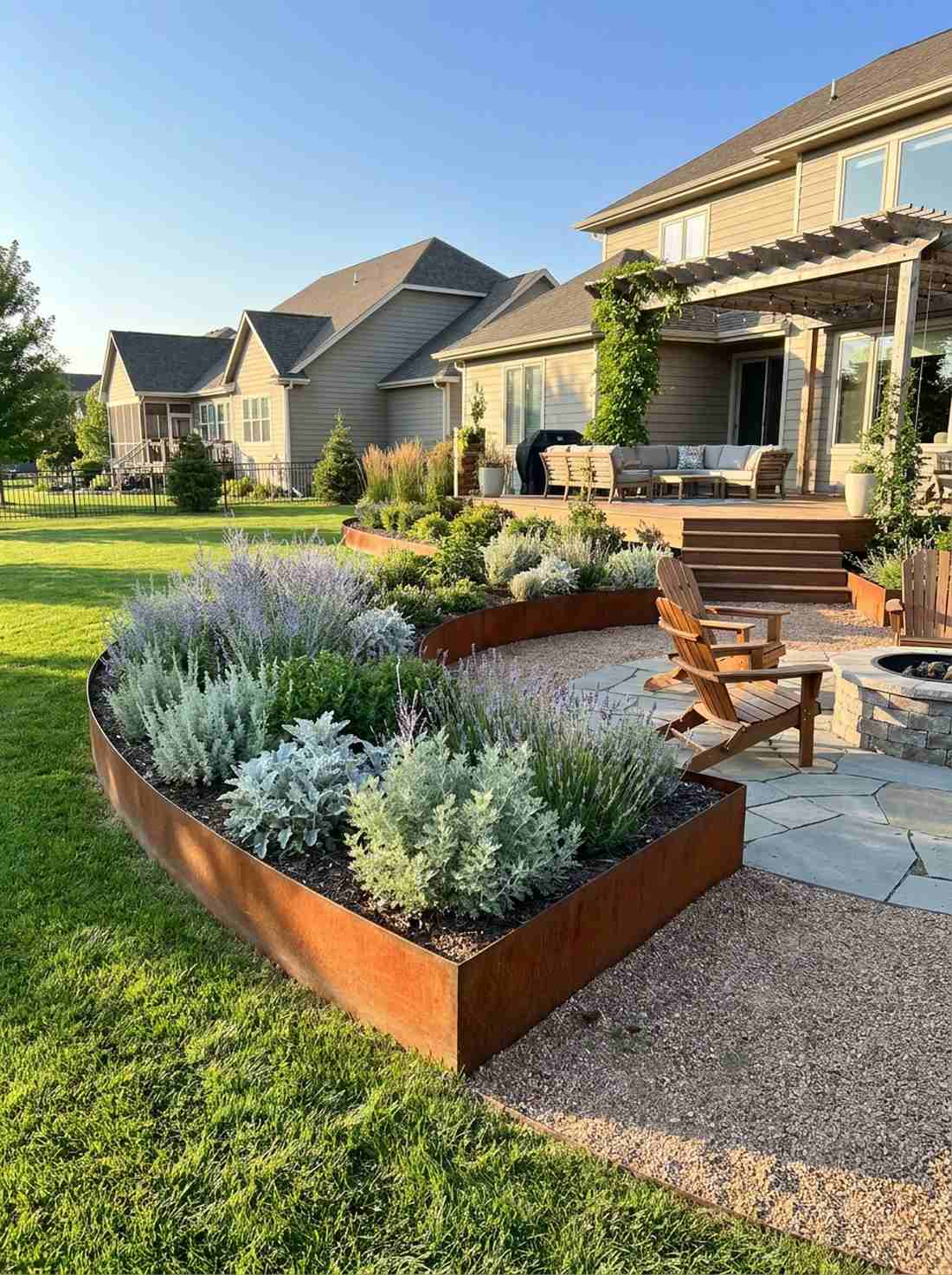
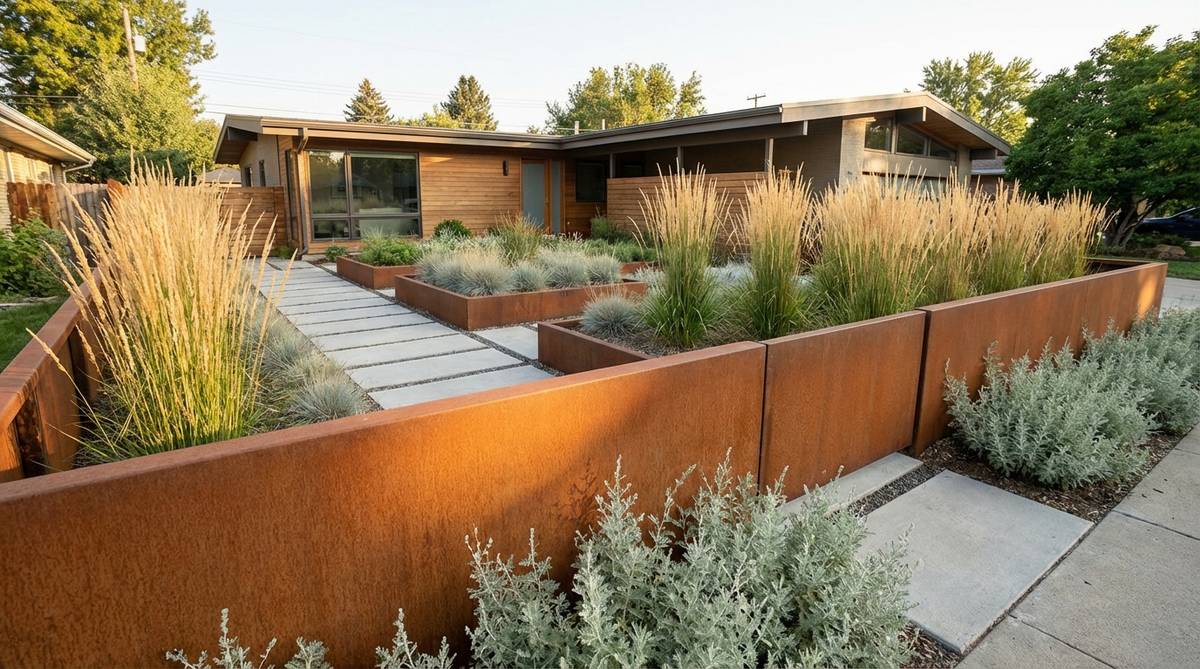
The rich, weathered rust tones here feel like an industrial art gallery installed in nature. Utilizing corten steel landscape borders brings intense visual warmth and geometric definition to otherwise flat, boring yards.
Installing metal borders bypasses the typical generic look of cheap plastic edging and adds serious curb appeal. Pairing the rusted steel with silver foliage perennials makes the colors pop dramatically without needing flowers.
You can set up a striking border system for about $100–$250.
- Key Materials: Weathering steel border panels, metal stakes
- Vibe / Style: Industrial modern chic
- Difficulty: Easy quick-install
- Budget Breakdown: Steel Panels: $150 | Connecting Pins: $20.
- Creator’s Tip: Spray the steel with a salt and vinegar solution to accelerate the beautiful rusting process instantly.
- Smart Sourcing: flexible corten steel edging kits and pre-drilled metal anchor stakes.
This next setup is ridiculously cheap but looks like a $1,000 custom display…
5. Architectural Topiary
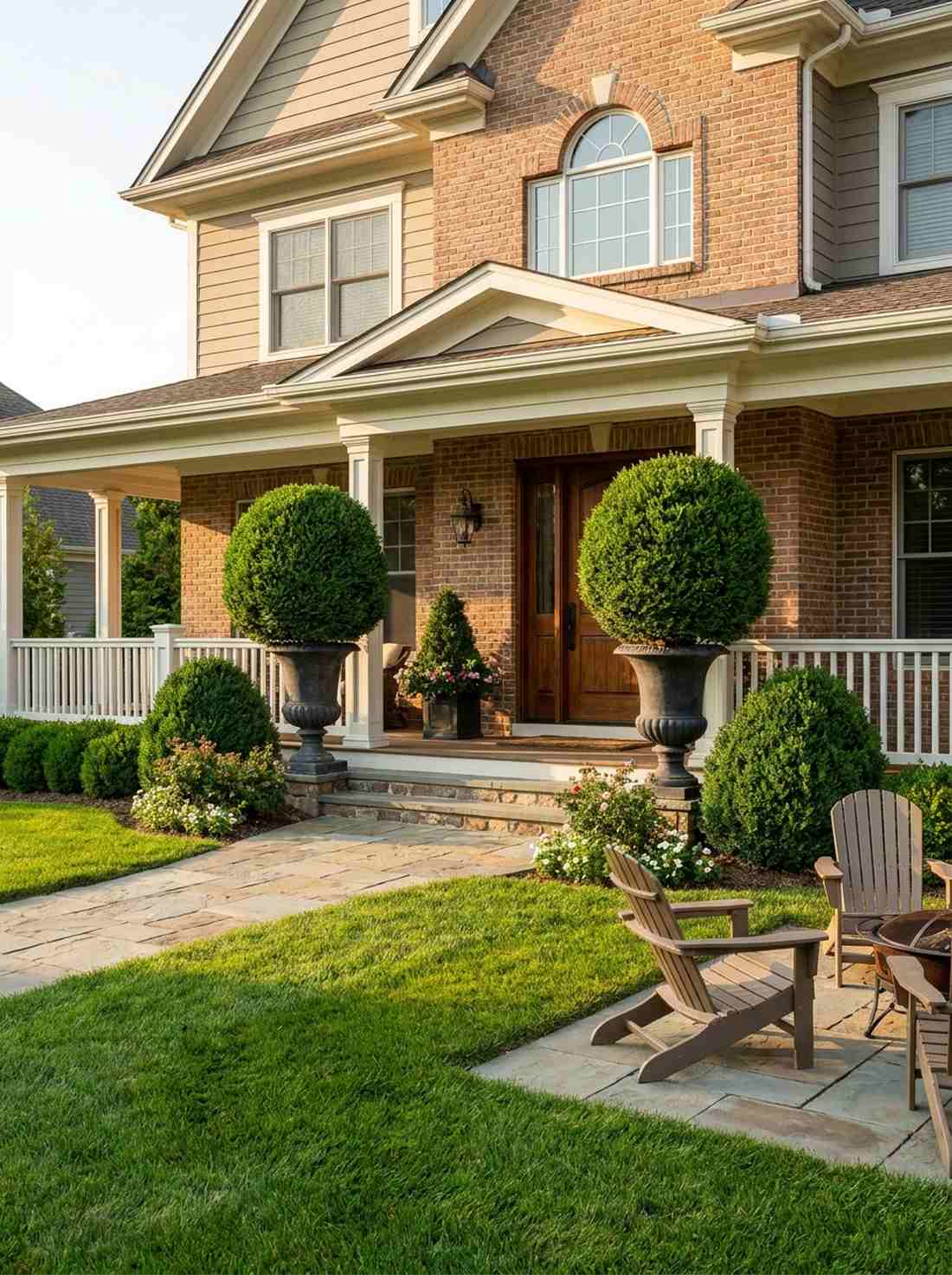
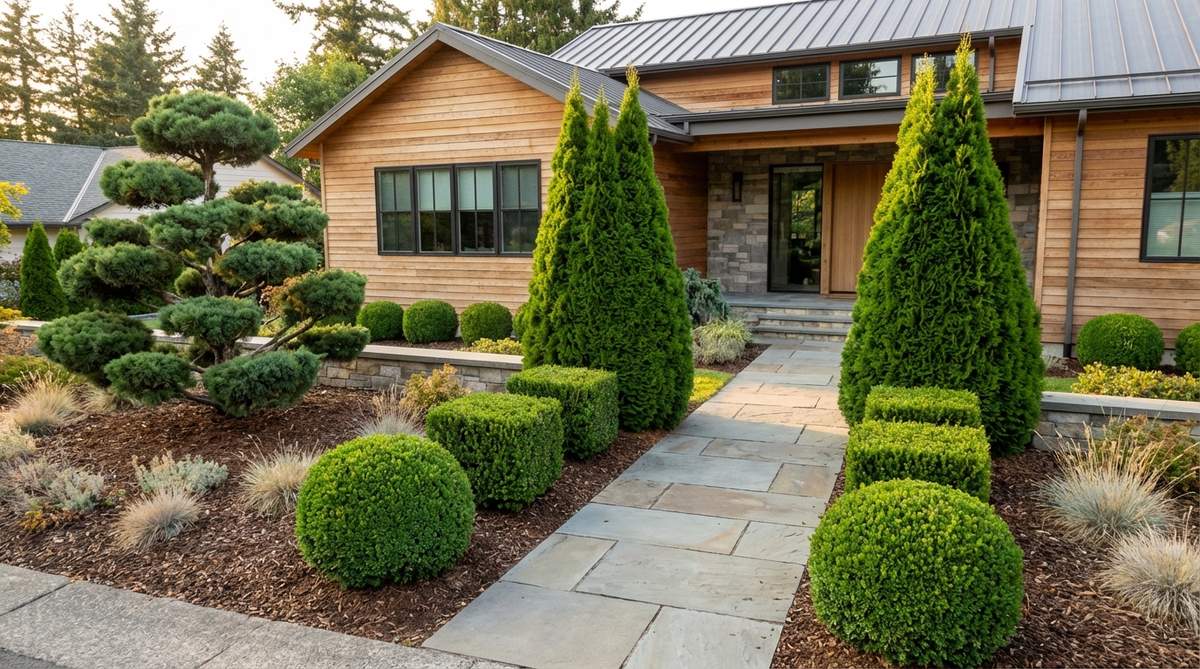
Nothing says “established luxury” quite like perfectly manicured greenery framing a doorway. Architectural topiary spheres act as living sculptures that lend immediate prestige to the most basic entryways.
Arranging structural evergreens elevates the space, making your standard garden design front yard look incredibly upscale. Whether you use real Korean boxwoods or UV-resistant faux topiary balls, the geometric contrast is stunning.
Creating this focal point costs around $80–$150 per arrangement. Pin this if you want maximum impact with minimal footprint.
- Key Materials: Slow-growing evergreens or high-end artificial spheres
- Vibe / Style: Classic high-end estate
- Difficulty: Easy to place, requires seasonal maintenance if real
- Budget Breakdown: Topiary: $90 | Decorative Urn: $40.
- Creator’s Tip: If using artificial topiaries outdoors, weigh the bottom of the pot down with brick so they don’t blow away.
- Smart Sourcing: UV-coated artificial boxwood spheres and heavy-weight resin planter urns.
6. Vertical Garden Panels
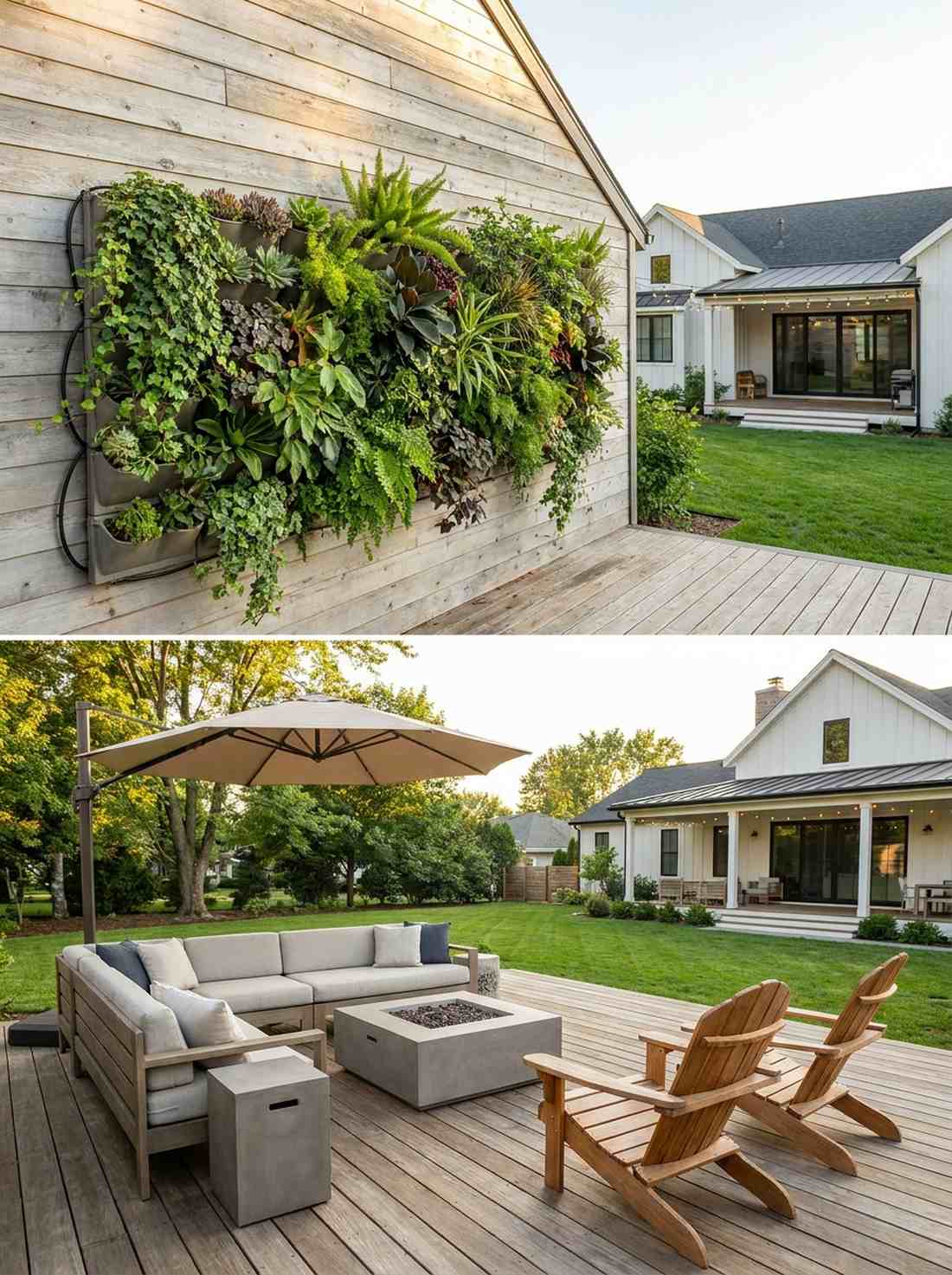
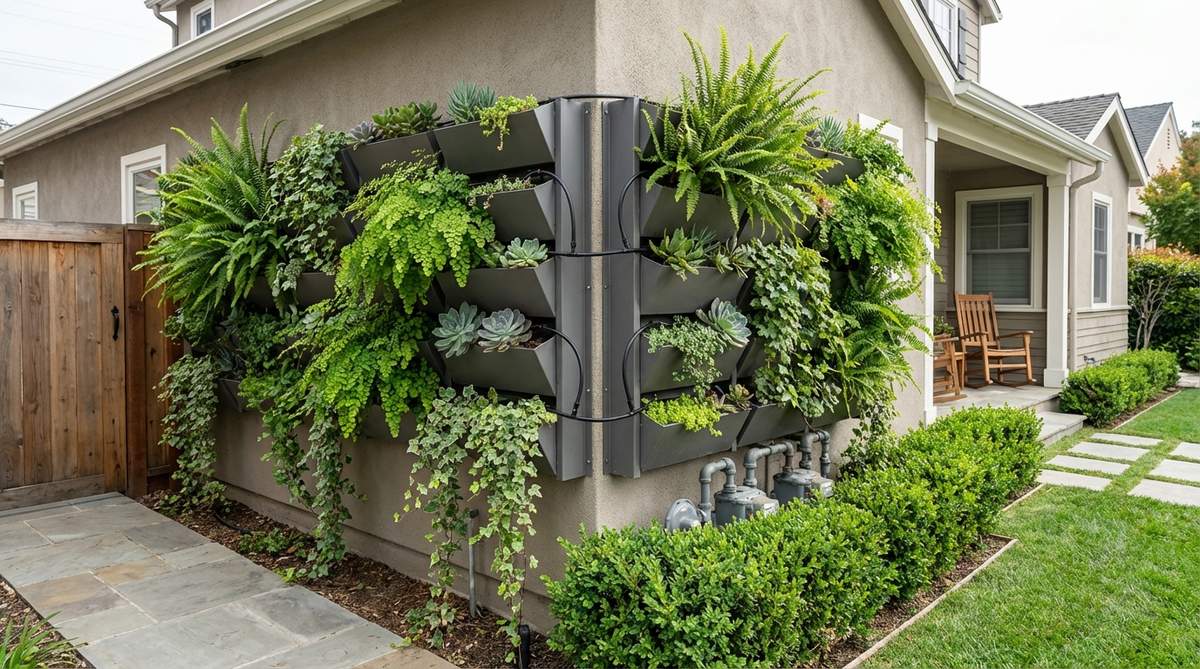
This lush wall design feels like a modern eco-resort right at your front door. A living wall vertical garden is a brilliant use-case for covering up ugly utility meters, blank garage walls, or cramped side-yards.
Going vertical is the ultimate space-saving hack that completely transforms dead zones into lush focal points. Using modular vertical planter kits with built-in drip lines ensures the wall stays vibrant without constant manual watering.
You can assemble a stunning living panel for roughly $150–$300.
- Key Materials: Wall-mounted pocket planters, trailing vines
- Vibe / Style: Urban jungle modern
- Difficulty: Moderate (requires basic drilling)
- Budget Breakdown: Planter Grid: $120 | Potting Soil: $30.
- Creator’s Tip: Put drought-resistant plants at the top and moisture-loving ferns at the bottom where water naturally drains.
- Smart Sourcing: self-watering vertical wall planter kits and bulk moisture-control potting mix.
Traditional & Classic Elegance For Timeless Appeal
Symmetry, formal plantings, and established design principles create front garden designs that never go out of style. These approaches emphasize balance, repetition, and refined details that speak to architectural heritage.
7. Symmetrical Foundation Beds
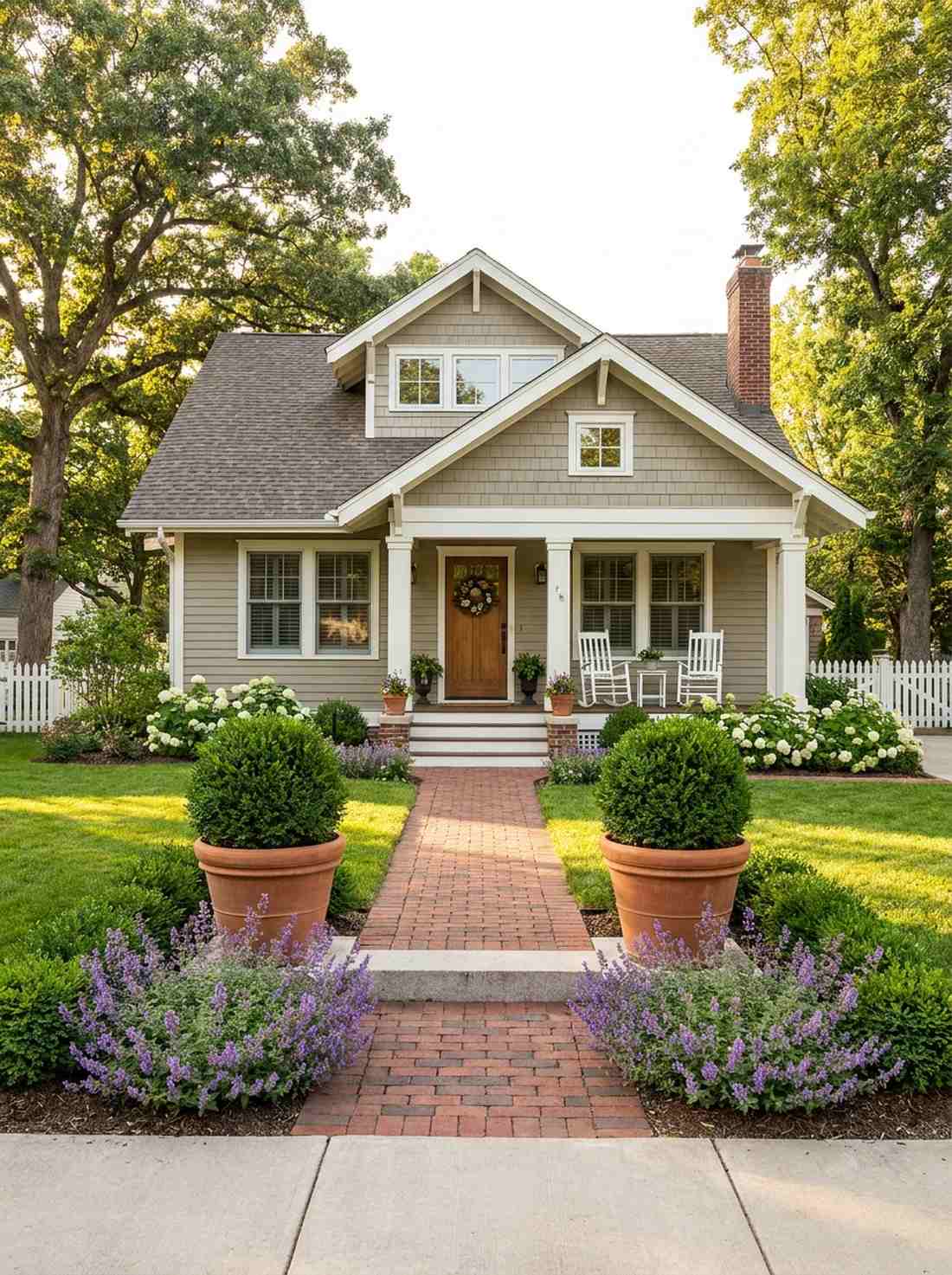
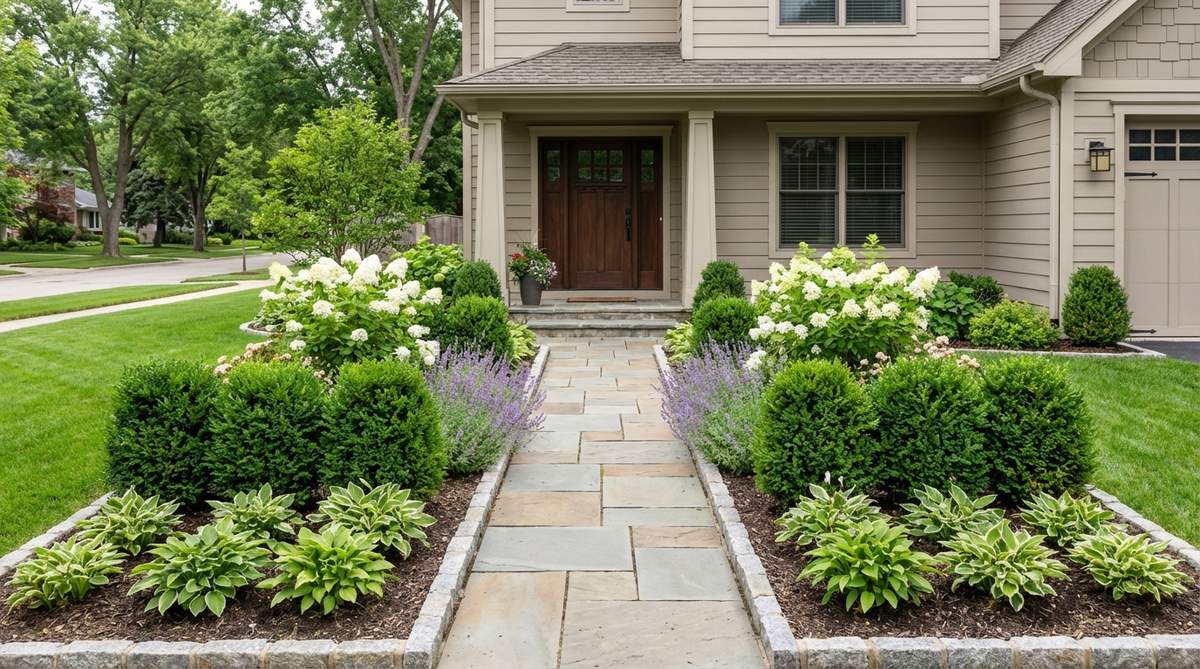
This perfectly balanced look feels exactly like a heritage home straight out of a storybook. Symmetrical front of house plantings create an immediate sense of order and authority that frames any doorway beautifully.
Mirroring your layout creates a high-end designer-level finish without requiring professional help. By flanking the door with matching evergreen starter shrubs and identical perennial borders, you trick the eye into seeing custom architecture.
This formal upgrade generally costs around $200–$400 for identical plant pairs. Save this layout for an easy, foolproof property face-lift.
- Key Materials: Matching pairs of evergreen shrubs, identical decorative pots
- Vibe / Style: Traditional symmetry
- Difficulty: Easy planning, simple planting
- Budget Breakdown: Matched Shrubs: $180 | Edging: $50.
- Creator’s Tip: Use a tape measure from the center of your front door to ensure your anchor plants are spaced to the exact inch.
- Smart Sourcing: laser measuring tools and pre-formulated shrub planting soil.
8. Boxwood Hedge Borders
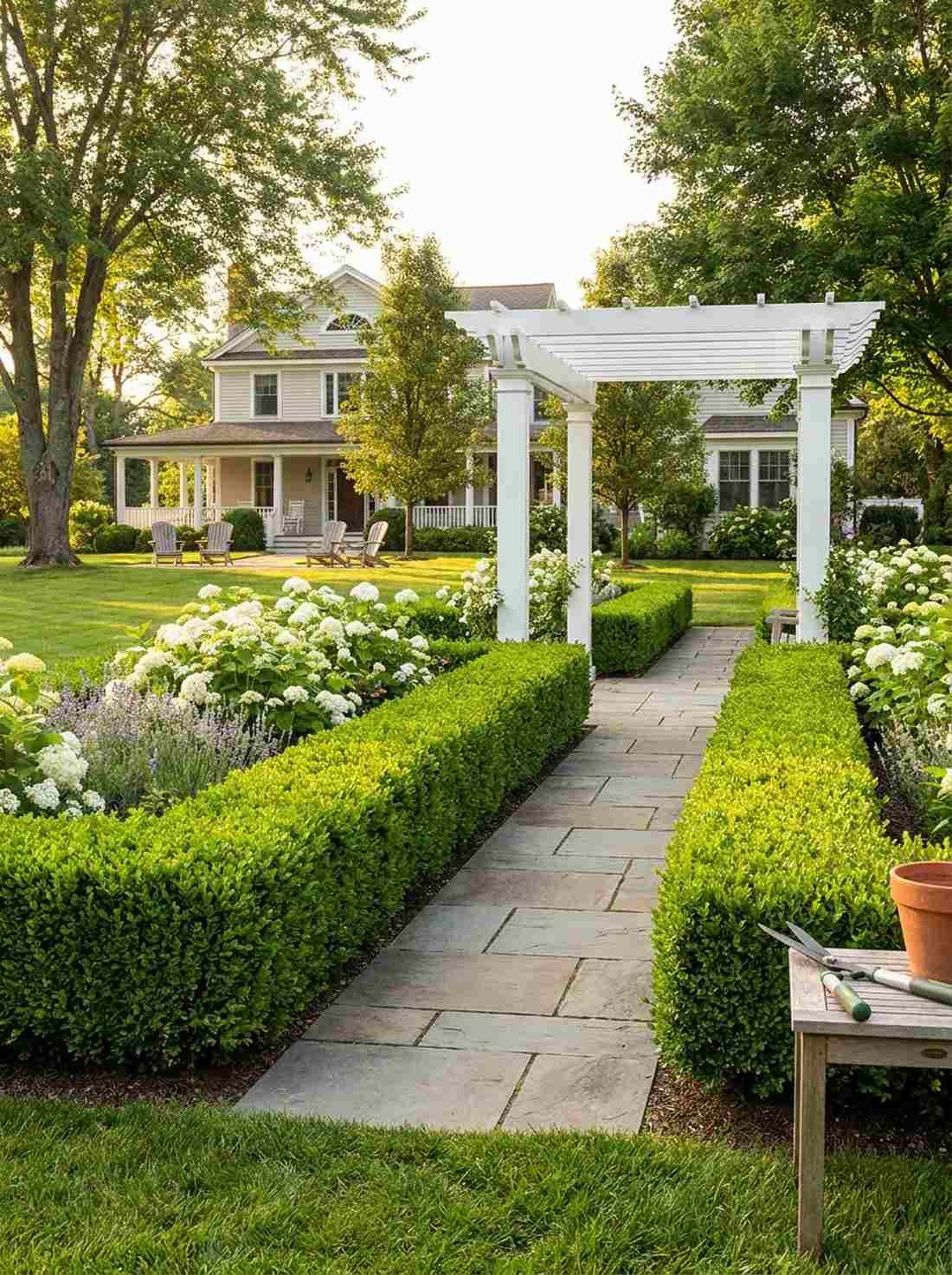
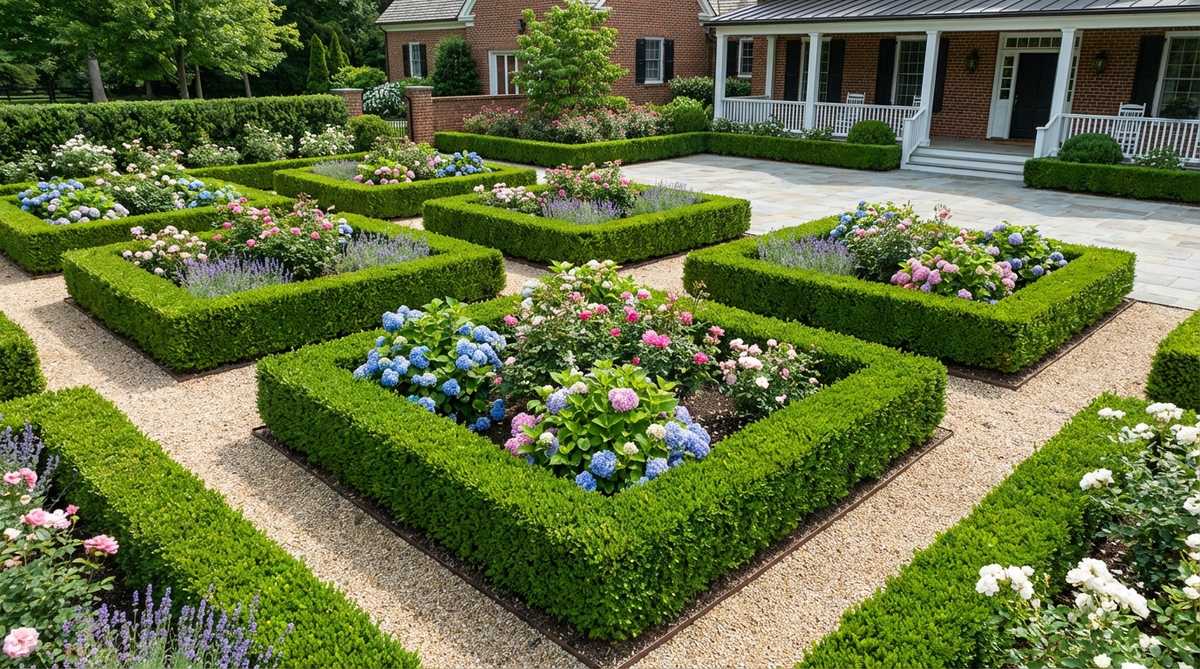
Walking past this tight green ribbon feels wonderfully crisp and aristocratic. A low boxwood hedge pathway border is the perfect solution for keeping floppy flowers contained while defining clear walkways.
Planting a continuous hedge looks wildly expensive once mature, giving basic yards that rich, country-club aesthetic. Using bulk bare-root boxwoods planted 12 inches apart guarantees a solid, uninterrupted line in just two seasons.
Setting this up will cost about $100–$250 depending on the pathway length.
- Key Materials: Small boxwood starts, precision pruning shears
- Vibe / Style: Formal manicured elegance
- Difficulty: Easy planting, requires consistent trimming
- Budget Breakdown: Bulk plants: $150 | Root Stimulator: $20.
- Creator’s Tip: Run a taught string line between two stakes before planting to guarantee your hedge grows perfectly straight.
- Smart Sourcing: bulk bare-root hedge starter packs and teflon-coated hedge shears.
9. Formal Rose Garden Entry
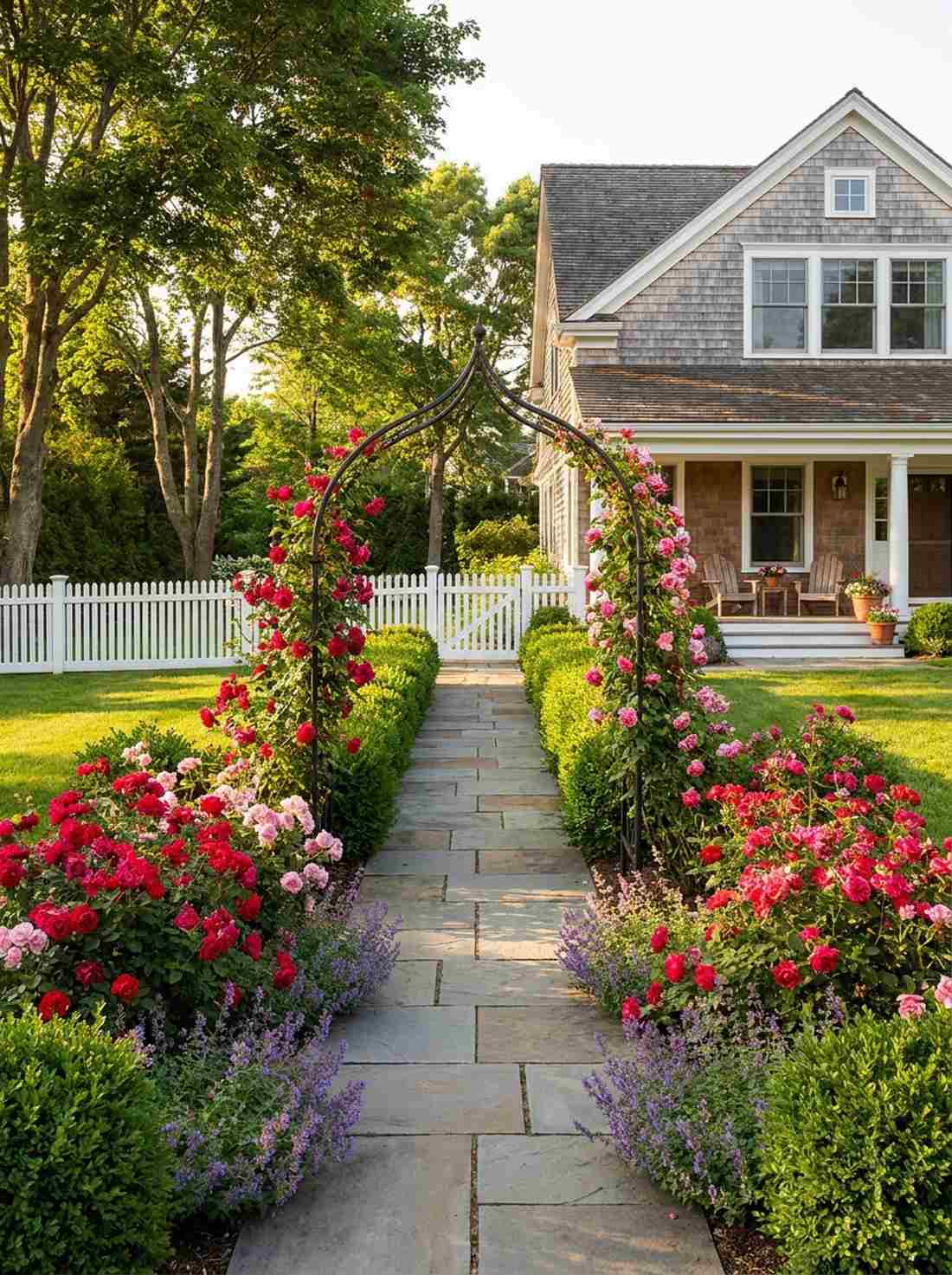
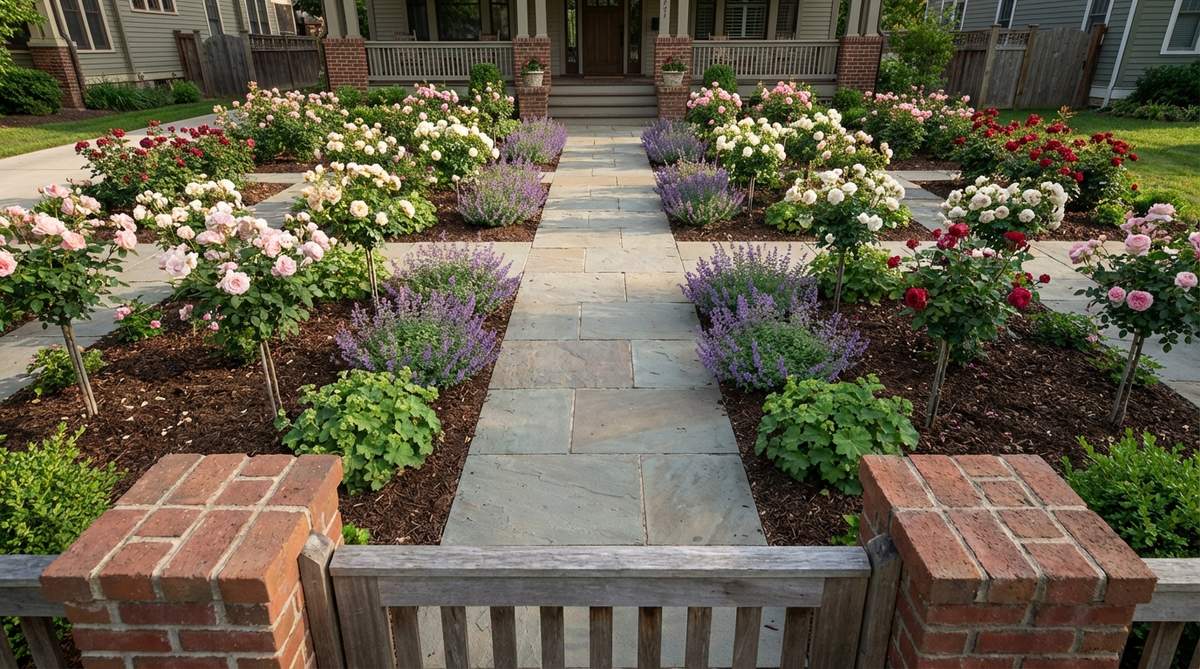
The fragrance and visual drama here feel like a scene from an old-world romance novel. A formal rose garden entryway creates undeniable curb appeal that literally stops neighbors in their tracks.
While some avoid them, modern roses deliver incredible visual payback for surprisingly little cash. Opting for disease-resistant shrub rose kits instead of finicky hybrid teas gives you that overflowing, luxurious look without the exhausting maintenance.
You can build a stunning rose entrance for $150–$300. Pin this if you want classic beauty with high-impact color.
- Key Materials: Knockout or shrub roses, organic rose food
- Vibe / Style: Romantic heritage
- Difficulty: Moderate (requires seasonal pruning)
- Budget Breakdown: Rose Bushes: $160 | Specialized Fertilizer: $30.
- Creator’s Tip: Underplant the roses with low-growing catmint to hide bare, thorny stems and add a pop of contrasting purple.
- Smart Sourcing: disease-resistant bare-root rose bundles and heavy-duty leather pruning gloves.
💡 Must-Have Supplies for High-End Setups
To build these setups faster and ensure they last, skip the generic craft aisles and invest in the right foundational kits.
- Base & Support: commercial-grade woven weed barriers (bulk pack)
- Setup Tools: ergonomic landscaping starter tool kits
- Weather/Durability Protection: UV-clear outdoor sealant sprays
Most people get this completely wrong… until they try the exact layout coming up next.
10. Brick or Stone Edging
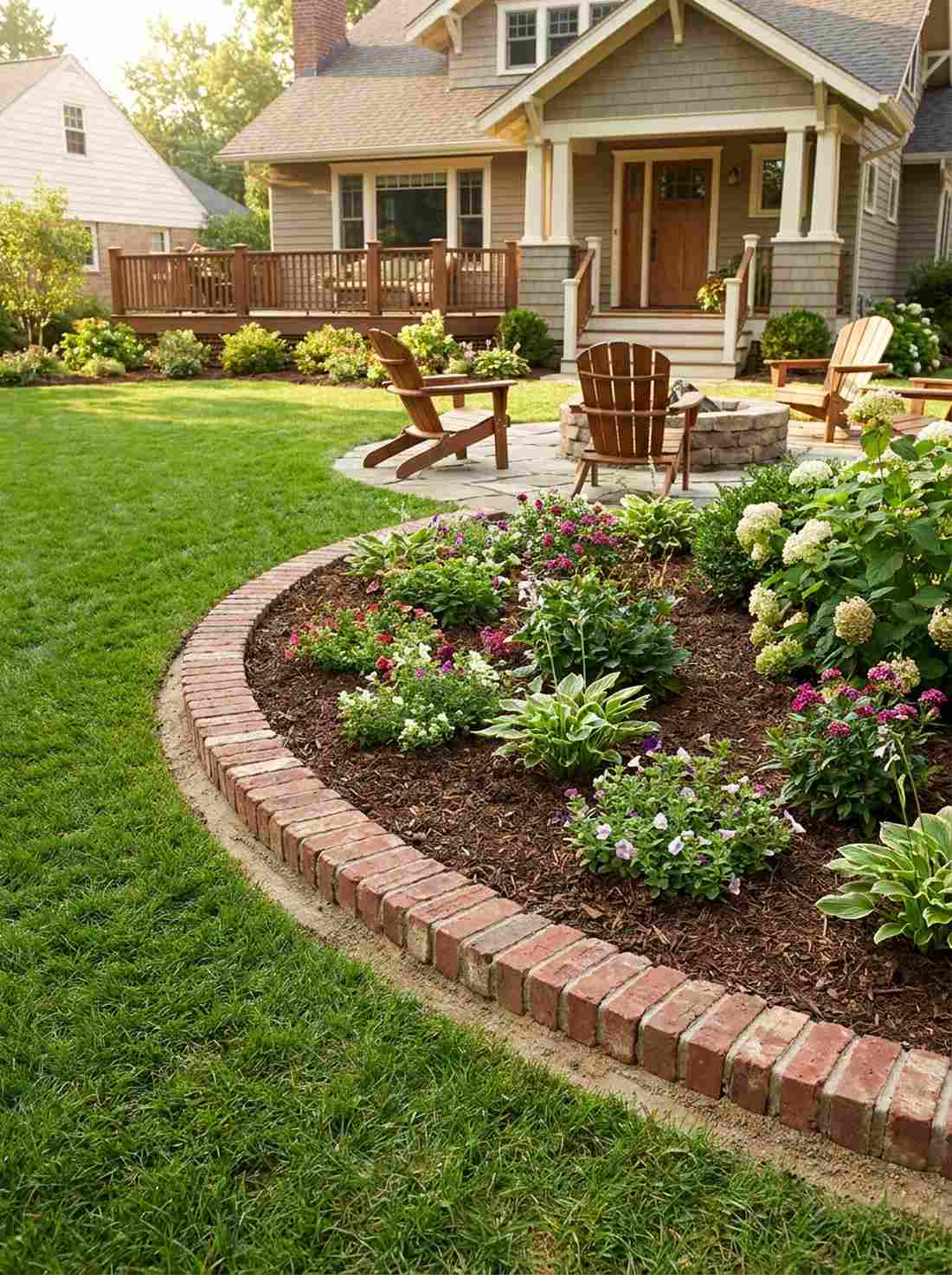
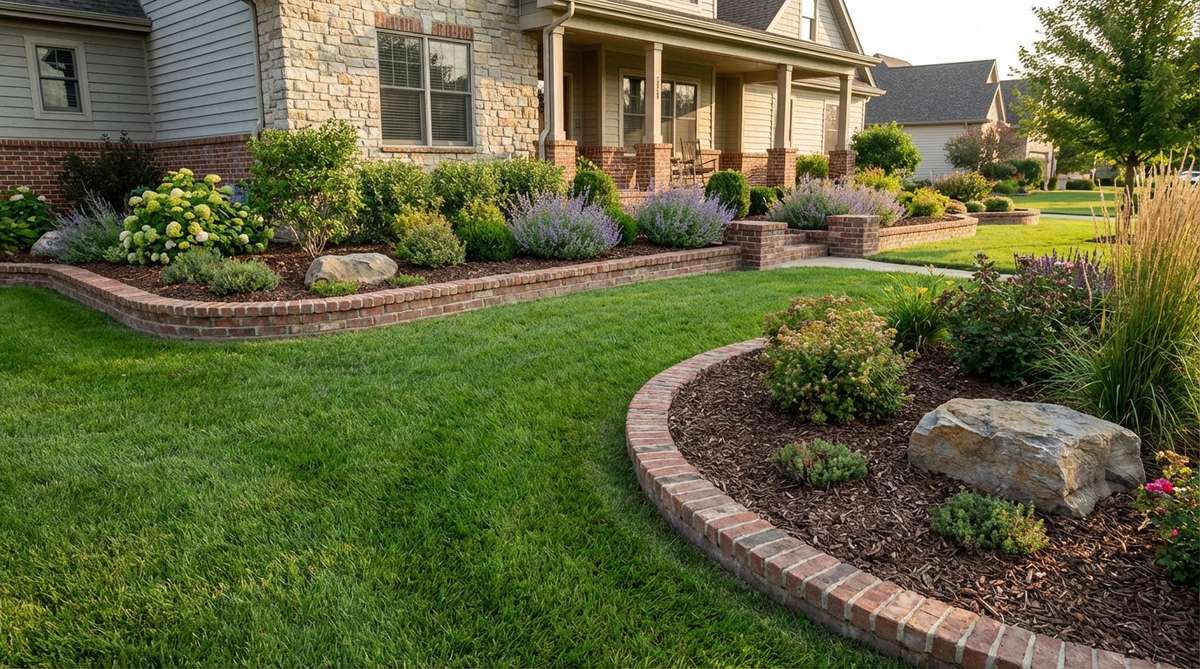
This solid border design adds a feeling of historic permanence and neatness to the yard. Installing reclaimed brick garden edging is ideal for stopping messy grass from creeping into your manicured beds.
Swapping out flimsy plastic for stone instantly upgrades the property’s perceived value. Setting interlocking paving stones or vintage bricks in a simple trench saves you from hours of string-trimming every single weekend.
You can edge a standard front bed for just $60–$150.
- Key Materials: Reclaimed bricks or cast stone edgers, leveling sand
- Vibe / Style: Classic structural neatness
- Difficulty: Easy but labor-intensive
- Budget Breakdown: Bricks: $80 | Sand Base: $25.
- Creator’s Tip: Lay the bricks in a ‘soldier’ course (standing vertically) to handle slight curves in the garden bed more easily.
- Smart Sourcing: pre-cast scalloped stone edging packs and tamping hand tools.
11. Columnar Evergreen Sentinels
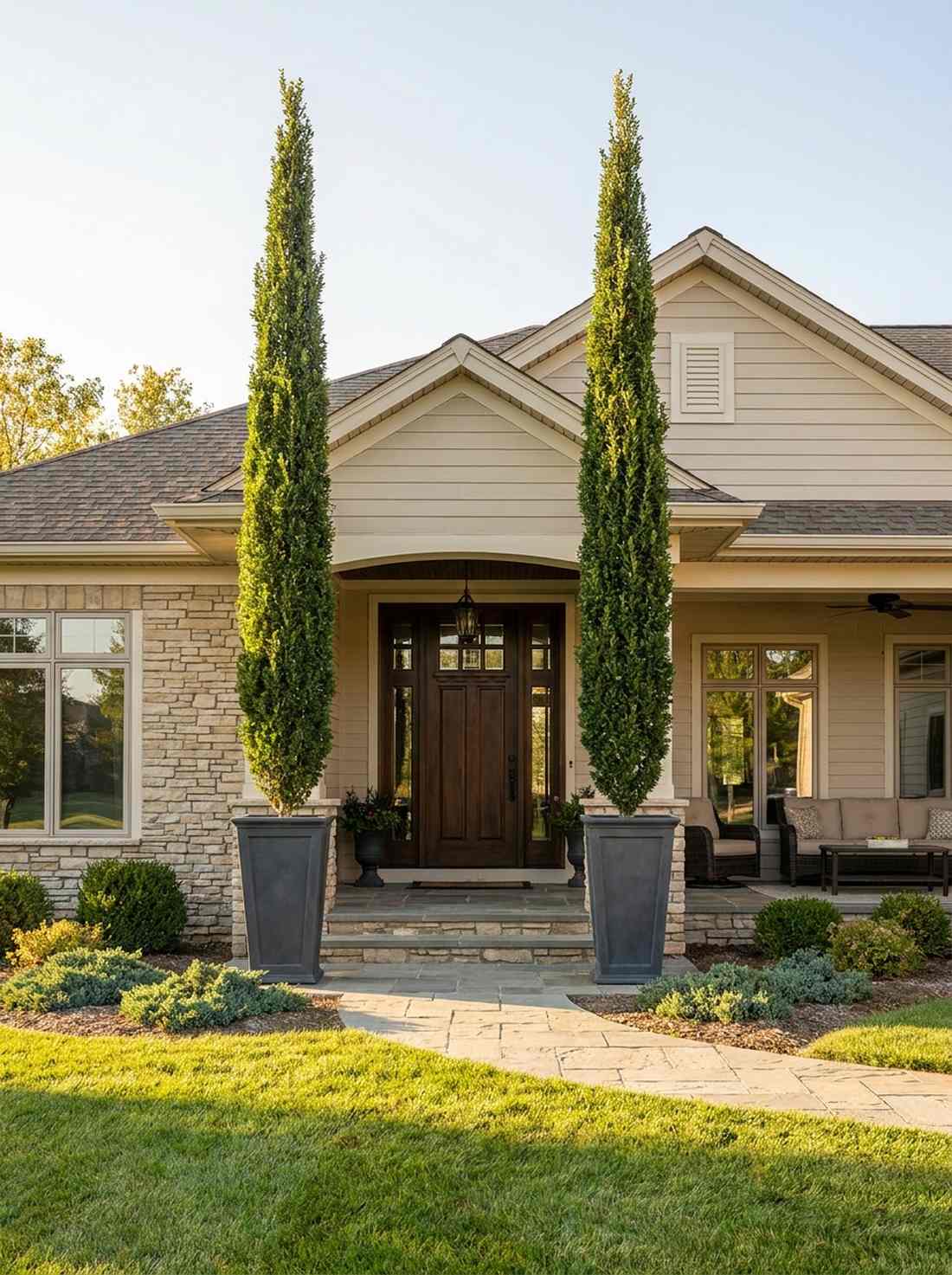
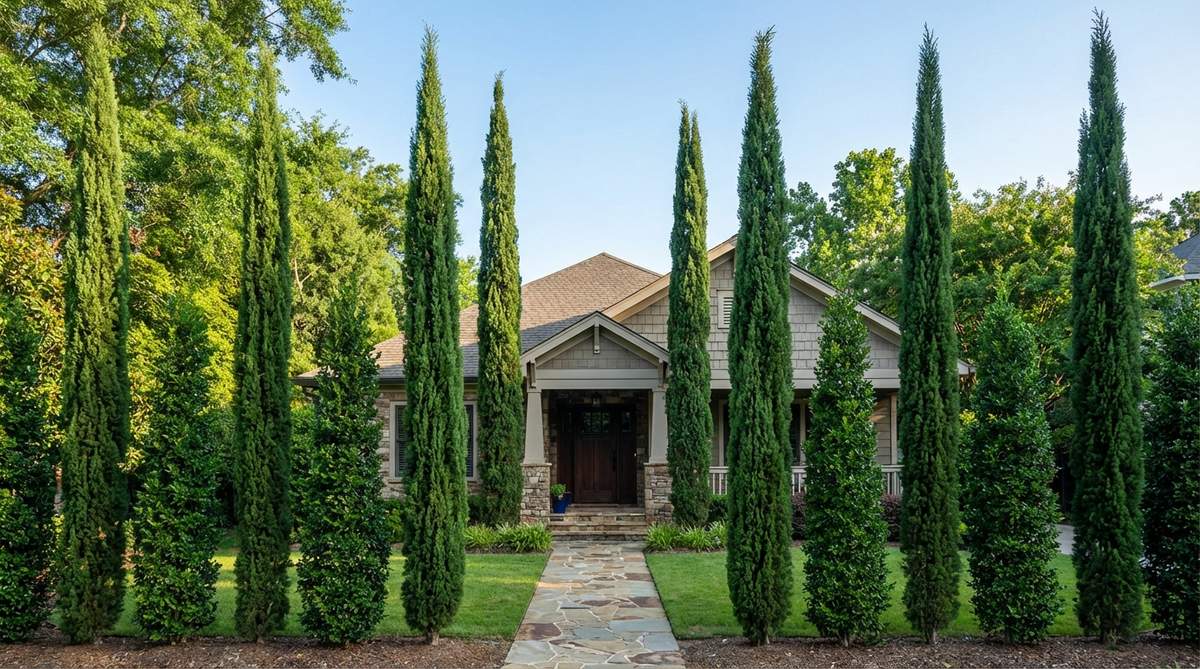
These towering green pillars make the entrance feel majestic and incredibly secure. Flanking a doorway with columnar evergreen trees is the ultimate trick for making a single-story, flat house appear instantly taller and more architectural.
Adding vertical height bypassing the typical flat bush layout changes the entire geometry of your home. Using narrow varieties like ‘Sky Pencil’ holly starters provides massive height without eating up valuable walkway space.
Two statement sentinels will cost around $100–$200. Save this if you need to add drama to a boring, flat facade.
- Key Materials: Tall, narrow evergreens (Italian Cypress or Juniper)
- Vibe / Style: Majestic vertical elegance
- Difficulty: Easy drop-in planting
- Budget Breakdown: Sentinel Trees: $120 | Support Stakes: $20.
- Creator’s Tip: Plant them at least 3 feet away from the foundation wall to allow air circulation and prevent siding rot.
- Smart Sourcing: tall decorative fiberglass planters and heavy-duty tree staking kits.
12. Perennial Border Classics
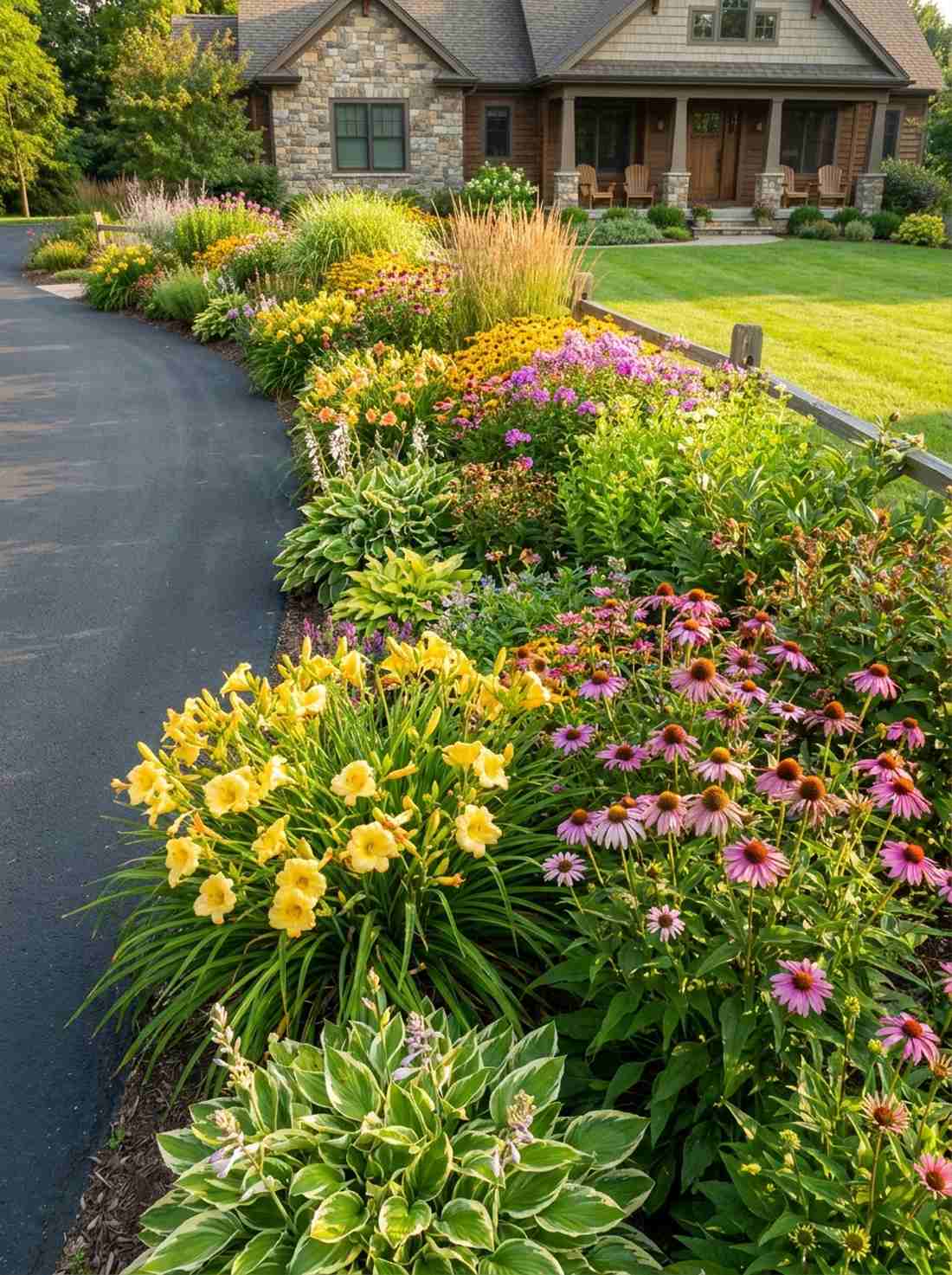
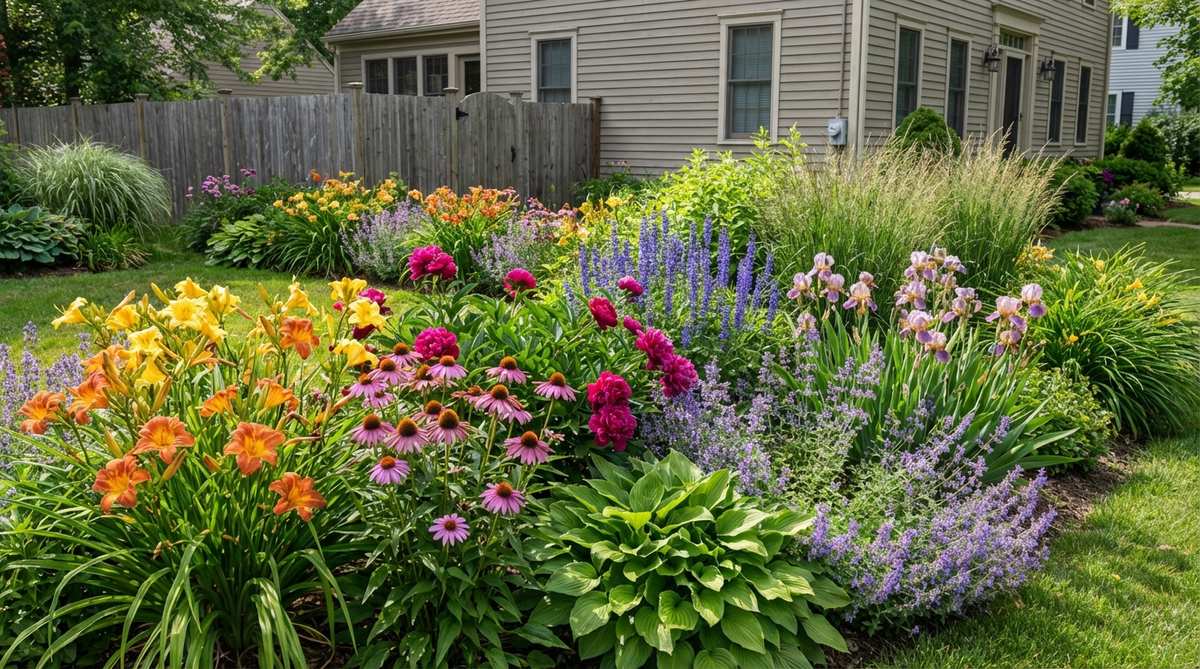
This layered explosion of color feels like walking through a famous botanical garden. A classic perennial border mix is perfect for lining long driveways or deep front yard boundaries where you want continuous seasonal action.
Building a staggered-bloom bed ensures your yard looks vibrant from spring all the way to autumn frost. Grabbing pre-planned perennial root collections takes the guesswork out of color-matching and saves a fortune over buying mature potted plants.
You can fill a massive border bed for about $80–$150 using roots and bulbs.
- Key Materials: Daylilies, coneflowers, hostas, organic compost
- Vibe / Style: Colorful cottage abundance
- Difficulty: Moderate (requires seasonal deadheading)
- Budget Breakdown: Bare-root mix: $75 | Compost: $35.
- Creator’s Tip: Plant in triangular clusters of three or five of the same plant; single plants tend to get lost visually.
- Smart Sourcing: bulk bare-root perennial kits and slow-release bulb fertilizer granules.
13. Wildflower Meadow Strip
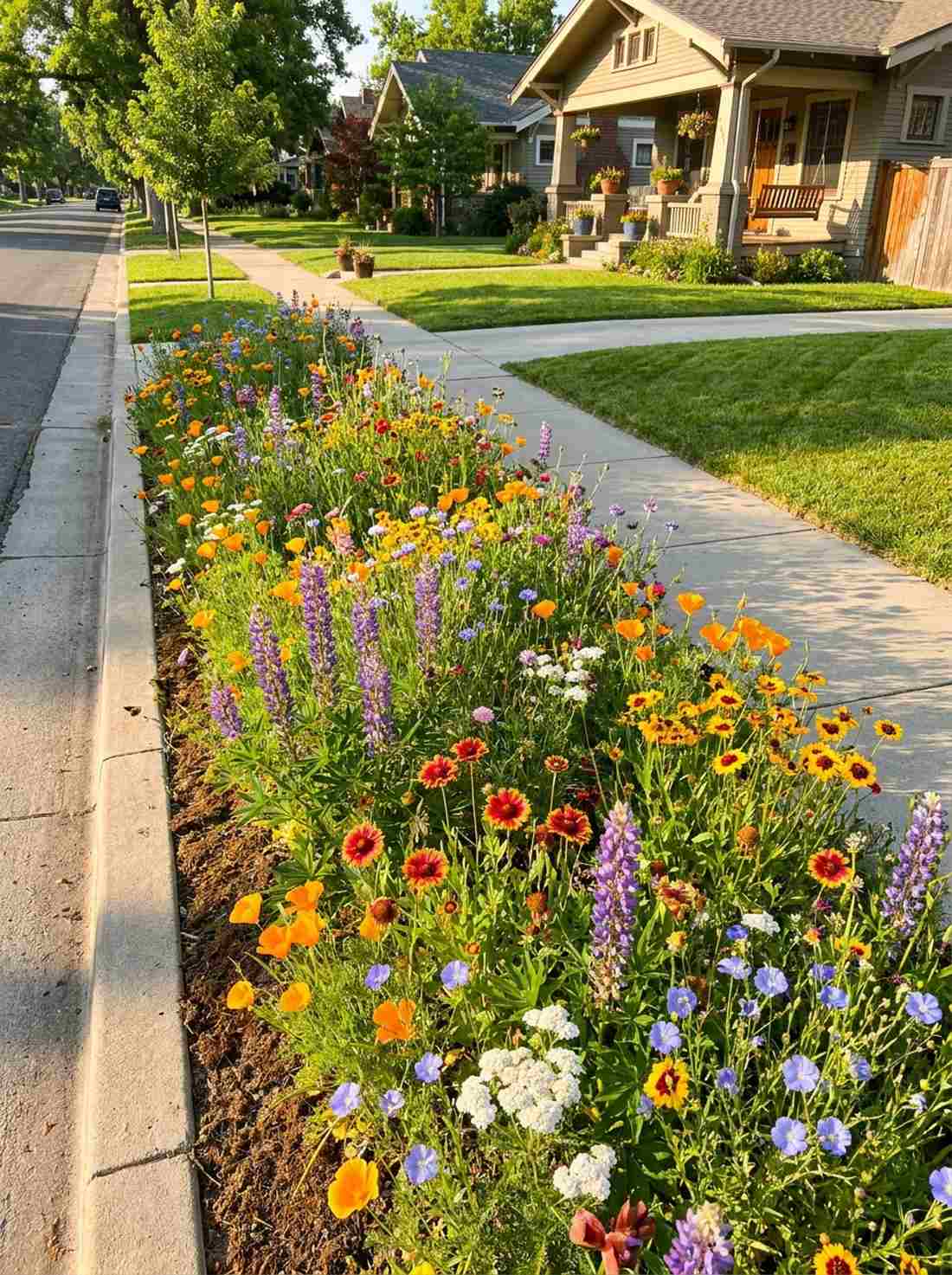
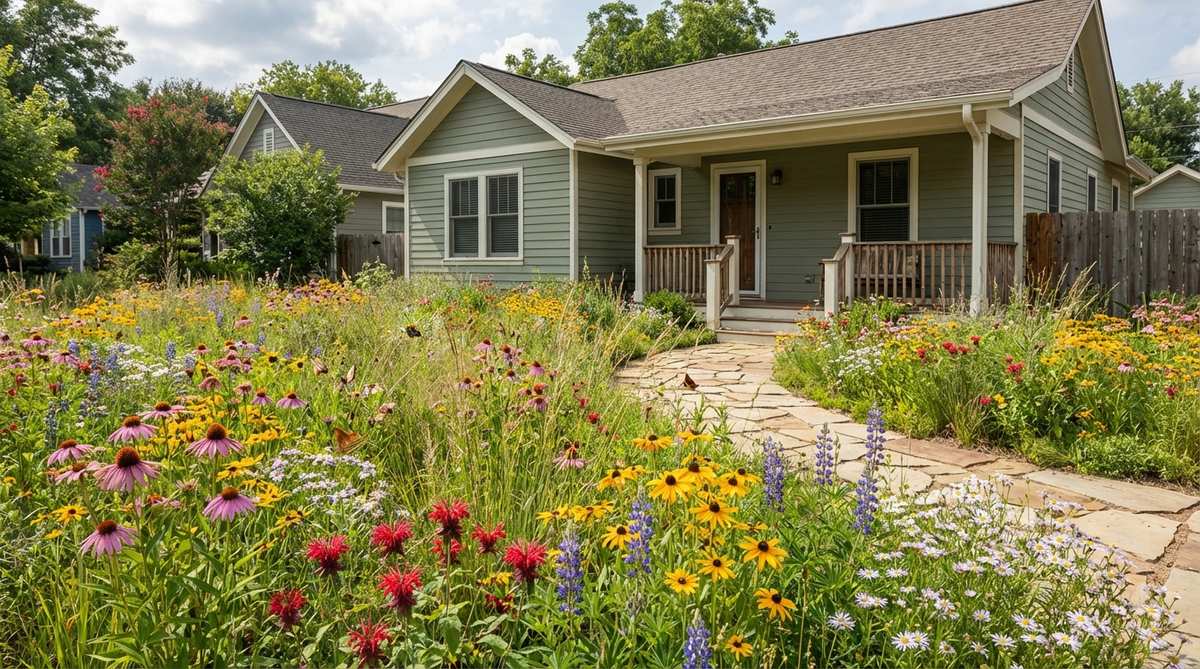
This untamed, vibrant strip feels like a piece of wild nature gifted to your neighborhood. Converting a boring grass strip into a front yard wildflower meadow works exceptionally well for the hell-strip between the sidewalk and street.
Ditching the lawnmower for a pollinator haven is a massive eco-trend that looks naturally stunning. By scattering a regional wildflower seed mix directly over raked soil, you get months of brilliant color with zero fertilization.
This entire transformation costs a shockingly low $30–$60. Pin this if you want to eliminate mowing forever.
- Key Materials: Regional wildflower seed blends, peat moss covering
- Vibe / Style: Wild, untamed beauty
- Difficulty: Extremely easy
- Budget Breakdown: Seed Bulk Pack: $25 | Peat Moss: $15.
- Creator’s Tip: Mix your tiny seeds with a bucket of sand before scattering to ensure even distribution across the dirt.
- Smart Sourcing: bulk native pollinator seed mixes and lightweight broadcast spreaders.
Wait until you see the cost breakdown for this next idea—it completely flips traditional landscaping on its head.
Naturalistic & Cottage Gardens With Abundant Charm
Layered, slightly wild plantings that mimic natural growth patterns define this approach to front yard garden design ideas. Embrace self-seeding annuals, mixed textures, and organic shapes for gardens that feel effortlessly alive.
14. Layered Naturalistic Planting
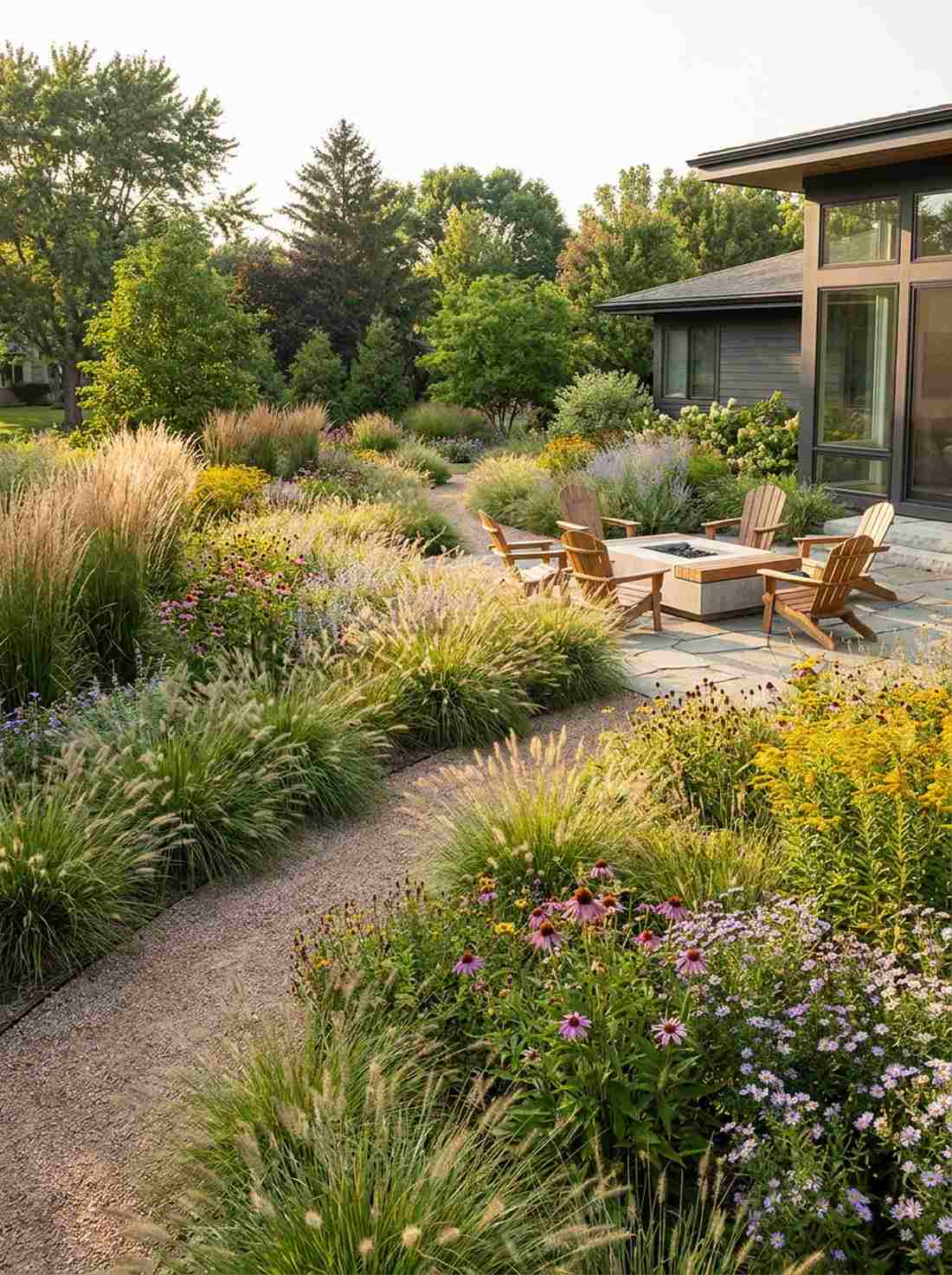
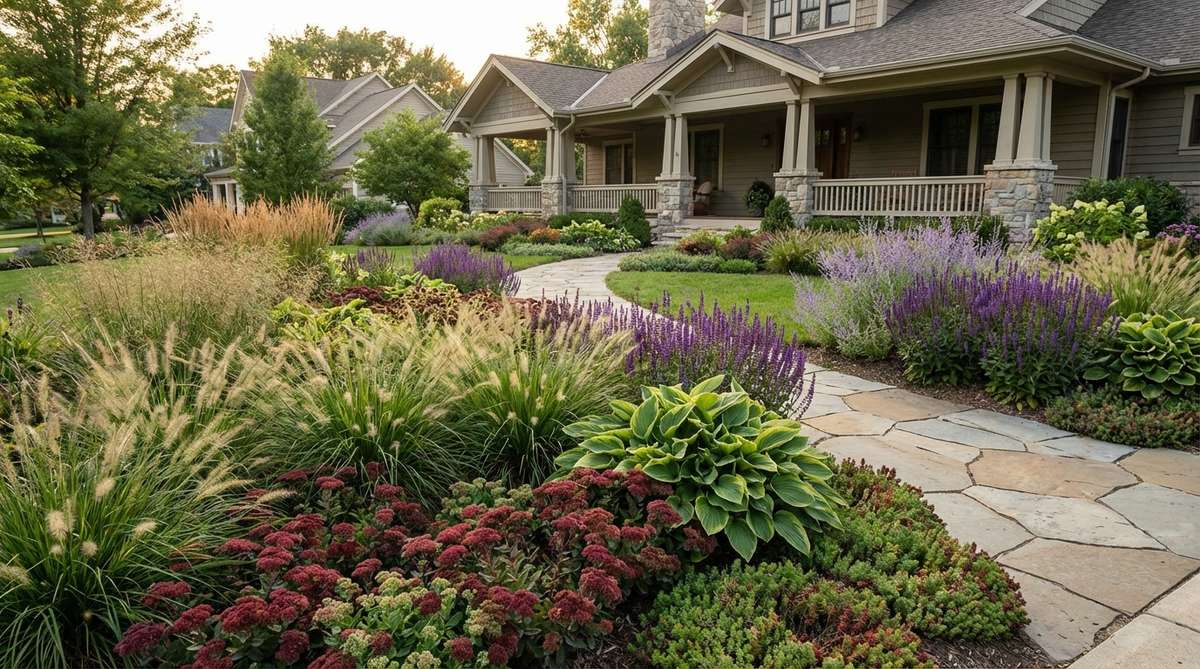
This soft, textured setup feels like a secret meadow you stumbled upon by accident. A layered naturalistic garden design is perfect for softening stark modern architecture with waves of breezy, organic movement.
This style bypasses rigid lines to create a surprisingly low-maintenance space that thrives on its own. Using bulk ornamental grass plugs mixed with hardy perennials creates a self-sustaining ecosystem that blocks out weeds naturally.
Establishing this wild look costs around $100–$200 in starter plugs.
- Key Materials: Ornamental grasses, native groundcovers
- Vibe / Style: Breezy, organic flow
- Difficulty: Moderate initial design, easy maintenance
- Budget Breakdown: Grass Plugs: $80 | Soil Amendments: $40.
- Creator’s Tip: Don’t cut the dried grasses down in fall; they provide stunning winter texture and feed local birds.
- Smart Sourcing: bulk ornamental grass starter plugs and organic root-boosting compost.
15. Climbing Rose Arbor
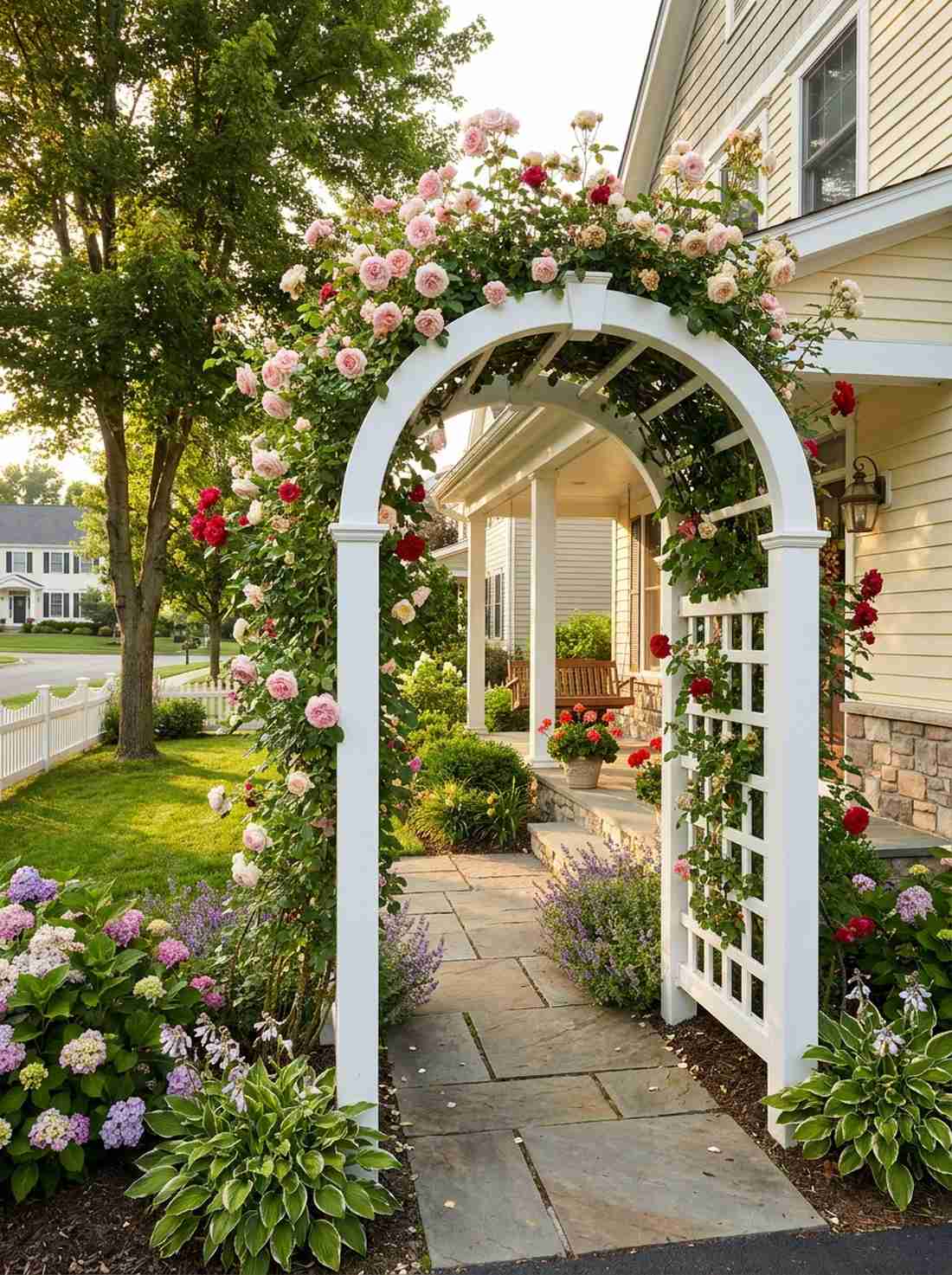
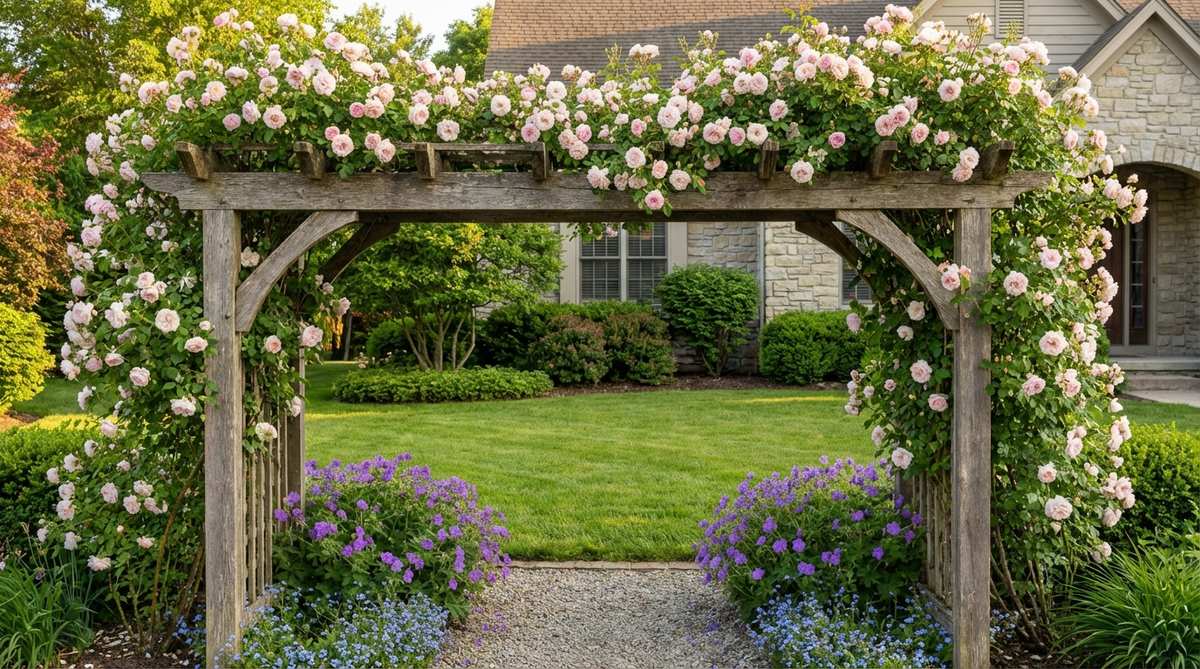
Walking under this flowery canopy feels straight out of a fairy tale. Installing a climbing rose entrance arbor is the ultimate way to mark the transition from the public sidewalk into your private sanctuary.
Adding an overhead structure instantly adds vertical real estate and massive curb appeal. Securing pre-fabricated vinyl garden arbors with fast-growing climbing roses creates a multi-thousand-dollar look for a fraction of the cost.
You can build this enchanting entryway for about $150–$350. Save this to your dream cottage ideas board.
- Key Materials: Wooden or vinyl arbor, climbing rose varieties
- Vibe / Style: Enchanted cottage entry
- Difficulty: Moderate (requires level assembly)
- Budget Breakdown: Arbor Kit: $180 | Roses & Ties: $60.
- Creator’s Tip: Train the rose canes horizontally along the sides of the arbor first to encourage blooms all the way up, not just at the top.
- Smart Sourcing: weather-resistant vinyl arbor kits and flexible soft-tie plant supports.
16. Mixed Perennial Cottage Border
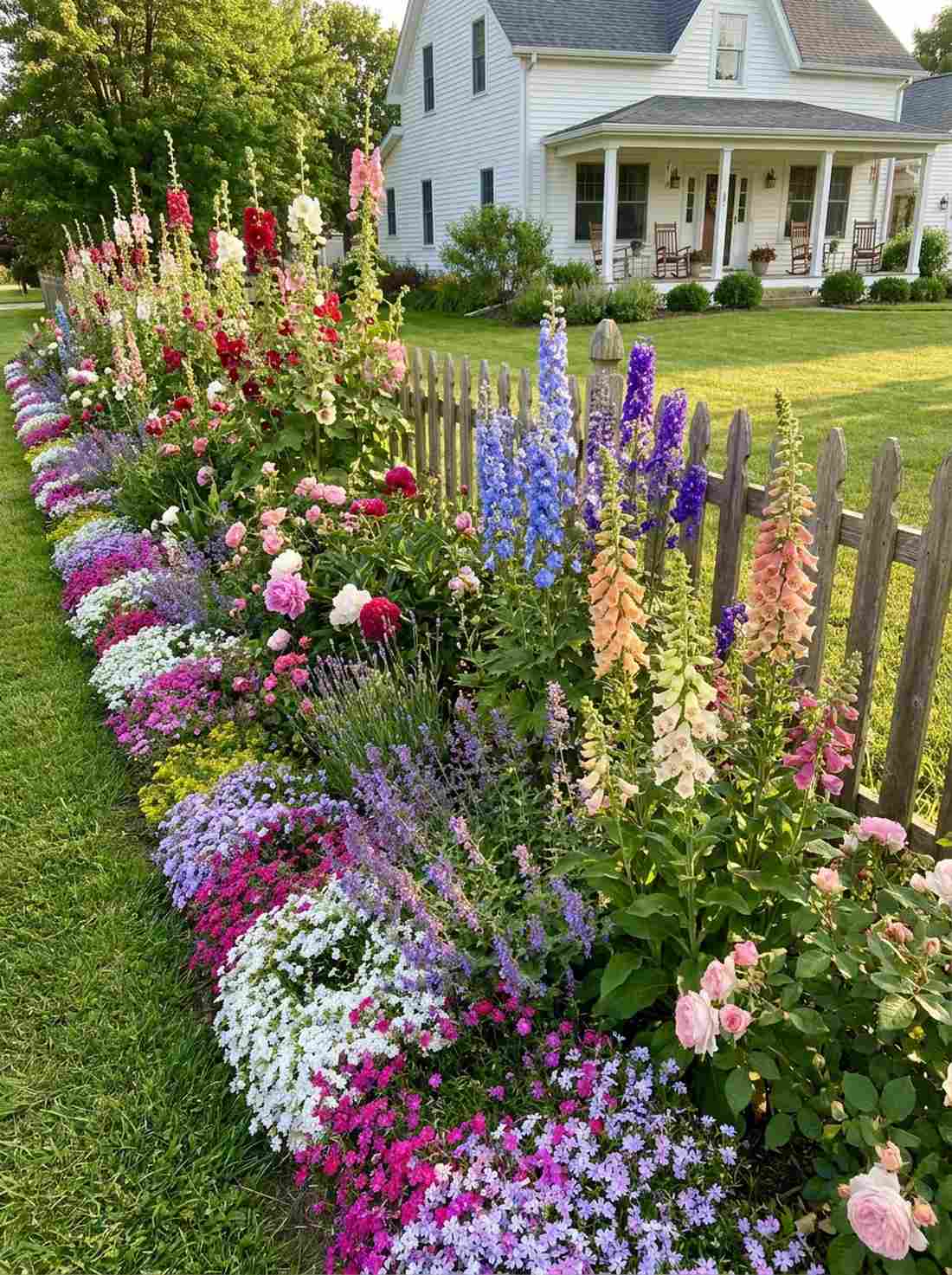
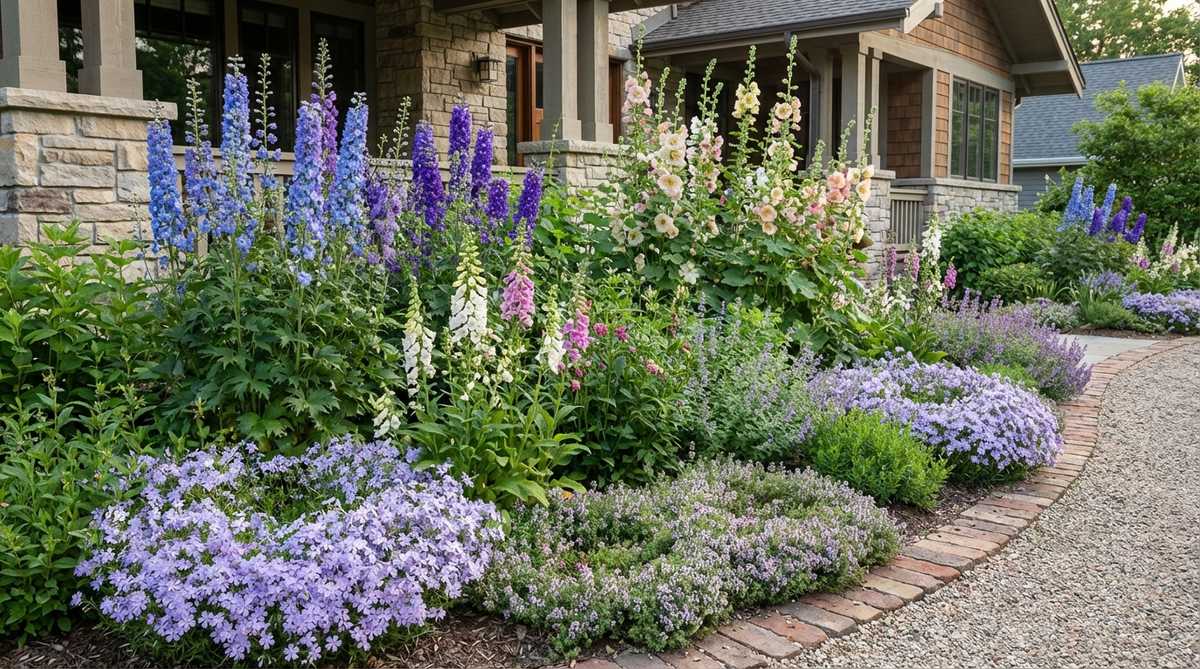
This chaotic, blooming explosion feels like the ultimate cozy English countryside retreat. A dense mixed cottage border works perfectly along a front fence line, creating privacy through sheer floral volume rather than wood.
Packing plants tightly together actually chokes out weeds, delivering a low-maintenance, high-impact front garden design. Buying mixed cottage garden seed vaults and letting them self-seed gives you that perfectly “undesigned” look effortlessly.
Seed and root setups cost a mere $40–$100 to get started.
- Key Materials: Foxgloves, hollyhocks, delphiniums
- Vibe / Style: Overflowing floral abundance
- Difficulty: Easy planting, requires some thinning
- Budget Breakdown: Seed Mixes: $30 | Topsoil: $40.
- Creator’s Tip: Plant the tallest spires (like Hollyhocks) in the absolute back, stepping down to creeping phlox at the very front edge.
- Smart Sourcing: bulk cottage garden seed vaults and organic bloom-boosting liquid feed.
17. Picket Fence with Overflowing Blooms
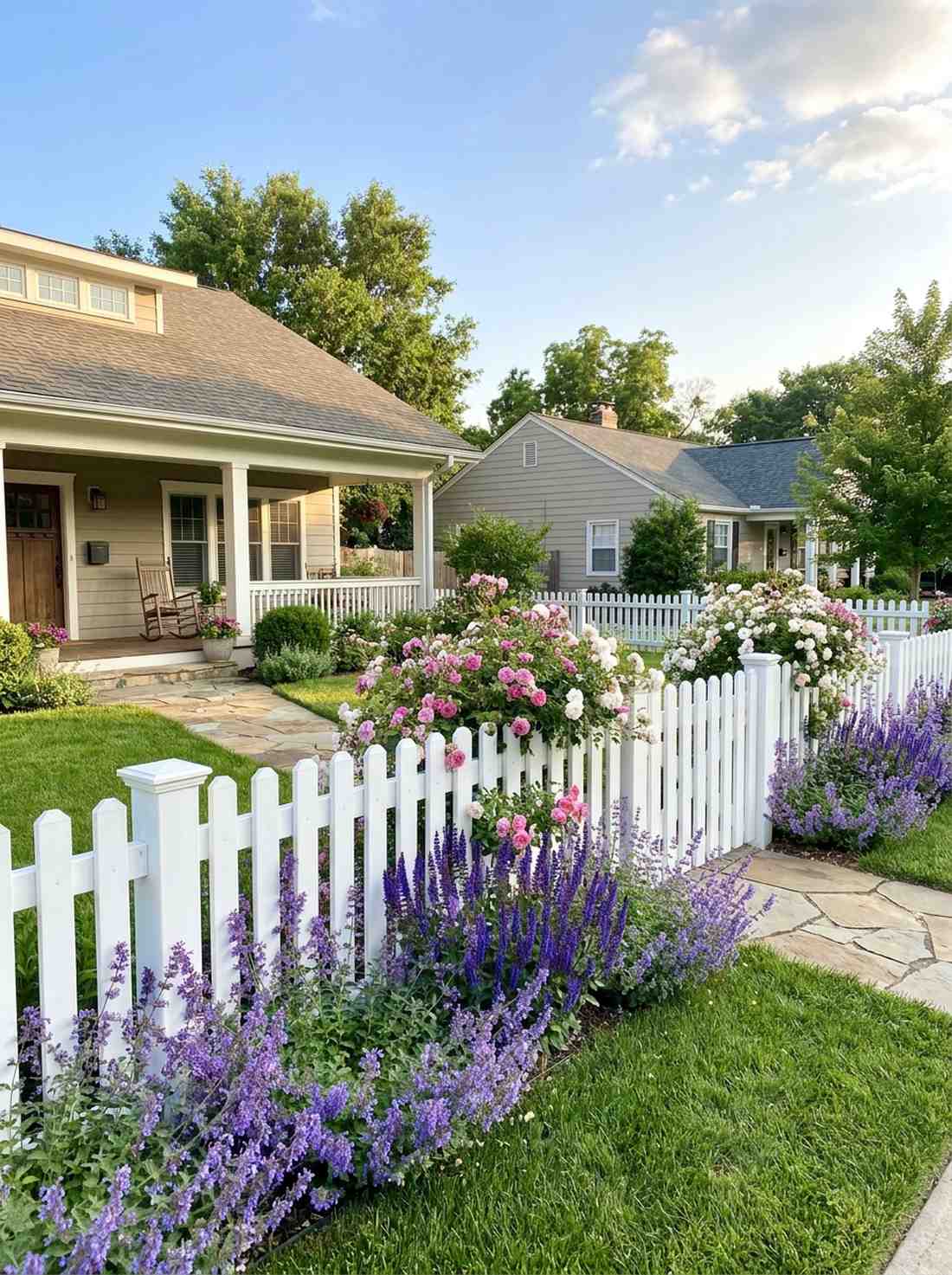
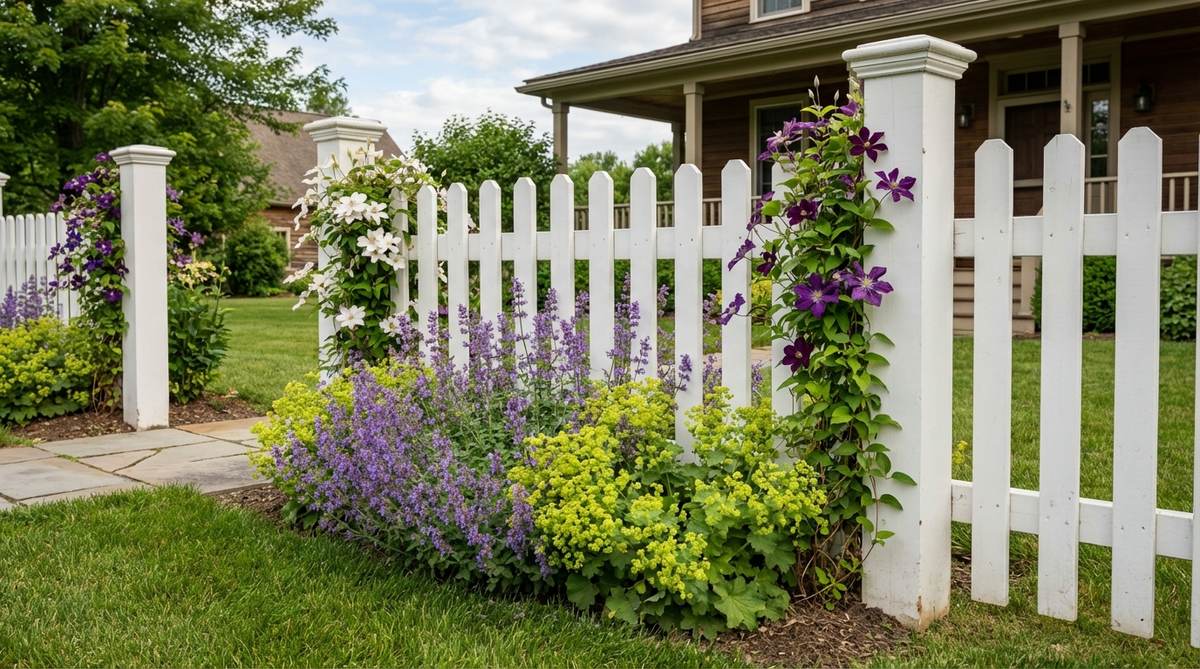
The charm of this setup radiates pure, nostalgic Americana. Combining a white picket fence with spilling perennials frames your property distinctly while maintaining an incredibly friendly, welcoming neighborhood vibe.
Using the fence as a physical support structure allows heavy blooms to cascade dramatically, looking far more expensive than basic landscaping. Utilizing pre-assembled vinyl picket panels ensures you get the classic look without the nightmare of annual scraping and painting.
Fencing and plants will run about $300–$600 depending on yard width. Pin this for the ultimate curb appeal hack.
- Key Materials: Low picket fencing, trailing plants like catmint
- Vibe / Style: Classic welcoming charm
- Difficulty: Moderate (fence installation required)
- Budget Breakdown: Fencing Panels: $250 | Plants: $80.
- Creator’s Tip: Leave a 6-inch gap between the bottom of the fence and the dirt to prevent rot and make weed-whacking easier.
- Smart Sourcing: no-dig vinyl picket fence kits and heavy-duty post pounders.
18. Herb and Flower Combination
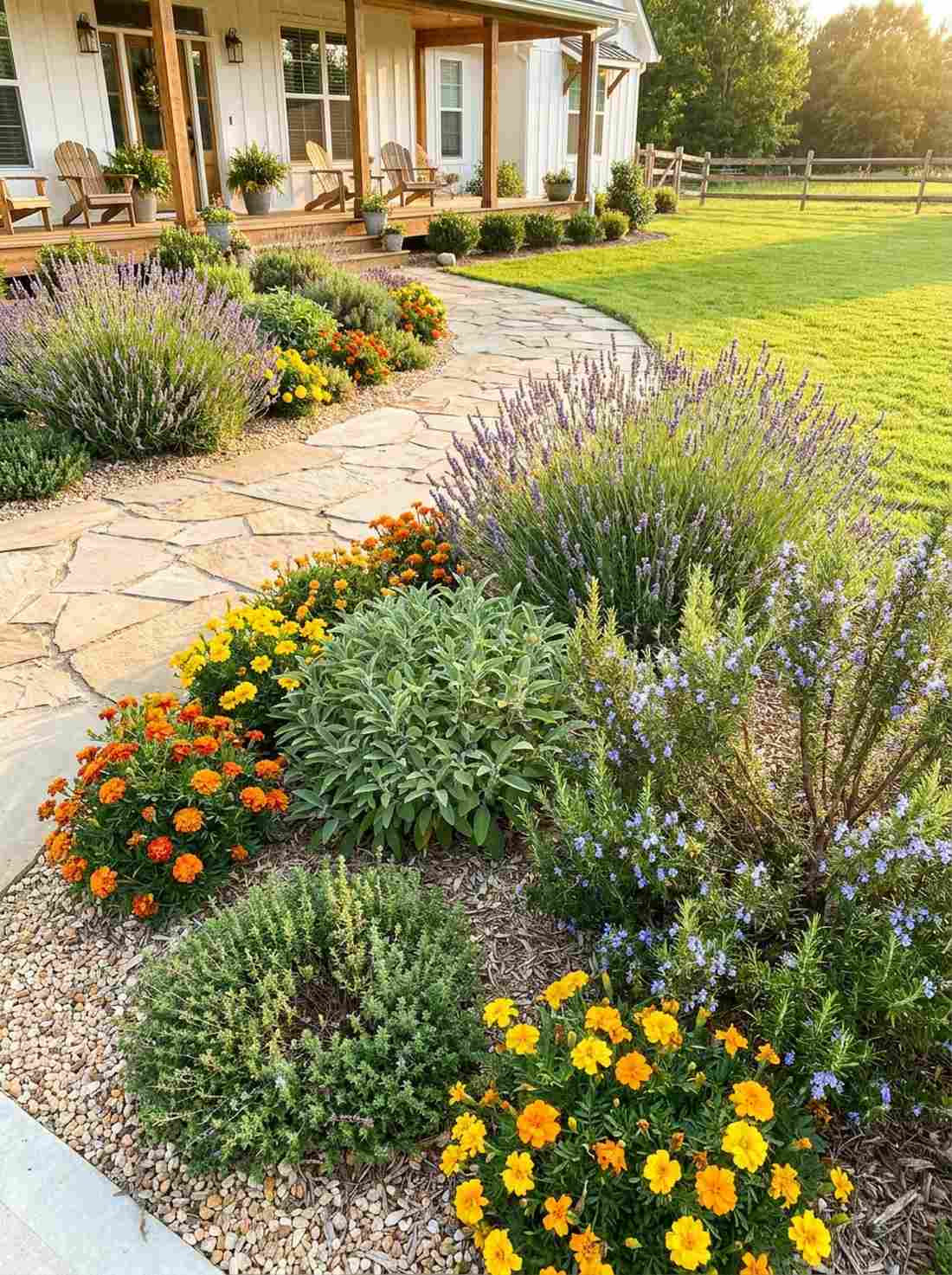
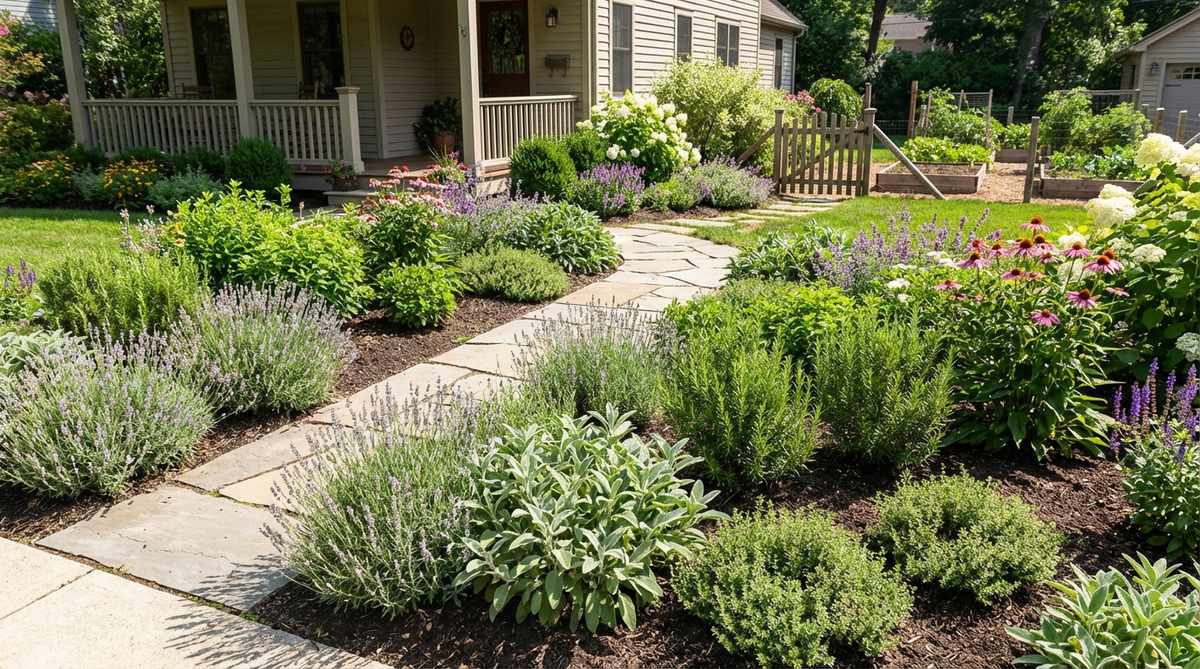
Brushing past these leaves releases a scent that feels like a private aromatherapy session. Mixing a sensory herb and flower garden along the main pathway connects visual beauty with incredible, functional kitchen utility.
Integrating edibles into the front yard is a massive trend that bypasses the boring grass lawn. Planting bulk lavender and rosemary starts alongside bright marigolds naturally repels pests while looking gorgeously textured.
You can set up this fragrant, edible walkway for roughly $50–$120.
- Key Materials: Aromatic herbs (lavender, sage, thyme), pollinator flowers
- Vibe / Style: Functional French countryside
- Difficulty: Easy, perfect for beginners
- Budget Breakdown: Herb Starts: $60 | Gravel Mulch: $30.
- Creator’s Tip: Herbs hate wet feet; mix a generous amount of sand or perlite into the planting holes to guarantee crisp drainage.
- Smart Sourcing: bulk aromatic herb starter packs and coarse horticultural perlite.
If you’ve been struggling with an outdated entryway, the next layout is the exact blueprint you need.
Foundation Planting Designs That Anchor Your Home
Strategic plantings at your home’s base visually ground the structure and create smooth transitions between architecture and landscape. These garden design front of house plans emphasize proportion, layering, and year-round structure.
19. Evergreen Backbone with Seasonal Accents
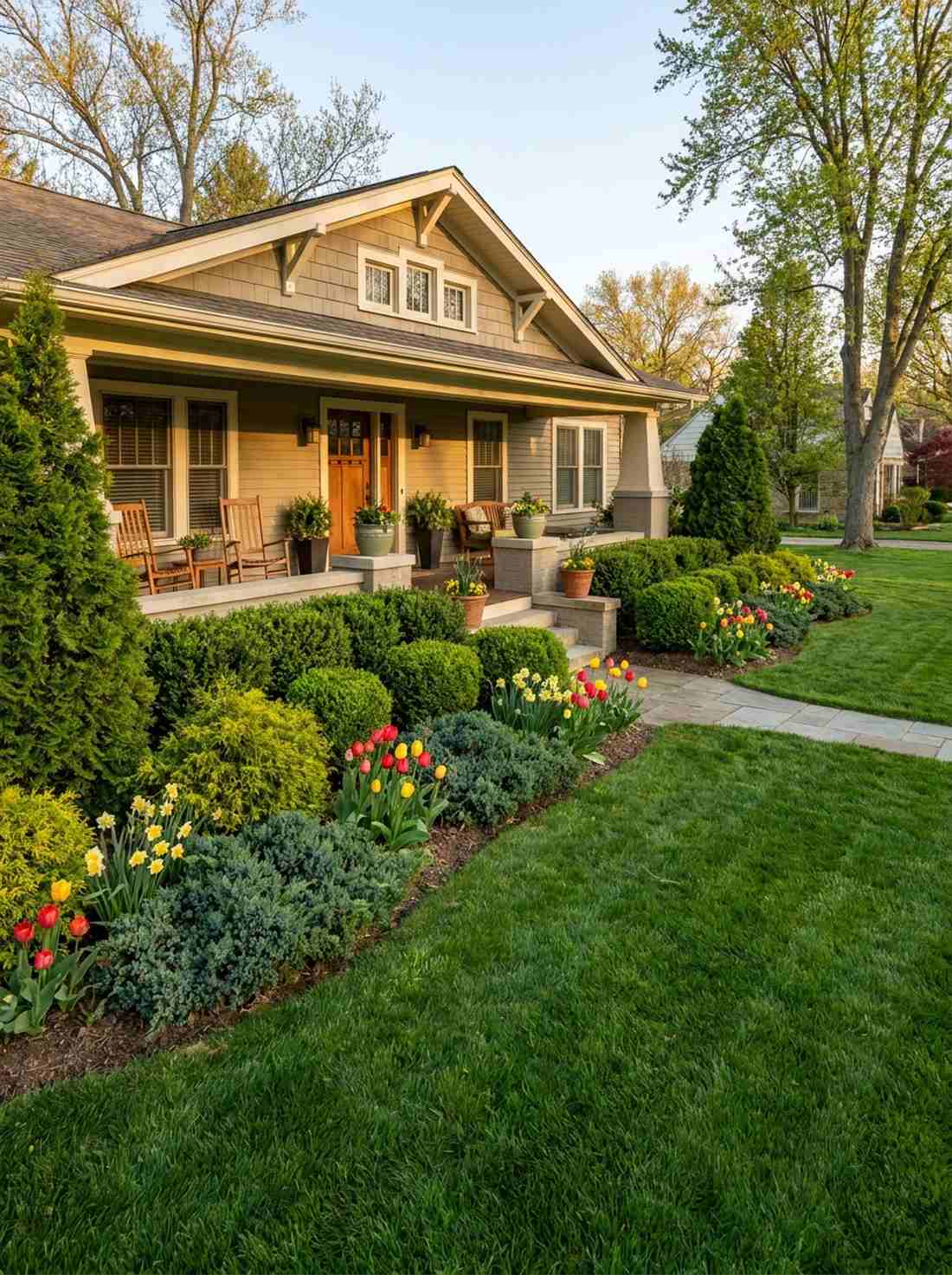
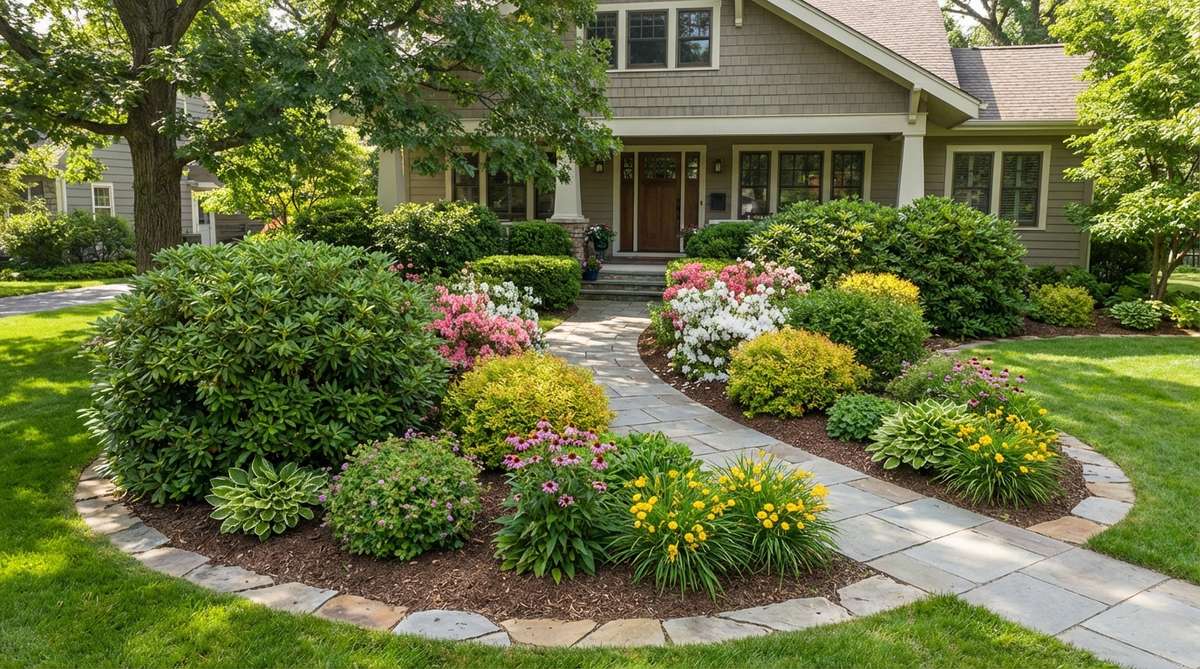
This structured layout feels incredibly solid, hiding ugly concrete foundations instantly. Creating an evergreen foundation backbone is the most critical step to ensuring your house doesn’t look naked and abandoned during winter.
Establishing a permanent green layer gives a designer-level finish that grounds the architecture securely. By utilizing a 50/50 mix of dwarf coniferous shrubs and bright seasonal bulbs, you get permanent structure with flashing pops of color.
A solid foundation baseline costs about $200–$500. Save this if you’re tired of your house looking bare in December.
- Key Materials: Dwarf evergreens, assorted seasonal bulbs
- Vibe / Style: Structured all-season reliability
- Difficulty: Moderate digging effort
- Budget Breakdown: Foundation Shrubs: $250 | Bulbs: $40.
- Creator’s Tip: Never plant large shrubs directly under windows; they will eventually block light and require butchering to maintain size.
- Smart Sourcing: slow-growing dwarf evergreen bundles and heavy-duty root auger drill bits.
20. Tiered Height Gradient
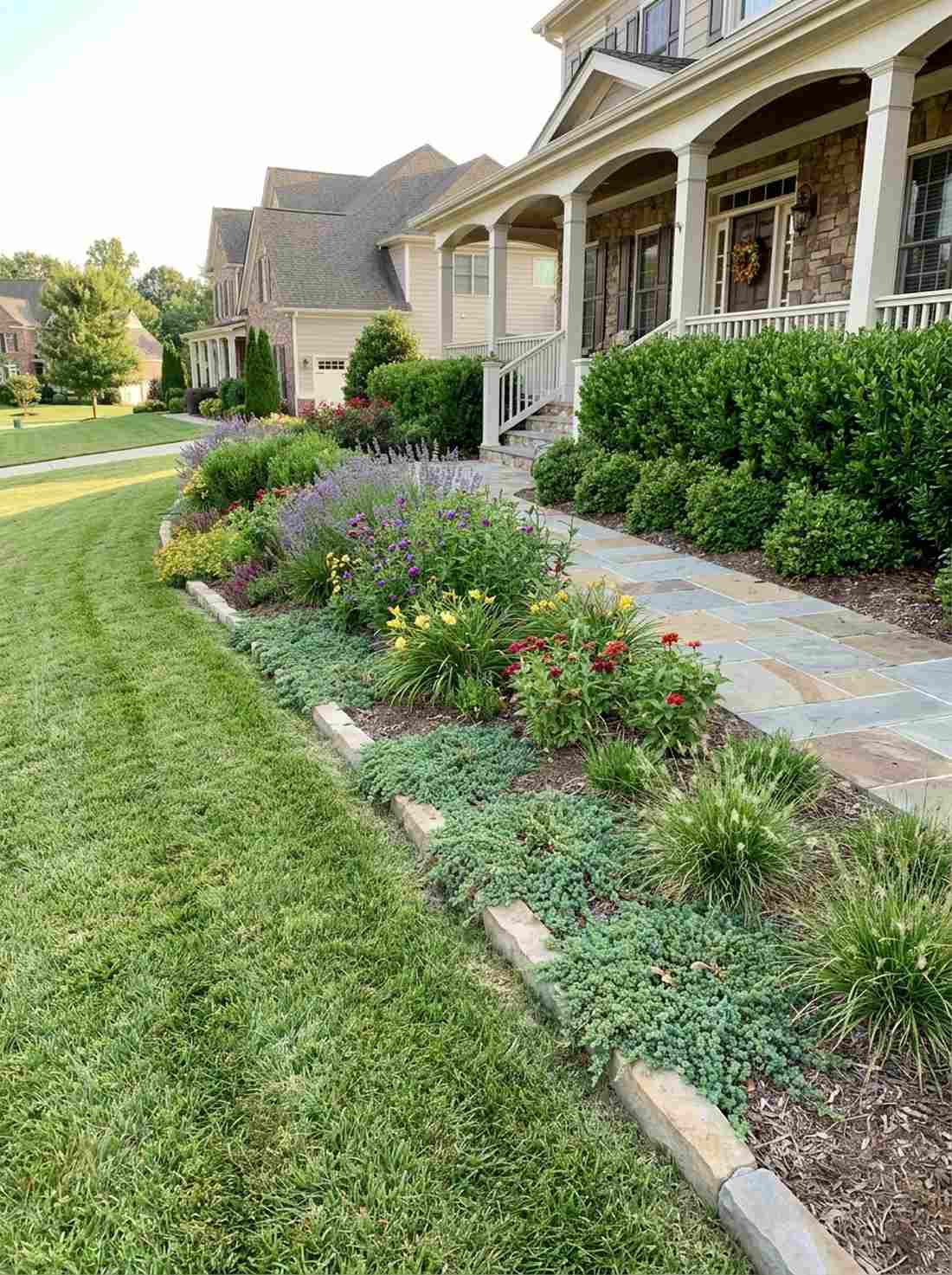
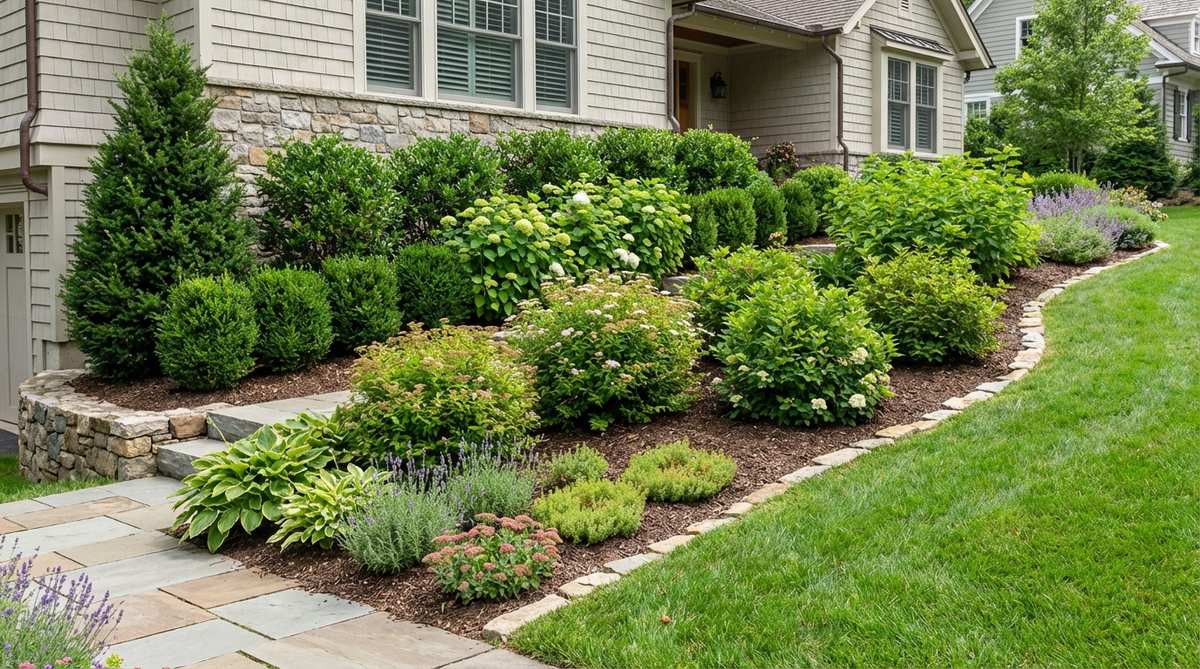
The layered depth of this design feels like viewing stadium seating made of lush foliage. Using a strict tiered height garden gradient guarantees that every single plant is visible from the street without messy overlapping.
Stepping plants down from the wall to the walkway creates a surprisingly premium look that professional landscapers charge thousands for. You can achieve this easily by grouping pre-planned landscape kits sorted by mature height.
You can execute this optical trick for around $150–$350.
- Key Materials: Tall background shrubs, mid-height perennials, creeping groundcover
- Vibe / Style: Professional dimensional depth
- Difficulty: Requires careful spatial planning
- Budget Breakdown: Layered Plants: $200 | Border Edge: $40.
- Creator’s Tip: Always read the “mature height” on the tag, not the current size, to avoid your front plants swallowing your back plants.
- Smart Sourcing: pre-planned layered garden design kits and bulk creeping groundcover plugs.
21. Corner Anchoring Specimens
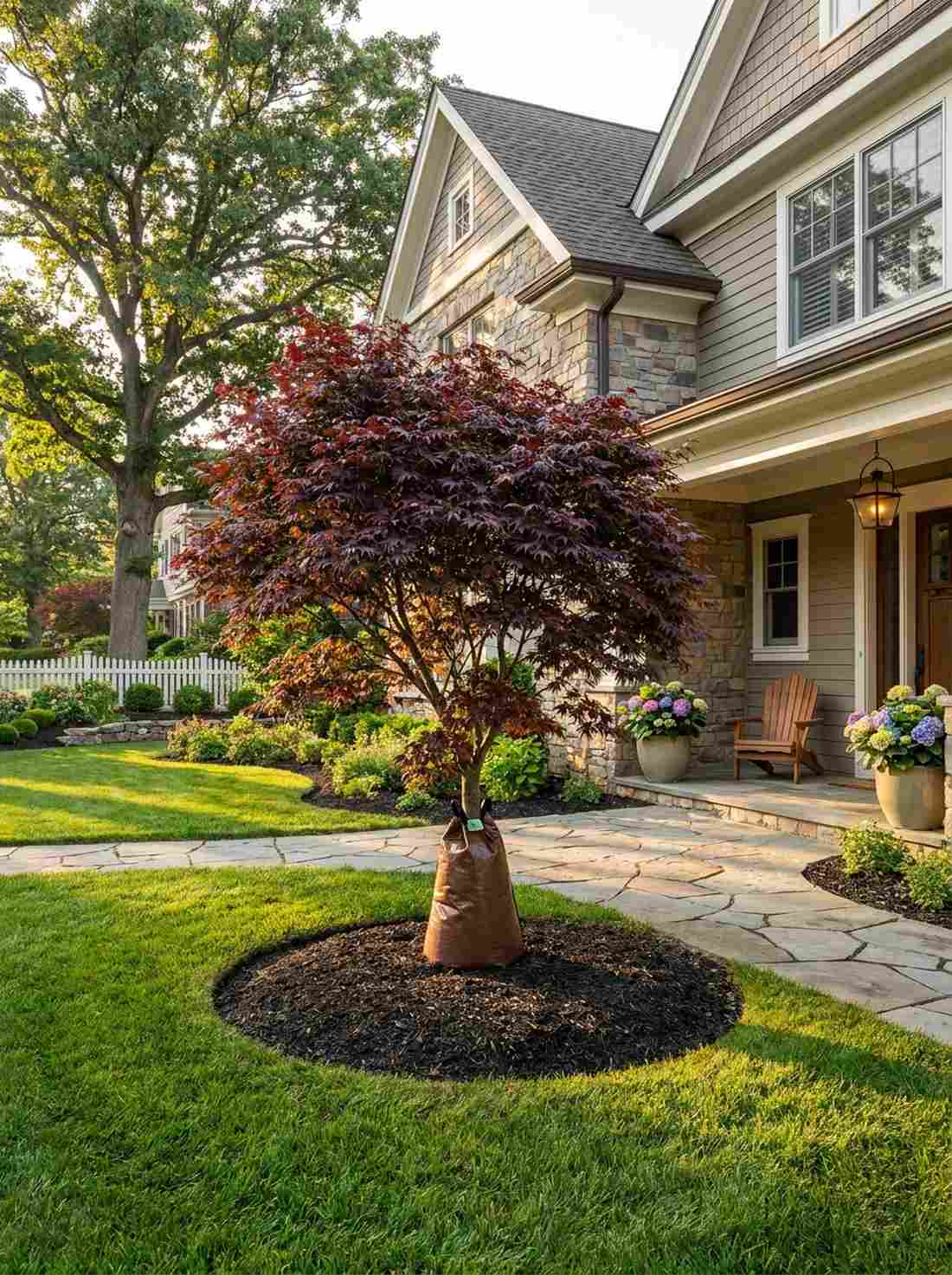
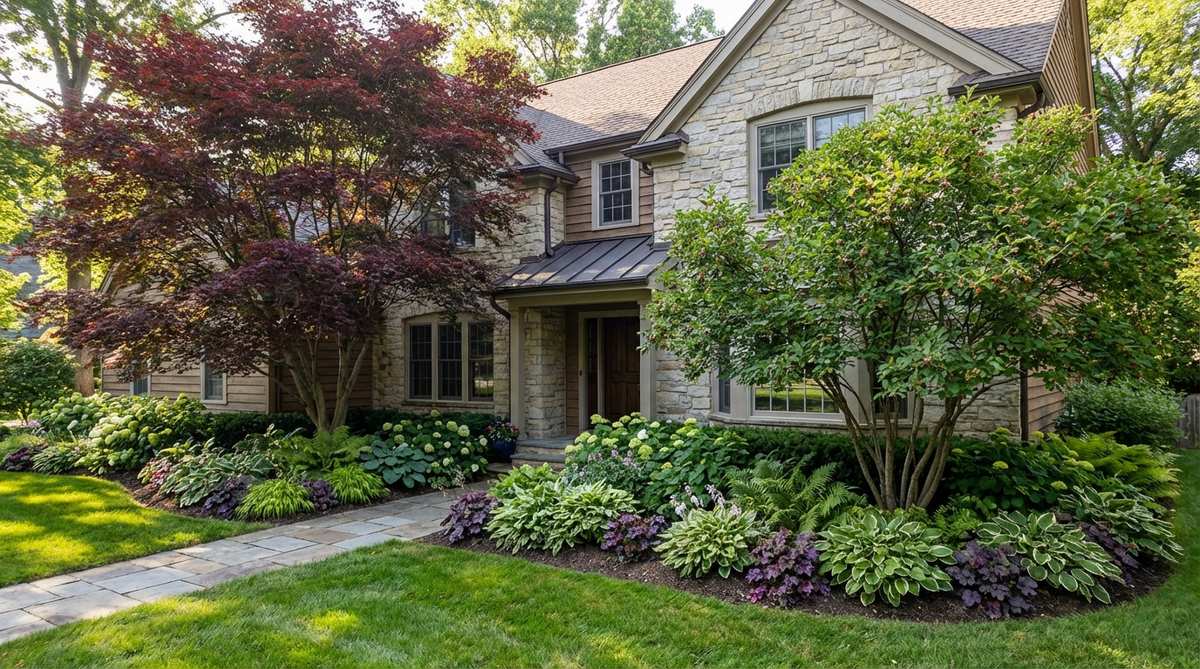
Placing a striking tree here feels like dropping an anchor that pulls the whole property together. Corner specimen tree plantings act as visual bookends that soften the harsh, 90-degree angles of a house’s architecture.
Using a statement tree draws the eye outward, making your entire garden design front of house look significantly wider. Planting a stunning ornamental Japanese maple or Crape Myrtle creates a massive curb appeal spike.
A beautiful corner specimen will run you roughly $100–$250.
- Key Materials: Small ornamental tree, protective mulch
- Vibe / Style: Architectural softening
- Difficulty: Easy one-hole planting
- Budget Breakdown: Specimen Tree: $150 | High-grade Soil: $30.
- Creator’s Tip: Keep the tree at least 6 to 8 feet away from the corner of the house to accommodate the mature canopy without scraping siding.
- Smart Sourcing: live ornamental tree saplings and heavy-duty tree watering bags.
22. Continuous Bed Line
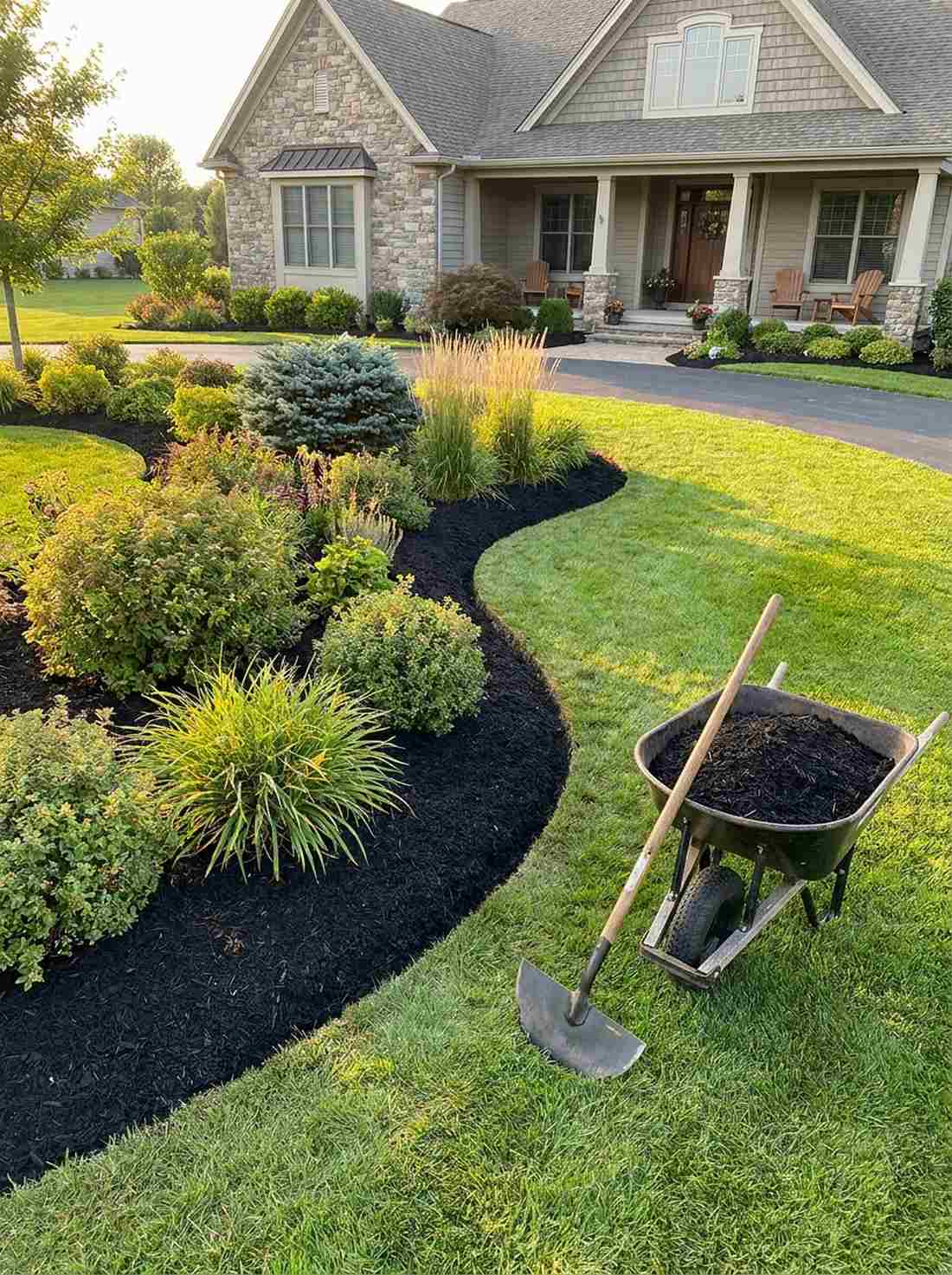
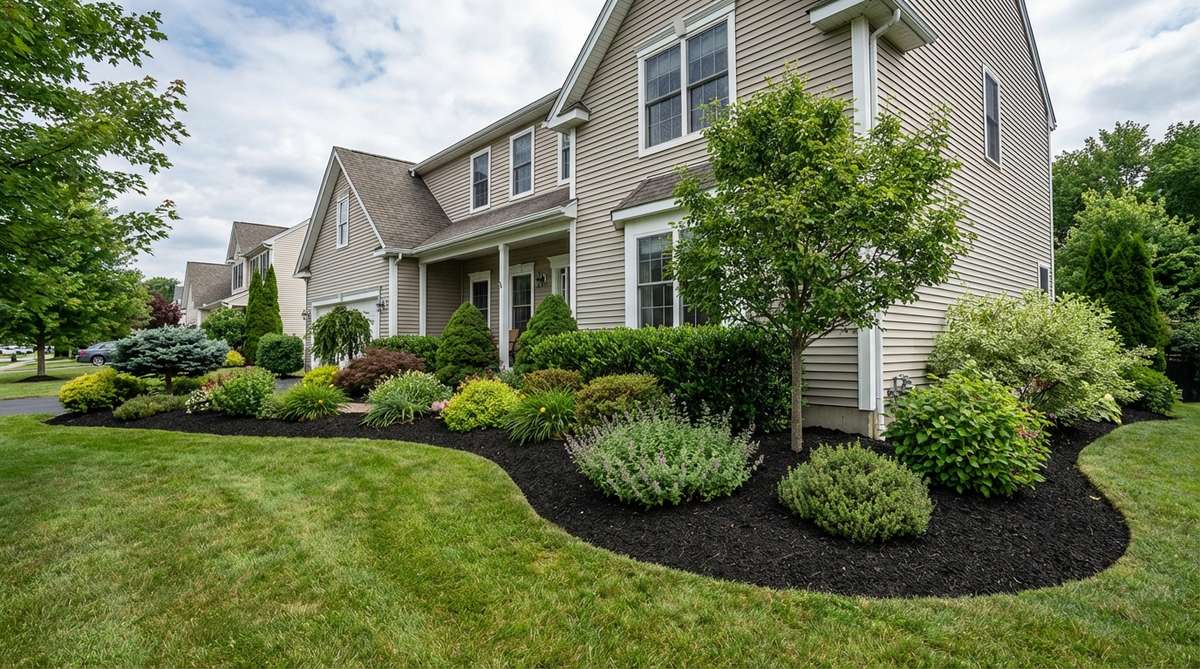
The flowing, unbroken sweep of this garden edge feels incredibly cohesive and intentional. Cutting a continuous sweeping landscape bed rather than tiny, disconnected circles around individual plants unifies the entire facade.
Connecting everything visually delivers a surprisingly premium look and makes mowing a hundred times easier. Using a half-moon landscape edger tool to carve a deep, crisp trench border makes the lawn pop against the dark mulch.
Creating this flow costs basically nothing but sweat and about $50 in mulch. Pin this for a zero-dollar layout hack.
- Key Materials: Manual edging tool, fresh dark mulch
- Vibe / Style: Flowing, unified estate
- Difficulty: Labor-intensive but technically easy
- Budget Breakdown: Tool: $30 | Fresh Mulch: $40.
- Creator’s Tip: Lay out your curved line using a simple garden hose before you start cutting the turf to ensure perfectly smooth swoops.
- Smart Sourcing: heavy-duty half-moon edging irons and bulk black landscaping mulch.
Don’t buy a single plant until you read how this next layout forces maximum curb appeal on a tiny budget.
23. Hydrangea Foundation Showcase
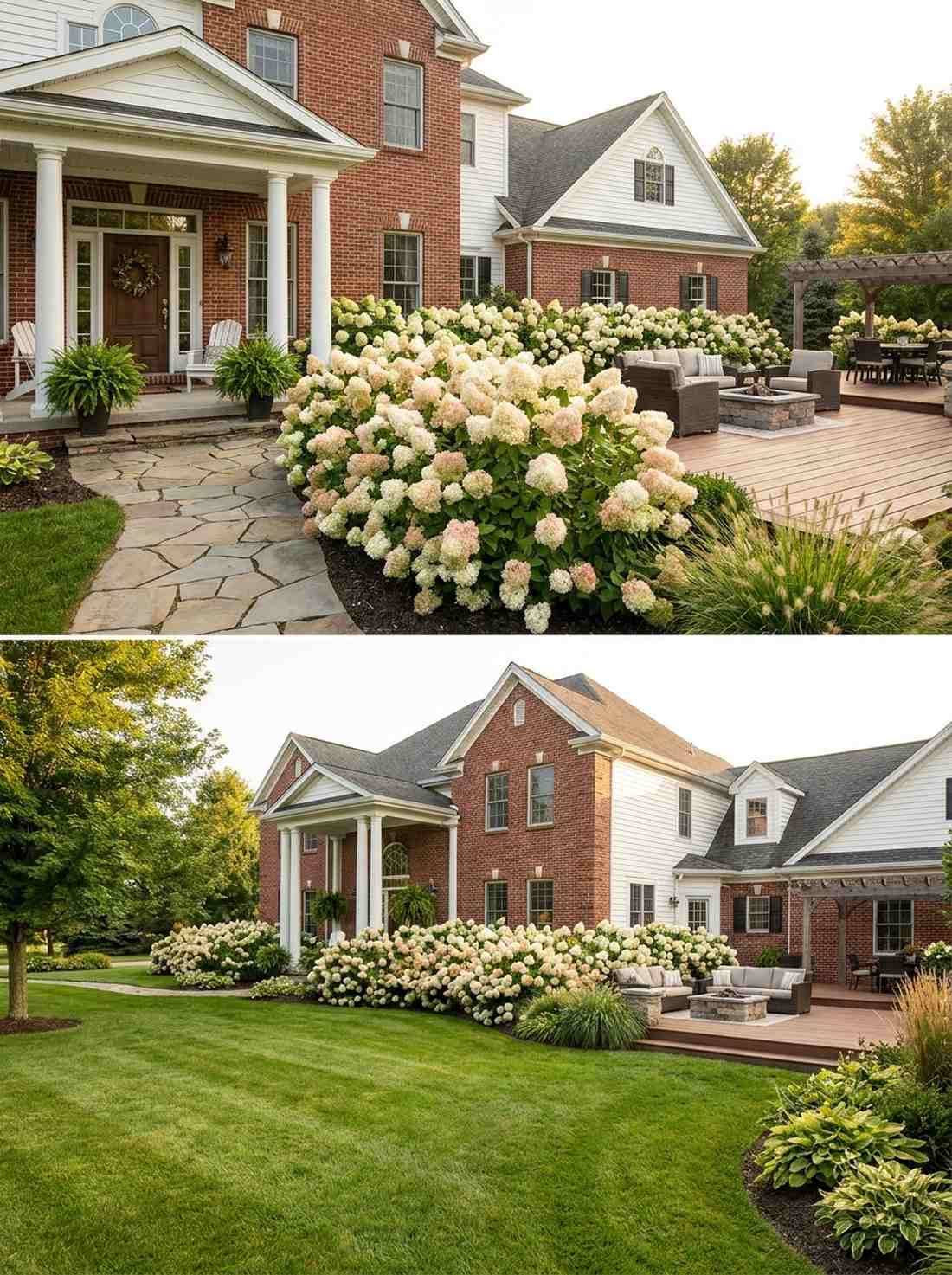
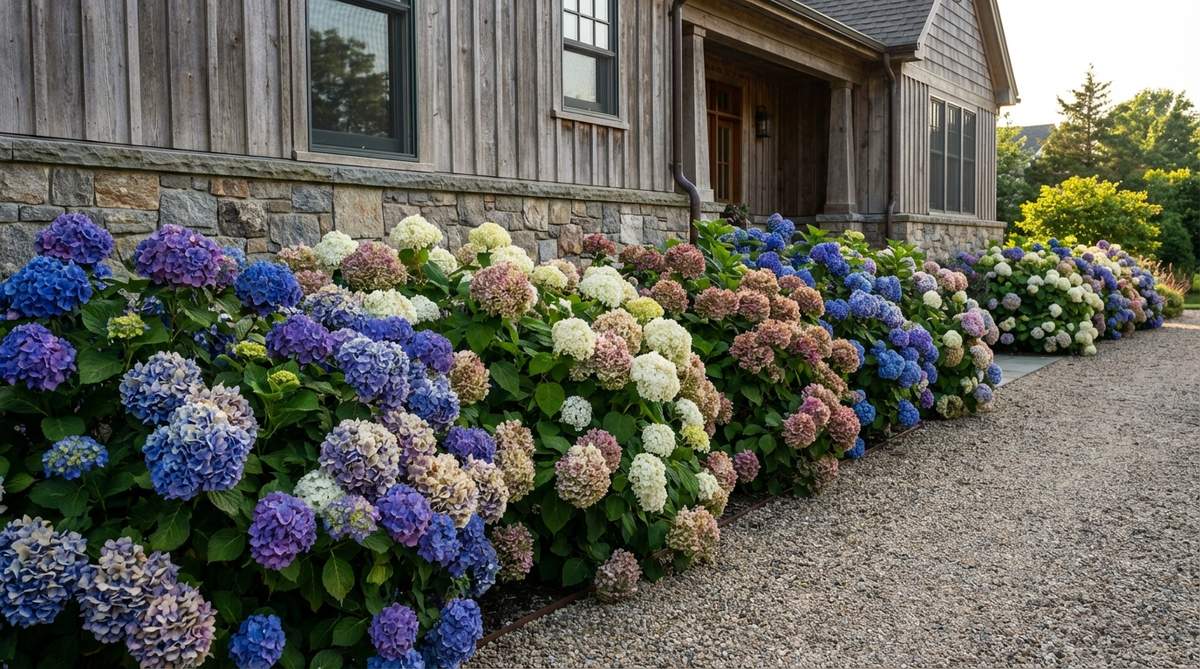
The massive, pillowy blooms here feel like luxurious clouds resting against the house. A hydrangea mass foundation planting delivers unbelievable summer-through-fall impact that completely hides dated brickwork or siding.
Massing a single showy species bypasses the cluttered, messy look of mixed beds. By investing in drought-tolerant panicle hydrangea kits, you get massive volleyball-sized flowers that require surprisingly little water once established.
A row of striking hydrangeas will cost around $150–$300.
- Key Materials: Panicle or smooth hydrangeas, acidic fertilizer
- Vibe / Style: Luxurious summer estate
- Difficulty: Easy planting, requires specific sun tracking
- Budget Breakdown: 5 Hydrangeas: $200 | Soil Acidifier: $25.
- Creator’s Tip: Leave the dried, brown flower heads on the bushes through winter; they catch the snow beautifully and add great winter interest.
- Smart Sourcing: dormant bare-root hydrangea bundles and aluminum sulfate soil acidifier.
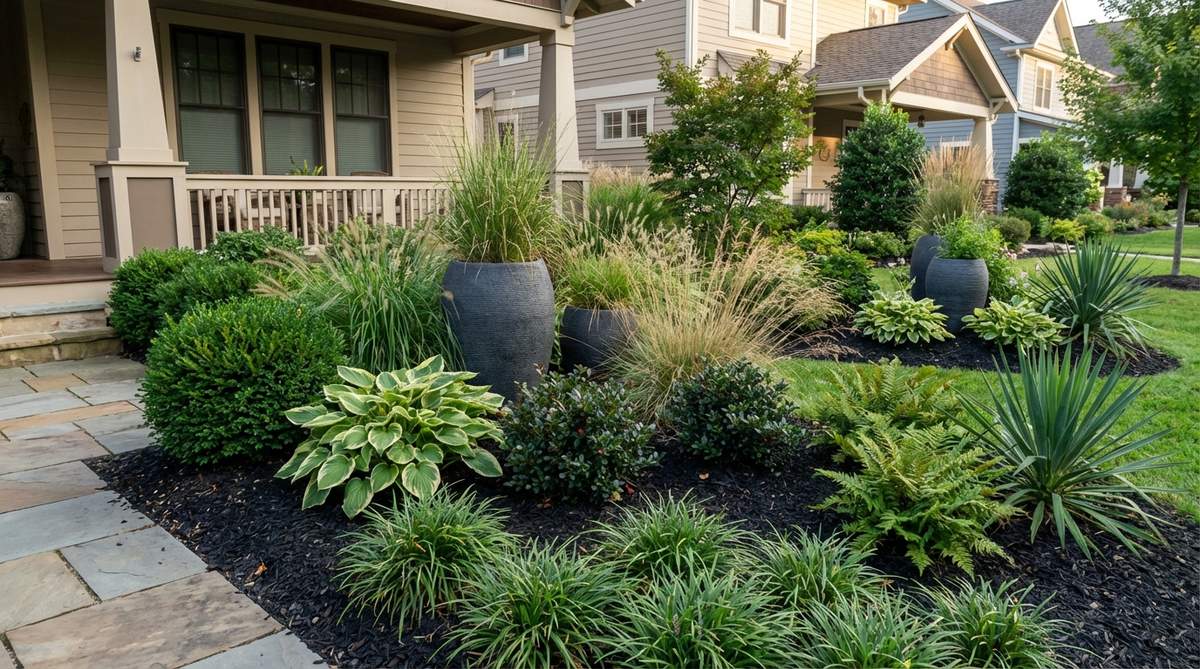
24. Textural Foliage Focus
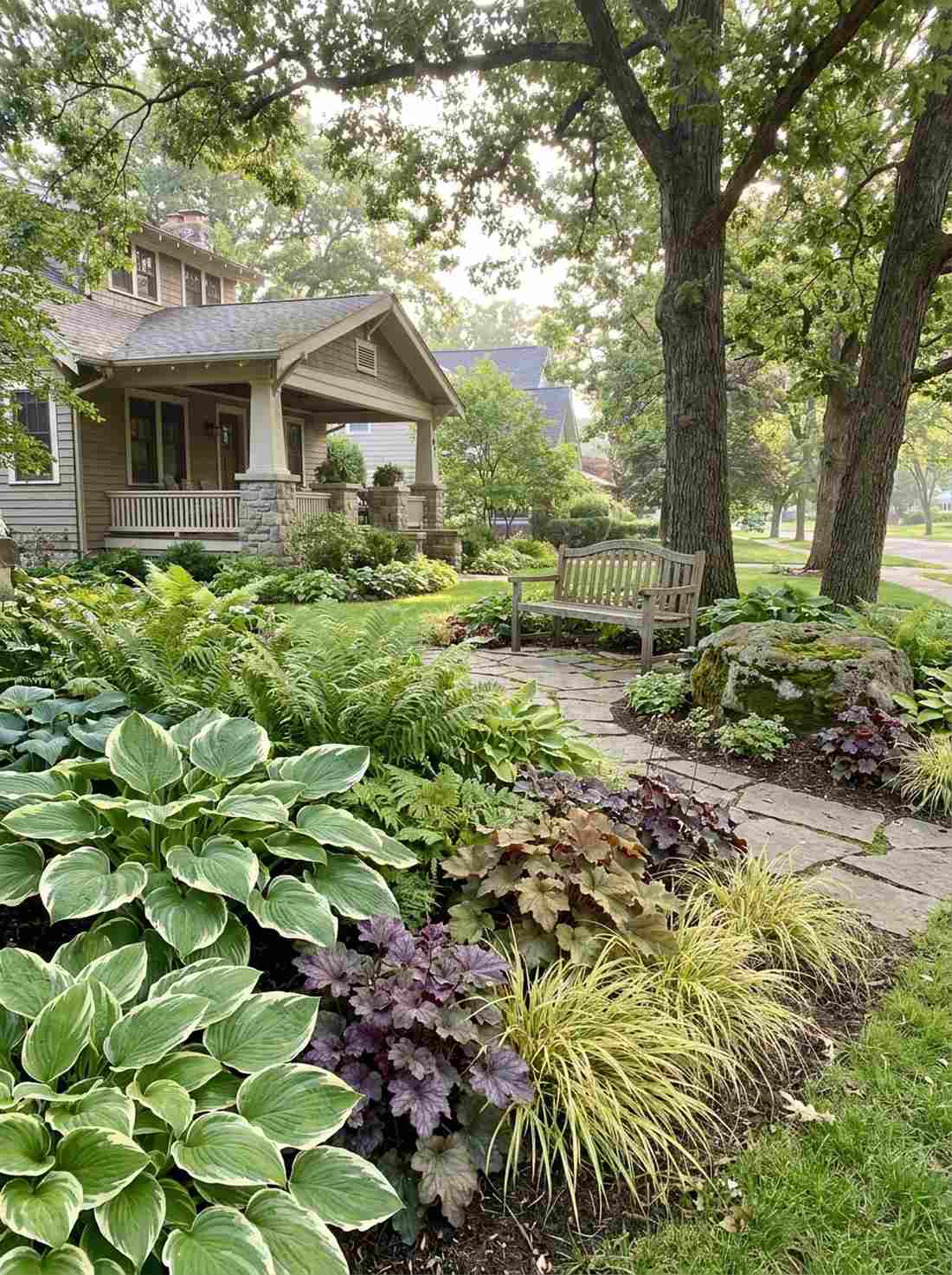
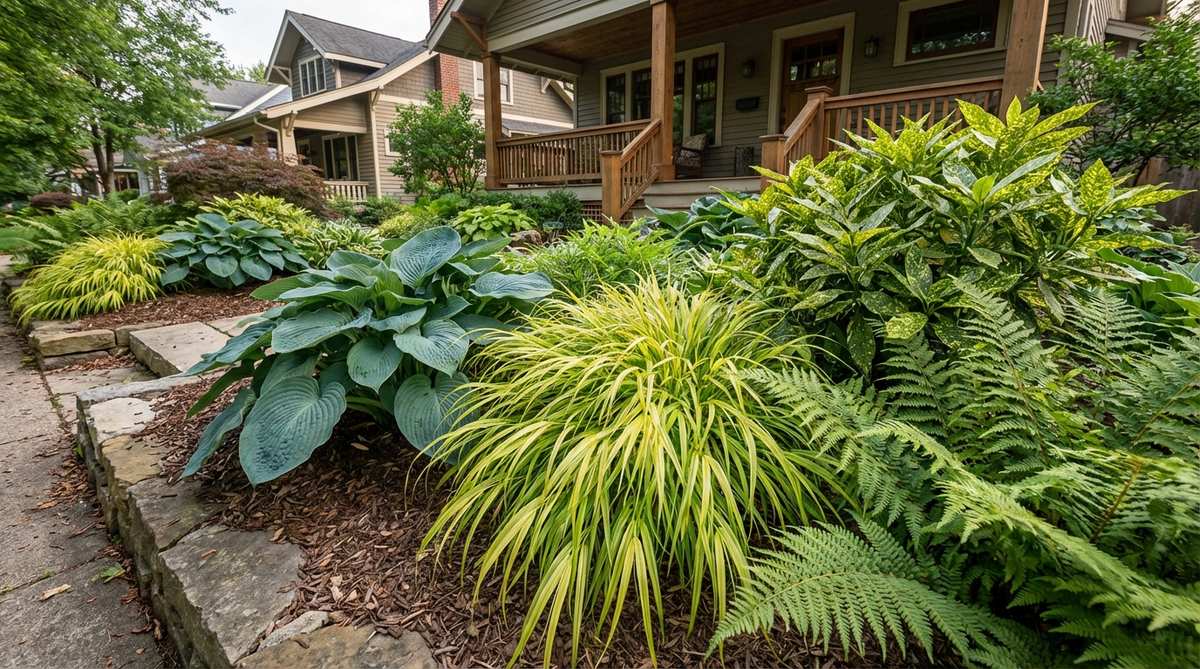
This shaded corner feels like a lush, prehistoric fern gully. Building a textural foliage foundation bed proves that you absolutely do not need bright flowers to create a visually gripping front garden design.
Focusing on leaf shapes—mixing giant hosta leaves with fine, wispy Japanese forest grass—looks far more expensive than it is. Utilizing shade-loving perennial bare roots ensures these tricky, sun-starved areas look incredibly intentional rather than neglected.
You can texture a shady foundation for about $80–$160. Save this if you struggle with deep shade under trees.
- Key Materials: Assorted Hostas, ferns, Heuchera (Coral Bells)
- Vibe / Style: Sophisticated woodland shade
- Difficulty: Easy, set-and-forget
- Budget Breakdown: Bare-roots: $90 | Slug Bait: $15.
- Creator’s Tip: Use variegated (white and green) hostas in the deepest shade to naturally reflect ambient light and brighten the dark corners.
- Smart Sourcing: mixed hosta bare-root value packs and organic slug and snail defense pellets.
Hardscaping & Pathway Solutions For Functional Beauty
Thoughtful hardscape design guides movement, defines spaces, and provides year-round structure that frames plantings. These front yard garden design ideas emphasize materials, layout, and integration with the surrounding landscape.
25. Winding Flagstone Pathway
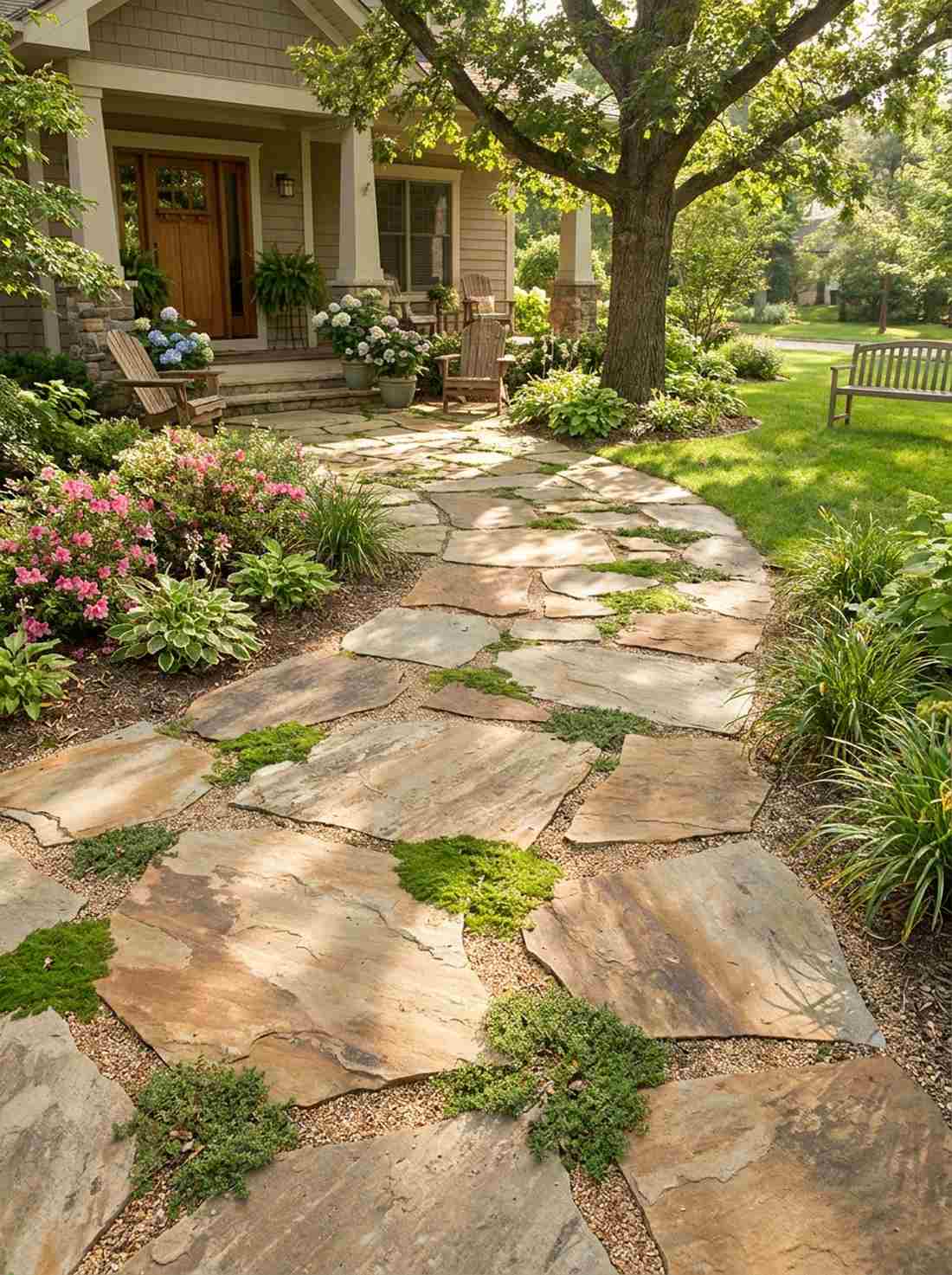
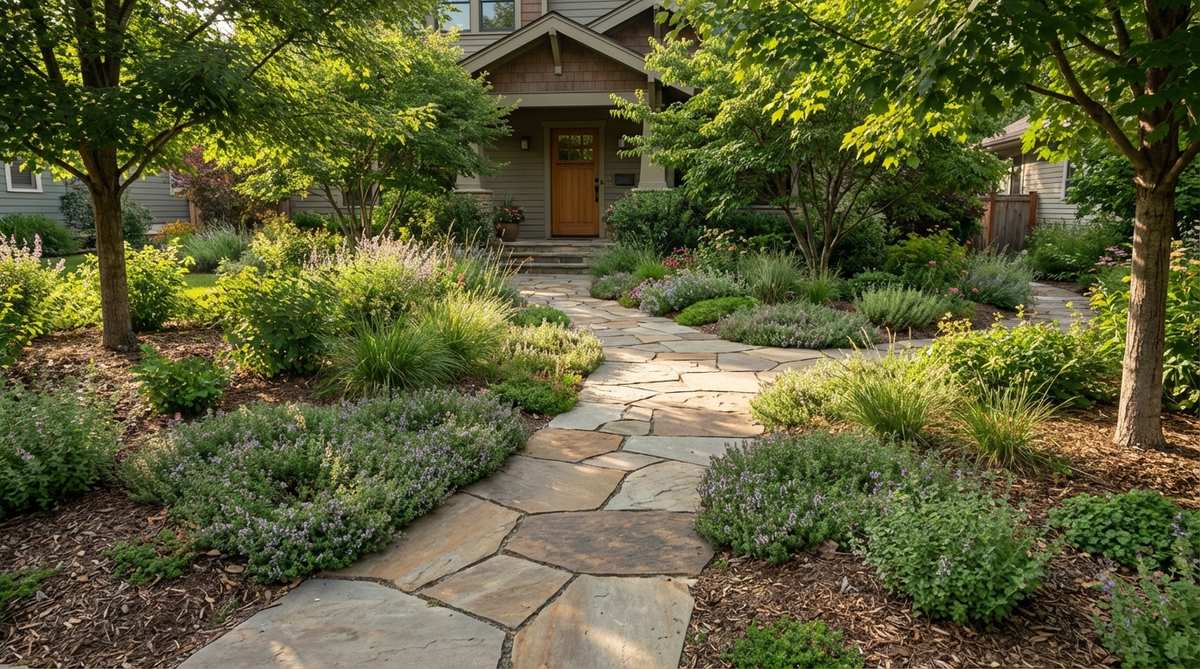
This organic, meandering walkway feels like a serene hiking trail leading straight to your door. A curved flagstone garden path forces visitors to slow down and visually absorb your landscaping, breaking up the harsh straight lines of the driveway.
Laying irregular stones gives a designer-level finish that integrates perfectly into cottage or naturalistic themes. Setting massive natural flagstone slabs directly into a sand and gravel base is entirely DIY-friendly and avoids the cost of poured concrete.
A 15-foot pathway will cost roughly $200–$450 in stone and sand.
- Key Materials: Large irregular flagstones, leveling sand, creeping moss
- Vibe / Style: Organic woodland journey
- Difficulty: Heavy lifting required, moderate skill
- Budget Breakdown: Stone Pallet: $300 | Sand/Gravel Base: $80.
- Creator’s Tip: Space the stones at exactly 18 to 24 inches from center-to-center to match a natural human walking stride.
- Smart Sourcing: heavy-duty rubber deadblow mallets and bulk polymeric jointing sand.
26. Permeable Paver Driveway
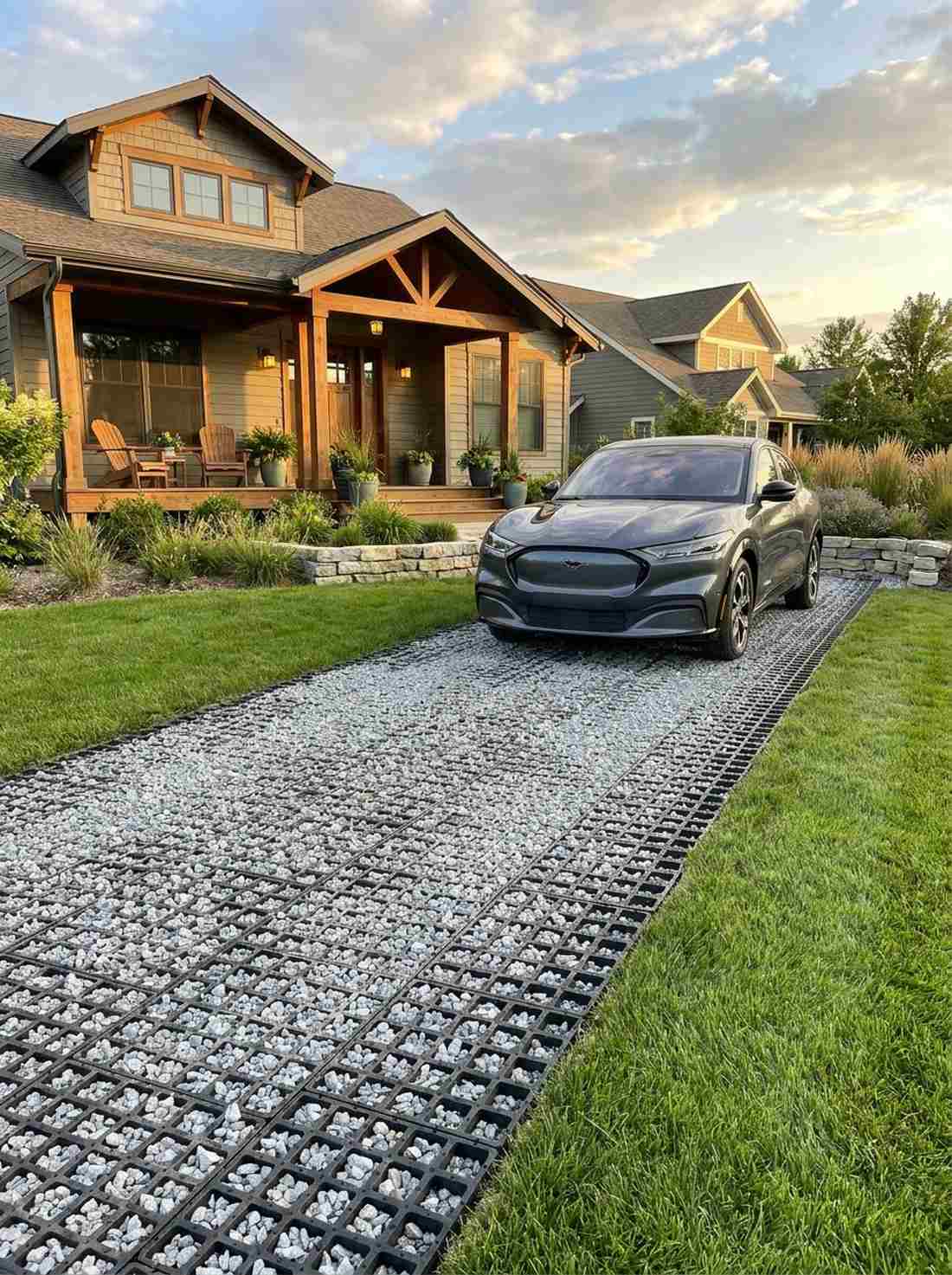
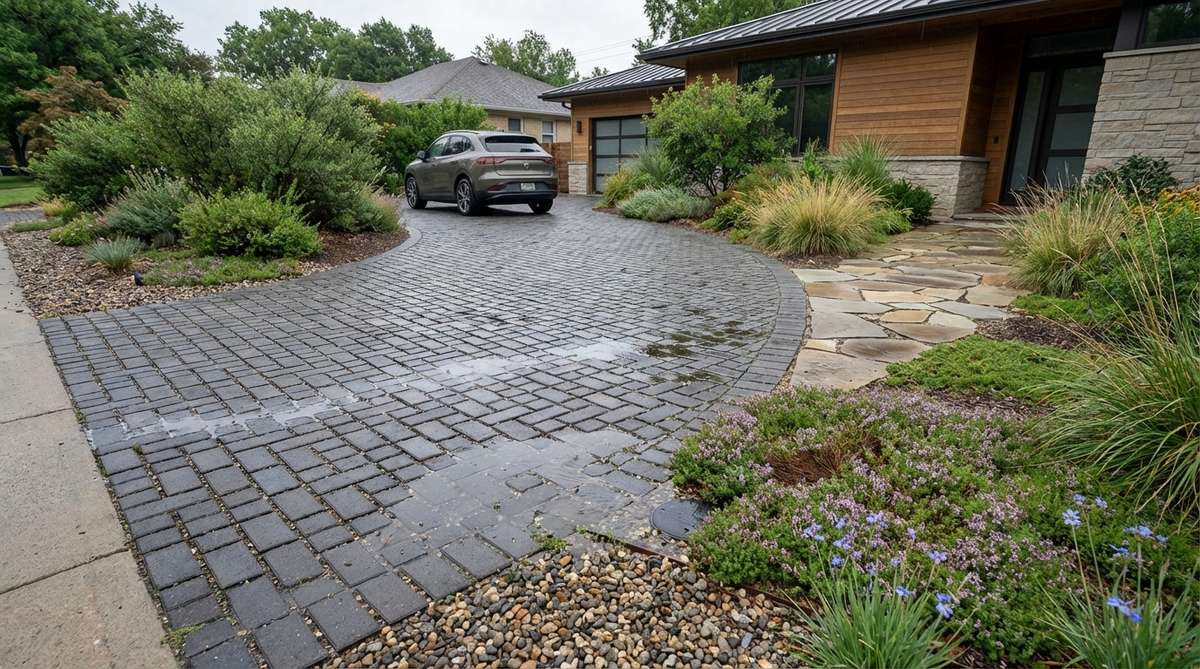
This driveway layout feels incredibly modern, blending structural parking with eco-friendly greenery. Upgrading to a permeable paver driveway grid eliminates giant, ugly asphalt pads and reduces neighborhood water runoff dramatically.
Using cellular grids bypassing the typical concrete slab looks far more expensive than it is. Snapping together heavy-duty recycled plastic driveway grids filled with decorative gravel provides industrial-strength parking that visually vanishes into the landscape.
A DIY grid setup runs about $400–$800 for a single car pad. Pin this for a brilliant driveway alternative.
- Key Materials: Interlocking permeable grid panels, angular crushed gravel
- Vibe / Style: High-tech eco-modern
- Difficulty: High labor (requires significant base digging)
- Budget Breakdown: Grid Panels: $450 | Crushed Stone: $200.
- Creator’s Tip: Never use rounded pea gravel inside the grids; you must use sharp, angular crushed stone so it locks together securely under tire weight.
- Smart Sourcing: heavy-duty permeable ground grid panels and commercial-grade geotextile fabric.
27. Limestone Walkway Elegance
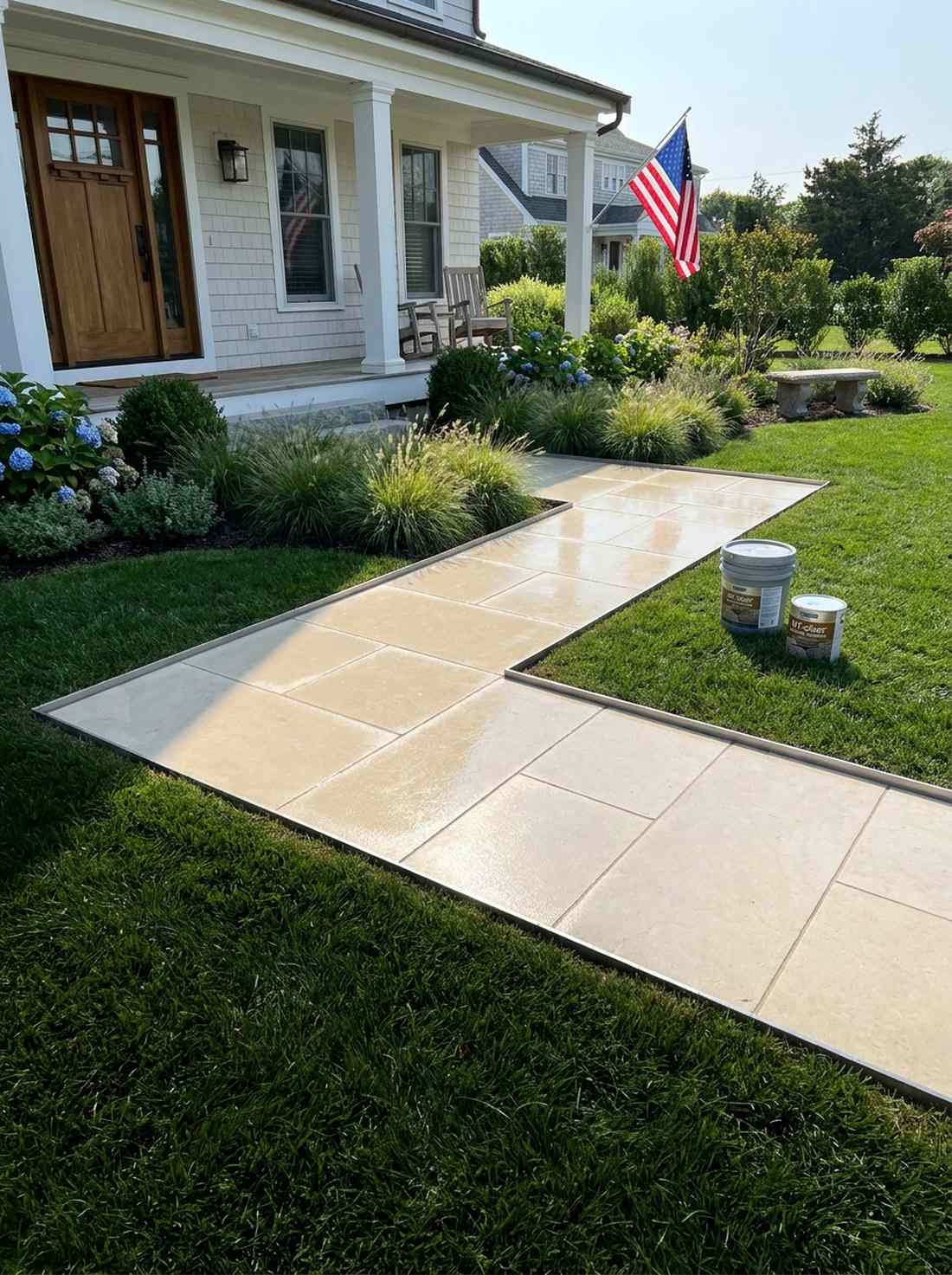
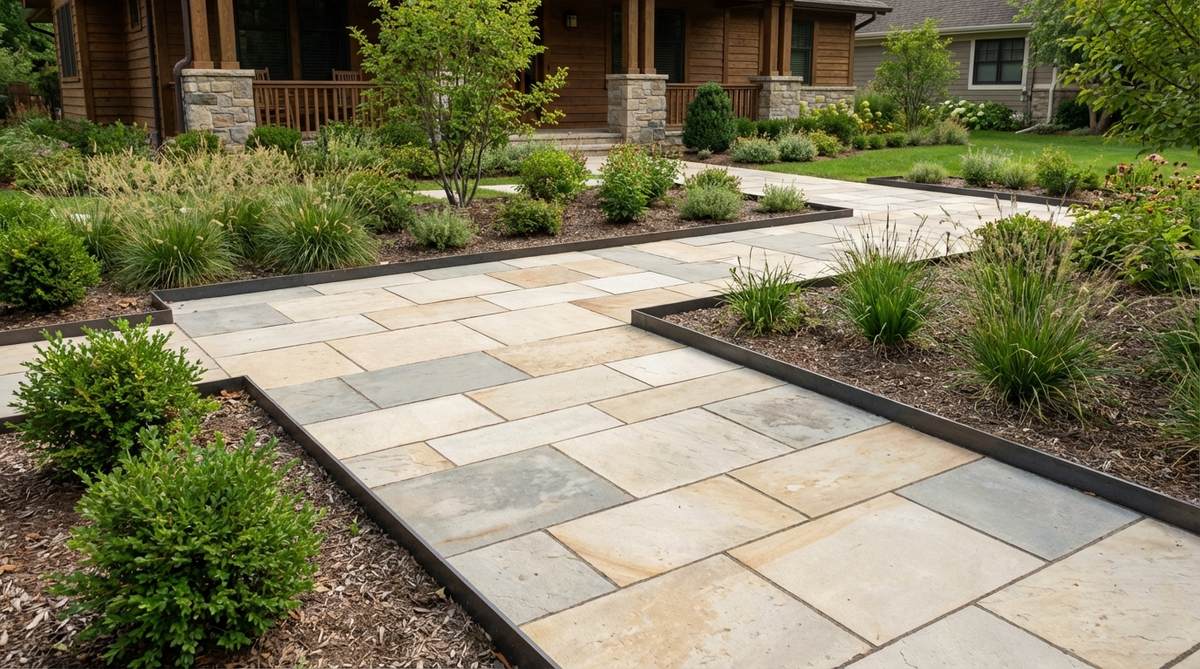
The smooth, bright surface of this walk feels like the entrance to an upscale coastal resort. A cut limestone paver walkway reflects light beautifully and adds crisp, tailored sophistication to any front garden design.
Using perfectly geometric stones delivers a surprisingly premium look that contrasts brilliantly against soft, dark lawn grass. Opting for dry-cast limestone composite pavers gives you that luxurious natural stone aesthetic without the outrageous quarry price tag.
Materials for a standard straight walkway will cost around $250–$500.
- Key Materials: Square limestone or composite pavers, metal edging
- Vibe / Style: Crisp, tailored coastal
- Difficulty: Moderate (requires precise leveling)
- Budget Breakdown: Pavers: $350 | Base Prep: $90.
- Creator’s Tip: Seal the limestone immediately after installation to prevent inevitable leaf tannins from staining the bright stone.
- Smart Sourcing: UV-clear outdoor stone sealant sprays and professional paver lifting tongs.
This upcoming hardscape secret is what high-end contractors use to charge triple…
28. Gravel and Steppingstone Combination
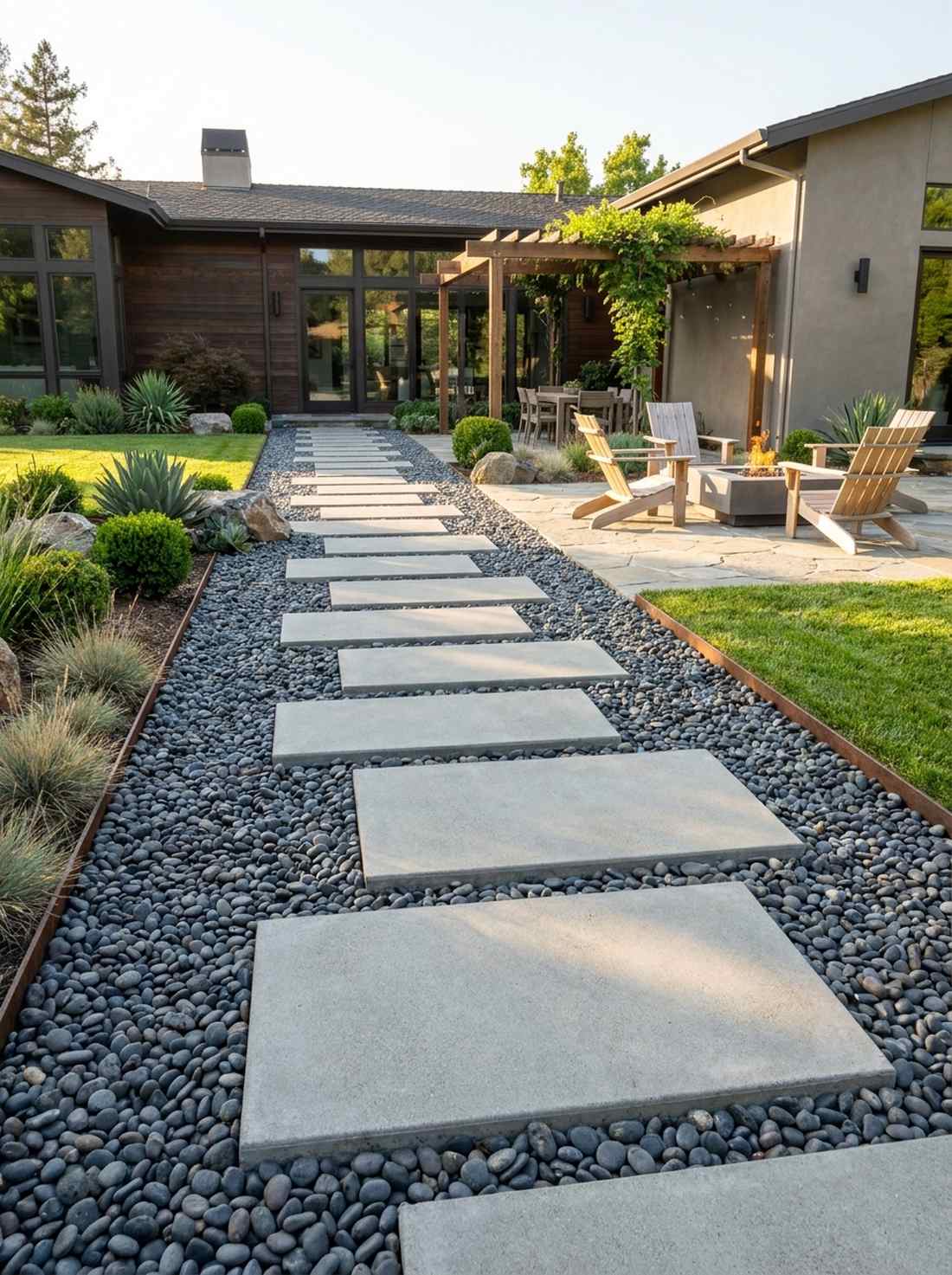
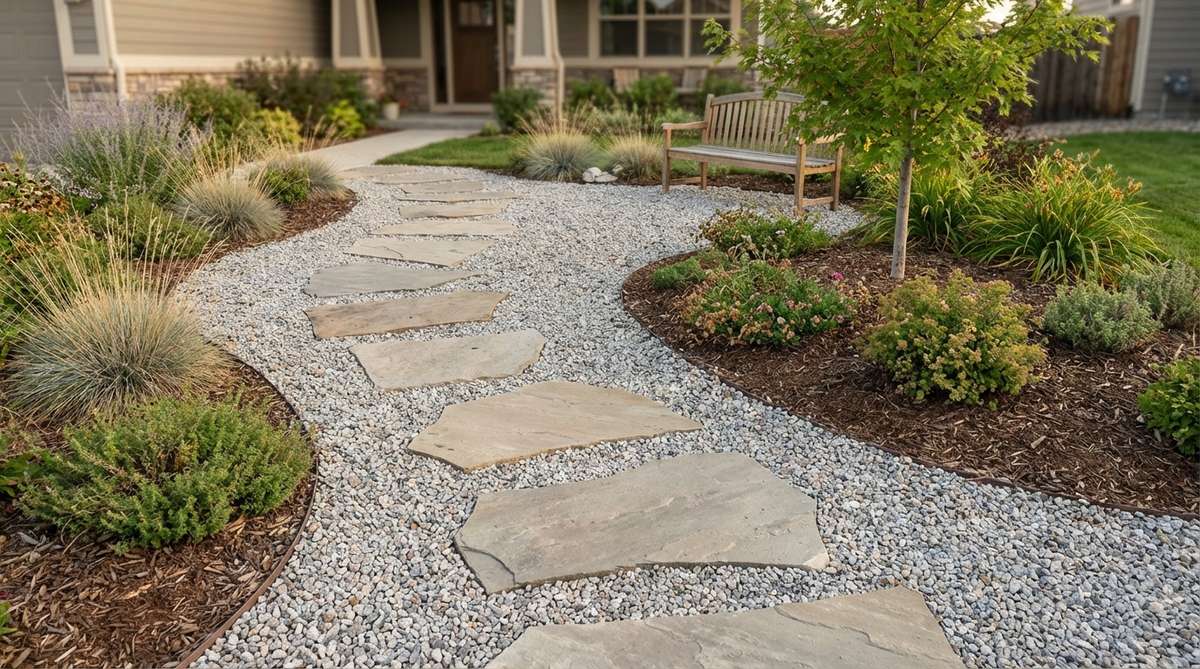
The stark contrast here feels like a high-end Zen meditation garden. The gravel and floating stepping stone combo is a highly sought-after aesthetic for mid-century modern or ultra-contemporary homes.
Floating large slabs in a sea of tiny stones gives a designer-level finish while completely solving yard drainage issues. Laying pre-cast concrete pathway blocks over a thick bed of black or gray river rock creates extreme visual tension for very little money.
You can knock this out in a weekend for around $150–$300. Save this if you want maximum modern impact.
- Key Materials: Large concrete slabs, contrasting decorative gravel
- Vibe / Style: Zen modernism
- Difficulty: Easy but heavy lifting
- Budget Breakdown: Concrete Slabs: $120 | Decorative Gravel: $80.
- Creator’s Tip: Make sure the stepping stones sit about half an inch higher than the gravel so the loose stones don’t constantly kick up onto the walking surface.
- Smart Sourcing: large pre-cast concrete step molds and heavy-duty weed barrier fabric.
29. Brick Herringbone Pattern
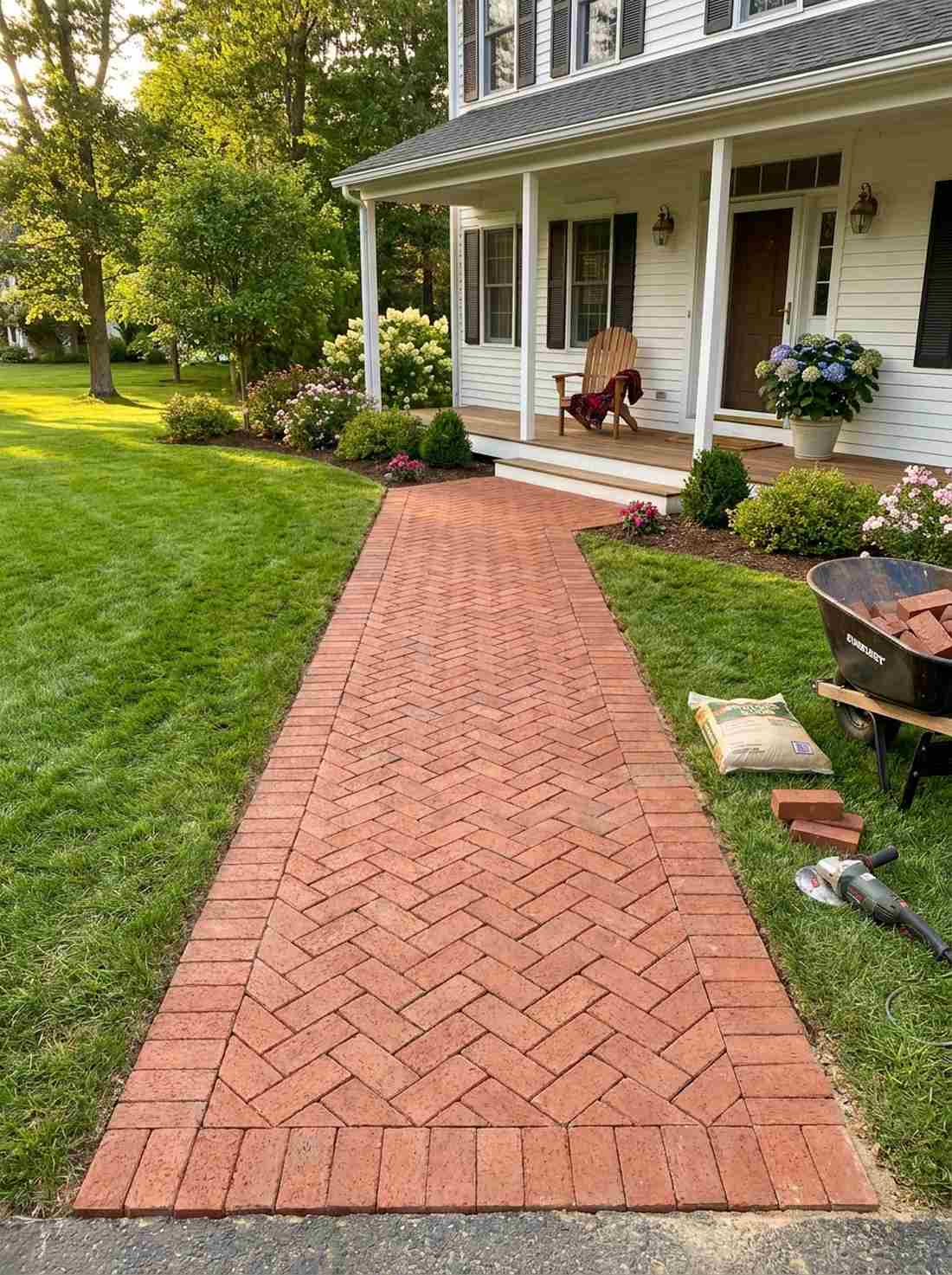
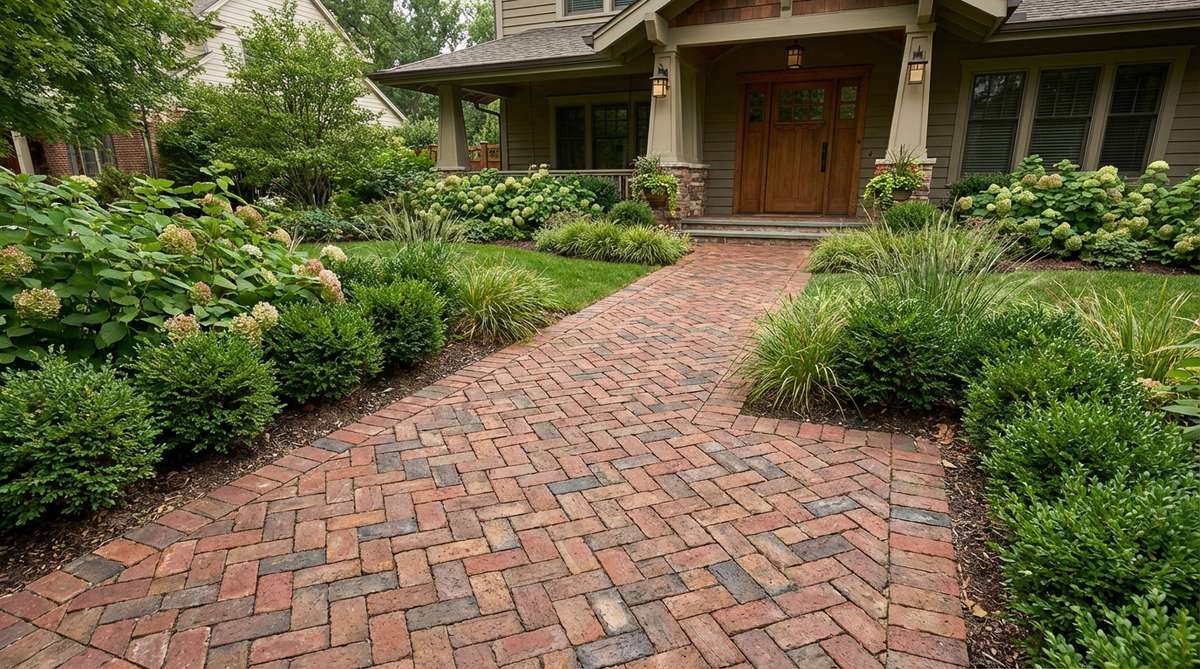
The interlocking zig-zag lines feel rich with history and immense craftsmanship. Laying a herringbone brick front walkway is a timeless investment that dramatically boosts the perceived value of traditional and colonial homes.
This intense geometric pattern bypasses the typical boring poured concrete entirely. While it requires patience, using standard clay pathway bricks dry-set in sand allows you to create this multi-thousand-dollar look strictly on a DIY budget.
Brick and sand will run roughly $300–$600 depending on path length.
- Key Materials: Clay pathway bricks, screed pipes, leveling sand
- Vibe / Style: Historic craftsman elegance
- Difficulty: Advanced DIY (requires brick cutting)
- Budget Breakdown: Bricks: $400 | Sand/Edge Restraints: $100.
- Creator’s Tip: Use an angle grinder with a diamond blade to cut the edge bricks—it’s 10x faster and cleaner than using a manual brick chisel.
- Smart Sourcing: diamond masonry angle grinder blades and rigid paver edge restraints.
30. Raised Walkway with Retaining Walls
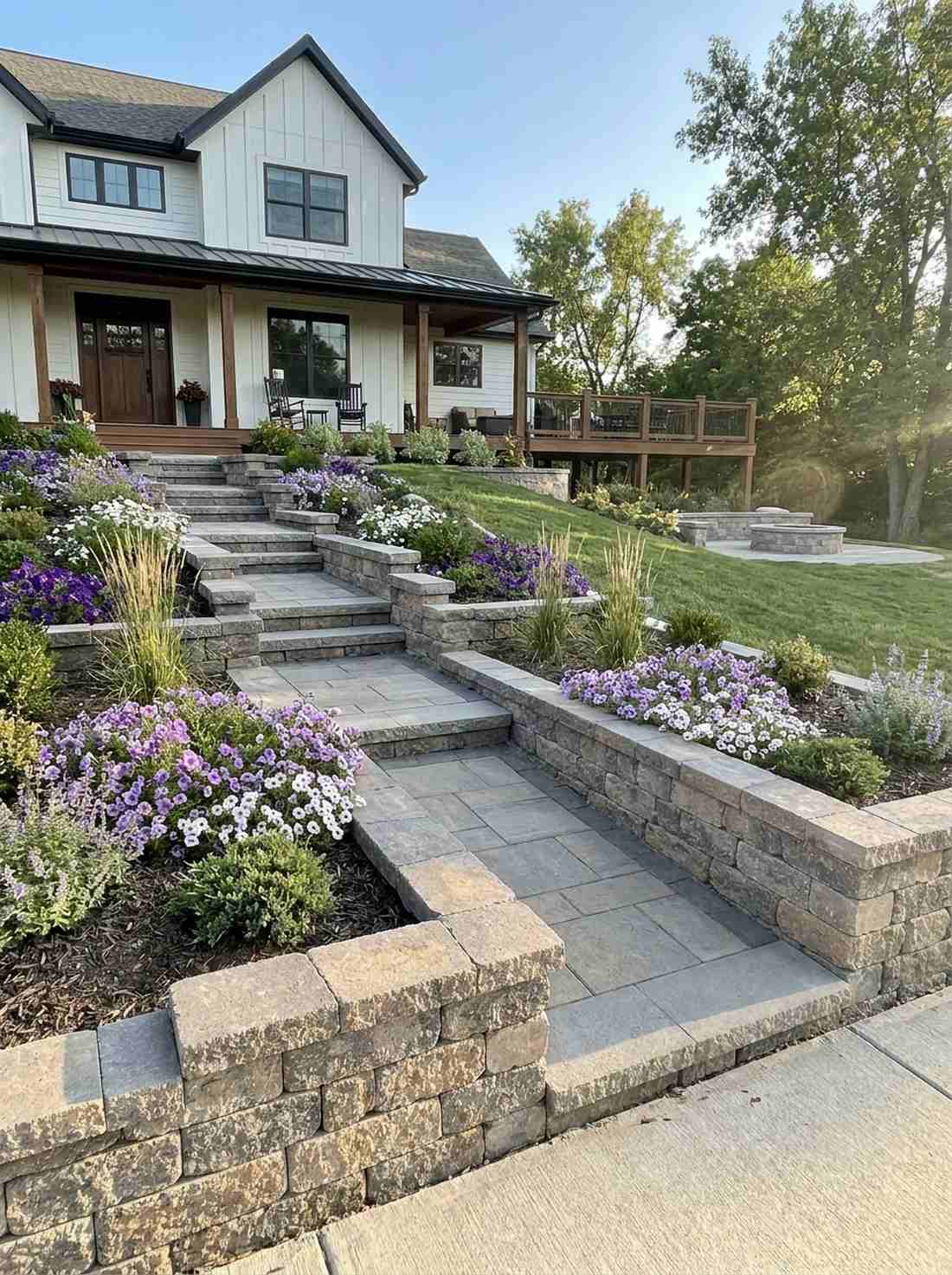
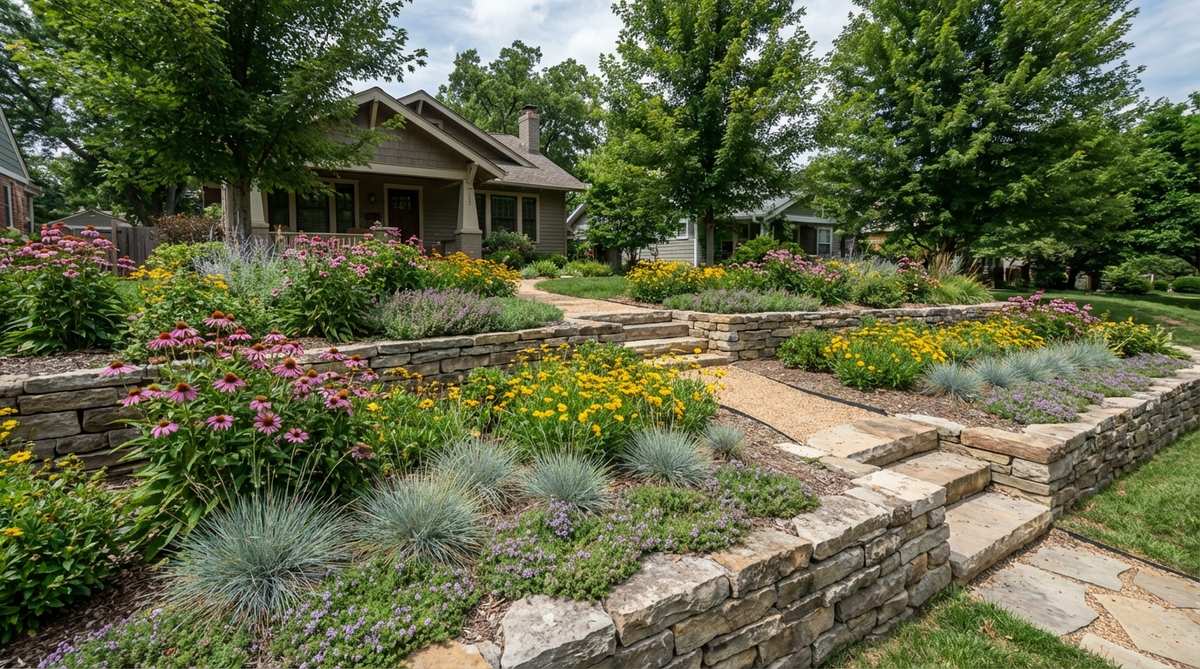
This terraced approach feels like scaling a beautiful, grand staircase to a hillside manor. A raised pathway with mini retaining walls is the absolute best use-case for homes stuck on difficult, heavily sloped lots.
Building up the pathway delivers a surprisingly premium look that solves terrifying icy slip hazards in the winter. Stacking interlocking concrete wall blocks to terrace the slope creates deep, flat planting pockets that showcase cascading flowers.
Expect to spend $500–$900 to safely terrace a front slope. Pin this if you have a frustratingly steep yard.
- Key Materials: Interlocking retaining wall blocks, crushed drainage gravel
- Vibe / Style: Grand terraced estate
- Difficulty: High effort, structural planning needed
- Budget Breakdown: Wall Blocks: $600 | Drainage Gravel & Pipe: $150.
- Creator’s Tip: Always install a perforated corrugated drain pipe wrapped in fabric behind the bottom row of blocks to prevent water pressure from blowing the wall out.
- Smart Sourcing: pre-sleeved corrugated drainage pipes and polyurethane landscape block adhesive.
Entryway Focal Features That Welcome Guests
Statement elements near your front door create memorable first impressions and guide visitors with clear visual cues. These designs emphasize scale, symmetry, and intentional focal points.
The psychological impact of this next feature literally stops cars driving by.
31. Statement Arbor or Pergola
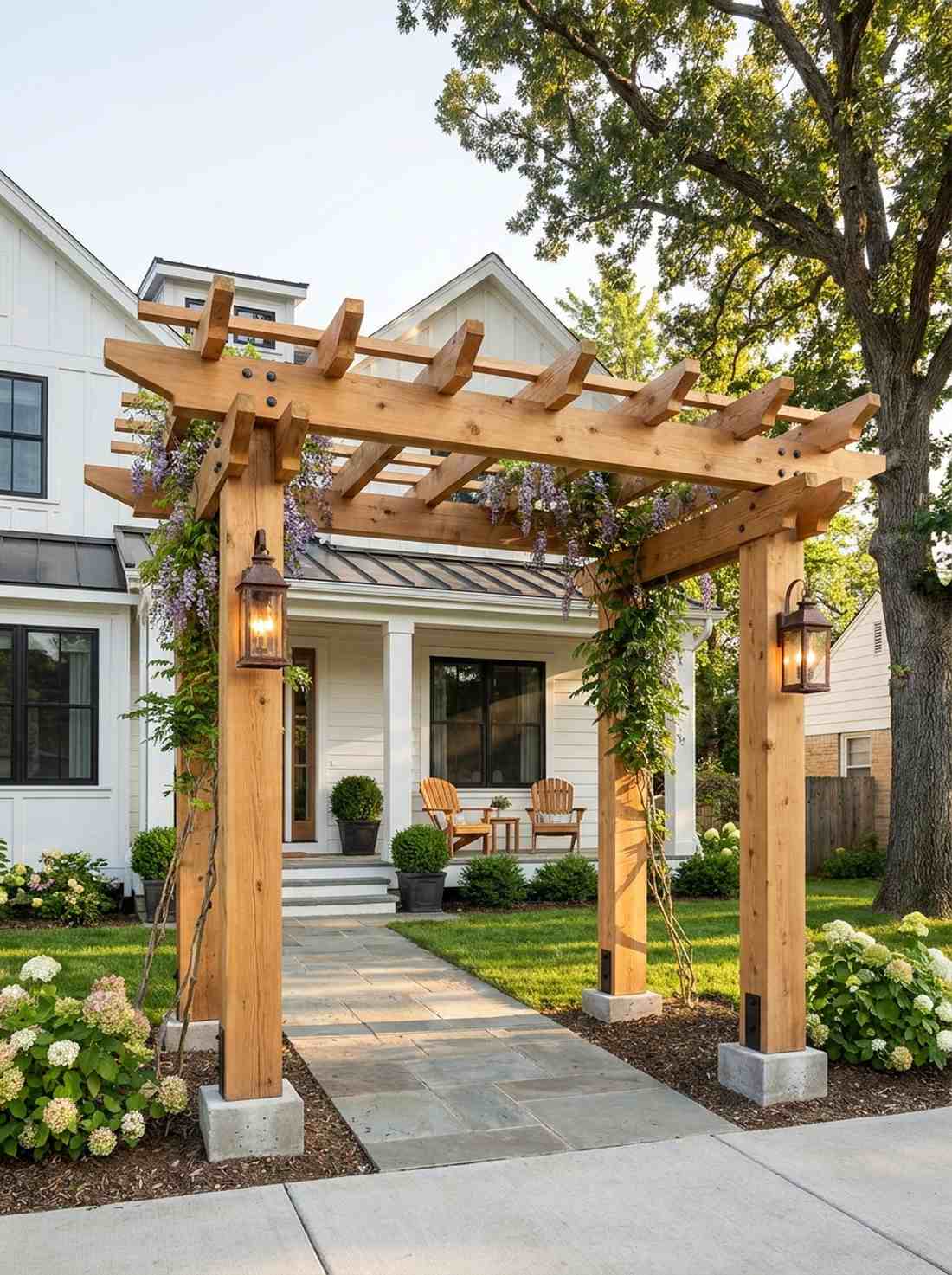
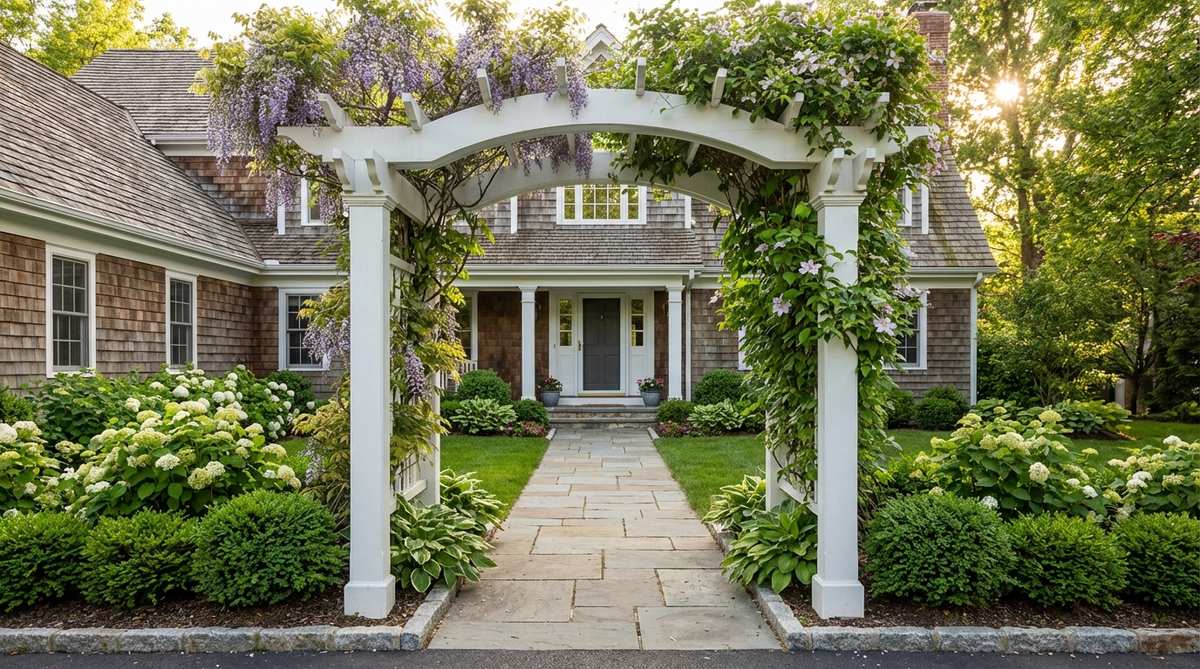
Passing under this heavy timber frame feels like entering a private, exclusive sanctuary. A statement wooden entryway pergola over the front path visually reaches out to the street, making a small home feel immensely larger.
Adding bold architectural woodwork instantly elevates basic builder-grade spaces into custom homes. Bolting together a pre-cut cedar pergola kit saves thousands on carpenter fees while providing the perfect structure for hanging lanterns and vines.
A sturdy kit will cost around $400–$800. Save this for an ultimate weekend curb appeal flip.
- Key Materials: Cedar or aluminum pergola kit, concrete footings
- Vibe / Style: Bold architectural threshold
- Difficulty: Moderate (requires two people to lift)
- Budget Breakdown: Pergola Kit: $600 | Concrete Bases: $50.
- Creator’s Tip: Ensure your post footings go below the local frost line, otherwise winter freezing will heave the entire structure out of the ground.
- Smart Sourcing: pre-cut cedar pergola starter kits and fast-setting concrete mix bags.
32. Wrought Iron Privacy Gate
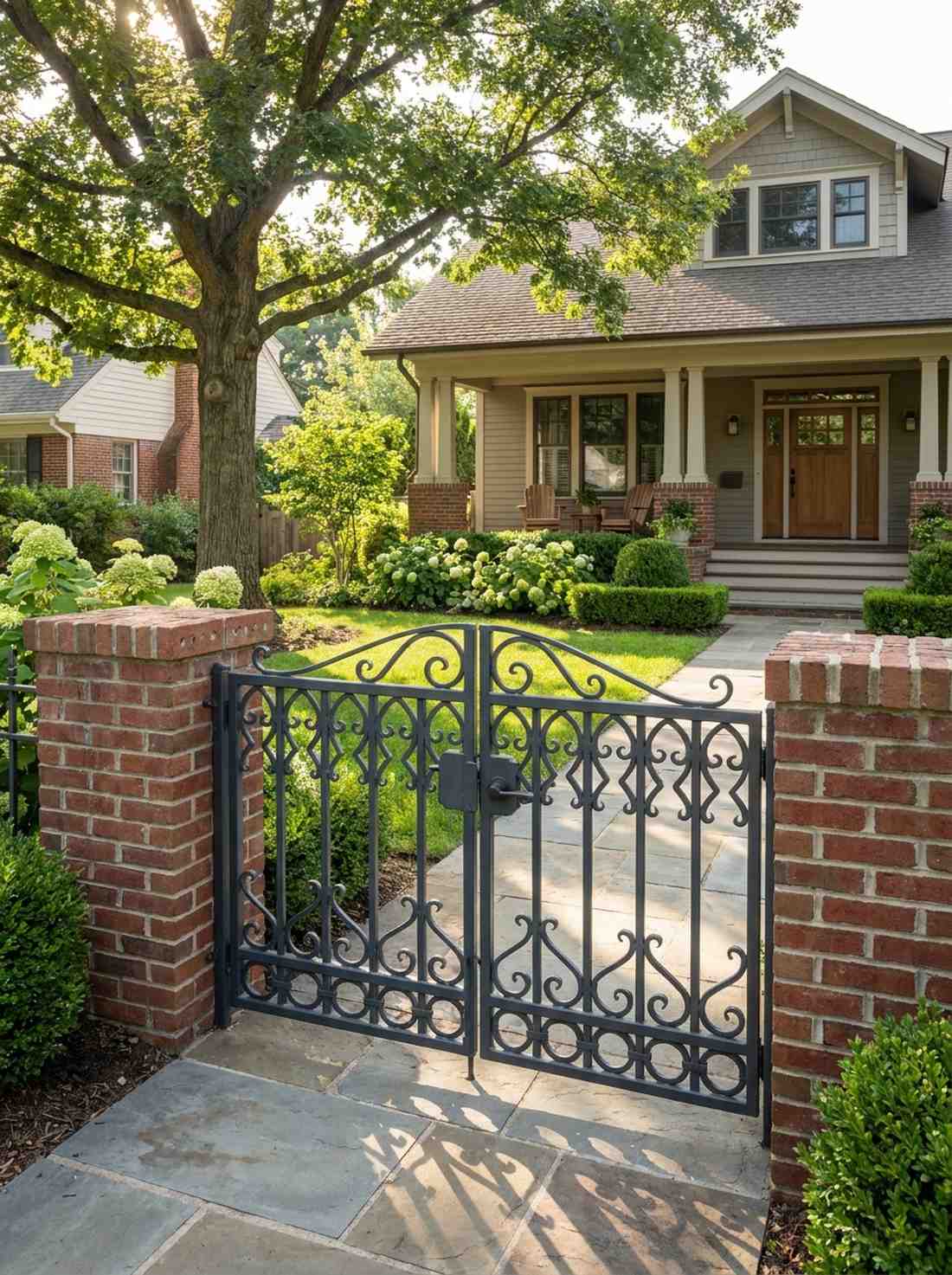
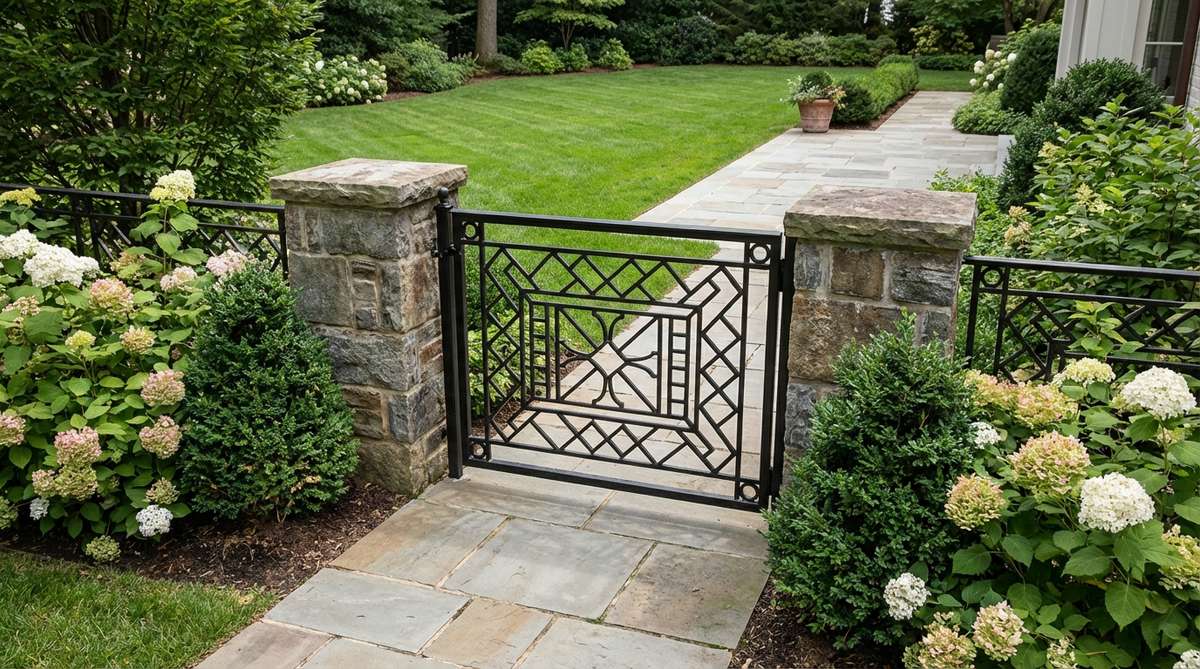
The heavy clank of this metal latch feels incredibly secure and highly aristocratic. A low wrought iron courtyard gate creates a definitive boundary between the public street and your private front garden design.
Introducing ornamental metalwork looks far more expensive than it is, giving the illusion of a gated estate. Using bolt-on aluminum ornamental gates that mimic heavy iron gives you the gothic aesthetic without the rusted hinges or massive weight.
You can add a stunning entry gate for roughly $200–$450.
- Key Materials: Ornamental metal gate, masonry anchors or steel posts
- Vibe / Style: Secure courtyard elegance
- Difficulty: Moderate (requires level hanging)
- Budget Breakdown: Metal Gate: $250 | Hinges/Hardware: $40.
- Creator’s Tip: Paint the gate a deep charcoal gray rather than stark black; it looks softer, more expensive, and hides street dust much better.
- Smart Sourcing: rust-proof aluminum driveway gates and heavy-duty masonry anchor bolts.
33. Oversized Container Planters
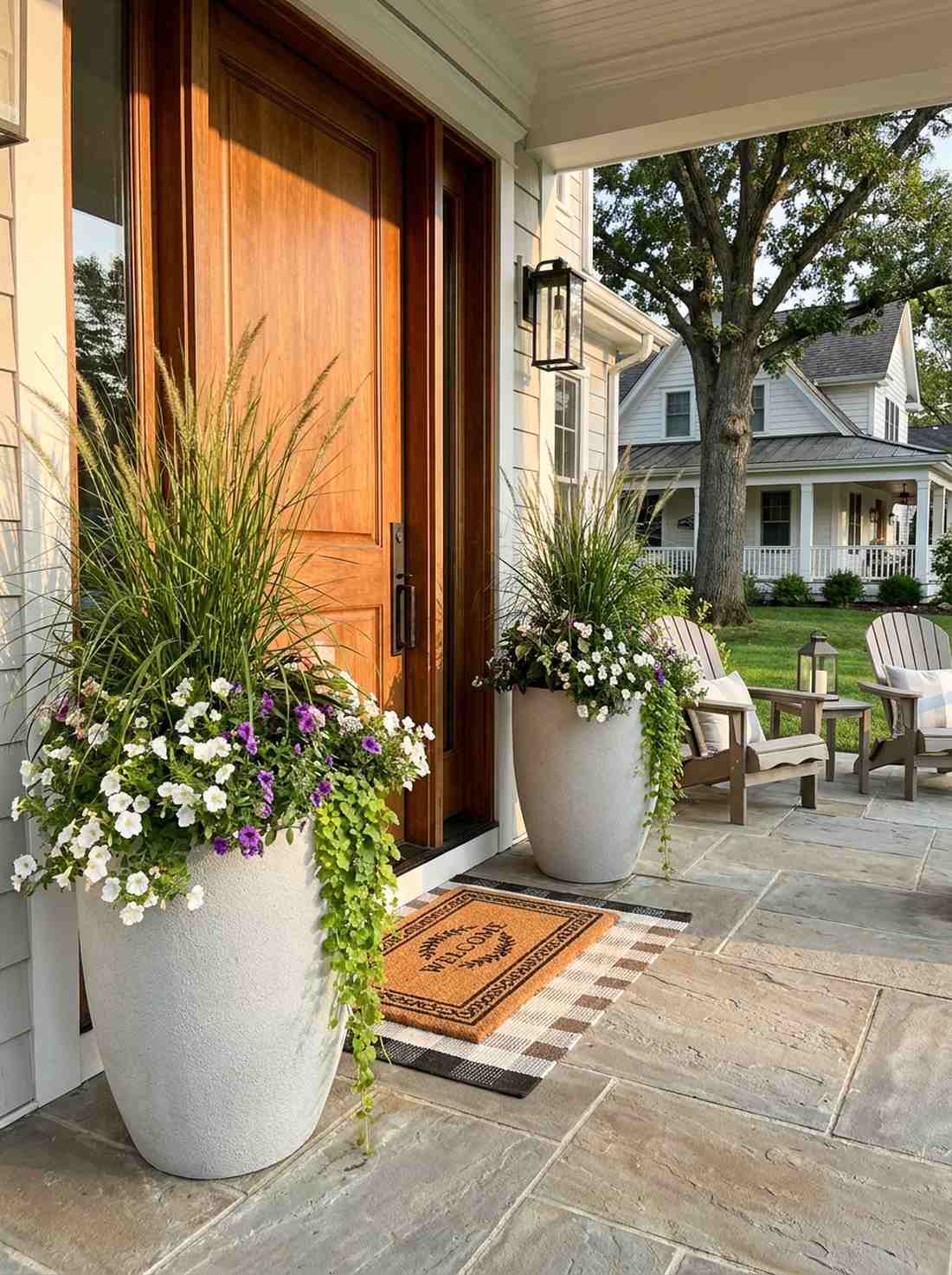
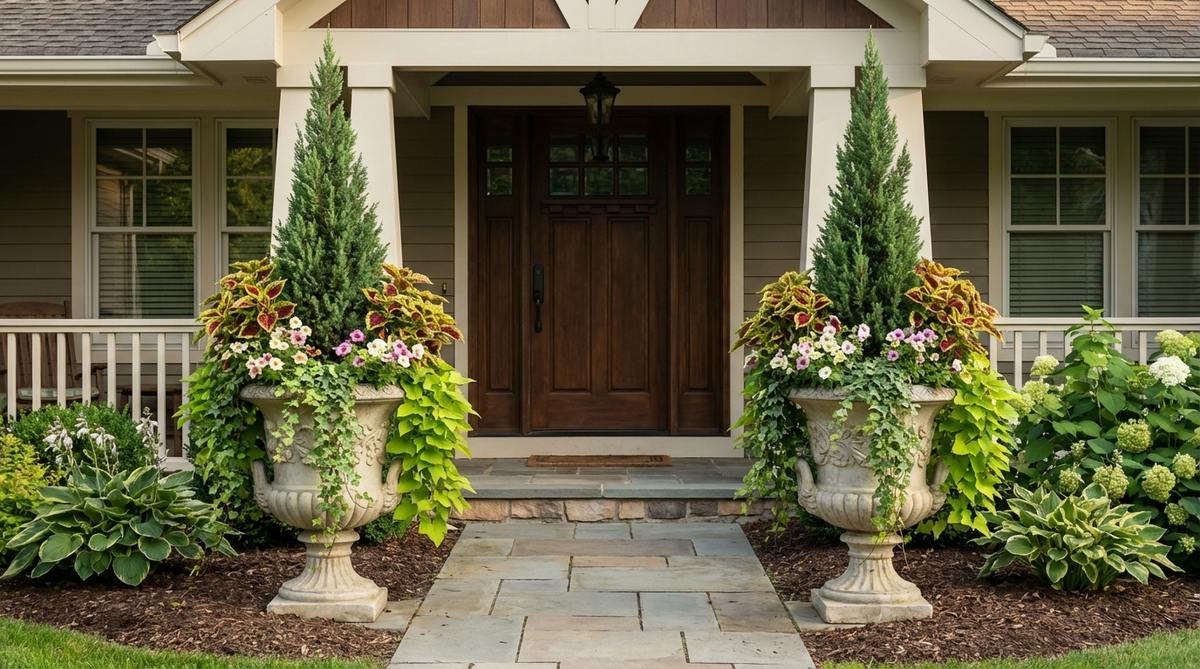
These massive pots add a burst of scale that makes the front door feel grandiose and important. Symmetrical oversized entryway planters are the ultimate cheat code for adding height and color exactly where you need it.
Scaling up your planters delivers a surprisingly premium look that tiny, cluttered pots can never achieve. Dropping a tall “thriller” grass into lightweight composite resin planters gives you the look of solid concrete without breaking your back to move them.
Two massive statement pots will cost about $150–$300.
- Key Materials: 24-inch tall planters, thriller/filler/spiller plants
- Vibe / Style: Instant upscale staging
- Difficulty: Extremely easy
- Budget Breakdown: Large Planters: $180 | Soil & Plants: $80.
- Creator’s Tip: Fill the bottom half of giant pots with empty plastic water bottles before adding soil; it saves money on dirt and makes the pots light enough to move.
- Smart Sourcing: tall lightweight fiberglass planters and moisture-retaining potting soil blocks.
34. Water Feature Focal Point
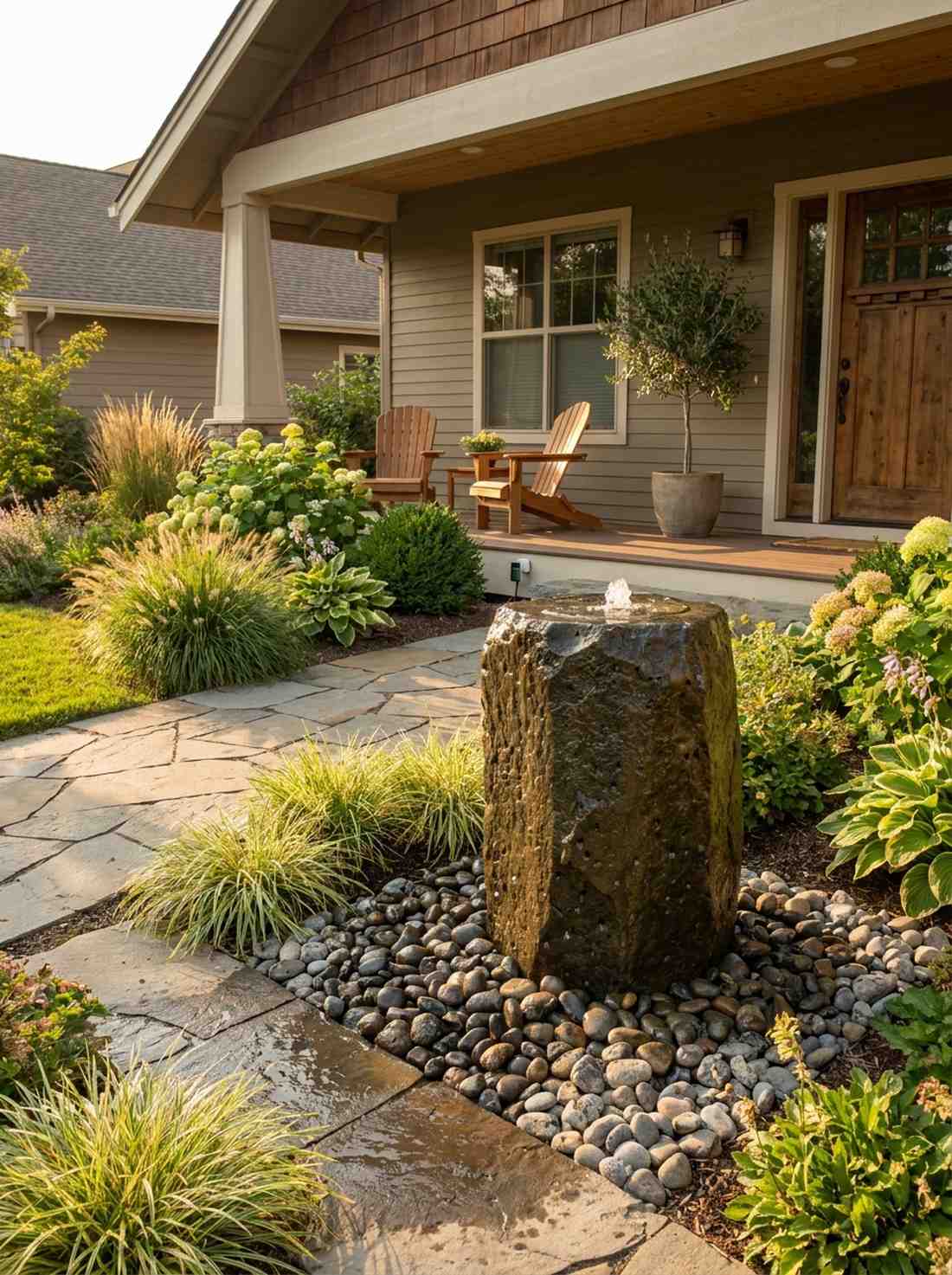
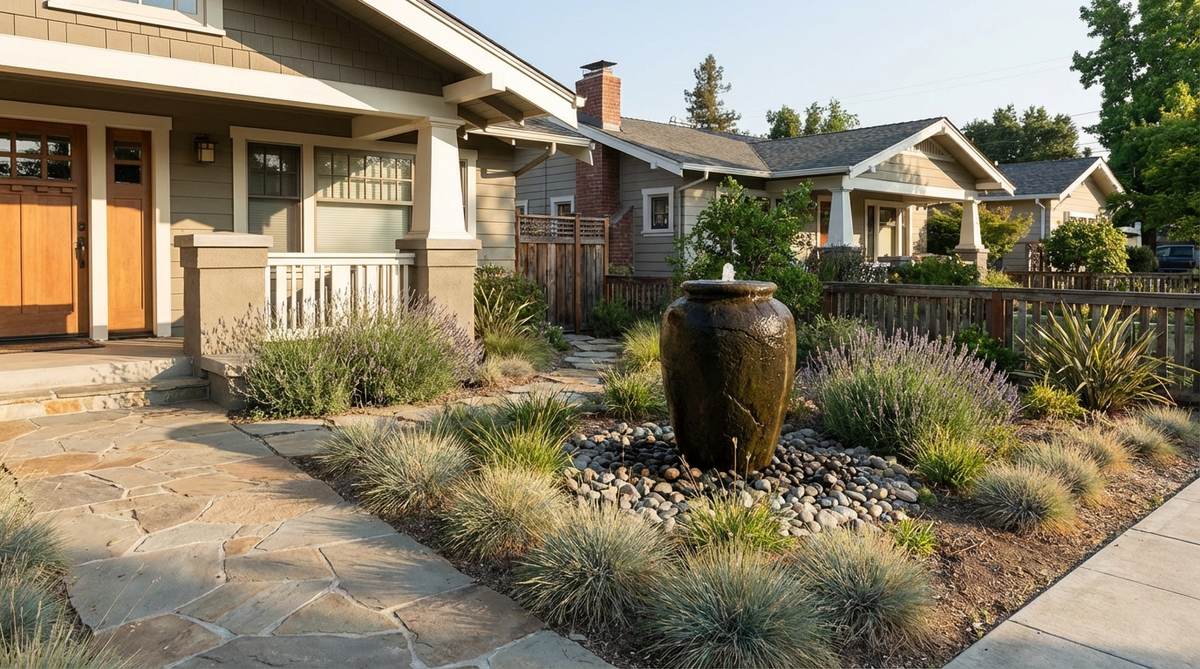
The gentle bubbling sound here instantly drowns out stressful street noise, feeling like a high-end spa. A recirculating front yard water feature adds movement and sensory calmness right at the entrance threshold.
Adding water bypasses the typical static garden and introduces a luxurious, dynamic element. Burying a self-contained fountain basin kit topped with a drilled basalt rock or ceramic urn looks entirely custom for a fraction of a pond’s cost.
You can install a bubbling urn for $200–$400. Pin this to add ultimate tranquility to your layout.
- Key Materials: Underground water basin, submersible pump, drilled stone
- Vibe / Style: Tranquil spa entrance
- Difficulty: Moderate (requires digging and outdoor GFCI outlet)
- Budget Breakdown: Basin & Pump Kit: $180 | Decorative Urn: $120.
- Creator’s Tip: Put the fountain pump on a smart outdoor plug so you can easily turn the water feature on from your phone right as guests arrive.
- Smart Sourcing: complete bubbling urn fountain kits and smart outdoor Wi-Fi plugs.
35. Sculptural Accent Piece
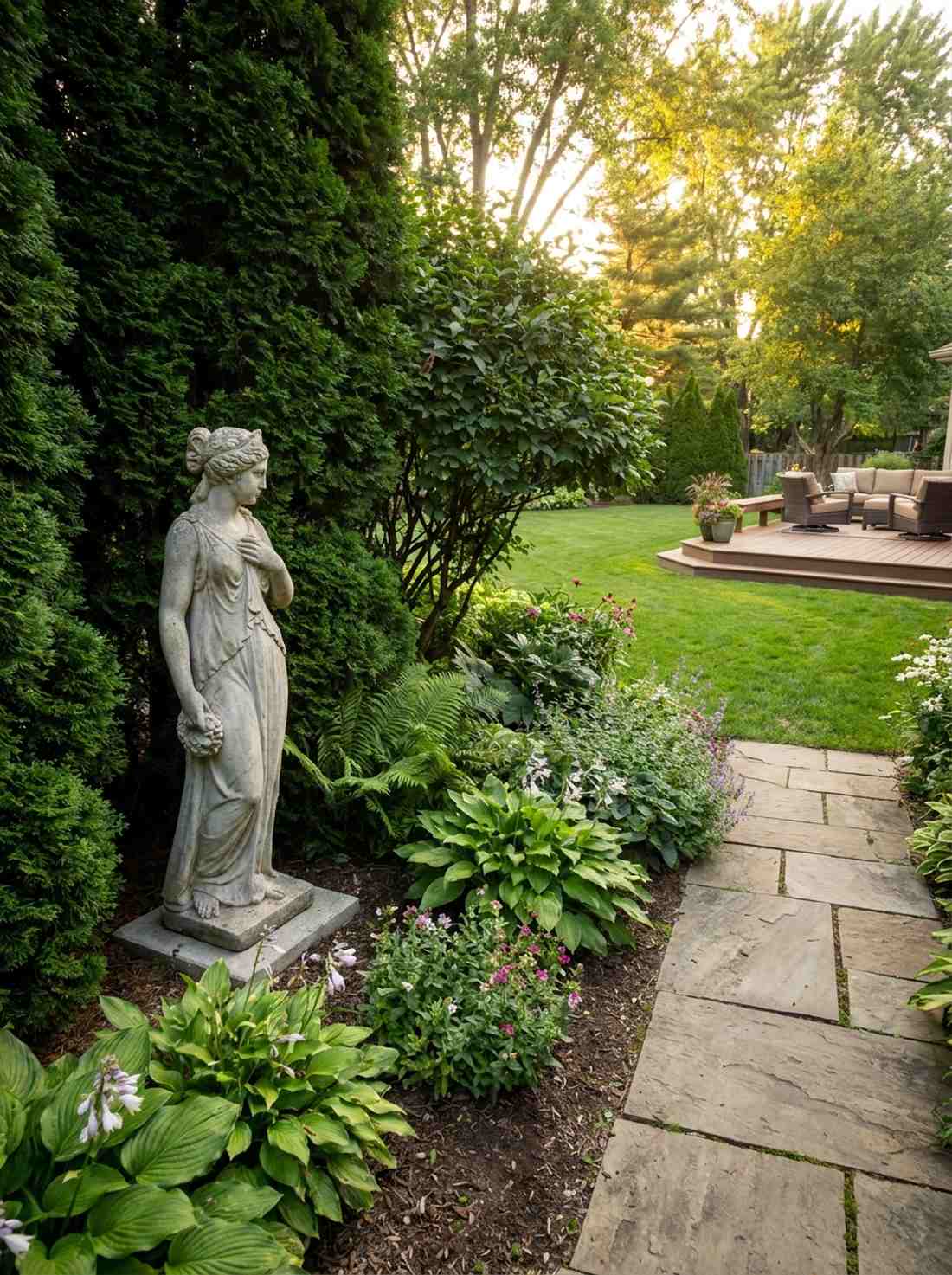
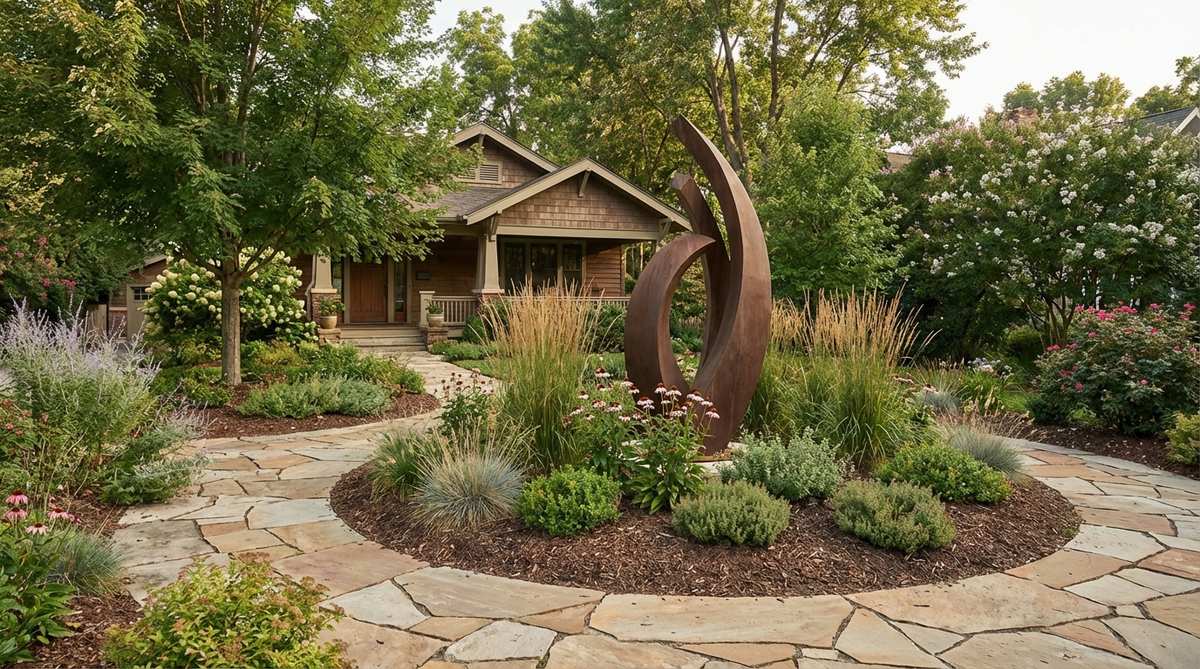
Catching sight of this art piece tucked into the greenery feels like visiting a curated botanical museum. A weatherproof garden sculpture gives the eye a distinct place to land when the garden is dormant in the winter.
Adding an art focal point gives a designer-level finish that elevates the perceived culture of the property. Whether it’s an abstract metal sphere or a cast stone classical statue, nestling it against a dark evergreen backdrop makes the piece explode visually.
A solid statement piece costs anywhere from $100 to $500.
- Key Materials: Metal, stone, or resin sculpture, paver base
- Vibe / Style: Curated artistic estate
- Difficulty: Easy placement
- Budget Breakdown: Sculpture: $200 | Concrete Leveling Base: $10.
- Creator’s Tip: Always place your sculpture on a hidden 12×12 concrete paver so it doesn’t sink into the mud and tilt awkwardly after a heavy rain.
- Smart Sourcing: heavy-weight cast stone statues and rust-proof abstract metal yard art.
Material Guide: Cheap vs. Premium Aesthetic
Knowing exactly where to save and where to spend makes all the difference in achieving that “looks expensive but isn’t” front yard vibe.
- Standard Plastic vs. UV-Resistant Composite: Cheap plastic edging warps and fades to a chalky gray in one summer. Spending 10% more on UV-resistant composite borders or real stone ensures the lines stay crisp for decades.
- Pre-made Kits vs. Buying Singular Plants: Buying individual potted plants at retail markup destroys budgets. Using bulk pre-planned starter kits or bare-root bundles often saves up to 60% and guarantees your plants are actually designed to bloom together.
This next transformation turns dead space into the most valuable real estate on your property.
36. Front Porch Expansion
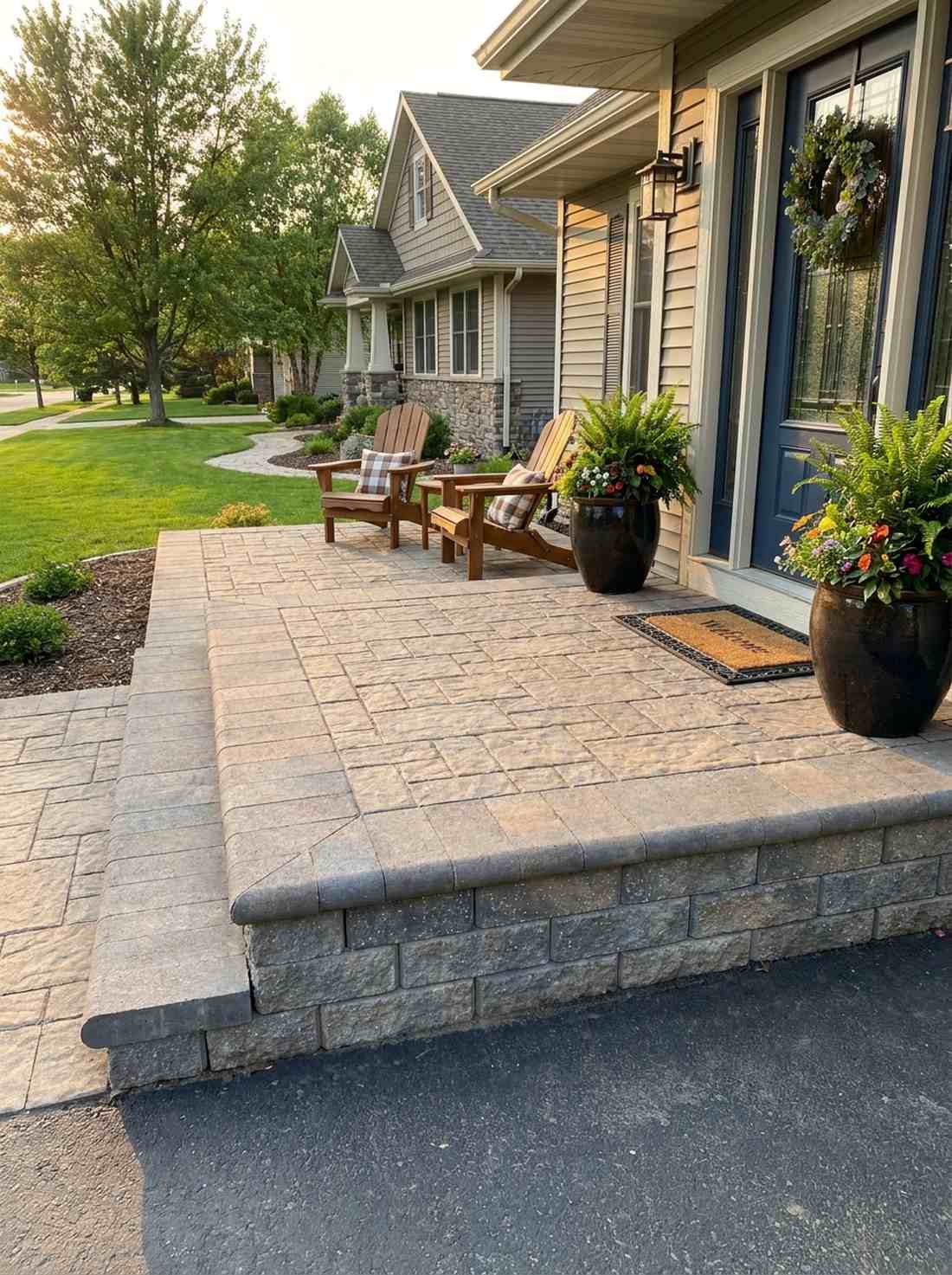
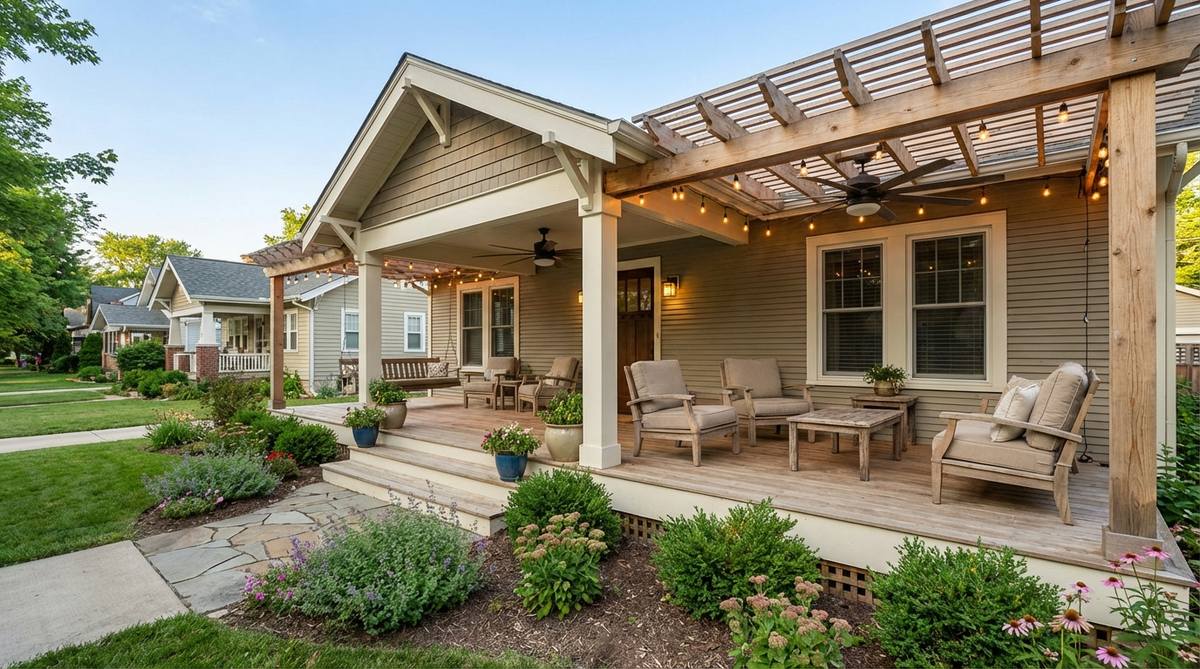
Stepping up here feels less like a doorway and more like an outdoor living room. A front porch paver expansion solves the problem of tiny, cramped concrete stoops where you can barely stand while unlocking the door.
Widening the landing zone completely changes the home’s welcoming footprint. By building a larger landing pad using interlocking retaining wall blocks over the existing stoop, you create enough room for a bench, planters, and relaxed neighborhood chatting.
A DIY stoop expansion costs about $300–$600. Save this if your front door feels dangerously cramped.
- Key Materials: Wall blocks, paving stones, construction adhesive
- Vibe / Style: Welcoming neighborhood hub
- Difficulty: Advanced DIY (requires serious base prep)
- Budget Breakdown: Block/Pavers: $400 | Adhesive & Base: $80.
- Creator’s Tip: Overhang the top layer of pavers by exactly 1 inch past the wall blocks to create a professional “bullnose” shadow line effect.
- Smart Sourcing: exterior-grade masonry construction adhesive and pre-cut concrete step kits.
Sustainable & Low-Maintenance Gardens For Modern Living
Eco-conscious designs that reduce resource consumption and maintenance demands define this category of front yard garden design ideas. These approaches emphasize native plants, water conservation, and regenerative practices.
37. Native Plant Landscape
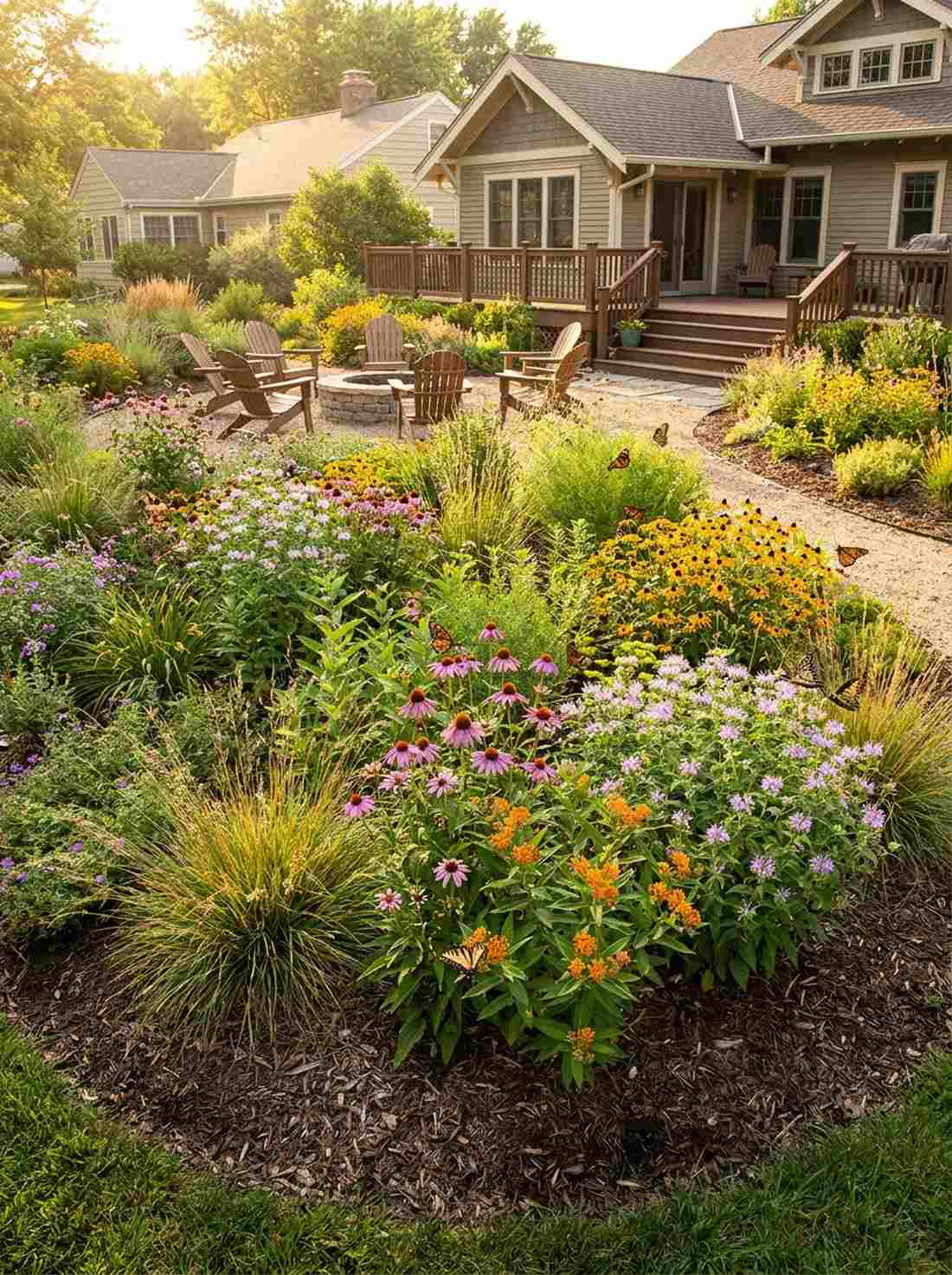
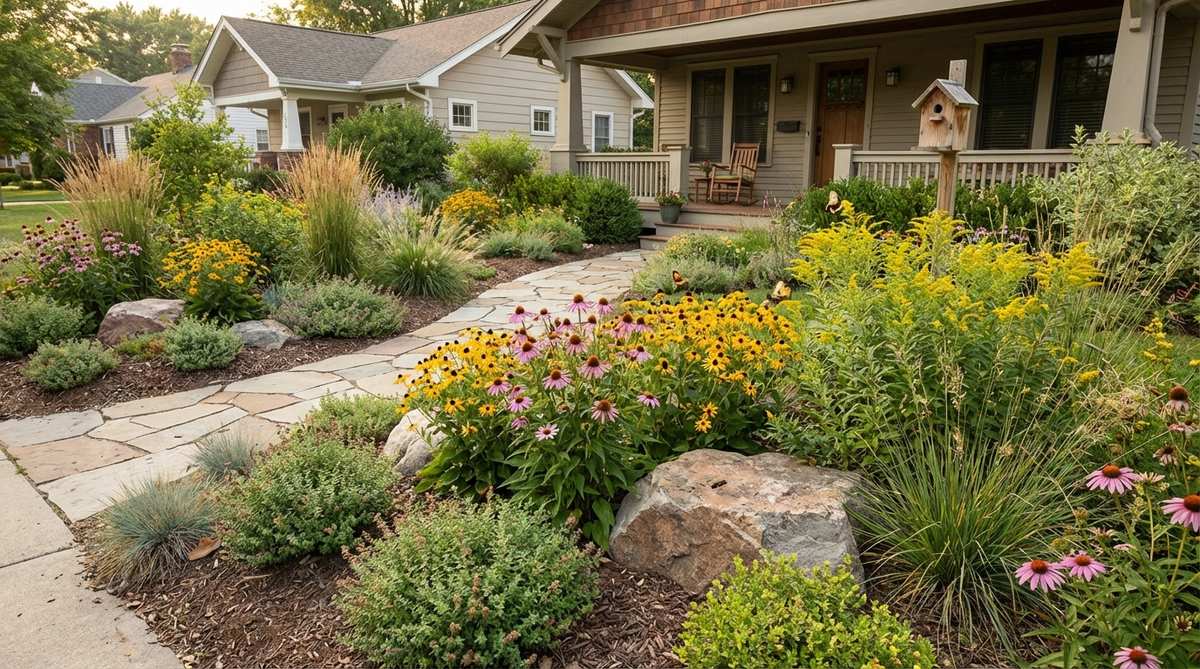
This buzzing, thriving space feels like a piece of the original wild ecosystem restored to glory. A completely native plant landscape design is the ultimate hack for homeowners who want gorgeous yards but refuse to spend weekends fertilizing and spraying chemicals.
Relying on local species delivers a surprisingly premium look that requires literally zero life support once established. Utilizing regional native plant bundles ensures your yard handles local droughts and freezes perfectly while bringing back endangered butterflies.
You can pack a yard with natives for $150–$300.
- Key Materials: Region-specific native perennials, organic leaf mulch
- Vibe / Style: Thriving eco-haven
- Difficulty: Easy, ultra-low maintenance
- Budget Breakdown: Native Plant Plugs: $120 | Leaf Compost: $50.
- Creator’s Tip: Don’t amend the soil too heavily with rich compost; native plants actually prefer the lean, tough soil they evolved to grow in.
- Smart Sourcing: regional native pollinator plant kits and bulk organic leaf mold mulch.
38. Drought-Tolerant Succulent Garden
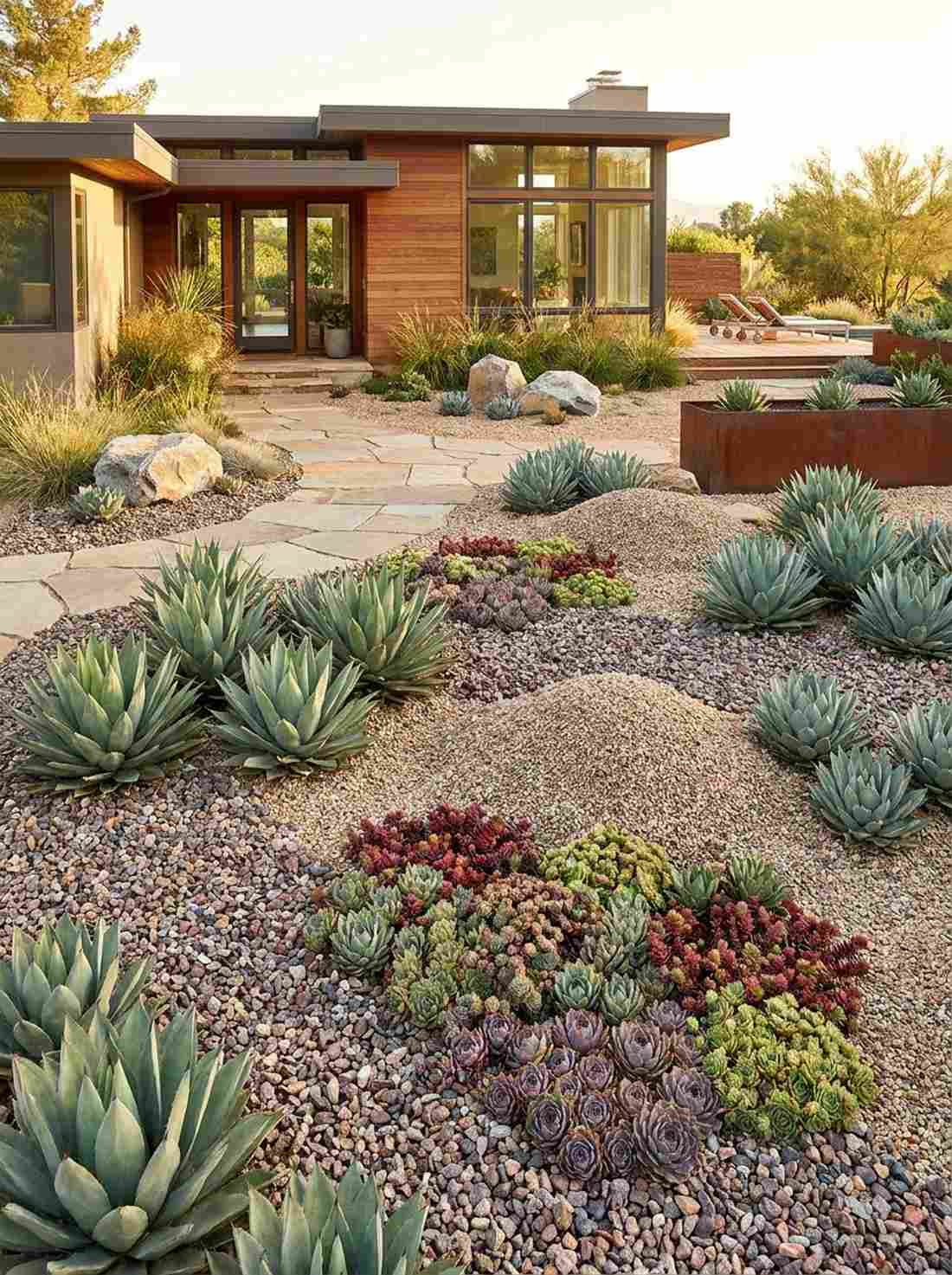
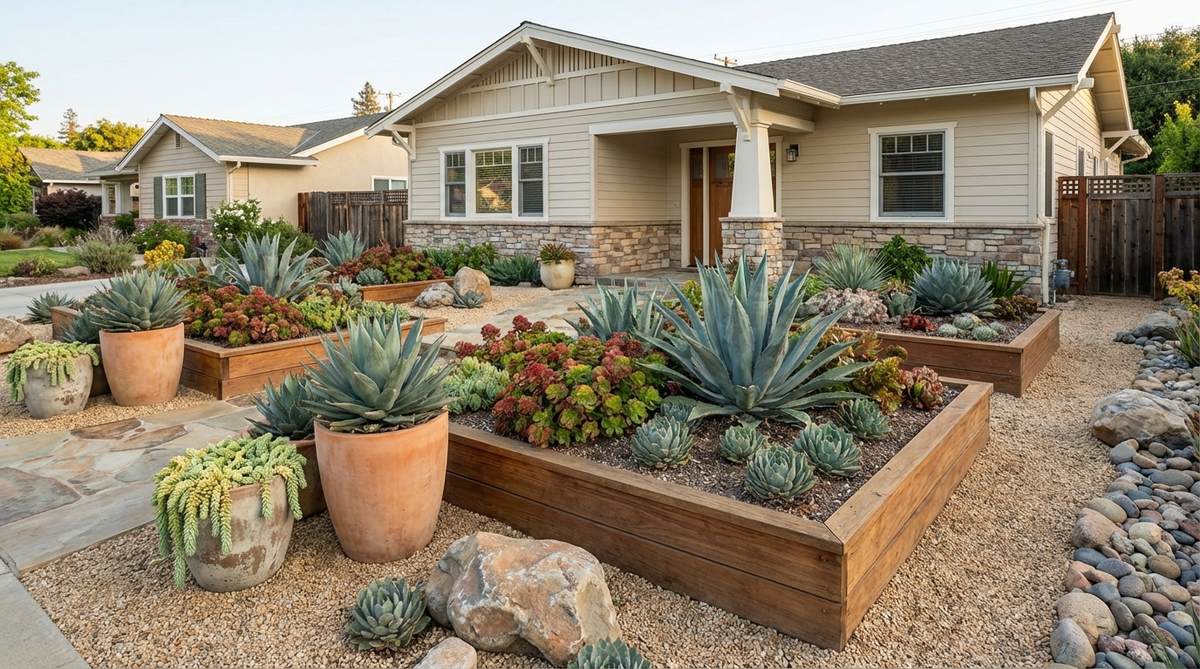
The spiky, fleshy textures here feel like an ultra-modern desert oasis. A drought-tolerant succulent front yard is visually stunning, offering intense architectural shapes that never wilt in the blazing summer sun.
Swapping thirsty lawns for geometric desert plants looks far more expensive than it is. Mass planting large Agaves and cold-hardy Sedum starter packs into beds of crushed stone creates a high-end California-modern aesthetic with zero water bill.
A succulent bed runs about $100–$250. Pin this if you live in a scorching, arid climate.
- Key Materials: Agave, Sedum, Sempervivum, crushed gravel
- Vibe / Style: California modern desert
- Difficulty: Easy, requires excellent drainage prep
- Budget Breakdown: Succulent Starters: $100 | Drainage Gravel: $60.
- Creator’s Tip: Mound the dirt up slightly in the center of the beds before planting so water naturally sheds away from the succulents’ sensitive crowns.
- Smart Sourcing: cold-hardy bulk succulent trays and fast-draining cactus soil mix.
39. Clover Lawn Alternative
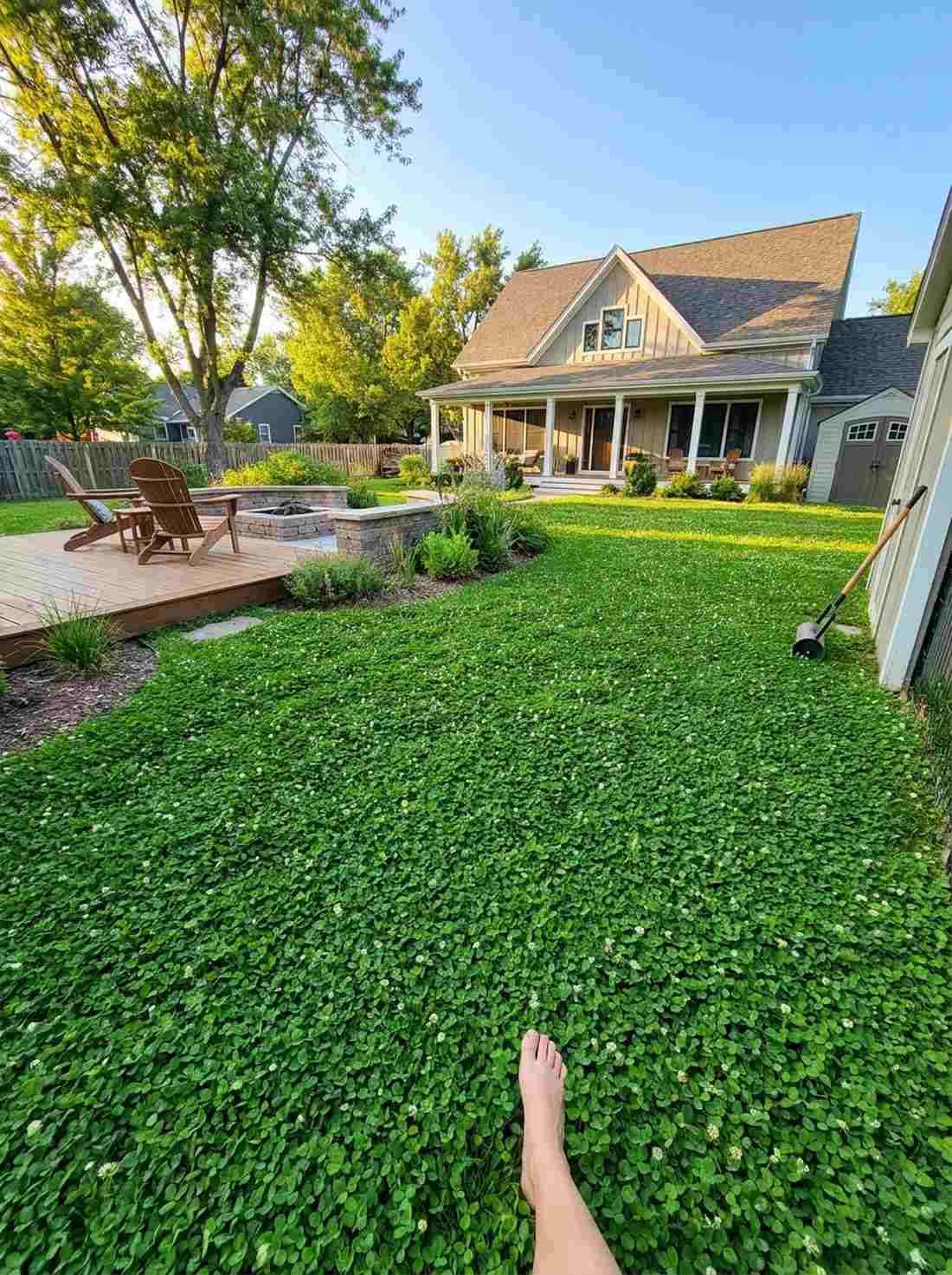
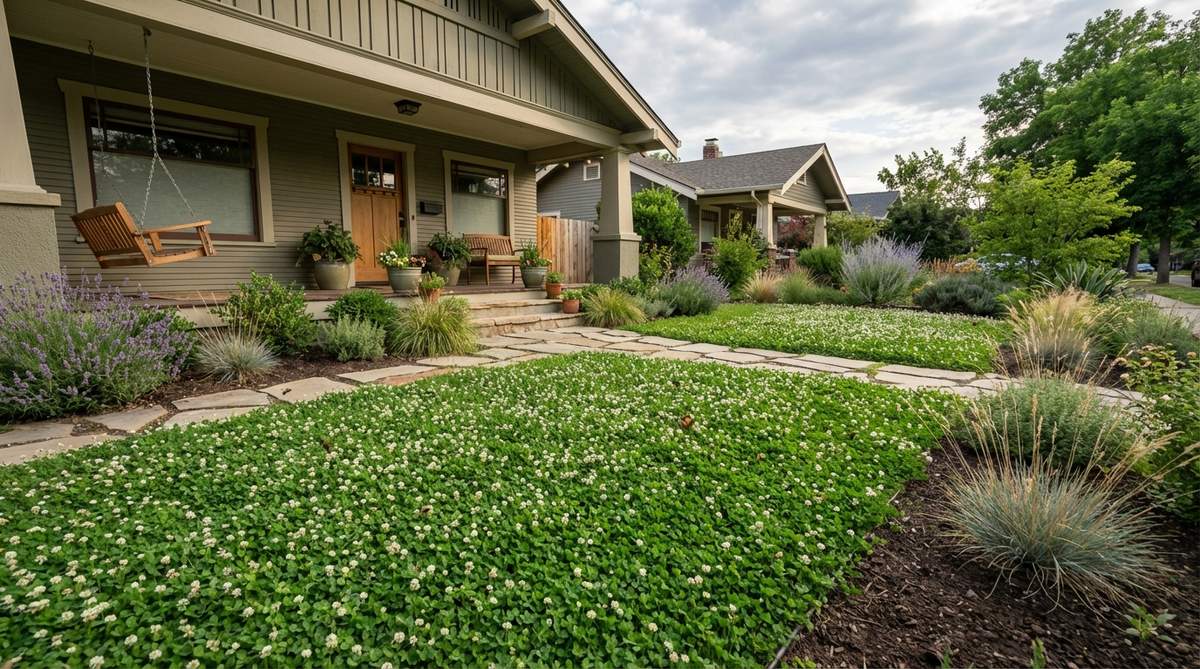
Walking barefoot on this soft, dense green carpet feels like stepping on cool velvet. Ripping out struggling grass for a micro-clover lawn alternative is rapidly becoming the smartest eco-upgrade for modern homeowners.
This green alternative bypasses the typical yellow, dying summer grass completely. Broadcasting a pelletized white clover seed mix creates a lush, nitrogen-fixing carpet that stays violently green, choke out weeds, and rarely needs a mower.
Overseeding an existing yard costs a shockingly low $40–$80.
- Key Materials: Micro-clover seeds, light topsoil
- Vibe / Style: Lush, lazy-eco green
- Difficulty: Extremely easy
- Budget Breakdown: Clover Seed Bulk Bag: $45 | Top Dressing: $20.
- Creator’s Tip: Mow your existing grass as short as possible and aggressively rake out the dead thatch before throwing the clover seed down for max germination.
- Smart Sourcing: bulk micro-clover seed bags and manual core lawn aerators.
You’ll never look at a standard lawn the same way again after seeing this upcoming eco-hack.
40. Rain Garden Swale
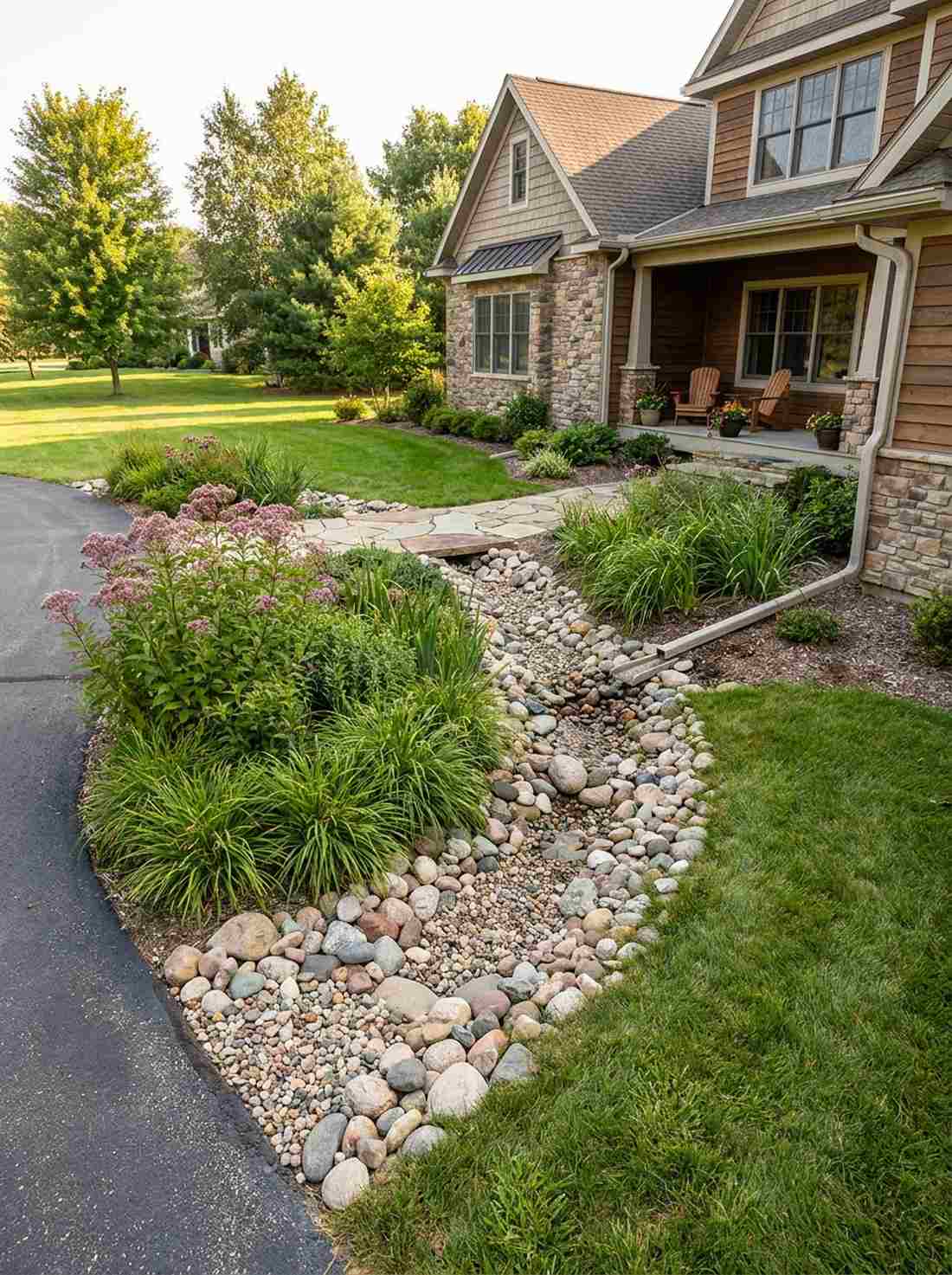
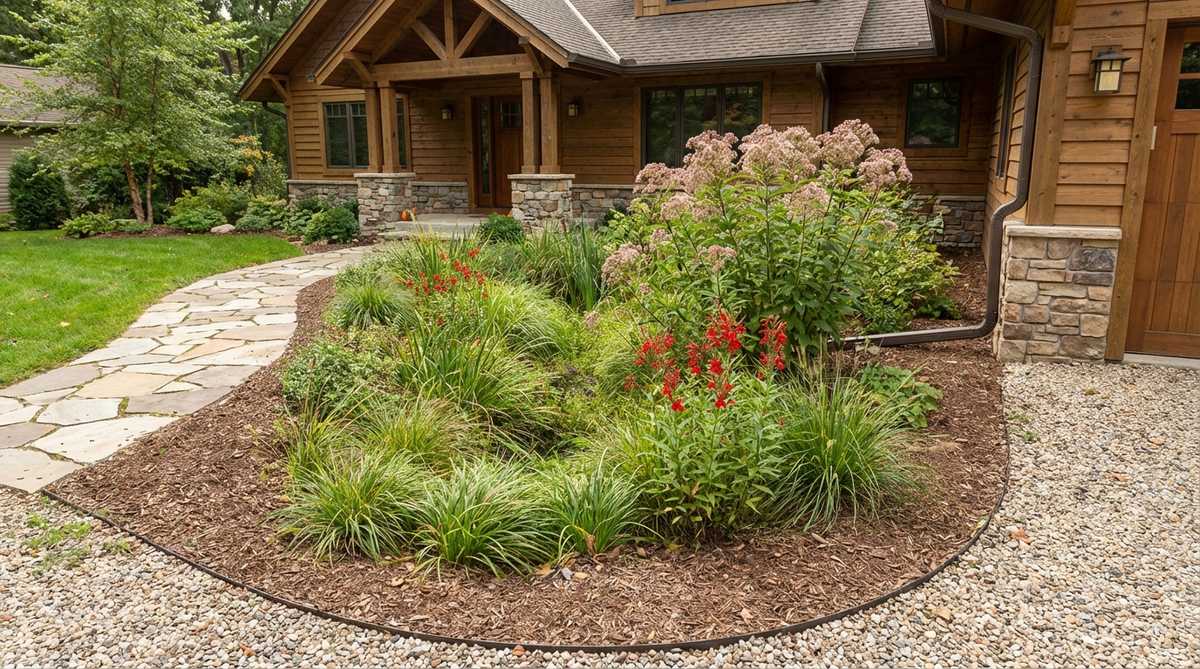
This clever depression looks like a natural, stony creek bed winding through the property. Building a front yard rain garden swale is a brilliant, beautiful way to fix swampy yards and stop driveway flooding.
Channeling water intentionally gives a designer-level finish while solving massive foundation drainage issues. Digging a shallow basin filled with river rock and deep-rooted water-loving plant plugs safely catches gutter runoff and filters it into the ground.
You can construct a functional rain swale for $150–$300.
- Key Materials: River rocks, native sedges, Joe Pye weed
- Vibe / Style: Functional eco-creek
- Difficulty: Moderate digging and grading required
- Budget Breakdown: River Rock: $100 | Wetland Plants: $80.
- Creator’s Tip: Make sure the bottom of the rain garden is perfectly flat, not bowl-shaped, so the water disperses evenly instead of pooling in one dead center spot.
- Smart Sourcing: bulk wetland plant starter plugs and heavy-duty perforated drainage fabric.
41. Smart Irrigation System
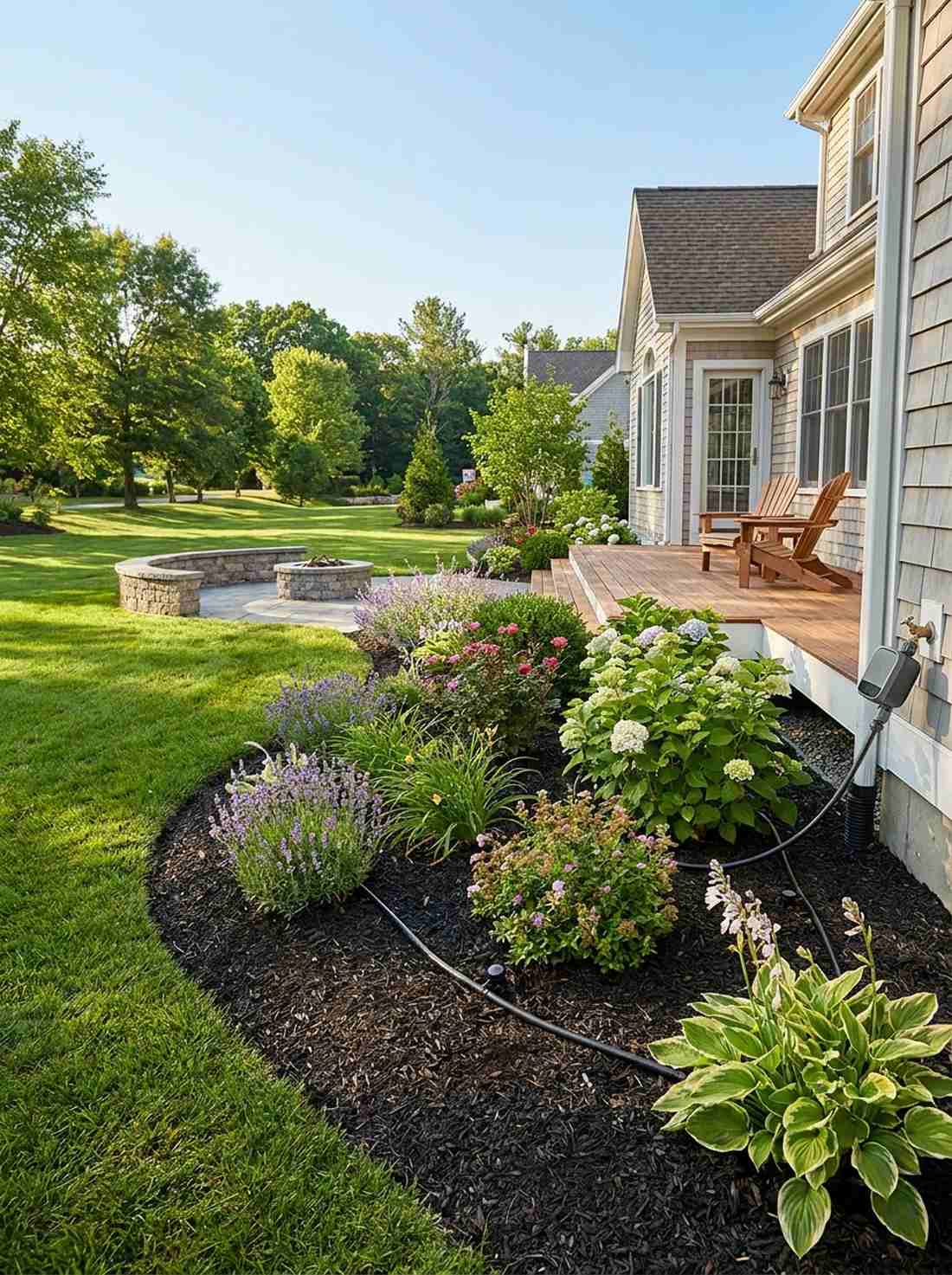
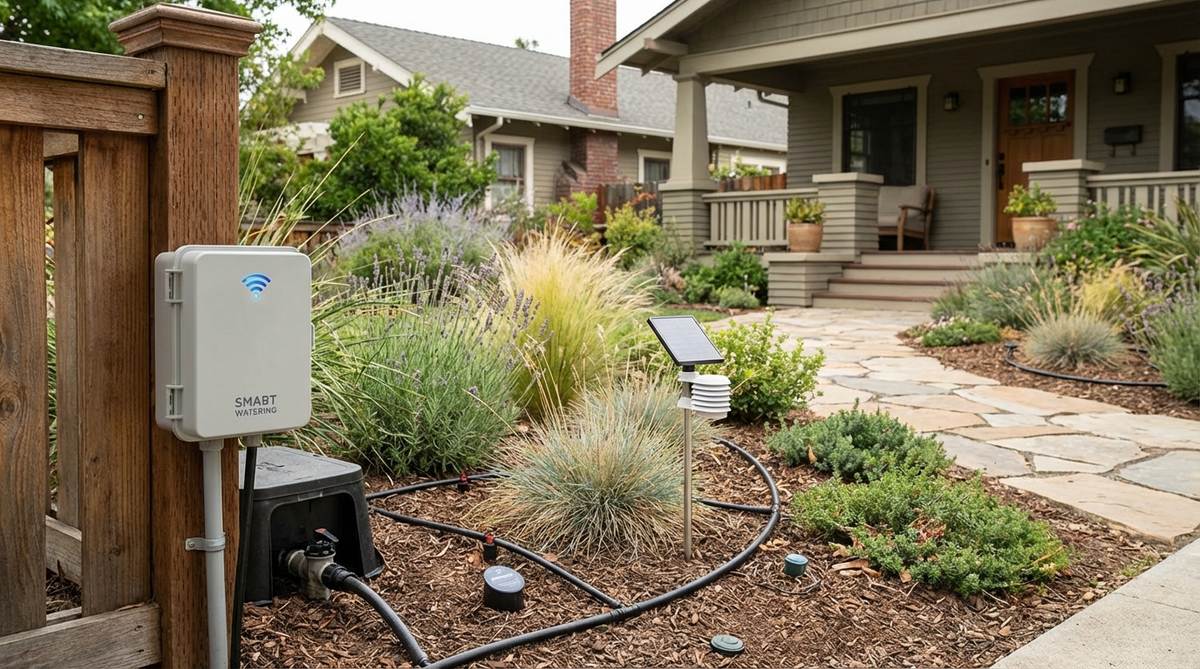
The invisible efficiency of this setup feels like having a professional groundskeeper living at your house. Retrofitting your beds with a smart drip irrigation system guarantees your garden design front of house looks lush without wasting a single drop of water.
Automating your watering looks far more expensive than it is and saves hundreds on dead plant replacements. Running flexible 1/4-inch drip emitter tubing beneath the mulch, controlled by a Wi-Fi timer, targets the roots directly without evaporating in the sun.
A full-bed drip kit costs roughly $80–$150. Save this to bulletproof your landscape investment.
- Key Materials: Drip tubing, emitters, Wi-Fi hose timer
- Vibe / Style: Invisible high-tech care
- Difficulty: Easy weekend project (like connecting Legos)
- Budget Breakdown: Drip Starter Kit: $60 | Smart Timer: $70.
- Creator’s Tip: Group plants with similar water needs on the same drip line zone so you don’t accidentally rot your lavender while trying to hydrate your hydrangeas.
- Smart Sourcing: complete drip irrigation starter kits and weather-sensing Wi-Fi hose timers.
42. Composting and Mulch Beds
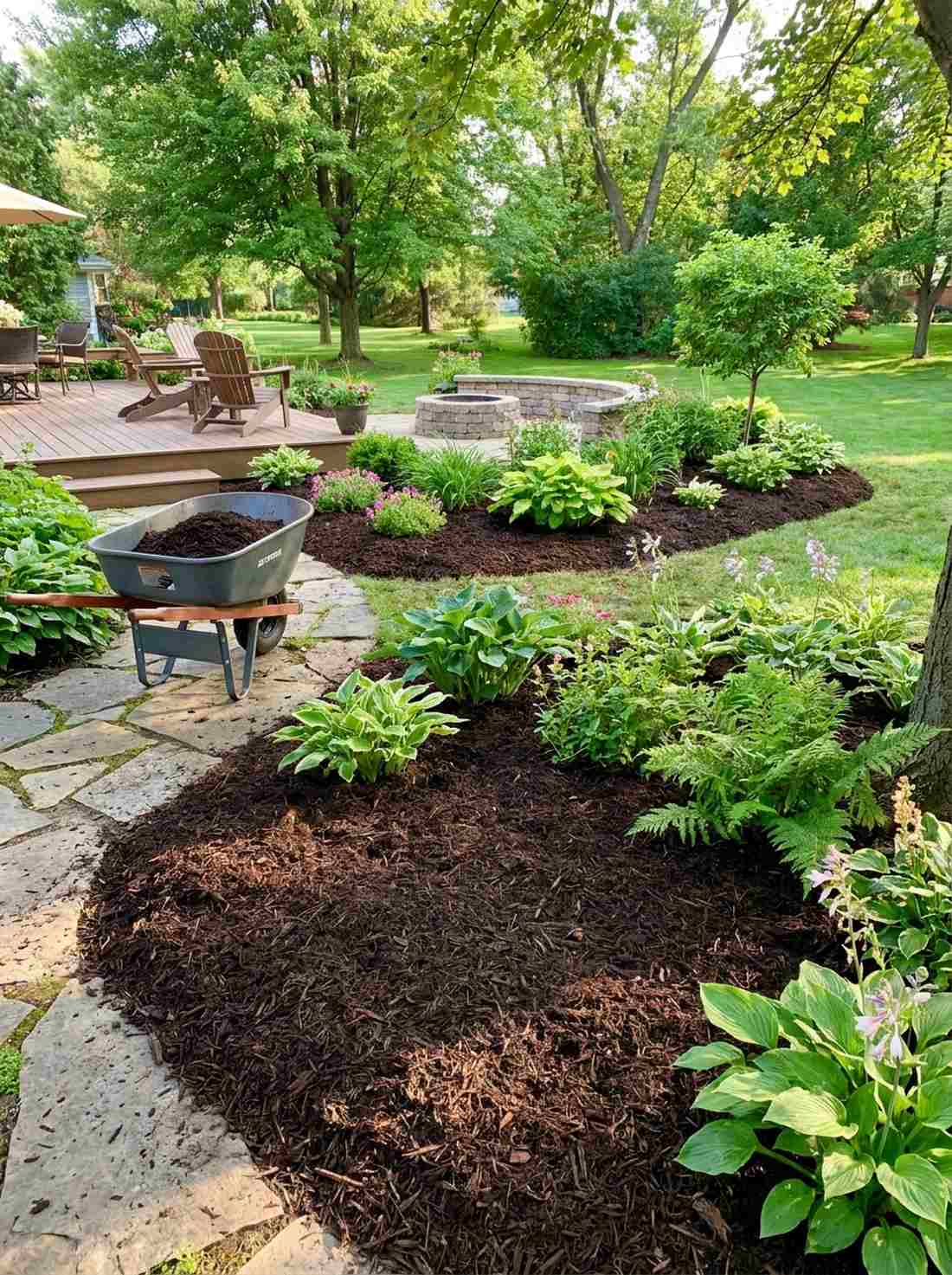
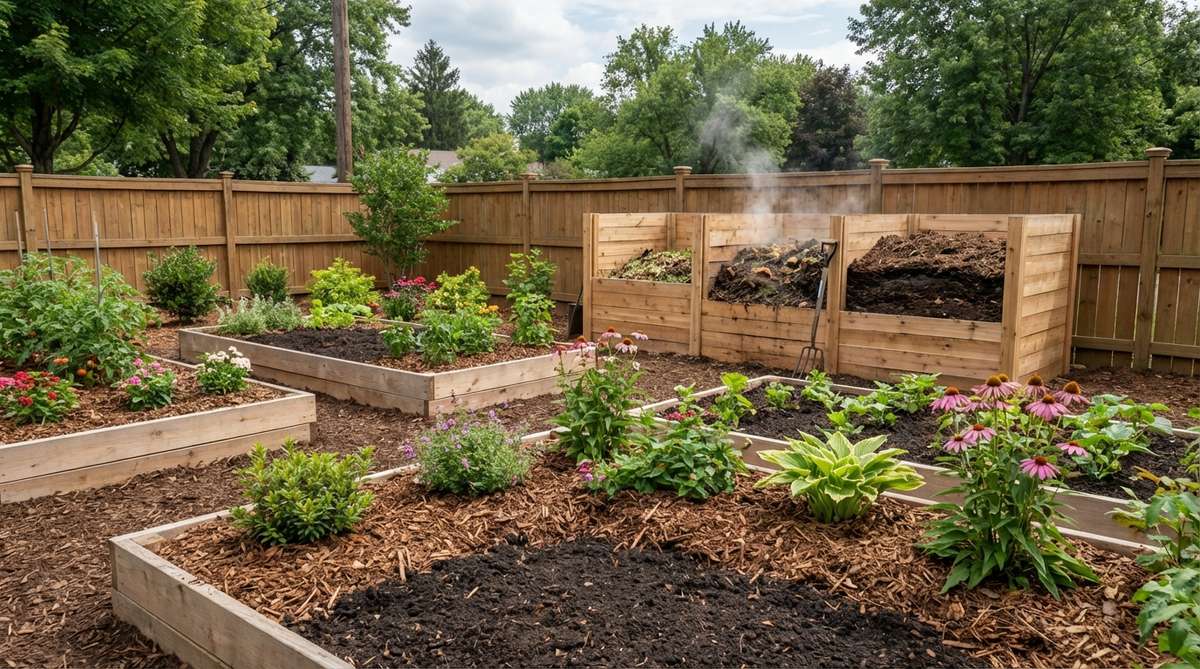
The rich, dark contrast of the ground here makes every single green leaf pop aggressively. Implementing deep organic composting and heavy mulch beds is the unsung hero of making cheap plants look wildly expensive and healthy.
This regenerative practice bypasses the typical reliance on harsh chemical fertilizers. Top-dressing beds with an inch of compost covered by premium shredded hardwood mulch suffocates weeds while building a violently healthy, sponge-like soil structure over time.
Mulch and compost delivery runs about $100–$200 for a standard yard.
- Key Materials: Organic compost, shredded dark hardwood mulch
- Vibe / Style: Deep, rich manicured earth
- Difficulty: Easy, requires wheelbarrow labor
- Budget Breakdown: Compost Yard: $60 | Mulch Bulk: $90.
- Creator’s Tip: Never pile mulch up against the trunk of a tree (volcano mulching); it causes severe bark rot. Leave a 3-inch gap around the base.
- Smart Sourcing: bulk organic mushroom compost and heavy-duty steel wheelbarrows.
Lighting & Finishing Touches For Day-to-Night Appeal
Strategic lighting extends curb appeal into evening hours while enhancing safety and highlighting design features. These finishing elements add polish and personality that complete the overall design.
This final cluster of ideas separates the amateurs from the magazine-cover homes…
43. Pathway Lighting System
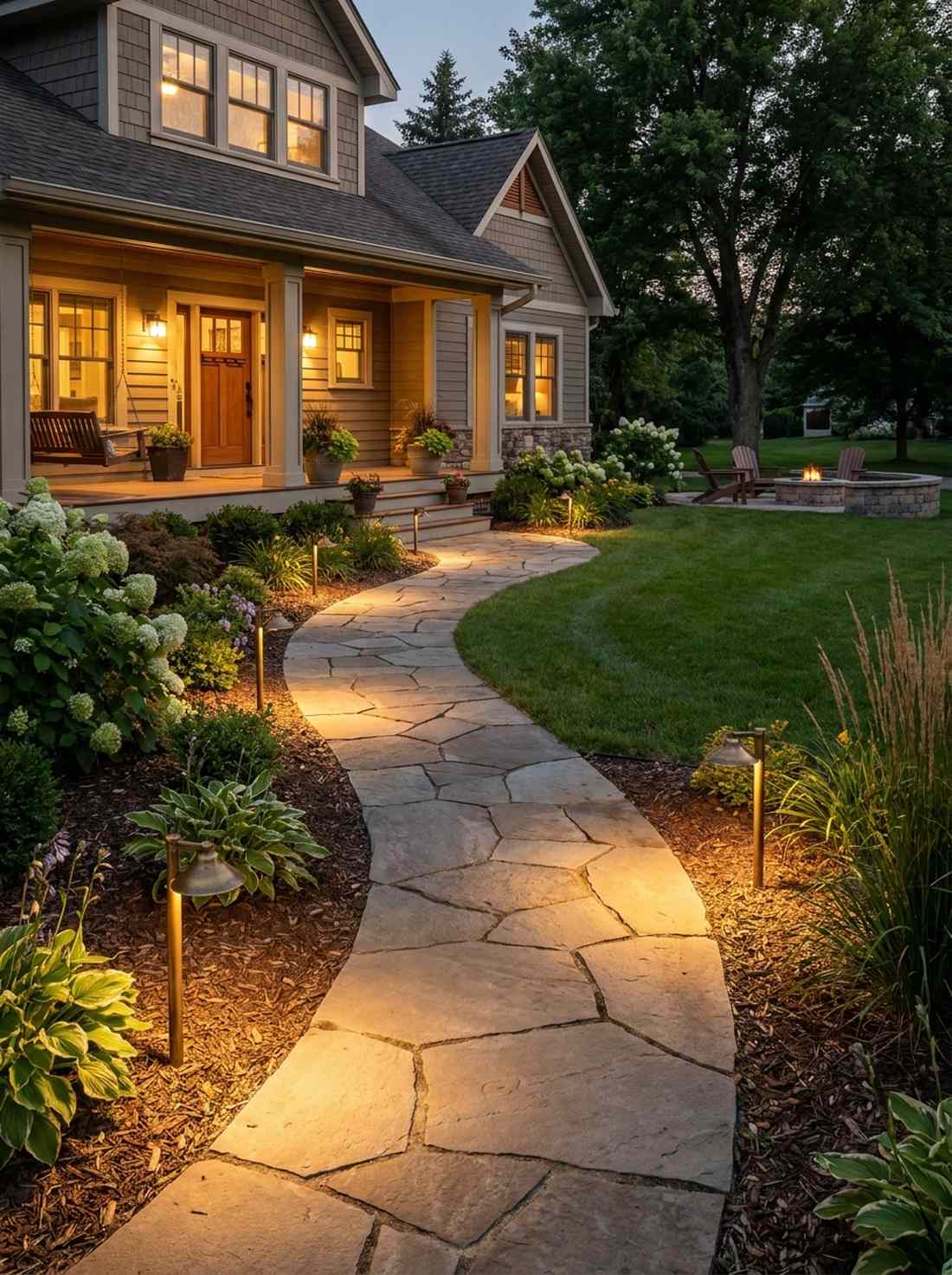
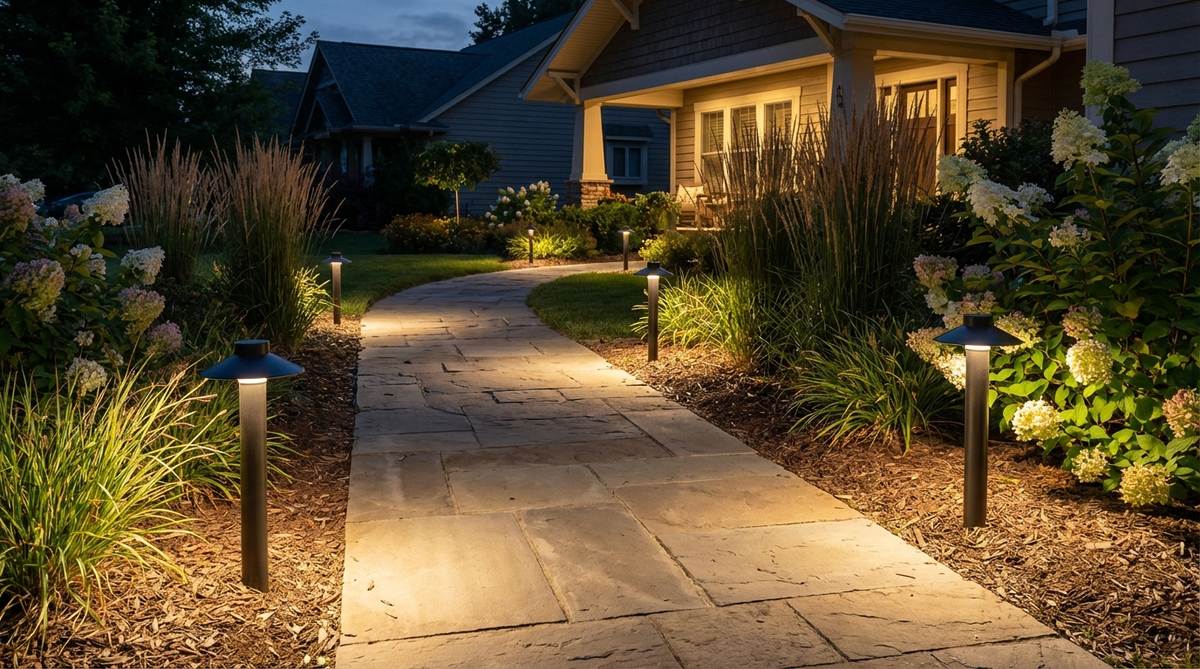
The warm, glowing pools of light here make the walkway feel incredibly safe and wildly romantic at night. Installing a low-voltage LED pathway lighting system completely transforms how your home is perceived after sunset.
Adding evening illumination delivers a surprisingly premium look that makes a $200 yard look like a $20,000 architectural digest feature. Stabbing weatherproof brass path lights into the mulch and hiding the low-voltage wire is surprisingly simple and safe for DIYers.
A 6-light premium starter kit costs around $150–$300. Pin this to double your curb appeal hours.
- Key Materials: LED path lights, low-voltage transformer, landscape wire
- Vibe / Style: Warm nighttime security
- Difficulty: Easy wire-splicing
- Budget Breakdown: Light Kit & Transformer: $180 | Extra Wire: $30.
- Creator’s Tip: Stagger the lights in a zig-zag pattern on opposite sides of the path; lining them up perfectly straight looks like an airport runway.
- Smart Sourcing: complete low-voltage landscape lighting kits and waterproof wire connector caps.
44. Uplighting Specimen Trees
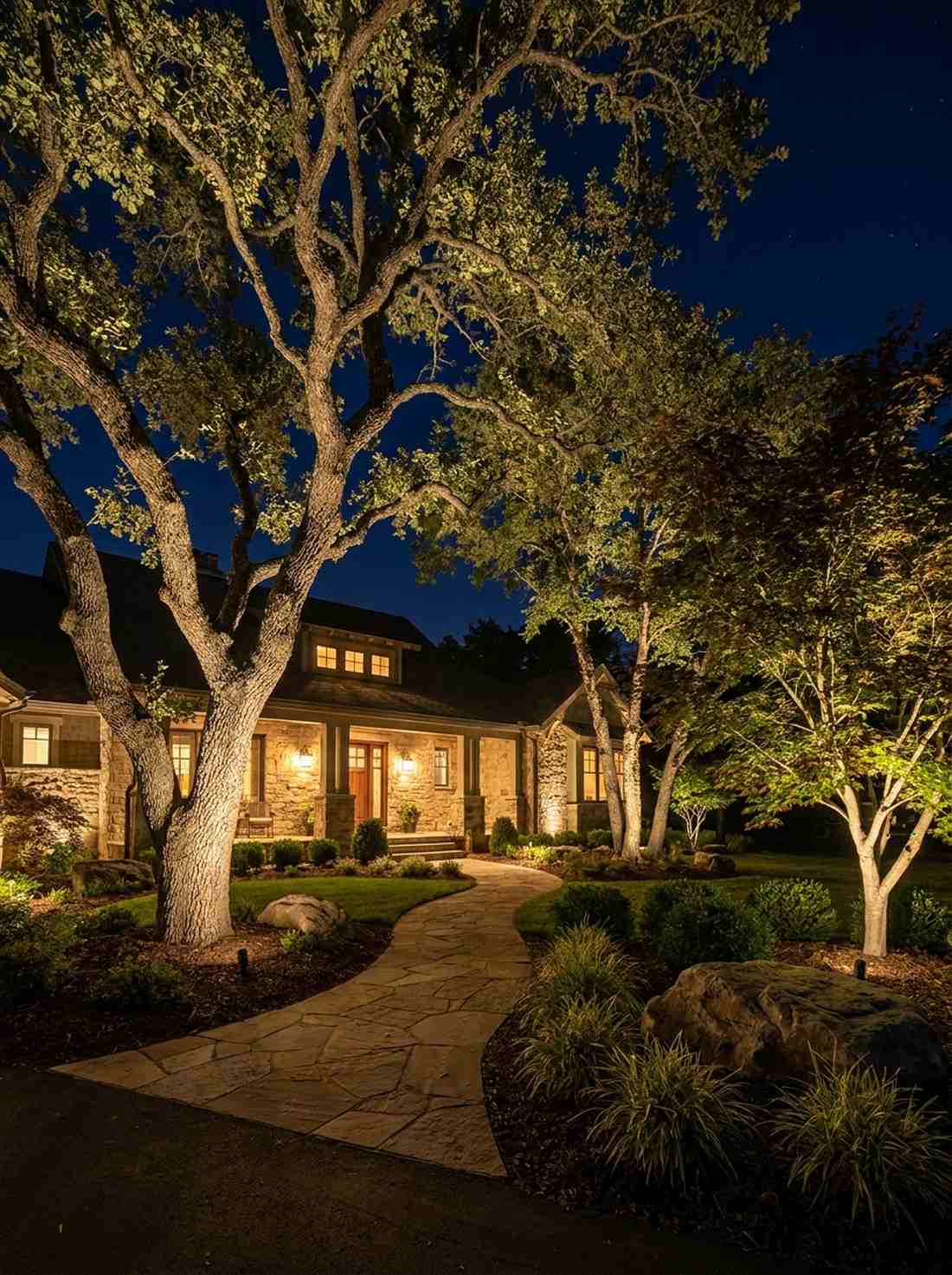
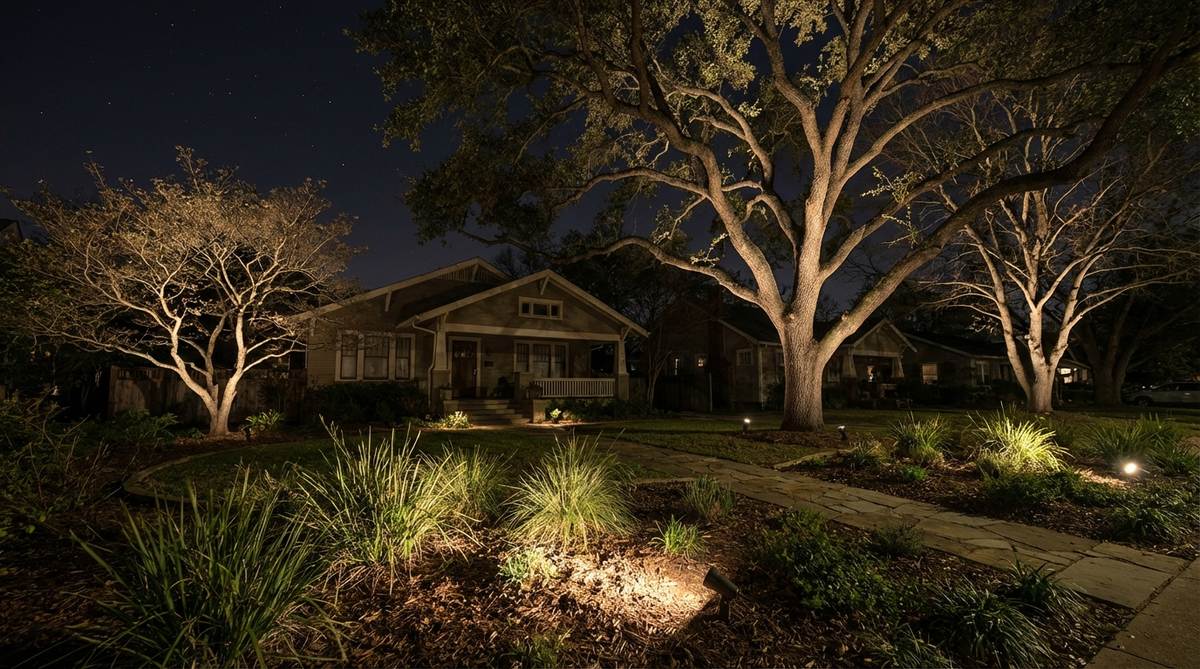
The dramatic shadows cast up through the branches look like a theatrical stage setting. Uplighting specimen trees is the absolute greatest trick to make your house look like a luxury estate at night.
Throwing light upward bypasses the typical flat darkness of suburban streets. Placing heavy cast-aluminum LED spotlights at the base of your corner anchors or textured tree trunks creates massive vertical dimension and spooky, beautiful silhouettes.
Adding 3 to 4 powerful uplights will run you about $120–$250.
- Key Materials: Upward-facing bullet spotlights, warm LED bulbs
- Vibe / Style: Dramatic architectural luxury
- Difficulty: Easy addition to existing lighting wire
- Budget Breakdown: 4 Spotlights: $140 | 5W Warm Bulbs: $20.
- Creator’s Tip: Always use ‘Warm White’ (2700K) bulbs. Bright white or blueish light looks incredibly cheap and eerie on plants.
- Smart Sourcing: cast-aluminum landscape spotlights and warm-white 2700K LED outdoor bulbs.
45. Statement House Numbers
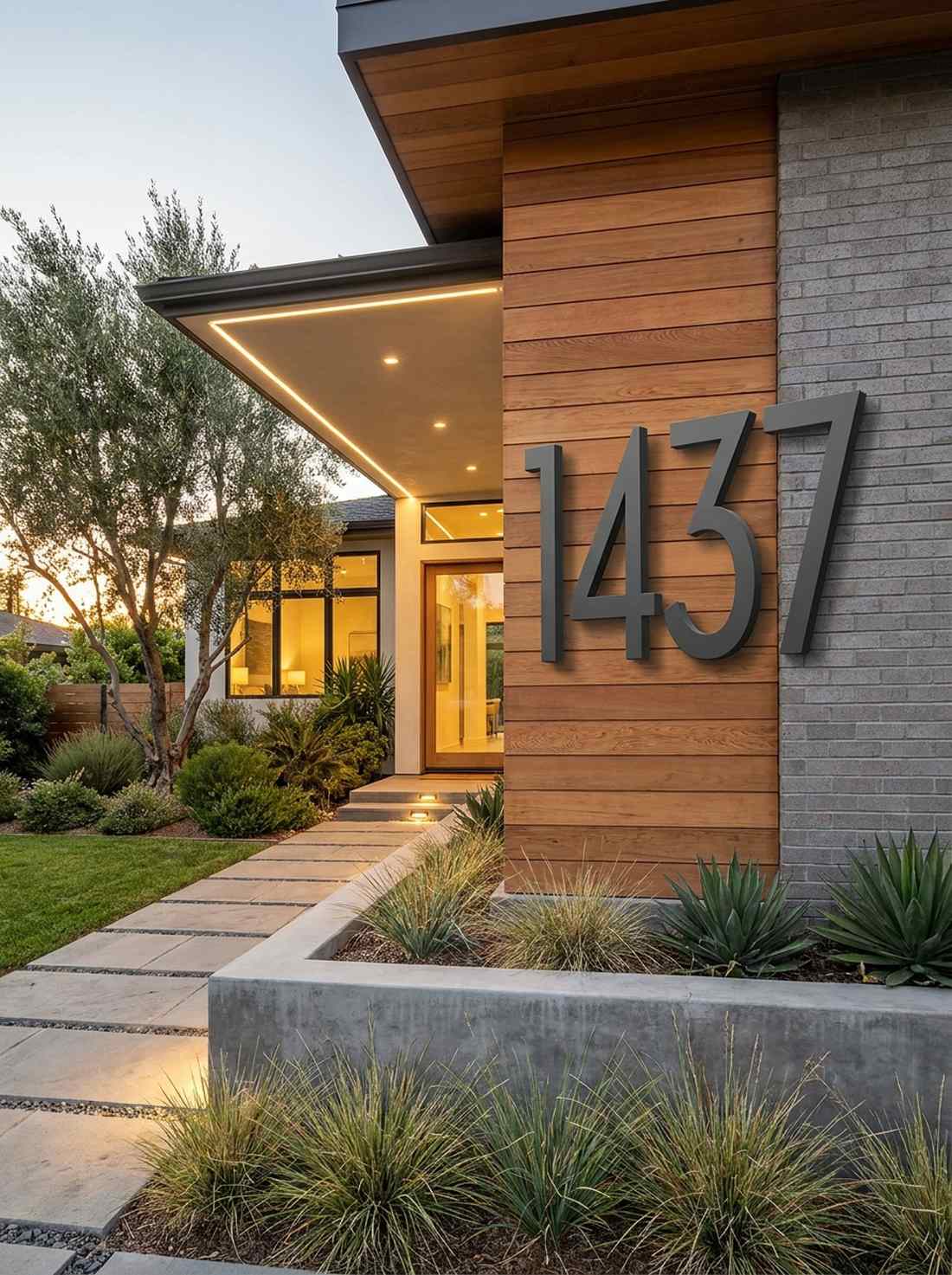
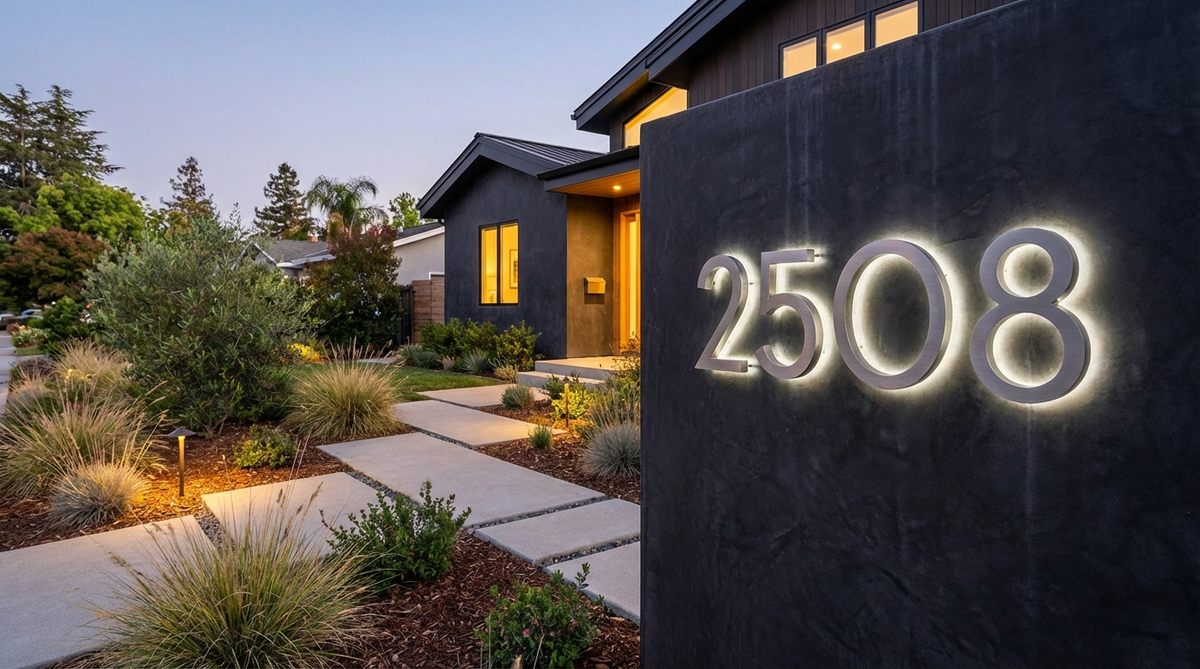
These oversized, crisp digits feel incredibly modern while guaranteeing your delivery drivers never miss your house again. Upgrading to oversized statement house numbers is the cheapest, highest-impact facade upgrade you can do in under ten minutes.
Ditching tiny, fading brass numbers instantly elevates basic builder-grade spaces. Drilling floating modern aluminum numbers with a shadow-gap directly into the brick or wood siding screams contemporary design.
This massive aesthetic pop costs a trivial $30–$80.
- Key Materials: 6-inch or larger floating numbers, masonry drill bit
- Vibe / Style: Sleek contemporary utility
- Difficulty: Very easy
- Budget Breakdown: High-end Numbers: $50 | Spacer Kit: Included.
- Creator’s Tip: Create a paper template of the numbers and tape it to the wall first to ensure perfect leveling and spacing before drilling any holes.
- Smart Sourcing: floating modern aluminum house numbers and masonry drill bit sets.
46. Seasonal Container Rotation
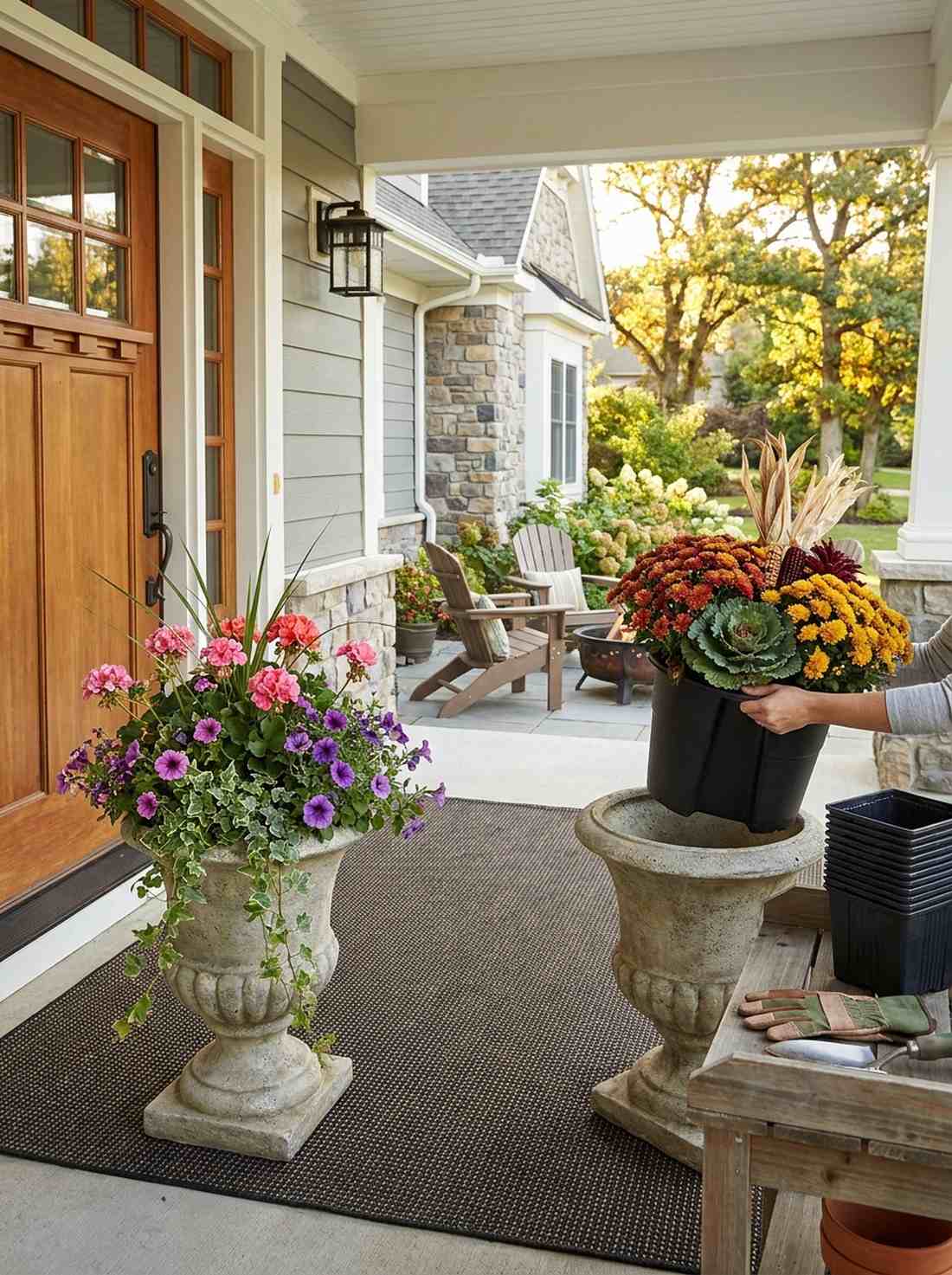
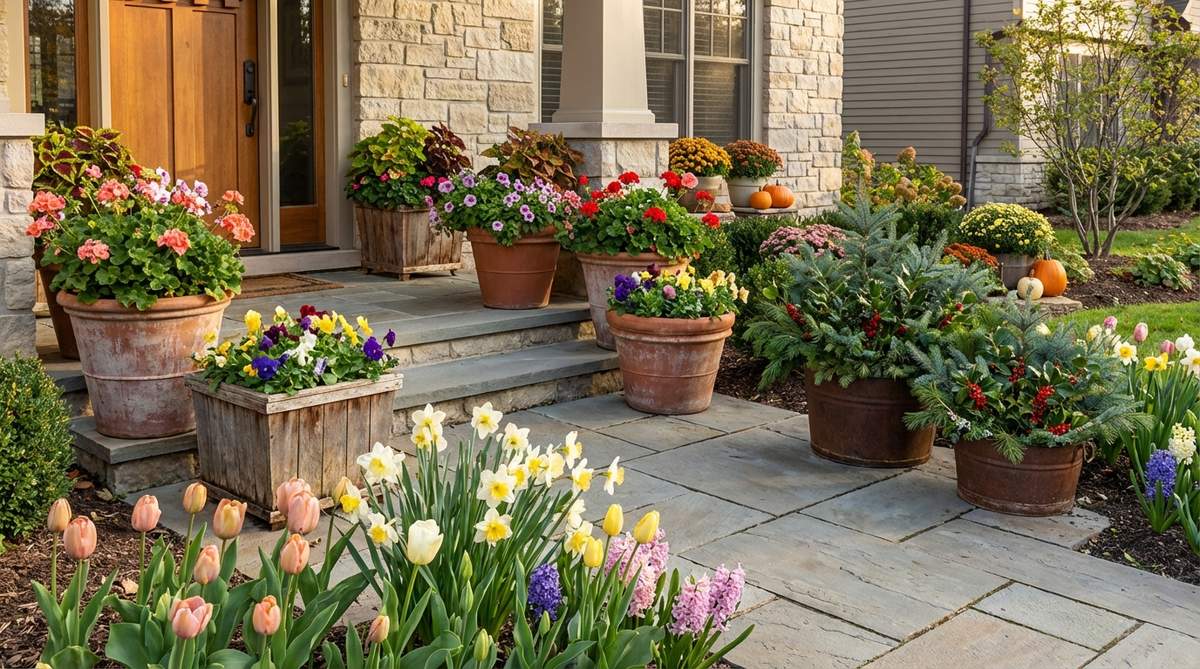
This constantly shifting color palette makes it feel like the homeowner cares deeply about the property’s heartbeat. Engaging in a seasonal porch container rotation keeps the entrance feeling completely fresh from spring tulips to winter pine boughs.
Rotating out your pots looks far more expensive than it is because it implies constant landscaping upkeep. Using plastic drop-in planter inserts allows you to build the arrangements on your potting bench and just drop them into the heavy display urns instantly.
A seasonal refresh costs about $30–$50 per quarter. Pin this for endless entry inspiration.
- Key Materials: Drop-in nursery pots, seasonal annuals, decorative branches
- Vibe / Style: Fresh, dynamic curb appeal
- Difficulty: Easy, fun quarterly task
- Budget Breakdown: Seasonal Plants: $35 | Potting Soil: $10.
- Creator’s Tip: For winter containers, just shove cut evergreen branches and red dogwood stems directly into the frozen soil of your pots—they’ll stay perfectly preserved all winter.
- Smart Sourcing: heavy-duty drop-in planter inserts and bulk seasonal flowering bulbs.
47. Integrated Mailbox Design
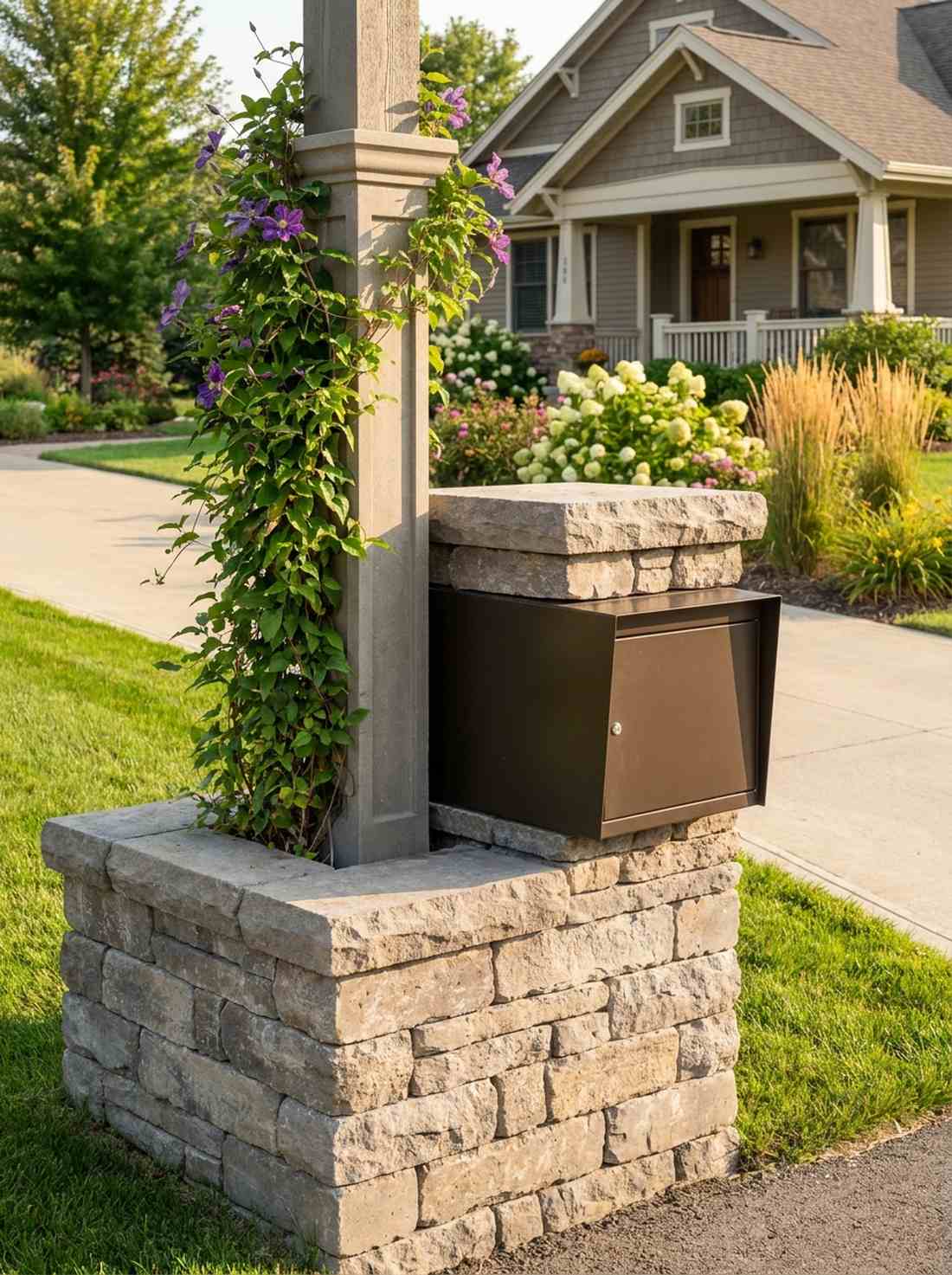
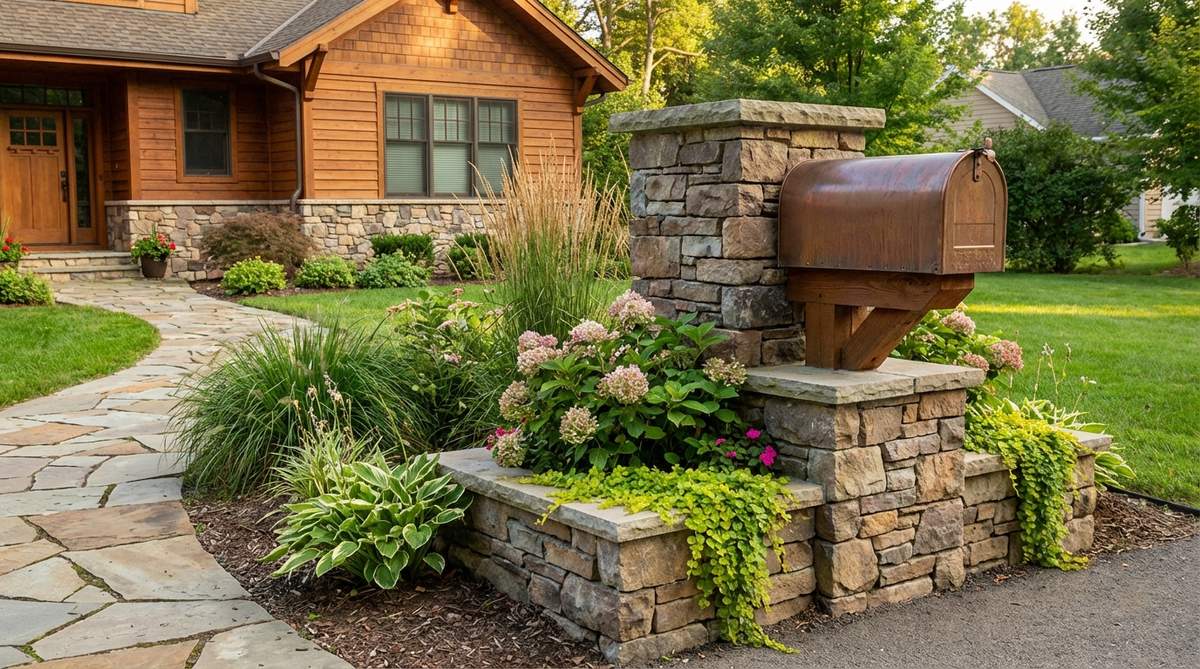
This sturdy structure feels like a miniature monument marking the edge of the property. Upgrading to an integrated architectural mailbox planter anchors your yard right at the street line where curb appeal starts.
Surrounding a boring metal post with structure and flowers gives a designer-level finish that ties the whole yard together. Stacking a simple base of landscape wall stones and planting a rugged clematis vine to climb the post creates a massive focal point.
You can build a stunning mailbox column for $100–$250.
- Key Materials: Post sleeve or wall blocks, premium mailbox, climbing vine
- Vibe / Style: Estate edge boundary
- Difficulty: Moderate weekend project
- Budget Breakdown: Blocks/Sleeve: $120 | Premium Box: $60.
- Creator’s Tip: Check local USPS regulations for exact mailbox height (usually 41-45 inches from road surface to the bottom of the door) before cementing anything.
- Smart Sourcing: architectural cast stone mailbox sleeves and heavy-duty galvanized steel mailboxes.
48. Hidden Outdoor Seating
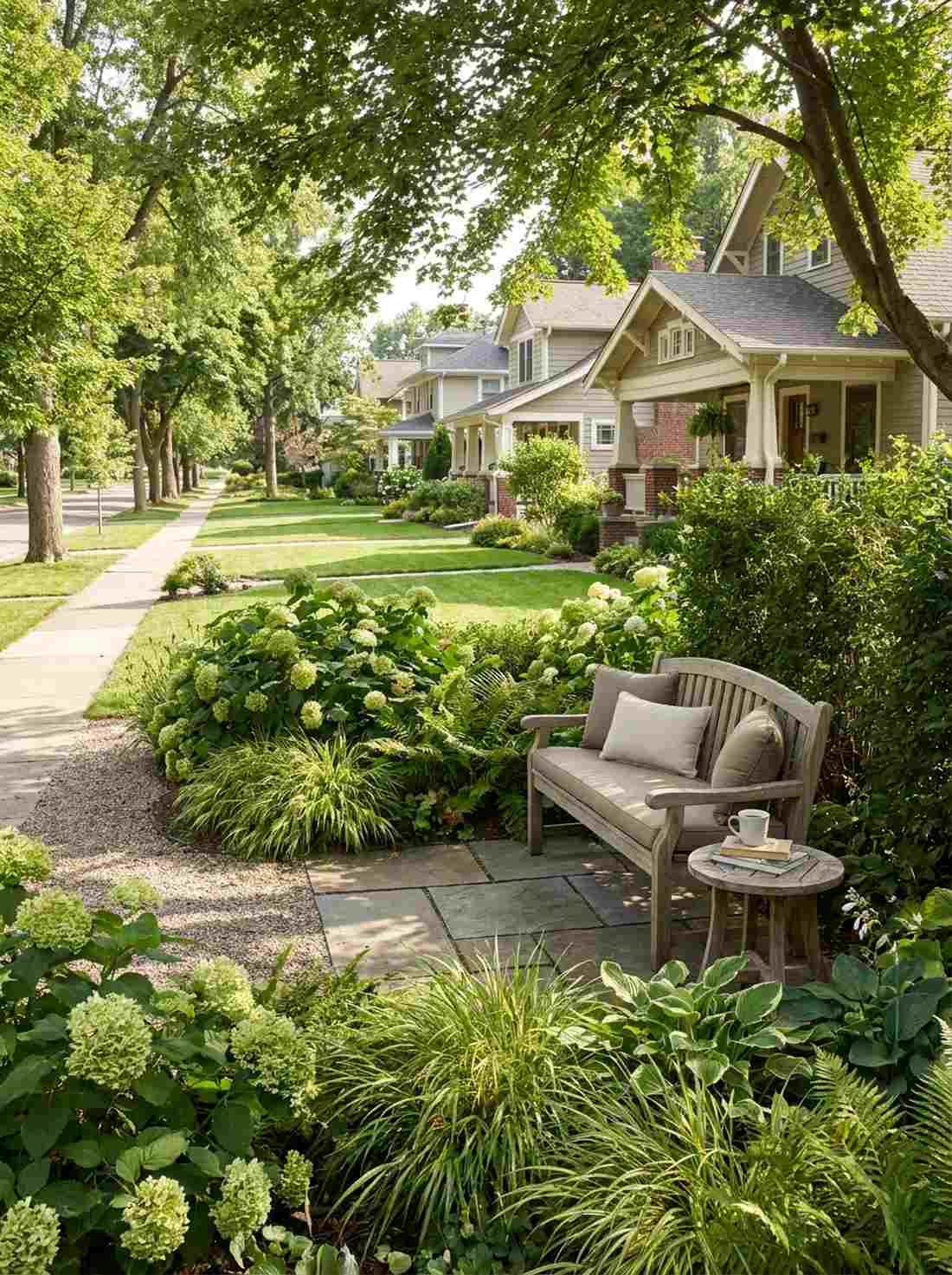
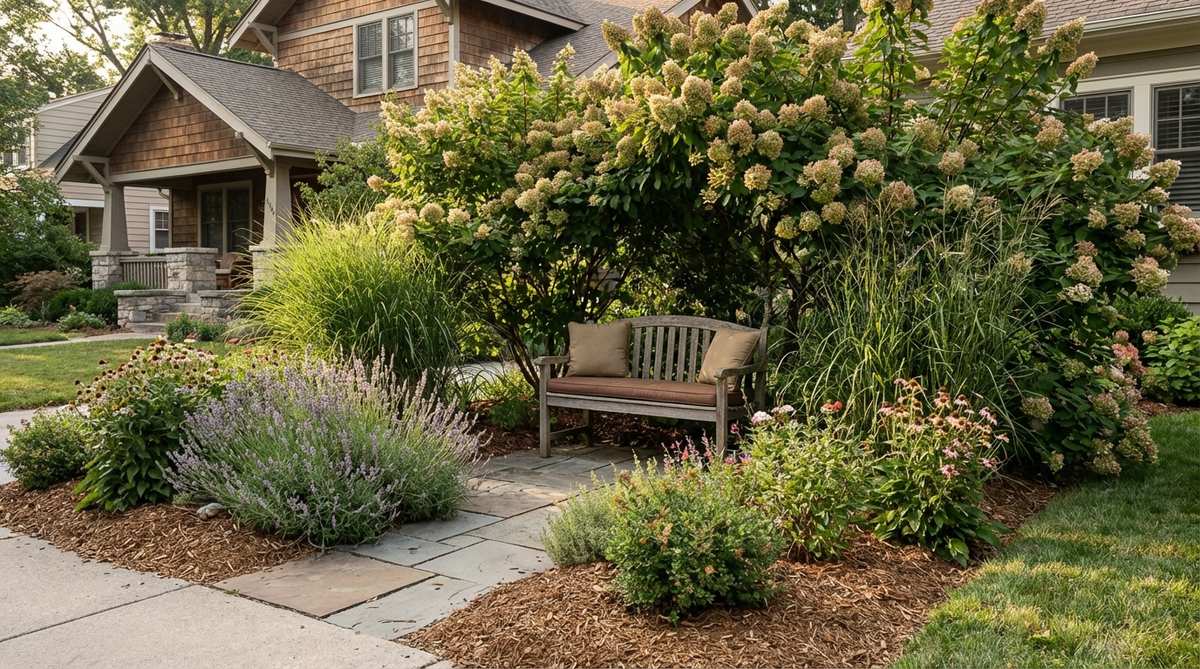
This tucked-away bench feels like a secret observation deck for the neighborhood. Nestling a hidden front yard seating area into the foliage breaks the rule that all lounging must be hidden in the backyard.
Adding a cozy resting spot bypasses the typical useless front lawn and creates actual, livable square footage. Dropping a beautiful weatherproof teak garden bench into a slight carve-out in the perennial border creates a charming, semi-private coffee spot.
A premium bench and paver base will cost roughly $150–$350. Save this idea to maximize your property’s usable space.
- Key Materials: Teak or metal bench, small gravel or paver pad
- Vibe / Style: Cozy neighborhood connection
- Difficulty: Extremely easy
- Budget Breakdown: Garden Bench: $180 | Base Pavers: $40.
- Creator’s Tip: Position the bench so it faces down the street or toward a focal point, rather than staring directly blankly at your own siding.
- Smart Sourcing: weatherproof teak garden benches and rust-proof cast aluminum park seating.
Bring Your Front Yard Vision to Life
Transforming your garden design front yard from ordinary to extraordinary doesn’t require a blank check—it requires intentional sourcing and strategic placement. Whether you gravitate toward the monochromatic modern aesthetic, the overflowing charm of a cottage setup, or the zero-maintenance ease of a drought-tolerant succulent bed, the secret lies in executing these 48 specific aesthetic hacks. Start by anchoring your corners, layering your plants by mature height, and investing your budget into premium starter kits and hardscape structures that look incredibly expensive but cost a fraction of agency rates. The investment in these high-end, productized front garden design features pays literal dividends, skyrocketing your property value while giving you a magazine-worthy entryway you actually enjoy coming home to.
Frequently Asked Questions
What is the best low-maintenance front yard garden design?
The ultimate low-maintenance setup relies entirely on a native plant landscape design paired with intelligent hardscaping. By ripping out thirsty lawns and replacing them with permeable paver driveway grids or bulk micro-clover seed, you eliminate mowing and fertilizing instantly. Always invest in a complete drip irrigation starter kit on a smart Wi-Fi timer, and use heavy-duty weed barrier fabric under deep layers of shredded hardwood mulch. This combination creates a stunning, high-end look that literally takes care of itself.
How wide should a front walkway be for good design?
To achieve a premium, welcoming aesthetic, your front walkway should be a minimum of 4 to 5 feet wide. Anything narrower feels like a cheap, cramped tightrope. Widening the path allows two people to walk side-by-side comfortably. If you’re on a budget, you can easily widen an existing concrete path by digging a shallow trench on either side and dropping in reclaimed brick garden edging or a gravel-and-paver border. This simple hardscape hack adds immediate width, luxury, and massive curb appeal without needing to pour new concrete.
What foundation plants work best for year-round interest?
A professional garden design front of house layout always uses the 50/25/25 rule. Allocate 50% of your beds to slow-growing evergreens (like UV-coated artificial boxwood spheres or live dwarf conifers) to ensure your house doesn’t look barren in the winter. Add 25% flowering deciduous shrubs using dormant bare-root hydrangea bundles for massive summer blooms, and finish with 25% perennial kits for textured ground cover. Buying these in pre-planned landscape bundles saves you a fortune compared to buying individual potted plants at a retail center.
How can I improve curb appeal on a tight budget?
The highest ROI for tight budgets comes from high-contrast, product-focused upgrades rather than major overhauls. First, install floating modern aluminum house numbers and paint your front door a bold, contrasting color. Next, frame the entryway with tall lightweight fiberglass planters filled with cheap seasonal thriller plants. Finally, use a heavy-duty half-moon edging iron to cut a violently crisp line between your lawn and beds, then fill it with fresh, dark bulk mulch. These DIY projects cost under $200 total but make the property look instantly customized and expensive.
What are the current trends in front yard landscaping for 2026?
The biggest 2026 trends focus on eliminating the traditional grass lawn in favor of drought-tolerant front garden designs and usable outdoor spaces. Homeowners are obsessing over gravel courtyard front yards, heavy-duty permeable ground grid panels, and sensory herb and flower combinations that offer functional beauty. Additionally, nighttime curb appeal has exploded—installing complete low-voltage landscape lighting kits and cast-aluminum uplighting on specimen trees is now considered a mandatory step for achieving a premium, magazine-cover exterior.