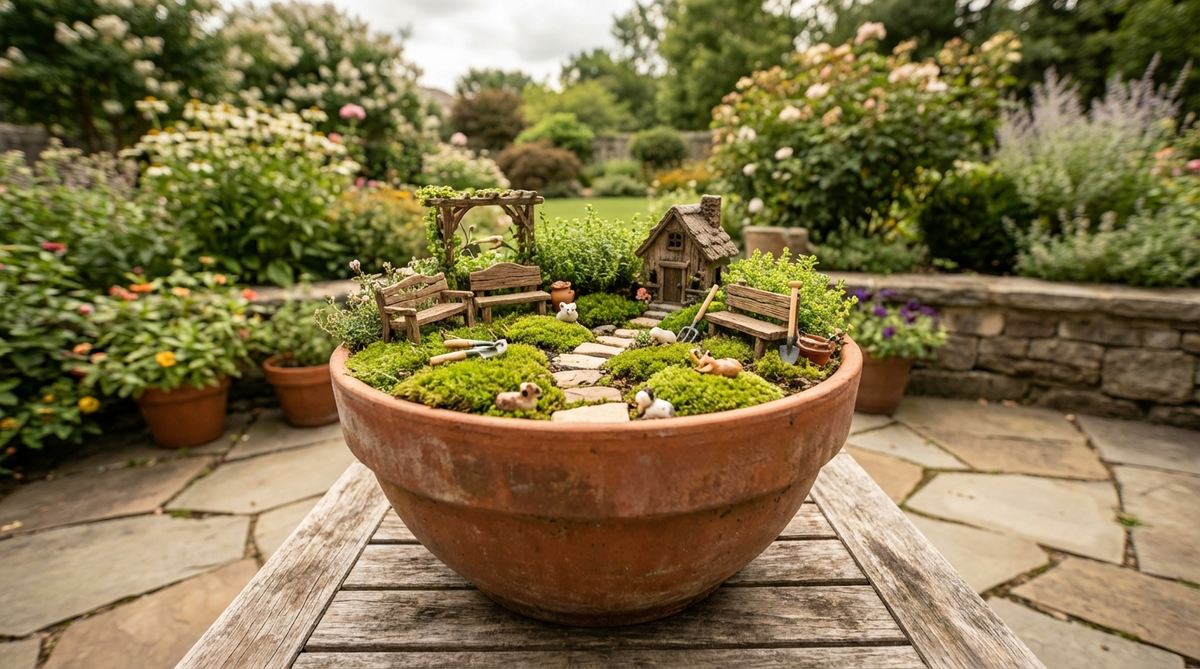
The fairy garden aesthetic combines miniature architecture, living moss carpets, and handcrafted accessories to create immersive micro-landscapes that captivate all ages. Whether you’re designing a woodland sanctuary in a terracotta pot or building an elaborate outdoor village, these expert displays from Fresh Garden Ideas offer proven techniques for crafting enchanting miniature worlds.
Design SnapshotKey Principles
- Scale Consistency: Maintain proportional relationships between structures, accessories, and plants to preserve visual believability
- Layered Textures: Combine moss varieties, miniature foliage, and hardscape materials for dimensional depth
- Focal Anchoring: Position one primary structure as the visual centerpiece before adding supporting elements
- Natural Integration: Use living plants as functional elements rather than decorative afterthoughts
Moss Foundation Displays That Establish Living Carpets
Moss serves as the foundational textile in successful fairy gardens, providing scale-appropriate ground cover that mimics full-sized lawns and meadows. Irish moss, Scotch moss, and sheet moss each offer distinct visual textures and maintenance requirements suited to different environments.
1. Irish Moss Cottage Courtyard
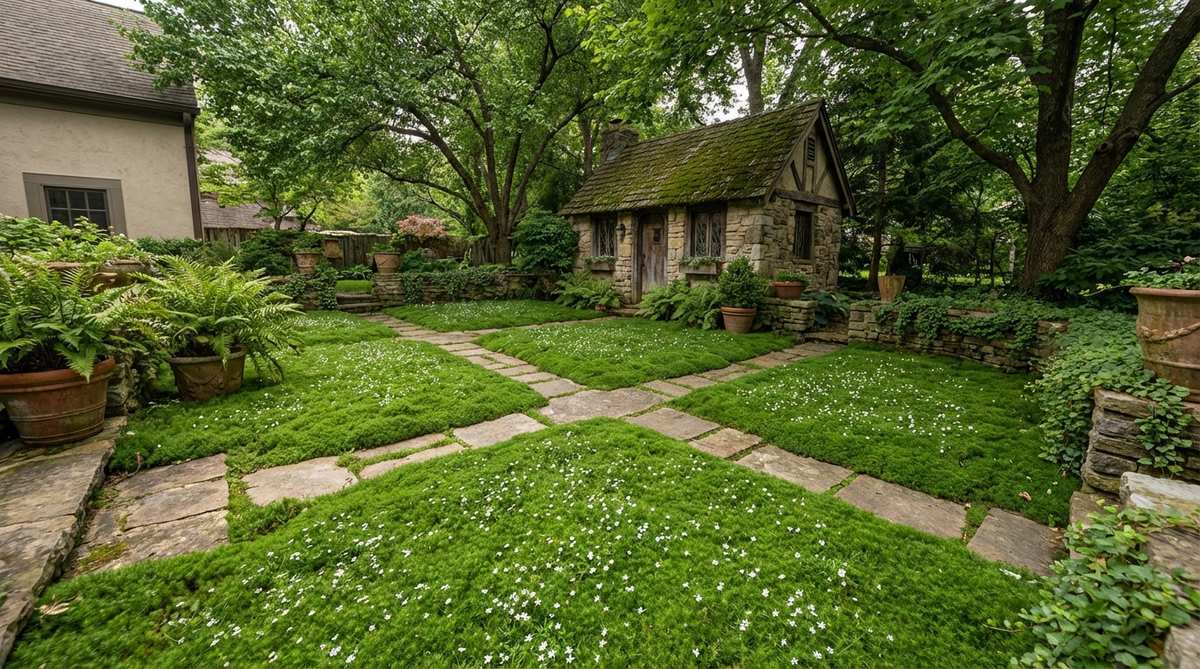
Irish moss creates an emerald-green carpet with a slightly mounded texture that resembles rolling hills in miniature. The tiny white blooms that emerge in spring add delicate floral accents without overwhelming the scaled landscape.
Plant Irish moss in partial shade with consistent moisture, positioning it around a central cottage structure. Trim edges with scissors to maintain clean pathways and prevent encroachment on hardscape elements.
This living ground cover stays green year-round in moderate climates and naturally softens the transition between vertical structures and container edges.
2. Scotch Moss Woodland Glade
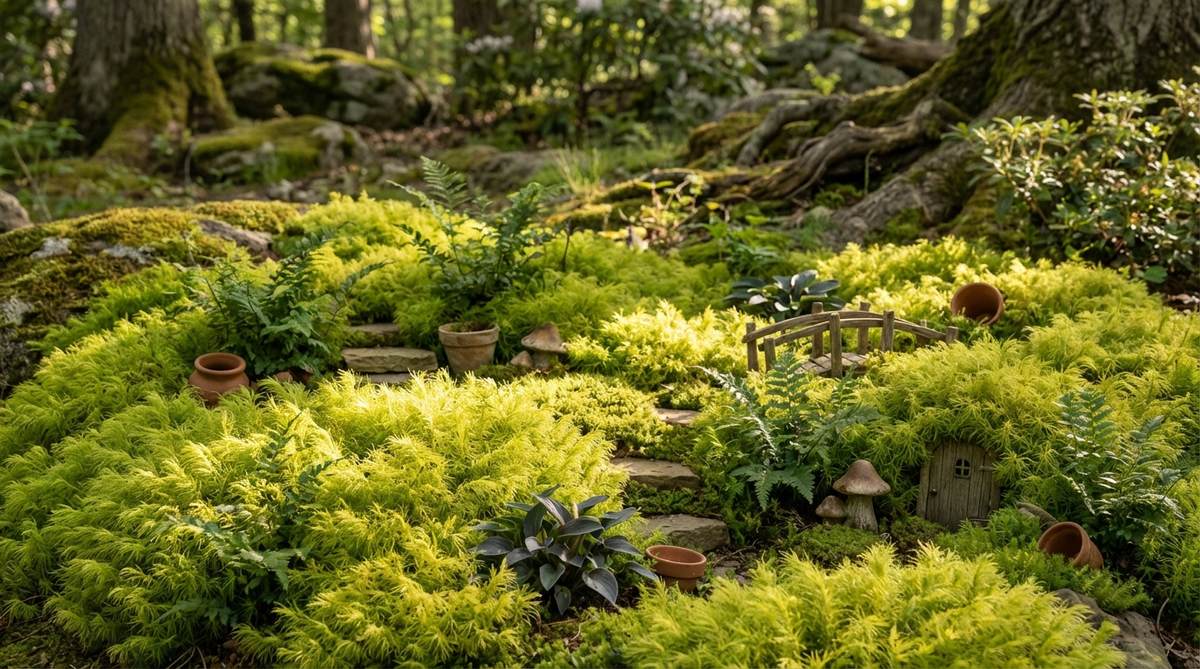
Scotch moss produces a soft, fluffy appearance with chartreuse-gold tones that brighten shaded fairy gardens. The feathery texture creates visual interest at ground level and serves as an excellent backdrop for darker accessories.
Position this variety in containers with partial to full shade, pairing it with dwarf ferns and miniature hostas. The moss spreads slowly, making it ideal for defined planting areas where boundaries matter.
3. Sheet Moss Terrarium Base
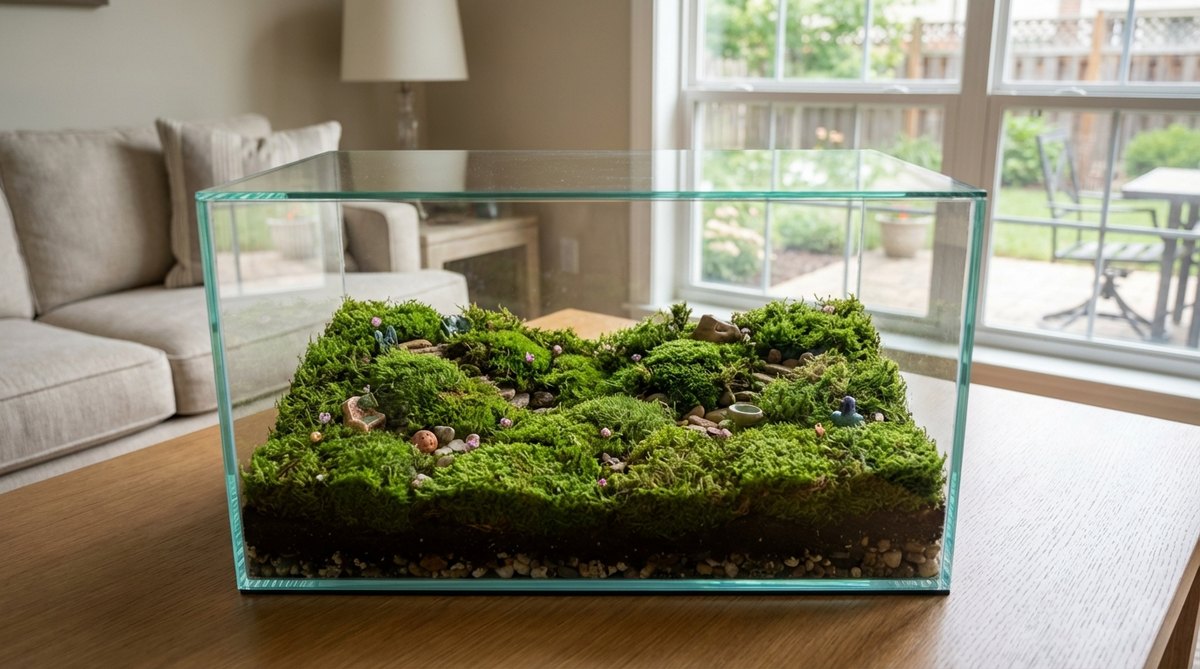
Preserved sheet moss offers maintenance-free ground cover for indoor fairy gardens and terrariums where living moss proves difficult to sustain. The dried material retains its green color and natural texture without requiring water or light.
Cut sheet moss to fit container shapes precisely, layering pieces to create hills and valleys. Secure edges with floral pins or small stones to prevent shifting during arrangement adjustments.
4. Creeping Thyme Fragrant Meadow

Creeping thyme substitutes for moss in sunny locations, producing a low-growing carpet with aromatic foliage and seasonal purple blooms. The plant drapes gracefully over container edges, creating natural transitions.
Select varieties like Elfin thyme or Red Creeping thyme for their compact growth habit. Plant in well-draining soil with full sun exposure, allowing 2-3 inches between plugs for spreading coverage.
Thyme tolerates foot traffic better than moss, making it practical for gardens where children interact with the display regularly.
5. Mixed Moss Tapestry Ground
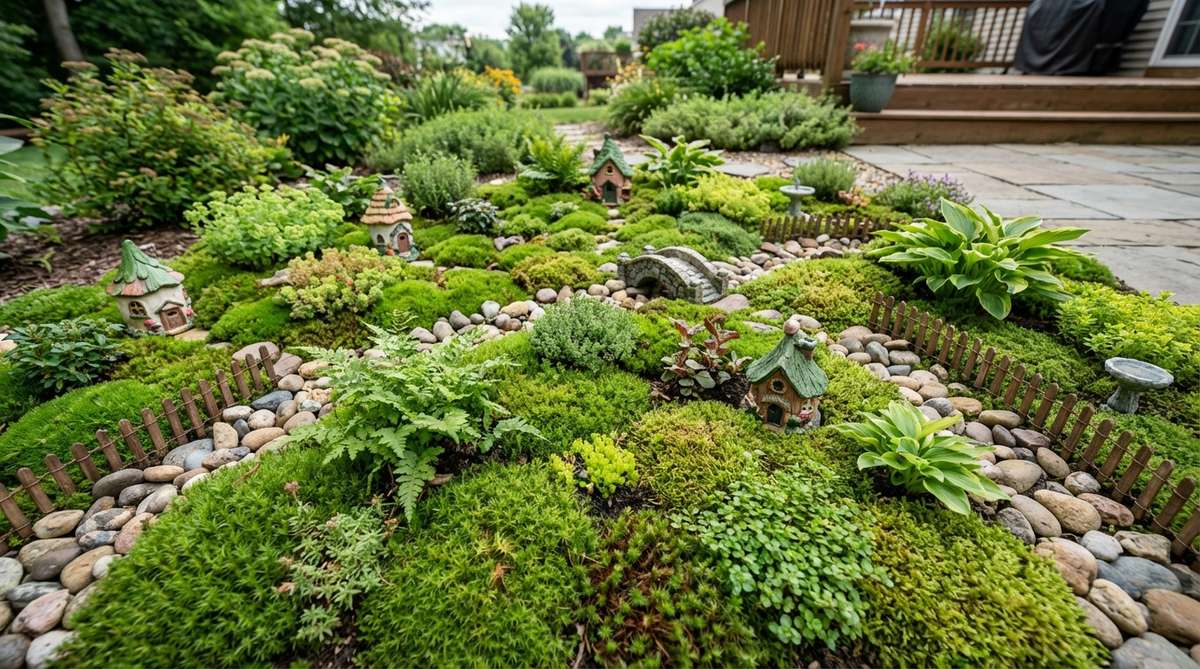
Combining multiple moss varieties creates textural variation and visual depth across larger fairy garden landscapes. Alternate patches of Irish and Scotch moss to define distinct garden rooms or zones.
Maintain clear boundaries between varieties during establishment by using small stones or miniature fencing. Water each type according to its specific needs, adjusting placement if moisture requirements conflict.
Miniature Furniture Scenes For Inhabited Spaces
Furniture accessories transform static gardens into lived-in environments, suggesting daily activities and routines of imaginary inhabitants. Handcrafted pieces from natural materials integrate more authentically than mass-produced plastic alternatives.
6. Twig Bistro Set
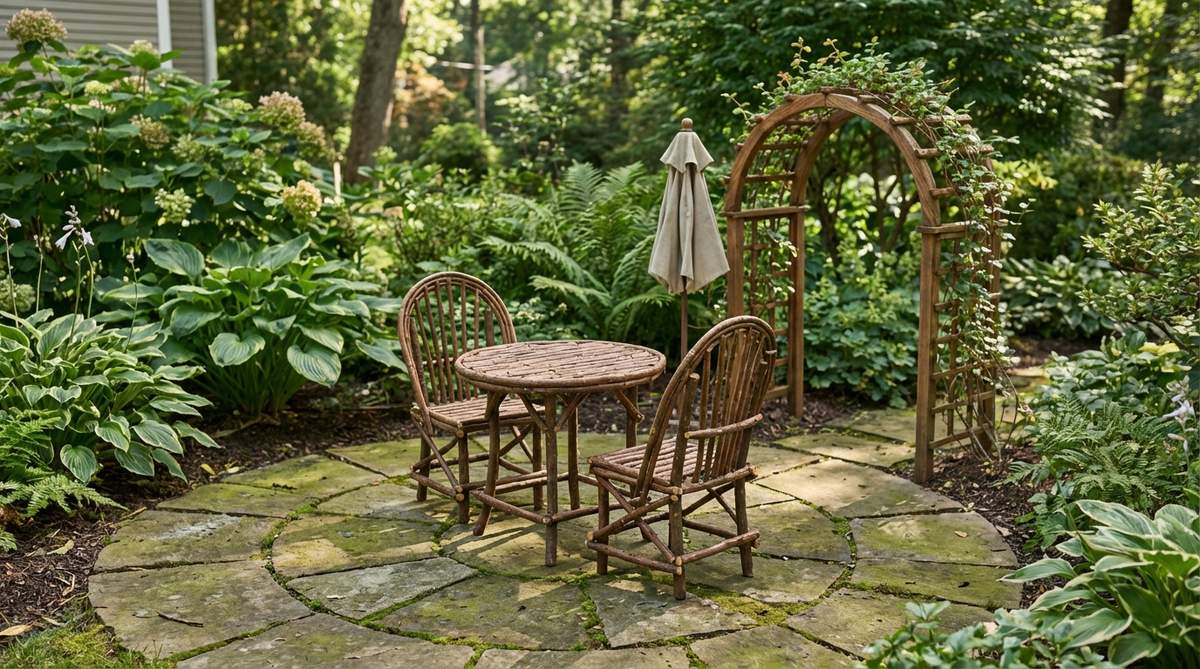
A table and two chairs constructed from uniform twigs create an outdoor dining scene perfect for positioning on a moss patio. Cut branches to consistent lengths, securing joints with waterproof wood glue and fine wire wrapping.
Sand rough edges smooth and finish with outdoor polyurethane for weather resistance. Position the set beneath a miniature arbor or umbrella accessory to complete the dining vignette.
7. Acorn Cap Tea Service

Acorn caps become tiny teacups and bowls when grouped on a flat stone serving platter. Select large, undamaged caps from red or white oak varieties for the most vessel-like proportions.
Arrange caps on a slate chip or flat pebble positioned on a miniature table. Add a small twig with a hook bend to serve as a teapot handle, securing it with adhesive to a rounded pebble body.
This fully natural tea set integrates seamlessly with woodland-themed fairy gardens and decomposes gracefully when replaced seasonally.
8. Polymer Clay Garden Bench
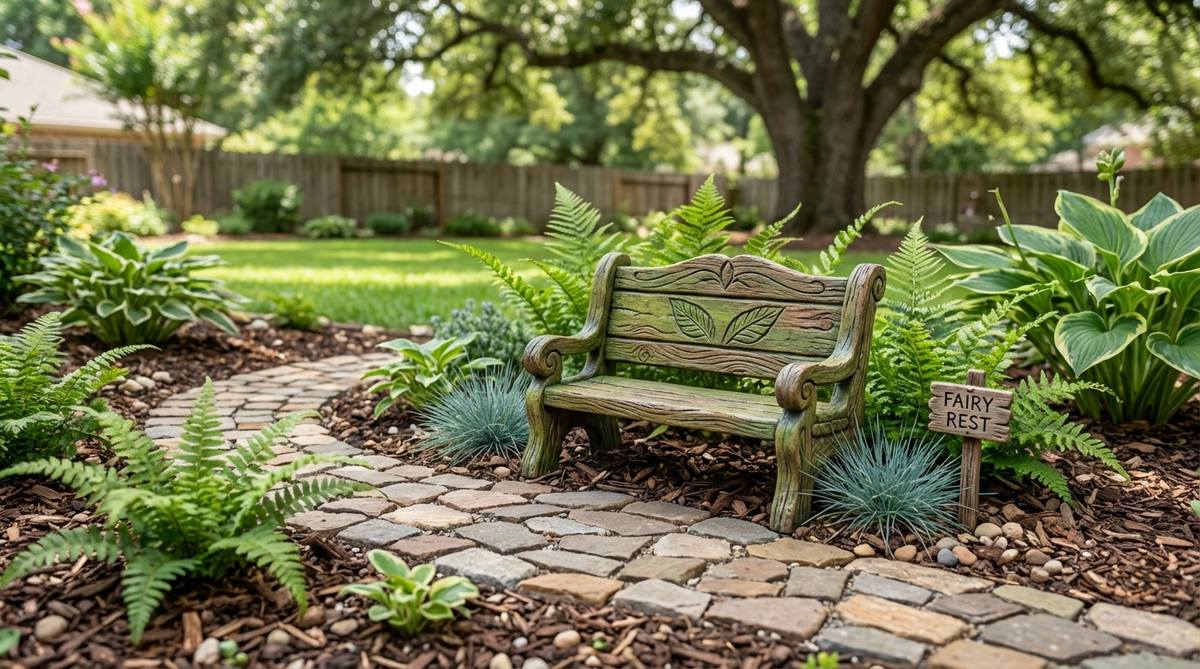
Custom-sculpted benches from polymer clay allow precise color and detail control while maintaining weather resistance after baking. Shape the seat, back, and legs separately before joining them with armature wire reinforcement.
Paint with outdoor acrylics in mossy green, weathered wood tones, or vibrant garden colors. Position benches along pathways or beneath miniature trees to create rest stops within larger garden layouts.
9. Bottle Cap Patio Furniture
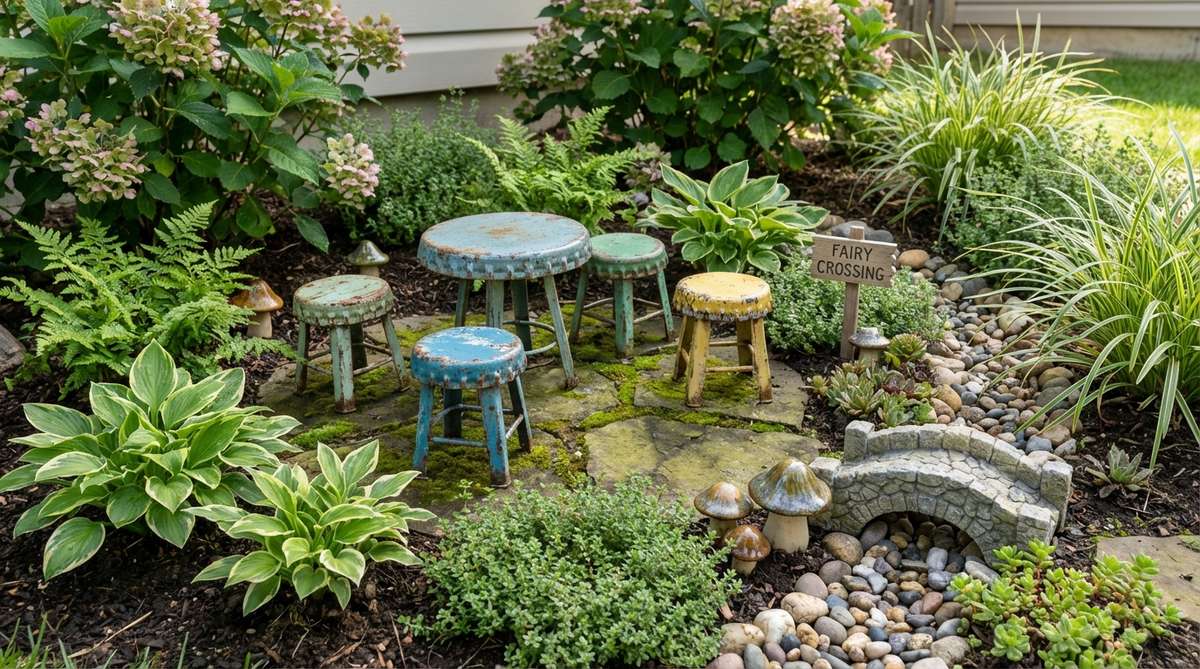
Metal bottle caps transform into modern patio stools when flipped upside down and mounted on short dowel legs. Drill small pilot holes in cap centers and glue wooden dowels cut to 1-inch lengths.
Paint caps in coordinating colors or leave metal finishes for industrial-chic aesthetics. Cluster three or four around a larger cap that serves as a cocktail table.
10. Wire Swing With Bead Seat
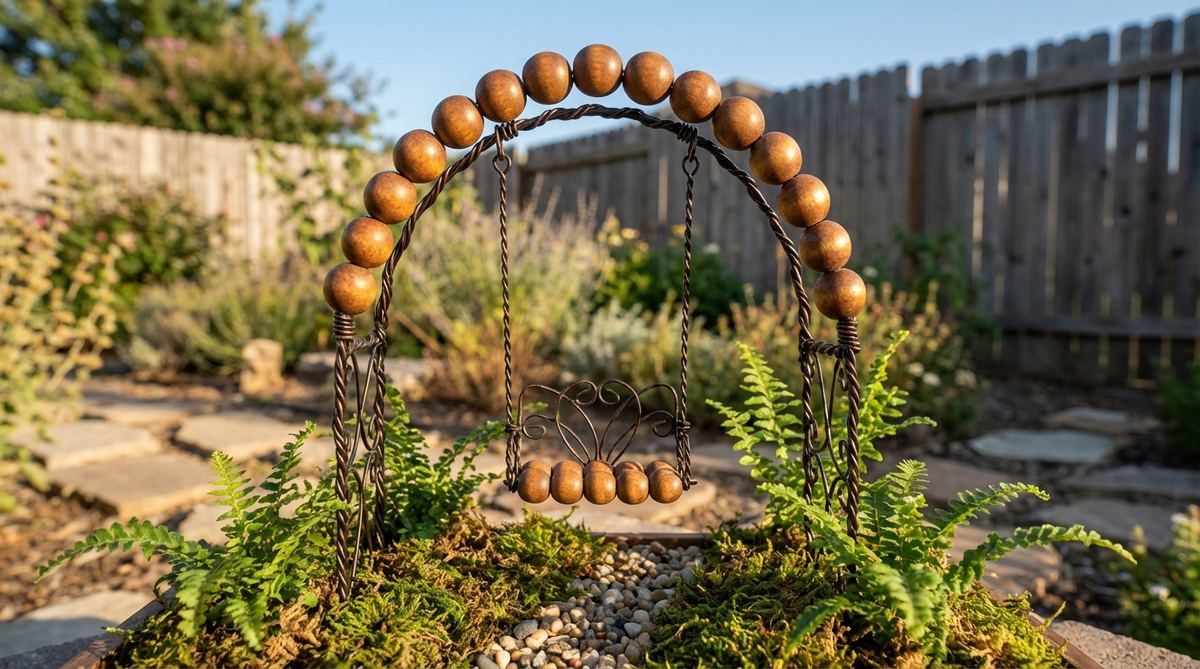
Craft wire and large wooden beads combine to create functional swings that hang from miniature arbors or tree branches. Thread wire through bead holes to form the seat, twisting ends into hanging loops.
Suspend from thin chains or jute twine attached to overhead structures. Position swings in garden clearings where they become interactive focal points.
The swing element adds movement and playfulness to static displays, especially when positioned where breezes can activate gentle motion.
Architectural Accessories That Define Structure
Hardscape elements establish the built environment within fairy gardens, providing context and scale for organic plantings. Pathways, fencing, and vertical structures organize space while directing viewer attention through the composition.
11. Pebble Stepping Stone Path
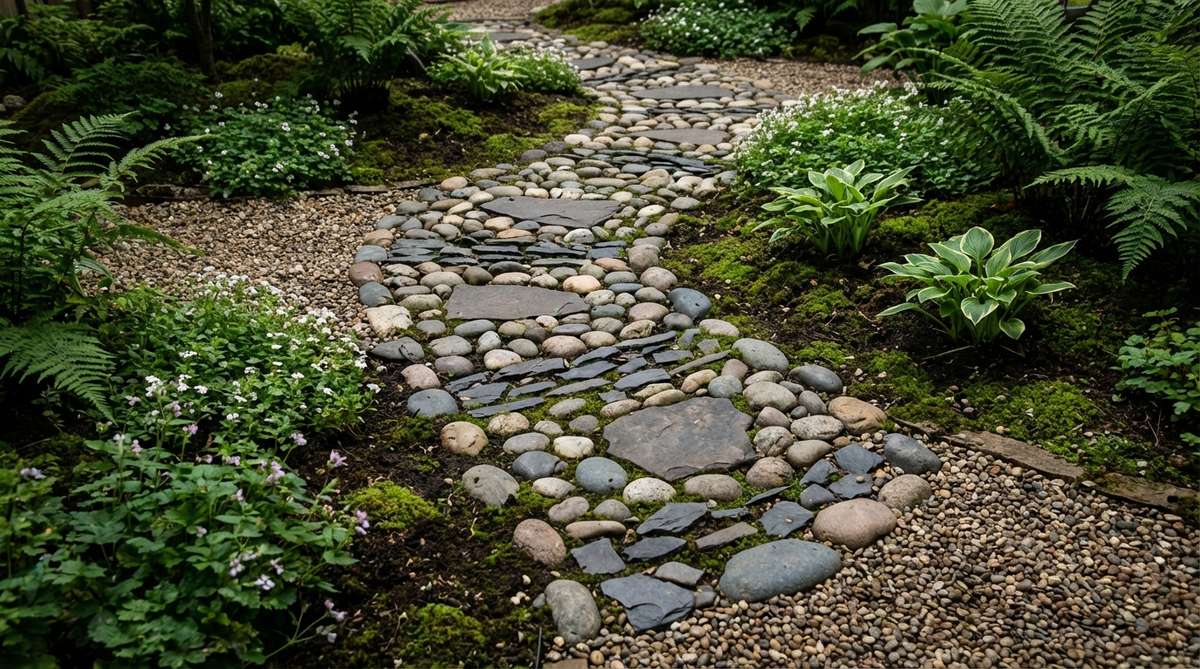
Flat stones arranged in meandering lines create pathways that guide the eye through garden scenes. Select smooth river rocks or slate chips with similar thickness, positioning them with 1-2 inch spacing for realistic stride patterns.
Press stones slightly into soil or moss to secure placement and create a worn, established appearance. Edge pathways with even smaller gravel or sand to define borders and prevent plant encroachment.
12. Miniature Picket Fence Boundary
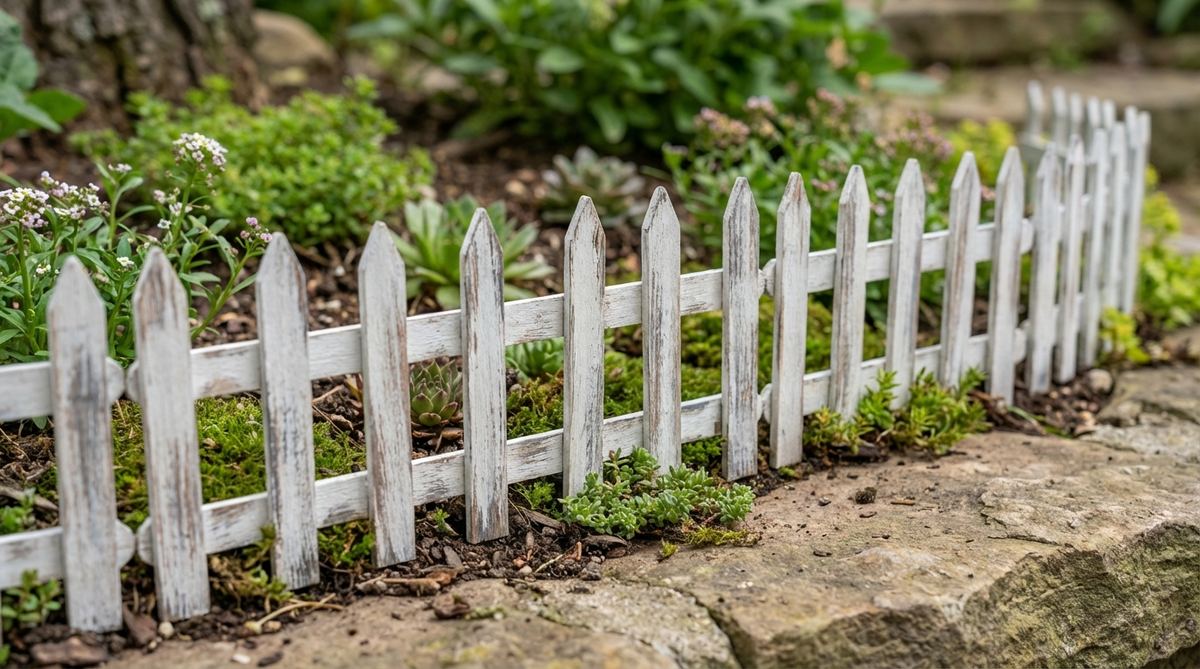
Wooden craft sticks transform into white picket fencing when cut to uniform heights and glued to horizontal rail supports. Cut pointed tops on each picket before painting with outdoor white acrylic.
Install fence sections by pressing support stakes into soil along garden borders or around designated areas. Use fencing to separate functional zones or protect delicate plantings from accidental disturbance.
Weathered paint finishes suggest age and authenticity, achieved by dry-brushing gray or brown tones over base white coats.
13. Stone Bridge Over Dry Creek
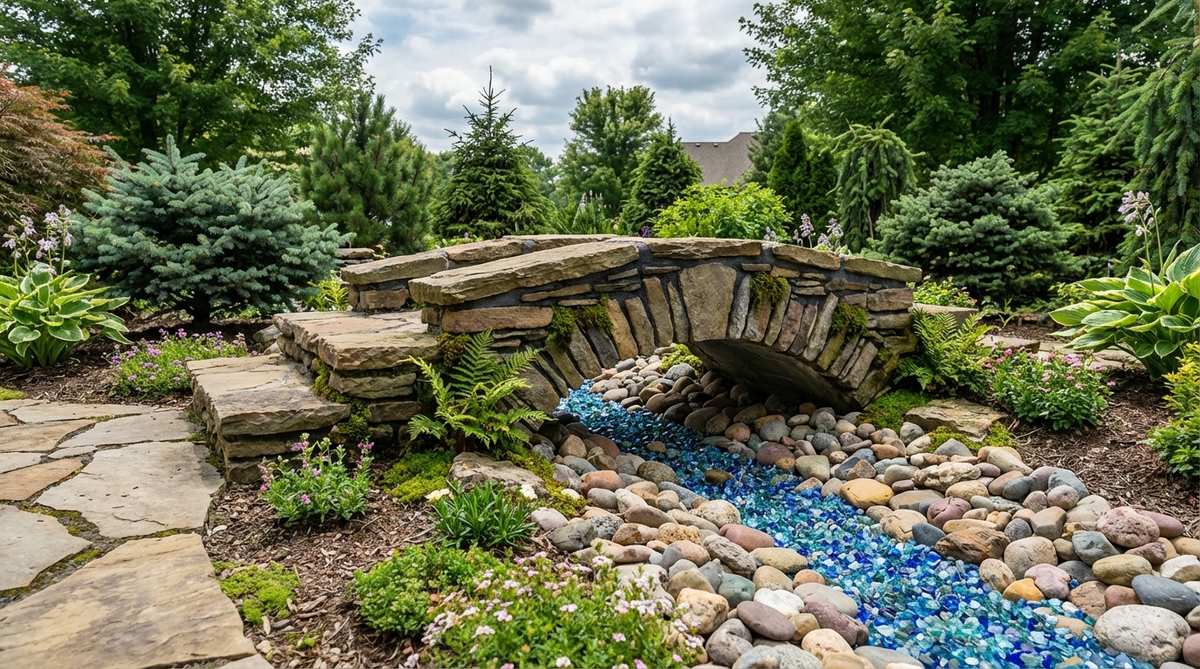
Flat stones stacked and mortared with aquarium-safe adhesive form arched bridges over blue glass gravel streams. Build abutments first, then position the bridge span across them with strong bonding.
Create creek beds from smooth river rocks and blue glass chips that mimic flowing water. Position bridges at focal points where pathways cross water features.
14. Twig Arbor With Flowering Vine
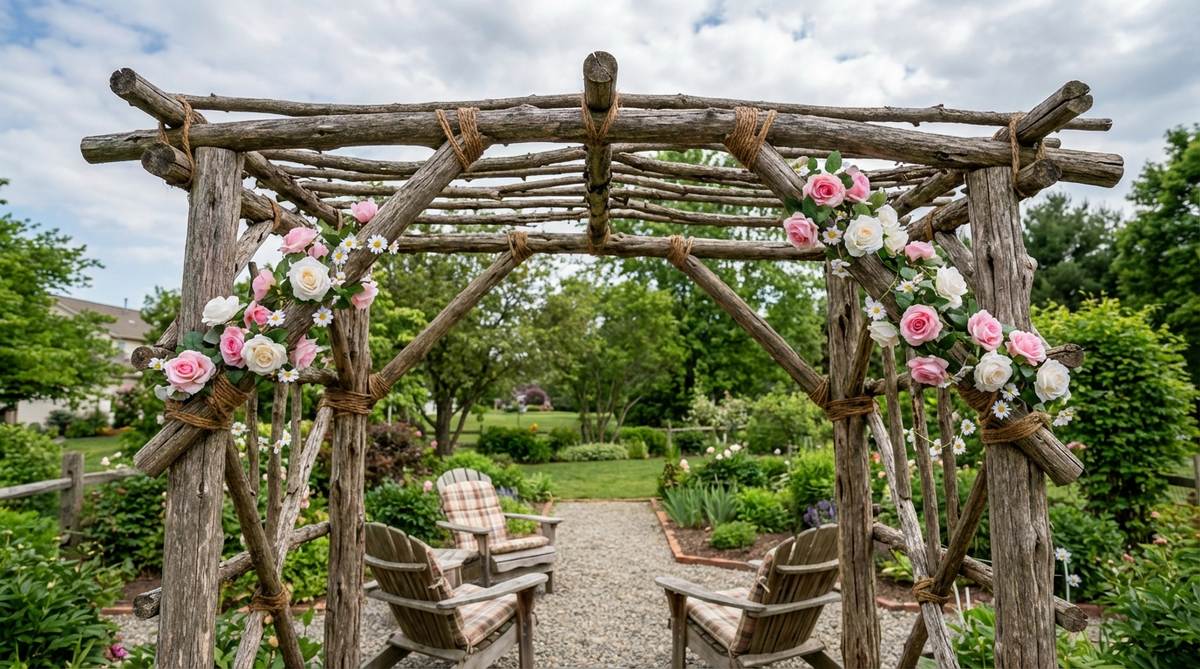
Four vertical twigs joined by two horizontal crosspieces create simple arbor frames that support climbing accessories. Lash joints with thin wire or natural jute, reinforcing with wood glue drops.
Wrap artificial silk ivy or tiny paper flowers around the structure to simulate climbing vines. Position arbors over pathways as entry features or behind seating areas for vertical interest.
Natural wood arbors weather authentically outdoors, developing patina that enhances rustic garden themes over seasons.
15. Stacked Stone Garden Wall
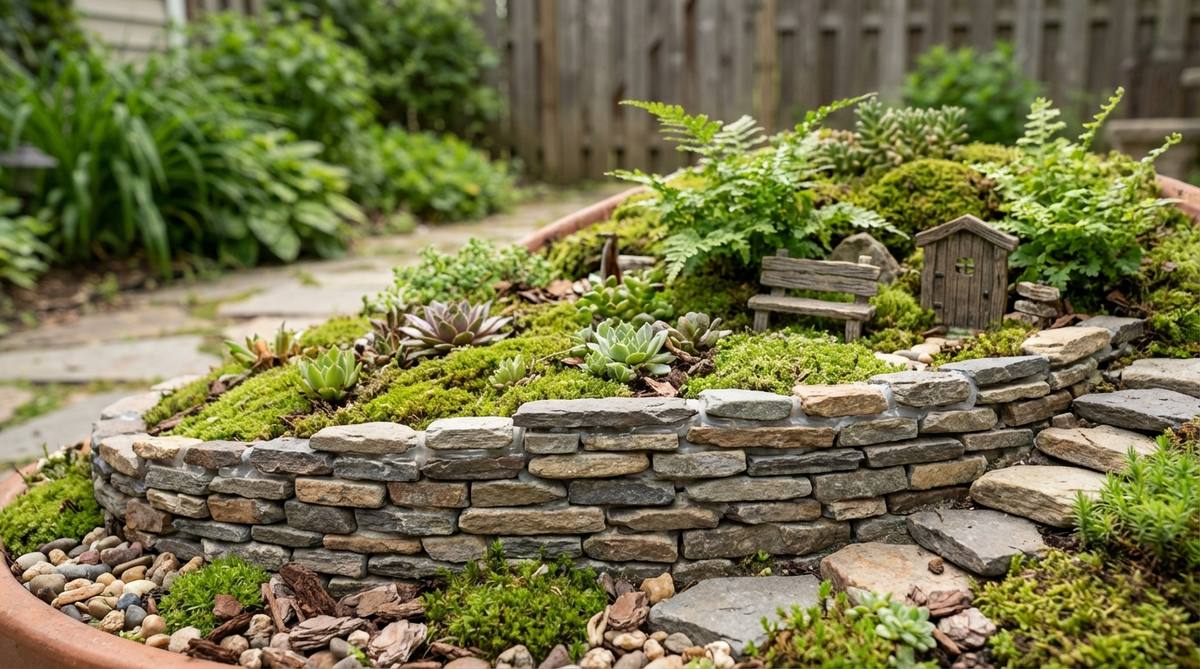
Small flat stones mortared in stacked courses create retaining walls that terrace sloped container gardens or define planting beds. Select stones with one flat side for the face, mixing sizes for natural variation.
Use aquarium-safe silicone or outdoor construction adhesive between courses. Build walls no higher than 2-3 inches to maintain scale with miniature structures and plantings.
16. Fairy Door Against Tree Base
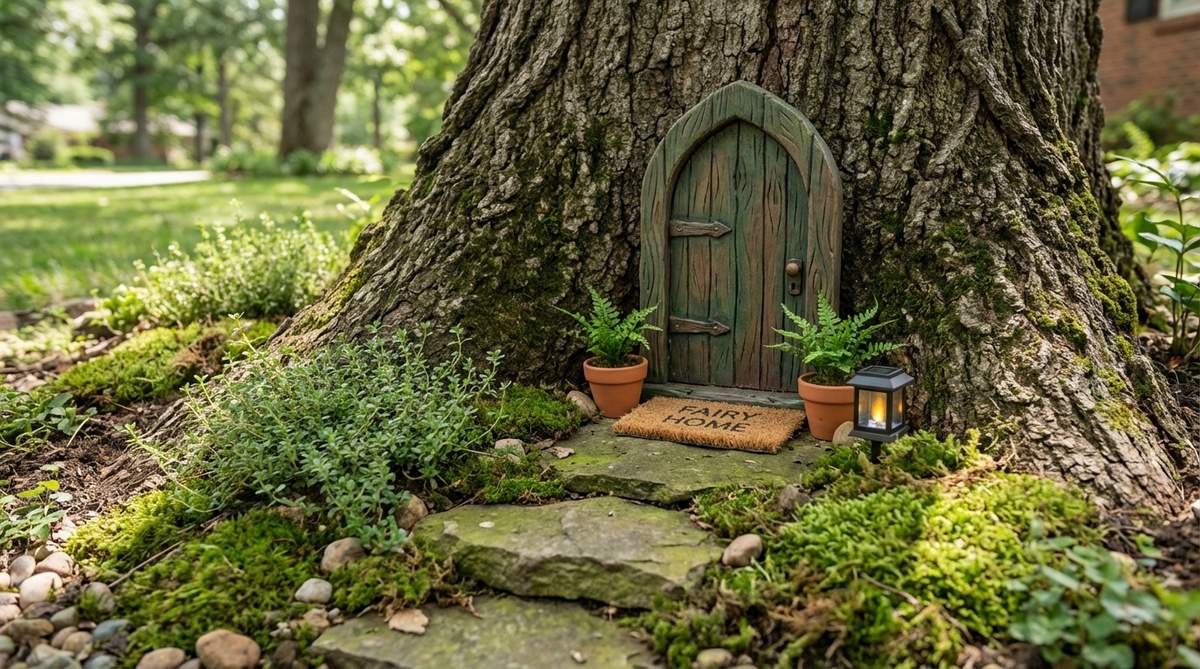
Wooden or resin miniature doors mounted against tree trunks or container edges suggest hidden entrances to magical realms. Position doors at soil level with small stone step approaches.
Add moss around door frames to simulate aged growth and natural integration. Include tiny welcome mats, potted plants, or miniature lanterns near entries to suggest active habitation.
Natural Material Elements From Found Objects
Foraged materials from backyards and nature walks provide authentic accessories that harmonize with living plants. Twigs, bark, acorns, and pine cones become functional garden elements through minimal modification.
17. Bark Chip Roof Tiles
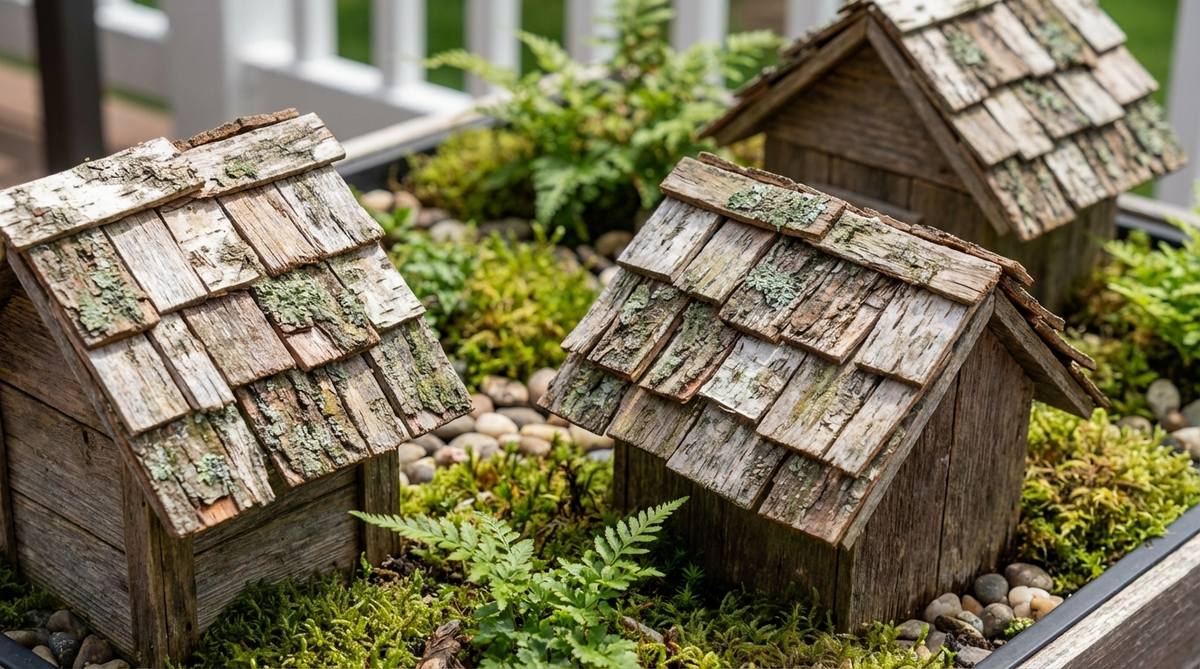
Small bark pieces arranged in overlapping rows create shingled roofs for miniature cottages and structures. Select thin bark from birch, cedar, or pine, breaking pieces into uniform shingle-sized chips.
Adhere bark shingles to cardboard or wooden roof forms with wood glue, starting at the bottom edge and working upward. Overlap rows by one-third for realistic coverage and water shedding in outdoor settings.
Natural bark develops authentic weathering and lichen growth over time, enhancing the aged appearance of garden structures.
18. Pinecone Miniature Trees
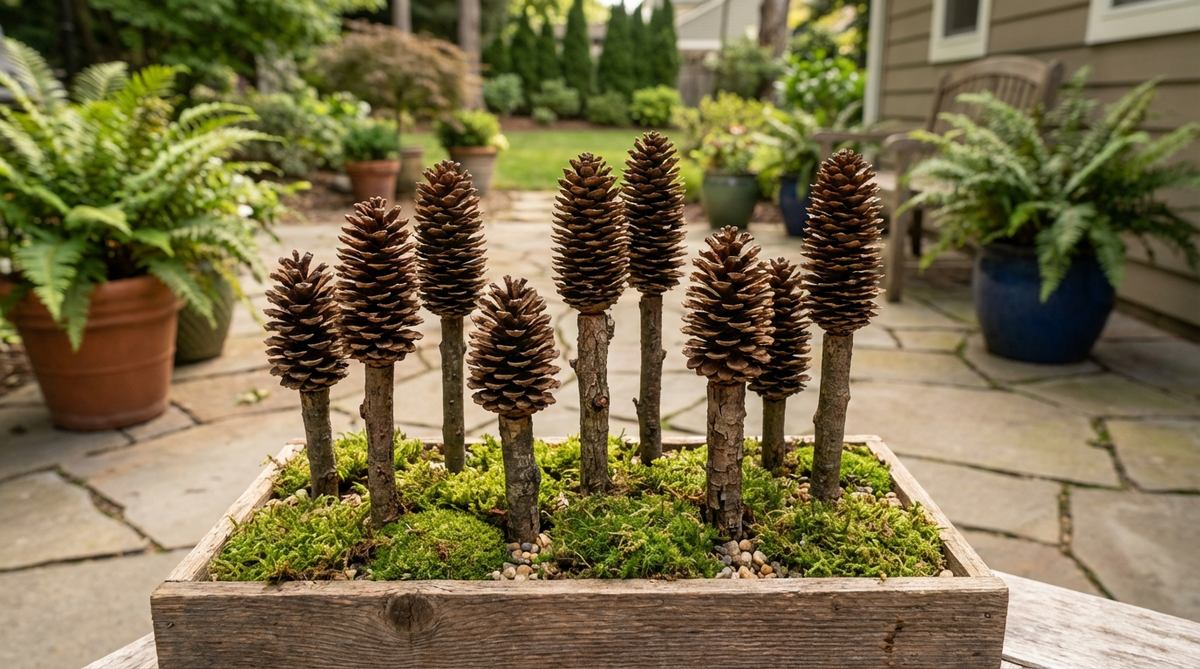
Small pinecones mounted on twig trunks serve as scaled evergreen trees throughout fairy garden landscapes. Select cones from hemlock, spruce, or small pine varieties for appropriate proportions.
Drill shallow holes in the cone base and insert glued twig sections cut to 3-4 inch lengths. Plant tree bases in moss or secure in drilled holes in wooden container platforms for permanent positioning.
19. Acorn Cap Planters
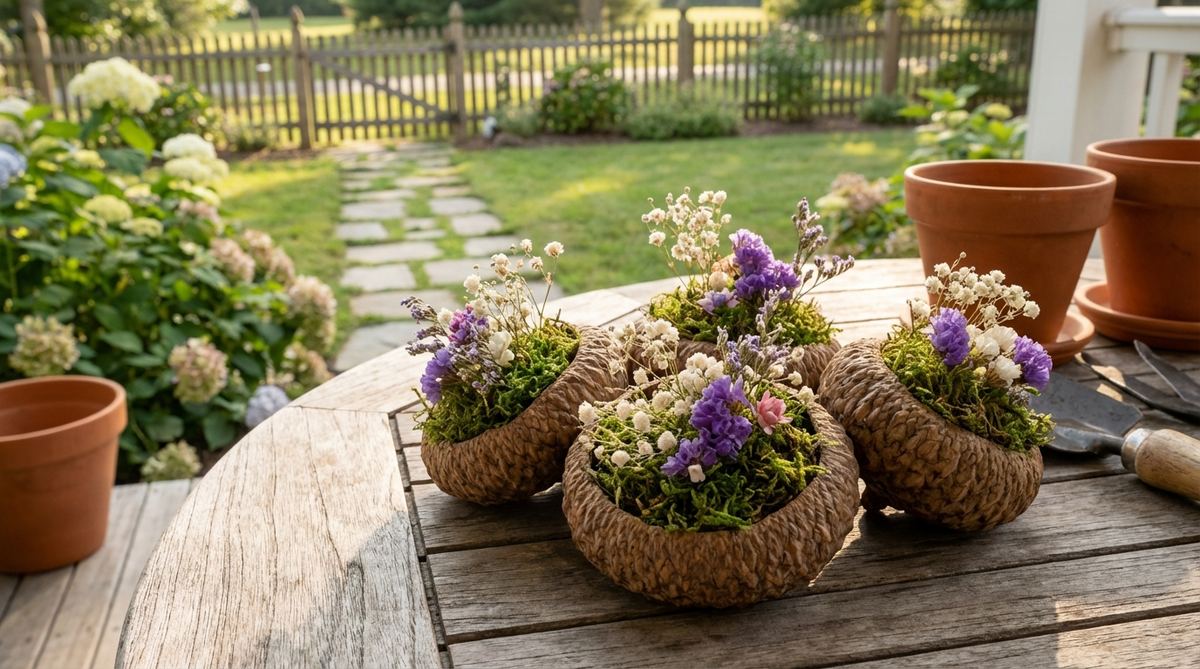
Large acorn caps filled with tiny dried flowers or preserved moss become miniature planters for tabletop displays. Select bur oak or other large-capped species for maximum interior volume.
Fill caps with polymer clay or floral foam as a base, then insert dried baby’s breath, statice, or miniature silk flowers. Group multiple cap planters on windowsills, porches, or garden tables.
These natural vessels decompose over one to two seasons outdoors, making them ideal for temporary or seasonal displays that refresh annually.
20. Twig Ladder Climber
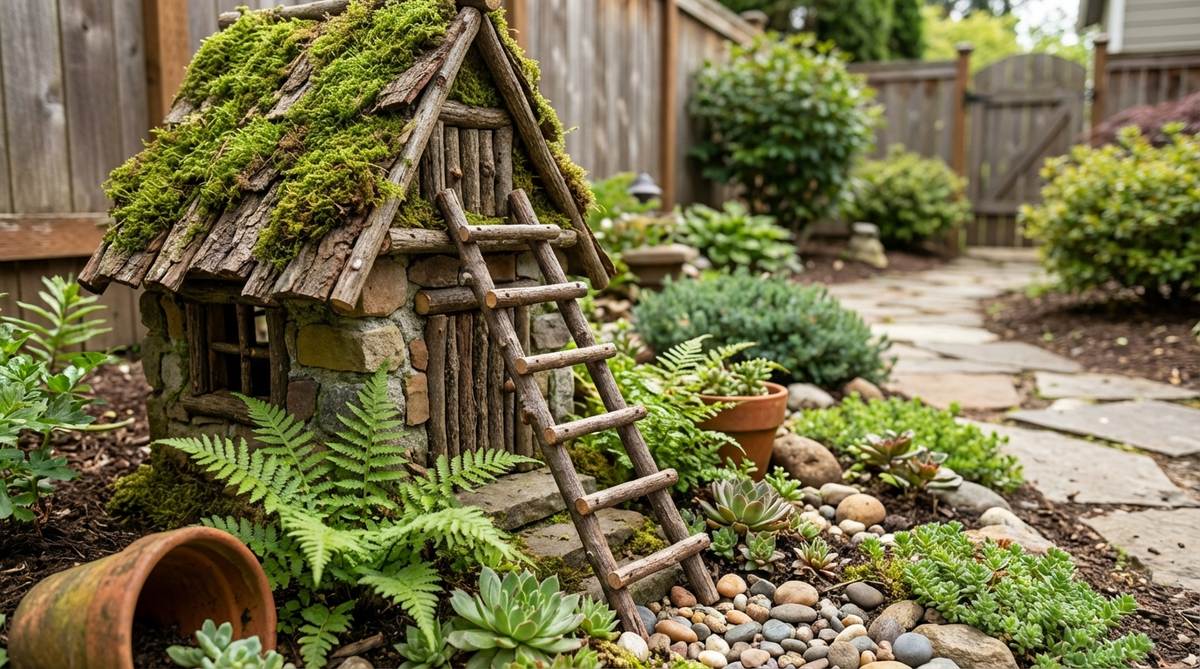
Two parallel twigs connected by perpendicular rung pieces create functional ladders that lean against structures or trees. Cut rungs to equal lengths and space them uniformly along uprights.
Secure rungs with small dabs of wood glue at each intersection. Position ladders against cottage walls, garden sheds, or tree trunks to suggest access to upper levels and rooftops.
21. Stone Staircase Ascending

Flat stones stacked in graduated sizes form naturalistic stairs climbing slopes or leading to elevated structures. Select stones with flat top and bottom surfaces, sizing each step slightly smaller than the one below.
Secure stones with construction adhesive or press firmly into soil for temporary arrangements. Build handrails from thin twigs glued along the stair edges for added detail and safety suggestion.
Stone stairs develop moss growth naturally in shaded, moist environments, enhancing their organic integration with surrounding plantings.
Lighting & Illumination Features For Evening Magic
Miniature lighting extends fairy garden viewing into evening hours while creating dramatic focal points and pathway guidance. Solar, battery, and LED options provide various installation methods suited to different container types and locations.
22. Solar Pathway Mushroom Lights
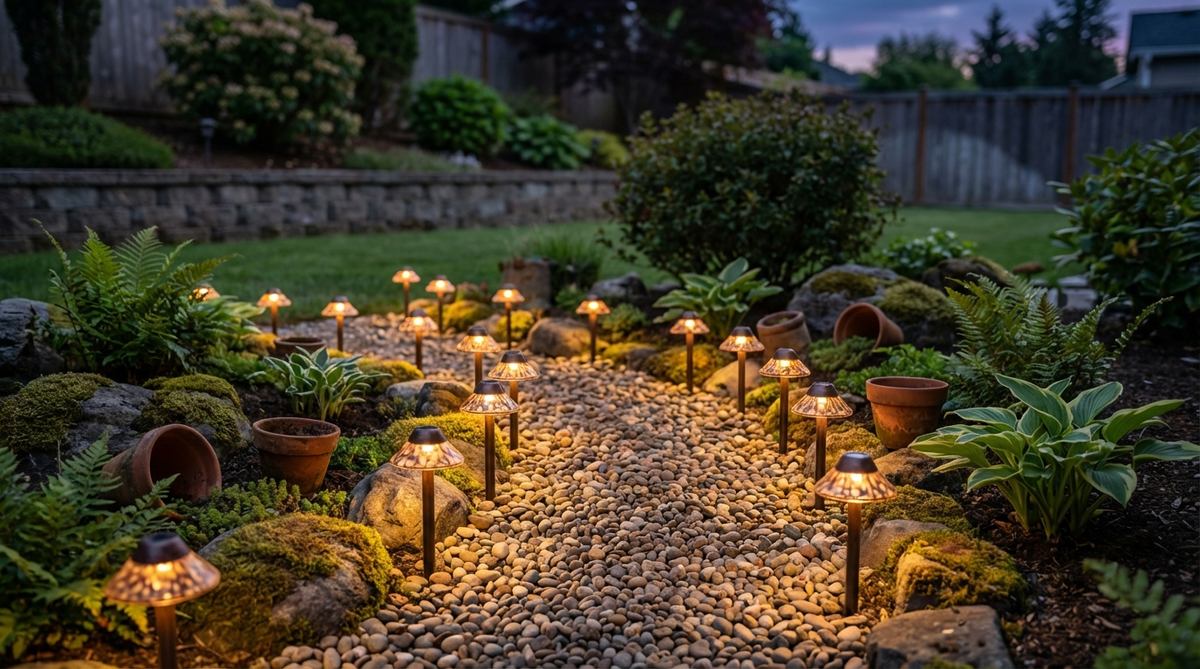
Miniature solar stakes shaped like mushrooms or flowers charge during daylight hours and illuminate pathways after dark. Position lights along both sides of pebble paths at 3-4 inch intervals.
Select models with automatic dusk sensors and replaceable batteries for long-term functionality. The soft glow highlights pathway edges without overwhelming the scaled environment with harsh illumination.
23. LED Fairy String Lights
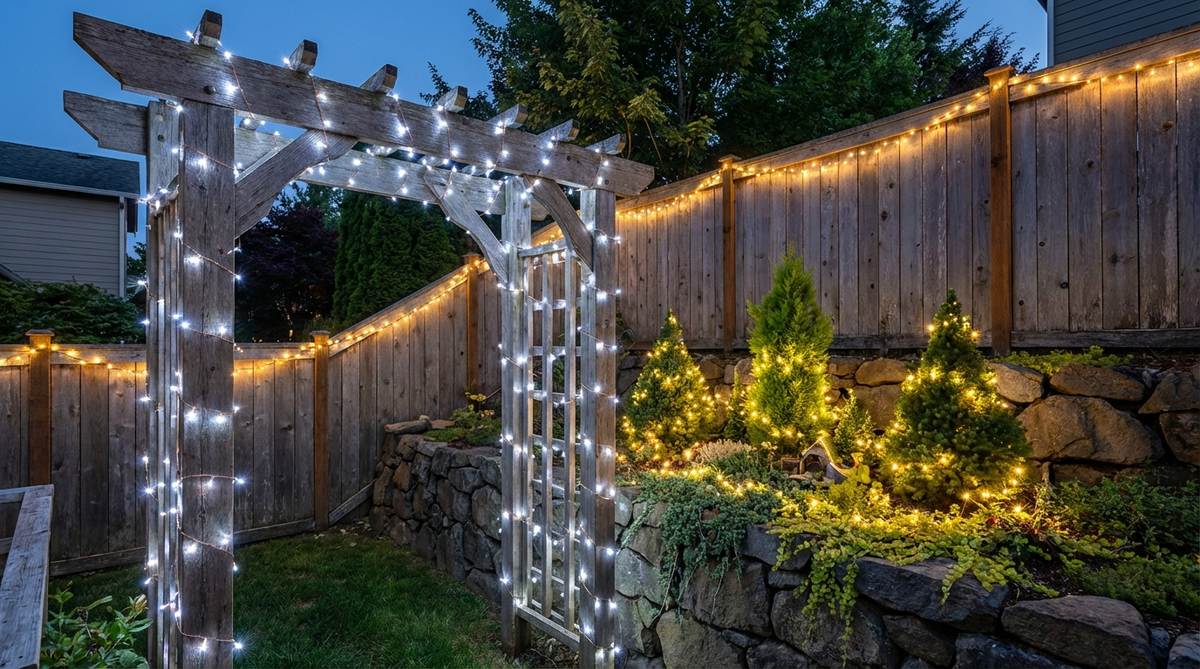
Battery-operated micro LED strings on thin copper wire wrap around structures, drape from arbors, or nestle within plantings. The nearly invisible wire maintains scale while delivering warm accent lighting.
Conceal battery packs beneath moss ground cover or inside hollow structures. Wind lights around door frames, along fence tops, or through miniature tree branches for festival lighting effects.
Cool white LEDs mimic moonlight while warm white creates cozy evening ambiance suited to different garden moods and themes.
24. Miniature Lamp Post Stakes
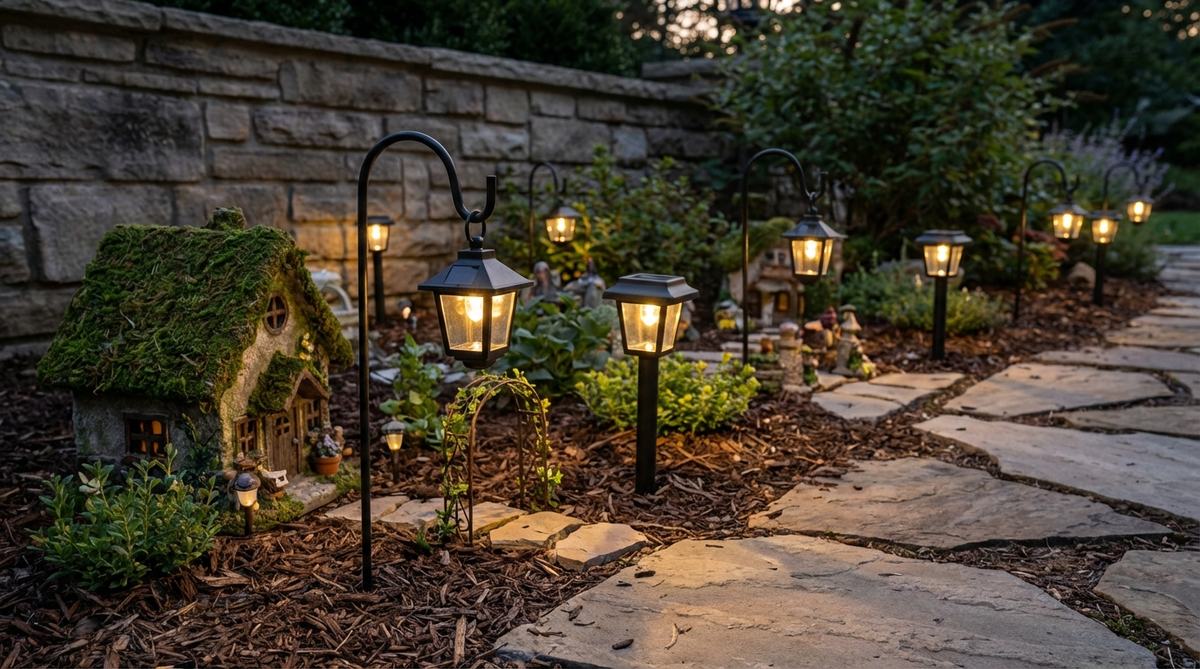
Scaled lamp posts with LED bulbs stake into soil along pathways or near entry features, providing functional lighting that enhances architectural details. Models with shepherd’s hook designs suit Victorian themes while straight posts fit modern aesthetics.
Install lamp posts at transition points where pathways turn or where focal structures deserve highlighting. Solar versions eliminate wiring concerns while maintaining consistent evening illumination.
25. Glow-In-The-Dark Pebbles

Photoluminescent pebbles charge in sunlight and emit soft glows for 2-4 hours after dark without requiring batteries or electricity. Scatter these stones along pathway edges or embed them in moss as surprise elements.
Mix glow pebbles with regular stones in 1:3 ratios for subtle effects rather than overwhelming brightness. Blue and green hues appear most natural while maintaining magical atmosphere.
26. Tea Light Lantern Holders
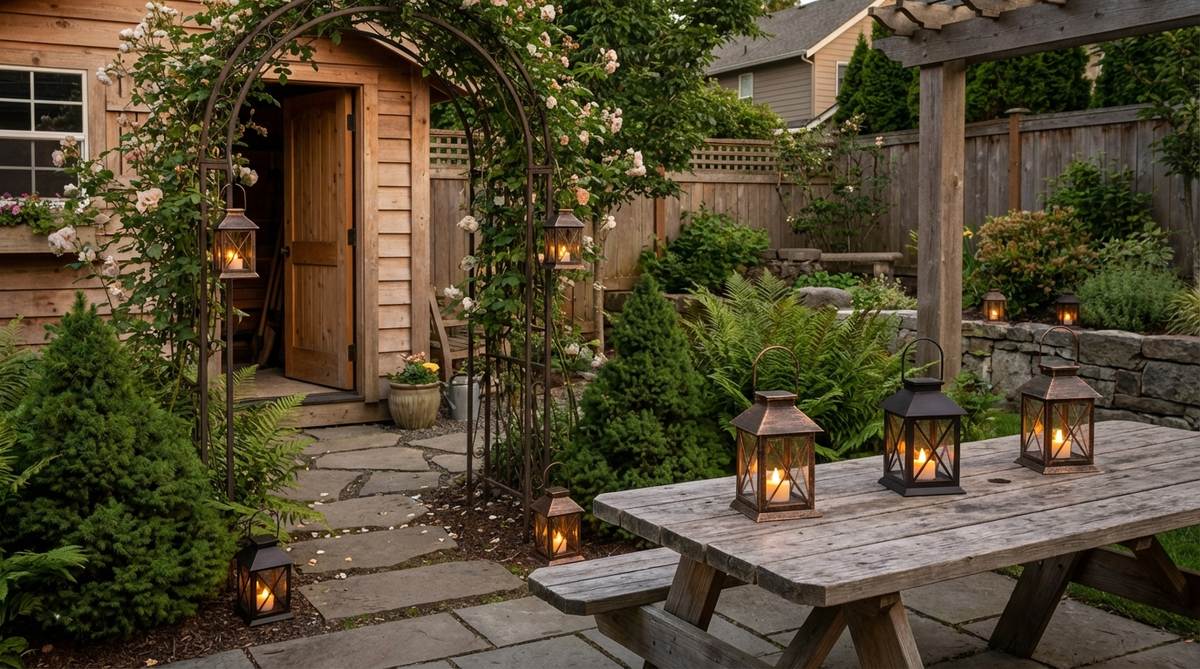
Miniature metal or resin lanterns sized for battery-operated tea lights provide portable illumination for special viewing occasions. Position lanterns on tables, hang from arbors, or place beside doorways.
Use LED tea lights instead of flame candles in outdoor settings to prevent fire hazards and ensure consistent lighting duration. The flickering LED effect mimics real candle movement convincingly at miniature scale.
Secret Garden Aesthetic Hideaways With Hidden Spaces
Enclosed and partially concealed areas within fairy gardens create mystery and discovery opportunities. These secret garden aesthetic elements invite closer inspection while rewarding viewers who explore the entire composition.
27. Moss-Covered Stone Grotto
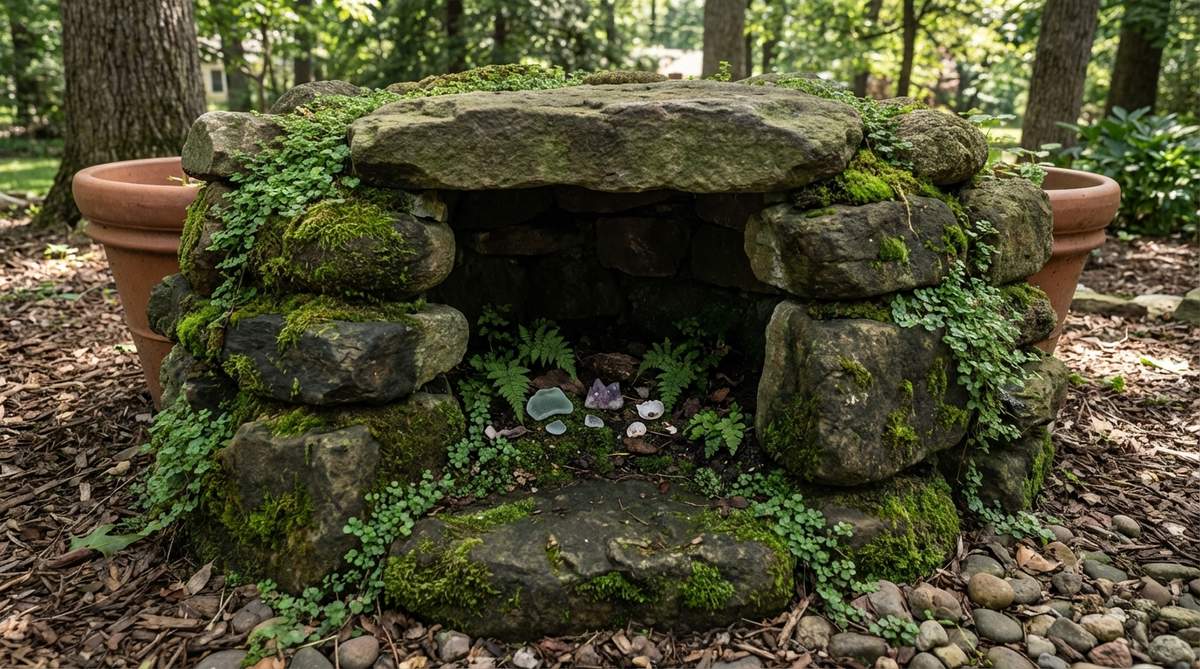
Stacked stones arranged in a semicircle with a flat cap stone create cave-like grottoes where fairy inhabitants might shelter. Press moss into crevices between stones to suggest age and natural colonization.
Position grottoes against container edges or beneath overhanging plants for maximum shadow and mystery. Add small shell fragments, crystals, or beach glass inside as treasure elements.
Grottoes provide shade-loving plants like baby tears or miniature ferns with ideal growing conditions while enhancing the garden’s layered depth.
28. Living Willow Screen Divider
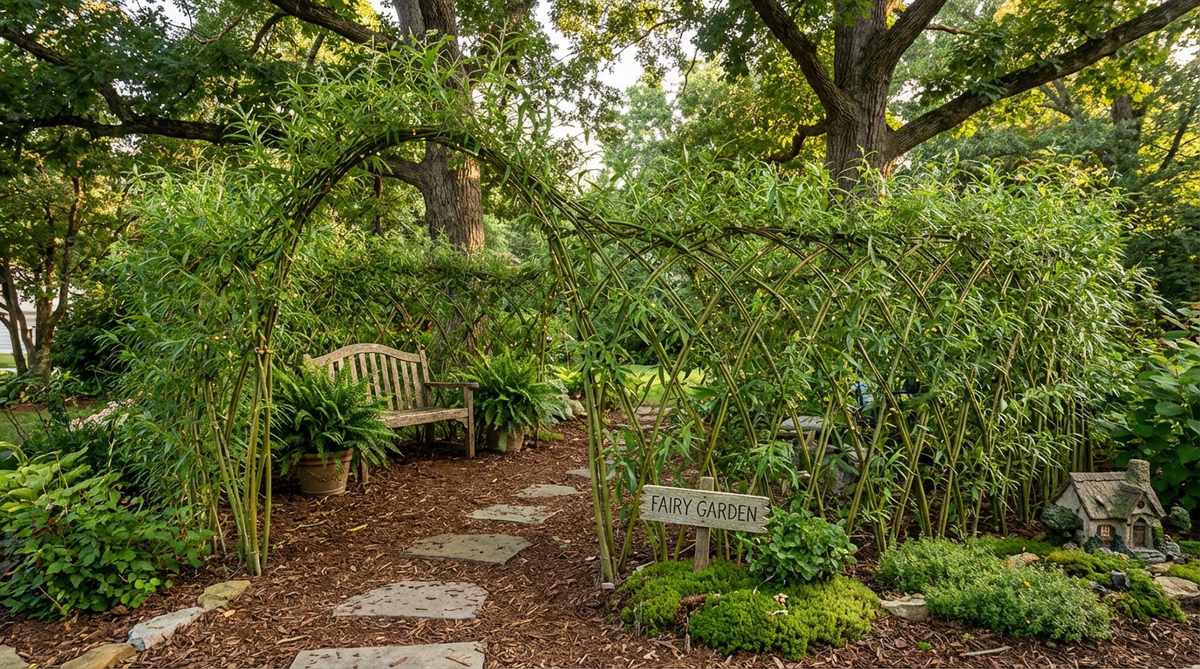
Thin willow whips woven together vertically create flexible screens that divide garden spaces while maintaining organic authenticity. Plant willow cuttings in moist soil where they root and leaf out in 2-3 weeks.
Weave screens in simple over-under patterns or more complex diagonal lattices. Position screens to conceal compost areas, separate themed zones, or create private seating alcoves.
29. Hidden Pond Beneath Ferns
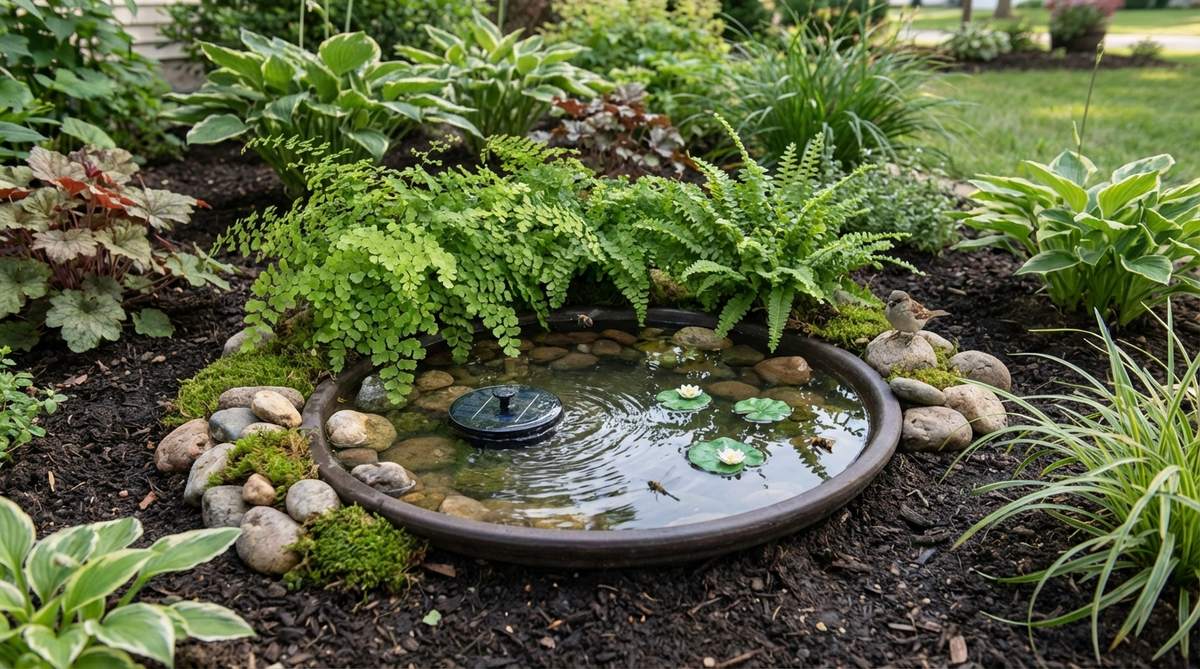
A shallow dish sunk into soil and filled with water creates a miniature pond partially concealed by overhanging fern fronds. Edge the pond with small stones and moss to naturalize the water feature.
Position dwarf ferns like maidenhair or button ferns where they arch over the pond surface. Add a small fountain pump for moving water or float tiny artificial lily pads on still surfaces.
Hidden ponds attract actual wildlife like beneficial insects and small birds, adding living activity to artificial fairy scenarios.
30. Vine-Covered Archway Entrance
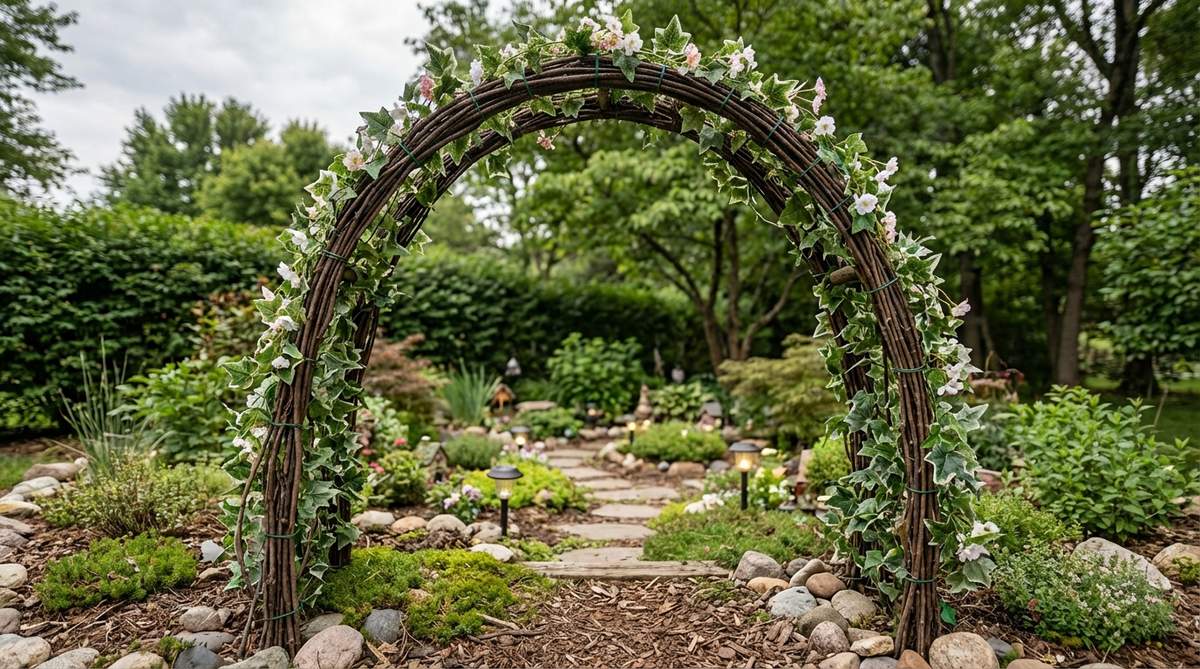
A twig arch wrapped densely with artificial ivy or silk flowering vines creates a transitional entry into secret garden spaces beyond. Build the arch frame from flexible twigs bent into an inverted U-shape.
Secure vine wrapping with thin green wire that disappears against foliage. Position arches at container edges or between distinct planting zones to formalize transitions and frame views.
31. Hollow Log Tunnel Passage
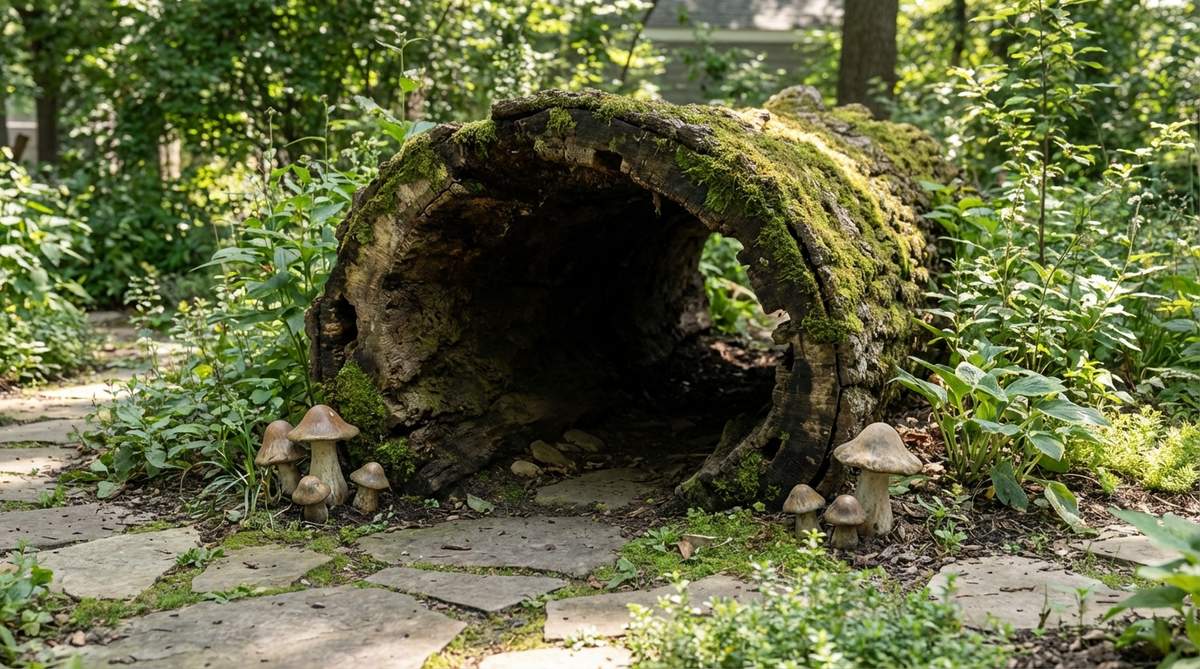
A section of partially rotted log with natural hollowing becomes a tunnel through which pathways pass. Position logs perpendicular to path directions, ensuring the hollow diameter accommodates the path width.
Enhance the tunnel with moss growth on the log exterior and small mushroom accessories near the entrances. The darkened interior creates dramatic contrast and invites speculation about what lies beyond.
Real logs develop fungal growth and interesting decay patterns over time, contributing authentic woodland character to fairy garden environments.
Seasonal & Thematic Displays That Rotate Year-Round
Changeable accessories and plantings allow fairy gardens to reflect seasonal transitions and holiday themes without requiring complete reconstruction. Strategic component swapping maintains freshness while preserving core structural elements.
32. Autumn Harvest Pumpkin Patch

Miniature resin pumpkins arranged in rows among dried grasses and fall-blooming mums transform gardens for September through November. Add a tiny scarecrow, hay bale seating, and corn stalk bundles for complete harvest scenes.
Replace spring and summer flowers with ornamental kale, miniature chrysanthemums, and sedum varieties that peak in autumn. Orange, burgundy, and gold accessories coordinate with changing foliage colors.
33. Winter Snow Village Scene
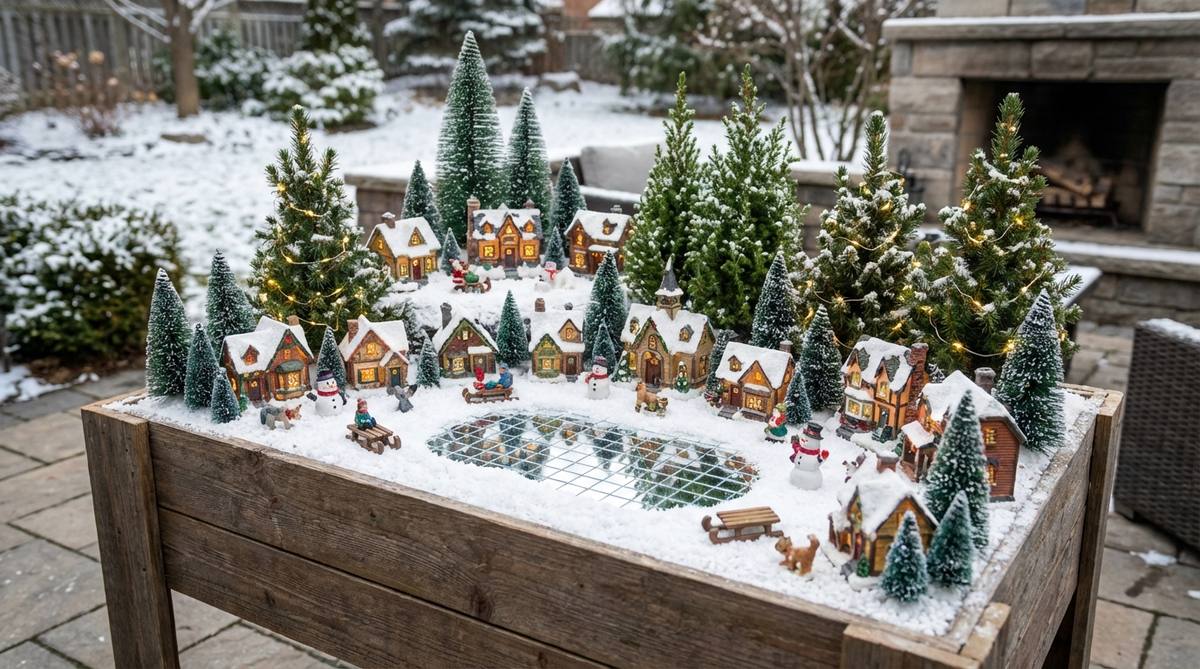
White aquarium gravel or artificial snow blankets winter fairy gardens, surrounding evergreen trees and cottages with glowing windows. Battery-operated lights inside structures suggest warm hearths during cold months.
Add miniature sleds, snowmen, and ice skating pond features using mirror tiles as frozen water surfaces. Evergreen plantings like dwarf Alberta spruce maintain living elements through dormant seasons.
Winter displays require minimal watering, making them practical for indoor migration during freezing weather while maintaining visual interest.
34. Spring Bulb Garden Awakening
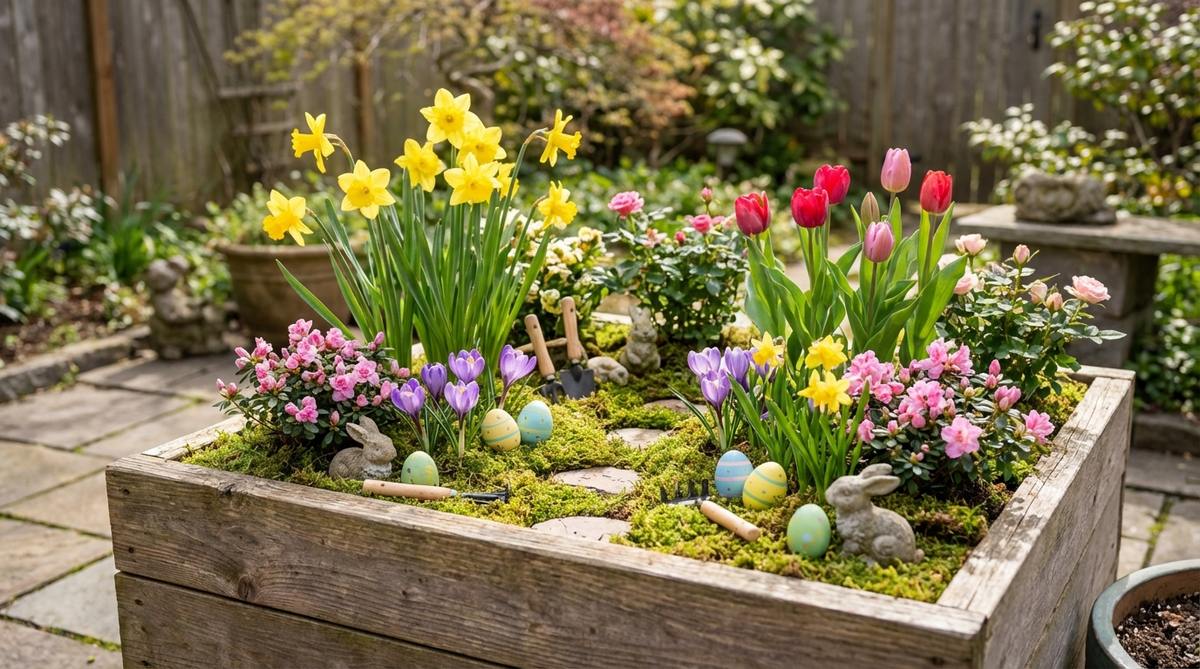
Miniature daffodils, crocuses, and tulips planted in fall emerge through moss ground cover as spring focal points. Scatter tiny Easter accessories like painted eggs, bunny figurines, and pastel-colored furniture.
Prune back winter-dormant plants to reveal new growth and refresh moss areas that compacted under snow. Add flowering fairy azaleas or miniature roses as color accents.
35. Summer Beach Cottage Retreat
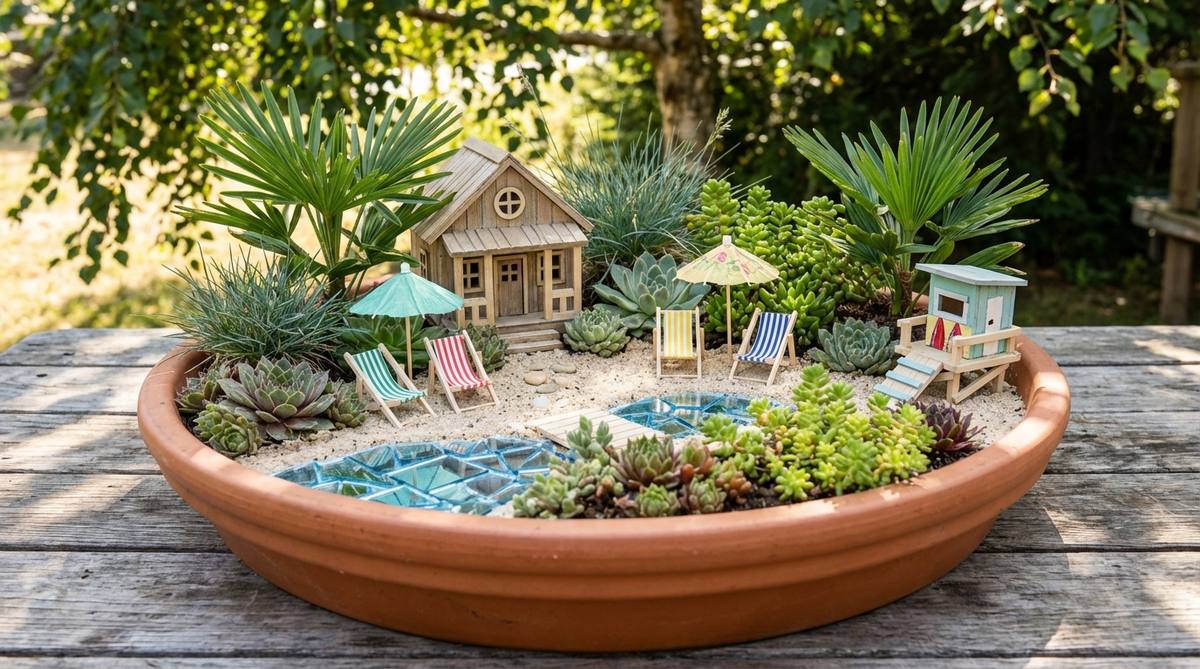
Sand-filled sections within gardens create beach zones fronting small mirror water features. Position miniature beach chairs, umbrellas, and a tiny lifeguard stand along the sand-moss boundary.
Plant sun-loving succulents like hen-and-chicks and sedums that tolerate heat and drought. Replace cool-season plants with tropical-looking miniature palms or ornamental grasses.
Beach themes work especially well in shallow, wide containers that mimic coastal landscapes and accommodate sand without excessive weight.
36. Halloween Haunted Fairy Hollow
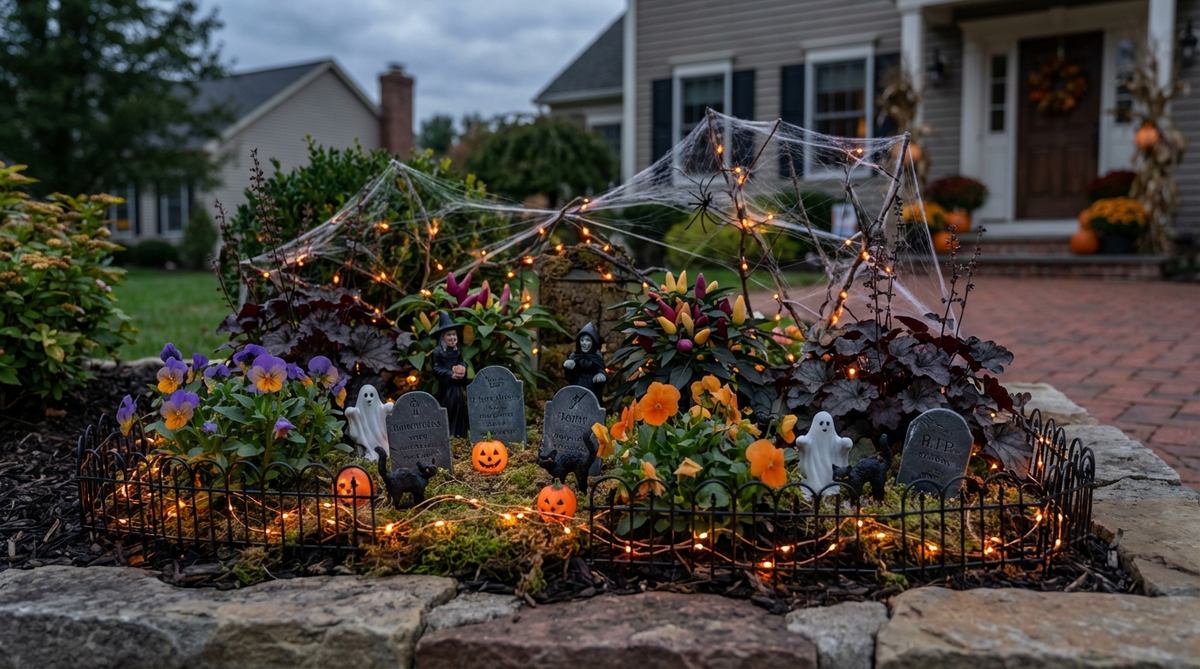
Transform gardens into spooky October displays with miniature tombstones, black fencing, and tiny jack-o-lanterns. Replace cheerful figurines with ghosts, witches, and black cats scaled to garden proportions.
Add purple and orange flowering plants like pansies or ornamental peppers. String orange LED lights and drape artificial spider webs across structures for eerie evening effects.
Container & Vessel Concepts Beyond Standard Pots
Unexpected containers expand creative possibilities while adding character through their forms and histories. Repurposed objects and unconventional vessels become integral design elements rather than mere growing platforms.
37. Vintage Wheelbarrow Mobile Garden
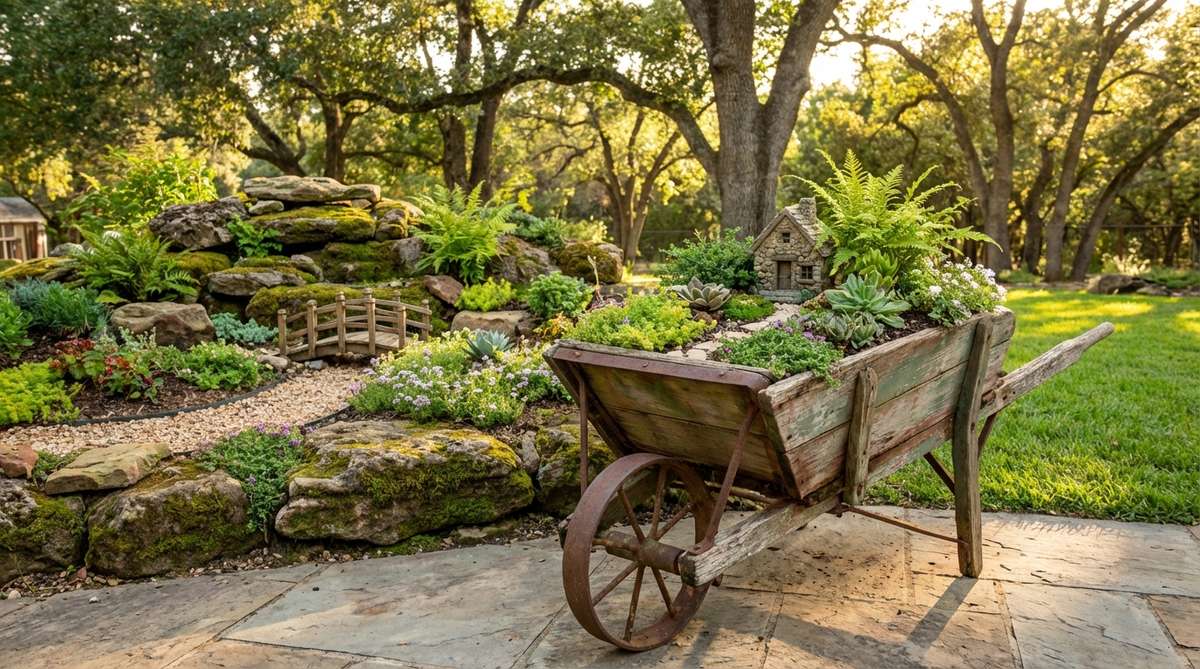
An aged metal or wooden wheelbarrow provides ample planting space plus narrative suggestion through its utilitarian form. Drainage naturally exists through bottom seams and rust holes in metal versions.
Layer rocks in the bottom for drainage before adding soil, then establish zones for structures, pathways, and plantings. The wheelbarrow’s mobility allows seasonal repositioning for optimal light exposure.
Weather-worn paint and rust patina contribute authentic character that new containers lack, grounding the fantastical fairy elements in tangible reality.
38. Broken Pot Terraced Levels
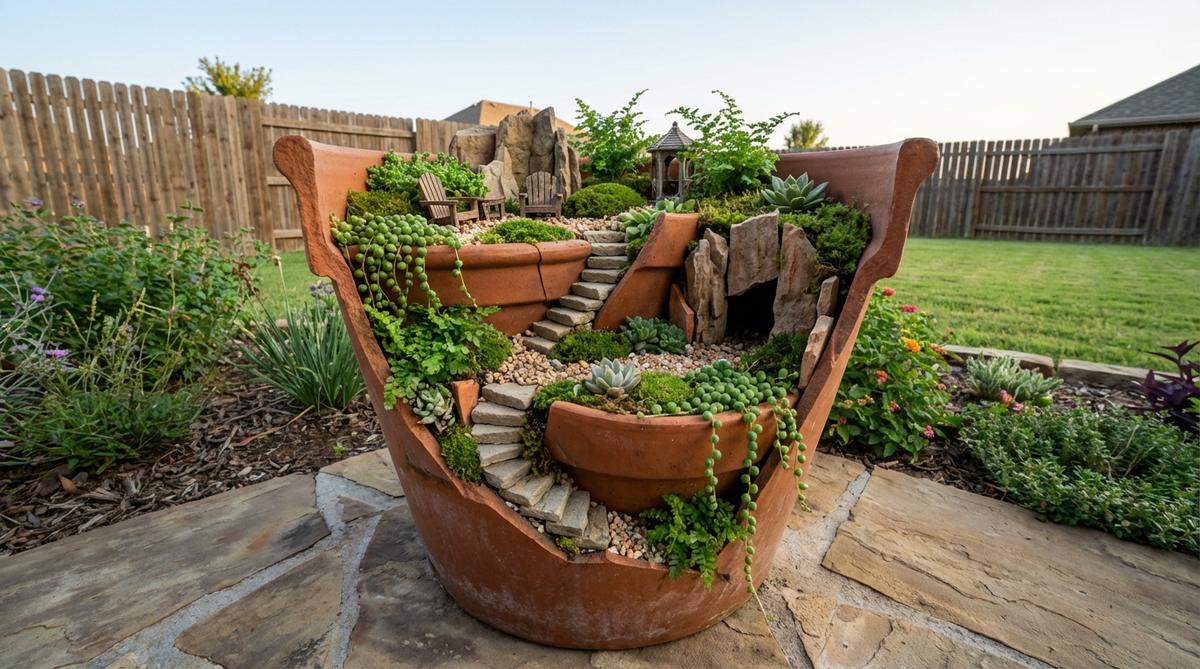
A large terracotta pot with side sections removed creates terraced planting levels connected by stairs or pathways. Break pots intentionally with controlled hammer taps or repurpose naturally damaged containers.
Position broken shards at angles to form cliffs, retaining walls, or cave entrances. Plant cascading varieties like string of pearls or miniature ivy on upper levels where they drape over edges.
39. Teacup & Saucer Miniature Garden
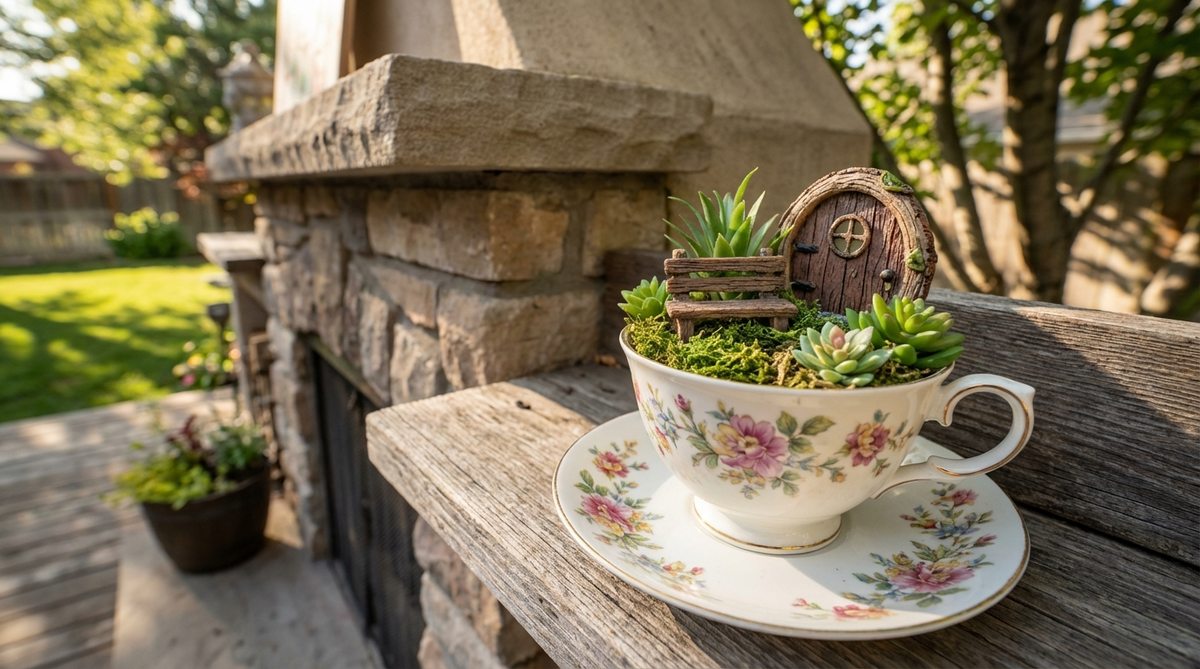
Vintage teacups paired with their saucers provide charming containers for minimal fairy scenes focused on single structures or vignettes. Use preserved moss and artificial plants since drainage proves problematic.
Secure foam blocks inside cups as planting bases, then cover with sheet moss. Position one focal accessory like a fairy door, tiny bench, or miniature house against the cup’s interior back wall.
Teacup gardens suit indoor display on shelves and mantels where their small scale reads clearly and moisture concerns diminish.
40. Wooden Crate Rustic Village
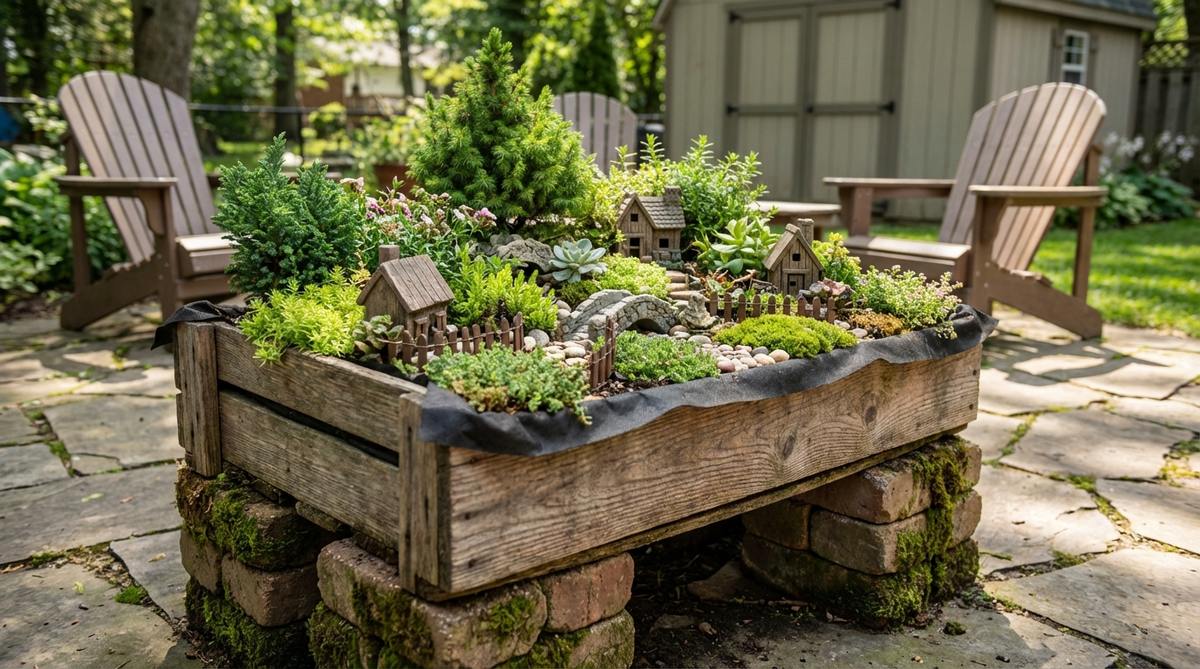
Slatted wooden produce crates or wine boxes provide rustic frames for larger fairy villages with multiple structures and extensive plantings. Line crate interiors with landscape fabric before adding soil.
The natural wood grain and weathered finish complement organic planting schemes and natural material accessories. Elevate crates on bricks or stands to showcase layered plantings at comfortable viewing heights.
41. Bird Bath Water Feature Garden
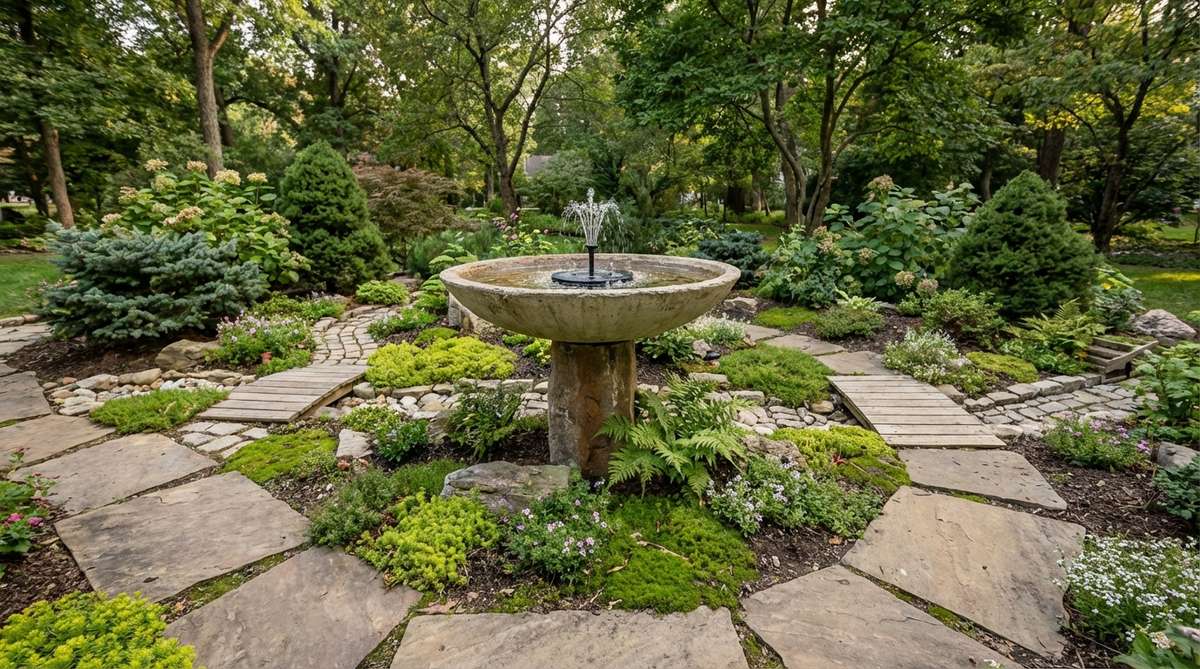
Shallow bird bath basins mounted on pedestals create elevated garden platforms with built-in water feature potential. Plant around the basin’s perimeter while maintaining the center as a functional water element.
Add a small fountain pump to circulate water and attract wildlife. Position stones and miniature bridges across the water to integrate it within pathway systems.
The elevation provides excellent drainage and makes detailed viewing easier without bending, especially valuable for gardeners with mobility limitations.
42. Hanging Grapevine Sphere Garden
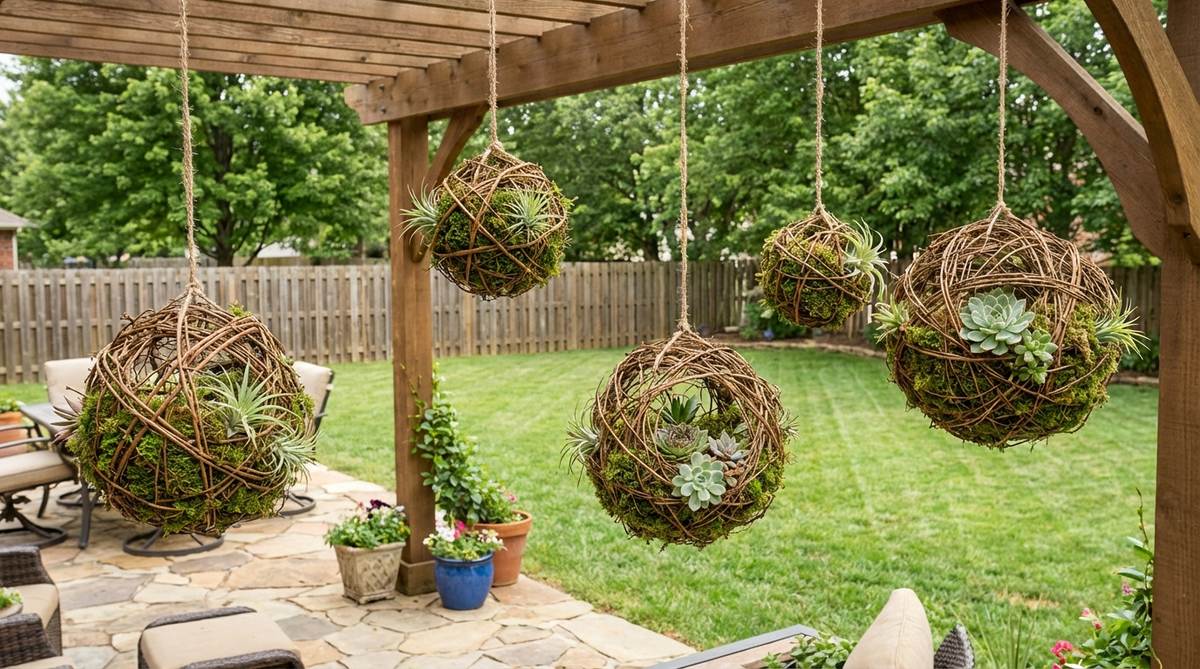
Hollow grapevine balls create suspended fairy gardens that utilize vertical space and add dimensional interest to garden areas. Line sphere interiors with moss, then add air plants or shallow-rooted succulents.
Hang spheres at varying heights from tree branches, arbors, or porch overhangs. Install miniature doors and windows on the sphere exteriors to suggest hollow tree dwellings.
Multiple spheres grouped at different levels create fairy apartment complexes that maximize limited ground space in urban gardens.
Conclusion
These 42 fairy garden aesthetic displays demonstrate how miniature accessories, living moss, and thoughtful design principles combine to create immersive scaled landscapes. Start with foundational elements like moss ground cover and primary structures, then layer in furniture, lighting, and seasonal accessories that reflect your creative vision. The most successful fairy gardens balance living plant material with crafted elements, maintaining scale consistency while encouraging viewer exploration of hidden details and secret spaces. Fresh Garden Ideas encourages experimentation with both purchased and handcrafted accessories as you develop your unique miniature world.
Frequently Asked Questions
What type of moss works best for outdoor fairy gardens?
Irish moss and Scotch moss perform best in outdoor fairy gardens as living ground covers. Irish moss thrives in partial shade with consistent moisture, producing emerald-green mounded growth and tiny white flowers. Scotch moss tolerates similar conditions but displays chartreuse-gold coloring with a softer texture. Both varieties spread slowly to fill planting areas while remaining proportionally scaled to miniature accessories. For sunny locations, substitute creeping thyme varieties that provide similar low-growing coverage with added fragrance and purple blooms.
How do you weatherproof handmade fairy garden accessories?
Seal handmade wooden and natural material accessories with outdoor polyurethane or marine varnish to prevent moisture damage and UV fading. Apply 2-3 thin coats, allowing complete drying between applications. Paint polymer clay pieces with outdoor acrylic paints before sealing. Store delicate handcrafted items indoors during harsh winter weather, replacing them with more durable resin alternatives for cold months. Fabric elements like miniature cushions and curtains should use outdoor-rated materials or be treated with waterproofing sprays designed for patio furniture.
What plants maintain appropriate scale in fairy gardens?
Select plants with naturally miniature growth habits and small leaf structures. Ideal choices include baby tears, miniature ivy, dwarf mondo grass, hen-and-chicks succulents, and button ferns. Avoid plants with large leaves or aggressive spreading tendencies that overwhelm accessories and structures. Dwarf conifers like miniature Alberta spruce serve as scaled trees while maintaining slow growth rates. Regular pruning keeps faster-growing plants proportional, but starting with naturally compact varieties reduces maintenance requirements and preserves visual scale relationships.
Can fairy gardens survive winter in cold climates?
Hardy plant selections and proper winterization allow fairy gardens to survive freezing temperatures. Choose cold-hardy ground covers like Irish moss and evergreen miniature conifers that tolerate your USDA zone. Remove delicate accessories and figurines before hard freezes, storing them indoors until spring. Apply mulch around plant bases for root insulation without covering entire structures. Alternatively, design fairy gardens in containers that move indoors to protected locations like unheated garages or enclosed porches where they receive dormancy cold without lethal freezing exposure.
How often should fairy gardens be watered?
Water frequency depends on container size, plant selection, and sun exposure. Gardens with living moss require consistent moisture, typically daily watering during hot weather and 2-3 times weekly in moderate conditions. Succulent-based gardens need less frequent watering, about once weekly with complete soil drying between applications. Check soil moisture by inserting your finger 1 inch deep; water when soil feels dry at that depth. Containers with drainage holes require more frequent watering than sealed terrariums. Morning watering prevents fungal issues while ensuring plants have moisture during peak heat hours.