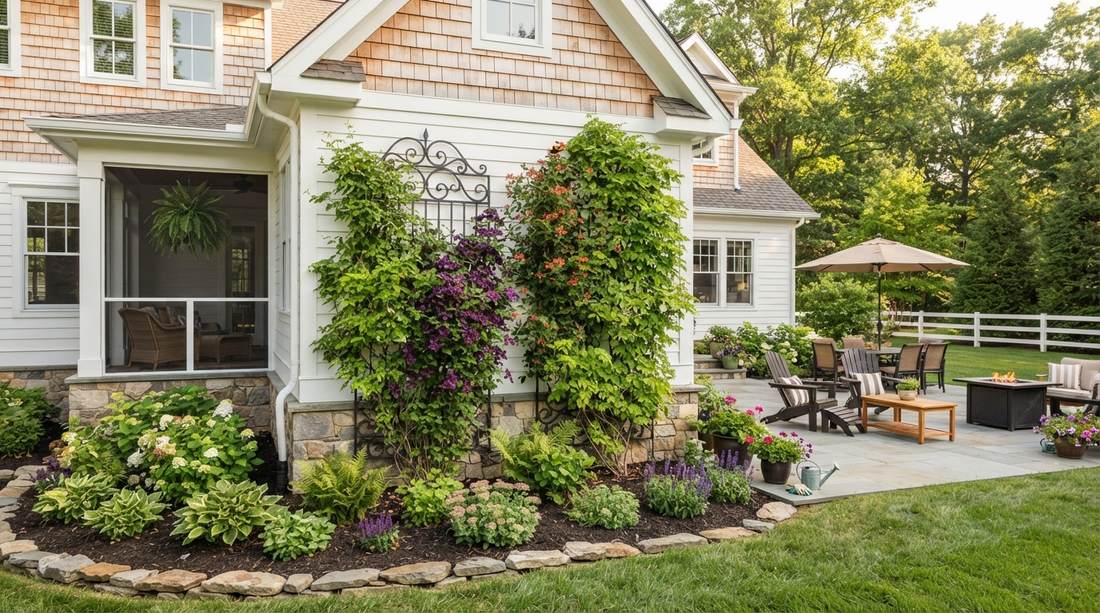
Transforming bare walls with climbing plants zone 5 instantly delivers a premium landscape aesthetic. Upgrading to weather-resistant trellises and smart root protection guarantees aggressive, gorgeous growth even at -20°F. Grab these exact planting layouts below.
Design Snapshot | Key Principles
- Hardiness Verification: Zone 5 plants survive winter lows of -20°F to -10°F, requiring roots protected by mulch and stems that tolerate freeze-thaw cycles
- Support Structure: Match vine climbing method to structure—twining vines need poles or arbors while clinging types scale walls independently
- Growth Habit: Select vigorous growers for quick coverage or compact varieties for small spaces and containers
- Bloom Timing: Layer early-spring, summer, and fall-blooming vines for continuous color throughout the growing season
Classic Flowering Vines for Zone 5 Gardens
Flowering vines anchor vertical garden designs with blooms spanning spring through fall. These proven performers handle zone 5 winters while delivering color and fragrance that define cottage gardens and modern landscapes alike.
1. Large-Flowered Clematis
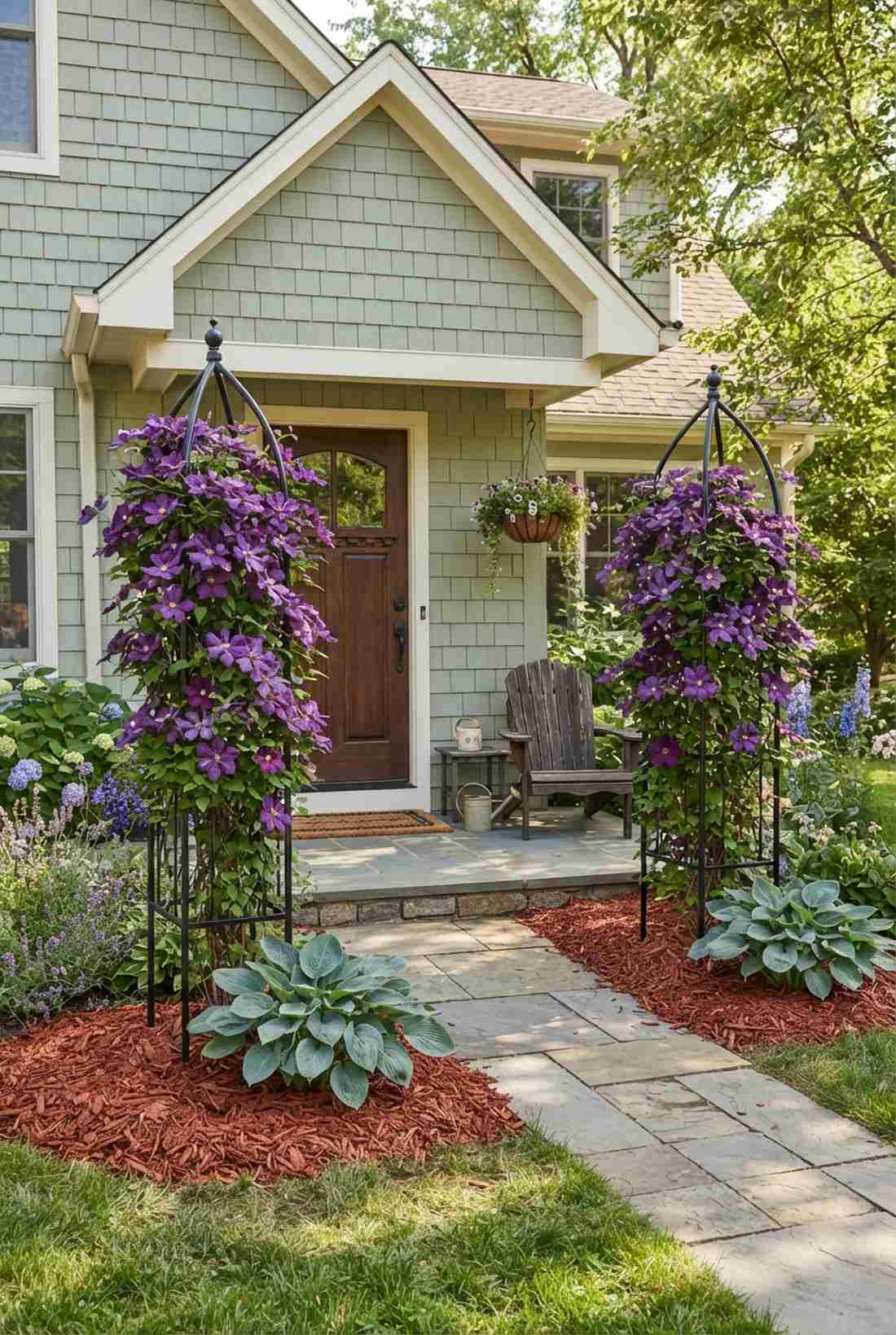
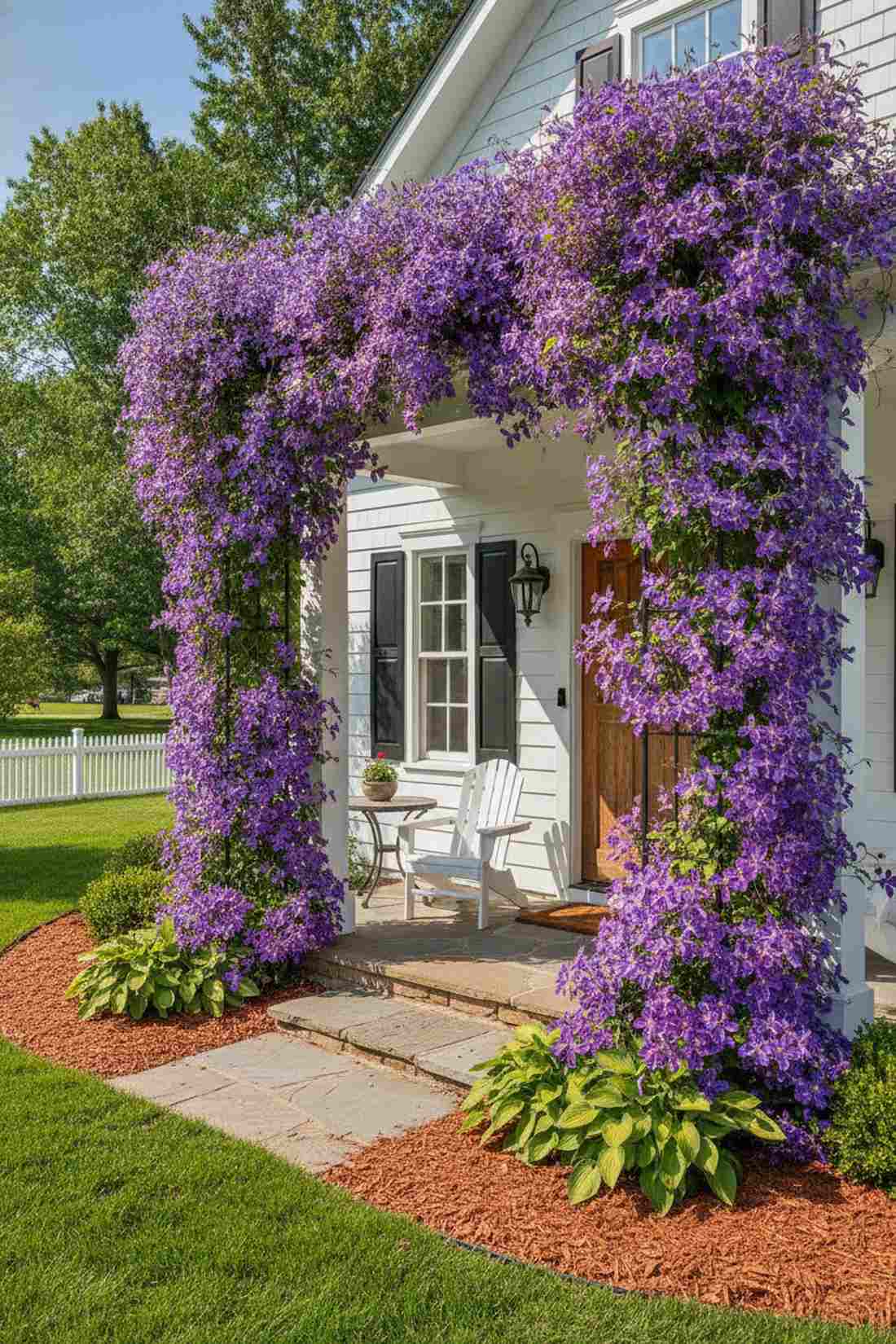
Feels exactly like a romantic hidden courtyard from an old English manor. This vibrant purple vertical garden decor works exceptionally well for framing a sunny front entryway or a shaded patio corner.
Most beginners ruin their plants by leaving roots exposed to the blazing sun, but adding a thick layer of premium cedar mulch delivers a surprisingly lush, designer-level finish. Utilizing heavy-duty metal garden obelisks guarantees the massive dinner-plate blooms don’t snap under heavy summer winds.
You can easily pull this off for around $35–$60 depending on the trellis size. Save this to your DIY weekend garden board!
- Key Materials: Bare-root Jackmanii, cedar mulch chips, powder-coated metal obelisk
- Vibe / Style: Lush cottagecore entrance
- Difficulty: Beginner-friendly quick setup
- Budget Breakdown: Root stock: $20 | Metal Obelisk: $40.
- Creator’s Tip: Plant a low-growing hosta directly in front of the base to provide natural, cooling shade for the roots.
- Smart Sourcing: Pre-cut cedar bark mulch (bulk pack) and a rust-proof metal climbing obelisk kit.
2. Trumpet Vine (Campsis radicans)
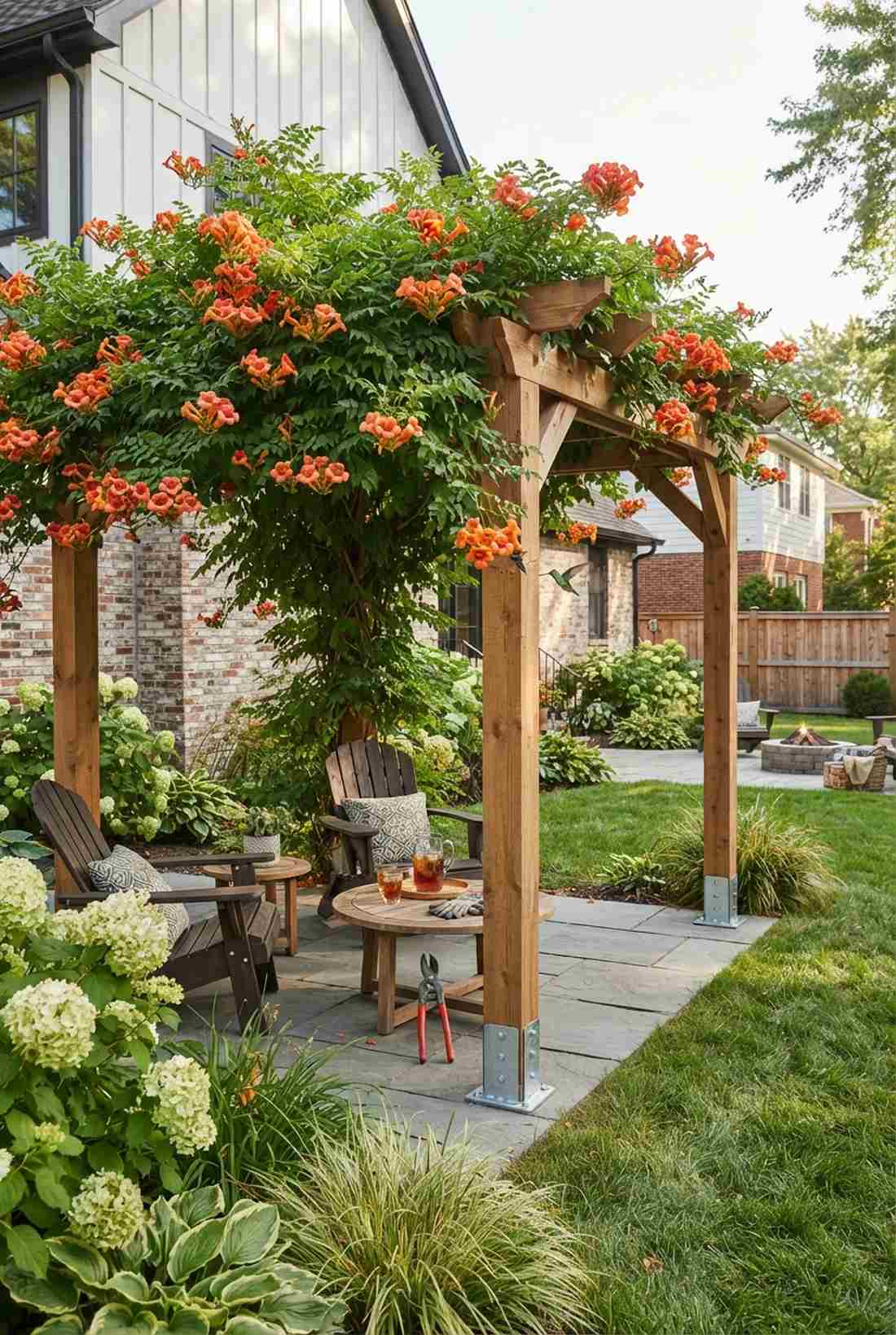
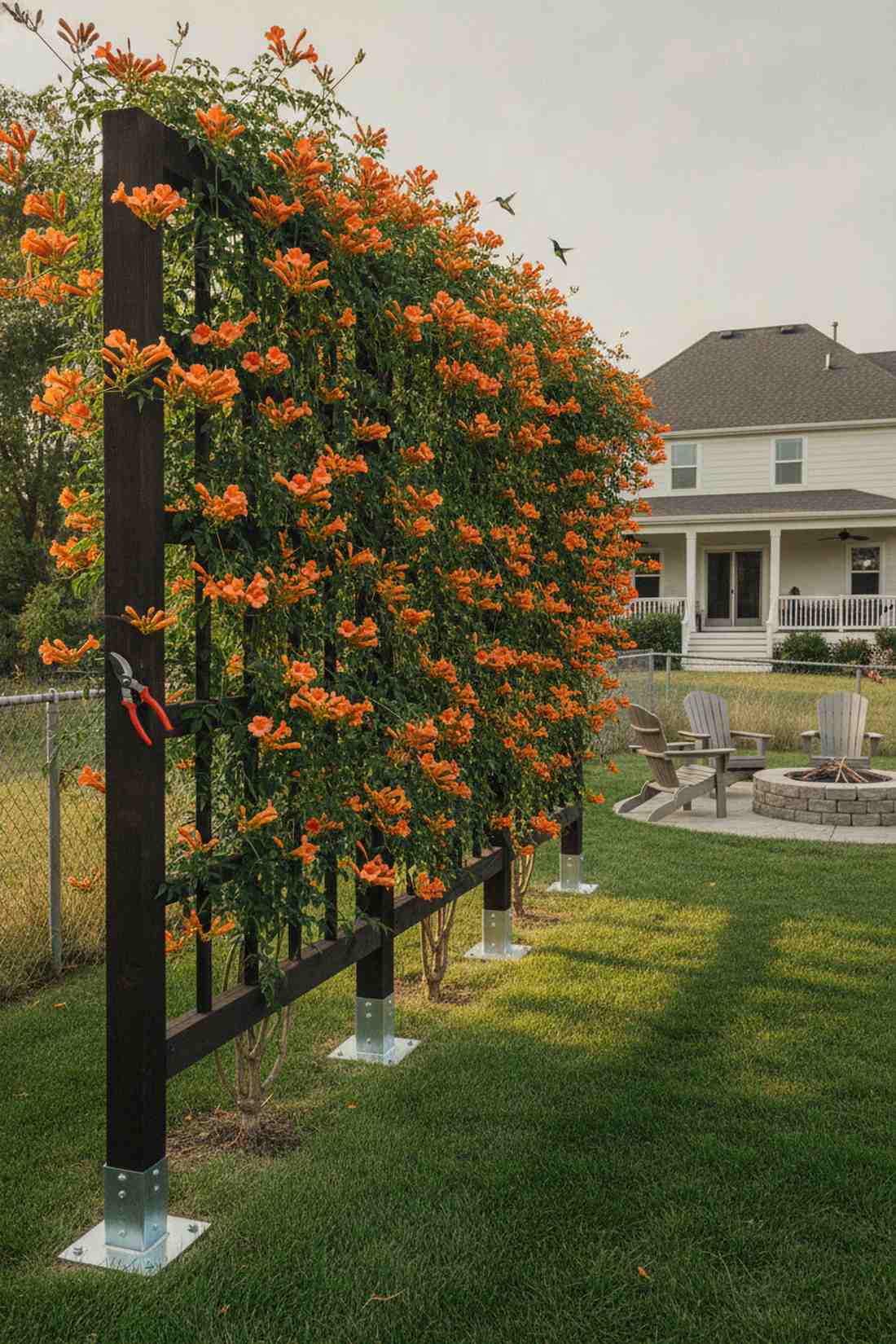
Radiates the wild energy of an untamed tropical oasis right in the middle of the suburbs. This bold orange privacy screen idea is perfect for concealing ugly chain-link fences or deteriorating brick walls.
Amateurs often plant these near delicate siding, resulting in structural nightmare repairs down the line. Installing independent commercial-grade pergola brackets creates a standalone visual masterpiece that looks far more expensive than it is.
Expect to spend roughly $45–$70 to get the foundational hardware right. It’s a fast upgrade that completely changes the backyard vibe.
- Key Materials: Flava trumpet vine, standalone timber posts, heavy-duty structural anchors
- Vibe / Style: Vibrant hummingbird haven
- Difficulty: Intermediate structural build
- Budget Breakdown: Hardware anchors: $30 | Vine starter: $15.
- Creator’s Tip: Keep this aggressive grower far away from your rooflines and gutters to avoid unwanted intrusion.
- Smart Sourcing: Galvanized steel pergola anchor kits and heavy-duty pruning shears (ergonomic set).
3. Climbing Honeysuckle (Lonicera)
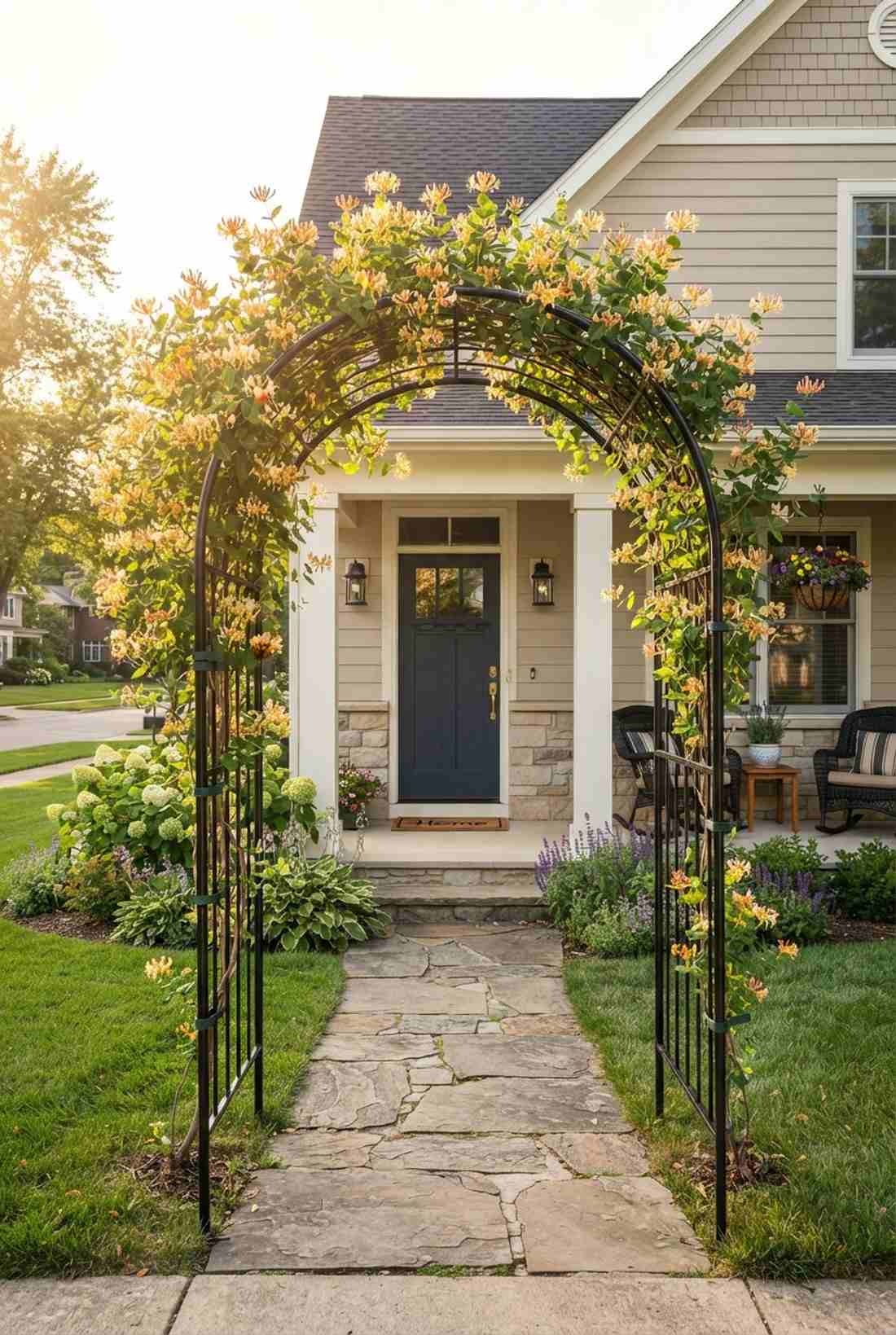
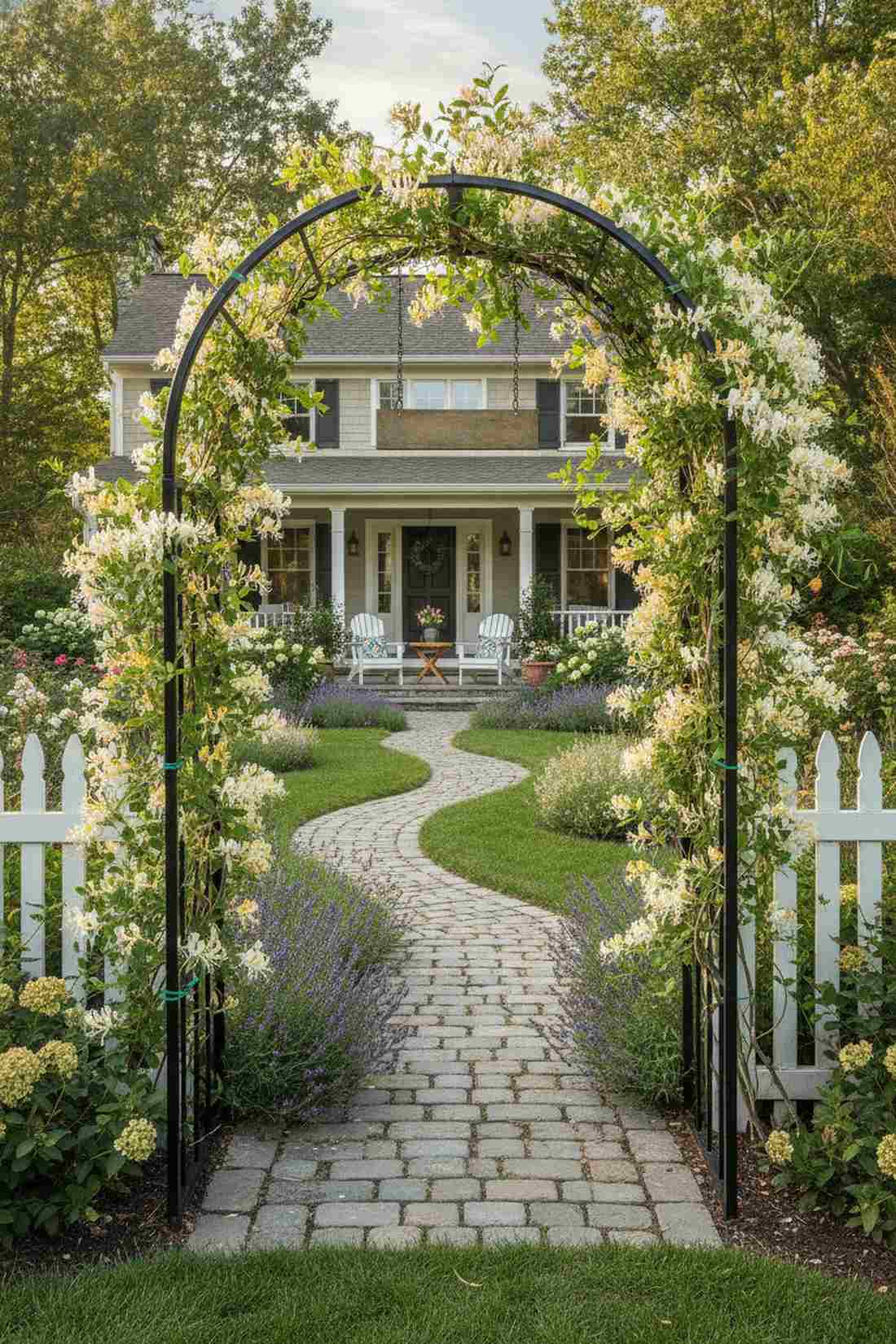
Breathes a sweet, nostalgic fragrance into the air that feels like a warm summer evening at a countryside retreat. Using fragrant floral archway concepts over a garden gate sets an unforgettable first impression for guests.
Forget standard wooden stakes; wrapping these twining stems around a sleek black iron frame gives a designer-level contrast that pops immediately. Integrating flexible silicone plant ties ensures you train the vines perfectly without bruising the delicate early-spring growth.
A beautiful arched display runs about $50–$80 total. Pin this if you’re planning a front yard curb appeal upgrade!
- Key Materials: Scentsation honeysuckle, wrought iron arch, silicone tie ribbons
- Vibe / Style: Sweet-scented classic charm
- Difficulty: Easy weekend afternoon
- Budget Breakdown: Arch structure: $50 | Plant ties: $10.
- Creator’s Tip: Prune exactly after the first major bloom flush to trigger a massive secondary wave of flowers in the fall.
- Smart Sourcing: UV-coated reusable plant ties (bulk pack) and a rust-resistant tubular iron arch kit.
4. Climbing Roses for Zone 5
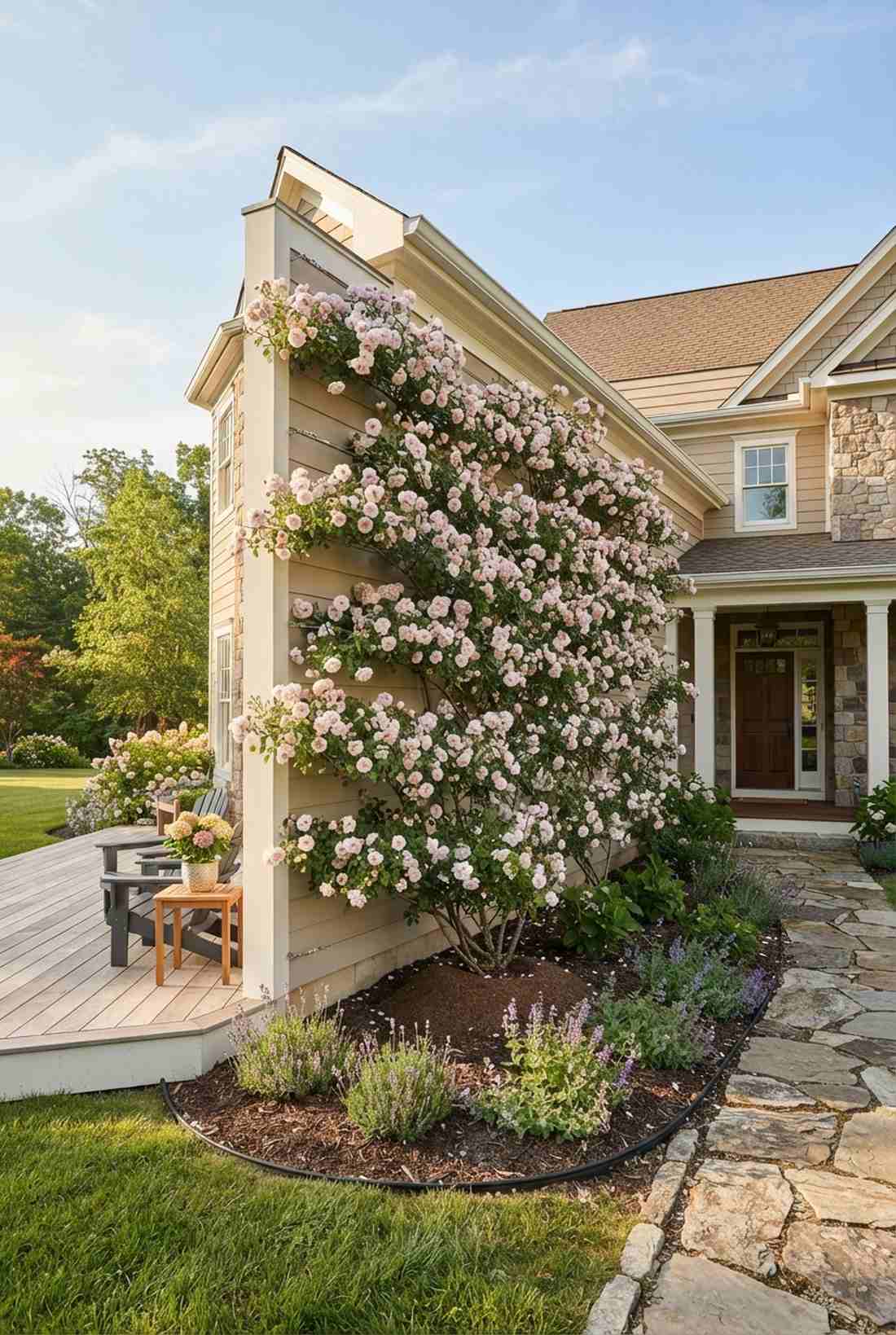
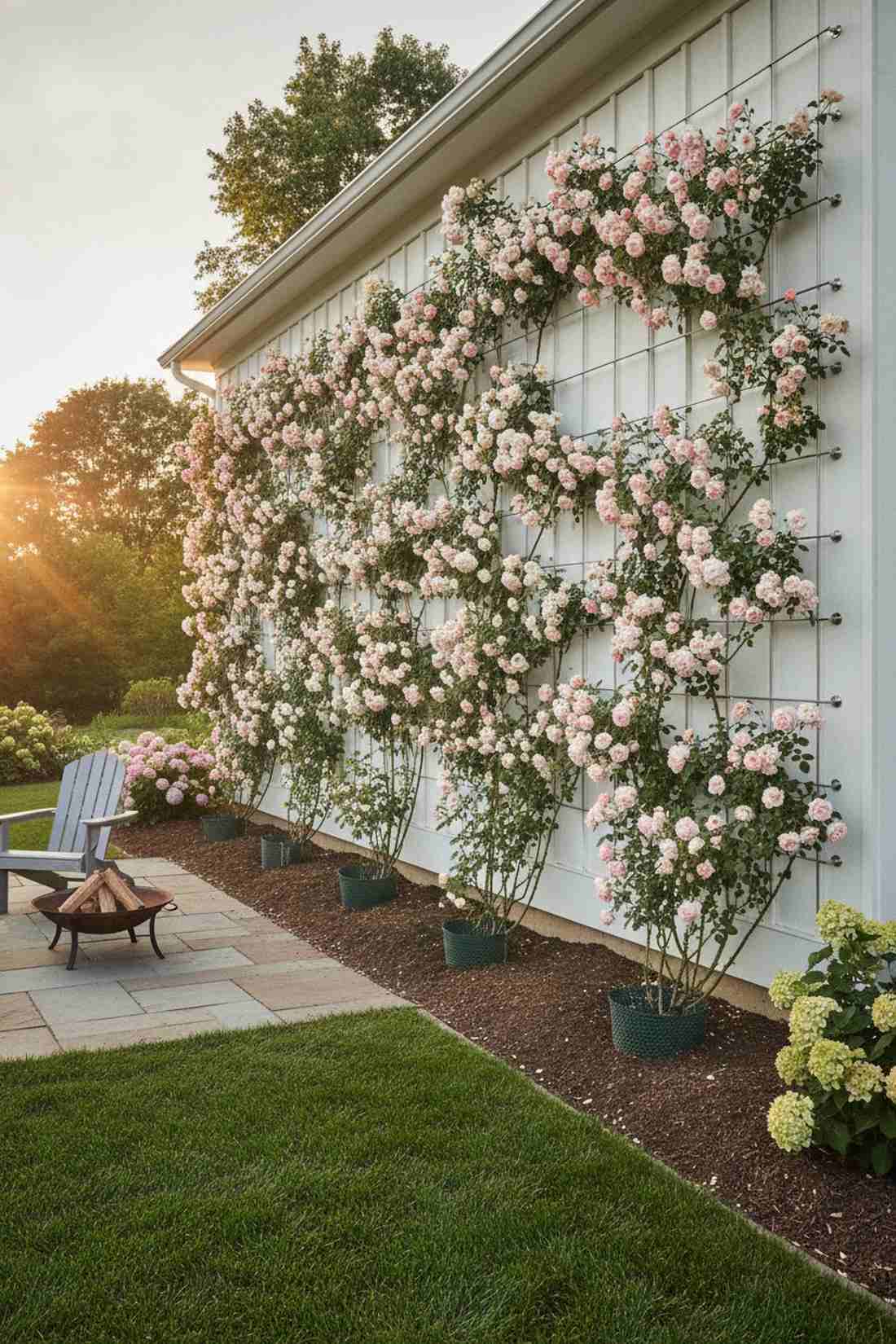
Straight out of a fairy tale book where roses cascade endlessly over stone walls. Setting up a heritage rose wall display instantly elevates a blank garage side into a premium focal point.
Many homeowners skip winterizing, but mounding up the base with premium soil protection delivers an incredibly resilient, high-yield plant every single spring. Securing the canes horizontally using a stainless steel wire trellis system completely maximizes bloom production over typical vertical wrapping.
You can construct the wire grid and plant base for under $90. Highly recommended for a high-value real estate boost.
- Key Materials: New Dawn rose bush, stainless steel eye hooks, tension wire
- Vibe / Style: Elegant architectural romance
- Difficulty: Intermediate training required
- Budget Breakdown: Wire grid kit: $40 | Bare-root rose: $35.
- Creator’s Tip: Arching the main canes to a 45-degree angle forces lateral shoots to grow upwards, doubling your total flowers.
- Smart Sourcing: Stainless steel cross-wire trellis kits and weather-proof rose winterizing collars.
This next setup is ridiculously cheap but looks like a $500 custom landscape display…
5. Sweet Autumn Clematis (Clematis terniflora)
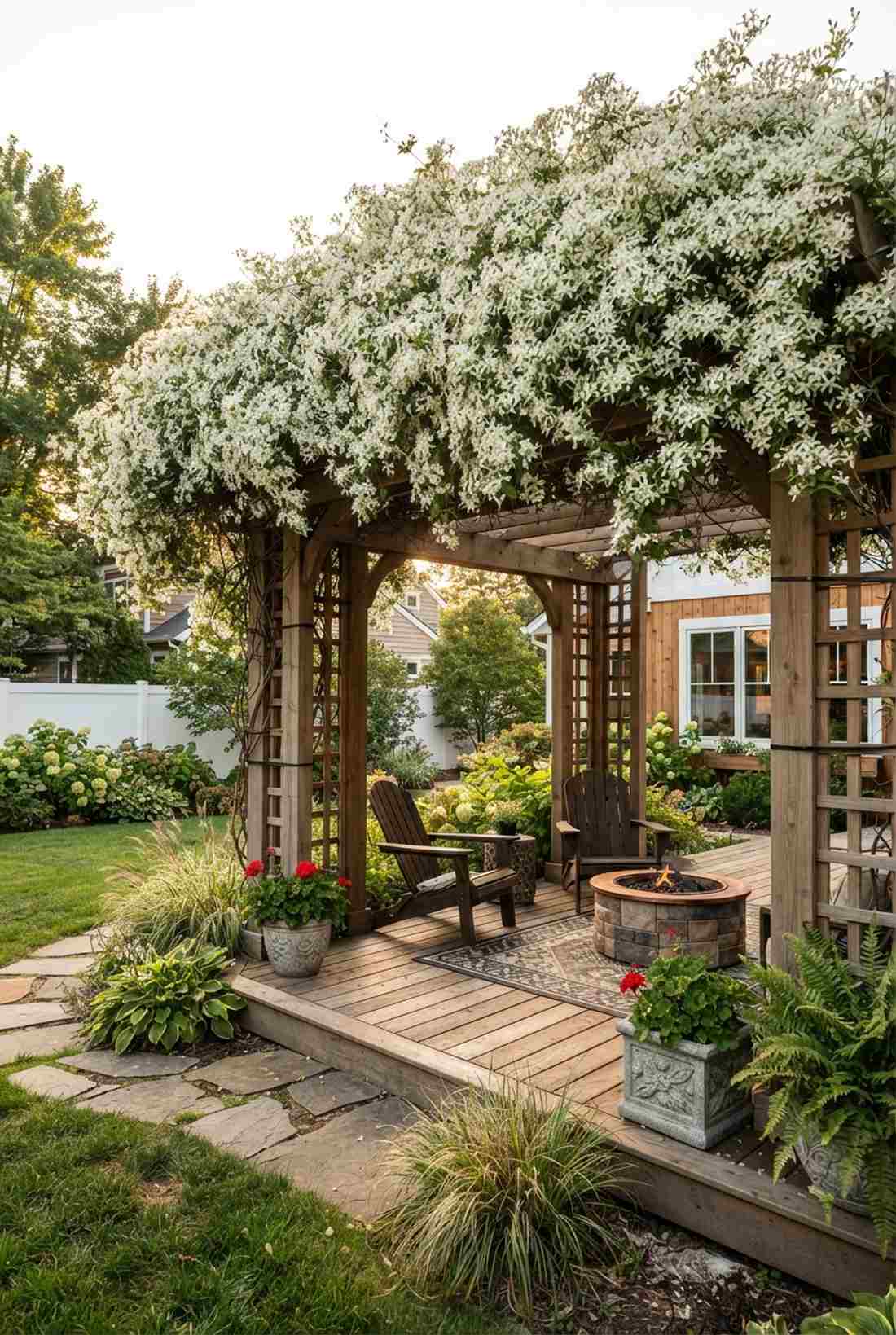
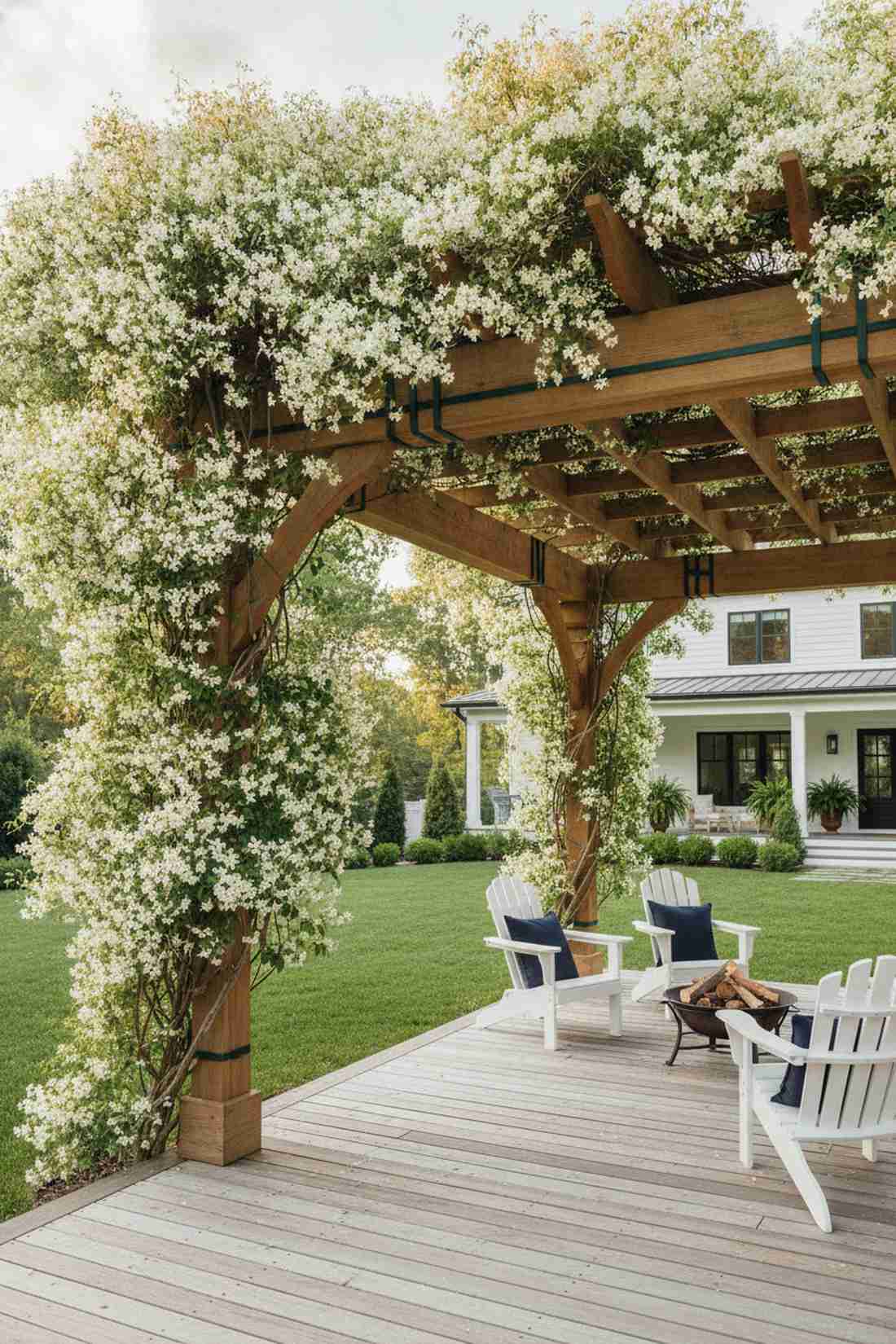
Creates an unbelievable cloud-like texture that feels like fresh snow resting on green foliage in late summer. This white floral canopy idea is an absolute show-stopper for dressing up sturdy wooden pergolas.
While basic netting snaps under the mature weight, utilizing an interlocking timber lattice creates a bulletproof structure that looks incredibly high-end. Sourcing robust outdoor structural adhesive ties prevents the heavy autumn bloom from ripping down the primary vines.
Plan for about $40–$60 for robust climbing grids. Save this exact layout for your late-summer garden planning!
- Key Materials: Sweet autumn starter plant, heavy-duty timber lattice, masonry screws
- Vibe / Style: Dreamy late-summer canopy
- Difficulty: Easy but requires strong supports
- Budget Breakdown: Lattice panels: $40 | Vine: $20.
- Creator’s Tip: Chop the entire vine down to ground level in late winter; the vigorous spring regrowth is practically invincible.
- Smart Sourcing: Pre-treated cedar lattice panels and heavy-duty zip ties (UV-resistant bulk pack).
Fruit-Bearing Climbers for Edible Landscapes
Productive vines combine ornamental value with edible harvests, maximizing garden space in zone 5 climates. These dual-purpose plants require cross-pollination or specific varieties for fruit set.
6. Arctic Beauty Kiwi (Actinidia kolomikta)
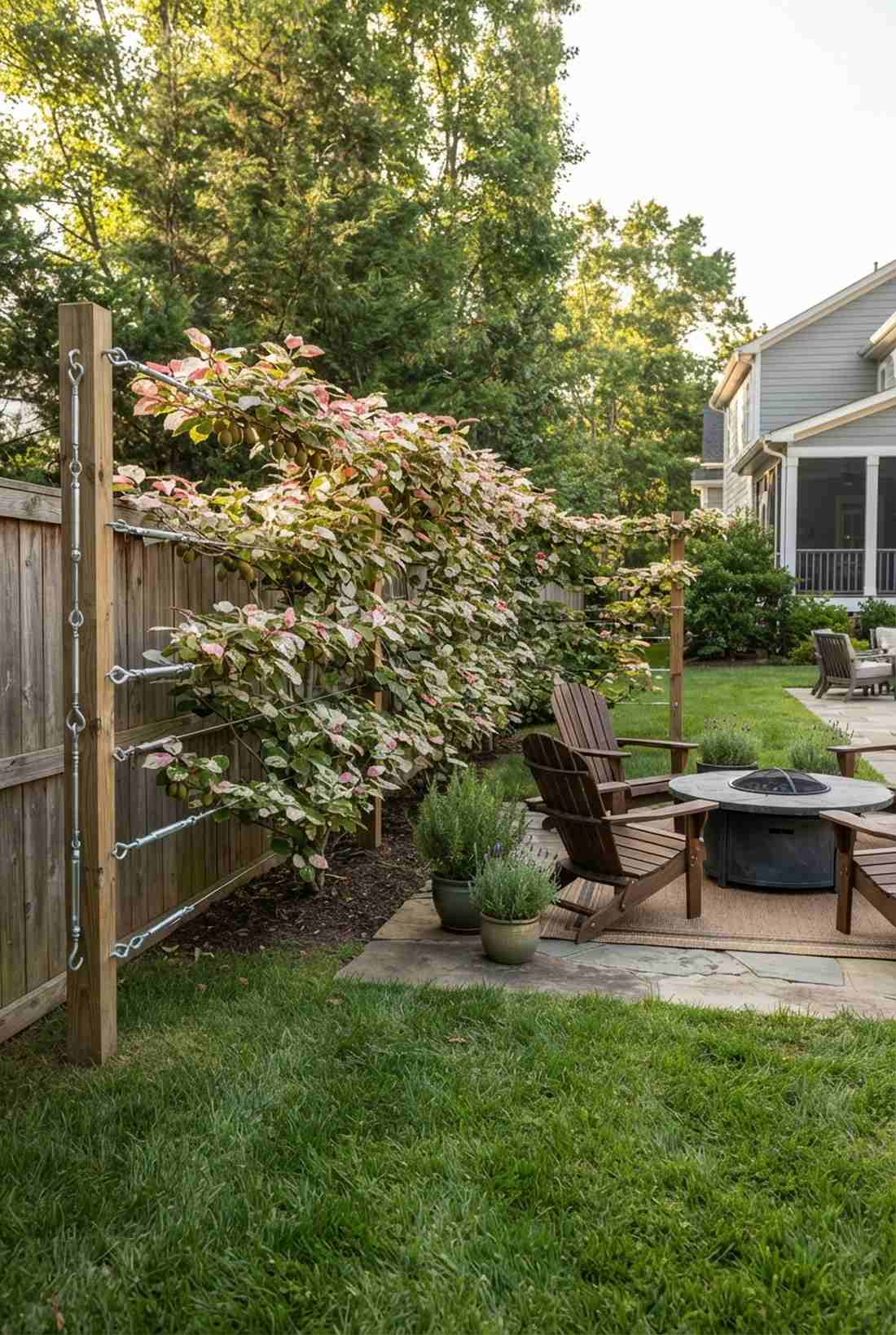
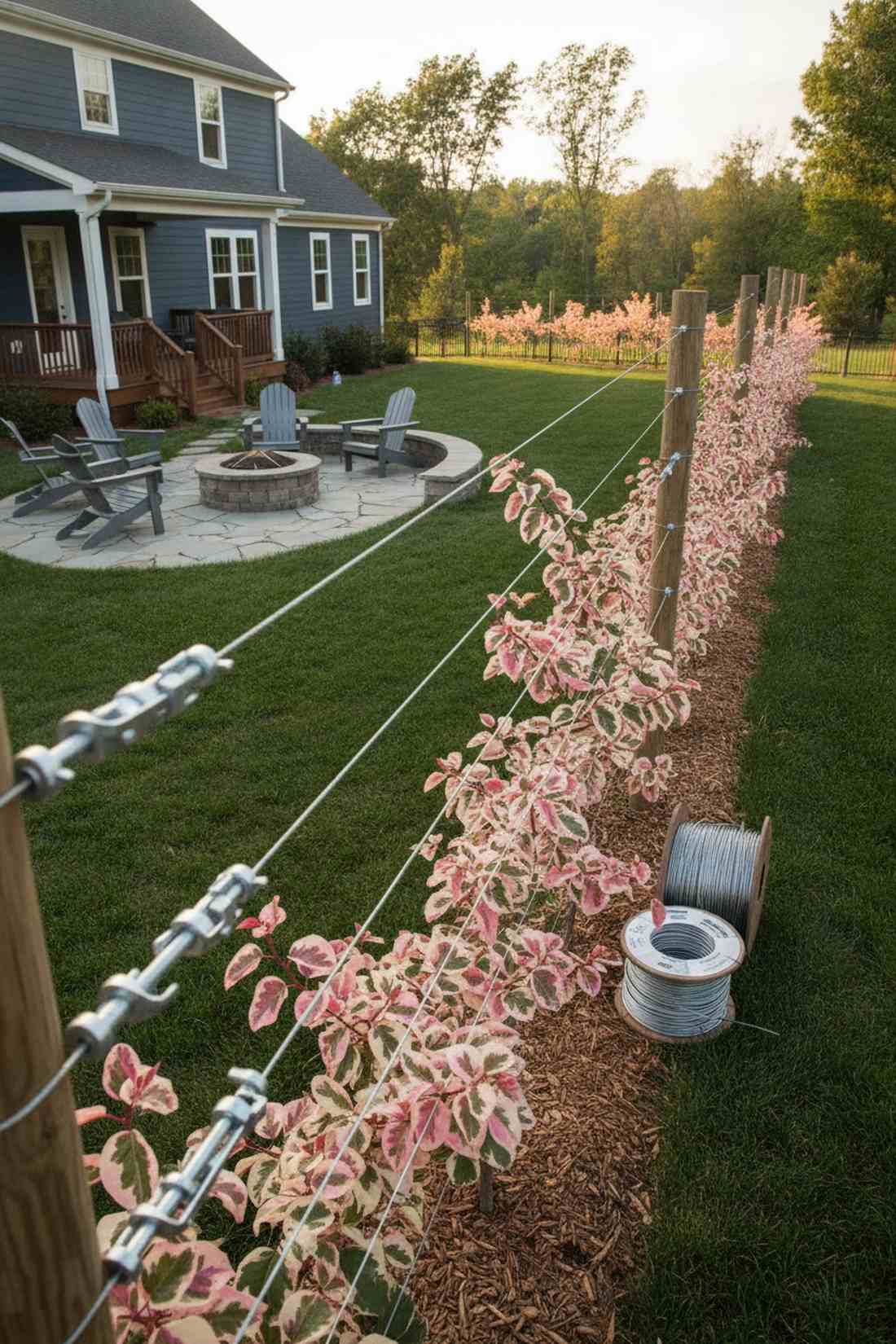
Delivers a striking splash of pink and white foliage that feels like someone painted a watercolor masterpiece directly onto your yard. Incorporating this variegated edible landscape decor works brilliantly along a sunny southern property line.
Most edible setups look messy, but strictly training these vines along tension wires creates a clean, vineyard-level aesthetic that blows away standard fencing. You absolutely need to utilize premium high-tensile wire spools so the heavy fruit clusters don’t drag the entire canopy into the dirt.
Setting up the wire system and plants costs around $75–$120. A fantastic dual-purpose weekend investment!
- Key Materials: 1 Male / 3 Female Kiwi plants, 12-gauge tension wire, turnbuckles
- Vibe / Style: Exotic practical orchard
- Difficulty: Intermediate structural setup
- Budget Breakdown: Turnbuckle hardware: $30 | Plant bundle: $60.
- Creator’s Tip: Make sure you actually buy at least one male plant for every group of females, or you will get exactly zero fruit.
- Smart Sourcing: Galvanized turnbuckle tension kits and professional orchard wire (bulk roll).
7. Hardy Kiwi (Actinidia arguta)
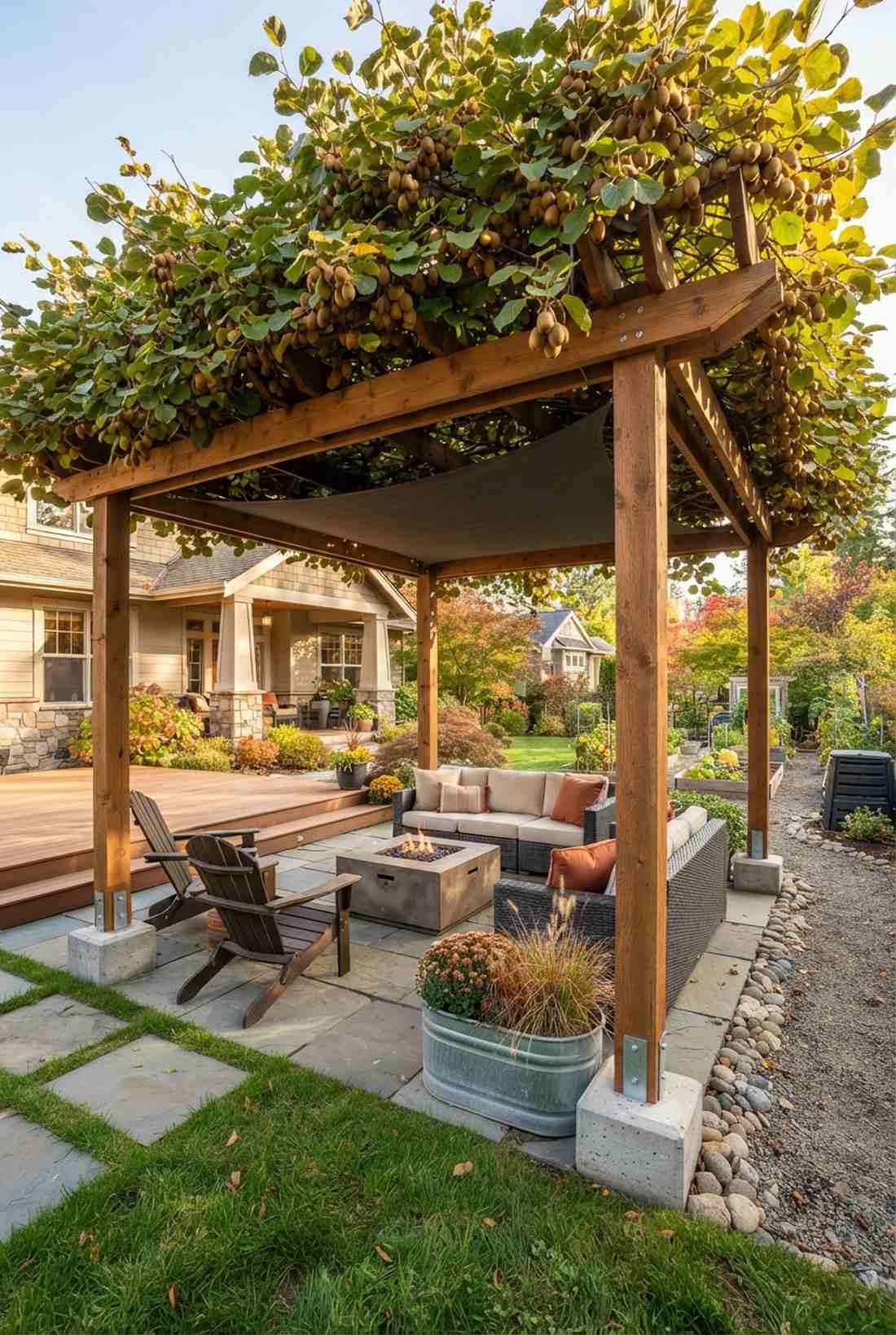
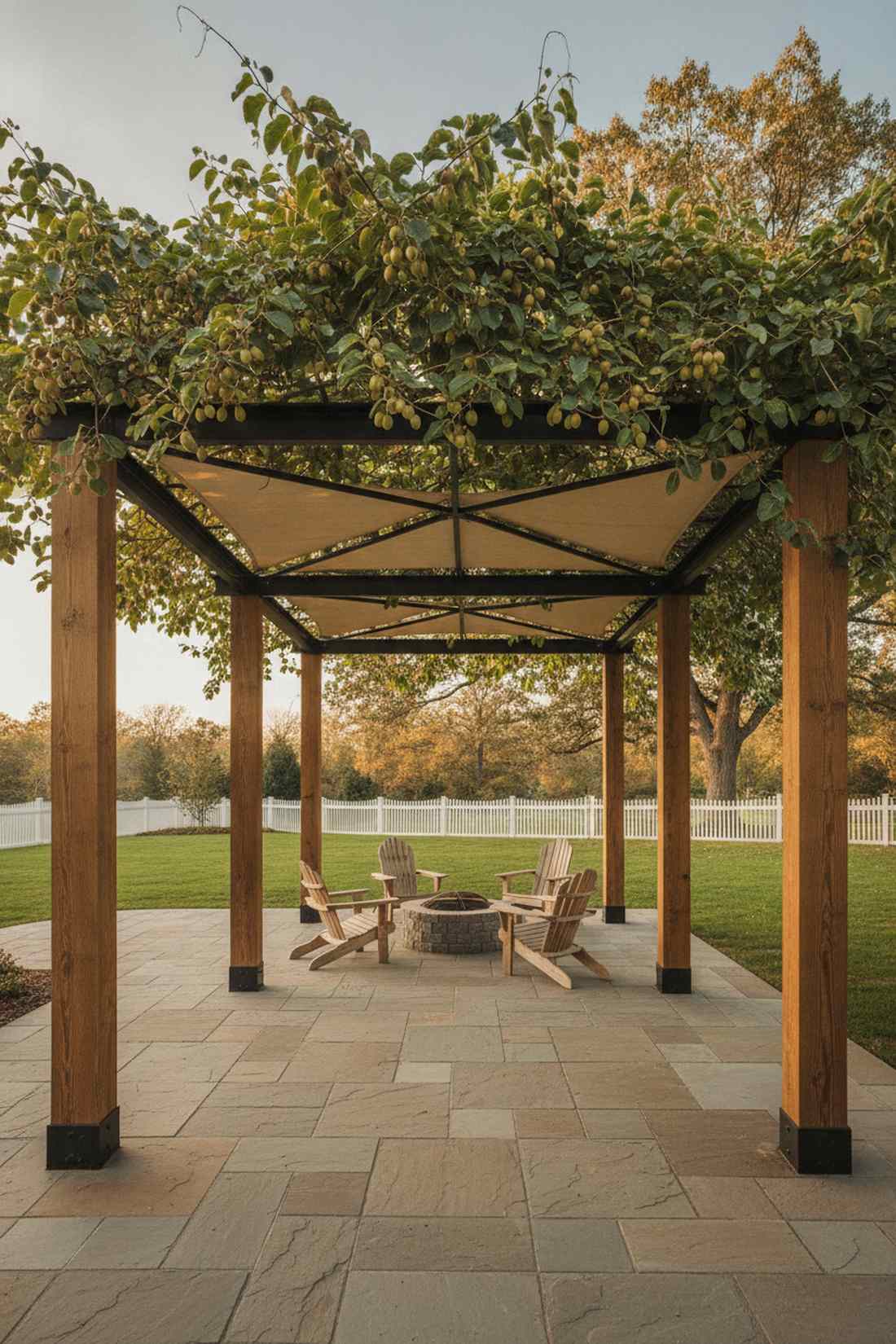
Provides a dense, tropical-feeling canopy that rewards you with hyper-sweet, bite-sized fruits in the crisp autumn air. Setting up a heavy-fruiting pergola shade cover turns an unusable hot patio into a cool, delicious retreat.
People severely underestimate the sheer weight of these mature vines, but anchoring your posts with deep concrete footings ensures a permanent, legacy-level garden feature. Upgrading to a commercial-grade shade sail framework underneath gives it a modern architectural twist while supporting the massive growth.
The heavy-duty framework might run $150–$250, but it lasts a lifetime. Pin this for your ultimate backyard homestead board!
- Key Materials: Arguta starters, 6×6 treated posts, concrete footing mix
- Vibe / Style: Tropical homestead canopy
- Difficulty: Advanced heavy construction
- Budget Breakdown: Concrete & Posts: $150 | Vines: $50.
- Creator’s Tip: Prune out 70% of the previous year’s woody growth every late winter; this forces explosive new fruiting spurs.
- Smart Sourcing: Fast-setting concrete mix kits and heavy-duty post anchor base plates.
8. American Bittersweet (Celastrus scandens)
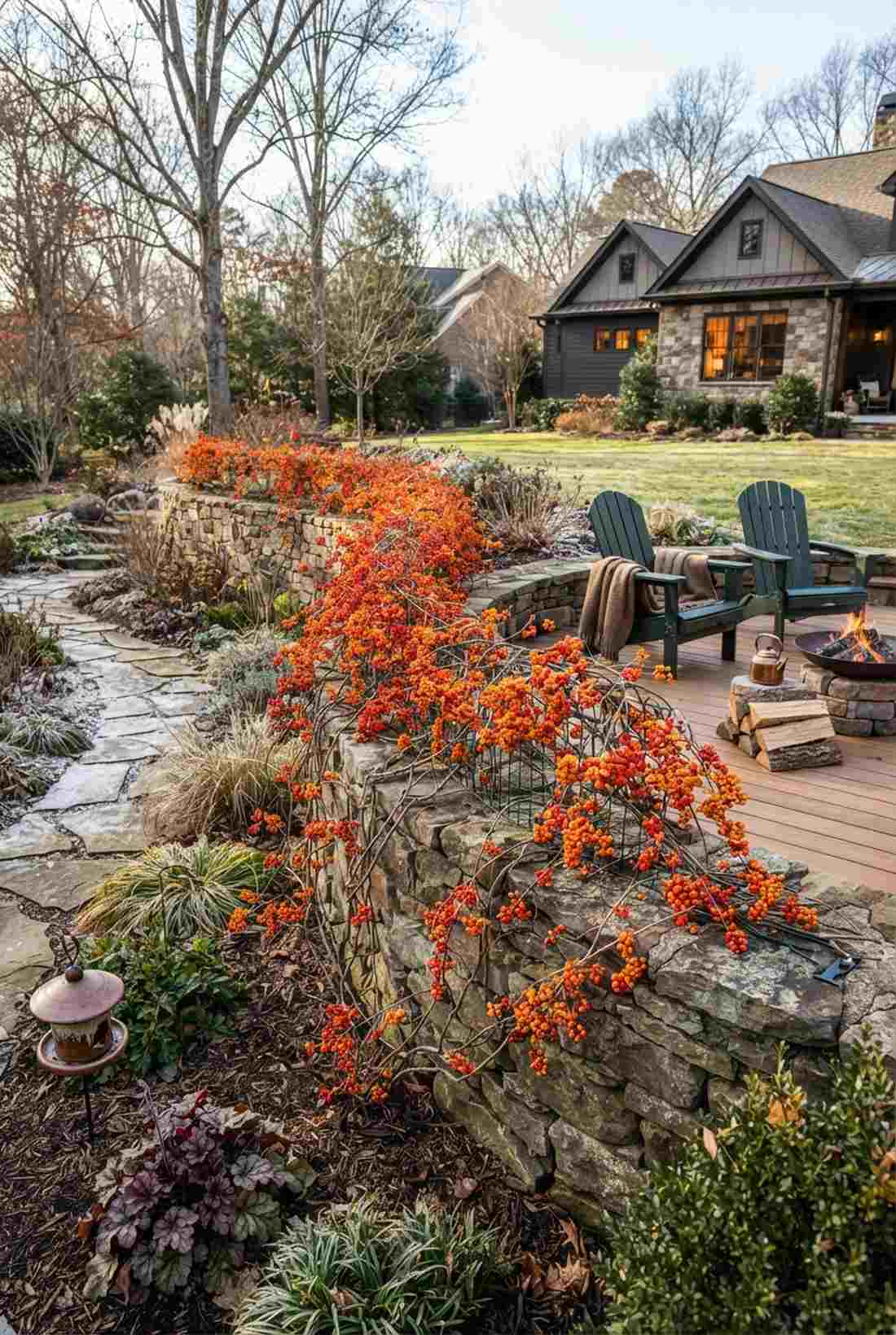
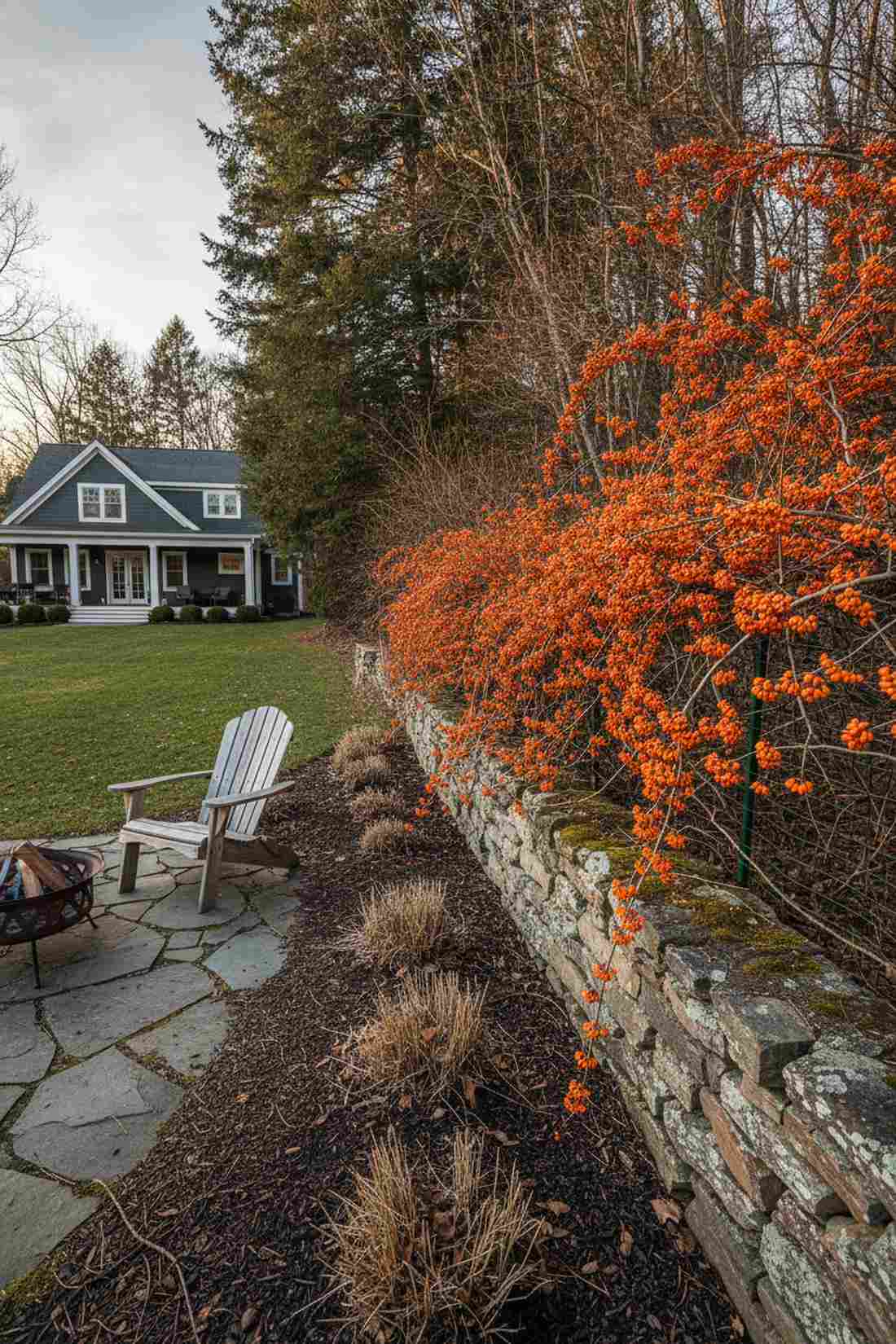
Looks like a rustic, festive explosion of bright orange berries that brings a bleak winter garden completely back to life. A native winter berry vine installation works magic draped over an old stone retaining wall.
Far too many people accidentally plant the highly invasive Oriental version, but securing the native American species guarantees a gorgeous, eco-friendly display that supports local birds. Installing a subtle green powder-coated wire mesh behind it provides invisible support that lets the berries take center stage.
You can get this winter-interest feature going for just $30–$50. It’s a perfect, low-effort weekend project.
- Key Materials: Native bittersweet starters, welded wire mesh, landscape staples
- Vibe / Style: Rustic winter woodland
- Difficulty: Very easy native planting
- Budget Breakdown: Wire mesh: $20 | Plants: $25.
- Creator’s Tip: Always check that the flowers emerge from the leaf axils, not the stem tips, to guarantee you have the non-invasive native variety.
- Smart Sourcing: Green vinyl-coated welded wire fencing (roll) and heavy-duty steel landscape staples (bulk pack).
You are probably making a huge mistake with your trellis choice… until you see the exact layout coming up next.
9. Grape Vines (Vitis)
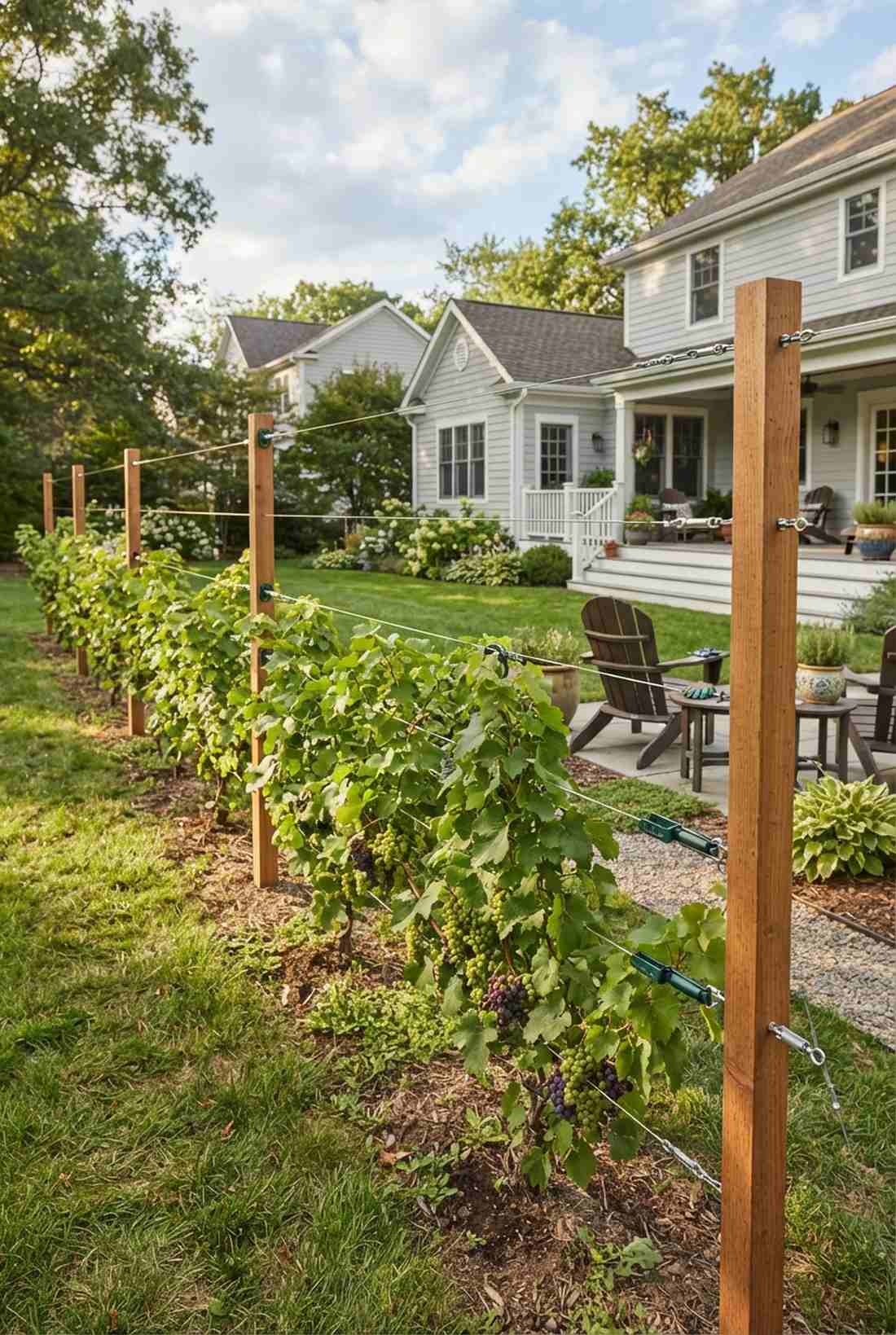
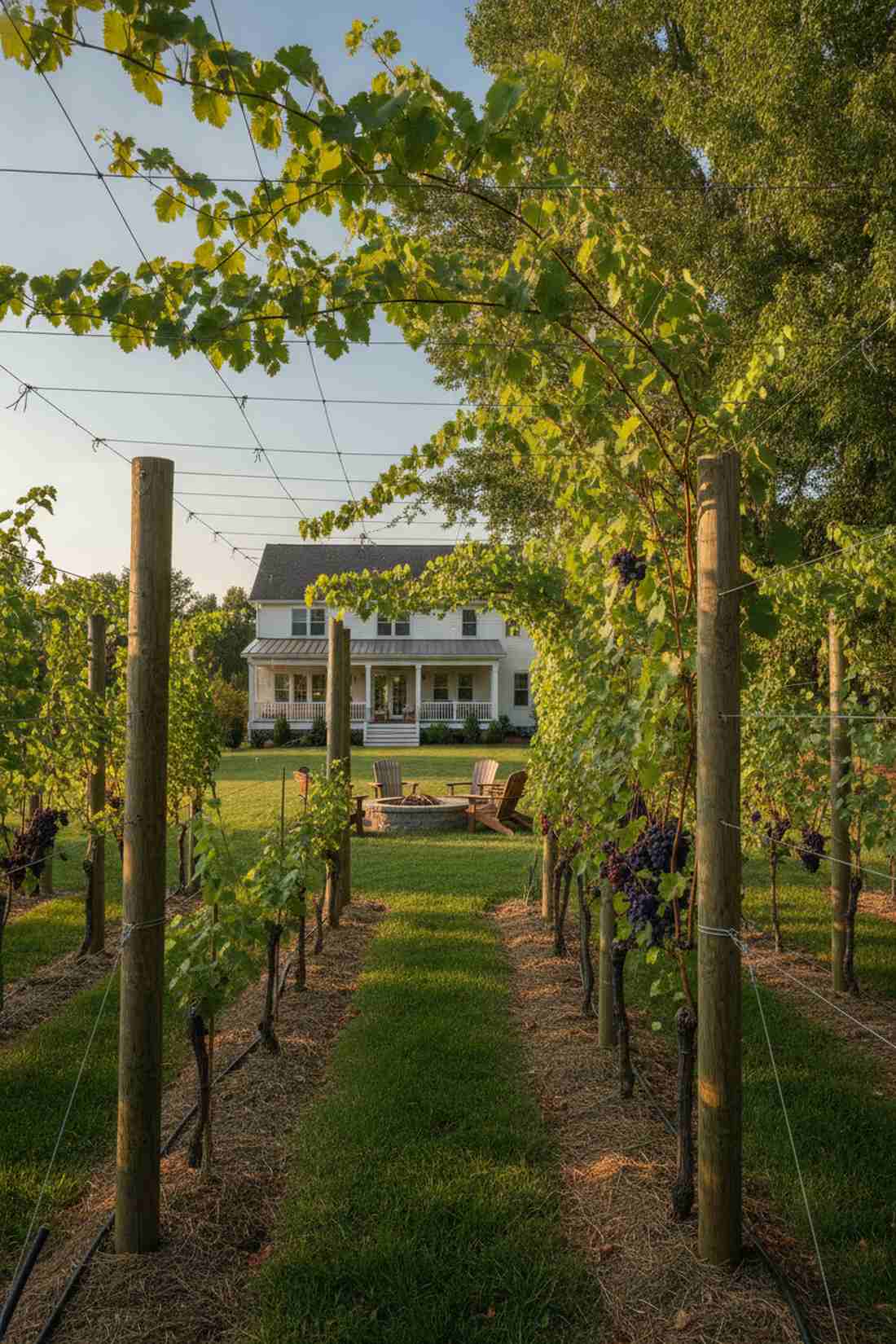
Brings the sophisticated charm of a French countryside vineyard right into a cold-climate suburban backyard. Crafting a backyard viticulture wire trellis makes harvesting your own jelly or wine grapes incredibly satisfying.
While basic string lines sag and snap by year two, implementing the four-arm Kniffen high-wire system creates an immaculate, professional-grade yield that looks wildly impressive. Sourcing specialty viticulture training clips keeps the canes perfectly spaced for maximum sun and airflow.
A professional wire setup costs around $80–$140 depending on length. Save this to your edible landscaping inspiration folder!
- Key Materials: Concord or Marquette bare-roots, high-tensile wire, inline strainers
- Vibe / Style: Elegant backyard vineyard
- Difficulty: Intermediate precision setup
- Budget Breakdown: Tension wire & strainers: $60 | Vines: $40.
- Creator’s Tip: Never skip the late winter pruning; leaving only 40-60 buds per vine prevents disease and guarantees larger, sweeter grapes.
- Smart Sourcing: Professional viticulture vine training clips (bulk pack) and heavy-duty inline wire strainers.
10. Hops (Humulus lupulus)
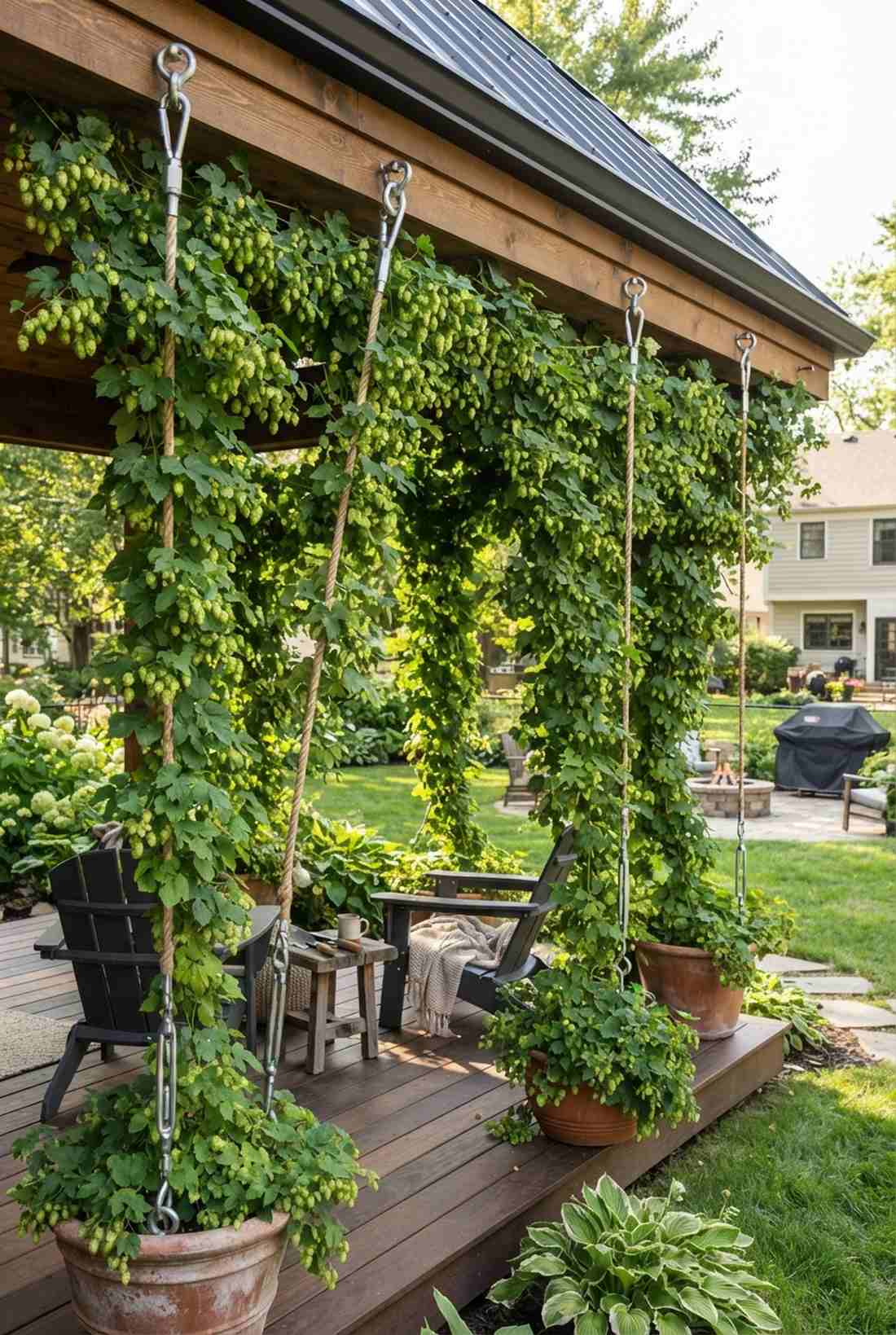
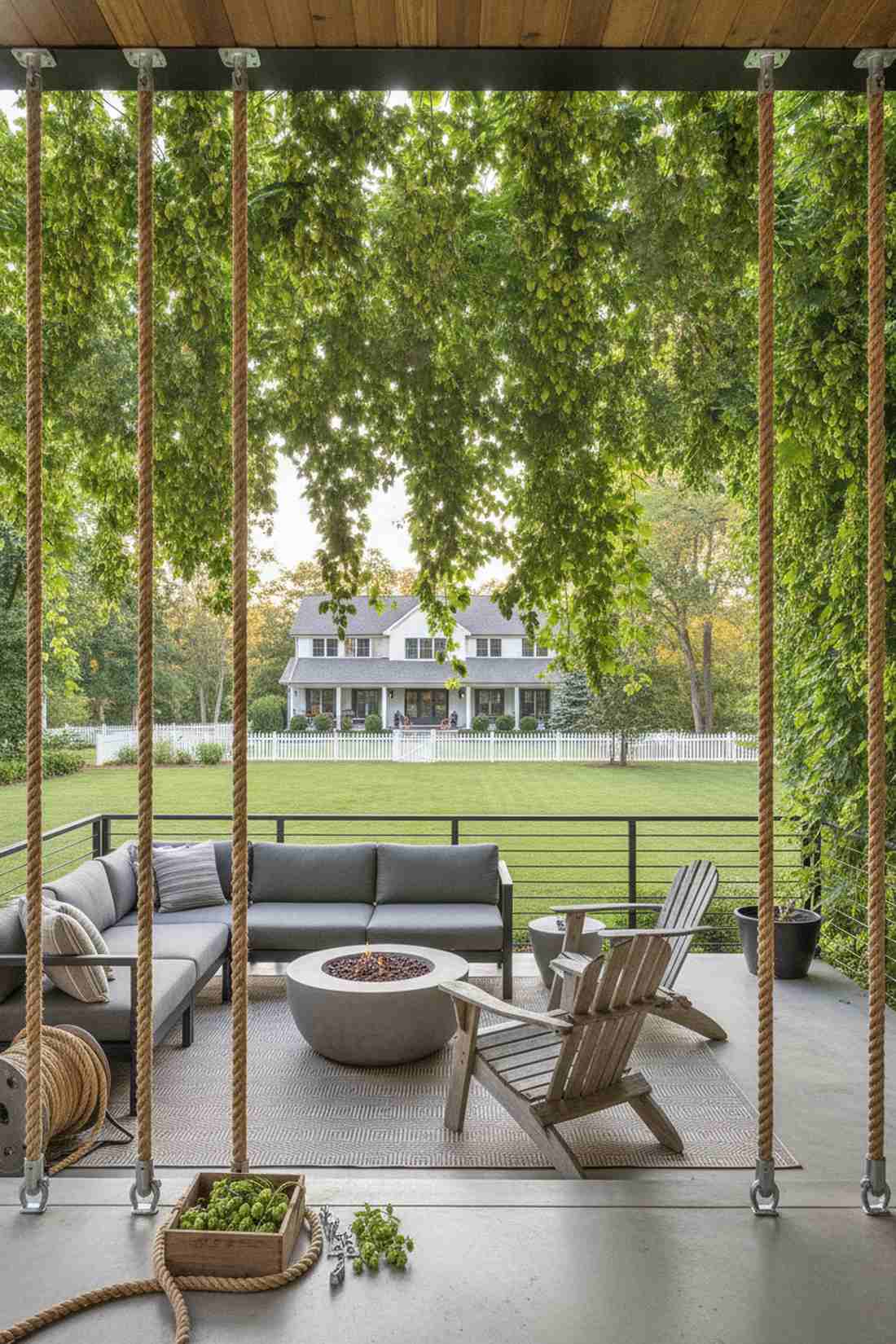
Injects an ultra-fast vertical explosion of lush green leaves and papery cones that feels like a micro-brewery patio. Using an annual vertical climbing cable kit is the ultimate hack for shading a hot summer porch.
Because hops die back fully every winter, rigid trellises are a waste of money; instead, dropping thick ropes from the roofline offers a brilliant, flexible design that looks uniquely industrial. Integrating marine-grade rigging hardware ensures the massive 25-foot vines don’t rip your gutters off during a storm.
You can set up a slick rope-drop system for about $40–$60. Highly recommended for a fast-growing privacy screen.
- Key Materials: Hop rhizomes, natural manila rope, stainless eye bolts
- Vibe / Style: Industrial modern patio
- Difficulty: Easy but fast-paced growth
- Budget Breakdown: Manila rope roll: $25 | Rhizomes: $20.
- Creator’s Tip: Train 2-3 of the strongest bines per rope in early spring and aggressively cut the rest to ground level to push maximum growth upward.
- Smart Sourcing: Thick natural manila climbing rope (bulk spool) and stainless steel marine rigging hardware kits.
💡 Must-Have Supplies for High-End Setups
To build these setups faster and ensure they last, skip the generic craft aisles and invest in the right foundational kits.
- Base & Support: Heavy-duty galvanized steel pergola brackets and tension wire kits
- Setup Tools: Professional viticulture vine clip starter kits
- Weather/Durability Protection: UV-coated silicone plant ties and protective winterizing collars
Foliage-Focused Vines for Texture and Privacy
Leaf texture and fall color drive design choices for foliage-focused climbers in zone 5. These workhorses provide year-round structure and seasonal interest without relying on bloom periods.
11. Virginia Creeper (Parthenocissus quinquefolia)
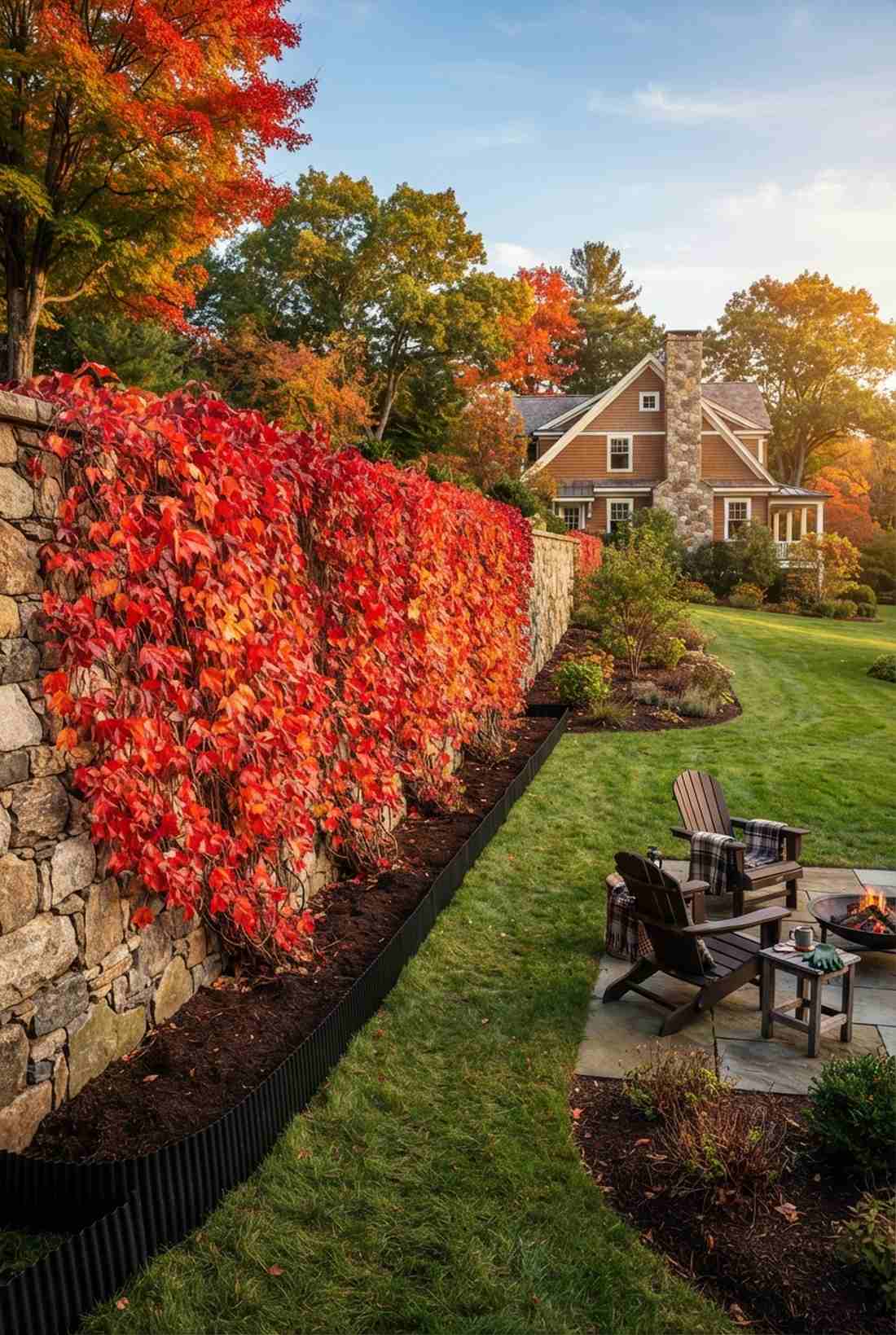
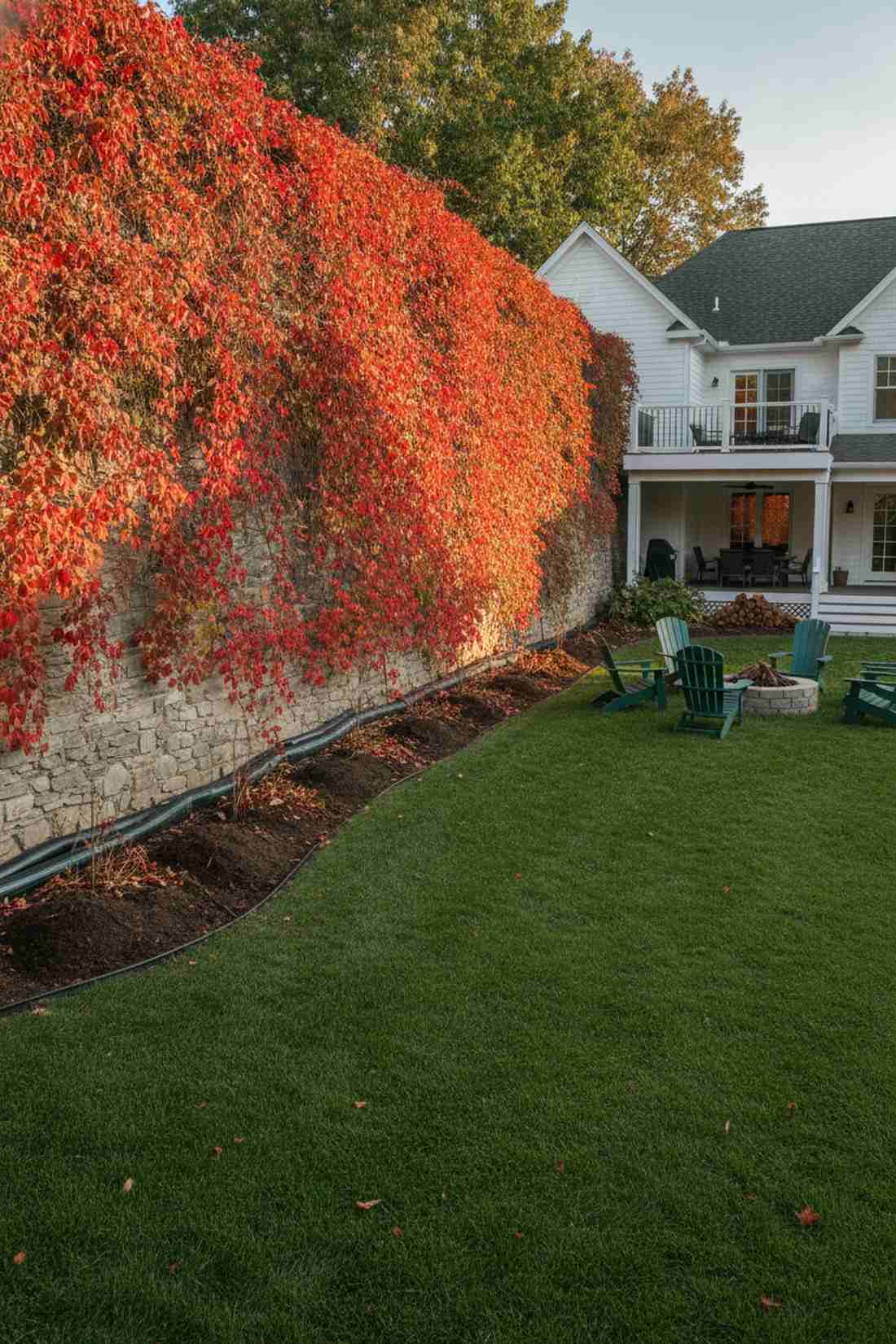
Flares up in the autumn with a brilliant, fiery scarlet that feels like a classic New England postcard. Utilizing a dense foliage privacy wall is a bulletproof way to turn a stark concrete retaining wall into a living masterpiece.
People panic about adhesive vines, but letting them dominate a completely standalone masonry or stone feature creates an upscale architectural look with zero maintenance. Snagging some heavy-duty root barrier rolls for the base trench ensures it covers the wall without invading the rest of your turf.
You can get incredible coverage started for under $25. Pin this idea for the most dramatic fall color display ever!
- Key Materials: Virginia creeper cuttings, root barrier plastic, organic compost
- Vibe / Style: Fiery autumn estate
- Difficulty: Very easy but requires boundary control
- Budget Breakdown: Root barrier: $30 | Compost: $10.
- Creator’s Tip: Only plant this against solid brick, stone, or standalone fences—never against wood siding or near gutters.
- Smart Sourcing: High-density plastic root barrier rolls and premium organic compost starter packs.
12. Boston Ivy (Parthenocissus tricuspidata)
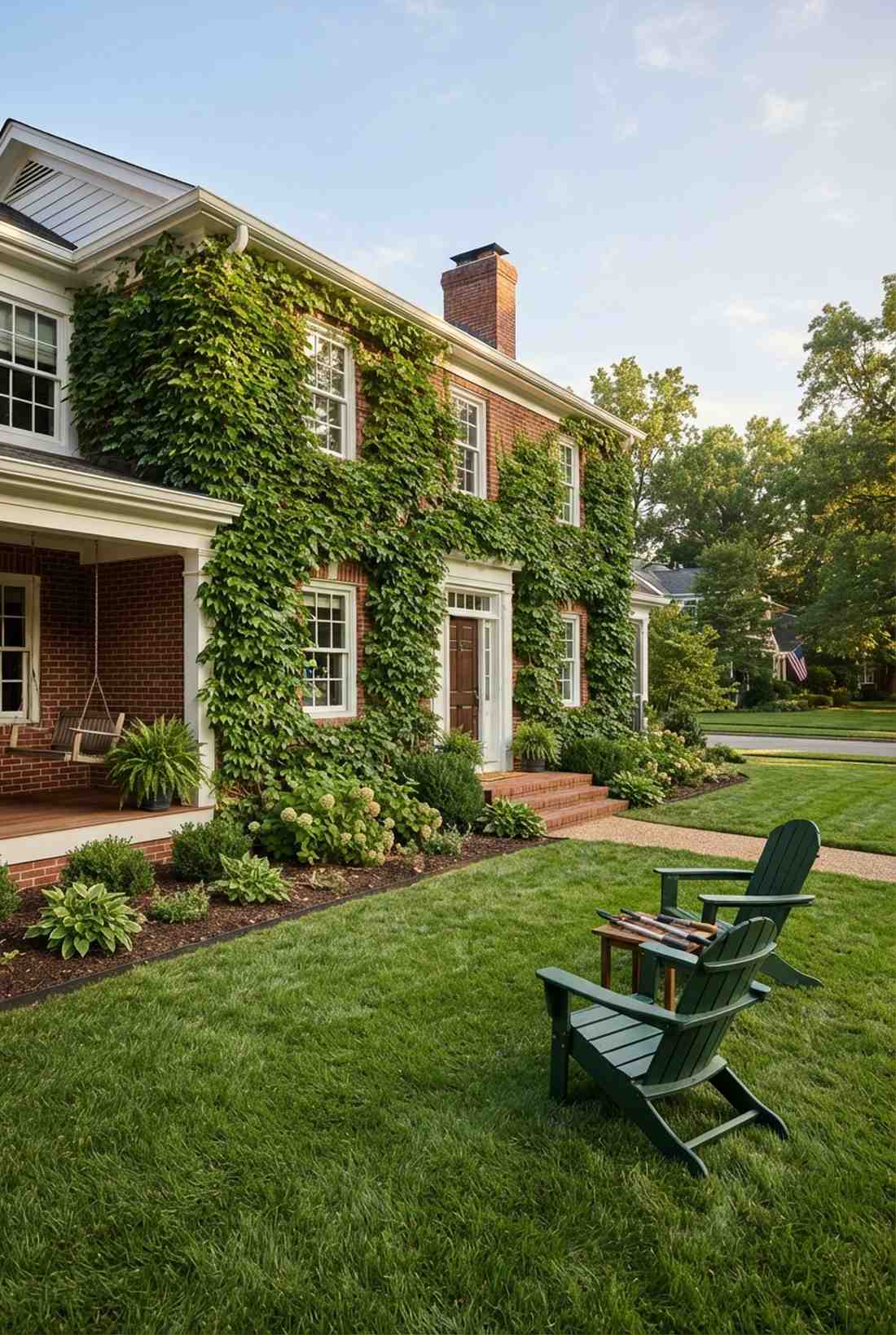
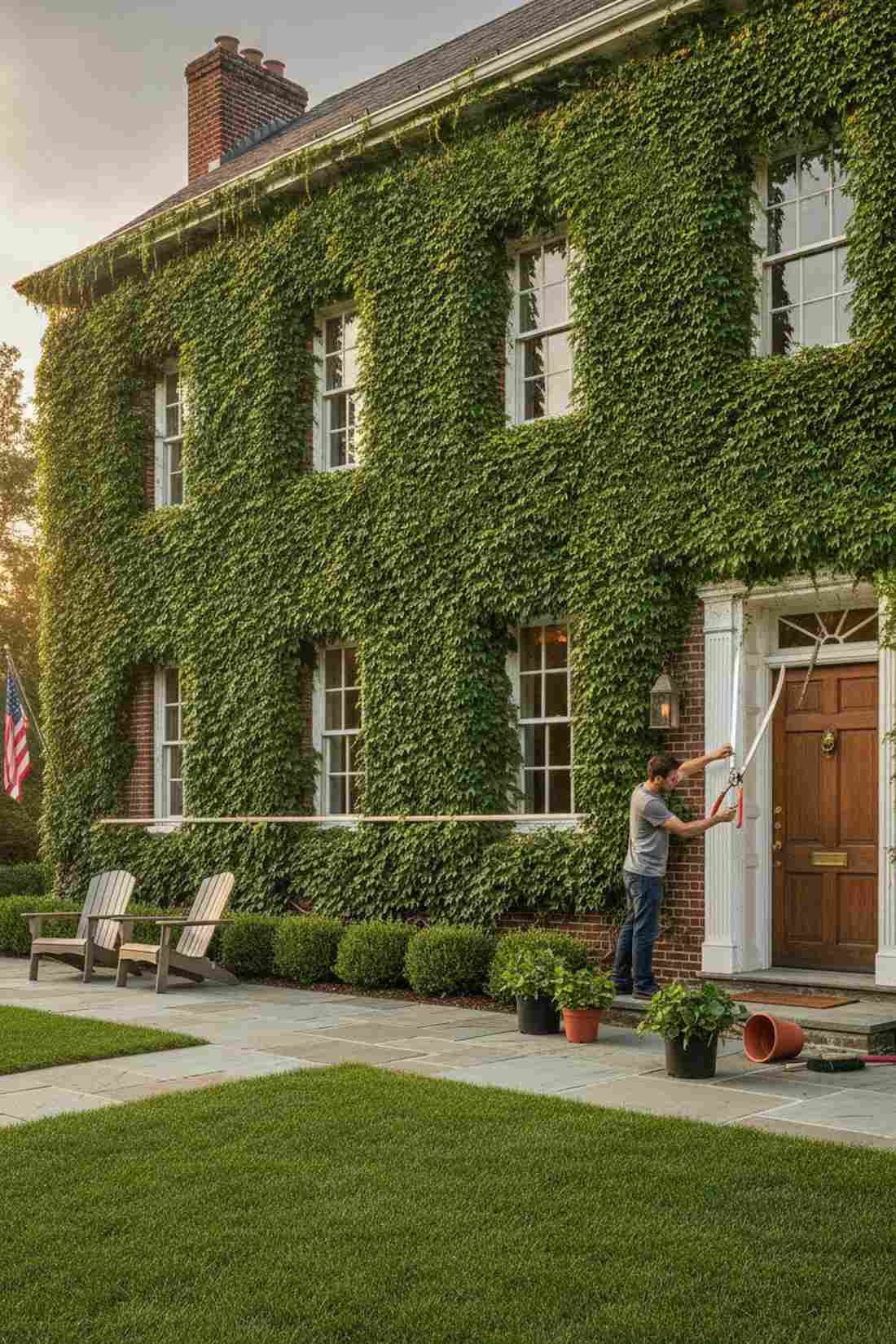
Wraps a building in a deep, glossy green that perfectly mimics the prestigious halls of an Ivy League campus. This classic brick wall ivy decor instantly adds decades of historic charm to brand new stonework.
While many fear structural damage, solid masonry actually thrives under this cooling canopy, giving your exterior a sophisticated facelift that looks incredibly expensive. Utilizing masonry wall prep cleaning kits before planting ensures the vines grip tightly without trapping harmful dirt against the mortar.
A few starter pots will only set you back $30–$40. It’s a completely hands-off upgrade that transforms a home’s exterior.
- Key Materials: Boston ivy pots, masonry brush, edge trimmers
- Vibe / Style: Prestigious historic charm
- Difficulty: Easy planting, strict seasonal edging
- Budget Breakdown: Starter plants: $35 | Trimmer blades: $15.
- Creator’s Tip: Keep a strict 2-inch clearance line trimmed beneath your roof and windows so the adhesive pads never touch painted trim.
- Smart Sourcing: Professional masonry wire cleaning brush sets and long-reach bypass pruning shears.
Wait until you see this next climbing design—it instantly adds thousands in curb appeal for pennies.
13. Climbing Hydrangea (Hydrangea anomala petiolaris)
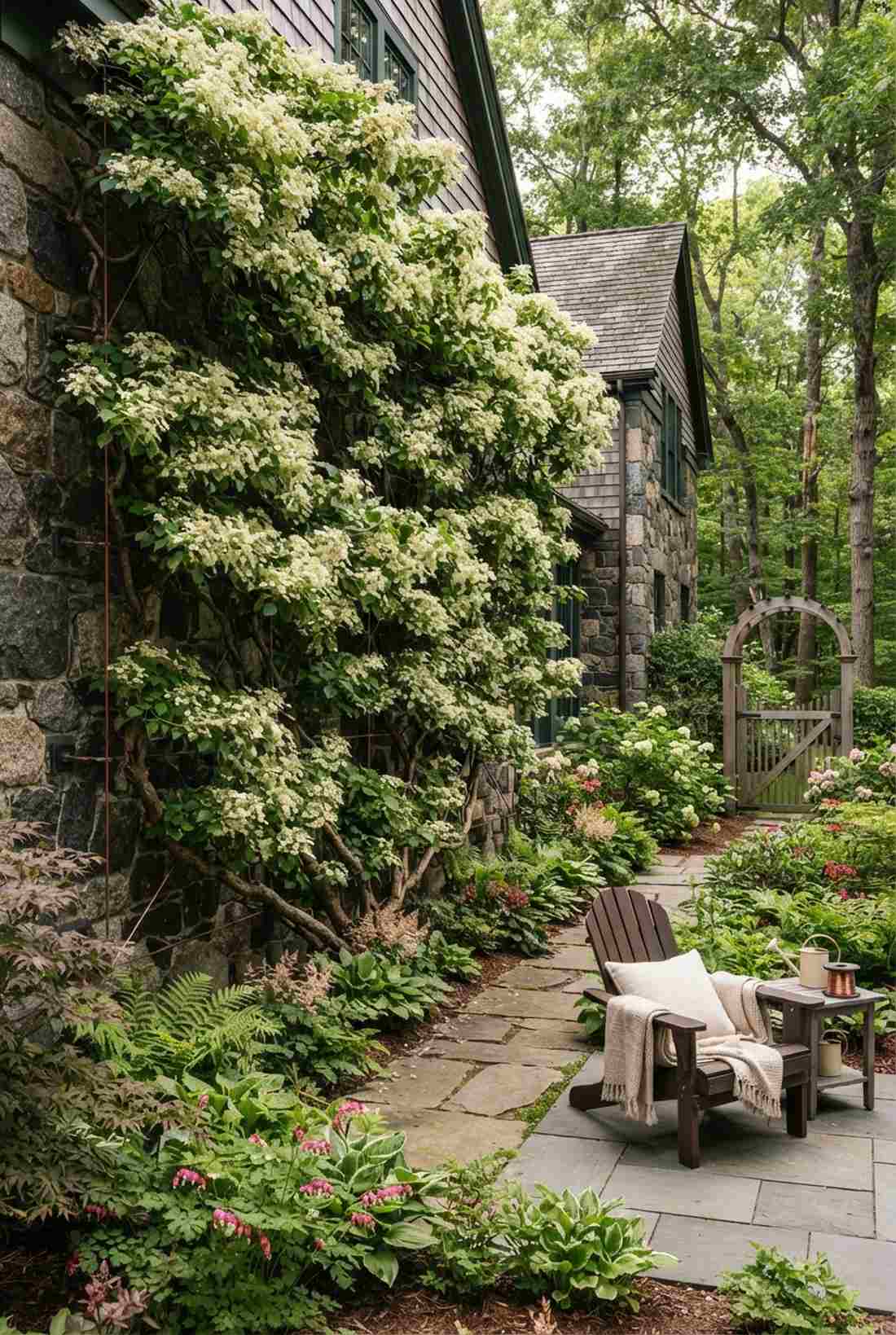
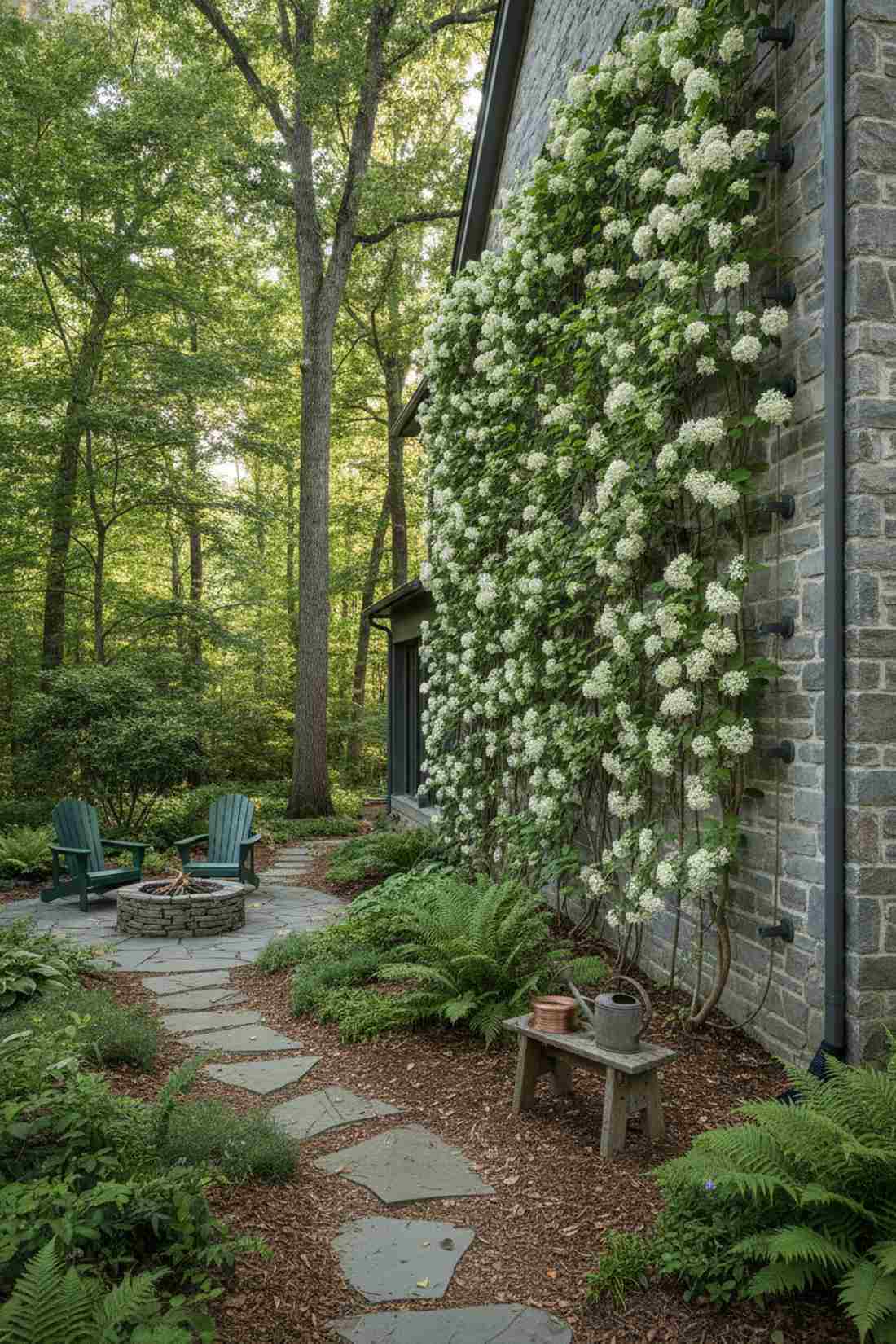
Unfurls with striking, lacy white flower clusters that feel like an elegant wedding venue hidden in a shaded forest. Crafting a shade-tolerant vertical floral display brings incredible life to the dark, north-facing side of your home.
Patience is required since it sleeps for three years, but once it leaps, it provides an exquisite living wall that looks far more premium than typical ivy. Installing heavy-duty masonry lead anchors early on gives the heavy mature branches the secure foothold they desperately need.
Hardware and a quality starter will cost roughly $50–$75. Save this for your premium shaded garden blueprint!
- Key Materials: Hydrangea starter plant, masonry anchors, copper wire
- Vibe / Style: Elegant woodland retreat
- Difficulty: Intermediate patience required
- Budget Breakdown: Masonry anchors: $20 | Plant: $45.
- Creator’s Tip: Do not over-prune this vine in its early years; it builds its complex aerial root system slowly before exploding with top growth.
- Smart Sourcing: Heavy-duty masonry lead anchor kits and weather-resistant copper training wire (spool).
14. English Ivy (Hedera helix)
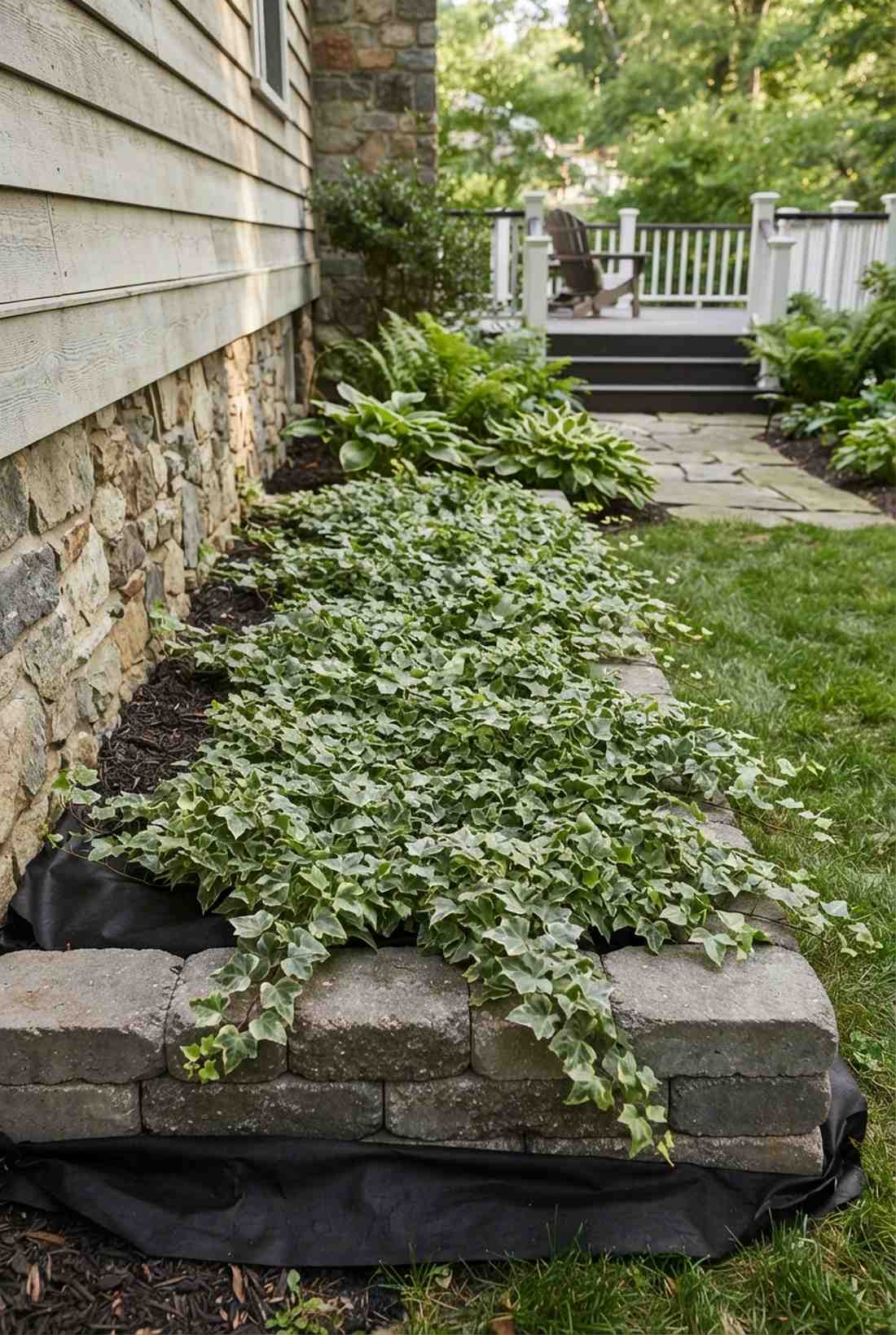
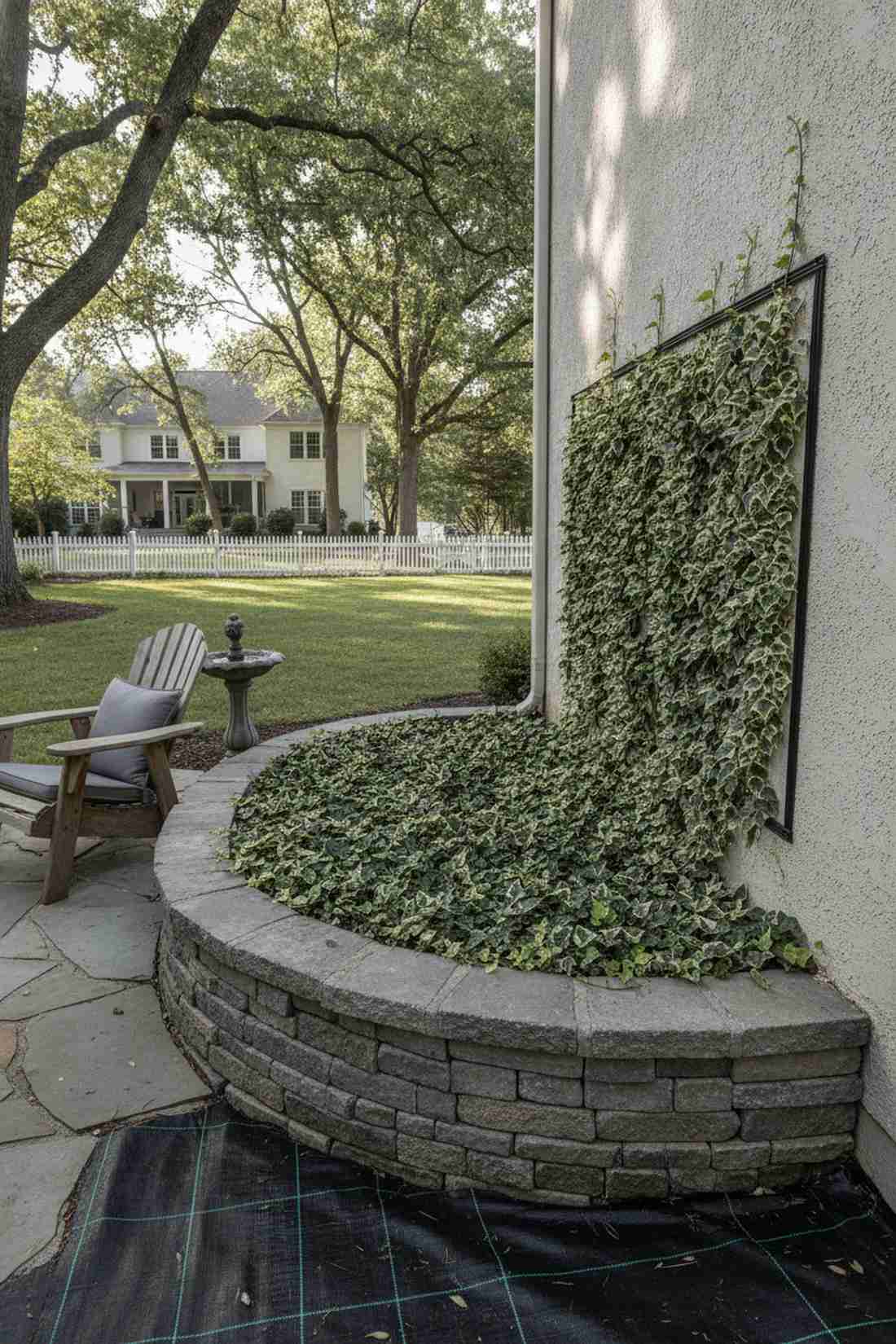
Delivers a lush, evergreen blanket that gives off the moody, romantic vibe of an ancient stone ruins discovery. Using a variegated evergreen groundcover transition effectively bridges the gap between dark shaded soil and vertical walls.
Most people let it run wild and ruin their siding, but intentionally framing it within an isolated retaining block design guarantees a neat, upscale finish. Laying down heavy-grade landscape weed fabric underneath the horizontal runners keeps the entire area pristine and weed-free year-round.
You can execute a stunning, controlled ivy patch for $25–$45. A highly recommended trick for bare, shaded corners.
- Key Materials: ‘Baltica’ ivy pots, landscape fabric, edge restraints
- Vibe / Style: Classic moody evergreen
- Difficulty: Easy but requires diligent edging
- Budget Breakdown: Fabric & Edging: $30 | Ivy plugs: $15.
- Creator’s Tip: Only use cold-hardy cultivars like ‘Baltica’ in Zone 5, or the leaves will suffer severe winter burn and turn ugly brown.
- Smart Sourcing: Commercial-grade landscape weed barrier fabric (roll) and no-dig plastic landscape edging kits.
15. Silver Lace Vine (Polygonum aubertii)
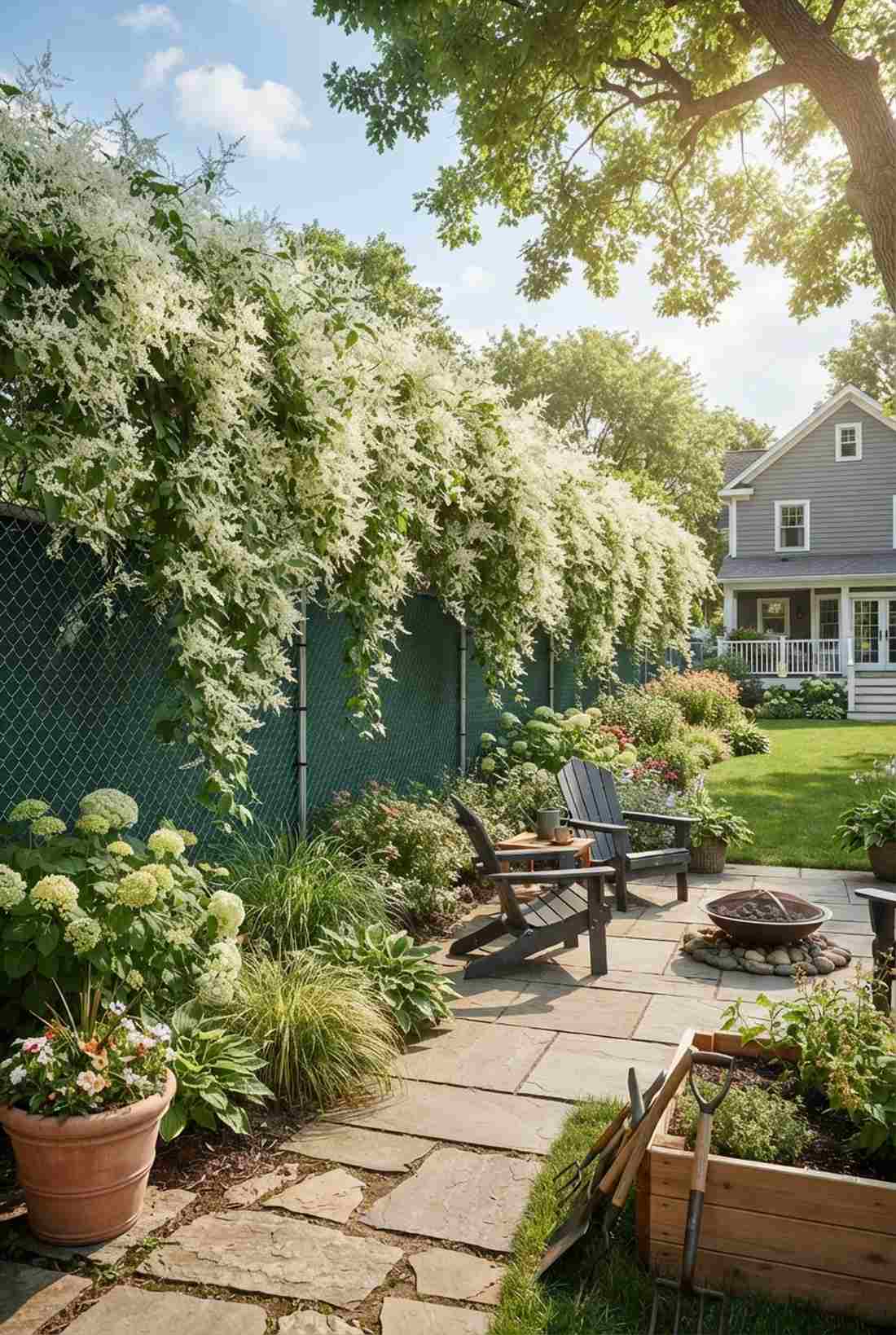
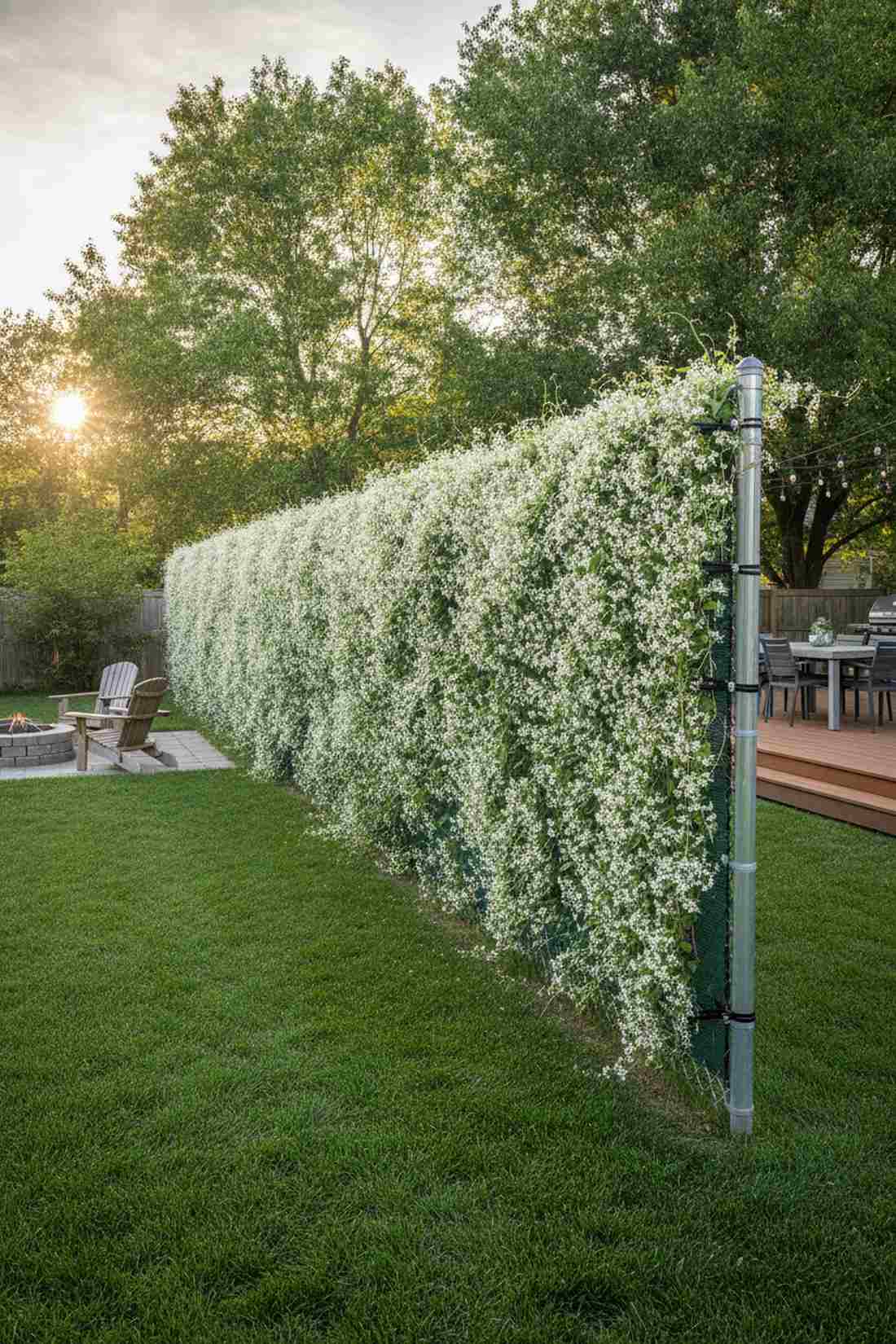
Explodes into a frothy, white cascade that feels exactly like a delicate lace veil thrown over your garden fences. This fast-growing outdoor privacy screen is the absolute perfect solution for blocking out nosy neighbors in a single summer.
While slower plants take years, this aggressive grower completely covers an ugly chain-link fence, turning an eyesore into a surprisingly premium look almost instantly. Snapping on UV-resistant privacy screen mesh panels behind it gives immediate blockage while the vine fills in the gaps.
The total cover-up project costs around $50–$80. Pin this if you need an immediate backyard privacy fix!
- Key Materials: Silver lace vine, screen mesh, zip ties
- Vibe / Style: Ethereal rapid coverage
- Difficulty: Easy quick-fix solution
- Budget Breakdown: Privacy mesh: $40 | Plant: $25.
- Creator’s Tip: Cut this vine back ruthlessly every single late winter; it thrives on abuse and will quickly resprout bushier than ever.
- Smart Sourcing: UV-coated dark green privacy screen panels and heavy-duty commercial zip ties (bulk pack).
Compact Climbing Plants for Zone 6 Crossover
Zone 6 expands options to include climbing plants for zone 6 that survive zone 5 with winter protection or microclimate advantages. These additions increase palette choices for southern zone 5 gardens.
16. Carolina Jessamine (Gelsemium sempervirens)
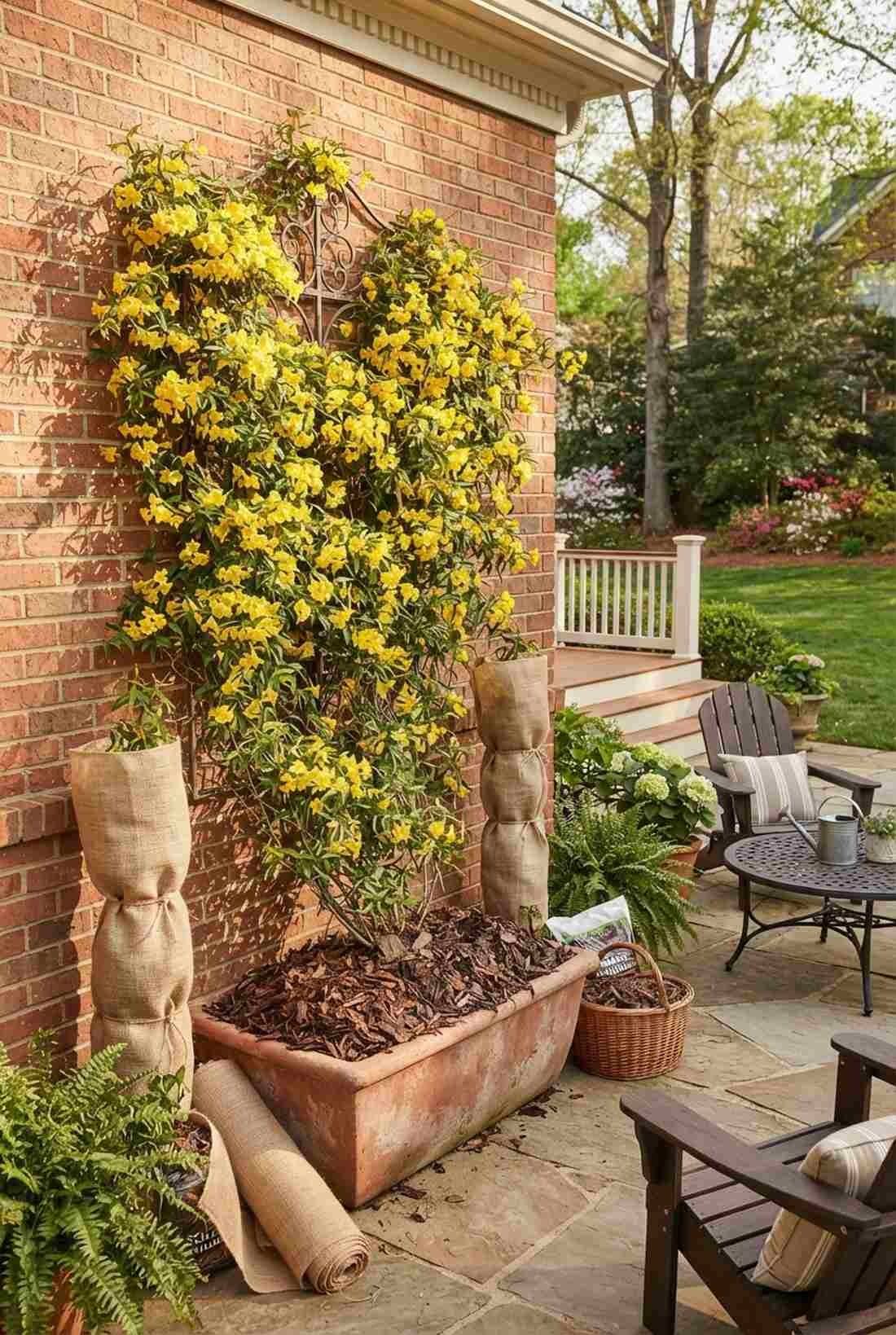
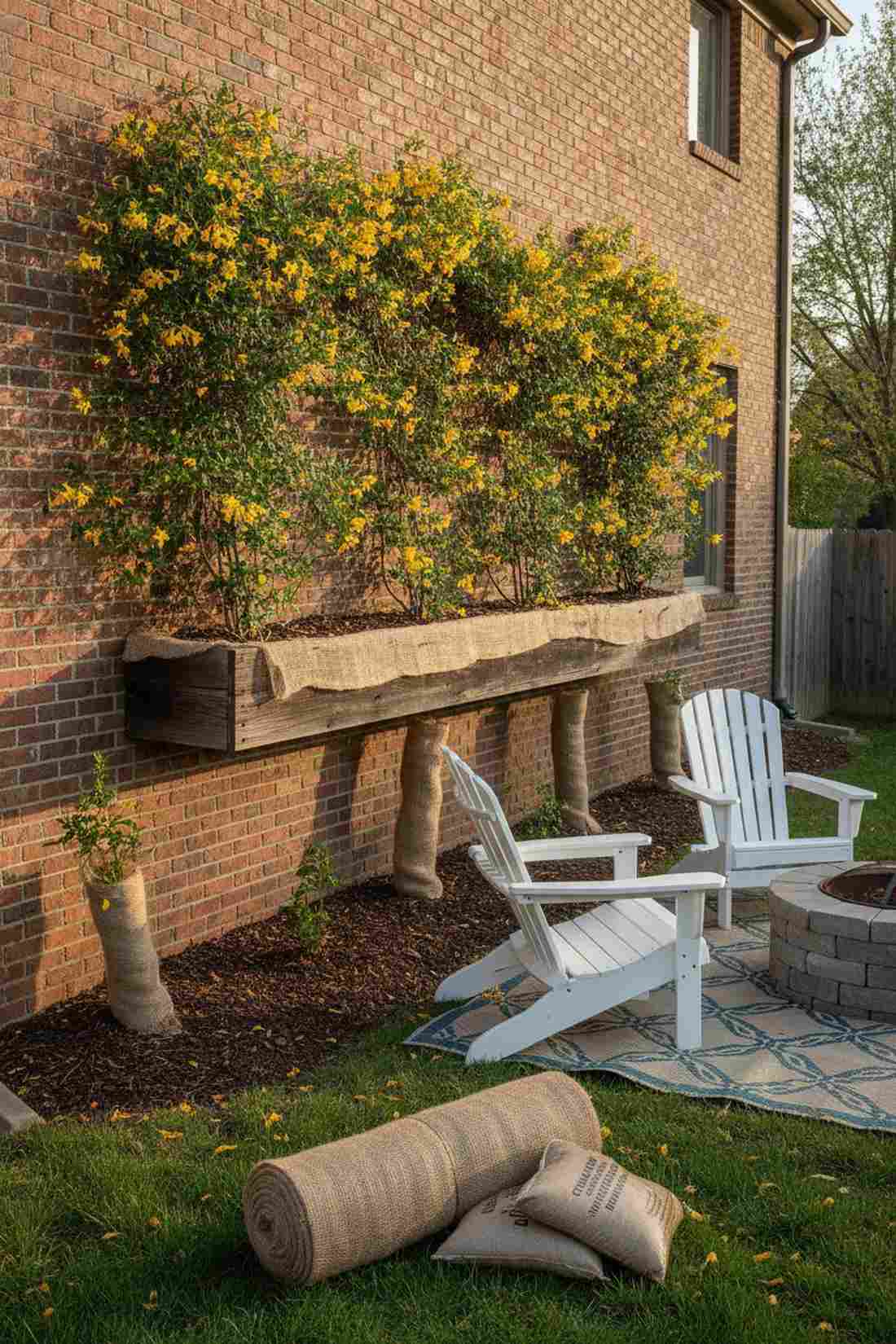
Pops with bright yellow, fragrant trumpets that make your patio feel like an early spring vacation to the deep south. Setting up a sunny microclimate wall planter allows you to cheat the hardiness zones and grow this gorgeous southern belle.
Most northern gardeners assume it will die, but utilizing the retained heat from a south-facing brick wall delivers a massive survival advantage. Wrapping the young vines with breathable burlap winter protection wraps for the first two years builds incredible cold resilience.
You can establish this crossover beauty for about $35–$55. Save this to your advanced gardening techniques board!
- Key Materials: Jessamine starter, winter burlap, heavy mulch
- Vibe / Style: Bright southern warmth
- Difficulty: Advanced microclimate management
- Budget Breakdown: Burlap wrap: $15 | Plant: $25.
- Creator’s Tip: Mound 6 inches of shredded leaves over the root zone right before the first hard freeze to insulate the delicate crown.
- Smart Sourcing: Natural breathable burlap winter plant wraps (bulk roll) and thick organic winterizing mulch packs.
Most DIYers completely ruin their exterior walls… but the next vine actually protects your siding while looking spectacular.
17. Climbing Carolina Aster (Ampelaster carolinianus)
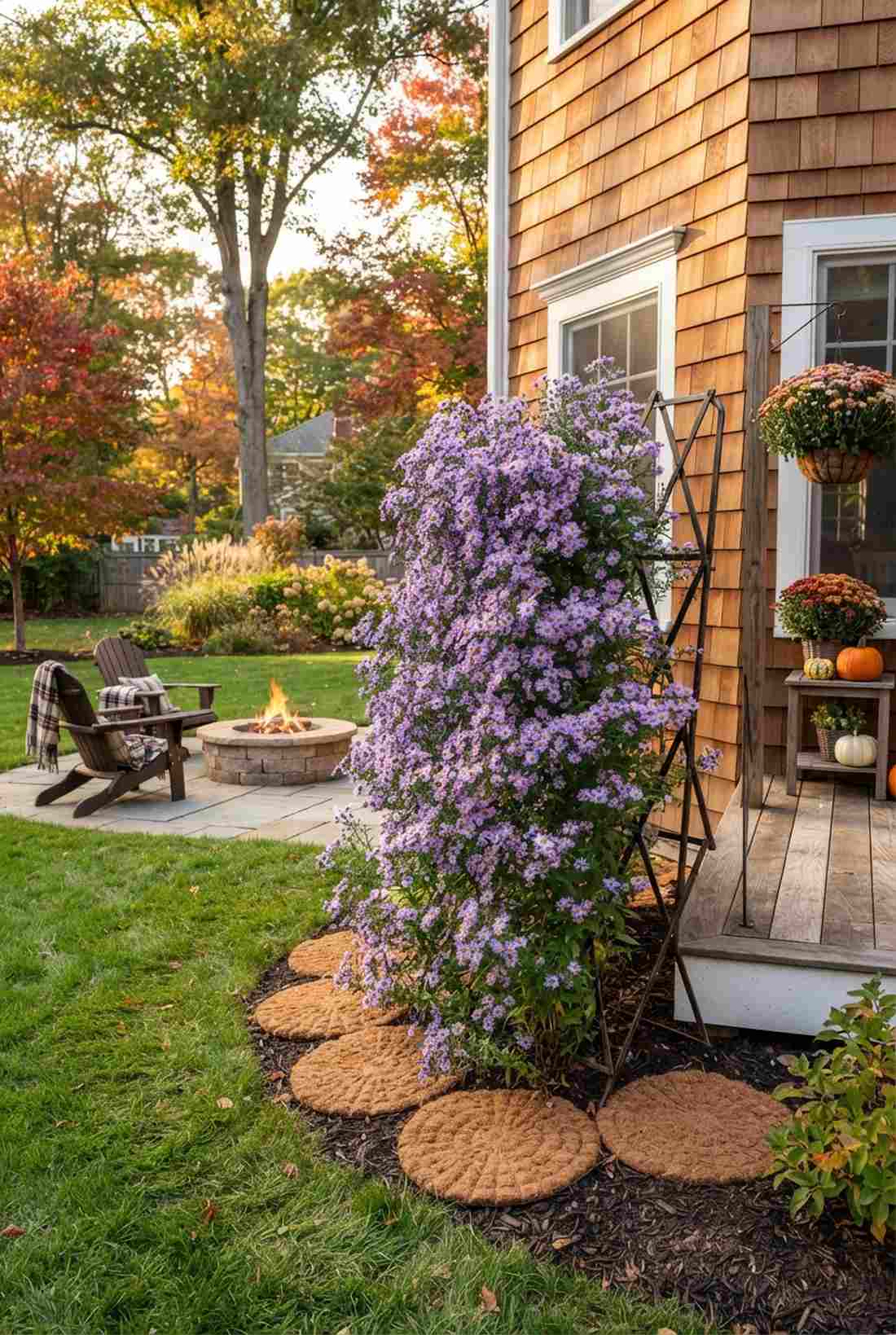
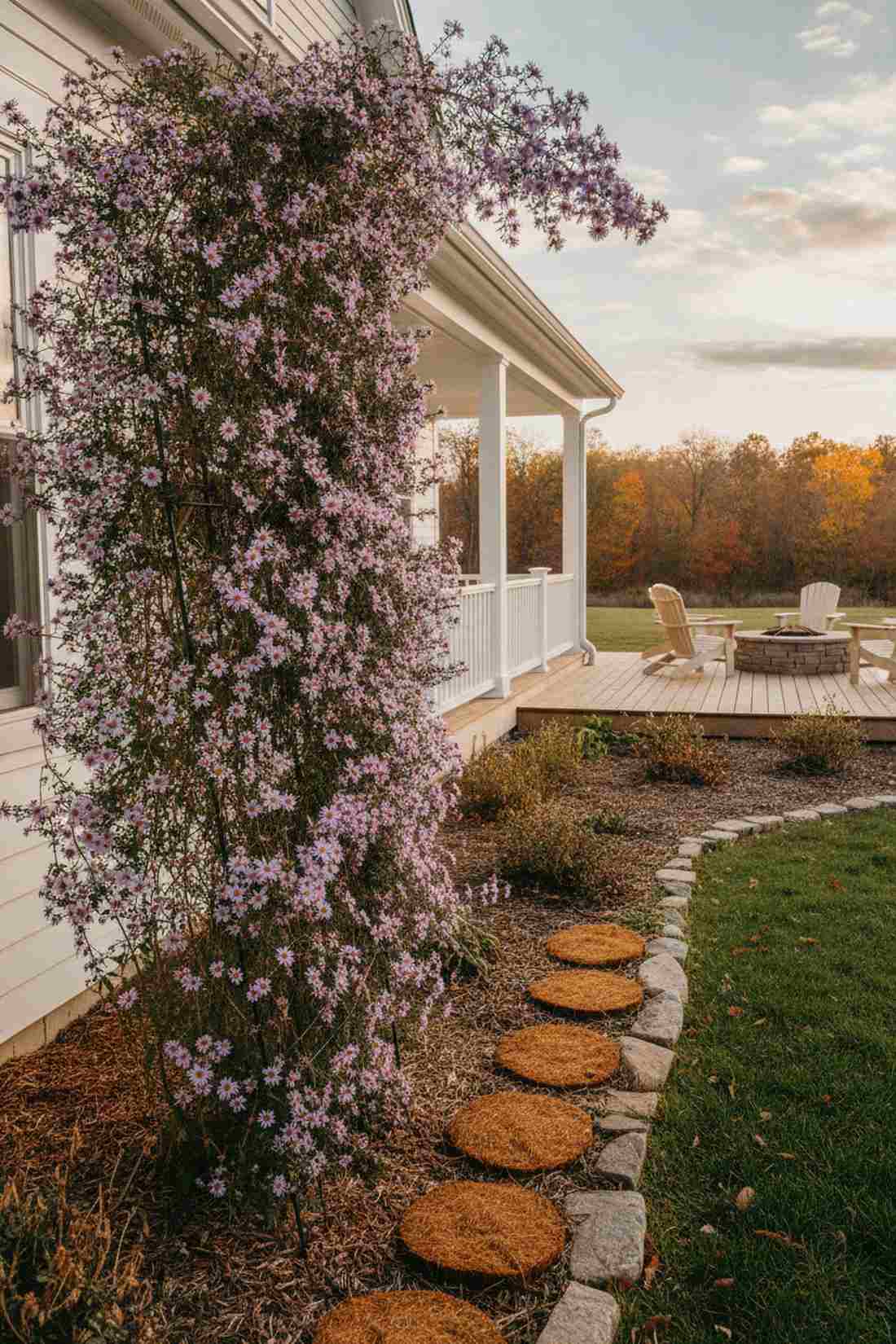
Creates a wild, purple daisy cascade that feels like you’ve captured a rare meadow and hung it vertically. This late-season pollinator vine setup breathes incredible life into your yard exactly when everything else is dying off.
Instead of bare dirt, packing the base with premium thermal insulation materials ensures the roots easily survive the brutal zone 5 freeze. Combining it with pre-cut organic coconut coir mats around the root zone locks in moisture and keeps the soil temps completely stable.
You can lock in this fall-blooming spectacle for around $30–$45. A must-have for autumn color enthusiasts!
- Key Materials: Aster plant, coconut coir mats, lightweight trellis
- Vibe / Style: Whimsical autumn meadow
- Difficulty: Easy die-back perennial
- Budget Breakdown: Coir mats: $15 | Starter plant: $20.
- Creator’s Tip: Let the top completely die back in winter, then chop the dead stems to 2 inches before the spring thaw for perfect regrowth.
- Smart Sourcing: Pre-cut organic coconut coir mulch rings (bulk pack) and a lightweight folding metal trellis kit.
18. Passionflower (Passiflora incarnata)
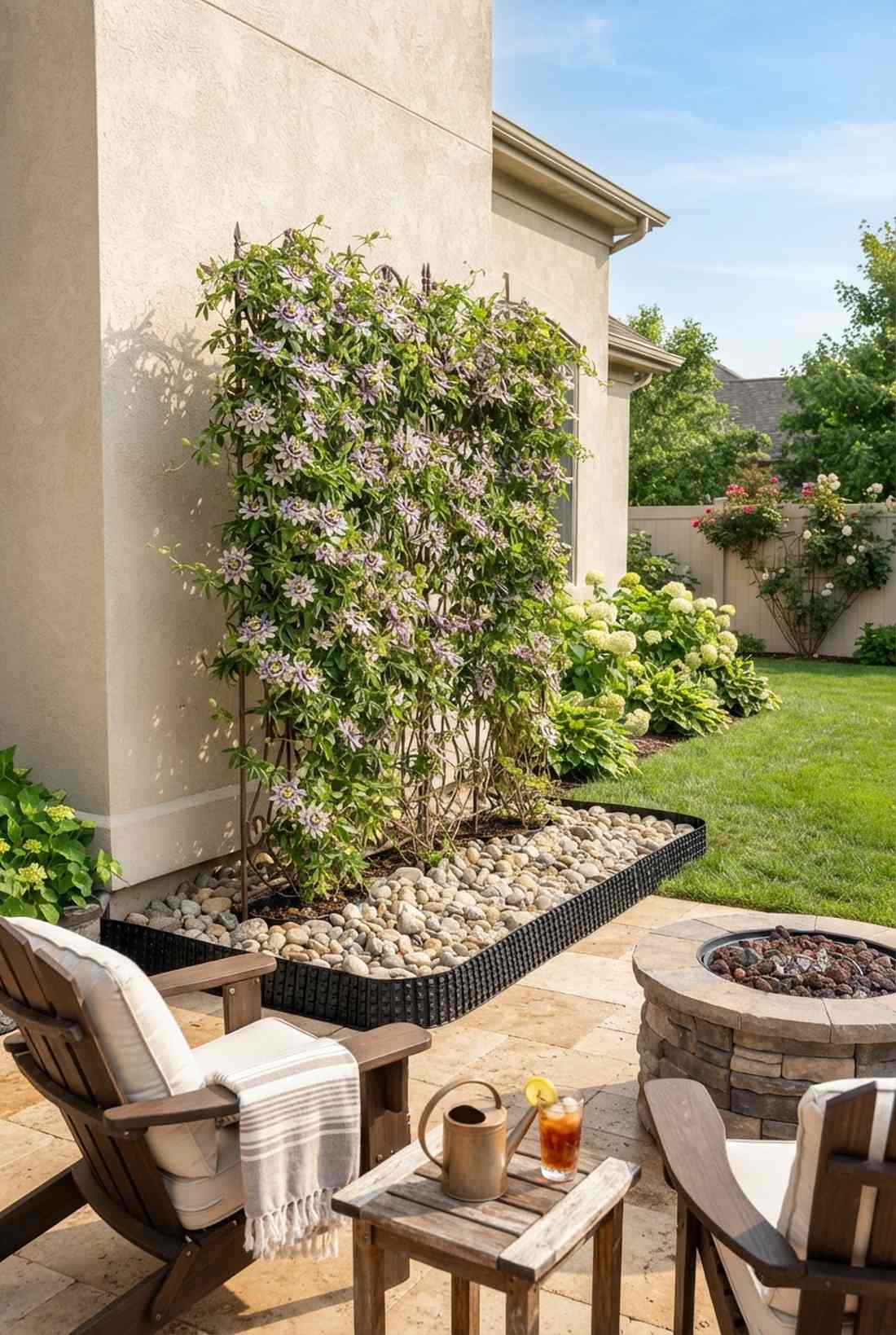
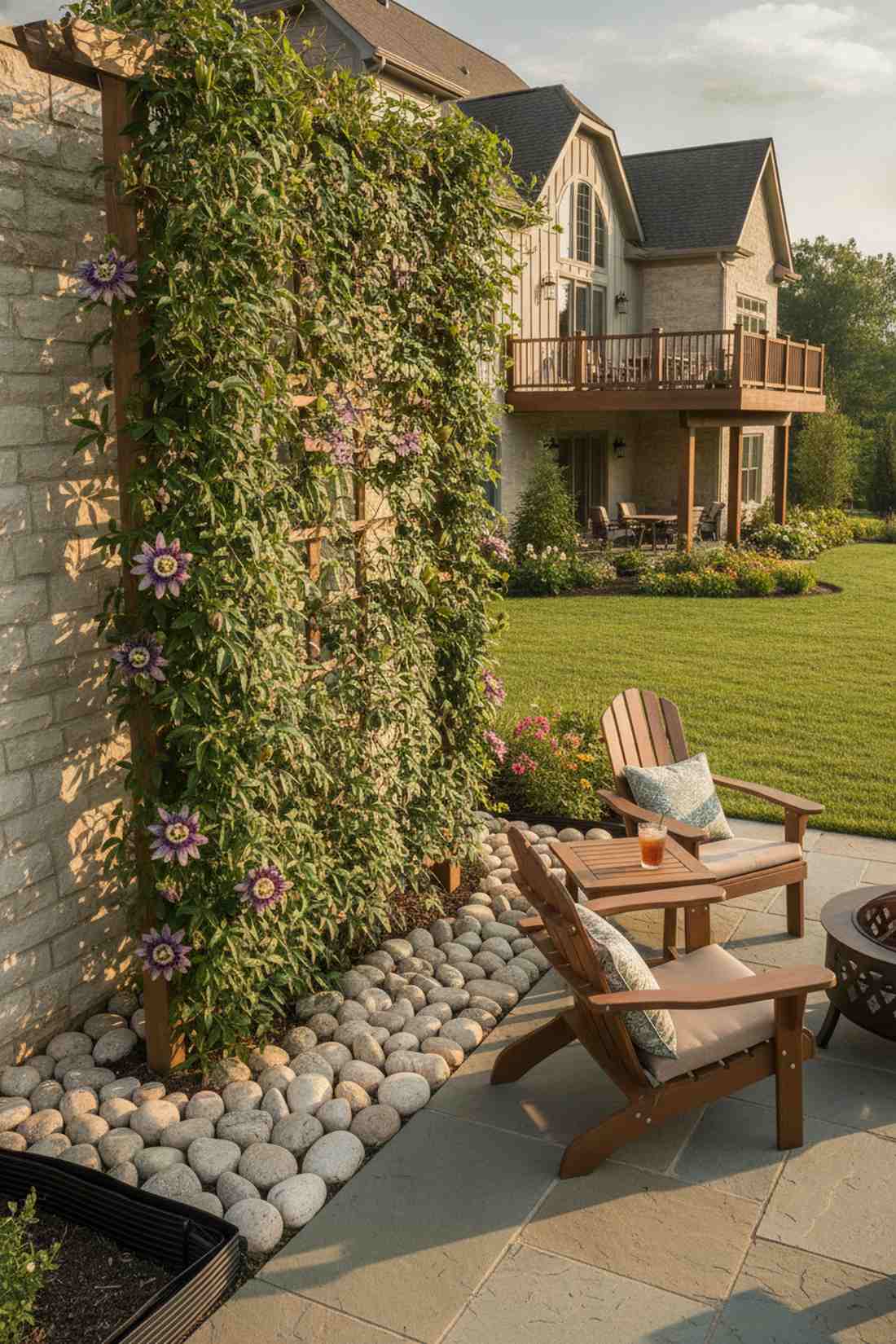
Unfolds into intricate, alien-like purple blooms that look straight out of an expensive botanical conservatory. A tropical summer trellis display transforms an ordinary sunny patio into an exotic visual masterpiece.
Amateurs think you can’t grow tropicals up north, but planting this against a heat-reflecting surface gives a high-end conservatory vibe for pennies. Sinking heavy-duty plastic root barrier guards around the perimeter guarantees the aggressive underground runners don’t consume your entire lawn.
Expect to spend $40–$60 to contain and support it correctly. Pin this if you love rare and exotic flower shapes!
- Key Materials: Passionflower rootstock, root barrier, heat-reflective stones
- Vibe / Style: Exotic conservatory rarity
- Difficulty: Intermediate boundary control
- Budget Breakdown: Root guards: $30 | Rootstock: $20.
- Creator’s Tip: Place large, light-colored landscaping rocks over the root zone to absorb daily sun and radiate heat into the soil all night.
- Smart Sourcing: High-density plastic root barrier shields and decorative heat-retaining river stones (bulk bag).
19. Chocolate Vine (Akebia quinata)
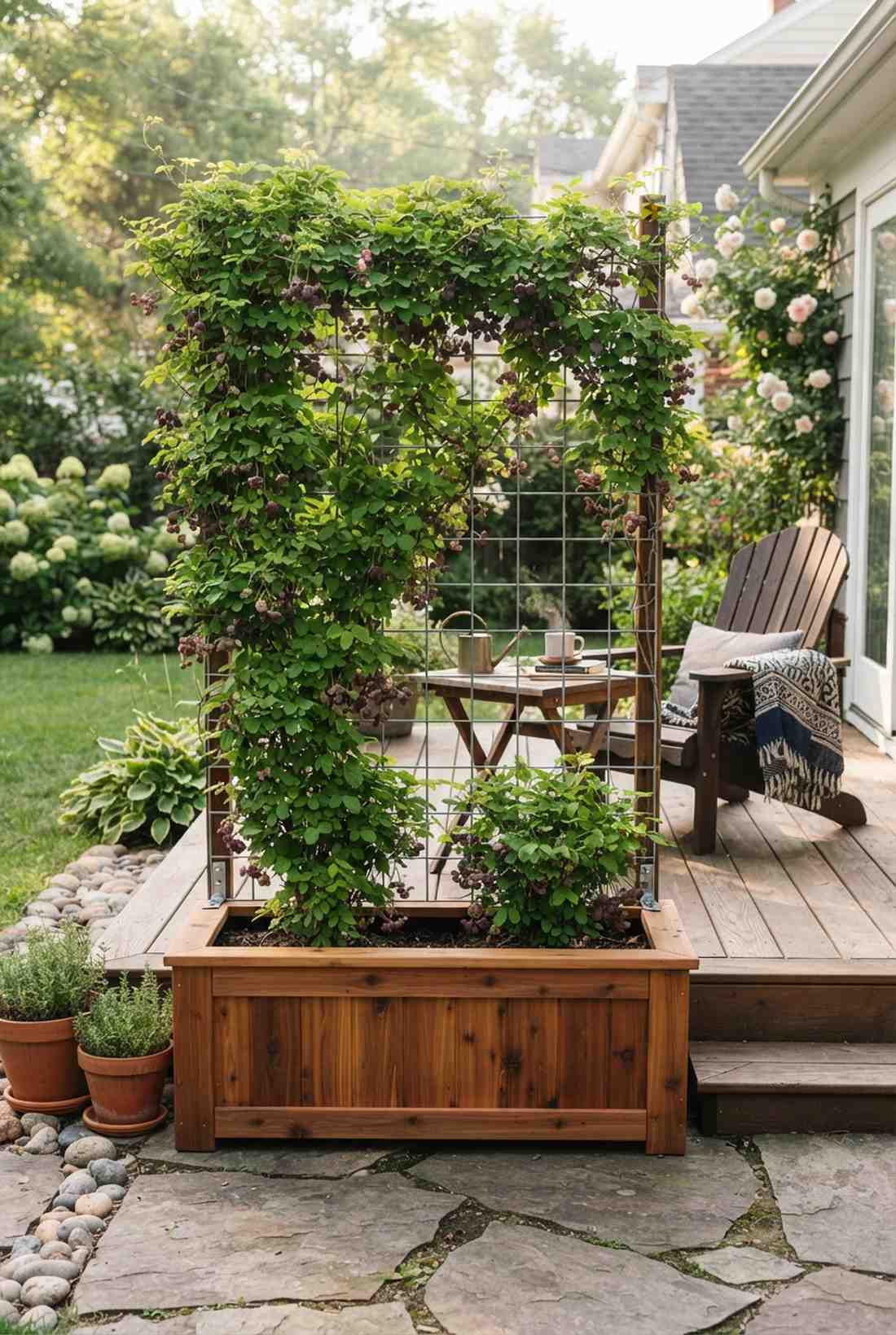
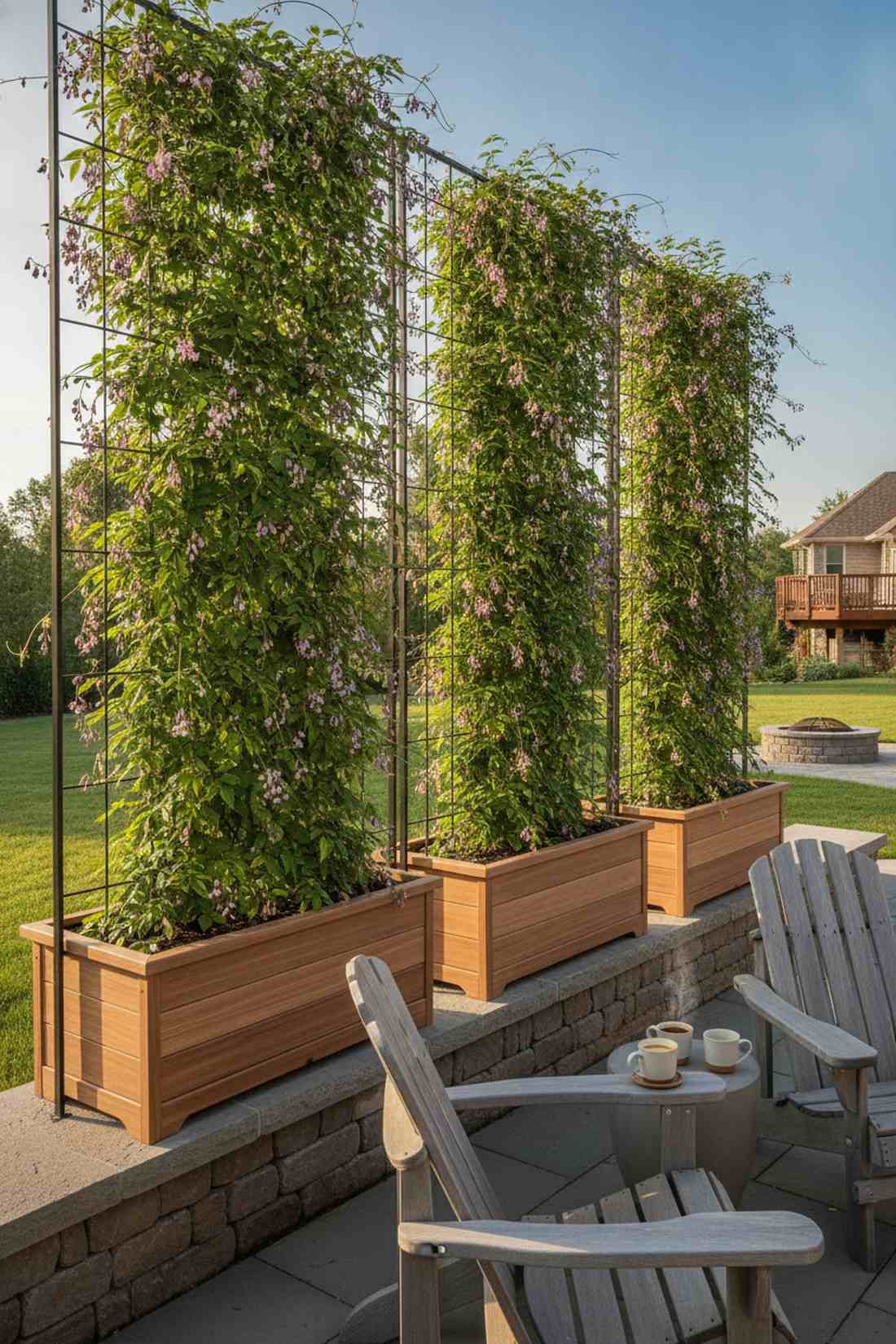
Dangles delicate, chocolate-purple blooms that literally perfume the spring air with a subtle vanilla scent. Implementing this fragrant patio screening idea is the ultimate sensory upgrade for your outdoor morning coffee spot.
Because it grows so fast, relying on weak plastic netting is a disaster; upgrading to a thick gauge welded-wire setup delivers a clean, architectural finish. Utilizing heavy-duty cedar planter boxes allows you to control the vigorous roots while elevating the aesthetic.
A beautiful planter and wire setup runs about $80–$130. It’s an intoxicatingly fragrant addition to any small space.
- Key Materials: Two different Akebia clones, cedar planter box, welded wire panel
- Vibe / Style: Aromatic boutique patio
- Difficulty: Intermediate container setup
- Budget Breakdown: Cedar Box: $70 | Wire Panel: $30 | Vines: $30.
- Creator’s Tip: You must plant two genetically different clones if you actually want to see the weird, sausage-like edible purple fruits in late summer.
- Smart Sourcing: UV-coated resin cedar-look planter boxes and rigid galvanized wire cattle panels.
Material Guide: Cheap vs. Premium Aesthetic
Knowing exactly where to save and where to spend makes all the difference in achieving that “looks expensive but isn’t” vibe.
- Standard vs. UV-Resistant/Premium: Cheap plastic zip ties and thin netting shatter in zone 5 winters. Upgrading to UV-coated silicone ties and heavy-gauge wire stops breakage and keeps the design looking flawless year-round.
- Pre-made Kits vs. Sourcing Locally: Buying high-tensile wire and anchor sets piecemeal often costs more and results in mismatched hardware. Grabbing professional viticulture starter kits or complete pergola anchor sets saves massive time and ensures commercial-grade stability.
20. Japanese Hydrangea Vine (Schizophragma hydrangeoides)
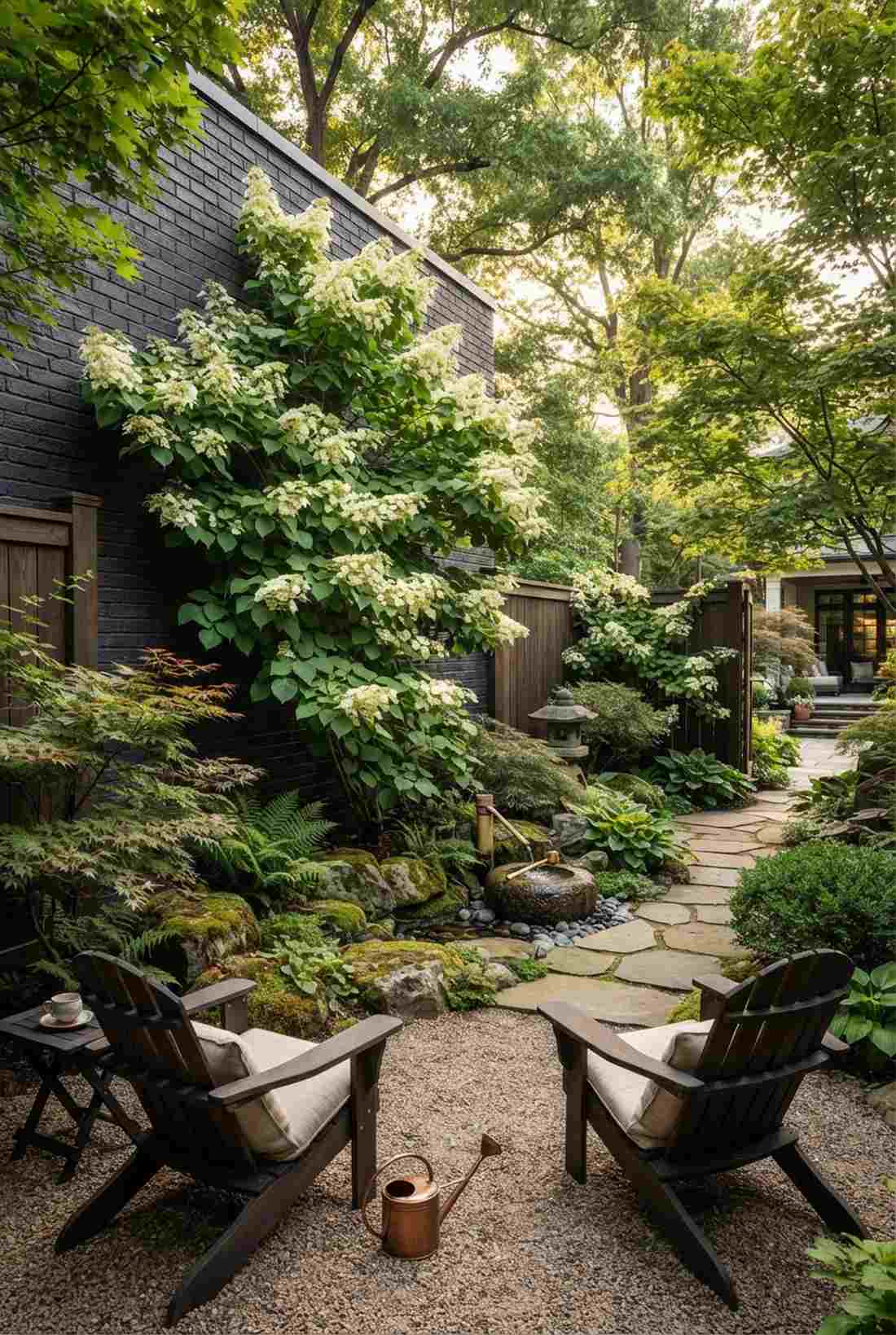
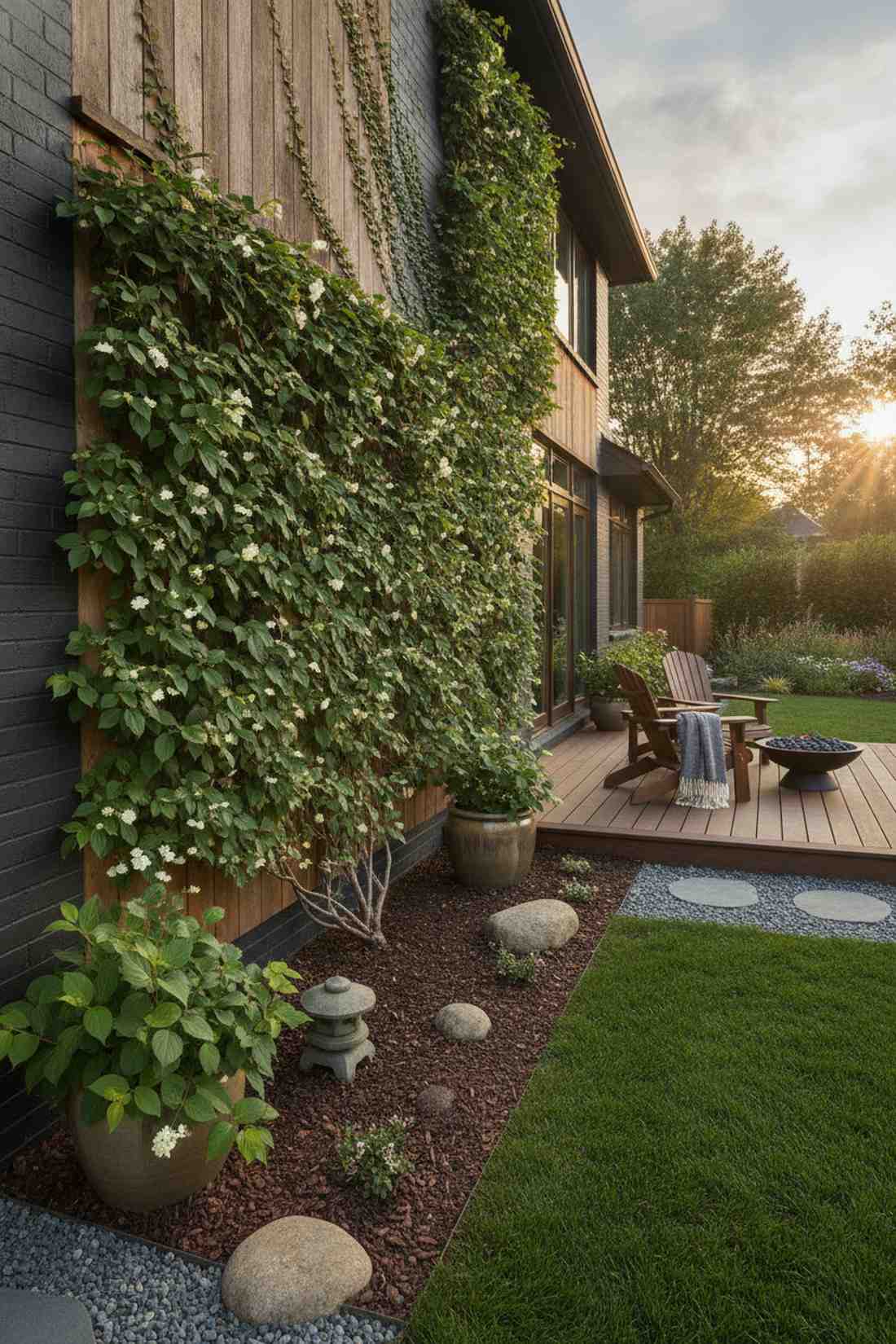
Showcases elegant, heart-shaped leaves and creamy blooms that feel like a quiet, high-end zen garden retreat. A sophisticated woodland wall crawler is incredibly striking against dark brick or natural wood siding.
While climbing hydrangea gets all the hype, planting this refined Japanese relative delivers a much more exclusive, designer-level look that most neighbors have never seen. Incorporating premium organic soil acidifiers ensures the foliage stays vibrantly green and the blooms reach maximum size.
You can start this premium wall feature for roughly $40–$65. Save this for a truly unique landscaping twist!
- Key Materials: Japanese hydrangea vine, soil acidifier, organic compost
- Vibe / Style: Exclusive zen tranquility
- Difficulty: Easy but slow to establish
- Budget Breakdown: Acidifier/Compost: $20 | Plant: $35.
- Creator’s Tip: This vine is incredibly slow for the first 3 years. Do not fertilize heavily; just keep the soil evenly moist and be patient.
- Smart Sourcing: Premium slow-release organic soil acidifier granules and high-moisture retention compost packs.
Aggressive Growth Climbing Plants Zone 4 to 5
Super-hardy vines survive the harshest zone 4 conditions while thriving in zone 5, though growth vigor requires strategic placement and regular maintenance to prevent garden takeover.
21. Wisteria (Wisteria frutescens)
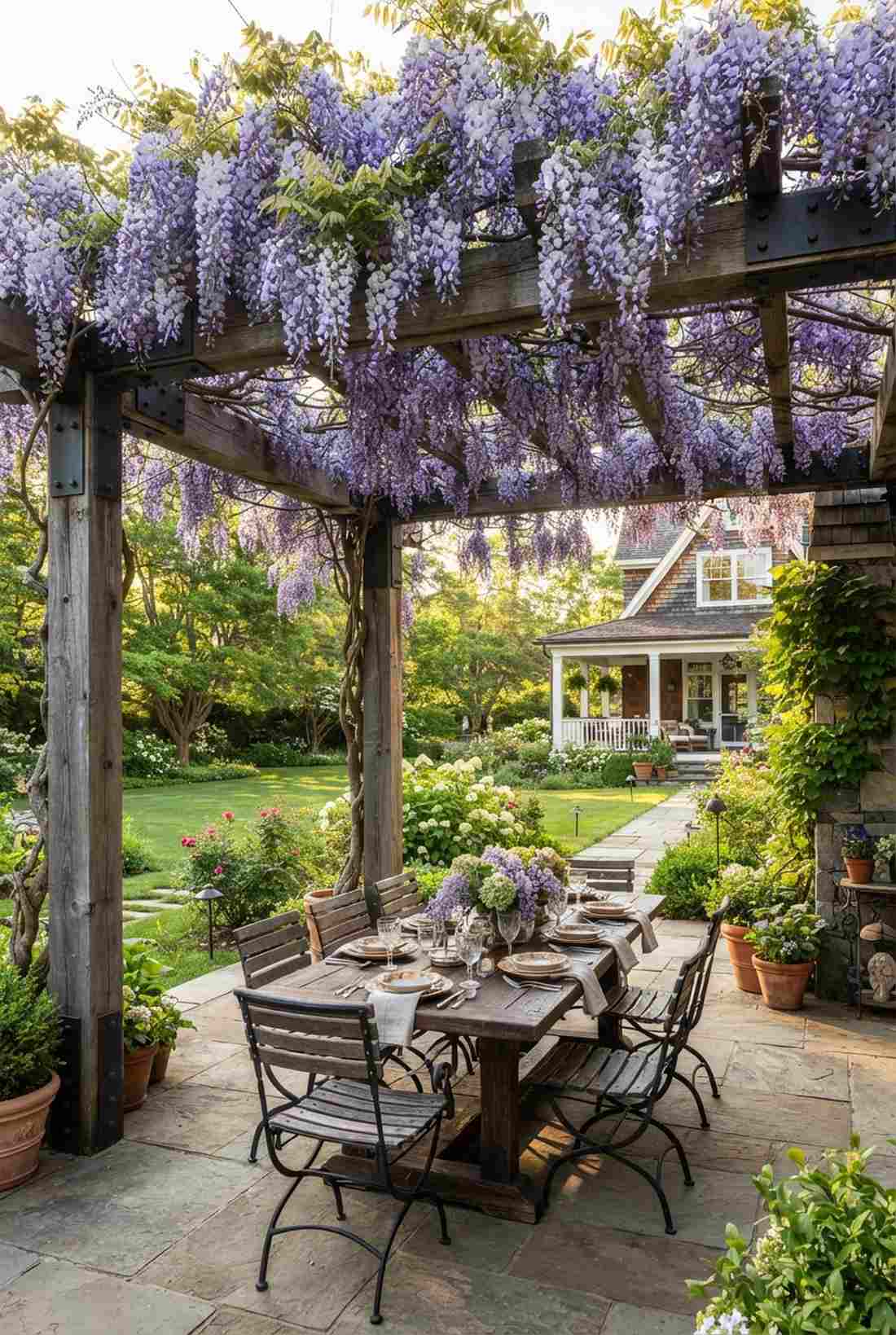
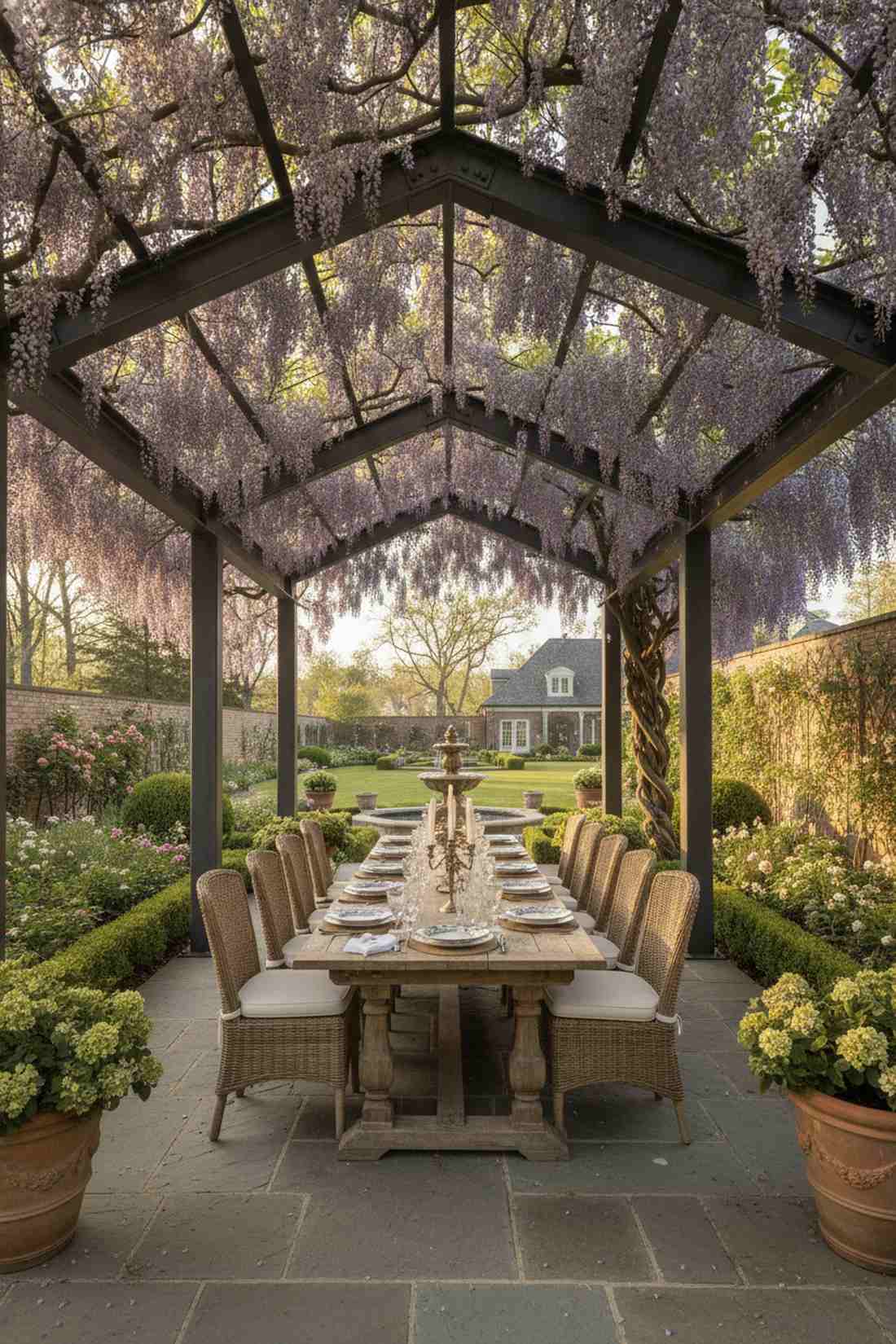
Drips with massive purple flower clusters that create an overwhelmingly romantic, fairy-tale canopy over your head. Building an overhead wisteria pergola display is the ultimate way to define an outdoor dining room.
Everyone buys the cheap Asian species that rips houses apart, but sourcing the native American version delivers a perfectly behaved, premium look without the structural threat. You still need to build with heavy-duty structural steel joinery because the mature woody trunks will snap standard pine like a twig.
A reinforced timber structure is an investment at $200+, but the plant is only $40. Pin this for the ultimate backyard centerpiece!
- Key Materials: American wisteria, 6×6 timbers, steel pergola brackets
- Vibe / Style: Breathtaking architectural canopy
- Difficulty: Advanced carpentry required
- Budget Breakdown: Steel joinery: $150 | Plant: $45.
- Creator’s Tip: Always buy a grafted plant rather than seed-grown; seedlings can take over a decade to produce their first flower.
- Smart Sourcing: Commercial-grade black powder-coated pergola brackets and heavy-duty structural lag screws.
Skip the expensive landscaping quotes; this upcoming floral archway is an easy weekend cheat code.
22. Wild Grape (Vitis riparia)
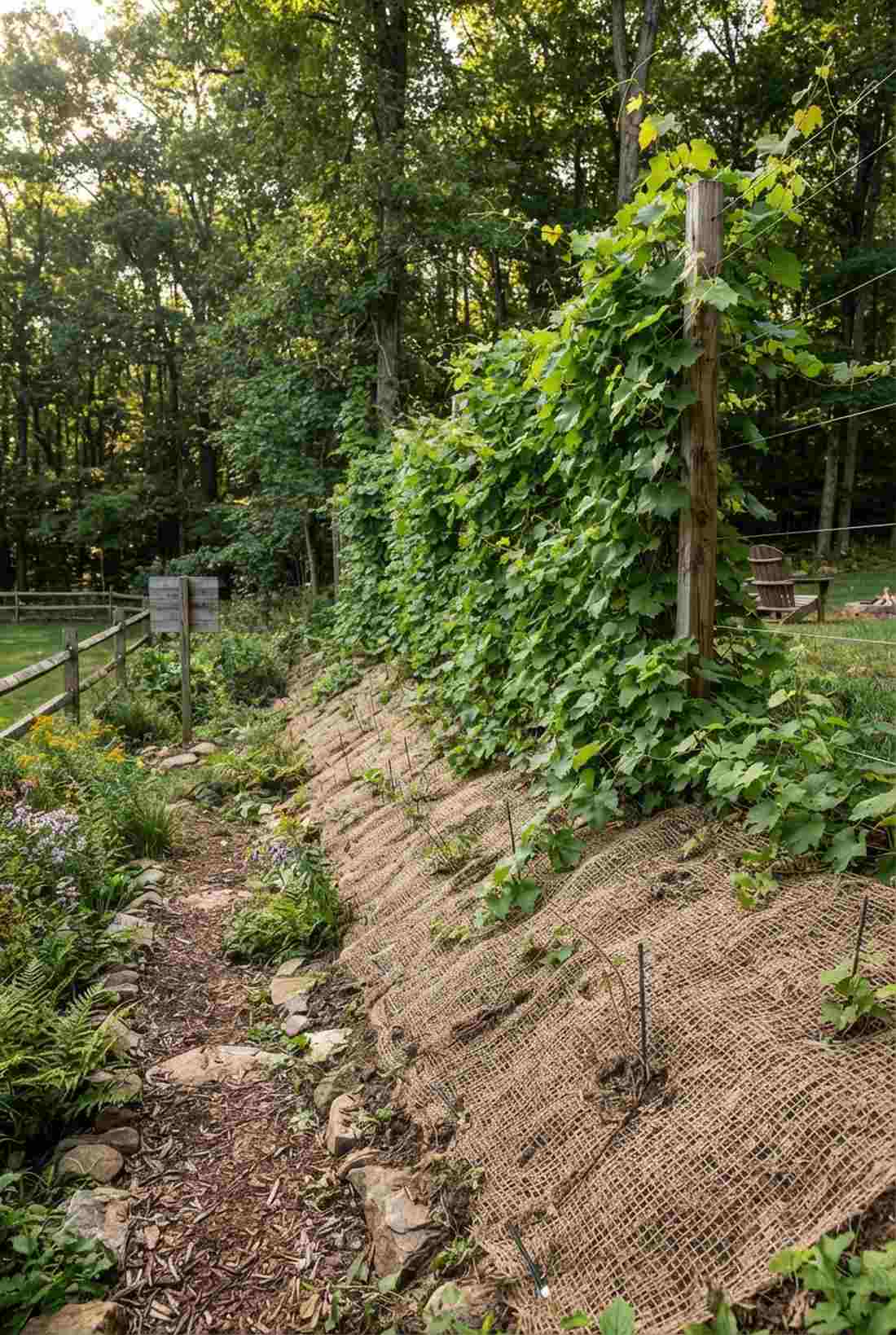
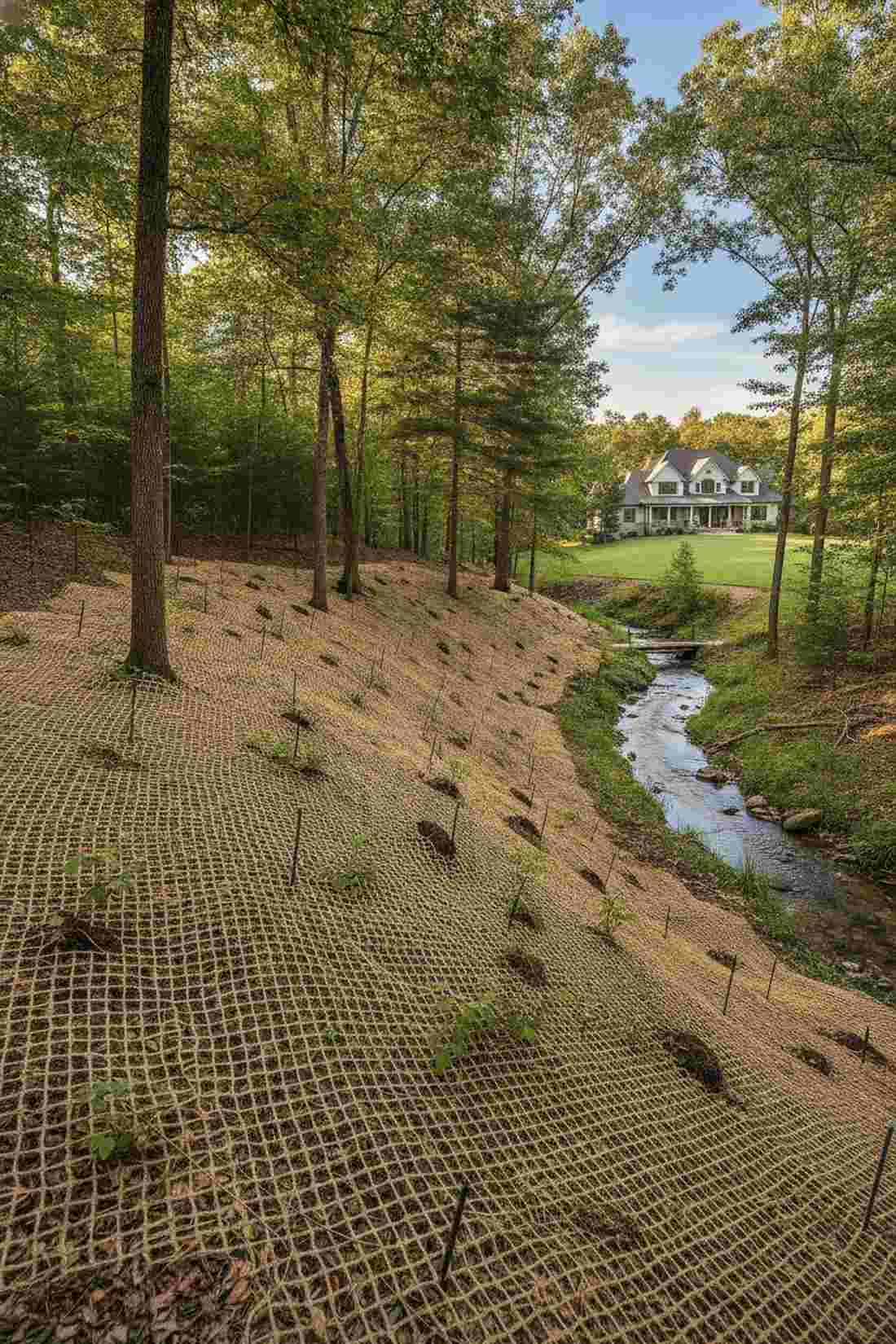
Creates an impossibly rugged, dense green screen that feels like a hidden trail deep in the mountains. This native wildlife habitat screen is incredible for instantly naturalizing the edge of a large, wooded property.
Planting cultivated vines near natural streams often fails, but using this hyper-hardy riverbank grape stabilizes the soil and looks incredibly lush and organic. Securing biodegradable erosion control blankets along the slope gives the vine roots the perfect anchor while preventing mudslides.
You can secure a massive hillside for $40–$70. A fantastic, hands-off ecological restoration project.
- Key Materials: Wild grape bare-roots, jute erosion netting, landscape pins
- Vibe / Style: Rugged naturalized woodland
- Difficulty: Easy slope stabilization
- Budget Breakdown: Jute netting: $40 | Roots: $25.
- Creator’s Tip: Keep this extremely far away from your house and shrubs; it grows up to 50 feet and will easily smother weaker plants.
- Smart Sourcing: Biodegradable jute erosion control netting (bulk roll) and heavy-duty steel securing pins.
23. Porcelain Berry (Ampelopsis brevipedunculata)
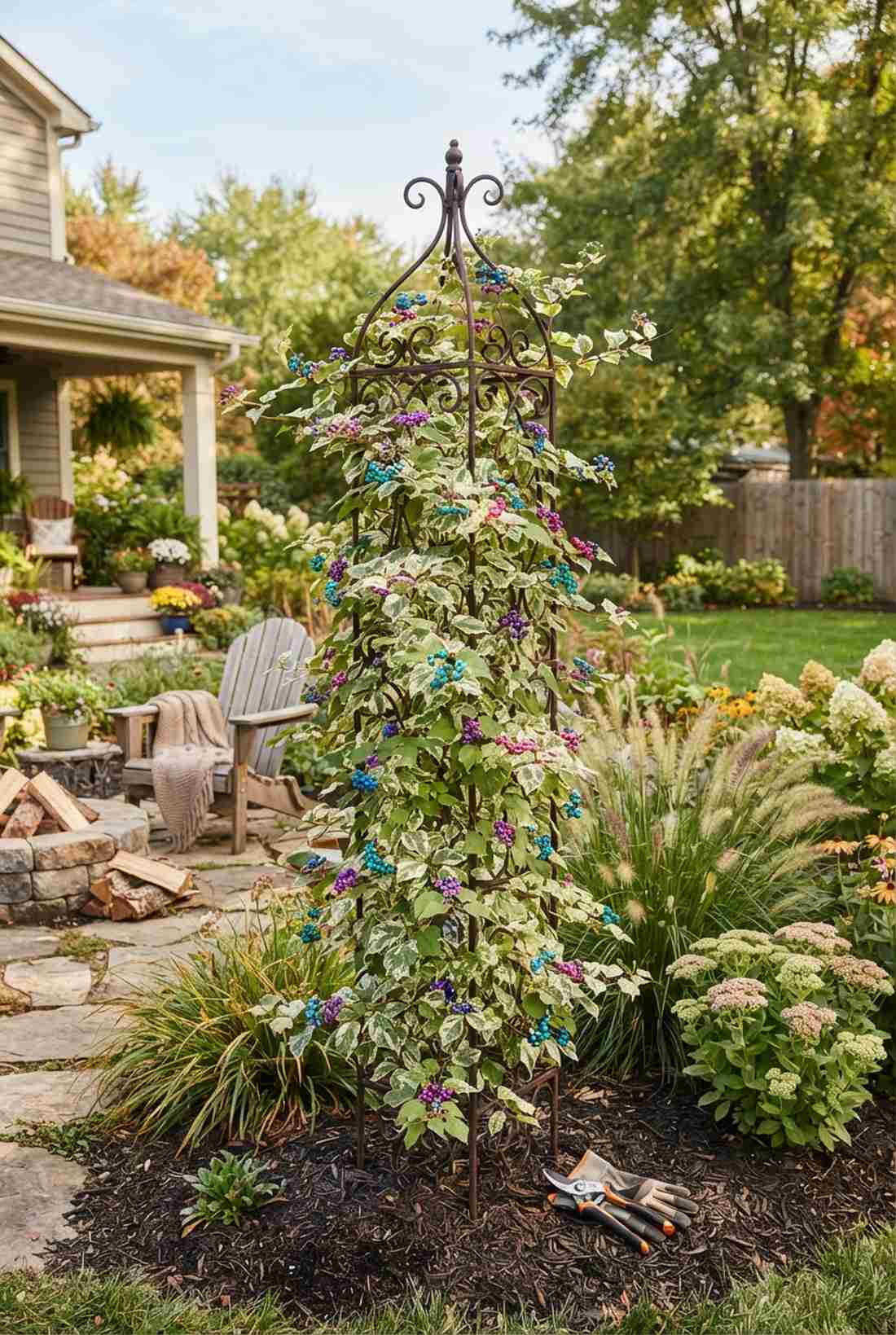
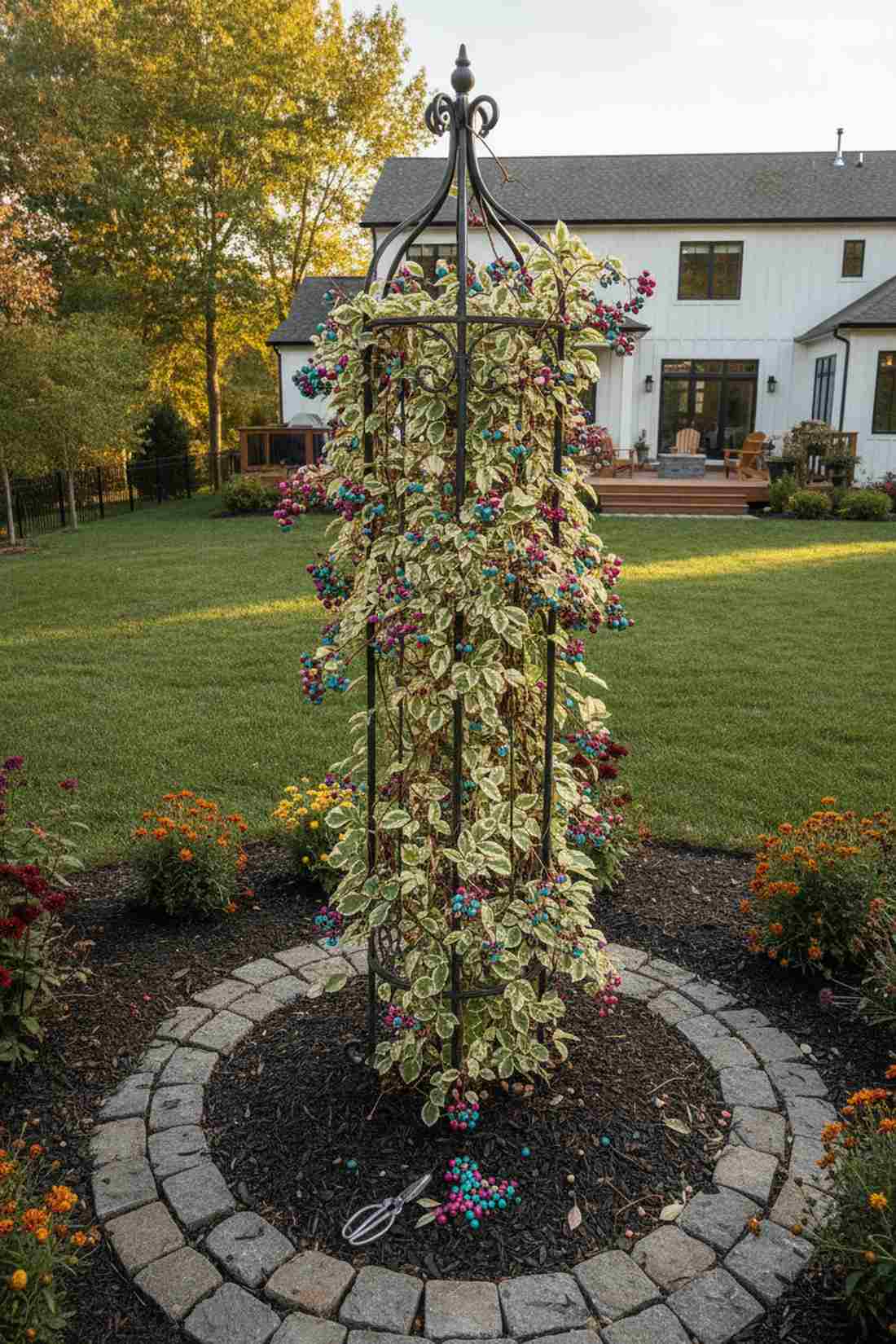
Flashes an unbelievable array of turquoise, pink, and purple berries that look like someone scattered polished gemstones across the leaves. Using this multi-colored autumn vine decor turns a boring fall garden into a bizarre, beautiful conversation piece.
While the standard green version is a raging invasive weed, specifically tracking down the variegated ‘Elegans’ cultivar gives you a highly controlled, sophisticated burst of color. Training it up a freestanding metal garden obelisk keeps the berries right at eye level where everyone can admire them.
A gorgeous vertical feature like this runs about $50–$80. Pin this to your unique plant species board!
- Key Materials: ‘Elegans’ cultivar plant, tall metal obelisk, sharp bypass pruners
- Vibe / Style: Quirky colorful jewel-box
- Difficulty: Easy but requires strict pruning
- Budget Breakdown: Metal obelisk: $45 | Cultivar plant: $30.
- Creator’s Tip: You must aggressively cut this vine back every year and remove any fallen berries to ensure it never escapes into the wild.
- Smart Sourcing: Rust-proof decorative garden obelisk kits and precision bypass pruning shears (titanium blade).
24. Dutchman’s Pipe (Aristolochia macrophylla)
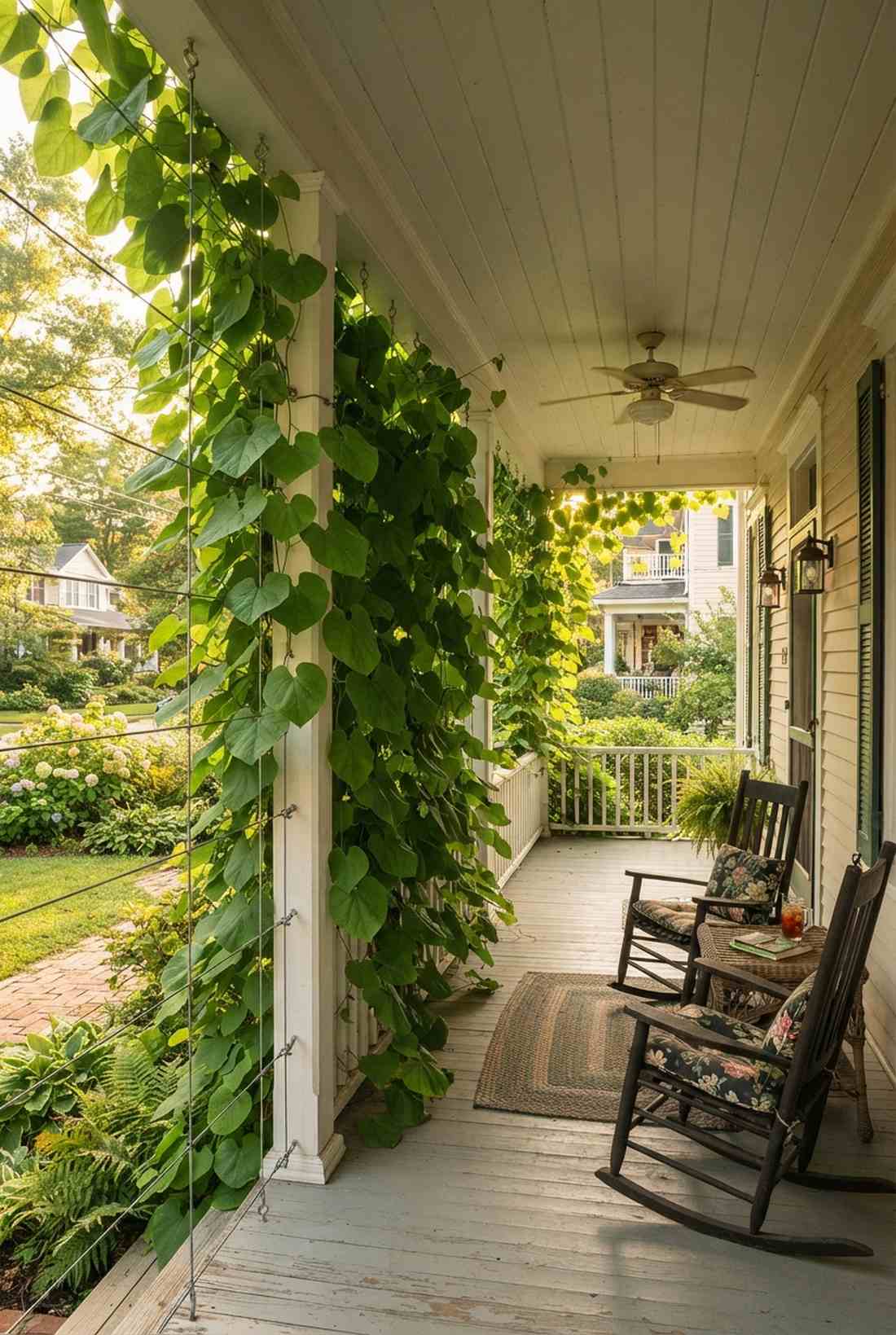
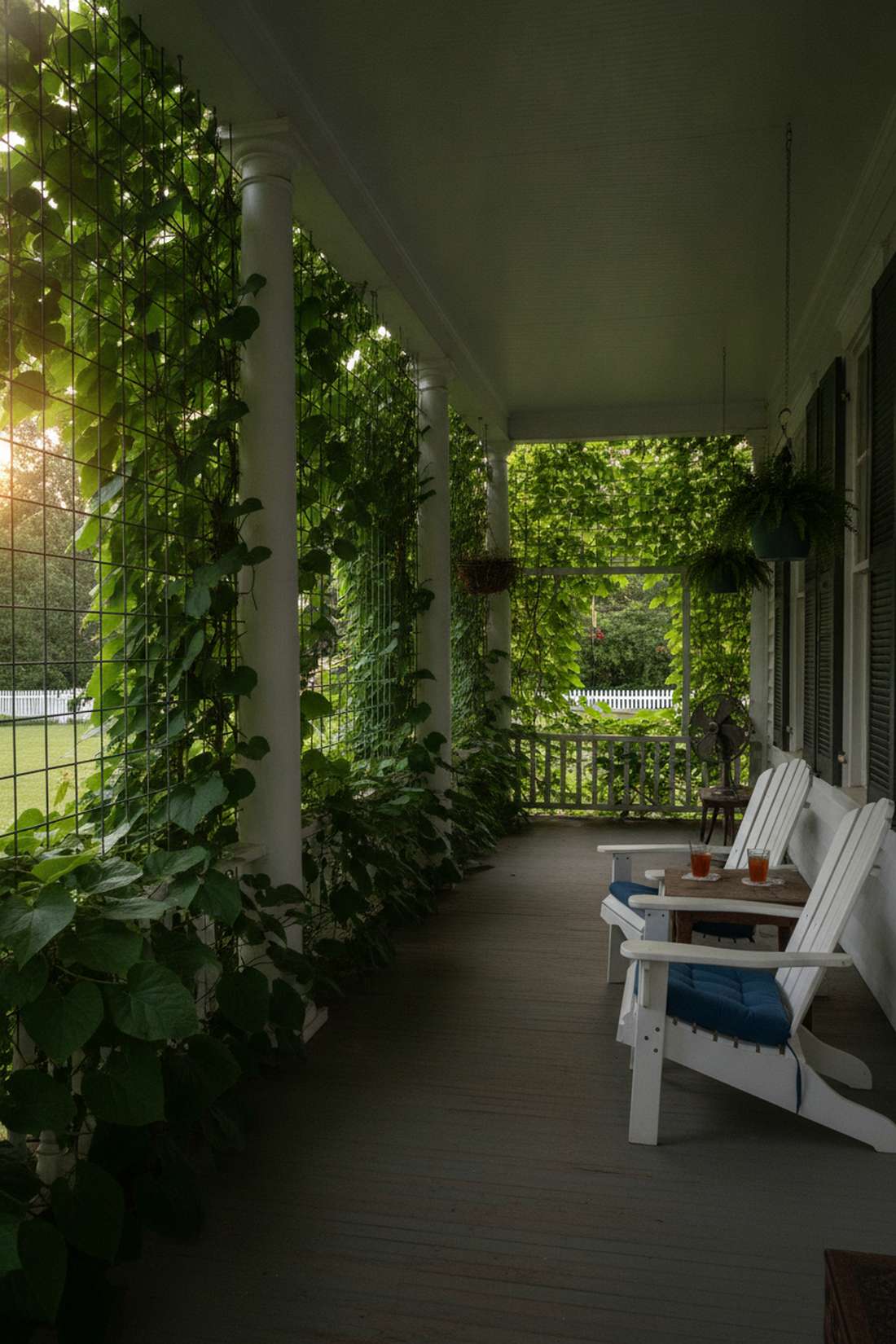
Produces massive, overlapping heart-shaped leaves that create a dense, cooling shade feeling exactly like a vintage southern wrap-around porch. Crafting a vintage porch privacy screen completely shields you from the blazing late-afternoon sun.
Forget trying to grow fussy flowers in deep shade; utilizing this native giant leaf vine creates an impenetrable green wall that looks incredibly historic and wealthy. Stringing up heavy-gauge galvanized wire grids vertically between your porch posts supports the massive leafy weight with ease.
Transforming your porch costs around $60–$90. It’s the ultimate old-world privacy hack.
- Key Materials: Dutchman’s pipe plant, galvanized wire, heavy screw eyes
- Vibe / Style: Vintage shaded veranda
- Difficulty: Easy twining setup
- Budget Breakdown: Wire & Hardware: $35 | Plant: $40.
- Creator’s Tip: This is the exclusive host plant for the gorgeous pipevine swallowtail butterfly, so do not spray pesticides near this foliage!
- Smart Sourcing: Heavy-gauge galvanized training wire (spool) and heavy-duty stainless steel screw eyes (bulk pack).
25. American Wisteria ‘Amethyst Falls’
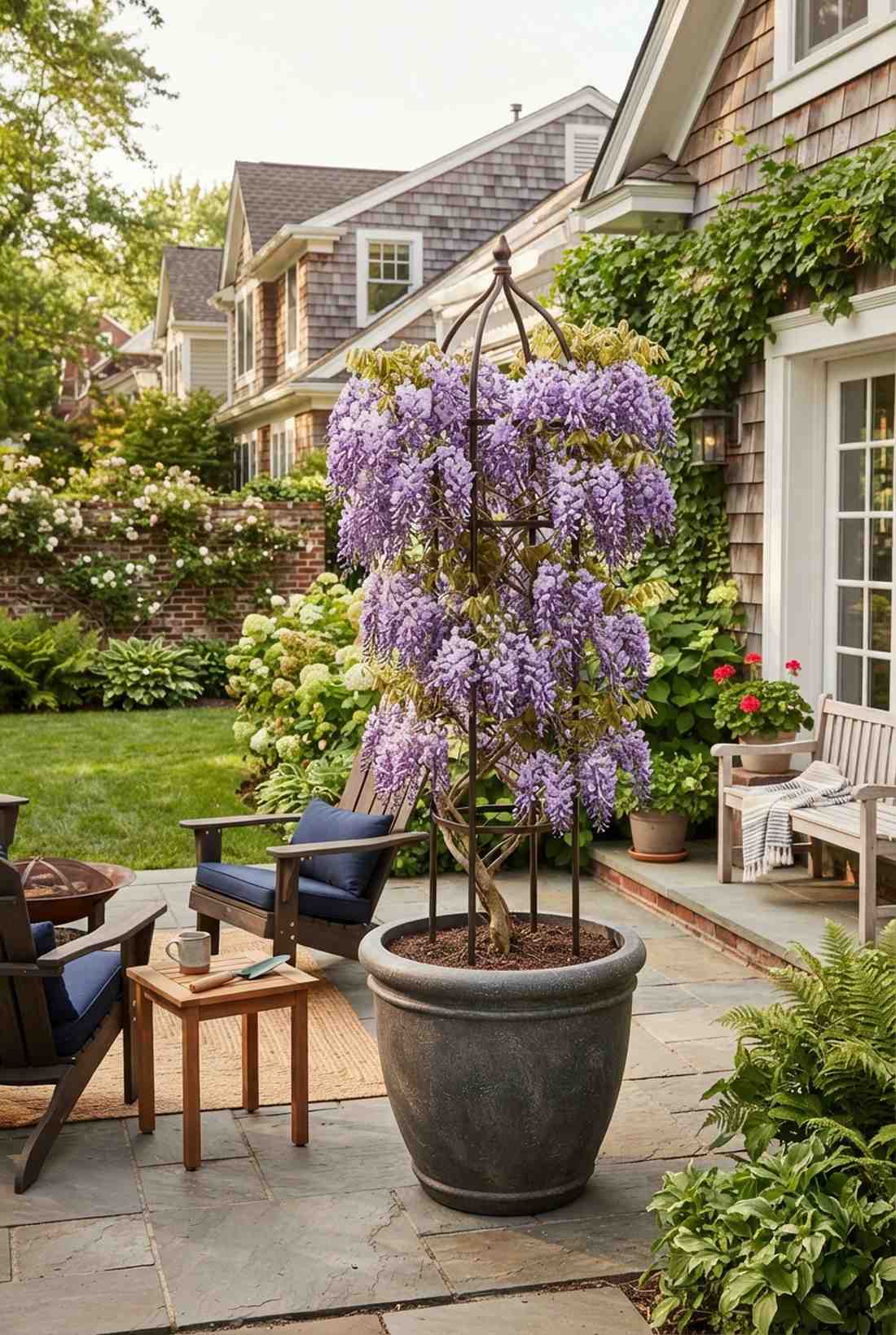
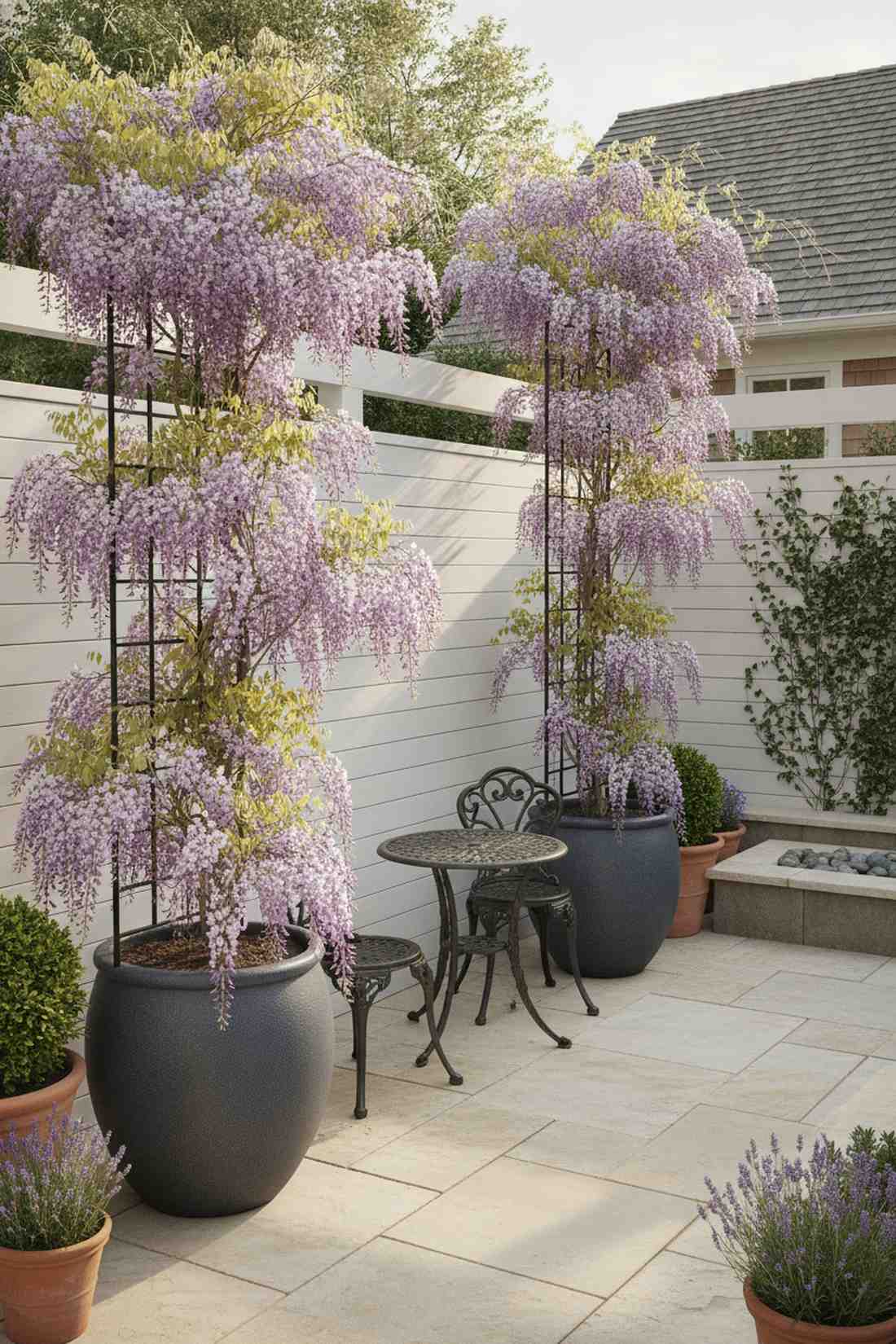
Blooms with tightly packed, fragrant purple cones that fit perfectly onto a small patio without devouring the house. This compact container wisteria display brings that massive estate feeling down to a manageable, urban scale.
Most wisteria takes a decade to bloom, but this specific ‘Amethyst Falls’ cultivar flowers its very first year, giving you a remarkably fast, premium visual payoff. Upgrading to massive heavy-weight resin planter urns ensures the top-heavy vine won’t blow over in a summer thunderstorm.
Setting up the premium container and trellis combo costs $90–$150. Save this for your small-space garden blueprints!
- Key Materials: Amethyst Falls wisteria, large heavy planter, structural potting soil
- Vibe / Style: Elegant compact courtyard
- Difficulty: Intermediate container gardening
- Budget Breakdown: Resin urn: $60 | Plant: $45 | Soil: $20.
- Creator’s Tip: Because it blooms on new wood, you can ruthlessly chop the shape back every late winter without ever losing your spring flowers.
- Smart Sourcing: UV-coated heavyweight resin planter urns and premium moisture-control potting soil mix (bulk bag).
Before you quit scrolling, this final cold-hardy vine is the absolute holy grail of spring landscaping.
26. Clematis montana
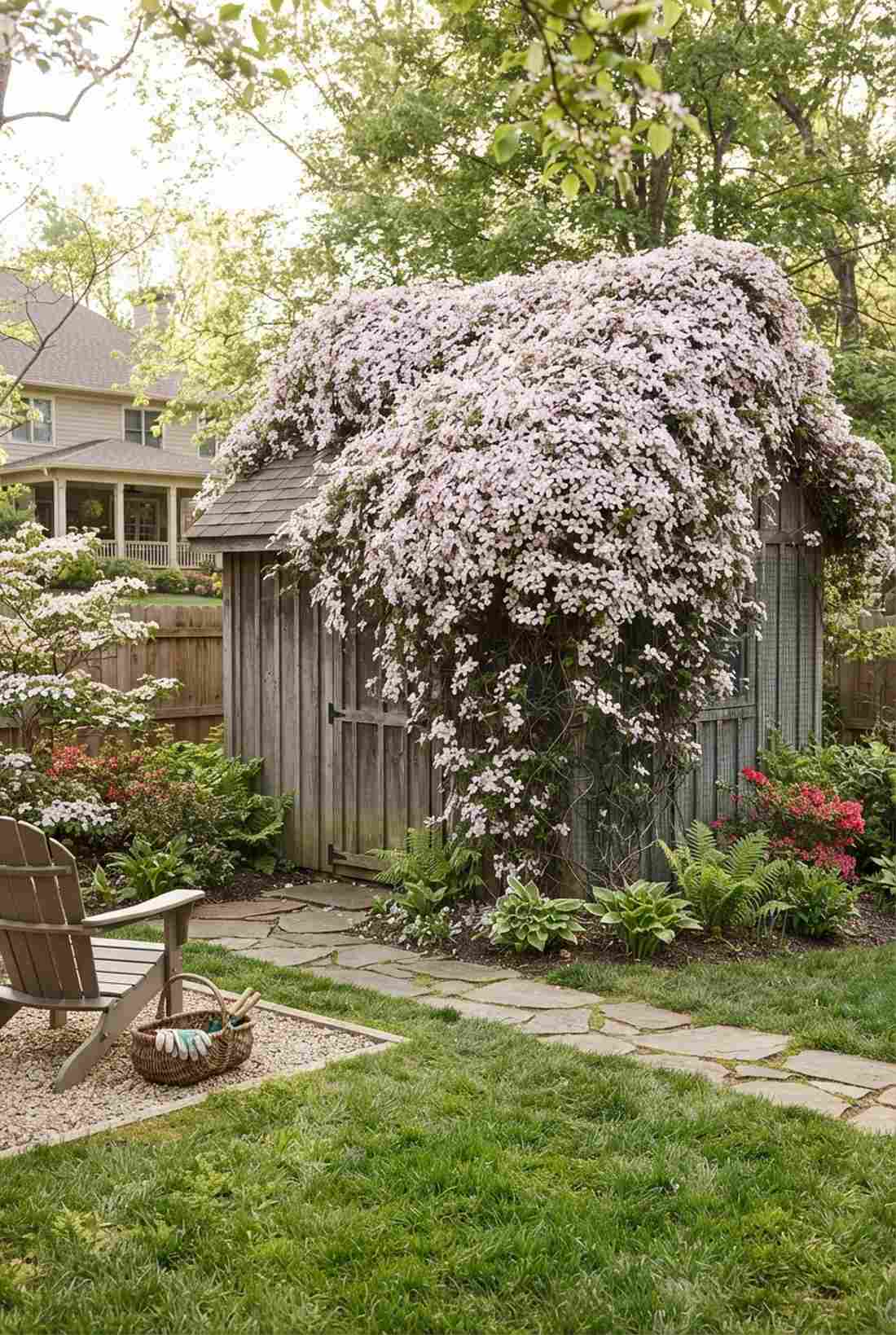
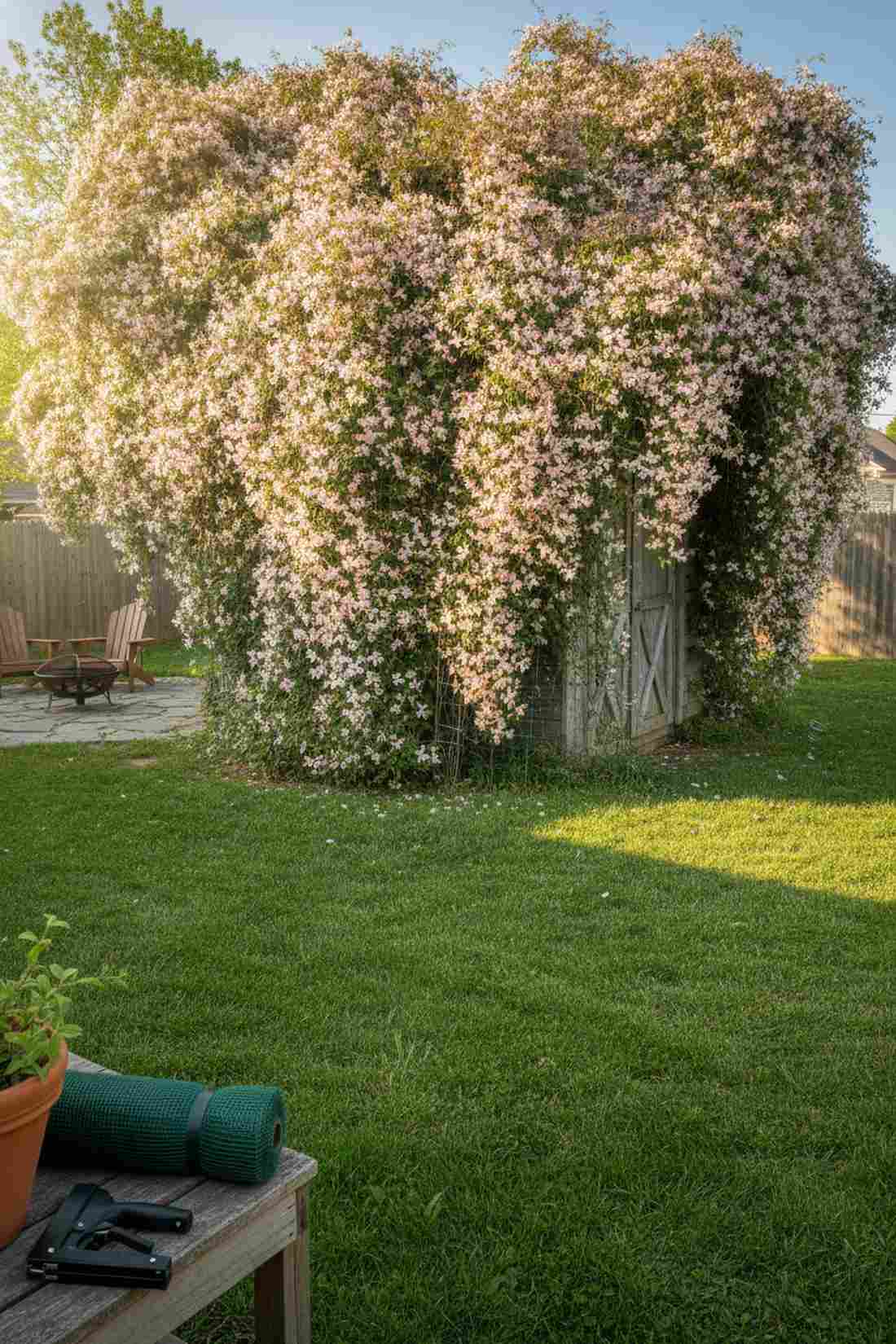
Unleashes a tsunami of thousands of pink or white flowers that literally smells like fresh vanilla floating on the spring breeze. Draping a massive spring floral canopy over a bleak garden shed completely camouflages the structure in an ocean of blooms.
Unlike fussy hybrid clematis that die constantly, this vigorous mountain species handles terrible soil and light shade while delivering an incredibly expensive-looking spring show. Sourcing commercial-grade plant support netting and stapling it directly to the shed walls provides the perfect invisible ladder.
A full shed cover-up costs under $60. Highly recommended for an unforgettable May garden display.
- Key Materials: Clematis montana plant, heavy-duty support netting, heavy staple gun
- Vibe / Style: Breathtaking spring explosion
- Difficulty: Easy rapid coverage
- Budget Breakdown: Netting & Staples: $20 | Plant: $35.
- Creator’s Tip: Only prune this immediately after it finishes flowering; if you trim it in winter or early spring, you will cut off all the buds.
- Smart Sourcing: Commercial-grade heavy-duty plant support netting (roll) and a heavy-duty steel staple gun kit.
Transform Vertical Spaces with Zone 5 Climbers
Selecting the exact right climbing plants zone 5 maximizes your vertical real estate while guaranteeing survival through brutal winters. By utilizing these exactly 26 premium vine choices, you bypass amateur mistakes and achieve a designer-level aesthetic that looks wildly expensive but remains budget-friendly. Always match your vine’s growth habit with commercial-grade support structures—like high-tensile wire kits and UV-coated lattice—for long-term success. Combine heavy-blooming classics with highly-textured foliage screens, and don’t hesitate to deploy smart microclimate tactics to introduce stunning crossover species into your cold-climate yard.
Frequently Asked Questions
What is the difference between climbing plants for zone 5 and zone 4?
Zone 4 plants are bulletproof survivors engineered for brutal -30°F drops, whereas zone 5 selections handle -20°F. If you live in an exposed area with harsh winds, integrating climbing plants for zone 4 like the rugged arctic kiwi provides massive winter insurance. For an upscale look, many gardeners use a mix: relying on heavy-duty zone 4 vines for structural coverage while utilizing premium winterizing mulch bulk packs to protect more delicate zone 5 clematis hybrids.
Can I grow climbing plants zone 9 varieties in zone 5?
Most climbing plants zone 9 selections will absolutely shatter and die during a zone 5 winter because they demand a 20°F minimum. However, you can treat fast-growing southern vines as seasonal annuals or use heavy-duty resin planter boxes to move them indoors before the frost. For permanent, high-end landscape architecture, always stick to cold-rated perennials paired with commercial-grade trellis kits so your investment returns bigger every single year.
How long do climbing plants take to cover a fence in zone 5?
Vigorous beasts like the silver lace vine can devour an 8-foot privacy fence in just 2-3 seasons, especially when jump-started with premium organic compost starter packs. Slower, more architectural plants like climbing hydrangea take 4-5 years to build their dense root network before exploding upward. You can speed up any vine’s vertical climb by installing pre-cut tension wire guides that perfectly direct the early growth without snapping the stems.
Do climbing plants damage brick or siding in zone 5?
Self-clinging vines with aggressive aerial rootlets will absolutely destroy aging mortar and pry off wooden siding if left unchecked. To achieve that pristine estate look without the massive repair bill, always mount twining vines onto standalone heavy-duty galvanized pergola brackets or stainless steel wire grids installed a few inches off the wall. This creates a brilliant, floating green-wall effect while completely protecting your home’s exterior.
What are the best climbing plants for zone 6 that also survive zone 5?
You can easily pull off gorgeous climbing plants for zone 6—like Carolina jessamine or delicate climbing roses—by hacking your yard’s microclimates. Planting against heat-retaining brick walls facing south creates a thermal pocket that mimics zone 6 conditions. Securing these borderline plants with natural breathable burlap wraps and applying thick organic winterizing mulch packs during the first two winters practically guarantees a stunning, high-CPC premium floral display.