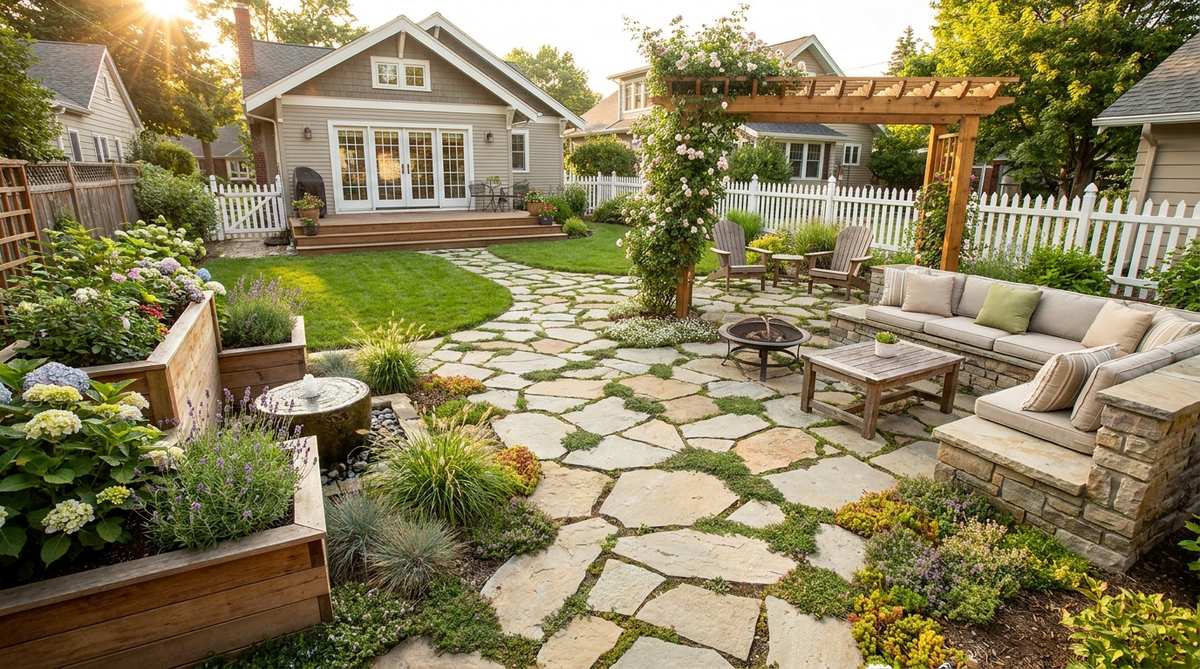
Elevating a small patio garden requires strategic paver placement rather than massive square footage. Grabbing bulk landscaping materials and precise layout blueprints drastically cuts setup costs. This strategy instantly locks in a high-end, designer outdoor space.
Design Snapshot Key Principles
- Intentional Gaps: Leave 3-6 inch planting pockets between pavers for ground covers that soften hard edges and improve drainage
- Diagonal Orientation: Angling paver runs at 45 degrees creates the longest sight line in confined spaces, visually expanding width
- Vertical Layering: Combine low pavers with mid-height plantings and tall vertical elements to maximize planting diversity without ground area sacrifice
- Material Proportion: Aim for 60-70% hardscape to 30-40% planting in high-traffic zones; reverse this ratio in contemplative areas
Geometric & Modern Layouts for Contemporary Small Patio Gardens
Clean lines and angular precision define this category, where pavers create strong structural statements. These layouts excel in urban settings and contemporary homes where the patio extends architectural language into the landscape.
1. Checkerboard Grid with Alternating Plant Squares
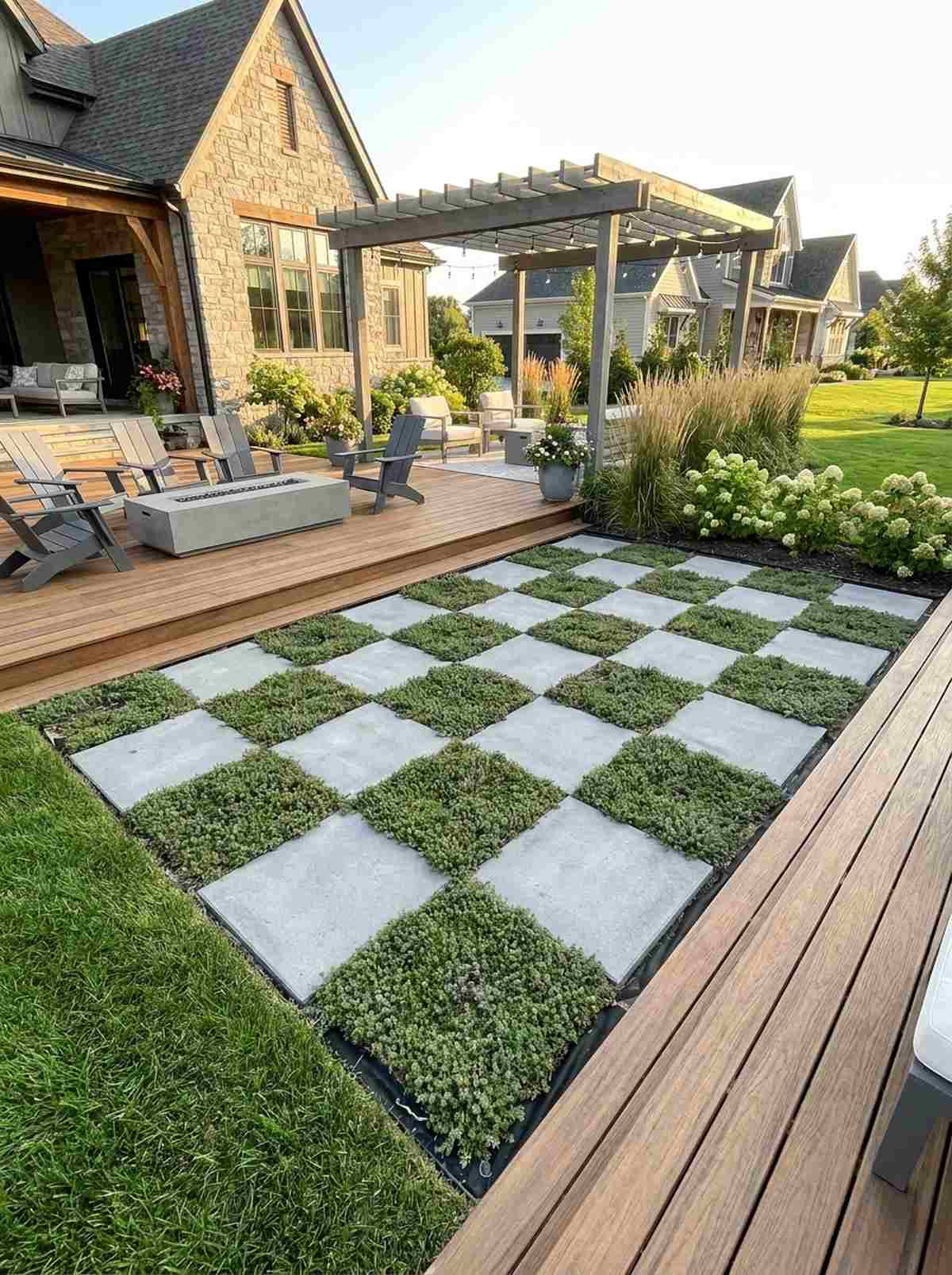
This geometric small patio design feels like an upscale European courtyard right in your backyard. It works exceptionally well for flat, modern outdoor lounge spaces craving rigid greenery.
Most beginners ignore structured layouts, missing out on a design that delivers a highly premium finish. Alternating 24×24 pavers with low mounding plants instantly upgrades your property value using premium paver kits while keeping ground cover neatly contained.
You can easily pull this off for around $80–$150 depending on your stone choice. Save this to your DIY weekend backyard upgrade board.
- Key Materials: 24×24 architectural concrete slabs, creeping thyme seeds
- Vibe / Style: Minimalist modern luxury
- Difficulty: Intermediate measuring required
- Budget Breakdown: Pavers: $100 | Plant Plugs: $45
- Creator’s Tip: Use a compacting tool on your base layer so the grid stays flawlessly level over time.
- Smart Sourcing: heavy-duty polymeric sand (50lb bag) and pre-cut weed barrier squares.
2. Linear Stepping Stone Ribbon
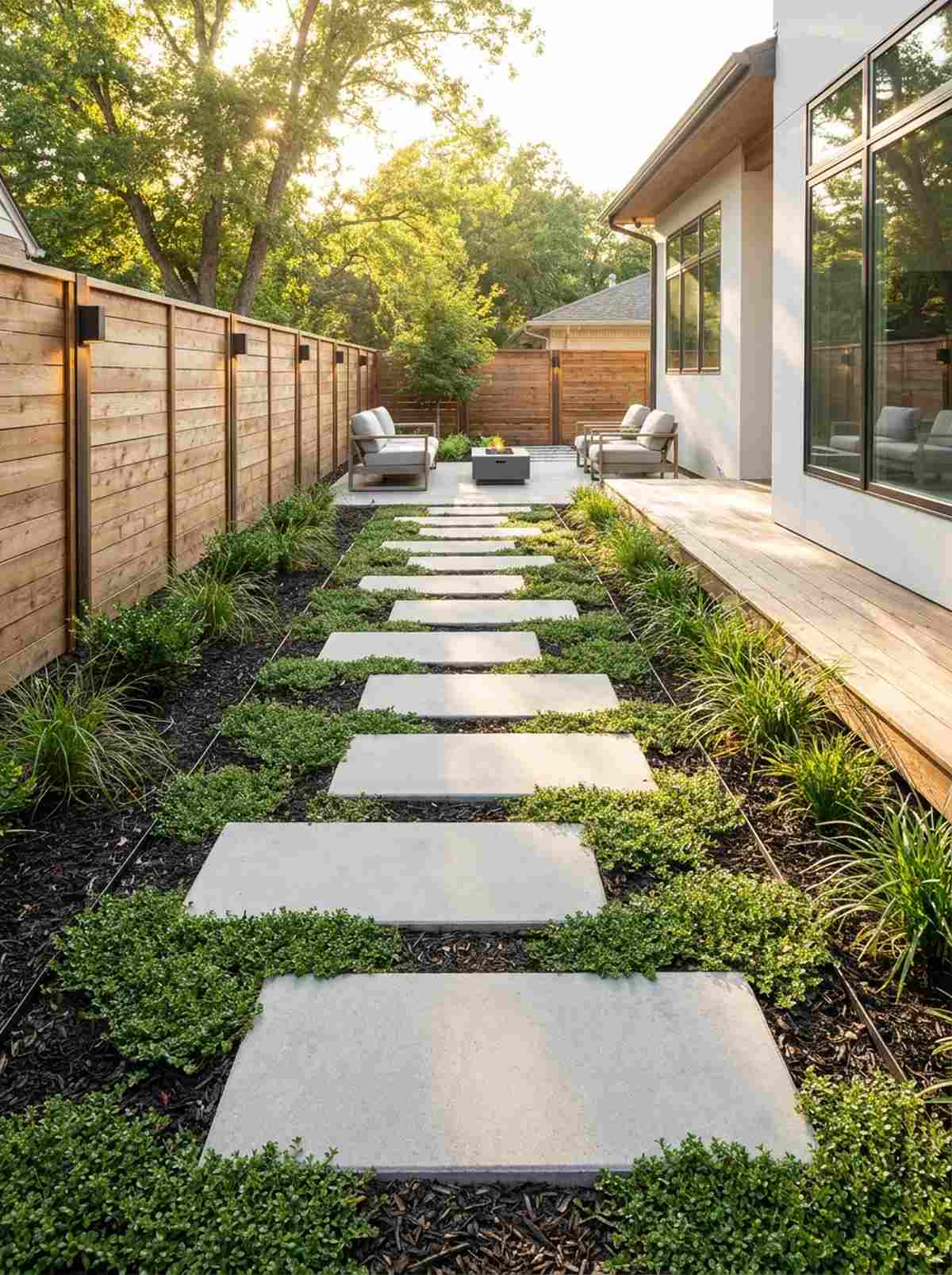
A striking narrow patio walkway setup that feels like a modern art installation guiding you home. Perfect for tight side yards needing serious visual length.
Contractors often overcharge for this look, yet it looks far more expensive than it is when done DIY. Staggering 12×24 inch rectangles along a central spine frames the surrounding turf tape and mulch, pushing the eye forward.
Expect to spend about $60–$90 for basic materials. Pin this if you’re planning a side-yard transformation.
- Key Materials: Rectangular stepping stones, dense ground cover plugs
- Vibe / Style: Sleek contemporary pathway
- Difficulty: Beginner friendly
- Budget Breakdown: Stones: $60 | Mulch/Soil: $25
- Creator’s Tip: Space them exactly 18 inches apart for a completely natural walking stride.
- Smart Sourcing: commercial-grade landscaping fabric roll and UV-resistant edging spikes.
3. Diagonal Lattice Pattern
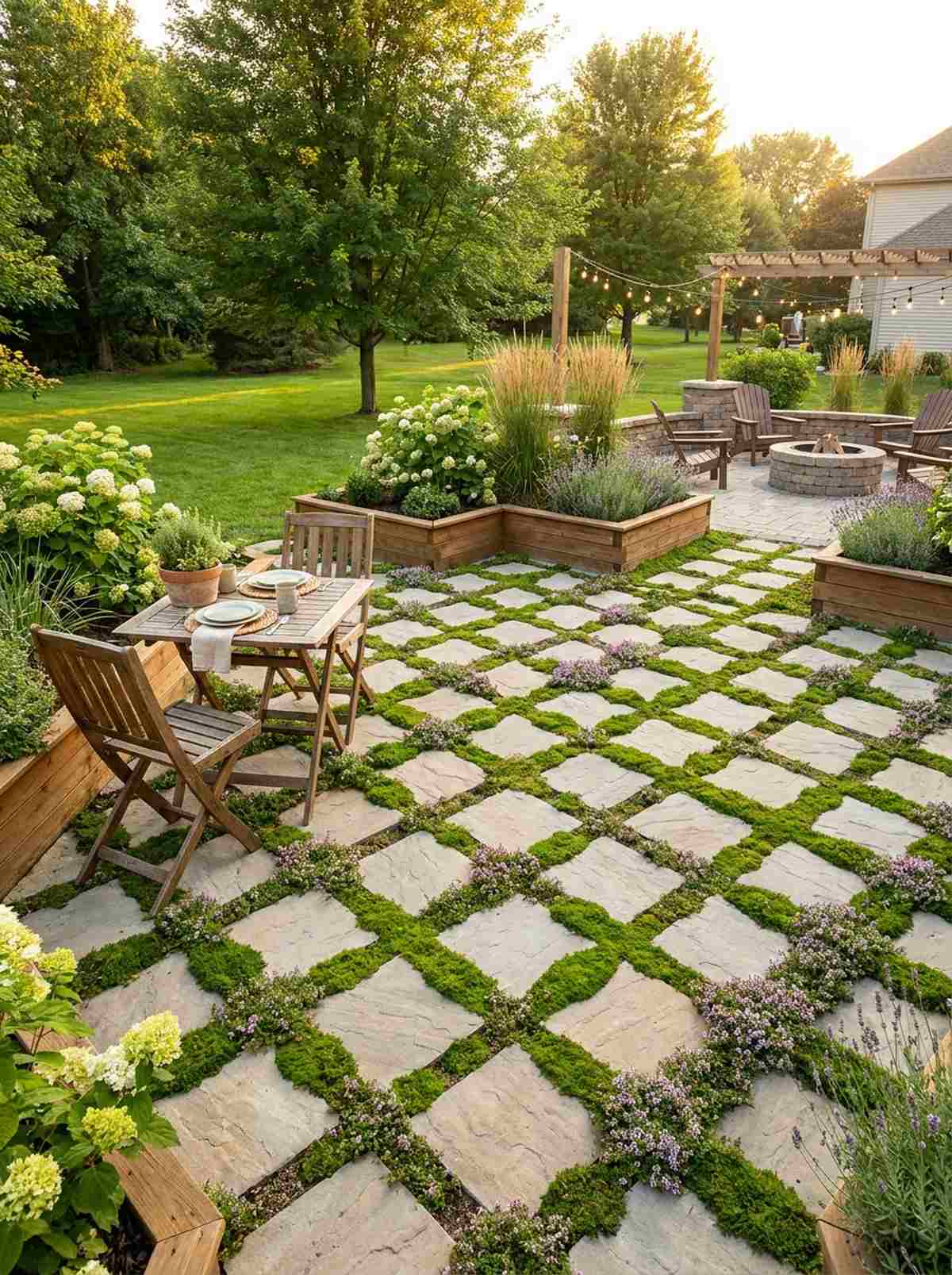
This angled hardscape integration feels like a secret botanical garden you accidentally discovered. Ideal for boxing out a small dining corner on an existing concrete slab.
Playing safe with straight lines is a mistake; a 45-degree diamond grid visually tricks the brain into seeing double the width. Filling those precise corner gaps with tough creeping varieties gives a designer-level finish.
Setting this up runs near $100–$130 depending on filler plants. It’s a fast upgrade that completely changes the vibe.
- Key Materials: 12-inch square pavers, moss plugs
- Vibe / Style: Dynamic spatial illusion
- Difficulty: Advanced cutting may be needed at borders
- Budget Breakdown: Square Pavers: $80 | Filler Soil: $30
- Creator’s Tip: Use a chalk line tool to keep your 45-degree angles from drifting as you lay them.
- Smart Sourcing: masonry diamond blade (for clean cuts) and bulk creeping thyme seed packets.
4. Modular Block Clusters
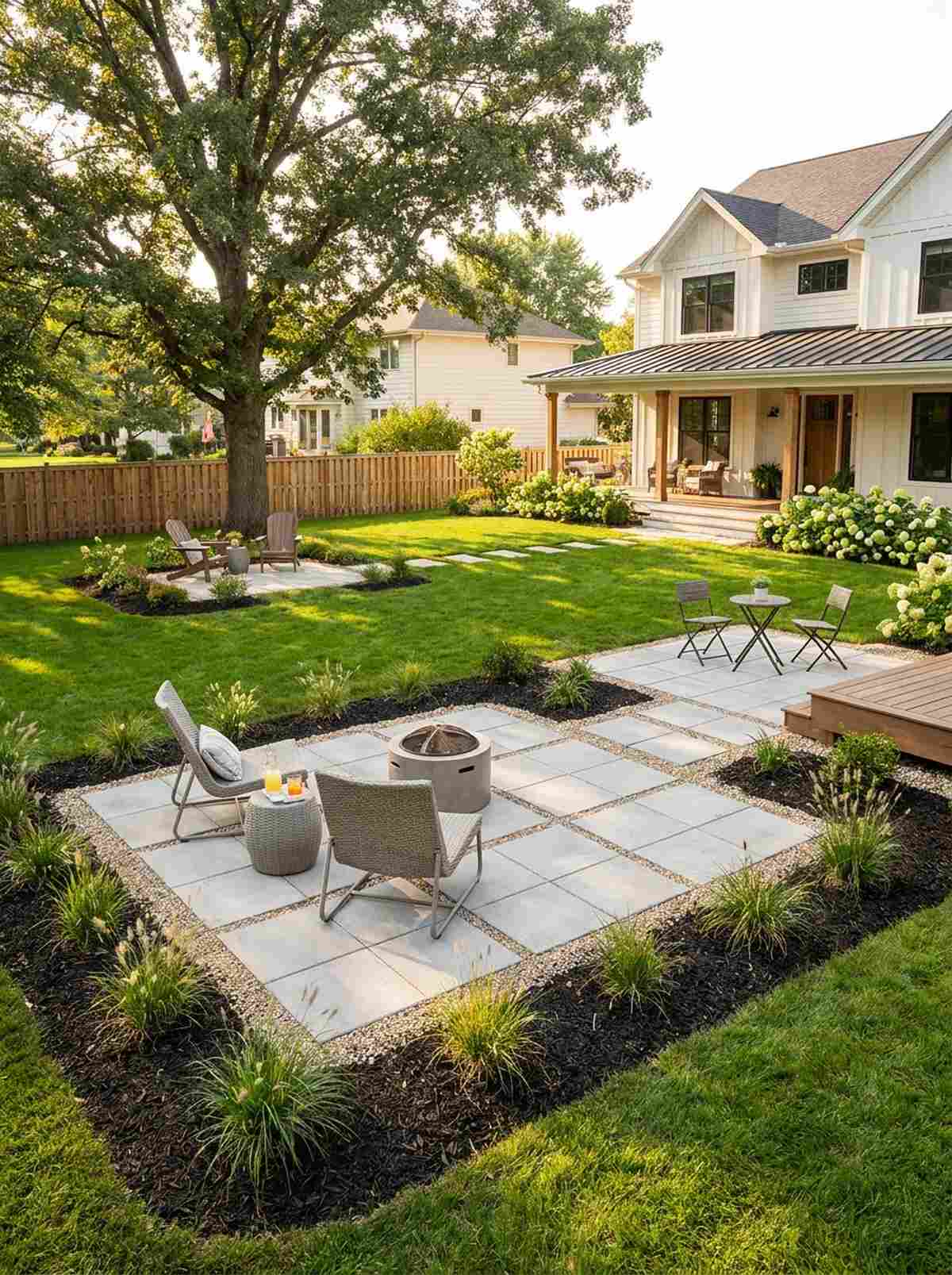
This clustered patio stepping stone layout feels like tiny floating islands in a sea of green. Exceptionally brilliant for renter-friendly yards or disjointed seating spots.
Instead of paving the whole yard, grouping blocks saves thousands and completely eliminates muddy corners. You get dedicated micro-patios that let bulk landscaping mulch or greenery thrive around them.
Easily done over a Saturday for $40–$70. Save this idea for an ultra-budget outdoor lounge.
- Key Materials: Grouped concrete squares, fine gravel or soil
- Vibe / Style: Segmented modern lounge
- Difficulty: Very easy
- Budget Breakdown: Block clusters: $40 | Base sand: $15
- Creator’s Tip: Sink the blocks half an inch below the turf line so you can mow right over them.
- Smart Sourcing: interlocking paver base panels and premium patio sealing kits.
This next setup completely flips standard hardscaping rules and creates a stunning optical illusion…
5. Herringbone Border Frame
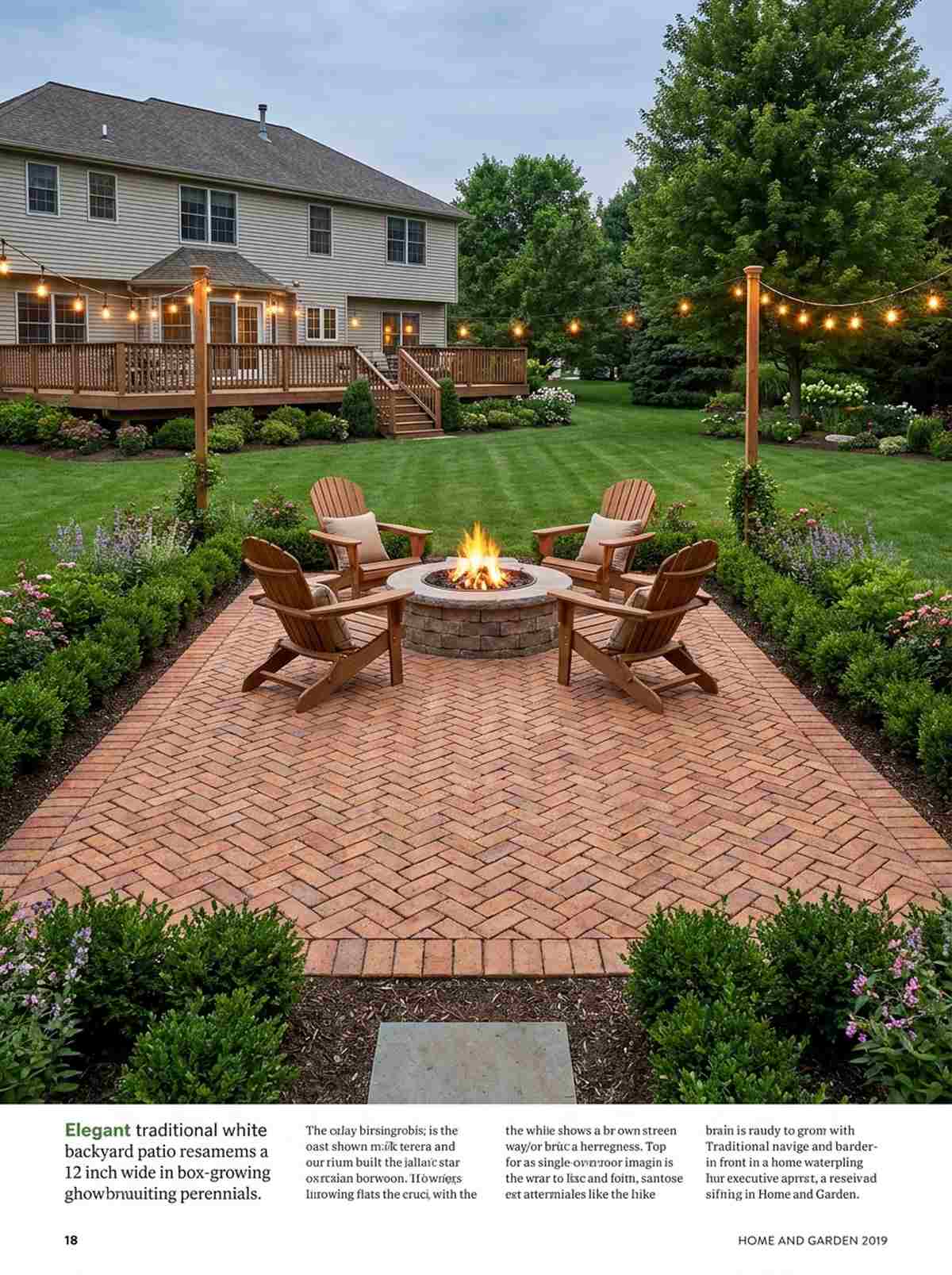
A classic brick border patio design that feels like a historic estate courtyard. Works wonders for anchoring a fire pit or outdoor dining table in the center.
People assume herringbone is too hard, but this layout creates an elite aesthetic on a dime when kept to a central rug-like footprint. Wrapping it with a 12-inch planted perimeter frames the masonry beautifully.
A solid weekend project costing around $150–$250. Pin this if you love timeless, structured looks.
- Key Materials: Standard clay or concrete bricks, border shrubs
- Vibe / Style: Traditional elegance
- Difficulty: Time-intensive pattern matching
- Budget Breakdown: Bricks: $160 | Edge restraints: $30
- Creator’s Tip: Dry-fit your border row first to ensure you don’t end up with awkward sliver cuts at the corners.
- Smart Sourcing: flexible paver edge restraints (bulk pack) and weatherproof outdoor string lights.
6. Stacked Bond with Linear Planting Strips
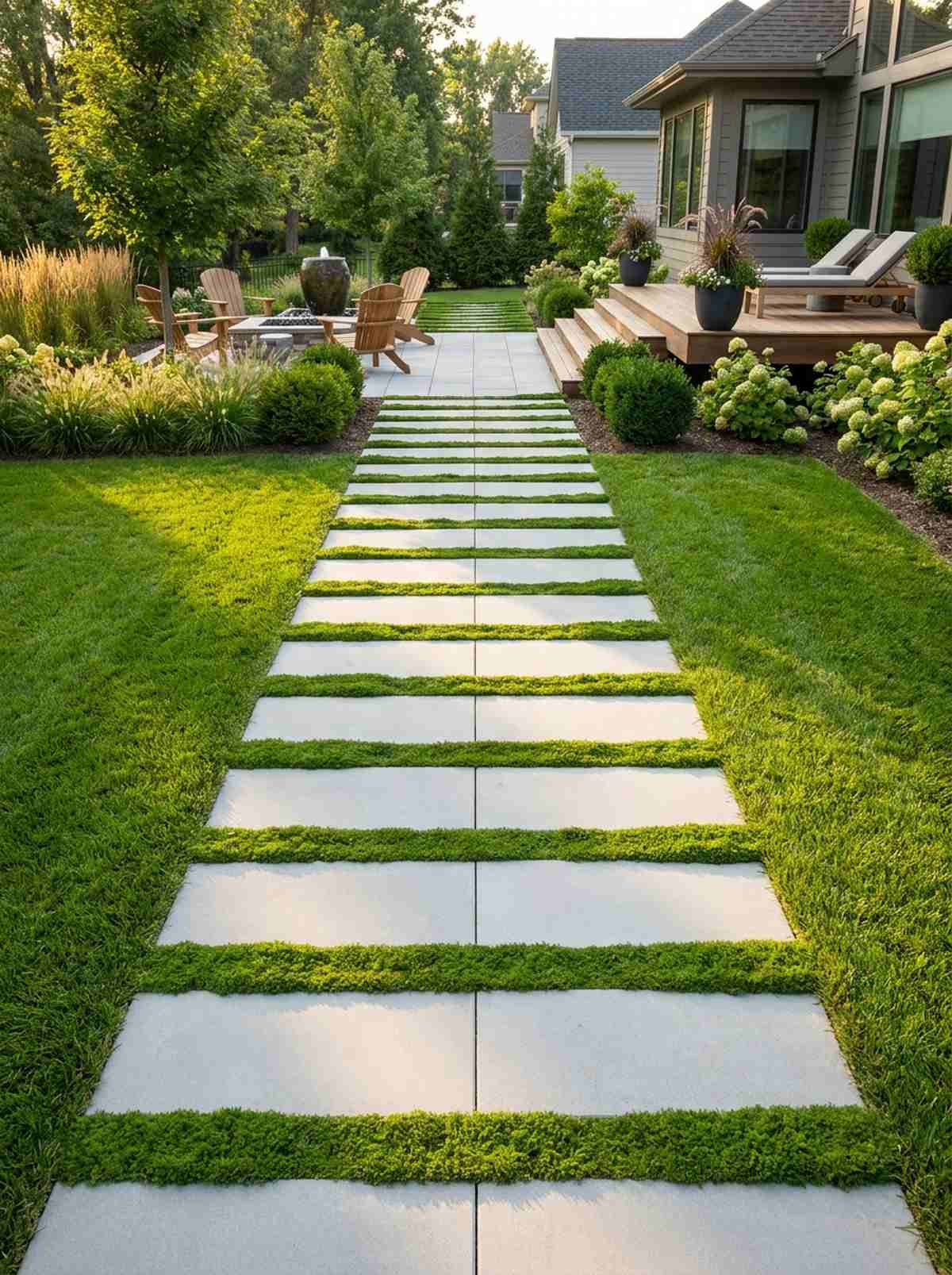
This striped hardscape and plant layout feels like a tranquil resort spa walkway. Best used to stretch out the visual length of a cramped, stubby backyard.
Ditching mortar for 2-inch planted joints is a clever hack that dramatically lowers material costs while upgrading the visual impact. The continuous green lines draw the eye straight to your garden’s focal point.
Expect to spend $90–$140 for this linear magic. Highly recommended for a quick weekend win.
- Key Materials: 6×18 long pavers, Irish moss flats
- Vibe / Style: Elongated zen symmetry
- Difficulty: Easy alignment
- Budget Breakdown: Long pavers: $110 | Moss flats: $30
- Creator’s Tip: Use wooden spacer blocks while laying to guarantee your planting strips are perfectly identical in width.
- Smart Sourcing: pre-mixed structural soil bags and moisture-retaining hydrogel crystals.
7. Concentric Square Frames
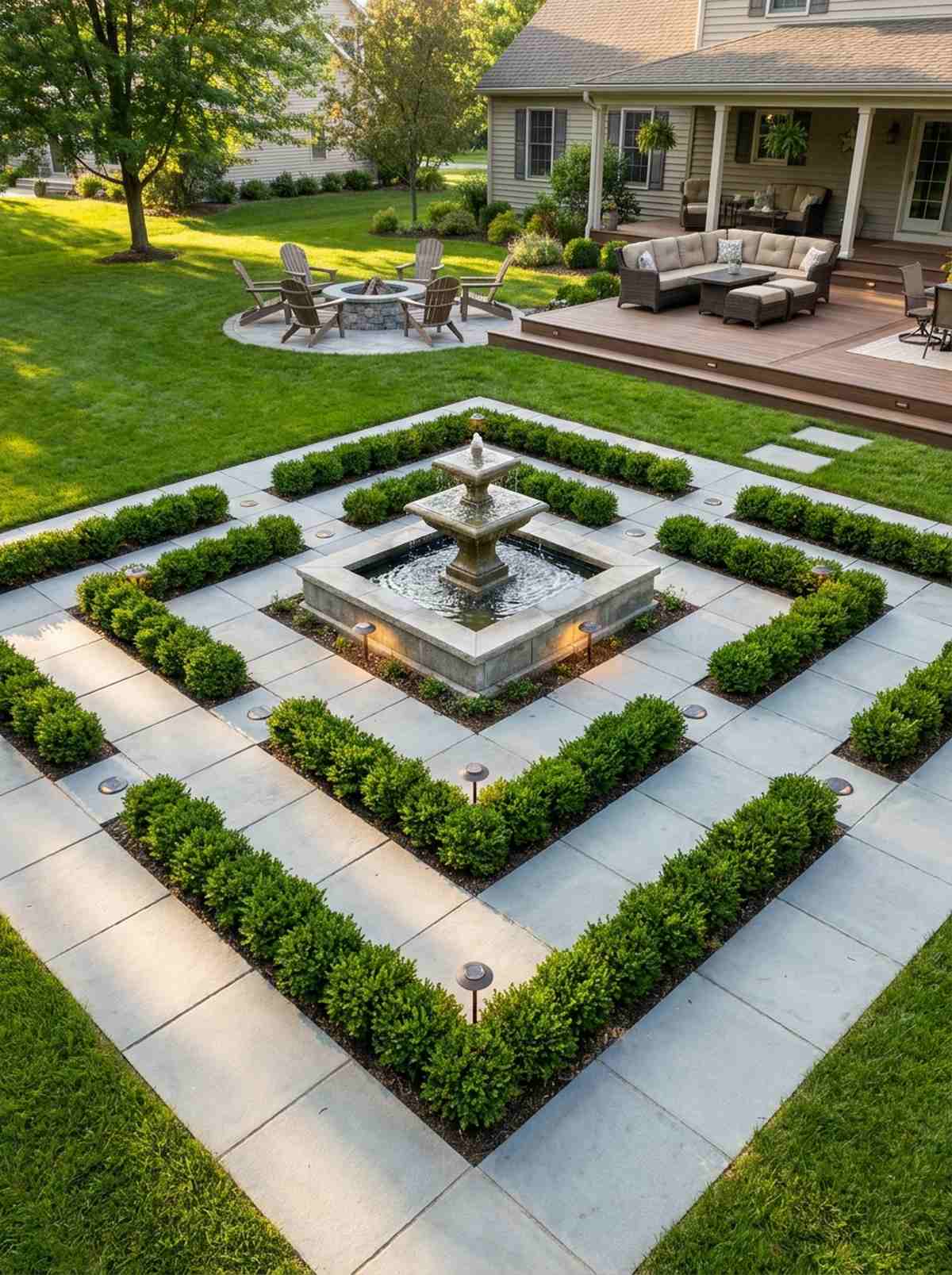
A mesmerizing nested patio paver arrangement that feels like a modern labyrinth. Perfectly suited for framing a central fountain or a striking specimen tree.
Most basic square layouts are boring, but nesting them with alternating plant rings creates a high-impact luxury focal point. The geometry naturally forces attention to whatever you place directly in the middle.
You can execute this for roughly $120–$200. Save this to your high-end landscape ideas board.
- Key Materials: Square paver units, uniform border plants
- Vibe / Style: Focused geometric drama
- Difficulty: Requires strict square squaring
- Budget Breakdown: Hardscape blocks: $140 | Core feature: $50
- Creator’s Tip: Build from the outside in to ensure your final center square fits without strange gap adjustments.
- Smart Sourcing: heavy-duty landscape staple box and solar-powered center uplights.
Organic & Naturalistic Designs for Flowing Small Patio Gardens
These layouts embrace irregular forms and natural rhythms, integrating pavers into planting schemes that mimic woodland clearings or meadow pathways. The hardscape serves plants rather than dominating them.
8. Irregular Flagstone Meadow
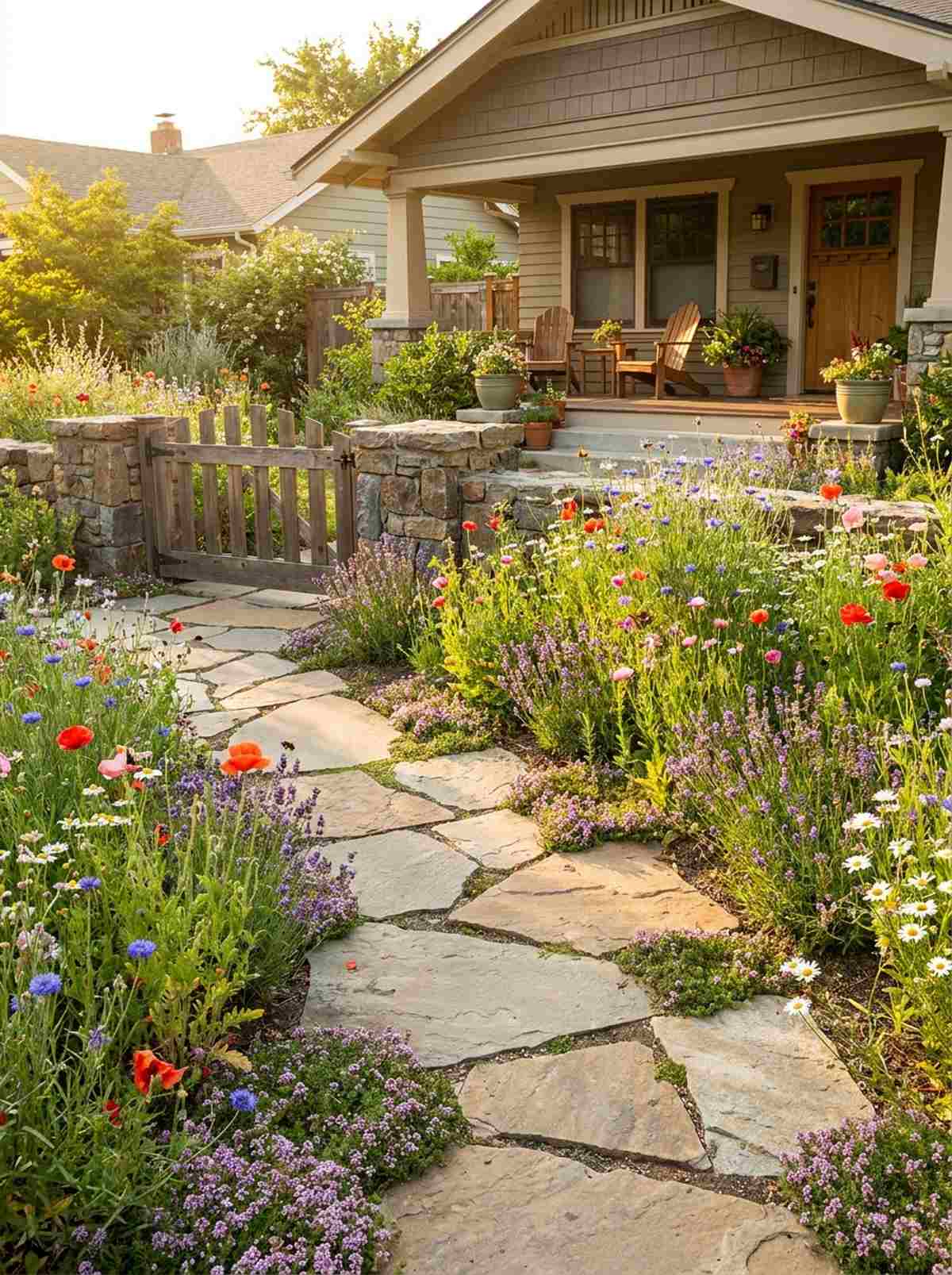
This wild flagstone pathway integration feels straight out of a storybook cottage. Exceptionally stunning for front yard pollinator gardens replacing boring lawns.
Symmetrical paths can feel rigid, but scattering varied flagstones organically delivers a surprisingly premium look that blends right into nature. Letting creeping thyme spill over the edges is the ultimate cottage-core flex.
Sourcing local stone keeps this around $100–$150. Pin this if you want to ditch your grass.
- Key Materials: Natural flagstone slabs, pollinator seed mixes
- Vibe / Style: Enchanted cottage meadow
- Difficulty: Fun and forgiving
- Budget Breakdown: Flagstone pallets: $110 | Seeds: $20
- Creator’s Tip: Dig the stones down so they are flush with the soil to prevent tripping hazards in the dense foliage.
- Smart Sourcing: wildflower seed scatter tubes (bulk) and organic root stimulator granules.
Wait until you see how cheap this next curving path is to build…
💡 Must-Have Supplies for High-End Setups
To build these setups faster and ensure they last, skip the generic craft aisles and invest in the right foundational kits.
- Base & Support: heavy-duty permeable paver base panels
- Setup Tools: professional dead blow masonry hammer kits
- Weather/Durability Protection: commercial-grade wet-look stone sealer
9. Curved Spine Pathway
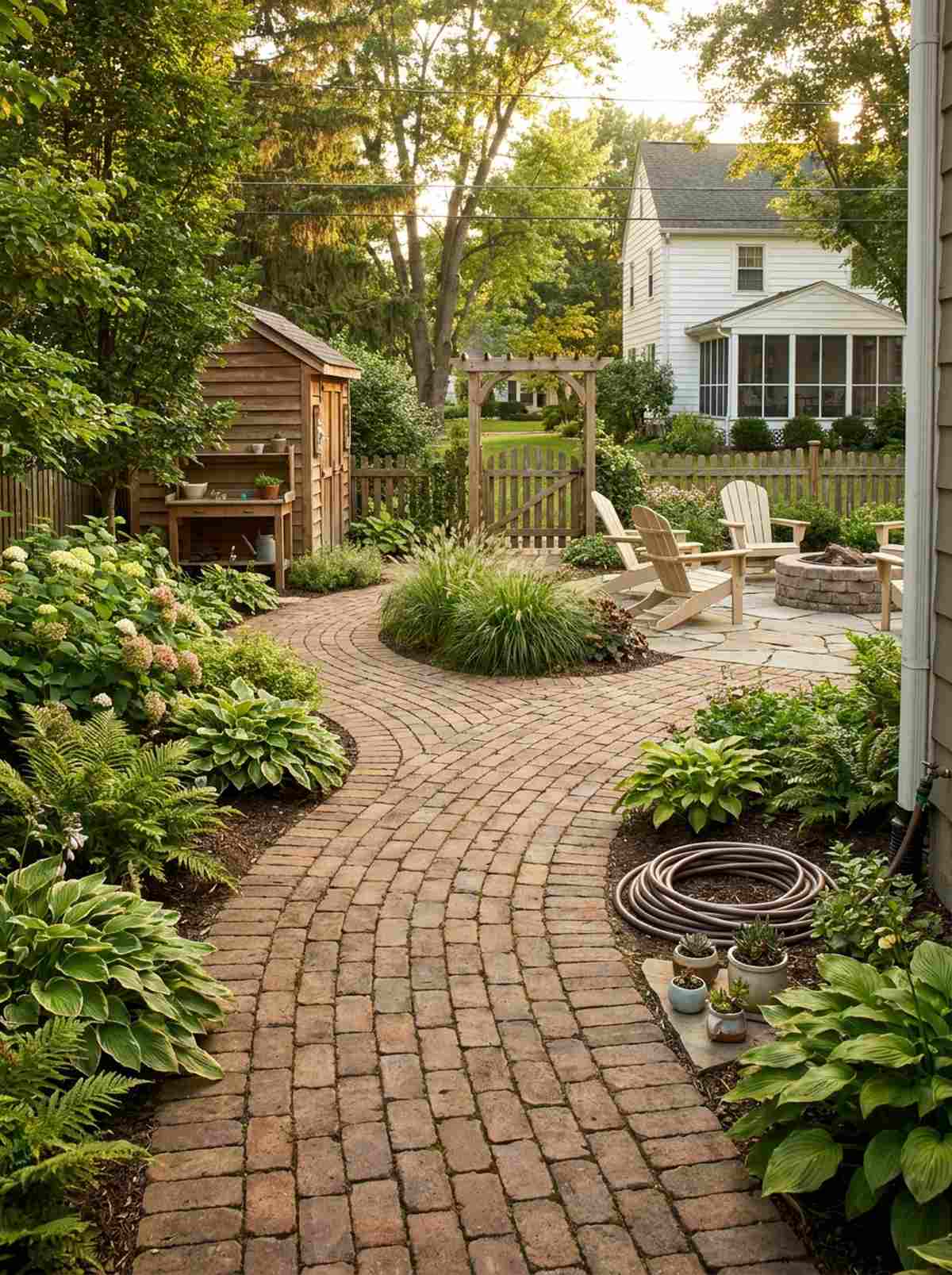
A gentle serpentine garden walkway that feels like a quiet walk through a botanical preserve. Amazing for breaking up the boxy feel of tiny, fenced-in urban backyards.
Straight lines emphasize how small a yard is; a smooth curve hides the endpoint and visually expands the property. Flanking it with miniature garden supplies and tiered hostas adds unbelievable depth.
Budget roughly $90–$160 for a flowing design. Save this to your small backyard layout board.
- Key Materials: Flexible paver bricks, layered edge perennials
- Vibe / Style: Flowing organic journey
- Difficulty: Requires careful curve planning
- Budget Breakdown: Brick pavers: $100 | Edge plants: $45
- Creator’s Tip: Lay out a garden hose first to map your curve perfectly before doing any digging.
- Smart Sourcing: bendable landscape edging rolls and pre-cut weed barrier tape.
10. Island Outcrop Clusters
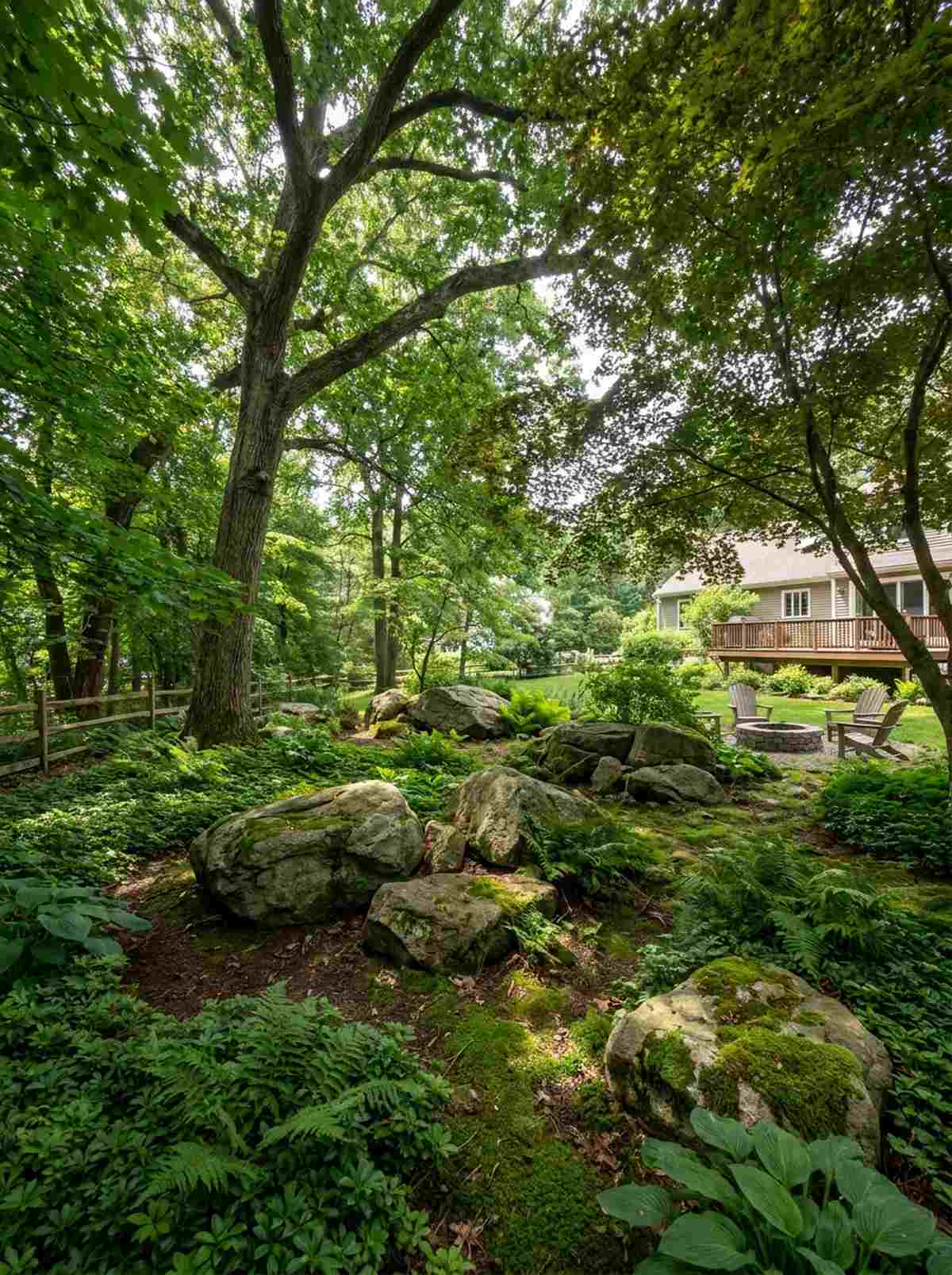
This natural stone grouping layout feels like ancient rocks resting peacefully in a lush forest. Perfect for deep shade zones under large trees where grass refuses to grow.
Forcing a full patio under a tree usually damages roots, but dropping scattered step-clusters provides function without the harm. It’s a ridiculously smart way to utilize dead space using terrarium accessories at a macro scale.
This minimalist approach only costs around $50–$85. Highly recommended for a quick weekend win.
- Key Materials: Assorted boulder stones, shade-loving ground cover
- Vibe / Style: Untamed forest clearing
- Difficulty: Easy
- Budget Breakdown: Small boulders: $60 | Shade plants: $20
- Creator’s Tip: Bury the bottom third of the stones so they look naturally embedded rather than just placed on top.
- Smart Sourcing: shade-tolerant moss slurry kits and heavy-duty landscaping gloves.
11. River Rock Stream Integration
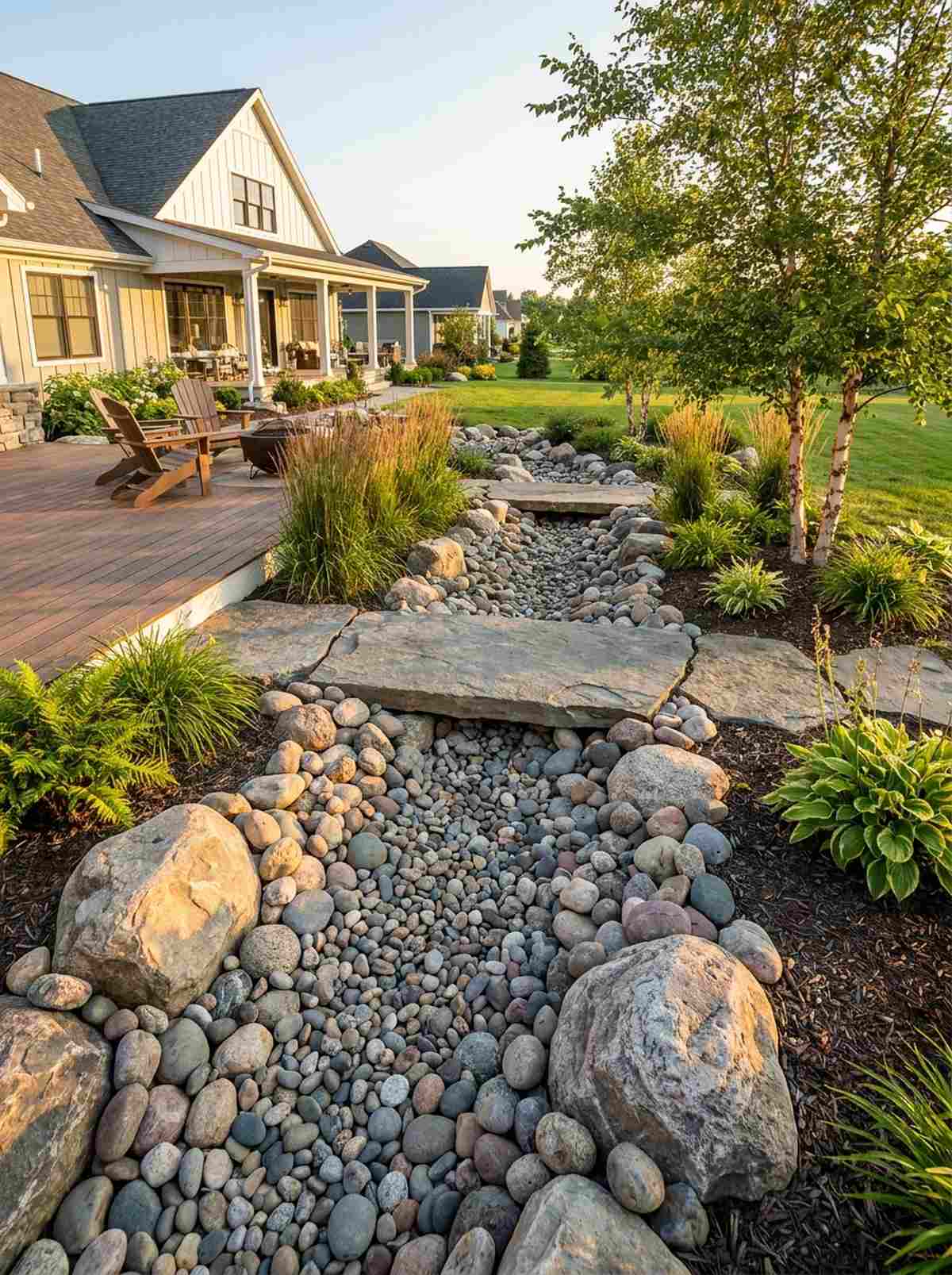
A stunning dry creek bed hardscape that feels like a tranquil mountain stream in your yard. The ultimate fix for low-lying patio areas that struggle with seasonal puddles.
Turning a drainage nightmare into a premium focal point is the ultimate landscaping flex. Pavers bridge the river rock channel, masking functional French drains beneath a gorgeous, water-inspired aesthetic.
Materials run about $120–$180. Pin this if you battle backyard flooding.
- Key Materials: Polished river rock, heavy stepping slabs
- Vibe / Style: Zen water illusion
- Difficulty: Intermediate grading required
- Budget Breakdown: River rocks: $90 | Slabs: $60
- Creator’s Tip: Use multiple sizes of river rock—large on the edges, small in the center—to mimic real water flow.
- Smart Sourcing: bulk bagged polished river pebbles and perforated drainage pipe kits.
12. Woodland Clearing Circle
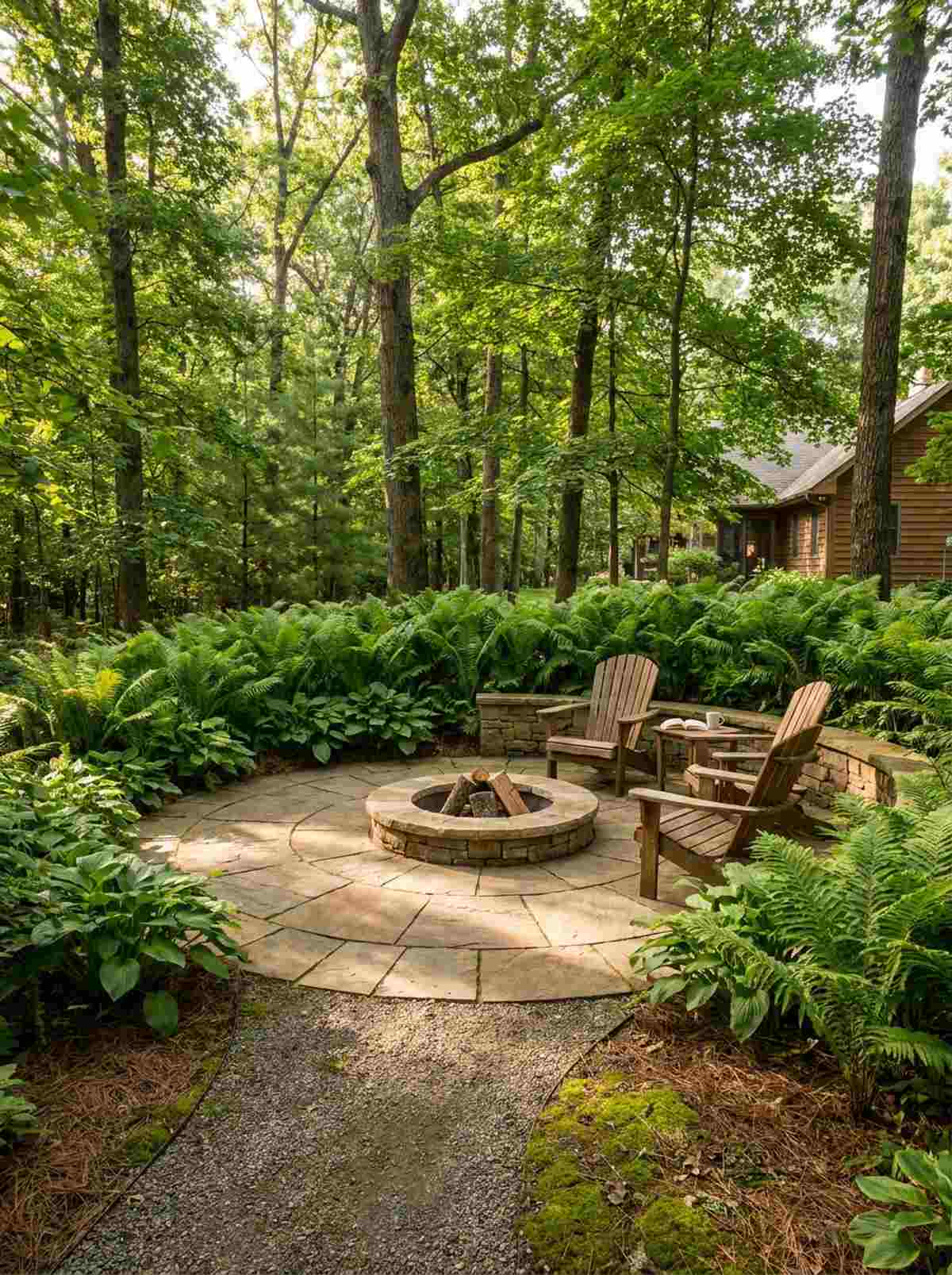
This intimate circular patio retreat feels like a hidden sanctuary hidden deep in the woods. Ideal for creating a private reading nook away from the main house.
Square patios expose you to neighbors, while a tight circular clearing hugged by tall ferns creates an elite sense of enclosure. The contrast between precise geometry and wild planting looks incredibly expensive.
You can easily pull this off for around $130–$190. Save this idea for a cozy outdoor escape.
- Key Materials: Radial cut pavers, tall fern or hosta borders
- Vibe / Style: Secluded forest hideaway
- Difficulty: Moderate circular cutting
- Budget Breakdown: Paver kit: $140 | Ferns: $40
- Creator’s Tip: Buy a pre-designed circular paver kit so you don’t have to manually cut every single wedge stone.
- Smart Sourcing: circular fire pit paver kits and bulk organic compost bags.
13. Moss and Stone Tapestry
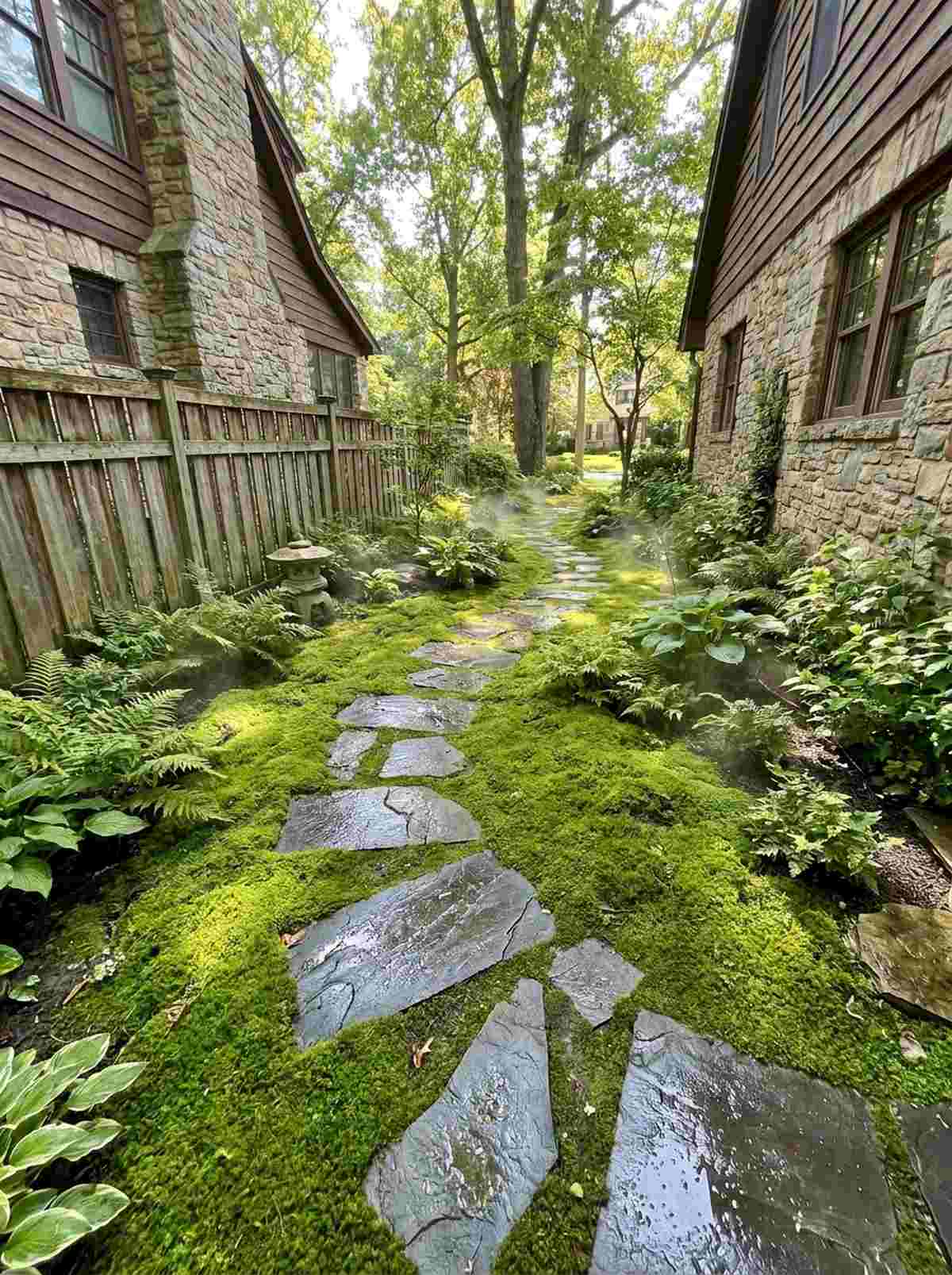
A breathtaking low-profile zen groundcover that feels soft, ancient, and deeply calming. Exceptionally well-suited for damp, shaded side yards between tall buildings.
Replacing struggling grass with a moss tapestry is a zero-mow secret that delivers a surprisingly premium look. Flat stones nested directly into the vibrant green bed create a low-maintenance masterpiece.
This lush setup costs about $70–$110. Pin this if you want a zero-mowing solution.
- Key Materials: Thin slate flagstones, live moss sheets
- Vibe / Style: Japanese meditation floor
- Difficulty: Easy but requires patience for moss spreading
- Budget Breakdown: Slate: $50 | Moss kits: $40
- Creator’s Tip: Keep the moss heavily misted for the first three weeks until it firmly attaches to the native soil.
- Smart Sourcing: live sheet moss bulk boxes and automated micro-misting hoses.
14. Boulder Garden Stepping Sequence
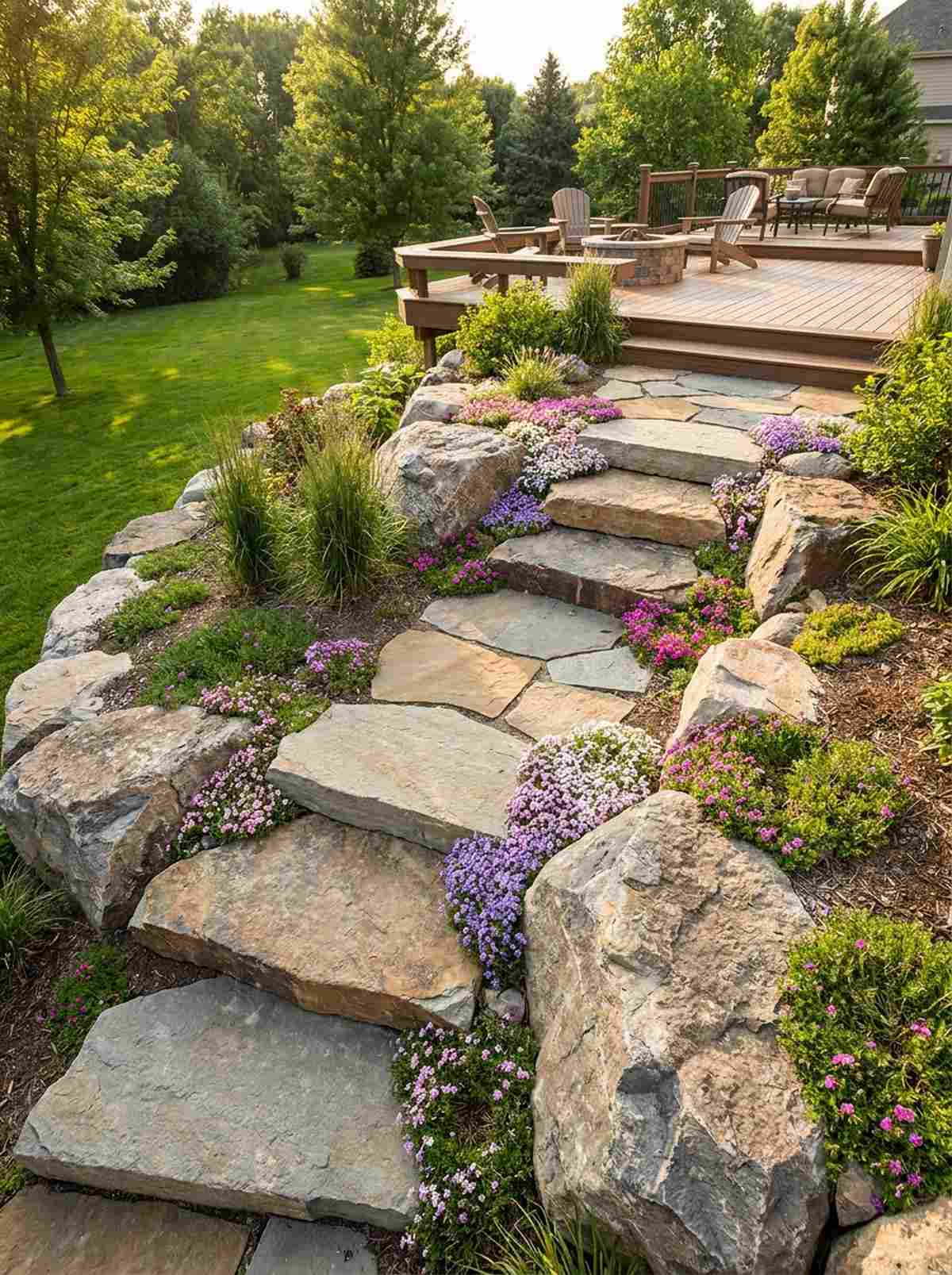
A rugged stone landscape pathway that feels like a trail on a rocky mountainside. Works exceptionally well for sloped yards where standard flat patios would wash away.
Mixing massive anchor boulders with flat steppers completely eliminates the flat, boring look of suburban yards. Tough perennials fill the gaps, hiding the dirt and locking the massive stones firmly in place.
Expect to spend $150–$250 depending on rock delivery fees. It’s a fast upgrade that completely changes the vibe.
- Key Materials: Landscape boulders, flat stepping stones
- Vibe / Style: Rugged alpine trek
- Difficulty: Heavy lifting required
- Budget Breakdown: Boulders/Slabs: $180 | Base rock: $40
- Creator’s Tip: Nestle the steppers securely against the large boulders to prevent them from sliding downhill during heavy rain.
- Smart Sourcing: heavy-duty steel landscape stakes and premium creeping phlox plugs.
Most DIYers overcomplicate vertical space… but the layout below fixes that instantly.
Vertical Space Maximizers for Small Patio Gardens
When horizontal square footage runs short, successful small patio gardens exploit vertical dimensions. These layouts combine ground-level pavers with vertical planting structures, multiplying growing area without expanding the patio footprint.
15. Trellis-Backed Paver Zone
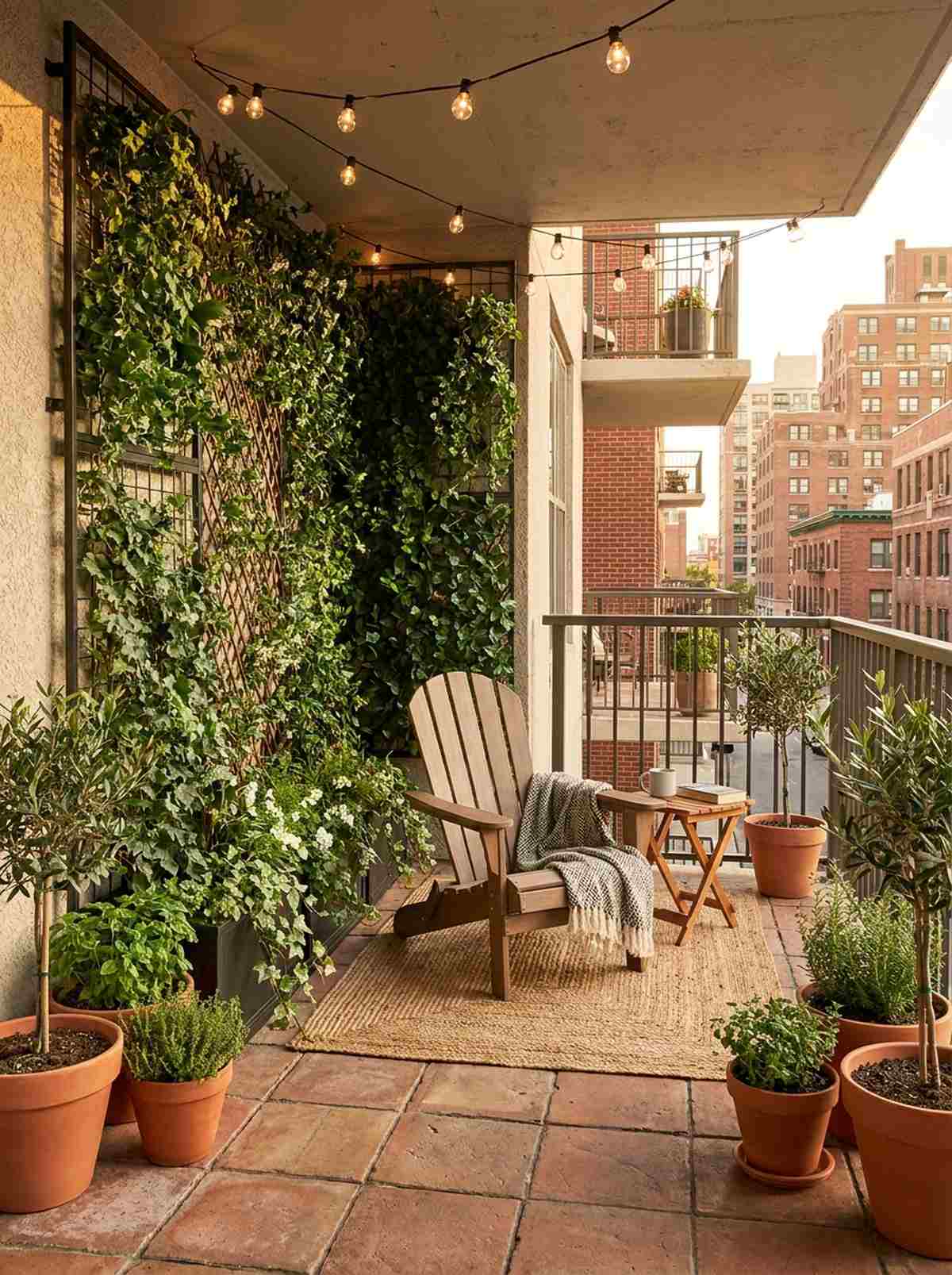
This clever vertical patio green wall feels like a lush Italian courtyard wall. The ultimate layout for tiny condo balconies that only have blank walls to work with.
Losing floor space to bulky pots is a rookie mistake; pushing the greenery up a wall creates a massive visual impact while keeping the ground clear. Climbing plants on metal grids give a designer-level finish.
You can set this up for just $60–$100. Save this to your balcony upgrade board.
- Key Materials: Standard pavers, heavy-duty wall trellises
- Vibe / Style: Ascending urban oasis
- Difficulty: Easy drill-and-mount
- Budget Breakdown: Trellis system: $50 | Climbing vines: $30
- Creator’s Tip: Mount the trellis two inches away from the wall to give the vines room to wrap around the bars.
- Smart Sourcing: expandable willow trellis panels and UV-coated artificial vine rolls.
16. Vertical Planter Columns
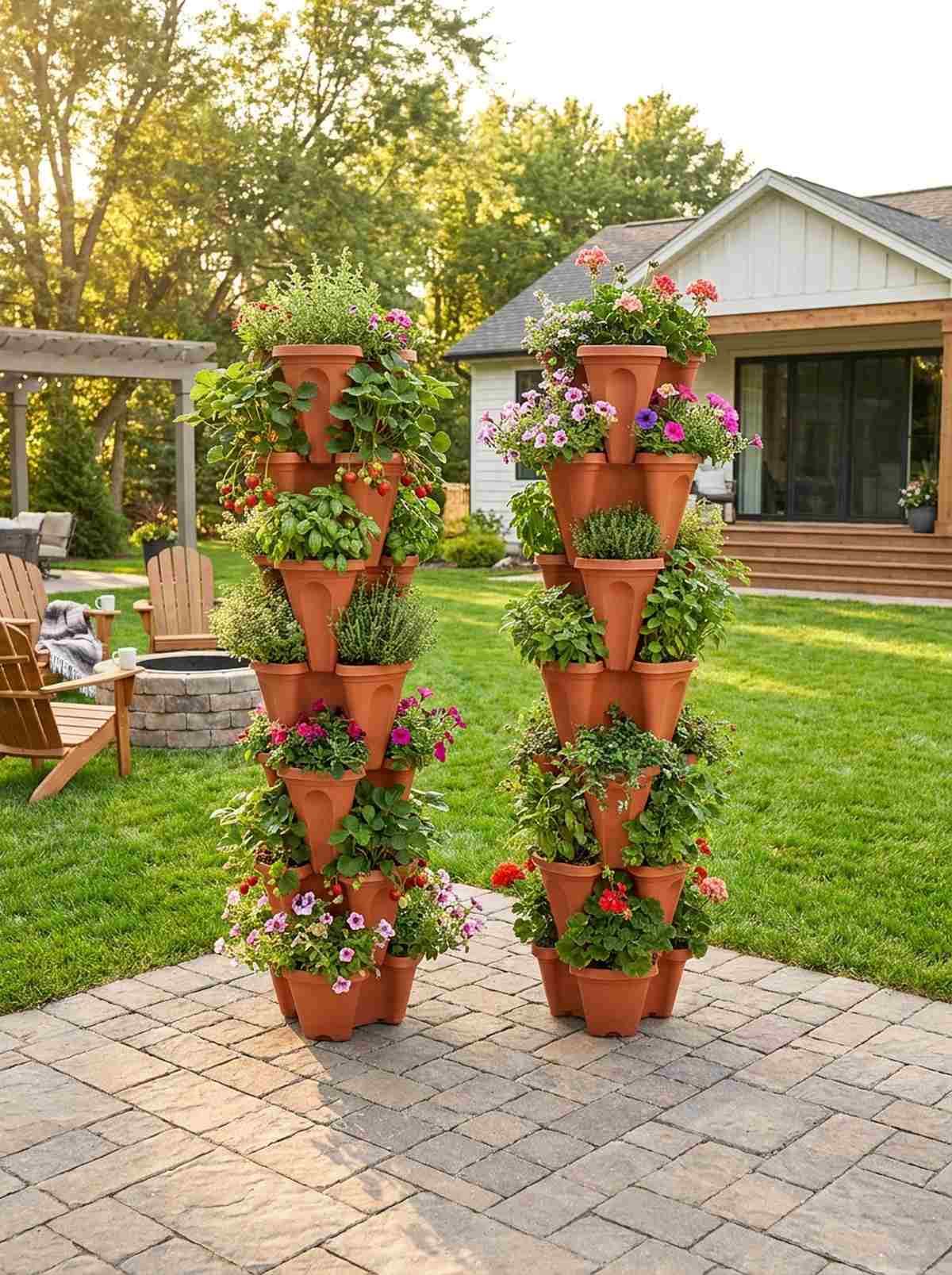
These brilliant freestanding garden towers feel like futuristic bio-pillars dripping with color. Perfect for defining the corners of a small paver square without building actual walls.
Standard planters waste too much paver real estate, but vertical towers pack 30 plants into a single square foot. This high-density planting strategy looks far more expensive than it is while keeping your seating area totally open.
Towers and soil will run about $80–$130. Pin this if you love growing herbs in tight spaces.
- Key Materials: Stackable planter tiers, corner paving base
- Vibe / Style: High-yield vertical tech
- Difficulty: Snap-together simple
- Budget Breakdown: Tower kit: $70 | Soil/Seeds: $30
- Creator’s Tip: Put heavy gravel in the absolute bottom tier to prevent the whole column from tipping over in high winds.
- Smart Sourcing: 5-tier vertical strawberry planter kits and slow-release fertilizer spikes.
17. Raised Bed Perimeter with Paver Center
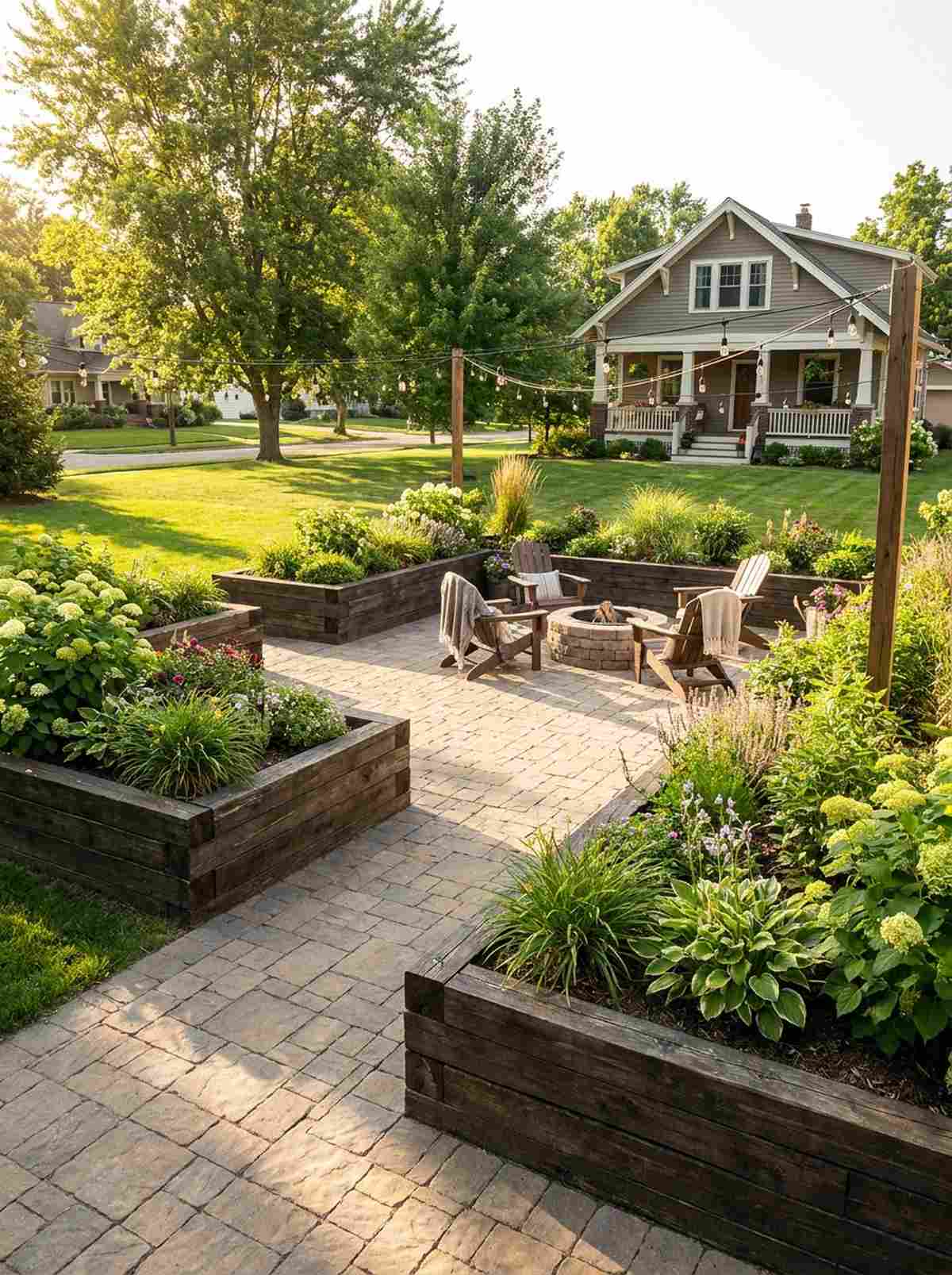
A classic sunken patio garden border that feels like a cozy, protected outdoor living room. Excellent for flat, boring backyards that desperately need some 3D elevation.
Laying pavers edge-to-edge makes a yard look like a parking lot, but wrapping the borders in raised timber planters creates instant architecture. The elevated greenery acts like natural wallpaper framing the hardscape.
Building the borders costs roughly $150–$250. Highly recommended for a massive visual transformation.
- Key Materials: Retaining wall blocks or timber, interior pavers
- Vibe / Style: Enclosed structural lounge
- Difficulty: Intermediate carpentry/stacking
- Budget Breakdown: Lumber/Blocks: $150 | Center Pavers: $80
- Creator’s Tip: Line the inside of wooden raised beds with thick plastic to stop wet soil from rotting the wood over time.
- Smart Sourcing: galvanized steel raised bed kits and heavy-duty staple guns.
18. Living Wall Backdrop
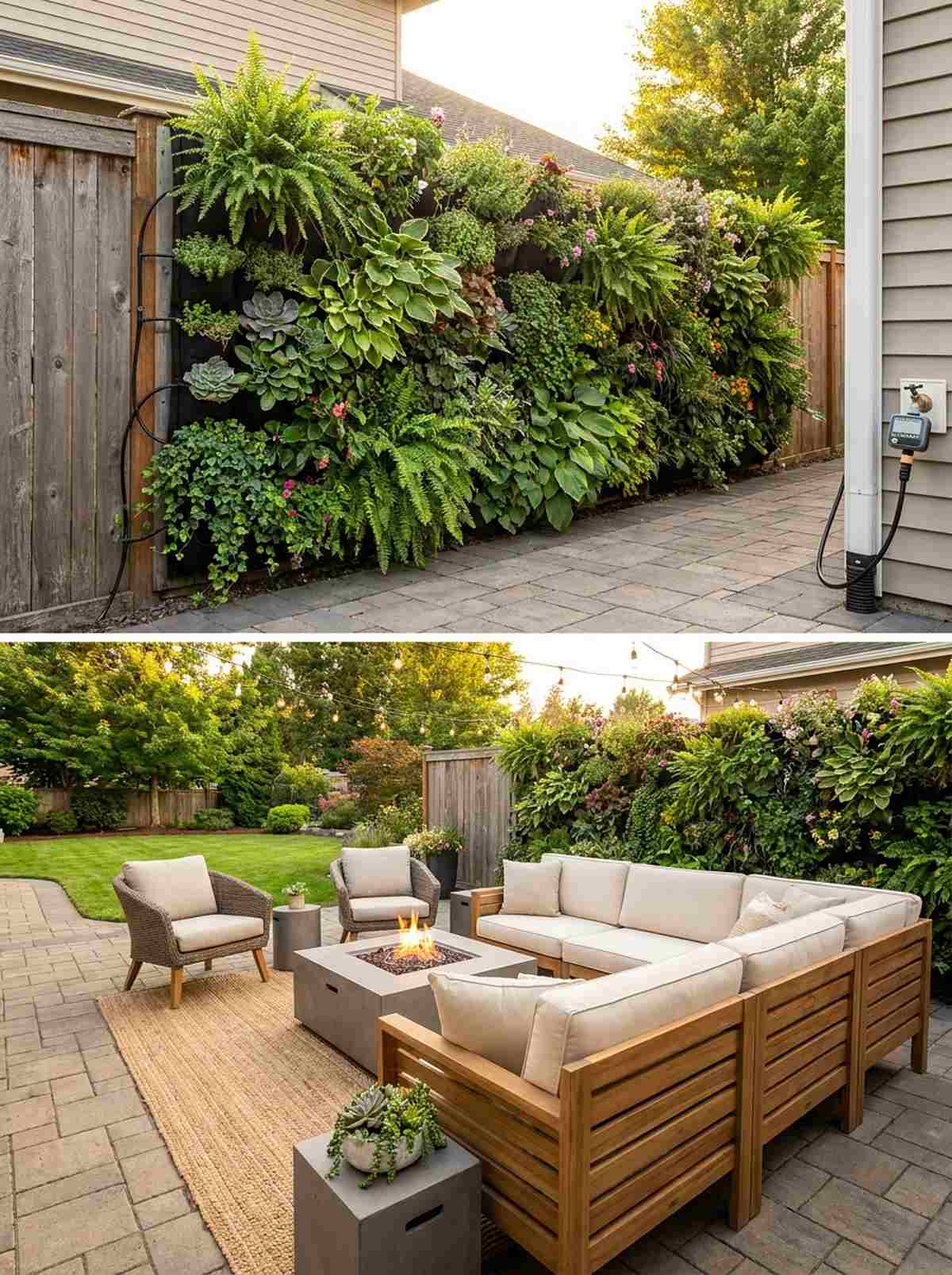
This dense modular vertical planting system feels like a high-end luxury hotel lobby. An absolute game-changer for covering up ugly stucco or old wooden fences.
Most privacy screens look cheap, but a fully irrigated living wall delivers a surprisingly premium look that guests will obsess over. You keep 100% of your paver footprint for furniture while the wall does the aesthetic heavy lifting.
System kits start around $120–$200. Save this to your premium patio layout board.
- Key Materials: Pocket planter panels, drip irrigation lines
- Vibe / Style: Elite botanical wall
- Difficulty: Requires basic plumbing/irrigation setup
- Budget Breakdown: Wall pockets: $90 | Irrigation hose: $40
- Creator’s Tip: Use a digital water timer on the spigot so your vertical wall never dries out during peak summer heat.
- Smart Sourcing: felt pocket vertical garden sets (bulk) and automatic faucet drip timers.
19. Tiered Planter Stair-Step
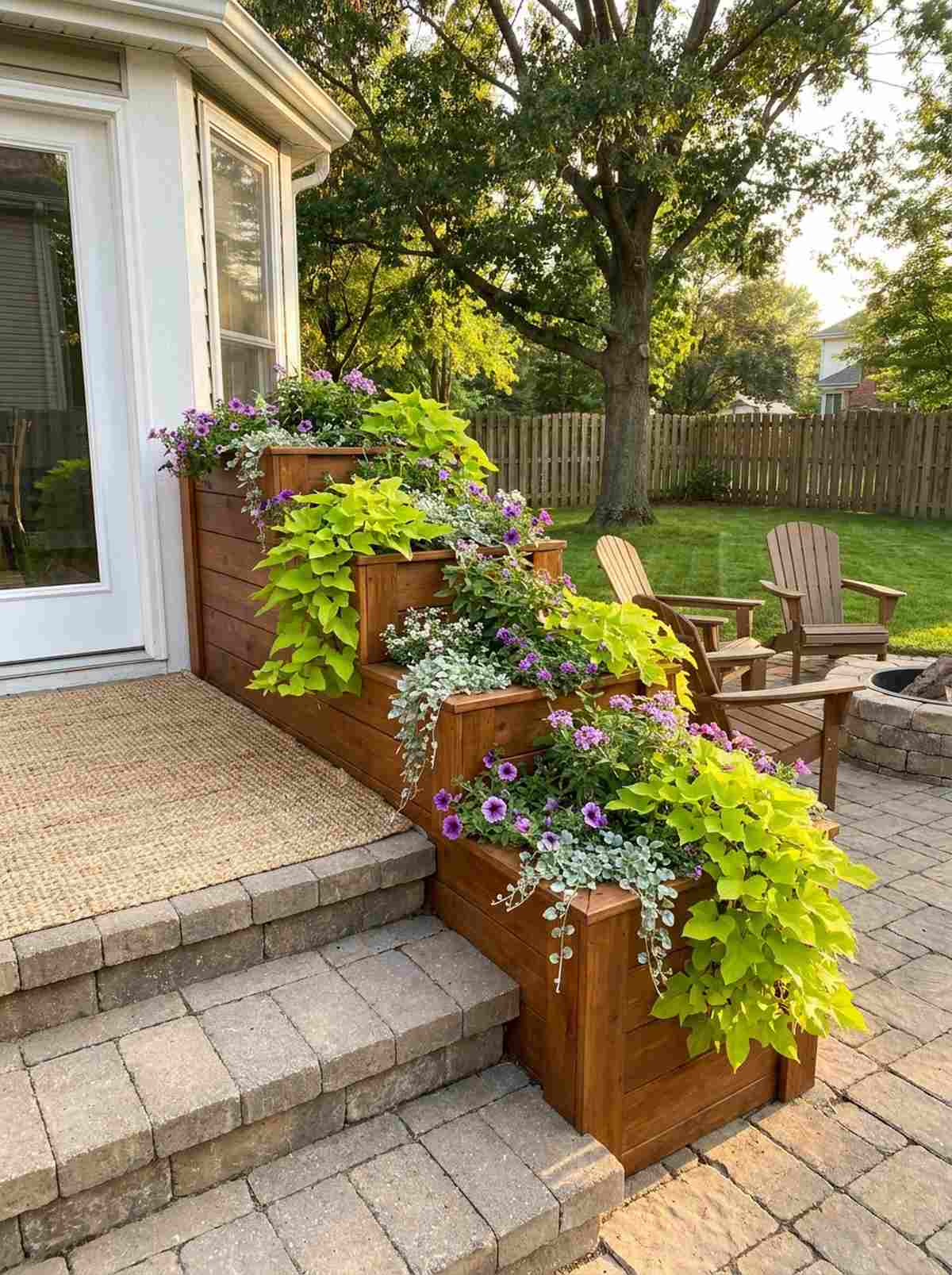
This graduated patio planter display feels like stadium seating for your favorite flowers. Beautifully suited for transitional spaces between a back door and a lower paver deck.
Solid walls block light, but stair-stepping your boxes builds vertical interest without making the space feel like a prison cell. It creates an elite aesthetic on a dime by showcasing trailing vines over the edges.
Wood and soil run about $90–$140. Pin this if you want a stunning patio transition.
- Key Materials: Staggered wooden planter boxes, descending plant varieties
- Vibe / Style: Layered cascading green
- Difficulty: Beginner woodworking
- Budget Breakdown: Planter materials: $100 | Trailing plants: $30
- Creator’s Tip: Plant “spillers” like sweet potato vine in the front of each step to cascade down and hide the containers.
- Smart Sourcing: pre-built cedar stair-step planters and premium exterior wood stain.
If you’re tight on square footage, this next layout trick will literally double your usable area.
20. Arbor Overhead with Paver Floor
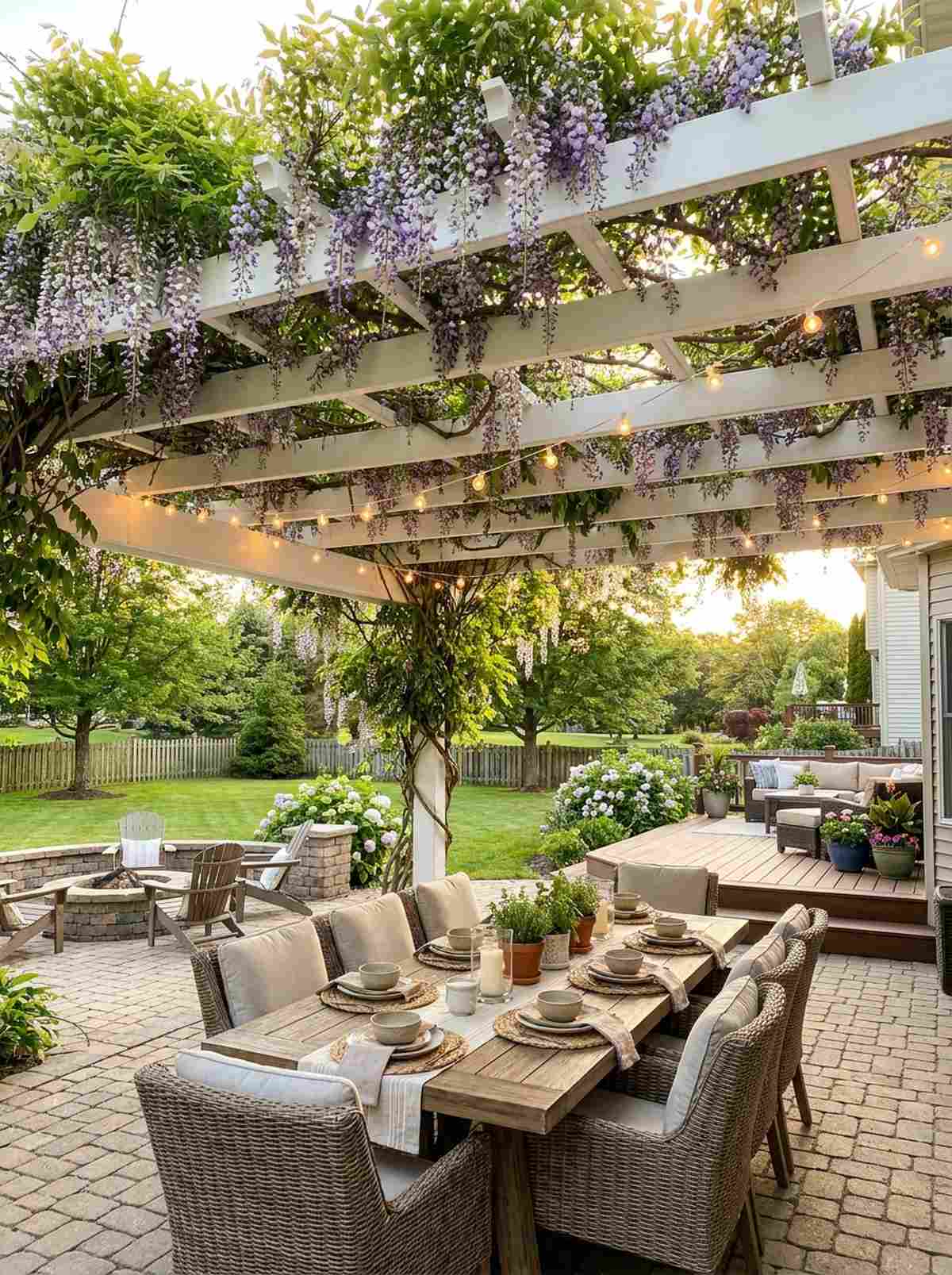
A towering overhead garden pergola that feels like dining under a canopy in a vineyard. The ultimate solution for sun-baked patios that are too hot to use in July.
Umbrellas are clunky and break easily, but training wisteria up an arbor creates a breathtaking, permanent green ceiling. You get cooling shade and brilliant fairy garden kits ambiance while keeping the paver floor totally clear.
Arbor kits range from $200–$350. It’s an investment that completely changes the vibe.
- Key Materials: Structural arbor/pergola, durable floor pavers
- Vibe / Style: Romantic shaded canopy
- Difficulty: Requires a helper for overhead assembly
- Budget Breakdown: Arbor frame: $250 | Climbing vines: $40
- Creator’s Tip: Bolt the arbor posts directly into concrete footings under the pavers so high winds don’t tear it down.
- Smart Sourcing: vinyl outdoor pergola kits and heavy-duty post anchor bases.
21. Espalier Wall Pattern
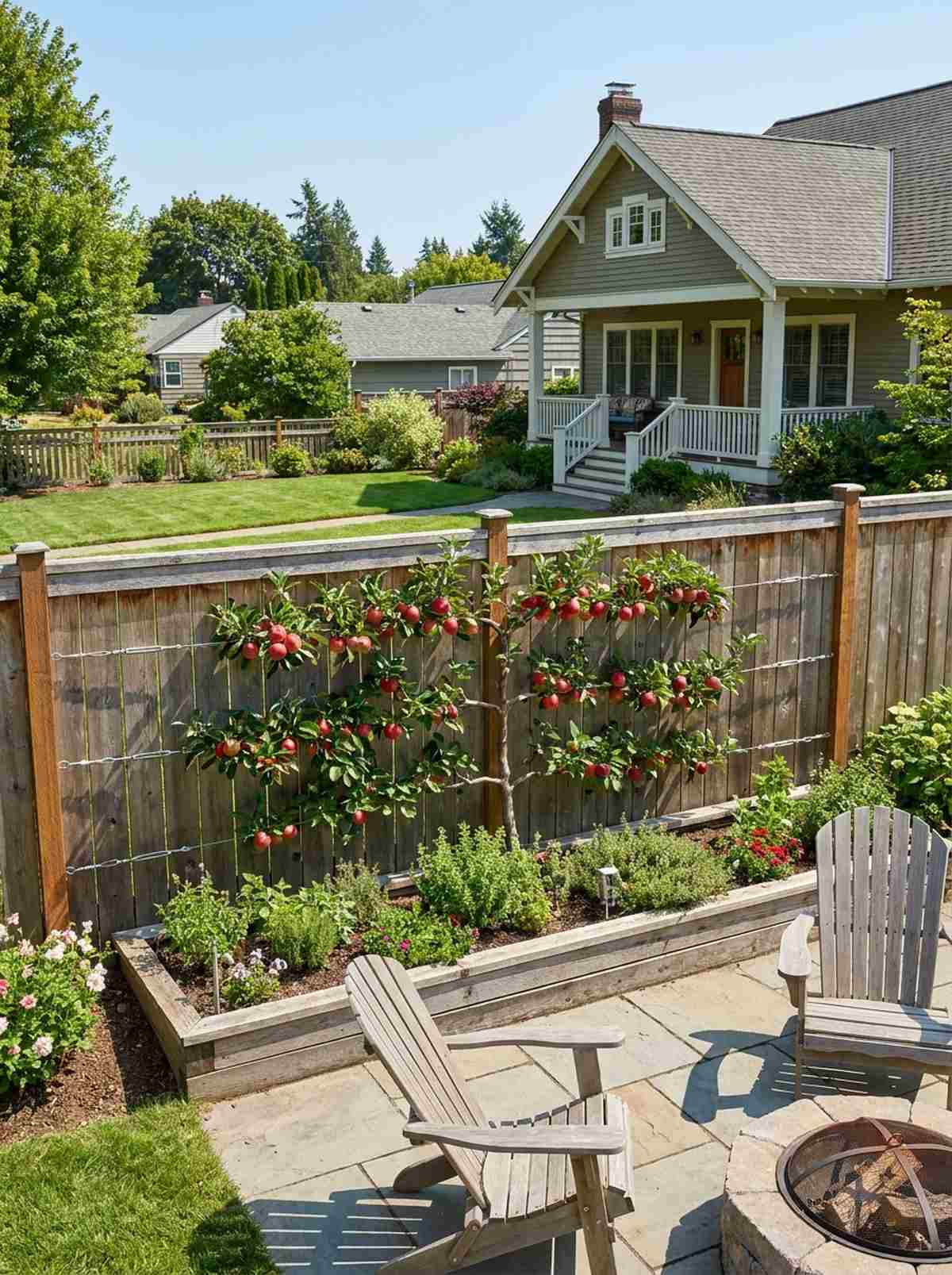
This flat-trained fruit tree setup feels like a secret royal orchard squeezed against a fence. Completely ingenious for tiny urban yards that still want a functional harvest.
Standard trees devour small patios, but forcing branches to grow flat against a wall delivers a surprisingly premium look and saves massive space. It’s a centuries-old landscape architect secret that turns a boring fence into living art.
Wire and dwarf trees cost about $80–$130. Save this if you love edible landscaping.
- Key Materials: Dwarf fruit trees, heavy gauge training wire
- Vibe / Style: Formal living architecture
- Difficulty: High maintenance/pruning required
- Budget Breakdown: Dwarf tree: $60 | Wire/Turnbuckles: $30
- Creator’s Tip: Use turnbuckles on your anchor wires to easily tighten them when they sag under the weight of growing fruit.
- Smart Sourcing: stainless steel espalier wire kits and soft plant tie spools.
Zone Division Strategies for Functional Small Patio Gardens
Effective small patio design creates distinct activity zones without physical barriers that shrink the space. These layouts use paver patterns and integrated planting to define areas while maintaining visual flow.
22. Diagonal Axis Dual-Zone
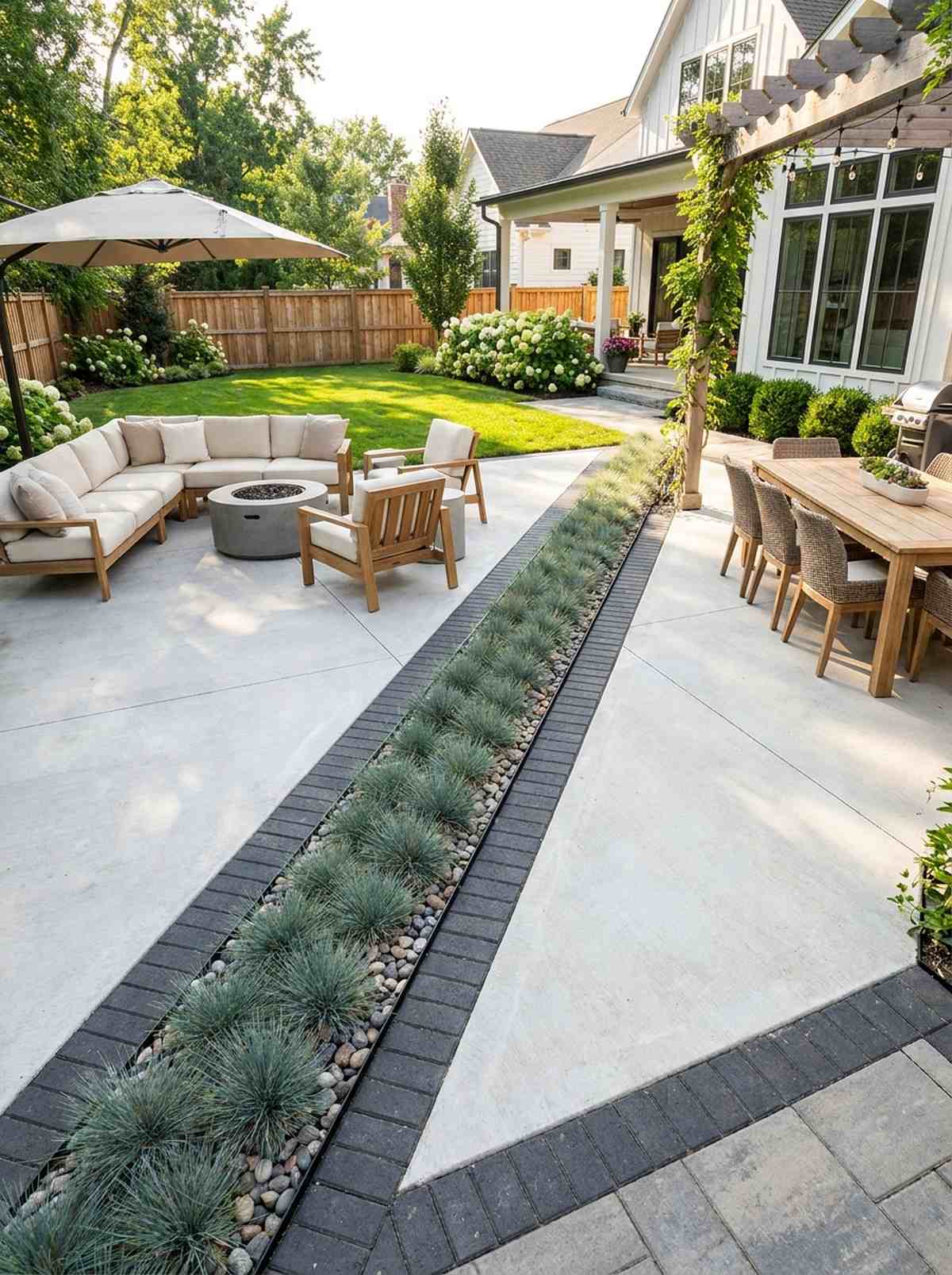
An aggressive angled patio split layout that feels like a masterfully engineered modern park. The best trick in the book for making a boring square concrete slab feel massive.
Slicing a patio straight down the middle is predictable, but running a planted diagonal line creates an elite aesthetic on a dime by maximizing the longest sight line. One triangle becomes the lounge, the other the dining space.
Materials for the dividing strip cost $50–$90. Pin this to visually expand your space.
- Key Materials: Contrasting paver strips, low dividing grasses
- Vibe / Style: Sharp dynamic separation
- Difficulty: Easy layout, moderate execution
- Budget Breakdown: Border stones: $50 | Ornamental grass: $30
- Creator’s Tip: Keep the dividing plants under 18 inches tall so you don’t block eye contact between the two zones.
- Smart Sourcing: black metal landscape edging (bulk) and premium ornamental fescue seeds.
23. Botanical Bento Box Compartments
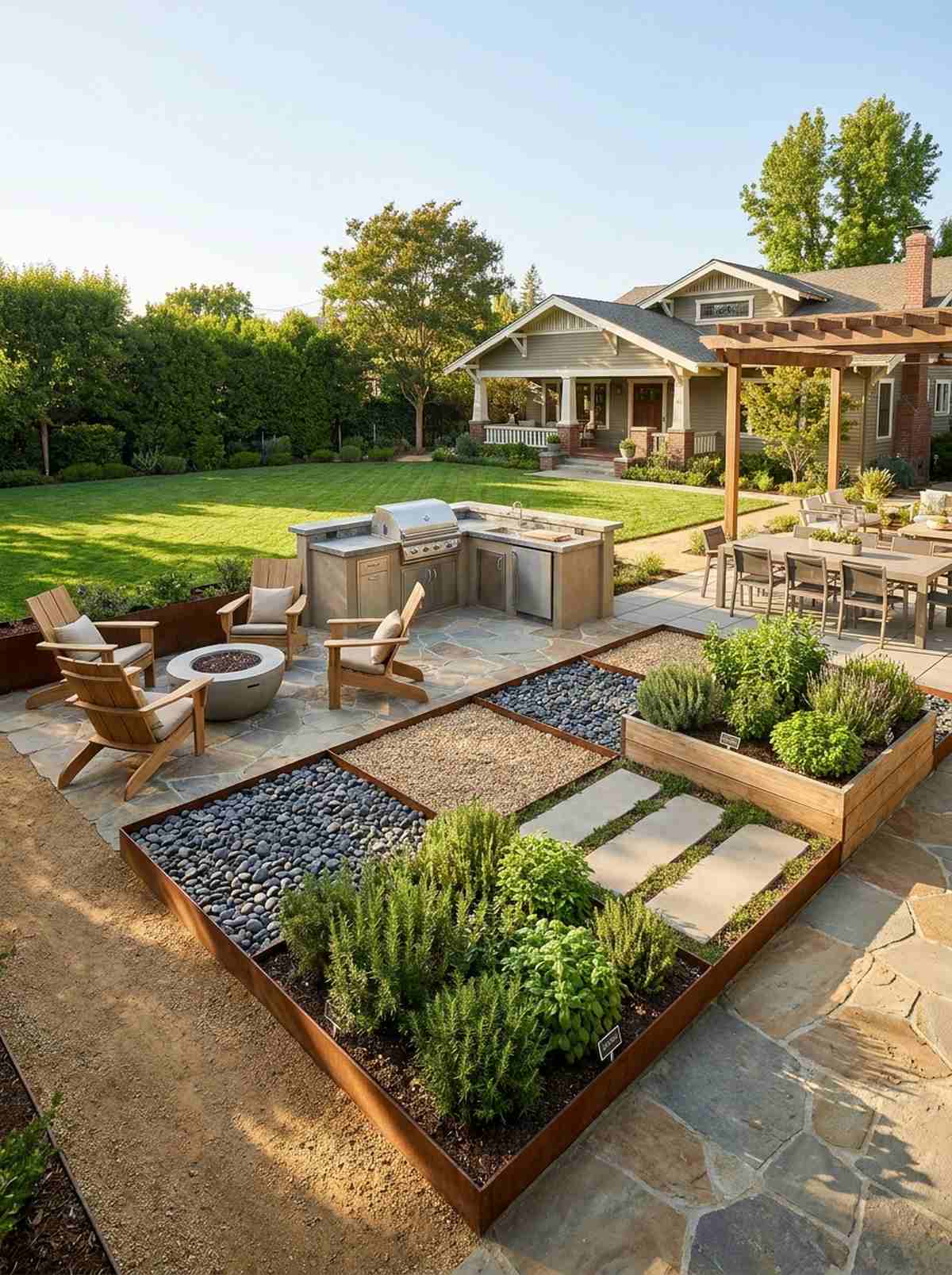
A highly organized segmented garden grid that feels like a meticulously curated display case. Perfect for multi-use patios where the grill, the herbs, and the seating need defined boundaries.
Chaos ruins small spaces, but dropping clear metal edges to create distinct “boxes” delivers a surprisingly premium look of total control. You can assign different materials—gravel here, pavers there, soil here—without it looking messy.
Edging and fillers run about $100–$150. Highly recommended for a quick weekend win.
- Key Materials: Rigid metal edging, assorted surface fillers
- Vibe / Style: Ultra-organized modern grid
- Difficulty: Simple measuring and staking
- Budget Breakdown: Steel edging: $80 | Varied mulch/gravel: $40
- Creator’s Tip: Sink the metal edging deep enough so it won’t catch your shoe when stepping between the functional compartments.
- Smart Sourcing: rust-proof corten steel edging kits and bulk decomposed granite bags.
24. Circular Node System
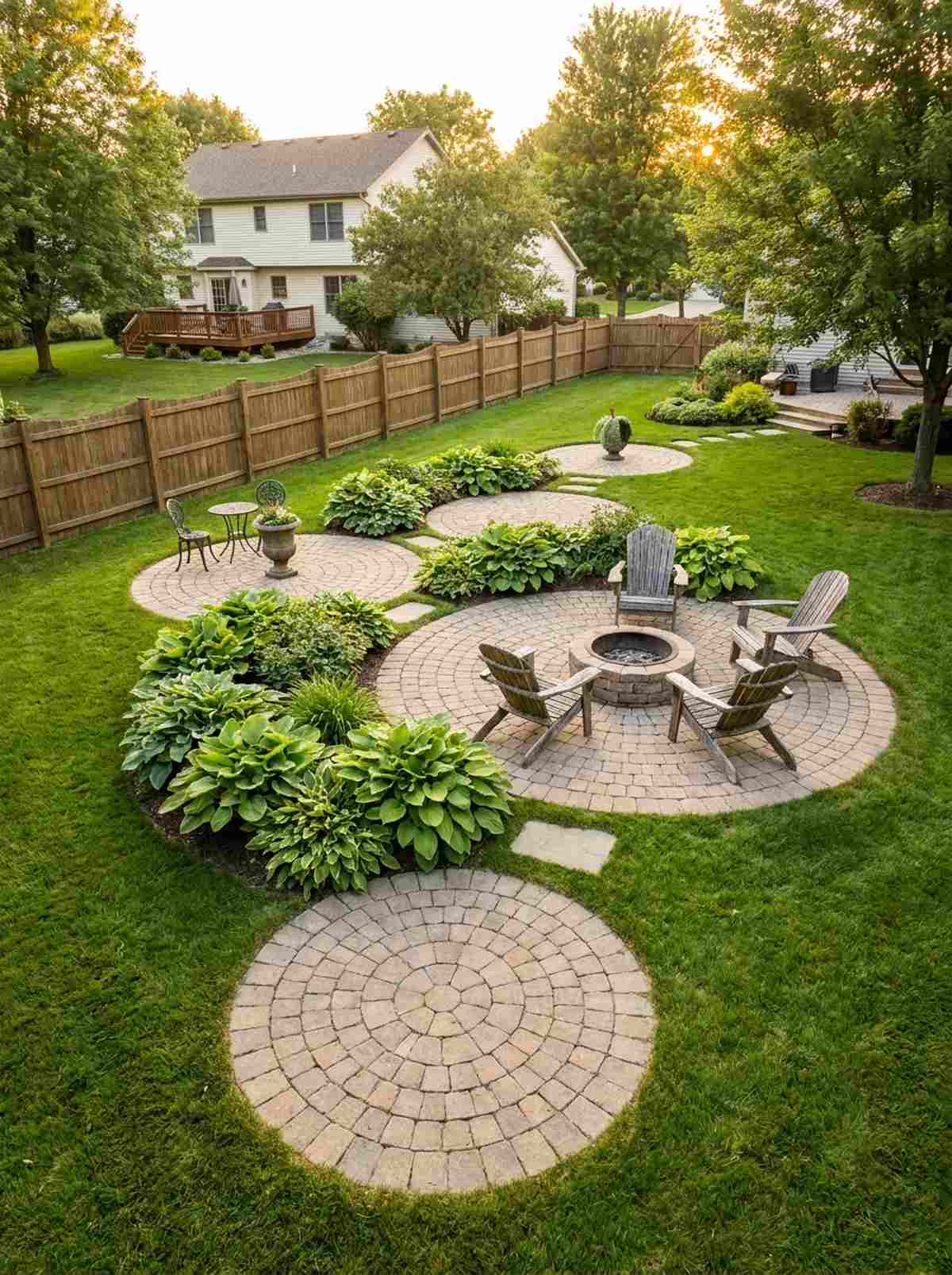
This multi-circle patio connection feels like Lily pads floating across a tranquil green pond. Flawless for long, narrow backyards that feel like bowling alleys.
A single long path is boring; linking multiple 8-foot circular paver hubs looks far more expensive than it is while creating distinct gathering destinations. Fill the crescent-shaped gaps between the circles with lush hostas.
Kits and plants cost around $200–$300. Save this to your backyard layout board.
- Key Materials: Circular paver kits, connective stepping stones
- Vibe / Style: Journey-based destination hubs
- Difficulty: Heavy lifting and alignment
- Budget Breakdown: Circle kits (x2): $220 | Filler plants: $50
- Creator’s Tip: Make one circle slightly larger than the others to act as the obvious “main” lounge destination.
- Smart Sourcing: pre-cut circular patio stones and heavy-duty weed barrier fabric.
People pay thousands for landscape architects just to get this next exact zone-dividing secret…
25. L-Shaped Zone Division
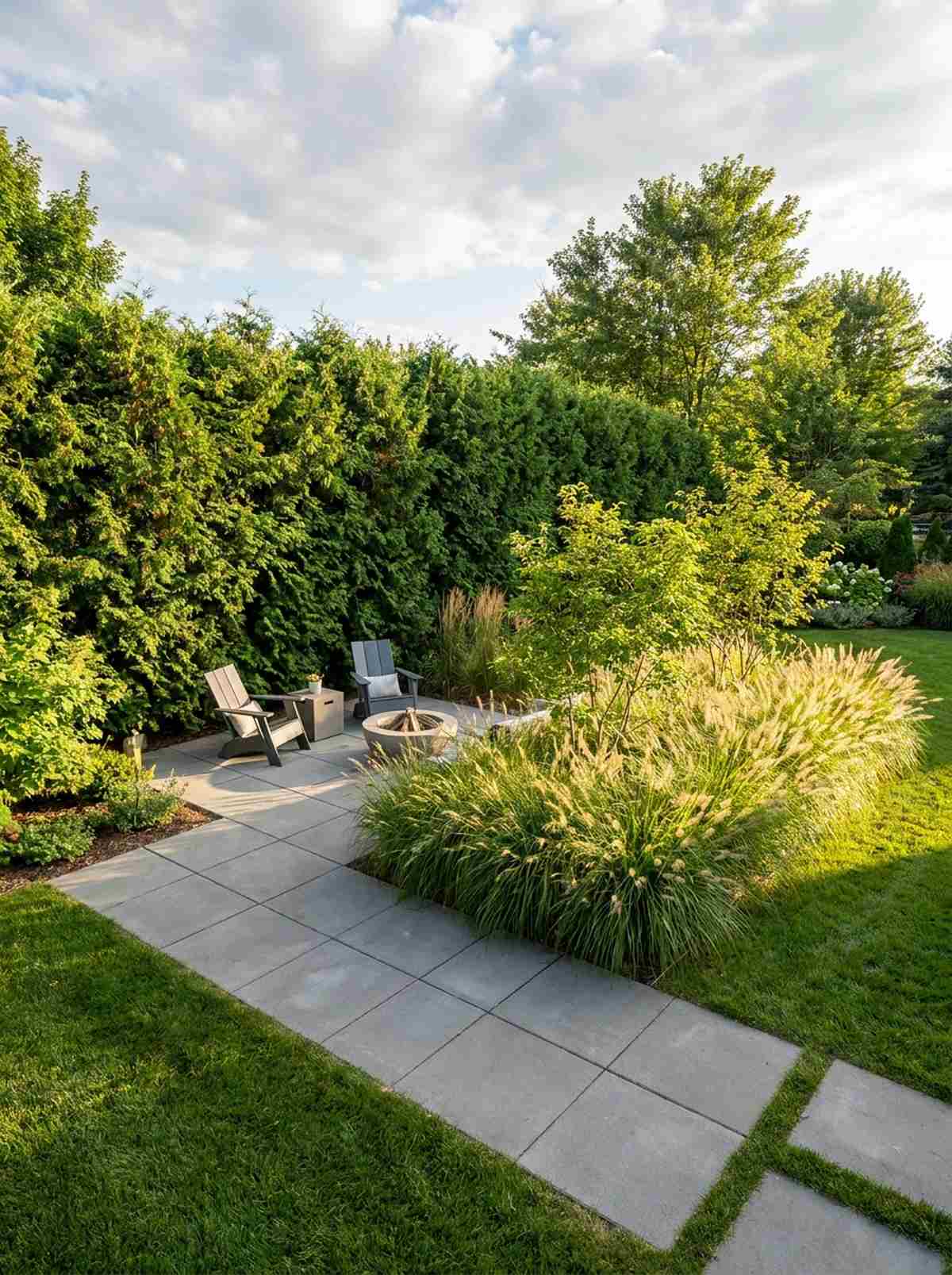
A clever corner-hugging hardscape layout that feels like a private VIP section wrapped in greenery. Extremely effective for corner lots that need a buffer from street views.
Putting pavers dead center wastes the edges, but an L-shape hugs the boundaries and creates an elite aesthetic on a dime. The empty opposite corner becomes a massive green focal point that naturally shields your seating.
Laying this out costs about $150–$250. Pin this if you need better privacy.
- Key Materials: Square concrete pavers, tall privacy shrubs
- Vibe / Style: Sheltered corner lounge
- Difficulty: Standard paver laying
- Budget Breakdown: Hardscape: $180 | Corner tree/shrub: $60
- Creator’s Tip: Plant a fast-growing ornamental grass in the empty corner for immediate privacy while larger shrubs slowly mature.
- Smart Sourcing: fast-growing privacy screen seeds and commercial paver leveling sand.
26. Hide-and-Reveal Planting Screen
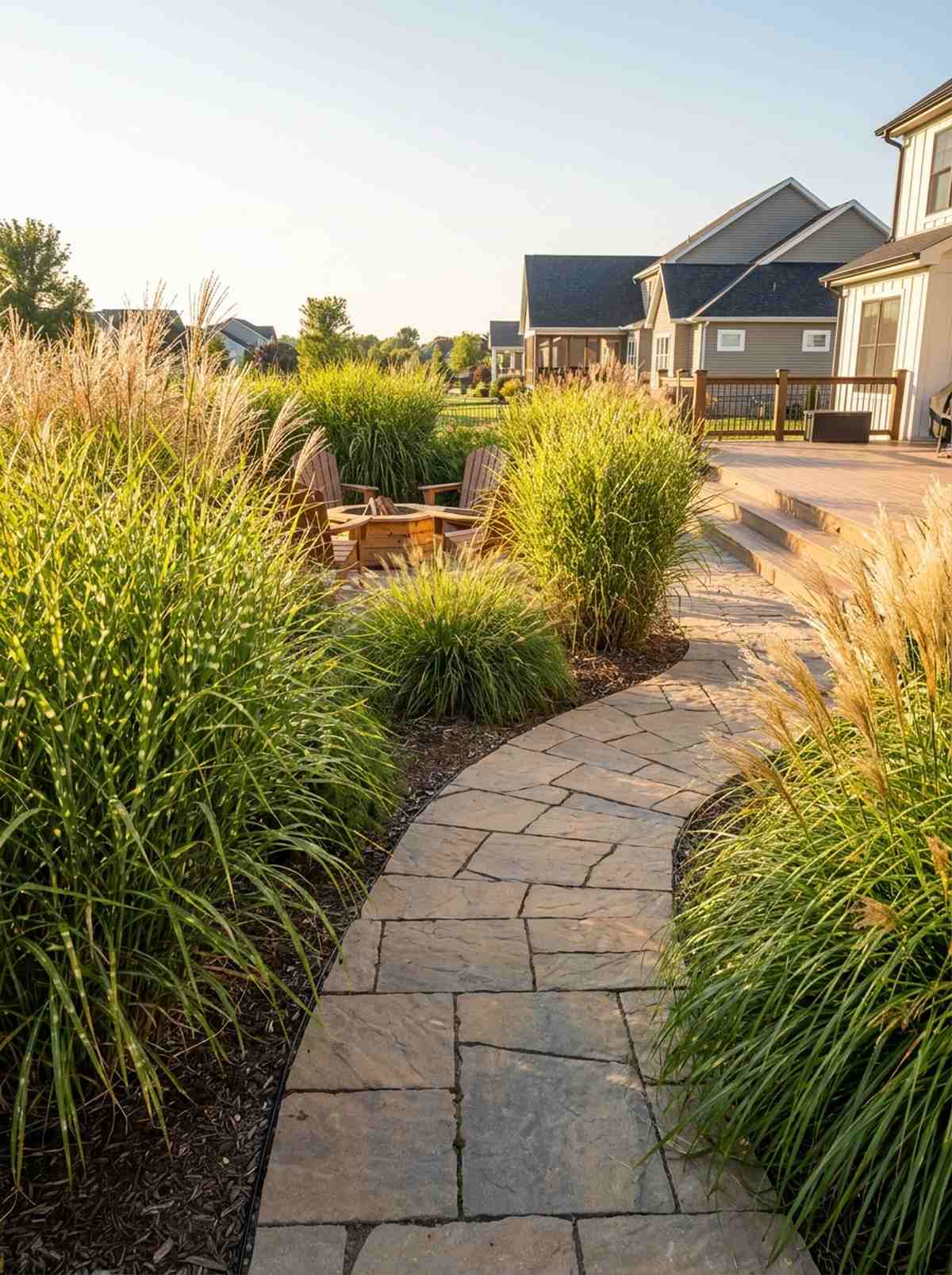
This obscured patio pathway design feels like stepping into a secret garden oasis. An incredible trick for adding a sense of adventure to an otherwise flat, predictable yard.
Seeing the whole yard at once makes it feel tiny. Dropping a tall grass screen that curves the paver path delivers a surprisingly premium look by forcing guests to walk around the corner to discover the seating area.
Plants and base materials cost $80–$120. Highly recommended to add mystery to your space.
- Key Materials: Tall ornamental grasses, curving path stones
- Vibe / Style: Journey of discovery
- Difficulty: Easy planting and layout
- Budget Breakdown: Tall grasses: $60 | Path stones: $50
- Creator’s Tip: Use zebra grass or pampas grass; they grow 6 feet tall incredibly fast and create instant visual walls.
- Smart Sourcing: bulk ornamental grass seed mixes and curved composite garden edging.
27. Sunken and Raised Level Change
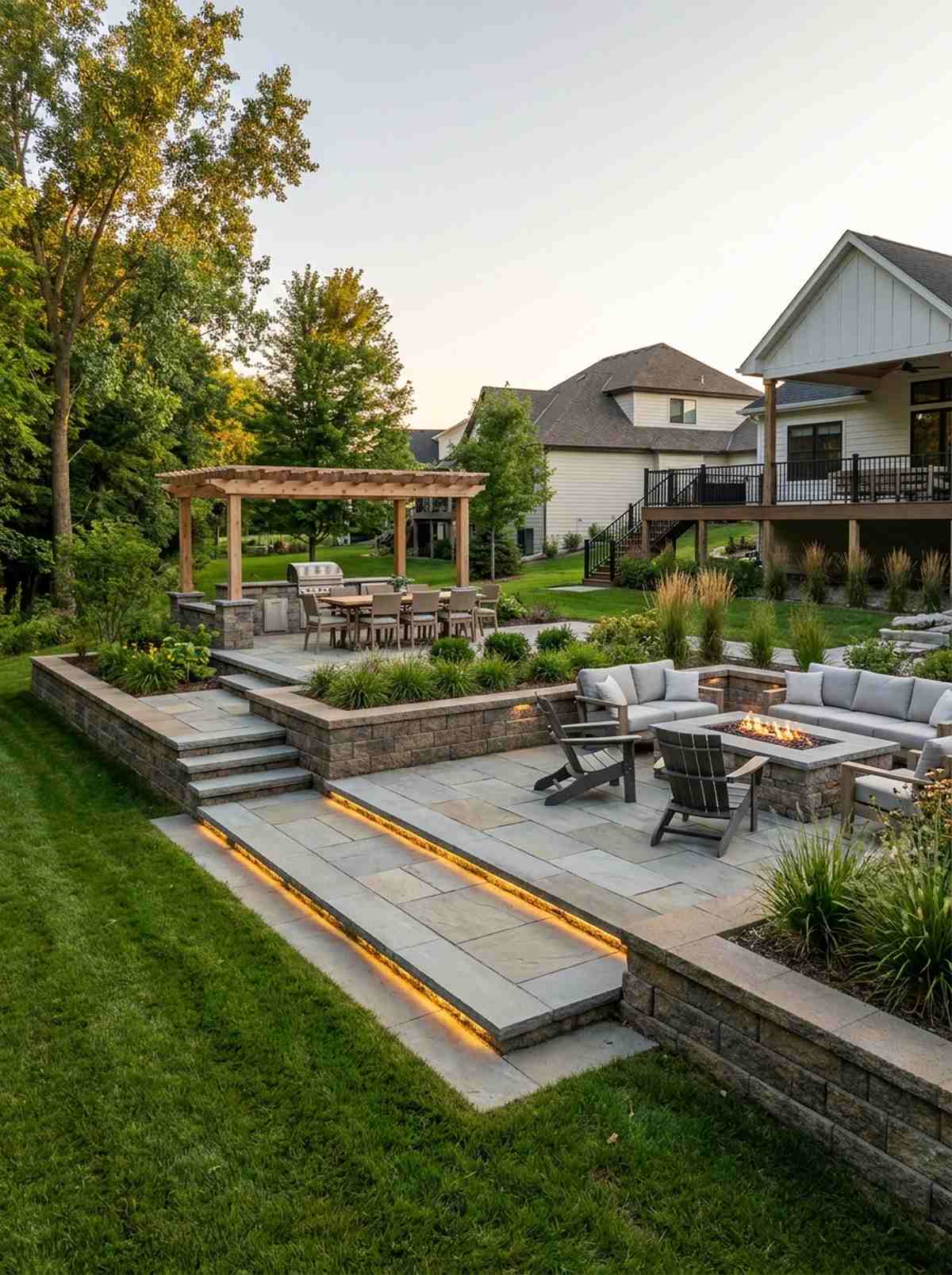
A dramatic multi-tier patio step system that feels like a modern architectural amphitheater. The absolute best way to utilize a yard that has a frustrating, useless slope.
Fighting a hill is expensive, but stepping the pavers down the slope looks far more expensive than it is. That single 8-inch vertical drop between the dining and lounge zones creates a psychological separation that walls could never achieve.
Retaining blocks and pavers run $250–$400. Save this if you are dealing with a sloped yard.
- Key Materials: Retaining wall blocks, flat surface pavers
- Vibe / Style: Architectural terraced drama
- Difficulty: Advanced digging and leveling
- Budget Breakdown: Retaining blocks: $200 | Step pavers: $120
- Creator’s Tip: Add LED strip lighting right under the lip of the raised step to make it glow safely at night.
- Smart Sourcing: waterproof LED outdoor strip lights and heavy-duty masonry adhesive.
28. Radial Paver Wedge Zones
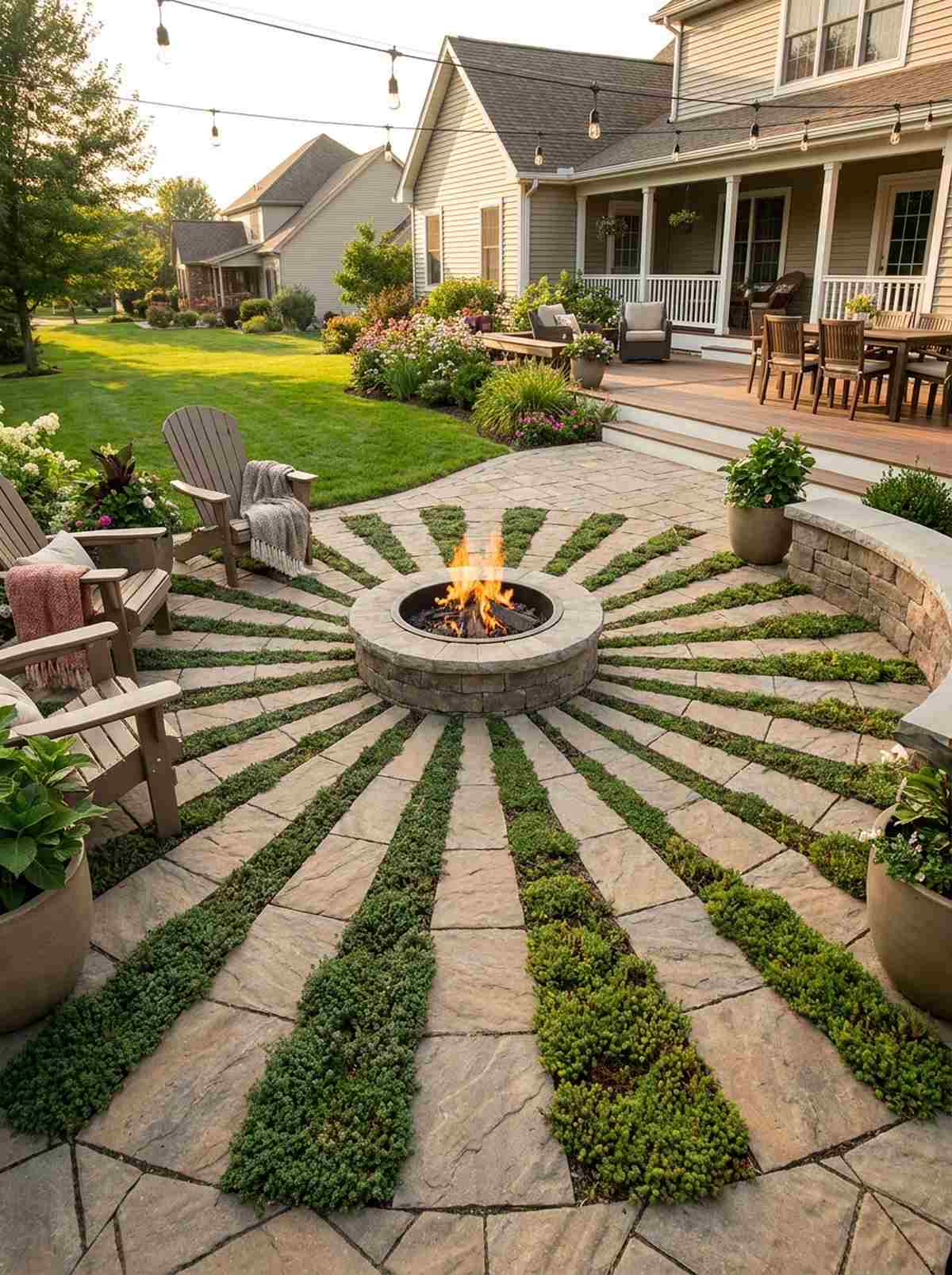
A brilliant sunburst patio layout that feels like an ancient sundial courtyard. Flawless for centering an entire party around a central fire pit or water feature.
Standard grids ignore the center, but shooting wedge-shaped pavers outward creates an elite aesthetic on a dime. The planted gaps between the stone rays naturally segment the space for different groups of standing guests.
Cutting and placing costs about $180–$280. Pin this for the ultimate entertainment setup.
- Key Materials: Tapered wedge pavers, creeping ground cover
- Vibe / Style: Explosive radial energy
- Difficulty: Hard (lots of angle cuts)
- Budget Breakdown: Tapered stones: $200 | Gap soil: $30
- Creator’s Tip: Use polymeric sand near the center fire feature so the intense heat doesn’t scorch live plants.
- Smart Sourcing: heat-resistant polymeric sand and pre-scored wedge paver packs.
Material Guide: Cheap vs. Premium Aesthetic
Knowing exactly where to save and where to spend makes all the difference in achieving that “looks expensive but isn’t” vibe.
- Standard vs. UV-Resistant/Premium: Upgrading to UV-coated artificial vines or commercial-grade sealants stops your hardscape from fading to a dull gray after one summer.
- Pre-made Kits vs. Sourcing Locally: While buying individual stones seems cheap, buying pre-cut circular or wedge starter kits saves hours of masonry cutting and expensive blade rentals.
Before you pour solid concrete, look at how this next eco-friendly setup handles rain…
Permeable & Eco-Conscious Layouts for Sustainable Small Patio Gardens
These configurations prioritize stormwater management and ecological function, using permeable paver systems and generous planting to reduce runoff while creating functional outdoor spaces. They perform environmental services while remaining beautiful.
29. Permeable Grid System
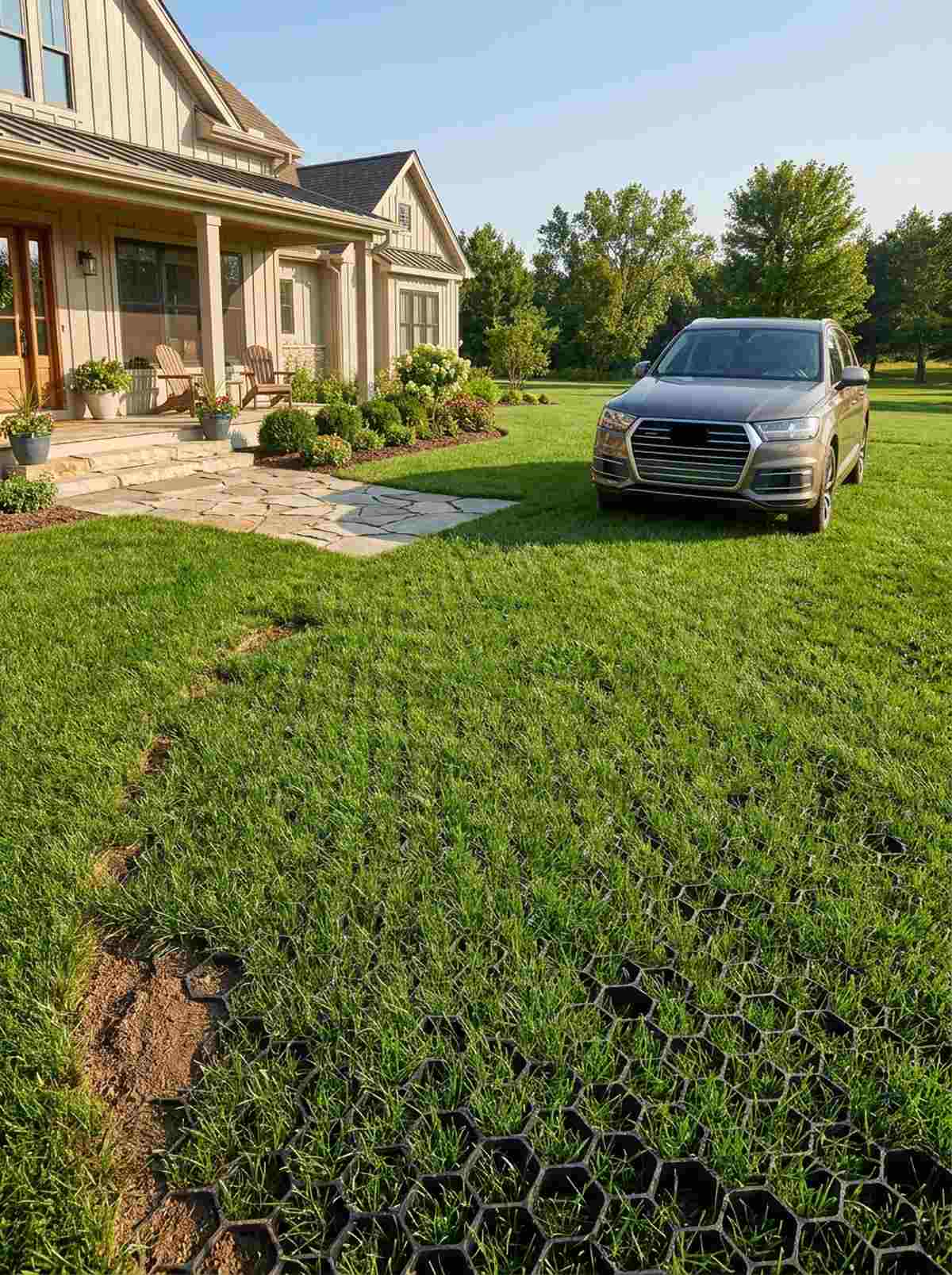
This heavy-duty eco-friendly driveway grid feels like an invisible patio floating on grass. A genius solution for front yards that need extra parking without looking like a concrete lot.
Pouring solid concrete causes massive yard flooding, but snapping down a plastic honeycomb grid delivers a surprisingly premium look that drinks up rainwater instantly. Grass grows right through the cells, hiding the structural strength.
Grid packs run about $120–$200. Save this if you need hidden, driveable yard space.
- Key Materials: Plastic permeable paving grids, tough turf seeds
- Vibe / Style: Invisible structural green
- Difficulty: Easy snap-together
- Budget Breakdown: Grid panels: $150 | Seed/Soil: $40
- Creator’s Tip: Fill the honeycomb cells only 90% full with soil so the crowns of the grass plants aren’t crushed by foot traffic.
- Smart Sourcing: heavy-duty permeable ground grids (bulk) and high-traffic fescue grass seeds.
30. Rain Garden Overflow Zone
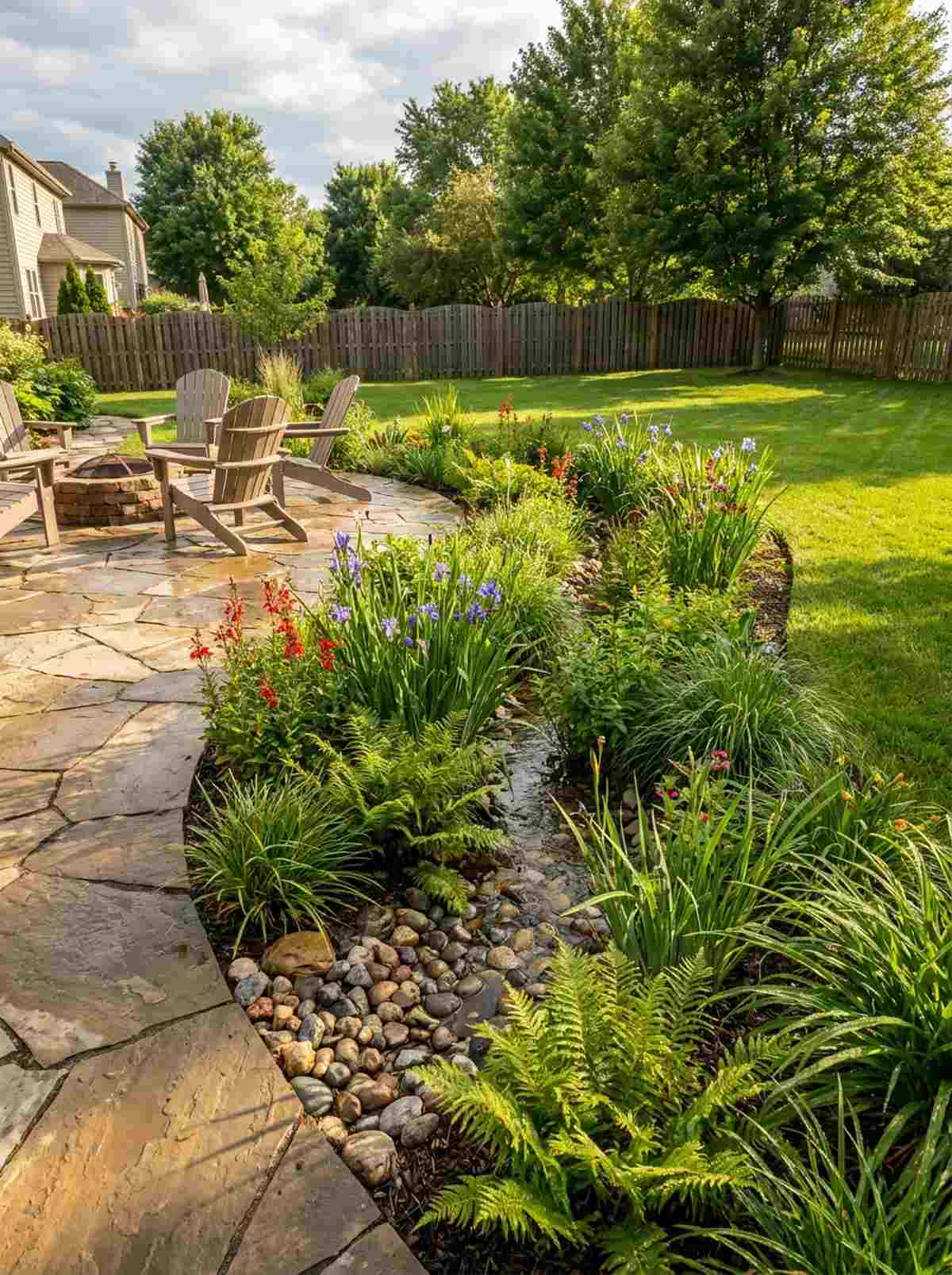
A smart stormwater patio border that feels like a lush, living moat protecting your seating area. The ultimate defense for yards that turn into swampy messes after heavy rain.
Instead of fighting water, grading your pavers slightly toward a planted depression creates an elite aesthetic on a dime. The native deep-rooted plants drink the runoff, turning a yard problem into a spectacular blooming feature.
Building this basin costs $90–$140. Pin this to solve your muddy yard problems permanently.
- Key Materials: Standard pavers, moisture-loving native perennials
- Vibe / Style: Functional eco-basin
- Difficulty: Moderate (requires precise slope grading)
- Budget Breakdown: Pavers: $80 | Native plants: $50
- Creator’s Tip: Use a simple string line and level to ensure your patio slopes exactly 1 inch for every 4 feet toward the rain garden.
- Smart Sourcing: bulk native wetland seed mixes and high-drainage base gravel bags.
31. Gravel Mulch Integration
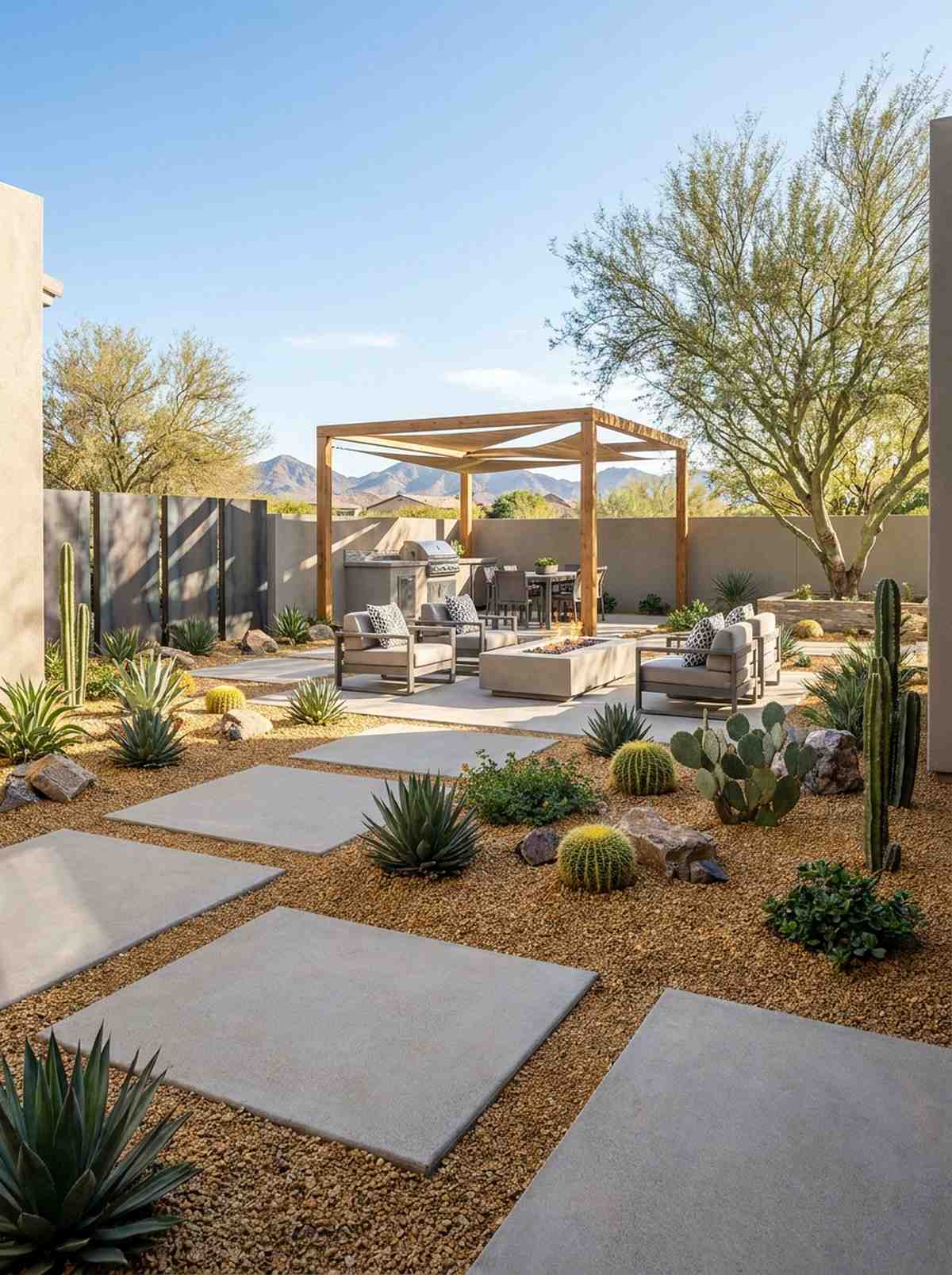
This chic xeriscape gravel courtyard feels like an ultra-modern desert oasis. Absolutely perfect for hot, arid climates where maintaining a traditional lawn costs a fortune in water bills.
Grass is dead in the desert, but embedding smooth steppers into crushed granite looks far more expensive than it is. Planting drought-proof succulents directly into the gravel matrix gives off major luxury resort vibes with zero watering.
Gravel and pavers cost roughly $100–$160. Highly recommended for a low-maintenance, high-heat yard.
- Key Materials: Decomposed granite, large format concrete steppers
- Vibe / Style: Arid modern luxury
- Difficulty: Heavy shoveling required
- Budget Breakdown: Granite delivery: $90 | Steppers: $50
- Creator’s Tip: Always put down professional weed fabric under the gravel; pulling weeds out of rock by hand is an absolute nightmare.
- Smart Sourcing: commercial-grade landscape fabric rolls and bulk decomposed granite pallets.
32. Bioswale Edge Channel
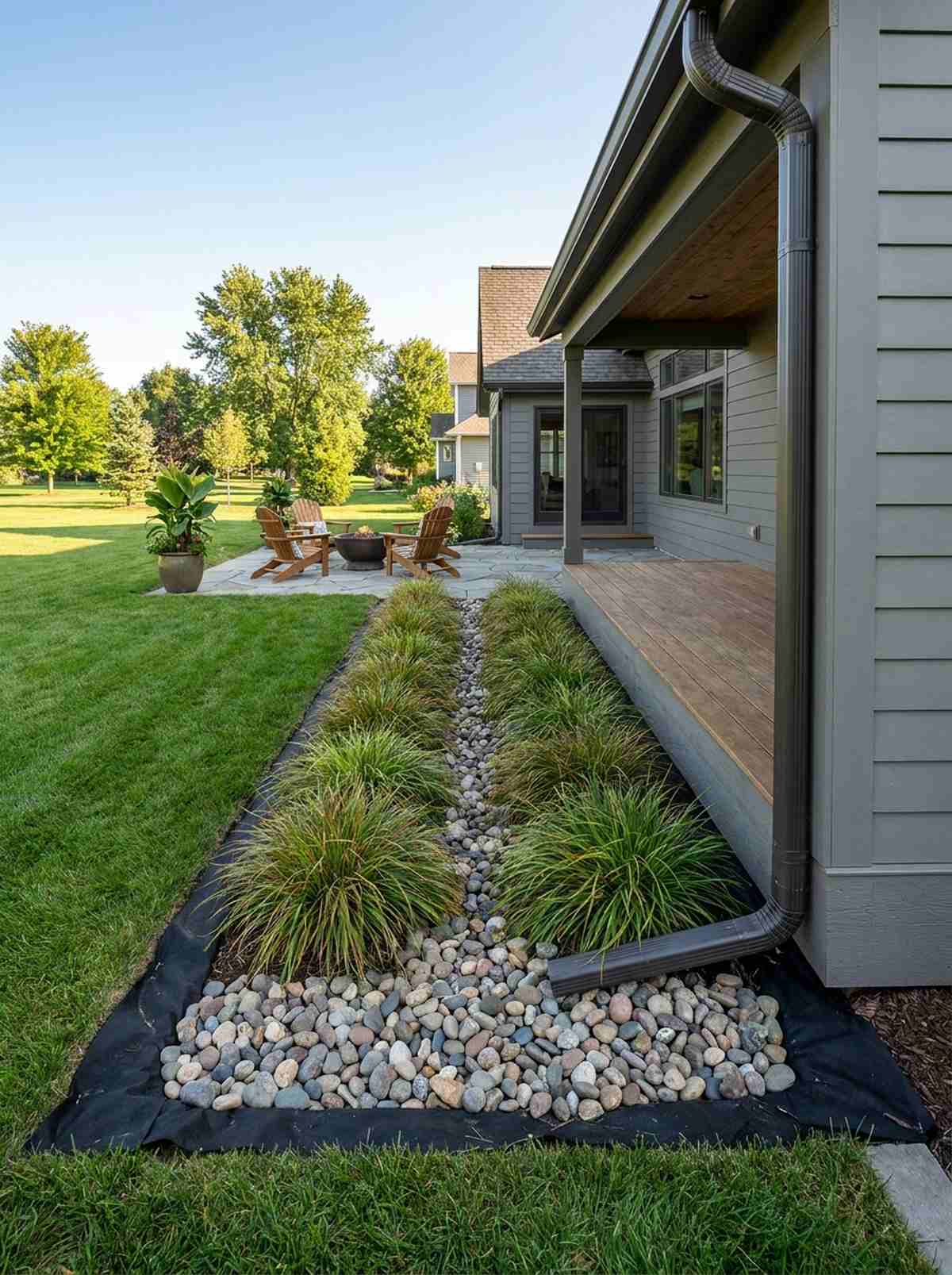
A sleek linear drainage planter that feels like a modern commercial landscape design. The most stylish way to handle roof runoff near your patio foundation.
Ugly plastic downspout extensions ruin patios; running a shallow, rock-filled trench lined with sedge grasses delivers a surprisingly premium look. It filters the water naturally before it hits the main yard.
Trench materials cost about $70–$110. Save this to upgrade your gutter drainage.
- Key Materials: River rock channel, ornamental rushes/sedges
- Vibe / Style: Linear water management
- Difficulty: Easy trenching
- Budget Breakdown: Channel rocks: $50 | Sedge plugs: $40
- Creator’s Tip: Line the trench with non-woven geotextile fabric so the mud doesn’t mix with your clean river rocks over time.
- Smart Sourcing: non-woven geotextile underlayment and bulk ornamental sedge flats.
33. Native Plant Meadow Path
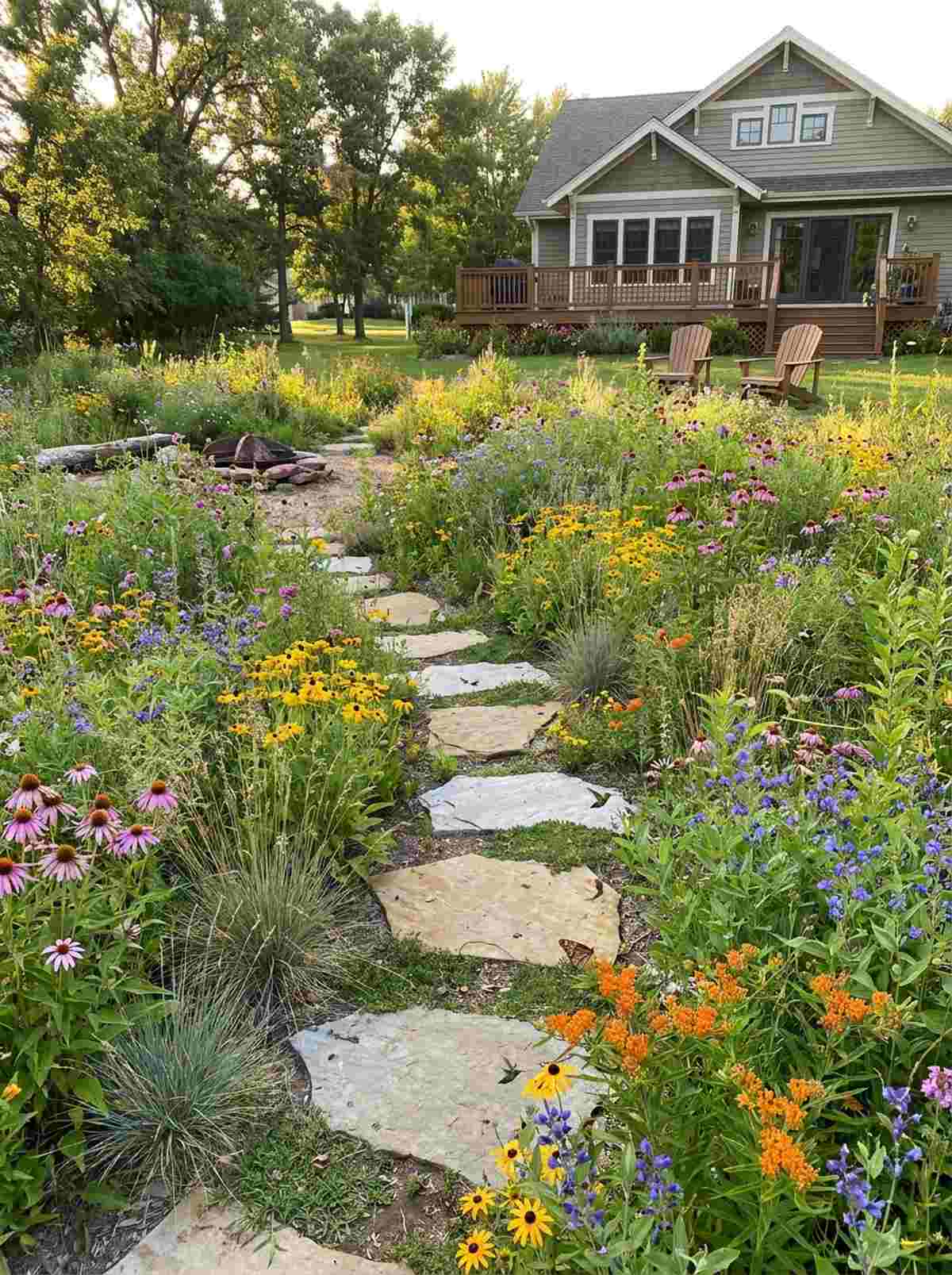
This wild eco-friendly stepping trail feels like a pristine, untouched prairie right outside your back door. A massive trend for homeowners wanting to support local bee and butterfly populations.
Sterile grass lawns are out; letting native wildflowers explode around minimal paver access paths creates an elite aesthetic on a dime. It requires zero fertilizer, handles all local weather, and hums with life.
Seeds and stones run about $60–$100. Pin this if you love the wild, unkempt aesthetic.
- Key Materials: Scattered flat stones, regional wildflower mixes
- Vibe / Style: Untamed pollinator haven
- Difficulty: Very easy
- Budget Breakdown: Path stones: $50 | Bulk seeds: $30
- Creator’s Tip: Mix your tiny wildflower seeds with sand before broadcasting them so you get an even, spread-out distribution.
- Smart Sourcing: bulk pollinator wildflower seed bags and natural flagstone stepping pallets.
34. Recycled Material Paver Assembly
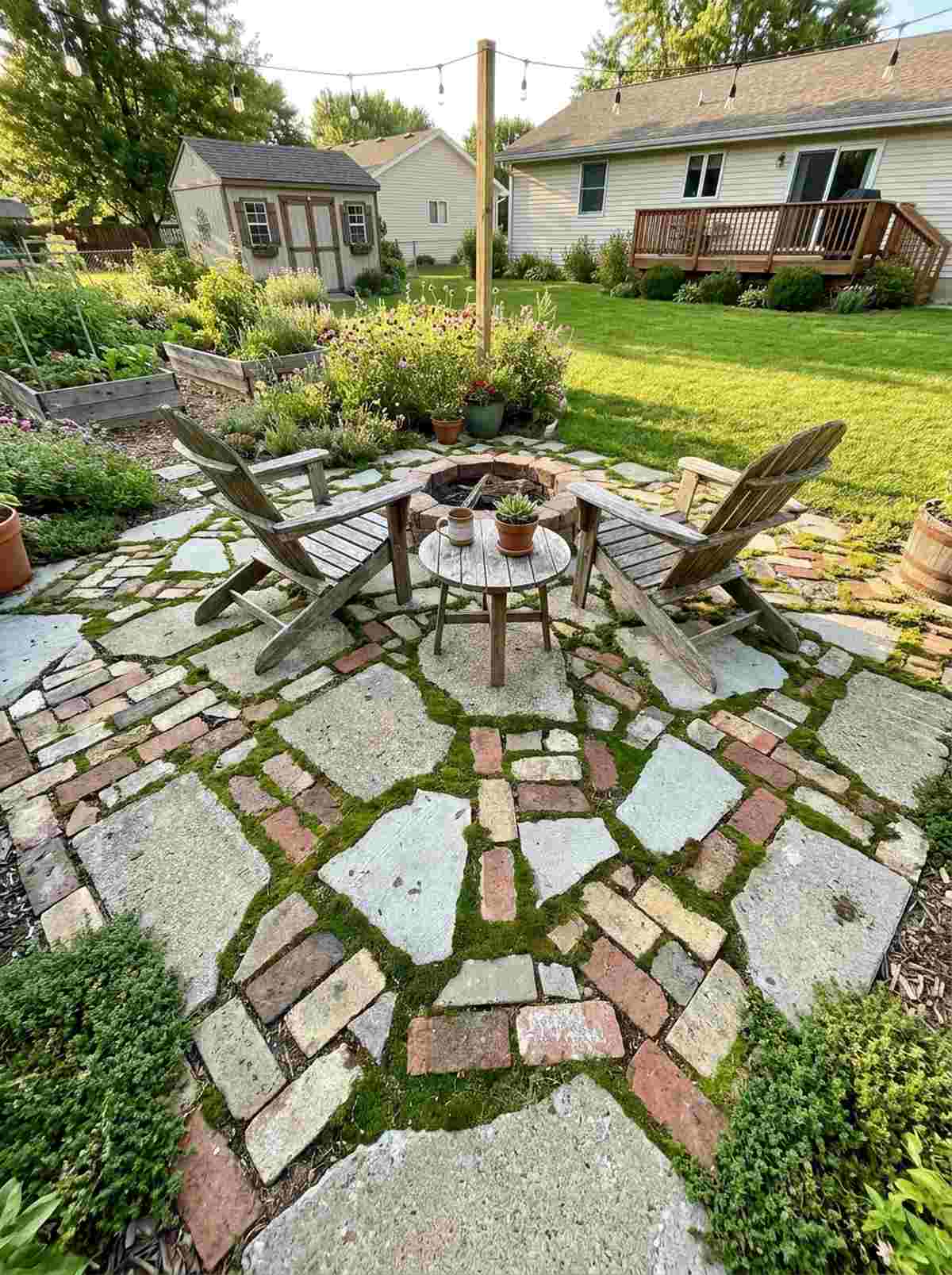
An eclectic salvaged masonry mosaic that feels like a trendy, upcycled hipster café patio. The absolute cheapest way to get a solid hardscape if you are willing to hunt for materials.
Buying new stone is pricey, but smashing old concrete slabs (urbanite) and fitting them together looks far more expensive than it is. Thick moss joints completely hide the mismatched edges and unify the broken pieces.
Nearly free if you scavenge, or $30–$50 for base sand. Highly recommended for extreme budget DIYers.
- Key Materials: Broken concrete/reclaimed brick, creeping filler plants
- Vibe / Style: Rustic upcycled mosaic
- Difficulty: Heavy puzzle-solving
- Budget Breakdown: Scavenged stone: $0 | Base sand/plants: $40
- Creator’s Tip: Leave wider gaps (3-4 inches) between the broken pieces to make the puzzle fitting much easier and allow more green to show.
- Smart Sourcing: heavy-duty sledgehammer (for sizing pieces) and creeping thyme bulk plugs.
You wouldn’t believe this next layout uses highly engineered secrets to look ultra-premium…
35. Soil Cell Paver System
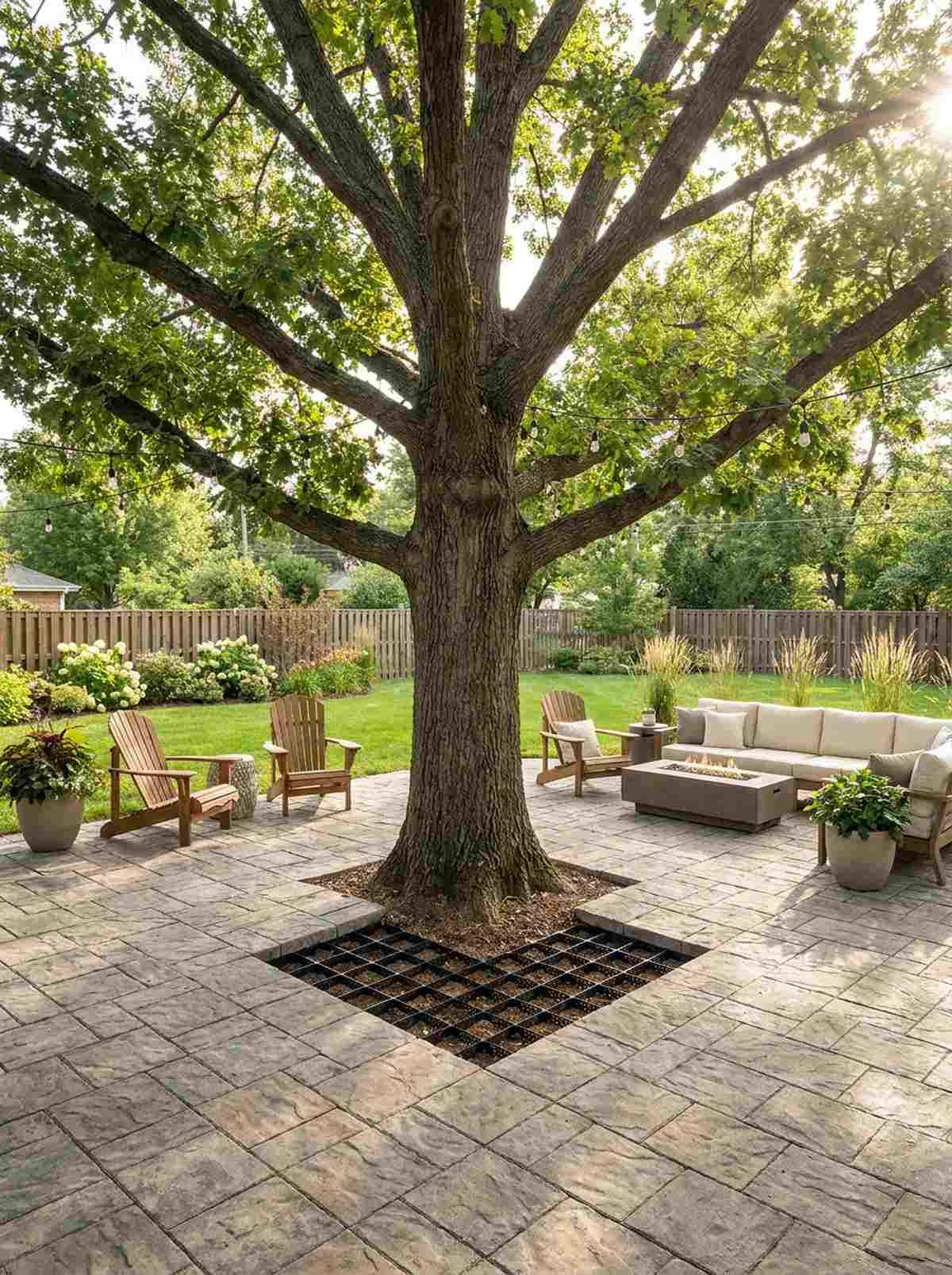
This advanced tree-root protection hardscape feels like a modern commercial plaza design. The only way to safely build a solid patio right up to the trunk of a massive shade tree.
Pouring a patio over tree roots suffocates and kills the tree; installing modular plastic soil cells delivers a surprisingly premium look while bearing the weight of the stone. The roots breathe, and your patio stays perfectly flat.
Cell kits are an investment, around $300–$500. Save this if you refuse to cut down your yard’s best tree.
- Key Materials: Structural soil cell grids, porous pavers
- Vibe / Style: Engineered urban canopy
- Difficulty: Advanced installation
- Budget Breakdown: Cell system: $350 | Pavers: $120
- Creator’s Tip: Use engineered soil inside the cells that won’t compact over time, ensuring the tree always has air pockets.
- Smart Sourcing: modular structural soil cell kits and permeable joint rock bags.
Specialty Function Patios Combining Plants and Pavers
These layouts optimize for specific activities or user needs, from edible production to fire features, demonstrating how paver-plant integration adapts to diverse functional requirements in compact spaces.
36. Edible Garden Paver Grid
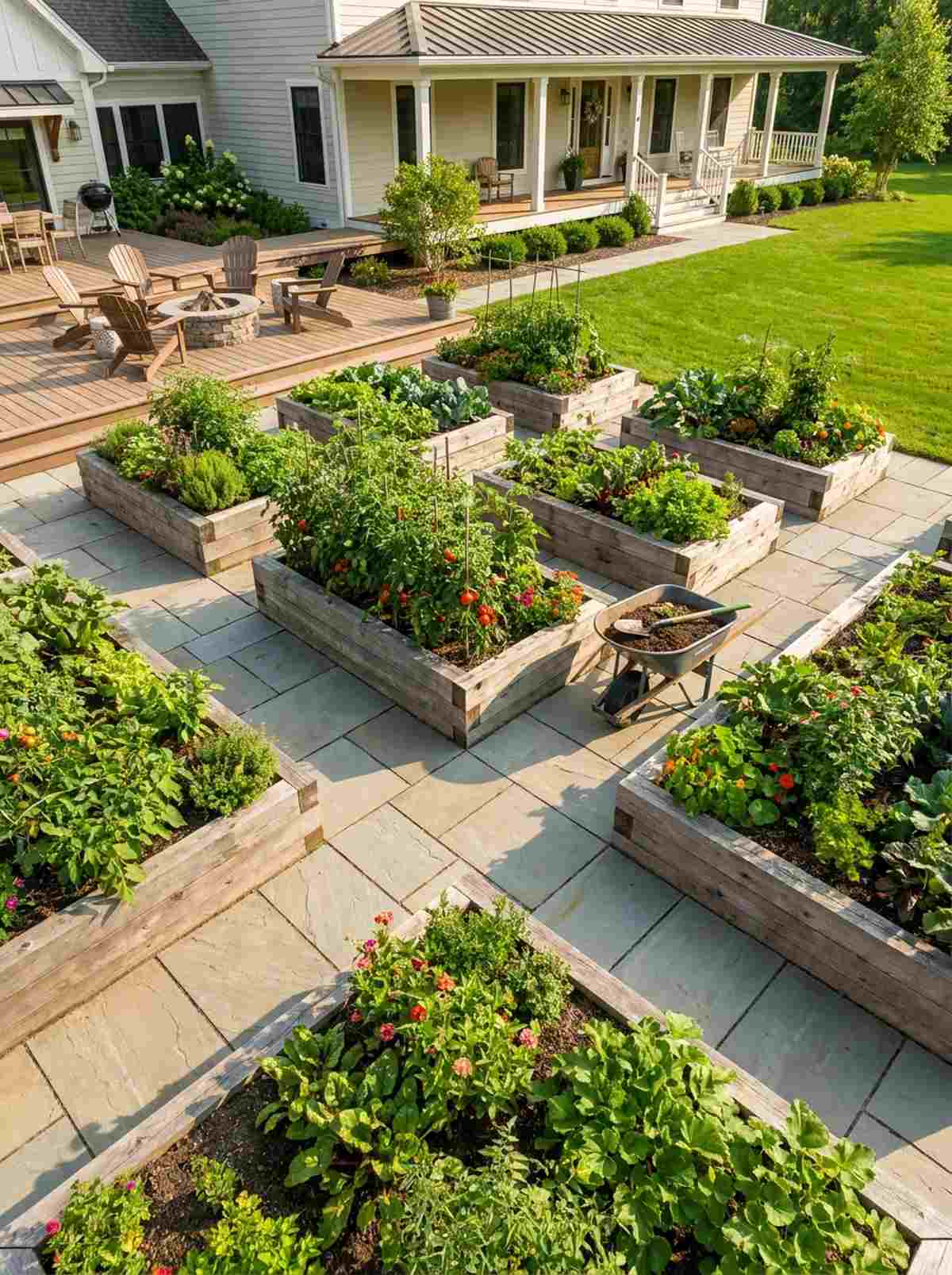
A highly productive kitchen garden hardscape that feels like a professional French potager layout. Essential for homeowners who want to grow serious food without standing in the mud.
Traditional dirt rows are a mess; locking raised beds between crisp paver grids creates an elite aesthetic on a dime. You get clean, all-weather access to pull weeds or harvest tomatoes without ever dirtying your shoes.
Timber and pavers run about $150–$250. Pin this if you want a beautiful, dirt-free veggie patch.
- Key Materials: Raised bed timber, grid pathway pavers
- Vibe / Style: Pristine productive harvest
- Difficulty: Moderate measuring and leveling
- Budget Breakdown: Bed materials: $100 | Path stones: $120
- Creator’s Tip: Make the paver pathways at least 24 inches wide so you can comfortably fit a wheelbarrow through them.
- Smart Sourcing: cedar raised garden bed kits and bulk organic vegetable soil.
37. Fire Pit Conversation Circle
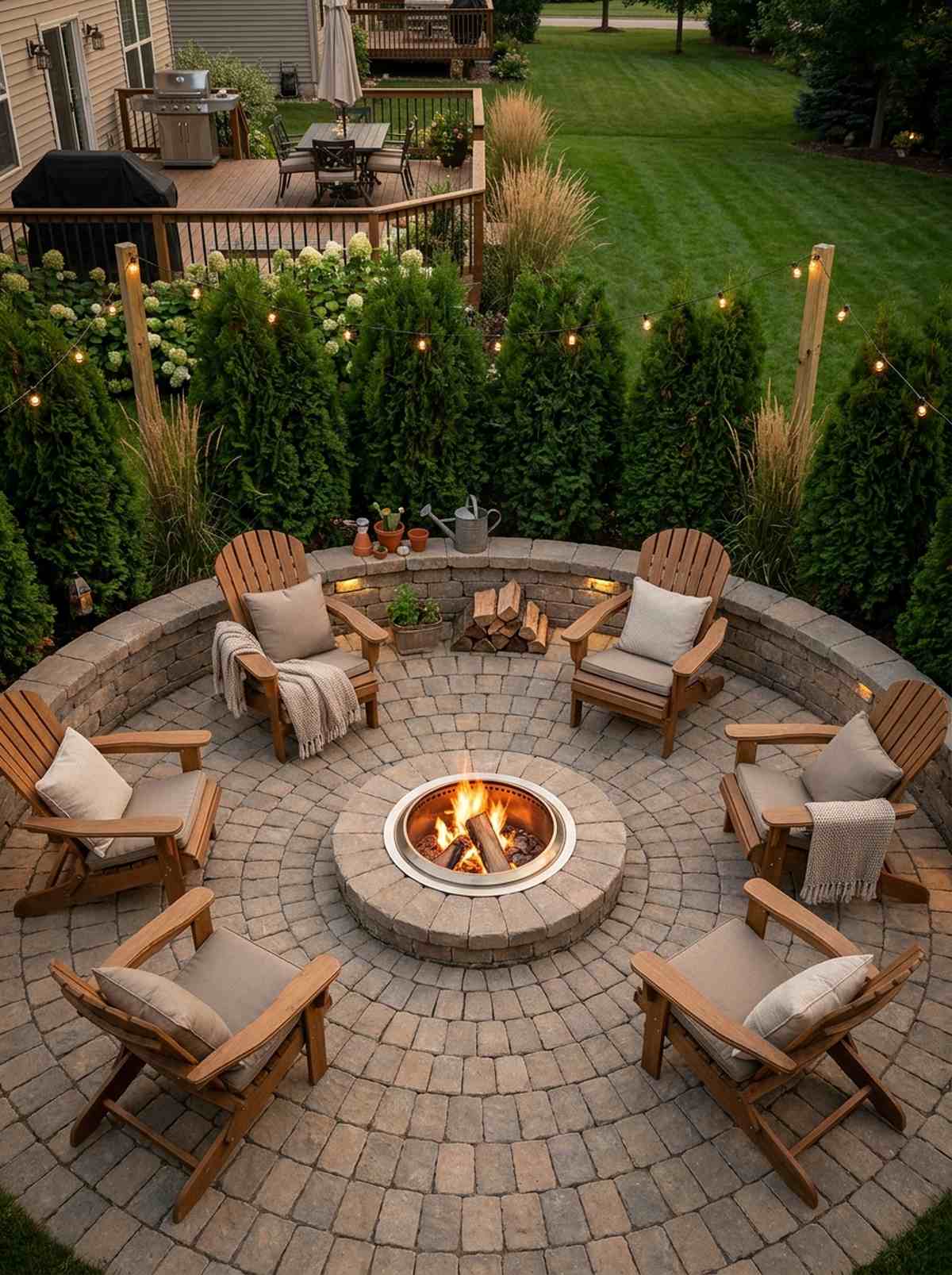
This classic central fire pit hardscape feels like an exclusive luxury camping retreat. The ultimate layout for hosting late-night drinks and s’mores in a tiny backyard.
Pushing seating to the edges is boring; locking a circular paver pad around a fire feature looks far more expensive than it is. Wrapping the back of the circle with miniature garden supplies and tall shrubs traps the heat and the conversation.
Kits run about $250–$400. Highly recommended for instant backyard entertainment.
- Key Materials: Radial paver kit, fire pit ring, border shrubs
- Vibe / Style: Intimate warm gathering
- Difficulty: Intermediate masonry
- Budget Breakdown: Paver circle: $200 | Fire ring: $100
- Creator’s Tip: Set the fire pit ring first, perfectly centered, then build your paver circle outward from that anchor point.
- Smart Sourcing: steel smokeless fire pit inserts and circular patio paver sets.
38. Outdoor Kitchen Work Zone
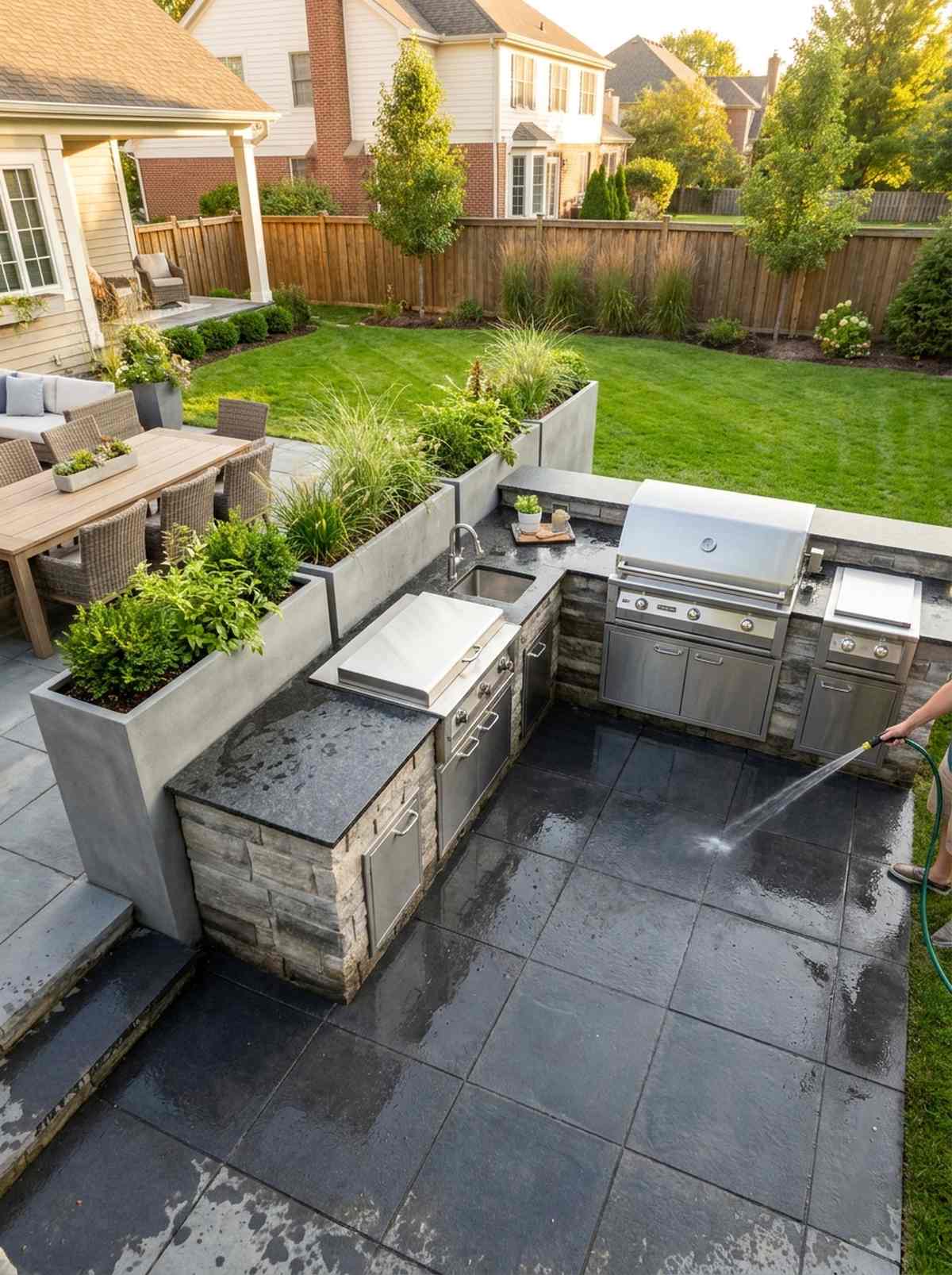
A durable grill station patio layout that feels like a professional chef’s outdoor prep area. Perfect for containing the grease and mess of summer BBQs.
Grease ruins wooden decks instantly; laying down dense, stain-resistant pavers creates an elite aesthetic on a dime that easily hoses clean. Using thick planter boxes to wall off the dining area keeps the smoke out of your guests’ faces.
Hardscape and barriers cost $200–$350. Save this to upgrade your grilling game.
- Key Materials: Stain-resistant sealed pavers, tall divider planters
- Vibe / Style: Segmented culinary station
- Difficulty: Straightforward paving
- Budget Breakdown: Sealed pavers: $180 | Tall planters: $120
- Creator’s Tip: Always seal the pavers in the cooking zone before the first use so oil splatters wipe right off the stone.
- Smart Sourcing: commercial-grade oil-resistant stone sealer and tall modern privacy planters.
39. Water Feature Focal Basin
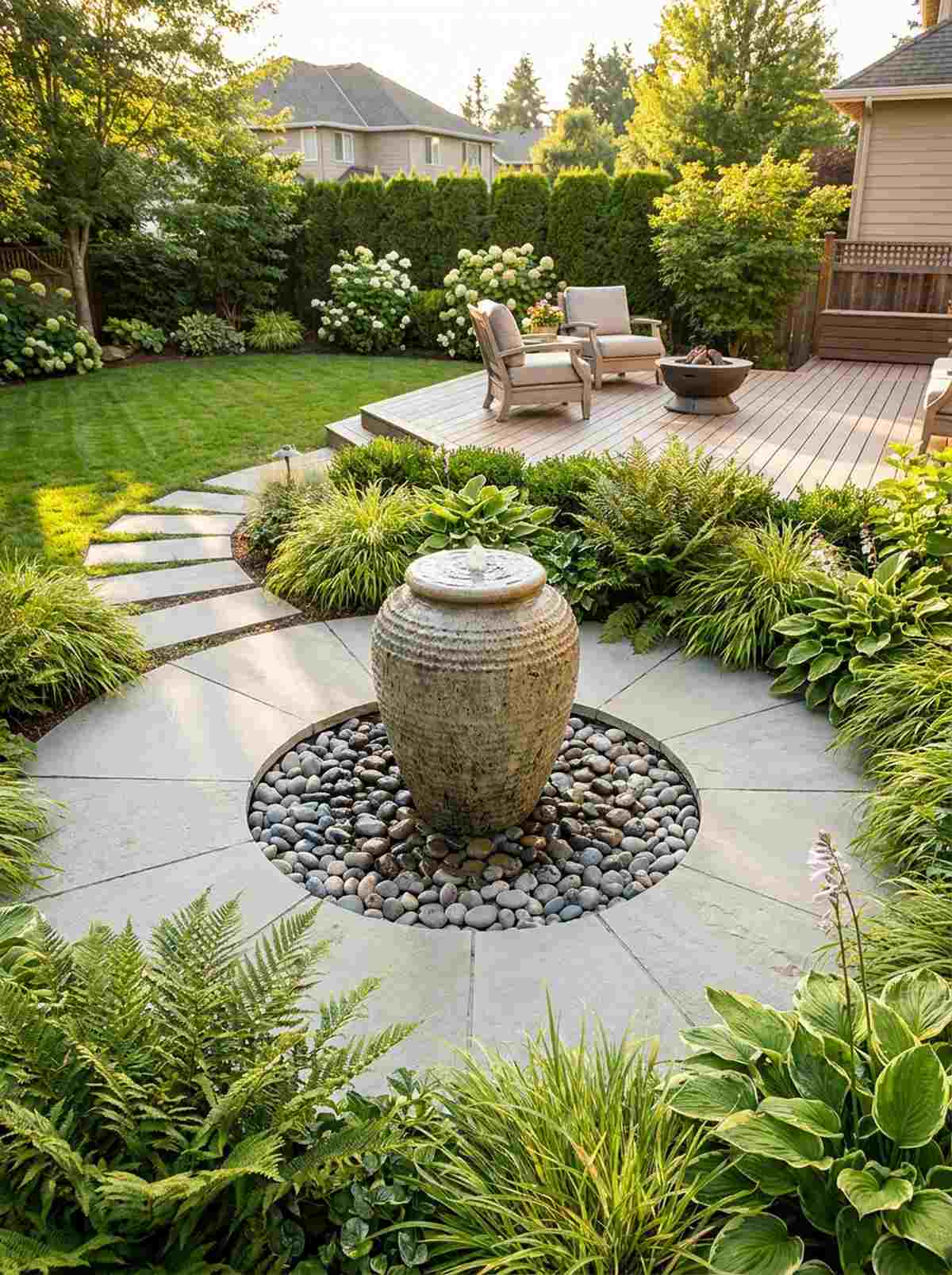
A tranquil fountain integration layout that feels like a high-end spa meditation courtyard. The perfect fix for drowning out terrible traffic noise or loud neighbors.
Slapping a fountain on top of concrete looks cheap; embedding a bubbling urn directly into a planted cut-out in the pavers delivers a surprisingly premium look. The moisture-loving plants thrive off the constant splash.
Fountain kits and stones cost $150–$300. Pin this if you need auditory privacy.
- Key Materials: Bubbling water feature kit, surrounding steppers
- Vibe / Style: Sensory zen escape
- Difficulty: Requires basic electrical/pump setup
- Budget Breakdown: Pump/Basin kit: $150 | Paver surround: $80
- Creator’s Tip: Bury the water reservoir entirely underground and cover it with river rock so the water seems to magically vanish into the stone.
- Smart Sourcing: underground fountain basin kits and submersible solar water pumps.
This final stretch features the ultimate high-ROI setups for dealing with kids, pets, and stress…
40. Pet-Friendly Durable Surface
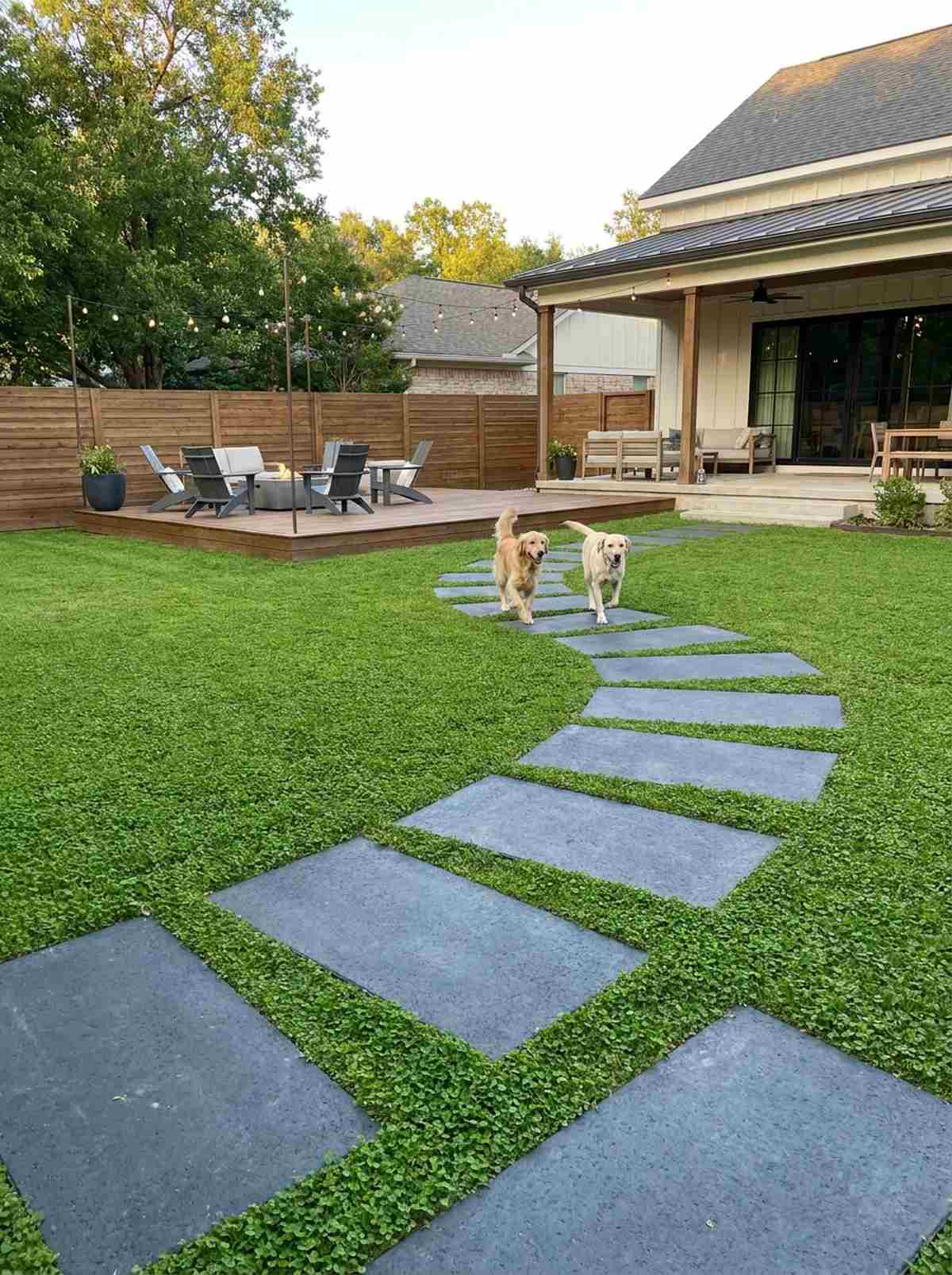
This ultra-tough dog-proof backyard setup feels like a clean, modern lounge that secretly withstands heavy paw traffic. A lifesaver for dog owners tired of wiping muddy paws every single day.
Dogs absolutely destroy fragile lawns; dropping heavy pavers along their natural running routes creates an elite aesthetic on a dime while saving your sanity. Planting clover instead of grass in the gaps means urine spots won’t turn brown.
Tough materials cost $100–$180. Highly recommended for a mud-free house.
- Key Materials: Large format heavy pavers, clover seed mixes
- Vibe / Style: Bulletproof modern yard
- Difficulty: Easy and practical
- Budget Breakdown: Heavy stones: $120 | Clover seed: $20
- Creator’s Tip: Watch where your dog runs along the fence line first, then lay your paver paths exactly over their established routes.
- Smart Sourcing: bulk micro-clover seed bags (dog tough) and heavy-duty stepping blocks.
41. Meditation Zen Garden
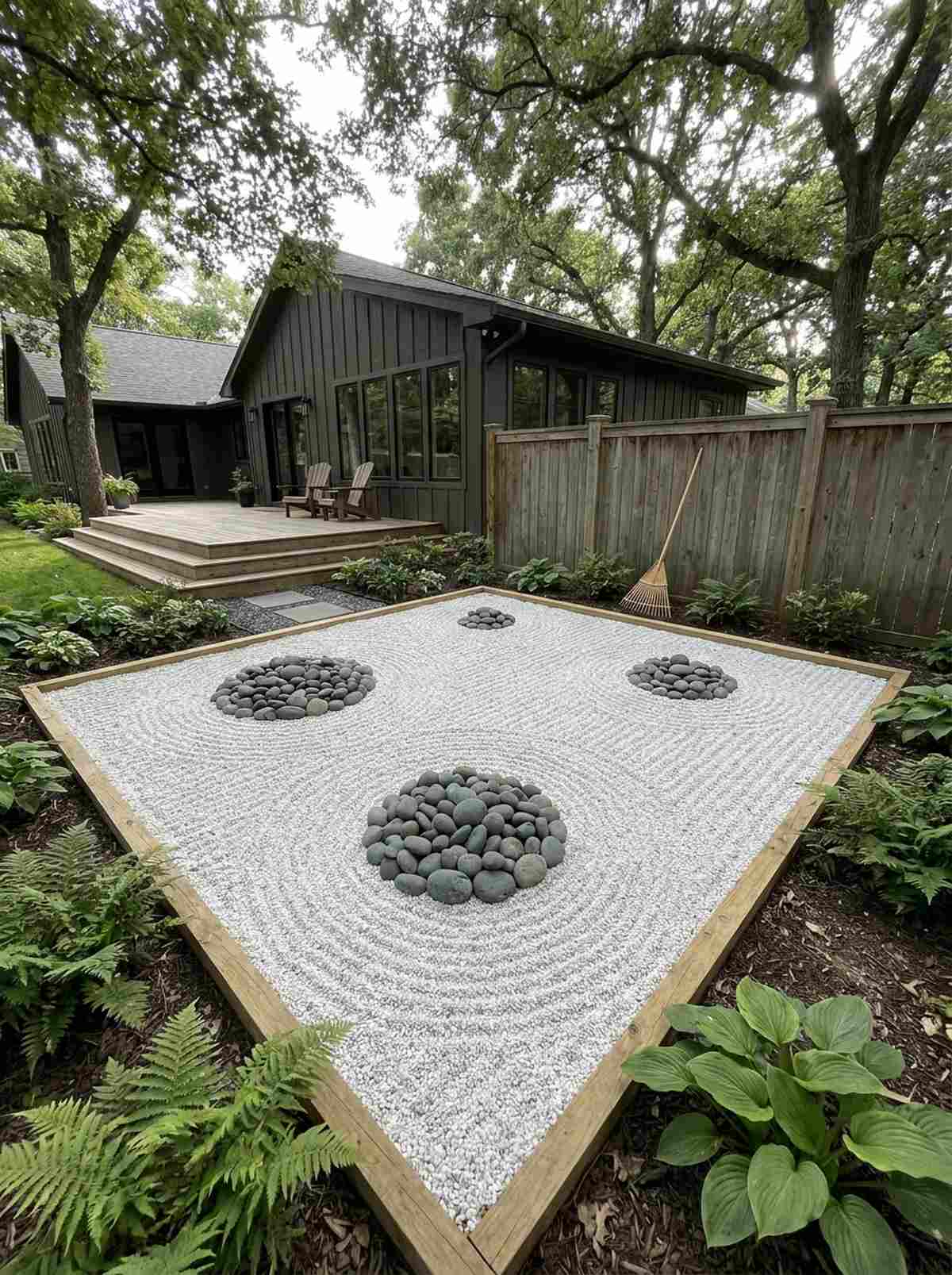
A minimalist raked gravel landscape that feels like an authentic temple courtyard in Kyoto. The ultimate choice for shaded, sterile side-yards where literally nothing will grow.
Forcing plants to survive in the dark is a waste of money; switching to raked fine gravel with a few isolated paver islands looks far more expensive than it is. It requires zero water and looks museum-quality year-round.
Sand and focal stones cost $60–$120. Save this for an ultra-low maintenance retreat.
- Key Materials: Fine crushed gravel/sand, isolated smooth boulders
- Vibe / Style: Austere contemplative peace
- Difficulty: Simple spreading and raking
- Budget Breakdown: Fine gravel: $70 | Accent stones: $30
- Creator’s Tip: Use crushed granite rather than round pea gravel; crushed stone locks together and holds the rake patterns beautifully.
- Smart Sourcing: traditional wooden zen garden rakes and white crushed marble bags.
42. Children’s Play Surface Mix
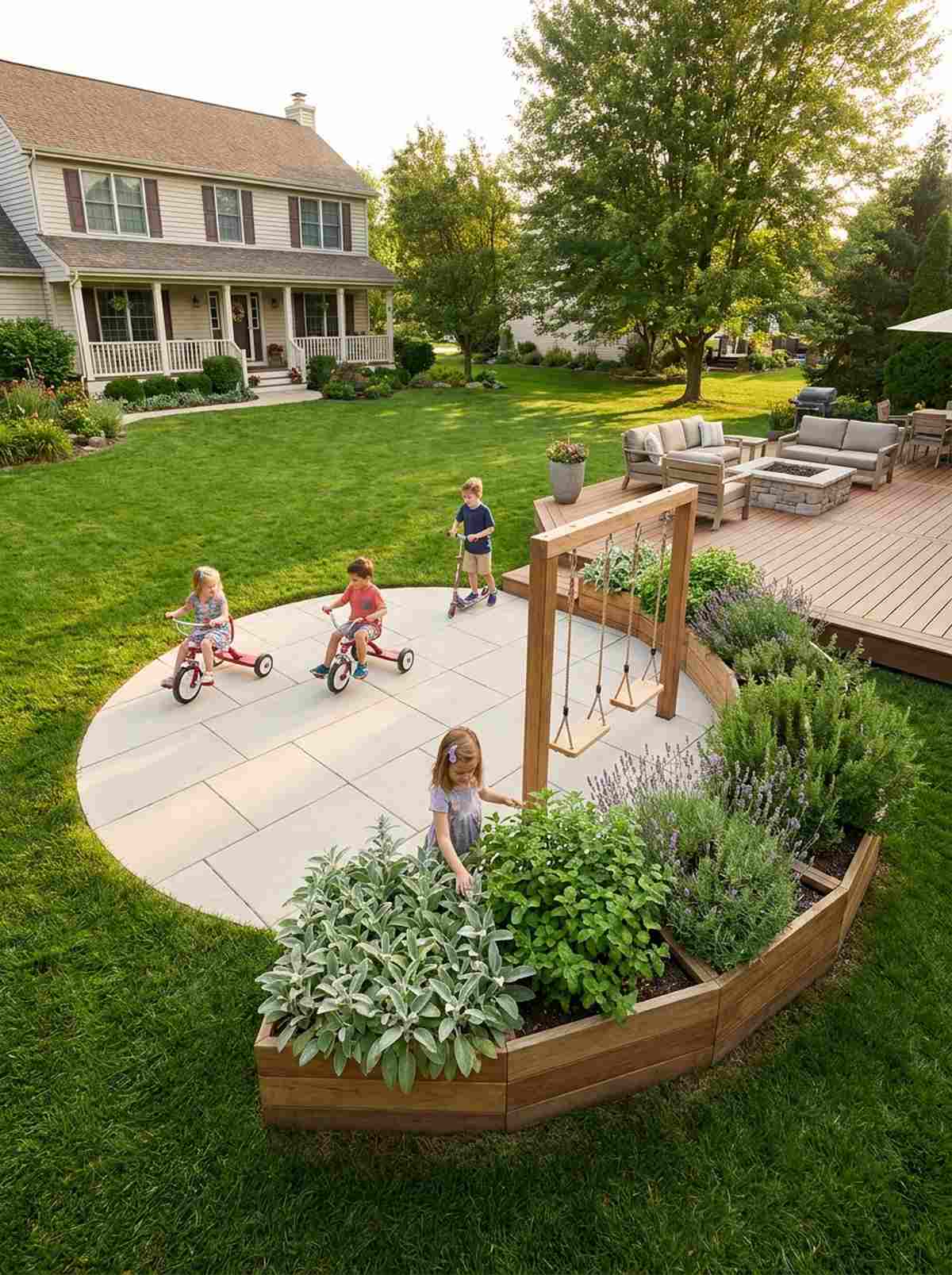
A hybrid sensory play hardscape that feels like a high-end private playground. Brilliant for keeping kids entertained while maintaining an aesthetic that adults actually enjoy looking at.
Rubber playground mulch is ugly; splitting the yard into a 60% smooth paver zone for wheeled toys and a 40% sensory plant zone delivers a surprisingly premium look. Kids get tough herbs to touch and smell, while you get a sleek patio.
Durable pavers and plants run $150–$250. Pin this for the perfect family backyard compromise.
- Key Materials: Smooth jointed pavers, hardy sensory herbs (mint, lamb’s ear)
- Vibe / Style: Safe, active exploration
- Difficulty: Moderate leveling required for safety
- Budget Breakdown: Smooth pavers: $180 | Sensory plants: $50
- Creator’s Tip: Sweep fine polymeric sand into the joints so the surface is completely flush, preventing scraped knees and stubbed toes.
- Smart Sourcing: gap-filling polymeric sand (bulk) and non-toxic sensory herb starter kits.
Bringing Your Small Patio Garden to Life
Executing a high-end small patio garden isn’t about having a massive budget; it’s about smart material sourcing and strategic layout planning. By utilizing pre-cut kits, commercial-grade weed barriers, and bulk hardscaping materials, you can easily replicate these 42 premium setups for a fraction of what a contractor would charge. Start by choosing the specific layout that solves your yard’s biggest problem—whether that’s a lack of privacy, poor drainage, or a need for entertainment space—and lock in your foundation with the right base gear. Remember, achieving that expensive, designer look always comes down to the precision of your paver lines and the quality of your filler materials.
Frequently Asked Questions
What is the ideal paver-to-plant ratio for a small patio garden?
The optimal layout depends heavily on your lifestyle. High-entertainment zones need a 70% heavy-duty paver to 30% plant ratio, easily achieved using premium patio starter kits to ensure stable furniture. For a lush, quiet vibe, flip that to 60% greenery using bulk moss or creeping seeds. Always prioritize hardscape near doors to prevent tracking mud inside.
Which ground cover plants work best between pavers in small patio gardens?
If you want a premium look that survives foot traffic, skip the fragile stuff. Creeping thyme and Irish moss are elite choices that thrive between stones. For maximum heat resistance, look into sedum or Dymondia plugs. Sourcing bulk ground cover flats online is significantly cheaper than buying individual small pots at a local nursery.
How do I prevent pavers from shifting when integrating plants in small spaces?
A failed base layer guarantees wobbly, sunken stones. Always start with 4-6 inches of compacted crushed rock, and lock the outer edges tightly with commercial-grade plastic edge restraints. Sweeping heavy-duty polymeric sand into the non-planted joints creates a concrete-like lock that stops outward creep entirely.
Can I install paver-plant integration layouts on sloped small patios?
Absolutely, but you must terrace the slope. For gentle hills, lay pavers perpendicular to the incline. For steeper drops, you’ll need to build step-down platforms using retaining wall block kits. Properly installing a French drain or bioswale at the bottom edge is critical so heavy runoff doesn’t wash your new plants away.
How much maintenance do small patio gardens with integrated plants and pavers require?
With the right setup, practically zero. By laying down pre-cut weed barriers under your hardscape and choosing drought-proof ground covers, you eliminate mowing and constant weeding. Budget just 2-4 hours a month for basic sweeping and trimming. Adding an inexpensive automated drip irrigation timer takes watering completely off your hands.
What are the cost differences between various paver-plant integration approaches?
Smart sourcing changes everything. Standard concrete blocks with seeded ground cover cost a mere $8-15 per square foot. Upgrading to natural flagstone or permeable grid systems bumps it to $20-35. You can drastically slash costs by utilizing salvaged urbanite (broken concrete) or buying your heavy materials in bulk pallets rather than individual pieces from big-box stores.