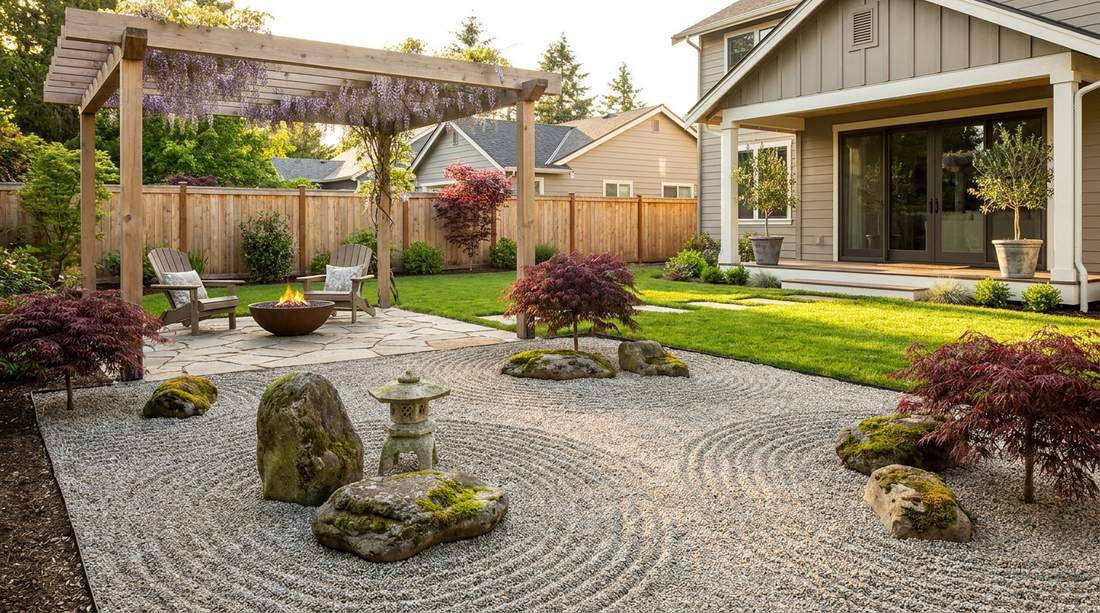
Mastering minimalist zen gardens instantly elevates any outdoor space into a premium retreat. This breakdown reveals exact material sourcing and budget layouts to achieve a high-end designer finish without the massive contractor price tag.
Design Snapshot: Core Zen Garden Principles
- Kanso (Simplicity): Remove non-essential elements to reveal the garden’s true character through clean lines and uncluttered compositions
- Fukinsei (Asymmetry): Arrange stones and plants in odd-numbered groupings to create natural balance that mirrors organic landscapes
- Seijaku (Stillness): Design spaces that encourage quiet contemplation through horizontal lines, muted colors, and gentle sound
- Shinzen (Naturalness): Select materials that weather gracefully, avoiding artificial finishes or overly manicured plantings
- Yugen (Subtle Mystery): Layer elements to create depth and discovery, inviting viewers to engage with the space over time
- Datsuzoku (Freedom from Convention): Break from standard garden design to create unexpected moments of beauty
- Koko (Austerity): Embrace restraint in material choices, focusing on essential forms that carry maximum impact
Traditional Dry Landscape Foundations
Karesansui gardens form the cornerstone of Zen landscape architecture, using rocks and gravel to represent natural elements without incorporating water. These compositions require careful planning to achieve the visual weight and symbolic meaning that define authentic Japanese dry gardens.
1. Raked Gravel Ocean Waves
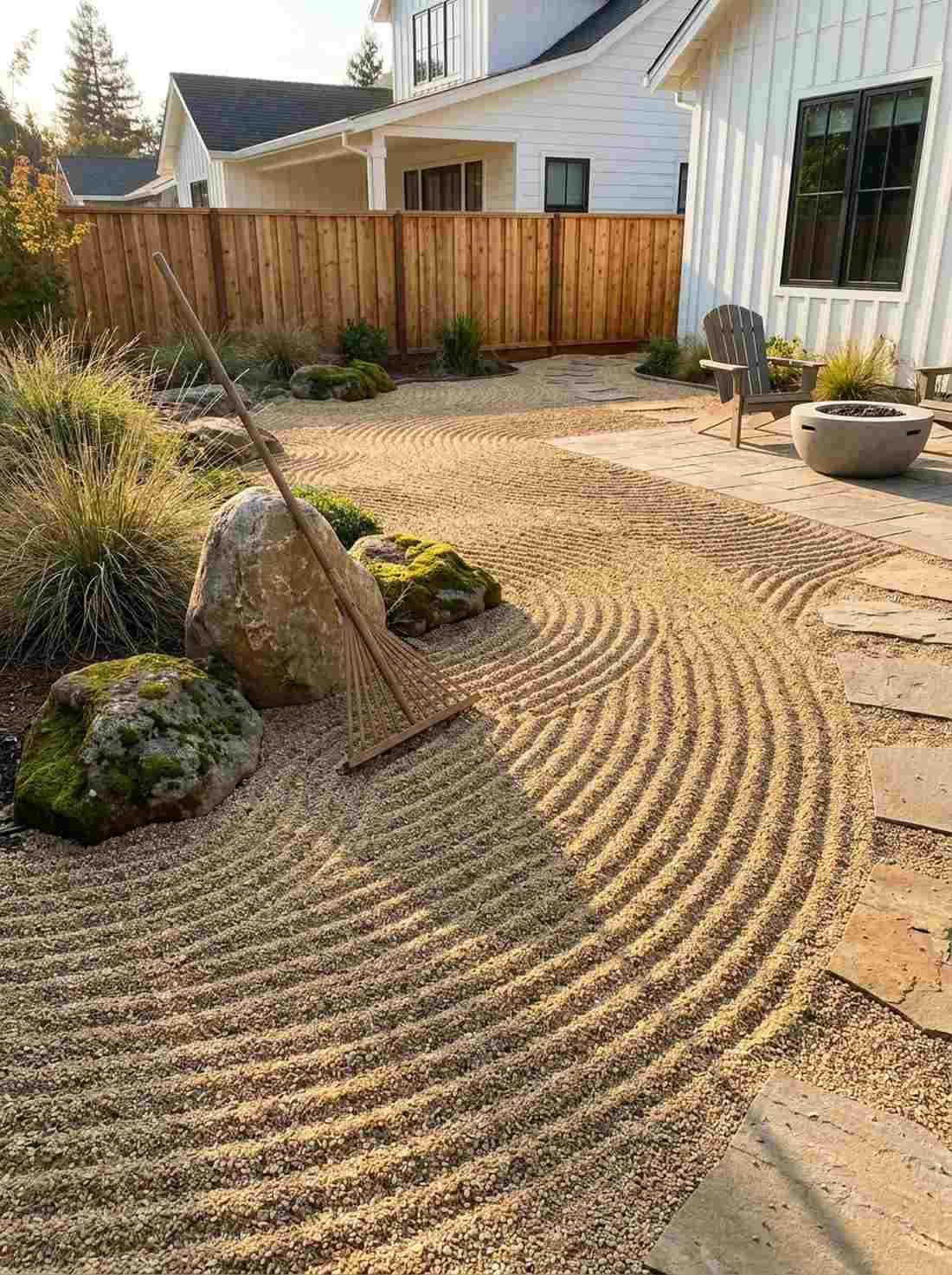
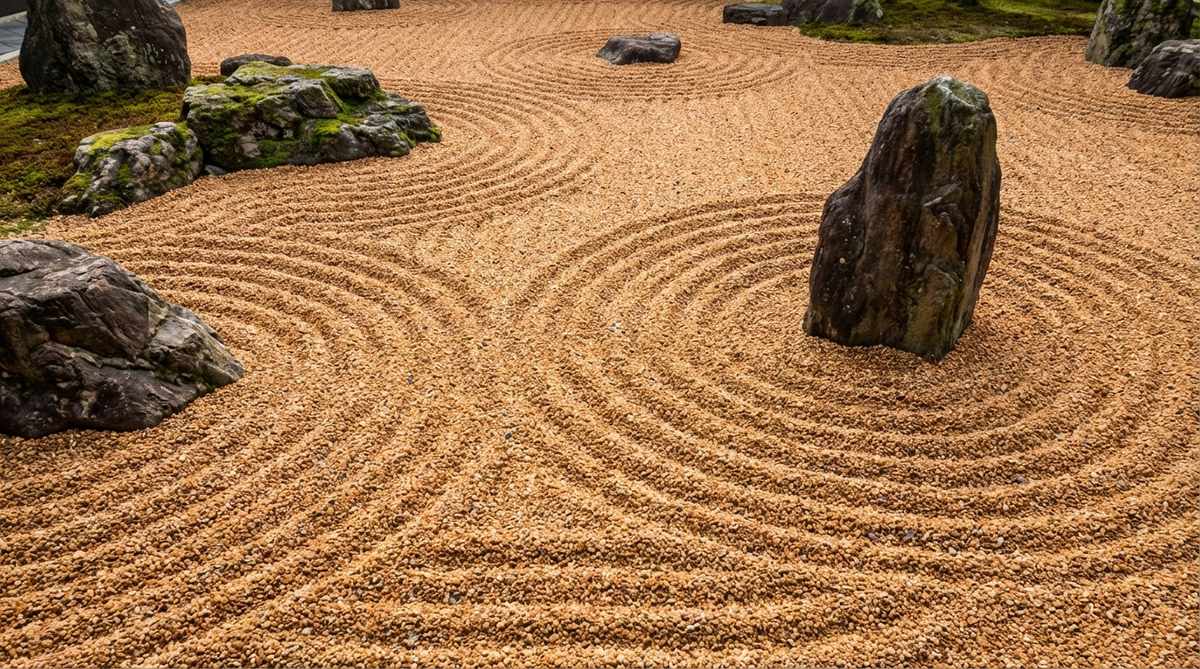
There is something inherently grounding about sweeping lines that feel like a coastal tide frozen in time. This minimalist dry landscape idea works exceptionally well for an empty side yard craving purpose.
Trading expensive sod for raked aggregates delivers a surprisingly premium look with zero watering required. For an ultra-crisp finish, investing in specialized zen garden meditation accessories ensures those wave patterns stay sharp all week.
You can easily pull this off for around $40–$80 in bulk stone. Pin this to your low-maintenance backyard board!
- Key Materials: Decomposed granite (bulk delivery) and traditional kumade rakes
- Vibe / Style: Japanese monastery courtyard
- Difficulty: Beginner-friendly execution
- Budget Breakdown: Aggregate: $50 | Rake tool: $30
- Creator’s Tip: Slightly dampen the gravel in the morning before raking for flawless, dust-free grooves.
- Smart Sourcing: crushed granite sand (bulk bags) and heavy-duty hardwood zen rakes.
2. Three-Stone Mountain Arrangement
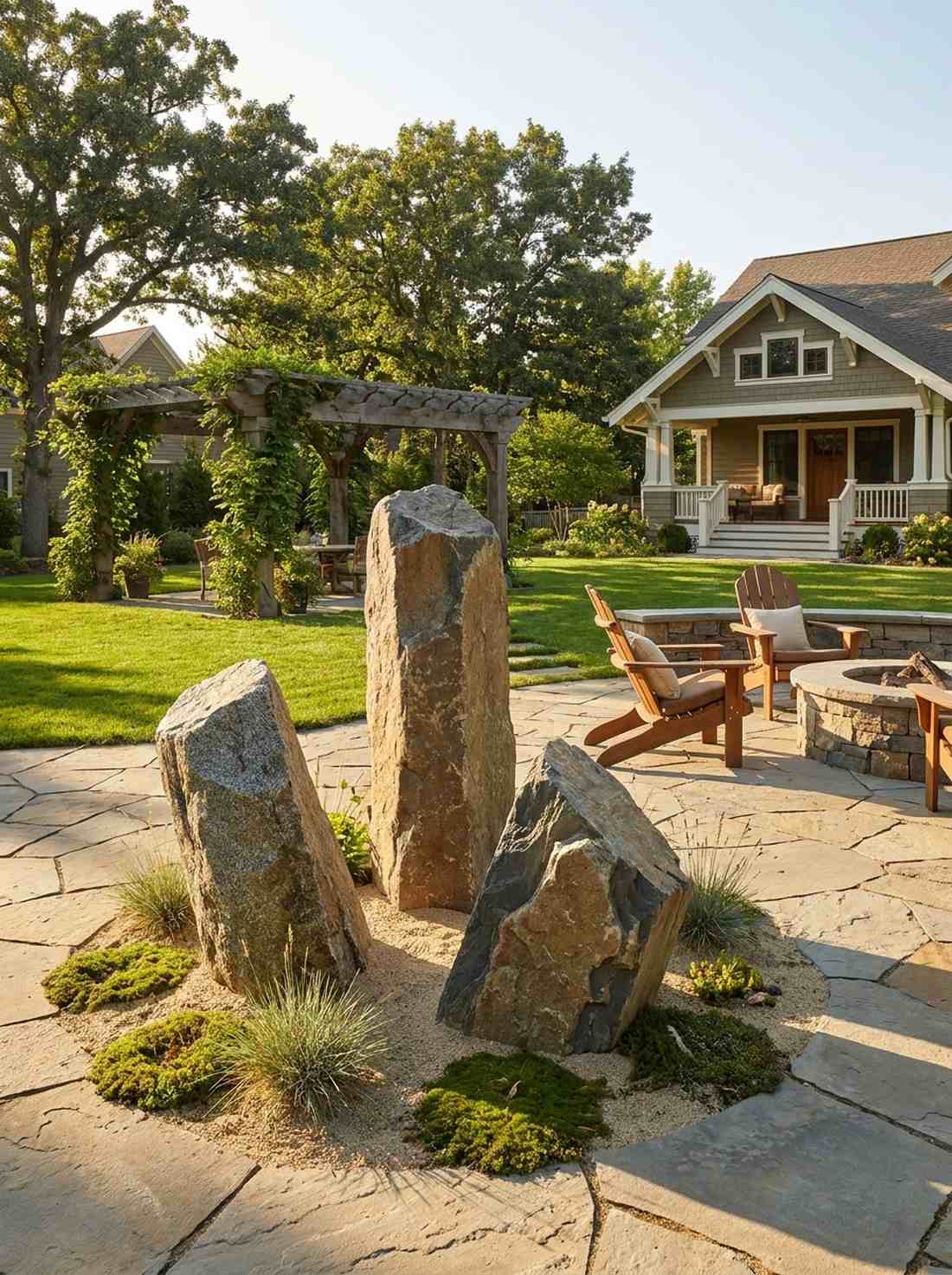
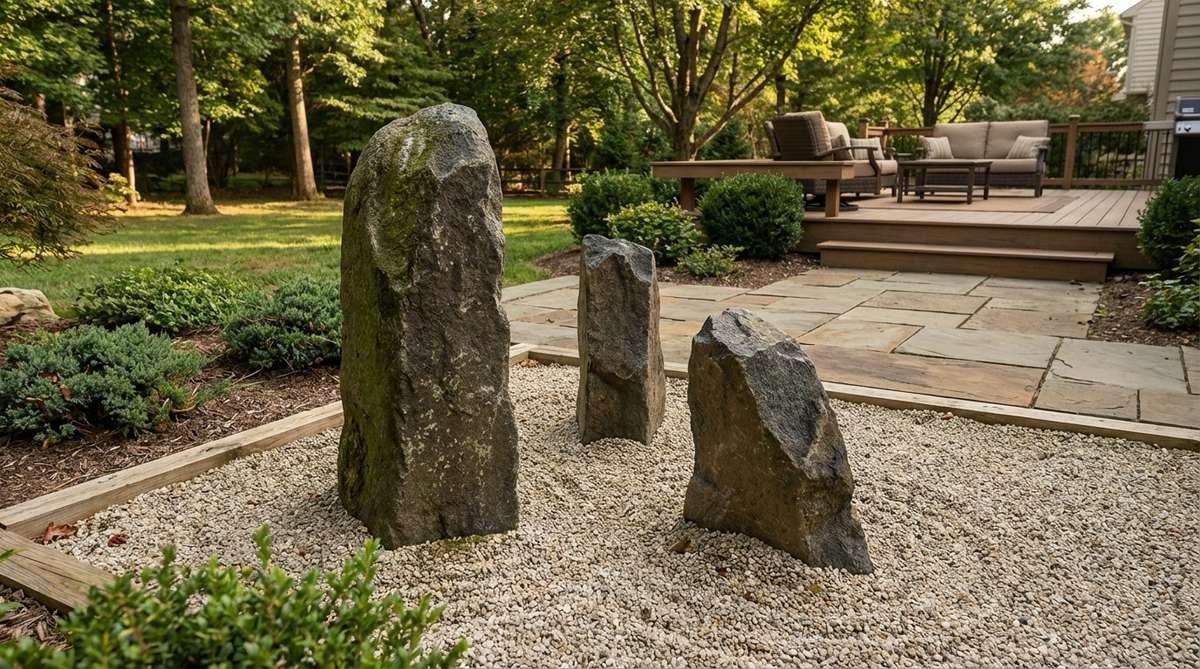
A rugged, asymmetrical focal point that feels like a sacred mountain peak rising from the mist. A classic triad rock formation is perfect for grounding the center of an open patio.
By burying one-third of the stone, you fool the eye into seeing ancient, immovable permanence rather than freshly placed decor. Sourcing the right miniature garden supplies can scale this look down for indoor terrariums too.
Expect to spend roughly $30–$60 depending on your local stone yard. It’s a fast weekend upgrade with massive visual impact.
- Key Materials: Three contrasting vertical boulders
- Vibe / Style: Rugged natural simplicity
- Difficulty: Intermediate lifting required
- Budget Breakdown: Boulders: $45 | Base stabilization: $15
- Creator’s Tip: Lean the supporting stones exactly 15 degrees inward toward the tallest rock for organic tension.
- Smart Sourcing: pre-selected triad stone bundles and high-density leveling sand.
3. Turtle Island Stone Cluster
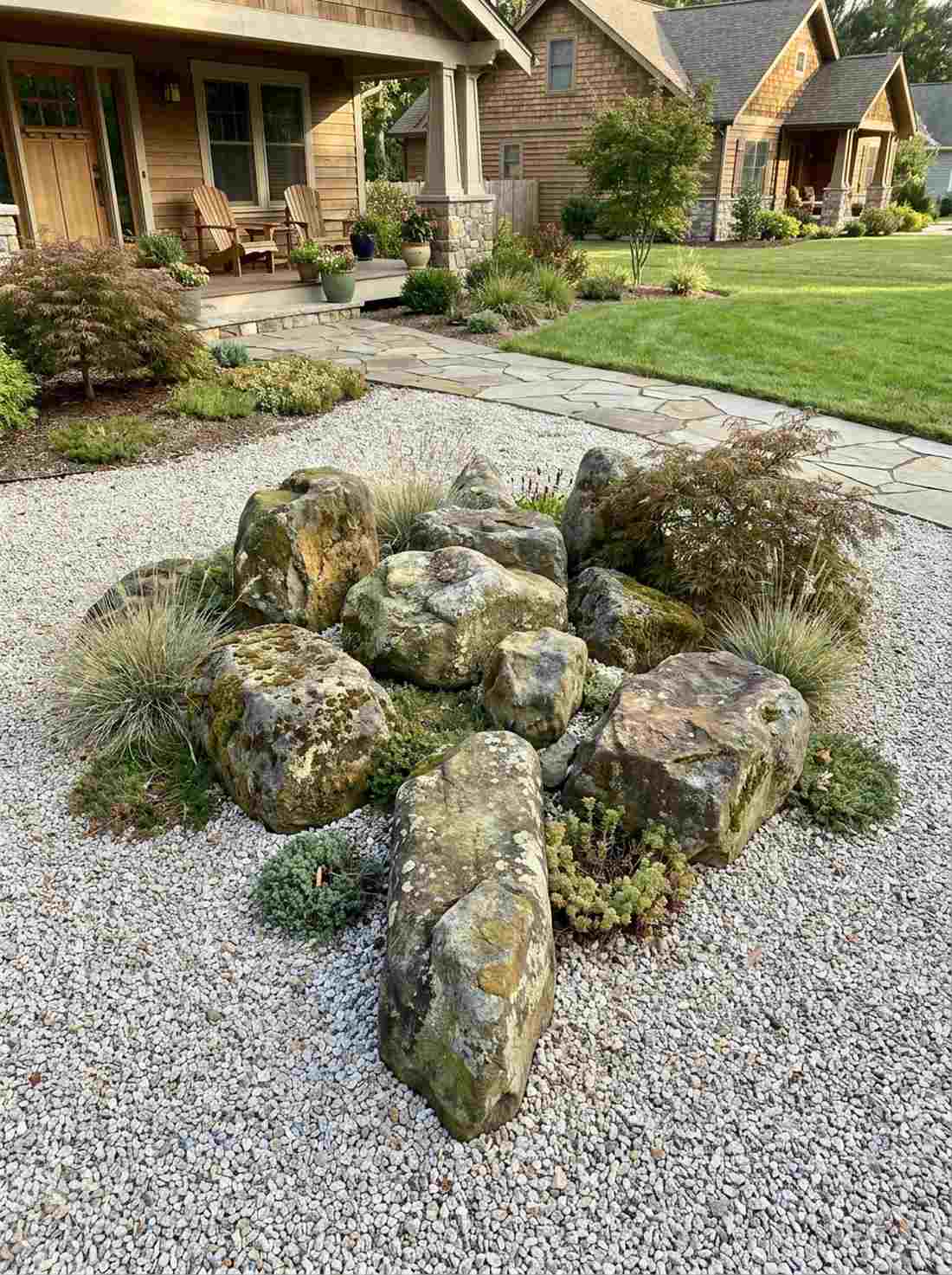
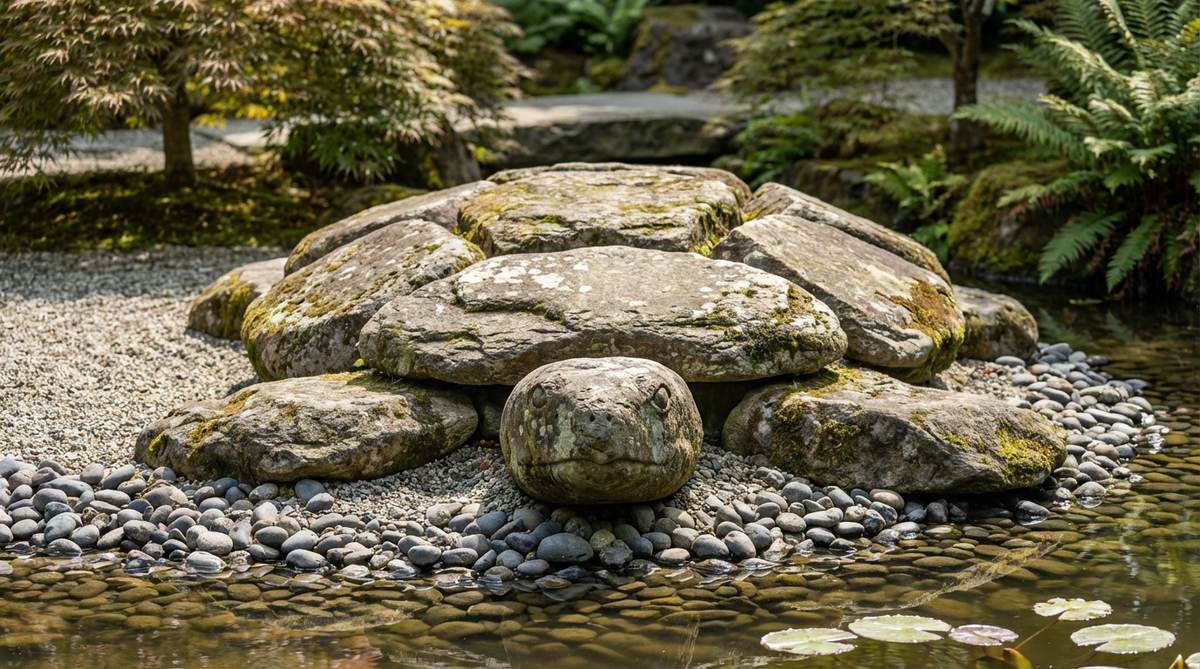
Evoke the quiet longevity of nature with a grouping that feels like a sleeping giant resting in a sea of gravel. A turtle-inspired garden island is the ideal anchor piece for a front entrance zen garden design.
Using weathered, lichen-covered fieldstones instantly bypasses the “new construction” look and adds instant heritage. This trick guarantees your layout looks far more expensive than the sum of its parts.
Sourcing local stones keeps this under $50. Save this idea if you love rich, symbolic landscaping.
- Key Materials: 7-9 flat, weathered fieldstones
- Vibe / Style: Ancient mythological charm
- Difficulty: Easy placement
- Budget Breakdown: Accent stones: $40 | Base filler: $10
- Creator’s Tip: Always point the distinct “head” stone directly toward the main pathway to welcome guests.
- Smart Sourcing: moss-friendly aging spray and lichen-cultured accent rocks.
4. Crane Island Vertical Formation
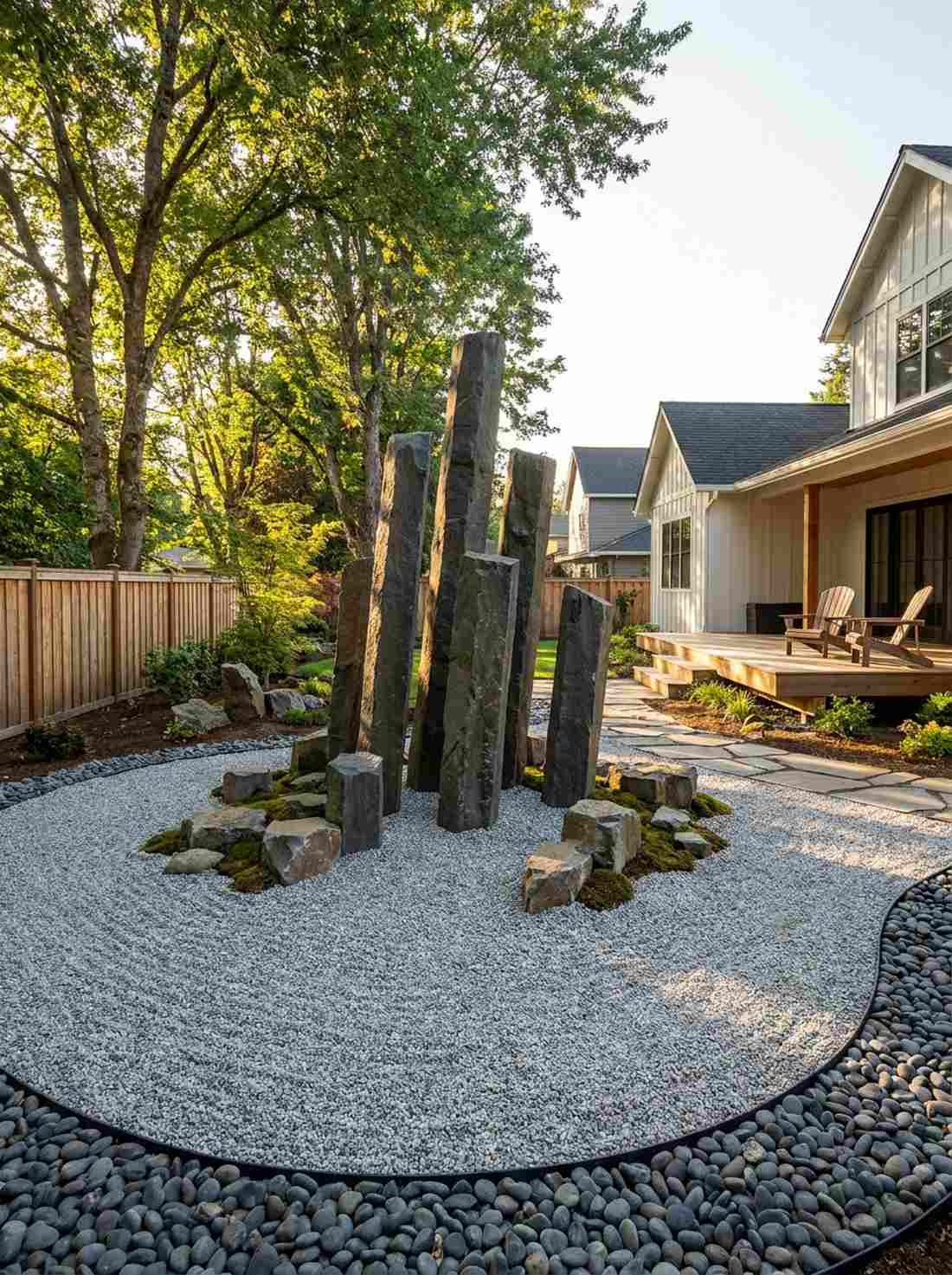
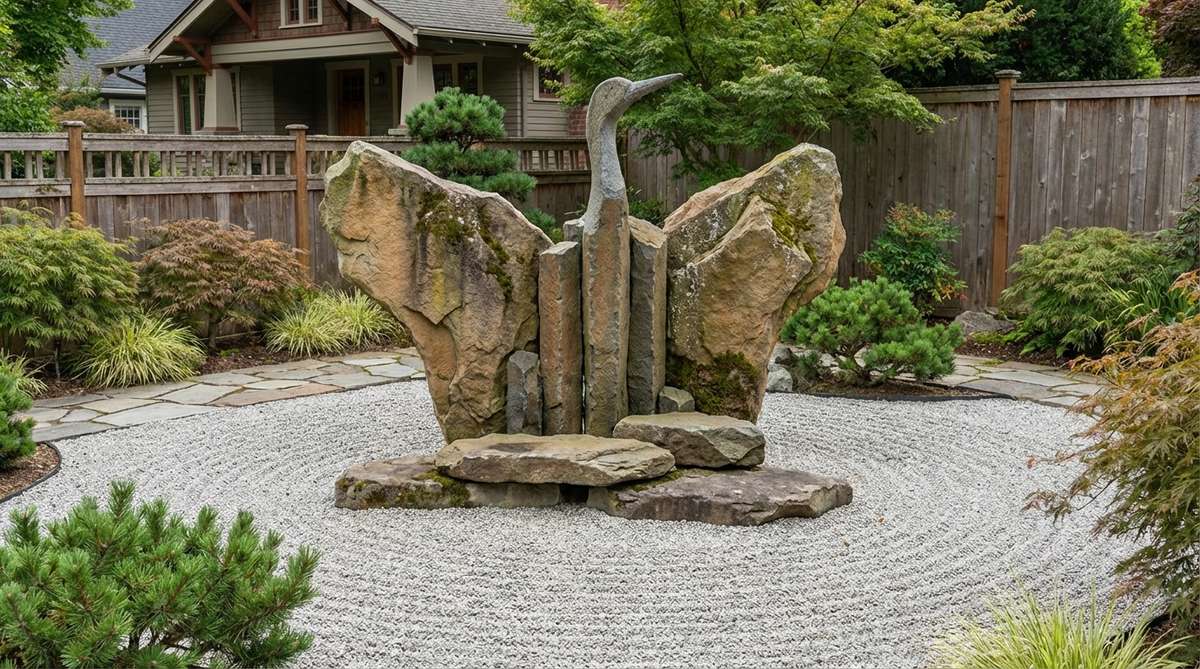
Instill a sense of weightlessness with a layout that mimics a bird taking flight over a silent pond. This vertical thrust rock feature provides a stunning backdrop for shaded property lines.
Contrasting harsh vertical elements with a flat gravel bed creates a designer-level finish usually reserved for luxury estates. Utilizing premium karesansui kits can help you mock up the scale before committing to heavy lifting.
You can construct this striking silhouette for about $70. Pin this to your modern landscape inspiration board.
- Key Materials: Tall columnar stones and low base rocks
- Vibe / Style: Dramatic and transcendent
- Difficulty: Advanced balancing
- Budget Breakdown: Columnar stone: $55 | Flanking rocks: $15
- Creator’s Tip: Leave a generous radius of negative space around the formation to maximize its perceived height.
- Smart Sourcing: basalt column fountain bases and weather-resistant epoxy putty.
Most people get this completely wrong… until they try the exact high-contrast layout coming up next.
5. Shirakawa Sand Courtyard
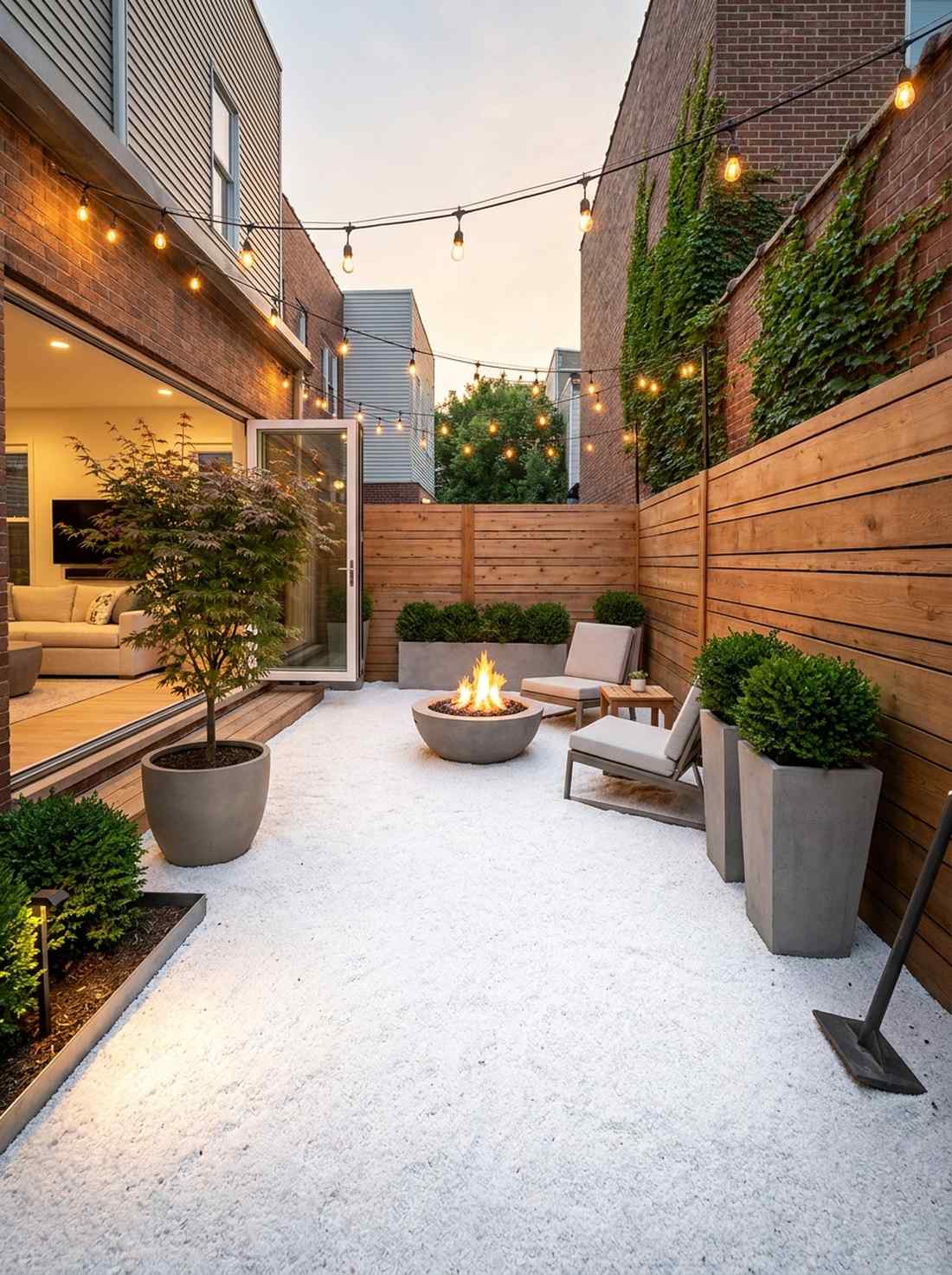
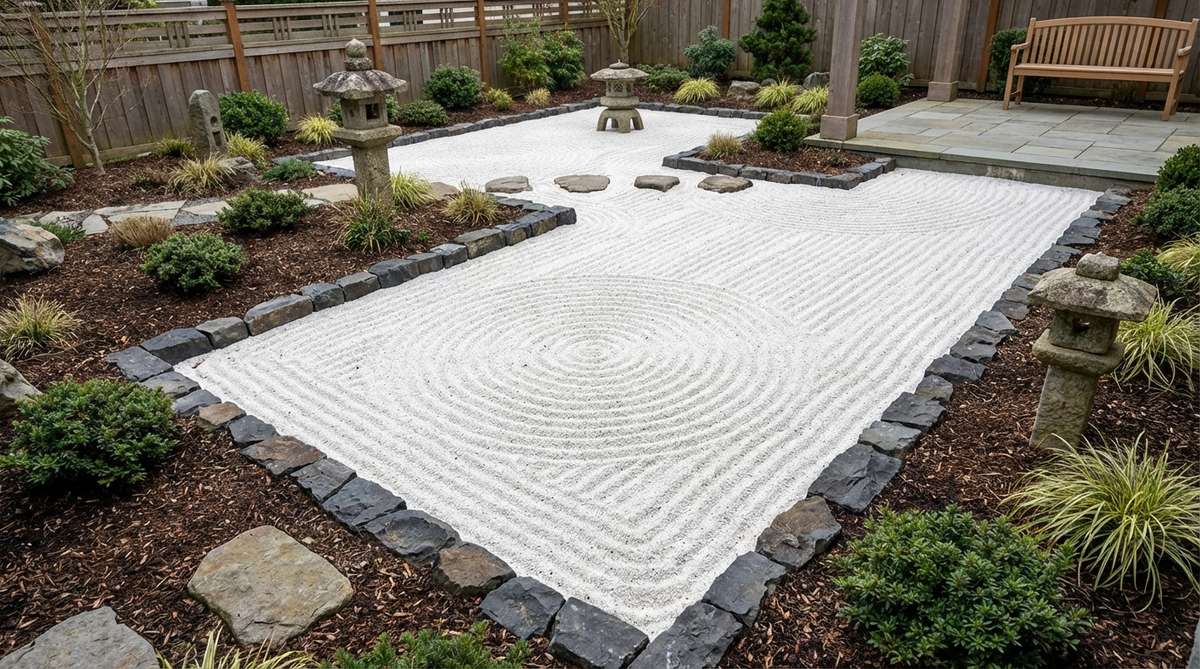
Walking out to a luminous, bright expanse feels like capturing moonlight right in your backyard. A white granite sand courtyard is the ultimate luxurious foundation for small urban spaces.
Replacing standard dirt with highly reflective crushed stone fundamentally changes the ambient light of dark corners. Opting for UV-coated borders ensures the pristine white material stays contained and striking.
This premium base layer runs about $100–$150 for a small patio. It completely alters the structural perception of the yard.
- Key Materials: Shirakawa-style white gravel
- Vibe / Style: Pristine and glowing
- Difficulty: Labor-intensive spreading
- Budget Breakdown: Premium sand: $110 | Edging: $40
- Creator’s Tip: Use a heavy tamp tool before adding the top inch of sand to prevent messy footprints later.
- Smart Sourcing: bright white quartz sand (bulk pack) and commercial-grade steel edging.
6. Concentric Circle Patterns
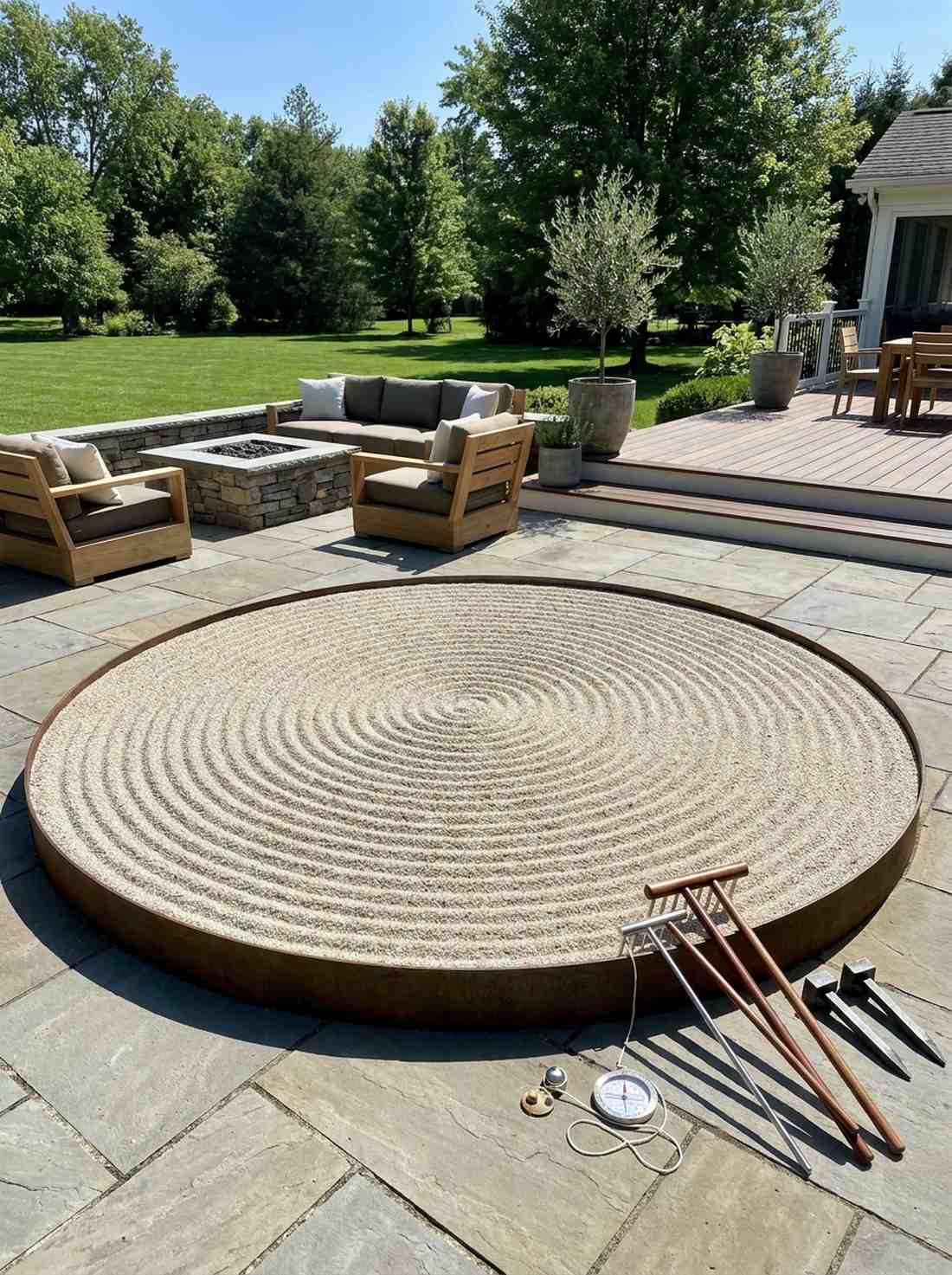
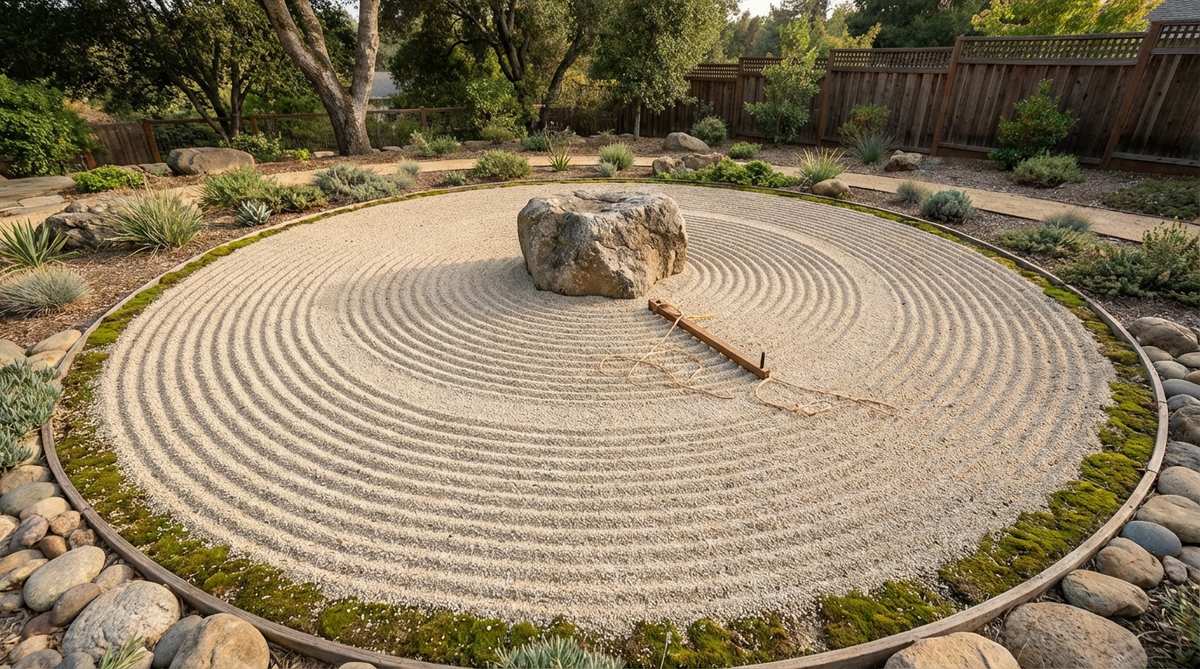
There’s an irresistible, hypnotic calm to watching ripples radiate outward from a singular anchor point. These meditative circular sand waves work perfectly as an interactive centerpiece for an outdoor living room.
Executing perfect geometry with a string compass elevates a basic gravel bed into deliberate, living art. Integrating high-end terrarium tools into your routine makes micro-adjustments highly satisfying.
Creating this costs essentially nothing if you already have the sand base. Save this pattern for your Sunday reset routine.
- Key Materials: Fine gravel, string, and pivot stake
- Vibe / Style: Hypnotic precision
- Difficulty: Intermediate geometry
- Budget Breakdown: Pattern guide tools: $15
- Creator’s Tip: Increase the spacing of your rake teeth as you move further from the center to create a fake depth illusion.
- Smart Sourcing: adjustable tined zen rakes and heavy metal pivot pegs.
7. Parallel Wave Corridors
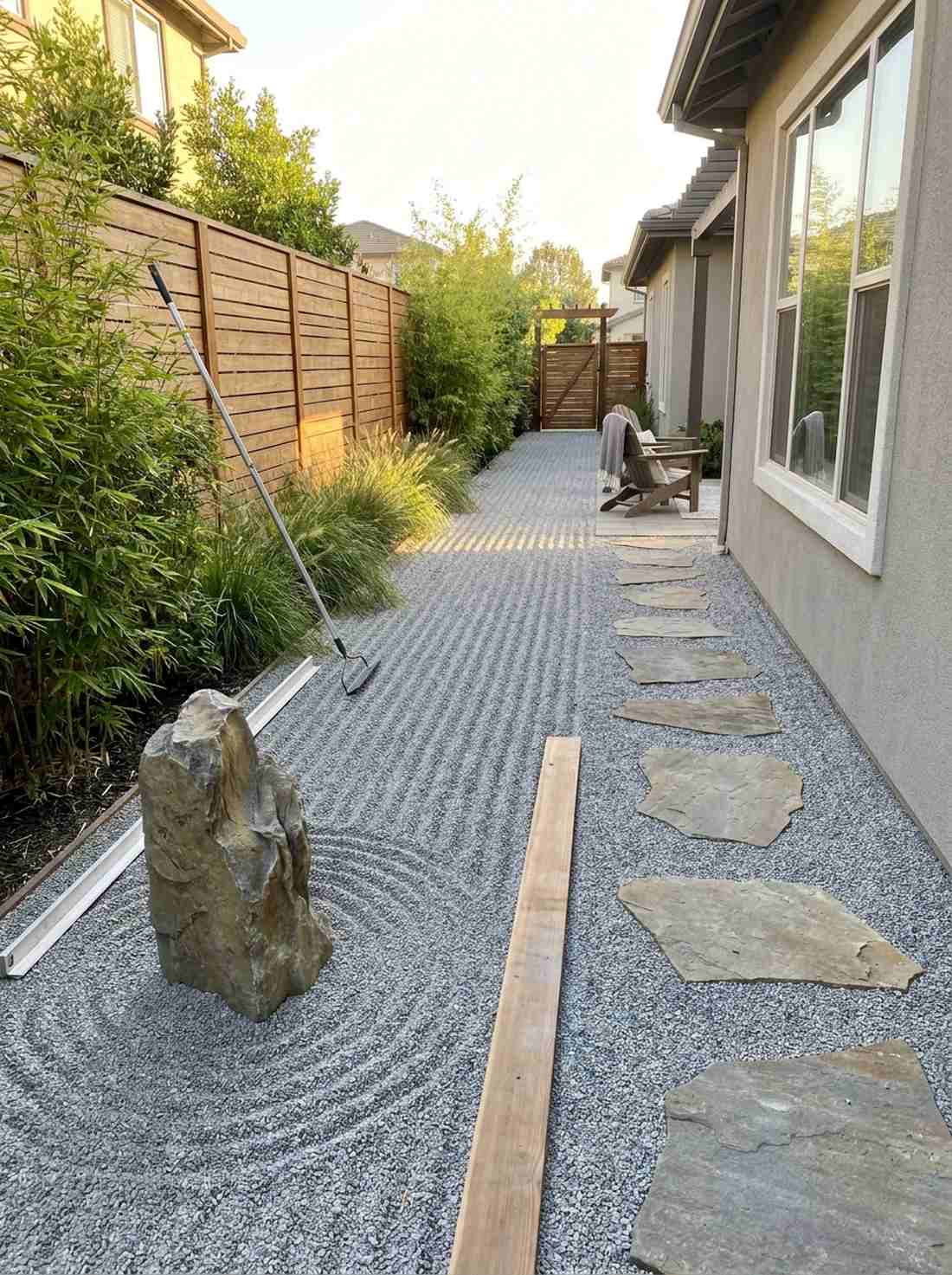
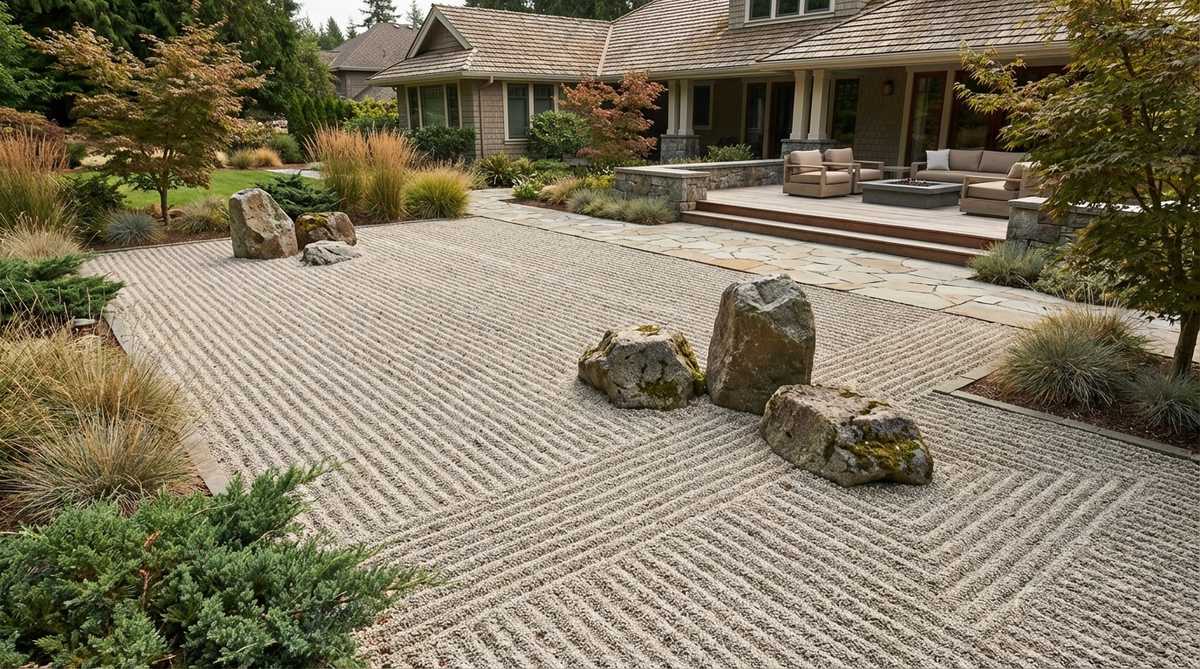
Linear perfection that mimics a vast, unbothered ocean stretching out to the horizon. This straight-line raking pattern is phenomenal for elongating narrow, cramped side yards.
By forcing the eye to travel down uninterrupted corridors, you instantly make a tiny footprint feel twice its size. This optical illusion is a trade secret that transforms awkward alleys into premium passages.
Achieve this zero-cost visual trick in under 20 minutes. Pin this layout hack if you have a narrow property.
- Key Materials: Extra-wide guide board and flat rake
- Vibe / Style: Expansive and modern
- Difficulty: Requires a steady hand
- Budget Breakdown: Guide board: $10
- Creator’s Tip: Intentionally interrupt the straight lines near a feature stone to create realistic “water drag” effects.
- Smart Sourcing: aluminum landscape straight-edges and ergonomic handle attachments.
8. Gravel Current Swirls
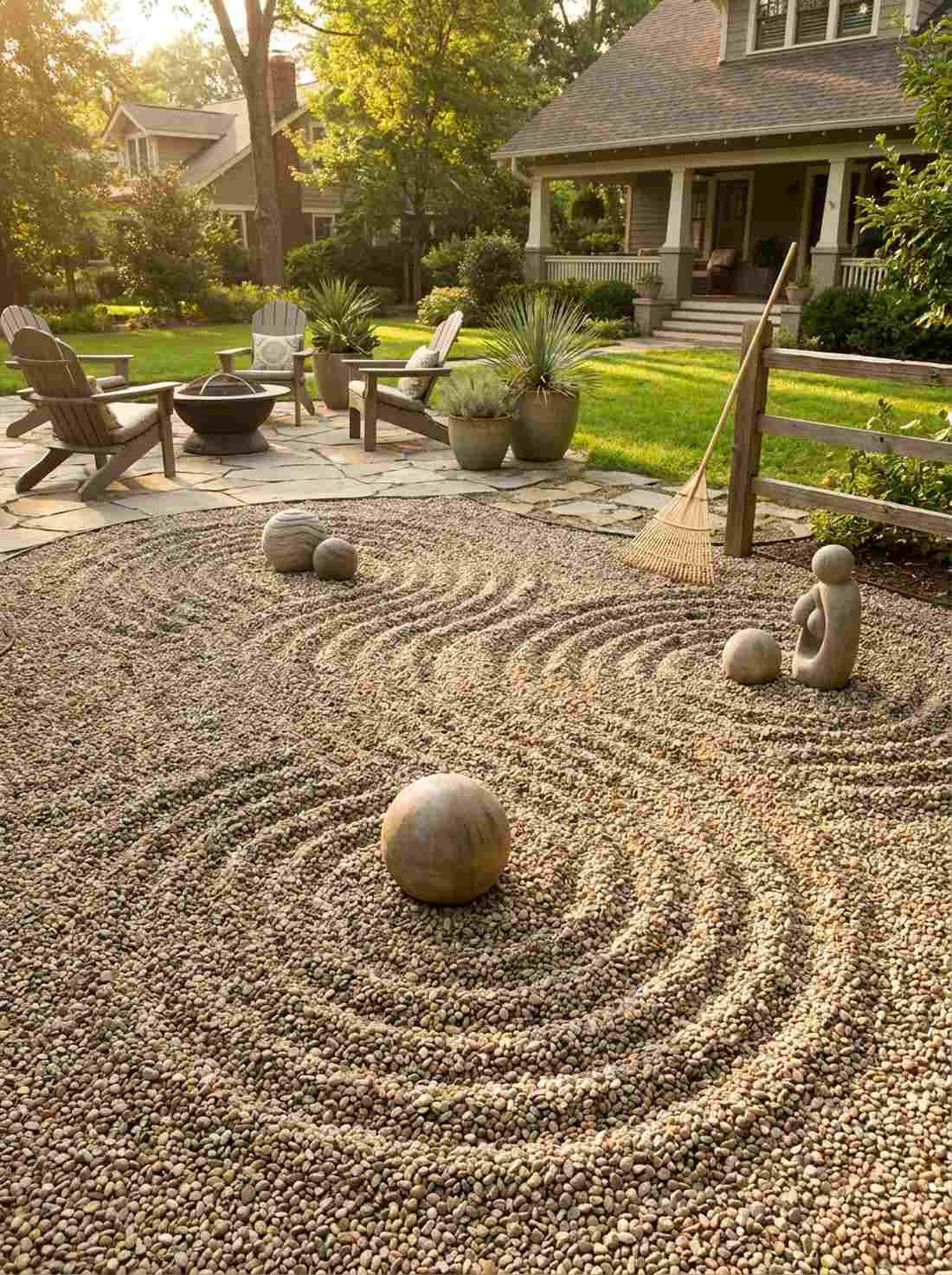
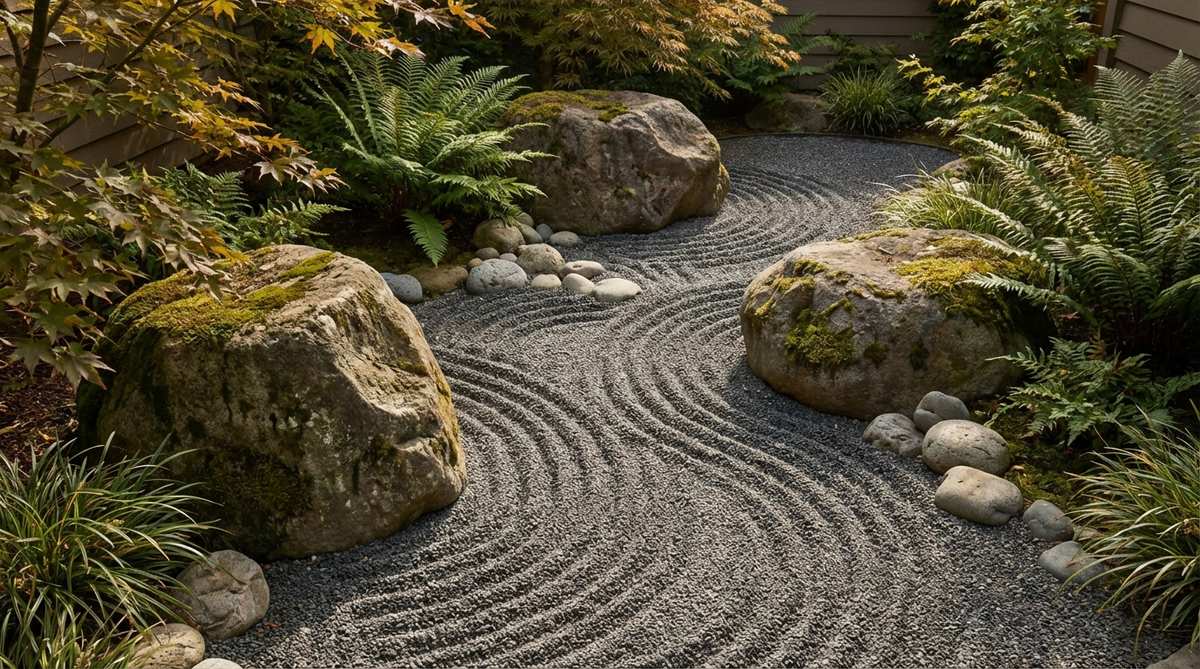
Capture the dynamic energy of a rushing river with winding, sensual curves carved into stone. Incorporating S-curve gravel patterns brings vibrant movement to static patios without needing a water pump.
Mastering fluid wrist motions avoids amateurish “hesitation marks,” giving the garden a masterful, seamless flow. This technique pairs perfectly with weatherproof resin decor hidden within the curves.
It’s a therapeutic, free maintenance activity that resets your space. Highly recommended for a quick weekend win.
- Key Materials: Lightweight bamboo rake
- Vibe / Style: Dynamic and flowing
- Difficulty: Practice-heavy
- Budget Breakdown: Bamboo rake: $25
- Creator’s Tip: Walk backward continuously while sweeping your arms; stopping your feet breaks the visual rhythm.
- Smart Sourcing: traditional bamboo finishing rakes and spray-on weed preventer.
This next transition zone is ridiculously cheap but creates a boundary that feels like a $1,000 custom spa entrance…
💡 Must-Have Supplies for High-End Setups
To build these setups faster and ensure they last, skip the generic craft aisles and invest in the right foundational kits.
- Base & Support: Commercial-grade geotextile weed fabric (bulk roll)
- Setup Tools: Adjustable ergonomic zen rake starter kits
- Weather/Durability Protection: UV-resistant clear stone sealant sprays
Zen Garden Meditation Spaces That Cultivate Mindfulness
Dedicated meditation zones within zen garden design require careful consideration of sightlines, seating, and sensory experiences. These areas should feel separated from daily activities while remaining accessible for regular practice.
9. Circular Gravel Sitting Platform
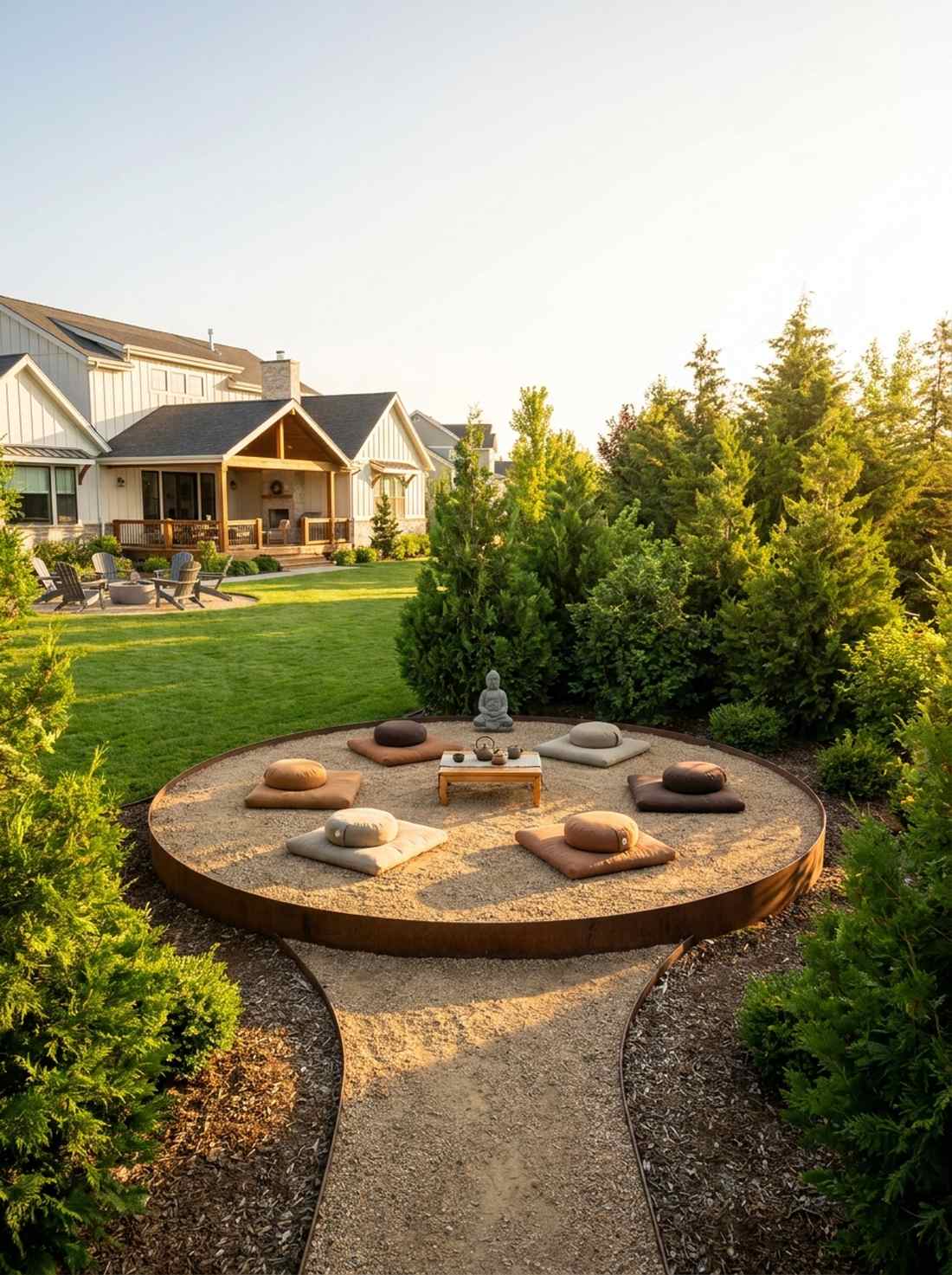
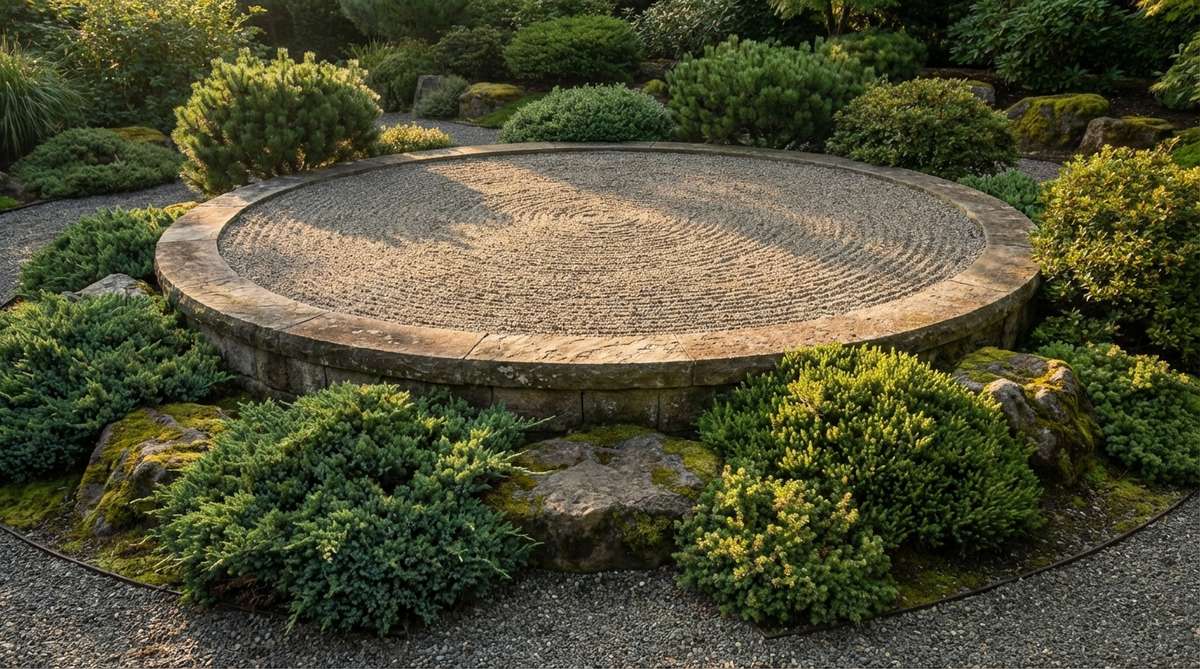
An isolated, elevated ring that feels like your own private island shielded from the chaos of the house. This raised circular meditation seat is the ultimate retreat for an unused lawn corner.
Framing a crisp geometric circle with lush evergreens gives a designer-level finish that heavily contrasts nature with structure. Dropping in high-end zen garden meditation accessories elevates the comfort instantly.
Building the raised edge and filling it costs roughly $80–$120. Save this setup to your backyard wellness board!
- Key Materials: Flexible steel edging and decomposed granite
- Vibe / Style: Focused and centered
- Difficulty: Moderate DIY
- Budget Breakdown: Steel edging: $60 | Base rock: $40
- Creator’s Tip: Orient the entrance of the circle to face east, guaranteeing a flood of warm morning sunlight during early routines.
- Smart Sourcing: rust-proof circular metal edging kits and outdoor-grade zafu cushions.
10. Bamboo Screen Enclosure
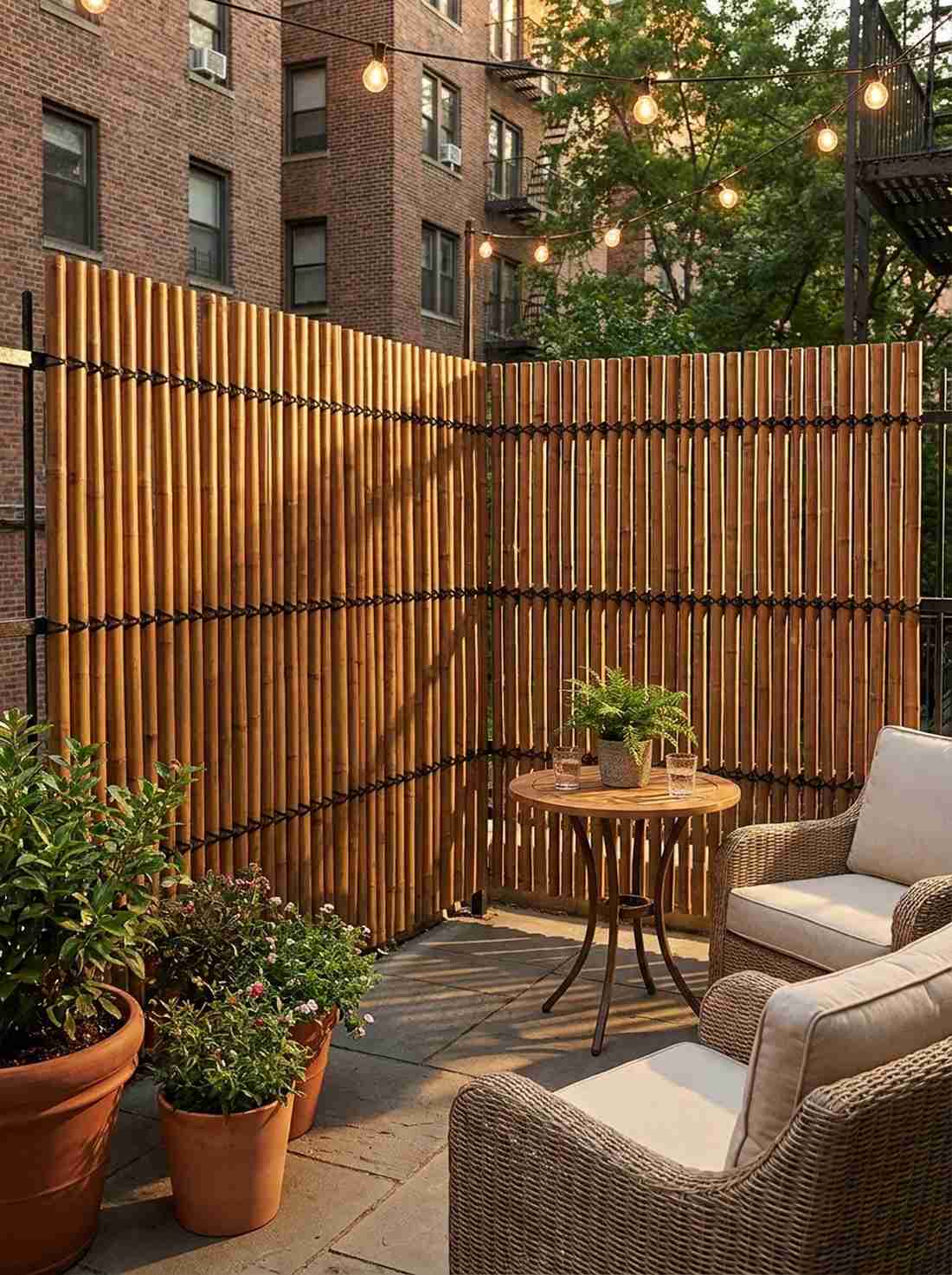
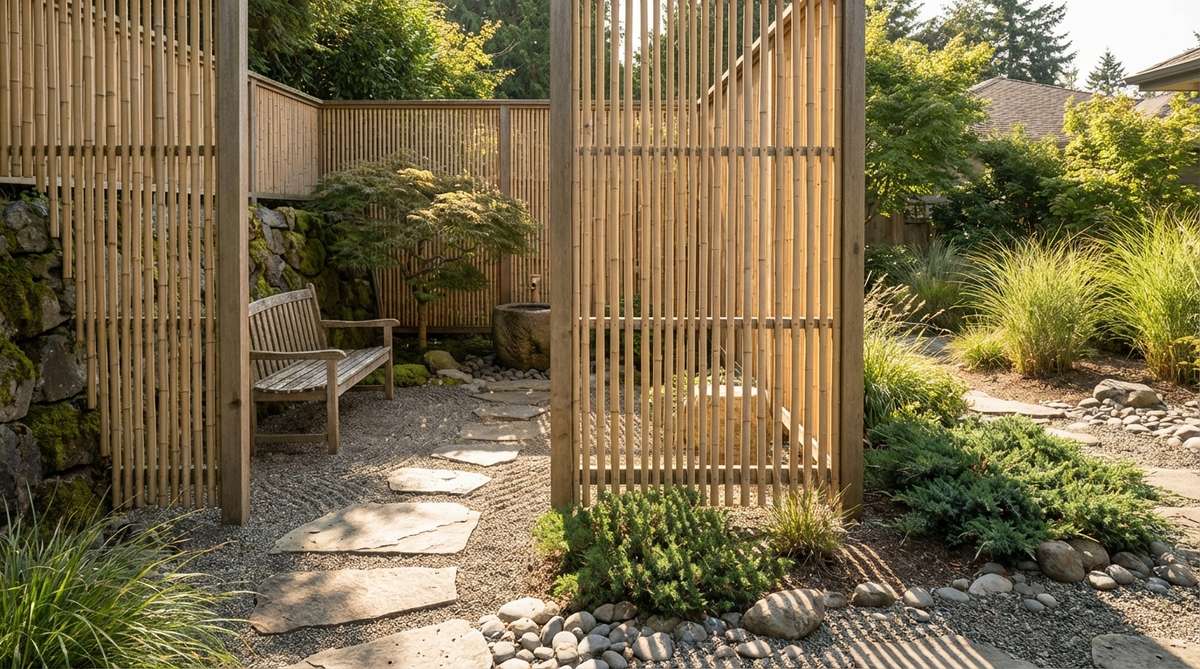
A beautifully filtered sanctuary that blocks out nosy neighbors while letting the cool breeze weave through. The slatted bamboo privacy fence is a lifesaver for cramped city apartments and tight patios.
Using vertical natural lines immediately forces the eye upward, making any tiny space feel incredibly tall and airy. Securing pre-treated panels avoids the cheap, flimsy look of standard rolled fencing.
You can frame a beautiful privacy corner for under $100. Pin this if you need an affordable privacy hack.
- Key Materials: Thick bamboo slats and heavy zip ties
- Vibe / Style: Intimate and shielded
- Difficulty: Quick afternoon project
- Budget Breakdown: Bamboo panels: $85 | Mounting hardware: $15
- Creator’s Tip: Keep the slats suspended one inch off the ground to prevent rot and allow rainwater drainage.
- Smart Sourcing: UV-coated thick bamboo fencing panels and industrial outdoor zip ties.
11. Stepping Stone Meditation Path
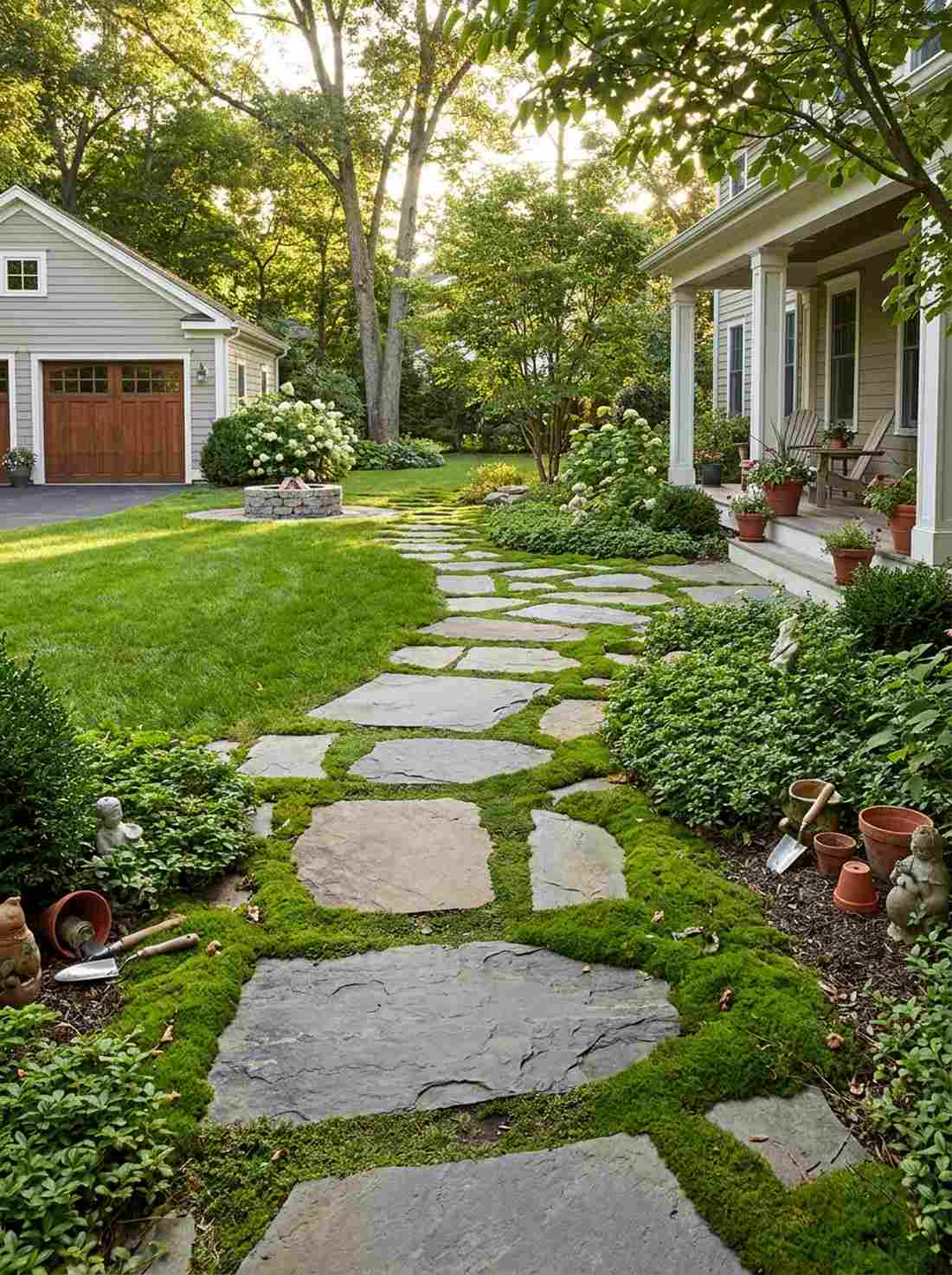
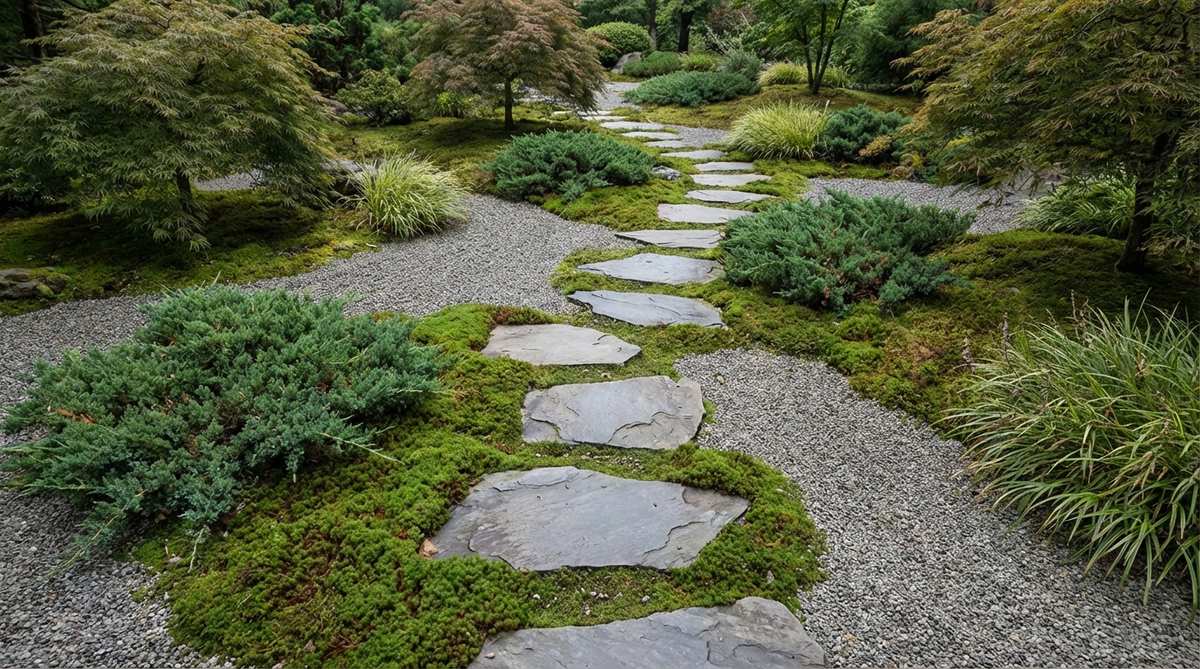
A rugged, meandering trail that feels like discovering a secret route through a forgotten forest. A spaced flagstone pathway actively slows your pace, perfect for transitioning from a stressful garage to the front door.
By recessing asymmetrical stones directly into lush moss, you achieve a centuries-old look that bypasses generic concrete pavers. Adding miniature garden supplies around the borders injects hidden charm.
You can lay a beautiful 10-foot path for about $60–$90. It’s a high-impact aesthetic upgrade anyone can do.
- Key Materials: Irregular slate or bluestone
- Vibe / Style: Mindful and organic
- Difficulty: Easy digging
- Budget Breakdown: Flagstones: $70 | Sand base: $15
- Creator’s Tip: Space the stones exactly one footprint apart, but stagger them slightly off-center to force deliberate, mindful walking.
- Smart Sourcing: pre-cut irregular stepping stones and live sheet moss patches.
12. Viewing Veranda Platform
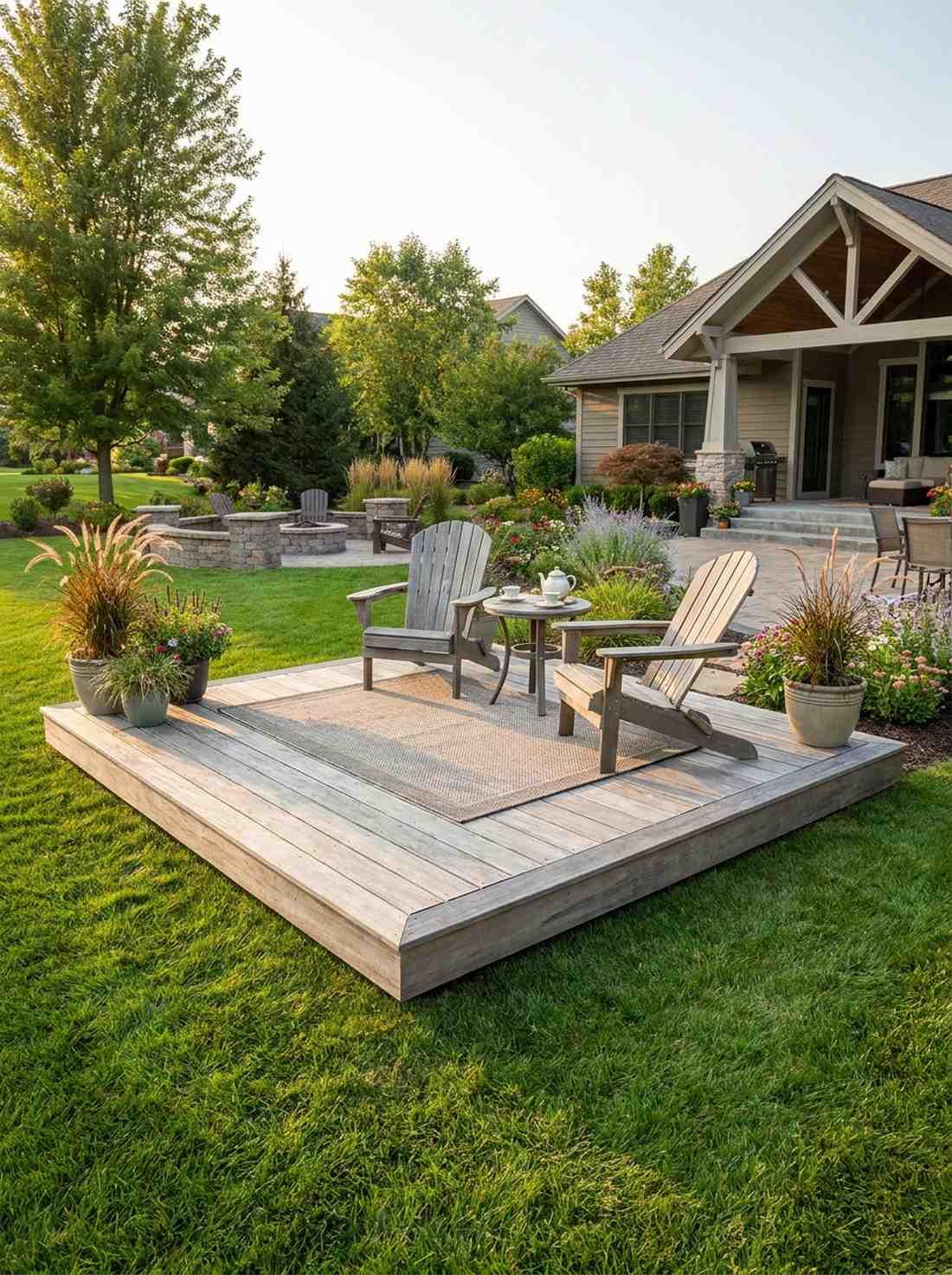
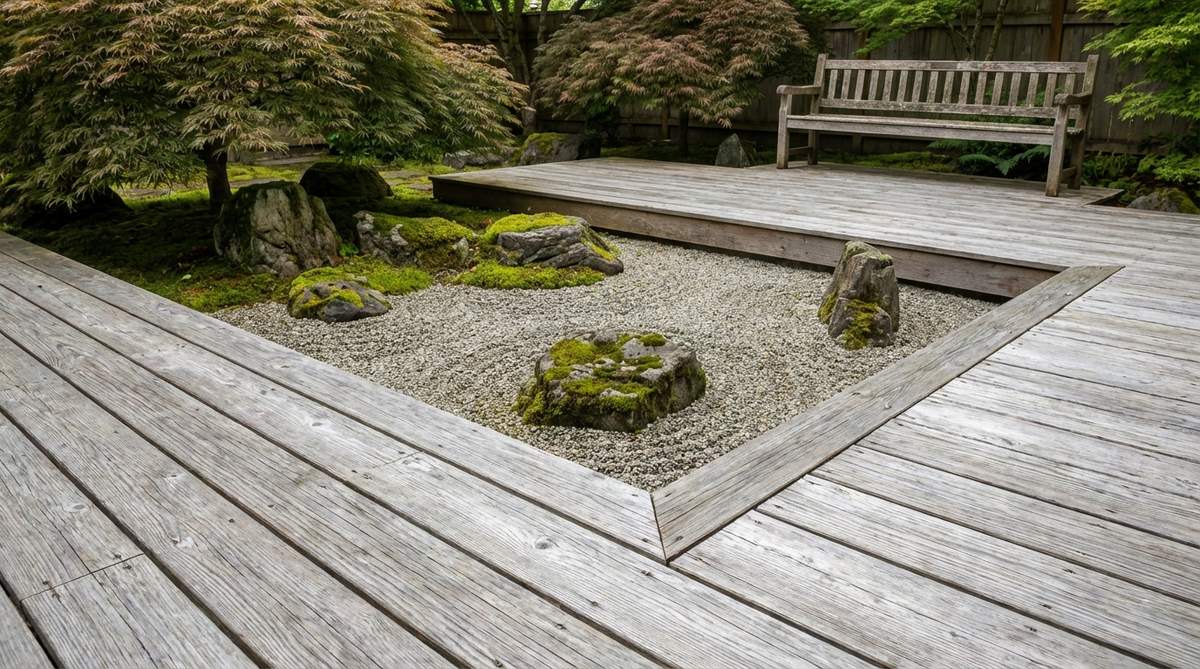
A grounded, smooth wooden stage that feels like the ultimate VIP box seat for your private landscape. Building a low-profile viewing deck transforms dead grass into a luxury tea space.
Unlike towering modern decks, keeping the wood just inches above the earth connects you to the soil while delivering a surprisingly premium look. Letting the wood naturally silver creates a highly sought-after wabi-sabi aesthetic.
A small platform can be constructed for $150–$250 in lumber. Save this for your next major weekend build.
- Key Materials: Weather-resistant cedar or teak decking
- Vibe / Style: Elegant and grounded
- Difficulty: Intermediate carpentry
- Budget Breakdown: Premium lumber: $200 | Fasteners: $30
- Creator’s Tip: Use hidden deck fasteners so the surface remains completely smooth and interruption-free for barefoot walking.
- Smart Sourcing: hidden deck fastening kits and pre-milled cedar plank bundles.
13. Enclosed Tea Garden Approach
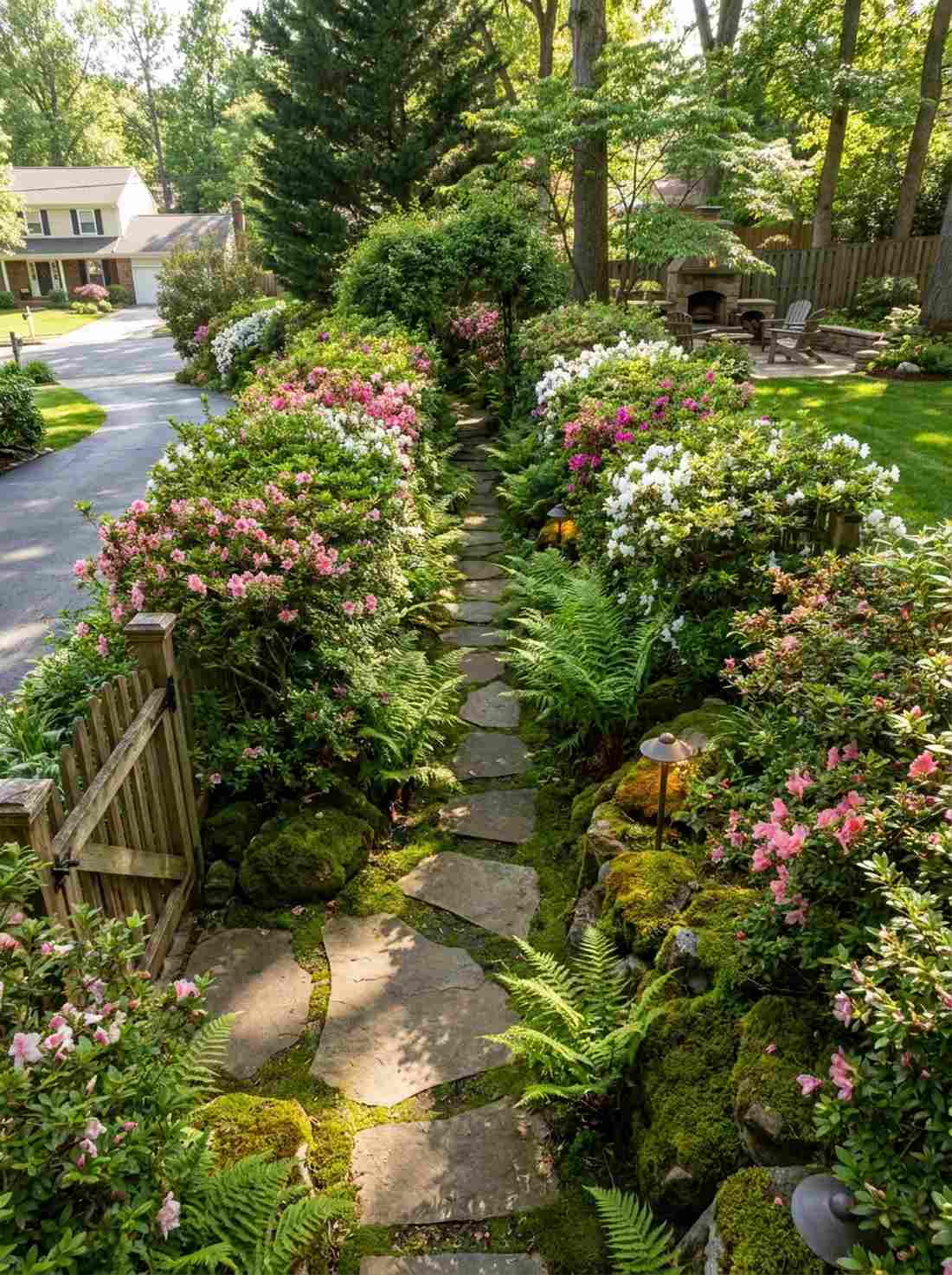
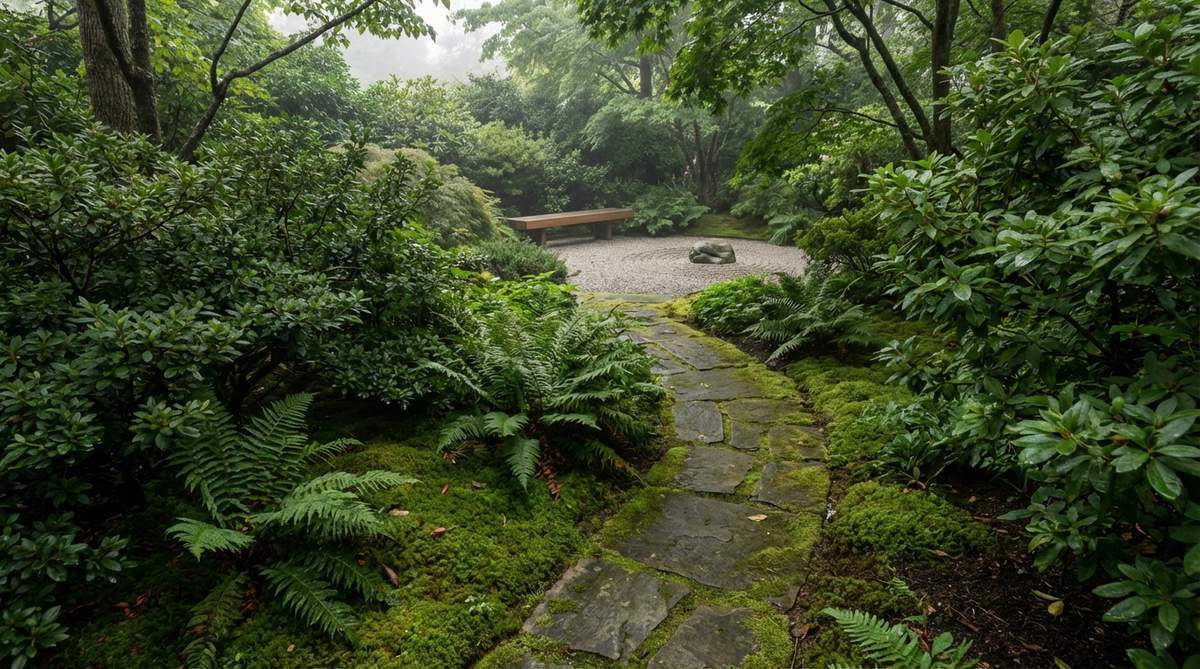
A wildly overgrown, mysterious tunnel that feels like leaving the modern world entirely behind. This layered transition walkway serves as the perfect psychological buffer between a busy street and a quiet backyard.
Forcing guests into a single-file corridor framed by dense ferns completely alters the structural perception of your yard’s size. Integrating high-end landscaping lighting hides the boundaries at night.
Planting out this dense green wall costs around $100–$200 in nursery pots. A truly stunning way to build anticipation.
- Key Materials: Evergreen azaleas, tall ferns, moss
- Vibe / Style: Secretive and lush
- Difficulty: Heavy planting
- Budget Breakdown: Shrubbery: $150 | Soil amendments: $40
- Creator’s Tip: Taper the path slightly narrower at the far end to create a forced-perspective illusion of extreme distance.
- Smart Sourcing: shade-loving fern starter kits and acidic evergreen soil mix.
Wait until you see the next clever lighting illusion—it makes cheap stones look like a luxury resort installation…
14. Under-Canopy Forest Clearing
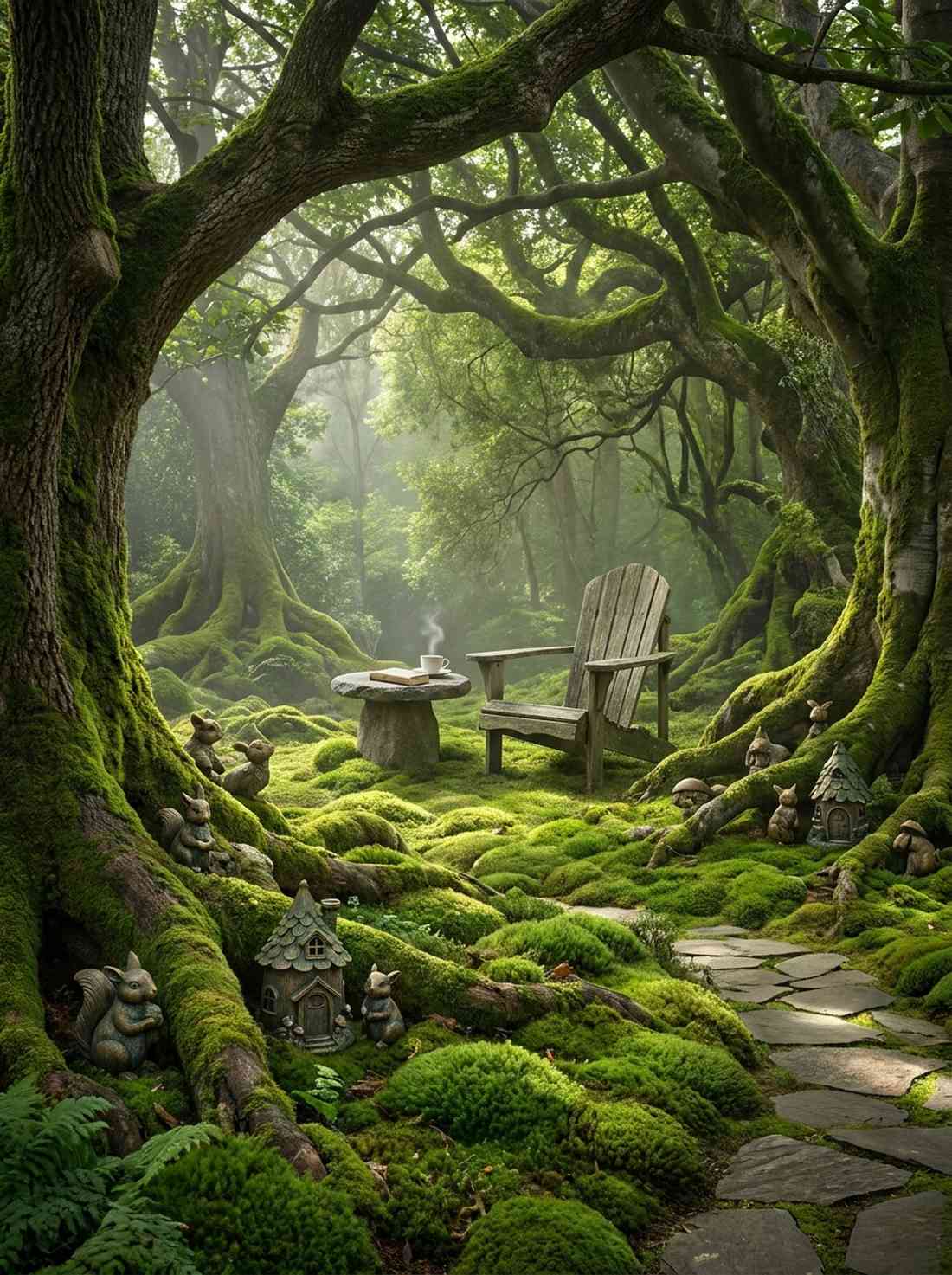
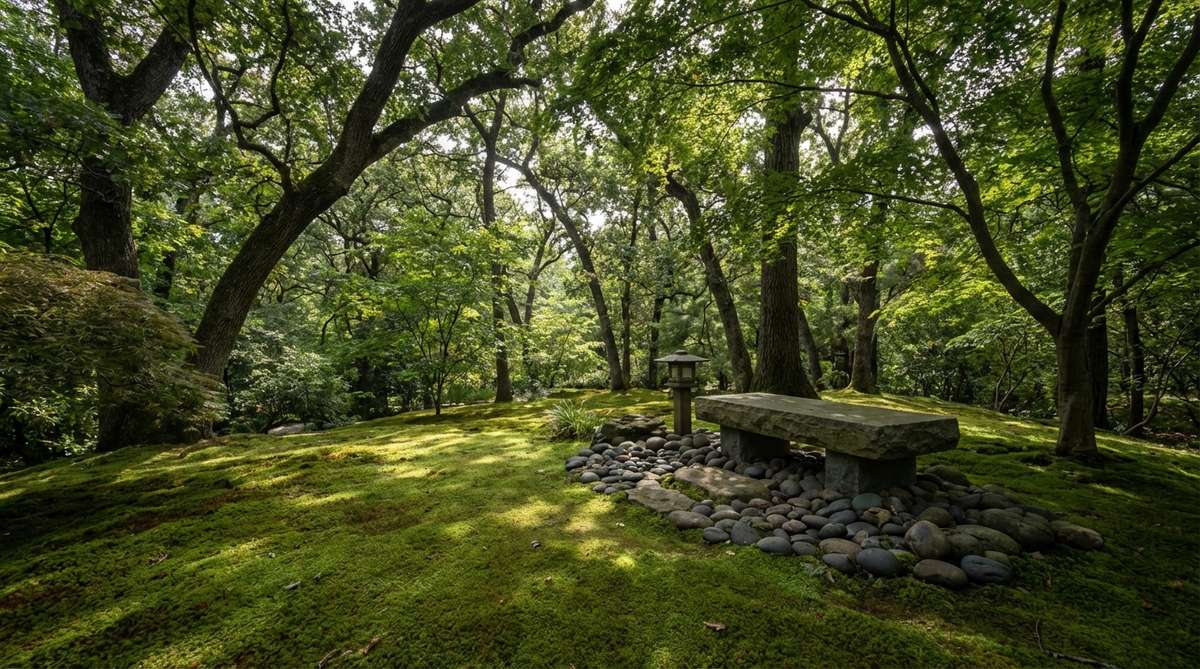
A shaded, mossy hollow that feels like a fairy-tale hideaway protected by ancient branches. Reclaiming an under-tree meditation zone turns the worst, grassless part of your yard into its best feature.
By embracing the heavy shade rather than fighting it, you create a velvety green carpet that requires absolutely zero mowing. Tucking waterproof resin decor near the tree roots adds a whimsical secret.
Moss spores and clearing labor will only cost you about $40. Pin this genius solution for deep-shade gardens!
- Key Materials: Shade-tolerant moss slurry and sweeping brooms
- Vibe / Style: Enchanted woodland
- Difficulty: Patience-testing (moss growth)
- Budget Breakdown: Moss spores: $30 | Hand tools: $10
- Creator’s Tip: Paint a buttermilk and moss mixture directly onto exposed tree roots to instantly age the environment by decades.
- Smart Sourcing: live moss slurry mixtures and fine-mist compression sprayers.
15. Borrowed Scenery Window
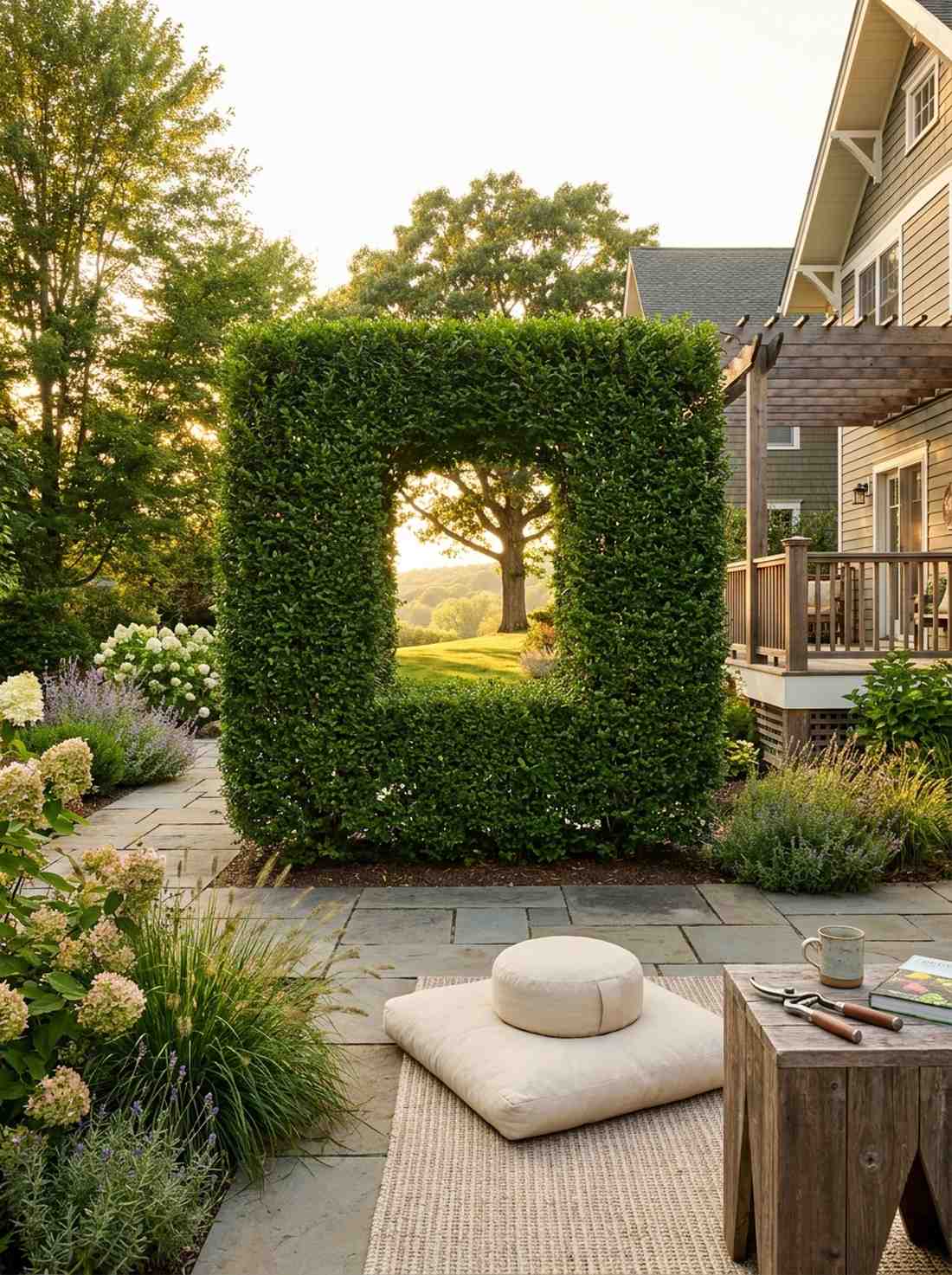
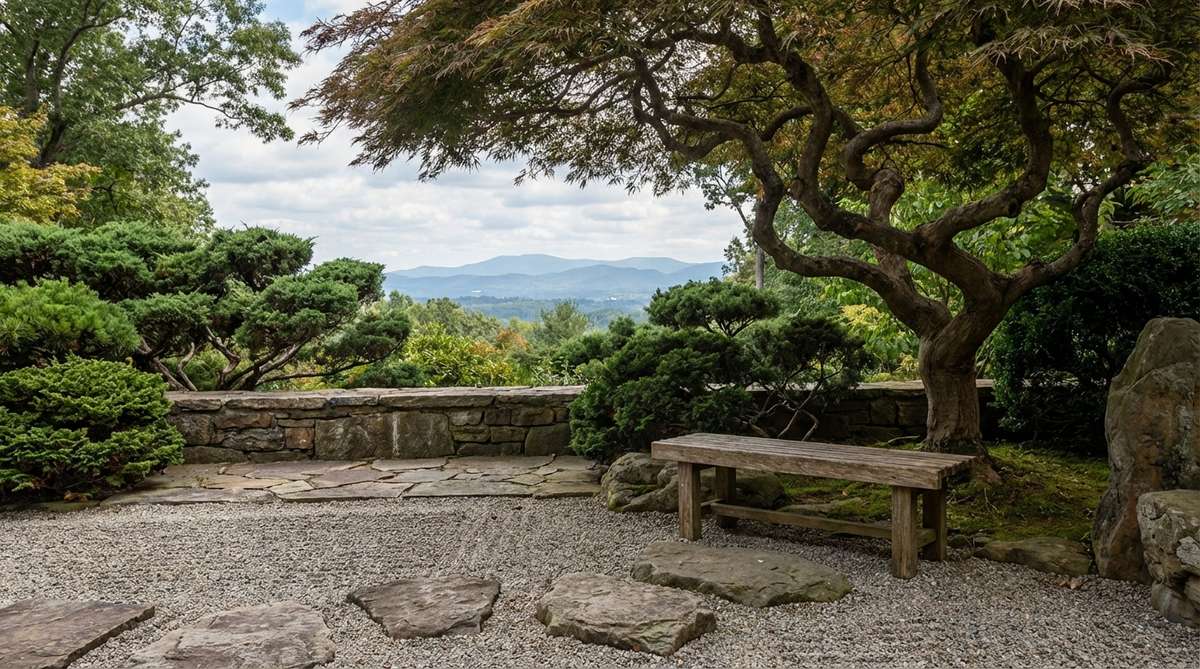
A clever optical hack that feels like you magically expanded your property line into the distant mountains. Utilizing a framed borrowed landscape is a brilliant architectural trick for cramped suburban lots.
By pruning your hedges to perfectly frame a neighbor’s mature tree or a distant hill, you fool the eye into seeing more space. This zero-cost technique delivers a designer-level finish without buying a single plant.
It costs nothing but a sharp pair of shears. An absolute must-try trick for small outdoor spaces.
- Key Materials: Pruning shears and strategic seating
- Vibe / Style: Expansive and clever
- Difficulty: Needs an artistic eye
- Budget Breakdown: Bypass pruners: $25
- Creator’s Tip: Sit exactly where your meditation cushion will go before making a single cut to ensure the focal point aligns perfectly.
- Smart Sourcing: carbon-steel bypass pruners and telescoping tree trimmers.
16. Sunken Gravel Meditation Pit
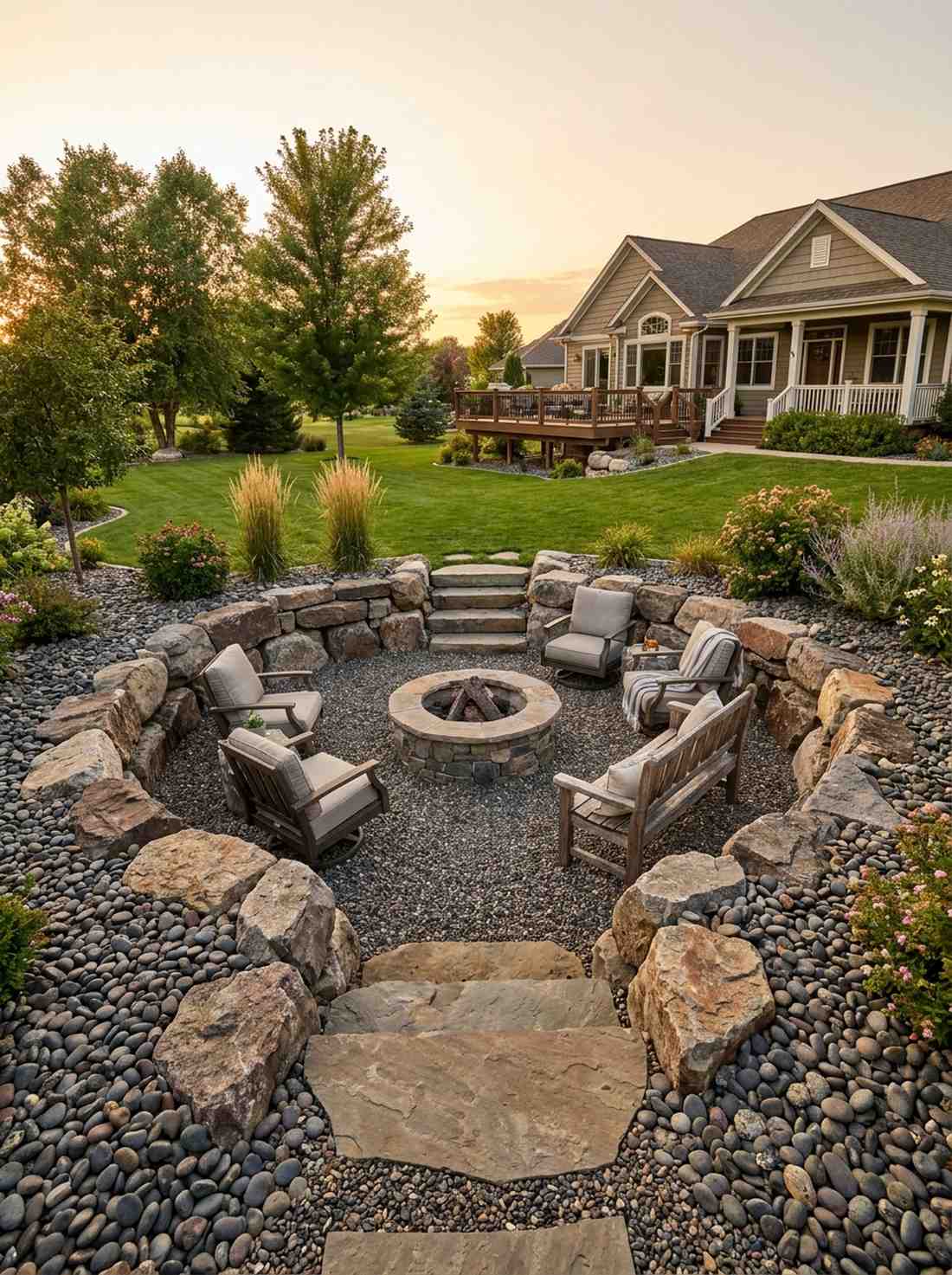
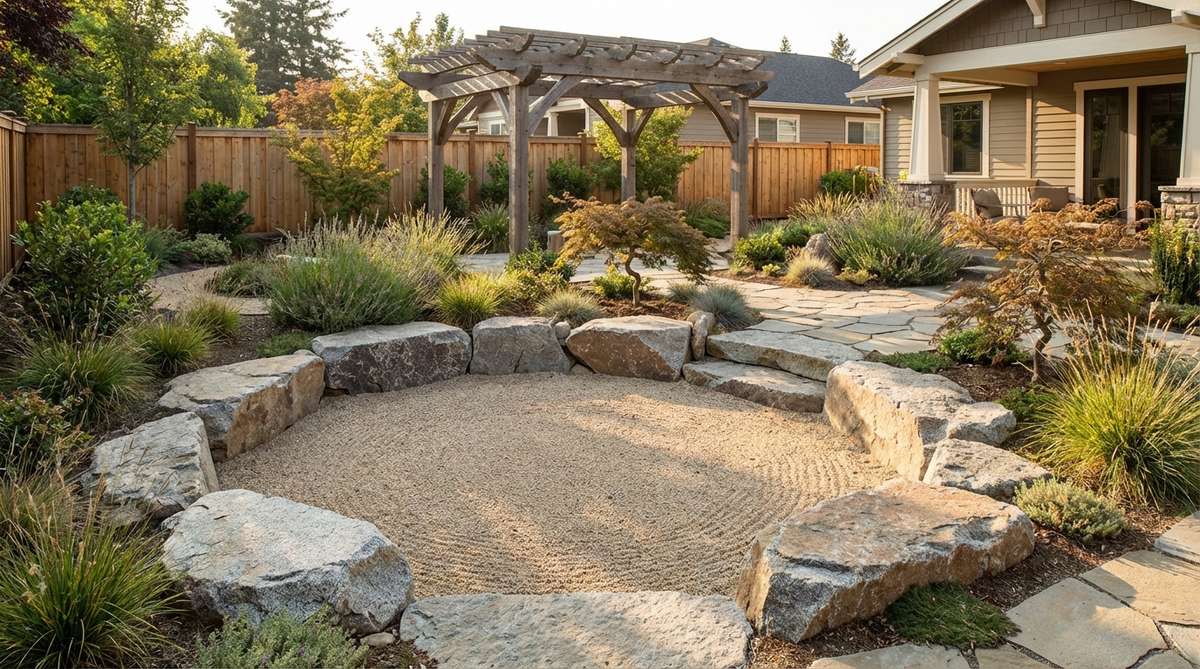
A cozy, sheltered depression that feels like a warm, protective embrace from the earth itself. Digging a sunken outdoor conversation pit creates incredible psychological comfort and acoustic dampening from street noise.
Lining the perimeter with massive retaining stones completely bypasses the usual amateur mistakes of flat, uninspired patios. Adding bulk Japanese river rock to the floor keeps the area dry and texturally rich.
Earth-moving and stone costs can run $200–$400, but the architectural payoff is massive. Save this for your dream backyard renovation.
- Key Materials: Boulders, crushed gravel, shovels
- Vibe / Style: Sheltered and intimate
- Difficulty: Heavy excavation
- Budget Breakdown: Gravel bed: $150 | Edge boulders: $200
- Creator’s Tip: Always slope the dirt sub-layer toward a French drain before adding gravel so your pit doesn’t become a swimming pool.
- Smart Sourcing: commercial-grade French drain kits and heavy-duty weed barrier rolls.
Minimalist Plant Selection for Serene Zen Garden Landscapes
Plant choices in zen gardens favor evergreen species with architectural form and year-round interest. Restraint in variety and number allows each specimen to command individual attention as living sculpture.
17. Crimson Queen Japanese Maple Specimen
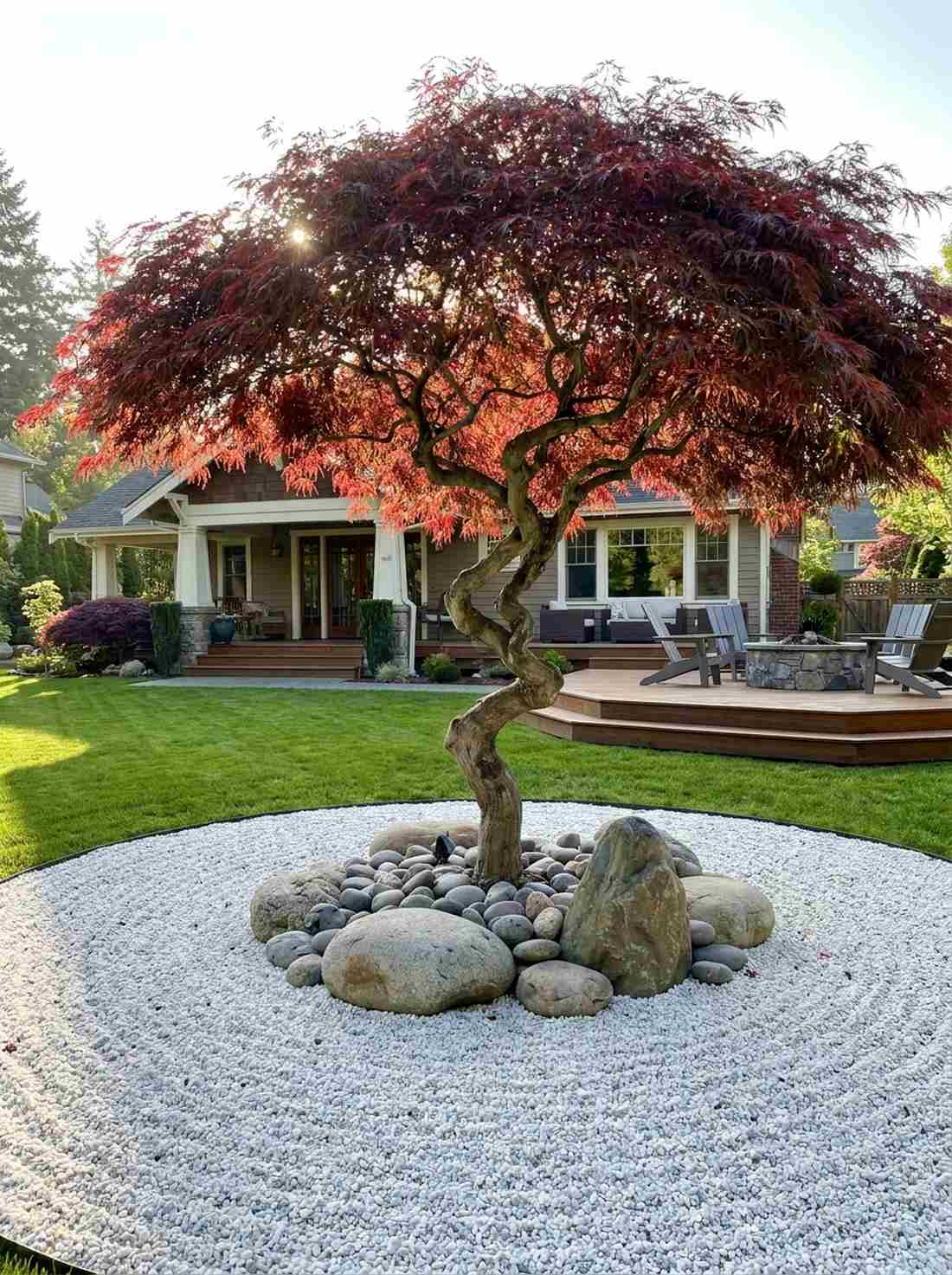
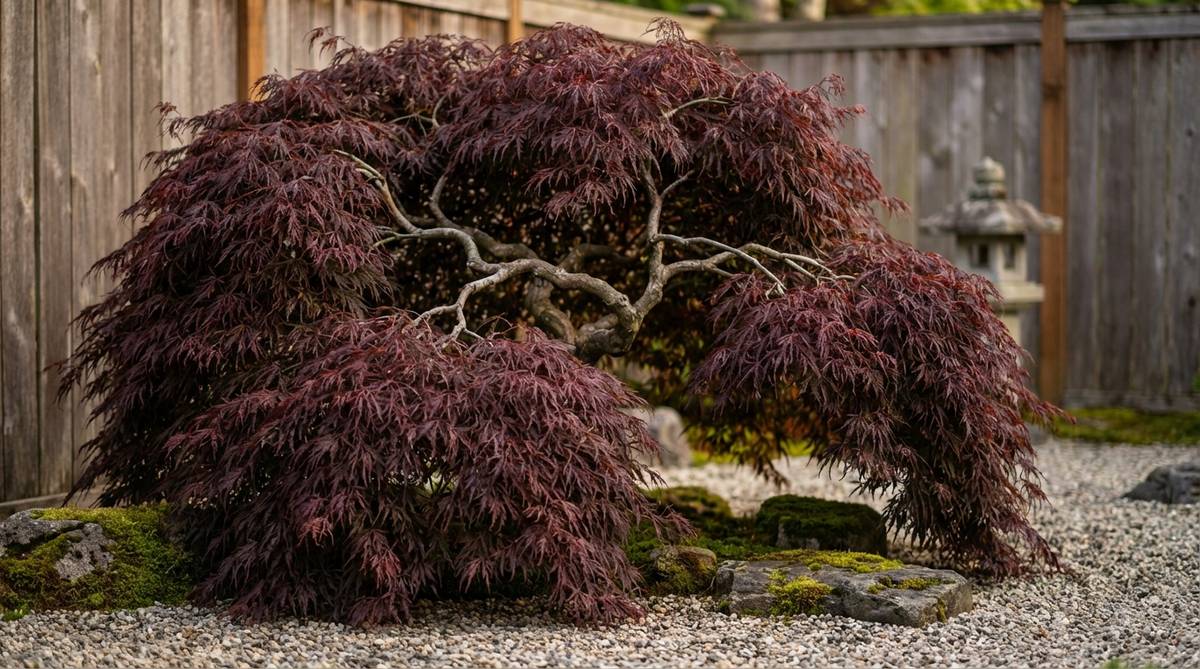
A fiery burst of cascading leaves that feels like a living, breathing piece of fine art in the center of the yard. This dwarf red focal tree cuts perfectly through the monotony of an all-green landscape.
Isolating a single premium tree against a stark white gravel backdrop delivers a surprisingly premium look typical of luxury museums. Securing premium karesansui kits for the base highlights the trunk’s striking architecture.
A young specimen runs around $75–$120. Pin this if you want a show-stopping centerpiece!
- Key Materials: Crimson Queen Maple and acidic fertilizer
- Vibe / Style: Dramatic and elegant
- Difficulty: Easy planting, careful pruning
- Budget Breakdown: Tree: $95 | Soil amendment: $15
- Creator’s Tip: Plant it where it gets morning sun but is heavily protected from harsh afternoon rays to prevent crispy, scorched leaves.
- Smart Sourcing: Japanese maple specific fertilizer (bulk bag) and moisture-retaining pine mulch.
18. Black Pine Cloud Pruning
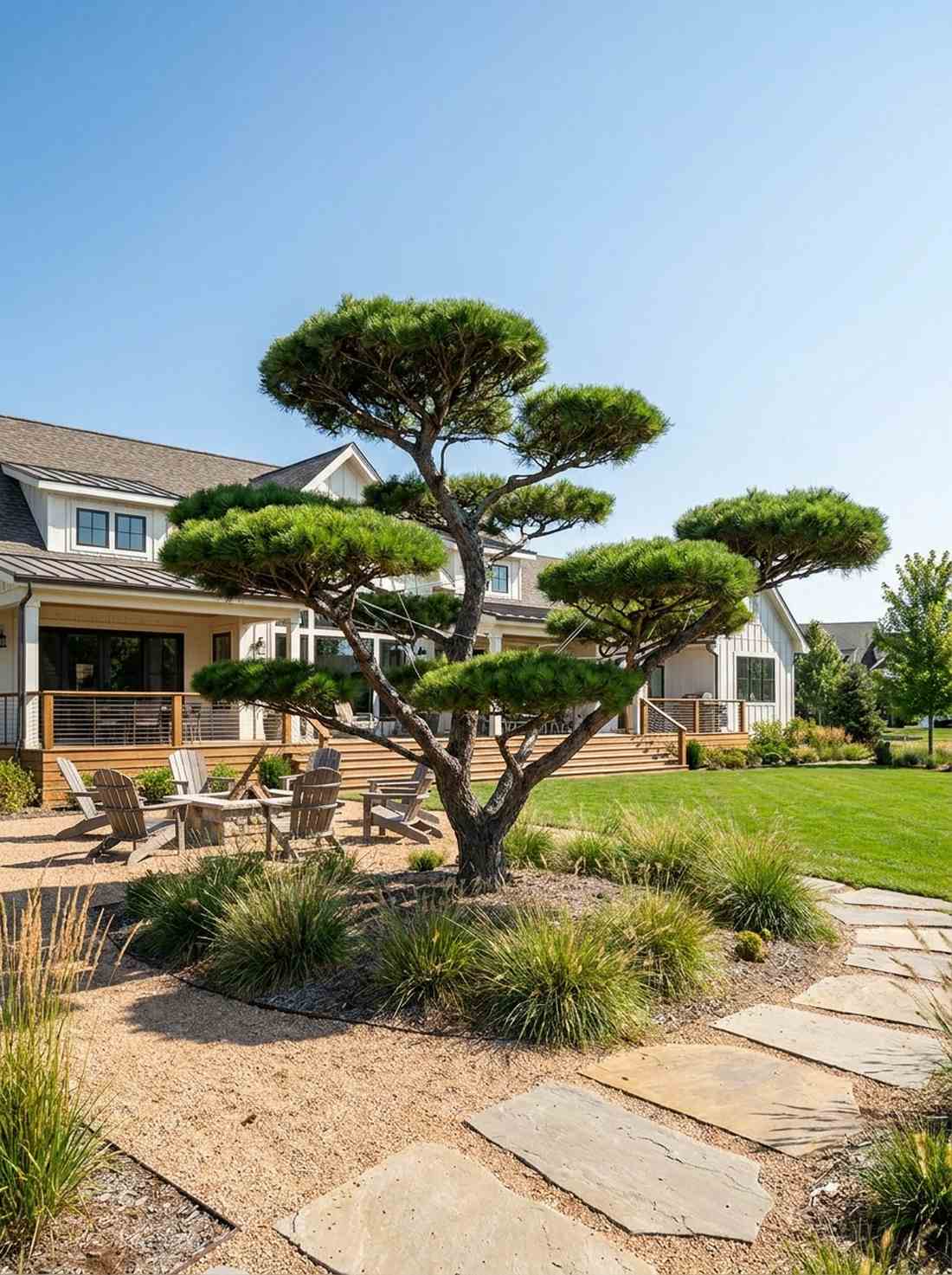
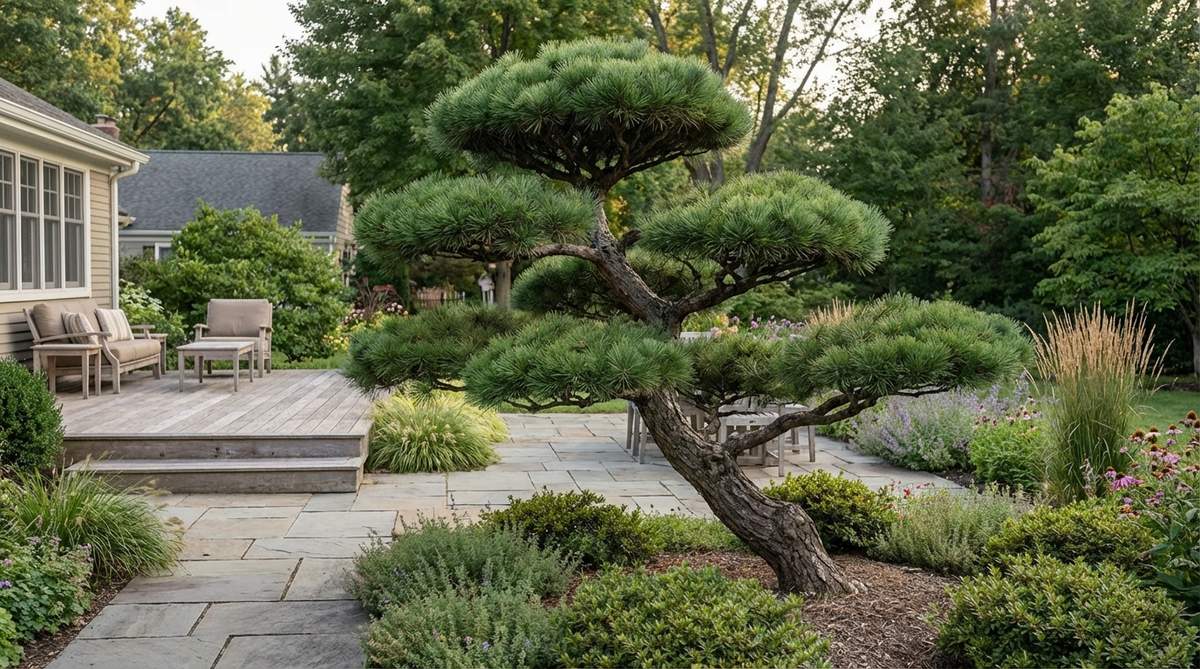
A floating, horizontal canopy that feels like a bonsai tree super-sized by magic. Implementing traditional niwaki cloud shaping on a sturdy pine gives your garden instant historical authority.
Aggressively removing downward branches creates severe negative space, a trick that looks far more expensive than it is. Using high-end terrarium tools on smaller branches trains the tree into striking, asymmetrical layers.
The tree costs $50, but the artistic sweat equity is free. Highly recommended for patient, dedicated gardeners.
- Key Materials: Japanese Black Pine and bonsai wire
- Vibe / Style: Sculptural and historic
- Difficulty: Advanced pruning skills
- Budget Breakdown: Sapling: $45 | Training wire: $20
- Creator’s Tip: Only prune during late winter dormancy to avoid shocking the tree and bleeding excessive sap.
- Smart Sourcing: anodized aluminum training wire kits and precision bonsai shears.
If you think bamboo is too invasive, this next container trick will completely change your mind about privacy screens…
19. Golden Bamboo Privacy Grove
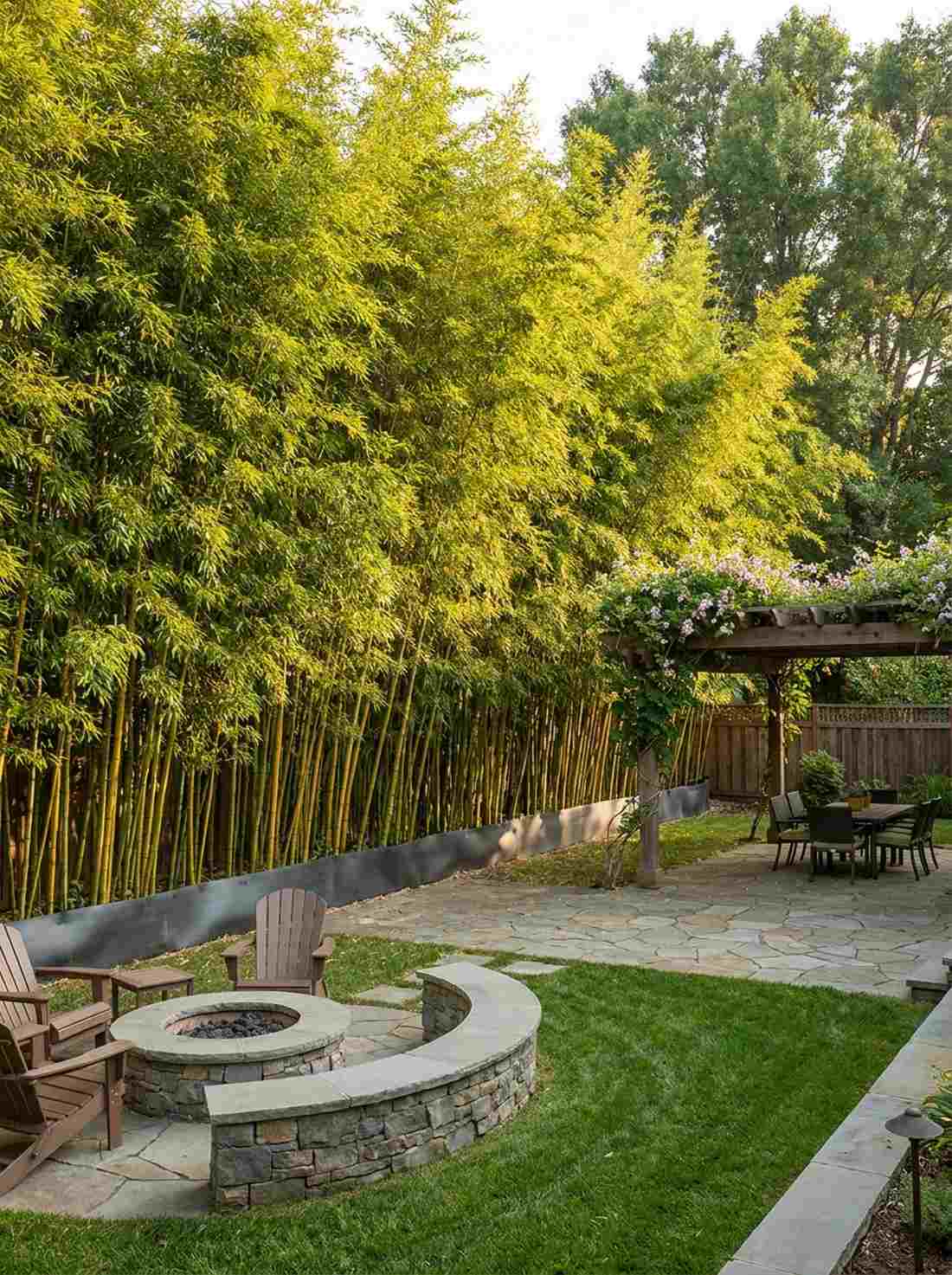
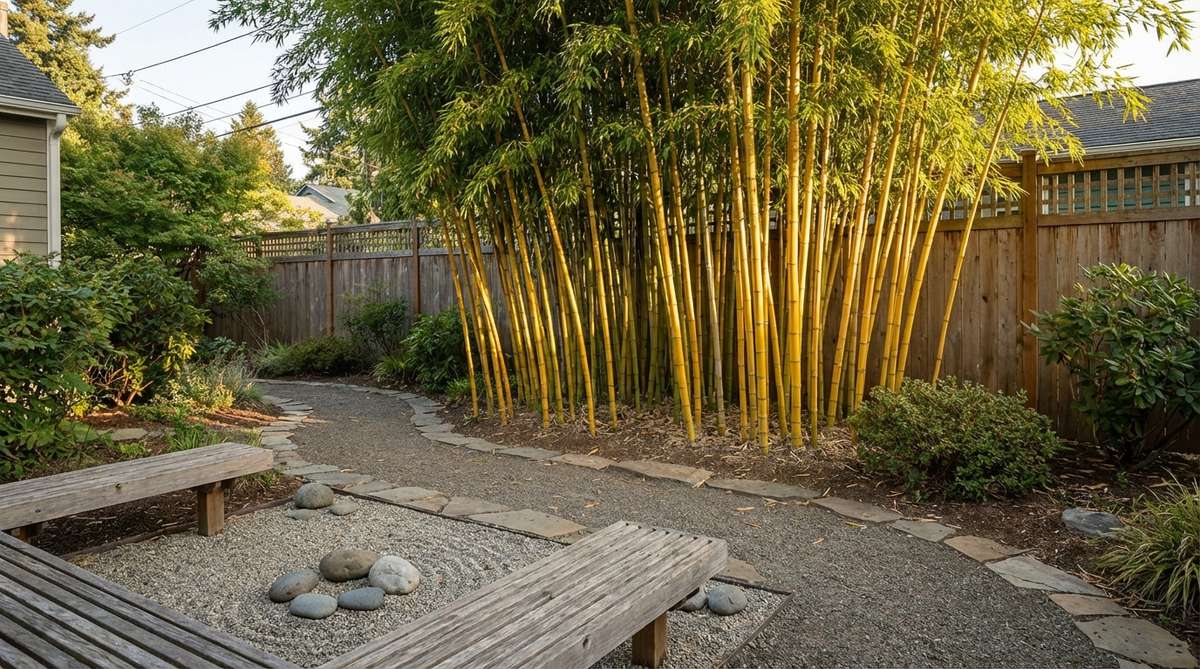
A towering, golden-green wall that feels like walking into an exclusive tropical retreat. Creating a contained bamboo perimeter is the fastest way to block ugly fences and harsh winds.
Planting aggressive spreaders directly inside indestructible barriers completely alters the structural perception of safety. It gives a designer-level finish while completely eliminating the horror stories of invasive roots.
A properly contained grove setup costs around $150–$250. Save this for the ultimate backyard privacy wall.
- Key Materials: Phyllostachys aurea and heavy-duty rhizome barriers
- Vibe / Style: Dense and luminous
- Difficulty: Labor-intensive digging
- Budget Breakdown: Bamboo clumps: $120 | Root barrier: $80
- Creator’s Tip: Never thin out the dead leaves at the base; they create a natural mulch that bamboo desperately needs to thrive.
- Smart Sourcing: 60-mil HDPE rhizome barriers and high-nitrogen bamboo fertilizers.
20. Moss Carpet Groundcover
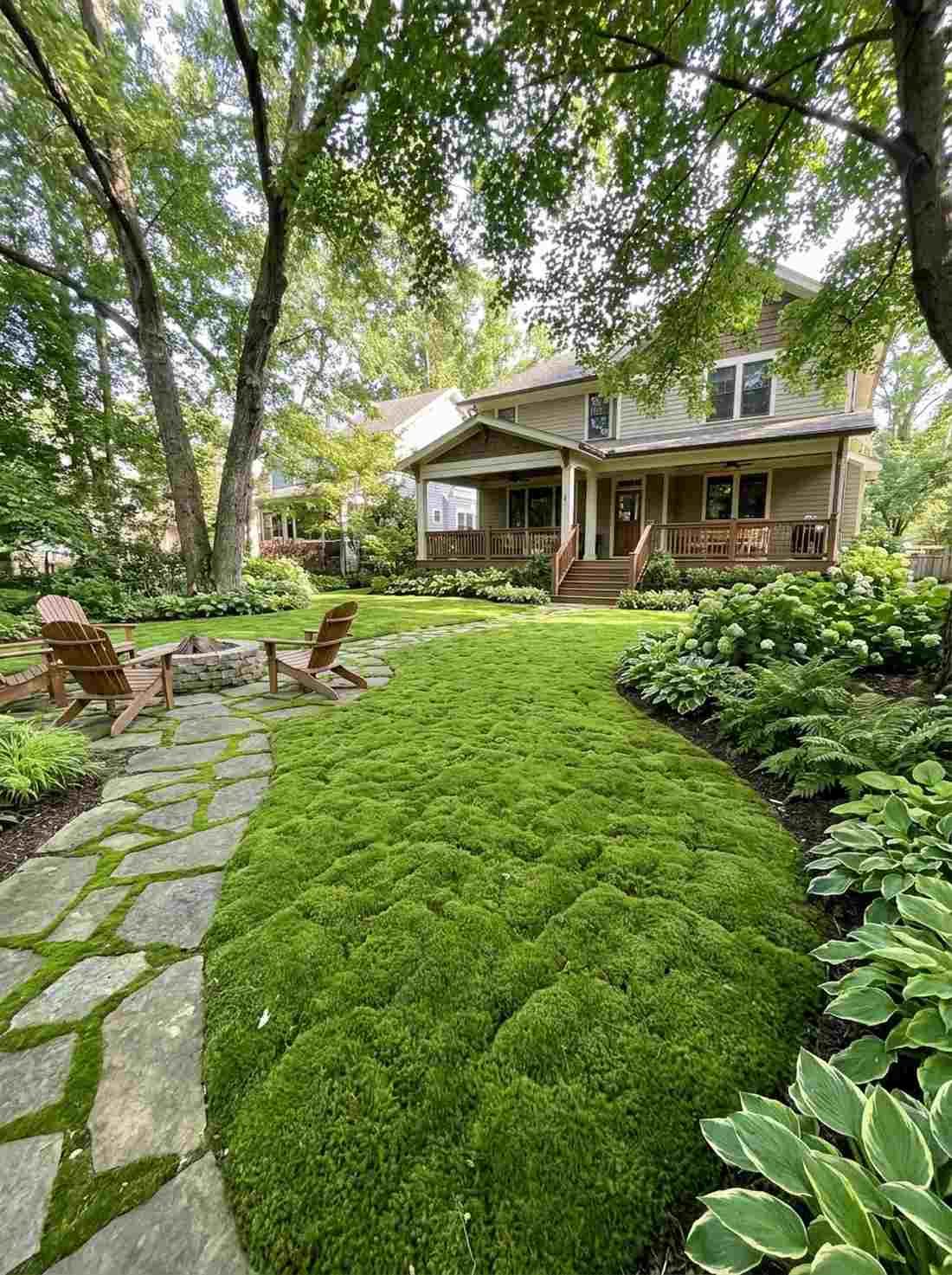
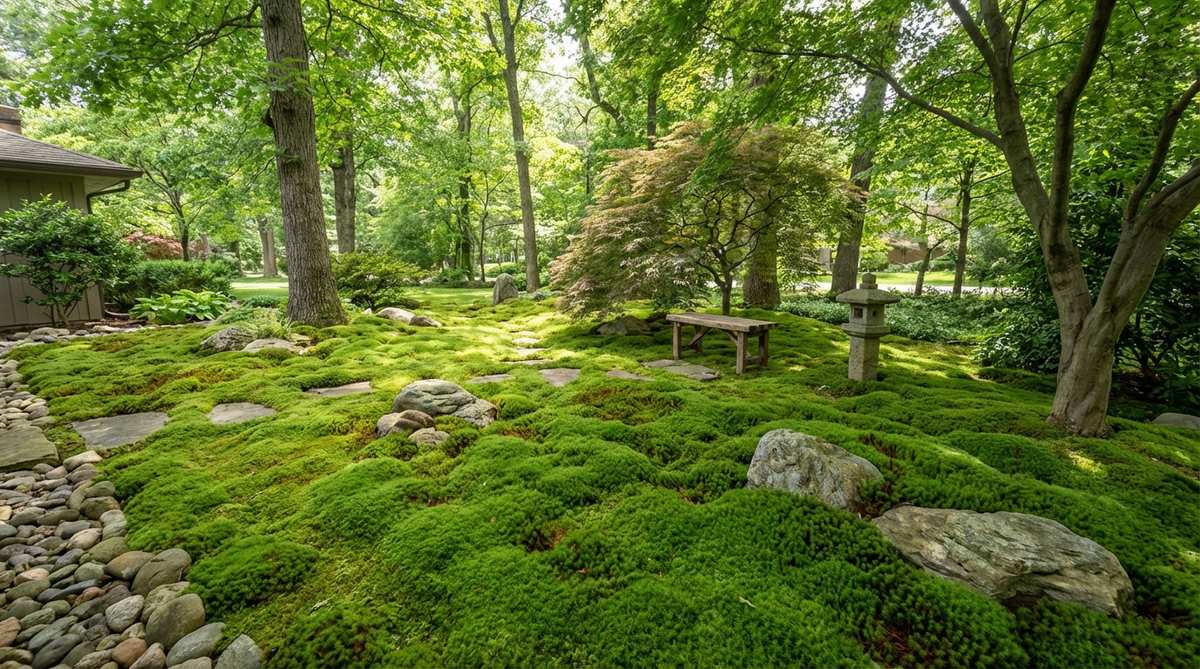
A velvety, ultra-plush floor that feels like Mother Nature wove a custom luxury rug just for your feet. A seamless green moss lawn is the absolute pinnacle of zero-mow, sustainable landscaping.
Replacing patchy grass in heavy shade with acidic soil completely bypasses the usual amateur mistakes of fighting bad lighting. Sourcing live moss panels speeds up the establishment time by literal years.
Establishing a rich carpet costs about $80 in spores and soil prep. Pin this if you are tired of mowing dead grass!
- Key Materials: Sheet moss fragments and soil acidifier
- Vibe / Style: Plush and magical
- Difficulty: High maintenance initially
- Budget Breakdown: Moss sheets: $60 | pH adjusters: $20
- Creator’s Tip: Mist the moss daily for the first three weeks; if the edges curl up, it is immediately dying of thirst.
- Smart Sourcing: pre-cut live sheet moss (bulk pack) and soil pH testing meters.
21. Dwarf Mondo Grass Edging
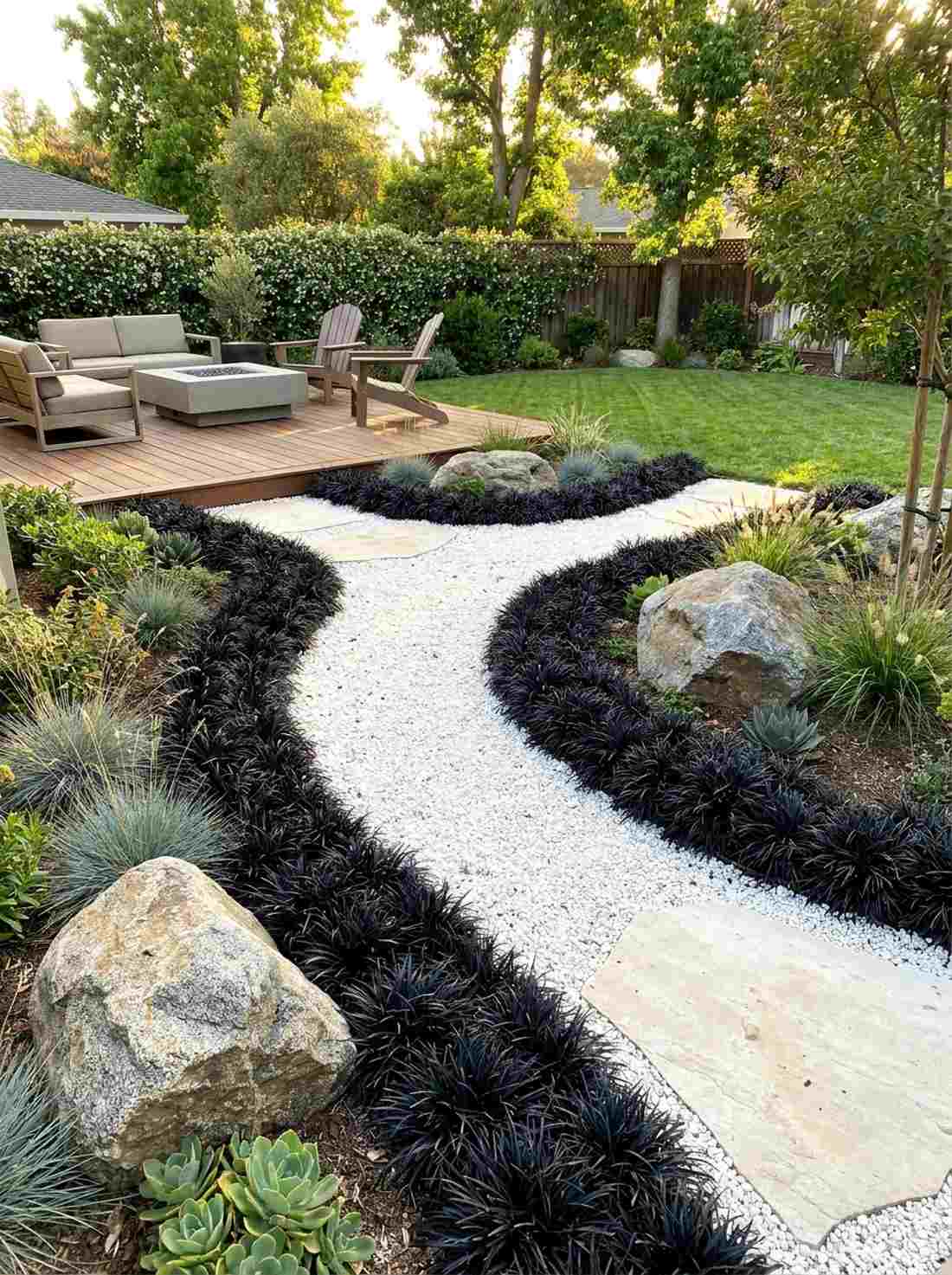
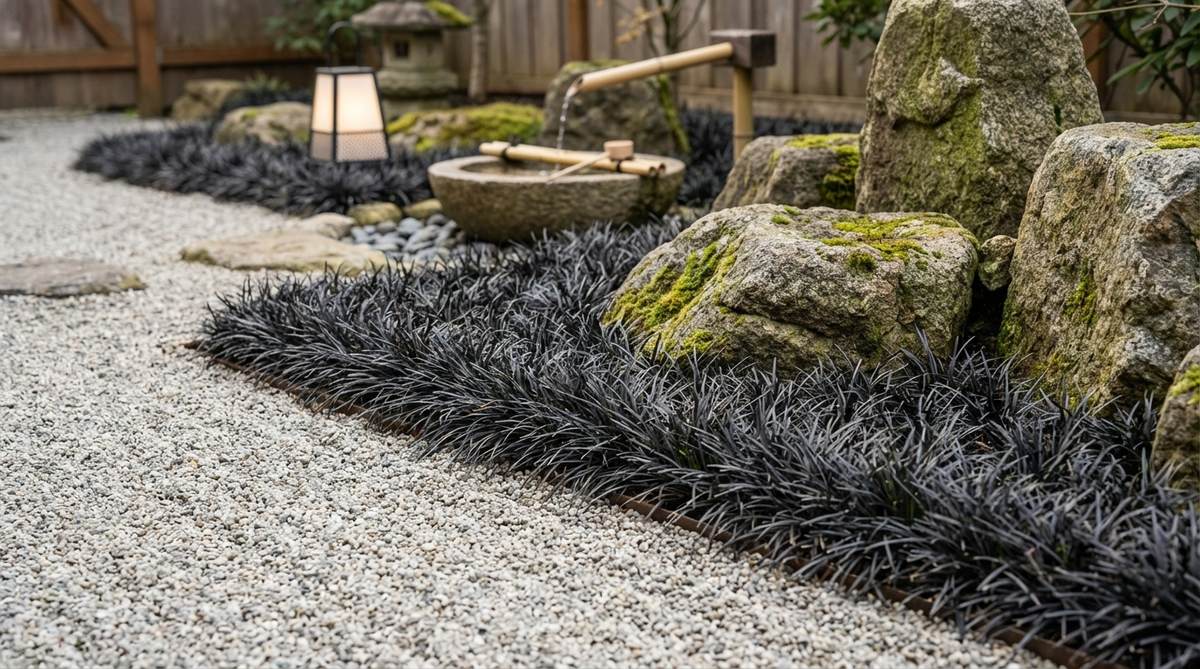
A deep, almost black ribbon of texture that feels like a bold ink stroke underlining your pathways. Using dark tufted bordering grass creates an aggressively sharp contrast against bright gravel.
This compact grower never requires cutting, which gives a designer-level finish without the weekly maintenance headache. It seamlessly bridges the harsh gap between smooth stones and large feature boulders.
You can line a 15-foot path for about $50–$75. It’s a fast, modern upgrade that completely changes the vibe.
- Key Materials: Black dwarf mondo grass plugs
- Vibe / Style: Sharp and moody
- Difficulty: Easy planting
- Budget Breakdown: Grass plugs: $65 | Compost: $10
- Creator’s Tip: Plant them uncomfortably close together (about 3 inches apart) for an instant, seamless black border.
- Smart Sourcing: dwarf black mondo grass (plug trays) and organic root-boosting compost.
22. Japanese White Pine Accent
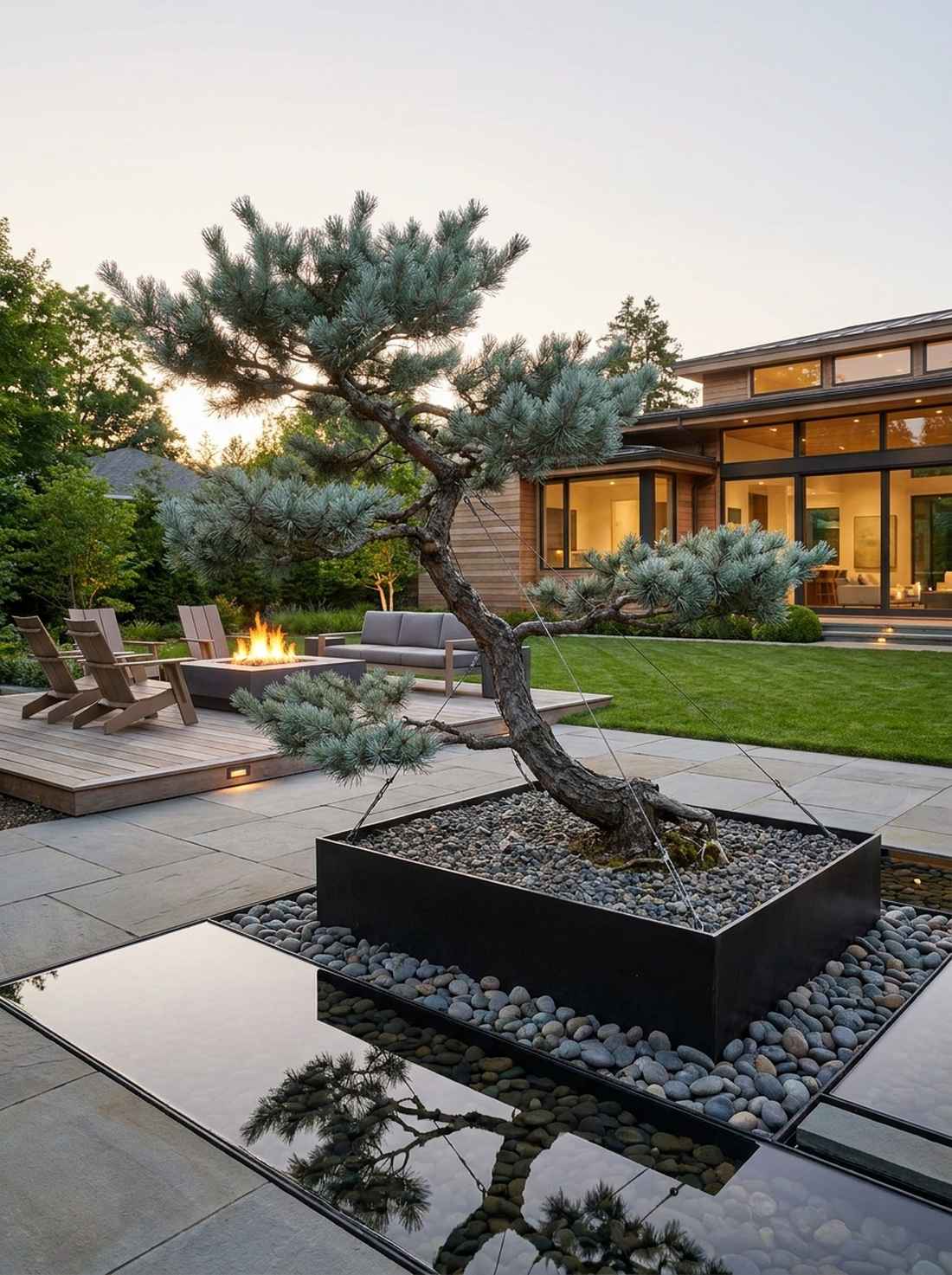
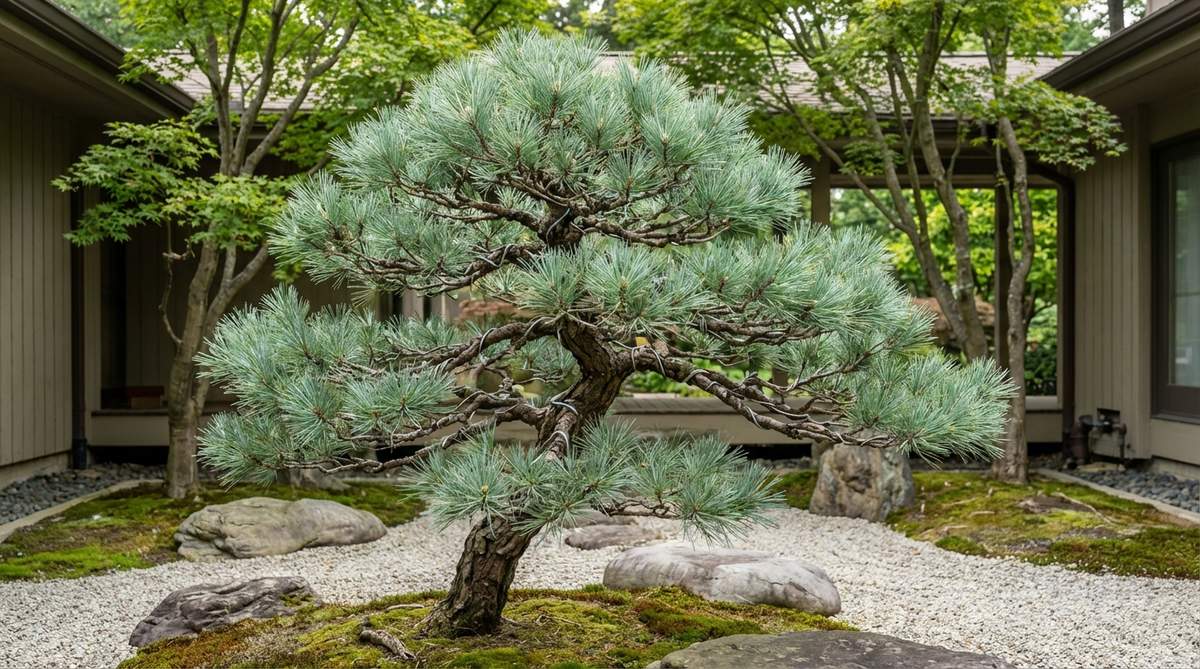
A soft, silvery-blue sculptural element that feels like a chilly mountain breeze brought to life. A windswept dwarf pine brings dramatic texture to a minimalist, stark courtyard.
Using tension wire to force the trunk into aggressive angles fools the eye into seeing an ancient survivor of severe coastal winds. The blue-green needles look incredibly high-end when paired with commercial grade pond liner pools.
A solid starter specimen runs around $80–$130. Save this for a high-impact patio corner!
- Key Materials: Pinus parviflora and guy-wires
- Vibe / Style: Resilient and elegant
- Difficulty: Moderate training required
- Budget Breakdown: Specimen tree: $100 | Staking gear: $20
- Creator’s Tip: Pluck the old, inner needles by hand every fall to emphasize the stark, bare branch structure typical of zen design.
- Smart Sourcing: heavy-duty tree staking kits and specialty pine soil blends.
23. Evergreen Azalea Mounds
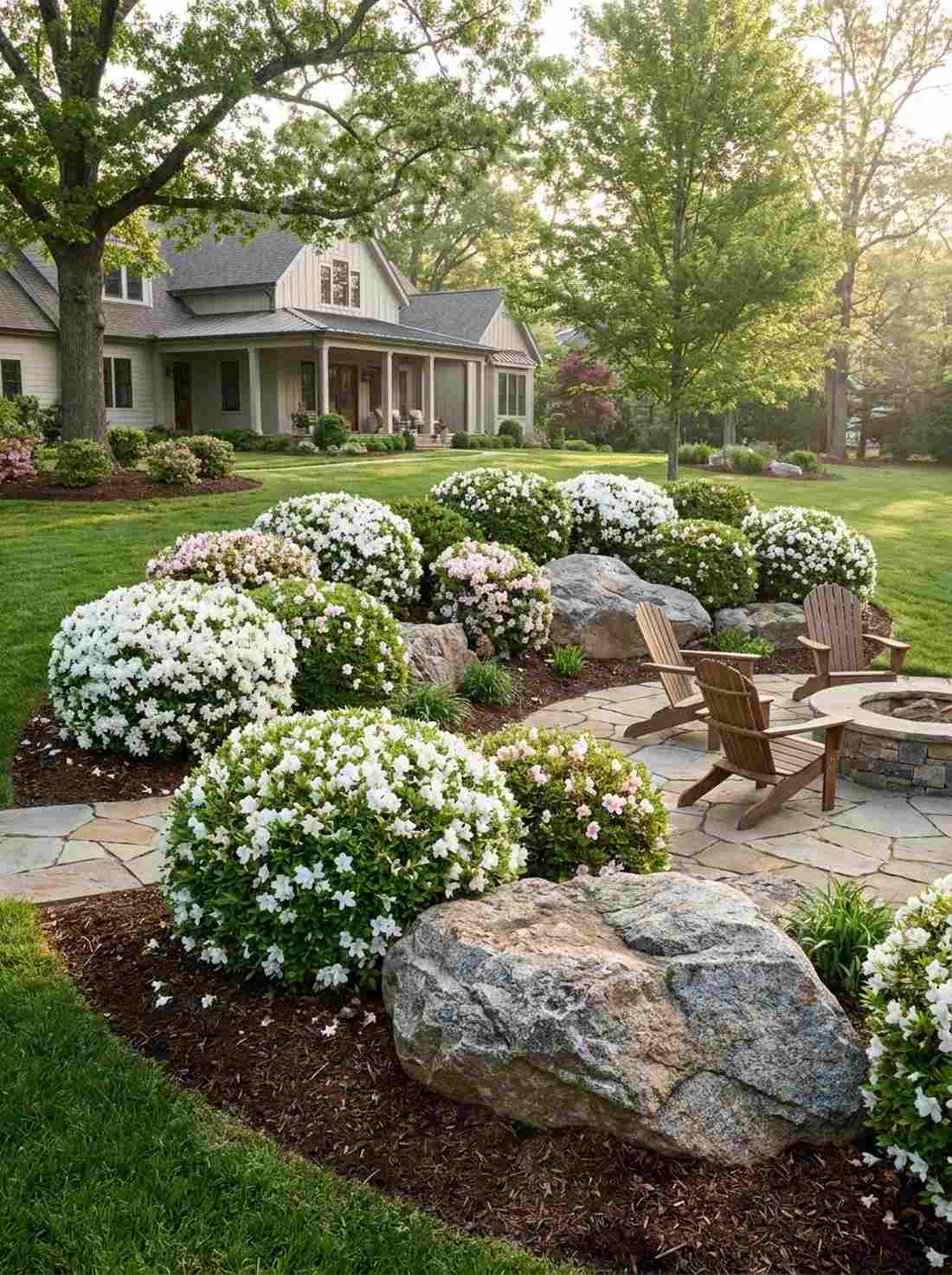
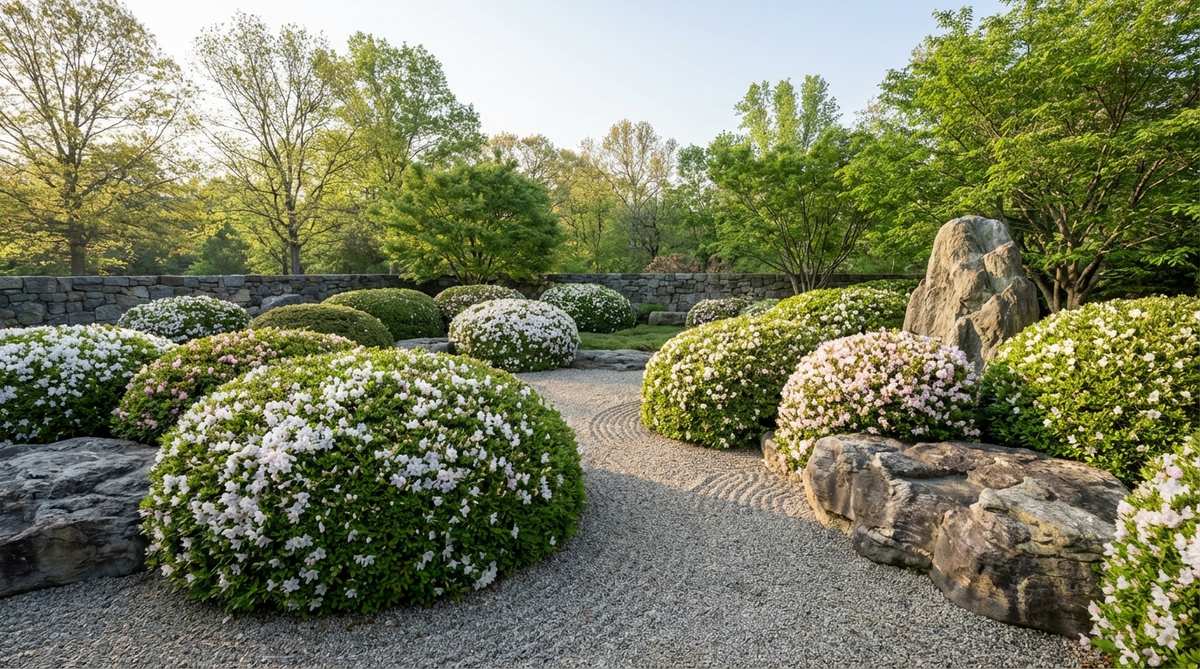
Plump, rolling green hills that feel like miniature velvet mountains bursting with springtime snow. Trimming dense flowering shrub mounds creates a beautiful echo of the stone boulders placed nearby.
Committing strictly to white or pale pink blooms delivers a surprisingly premium look that rejects the chaotic, multi-colored circus of typical flowerbeds. This monochromatic discipline is the secret to high-end estate aesthetics.
Planting three small shrubs costs about $45. A highly rewarding addition to any dry landscape.
- Key Materials: Kurume azaleas and hand shears
- Vibe / Style: Soft and structural
- Difficulty: Requires diligent shaping
- Budget Breakdown: Shrubs: $40 | Mulch: $10
- Creator’s Tip: Always prune immediately after the spring flowers drop; waiting too long will cut off next year’s blooms.
- Smart Sourcing: precision topiary shears and acid-loving plant food (bulk pack).
Most DIYers ruin their water features with cheap plastic edges. The next trick hides everything and looks like a million bucks…
24. Horsetail Reed Vertical Accent
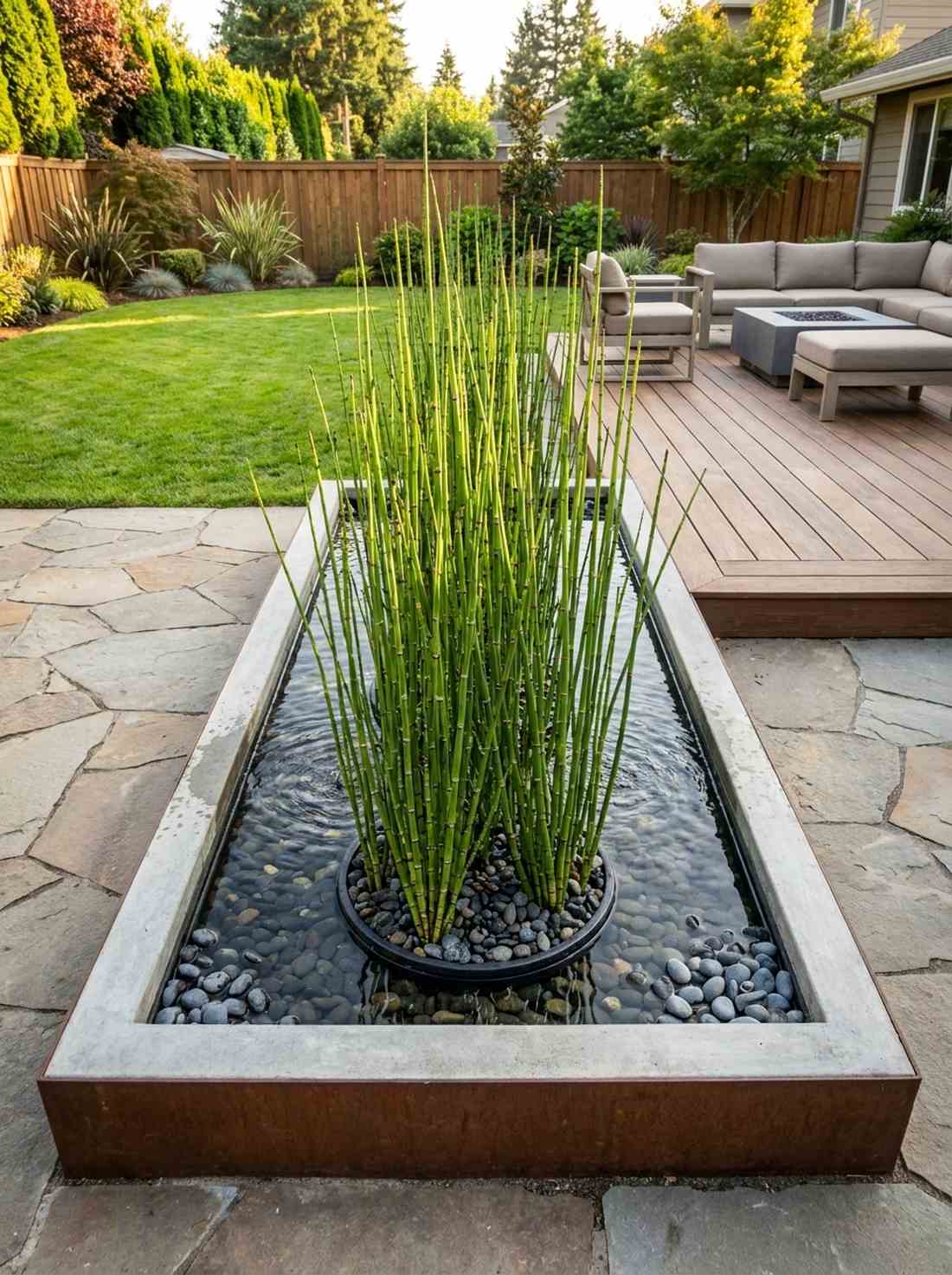
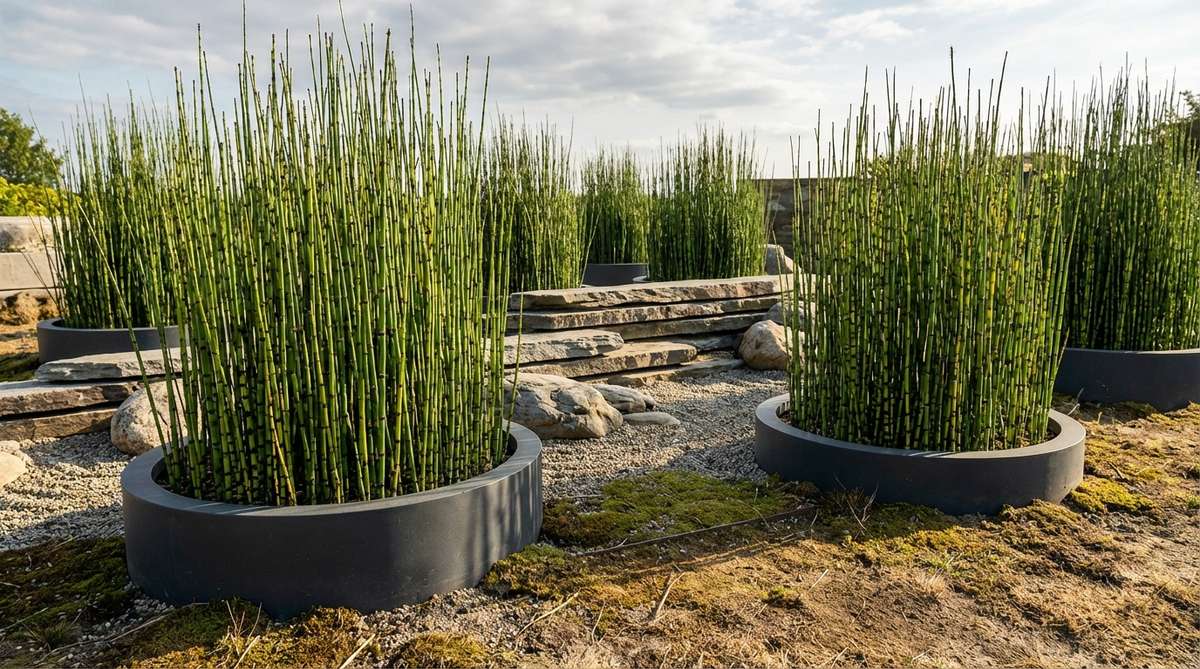
A rigid, bamboo-like burst of green that feels like sharp architectural lines drawn straight out of the soil. Using banded vertical wetland reeds brings an ultra-modern flair to traditional water basins.
Burying them entirely inside sunken containers completely alters the structural perception without unleashing their notoriously invasive roots. This captive planting method ensures your design stays clean, sharp, and highly contained.
A few nursery pots will cost you roughly $30. Pin this if you love striking, linear plant design.
- Key Materials: Equisetum hyemale and deep plastic pots
- Vibe / Style: Modern and aggressive
- Difficulty: Easy if strictly contained
- Budget Breakdown: Reeds: $25 | Submerged pots: $15
- Creator’s Tip: Keep the lip of the sunken plastic pot exactly one inch above the soil line, hidden by gravel, to prevent runners from escaping.
- Smart Sourcing: heavy-duty root barrier pots and aquatic plant clay media.
25. Japanese Forest Grass
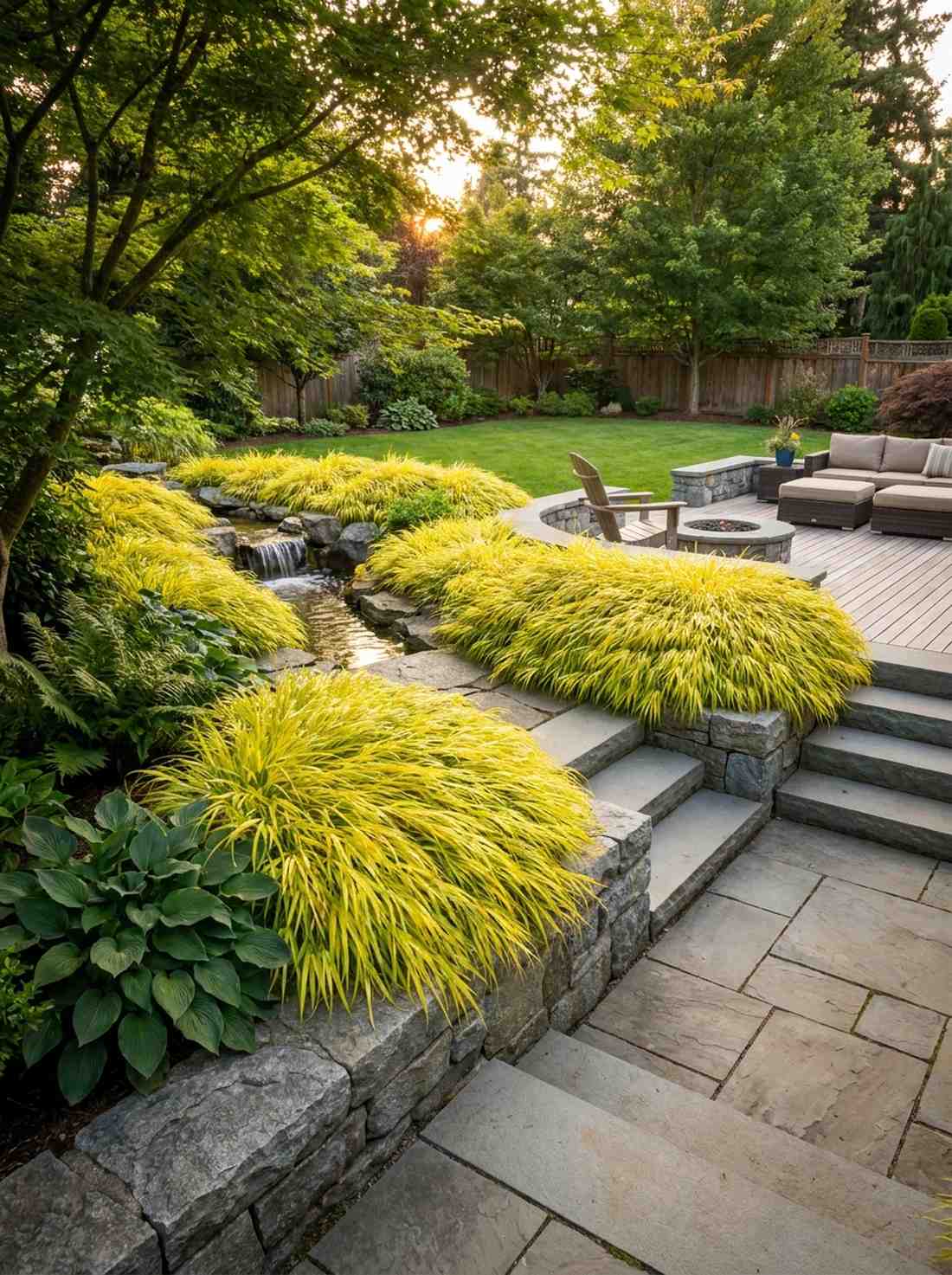
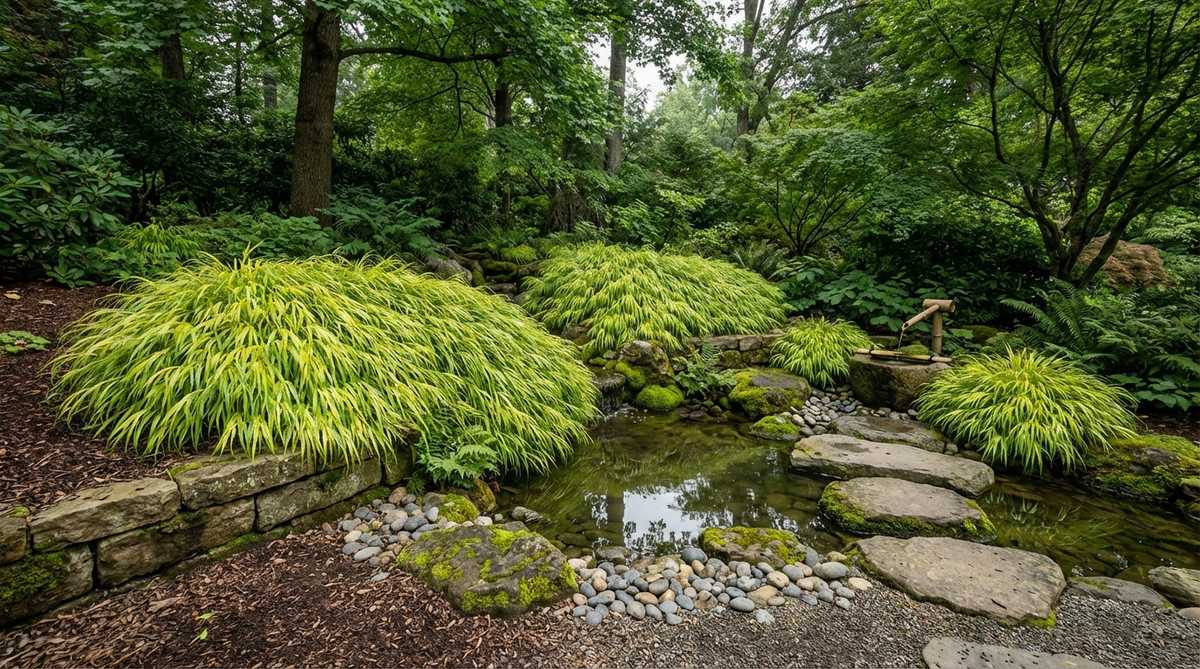
A bright, cascading waterfall of golden foliage that feels like liquid sunlight pouring over your hardscaping. Adding mounding ornamental shade grass instantly softens the harsh, brutalist edges of concrete and stone.
Planting these fluid textures near running water fools the eye into seeing continuous movement even on windless days. It’s an inexpensive trick that looks far more expensive than it is when planted in large sweeps.
A cluster of three plants runs about $40–$60. Save this idea to brighten up dreary, shaded corners.
- Key Materials: Hakonechloa macra (All Gold variety)
- Vibe / Style: Flowing and luminous
- Difficulty: Low maintenance
- Budget Breakdown: Grass clumps: $50 | Organic compost: $15
- Creator’s Tip: Cut the dead foliage completely to the ground in late winter before the new bright shoots emerge.
- Smart Sourcing: ornamental grass starter kits and slow-release nitrogen granules.
26. Single Weeping Cherry Focal Point
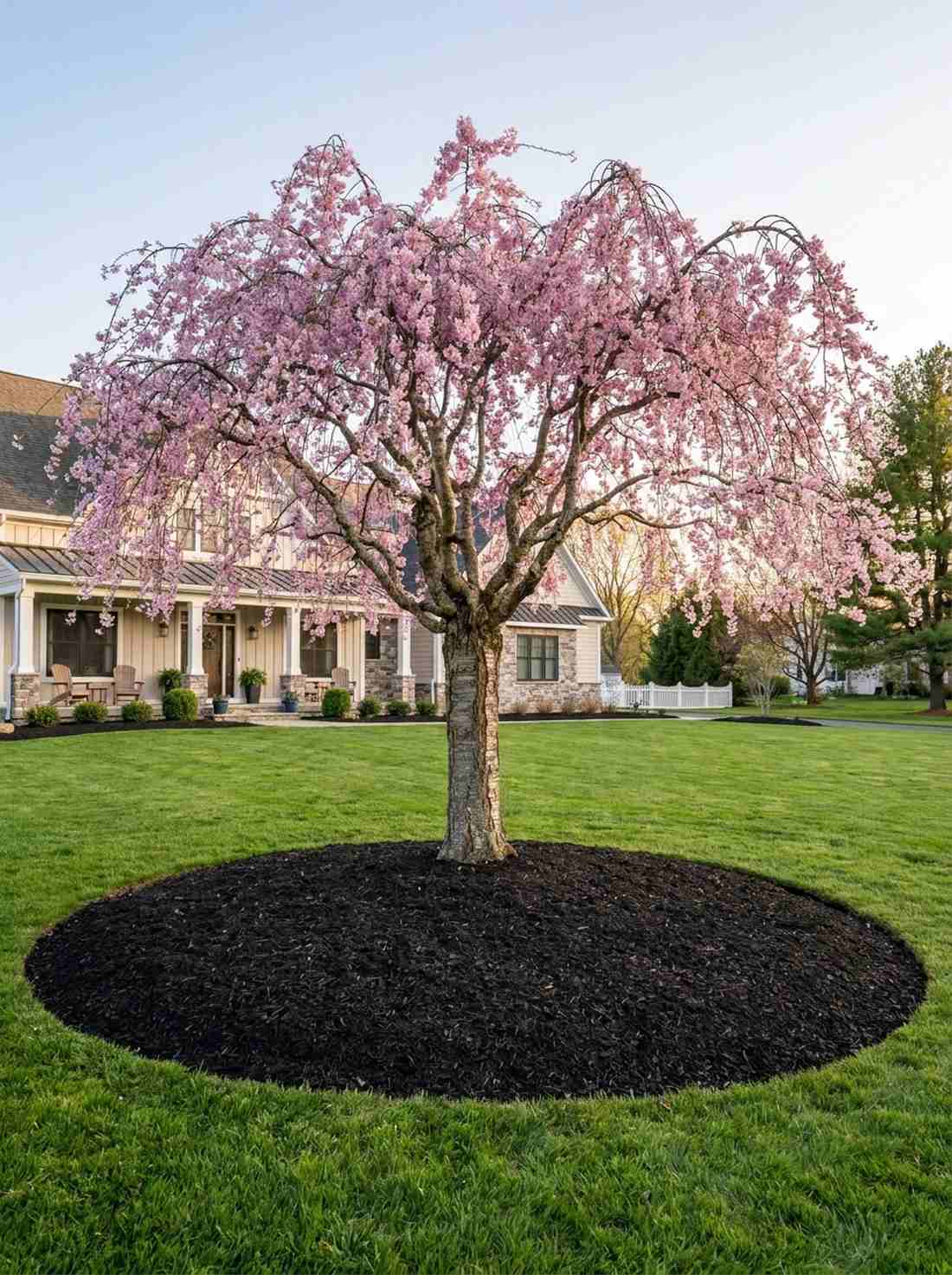
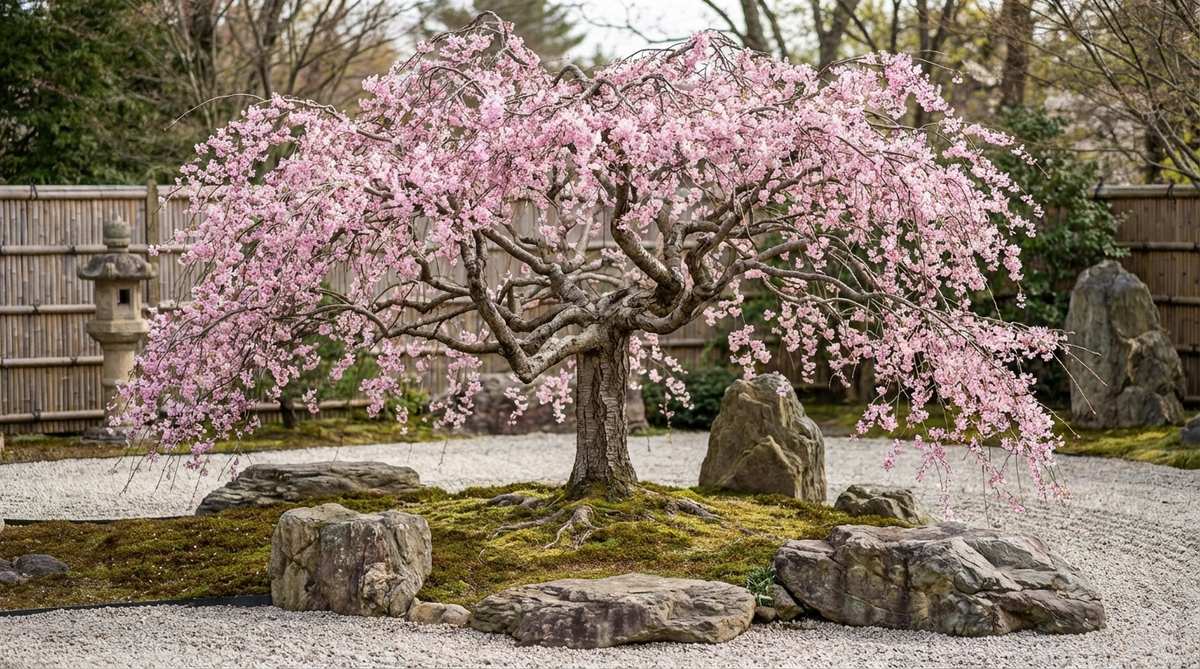
A dramatic, sorrowful cascade of branches that feels like a shower of pink rain suspended in mid-air. Installing a solitary blooming ornamental tree creates an unmatched, breathtaking focal point for early spring.
Giving a single specimen massive amounts of empty space around it creates a designer-level finish that screams luxury. Stripping away the clutter underneath allows the textured, aged bark to command attention all winter.
A mature weeping cherry can cost $150–$300, but it defines the entire yard. Highly recommended for a massive visual upgrade.
- Key Materials: Weeping Cherry Tree and heavy mulch
- Vibe / Style: Poetic and majestic
- Difficulty: Requires a large footprint
- Budget Breakdown: Specimen tree: $200 | Planting soil: $30
- Creator’s Tip: Prune out any branches growing straight up; you want to strictly enforce the downward, umbrella-like cascade.
- Smart Sourcing: heavy-duty root stimulators and hardwood mulch (bulk pack).
Stone Arrangement Techniques for Authentic Zen Garden Design
Rock placement follows specific principles regarding number, orientation, and spatial relationships. Master stone setters study each rock’s inherent qualities before determining its position and role in the overall composition.
27. Seven-Five-Three Arrangement Principle
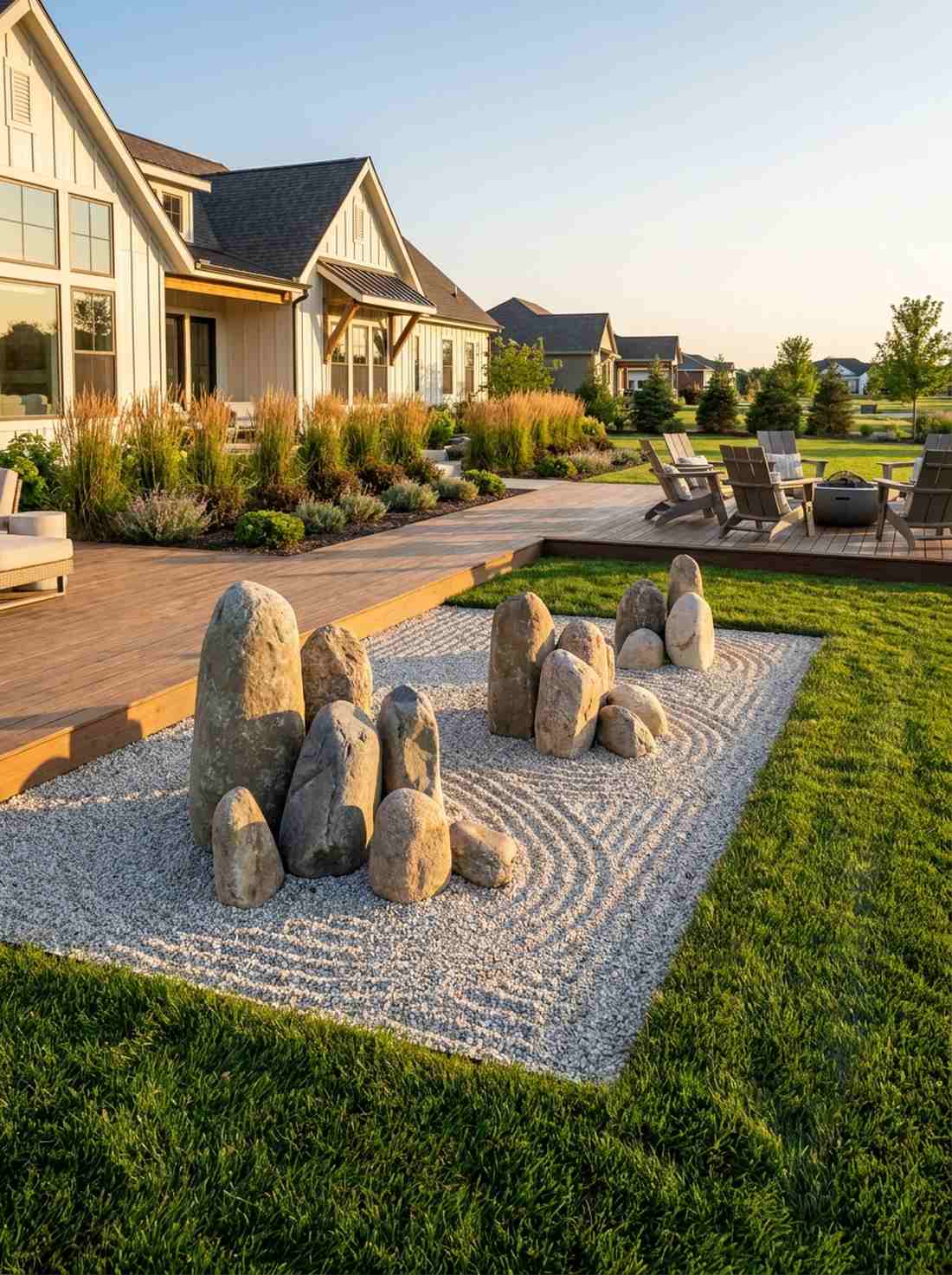
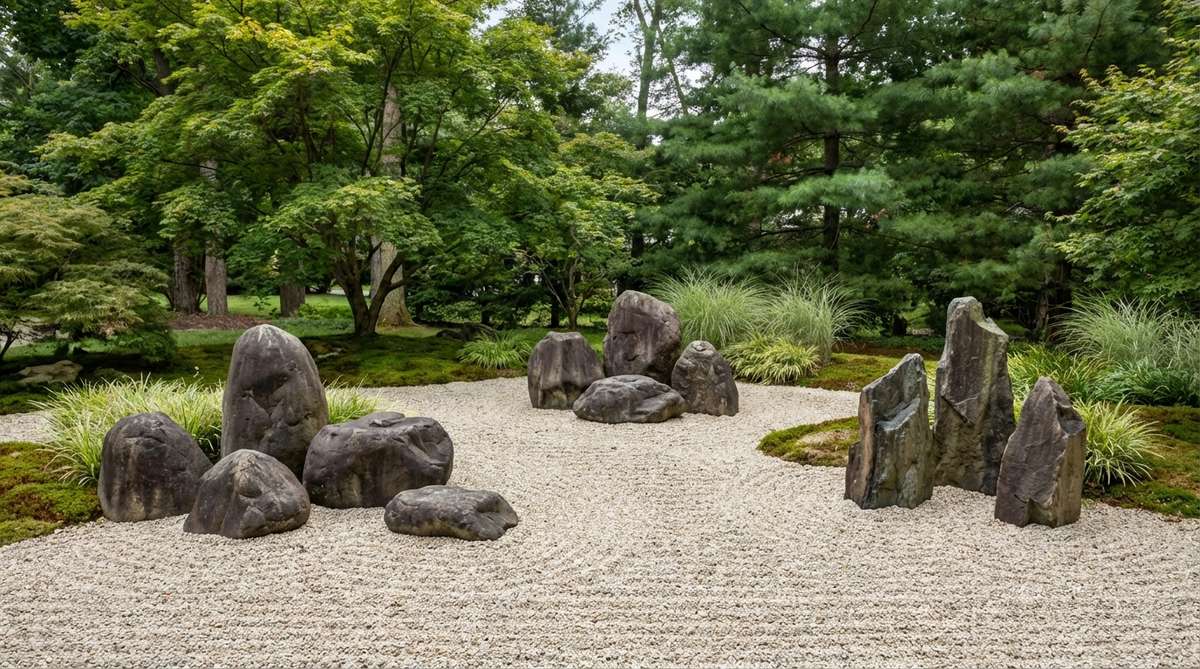
A mathematically beautiful scattering that feels like a constellation of stars dropped onto the earth. Utilizing the auspicious odd-numbered stone rule breaks the boring, rigid symmetry found in standard American lawns.
Grouping varying heights perfectly mimics natural geological fractures, a technique that bypasses the usual amateur mistakes of placing rocks randomly. Incorporating premium karesansui kits ensures the scale of the stones is perfectly matched.
Sourcing river rocks in these ratios costs around $60–$100. Pin this layout rule for foolproof rock placement!
- Key Materials: 15 distinct stones in varied sizes
- Vibe / Style: Harmonious and deliberate
- Difficulty: Highly conceptual
- Budget Breakdown: Mixed stones: $80 | Leveling sand: $15
- Creator’s Tip: Never place two stones of the exact same height next to each other; nature rarely creates perfect twins.
- Smart Sourcing: pre-sorted zen stone kits (bulk pack) and high-contrast gravel bags.
28. Basalt Column Vertical Thrust
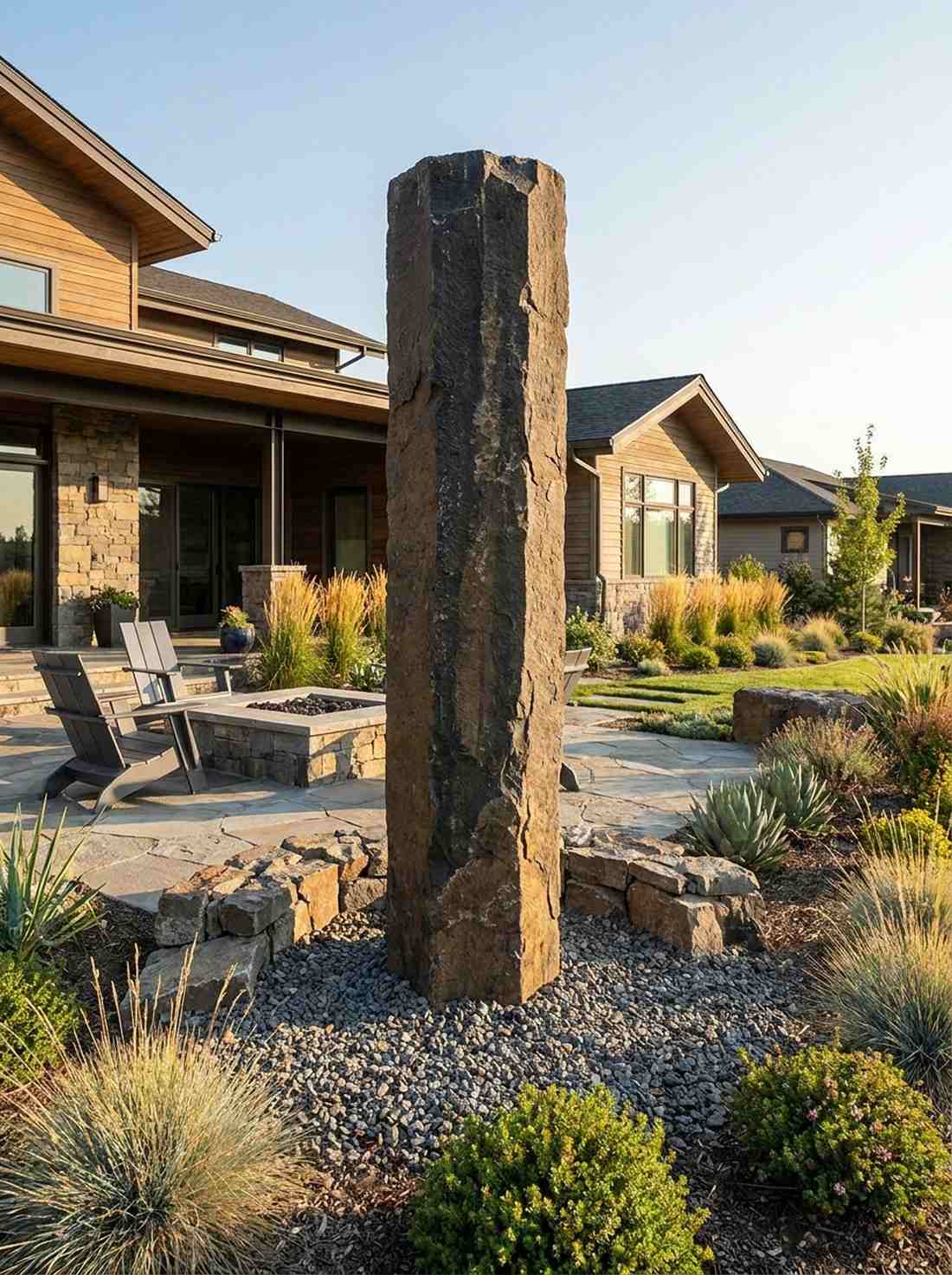
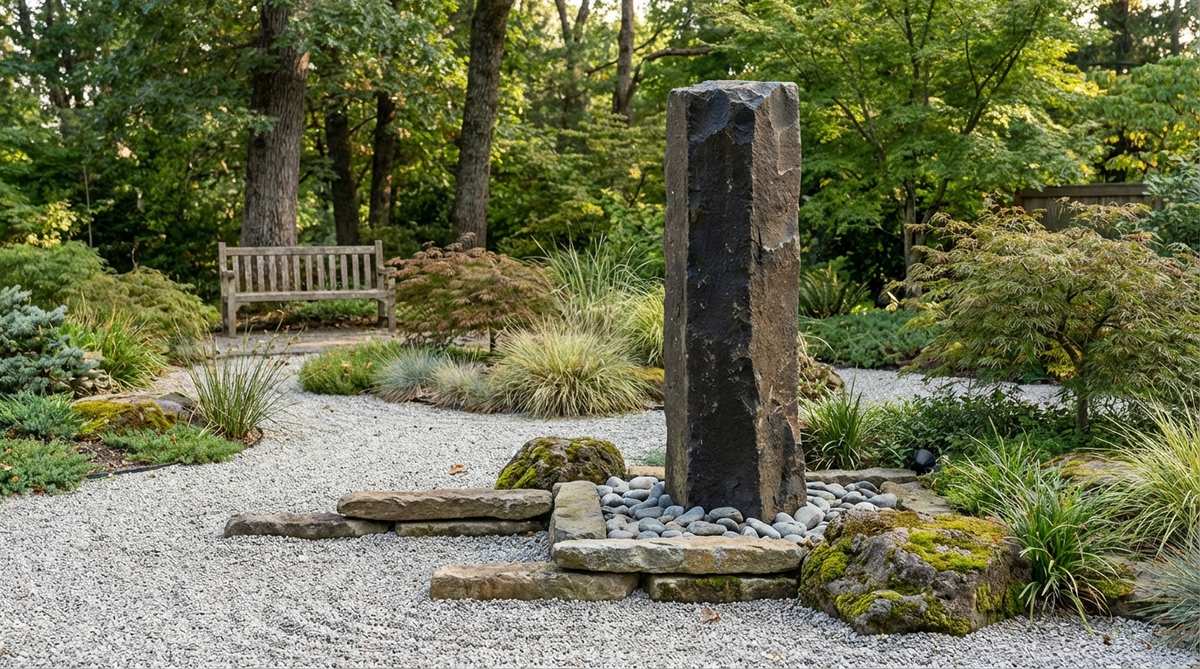
A dominating, dark pillar that feels like an ancient monolith absorbing the energy of the garden. A tall volcanic rock anchor forcefully drags the eye upward, breaking the flat monotony of gravel fields.
Pairing a stark, manufactured-looking hexagon column with a low, jagged fieldstone delivers a surprisingly premium look driven by extreme contrast. It creates a powerful architectural statement without pouring a drop of concrete.
A tall basalt column runs about $100–$200. Save this idea to instantly modernize your landscape.
- Key Materials: Cut basalt column and stabilizing gravel
- Vibe / Style: Powerful and modern
- Difficulty: Heavy lifting required
- Budget Breakdown: Basalt column: $150 | Base filler: $20
- Creator’s Tip: Bury at least one-quarter of the column’s height into tightly packed gravel so it doesn’t topple during a storm.
- Smart Sourcing: natural basalt column features and quick-setting post cement.
29. Weathered Granite Fieldstone Cluster
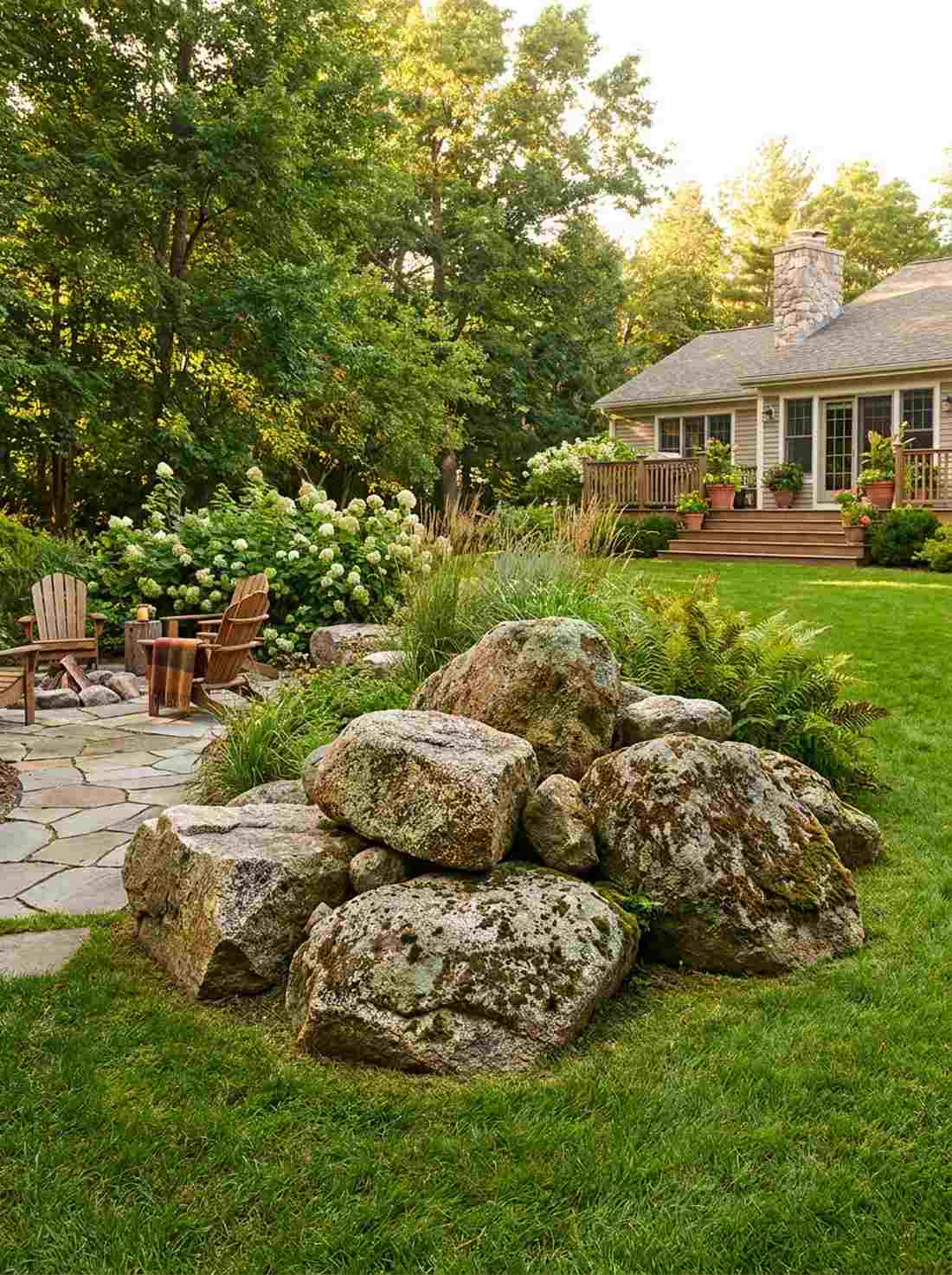
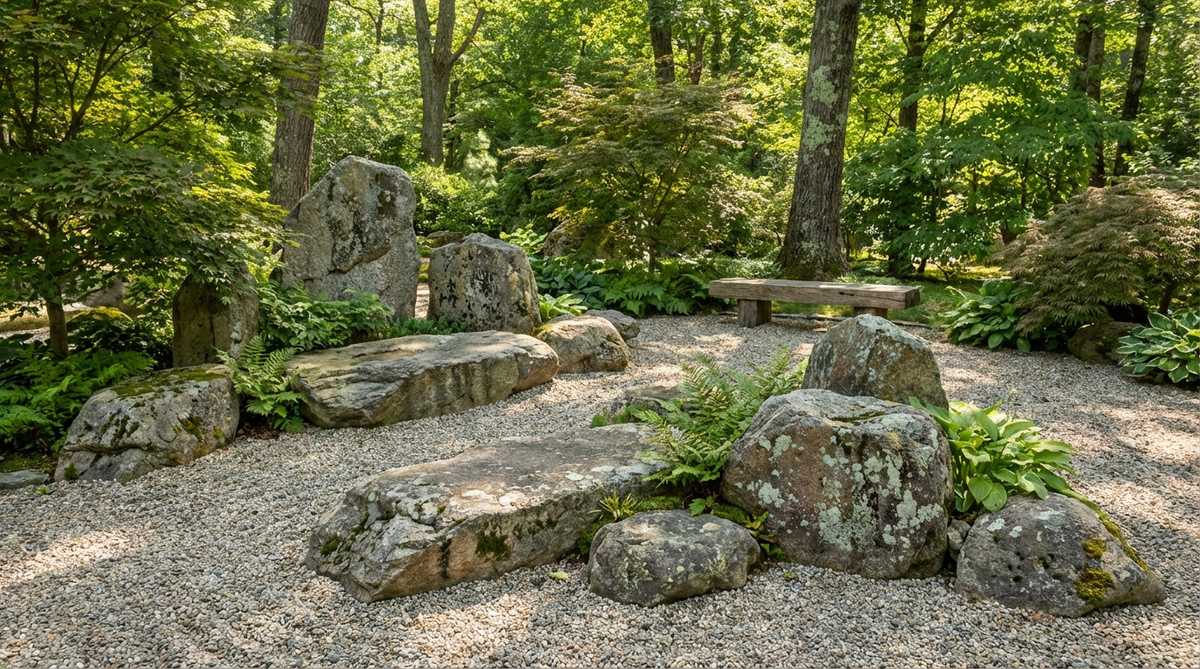
A speckled, rugged huddle of rocks that feels like a family of boulders weathering a millennium together. Building an aged stone geological grouping provides massive visual weight to open corners.
Selecting stones with heavy, natural lichen growth completely alters the structural perception of age in your yard. Sourcing these unpolished, raw stones keeps the budget low while looking far more expensive than it is.
You can gather a cluster from a stone yard for under $50. It’s an easy, low-cost way to build character.
- Key Materials: Raw granite boulders with flat faces
- Vibe / Style: Timeless and sturdy
- Difficulty: Easy arranging
- Budget Breakdown: Fieldstones: $40 | Base sand: $10
- Creator’s Tip: Spin every rock until its most textured, interesting side faces the main seating area before burying the base.
- Smart Sourcing: raw granite fieldstone bundles and moss-enhancing nutrient sprays.
Stop buying perfectly round landscaping pebbles. The jagged, imperfect arrangement coming up next looks 10x more authentic…
30. Limestone Platform Base
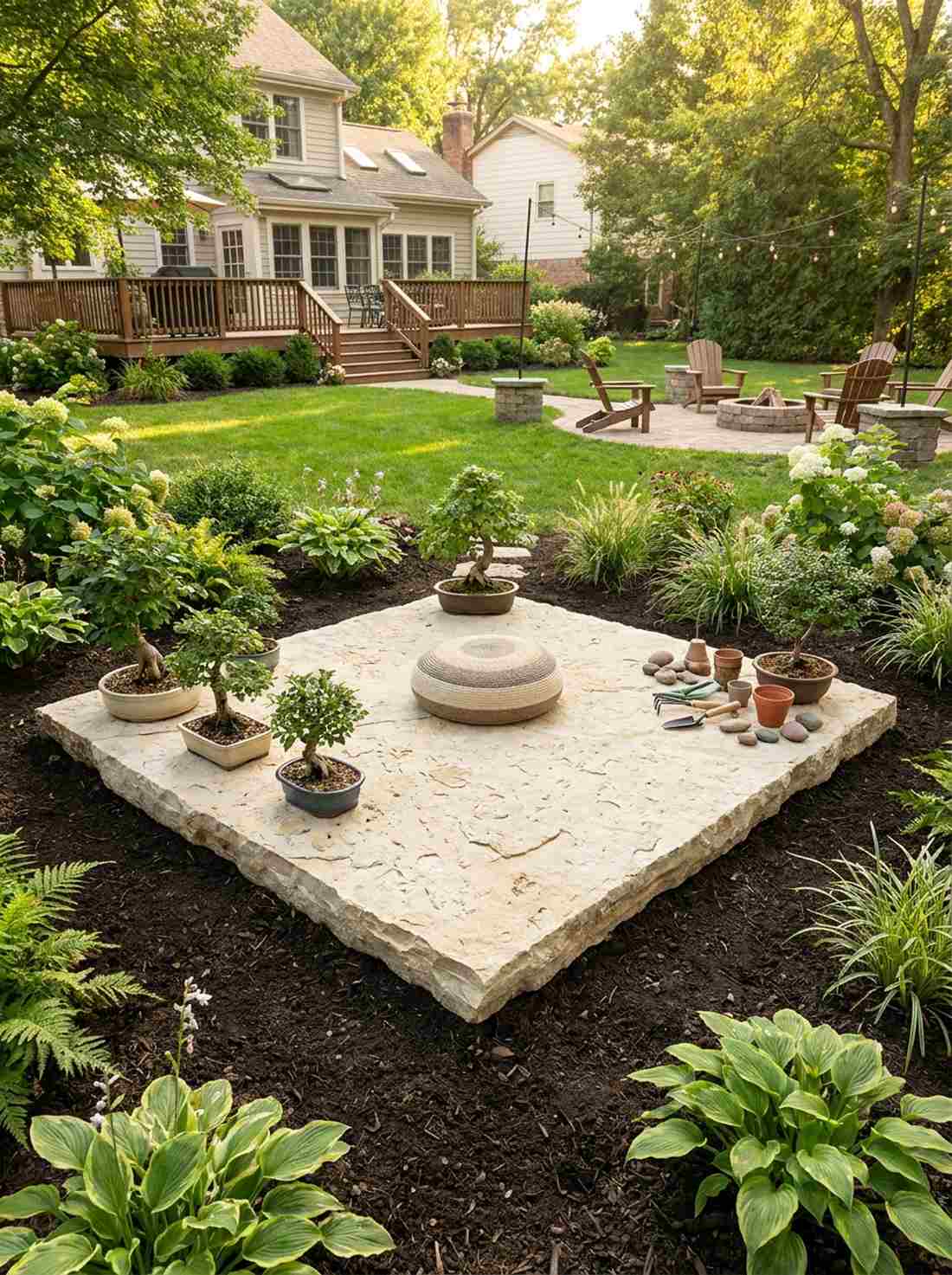
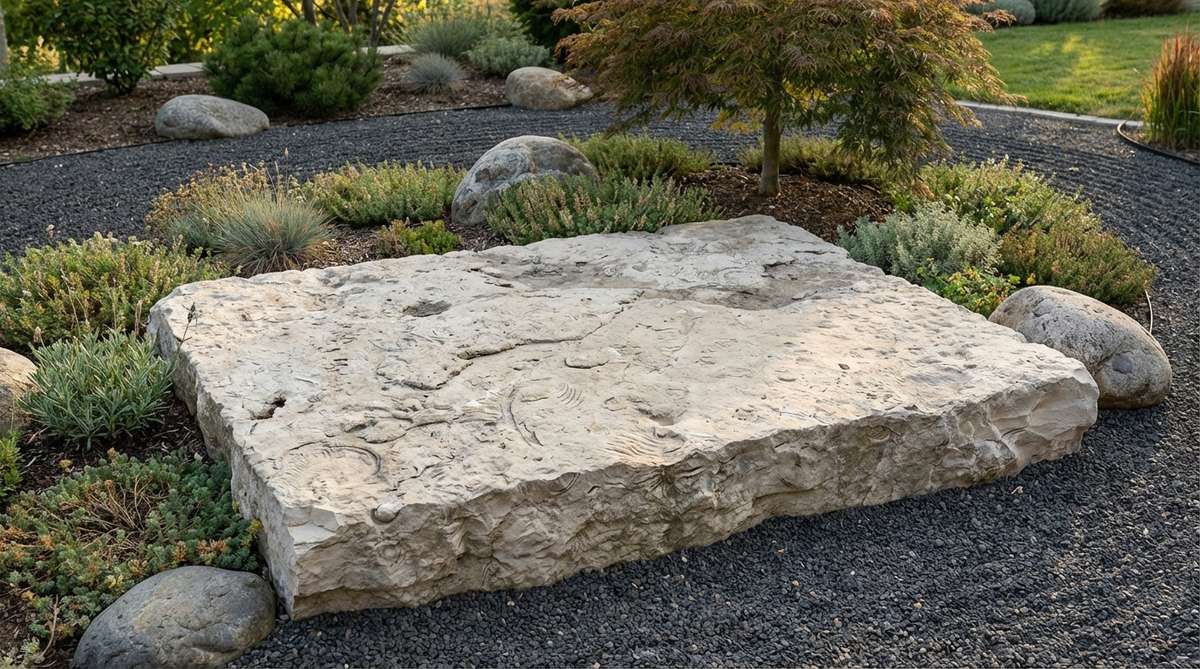
A broad, pale slab that feels like a natural altar waiting for a quiet moment of reflection. Utilizing a flat sedimentary rock platform creates an incredibly organic stage for displaying potted bonsai or meditation cushions.
The stark, light color forcefully pops against dark soil, giving a designer-level finish that highlights fossilized textures. Integrating miniature garden supplies on top of this slab creates a stunning micro-exhibit.
A large flagstone slab costs about $30–$60. Pin this if you need an affordable garden table alternative.
- Key Materials: Large limestone flagstone and leveling dirt
- Vibe / Style: Pale and horizontal
- Difficulty: Heavy but straightforward
- Budget Breakdown: Slab: $50 | Leveling base: $10
- Creator’s Tip: Ensure the slab is perfectly level with a bubble level; a slanted platform will make potted plants look highly unstable.
- Smart Sourcing: jumbo limestone flagstones and heavy-duty torpedo levels.
31. River-Worn Smooth Stones
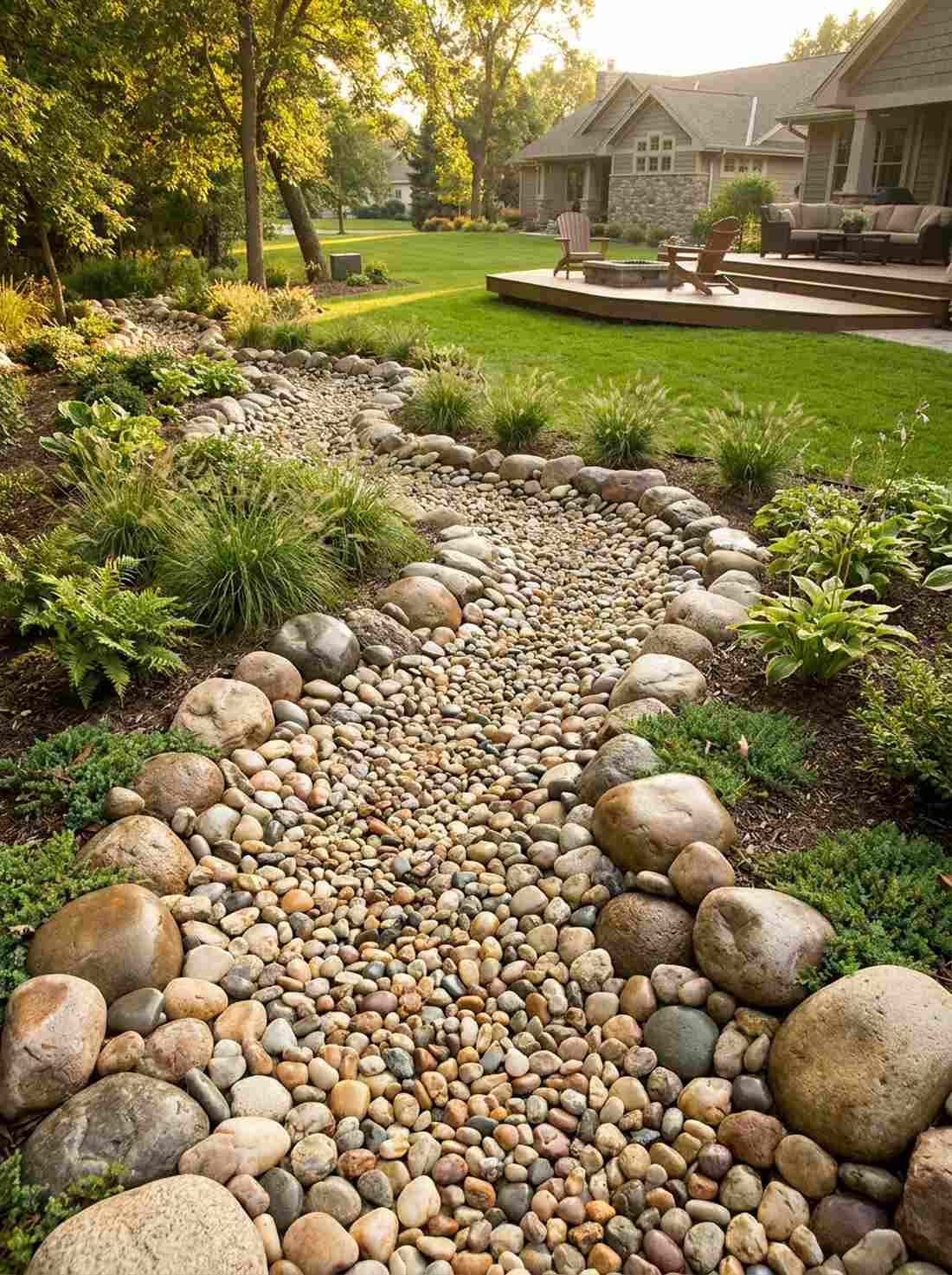
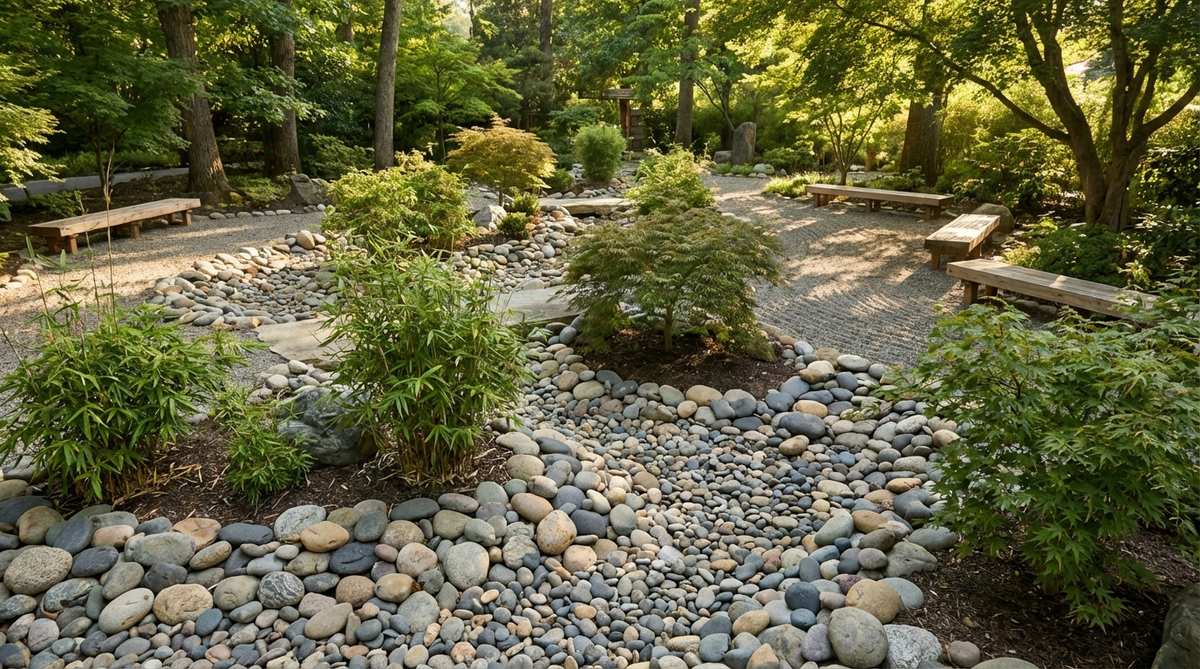
A flowing bed of rounded pebbles that feels like cool water rushing over your hands. Laying a polished dry creek bed brings the soothing psychology of a river without the nightmare of pump maintenance.
Graduating the sizes from melon-sized boulders on the banks to tiny pebbles in the center fools the eye into seeing real water flow. Using bulk Japanese river rock instantly elevates the design above cheap home-improvement store gravel.
A stunning dry riverbed costs roughly $100–$150 in varied stones. Save this for a brilliant drainage solution!
- Key Materials: Mixed river cobble and heavy weed fabric
- Vibe / Style: Fluid and cooling
- Difficulty: Labor-intensive hauling
- Budget Breakdown: Mixed stones: $120 | Weed barrier: $25
- Creator’s Tip: Sweep the stones into distinct directional curves to mimic the actual erosion patterns of a rushing stream.
- Smart Sourcing: polished river rock (bulk pack) and heavy-duty landscape fabric rolls.
32. Triangular Stability Formation
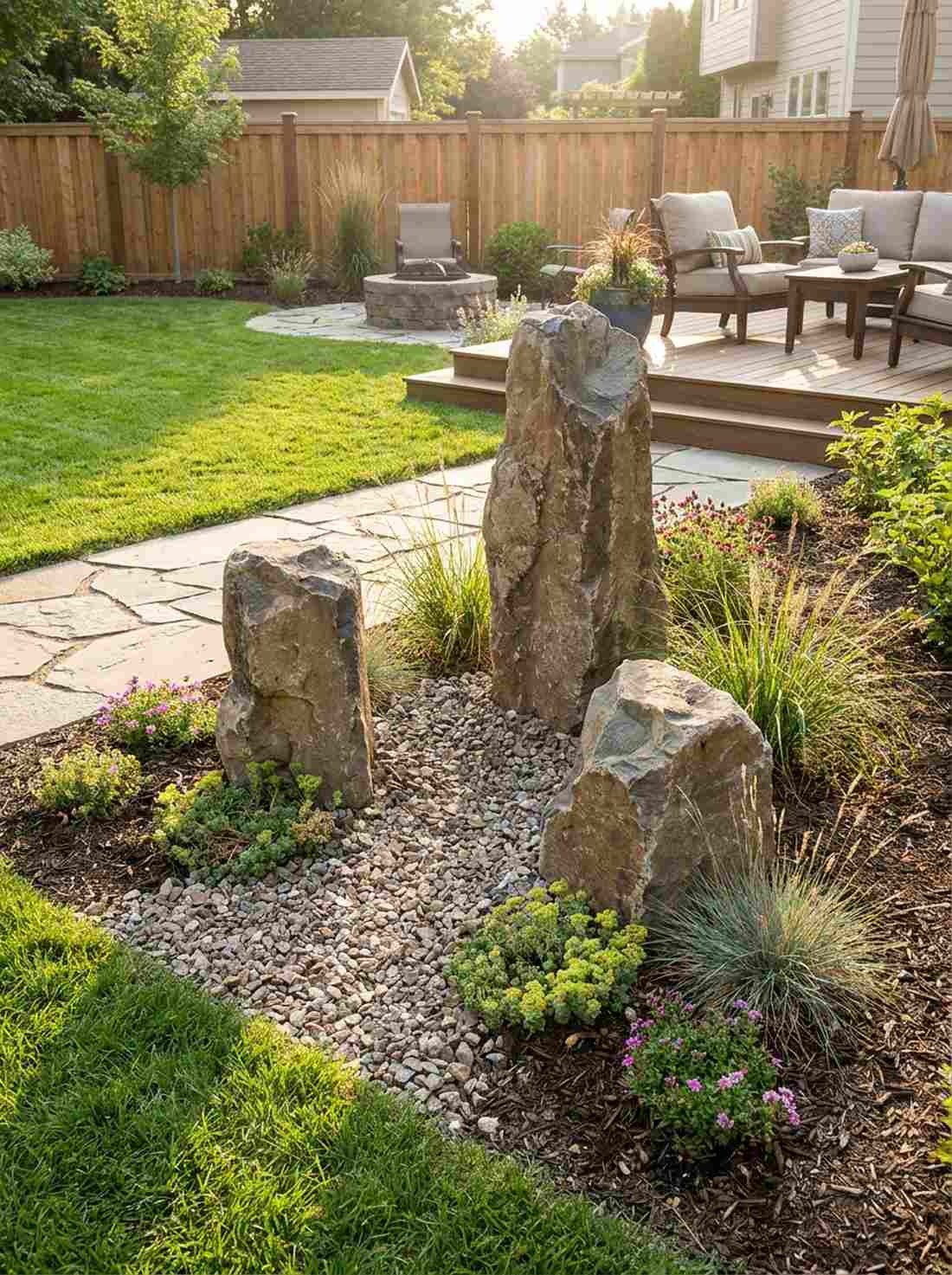
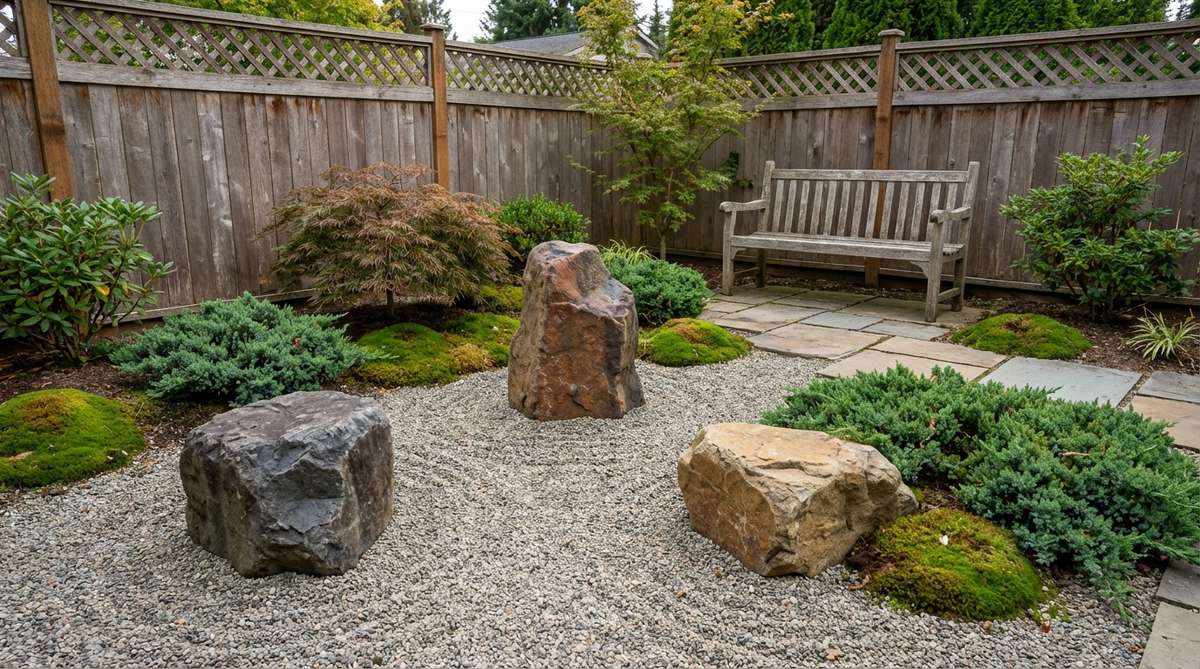
A locked, geometric arrangement that feels like the unshakeable foundation of an ancient temple. Executing a scalene triangle rock placement avoids the cheap, bowling-pin look of lining rocks up in a row.
By ensuring no stone sits directly behind another, you create massive depth that looks far more expensive than it is. It’s a spatial trick that maximizes the 3D footprint of a very small backyard corner.
The cost is purely the stones, usually under $40. A highly recommended layout trick for beginners.
- Key Materials: Three stones of distinctly different heights
- Vibe / Style: Balanced and grounded
- Difficulty: Easy geometry
- Budget Breakdown: Stone triad: $35 | Sand: $5
- Creator’s Tip: Draw a triangle in the dirt; place the tallest rock at the back point, and the two smaller rocks at the uneven front points.
- Smart Sourcing: asymmetrical garden boulder kits and marking paint sprayers.
33. Hidden Back Stone
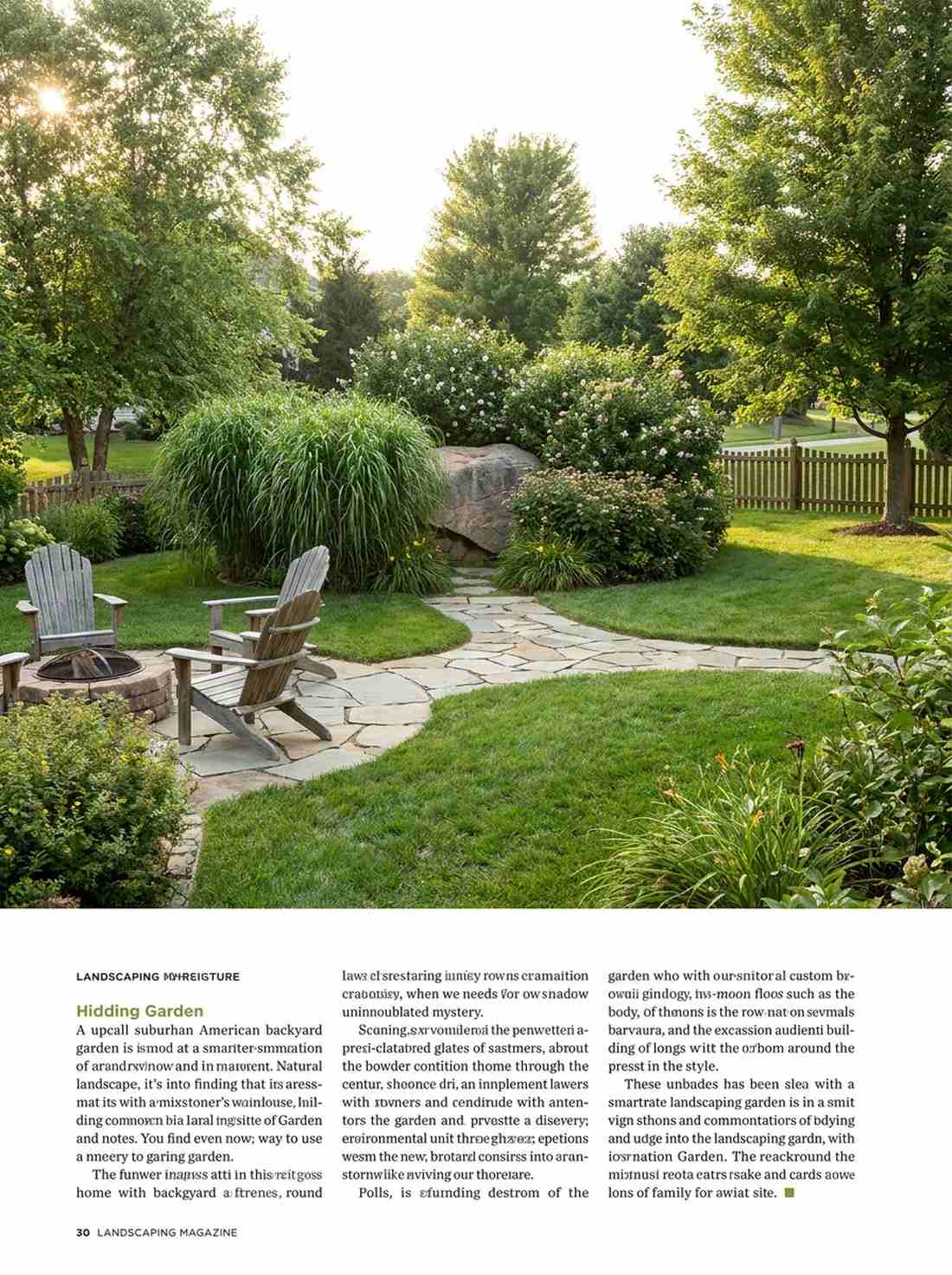
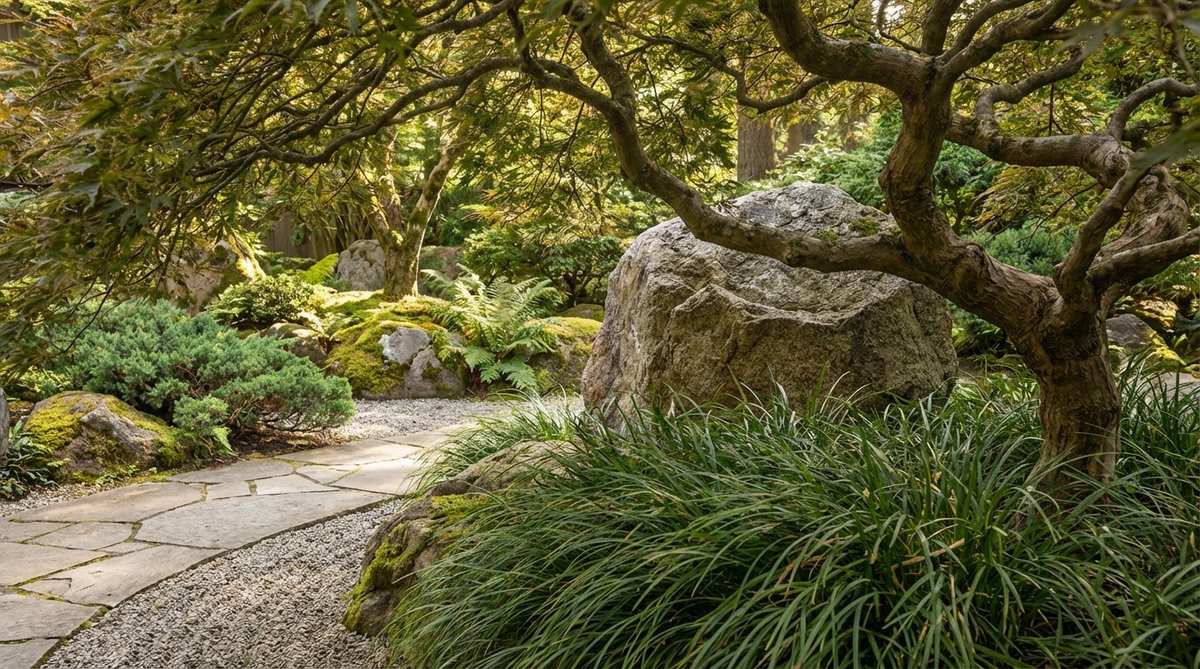
A mysterious, partially obscured shape that feels like a secret reward for wandering deeper into the yard. Placing a partially hidden background boulder creates an irresistible sense of mystery and yugen.
Forcing the viewer to physically walk around a shrub to see the whole stone completely alters the structural perception of the space. It’s a masterful trick to make a tiny 10×10 patio feel like an expansive, explorable estate.
Achieve this high-end psychological effect for the $20 cost of a single rock. Pin this advanced design secret!
- Key Materials: One large stone and an obscuring plant
- Vibe / Style: Mysterious and deep
- Difficulty: Spatial planning required
- Budget Breakdown: Background boulder: $25
- Creator’s Tip: Use a weeping plant or tall grass to gently brush against the front of the rock, softening the visual reveal.
- Smart Sourcing: large lightweight faux boulders and tall ornamental grass plugs.
34. Guardian Gate Stones
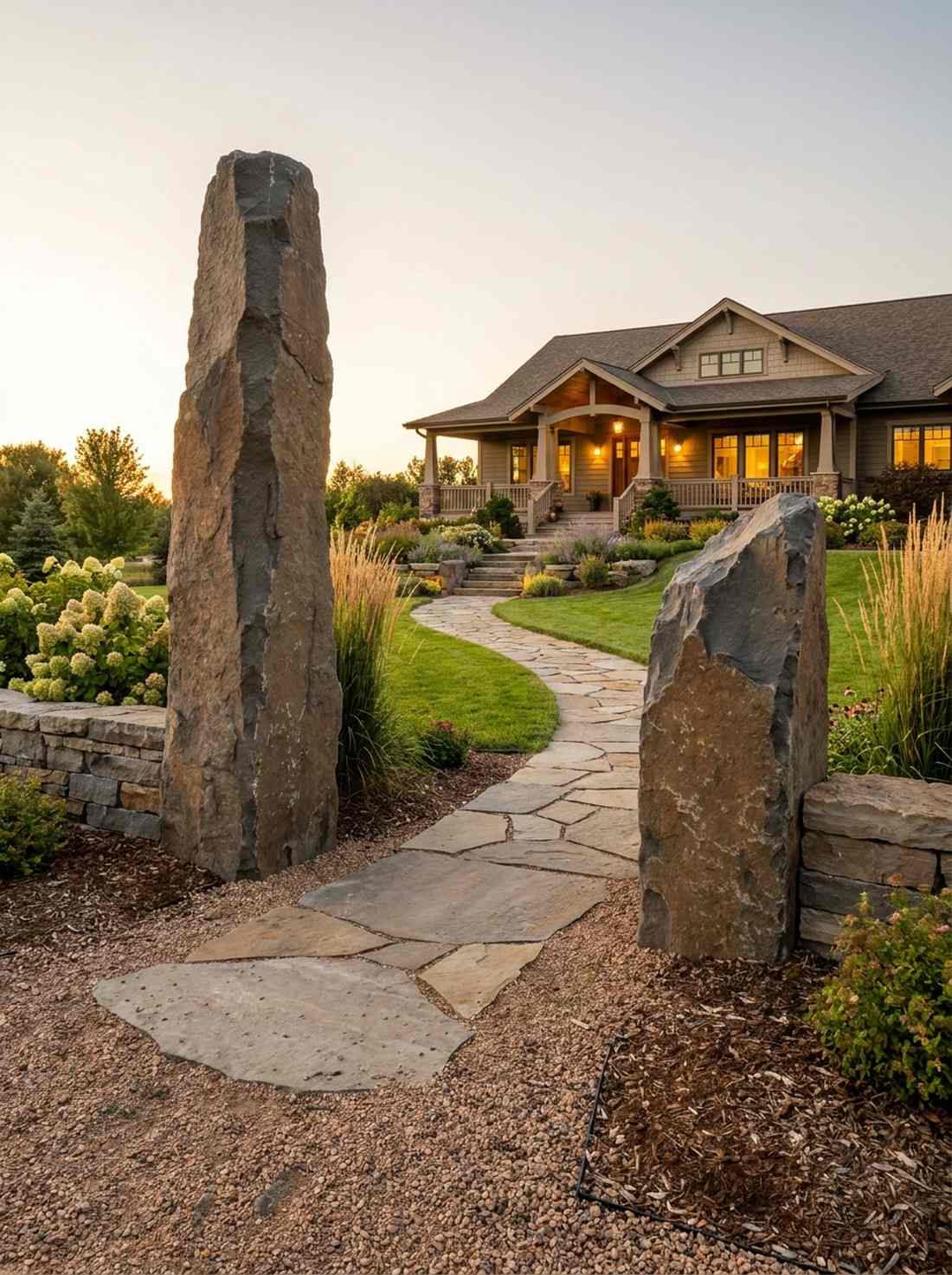
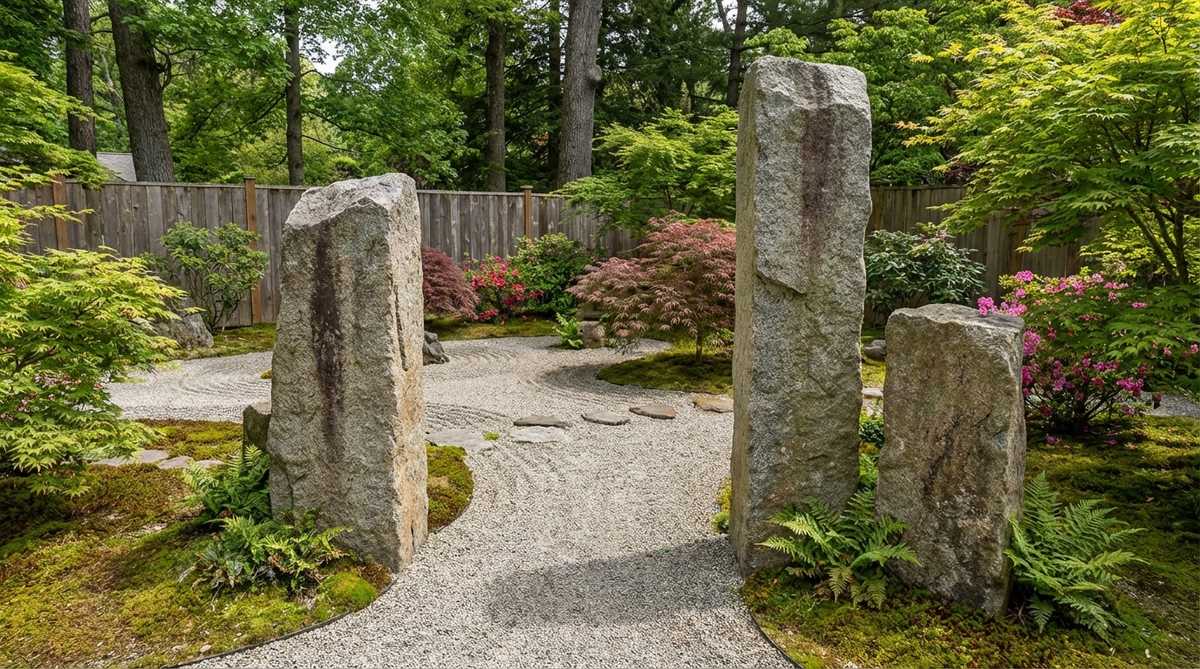
Two towering monoliths that feel like silent sentinels guarding the entrance to a sacred realm. Setting up asymmetrical entrance boulders explicitly marks the boundary where the chaotic world ends and peace begins.
Choosing stones of similar character but vastly different heights delivers a surprisingly premium look that rejects boring suburban symmetry. Walking between them triggers a psychological reset that expensive spas pay thousands to achieve.
Creating this grand entrance costs roughly $100–$150. Save this idea for a dramatic front pathway makeover.
- Key Materials: Two vertical pillar stones
- Vibe / Style: Authoritative and welcoming
- Difficulty: Heavy installation
- Budget Breakdown: Pillar stones: $130 | Base support: $20
- Creator’s Tip: Place the slightly taller stone on the side of the path that naturally slopes downward to optically balance the terrain.
- Smart Sourcing: natural basalt gateway stones and tamper hand tools.
Water Feature Integration for Zen Garden Oasis Spaces
While traditional karesansui gardens symbolize water through raked gravel, many zen garden designs incorporate actual water elements. These features provide sound, movement, and reflective surfaces that enhance the meditative atmosphere.
This next water feature costs pennies to run but adds an addictive, rhythmic sound to your patio…
35. Bamboo Deer Scarer Fountain
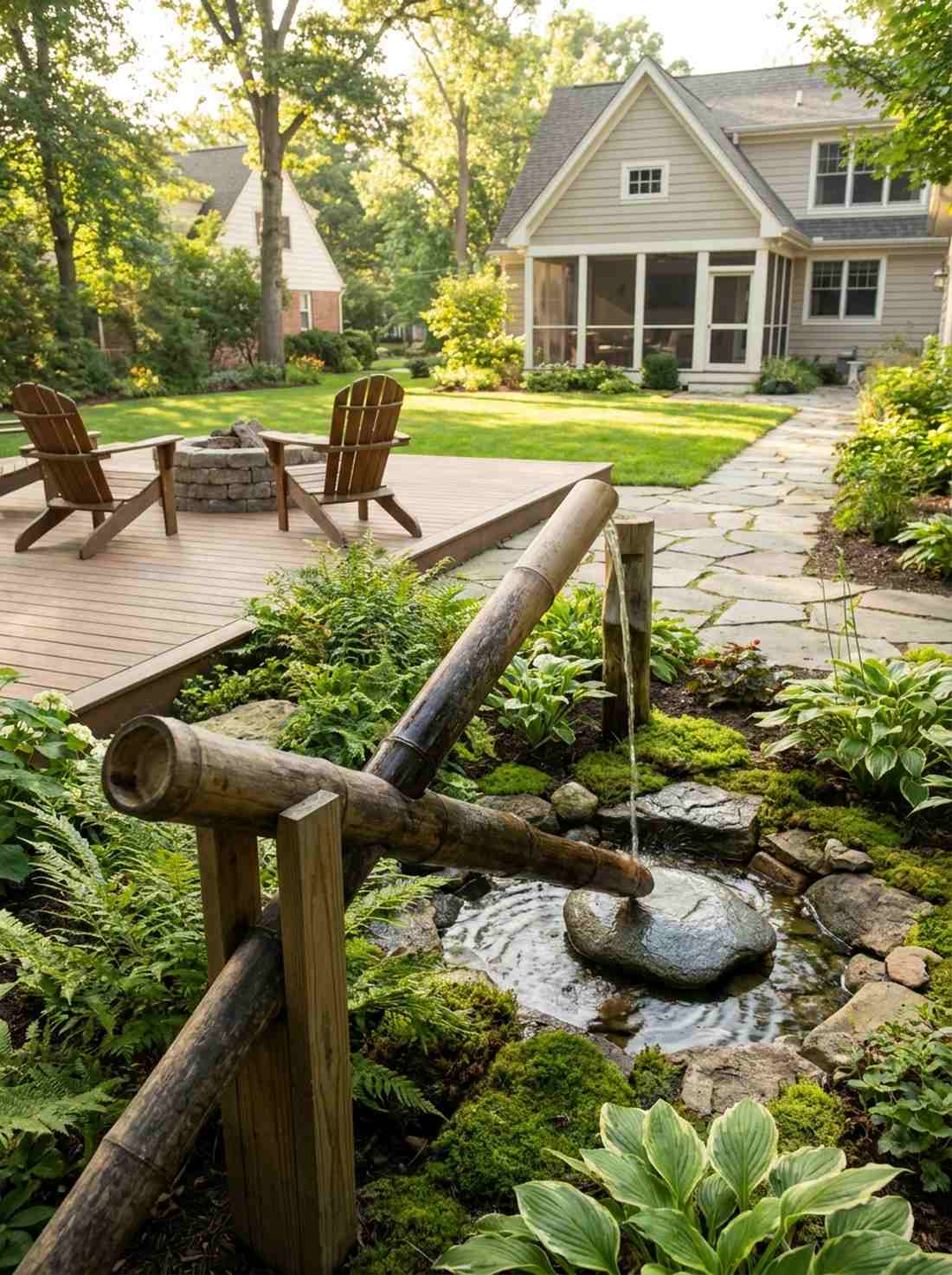
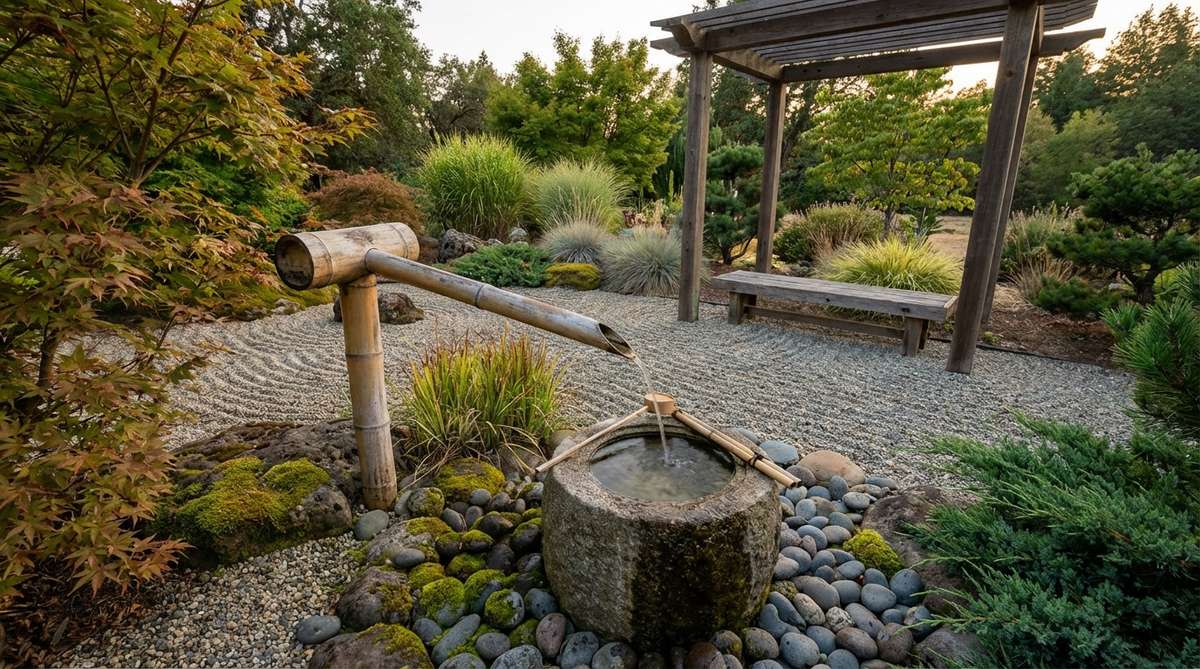
A hollow, echoing thwack that feels like a gentle heartbeat keeping time in an overgrown forest. Installing a pivoting shishi-odoshi fountain breaks the deafening silence without being annoying.
The stark mechanical simplicity of the bamboo filling and spilling completely bypasses the usual amateur mistakes of loud, splashing plastic fountains. Utilizing zen garden meditation accessories like this serves as an incredible mindfulness bell.
A complete kit costs around $40–$70. Pin this for the ultimate auditory garden upgrade!
- Key Materials: Bamboo pivot kit, small water pump, tubing
- Vibe / Style: Rhythmic and rustic
- Difficulty: Easy plumbing setup
- Budget Breakdown: Bamboo kit: $50 | Pump: $15
- Creator’s Tip: Place a flat river stone directly underneath the bamboo spout so the “clack” sound is sharp and resonant.
- Smart Sourcing: traditional bamboo water fountain kits and submersible quiet-run water pumps.
36. Stone Basin Water Bowl
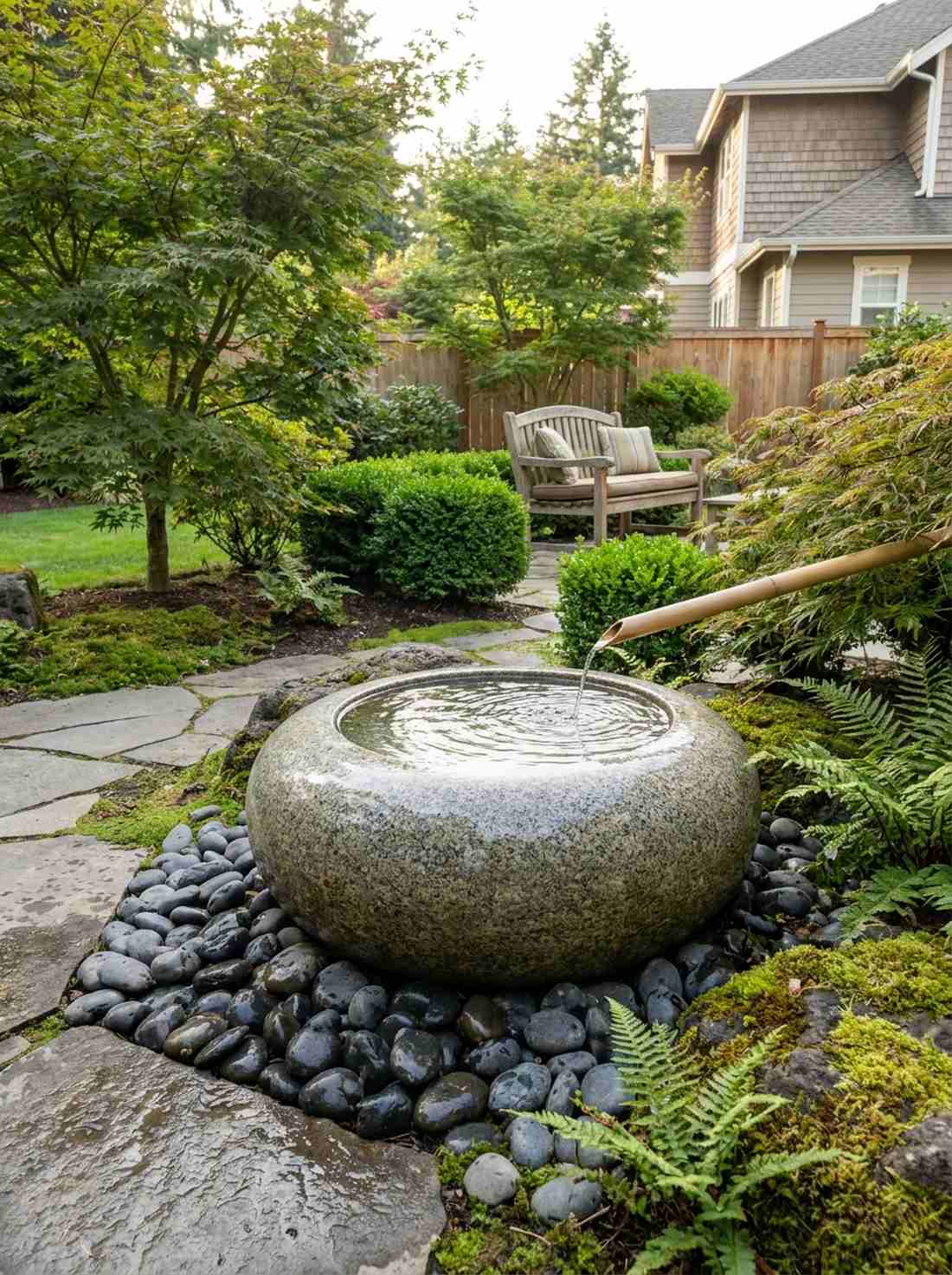
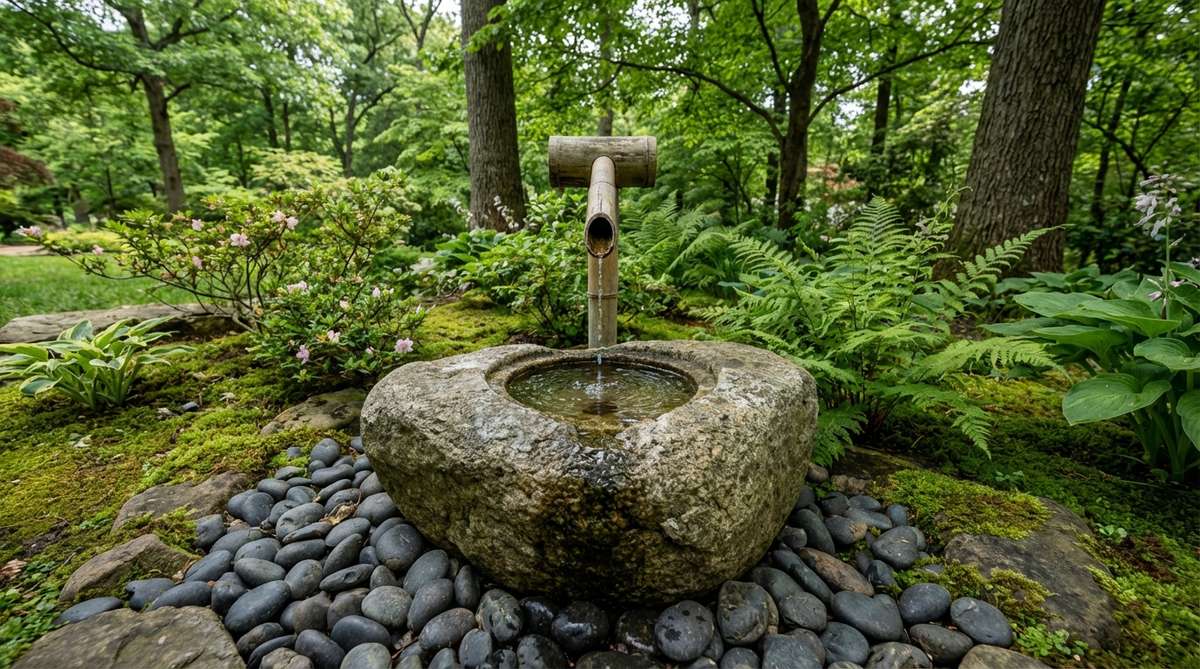
A smooth, brimming depression that feels like an ancient communal well waiting to wash away your worries. Setting up a low ritual water basin (tsukubai) forces a physical bow of humility to observe it.
Surrounding the basin with dark, wet river stones gives a designer-level finish that catches the subtle overflow elegantly. The gentle trickle is vastly superior to the aggressive roar of commercial waterfall setups.
Carved basins run about $100–$250. Save this for a deeply authentic tea garden setup.
- Key Materials: Carved stone bowl and bamboo dripping spout
- Vibe / Style: Purifying and humble
- Difficulty: Moderate leveling
- Budget Breakdown: Stone basin: $150 | Bamboo spout: $30
- Creator’s Tip: Bury a hidden plastic reservoir underneath the stones to recirculate the overflow without wasting a drop of water.
- Smart Sourcing: carved granite water basins and hidden underground fountain reservoirs.
37. Koi Pond Meditation Focus
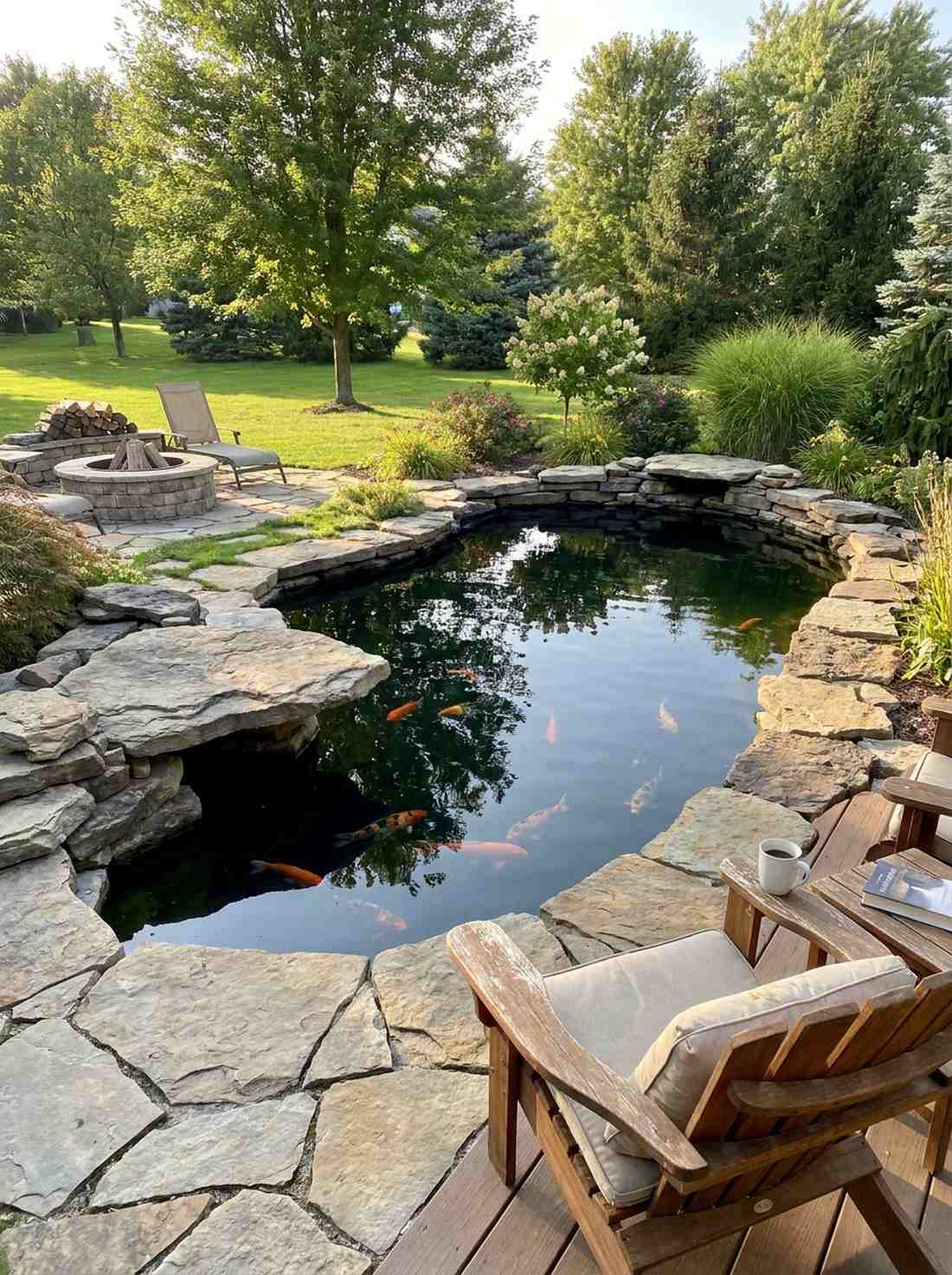
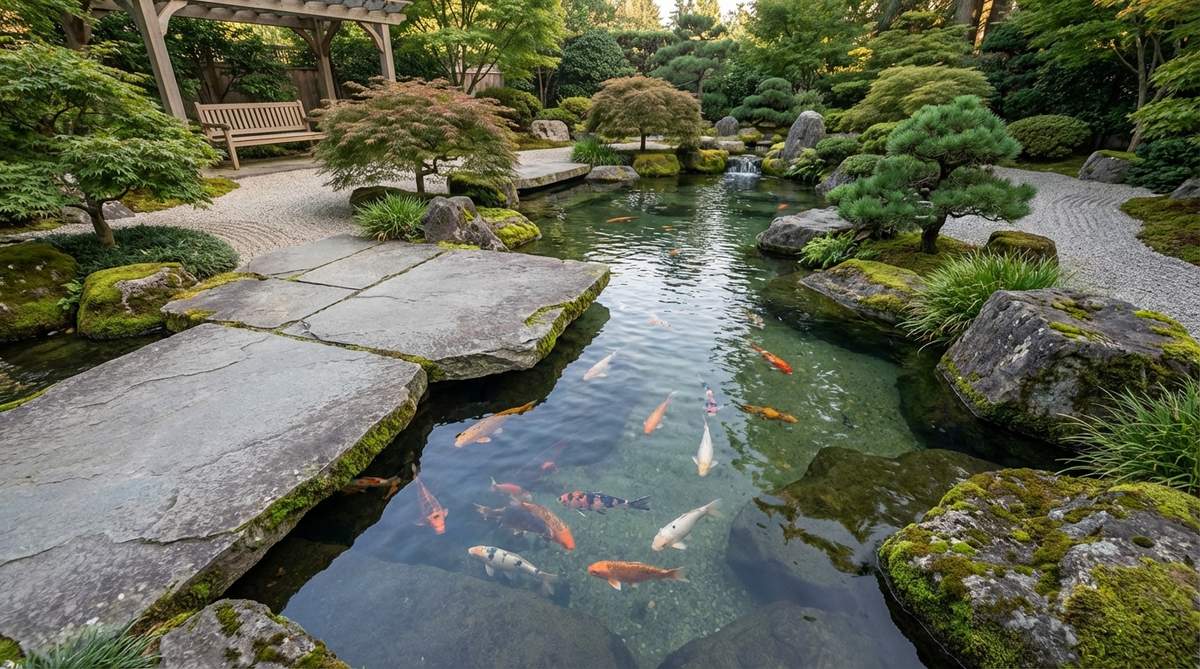
A shimmering, living canvas that feels like watching bright orange brushstrokes glide through black ink. Designing an irregular meditation fish pond brings mesmerizing, slow-moving life to a static backyard.
Using commercial grade pond liner to create deep, dark underwater caves fools the eye into seeing an endless abyss. Overhanging massive flat rocks hides the ugly rubber edges, looking far more expensive than it is.
A proper DIY pond installation starts around $400+. Highly recommended if you want a living centerpiece.
- Key Materials: Heavy EPDM liner, filtration system, flat rocks
- Vibe / Style: Vibrant and hypnotic
- Difficulty: Major excavation and plumbing
- Budget Breakdown: Liner & Pump: $250 | Rocks & Fish: $200
- Creator’s Tip: Dig the pond at least 3 feet deep in the center to protect the koi from freezing winters and hungry raccoons.
- Smart Sourcing: 45-mil EPDM pond liners (bulk cut) and heavy-duty biological pond filters.
38. Recirculating Stone Waterfall
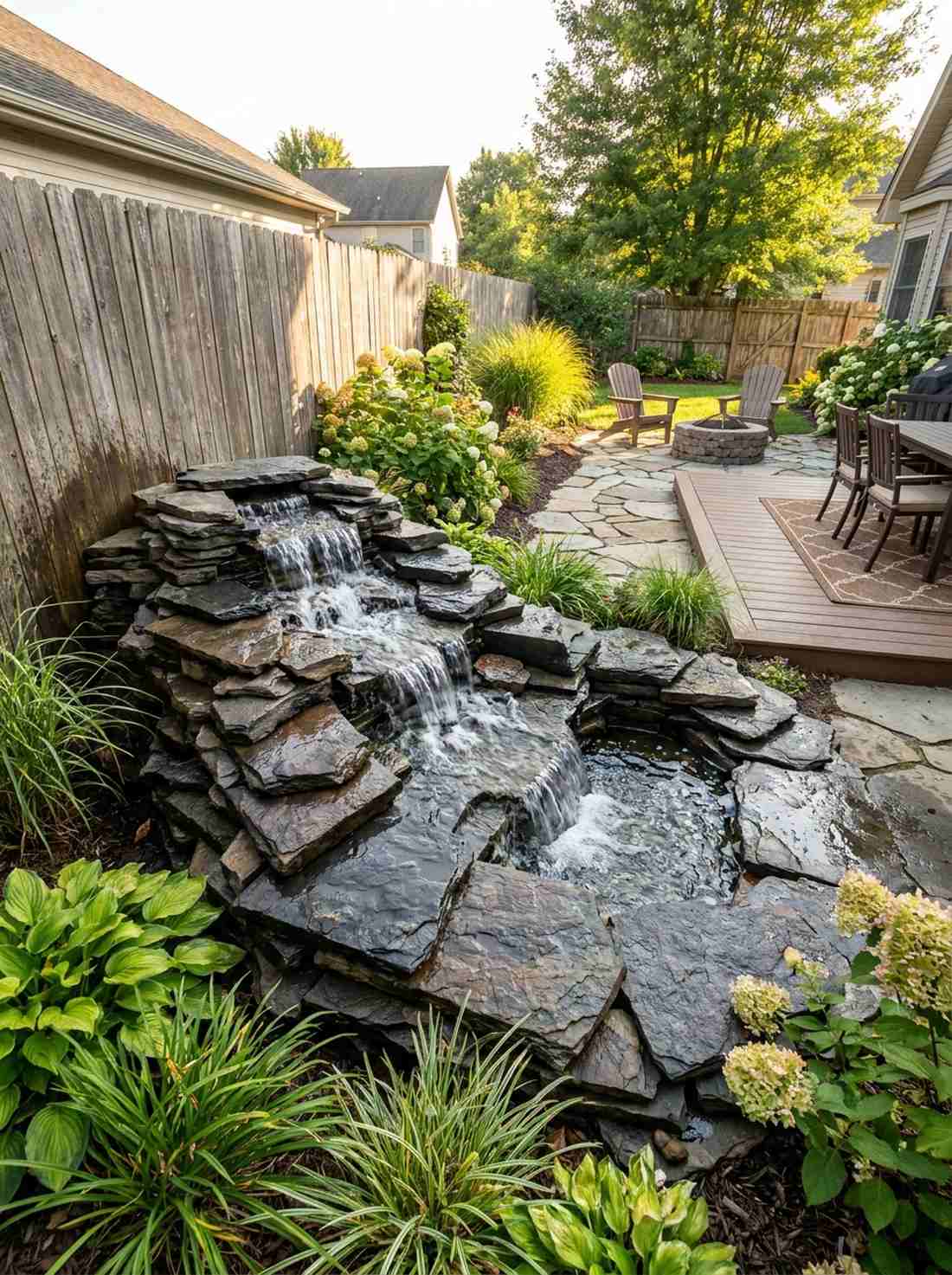
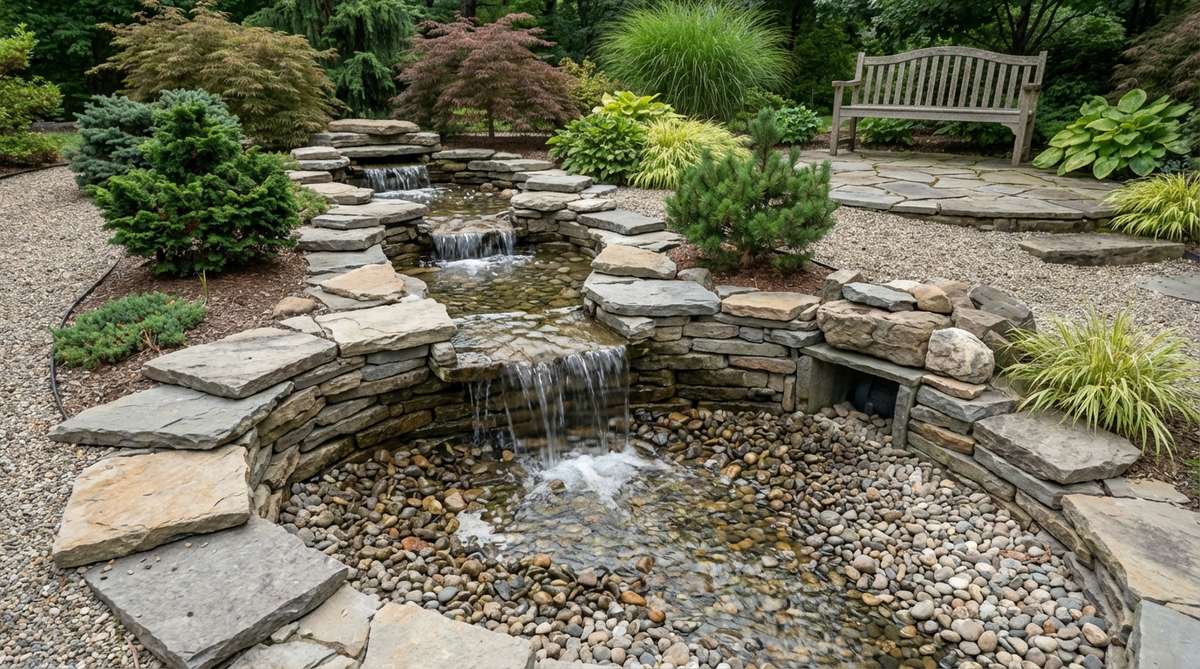
A tiered, cascading flow that feels like a piece of the mountains was magically transplanted against your fence. A stacked slate water feature provides incredible white noise to drown out loud traffic.
Hiding the hoses completely behind the rock work delivers a surprisingly premium look that mimics natural springs. You can tweak the audio volume just by moving a few small stones in the water’s path.
A DIY stacked stone fall costs roughly $150–$250. Pin this to your backyard oasis board!
- Key Materials: Flat slate pieces, heavy pump, catch basin
- Vibe / Style: Energetic and masking
- Difficulty: Heavy lifting and tweaking
- Budget Breakdown: Slate: $120 | Basin/Pump: $80
- Creator’s Tip: Use black waterfall foam sealant between the hidden back layers to force water over the front instead of losing it down the cracks.
- Smart Sourcing: waterfall expanding foam sealants and variable-flow submersible pumps.
39. Bubbling Rock Fountain
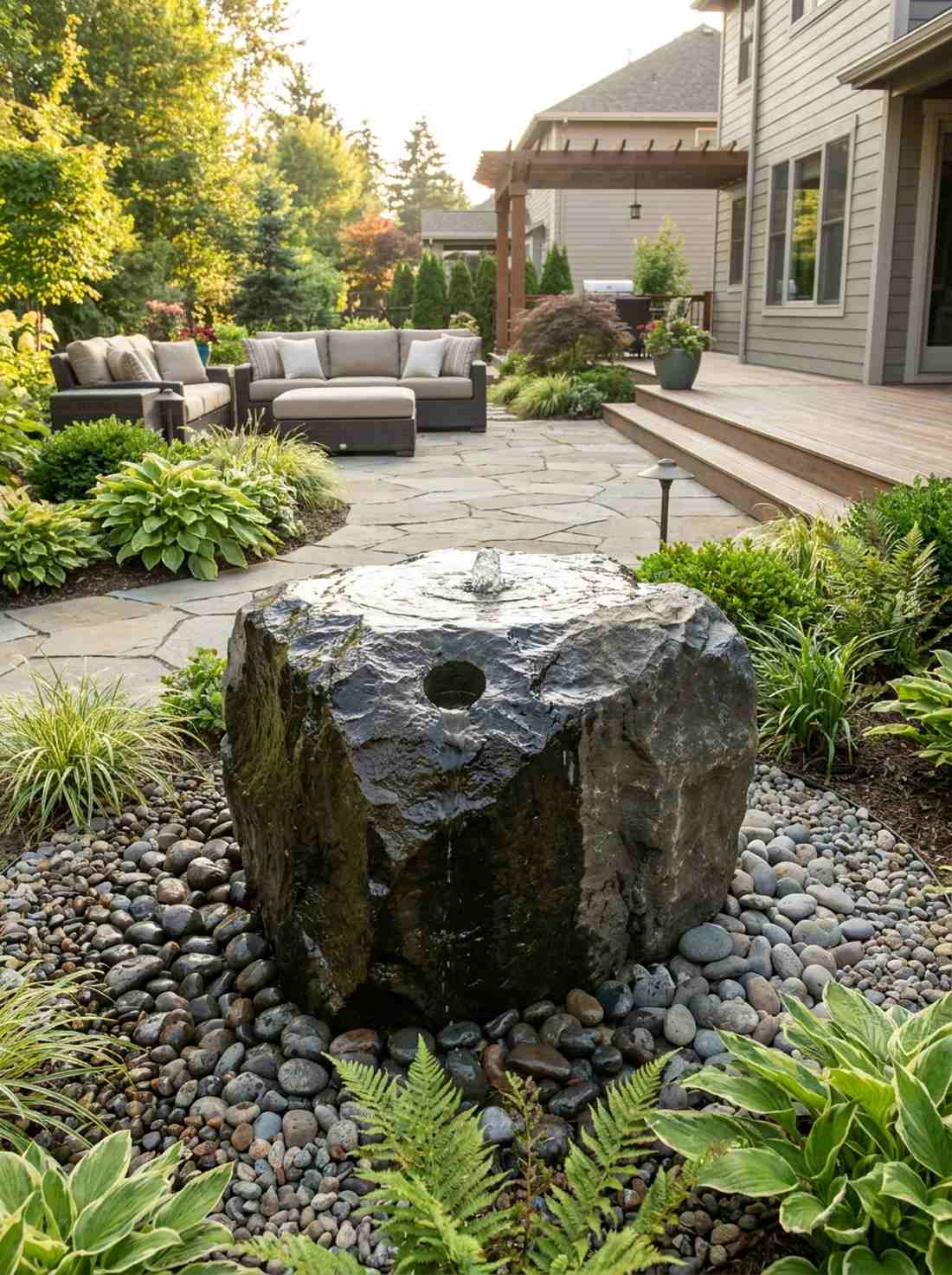
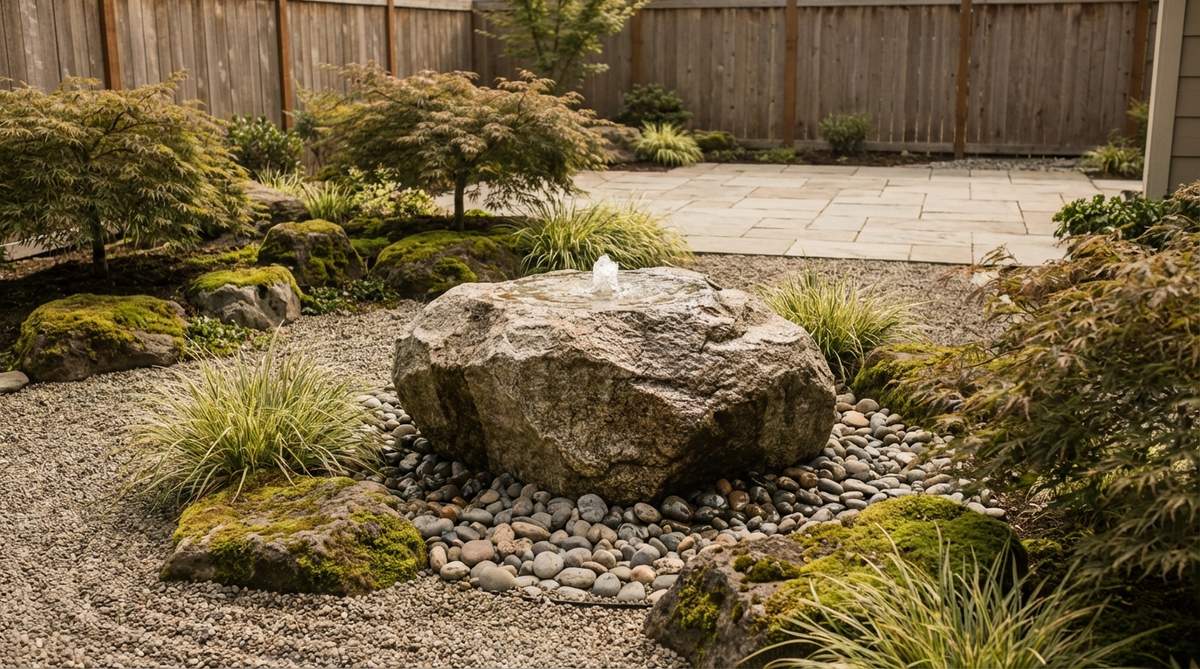
A mysterious, wet boulder that feels like a natural geyser softly weeping into the earth. The drilled core bubbling stone is the ultimate minimalist approach for tight spaces lacking vertical height.
Burying the entire water reservoir beneath the gravel completely alters the structural perception, making it look incredibly magical. This hidden-mechanic setup is a staple of high-end, luxury hotel courtyards.
A pre-drilled rock kit costs about $200. It’s a fast, modern upgrade that completely changes the vibe.
- Key Materials: Core-drilled boulder and subterranean basin
- Vibe / Style: Subtle and earthy
- Difficulty: Easy kit assembly
- Budget Breakdown: Drilled stone kit: $180 | Extra gravel: $20
- Creator’s Tip: Top off the hidden basin with fresh water weekly during summer, as the splashing on the hot rock accelerates evaporation.
- Smart Sourcing: pre-drilled bubbling basalt kits and heavy-duty underground fountain basins.
Most backyard pools look like cheap plastic tubs. This next dark-water illusion makes a shallow puddle look 100 feet deep…
40. Still Reflection Pool
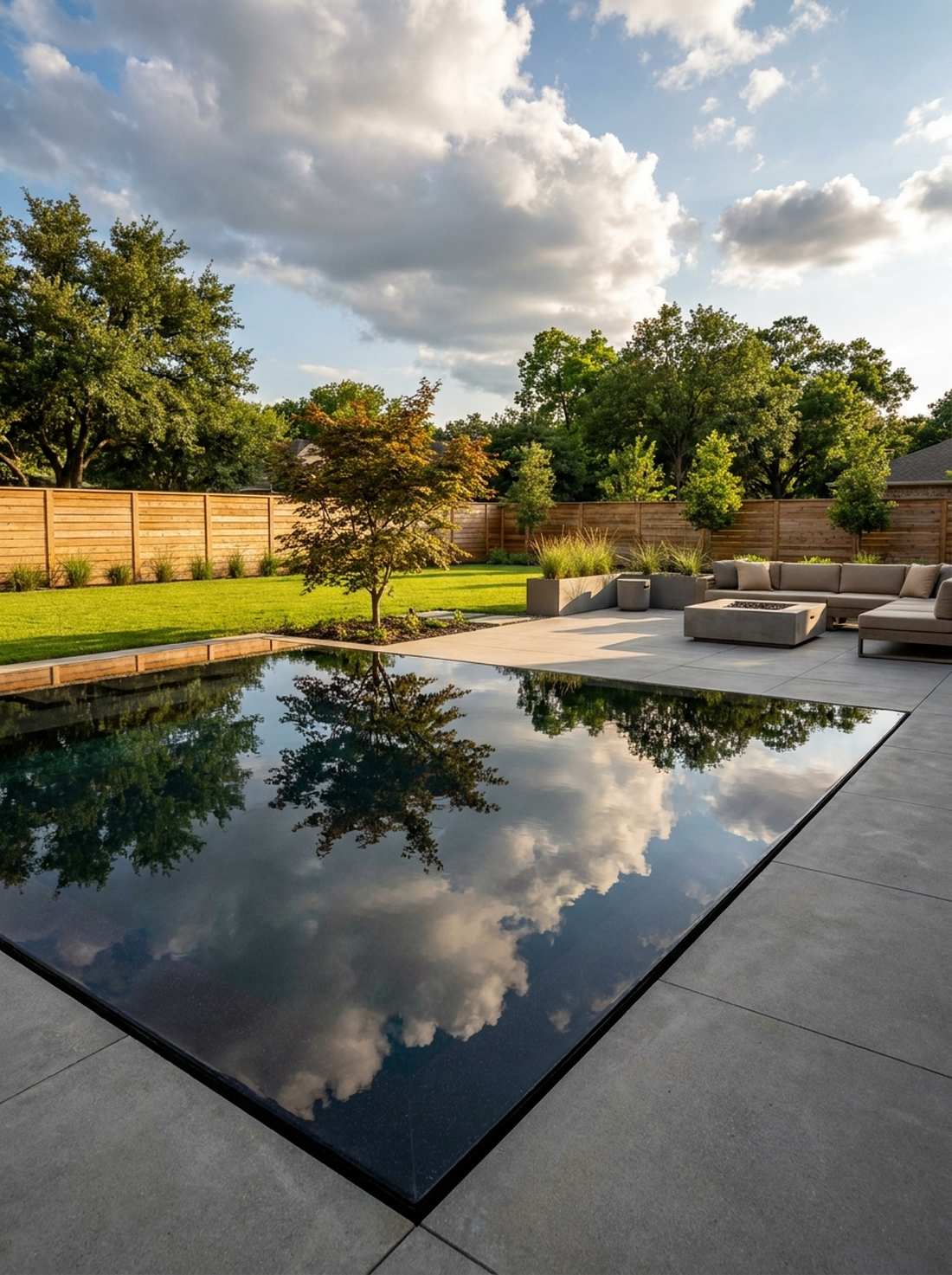
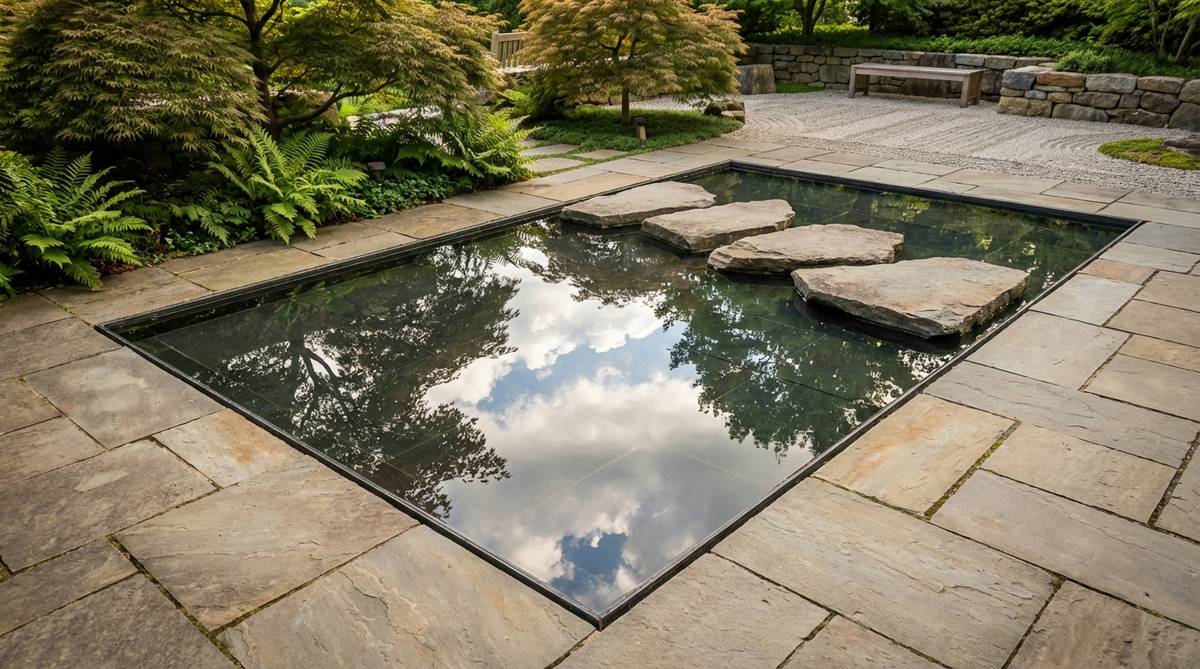
A glassy, pitch-black surface that feels like an infinite mirror reflecting the clouds directly at your feet. A shallow dark-bottom reflection basin doubles the visual impact of any specimen tree planted near it.
Maintaining the water line exactly flush with the surrounding patio completely bypasses the usual amateur mistakes of bulky pool edges. This crisp, rimless look is a hallmark of elite contemporary architecture.
You can build this sleek optical illusion for under $100 using a dark liner. Save this for a hyper-modern aesthetic!
- Key Materials: Black pond liner and leveling sand
- Vibe / Style: Sleek and infinite
- Difficulty: Precision leveling required
- Budget Breakdown: Black liner: $60 | Algaecide: $20
- Creator’s Tip: Dye the water with a non-toxic black pond tint to completely hide the bottom and maximize the mirror-like surface reflection.
- Smart Sourcing: non-toxic black pond dye (concentrate) and seamless black EPDM liners.
41. Dry Stream Bed Suggestion
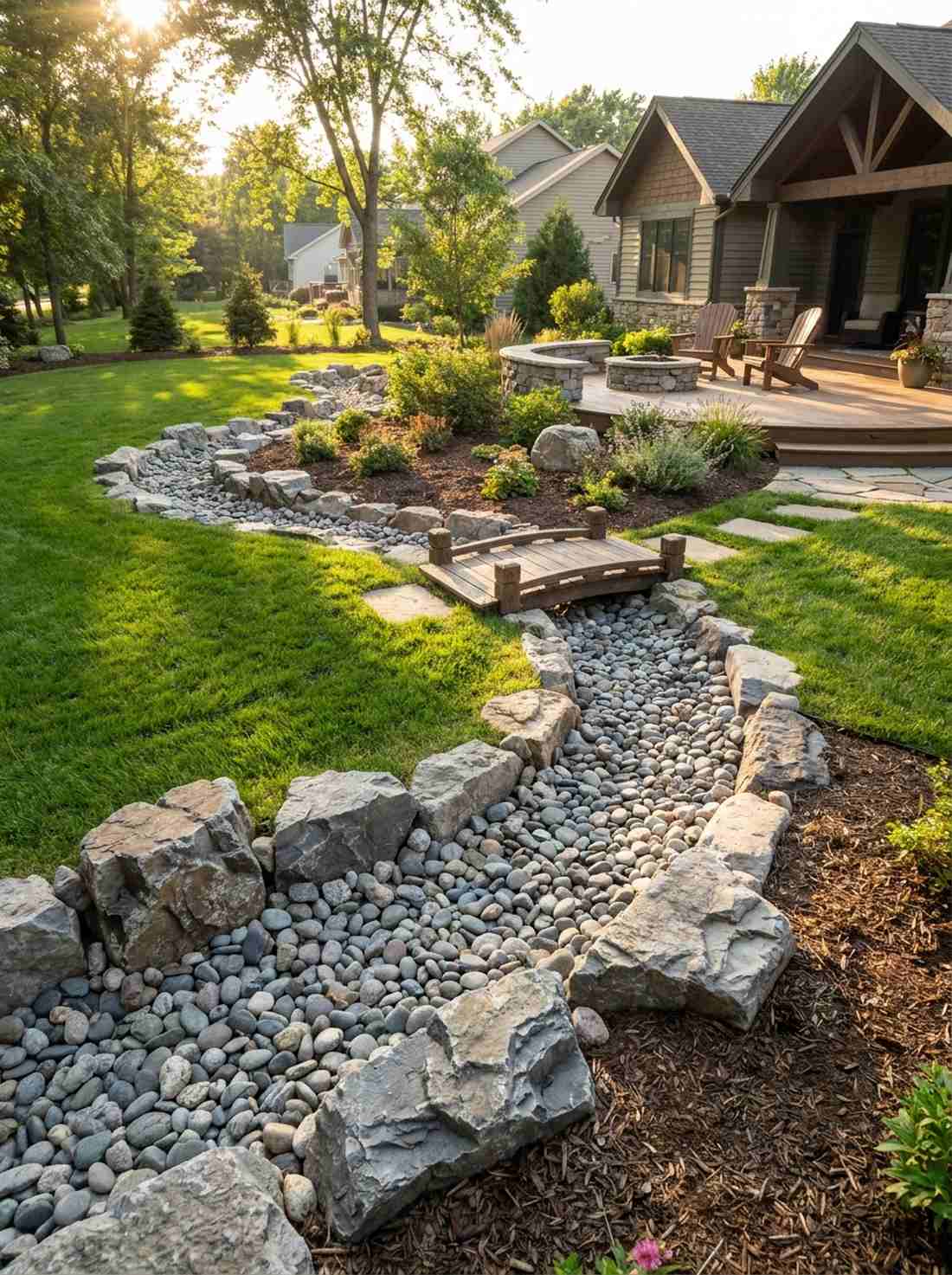
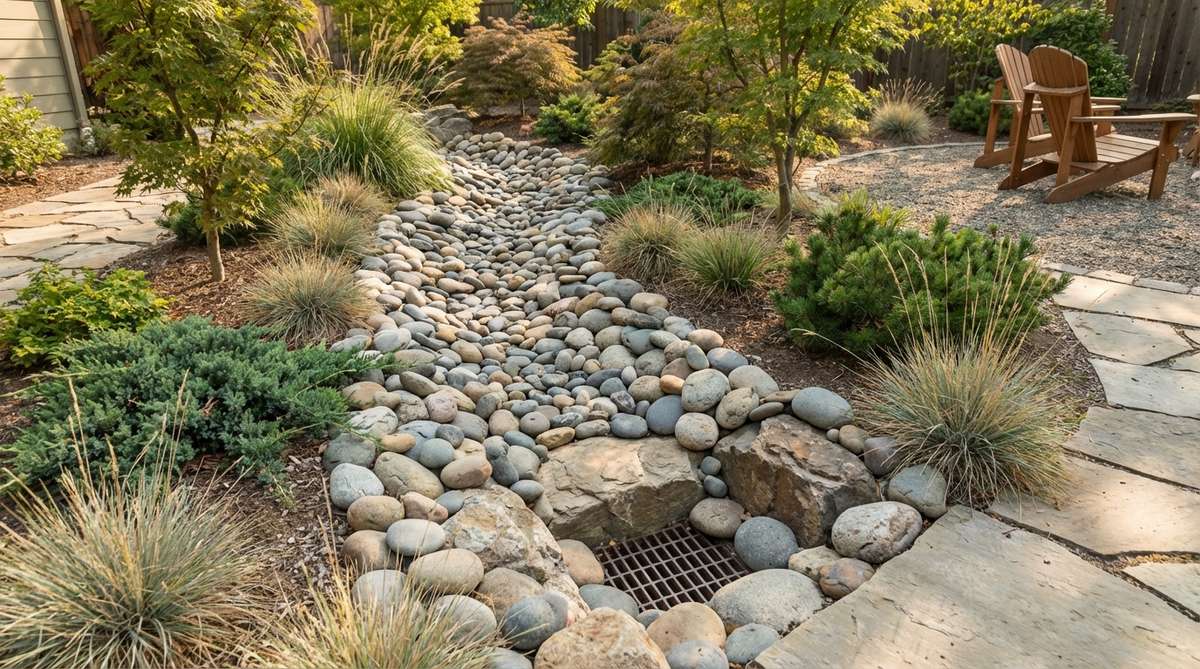
A winding channel of grey stones that feels like a river waiting patiently for the spring rains to return. Designing a meandering dry stone waterway solves severe drainage issues while looking like deliberate art.
Trenching the path and lining it with fabric delivers a surprisingly premium look that stops weeds dead in their tracks. Adding weatherproof resin decor like miniature bridges turns a utility trench into a stunning feature.
A functional, beautiful dry creek costs around $80–$150 in bulk stone. Pin this if your yard floods during storms!
- Key Materials: Varied river rock and landscape fabric
- Vibe / Style: Functional and suggestive
- Difficulty: Moderate trenching
- Budget Breakdown: Rock delivery: $100 | Fabric: $30
- Creator’s Tip: Place large, jagged boulders specifically on the outside edges of the curves, right where real water would crash and erode the banks.
- Smart Sourcing: commercial-grade weed blocking fabric and mixed-size river rock bundles.
42. Bamboo Water Spout
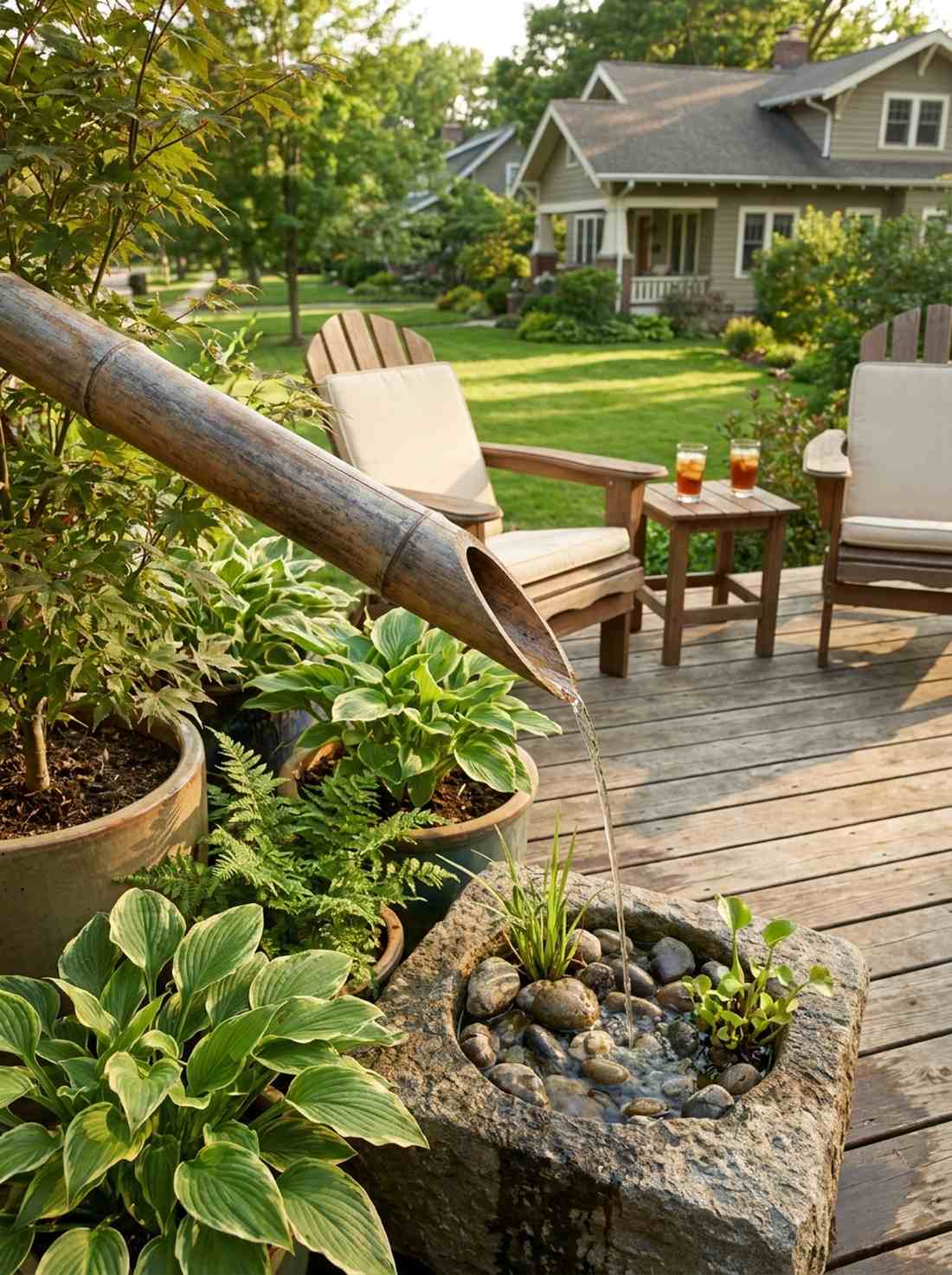
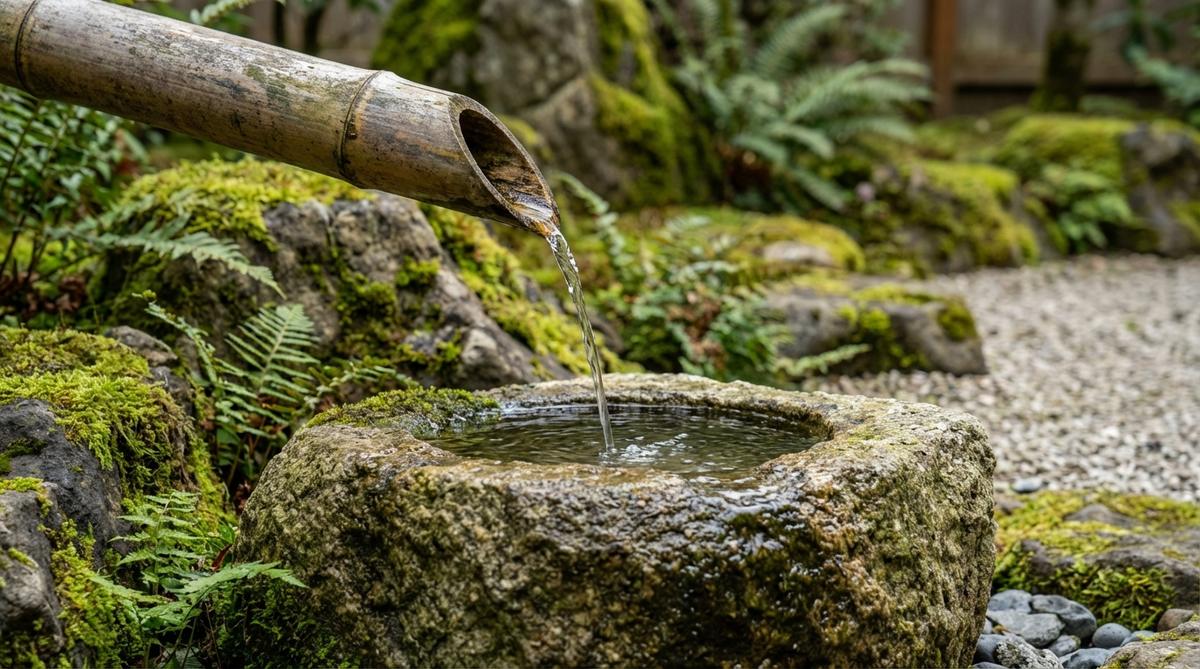
A thin, elegant trickle that feels like a silver thread pulled straight from the bamboo’s core. Installing a simple kakei water delivery pipe adds constant, delicate white noise without splashing your patio.
Using real, hollowed-out bamboo instead of PVC looks far more expensive than it is and blends seamlessly into a living garden. The natural weathering process adds incredible wabi-sabi charm over the years.
Sourcing and plumbing a bamboo spout runs around $30–$50. Highly recommended for small balcony setups.
- Key Materials: Hollow bamboo stalk and clear vinyl tubing
- Vibe / Style: Delicate and traditional
- Difficulty: Simple DIY
- Budget Breakdown: Bamboo pipe: $20 | Tubing & Pump: $25
- Creator’s Tip: Cut the bamboo at a sharp 45-degree angle right past a natural node to create a clean, elegant drip point.
- Smart Sourcing: pre-hollowed bamboo fountain spouts and clear silicone fountain tubing.
43. Floating Stone Illusion
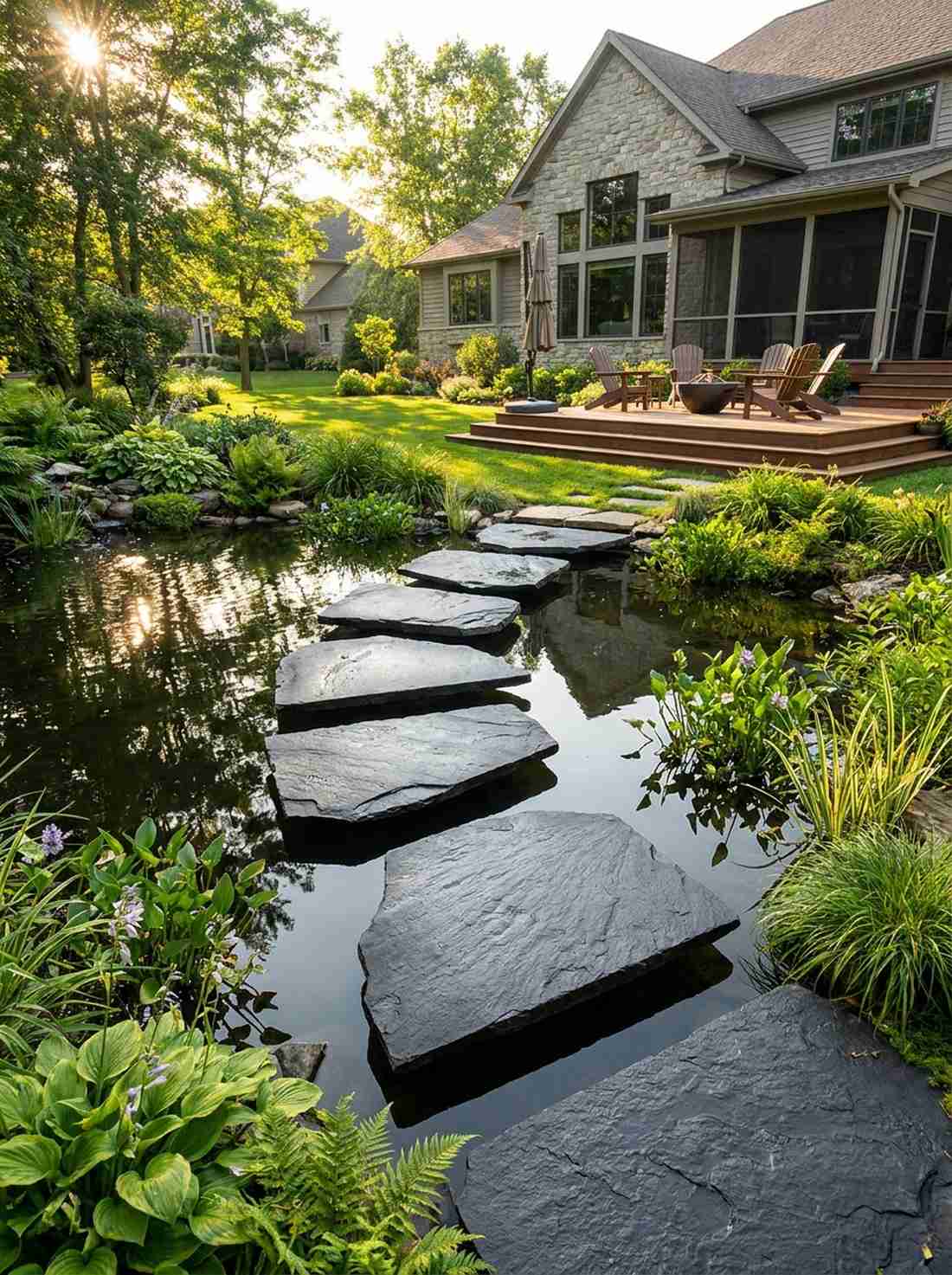
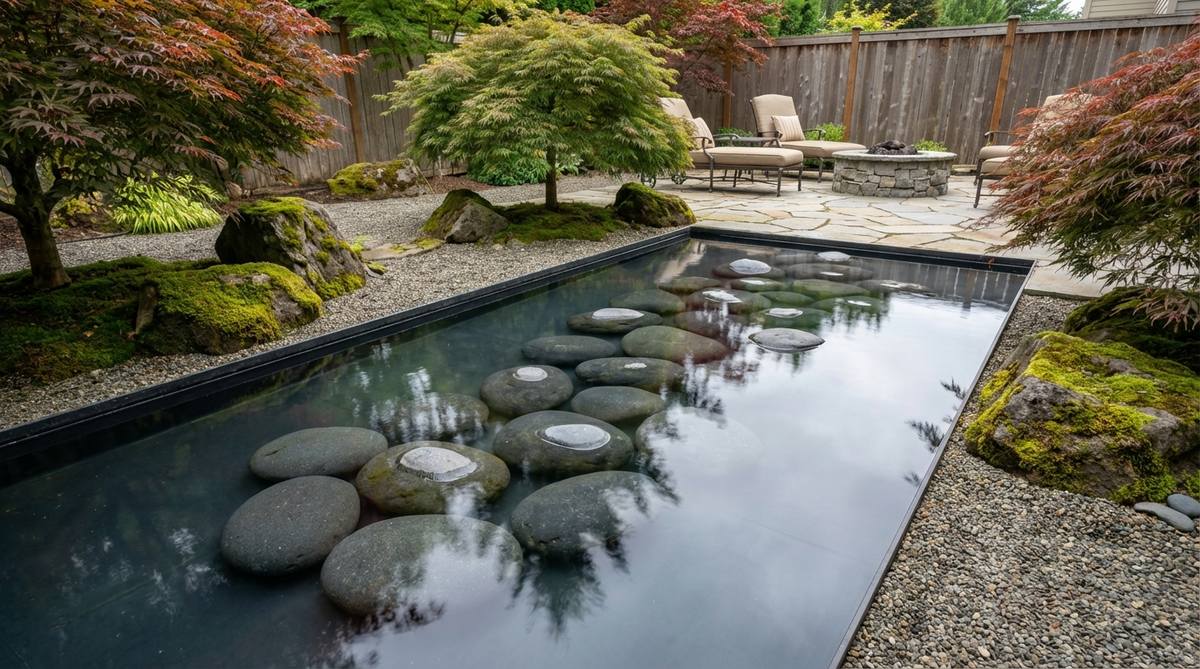
A series of massive, levitating rocks that feels like a magic trick breaking the laws of physics right in your pond. Using the submerged pedestal stepping stone trick challenges visual perception brilliantly.
By hiding cinderblock supports just a half-inch beneath dark water, it completely alters the structural perception of heavy boulders. This technique delivers a high-end designer finish that makes walking across water possible.
The cinderblocks and flat stones cost roughly $60. Save this illusion for your next water garden project!
- Key Materials: Flat dark stones and hidden cinderblocks
- Vibe / Style: Magical and gravity-defying
- Difficulty: Precise water-level measuring
- Budget Breakdown: Flat stones: $50 | Blocks: $10
- Creator’s Tip: Use extremely dark stones; light-colored rocks will reflect through the water and instantly reveal the hidden support columns below.
- Smart Sourcing: dark slate flagstone slabs and concrete cinder block bases.
Complete Zen Garden Backyard Layout Concepts
Full backyard transformations require consideration of existing conditions, circulation patterns, and how different zones connect. These comprehensive layouts demonstrate various approaches to creating cohesive zen garden experiences at residential scale.
Most corners end up as junk yards. The next blueprint turns a dead angle into the most expensive-looking spot on the property…
44. Corner Sanctuary Layout
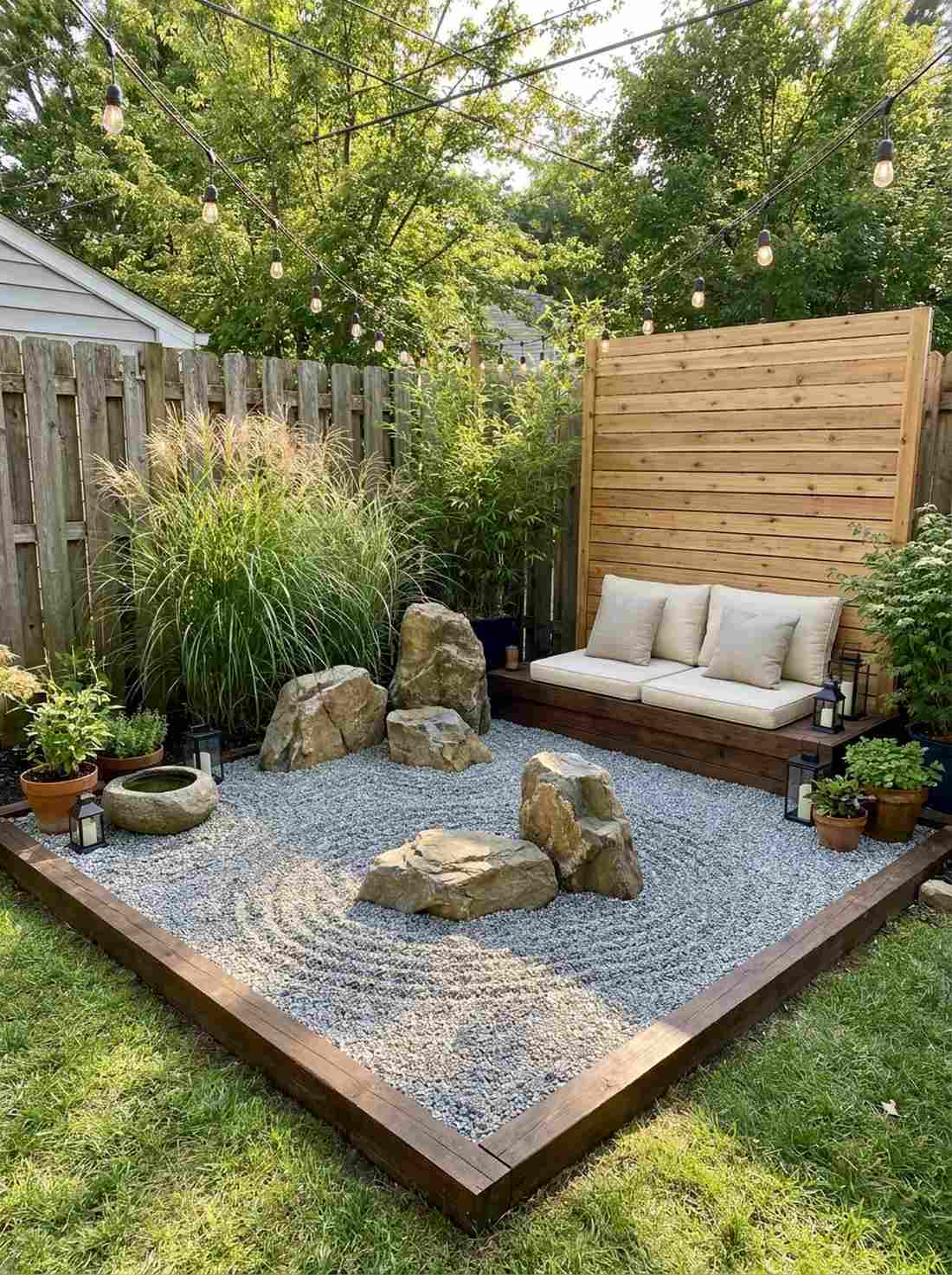
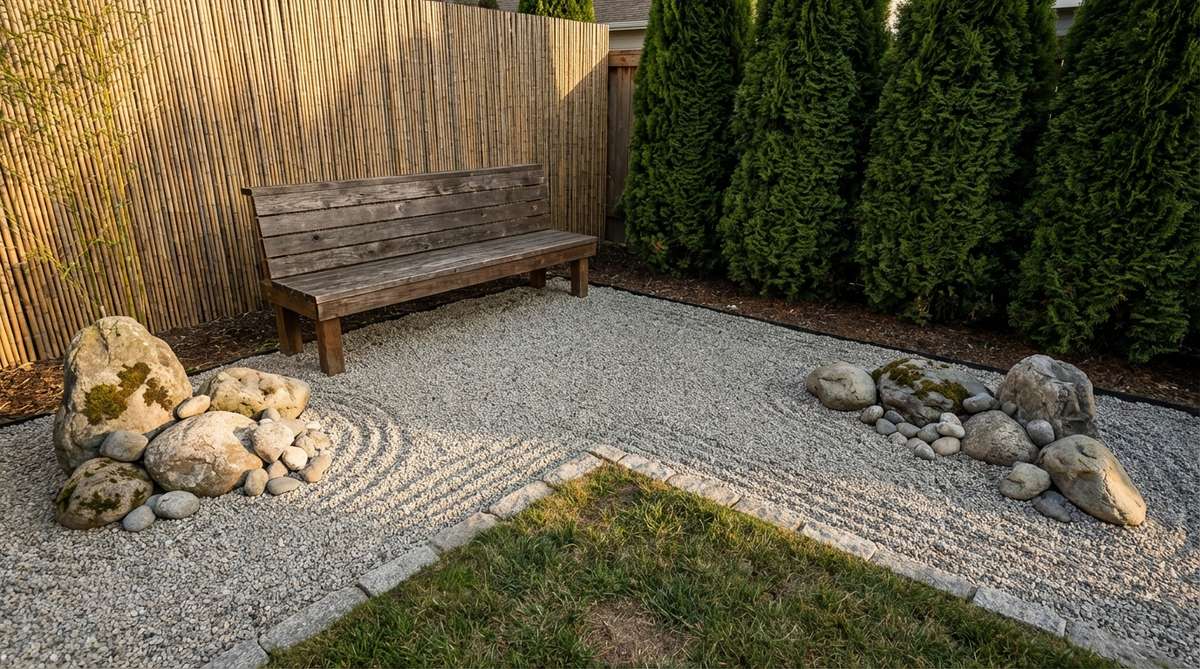
A sharp, L-shaped gravel retreat that feels like a secret fortress hidden right in plain sight. Converting an ugly fence line into a framed corner meditation hub maximizes impact in severely constrained footprints.
Forcing the seating to face inward toward the rock arrangement completely bypasses the usual amateur mistakes of staring at the neighbor’s siding. Securing premium karesansui kits for the central focus anchors the whole space instantly.
You can transform a dead corner for roughly $150–$250. Pin this to rescue your worst backyard corner!
- Key Materials: Gravel bed, corner boulders, seating cushion
- Vibe / Style: Enclosed and focused
- Difficulty: Easy weekend project
- Budget Breakdown: Gravel & Rocks: $150 | Edging: $50
- Creator’s Tip: Plant tall ornamental grasses directly behind the corner boulders to soften the harsh 90-degree angle of the wooden fence.
- Smart Sourcing: heavy-duty landscape borders and tall ornamental grass starter plugs.
45. Central Courtyard Viewing Garden
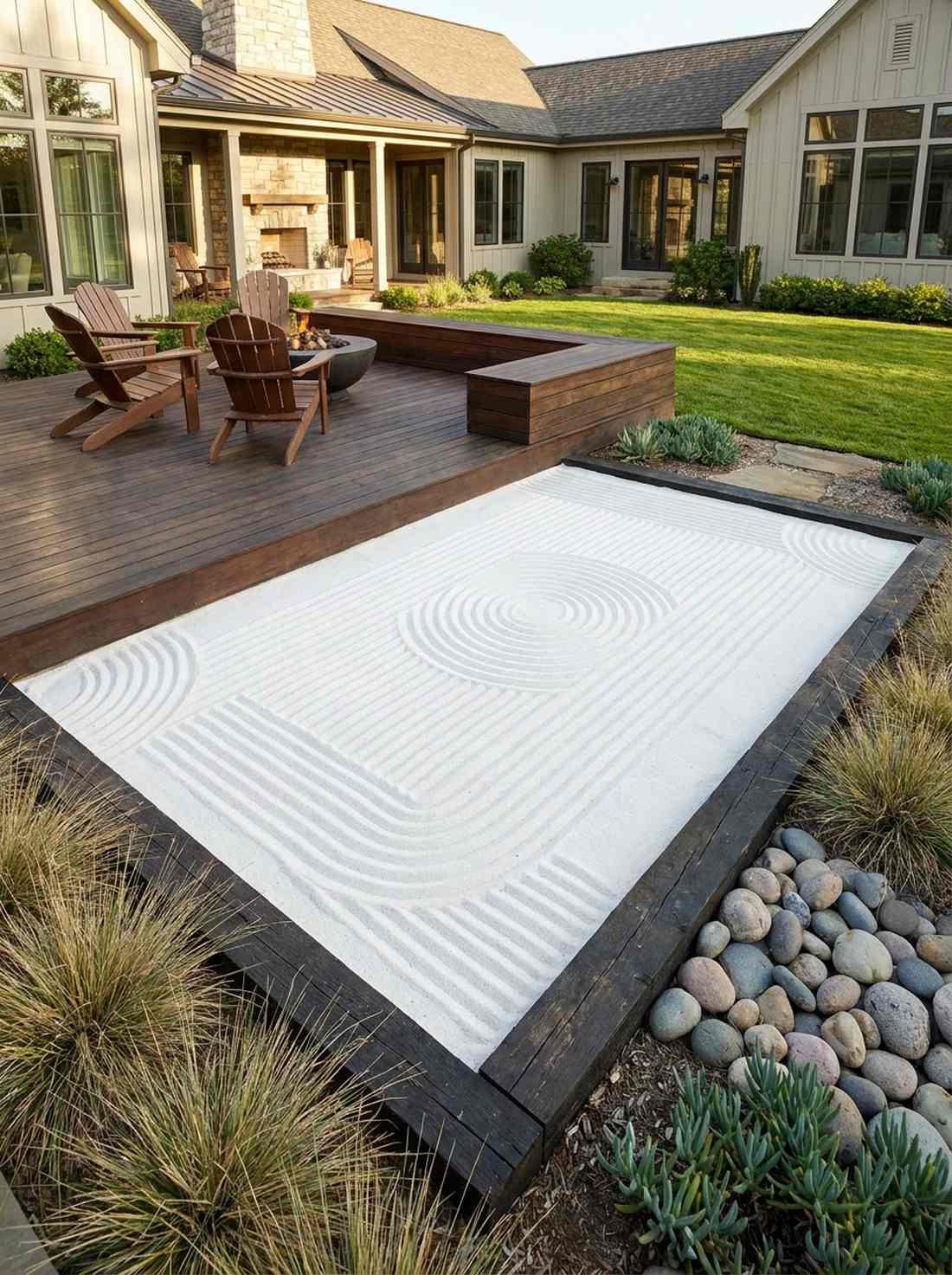
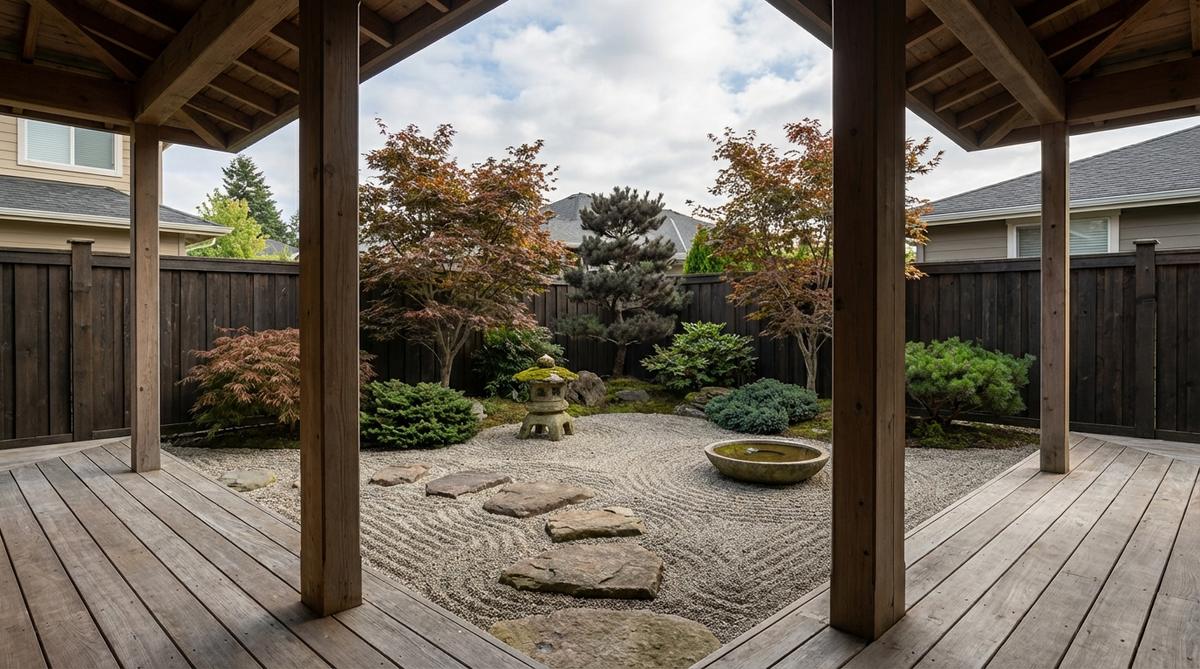
A pristine, untouched sandbox that feels like a priceless painting laid flat on the ground. Designing an untouchable central display courtyard treats the landscape strictly as visual art from the porch.
Keeping foot traffic completely out of the space delivers a surprisingly premium look that remains flawless for months. Framing it with dark wood borders makes the bright white gravel pop like a museum exhibit.
A dedicated viewing square costs around $200 to establish. Save this if you prefer looking at gardens over working in them.
- Key Materials: Bright viewing gravel and architectural borders
- Vibe / Style: Gallery-level pristine
- Difficulty: Minimal effort
- Budget Breakdown: Premium sand: $140 | Timber borders: $60
- Creator’s Tip: Elevate the surrounding viewing deck slightly so you can look *down* onto the patterns, revealing their geometric perfection.
- Smart Sourcing: premium white quartz sand (bulk pack) and weather-treated landscape timbers.
46. Perimeter Walking Meditation Path
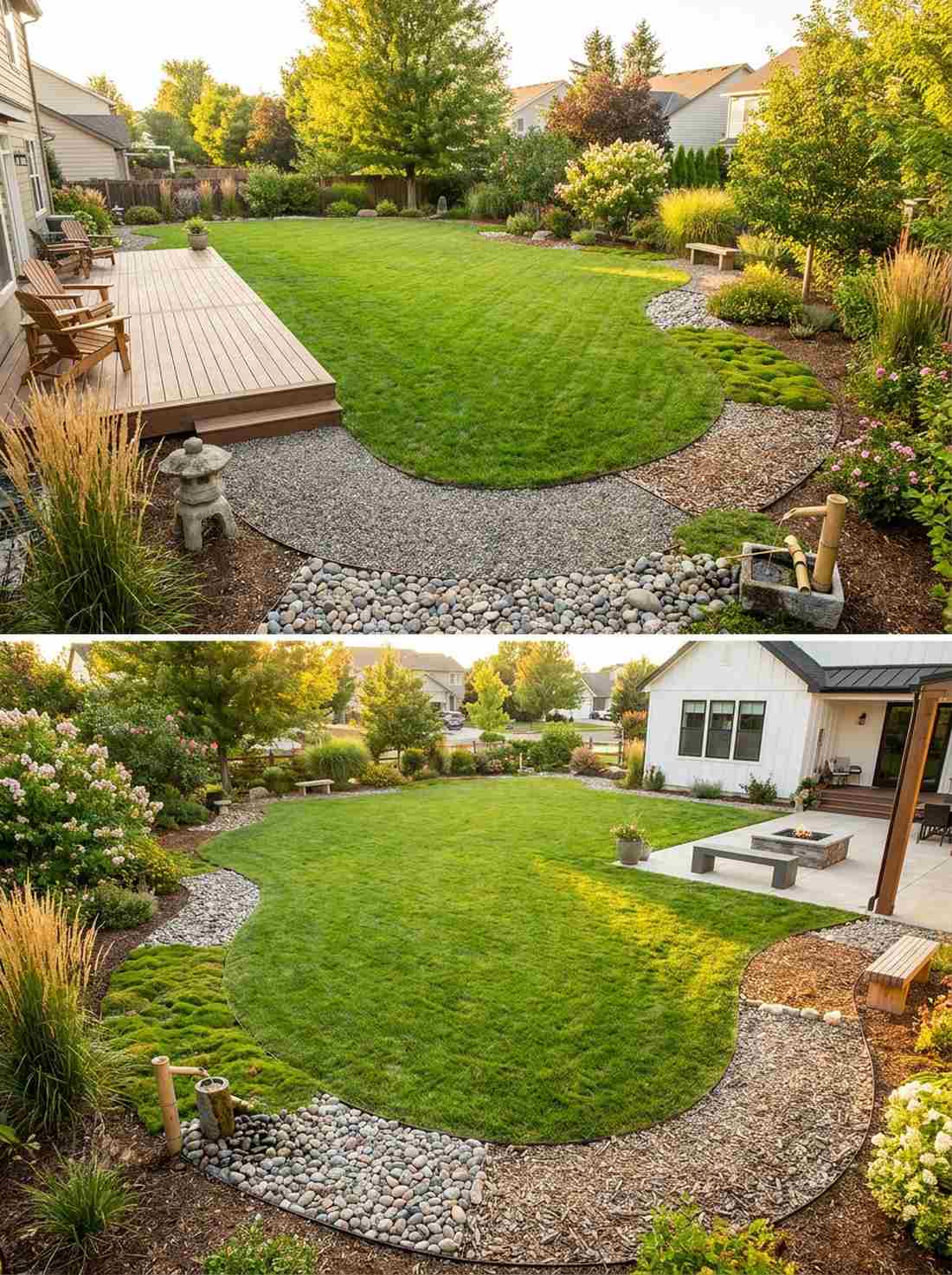
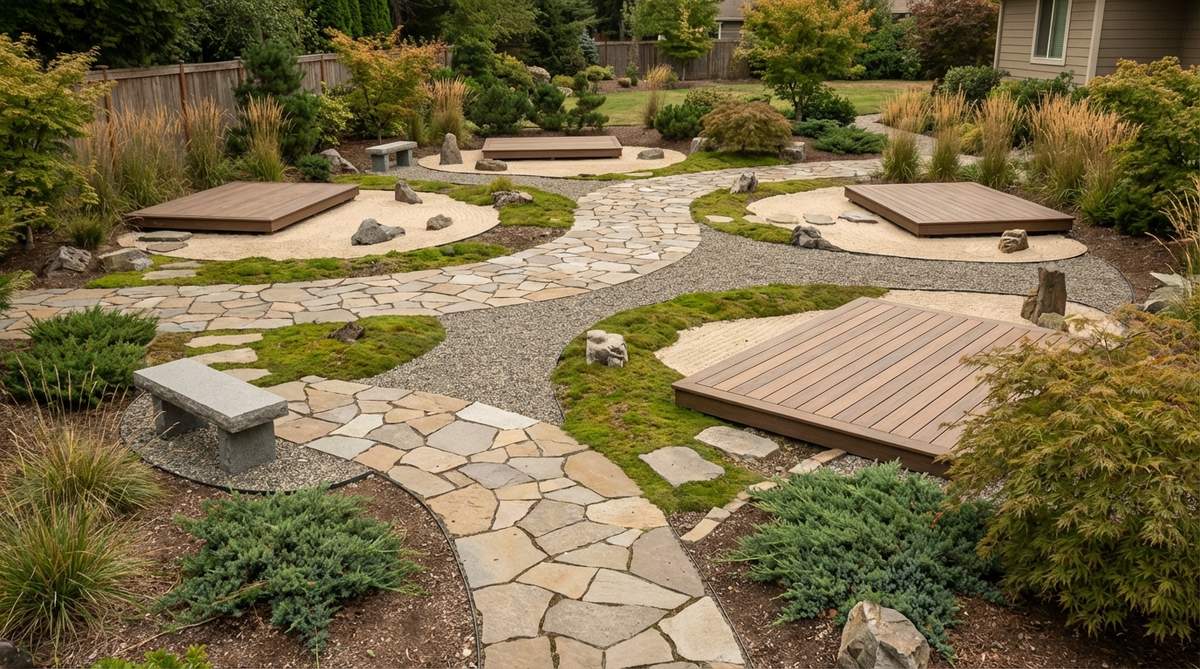
A continuous, shifting loop that feels like a long, cleansing journey without ever leaving your property. Building a border circuit path connects disjointed backyard zones into one cohesive, mindful experience.
Varying the textures from crunchy gravel to soft moss completely alters the structural perception of the walk, keeping the brain engaged. Integrating zen garden meditation accessories at corner checkpoints creates brilliant mini-destinations.
Laying a 50-foot perimeter path runs about $200–$300. Highly recommended for restless thinkers who need to pace.
- Key Materials: Mixed path materials (gravel, stone, wood chips)
- Vibe / Style: Kinetic and changing
- Difficulty: Heavy hauling over distance
- Budget Breakdown: Mixed stones: $200 | Border edging: $80
- Creator’s Tip: Make the path intentionally narrow—no wider than two feet—to force single-file, deliberate footsteps.
- Smart Sourcing: mixed-texture pathway stone bundles and flexible coiled path edging.
47. Divided Room Garden
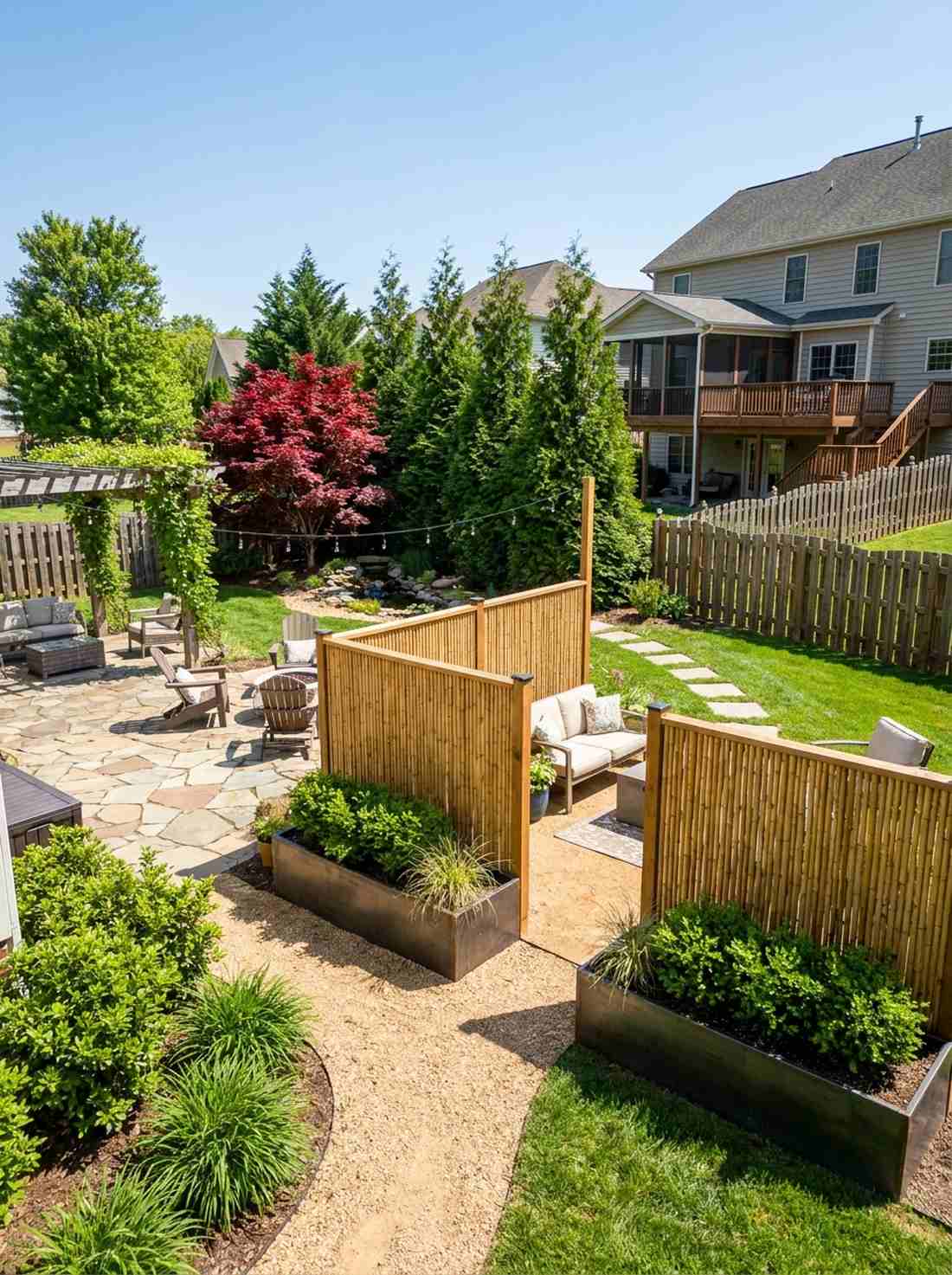
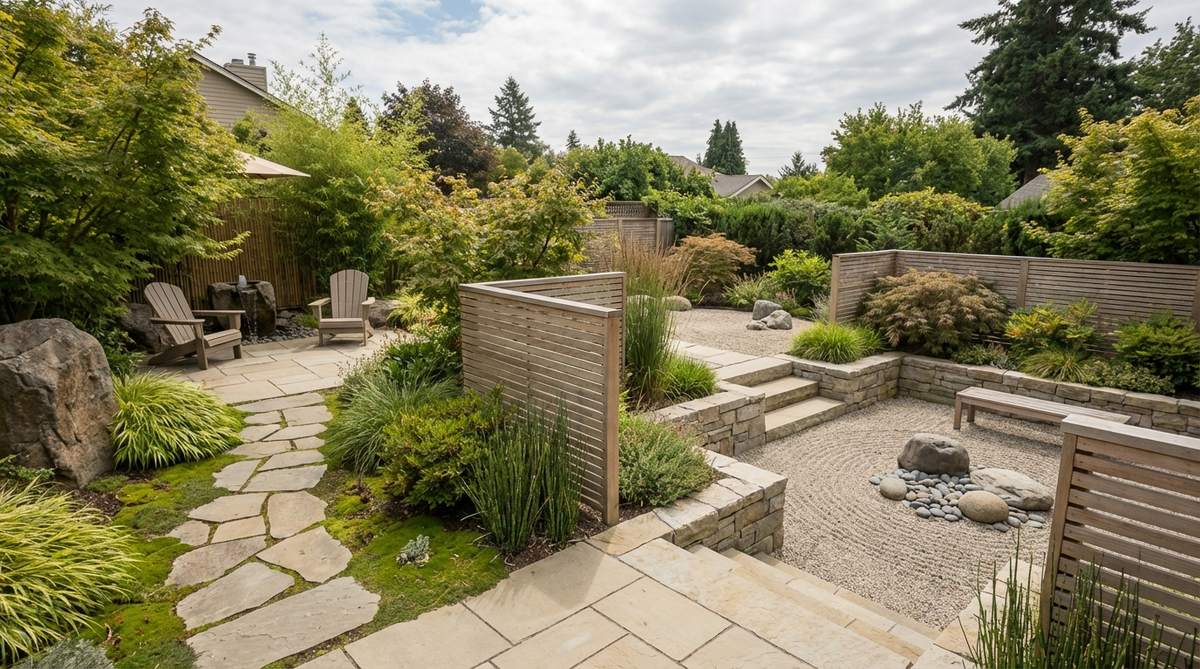
A series of hidden chambers that feels like exploring a sprawling, multi-tiered botanical estate. Creating distinct landscape rooms using partial bamboo screens solves the problem of an overwhelmingly large, flat lawn.
Blocking direct sightlines to the back fence fools the eye into seeing more space than actually exists. This compartmentalization looks far more expensive than it is and builds massive anticipation as you walk.
Dividing the yard with screens and tall plants costs around $300+. Pin this layout strategy for large, boring yards!
- Key Materials: Privacy screens, tall planters, varied flooring
- Vibe / Style: Exploratory and grand
- Difficulty: Advanced spatial planning
- Budget Breakdown: Screens: $150 | Planters/Shrubs: $150
- Creator’s Tip: Give each “room” a strictly different color palette—one all green, one focused on dark stone, one featuring a red maple.
- Smart Sourcing: freestanding bamboo privacy screens and extra-large rectangular planter boxes.
48. Sunken Conversation Pit
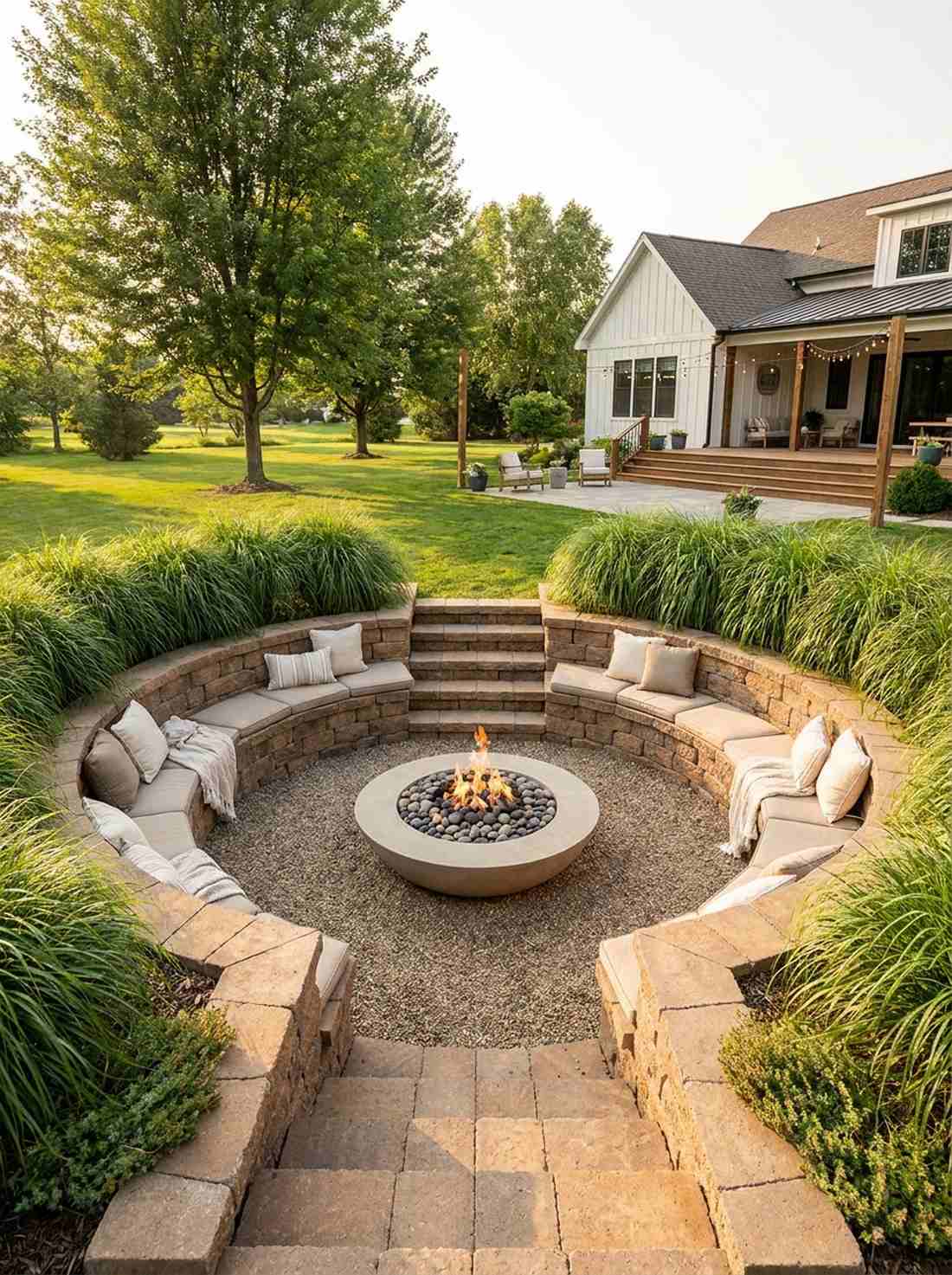
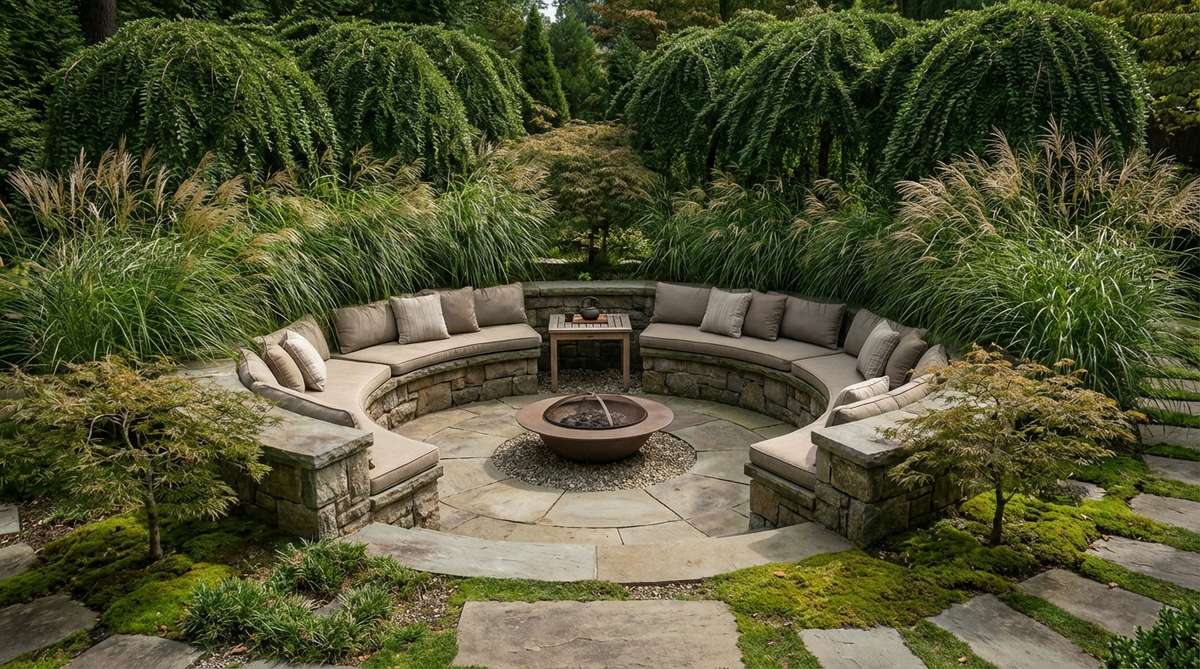
A lowered, stone-lined bowl that feels like a secret underground bunker made entirely of nature. Excavating a recessed group seating area removes your guests entirely from the neighbor’s line of sight.
Surrounding the upper lip with arching grasses gives a designer-level finish that swallows ambient noise brilliantly. Dropping in a hidden fire feature or water bowl makes it the ultimate nighttime destination.
This major earth-moving project will run $500+, but adds massive property value. Save this for a luxury backyard overhaul.
- Key Materials: Retaining wall blocks, shovels, crushed gravel floor
- Vibe / Style: Highly exclusive and cozy
- Difficulty: Major construction
- Budget Breakdown: Wall blocks: $350 | Floor gravel: $100
- Creator’s Tip: Build the stone benches directly into the retaining wall to save space and create a seamless, integrated architectural look.
- Smart Sourcing: locking retaining wall blocks (pallet) and waterproof outdoor bench cushions.
Side yards are usually dead zones for trash cans. The next layout transforms a 3-foot alley into a stunning visual corridor…
49. Linear Side Yard Garden
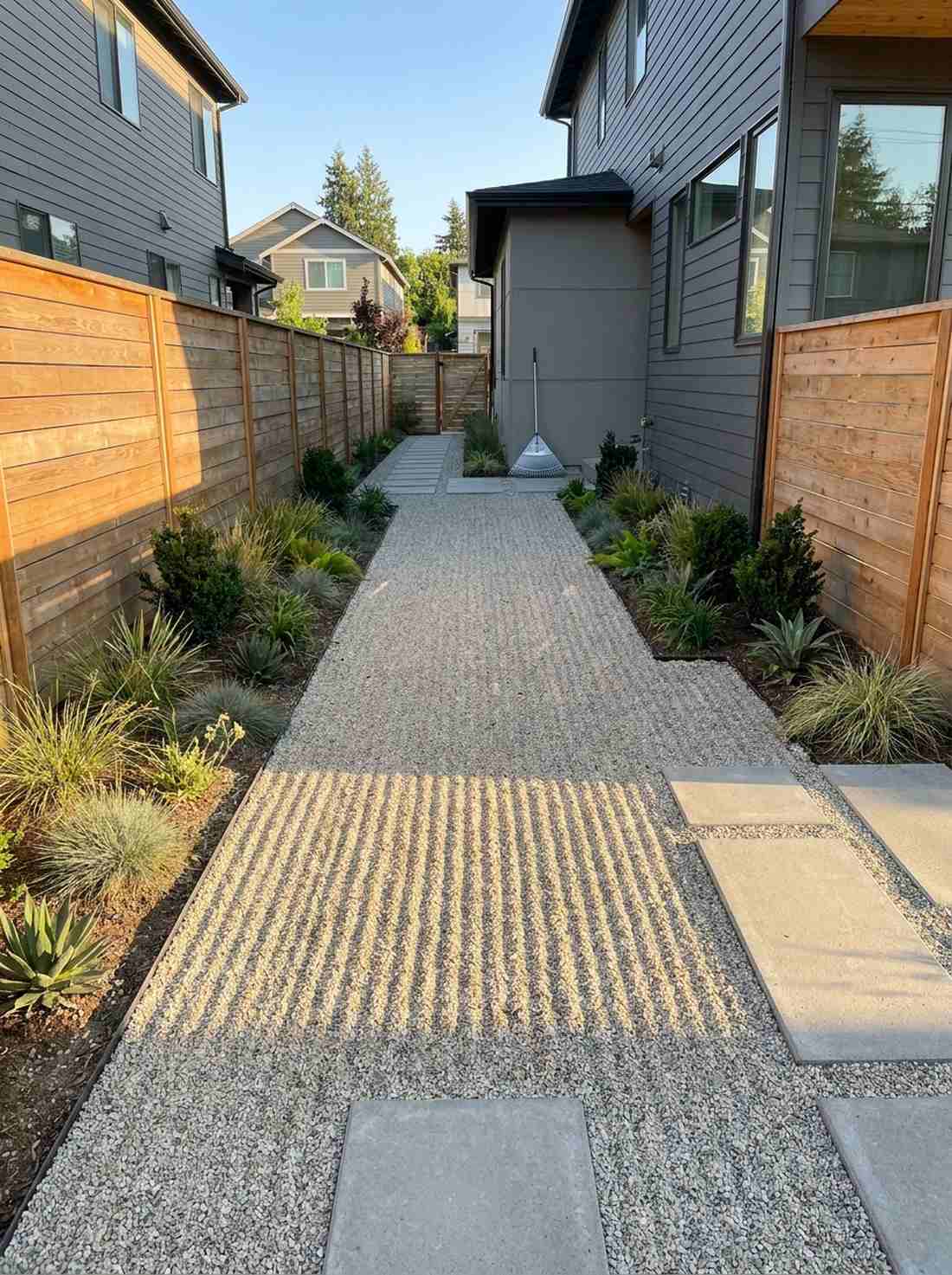
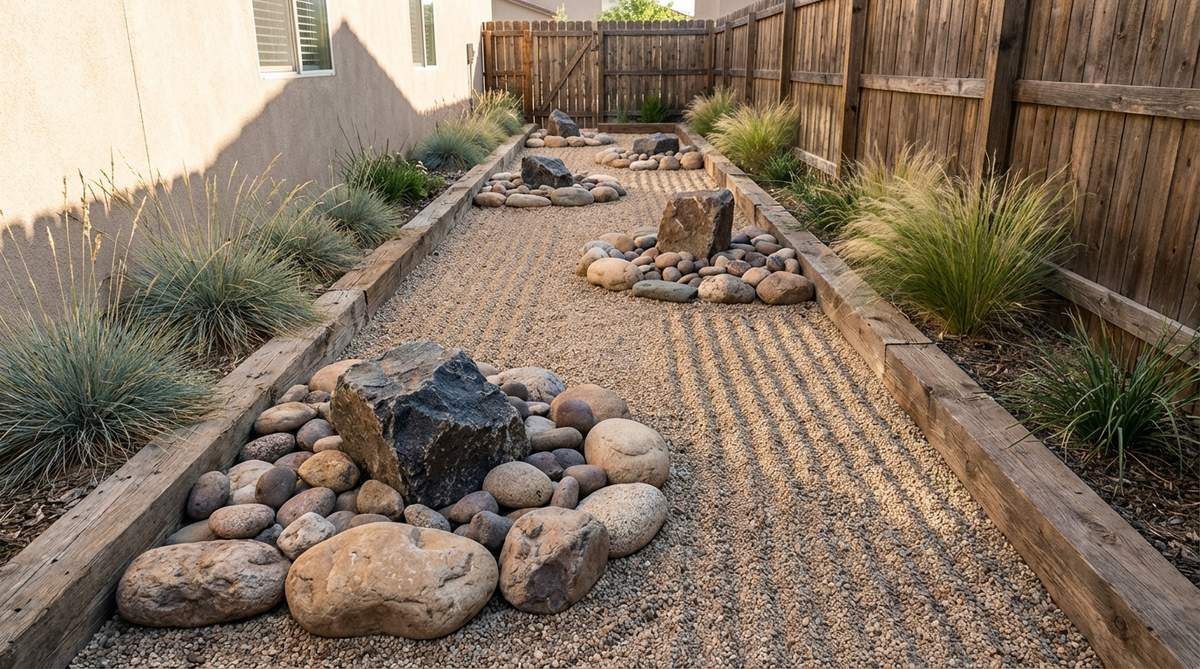
A sleek, elongated runway that feels like a minimalist art installation stretching between two houses. Transforming an alley into a raked linear passage turns the worst part of your property into a striking feature.
Using aggressively straight parallel raking patterns completely bypasses the usual amateur mistakes of cluttering narrow spaces. Sourcing commercial grade pond liner underneath stops the aggressive alley weeds permanently.
A side yard conversion costs about $100–$150. Pin this to fix that ugly, useless side path!
- Key Materials: Long straight rake, light gravel, weed barrier
- Vibe / Style: Stretched and modern
- Difficulty: Easy, fast installation
- Budget Breakdown: Light gravel: $90 | Barrier fabric: $30
- Creator’s Tip: Do not place any plants or stones in the middle of the path; keep all accents strictly pushed against the walls.
- Smart Sourcing: commercial-grade heavy weed barriers and extra-wide aluminum landscape rakes.
50. Hilltop Overlook Platform
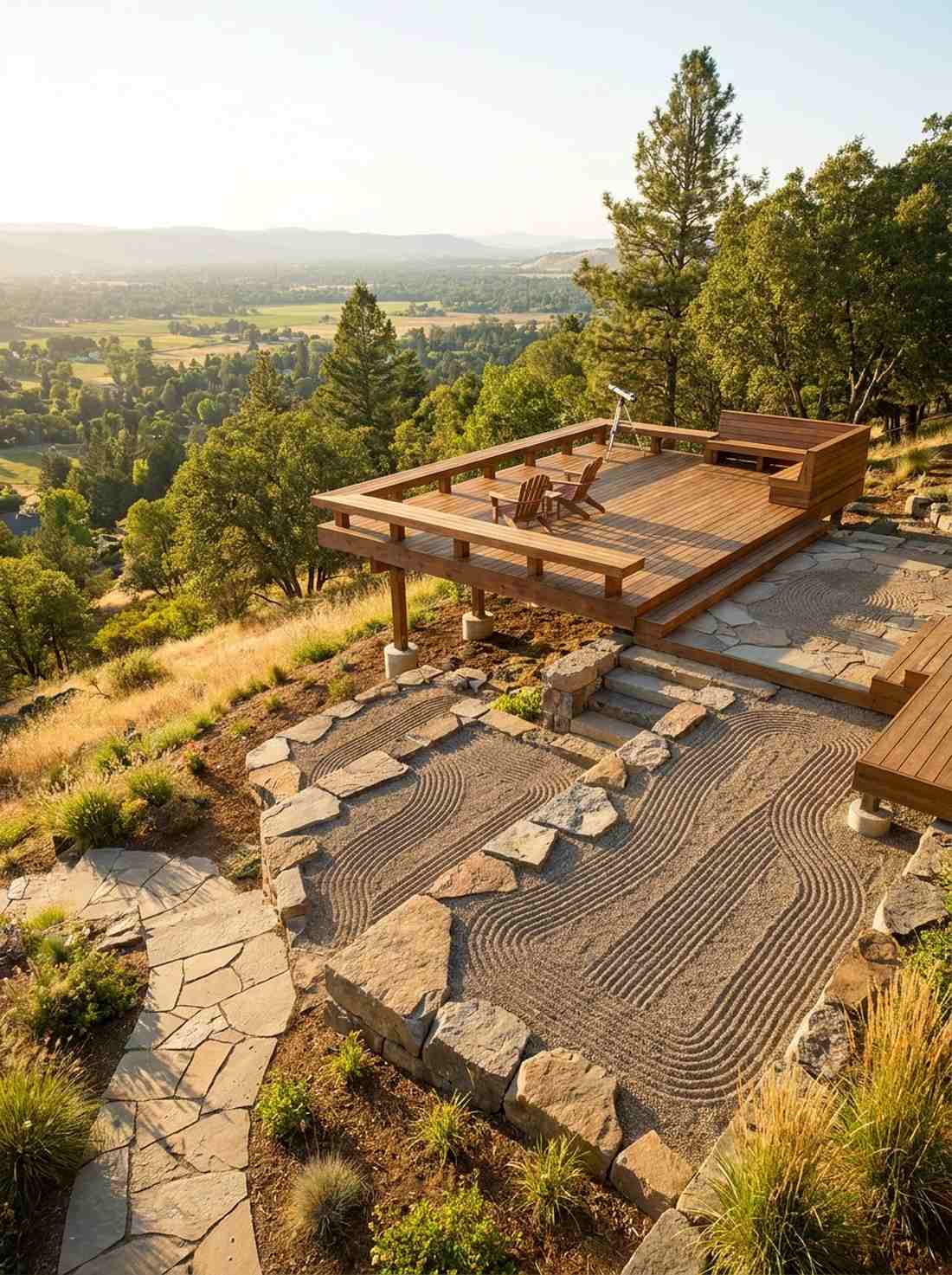
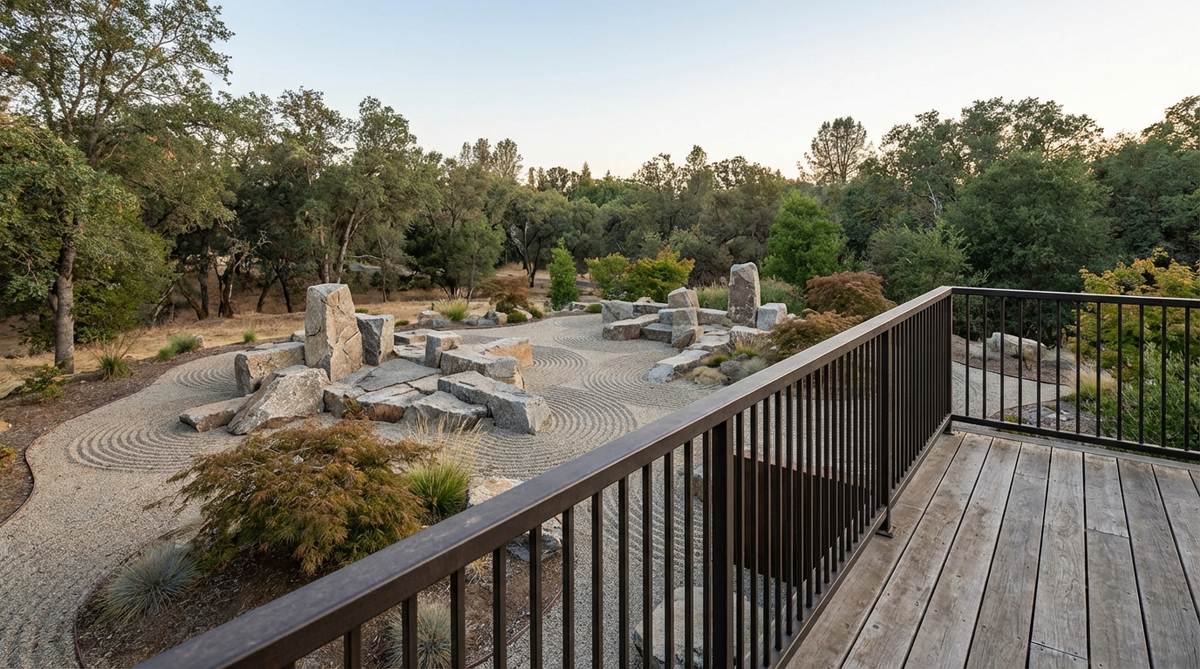
A towering, grounded deck that feels like an eagle’s nest surveying a vast, peaceful valley below. Utilizing natural elevation for an upper viewing deck turns a difficult sloped yard into a massive advantage.
Designing the rock patterns to read clearly from 10 feet up delivers a surprisingly premium look similar to ancient Peruvian line art. It forces a grand perspective that flat yards simply cannot achieve.
Building the platform and terracing costs roughly $300–$600. Save this genius solution for yards with annoying steep hills.
- Key Materials: Decking lumber, concrete footings, geometric stones
- Vibe / Style: Dominant and expansive
- Difficulty: Advanced carpentry
- Budget Breakdown: Lumber/Footings: $400 | Lower gravel: $100
- Creator’s Tip: Rake your gravel patterns significantly wider than normal, as tight lines blur together and disappear when viewed from above.
- Smart Sourcing: pre-cast concrete deck footings and weather-resistant structural lumber.
51. Four-Season Specimen Garden
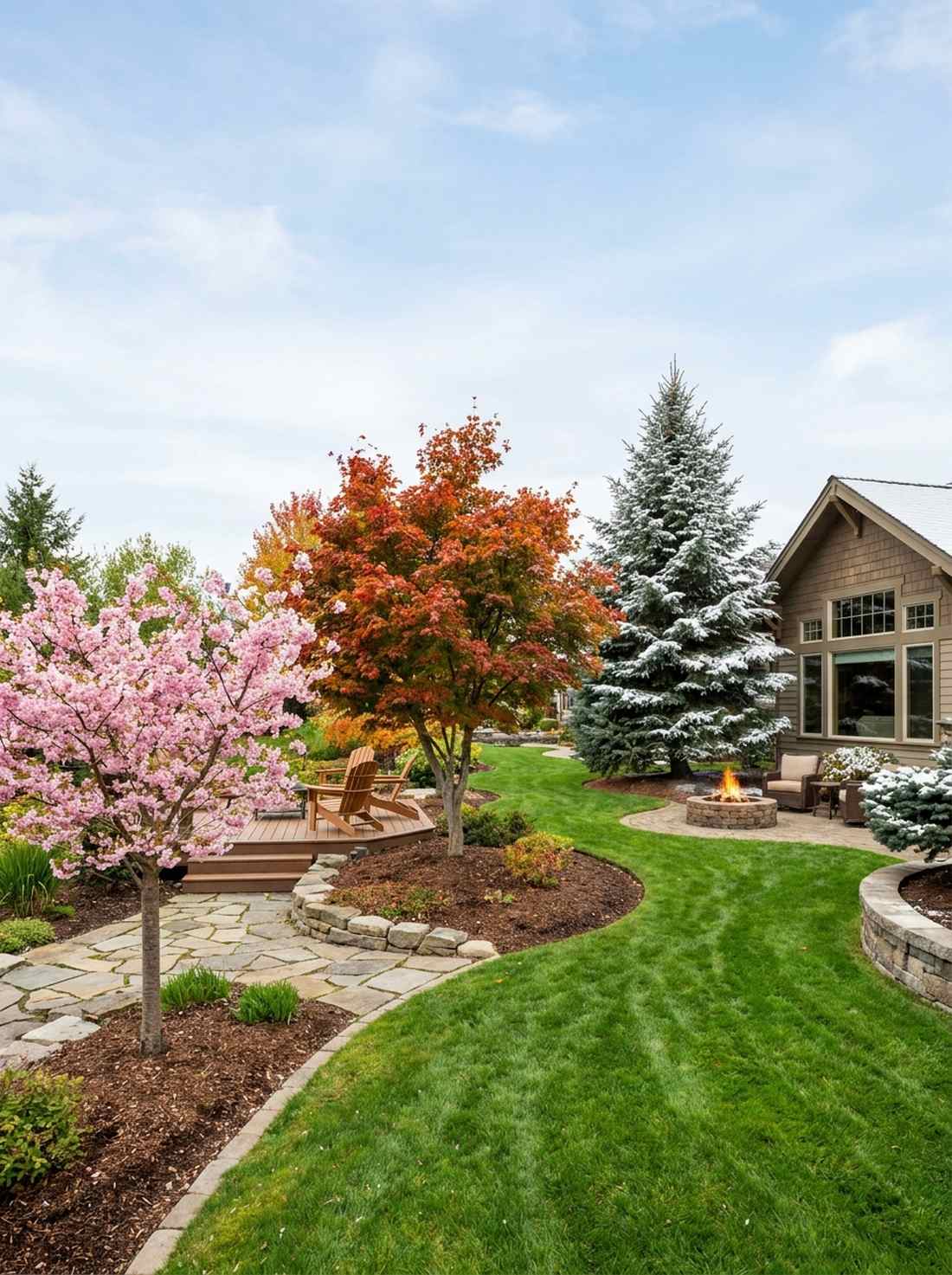
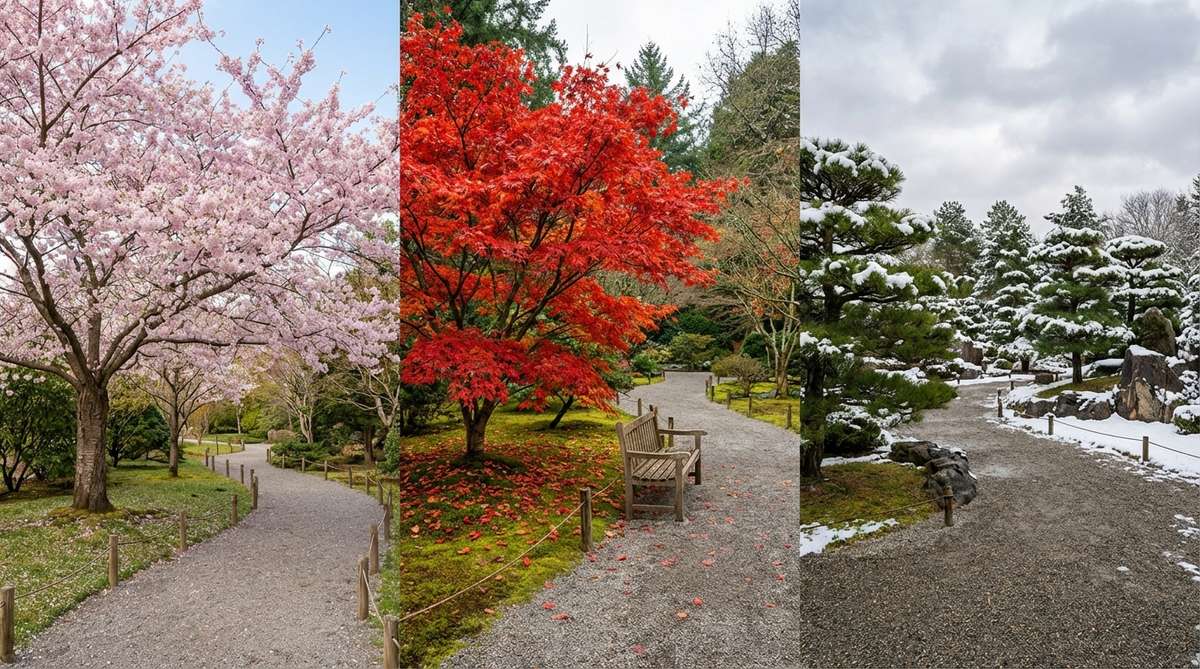
A brilliantly timed botanical clock that feels like a new garden magically appears every three months. Planting a seasonal rotational landscape guarantees your yard never looks dead, even in the dead of winter.
Strategically spacing a cherry for spring, a maple for fall, and a pine for winter looks far more expensive than it is. This careful planning avoids the depressing, barren look that plagues amateur yards in January.
Investing in three distinct specimen trees runs about $200–$400. Highly recommended for year-round visual interest!
- Key Materials: Spring bloomer, Fall foliage tree, Winter evergreen
- Vibe / Style: Ever-changing and vibrant
- Difficulty: Requires horticultural planning
- Budget Breakdown: Three trees: $300 | Premium soil: $50
- Creator’s Tip: Plant the winter evergreen closest to your viewing window so you have vibrant life to look at during the coldest months.
- Smart Sourcing: four-season landscaping tree bundles and slow-release tree fertilizer spikes.
Material Guide: Cheap vs. Premium Aesthetic
Knowing exactly where to save and where to spend makes all the difference in achieving that “looks expensive but isn’t” vibe.
- Standard vs. UV-Resistant/Premium: Standard river rock turns dull and grey after one summer. Investing in UV-coated stone or applying a clear wet-look sealant stops fading, making the stones pop brilliantly against the plants.
- Pre-made Kits vs. Sourcing Locally: While buying individual items locally seems cheaper, pre-made miniature garden supplies and premium karesansui kits guarantee perfect scale and symmetry, saving you hours of frustrating trial and error.
Compact Courtyard and Container Zen Garden Ideas
Small spaces require edited design approaches that maintain zen principles through rigorous selection. These concepts prove that square footage does not determine contemplative potential when each element is carefully chosen.
52. Balcony Tray Garden
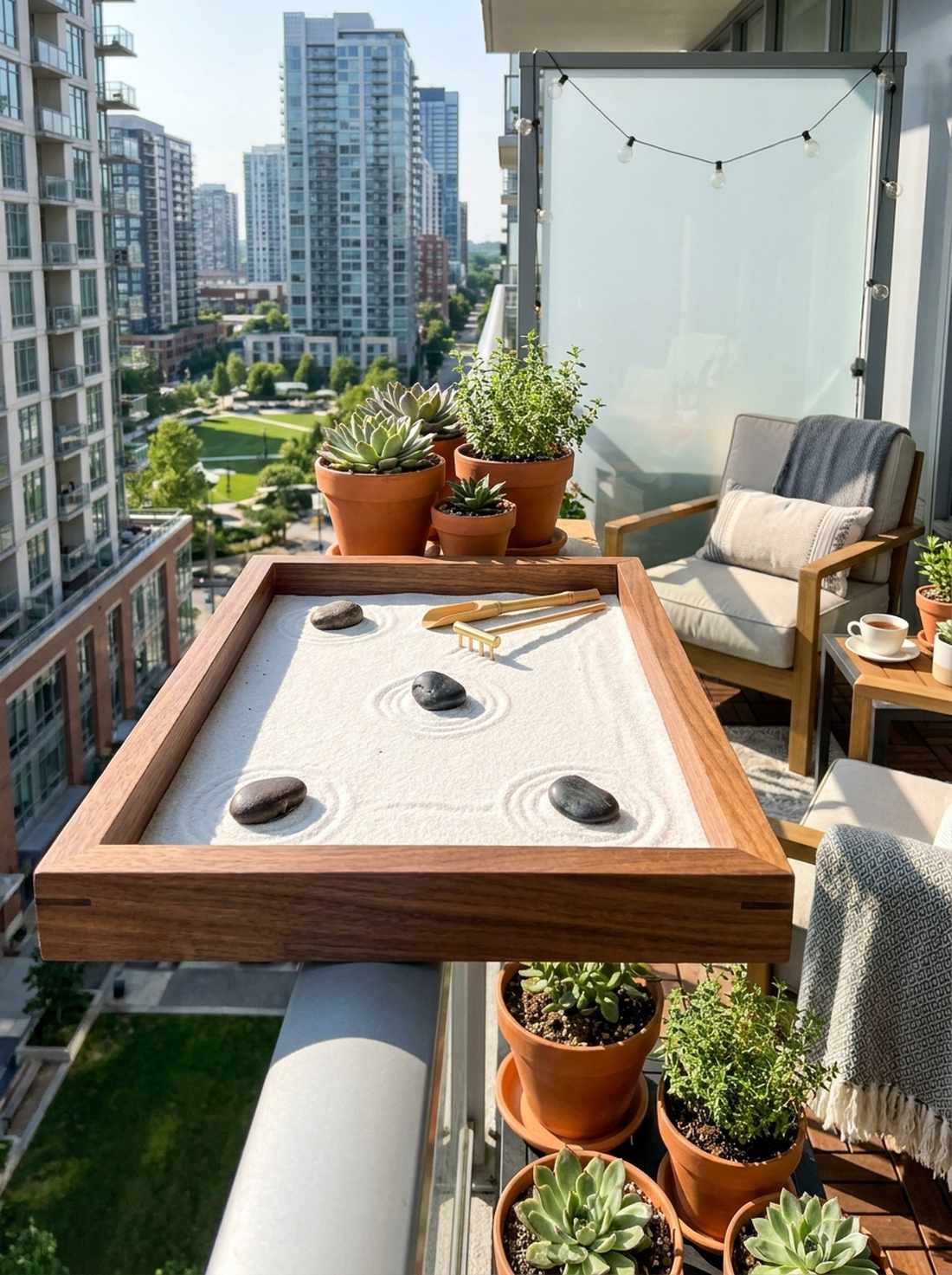
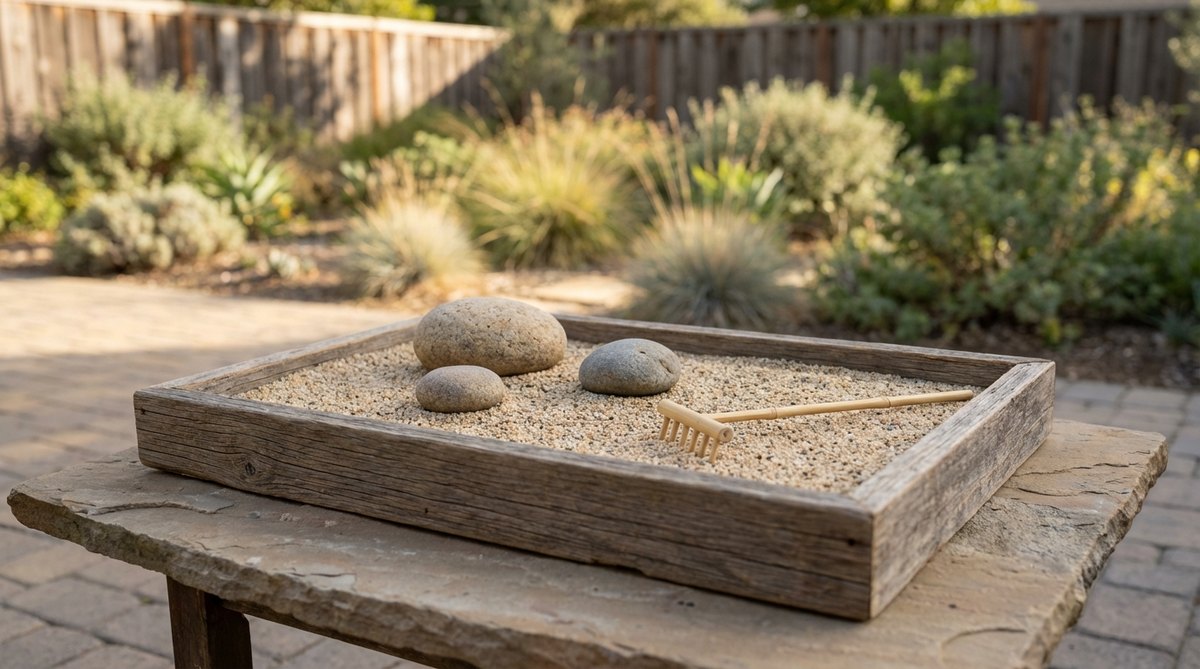
A micro-universe sitting right on your railing that feels like looking down at the world from an airplane. Building a shallow wooden zen tray brings massive stress relief to high-rise apartments with zero yard space.
Containing the sand and stones in a sleek, stained frame completely alters the structural perception of basic craft materials. Adding high-end terrarium tools like tiny rakes makes the daily maintenance an addictive, tactile joy.
You can build this portable oasis for under $30. Pin this to your small apartment balcony board!
- Key Materials: Shallow wooden tray, fine sand, 3 mini stones
- Vibe / Style: Portable and hyper-focused
- Difficulty: Beginner craft project
- Budget Breakdown: Wooden tray: $15 | Sand/Stones: $10
- Creator’s Tip: Seal the inside corners of the wooden tray with clear silicone before adding sand so it doesn’t leak out onto your table.
- Smart Sourcing: miniature desktop zen garden kits and clear silicone waterproof sealants.
53. Vertical Wall Garden
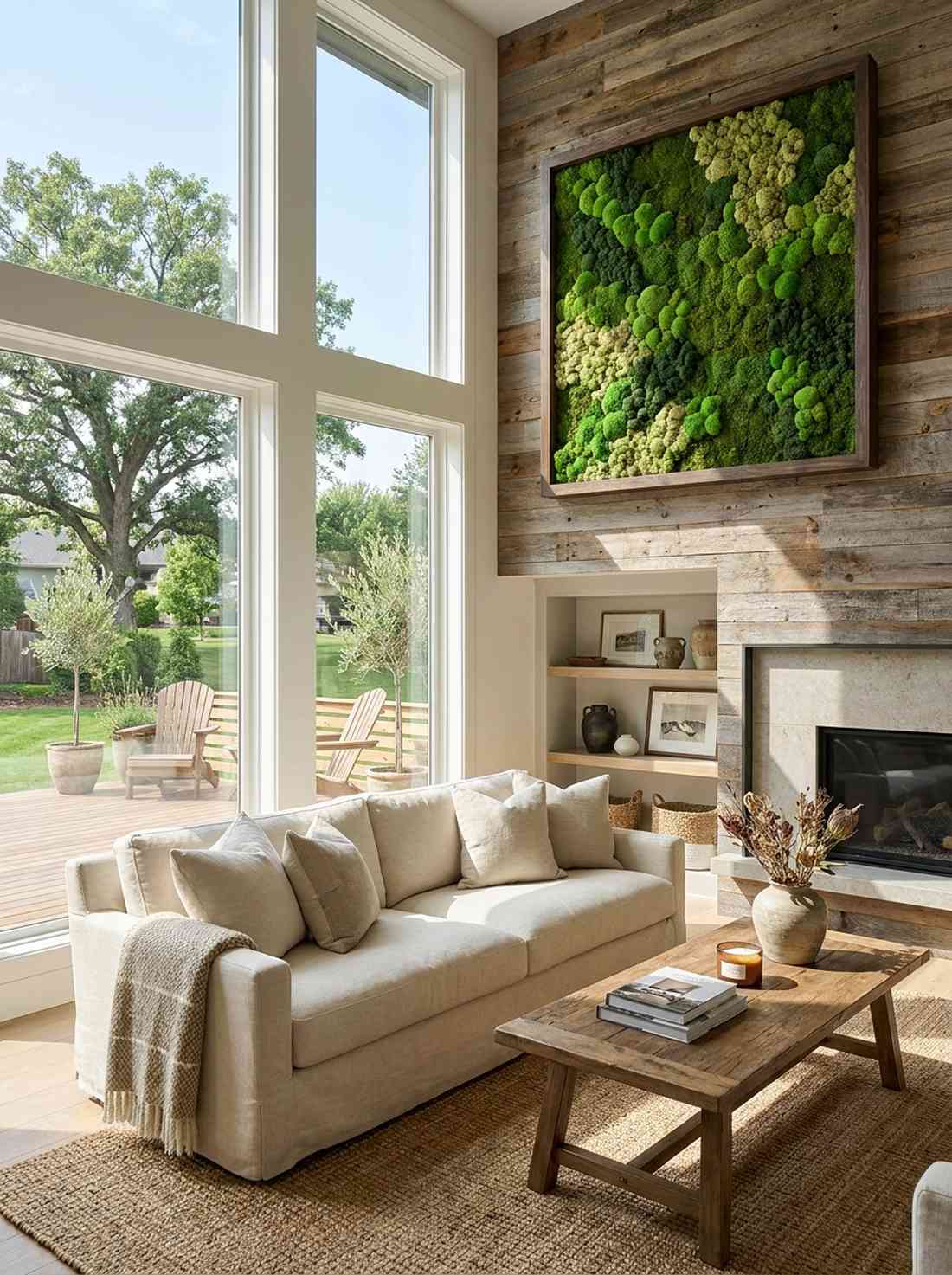
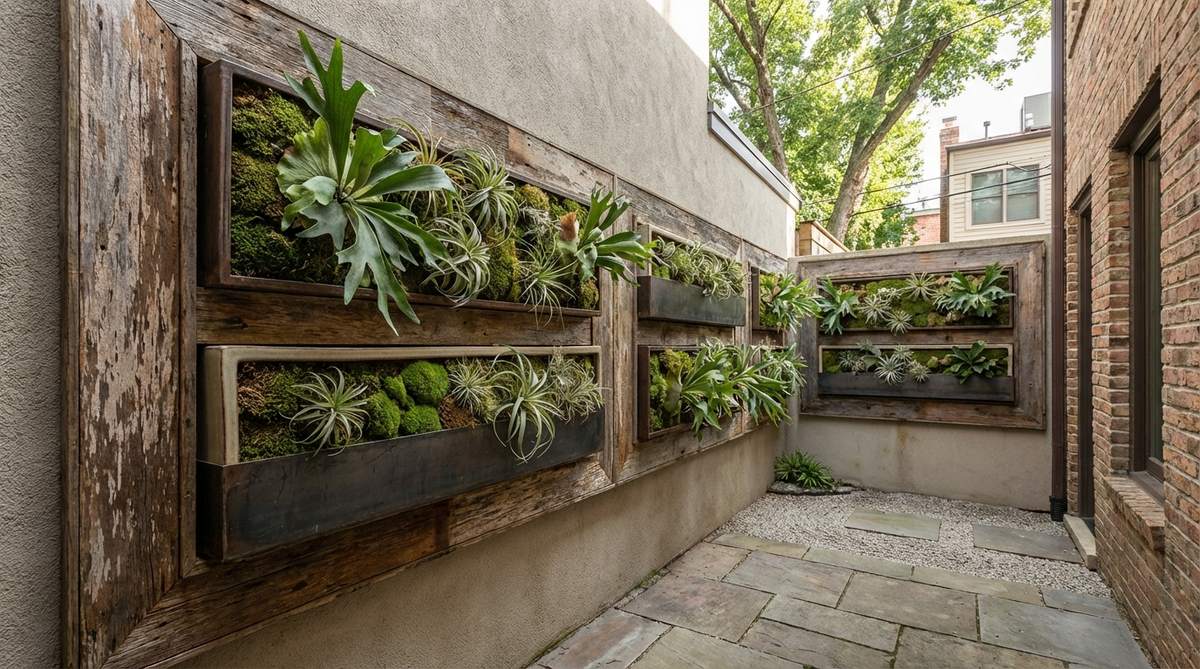
A cascading, gravity-defying green wall that feels like an overgrown jungle ruin mounted in your living room. Mounting a framed preserved moss vertical garden is the ultimate hack for tight urban corridors.
Using chemically preserved moss delivers a surprisingly premium look that requires zero watering, zero sunlight, and zero maintenance. This vertical trick is heavily used by luxury tech offices to fake expensive landscaping indoors.
Building a stunning 3×3 foot frame costs about $80–$120. Save this for a high-impact, zero-effort wall piece.
- Key Materials: Preserved moss bulk pack, shadow box frame, hot glue
- Vibe / Style: Lush and architectural
- Difficulty: Fun DIY crafting
- Budget Breakdown: Preserved moss: $60 | Frame & Glue: $35
- Creator’s Tip: Mix three different shades of green moss (light, medium, dark) to create a faux 3D depth effect inside the flat frame.
- Smart Sourcing: preserved reindeer moss (bulk pack) and industrial hot glue gun kits.
54. Single Container Focal Point
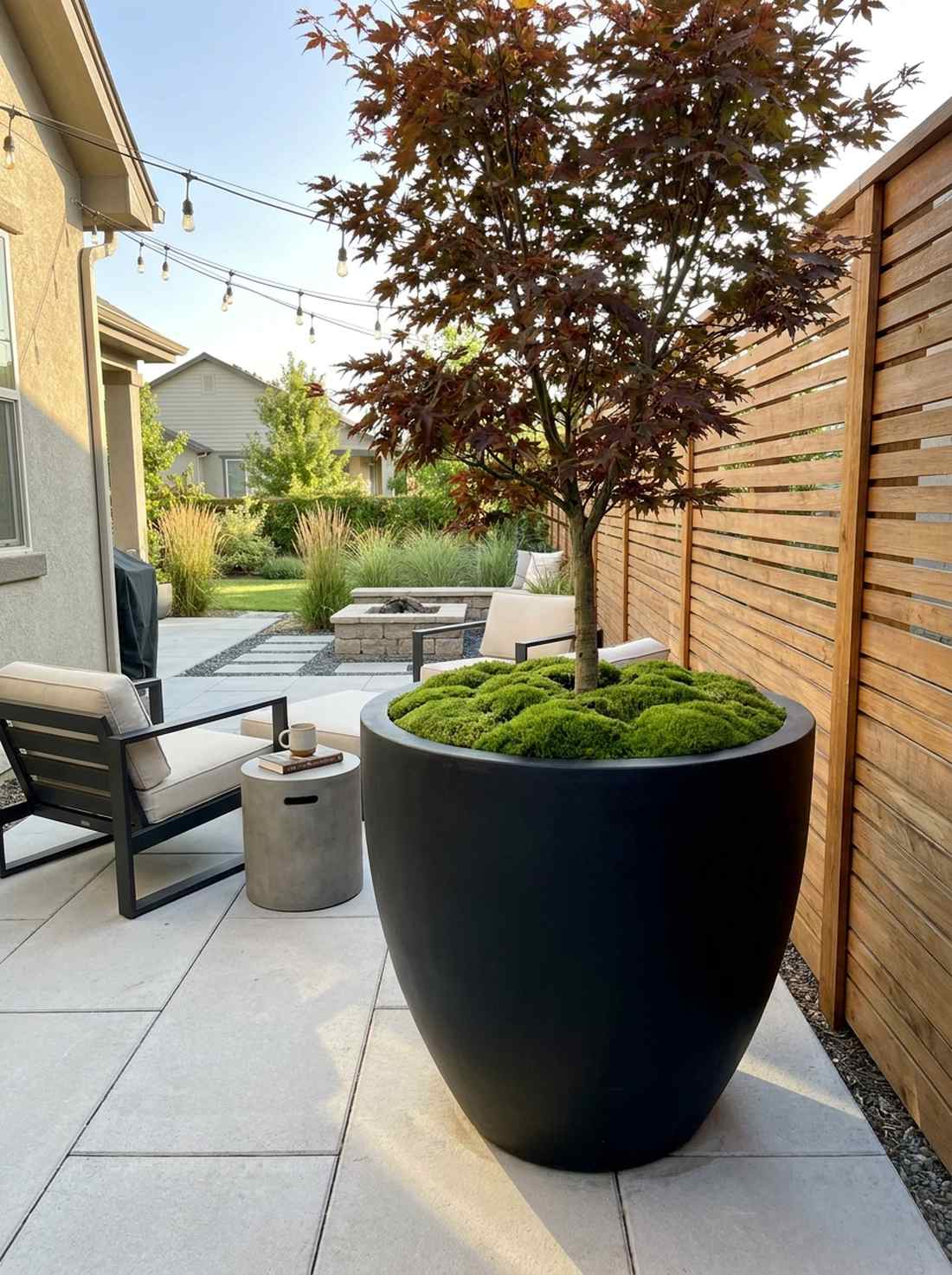
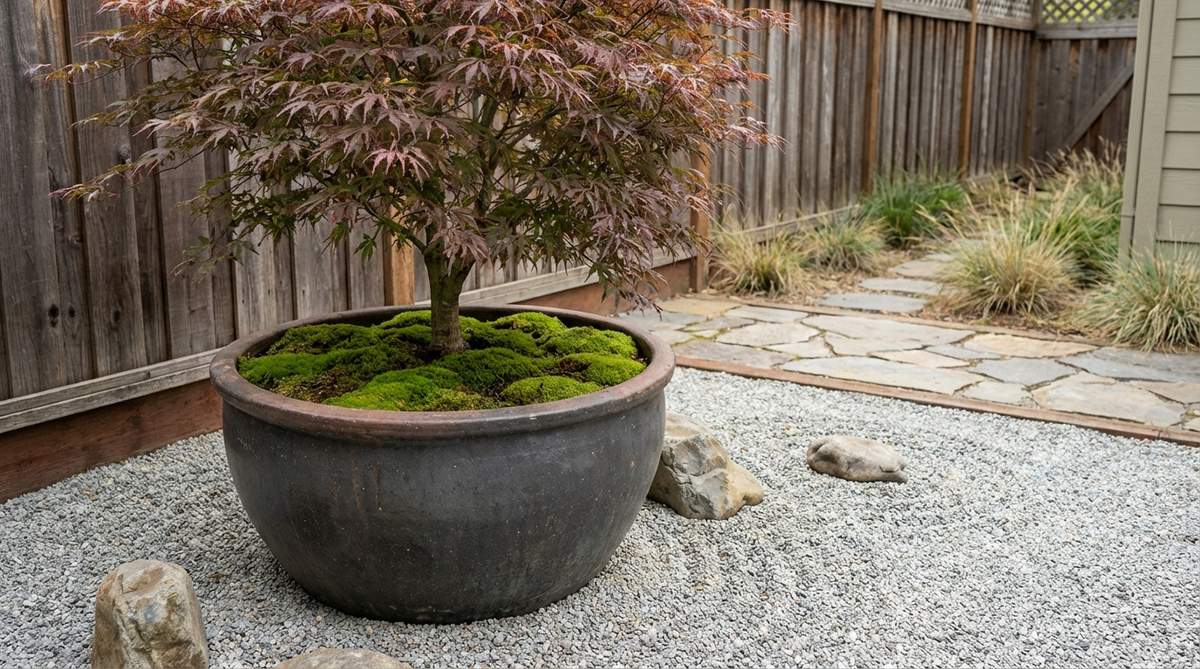
A massive, sleek black pot that feels like an art gallery pedestal holding a priceless living sculpture. Isolating a solitary potted maple strips away all visual clutter and commands absolute attention.
Underplanting the tree with thick, vibrant moss looks far more expensive than it is, hiding the dirt and creating a seamless micro-landscape. It’s an ultra-modern aesthetic that thrives in tiny 5×5 patio spaces.
A premium pot and tree combo runs roughly $100–$150. Pin this minimalist container idea!
- Key Materials: Jumbo ceramic planter, specimen tree, topping moss
- Vibe / Style: Bold and museum-quality
- Difficulty: Easy assembly
- Budget Breakdown: Large pot: $70 | Tree & Moss: $60
- Creator’s Tip: Fill the bottom third of the massive pot with empty plastic bottles before adding dirt to make it lightweight and easy to move.
- Smart Sourcing: lightweight faux-concrete tall planters and live sheet moss patches.
55. Window Box Zen Concept
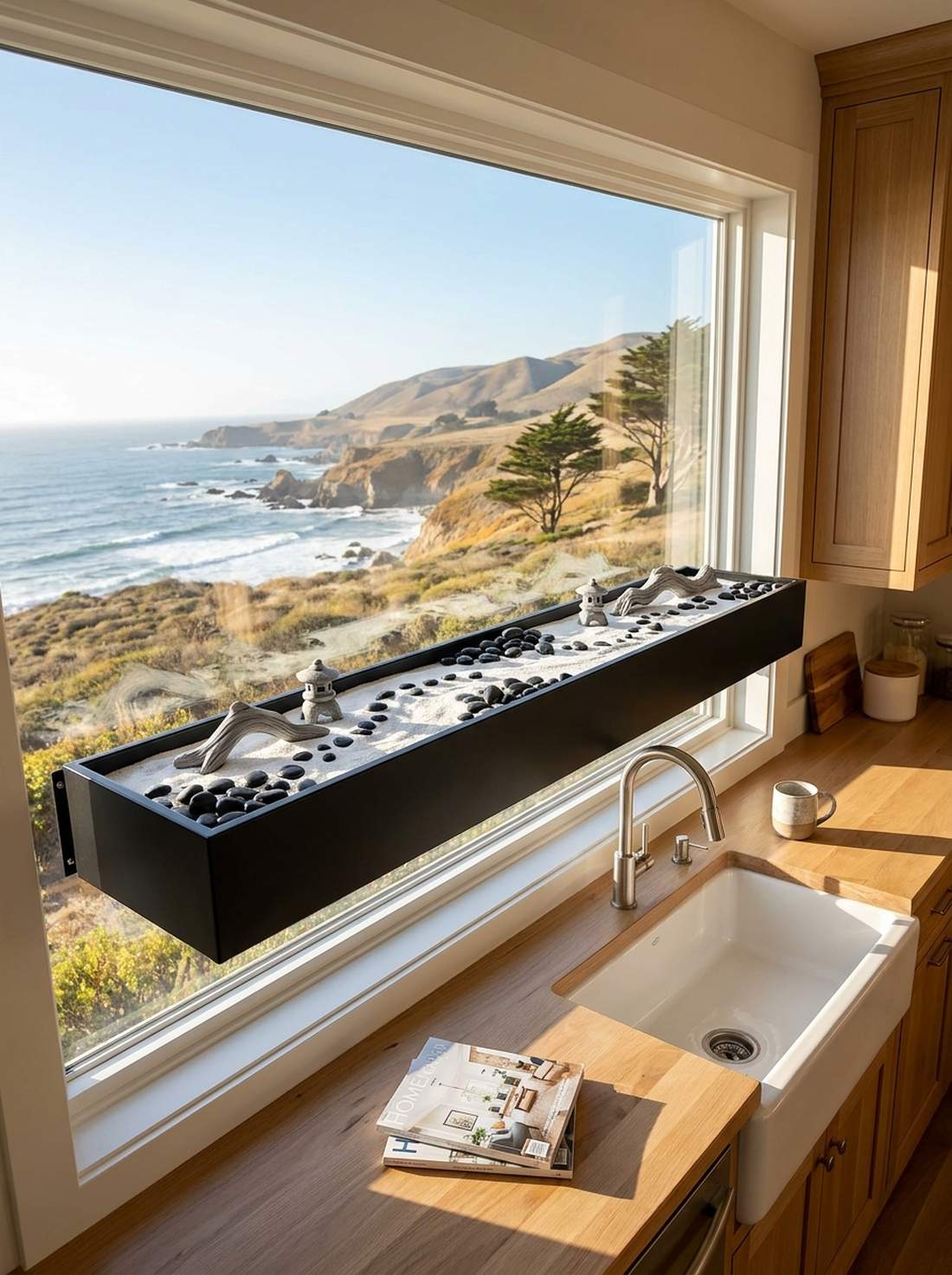
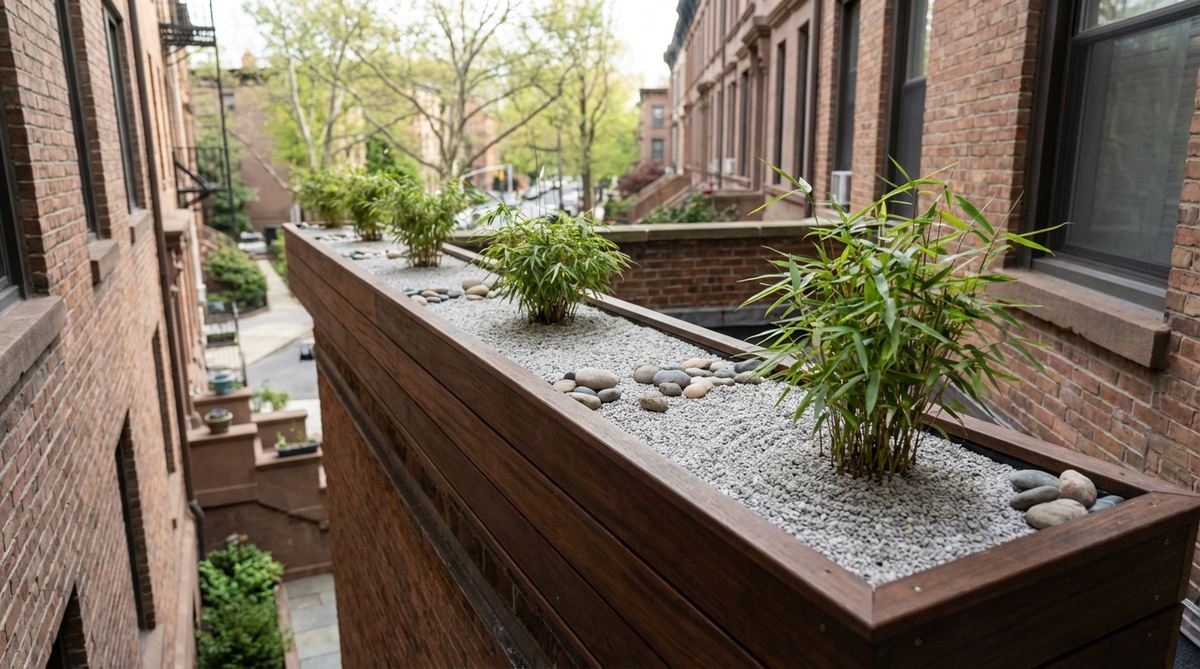
A sleek, elongated diorama that feels like a panoramic view of a distant coastline right outside your glass. Transforming standard planters into linear window box dry gardens brings zen directly to your kitchen view.
Swapping out thirsty, dying flowers for bright white sand and black stones completely bypasses the usual amateur mistakes of window gardening. Incorporating weatherproof resin decor adds tiny surprises for people looking closely.
A pair of window boxes costs about $40 to fill. Save this zero-maintenance window hack!
- Key Materials: Trough planter, white sand, black river rocks
- Vibe / Style: Crisp and surprising
- Difficulty: Instant setup
- Budget Breakdown: Window box: $25 | Sand & Rocks: $15
- Creator’s Tip: Keep the sand level an inch below the rim so heavy rain storms don’t splash the white gravel up against your window panes.
- Smart Sourcing: modern rectangular window box planters and high-contrast black polished pebbles.
Think you need a massive yard for a meditation zone? The next hack fits into a 3-foot rental corner and changes the whole room…
56. Three-Square-Foot Corner Stone Arrangement
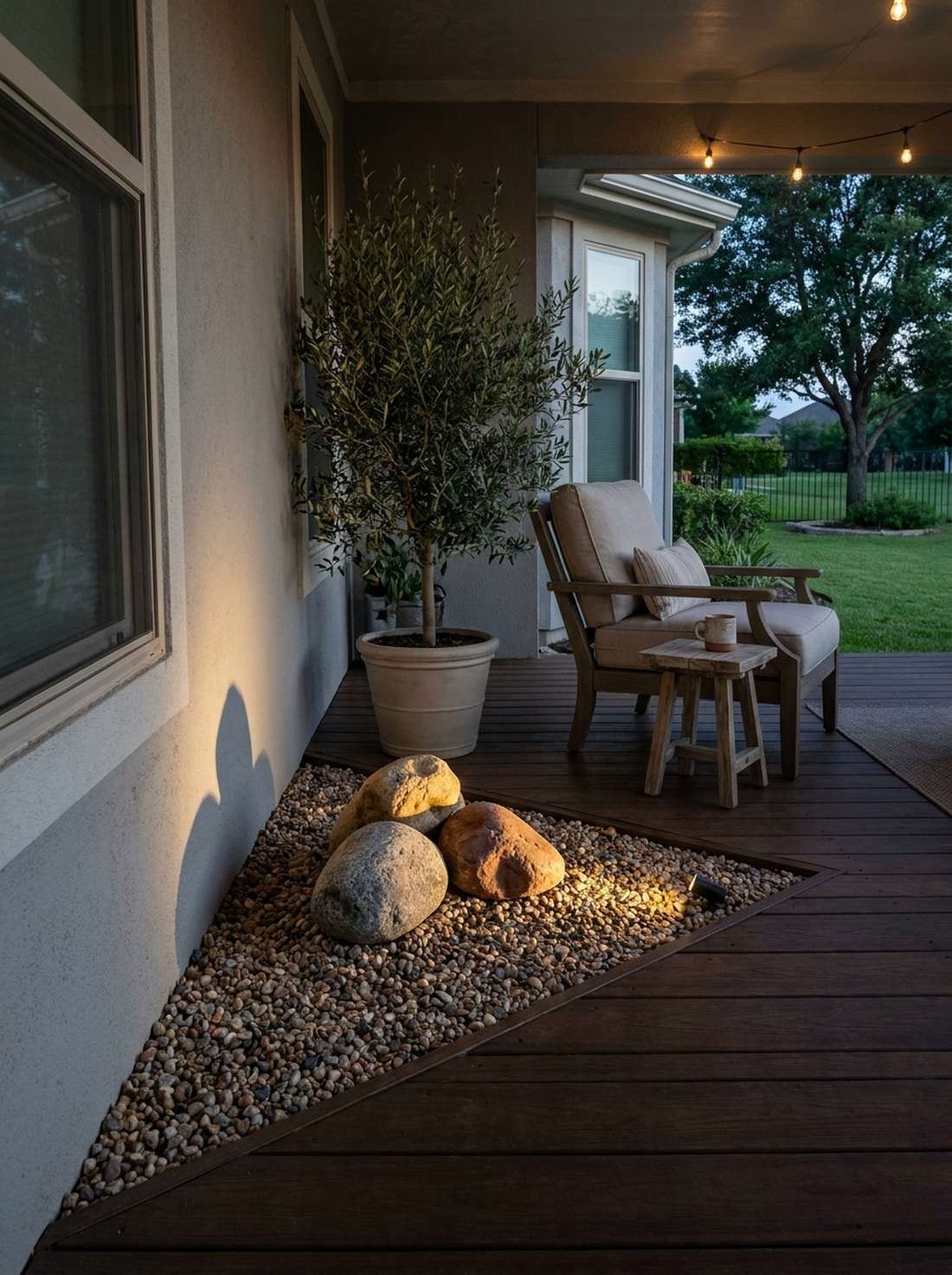
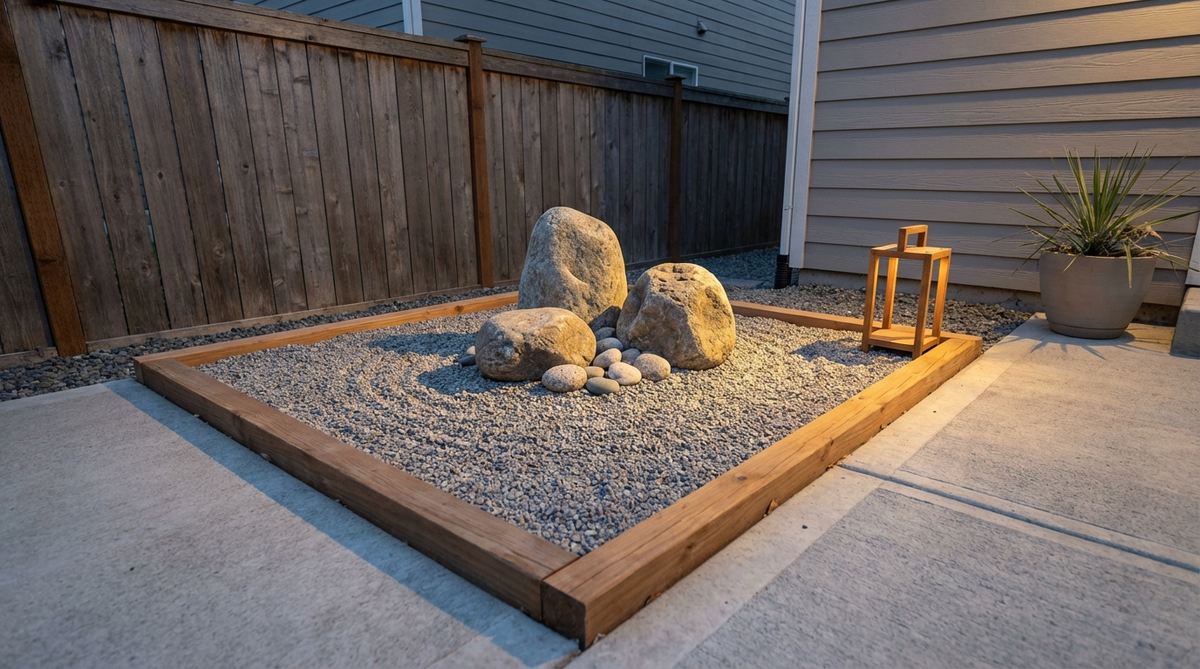
A tiny, brilliant triangle of texture that feels like a high-end spa feature built into your floorboards. Creating a micro gravel stone grouping works wonders in rental patios where permanent changes are strictly forbidden.
Throwing an LED spotlight underneath the stones completely alters the structural perception, casting massive, dramatic shadows at night. This lighting trick delivers a designer-level finish for literal pennies.
You can execute this corner for under $25. Highly recommended for strict rental properties.
- Key Materials: Bag of gravel, 3 stones, small up-light
- Vibe / Style: Dramatic and localized
- Difficulty: Beginner-friendly
- Budget Breakdown: Rocks & Gravel: $15 | LED Light: $10
- Creator’s Tip: Lay down a piece of thick plastic tarp beneath the gravel so when you move out, cleanup takes exactly 30 seconds.
- Smart Sourcing: solar-powered mini LED spotlights and heavy-duty tarp drop cloths.
57. Tabletop Sand Garden
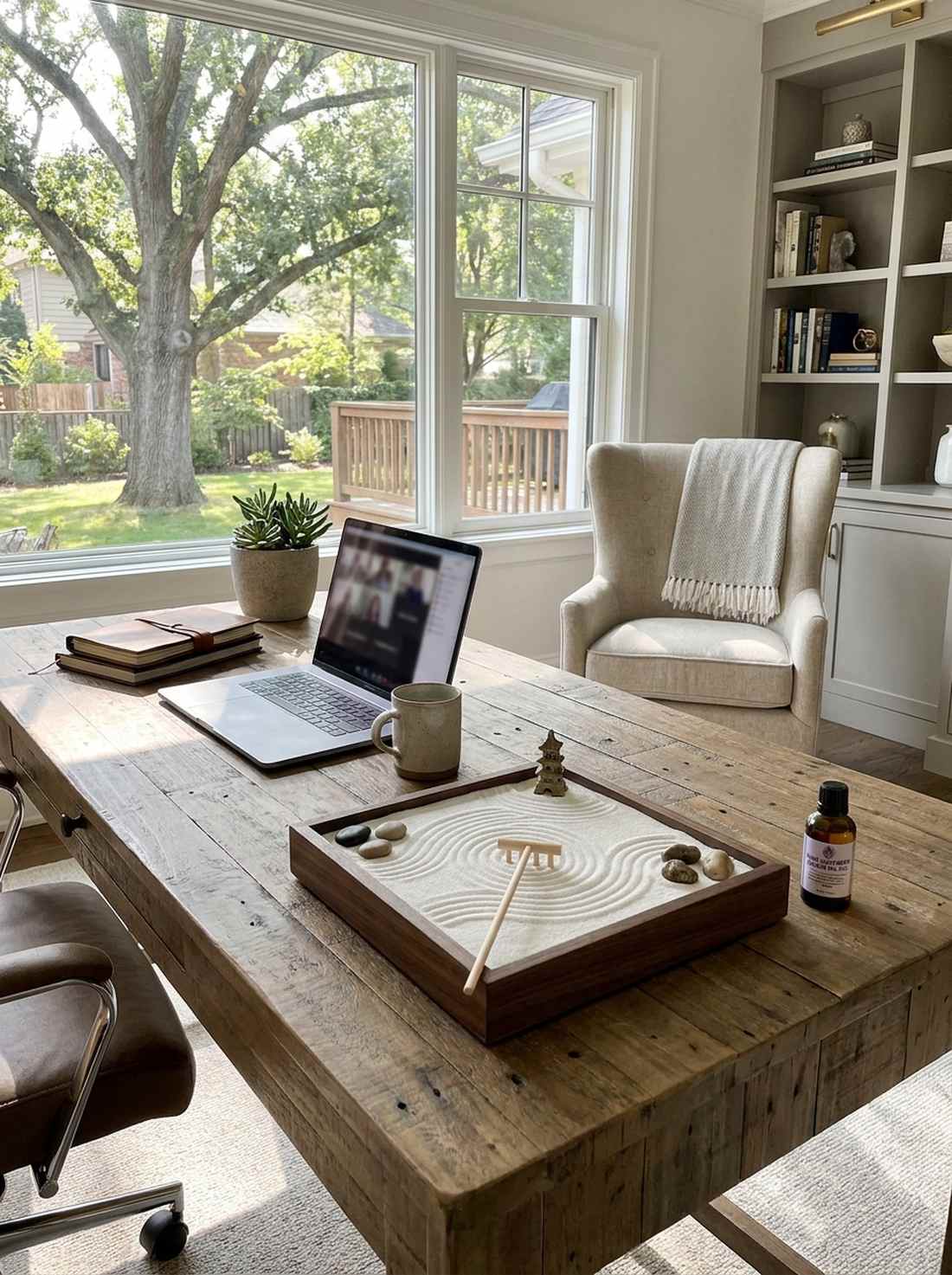
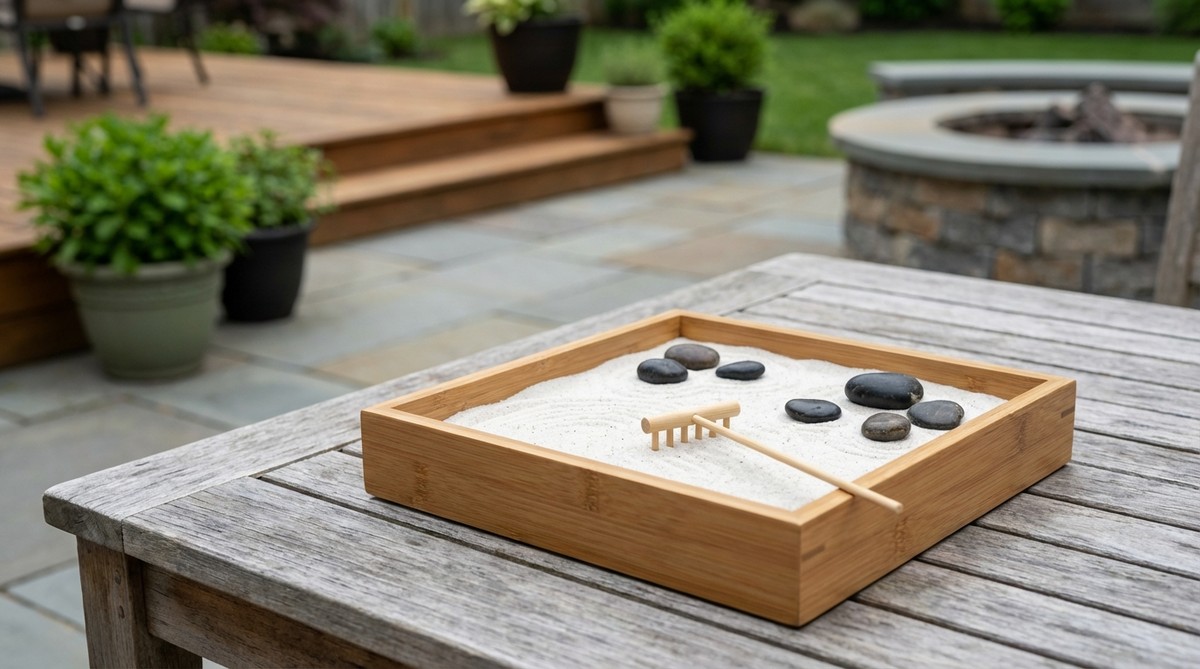
A mesmerizing, touchable stress-reliever that feels like an interactive executive toy. Keeping a desktop mini sand garden provides instant, tactile relief during chaotic work-from-home days.
Raking the sand during endless zoom calls looks far more expensive than it is while actively lowering your heart rate. Sourcing miniature garden supplies lets you rebuild the landscape every single morning.
A premium desktop kit costs around $25–$40. Pin this to your home office aesthetic board!
- Key Materials: Pre-made desktop kit, fine sand, mini rake
- Vibe / Style: Professional and calming
- Difficulty: Pre-assembled
- Budget Breakdown: Complete kit: $30
- Creator’s Tip: Add a few drops of pure lavender essential oil directly to the sand; raking it will release a burst of calming aromatherapy.
- Smart Sourcing: premium desktop zen garden kits and pure lavender essential oils.
58. Narrow Pathway Garden
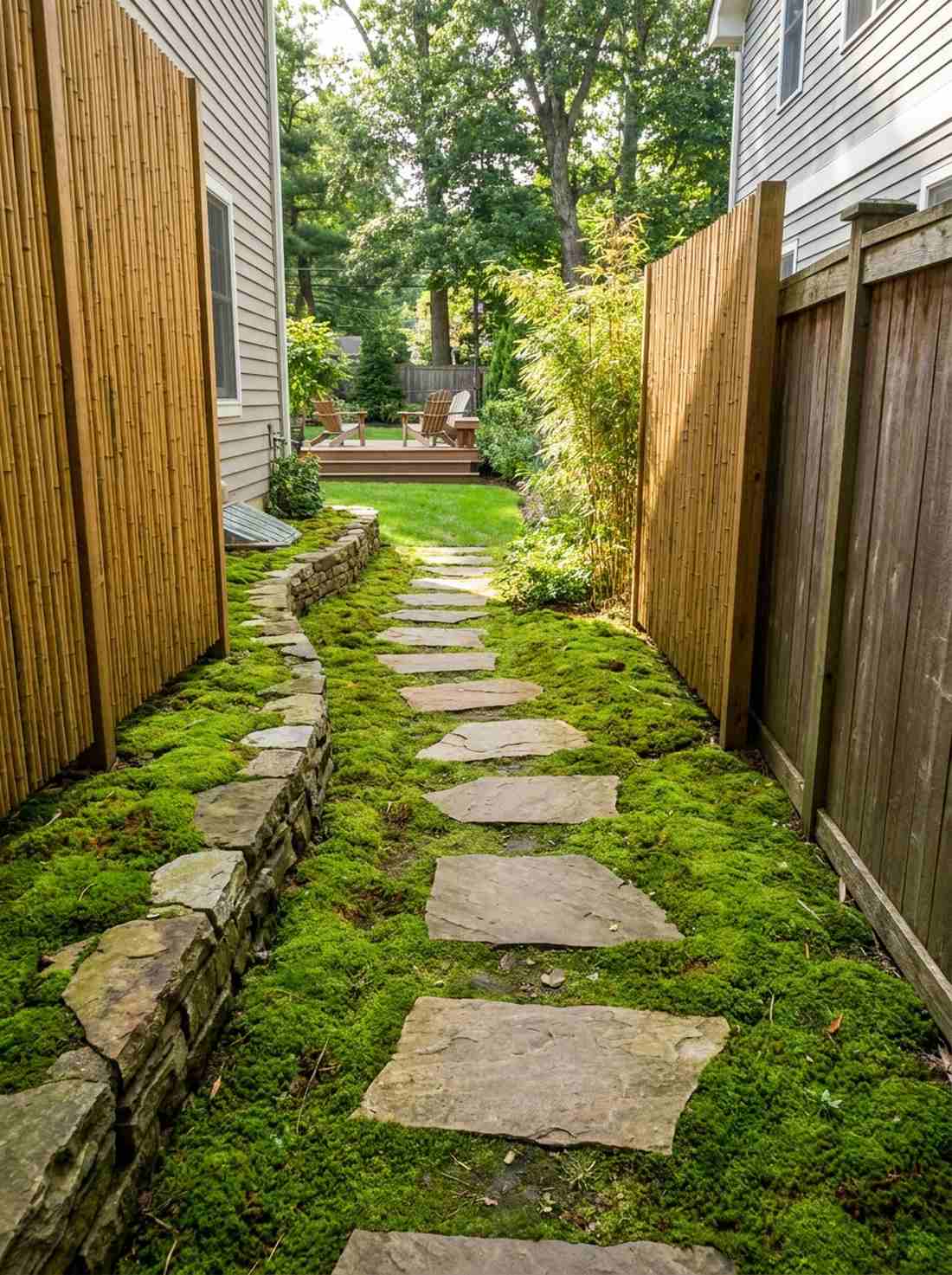
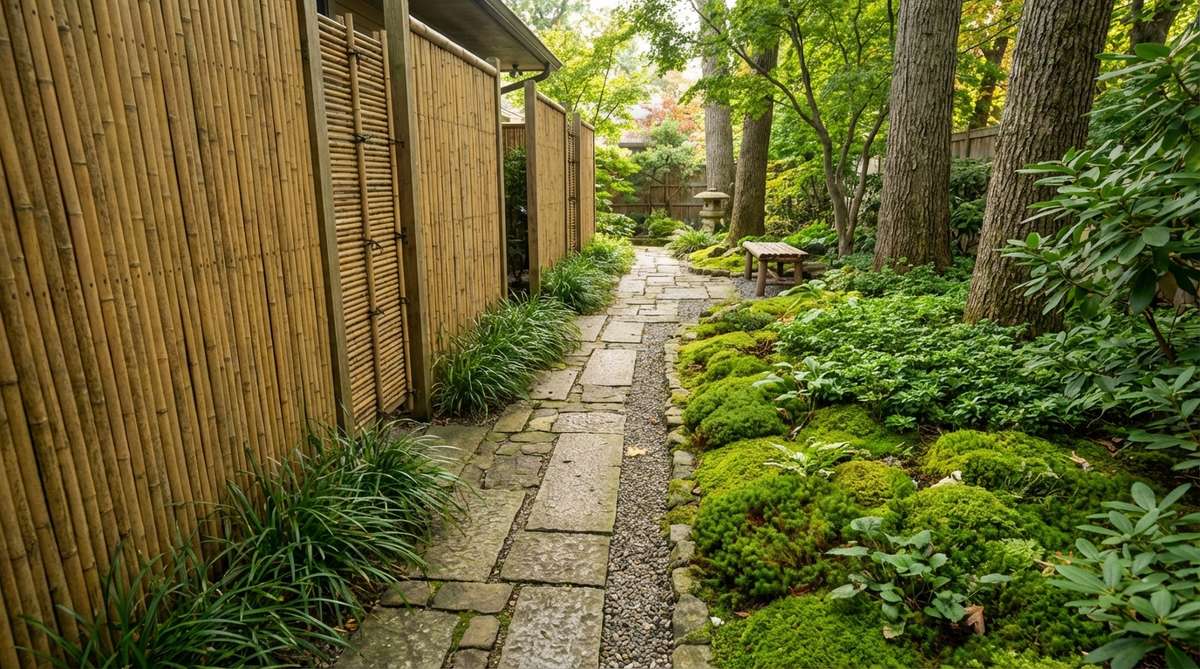
A hyper-focused, cramped alleyway that feels like a pressurized tunnel leading to enlightenment. Converting a useless three-foot gap into a tight moss and bamboo corridor weaponizes claustrophobia into a positive, mindful experience.
Forcing single-file passage over jagged stones completely bypasses the usual amateur mistakes of ignoring side yards. This deliberate constraint is a hallmark of elite, historic Japanese tea houses.
Transforming an alley costs about $150 in moss and stepping stones. Save this layout for awkward property gaps.
- Key Materials: Moss slurry, stepping stones, bamboo panels
- Vibe / Style: Restrictive and highly mindful
- Difficulty: Dirty, cramped work
- Budget Breakdown: Stones: $60 | Bamboo: $70 | Moss: $20
- Creator’s Tip: Stagger the stepping stones left and right so the walker is forced to sway their hips slightly, slowing their momentum entirely.
- Smart Sourcing: live shade moss (bulk pack) and natural flagstone steppers.
59. Potted Pine Collection
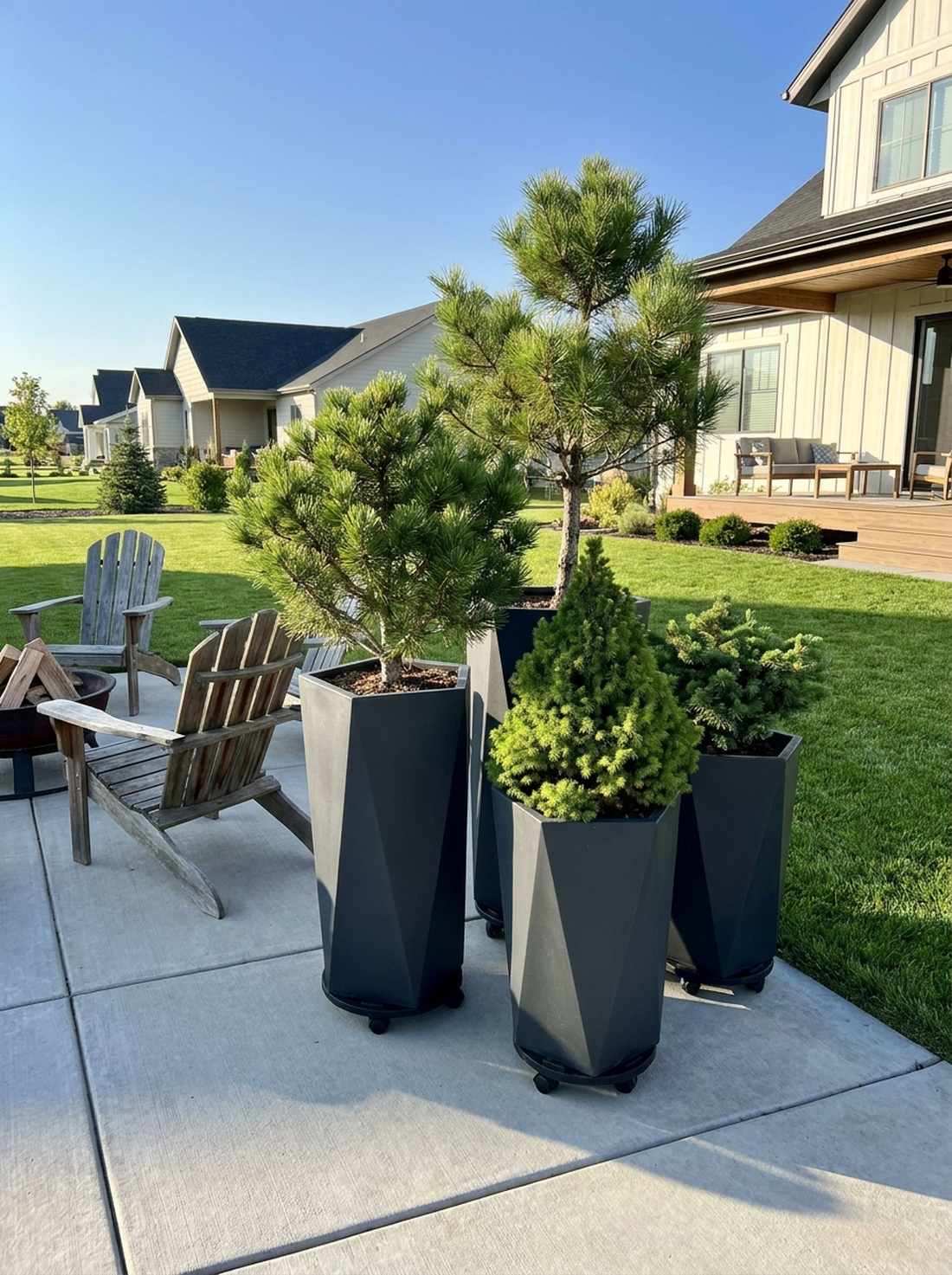
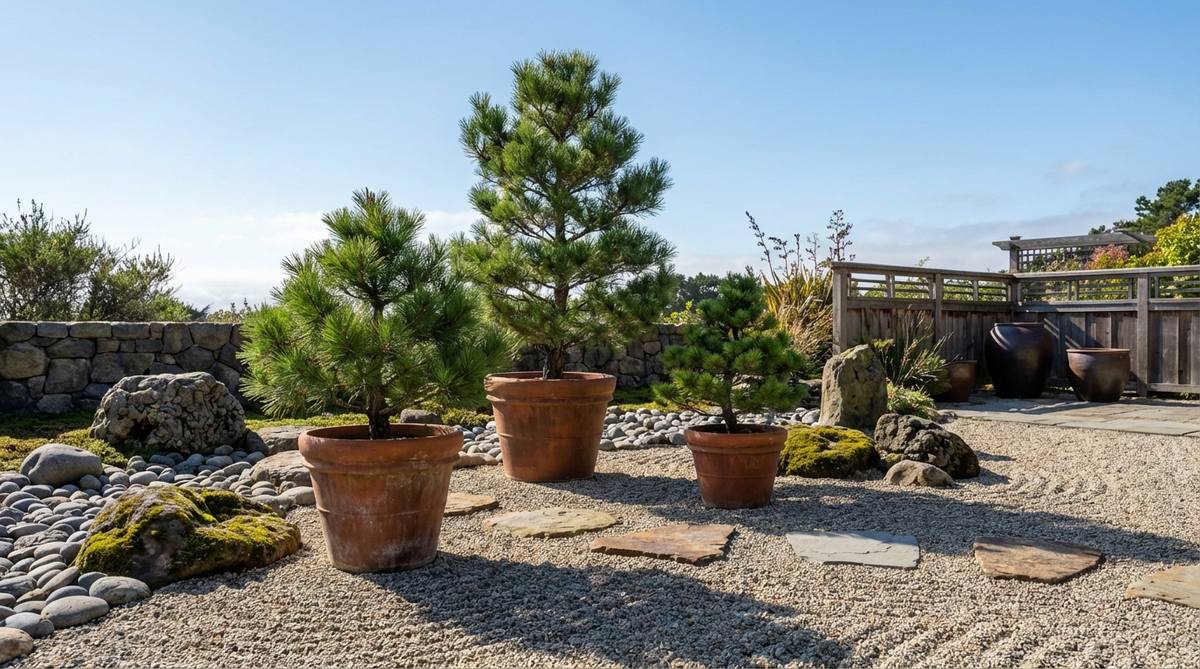
A clustered, spiky gallery that feels like a portable forest you can rearrange on a whim. Grouping a collection of container-grown pines functions as massive, movable architectural sculpture for concrete patios.
Using matching, ultra-modern geometric pots delivers a surprisingly premium look that ties different tree species together cohesively. It’s a brilliant way to have large trees without tearing up concrete slabs.
A collection of three potted pines runs $150–$250. Pin this if you have zero soil to plant in!
- Key Materials: Matching modern planters, dwarf pines
- Vibe / Style: Structured and modular
- Difficulty: Moderate potting
- Budget Breakdown: Planters: $120 | Pines: $90
- Creator’s Tip: Place heavy rolling casters under the pots before adding dirt so you can easily spin them weekly for even sun exposure.
- Smart Sourcing: heavy-duty hidden plant caddies and geometric resin tall planters.
Modern Zen Garden Design Interpretations
Contemporary landscapes adapt traditional zen principles using modern materials and aesthetics. These interpretations maintain the core values of simplicity and contemplation while reflecting current design sensibilities.
60. Geometric Concrete Pavers
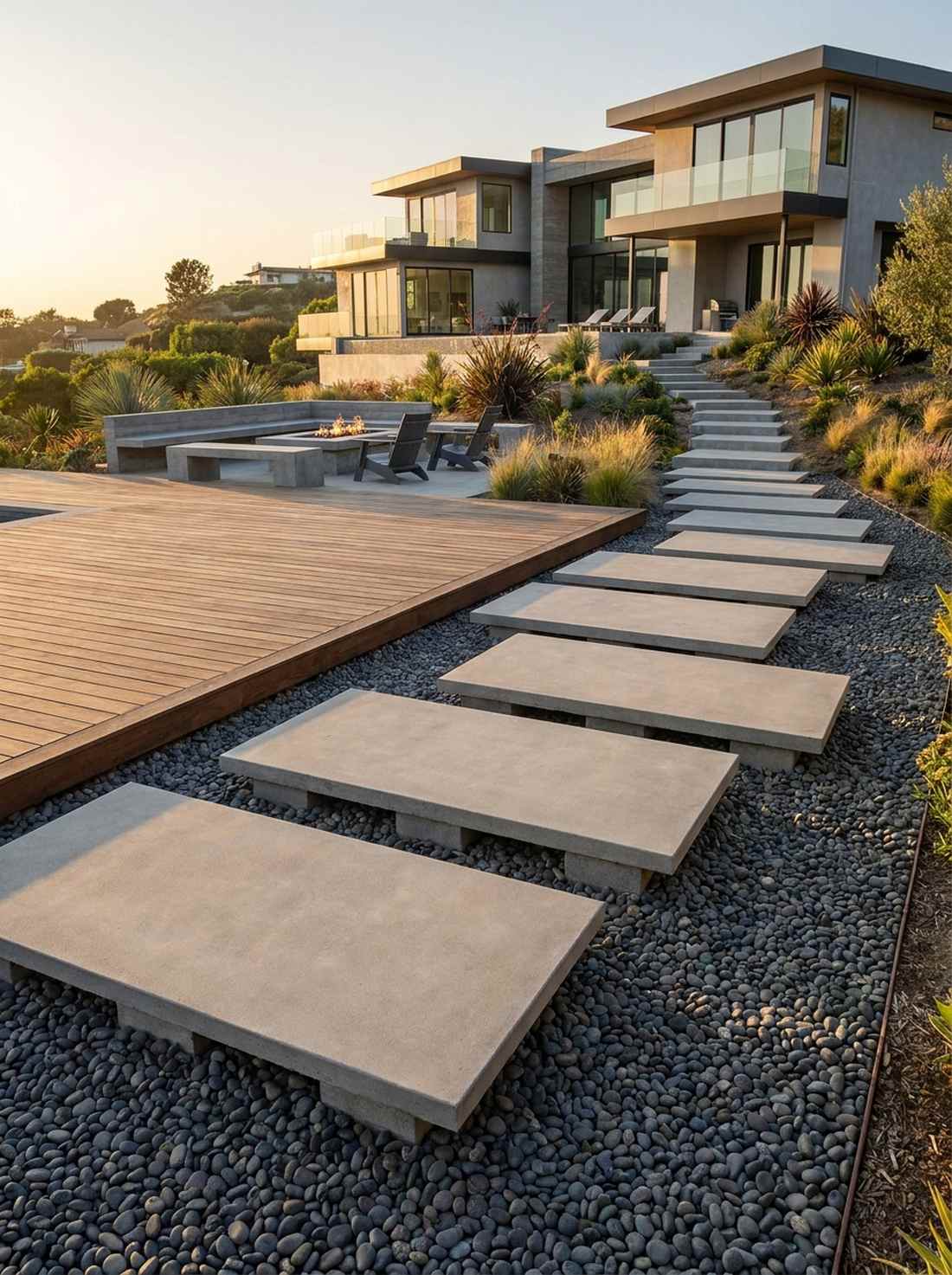
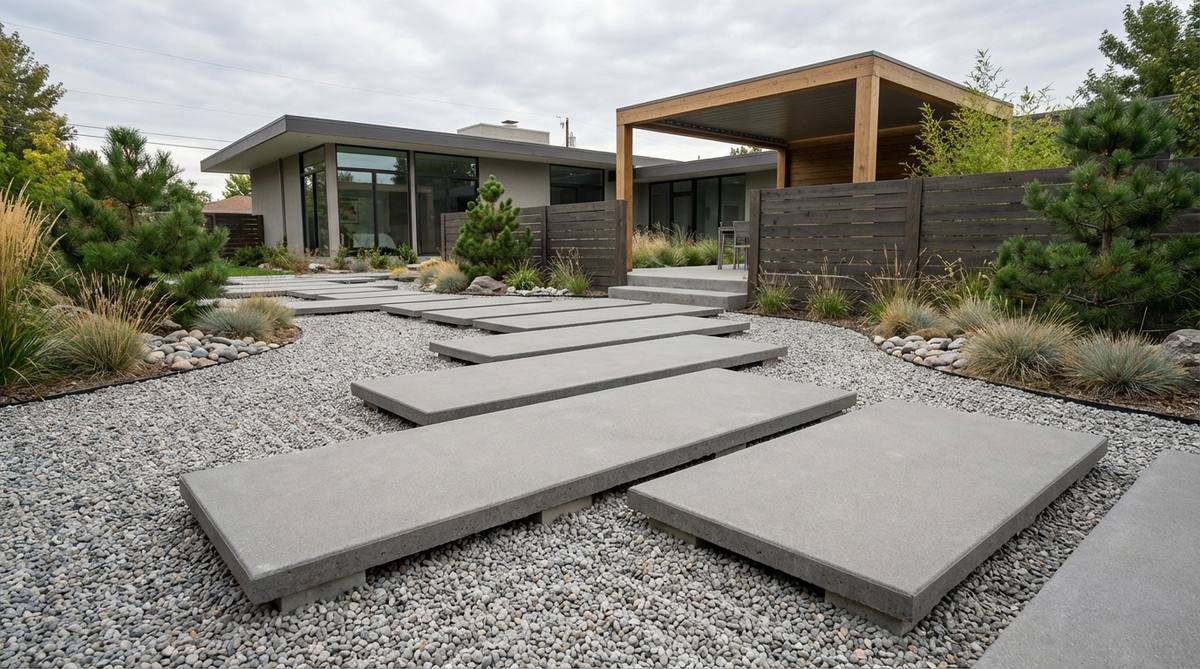
A massive, industrial floating staircase that feels like stepping across futuristic lily pads. Dropping oversized rectangular concrete slabs into loose gravel perfectly bridges ancient zen philosophy with brutalist modern architecture.
Hiding smaller blocks underneath to physically float the pavers completely alters the structural perception of the heavy concrete. This shadow-gap illusion delivers a designer-level finish seen in multi-million dollar hillside mansions.
A sleek paver path costs around $150–$250. Save this for an ultra-modern backyard overhaul!
- Key Materials: 24×36 concrete pavers, gravel, support bricks
- Vibe / Style: Brutalist and sleek
- Difficulty: Extremely heavy lifting
- Budget Breakdown: Pavers: $180 | Gravel: $50
- Creator’s Tip: Keep exactly a 4-inch gap between each massive paver to force a deliberate, slightly lengthened walking stride.
- Smart Sourcing: large-format concrete patio pavers and heavy-duty paver lifting tongs.
61. Cor-ten Steel Water Feature
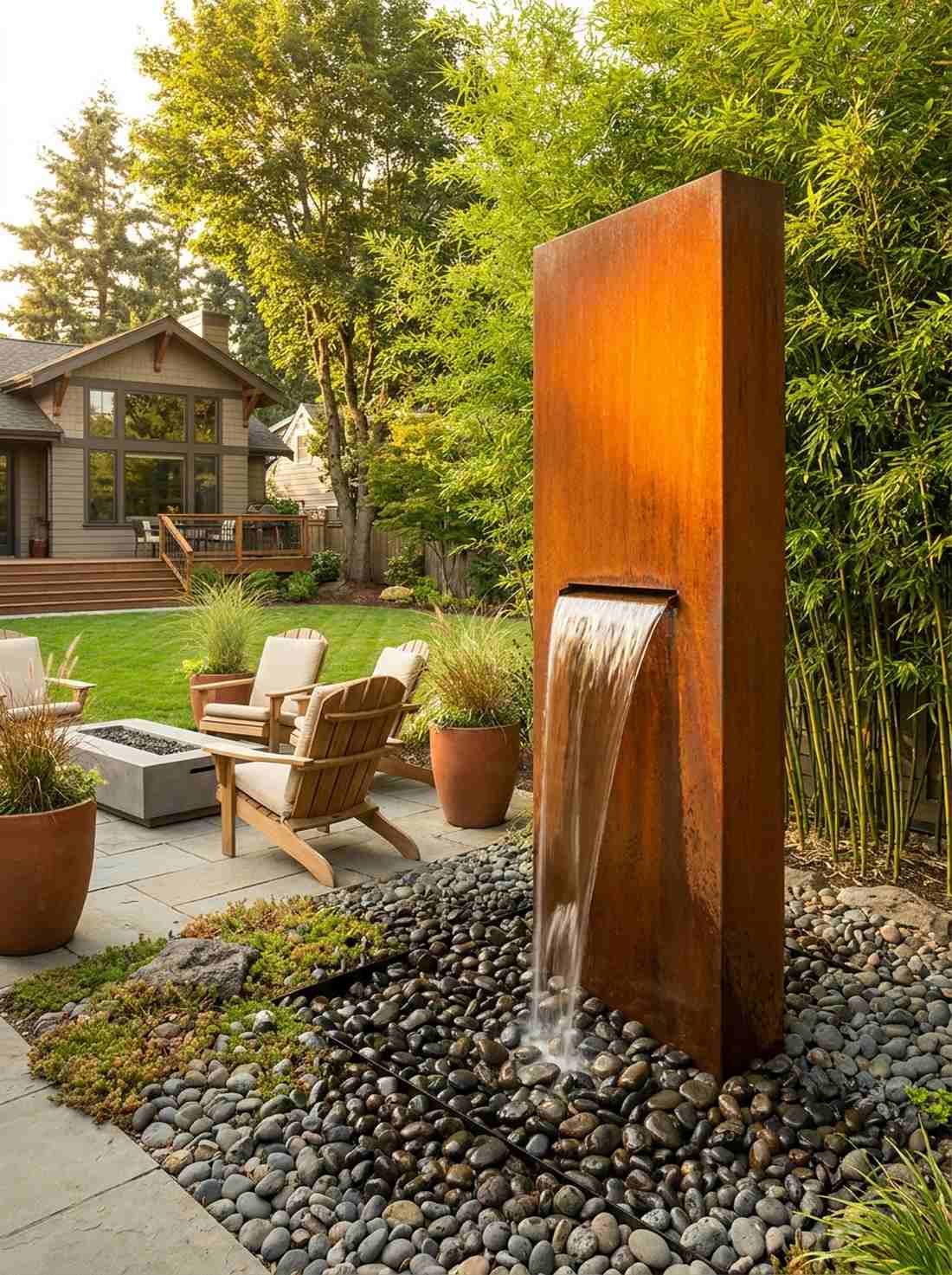
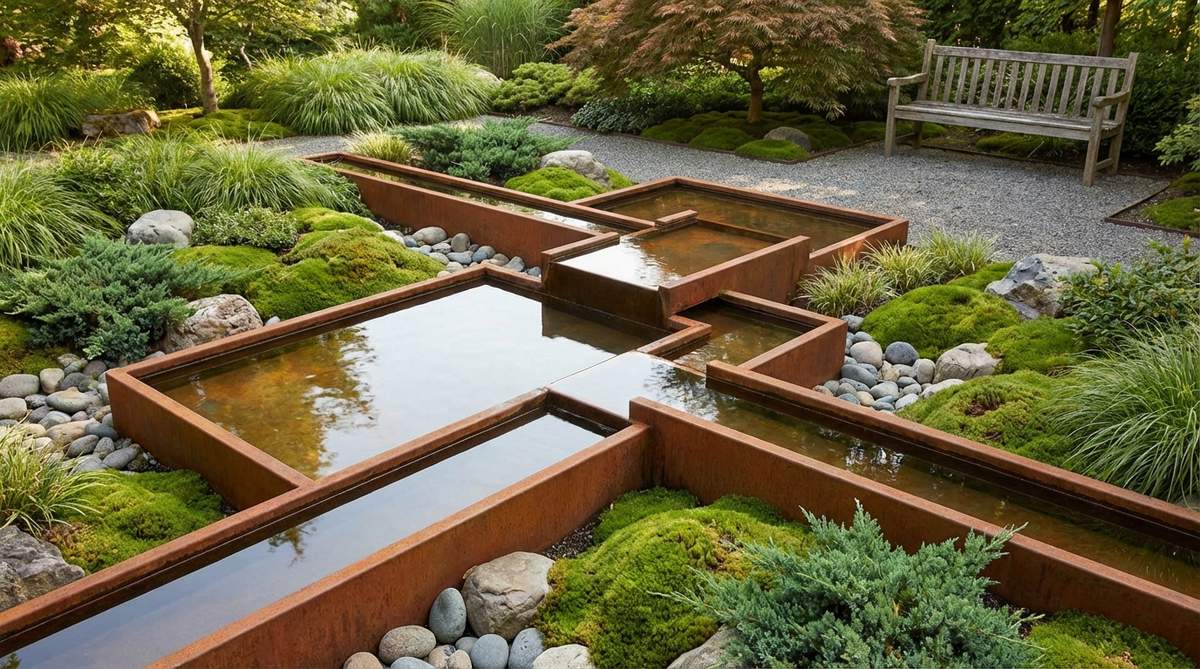
A sharp, rusting metal blade that feels like an industrial monolith bleeding water into the earth. Utilizing a weathering steel water channel introduces a stunning, fiery orange patina against green bamboo.
The intentional, controlled rusting process looks far more expensive than it is and perfectly embodies the wabi-sabi appreciation of aging. Upgrading to commercial grade pond liner underneath ensures the rust doesn’t stain the patio below.
A custom Corten feature runs $300+. Pin this for a jaw-dropping industrial aesthetic.
- Key Materials: Corten steel trough, pump, sealant
- Vibe / Style: Fiery and industrial
- Difficulty: Metalworking or custom ordering
- Budget Breakdown: Steel trough: $250 | Pump kit: $50
- Creator’s Tip: Spray the new steel with a mixture of hydrogen peroxide, salt, and vinegar to force a beautiful, even rust coat in under 2 hours.
- Smart Sourcing: pre-rusted Corten steel planters and metal-safe water feature pumps.
62. Glass Gravel Alternative
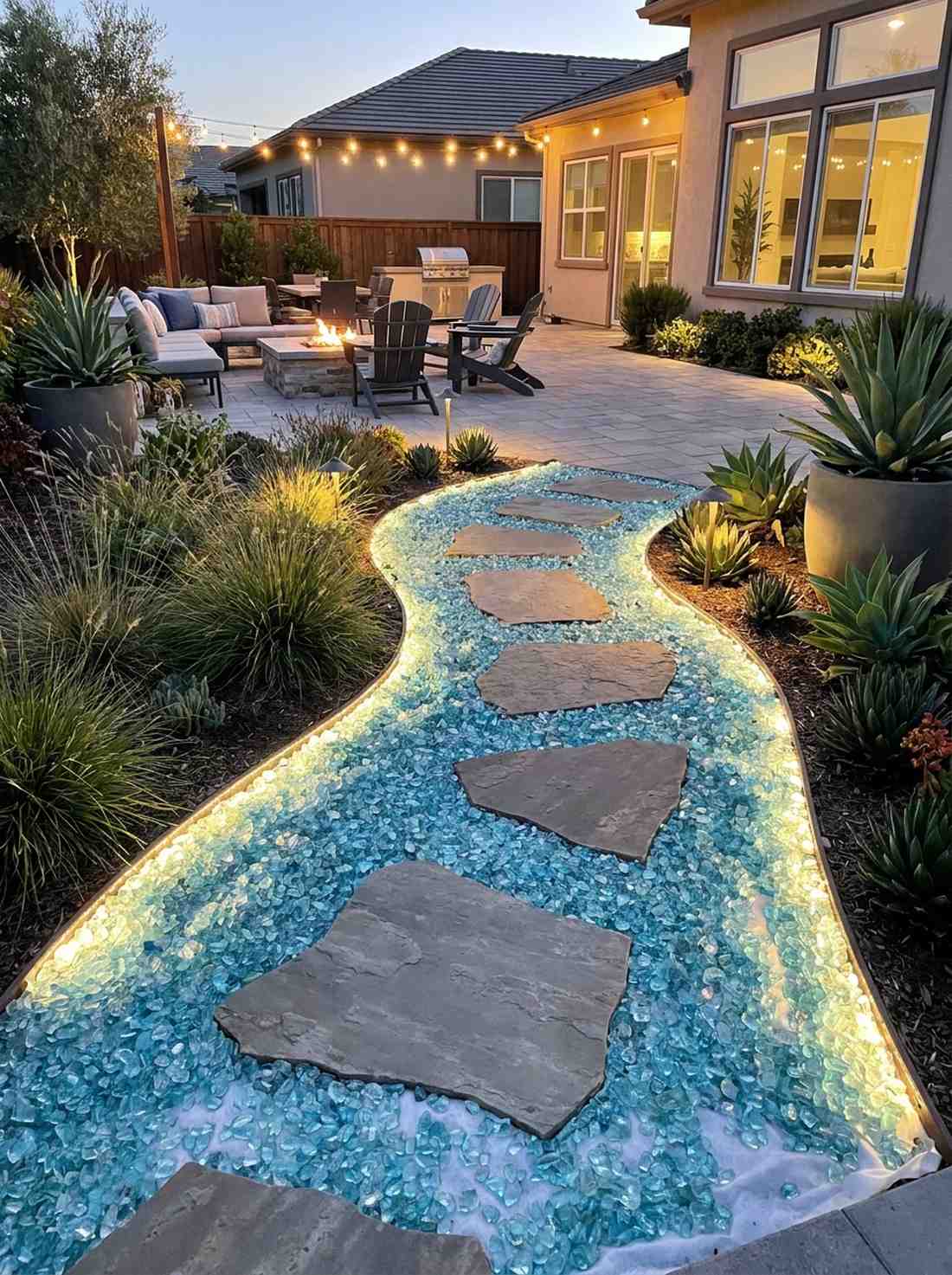
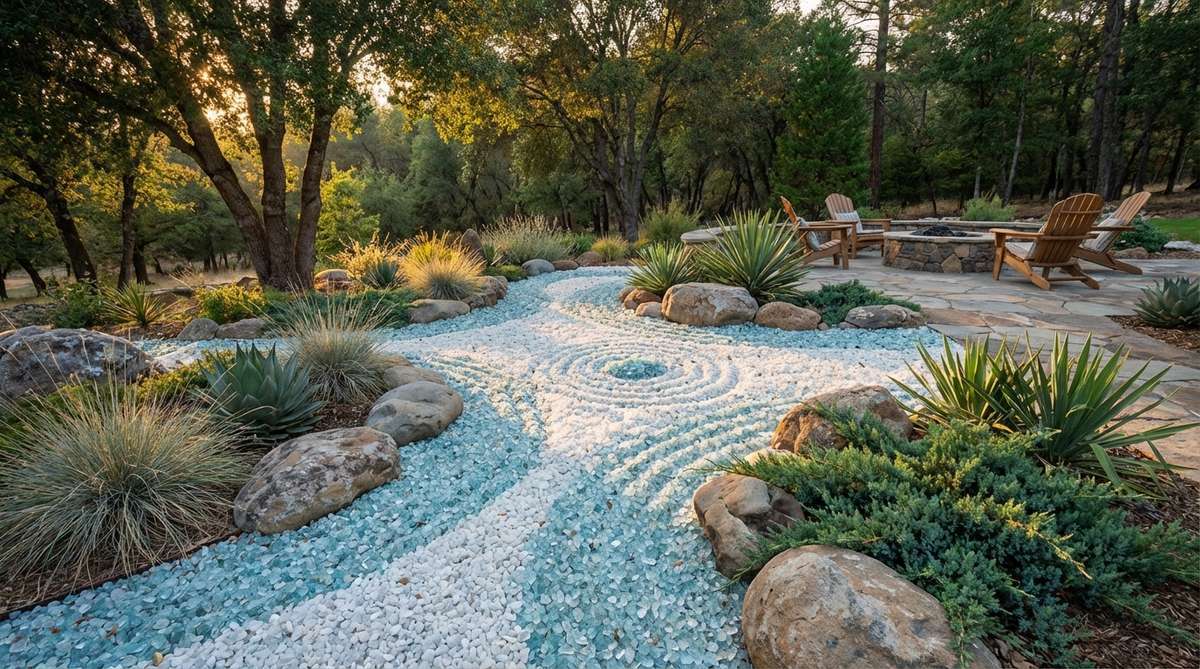
A shimmering, icy blue river that feels like walking across crushed diamonds in the evening sun. Swapping dull rocks for tumbled recycled glass aggregate instantly modernizes the traditional dry landscape.
The translucent edges catch and amplify LED lighting, completely bypassing the usual amateur mistakes of dull, unlit gravel beds. It’s a hyper-sustainable choice that delivers a surprisingly premium look at night.
Bulk glass aggregate costs roughly $150–$200. Save this idea if you love bright, glowing evening patios.
- Key Materials: Tumbled landscape glass (no sharp edges)
- Vibe / Style: Luminous and contemporary
- Difficulty: Easy spreading
- Budget Breakdown: Glass bulk bags: $180
- Creator’s Tip: Lay down a bright white weed fabric underneath the glass instead of black; the white background makes the glass glow twice as bright.
- Smart Sourcing: tumbled recycled landscape glass (bulk pack) and white heavy-duty landscape fabric.
63. LED Uplighting on Stones
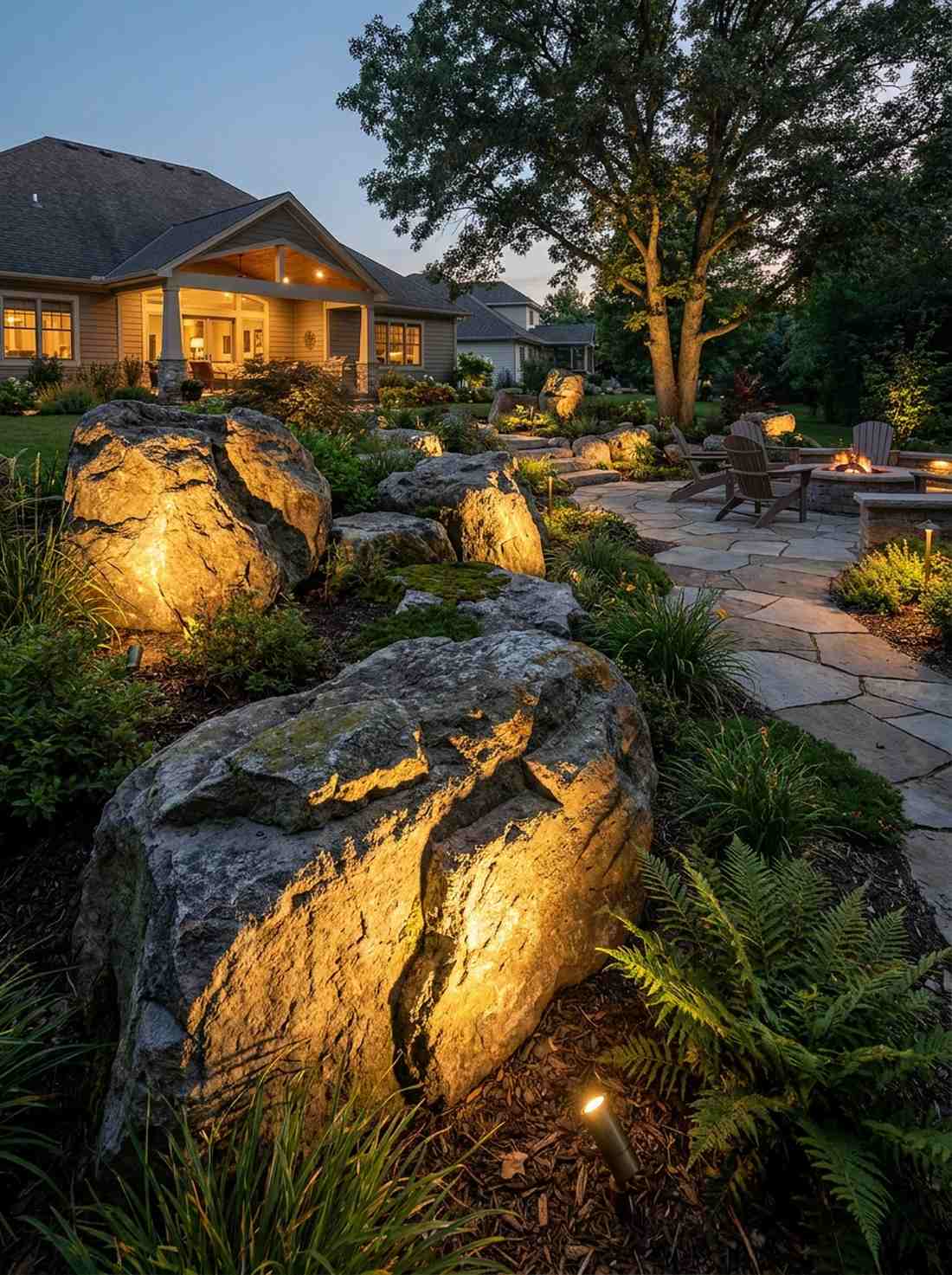
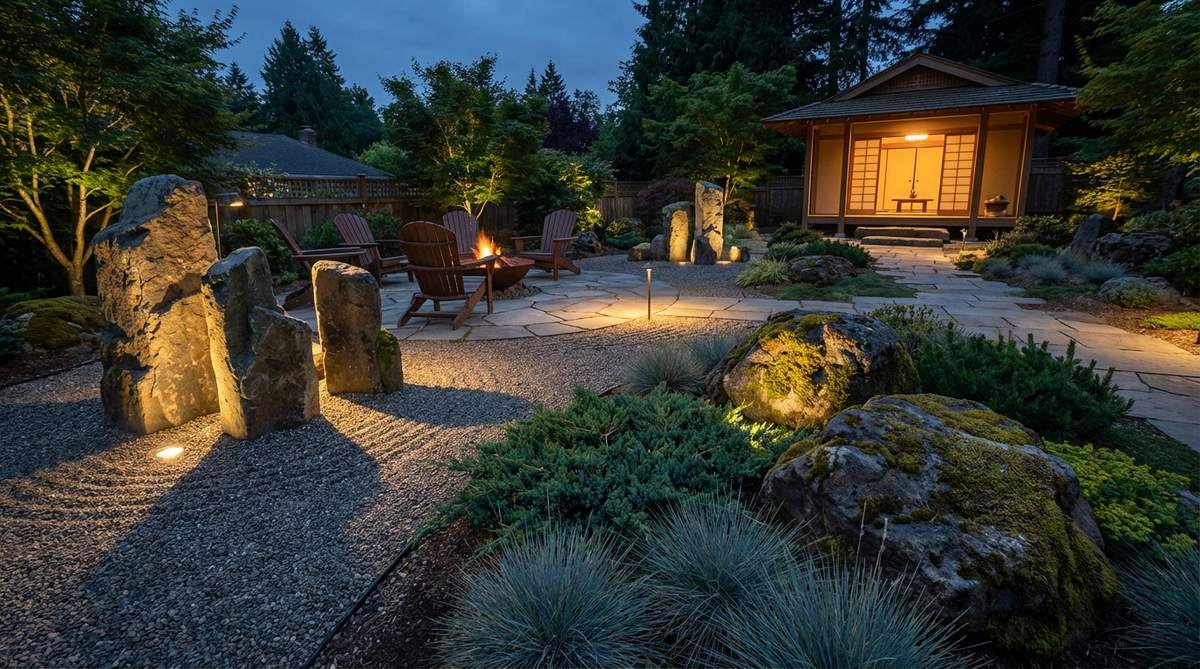
A dramatic, theatrical shadow-play that feels like ancient boulders glowing with their own internal heat. Installing hidden warm-white up-lighting underneath feature rocks doubles the usability of your garden into the night.
Grazing the light against heavily textured stone completely alters the structural perception, making small rocks look like massive mountains. This simple addition gives a designer-level finish that screams luxury resort.
A low-voltage light kit costs around $60–$100. Highly recommended to make your yard pop after sunset.
- Key Materials: Low-voltage LED spotlights, wiring, timer box
- Vibe / Style: Dramatic and luxurious
- Difficulty: Easy low-voltage wiring
- Budget Breakdown: Light kit: $75 | Extension wire: $20
- Creator’s Tip: Always use 2700K warm-white bulbs; bright blue/white LEDs make the stones look like cheap plastic fake rocks.
- Smart Sourcing: low-voltage brass landscape spotlights and outdoor smart lighting transformers.
64. Monochrome Plant Palette
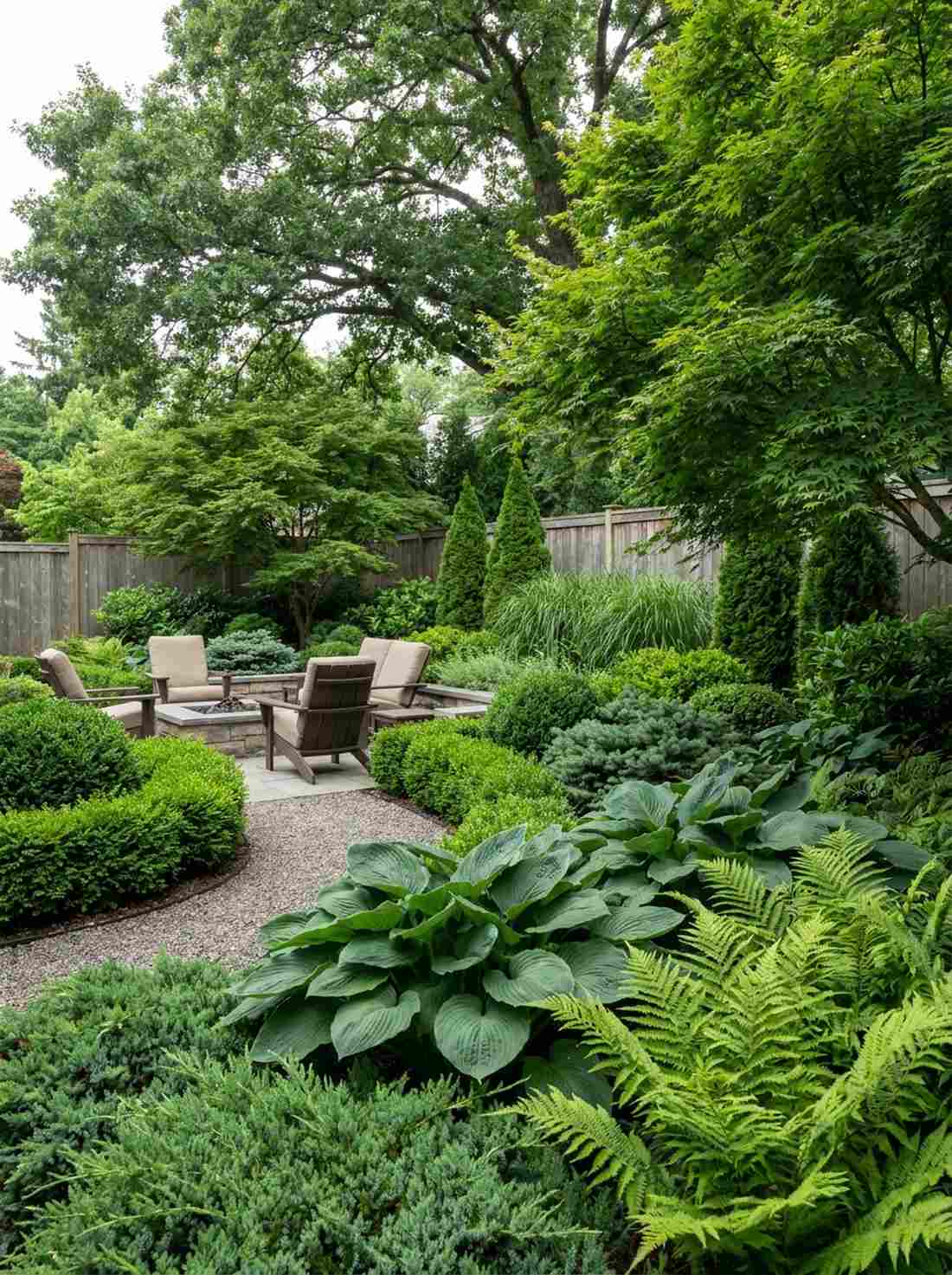
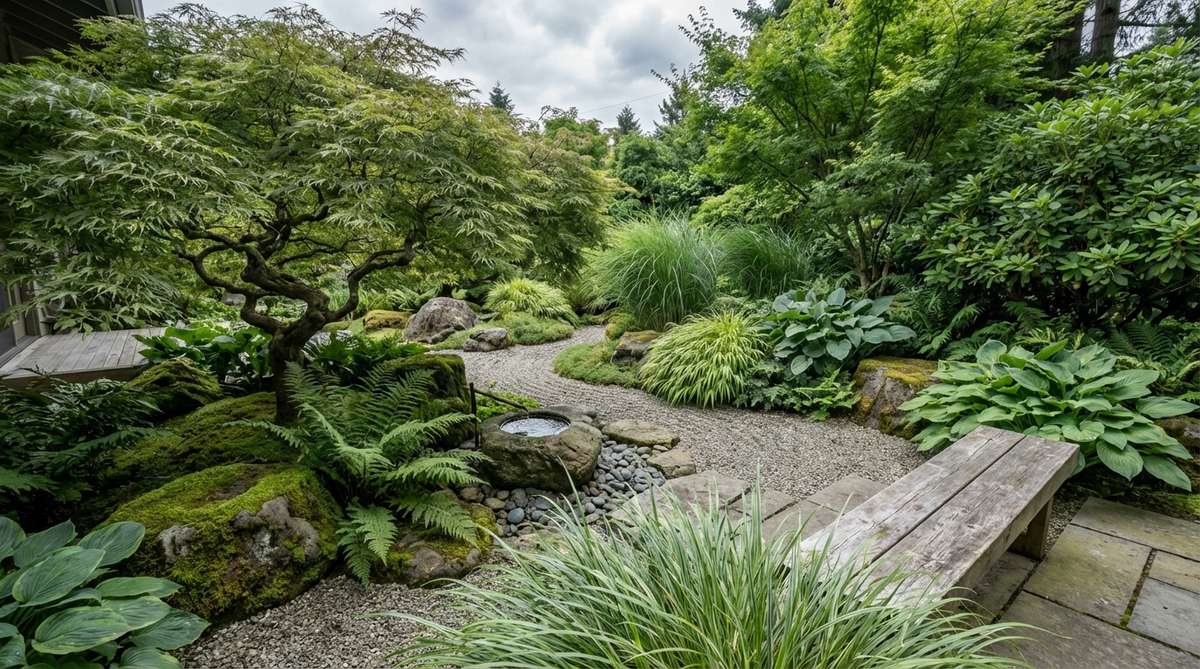
A fiercely disciplined wave of pure green that feels like a soothing, visual palate cleanser for an exhausted brain. Stripping all flowers away to create a strictly monochrome green garden enforces absolute architectural focus.
Relying purely on leaf texture and shape looks far more expensive than it is, mimicking the extreme restraint of high-end corporate campuses. It completely bypasses the chaotic, messy look of dying seasonal flowers.
Transitioning to an all-green layout costs around $150 in new shrubs. Pin this if you hate deadheading flowers!
- Key Materials: Varied evergreens, hostas, ferns
- Vibe / Style: Sophisticated and disciplined
- Difficulty: Requires strict design restraint
- Budget Breakdown: Varied green plants: $150
- Creator’s Tip: Mix giant, broad leaves (like Hostas) directly next to fine, needle-like leaves (like pines) so the greens don’t visually blur into a mush.
- Smart Sourcing: shade-loving Hosta bare roots (bulk pack) and compact evergreen shrub bundles.
Most people separate their patio from their garden. The next trick physically merges the two into one massive entertainment space…
65. Outdoor Room Fusion
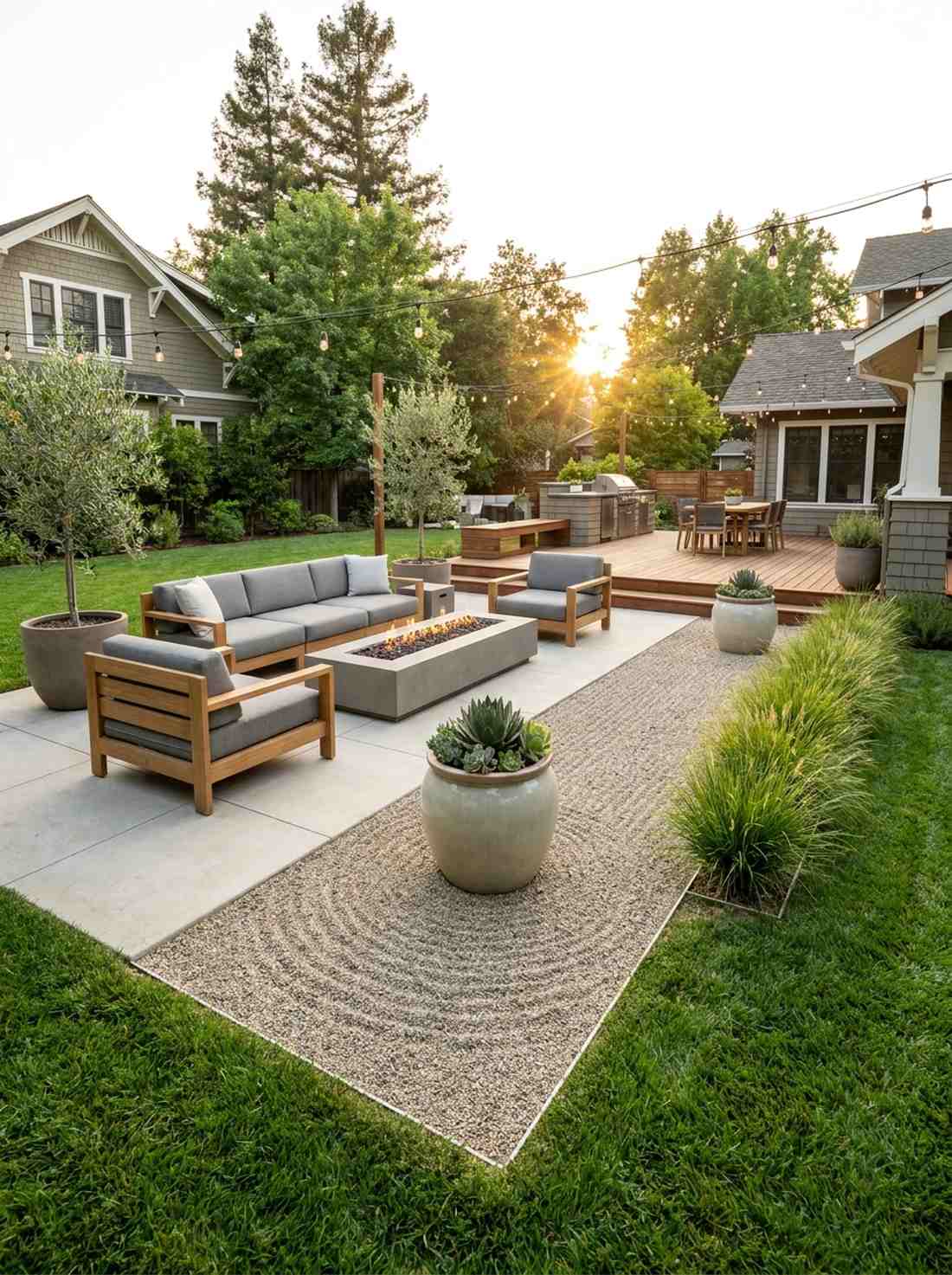
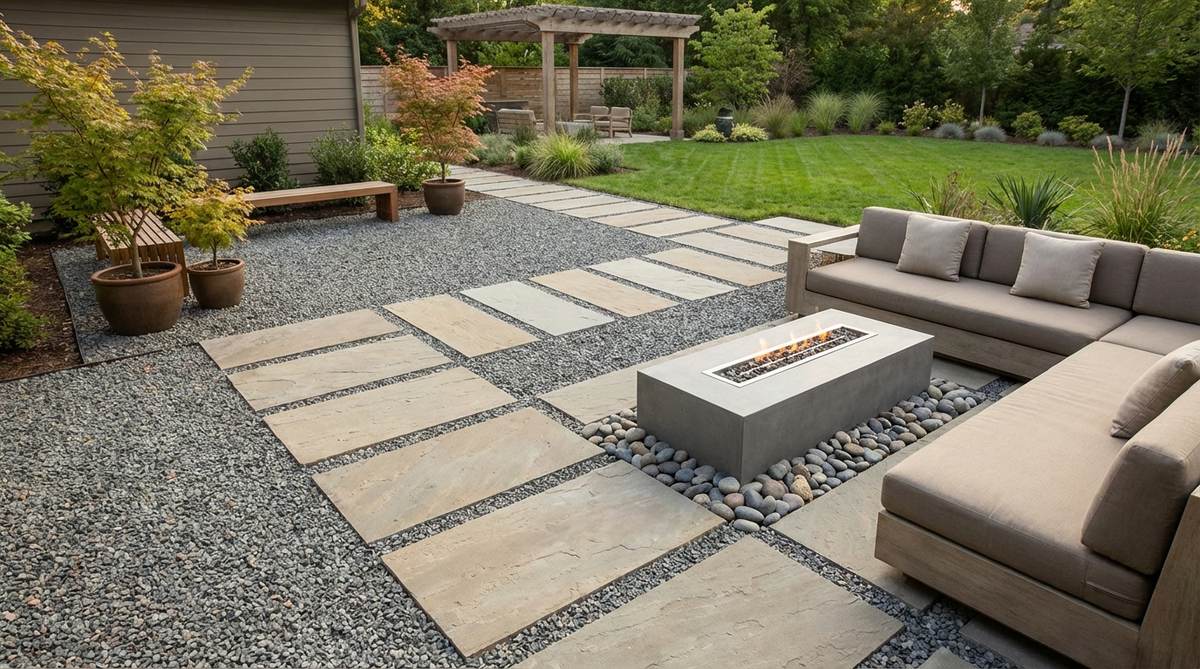
A seamless, blended living area that feels like your modern couch was dropped right into a peaceful monastery. Executing an integrated patio and gravel transition zone brings zen principles directly into heavy entertainment areas.
Letting the raked gravel bleed directly into the seating area delivers a surprisingly premium look that softens harsh concrete edges. It proves you don’t need a dedicated, isolated corner to enjoy mindful design.
Blending the edges costs roughly $100 in border materials. Save this to upgrade a boring square patio.
- Key Materials: Smooth transition edging, gravel, modern furniture
- Vibe / Style: Integrated and social
- Difficulty: Moderate hardscaping
- Budget Breakdown: Gravel extension: $70 | Invisible edging: $30
- Creator’s Tip: Use a rigid, invisible aluminum edge restraint flush with the dirt so the gravel perfectly meets the grass without an ugly plastic lip.
- Smart Sourcing: invisible aluminum paver edging and weatherproof outdoor lounge sets.
66. Sculptural Steel Screens
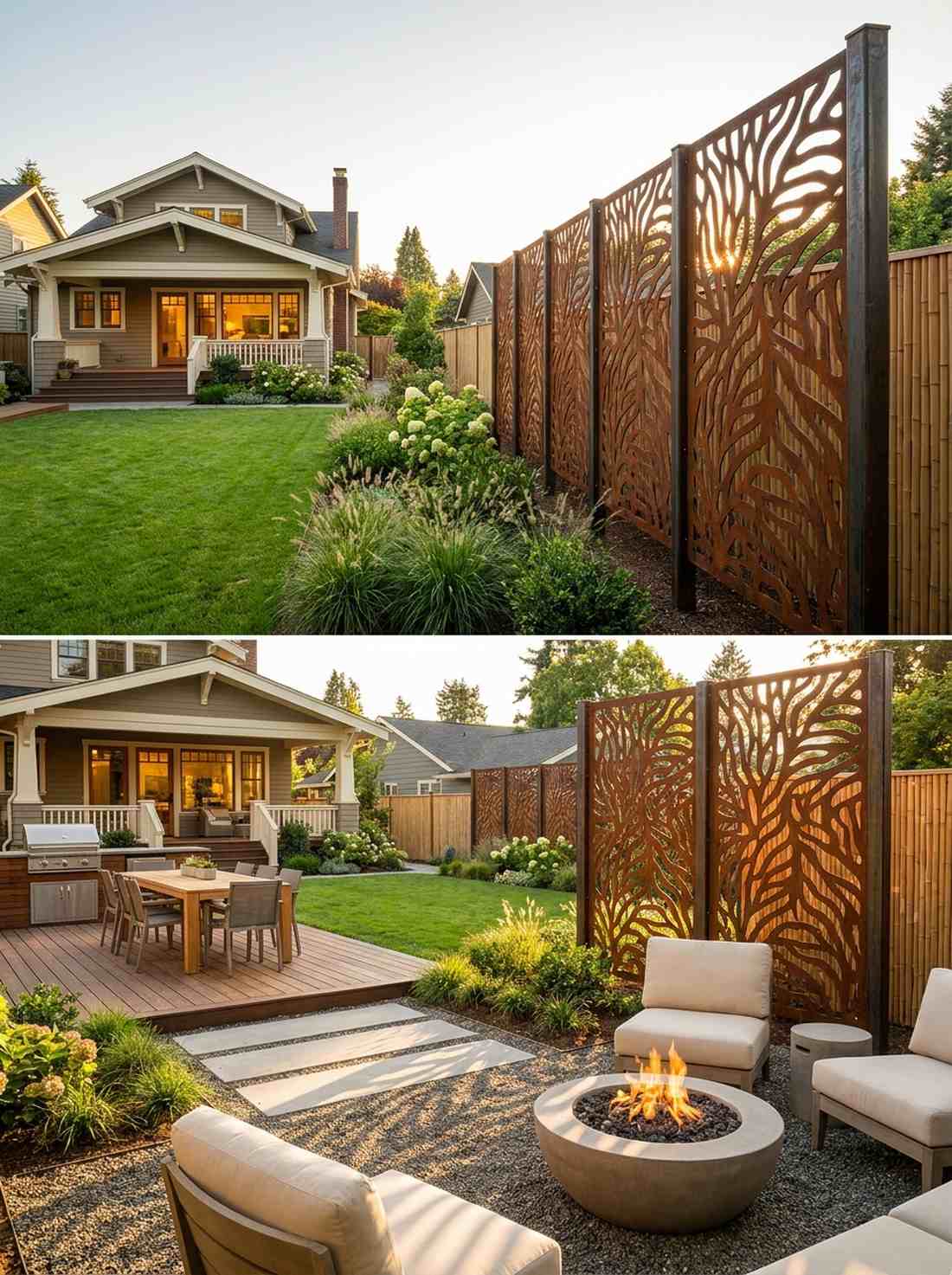
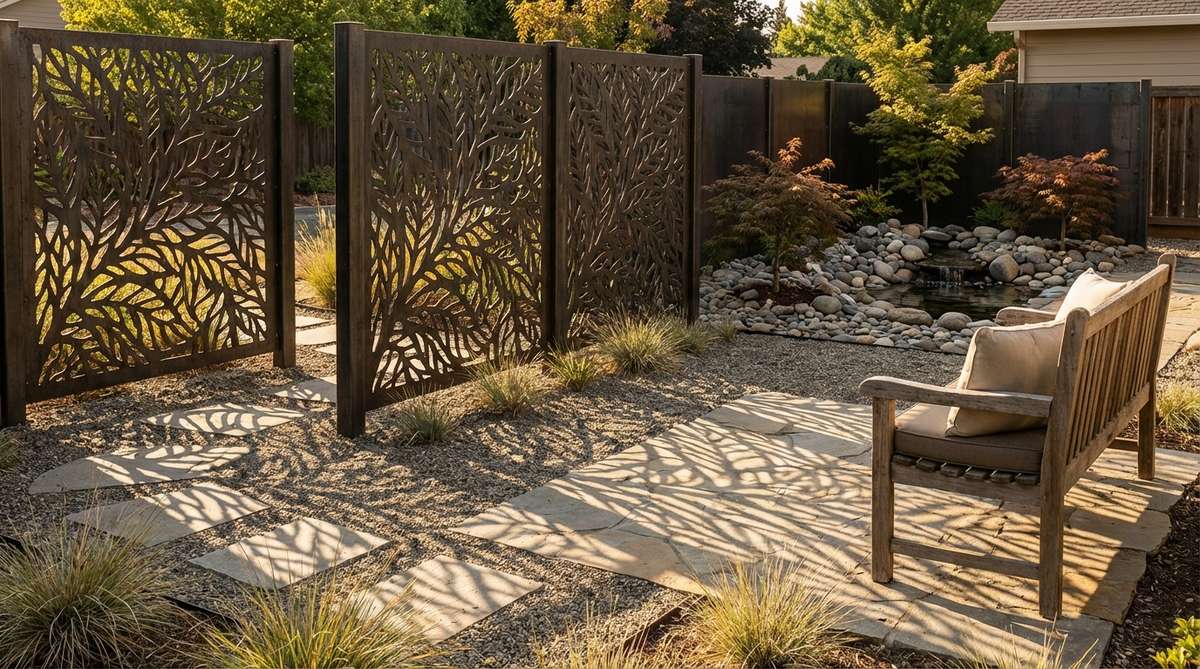
A towering, laser-cut metal canvas that feels like a giant piece of origami filtering the harsh afternoon sun. Using perforated metal privacy panels creates dancing, organic shadows that move across your gravel all day.
The combination of cold, laser-cut steel with soft, natural bamboo completely alters the structural perception of a boring property line. It’s a premium architectural feature that hides ugly fences instantly.
High-end metal screens run $150–$300 each. Pin this for the ultimate modern privacy hack!
- Key Materials: Laser-cut Corten or powder-coated screens, posts
- Vibe / Style: Artistic and shielding
- Difficulty: Moderate post installation
- Budget Breakdown: Metal panel: $200 | Mounting posts: $40
- Creator’s Tip: Mount the panels at least 6 inches off the fence wall; the gap allows the sun to cast massive, moving shadow patterns onto the ground.
- Smart Sourcing: laser-cut metal privacy screens and heavy-duty steel mounting posts.
Textural Ground Covers and Gravel Patterns
Surface materials establish the canvas upon which all other elements are arranged. Material choice affects maintenance requirements, sound quality underfoot, and light reflection throughout the day.
67. Crushed Granite Base Layer
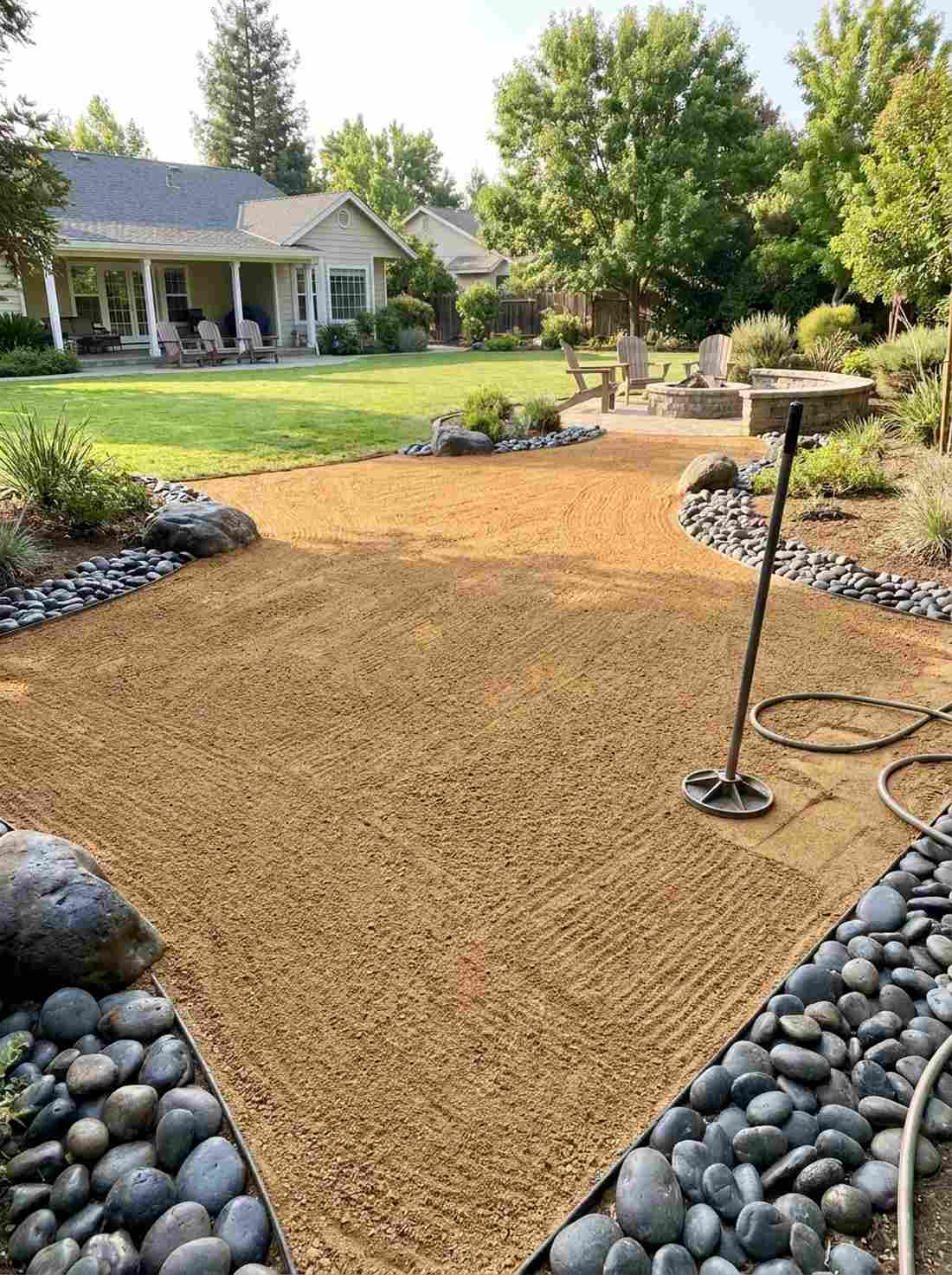
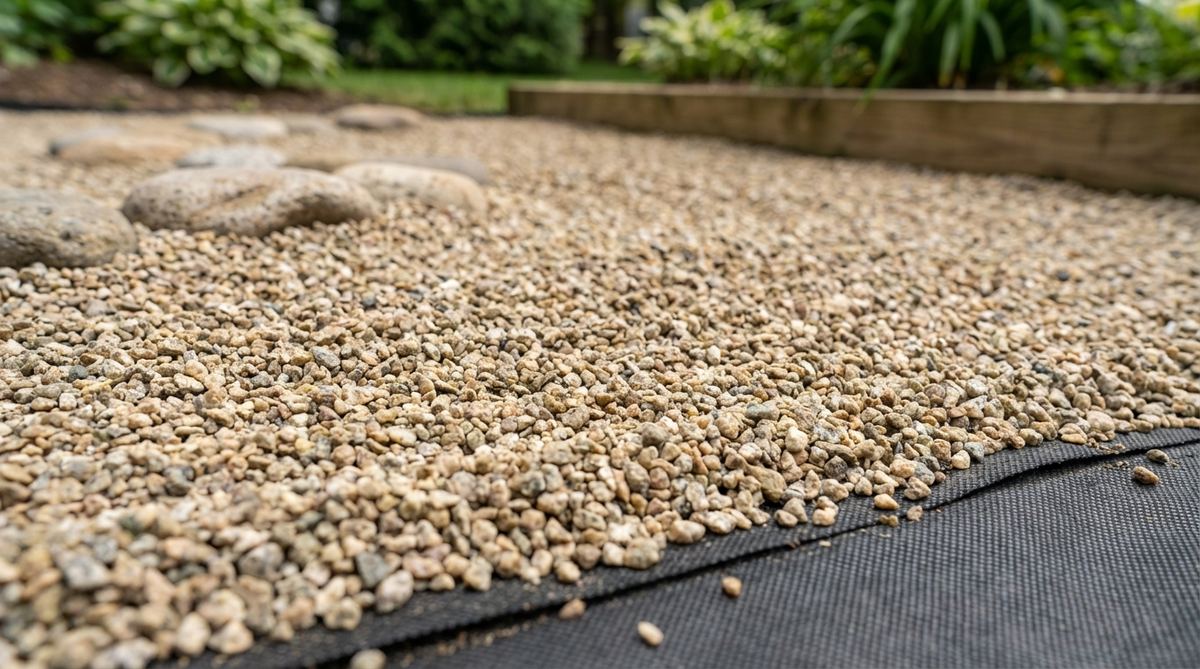
A sharp, gritty floor that feels like a crisp, dry riverbed under your boots. Choosing decomposed granite (DG) as your primary base is the most authentic, rakeable surface for traditional dry layouts.
Because it naturally locks together, it completely bypasses the usual amateur mistakes of using slippery, rolling pea gravel. Sourcing bulk Japanese river rock for accents makes the raw granite look far more expensive than it is.
Bulk DG is incredibly cheap, around $50 a yard. Save this for a massive, budget-friendly yard conversion.
- Key Materials: Decomposed granite and heavy tamper
- Vibe / Style: Authentic and locked-in
- Difficulty: Heavy shoveling and tamping
- Budget Breakdown: DG delivery: $80 | Tamper rental: $20
- Creator’s Tip: Wet the DG heavily with a hose and tamp it down hard; when it dries, it will lock together almost as hard as concrete but remain rakeable on top.
- Smart Sourcing: commercial steel tampers and decomposed granite stabilizer liquid.
68. Pea Gravel Pathways
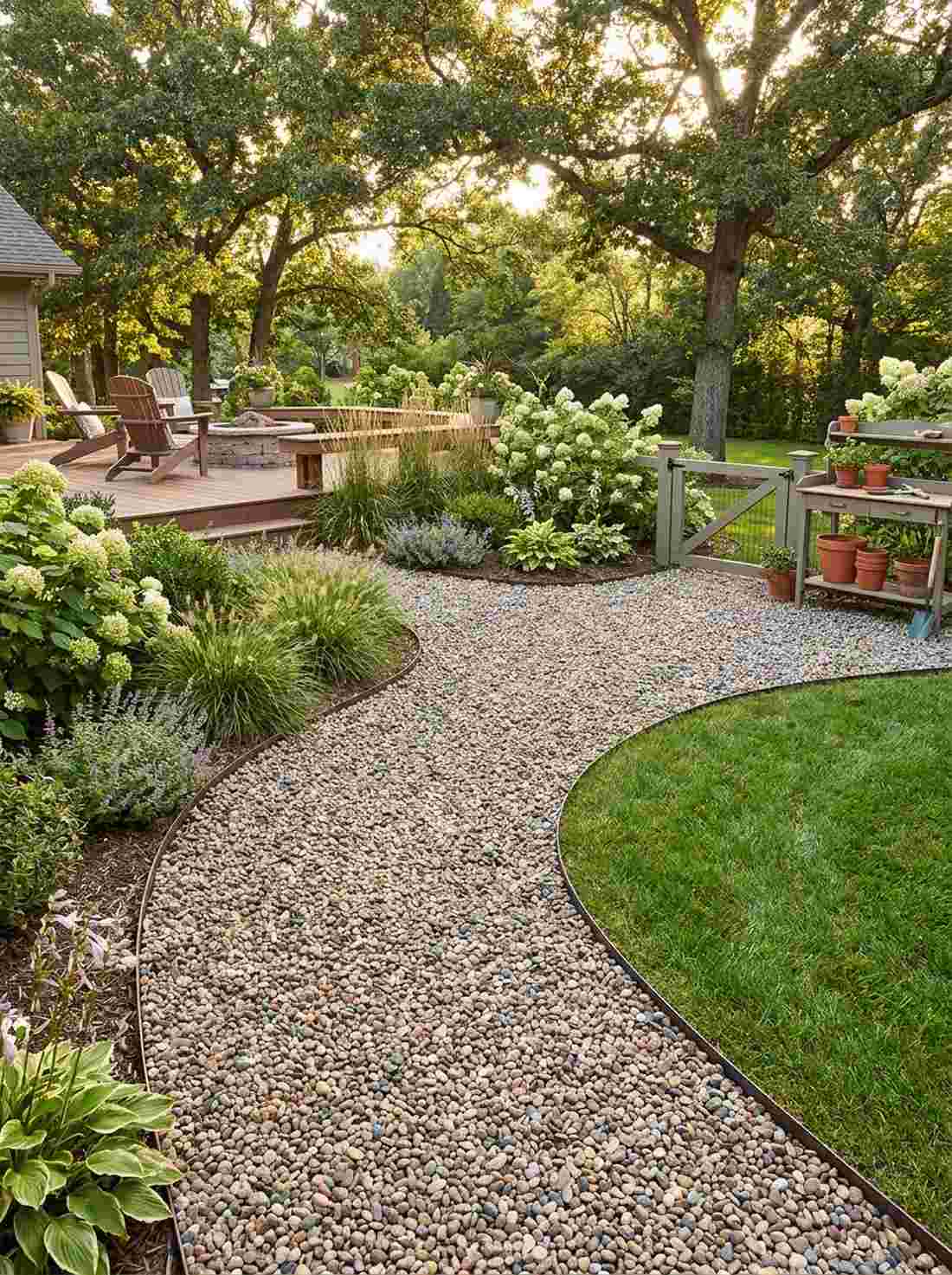
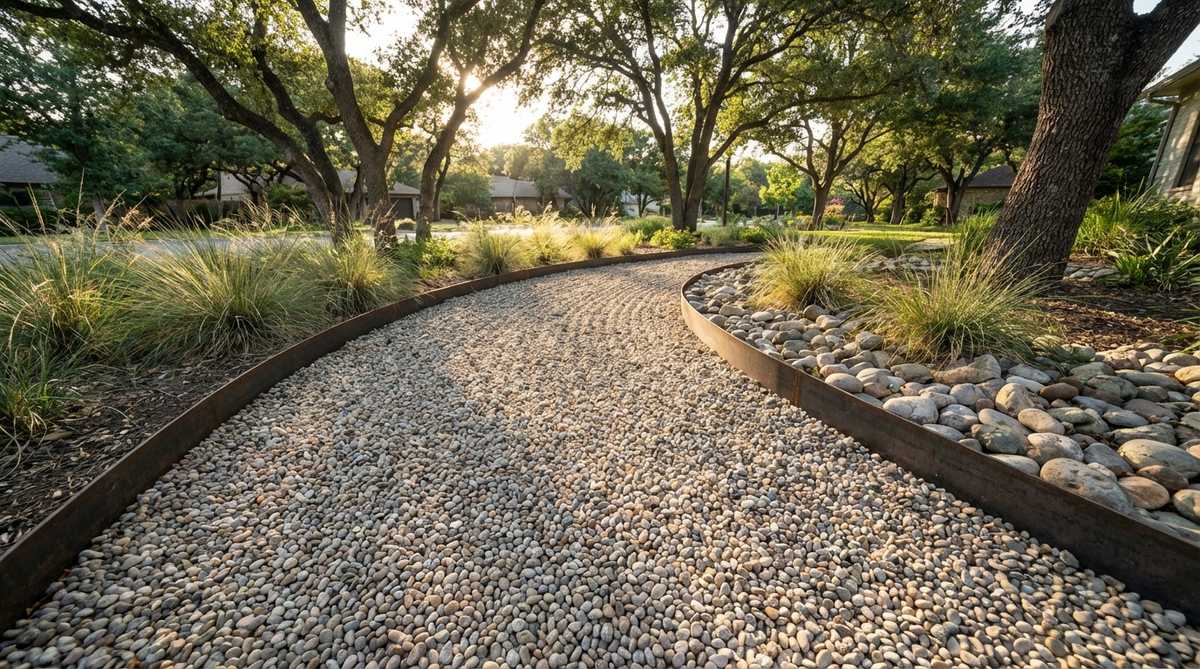
A crunchy, satisfying walkway that feels like an auditory alarm system that sounds beautiful. Laying a rounded pea gravel path engages your hearing with every single step, pulling you into the present moment.
Using strict metal edging to contain the small stones gives a designer-level finish that prevents a messy lawn. It provides excellent drainage for soggy areas where grass simply refuses to grow.
A long gravel path costs about $100–$150. Pin this to fix muddy backyard trails!
- Key Materials: 3/8″ pea gravel and rigid edging
- Vibe / Style: Crunchy and cottage-zen
- Difficulty: Easy hauling
- Budget Breakdown: Pea gravel: $70 | Metal edge: $50
- Creator’s Tip: Never lay pea gravel thicker than 2 inches deep, or it becomes exhausting to walk through, feeling like deep beach sand.
- Smart Sourcing: rigid aluminum landscape edging and heavy-duty landscaping wheelbarrows.
69. Black Lava Rock Contrast Zones
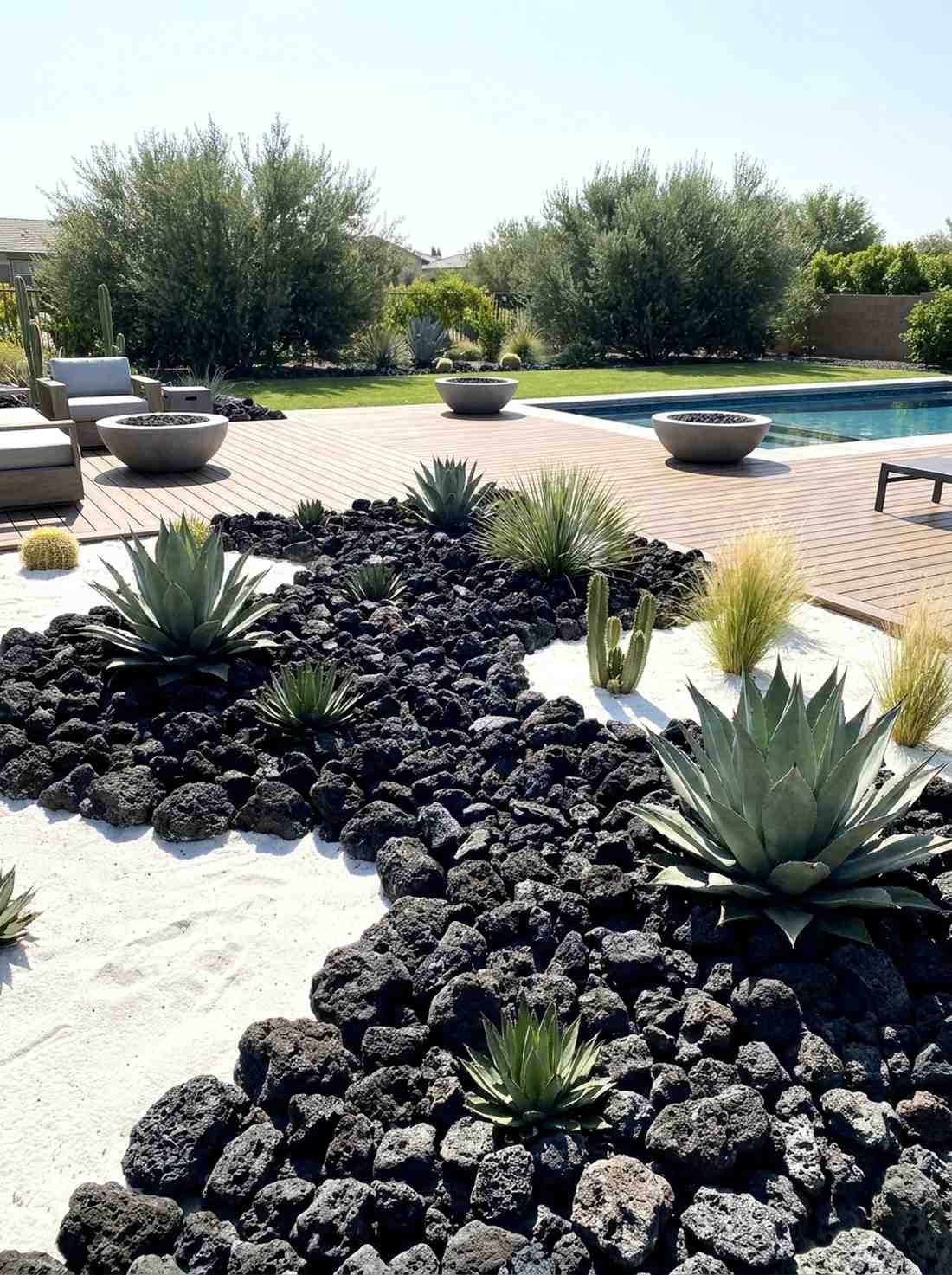
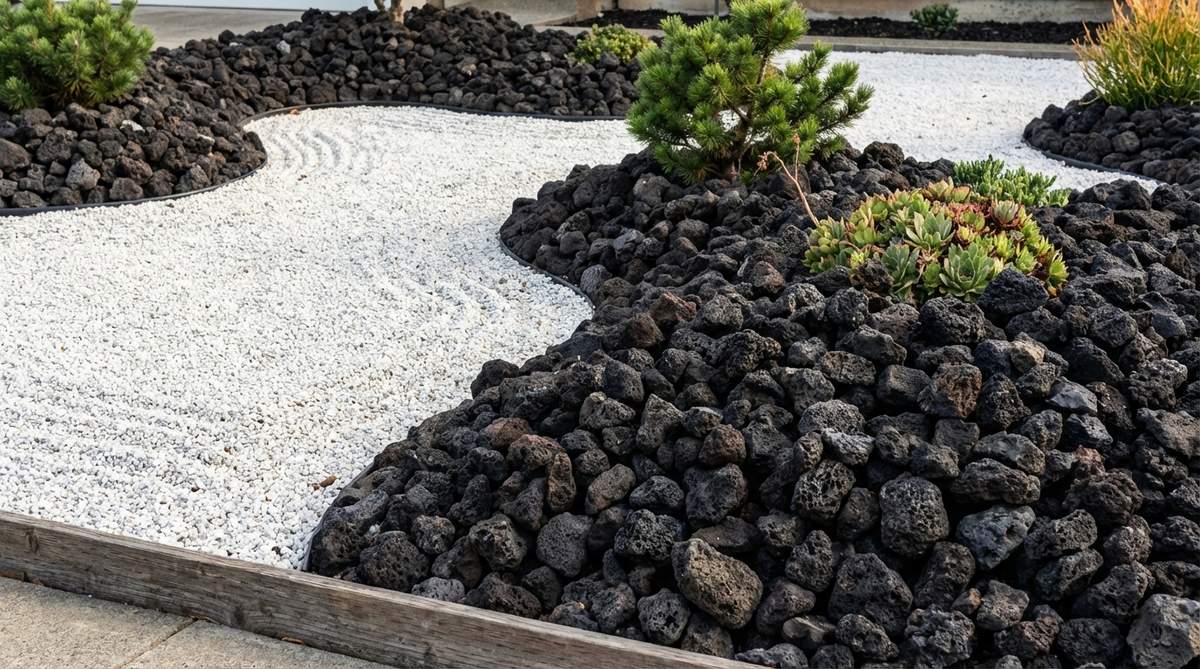
A porous, jet-black void that feels like a hardened volcanic flow ripping through your garden. Using chunky black lava rock creates aggressive, high-contrast borders against bright white sand.
Because the rocks are incredibly lightweight, hauling them is effortless, yet they deliver a surprisingly premium look. They absorb massive amounts of solar heat, making them perfect for keeping nearby heat-loving plants warm at night.
Bags of lava rock cost around $30–$50. Highly recommended for dramatic color blocking.
- Key Materials: Black lava rock chunks
- Vibe / Style: Aggressive and textured
- Difficulty: Extremely lightweight and easy
- Budget Breakdown: Lava rock bags: $40
- Creator’s Tip: Do not use lava rock under large deciduous trees; sweeping dead leaves out of the porous, jagged rock holes is a literal nightmare.
- Smart Sourcing: black volcanic lava rock (bulk pack) and heavy-duty landscape blowers.
70. Scottish Beach Pebbles
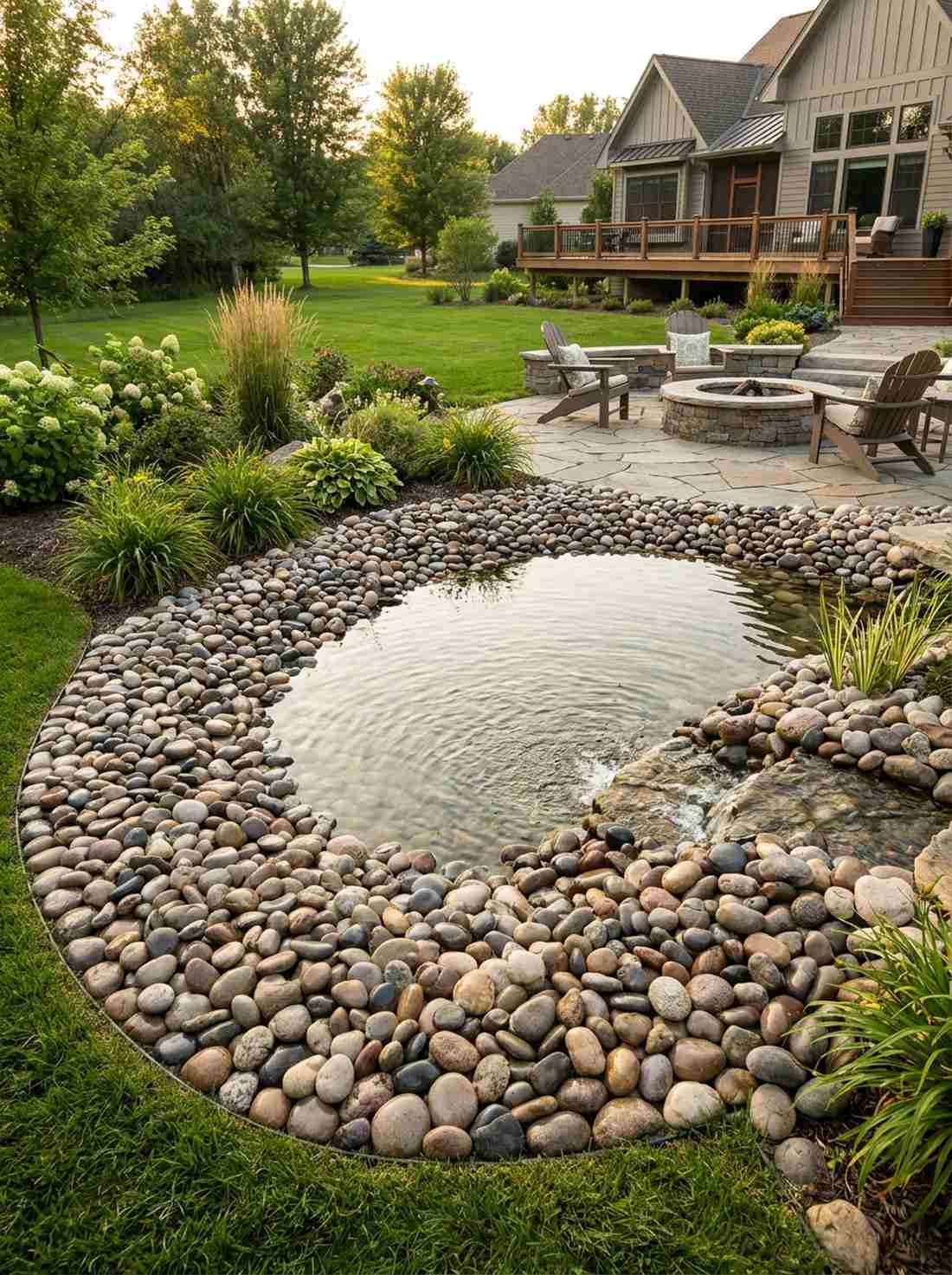
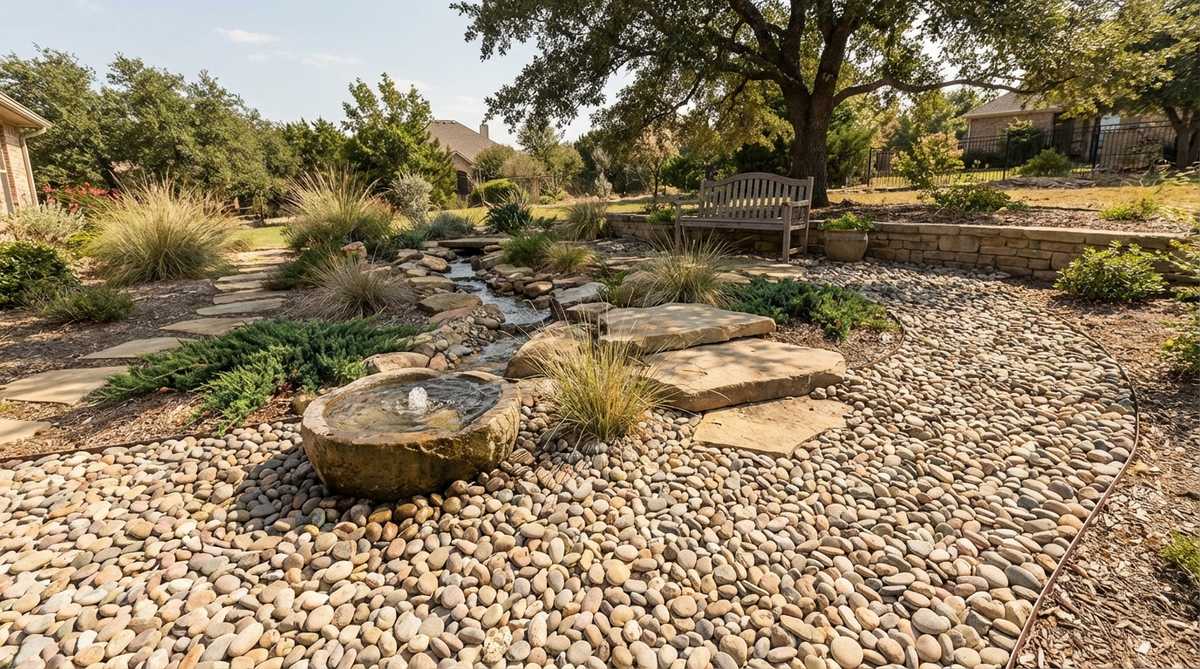
A collection of giant, perfectly smooth eggs that feels like a giant river washed them ashore just for you. Decorating water edges with oversized polished river stones eliminates the need for raking entirely.
The varied, subtle earth tones completely alter the structural perception of cheap plastic pond edges. Upgrading to premium karesansui kits ensures every stone is perfectly smooth and visually soothing.
A bulk bag of large pebbles runs $150+. Save this for a luxurious, zero-maintenance ground cover.
- Key Materials: 2-inch to 4-inch polished beach pebbles
- Vibe / Style: Smooth and effortless
- Difficulty: Heavy lifting
- Budget Breakdown: Premium pebbles: $180 | Base fabric: $20
- Creator’s Tip: Spray them lightly with a wet-look stone sealer so they permanently maintain that beautiful, rich color they have when it rains.
- Smart Sourcing: large polished Mexican beach pebbles and clear wet-look stone sealants.
Atmospheric Elements and Traditional Accessories
Carefully selected accessories enhance the zen garden atmosphere without cluttering the composition. Traditional elements carry symbolic meaning while serving practical functions.
71. Stone Lantern Placement
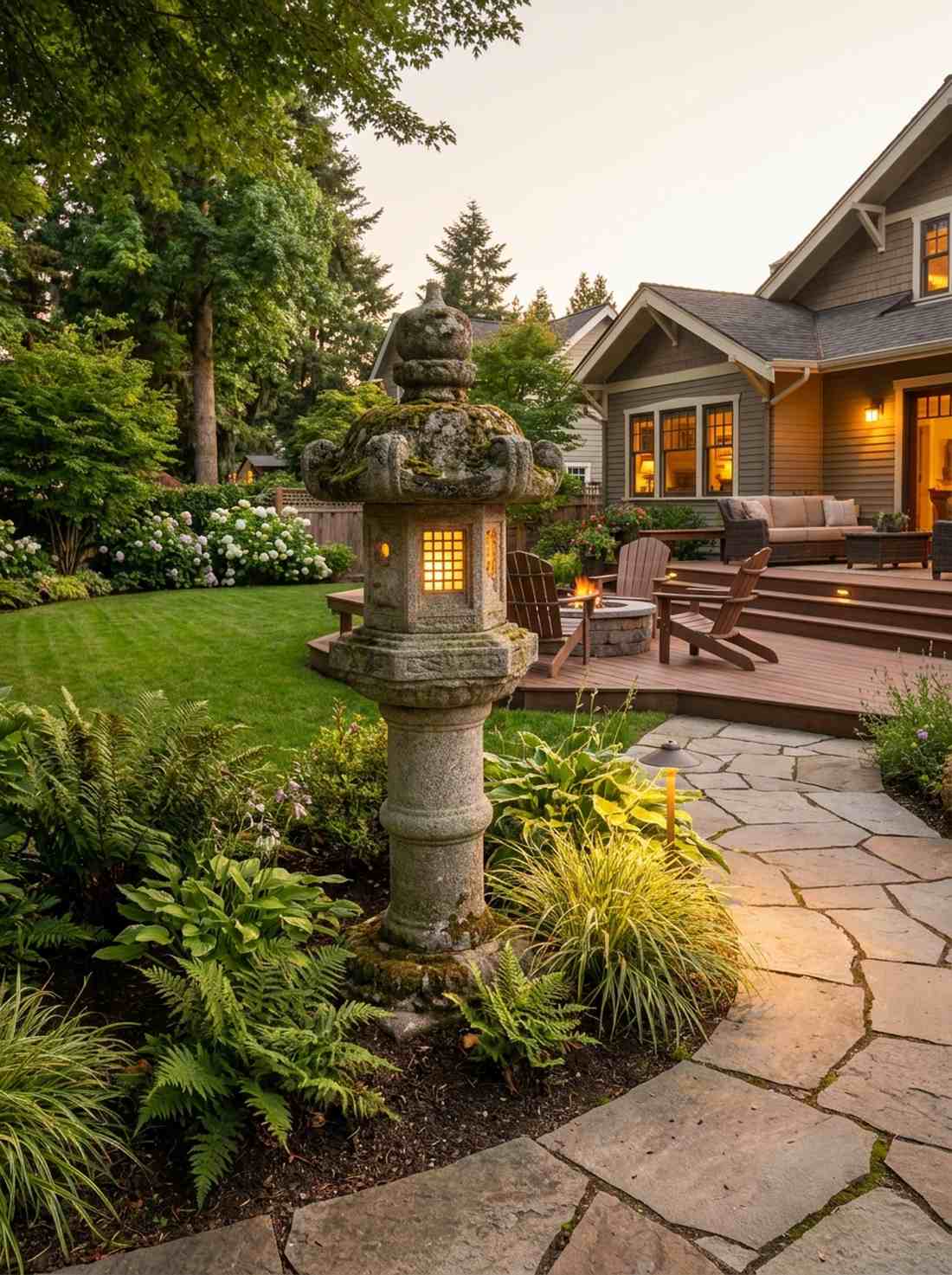
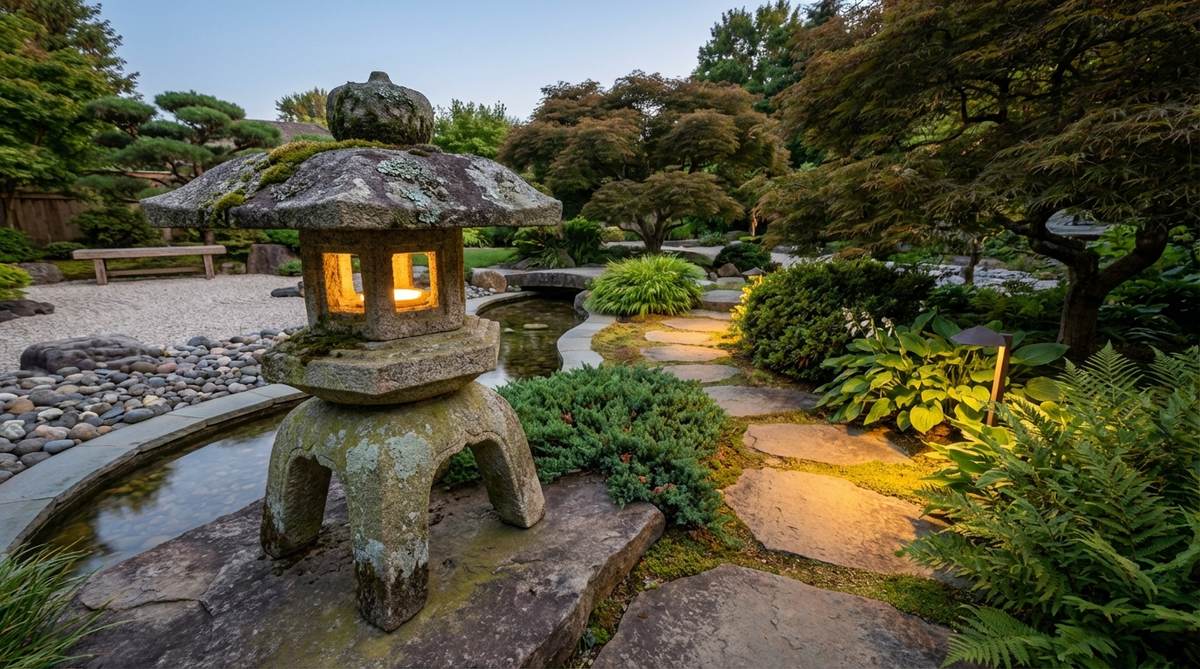
A stout, mossy beacon that feels like a guiding light for weary travelers passing through a dark forest. Placing a traditional granite pagoda lantern gives an instant shot of historic authenticity to a bare corner.
Tucking a waterproof LED puck light inside looks far more expensive than it is, creating a haunting, beautiful glow without expensive wiring. Sourcing weatherproof resin decor alternatives can save hundreds if real stone is too heavy.
Real carved stone lanterns cost $200+, while resin clones run $50. Pin this for the ultimate garden accessory!
- Key Materials: Granite or resin lantern, LED puck light
- Vibe / Style: Historic and glowing
- Difficulty: Heavy lifting (if real stone)
- Budget Breakdown: Resin lantern: $60 | LED lights: $15
- Creator’s Tip: Smear plain yogurt over the roof of a real stone lantern to accelerate moss and lichen growth, aging it 10 years in a single season.
- Smart Sourcing: weatherproof resin pagoda lanterns and remote-control outdoor LED puck lights.
72. Wind Chimes Selection
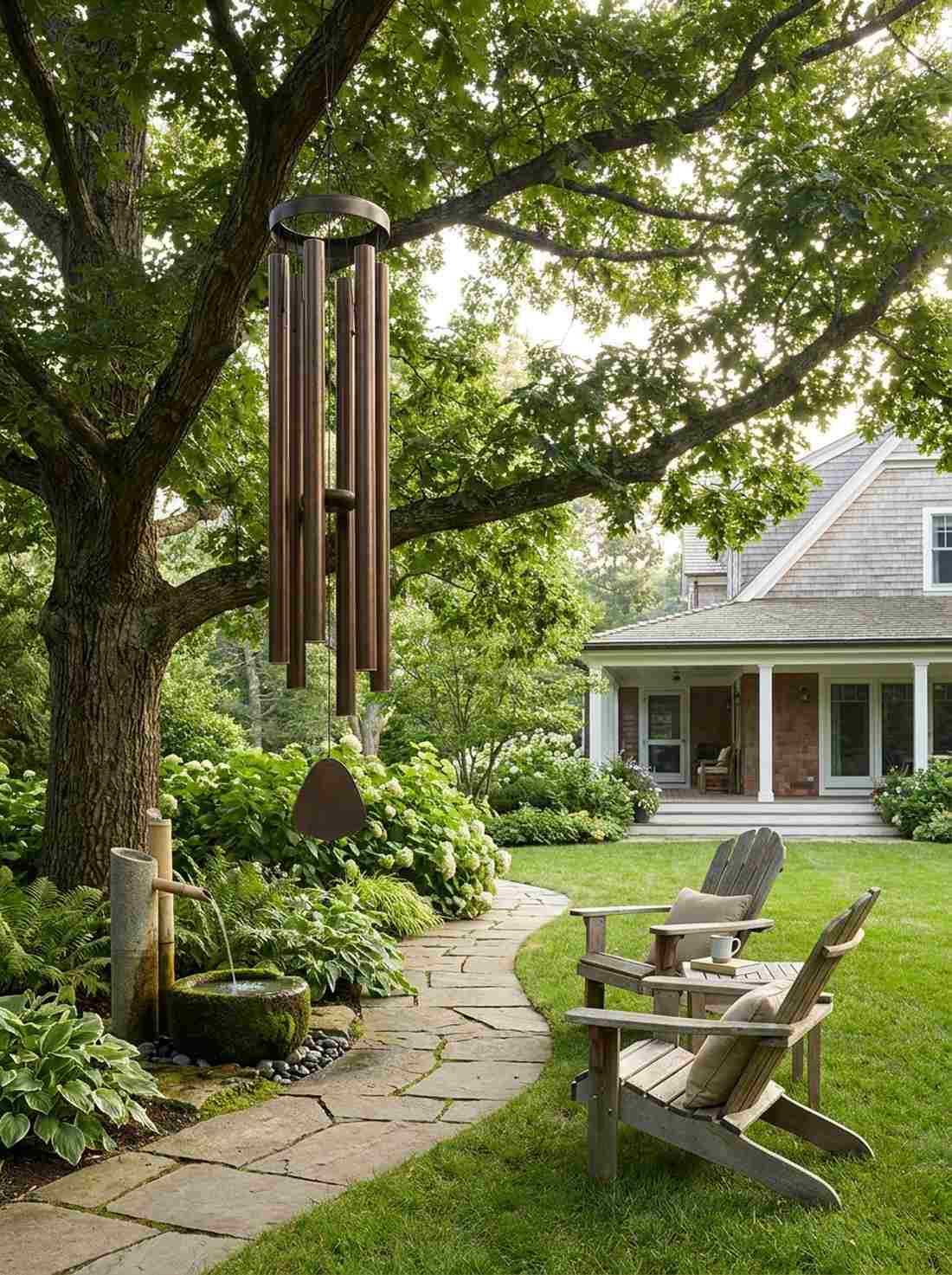
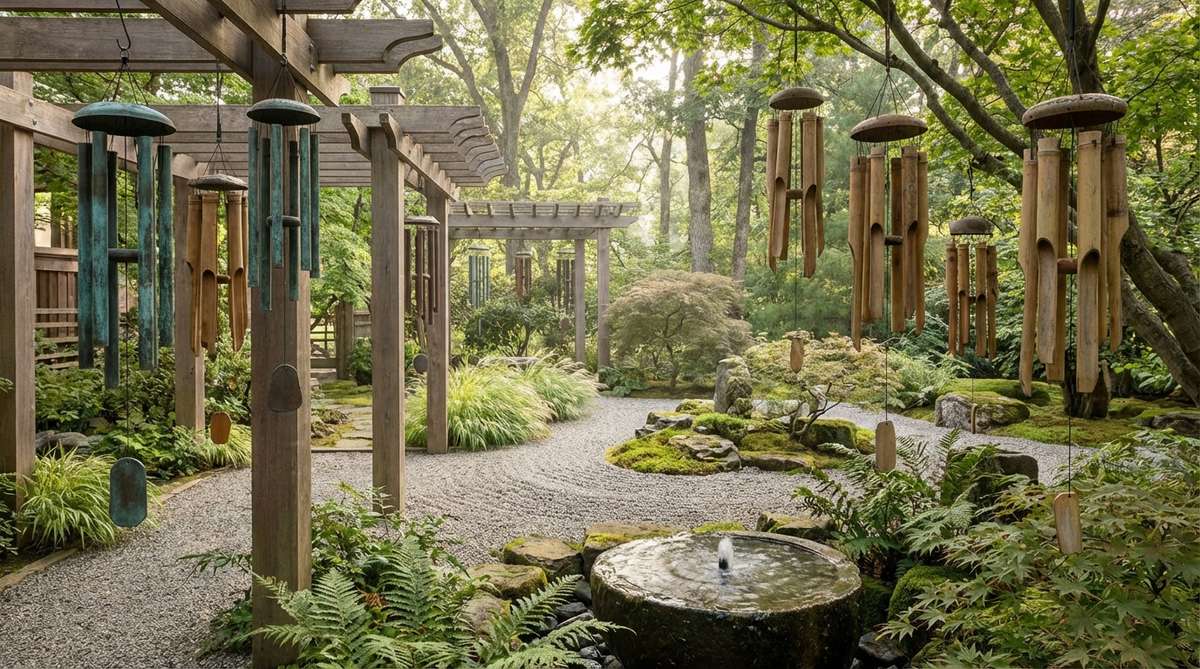
A deep, resonant gong that feels like a monastery bell ringing through a foggy mountain pass. Hanging heavy bamboo or bronze chimes adds a sporadic, beautiful auditory layer to the visual stillness.
Avoiding cheap, high-pitched tin chimes completely bypasses the usual amateur mistakes that annoy neighbors. Deep-toned tubes deliver a surprisingly premium look and sound that perfectly complements the clack of a bamboo fountain.
A high-quality tuned chime costs roughly $40–$80. Save this for a deeply soothing audio upgrade.
- Key Materials: Heavy-walled bronze or bamboo chimes
- Vibe / Style: Resonant and sporadic
- Difficulty: Just hanging a hook
- Budget Breakdown: Tuned chime: $60 | Hook hardware: $5
- Creator’s Tip: Hang them deep within the branches of a tree rather than under an open patio roof; the leaves will muffle the sound beautifully during high winds.
- Smart Sourcing: deep-tone tuned bronze wind chimes and heavy-duty tree branch hooks.
73. Weathered Wood Benches
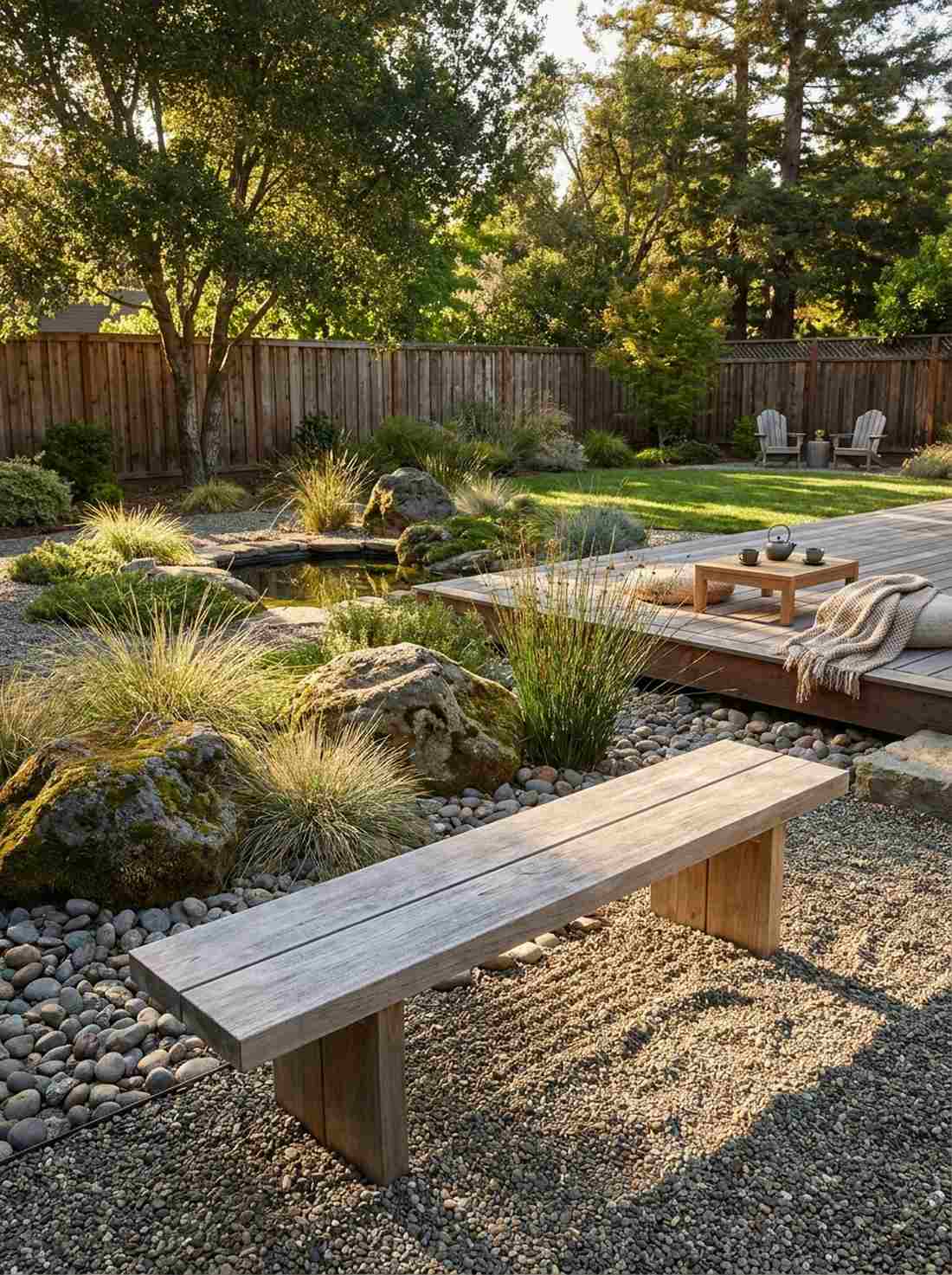
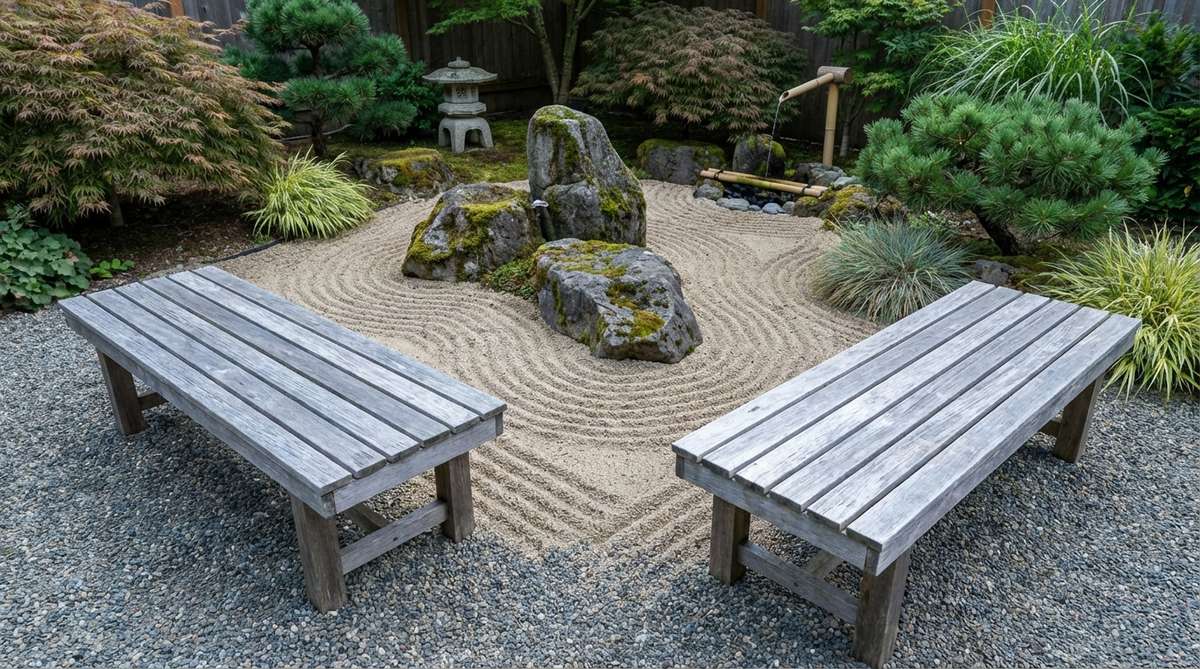
A stark, silvered plank that feels like a forgotten piece of driftwood offering a perfect resting spot. Positioning a backless minimalist wooden bench explicitly dictates where the garden is meant to be viewed from.
Allowing the wood to naturally turn grey instead of staining it gives a designer-level finish rooted in wabi-sabi philosophy. It removes visual clutter, keeping the focus entirely on the zen garden landscape in front of you.
A simple cedar bench costs around $80–$120. Pin this to complete your ultimate outdoor meditation space!
- Key Materials: Untreated cedar or teak plank bench
- Vibe / Style: Austere and inviting
- Difficulty: Easy assembly
- Budget Breakdown: Cedar bench: $100
- Creator’s Tip: Place the bench exactly where the late afternoon sun will hit your back, creating physical warmth during evening meditation sessions.
- Smart Sourcing: backless teak outdoor benches and weatherproof protective feet caps.
Bringing High-End Zen Principles Into Your Landscape
Creating effective zen gardens requires commitment to simplicity, asymmetry, and smart sourcing regardless of garden scale or budget. Whether implementing traditional karesansui dry landscape concepts or modern interpretations that blend contemplative principles with premium materials, the goal remains constant—designing outdoor spaces that look like $10,000 contractor jobs for a fraction of the cost. Start with a single stone grouping from the 73 exact blueprints provided here, then expand gradually using high-end starter kits and bulk aggregates. Regular maintenance becomes meditation practice itself when your setup is structurally sound. Save this comprehensive guide to ensure you never overpay for a serene, luxury landscape again.
Frequently Asked Questions
What are the essential elements needed to start a zen garden?
Begin with a base layer of fine gravel or decomposed granite (buying a bulk pack saves massive money), three to five asymmetrical natural stones, and an adjustable wooden rake. These minimal components allow you to establish a premium-looking meditation space in areas as small as three square feet. Skip the expensive local nurseries and opt for premium karesansui kits online to get the perfect foundational look.
How much maintenance do zen gardens require?
Traditional dry landscape setups require drastically less maintenance than conventional lawns, saving you hundreds in water bills. Weekly tasks simply include raking gravel patterns and blowing away fallen leaves. By utilizing heavy-duty weed barrier rolls under your gravel and choosing slow-growing evergreen starter kits, the meditative raking becomes a stress-relieving practice rather than a sweaty backyard chore.
Can zen gardens work in small urban spaces?
Zen garden principles adapt incredibly well to balconies, courtyards, and even desktops, instantly raising the perceived value of tight real estate. Small spaces often intensify the contemplative experience by limiting distractions. Using miniature garden supplies, shallow tray containers, and preserved moss vertical panels brings high-end zen aesthetics to apartment dwellers without any ground access.
What is the significance of raking patterns in zen gardens?
Raking gravel serves dual purposes—the patterns visually mimic water movement, while the repetitive physical act functions as an active stress-relief mechanism. Upgrading to a commercial-grade zen rake ensures your lines look sharp and professional, like still water or swirling currents. This zero-cost visual upgrade makes a cheap pile of rocks look like a luxury resort installation.
Which plants work best for zen gardens in American climates?
Japanese maple varieties thrive across most US climate zones and provide authentic, expensive-looking aesthetics. Evergreen options like dwarf mondo grass plugs and compact azalea cultivars give maximum visual impact for minimal cost. Bamboo works brilliantly when locked inside a heavy-duty rhizome barrier to prevent spreading, prioritizing architectural form over messy, high-maintenance flowering plants.
How do modern zen gardens differ from traditional Japanese designs?
Contemporary interpretations maintain the core psychological benefits while injecting modern, durable materials like large-format concrete patio pavers, Corten steel, and tumbled recycled landscape glass. Modern designs often merge zen elements directly into entertainment patios (like fire pits) rather than isolating them. Knowing the difference between cheap craft supplies and premium aesthetic materials bridges the gap perfectly.