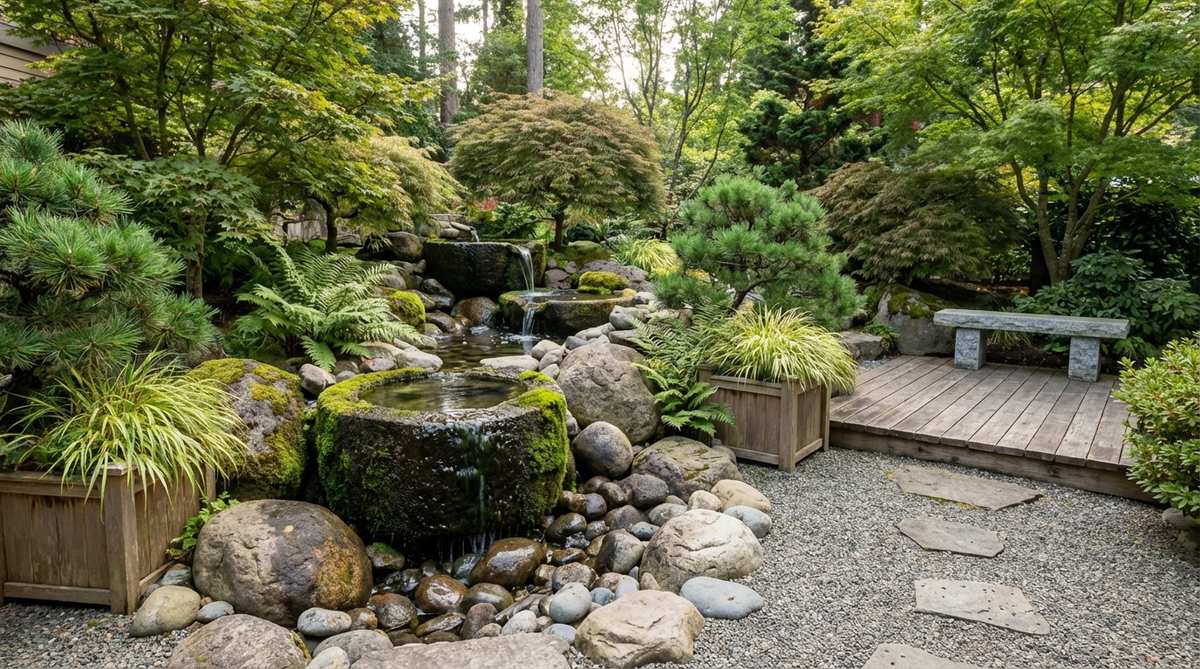
A zen garden water feature transforms outdoor spaces into meditative sanctuaries through the therapeutic power of flowing water. Professional landscape architects integrate these installations to mask urban noise, reduce stress, and create focal points that anchor contemplative garden design. Fresh Garden Ideas presents expert-tested water feature concepts that balance aesthetic impact with acoustic benefits for American homeowners seeking authentic tranquility.
Design SnapshotKey Principles
- Sound Quality Over Volume: Gentle trickling produces therapeutic white noise at 40-50 decibels, ideal for masking neighborhood sounds without overwhelming conversation
- Natural Material Integration: Stone, bamboo, and weathered elements create organic visual harmony that ages gracefully through seasonal cycles
- Scale Proportionality: Feature size should match garden dimensions—compact basin fountains for courtyard settings, tiered installations for expansive lawns
- Pump Efficiency: Recirculating systems with adjustable flow rates allow customization of sound intensity while minimizing water waste and energy consumption
Traditional Japanese Stone Basin Features
Authentic Japanese water features emphasize ritual purification and contemplative simplicity. These installations root garden design in centuries-old aesthetic traditions that prioritize natural materials and understated elegance.
1. Tsukubai Stone Basin with Bamboo Kakei
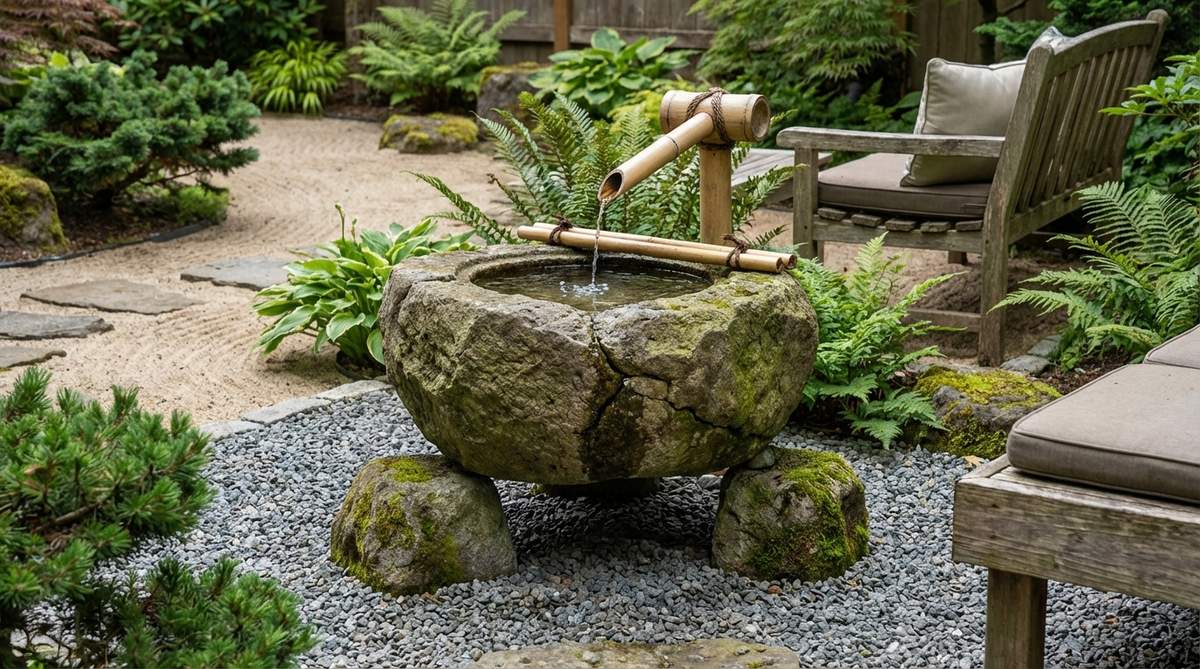
The tsukubai represents the pinnacle of traditional zen garden water fountain design, featuring a low stone basin fed by a bamboo spout positioned to require a slight bow during use. Craftsmen carve these basins from single boulders, selecting stones with natural weathering patterns that enhance visual depth.
Install the basin 12-18 inches above ground level on a gravel bed surrounded by three supporting stones—one for a water ladle, one for a lantern, and one for a waste bucket. The bamboo kakei delivers water in a steady drip that produces resonant tones as droplets strike the stone surface.
This configuration creates acoustic layering—the bamboo drip provides sharp percussive notes while overflow generates softer ambient sound. Positioning the basin near seating areas maximizes the meditative benefits of these overlapping frequencies.
2. Suikinkutsu Underground Water Harp
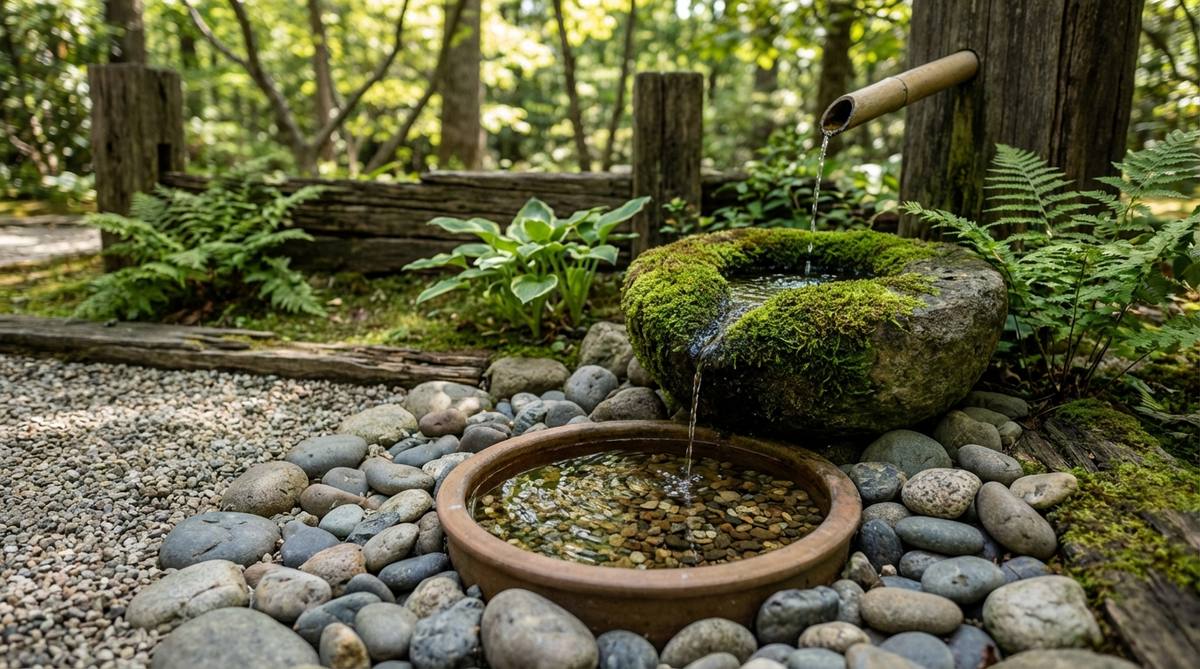
This hidden water feature produces bell-like tones through an inverted ceramic pot buried beneath a drainage basin. Water droplets falling through a small hole at the pot’s base create reverberating sounds that emerge from the underground chamber.
Excavate a cavity 2-3 feet deep and position the upside-down pot on a gravel base with its opening facing down. The drainage basin above channels excess tsukubai water into the chamber, where each drop generates crystalline acoustic notes.
The suikinkutsu adds an invisible sound layer that visitors discover gradually, creating moments of delightful surprise. This feature works best in quiet garden corners where subtle audio details remain perceptible.
3. Chozubachi Hand-Washing Basin
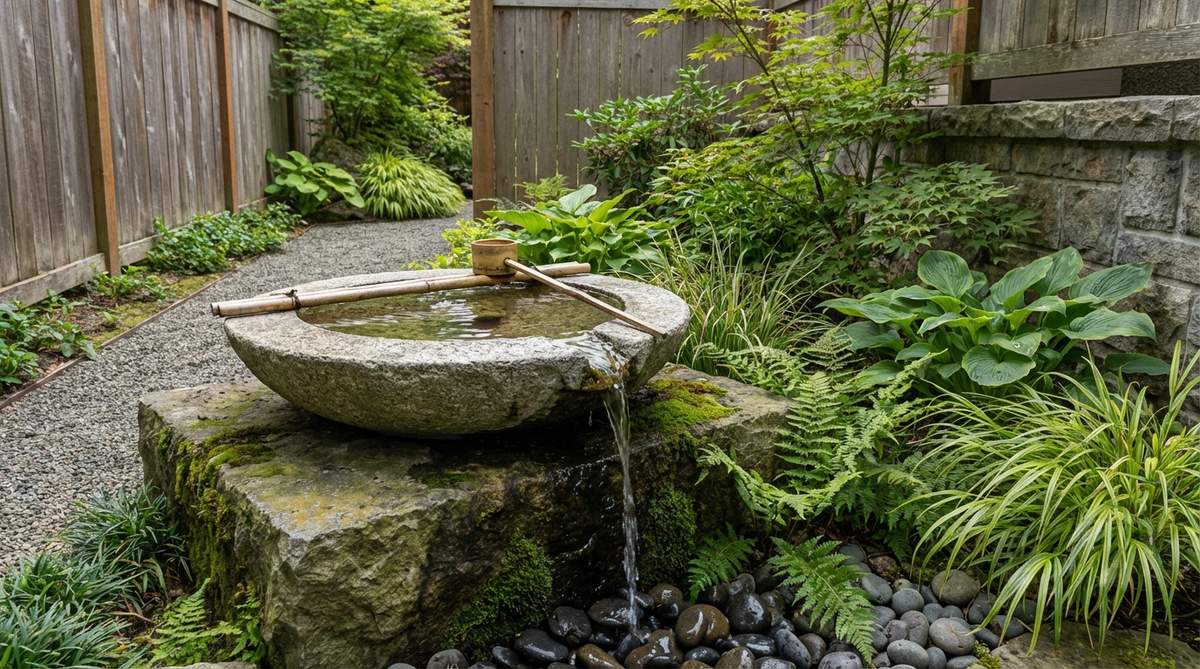
Chozubachi basins originated at temple entrances for ceremonial cleansing and translate effectively to residential gardens as functional art. These shallow stone bowls collect water in circular depressions carved to hold just enough for ritual hand washing.
Select granite or basalt basins with natural patina and position them on stable platforms at waist height. A simple bamboo dipper resting across the rim invites interaction and adds vertical interest to the horizontal stone form.
Connect the basin to a recirculating pump hidden beneath surrounding plants for continuous water flow. The gentle overflow creates soft trickling sounds while maintaining the basin’s primary purpose as an interactive element.
4. Natural Boulder Basin with Spillway
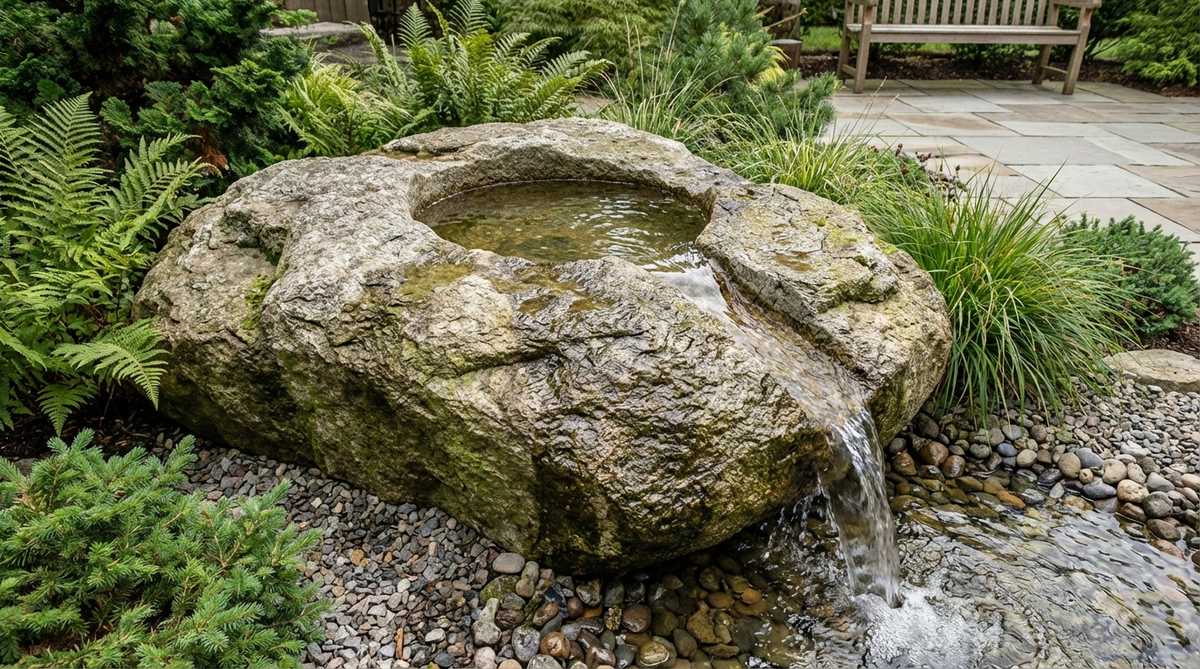
Large boulders with naturally formed depressions become striking water features when converted into basins with carved spillways. Stonemasons hollow central cavities and cut channels that direct overflow in controlled patterns across the rock surface.
Source boulders weighing 500+ pounds to ensure stability and permanence in the landscape. The basin depth should reach 4-6 inches to maintain water volume during pump operation while preventing splashing.
Water cascading across irregular stone surfaces produces varied acoustic textures as flow interacts with surface roughness. Position these features as garden anchors that ground surrounding plantings with geological weight.
5. Millstone Fountain with Central Aperture
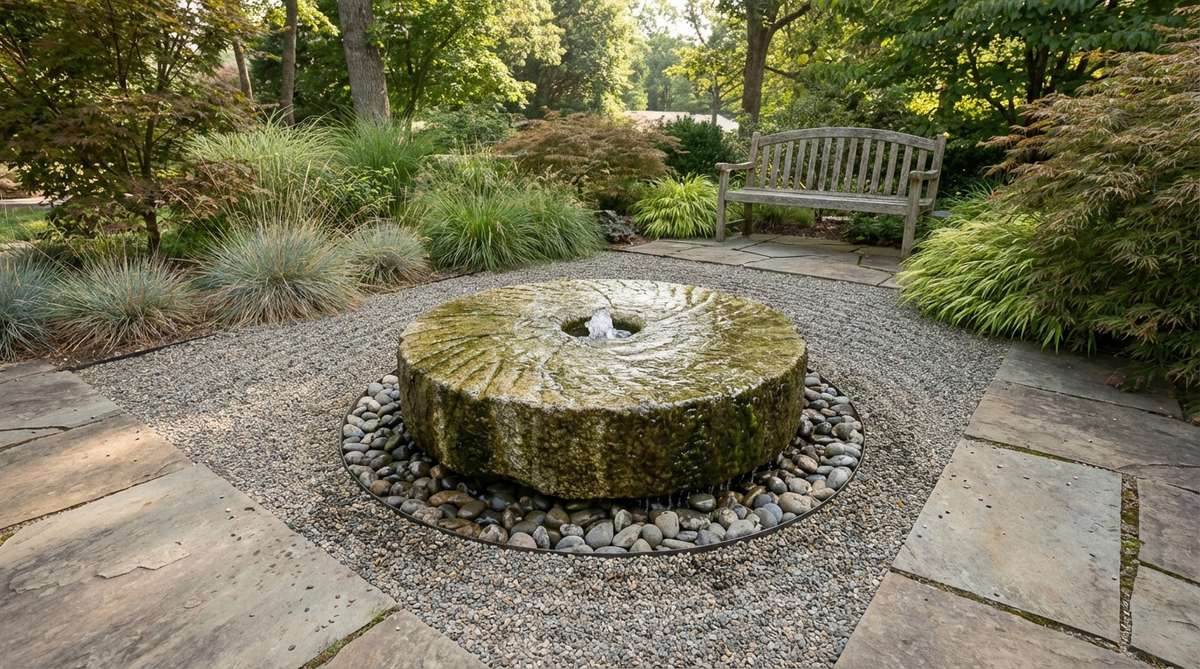
Reclaimed grinding stones from agricultural heritage create compelling water features when repurposed as basin fountains. The central hole originally used for grain processing becomes the aperture for water to bubble upward and spill across the circular stone face.
Mount the millstone horizontally over a reservoir basin containing a submersible pump. Water emerges through the center and sheets evenly across the stone’s radius before collecting in the hidden reservoir for recirculation.
These installations blend industrial history with natural elements and work particularly well in gardens mixing rustic and contemporary design languages. The constant water movement prevents algae growth on the stone surface.
Bamboo Spout Fountain Systems
Bamboo brings organic texture and Asian authenticity to zen garden waterfall installations while offering acoustic properties distinct from stone. These features age naturally, developing rich patinas that enhance visual character over time.
6. Shishi-Odoshi Deer Scarer Bamboo Fountain
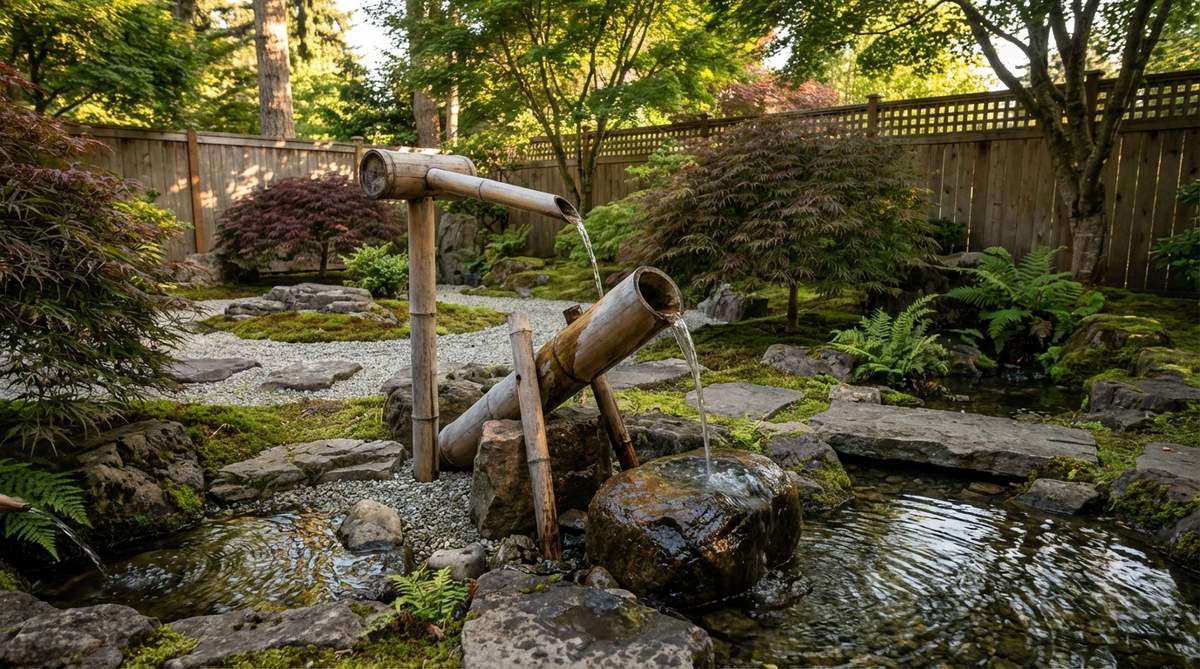
This pivoting bamboo tube fills with water until weight causes it to tip forward, emptying with a distinctive clack as it strikes a stone. Originally designed to frighten deer from crops, the shishi-odoshi now serves as kinetic sculpture with rhythmic acoustic punctuation.
Construct the mechanism using 3-inch diameter bamboo poles with one end sealed to create a water chamber. The pivot point sits slightly off-center so gravity returns the tube to vertical after emptying, creating a repetitive cycle.
Installation requires careful calibration of water flow rate and pivot tension to achieve consistent intervals between clacks. The sharp percussive sound contrasts beautifully with continuous trickling from other garden features.
7. Bamboo Water Spout Cascade
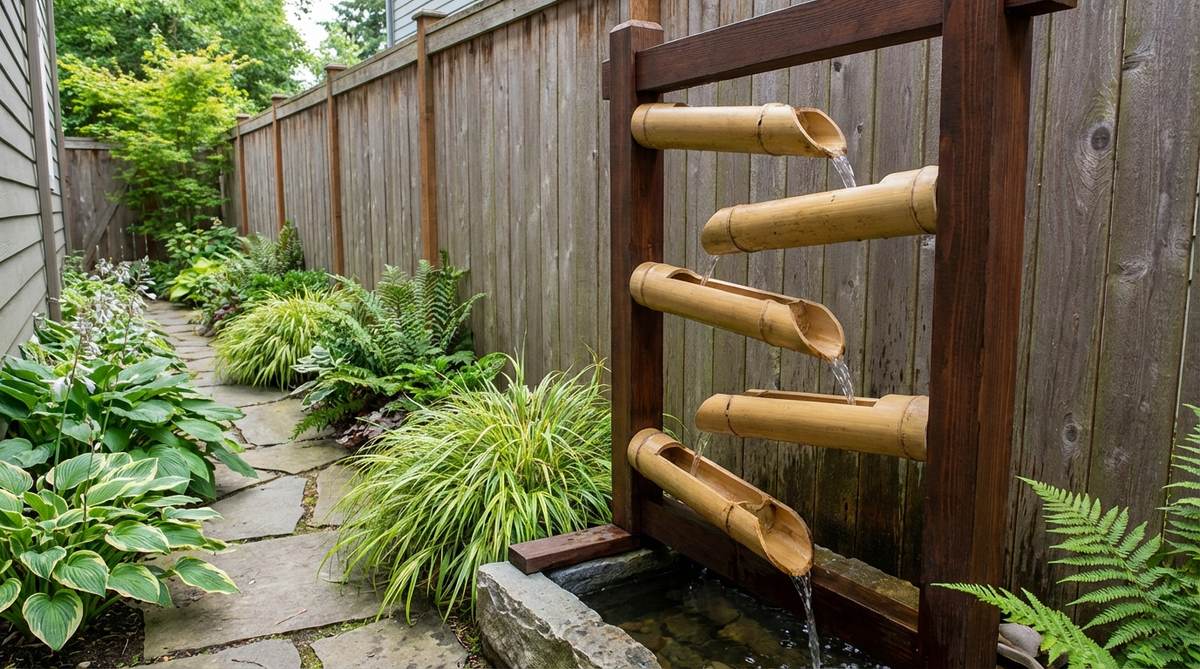
Multiple bamboo sections arranged at descending heights create tiered water flow with distinctive hollow resonance. Each segment receives water from the one above, producing layered sounds as liquid fills and overflows through cut openings.
Cut bamboo poles at angles to create spouts and mount them on a vertical support structure secured to fence posts or walls. Position catch basins beneath each level to direct water to the next tier.
The hollow bamboo amplifies water sounds, creating richer tones than solid materials. This vertical design suits narrow garden spaces where horizontal spread remains limited.
8. Bamboo and Stone Hybrid Fountain
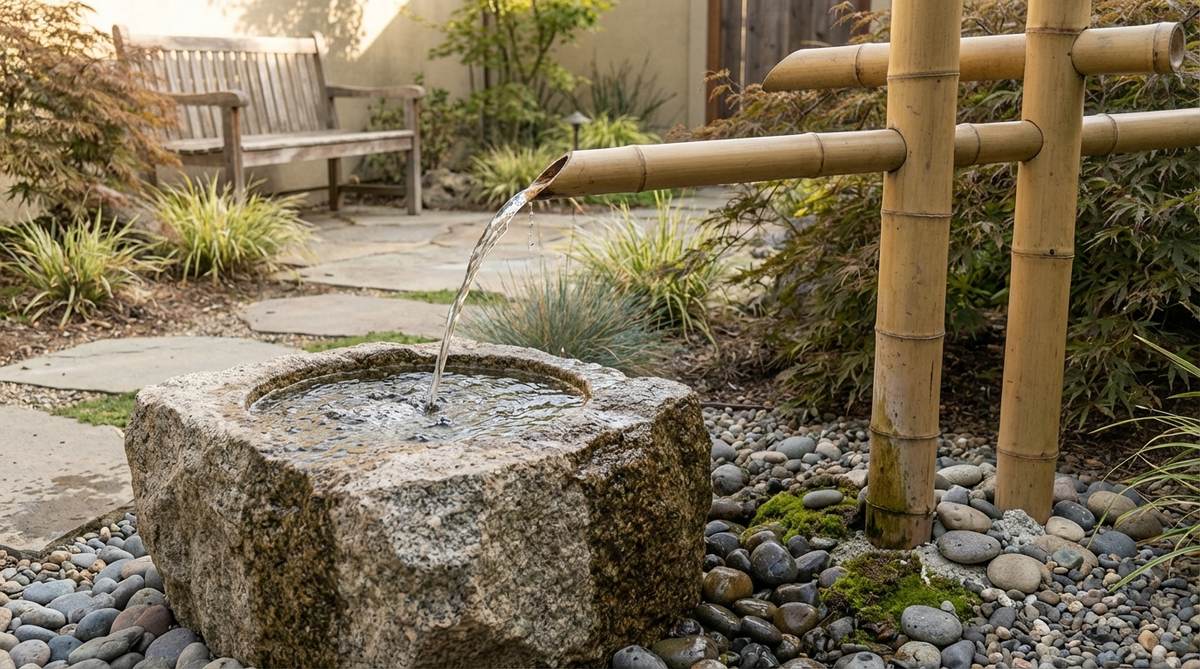
Combining bamboo delivery systems with stone collection basins merges the acoustic properties of both materials. Bamboo spouts provide sharp, clear water sounds while stone basins add deeper resonant tones.
Anchor bamboo poles securely in concrete footings disguised with gravel or moss. The spout should extend 6-8 inches beyond the basin rim to create visible water arc and splashing impact.
Adjust spout height and angle to control splash intensity and sound volume. Higher positions produce louder impacts while lower spouts create gentler trickling effects.
9. Multi-Spout Bamboo Wall Fountain
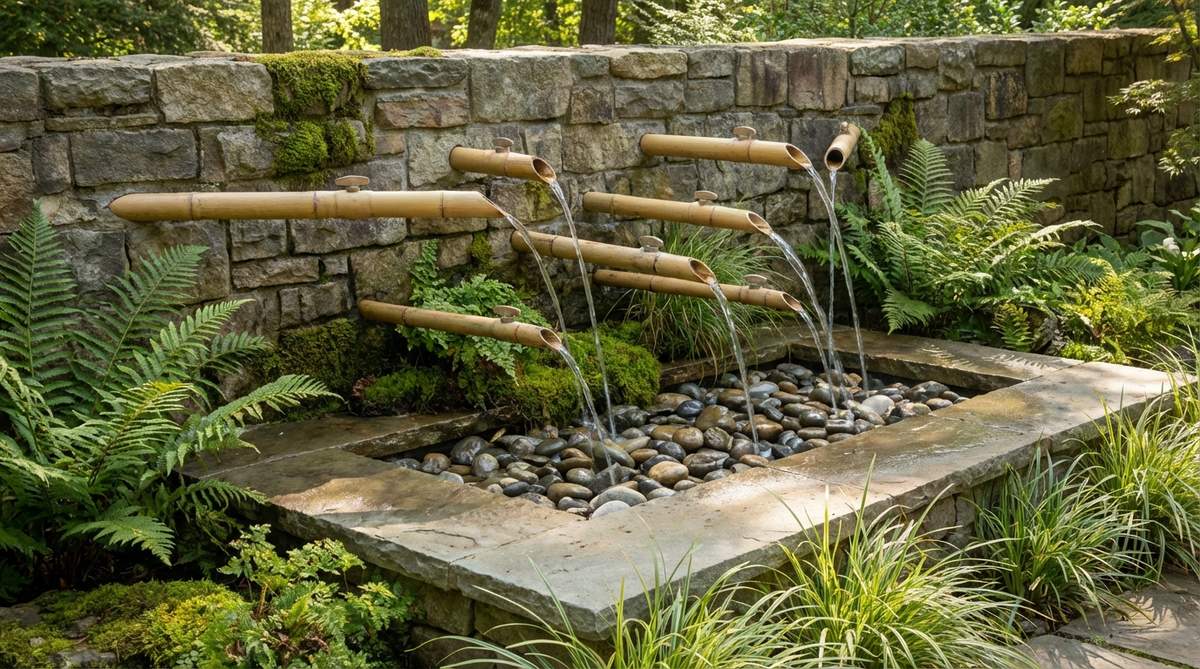
Several bamboo pipes protruding from walls or fences at staggered heights create complex water patterns and layered soundscapes. Each spout operates independently, allowing customized flow rates that generate rhythmic variation.
Install PVC supply lines behind the wall surface with bamboo sections serving as decorative terminal spouts. Individual valves for each spout enable fine-tuning of the acoustic composition.
This design maximizes vertical space efficiency in compact gardens while creating visual interest through repetition with variation. The multiple water streams merge in a shared basin below, consolidating circulation infrastructure.
10. Floating Bamboo Fountain in Pond
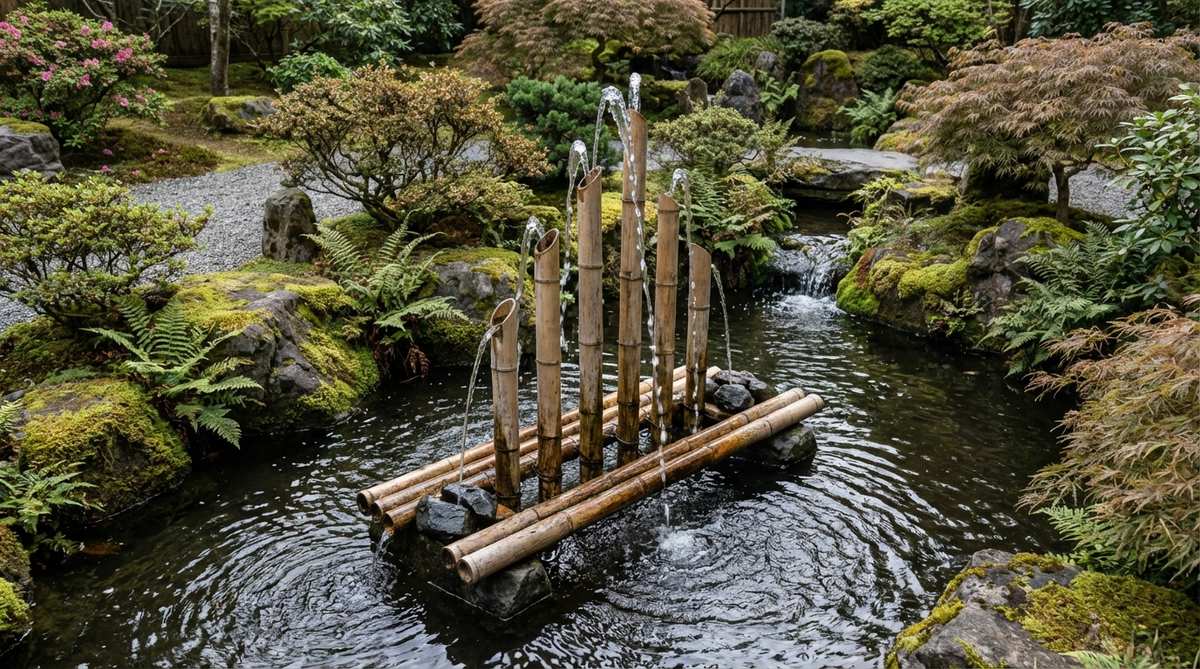
A bamboo structure floating on a pond surface delivers water upward through vertical poles, creating movement and sound in the water body’s center. The fountain platform remains stationary via anchor lines while appearing to drift.
Build the floating base from cedar planks treated with marine-grade sealant and attach submersible pumps that draw pond water through the bamboo assembly. Anchor cables connect to submerged weights positioned outside the fountain’s splash radius.
This installation adds dynamic visual interest to static pond surfaces while aerating water to support aquatic life. The central location makes the fountain audible from all garden edges.
Tiered Waterfall Installations
Multi-level zen garden waterfall designs create complex acoustic environments through water cascading across multiple surfaces. These installations produce layered white noise that effectively masks urban background sounds while providing visual movement.
11. Stacked Stone Cascade Waterfall
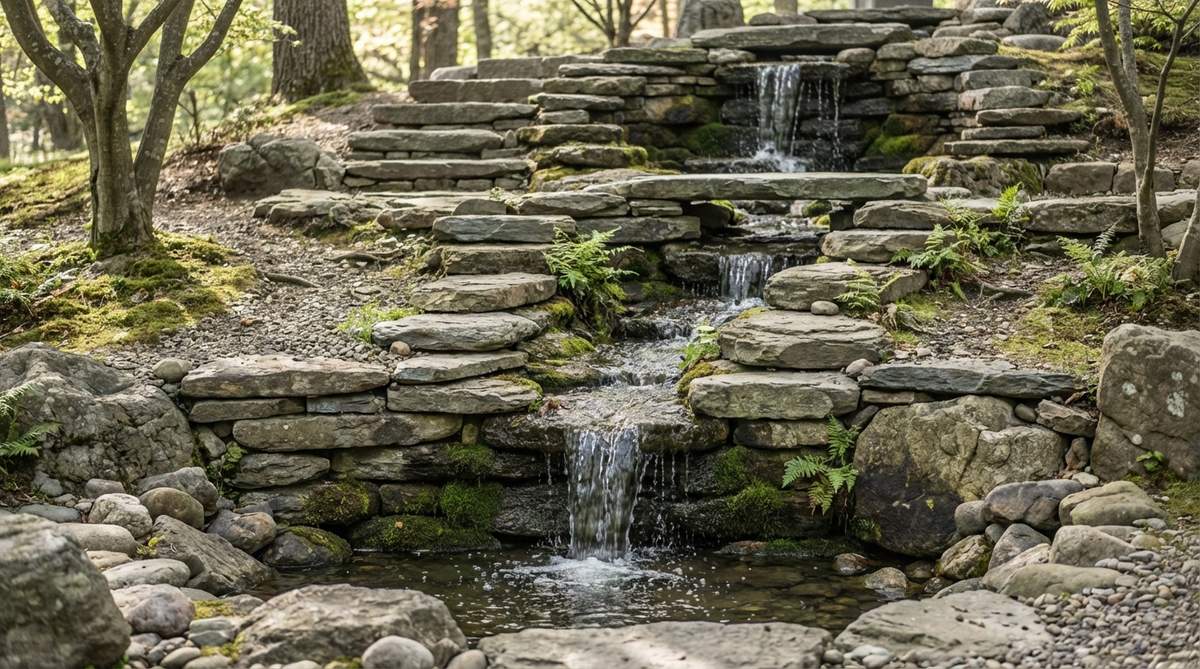
Flat river stones stacked in ascending tiers create miniature mountain streams where water descends through natural channels. Each stone’s placement determines flow patterns and resulting sound characteristics.
Select irregularly shaped stones with natural grooves and stack them with slight forward tilt to encourage water movement. Mortar joints only where structural stability requires reinforcement, leaving gaps for organic flow patterns.
The varying stone textures produce different acoustic tones as water velocity changes across each tier. Position larger stones at the base to create deeper resonant splashes that anchor higher-pitched trickling sounds.
12. Pondless Waterfall Over Rock Face
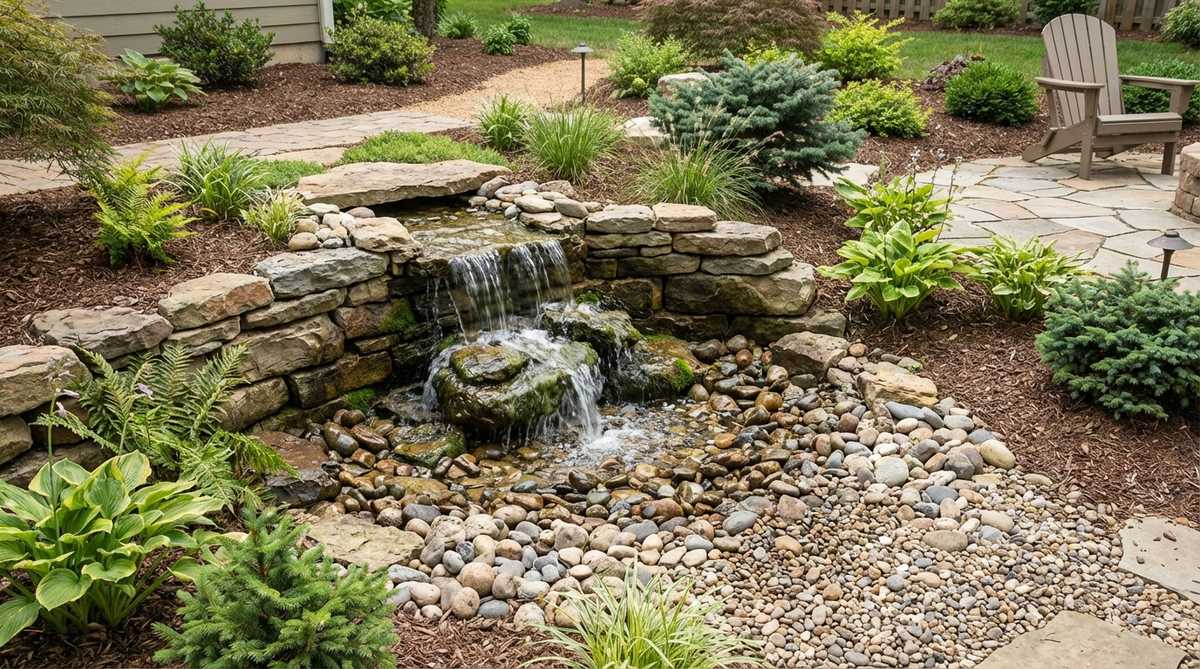
Water cascades down a vertical or angled rock wall into a hidden underground reservoir, eliminating standing water while maintaining the visual and acoustic benefits of a traditional waterfall. This design reduces maintenance concerns and enhances safety in family gardens.
Excavate a reservoir basin lined with waterproof membrane and fill it with large river rock surrounding the recirculating pump. The rock face above can be natural stone or manufactured to mimic geological formations.
Adjust pump output to control water volume—higher flows create dramatic rushing sounds while reduced flows produce gentle trickling. The underground reservoir collects all water, preventing runoff and conserving resources.
13. Tiered Rock Pyramid Fountain
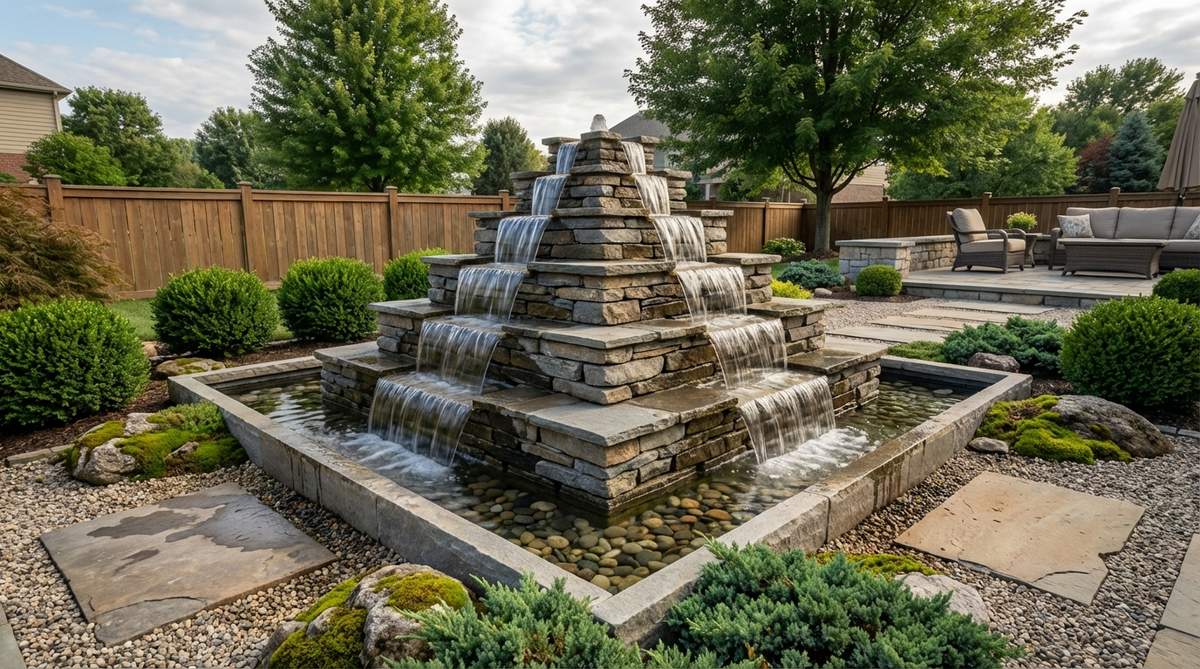
Flat stones stacked in descending pyramid formation allow water to sheet across each level before collecting in a basin below. The symmetrical structure creates balanced visual composition while generating uniform water sounds.
Build the pyramid foundation on a stable concrete pad and arrange stones with minimal gaps between tiers. Water pumped to the apex spreads evenly if the top stone features a slight central depression.
This geometric arrangement suits formal garden designs where symmetry and order take precedence over naturalistic randomness. The broad water sheets catch sunlight effectively, adding sparkle to the auditory experience.
14. Slate Ledge Waterfall with Moss Accents
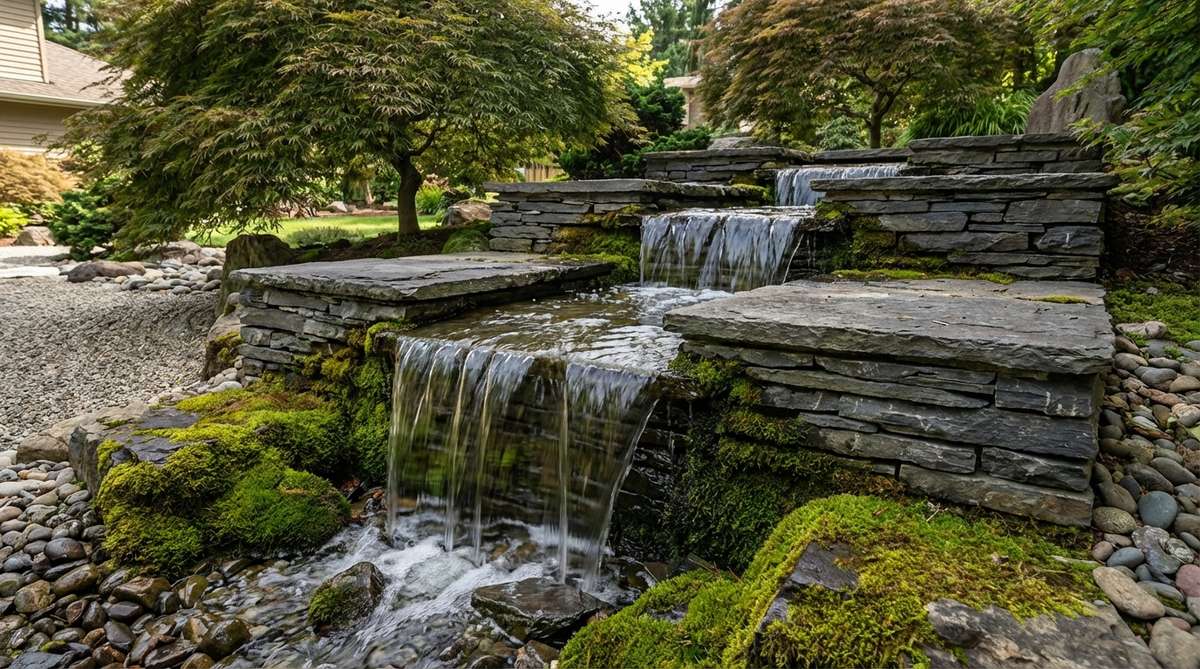
Horizontal slate pieces create ledges that break water into multiple thin sheets, producing delicate tinkling sounds. Moss growing on the slate edges softens the feature’s appearance and muffles harsh acoustic edges.
Stack slate pieces with 1-2 inch overlaps so water flows smoothly from tier to tier without turbulent splashing. The stone’s natural layering creates organic visual rhythm that complements the water movement.
Encourage moss growth by keeping surfaces consistently moist and positioning the feature in partial shade. The moss establishes naturally within 6-12 months, adding verdant color to grey stone.
15. Boulder Step Cascade
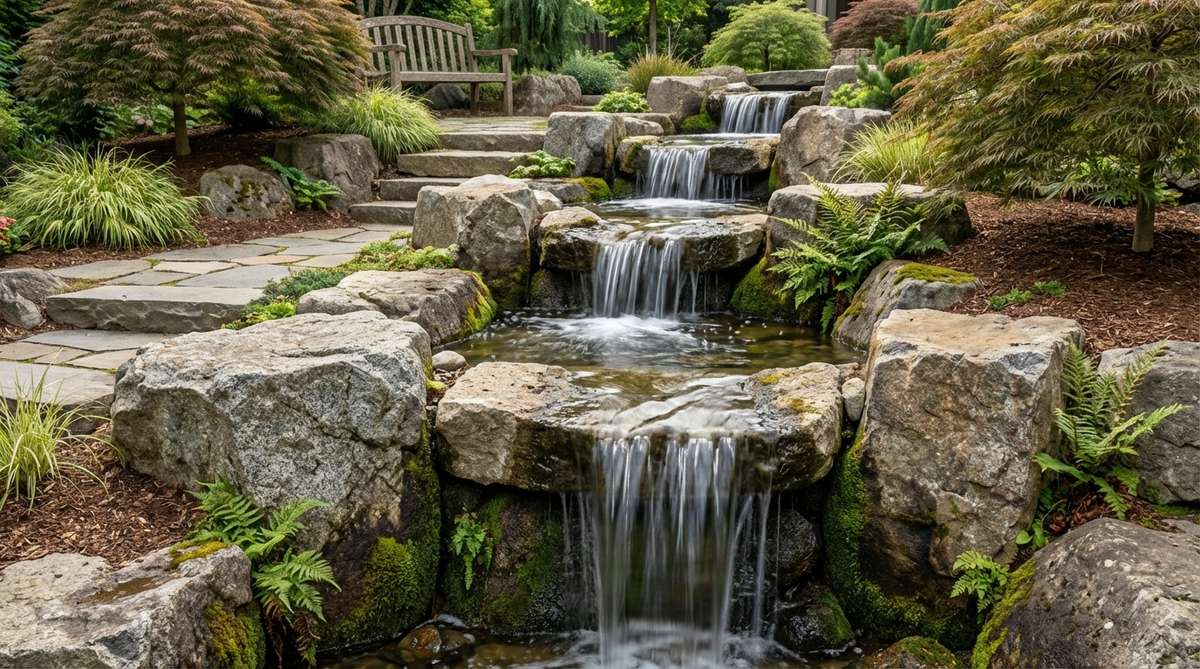
Large boulders arranged in stair-step configuration create dramatic elevation changes where water tumbles from level to level. Each boulder’s size and placement determines the force and sound of water impact.
Position boulders with flat upper surfaces to create pools that briefly hold water before overflow. The pauses between cascades add rhythmic variation to the continuous flow pattern.
This installation type suits sloped garden terrain where elevation change already exists. The substantial boulder mass provides thermal stability that keeps water temperatures moderate during temperature extremes.
Minimalist Modern Fountain Designs
Contemporary zen garden fountain interpretations emphasize clean lines and geometric forms while maintaining the essential elements of moving water and tranquil sound. These designs integrate seamlessly with modern architectural styles and streamlined landscape aesthetics.
16. Corten Steel Water Wall
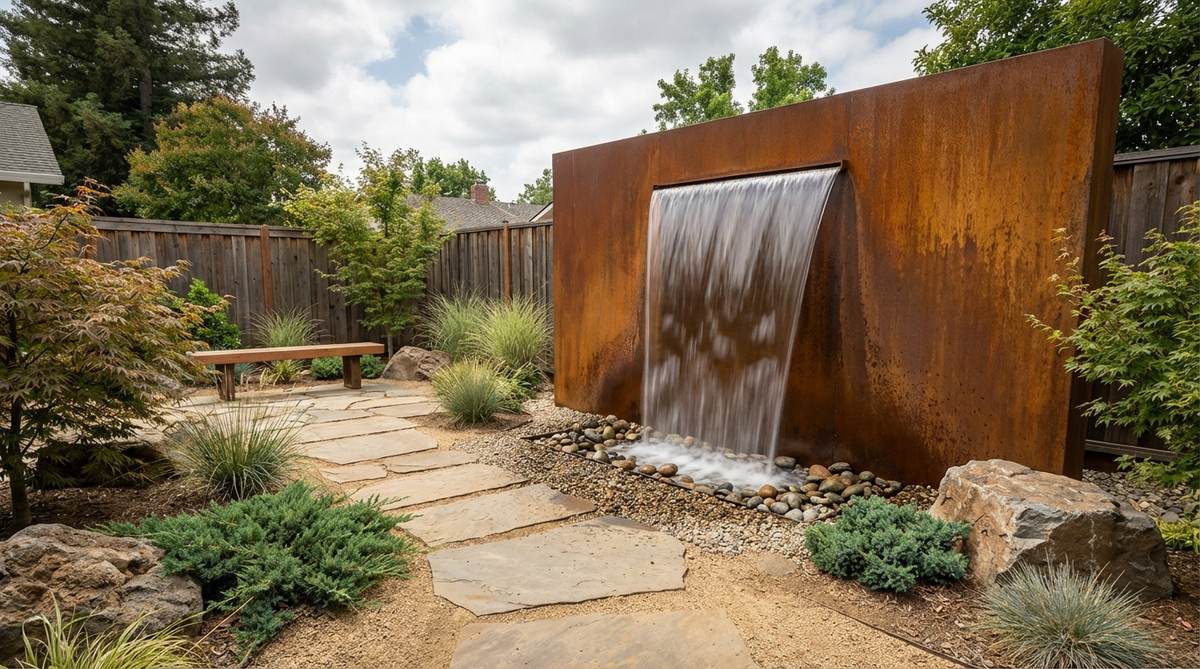
Weathering steel panels develop rich rust patinas while serving as vertical surfaces for water sheets. The industrial material brings contemporary edge to traditional water feature concepts while the oxidation process creates ever-changing visual interest.
Mount the steel panel at a slight backward angle and pump water to the top edge where it flows down the face in a continuous sheet. The smooth descent produces consistent white noise ideal for meditation spaces.
Corten steel requires no protective coatings and develops a stable rust layer that prevents further corrosion. The warm orange-brown tones complement surrounding stone and plant materials effectively.
17. Square Basin Bubbler Fountain
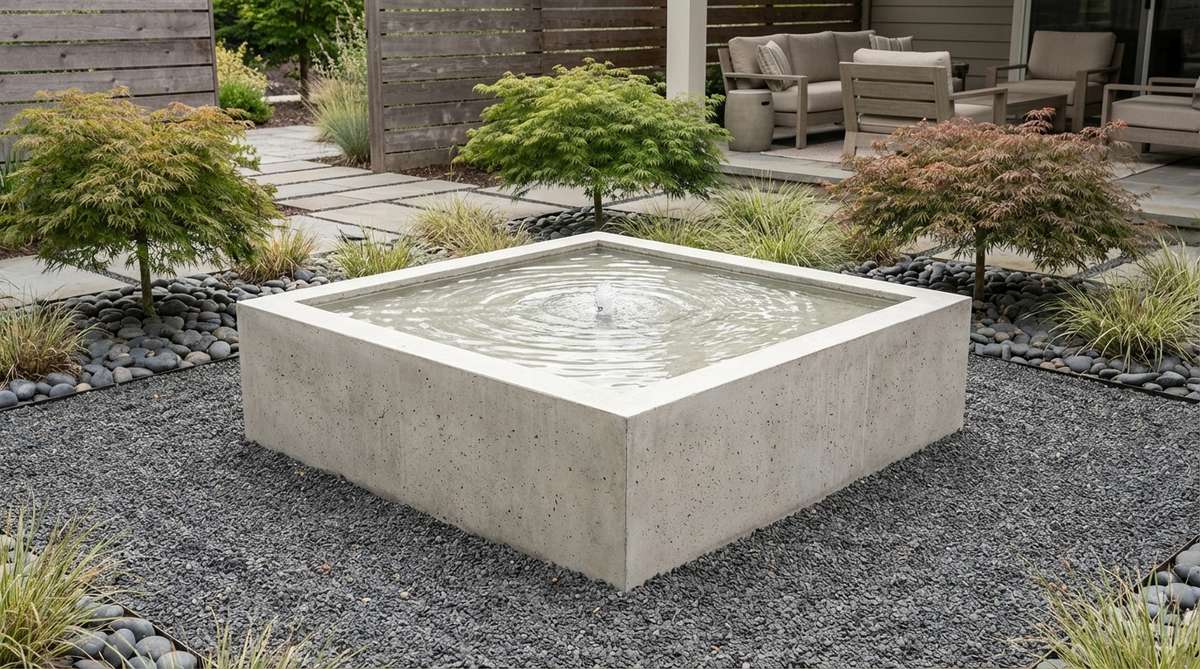
A geometric stone or concrete basin with water bubbling from its center creates minimalist focal points in contemporary gardens. The simple form allows the water’s movement and sound to dominate without ornamental distraction.
Cast concrete basins in custom sizes to match specific garden proportions or source pre-cut stone pieces with precisely squared edges. The basin depth should reach 6-8 inches to contain splash while maintaining visible water levels.
Position the bubbler nozzle just below the water surface to create gentle dome-shaped water movement. This configuration produces soft burbling sounds rather than aggressive splashing.
18. Linear Rill Water Channel
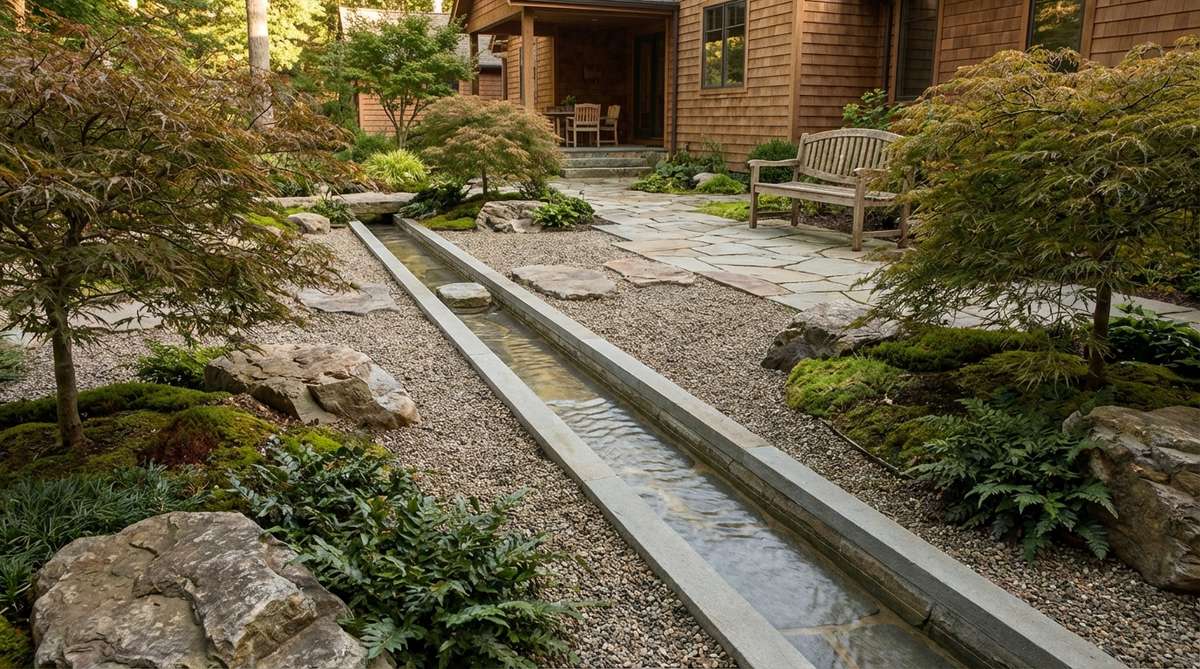
Narrow concrete or stone channels carry water in straight lines across gardens, bringing formal European water feature traditions into zen-inspired landscapes. The geometric precision contrasts with organic plant forms while maintaining contemplative stillness.
Construct rills with gradual slopes—1/4 inch per foot—to ensure consistent water movement without turbulence. Line the channel with smooth-finished concrete or tightly fitted stone to create laminar flow.
The linear format suits pathway edges and property boundaries where water features need compact footprints. Gentle flow produces subtle trickling that remains present without dominating the soundscape.
19. Concrete Sphere Fountain
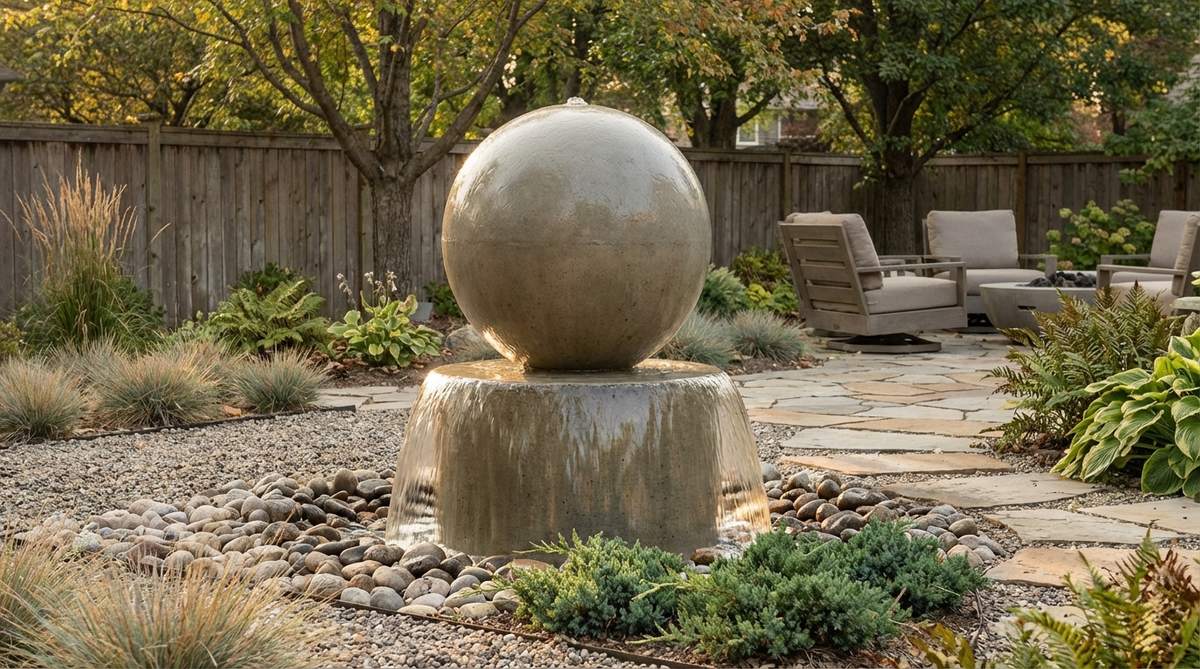
A smooth concrete sphere perched atop a cylindrical pedestal with water welling from beneath creates spherical water sheets. The modern sculptural form serves as kinetic art while generating soothing sounds.
The sphere rotates slowly on a water cushion, requiring precise drilling and pump calibration to achieve balanced operation. Water pressure must be sufficient to lift the sphere slightly while maintaining contact with the pedestal.
This mesmerizing installation attracts attention through its apparent defiance of gravity and works particularly well in formal garden entries. The rotating sphere catches changing light throughout the day.
20. Glass Panel Rain Curtain
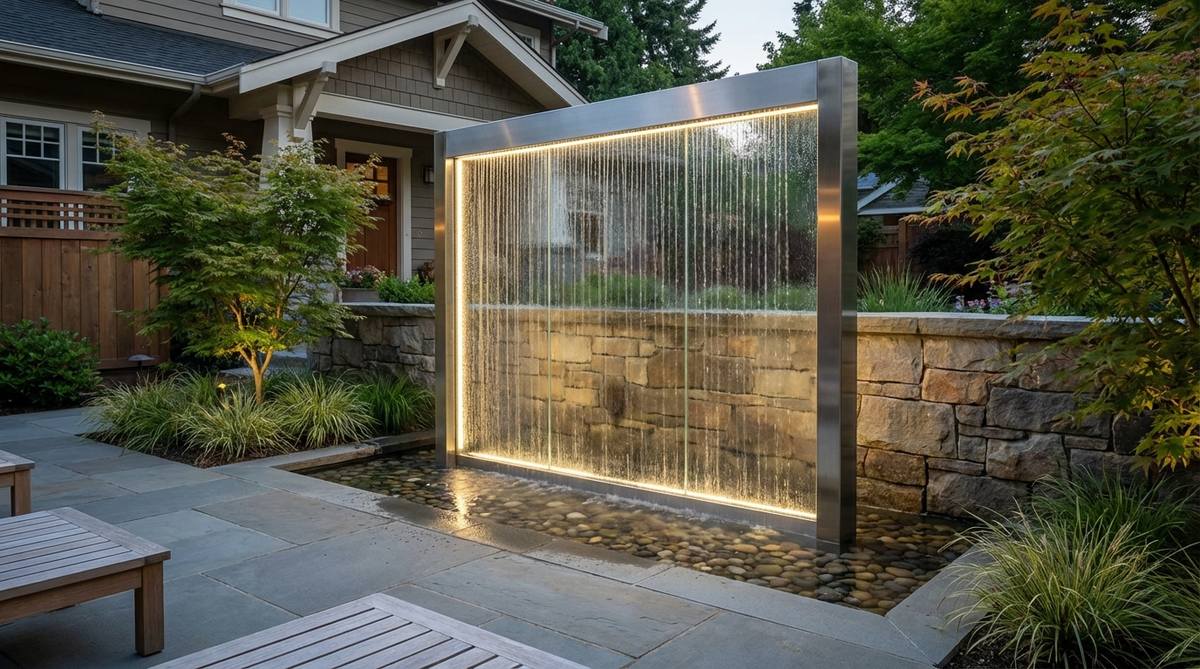
Clear or frosted glass panels allow water to flow down transparent surfaces, creating ethereal curtains that play with light while producing delicate tinkling sounds. The see-through quality maintains visual openness in compact spaces.
Frame tempered glass sheets in stainless steel borders and pump water to perforated distribution pipes along the top edge. Precise leveling ensures even water distribution across the full panel width.
Backlight glass rain curtains with LED strips for dramatic nighttime effects. The illuminated water creates moving patterns that enhance evening garden experiences.
Buddha-Inspired Spiritual Features
Buddha statuary integrated with flowing water creates contemplative focal points that encourage meditation and spiritual reflection. These features bridge aesthetic function with symbolic meaning, enriching gardens with cultural depth.
21. Buddha Head Fountain with Crown Spillway
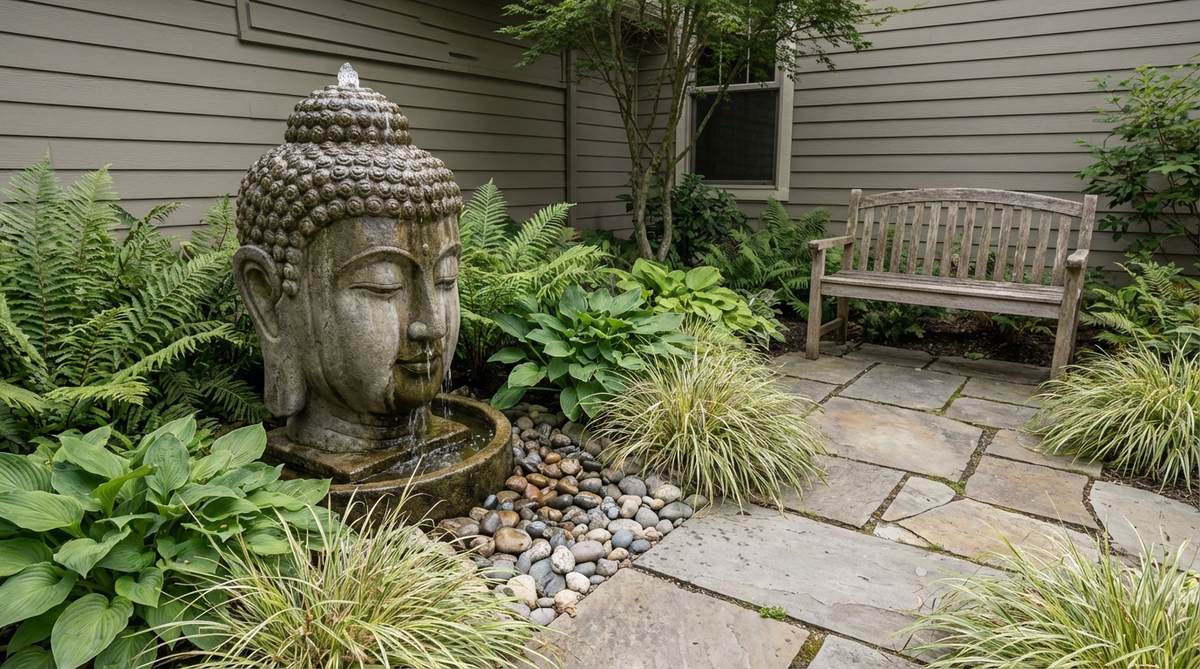
Water wells from the crown chakra of a Buddha head sculpture and flows down the face, symbolizing enlightenment and spiritual cleansing. The serene facial expression establishes calm energy that pervades the surrounding space.
Source weather-resistant resin or stone Buddha heads with integrated water channels and position them on stable pedestals at viewing height. Water flows over the smooth facial features before collecting in a basin decorated with river stones.
This installation type works particularly well in courtyard settings where the Buddha’s gaze can overlook seating areas. The gentle facial flow produces soft sounds that support meditation practices.
22. Seated Buddha with Lotus Bowl
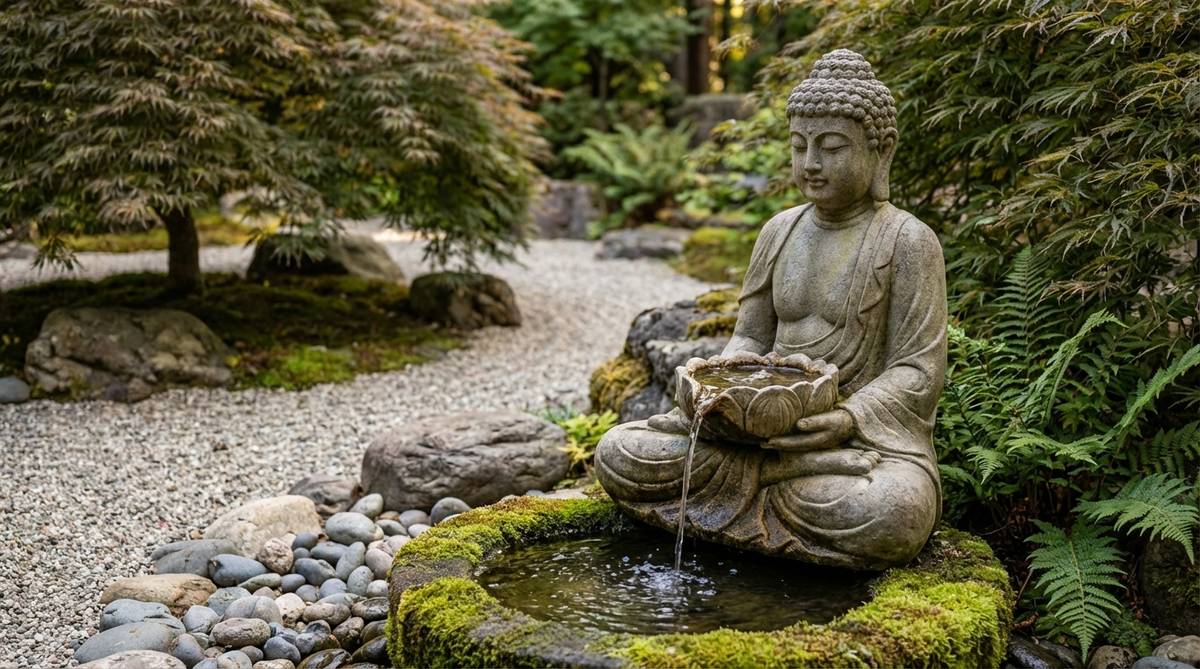
A full Buddha figure in meditation posture holds a lotus-shaped bowl that collects and overflows with water. The lotus symbol represents purity emerging from muddy waters, adding layered meaning to the physical water feature.
Position these statues in garden alcoves or against walls that provide backdrop definition. Water pumped into the bowl creates a still pool before overflow trickles down the lotus petals into surrounding basins.
The contemplative seated posture invites viewers to pause and reflect, transforming functional water circulation into opportunities for mindfulness. Scale statue size to garden proportions to maintain visual balance.
23. Standing Buddha with Offering Vessel
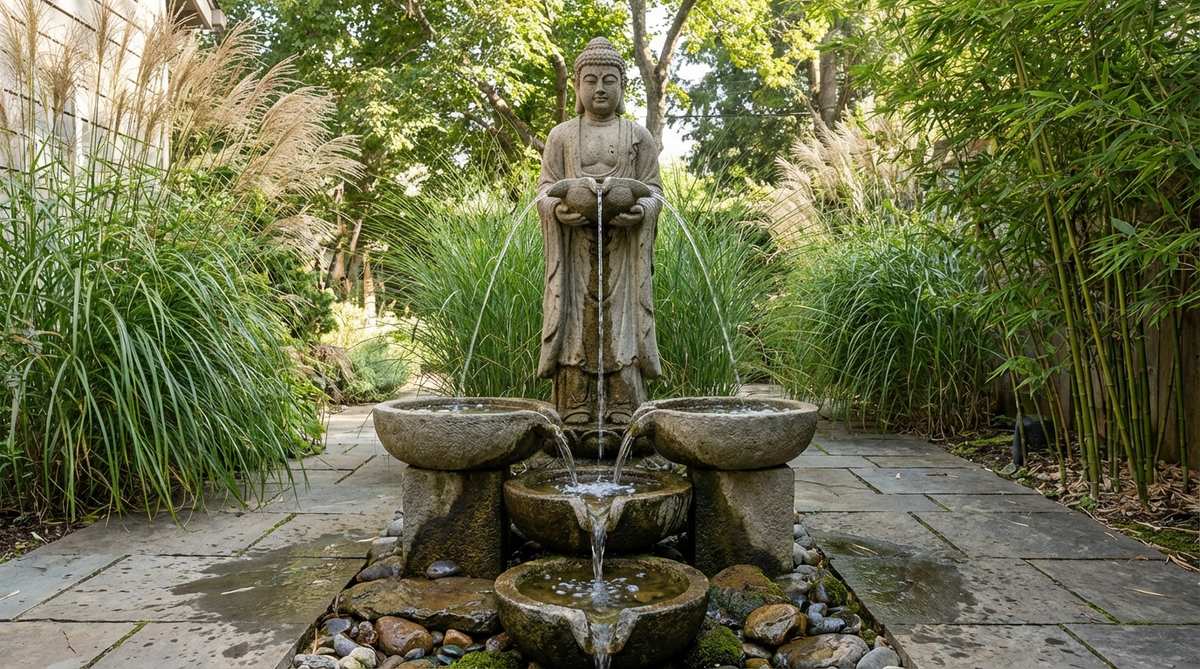
A standing Buddha figure extends an offering bowl forward, with water flowing from the vessel as a gesture of generosity and abundance. This configuration creates forward-projecting water arcs that add dynamic movement.
The elevated bowl position allows water to cascade down the statue’s robes, creating multiple flow paths and varied acoustic textures. Stone or cast concrete construction ensures durability in outdoor conditions.
Frame standing Buddha fountains with tall grasses or bamboo that enhance vertical emphasis. The upright posture works well in narrow garden corridors where width remains limited.
24. Meditating Frog Fountain Trio
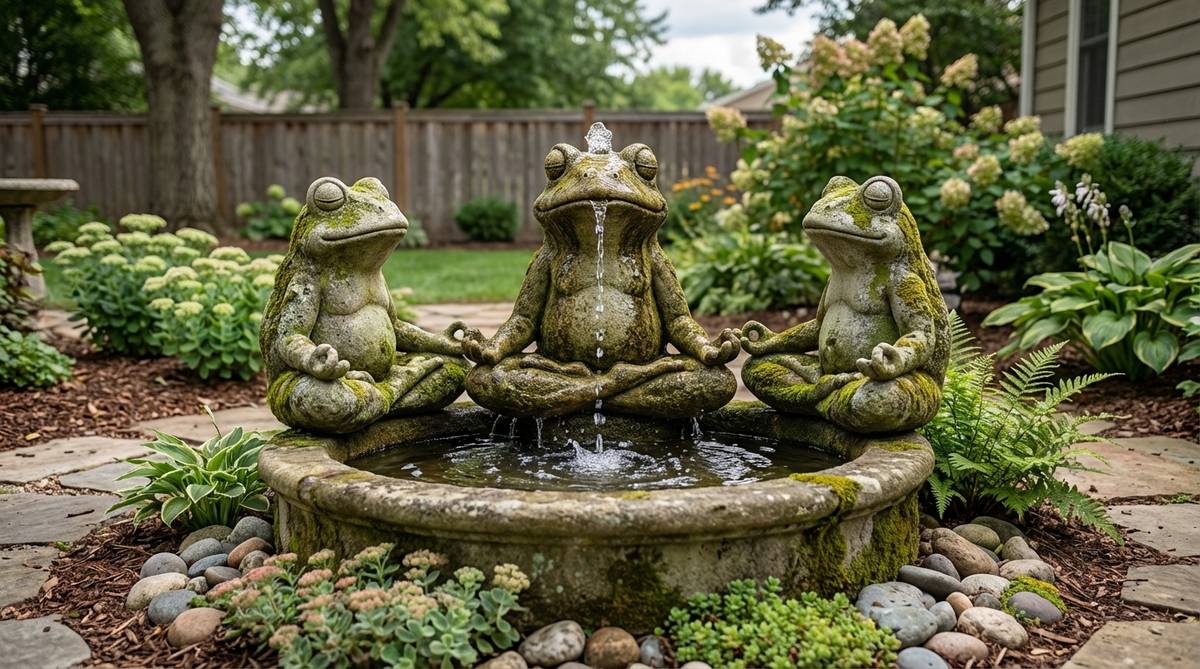
Three frogs in meditation poses form the fountain base, bringing whimsy to traditional zen garden water fountain concepts. The playful interpretation maintains contemplative themes while adding lighthearted charm appropriate for family gardens.
Water bubbles from the central frog’s crown and flows around all three figures before collecting in a shared basin. The unexpected humor creates conversation points while maintaining functional water circulation.
Cast stone frogs develop moss coverage that enhances their organic appearance over time. Position these features where children can interact safely with the water flow.
Specialty Creative Water Installations
Innovative approaches to water feature design expand traditional zen concepts while maintaining core principles of tranquility and natural sound. These installations demonstrate creative problem-solving for unique garden conditions and aesthetic preferences.
25. Dry Creek Bed with Hidden Water Flow
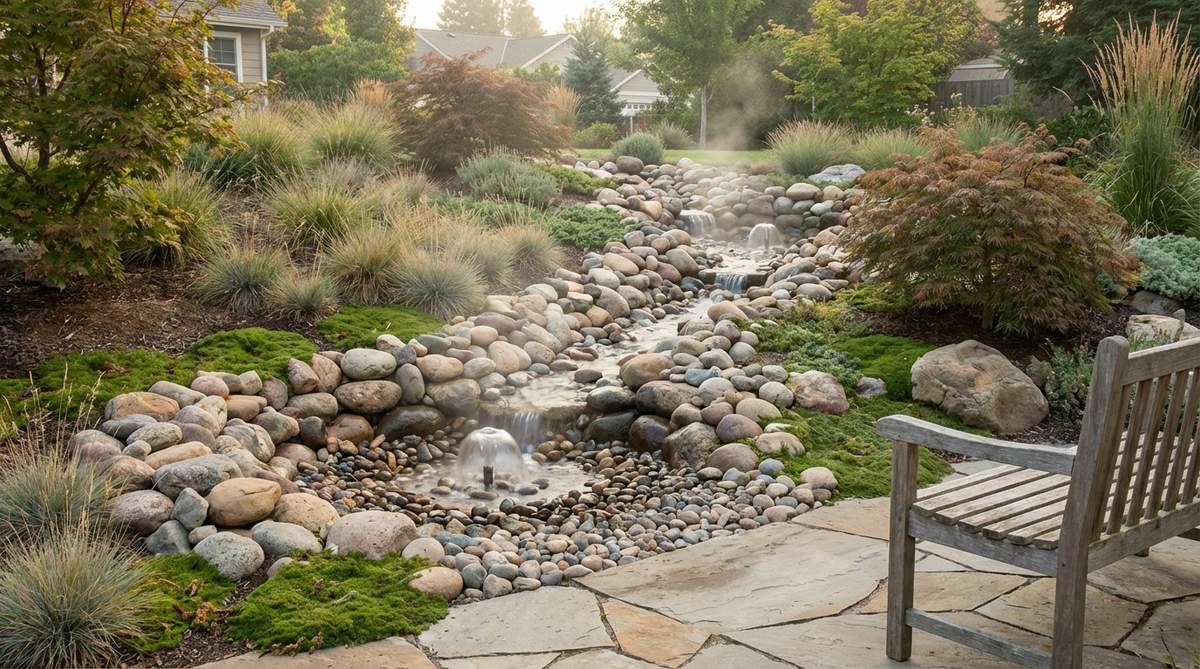
Water flows beneath decorative stone beds in underground channels, emerging only at intentional viewing points. This design creates visual intrigue through apparent water disappearance while maintaining continuous sound throughout the feature’s length.
Excavate channels lined with waterproof membrane and top them with decorative river rock sized too large to fall into gaps. Water flows beneath the stone layer, producing muffled trickling that seems to emanate from the earth itself.
Strategic openings where water surfaces create focal points that draw visitors through the garden. This approach works particularly well on sloped terrain where gravity assists water movement.
26. Pebble Bowl Water Feature
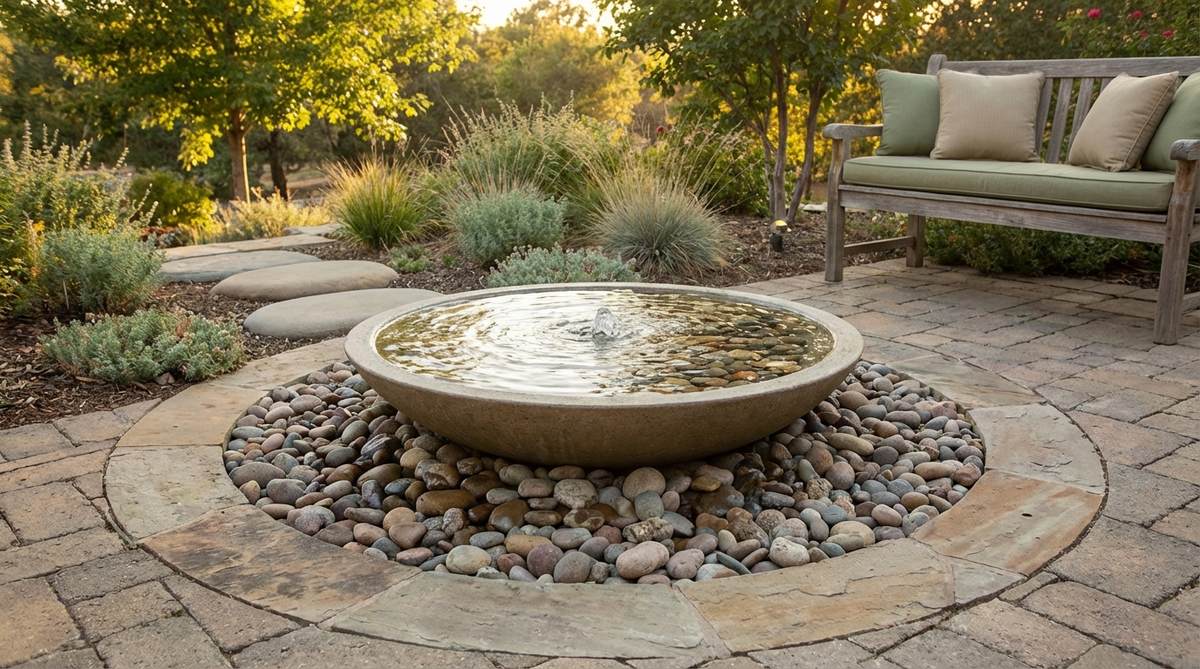
A wide shallow bowl filled with smooth pebbles allows water to bubble up through the stones, creating touchable texture and subtle sound. The low profile suits patios and intimate seating areas where tall features would obstruct views.
Select bowls 18-24 inches in diameter and fill them with 1-2 inch river stones arranged around a central bubbler. Water wells up through the pebbles and recirculates through a hidden reservoir beneath.
The accessible design invites hands-on interaction, making it ideal for sensory gardens where tactile engagement enhances the experience. Pebble selection in varied colors creates additional visual interest.
27. Bamboo Fence Integrated Fountain
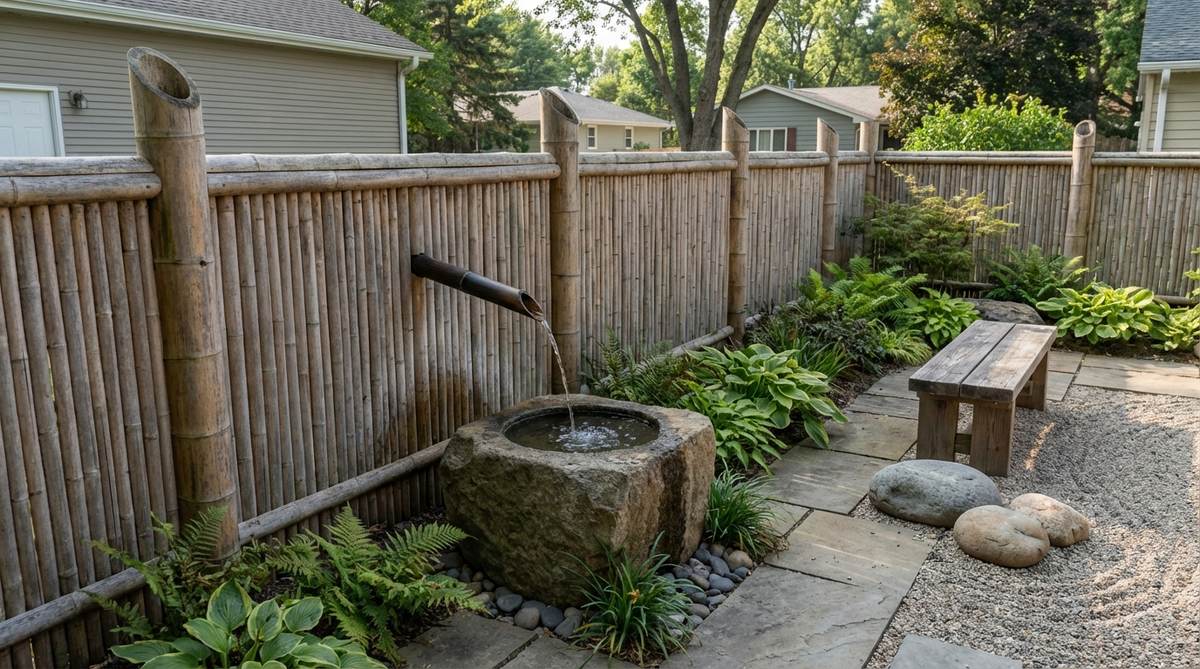
Water features built directly into fence structures maximize space efficiency while creating boundary definition. Bamboo fencing naturally accommodates integrated plumbing for water delivery to mounted basins or spouts.
Run supply lines through hollow bamboo fence posts and terminate them at wall-mounted collection basins. The fence provides structural support while disguising circulation infrastructure.
This approach transforms purely functional boundary elements into aesthetic assets that enhance garden perimeter areas. The vertical integration keeps ground space available for planting beds.
28. Solar-Powered Floating Fountain
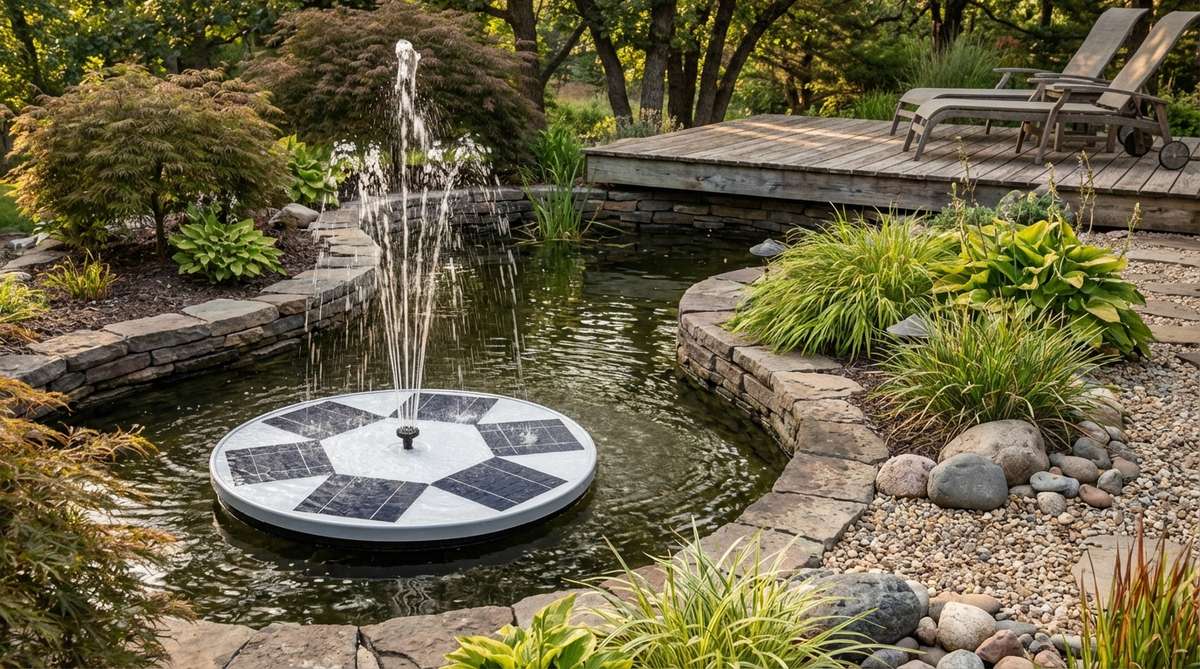
Self-contained solar fountain units float freely in ponds or large water basins, requiring no electrical connections or installation labor. Photovoltaic panels power submersible pumps that create vertical water sprays during daylight hours.
These portable units reposition easily for seasonal adjustments or maintenance access. Water spray patterns vary by model, from gentle dome shapes to dramatic vertical jets.
Solar operation eliminates energy costs and wiring complexity, making these fountains practical for remote garden areas. Performance scales with sunlight intensity, creating naturally variable operation that follows daily cycles.
29. Illuminated Glass Ball Fountain
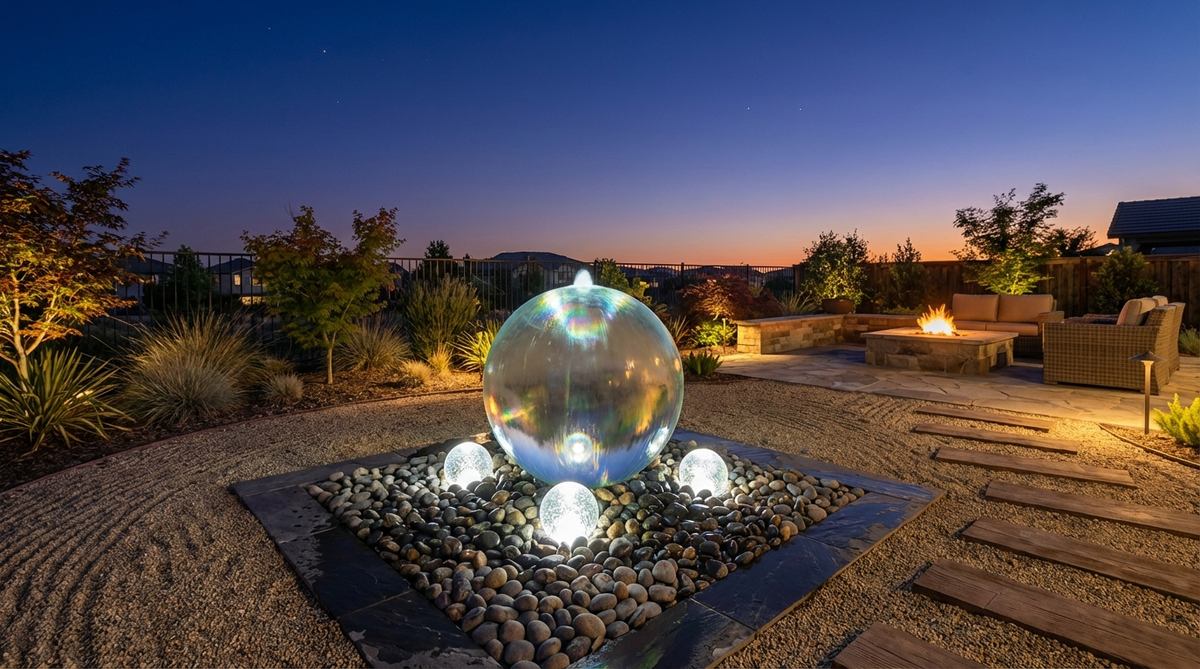
LED-lit glass spheres serve as fountain tops where water wells over transparent surfaces. Light refracts through water and glass, creating prismatic effects that enhance evening garden atmosphere.
Mount glass balls on pedestal fountains with integrated lighting systems and adjust water flow to create complete sphere coverage. The combination of light, water, and transparency produces ethereal nighttime presence.
Color-changing LEDs add programmable variation to static water features. These modern installations appeal to homeowners seeking contemporary aesthetic combined with traditional water element benefits.
30. Wall-Mounted Scupper Fountain
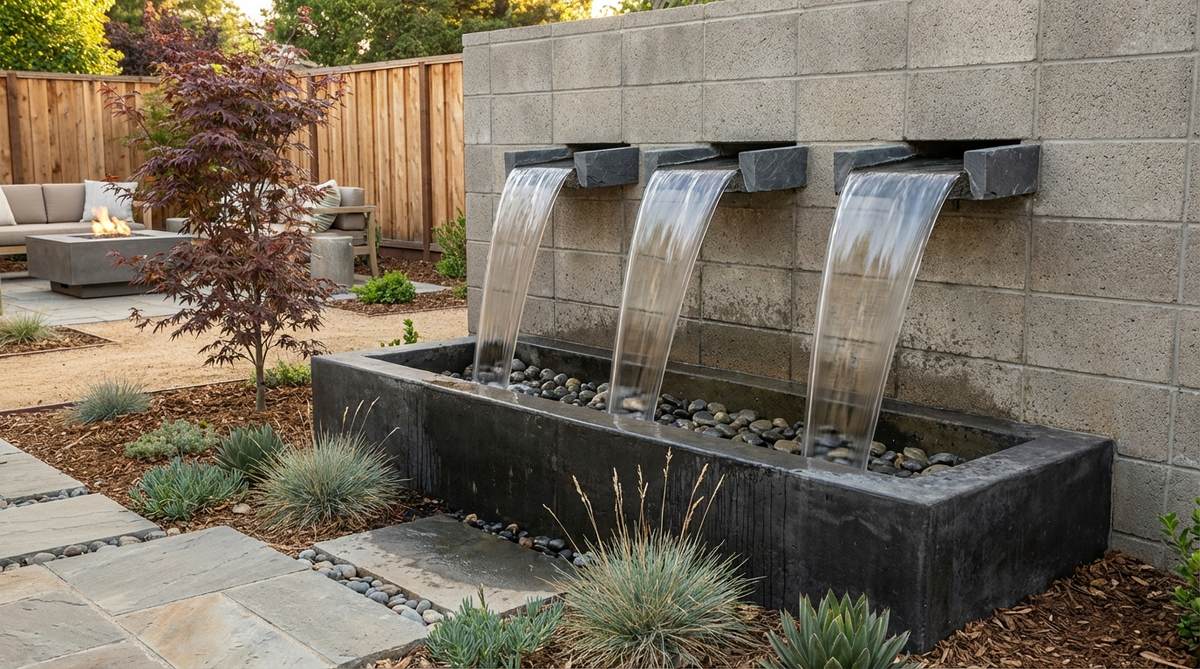
Metal or stone scuppers project from walls to deliver water in sheet form into collection basins below. The architectural approach suits contemporary homes where water features integrate with building design rather than standing as isolated garden elements.
Install scuppers at 3-4 foot heights to create visible water curtains without excessive splash. Copper scuppers develop verdigris patina while stainless options maintain polished modern appearance.
This space-efficient design concentrates visual and acoustic impact in compact footprints. Multiple scuppers at staggered heights create layered water sheets and complex sound compositions.
Bringing Serenity Home
Professional landscape architects select zen garden water feature installations based on spatial constraints, acoustic goals, and maintenance capacity rather than aesthetic preference alone. The therapeutic benefits of moving water—stress reduction, improved focus, and enhanced property value—justify the initial investment when features match site conditions appropriately. Start with simple basin or bamboo fountain designs to understand water behavior in your specific microclimate, then expand to more complex installations as experience and confidence grow. Fresh Garden Ideas recommends consulting with water feature specialists for features requiring structural modification or complex plumbing integration to ensure long-term performance and enjoyment.
Frequently Asked Questions
How much do zen garden water features cost to install?
Installation costs range from $200 for simple basin fountains with DIY assembly to $5,000+ for custom stonework features requiring professional installation. Pre-fabricated fountains typically cost $300-$1,500 including pump systems, while custom tsukubai installations with professional stone carving start at $2,500. Ongoing operational costs average $5-$15 monthly for electricity, with solar-powered options eliminating energy expenses entirely.
What maintenance do zen garden fountains require?
Monthly maintenance includes checking water levels, cleaning pump filters, and removing debris from basins. Quarterly tasks involve descaling mineral deposits with vinegar solutions and inspecting tubing connections for leaks. Winterize features in freezing climates by draining all water and storing pumps indoors, or use de-icing equipment to maintain year-round operation. Algae control through beneficial bacteria additives or UV clarifiers reduces cleaning frequency.
How loud should a zen garden water feature be?
Optimal zen garden water fountains produce sound levels between 40-50 decibels—comparable to light rainfall or quiet library ambiance. This volume effectively masks urban noise pollution without interfering with conversation or overwhelming other garden sounds. Adjust pump flow rates to control sound intensity, with lower flows creating subtle trickling and higher flows generating more pronounced rushing sounds. The feature should enhance rather than dominate the auditory landscape.
Can I build a zen water feature without electricity?
Solar-powered pumps eliminate electrical requirements for remote garden locations or off-grid installations. These systems store energy in batteries for consistent operation even during cloudy periods, though performance varies with sunlight availability. Alternatively, gravity-fed features using elevated water sources create continuous flow without pumps, though they require reliable water supply connections. Traditional shishi-odoshi deer scarers operate purely on mechanical principles without any power input.
What plants complement zen garden water features?
Japanese forest grass, dwarf mondo grass, and hakone grass provide low-maintenance greenery that frames water features without competing for visual attention. Moss species establish naturally on stone surfaces kept consistently moist by fountain spray, adding verdant softness to hard materials. Dwarf conifers like hinoki cypress and Japanese black pine offer evergreen structure, while Japanese maples contribute seasonal color variation. Select plants based on light conditions and mature size to maintain proportional balance as landscapes develop.
How do I prevent mosquitoes in garden water features?
Continuous water circulation through recirculating pumps prevents mosquito breeding by disrupting the still water conditions larvae require. Add mosquito dunks containing Bacillus thuringiensis israelensis bacteria that kill larvae without harming beneficial insects, pets, or wildlife. Stock larger basins with mosquito fish that consume larvae as a biological control method. Eliminate standing water in surrounding areas to reduce overall mosquito populations near the garden.