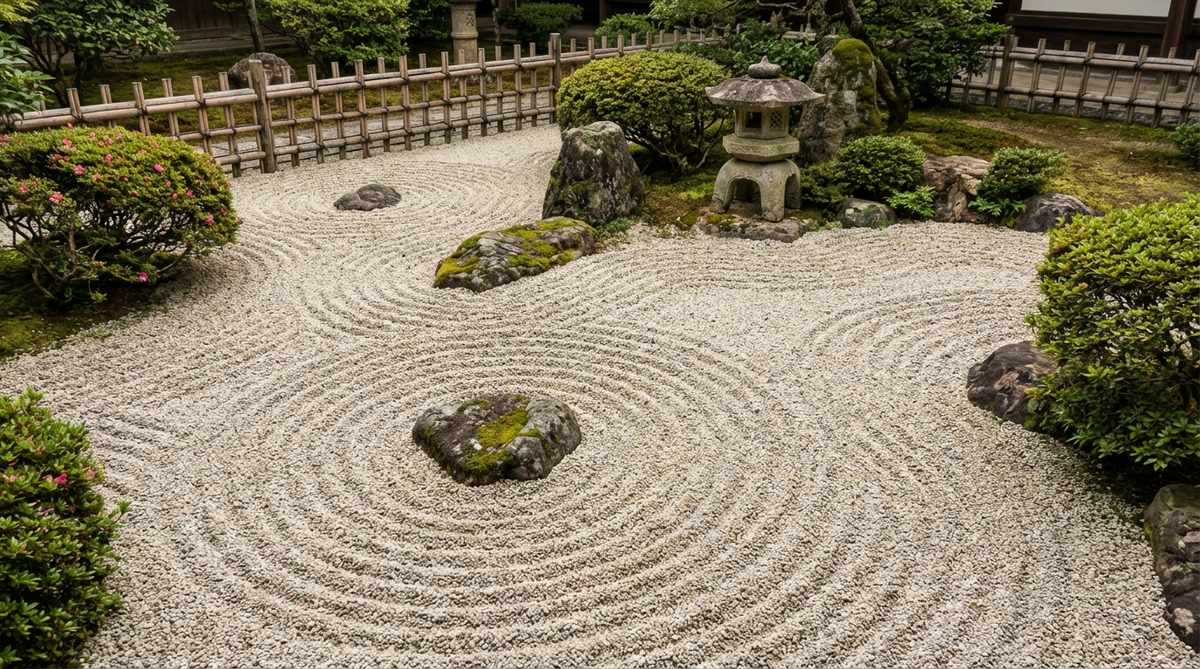
Zen garden sand patterns transform ordinary gravel into meditative landscapes through the ancient art of raking. Each stroke and curve carries symbolic meaning, representing water’s flow, cosmic energy, or natural phenomena that invite contemplation. Fresh Garden Ideas brings you proven techniques from traditional karesansui masters and modern landscape designers to elevate your garden’s tranquility.
Design SnapshotKey Principles
- Material Selection: Use crushed granite or decomposed granite (5/8″ white granite chips) rather than true sand, which cannot hold patterns in wind
- Tool Precision: Wide-toothed bamboo rakes create consistent line spacing; fine-toothed rakes produce detailed work around focal stones
- Body Mechanics: Engage your entire body when raking, pulling with legs in steady rhythm rather than relying solely on arm strength
- Pattern Philosophy: Traditional patterns serve as starting points—authentic artistry emerges through personal interpretation and mindful execution
Traditional Water Flow Patterns Using Zen Garden Gravel
Water representation forms the foundation of karesansui design. These patterns emerged from centuries of Buddhist monastic practice, where monks used raking as spiritual discipline. The flowing lines guide visitors’ eyes across the garden while evoking natural waterways.
1. Parallel Straight Lines
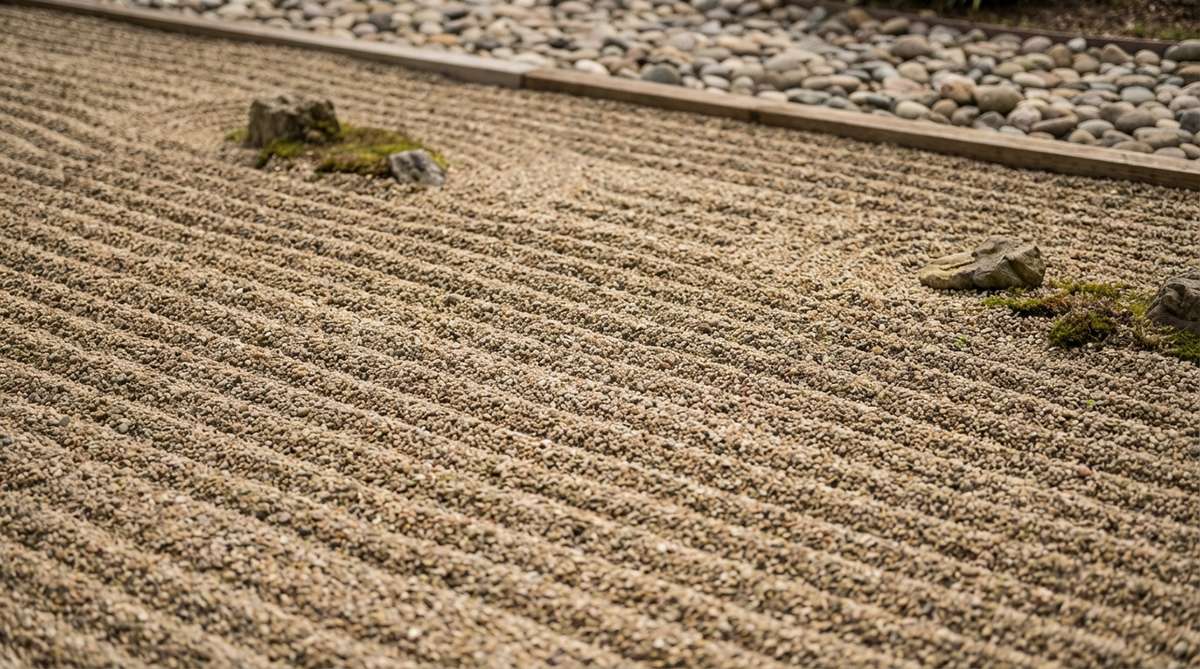
The most fundamental pattern features evenly spaced lines running the entire length of your gravel bed. This represents calm, undisturbed water surfaces or the infinite expanse of the ocean.
Start at one edge with your wide-toothed rake and pull straight across to the opposite side. Turn around and position the rake teeth precisely beside the previous grooves, maintaining consistent spacing throughout.
Beginners master this technique first because it develops the steady hand control required for more complex designs. Practice maintaining equal pressure on both sides of the rake to prevent wavy lines.
2. Surf Pattern (Sazanamimon)
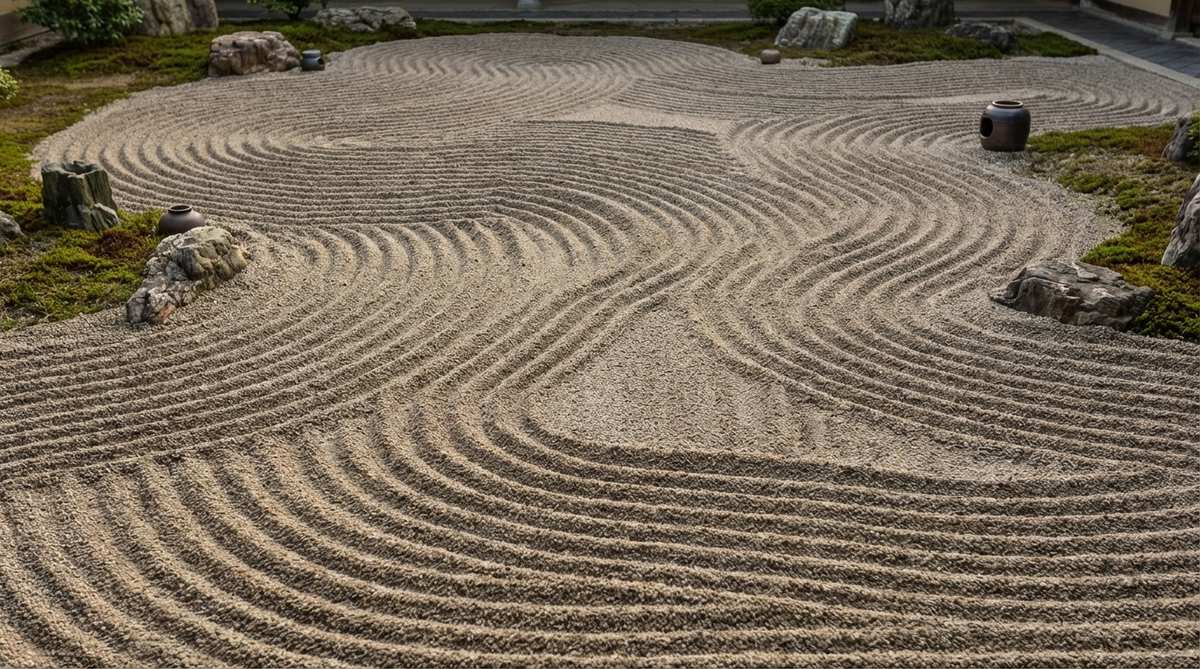
Continuous waves ripple across the entire gravel surface, mimicking ocean swells or river currents. The undulations can range from gentle curves to dramatic crests depending on your desired energy level.
Create this pattern by raking in smooth wave motions rather than straight pulls. Vary the amplitude and wavelength to suggest different water conditions—tight waves for energetic streams, broader waves for peaceful lakes.
This pattern works exceptionally well in rectangular gardens where the waves can flow uninterrupted from one end to the other.
3. Open River Wave
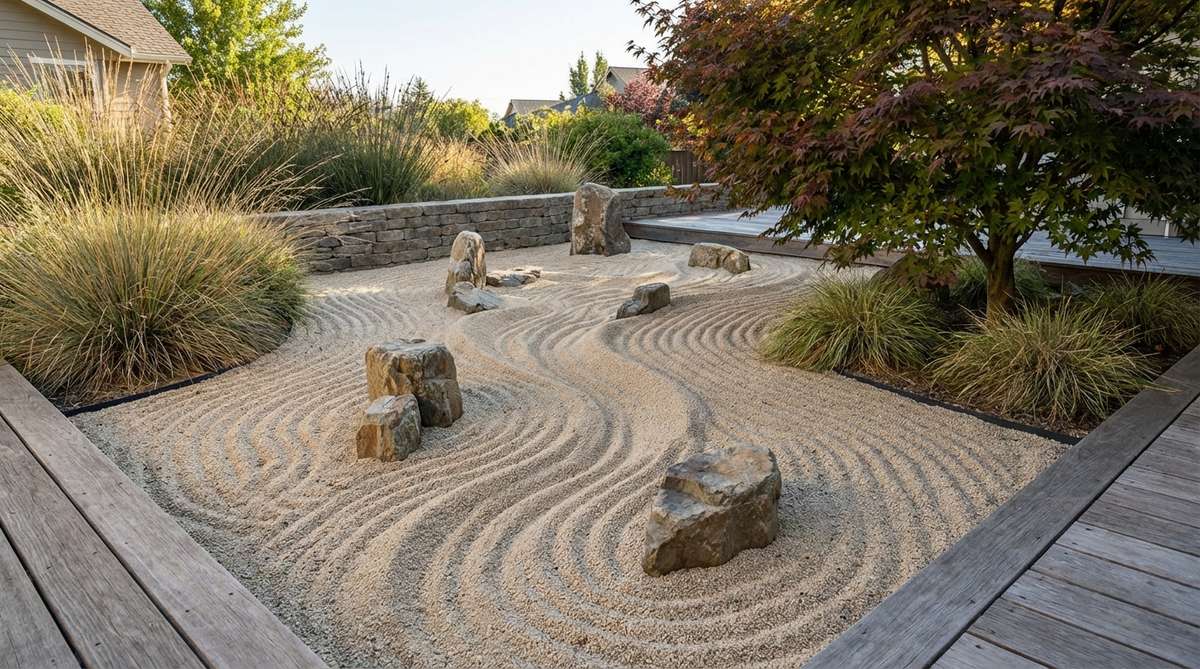
Meandering lines and subtle undulations replicate the natural flow of streams through valleys. The pattern incorporates gentle curves that create directional movement without rigid structure.
Rake with flowing gestures that follow an imaginary watercourse through your garden. Allow lines to bend naturally around rock placements, just as water diverts around obstacles.
Landscape architects use this technique when designing gardens that need to connect different viewing areas or guide visitors along specific paths.
4. Stream Current (Nagareru-mon)
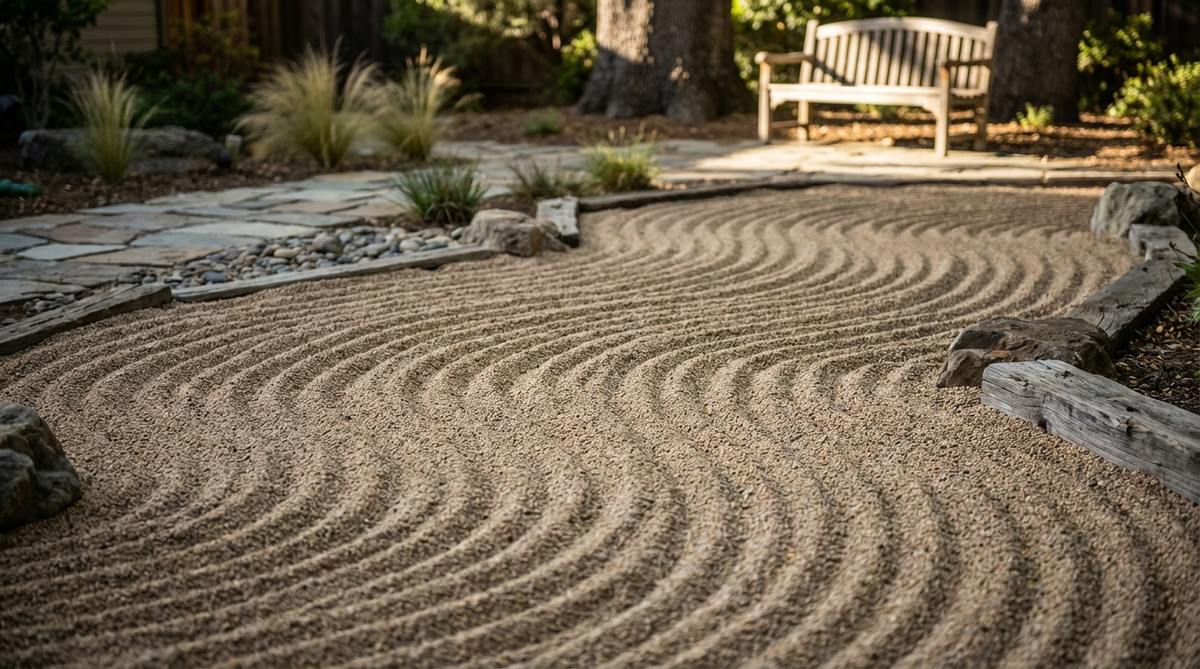
Parallel lines or ripples suggest water moving in a single direction with purpose. The lines may be perfectly straight or incorporate gentle curves to indicate bends in the stream.
Establish your flow direction first, then rake all lines parallel to that path. Maintain consistent spacing but vary line length to suggest depth changes in the water channel.
Position this pattern perpendicular to the main viewing angle so observers can see the full effect of directional movement.
5. Ocean Wave (Tachinamimon)
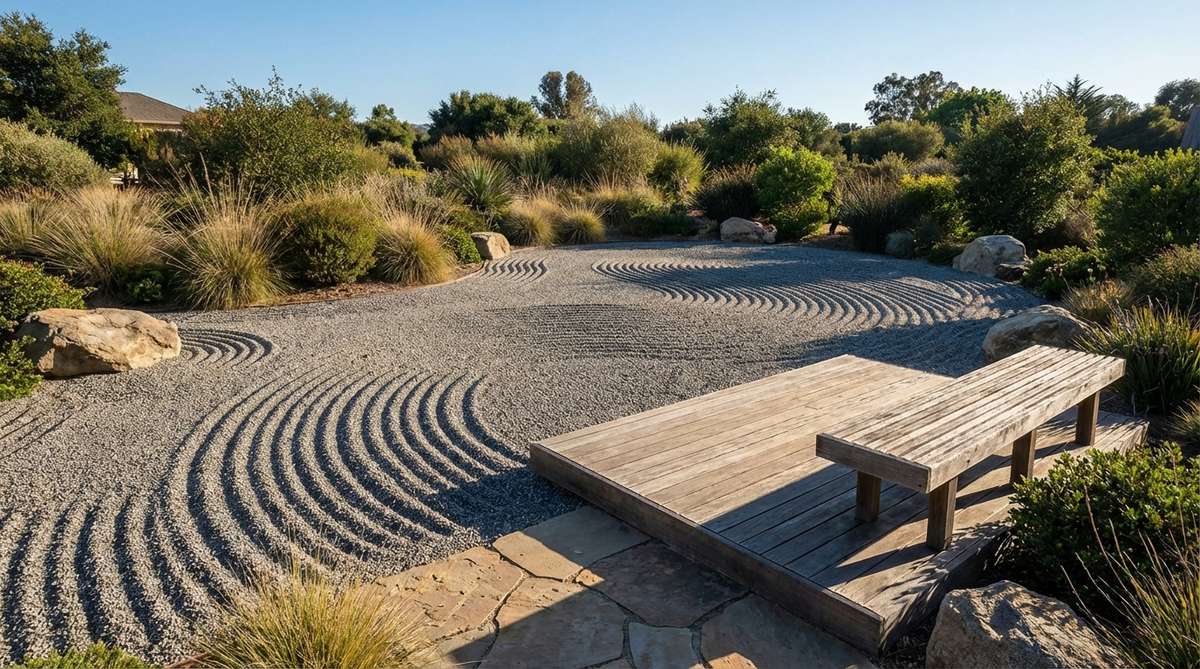
Bold, dramatic curves represent standing waves or breakers. This pattern conveys more energy and movement than gentler water representations.
Use wider spacing between wave crests and create pronounced curves with your rake. Draw each wave as a distinct entity rather than continuous ripples.
This technique works best in larger gravel areas where the scale of the waves can be properly appreciated from viewing platforms or benches.
6. Cascading Waterfall Lines
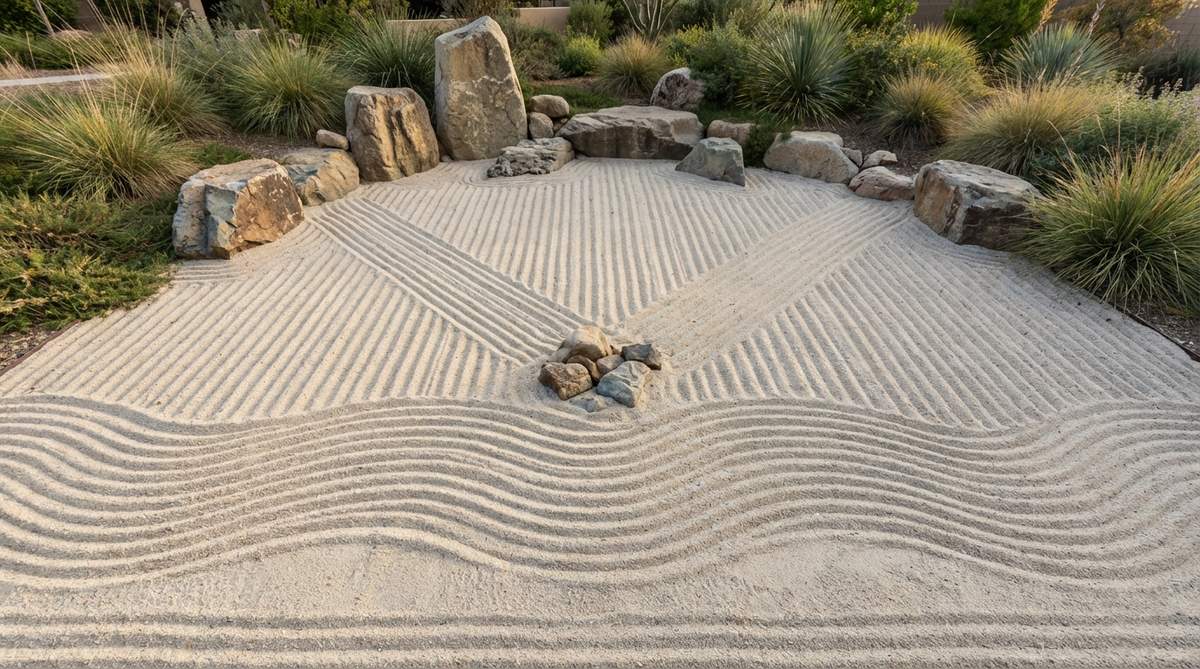
Vertical or diagonal lines suggest water falling from height. The pattern creates dynamic energy by breaking the horizontal plane typical of most zen garden sand designs.
Rake from top to bottom in parallel strokes, allowing lines to converge slightly at the bottom to mimic water collecting. Position rocks at the top to serve as the waterfall source.
Combine this with horizontal ripple patterns at the base to show where falling water meets a pool surface.
Circular and Spiral Designs With Zen Garden Pattern Depth
Circular patterns introduce focal points and represent cosmic forces or energy centers. These designs require more technical skill because maintaining perfect curves demands consistent rake pressure and body positioning.
7. Concentric Circles
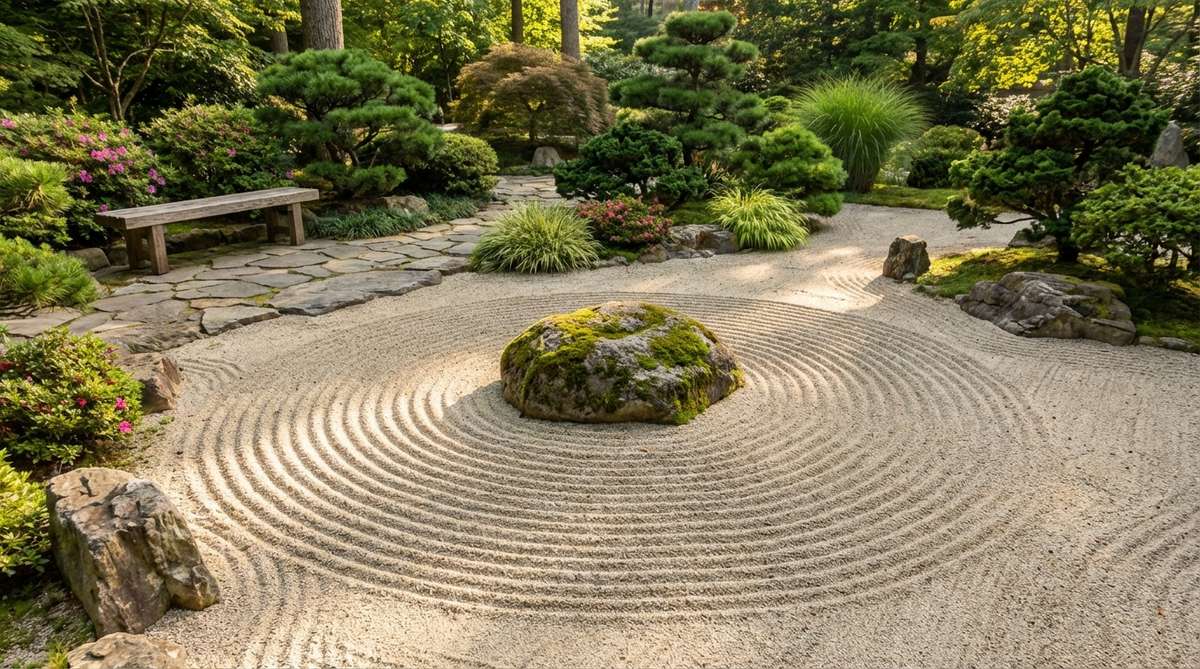
Perfect rings radiate outward from a central stone or empty point, symbolizing perpetual motion and ripples from a dropped pebble. This classic pattern creates instant meditative focus.
Start at the center and work outward in expanding circles, or begin at the perimeter and spiral inward. Keep your body moving smoothly around the center point rather than stopping to reposition.
Place a significant rock at the center to anchor the composition and provide symbolic weight to the energy emanating from that spot.
8. Sideways Concentric Ripples (Uzumaki-mon)
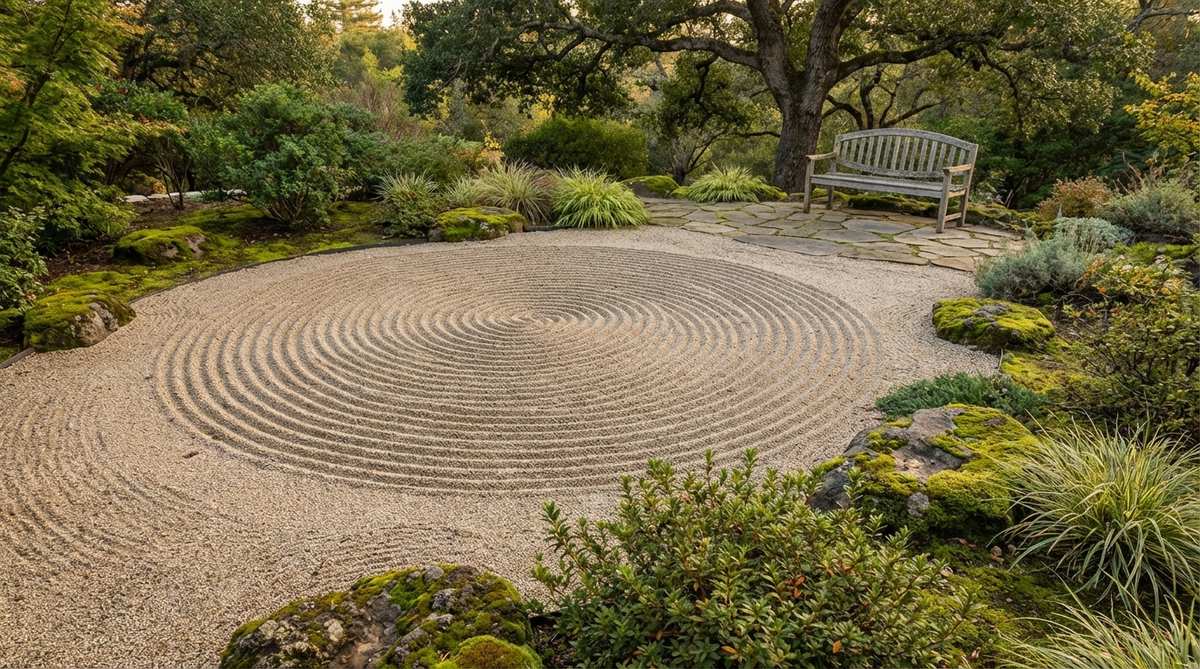
A whirlpool or vortex effect pulls the eye inward with spiraling curves. This pattern represents dynamic water flow and swirling ocean currents rather than gentle ripples.
Create tightening spirals that wind toward the center with decreasing radius. Maintain consistent spacing between each spiral arm for visual harmony.
Position this pattern off-center in your garden to create asymmetric balance—a fundamental principle in Japanese aesthetic philosophy.
9. Whirlpool (Maru-uzu-mon)
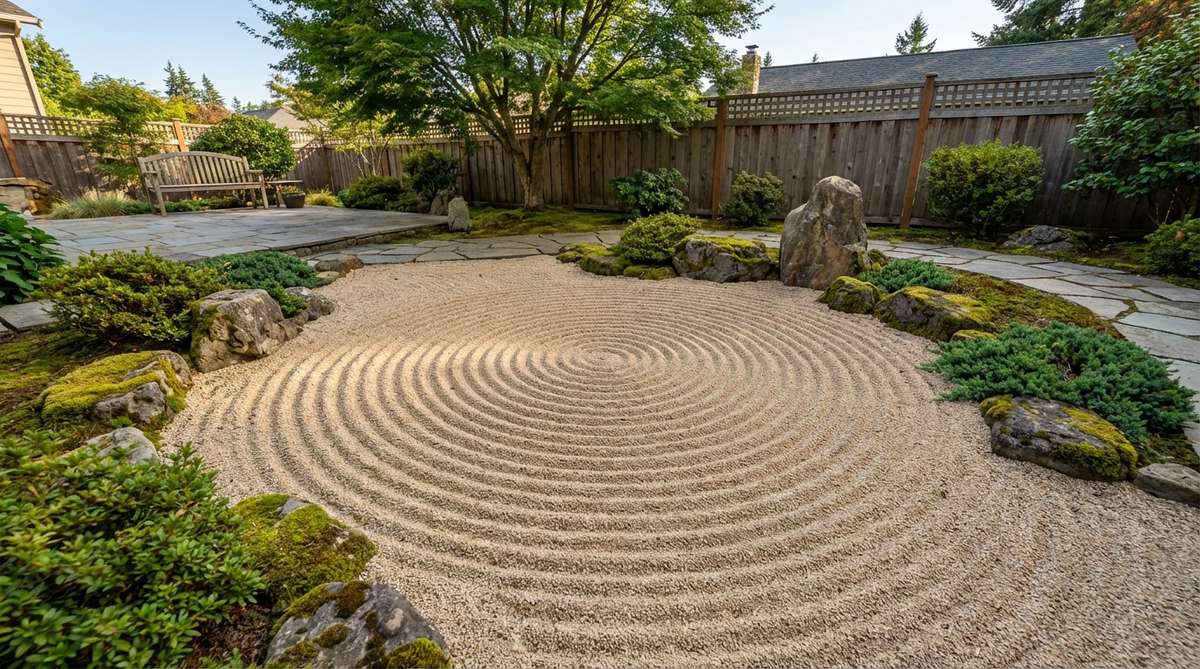
Circular ripples spiral either inward or outward, representing turbulent water in eddies. The pattern adds dramatic movement and captures viewer attention immediately.
Decide whether your whirlpool draws energy inward or expels it outward before beginning. Rake the spiral with gradually tightening or loosening curves accordingly.
Master practitioners use multiple small whirlpools throughout a garden to create visual rhythm and multiple focal points for contemplation.
10. Half-Circle Arcs
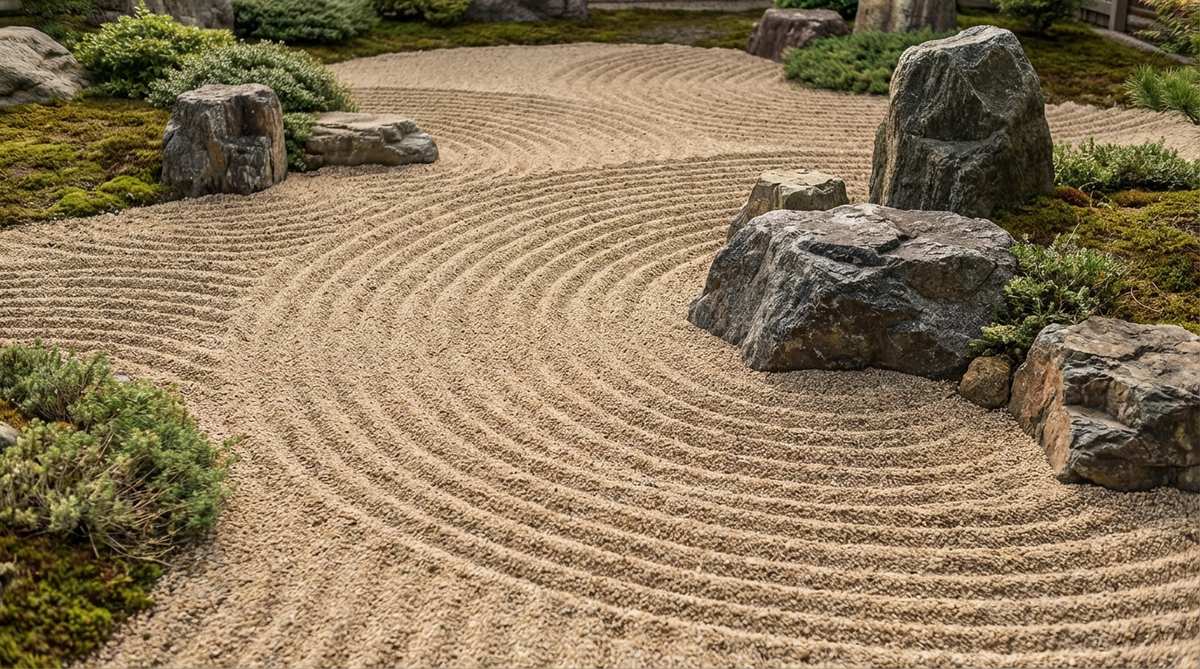
Semicircular curves extend from rocks or garden edges, suggesting ripples interrupted by landmasses. This pattern bridges linear and circular techniques.
Rake arc shapes that follow the contour of your rocks or boundaries. Stack multiple arcs behind each other to build depth and layered movement.
This approach works particularly well when you have multiple rocks in a composition and need to show their individual influence on the surrounding space.
11. Double Spiral Formation
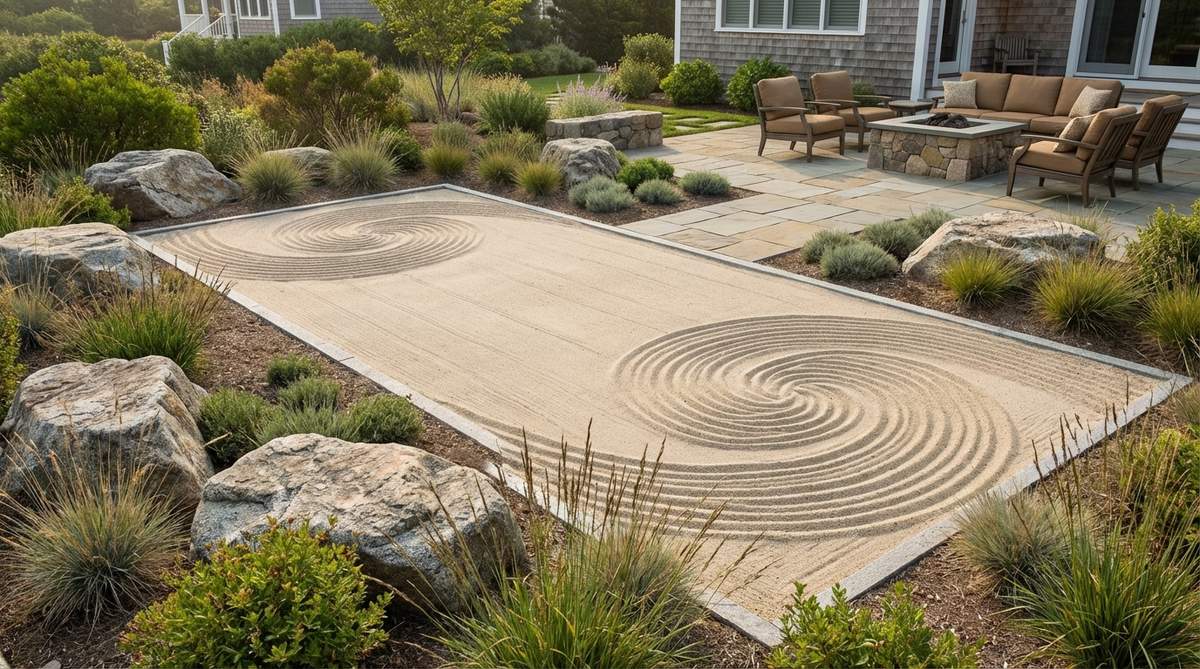
Two spirals mirror each other or flow in opposite directions, representing dualistic forces or complementary energies. The pattern creates sophisticated visual tension.
Establish two center points and rake spirals that either flow away from each other or meet in the middle. Maintain symmetry or deliberately break it for artistic effect.
Position the spirals at opposite ends of a rectangular garden to create balanced energy across the entire space.
Directional Gravel Techniques for Movement and Flow
Directional patterns guide visual movement and create pathways through the contemplative space. Landscape designers use these techniques to control how visitors experience the garden sequence.
12. Diagonal Crossing Lines
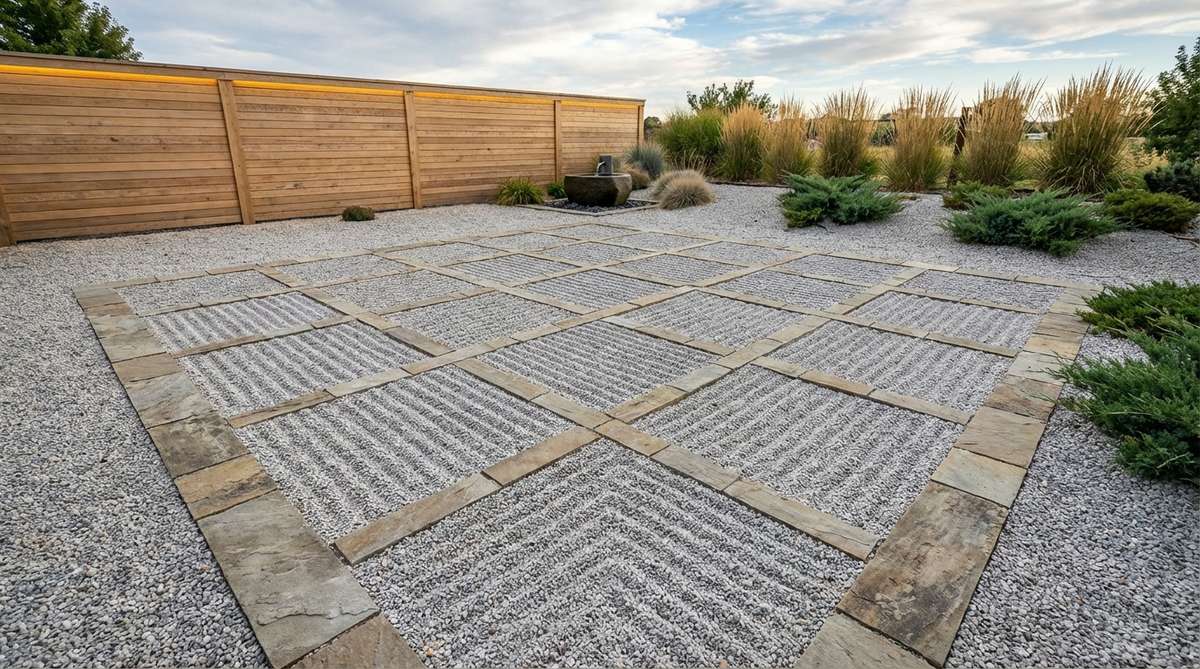
Lines intersect at angles to create diamond grid patterns across the gravel surface. This geometric approach introduces dynamic tension while maintaining order.
Rake your first set of parallel diagonal lines from corner to corner, then add perpendicular diagonals to complete the crosshatch. Spacing determines whether the pattern feels tight and energetic or open and calm.
This technique works effectively in modern interpretations of zen garden sand designs where geometric precision complements contemporary architecture.
13. Curved Sweeping Strokes
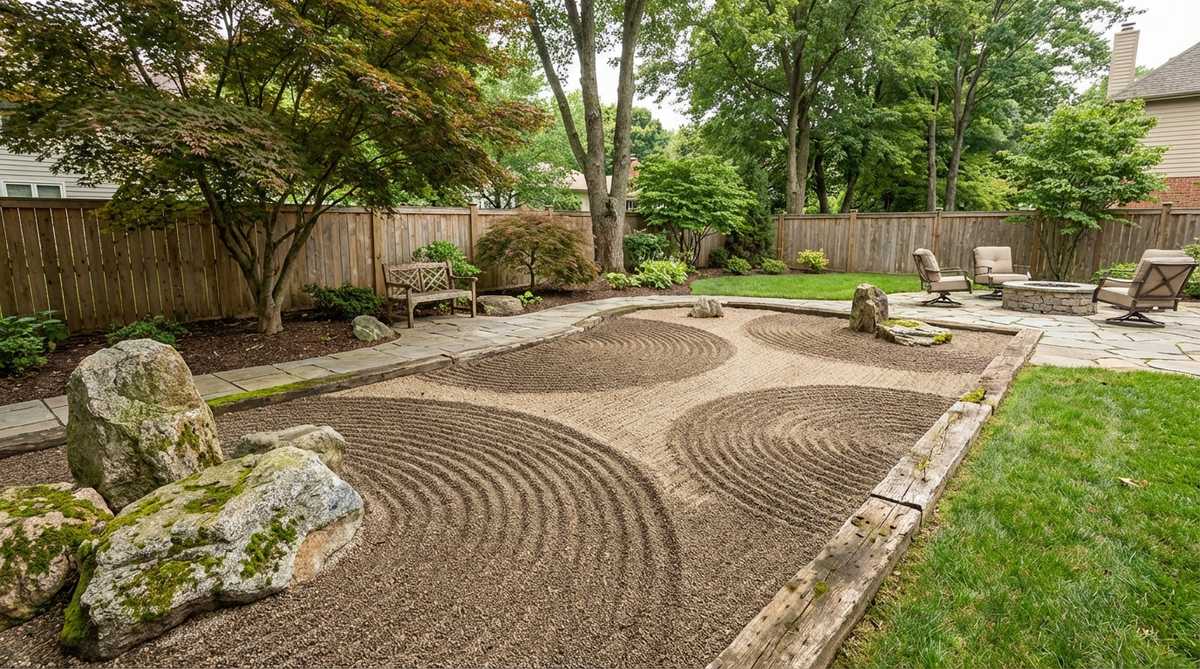
Broad, curved lines sweep across the entire garden in graceful arcs. The pattern suggests wind patterns, cloud movements, or gentle hillside contours.
Use your entire body to create smooth, sweeping motions with the rake. Each stroke should flow naturally without stopping or hesitation mid-arc.
Vary the arc radius throughout the garden to prevent monotony—tighter curves near viewing areas, broader sweeps in distant zones.
14. Radiating Fan Pattern
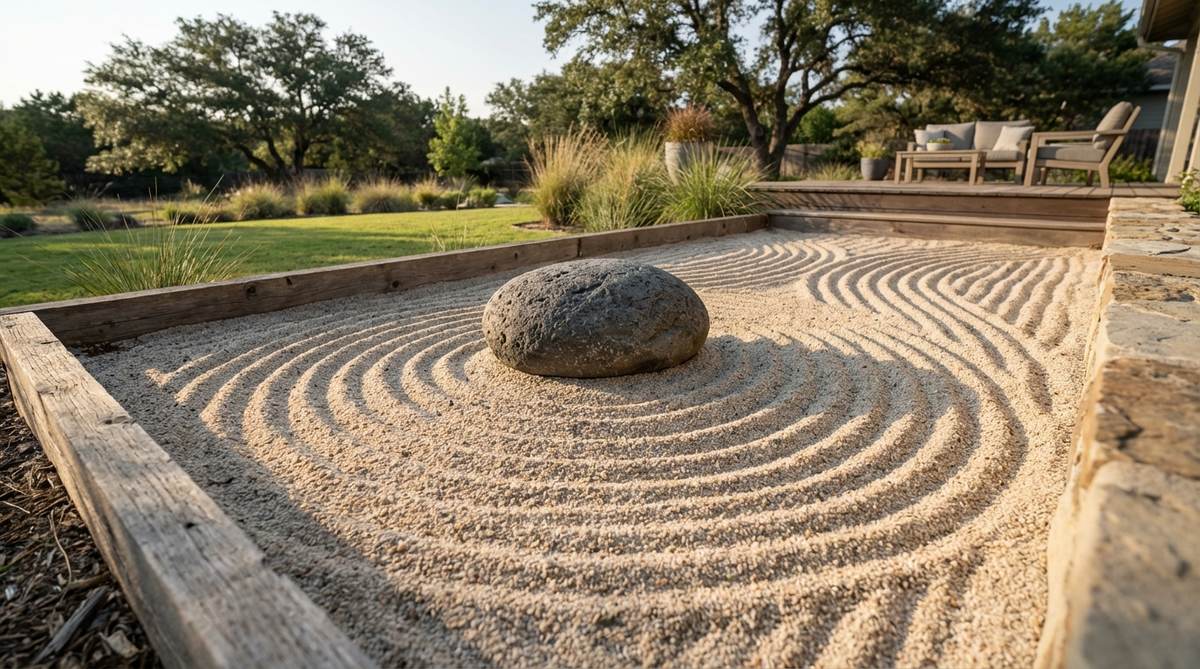
Lines spread outward from a single point like an opening fan. This pattern draws all attention to a central focal element while creating expansive energy.
Anchor your starting point with a significant rock or garden edge. Rake lines that gradually widen as they extend outward, maintaining even spacing at their termination points.
Use this pattern to emphasize a particularly important stone or to create visual drama in a corner viewing area.
15. Converging Perspective Lines
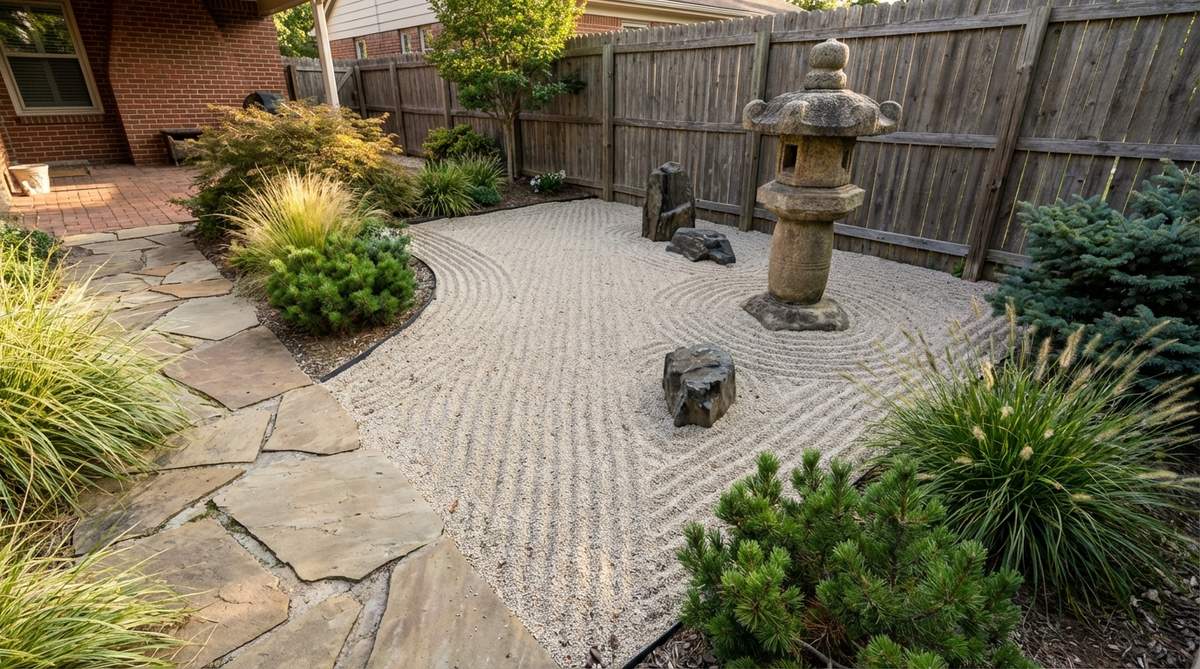
Lines meet at a vanishing point to create depth illusion. The technique borrows from Western artistic perspective to add dimensional quality to flat gravel surfaces.
Choose your vanishing point at the far end of the garden. Rake all lines so they converge toward that point, creating the illusion that the garden extends beyond its physical boundaries.
This contemporary approach works well in smaller urban gardens where creating perceived depth maximizes the sense of space.
16. S-Curve Meandering Path
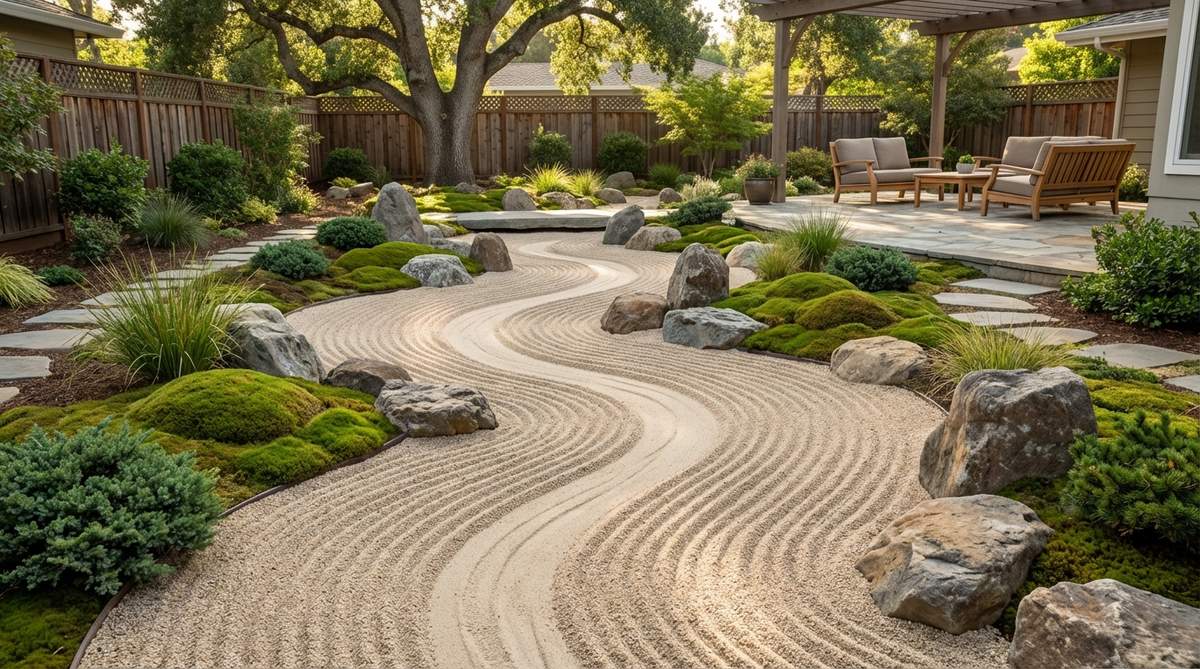
Gentle S-shaped curves wind through the gravel like a country road or forest stream. The pattern creates relaxed, organic movement that feels natural rather than controlled.
Rake a central meandering line first, then add parallel lines on both sides that follow the same curves. This builds a flowing “river” of zen garden gravel through your space.
Position rocks along the curves to suggest riverbanks or landmarks along a journey, reinforcing the pathway metaphor.
17. Chevron Arrow Formation
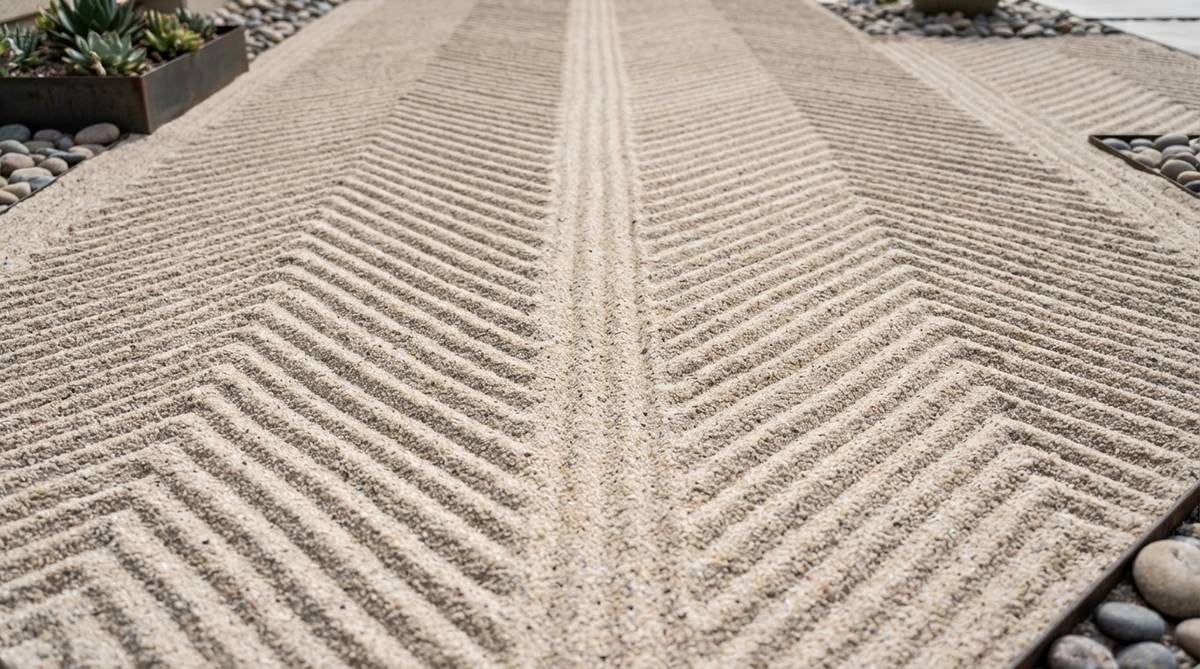
V-shaped patterns point in a specific direction with bold geometric clarity. The design creates strong directional pull and modern visual impact.
Rake two sets of angled lines that meet at a central spine, forming repeating chevrons. Control the angle and spacing to adjust the pattern’s intensity.
Use this technique in contemporary gardens where you want to create architectural alignment with building facades or hardscape elements.
Geometric Zen Garden Pattern Systems
Geometric approaches bring mathematical precision to meditative design. These patterns appeal to designers working in modern contexts where clean lines and repeating motifs complement architectural surroundings.
18. Grid Square Pattern
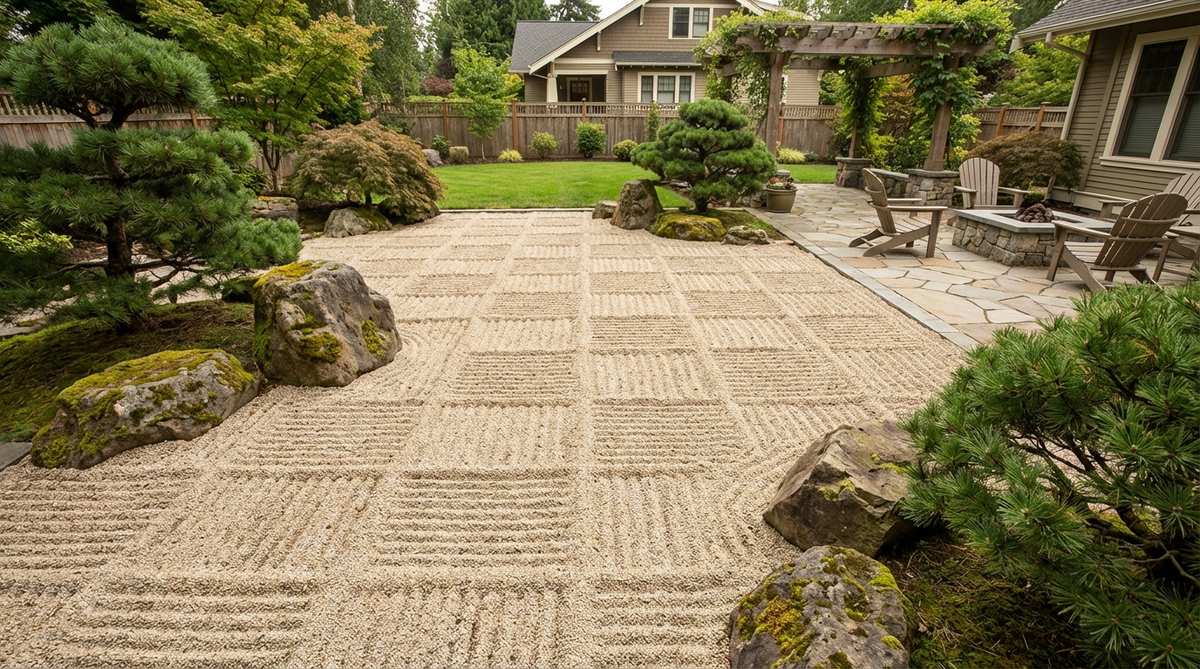
Perpendicular lines create perfect squares across the entire surface. This rigid geometry represents order, discipline, and the human imposition of structure on nature.
Rake parallel lines in one direction, then add perpendicular lines with identical spacing. Use measuring guides initially to establish perfect spacing, then develop the skill to maintain it naturally.
This pattern provides strong contrast when rocks are placed asymmetrically within the rigid grid system.
19. Herringbone Angles
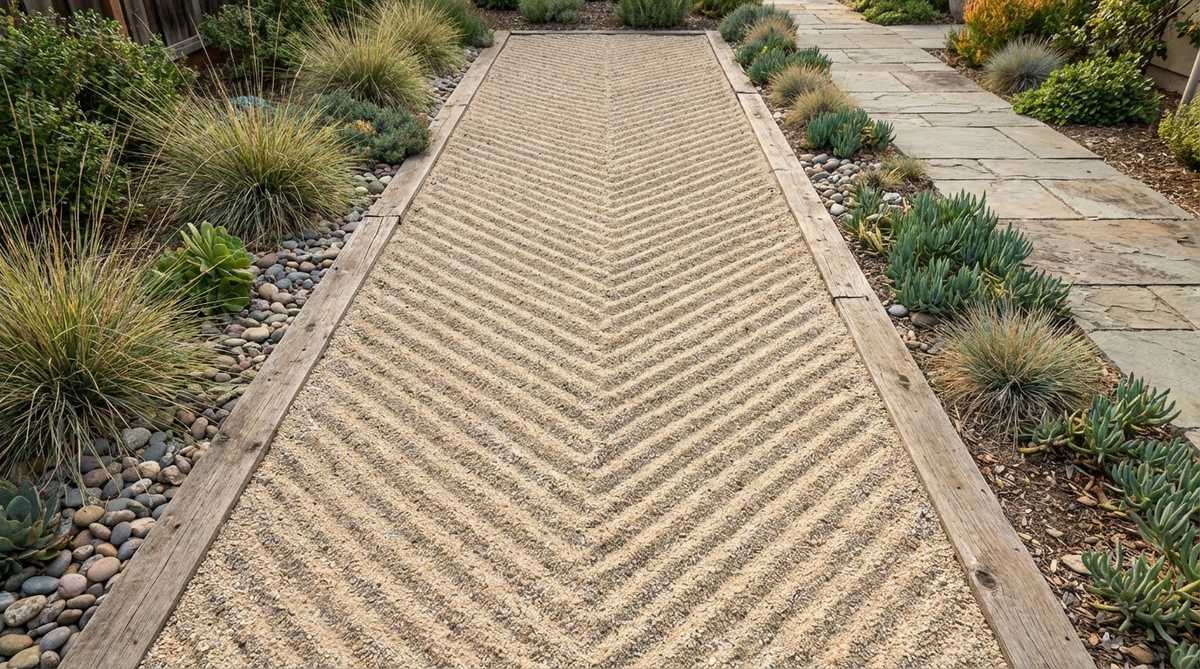
Alternating diagonal lines create a classic herringbone texture. The pattern adds visual complexity while maintaining orderly structure.
Rake short diagonal strokes that alternate direction in adjacent columns. Each stroke should be uniform in length and angle for consistent pattern repetition.
This technique works exceptionally well in narrow garden strips where simple parallel lines might feel too predictable.
20. Brick Bond Pattern
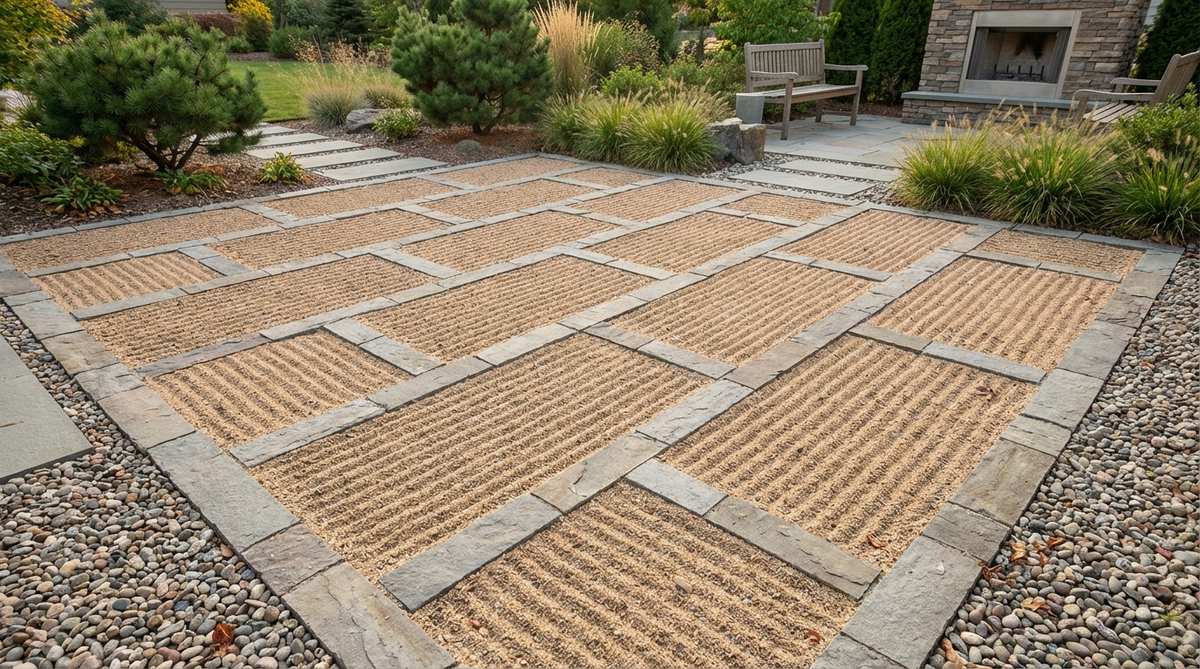
Rectangular sections offset like brick laying create modular visual rhythm. The pattern references architectural materials while maintaining zen garden sand aesthetics.
Divide your surface into rectangular zones, then rake each zone in alternating directions. Offset the zones like running bond brickwork for authentic appearance.
Modern landscape architects use this pattern to bridge between hardscape paving and traditional gravel areas.
21. Triangular Wedge Sections
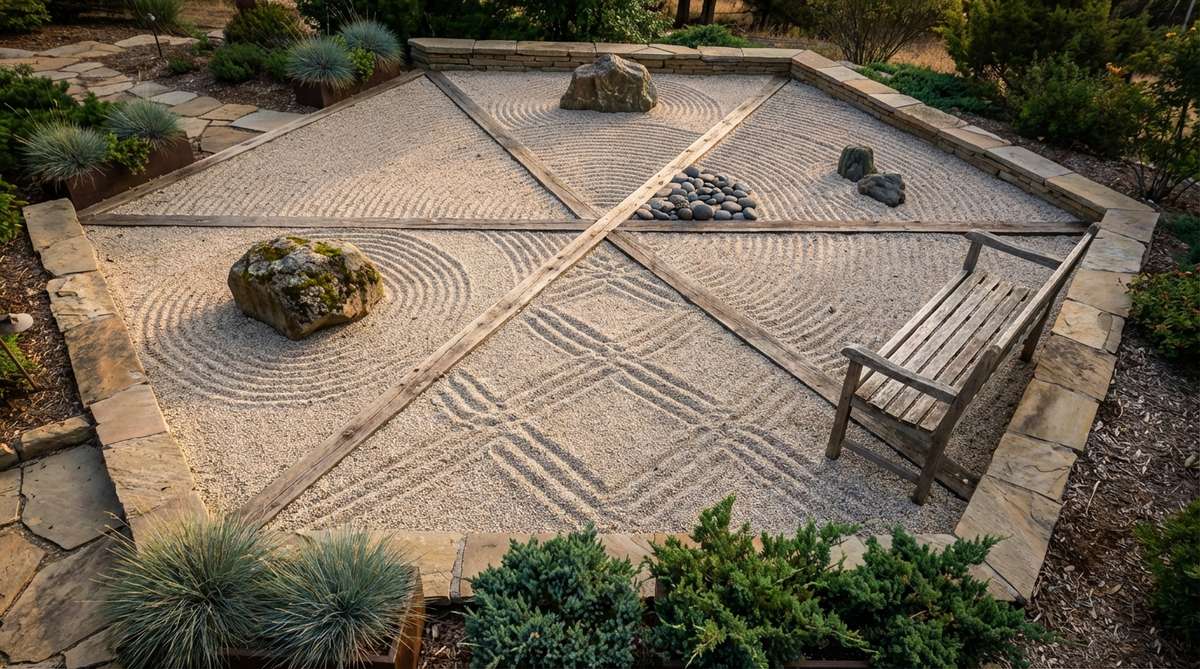
Triangular zones create dynamic geometric divisions across the gravel surface. The pattern introduces angular energy while maintaining clear organization.
Establish primary dividing lines that create triangular territories, then rake each triangle in different directions or with different patterns. The contrast between zones creates visual interest.
Use this approach when you want to highlight multiple focal rocks by giving each its own triangular zone.
22. Concentric Squares
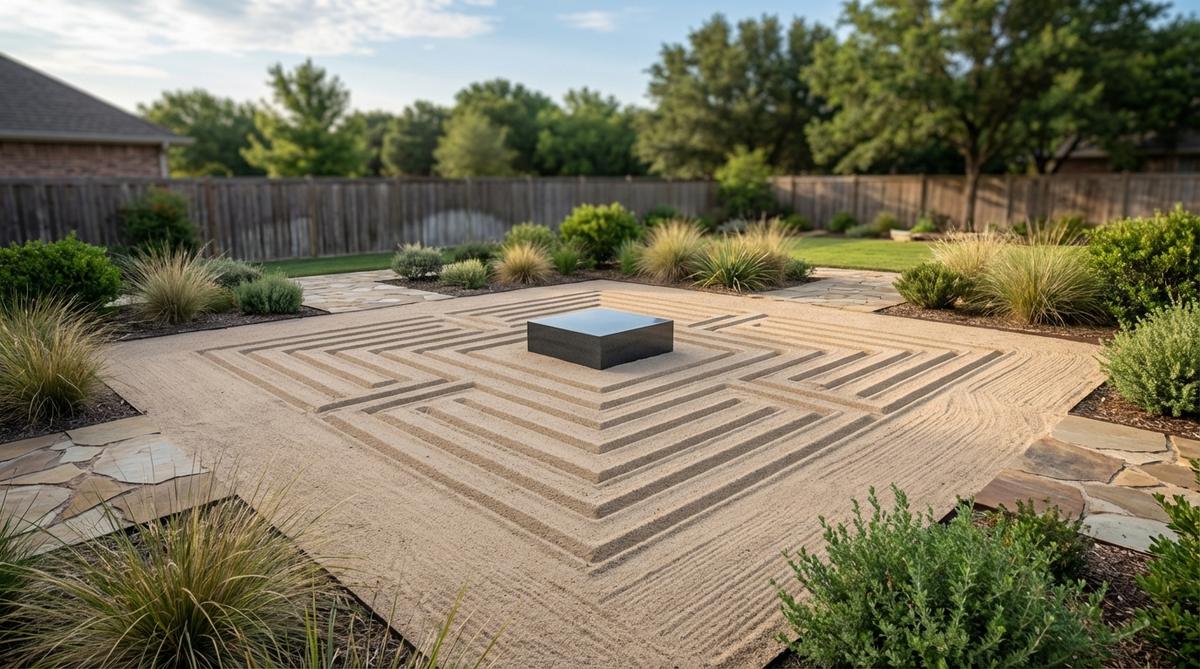
Square frames nest within each other like geometric ripples. This pattern combines the focal power of concentric circles with geometric precision.
Start from the center and rake outward in square rings, or work from the perimeter inward. Maintain consistent spacing between each square frame.
Position a square rock or sculptural element at the center to reinforce the geometric theme throughout the composition.
Advanced Combination Techniques With Zen Garden Gravel
Master practitioners combine multiple patterns within a single garden to create layered meaning and visual sophistication. These approaches require technical skill and aesthetic judgment to maintain harmony.
23. Stylized Wave (Seigaihamon)
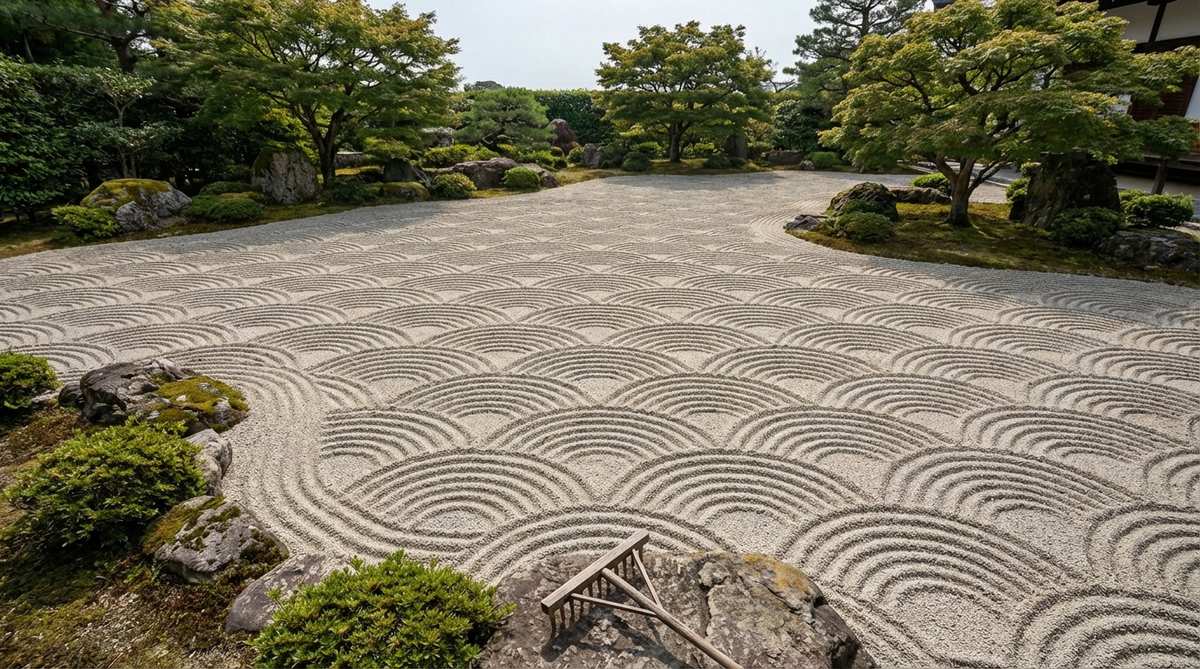
Tightly interlocking semicircles resemble fish scales or rhythmic wave motion. This highly stylized traditional pattern requires precision to maintain consistent scale proportions.
Rake overlapping semicircular arcs in horizontal rows. Each arc should partially overlap the arcs in the row above, creating a scale-like appearance.
This pattern works best in smaller, featured sections rather than across entire gardens due to its visual intensity and time-intensive execution.
24. Island Surrounded by Ripples
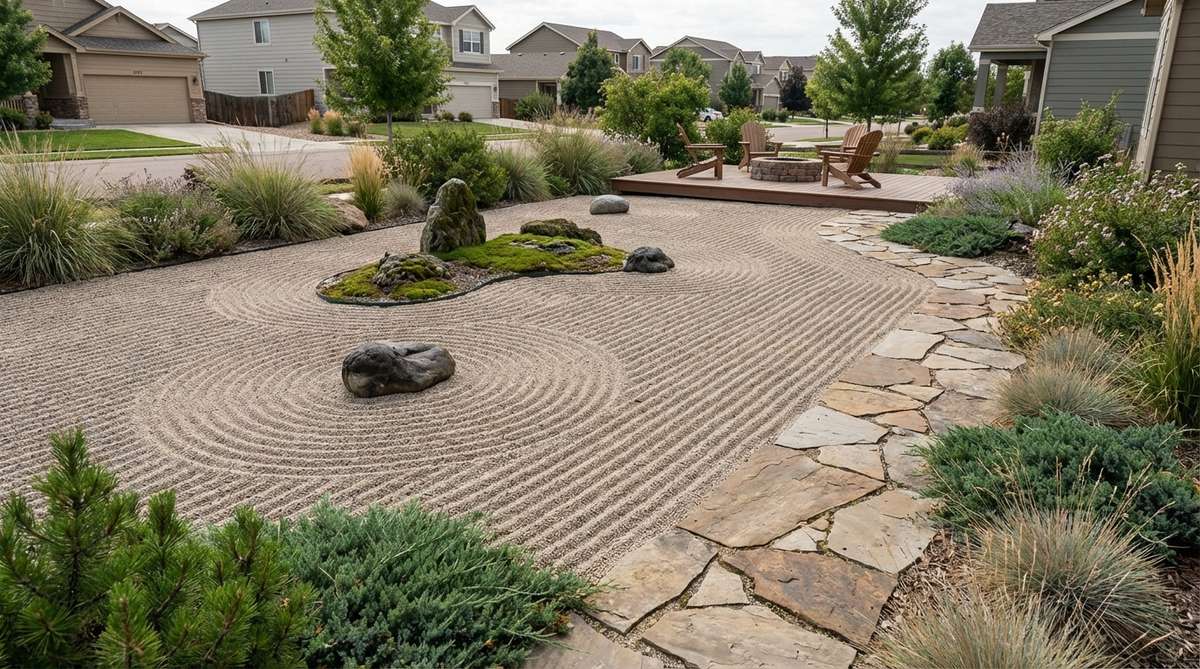
Concentric circles surround rock formations while straight lines fill the remaining space. The pattern creates clear distinction between focal objects and background field.
Rake circles around each significant rock first, extending outward until you reach open gravel areas. Fill the remaining spaces with parallel lines or complementary patterns.
This combination technique appears in traditional temple gardens where it helps direct attention to carefully selected stones.
25. Split-Field Dual Pattern
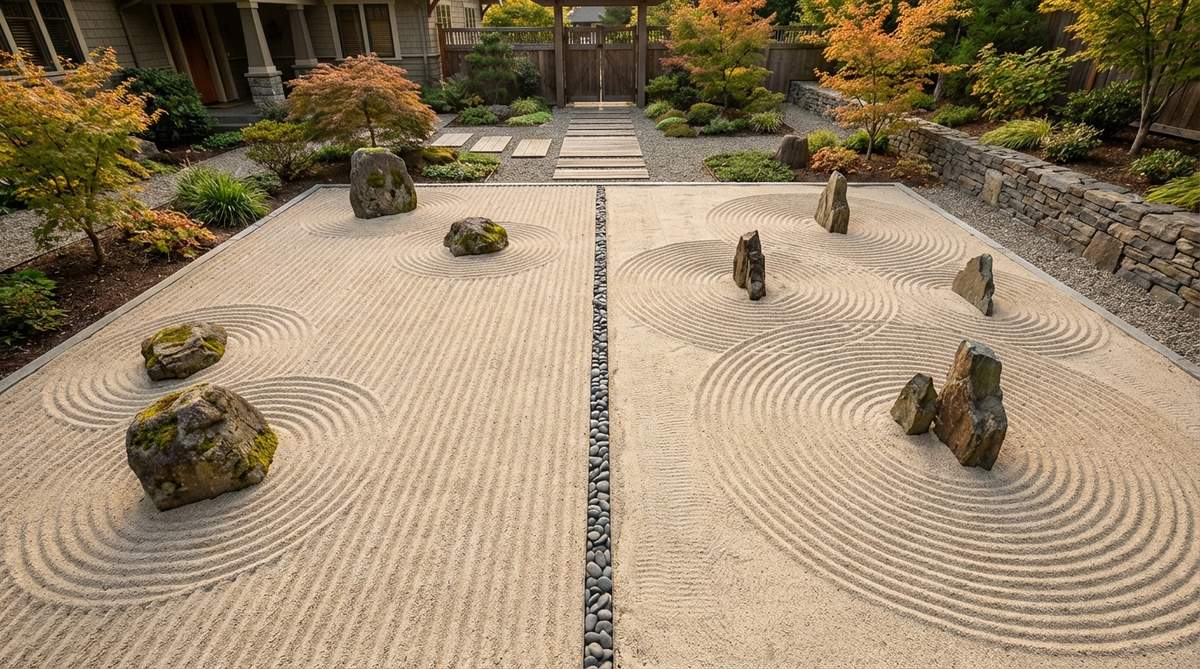
The garden divides into distinct zones with different patterns meeting at a clear boundary. This technique allows exploration of contrasting energies within one space.
Establish your dividing line—straight, curved, or diagonal. Rake completely different patterns on each side, such as straight lines meeting spirals or waves meeting grids.
Designers use this approach to represent dualistic conceptsstillness and movement, order and chaos, earth and water.
26. Nested Circles with Radiating Lines
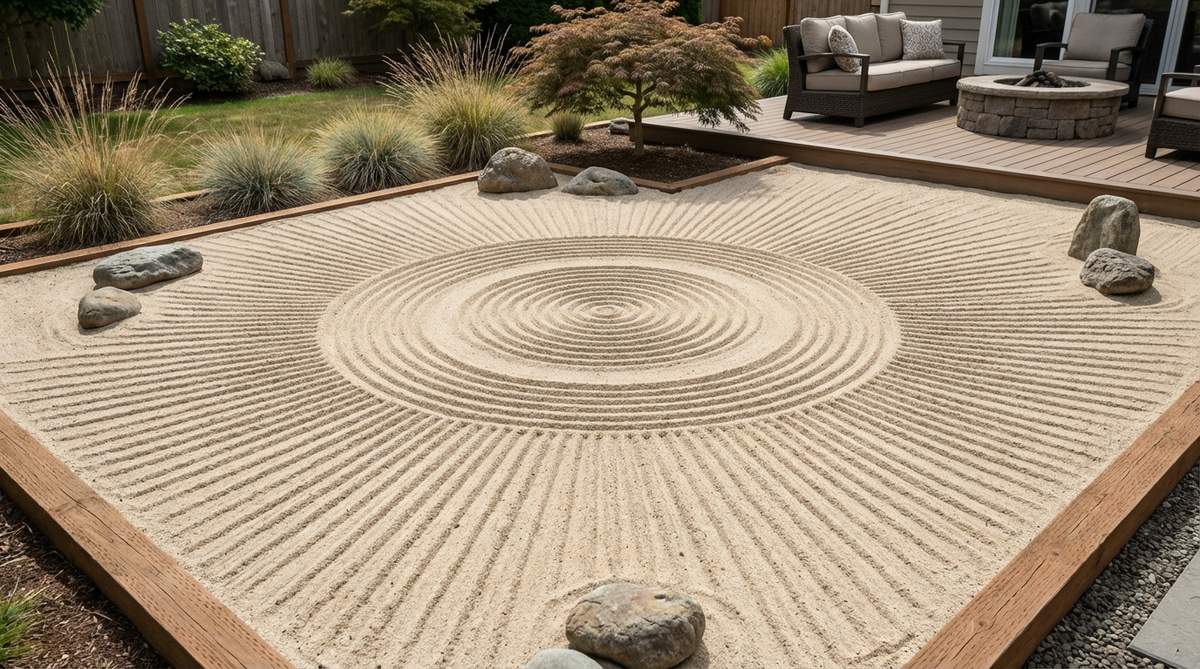
Concentric circles occupy the center while straight lines radiate outward from the circular boundary. The pattern combines focal centralization with expansive energy.
Create your central circle system first, then add radiating lines that begin at the outermost circle and extend to the garden edges. Maintain even spacing between radiating lines.
This composition works powerfully in meditation gardens where the center represents the practitioner and radiating lines symbolize expanding awareness.
27. Wave-to-Calm Transition
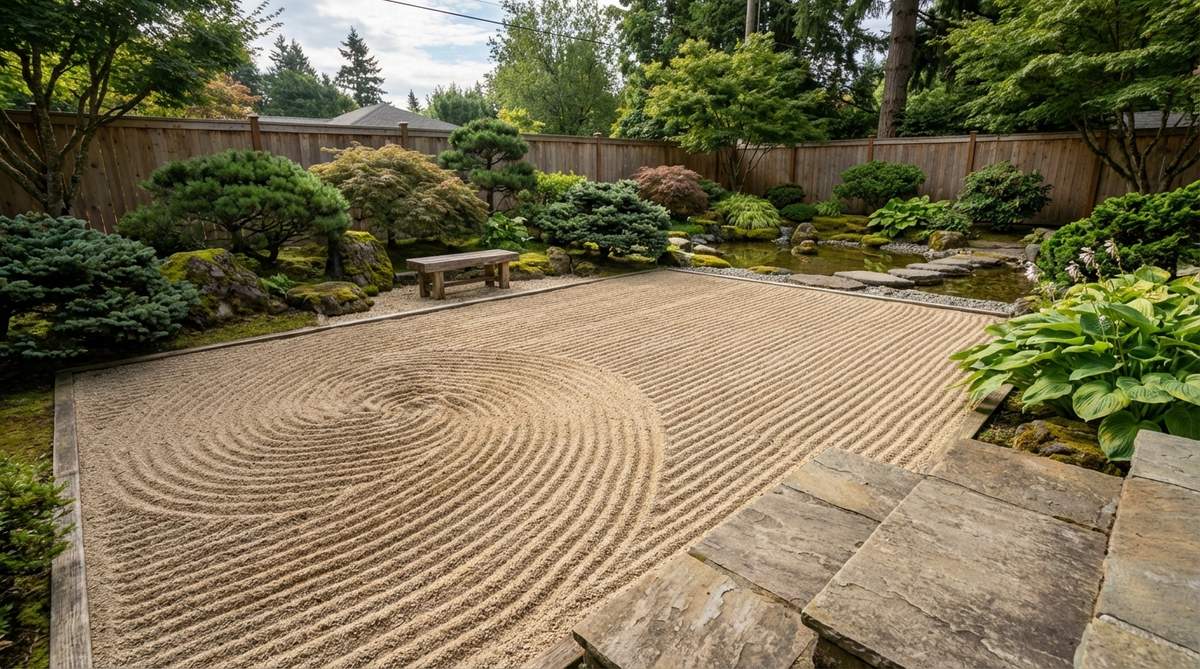
Turbulent wave patterns gradually smooth into calm parallel lines across the garden length. The progression creates narrative from chaos to peace.
Begin with dramatic waves or spirals at one end, then progressively reduce the wave amplitude as you rake toward the opposite end, finishing with straight lines. The gradual transition should feel natural rather than abrupt.
Position this pattern so viewers walk alongside the progression, experiencing the visual journey from activity to stillness.
28. Multi-Directional Flow System
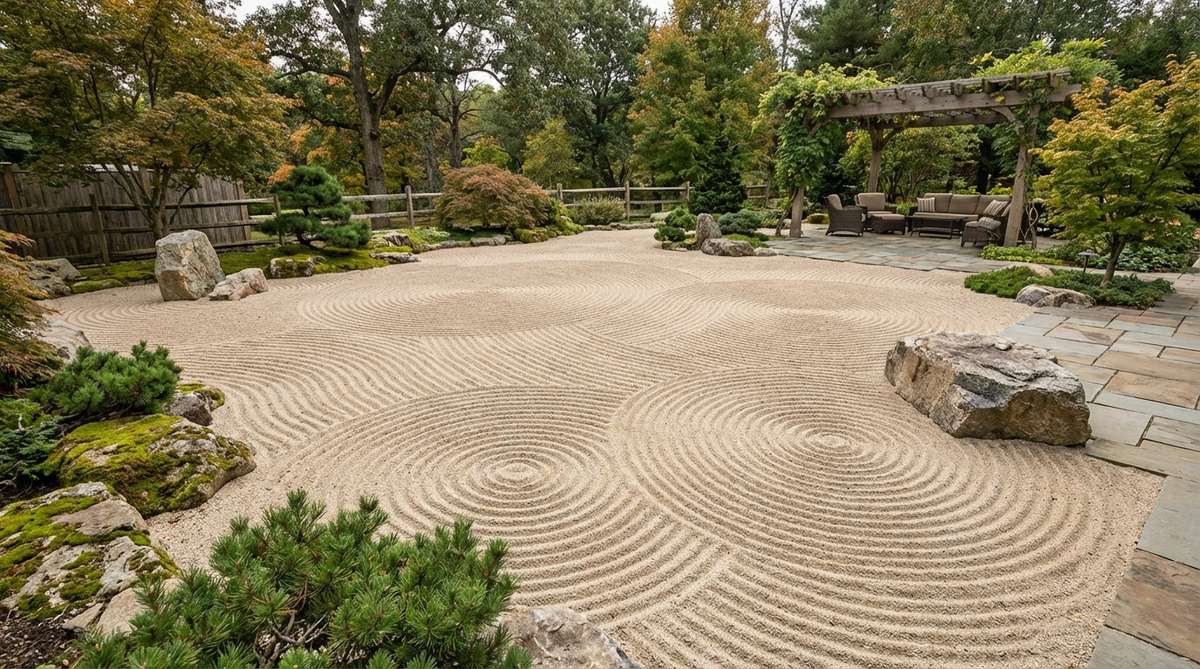
Multiple flow patterns originate from different points and interact across the surface. This complex approach represents converging forces or meeting influences.
Establish several origin points with different pattern types flowing from each. Allow the patterns to meet and blend in transitional zones rather than creating hard boundaries.
Advanced practitioners use this technique in large gardens where multiple viewing perspectives require different focal flows.
Seasonal and Symbolic Arrangements
Certain patterns carry specific seasonal associations or symbolic meanings in Japanese garden tradition. Understanding these cultural layers adds depth to your design choices.
29. Autumn Maple Leaf Curves
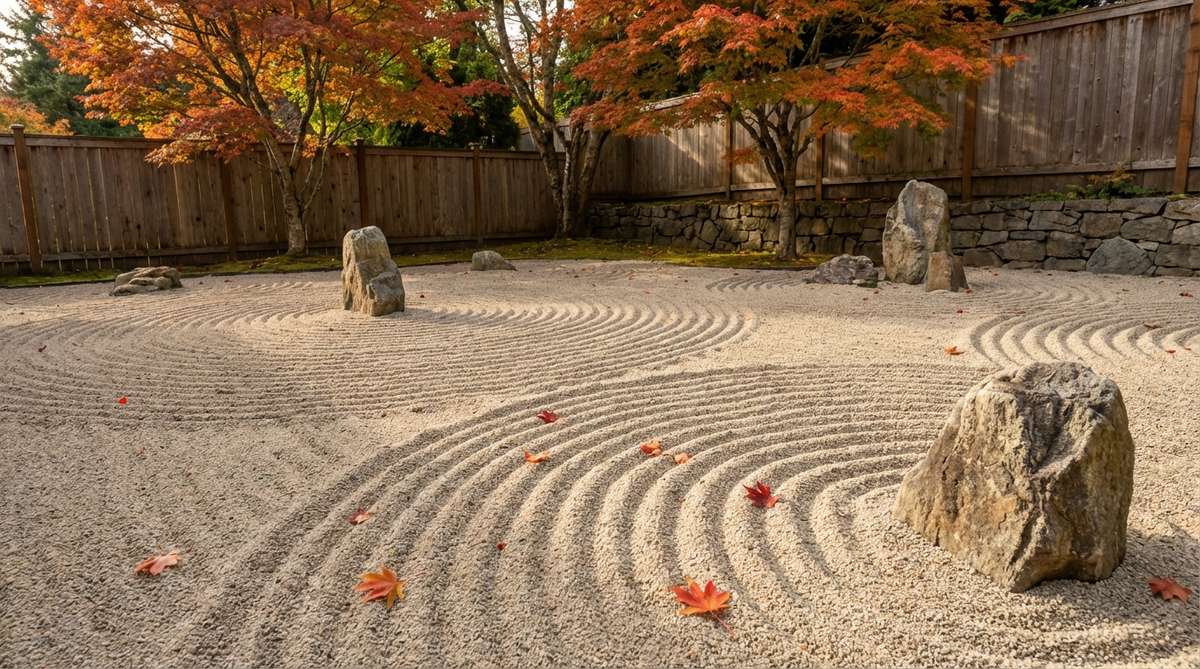
Gentle curves suggest falling leaves drifting on water currents. The pattern evokes seasonal transition and the Buddhist concept of impermanence.
Rake smooth, wandering curves that overlap and intersect randomly, mimicking natural leaf paths on water surfaces. Avoid rigid geometric organization.
This pattern pairs effectively with actual maple trees bordering your garden, creating visual dialogue between living elements and raked gravel.
30. Spring Plum Blossom Dots
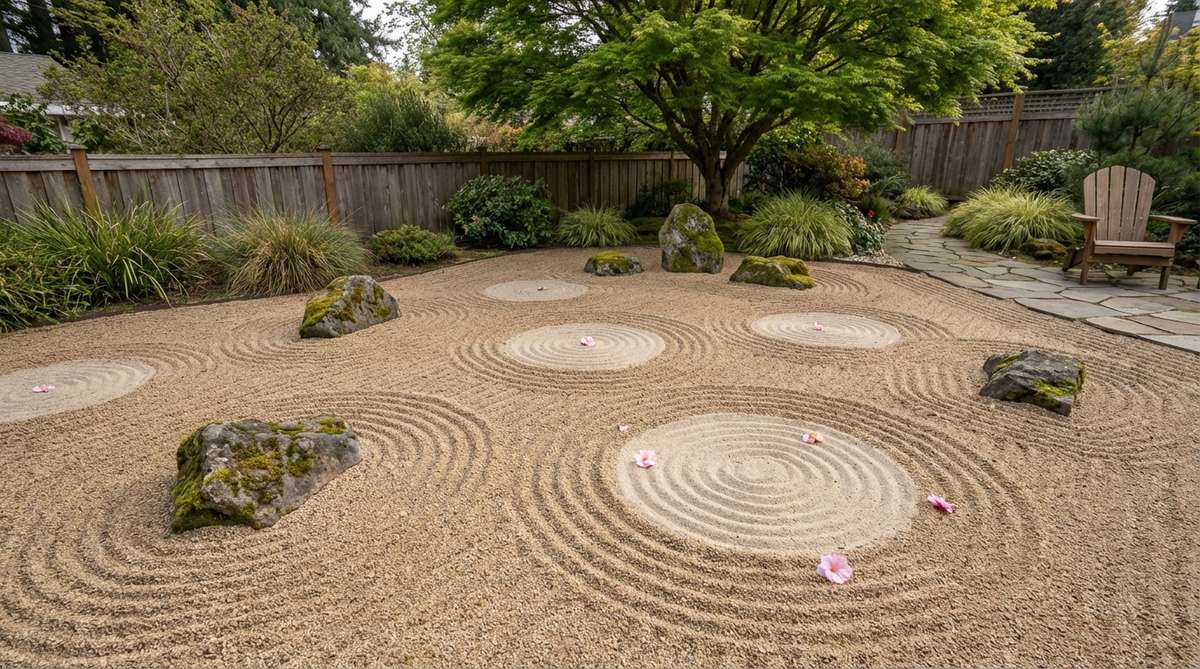
Circular clearing patterns around multiple points suggest fallen plum blossoms floating on water. The scattered arrangement celebrates renewal and ephemeral beauty.
Create small circular cleared areas at random intervals across your gravel surface, then surround each with subtle ripple patterns. The composition should feel organic rather than planned.
This seasonal pattern works best when changed monthly or quarterly to reflect actual garden cycles and maintain viewer interest.
31. Winter Frost Crystal Geometry
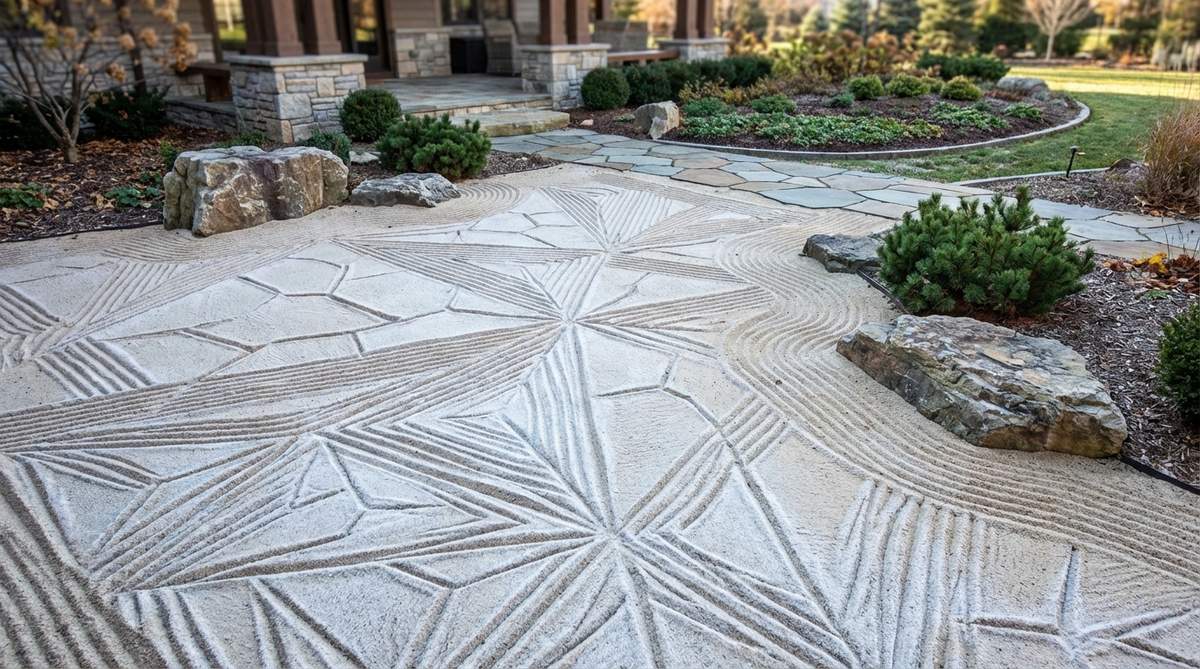
Angular, crystalline patterns reference ice formation and winter’s stark beauty. Sharp geometric intersections replace flowing curves.
Rake precise angular lines that meet at sharp points, creating faceted surfaces like ice crystals. Use triangular and hexagonal formations for authentic crystal geometry.
This pattern introduces seasonal variation in gardens viewed year-round, acknowledging climate changes through deliberate design shifts.
32. Summer Cloud Scroll Pattern
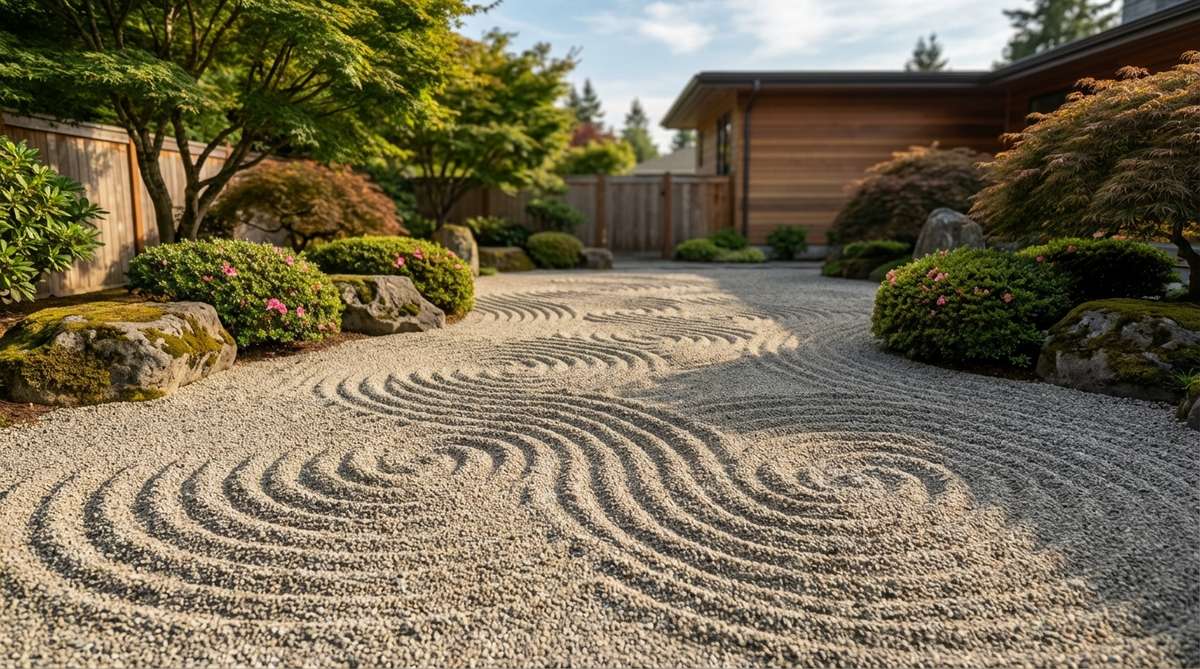
Billowing curves suggest cumulus clouds drifting across summer skies. The pattern brings lightness and upward energy to ground-level designs.
Create rounded, puffy curves that overlap and cluster like cloud formations. Vary the size and density to suggest atmospheric depth.
Position this pattern in gardens with significant sky views, creating visual echo between raked earth and actual clouds above.
33. Lunar Phase Progression
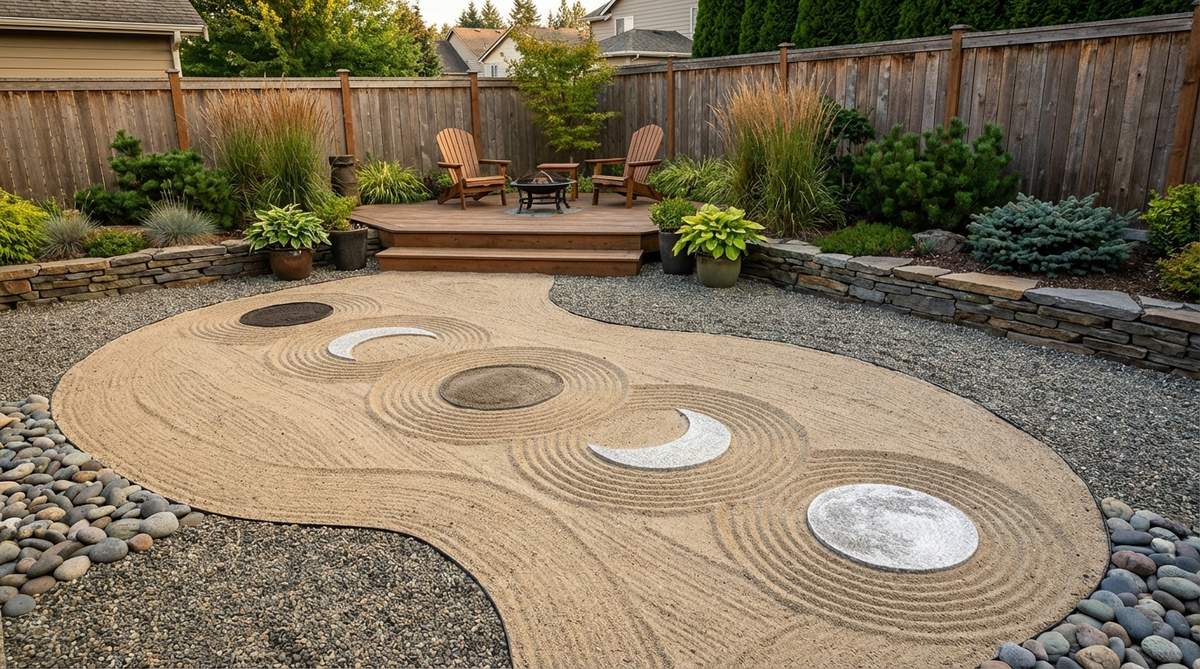
Circles of varying completion suggest moon phases from new to full. This symbolic pattern connects earthly gardens to celestial cycles.
Rake a series of circular or crescent shapes that progress through moon phases across your gravel field. Position them to read chronologically from a primary viewing point.
Landscape architects use this technique in meditation gardens designed for nighttime contemplation or lunar observation.
Conclusion
Mastering zen garden sand patterns requires technical precision and meditative intention working in harmony. The traditional techniques from Japanese karesansui gardens provide proven foundations, while contemporary interpretations allow personal expression within structured frameworks. Start with fundamental parallel lines to develop consistent rake control, then progress through circular patterns and finally attempt complex combinations that layer multiple elements. The raking process itself becomes a form of moving meditation—each stroke demands present-moment awareness and physical engagement that quiets mental chatter. Whether you maintain a traditional temple-style garden or explore modern geometric variations, these 30+ patterns offer lifelong exploration of this contemplative landscape art.
Frequently Asked Questions
What type of material works best for zen garden sand patterns?
Use crushed granite or decomposed granite in 5/8-inch size rather than actual sand. True sand cannot hold raking patterns when wind blows and lacks the structural stability required for clean lines. Crushed granite varieties like Shirakawa-suna from Kyoto or white granite chips maintain pattern integrity while offering appropriate visual texture. Avoid colored gravels as they appear artificial and distract from the meditative qualities essential to authentic zen garden design.
How often should zen garden gravel patterns be re-raked?
Traditional temple gardens receive daily raking as part of monastic spiritual practice, maintaining pristine patterns continuously. Home gardens typically benefit from weekly raking to restore patterns disrupted by weather, falling debris, or wildlife activity. The raking frequency depends on your garden’s exposure to wind, your personal meditation practice schedule, and whether you view the garden primarily as static art or active contemplative tool. Many practitioners rake whenever they need centering rather than following rigid schedules.
Can you mix different zen garden sand patterns in one space?
Advanced practitioners successfully combine multiple patterns to create layered meaning and visual sophistication within single gardens. The key is maintaining clear transitions between pattern zones or establishing dominant and subordinate pattern relationships. Traditional approaches use concentric circles around focal rocks while filling remaining space with parallel lines. Modern designs might split the field with contrasting patterns representing dualistic concepts. Avoid overcomplexity—two or three distinct patterns maximum prevents visual chaos.
What tools are essential for creating professional zen garden patterns?
Wide-toothed bamboo rakes with 3-5 inch tooth spacing create traditional parallel line patterns efficiently. Fine-toothed rakes allow detailed work around rocks and edges. Full-size rakes with handles spanning 48-50 inches work best for large gravel areas, while smaller handheld versions suit desktop zen gardens or tight spaces. Additional tools include brooms for initial smoothing, trowels for edge work, and straight boards or strings as temporary guides when learning to maintain straight lines without reference points.
Do zen garden sand patterns have specific symbolic meanings?
Traditional patterns carry symbolic weight rooted in Buddhist philosophy and Japanese aesthetic principles. Straight parallel lines represent calm water, infinite ocean, or tranquil mind states. Concentric circles symbolize ripples from dropped stones, suggesting how single actions create expanding consequences. Spiral patterns reference whirlpools, cosmic energy, or the cyclical nature of existence. However, contemporary designers often prioritize personal meaning and visual harmony over strict adherence to historical symbolism, creating patterns that resonate with individual contemplative needs.