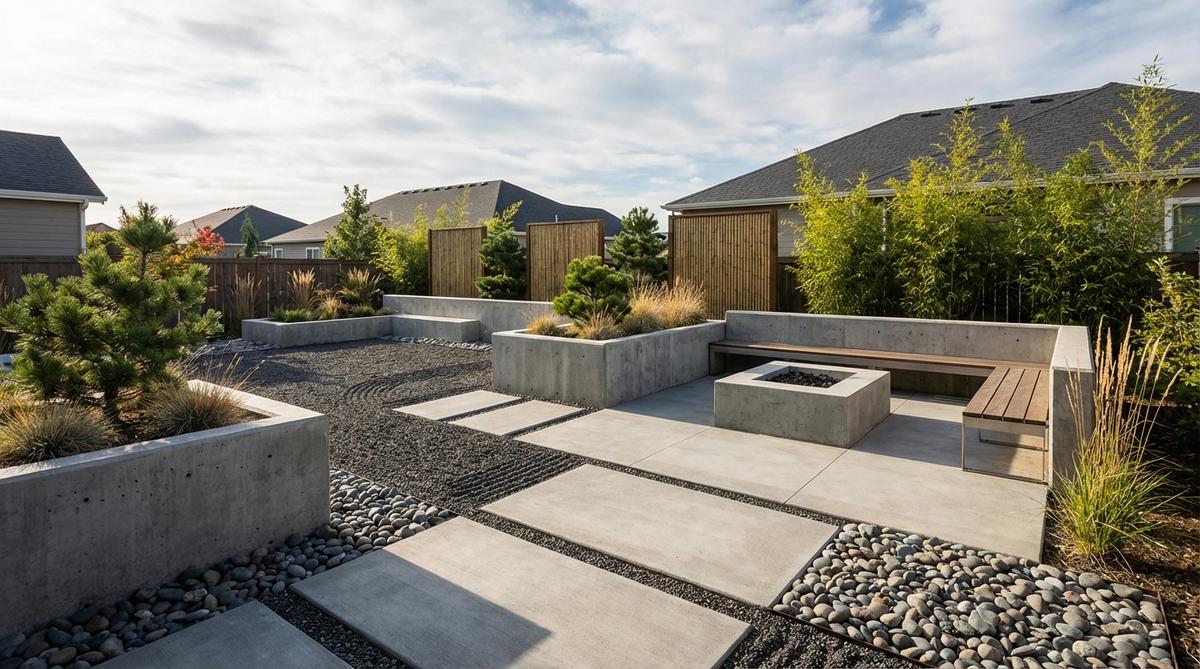
Contemporary zen garden modern designs merge traditional Japanese philosophy with industrial materials and clean geometric forms. Fresh Garden Ideas presents expert-curated concepts that balance minimalist aesthetics with meditative function, using concrete as both foundation and focal point.
Design SnapshotKey Principles
- Material Contrast: Pair smooth concrete surfaces with organic textures like weathered stone and fine gravel
- Geometric Clarity: Use rectangular beds, linear pathways, and angular planters to create visual rhythm
- Limited Palette: Restrict colors to grays, whites, and natural greens for maximum impact
- Intentional Emptiness: Embrace negative space as an active design element that enhances contemplation
Concrete Planters & Geometric Containers
Geometric concrete planters anchor modern zen spaces by introducing clean-lined structure that contrasts with natural plant forms. These vessels shift from traditional ceramic to industrial-grade materials while maintaining the garden’s meditative intent.
1. Cube Planters with Bonsai Specimens
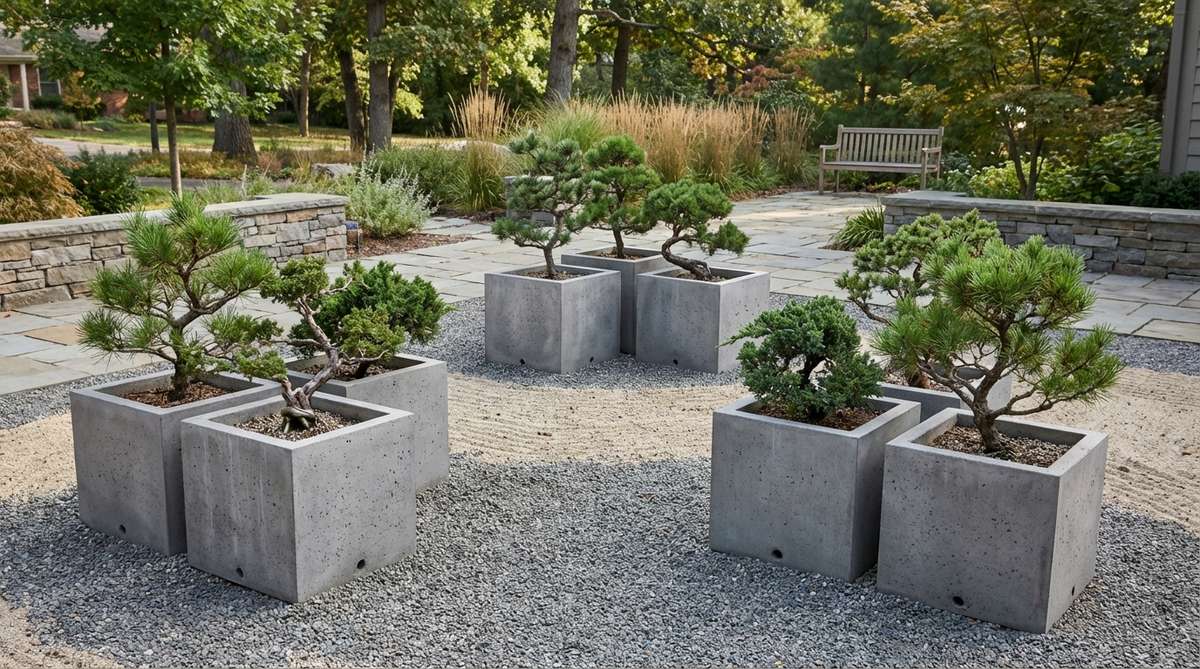
Square concrete planters house miniature bonsai trees, their precise edges highlighting the organic curves of pruned branches. The 12-inch cube dimension provides sufficient root space while creating modular arrangements across the garden floor.
Position three cubes in asymmetric groupings—one tall, one medium, one low—to echo traditional stone triad arrangements. Pour planters using high-grade concrete mix with integrated drainage channels at the base.
This configuration reduces visual clutter while directing attention to each tree’s sculptural silhouette. The weight of concrete planters also provides wind stability for top-heavy specimens.
2. Hexagonal Succulent Clusters
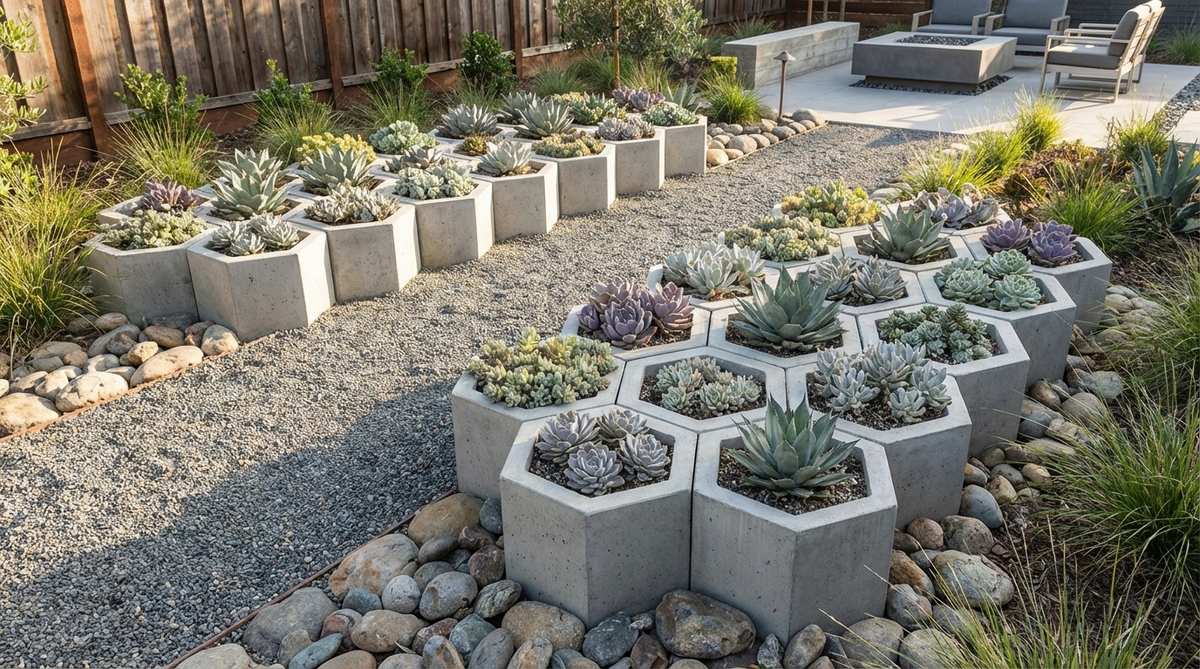
Six-sided concrete containers introduce honeycomb geometry when arranged in tight formations. Plant drought-tolerant succulents in shades of gray-green and silver to complement the neutral concrete tone.
Cast hexagons measure eight inches across with two-inch walls, creating visual weight without dominating ground area. Cluster five to seven units along gravel borders or at pathway intersections.
The angular repetition builds rhythm across the landscape while requiring minimal irrigation. Hexagonal forms bridge organic and manufactured aesthetics effectively.
3. Rectangular Trough Planters
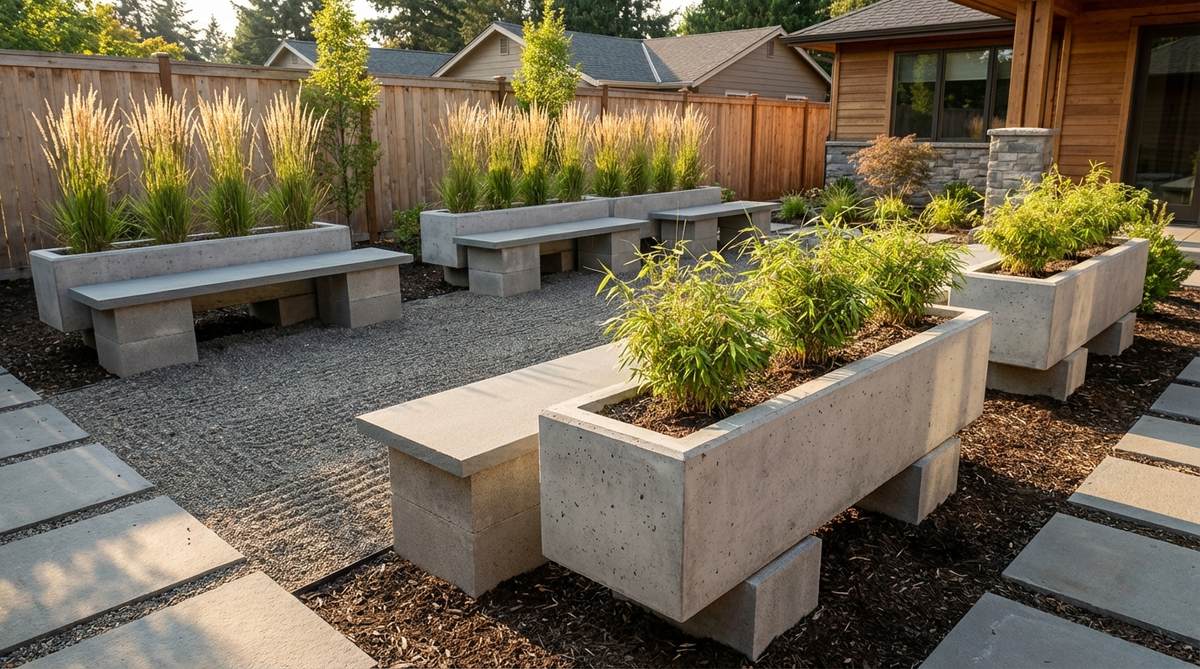
Long concrete troughs measuring 48 by 12 inches define garden edges with architectural precision. Plant linear arrangements of ornamental grasses or bamboo species to emphasize horizontal movement.
Elevate troughs on concrete block supports to create layered elevations and improve drainage. The raised positioning also reduces bending during maintenance tasks.
Troughs function as both planters and low seating when topped with smooth capstones. This dual purpose maximizes functionality in compact courtyards.
4. Triangular Alpine Planters
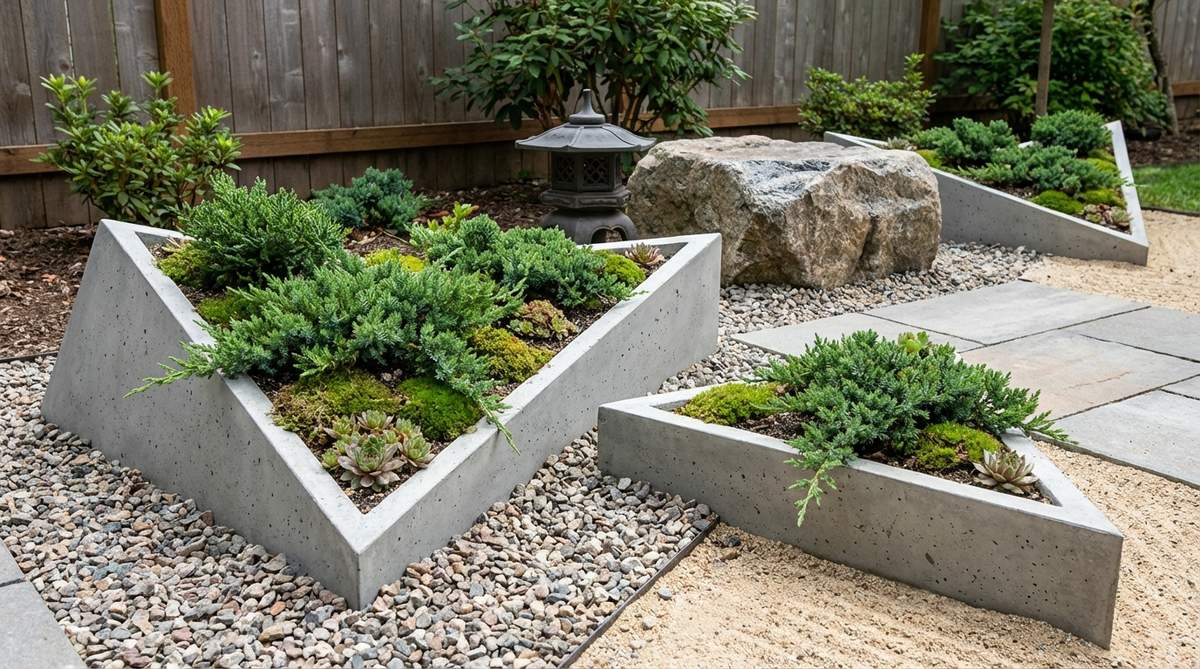
Three-sided concrete planters mimic mountain geometry while housing alpine species adapted to lean conditions. The triangular profile suggests strength and upward movement within the garden’s horizontal plane.
Position triangles with one point directing toward a focal element like a lantern or large stone. Plant compact evergreens or moss varieties that maintain year-round presence.
These planters occupy corners and transition zones efficiently. Their angular form creates visual tension that energizes contemplative spaces.
5. Cylindrical Concrete Columns
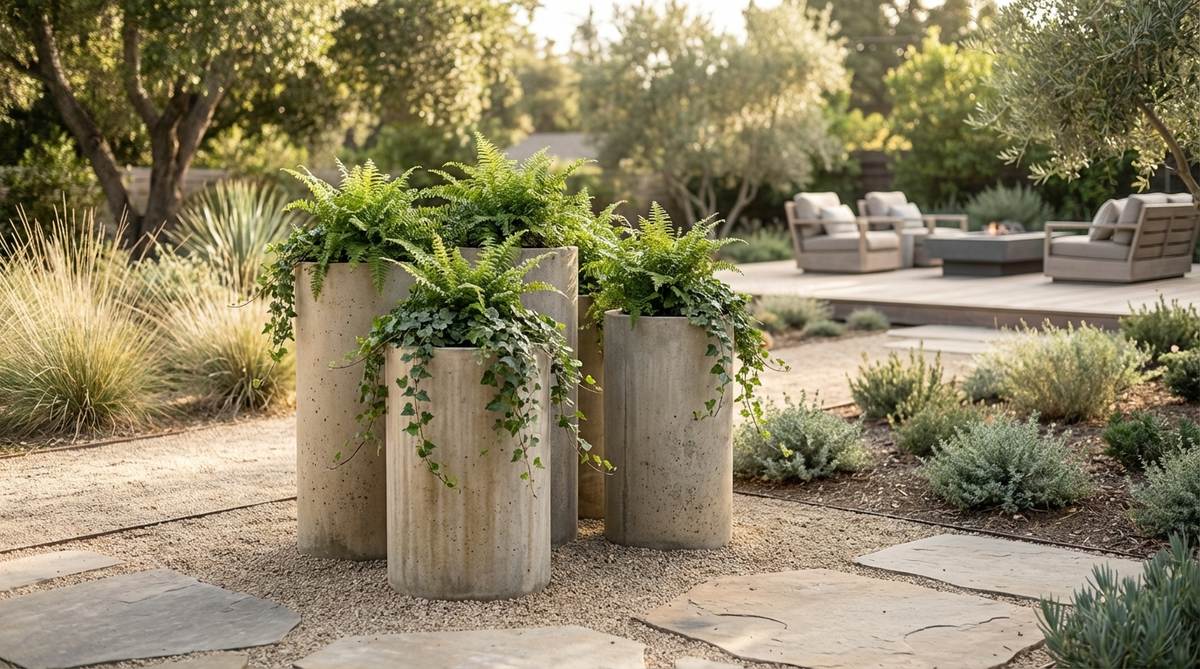
Round concrete columns standing 24 to 36 inches tall introduce vertical elements without the visual complexity of multi-stemmed plants. Top cylinders with single ferns or trailing species that soften the geometric edges.
Cast columns using cardboard form tubes and reinforced concrete for weather resistance. Finish surfaces with light sandblasting to reveal aggregate texture.
Cylinders work effectively in odd-numbered groups to establish focal zones. Their simple geometry supports rather than competes with surrounding elements.
6. Stacked Box Planters
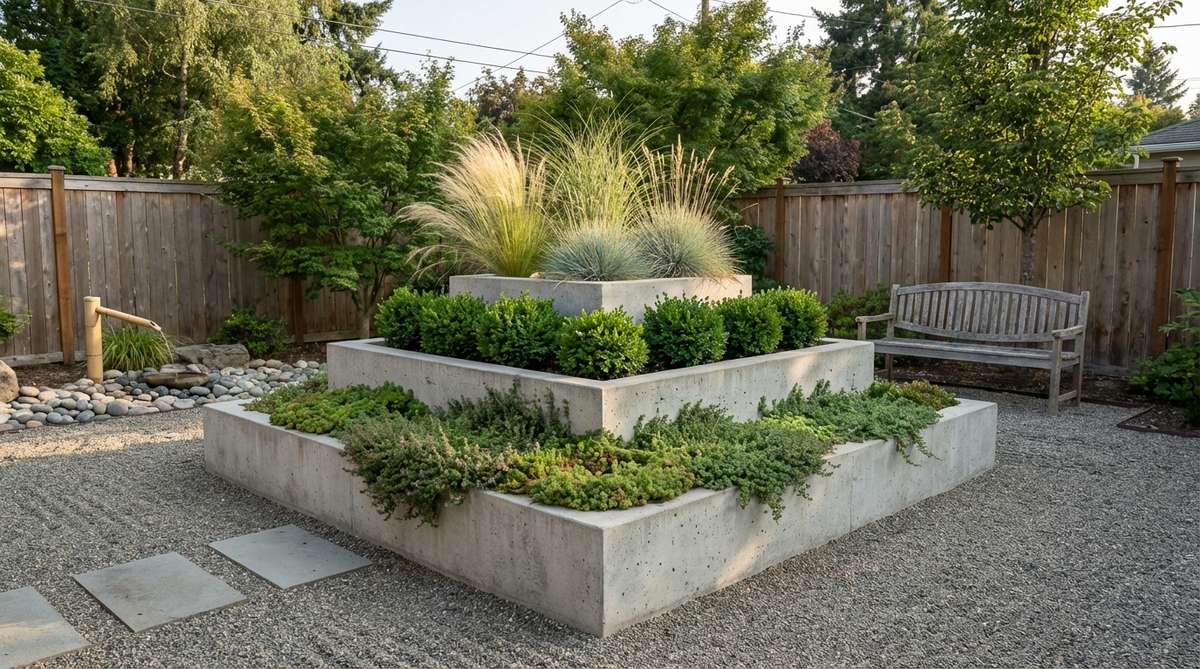
Tiered concrete boxes create stepped elevations that add dimension to flat courtyards. Each box measures progressively smaller—18, 15, and 12 inches—building a pyramid silhouette.
Plant the largest base with spreading groundcovers, middle tier with compact shrubs, and top with specimen grasses. This creates a living sculpture with integrated planting zones.
Stacked configurations concentrate visual interest in a compact footprint. The arrangement guides the eye upward while maintaining ground-level stability.
Linear Patterns & Angular Pathways
Geometric pathways organize movement through zen gardens while reinforcing the design’s architectural vocabulary. Concrete strips, pavers, and channels create visual order that supports meditative walking practices.
7. Parallel Concrete Ribbons
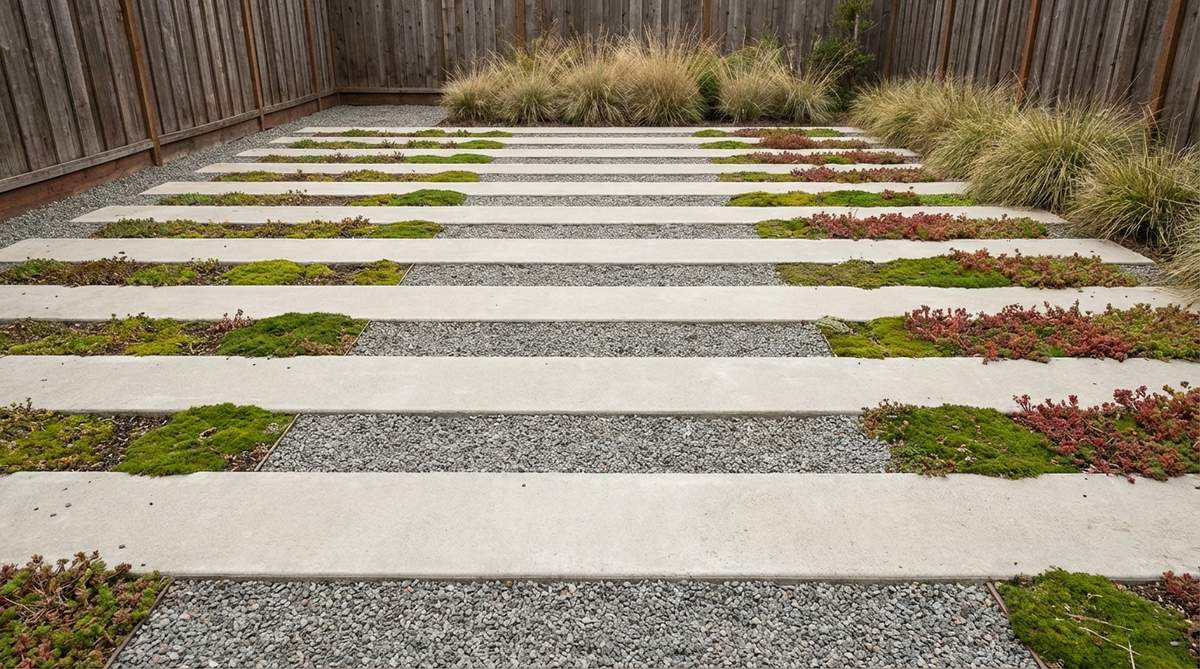
Pour twin concrete strips 18 inches wide with 12-inch gravel channels between them. This striped pattern extends across the garden length, directing movement while allowing ground drainage.
The parallel layout emphasizes perspective and draws the eye toward terminal focal points. Plant low moss or sedum between ribbons for subtle color variation.
Ribbons accommodate walking without dominating the landscape. Their linear geometry reinforces the garden’s minimalist vocabulary.
8. Checkerboard Paver Grid
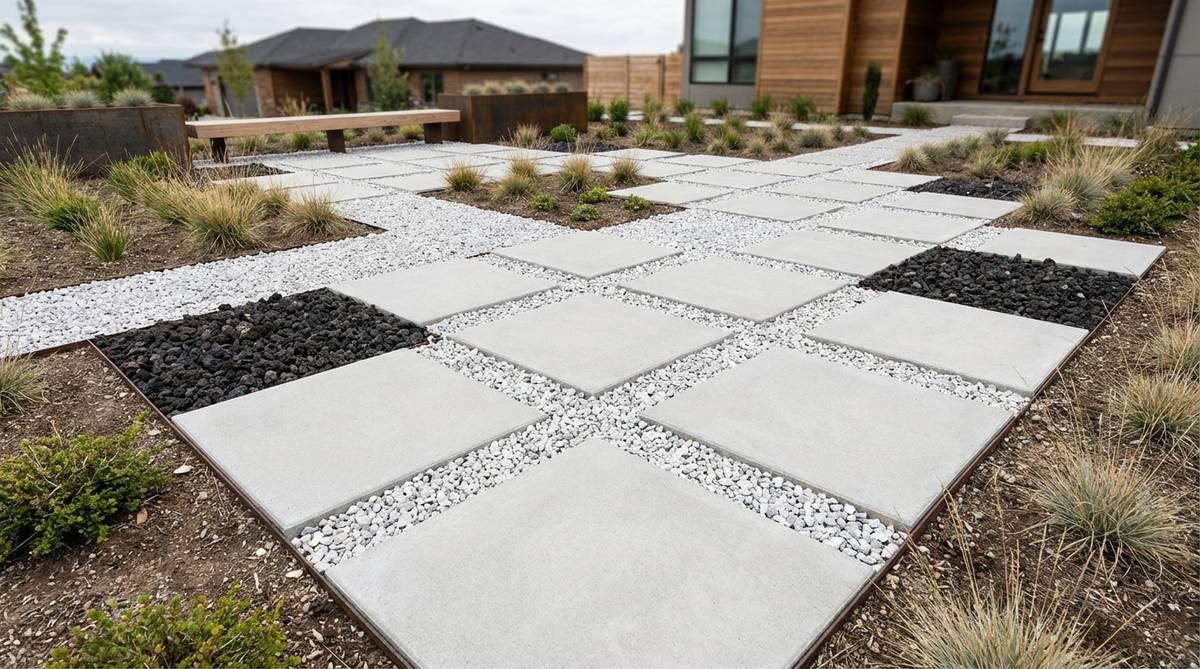
Alternate 24-inch concrete squares with gravel-filled voids to create a classic checkerboard. This pattern provides flexible circulation routes while maintaining visual regularity.
Set pavers level with surrounding grade to simplify mowing and raking. Fill voids with white crushed stone or black lava rock for high contrast.
The grid system adapts to irregular lot shapes through strategic paver omission. It balances structure with permeability effectively.
9. Diagonal Pathway Cuts
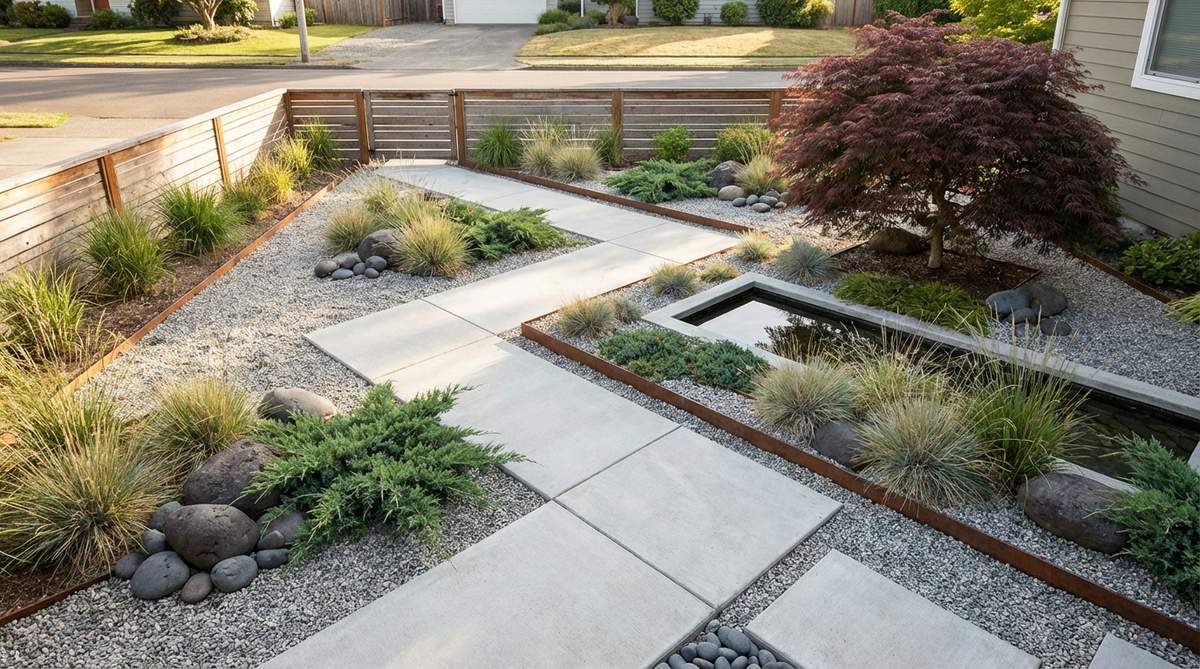
Pour concrete paths at 45-degree angles to the property lines, creating dynamic movement across rectangular yards. The diagonal orientation disrupts predictable sightlines and extends perceived distance.
Width should measure 30 inches minimum for comfortable passage. Edge paths with steel or aluminum strips for clean termination against gravel beds.
Diagonal routes encourage slower walking speeds and increased observation. This aligns with zen principles of mindful movement through space.
10. Stepping Pad Sequence
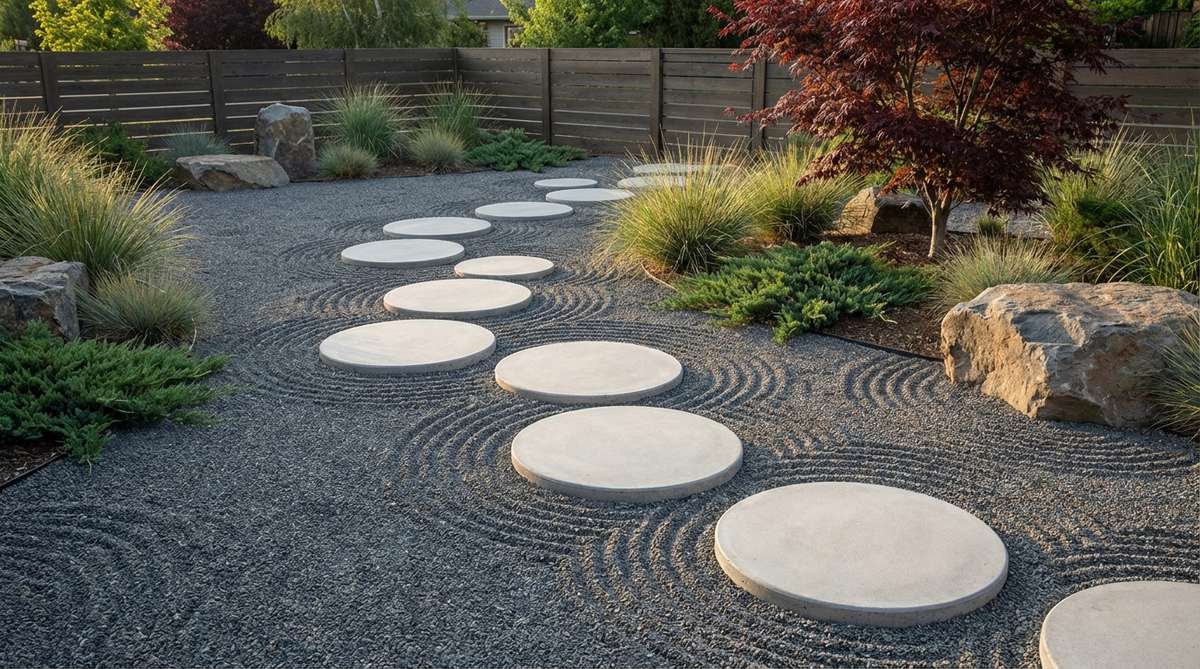
Space individual 16-inch concrete rounds at 24-inch intervals to form a staggered walking path. The separated pads require deliberate foot placement, slowing transit and heightening awareness.
Cast rounds using 5-gallon bucket lids as molds for consistent sizing. Embed pads slightly below grade to prevent tripping hazards.
Stepping sequences integrate seamlessly with raked gravel patterns. They provide access without visually dividing the garden into separate zones.
11. L-Shaped Corner Pathways
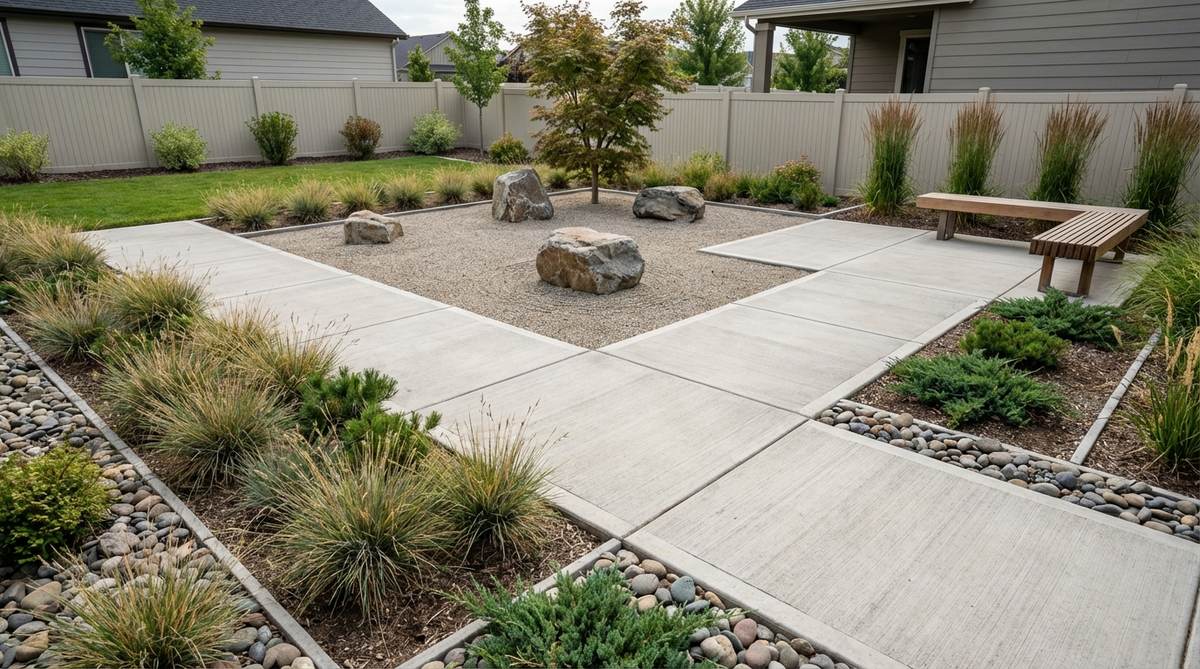
Pour right-angle concrete paths that turn sharply at garden corners, emphasizing the rectangular lot geometry. The L-configuration creates defined planting zones within the remaining space.
Maintain consistent 36-inch width throughout the L-shape for visual continuity. Finish surfaces with broom texture for slip resistance.
Corner paths maximize usable circulation area while leaving central zones open for meditation. The angular turn introduces a decision point that engages visitors.
12. Border-Defining Concrete Strips
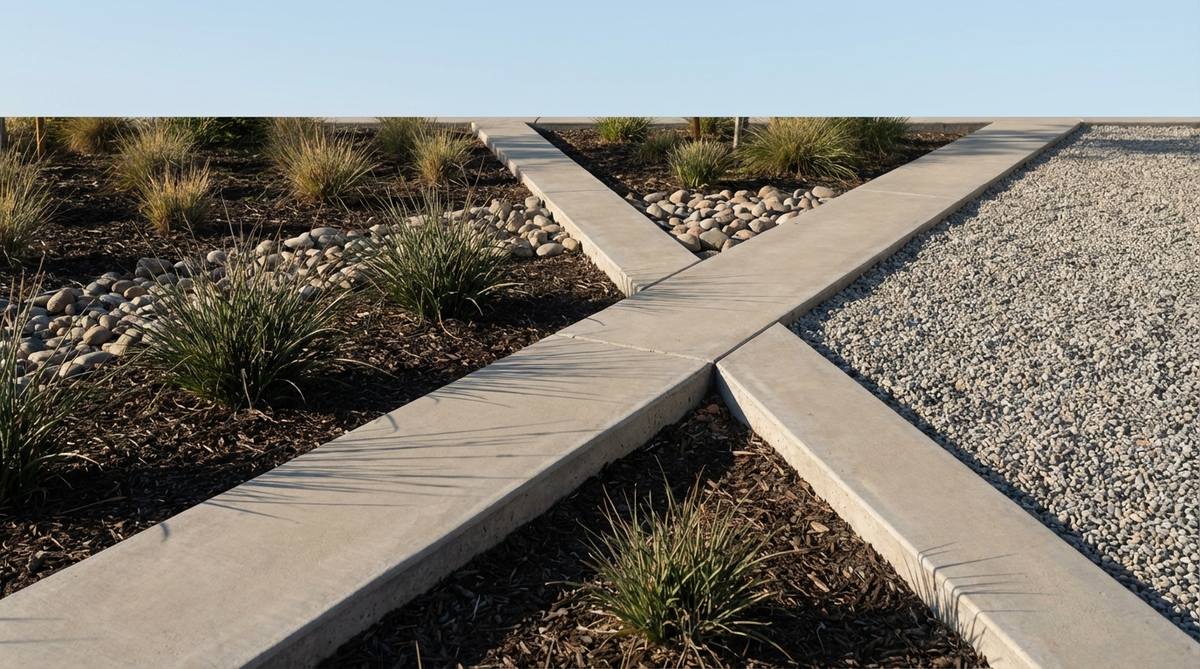
Install narrow 6-inch concrete strips as permanent edges between gravel and planting beds. These mowing strips prevent material migration while establishing crisp geometric boundaries.
Pour strips flush with gravel level but two inches above soil beds to contain mulch. The height differential creates subtle shadow lines that enhance the garden’s graphic quality.
Border strips require minimal concrete volume while providing maximum organizational impact. They simplify long-term maintenance by containing loose materials.
Architectural Walls & Boundary Elements
Vertical concrete elements define space, provide privacy, and introduce architectural scale to zen gardens. Walls and panels function as both practical screens and abstract sculptural planes.
13. Floating Concrete Privacy Walls
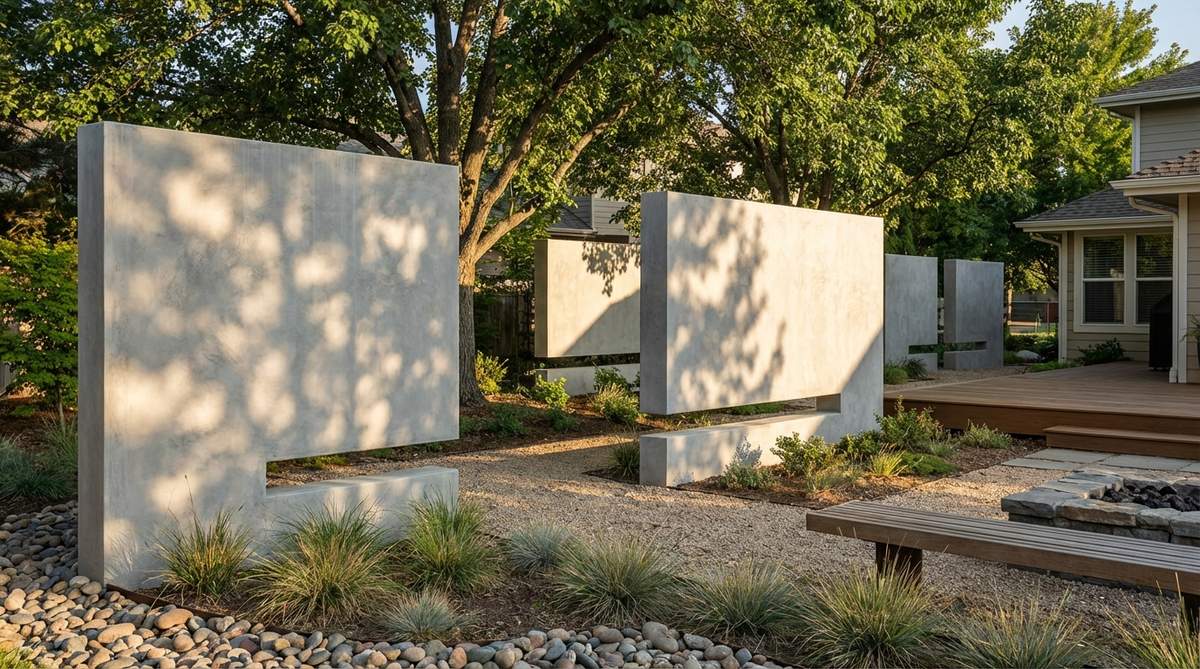
Freestanding concrete panels measuring 8 feet tall by 12 feet wide create privacy screens without enclosing the entire garden perimeter. Leave 6-inch gaps at ground level to maintain visual lightness and air circulation.
Cast panels with steel reinforcement and anchor them to below-grade concrete footings. Position panels to block specific sightlines while preserving desirable views.
The floating appearance reduces visual mass while providing effective screening. Panels also function as projection surfaces for shadow play from adjacent trees.
14. Scored Geometric Wall Patterns
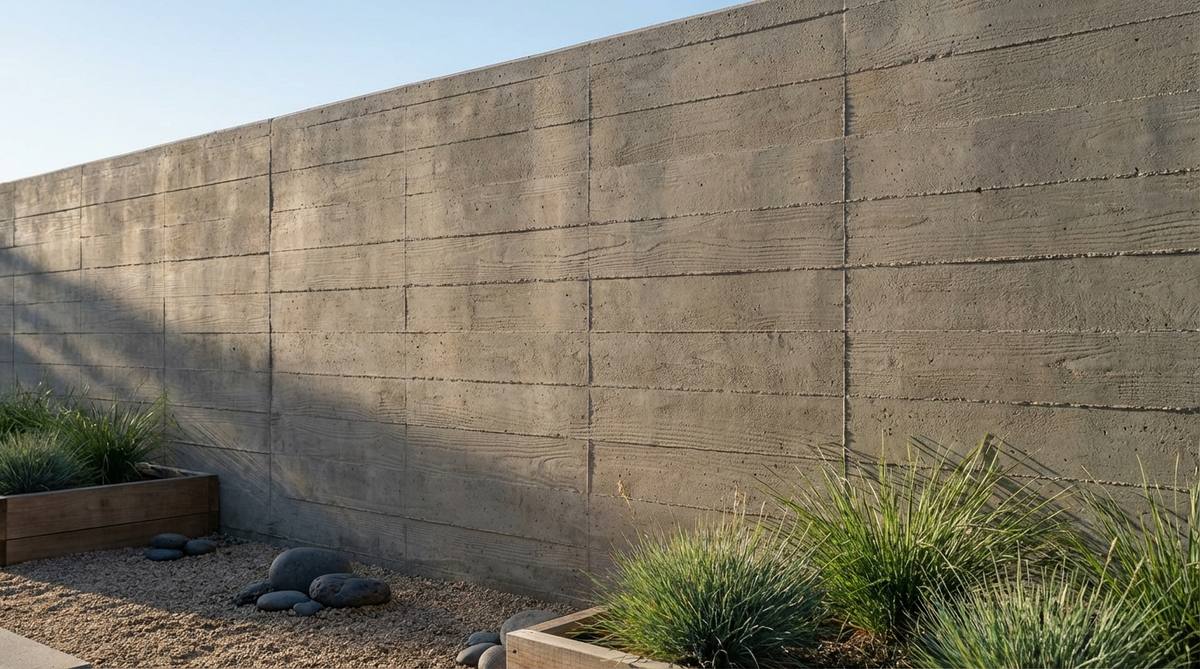
Carve shallow grooves into poured concrete walls to create geometric relief patterns—horizontal lines, grids, or concentric rectangles. The scored surface catches light and creates subtle shadow variations throughout the day.
Score patterns while concrete remains semi-cured using metal straightedges and triangle tools. Depth should reach one-quarter inch for visibility without compromising wall integrity.
Geometric scoring transforms plain walls into textured artworks. The pattern density can increase or decrease to modulate visual interest across wall sections.
15. Cantilevered Bench Walls
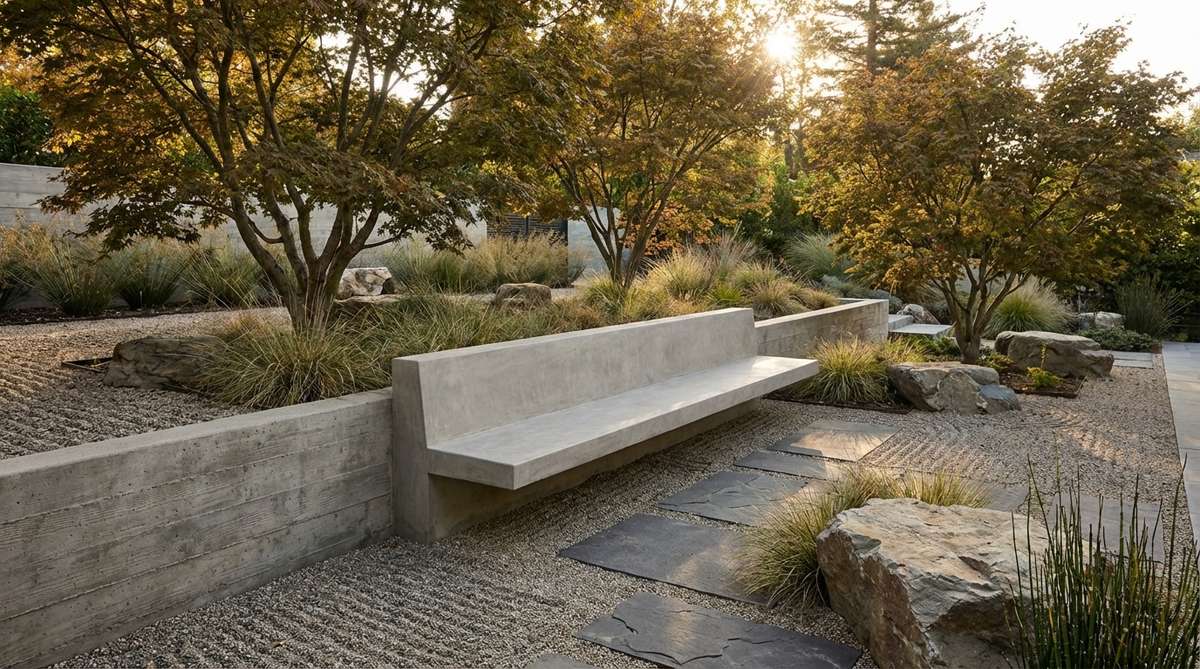
Pour concrete walls that extend horizontal bench seats at 18-inch height for integrated seating. The cantilever projection measures 16 inches, providing comfortable seating depth without additional framing.
Reinforce the bench projection with embedded rebar extending from the main wall mass. Finish seat surfaces with smooth troweling for comfort.
This dual-purpose element eliminates the need for separate furniture while maintaining the garden’s minimal aesthetic. Benches encourage contemplative sitting at strategic viewing points.
16. Perforated Screen Walls
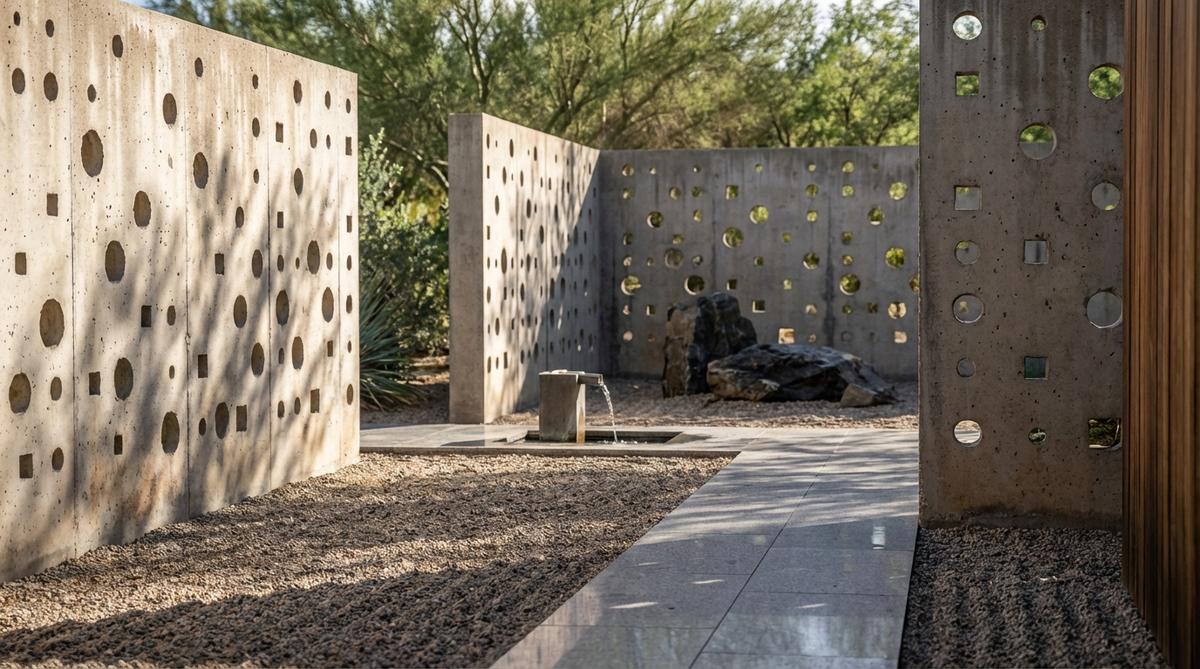
Create concrete walls with circular or square cutouts that permit partial views and airflow while maintaining boundary definition. Openings measure 4 to 8 inches in diameter and follow regular or random spacing patterns.
Cast perforations using foam inserts removed after initial curing. The openings reduce wind load while creating intriguing shadow patterns on adjacent surfaces.
Perforated walls feel lighter than solid panels and introduce playful geometric elements. They balance privacy needs with the zen principle of connection to surroundings.
17. Stacked Block Retaining Walls
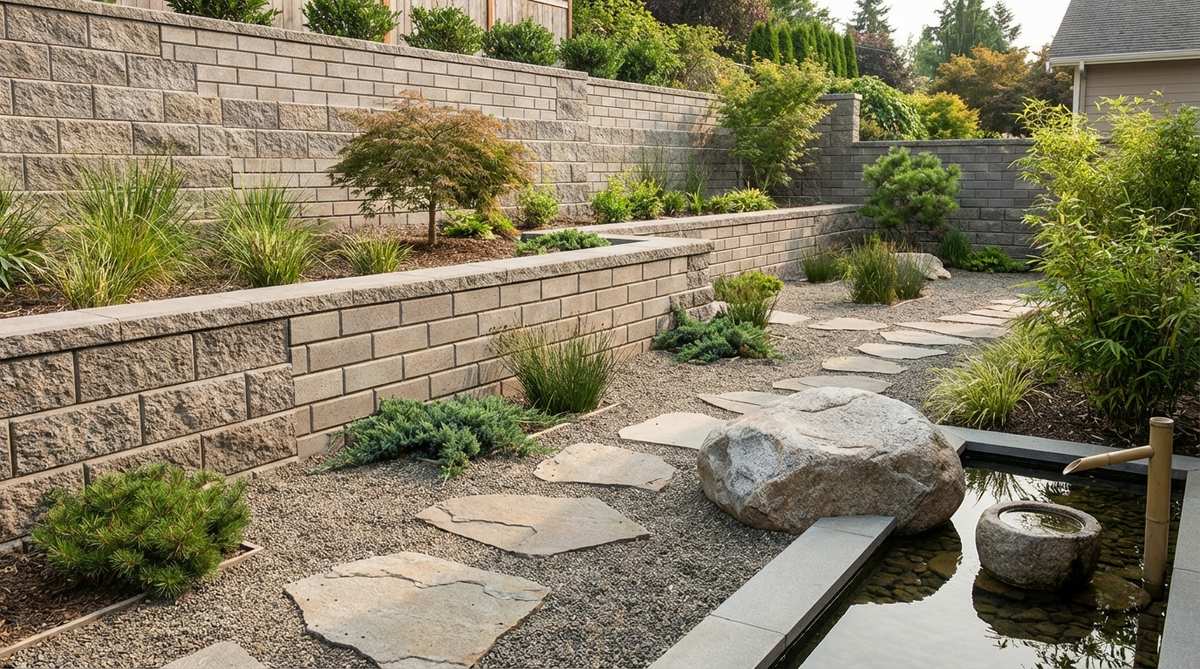
Build retaining walls from interlocking concrete blocks in running bond patterns to manage grade changes. The modular block system creates a gridded texture that complements the garden’s geometric theme.
Select split-face blocks for rough texture or smooth-faced units for refined appearance. Cap walls with solid capstones to finish the top edge cleanly.
Retaining walls create terraced planting zones that add vertical dimension to sloped sites. The block pattern provides visual rhythm without excessive ornamentation.
Textural Contrast & Material Pairings
Modern zen gardens gain depth through strategic juxtaposition of smooth concrete against organic textures. These material dialogues create visual interest while maintaining overall simplicity.
18. Polished Concrete with River Rocks
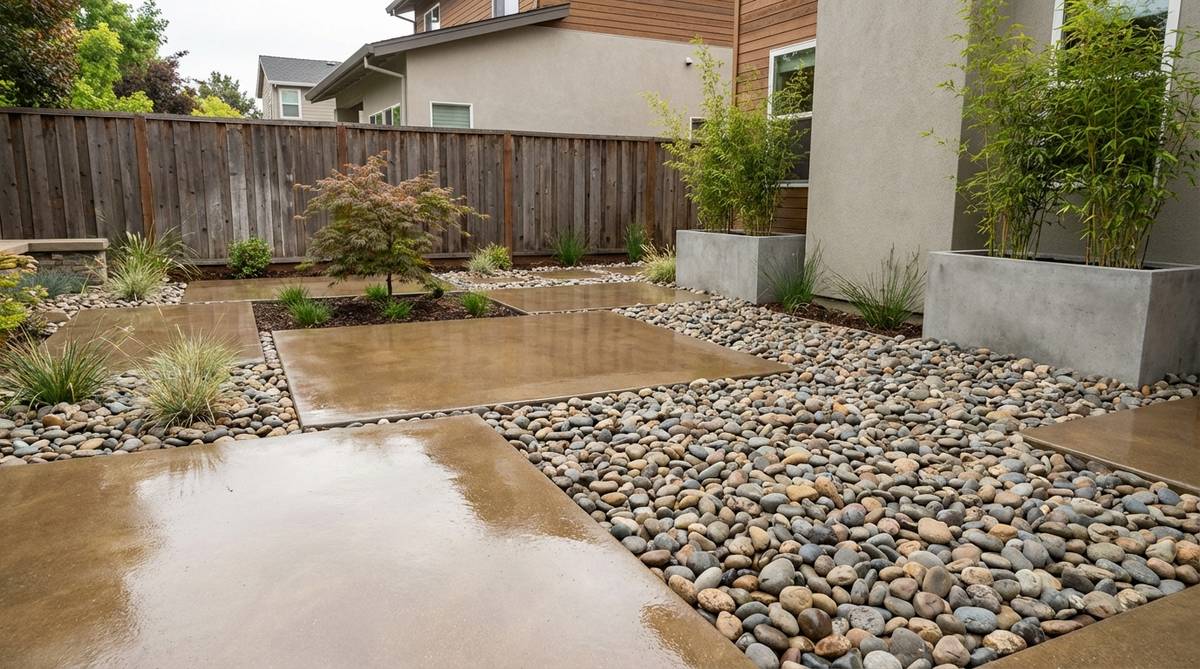
Pour smooth-troweled concrete pads adjacent to beds of rounded river stones sized between 2 and 4 inches. The contrast between machine-finished flatness and water-worn irregularity highlights both materials’ qualities.
Seal concrete surfaces with clear penetrating sealer to enhance color depth and ease cleaning. Rake river rock beds weekly to maintain fresh appearance.
This pairing creates a tactile dialogue that engages multiple senses. The visual contrast reinforces the zen concept of finding harmony in opposing forces.
19. Exposed Aggregate Panels
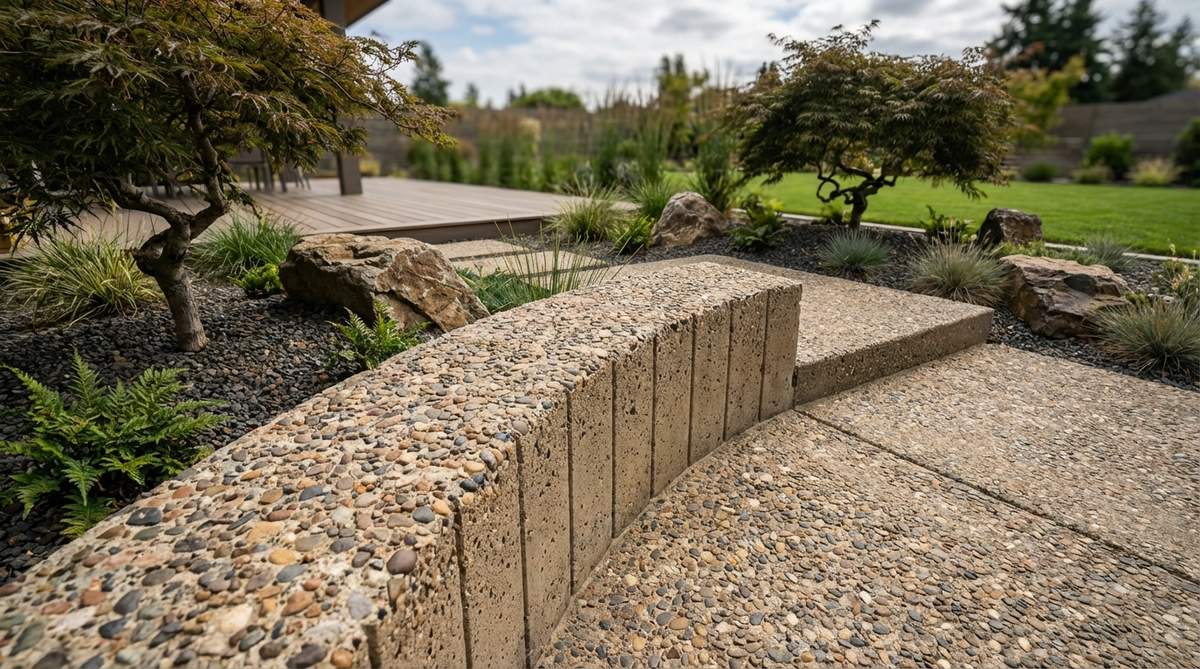
Cast concrete panels with surface washing to reveal embedded stone aggregate. The exposed pebble texture provides visual warmth while maintaining concrete’s structural characteristics.
Use white or light gray cement with mixed aggregate colors for varied surface appearance. Wash surfaces 6 to 8 hours after pouring when concrete has partial cure.
Exposed aggregate bridges the gap between smooth industrial concrete and natural stone. It offers tactile interest appropriate for seating walls and low platforms.
20. Wood Grain Textured Concrete
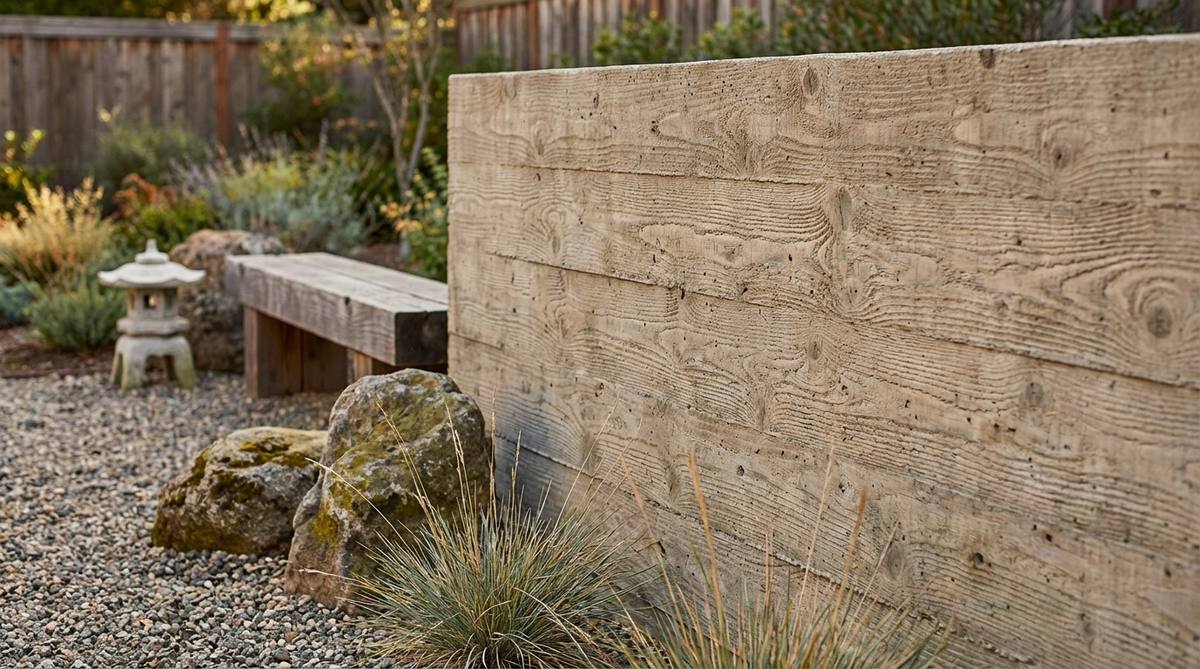
Pour concrete against rough-sawn lumber forms to transfer wood grain texture onto finished surfaces. This technique produces organic-looking patterns in a durable mineral material.
Select cedar or pine boards with pronounced grain patterns. Oil boards before concrete placement to enhance texture transfer and ease form removal.
Wood-textured concrete combines the warmth of natural materials with long-term durability. It references traditional Japanese wooden temple architecture within contemporary context.
21. Crushed Granite Inlays
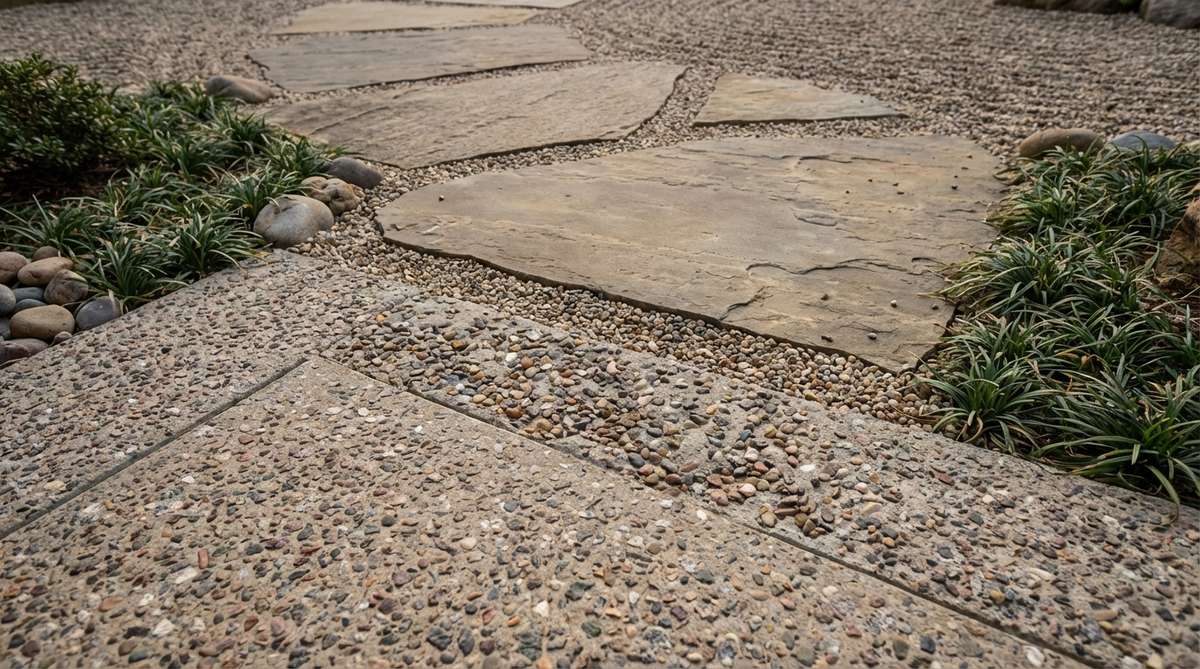
Embed crushed granite or decomposed granite into concrete surfaces while semi-cured to create mixed-material floors. The granite particles add color variation and slip resistance.
Broadcast granite across wet concrete then tamp with a float to achieve partial embedment. The final surface shows both concrete matrix and stone particles.
Inlaid surfaces unify concrete paths with natural stone elements elsewhere in the garden. They provide textural transition zones between different material areas.
22. Moss-Filled Concrete Joints
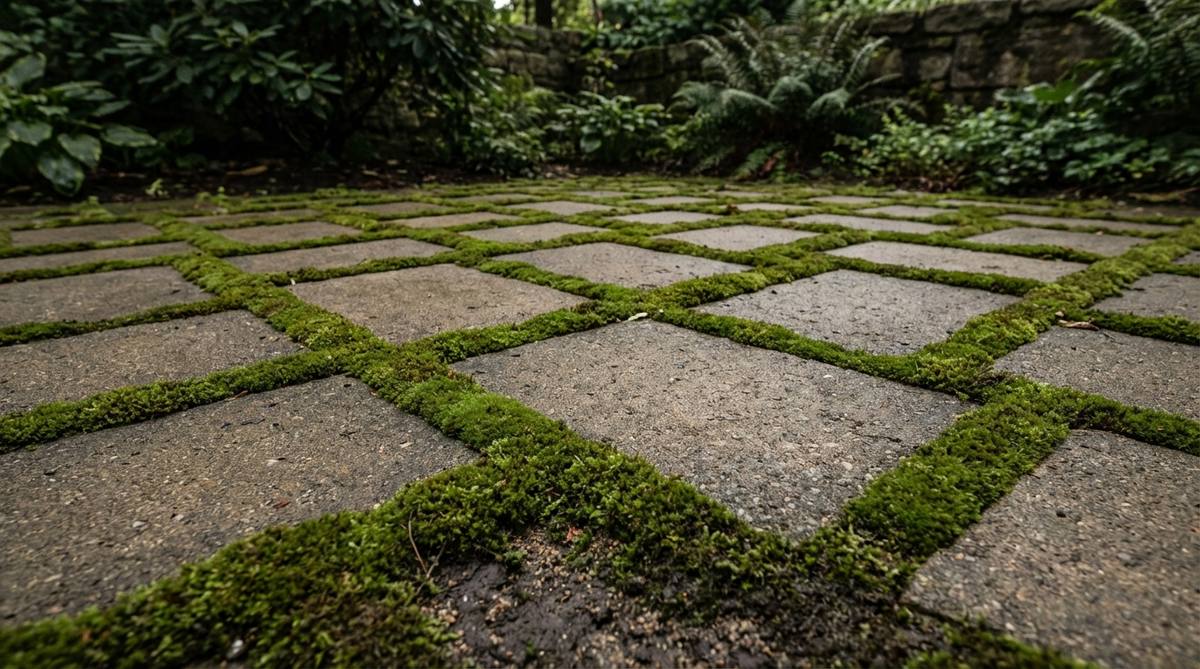
Pour concrete pavers with 2-inch gaps designed for moss colonization. The green growth softens hard edges while maintaining the paver grid’s geometric structure.
Fill joints with soil-sand mixture then introduce moss fragments from shaded areas. Maintain moisture during establishment then reduce watering as moss spreads.
Living joints add temporal change to static concrete geometries. The moss growth connects mineral surfaces to the garden’s natural processes.
23. Bamboo-Concrete Composite Borders
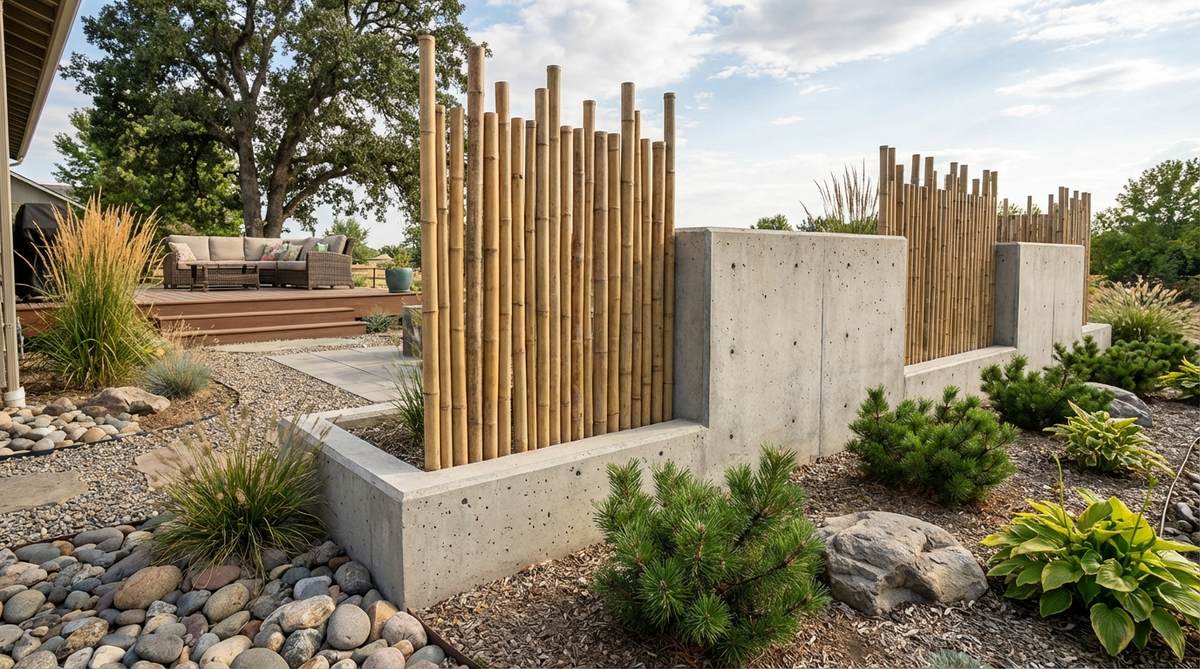
Combine vertical bamboo culms with poured concrete to create hybrid border elements. Bamboo poles provide organic texture while concrete supplies structural stability and ground anchoring.
Set bamboo poles in formwork then pour concrete around their bases. Vary pole heights between 4 and 6 feet for dynamic skyline.
This composite approach merges traditional and modern materials within single elements. The bamboo-concrete boundary offers both visual and physical garden definition.
Water Features & Concrete Basins
Water elements introduce sound and movement to static zen gardens. Concrete basins and channels provide contemporary forms for traditional water features.
24. Rectangular Reflecting Pool
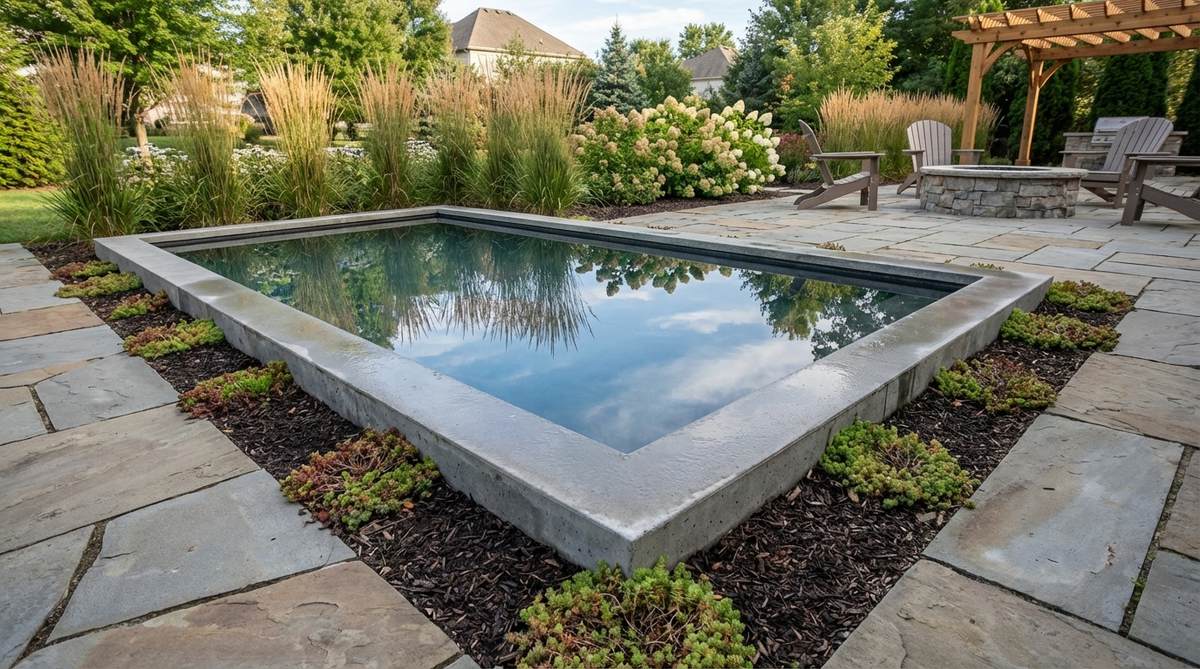
Pour a shallow concrete basin measuring 6 feet by 3 feet with 6-inch depth for a minimalist reflecting pool. The still water surface mirrors sky and surrounding elements, doubling the garden’s visual content.
Seal interior surfaces with waterproof membrane before filling. Maintain water level within one inch of rim for clean edge appearance.
Reflecting pools create meditative focal points while requiring minimal water volume. The rectangular geometry reinforces the garden’s architectural language.
25. Linear Water Channels
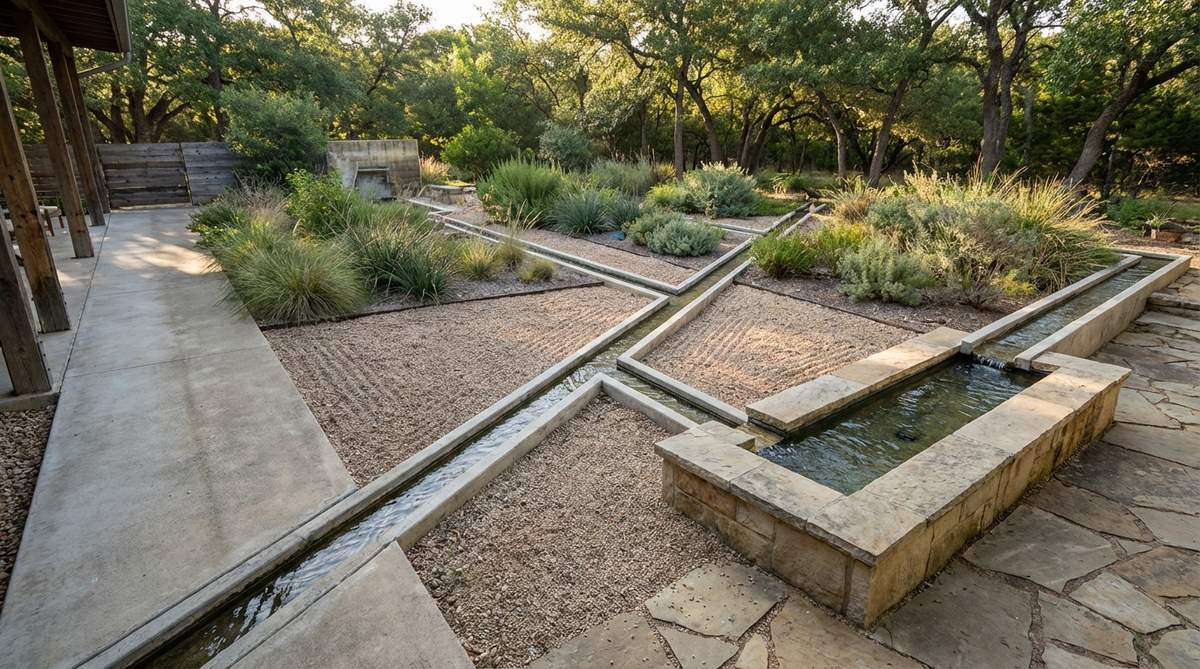
Install narrow concrete channels 8 inches wide that carry water across the garden floor. Gentle slopes provide gravity flow between source and collection basins.
Route channels through gravel beds or along pathway edges. The moving water creates continuous sound without requiring pond excavation.
Linear channels reference traditional irrigation features while serving decorative purposes. Their geometric directness suits modern landscape vocabulary.
26. Cubic Fountain Basins
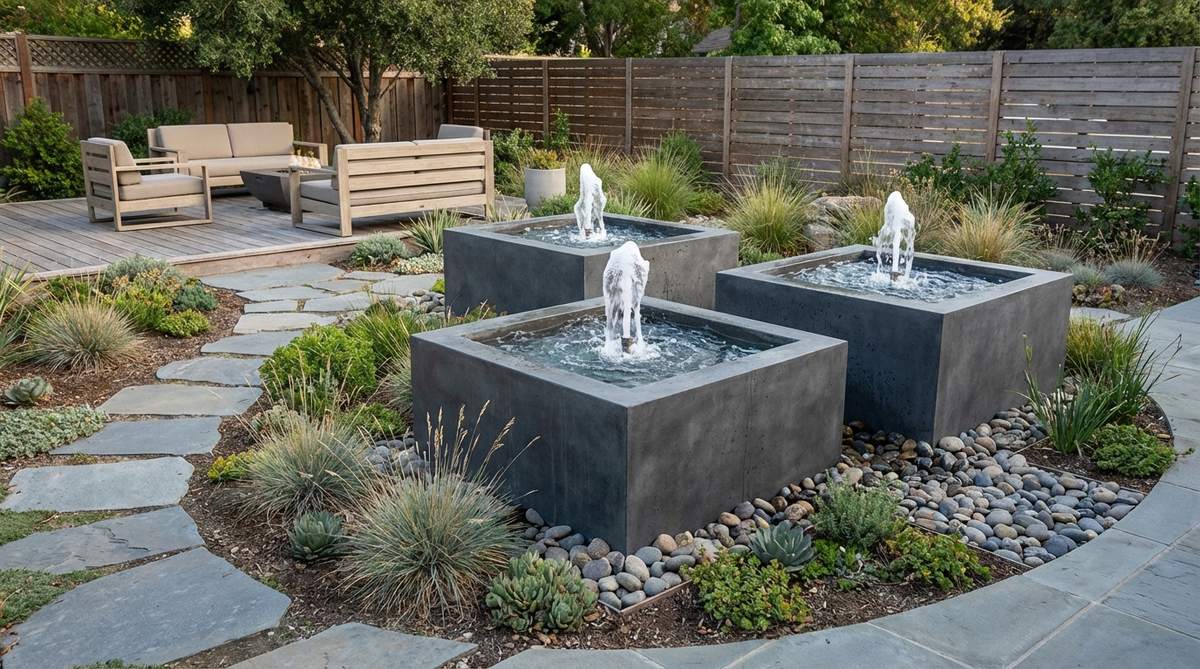
Cast cubic concrete basins with centered fountain jets that create simple vertical water columns. The geometric container contrasts with organic water movement patterns.
Size cubes at 24 inches for substantial visual presence. Install submersible pumps rated for continuous operation with adjustable flow controls.
Cubic basins function as sculptural elements even when pumps are inactive. The regular geometry provides strong focal points within irregular planting zones.
27. Cascade Concrete Steps
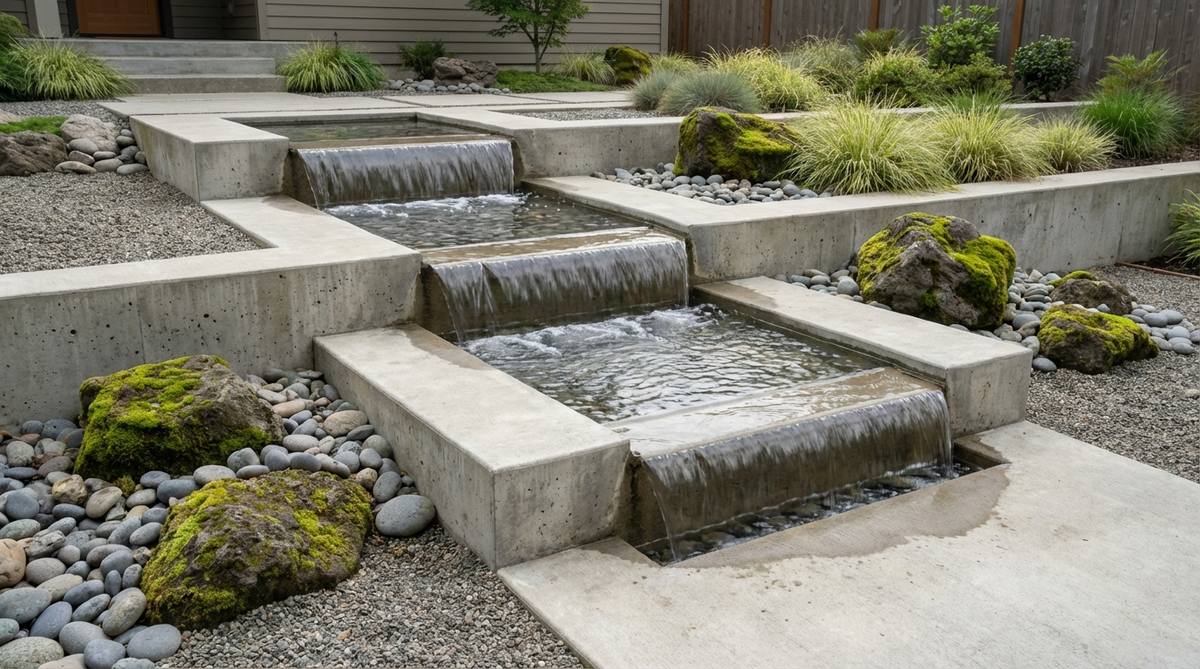
Build tiered concrete platforms that allow water to cascade from one level to the next. Each platform measures 12 inches wide with 6-inch height drops.
Smooth platform surfaces to encourage sheet flow rather than dripping. Position cascades to maximize sound generation and visual movement.
Stepped water features introduce vertical dimension and soothing sound layers. The geometric steps contrast effectively with informal plantings nearby.
28. Cylindrical Bubbler Columns
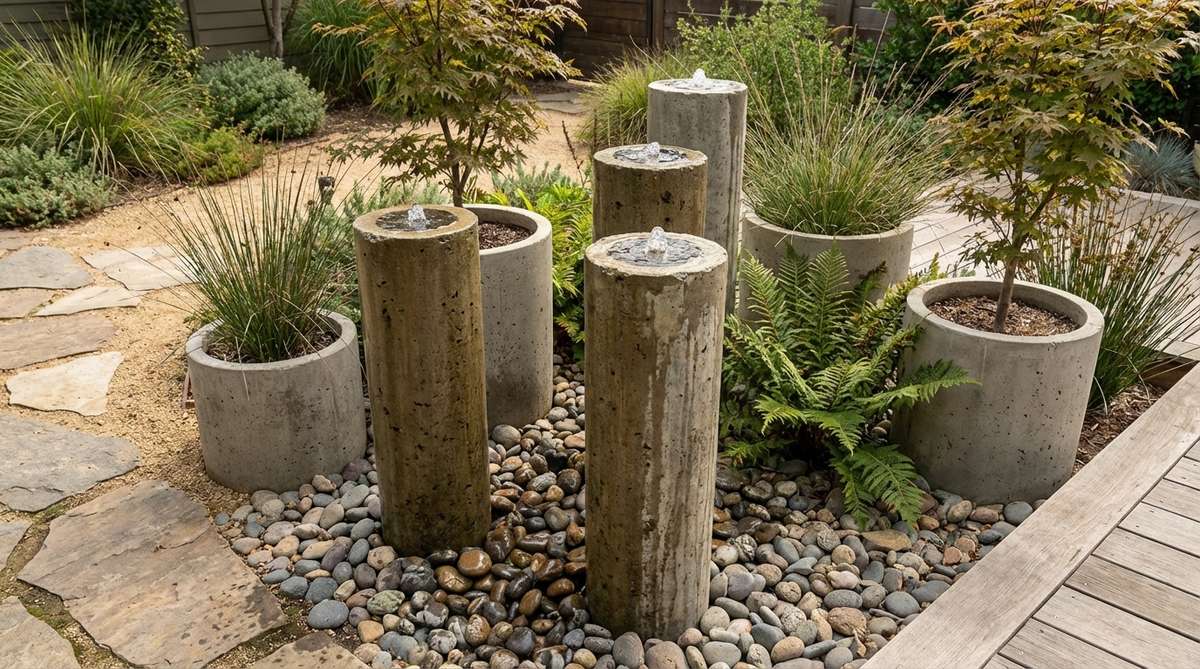
Cast concrete cylinders with hollow cores that allow water to bubble up through top openings. Cylinders stand 30 to 40 inches tall with 10-inch diameters.
Drill central cores using diamond bit equipment before concrete fully cures. Install fountain pumps at cylinder bases with tubing running through cores.
Bubbler columns create vertical water elements with minimal footprints. Their simple geometry integrates easily with other cylindrical planters.
Minimal Color Palette Designs
Restricted color schemes amplify the impact of form and texture in modern zen gardens. Concrete’s neutral tones provide the foundation for monochromatic or limited-hue compositions.
29. White Gravel with Gray Concrete
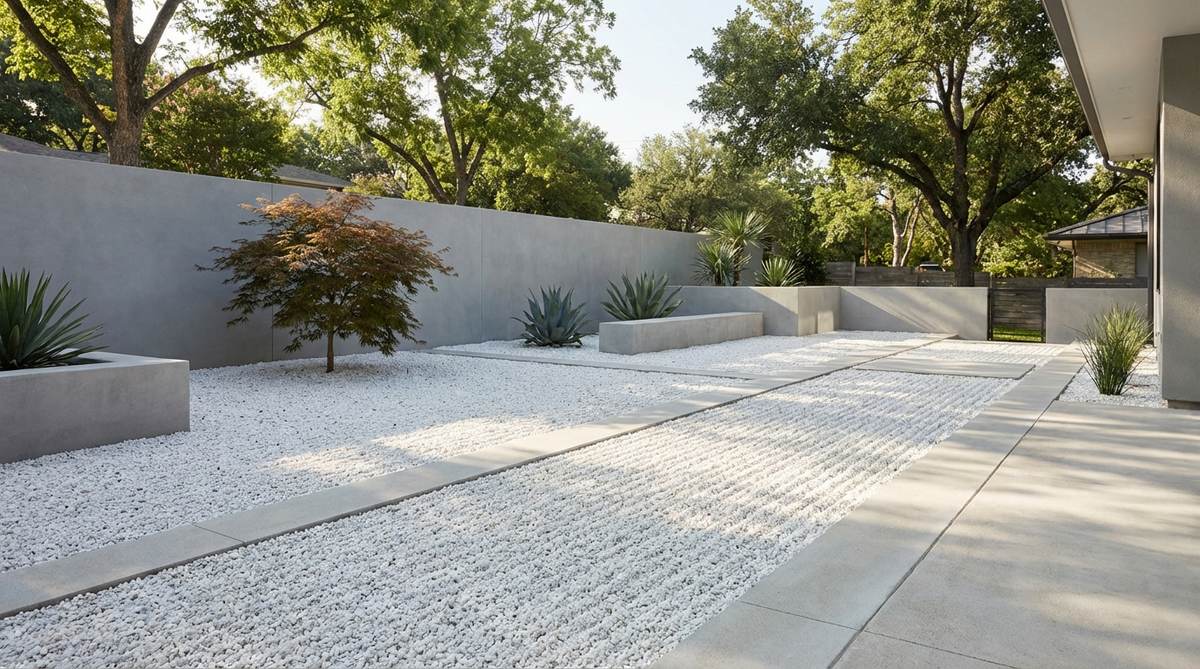
Combine white crushed marble or limestone gravel with natural gray concrete elements. The high-contrast pairing creates graphic definition between ground plane and architectural features.
Rake white gravel into linear patterns that emphasize the garden’s geometry. Edge gravel areas with concrete mowing strips to prevent color mixing.
This achromatic palette maximizes visual clarity and reinforces modern minimalism. Light reflection from white gravel brightens shaded areas naturally.
30. Charcoal Concrete with Black Lava Rock
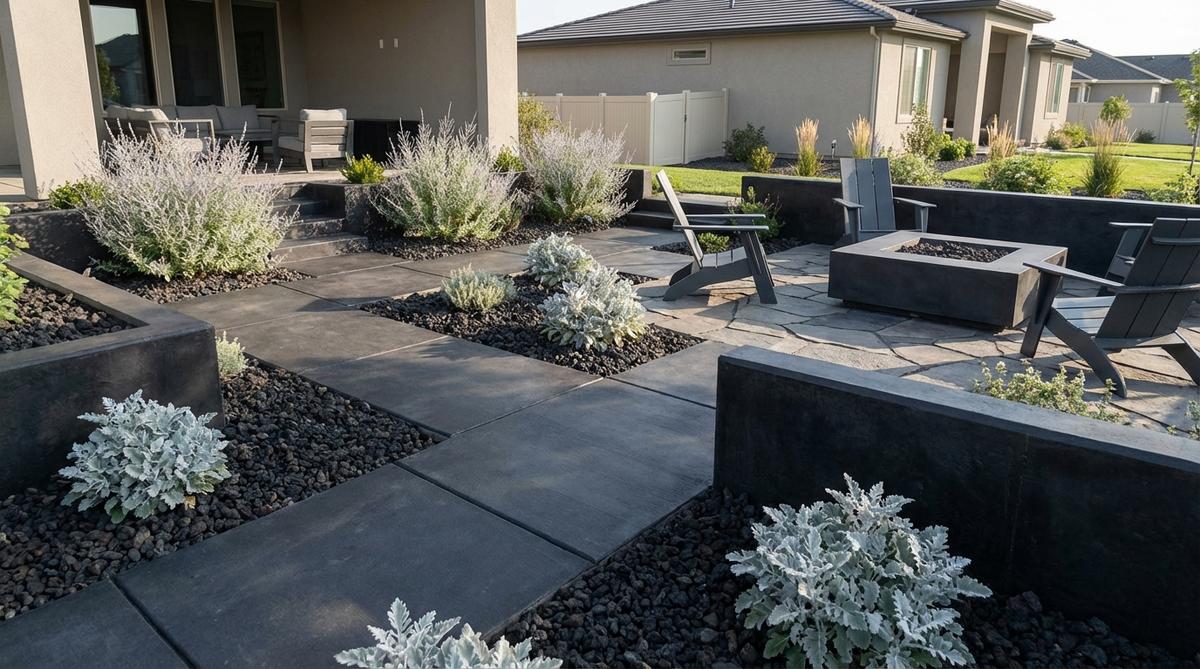
Use charcoal-tinted concrete alongside black lava rock ground cover for dramatic monochrome landscapes. Add integral concrete pigment at 10% by weight for consistent dark coloring.
The dark palette absorbs heat and reduces glare in sunny locations. Contrast these materials with silver-gray foliage plants like artemisia or dusty miller.
Black-on-black compositions create sophisticated modern environments. This palette suits urban gardens where bold statements fit the context.
31. Sage Green and Concrete Neutrals
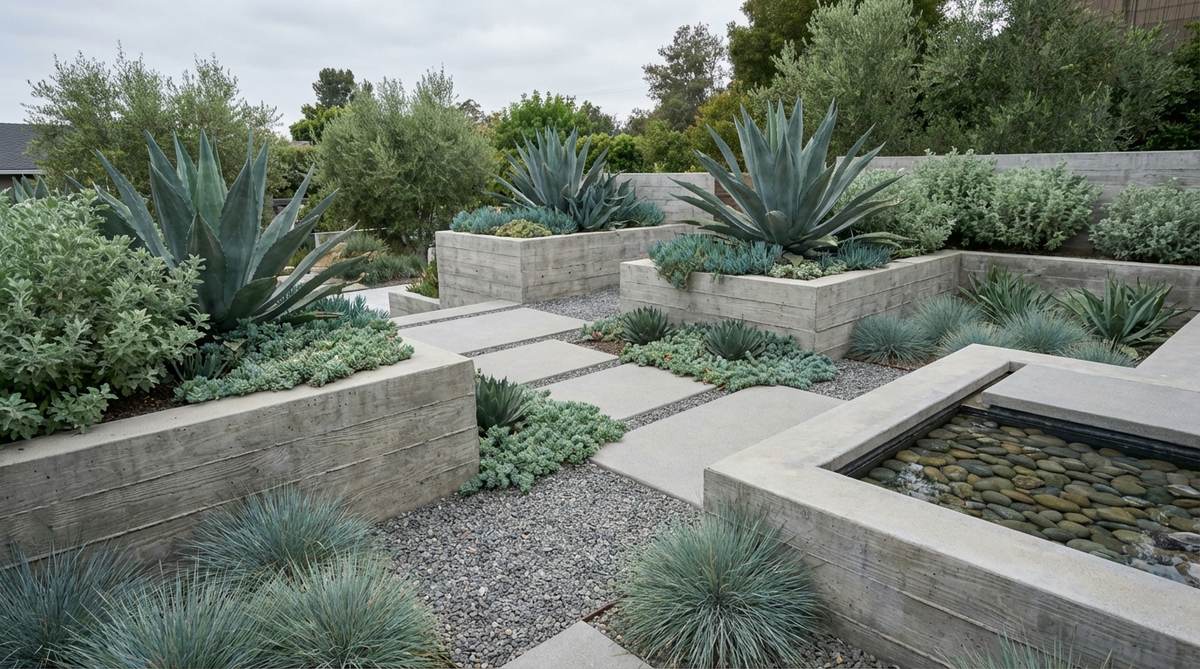
Limit plant selection to blue-green and gray-green species that harmonize with concrete’s neutral tone. Choose agave, sedum, sage, and ornamental grasses with minimal flower color.
The restricted green palette creates cohesive compositions where form takes precedence over chromatic variety. Concrete and foliage tones blend rather than contrast.
Monochromatic green schemes feel naturally restful and avoid visual competition. This approach suits gardens prioritizing calm over stimulation.
32. Buff Concrete with Tan Decomposed Granite
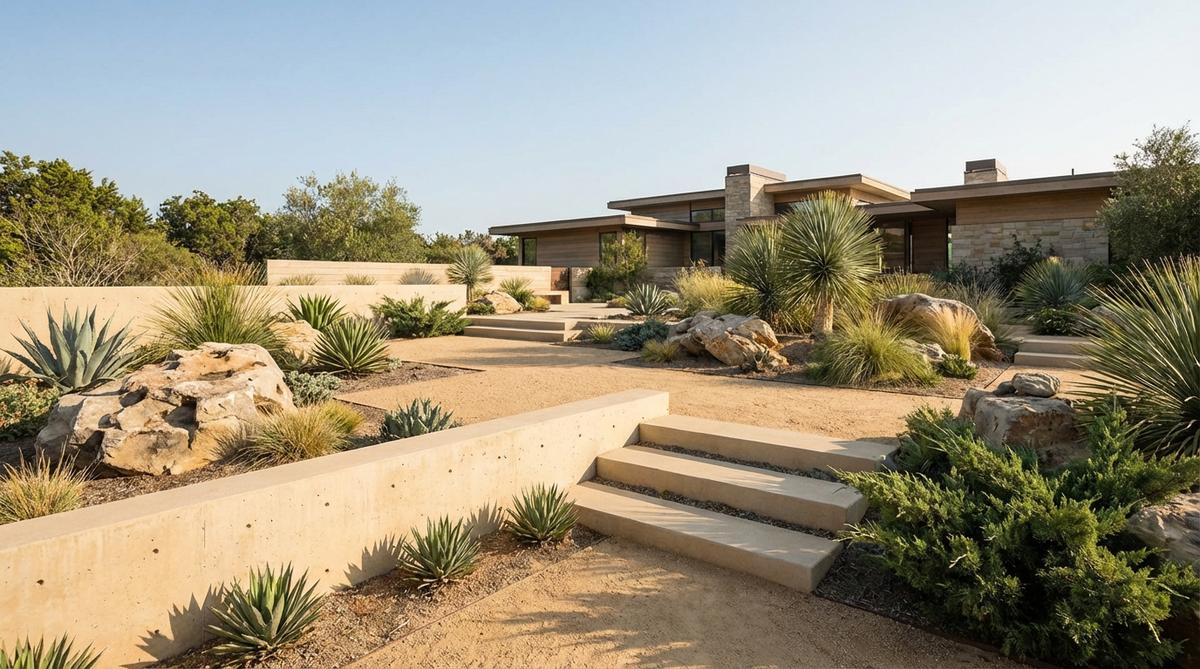
Specify buff or tan pigmented concrete that matches decomposed granite ground cover colors. The tonal similarity creates seamless material transitions.
This warm neutral palette suits southwestern climates and drought-adapted plant communities. The sandy tones provide visual warmth without chromatic intensity.
Tone-on-tone designs emphasize texture and form differences between materials. The unified color field simplifies visual reading of spatial composition.
33. Blue-Gray Concrete Accents
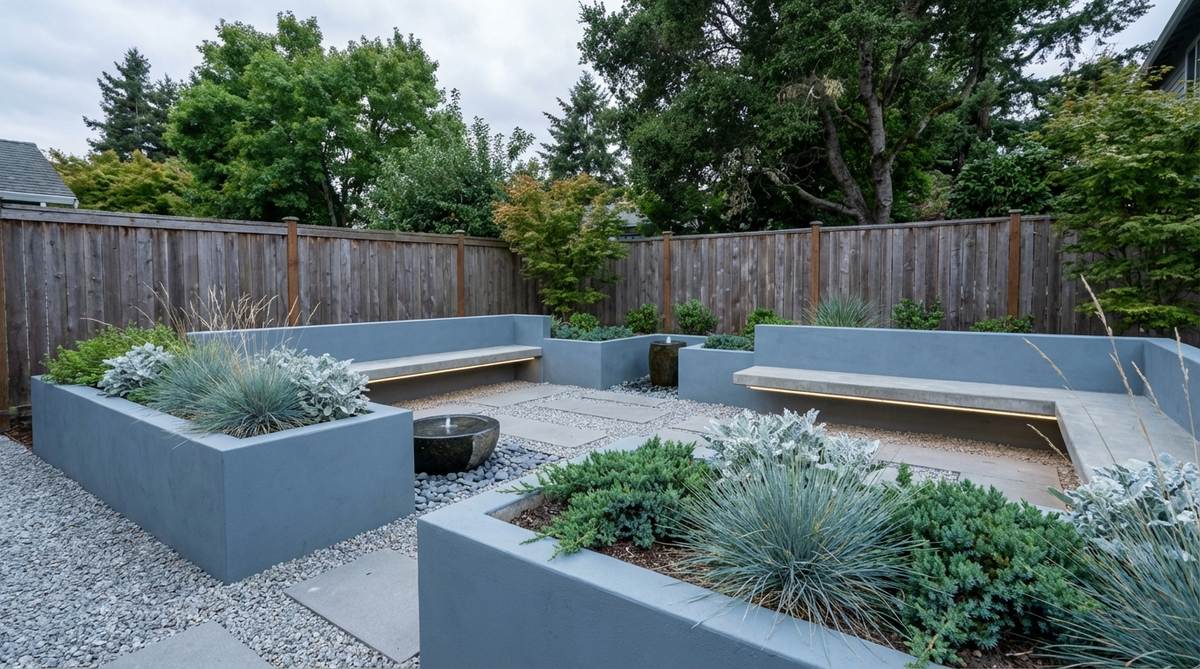
Tint select concrete elements with blue-gray pigment to introduce subtle color variation within neutral schemes. Use tinted concrete for focal planters or seating walls.
Limit tinted elements to 20% of total concrete surfaces to maintain restraint. The cool blue undertone complements silver and blue-green foliage.
Strategic color placement guides attention without overwhelming the minimalist aesthetic. Blue-gray tones reference water and sky within earth-bound gardens.
Conclusion
Modern zen garden designs using concrete and geometry prove that traditional contemplative principles adapt effectively to contemporary materials and forms. These 33+ concepts demonstrate how industrial concrete transforms into meditative landscape elements through intentional design that balances structure with openness, permanence with change, and human craft with natural processes. Begin your own modern zen garden by selecting two or three geometric concrete elements that suit your site scale, then build outward using the material contrast and minimal palette principles outlined above.
Frequently Asked Questions
What makes a zen garden “modern” versus traditional?
Modern zen gardens incorporate industrial materials like concrete and steel alongside or instead of traditional stone and wood. They emphasize geometric forms—rectangles, cubes, straight lines—rather than exclusively organic shapes, while maintaining the core zen principles of simplicity, contemplation, and intentional design. Contemporary versions often integrate architectural elements that complement modern home styles while preserving the meditative function.
Does concrete work well in zen garden designs?
Concrete excels in modern zen gardens because its neutral color provides visual calm, its durability requires minimal maintenance, and its moldable nature allows precise geometric forms that would be difficult with natural stone. The material’s smooth surfaces create strong contrast with organic textures like gravel and plants, enhancing both elements. Concrete also functions as a blank canvas that weathers gradually, developing patina that adds character over time.
How much concrete do I need for a small zen garden?
A compact 10-by-15-foot zen garden typically requires 1 to 2 cubic yards of concrete for basic elements including a 30-inch-wide pathway, three to five planters, and border strips. This volume covers approximately 40 to 50 square feet at 4-inch thickness for walking surfaces. Add 20% extra for waste and irregular forms. Pre-calculate specific dimensions using online concrete calculators before ordering to avoid shortages or excess material.
What geometric patterns work best for zen gardens?
Rectangular grids, parallel lines, and right-angle compositions align most effectively with modern zen aesthetics because they create visual order while remaining simple to execute. Checkerboard patterns, linear pathways, and cubic planters introduce geometry without complexity. Avoid overly intricate patterns that compete for attention—zen design prioritizes empty space and clear forms over elaborate decoration. Odd-numbered groupings of geometric elements maintain traditional asymmetric balance principles.
Can I combine concrete with traditional zen garden materials?
Combining concrete with traditional materials like river rocks, moss, gravel, and bamboo creates effective modern-traditional hybrids. The key is maintaining clear material boundaries rather than random mixing—position concrete as structural framework or architectural accent while using natural materials for ground cover and planting areas. This approach honors traditional zen elements while introducing contemporary geometry. Successful combinations respect each material’s inherent qualities rather than forcing them to mimic each other.