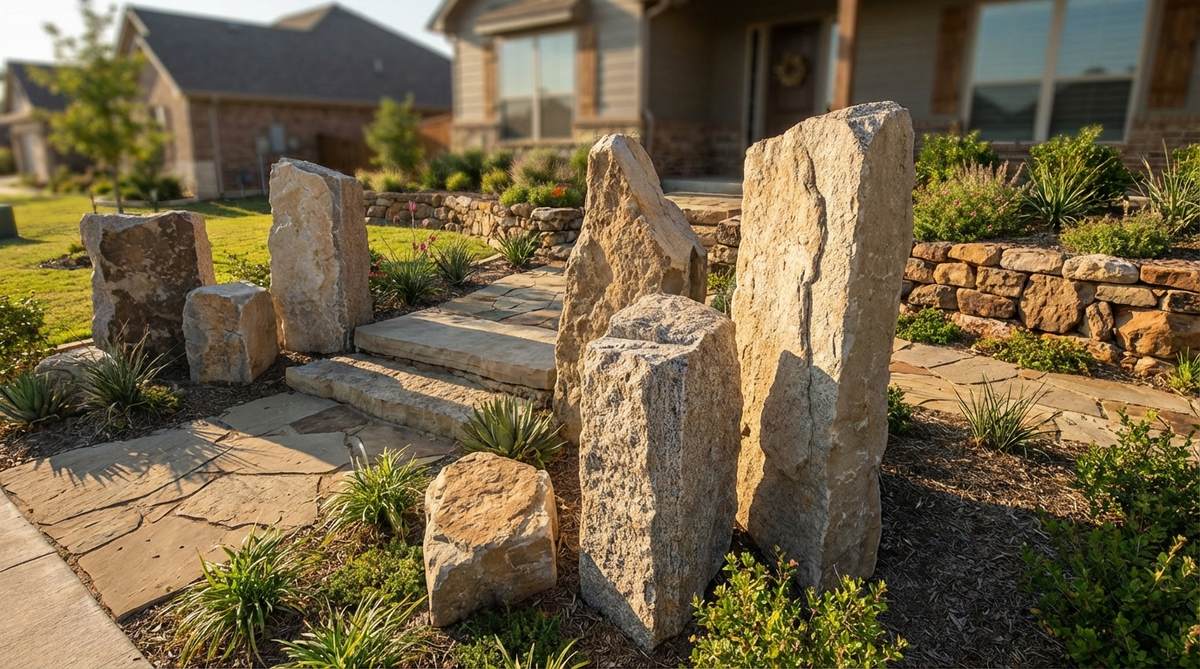
Stone gardens combine natural texture, permanent structure, and artistic expression to create outdoor spaces that evolve beautifully through seasons. From minimalist zen compositions to dramatic boulder arrangements, these sculptural concepts work across all US climate zones and property sizes. Fresh Garden Ideas brings you this comprehensive collection of stone garden design strategies developed by landscape architects and garden designers.
Design SnapshotKey Principles
- Scale Variation: Layer stones from pebbles to boulders for visual depth and structural hierarchy
- Natural Drainage: Position rocks strategically to channel water flow and prevent erosion
- Texture Contrast: Combine rough and smooth stone finishes with soft plantings for tactile interest
- Focal Anchoring: Use sculptural stones as permanent anchors that define spatial organization
Zen & Minimalist Stone Garden Ideas
Japanese-inspired stone gardens emphasize contemplation through carefully composed arrangements of rock, gravel, and negative space. These designs reduce maintenance while maximizing meditative impact.
1. Raked Gravel Meditation Garden
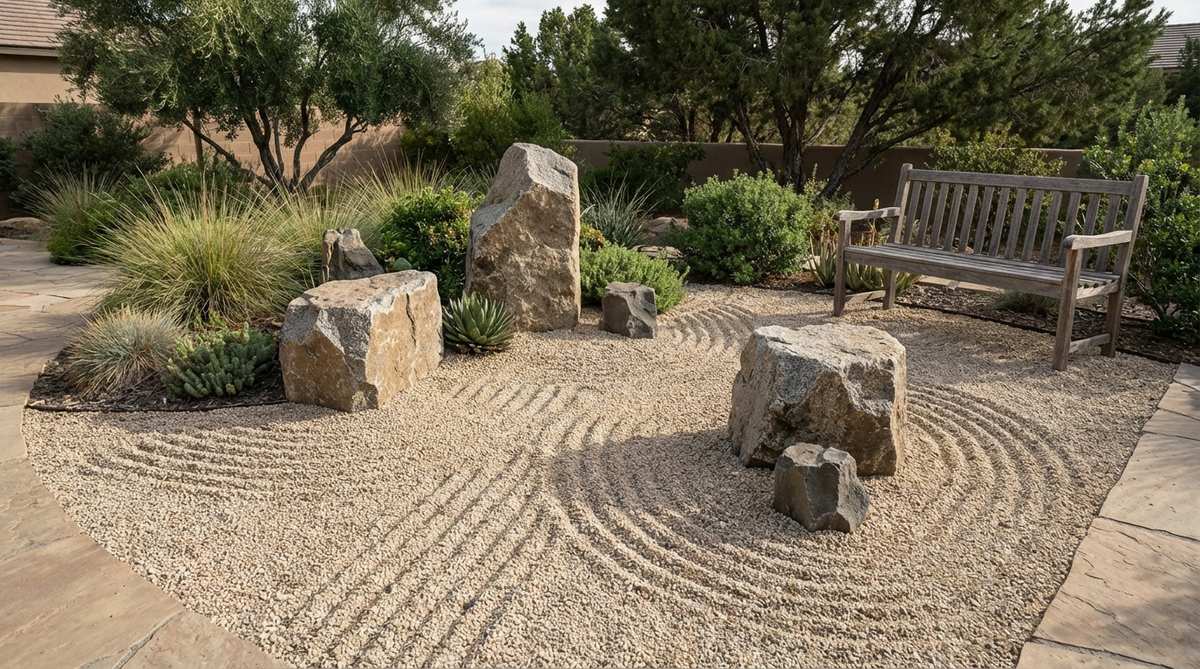
Create concentric circles or parallel lines in fine gravel to represent flowing water around permanent stone islands. The maintenance ritual of raking patterns becomes a mindfulness practice.
Position three to five stones in asymmetrical groups following odd-number principles. Use granite or basalt for weather resistance and long-term color stability.
This low-water design works exceptionally well in arid western states and requires minimal seasonal upkeep beyond periodic raking.
2. Moss and Stone Composition
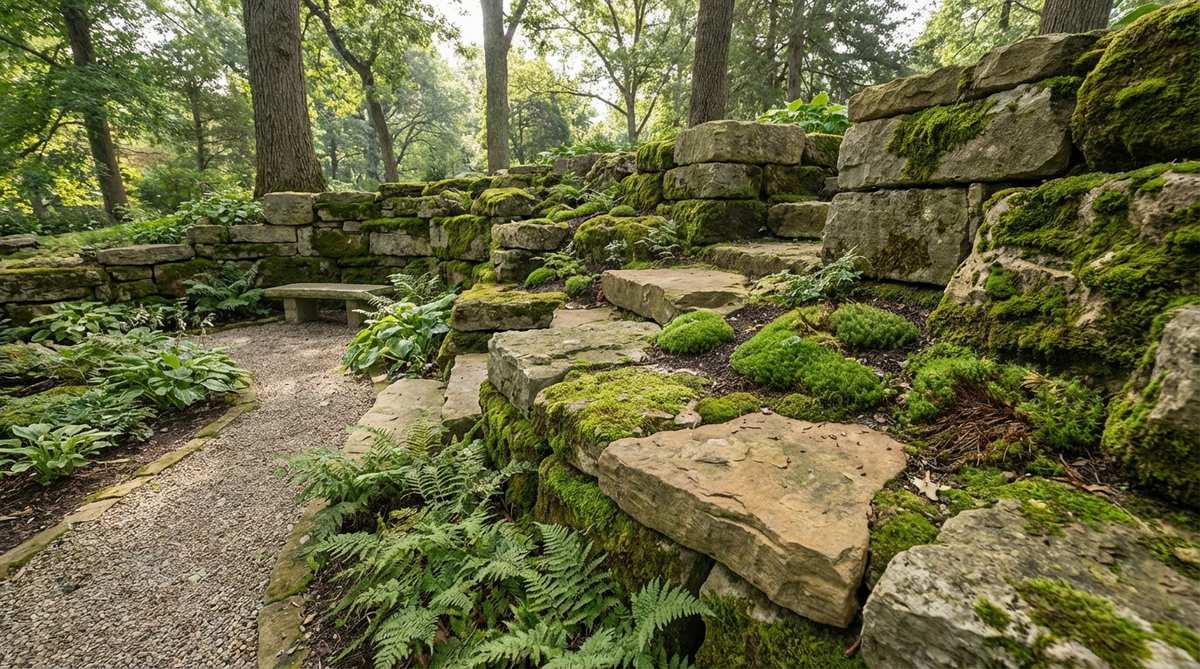
Pair weathered limestone or sandstone with shade-loving moss species to create the impression of ancient temple grounds. The contrast between hard stone and soft moss softens the visual temperature.
Plant moss varieties native to your region in soil pockets between stones. Mist regularly during establishment, then reduce watering as moss colonizes stone surfaces.
3. Single Specimen Boulder Focal Point
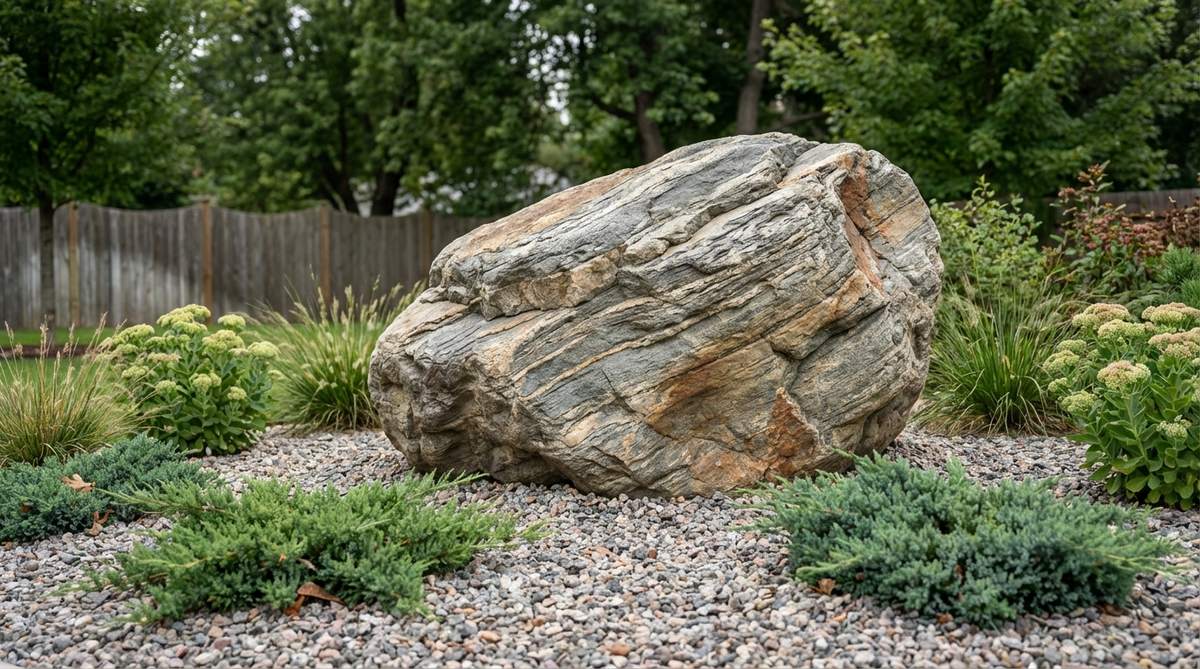
Feature one dramatic boulder weighing 500-2000 pounds as a sculptural centerpiece surrounded by crushed granite. The monolithic presence creates instant visual gravity.
Select stones with interesting striations, fossil inclusions, or weathering patterns. Position at one-third intervals rather than center for dynamic tension.
4. Triple Stone Island Arrangement
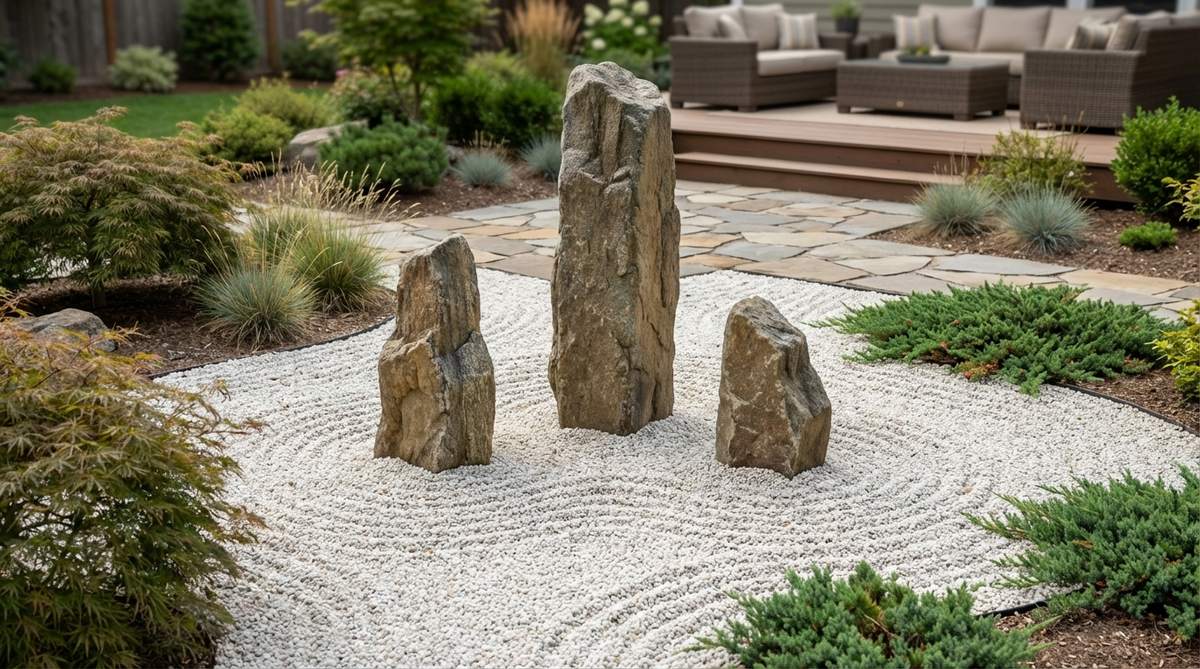
Follow the traditional Buddhist triad pattern with one tall vertical stone flanked by two shorter companions. This arrangement represents mountains rising from the sea.
Use the 7:5:3 height ratio for proportional harmony. Surround with white pea gravel raked to suggest waves and currents.
5. Gravel River Through Lawn
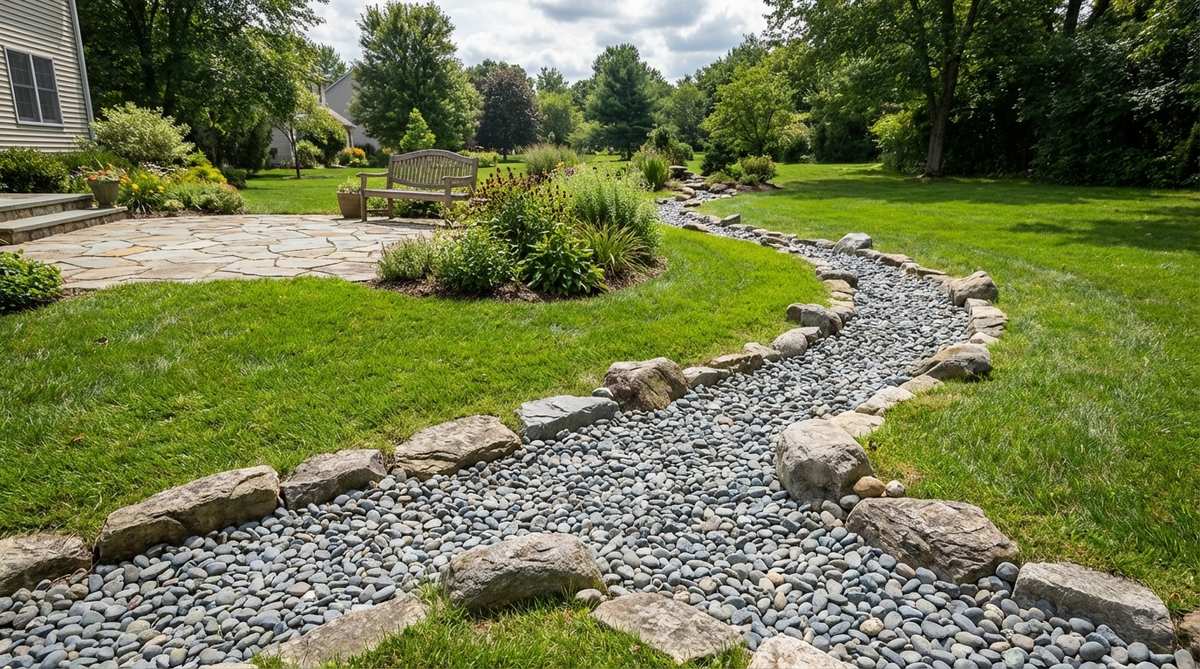
Cut a meandering channel through turf and fill with grey river rock to simulate a dry streambed. This technique connects separate garden zones visually.
Vary the width from 18 inches to 4 feet for natural flow patterns. Edge with larger stones to prevent gravel migration into grass.
6. Geometric Stone Grid
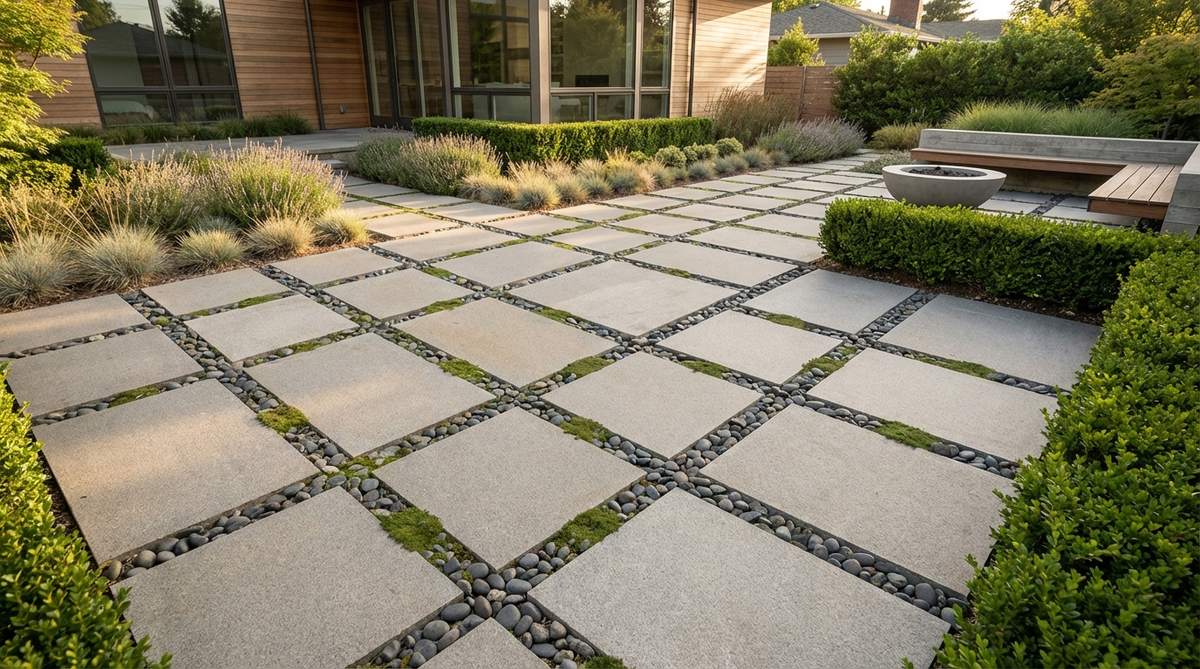
Arrange uniform square pavers in a precise grid with moss or gravel joints. The rigid geometry contrasts beautifully with organic plant forms.
Space pavers 2-4 inches apart for joint material. This modern interpretation suits contemporary architecture and minimalist aesthetics.
7. Weathered Rock Grouping
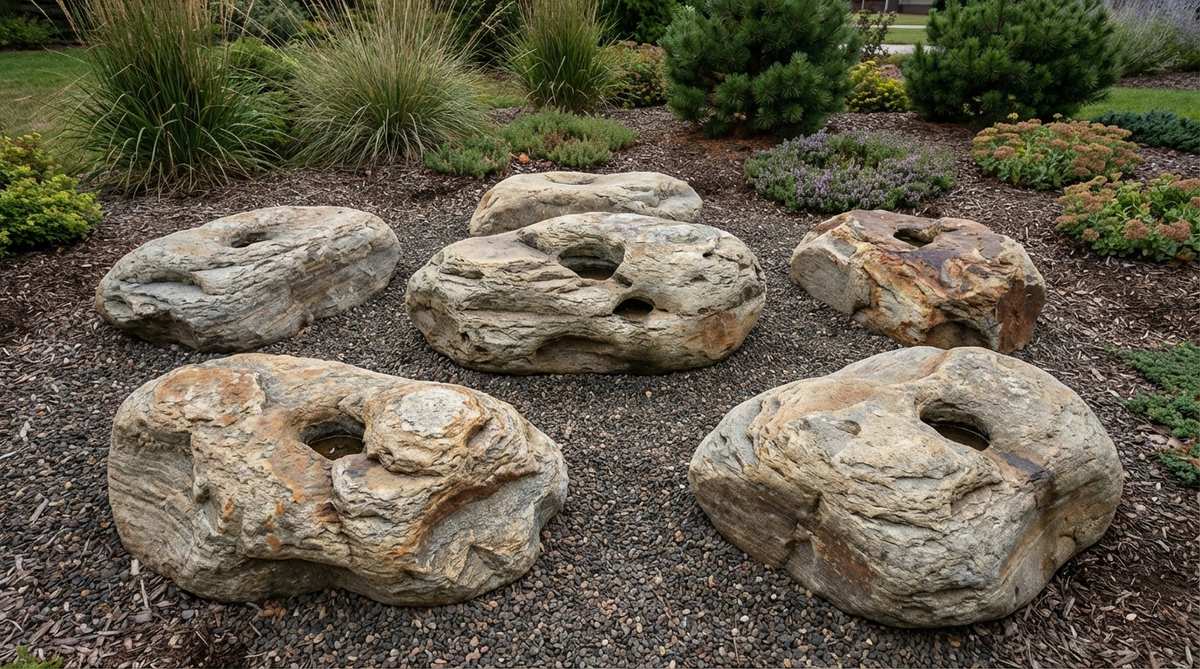
Collect naturally eroded stones showing layers, holes, or sculptural shapes formed by wind and water. Group five to seven pieces in contemplative arrangements.
Source from local quarries or stone yards specializing in specimen rocks. Bury one-third of each stone to achieve natural placement.
8. Sand and Pebble Yin Yang
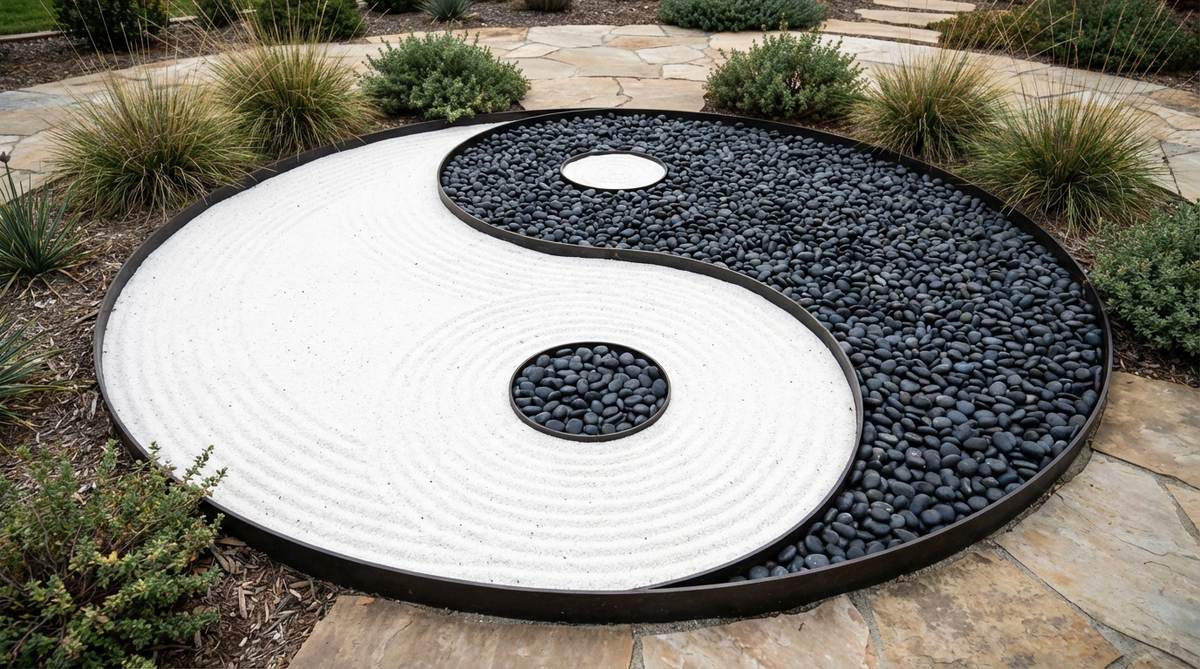
Create circular patterns using contrasting white sand and black pebbles in the traditional yin-yang symbol. The duality represents balance and harmony.
Install metal or stone edging to maintain the circular boundary. Refresh raked patterns weekly during growing season.
Stone Garden Design for Pathways & Edging
Stone pathways combine functionality with sculptural form, guiding movement while defining garden rooms. Border treatments frame plantings and manage visual transitions between materials.
9. Flagstone Stepping Path
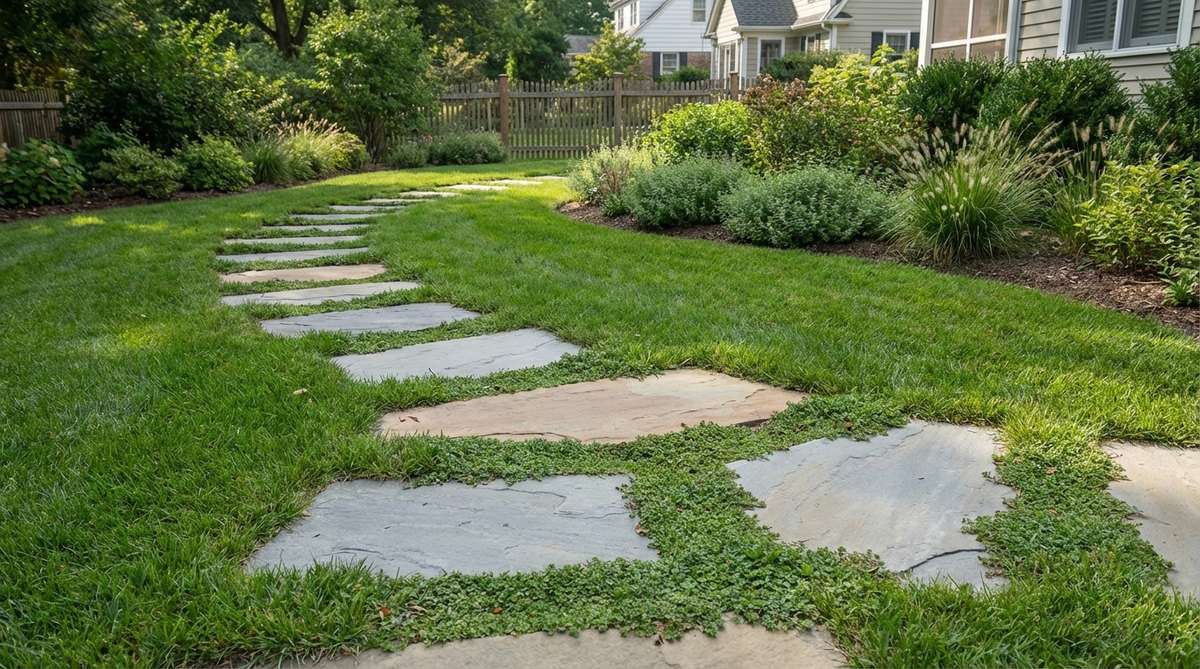
Set irregular bluestone or sandstone slabs 18-24 inches apart through lawn or groundcover. The rhythm of stepping encourages slower, more mindful movement through the garden.
Select stones 16-24 inches across for comfortable stride length. Excavate 2-3 inches and set in sand for stability while maintaining grade with surrounding turf.
10. Pebble Mosaic Walkway
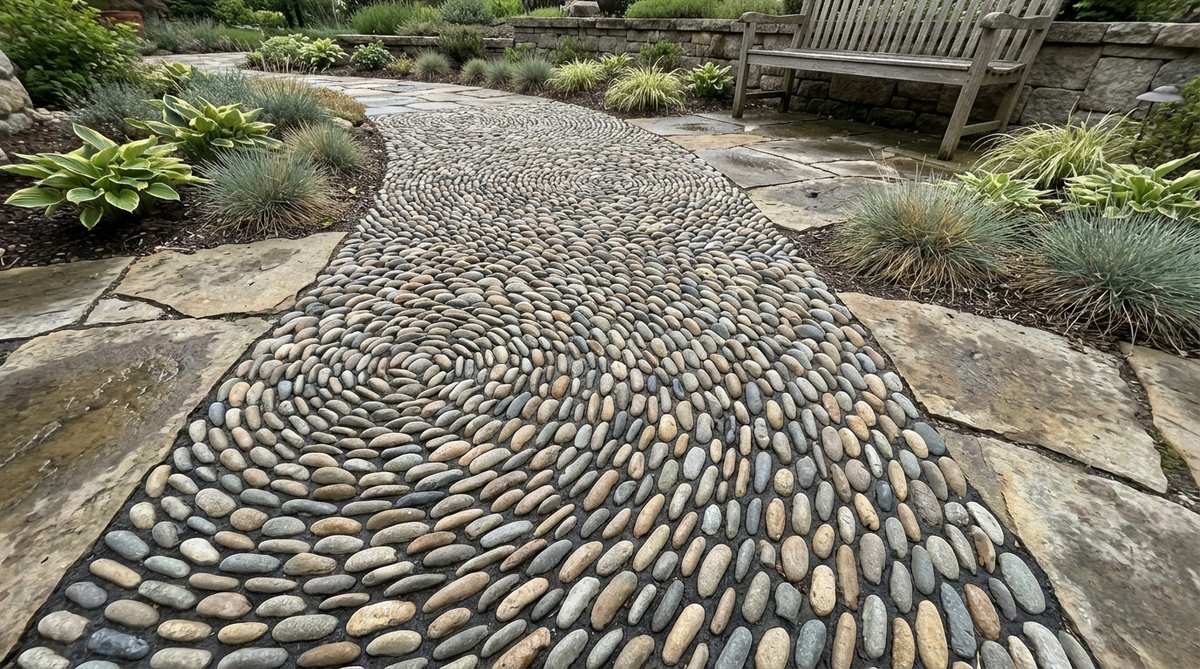
Embed smooth river stones vertically in mortar to create patterns like spirals, waves, or geometric designs. This labor-intensive technique produces permanent artistic surfaces.
Sort pebbles by size and color before installation. Work in small sections to prevent mortar from setting before stones are placed.
11. Crushed Granite Pathways
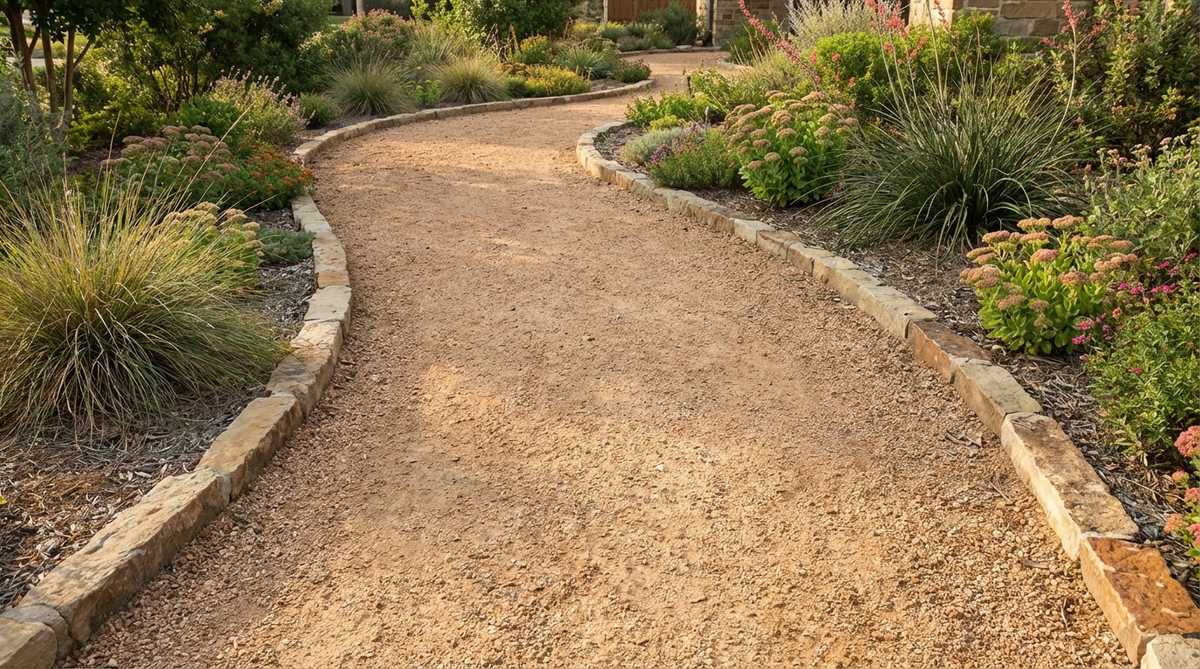
Lay decomposed granite for permeable paths that compact into firm walking surfaces. The natural earth tones complement most plant palettes.
Install 3-4 inches deep over landscape fabric. Edge with steel or stone to prevent spreading into adjacent beds.
12. Natural Stone Edging
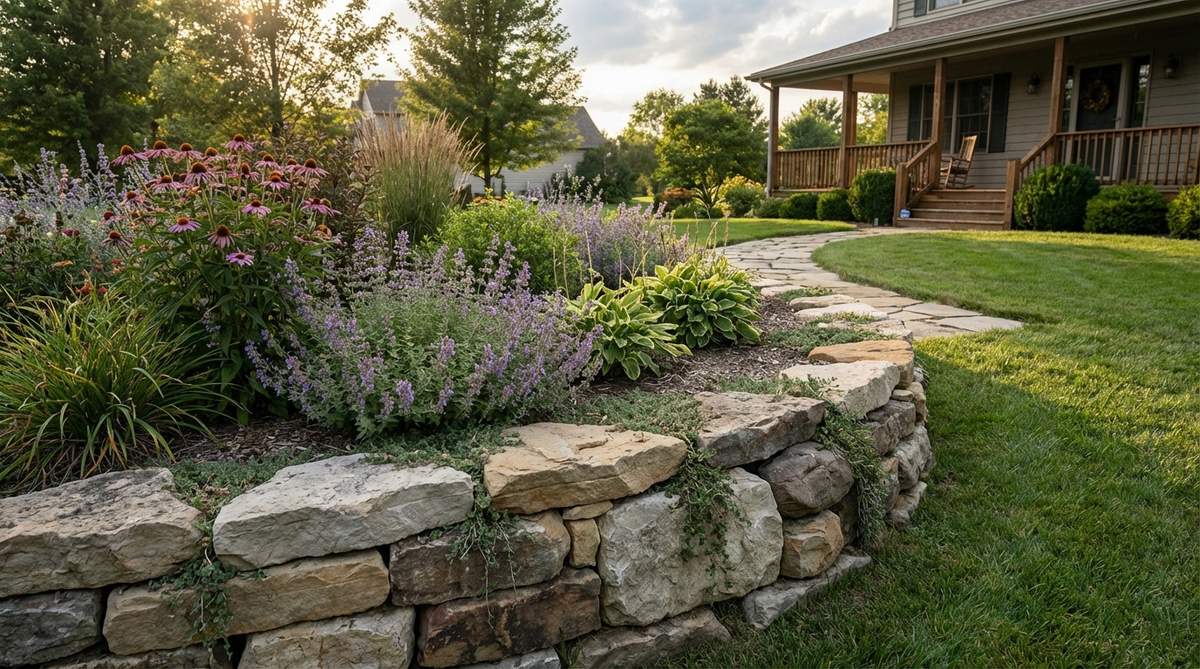
Border flower beds with stones varying in shape and size for organic, cottage-garden appeal. The irregular profile softens formal plantings.
Dig a narrow trench and nestle stones so top surfaces align with soil grade. Mix limestone, sandstone, and fieldstone for color variation.
13. Stacked Stone Border
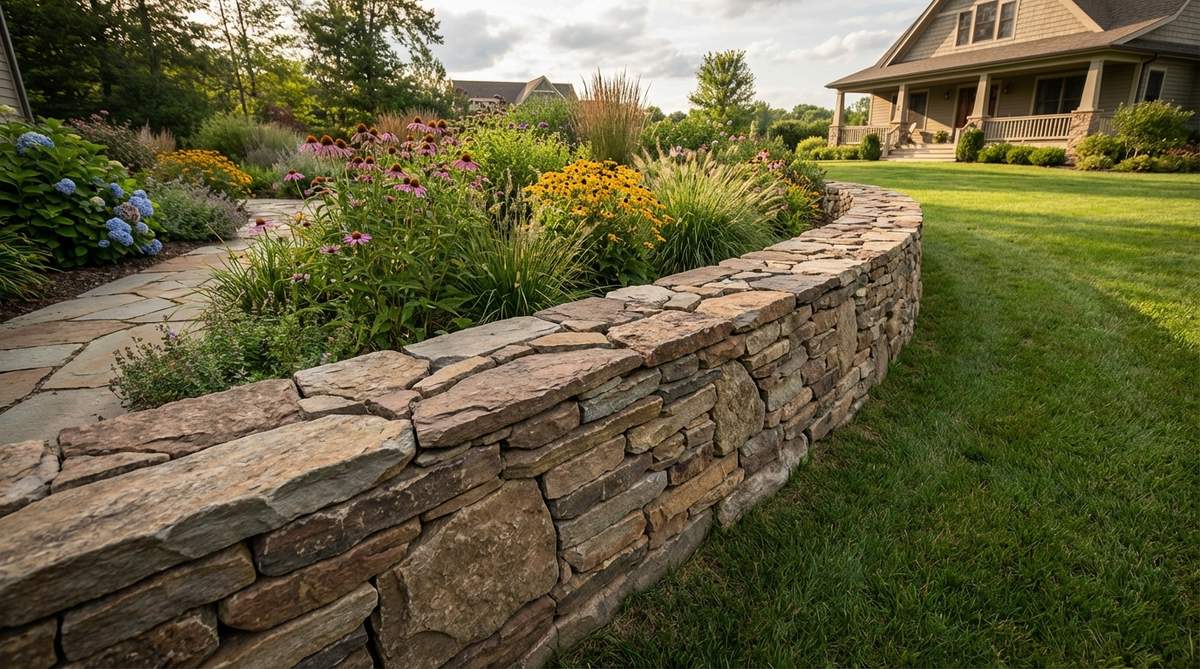
Build low dry-stack walls 8-18 inches high to define beds and create subtle elevation changes. The horizontal lines ground vertical plantings.
Select flat stones and layer with largest pieces at base. Slight backward tilt prevents forward toppling over time.
14. River Rock Edging
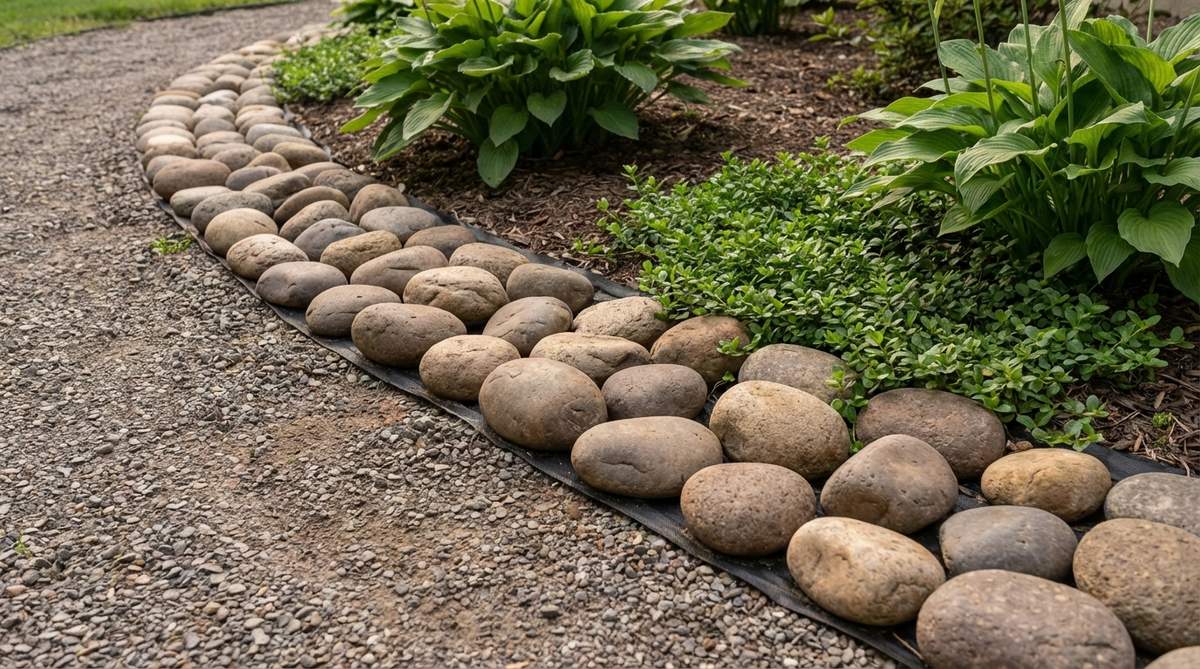
Line pathways with smooth 3-6 inch river cobbles for low-maintenance borders that promote drainage. The rounded forms create soft transitions.
Excavate 4-6 inches deep and install landscape fabric before placing rocks. This prevents weed emergence while allowing water infiltration.
15. Slate Stepping Stones
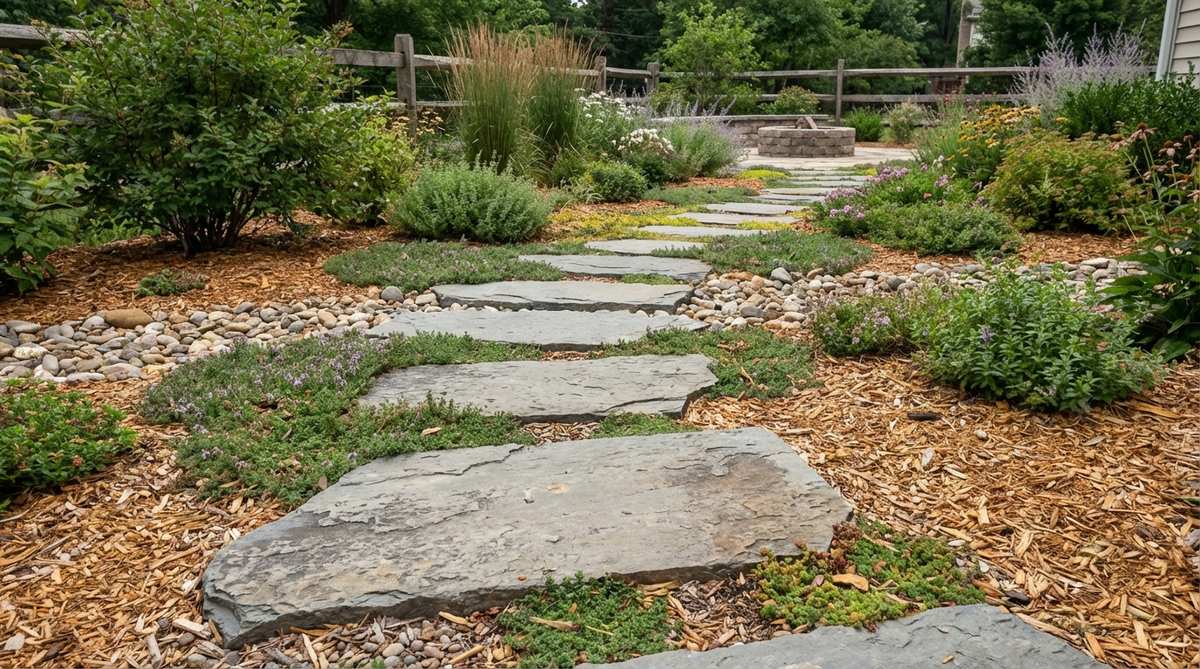
Use split slate pieces for flat, slip-resistant stepping surfaces with elegant grey tones. The thin profile integrates seamlessly into groundcover plantings.
Space irregularly for naturalistic effect. Slate’s layered structure provides texture without aggressive surface variations.
16. Brick and Stone Combination Path
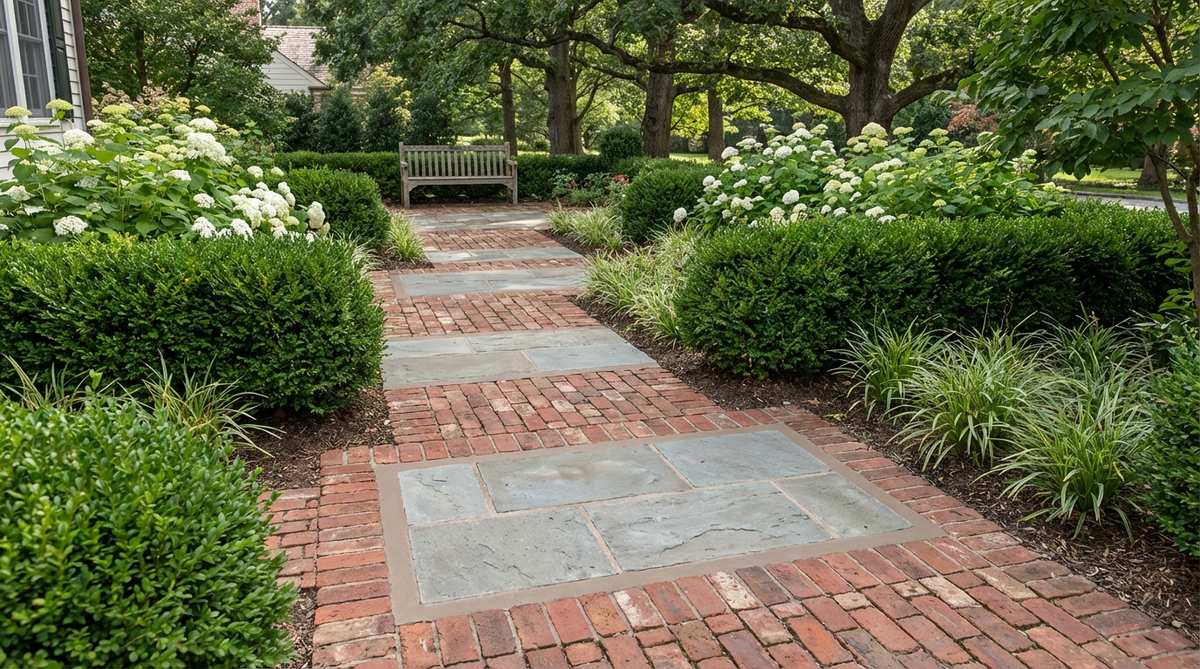
Alternate sections of brick paving with stone panels for visual rhythm and material contrast. This technique works well in traditional landscape styles.
Use matching mortar color to unify disparate materials. The pattern breaks up long pathways and adds design interest.
17. Gravel and Boulder Trail
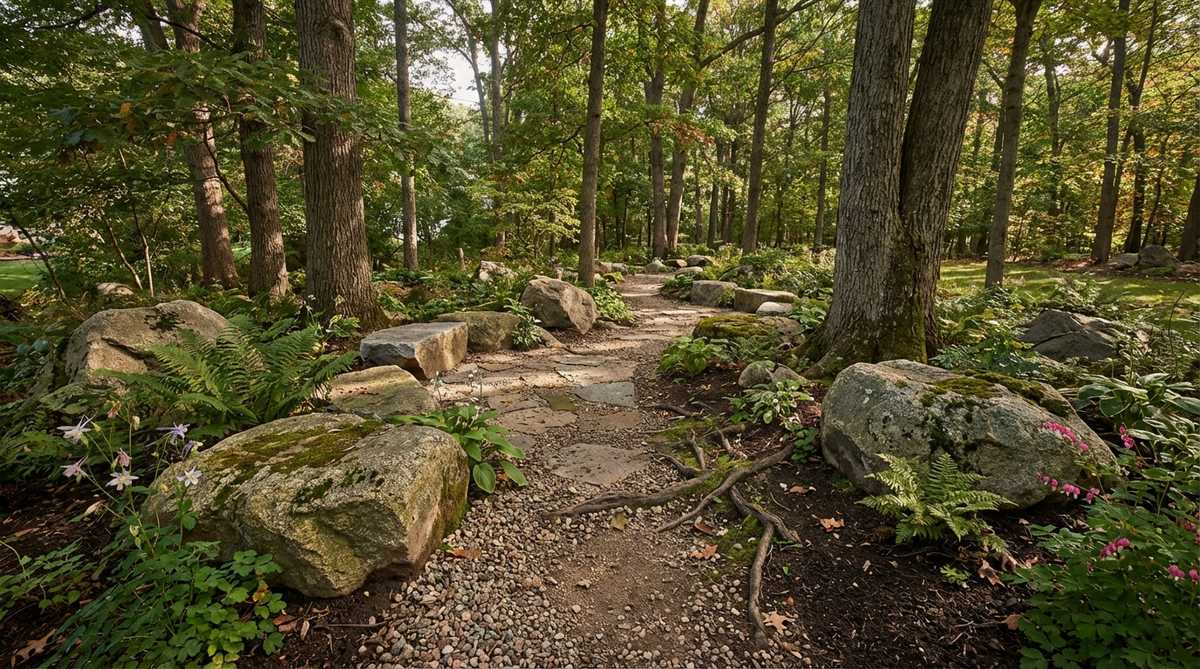
Create informal woodland paths using crushed stone with large boulders placed at intervals as natural seating or way markers. This design suits naturalistic properties.
Position boulders at path curves and viewpoints. The combination accommodates tree roots better than solid paving.
Stone Garden Landscaping with Dramatic Boulders
Large-scale rocks function as living sculptures that anchor designs and create immediate landscape maturity. Strategic boulder placement establishes hierarchy and focal interest.
18. Entrance Statement Boulder
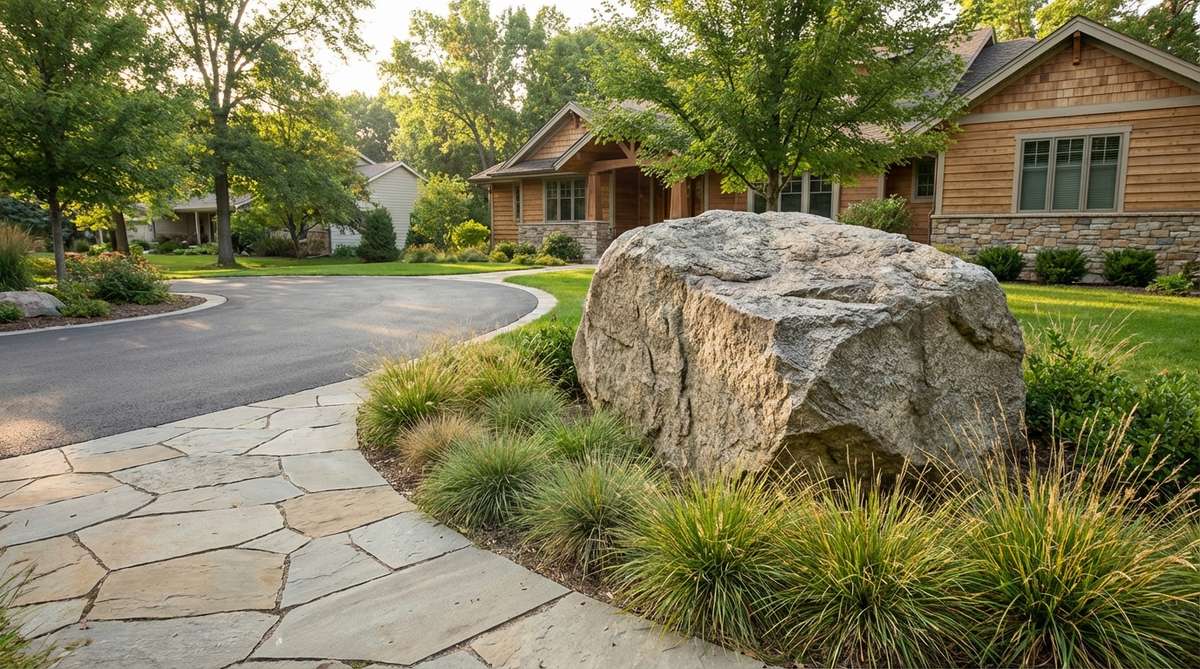
Position a specimen boulder weighing 1-3 tons near the driveway entry or front walkway. This creates instant curb appeal and establishes landscape character.
Select stones with one striking face oriented toward primary views. Surround with low ornamental grasses that accentuate the stone’s mass.
19. Boulder Outcropping Cluster
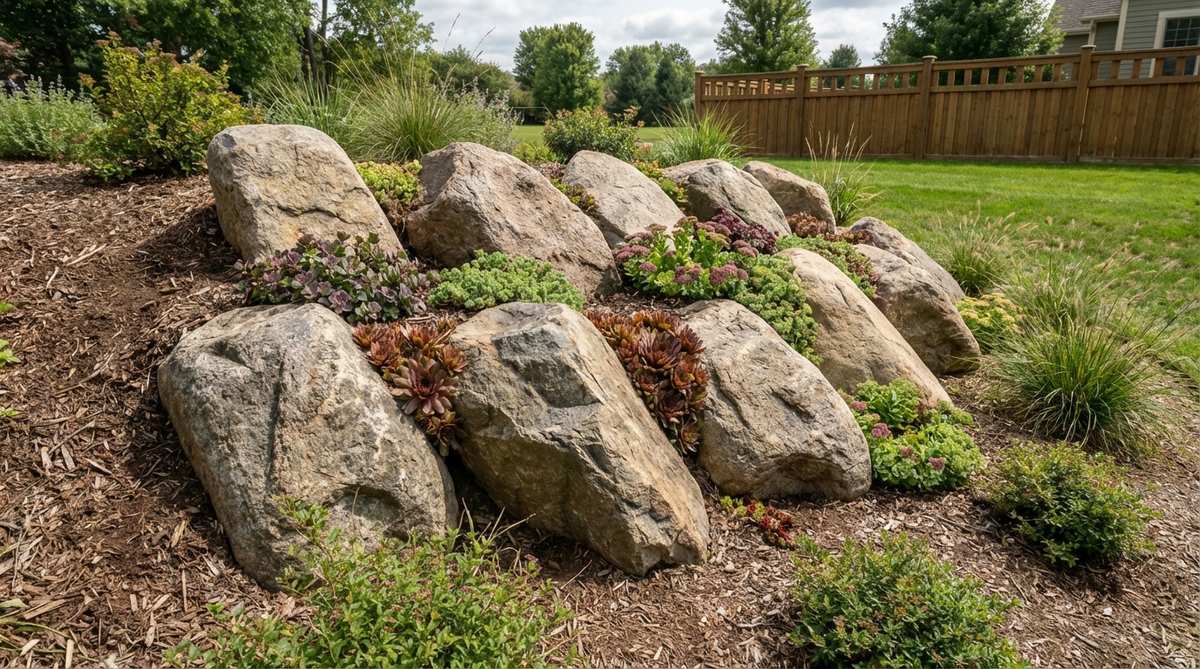
Group five to nine boulders to simulate natural geological formations. Vary sizes from 200 to 2000 pounds for realistic scale distribution.
Bury 30-40 percent of each stone and tilt slightly backward for stability. Plant crevices with sedums and sempervivums for integrated naturalism.
20. Vertical Standing Stone
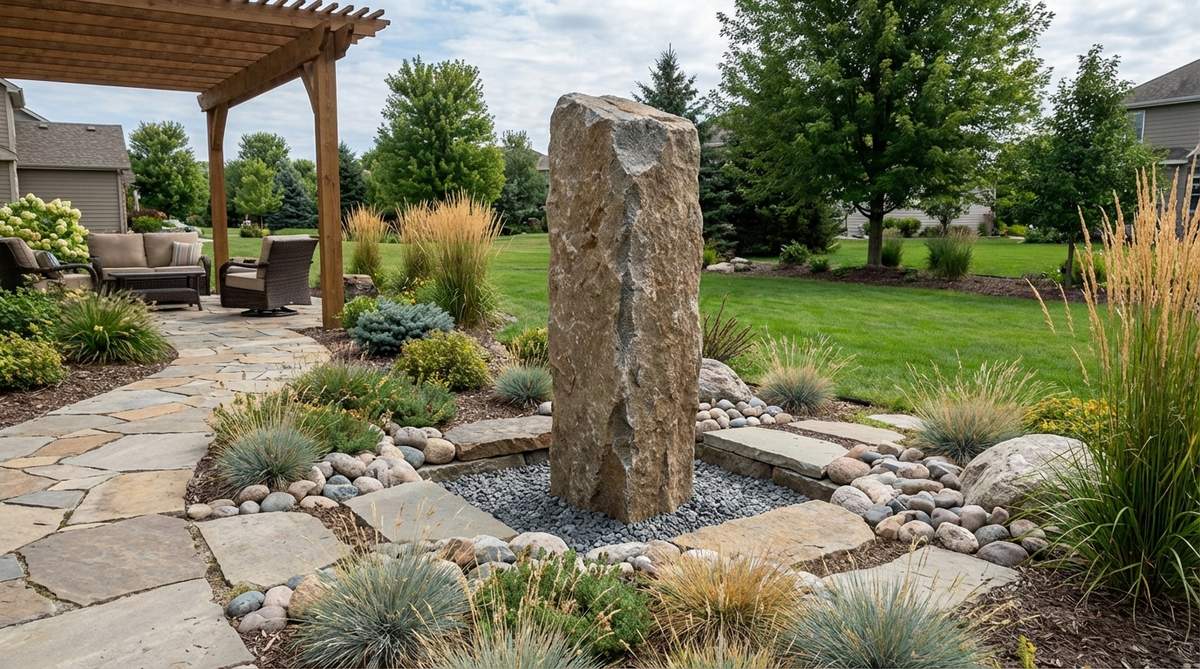
Set a columnar boulder upright to create vertical accent reaching 4-8 feet high. This dramatic gesture draws the eye upward and balances horizontal landscape layers.
Excavate a foundation pit to one-third the stone’s height. Backfill with crushed stone and compact thoroughly for permanent stability.
21. Split Boulder Pair
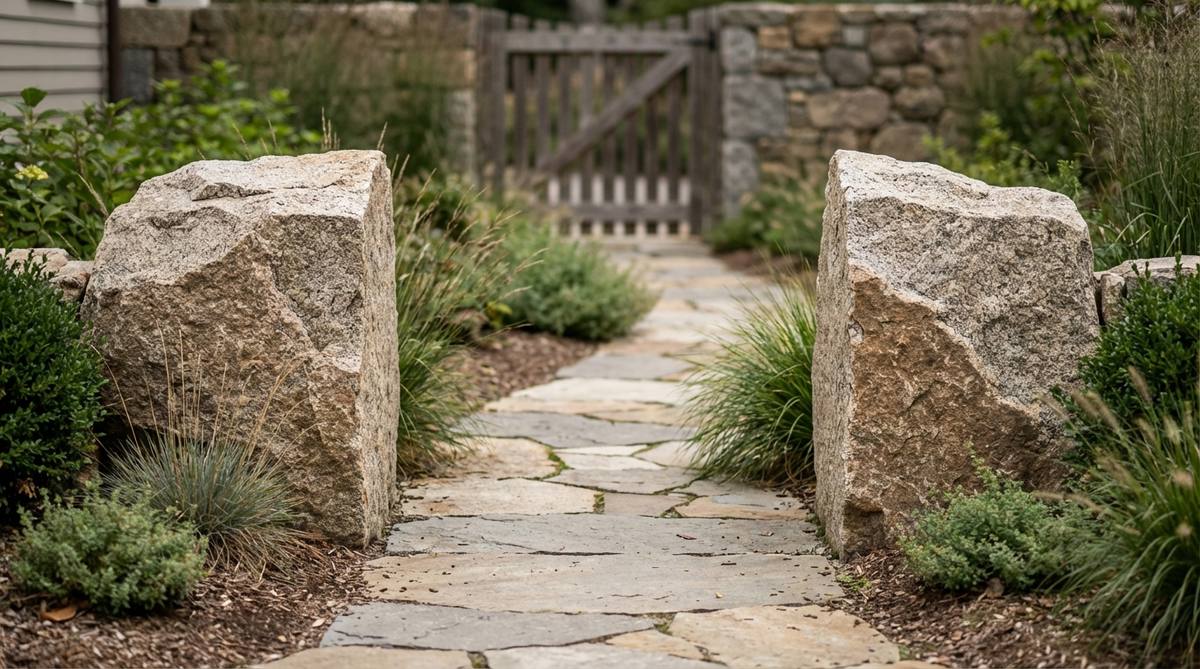
Position two halves of a split boulder on either side of a path or entrance. The matching geology creates intentional symmetry while maintaining organic form.
Orient split faces toward each other to emphasize their shared origin. This technique works well with granite and basalt.
22. Corner Accent Rock
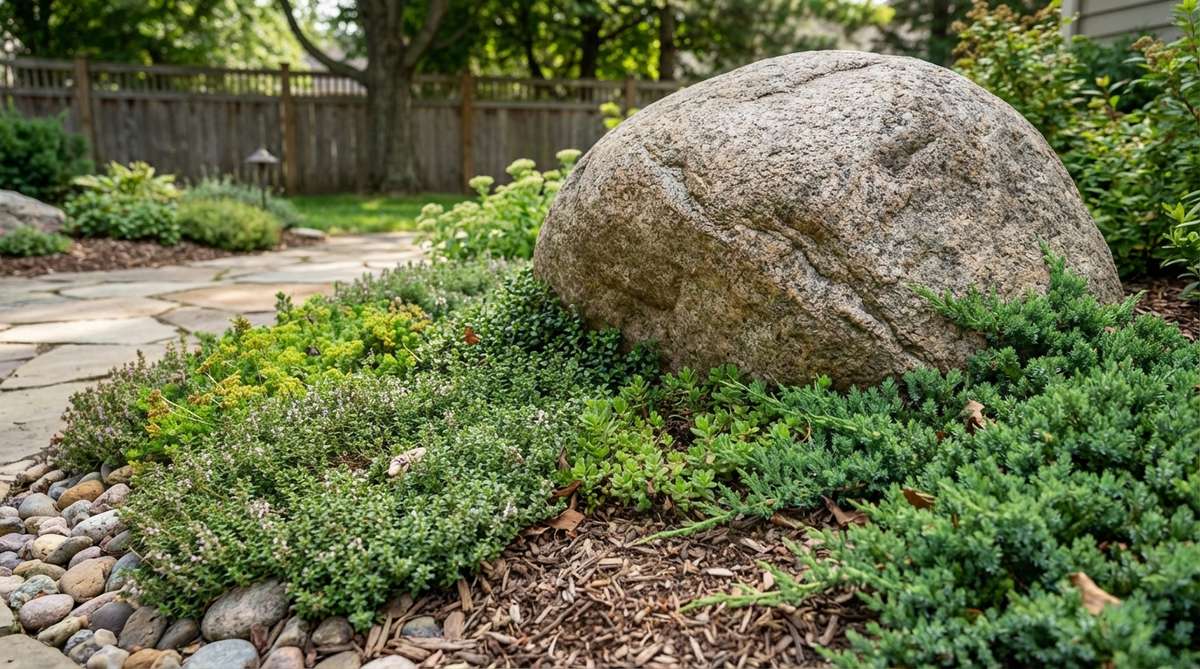
Place boulders at property corners or garden bed angles to soften geometric transitions. The stone mass absorbs visual energy from converging lines.
Choose rounded boulders rather than angular ones for corner applications. Surround with spreading groundcovers to blend stone into surroundings.
23. Boulder and Tree Pairing
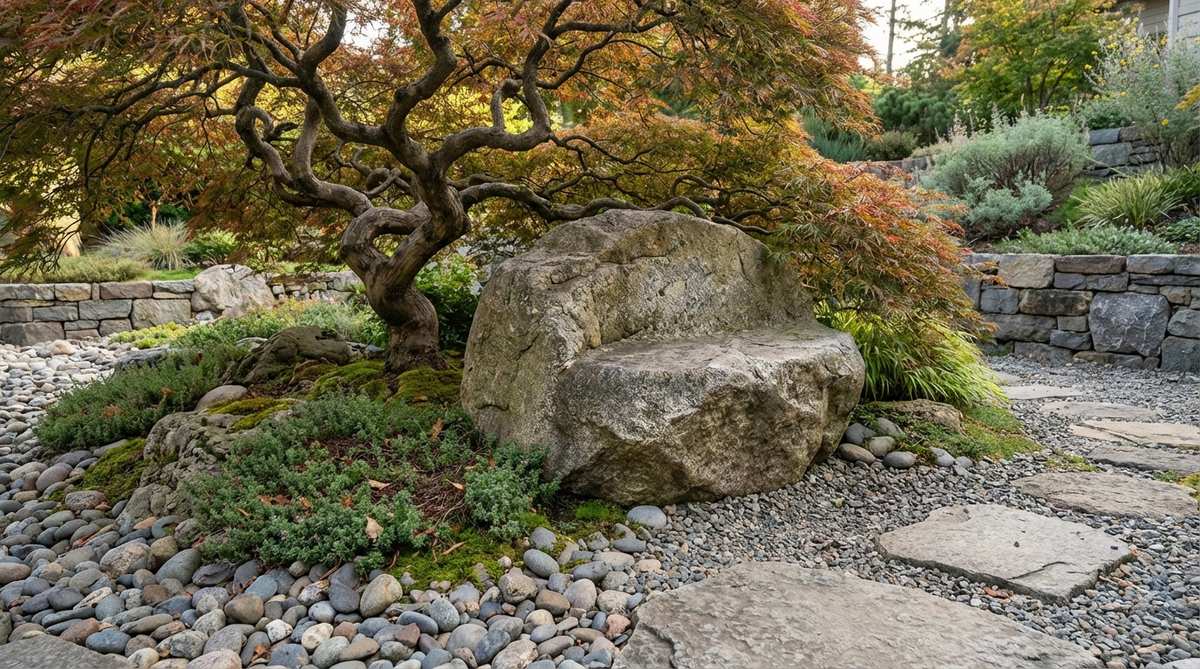
Position a large stone adjacent to a specimen tree to create a unified focal point combining permanent and living elements. The pairing amplifies the presence of both.
Place boulder outside the tree’s drip line to avoid root damage during installation. The stone provides seating for tree contemplation.
24. Boulder Seat Wall
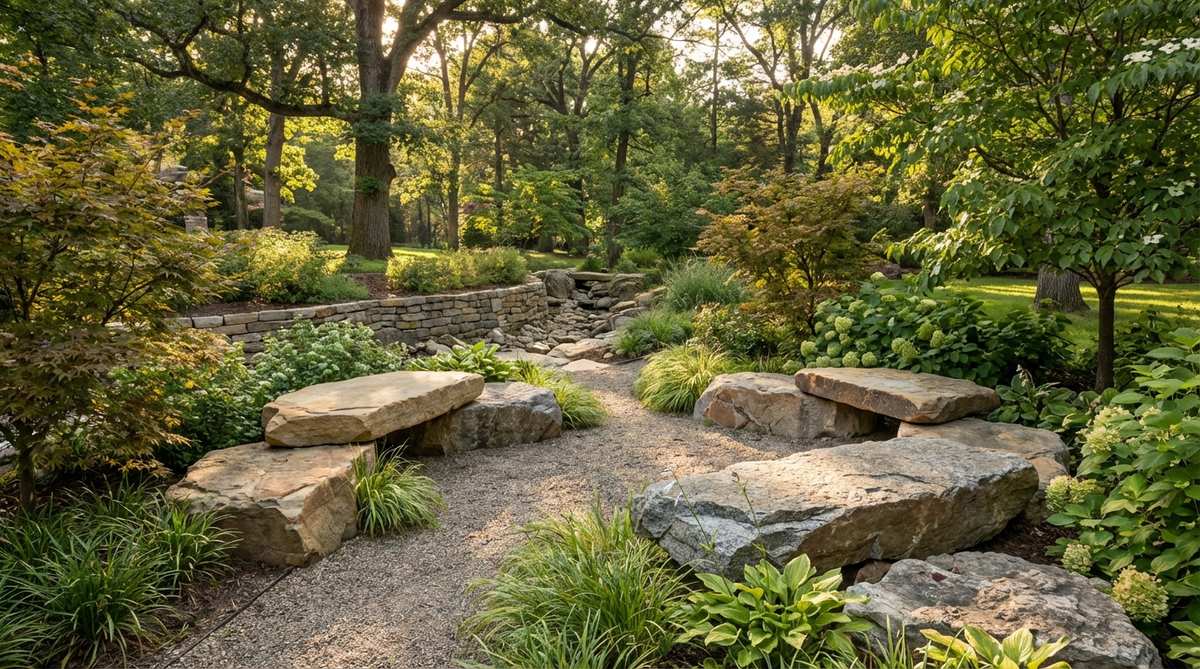
Select flat-topped boulders 16-18 inches high to function as natural benches. These provide seating without constructed furniture.
Position in gathering areas or along pathways at viewpoints. The thermal mass of stone provides cool seating on hot days.
25. Layered Stone Formation
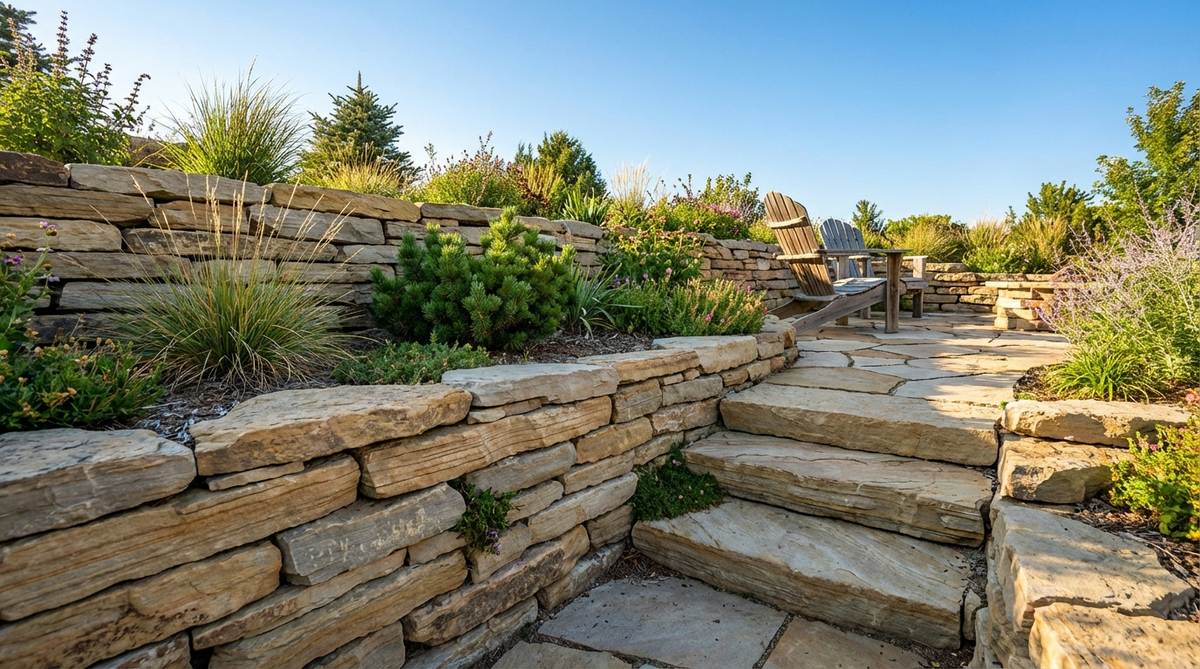
Stack flat sedimentary rocks to emphasize natural stratification patterns. The horizontal banding creates geological authenticity.
Source limestone or sandstone showing consistent bedding planes. Orient all layers in the same direction for visual coherence.
Stone Garden Design Ideas with Water Elements
Combining stone with water produces dynamic sensory experiences through sound, reflection, and movement. These features range from minimalist bubbling rocks to elaborate cascading streams.
26. Bubbling Boulder Fountain
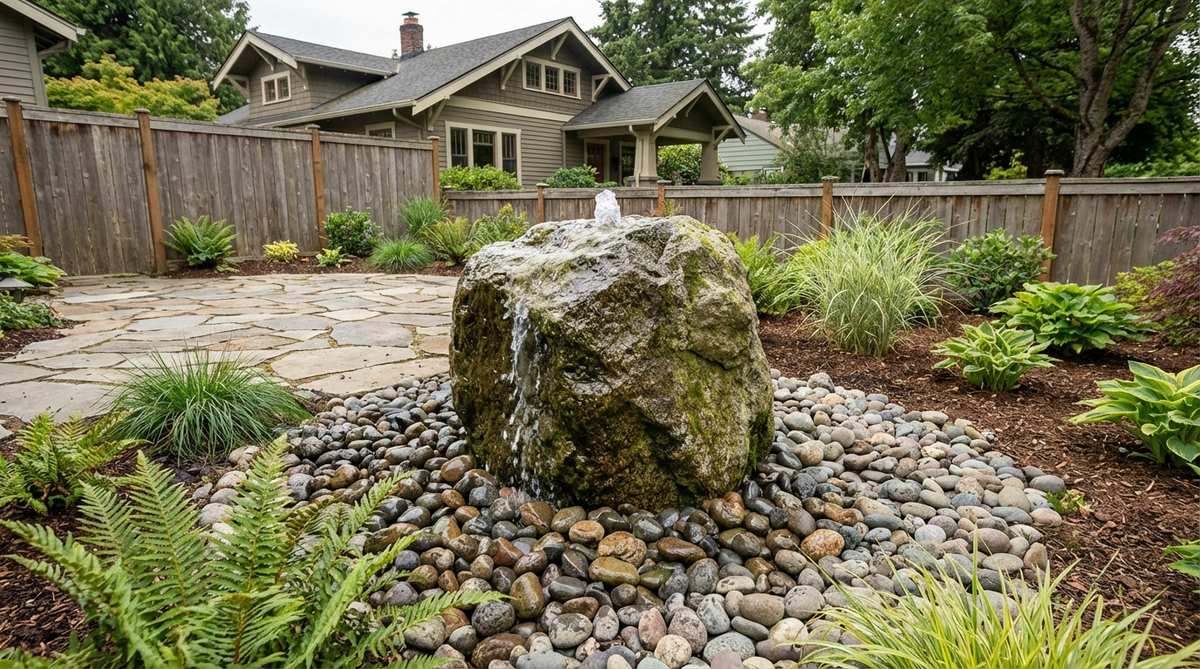
Drill through a specimen boulder and install recirculating pump for water bubbling from the stone’s top. This self-contained feature requires minimal space.
Position over a hidden reservoir basin filled with river rock. The gentle sound masks urban noise without overwhelming conversation.
Use granite or basalt for durability. These igneous rocks resist freeze-thaw damage in northern climates.
27. Stone Waterfall Cascade
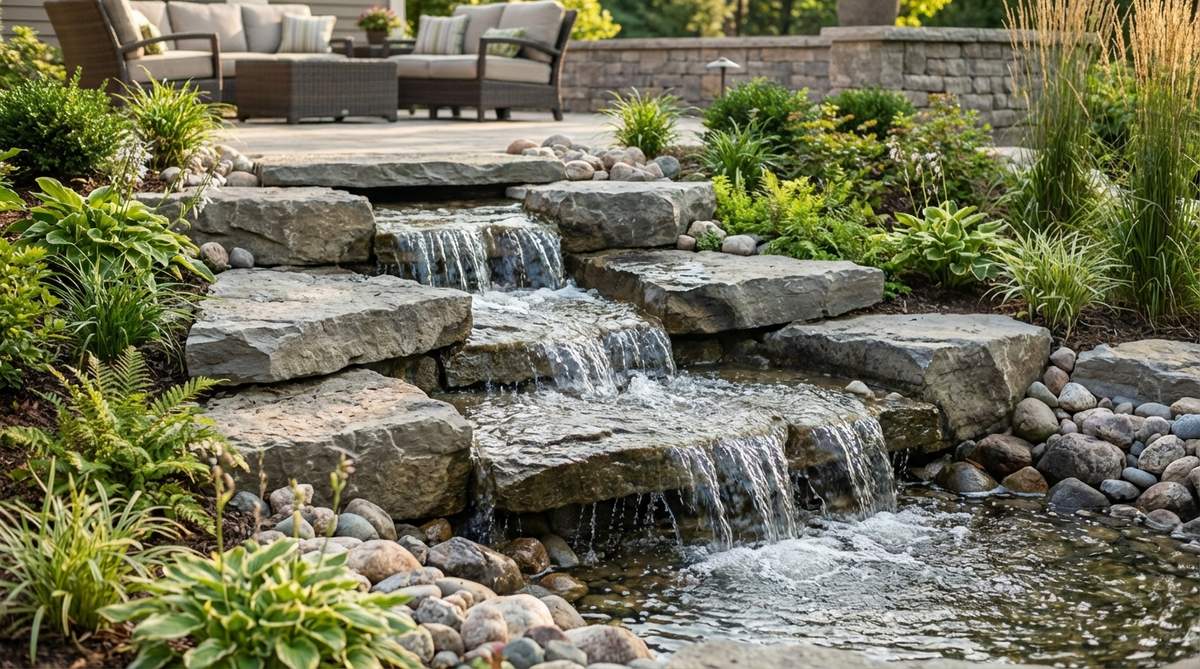
Stack flat stones in stepped formation to create water spillways. Each level produces distinct sound qualities from splashing and sheeting water.
Position stones with slight forward tilt so water projects outward before falling. This prevents back-wall algae growth and increases visual drama.
28. Stream with Stone-Lined Bed
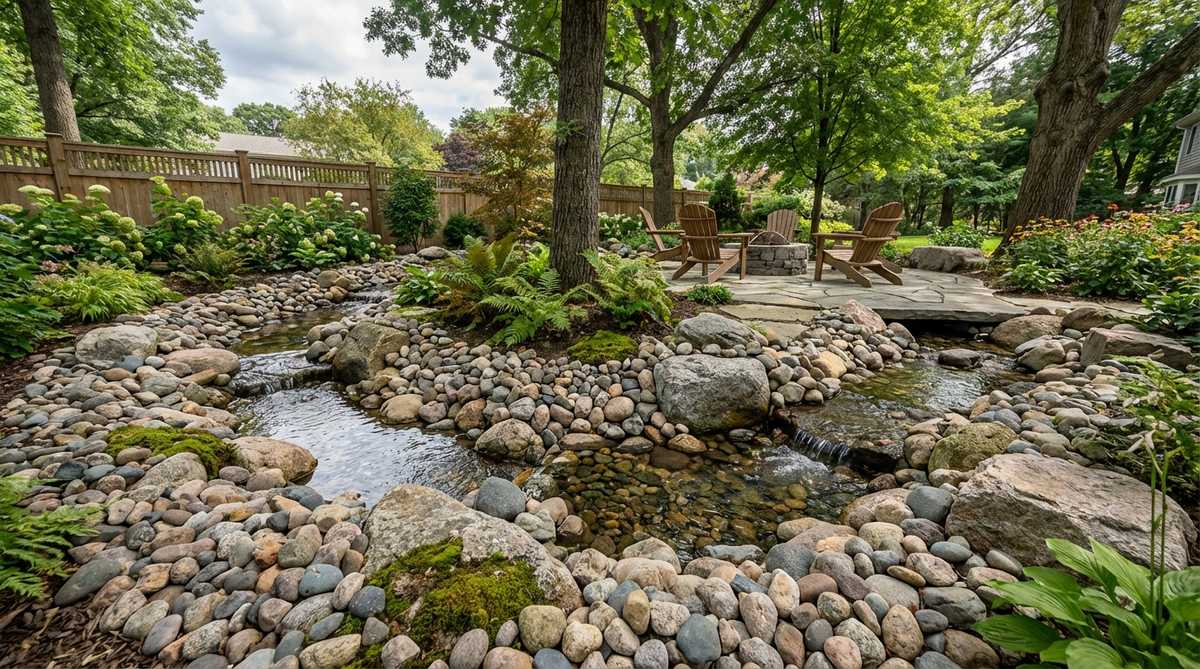
Line a recirculating stream channel with river cobbles and boulders to create naturalistic water courses. Vary stone sizes from 2-inch pebbles to 12-inch rocks.
Create pools and riffles by adjusting bed elevation. Place larger stones at curves to simulate natural erosion patterns.
29. Disappearing Water Feature
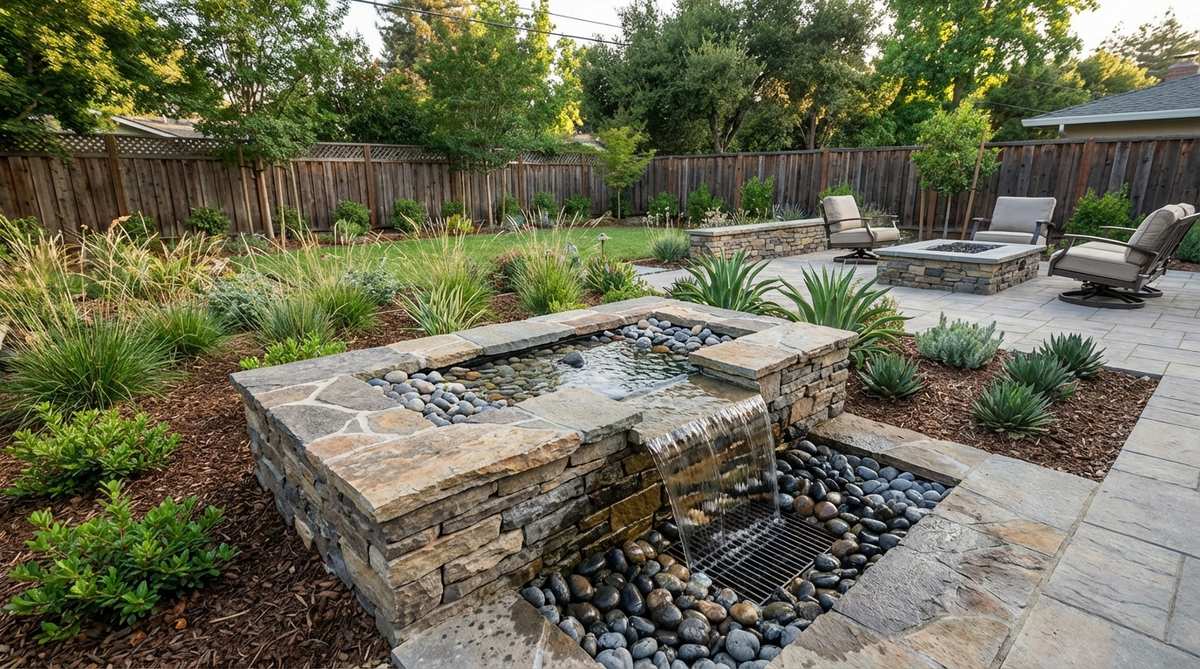
Design water that vanishes into a stone-filled basin below grade. This eliminates standing water while retaining sound and movement benefits.
Cover reservoir with steel grating topped with decorative stones. Pumps recirculate water from below, making the system safe for properties with children.
30. Stone Basin Fountain
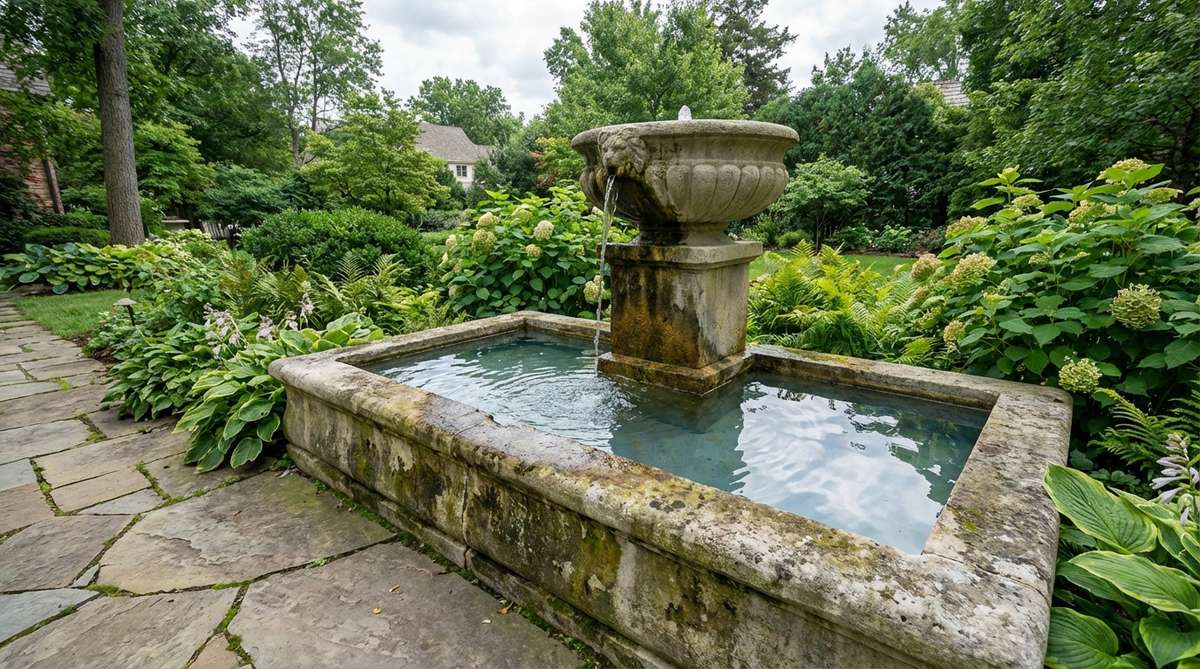
Carve or purchase pre-formed stone bowls that fill and overflow continuously. The still water surface reflects sky and surrounding plants.
Mount on stone pedestals for elevation. Limestone and sandstone basins develop attractive patina as minerals precipitate from water.
31. Rock Pool Grotto
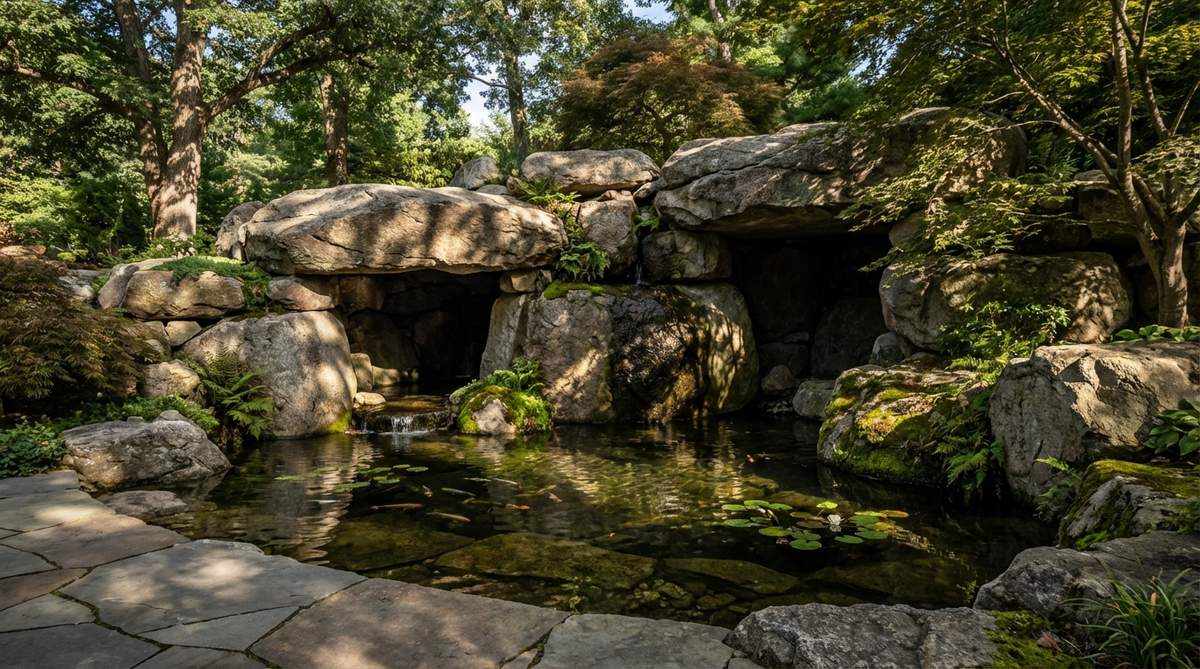
Stack large boulders around pond edges to create cave-like overhangs and shadowed recesses. This provides habitat for amphibians and dramatic light contrasts.
Extend some stones over water to create reflections and hiding places for fish. The shadowed water appears deeper and more mysterious.
32. Millstone Fountain
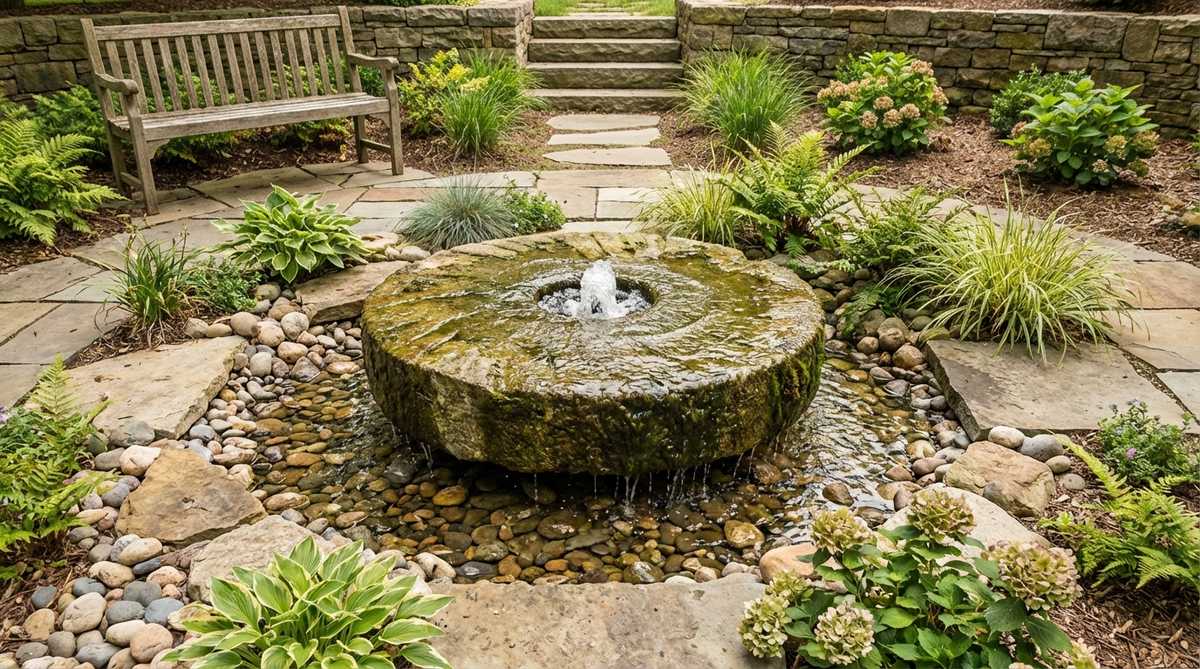
Repurpose antique grinding stones as water features with pumps pushing water through central holes. The historical artifact becomes functional sculpture.
Authentic millstones range from 24-48 inches in diameter. Reproduction versions offer similar aesthetics at lower cost and weight.
33. Stacked Slate Weir
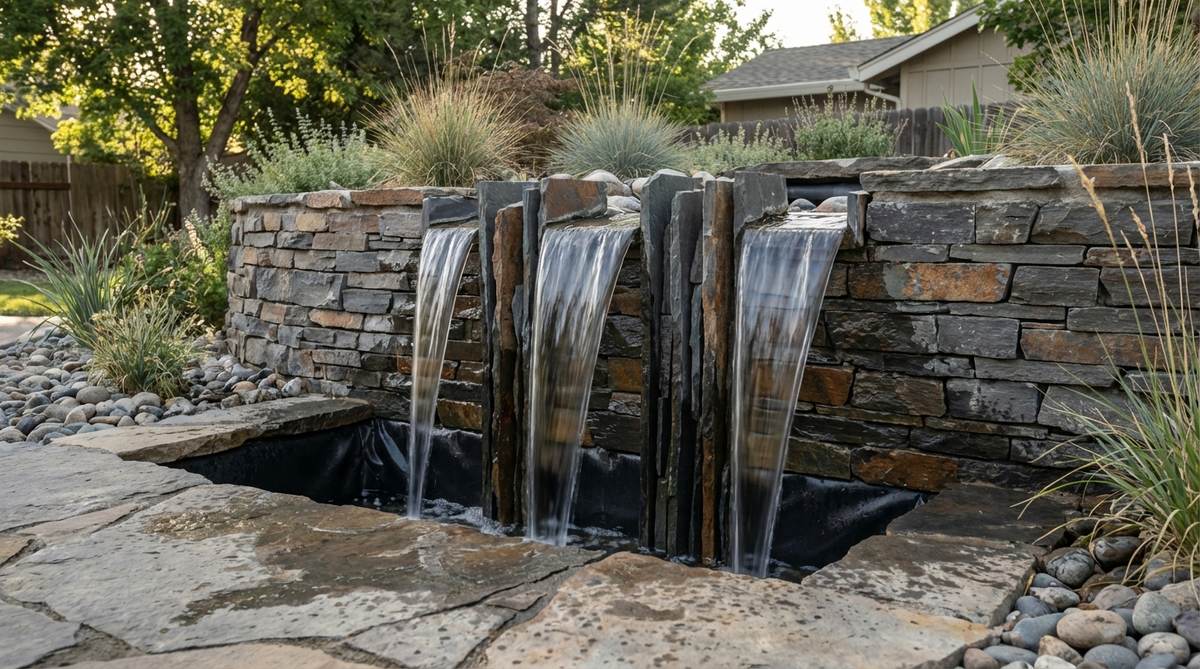
Build thin water walls using vertically stacked slate pieces. Water sheets down the flat surfaces, creating glassy curtains and gentle sounds.
Back slate with waterproof membrane to direct flow. The narrow profile fits small urban gardens where horizontal space is limited.
34. Boulder Split Spillway
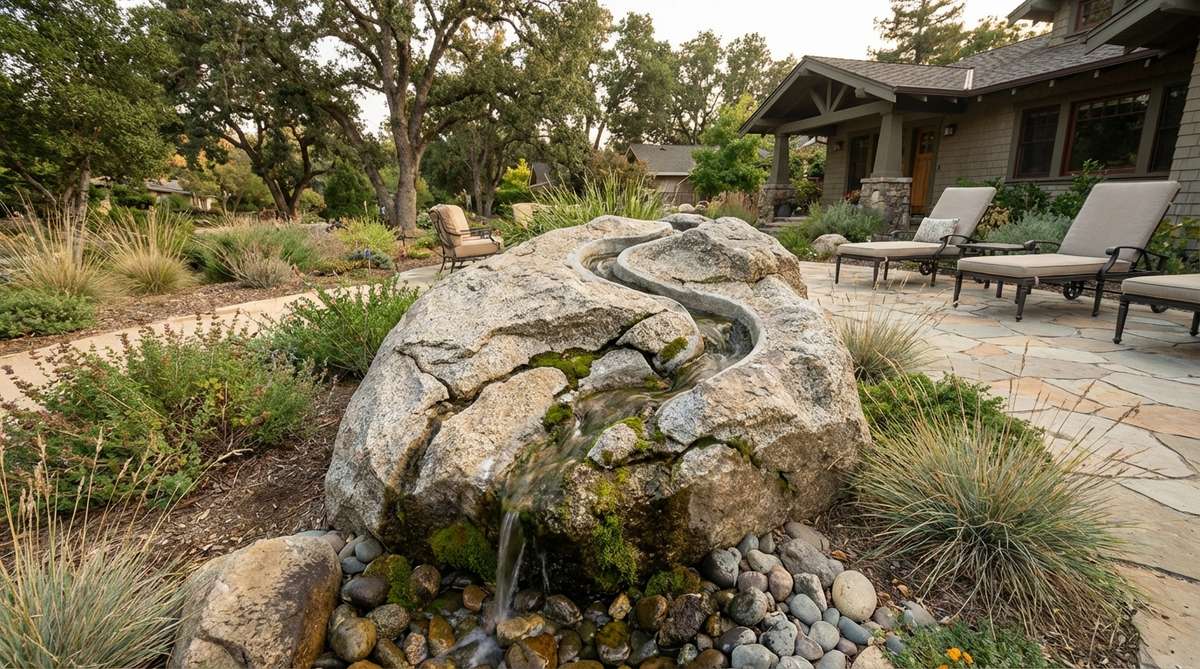
Carve a channel into a boulder’s top surface so water flows through the stone before spilling out. This integration of water and stone creates sculptural unity.
Route water through natural cracks and fissures when possible. The result appears more organic than carved channels.
Stone Garden Landscaping with Walls & Terraces
Retaining walls and terraces transform slopes into usable garden layers while managing erosion. These structural elements provide planting opportunities and architectural definition.
35. Dry-Stack Retaining Wall
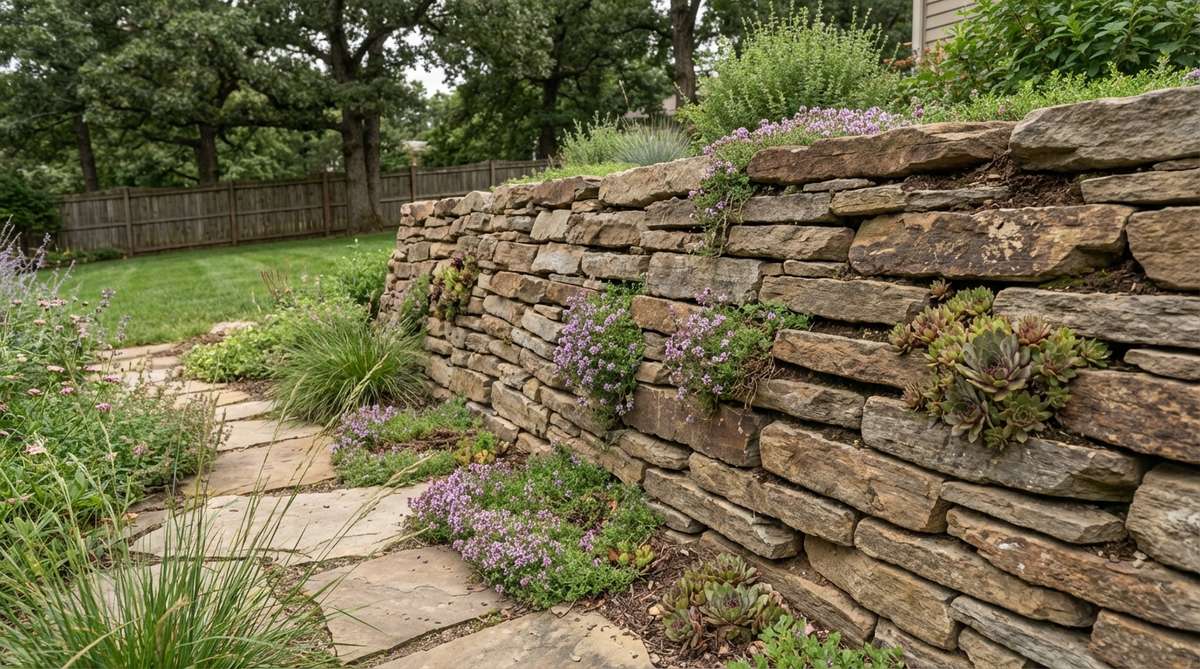
Build mortarless walls using flat stones carefully fitted together. The construction method allows water drainage while creating rustic texture.
Maintain a backward slope of 1 inch per foot of height for stability. Fill joints with soil and plant with creeping thyme or hens-and-chicks.
Limit dry-stack walls to 3 feet height without engineering. Taller structures require mortar or professional design.
36. Terraced Slope Garden
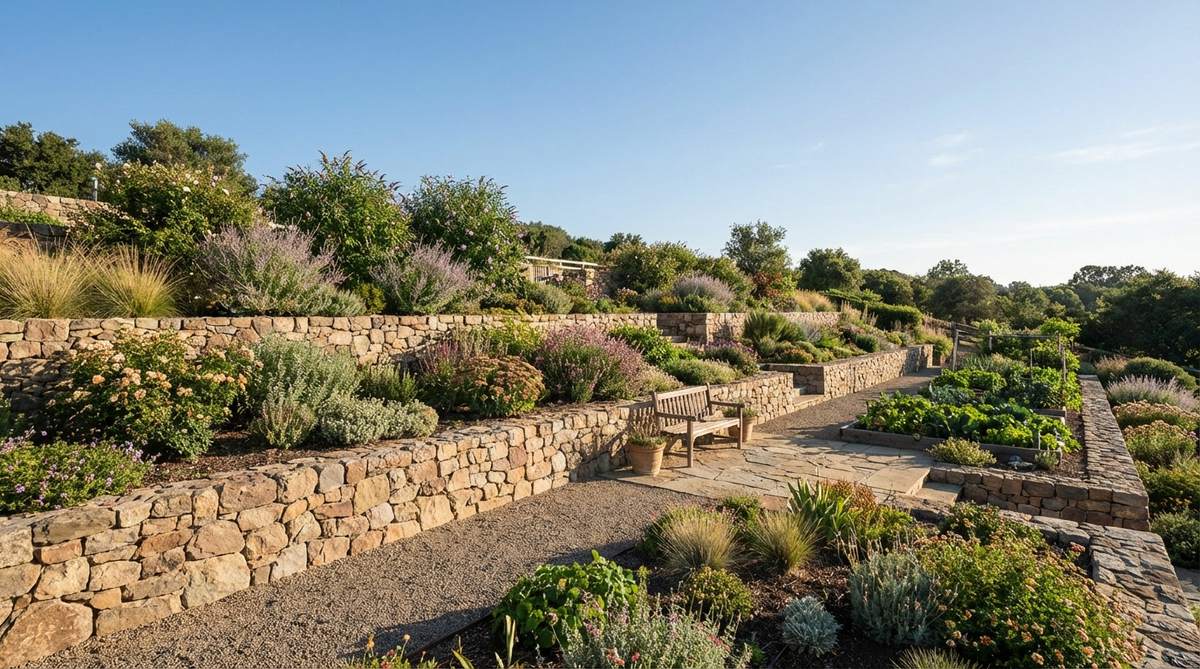
Convert hillsides into multiple level planting beds separated by stone walls. Each terrace provides flat growing areas for different plant communities.
Plan terraces 3-6 feet deep for adequate root space. Install drainage behind walls to prevent hydrostatic pressure buildup.
37. Mortared Stone Wall
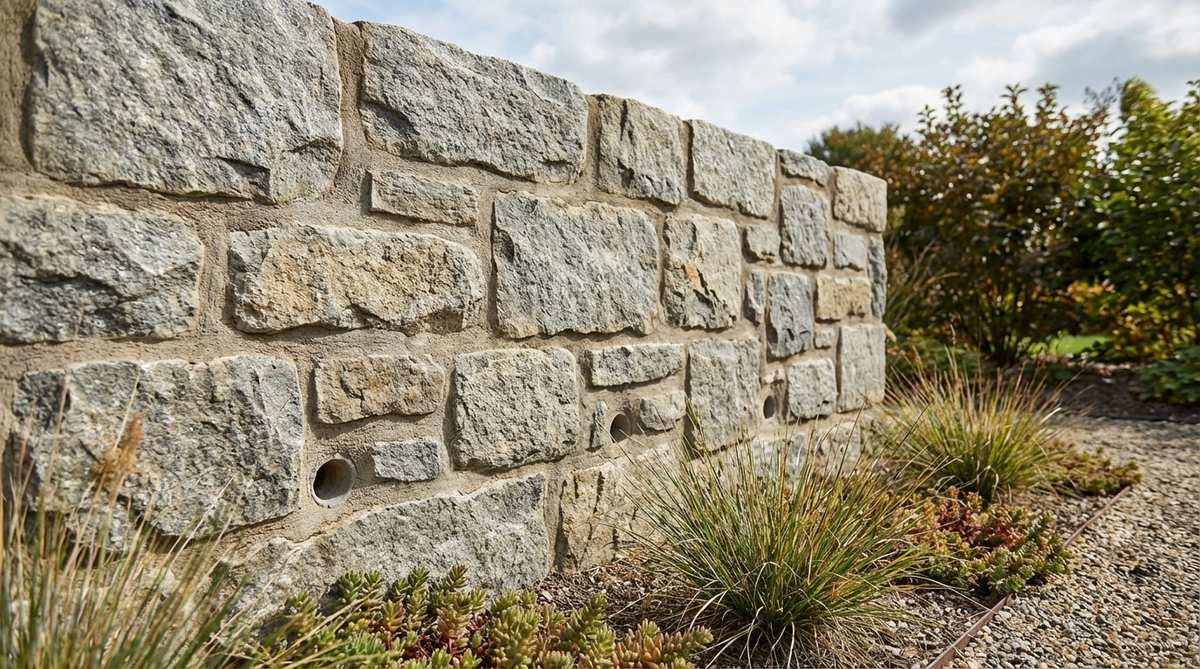
Bind stones with mortar for permanent structures reaching 4-8 feet high. This technique suits formal gardens and high-traffic areas requiring structural integrity.
Use weep holes every 6-8 feet for drainage. Point joints flush or recessed depending on desired shadow lines.
38. Gabion Wall Installation
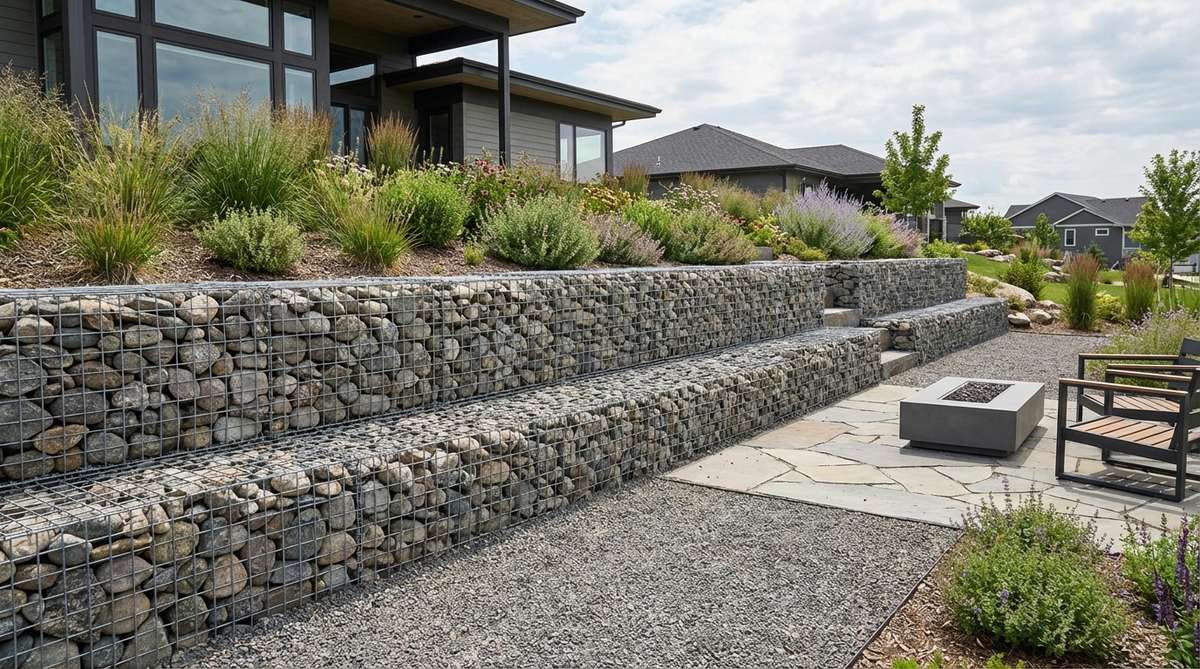
Fill wire cages with stones to create modern retaining structures. The industrial aesthetic complements contemporary architecture.
Choose stone sizes that won’t escape cage openings. The permeable structure allows water flow while providing structural support.
39. Curved Garden Wall
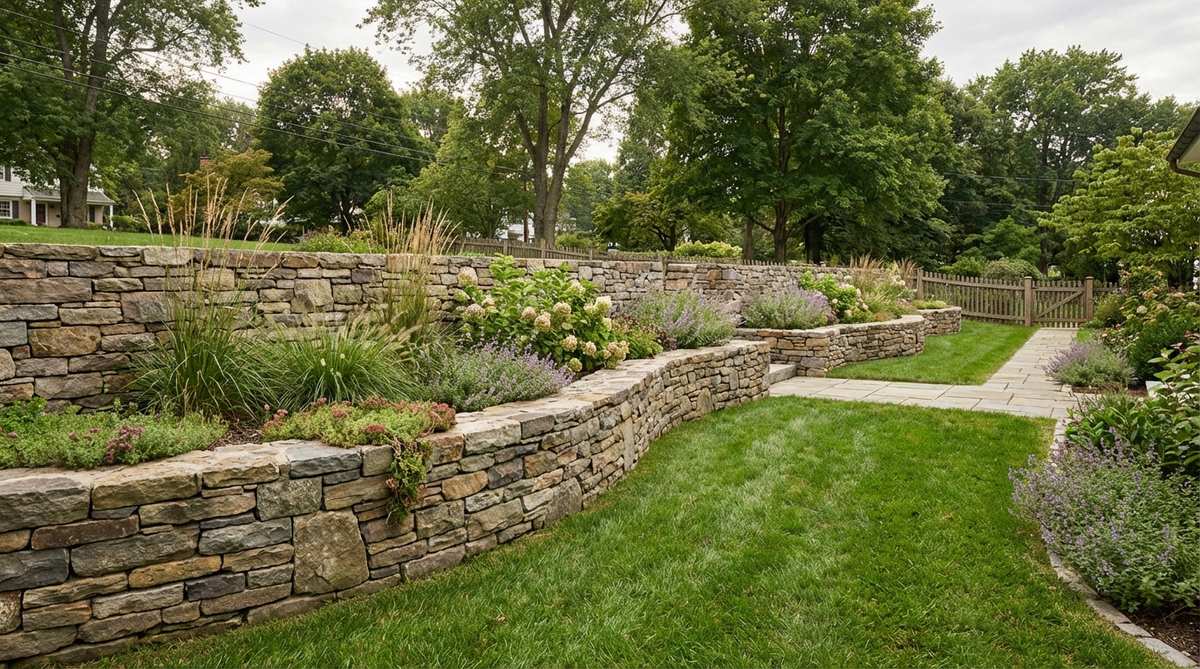
Build sweeping stone walls that follow organic contours rather than straight lines. The fluid geometry softens rigid property boundaries.
Use smaller stones for tight radius curves. The serpentine form creates planting alcoves and spatial variety.
40. Raised Bed Stone Surround
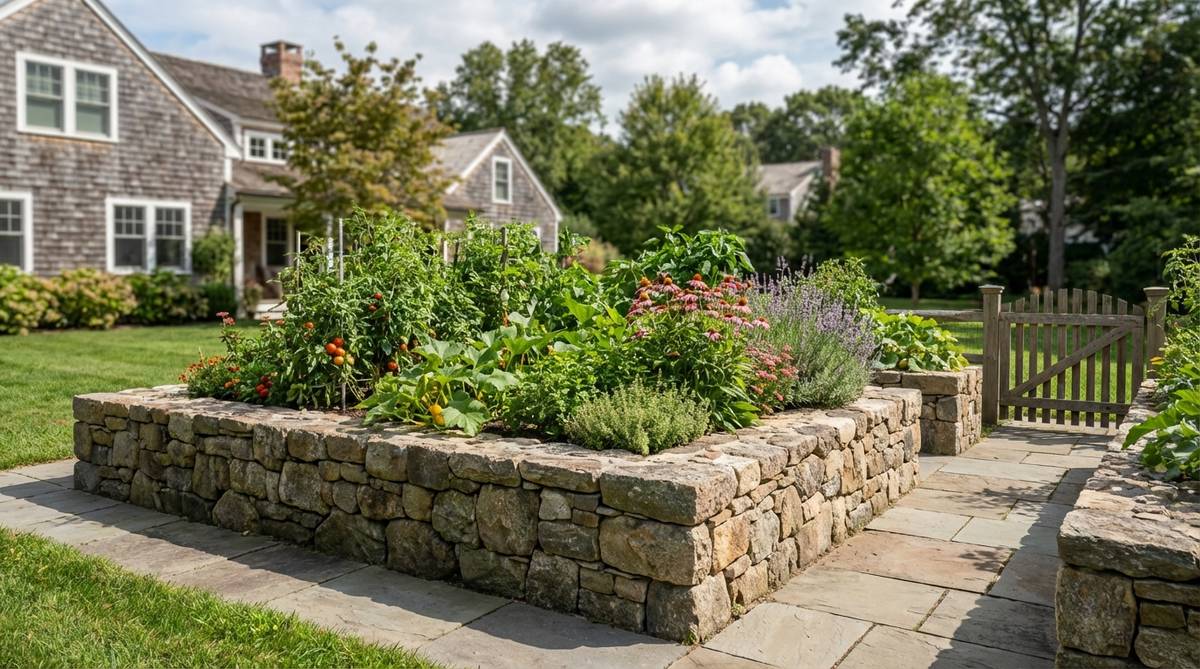
Frame vegetable or perennial beds with 12-24 inch stone walls. The elevated soil warms earlier in spring and provides ergonomic access.
Build walls two stones thick for stability. The thermal mass moderates soil temperature fluctuations.
41. Stepped Hillside Transition
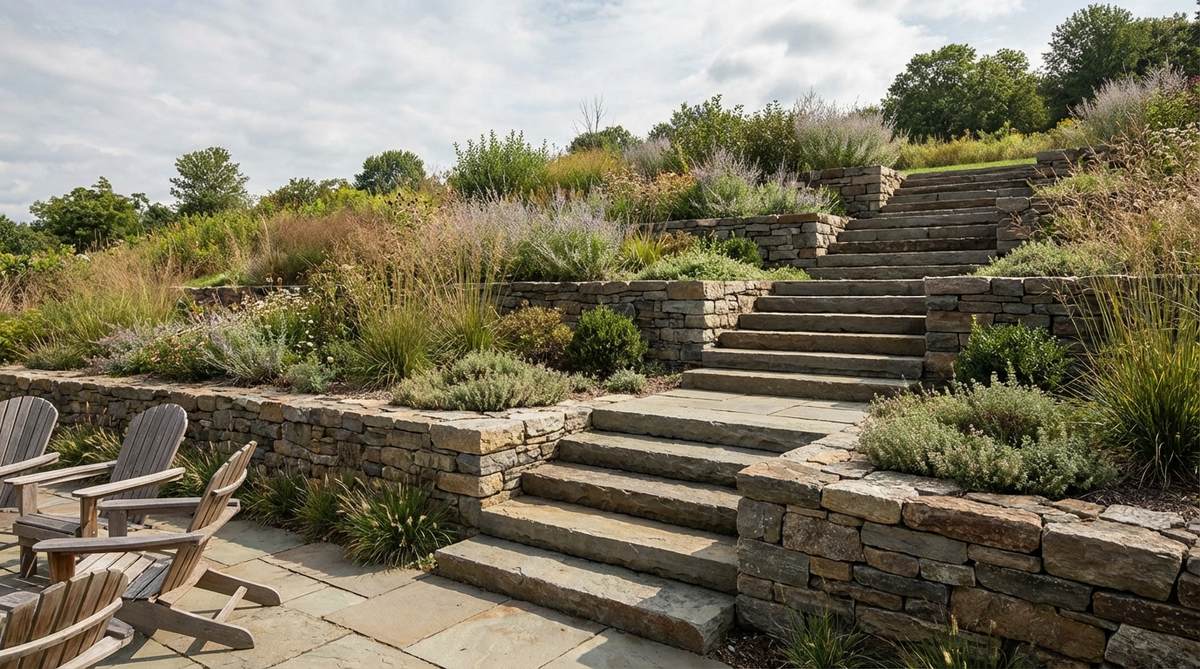
Integrate stone steps directly into retaining walls for seamless grade changes. The combined structure reduces material needs and visual clutter.
Design treads 14-16 inches deep with 6-8 inch risers for comfortable climbing. Extend wall stones into step construction for unified appearance.
42. Planter Wall Pockets
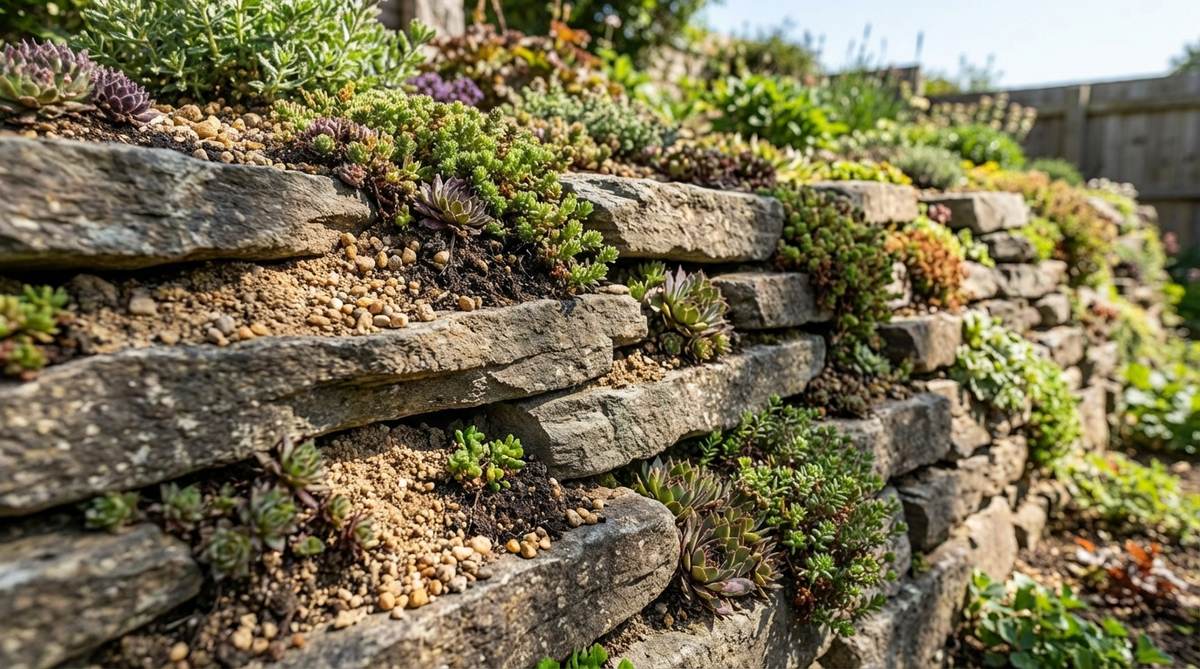
Leave gaps in dry-stack walls for planting pockets. Alpine plants and succulents thrive in the excellent drainage and stone microclimate.
Fill pockets with lean soil mix of sand, gravel, and compost. The vertical planting expands garden space on small properties.
Creative Stone Garden Ideas for Accents & Details
Small-scale stone applications provide finishing touches that refine overall designs. These details add personality and craftsmanship to utilitarian elements.
43. Stone Sphere Collection
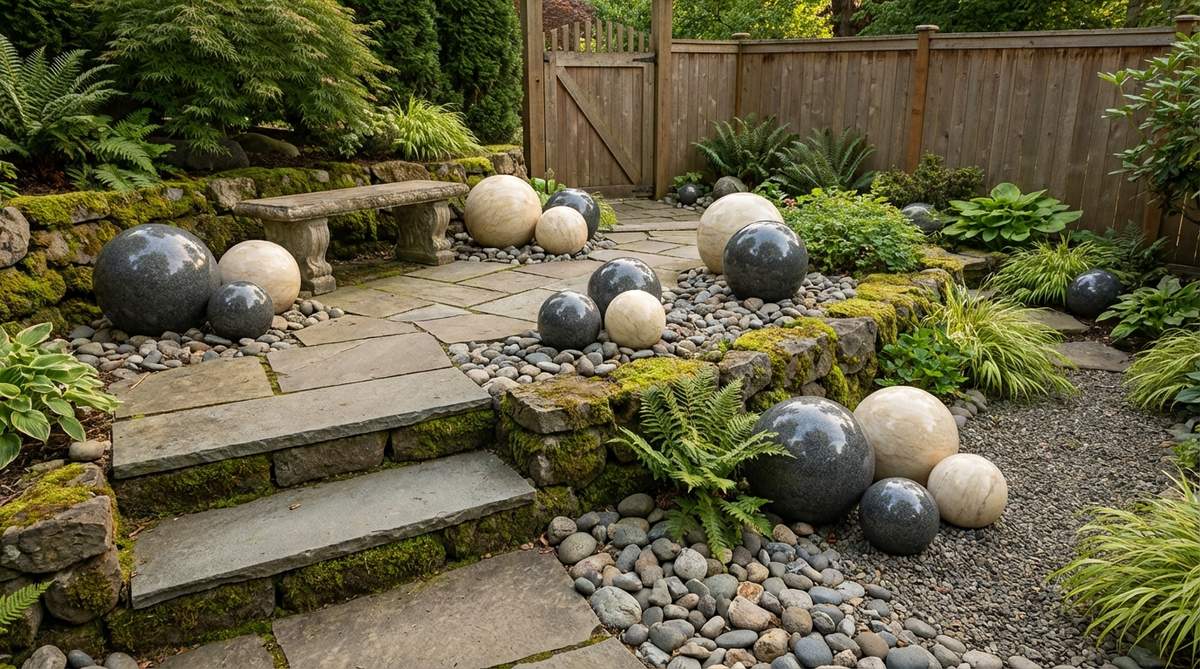
Display carved granite or marble spheres ranging from 8-24 inches diameter throughout the garden. The geometric perfection contrasts with organic plant forms.
Group in odd numbers or scatter individually as discovered artifacts. Natural stone spheres require specialized equipment but provide permanent art installations.
44. Cairn Marker Stacks
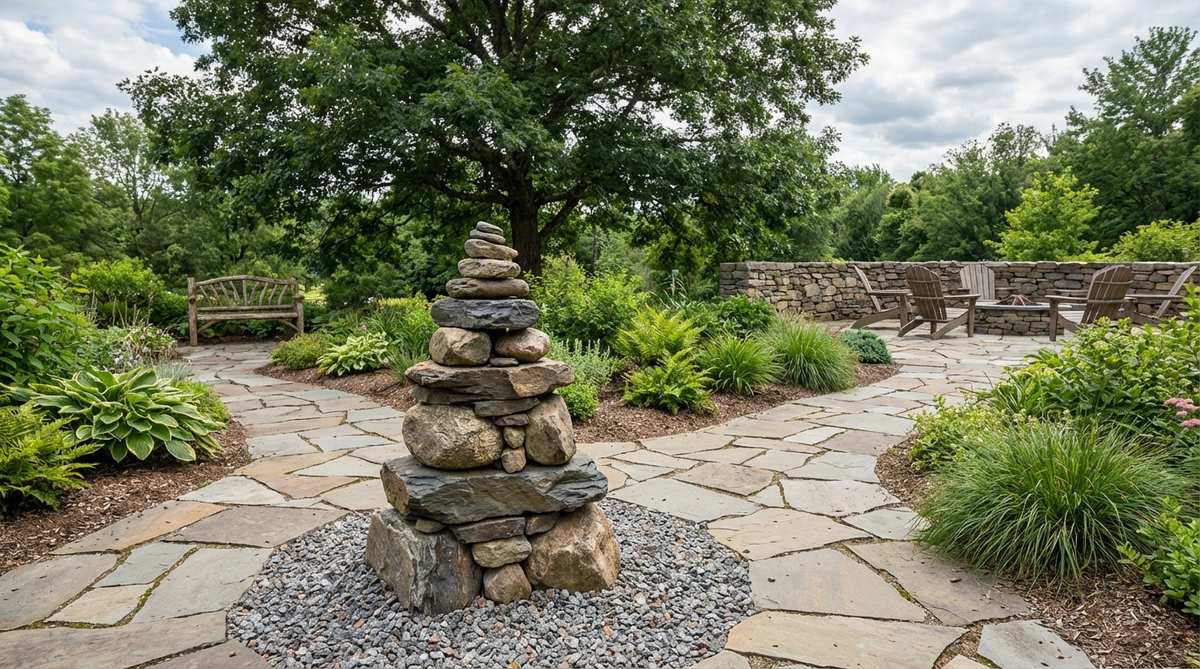
Balance flat stones in vertical cairns at garden transitions or pathways. These traditional trail markers translate well to residential landscapes.
Start with largest stones at base and decrease size toward top. The precarious balance creates visual tension and mindfulness.
45. Decorative Stone Mulch
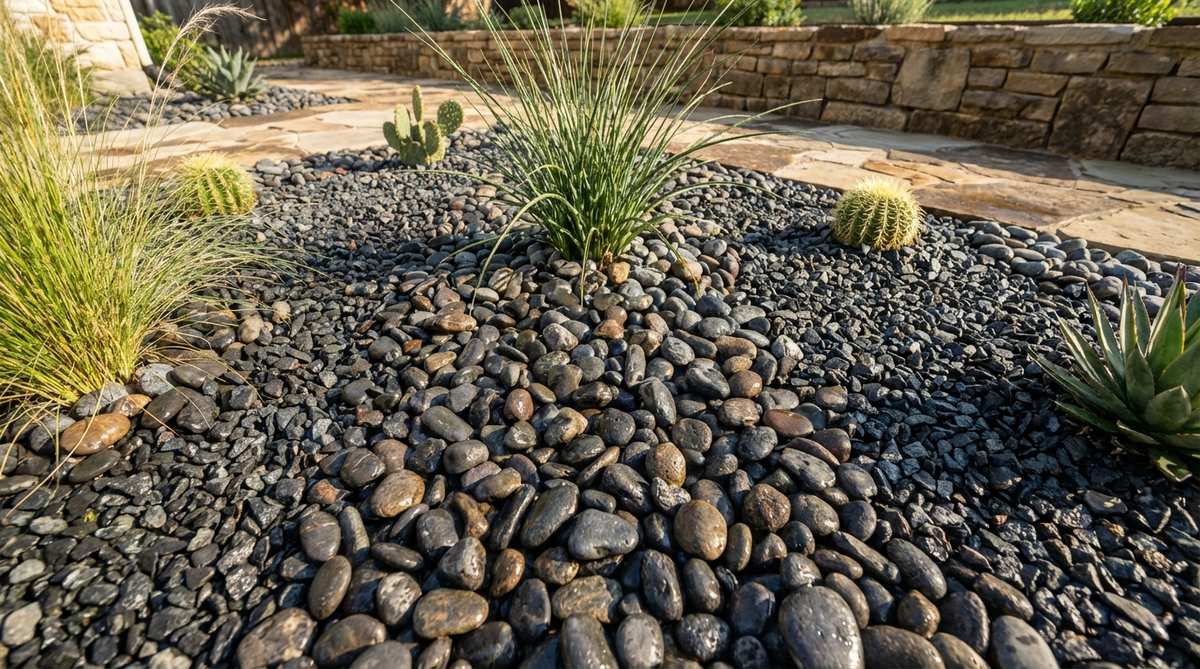
Replace organic mulch with stone in high-visibility beds. The permanent material eliminates annual mulching while providing weed suppression.
Use 2-3 inch layer of river rock, lava rock, or crushed granite. Darker stones absorb more heat, benefiting heat-loving plants but potentially stressing cool-season species.
46. Engraved Stone Markers
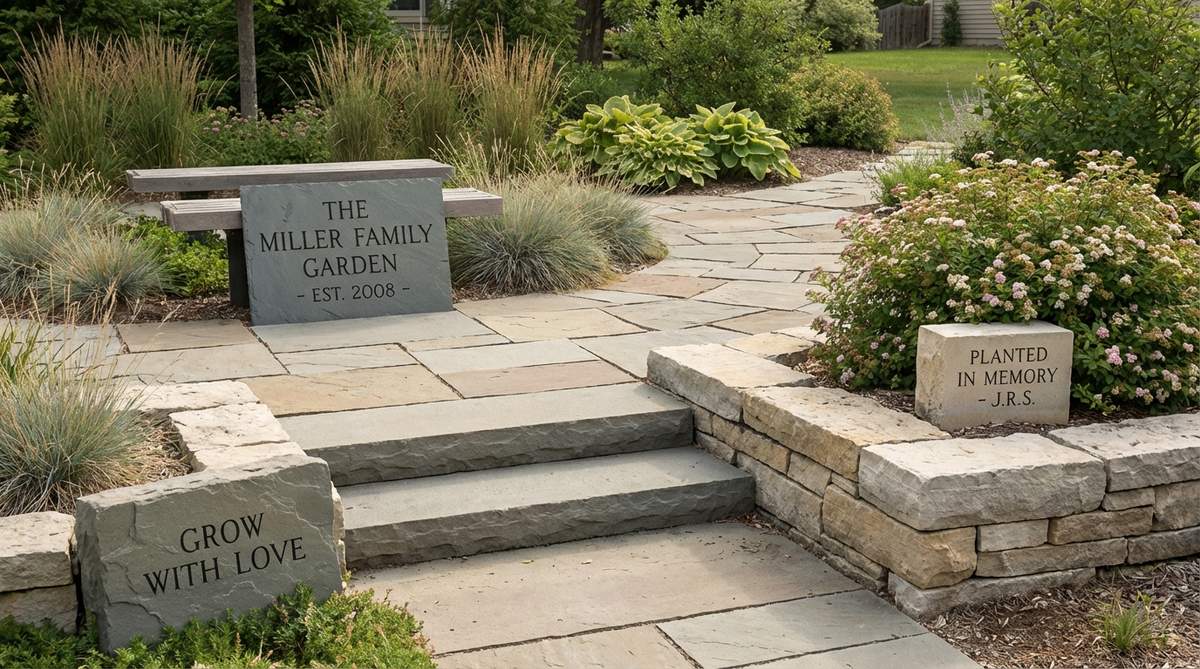
Commission carved stones with garden quotes, plant labels, or family names. These personalized elements add meaning beyond aesthetics.
Select fine-grained stones like slate or limestone for detailed engraving. Position at entries, seating areas, or memorial plantings.
47. Stone Lantern Placement
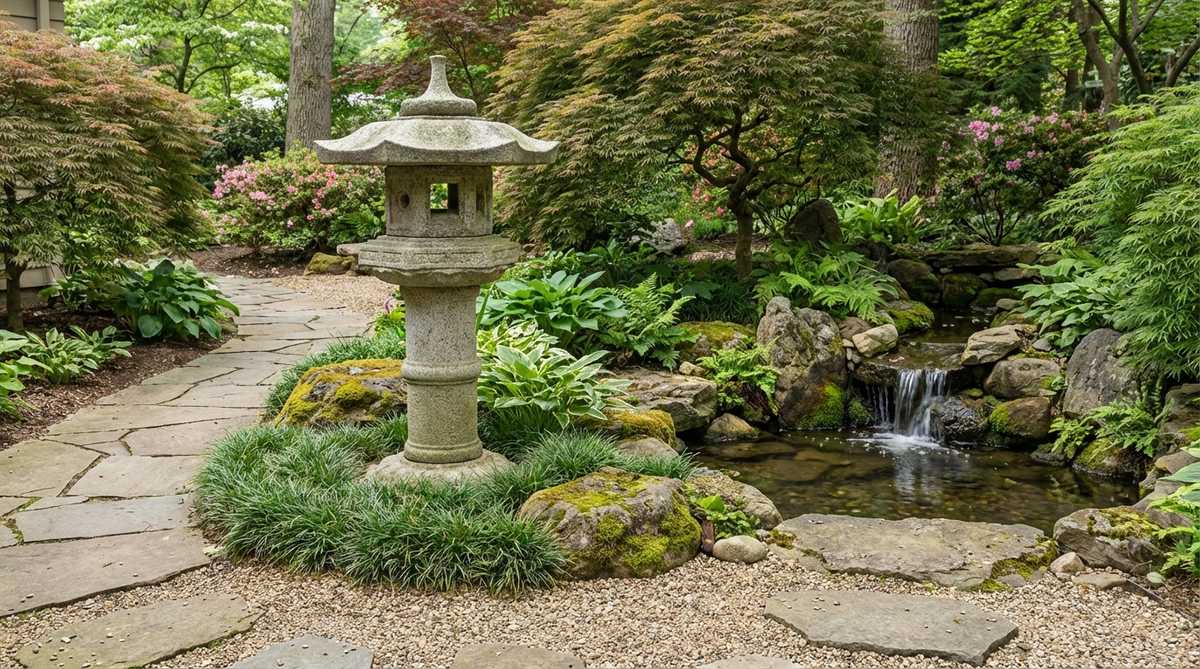
Install traditional Japanese stone lanterns as sculptural lighting elements. The pagoda forms provide cultural references while remaining functional.
Position near water features, along paths, or at garden intersections. Authentic versions use granite and stand 2-5 feet tall.
48. Pebble Ground Cover
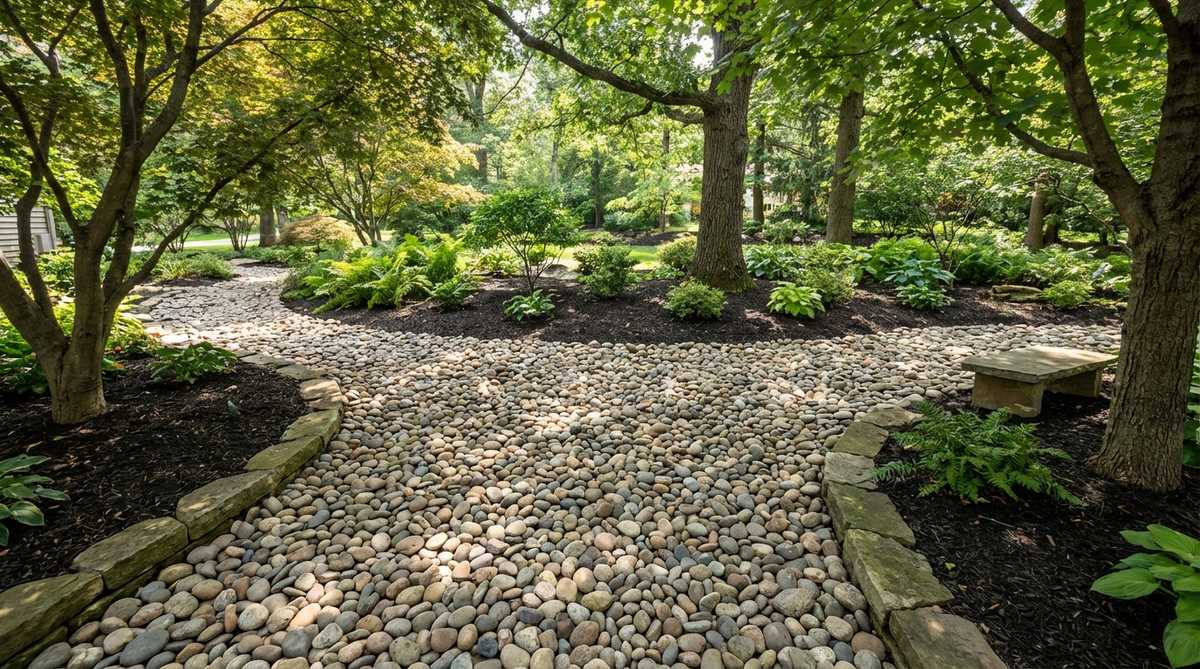
Carpet areas beneath trees or in dry shade with smooth pebbles where plants struggle. The stone layer prevents mud and reflects light into dark corners.
Install landscape fabric before placing stones. Choose pebbles 1-3 inches diameter for visual texture without harsh appearance.
49. Stone Art Sculptures
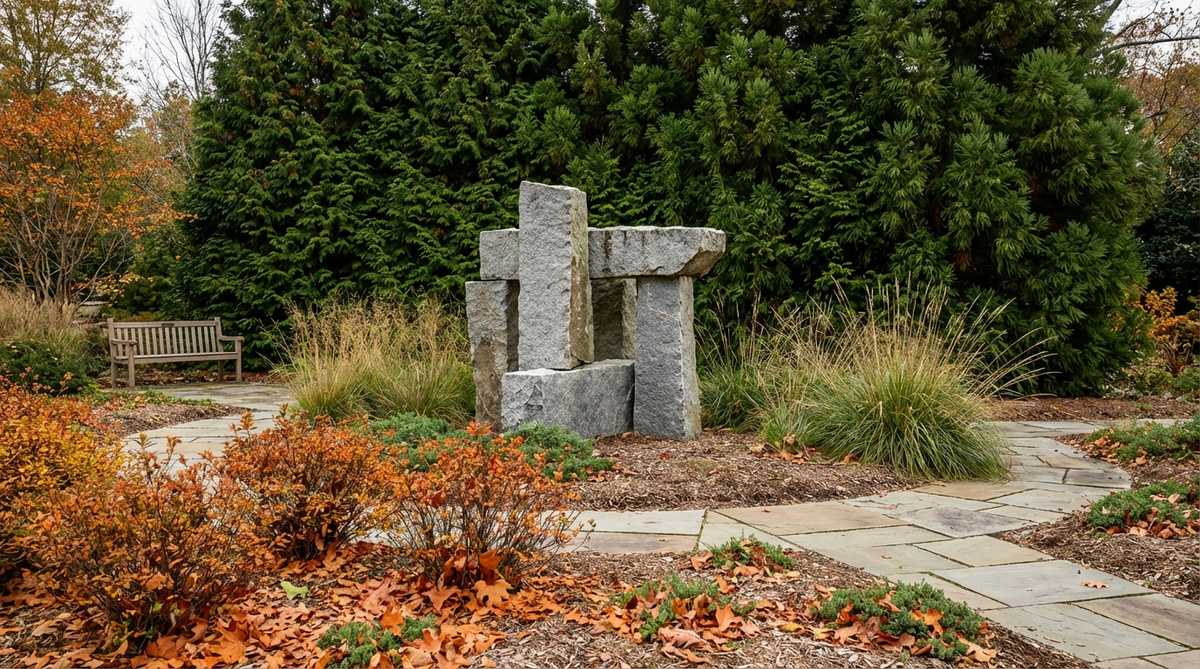
Commission or create abstract stone sculptures as garden focal points. The permanent outdoor art withstands weather while providing year-round interest.
Position sculptures against evergreen backgrounds to emphasize form. The neutral stone color complements all seasonal palettes.
50. Inlaid Stone Patterns
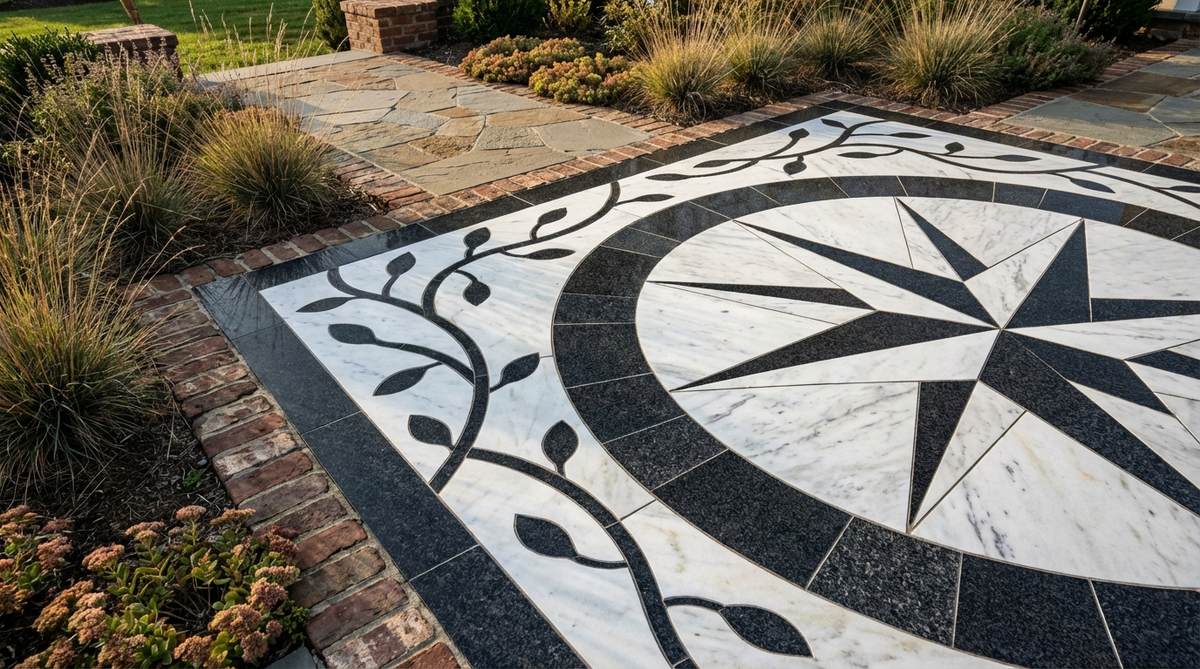
Create geometric or organic patterns by setting different colored stones flush in paving or patios. The technique produces permanent decorative surfaces.
Use contrasting stone types like white marble and black granite. The labor-intensive process rewards with unique, unrepeatable designs.
51. Stone Basin Bird Bath
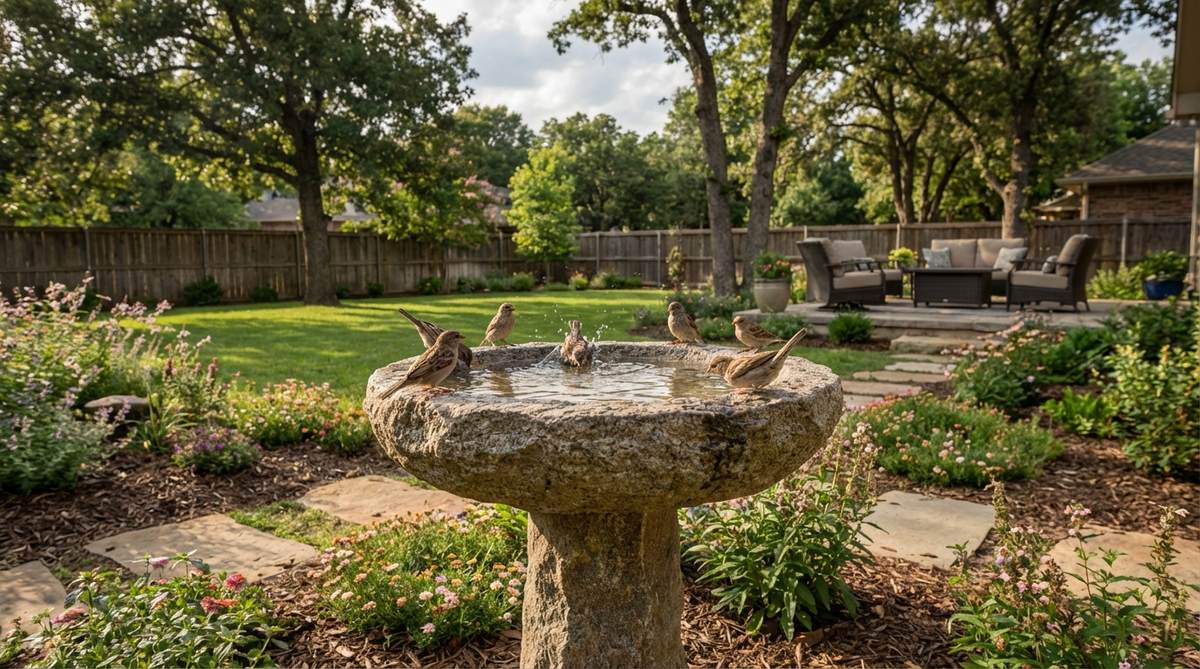
Place shallow stone bowls 18-24 inches diameter for bird attraction. The rough surface provides secure footing for bathing birds.
Elevate on stone pedestals or set at grade. Refresh water regularly to prevent mosquito breeding and maintain bird health.
Practical Stone Garden Design Ideas with Purpose
Functional stone elements combine utility with aesthetics, creating hardworking landscape features that enhance both appearance and livability.
52. Stone Fire Pit Seating
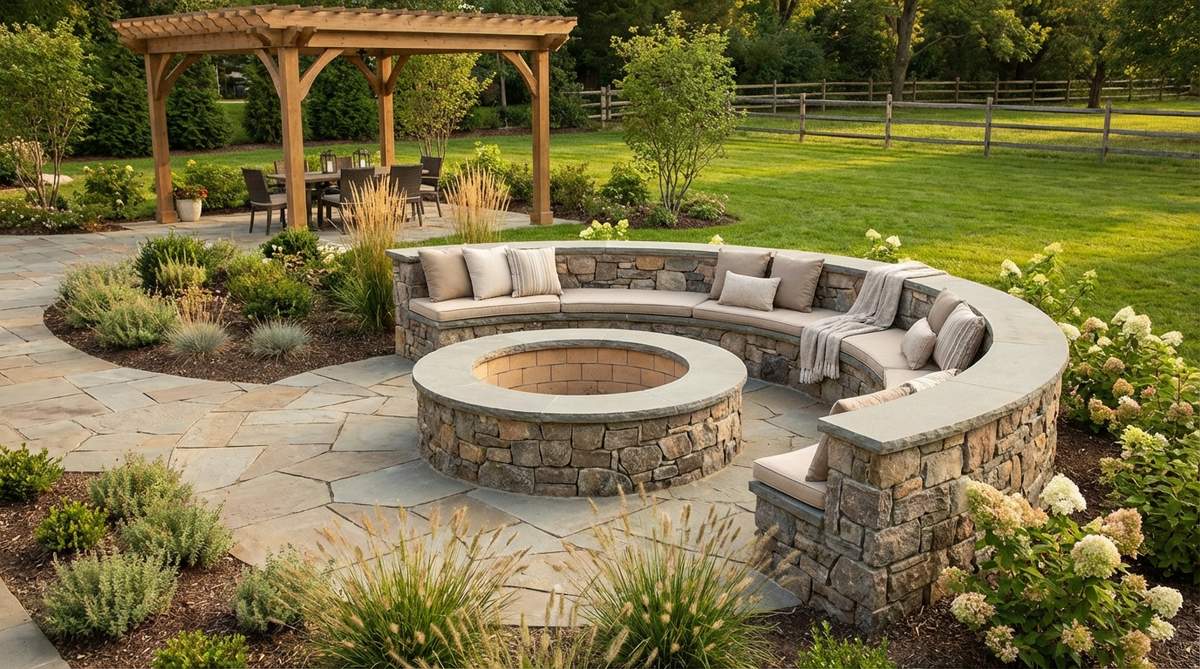
Build circular fire pits using mortared stone with integrated bench seating. The gathering space extends outdoor season into cool evenings.
Construct fire ring 36-48 inches interior diameter with 18-inch seat height. Use firebrick lining for heat protection of outer stones.
Position 15 feet from structures and overhanging trees. The stone mass retains heat long after fires extinguish.
53. Stone Outdoor Kitchen
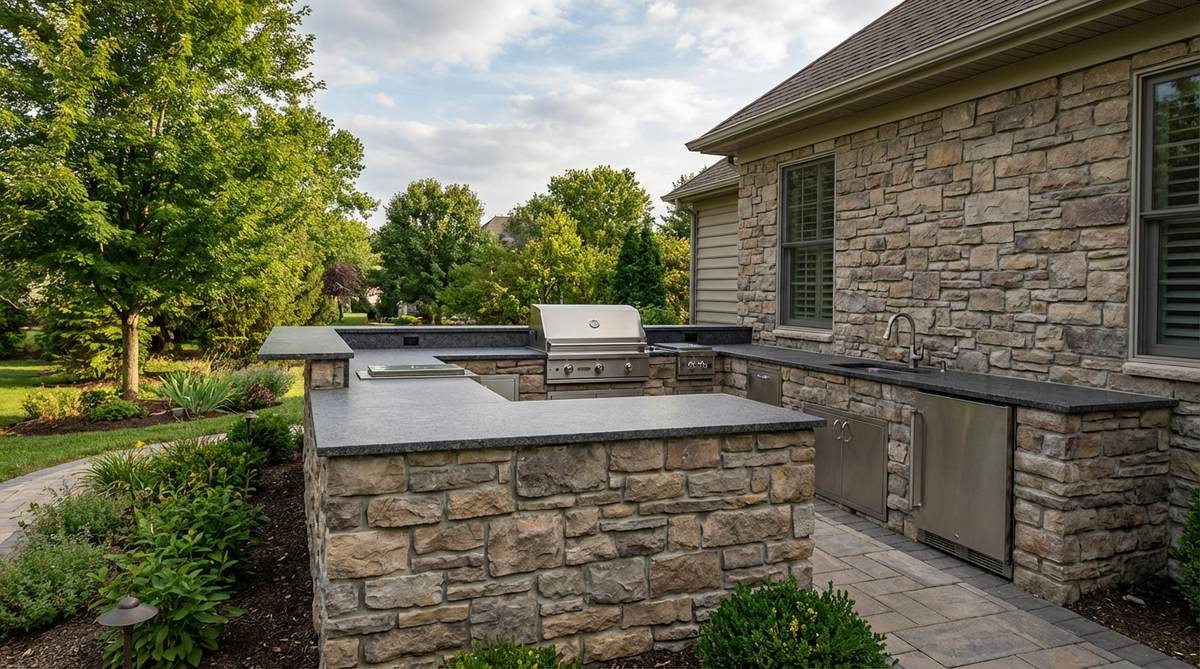
Frame built-in grills and counters with stacked stone veneer. The material withstands weather and heat while creating resort-style cooking spaces.
Use granite or concrete countertops over stone base structures. Match stone selection to home exterior for design continuity.
54. Gravel Parking Court
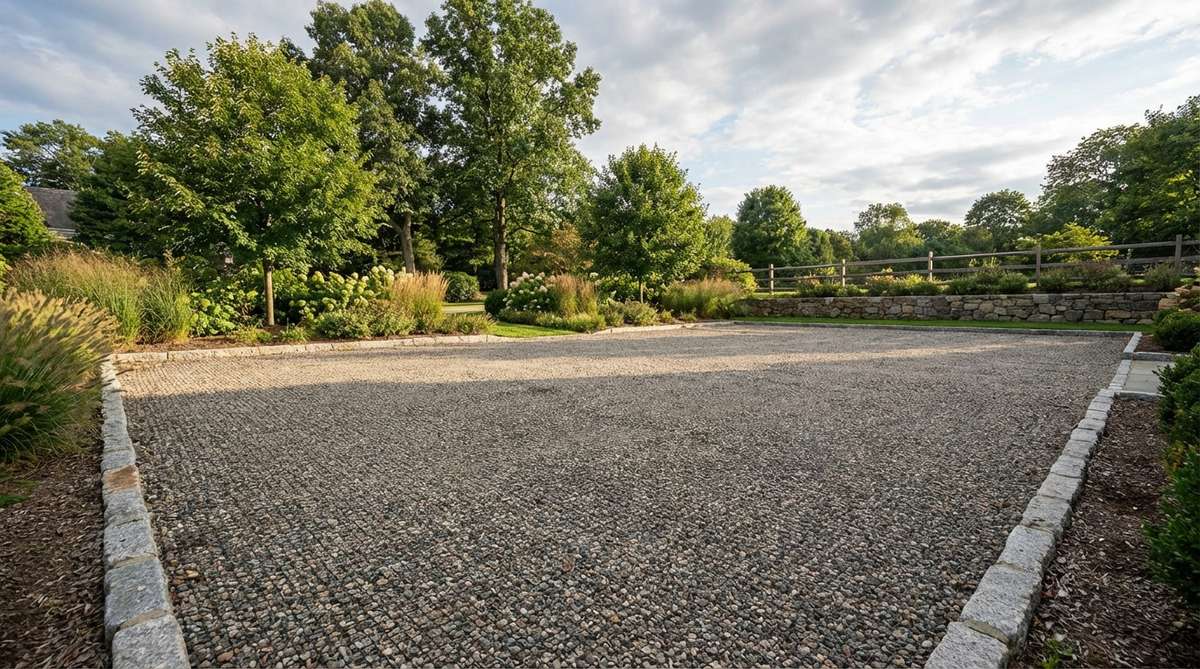
Replace impervious concrete driveways with permeable crushed stone. The surface allows water infiltration while supporting vehicle weight.
Install geogrid stabilization mesh for permanent gravel retention. Edge with Belgian block or granite curbing for defined boundaries.
55. Stone Patio Foundation
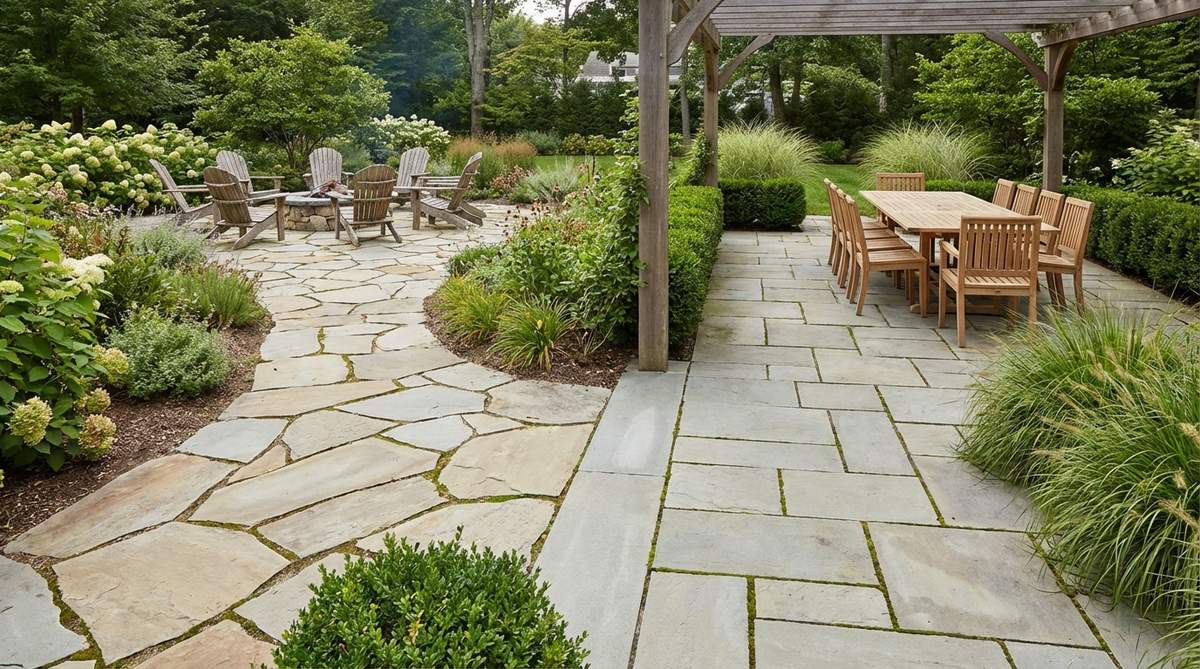
Lay flagstone or cut stone patios for outdoor rooms accommodating furniture and entertaining. The natural material weathers gracefully without showing age.
Set in sand for permeable drainage or mortar for stable surface. Irregular flagstone creates casual ambiance while cut stone appears more formal.
56. Rock Garden Slope Stabilization
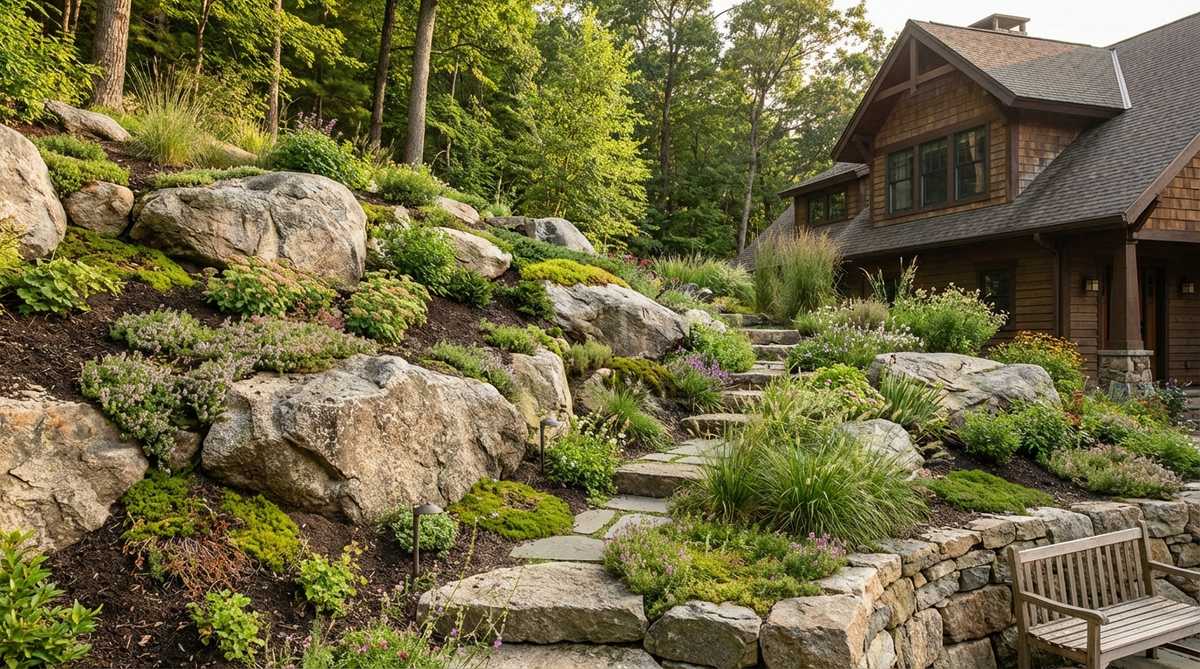
Plant steep banks with boulders and alpine plants to prevent erosion. The stone weight anchors soil while deep-rooted plants bind particles.
Bury boulders one-third depth into slope face. Plant sedums, thymes, and native grasses in pockets between stones.
57. Stone Bench Seating
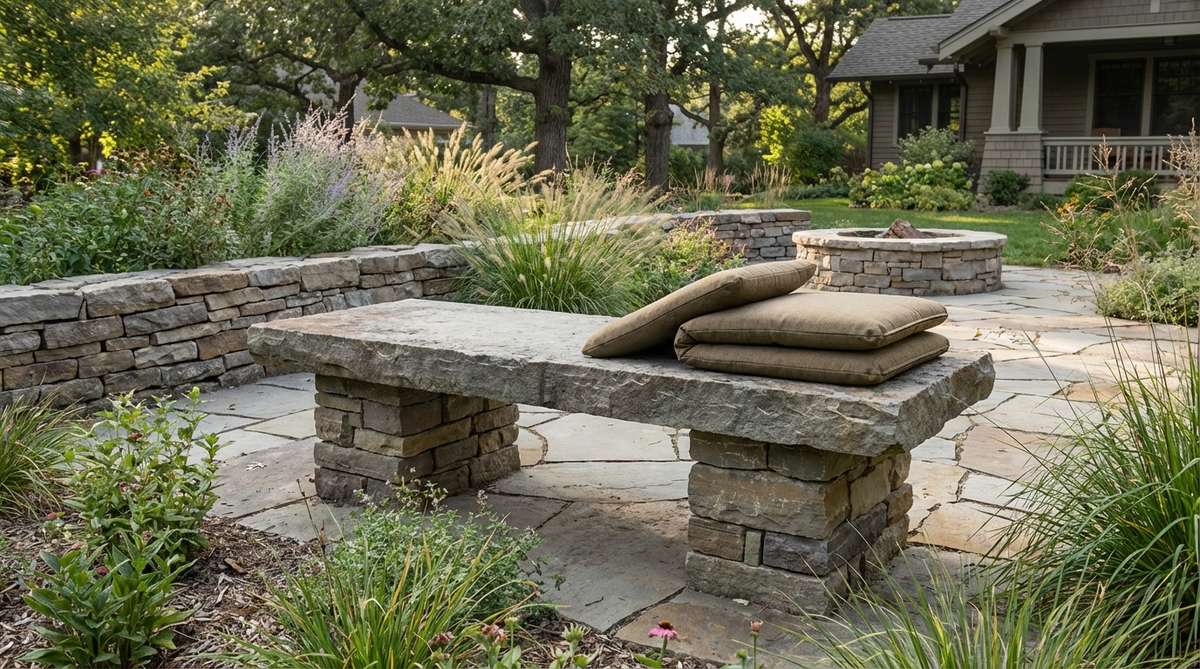
Construct permanent garden benches from stone slabs supported on stone piers. These maintenance-free seats last decades without deterioration.
Size seats 16-18 inches high and 18-24 inches deep for comfort. Use thermal cushions in cold climates where stone retains chill.
58. Drainage Channel Rock-Lined Bed
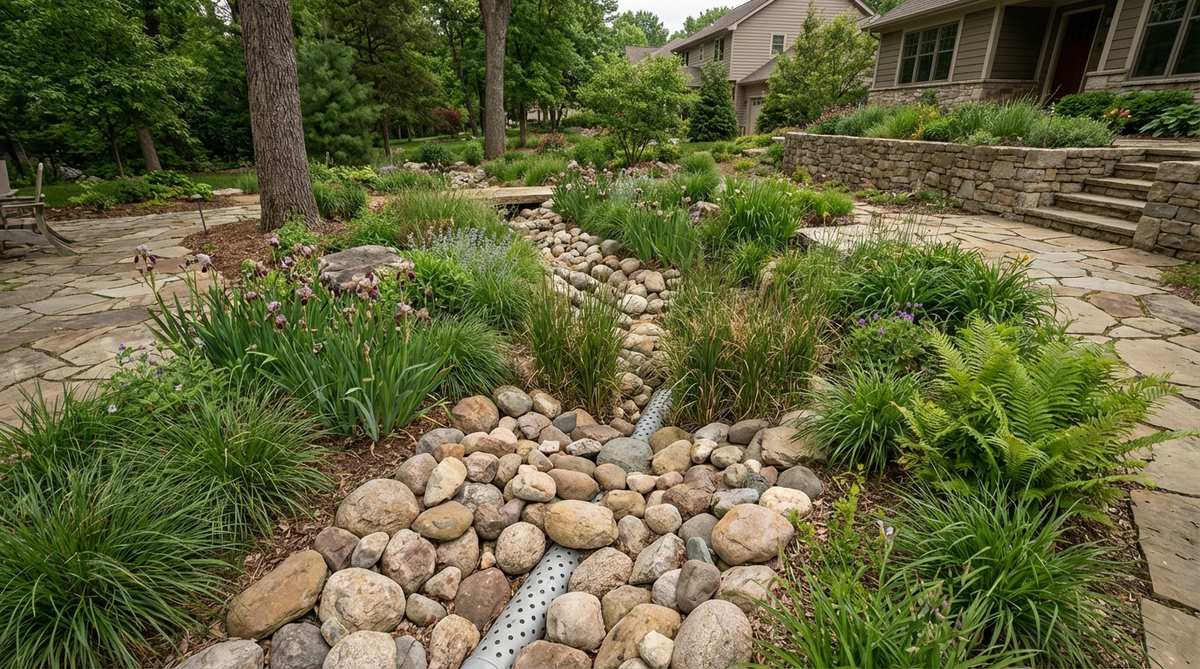
Direct roof and hardscape runoff through decorative stone channels functioning as bioswales. The system manages stormwater while creating design features.
Line channels with river rock over perforated pipe. Plant edges with water-tolerant species to filter runoff before infiltration.
59. Stone Pizza Oven
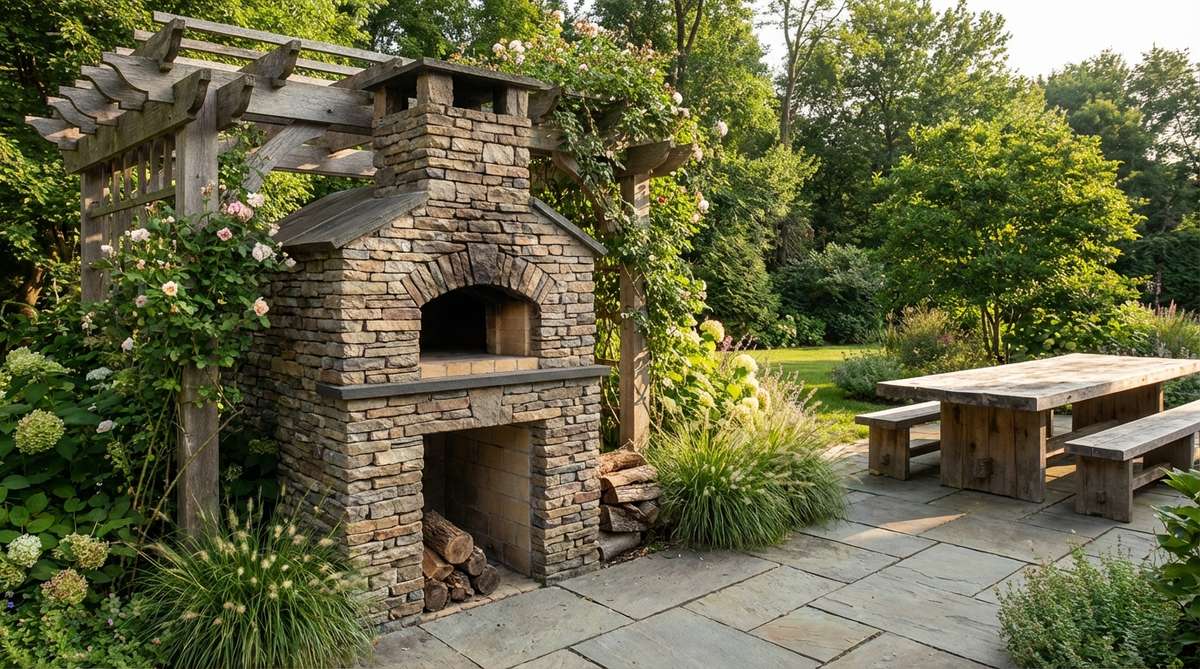
Build outdoor masonry ovens faced with stone for wood-fired cooking. The structure becomes focal entertainment feature and functional appliance.
Use firebrick interior with stone veneer exterior. Position away from combustibles with adequate clearance above for heat dissipation.
Modern Stone Gardens Concepts for Today’s Landscapes
Contemporary applications reinterpret traditional stone use with minimalist sensibilities and geometric precision. These designs suit modern architecture and urban settings.
50. Monolithic Stone Walls
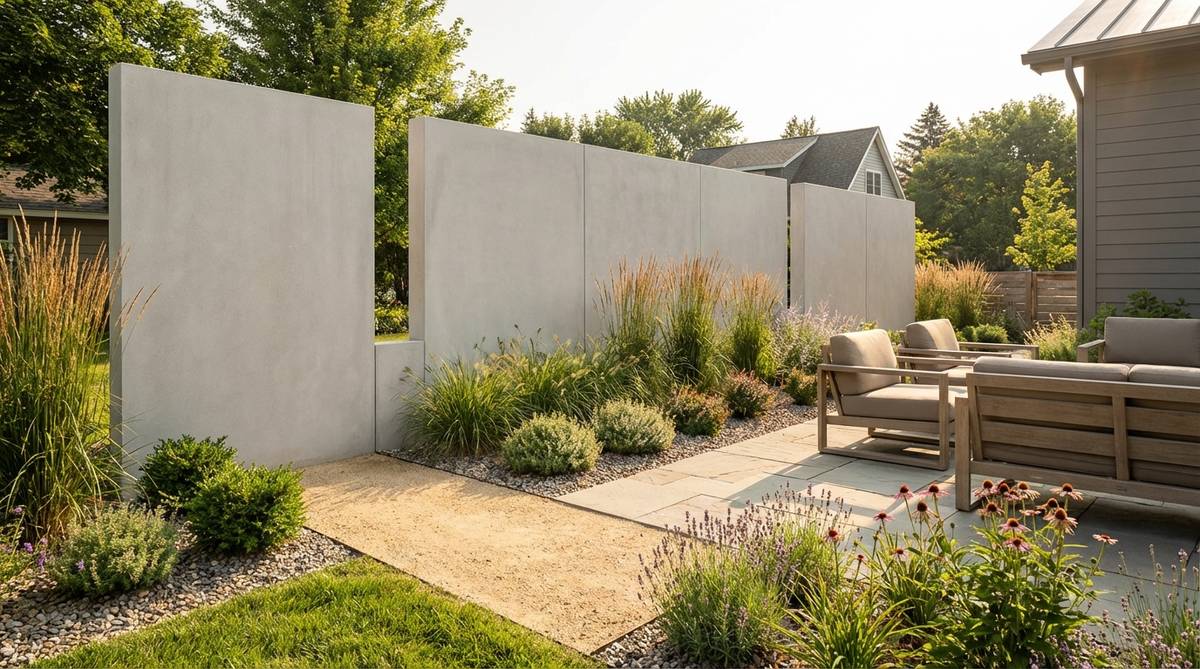
Install large-format stone panels 4-8 feet tall as privacy screens or architectural backdrops. The minimal joint lines create sleek modern appearance.
Use cut granite, limestone, or engineered stone panels. The smooth surfaces contrast with textured plantings while maintaining clean sightlines.
61. Floating Stone Steps
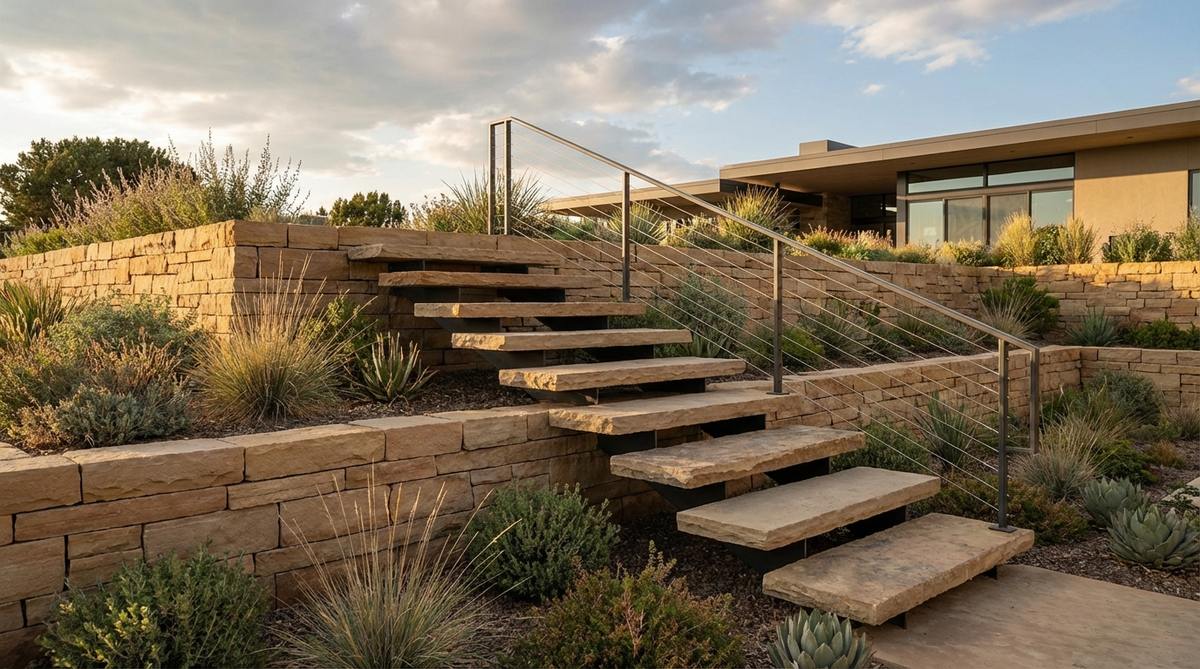
Cantilever stone treads from walls or embed in slopes for seemingly unsupported stairs. The engineering creates dramatic architectural gestures.
Require steel reinforcement and engineering for safety. The minimalist detail suits hillside properties and modern construction.
62. Geometric Stone Planters
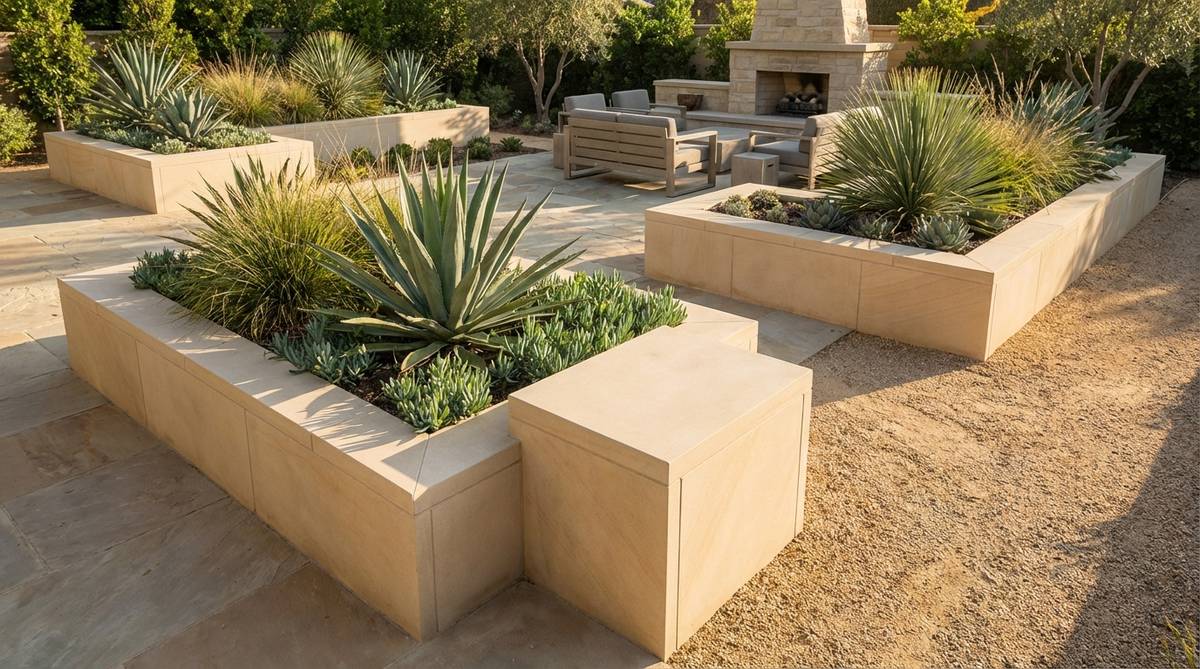
Build cubic or rectangular planters using cut stone with crisp corners and level surfaces. The precise geometry frames specimen plants as living sculpture.
Size planters proportional to plant mature dimensions. Use matching stone throughout garden for material consistency.
63. Stone Veneer Columns
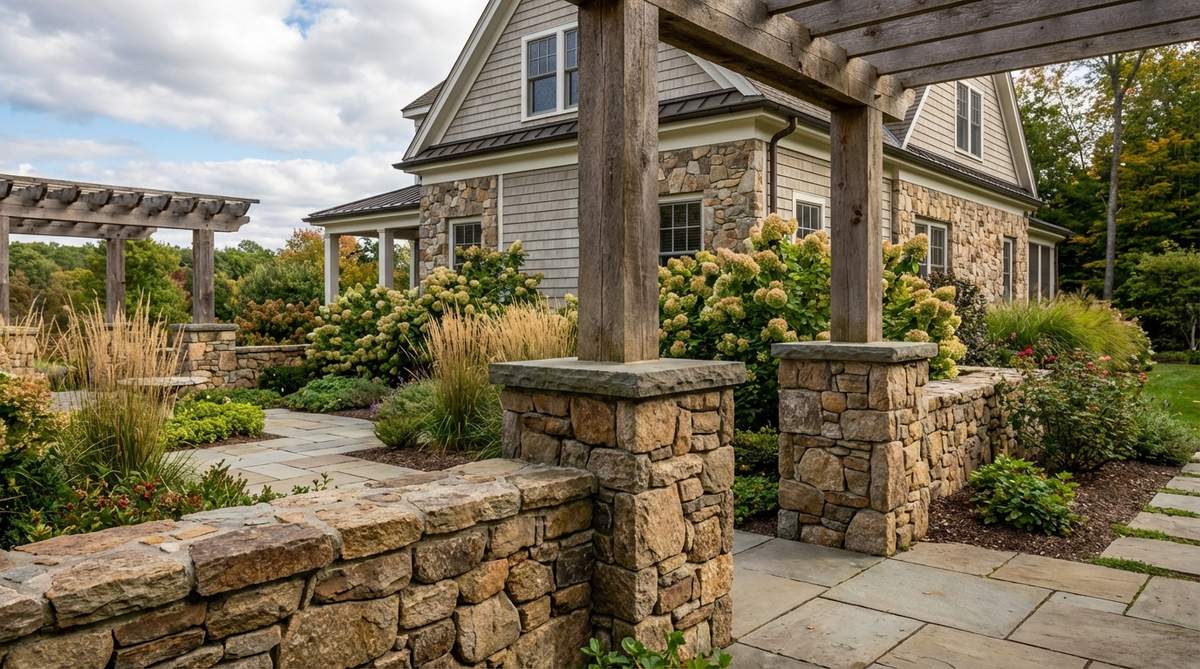
Wrap structural posts and columns with thin stone veneer for architectural presence. The vertical elements define spaces and support overhead structures.
Match column stone to home foundation or hardscape materials. The repetitive verticals create rhythm in long garden views.
64. Linear Stone Water Channel
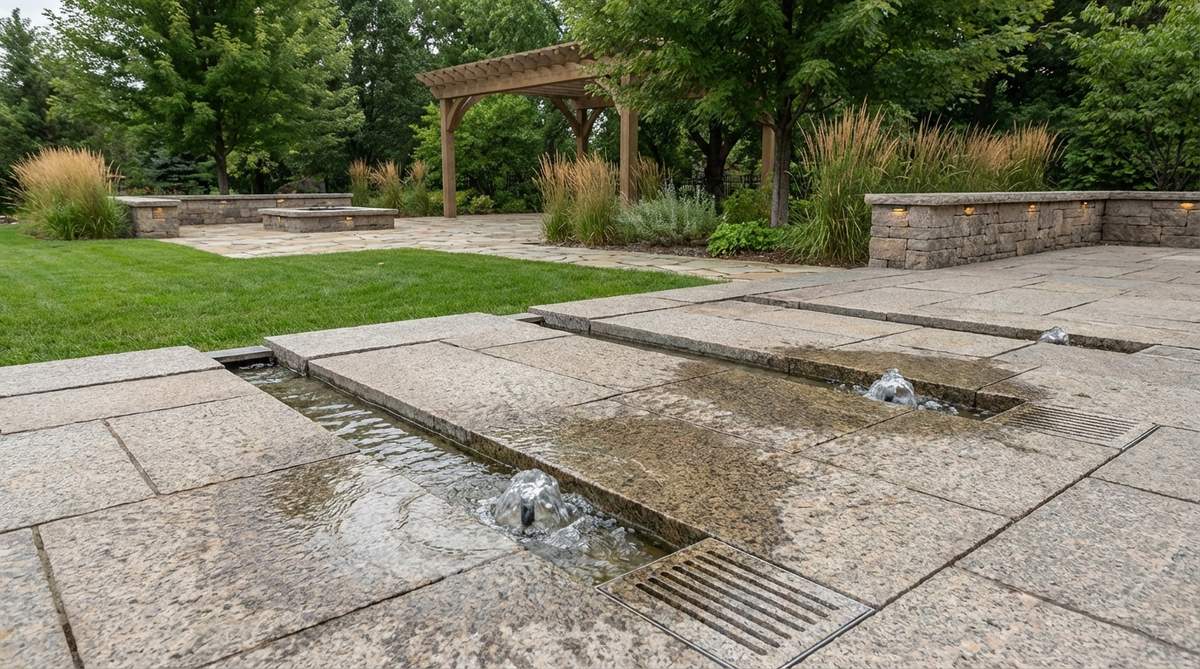
Cut narrow channels through stone paving for recirculating water features. The precise geometry produces contemporary fountain effects.
Use granite or concrete with stone aggregate finish. Water flows through channels and vanishes at terminal grates over reservoirs.
65. Stacked Stone Screen Walls
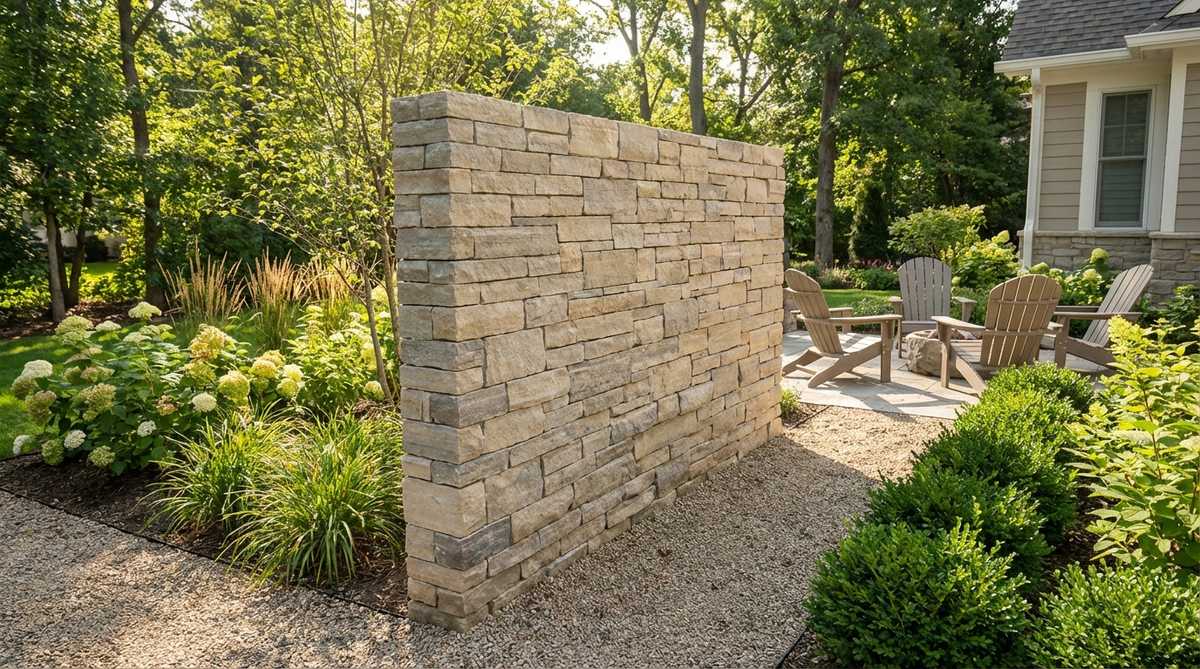
Build partial-height walls using dimensional cut stone in running bond patterns. These screens provide privacy without complete enclosure.
Hold walls at 4-6 feet height for filtered views. The transparent quality maintains spatial connection while defining garden rooms.
66. Polished Stone Accents
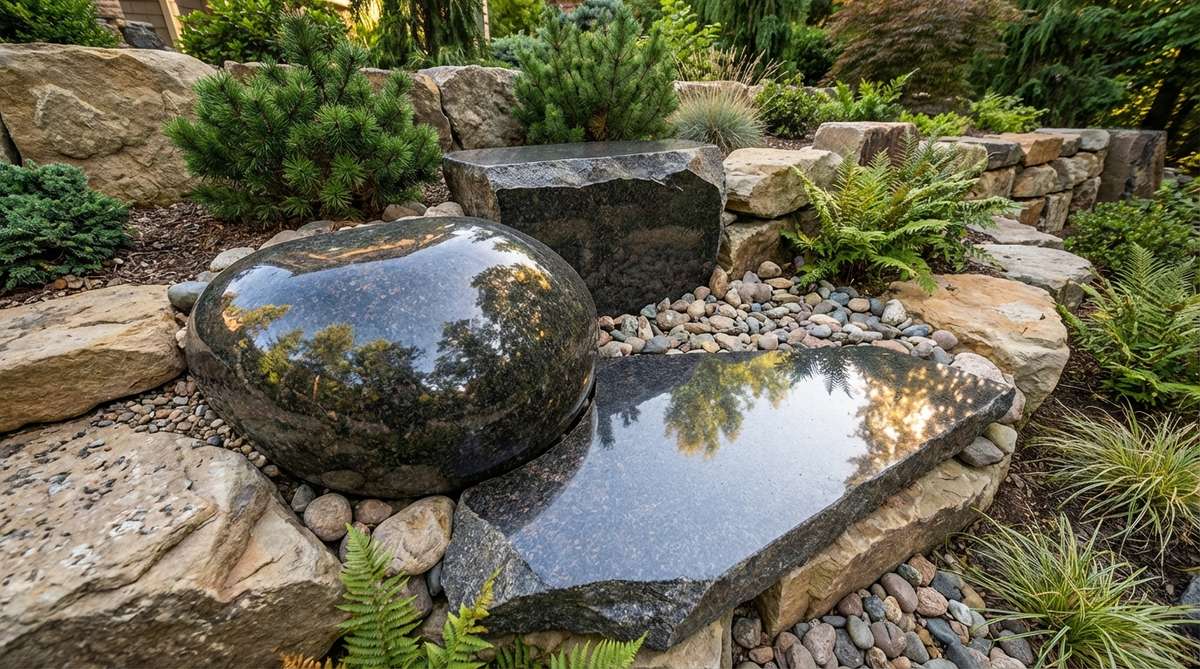
Incorporate high-gloss polished granite or marble pieces for reflective contrast against natural finishes. The material duality creates visual tension.
Use polished stone sparingly as accent rather than dominant material. The reflective surfaces capture sky and plant colors.
67. Minimalist Rock Composition
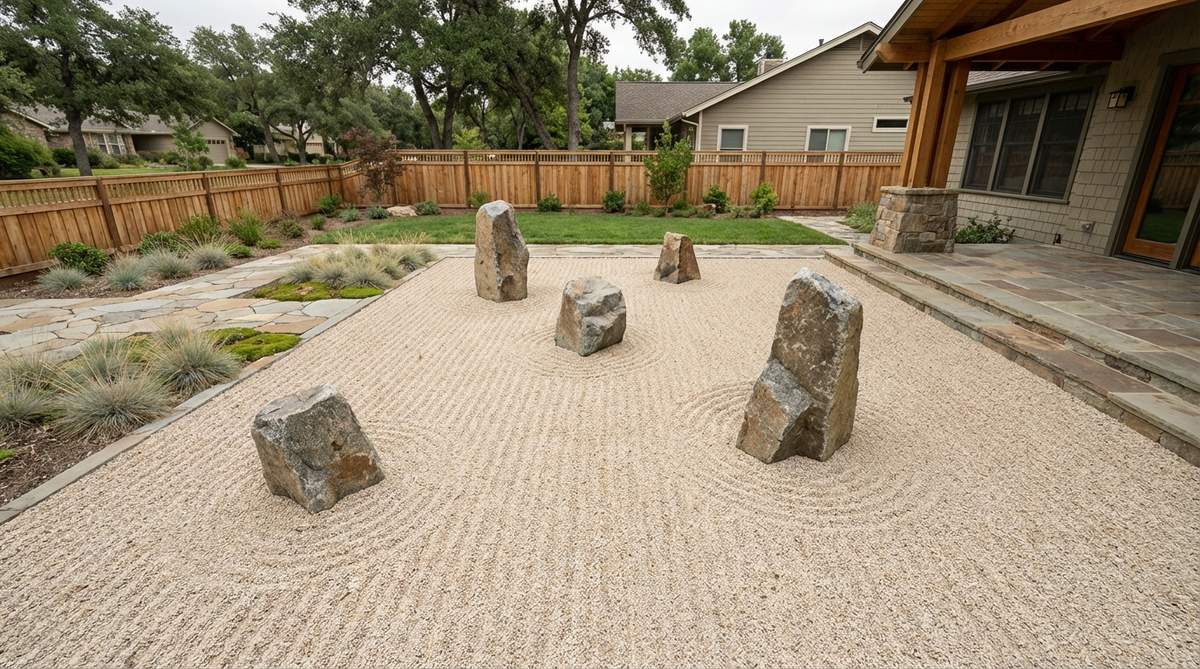
Arrange three to five carefully selected stones in asymmetrical balance with expansive gravel surrounds. The composition emphasizes negative space as active design element.
Follow Japanese dry garden principles of odd numbers and triangular arrangements. Rake gravel in straight lines parallel to primary viewing angle.
Creating Your Stone Garden Vision
Successful stone gardens balance functional requirements with artistic expression, creating outdoor spaces that improve with age. Start with site analysis to understand drainage patterns, sun exposure, and existing grade conditions before selecting stone types and arrangement strategies. Source materials locally when possible to reduce costs and ensure climate compatibility while supporting regional quarries.
Professional installation proves cost-effective for projects involving heavy boulders, structural walls, or water features requiring plumbing and electrical work. Simple applications like pathways, edging, and decorative accents work well as owner-builder projects when time and physical ability allow. Document your design process with photographs to track evolution and inform future modifications as plants mature and personal preferences develop.
Frequently Asked Questions
What types of stone work best for gardens in different US climates?
Granite and basalt withstand freeze-thaw cycles in northern regions without cracking or spalling, making them ideal for zones 3-6. Limestone and sandstone suit southern climates but may deteriorate in areas experiencing repeated freezing. River rock and pea gravel function universally for pathways and ground cover. Select locally quarried stone when possible for best climate compatibility and cost efficiency.
How much does professional stone garden installation cost?
Basic stone pathways cost $15-30 per square foot installed, while elaborate boulder placements requiring heavy equipment range from $800-3000 per stone including delivery and placement. Dry-stack retaining walls run $25-50 per square foot of wall face, and mortared walls cost $40-80 per square foot. Water features with stone elements start at $3000 for simple bubbling boulders and exceed $15,000 for elaborate cascades with multiple stones and custom basins.
Can stone gardens support pollinators and beneficial insects?
Stone features create valuable habitat when designed thoughtfully. Dry-stack walls provide winter hibernation sites for beneficial insects and small reptiles. South-facing stones absorb solar heat, creating warm microclimates for early-season pollinators. Combine stone with nectar-rich plantings like sedums, thymes, and native wildflowers to maximize ecological benefits while maintaining sculptural aesthetics.
How do I maintain stone garden features over time?
Stone requires minimal maintenance compared to wood or metal elements. Remove debris from joints and gravel areas using leaf blowers or rakes. Pressure-wash stone surfaces every 2-3 years to remove algae and atmospheric deposits, though many gardeners prefer natural patina development. Repoint mortared joints as needed when cracks appear. Refresh decomposed granite pathways annually by adding thin top-dressing layers.
What plants pair well with stone garden designs?
Alpine plants like sedums, sempervivums, and saxifrages thrive in stone crevices with excellent drainage. Ornamental grasses such as blue fescue, Mexican feather grass, and fountain grass provide textural contrast against stone’s solidity. Creeping groundcovers including thyme, creeping phlox, and mazus soften hard edges. For zen gardens, limit plantings to sculptural specimens like Japanese maples, pines, and bamboo to maintain minimalist focus.
Should I use mortar or dry-stack for stone walls?
Dry-stack construction allows water drainage through walls and provides flexibility as ground shifts seasonally, making it suitable for walls under 3 feet high in stable soils. Mortared walls provide superior strength for taller structures, areas with lateral soil pressure, or locations where wall movement creates safety concerns. Dry-stack offers rustic appearance and planting opportunities in joints, while mortar creates formal, permanent structures requiring less maintenance.