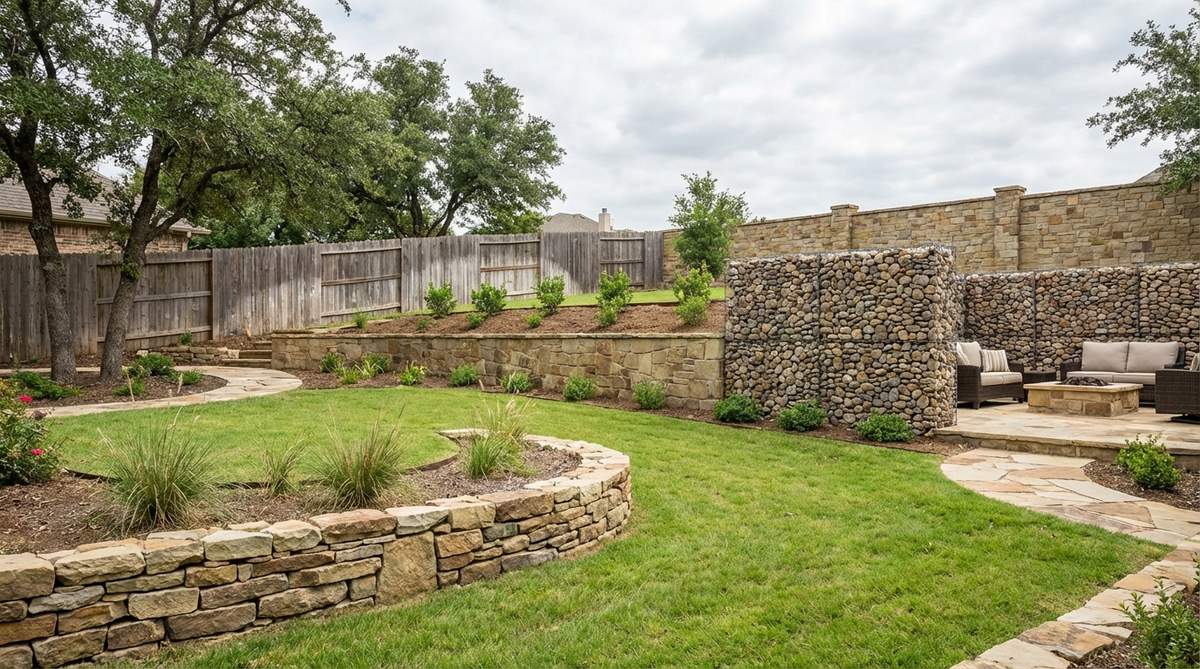
A well-designed stone garden wall transforms outdoor spaces by controlling erosion, defining boundaries, and adding architectural interest to any landscape. Fresh Garden Ideas brings you expert-curated designs that blend durability with aesthetic appeal, from classic dry-stack techniques to contemporary hybrid installations that suit American yards of all sizes.
Design SnapshotKey Principles
- Foundation First: Proper base preparation with crushed stone ensures stability and prevents settling over time
- Batter Angle: Retaining walls perform best when tilted back 1 inch per 12 inches of height toward the soil mass
- Drainage Strategy: Mortarless joints or integrated weep holes prevent water pressure buildup behind walls
- Material Selection: Choose stone type based on regional climate, weight capacity needs, and desired texture
Classic Dry-Stack Stone Garden Wall Ideas
Dry-stack construction eliminates mortar, allowing natural drainage and seasonal flexibility. This time-tested method creates walls that breathe with the landscape while maintaining structural integrity through careful stone selection and placement.
1. Traditional Fieldstone Retaining Wall
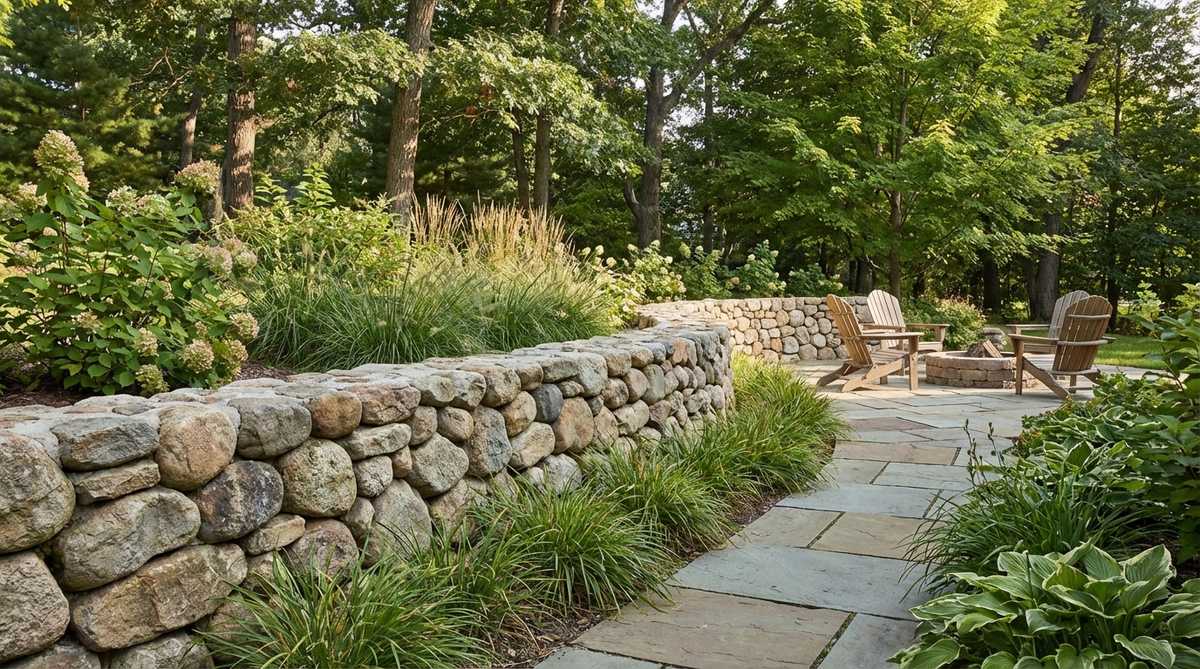
Rounded fieldstones create an organic, cottage-garden aesthetic that complements informal plantings. Each stone’s unique shape interlocks naturally when properly positioned.
Start with the largest stones at the base, selecting pieces with one flat side for stability. Layer progressively smaller stones upward, filling gaps with stone chips rather than forcing awkward fits.
This approach works especially well for walls under 3 feet tall where gravity alone provides sufficient structural support without engineering requirements.
2. Pennsylvania Bluestone Freestanding Wall
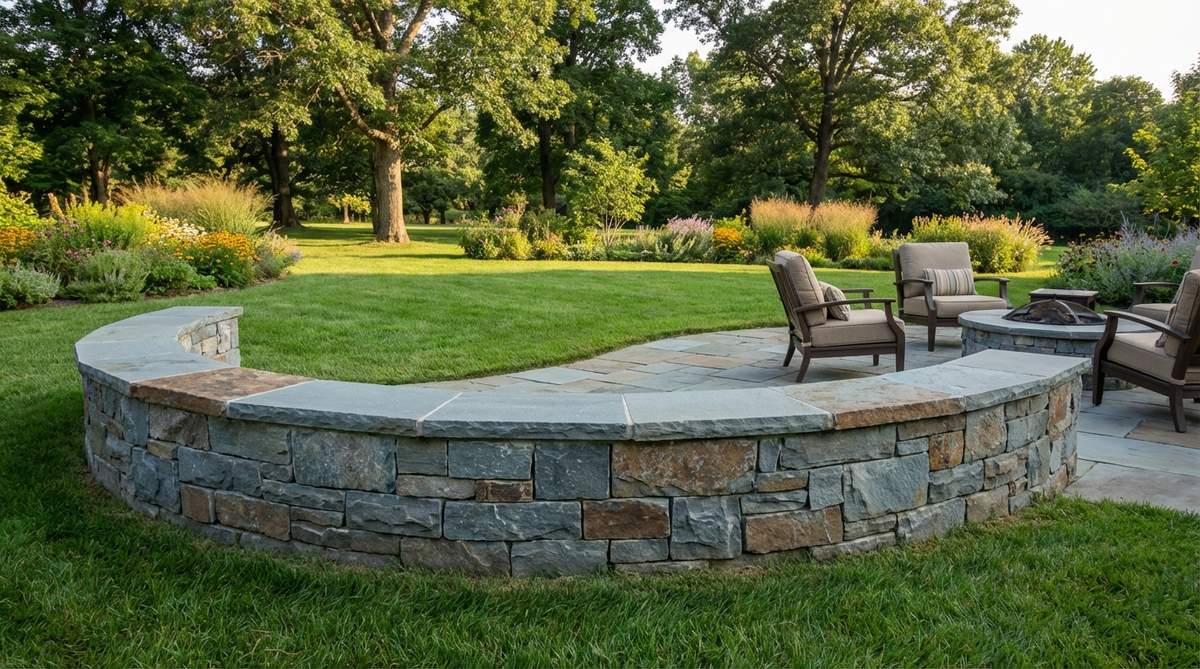
The distinctive blue-gray hue of Pennsylvania bluestone brings refined color consistency to property boundaries. Its natural cleft surface adds texture while maintaining clean horizontal lines.
Select stones of uniform thickness (typically 2-4 inches) to create even coursing. Use tie-stones every 2 feet that span the wall’s full depth for lateral strength.
Ideal for low accent walls that frame patios or separate lawn zones without blocking sightlines completely.
3. Vermont Ledgestone Garden Border
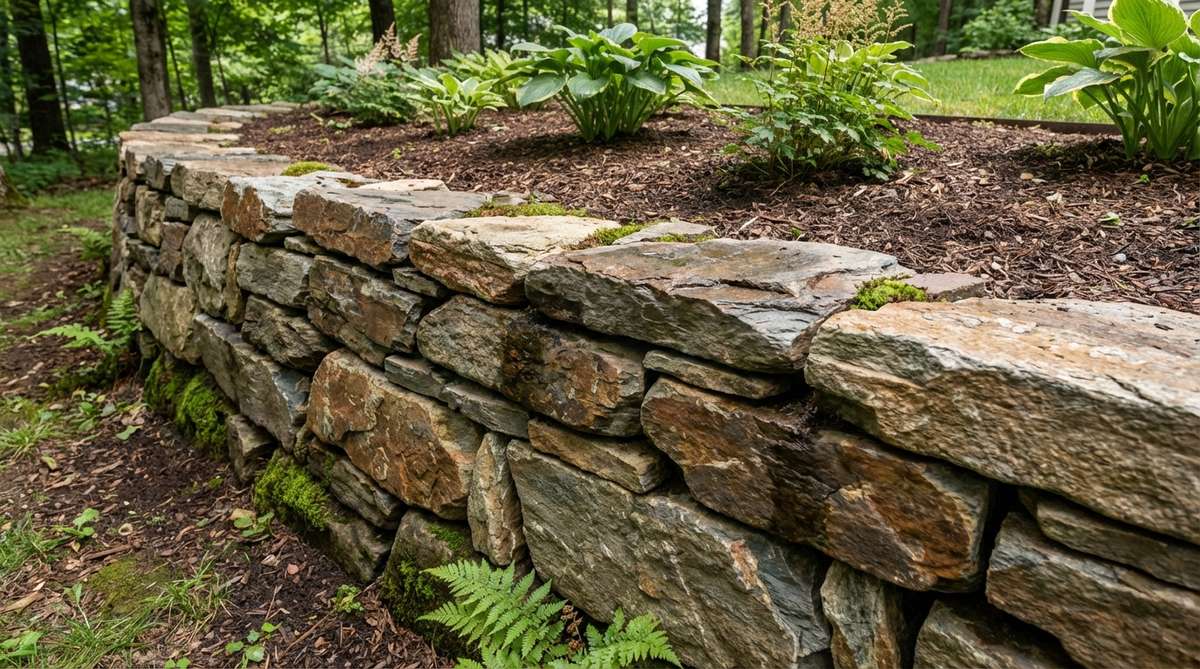
Ledgestone’s naturally flat planes make stacking straightforward for beginning builders. The varied earth tones—grays, browns, and rust—create visual warmth in shaded garden areas.
Place each stone to bridge two joints below, maintaining the classic one-over-two pattern. Angle stones slightly backward as you build upward.
Particularly effective for raised bed perimeters where you need height but want easy plant access over the wall.
4. Rounded River Rock Low Wall
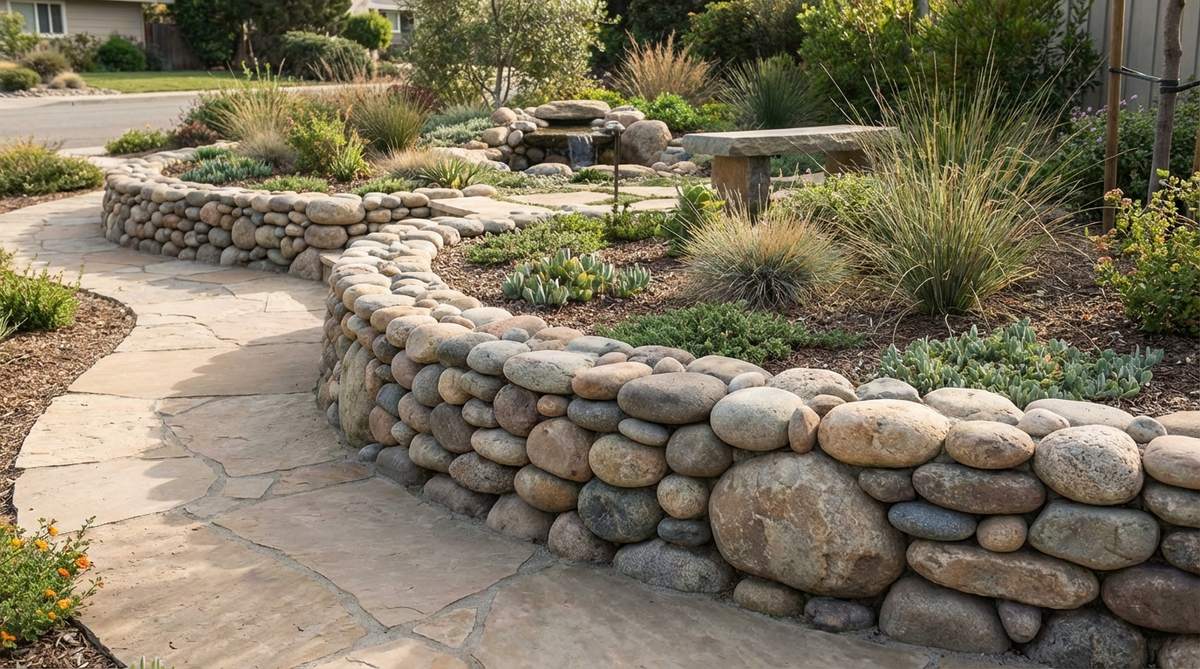
Smooth river stones in graduating sizes build naturally flowing curves better than angular alternatives. Their polished appearance suits coastal or water-feature adjacent installations.
Pack smaller stones between larger ones to fill voids and increase mass. Keep wall height modest—under 24 inches—since rounded shapes provide less interlocking than angular stones.
Works beautifully for decorative edging along pathways where you want a soft, non-imposing boundary.
5. Stacked Slate Privacy Screen
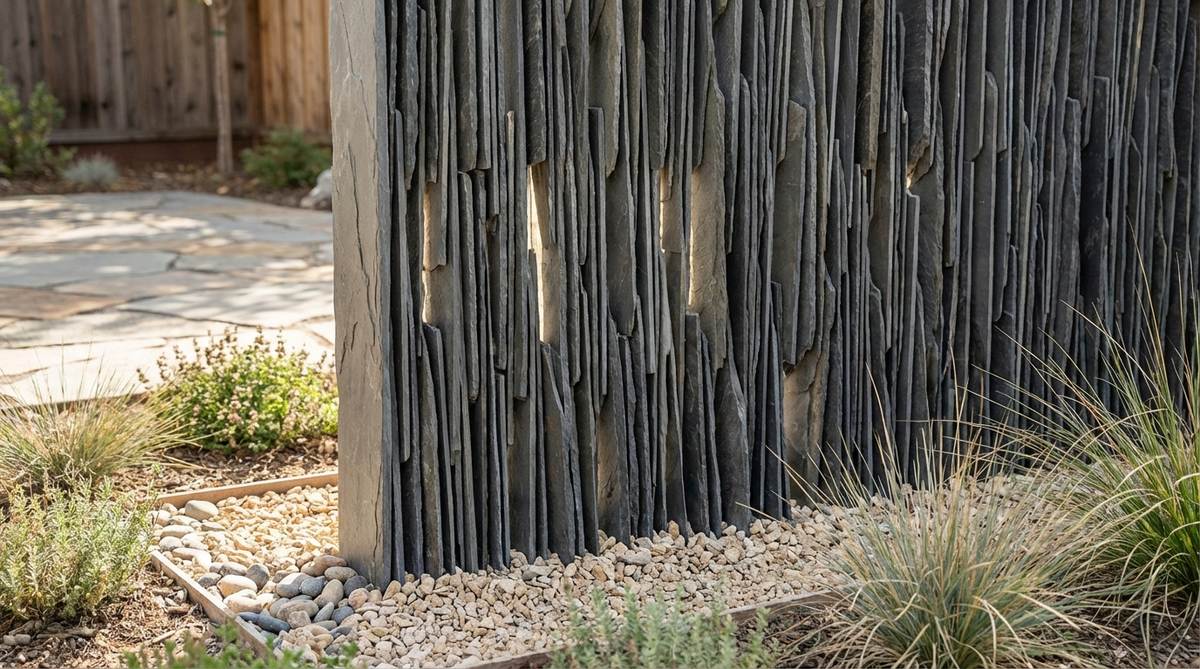
Thin slate sheets create dramatic vertical height efficiently when set on edge. The layered appearance provides screening while maintaining visual lightness.
Bury the bottom third of each slate piece in a gravel trench for stability. Alternate thick and thin pieces to vary the rhythm and prevent monotony.
Best suited for wind-protected areas where lateral forces won’t topple the narrow profile.
6. Granite Block Stepped Wall
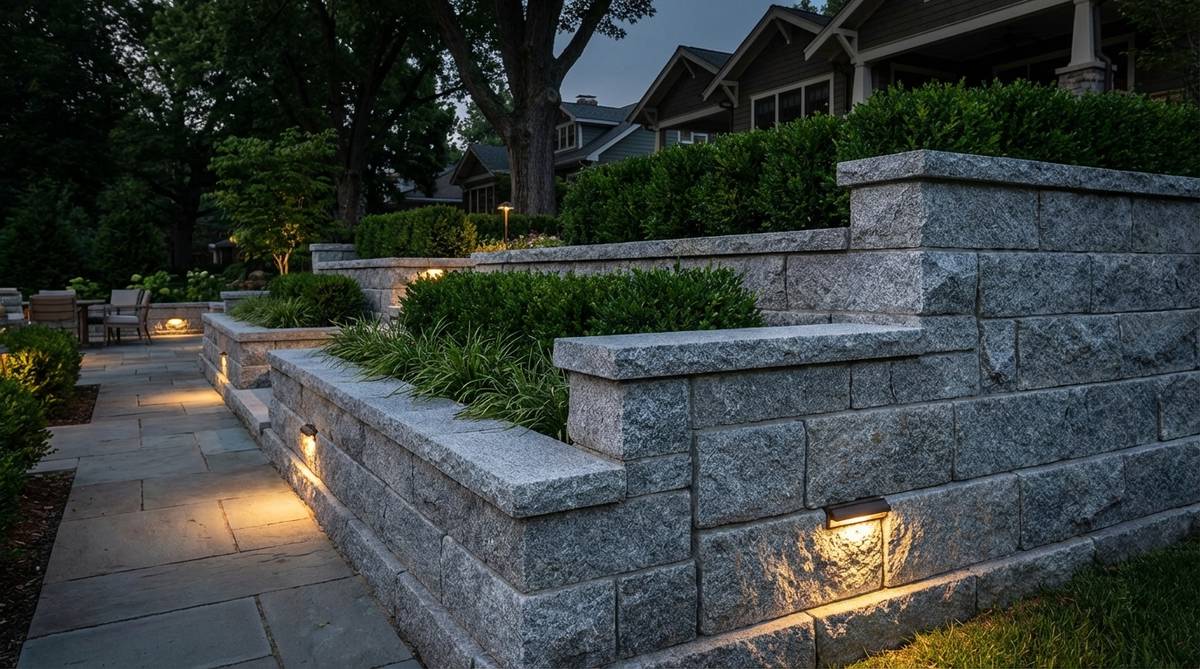
Rectangular granite blocks deliver monumental strength and geometric precision. Their uniform dimensions simplify layout planning and construction timing.
Cut granite accepts tighter tolerances than fieldstone, allowing for crisp corners and level tops. Pair with ground-level lighting to emphasize the stone’s crystalline structure at night.
Excellent for formal landscapes where architectural discipline matches the home’s design language.
7. Sandstone Curved Retaining Wall
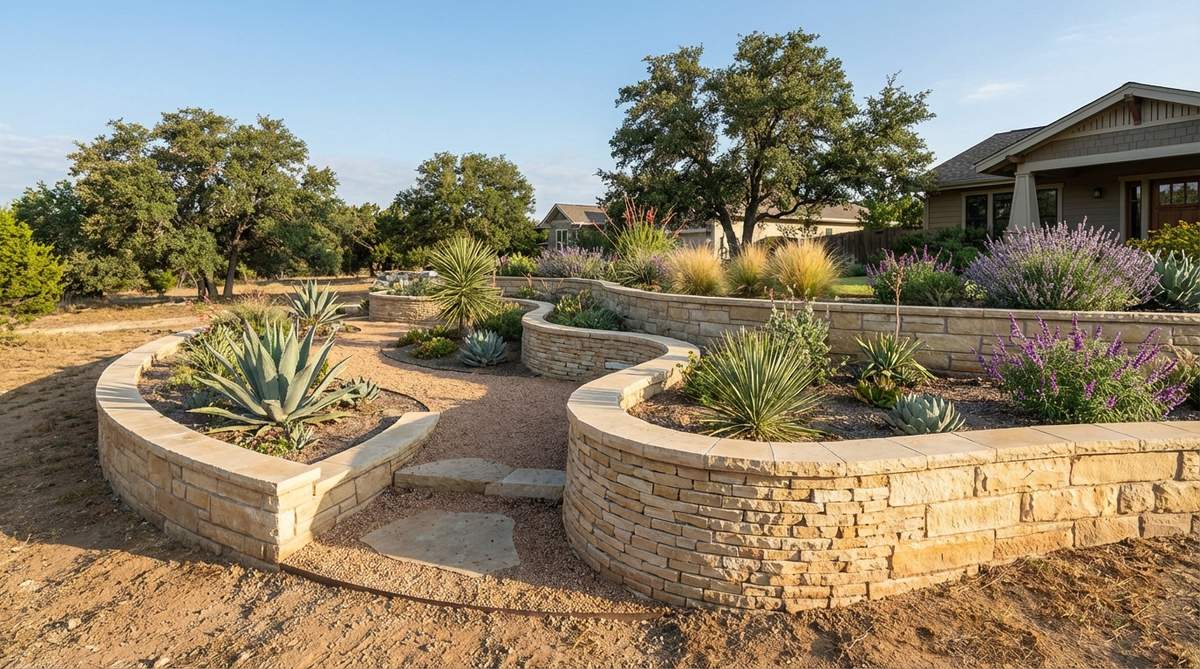
Sandstone’s relative softness allows for easier shaping to achieve gentle curves. Its warm beige and tan colors complement desert and Mediterranean plantings.
Dry-fit each course before final placement to ensure curves flow smoothly. Use smaller stones on the tighter radius sections where larger pieces won’t conform.
Works particularly well in xeriscapes where the stone naturally echoes the surrounding geology.
8. Moss-Covered Aged Fieldstone
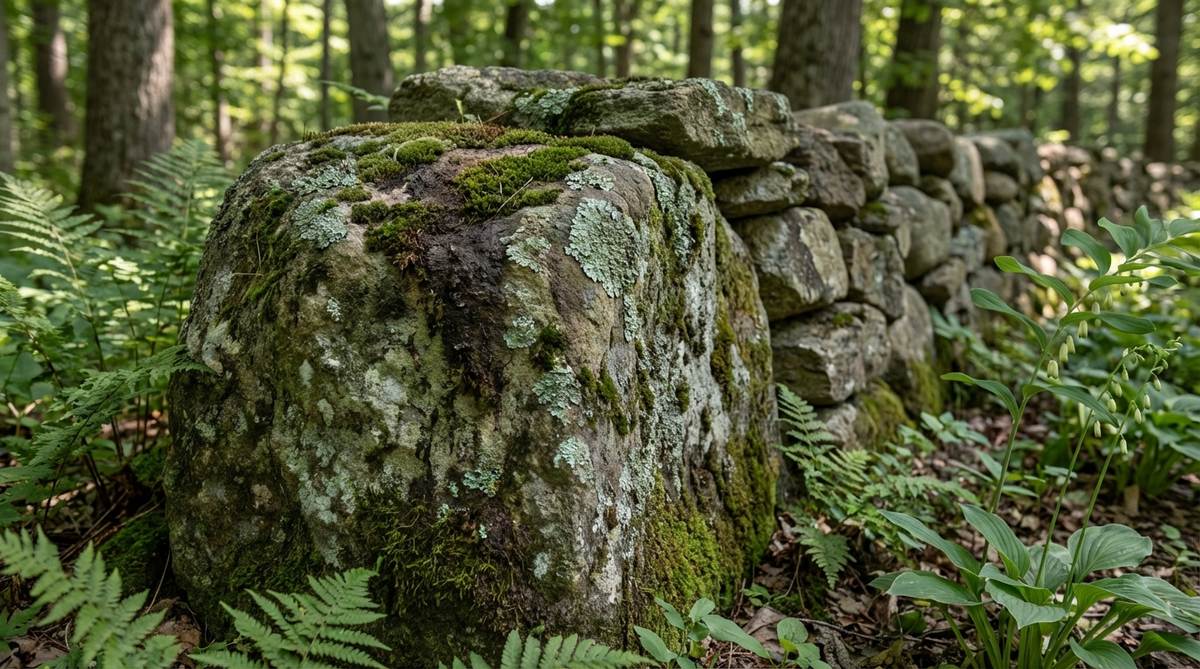
Salvaged stones with existing patina instantly deliver centuries-old character. Moss and lichen colonies add living texture that evolves through seasons.
Select stones from similar microclimates to ensure established growth survives transplanting. Position the moss-side outward for immediate visual impact.
Perfect for shaded woodland gardens where naturalized appearance matters more than pristine geometry.
Mortared Stone Garden Wall Ideas For Permanence
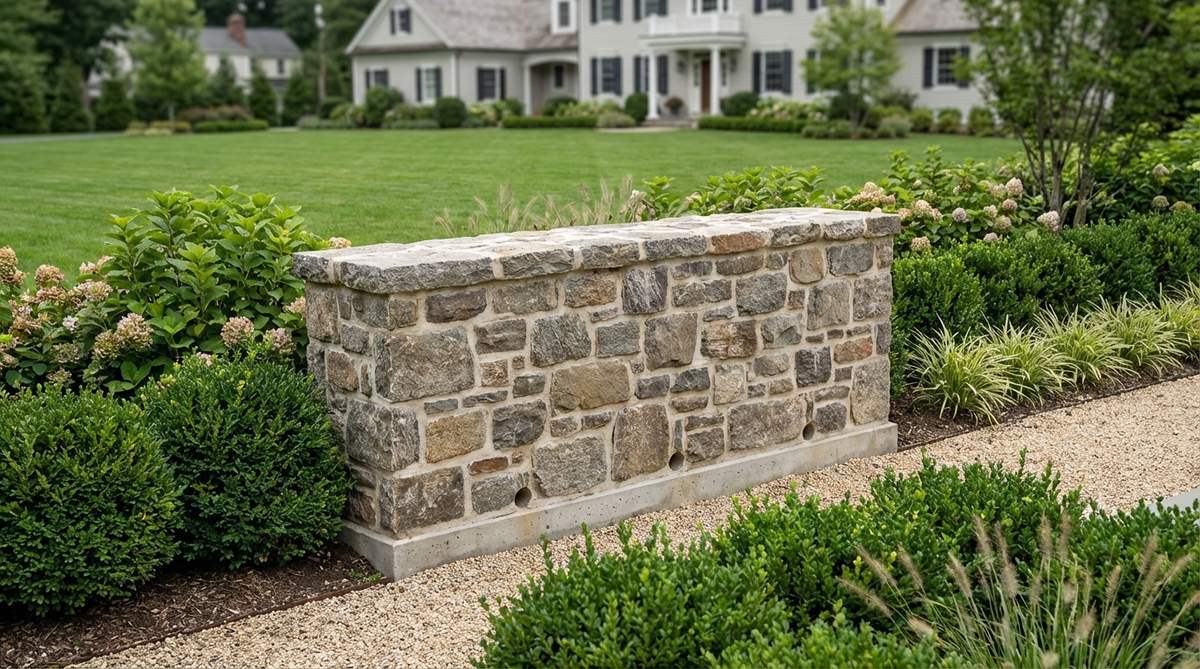
Mortar joints create monolithic structures that handle greater heights and loads than dry-stack alternatives. These walls demand proper foundations below frost lines but reward with multi-generational durability.
9. Limestone Ashlar Formal Wall
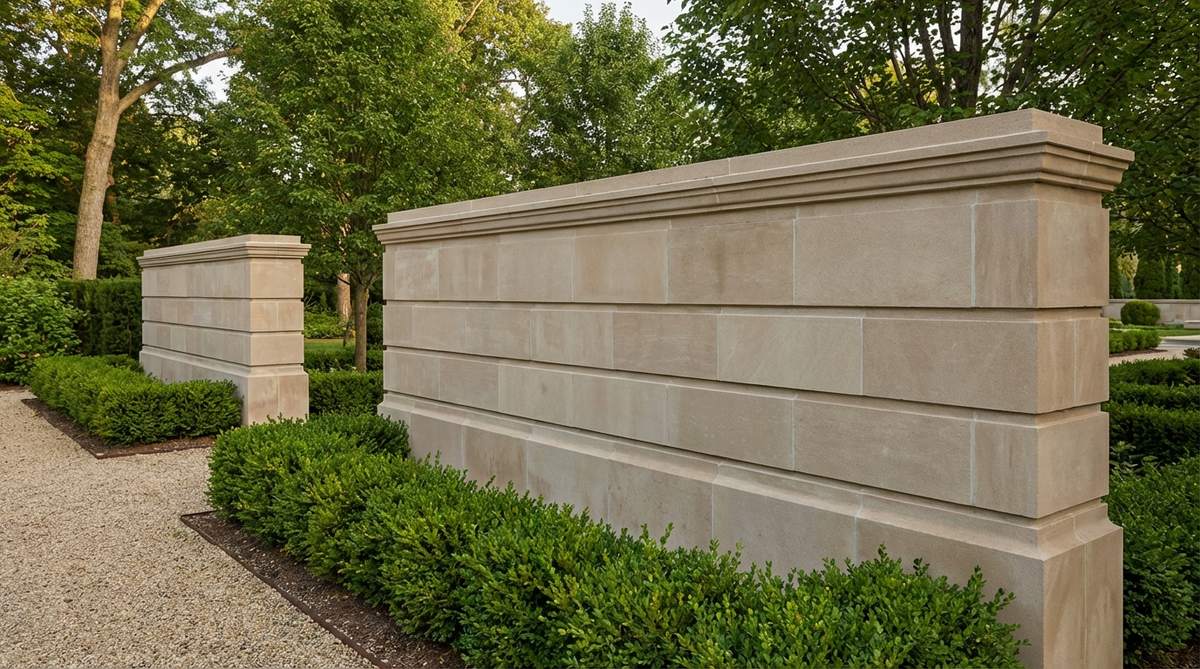
Precisely cut limestone blocks with tight mortar joints deliver refined elegance. The uniform coursing creates strong horizontal lines that ground estate-scale landscapes.
Rake joints slightly for shadow definition while keeping them flush enough to resist water penetration. Apply breathable sealers to prevent efflorescence.
Ideal for entry features and principal viewing areas where architectural polish aligns with home facades.
10. Rubble Stone Mortar Retaining Wall
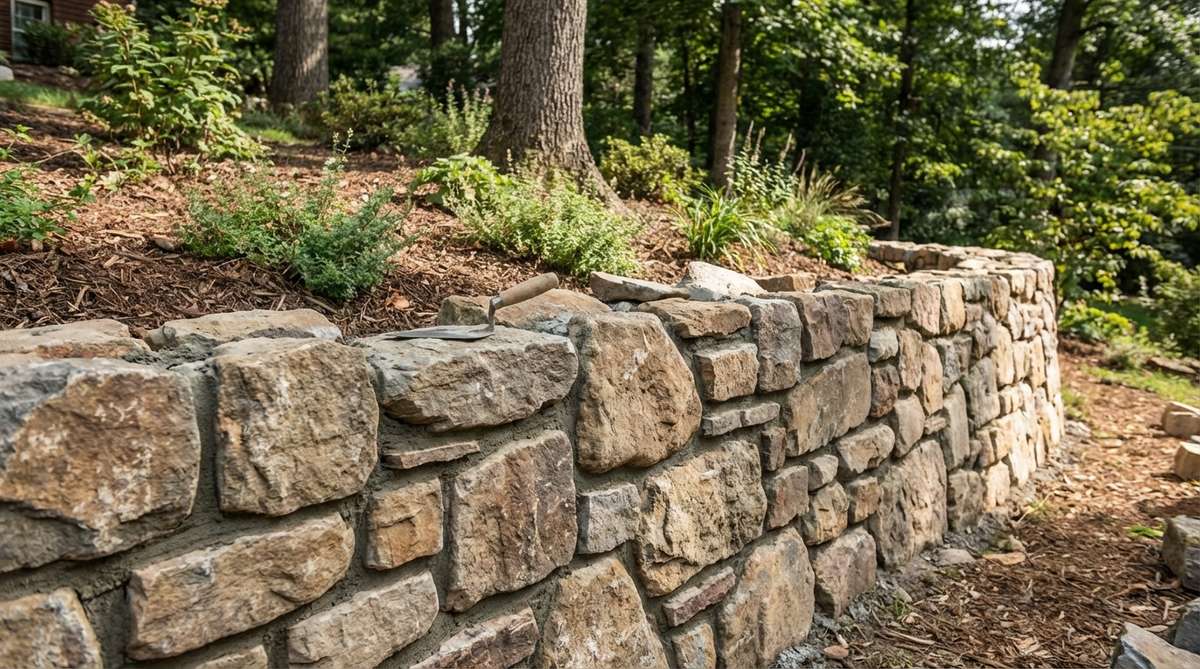
Irregular rubble stones mortared together combine rustic character with structural certainty. The random patterns feel organic while gaining height stability through chemical bonding.
Butter mortar on each stone’s bedding surface and vertical edges before placement. Strike joints to match depth preference—flush for modern, deeply raked for traditional.
Well-suited for slopes requiring walls over 4 feet where dry-stack becomes impractical.
11. Brick and Stone Combination Wall
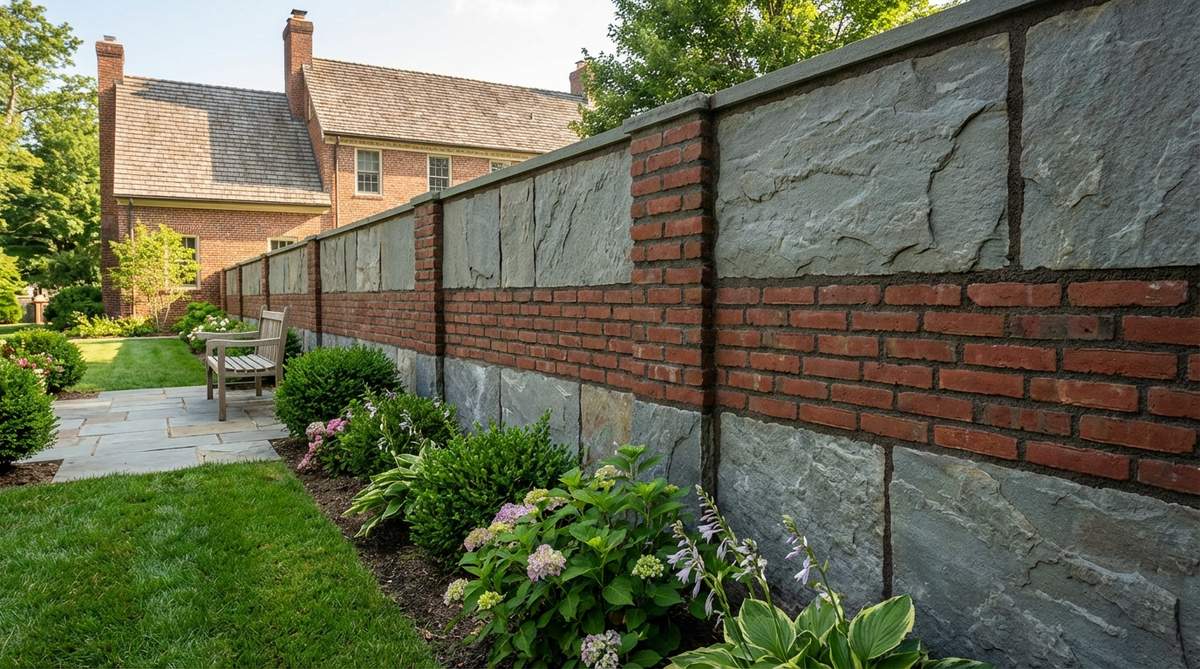
Alternating courses of brick and stone create textural variety while using brick’s modularity for level control. The red clay tones warm gray stone palettes.
Run brick courses every 18-24 inches between stone sections to simplify leveling. Ensure mortar formulas match both materials’ absorption rates.
Particularly effective in Colonial and Georgian-style landscapes where historical precedent supports the combination.
12. Concrete Core Stone Face
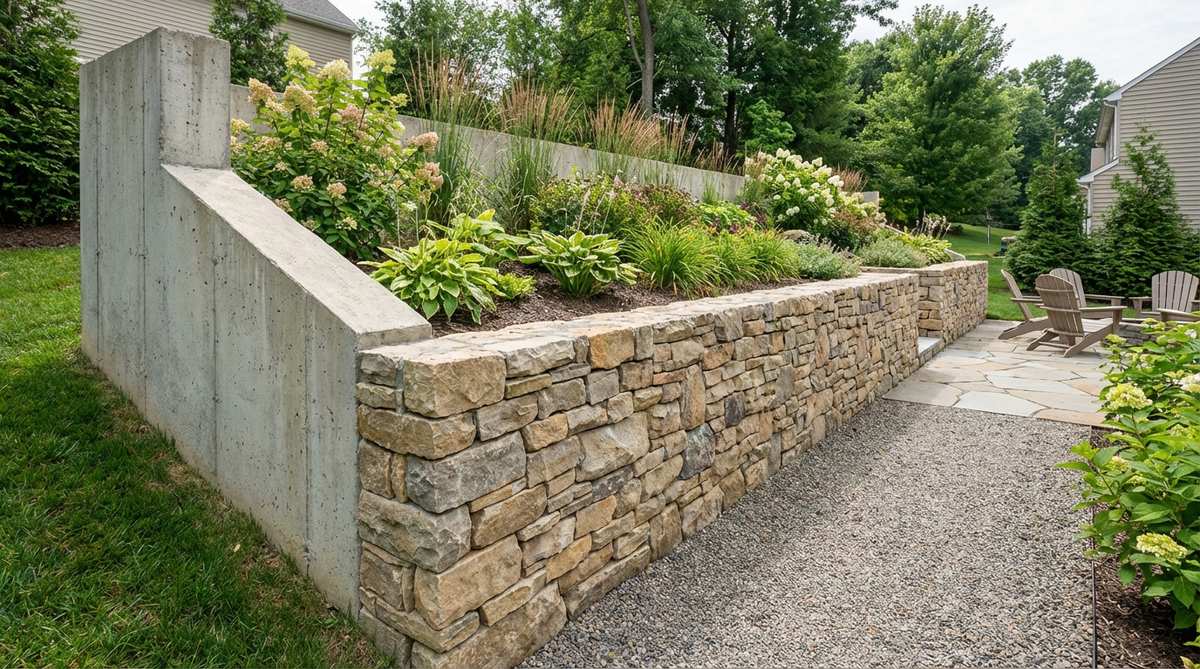
Poured concrete provides structural backbone while a stone face delivers aesthetic appeal. This hybrid approach handles significant load requirements efficiently.
Build formed concrete walls first, then mortar natural stone to the exterior face. Include metal ties embedded in the concrete for mechanical bonding.
Essential for engineered walls supporting driveways or structures where building codes mandate reinforced construction.
13. Capped Stone Wall with Bluestone Top
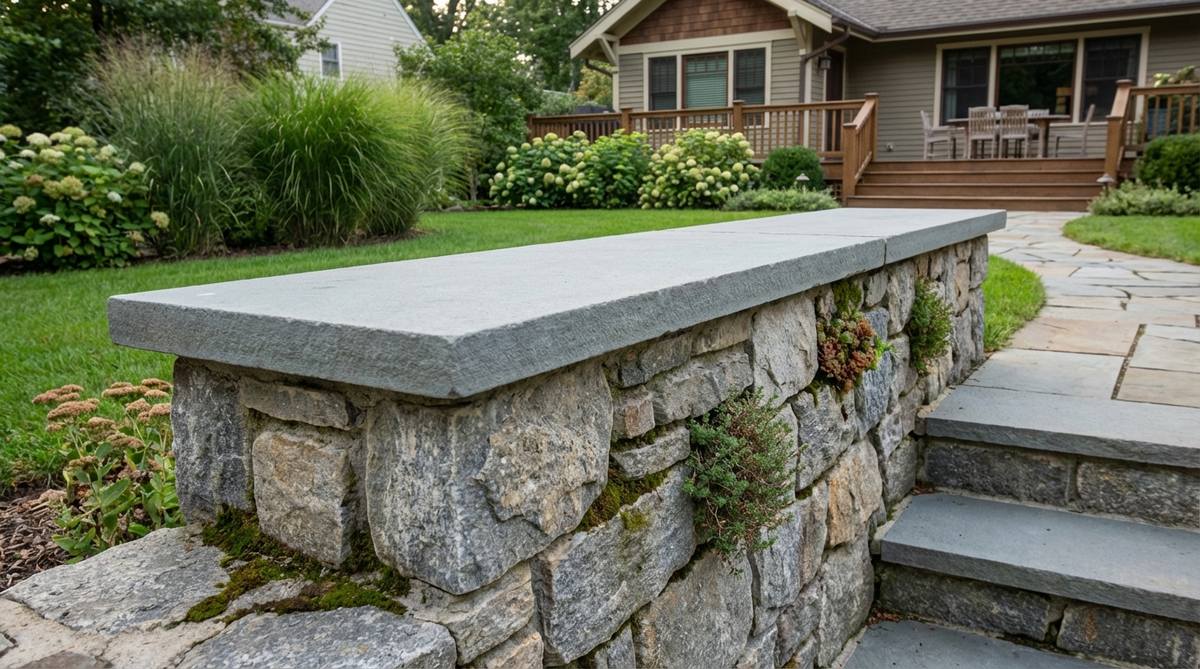
Horizontal bluestone caps finish field stone walls with a refined detail. The flat top surface becomes functional seating while protecting mortar joints from water intrusion.
Cut bluestone to overhang wall faces by 1-2 inches for drip edge effect. Mortar caps with slight forward pitch to shed water away from joints below.
Transforms ordinary retaining walls into landscape features that invite interaction and define outdoor rooms.
14. Sandblasted Finish Granite Wall
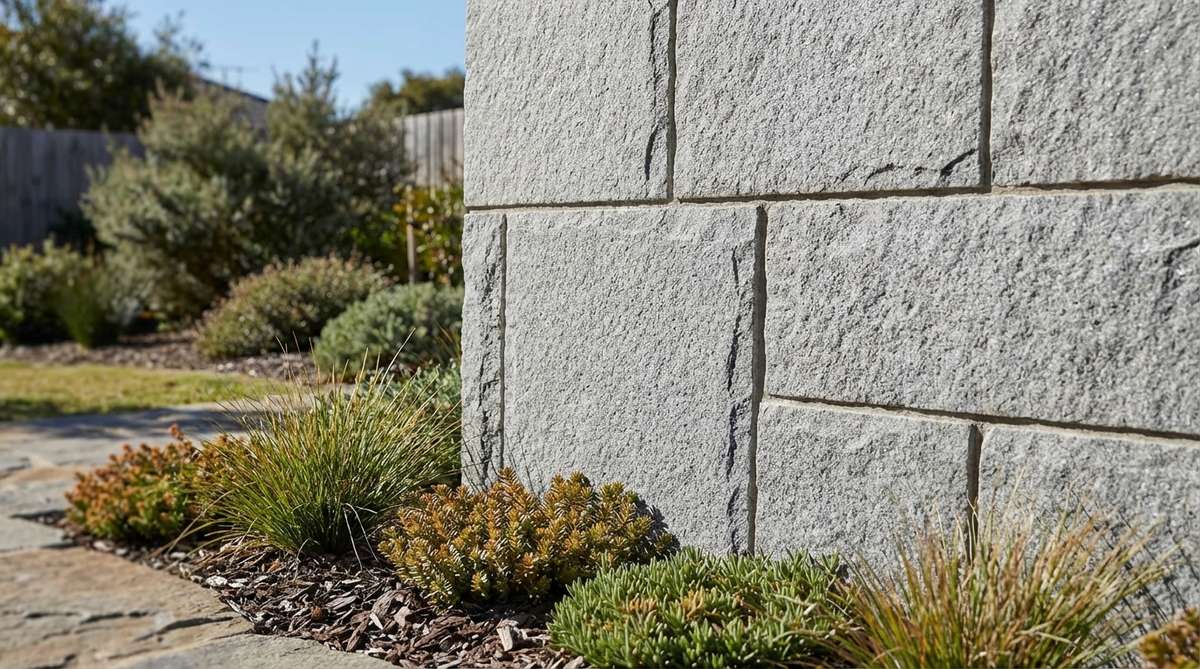
Surface treatment softens granite’s polish while maintaining its strength. The matte texture reduces glare and reveals the stone’s crystalline composition more clearly.
Specify sandblasted finish during stone fabrication for uniform results. The increased surface area provides better mortar adhesion than polished faces.
Appropriate for contemporary designs where granite’s strength matters but high gloss feels too formal.
15. Weeping Mortar Joint Style
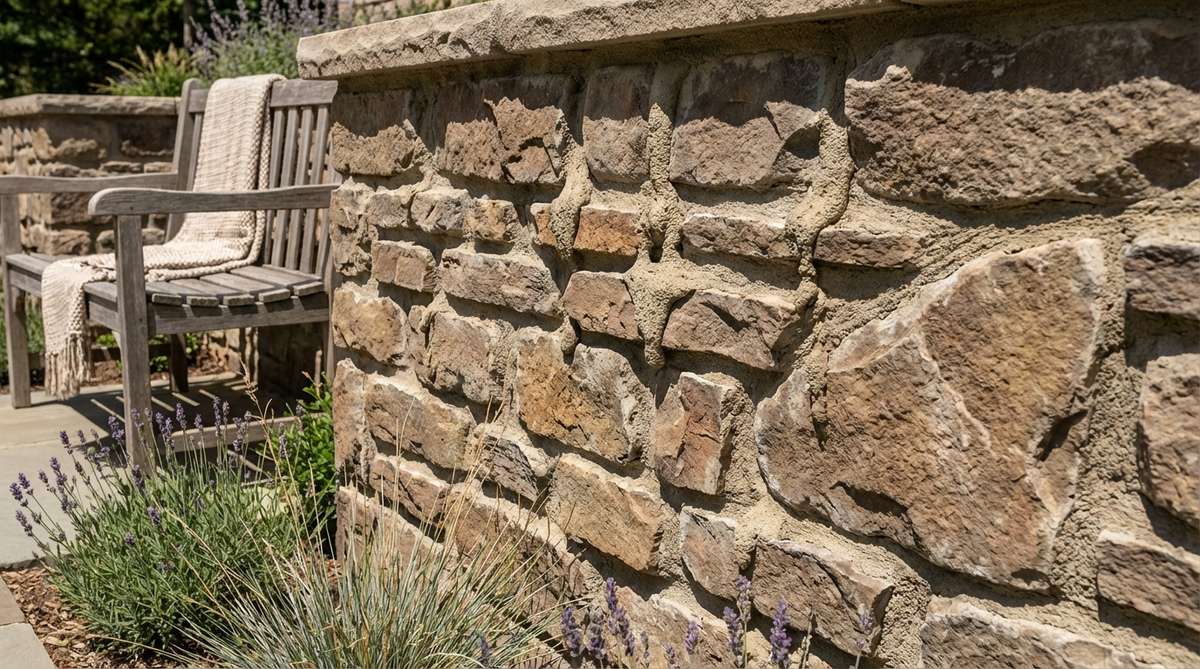
Mortar intentionally squeezed beyond stone faces creates a textured, handcrafted appearance. This technique, called “German schmear” when extreme, adds dimensional shadows.
Apply mortar generously and avoid deep tooling. Partially wash joints while still plastic to expose stone edges variably.
Best for rustic farmhouse or Tuscan themes where perfection would feel incongruous with the intended aesthetic.
Modern Gabion Stone Garden Wall Solutions
Wire cages filled with stone deliver contemporary aesthetics while providing excellent drainage and erosion control. Gabion systems assemble quickly and adapt to settling without cracking.
16. Standard Rock-Filled Gabion Fence
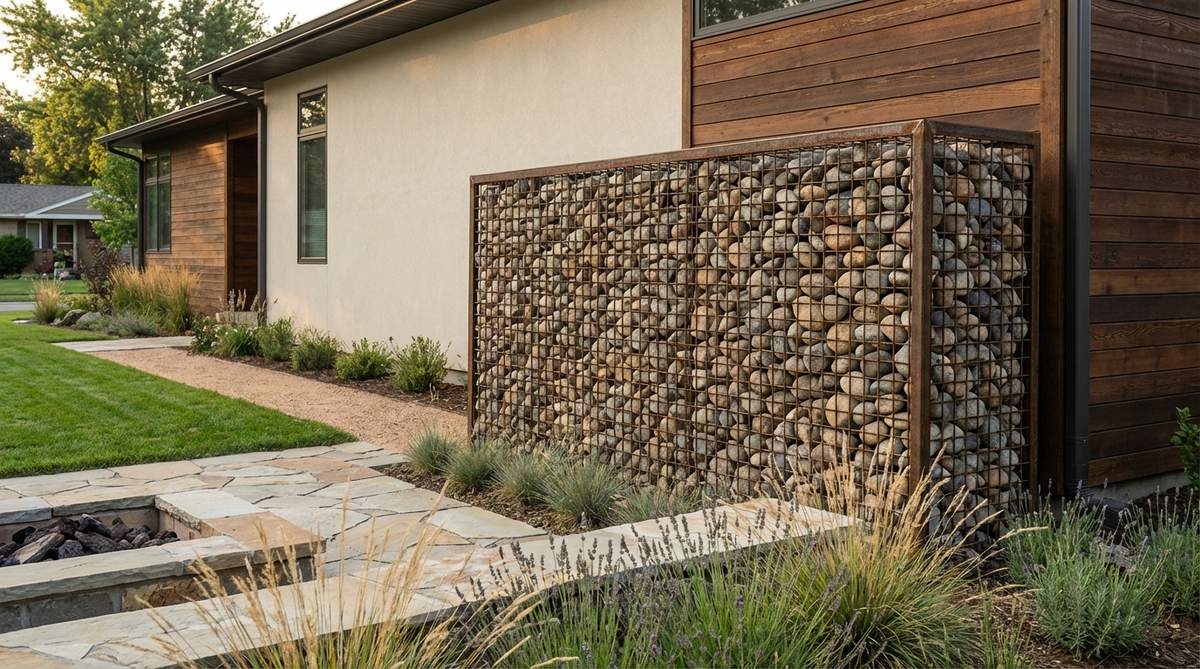
Heavy-duty wire mesh baskets filled with river rock create permeable privacy screens. The visible aggregate texture contrasts sharply with smooth stucco or wood siding.
Set cages on compacted gravel bases, then fill with 4-6 inch stones. Overfill slightly and tamp periodically during filling to minimize future settling.
Ideal for modern properties where industrial materials and clean lines define the architectural vocabulary.
17. Mixed Stone Color Gabion Wall
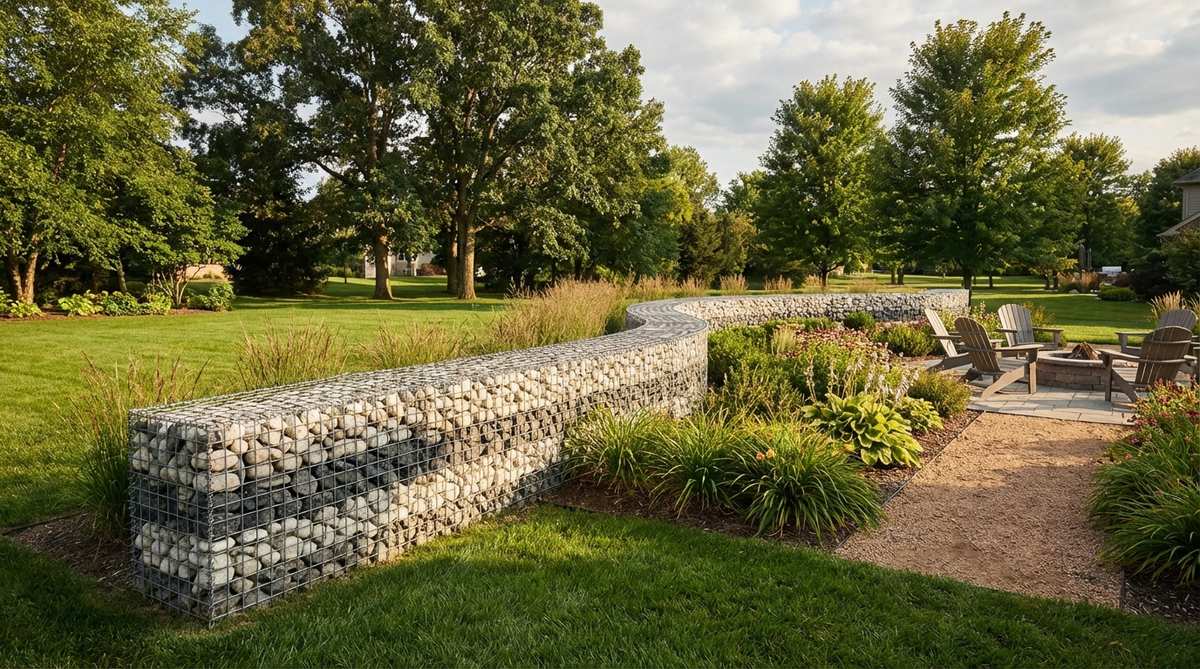
Blending white, gray, and black stones within gabion cages creates dynamic patterns. The color variation prevents visual monotony in long wall runs.
Layer stones by color in horizontal bands or create random mixes depending on formality preference. Use consistent stone sizes for even pack density.
Works particularly well for property boundaries where both neighbors benefit from an attractive shared feature.
18. Gabion Planter Wall Combination
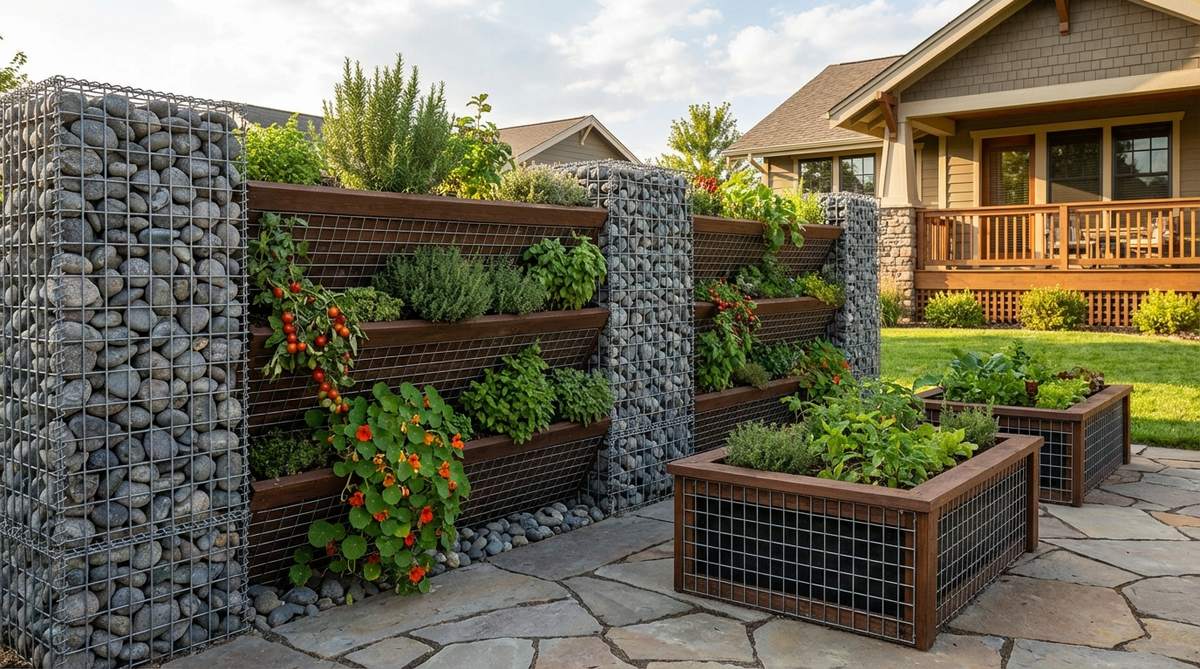
Alternating gabion sections with open planter zones softens the industrial character. Living plants emerge between stone-filled segments for textural contrast.
Build planter boxes using the same wire framework but install barriers to retain soil. Ensure adequate depth—minimum 18 inches—for root development.
Perfect for edible gardens where retaining wall planters accommodate herbs and cascading vegetables like tomatoes.
19. Slim Profile Gabion Privacy Screen
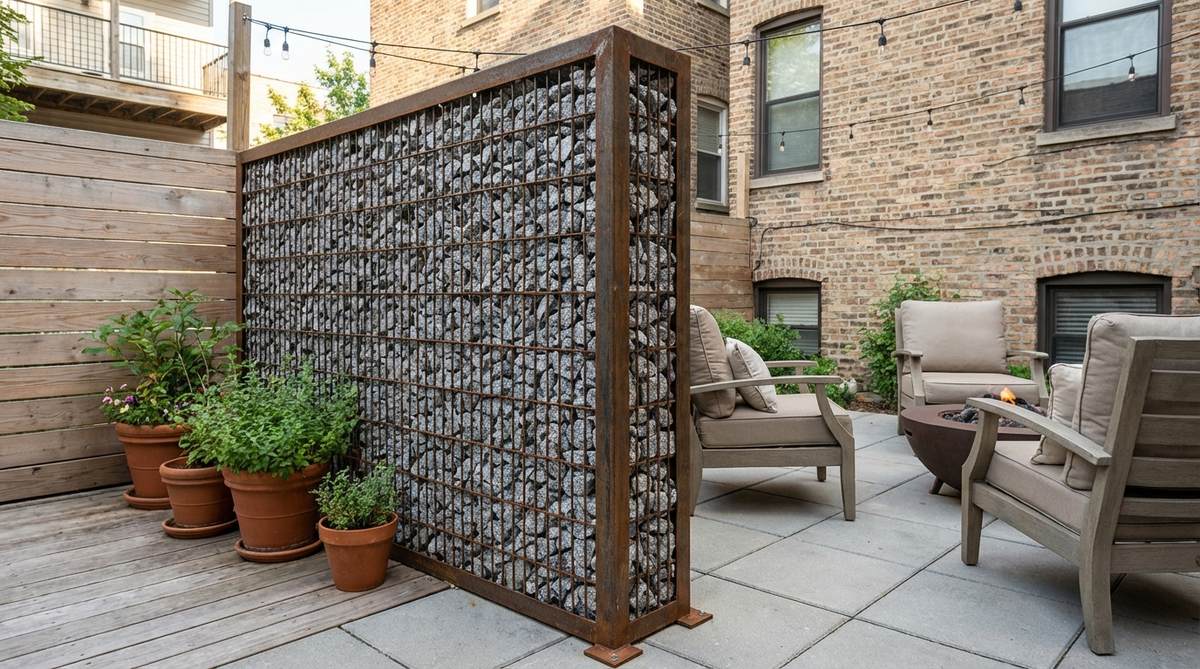
Narrow gabion cages (12-18 inches deep) provide vertical screening with minimal footprint. The slender proportions suit tight spaces where traditional walls consume too much area.
Anchor narrow profiles more frequently to resist tipping forces. Use crushed stone rather than rounded rock for better interlocking within confined cages.
Excellent for urban courtyards and balcony railings where space premium demands efficient use of every inch.
20. Backlit Gabion Wall
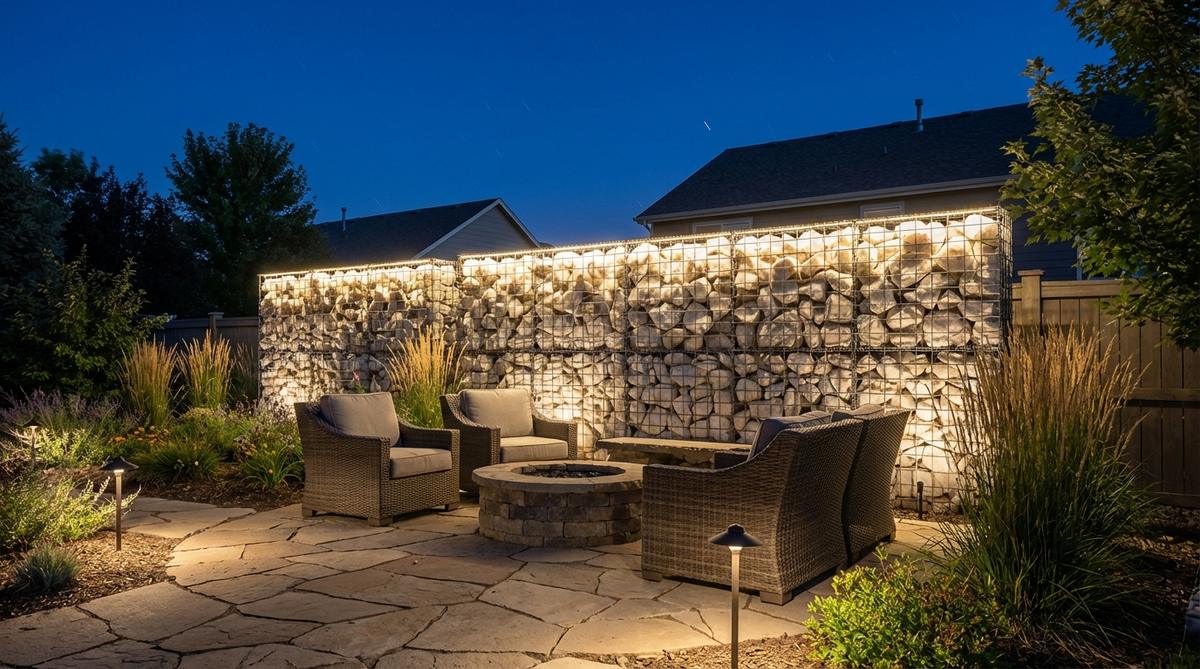
LED strips mounted behind semi-transparent white stones create dramatic nighttime focal points. Light filters through the stone mass, emphasizing texture and depth.
Install waterproof LED tape in channels behind the front cage face before filling. Use translucent stones like white quartz or alabaster rather than opaque granite.
Transforms utilitarian retaining walls into architectural features that enhance evening outdoor experiences.
21. Curved Gabion Retaining Wall
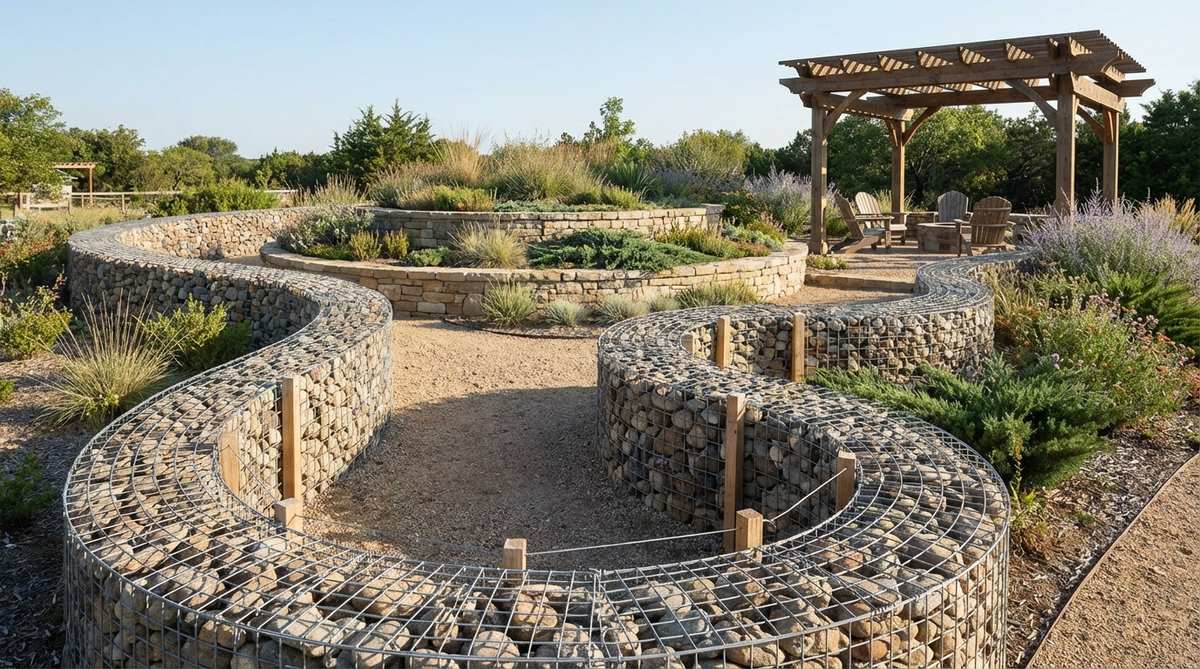
Flexible wire mesh conforms to gentle curves more readily than rigid masonry alternatives. Curved layouts feel organic and guide circulation patterns naturally.
Use smaller cage sections around curves to maintain smooth radius. Stakes on the curve’s inside provide purchase for tensioning the mesh.
Particularly effective for defining serpentine pathways through gardens or wrapping around rounded terraces.
22. Wood and Gabion Hybrid Fence
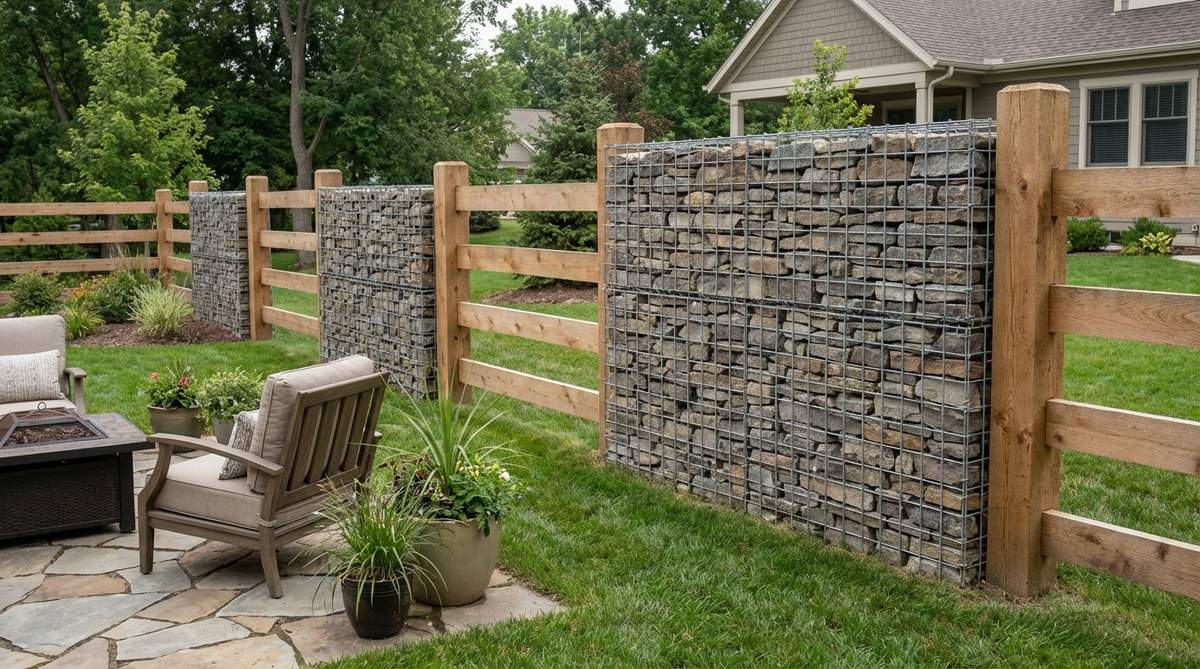
Timber posts and rails frame gabion panels for structural support and design contrast. The material combination softens industrial aesthetics while simplifying construction.
Build wooden frames first using pressure-treated lumber, then insert gabion panels as infill. Cap timber posts to shed water and extend service life.
Bridges traditional and contemporary styles, making it suitable for transitional architecture and eclectic landscapes.
Tiered & Terraced Stone Garden Wall Ideas
Multiple wall levels transform steep slopes into usable planting zones while distributing soil pressure across several structures. Terracing adds depth perception and creates microclimates for diverse plant communities.
23. Three-Tier Limestone Terrace
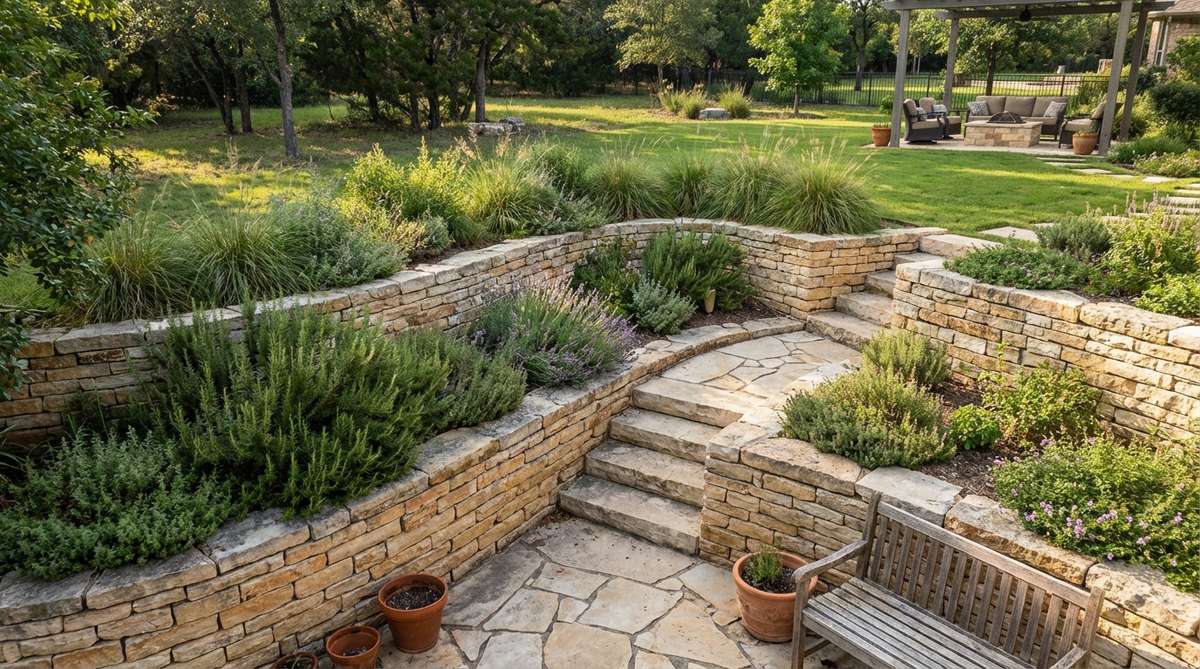
Stacked terraces in graduated heights create amphitheater-like planting areas. Each level reduces the effective slope, preventing erosion and simplifying maintenance access.
Maintain minimum 4-foot spacing between wall faces to accommodate plantings and mowing equipment. Offset wall joints between tiers to avoid continuous vertical load paths.
Ideal for establishing Mediterranean herb gardens where rosemary, lavender, and thyme cascade over warm stone ledges.
24. Railroad Tie and Stone Stepped Beds
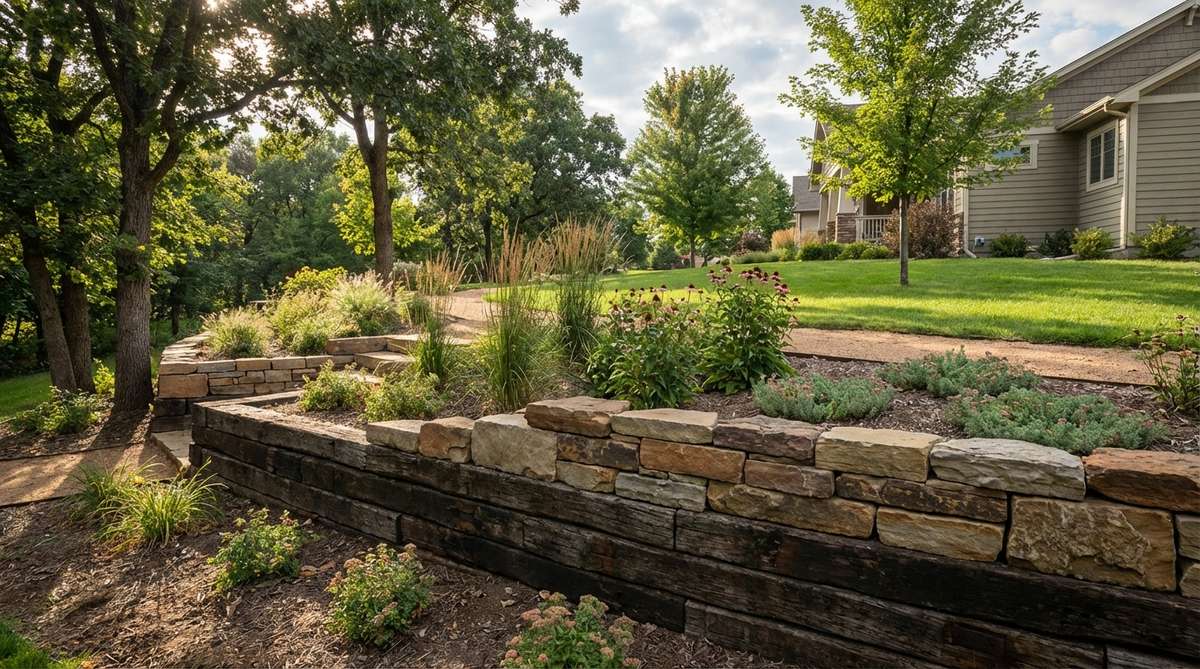
Reclaimed railroad ties form primary structure while stone faces provide finished appearance. The wood handles soil contact while stone weathers attractively above grade.
Anchor ties with rebar driven through pre-drilled holes into subsoil. Face visible tie edges with dry-stack stone for cohesive aesthetics.
Budget-friendly approach for large-scale terracing where material costs influence design decisions significantly.
25. Waterfall Feature Terraced Wall
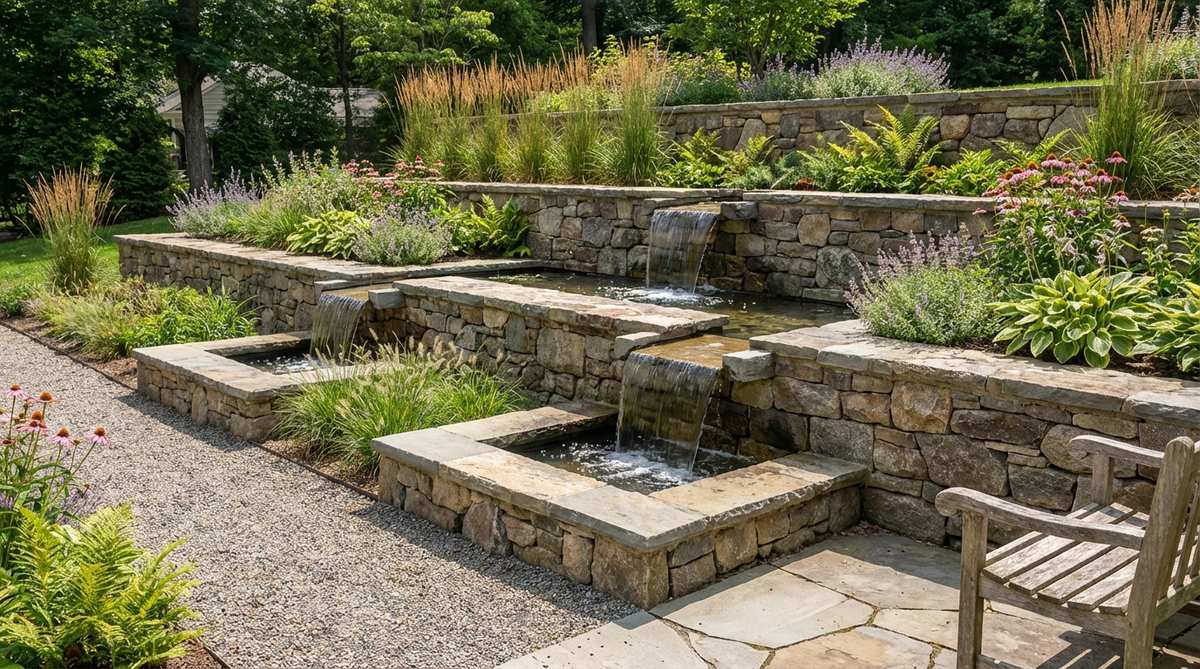
Water cascades from tier to tier via integrated spillways, adding sound and movement. The moisture attracts beneficial insects and creates cooling effects in summer.
Build spillways using flat stones cantilevered forward from wall faces. Conceal recirculating pump plumbing within the wall structure during construction.
Transforms functional retaining walls into water features that justify premium positions in high-visibility garden zones.
26. Low Profile Wide Terraces
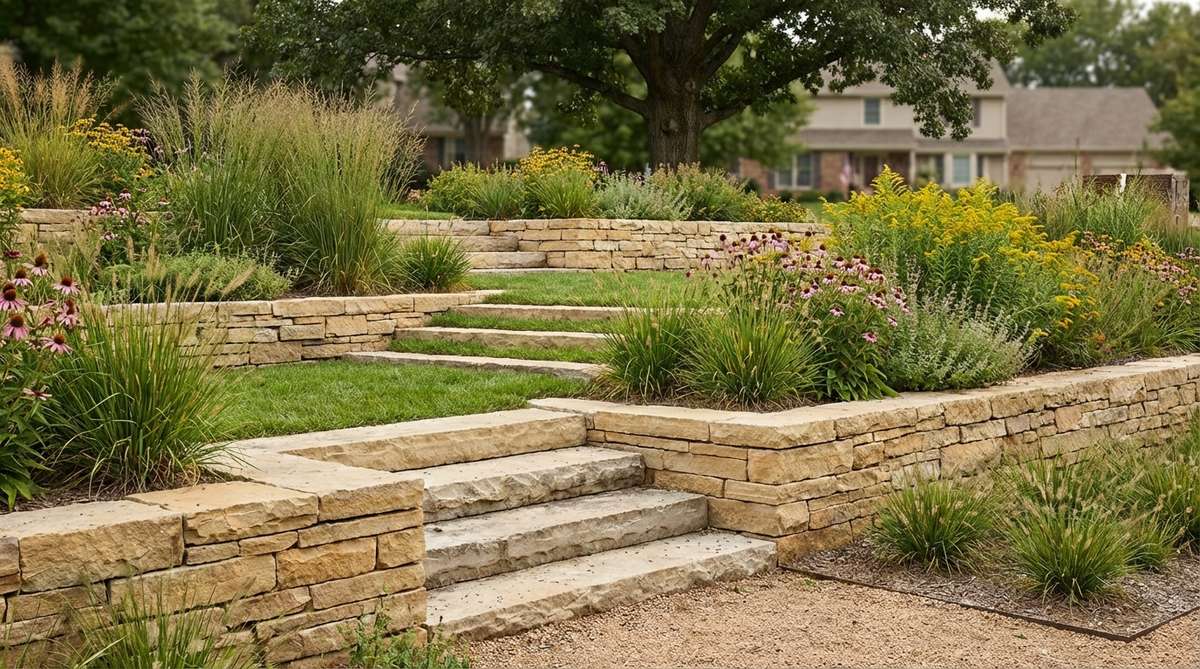
Broad shallow steps (12-18 inches high) feel less imposing than tall singular walls. The gentle proportions suit prairie-style landscapes and flowing garden designs.
Create wide planting shelves between walls—minimum 6 feet—to accommodate substantial perennial groupings. The extra space supports deeper root systems.
Particularly successful for ornamental grass displays where horizontal mass complements the terraced geometry.
27. Integrated Stair Terraced Wall
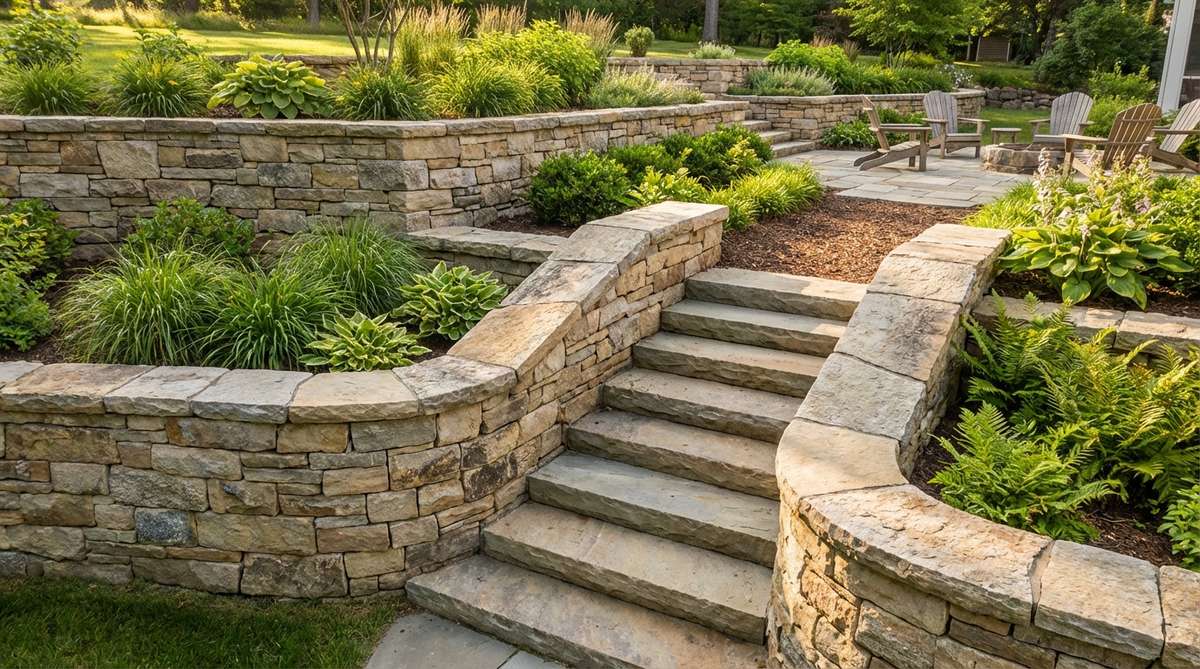
Stone stairs built into terraced walls provide access while unifying the design language. Matching materials ensure visual continuity across horizontal and vertical elements.
Set stair treads with slight forward pitch for water runoff. Extend wall caps to form stair handrails where code or safety concerns warrant.
Essential for sloped properties where functional circulation must coexist gracefully with ornamental landscapes.
28. Terraced Vegetable Garden Walls
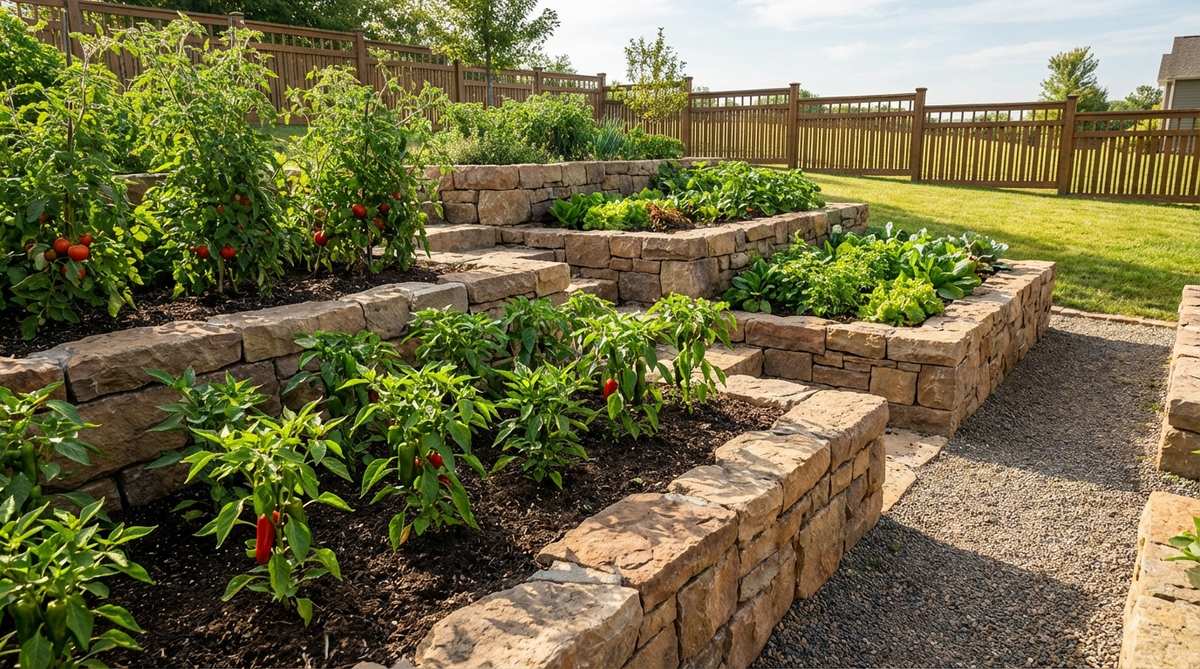
Tiered beds maximize sun exposure for edible crops on north-facing slopes. Each terrace captures soil amendments and irrigation without runoff loss.
Build walls 2-3 feet high to create comfortable working height for planting and harvest. Wider terraces accommodate row spacing for beans, tomatoes, and peppers.
Optimizes production capacity while improving drainage for moisture-sensitive crops like garlic and shallots.
Stone Wall Privacy Screen Combinations
Pairing solid stone bases with upper screening elements achieves privacy while reducing material costs and visual weight. Hybrid systems balance enclosure needs with aesthetic variety.
29. Stone Base with Wood Lattice Top
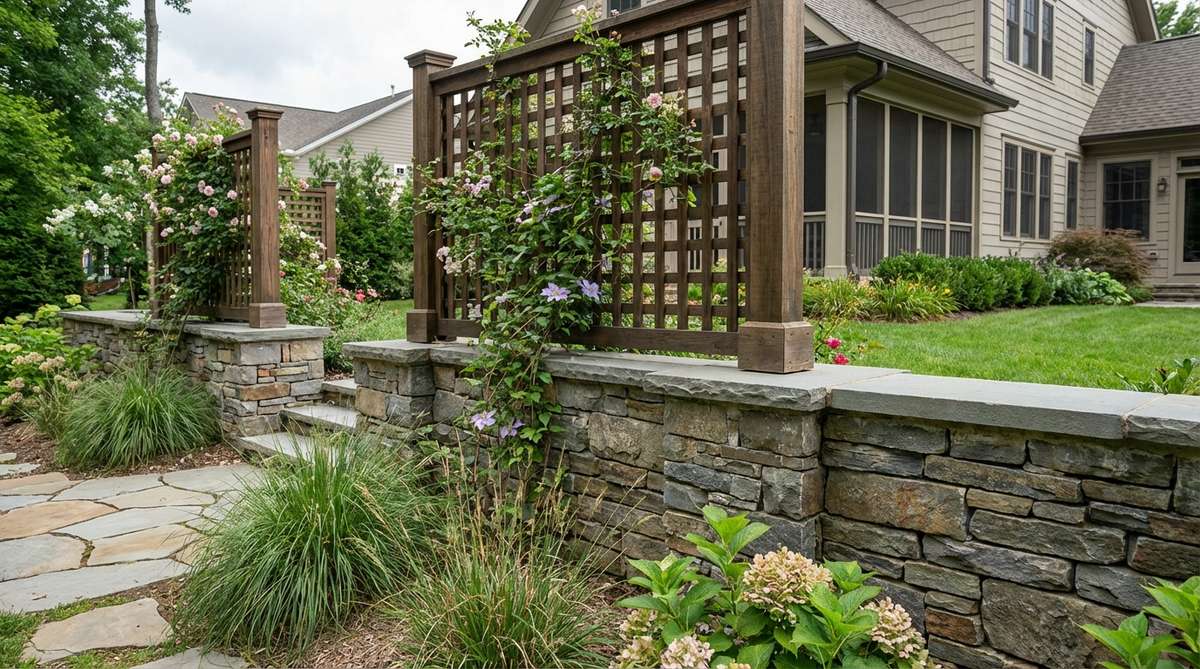
Two-foot stone bases anchor lattice panels that extend upward for screening. The stone grounds the composition while lattice filters views without complete blockage.
Cap stone walls with broad bluestone tops that receive lattice post brackets. Stain or paint lattice to complement home trim colors.
Offers privacy for patio dining while maintaining air circulation and reducing wind loads compared to solid fences.
30. Stone Wall with Metal Panel Inserts
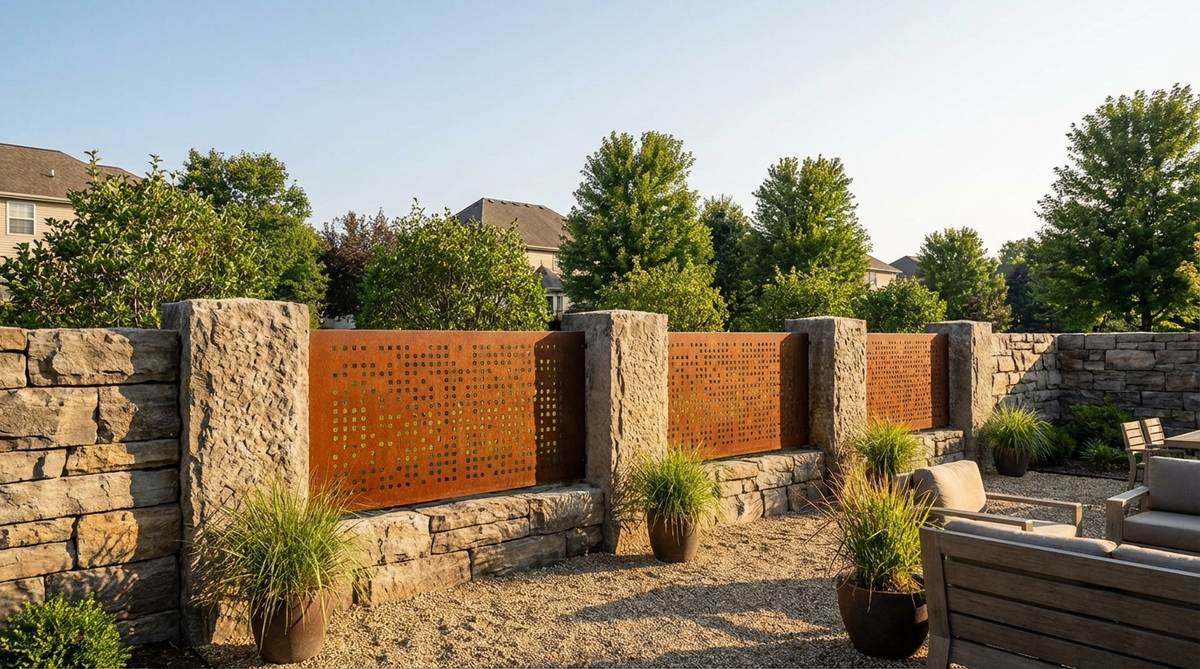
Cor-ten steel or powder-coated aluminum panels set between stone piers deliver contemporary flair. The metal provides instant height while stone anchors visual weight.
Embed steel channels in stone columns during construction to receive panel edges. Choose perforated metal for partial transparency or solid for complete screening.
Particularly effective in modern farmhouse designs where industrial accents complement agricultural heritage.
31. Living Wall Stone Base
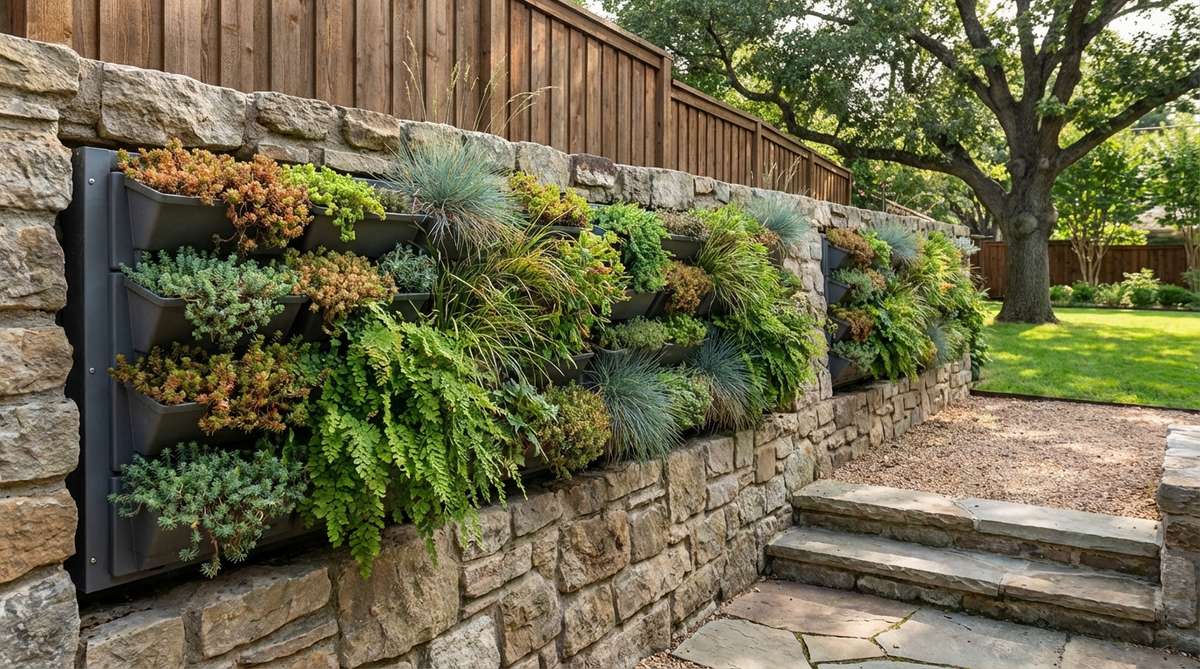
Stone retaining walls support vertical garden systems above grade level. The planted surfaces soften hardscape while improving air quality and insulation.
Install modular living wall panels with integrated irrigation on the upper wall section. Select drought-tolerant sedums and ferns for lower maintenance.
Converts privacy barriers into productive green infrastructure that filters pollutants and reduces urban heat island effects.
32. Stone and Glass Panel Hybrid
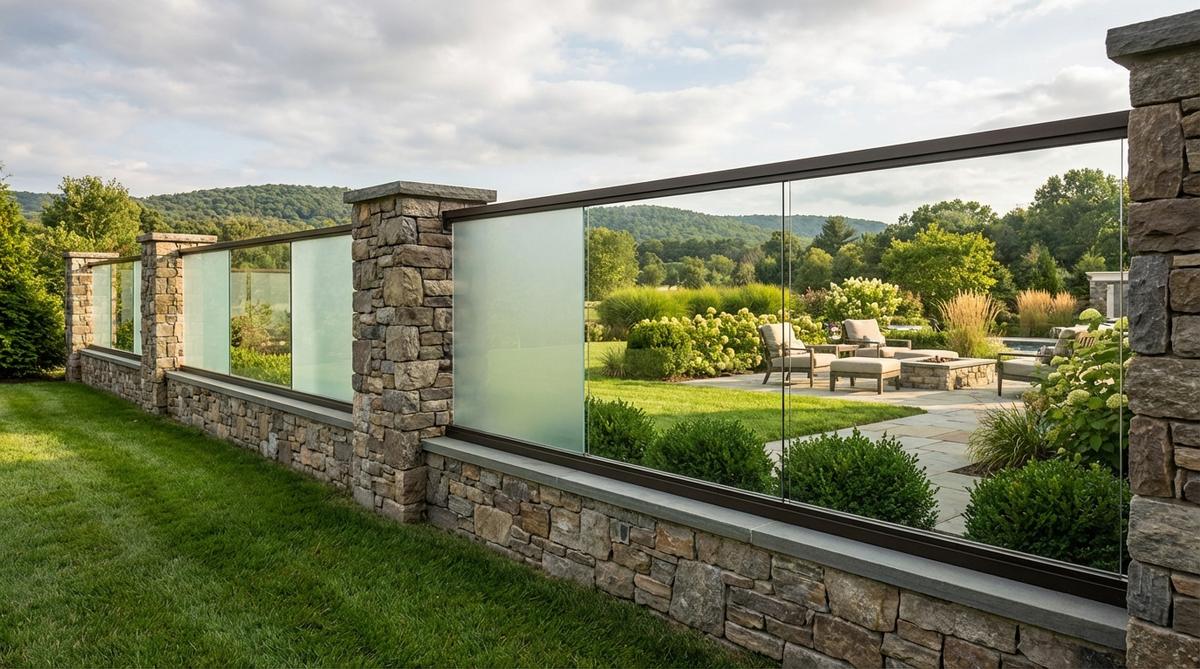
Transparent or frosted glass panels maintain views while blocking sound and wind. Stone bases provide necessary structural support and visual grounding.
Use tempered safety glass rated for outdoor exposure. Frame glass edges with metal channels anchored to stone piers at 4-6 foot intervals.
Ideal for scenic properties where retaining distant views justifies the premium glass investment.
33. Bamboo Screen Stone Planter Wall
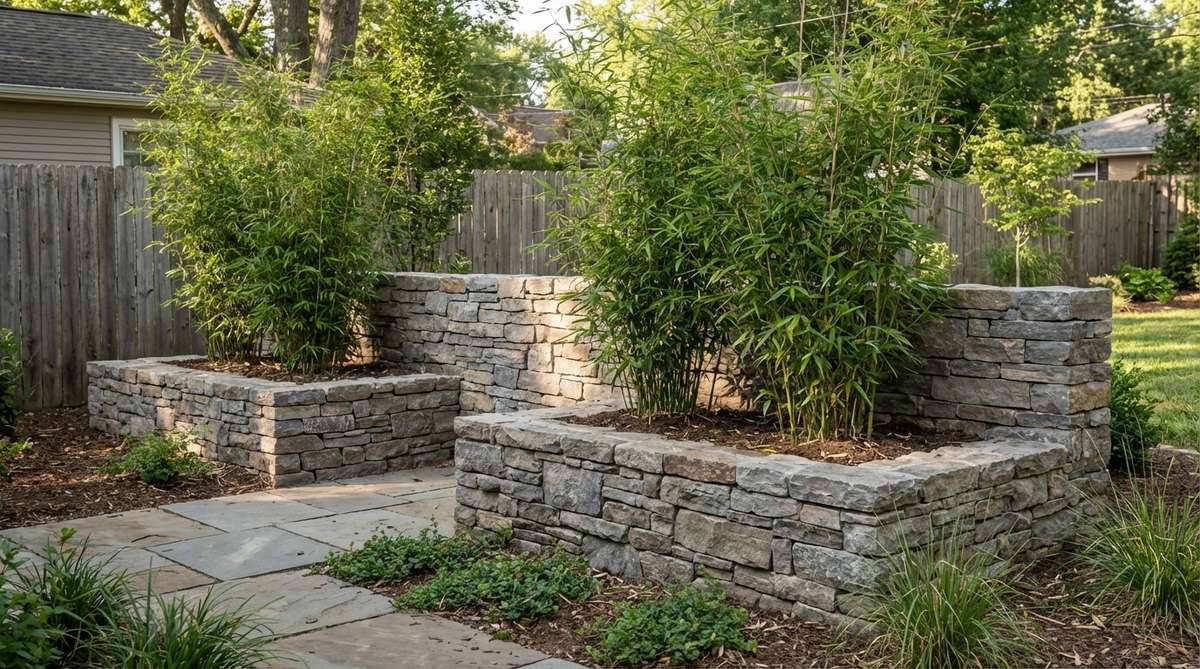
Clumping bamboo planted in stone-walled raised beds creates living privacy fast. The combination provides immediate stone presence with filling bamboo screens over seasons.
Choose non-invasive clumping varieties like Fargesia rufa or Bambusa multiplex. Build planter walls 30 inches deep minimum for adequate root space.
Delivers Asian-inspired aesthetics while achieving functional screening within two growing seasons.
34. Stone Column Cable Rail System
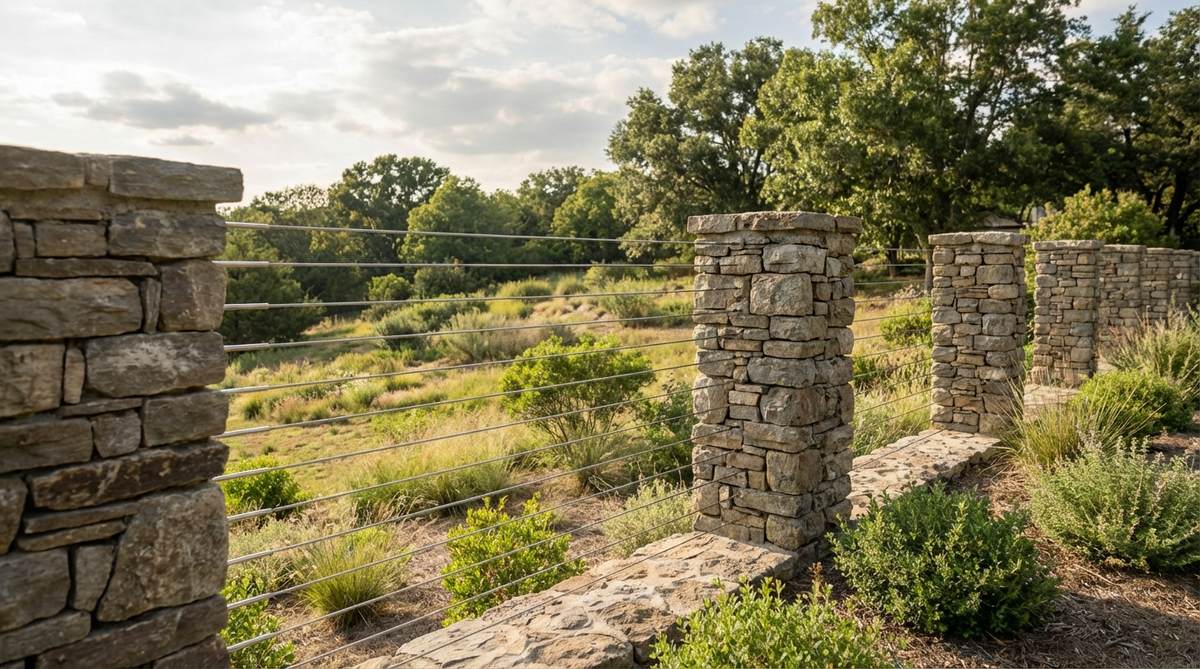
Horizontal stainless steel cables strung between stone columns offer minimalist transparency. The clean lines preserve views while defining boundaries clearly.
Space cables 3-4 inches apart to meet safety codes for children. Tension cables to 300 pounds using turnbuckles for taut appearance.
Perfect for hillside properties where blocking views would diminish the site’s primary asset.
Stone Veneer Applications For Garden Walls
Manufactured and natural stone veneers provide authentic appearance at reduced weight and cost. Veneers face concrete block or poured concrete cores efficiently.
35. Cultured Stone Veneer Retaining Wall
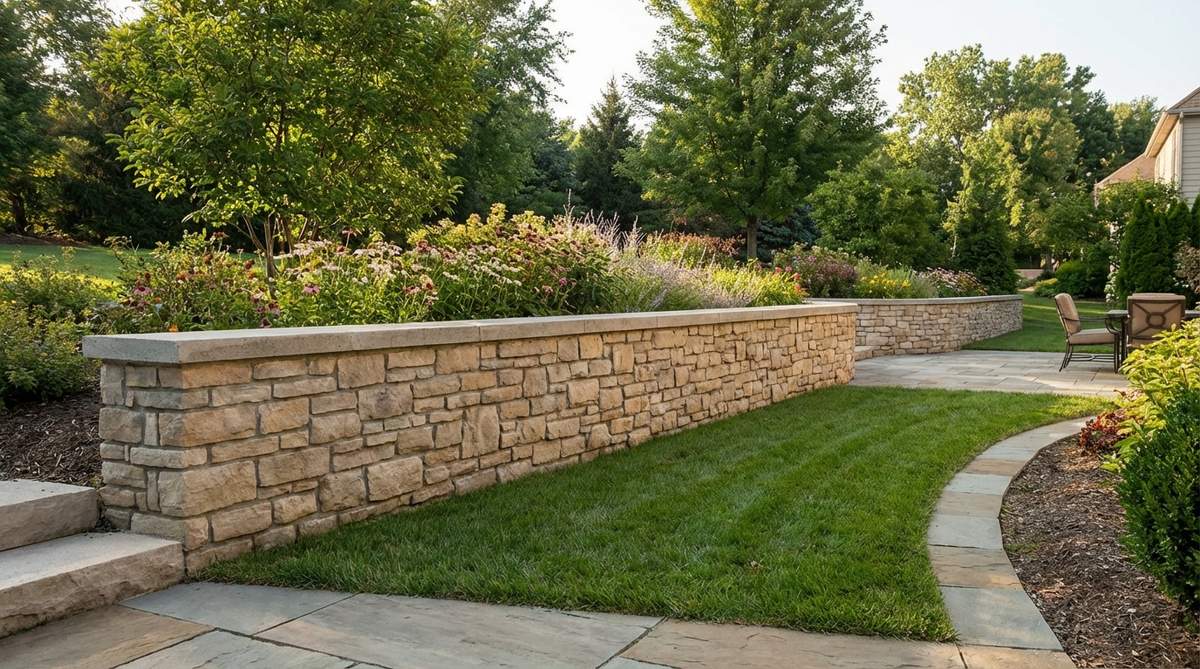
Cast concrete veneers mimic natural stone at half the weight. The lighter load reduces footing requirements and simplifies installation logistics.
Apply veneers to moisture-resistant backing boards or directly to concrete block using appropriate adhesives. Maintain consistent joint widths for professional appearance.
Enables natural stone aesthetics in locations where weight limitations prohibit full-depth masonry.
36. Thin Cut Natural Stone Facing
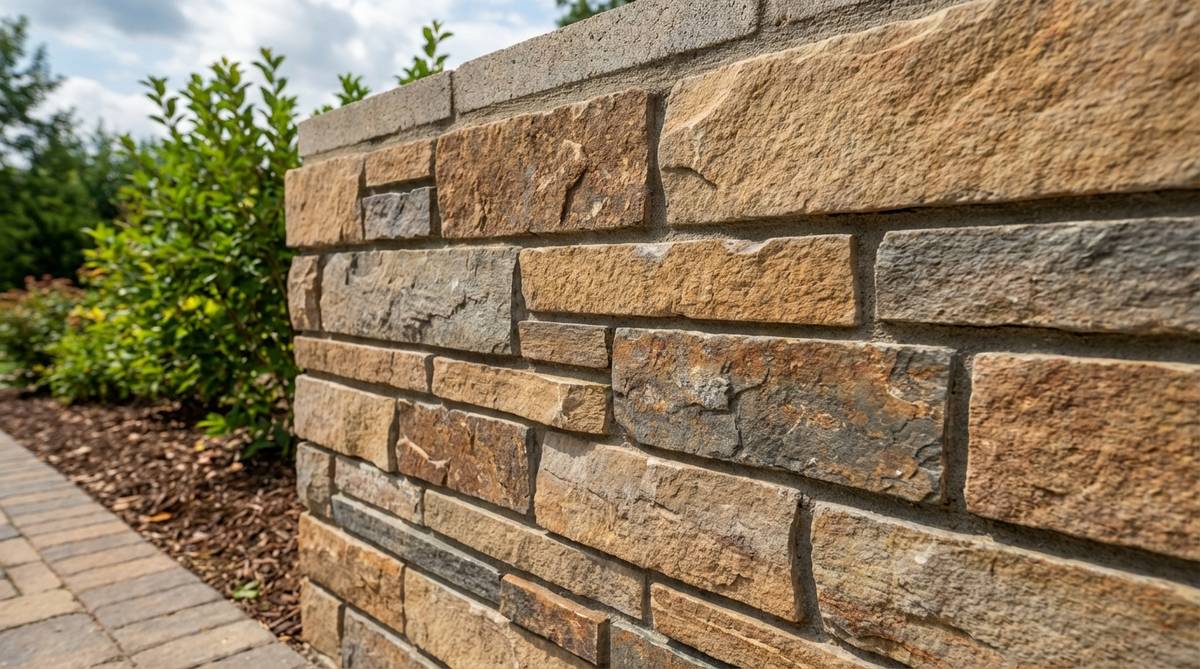
Natural stone sliced to 1-2 inch thickness retains authentic color and texture. The reduced thickness cuts material costs substantially while preserving quarried character.
Mortar thin-cut stones to concrete block cores using modified thinset. Seal faces to prevent spalling in freeze-thaw climates.
Delivers genuine stone character for substantial wall projects where budget constraints influence material selection.
37. Stacked Ledger Panel System
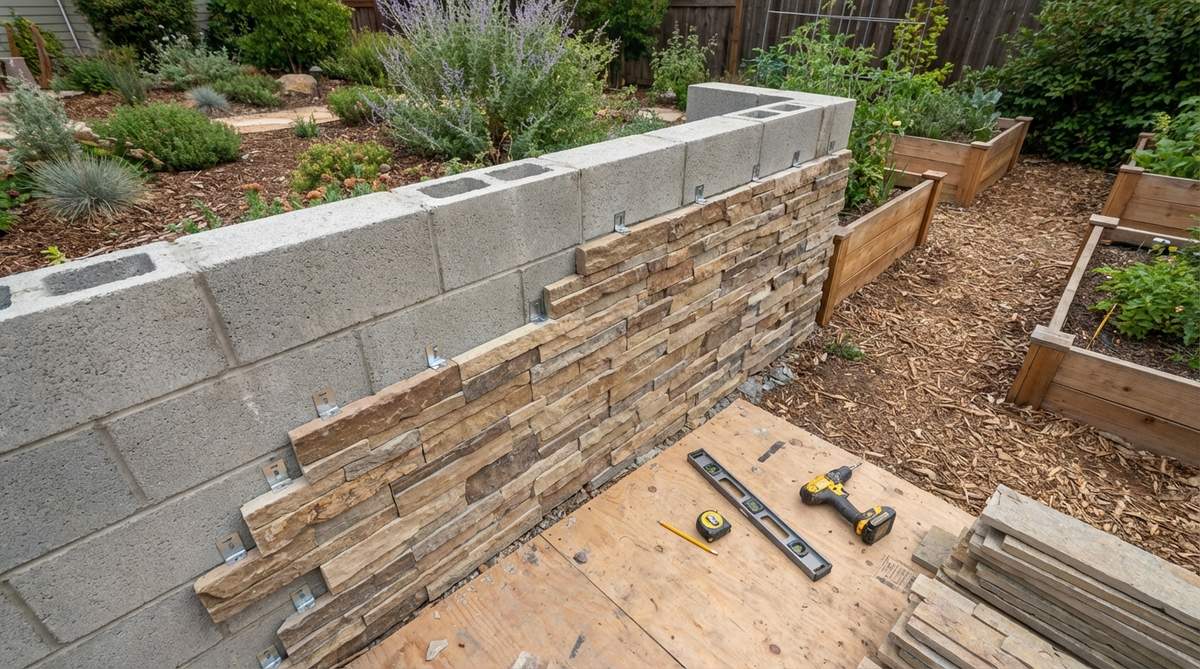
Pre-assembled corner and field panels speed installation dramatically. The Z-clip mounting system eliminates wet mortar trade coordination.
Attach furring strips to concrete block walls, then clip panels into place from bottom upward. Trim panels with angle grinders fitted with diamond blades.
Ideal for DIY-capable homeowners seeking professional results without masonry experience requirements.
38. Ashlar Pattern Veneer Layout
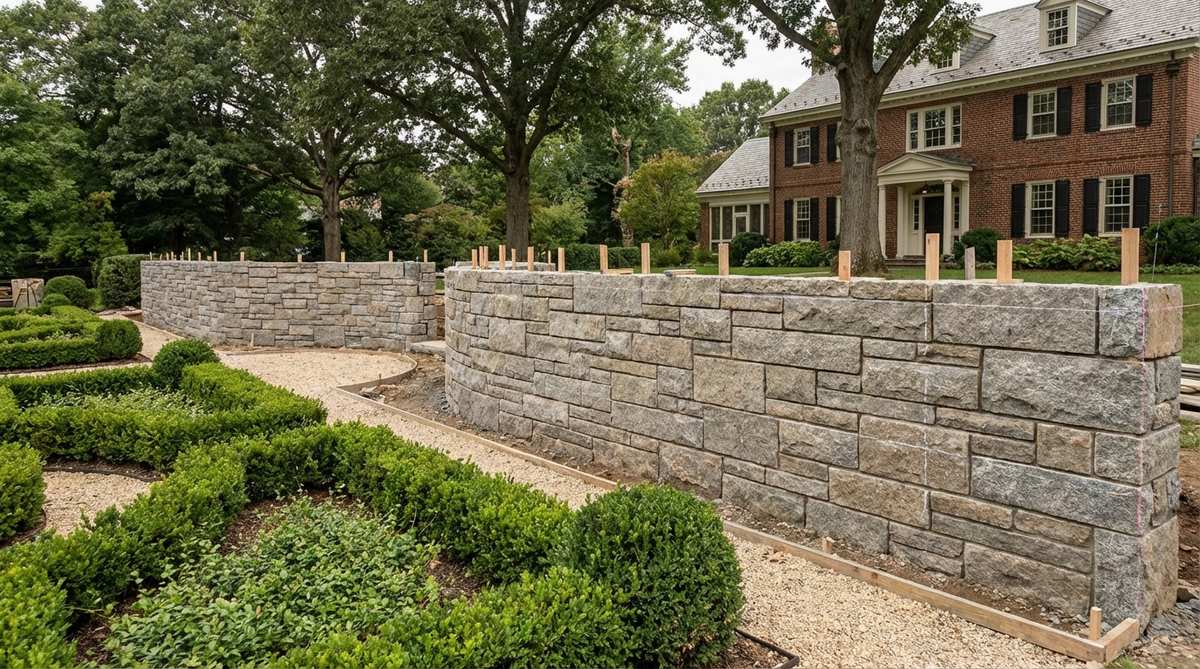
Rectangular veneers laid in running bond patterns create formal geometry. The orderly arrangement suits Colonial and Federal architecture seamlessly.
Plan layouts to minimize cuts at corners and openings. Dry-fit patterns on the ground before adhesive application to optimize piece placement.
Brings traditional masonry elegance to garden walls supporting formal parterre or rose garden installations.
Mixed Material Stone Garden Wall Designs
Combining stone with complementary materials adds visual interest while leveraging each material’s strengths. Strategic mixing reduces costs and expands design possibilities.
39. Stone and Concrete Block Combination
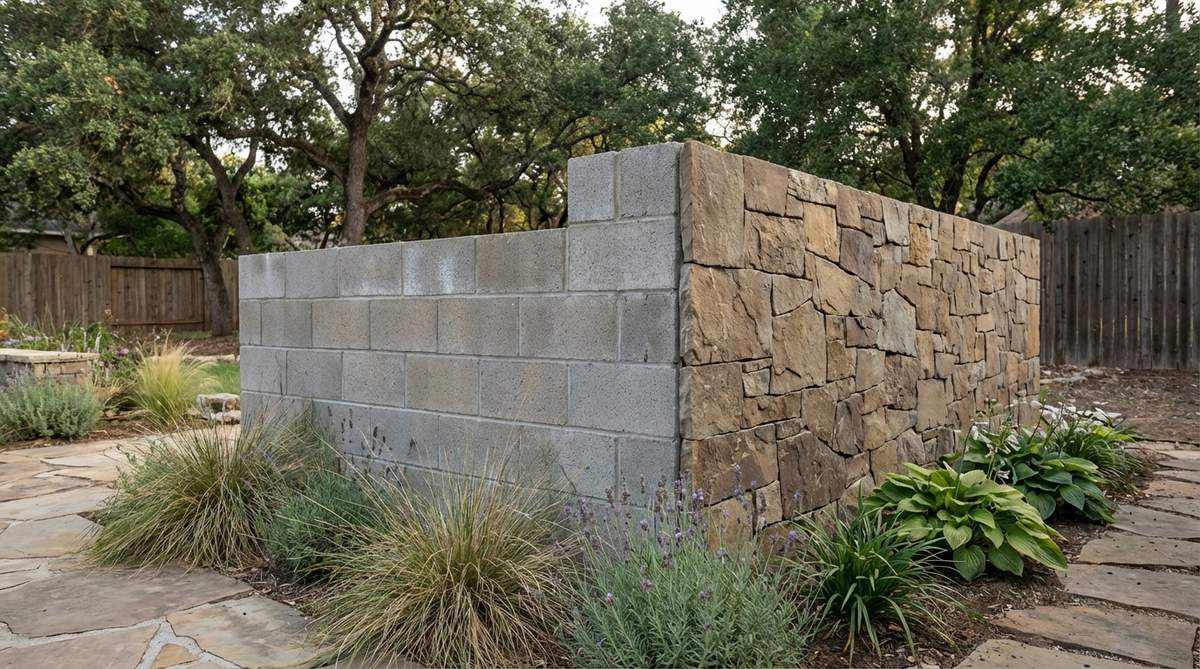
Concrete blocks form economical cores faced with stone on visible sides. The hybrid approach concentrates premium materials where appearance matters most.
Build concrete block walls first, then mortar stone veneers to exterior faces. Leave interior faces unfinished or parge with concrete for moisture protection.
Cost-effective solution for large wall projects where full stone construction exceeds reasonable budgets.
40. Stone and Stucco Combination Wall
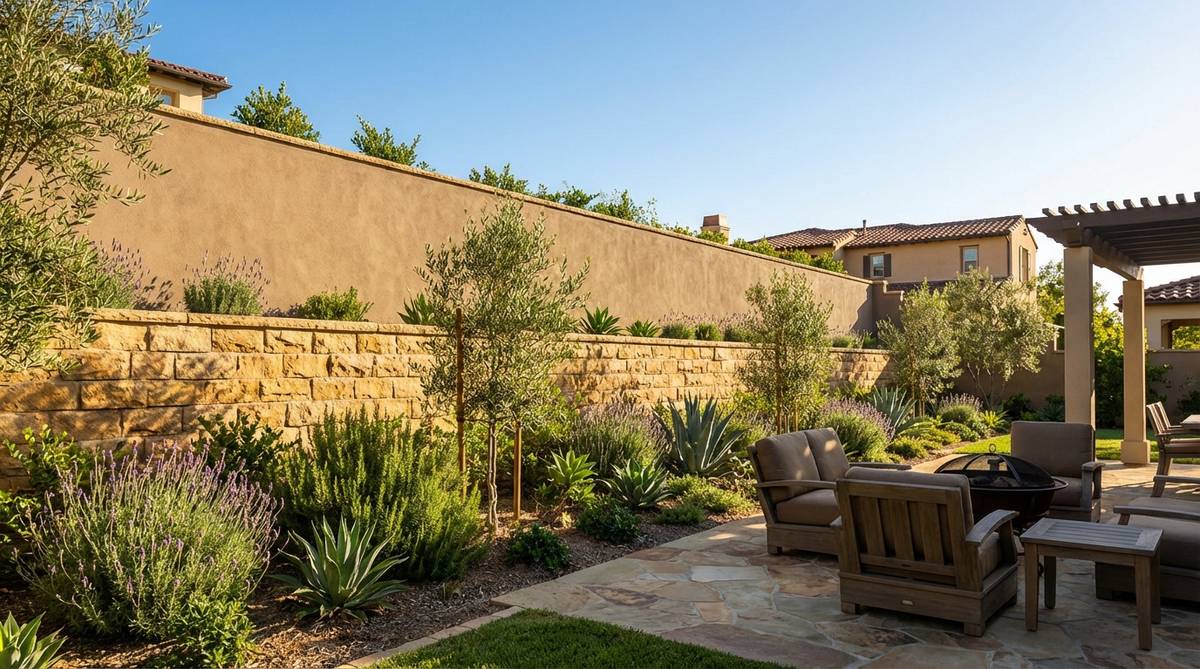
Stone bases transition to smooth stucco upper sections for textural contrast. The combination reduces stone volume while creating distinct visual zones.
Apply stucco over cement board or concrete backing using three-coat traditional systems or one-coat synthetic options. Tint finish coats to complement stone tones.
Mediterranean and Spanish Colonial styles benefit from this material pairing that references historical precedent.
41. Stone Pier Wood Panel Fence
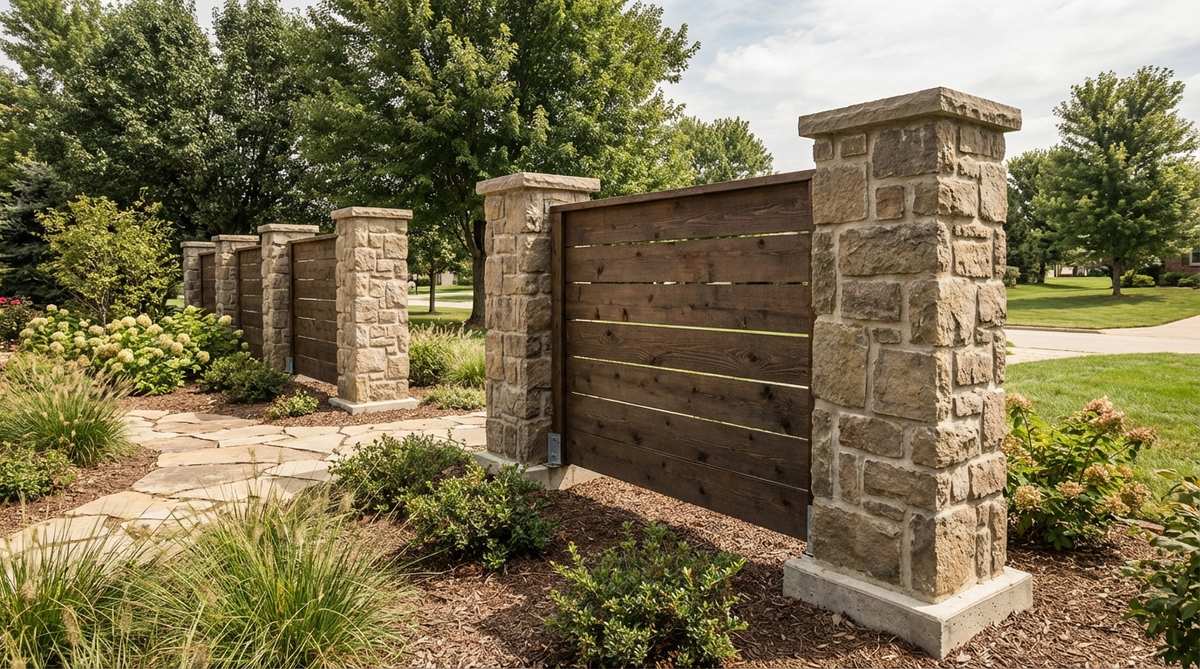
Substantial stone columns every 6-8 feet support horizontal wood panels. The rhythm of repeating piers adds architectural discipline to fence lines.
Build stone piers on concrete footings extending below frost depth. Anchor wood panel frames to embedded metal brackets mortared into piers.
Traditional approach that distributes material costs between masonry and carpentry trades efficiently.
42. Stone and Composite Decking Wall
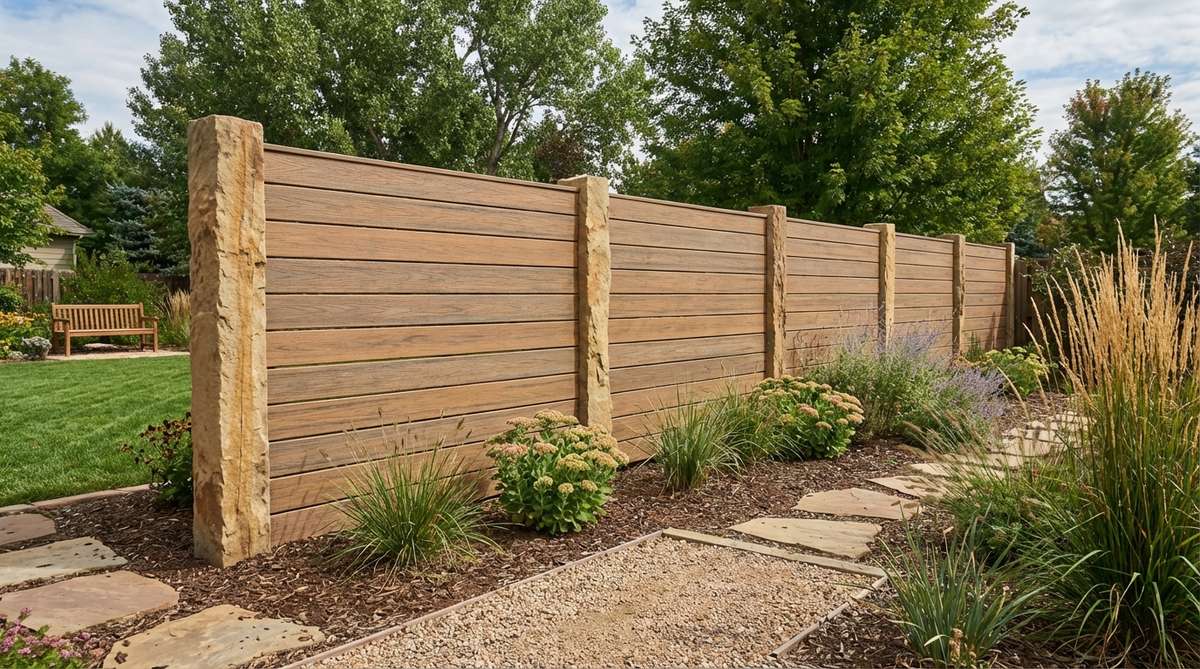
Composite boards used horizontally between stone posts offer low-maintenance screening. The synthetic lumber resists rot and insect damage indefinitely.
Slot composite boards into channels routed into stone columns or use concealed fastener systems. Choose textured composites that avoid plastic appearance.
Maintenance-averse homeowners appreciate the durability without painting or staining requirements.
43. Stone Base Green Wall System
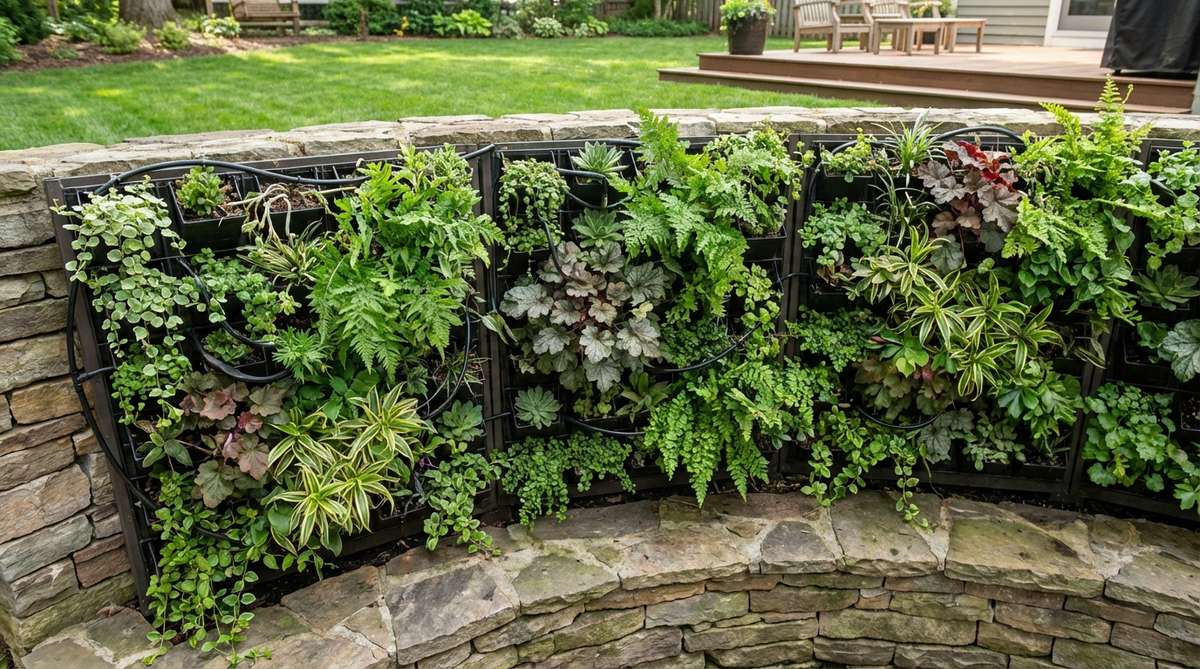
Living wall modules mount to stone bases creating instant vertical gardens. The planted surfaces cool surrounding air while absorbing sound effectively.
Install drip irrigation within modular planting systems before mounting to stone backing. Select plants suited to vertical orientation and local light conditions.
Transforms utilitarian retaining walls into biophilic design features that enhance human wellbeing through nature connection.
Specialty Stone Types For Distinctive Walls
Regional stones and unique geological materials create signature appearances tied to local character. Specialty selections make design statements impossible with commodity materials.
44. Fond du Lac Limestone Wall
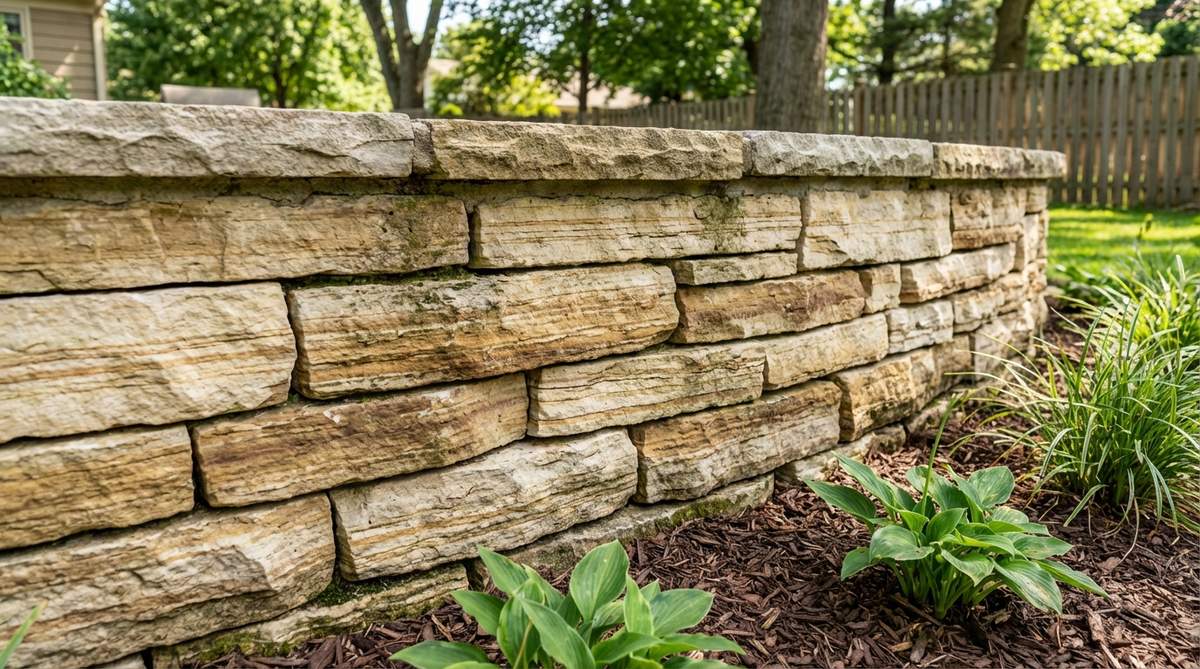
This Wisconsin limestone features distinctive horizontal banding and warm buff coloration. The sedimentary layers create natural linear patterns without cutting.
Maintain bed layers horizontal during installation to preserve geological authenticity. The stone splits easily along bedding planes for fitting.
Particularly appropriate for Midwest landscapes where local stone connects projects to regional geology.
45. Tennessee Crab Orchard Stone
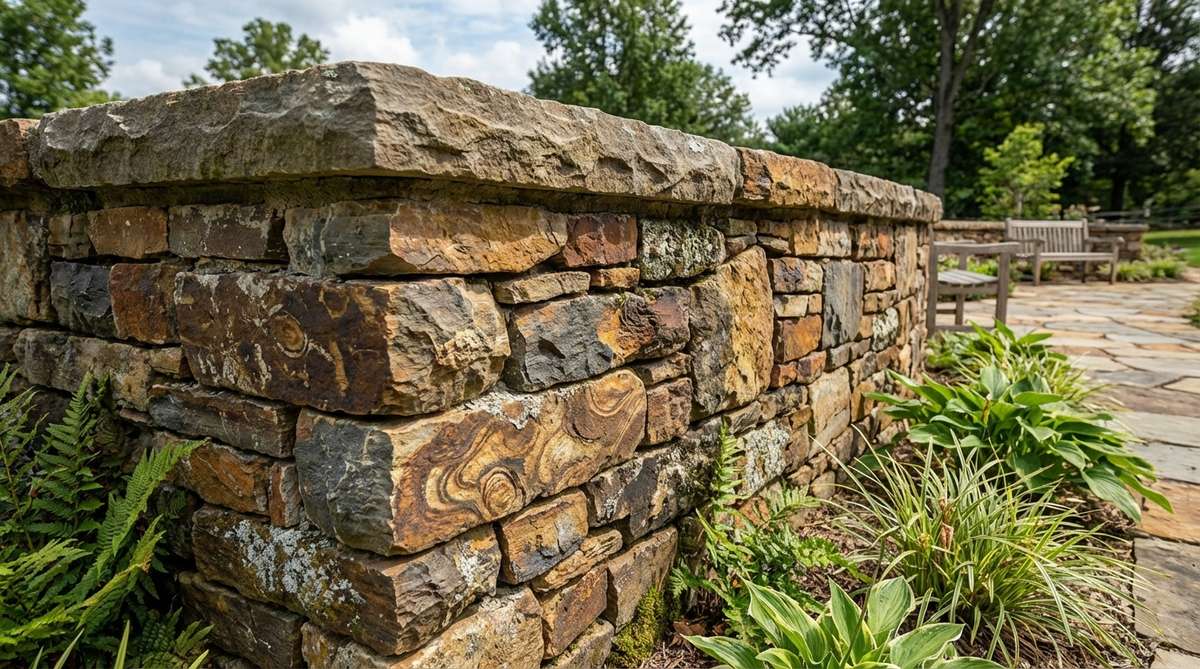
Variegated browns, golds, and grays make each stone uniquely patterned. The dense sandstone accepts foot traffic on caps and copings without degradation.
Select pieces showcase the stone’s color range across the wall face for maximum visual interest. The irregular shapes suit rustic applications beautifully.
Works exceptionally well in Appalachian and Southern landscapes where the stone originates geographically.
46. Saratoga Granite Coastal Wall
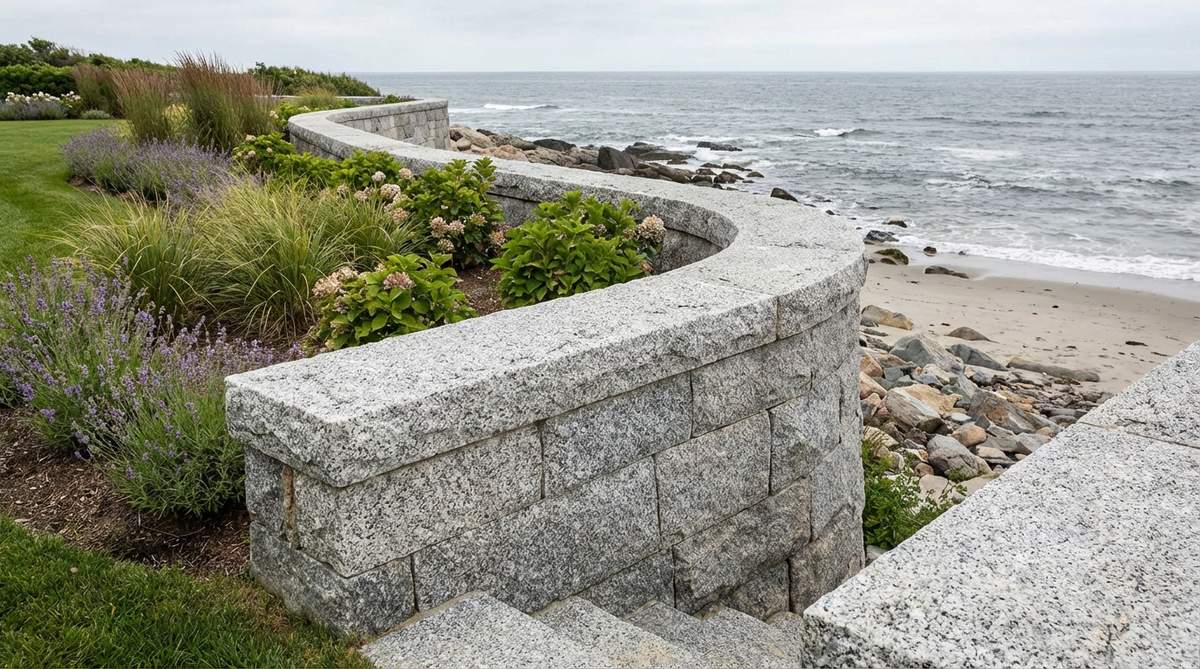
Salt-and-pepper granite coloring suits coastal environments perfectly. The crystalline structure withstands maritime exposure without spalling or staining.
Specify thermal finish for slip resistance on horizontal surfaces. The speckled appearance disguises water spots and weathering gracefully.
Ideal for seaside properties where durability in salt air demands igneous stone performance.
47. Santa Barbara Sandstone Wall
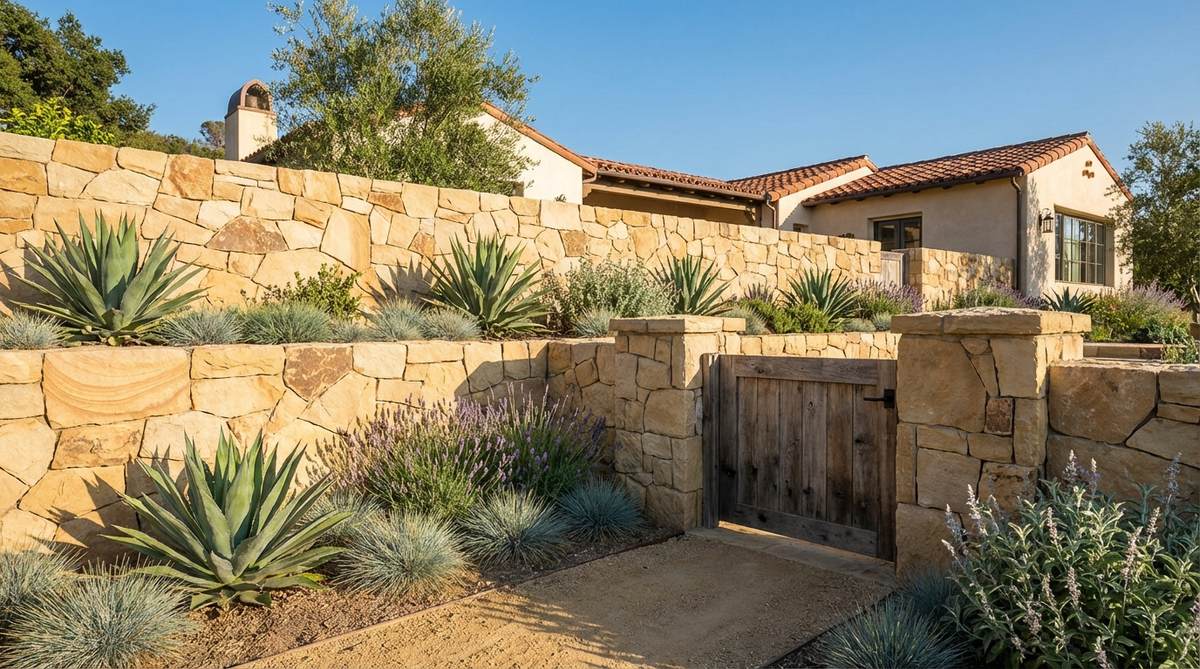
Warm tan tones with subtle grain variations complement Spanish and Mediterranean architecture. The relatively soft stone shapes easily for custom fits.
Seal sandstone faces in wet climates to prevent water absorption and freeze damage. The stone’s warmth suits southwestern and California landscapes especially.
Brings authentic regional character to gardens inspired by mission architecture and desert plantings.
48. New England Fieldstone Wall
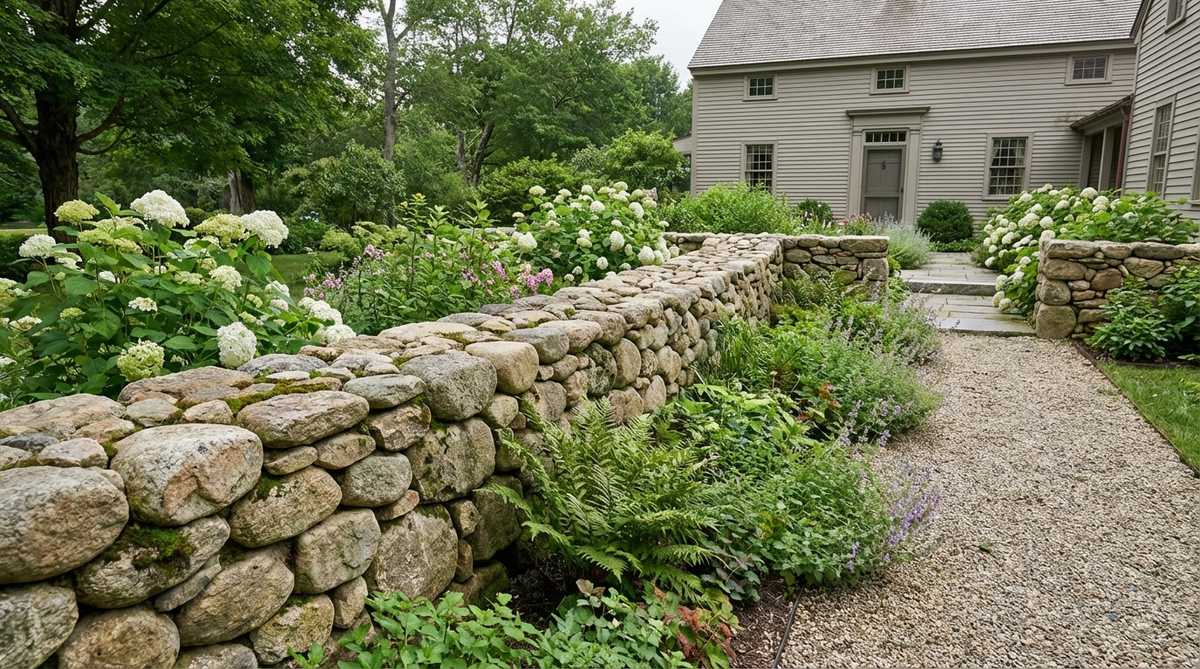
Rounded glacial stones cleared from agricultural fields create quintessential American landscape icons. The varied lithology reflects complex glacial history.
Embrace irregularity rather than fighting natural forms. Traditional New England walls celebrate imperfection as authentic craftsmanship.
Essential for historic property restoration and Colonial landscape interpretations throughout northeastern states.
Conclusion
These 48 stone garden wall designs demonstrate the versatility of stone as a landscape building material. Whether your priority focuses on retaining steep slopes, establishing private outdoor rooms, or adding architectural definition to flat properties, stone walls deliver lasting solutions that appreciate with age. Start by evaluating your site’s specific requirements—slope angle, drainage patterns, and aesthetic goals—then select stone types and construction methods that align with your regional climate and maintenance preferences. Well-designed stone walls become generational landscape features that define property character and support thriving gardens for decades.
Frequently Asked Questions
How high can a dry-stack stone wall be built safely?
Most dry-stack stone walls should remain under 3 feet tall for structural safety without engineering. Walls exceeding this height typically require mortar bonding, reinforcement, or professional design to resist soil pressure and prevent collapse. Local building codes often mandate permits and engineering for retaining walls over 4 feet. The wall’s batter angle, stone size, and soil conditions influence maximum safe height significantly.
What is the best stone for garden walls in cold climates?
Dense stones with low water absorption perform best in freeze-thaw cycles. Granite, hard limestone, and dense sandstones resist spalling caused by water expansion during freezing. Avoid soft sedimentary stones and highly porous materials that absorb moisture readily. Proper drainage behind walls matters as much as stone selection—standing water increases freeze damage regardless of stone type.
Do stone retaining walls need drainage systems?
Yes, most retaining walls require drainage to prevent hydrostatic pressure buildup that can cause failure. Dry-stack walls drain naturally through mortarless joints. Mortared walls need weep holes every 6-8 feet or perforated drain pipes behind the wall at the base. Gravel backfill creates drainage paths that direct water away from the wall structure toward designated outlets.
How much does stone wall construction cost per linear foot?
Stone wall costs range from 25-75 dollars per square foot of wall face depending on stone type, wall height, and construction method. Dry-stack walls using local fieldstone typically cost less than mortared walls with premium cut stone. Gabion walls fall in the middle range. Labor represents 50-50 percent of total costs in most markets, making DIY construction attractive for budget-conscious homeowners with appropriate skills.
Can you build stone walls on slopes without footings?
Low dry-stack walls under 2 feet can be built on compacted gravel bases without concrete footings if the slope remains stable. Taller walls and mortared construction require footings below frost depth to prevent settling and cracking. The footing depth varies by climate—deeper in northern regions with significant frost penetration. Stepped footings follow slope angles while maintaining necessary depth below grade at each level.
What plants grow well near stone garden walls?
Stone walls create warm microclimates ideal for heat-loving plants like lavender, rosemary, sedum, and ornamental grasses. The reflected heat benefits Mediterranean species and extends growing seasons for marginally hardy selections. Shade walls support ferns, hostas, and woodland wildflowers. Wall crevices accommodate alpine plants like hens-and-chicks, creeping thyme, and rock cress that thrive in excellent drainage.