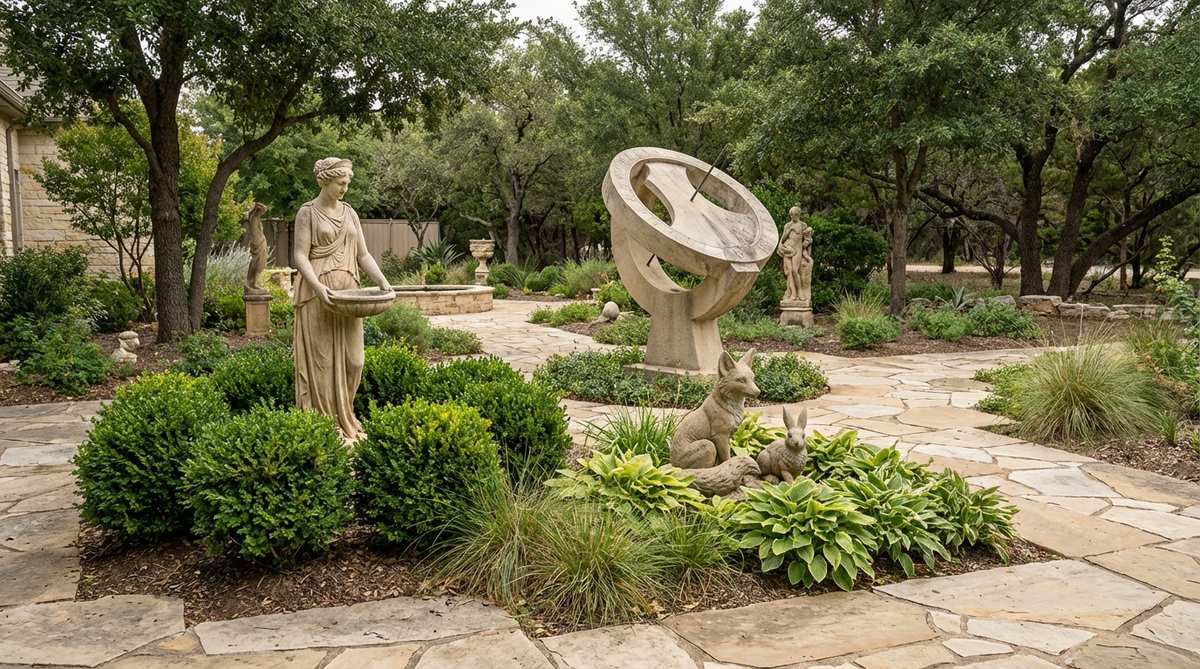
Stone garden statues serve as permanent focal points that anchor garden design while adding personality and visual interest year-round. From classical figures to whimsical animal sculptures, these enduring elements withstand weather beautifully while developing character over time. Fresh Garden Ideas brings you expert-curated selections that transform ordinary landscapes into compelling outdoor spaces.
Design SnapshotKey Principles
- Scale and Proportion: Match statue size to garden space—oversized pieces overwhelm small yards while tiny sculptures disappear in expansive landscapes
- Material Selection: Choose granite, limestone, or cast stone for durability; each develops unique patina and weathers distinctly across seasons
- Strategic Placement: Position statues at pathway ends, garden bed centers, or near water features to create natural sight lines and focal points
- Style Cohesion: Align sculpture aesthetics with existing architecture—classical pieces suit traditional homes while abstract forms complement contemporary design
Classical Stone Garden SculptureTimeless Elegance
Classical sculptures draw inspiration from Greek and Roman traditions, featuring human forms with exquisite detail in draped gowns and finely sculpted faces. These pieces work beautifully in formal gardens, positioned at key focal points like pathways, patios, or symmetrical planting beds.
1. Four Seasons Statue Set
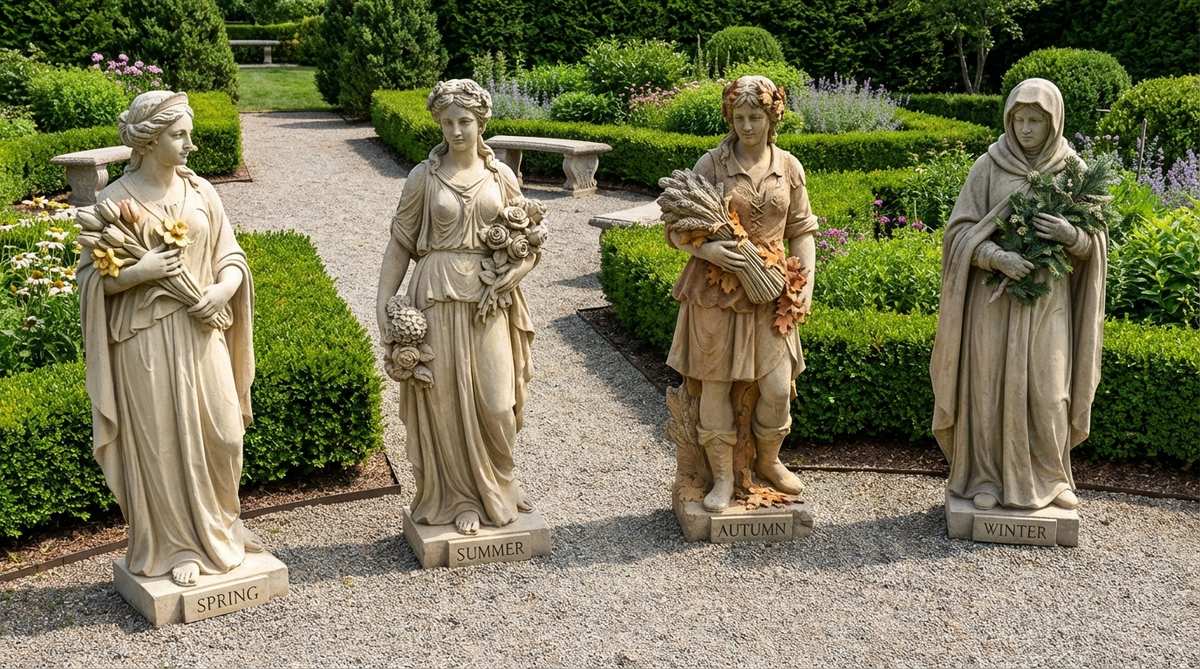
Cast stone figures depicting Spring, Summer, Autumn, and Winter create a narrative sequence along garden borders or terraces. Each statue holds seasonal bouquets and wears period clothing that reflects the character of its respective season.
Position these at equal intervals along pathways or at garden quadrants to establish visual rhythm. The detailed carving captures attention from multiple viewing angles while maintaining cohesive design language.
These sets anchor formal layouts and provide year-round interest even when plantings go dormant. The weathered finish develops naturally over time, enhancing the aged appearance valued in classical design.
2. Venus de Milo Replica
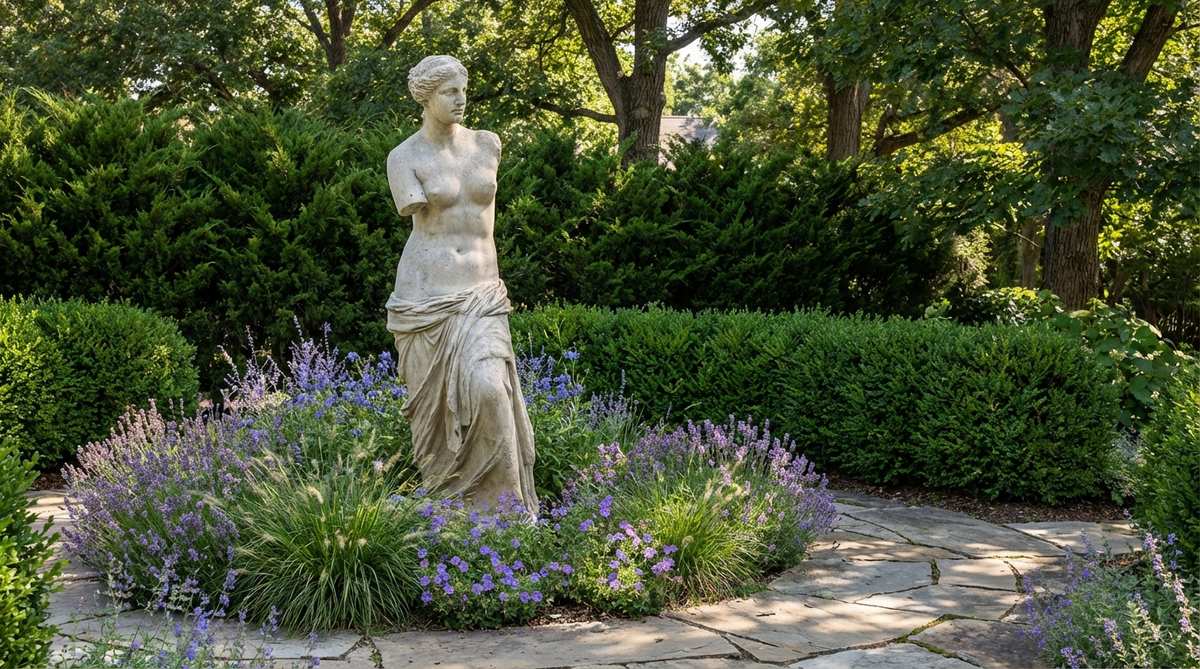
A limestone-finish Venus brings museum-quality artistry to residential landscapes. This iconic armless figure stands elegantly amid flowering perennials or against evergreen backdrops.
Place on raised pedestals to give prominence proportional to garden size. The pale stone contrasts beautifully with dark foliage like boxwood or yew hedges.
This sculpture communicates refined taste and creates conversation-starting focal points visible from indoor living spaces. Its classical proportions suit both intimate courtyards and expansive estate gardens.
3. Cherub Fountain Statuary
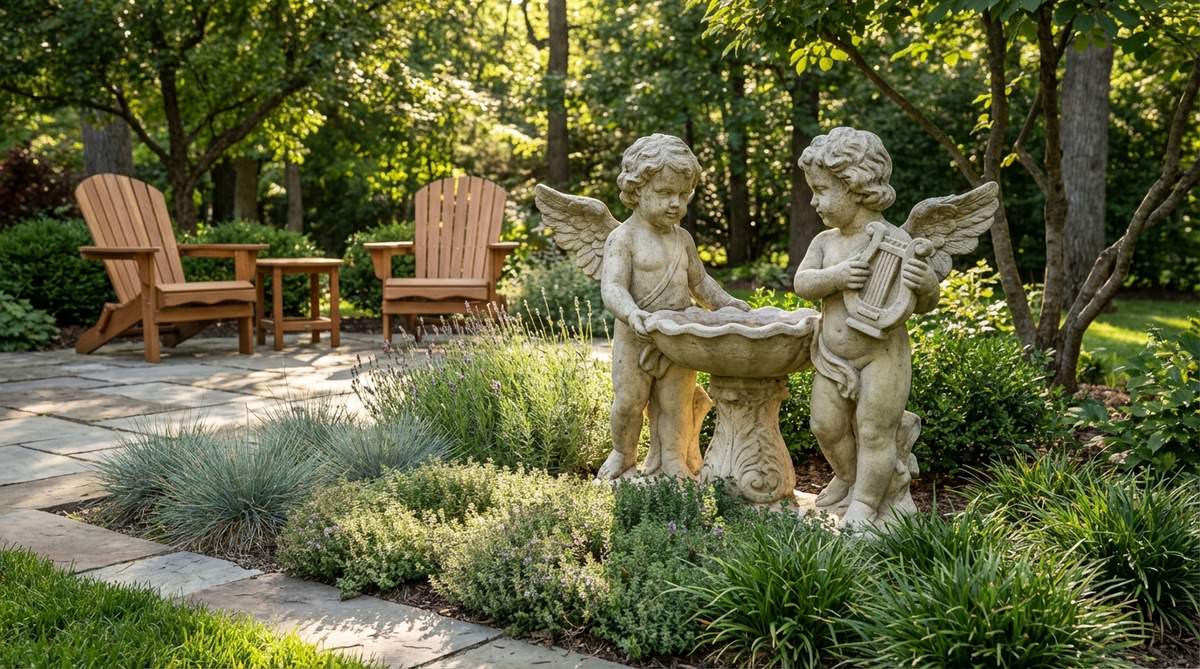
Small cherub figures holding vessels or instruments range from 18 to 36 inches tall. These playful yet elegant pieces work as standalone accents or integrated fountain elements.
Position near seating areas or at garden bed edges where their detailed faces and wings catch changing daylight. Pair with low-growing herbs or ornamental grasses that won’t obscure intricate carving.
4. Roman Goddess Flora
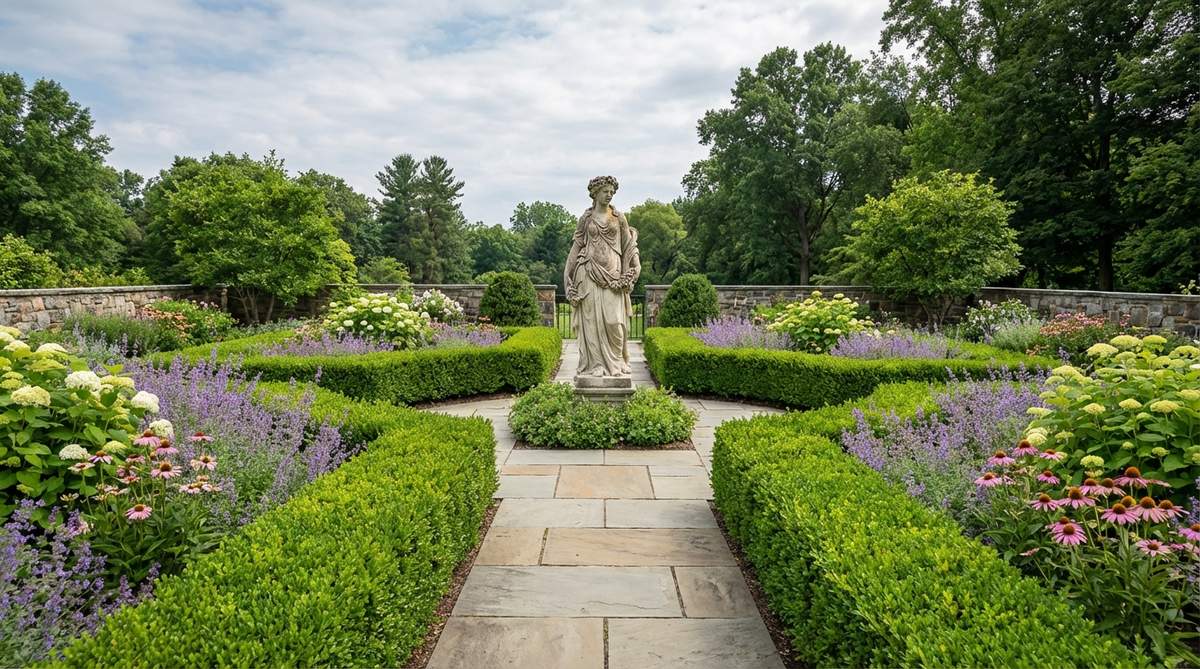
Life-size Flora statues celebrate the goddess of flowers and spring with flowing robes and floral wreaths. These commanding pieces serve as garden centerpieces in formal layouts.
Install at the terminus of central axes or within circular planting beds to maximize visibility. The vertical form adds height dimension that complements horizontal perennial layers.
5. Classical Male Torso
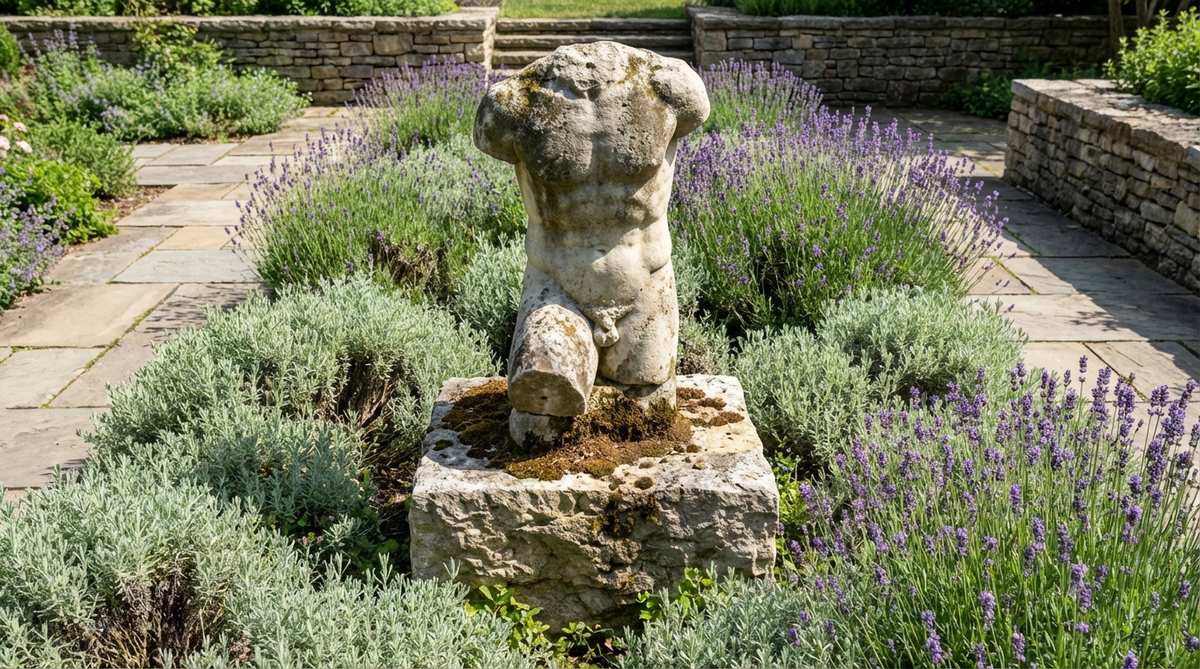
Fragment-style torso sculptures evoke archaeological discovery and ancient ruins. These weathered pieces bring scholarly sophistication to contemporary and traditional gardens alike.
Display on limestone plinths surrounded by Mediterranean plants like lavender and santolina. The truncated form reads as intentional artistic choice rather than damage.
6. Grecian Urn with Figures
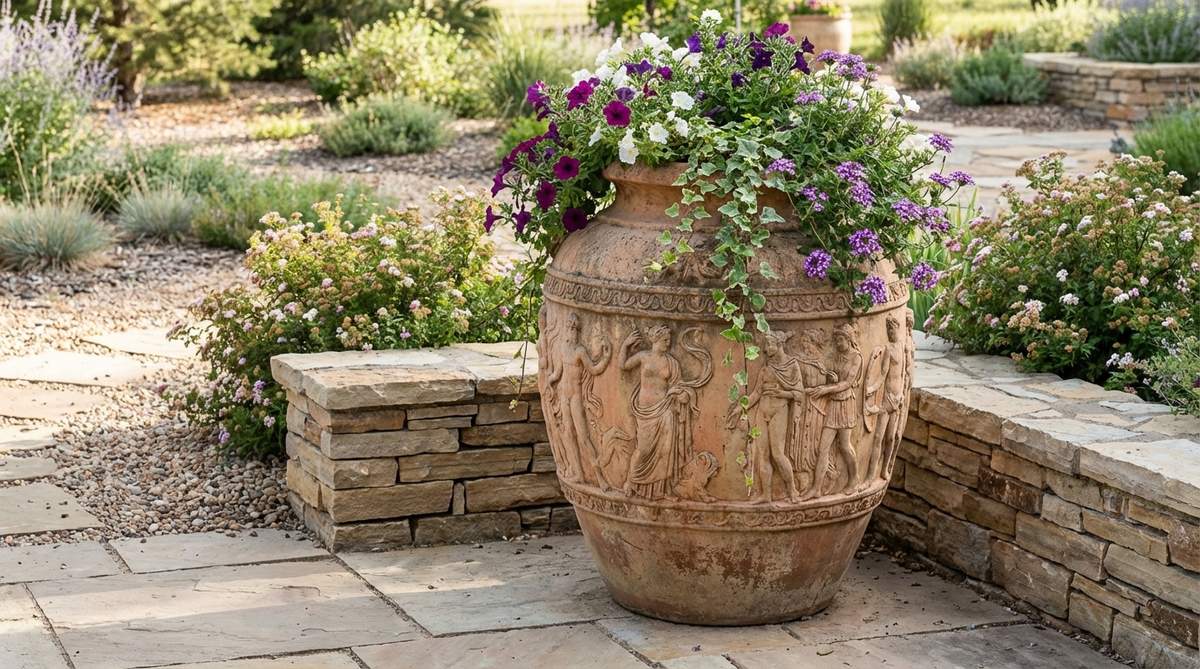
Relief-carved urns depicting mythological scenes function as both planters and sculpture. The carved narratives wrap around vessels, rewarding viewers who circle the piece.
These work exceptionally well flanking entrances or marking garden transitions between formal and informal areas. Fill with cascading annuals that spill over carved edges without obscuring bas-relief details.
Stone Animal Statues That Bring Wildlife Charm
Animal sculptures connect gardens to nature while adding symbolic meaning and personality. From majestic lions representing courage to gentle deer embodying grace, these pieces enhance landscapes with recognizable forms that resonate across cultures.
7. Guardian Lion Pair
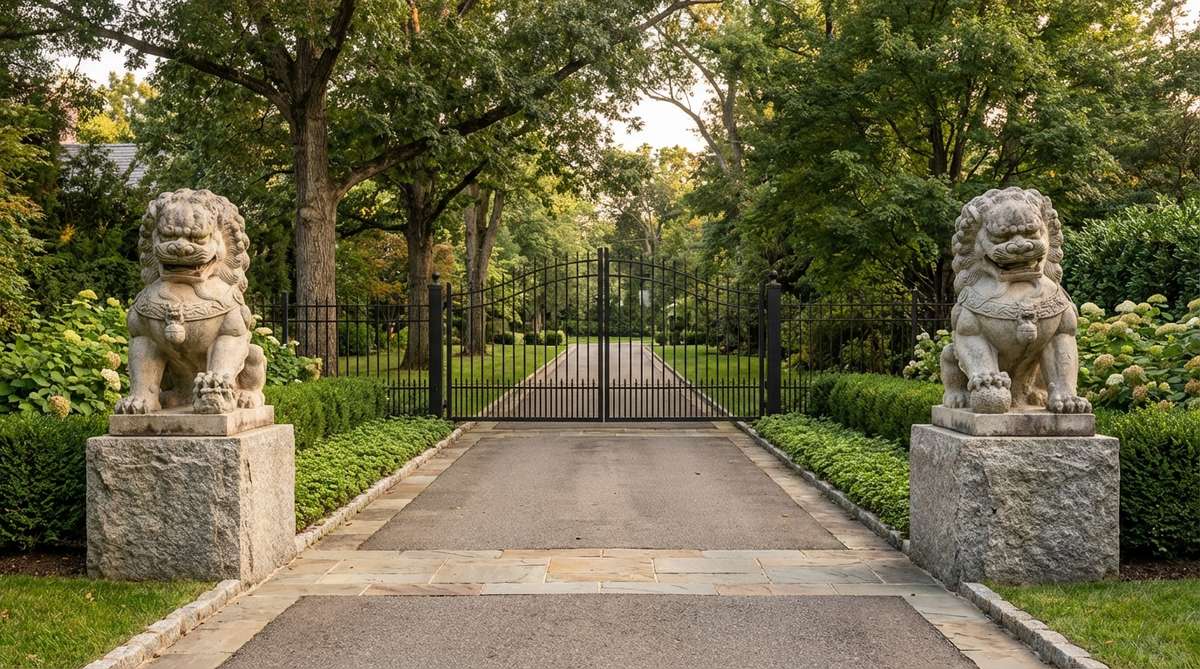
Matching stone lions positioned at gates or driveway entrances establish impressive thresholds. Traditional Chinese guardian lions feature intricate mane details and powerful stances that convey protection.
These substantial pieces require sturdy foundations and work best in properties with formal architectural elements. The symmetrical placement reinforces axial garden design while framing views beyond.
Lion statues bring gravitas to estate-scale landscapes and signal transitions from public to private garden zones. Their recognizable symbolism communicates strength without requiring cultural context.
8. Stone Elephant Sculpture
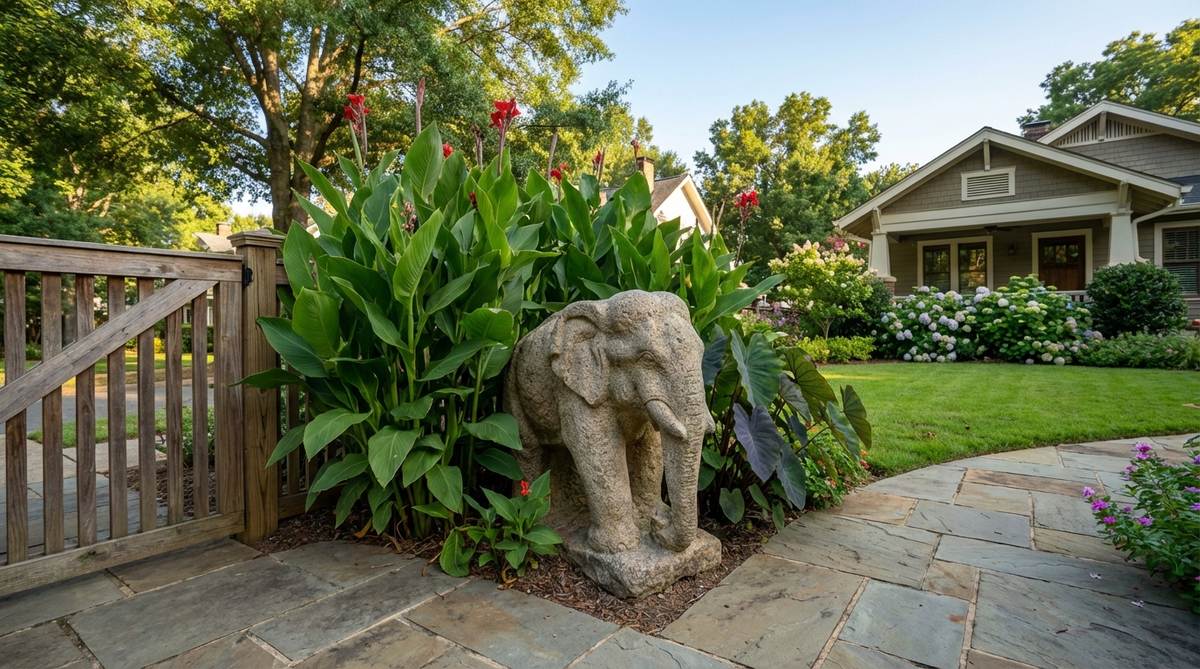
Elephants carved in granite or sandstone symbolize wisdom, prosperity, and stability. Single elephants serve as focal points while grouped families create narrative vignettes.
Position near entrances or in corner beds where their substantial forms anchor compositions. Pair with bold tropical foliage like cannas or elephant ears to reinforce thematic cohesion.
9. Leaping Frog Statues
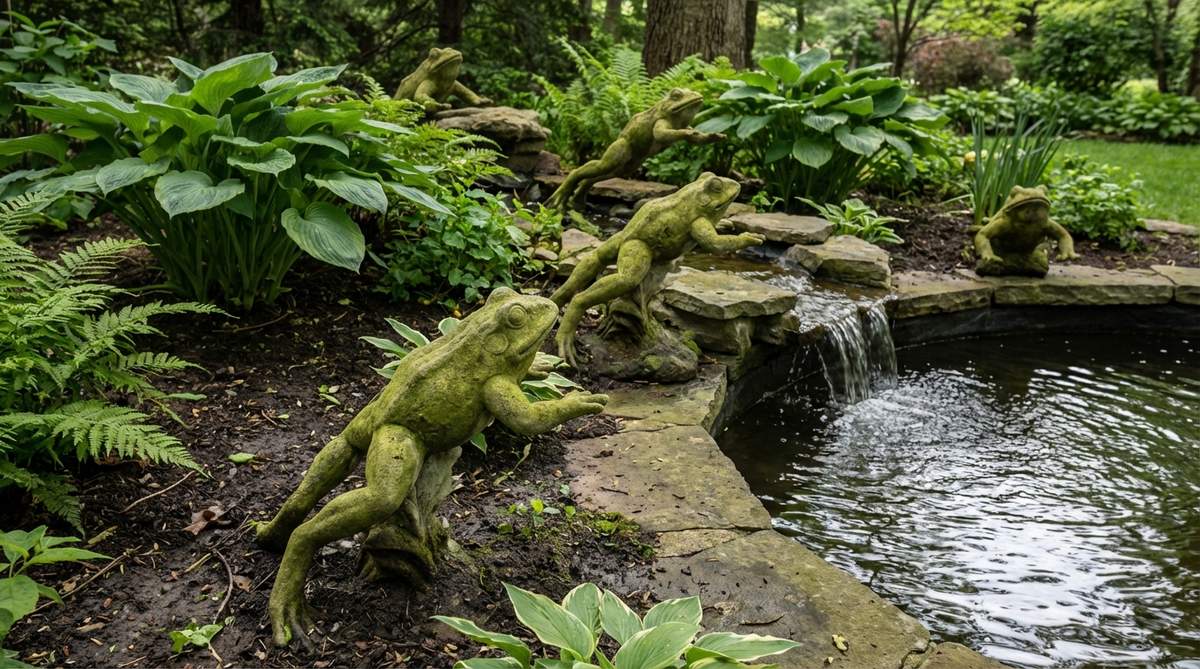
Whimsical frog sculptures in mid-leap bring movement to static compositions. These playful pieces work near water features or nestled among hostas and ferns in shade gardens.
Cast stone frogs weather to moss-green patina that blends naturally with damp garden environments. Multiple frogs at varying heights create the illusion of animated hopping.
10. Resting Deer Family
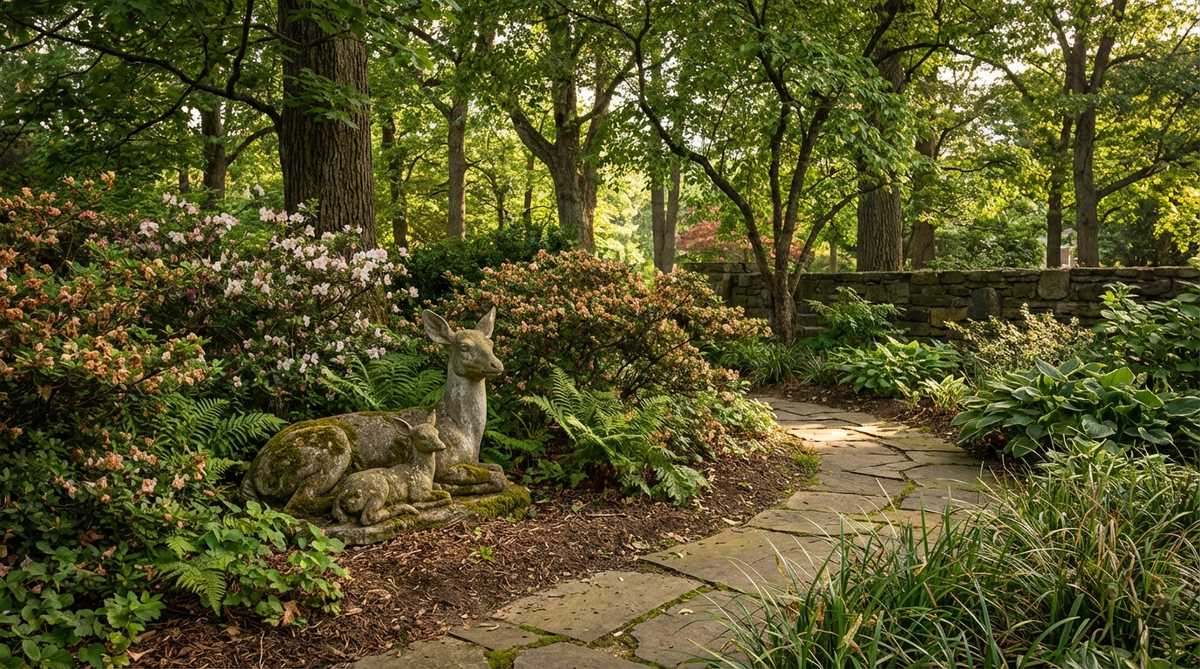
Doe and fawn sculptures evoke woodland serenity in suburban gardens. The gentle forms contrast effectively with upright deciduous trees and naturalistic plantings.
Tuck these among azaleas or under tree canopies to create discovery moments along garden paths. The reclining poses suggest safe havens within cultivated landscapes.
11. Stone Turtle on Base
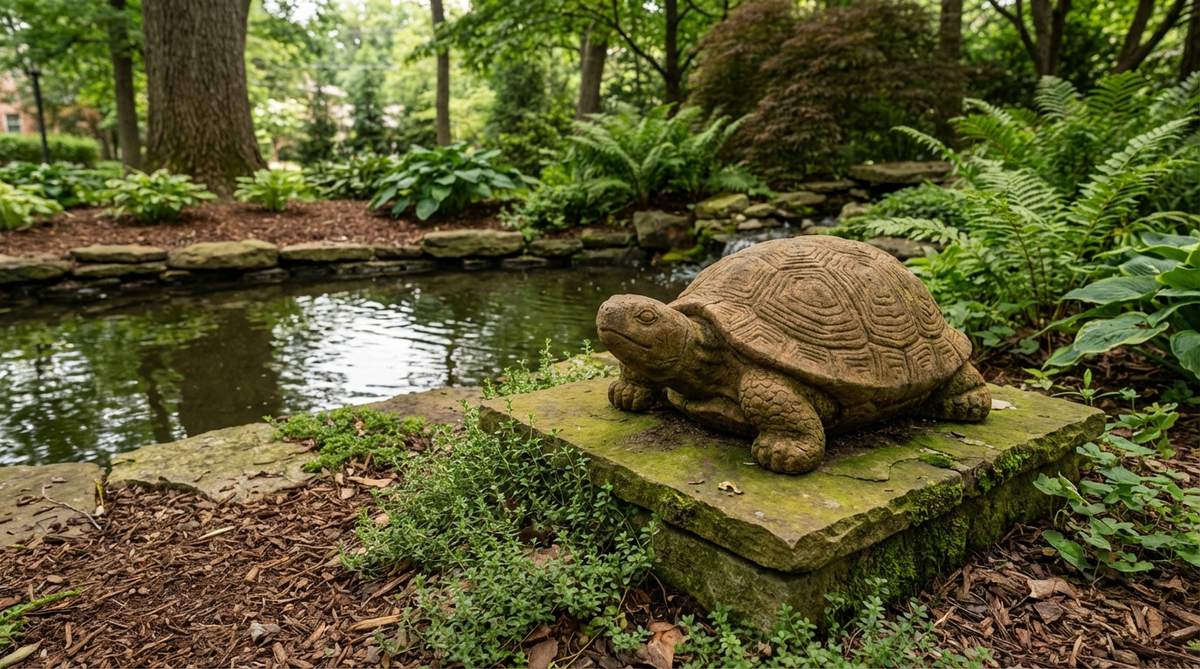
Turtle statues symbolize longevity and patience while their low profile suits pond edges and ground-level placements. The textured shells add tactile interest to smooth stone surrounds.
Position partially obscured by groundcovers or beside water’s edge where real turtles would naturally bask. The earthy stone tones harmonize with both formal and cottage garden styles.
12. Perched Owl Sculpture
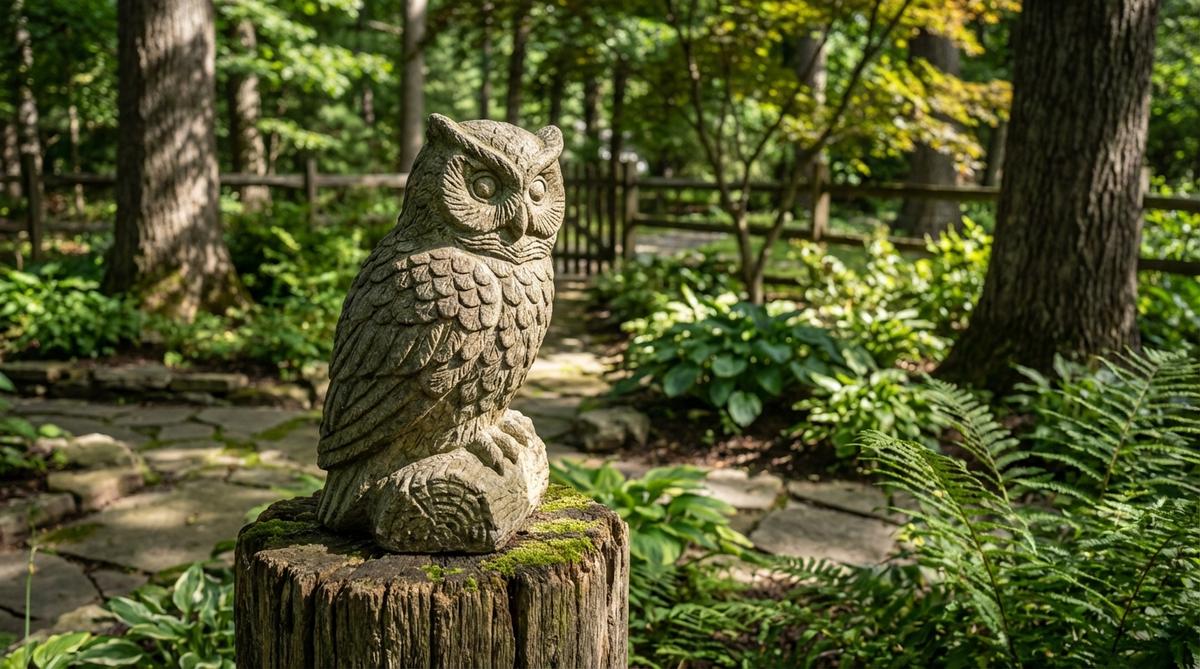
Stone owls placed atop stumps or posts bring wise watchfulness to garden corners. The vertical orientation draws eyes upward and works well in layered woodland gardens.
These nocturnal symbols suit shaded areas under tree canopies where their carved feather details catch dappled light. Single owls create focal points while pairs frame garden passages.
13. Playful Rabbit Cluster
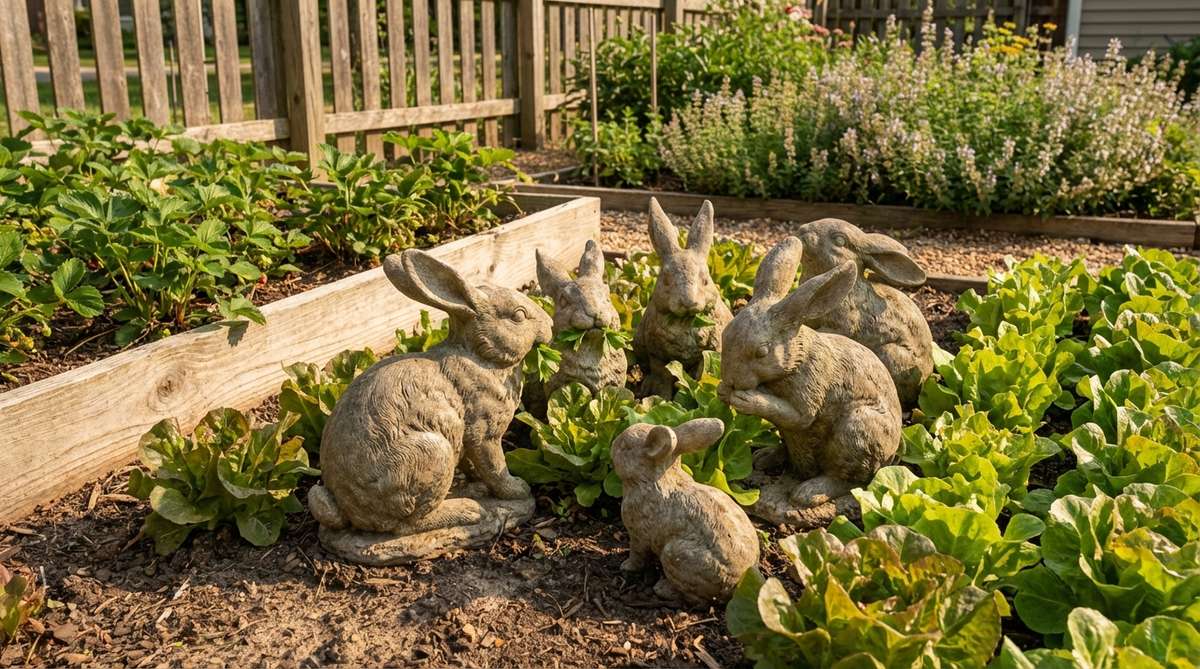
Multiple rabbit statues in feeding or grooming poses animate vegetable gardens and informal borders. Their small scale allows grouping without overwhelming planting beds.
Position among lettuce rows or near berry patches for thematic resonance. The charming forms appeal to families while maintaining sophisticated garden design integrity.
14. Crouching Cat Statue
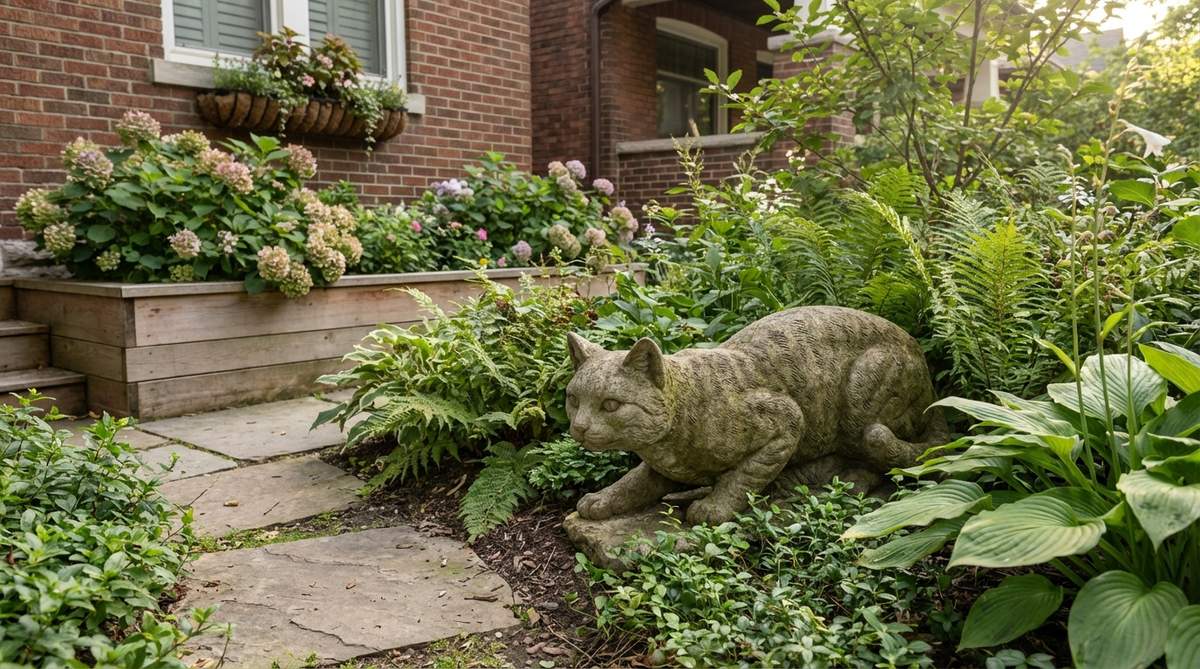
Domestic cat sculptures in hunting crouch positions add personality to small urban gardens. The compact forms fit window boxes, wall niches, or container garden arrangements.
These pieces memorialize beloved pets while serving as garden guardians that deter real wildlife from prized plantings. The lifelike poses create delightful surprise when discovered.
15. Standing Bear Sculpture
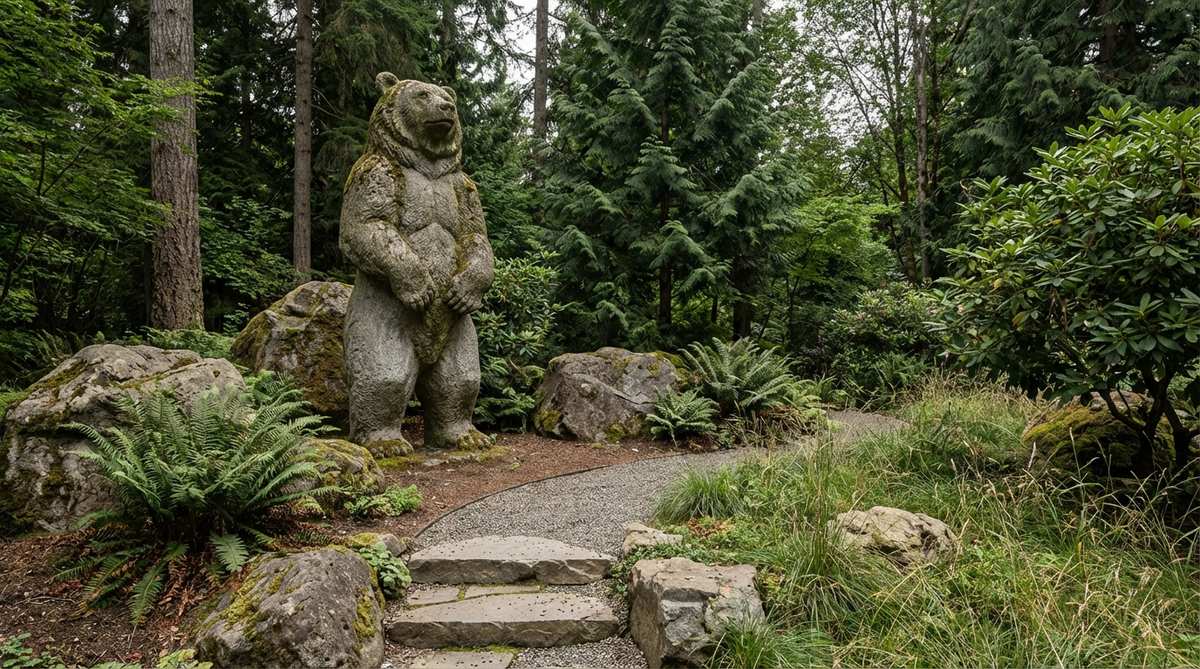
Life-size bear statues command attention in rustic mountain or woodland-themed landscapes. The powerful vertical forms require substantial space and strong contextual alignment.
Install where sightlines allow gradual discovery rather than abrupt encounter. Surround with native plants and natural stone to reinforce wilderness aesthetic without appearing contrived.
Stone Garden Ornaments For Spiritual Spaces
Contemplative statuary transforms gardens into meditation zones and spiritual retreats. Buddha figures, crosses, and angels create sanctuaries for reflection while adding cultural depth to landscape design.
16. Seated Buddha in Lotus Position
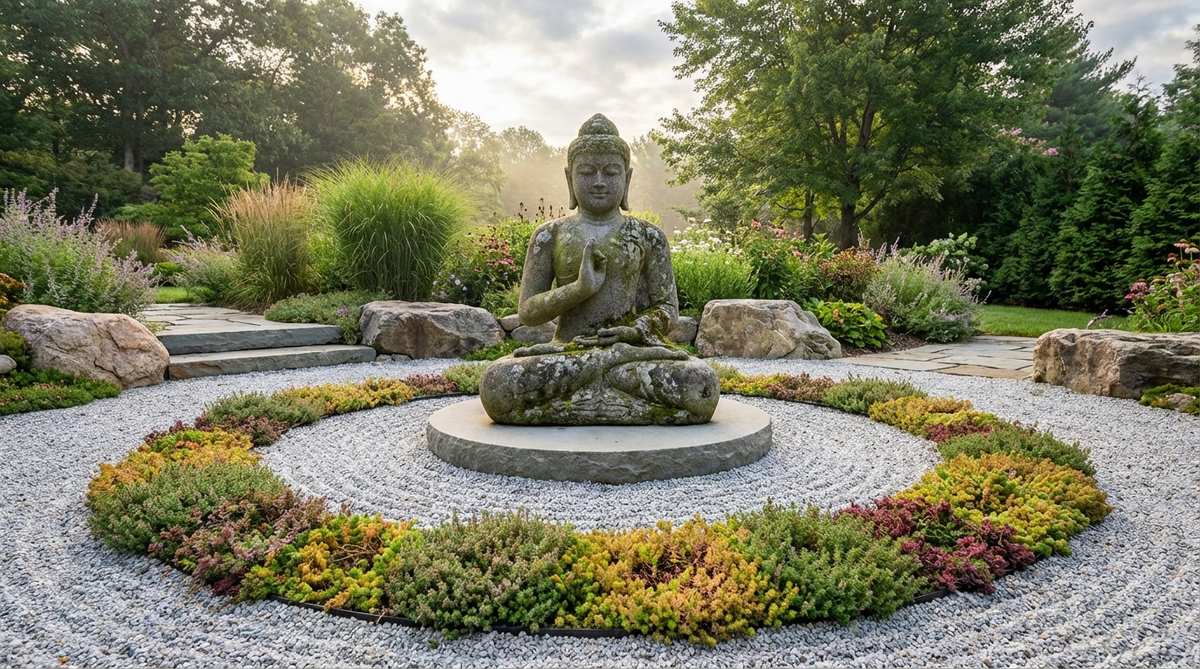
Traditional Buddha sculptures in granite or basalt stone anchor Zen gardens and meditation areas. The serene expressions and mudra hand positions communicate peace through universal body language.
Face eastward symbolizing enlightenment and position on raised platforms surrounded by raked gravel or moss. Low-growing groundcovers like thyme or sedum create living halos without obscuring carved details.
These pieces withstand harsh weather while developing moss and lichen growth that enhances aged appearance. The substantial weight provides stability against wind while reinforcing permanence and groundedness.
17. Reclining Buddha Sculpture
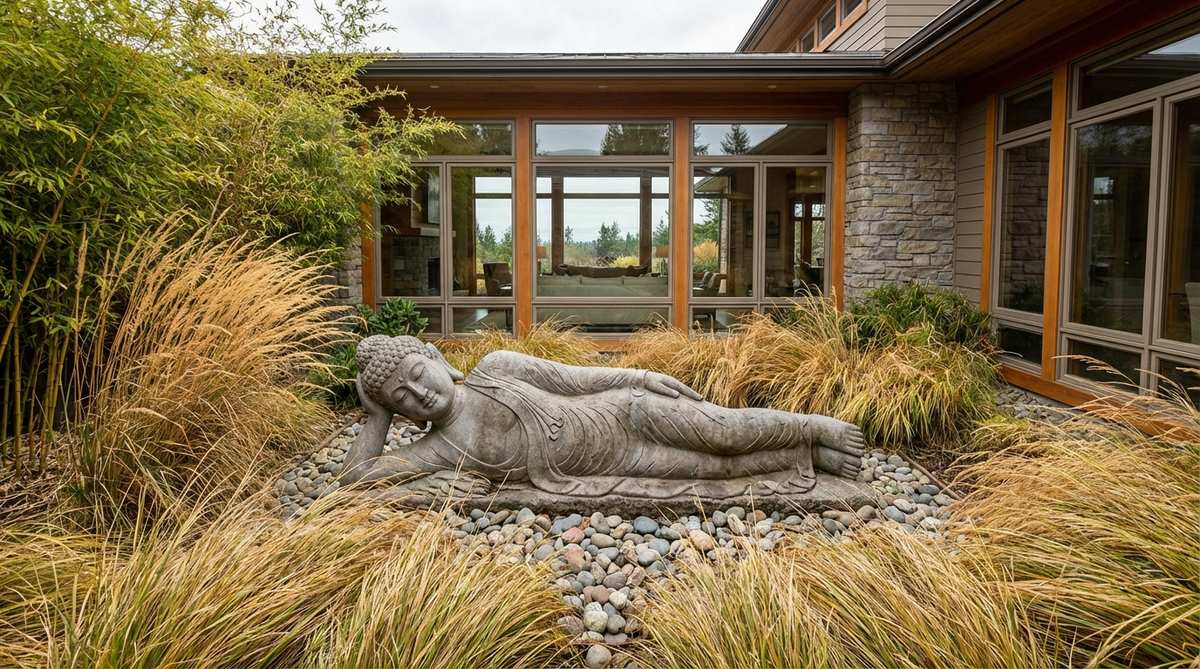
Large horizontal Buddha figures depict the moment of enlightenment entry. These dramatic pieces require significant space but create unforgettable focal points in expansive gardens.
Position along sight lines from indoor living spaces to frame views through windows. Surround with bamboo or ornamental grasses that sway gently, reinforcing contemplative atmosphere.
18. Standing Buddha with Offering Bowl
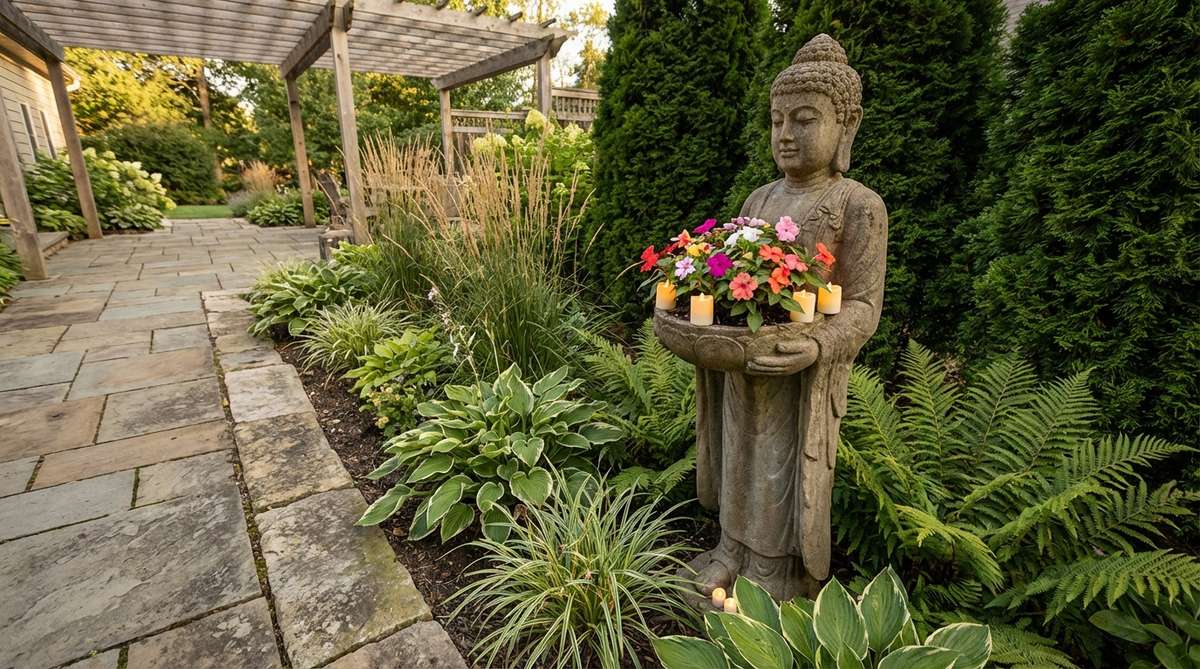
Upright Buddha sculptures holding bowls invite interaction and seasonal decoration. Fill bowls with floating flowers, candles, or seasonal foliage to activate the sculpture.
These work well near seating areas or along pathways where passing visitors can pause. The vertical orientation suits narrow garden spaces where seated forms would feel cramped.
19. Celtic Cross Monument
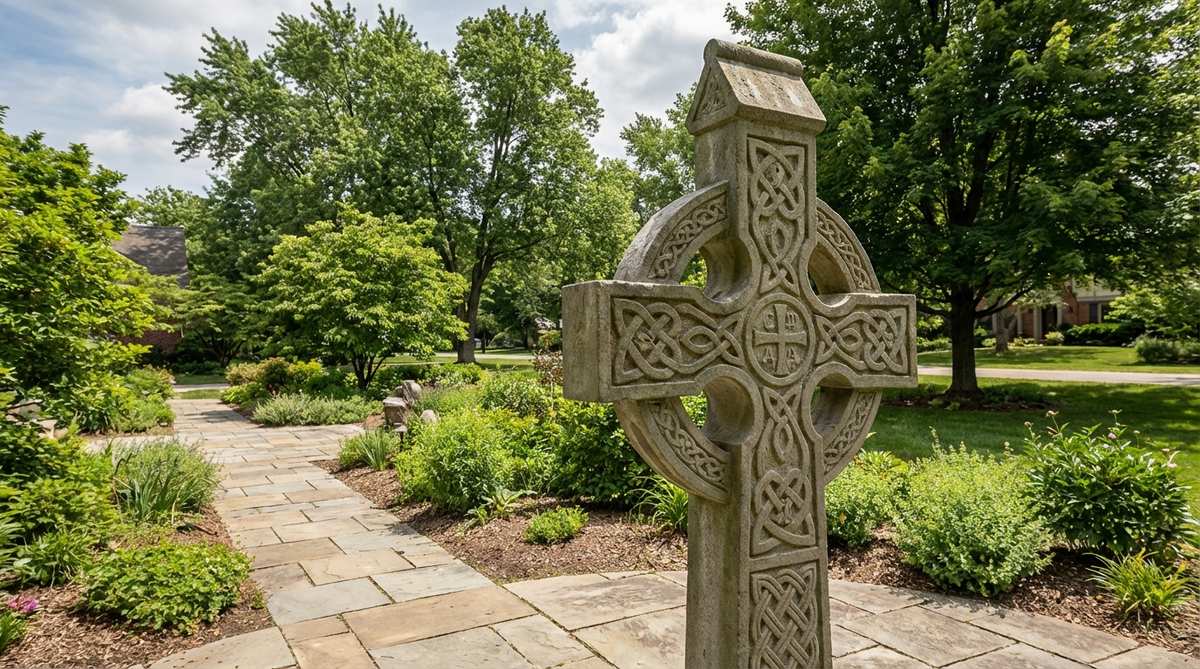
Intricately carved Celtic crosses combine Christian symbolism with ancient knotwork patterns. These vertical monuments suit memorial gardens or historical property landscapes.
Install on stone bases in prominent locations visible from multiple approaches. The detailed carving rewards close inspection while maintaining impact from distance.
20. Angel with Wings Spread
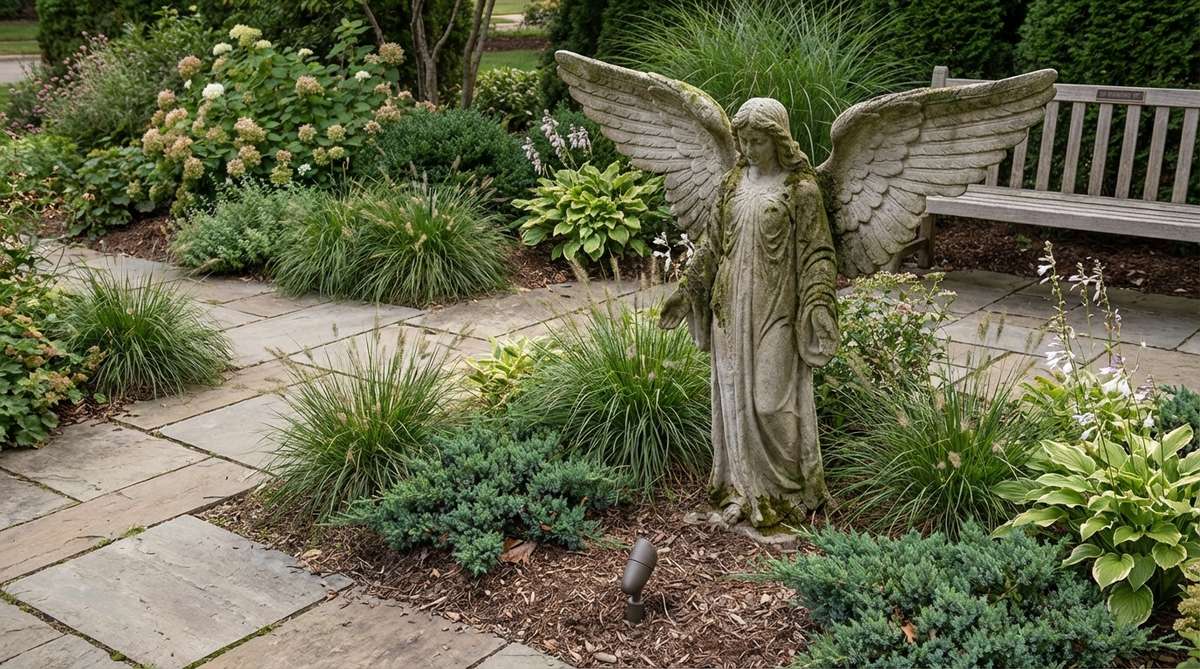
Guardian angel statues with outstretched wings create protective presences in gardens. The dramatic wingspan requires adequate clearance but delivers powerful emotional impact.
Position in memorial sections or quiet corners designated for reflection. Uplighting at night transforms these pieces into ethereal focal points visible from indoor spaces.
21. Praying Angel Child
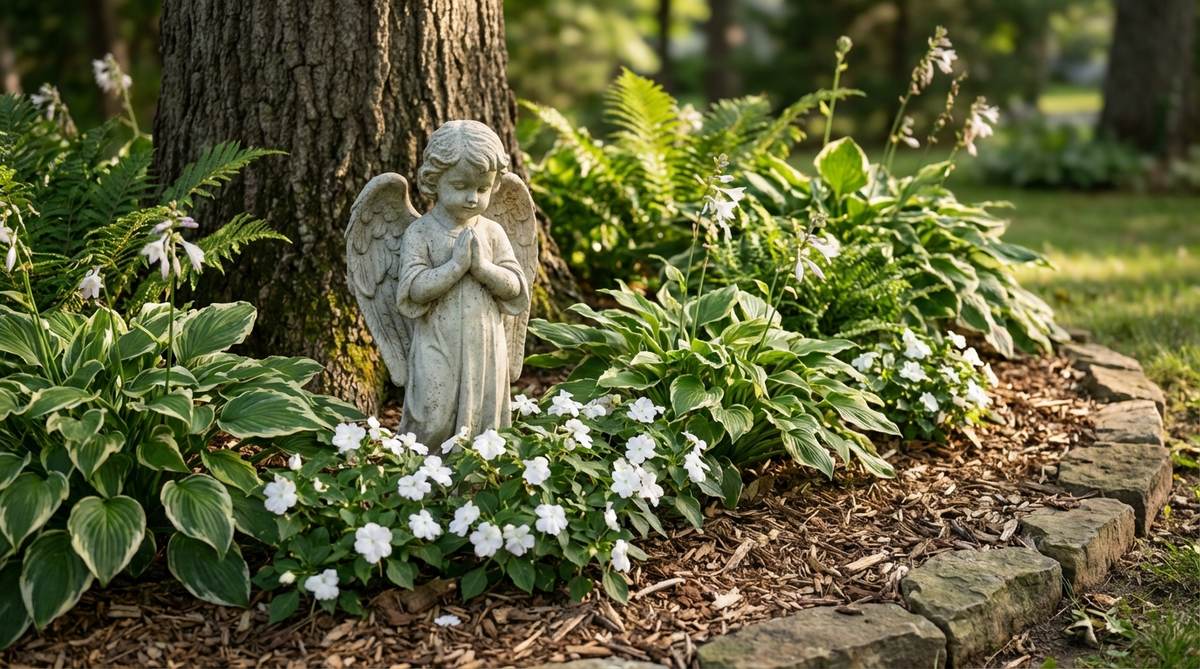
Small cherubic angels with hands clasped suit intimate spaces and container garden arrangements. The innocent expressions resonate in family gardens and remembrance areas.
Tuck among flowering perennials or at base of mature trees where dappled shade suggests heavenly light. These pieces comfort without overwhelming through modest scale and gentle symbolism.
22. Saint Francis with Birds
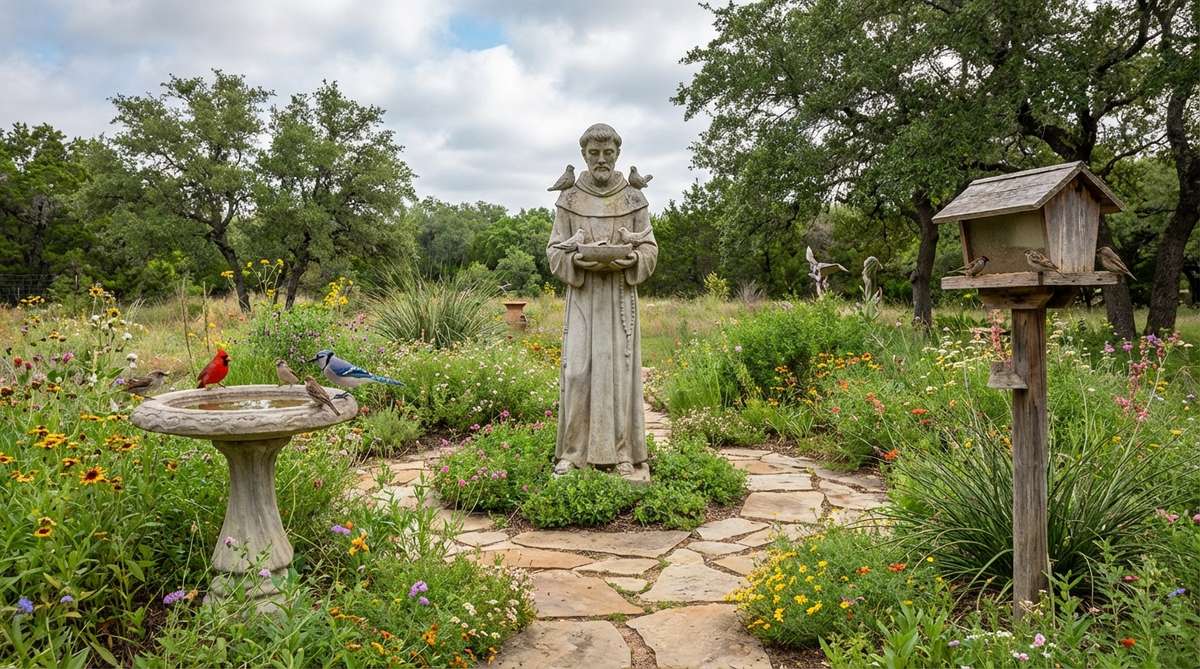
Patron saint of animals and ecology, Francis statues depict the monk surrounded by wildlife. These pieces appeal to gardeners who prioritize habitat creation and environmental stewardship.
Install near birdbaths or feeders where real wildlife congregates. The symbolic alignment between statue and function creates meaningful garden moments throughout seasons.
Whimsical Stone Garden Art With Personality
Playful sculptures inject humor and personality into gardens through unexpected forms and charming characters. These pieces create memorable garden experiences without sacrificing design sophistication.
23. Traditional Garden Gnome
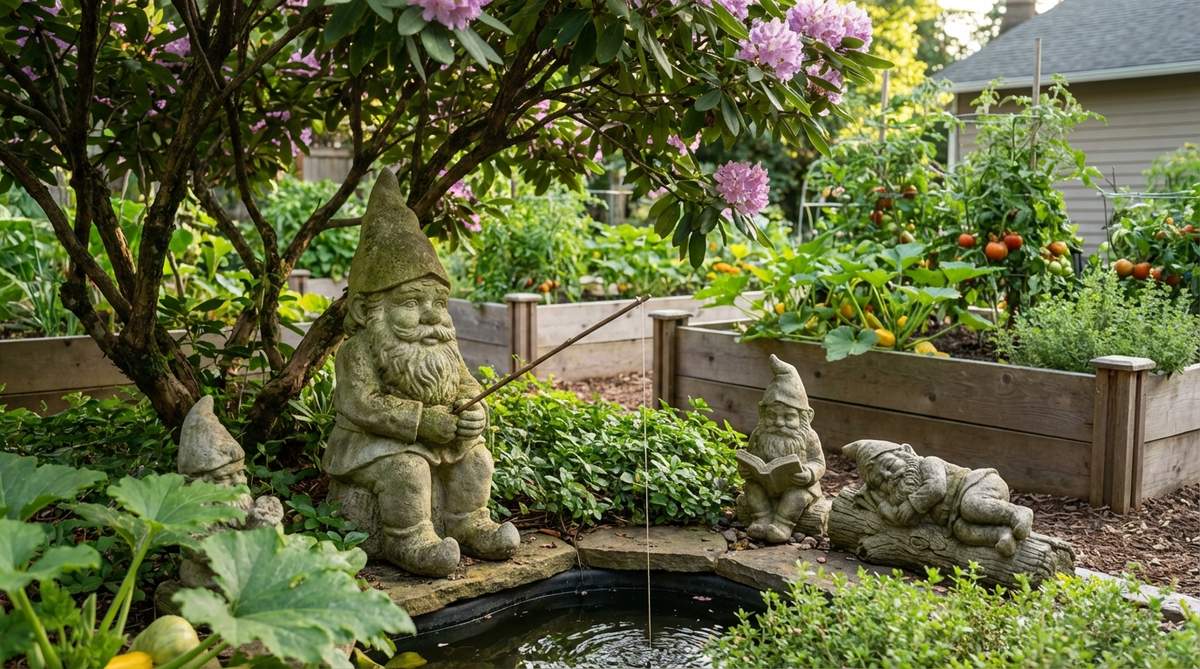
Cast stone gnomes in classic poses—fishing, reading, or resting—bring nostalgic charm to cottage gardens. The painted or natural stone finish weathers gracefully while maintaining whimsical character.
Position among vegetable gardens or under shrub canopies where they appear as garden helpers. Group multiple gnomes in vignettes that suggest community and narrative.
Modern interpretations balance tradition with contemporary sensibilities, appealing to collectors who appreciate folk art heritage. These conversation pieces welcome visitors while celebrating gardening culture.
24. Reading Gnome on Mushroom
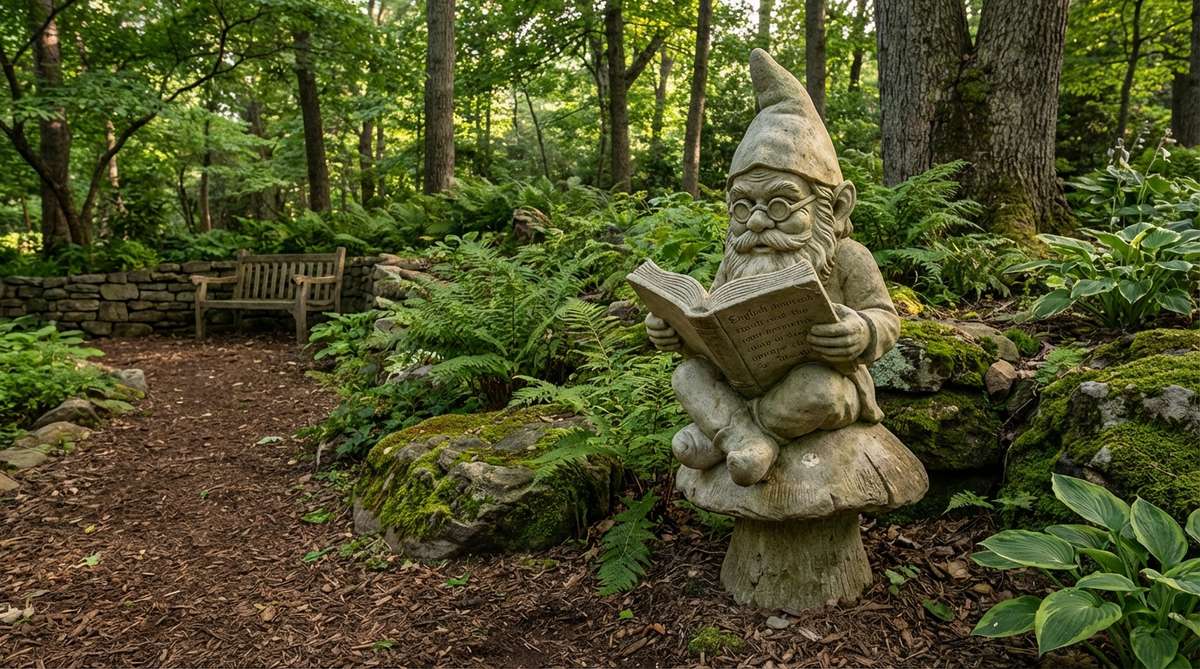
Scholarly gnome figures perched on toadstool bases add literary whimsy to shaded gardens. The compact compositions work in tight spaces while delivering personality.
Tuck near fern grottos or along woodland paths where discovery delights visitors. The detailed carving of book pages and facial expressions rewards close viewing.
25. Fishing Gnome with Rod
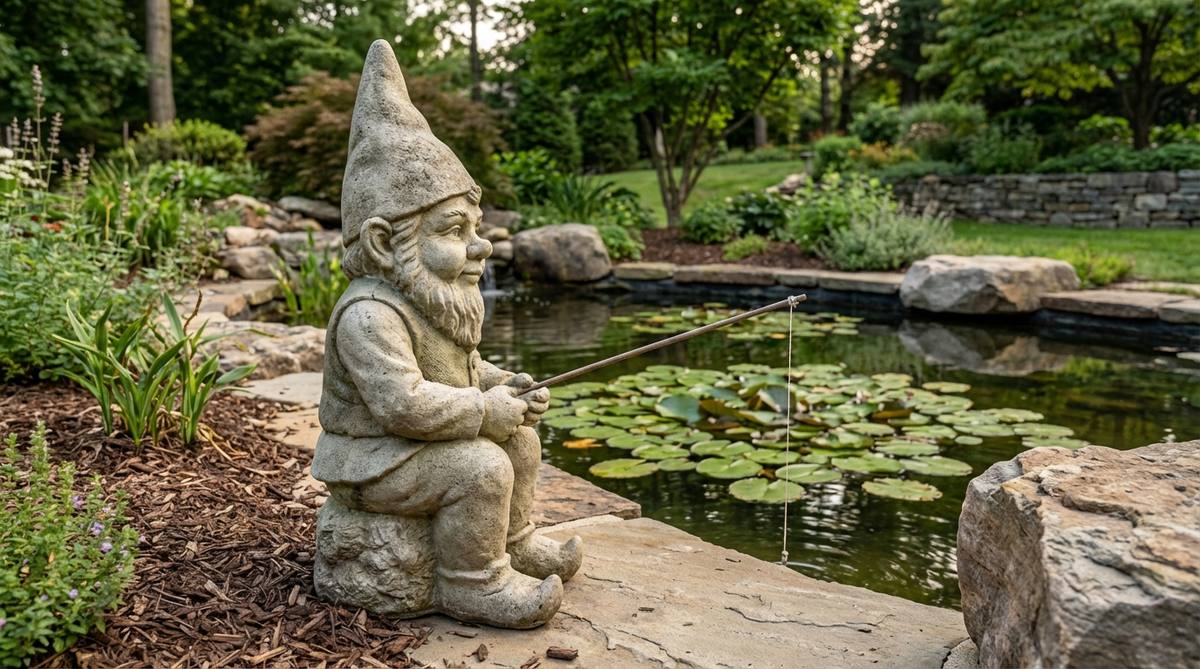
Gnomes holding fishing poles perch on pond edges or near water features. The active poses suggest patient waiting that mirrors contemplative garden experiences.
Position where rod extends over water or planting beds. The playful stance lightens formal water feature installations without undermining design quality.
26. Fairy Ring Sculpture Set
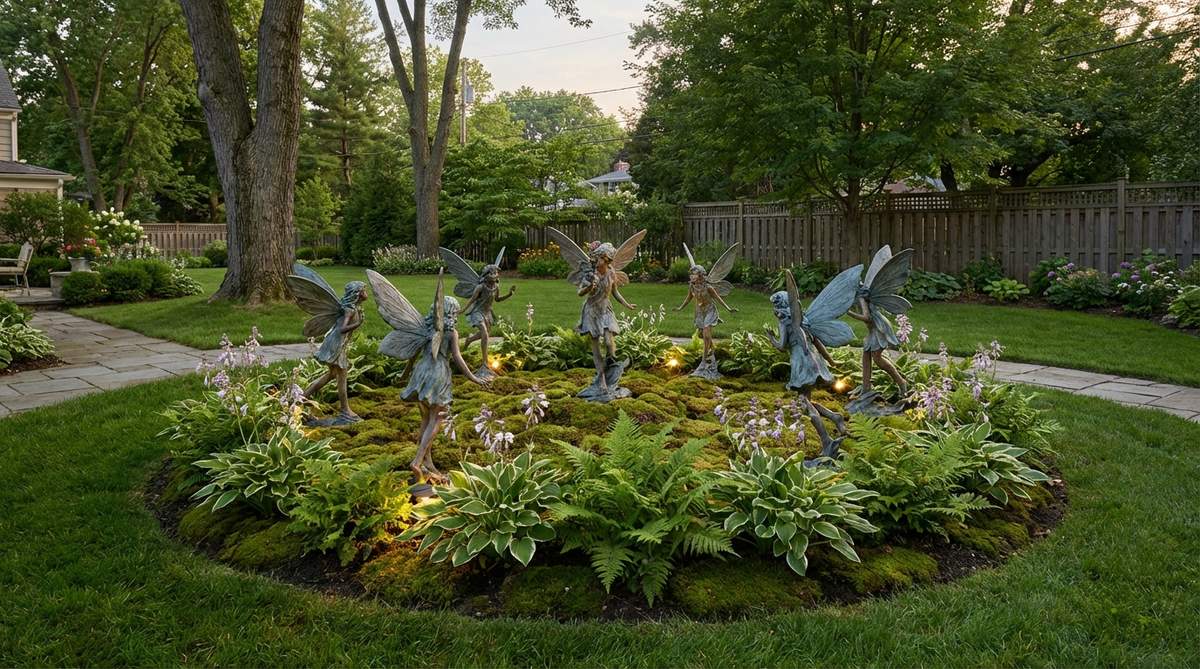
Multiple fairy figures dancing in circular arrangements create enchanted zones in children’s gardens. The dynamic poses and delicate wings capture magical themes.
Install in moss circles or ring plantings that reinforce the mystical concept. Solar lights hidden among fairies create evening magic that extends garden enjoyment.
27. Toadstool Cluster Grouping
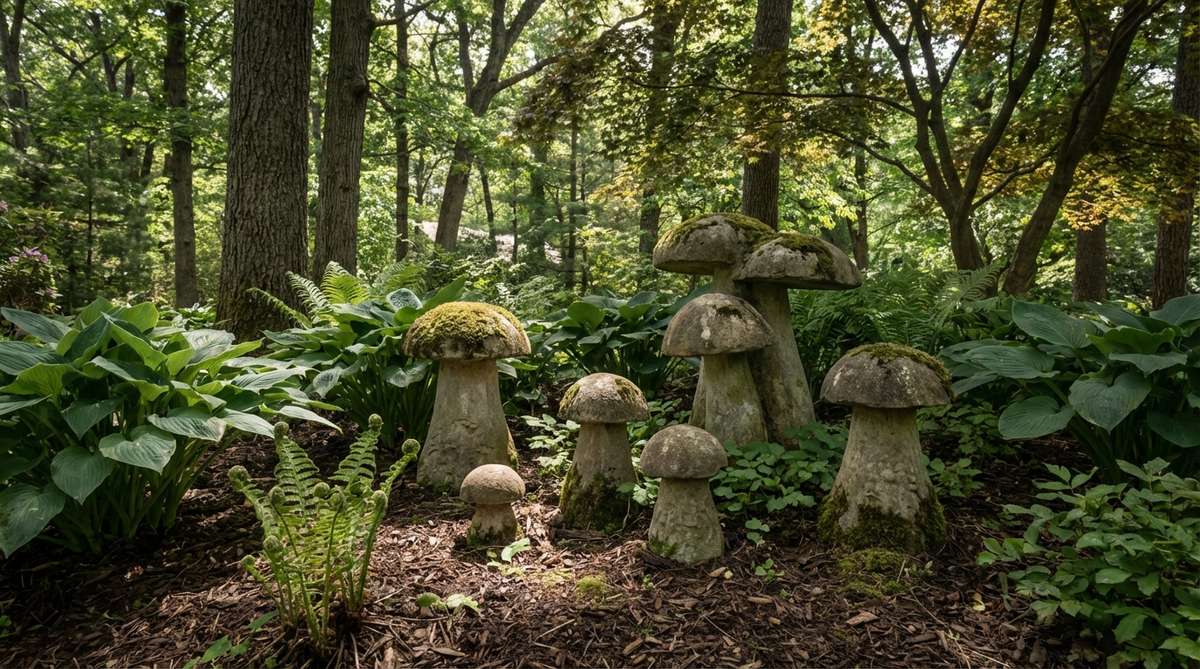
Carved mushroom sculptures in various heights naturalize shaded areas while providing whimsical accent points. The organic forms blend with woodland gardens and shade plantings.
Group in odd numbers beneath hostas or along fern beds. The varied heights create visual interest while maintaining cohesive theme through repeated form.
28. Dragon Guarding Treasure
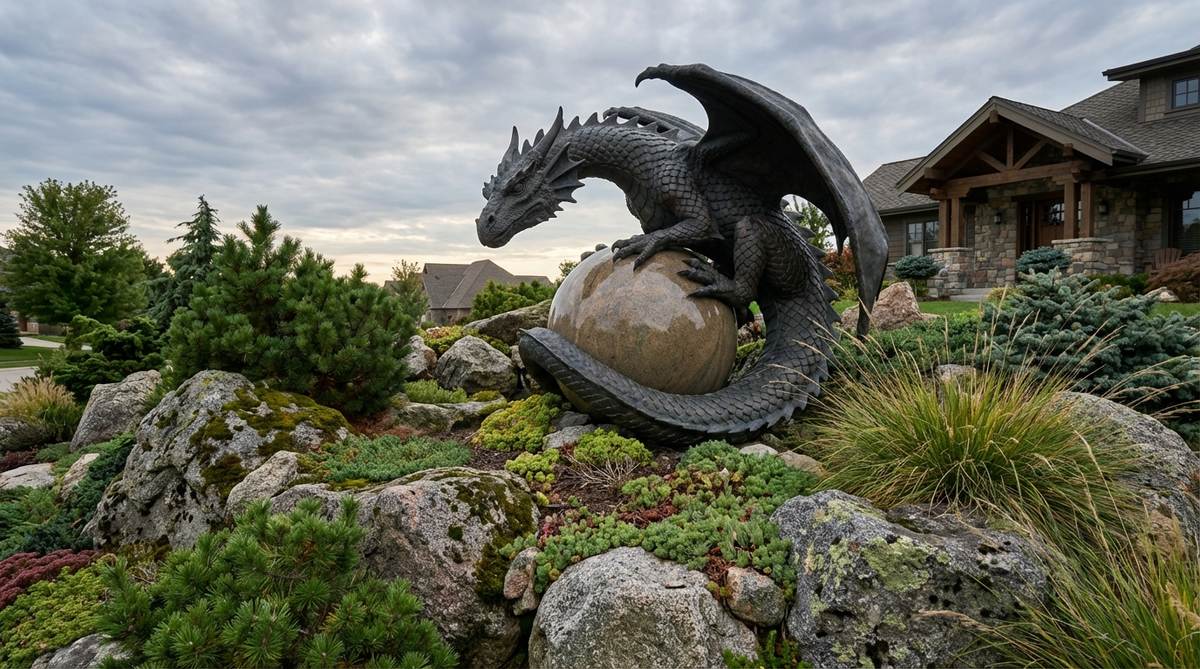
Fantasy dragon sculptures coiled protectively around spheres or eggs bring mythological drama to gardens. The serpentine forms suit rocky outcroppings or cave-like settings.
Position where dramatic silhouettes register against sky or architectural backgrounds. The fierce expressions and scaled texture contrast effectively with soft planting textures.
Modern Abstract Stone Sculptures
Contemporary stone sculptures feature geometric forms and minimalist aesthetics that complement modern architecture. These pieces create bold focal points through shape and material rather than representational imagery.
29. Stacked Stone Cairn
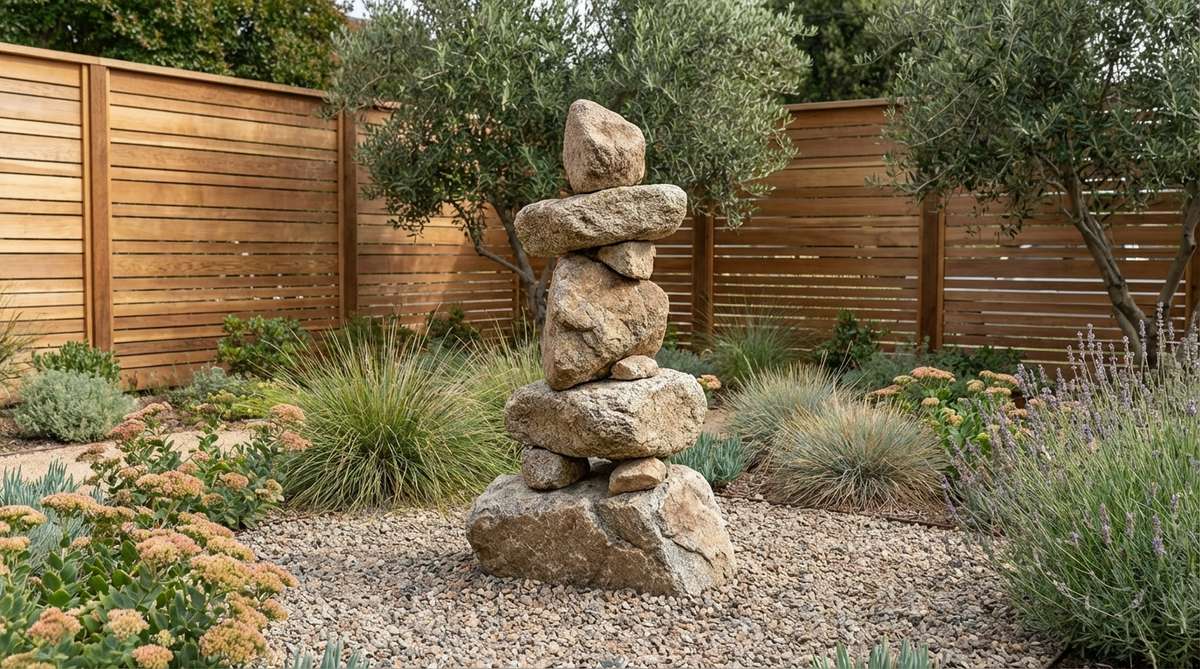
Balanced rock towers in limestone or granite bring zen minimalism to contemporary gardens. The precarious stacking creates tension that engages viewers while suggesting natural formation.
Install on gravel beds or amid drought-tolerant plantings where the monochromatic palette reinforces modern aesthetic. These sculptures read as both human-made art and geological phenomena.
The vertical orientation provides height without mass, making cairns ideal for small urban gardens where space limitations prohibit larger sculpture. Weather naturally without requiring maintenance.
30. Geometric Sphere Sculpture
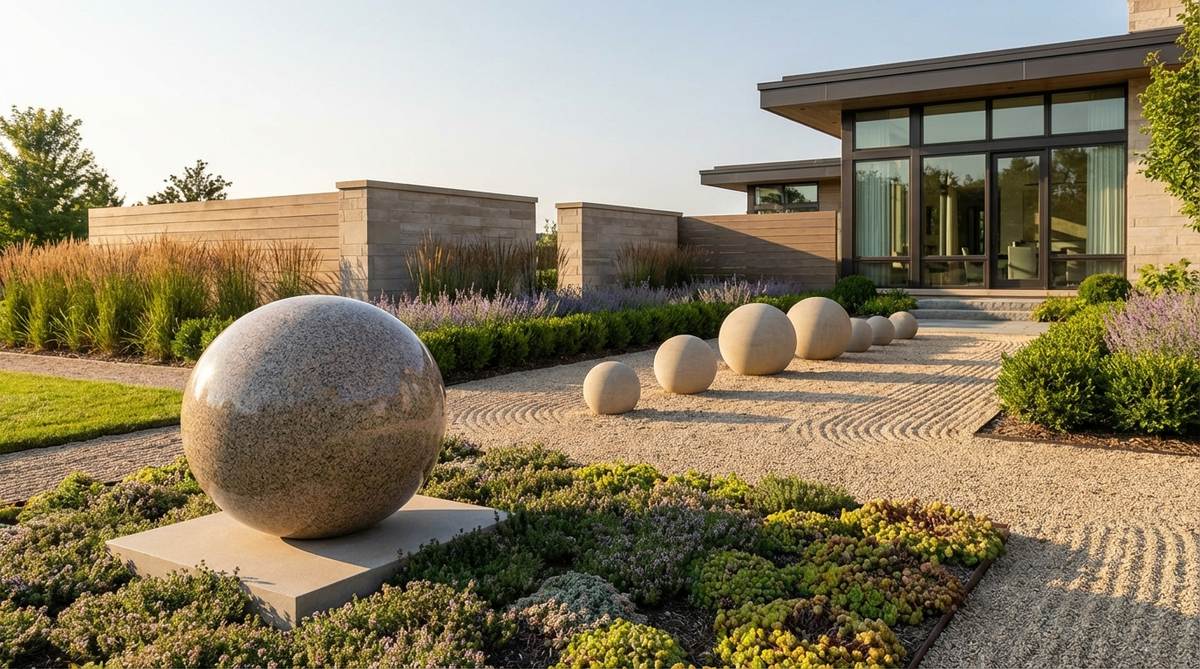
Polished or rough-hewn stone spheres create focal points through pure form. The circular geometry contrasts rectangular architecture and linear garden beds.
Position on minimal plinths or nestled in groundcover where the smooth surface invites touch. Multiple spheres in graduating sizes establish rhythmic sequences along pathways.
31. Twisted Column Form
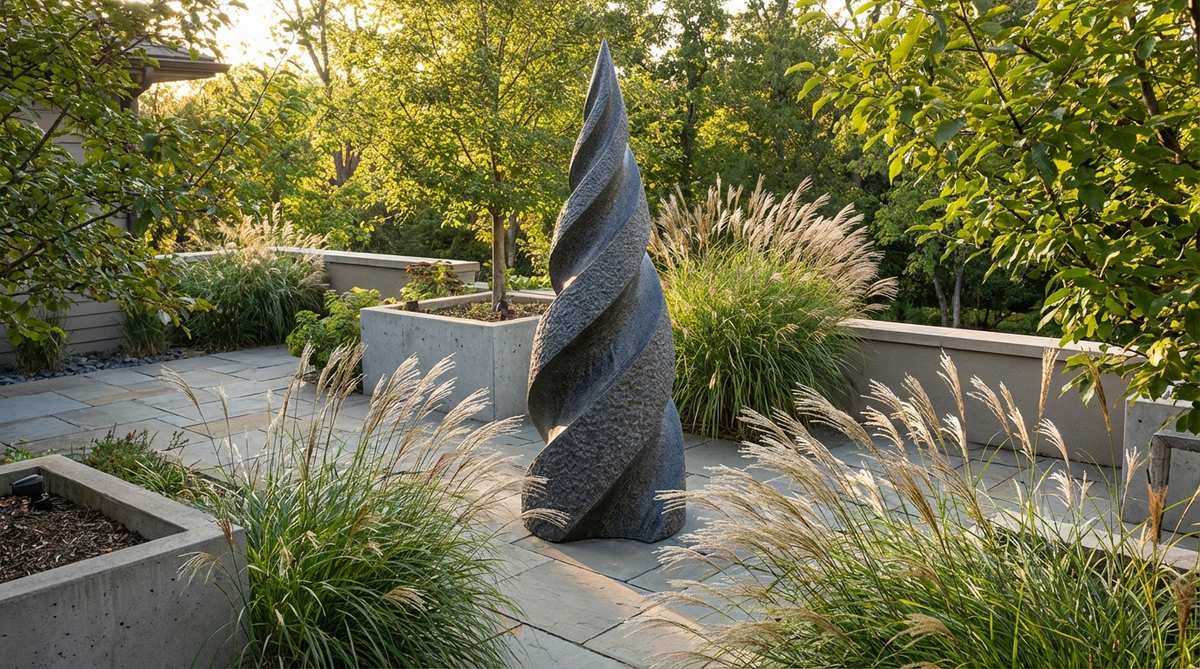
Carved spiral columns suggest movement within solid stone. These dramatic verticals anchor modern courtyards and serve as sculptural exclamation points.
The dynamic rotation draws eyes upward and animates minimalist compositions. Pair with architectural grasses like miscanthus that echo the vertical thrust.
32. Abstract Human Figure
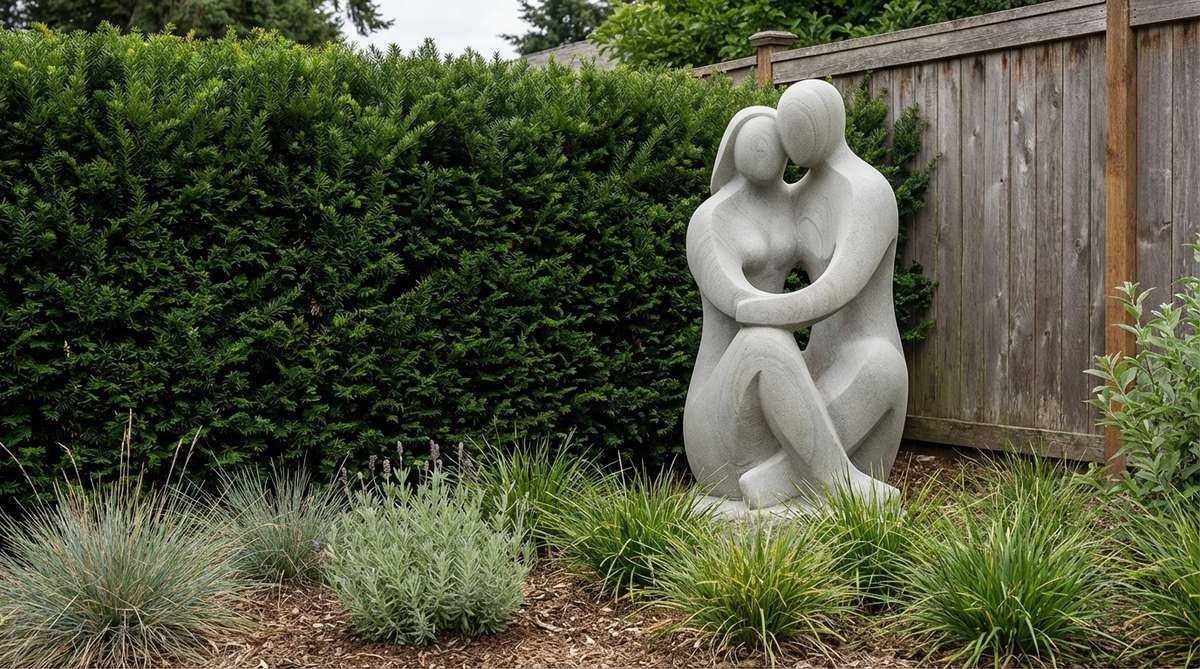
Simplified human forms reduced to essential curves and planes bring modern art gallery aesthetics outdoors. The suggested rather than literal representation allows interpretive viewing.
Install where silhouettes register clearly against walls or hedges. The smooth surfaces contrast natural planting textures while maintaining organic connection through material.
33. Cubic Stone Arrangement
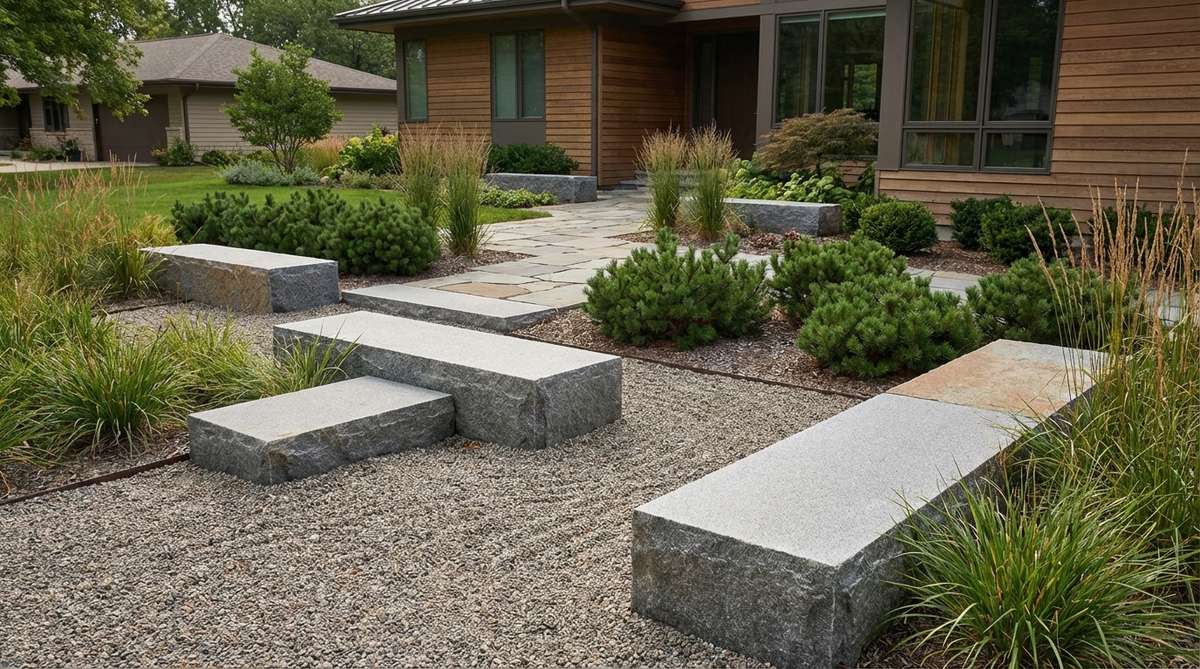
Rectangular cut stones arranged in asymmetric compositions create geometric focal points. The sharp edges and flat planes emphasize human intervention within natural settings.
Group in odd numbers following design principles of Japanese rock gardens. The negative space between cubes becomes as important as the solid forms.
Functional Stone Garden Ornaments
Sculptural elements that serve practical purposes combine beauty with utility. These pieces earn their place through dual roles as both artwork and functional garden infrastructure.
34. Pedestal Birdbath Basin
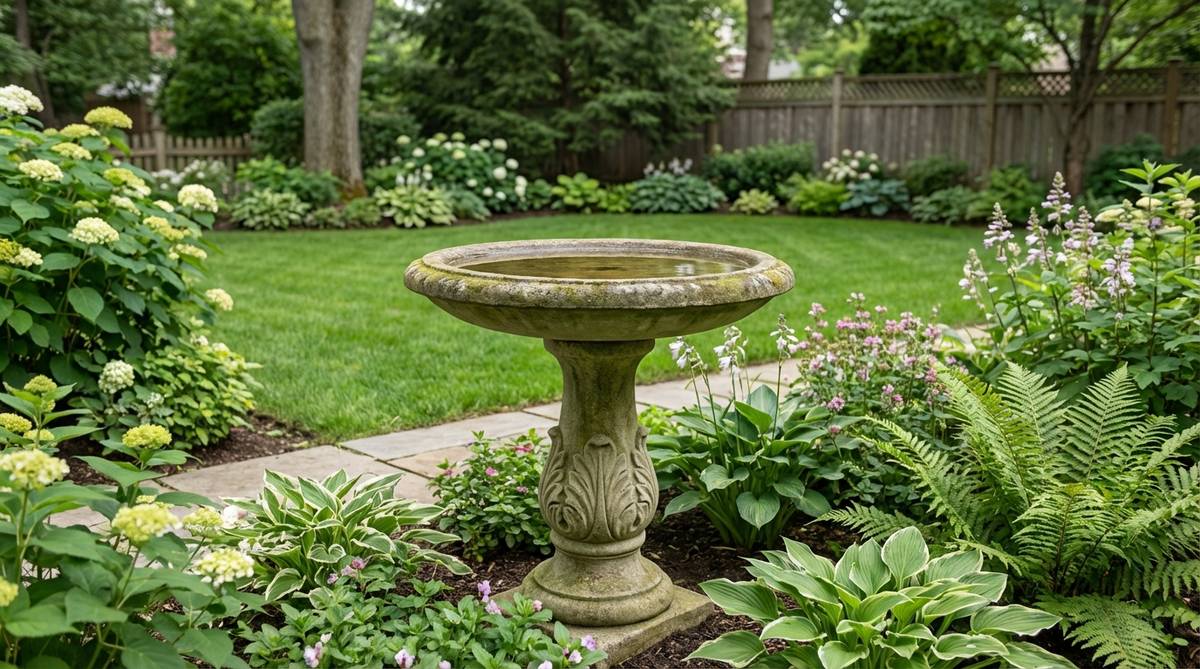
Classic birdbath designs in cast stone provide wildlife water sources while creating vertical focal points. The shallow basins attract songbirds visible from indoor viewing positions.
Position near protective shrubs but with open sight lines that allow birds to detect predators. The sculptural base elevates function to art through carved details and proportional elegance.
Frost-resistant stone construction ensures year-round durability while developing natural patina. Clean periodically to maintain water quality that supports healthy bird populations.
35. Stone Sundial Pillar
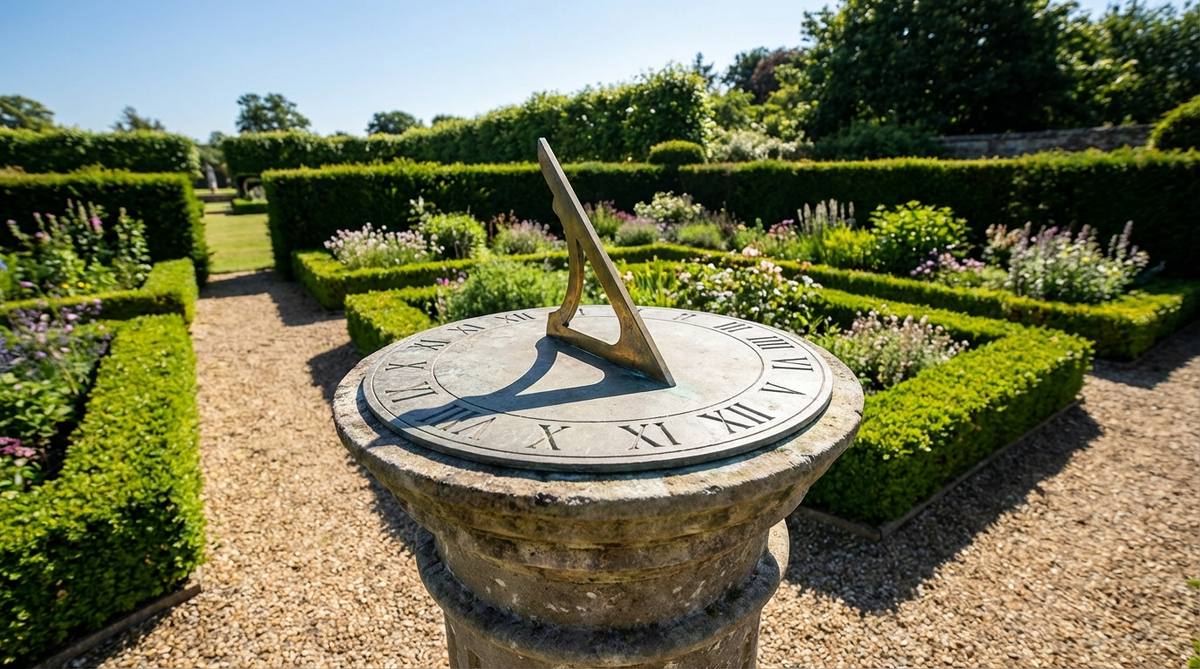
Traditional sundials combine timekeeping function with ornamental presence. The brass or bronze gnomon casts shadows across carved stone faces marked with Roman numerals.
Install in full sun locations where accurate time reading remains possible throughout seasons. These pieces add historical gravitas to formal gardens while serving educational purposes.
36. Carved Stone Bench
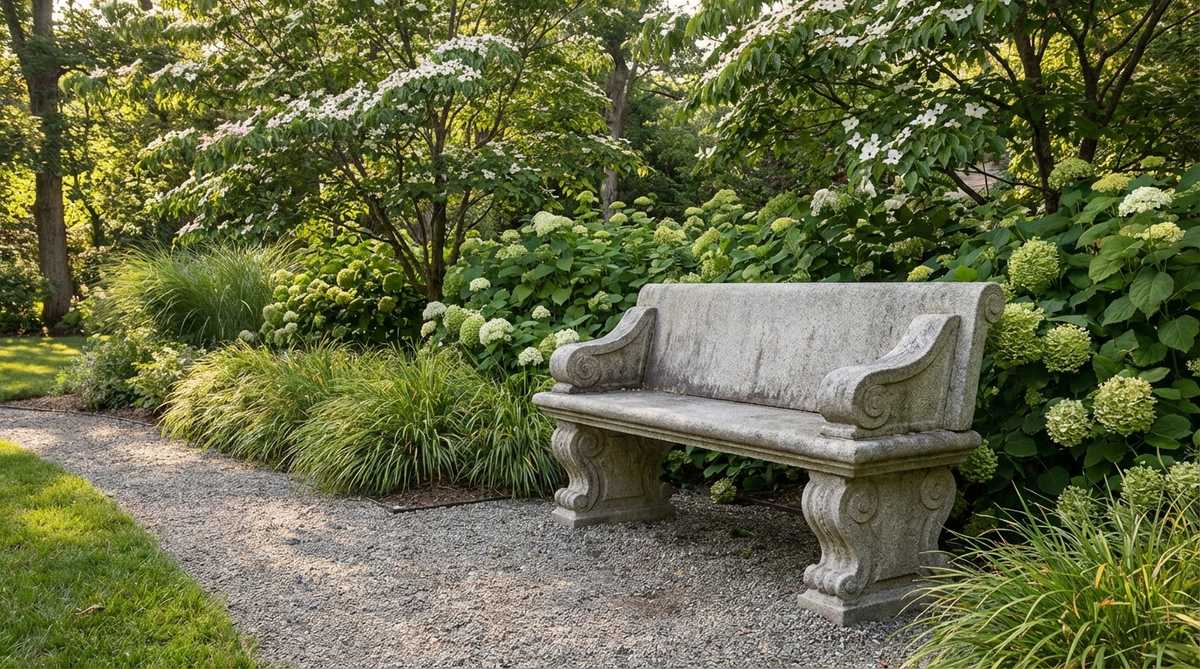
Functional seating in carved limestone or granite provides rest stops while serving as sculptural elements. Decorative legs and armrests transform utilitarian furniture into garden art.
Position at view termini or along pathways where seating encourages lingering. The substantial weight provides permanence while weatherproof material eliminates maintenance concerns.
37. Stone Planter Urn
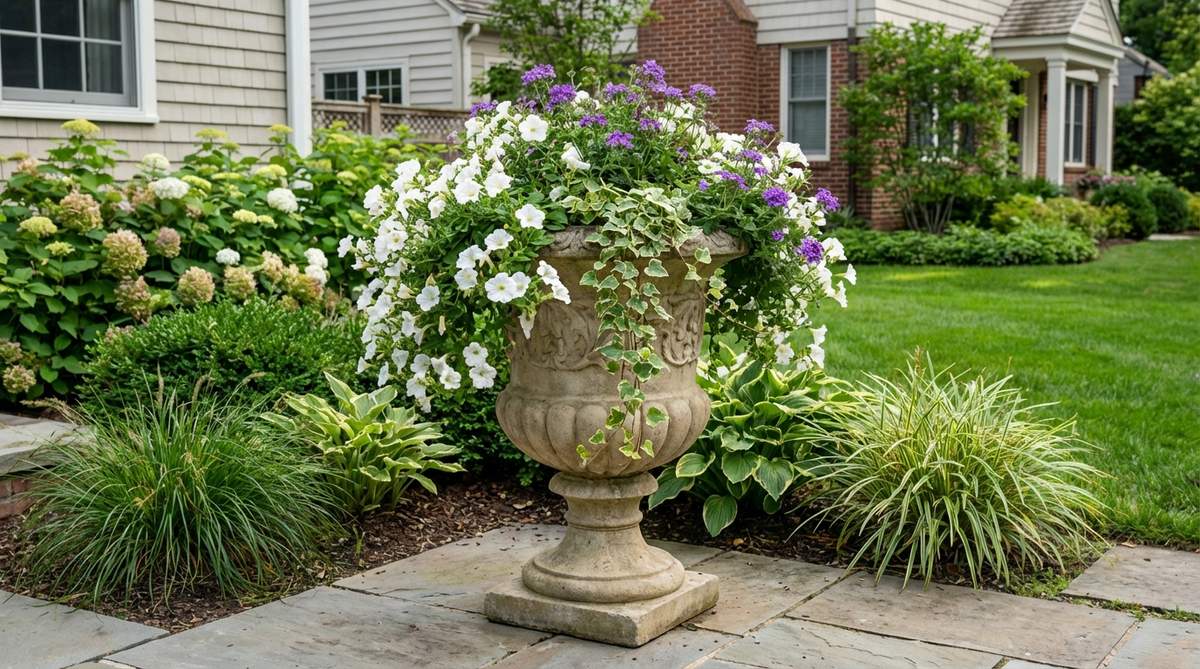
Large decorative urns function as elevated planting vessels while contributing architectural form. The carved details and classical proportions elevate containers to sculpture status.
Fill with seasonal annuals or trailing plants that spill over carved rims. The drainage-equipped bases support healthy plant growth while the stone material regulates soil temperature.
Conclusion
Strategic placement of stone garden statues transforms landscapes through permanent focal points that anchor design while expressing personal style. Whether selecting classical figures, playful animals, spiritual icons, or modern abstractions, choose sculptures proportional to your space and aligned with architectural context. Quality stone materials weather gracefully across seasons, developing character that enhances rather than diminishes visual impact. Begin with a single statement piece positioned at a key sightline, then expand your collection as you discover how these enduring elements structure and elevate your outdoor environment throughout the year.
Frequently Asked Questions
What is the most durable stone for garden statues?
Granite ranks as the most durable option, resisting freeze-thaw cycles and weathering for decades with minimal maintenance. Limestone and sandstone also perform well but develop patina more quickly. Cast stone offers excellent durability at lower cost while replicating natural stone appearance. Avoid soft stones like alabaster for outdoor applications.
How do I prevent moss growth on stone statues?
Rinse statues periodically with water and soft brushes to remove organic debris that supports moss growth. Apply diluted vinegar solution for existing moss, then scrub gently. Many gardeners embrace moss development as it adds aged character, particularly on Buddha statues and classical pieces where patina enhances aesthetic appeal.
Where should I position a garden statue for maximum impact?
Place statues at pathway terminals, garden bed centers, or near water features where sightlines naturally draw attention. Consider views from indoor living spaces and outdoor seating areas. Statues work best when visible from multiple angles but not competing with other focal points. Create natural frames using surrounding plants to direct focus.
Do stone garden sculptures require winter protection?
Frost-resistant materials like granite, properly cured cast stone, and dense limestone typically withstand winter without protection. Cover porous stones or those with shallow carving details using breathable fabric. Ensure water drains from horizontal surfaces and hollow areas to prevent ice expansion damage. Remove any trapped moisture before temperatures drop.
What size statue works best for small gardens?
Choose pieces between 12 to 24 inches tall for compact gardens to maintain proportion. Single focal point statues work better than multiple pieces in limited space. Vertical forms like columns or standing figures create impact without consuming floor area. Position against walls or hedges to maximize planting space while maintaining sculptural presence.
How much do quality stone garden statues typically cost?
Small cast stone pieces start around $50 to $150, while mid-size classical figures range from $300 to $800. Large granite or hand-carved sculptures exceed $1,000 to several thousand dollars depending on size and detail. Antique pieces and limited editions command premium prices. Factor shipping costs for heavy stone items into budget planning.