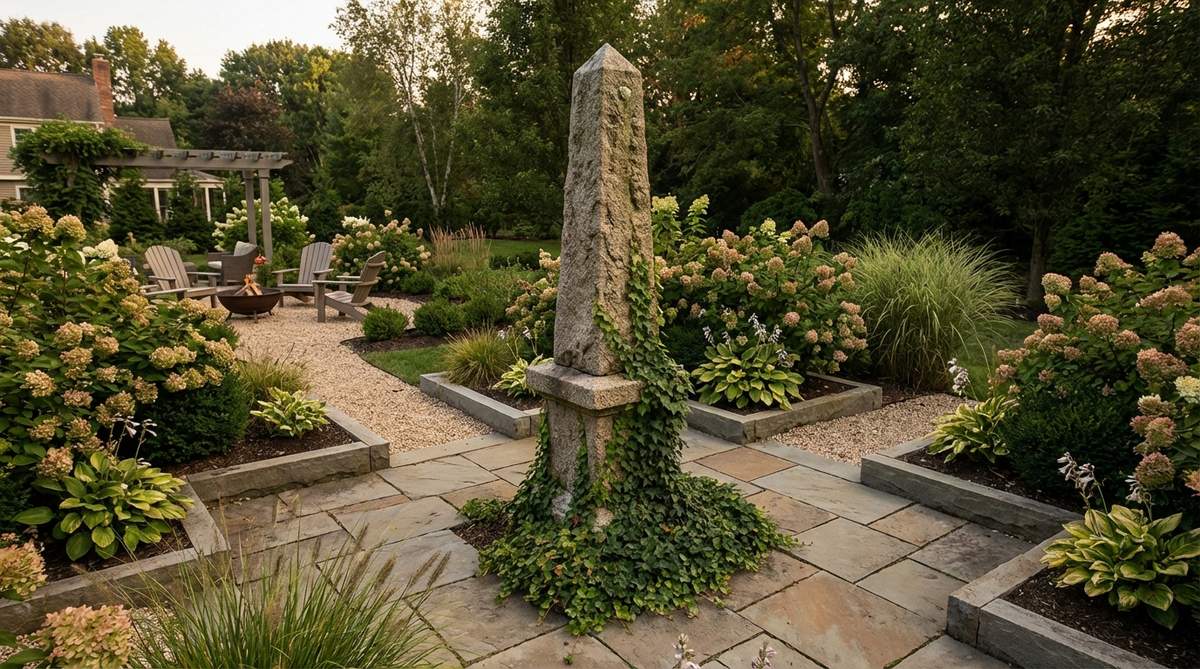
A stone garden obelisk serves as an architectural anchor that draws the eye upward and establishes hierarchy in outdoor spaces. These vertical structures combine ancient design principles with contemporary landscaping needs, offering solutions for everything from formal estates to cottage gardens. Fresh Garden Ideas presents this comprehensive guide to help you select and position stone obelisks that enhance your landscape’s depth, balance, and visual appeal.
Design SnapshotKey Principles
- Scale Matters: Match obelisk height to surrounding plantings—taller structures (6-8 feet) for mature gardens, shorter versions (3-4 feet) for intimate spaces
- Material Selection: Choose limestone for classical elegance, granite for durability in harsh climates, or cast stone for budget-friendly versatility
- Strategic Placement: Position obelisks at garden entrances, path intersections, or bed terminals to create focal points that guide movement through space
- Proportion Balance: Base width should equal roughly one-quarter of total height for visual stability; wider bases suit exposed locations
Classical Limestone Designs for Timeless Gardens
Limestone obelisks bring Georgian and Victorian garden traditions into modern landscapes. Their soft, neutral tones complement both cool-season perennials and warm-weather annuals without competing for attention. These structures age gracefully, developing subtle patinas that deepen their character over decades.
1. Ball-Topped Square Limestone Obelisk
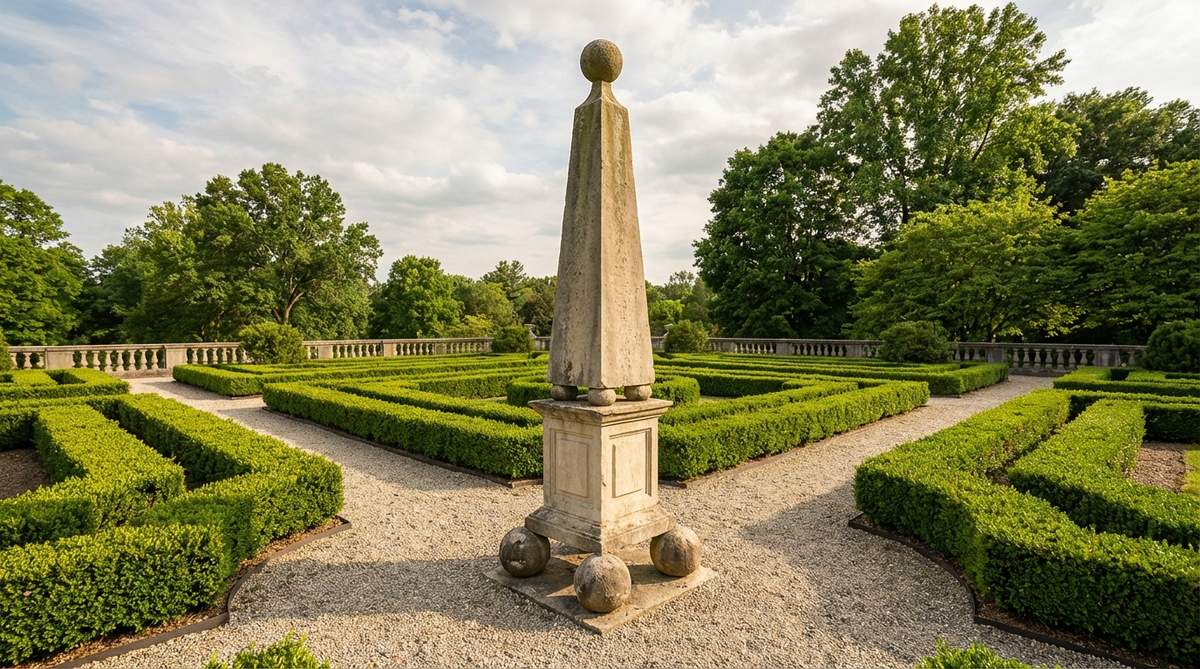
This four-sided pillar features a spherical finial atop a tapered shaft, resting on a paneled base with four supporting spheres. The hand-carved natural limestone displays subtle color variations that reflect regional quarry characteristics.
Install this design at the terminus of axial garden paths where its 6-foot height creates a destination point. The squared form echoes formal parterre layouts and aligns well with geometric hedge patterns.
Position the base spheres on a mortared flagstone pad to prevent settling. This obelisk works particularly well in herb gardens where its neutral tone doesn’t overwhelm delicate foliage colors.
2. Gothic Pointed Arch Limestone Pillar
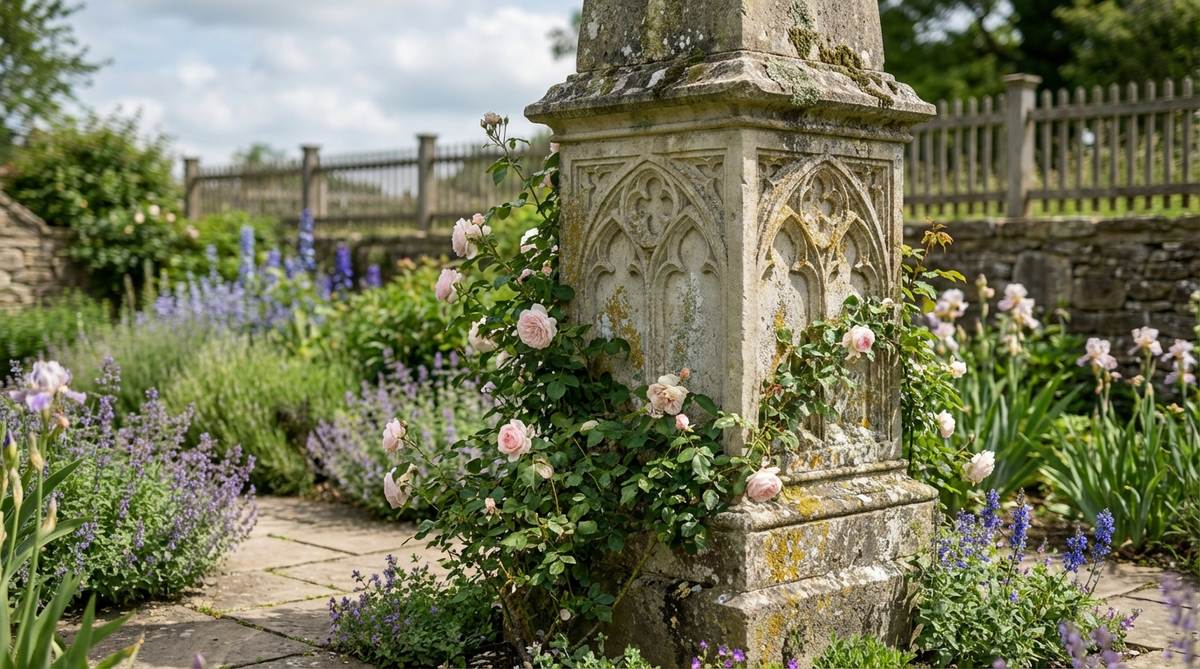
Carved relief panels featuring pointed arch motifs give this limestone obelisk distinct medieval character. The verticality of Gothic elements emphasizes height while decorative tracery adds texture that catches changing light throughout the day.
This style suits cottage gardens and historic property restorations where ecclesiastical references feel contextually appropriate. The relief depth should measure at least 1 inch to cast meaningful shadows.
Pair with climbing roses trained on adjacent ironwork to echo the vertical lines. The limestone’s porosity allows beneficial lichen growth that enhances the aged aesthetic over 3-5 years.
3. Fluted Column Limestone Obelisk

Vertical grooves carved along the shaft reference classical Roman architecture, creating rhythm through repetition. Each flute typically measures 2-3 inches wide, with rounded channels that soften the geometry.
The fluting technique increases the apparent height by emphasizing vertical movement. This optical effect proves valuable in smaller gardens where actual space limits physical scale.
Install in sunny locations where shadow play within the grooves provides dimensional interest during morning and afternoon hours. Avoid dense shade that flattens the carved details.
4. Pyramidion Cap Limestone Monument
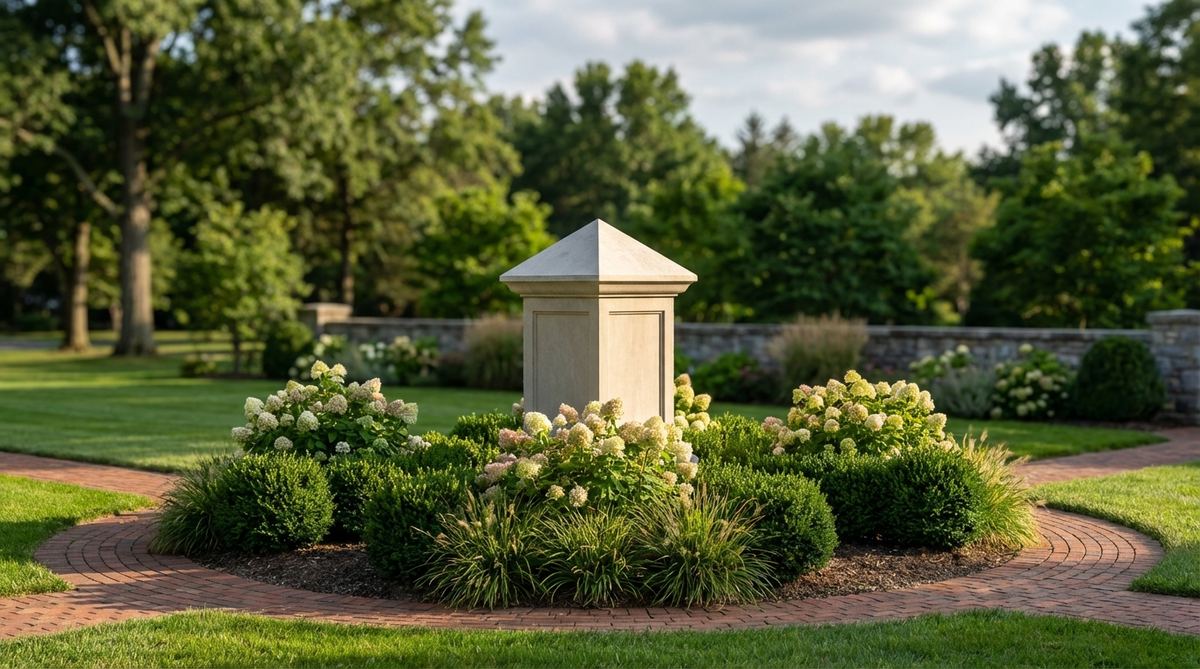
The miniature pyramid topper references ancient Egyptian design while the limestone body maintains European garden tradition. This fusion creates visual intrigue without cultural appropriation concerns when executed with restraint.
Select specimens where the pyramidion maintains crisp edges and clear facets. Weathering will gradually soften these lines, but initial sharpness ensures the form reads clearly from distance.
Position at the center of circular planting beds where viewers approach from multiple angles. The pyramidion’s facets catch light differently throughout the day, providing dynamic visual interest.
5. Balustrade-Integrated Limestone Obelisk
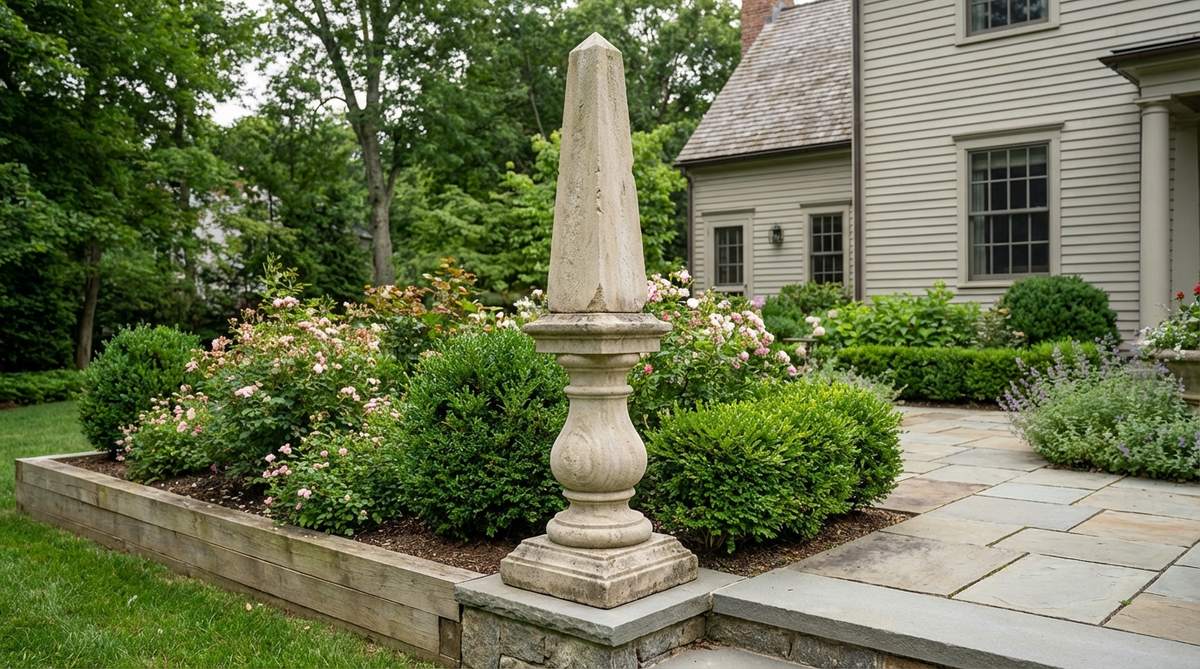
Turned baluster elements form the lower shaft before transitioning to a traditional tapered obelisk upper section. This hybrid design bridges decorative and architectural functions, referencing terrace balustrades.
The turned elements require skilled carving to maintain symmetry and proportion. Look for clean transitions between the baluster neck, belly, and base sections.
This style works exceptionally well along terrace edges or raised planting beds where it visually connects to built elements. The baluster section typically occupies the lower third of total height.
Contemporary Stone Pillars with Clean Lines
Modern stone obelisks emphasize pure geometry and material honesty over decorative carving. These designs rely on proportion, surface finish, and precise angles to create impact. The minimalist approach suits both urban courtyards and naturalistic prairie-style gardens.
6. Polished Granite Monolith

A single unadorned shaft of charcoal grey granite with mirror-polished surfaces creates stark vertical drama. The reflective finish captures sky conditions and surrounding vegetation in abstract patterns.
This design requires professional installation due to weight—expect 800-1200 pounds for a 6-foot specimen. The polished surface shows water spots, so position away from irrigation spray patterns.
Contrast the sleek granite against textured plantings like ornamental grasses or fine-needled conifers. The juxtaposition between refined stone and organic forms strengthens both elements.
7. Beveled Edge Basalt Column
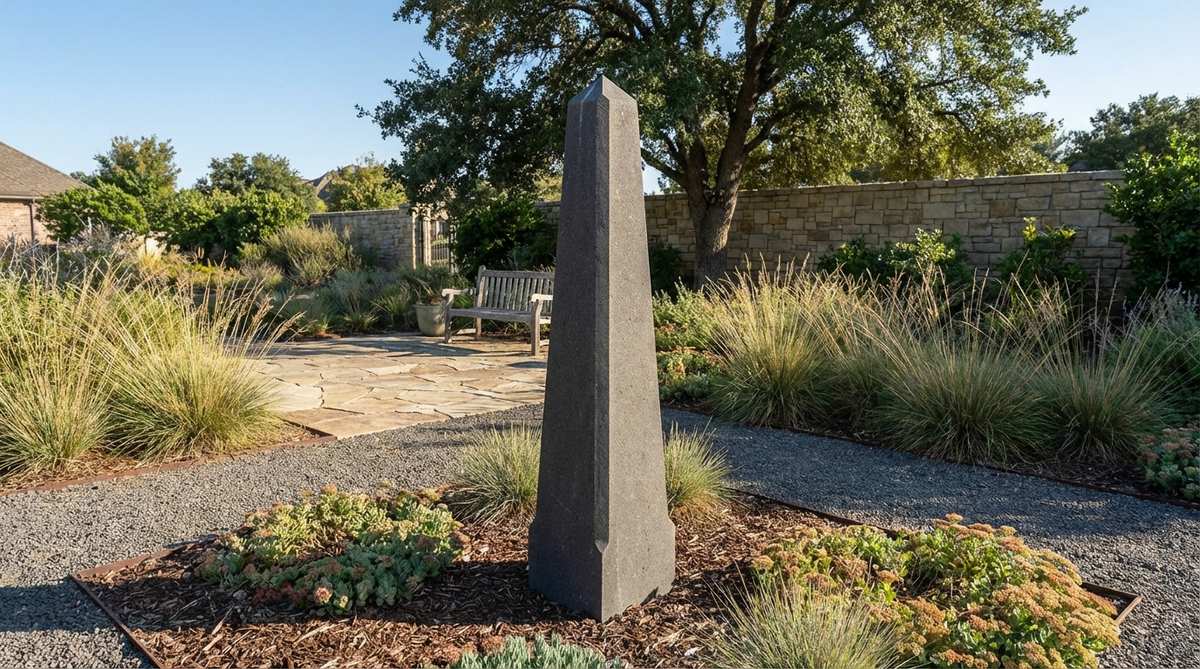
Sharp chamfered edges run the full height of this dark basalt pillar, creating linear highlights that define the form. The dense volcanic stone resists weathering while maintaining precise geometry indefinitely.
Bevels typically measure 45 degrees and extend 1-2 inches from each corner. This detail prevents the harsh appearance of completely square corners while preserving contemporary character.
Install in minimalist gardens with limited plant palettes where the obelisk’s strong geometry anchors the composition. The dark basalt recedes visually in shade but commands attention in direct sun.
8. Split-Face Sandstone Tower
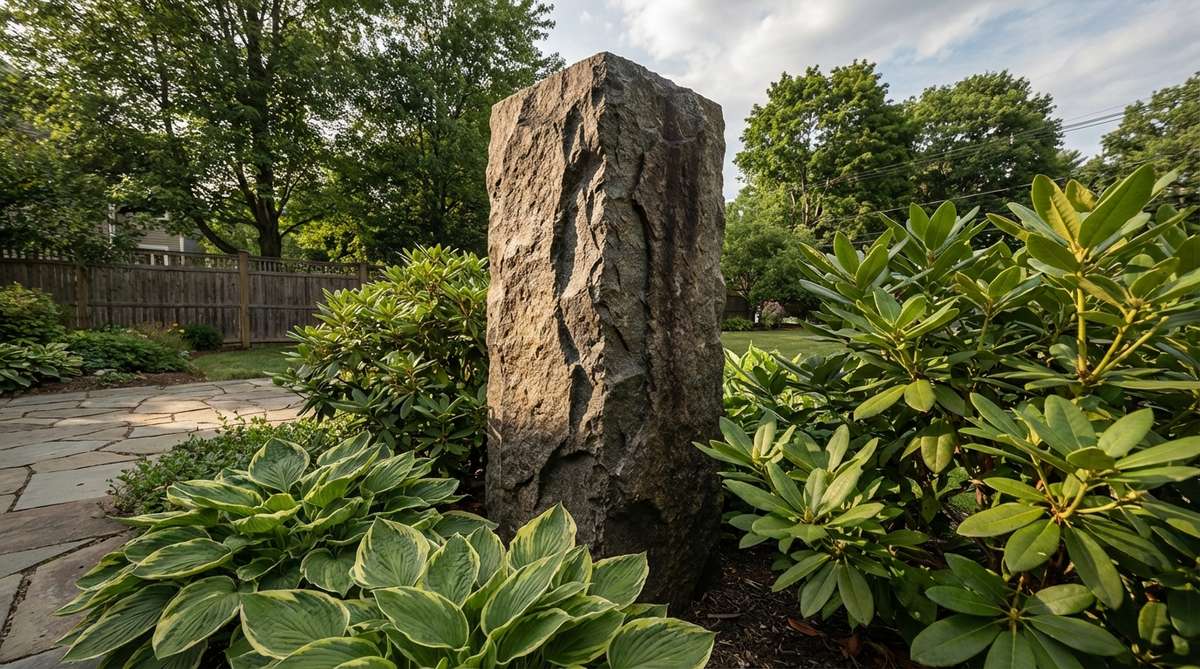
Natural cleaved surfaces expose the stone’s internal structure while maintaining rectangular form. The irregular texture catches light dramatically, creating depth through random faceting.
Each face displays unique patterns resulting from the splitting process—no two specimens match exactly. This variation provides organic character within geometric boundaries.
The rough texture contrasts effectively with smooth foliage like hostas or broad-leafed evergreens. Position where low-angle light emphasizes the surface relief.
9. Cube-Stacked Limestone Sculpture
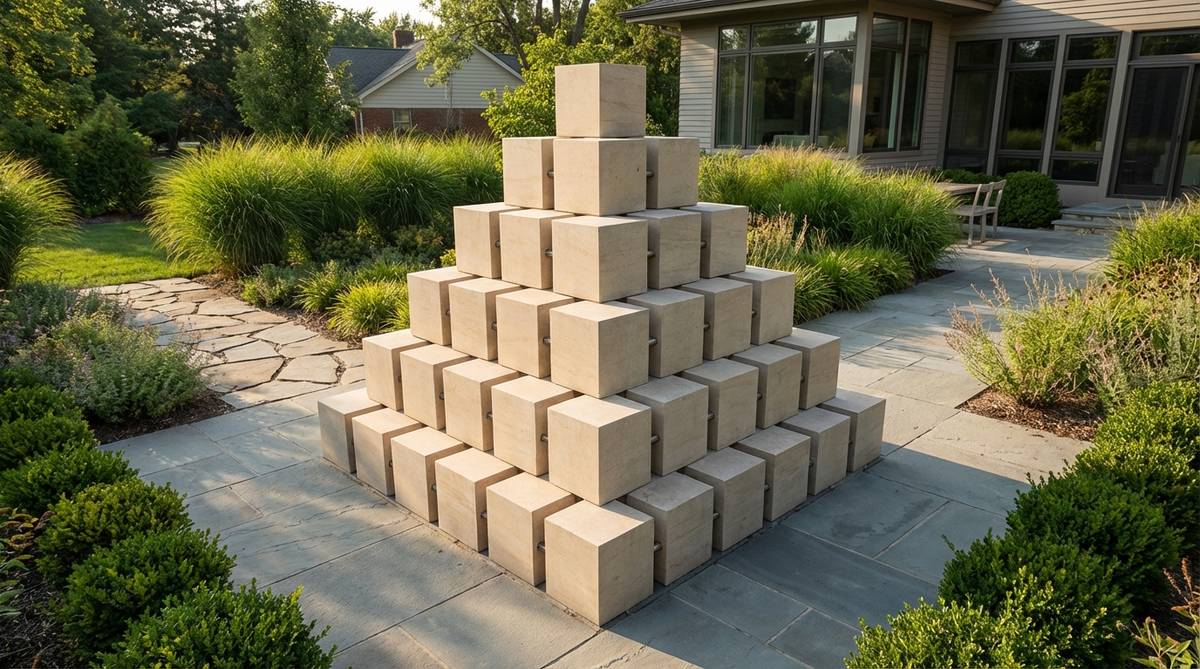
Graduated limestone cubes stack from large base to small cap, creating a stepped pyramidal form. Each cube maintains crisp 90-degree angles while the overall composition tapers at approximately 15 degrees.
The blocks require steel dowel connections to prevent lateral movement. Skilled masons drill vertical channels and insert 1-inch diameter rods set in epoxy.
This contemporary interpretation of the obelisk form suits modern architecture and hardscape-heavy designs. The horizontal lines created by cube intersections provide visual rest between vertical movement.
Aged Stone Obelisks with Natural Patina
Pre-weathered or naturally aged stone pillars deliver instant character to new gardens. These pieces skip decades of environmental exposure, arriving with established patinas, lichen growth, or deliberate distressing. The rustic aesthetic suits cottage gardens, farmhouse landscapes, and naturalistic designs.
10. Lichen-Covered Granite Pillar
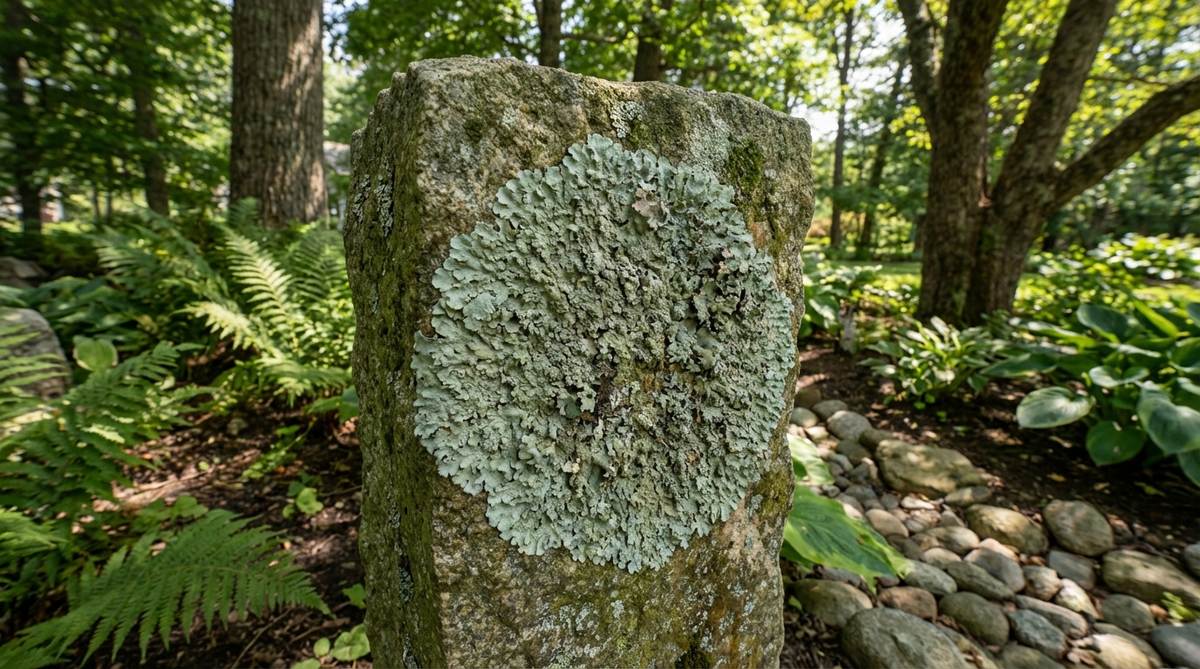
Colonies of grey-green lichen establish naturally on granite surfaces exposed to consistent moisture and indirect light. The biological coating softens the stone’s appearance while indicating environmental health.
Source pre-colonized specimens from salvage yards or request lichen-applied pieces from specialty suppliers who inoculate stones in controlled conditions. Natural colonization requires 5-10 years in optimal conditions.
Position in partial shade with good air circulation to maintain lichen health. Direct sun and drought stress the organisms, while deep shade limits photosynthesis needed for growth.
11. Eroded Sandstone Tapering Column
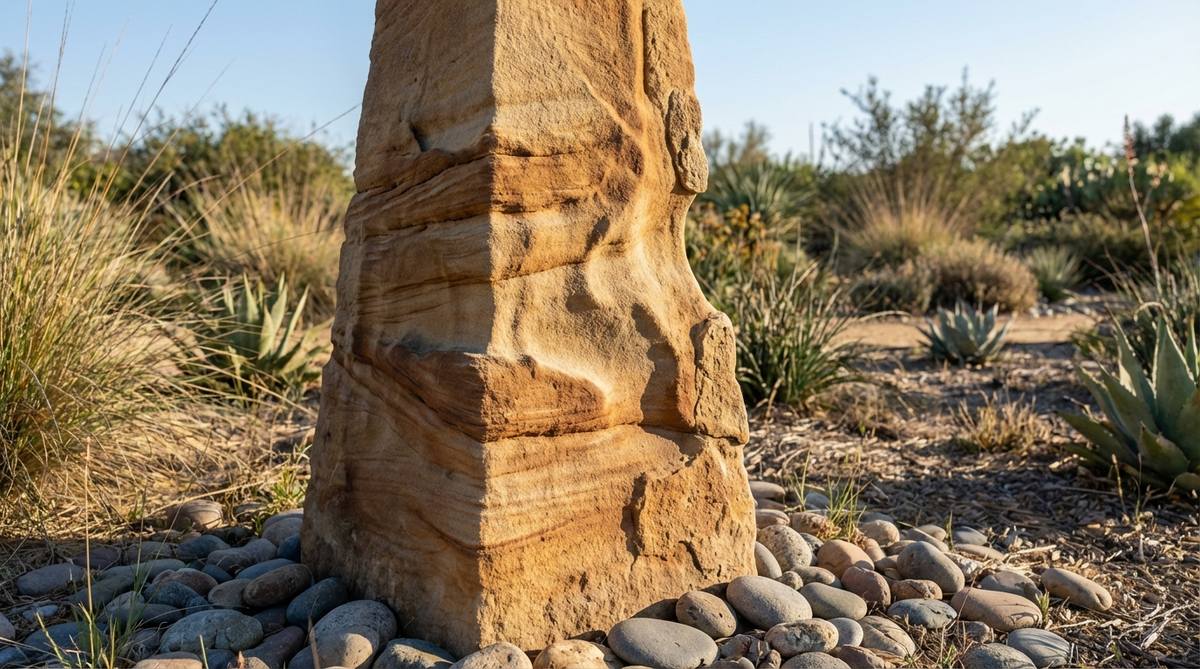
Wind and water erosion creates organic undulations across the surface, transforming geometric intent into sculptural form. Sandstone’s layered structure erodes unevenly, producing horizontal banding patterns.
Authentic erosion patterns differ markedly from artificial distressing—look for consistent weathering logic that respects geological structure. Exposed corners should show more wear than protected areas.
This style anchors xeriscape and rock garden designs where water-carved forms echo natural desert landscapes. The irregular surface provides textural contrast against smooth river stones.
12. Moss-Filled Joint Stacked Pillar
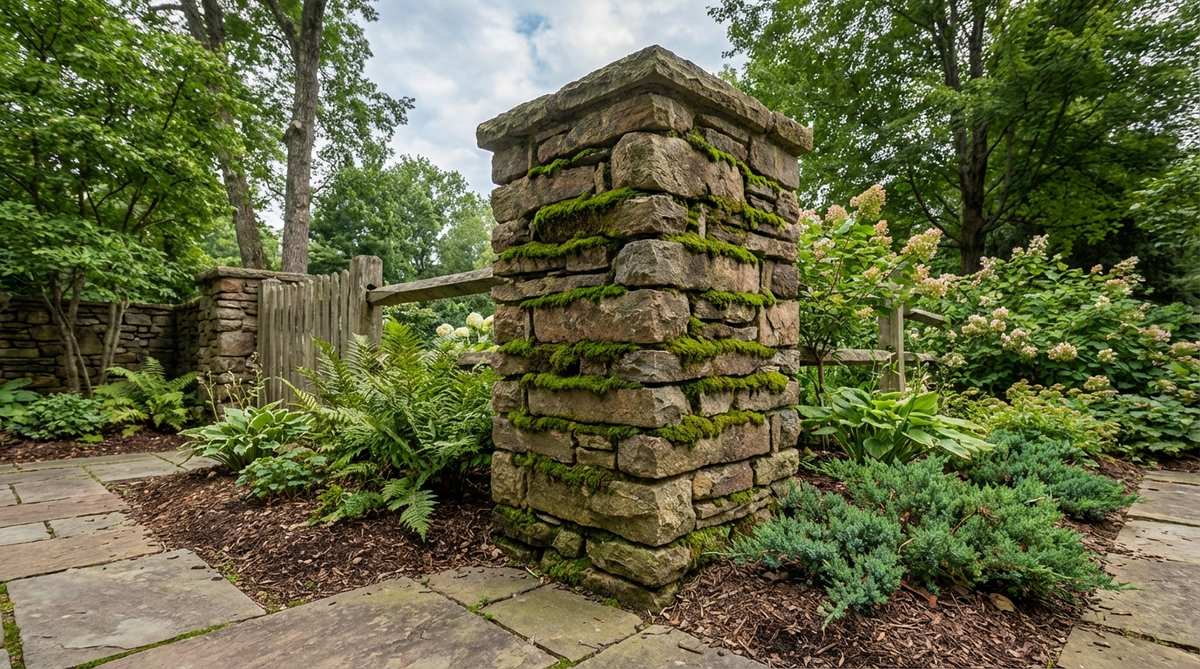
Individual stone sections stacked with deliberate gaps allow moss colonization within horizontal joints. The green bands create rhythmic patterns that break vertical monotony.
Encourage moss growth by mixing buttermilk with existing moss and painting the mixture into joints. Maintain consistent moisture during establishment, then reduce to natural rainfall.
The stacked construction reveals the pillar’s built nature rather than implying monolithic carving. This honest expression suits contemporary interpretations of rustic design.
13. Antique Reclaimed Estate Obelisk
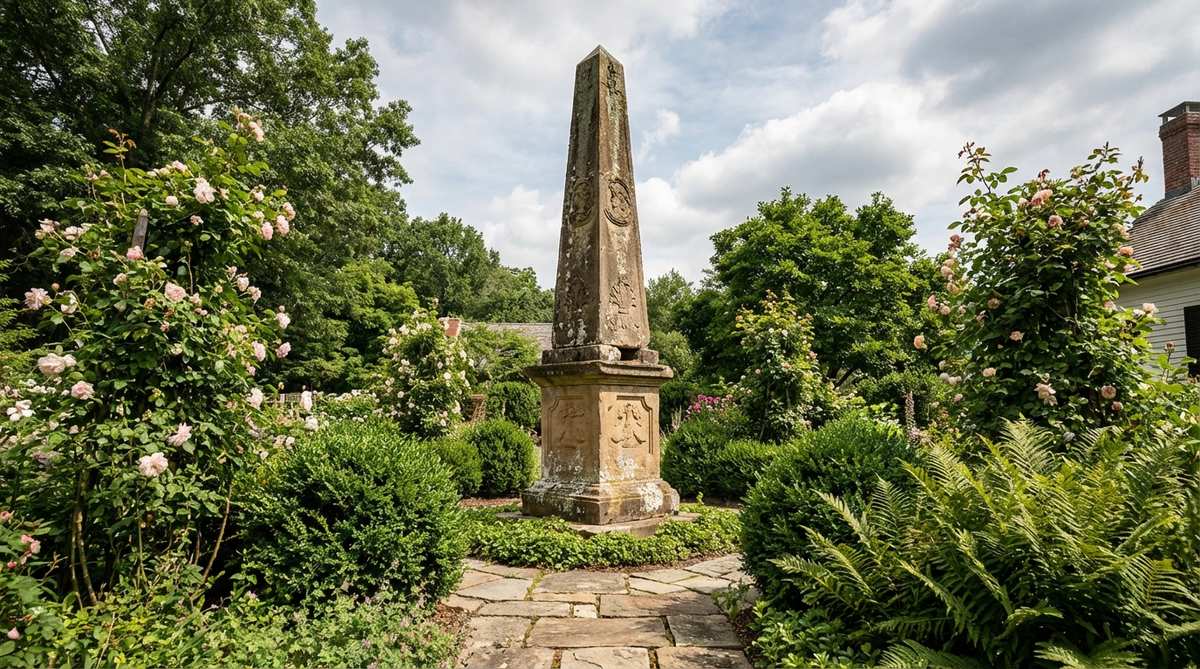
Salvaged pieces from historic properties carry authentic aging impossible to replicate. Surface wear patterns, repair evidence, and period carving techniques provide documented age.
Verify provenance through reputable architectural salvage dealers who document source properties. Authentic 18th and 19th century pieces command premium prices but deliver unmatched character.
These specimens work best as singular focal points where their historical significance receives proper emphasis. Pair with heritage plant varieties to reinforce period authenticity.
Matched Stone Pillars for Formal Compositions
Symmetrical obelisk placement creates formal structure essential to classical garden design. Paired pillars frame entrances, define thresholds, and establish axial relationships. Professional landscapers use matched sets to impose order on informal plantings or emphasize architectural features.
14. Gateway Flanking Limestone Pair
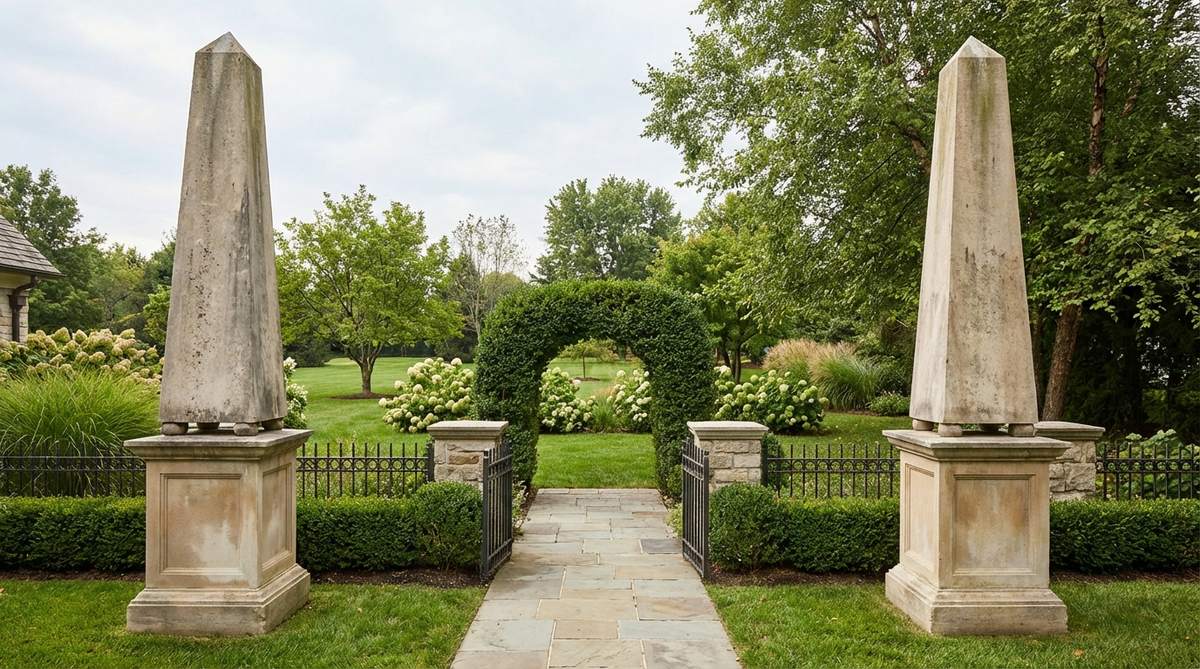
Identical obelisks positioned on either side of garden gates or path openings create ceremonial entry sequences. The vertical elements frame the passage while their height telegraphs the threshold from distance.
Spacing between pairs should equal 1.5 to 2 times the obelisk height to maintain proper proportion. Wider spacing diminishes the framing effect; closer placement feels compressed.
Install on matching plinths or bases that elevate the structures 6-12 inches above grade. This detail prevents visual merging with ground-level plantings and reinforces their architectural role.
15. Terrace Corner Granite Sentinels
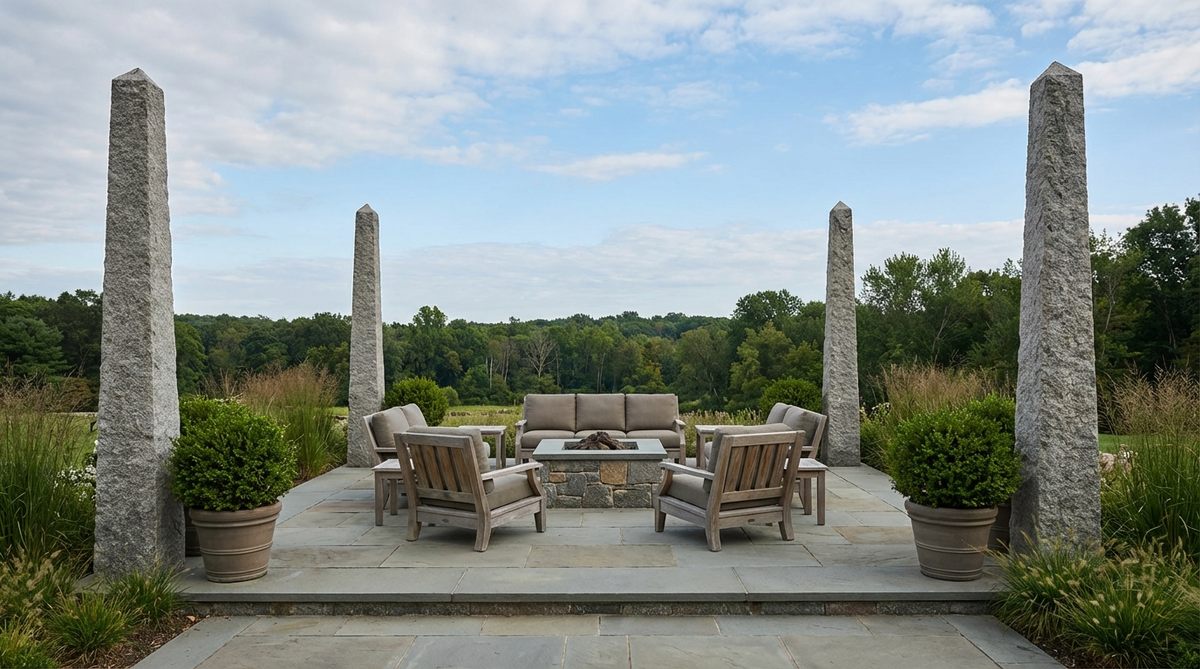
Four matching granite obelisks placed at terrace corners define outdoor room boundaries while maintaining visual permeability. The vertical markers anchor seating areas without solid wall enclosure.
Select robust granite specimens measuring at least 4 feet tall to register at seated eye level. Shorter pieces disappear when furniture and plantings reach maturity.
This arrangement works particularly well on elevated terraces where the obelisks read against sky rather than background vegetation. The corner positions allow circulation between them.
16. Parterre Quadrant Dividers
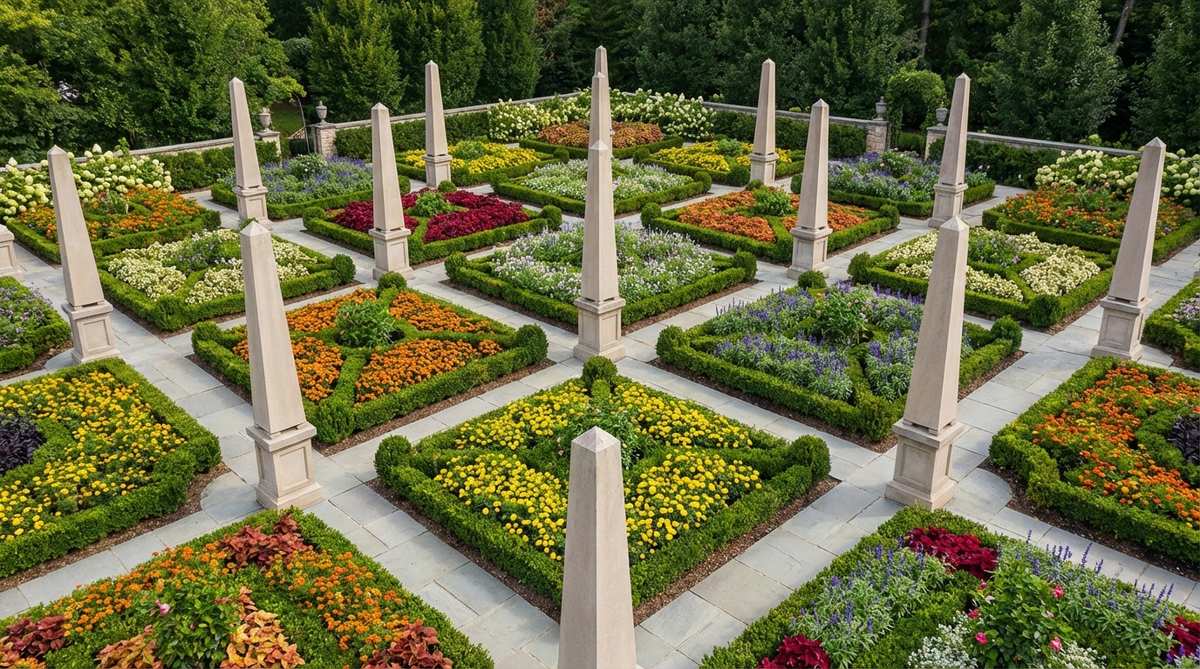
Stone obelisks mark the intersection points of paths dividing formal parterre beds into quarters or eighths. The repetition creates rhythmic punctuation that organizes complex geometric layouts.
Maintain consistent height across all specimens—variations disrupt the formal order essential to parterre design. Expect to use 4-8 obelisks depending on garden scale.
The stone’s neutral color allows seasonal bedding plants to provide all color variation. This restraint prevents visual chaos in designs already rich with geometric complexity.
17. Allee Progression Markers

Matching obelisks placed at regular intervals along tree-lined allees reinforce perspective and establish rhythm. The stone elements provide winter interest when deciduous canopy trees stand bare.
Space the pillars to align with tree positions or at mathematically regular intervals—every 20 or 30 feet depending on total allee length. Irregular spacing destroys the rhythmic intent.
Height should remain subordinate to mature tree canopy to avoid competition. Obelisks measuring 4-5 feet complement allees where trees reach 25-30 feet at maturity.
Stone Obelisk Finial Styles and Cap Designs
The finial crowns the obelisk and significantly impacts overall character. From simple geometric caps to elaborate carved ornaments, this terminal detail deserves careful consideration. The finial also serves practical functions—it sheds water and provides visual completion.
18. Orb and Spike Limestone Finial
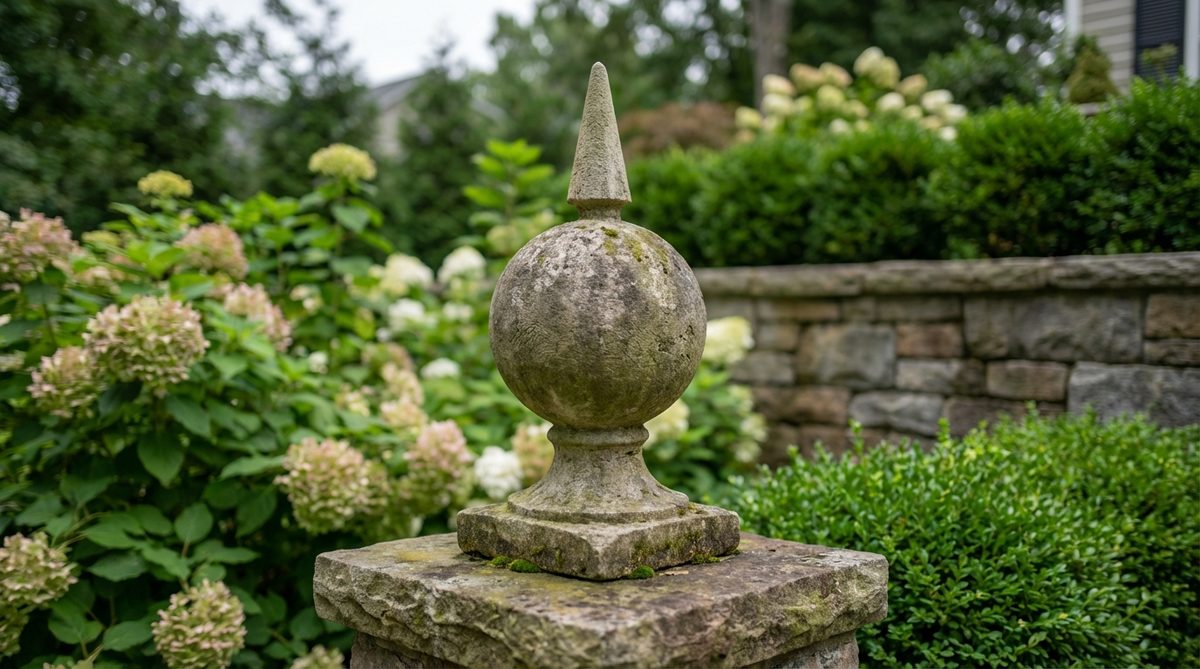
A carved stone sphere supports a tapered spike reaching 8-12 inches above the main shaft. This traditional form references Baroque garden ornament while the pointed terminus draws the eye skyward.
The orb diameter typically measures 1.5 times the obelisk’s top width to create pleasing proportion. Undersized spheres appear pinched; oversized versions look top-heavy.
The spike provides bird deterrence that keeps the cap clean and prevents nesting damage. Ensure the spike integrates with the orb through carving or dowel construction rather than simple adhesive.
19. Flame-Carved Sandstone Cap
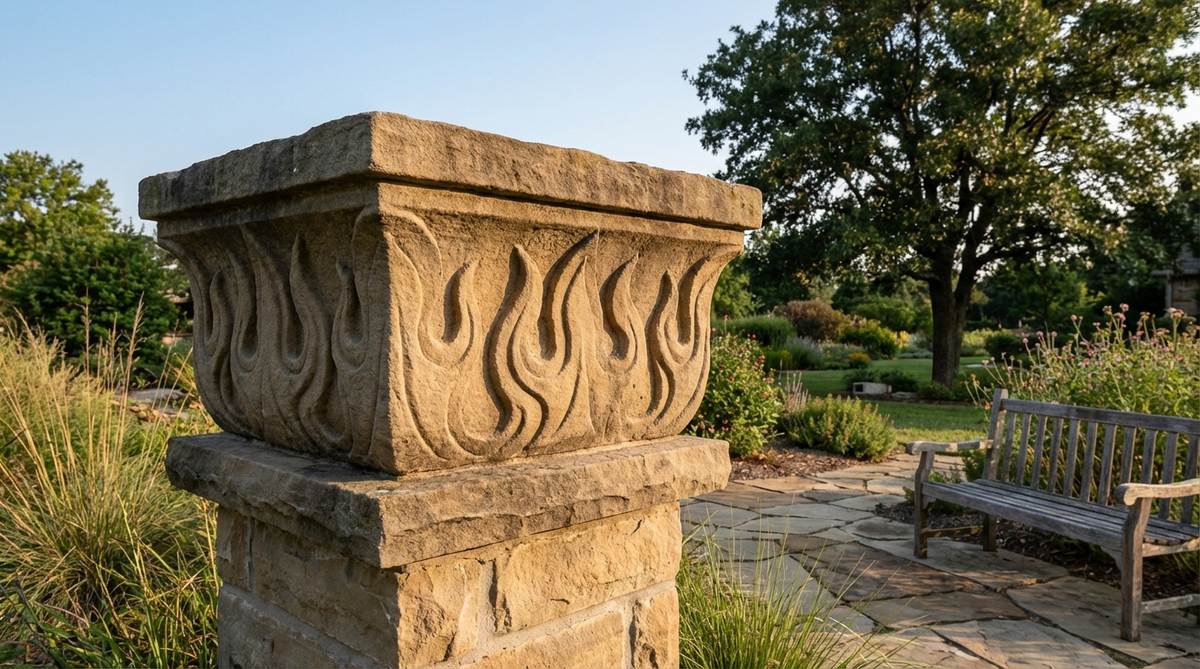
Stylized flame motifs carved into the pyramidal cap reference eternal flame monuments and classical symbolism. The upward-curving relief emphasizes ascension while the repeated elements create texture.
This ornamental approach suits memorial gardens or spaces with contemplative purposes. The symbolism carries meaning without requiring explicit signage or explanation.
Sandstone accepts detailed carving better than harder granite, allowing crisp flame definition. Expect gradual edge softening as weathering progresses over decades.
20. Simple Pyramid Cap Granite
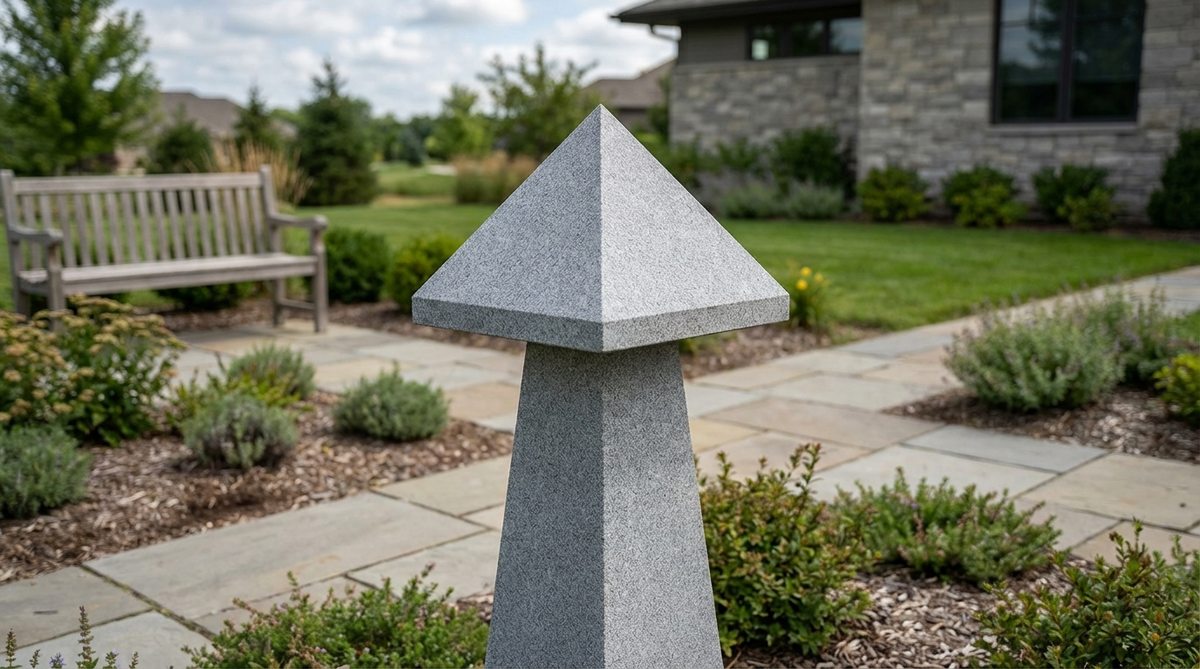
A clean four-sided pyramid with sharp ridge lines provides minimal ornamentation while fulfilling the water-shedding function. The geometric purity suits contemporary landscapes where decoration feels excessive.
The pyramid’s slope angle should match the obelisk shaft’s taper angle to create visual continuity. Mismatched angles create awkward transitions that disrupt the form.
Polish the cap to contrast with a honed shaft, or maintain consistent finish across the entire piece. Either approach works if applied deliberately rather than by default.
21. Acorn and Oak Leaf Relief Cap
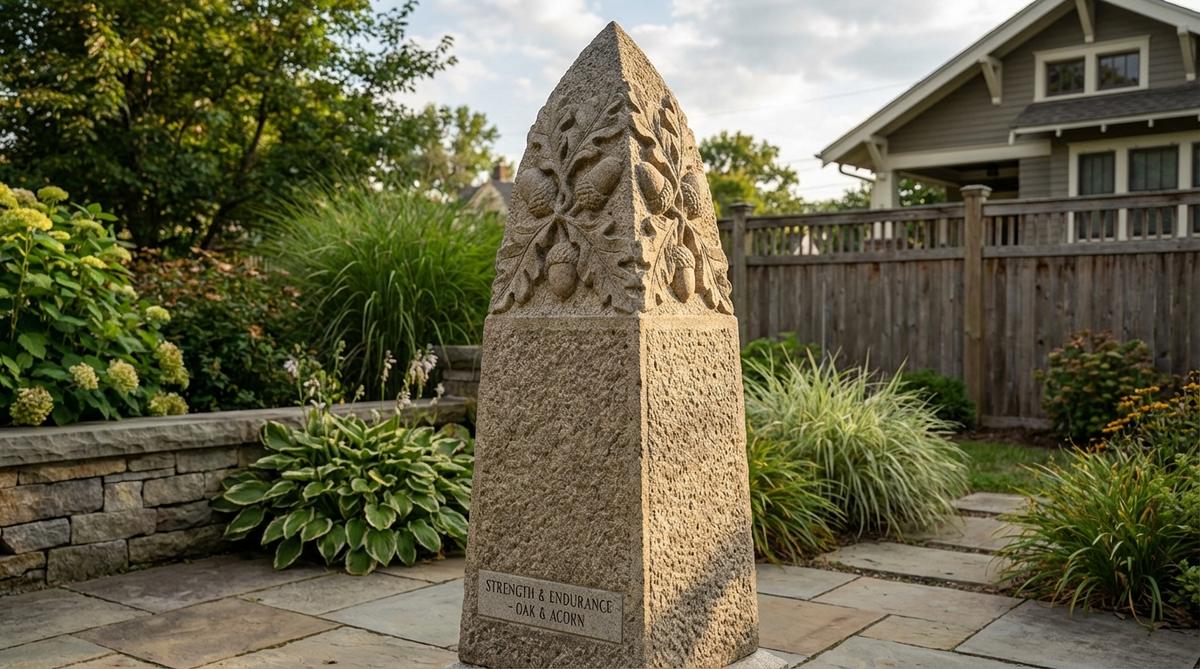
Carved botanical motifs personalize the obelisk while celebrating regional flora. Oak symbolism connects to strength and endurance, reinforcing the stone’s permanence.
Commission custom carving to feature locally significant species rather than generic botanical references. This specificity deepens the connection between structure and site.
Relief depth between 1-2 inches creates readable shadows without compromising structural integrity. Deeper carving risks water retention and freeze-thaw damage in cold climates.
22. Sundial-Integrated Granite Cap
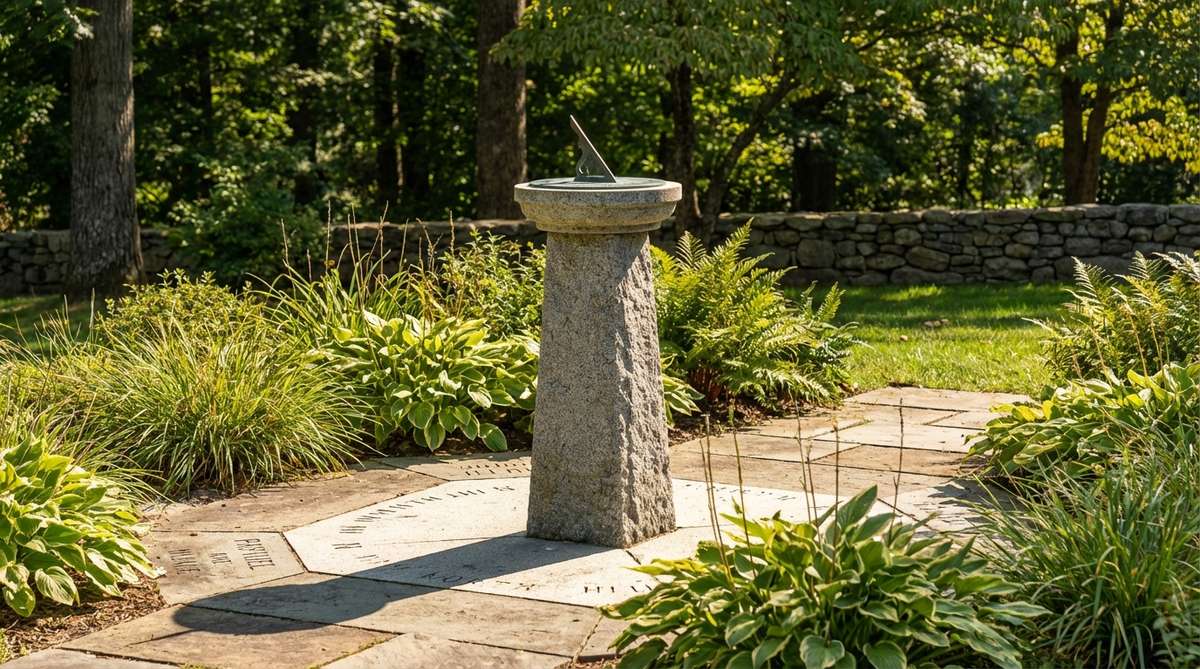
The obelisk itself functions as a gnomon casting shadows onto ground markers that indicate time and seasonal solar positions. This fusion of ornament and function follows ancient precedent.
Precise north-south alignment is critical for sundial accuracy. Professional installation uses transit-level surveying to establish true orientation within 1-degree tolerance.
Embed brass or bronze markers into surrounding pavement at calculated positions. The obelisk’s shadow tip touches these markers at specific times, creating interactive engagement with the structure.
23. Flat Platform Cap for Planters
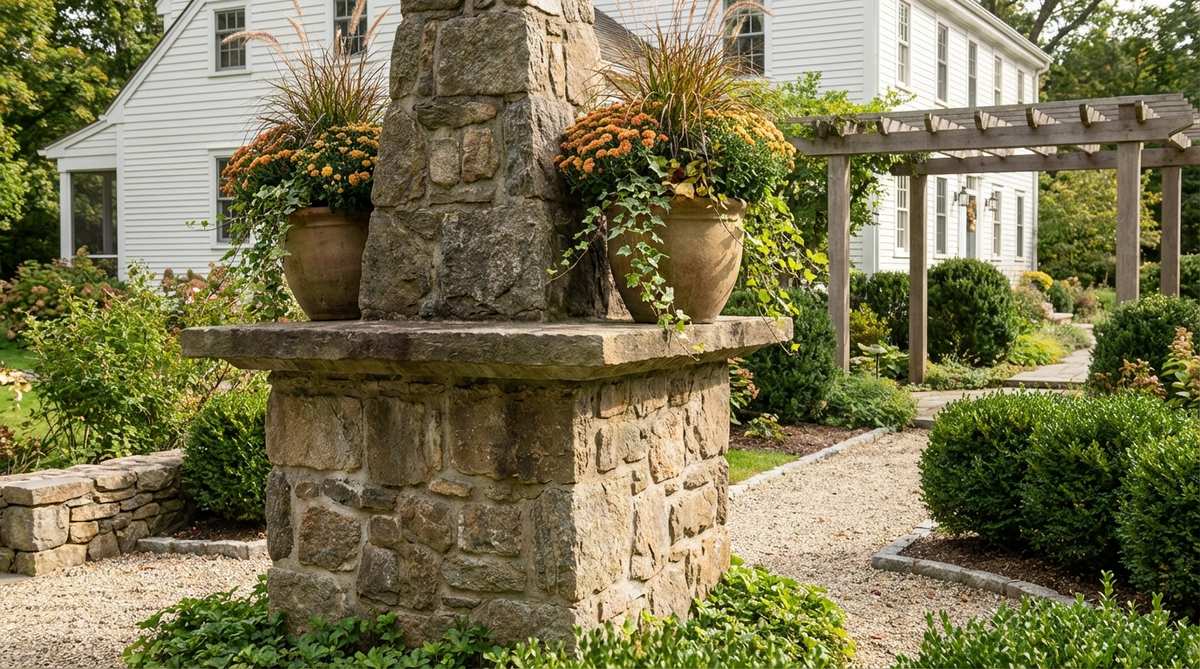
A broad flat cap transforms the obelisk into a display pedestal for decorative urns or seasonal container plantings. The elevated platform provides drainage while raising displays to eye level.
The cap width should exceed the obelisk’s base width by 4-6 inches on all sides, creating visual stability for the added ornament. Narrow caps appear precarious regardless of actual stability.
Use this style where you want seasonal variation without permanent planting around the base. Swap containers quarterly to maintain fresh interest while the stone provides constant structure.
Building Vertical Interest with Stone Garden Obelisks
Strategic placement of stone garden obelisks transforms flat landscapes into compositions with architectural depth and visual hierarchy. These enduring structures anchor plantings that change seasonally while providing year-round focal points that organize space and guide movement. Select stone type, height, and finish based on your climate conditions, maintenance preferences, and existing design language. Start with a single well-positioned specimen to understand how vertical elements interact with your landscape before committing to paired or multiple installations. The investment in quality stone pillars delivers decades of service while appreciating in character as natural weathering enhances their presence.
Frequently Asked Questions
What height stone garden obelisk works best for typical residential gardens?
Obelisks measuring 4-6 feet tall suit most residential gardens, providing scale that registers from indoor viewing points without overwhelming surrounding plantings. Compact urban gardens benefit from 3-4 foot specimens, while expansive properties can accommodate 6-8 foot pillars. The obelisk should extend at least 18 inches above adjacent mature plantings to maintain visual presence throughout the growing season. Consider the viewing distance—structures meant to anchor distant views require greater height than those positioned in intimate courtyard settings.
How deep should stone obelisk foundations extend for stability?
Foundation depth depends on obelisk weight and local frost line depth. Lightweight cast stone pieces under 200 pounds require 12-inch gravel bases in frost-free climates, while solid granite specimens exceeding 500 pounds need 18-24 inch frost footings in cold regions. The foundation footprint should extend 6 inches beyond the obelisk base on all sides. Pour a 4-inch concrete pad atop the compacted gravel base for pillars taller than 5 feet. In earthquake-prone areas, pin the obelisk to the foundation using epoxied steel rods.
Which stone type offers the best durability for outdoor obelisks?
Granite delivers superior weather resistance across all climates, maintaining crisp details and resisting freeze-thaw damage indefinitely. Limestone develops attractive patina but shows gradual surface erosion in acid rain environments and may suffer spalling in harsh freeze-thaw cycles. Sandstone offers warmth and texture but weathers more rapidly than granite or limestone. Cast stone provides budget-friendly versatility with adequate durability in moderate climates but requires periodic sealing in regions with temperature extremes. Match stone selection to your local climate severity and desired maintenance commitment.
Should stone obelisks be positioned in sun or shade for longevity?
Stone obelisks tolerate both sun and shade equally from a durability standpoint—the material is unaffected by UV exposure or light levels. Position based on design intent rather than preservation concerns. Full sun locations emphasize shadow play and relief details throughout the day, while shaded placements encourage lichen and moss growth that enhance aged character. Avoid placing obelisks directly under large deciduous trees where falling branches risk impact damage and accumulated leaf debris promotes staining. Morning sun with afternoon shade provides ideal conditions for developing natural patina without excessive algae growth.
Can stone garden obelisks support climbing plants effectively?
Stone obelisks alone provide insufficient grip for most climbing plants, which require rough texture, crevices, or attachment points. Add discrete copper wire wrapped spirally around the shaft to support annual vines like morning glories or sweet peas. For heavier climbers like clematis or climbing roses, install a separate iron or wooden support structure adjacent to the obelisk rather than expecting the stone itself to bear plant weight. Alternatively, position the obelisk as a focal point surrounded by free-standing climbers on dedicated trellises, allowing the stone to remain an architectural element rather than functional plant support.