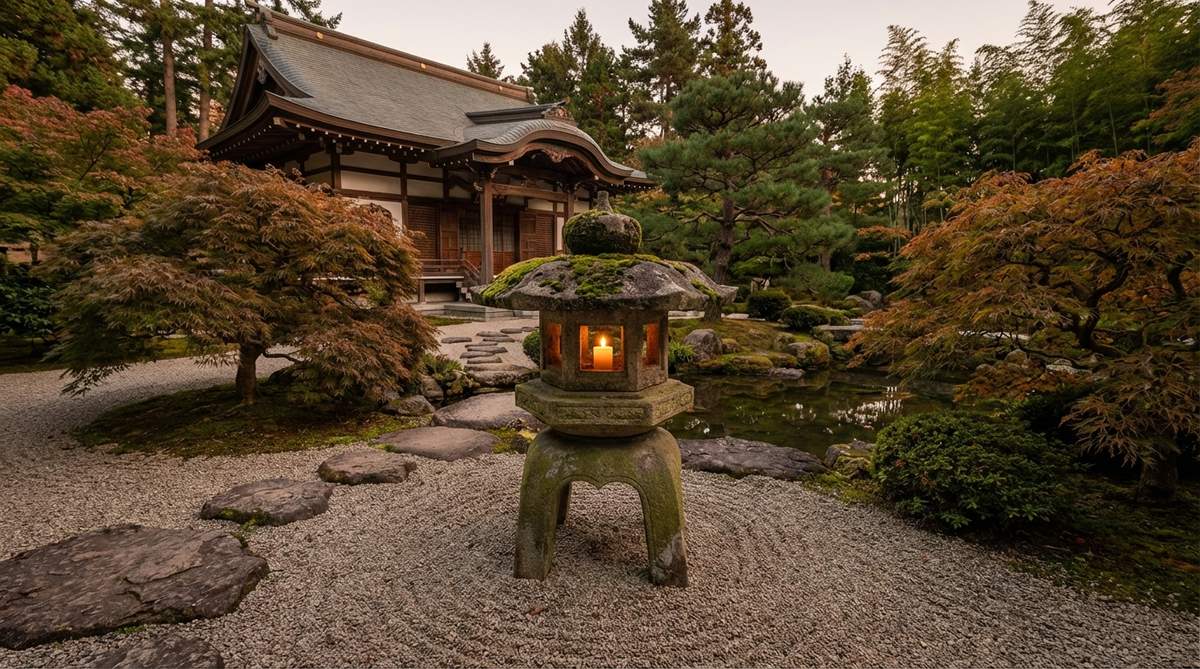
A stone garden lantern serves as both a functional light source and a spiritual anchor in Japanese-inspired landscapes. These sculptural elements, known as ishi-doro, have illuminated temple grounds and private gardens for centuries, each variety carrying distinct symbolic meaning and design principles. Fresh Garden Ideas brings you this comprehensive guide to help you select the perfect lantern style for your outdoor sanctuary.
Design SnapshotKey Principles
- Placement Intent: Position lanterns at transitional points, near water features, or along pathways to mark sacred and meditative spaces
- Proportion Balance: Match lantern height and mass to surrounding plantings, with taller pedestal styles for open areas and lower legged varieties for intimate corners
- Material Authenticity: Choose granite or natural stone over concrete replicas to achieve weathering patina and structural integrity
- Symbolic Function: Understand that each lantern type represents specific Buddhist or Zen concepts, from enlightenment to the cycle of life
Pedestal LanternsTachi-Gata Elegance
Tachi-gata lanterns command attention with their vertical presence, making them ideal focal points in larger garden compositions. These pedestal styles feature a complete structural hierarchy from ornamental base to crowned finial, symbolizing the journey from earth to enlightenment.
1. Kasuga Shrine-Inspired Pedestal
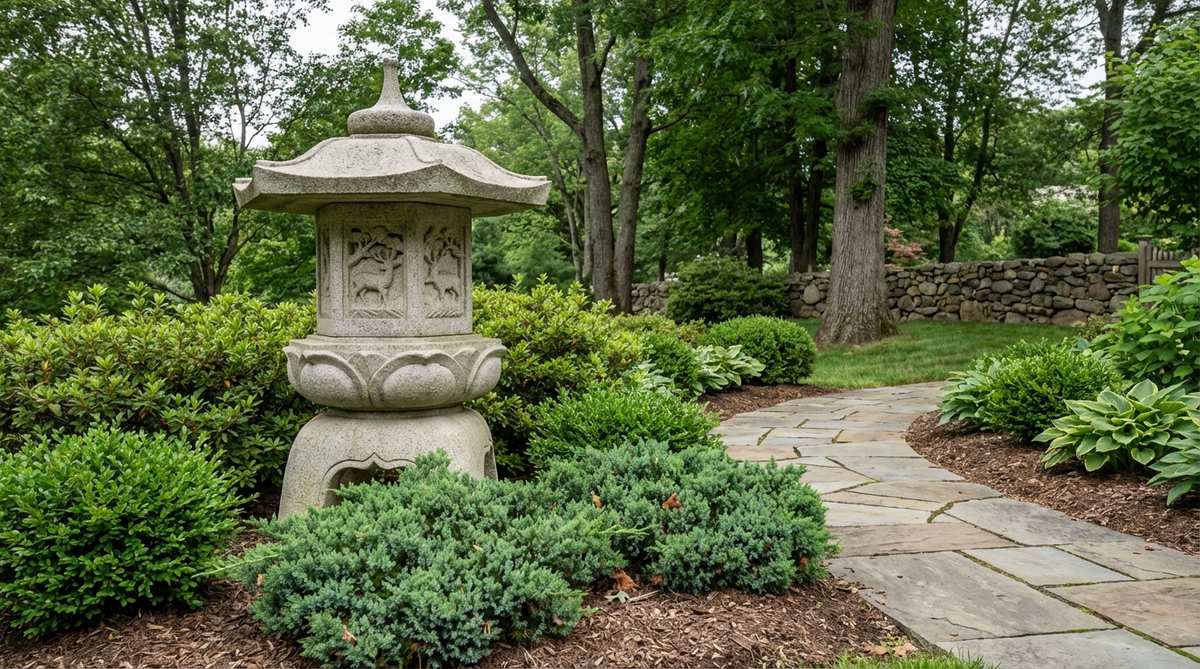
The Kasuga lantern displays a hexagonal or octagonal pagoda-style roof with decorative deer motifs carved into side panels. Designers position these 4-6 feet tall structures at garden entrances or temple approach paths.
Install the lantern on level ground with the base fully visible to showcase the lotus flower platform. Pair with low evergreen shrubs like azaleas or Japanese holly to frame the carved details without obscuring them.
This variety works best in formal settings where its ornamental complexity receives adequate viewing distance. The deer carvings reference the sacred messengers of Kasuga Shrine in Nara, adding cultural depth to your composition.
2. Nuresagi Heron Style
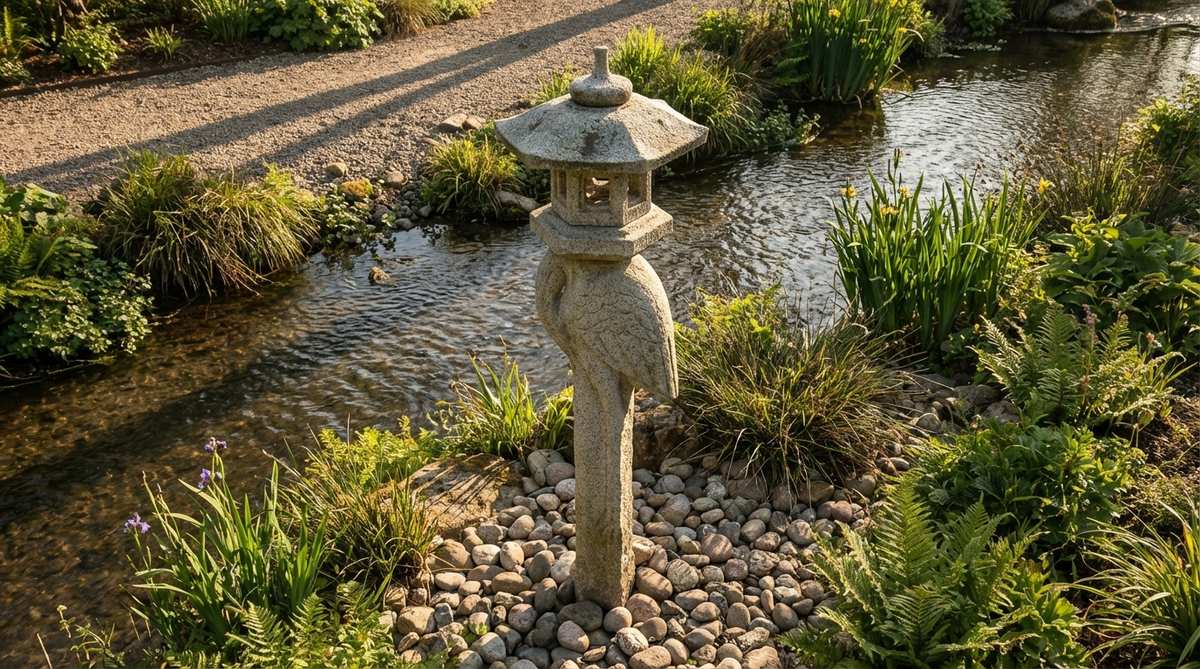
The Nuresagi features a slender hexagonal fire box and elongated post that resembles a heron standing in shallow water. Its graceful proportions reach 5-7 feet, creating dramatic vertical lines in streamside plantings.
Place this lantern where morning or evening light can cast long shadows across gravel or water surfaces. The narrow silhouette requires minimal ground footprint while delivering maximum visual impact.
3. Rokkaku Six-Sided Tower
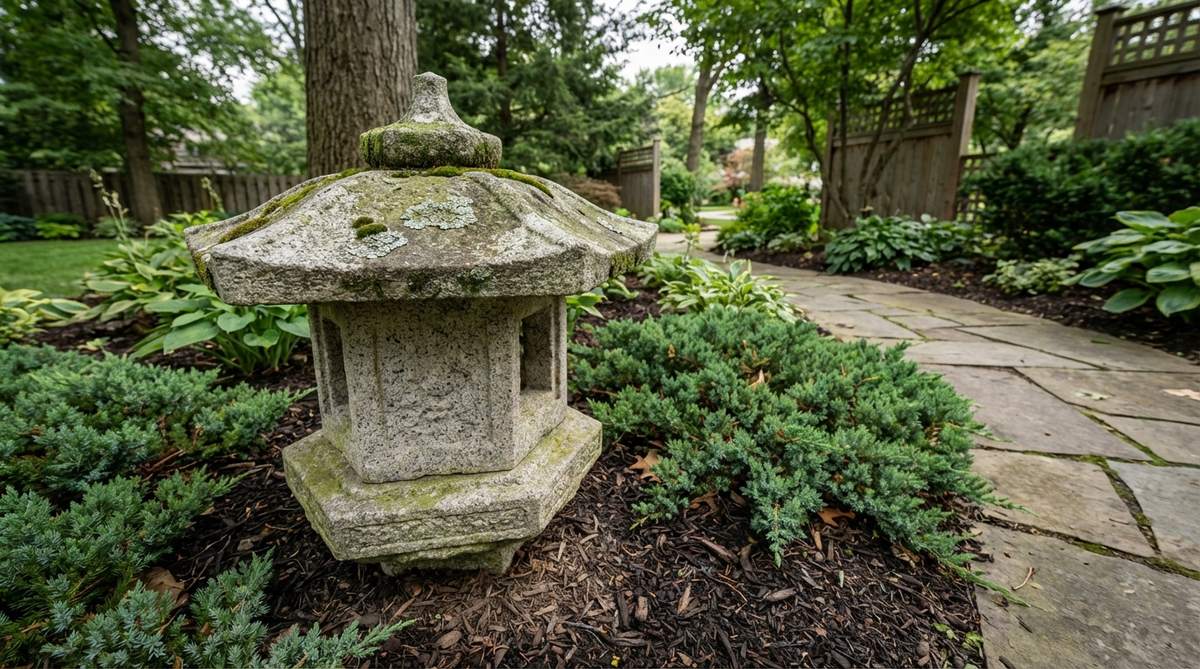
Six flat faces define this geometric lantern, each panel offering space for subtle relief carvings or plain surfaces that collect moss over time. The angular profile contrasts beautifully with organic garden elements.
Designers use Rokkaku lanterns to anchor formal garden rooms or mark corners in geometric layouts. Position 3-4 feet from pathways to allow appreciation of the six-sided symmetry from multiple viewing angles.
The hexagonal form symbolizes the six realms of existence in Buddhist cosmology. Weathered granite versions develop lichen patterns that soften the architectural geometry naturally.
4. Tsurigane Hanging Bell Shape
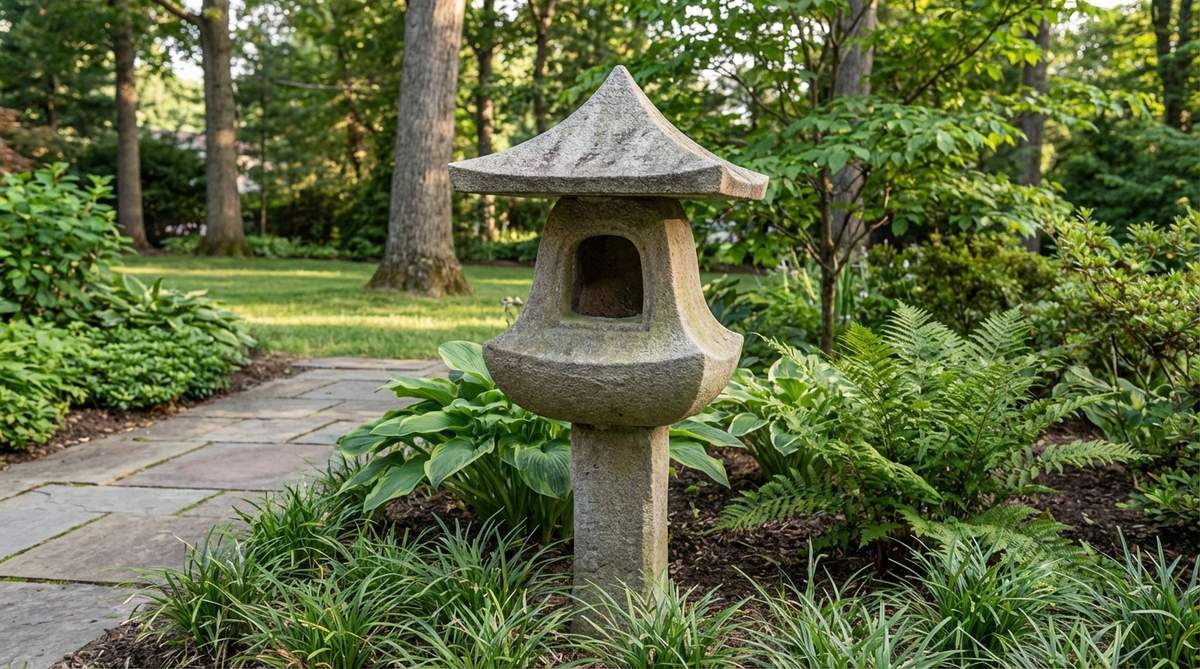
The fire box mimics a temple bell’s curved profile, widening at the base before the post begins. This distinctive bulge creates visual weight in the lantern’s midsection, balancing the peaked roof above.
Install Tsurigane lanterns where their bell-like form echoes actual temple bells visible or audible from the garden. The shape naturally draws the eye downward to ground-level plantings.
5. Daimyo Feudal Lord Grandeur
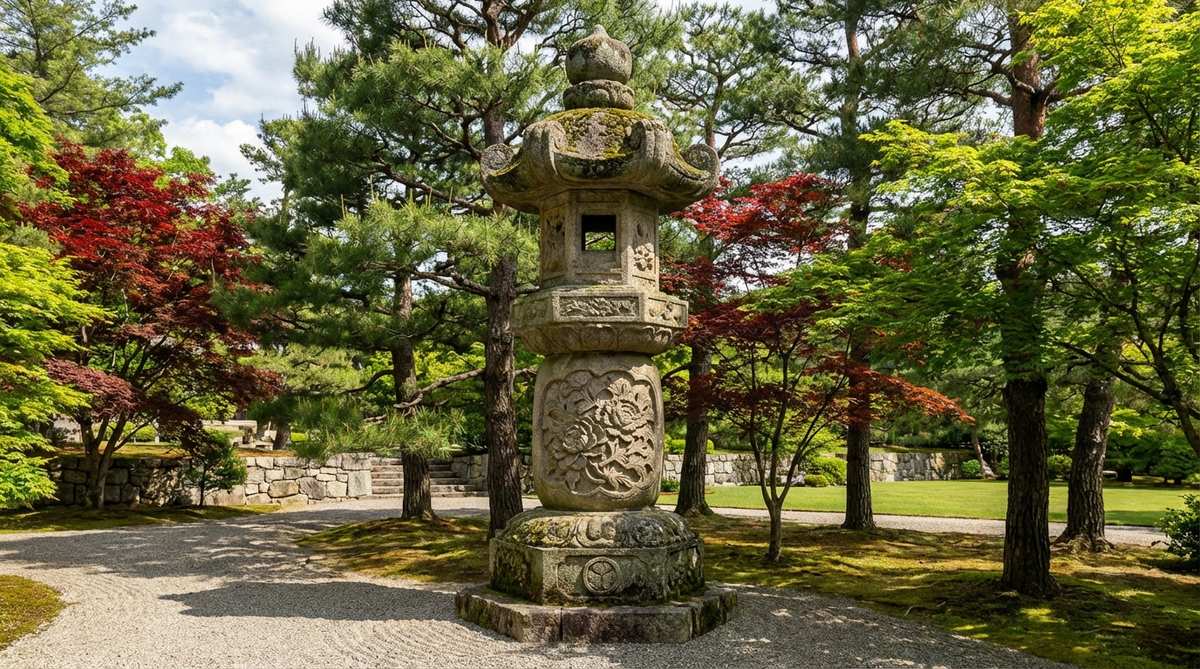
Massive scale and elaborate carvings distinguish this prestige lantern, often featuring family crests or complex peony motifs. Heights exceed 6 feet, demanding spacious settings with proportional plantings.
Reserve Daimyo lanterns for estate-scale gardens where their aristocratic presence matches the landscape ambition. Surround with specimen trees like Japanese black pine or mature maples that share the lantern’s commanding presence.
The ornate details require periodic cleaning to prevent moss from obscuring carved elements. Position where seasonal viewing changes reveal different carved panels throughout the year.
6. Sagi Heron Leg Variation
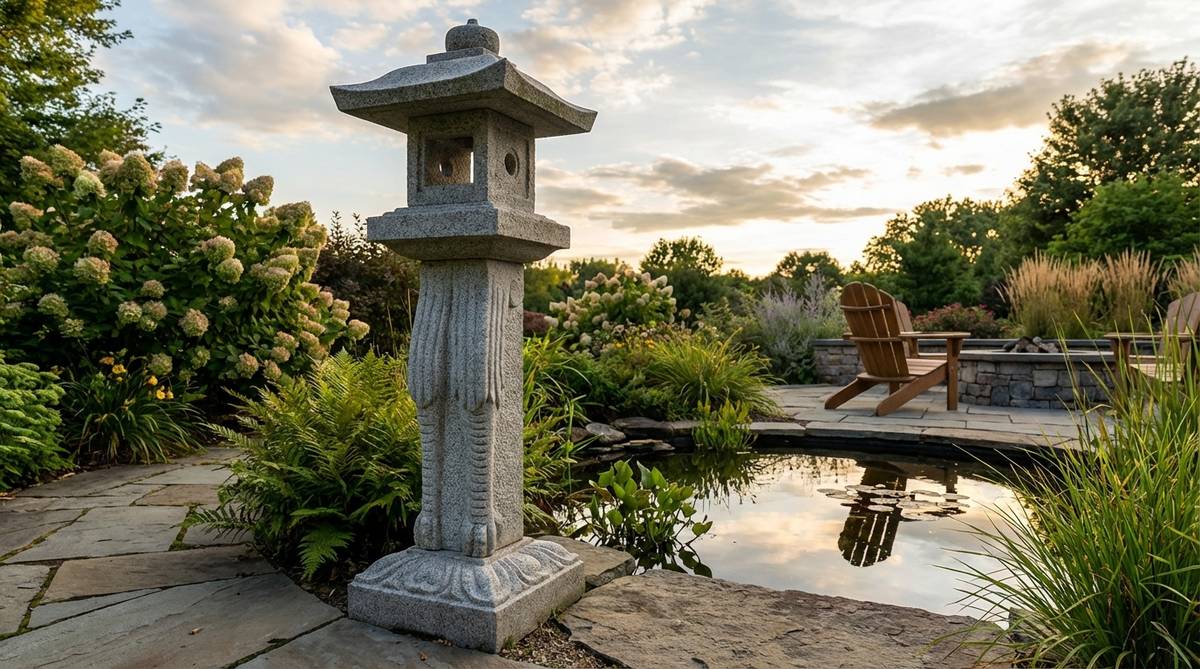
Similar to Nuresagi but with more pronounced leg-like fluting on the post section, creating stronger vertical rhythm. The fire box sits higher relative to overall height, emphasizing the lantern’s upward reach.
Designers place Sagi lanterns in areas where reflection in water or glass panels doubles the vertical effect. The emphasized post makes this variety particularly effective when silhouetted against evening skies.
7. Yamadoro Mountain Temple Style
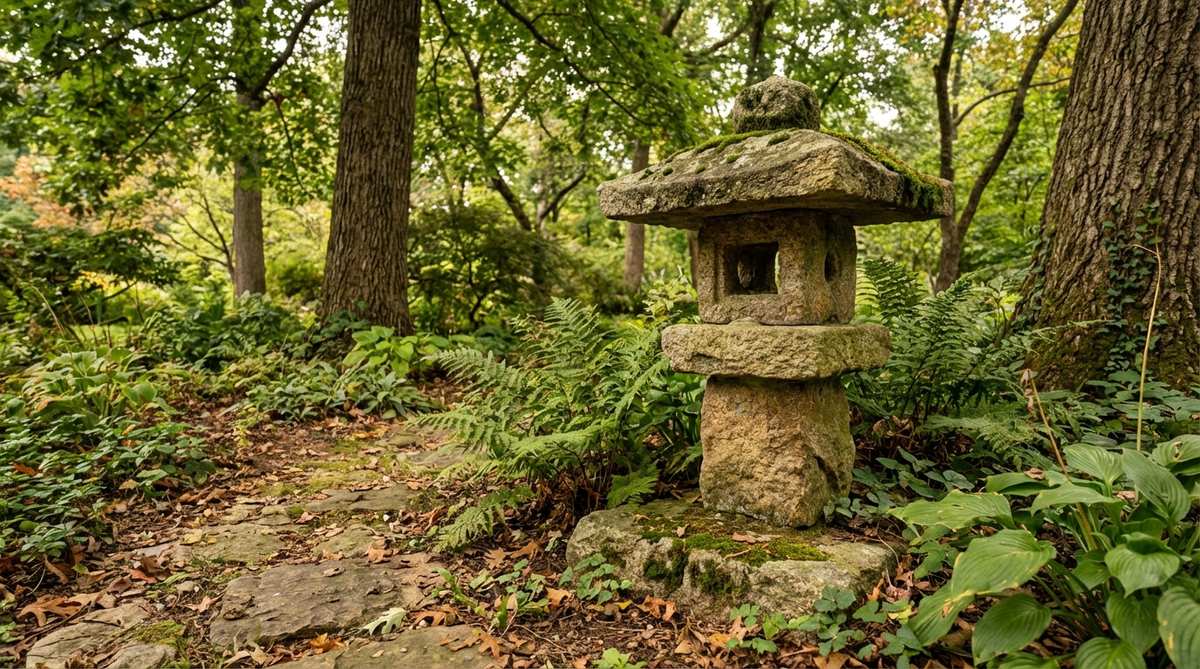
Rugged, unpolished surfaces characterize this rustic pedestal lantern designed to evoke remote mountain shrines. Irregular granite textures remain intentionally rough, celebrating the stone’s natural state.
Install Yamadoro lanterns in naturalized garden areas where cultivated formality gives way to wilder plantings. Ferns, mosses, and native woodland species complement the unrefined aesthetic.
This style ages particularly well, with rain and weathering enhancing rather than diminishing its appearance. Avoid pairing with manicured hedges or formal parterre elements that clash with its mountain temple character.
8. Toro-no-Ashi Tall Leg Pedestal
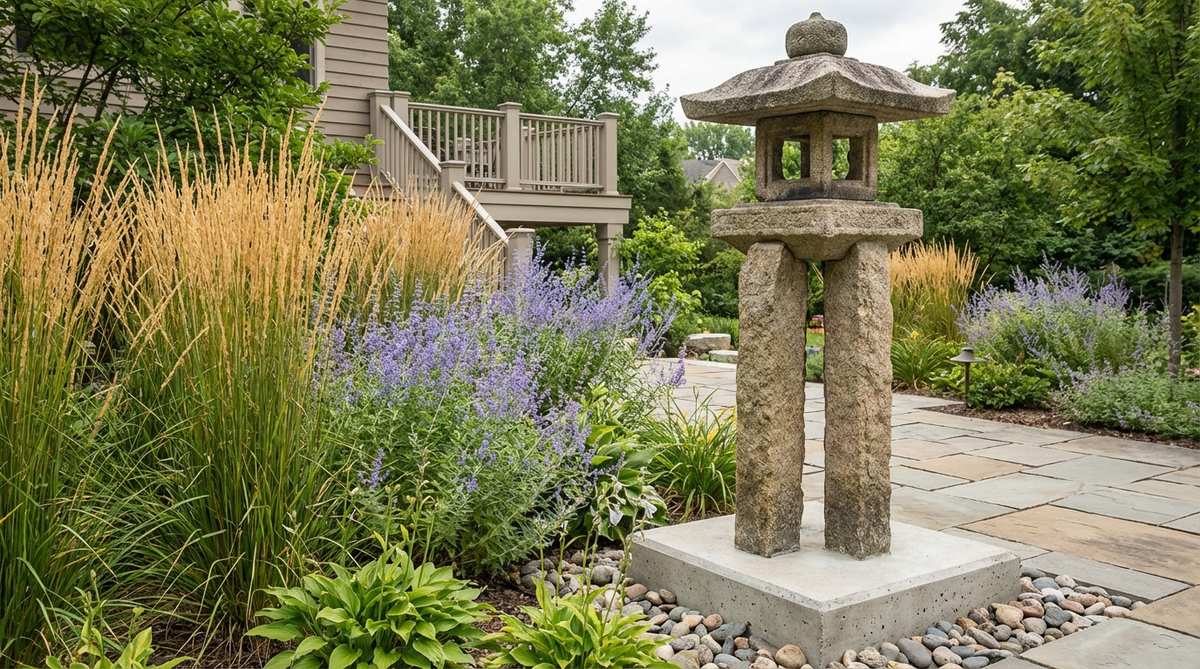
Exceptionally long posts elevate the fire box to eye level or higher, originally designed to light elevated temple platforms. Modern installations use this height to clear tall perennial borders or grasses.
Position where the elevated light box aligns with second-story views or terrace sight lines. The extreme height requires secure installation with buried post extensions or concrete footings to prevent wind damage.
Snow-Viewing LanternsYukimi-Gata Serenity
Yukimi lanterns feature broad, umbrella-like roofs designed to collect snow, creating picturesque winter scenes. Their low profiles and curved legs make them essential elements for waterside placement, where the balance between earth and water becomes tangible.
9. Maruyukimi Round Snow Viewer
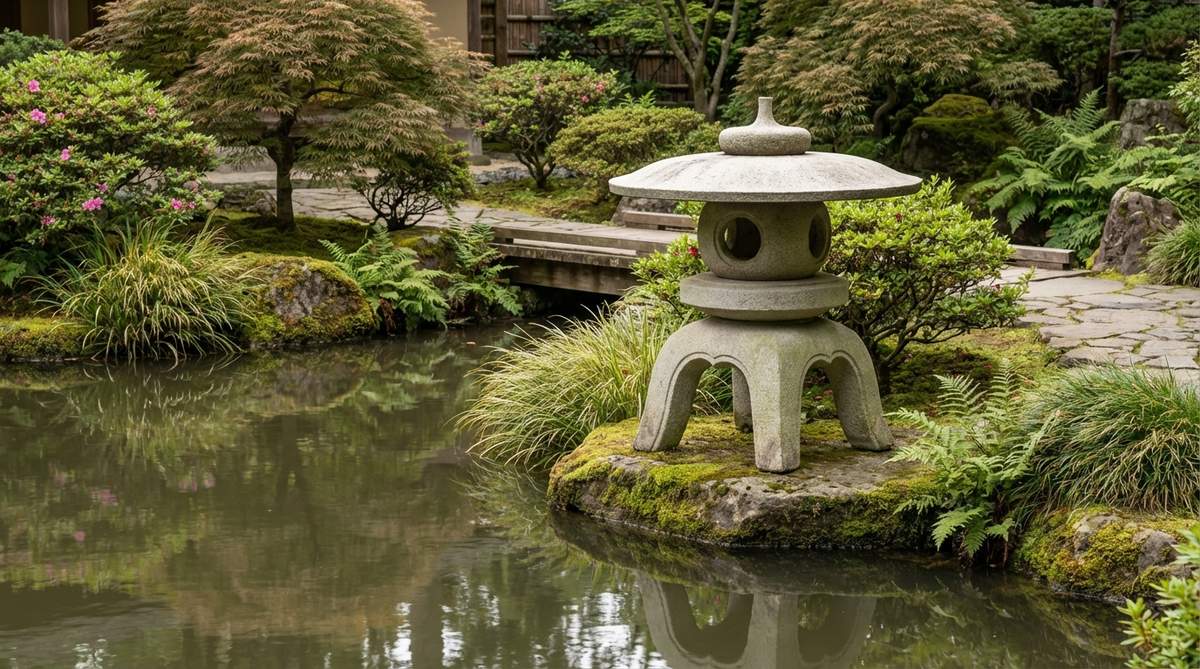
The circular roof and round fire box create soft, flowing geometry that contrasts with angular garden elements. Three curved legs typically support the structure, though four-leg variants exist for larger sizes.
Place Maruyukimi lanterns on pond edges or stream banks with two legs extending into the water. The round form appears equally balanced from any viewing angle, making it ideal for island placements or peninsula tips.
This variety represents the most iconic yukimi design, instantly recognizable in Japanese garden photography. The wide roof catches snow dramatically while protecting the fire box from direct precipitation during use.
10. Kodai Rokkaku Yukimi Ancient Hexagonal
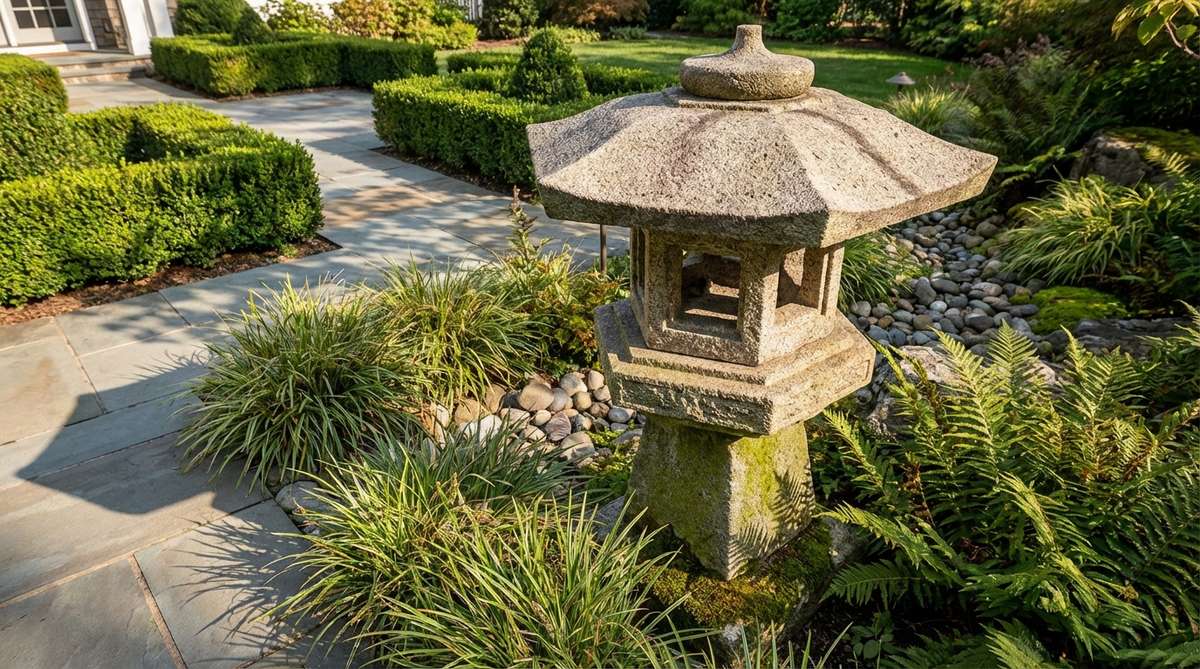
Six-sided roof and fire box combine yukimi proportions with geometric precision, creating a hybrid between snow-viewing and formal pedestal styles. The hexagonal edges catch light differently throughout the day, adding dynamic shadow play.
Designers position these at the intersection of formal and naturalistic garden zones. The geometric roof maintains architectural discipline while the low, legged base acknowledges naturalistic water features.
11. Sennyuji Temple Signature
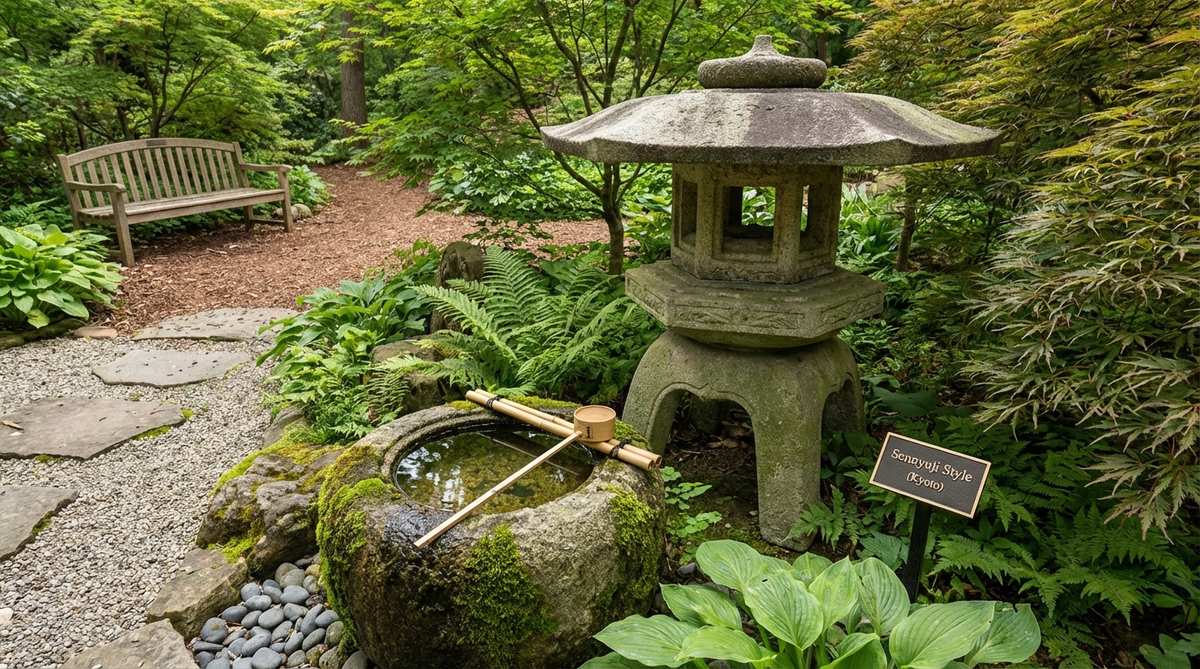
Named after Kyoto’s Sennyuji Temple, this variant features a distinctively flat, wide roof with minimal upward curve. The horizontal emphasis creates calm, stable visual energy suitable for meditation gardens.
Install near tsukubai water basins where visitors pause for purification rituals. The low, spreading form complements the horizontal water element without competing for attention.
Authentic versions replicate specific historical proportions from the temple grounds. Modern interpretations may adjust leg spacing or roof diameter to suit contemporary pond dimensions.
12. Rankei Zen Master Design
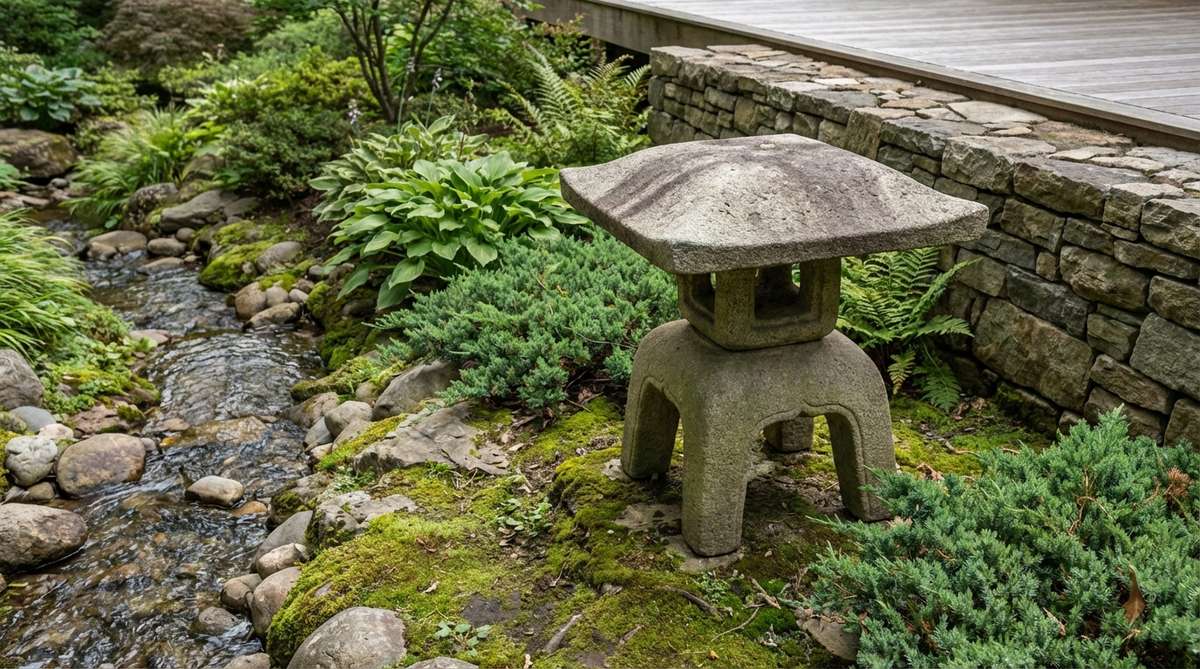
The Rankei style presents a squared roof with gently rounded corners, bridging geometric and organic forms. Four substantial legs provide stable support, making this variety suitable for uneven terrain near natural water features.
Position where the squared roof aligns with architectural elements like deck edges or stone retaining walls. The hybrid form creates visual conversation between built structures and natural landscape elements.
13. Kanshuji Four-Leg Variant
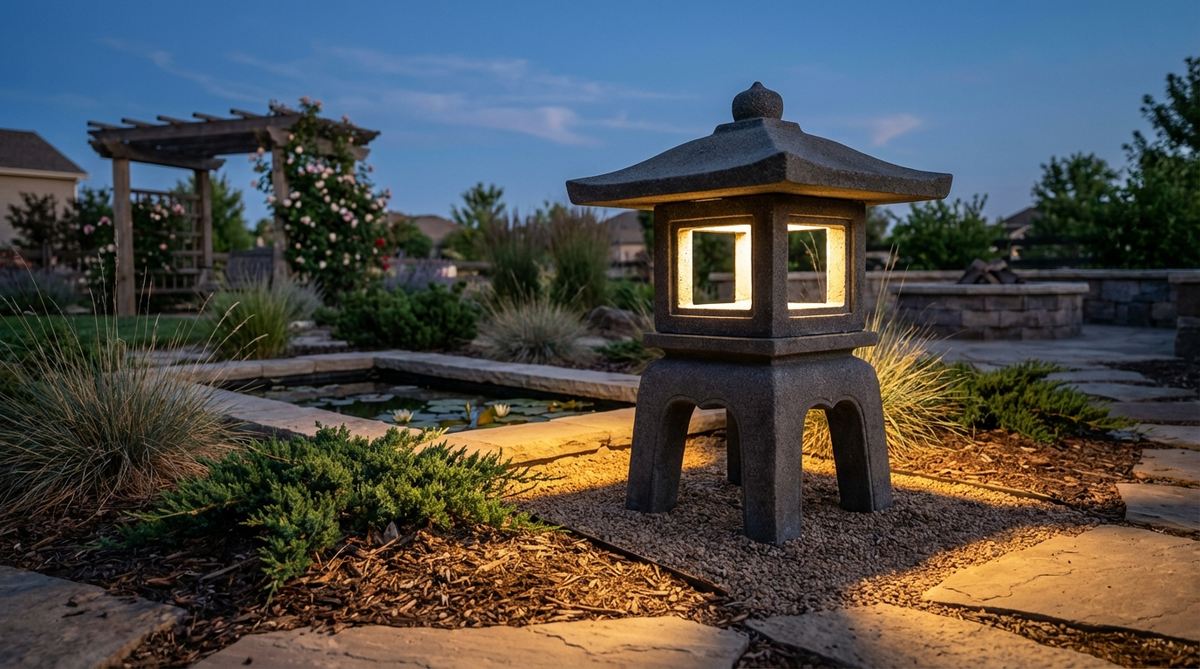
Distinguished by four equally spaced legs and a moderately peaked roof, the Kanshuji balances stability with elegance. The fire box features larger window openings than most yukimi styles, allowing more dramatic light effects.
Designers select this variety when structural stability matters more than traditional water-placement aesthetics. The four-leg base works well on dry land near symbolic water features created with gravel or sand.
Larger window openings make this style particularly effective for evening illumination. Position where lantern light will reflect off nearby surfaces or backlight strategic plantings.
14. Misaki Cape-Style Yukimi
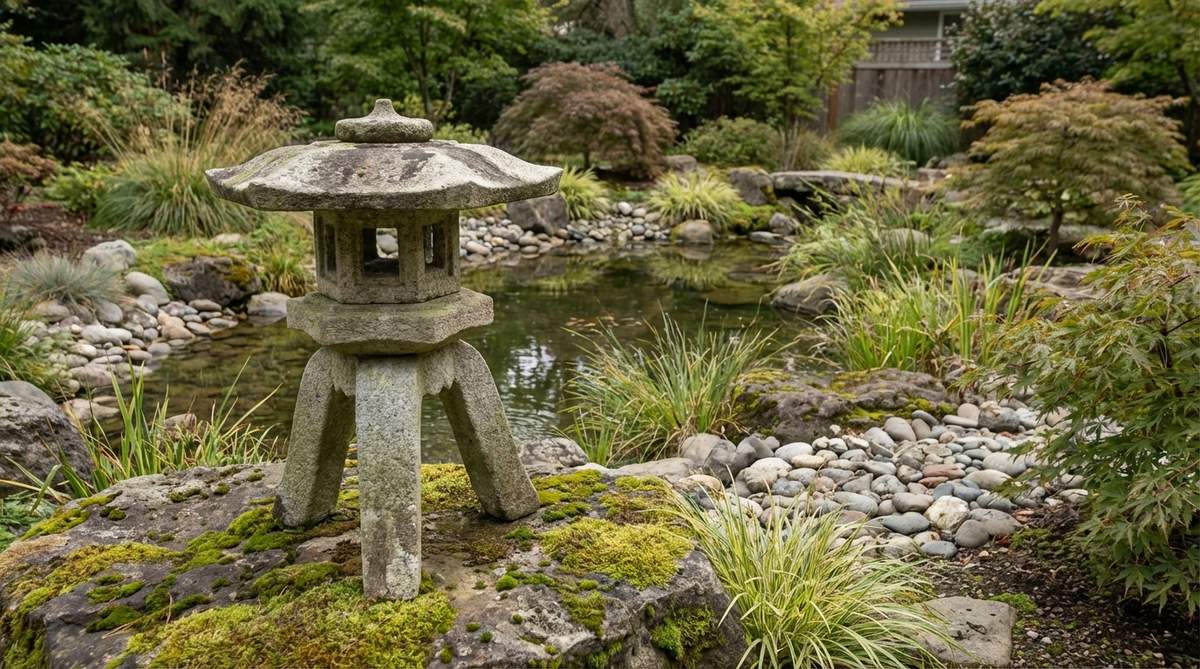
Named for coastal promontories, the Misaki presents an asymmetrical arrangement suggesting wind-shaped forms. Three legs of varying heights create dynamic tension, as if the lantern leans into prevailing winds.
Place Misaki lanterns where they visually anchor exposed positions at pond extremities or garden overlooks. The asymmetry adds kinetic energy to otherwise static water feature compositions.
This variety particularly suits naturalistic gardens where perfect symmetry would feel artificial. The varied leg heights accommodate sloped banks without requiring extensive grading.
15. Tamate Jewel Box Yukimi
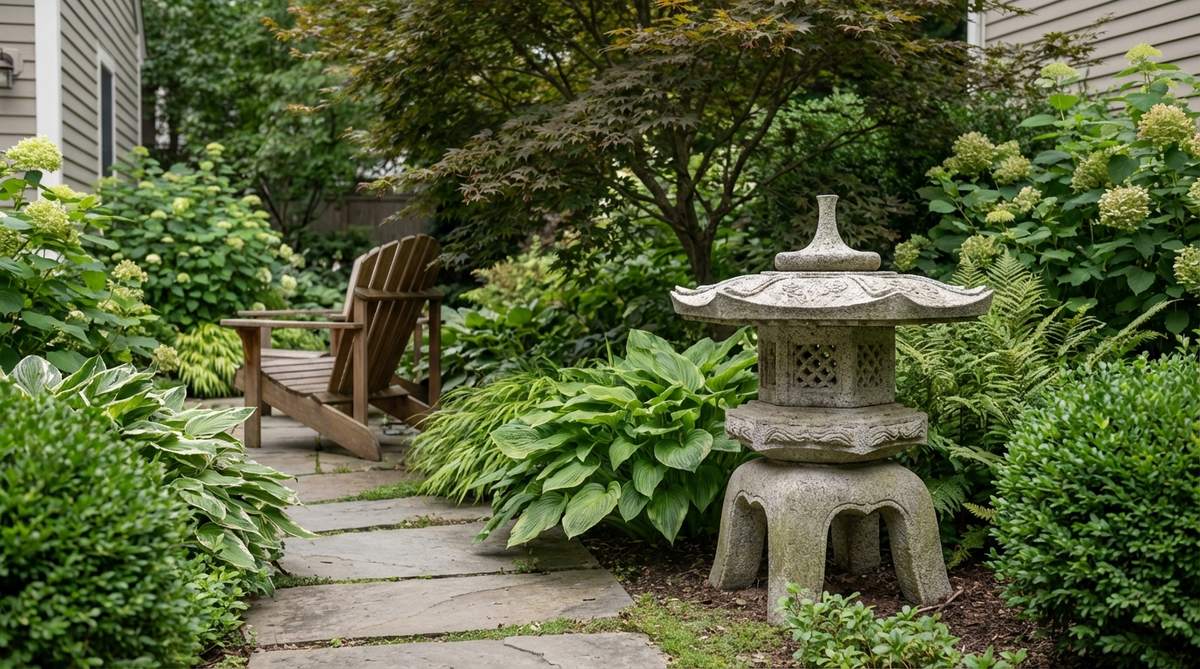
Compact proportions and decorative details distinguish this smaller yukimi variant, suitable for courtyard gardens or intimate viewing distances. The fire box often features more elaborate carving than standard snow-viewing styles.
Install where close observation allows appreciation of fine details, such as beside stepping stone paths or near outdoor seating areas. The smaller scale prevents overwhelming tight spaces while maintaining authentic proportions.
16. Octagonal Roof Yukimi
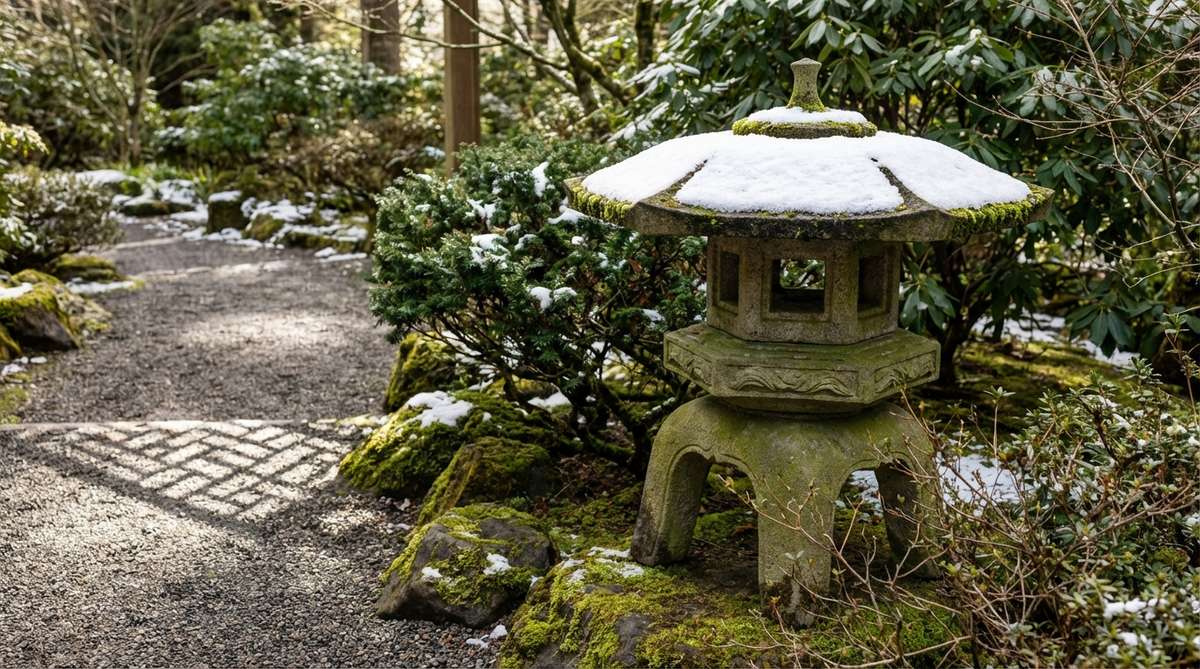
Eight roof facets create complex shadow patterns and geometric interest while retaining the characteristic yukimi silhouette. The increased number of roof planes develops more varied snow accumulation patterns in winter.
Position where multiple viewing angles allow appreciation of the eight-sided geometry. Morning and evening light create particularly dramatic shadow displays across the angled roof surfaces.
The octagonal form requires more skilled stone carving, making authentic versions relatively rare. This complexity adds prestige value in collector-oriented Japanese garden installations.
Buried LanternsIkekomi-Gata Subtlety
Ikekomi lanterns eliminate the base entirely, with the post buried directly into the ground for seamless landscape integration. These low-profile varieties suit minimalist aesthetics and pathway illumination where understated elegance takes precedence over monumental presence.
17. Oribe Christian Heritage Style
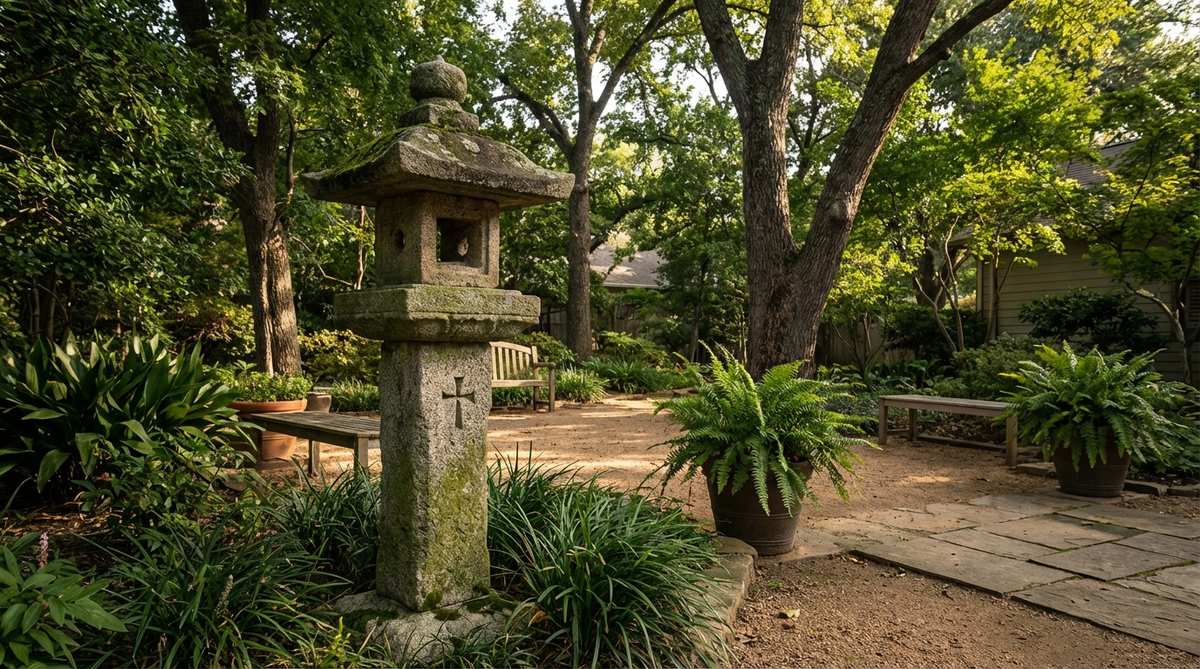
The Oribe carries historical significance as a hidden Christian symbol during persecution periods, often featuring a cross or Virgin Mary figure carved into the post below the fire box. Tea master Oribe Furuta created this design to allow discreet religious expression.
Install Oribe lanterns in contemplative garden areas where their historical narrative adds philosophical depth. The partially obscured religious imagery becomes visible only to observant viewers who approach closely.
Authentic reproductions position the cross at ground level, often partially concealed by moss or ground cover plantings. This historical detail transforms a garden ornament into a meditation on religious tolerance and historical memory.
18. Roji Tea Garden Path Light
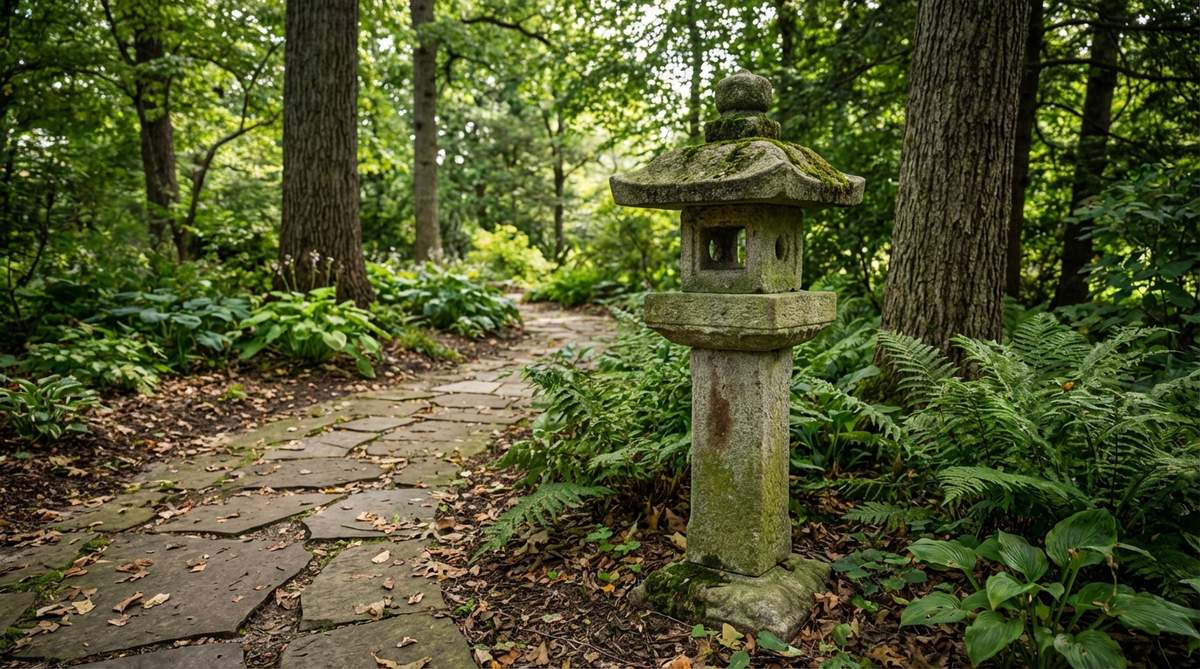
Specifically designed for roji pathways leading to tea houses, these simple lanterns stand 15-30 inches tall. The minimal ornamentation directs focus toward the approaching tea ceremony rather than the lantern itself.
Place Roji lanterns at 8-10 foot intervals along curved paths, positioning each slightly off the path centerline. The subtle offset creates visual rhythm without geometric rigidity.
The humble aesthetic embodies wabi-sabi principles, celebrating imperfection and transience. Weather staining and moss growth enhance rather than diminish the lantern’s connection to tea ceremony philosophy.
19. Shokinto Pine Harp Pavilion
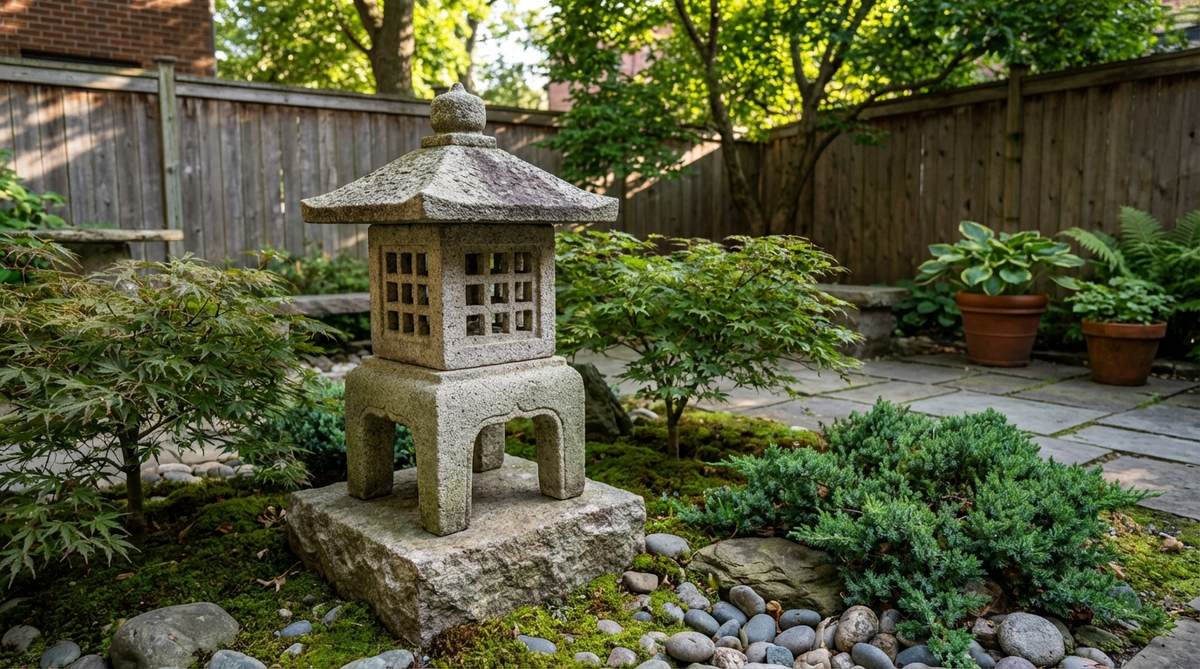
Named after Kyoto’s Shokintei pavilion, this variety features a small, pyramidal roof and squared fire box. The compact proportions suit confined spaces like interior courtyard gardens or small urban landscapes.
Designers use Shokinto lanterns where space constraints prohibit larger varieties. The vertical emphasis maintains presence despite the reduced footprint, preventing the lantern from disappearing among plantings.
20. Mizuhotaru Water Firefly Light
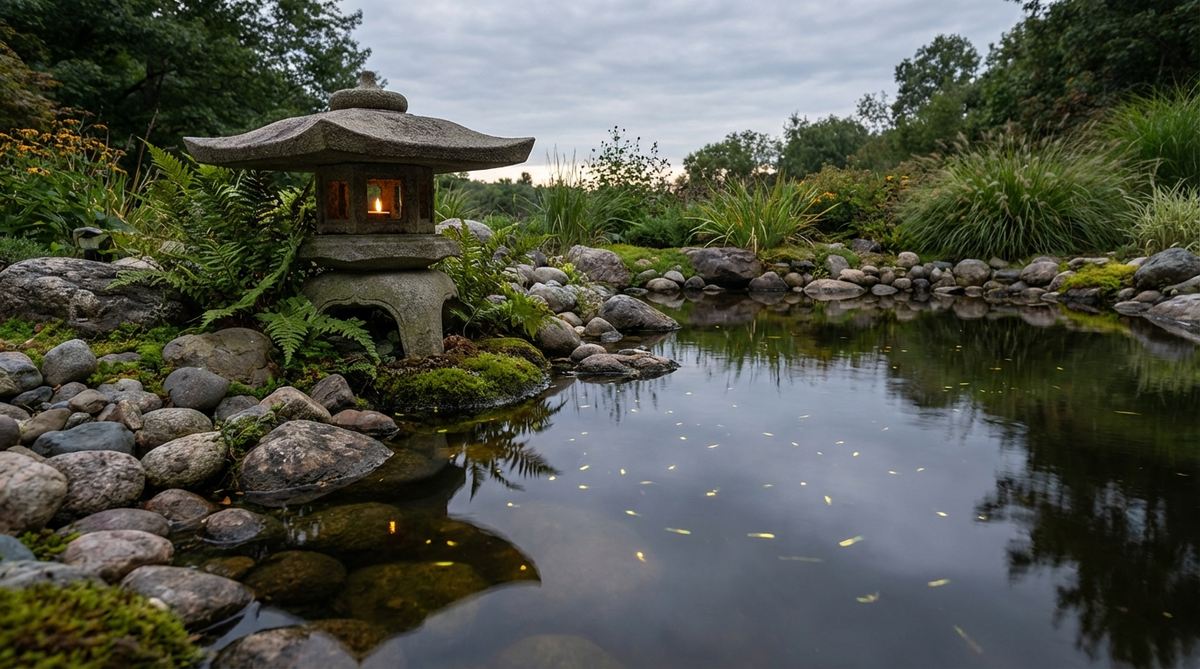
The lowest profile ikekomi style, Mizuhotaru lanterns stand just 12-18 inches tall with minimal roof overhang. The name references fireflies hovering above water surfaces, suggesting delicate, flickering light quality.
Position Mizuhotaru lanterns at the absolute water’s edge where higher lanterns would create awkward proportions. The minimal height allows light to graze water surfaces horizontally, creating dramatic reflection effects.
This variety particularly suits naturalistic pond edges where invasive visual presence would disrupt the illusion of untouched wilderness. The small scale harmonizes with moss, ferns, and low groundcovers.
21. Sode-Gata Sleeve Style Path Marker
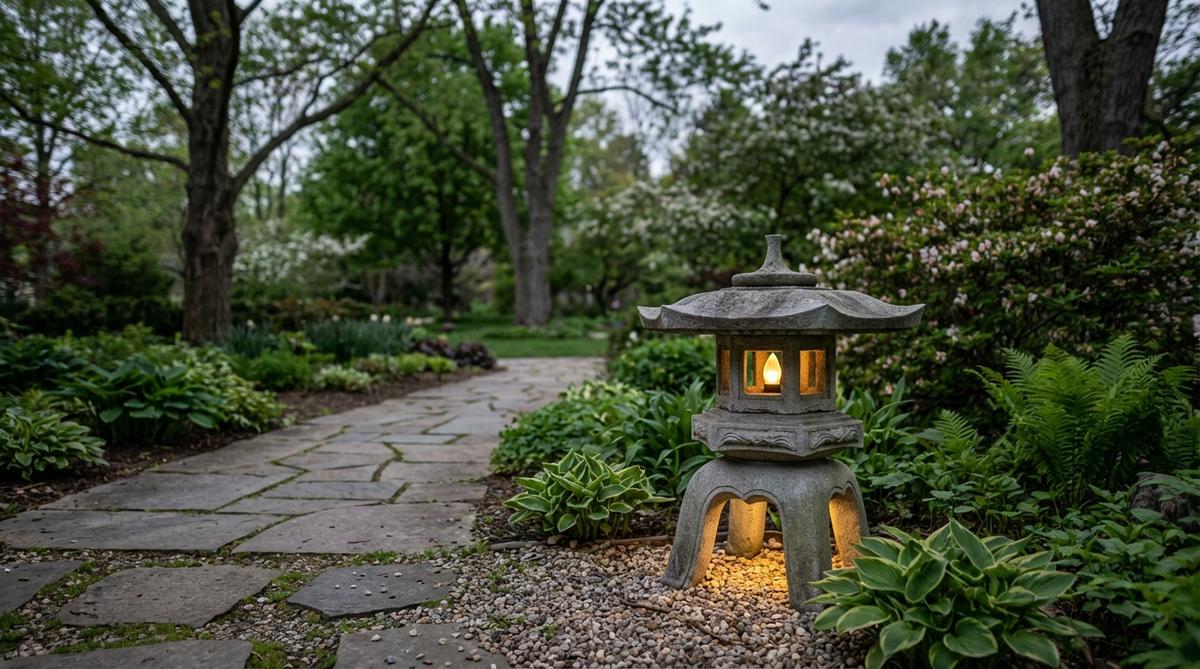
Medium-height buried lanterns designed specifically for pathway illumination, Sode-gata varieties typically stand 24-36 inches tall. The name references kimono sleeves, suggesting the lantern’s role in guiding movement through the garden.
Install along primary circulation routes where taller lanterns would obstruct views but ground-level lights prove insufficient. Space at intervals that create visual rhythm without excessive repetition.
Movable LanternsOki-Gata Versatility
Oki-gata lanterns lack permanent posts, instead resting directly on the ground or low platforms. This portability allows seasonal repositioning and experimental placement, making them ideal for evolving garden designs or temporary installations.
22. Sunshoan Rustic Hermitage
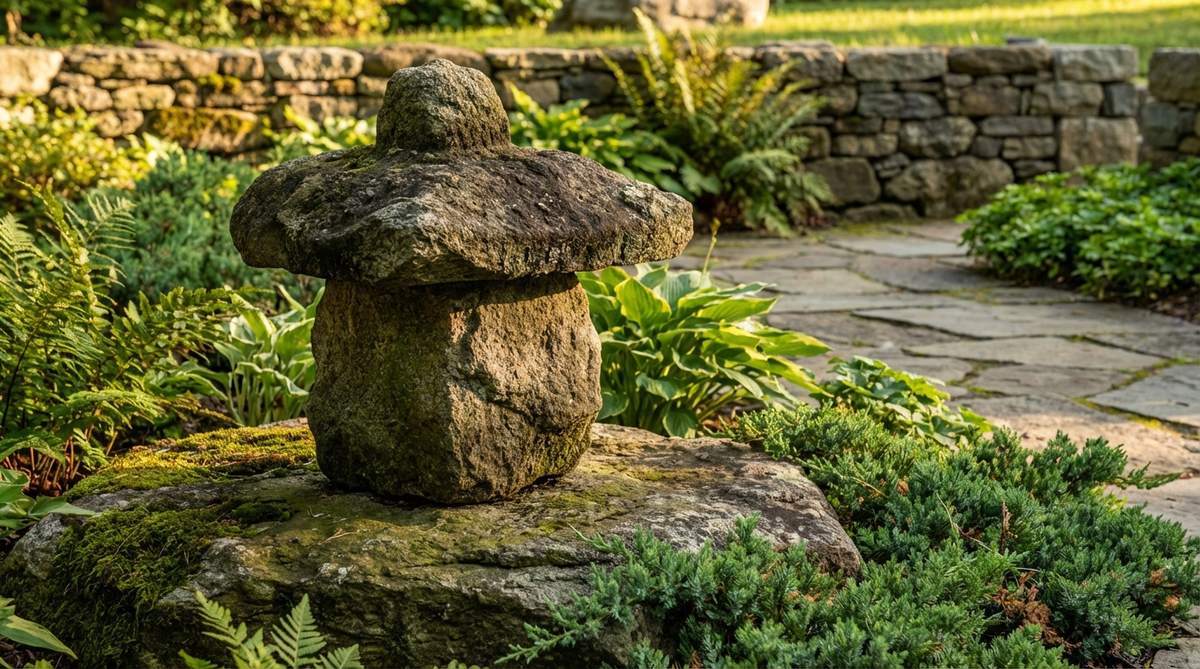
Compact and irregularly shaped, Sunshoan lanterns embrace imperfect stone forms that require minimal carving. The naturalistic aesthetic aligns with hermit-poet traditions celebrating simplicity over refinement.
Place these portable lanterns on flat rocks, broad tree stumps, or low stone platforms where their irregular bases rest securely. The movable nature allows repositioning to capture seasonal light conditions or accommodate changing garden layouts.
Designers favor Sunshoan varieties in naturalistic gardens where highly refined stone carving would feel incongruous. The rough-hewn character develops authentic weathering quickly, appearing settled within months rather than years.
23. Sanko Three-Light Configuration
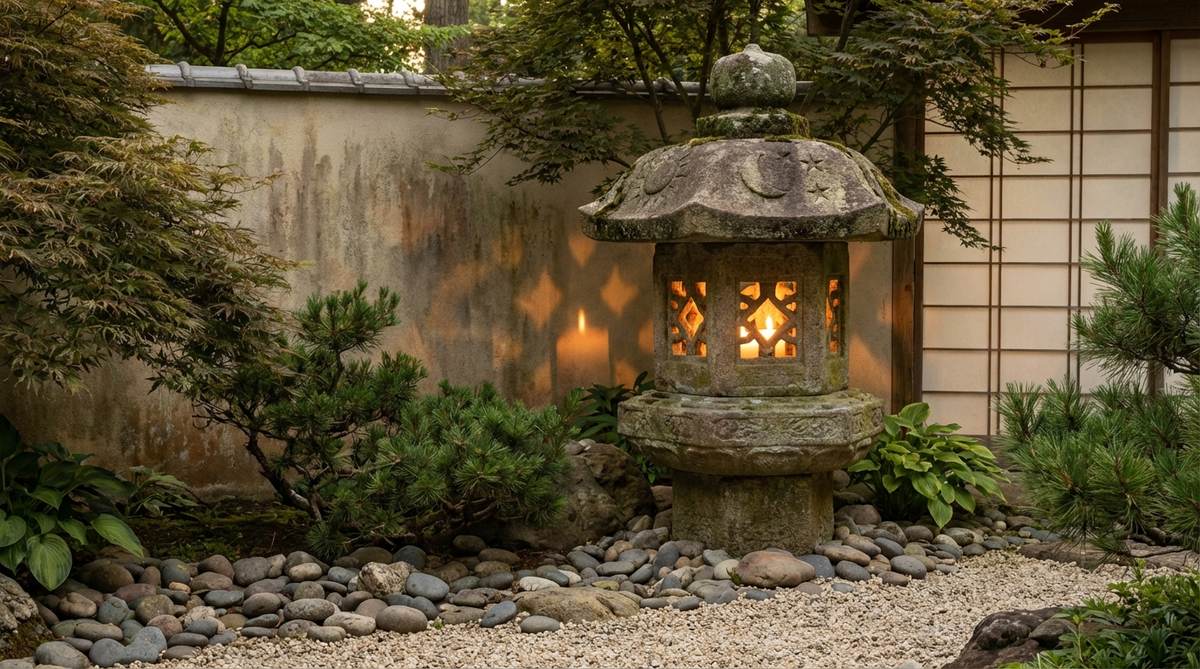
Three separate window openings in the fire box distinguish this oki variety, creating more complex light patterns than single-opening designs. The three-light symbolism references Buddhist trinities and can represent sun, moon, and stars.
Install where the triple light effect projects onto specific surfaces like stone walls, paper screens, or pale gravel. The multiple openings create layered shadow patterns that shift dramatically as light source positions change.
24. Tengachaya House Under Heaven
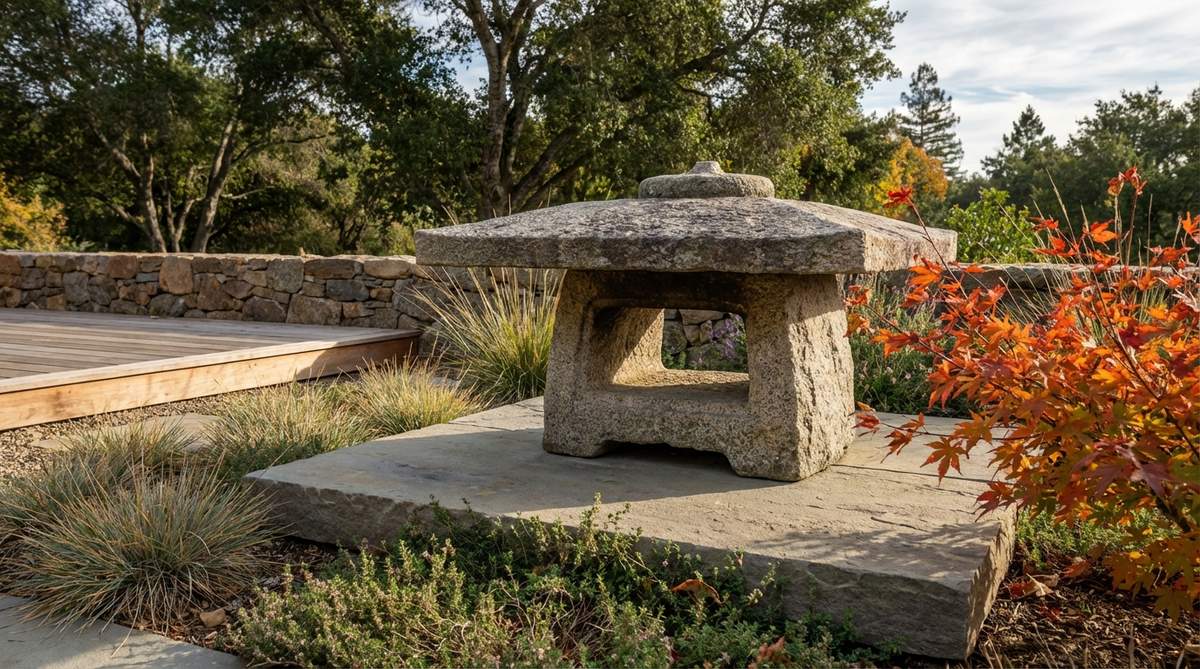
Named after an Osaka tea house, this portable lantern features a nearly flat roof and wide, low fire box. The horizontal emphasis creates stable, grounding energy suitable for exposed positions or minimalist garden rooms.
Position Tengachaya lanterns on broad, flat surfaces where their low profile complements horizontal design elements. Stone platforms, wide steps, or deck corners provide ideal settings that showcase the lantern’s proportions.
The portable nature allows moving the lantern to feature different seasonal plantings. Place near early spring bulbs, then relocate to highlight autumn foliage or winter structure as the year progresses.
25. Tsubo Courtyard Miniature
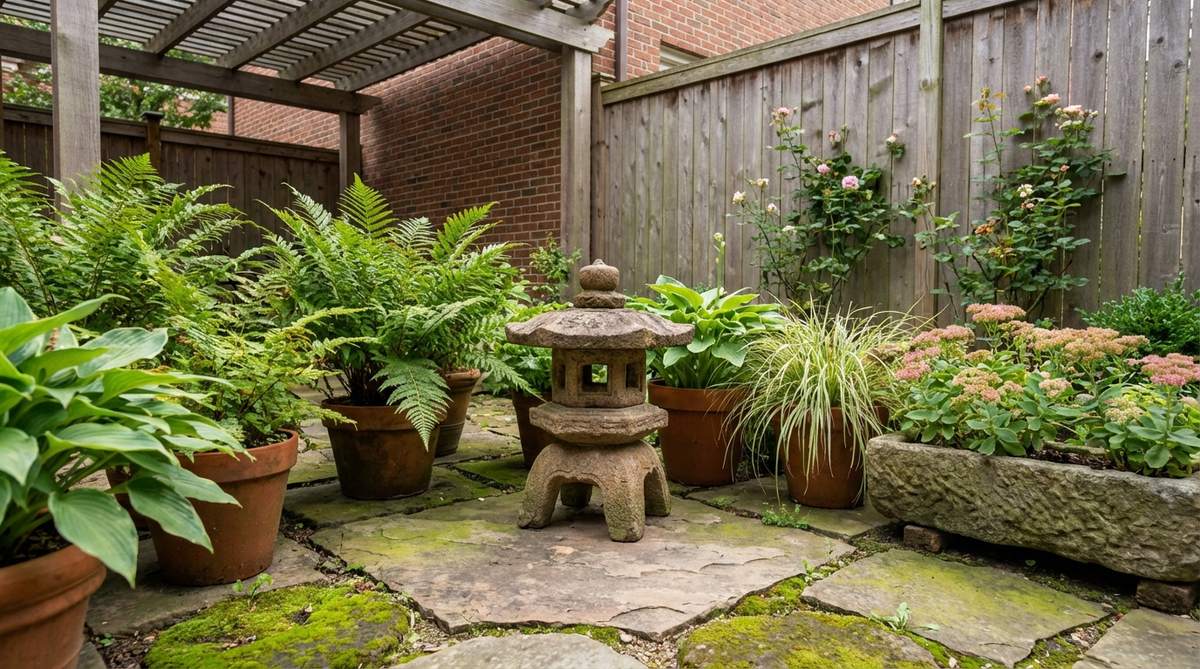
Scaled for enclosed courtyard gardens or tsubo spaces, these diminutive oki lanterns stand just 8-12 inches tall. Despite their small size, authentic proportions and detailing maintain visual legitimacy.
Use Tsubo lanterns in confined urban gardens where standard lantern sizes overwhelm available space. The miniature scale suits container gardens, balcony corners, or interior courtyard settings with limited square footage.
26. Ishigata Natural Boulder Form
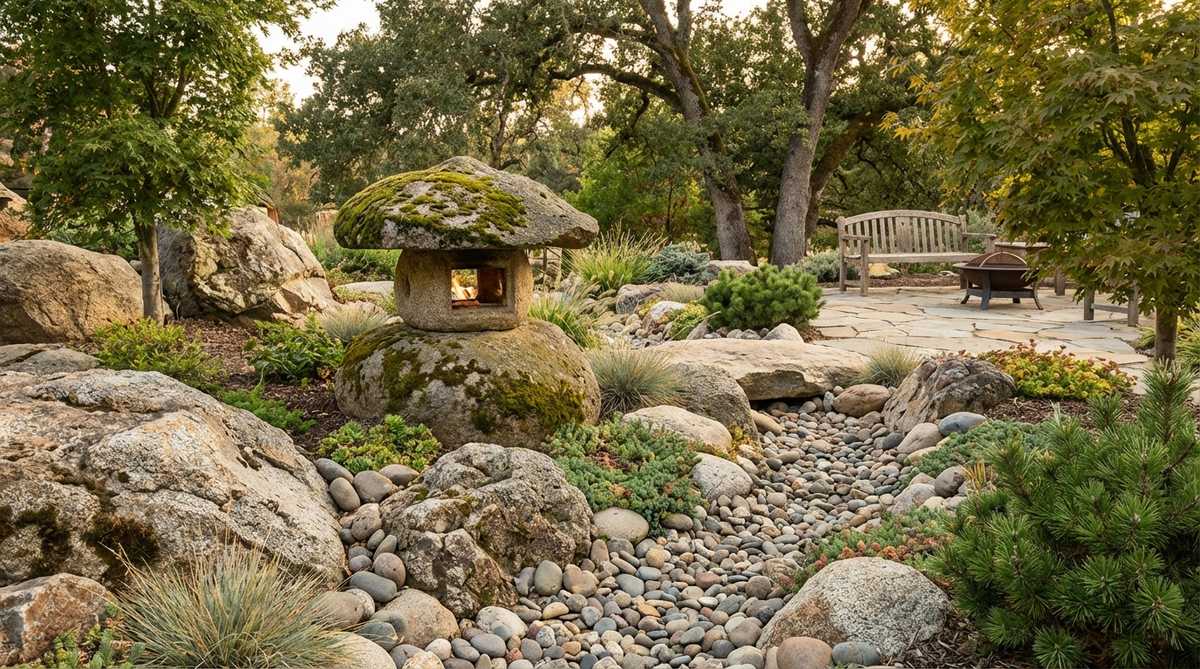
Carved from naturally rounded boulders with minimal shaping, Ishigata lanterns retain organic stone forms. The fire box and roof emerge from the stone as if revealed rather than imposed, creating powerful earth-connected presence.
Place where the lantern’s natural boulder character harmonizes with existing rock features like outcroppings, stone groupings, or dry stream beds. The organic form bridges ornamental and naturalistic garden elements.
This variety particularly suits designers working within existing site geology. Selecting granite that matches native stone creates seamless integration between introduced elements and indigenous landscape character.
Specialized Japanese Stone Garden Lantern Designs
27. Tokudaiji Bronze-Inspired Granite
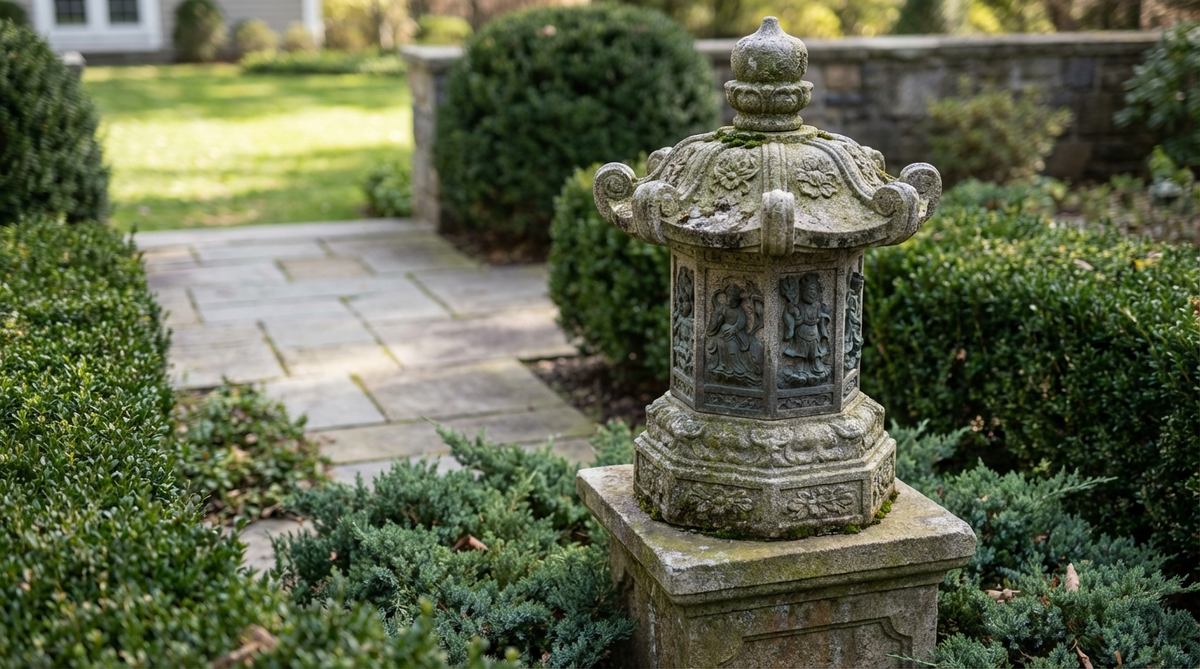
Replicating the famous bronze lanterns of Nara’s Tokudaiji Temple, these granite versions capture the ornate detailing of metalwork in stone form. Elaborate relief carvings and decorative finials distinguish this prestige variety.
Reserve for formal garden areas where architectural detail receives close observation. The complex surface treatment requires viewing distances of 6-10 feet to fully appreciate carved elements without overwhelming visual effect.
28. Nezu Museum Curved Leg Replica
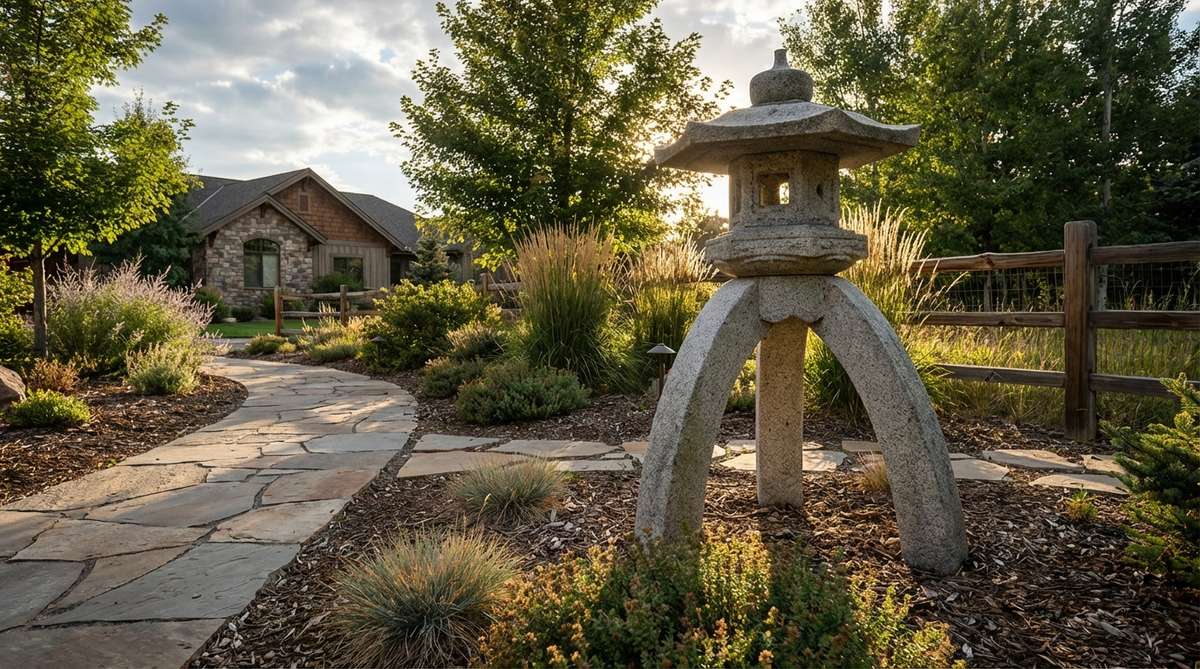
Based on specimens in Tokyo’s Nezu Museum collection, these lanterns feature exaggeratedly curved legs that create dynamic movement. The pronounced curves add sculptural drama while maintaining structural stability.
Position where the curved legs can be appreciated in profile, such as beside pathways that approach at angles. The leg curves create compelling silhouettes when backlit by low-angle sunlight.
29. Imperial Garden Ceramic Variant
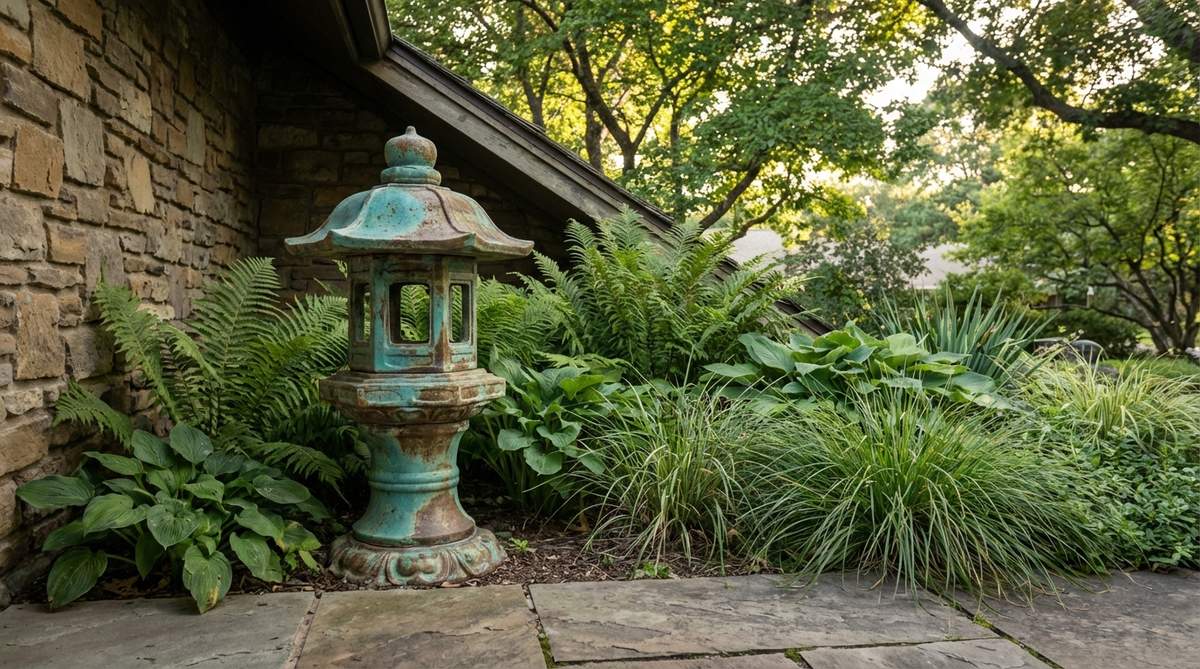
Though traditionally stone, certain lantern styles appear in high-fired ceramic, particularly in imperial garden contexts. The ceramic surface allows more vibrant patina development than granite, with glaze color shifting over decades.
Install ceramic lanterns in protected positions where freeze-thaw cycles won’t cause cracking. Covered walkways, deep eaves, or climate zones without hard freezes suit these more delicate materials.
The ceramic tradition represents aristocratic garden culture where expense and refinement exceeded functional concerns. Modern reproductions balance aesthetic goals with practical durability requirements.
30. Five-Tier Pagoda Hybrid
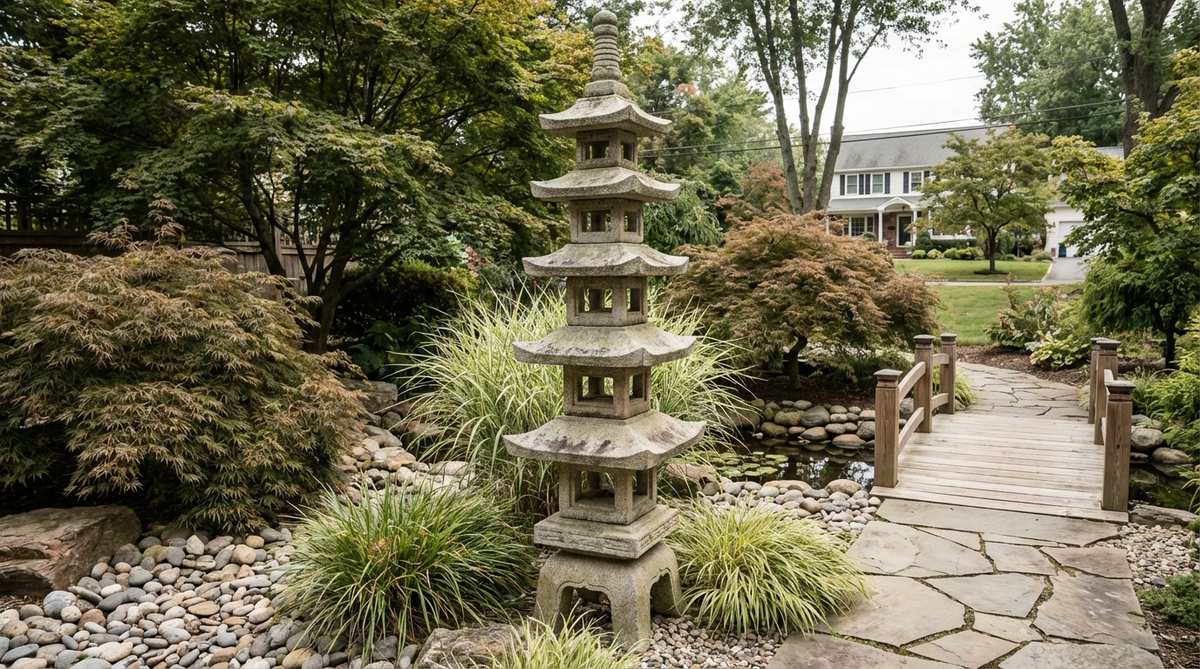
Combining lantern function with pagoda form, these tall structures feature five graduated roof levels ascending a central post. Each tier may contain fire box openings, creating vertical light columns rather than single-point sources.
Use as dramatic focal points in larger gardens where height creates visual punctuation. The multi-tier design suits Asian fusion landscapes that blend Japanese, Chinese, and Korean design elements.
31. Modern Abstract Interpretation
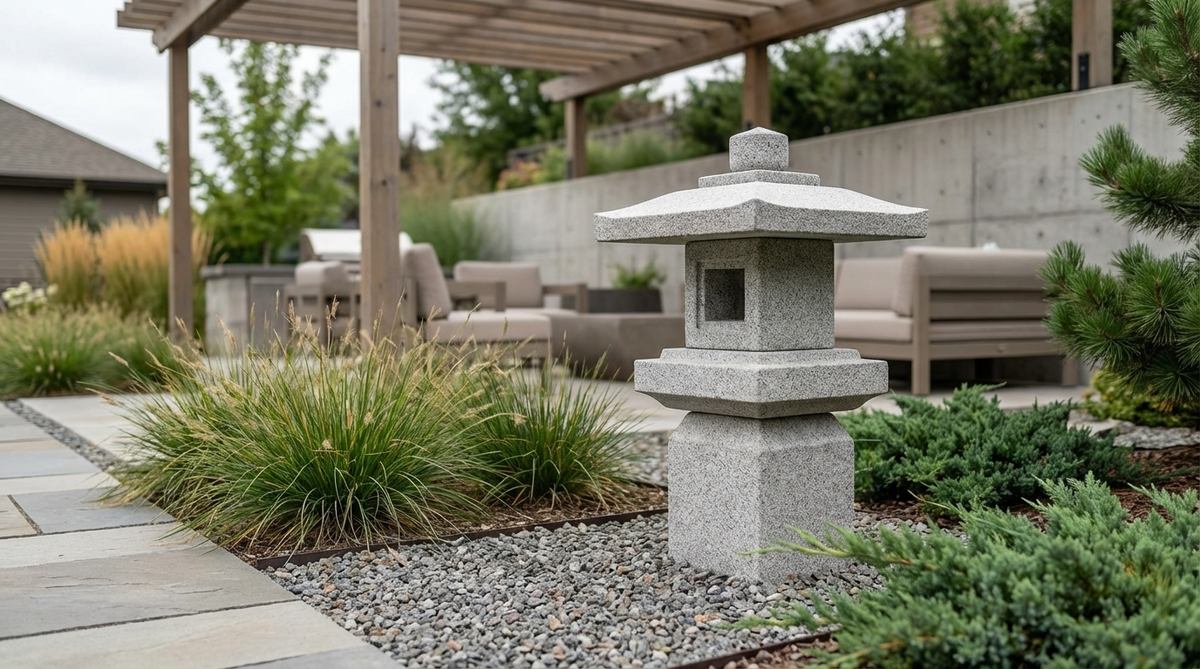
Contemporary designers create simplified lantern forms that capture essential proportions while eliminating traditional ornamental details. Clean geometric volumes in precisely cut granite appeal to modernist landscape aesthetics.
Position abstract interpretations in contemporary gardens where traditional carved details would clash with minimalist hardscaping and architectural plantings. The simplified forms create cultural reference without historical replication.
These modern varieties suit urban gardens, commercial landscapes, and residential projects seeking Japanese influence without traditional formality. The abstract approach allows cultural appreciation while maintaining contemporary design clarity.
32. Reclaimed Temple Stone Authentic Antiques
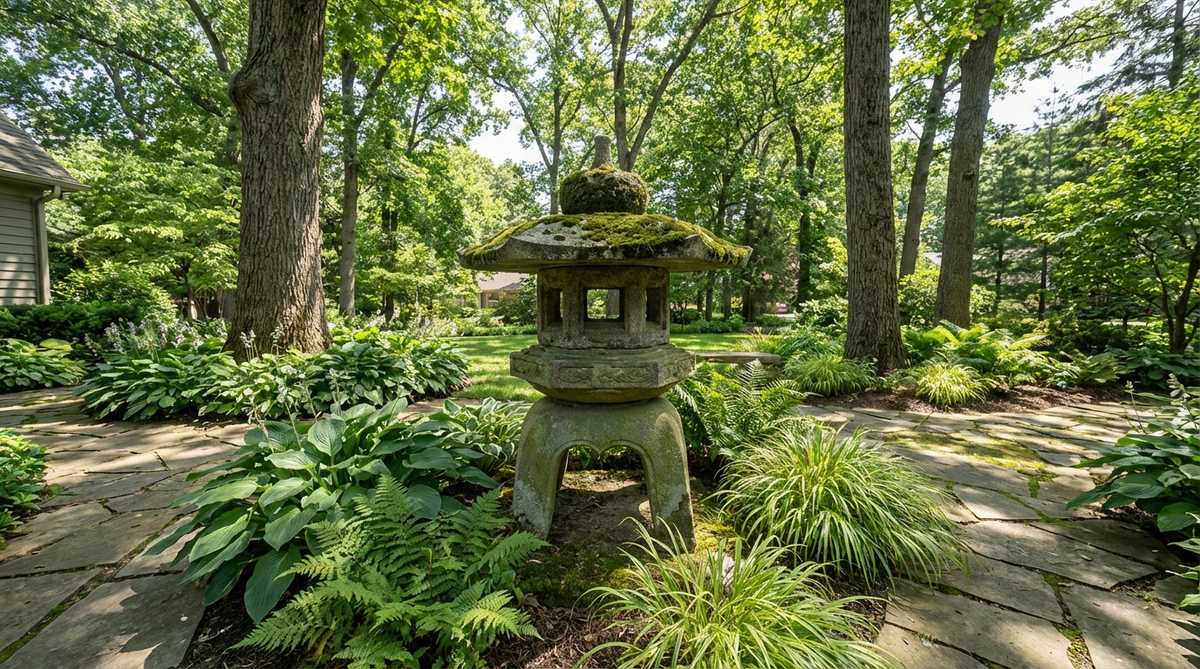
Genuine antique lanterns salvaged from temple grounds or estate gardens carry centuries of weathering and historical presence. Each piece represents unique craftsmanship and bears authentic patina impossible to replicate.
Collectors and high-end landscape projects incorporate authentic antiques as investment pieces and cultural artifacts. Professional installation ensures structural stability for stones that may have weakened joints or erosion damage.
The antique market requires expertise to authenticate age and provenance. Reputable dealers provide documentation and guidance on appropriate placement that honors the lantern’s historical context.
Bringing Japanese Aesthetics Home
Selecting the right stone garden lantern transforms ordinary outdoor spaces into contemplative landscapes that honor centuries of Japanese design philosophy. Whether you choose a commanding Kasuga pedestal for your garden entrance, a serene Maruyukimi snow-viewer for the pond edge, or a humble Oribe buried lantern for your tea path, each variety offers distinct aesthetic and spiritual dimensions. Start with one signature piece positioned according to traditional principles, then expand your collection as your understanding of Japanese garden aesthetics deepens through seasonal observation and continued study.
Frequently Asked Questions
What is the difference between tachi-gata and yukimi-gata stone lanterns?
Tachi-gata lanterns feature tall pedestals with complete base structures, standing 4-7 feet high and serving as vertical focal points in formal garden settings. Yukimi-gata lanterns have low profiles with curved legs instead of posts, designed specifically for waterside placement where their broad roofs catch snow and their height allows light to reflect off water surfaces.
How do I properly position a stone garden lantern in my landscape?
Place stone lanterns at transitional points such as pathway intersections, garden entrances, or beside water basins where they mark threshold moments in the garden experience. Traditional placement positions taller pedestal lanterns in open areas with adequate viewing distance, while lower yukimi varieties belong near water with legs partially submerged, and buried ikekomi styles line pathways at 8-10 foot intervals.
What material should I choose for an authentic Japanese stone lantern?
Authentic stone garden lanterns use natural granite, which develops desirable weathering patina including moss growth, lichen colonization, and mineral staining over years of exposure. Avoid concrete or resin replicas that lack proper weight, texture, and aging characteristics, as these materials weather poorly and appear artificially uniform compared to natural stone’s varied coloration and grain patterns.
Can I place a Japanese stone garden lantern in a non-Asian garden design?
Contemporary landscape designers successfully incorporate stone lanterns into diverse garden styles by emphasizing the sculptural form and weathered stone texture rather than explicit Asian symbolism. Modern abstract lantern interpretations with simplified geometry work particularly well in minimalist or naturalistic gardens, while traditional carved varieties require surrounding elements like bamboo, Japanese maples, or rock groupings to maintain aesthetic coherence.
How tall should my stone garden lantern be relative to surrounding plants?
Pedestal lanterns should rise above adjacent plantings by 12-24 inches to maintain visual presence without overwhelming the composition, while yukimi and ikekomi varieties intentionally sit lower than surrounding vegetation to create intimate viewing moments. Use taller lanterns in proportion to the total garden scale, reserving 5-7 foot varieties for landscapes exceeding 2,000 square feet and selecting compact 2-3 foot designs for courtyard gardens under 500 square feet.