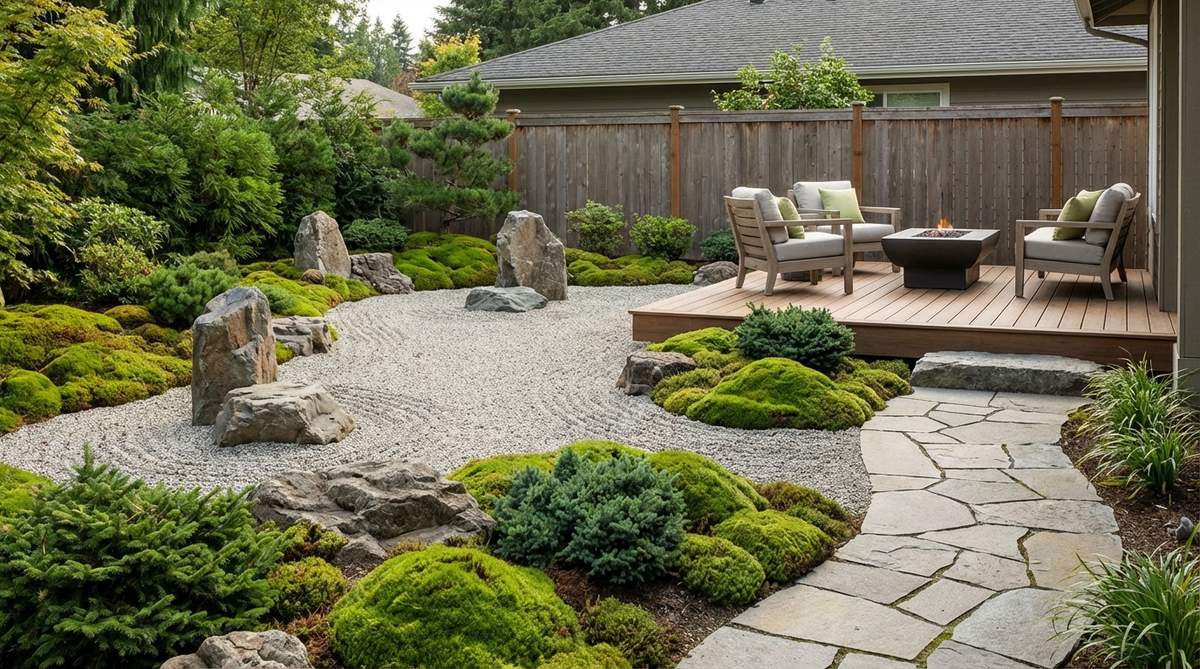
A stone garden Japanese design transforms outdoor spaces into meditative retreats through strategic rock placement, moss integration, and minimalist principles. Designers at Fresh Garden Ideas have compiled this comprehensive collection to guide you through authentic arrangements, from traditional karesansui layouts to modern interpretations that honor centuries-old practices.
Design SnapshotKey Principles
- Asymmetry (Fukinsei): Arrange elements in odd-numbered groups to create natural, dynamic compositions
- Simplicity (Kanso): Remove unnecessary elements to emphasize tranquility and focus
- Naturalness (Shizen): Position rocks and moss to appear unforced and organically integrated
- Subtlety (Yugen): Layer meaning through symbolic representation of mountains, islands, and water
Foundational Karesansui Arrangements
Karesansui, or dry landscape gardens, form the cornerstone of stone garden Japanese design. These arrangements eliminate water features entirely, relying instead on rock groupings and raked gravel to suggest flowing rivers and ocean waves through abstract representation.
1. Buddhist Triad Rock Formation
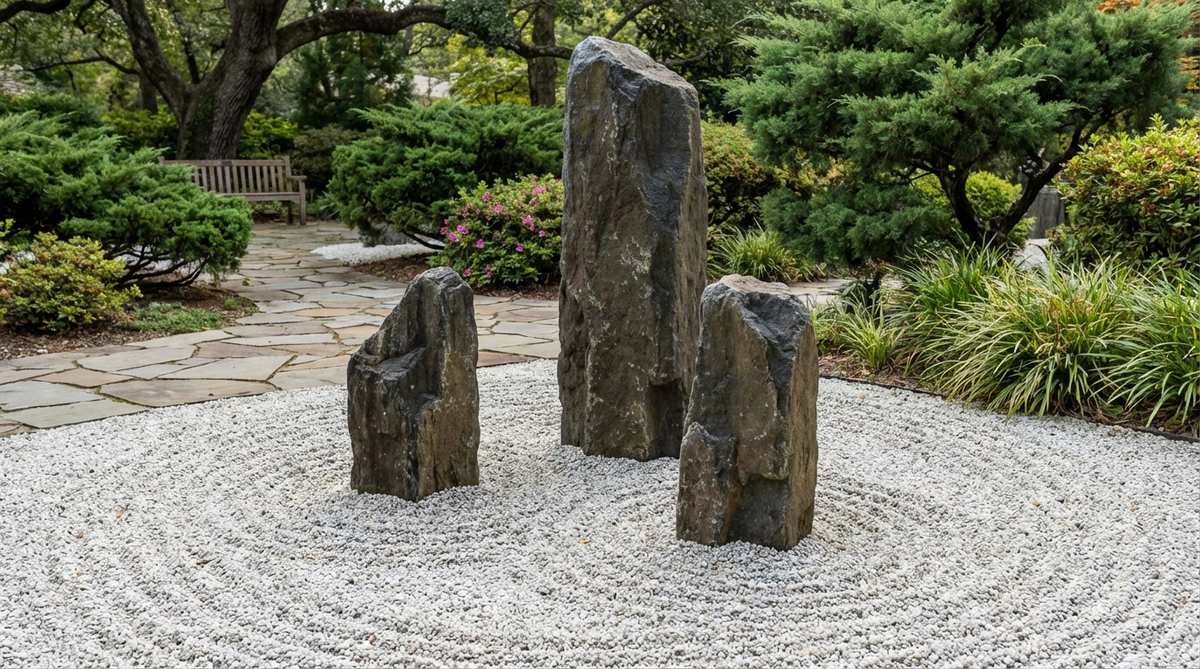
This classic arrangement features three vertical stones representing Buddha flanked by two attendants. The tallest rock stands at the center, with medium and small stones positioned at asymmetric distances to create visual tension.
Place the central stone slightly back from the flanking rocks to add depth. Surround the base with white gravel raked in concentric circles to evoke rippling energy.
The vertical orientation draws the eye upward and establishes a spiritual focal point. This arrangement works particularly well in corners or against walls where the backdrop emphasizes the stone silhouettes.
2. Five-Stone Mountain Cluster
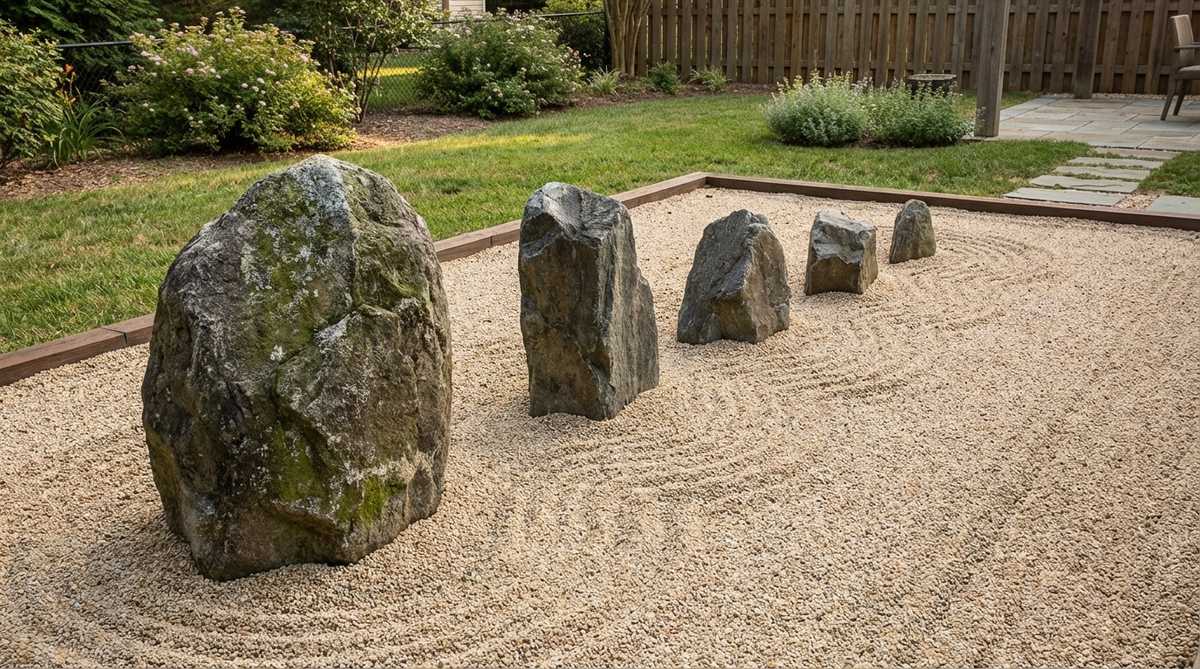
Five rocks of graduated heights mimic a mountain range receding into the distance. Arrange the largest stone at one end, tapering down to the smallest to create perspective and depth.
Bury each stone one-third into the ground to anchor the composition visually. Position rocks at varying angles rather than parallel alignment to mirror natural geological formations.
Raked gravel between the stones represents clouds or mist enveloping mountain peaks. This design excels in rectangular spaces where the linear progression guides viewer movement.
3. Reclining Guardian Stone Pairing
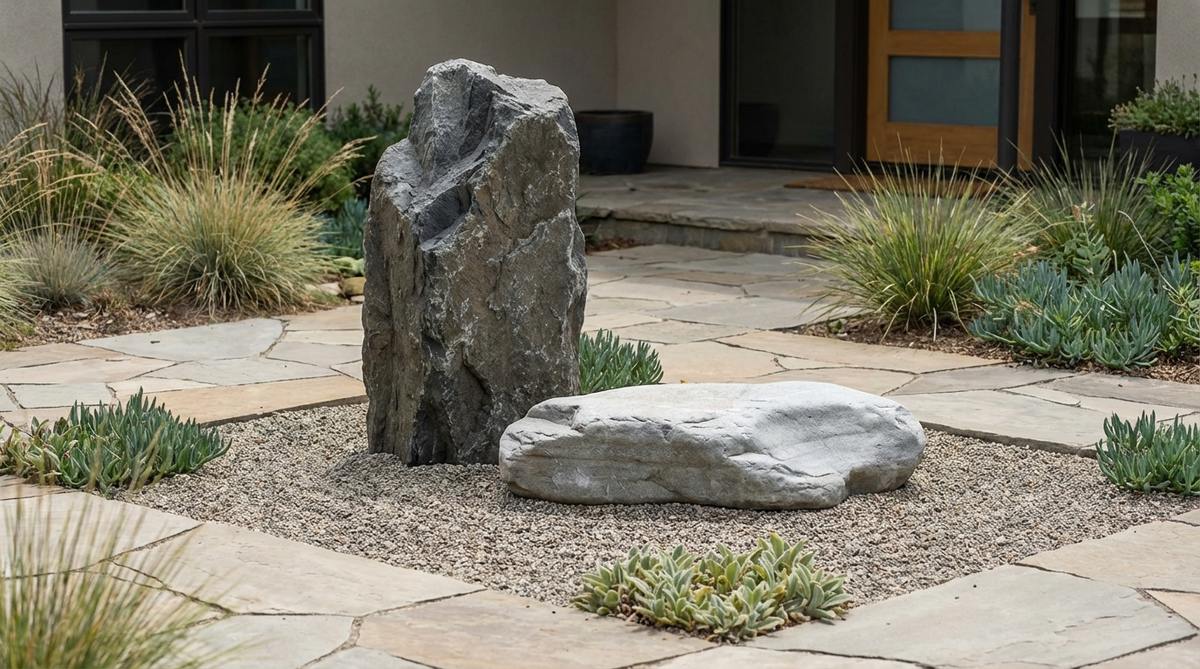
A tall vertical stone partners with a low horizontal rock to balance active and passive energy. The upright stone conveys strength while the reclining element suggests stability and rest.
Orient the horizontal stone to face the vertical one, creating a dialogue between the two. Leave generous negative space around both to emphasize their relationship.
This minimalist pairing suits small gardens or entry areas where simplicity maximizes impact. The contrast in form teaches the eye to appreciate subtle variations in stone character.
4. Seven-Stone Ocean Archipelago
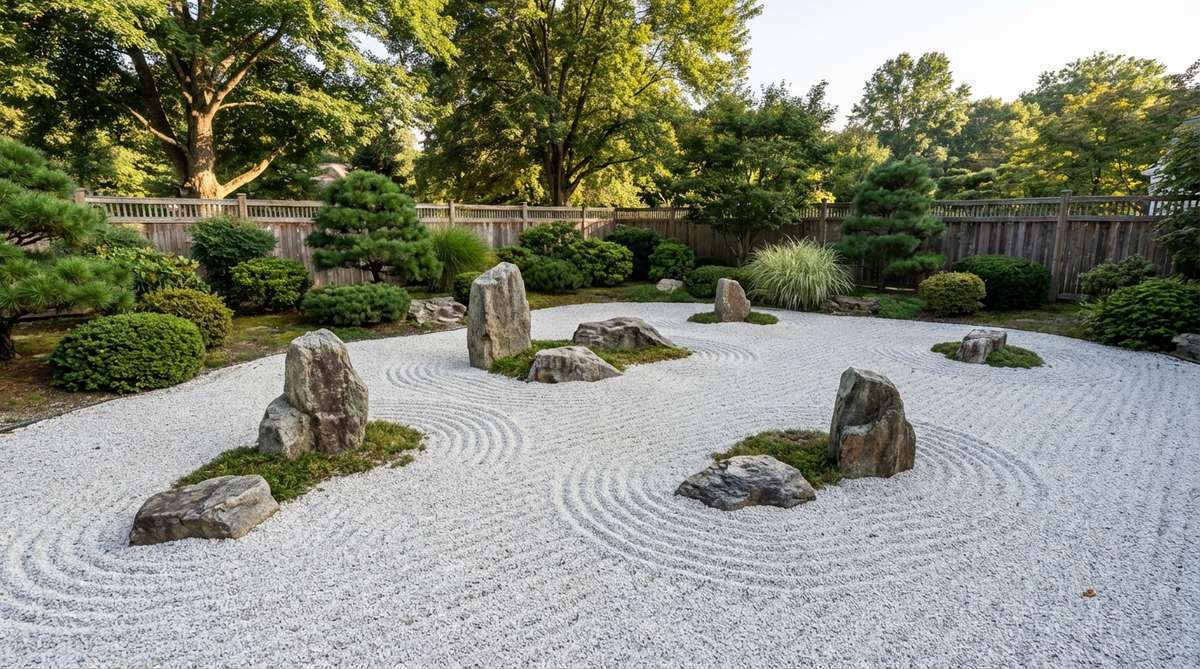
Seven stones of varied sizes emerge from a sea of white gravel like islands in an archipelago. Cluster three stones near one edge, then scatter the remaining four across the space at irregular intervals.
Rake the gravel in parallel lines representing vast ocean swells. Around each stone cluster, create circular patterns suggesting waves breaking against island shores.
The scattered arrangement invites the viewer to visually journey between islands. This layout adapts well to larger spaces where expansive gravel fields emphasize isolation and contemplation.
5. Triangular Heaven-Earth-Humanity
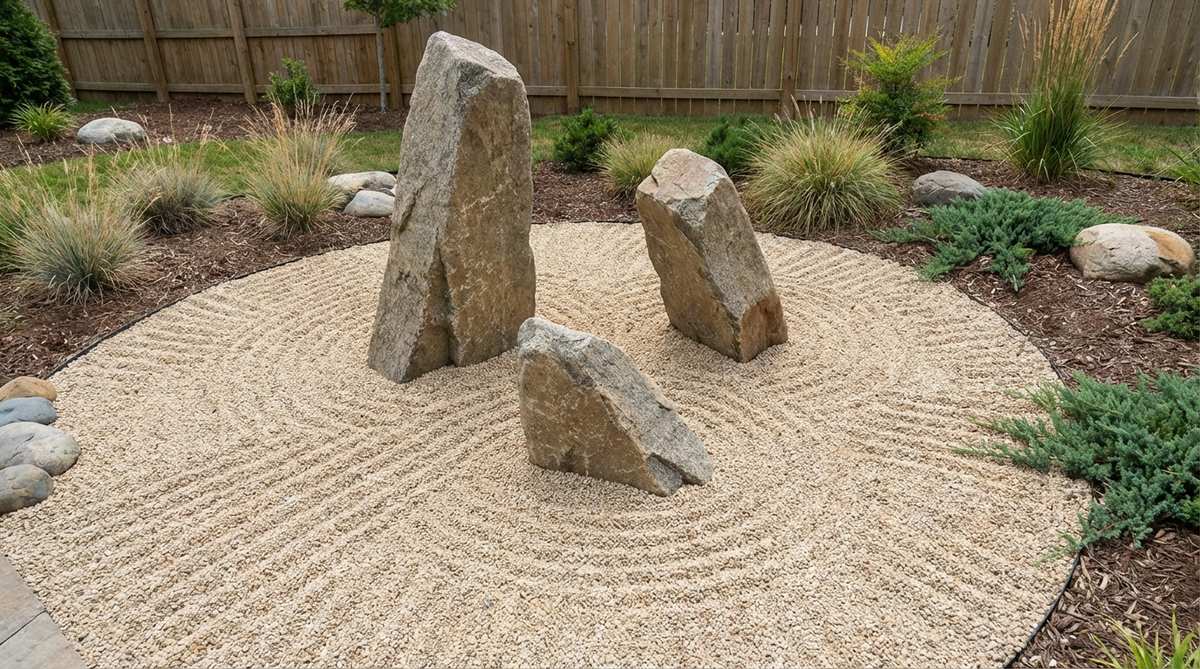
Three stones positioned in a triangular configuration represent the cosmic order. The tallest stone symbolizes heaven, a medium stone represents humanity, and the smallest embodies earth.
Avoid creating an equilateral triangle; instead, use asymmetric spacing to generate visual interest. Angle each stone slightly inward toward the triangle’s center to unify the composition.
Surrounding gravel raked in fan patterns radiates outward from the triangle. This sacred geometry grounds the garden in philosophical meaning while maintaining aesthetic balance.
6. Waterfall Stone Cascade
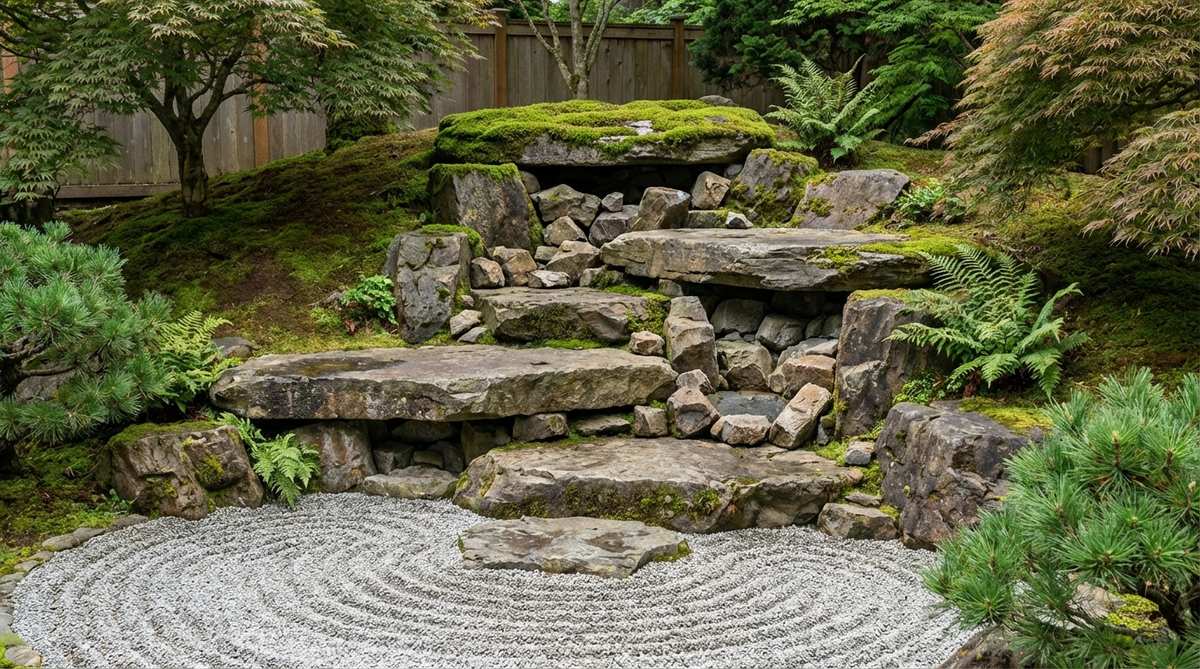
Stacked and staggered rocks simulate a vertical waterfall frozen in stone. Position large flat stones in descending tiers with smaller angular rocks between levels to suggest tumbling water.
Create a pool effect at the base using circular raked gravel patterns. Plant moss at the top and along sides to add organic texture contrasting with hard stone surfaces.
This vertical composition works against slopes or walls where gravity’s pull enhances the illusion. The design brings dynamic movement to otherwise static rock arrangements.
7. Moonrise Boulder Grouping
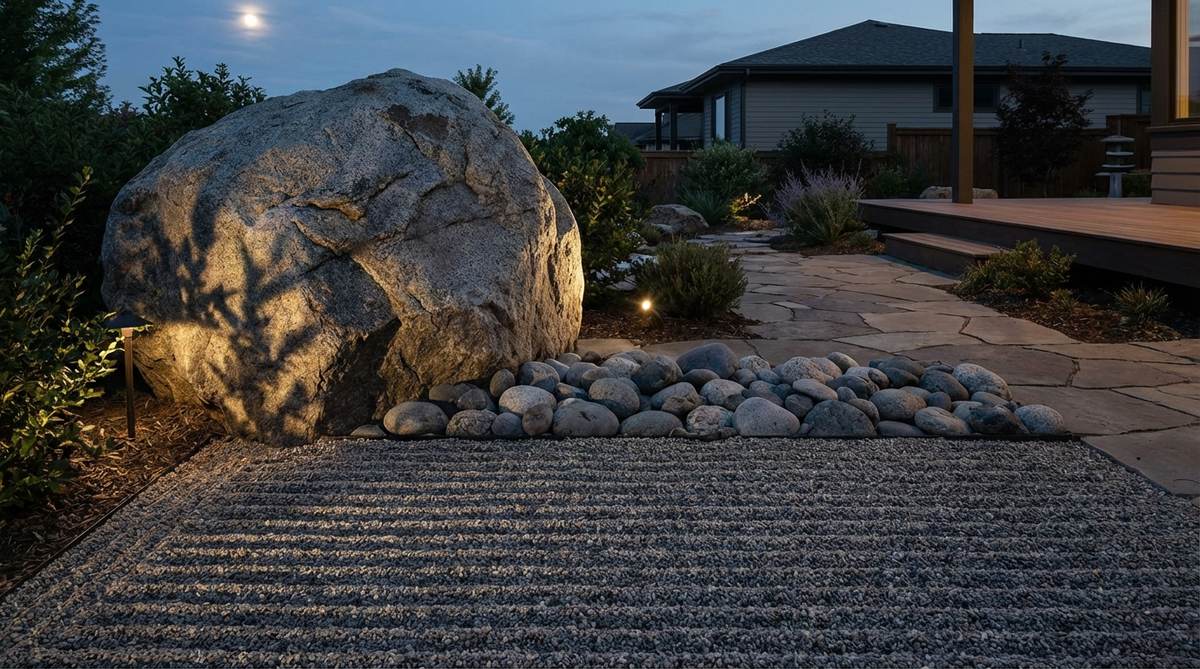
A single massive boulder represents a rising moon above a horizon line of smaller stones. Position the large rock toward the rear with low horizontal stones forming a foreground plane.
The size contrast creates dramatic scale and emphasizes the singular boulder’s presence. Rake gravel in horizontal lines across the foreground to strengthen the horizon effect.
Nighttime viewing enhances this design when moon shadows interact with stone forms. The simple composition demonstrates how fewer elements properly scaled achieve greater impact.
Moss-Centered Compositions Featuring Living Ground Cover
Moss transforms stone arrangements from stark minimalism to lush, textured environments. Japanese gardens utilize specific moss species that thrive in shade and moisture while providing year-round green cover that softens hard rock edges.
8. Sugi-Goke Mountain Mounds
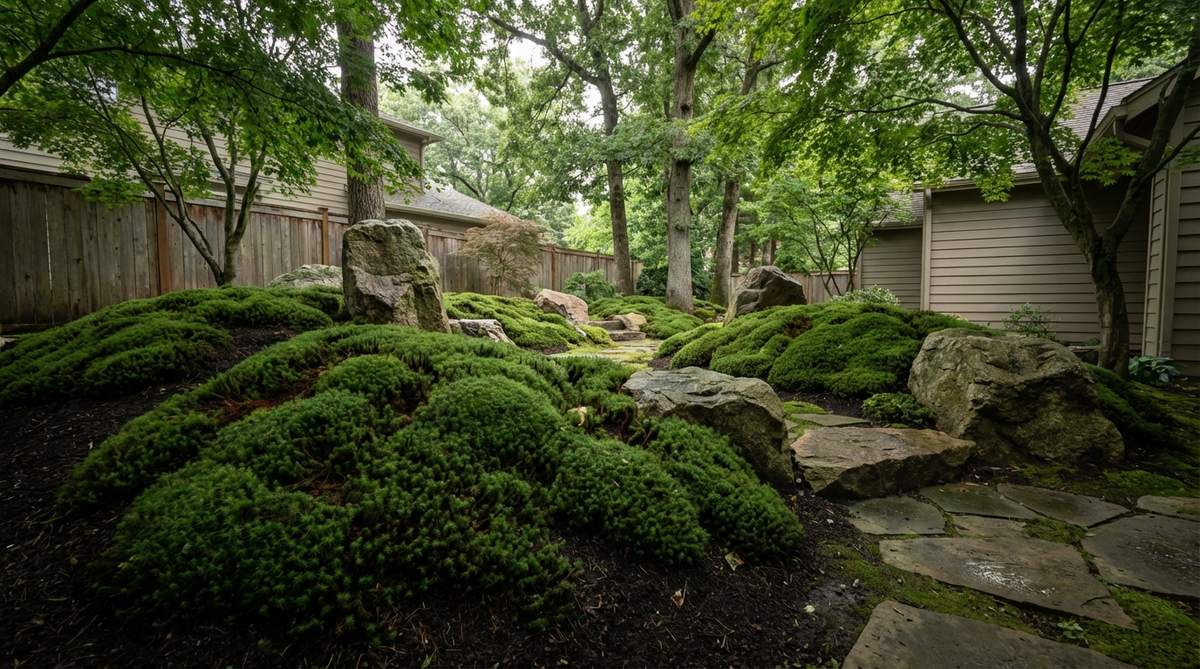
Polytrichum juniperinum, known as sugi-goke, covers undulating soil mounds in dense upright growth. Create miniature mountain ranges by shaping soil berms of varying heights and completely carpeting them with this forest-like moss.
Plant in part-shade conditions and maintain consistent moisture during establishment. The vertical moss structure adds remarkable texture resembling coniferous forests covering hillsides.
Position rocks sporadically through the mounds to represent cliff faces or exposed peaks. This design excels in shaded courtyards where moss cultivation conditions naturally occur.
9. Hai-Goke Horizontal Meadows
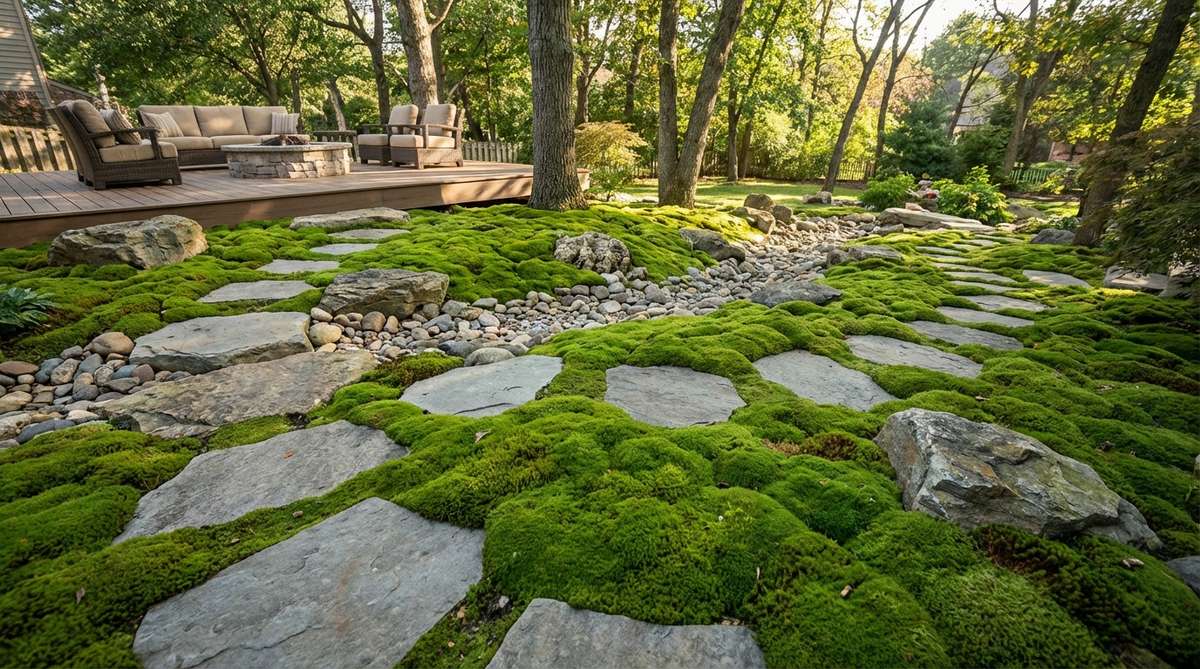
Racomitrium japonicum, or hai-goke, spreads horizontally across flat surfaces creating expansive green carpets. This crawling moss tolerates more sun and dryness than other varieties, making it suitable for open areas.
Intersperse low flat stones throughout the moss meadow like islands in a green sea. The contrast between stone gray and moss green generates visual rhythm across horizontal planes.
This design requires less intensive watering than vertical moss species. The meadow effect provides a restful visual foundation for vertical rock elements or lanterns.
10. Checkerboard Moss and Stone Pattern
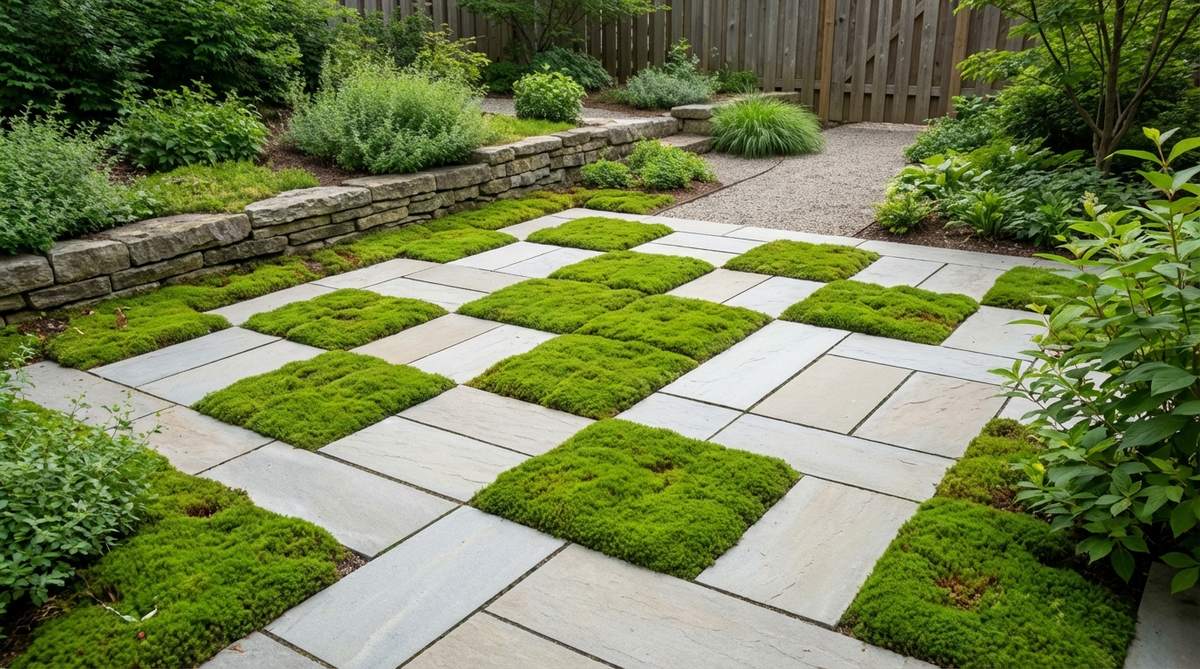
Alternating squares of moss and flat paving stones create a modernist interpretation of traditional gardens. Cut square stones to identical dimensions and plant moss patches of equal size between them.
Thuidium tamariscinum works well with its fern-like delicate texture providing softness against angular stone edges. Maintain sharp boundaries between moss and stone through regular trimming.
The geometric pattern references traditional temple gardens while offering contemporary aesthetic appeal. This design suits enclosed courtyards viewed from above where the pattern reads clearly.
11. Moss-Bridge Stone Stepping
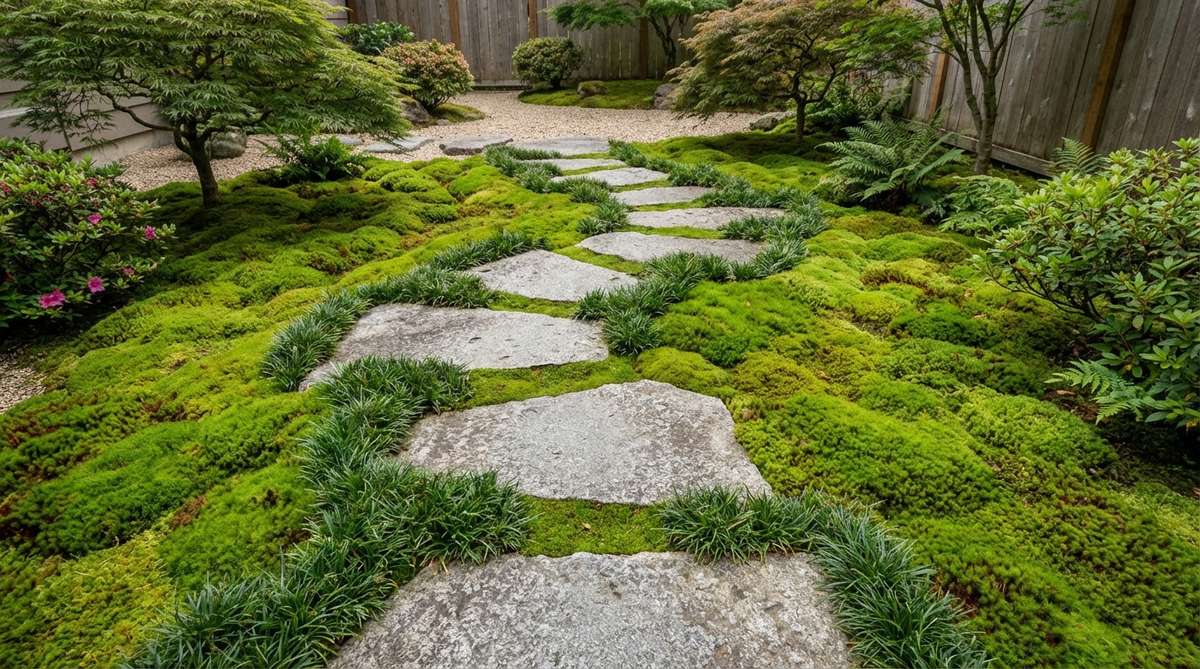
Large flat stepping stones cross through expansive moss fields like bridges spanning green rivers. Space stones at comfortable stride intervals and let moss fill completely between each step.
Use yamato-fude-goke with its spiky texture along stone edges to create distinct borders. The bright green tufts accent the pathway while preventing moss creep onto stone surfaces.
This functional design invites physical interaction with the garden. Viewers experience the moss intimately while walking, observing texture and color variations up close.
12. Stone Boat in Moss Ocean
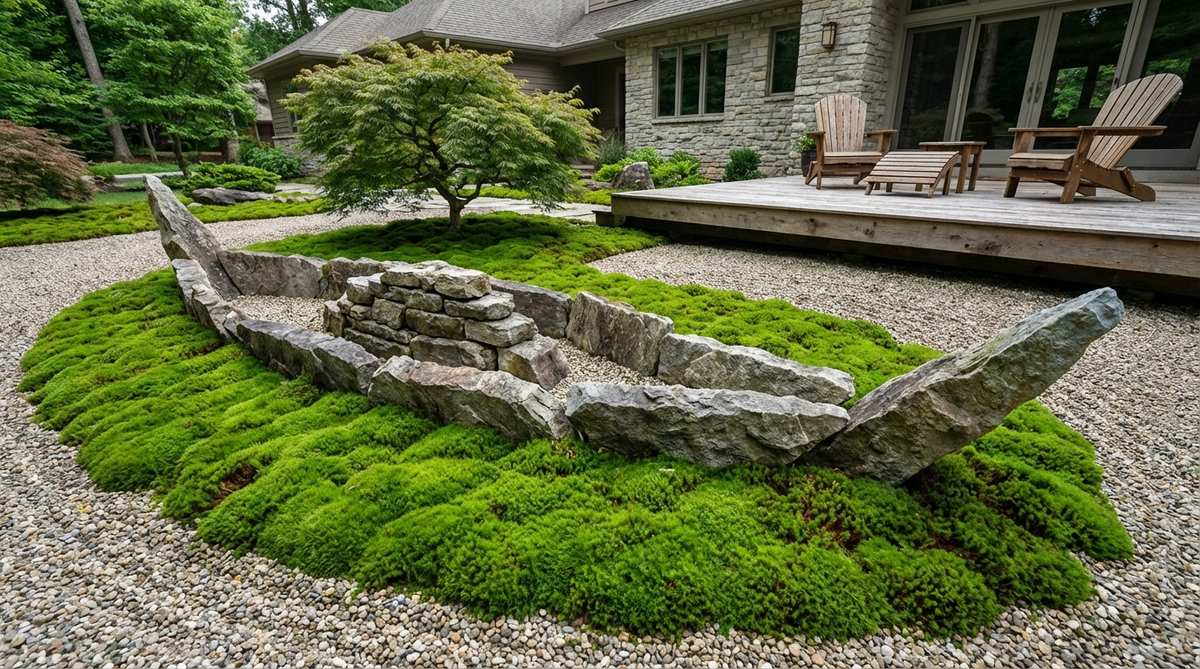
An elongated arrangement of rocks suggests a boat floating in a green moss sea. Position five to seven stones in a vessel shape with pointed ends and raised center stones forming the hull.
Surround completely with osugi-goke moss, leaving only the stone tops exposed. The deep green moss emphasizes the boat’s form through color contrast.
This whimsical design engages imagination while maintaining philosophical depth. The boat metaphor represents life’s journey across existence’s uncertain waters.
13. Layered Moss Terraces
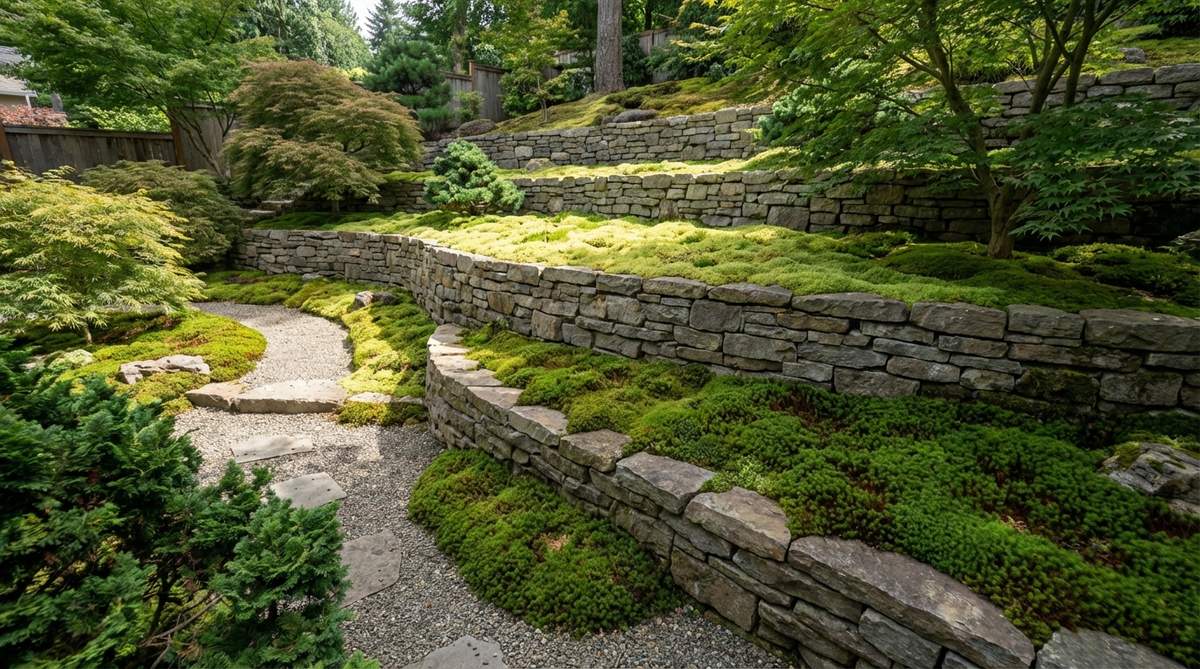
Graduated stone retaining walls create terraced levels completely covered in various moss species. Each terrace level features different moss varieties, creating a vertical gradient of textures and green shades.
Use suna-goke on upper sun-exposed terraces and shade-loving polytrichum on lower levels. Stone walls between terraces provide structural support while displaying natural rock faces.
The layered effect mimics mountain agriculture terraces or geological stratification. This design maximizes moss variety in gardens with elevation changes.
14. Moss Halo Boulder Accent
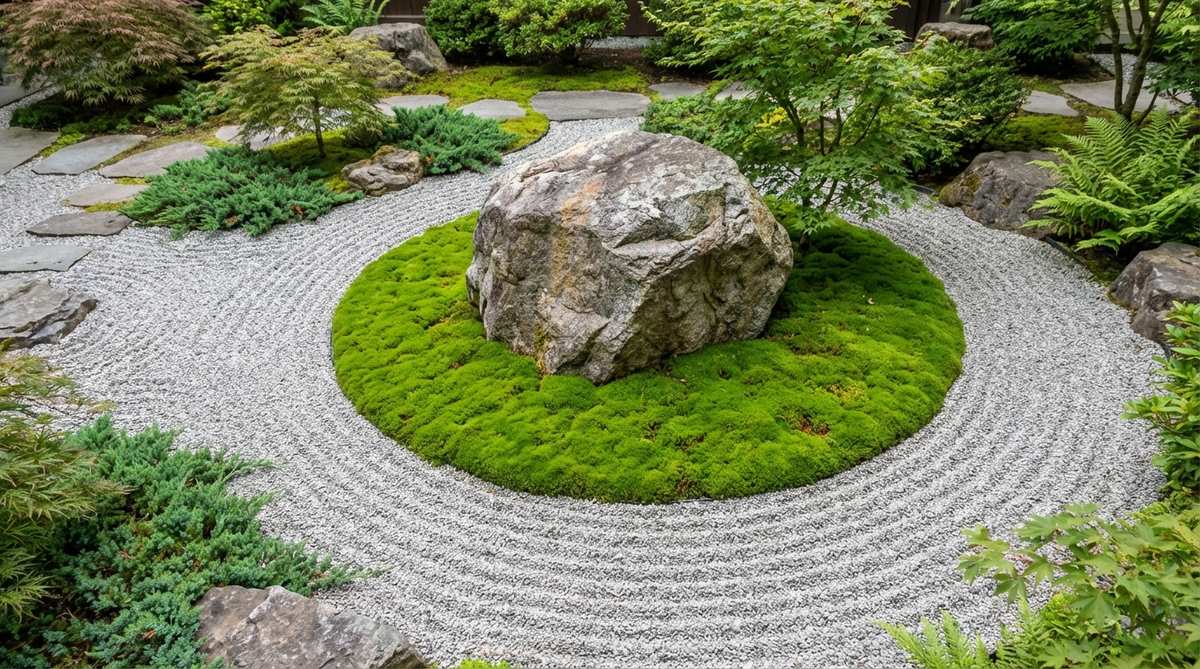
A prominent central boulder sits surrounded by a perfect circle of moss while gravel fills the outer areas. The moss ring draws attention to the featured rock while creating a green buffer zone.
Plant leucobryum neilgherrense in cushiony clumps forming the circular border. Its pale green color provides luminous contrast against darker gravel and gray stone.
This simple composition emphasizes a single exceptional stone. The moss halo suggests sanctity or special significance, elevating the boulder to sacred status.
15. Wave Pattern Moss Karikomi
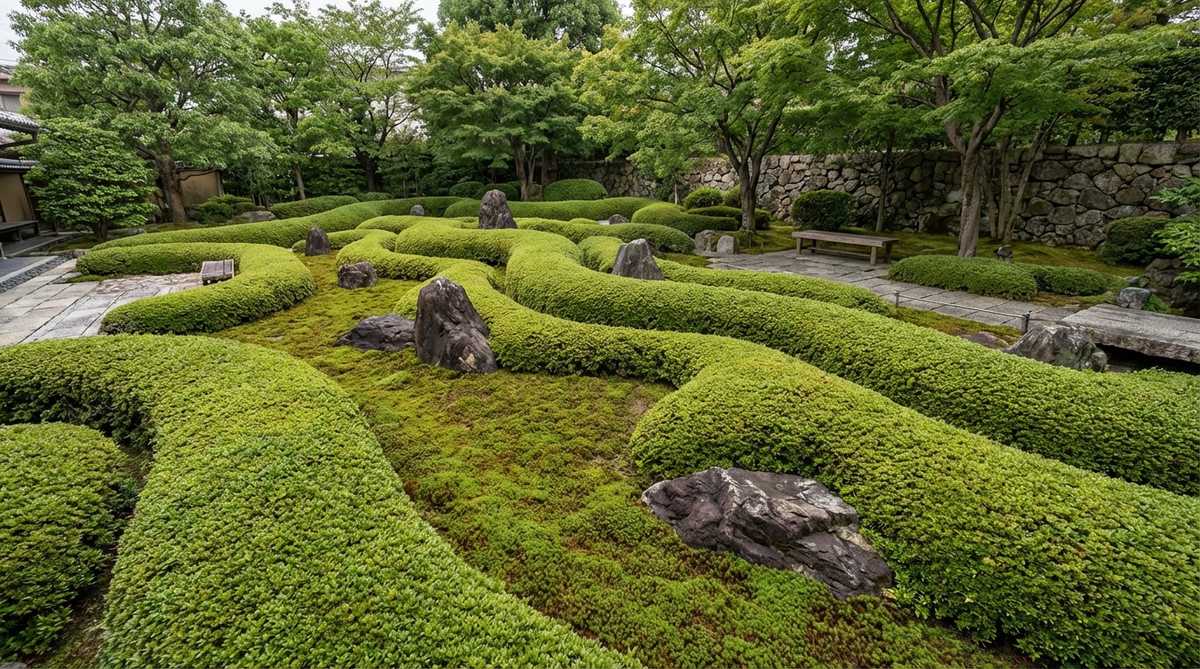
Sculpted shrubs pruned into connected wave forms combine with moss ground cover. The karikomi technique shapes plants into flowing horizontal lines that echo ocean swells.
Position rocks between wave crests like islands emerging from seas. Moss fills spaces between rocks and shrubs, unifying the composition through continuous green coverage.
This dynamic design introduces movement through sculptural plant forms. The waves direct visual flow while moss provides a calm contrasting base.
Water Element Interpretations Through Stone and Gravel
Japanese gardens represent water without actual liquids through symbolic materials and patterns. Raked gravel, stone placement, and spatial relationships evoke rivers, oceans, waterfalls, and rain through abstract visual language.
16. Aranamimon Rough Wave Pattern
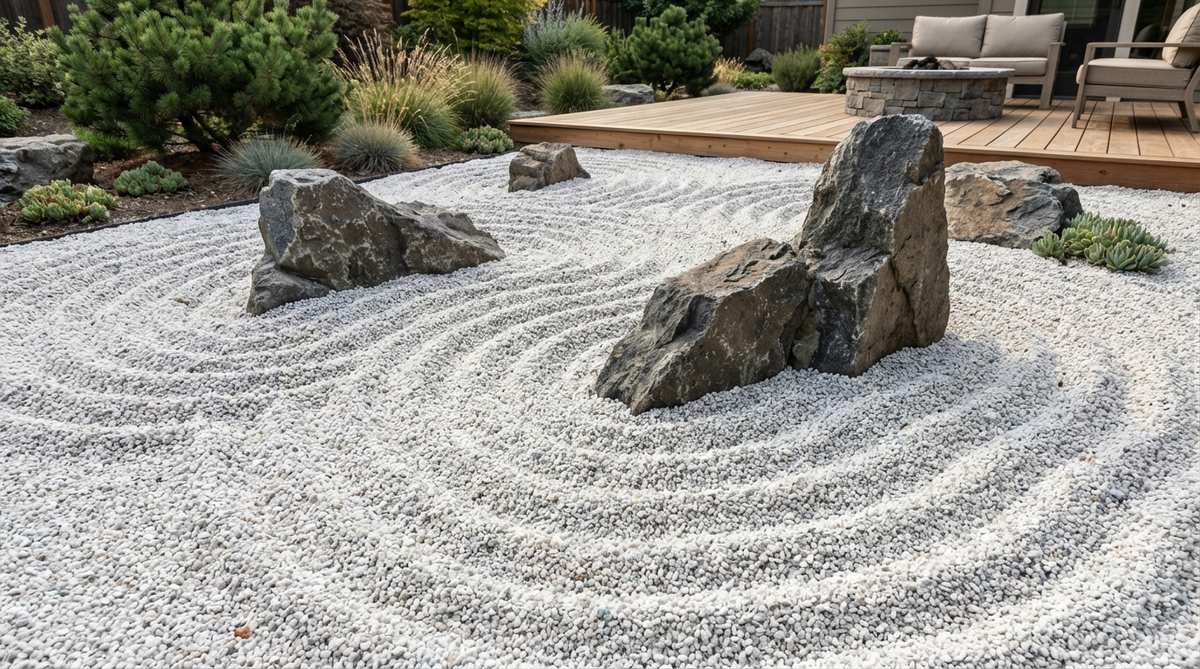
Deep furrows raked into white gravel simulate turbulent ocean waves. The aranamimon pattern features prominent ridges and valleys suggesting storm-tossed seas around rocky outcrops.
Rake in irregular intervals varying depth and spacing to enhance the chaotic water effect. Position angular stones at strategic points like hazards breaching violent waters.
This dramatic raking pattern suits larger gardens where bold gestures read from distance. The aggressive texture conveys energy and requires regular maintenance to preserve crispness.
17. Sazanamimon Ripple Circles
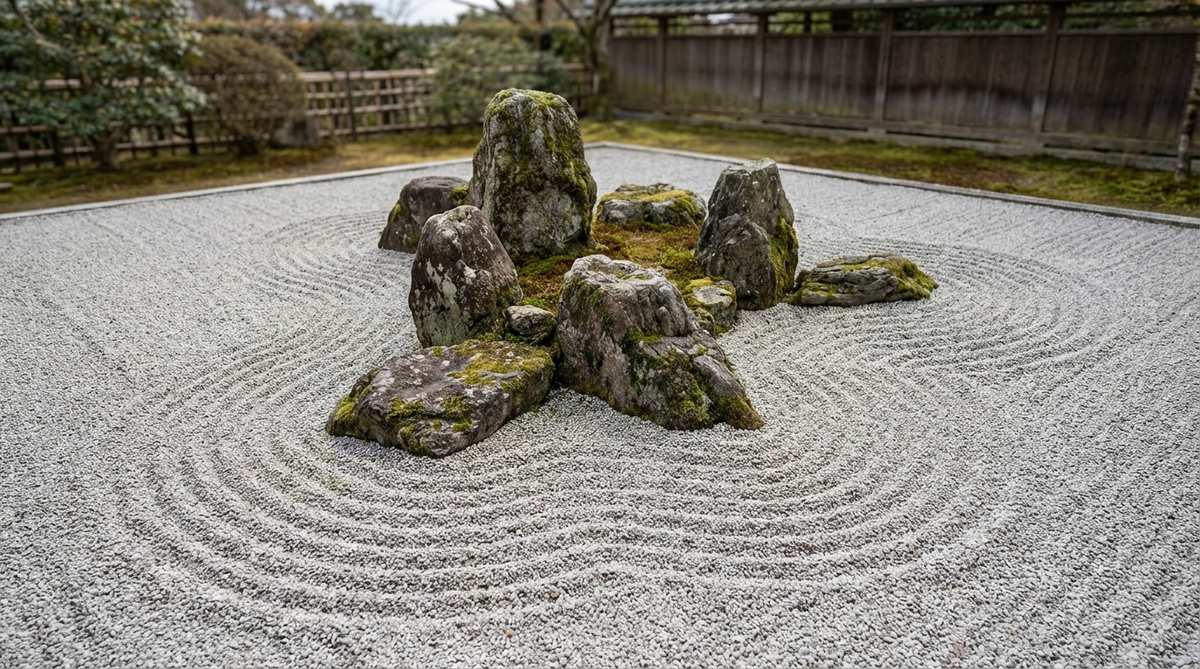
Concentric circles raked around stone clusters mimic ripples from dropped pebbles. Each rock group receives its own circular pattern system, with rings expanding until they meet neighboring patterns.
Where circle patterns intersect, continue one pattern through the other or create deliberate breaks. The mathematical precision of perfect circles contrasts with organic irregular stones.
This meditative pattern emphasizes individual stone presence. The raking process itself becomes contemplative practice requiring focus and repetition.
18. Ryusui Flowing Stream Lines
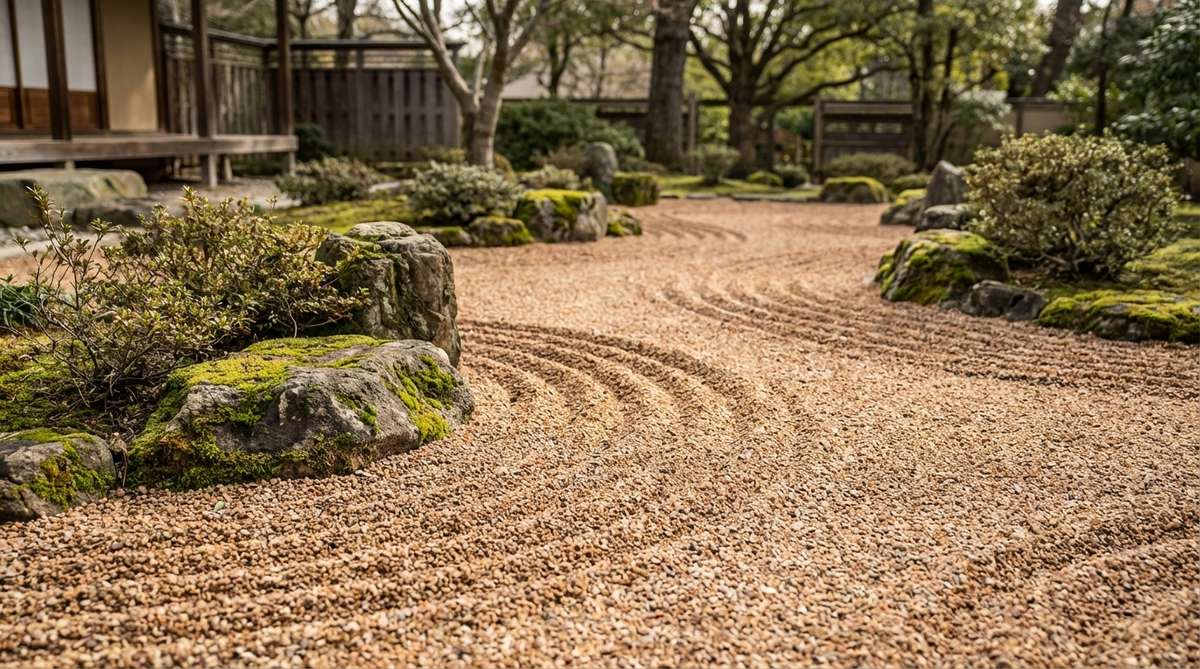
Parallel curved lines raked through gravel represent gentle stream currents. The ryusui pattern follows natural meandering paths, curving around stones like water navigating obstacles.
Vary line spacing from tight to wide to suggest current speed changes. Narrow gaps indicate fast-moving water while broader spacing suggests calm pools.
This pattern guides viewer perception through the garden along implied water flow. The curves create graceful movement contrasting with static stone elements.
19. Still Pond Reflection Surface
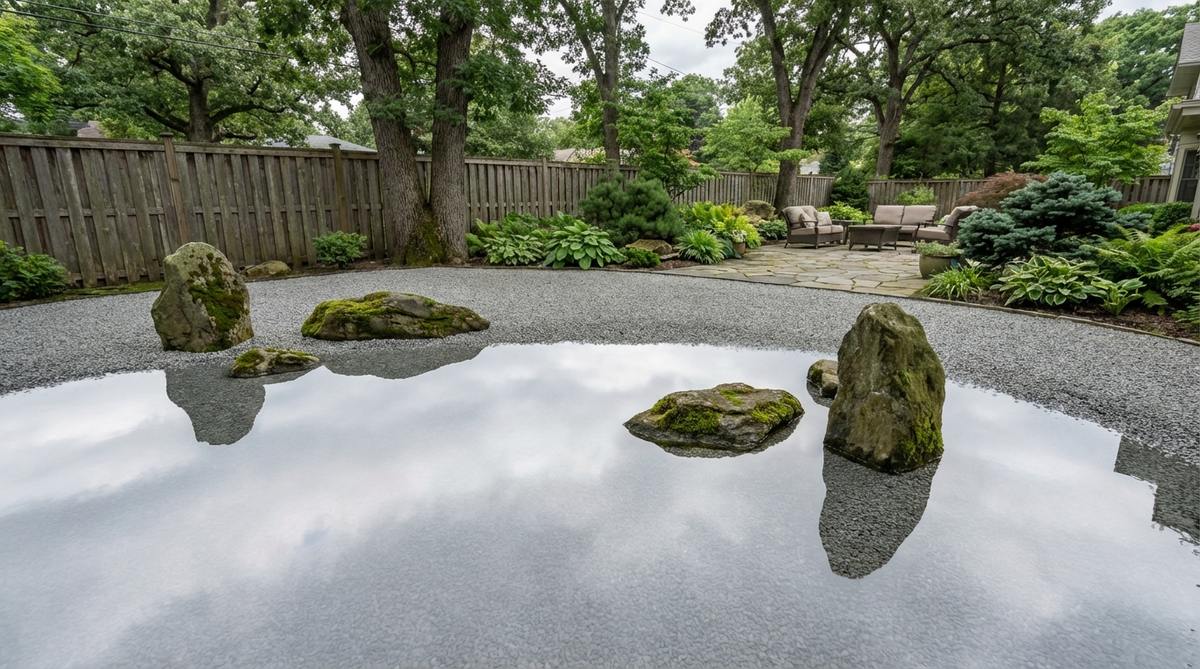
Completely unraked smooth gravel represents a mirror-calm pond surface. Stones emerge like reflections captured on windless water, with perfect gravel smoothness emphasizing tranquility.
Maintain the unmarked surface through careful hand-smoothing rather than raking. Any disturbance becomes intentional, teaching impermanence as footprints and debris mark the surface.
The blank expanse creates powerful negative space. Viewers project their own interpretations onto the empty field, engaging imagination more actively than patterned areas.
20. Waterfall Dry Cascade Arrangement
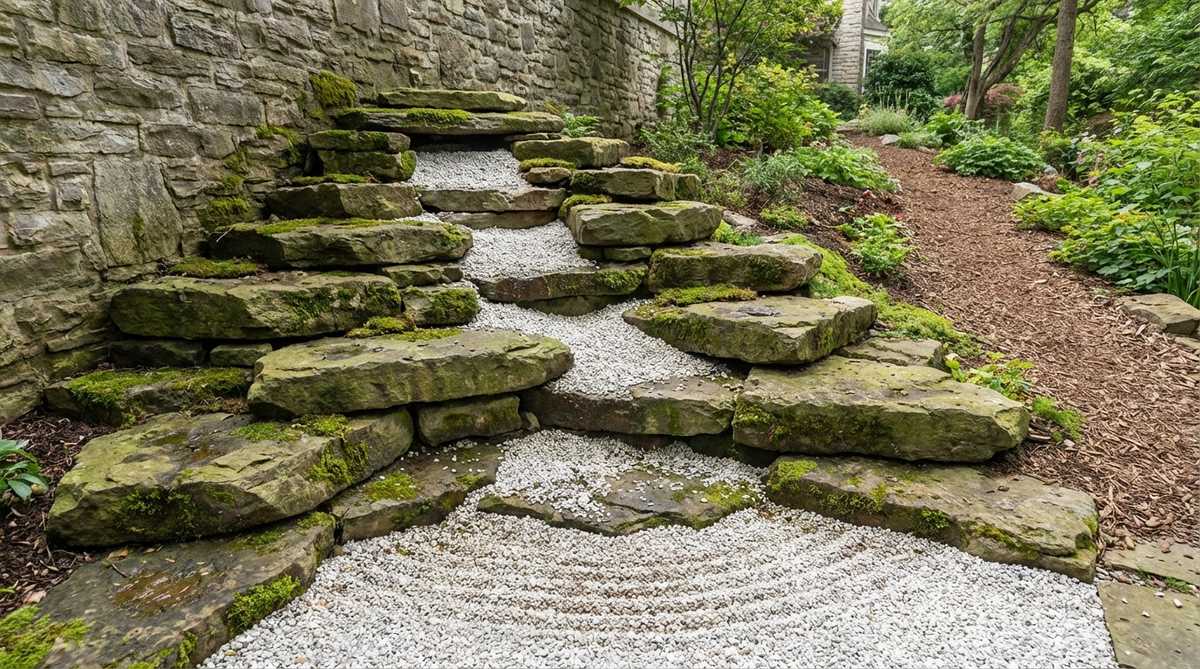
Vertical stone arrangements simulate waterfalls with gravel pooling at the base. Stack flat stones in staggered descent with white gravel “flowing” between levels and accumulating below.
Rake horizontal lines in the gravel pool to indicate settled water. Add moss to stone tops and sides suggesting moisture and age from continuous water exposure.
This design works against walls or slopes where verticality enhances the cascade illusion. The arrangement brings dramatic elevation changes to flat gardens through built structures.
21. Rain Garden Dotted Pattern
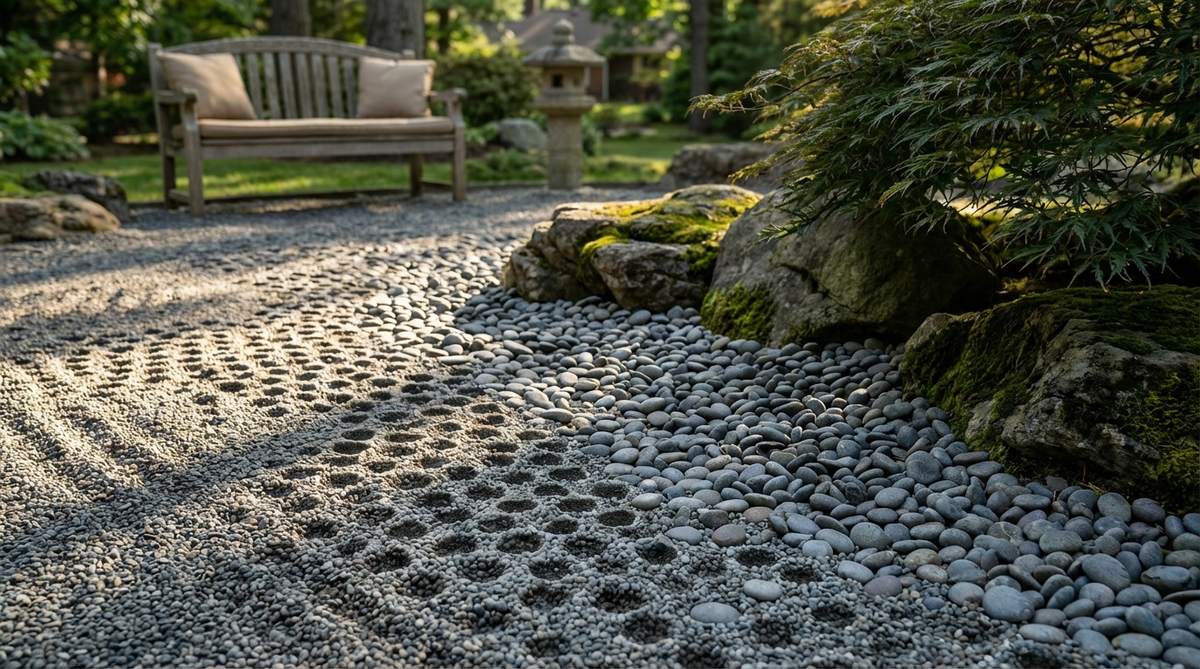
Small circular indentations dotting gravel surfaces represent raindrops hitting water. Create the pattern by pressing a rod vertically into gravel at random intervals and varying densities.
Concentrate dots in certain areas to suggest heavy rainfall zones while leaving other sections sparse. The random pattern breaks from geometric precision to capture weather’s unpredictability.
This ephemeral pattern changes easily with garden maintenance. The dot texture adds subtle surface variation visible in raking light conditions.
22. Tidal Zone Exposed Rocks
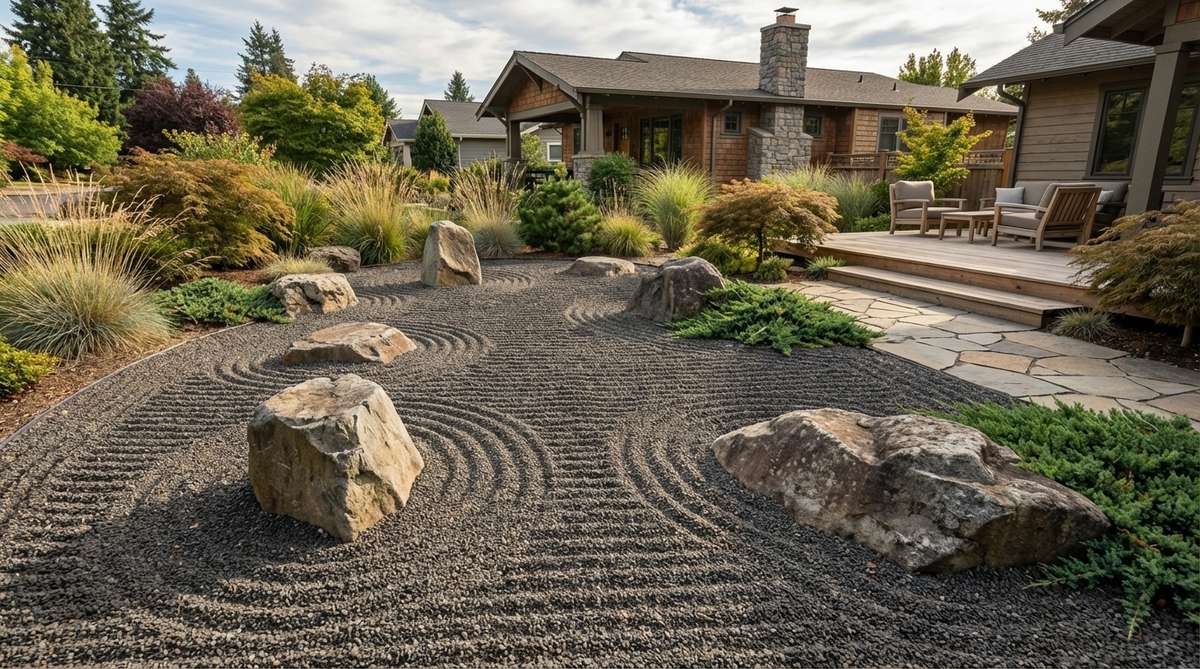
Partially buried stones emerge at various heights from gravel suggesting tidal fluctuations. Some rocks show only tops while others reveal more mass, implying changing water levels.
Rake horizontal lines around exposed stone portions as high-water marks. The linear raking at consistent heights reinforces the tidal metaphor across multiple stones.
This design teaches natural rhythms and cycles. The arrangement works in wider gardens where multiple stones at various heights create convincing tide patterns.
Island and Mountain Groupings Representing Landscapes
Stone garden Japanese designs frequently miniaturize grand natural landscapes. Rocks become mountains, gravel transforms into oceans, and spatial relationships compress vast geography into contemplative garden-scale environments.
23. Immortal Isles Five Peaks
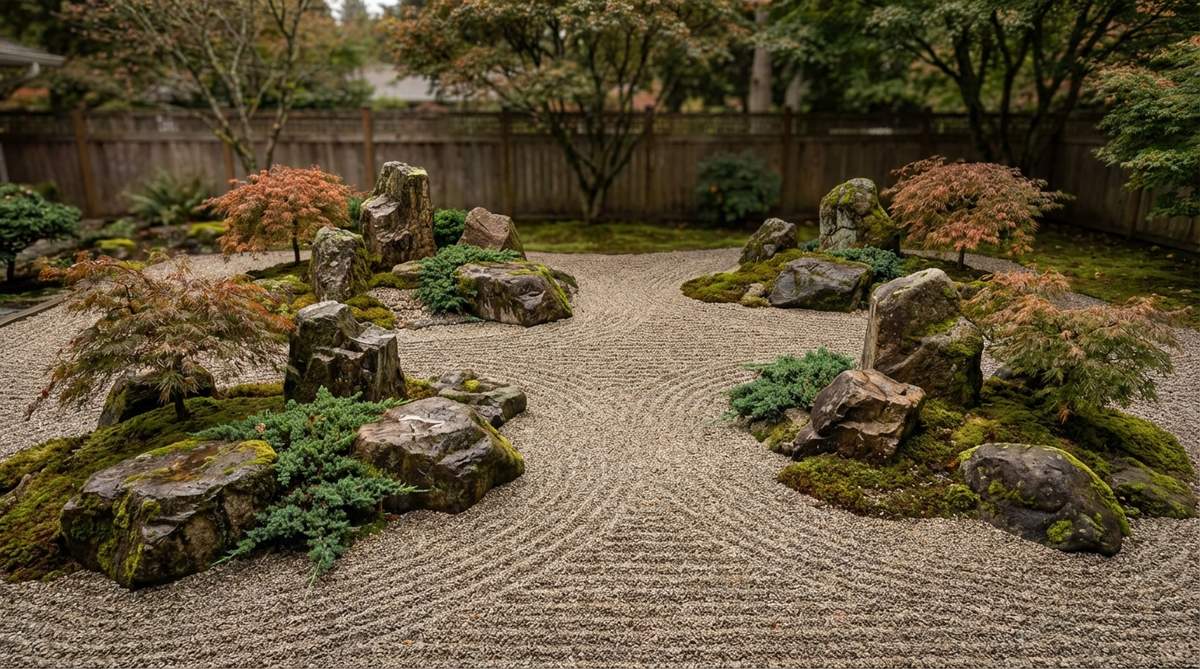
Five distinct stone islands reference the mythical isles of immortals from Chinese and Japanese legend. Each grouping uses three to five rocks creating individual mountain systems separated by gravel seas.
Position the five island groups at irregular distances preventing grid-like arrangement. Vary island sizes with some prominent and others subordinate to create hierarchical interest.
The mythological reference adds narrative depth to abstract composition. Viewers familiar with the legends perceive symbolic meaning while others appreciate aesthetic arrangement.
24. Single Peak Mountain Meditation
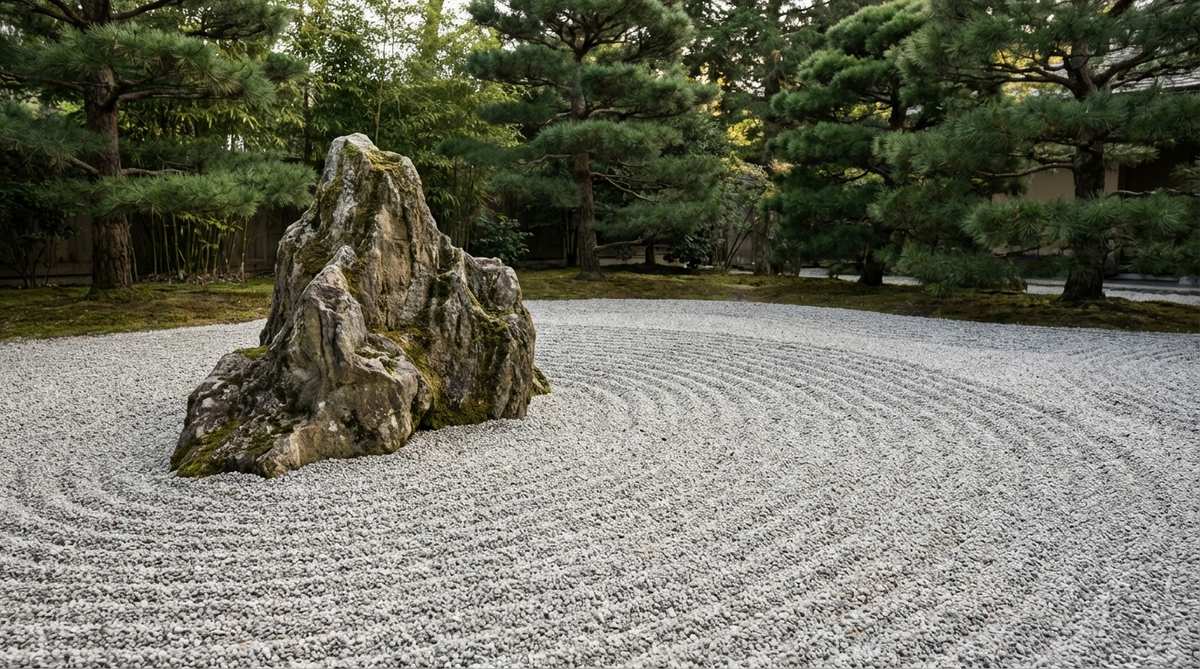
One magnificent stone dominates the entire garden as a solitary mountain. Choose a rock with dramatic form, interesting texture, and commanding presence that sustains extended viewing.
Position the stone off-center following golden ratio proportions. Surround completely with raked gravel using concentric circles emphasizing the stone’s singular importance.
This minimalist approach requires exceptional stone selection. The single element must possess sufficient visual complexity to reward repeated contemplation without additional features.
25. Crane and Turtle Symbolic Islands
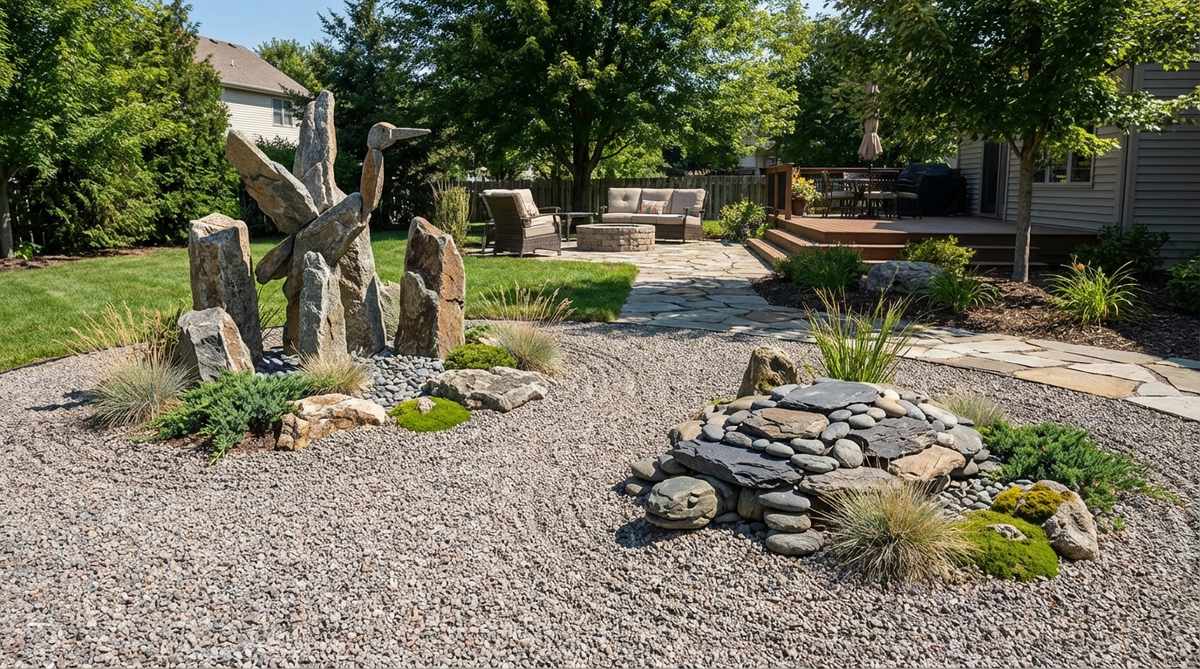
Two rock groupings represent the crane and turtle, symbols of longevity. The crane island uses vertical stones suggesting upward flight while the turtle island employs flat horizontal rocks implying grounded stability.
Position the crane island to the left and turtle to the right following traditional arrangements. The contrasting forms teach about complementary opposites working in balance.
This design incorporates cultural symbolism accessible to knowledgeable viewers. The arrangement functions aesthetically even without understanding the symbolic references.
26. Mountain Range Horizon Line
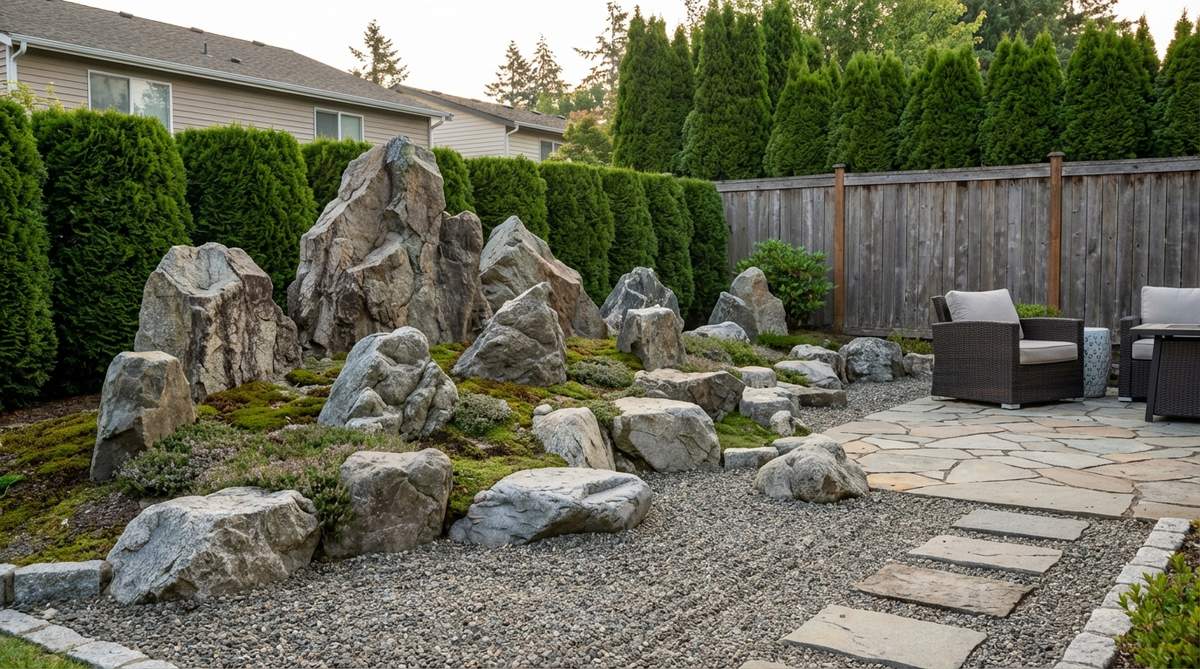
Stones arranged in linear progression create a mountain range along the garden’s rear edge. Graduate sizes from tall to short suggesting distant peaks fading into haze.
Position taller stones slightly back and shorter ones forward to enhance perspective depth. The recession creates three-dimensional space within a two-dimensional arrangement.
This backdrop design frames the garden while directing attention forward. The linear arrangement suits rectangular spaces where length exceeds width.
27. Volcanic Island Emergence
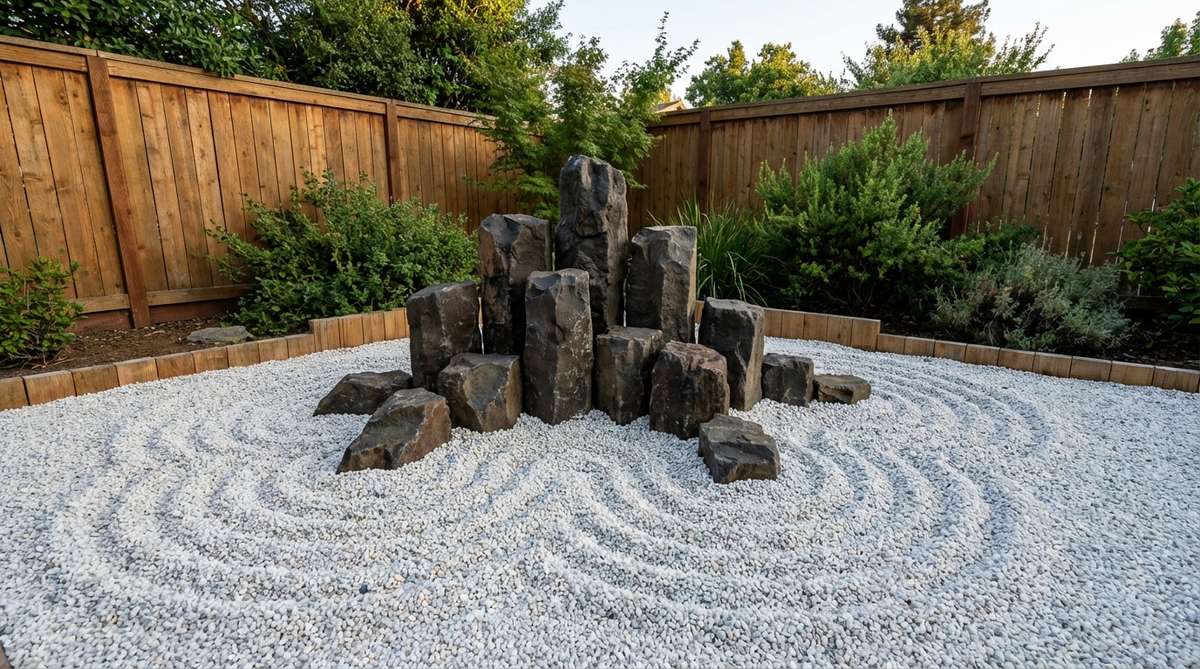
Dark volcanic stones cluster tightly suggesting a volcanic island rising from ocean depths. Use basalt or other dark rock contrasting with white gravel to emphasize the dramatic emergence.
Stack stones vertically with larger pieces at the base tapering to smaller rocks at the peak. Rake aggressive wave patterns around the base suggesting turbulent waters meeting resistant land.
The color and texture contrast creates visual impact. This design works particularly well in smaller gardens where concentrated dramatic elements compensate for limited space.
28. Peninsula Extension Formation
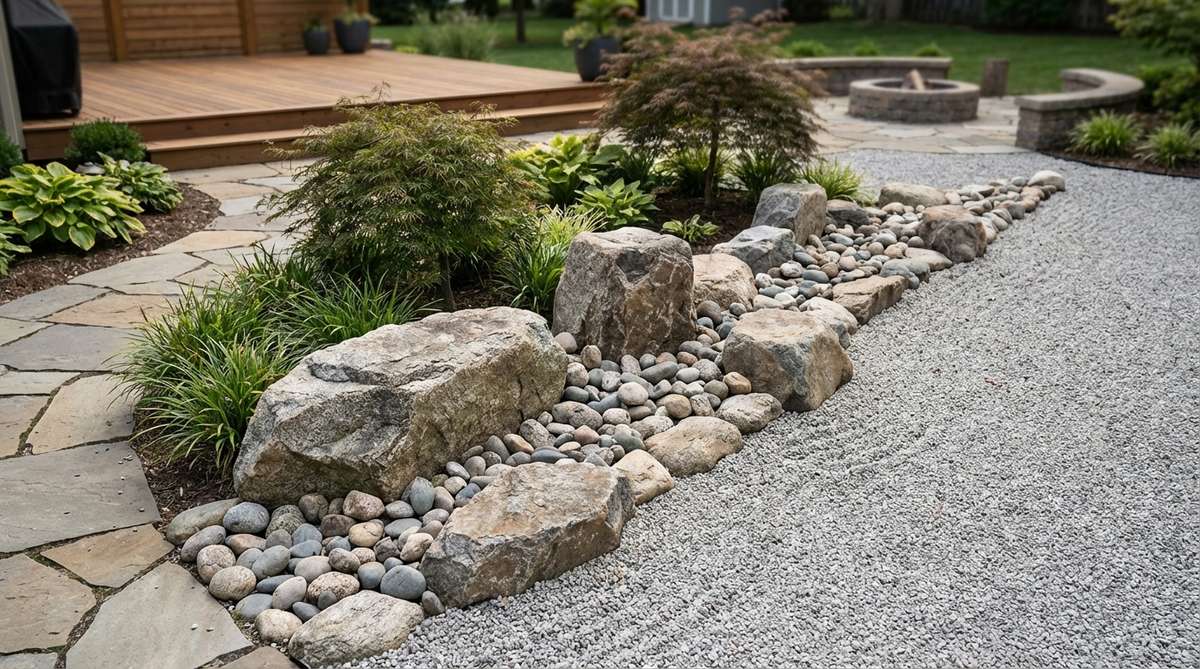
Stones arranged in a linear progression extend from the garden edge into gravel space like a land peninsula. Begin with larger stones anchored at the border, decreasing size as the formation extends.
The peninsula provides visual direction leading the eye deeper into the garden. Terminate the extension with a particularly attractive stone rewarding the visual journey.
This design manipulates spatial perception making gardens appear larger. The extending formation suggests continuation beyond visible boundaries.
29. Cave Grotto Stone Shelter
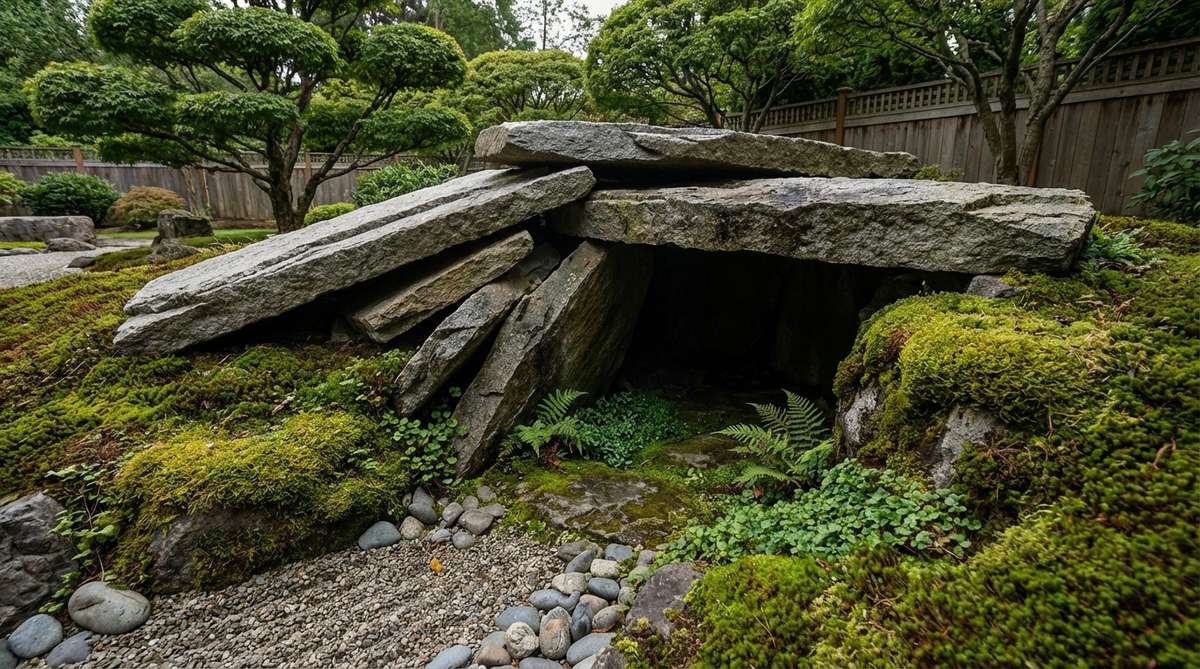
Large flat stones lean together creating a cave-like void within the composition. The negative space between stones becomes as important as the stones themselves.
Position the opening to face primary viewing angles so the dark interior provides focal contrast. Plant moss heavily around the opening suggesting moisture and sheltered microclimate.
The cave invites viewer imagination about hidden depths. This design demonstrates how absence and void contribute equally to spatial composition.
Meditation and Focal Designs For Contemplative Practice
Certain stone garden Japanese arrangements specifically support meditation and focused contemplation. These designs employ strategic focal points, balanced proportions, and deliberate emptiness to facilitate mental stillness.
30. Fifteen Stone Viewing Puzzle
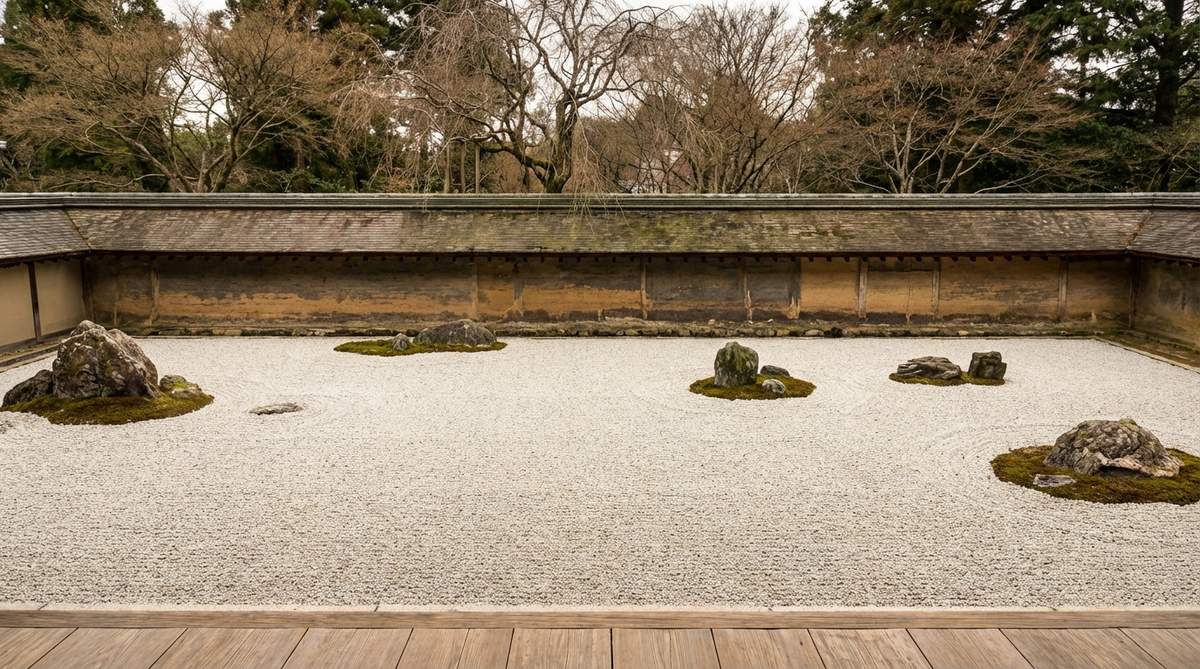
Fifteen stones positioned so viewers cannot see all simultaneously from any single vantage point. The famous Ryoanji temple design creates this perceptual puzzle through careful placement and perspective.
Arrange stone groups so at least one remains hidden from each viewing position. This forces viewers to move through space and accept incomplete perception.
The design teaches about limitation and partial knowledge. No single perspective reveals complete truth, encouraging humility and curiosity.
31. Void-Centered Emptiness Focus
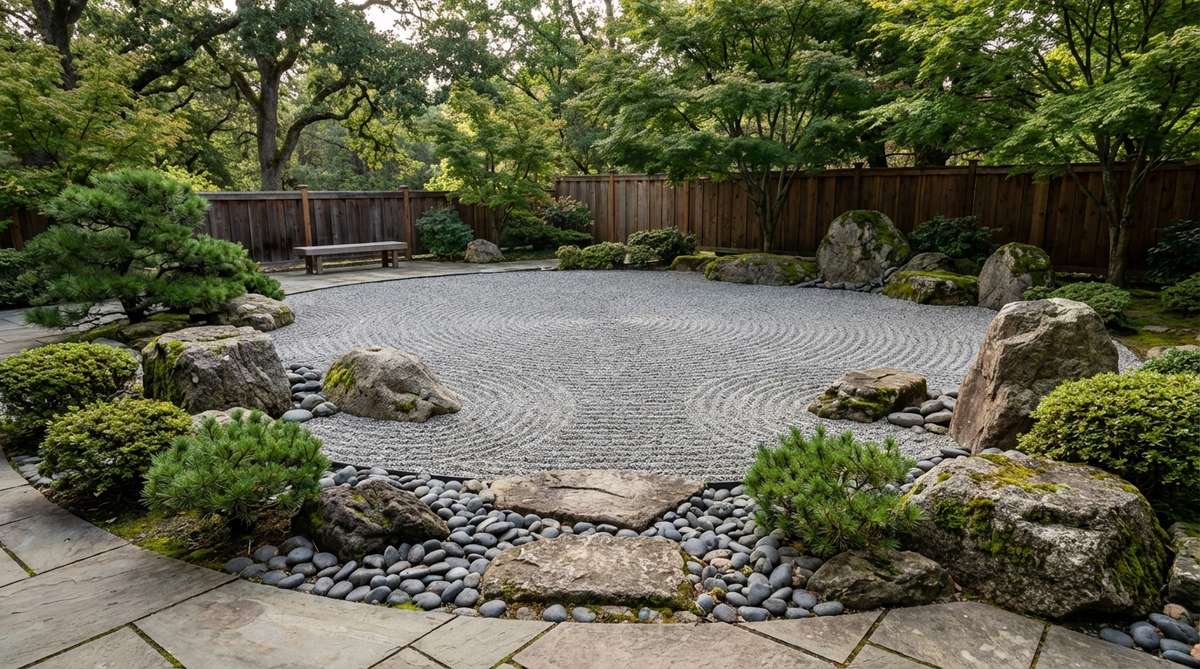
The garden’s center remains completely empty with all stone elements pushed to periphery. The blank central void becomes the primary focus rather than object placement.
Viewers naturally seek content in the empty center, turning attention inward when finding nothing external. The psychological effect encourages self-reflection and meditation.
This advanced design requires courage to resist filling space. The emptiness paradoxically becomes the strongest element through deliberate absence.
32. Symmetry-Breaking Balance Point
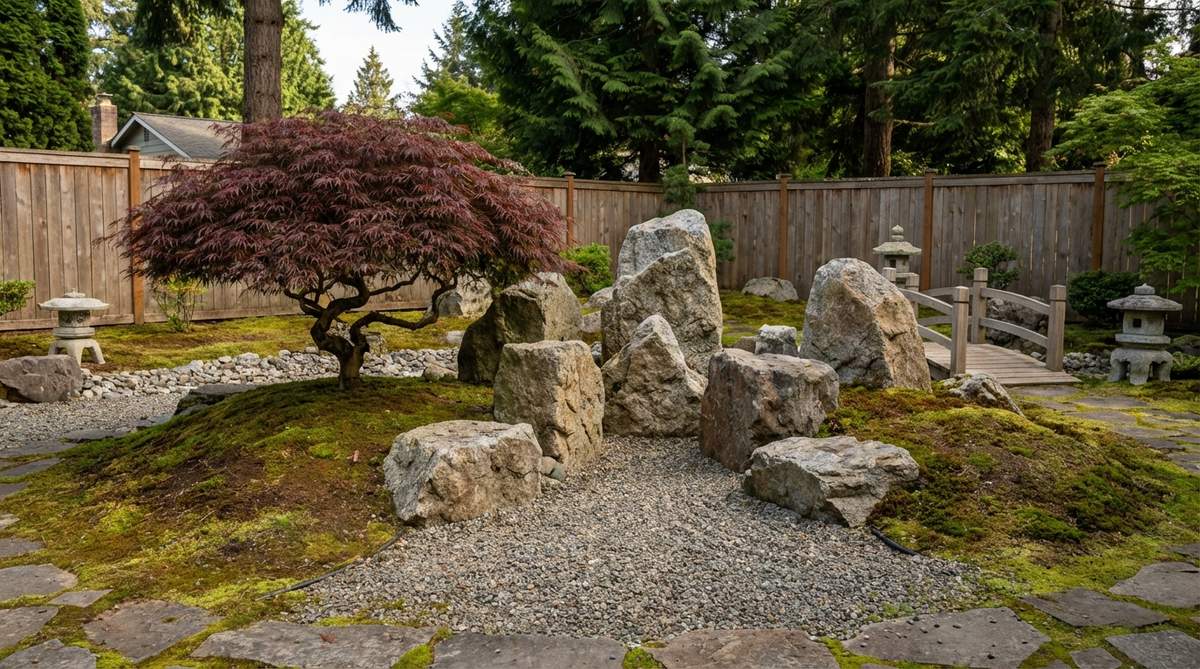
An almost symmetrical arrangement includes one element deliberately offset to break perfect balance. The viewer’s eye searches for symmetry then discovers the intentional disruption.
The broken symmetry creates productive tension keeping the eye engaged. Perfect balance would allow the eye to rest, but slight disruption maintains active viewing.
This design teaches that perfection lies in imperfection. The concept of wabi-sabi finds expression through deliberate asymmetry.
33. Mandala Stone Circle Meditation
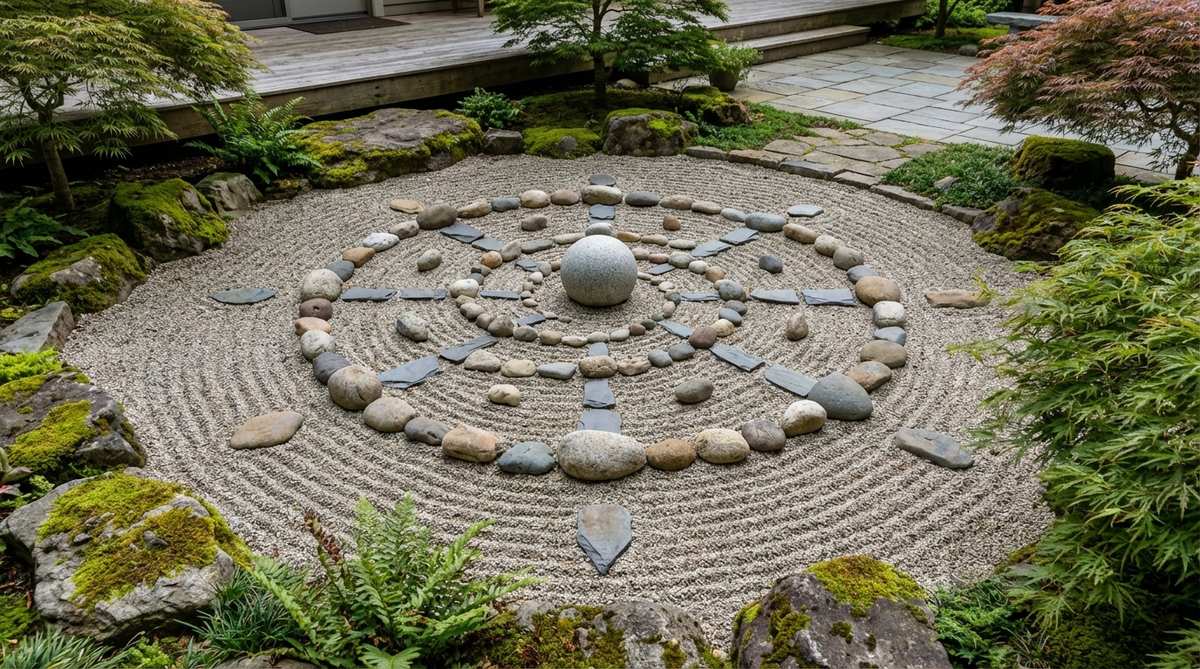
Stones arranged in circular or spiral patterns reference mandala sacred geometry. The radial symmetry provides focal centering while individual stone variations prevent static rigidity.
Position a significant stone at the absolute center with others orbiting at proportional distances. The circular flow guides visual movement in continuous rotation.
This design merges geometric order with organic irregularity. The mandala structure supports meditation practice through centered spatial organization.
34. Horizon Line Meditation Bench View
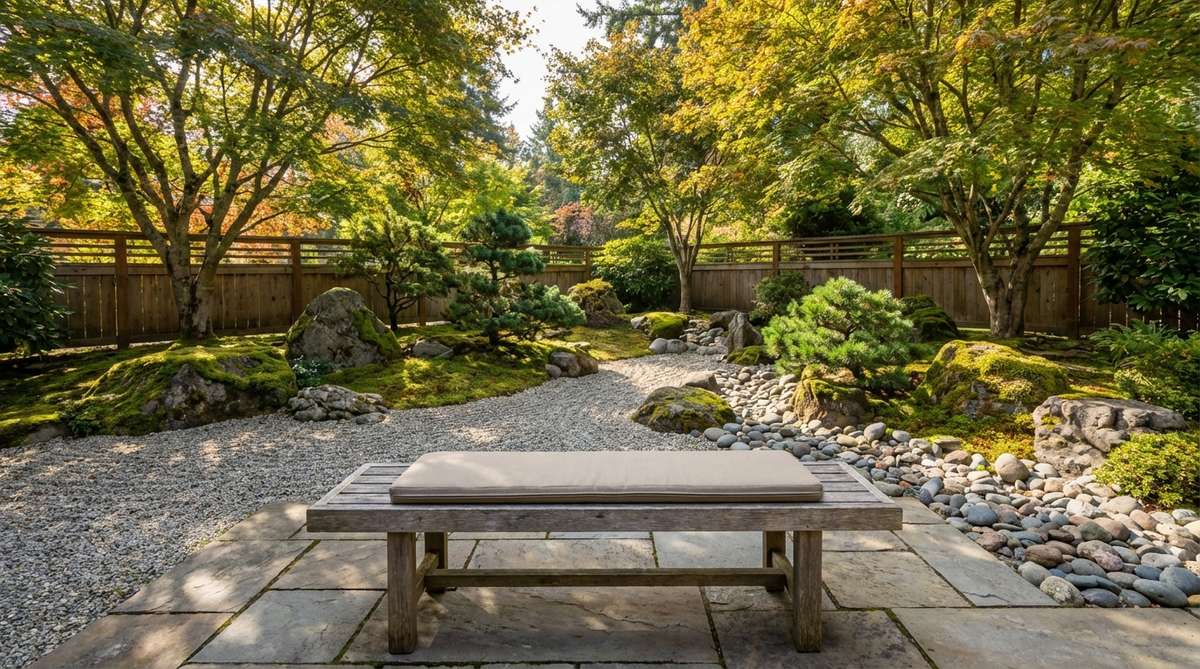
Design the garden specifically for viewing from a single seated position. Place a meditation bench or platform with the garden optimized for that exact vantage point.
Arrange stones following sight lines from the bench position. The composition reveals itself fully only from the intended seated meditation posture.
This functional design serves practice directly rather than multiple viewpoints. The garden becomes a meditation tool specifically calibrated for contemplative sitting.
Pathway and Transition Spaces Guiding Garden Movement
Stone pathways and transitional arrangements guide physical and visual movement through garden spaces. These designs balance functional circulation with aesthetic composition and symbolic meaning.
35. Tobi-Ishi Stepping Stone Path
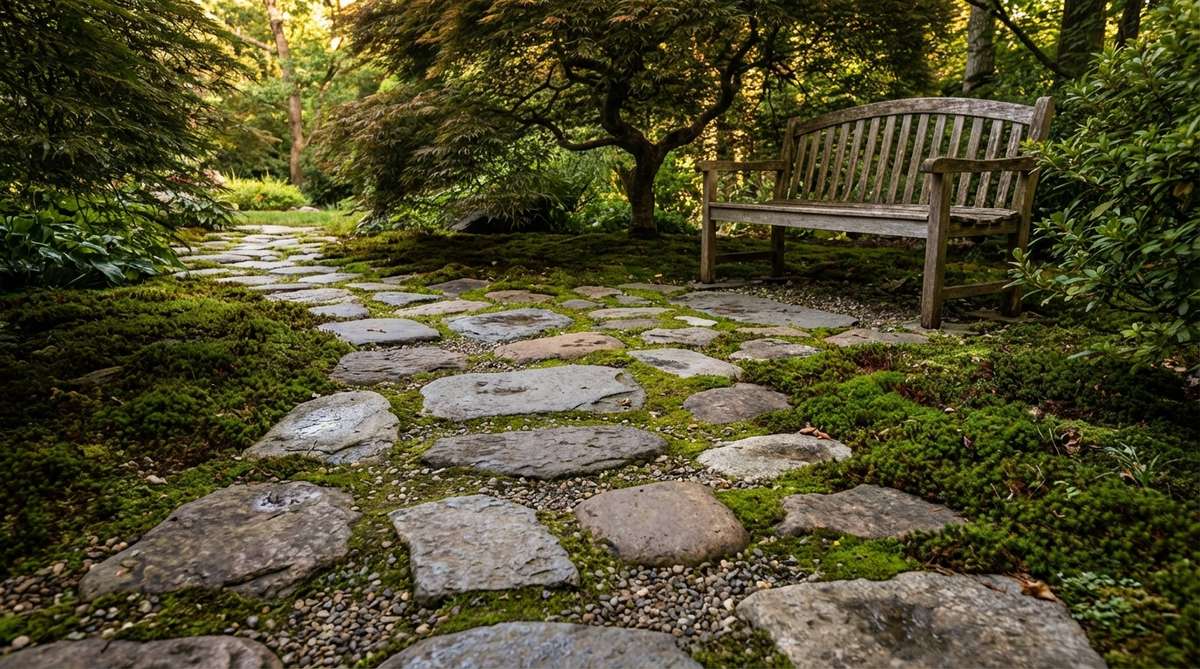
Individual flat stones placed at walking intervals create a path across gravel or moss. Space stones approximately 50-70% of a comfortable stride to slow pace and increase mindfulness.
Select stones with flat stable surfaces but varying shapes and sizes. The irregularity maintains visual interest while forced shorter steps promote present-moment awareness.
The pathway design turns functional circulation into meditative practice. Each step requires attention preventing distracted rushing through the garden.
36. Threshold Gateway Stone Markers
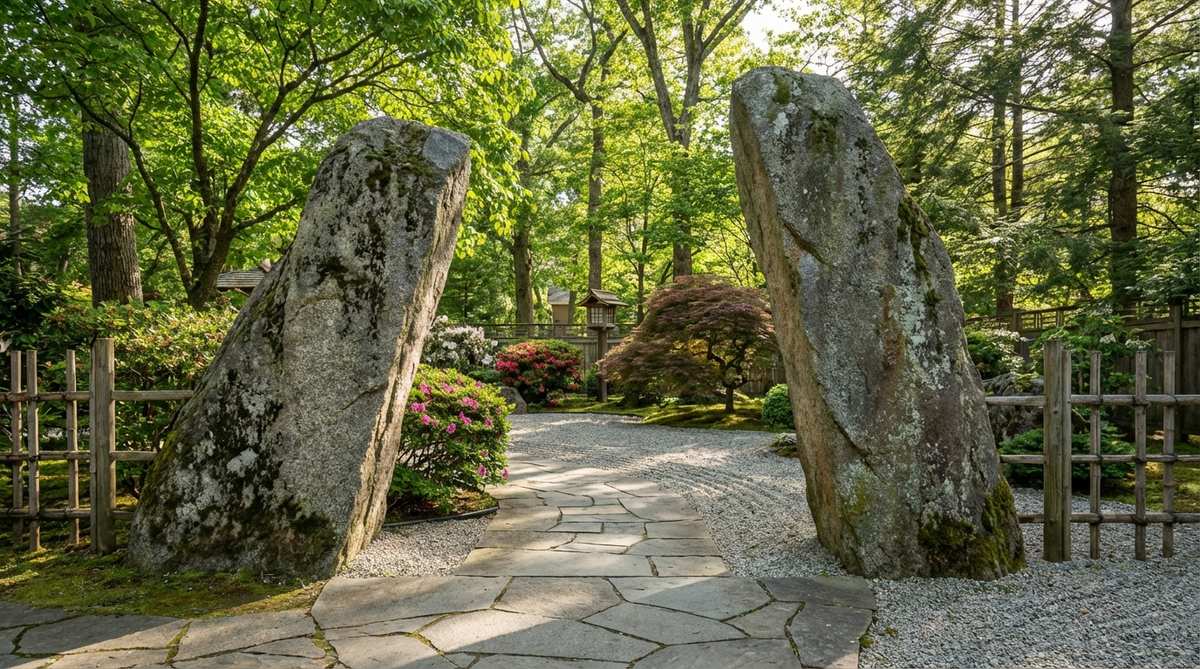
Two prominent upright stones flank the garden entrance creating a symbolic gateway. The stones establish boundaries between ordinary space and sacred garden realm.
Position gateway stones with slight inward lean creating welcoming invitation. The passage between stones becomes a transition zone where visitors shift mental states.
This design acknowledges the garden’s special status. The deliberate threshold crossing prepares visitors for contemplative experience beyond.
37. Meandering Path Discovery Journey
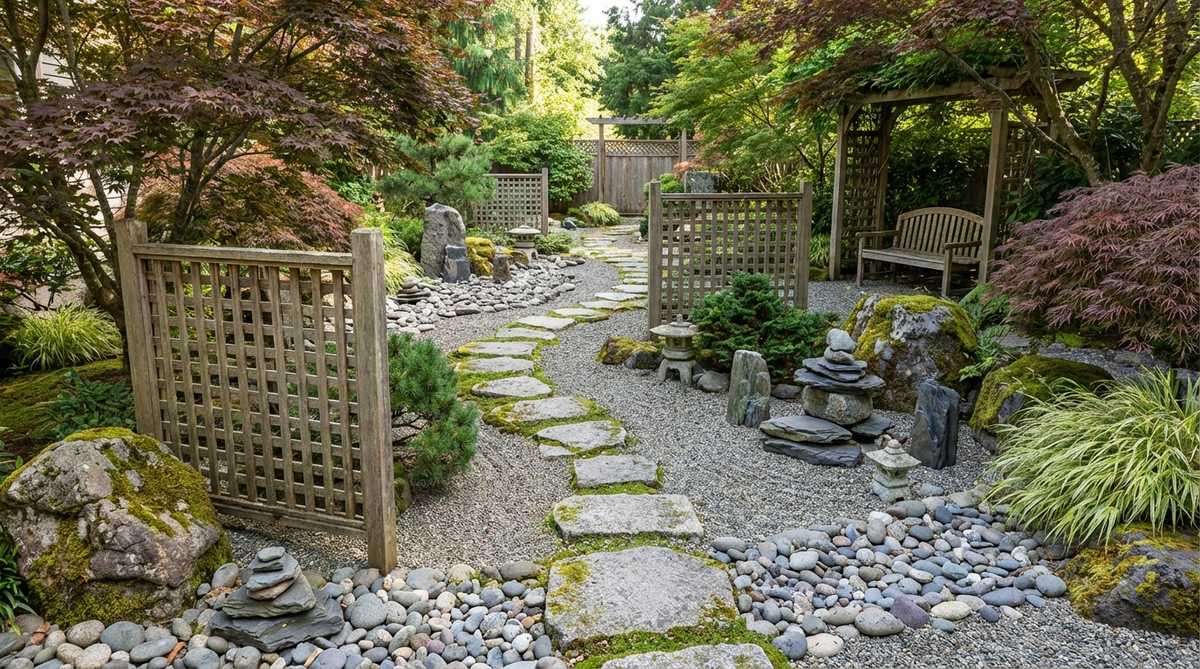
Curved stepping stone paths wind through the garden revealing compositions gradually. Strategic placement conceals then reveals stone groupings as visitors navigate turns.
Position screens such as pruned shrubs or taller stones to block sightlines until viewers reach specific path points. The sequential revelation creates narrative progression through space.
This design extends engagement time through controlled discovery. Viewers experience the garden as unfolding story rather than immediate complete perception.
38. Bridge Stone Over Gravel Stream
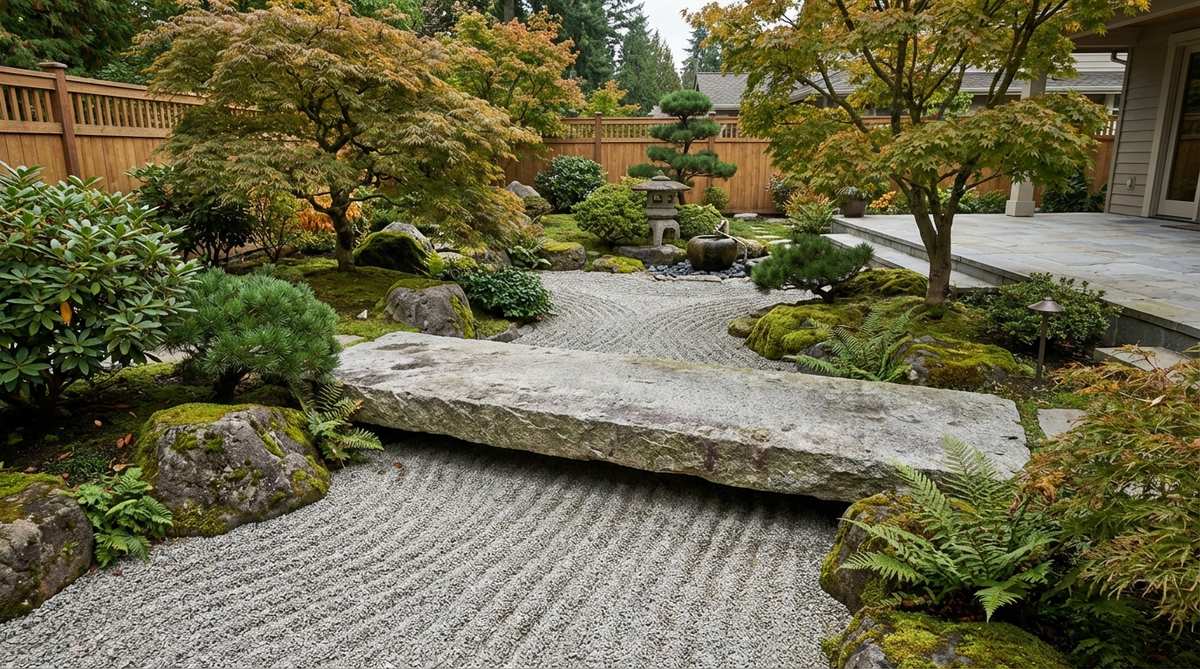
A single large flat stone spans a raked gravel “stream” forming a functional bridge. The oversized stone contrasts with small gravel particles emphasizing scale relationships.
Rake water patterns perpendicular to the bridge direction suggesting flow underneath. Position the bridge at an angle rather than perpendicular to avoid static rigidity.
This design combines function with metaphor. The bridge represents transition and connection while providing actual circulation through the garden.
39. Courtyard Connector Stone Corridor
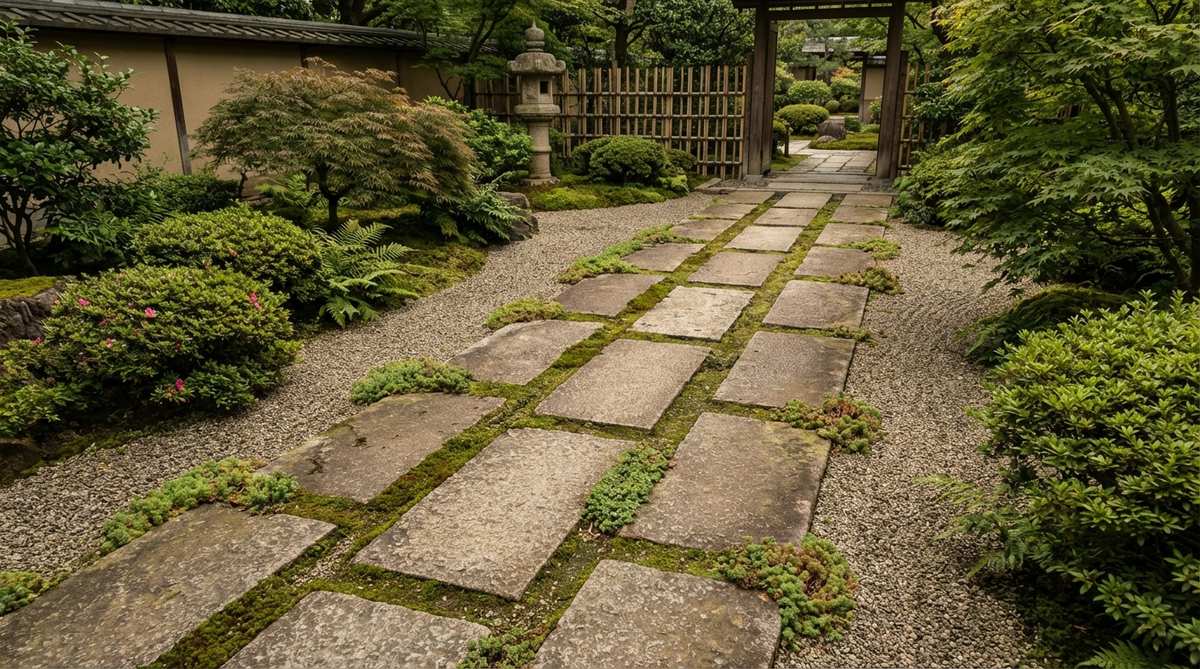
Parallel rows of stones create a formal corridor linking distinct garden areas. The linear arrangement establishes strong directional flow between spaces.
Plant moss or low ground cover between corridor edges and parallel rows. The green borders soften the formal geometry while maintaining clear circulation direction.
This design suits gardens with multiple zones requiring connection. The corridor formalizes the transition while maintaining Japanese aesthetic principles.
Compact and Small-Scale Gardens Maximizing Limited Space
Stone garden Japanese principles adapt successfully to constrained urban environments. These miniaturized designs concentrate essential elements while maintaining philosophical integrity and aesthetic impact.
40. Tsubo-Niwa Courtyard Miniature
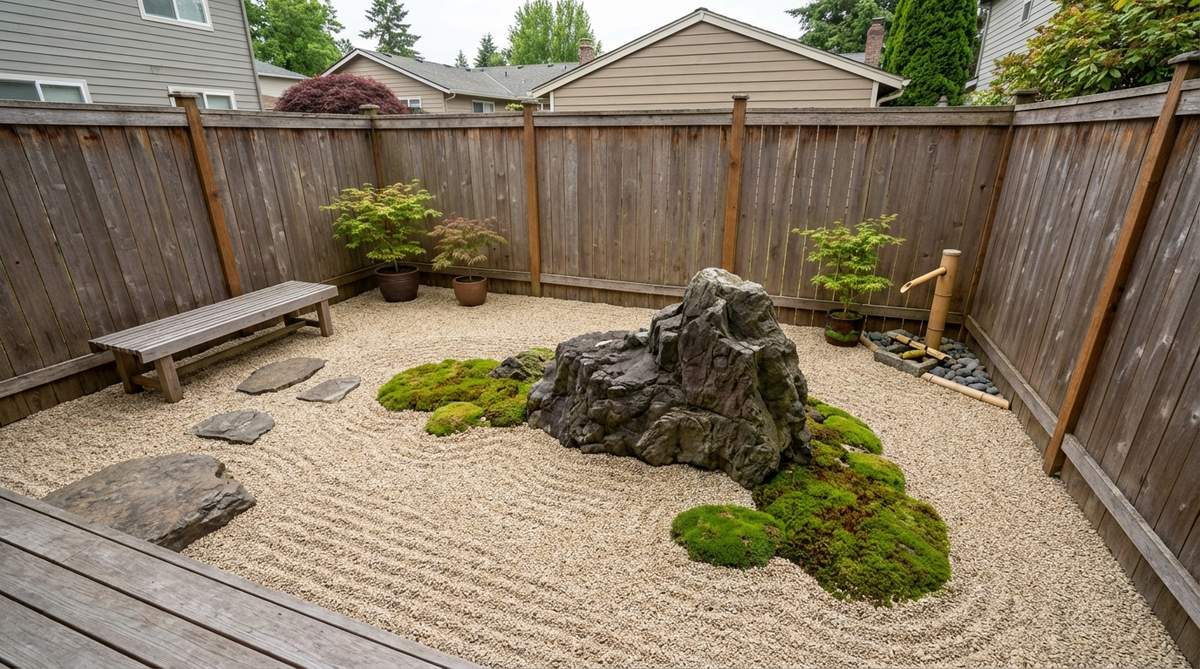
Extremely small enclosed courtyards receive complete garden treatments in compressed form. A single dramatic stone, minimal gravel area, and strategic moss placement create maximum impact in minimal space.
Choose one exceptional stone that rewards close examination. Limited space means viewers naturally study details, so stone selection becomes critical.
This design proves garden principles scale successfully to any size. Urban courtyards transform into contemplative retreats through thoughtful minimalism.
41. Container Stone Garden Portable
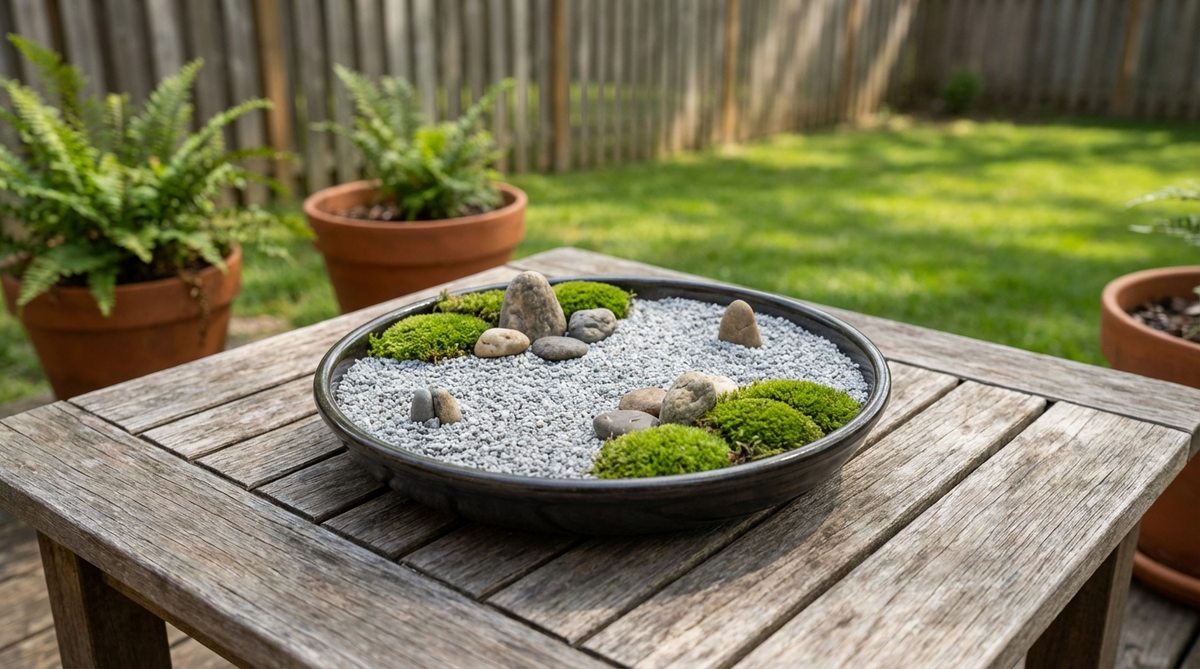
Shallow containers hold miniature stone arrangements with small gravel and preserved moss. These portable gardens bring Japanese aesthetics to apartments and offices without ground space.
Select container depth of at least four inches for proper gravel base. Use three small stones following triad principles and miniature rakes to maintain patterns.
The desktop scale maintains contemplative function despite size reduction. Regular raking becomes daily meditative practice integrated into work routines.
42. Wall-Mounted Vertical Rock Display
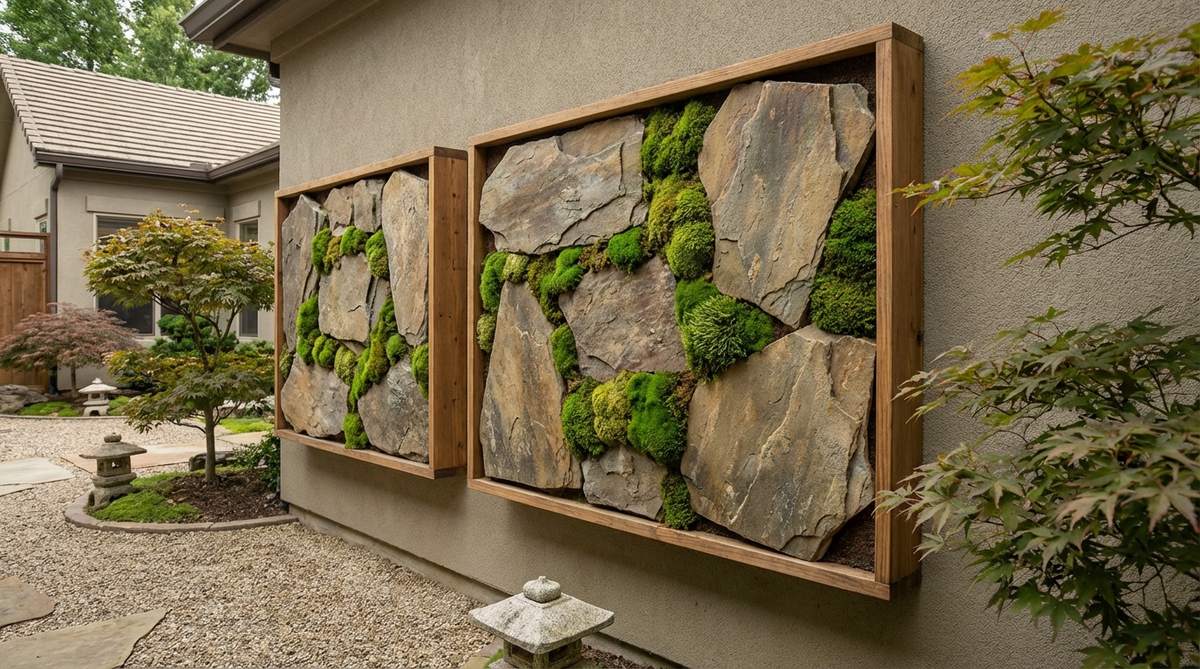
Vertical surfaces hold rock arrangements with moss pockets in wall-mounted frames. This innovative approach brings stone garden Japanese design to spaces completely lacking horizontal area.
Secure stones firmly within deep frame boxes with drainage for moss health. Position frames at eye level for proper viewing orientation despite vertical presentation.
This design challenges traditional horizontal expectations. The vertical orientation requires mental adjustment that itself becomes part of the contemplative experience.
43. Balcony Corner Zen Retreat
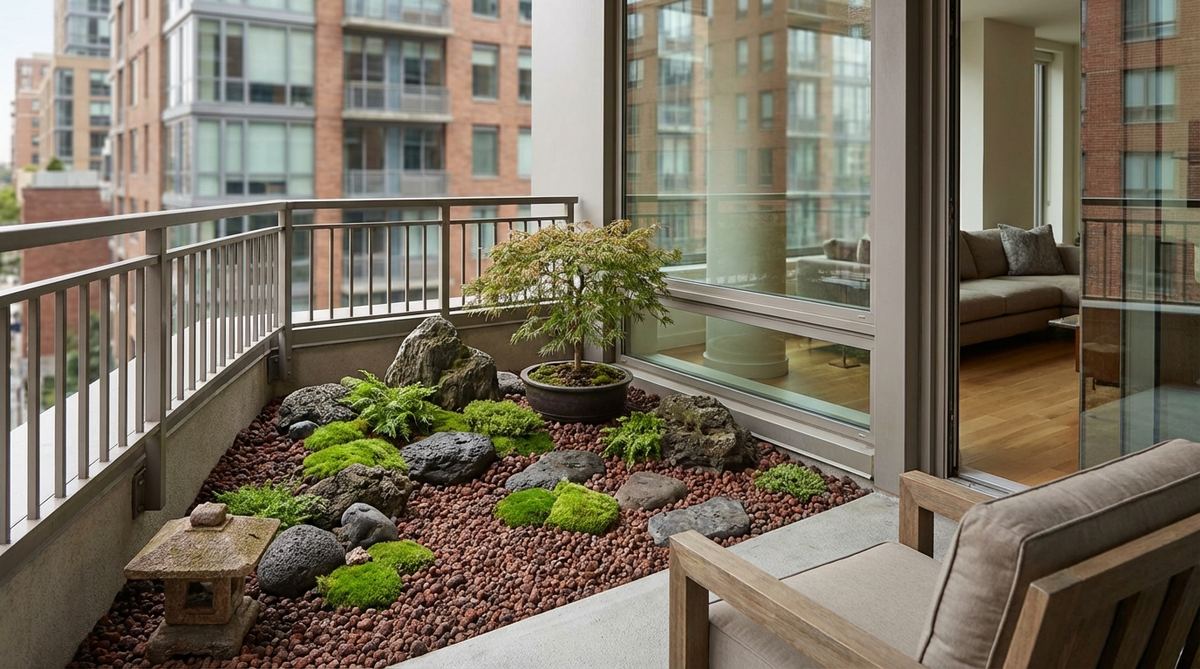
Apartment balcony corners transform into contemplative zones through efficient stone and moss arrangement. Weather-resistant stones and hardy moss species create outdoor retreats in rental spaces.
Use lightweight expanded shale instead of traditional gravel for weight considerations on elevated balconies. Position arrangement to remain visible from interior rooms through windows.
This design brings garden benefits to urban dwellers without ground access. The compact retreat provides meditation focus visible during daily activities.
Bringing Stone Garden Japanese Design Into Your Landscape
These 43 stone garden Japanese arrangements demonstrate how rockeries and moss create contemplative spaces scaled to any environment. Start with foundational principles of asymmetry, simplicity, and symbolic representation, then adapt these proven designs to your specific site conditions, available materials, and personal aesthetic preferences.
Success depends more on thoughtful placement and proportional relationships than expensive materials or large spaces. Select stones with distinctive character, position them following odd-number groupings, and integrate moss species appropriate to your climate. The garden evolves through seasons and years, developing patina and character that enhance rather than diminish its beauty.
Frequently Asked Questions
How many stones should I use in a Japanese rock garden?
Use odd numbers of stones—typically 3, 5, 7, or 15 depending on space size. Odd-numbered groupings prevent visual splitting and create more dynamic asymmetrical compositions. For small gardens, a single triad of three stones provides sufficient interest, while larger spaces accommodate multiple groupings totaling five, seven, or more stones arranged in clusters.
What type of gravel works best for raking patterns?
White or light-colored decomposed granite or crushed gravel with particle sizes between 1/8 and 1/4 inch work best for raking. Avoid rounded pea gravel which resists pattern formation. The particles should be angular enough to hold rake lines but fine enough to create smooth surfaces. Granite, marble chips, or light-colored limestone provide authentic appearance and proper texture.
How do I keep moss alive in a stone garden?
Moss requires consistent moisture, shade or filtered light, and acidic soil conditions. Water frequently during establishment and dry periods, ideally using misting to avoid washing moss away. Most Japanese garden moss species prefer 50-70% shade. Avoid foot traffic on moss areas and remove fallen leaves promptly to prevent smothering. Once established, moss becomes relatively low-maintenance in appropriate conditions.
Can I create a Japanese stone garden in full sun?
Yes, by selecting sun-tolerant elements and adapting designs accordingly. Use hai-goke or suna-goke moss varieties that handle more sun exposure, or eliminate moss entirely and focus on stone and gravel compositions. Ensure adequate irrigation during hot periods and consider afternoon shade from structures or carefully placed specimen trees. Full-sun karesansui dry gardens using only stone and gravel work successfully in high-light conditions.
How deep should I bury stones in the ground?
Bury approximately one-third to one-half of each stone’s total height to create natural appearance and physical stability. This proportion makes stones appear as if they emerged organically from the earth rather than placed on top. The buried portion anchors stones securely while the exposed section maintains visual impact. Adjust burial depth based on stone shape—flat horizontal stones require less burial than tall vertical ones.
What tools do I need to maintain raked gravel patterns?
A specialized Japanese garden rake with closely-spaced tines creates authentic patterns. These rakes feature wide heads with evenly-spaced teeth that produce consistent line widths. For small gardens, a hand-held rake with 6-8 inch width works well. Larger spaces require long-handled rakes with 18-24 inch heads. Re-rake patterns weekly or after rain and disturbances. Keep a brush nearby to sweep debris before raking to maintain clean patterns.