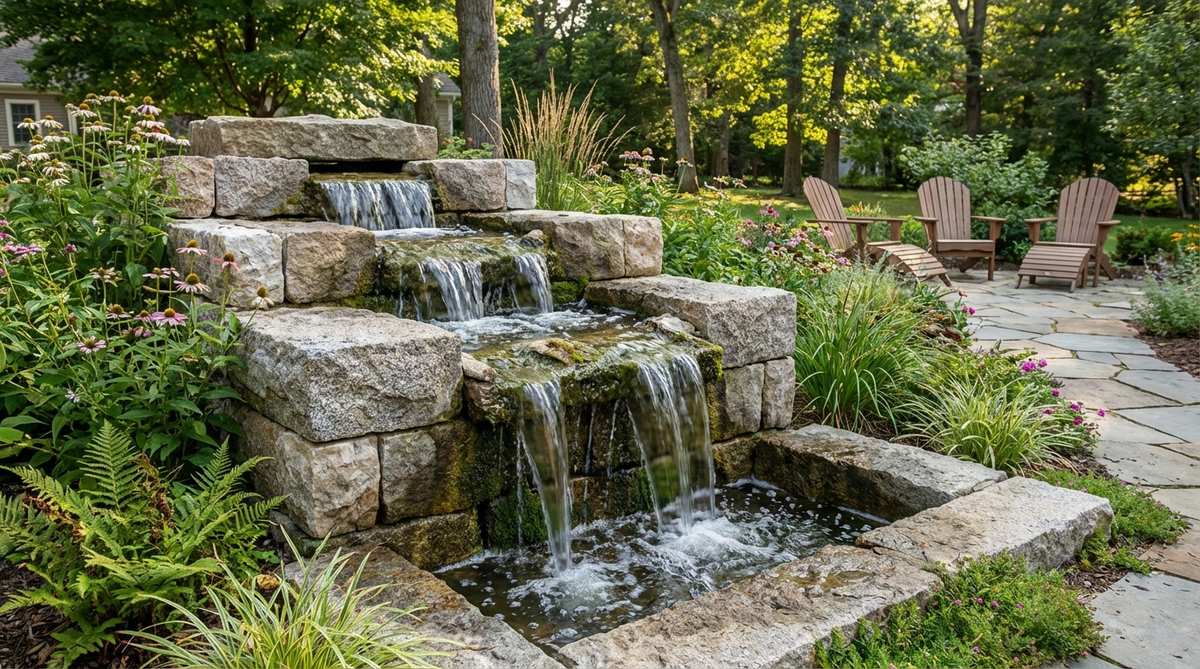
A stone garden fountain transforms any outdoor space with the soothing rhythm of cascading water over natural rock surfaces. Designers rely on materials like granite, basalt, and marble to create water features that produce everything from gentle bubbling to dramatic waterfalls. Fresh Garden Ideas brings you expert-curated designs that combine timeless craftsmanship with acoustic precision for the perfect garden soundtrack.
Design SnapshotKey Principles
- Material Selection: Granite and basalt deliver durability and rich water sounds, while marble offers elegant veining and smooth flow patterns
- Sound Design: Water drop height, basin depth, and surface texture control acoustic quality—bubbling features create meditation tones while tiered designs produce louder cascades
- Scale Matching: Compact bubblers suit small patios (18-24 inches), mid-range columns work for garden beds (36-48 inches), and estate fountains anchor large landscapes (50+ inches)
- Installation Foundation: Natural stone fountains require reinforced concrete pads for weight distribution and proper leveling to ensure even water flow across all surfaces
Natural Stone Bubbler Features for Gentle Water Sounds
Bubbling fountains create the most subtle acoustic experience, ideal for meditation gardens and intimate patio settings. Water emerges from drilled channels in the stone center, producing soft trickling sounds that mask neighborhood noise without overwhelming conversation.
1. Basalt Column Bubbler
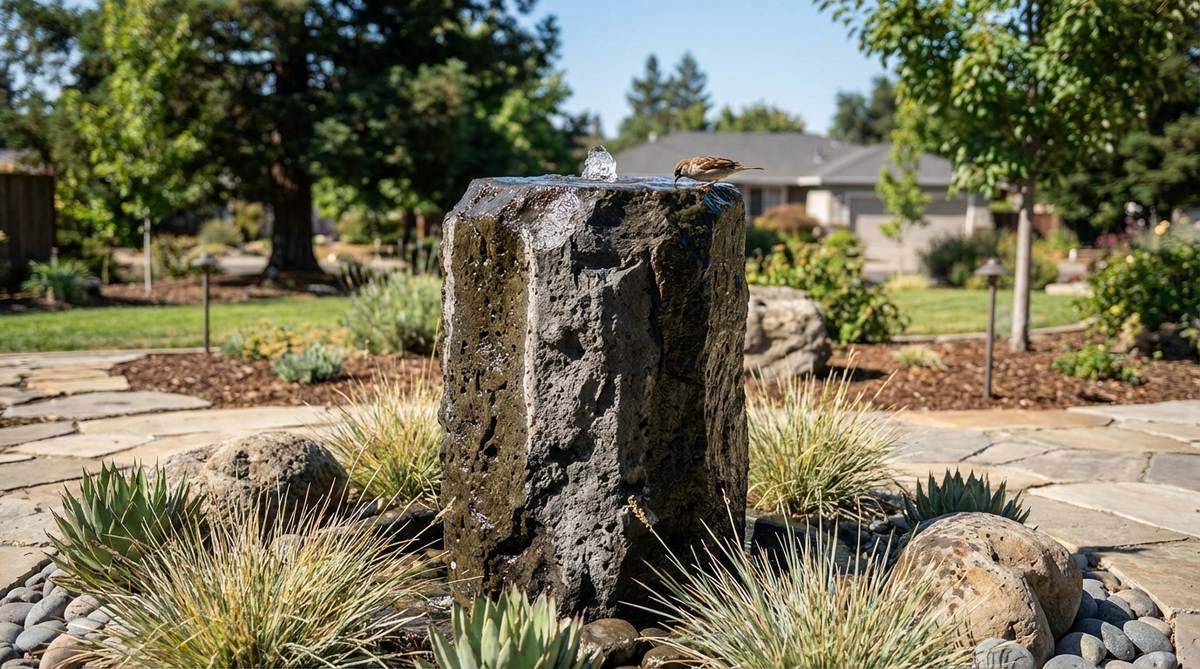
Volcanic basalt columns display dark gray to charcoal tones with natural pitting that creates varied water paths. The rough, unpolished surface produces gentle bubbling sounds as water wells from the top and rolls down textured sides.
Designers drill a central channel through the column height, installing submersible pumps in underground basins. Water volume controls adjust from whisper-quiet seeps to audible gurgles.
This format works in modern xeriscapes surrounded by white gravel or traditional gardens with fern plantings. The stone stays cool to touch even in direct sun, attracting birds for drinking and bathing.
2. Granite Sphere Fountain
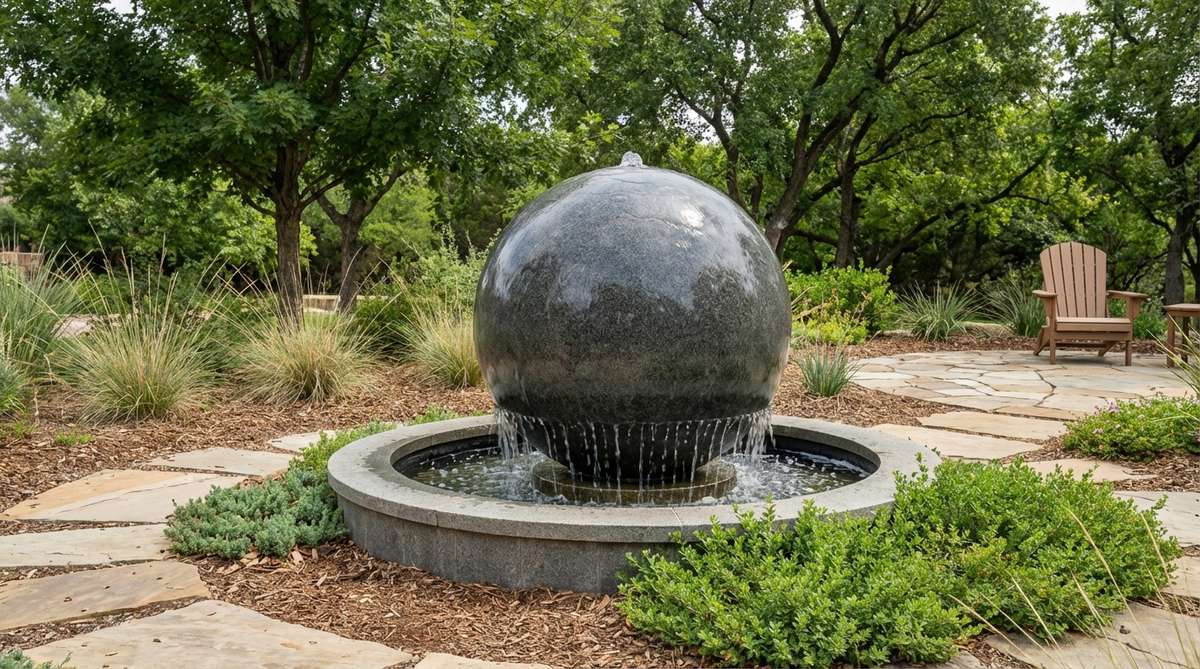
Polished granite spheres rotate on water cushions, creating hypnotic movement and consistent trickling. Spheres range from 12-inch tabletop sizes to 500-pound statement pieces requiring crane installation.
The drilling process creates perfectly balanced rotation, with water pressure pushing the sphere to spin continuously. Pink, gray, or black granite options match different landscape palettes.
Position these near seating areas where the rotating sphere provides visual meditation focus. The continuous water sheet over polished stone produces white noise that promotes relaxation.
3. River Rock Cluster
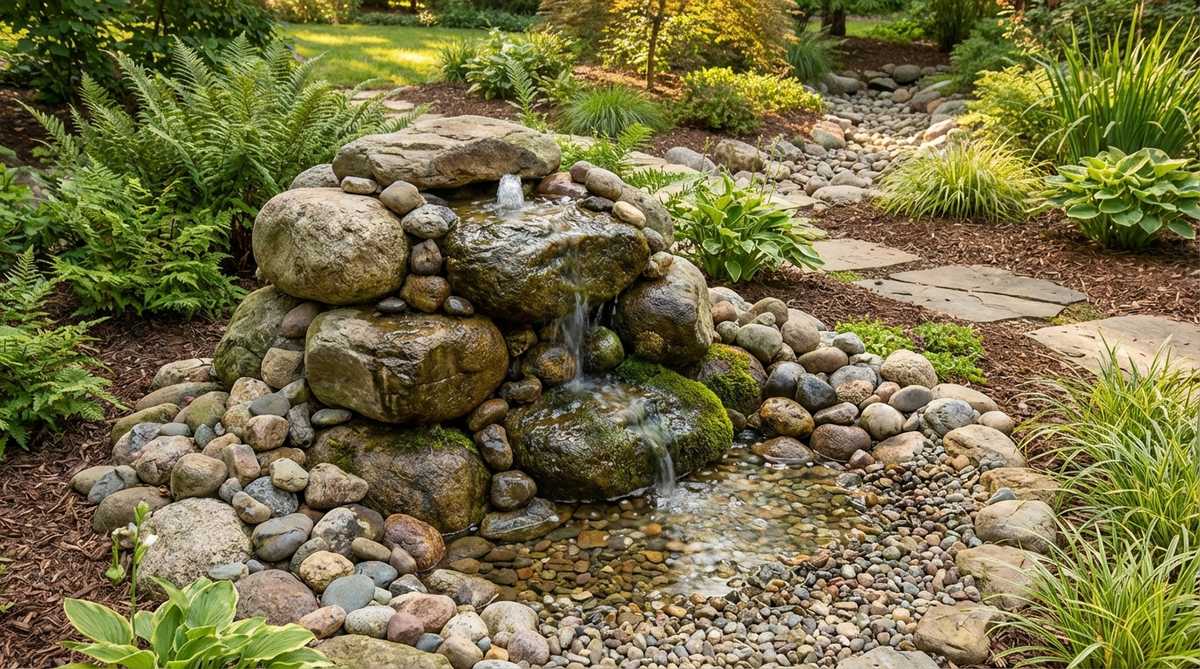
Natural river stones stacked in artful arrangements allow water to bubble through gaps and crevices. Each stone shows unique weathering patterns from decades of water erosion.
Landscape professionals select 3-5 primary boulders (50-200 pounds each) and fill gaps with smaller stones. Water emerges from multiple points, creating layered trickling sounds.
This style integrates into natural pond edges or dry creek beds. The irregular surfaces attract moss growth over time, enhancing the weathered appearance.
4. Limestone Ledge Fountain
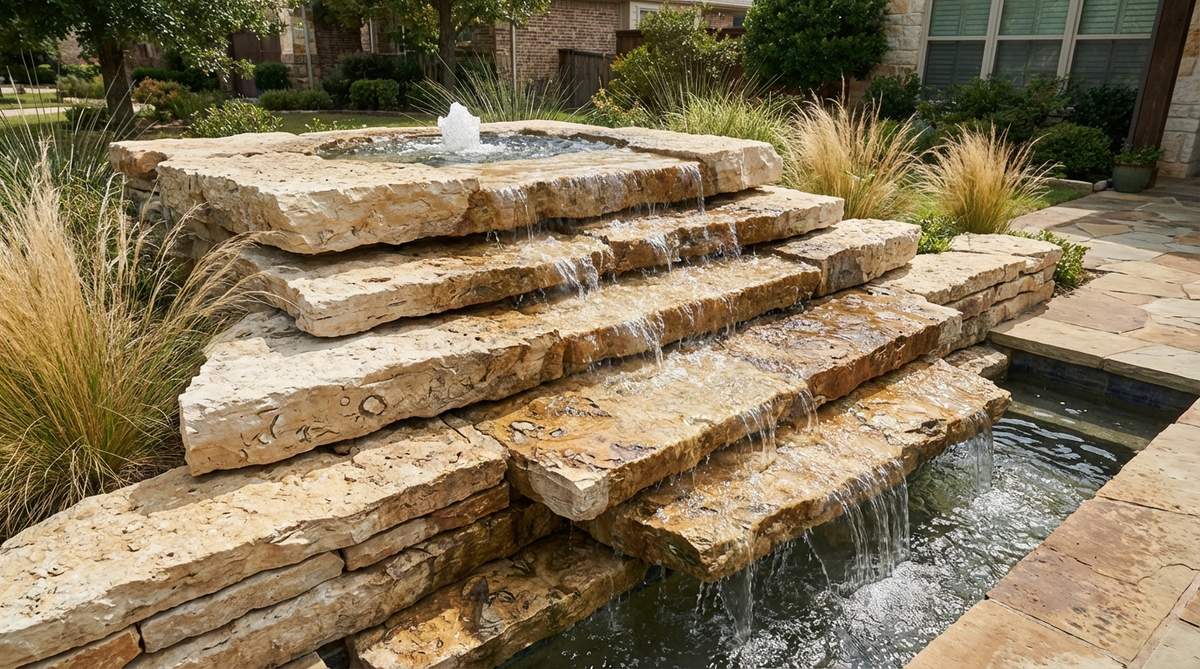
Flat limestone slabs stacked in horizontal layers produce sheet waterfall effects from bubbling sources. The sedimentary stone displays cream to tan colorations with fossil inclusions.
Water bubbles from the top surface and sheets across each ledge before dropping to the next level. Ledge spacing determines sound volume—wider gaps create louder splashes.
Limestone develops attractive patina as minerals deposit on surfaces. Pair with ornamental grasses like Mexican feather grass for textural contrast.
5. Onyx Illuminated Bubbler
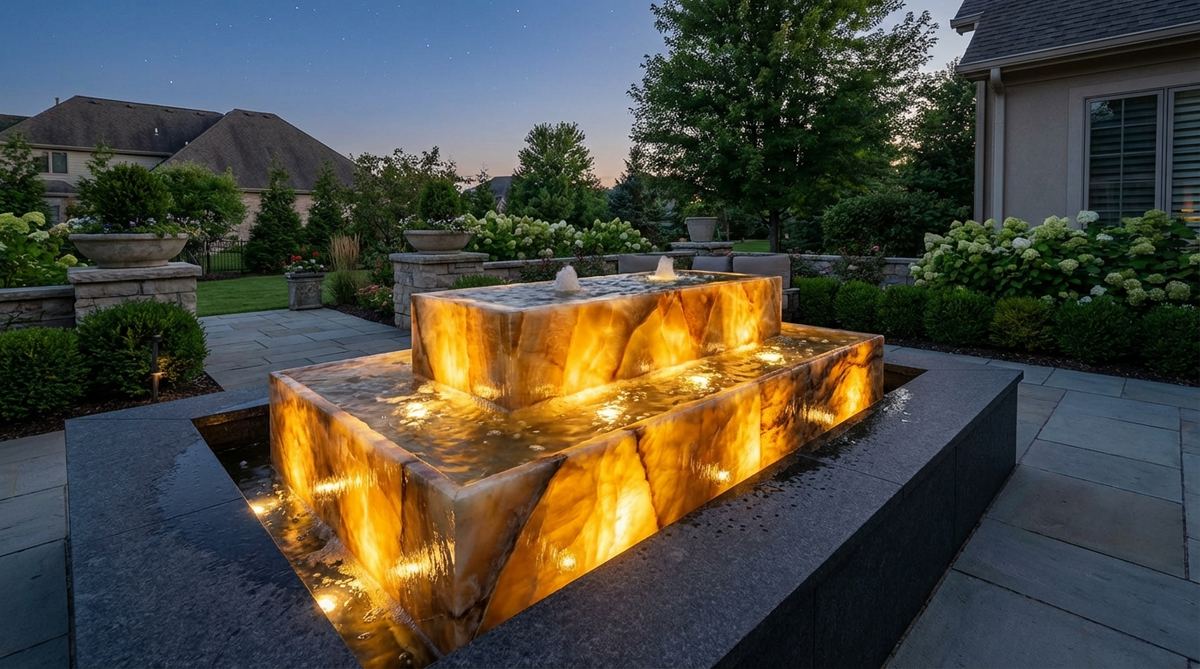
Translucent onyx allows LED lighting to glow through the stone, creating dramatic nighttime displays. Water bubbling over the illuminated surface adds movement to the light patterns.
Artisans select onyx pieces with minimal fractures to maximize light transmission. Waterproof LED strips install in the basin, shining upward through the flowing water.
This luxury option suits contemporary courtyards and upscale patio designs. The amber, green, or white onyx glows like backlit gemstones after dark.
Tiered Cascade Fountains for Layered Sound Profiles
Multi-tiered fountains produce complex acoustic signatures as water cascades through multiple levels. Each tier adds harmonic layers to the overall sound, creating fuller auditory experiences than single-level designs.
6. Two-Tier Classic Basin
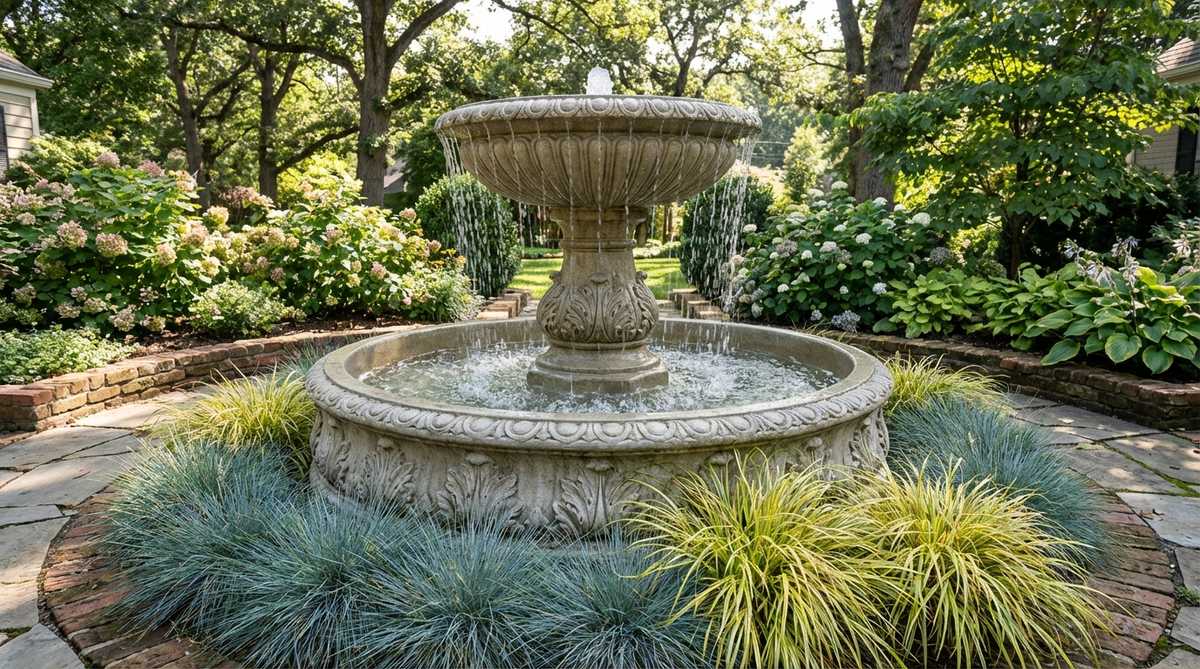
The foundational tiered design features an upper bowl that overflows into a larger lower basin. Cast stone construction allows intricate detailing on basin edges and pedestals.
Water pumps from the base reservoir through the pedestal, filling the upper bowl until it spills evenly around the rim. The circular overflow creates consistent sheet sounds.
Two-tier fountains fit small gardens without overwhelming the space. Surround with blue fescue or Japanese forest grass for movement and color contrast.
7. Three-Tier Estate Centerpiece
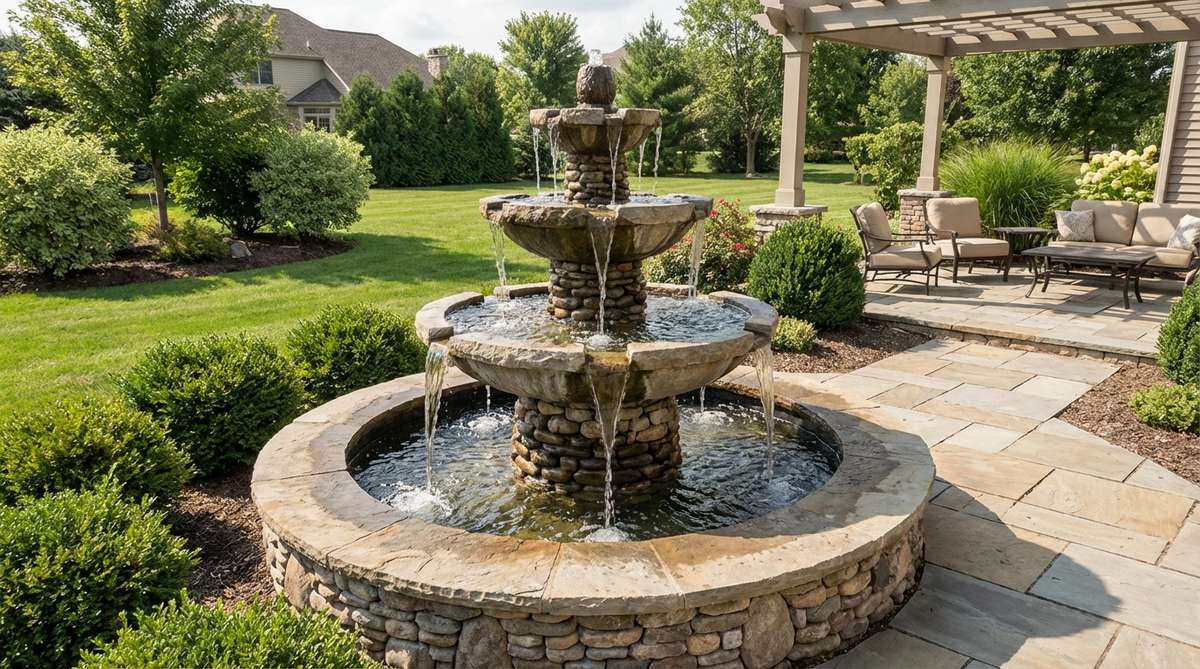
Three progressively larger basins create dramatic vertical presence in expansive landscapes. Heights reach 50-72 inches, requiring substantial footprints and reinforced foundations.
Each tier produces distinct sounds—the top creates high-pitched trickling, the middle adds midrange splashes, and the bottom contributes deep pool resonance. The combined effect mimics natural waterfalls.
Position these at garden focal points visible from multiple vantage points. The vertical water movement attracts attention across large properties.
8. Four-Tier Grand Fountain
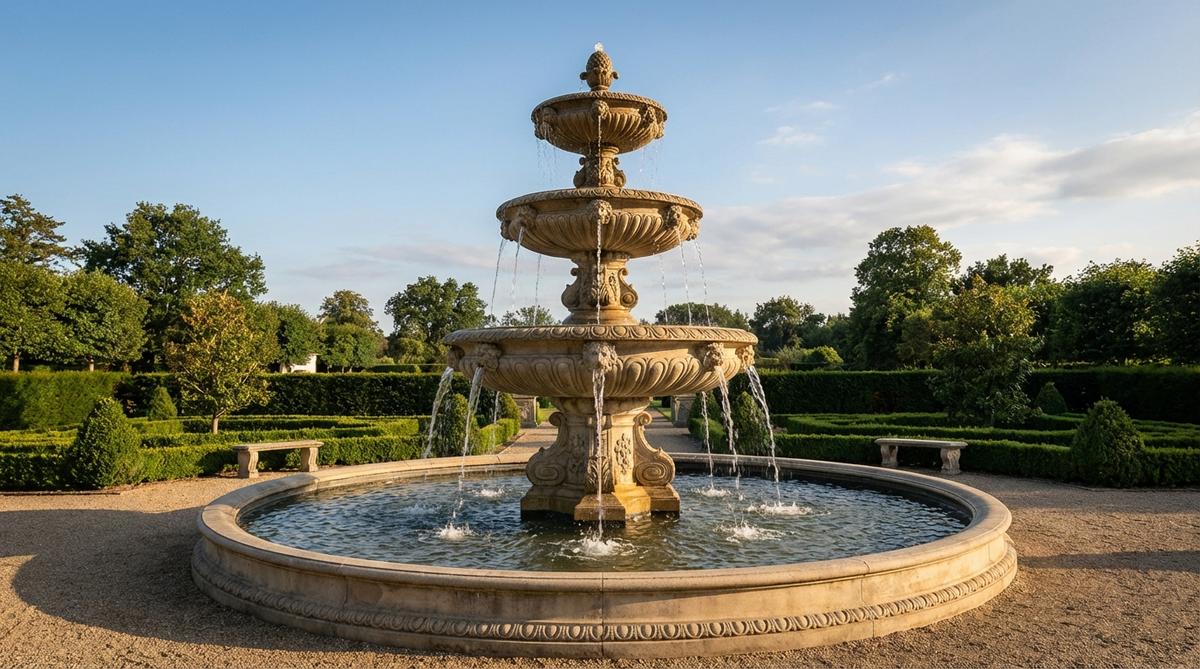
The ultimate tiered statement features four cascading levels with ornamental finials and detailed molding. These monumental pieces suit estate entries and formal gardens.
Installation requires professional teams for assembly and plumbing. Water volume controls adjust the cascade intensity from gentle drips to robust flows.
Four-tier designs work best in circular driveways or courtyard centers. Their imposing scale commands respect while producing immersive water soundscapes.
9. Scalloped Edge Cascade
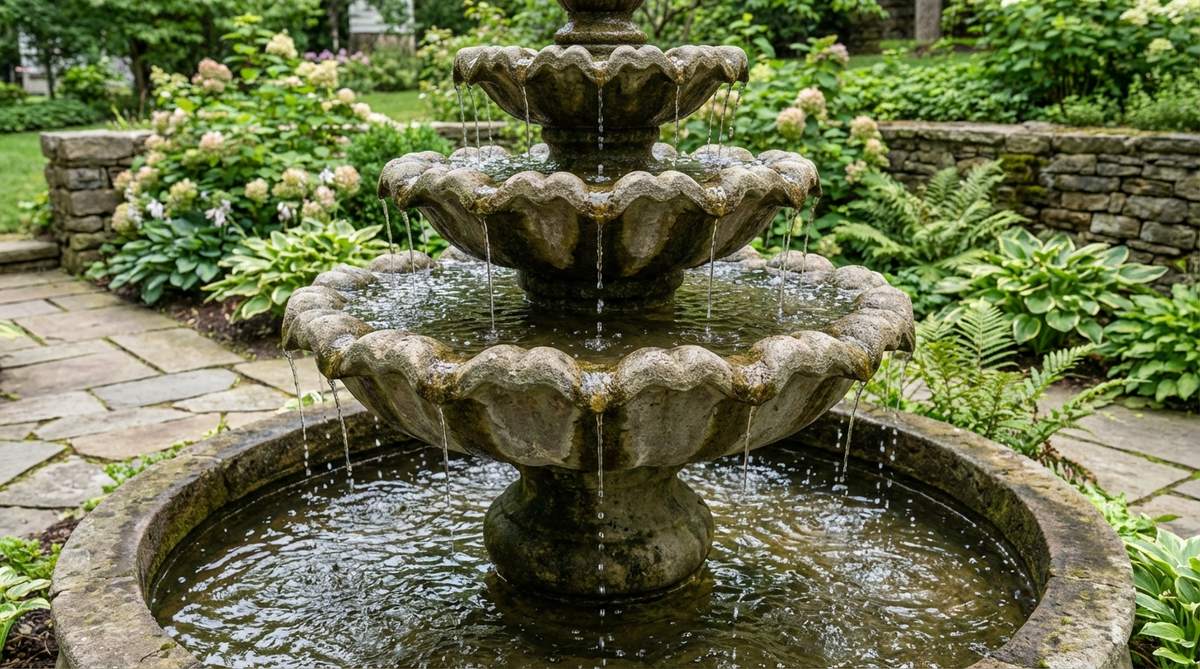
Bowl rims shaped with repeating scallops direct water into specific drip points rather than sheet flows. The scalloped design creates rhythmic dripping patterns.
Stonemasons carve precise indentations at regular intervals around each tier. Water follows these channels, producing synchronized drips that sound like natural rain.
This detail suits traditional and cottage garden styles. The predictable drip pattern has meditative qualities similar to wind chimes.
10. Offset Tier Arrangement
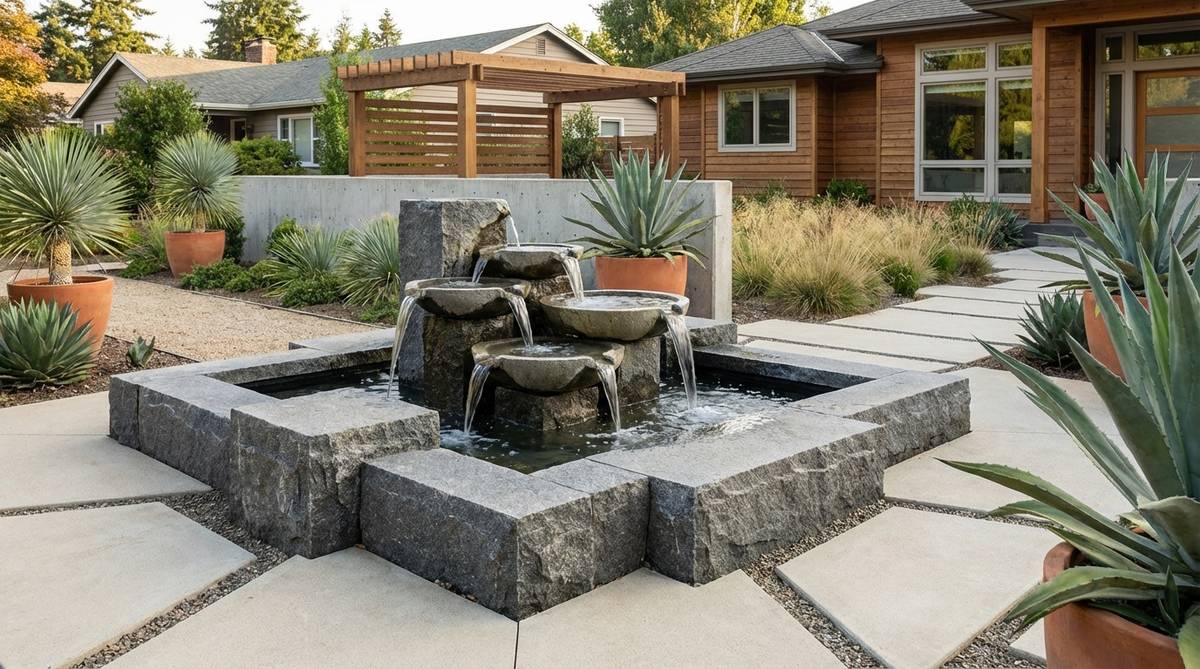
Asymmetrical basin placement creates dynamic visual interest and varied water paths. Upper tiers sit off-center from lower basins, forcing water to arc through air.
The offset design produces splashing sounds as water misses immediate catch basins. This creates livelier acoustics than centered alignments.
Modern landscape designs benefit from the geometric irregularity. Pair with angular hardscaping and architectural plants like agave or yucca.
Sculptural Statement Pieces with Artistic Water Flow
Sculptural fountains prioritize artistic form while integrating functional water elements. These pieces serve as outdoor art installations that happen to produce soothing sounds.
11. Stacked Stone Tower
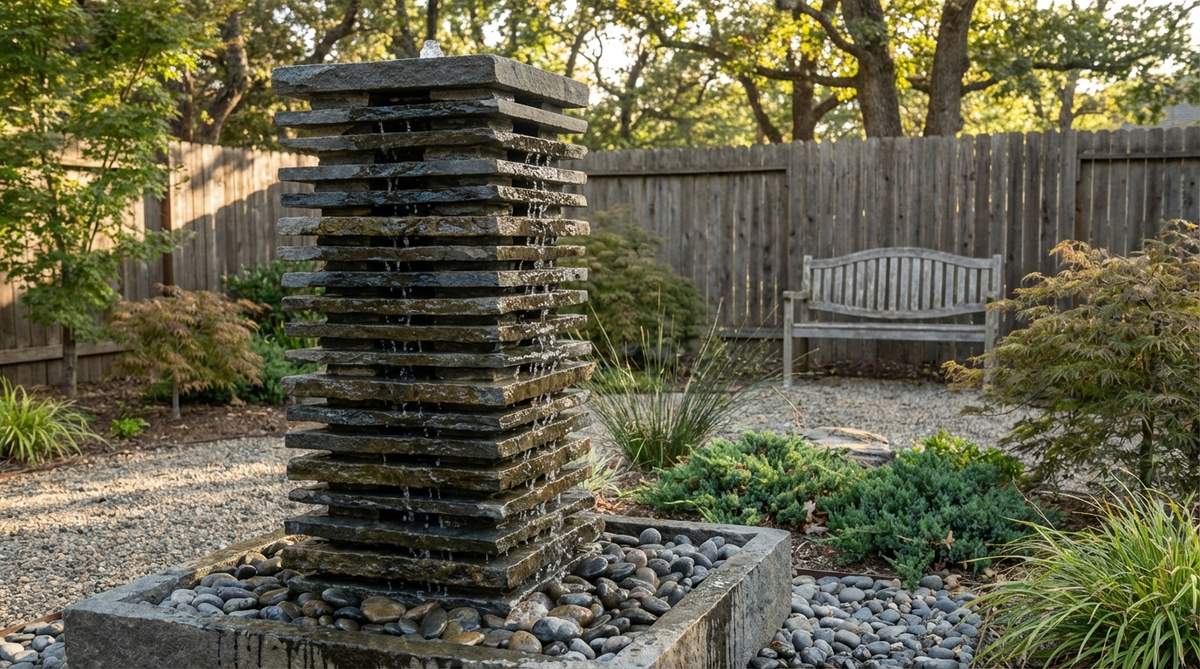
Flat stones balanced in vertical arrangements create gravity-defying towers reaching 48-50 inches. Water flows down through intentional gaps between each stone layer.
Professional installation uses hidden steel rods through drilled centers for stability. The appearance suggests natural stacking while engineering ensures permanence.
These contemporary sculptures work in minimalist zen gardens. The vertical emphasis draws eyes upward, making small spaces feel larger.
12. Carved Boulder Fountain
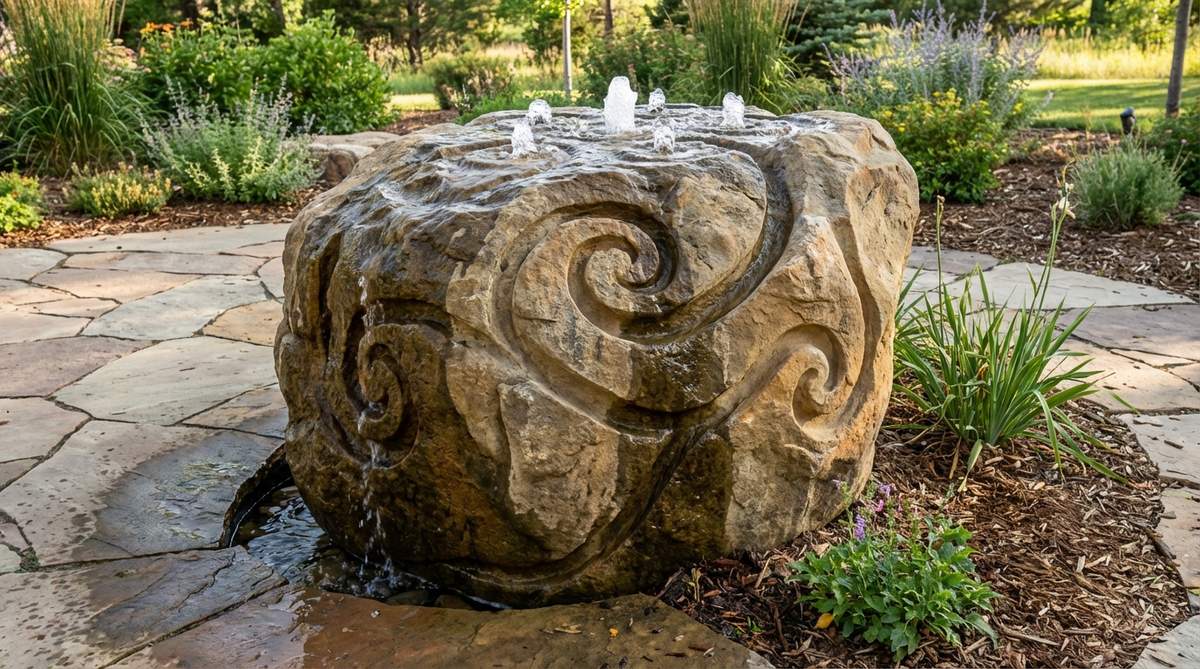
Single massive boulders (300-1000 pounds) feature hand-carved channels that guide water in specific patterns. Artisans spend days creating custom flow paths.
Water emerges from drilled top points and follows carved grooves down the boulder face. The channels can form spiral patterns, straight lines, or organic curves.
Each carved boulder becomes a unique garden centerpiece. The substantial mass anchors landscape designs and requires minimal maintenance once installed.
13. Natural Stone Obelisk
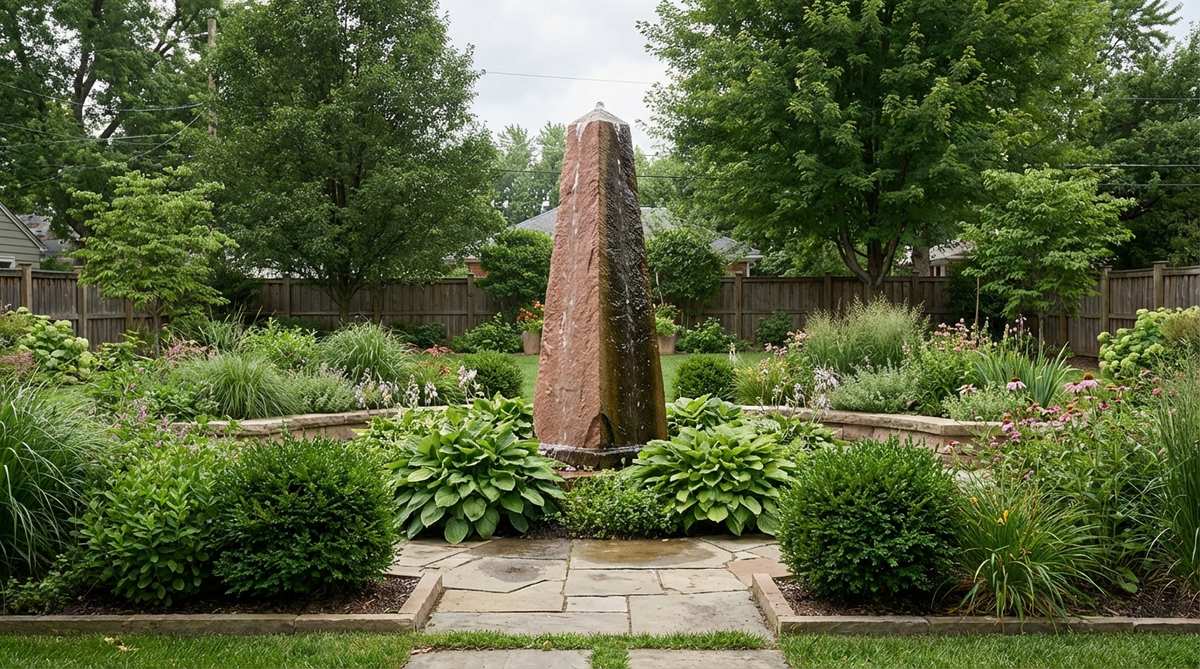
Tall, tapered columns in sandstone or granite create formal vertical elements. Water sheets down the smooth faces or drips from carved channels.
Heights range from 36 inches for garden beds to 72 inches for grand entrances. The geometric shape contrasts beautifully with organic plantings.
Obelisks suit formal and contemporary designs equally well. Pink sandstone varieties show color beautifully when wet from flowing water.
14. Abstract Curved Form
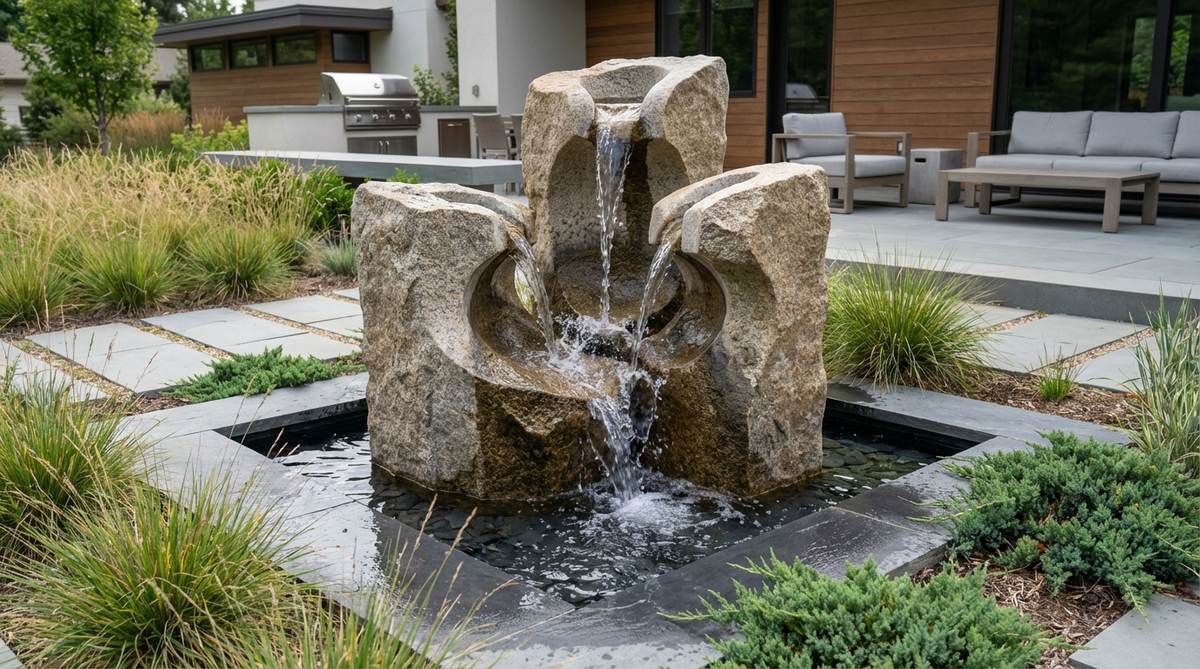
Free-form sculptures with flowing curves and hollows create modern art installations. Water follows the organic contours, producing unpredictable sound patterns.
Stone artisans carve these from single blocks, ensuring structural integrity while achieving graceful lines. The curves catch and redirect water in visually interesting ways.
Abstract forms complement contemporary architecture and modernist landscapes. Position these where viewers can walk around and appreciate all angles.
15. Drilled Monolith
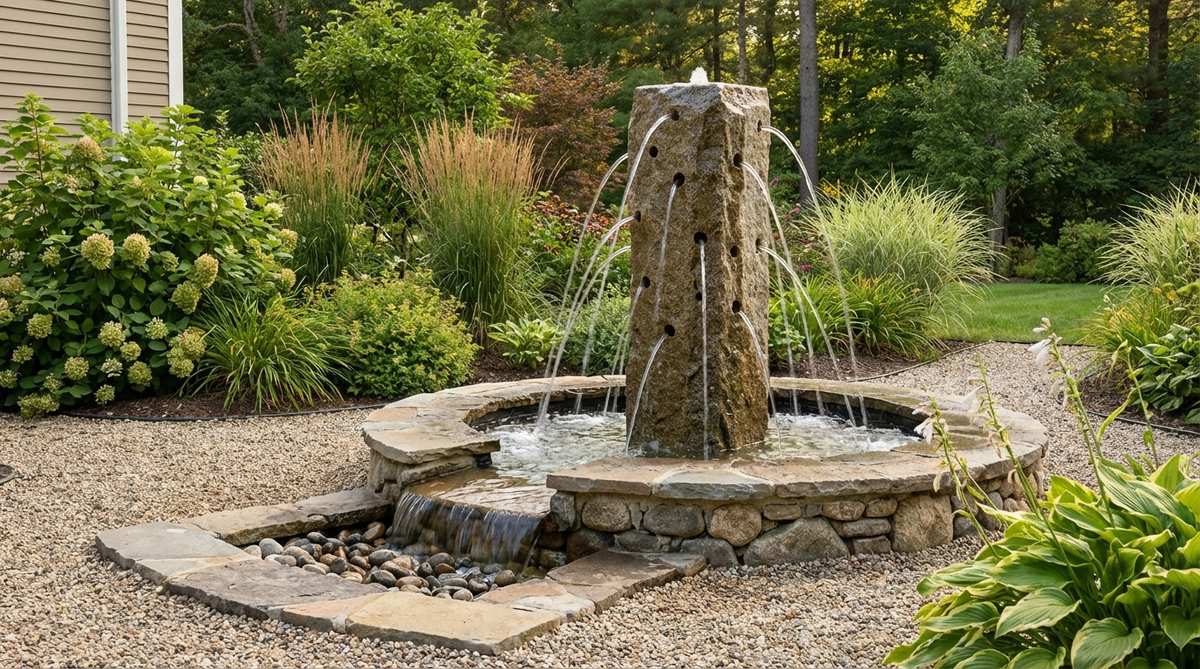
Single standing stones feature multiple drilled holes creating water jets at different heights. The holes produce individual water streams that arc into catch basins.
Drilling patterns range from geometric grids to random natural-looking arrangements. Each hole diameter controls stream thickness and arc distance.
This interactive design creates playful water displays. Children and pets enjoy the multiple water streams while adults appreciate the sculptural form.
Asian-Inspired Water Elements for Zen Gardens
Japanese and Chinese garden traditions offer time-tested fountain designs focused on simplicity and natural materials. These features emphasize tranquility over dramatic displays.
16. Tsukubai Stone Basin
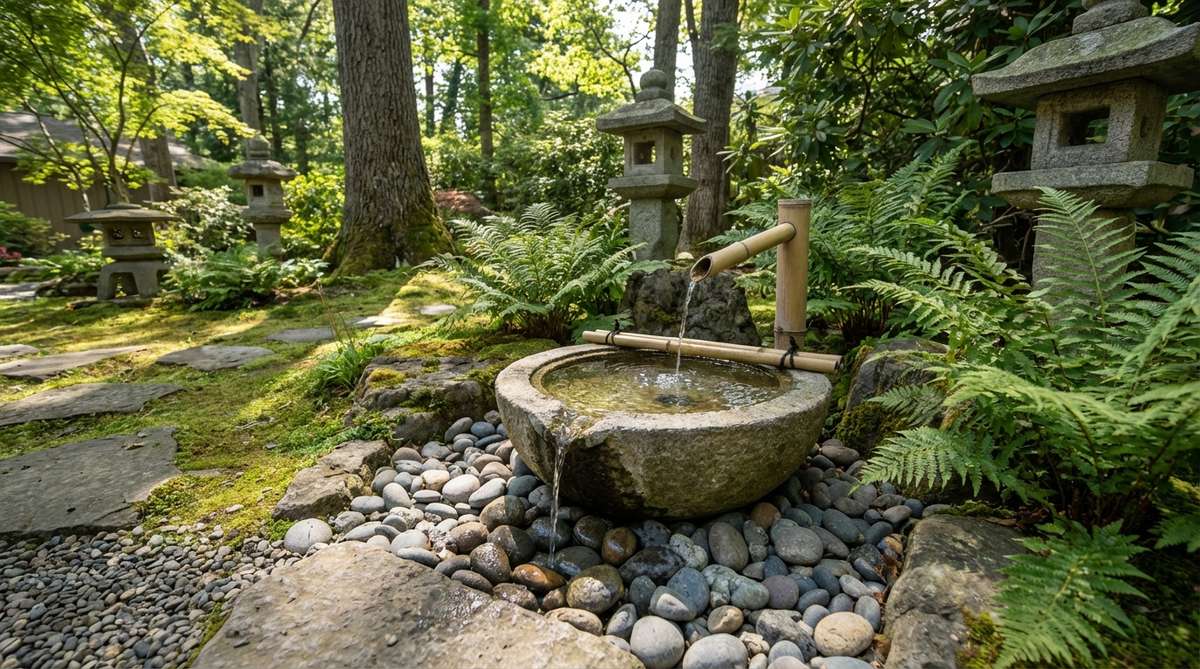
Traditional Japanese water basins feature shallow stone bowls with bamboo spouts. The basin sits low to the ground, requiring users to crouch for ritual hand washing.
Water flows continuously from bamboo pipes (kakei) into the stone basin, producing gentle trickling. The overflow drains into surrounding gravel filled with river stones.
Authentic tsukubai designs include stone lanterns and stepping stones as supporting elements. Moss and ferns complete the contemplative atmosphere.
17. Bamboo Spout Fountain
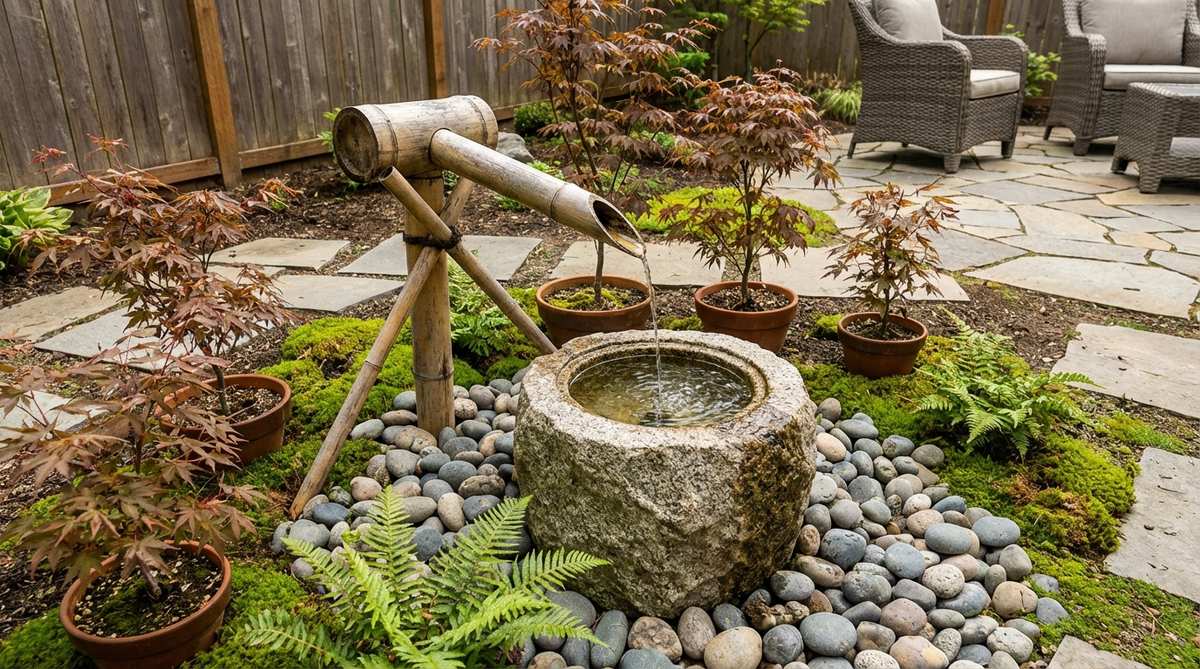
Bamboo pipes deliver water to stone catch basins in minimalist arrangements. The hollow bamboo produces distinctive hollow sounds as water flows through.
Designers angle bamboo at 30-45 degrees, allowing water to pour in smooth streams. The combination of bamboo and weathered stone creates authentic Japanese garden character.
Replace bamboo every 3-5 years as it naturally weathers. The patina development adds to the aesthetic as materials age gracefully.
18. Suikinkutsu Water Harp
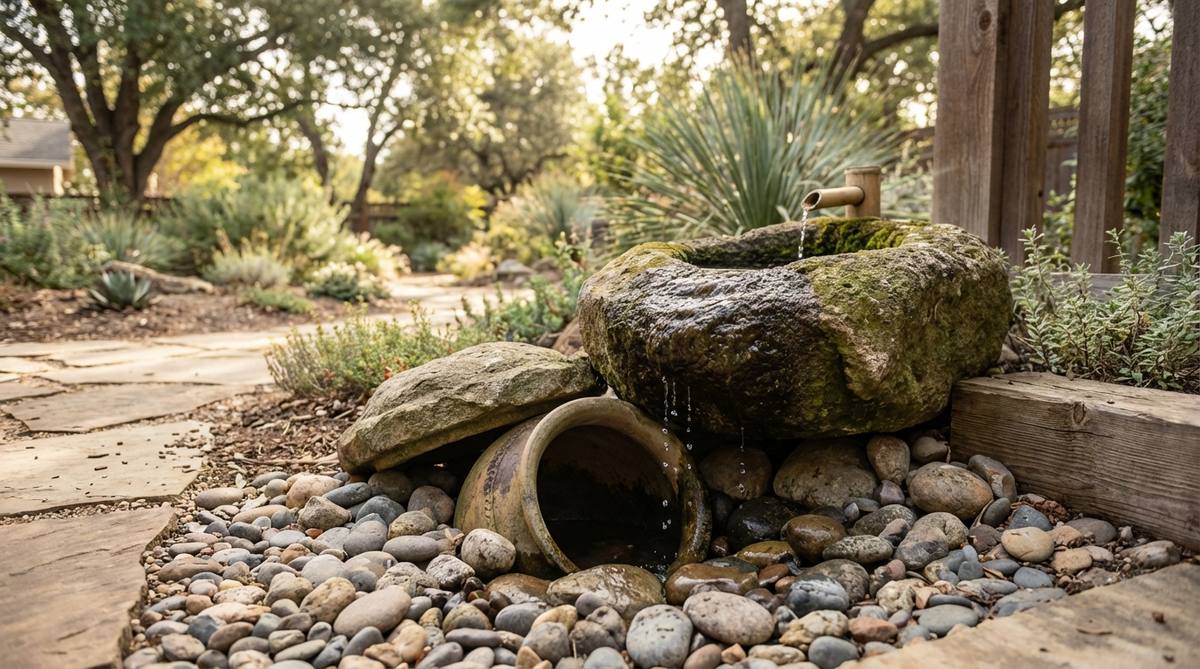
Buried ceramic pots create musical tones when water drips into them from above. The resonating chamber amplifies each drip into bell-like sounds.
Installation requires burying glazed pottery upside-down with small holes at the top. Water from stone basins drips through the hole, echoing inside the chamber.
The resulting sound resembles Japanese koto instruments. This underground element adds acoustic interest without visible components, creating mysterious music from hidden sources.
19. Pagoda Stone Lantern Fountain
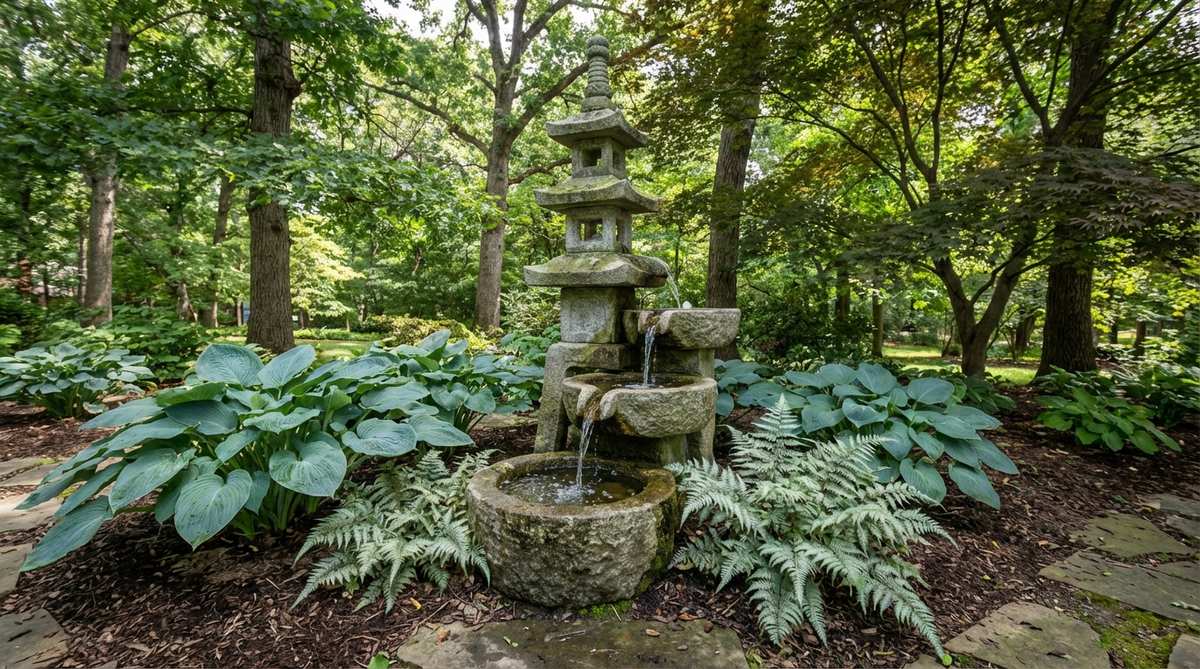
Stone pagodas carved with multiple tiers incorporate water elements flowing down carved channels. These decorative towers reach 36-48 inches in traditional Japanese gardens.
Water emerges from the pagoda top and follows carved grooves on each level. Small pools at tier intersections create pausing points for varied sound.
Authentic granite pagodas weather to beautiful gray patinas. Surround with shade-loving hostas and Japanese painted ferns for traditional plant pairings.
20. Natural Boulder Basin
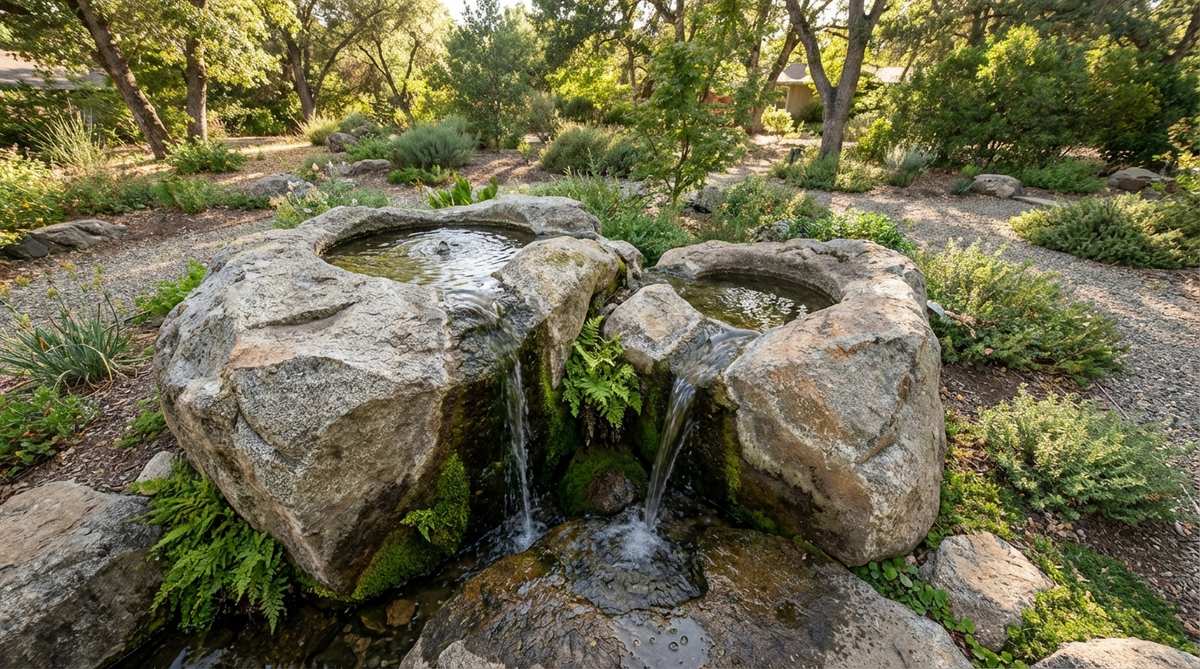
Large boulders with naturally formed depressions serve as rustic water basins. Water fills the natural cavity and overflows down the stone sides.
Landscape professionals select boulders with adequate depression depth (4-6 inches minimum) to hold water volume. Subtle drilling may enhance natural formations.
This approach creates the most naturalistic appearance, suggesting water collecting in rock formations. Position in shaded areas where moss will colonize the wet stone.
Wall-Mounted Stone Features for Space Efficiency
Vertical installations maximize water sound in limited footprints. Wall fountains work in courtyards, narrow side yards, and small patios where floor space is premium.
21. Stone Panel Waterfall
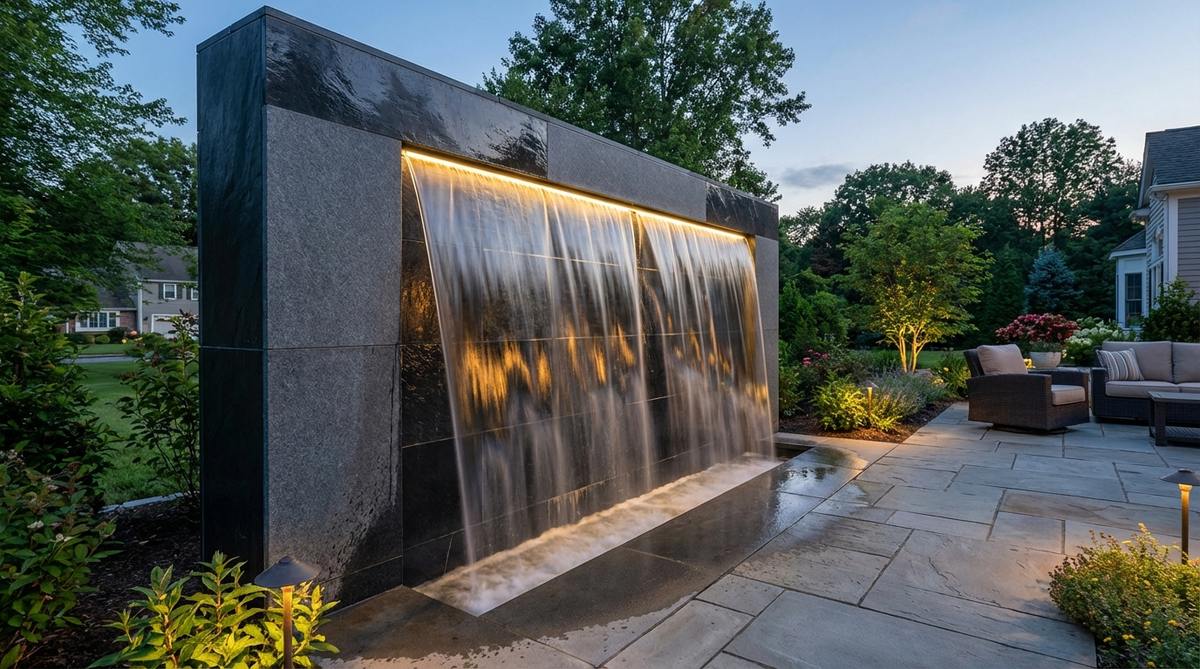
Flat stone panels mounted vertically create sheet waterfalls. Water flows from top-mounted reservoirs down the smooth face into catch basins.
Slate, granite, and marble panels polish to mirror finishes that reflect light. The sheet water flow produces consistent white noise ideal for masking traffic sounds.
Panels range from 24-inch accent pieces to 72-inch architectural installations. LED lighting behind water sheets creates dramatic evening effects.
22. Stacked Slate Spillway
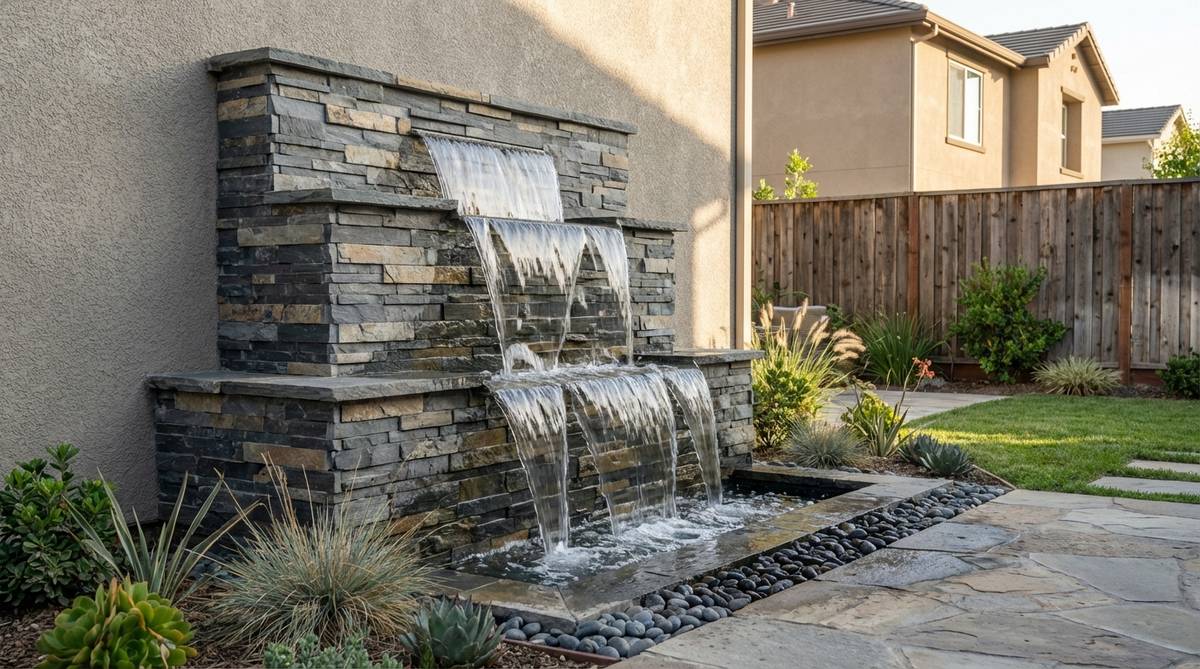
Horizontal slate pieces jut from walls at intervals, creating stepped waterfalls. Water spills from each slate shelf to the next in rhythmic patterns.
The installation mounts slate brackets at 8-12 inch vertical spacing. Water pumps to the top shelf and cascades down the staggered arrangement.
This design suits contemporary exterior walls and courtyard privacy screens. The horizontal lines complement modern architecture while adding water movement.
23. Copper Spout Stone Wall
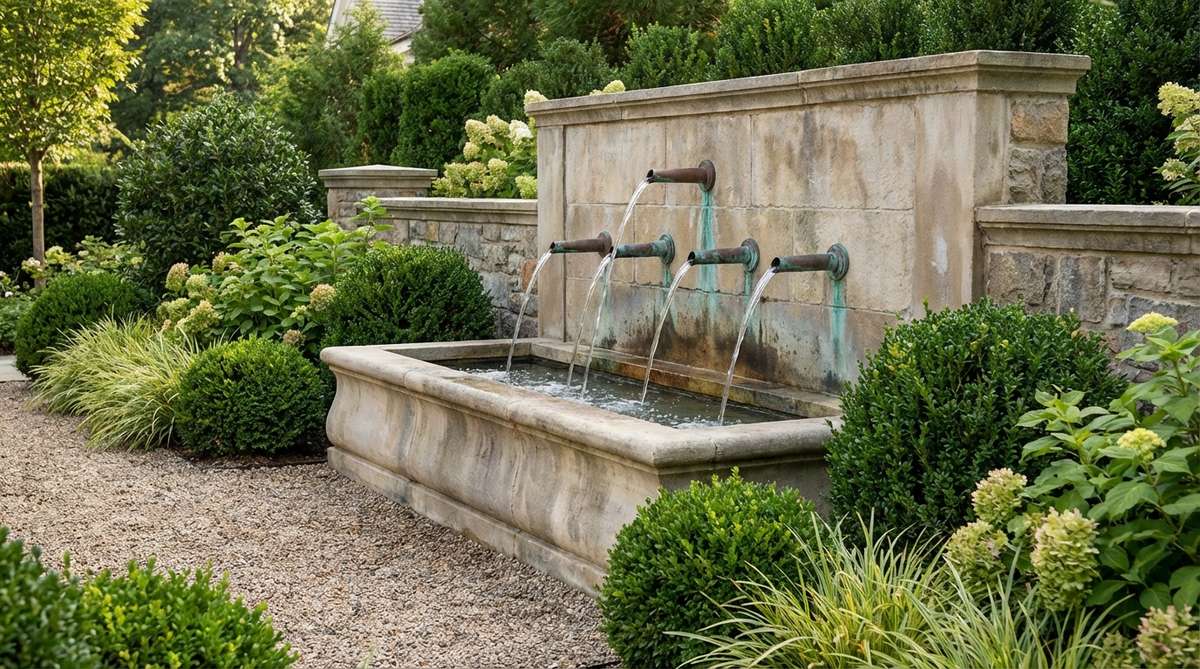
Copper or bronze spouts mounted in stone or brick walls create classical fountain effects. The metal spouts develop attractive verdigris patina over time.
Water arcs from spout openings into wall-mounted stone basins or ground-level pools. Multiple spouts at different heights create layered water sounds.
This European-influenced style works in formal gardens and Mediterranean landscapes. The combination of aged copper and weathered stone suggests centuries-old installations.
24. Natural Stone Cliff Face
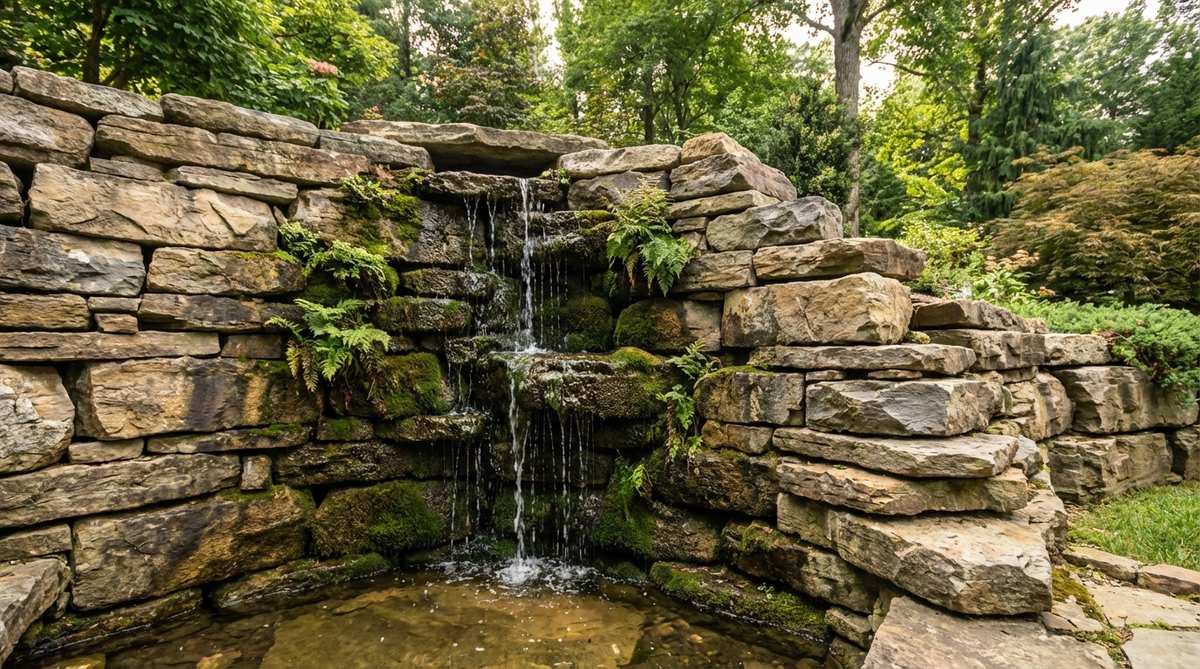
Stacked natural stones create artificial cliff walls with water seeping through gaps. The irregular surface produces varied trickling sounds from multiple points.
Masons stack flat stones (flagstone, fieldstone) with intentional gaps for water passage. Hidden piping delivers water to upper sections for downward flow.
The naturalistic appearance mimics mountain spring formations. Plant ferns and moss in crevices to enhance the natural spring aesthetic.
Modern Geometric Designs for Contemporary Landscapes
Clean lines and precise angles define contemporary stone fountains. These designs emphasize geometric purity and architectural integration.
25. Square Column Fountain
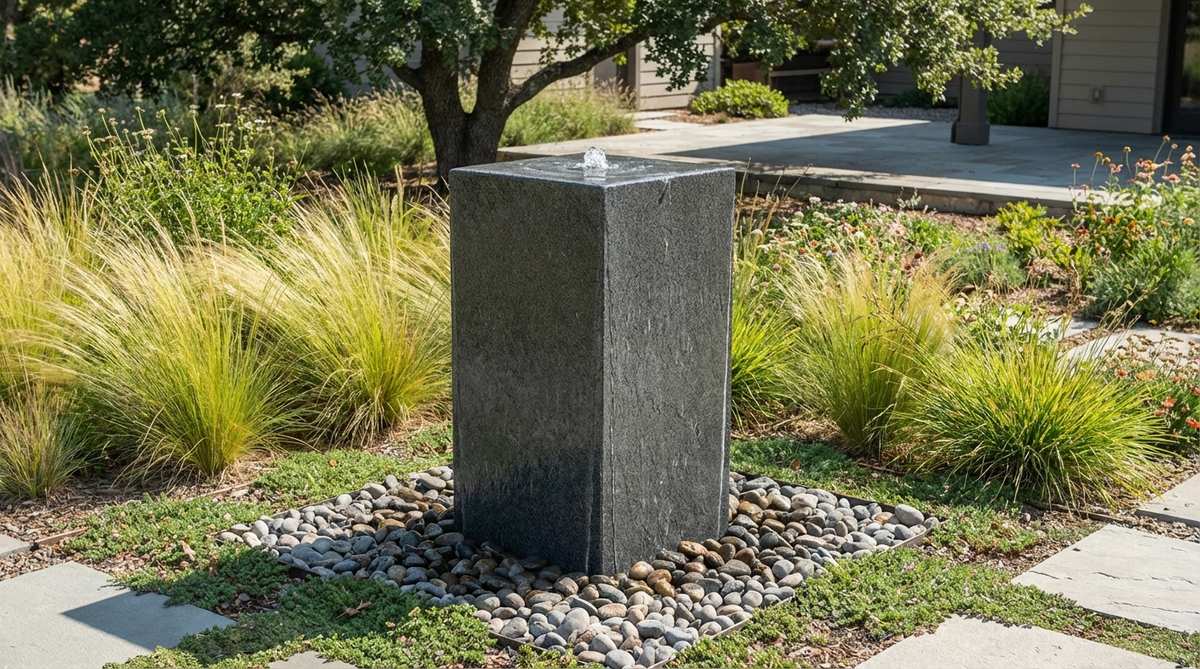
Rectangular stone columns with precise 90-degree edges create architectural water features. Water bubbles from the flat top surface and sheets down all four sides.
Granite or cast stone construction ensures crisp edge definition. The geometry complements modern homes and minimalist garden designs.
Heights from 24-48 inches suit various scales. The angular form contrasts beautifully with rounded plantings like ornamental grasses.
26. Triangular Stone Pyramid
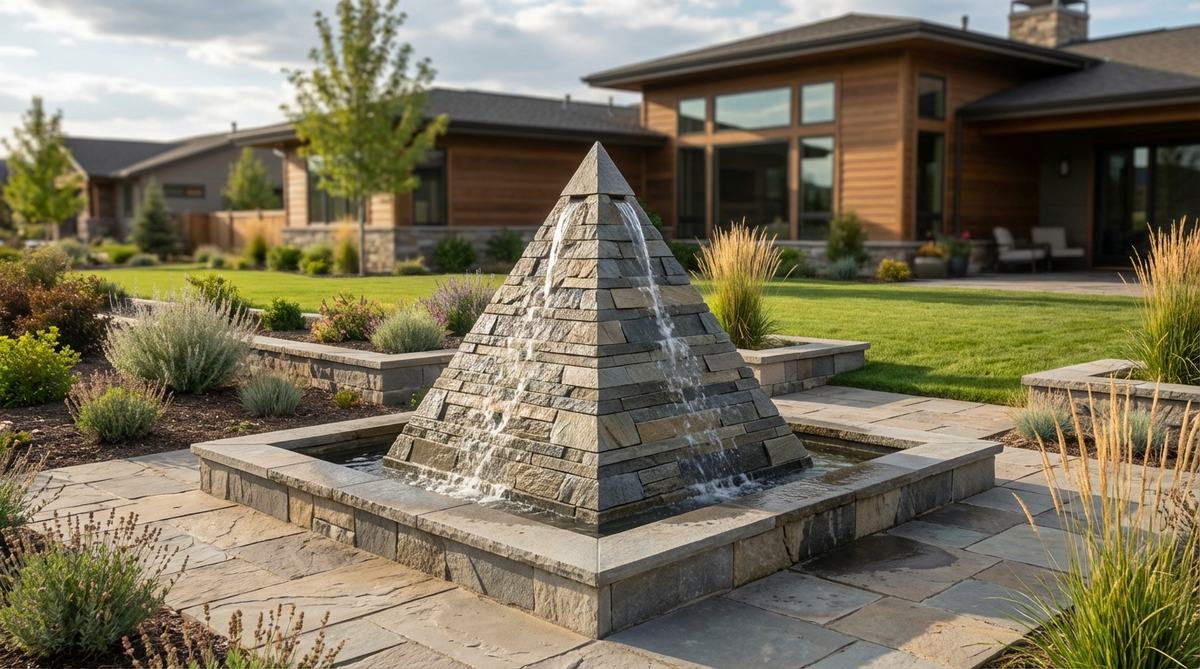
Three-sided pyramidal forms create dynamic geometry. Water flows from the apex down each triangular face, meeting at base corners.
The angular design requires precise stone cutting to achieve clean edges and stable stacking. Each face catches light differently throughout the day.
Pyramid fountains serve as bold focal points in contemporary gardens. The geometric perfection contrasts intentionally with organic landscape elements.
27. Rectangular Blade Fountain
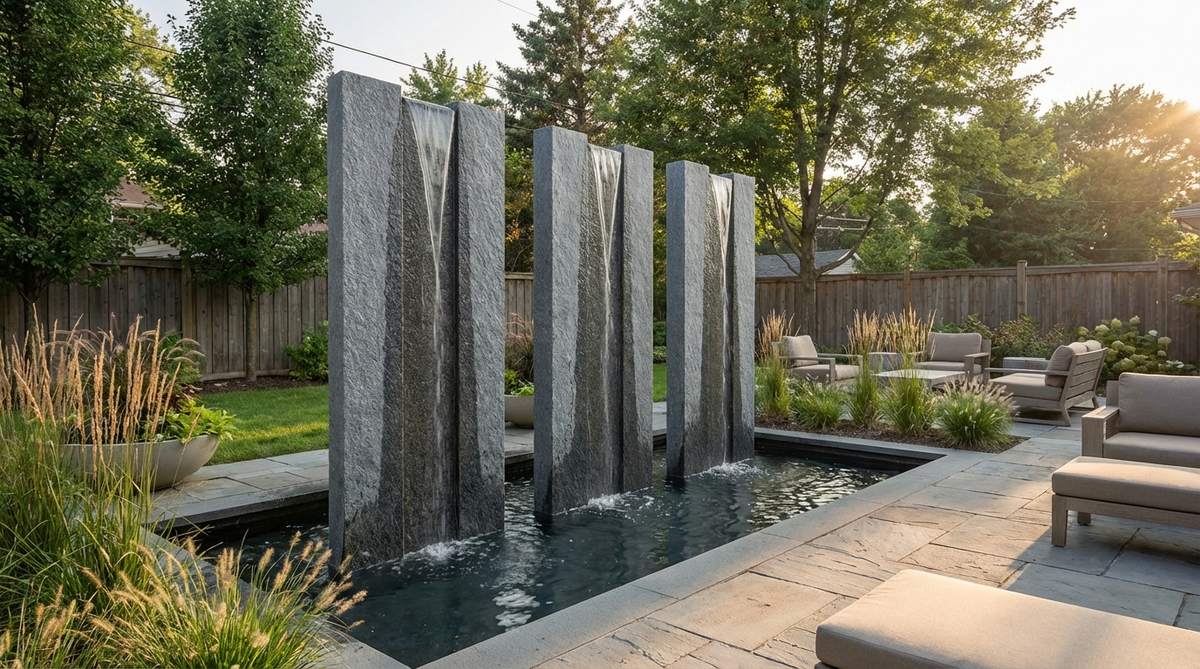
Thin vertical stone slabs (4-6 inches thick) stand upright like blades. Water sheets down the narrow faces, creating dramatic vertical water walls.
Installation requires substantial underground support for the tall, narrow proportions. Multiple blades in parallel create rhythmic repetition.
This ultra-modern design suits architectural landscapes and corporate installations. The vertical emphasis creates striking silhouettes, especially when backlit at night.
28. Cubic Stacked Blocks
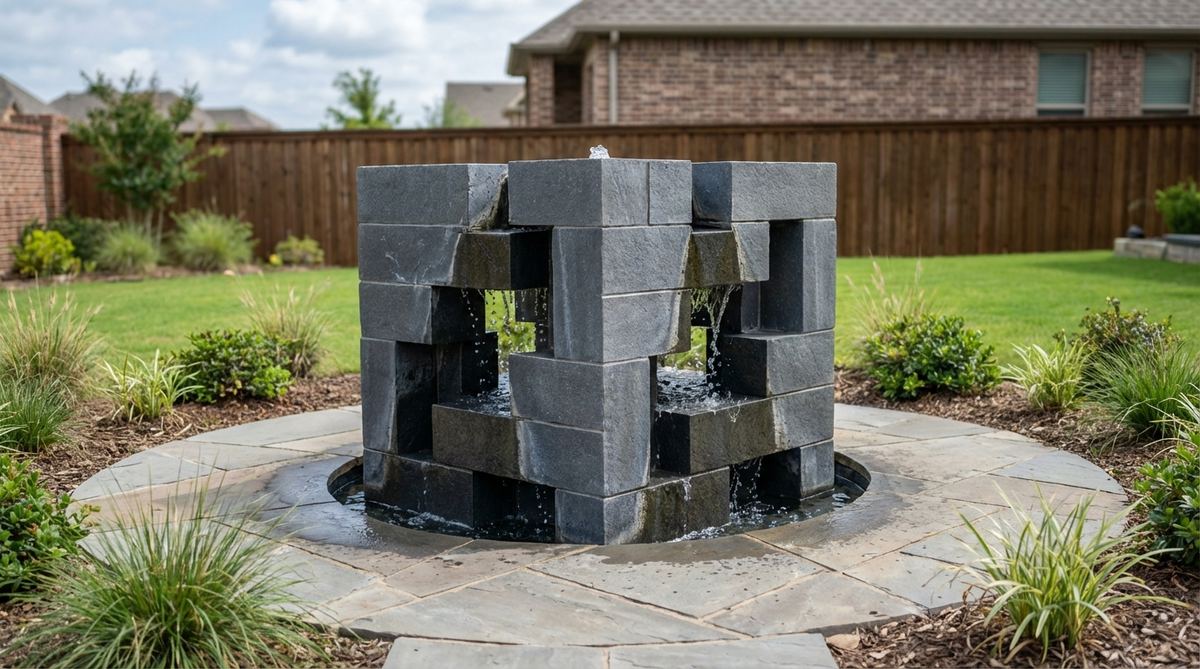
Identical stone cubes stacked in offset patterns create geometric sculptures. Water flows through gaps between cubes, appearing and disappearing through the structure.
The precise cubic forms require machine cutting for accuracy. Water paths become puzzle-like as liquid navigates the three-dimensional arrangement.
This playful geometry works in modern gardens and children’s spaces. The geometric predictability contrasts with the organic unpredictability of flowing water.
Conclusion
A well-chosen stone garden fountain delivers years of natural water sounds while anchoring your landscape design. Whether you select bubbling basalt for meditation spaces, tiered cascades for dramatic effect, or minimalist Japanese basins for contemplative gardens, the key lies in matching fountain scale and acoustic character to your specific outdoor environment. Start by assessing your available space, desired sound volume, and maintenance commitment, then select materials and designs that complement your existing landscape architecture for a cohesive outdoor sanctuary.
Frequently Asked Questions
What type of stone produces the best water sounds in garden fountains?
Basalt and granite deliver the most pleasant acoustic qualities due to their dense, textured surfaces. Basalt’s natural pitting creates varied water paths that produce layered bubbling and trickling sounds, while polished granite produces smooth sheet flows with consistent white noise. Porous limestone and sandstone absorb some sound energy, creating softer trickling compared to dense volcanic stones. For maximum sound variation, choose rough-textured natural finishes over polished surfaces.
How much maintenance do stone garden fountains require?
Stone fountains require monthly cleaning during active seasons to remove algae buildup and debris. Check water levels weekly, as evaporation necessitates refilling every 3-7 days depending on climate and fountain size. Before winter in freezing climates, drain all water, remove pumps for indoor storage, and cover stone components to prevent freeze-thaw damage. Granite and basalt withstand weather exposure better than limestone or sandstone, which may require annual sealing in harsh climates.
What size stone fountain works best for small patios?
Compact bubbler fountains measuring 18-24 inches in diameter or height work ideally for patios under 150 square feet. Single-column basalt bubblers, small granite spheres, or wall-mounted panels provide water sounds without overwhelming limited space. Avoid multi-tiered fountains taller than 36 inches in confined areas, as they create visual clutter and disproportionate scale. Wall-mounted stone features offer maximum sound with minimal floor footprint for the smallest spaces.
Can stone fountains operate in freezing winter climates?
Most natural stone fountains must be winterized in regions with sustained freezing temperatures. Water trapped in stone pores expands when frozen, causing cracks and structural damage over repeated freeze-thaw cycles. Dense granite and basalt tolerate occasional freezing better than porous limestone or sandstone. Drain all water, disconnect and store pumps indoors, and use breathable fountain covers to protect stone surfaces. Some homeowners in moderate climates run fountains year-round using thermostatically controlled heaters to prevent ice formation.
How do I control the water sound volume in my stone fountain?
Adjustable fountain pumps allow precise control over water flow rates, directly affecting sound volume. Higher flow rates create louder splashing and cascading sounds, while reduced flows produce gentle trickling. The vertical distance water drops before hitting surfaces determines impact sound—shorter drops create softer sounds, while falls over 12 inches produce audible splashes. Adding smooth river stones to catch basins softens impact sounds, while removing them increases splash volume. Most submersible pumps include flow control valves for easy acoustic adjustment.
What electrical requirements do stone garden fountains need?
Most residential stone fountains operate on standard 120-volt outdoor electrical outlets using submersible pumps drawing 50-150 watts. Install GFCI-protected outlets within 6 feet of the fountain location, following local electrical codes. Small fountains under 30 inches may use solar-powered pumps, though these provide intermittent operation dependent on sunlight. Larger estate fountains with multiple pumps or lighting may require dedicated 20-amp circuits. Hire licensed electricians for permanent outdoor wiring installations to ensure safety and code compliance.