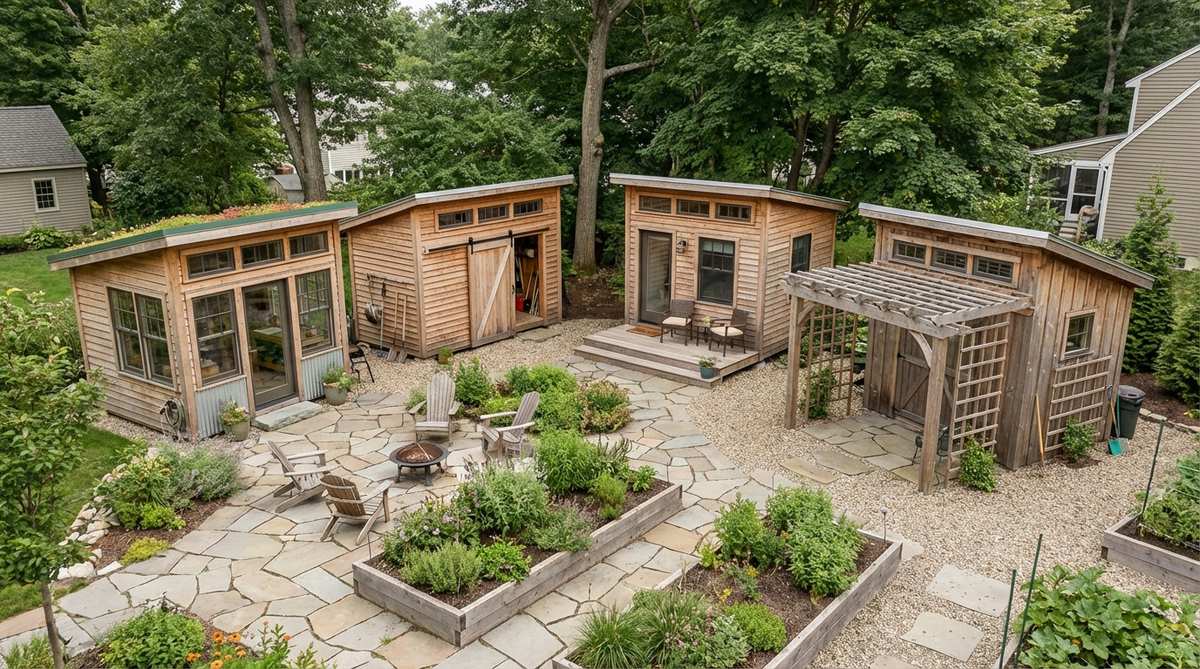
A well-designed small garden shed transforms limited outdoor space into a functional hub for storage, creative work, or quiet retreat. Fresh Garden Ideas brings you over 30 expert solutions that maximize every square foot, from vertical storage systems to dual-purpose micro-studios that serve both practical and lifestyle needs.
Design SnapshotKey Principles
- Vertical Maximization: Wall-mounted systems and tall shelving units multiply storage capacity without expanding footprint
- Multi-Functional Layouts: Modular designs adapt spaces for storage, workspace, and seasonal needs within compact dimensions
- Strategic Placement: Corner, lean-to, and attached configurations utilize awkward spaces while maintaining garden flow
- Material Intelligence: Pressure-treated timber, steel frames, and weather-resistant cladding ensure durability with minimal maintenance
Compact Storage Sheds For Every Garden
These small garden shed ideas prove that limited square footage can deliver impressive storage capacity through smart design and thoughtful placement.
1. Lean-To Storage Shed
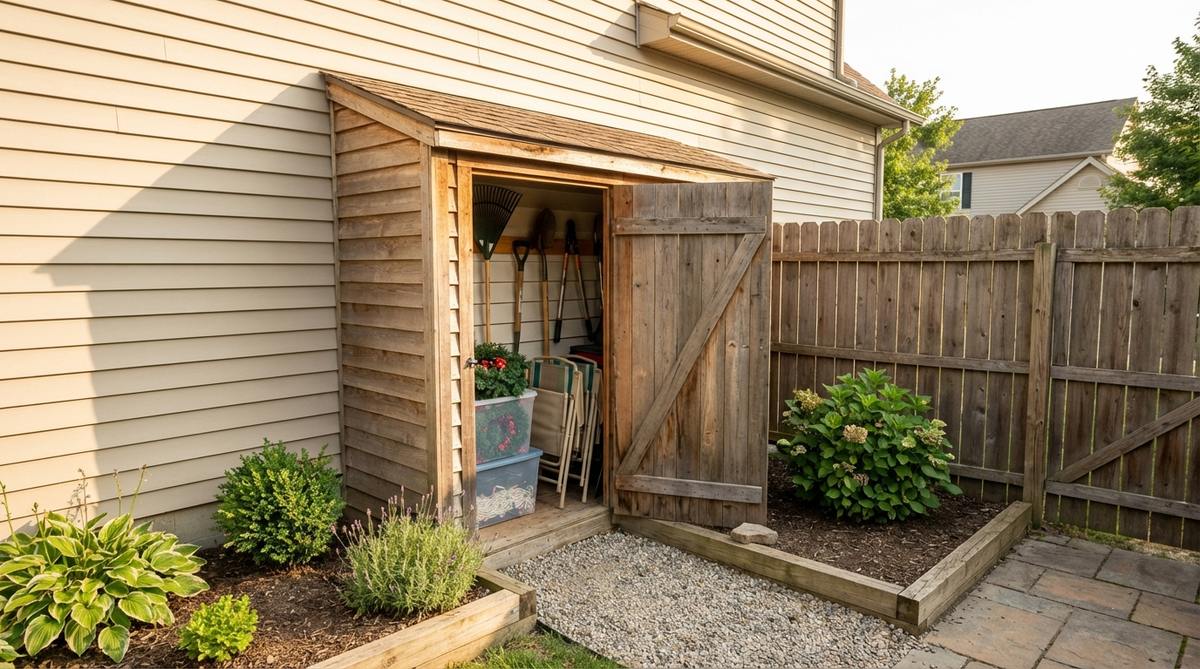
The lean-to design attaches directly to your house wall, creating storage without consuming garden space. Its sloped single roof sheds water efficiently while the narrow profile fits urban patios and townhouse yards.
Standard dimensions of 4×3 feet accommodate garden tools, folding chairs, and seasonal décor. Position the door for easy access without blocking pathways or windows.
This configuration works exceptionally well for renters or homeowners who want storage without permanent garden structures. The attached design also provides natural wind protection for delicate items.
2. Corner Wedge Shed
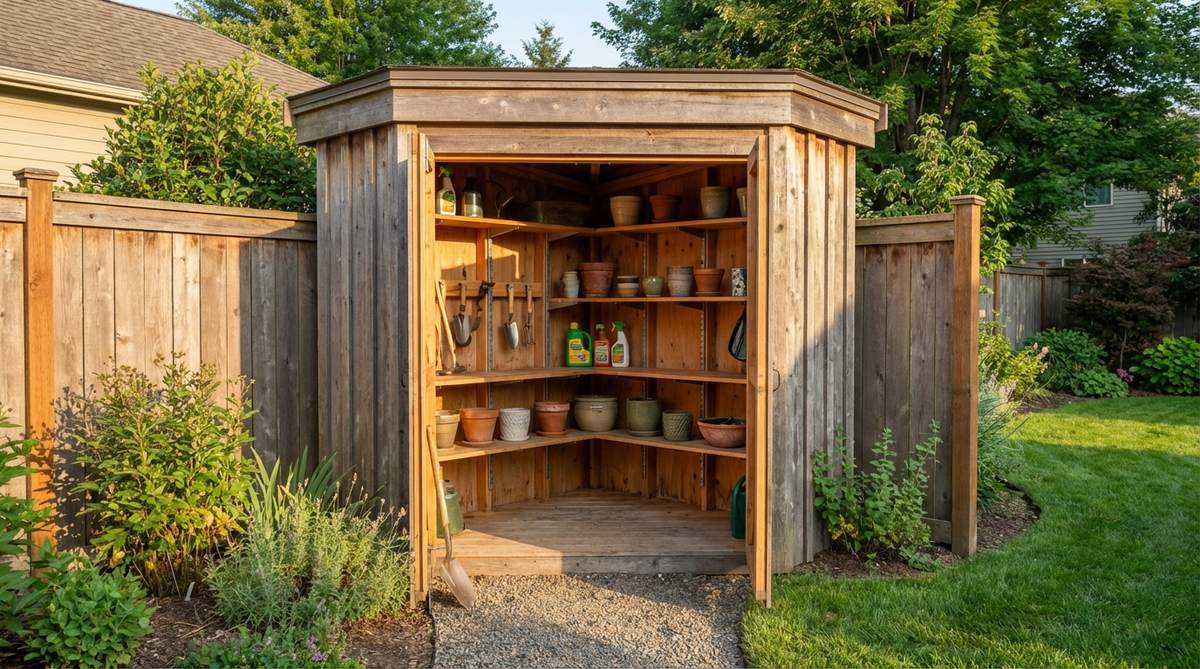
Corner sheds transform awkward L-shaped spaces into functional storage zones. The triangular footprint tucks into fence corners while maximizing internal capacity through custom shelving along angled walls.
Install adjustable brackets on all three walls to create storage tiers for pots, tools, and chemicals. The corner placement keeps walkways clear and preserves central garden space for planting beds.
3. Vertical Locker Shed
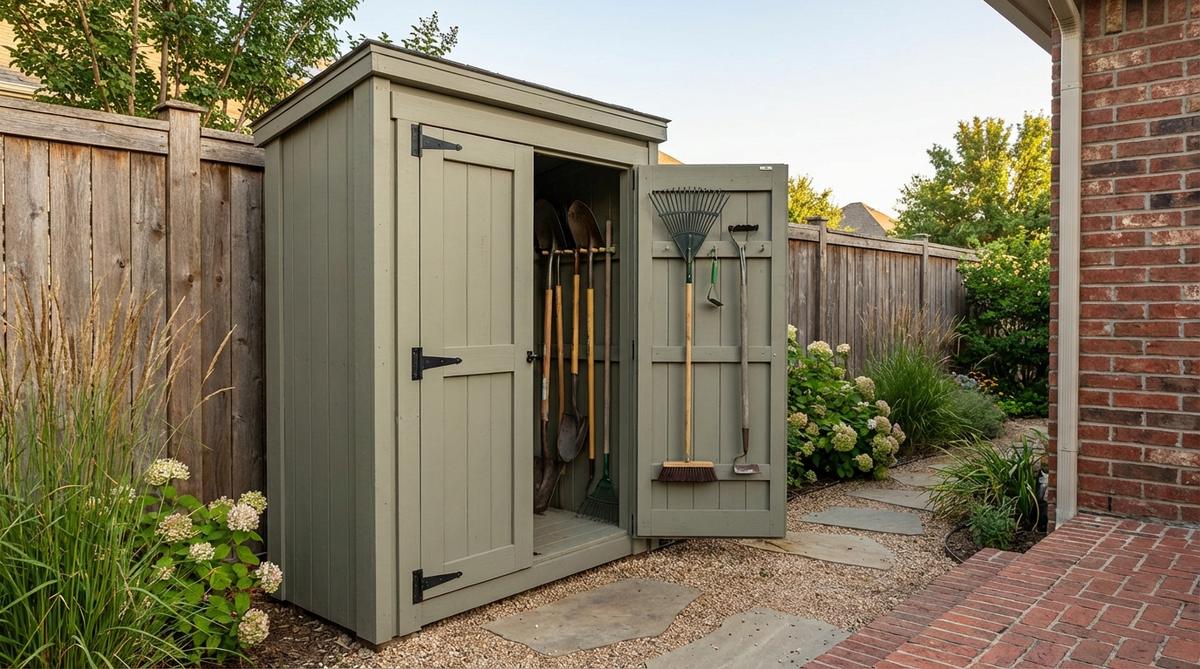
Tall and narrow locker-style sheds measure approximately 2×4 feet but extend six to seven feet in height. This vertical approach stores long-handled tools like rakes, shovels, and brooms without requiring wide floor space.
Internal hooks mounted at varying heights keep handles organized and accessible. The slim profile fits along fence lines or between existing structures where traditional sheds cannot.
4. Apex Roof Compact
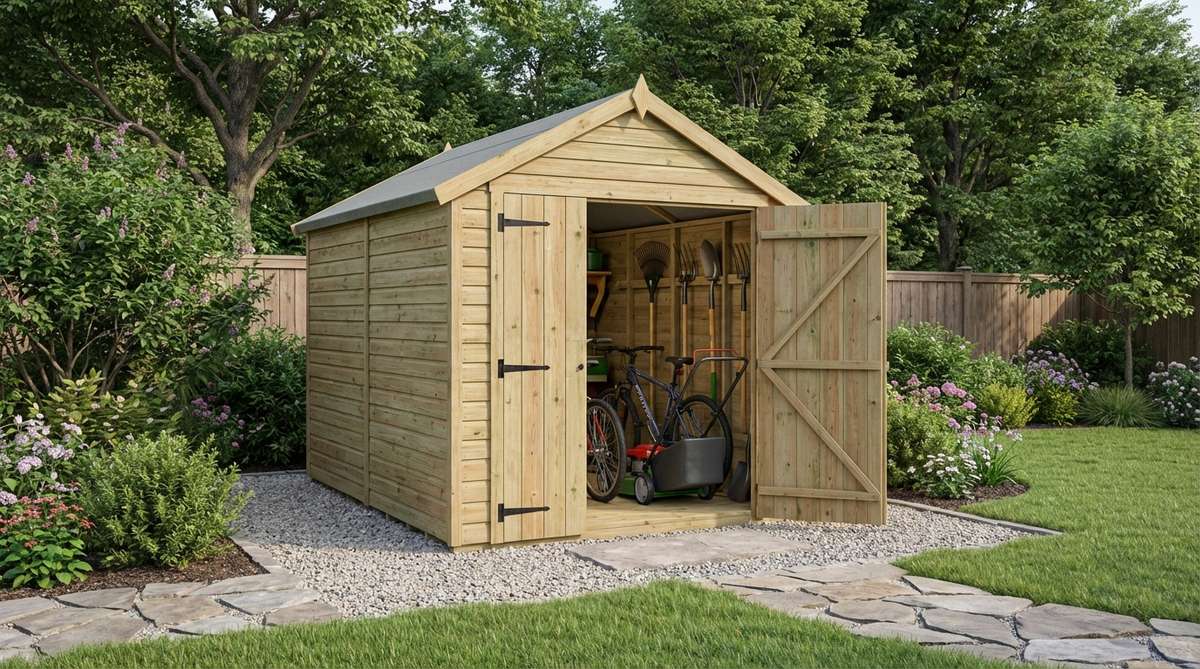
The traditional apex roof design in 6×4 foot dimensions offers classic aesthetics with practical weather protection. The peaked roof provides additional headroom and efficient rainwater runoff.
Pressure-treated timber with overlap or shiplap cladding delivers durability backed by 10-year anti-rot guarantees. Position double doors on the narrow end to maximize internal wall space for shelving and hooks.
This size accommodates bicycles, lawn mowers, and full tool collections while fitting suburban plots. The apex style blends with traditional garden designs and property architecture.
5. Pent Roof Mini
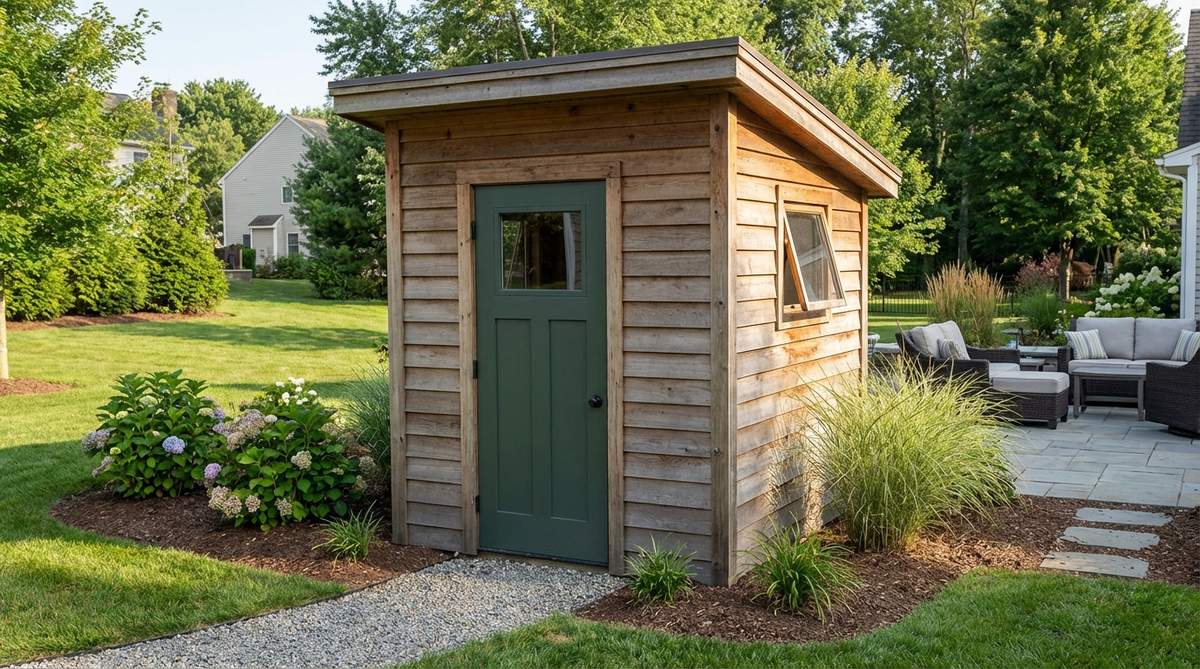
Pent roofs slope from front to back, creating higher clearance at the entrance while maintaining a compact profile. This design suits modern gardens and properties with height restrictions.
A 5×3 foot pent shed stores essentials without overwhelming small spaces. Install it with the high side facing south to maximize natural light through optional windows or translucent panels.
6. Modular Expandable Shed
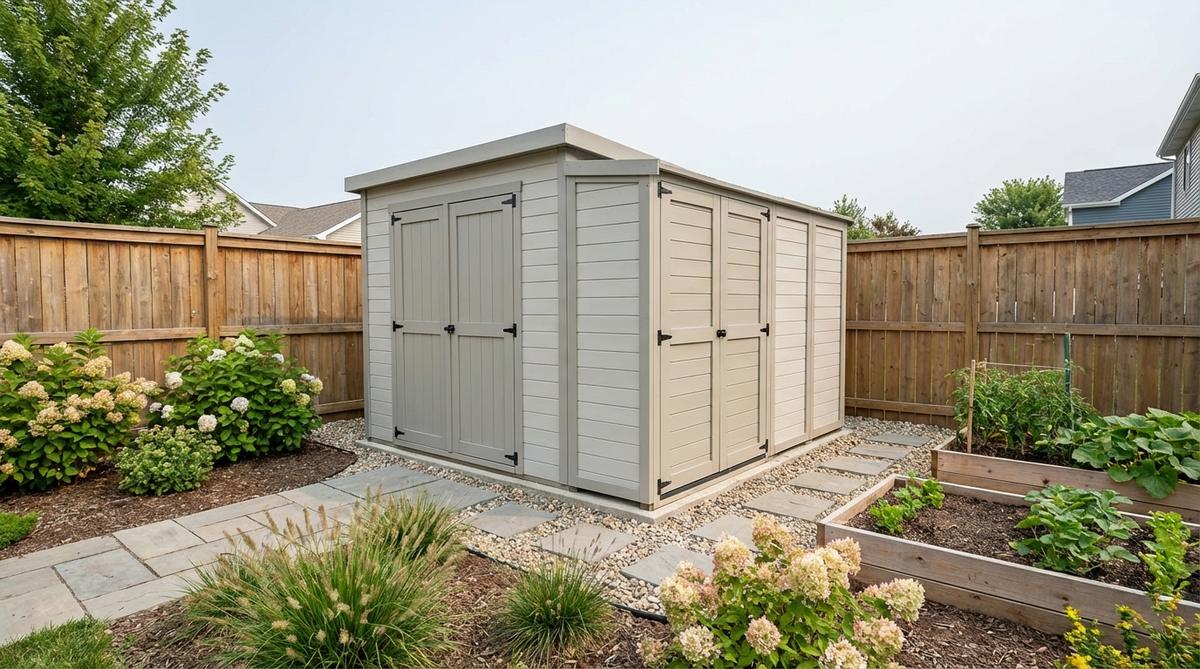
Modular systems use 500mm blocks that add or remove to adjust capacity as needs evolve. Start with a 6×6 foot base and expand by adding 2-foot modules when storage requirements increase.
This flexibility prevents over-building initially while accommodating future tools, equipment, or hobby supplies. Modular construction also simplifies DIY assembly with standardized components and clear instructions.
Vertical Organization Systems
Maximize your small garden shed capacity by building upward with these wall-mounted and suspended storage solutions.
7. Floating Shelf Array
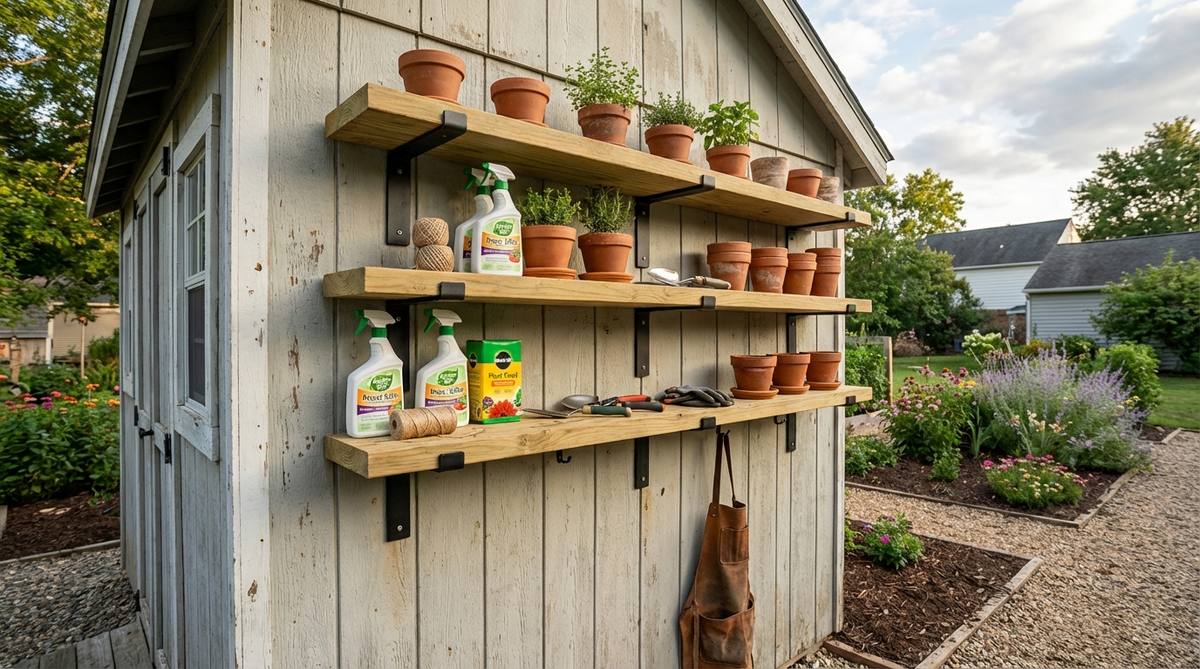
Floating shelves utilize every inch of wall space from floor to ceiling without consuming valuable floor area. Install heavy-duty brackets rated for outdoor conditions and seasonal temperature fluctuations.
Arrange shelves at 12 to 16-inch intervals to accommodate different container heights. Store frequently used items at eye level and seasonal supplies on upper shelves.
Metal or treated wood shelves resist moisture better than standard indoor units. This system keeps pots, chemicals, and small tools visible and organized.
8. Pegboard Wall System
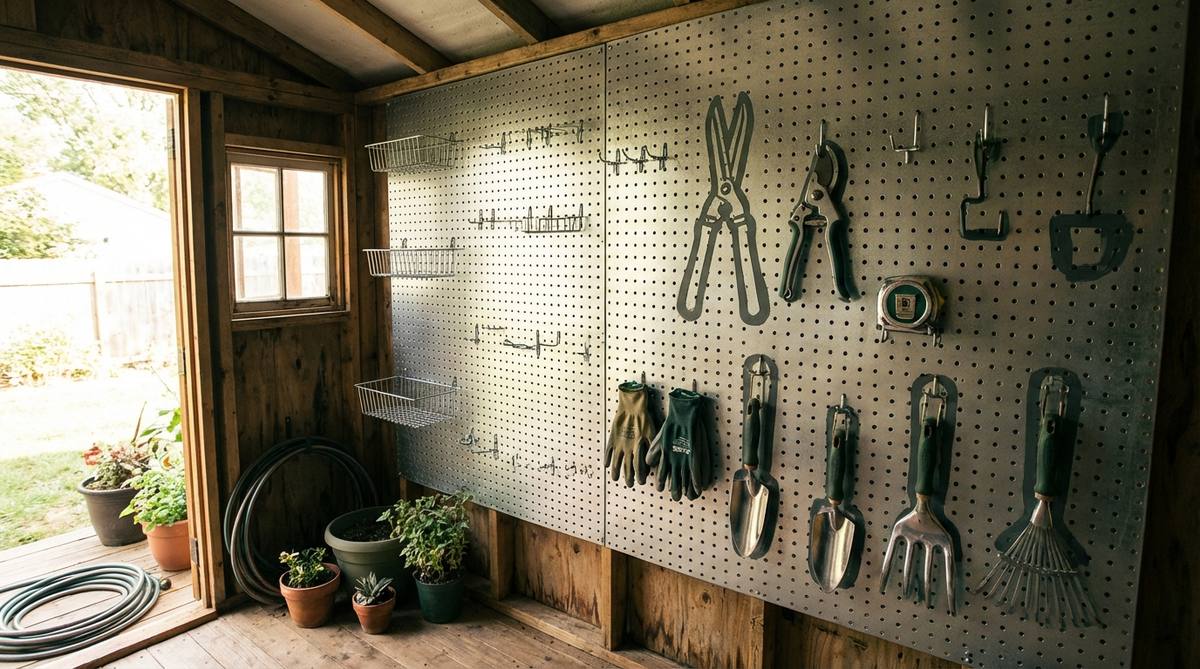
Full-wall pegboard installations create customizable storage that adapts as tool collections change. Metal pegboard withstands outdoor humidity better than composite versions.
Outline tools with paint or tape to establish designated spots that maintain organization. Combine standard hooks with specialized holders for specific items like pruning shears or tape measures.
9. Ceiling Mounted Racks
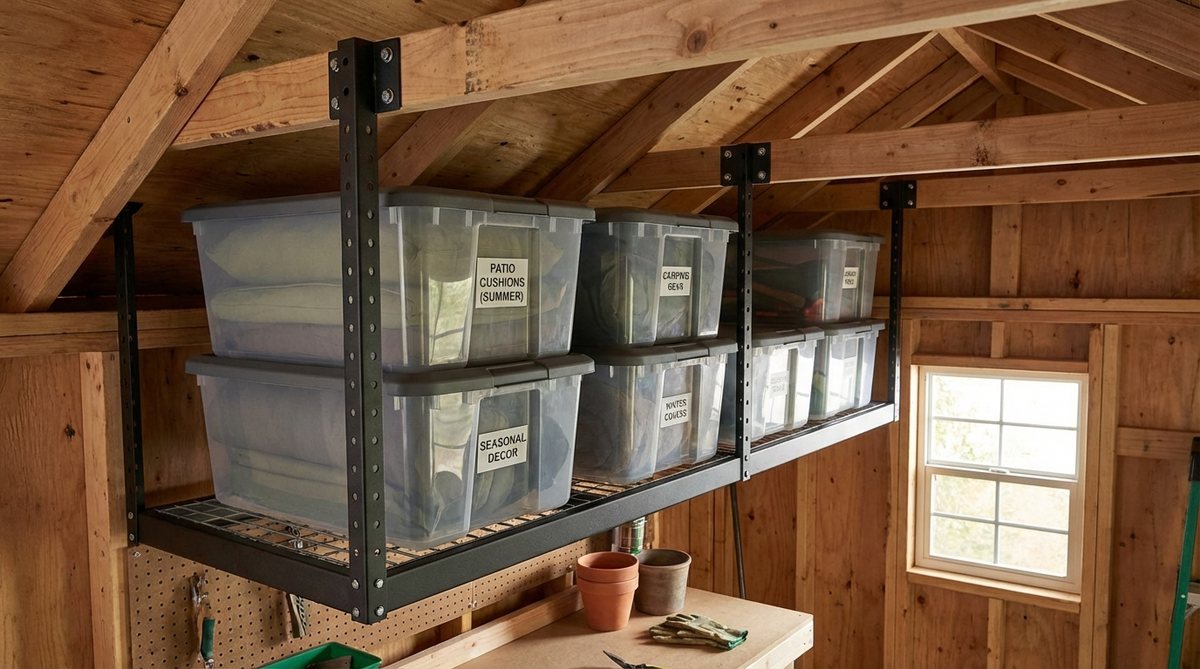
Overhead storage keeps bulky seasonal items like patio cushions, holiday decorations, and camping gear off the floor. Install sturdy brackets into roof joists rated for at least 50 pounds per linear foot.
Position racks to maintain at least six feet of clearance below for comfortable movement. Label storage bins clearly since overhead placement makes visual identification difficult.
10. Door-Back Organizers
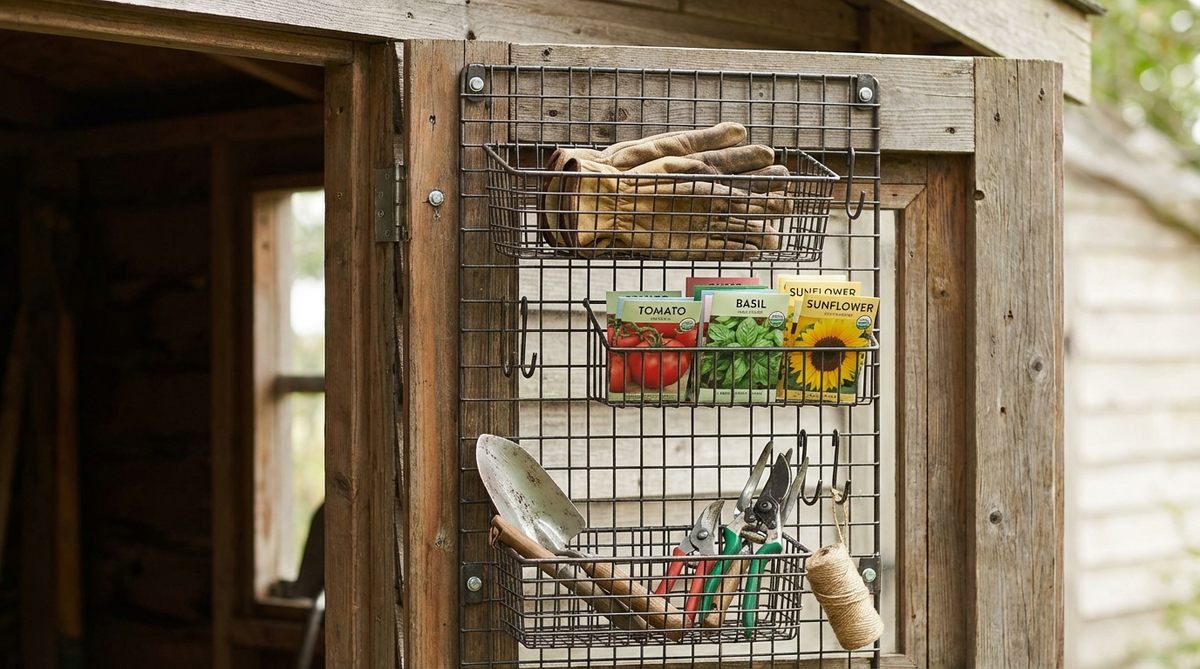
The interior door surface provides 12 to 16 square feet of untapped storage potential. Mount wire baskets, tool holders, or wicker organizers to hold gloves, seed packets, and hand tools.
Ensure mounting hardware penetrates door framing rather than thin panels for secure attachment. Keep weight distributed evenly to prevent door sagging or hinge stress.
11. Track and Hook Rails
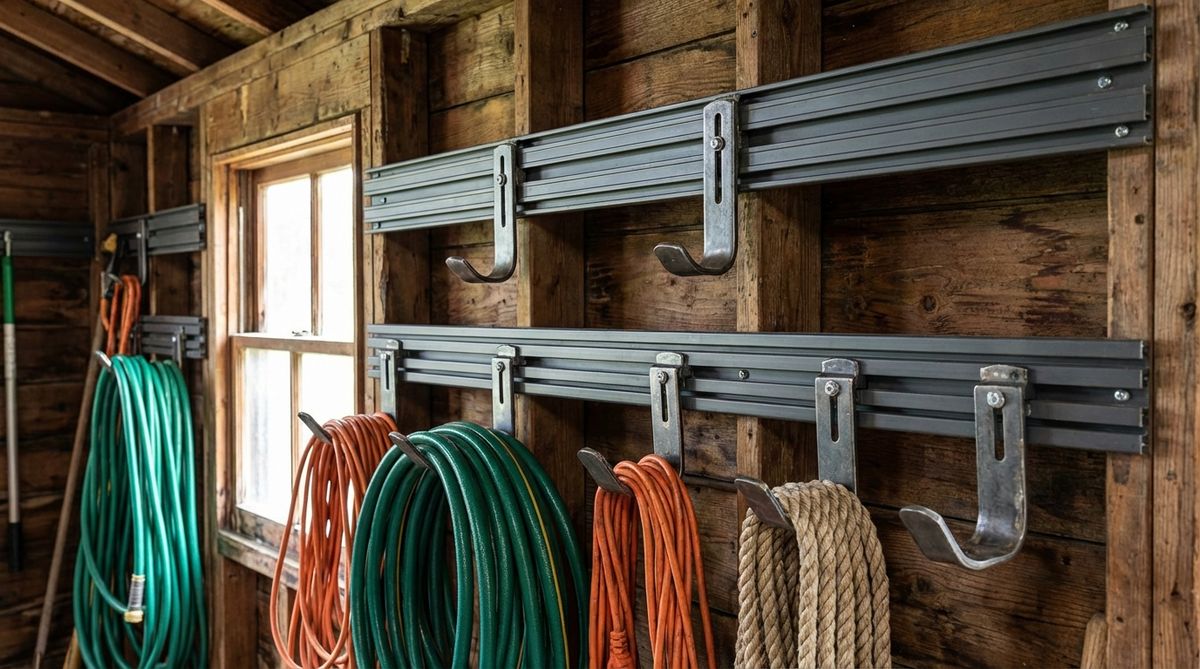
Horizontal track systems with sliding hooks accommodate tools of varying widths without preset spacing limitations. Metal tracks mounted at multiple heights create flexible storage layers.
Hang garden hoses, extension cords, and rope on upper tracks while positioning tool handles on lower rails. The sliding mechanism allows density adjustment as inventory changes.
12. Stacked Crate Columns
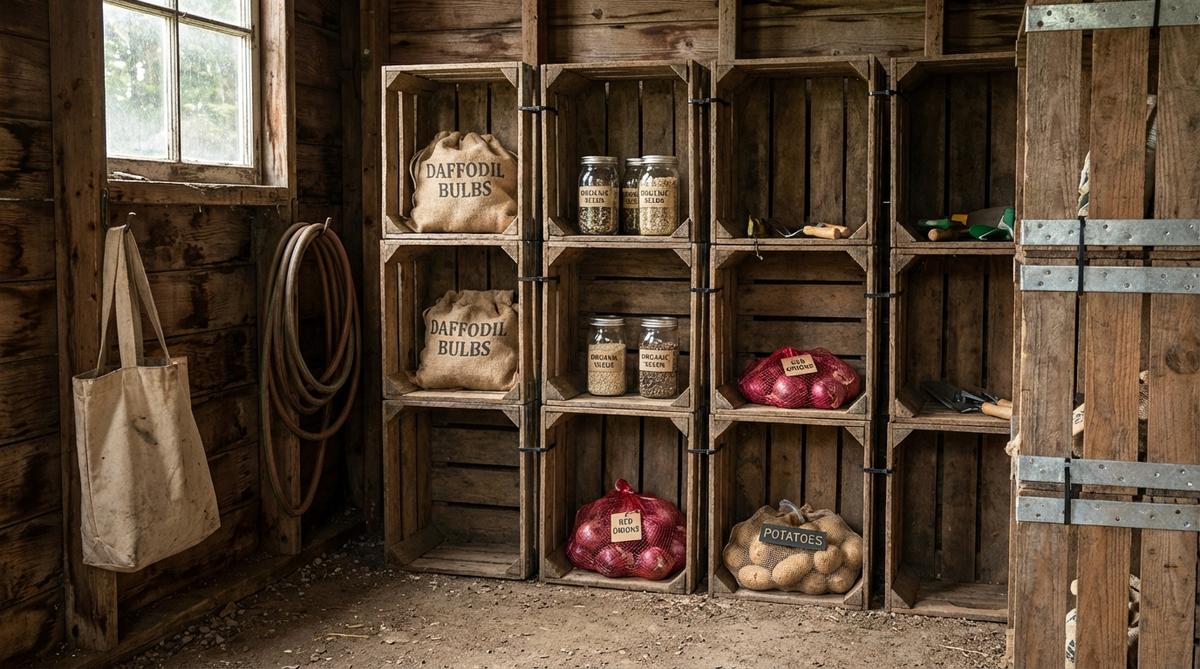
Wooden crates sourced from thrift shops or grocery stores stack to create rustic modular storage. Secure columns with metal brackets or zip ties to prevent toppling.
The open design provides visibility and ventilation for bulbs, seeds, or produce. This budget-friendly option adds character while solving storage challenges.
Small Garden House Studios
Transform your small garden shed into a functional micro-studio for work, hobbies, or relaxation with these dual-purpose designs.
13. Home Office Pod
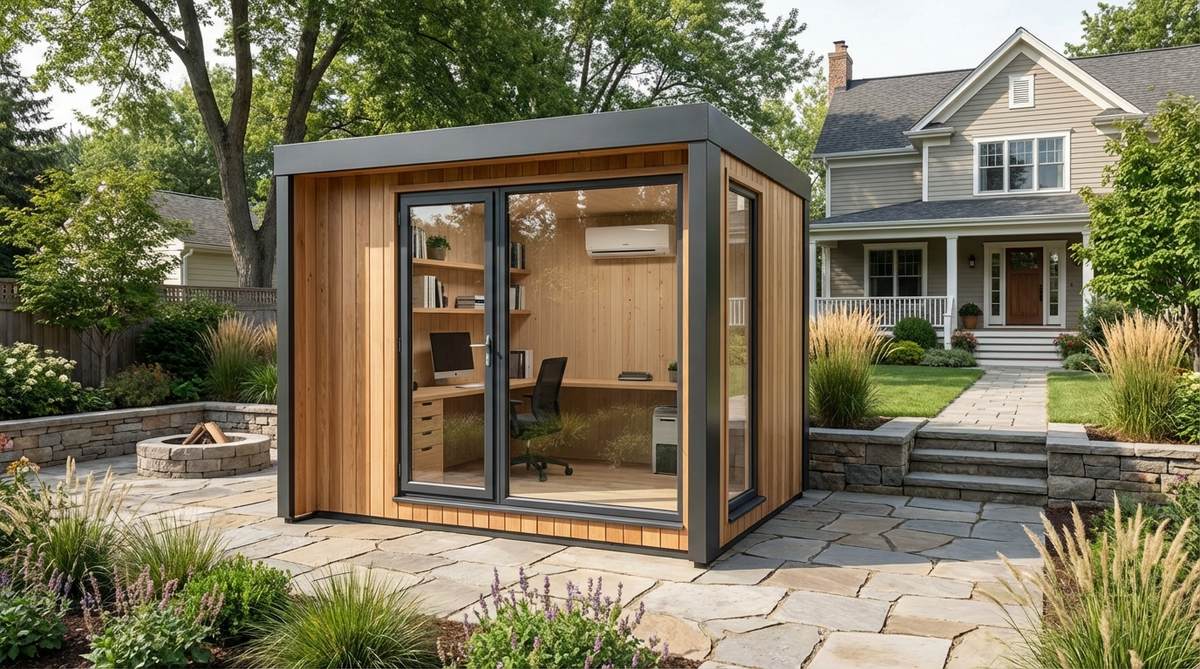
Compact garden office pods measuring 8×6 feet provide dedicated workspace separate from household distractions. Insulated walls and double-glazed windows create comfortable year-round environments.
Install built-in desk surfaces along one wall with overhead shelving for supplies. Electrical systems support computers, lighting, and small heaters or fans for climate control.
Position the pod within 100 feet of your router for reliable Wi-Fi, or install ethernet cabling during construction. This solution gained popularity during remote work transitions and continues serving professionals seeking boundary separation.
14. Art Studio Retreat
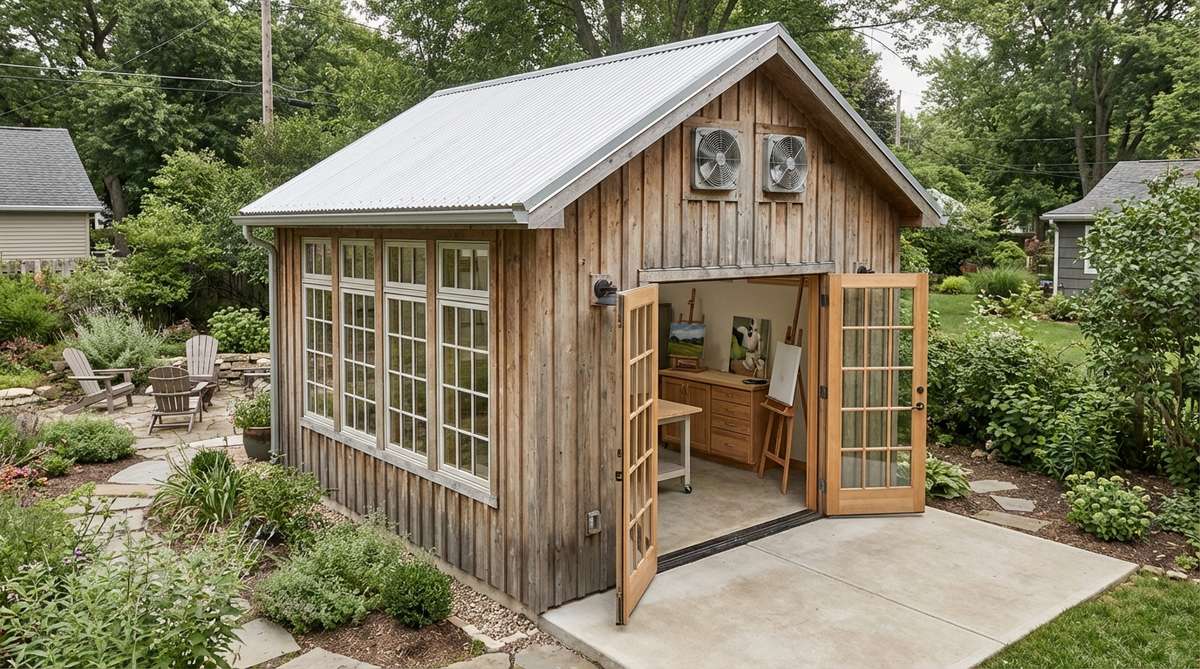
North-facing windows or skylights flood art studios with consistent natural light without harsh shadows. A 10×8 foot footprint accommodates easels, storage cabinets, and work tables.
Sealed concrete or vinyl flooring tolerates paint spills and cleaning chemicals better than wood. Install ventilation fans to exhaust fumes from oils, solvents, or spray fixatives.
15. Music Practice Space
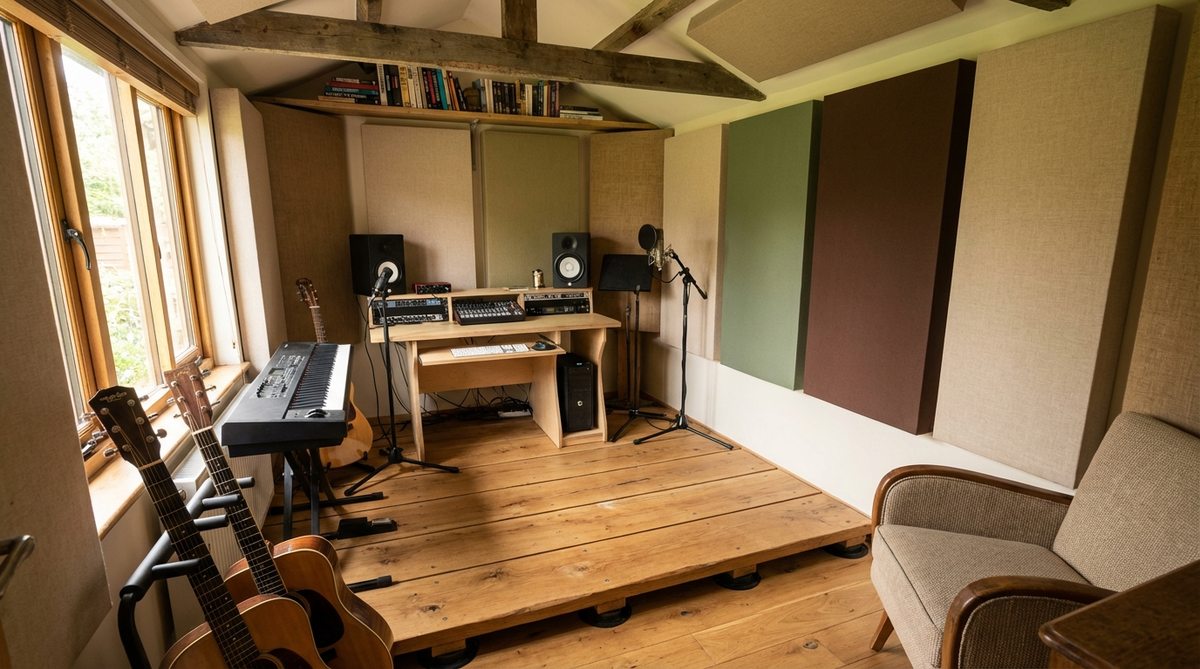
Sound-dampening insulation converts garden sheds into music studios that minimize neighbor disturbance. Acoustic panels on walls and ceilings absorb frequencies while maintaining compact dimensions.
An 8×6 foot space accommodates keyboards, amplifiers, and recording equipment with room for comfortable seating. Elevated flooring isolates bass vibrations from foundation transfer.
16. Reading Lounge Nook
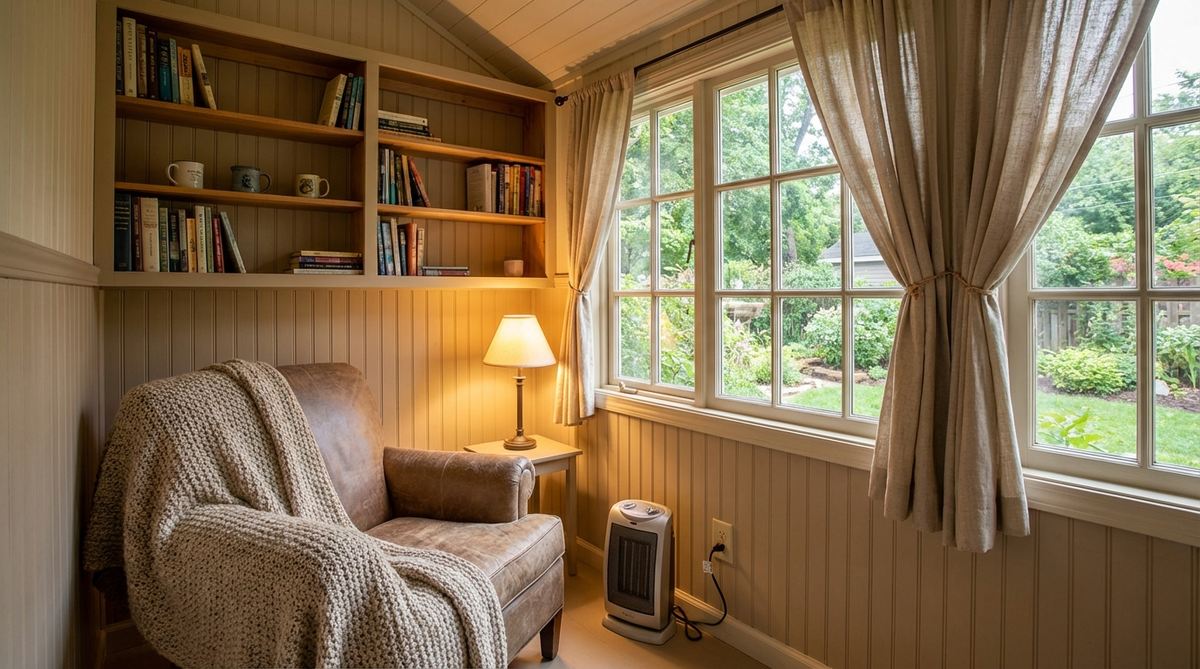
A 6×6 foot shed transforms into a peaceful reading retreat with comfortable seating, bookshelf storage, and soft lighting. Large windows provide natural light while preserving privacy with curtains or frosted glass.
Insulation maintains comfortable temperatures across seasons without full heating systems. Add electrical outlets for reading lamps and small electric heaters during winter months.
17. Craft Workshop
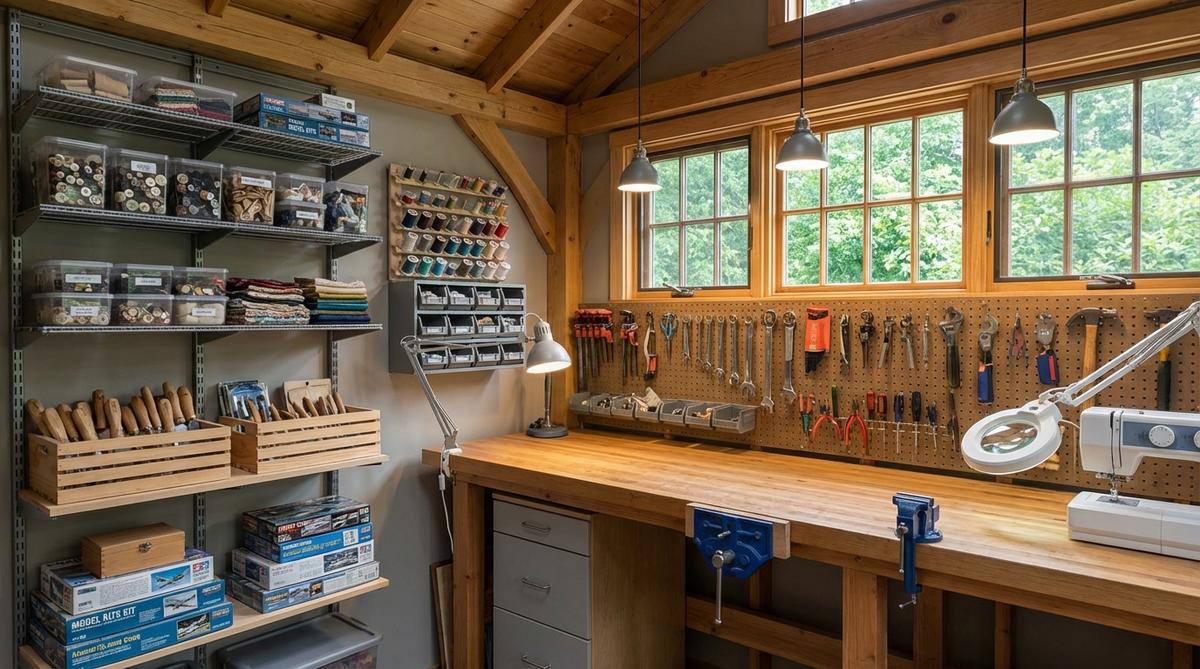
Dedicated craft spaces organize supplies for sewing, woodworking, or model building away from living areas. Wall-mounted tool storage and wide work surfaces maximize efficiency in 8×10 foot layouts.
Task lighting positioned above work areas reduces eye strain during detailed projects. Adjustable shelving accommodates supplies ranging from fabric bolts to paint containers to hardware bins.
18. Yoga Meditation Studio
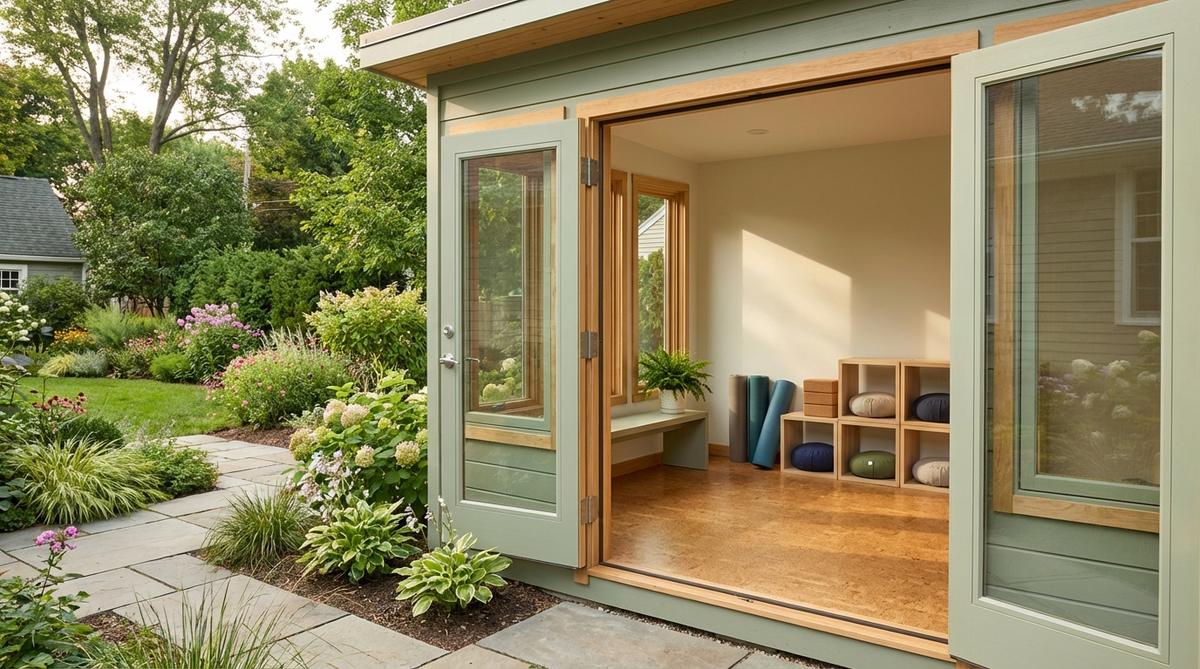
Minimal furnishings and calming aesthetics create peaceful yoga spaces in compact 8×8 foot sheds. Cork or bamboo flooring provides cushioning and natural warmth underfoot.
Large windows or glass doors connect practitioners with garden views while maintaining weather protection. Simple storage cubes hold mats, blocks, and meditation cushions.
Small Garden Greenhouse Designs
These small garden greenhouse solutions combine growing environments with storage functionality for plant enthusiasts working within space constraints.
19. Potting Shed Hybrid
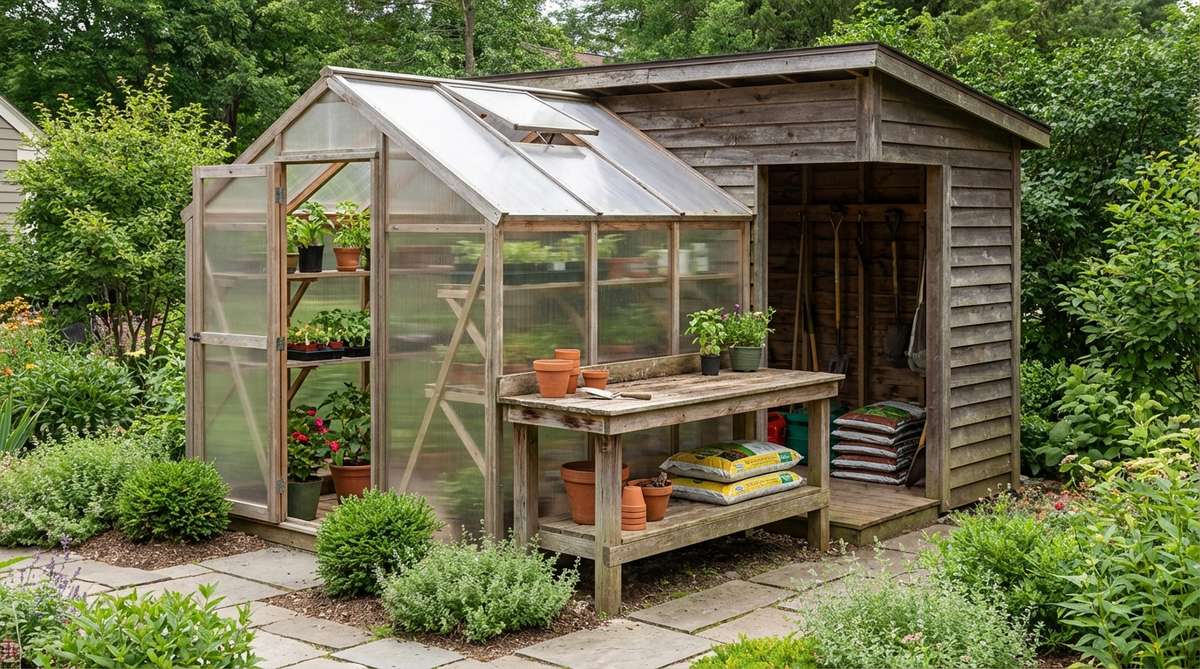
Half greenhouse, half storage creates versatile spaces for both plant propagation and tool organization. The greenhouse section features glass or polycarbonate panels for light transmission while the opaque storage area houses soil, pots, and equipment.
A central potting bench bridges both zones with workspace facing the greenhouse for plant monitoring. This 10×8 configuration balances growing capacity with practical storage needs.
Install shelving in the greenhouse section for seed starting trays and young plants. The combination prevents tool clutter from interfering with delicate growing environments.
20. Lean-To Greenhouse
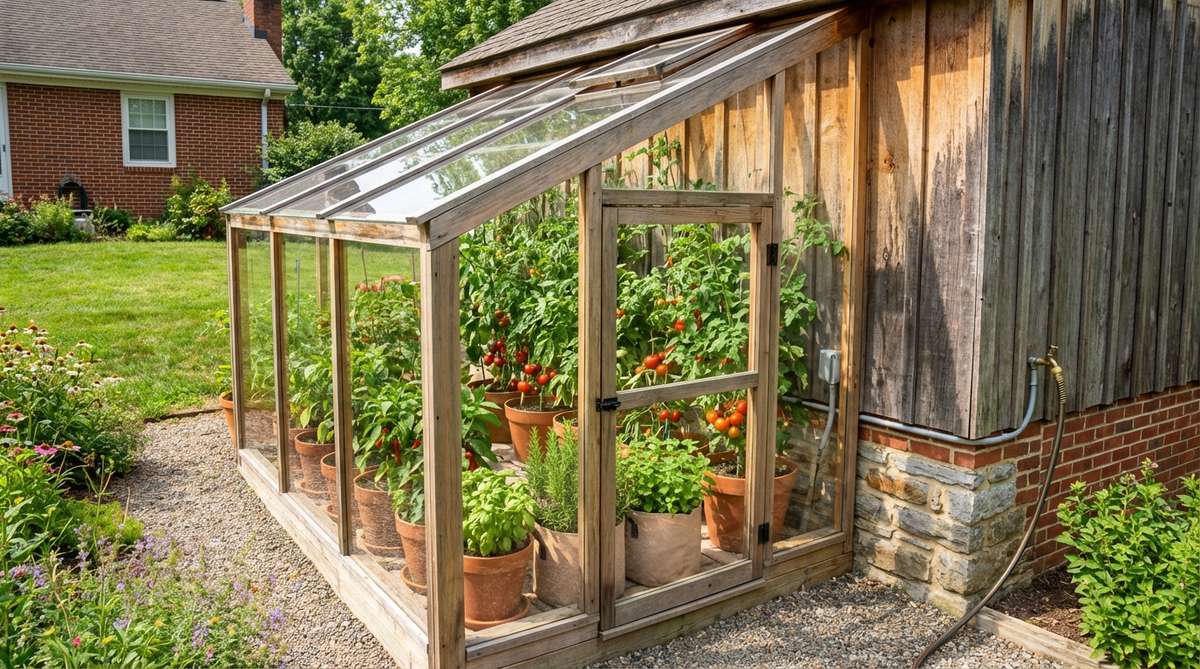
Lean-to greenhouses attach to south-facing walls, absorbing building heat while requiring minimal garden footprint. The 6×4 foot size accommodates tomatoes, peppers, and herbs in growing bags or containers.
The attached design simplifies electrical and water connections from the house. Thermal mass from the shared wall moderates temperature swings between day and night.
21. Cold Frame Storage Combo
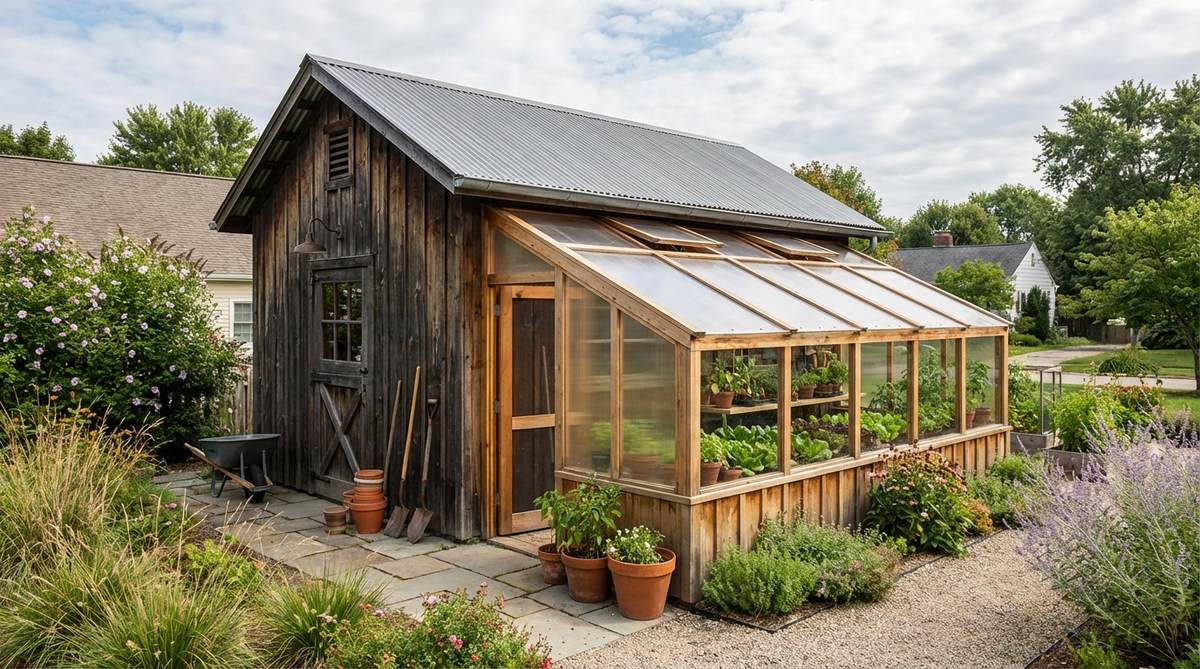
A traditional shed with an attached cold frame extends the growing season without requiring a full greenhouse. The cold frame section mounts to the south-facing shed wall, utilizing its structure for support.
Grow early salad greens, hardening off seedlings, or overwinter tender perennials in the cold frame. The shed behind stores potting supplies, tools, and seasonal equipment within steps of the growing area.
22. Vertical Greenhouse Tower
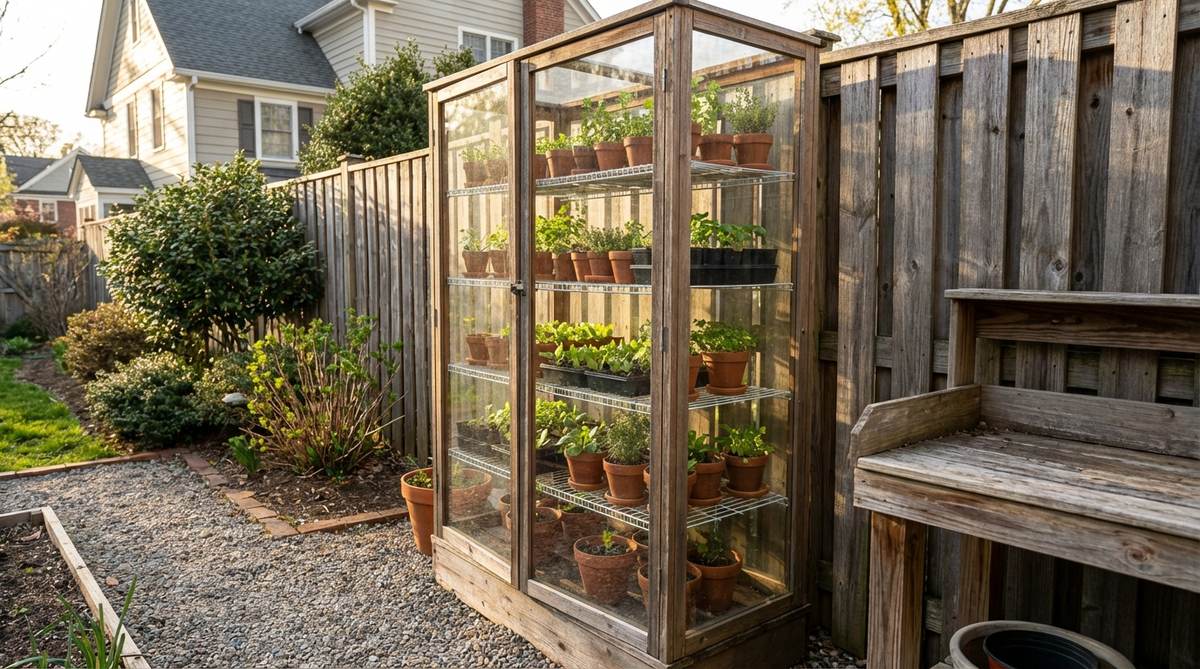
Narrow 3×6 foot greenhouse towers grow vertically with five to six shelf levels for maximum plant density. Polycarbonate or glass panels on three sides provide light while the back wall offers structural support.
Position towers against fences or walls to protect from wind while maintaining southern exposure. Each shelf level accommodates multiple small pots or seed trays.
23. Greenhouse Lounge Space
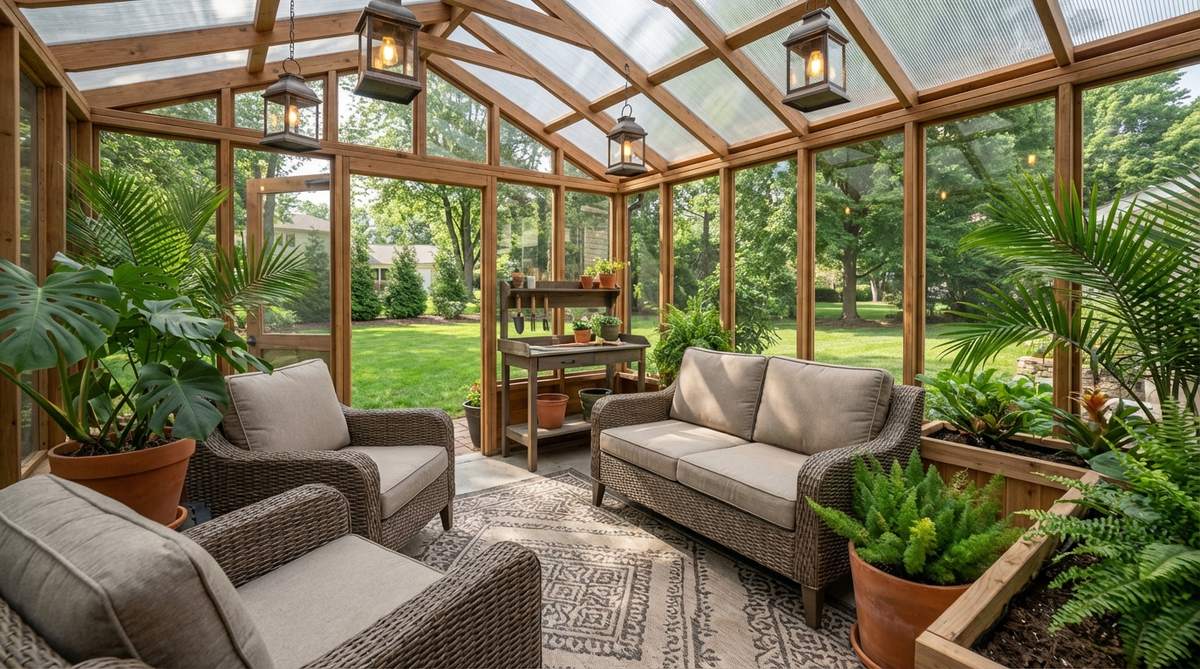
A 12×8 greenhouse with lounge furniture creates an immersive garden experience surrounded by plants. Wicker seating, outdoor rugs, and hanging lanterns establish comfortable gathering spaces among growing beds.
The humid greenhouse environment suits tropical plants while providing a unique entertaining venue. Ventilation systems manage temperature during warm months while preserving the tropical atmosphere.
24. Windowsill Propagation Shed
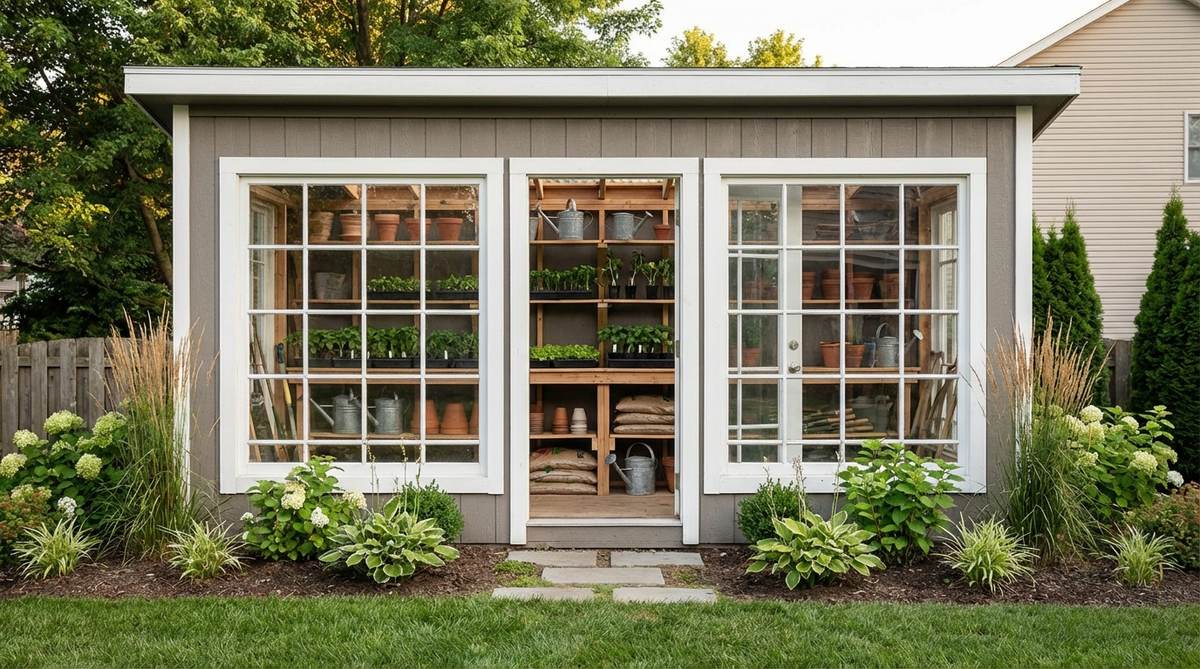
Standard storage sheds with oversized windows function as propagation spaces without full greenhouse construction. South and west-facing windows provide adequate light for seedlings and cuttings.
Interior shelving positioned near windows creates tiered growing zones. The remaining space stores gardening supplies, maintaining the dual-purpose functionality.
Small Garden Gazebo Spaces
Compact gazebo designs provide shelter and storage while serving as garden focal points with architectural interest.
25. Storage Bench Gazebo
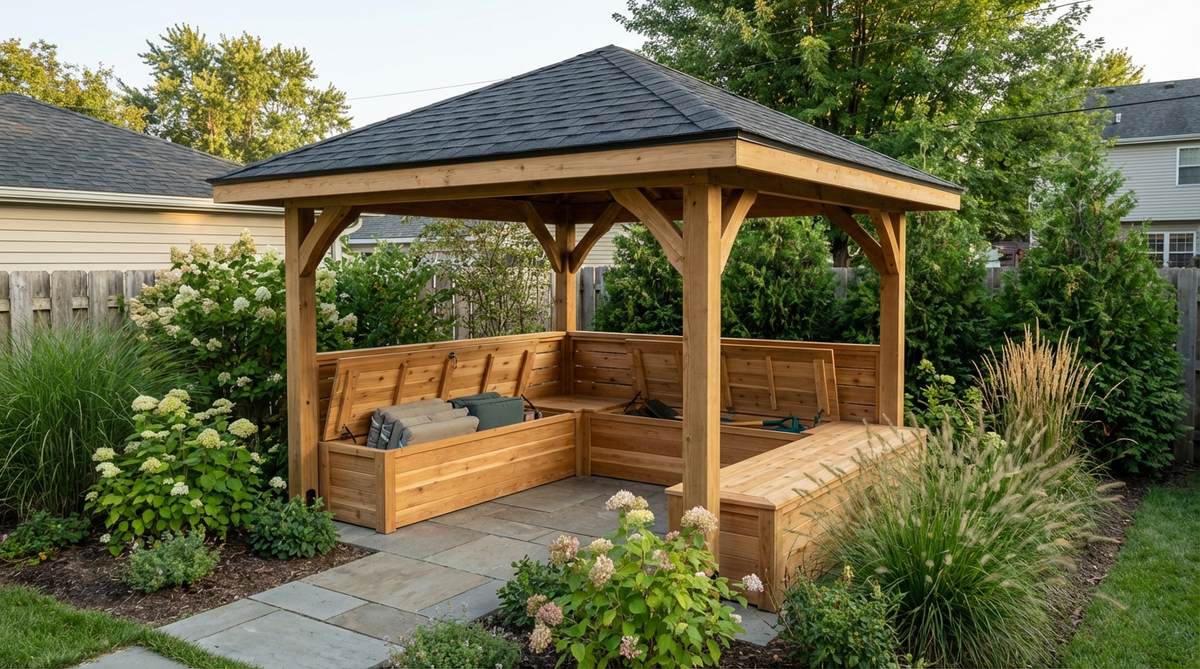
Open-sided gazebos with built-in storage benches combine seating, storage, and shelter in 8×8 foot structures. Waterproof bench compartments hold cushions, garden games, or entertaining supplies.
The open design maintains airflow while the roof provides rain and sun protection. Position near patios or outdoor dining areas for convenient access during gatherings.
Lockable bench lids secure contents when the garden is unattended. This dual-function approach eliminates separate storage shed requirements for many homeowners.
26. Tool Station Gazebo
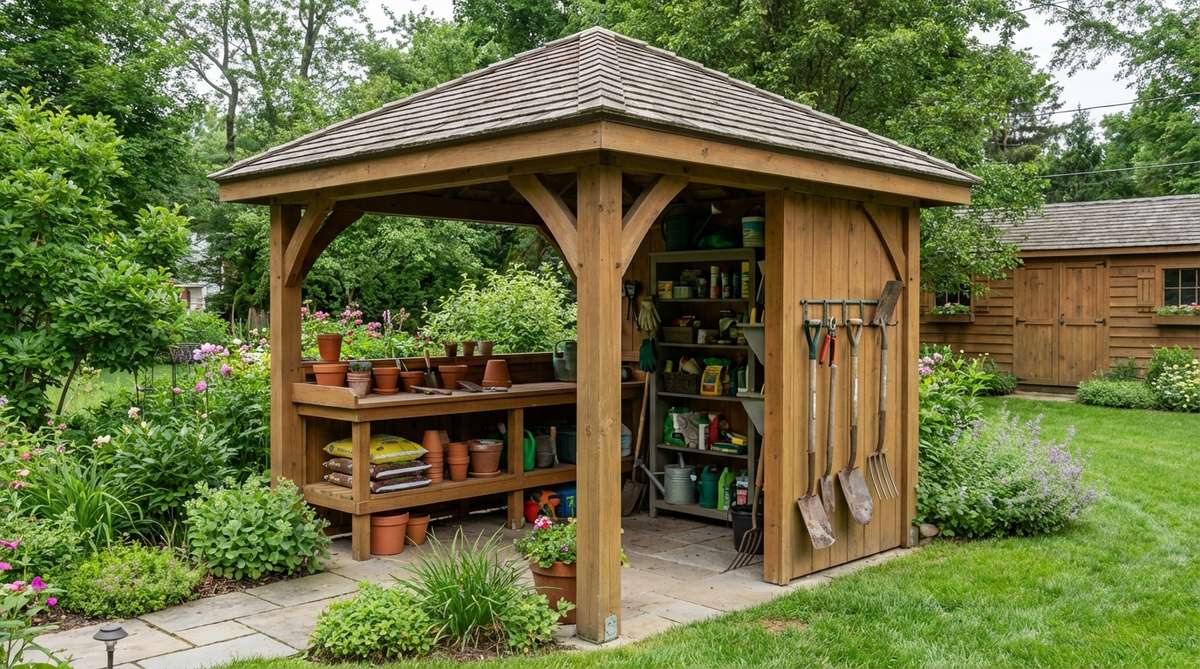
A working gazebo positions potting benches, tool racks, and supply storage under weather protection without enclosing walls. The 6×6 foot covered workspace keeps gardeners comfortable during planting and maintenance tasks.
Mount pegboards or tool racks on support posts to keep implements organized and accessible. The open design provides natural ventilation that prevents moisture buildup on metal tools.
27. Dining Gazebo With Storage
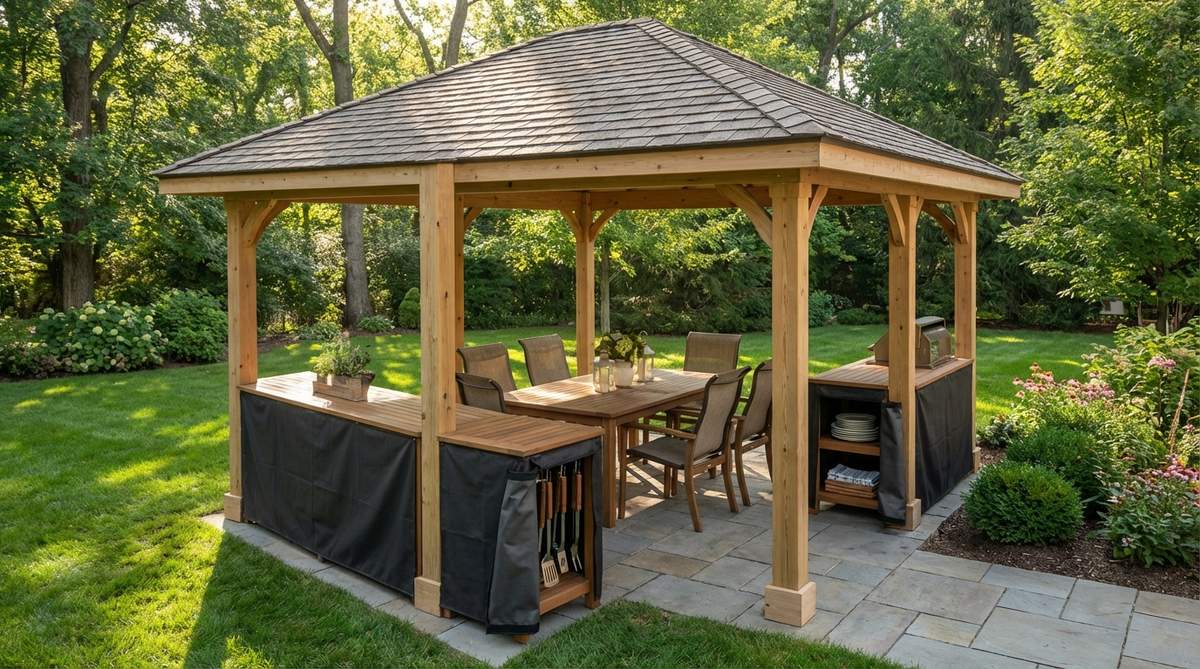
Outdoor dining gazebos with integrated storage skirts combine entertainment space with practical organization. Built-in cabinets around the perimeter hold grilling tools, serving dishes, and table linens.
The 10×10 foot size accommodates six to eight diners comfortably while the storage eliminates trips indoors for supplies. Weather-resistant cabinetry withstands exposure while maintaining organized storage.
28. Portable Gazebo With Bag
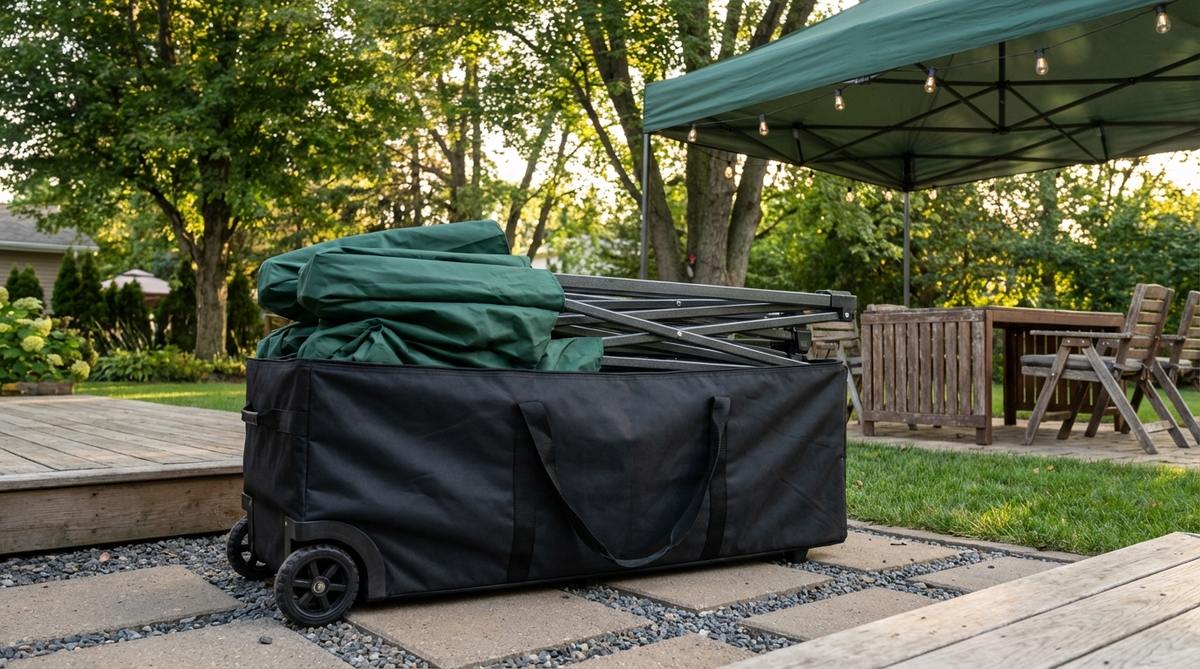
Pop-up gazebos with wheeled storage bags offer temporary shelter and storage for events or seasonal use. Heavy-duty bags made from 1000-denier polyester protect frames and canopies during storage.
Set up takes minutes for garden parties, farmers markets, or outdoor workspaces. The portable design suits renters or homeowners who need flexible space solutions.
Specialty Storage Solutions
Purpose-built structures address specific storage challenges with targeted designs that outperform general-purpose sheds.
29. Bike Storage Shed
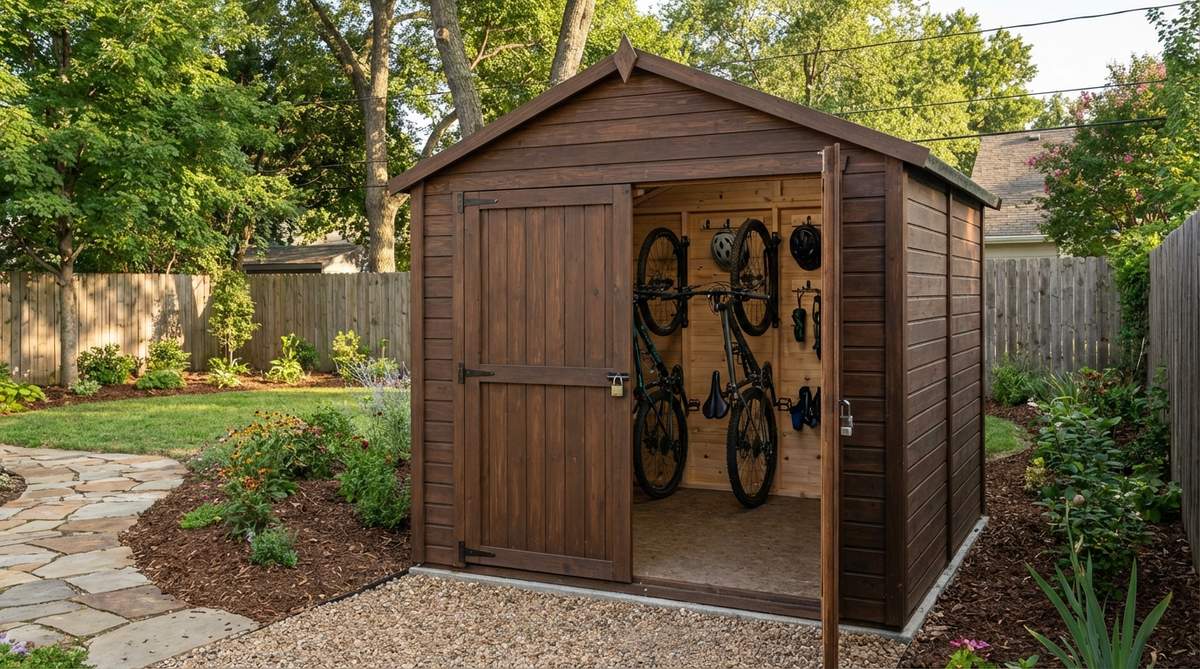
Dedicated bike sheds measuring 3×7 feet secure bicycles and outdoor gear in compact, weather-resistant structures. Apex roofs provide clearance for adult bikes while maintaining narrow footprints.
Interior bike racks mount to walls, holding two to four bicycles vertically to maximize floor space. Additional hooks store helmets, locks, and cycling accessories.
Steel or pressure-treated timber construction with lockable doors deters theft better than open storage. The specialized design prevents bikes from cluttering garages or garden sheds.
30. Log Storage Shelter
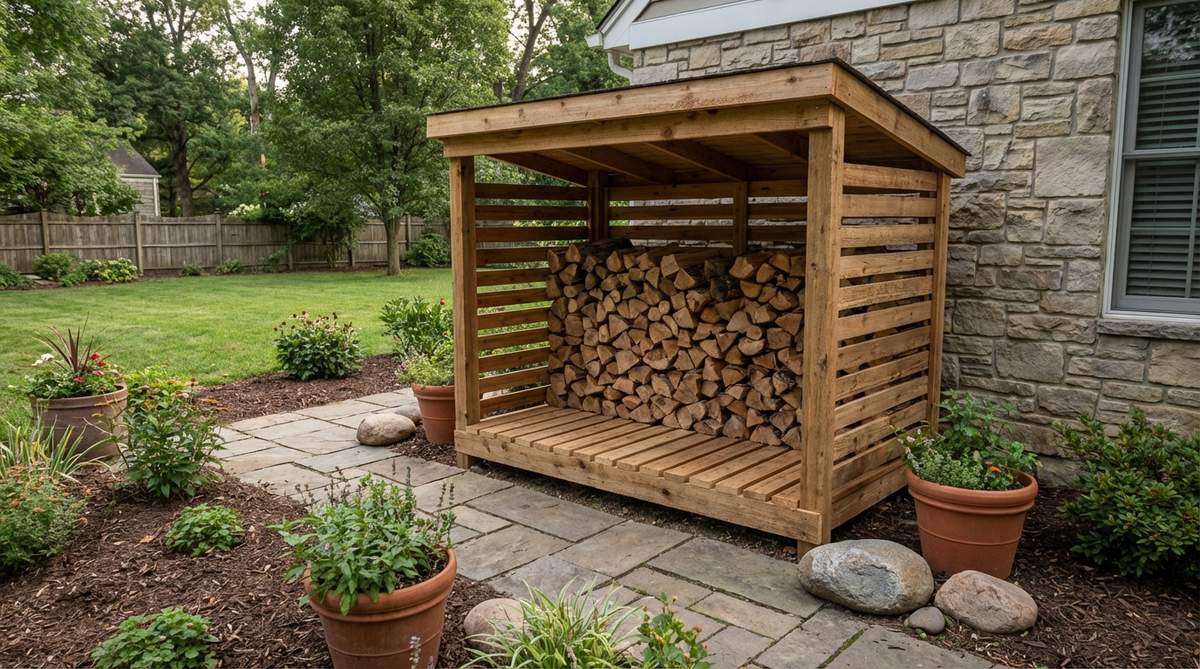
Open-front log stores keep firewood dry while maintaining airflow that prevents mold. Raised floors separate logs from ground moisture while slatted sides promote air circulation.
A 6×3 foot shelter stores approximately one cord of split wood. Position near the house for convenient access during heating season while keeping bark debris away from living spaces.
31. Wheelie Bin Enclosure
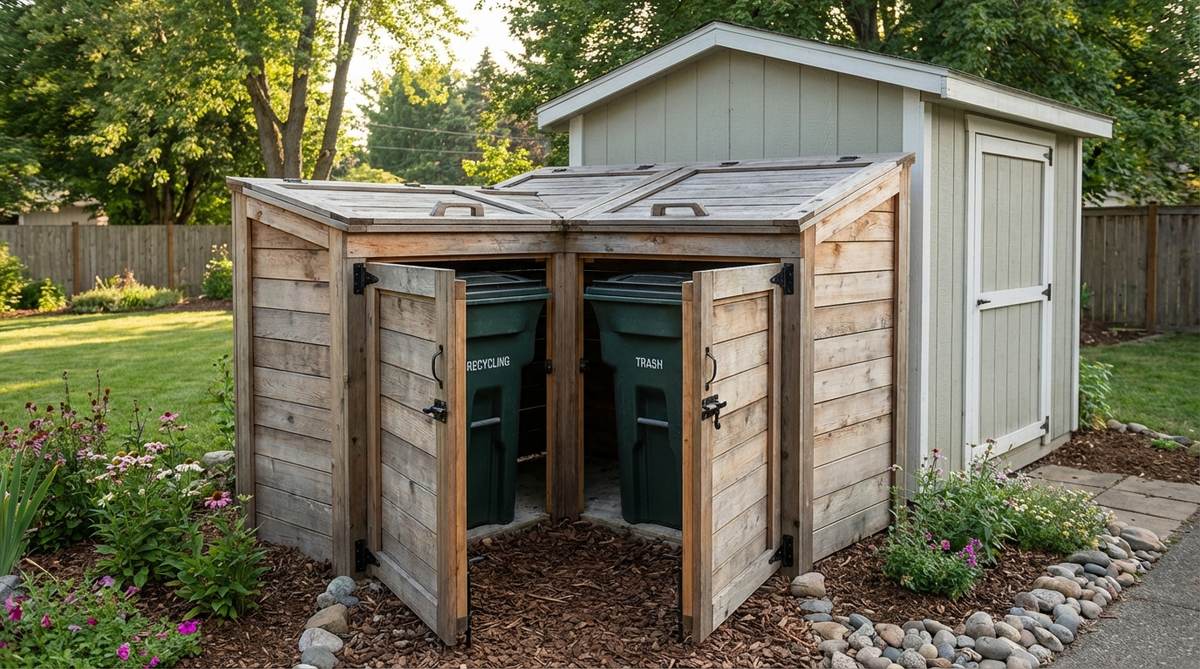
Purpose-built bin stores conceal waste containers while providing easy access for collection days. Double or triple bay designs accommodate recycling, compost, and waste bins in organized configurations.
Hinged lids allow filling from above while front gates swing open for wheeling bins to the curb. The enclosed design contains odors and deters pests better than exposed bins.
32. Garden Hose Cabinet
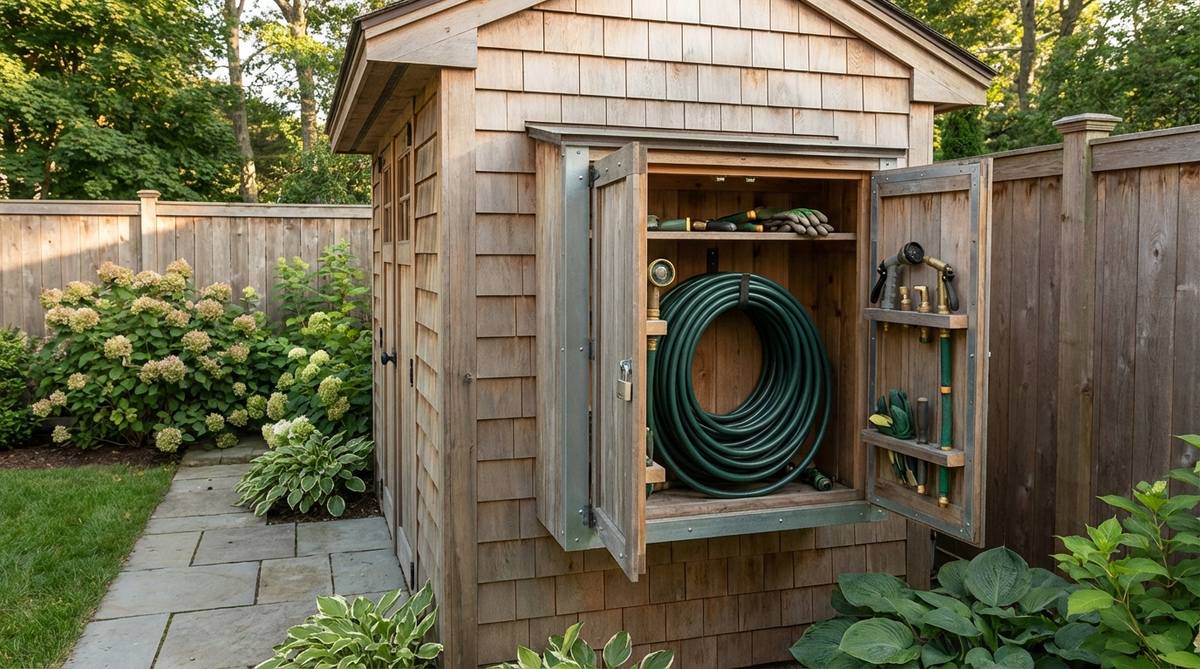
Compact wall-mounted cabinets store coiled hoses, spray nozzles, and watering accessories in 2×2 foot footprints. The vertical design mounts to exterior walls or fence posts.
Internal hose reels or hooks keep hoses tangle-free and ready for use. Lockable doors protect brass fittings and expensive nozzles from theft.
33. Micro Pod Workspace
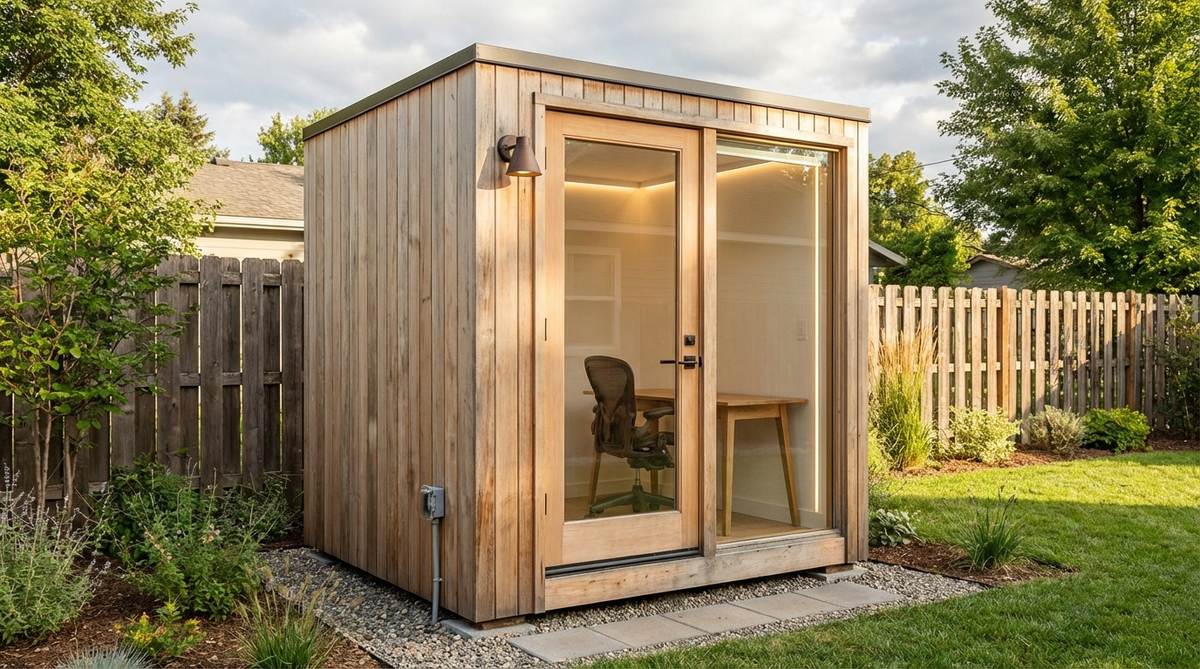
Ultra-compact pods measuring 1.8×1.8 meters provide just enough space for a desk, chair, and minimal storage. These super-mini structures suit professionals needing dedicated work zones without consuming garden area.
Western Red Cedar or Redwood cladding offers natural weather resistance with attractive aesthetics. Horizontal or vertical board orientation customizes appearance to match existing architecture.
Full insulation and integrated electrics create year-round comfort despite minimal dimensions. The micro pod represents the smallest viable workspace solution for modern remote workers.
Transform Limited Space Into Maximum Function
These 33 small garden shed solutions demonstrate that thoughtful design overcomes space limitations, whether you need tool storage, a creative workspace, or a growing environment. Vertical organization systems, modular construction, and dual-purpose layouts extract maximum utility from compact footprints. Start by assessing your primary needs—storage capacity, workspace requirements, or plant growing—then select designs that deliver functionality without overwhelming your garden. Fresh Garden Ideas encourages you to implement these expert strategies and transform your outdoor space into an organized, productive, and inspiring environment.
Frequently Asked Questions
What is the best size for a small garden shed?
The optimal small garden shed size depends on your storage needs and available space. A 6×4 foot shed accommodates garden tools, bikes, and seasonal items for most homeowners, while urban gardens benefit from 4×3 foot lean-to designs. Vertical 2×4 foot locker sheds work well for long-handled tools in extremely limited spaces. Measure your items before purchasing to ensure adequate capacity without over-building.
How do I maximize storage in a small garden shed?
Maximize small shed storage by utilizing vertical wall space with floating shelves, pegboard systems, and ceiling-mounted racks. Install hooks and track systems on all available walls including door backs. Use stackable containers, label everything clearly, and store seasonal items overhead. Position frequently used tools at eye level and reserve floor space for wheeled equipment. Modular furniture and foldaway work surfaces adapt spaces for multiple purposes.
Do I need planning permission for a small garden shed?
Most small garden sheds in the United States do not require building permits if they remain under 120-200 square feet, depending on local regulations. Structures must typically be at least 5 feet from property lines and not exceed 12-15 feet in height. Always check with your local building department and homeowners association before construction, as requirements vary by jurisdiction. Some areas restrict shed placement in front yards or require specific setbacks from utilities.
What materials last longest for small garden sheds?
Pressure-treated timber with 10-year anti-rot guarantees provides excellent durability for wooden sheds when properly maintained. Metal sheds constructed from galvanized steel resist rot and pests while requiring minimal upkeep. Western Red Cedar and Redwood offer natural weather resistance with attractive appearance but cost more than pressure-treated options. Vinyl or resin sheds never require painting but can fade in intense sunlight. Choose materials based on your climate, maintenance preferences, and budget.
Can a small garden shed be used as a home office?
A small garden shed converts successfully into a home office with proper insulation, electrical wiring, and climate control. Minimum dimensions of 6×8 feet provide adequate space for a desk, chair, and storage. Install double-glazed windows for natural light and temperature control. Add dedicated electrical circuits for computers and lighting. Ensure Wi-Fi connectivity through router proximity or ethernet installation. Insulated sheds with proper ventilation create comfortable year-round workspaces separate from household distractions.
How much does a small garden shed cost?
Small garden shed costs range from 500 to 3000 dollars depending on size, materials, and features. Basic 6×4 foot metal sheds start around 500 dollars, while pressure-treated wooden sheds of similar size cost 800 to 1500 dollars. Custom-built sheds or those with premium materials like Western Red Cedar range from 2000 to 5000 dollars. Garden office pods with insulation and electrical systems cost 5000 to 15000 dollars. Installation adds 200 to 1000 dollars unless you choose DIY assembly.