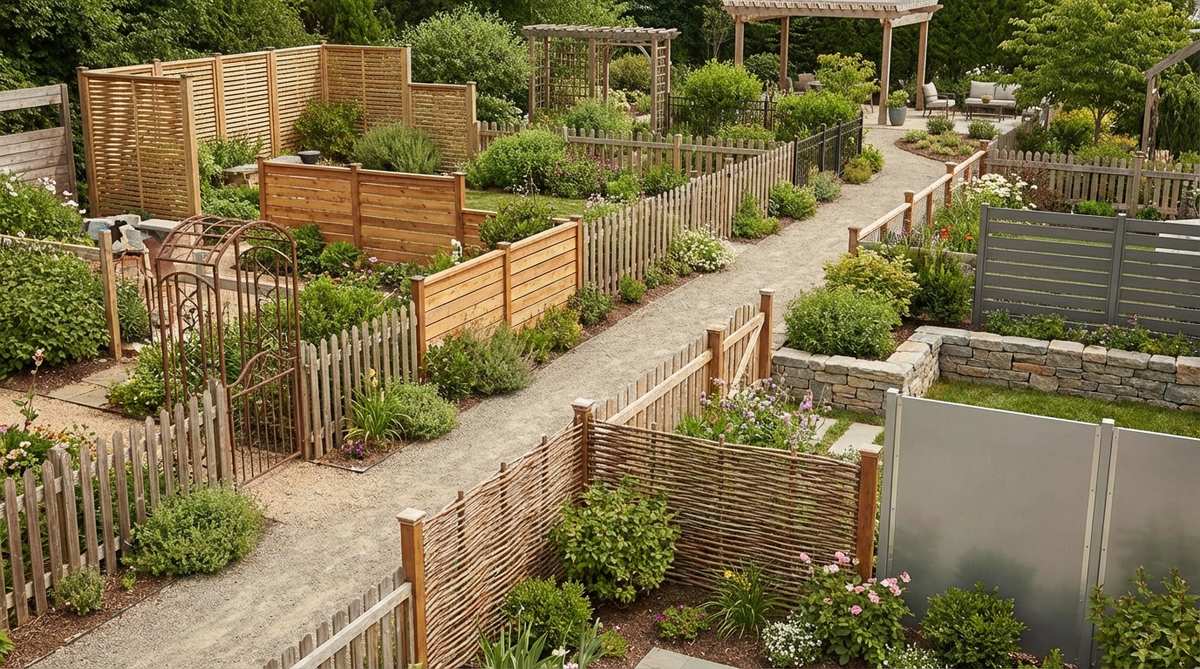
A well-designed small garden fence transforms compact outdoor spaces into private sanctuaries while establishing clear property boundaries without overwhelming limited square footage. These 45+ designs from Fresh Garden Ideas blend functionality with aesthetic appeal, proving that size constraints inspire creativity rather than limit possibilities.
Design SnapshotKey Principles
- Vertical Emphasis: Upward lines create height illusion, making small spaces feel more expansive while maintaining privacy
- Strategic Transparency: Alternating solid and open sections balance privacy needs with airflow and natural light penetration
- Material Economy: Lightweight materials like aluminum and narrow-profile wood reduce visual bulk without sacrificing structural integrity
- Integrated Function: Multi-purpose designs incorporate planters, lighting, and storage to maximize utility in constrained footprints
Contemporary Slatted Designs for Modern Privacy
Slatted fencing dominates current small garden fence trends because narrow gaps filter views while preserving essential light and air circulation. This category suits homeowners who prioritize privacy without creating closed-in atmospheres.
1. Vertical Narrow Slat Fence
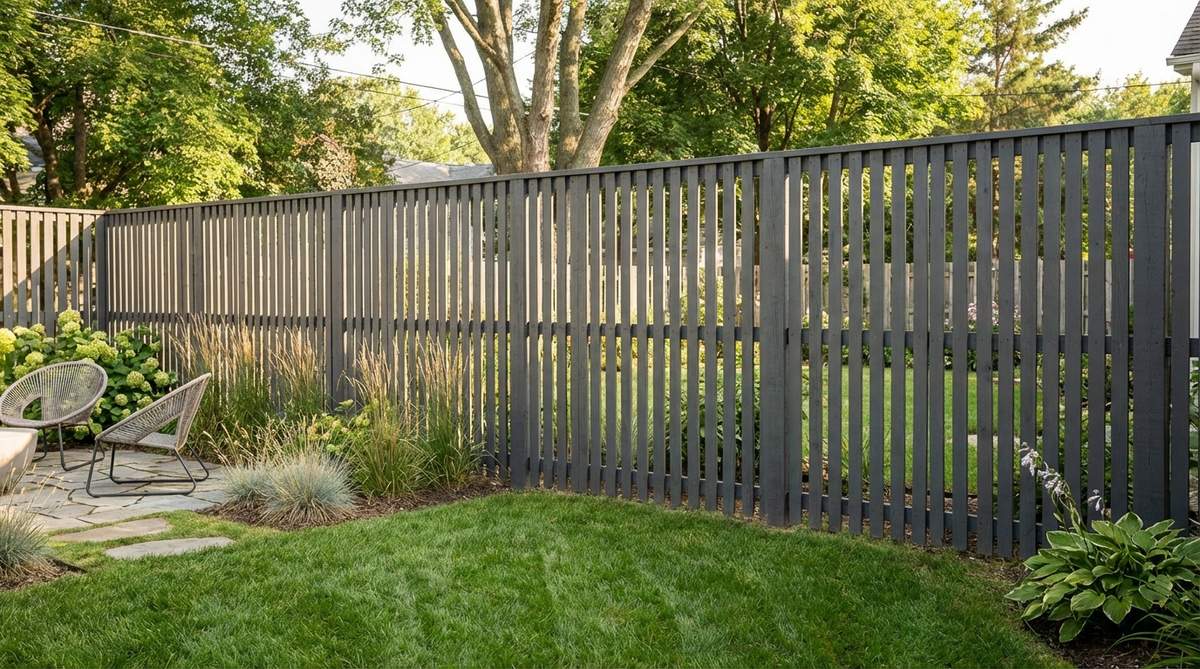
Vertical boards spaced one to two inches apart create a rhythmic pattern that draws eyes upward, visually expanding compact yards. The narrow slats form a semi-transparent screen that obscures direct sightlines while maintaining a connection to surrounding landscapes.
Install these panels with alternating slat widths to add subtle texture without complicating the clean aesthetic. Stain in charcoal or soft grey to complement contemporary architecture and outdoor furniture finishes.
This design works particularly well along side boundaries where complete opacity isn’t necessary but neighbors’ activity creates visual distractions during outdoor relaxation.
2. Horizontal Slat Cedar Fence
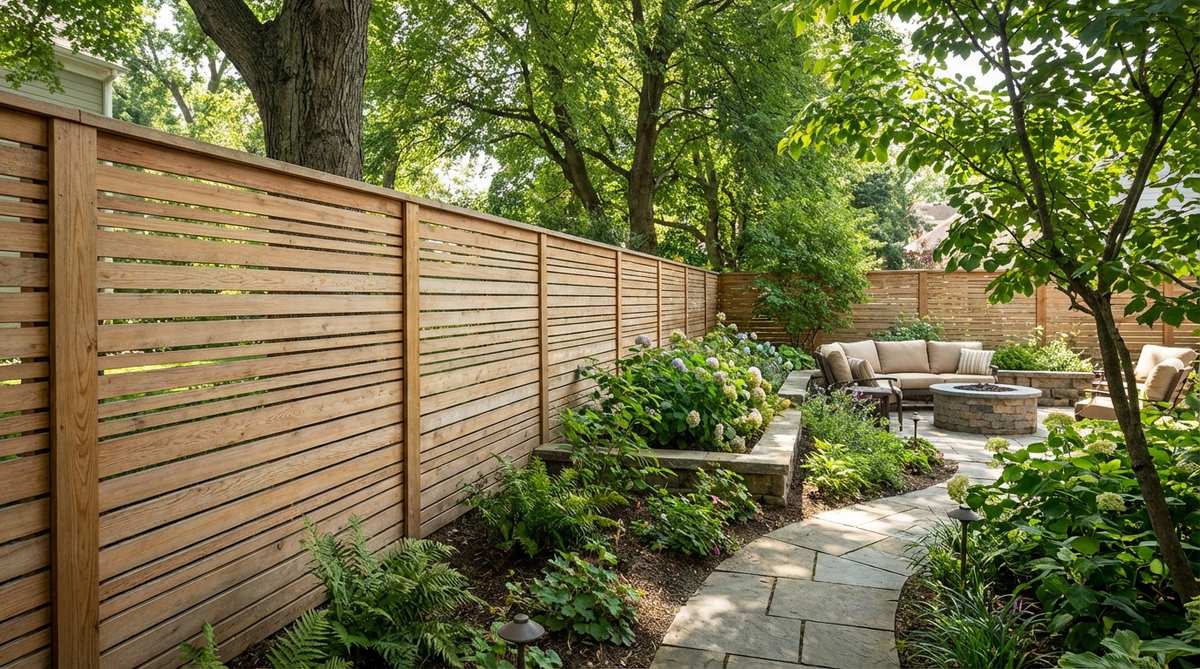
Cedar boards arranged horizontally create linear continuity that makes narrow gardens appear wider than actual dimensions. The horizontal orientation naturally guides perception across the property rather than emphasizing limited depth.
Select boards with tight grain patterns and apply transparent sealers that preserve natural wood tones while protecting against moisture. Position slats with quarter-inch spacing to maintain privacy while preventing the solid appearance of traditional panel fencing.
Cedar’s natural resistance to decay makes this option practical for ground-level installations in regions with high humidity or frequent precipitation.
3. Blackened Steel Slat Screen
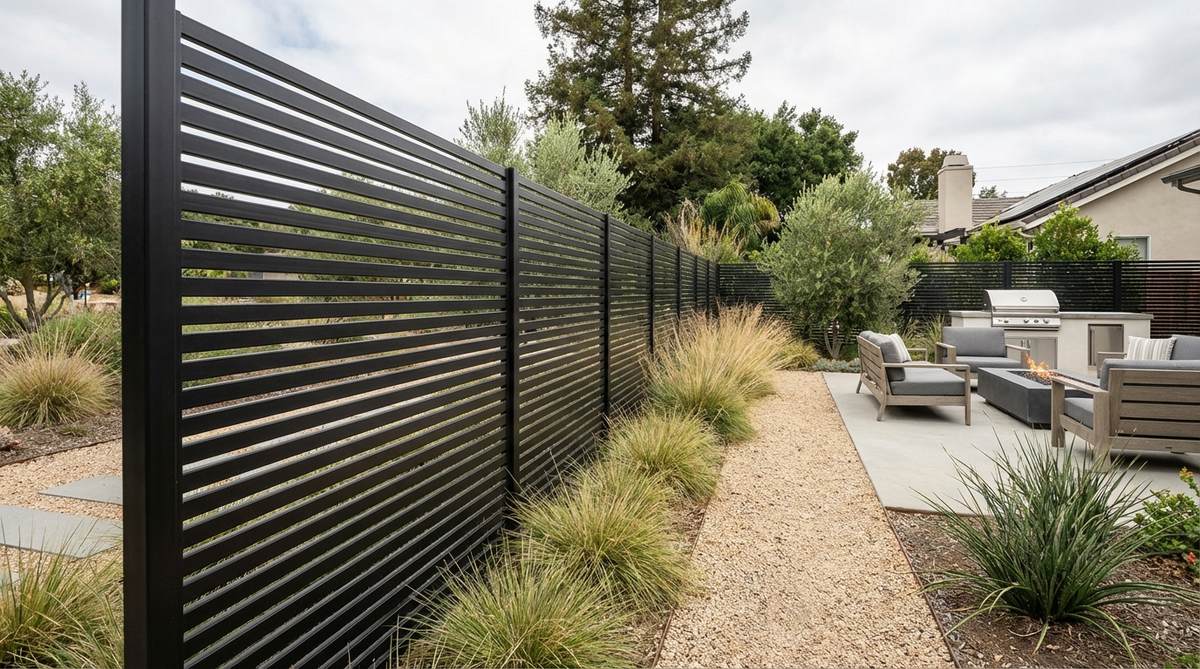
Powder-coated steel slats deliver modern sophistication with minimal maintenance requirements. The narrow profile of metal allows tighter spacing without creating visual heaviness that overwhelms small garden perimeters.
These screens work exceptionally well in contemporary landscapes with concrete paving and architectural plantings. The dark finish recedes visually, making the fence function as a backdrop rather than a dominant feature.
Corrosion-resistant coatings ensure longevity in coastal environments where salt air accelerates deterioration of traditional materials.
4. Alternating Width Wood Screen
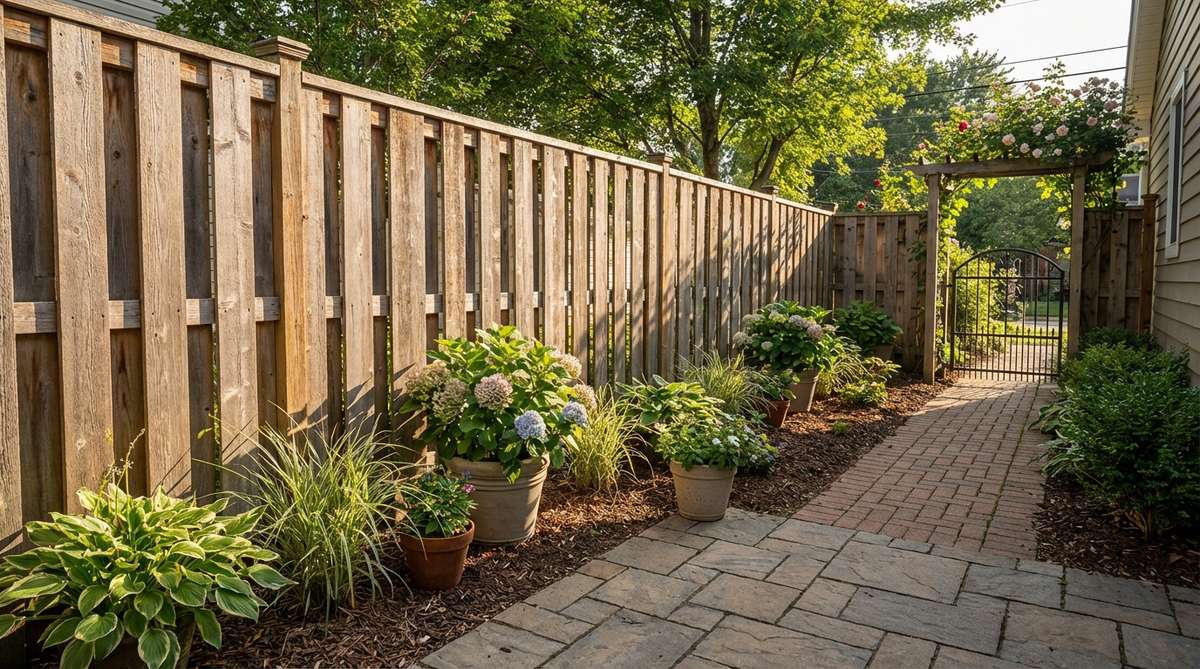
Mixing board widths within a single fence panel creates dynamic visual interest that prevents monotony in confined spaces. Alternate three-inch boards with six-inch planks to establish an organic rhythm that feels intentional rather than uniform.
This approach breaks up long runs of fencing that might otherwise appear as solid barriers. The varied widths cast changing shadow patterns throughout the day, adding temporal dimension to static boundaries.
Seal all boards with identical finishes to maintain cohesive appearance while celebrating the dimensional variation.
5. Vertical Slatted Composite Fence
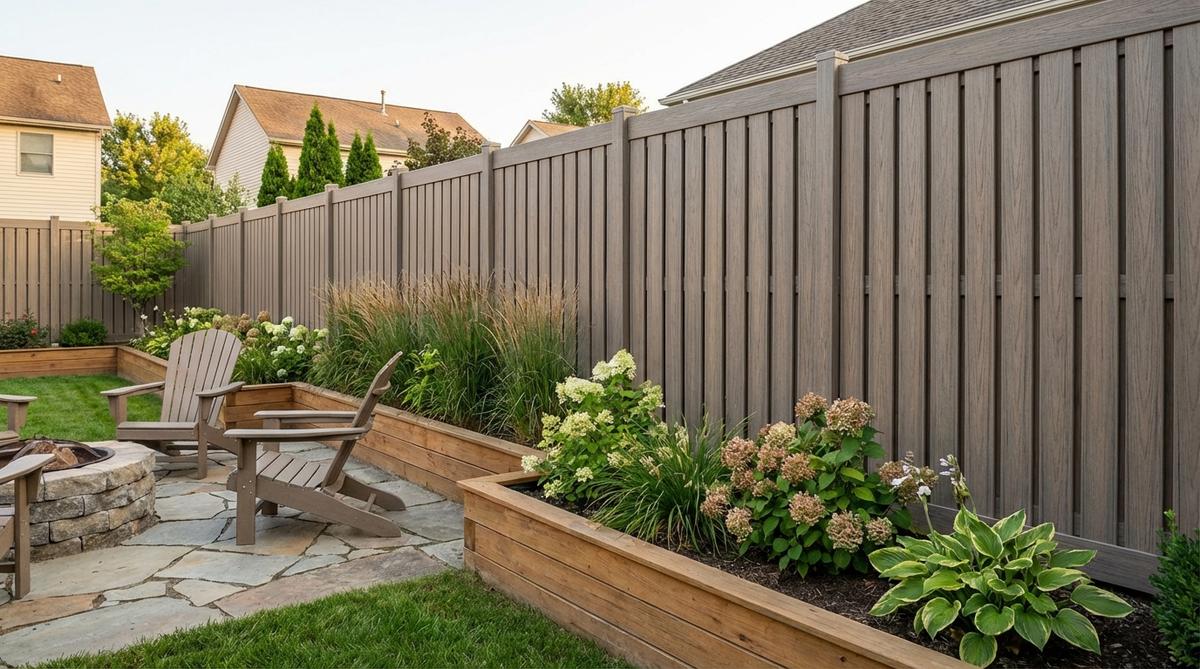
Composite materials replicate wood aesthetics without requiring seasonal maintenance that diverts time from garden enjoyment. Modern composites resist fading, warping, and insect damage while maintaining consistent color over decades.
These products often feature hollow profiles that reduce weight, simplifying installation on existing posts without structural reinforcement. The uniform appearance suits formal garden designs where natural wood variation might feel too casual.
Choose neutral tones that complement diverse planting schemes as garden aesthetics evolve through seasons and years.
6. Louvered Privacy Slat Design
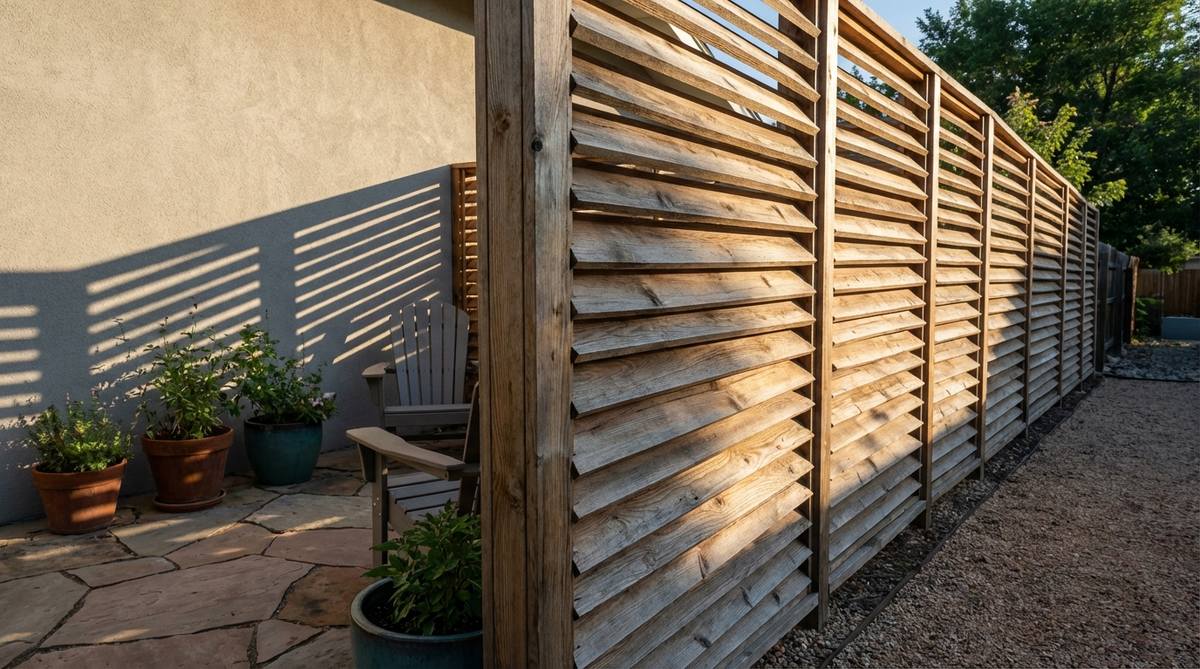
Angled slats installed at thirty to forty-five degree angles provide directional privacy that blocks views from standing positions while allowing ventilation. This configuration works particularly well for patios and seating areas adjacent to public pathways.
Position slats to deflect sightlines from the most common viewing angles, typically from neighboring windows or sidewalks. The angled arrangement creates intriguing shadow plays that add visual depth to plain walls behind the fencing.
Louvered designs perform exceptionally in windy locations, as the angled configuration reduces wind resistance compared to solid panels.
Classic Boundary Solutions with Timeless Appeal
Traditional fence styles adapt successfully to small gardens when executed with attention to proportion and scale. These proven designs establish clear boundaries while contributing to property curb appeal.
7. Picket Fence with Narrow Spacing
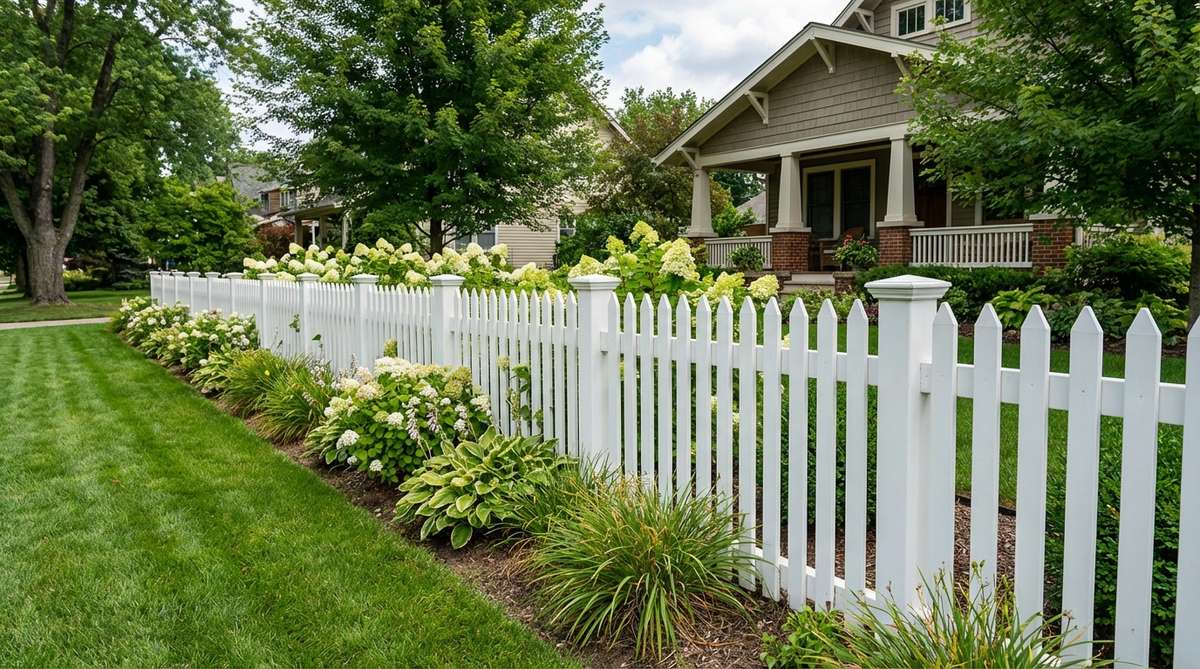
Classic picket fencing scaled to three-foot heights defines boundaries without blocking views or creating visual barriers that shrink perceived space. Narrow picket spacing at two to three inches apart increases privacy while maintaining the style’s characteristic openness.
This design particularly suits front gardens and street-facing boundaries where community connection matters as much as property definition. Paint in crisp white to reflect light and brighten shadowed corners common in compact urban lots.
The lower height makes this option ideal where local ordinances restrict fence heights near sidewalks and roadways.
8. Board-on-Board Shadow Box Fence
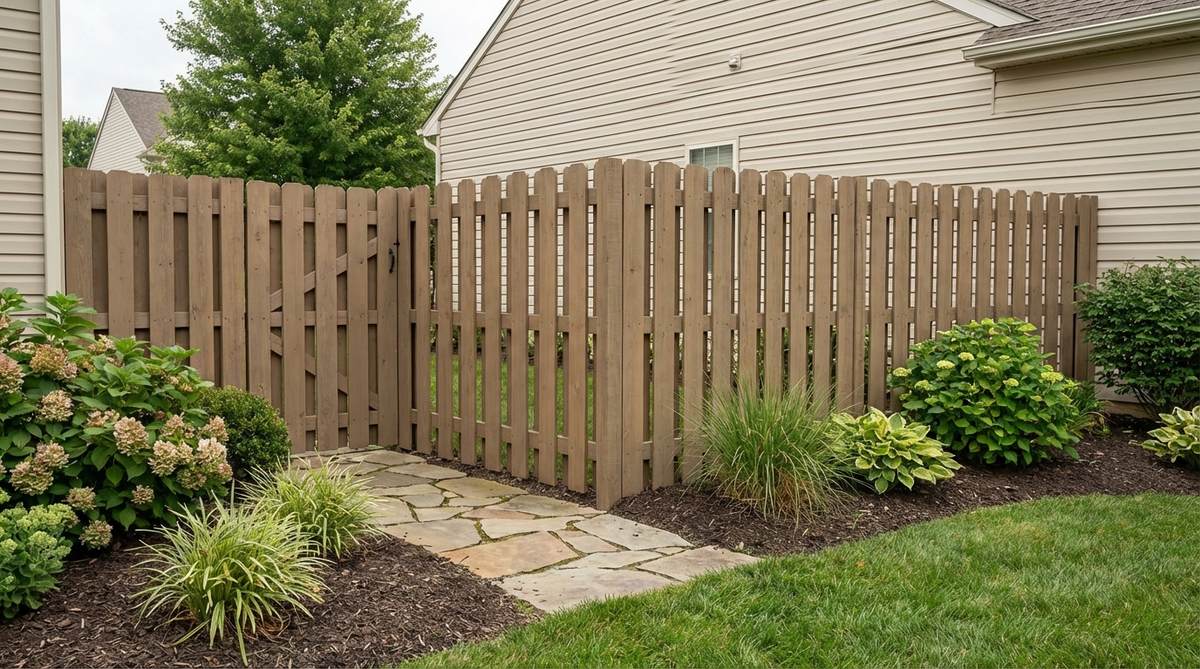
Vertical pickets attached to alternating sides of horizontal rails create dimensional depth while providing privacy from both sides of the boundary. This configuration allows air circulation that prevents moisture accumulation while obscuring direct sightlines.
The overlapping boards produce a layered appearance more visually interesting than flat panel fencing. This design maintains neighborly relations by presenting equally attractive views from both properties.
Install with one-inch overlap between boards to balance privacy needs with the shadow box aesthetic that defines the style.
9. Gothic Pointed Picket Fence
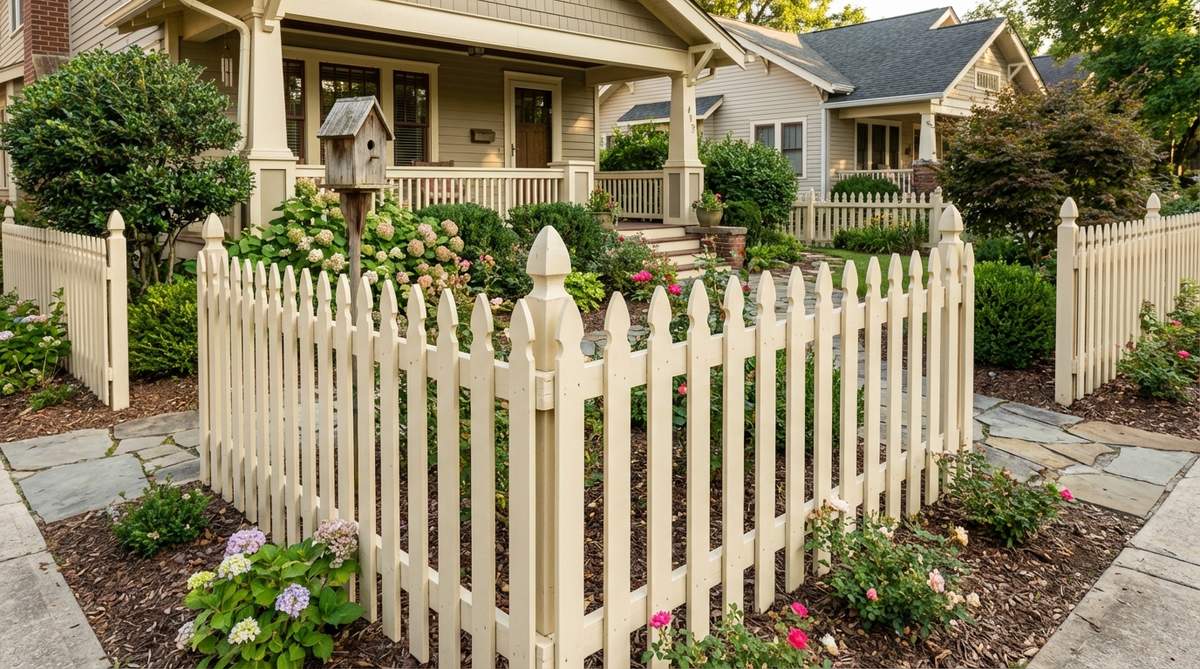
Pointed picket tops add architectural interest that elevates basic boundary fencing into decorative features. The vertical emphasis of pointed pickets draws attention upward, creating height perception valuable in compact spaces.
This detail works particularly well with Victorian and traditional architecture where decorative elements reinforce historical character. Space pickets at three inches apart to maintain the style’s signature transparency.
Paint or stain pointed pickets in contrasting colors to architectural trim for cohesive exterior coordination that strengthens curb appeal.
10. Close Board Feather Edge Fence
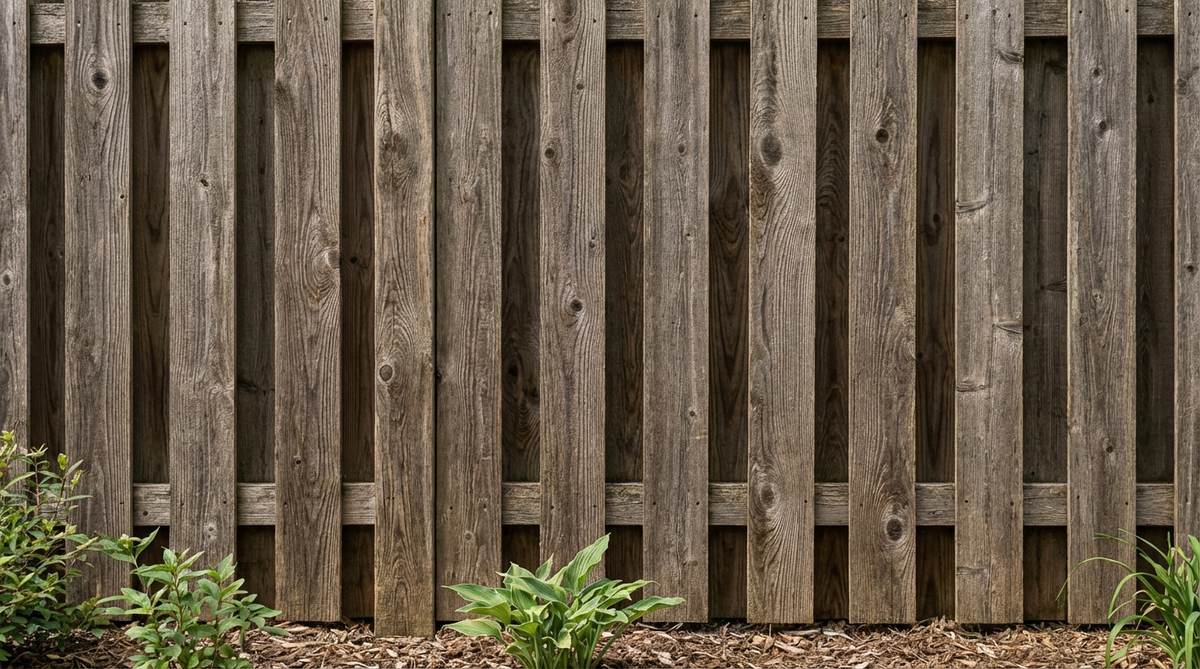
Overlapping vertical boards create solid privacy screens that maximize security in small gardens requiring complete visual separation. Each board overlaps its neighbor by approximately one inch, forming weather-tight barriers that also block wind.
This robust construction suits rear gardens and boundaries adjacent to parking areas or commercial properties. The overlapping configuration allows individual board replacement without dismantling entire sections.
Natural wood grain adds warmth that softens the solid appearance, preventing the fence from feeling oppressive in limited square footage.
11. Split Rail Rustic Fence
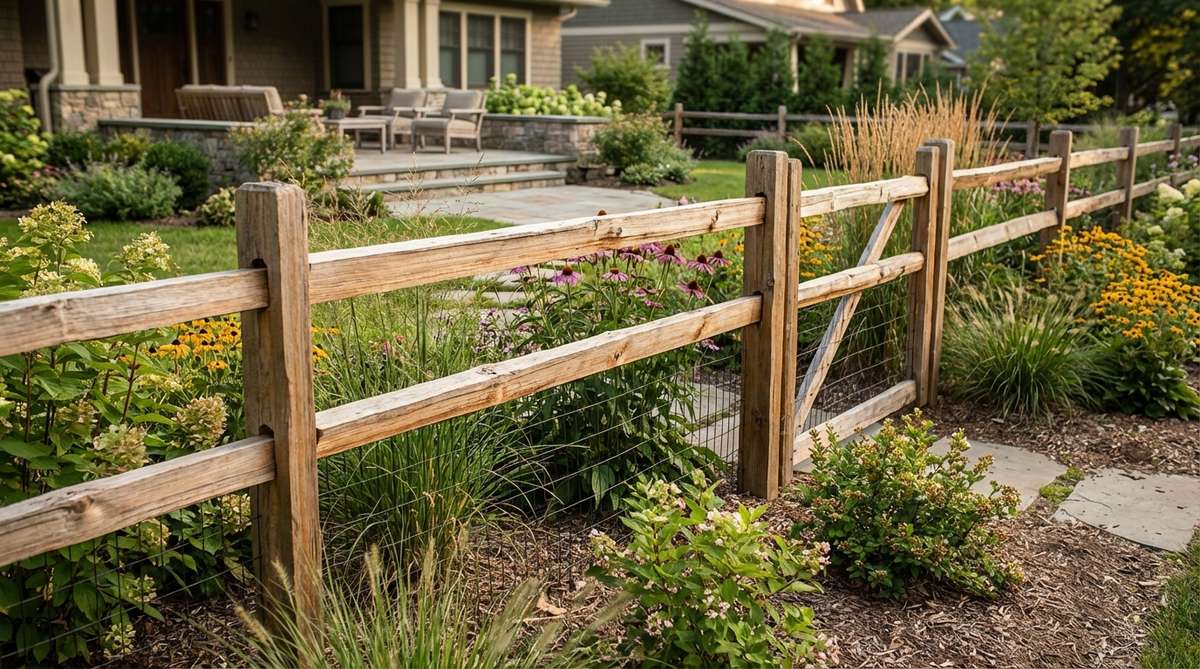
Two or three horizontal rails mortised through vertical posts establish boundaries with minimal visual interruption. This open design suits cottage gardens and rural properties where defining space matters more than creating privacy.
The rustic aesthetic complements naturalistic planting schemes and informal garden layouts. Split rail construction requires no specialized hardware, simplifying repairs and modifications as garden needs evolve.
Add wire mesh behind rails to contain pets while maintaining the fence’s characteristic transparency and casual appearance.
12. Lattice Panel Boundary Fence
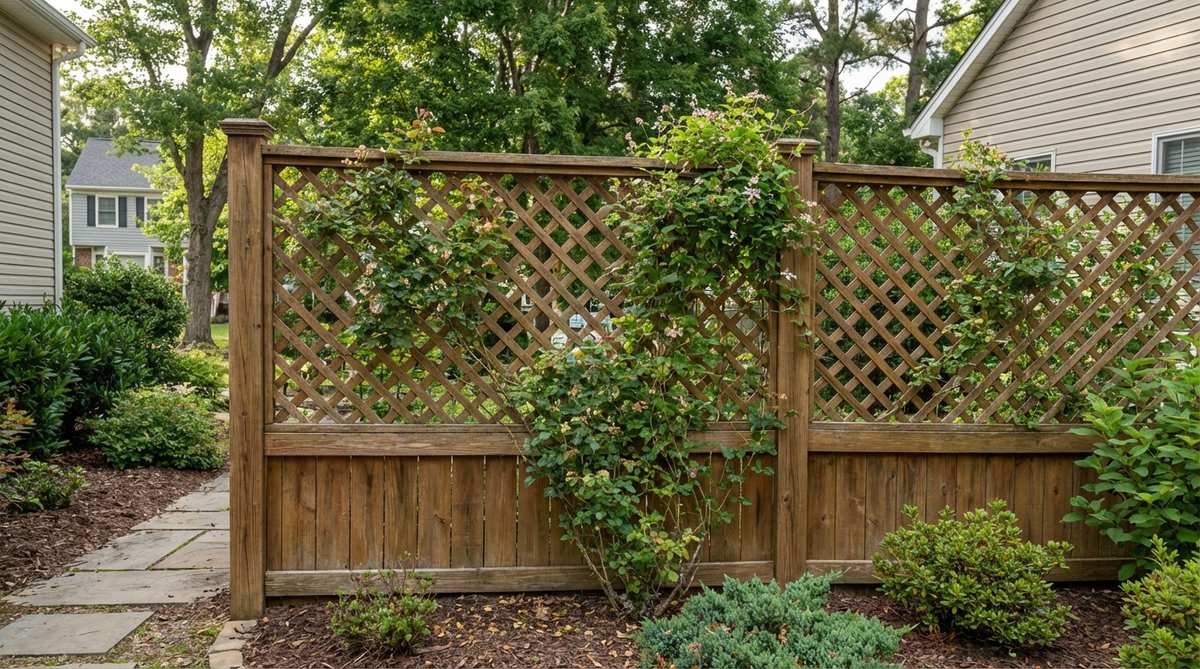
Diagonal wood strips form diamond patterns that filter views while supporting climbing plants. The open weave provides privacy through pattern density rather than solid barriers, creating softer boundaries appropriate for neighborly contexts.
Mount lattice panels on solid base sections to achieve privacy where needed most, typically from ground to four-foot heights. The upper lattice section admits light and maintains visual connection to surrounding landscapes.
This design excels as a base for flowering vines that enhance privacy gradually while adding seasonal color and texture.
Vertical Garden Integration for Living Boundaries
Living fences transform functional boundaries into productive garden features, maximizing utility where horizontal space limits traditional planting beds. These designs merge hardscaping with horticulture for multi-layered privacy solutions.
13. Trellis Backed Planter Fence
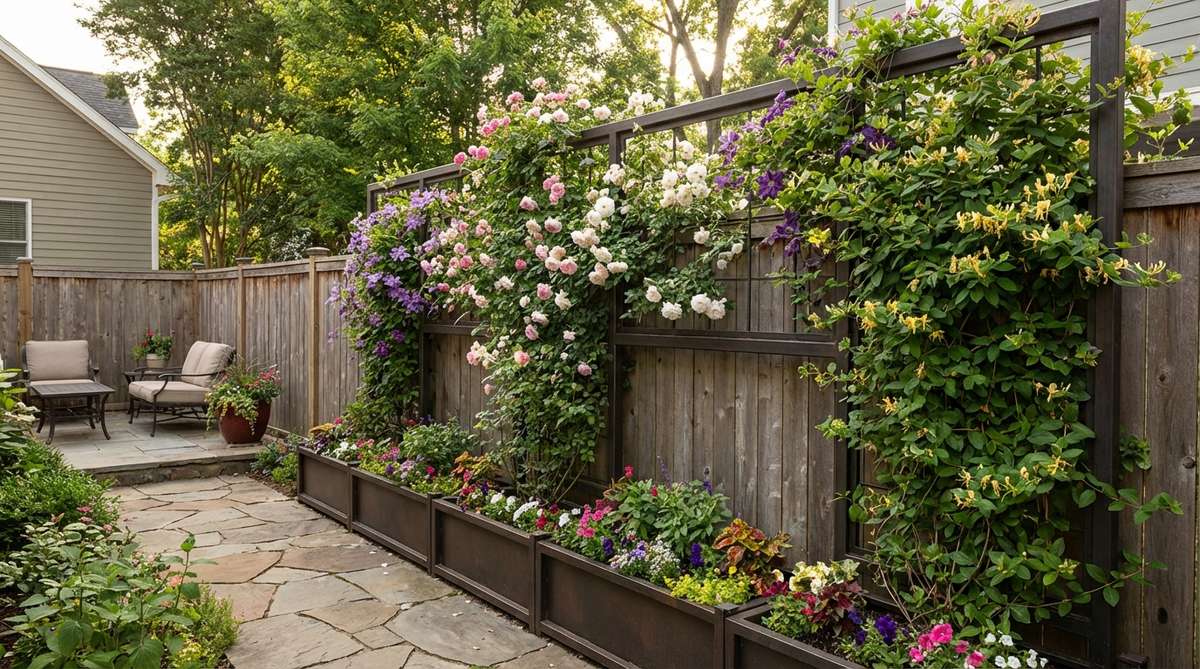
Elevated planter boxes integrated at fence bases provide growing space for climbing plants that quickly establish green privacy screens. The trellis structure supports vigorous climbers like clematis, honeysuckle, and climbing roses that add seasonal interest to static boundaries.
Position planters at twelve-inch depths to accommodate adequate root development without projecting excessively into limited garden space. The raised design improves drainage and makes maintenance more comfortable by reducing bending.
This configuration turns every linear foot of fencing into potential growing area, multiplying planting opportunities in space-constrained gardens.
14. Living Wall Modular System
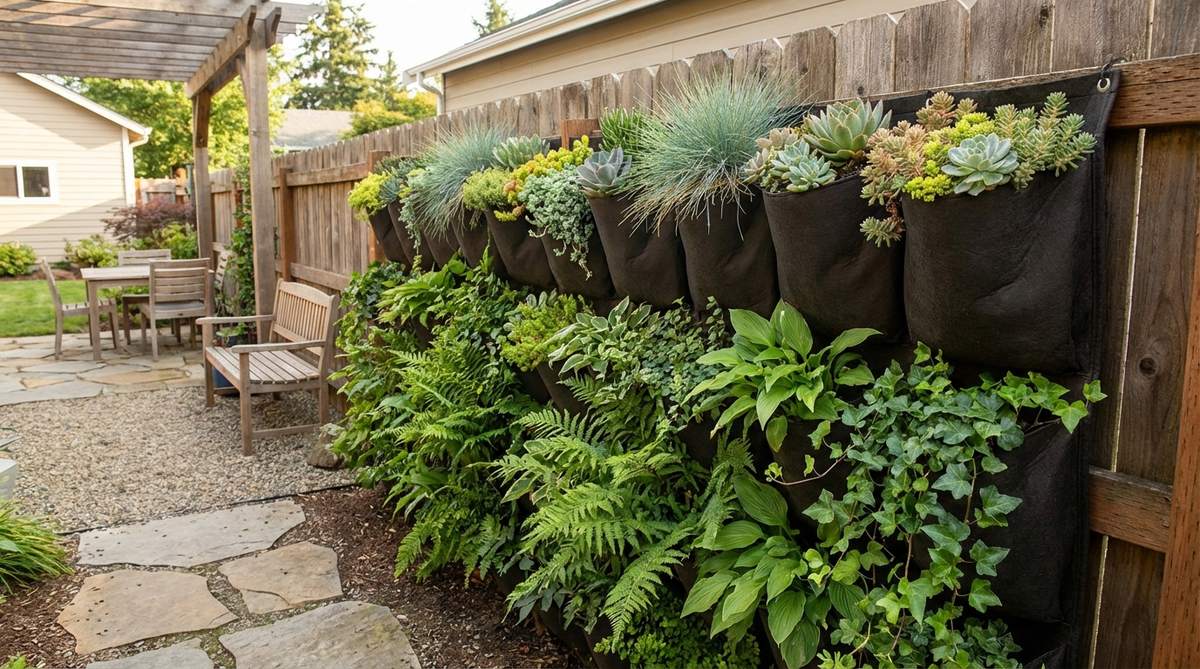
Pocket planters mounted to fence surfaces create vertical growing matrices that transform boundaries into lush tapestries of foliage and flowers. Modular systems allow configuration adjustments as plantings mature and design preferences evolve.
Select drought-tolerant species for upper pockets where irrigation proves challenging and moisture-lovers for lower positions with better water retention. This stratified planting approach mimics natural vegetation patterns while simplifying maintenance.
The living wall adds insulation value during summer months, reducing heat reflection from solid fencing materials into adjacent seating areas.
15. Espalier Trained Fruit Fence
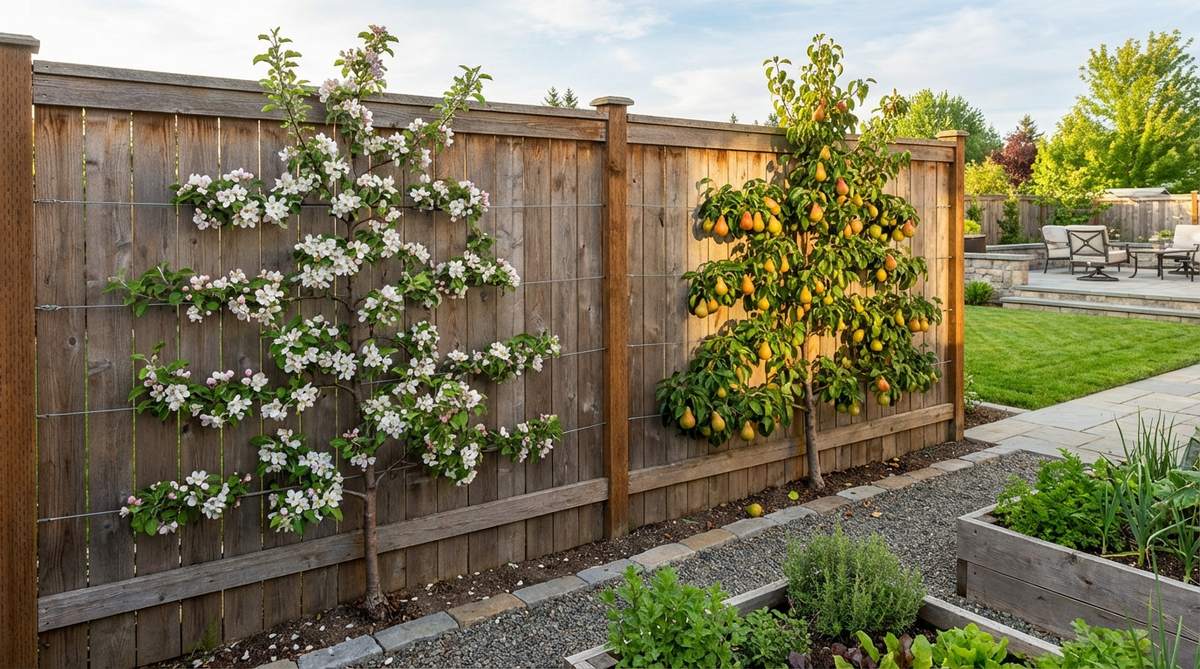
Fruit trees trained flat against fence surfaces produce edible crops while establishing attractive living boundaries. Apples, pears, and stone fruits adapt successfully to espalier cultivation, offering spring blossoms and autumn harvests from vertical growing planes.
Install horizontal wire supports at twelve to eighteen-inch intervals to guide branch development into formal patterns. Regular pruning maintains the flat profile necessary for fence integration while promoting productive fruiting wood.
This approach combines privacy screening with food production, delivering multiple benefits from single plantings in space-limited contexts.
16. Bamboo Screen with Planters
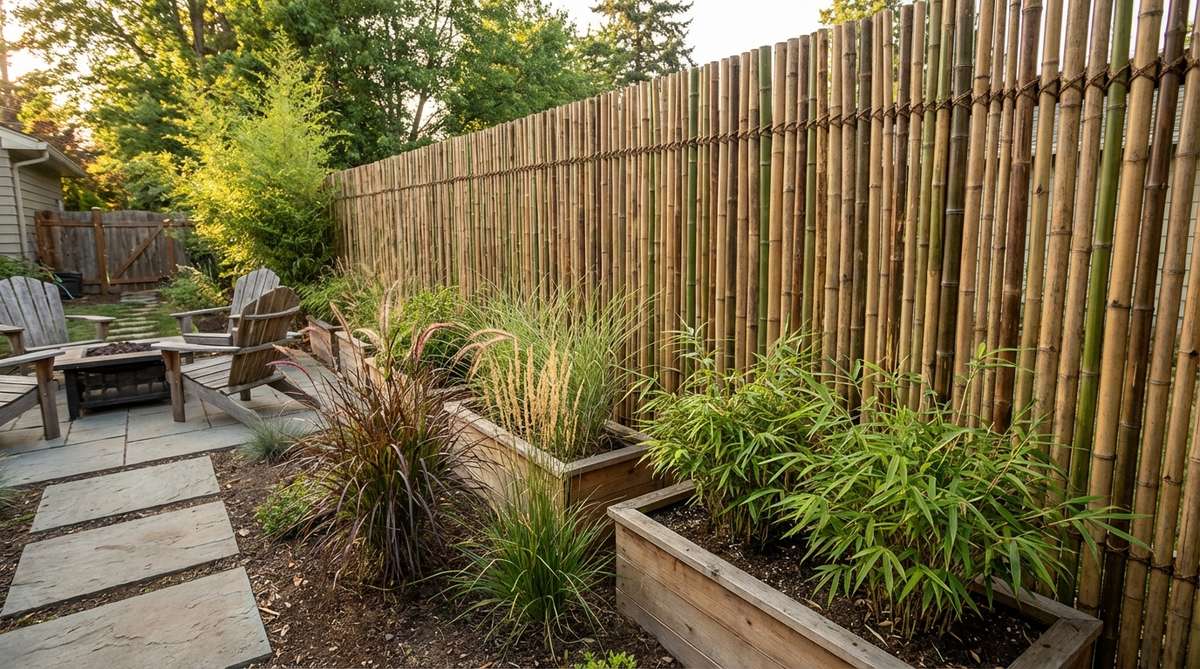
Natural bamboo poles lashed together create sustainable privacy screens with organic aesthetics suitable for Asian-inspired gardens. The irregular diameters and natural coloring provide visual texture that manufactured materials cannot replicate.
Incorporate ground-level planters for ornamental grasses and bamboo cultivars that reinforce the Asian design vocabulary. Choose clumping bamboo varieties rather than running types to prevent aggressive spreading beyond intended boundaries.
Weather-treated bamboo resists decay for five to seven years before requiring replacement, offering reasonable longevity for organic materials.
17. Wire Mesh Climbing Support
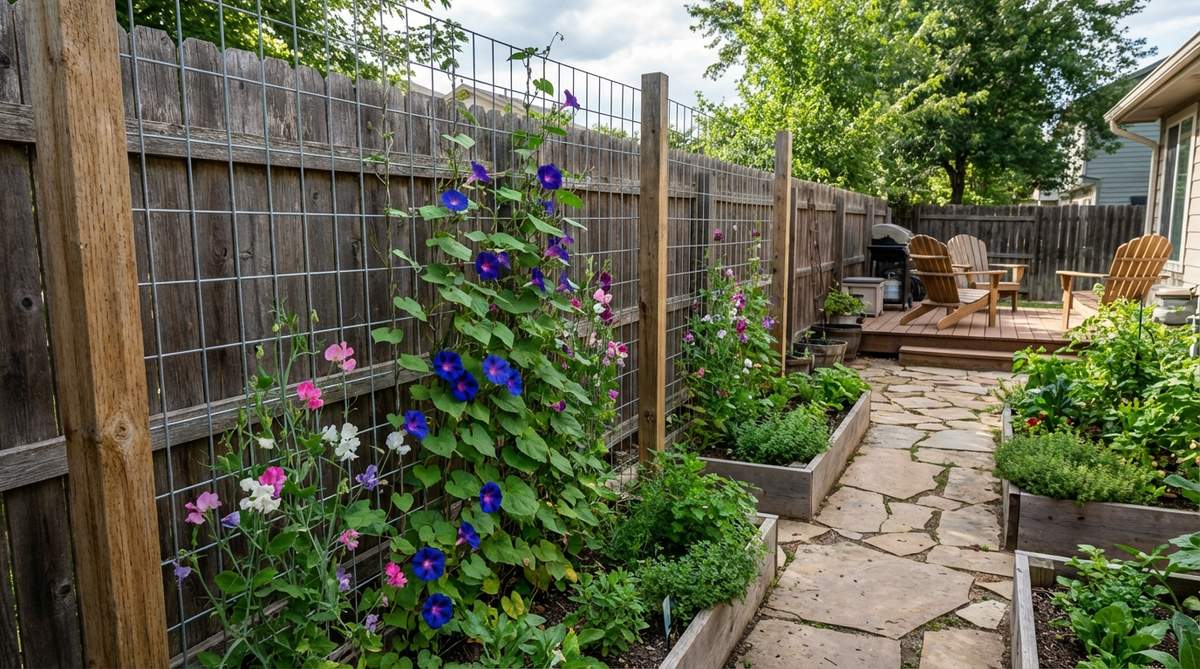
Galvanized wire mesh stretched between posts provides economical support structures for annual and perennial vines. The minimal framework disappears beneath vigorous climbers within a single growing season.
Plant morning glories, sweet peas, or hyacinth beans for rapid seasonal coverage that transforms from spring through autumn. The wire mesh remains functional through winter, supporting dried seed heads that provide cold-season interest.
This lightweight solution suits rental properties where permanent fencing installation isn’t feasible but privacy needs remain immediate.
18. Green Wall Pocket Garden
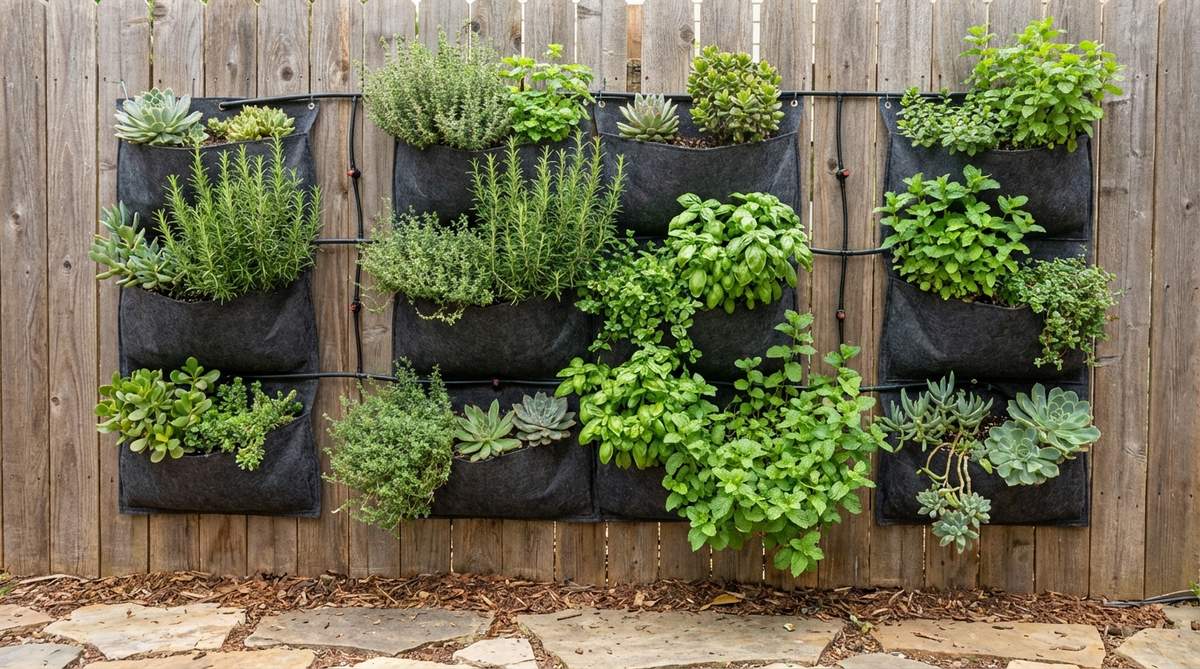
Fabric pockets sewn to backing materials create planting opportunities across entire fence surfaces. The flexible system accommodates herbs, succulents, and ornamental annuals in high-density arrangements.
Install drip irrigation behind pocket systems to automate watering and reduce maintenance time. The vertical orientation improves drainage, preventing root rot issues common in ground-level containers.
Rotate plantings seasonally to maintain visual interest, using spring bulbs, summer annuals, and autumn foliage plants in succession.
Horizontal Panel Systems That Stretch Space
Horizontal orientations counteract the confining feeling of small gardens by emphasizing width over height. These small garden fence ideas create visual expansion through directional emphasis and contemporary styling.
19. Wide Plank Horizontal Fence
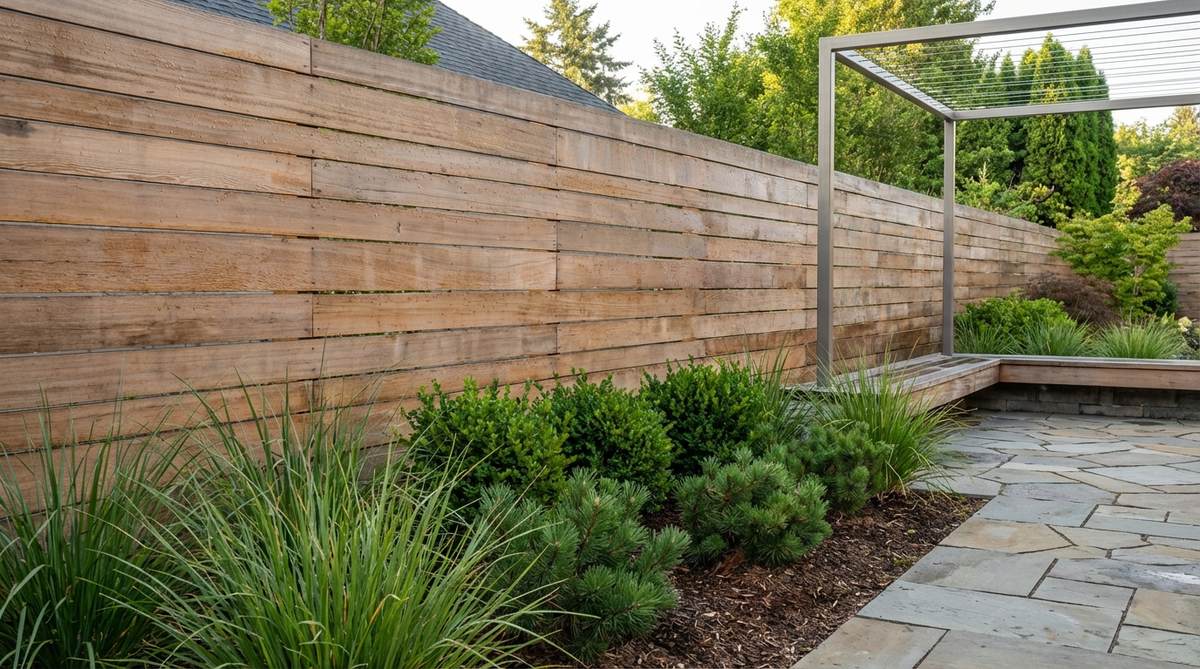
Six to eight-inch boards installed horizontally with minimal gaps form clean-lined contemporary boundaries. The wide planks reduce visual complexity, creating calm backdrops for ornamental plantings.
This design particularly suits modern architecture with strong horizontal elements in rooflines and window arrangements. The continuity between house and fence establishes cohesive design relationships that unify outdoor spaces with structures.
Seal horizontal boards with water-repellent finishes to prevent moisture accumulation along grain patterns where water naturally travels.
20. Staggered Horizontal Board Design
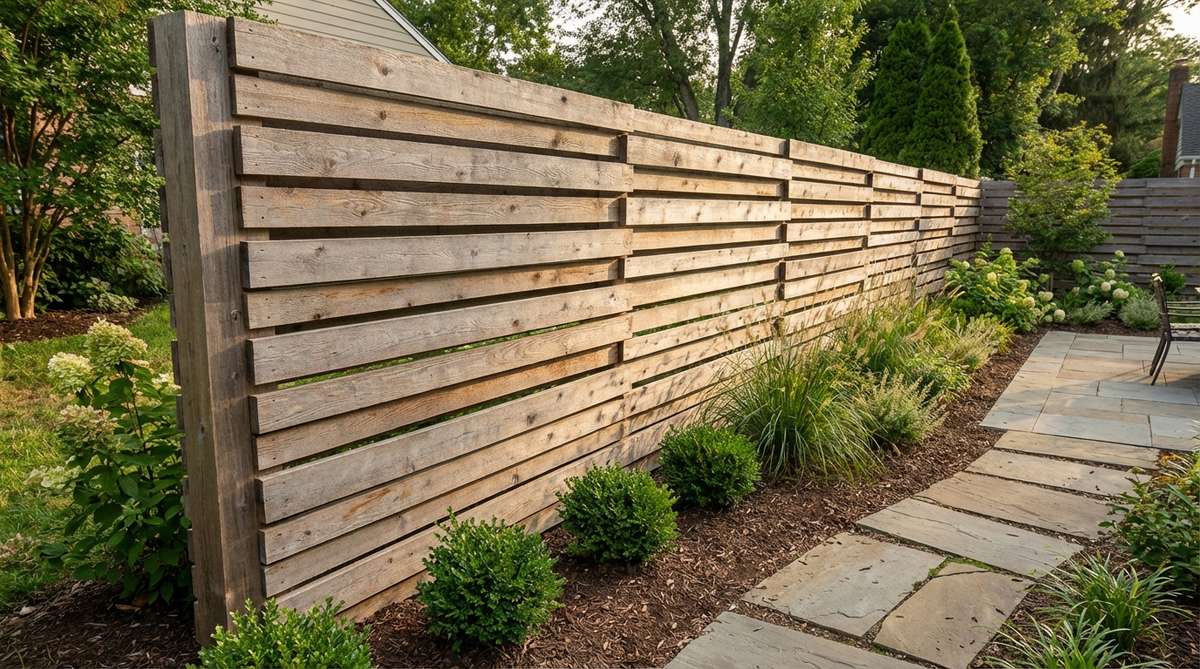
Offset horizontal planks create depth through layering while maintaining the space-expanding benefits of horizontal orientation. The staggered arrangement produces interesting shadow lines that add dimension to otherwise flat surfaces.
Alternate board depths by one to two inches to create the offset effect without excessive material projection into gardens. This subtle variation provides visual interest without sacrificing usable space adjacent to boundaries.
The layered construction improves privacy by eliminating direct sightlines while preserving airflow between board layers.
21. Corrugated Metal Horizontal Panel
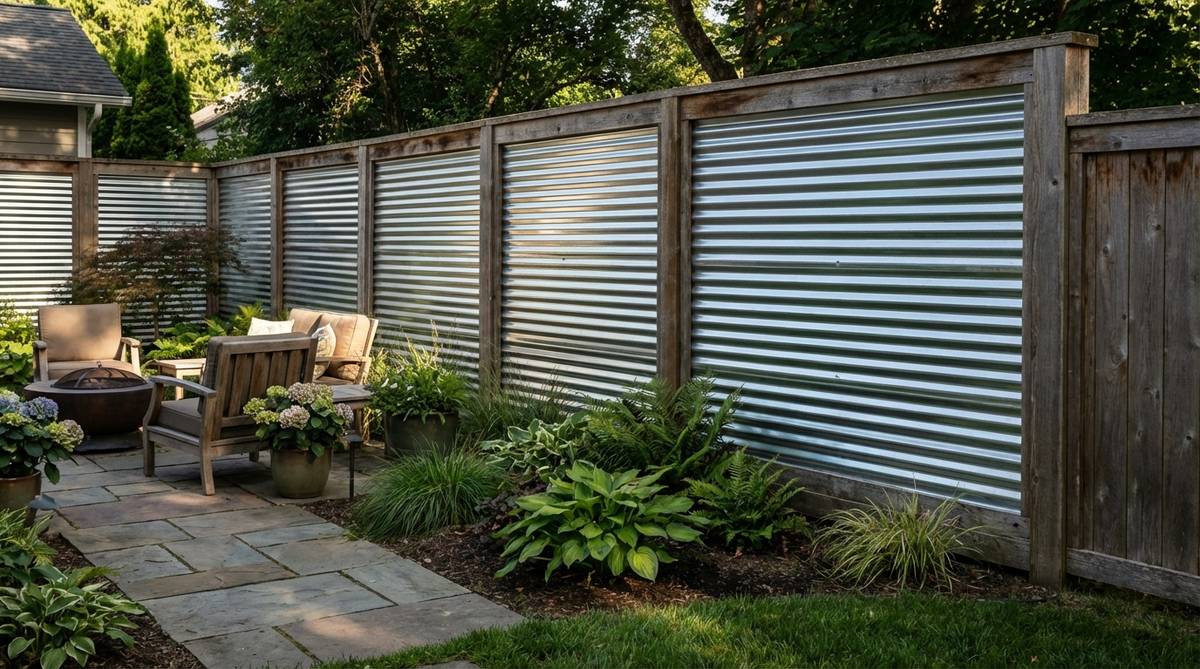
Industrial metal panels bring urban aesthetics to small gardens while providing durable, low-maintenance boundaries. The corrugated profile adds structural rigidity that allows greater panel spans between support posts.
Apply rust-prevention coatings in humid climates or select aluminum alternatives that resist corrosion naturally. The reflective surface bounces light into shadowed garden areas, improving growing conditions for shade-challenged plantings.
Frame metal panels with wood borders to soften the industrial appearance and integrate the fence with traditional garden elements.
22. Ipe Wood Horizontal Screen
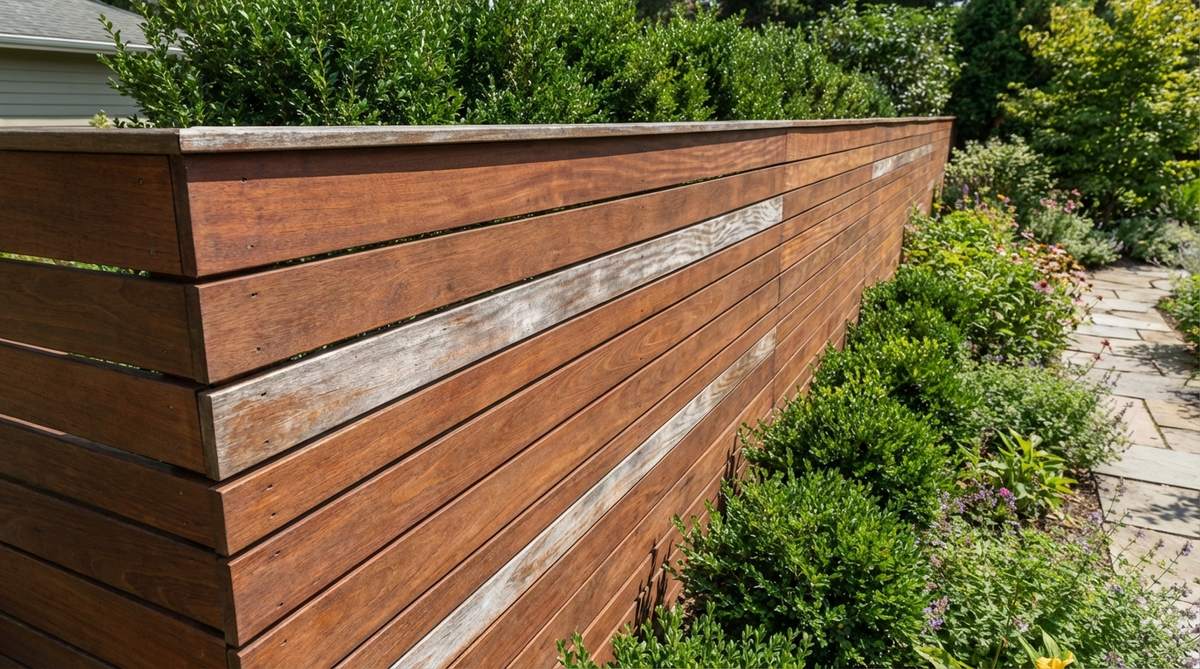
Dense tropical hardwood delivers exceptional longevity in horizontal applications where moisture exposure accelerates decay in softer species. Ipe’s natural oils resist rot and insect damage without chemical treatments.
The rich brown tones weather to distinguished silver-grey patinas that complement stone and metal garden features. This premium material justifies higher initial costs through decades of maintenance-free performance.
Pre-drill all fastener holes to prevent splitting the dense wood during installation, particularly near board ends where grain direction increases vulnerability.
23. Composite Deck Board Fence
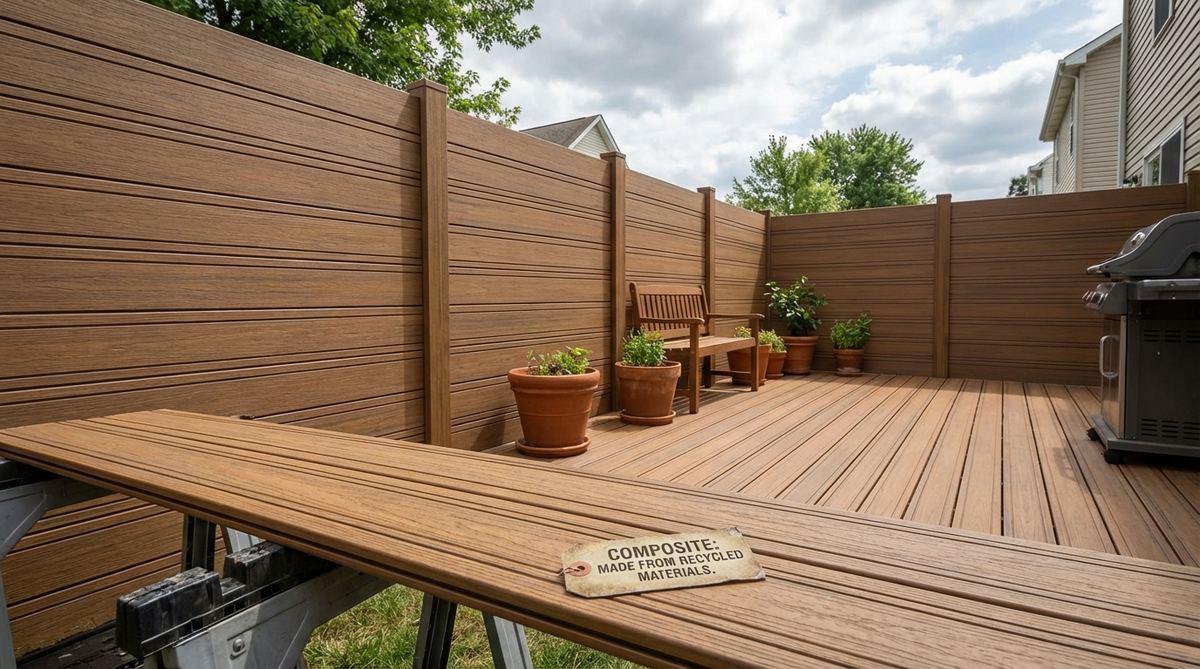
Repurposing composite decking as fence material creates coordinated outdoor spaces when deck and fence finishes match. The grooved surfaces designed for deck traction add subtle texture to vertical applications.
Composite materials maintain consistent color without seasonal maintenance, preserving the designed appearance through years of exposure. The hollow core construction reduces weight, simplifying handling during installation.
This approach offers sustainability benefits by utilizing materials already proven for exterior exposure in demanding deck applications.
24. Reclaimed Wood Horizontal Plank Fence
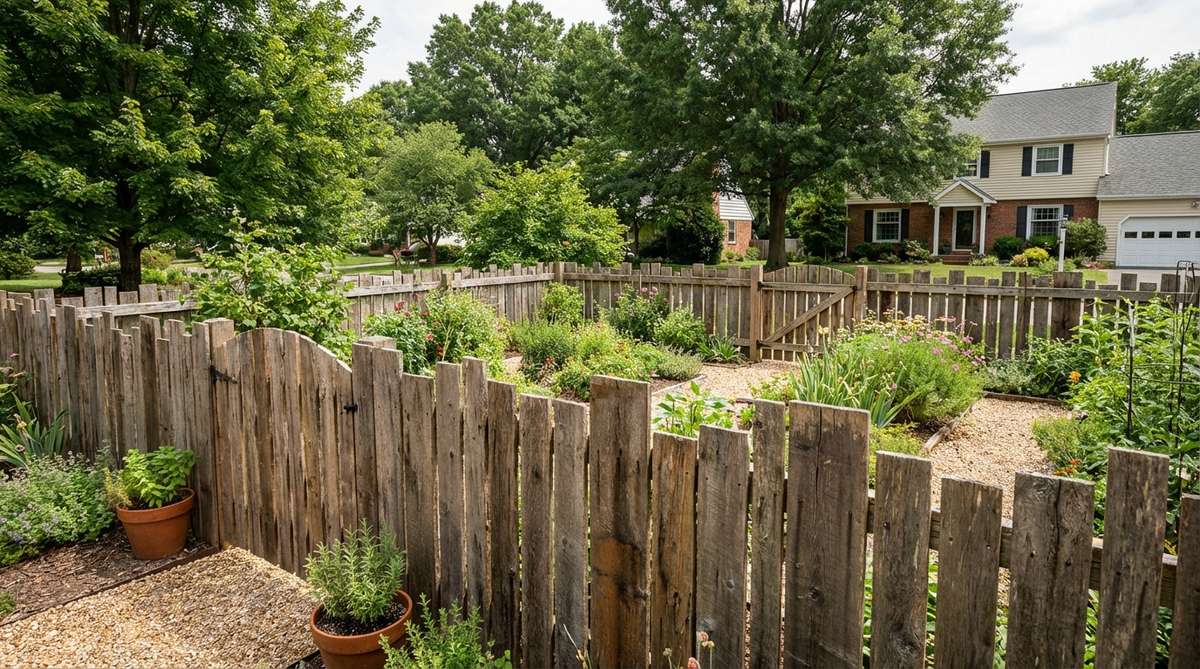
Weathered barn wood and salvaged lumber bring character and history to garden boundaries. The varied patinas and natural aging create authentic rustic aesthetics that new materials cannot duplicate.
Inspect reclaimed materials thoroughly for structural soundness, removing boards with significant rot or insect damage. The irregular widths and surface textures typical of salvaged wood add organic variation to installations.
Seal reclaimed wood to stabilize existing patinas and prevent further weathering that might compromise structural integrity.
Mixed Material Compositions for Visual Interest
Combining different materials within single fence designs creates sophisticated boundaries that layer textures and forms. These small garden wall concepts integrate multiple elements for enhanced aesthetic complexity.
25. Wood and Steel Frame Fence
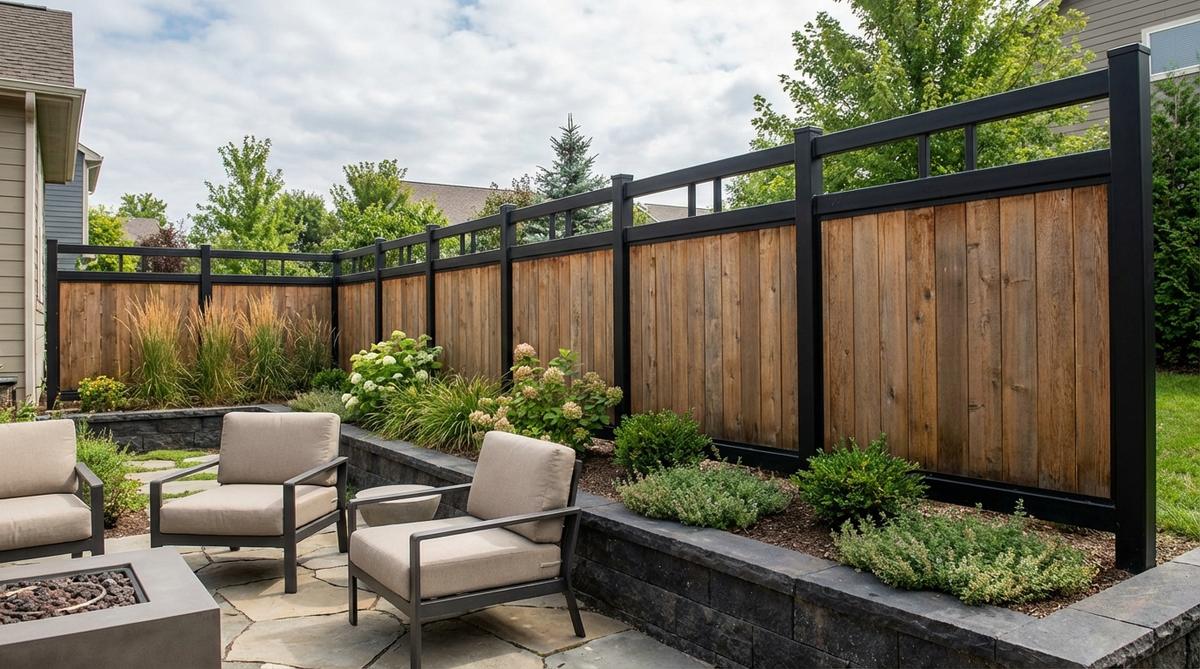
Black steel frames provide structural support while wood infill panels deliver privacy and warmth. The contrasting materials create modern farmhouse aesthetics popular in contemporary landscape design.
Position steel frames as prominent design elements rather than concealing them behind wood panels. The material contrast establishes visual rhythm along fence runs that might otherwise appear monotonous.
This configuration simplifies future maintenance by allowing wood panel replacement without disturbing the permanent steel framework.
26. Stone Pillar and Metal Infill
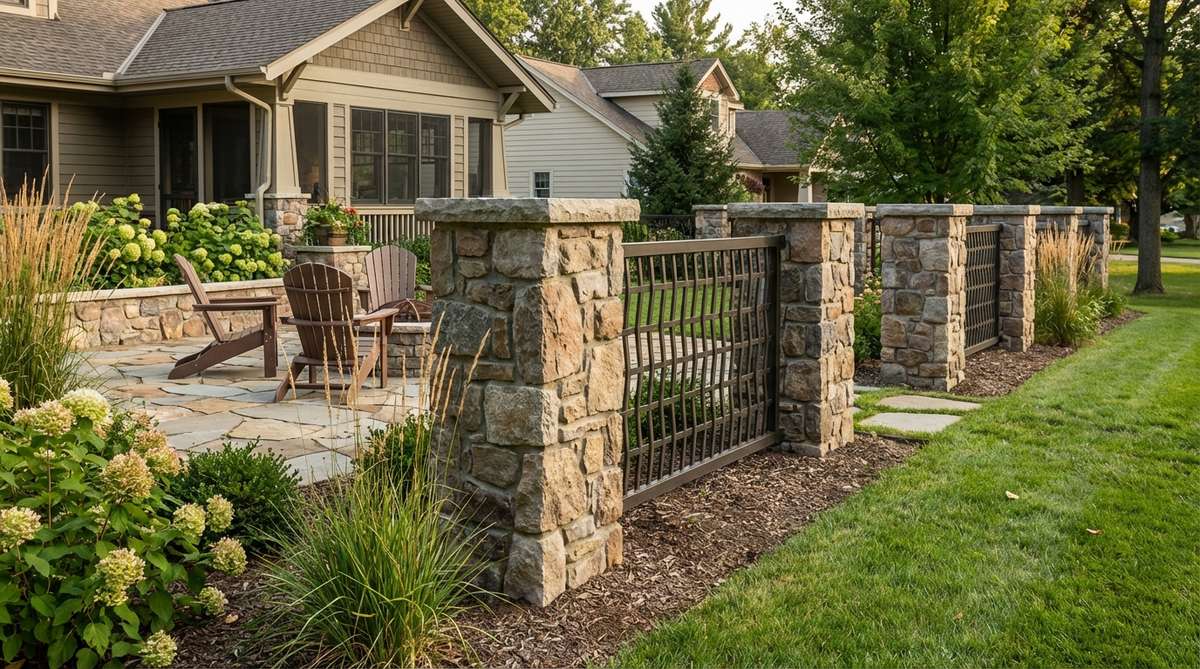
Masonry pillars spaced at eight to ten-foot intervals provide substantial visual anchors for lighter metal infill sections. The mixed materials balance solidity with transparency, establishing boundaries without blocking breezes.
The stone pillars offer opportunities for integrated lighting installations that illuminate pathways while highlighting architectural details. Metal infill between pillars maintains security while preserving the open feeling valuable in small spaces.
This design particularly suits properties with stone elements in house foundations or retaining walls, creating material continuity across the landscape.
27. Gabion Basket and Wood Combination
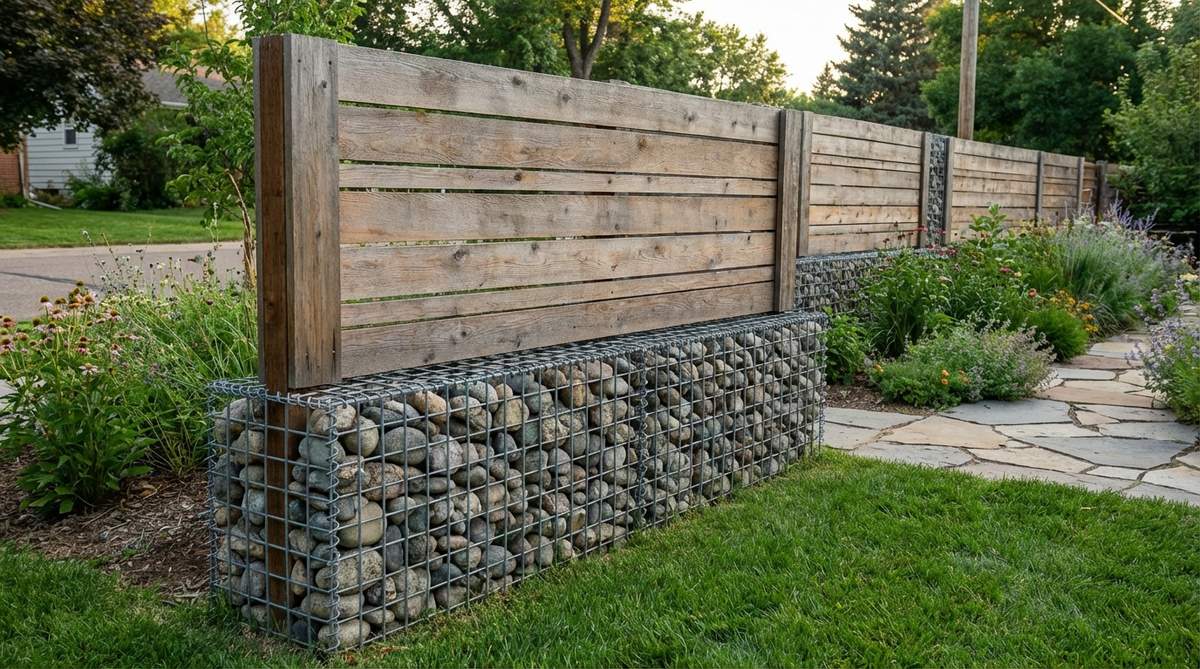
Wire cages filled with stone create substantial base sections topped with lighter wood panels. The mixed materials provide visual weight at ground level while maintaining lighter profiles at eye level.
Gabion sections offer excellent drainage, preventing water accumulation that damages adjacent wood components. The stone-filled baskets also provide sound dampening, reducing traffic noise in urban gardens near busy streets.
Fill baskets with locally sourced stone to control costs and integrate regional geological character into garden designs.
28. Brick and Wrought Iron Fence
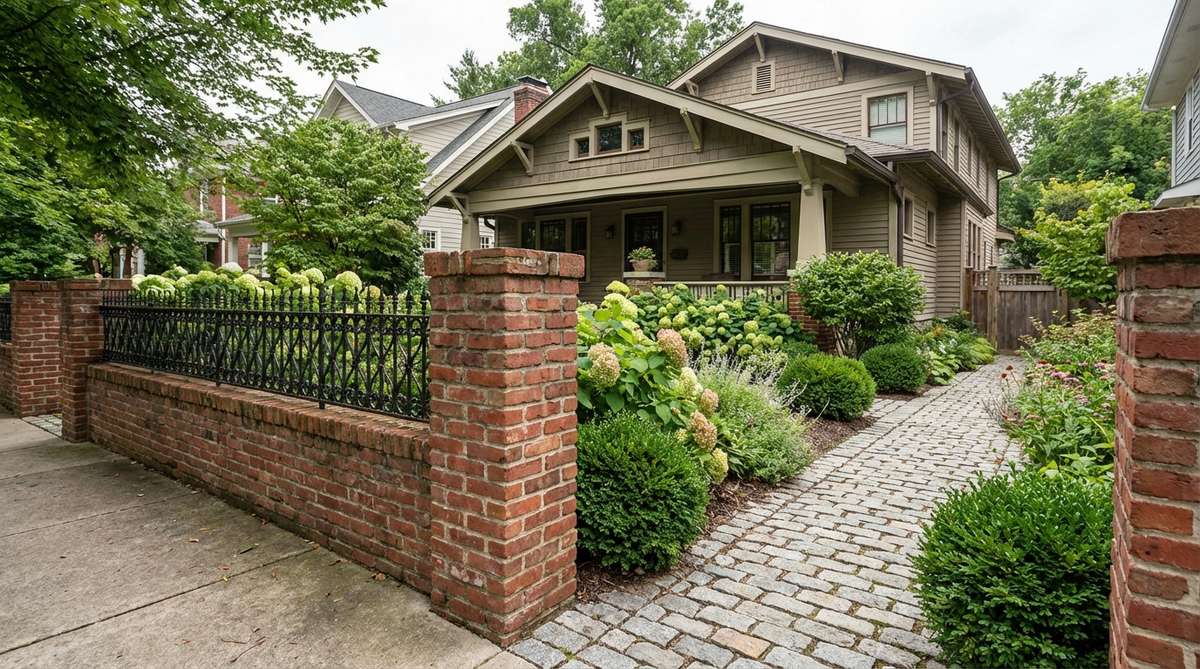
Low brick walls topped with decorative ironwork create traditional boundaries suited to period architecture. The solid brick base provides security and privacy for ground-level activities while ornamental iron maintains visual connection above.
This classic combination suits front gardens where complete privacy feels unwelcoming but property definition remains important. The material durability ensures generations of performance with minimal maintenance beyond occasional repointing.
Paint iron elements in colors that complement brick tones, typically black for red brick or dark green for earth-toned masonry.
29. Concrete Block and Cedar Panel
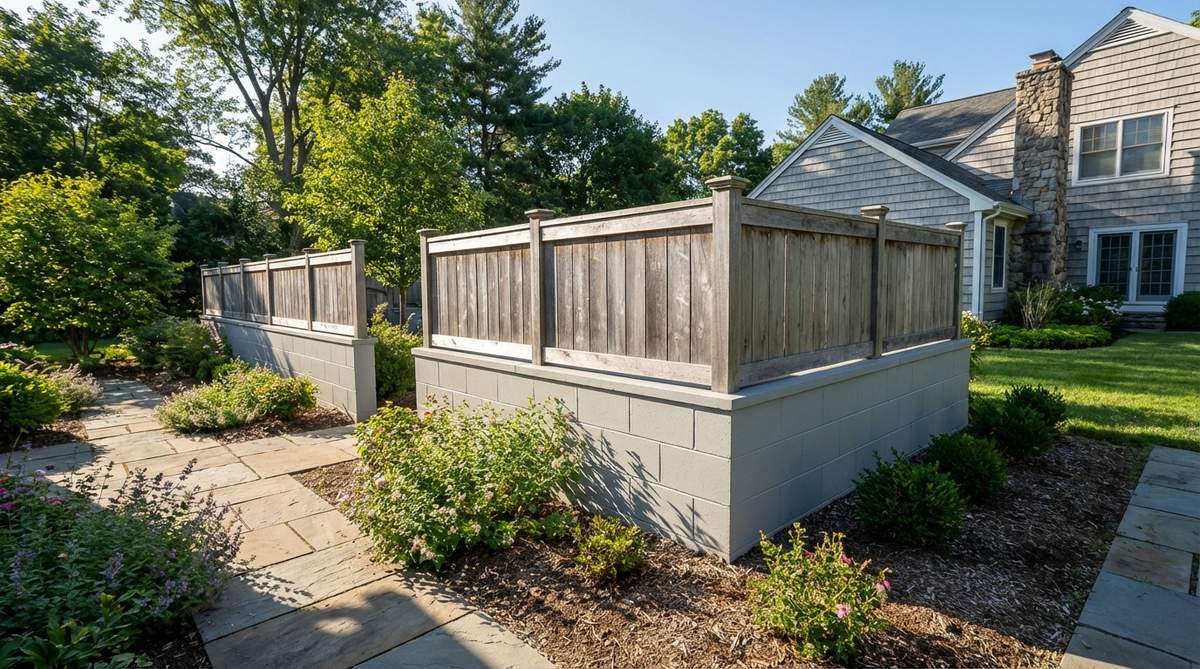
Smooth-faced concrete blocks form durable bases for cedar panel top sections. The combination provides hurricane-resistant lower sections in storm-prone regions while cedar panels add height for privacy without massive masonry construction.
Paint or stucco concrete blocks to soften industrial appearances and coordinate with house colors. The cedar panels weather naturally, developing silver patinas that contrast attractively with painted masonry.
This hybrid construction allows phased installation, building masonry bases initially and adding wood panels as budgets permit.
30. Glass Panel and Aluminum Post Fence
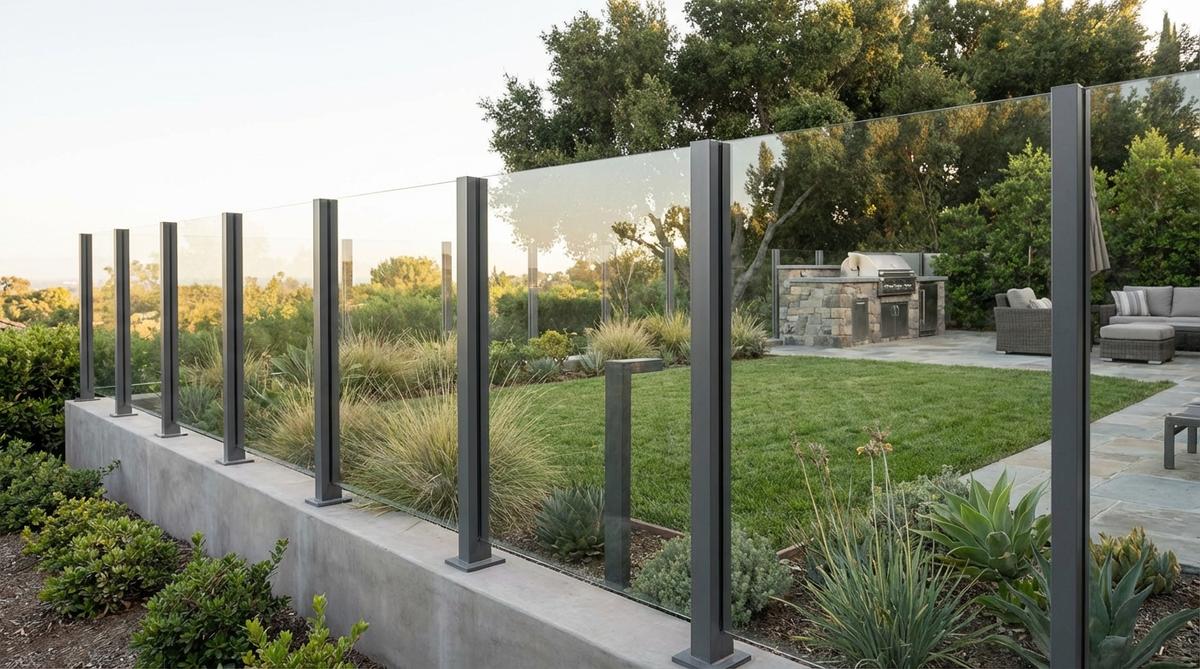
Frameless glass panels maintain views while establishing clear boundaries, ideal for gardens overlooking attractive vistas. Aluminum posts provide minimal structural support without interrupting sightlines.
Tempered safety glass withstands impacts and breaks into granular pieces rather than dangerous shards if damaged. The transparent boundaries preserve light penetration essential for plant growth in already-limited spaces.
This premium option suits contemporary properties where maintaining views justifies higher material costs compared to traditional fencing.
Space-Efficient Small Garden Gates
Well-designed small garden gates provide access without consuming valuable space during operation. These solutions balance functionality with aesthetic considerations in constrained layouts.
31. Narrow Profile Single Gate
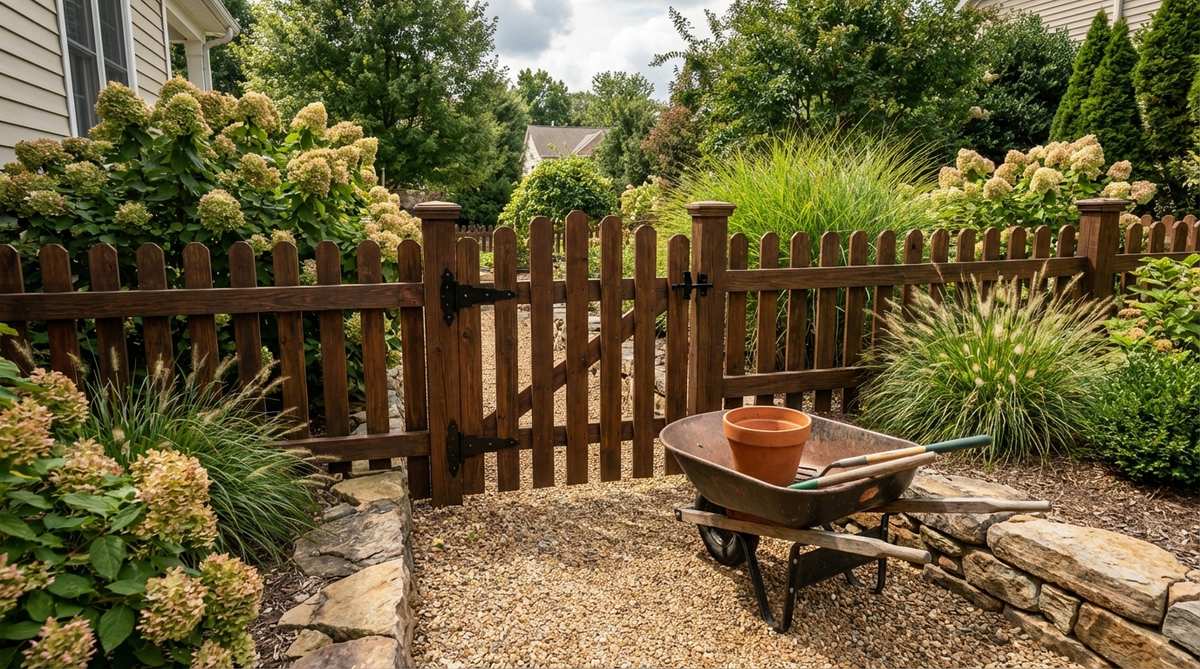
Three-foot-wide gates accommodate standard access needs while minimizing the footprint in small boundaries. The compact width reduces swing radius, leaving more usable space adjacent to openings.
Frame gates with materials matching adjacent fencing to maintain visual continuity. Install self-closing hinges in locations where gates frequently remain open, preventing damage from wind and ensuring security.
This standard dimension works universally for pedestrian access and wheeled garden equipment like mowers and wheelbarrows.
32. Sliding Track Gate System
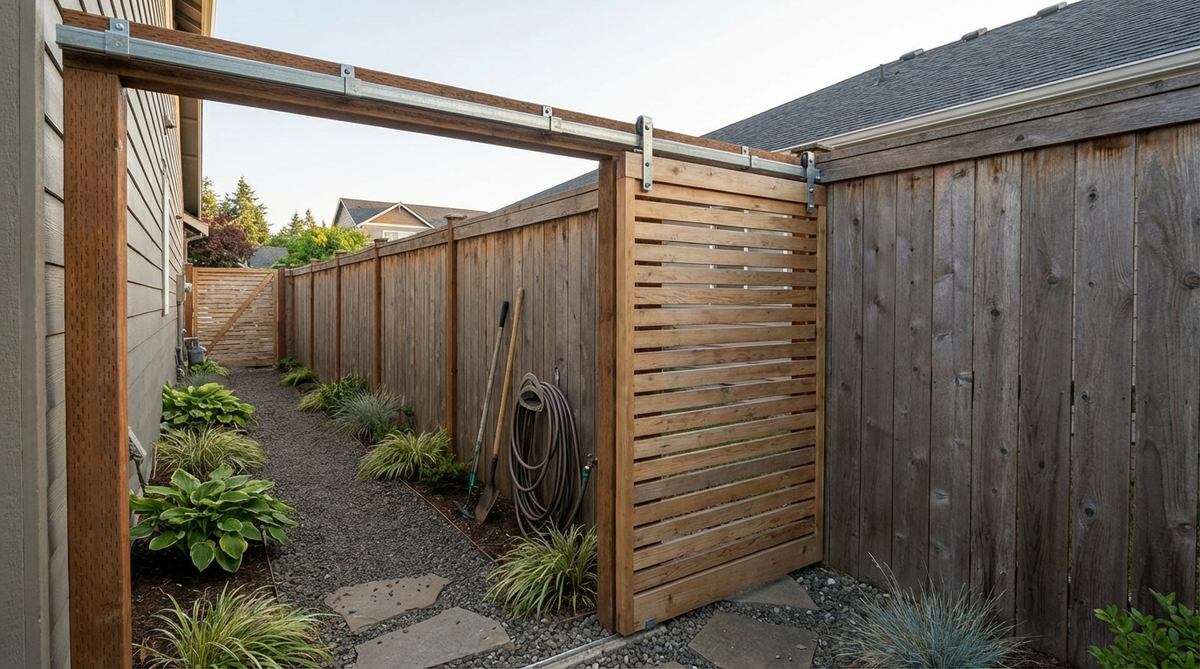
Gates mounted on overhead or ground tracks slide parallel to fence lines, eliminating swing clearance requirements. This configuration suits narrow side yards where traditional gates cannot open fully without obstruction.
Top-mounted tracks keep mechanisms elevated above ground debris that clogs bottom-track systems. The sliding operation works smoothly even when hands are full, improving practical functionality during garden work.
Install with locking mechanisms that secure gates closed and prevent removal from tracks without key access.
33. Dutch Door Garden Gate
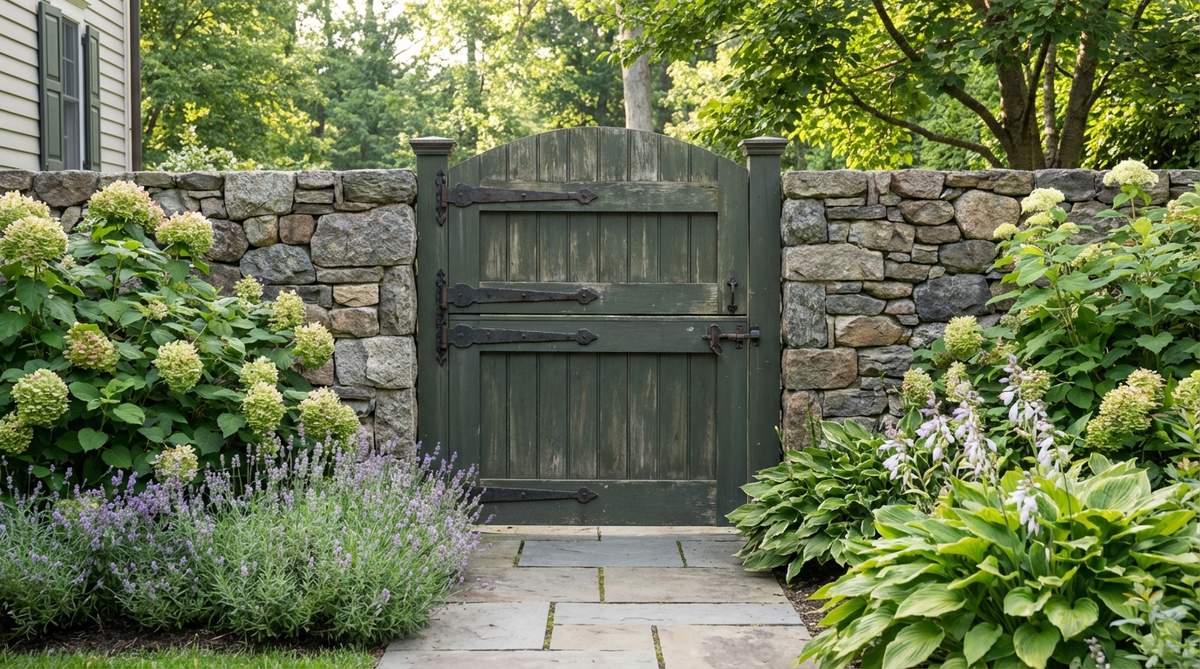
Split gates with independently operating upper and lower sections provide flexible access control. Open top sections for ventilation and visibility while lower portions remain closed to contain pets and children.
This traditional design adds cottage charm to garden entrances while delivering practical functionality. The horizontal division creates natural locations for decorative hardware that enhances the gate’s architectural presence.
Adjust proportions to place the split at thirty to thirty-six inches high, aligning with typical porch rail heights for visual consistency.
34. Arched Top Entry Gate
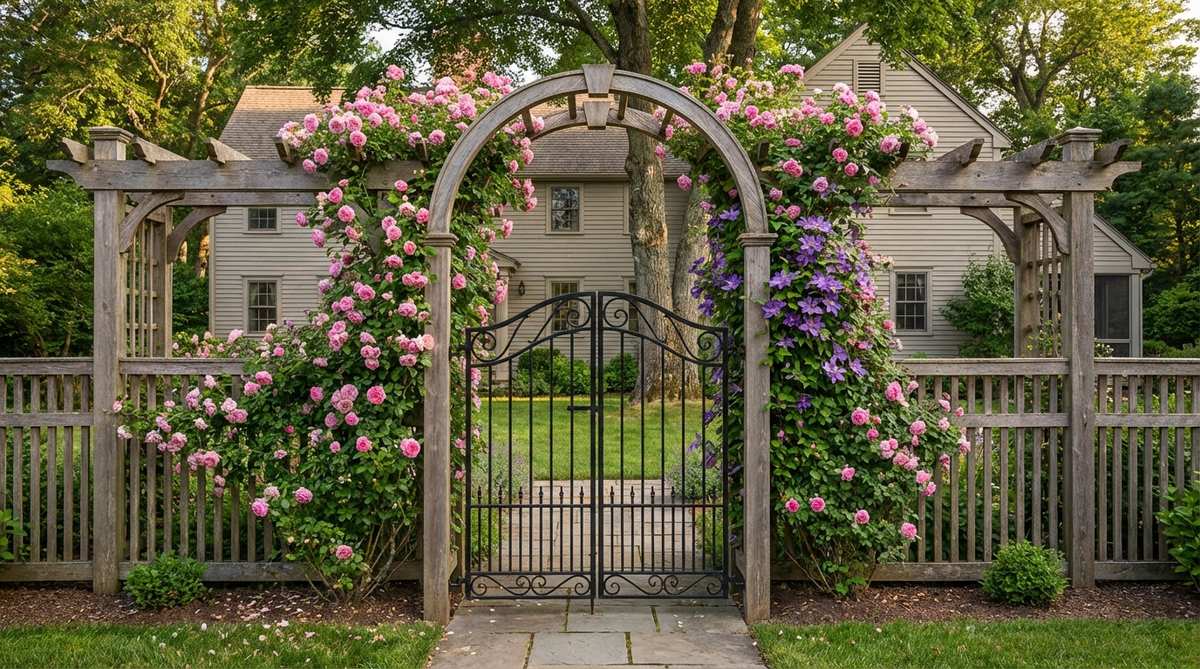
Curved top rails soften geometric boundaries while adding architectural interest that elevates simple gates into garden features. The arch creates natural emphasis that draws attention to entry points.
Frame arched gates with climbing roses or clematis trained over matching arbors to reinforce the vertical accent. The combination of hardscape and softscape creates welcoming entries that invite passage.
Size arches proportionally to gate widths, with curves rising six to twelve inches above straight sections for balanced appearance.
35. See-Through Metal Gate
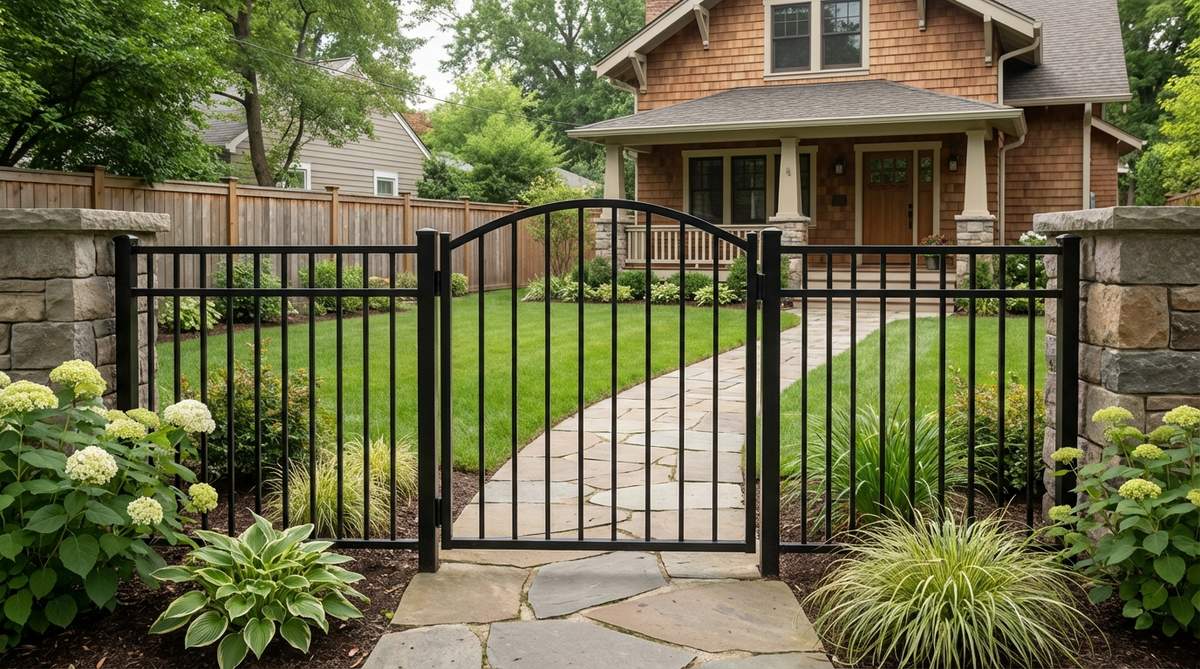
Ornamental metal gates provide security while maintaining visual connection between spaces. The transparent nature prevents boxed-in feelings common with solid gates in small gardens.
Select designs with vertical bars rather than horizontal elements to prevent climbing and maintain security. Powder-coated finishes in matte black integrate gates visually with contemporary metal fencing systems.
The lightweight construction allows wider gate spans without the sagging issues that plague heavy wood gates over time.
36. Custom Salvaged Door Gate
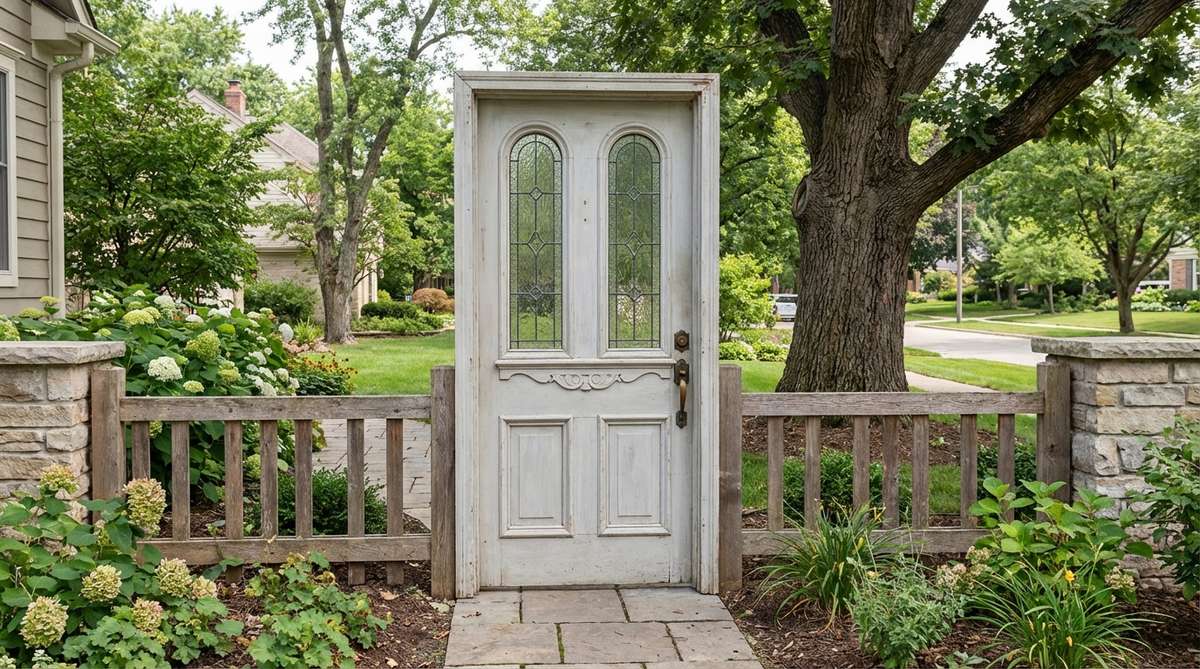
Repurposed doors bring unique character to garden entries while recycling architectural elements. Vintage doors offer glass panels, decorative moldings, and hardware that add personality impossible with new construction.
Cut doors to appropriate heights for fence integration, typically reducing full-height doors to four or five feet. Seal all surfaces thoroughly to protect against moisture exposure more intense than original interior applications.
This approach creates one-of-a-kind entries that serve as conversation pieces while establishing distinctive garden personalities.
Decorative Garden Wall Hybrids
Combining solid walls with lighter fence elements creates boundaries with varied textures and heights. These garden wall concepts layer materials for sophisticated perimeter treatments.
37. Low Stucco Wall with Fence Topper
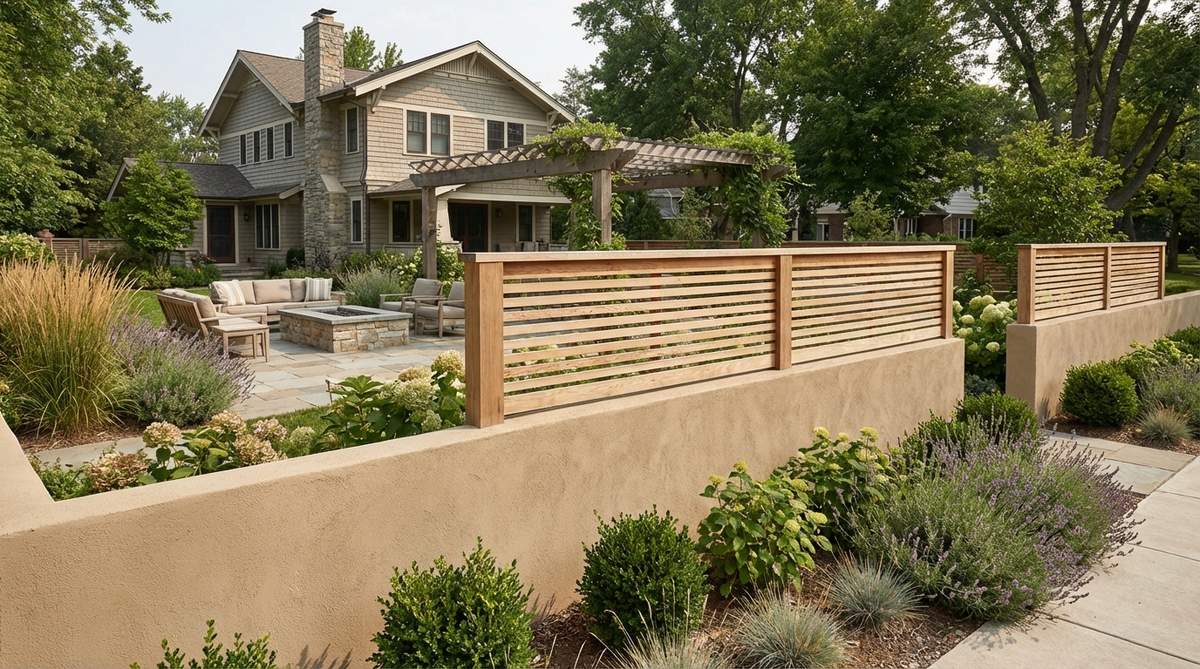
Solid walls built to thirty or thirty-six inches provide substantial bases for lighter fence sections above. The wall portion defines boundaries emphatically while upper fencing adds height for privacy without massive masonry construction.
Stucco finishes in earth tones complement plantings and integrate walls visually with house exteriors. Cap walls with stone or tile to prevent water infiltration that damages stucco over time.
This layered approach suits sloped properties where retaining capabilities combine with boundary definition needs.
38. Stone Veneer Base with Lattice Top
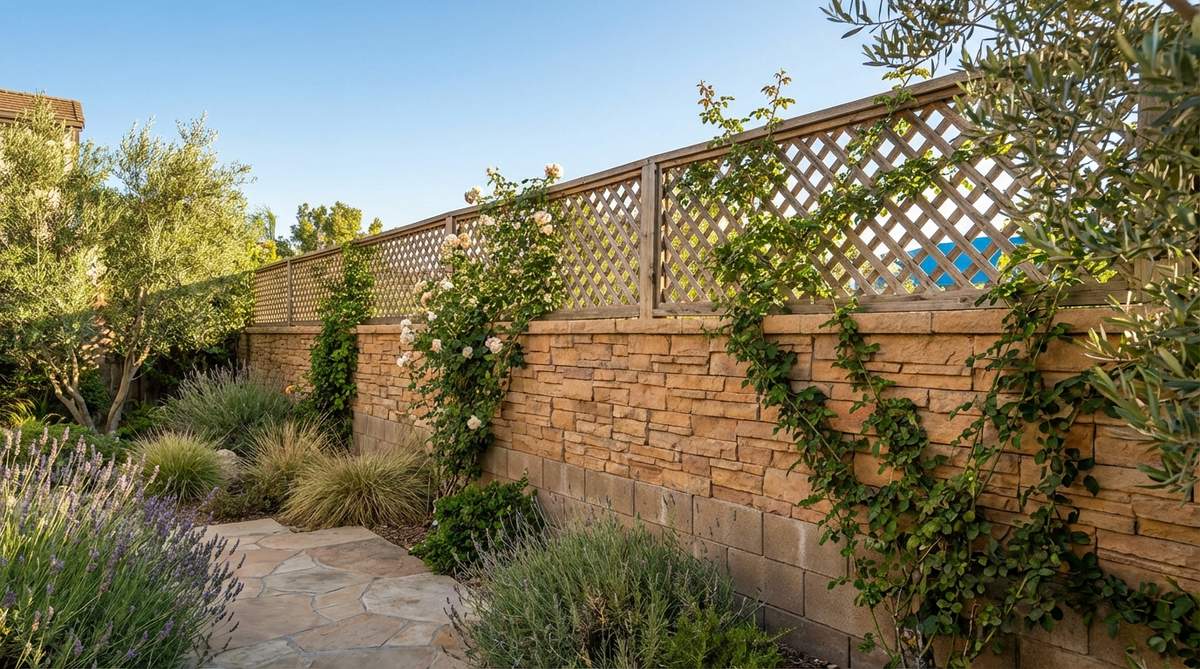
Manufactured stone veneer over concrete block bases creates natural appearances without quarried stone costs. Lattice top sections maintain airflow and soften the solid wall’s visual weight.
The combination provides privacy where most needed at eye level during seating while lattice tops preserve light and views of sky. Plant climbing vines at lattice sections for gradual privacy enhancement through growing seasons.
This design works particularly well in Mediterranean and Tuscan-inspired landscapes where stone elements reinforce regional aesthetics.
39. Raised Bed Integrated Wall
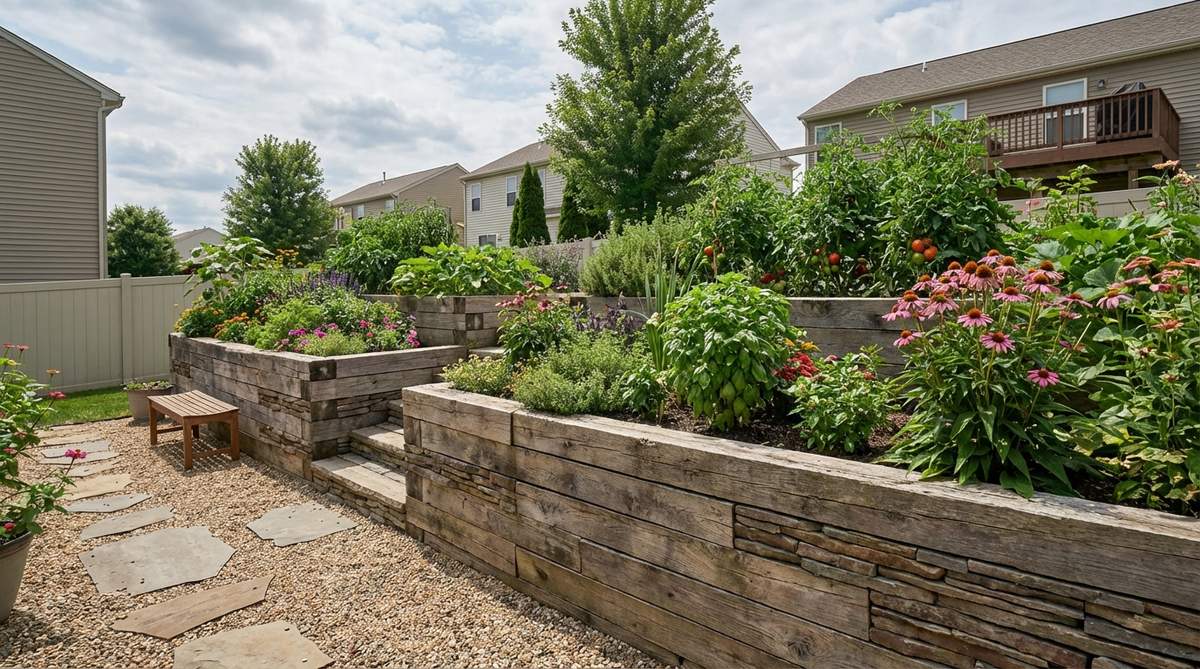
Garden walls that double as raised bed retainers maximize functionality in space-limited contexts. The dual-purpose construction eliminates redundant structures while improving soil drainage and accessibility.
Build walls at eighteen to twenty-four inches high to provide comfortable working height for planting and maintenance. The raised beds warm earlier in spring and drain more effectively than ground-level plantings.
Cap walls with flat stones or wood to create perching spots and protect masonry from water penetration.
40. Serpentine Curved Brick Wall
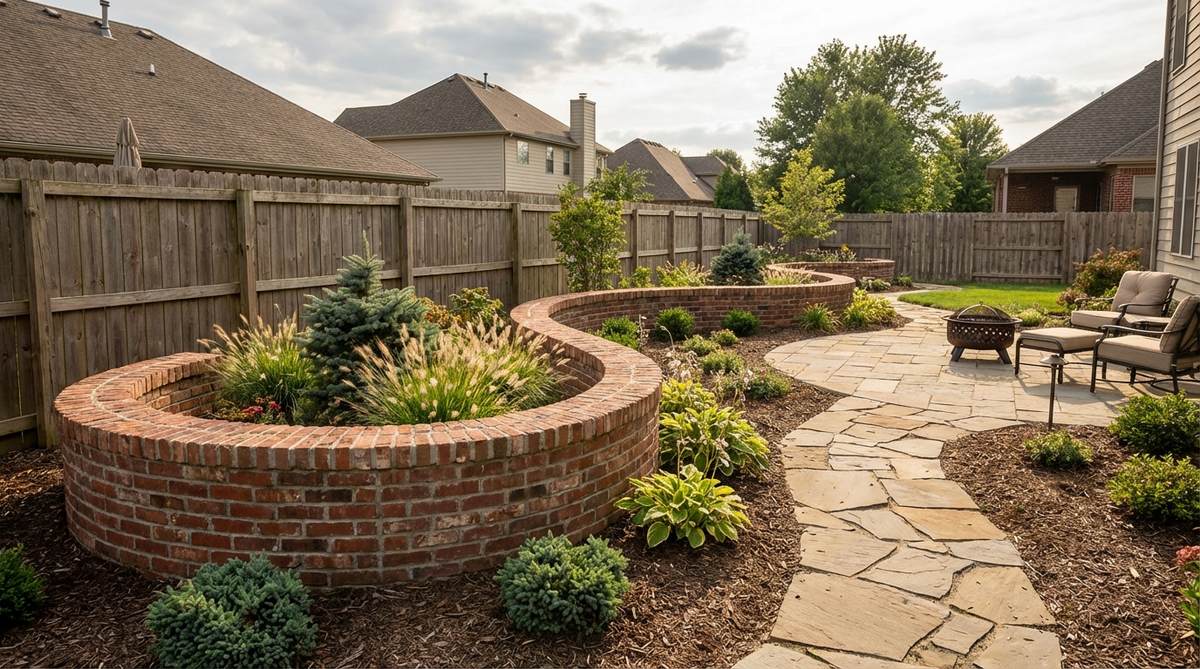
Gentle curves along boundary lines create visual interest while improving structural stability. The serpentine form allows single-wythe brick construction that would lack stability if built straight.
Curves soften geometric property lines and create planting pockets at concave sections perfect for specimen plants. The undulating form adds movement to static boundaries, creating dynamic spatial experiences in compact gardens.
This design works best where property lines permit curves rather than requiring straight fence runs for maximum space utilization.
41. Perforated Concrete Block Screen
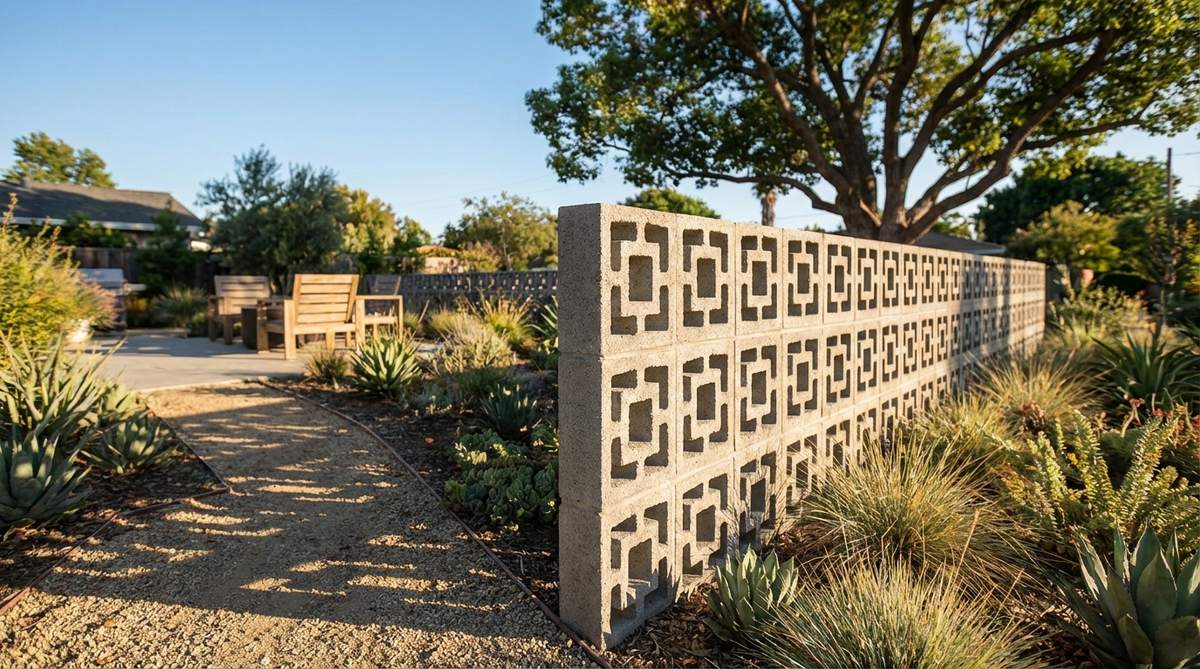
Decorative concrete blocks with geometric cutouts filter views while maintaining air circulation and interesting shadow patterns. The perforations reduce visual mass compared to solid block walls.
Stack blocks in running bond patterns to maximize structural integrity while showcasing the decorative perforations. The blocks work particularly well in mid-century modern landscapes where geometric patterns reinforce architectural themes.
Paint blocks in bold accent colors or leave natural grey for industrial aesthetics that complement contemporary plantings.
42. Living Roof Garden Wall
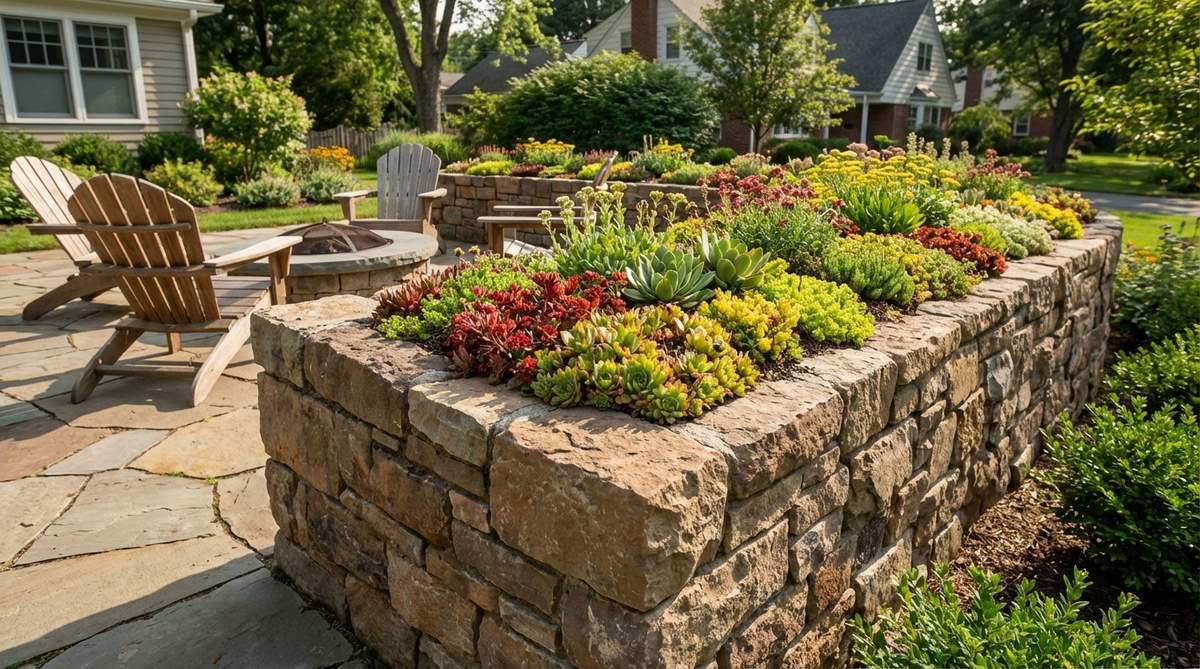
Low walls topped with planted growing medium create habitat for succulents and alpine plants. The living roof concept applied to boundary walls adds unique visual interest while supporting pollinator populations.
Construct walls with slight backward slopes to retain soil and prevent erosion during rain. Select drought-tolerant species like sedums that thrive in the thin soils and exposed conditions typical of wall-top environments.
The green topping softens hard edges and introduces color variation that changes seasonally with plant growth cycles.
Eco-Conscious Alternatives and Recycled Materials
Sustainable fencing options reduce environmental impact while creating attractive boundaries. These designs emphasize recycled materials and renewable resources suitable for environmentally conscious gardeners.
43. Recycled Plastic Composite Panel
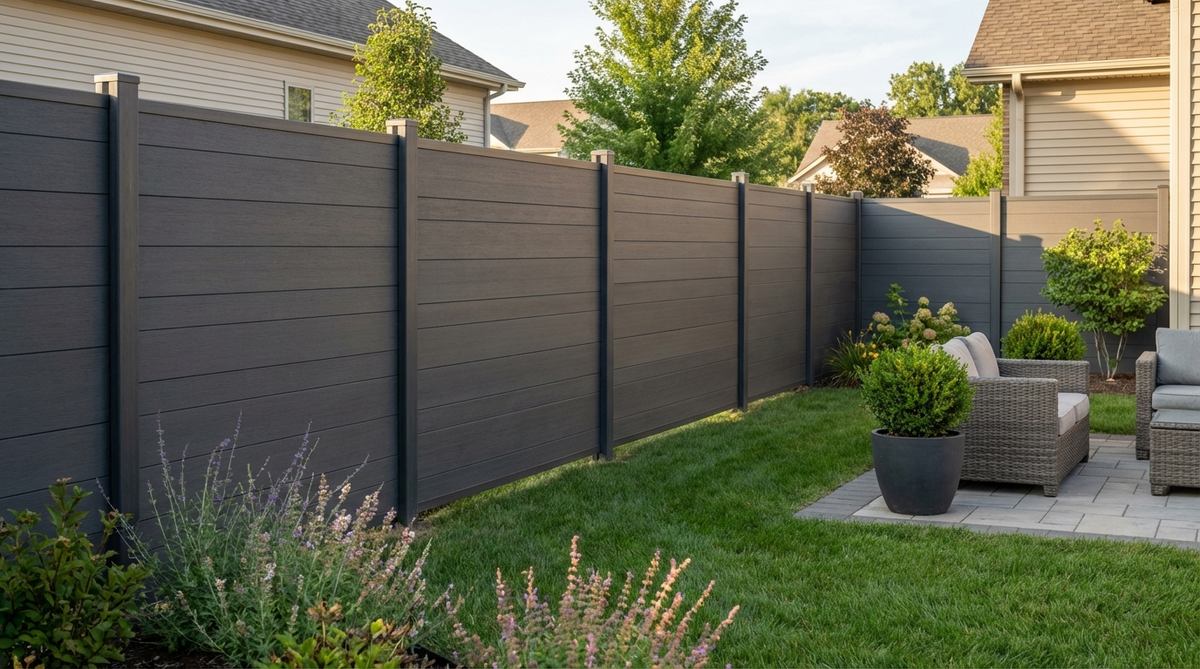
Post-consumer plastic transformed into fence panels diverts waste from landfills while creating durable boundaries. Modern composites resist fading and require no painting or sealing throughout decades-long service lives.
The consistent profiles and colors suit contemporary designs where uniformity matters. Composite panels outlast wood in ground contact and moisture exposure, reducing replacement frequency and long-term costs.
Choose products with high recycled content percentages to maximize environmental benefits while supporting circular economy principles.
44. Reclaimed Pallet Wood Fence
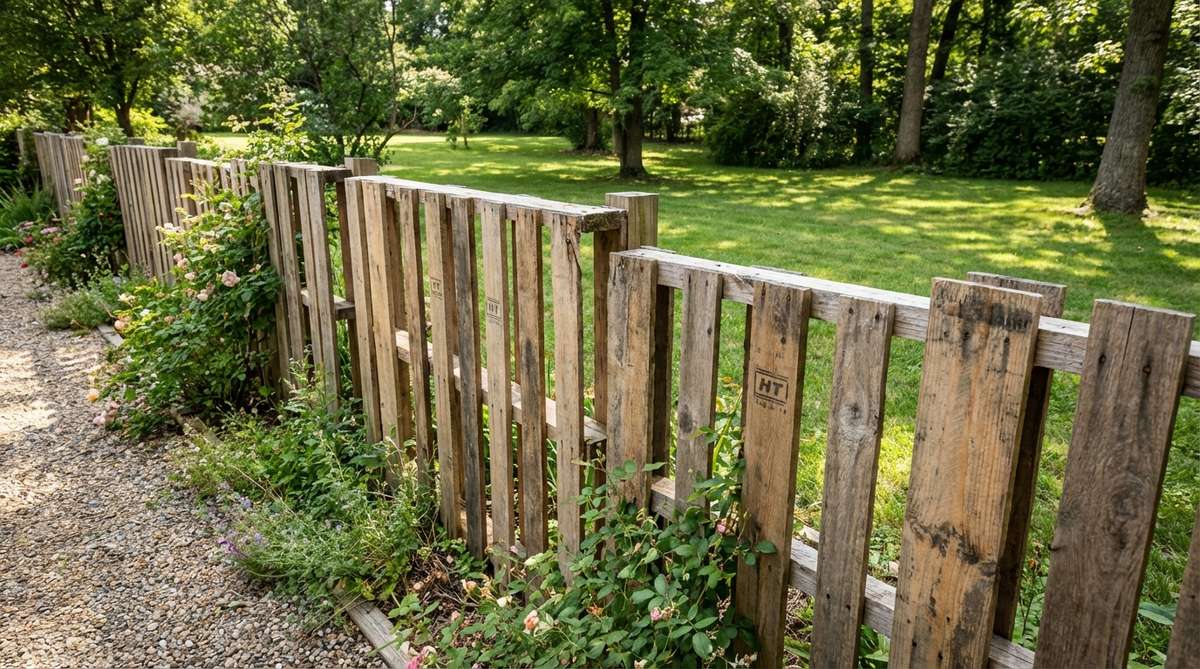
Disassembled shipping pallets provide free or low-cost fencing materials with authentic weathered character. The varied board widths and natural aging create rustic aesthetics appropriate for cottage gardens.
Inspect pallet wood for chemical treatments indicated by stamps, selecting only heat-treated (HT) pallets safe for garden use. The rough surfaces require sanding if splinters concern users, particularly in households with children.
This budget-friendly option suits temporary installations or rental properties where material investment must remain minimal.
45. Living Willow Fedge
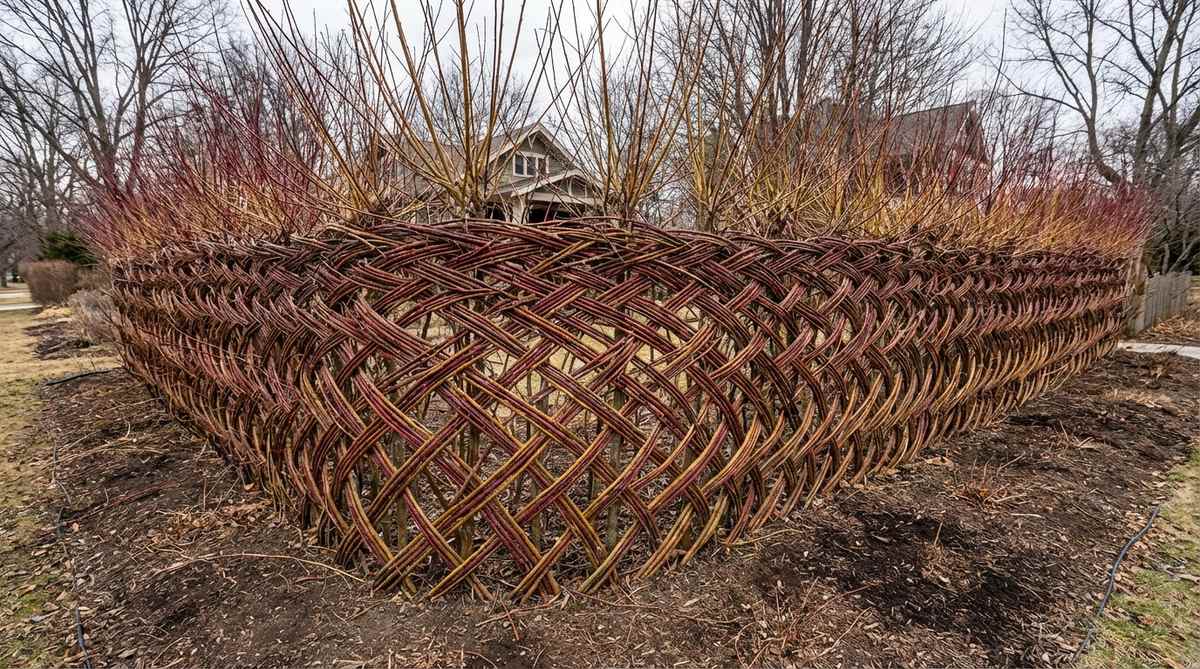
Willow branches woven into living fences root and grow, creating self-sustaining boundaries. This ancient technique produces unique organic fences that strengthen over time as root systems establish.
Plant dormant willow whips in late winter, weaving them into desired patterns before spring growth begins. The living structure requires several seasons to achieve full density but needs no replacement once established.
Regular trimming maintains shapes and encourages dense branching that improves privacy screening. The willow withes produce striking golden or red bark colors during winter dormancy.
46. Bamboo Pole Tied Screen
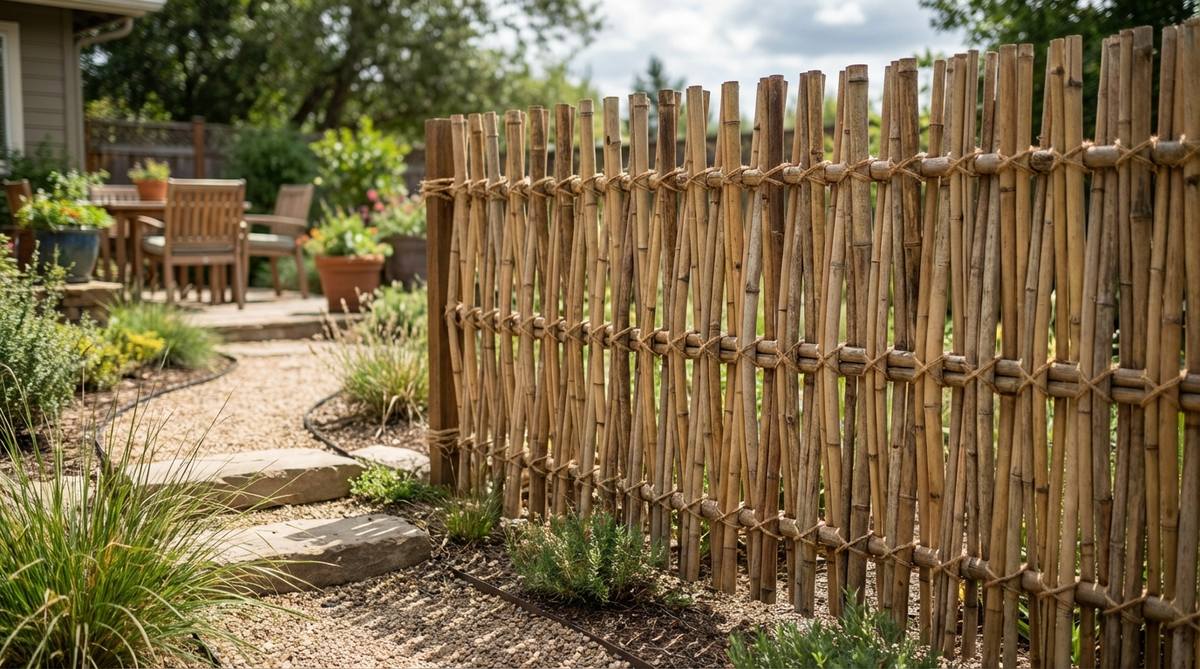
Harvested bamboo poles lashed with natural fiber cordage create sustainable screens from rapidly renewable resources. Bamboo’s fast growth rate makes it among the most environmentally friendly building materials available.
The natural variation in pole diameters and coloring creates organic aesthetics that complement Asian-inspired gardens. Weather-treat bamboo with natural oils to extend service life while maintaining the material’s biodegradability.
This lightweight solution installs easily and allows quick modifications as garden designs evolve.
47. Upcycled Window Frame Fence
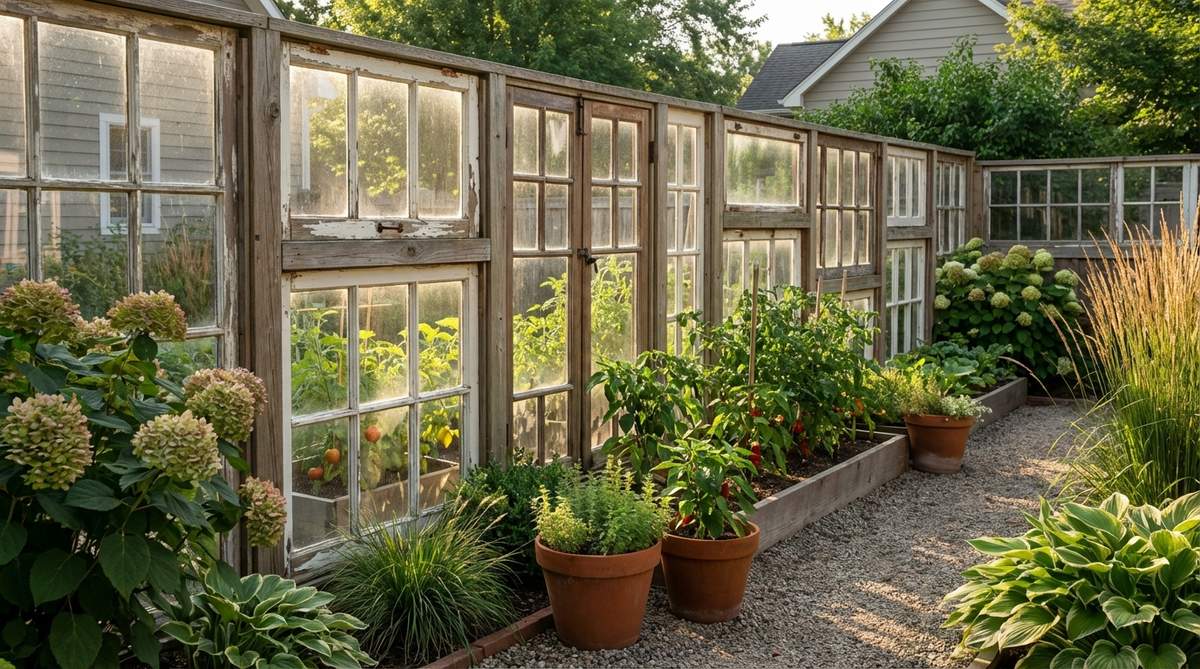
Salvaged window sashes create unique fence sections with transparent glass panels that maintain light while defining boundaries. The architectural elements add historical character and artistic interest to garden perimeters.
Source windows from demolition sales and architectural salvage yards, selecting matching sizes for visual consistency. The glass panes create greenhouse effects that benefit heat-loving plants positioned against south-facing installations.
Frame windows with new wood borders to provide structural support and mounting surfaces for installation hardware.
48. Recycled Metal Drum Screening
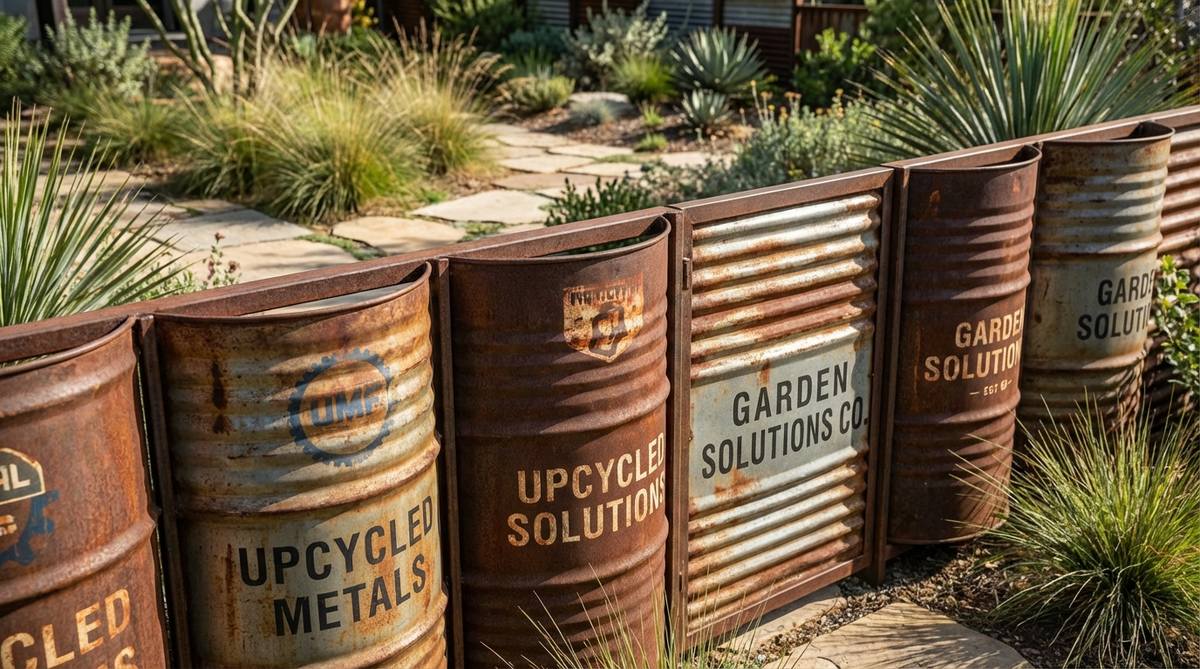
Industrial barrels cut and flattened create corrugated metal panels with authentic patinas and interesting graphics. The recycled materials bring urban aesthetics to contemporary gardens while diverting metal from waste streams.
The varied surfaces create industrial-chic installations popular in urban settings and loft-style properties. Seal metal edges to prevent sharp surfaces and treat rust-prone areas with protective coatings.
This creative approach produces truly one-of-a-kind fences that serve as artistic statements while fulfilling practical boundary functions.
Designing Your Perfect Small Garden Fence
Selecting among these 48 small garden fence designs depends on balancing privacy requirements, aesthetic preferences, maintenance willingness, and budget constraints. Contemporary slatted styles maximize airflow and light while traditional options offer timeless appeal and proven performance. Living fences and wall hybrids introduce vertical growing opportunities that multiply planting areas, while eco-conscious alternatives reduce environmental impact without sacrificing functionality. Measure your boundary dimensions carefully, check local fence height regulations, and consider how each design interacts with existing architecture and plantings. Begin with a small section to test installation techniques and material performance before committing to complete perimeter coverage, ensuring your final selection delivers the privacy and definition your outdoor sanctuary deserves.
Frequently Asked Questions
What is the best fence height for small gardens?
Most small gardens benefit from fences between 4 and 6 feet tall, which provide adequate privacy without overwhelming limited space. Taller fences create shadowing that reduces light for plantings, while shorter options under 4 feet serve better as decorative boundaries than privacy screens. Check local zoning ordinances before building, as many municipalities restrict fence heights near property lines and public rights-of-way. Front yard fences typically face stricter height limitations than rear boundaries.
How much does a small garden fence cost to install?
Small garden fence costs range from $15 to $100 per linear foot depending on material selection and installation complexity. Basic wood picket fencing starts around $15-25 per foot for materials and simple installation, while premium options like composite panels, custom metalwork, or stone-topped designs reach $75-100 per foot including labor. Reduce costs by choosing standard panel sizes that minimize cutting waste, selecting locally available materials, and handling installation personally if you possess basic carpentry skills.
What fence material lasts longest in small gardens?
Aluminum and vinyl fences deliver the longest service lives, typically lasting 30-50 years with minimal maintenance. Metal options resist rot, insects, and moisture damage that deteriorate wood fences within 15-20 years. Composite materials offer similar longevity to vinyl while providing wood-like aesthetics. For wood preferences, choose naturally durable species like cedar, redwood, or tropical hardwoods that resist decay better than pressure-treated pine. Apply protective sealers every 2-3 years to maximize wood fence longevity.
Can I install a garden fence without concrete footings?
Temporary fences and lightweight options install successfully without concrete using metal stakes driven into soil or gravel-filled postholes. However, permanent fences require concrete footings for stability, particularly in regions with freeze-thaw cycles that heave posts from the ground. Set posts in concrete extending below frost depth, typically 24-36 inches in northern climates. Alternative methods like helical anchor systems provide concrete-free permanent installation but cost more than traditional concrete footings.
How do I make a small garden fence look bigger?
Use horizontal fence orientations that draw eyes across spaces rather than emphasizing limited depth. Light paint colors reflect illumination and recede visually compared to dark tones that advance forward. Incorporate semi-transparent designs like slatted or lattice panels that maintain visual connection to areas beyond boundaries, preventing the closed-in feeling of solid fences. Add mirrors strategically to create depth illusions, and plant climbing vines that soften hard edges while introducing vertical green elements that direct attention upward.
What plants grow best along small garden fences?
Select plants based on fence orientation and sunlight exposure. South-facing fences support sun-loving climbers like roses, clematis, and passionflower, while north-facing boundaries suit shade-tolerant options including climbing hydrangea and Virginia creeper. Evergreen climbers like star jasmine provide year-round coverage, and annual vines like morning glory deliver fast seasonal screens. Choose plants with mature sizes appropriate to available fence height, avoiding vigorous species that overwhelm structures and require constant pruning in space-limited gardens.