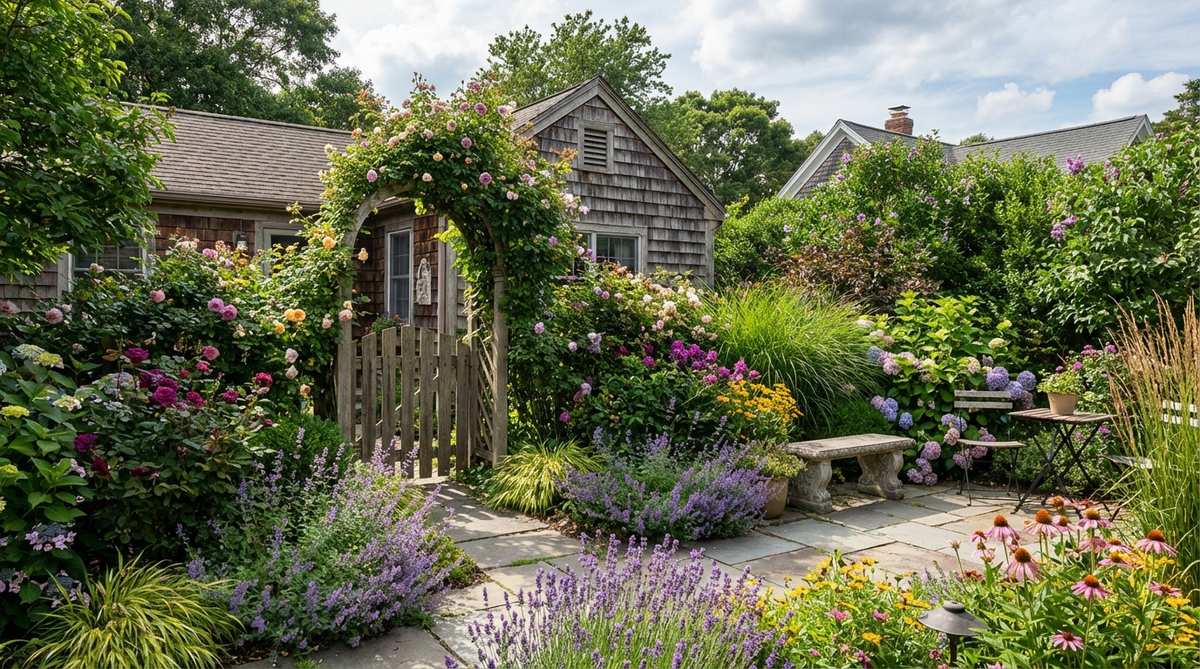
A small garden cottage thrives when dense planting creates layers of texture, color, and fragrance within limited square footage. The Fresh Garden Ideas team has curated over 30 proven design approaches that maximize visual impact through strategic plant crowding, vertical integration, and cottage-style abundance—perfect for American gardeners working with tight urban lots or cozy suburban yards.
Design SnapshotKey Principles
- Layered Heights: Position tall spires at the back, mid-height perennials in the middle, and low spreaders at the front to create depth in shallow beds
- Close Planting Density: Space plants 30-50% closer than traditional guidelines to eliminate bare soil and achieve a lush, abundant cottage aesthetic
- Vertical Maximization: Integrate climbers, trellises, and wall-trained plants to add square footage without expanding footprint
- Continuous Bloom Rotation: Select plants with staggered flowering periods from spring through fall to maintain year-round color and interest
Front Border FoundationsLow-Growing Dense Carpets
The front edge of a small garden cottage requires plants that create immediate visual impact without blocking views to taller specimens behind. Dense, low-growing perennials and self-seeding annuals work together to eliminate bare soil and establish the romantic, overflowing character essential to cottage style.
1. Hardy Geranium Ground Sweep
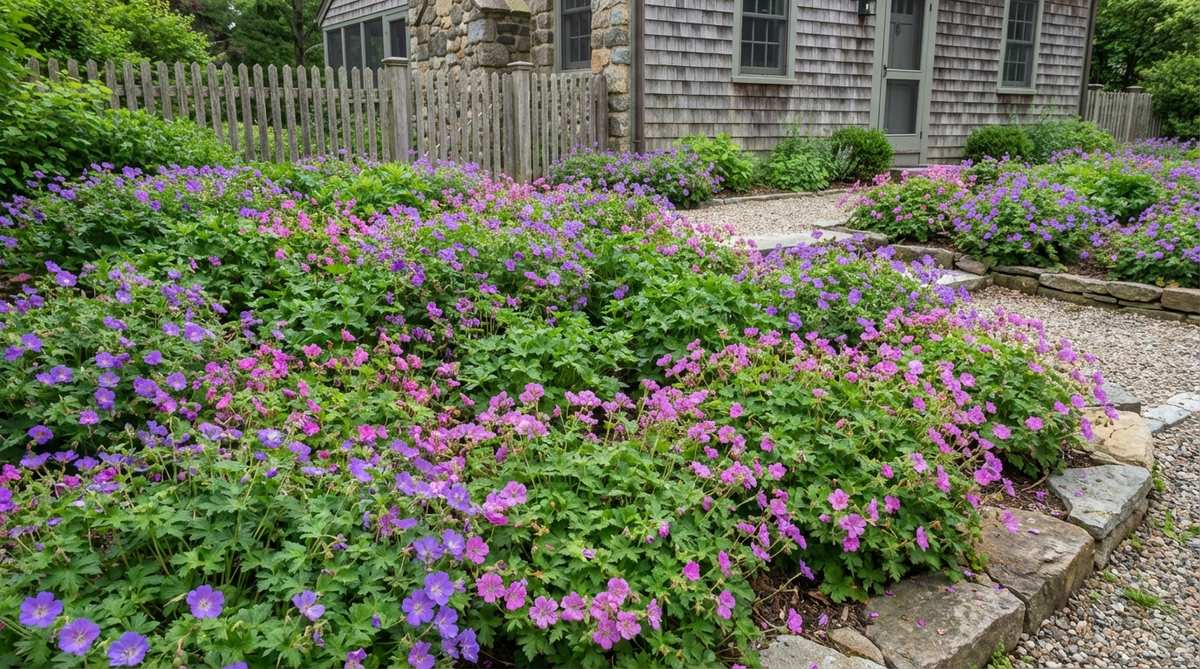
Hardy geraniums form dense mounds 8-12 inches tall with blooms in purple, magenta, pink, or white. Plant specimens 10 inches apart rather than the standard 18 inches to achieve a continuous carpet effect within one season.
Shear plants back after the first flush in early summer to encourage a robust second bloom cycle. Their divided foliage remains attractive even when flowers fade, providing consistent texture through October.
2. Creeping Thyme Pathway Spill
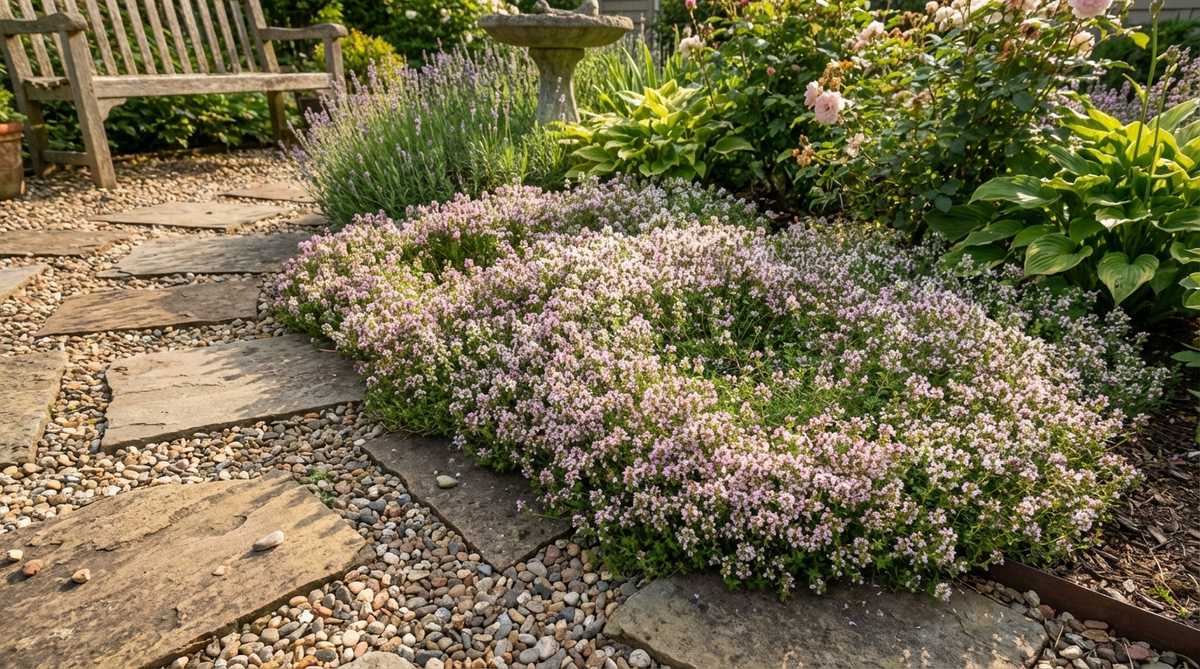
Creeping thyme tolerates foot traffic and releases fragrance when brushed, making it ideal for pathway edges in cramped quarters. The low mat stays under 4 inches and produces sheets of tiny pink or white flowers in early summer.
Plant plugs 6 inches apart and allow them to weave between pavers or spill onto gravel paths. This technique creates a soft transition between hard surfaces and planted beds without requiring additional width.
3. Dianthus Ribbon Border
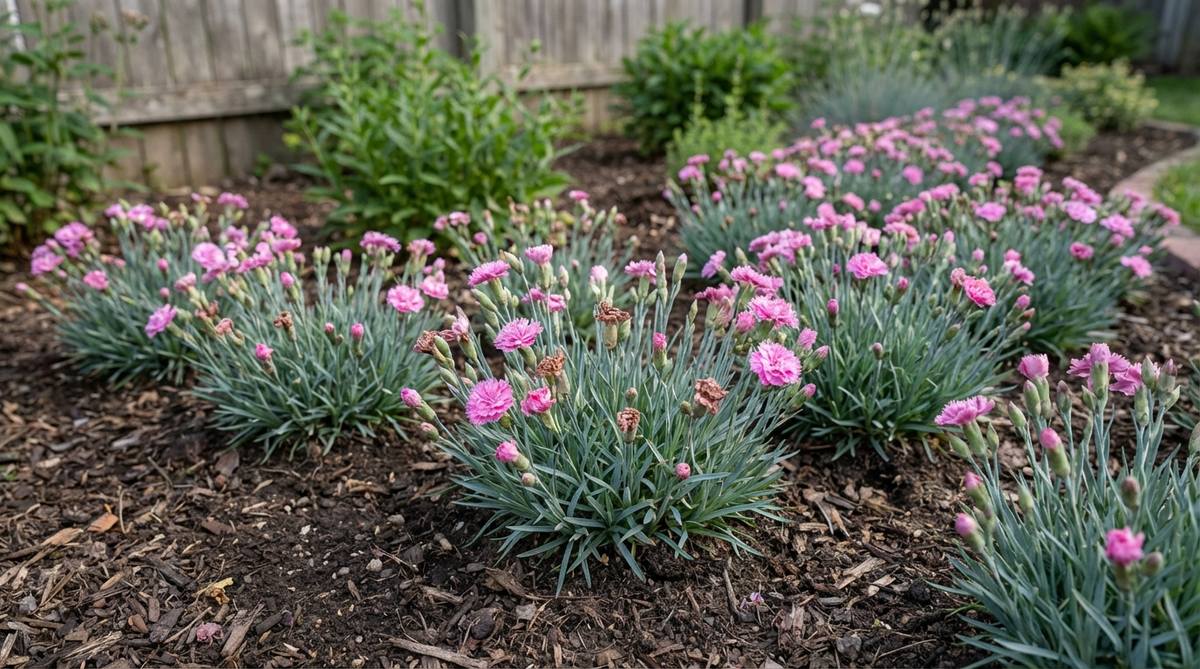
Dianthus varieties offer blue-gray foliage and spicy-scented blooms on compact 6-10 inch plants. Their evergreen leaves provide winter interest while occupying minimal bed depth.
Space plants 8 inches on center and deadhead spent flowers to extend bloom from late spring through early fall. Select modern reblooming cultivars rather than heirloom types for consistent performance in American heat zones.
4. Violas and Johnny-Jump-Ups
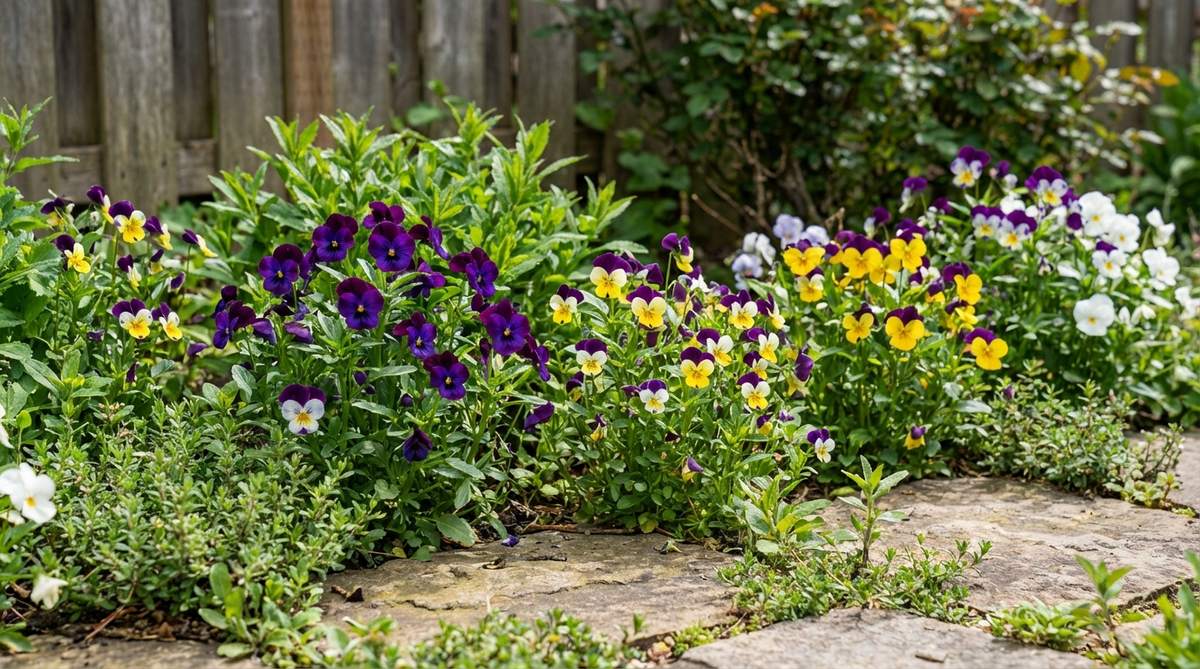
These cool-season charmers self-seed prolifically, creating spontaneous drifts that soften rigid planting schemes. Their faces appear in early spring and persist through late fall in cooler climates.
Allow initial plantings to go to seed rather than deadheading. Volunteers will emerge in cracks, along edges, and throughout the border, adding an authentic cottage garden spontaneity that formal spacing cannot achieve.
Mid-Layer WorkhorsesThe Visual Backbone
Mid-height perennials between 18-36 inches form the bulk of a small cottage garden’s visual mass. These plants deliver extended bloom periods and substantial foliage volume when planted at high densities, creating the lush abundance that defines cottage style.
5. Catmint Nepeta Clouds
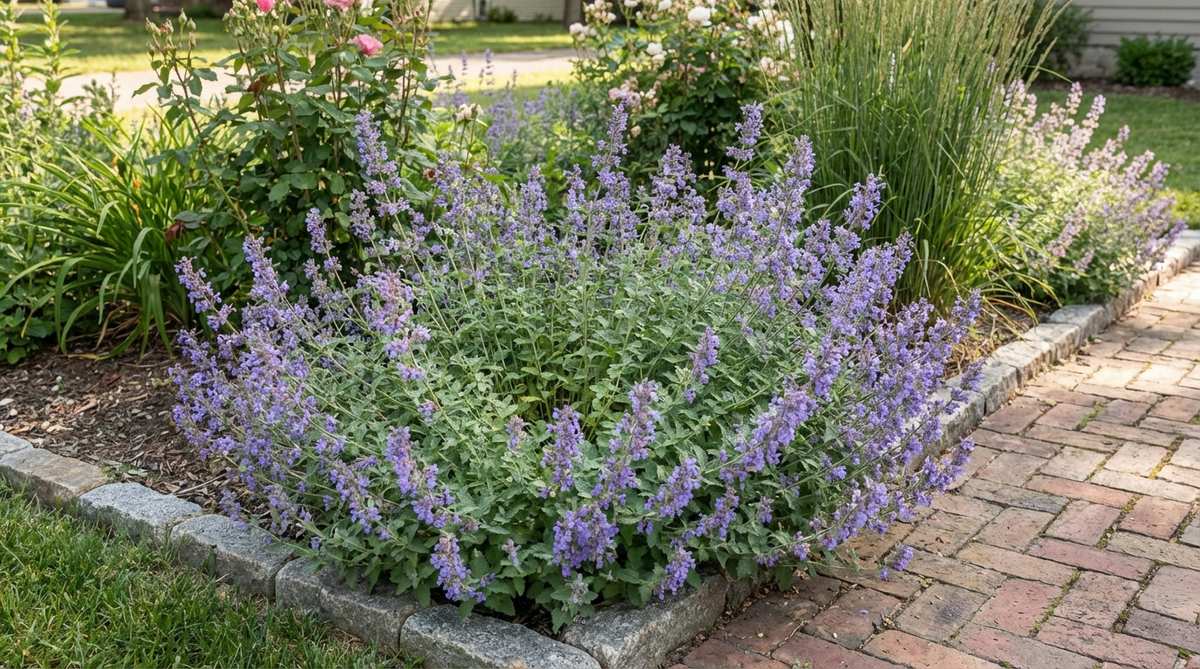
Catmint produces lavender-blue flower spikes above aromatic gray-green foliage from May through September. Its billowing habit softens edges and fills gaps between more upright companions.
Plant 14 inches apart and cut back by half after the first bloom wave to generate dense regrowth and a second flowering surge. Catmint tolerates drought once established, reducing maintenance in compact beds with limited irrigation access.
6. Salvia Vertical Accents
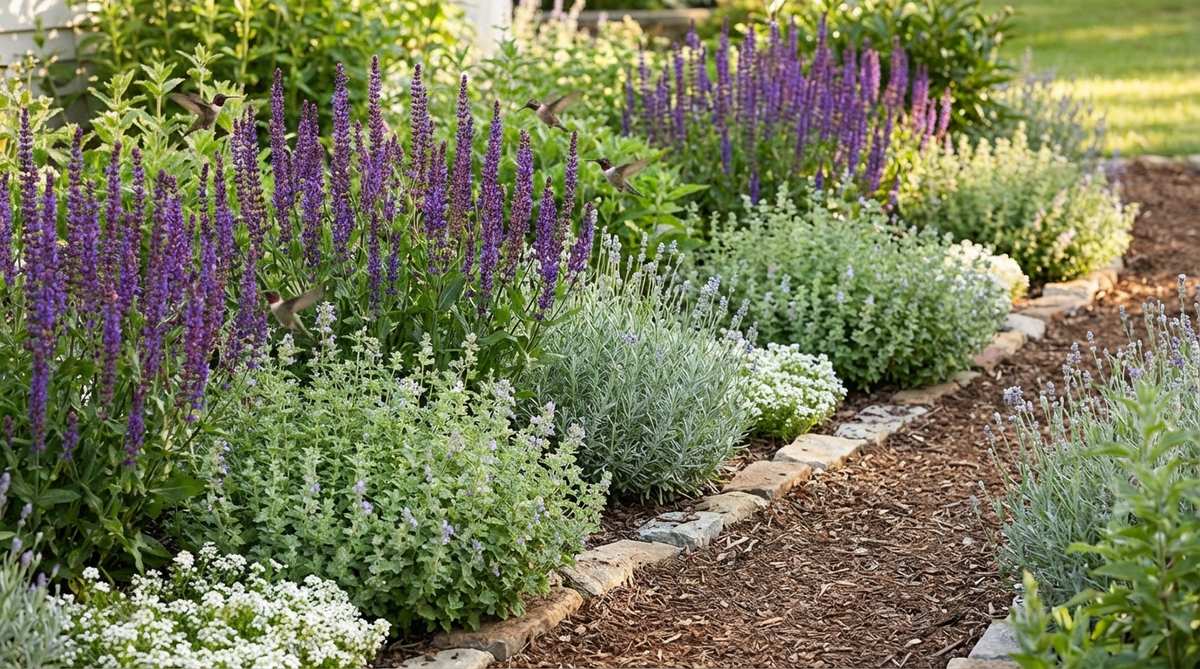
Salvias offer upright flower spires in shades from deep purple to coral pink, depending on species. Their vertical form contrasts beautifully with mounding plants and provides hummingbird appeal.
Space specimens 12-15 inches apart to create a thicket effect rather than individual clumps. Remove spent flower stalks at the base to promote continuous blooming through fall frost.
Select regionally appropriate species—’May Night’ for northern zones, ‘Black and Blue’ for southern heat tolerance.
7. Shasta Daisy Clusters
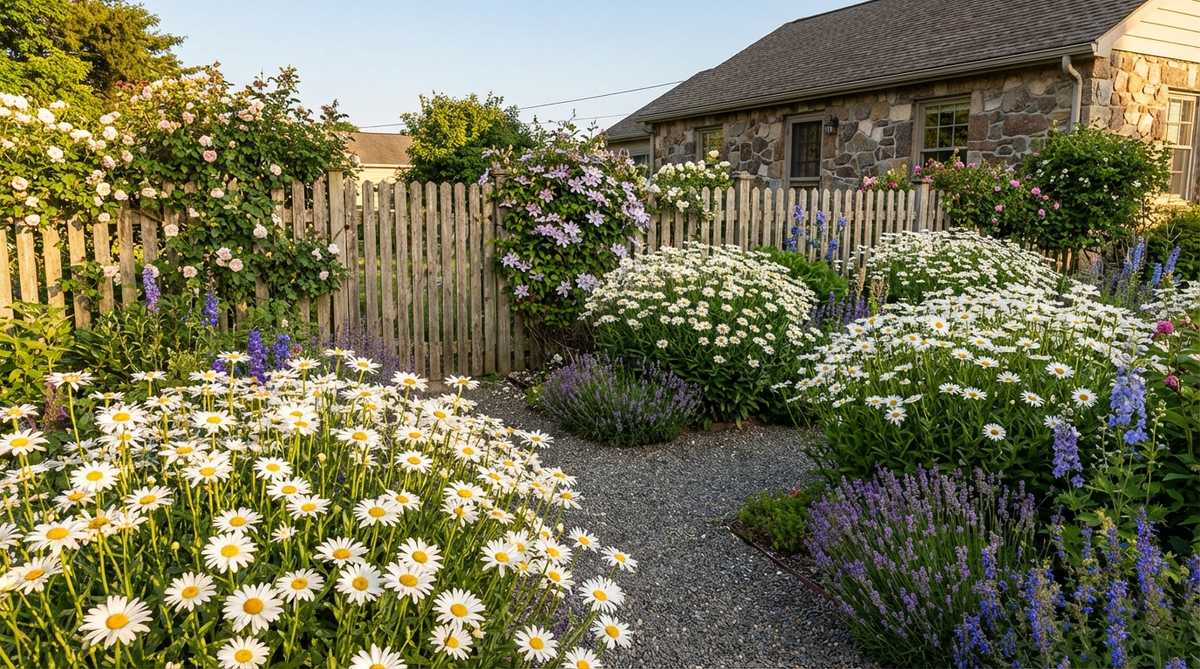
Shasta daisies deliver classic white petals with sunny yellow centers on sturdy 24-30 inch stems. Their cheerful simplicity anchors more complex cottage plant combinations.
Plant in tight groups of five or more, spacing 12 inches apart, to create substantial white drifts rather than scattered individuals. Divide clumps every three years to maintain vigor and prevent bare centers in densely planted schemes.
8. Coreopsis Threadleaf Gold
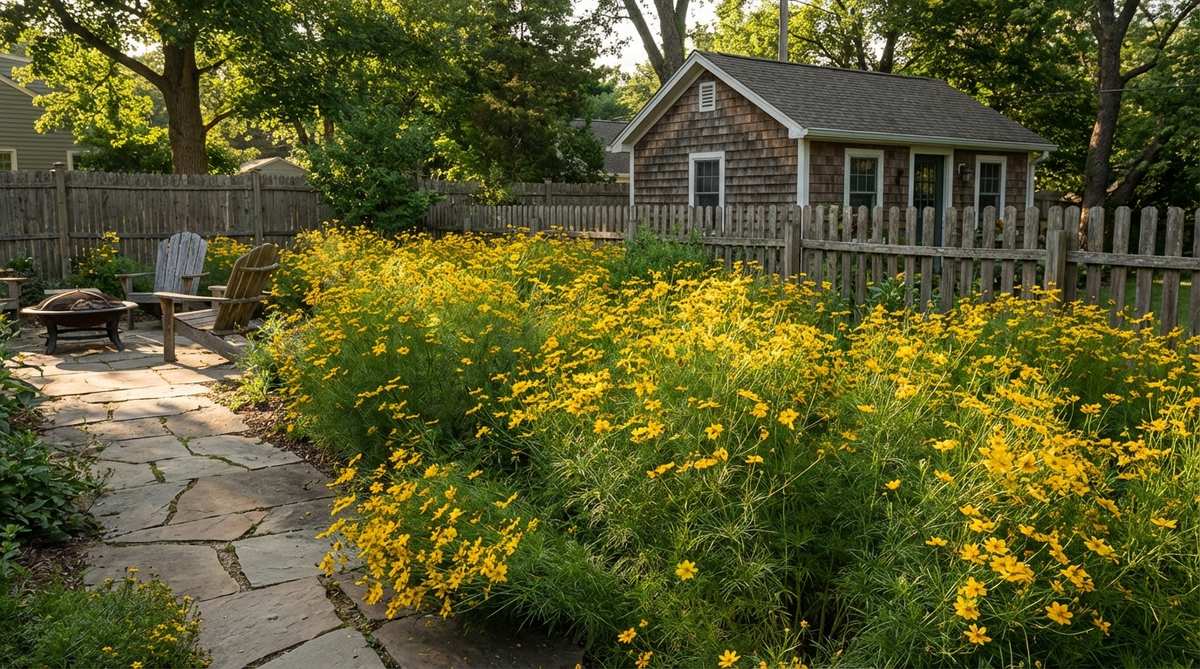
Threadleaf coreopsis forms fine-textured mounds covered in golden yellow flowers from June through August. Its airy appearance allows visual layering without creating a solid wall of foliage.
Position plants 10 inches apart to achieve a woven mat effect. This species tolerates neglect and poor soil, making it ideal for small garden cottage situations where intensive maintenance is impractical.
9. Lavender Hedge Rows
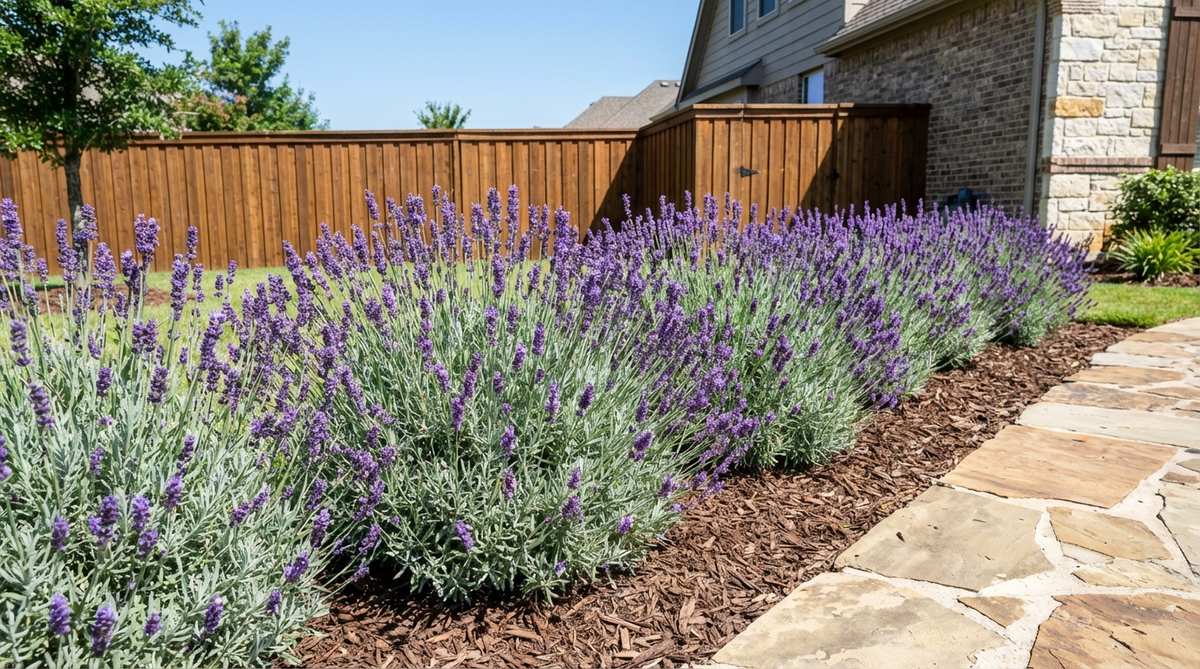
English lavender creates dense, evergreen structure with fragrant purple spikes in midsummer. Plant compact varieties like ‘Hidcote’ or ‘Munstead’ 12 inches apart to form low hedging within the border.
Shear plants after flowering to maintain tight form and encourage dense branching. Lavender’s silver foliage provides year-round interest and prevents winter dormancy gaps in the visual landscape.
10. Echinacea Prairie Strength
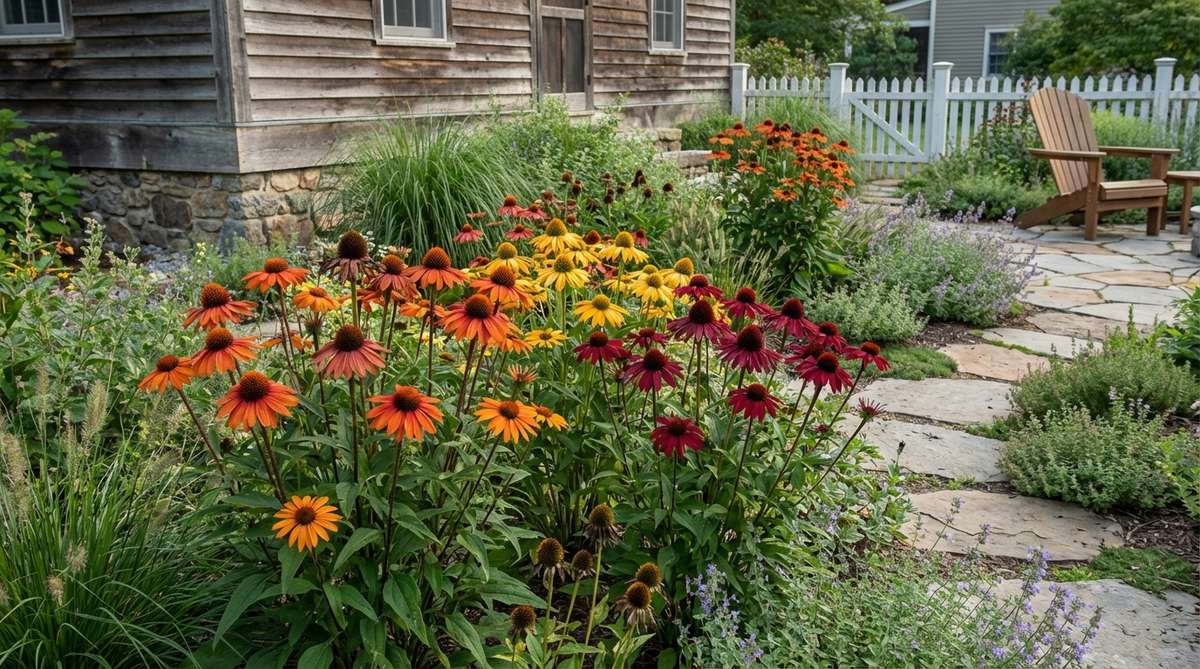
Coneflowers bring sturdy stems, substantial blooms, and seedheads that extend interest through winter. Modern hybrids offer colors beyond traditional purple, including orange, yellow, and burgundy.
Space 15 inches apart and allow plants to self-sow. Volunteers fill gaps and create naturalistic drifts that enhance the informal cottage aesthetic while supporting pollinators.
Back Border DramaHeight Without Width
Vertical drama in small garden cottages requires tall plants with narrow footprints. These back-of-border specimens create privacy, block views to neighboring properties, and add architectural structure without consuming precious bed depth.
11. Delphinium Spire Clusters
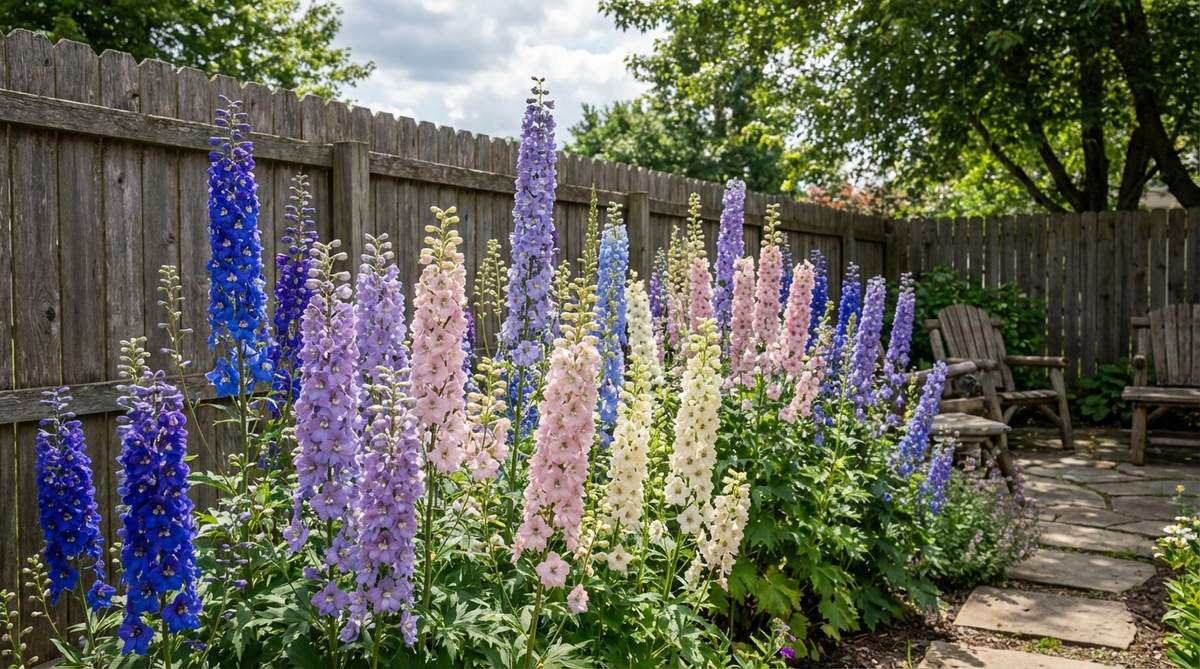
Delphiniums produce dramatic 4-6 foot spikes of densely packed flowers in blues, purples, pinks, and whites. Their narrow growth habit allows placement close to fences or walls without sprawling forward.
Plant groups of three to five specimens 18 inches apart to create substantial vertical impact. Stake individually to prevent toppling, and cut spent spires to the base to encourage a fall rebloom on shorter stems.
12. Hollyhock Cottage Icons
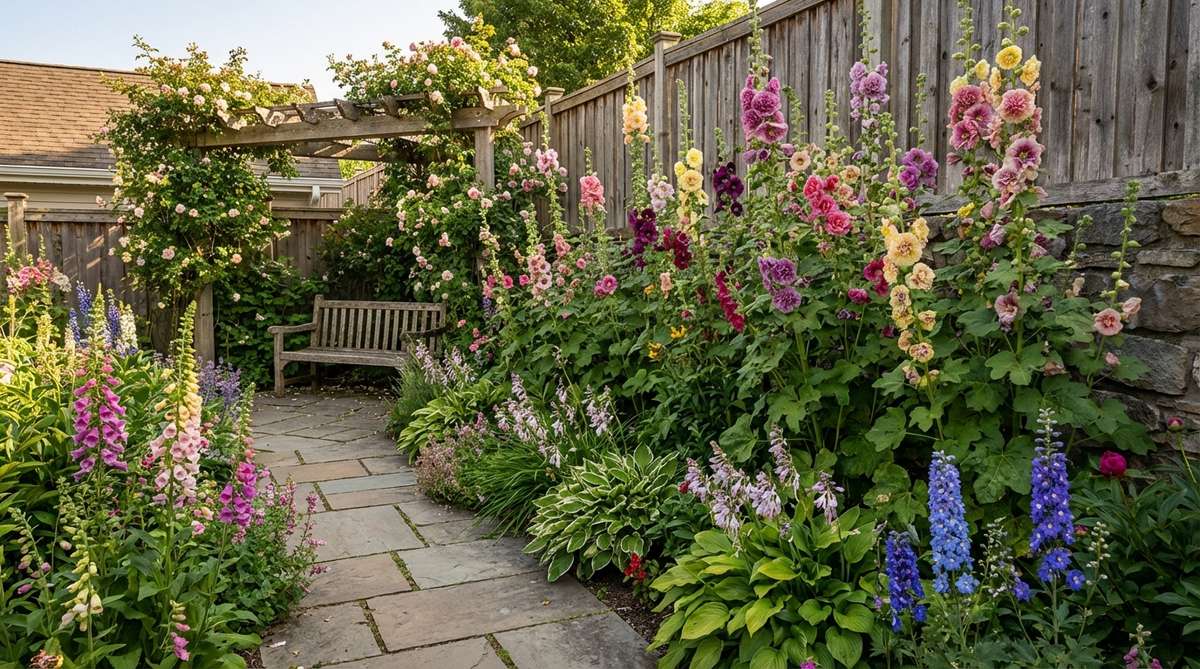
Hollyhocks deliver old-world romance with towering 6-8 foot spikes covered in large, ruffled blooms. Their narrow base occupies minimal bed space while their height creates dramatic backdrop presence.
Treat as biennials or short-lived perennials, planting new seedlings each year to ensure continuous display. Position 15 inches apart along fences or walls where their height frames entrances and vertical structures.
13. Foxglove Shade-Tolerant Towers
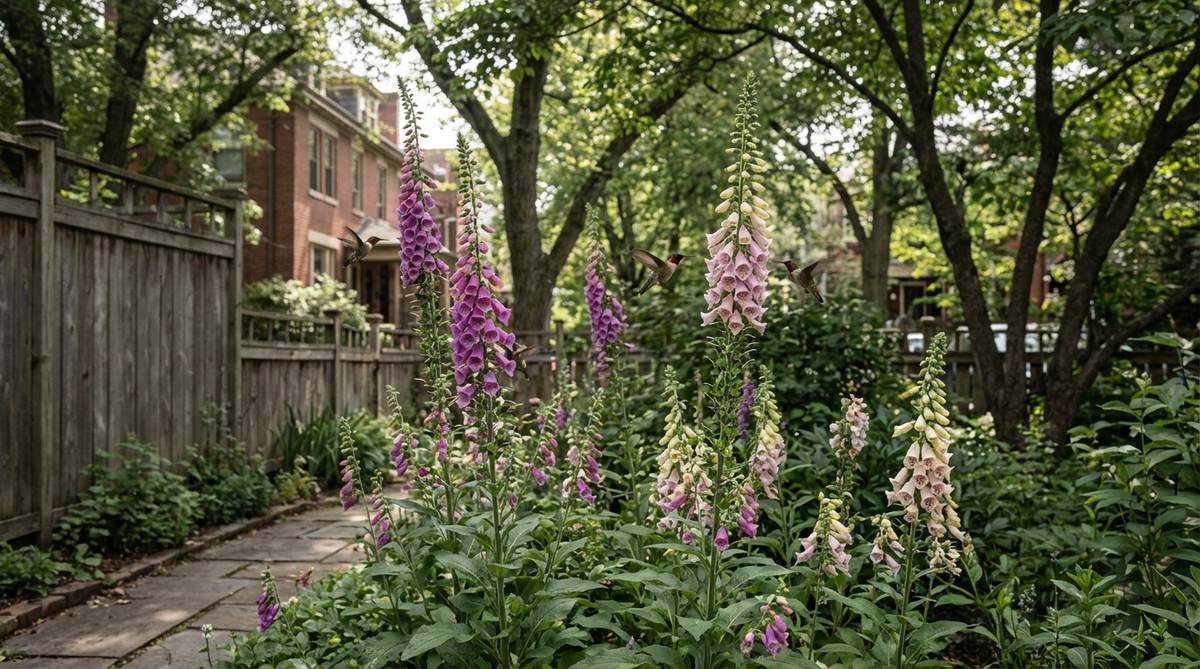
Foxgloves thrive in partial shade situations common in small urban gardens surrounded by buildings or mature trees. Their tubular flowers on 3-5 foot spikes attract hummingbirds and provide vertical interest in lower light conditions.
Allow plants to self-seed and maintain a colony by leaving some flower stalks intact. Space initial plantings 12 inches apart and thin volunteers as needed to prevent overcrowding while maintaining dense coverage.
14. Verbena Bonariensis See-Through Height
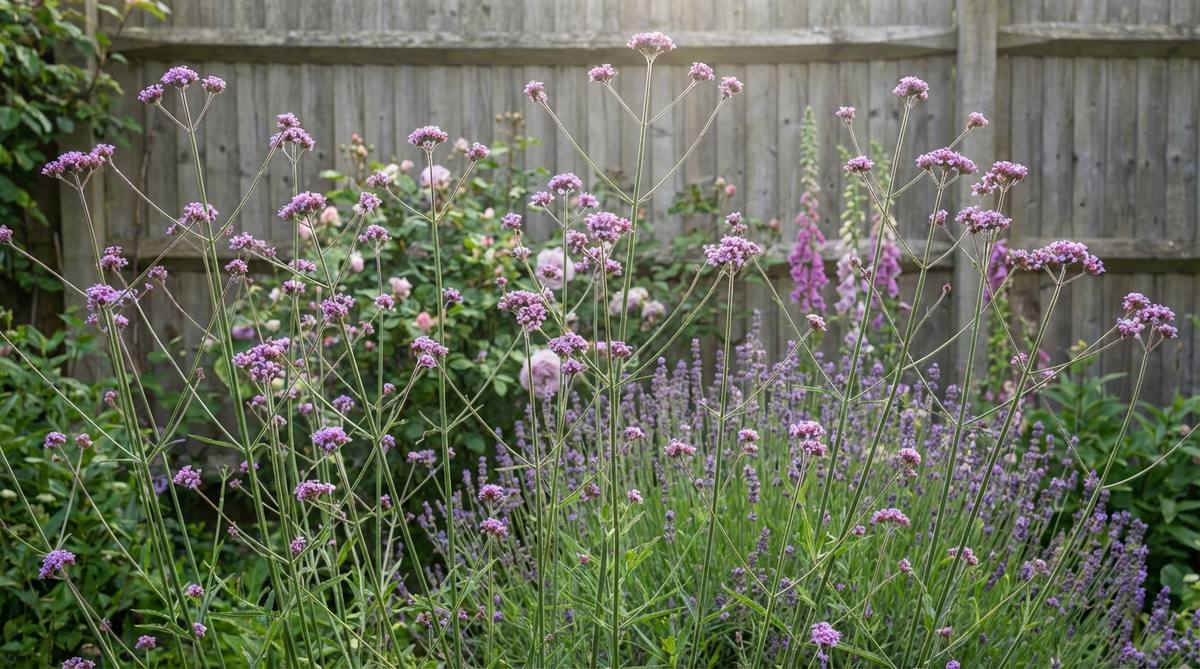
This airy perennial reaches 4-5 feet but maintains a slender, transparent profile that allows views through its stems to plants behind. Purple flower clusters float above thin stems from July through frost.
Plant in drifts of 7-10 specimens spaced just 10 inches apart. The tight spacing creates a haze of purple that adds height without blocking light or views to mid-layer plants.
15. Liatris Prairie Verticals
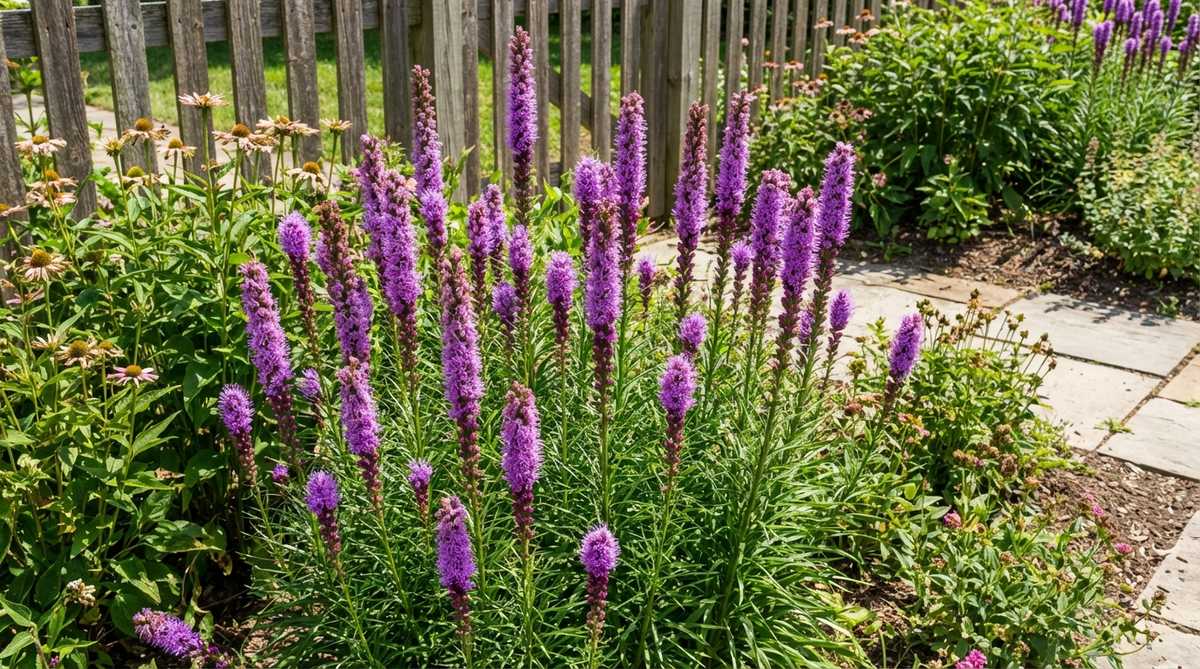
Liatris produces poker-like spikes that bloom from top to bottom, an unusual pattern that draws attention. Plants reach 2-4 feet with a narrow, upright habit ideal for tight quarters.
Space corms 8 inches apart and plant in groups of nine or more to create substantial vertical drama. Their grasslike foliage occupies minimal space, and their midsummer bloom timing fills gaps between spring and late-summer performers.
Vertical Space SolutionsGrowing Up Not Out
Vertical surfaces represent untapped planting area in small garden cottages. Climbing plants, wall-trained specimens, and trellis systems multiply growing space without expanding horizontal footprint, essential for maximizing plant density in constrained areas.
16. Clematis Trellis Layers
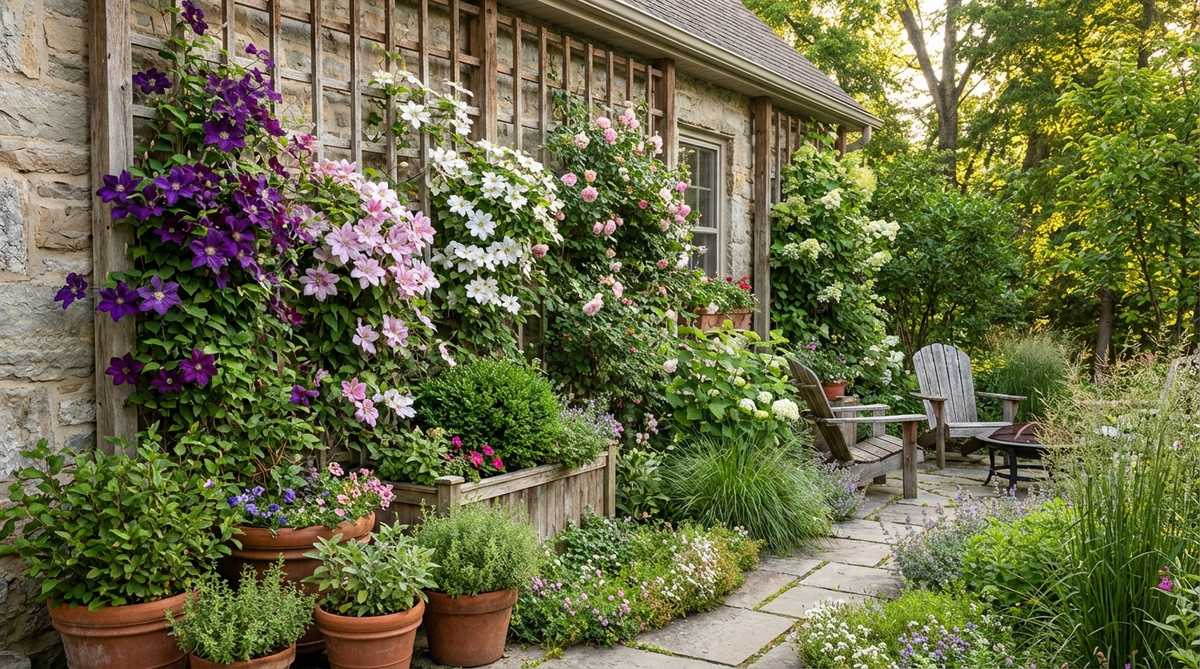
Clematis vines deliver large, showy flowers in countless colors while occupying less than 12 inches of bed depth. Their twining habit allows training on trellises, fences, and arbors to create vertical flower walls.
Plant two or three varieties with different bloom times on the same structure, spacing root zones 18 inches apart. This creates a succession of flowers from spring through fall on a single vertical plane.
Keep roots shaded with dense ground plantings while allowing vines to climb into full sun for optimal flowering.
17. Climbing Rose Cottage Romance
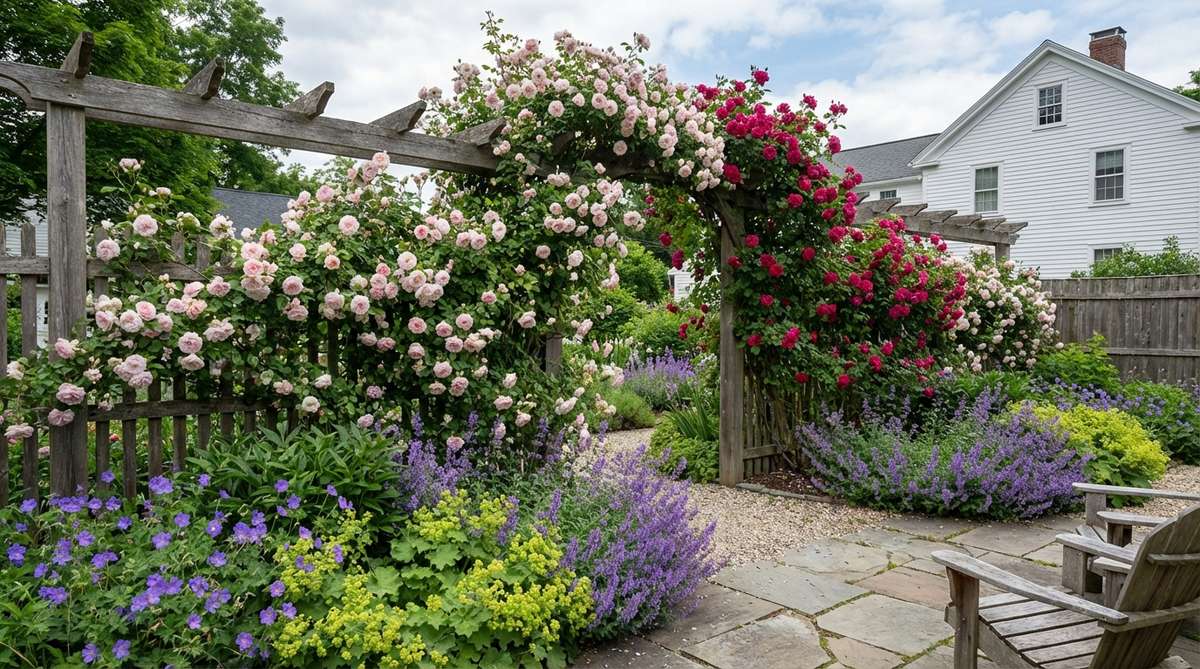
Climbing roses trained on walls, fences, or pergolas provide classic cottage garden romance without consuming bed space. Varieties like ‘New Dawn’ or ‘Zephirine Drouhin’ produce repeat blooms and tolerate partial shade.
Train canes horizontally along fence rails to encourage flowering spurs along the entire length. Underplant rose bases with catmint, geraniums, or lady’s mantle to conceal bare lower stems and add layered density.
18. Sweet Pea Annual Height
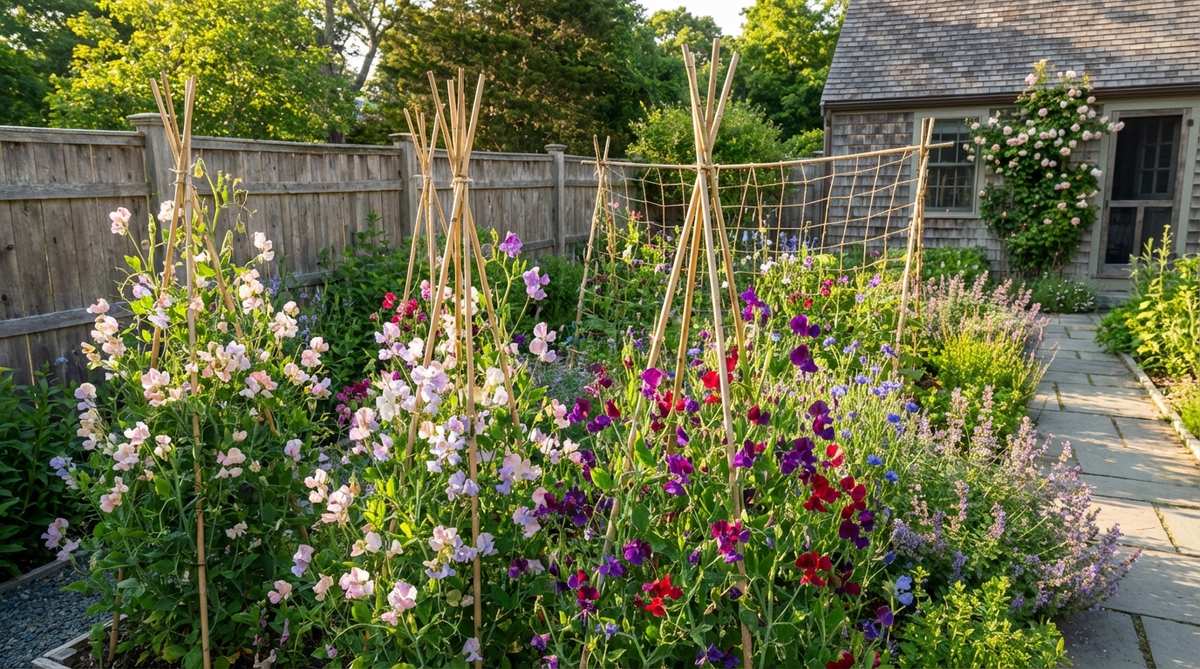
Sweet peas climb 6-8 feet on slender vines, producing fragrant flowers in pastels and bold tones. As annuals, they provide temporary height that can be relocated annually to refresh garden compositions.
Install bamboo teepees or netting structures and sow seeds directly at the base in early spring. Plant every 4 inches around the support for a dense column of bloom from May through July.
19. Honeysuckle Fence Screening
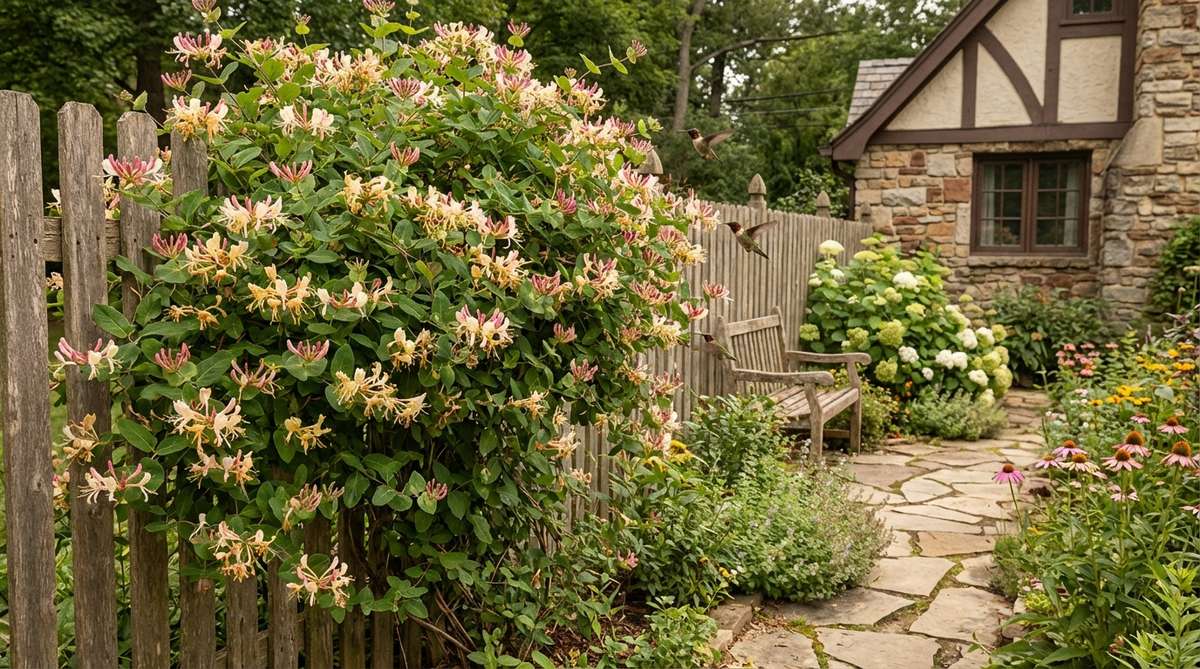
Honeysuckle vines grow rapidly to cover fences, creating fragrant privacy screens that attract hummingbirds. Their dense foliage and twining habit quickly transform bare vertical surfaces into green walls.
Select well-behaved cultivars like ‘Blanche Sandman’ rather than invasive Japanese honeysuckle. Train initial growth horizontally, then allow vertical shoots to fill in, creating complete coverage within two seasons.
20. Parthenocissus Living Walls
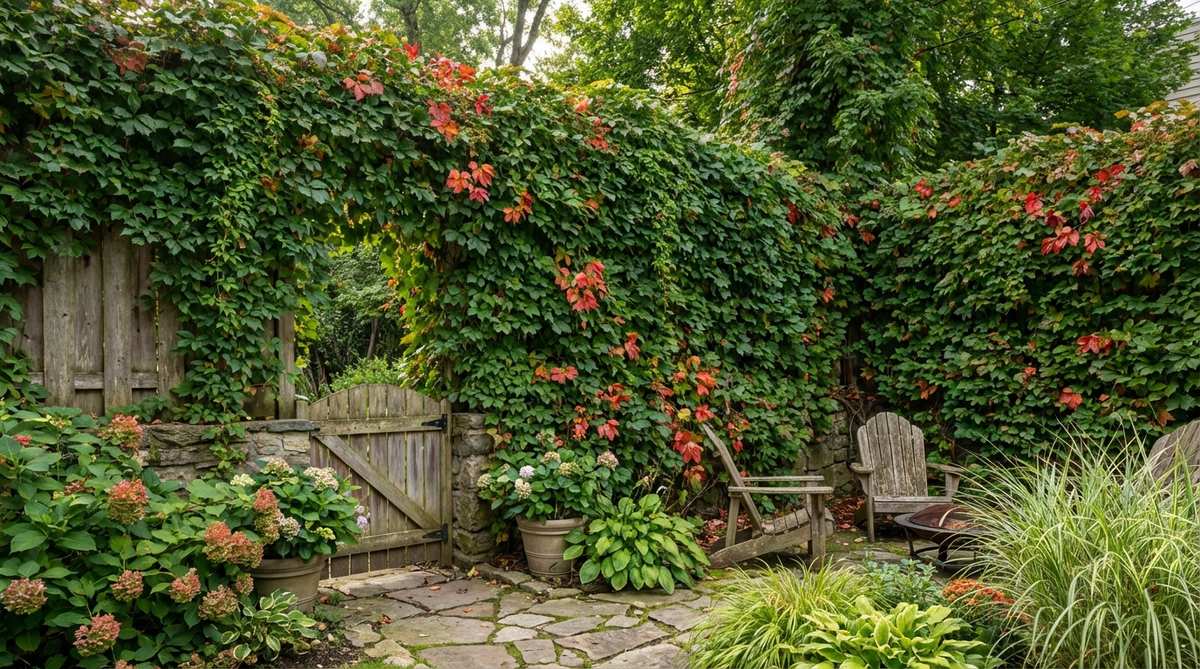
Virginia creeper and related species cling to walls and fences using adhesive tendrils, requiring no additional support structure. Their dense foliage creates lush green backdrops that make small spaces feel larger through visual depth.
Plant 24 inches apart at the base of walls or fences. These vigorous growers provide complete coverage within two years and display brilliant red fall color before dropping leaves to reveal garden structure in winter.
Pathway Edge SoftenersBlurring Boundaries
Pathways in small garden cottages must be narrow to maximize planting area, but plants spilling onto path edges soften the transition and create an inviting, unstructured appearance. Strategic edging plants make paths feel integrated rather than imposed.
21. Alchemilla Mollis Foam
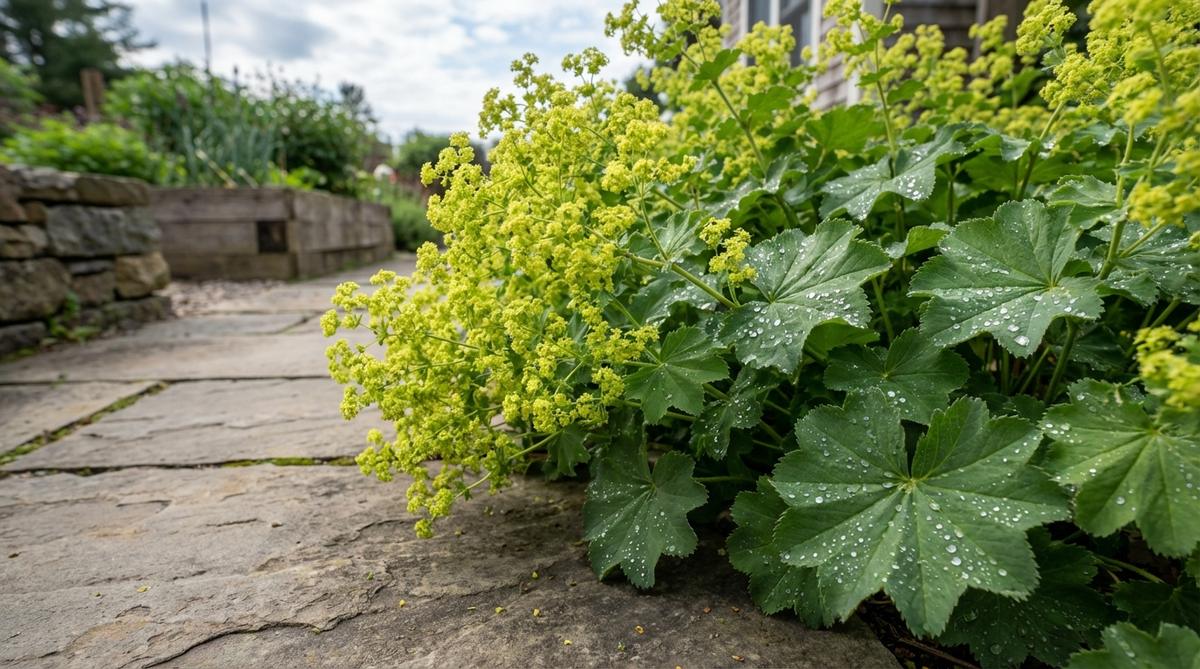
Lady’s mantle produces chartreuse flower clouds and scalloped leaves that catch morning dew in silvery droplets. Plants reach 18 inches tall and naturally spill forward onto pathway edges.
Space 14 inches apart along path borders and allow them to overlap onto hard surfaces by 4-6 inches. Shear plants after flowering to maintain fresh foliage and prevent excessive self-seeding.
22. Nepeta Racemosa Walker’s Low
This compact catmint variety stays under 12 inches but spreads 24 inches wide, creating a billowing effect along path edges. Its gray-green foliage and lavender-blue flowers soften hard pathway materials.
Plant 18 inches apart and position the leading edge 4 inches from the path border. The natural sprawl will cover the junction between path and bed within one season, eliminating harsh visual lines.
23. Stachys Byzantina Silver Carpet
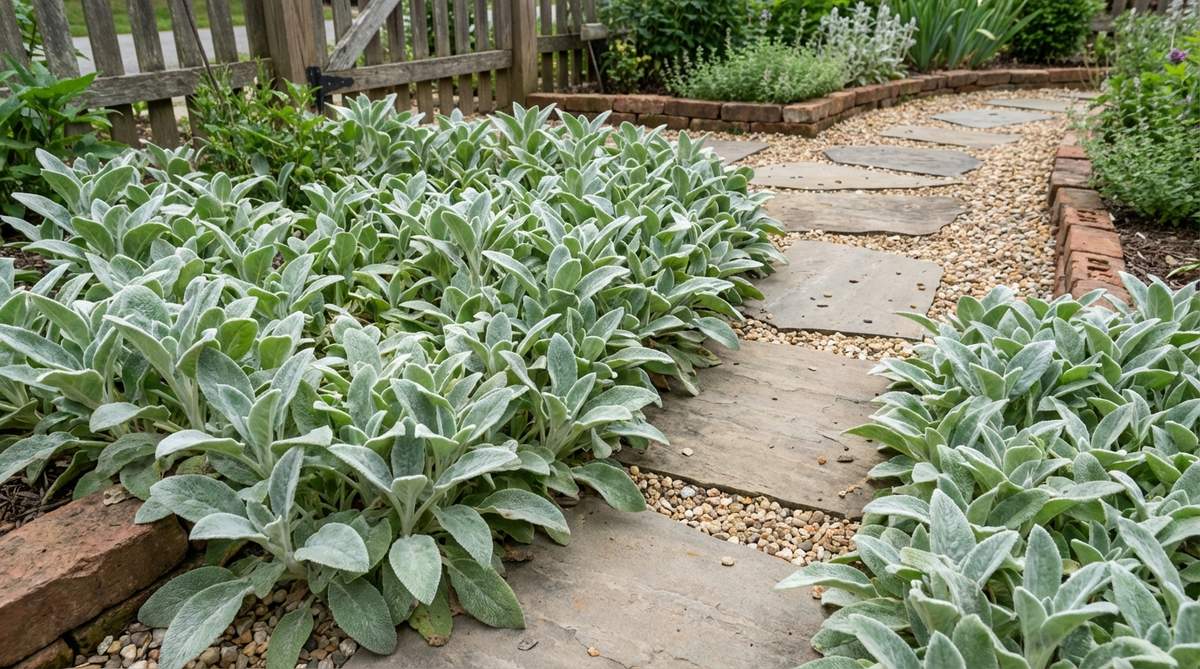
Lamb’s ear offers touchable, silvery foliage that children and visitors cannot resist. Its low, spreading habit makes it ideal for softening path edges while providing year-round textural interest.
Remove flower stalks as they emerge to maintain dense foliage coverage. Plant 12 inches apart and allow the fuzzy leaves to sprawl onto pathways by 3-4 inches, creating a tactile invitation to engage with the garden.
24. Sedum Spurium Groundcover Spill
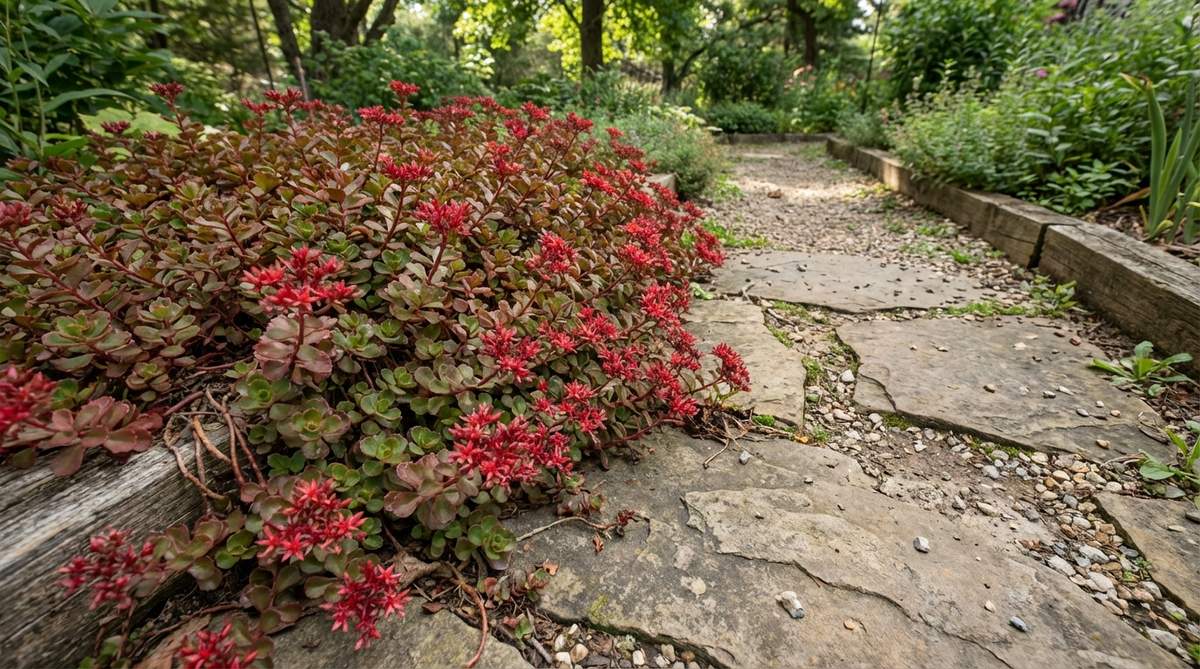
Creeping sedums form dense mats of succulent foliage that tolerate dry conditions and foot traffic. Their red, pink, or white summer flowers add seasonal interest to year-round textured foliage.
Plant plugs 8 inches apart along path edges and encourage them to root into gravel or pavement cracks. This spontaneous growth pattern enhances the casual, time-worn aesthetic essential to cottage style.
Seasonal Interest BuildersFour-Season Density
Small garden cottages require plants that contribute visual interest beyond a single bloom period. Four-season performers prevent the empty appearance that occurs when relying solely on summer bloomers in compact spaces.
25. Hellebore Winter Blooms
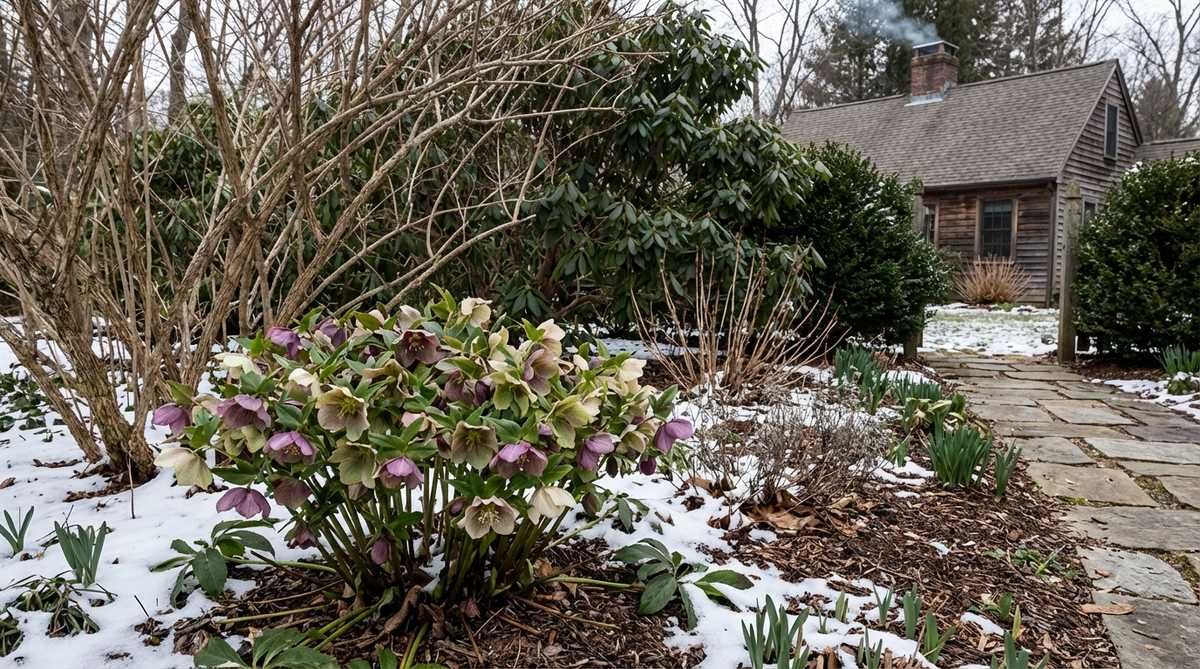
Hellebores flower from January through April, providing critical early-season interest when most perennials remain dormant. Their evergreen foliage maintains structure through winter and fills shade zones where other cottage plants struggle.
Plant in drifts of five or more, spacing 15 inches apart. Position under deciduous shrubs or at the base of fences where they receive winter light but summer shade.
26. Aquilegia Spring Gap Fillers
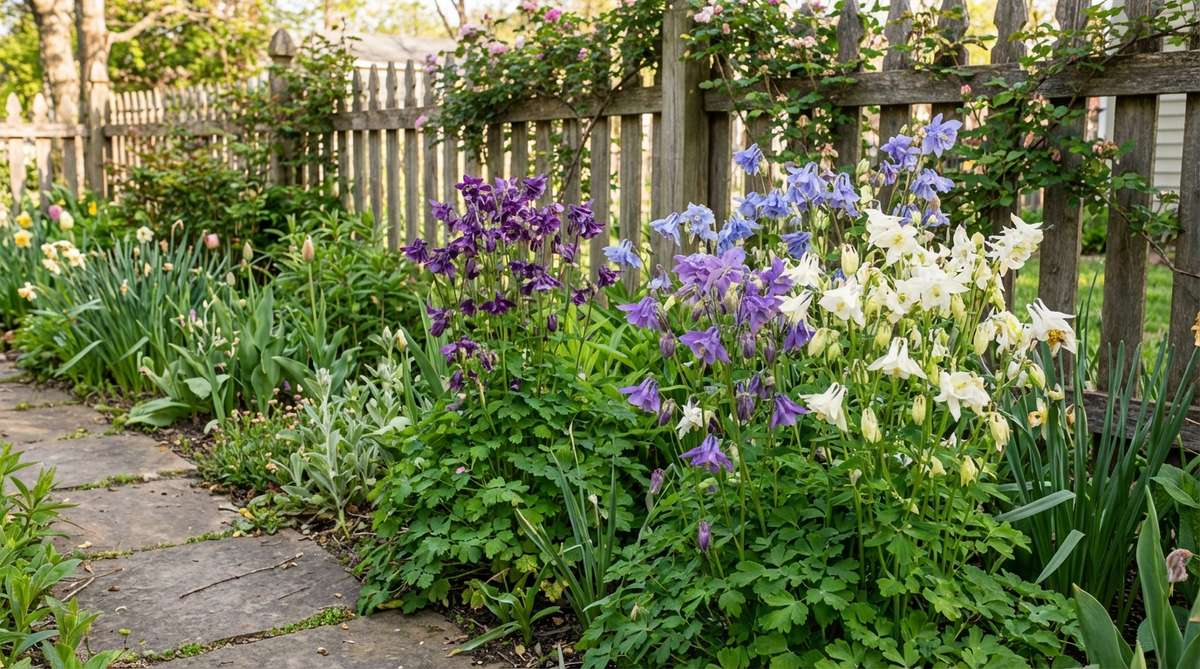
Columbines bridge the gap between spring bulbs and summer perennials with delicate, spurred flowers in May and June. Their ferny foliage remains attractive after blooming and tolerates dry shade.
Allow plants to self-sow and create spontaneous color combinations as they interbreed. Space initial plantings 10 inches apart and edit volunteers to maintain desired densities without sacrificing the cottage garden’s informal spontaneity.
27. Aster Fall Finale
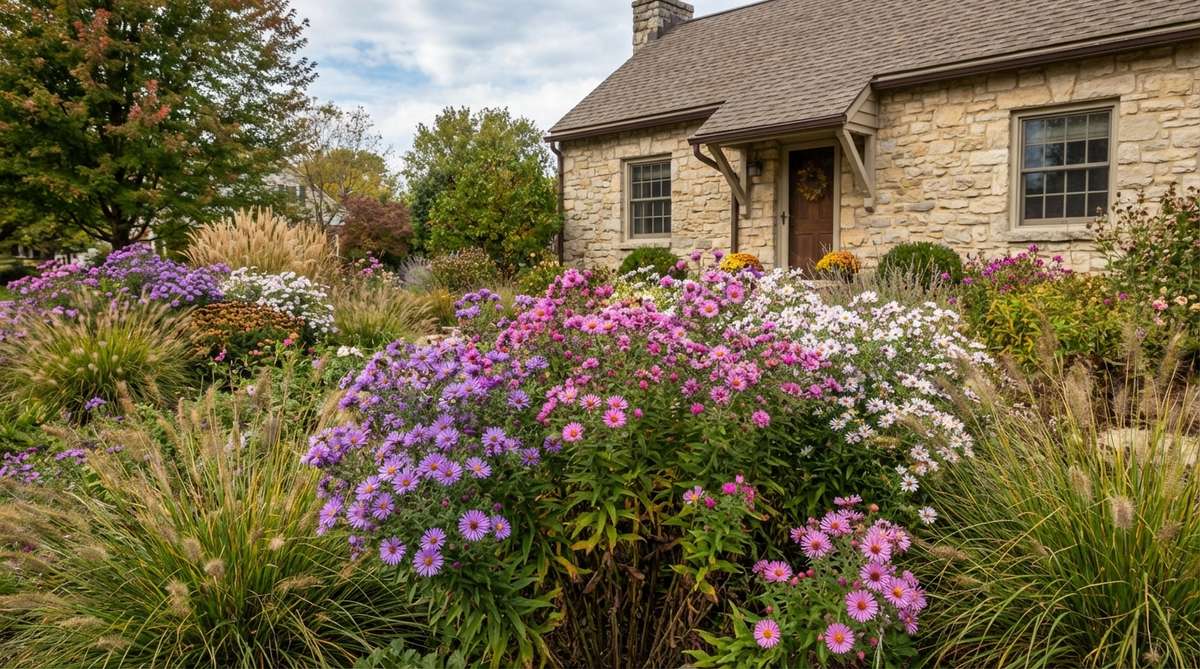
Native asters explode with color from September through November, extending cottage garden interest into fall when many plants decline. Their daisy-like flowers in purple, pink, and white attract late-season pollinators.
Pinch stems in June to reduce height and increase branching, creating denser plants that support themselves without staking. Space 18 inches apart and combine with ornamental grasses for textural contrast in fall compositions.
28. Ornamental Grass Winter Structure
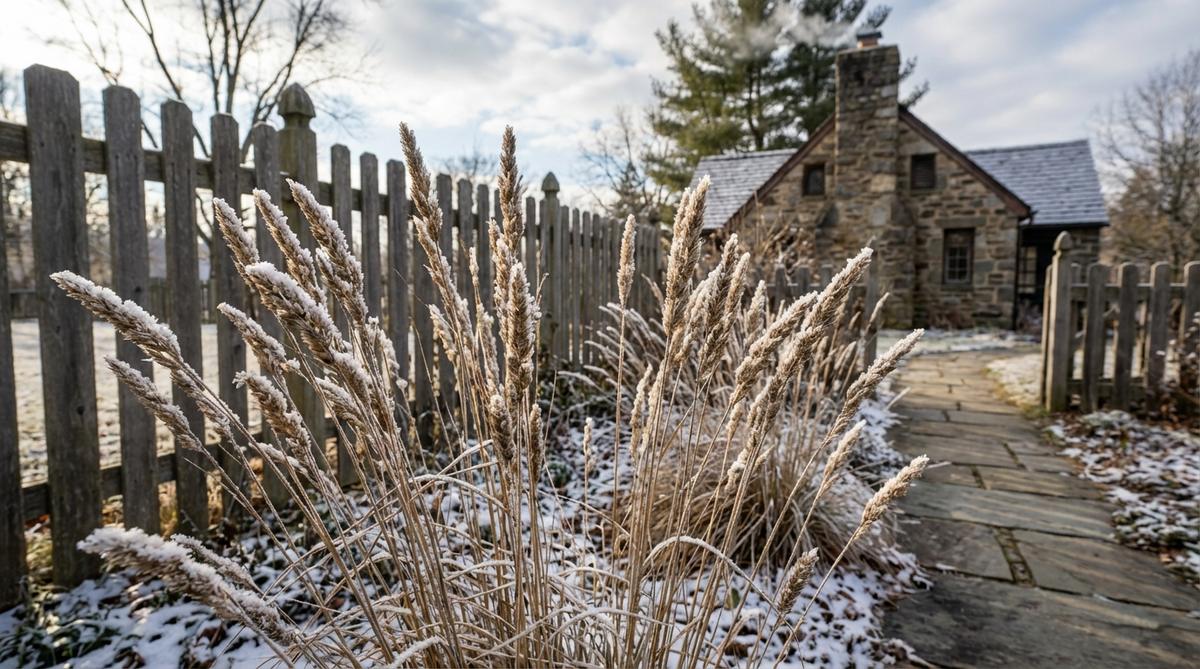
Compact ornamental grasses like ‘Little Bluestem’ or ‘Shenandoah’ switchgrass provide upright form that persists through winter. Their seedheads catch snow and frost, creating sculptural interest in dormant season.
Plant in odd-numbered groups of three or five, spacing 18-24 inches apart. Leave foliage standing until early spring to maintain winter presence, then cut back before new growth emerges.
Edible Integration StrategiesBeautiful and Productive
Cottage gardens traditionally combined ornamental and edible plants, a practical approach that maximizes utility in small spaces. Herbs, vegetables, and fruiting plants contribute aesthetic value while producing harvests from limited square footage.
29. Chive Edging Blooms
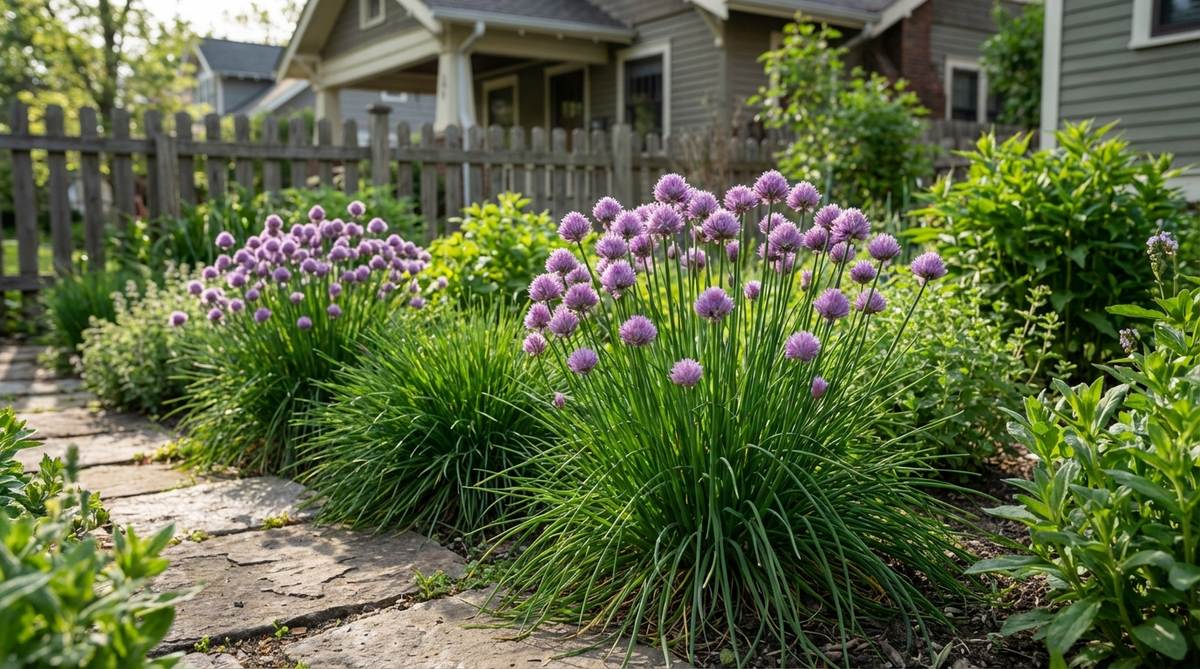
Chives produce spherical purple flowers on 12-inch stems in late spring, creating ornamental impact while providing culinary harvests. Their grasslike foliage maintains neat mounds that work well as pathway edges or front-border accents.
Plant clumps 10 inches apart and harvest leaves regularly to encourage fresh growth. Allow some flowers to remain for pollinator support and visual interest, then deadhead to prevent excessive self-seeding.
30. Nasturtium Edible Cascade
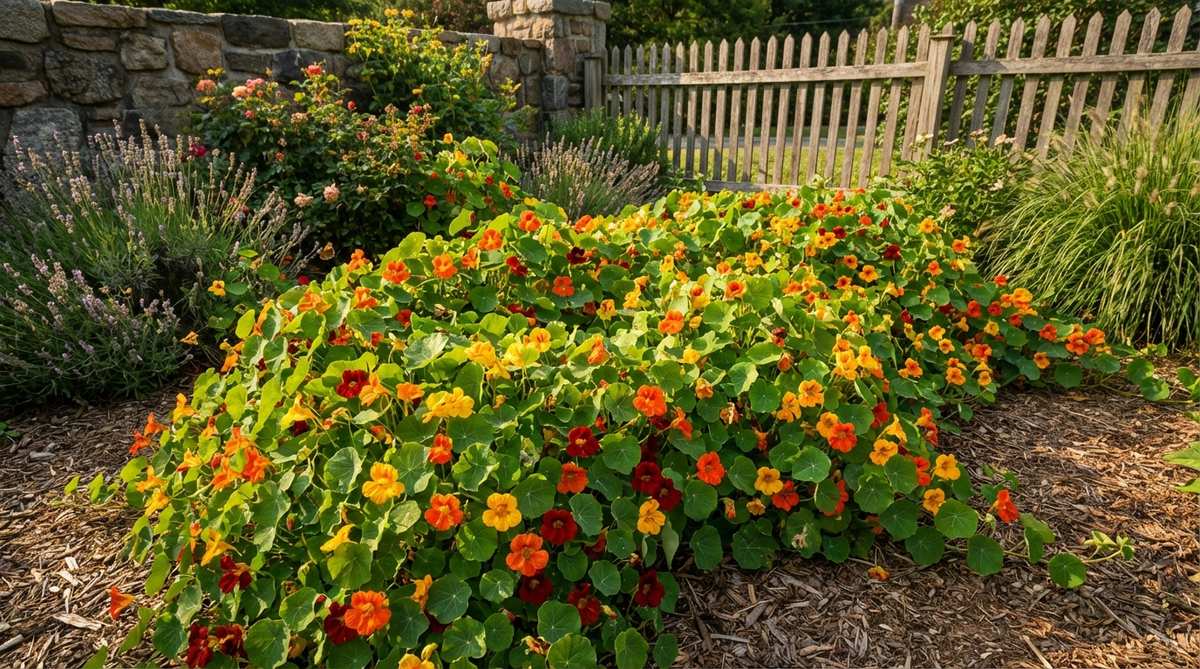
Nasturtiums offer edible flowers and leaves with a peppery flavor while creating dense foliage coverage in sunny spots. Their sprawling habit fills gaps between perennials and provides weed suppression through competitive density.
Direct sow seeds 8 inches apart in late spring. The rapid growth covers bare soil quickly, and the bright orange, yellow, or red flowers attract beneficial insects while adding bold color to cottage plant palettes.
31. Alpine Strawberry Border
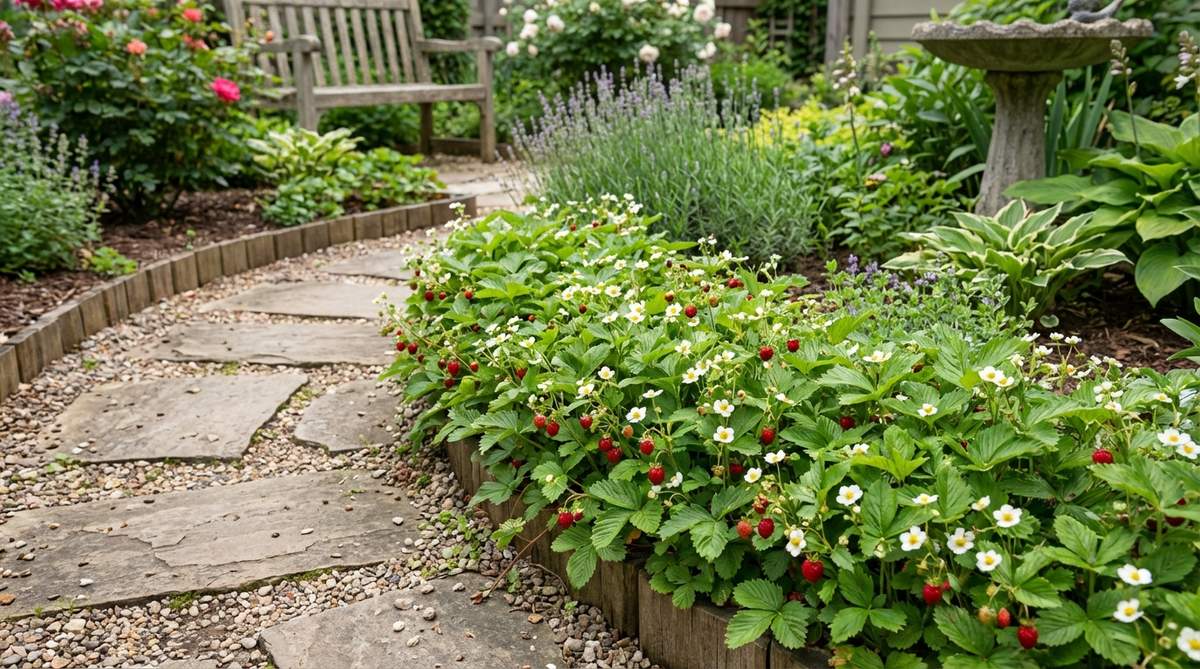
Alpine strawberries produce small, intensely flavored fruits continuously from June through October on compact 6-8 inch plants. Their white flowers and red berries create ornamental appeal alongside edible harvests.
Space plants 8 inches apart along path edges or as front-border groundcover. Remove runners to maintain tight clumps that produce heavier fruit yields while preventing excessive spread in densely planted schemes.
32. Fennel Architectural Herb
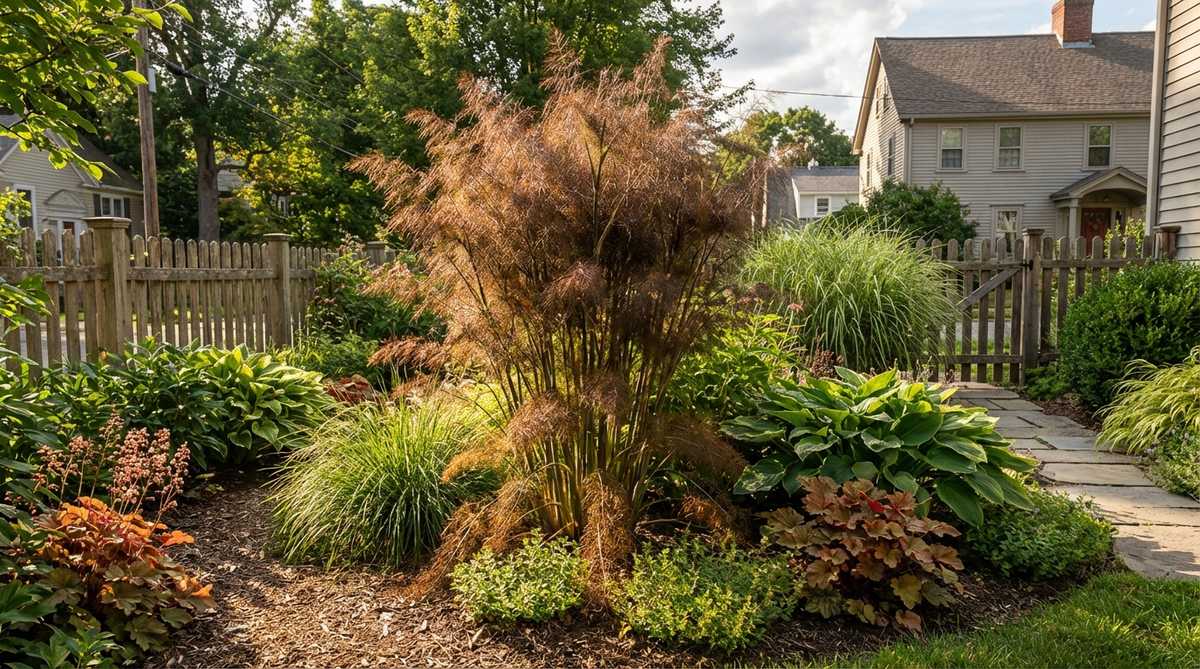
Bronze fennel reaches 4-6 feet with fine, feathery foliage in deep bronze tones. Its dramatic texture contrasts with broader-leafed cottage plants while providing edible foliage and seeds.
Position single specimens as vertical accents, spacing 24 inches from neighbors to prevent crowding. The airy structure allows light penetration to plants below, maximizing vertical layering in compact beds.
Structural Evergreen AnchorsYear-Round Framework
Dense cottage plantings require evergreen structure to prevent a chaotic appearance during dormant seasons. Compact evergreen shrubs and perennials provide permanent framework that organizes more ephemeral flowering displays.
33. Boxwood Ball Rhythm
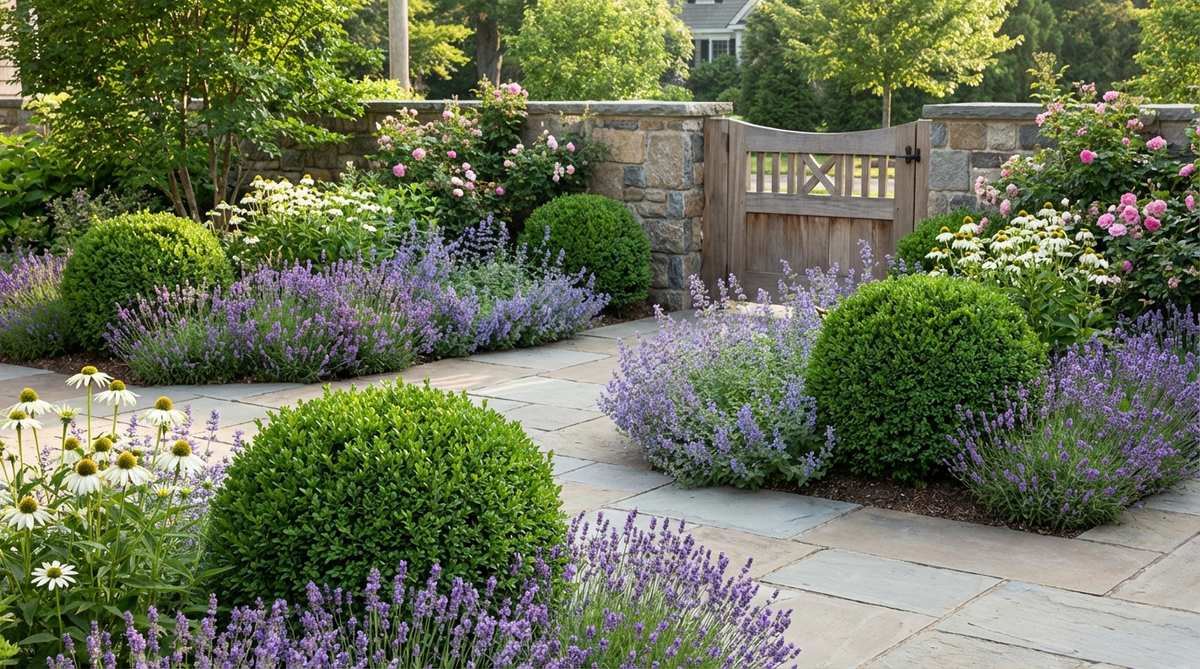
Clipped boxwood spheres 18-24 inches in diameter create formal punctuation within informal cottage plantings. Their year-round green structure anchors bed corners and pathway intersections.
Space balls 36 inches apart and surround with loose, billowing perennials for contrast. Shear twice annually to maintain tight form, and underplant with spring bulbs to add seasonal interest around permanent evergreen structure.
34. Dwarf Conifer Backbone
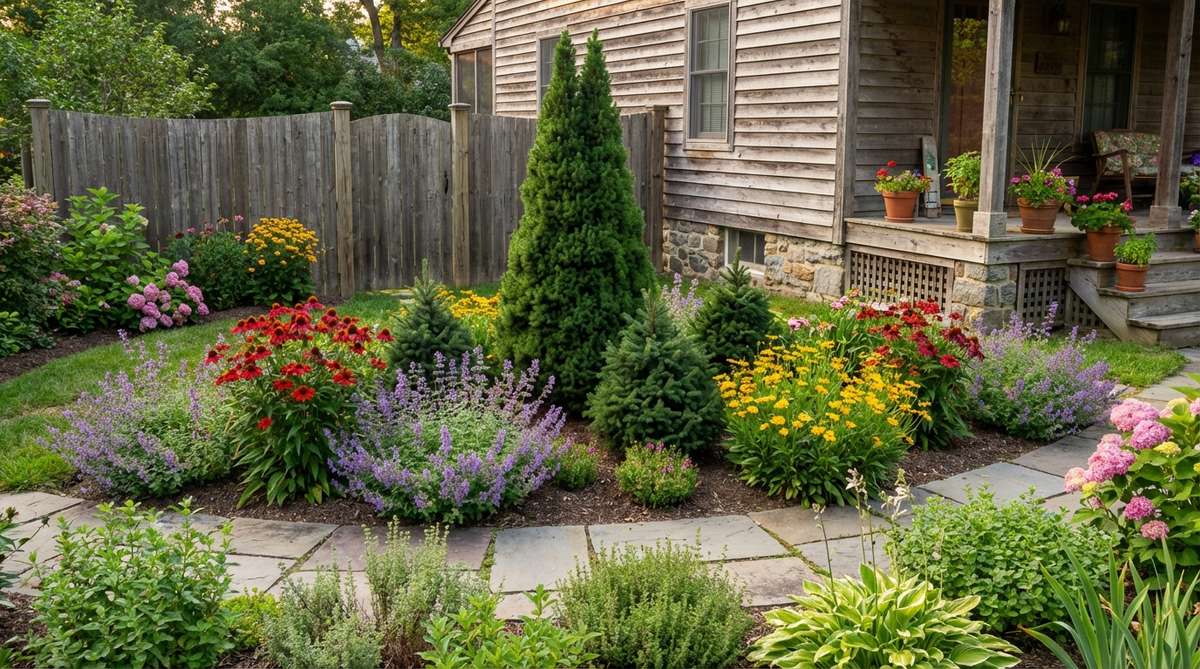
Compact conifers like dwarf Alberta spruce or ‘Little Gem’ Norway spruce provide vertical evergreen presence without the scale of full-sized trees. Their narrow forms fit into tight spaces while adding height.
Position as back-of-border anchors, spacing 36-40 inches apart. Their dark green foliage provides a neutral backdrop that makes neighboring flower colors appear more vibrant through contrast.
35. Santolina Silver Mounds
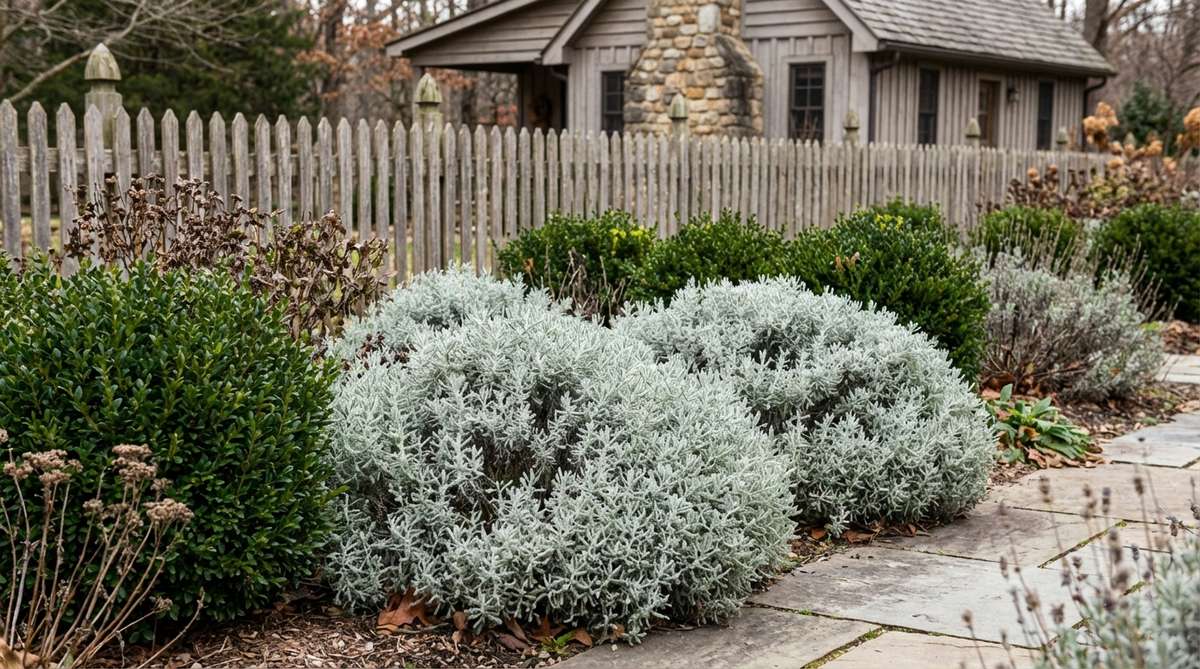
Cotton lavender forms dense, aromatic mounds of silver-gray foliage that maintain color through winter. Its compact habit and evergreen nature make it ideal for small garden cottage structure.
Plant 18 inches apart and shear after flowering to maintain tight, mounded form. The silver foliage provides contrast to green-leafed neighbors and prevents the monochromatic appearance that occurs when all plants go dormant simultaneously.
Bringing It All Together
Successful small garden cottage design relies on fearless plant density, vertical space utilization, and strategic layering of heights and bloom times. Begin with structural evergreens, add vertical climbers to multiply growing area, then infill with densely spaced perennials and self-sowing annuals to achieve the lush abundance that defines cottage style. Regular editing prevents overcrowding while maintaining the full, romantic appearance that makes small spaces feel like expansive garden retreats. Start with five to seven of these proven approaches, observe how plants interact in your specific microclimate, then gradually add layers to build complexity and year-round interest.
Frequently Asked Questions
How close can I actually plant in a small cottage garden?
Reduce standard spacing recommendations by 30-50% for most cottage garden perennials to achieve dense coverage within one growing season. For example, plants typically spaced 18 inches apart can be positioned 10-12 inches apart. Monitor for air circulation issues and thin if fungal problems develop, but most cottage staples tolerate tight quarters when soil is rich and drainage is adequate.
What is the minimum bed depth for dense cottage planting?
A bed depth of 24-30 inches from fence or wall to pathway edge accommodates three planting layers—6-inch groundcovers at the front, 18-24 inch perennials in the middle, and 36-48 inch specimens at the back. Use vertical climbers on the fence or wall itself to add a fourth layer without increasing bed depth.
How do I prevent dense plantings from looking messy?
Incorporate structural evergreens at regular intervals to create visual anchors that organize flowering perennials. Use repetition of key plants throughout the border rather than planting one of everything. Define clean pathway edges even as plants spill onto them, and deadhead regularly to maintain vigor without sacrificing the cottage aesthetic of abundance.
Can I create a cottage garden in full shade?
Shade cottage gardens succeed with density-tolerant perennials like hostas, astilbes, hellebores, foxgloves, and ferns. Focus on foliage texture and variegation rather than flowers for primary visual interest. Add climbing hydrangeas or Akebia quinata on vertical surfaces to maximize planting area where horizontal space is limited by tree root competition.
How much maintenance does a densely planted small cottage garden require?
Initial maintenance is higher during establishment as you water, mulch, and edit aggressive spreaders. After two years, dense planting reduces weeding because plants shade out germinating weed seeds. Budget 2-3 hours weekly during peak season for deadheading, editing, and harvesting, with major division and editing tasks requiring 6-8 hours in early spring and late fall.
What soil improvements are necessary for dense cottage planting?
Amend beds with 3-4 inches of compost or aged manure before planting to increase organic matter and improve drainage. Densely planted gardens deplete nutrients faster than standard spacing, so apply balanced organic fertilizer in early spring and midsummer. Maintain 2-3 inches of mulch to conserve moisture and suppress weeds in the limited bare soil between plants.