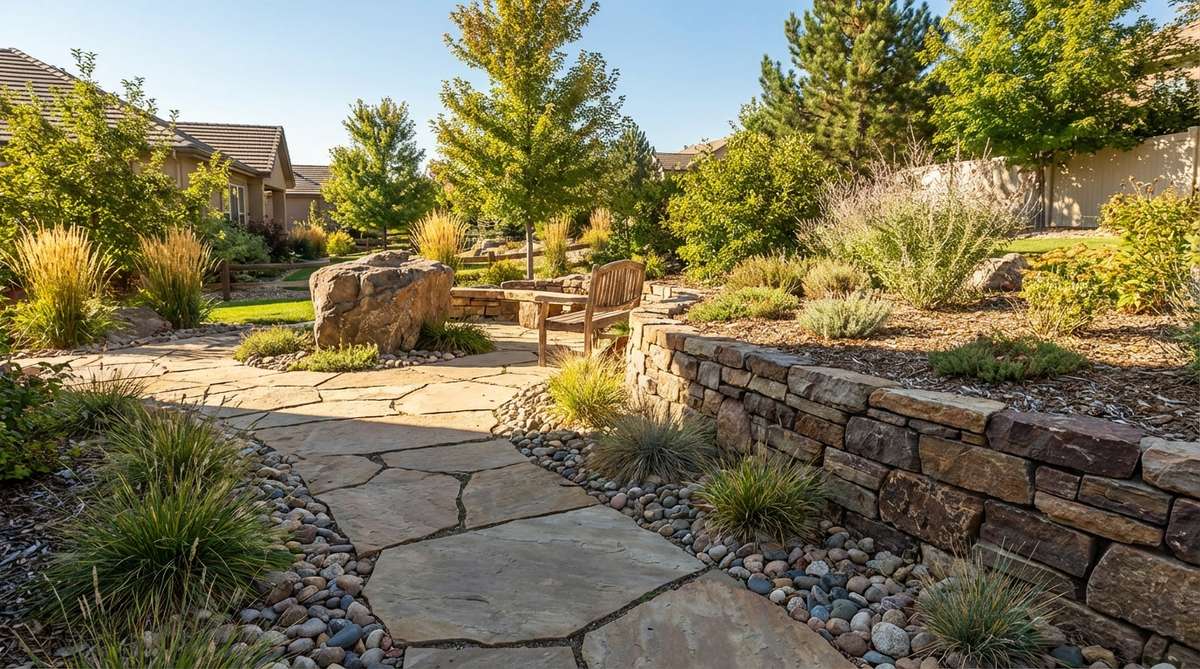
Outdoor decor rocks transform ordinary yards into stunning landscapes that require minimal maintenance while delivering maximum visual impact. Whether you’re creating defined pathways, natural borders, or dramatic focal points, decorative stone offers durability and timeless beauty that complements any design style. Fresh Garden Ideas brings you expert-tested features that showcase how strategic rock placement elevates both functionality and curb appeal.
Design SnapshotKey Principles
- Scale Balance: Mix rock sizes to create depth—use larger boulders as anchors and smaller stones for transitions
- Natural Flow: Arrange stones to mimic organic formations rather than rigid, uniform patterns
- Color Harmony: Select rock tones that complement existing hardscape and plant palette
- Functional Beauty: Position rocks to solve drainage issues, prevent erosion, and reduce weed growth while enhancing aesthetics
Border and Edging Solutions With Decorative Stone
Defining garden boundaries with rock creates clean transitions between lawn and planted areas. These features prevent grass encroachment while establishing professional-looking perimeters that frame your landscape design.
1. River Rock Garden Bed Edging
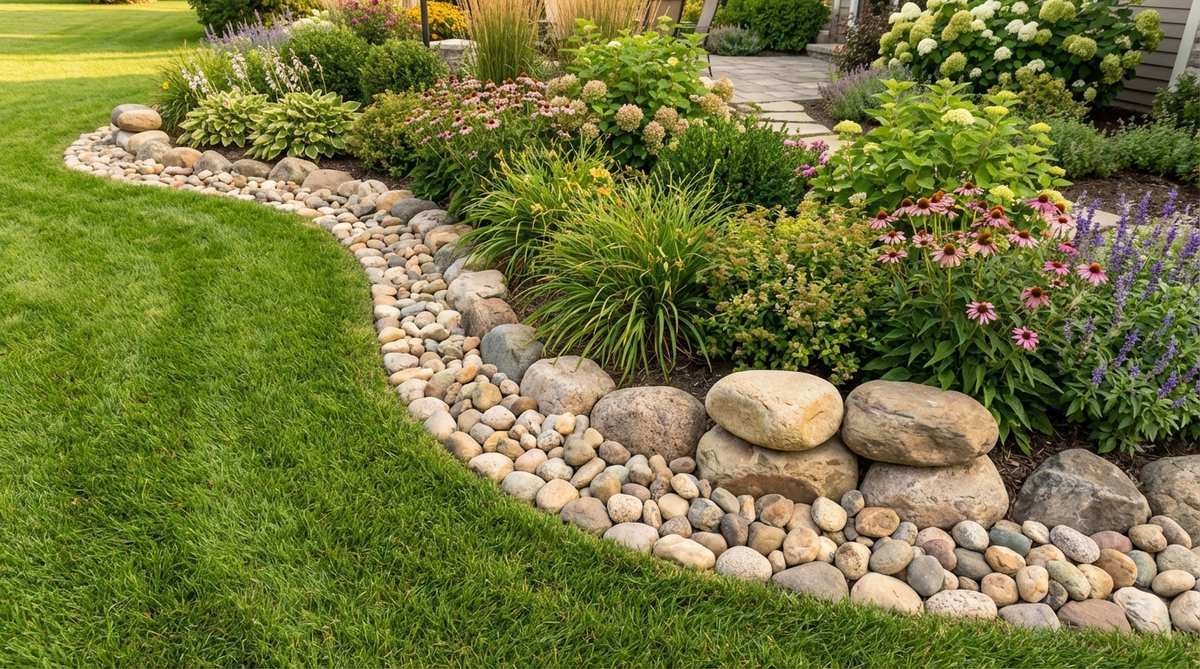
Smooth river stones in earth tones create organic borders that separate flower beds from turf areas. The rounded edges complement both formal and cottage garden styles.
Install a single row of 3-5 inch stones along bed perimeters, setting them slightly below grade to accommodate mower wheels. Stack a second row for added dimension and weed suppression.
This low-maintenance solution requires no mortar and adapts easily when you redesign beds. Choose varied shades of gray, tan, or rust to echo existing hardscape colors.
2. Flagstone Border Strips
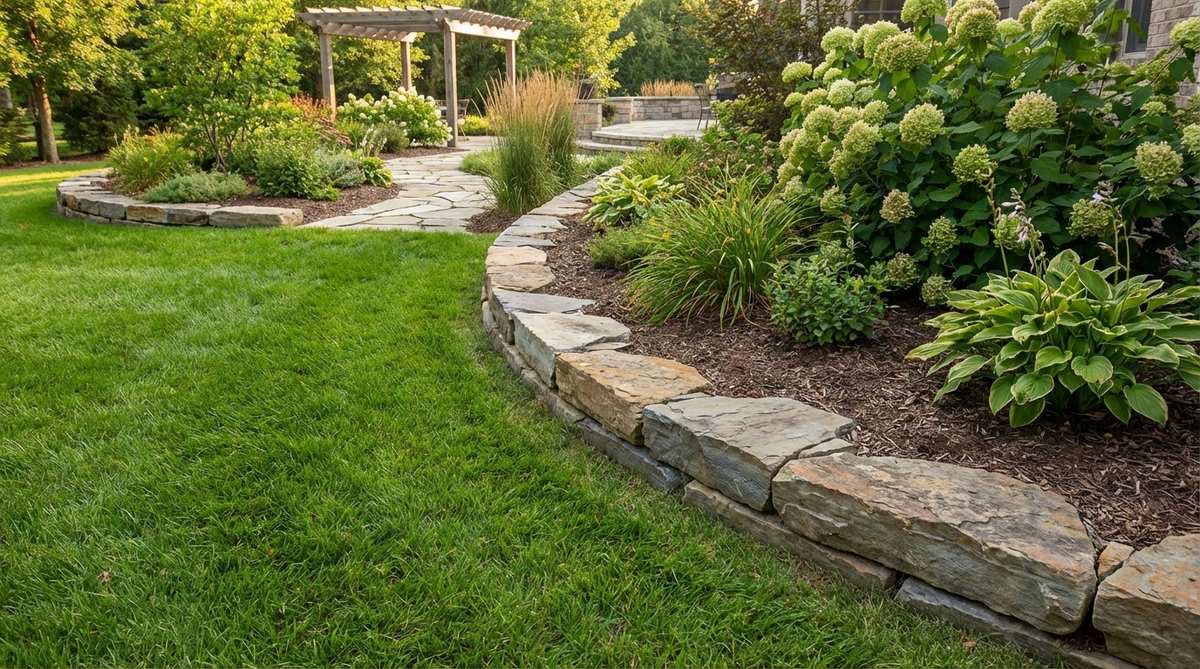
Irregular flagstone pieces laid end-to-end form substantial borders with rustic character. The flat surfaces provide stable mowing edges while their natural cleft textures add visual interest.
Position flagstones vertically in shallow trenches, backfilling with soil to hold them upright. Alternate large and small pieces for a more authentic, quarried appearance.
3. Crushed Granite Edging
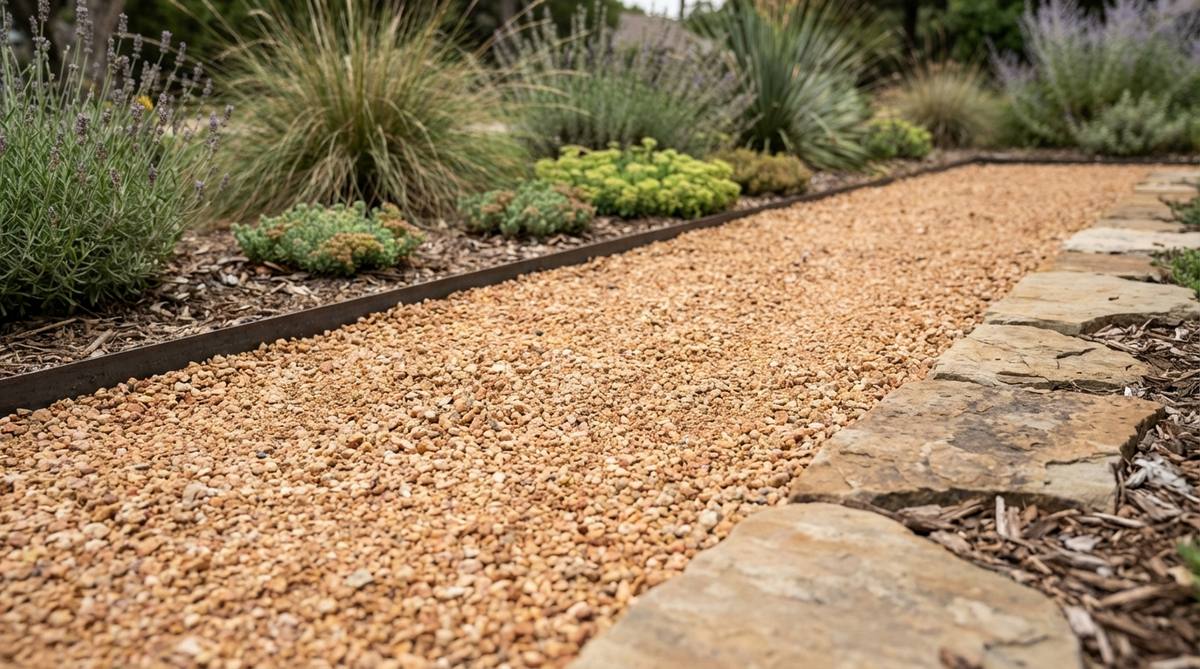
Decomposed granite compacts into firm borders that resist spreading better than loose gravel. Its warm tones range from buff to terracotta depending on source quarry.
Create 4-6 inch wide edging strips contained by metal or plastic landscape borders. Water and tamp the granite to form a semi-permanent surface that still allows permeability.
4. Stacked Stone Retaining Borders
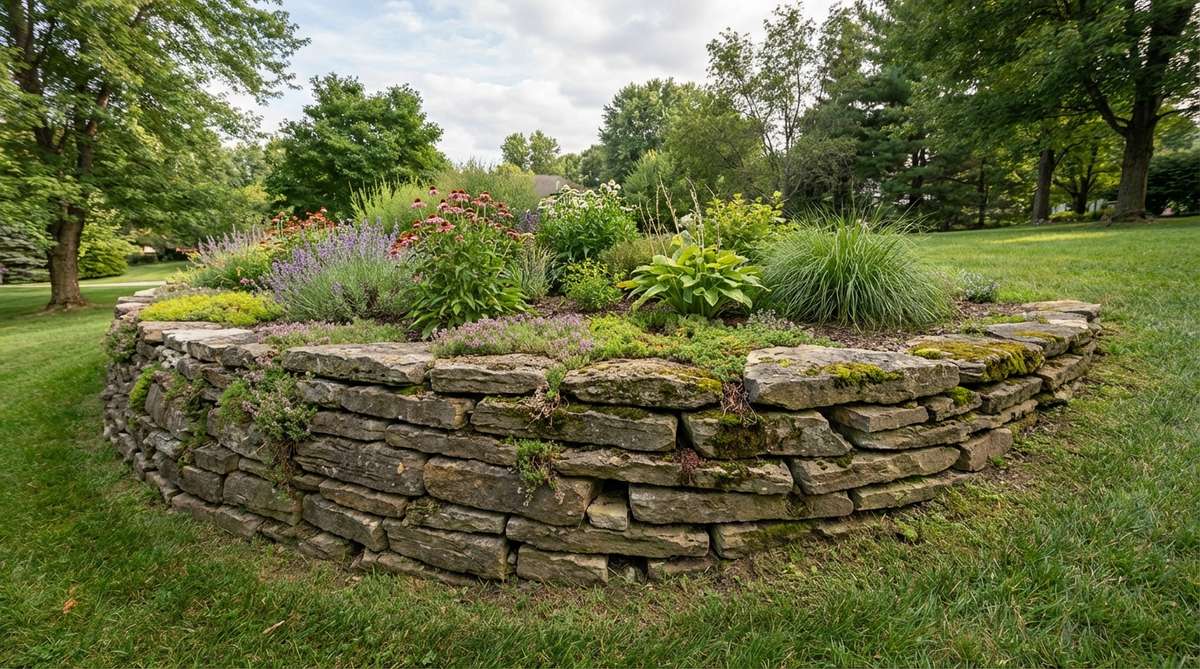
Low retaining walls built from flat fieldstones elevate planting beds 12-18 inches above grade. This design works particularly well for sloped yards where level planting areas are limited.
Dry-stack stones without mortar for drainage and flexibility, tilting each course slightly back into the slope. Fill joints with soil to plant creeping groundcovers that soften the masonry.
Limestone and sandstone weather beautifully over time, developing moss and patina that enhance cottage garden aesthetics.
Pathway and Ground Features Using Outdoor Decor Rocks
Rock pathways guide foot traffic while reducing lawn maintenance in high-use corridors. Designers layer different stone types to achieve texture, color variation, and proper drainage that prevents muddy walkways.
5. Pea Gravel Pathways
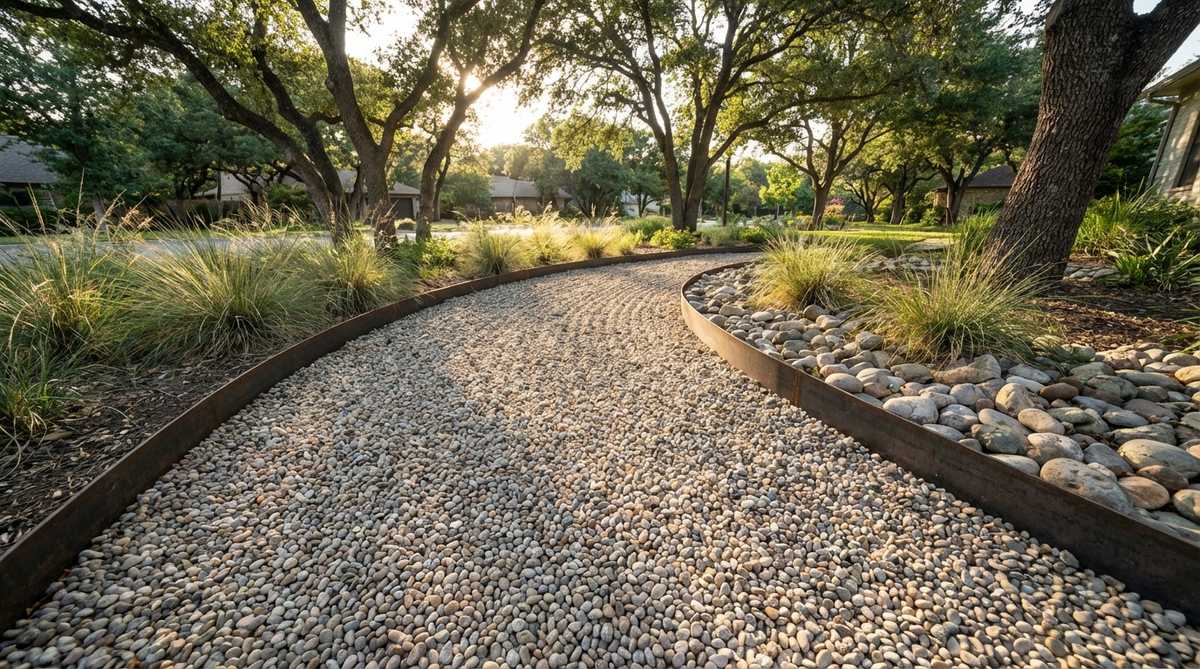
Small, rounded pea gravel creates informal walking paths that crunch pleasantly underfoot. Colors range from pure white to mixed earth tones, allowing customization to match your palette.
Excavate 3-4 inches deep, line with landscape fabric, and fill with gravel over a compacted base. Edge with steel or stone to prevent spreading into adjacent beds.
This budget-friendly option drains quickly and stays cooler than solid pavement in summer heat.
6. Bluestone Stepping Stone Paths
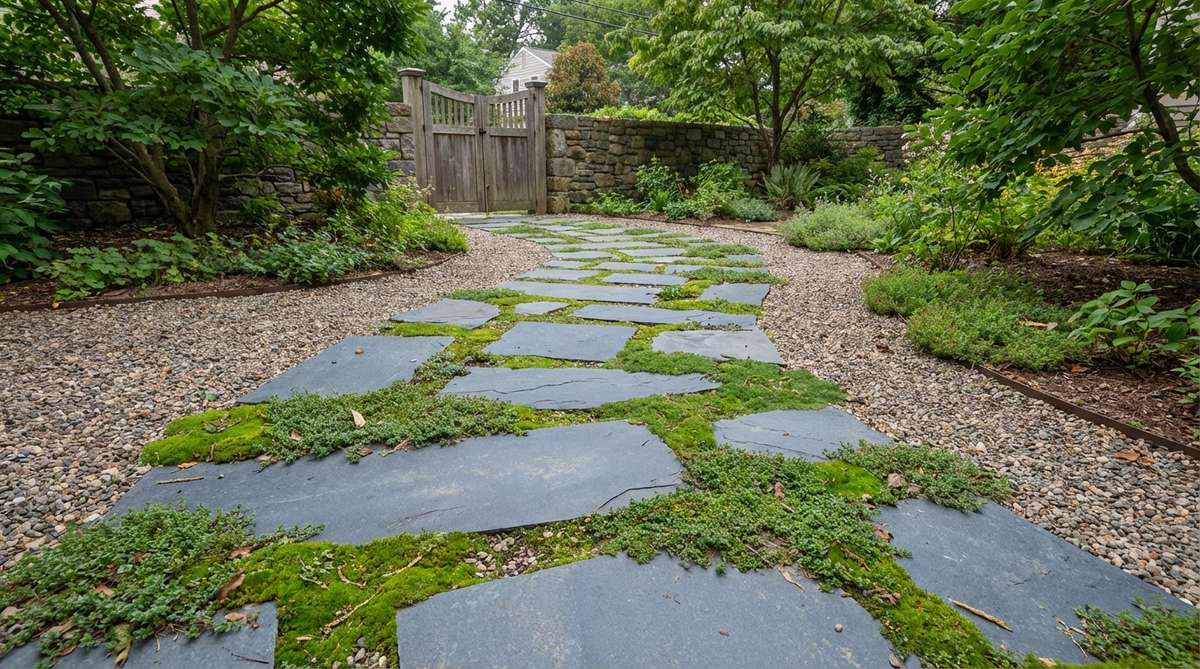
Individual bluestone slabs set in crushed rock create rhythm as you move through the garden. The deep gray-blue stone contrasts beautifully against green groundcovers planted between pavers.
Space stones 18-24 inches apart for comfortable stride length, setting them flush with surrounding grade. Backfill joints with smaller gravel or allow moss to colonize gaps naturally.
7. Mixed Stone Mosaic Walkways
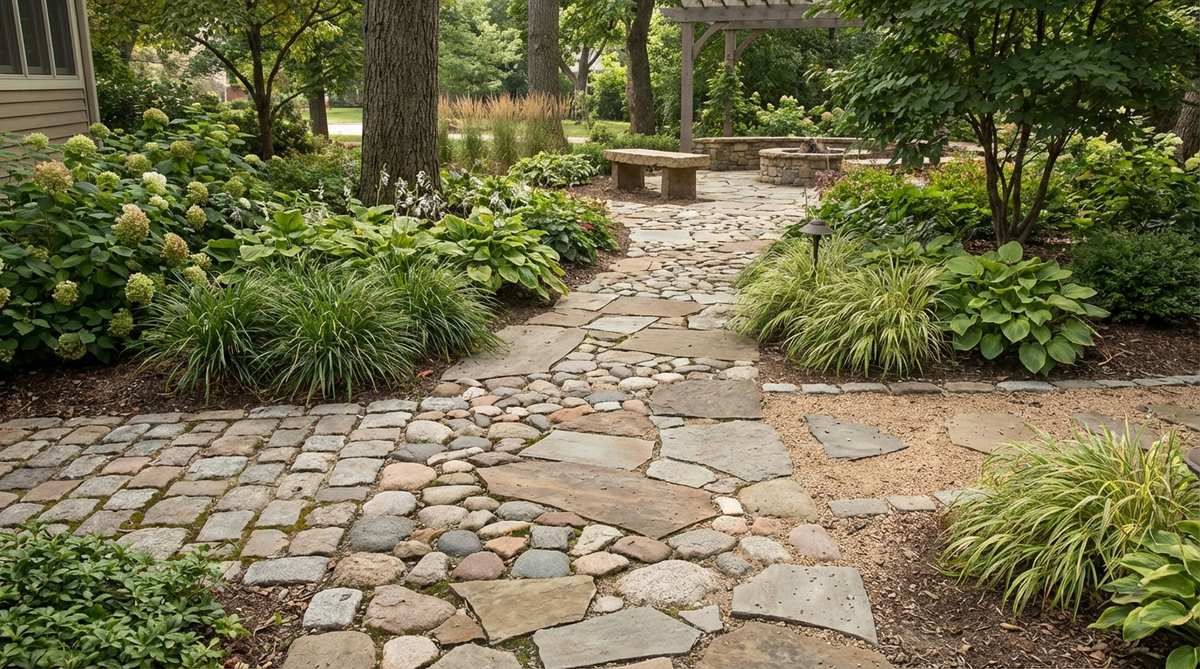
Combining different rock types—flagstone, cobbles, and river rock—produces artistic pathways with rich texture. Designers arrange stones in patterns that guide the eye toward focal points.
Mortar irregular pieces together on a concrete base for permanent installation. Alternatively, set them in sand for a softer, more naturalistic effect that shifts slightly over seasons.
This approach transforms utilitarian walkways into landscape features worthy of attention.
8. Granite Flagging With Irregular Edging
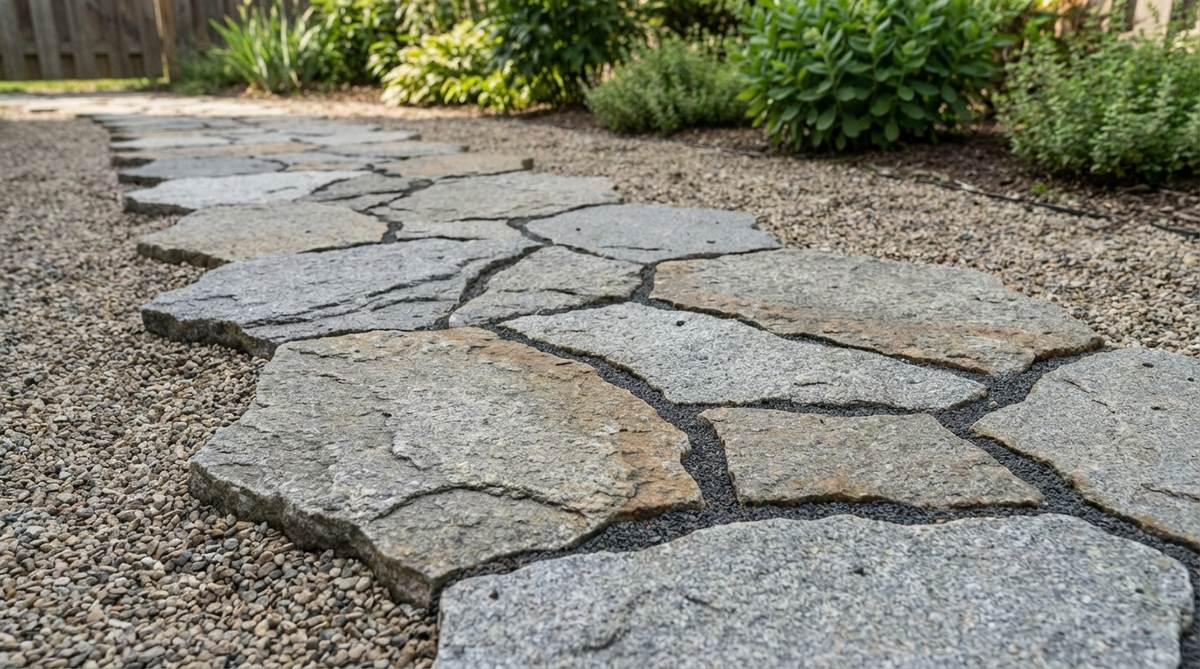
Narrow-cut granite pieces laid in organic patterns withstand heavy foot traffic and extreme weather. The irregular edges create natural flow rather than geometric rigidity.
Install on a crushed stone base with polymeric sand swept into joints for stability. The slip-resistant surface remains safe even when wet.
9. Mexican Beach Pebble Ground Cover
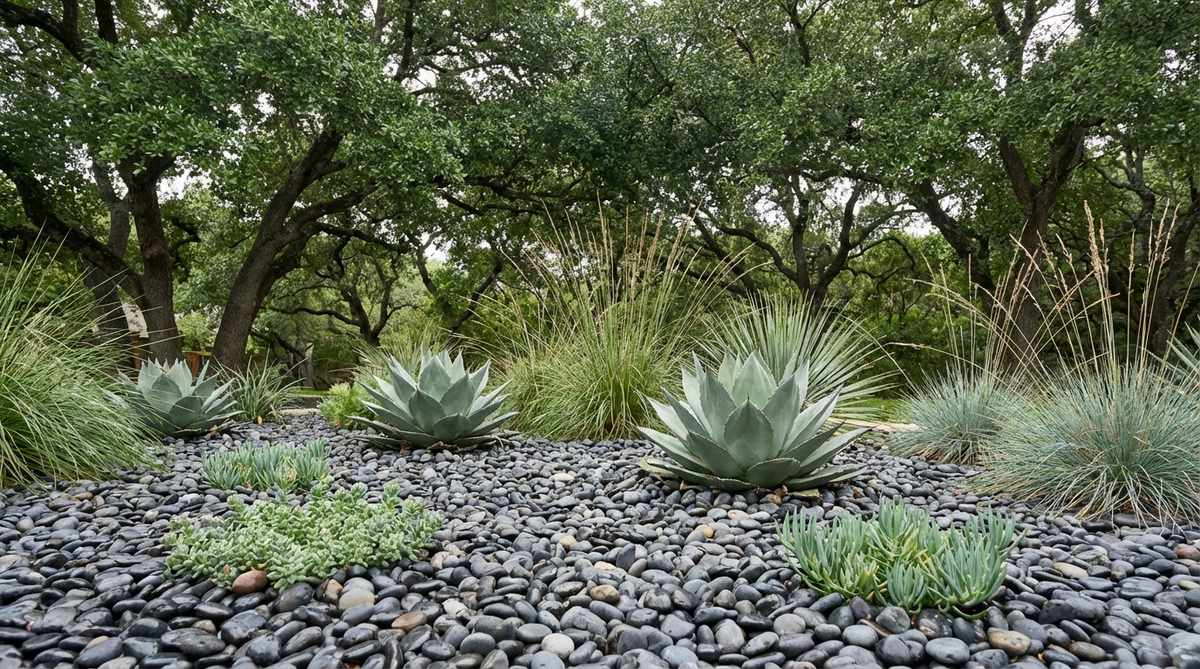
Polished black or gray pebbles spread 2-3 inches deep replace mulch in contemporary landscapes. Their smooth surfaces reflect light and create sophisticated monochromatic zones.
Use this feature in areas where plants struggle to establish, such as under mature trees with dense canopy. The pebbles suppress weeds while allowing water to reach roots.
Pair with architectural plants like agave or ornamental grasses for modern desert-inspired designs.
Water-Inspired Elements and Features
Rock features that mimic or incorporate water movement add auditory and visual interest to gardens. These installations range from functional drainage solutions to purely decorative focal points that evoke natural stream environments.
10. Dry Creek Bed
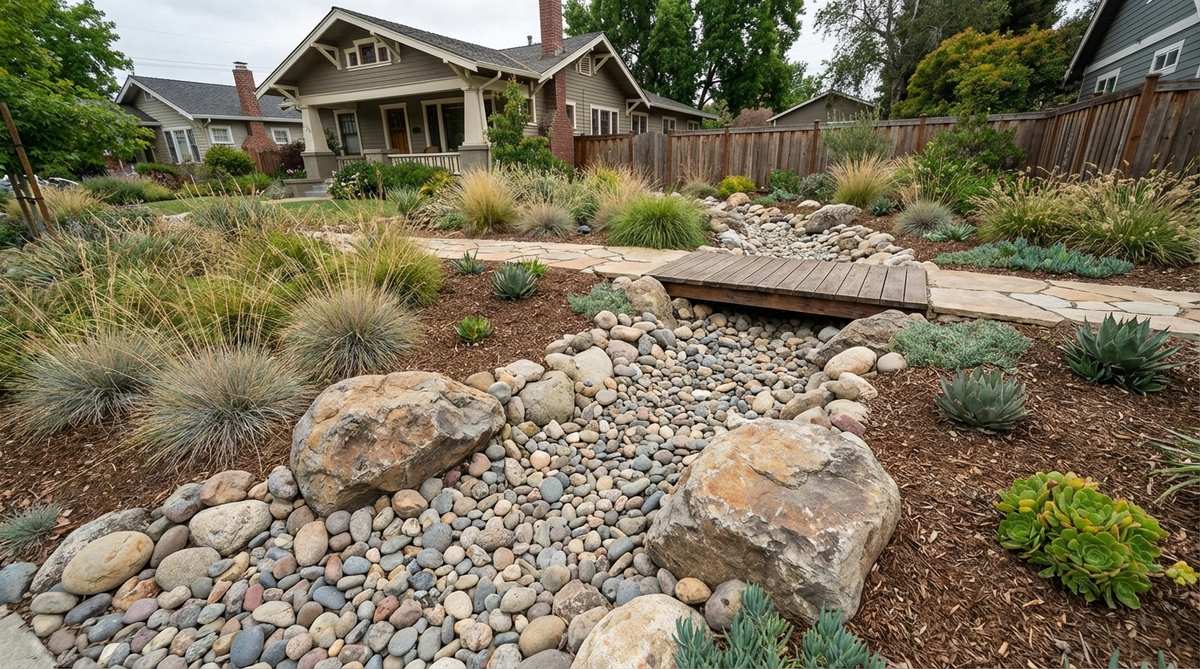
River rock arranged to simulate seasonal streams manages drainage while creating naturalistic landscape features. Larger boulders anchor the banks while smaller stones fill the channel center.
Excavate a meandering path following natural water flow patterns, line with permeable fabric, and layer rocks of graduated sizes. Plant grasses and moisture-loving perennials along edges to reinforce the water illusion.
This solution reduces erosion during heavy rainfall by slowing runoff and allowing ground absorption.
11. Bubbling Rock Fountain
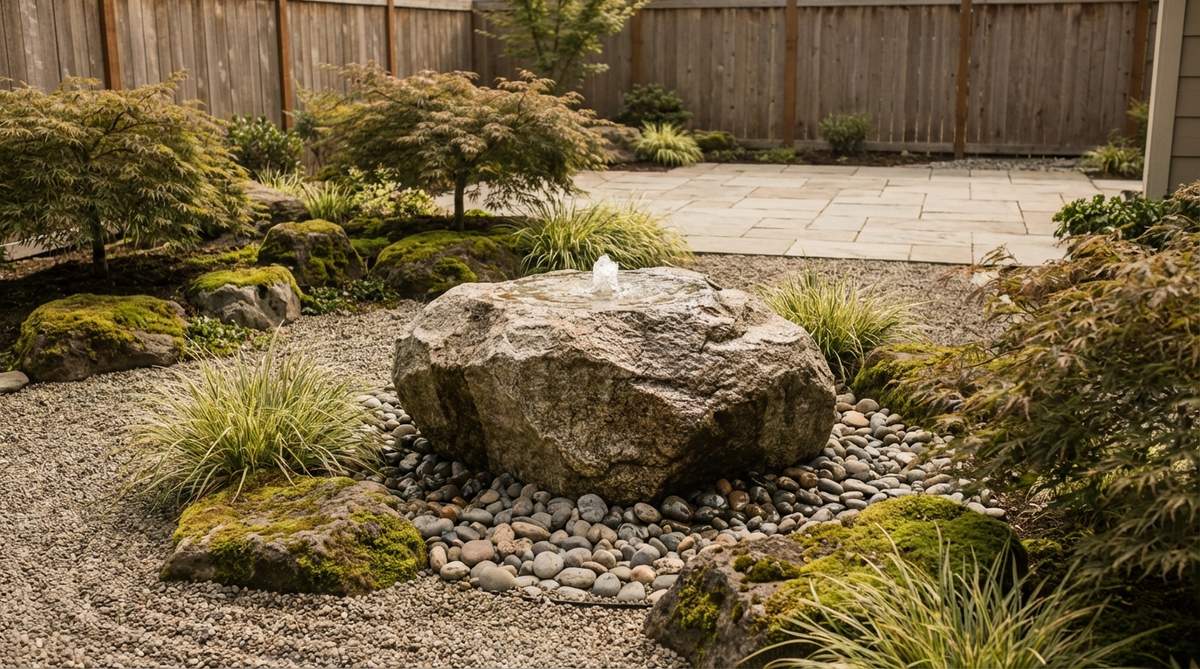
A single boulder drilled to allow water flow creates soothing sounds without the complexity of traditional fountains. Water bubbles up through the stone and recirculates through a hidden reservoir.
Position the boulder on a bed of river rock that conceals the pump mechanism. Solar-powered pumps eliminate electrical wiring requirements for remote garden locations.
12. Stone Waterfall Cascade
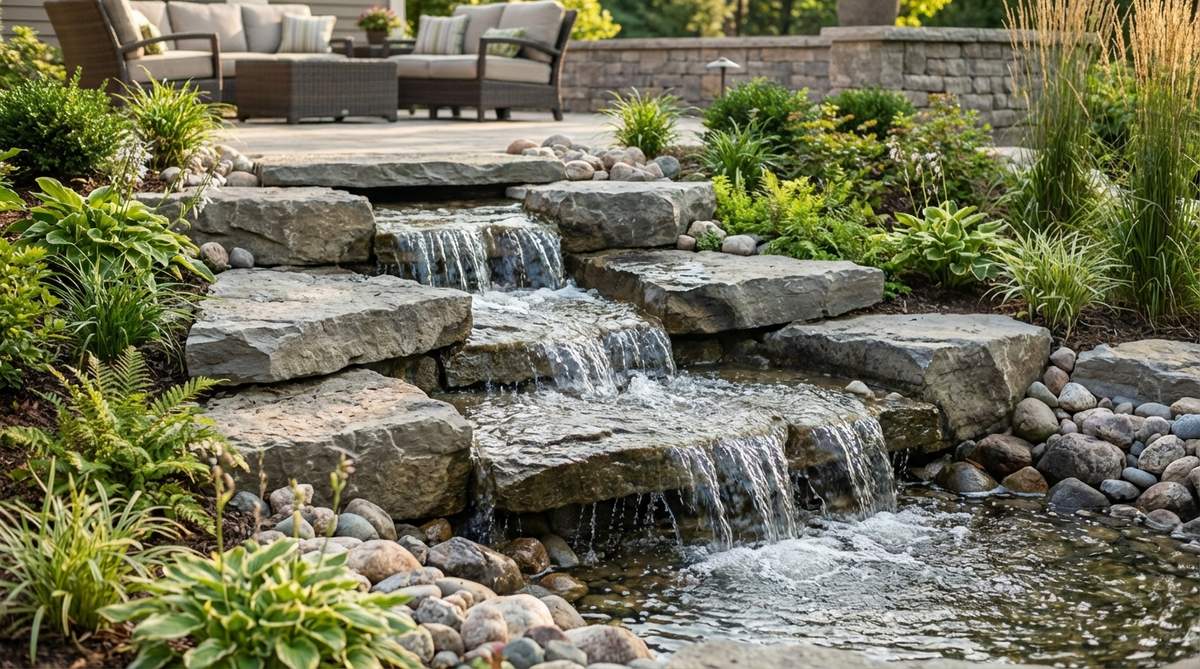
Stacked flat stones create tiered waterfalls that add vertical dimension to level yards. Water spills from one stone shelf to the next, generating pleasing acoustics.
Build the structure on a waterproof liner with proper pump sizing to maintain flow rate. Surround with moss rock and ferns to enhance the naturalistic forest stream effect.
This feature requires regular maintenance to prevent algae buildup but delivers significant aesthetic impact.
13. Pebble Pond Border
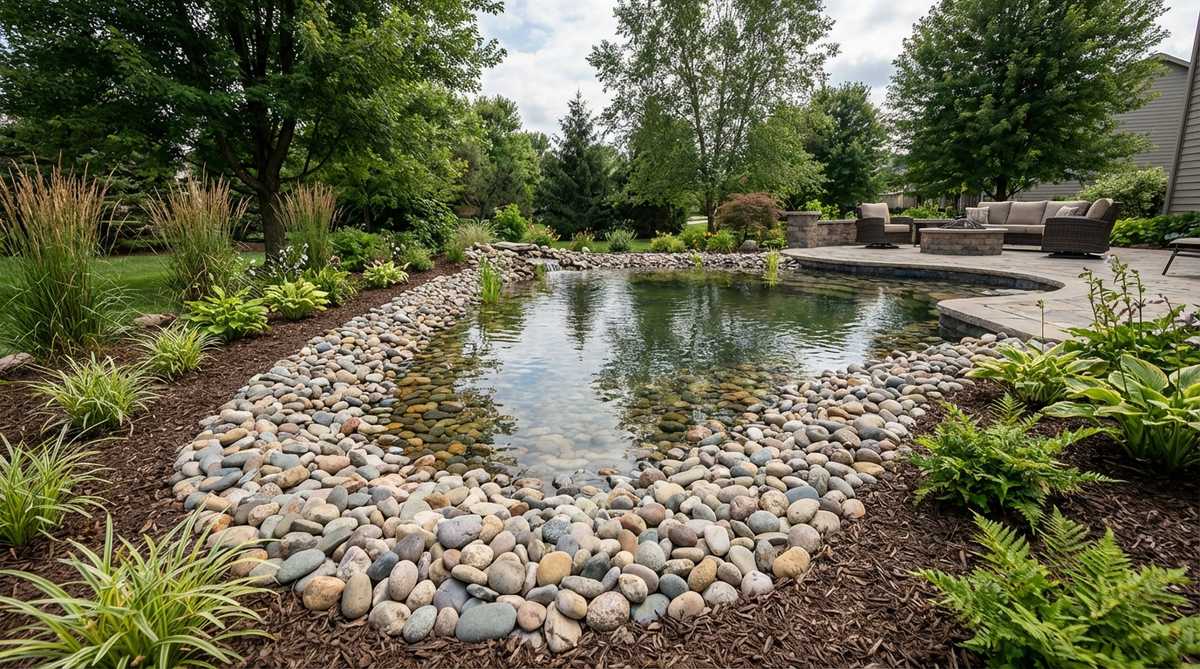
Smooth pebbles lining water features create organic transitions between pond and surrounding landscape. The stones prevent soil erosion while providing textural contrast against water surfaces.
Grade pebbles by size, placing larger ones near the waterline and smaller stones extending into planted areas. This graduated approach appears more natural than uniform sizing.
14. Rain Garden Rock Basin
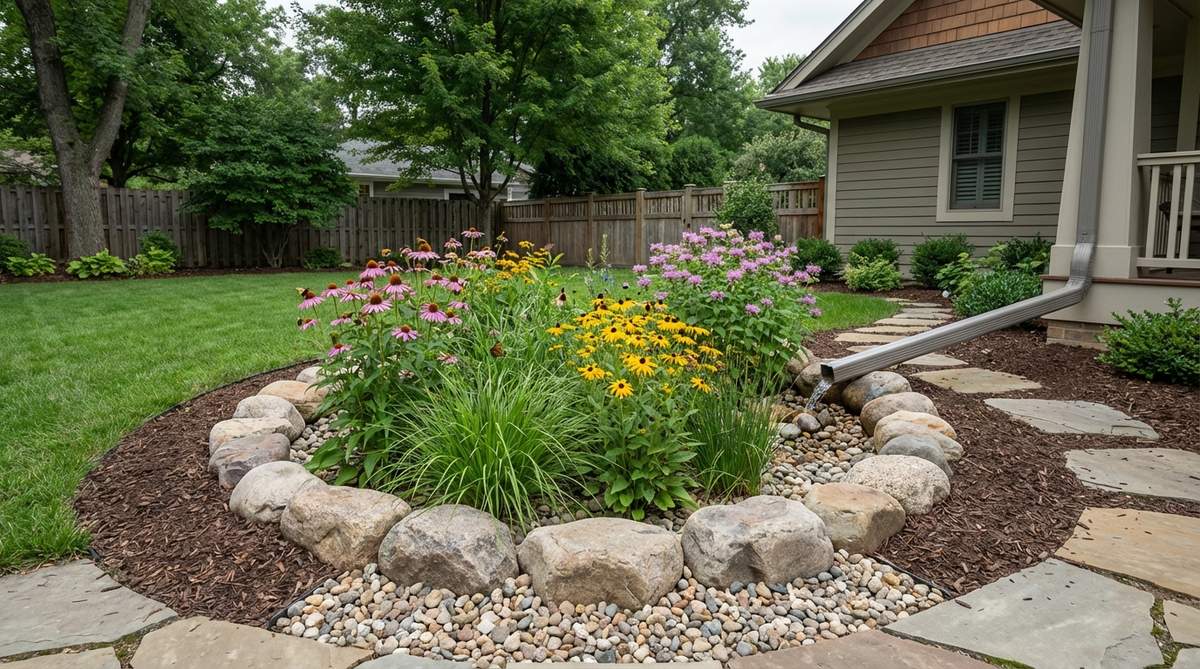
Depressed areas filled with river rock and native plants capture roof runoff and allow slow percolation. Rocks slow water velocity, preventing soil displacement during storms.
Select native sedges, rushes, and flowering perennials adapted to alternating wet and dry conditions. The rock base ensures drainage even during extended wet periods.
This sustainable feature reduces water bills while supporting local pollinator populations.
Accent and Focal Points With Boulder Features
Large boulders serve as landscape anchors that draw attention and provide vertical interest. Proper placement transforms ordinary yards into composed outdoor rooms with clear hierarchy and visual flow.
15. Specimen Boulder Placement
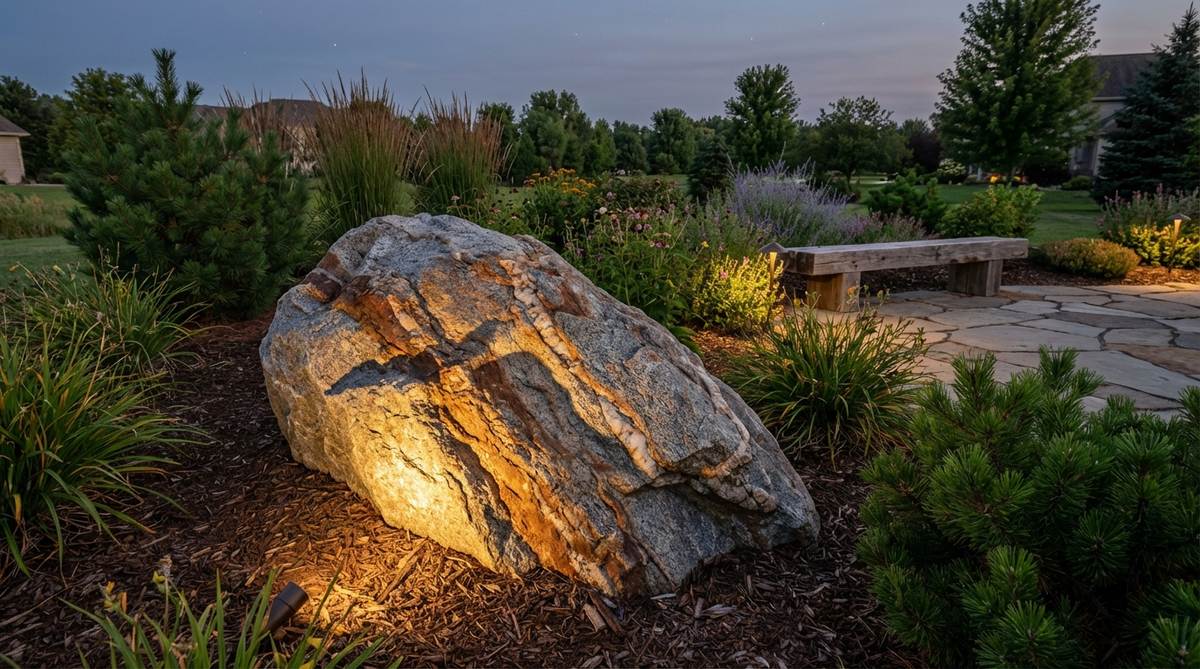
A single dramatic boulder positioned strategically becomes an instant focal point that grounds garden designs. Unusual shapes, colors, or mineral veining increase visual impact.
Bury the boulder one-third of its height to simulate natural geological placement rather than simply dropping it on grade. Orient the most interesting face toward primary viewing angles.
Lighting the boulder from below creates dramatic shadow play during evening hours.
16. Boulder Grouping Clusters
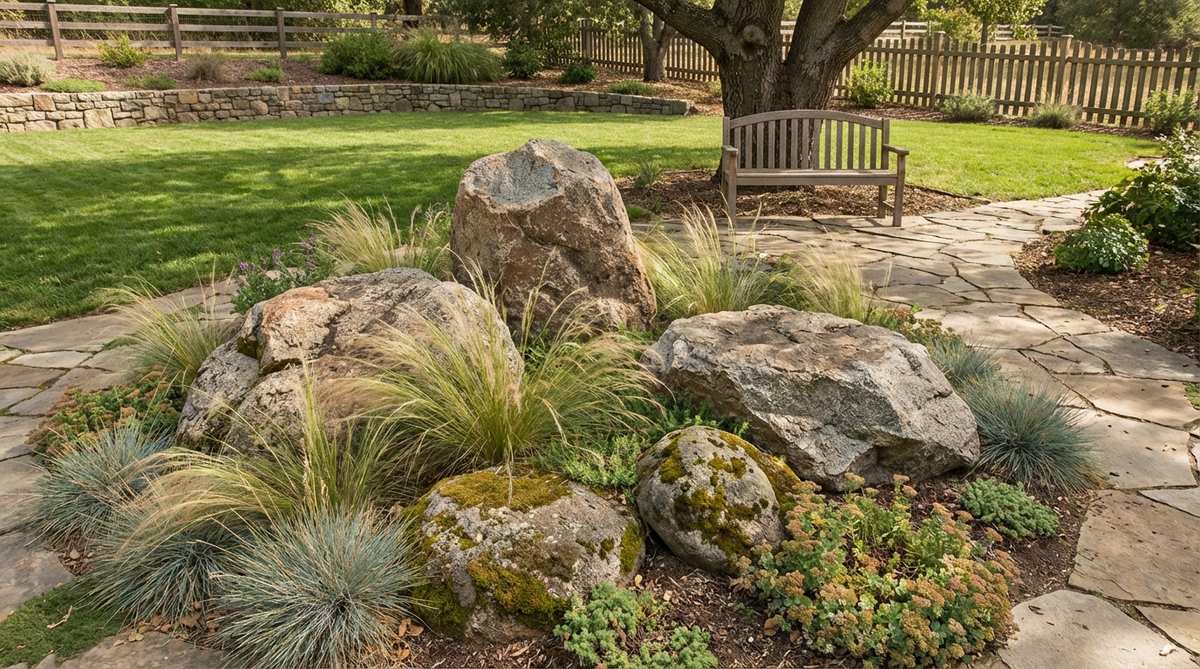
Arranging three or five boulders in asymmetrical clusters mimics natural outcroppings. Designers use odd numbers and varied sizes to avoid static, overly balanced compositions.
Position boulders with different orientations—some upright, others horizontal—to create dynamic tension. Plant ornamental grasses or low shrubs between rocks to integrate them into the broader landscape.
17. Driveway Entrance Boulders
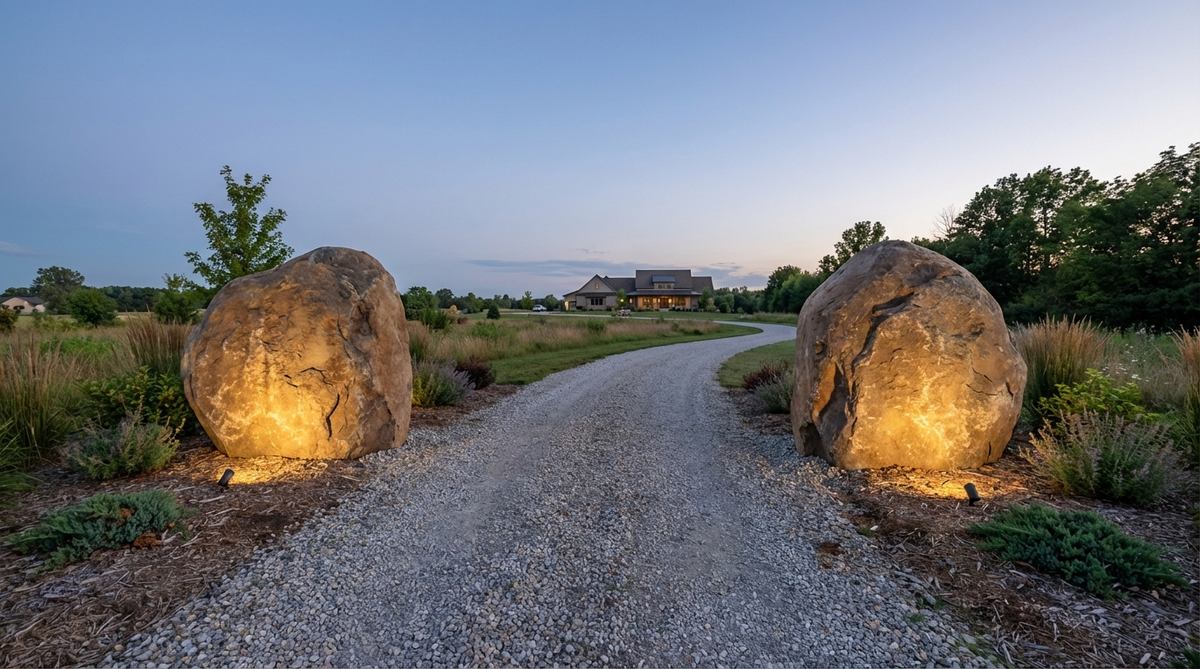
Flanking your driveway entrance with matched boulders establishes a welcoming threshold. This application works particularly well for rural properties where traditional gates feel too formal.
Select boulders 3-4 feet in diameter with complementary shapes and tones. Position them to visually narrow the entrance without impeding vehicle clearance.
Add ground spotlights to make the markers visible after dark for safety and aesthetics.
18. Rock Fire Pit Surround
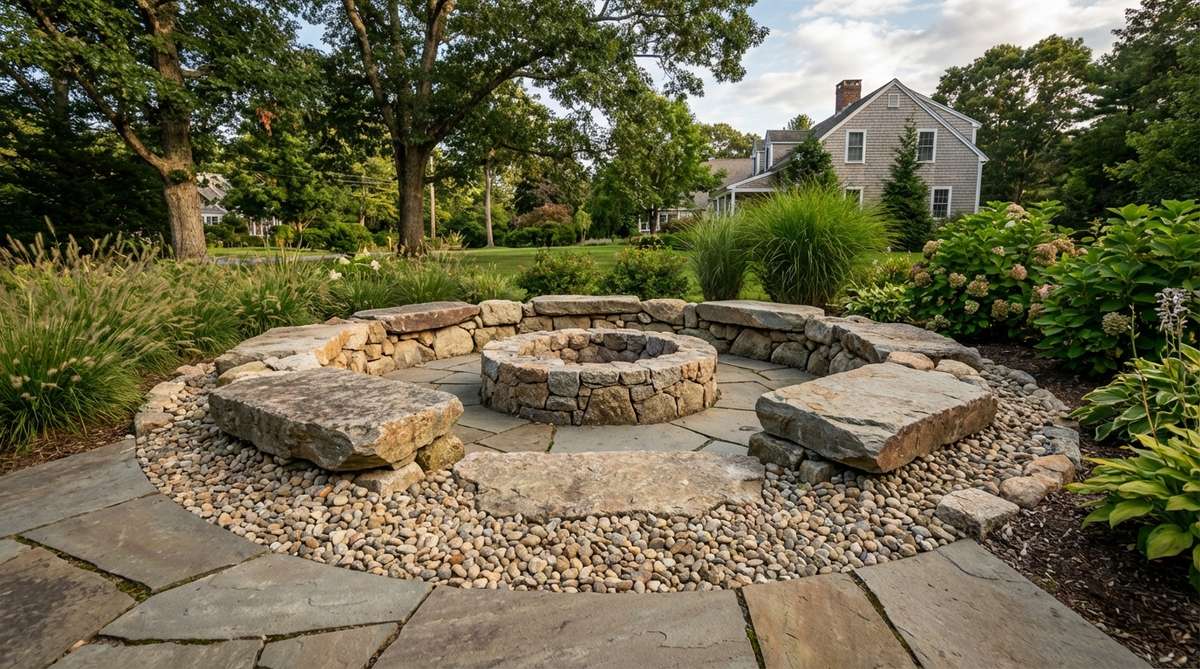
Natural stone arranged in concentric circles around fire features creates rustic gathering spaces. Flat-topped boulders double as informal seating while smaller stones fill gaps.
Build the inner ring with heat-resistant granite or fieldstone that won’t crack under thermal stress. Excavate and fill with pea gravel between outer stones to improve drainage and prevent muddy conditions.
19. Vertical Stone Monolith
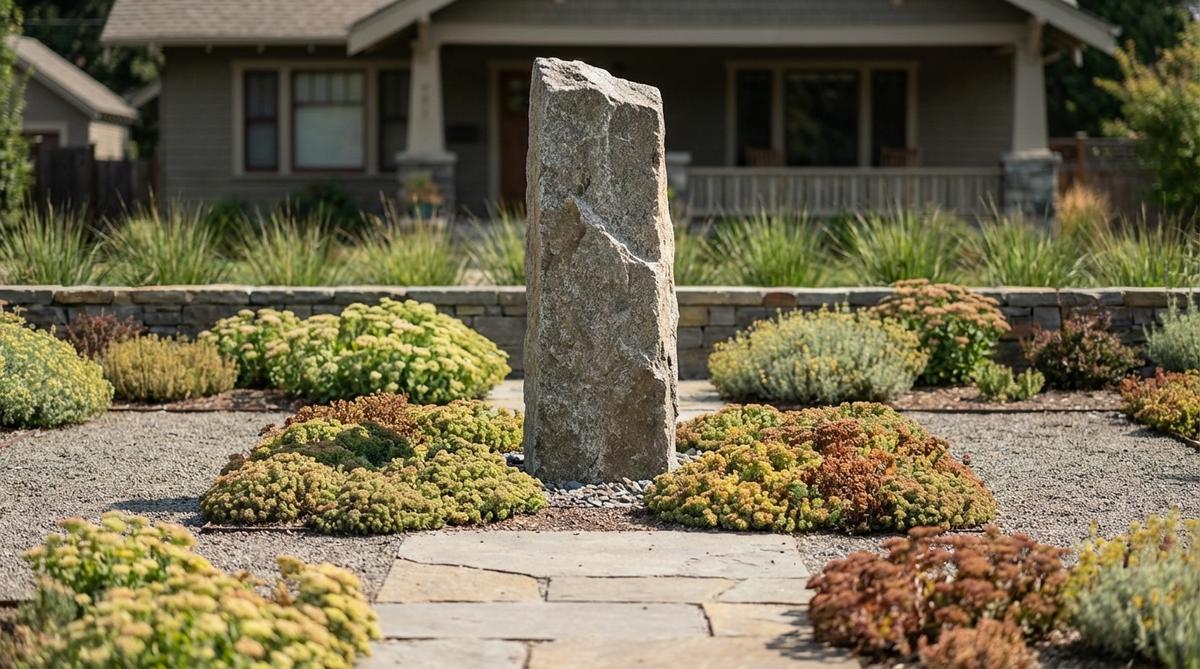
Tall, narrow stones set vertically add dramatic height to flat landscapes. These sculptural elements work especially well in minimalist or contemporary designs.
Embed the monolith in concrete footings for stability against wind and accidental contact. A single well-placed vertical stone often delivers more impact than multiple horizontal boulders.
Pair with low mounding plants like sedum or thyme to emphasize the vertical contrast.
Specialty Applications for Decorative Landscape Rocks
Beyond traditional borders and pathways, outdoor decor rocks solve specific landscape challenges while adding character. These applications demonstrate the versatility of stone in both problem-solving and ornamental roles.
20. Lava Rock Mulch Alternative
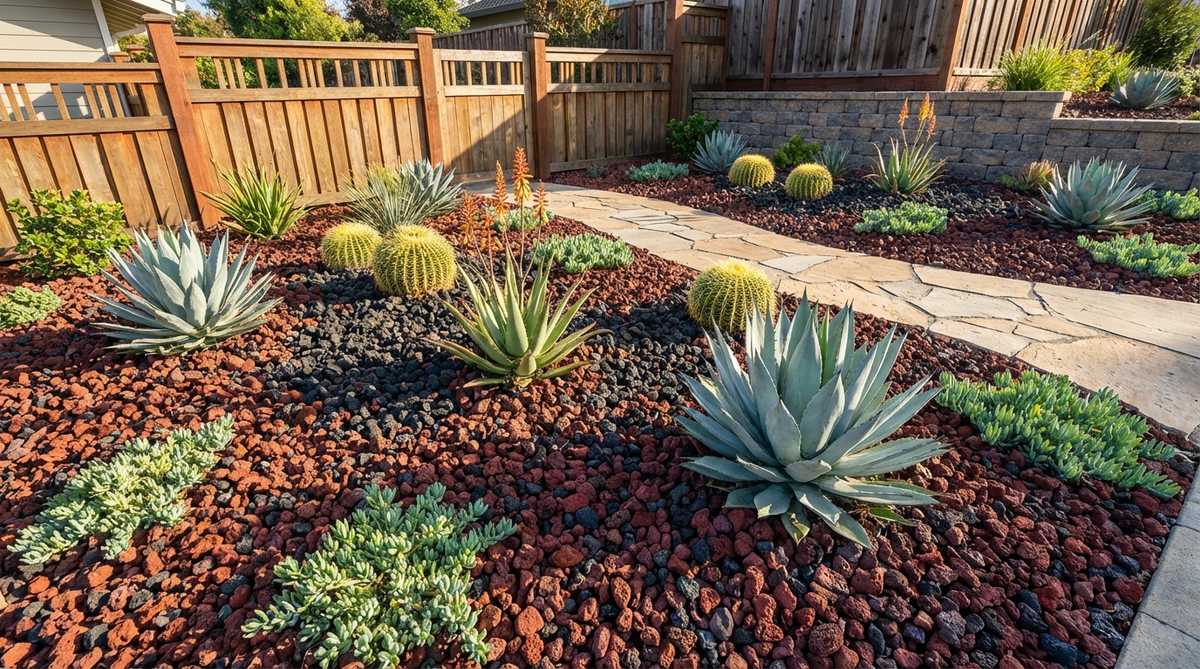
Porous lava rock in red or black tones provides permanent mulch that never decomposes. The lightweight volcanic stone retains heat, benefiting warm-season plantings while its rough texture deters pets.
Spread 2-3 inches deep over landscape fabric in beds surrounding cacti, succulents, and Mediterranean plants. The bold color creates high contrast against silvery or blue-toned foliage.
Lava rock costs more initially than organic mulch but eliminates annual replacement expenses.
21. Slate Chip Modern Borders
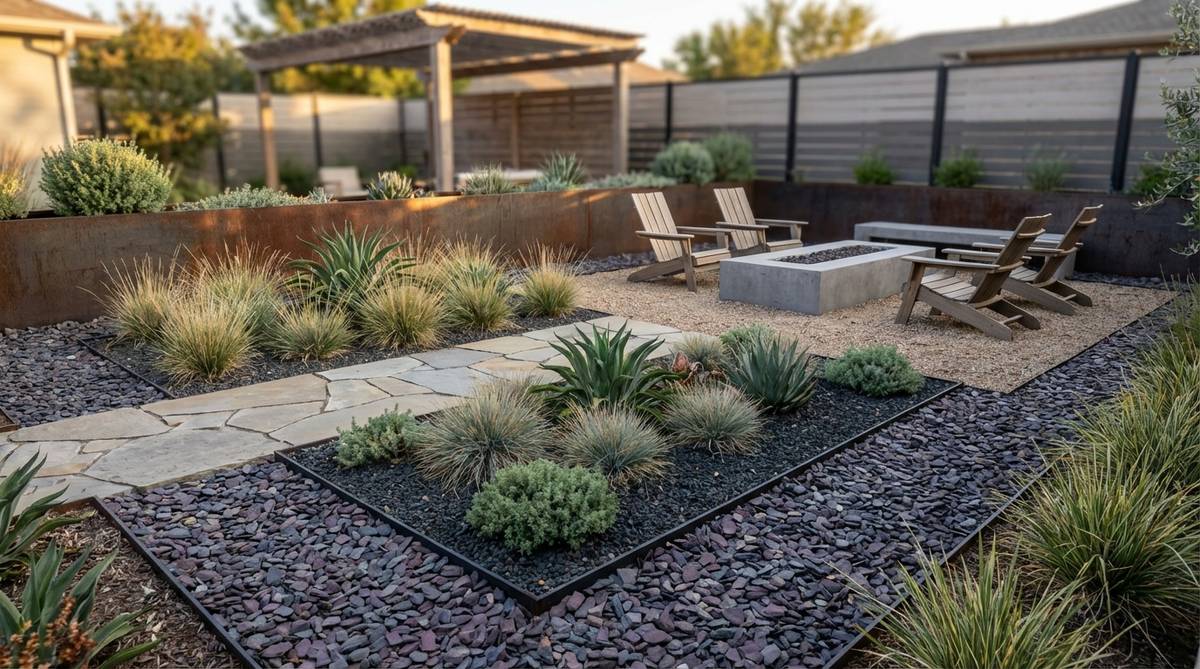
Angular slate chips in charcoal or purple hues suit contemporary landscapes with clean lines. The flat pieces interlock slightly, resisting displacement better than rounded gravel.
Use slate chips to define geometric planting beds or create monochromatic zones around architectural specimens. The fine-grained texture offers sleek visual interest without overwhelming minimalist designs.
22. Cobblestone Tree Ring
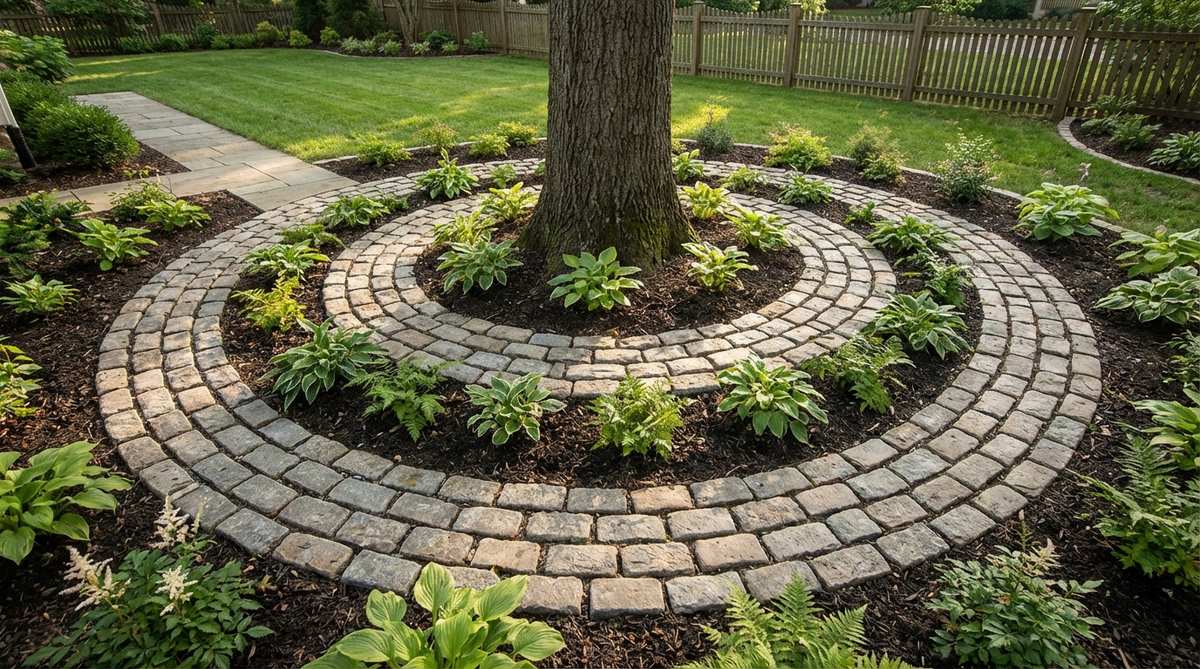
Circular arrangements of cobblestones around specimen trees protect roots from mower damage while defining planting zones. Traditional European cobbles bring old-world charm to established landscapes.
Set cobbles vertically in concentric circles, leaving gaps for water penetration. Expand the ring diameter as the tree matures to avoid girdling roots.
Fill the interior with shade-tolerant groundcovers or leave bare for a formal courtyard effect.
23. Crevice Garden Stone Arrangement
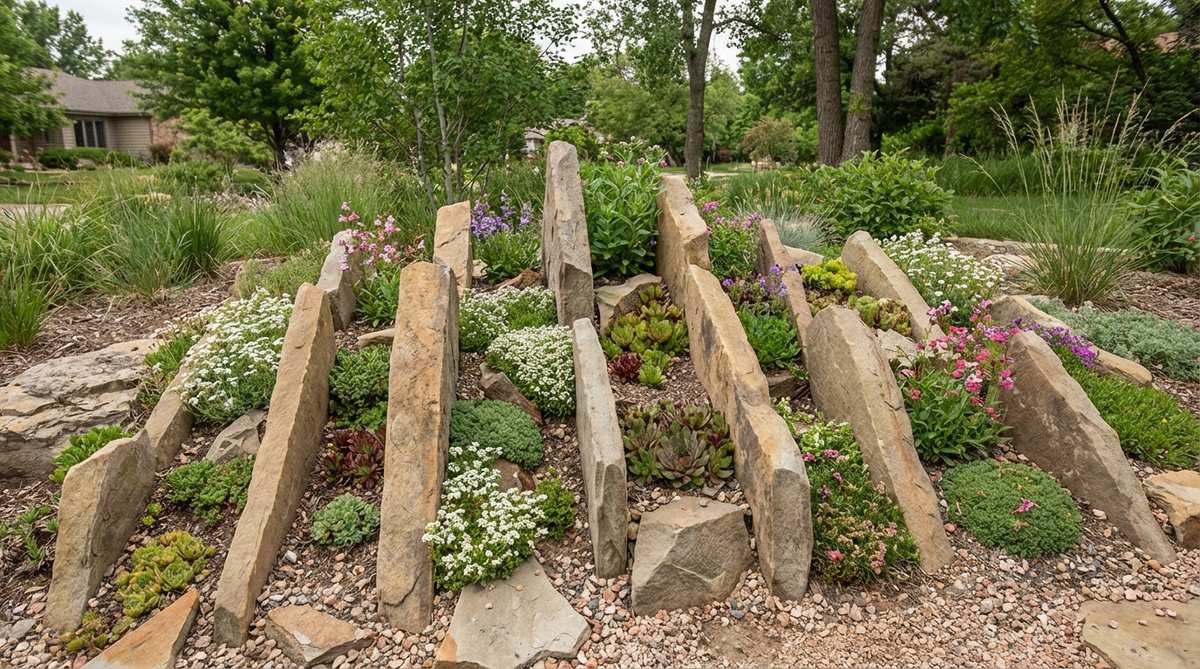
Thin stone slabs set vertically with narrow planting gaps recreate alpine scree conditions. This specialized technique suits rock garden enthusiasts growing rare alpines and miniature plants.
Position stones at slight angles, creating varying pocket depths for different root systems. The vertical orientation provides excellent drainage that prevents crown rot in moisture-sensitive species.
Sandstone and limestone work best, as their sedimentary nature weathers gradually to release beneficial minerals.
24. Zen Garden Raked Gravel
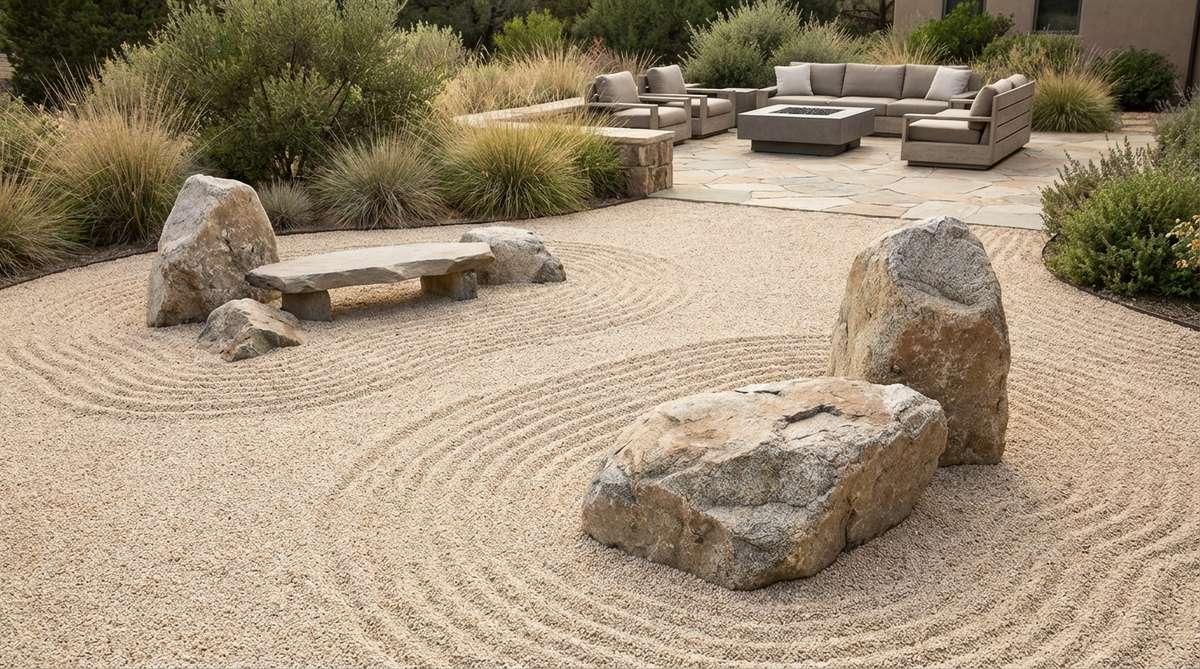
Fine gravel raked into flowing patterns forms the foundation of meditation gardens. Crushed granite or decomposed granite compacts enough to hold rake marks yet remains soft enough for easy manipulation.
Edge the gravel field with larger boulders representing islands in a symbolic sea. Rake patterns weekly to maintain crisp definition and engage in the contemplative practice.
This minimalist approach requires ongoing maintenance but delivers profound aesthetic simplicity.
Transforming Yards With Strategic Stone Placement
Incorporating outdoor decor rocks into your landscape design delivers lasting beauty with minimal maintenance demands. From functional pathway solutions to dramatic boulder focal points, stone features adapt to any style while solving drainage, erosion, and weed control challenges. Start with one or two applications that address your property’s specific needs, then expand your rock features as budget and vision allow to create a cohesive, professionally designed outdoor environment.
Frequently Asked Questions
What size rocks work best for garden borders?
Rocks ranging from 3 to 8 inches in diameter create effective garden borders that prevent grass encroachment while remaining proportional to typical residential beds. Smaller pebbles tend to scatter and migrate, while oversized boulders overwhelm compact spaces. For stacked borders or low retaining walls, flat fieldstones 6-12 inches across provide stable courses without mortar.
How do I prevent weeds from growing through decorative rock?
Install commercial-grade landscape fabric beneath all rock features, overlapping seams by 6 inches and securing with landscape staples every 3 feet. Apply rocks at least 2-3 inches deep to block sunlight completely. Avoid using plastic sheeting, which prevents water penetration and kills underlying soil biology. Periodic application of pre-emergent herbicide around rock perimeters provides additional protection in high-weed areas.
Can I mix different types of decorative rocks in one landscape?
Mixing stone types successfully requires limiting your palette to two or three varieties that share tonal qualities or serve distinct functional roles. For example, use river rock for pathways, flagstone for borders, and a single specimen boulder as a focal point. Avoid combining rocks with competing textures or colors in the same viewing area, as this creates visual chaos rather than cohesive design.
How much rock do I need for a pathway project?
Calculate the square footage of your pathway by multiplying length times width, then multiply by the desired depth in feet. One cubic yard of rock covers approximately 100 square feet at 3 inches deep. Order an additional 10-15% to account for settling and uneven base conditions. Most landscape suppliers deliver in cubic yard increments and can provide conversion tools based on specific rock density.
What rocks work best in hot climates?
Light-colored stones like limestone, white marble chips, or buff sandstone reflect rather than absorb solar radiation, staying cooler underfoot and reducing surrounding temperatures. Avoid dark lava rock or black river stones in full sun areas where people or pets walk, as these can reach uncomfortable temperatures. In desert climates, decomposed granite provides a permeable, heat-moderating surface that supports native plant adaptations.