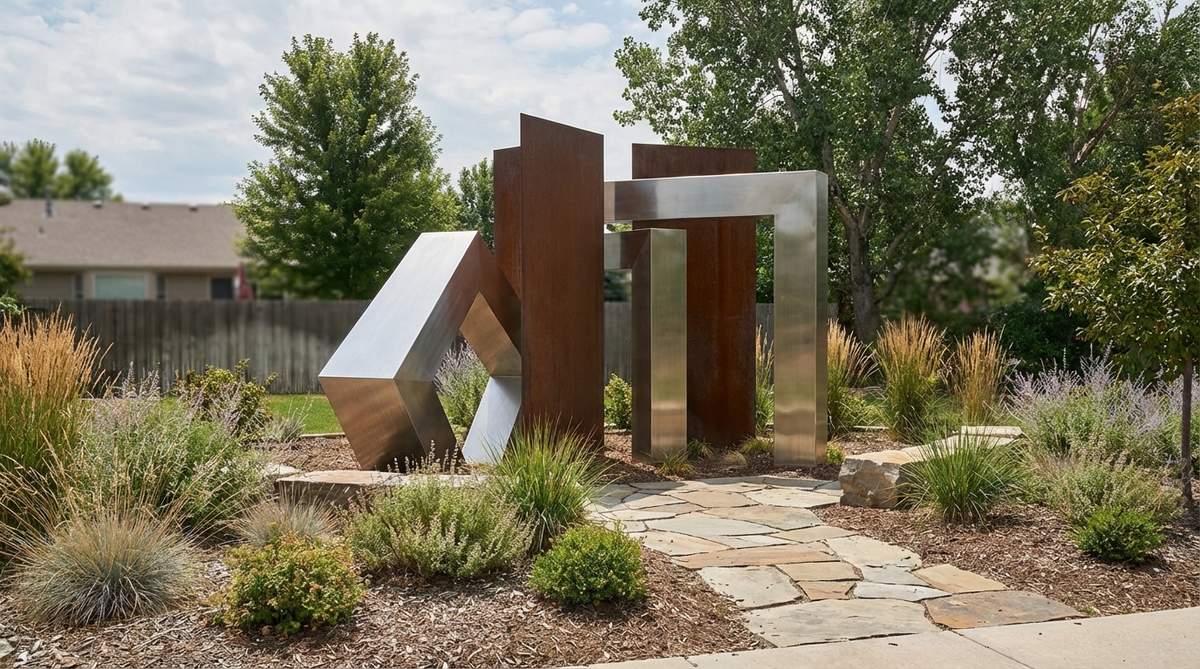
Modern garden sculpture transforms outdoor spaces into curated galleries where form meets nature. From mirror-polished stainless steel that captures kaleidoscopic reflections to weathered Corten steel that evolves with the seasons, contemporary pieces create dramatic focal points while harmonizing with their surroundings. Fresh Garden Ideas brings you expert-curated selections of metal and stone sculptures that elevate gardens from functional landscapes to artistic experiences.
Design SnapshotKey Principles
- Material Durability: Select marine-grade stainless steel for coastal areas, Corten for self-weathering patina, bronze for graceful aging
- Scale Proportions: Choose 5-7 foot sculptures as focal points, smaller pieces for intimate garden rooms
- Surface Interaction: Mirror finishes reflect surroundings, textured surfaces create shadow play throughout the day
- Environmental Integration: Position sculptures where light, wind, and viewer movement complete the artistic experience
Abstract Metal Statements That Command Attention
Abstract metal sculptures introduce bold structural elements that contrast beautifully against soft plantings. These pieces leverage industrial materials—stainless steel, Corten, bronze—to create forms that challenge perception through scale and geometry.
1. Steel Breeze Ribbon Form
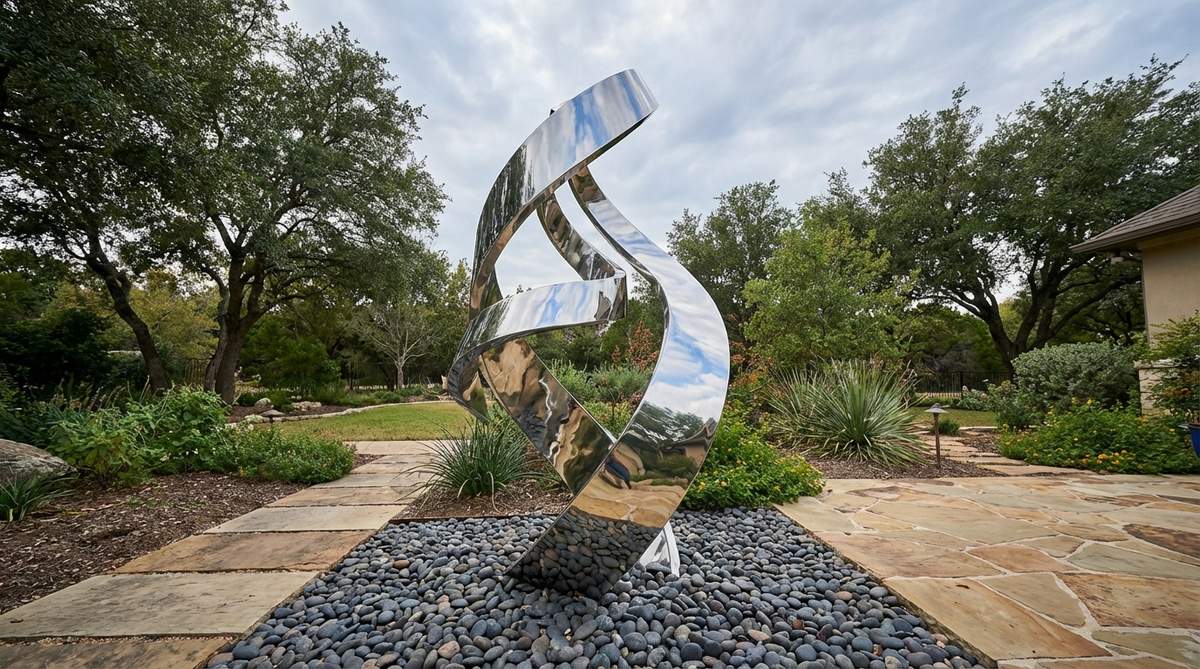
Flowing ribbons of mirror-polished stainless steel twist through vertical space, creating constantly shifting reflections of sky, clouds, and surrounding foliage. The smooth curves catch light at every angle, producing kaleidoscopic displays that change from dawn to dusk.
Designers use marine-grade steel with mirror finish to ensure the surface remains pristine in all weather conditions. Weld joints are ground flush and polished to maintain seamless visual flow.
Position this sculpture where it catches morning or evening light for maximum dramatic effect. The reflective surface effectively doubles your garden’s visual depth.
2. Abstract Wing Metal Sculpture
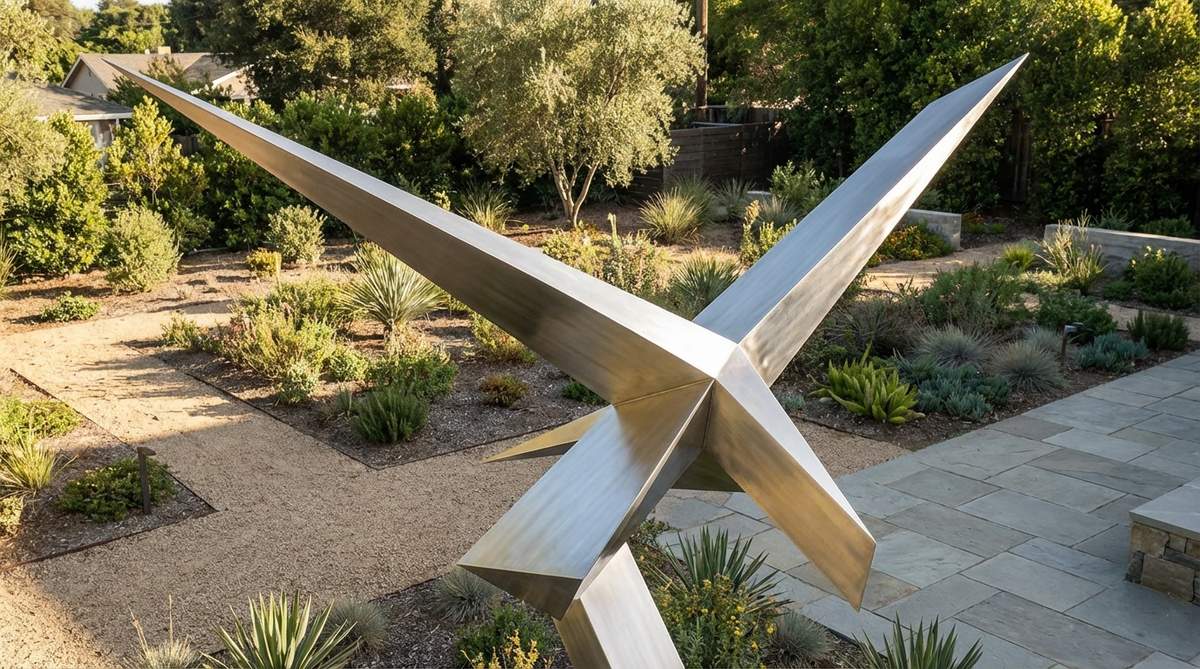
Intersecting metal planes suggest movement frozen in time, resembling wings caught mid-flight. The irregular geometric shapes create negative space as powerful as the solid forms, with edges that slice through garden sightlines.
Fabricators weld multiple steel sheets at dynamic angles, then polish surfaces to mirror or brushed finishes. The sculpture anchors securely with embedded steel plates and concrete footings.
This design works exceptionally well in minimalist gardens where architectural lines dominate. Plant ornamental grasses nearby to soften the industrial aesthetic without diminishing impact.
3. Corten Steel Blade Tower
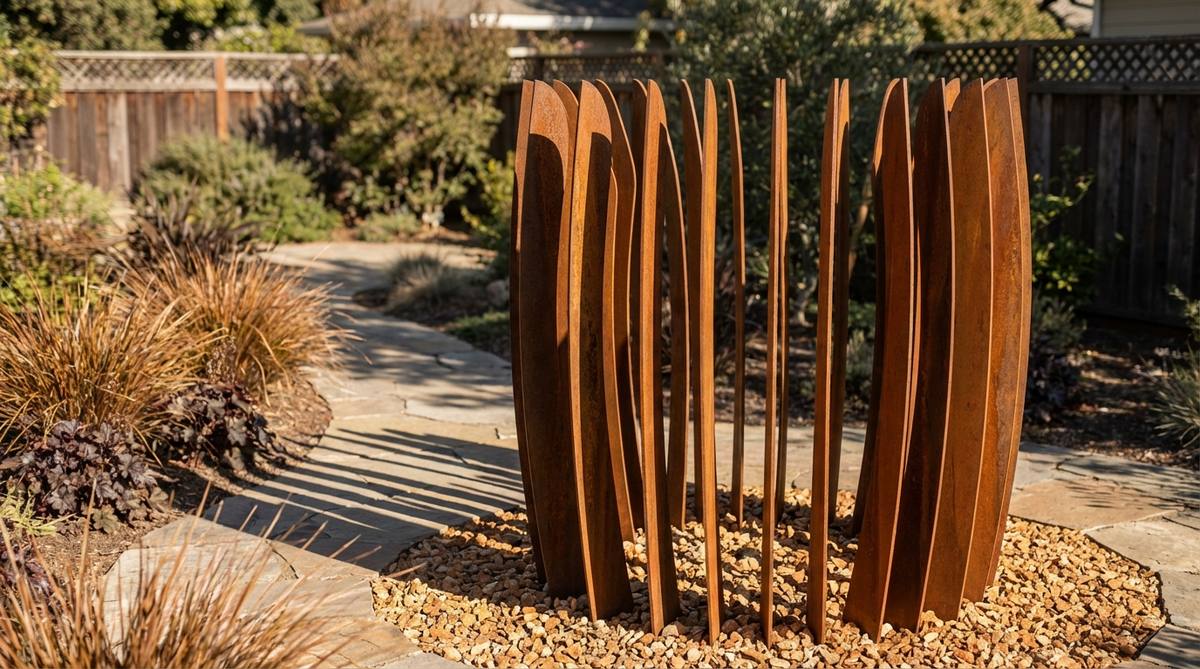
Vertical Corten steel blades rise 6-8 feet, their rust-orange patina evoking autumn leaves and ancient rock formations. Weathering steel develops protective oxidation within months, creating earthy russet hues that deepen over time.
The self-protecting patina eliminates maintenance while tying the sculpture naturally into garden palettes. Designers space blades to allow wind passage and create intriguing shadow patterns on adjacent surfaces.
Corten pieces achieve instant visual maturity, appearing as though they’ve inhabited the space for decades. Pair with warm-toned stone paths and bronze-leaved plants for cohesive color harmony.
4. Geometric Sphere Cluster
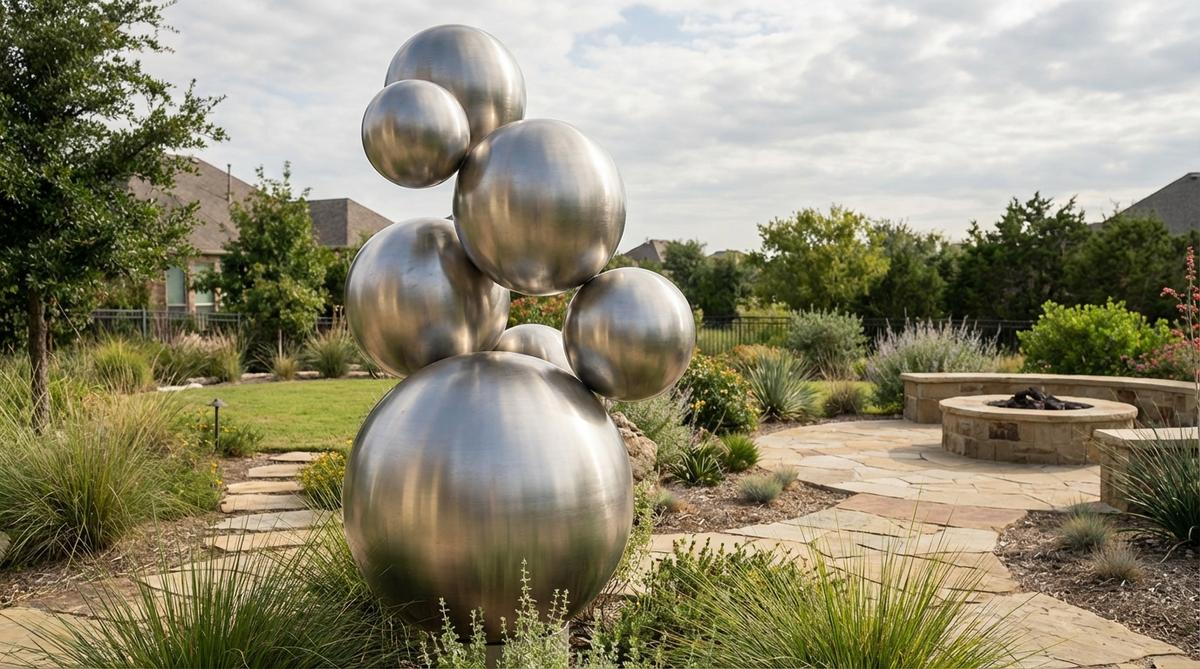
Multiple metal spheres in graduated sizes create three-dimensional compositions that invite viewers to walk around and discover new perspectives. Brushed stainless steel finishes catch ambient light without creating harsh reflections.
Install spheres at varying heights using concealed steel rods anchored in concrete bases. The dimensional arrangement generates visual interest from every approach angle.
Sphere clusters work brilliantly in contemporary gardens with clean lines and restrained plantings. Position them where the forms contrast with vertical elements like bamboo or columnar conifers.
5. Twisted Growth Spiral
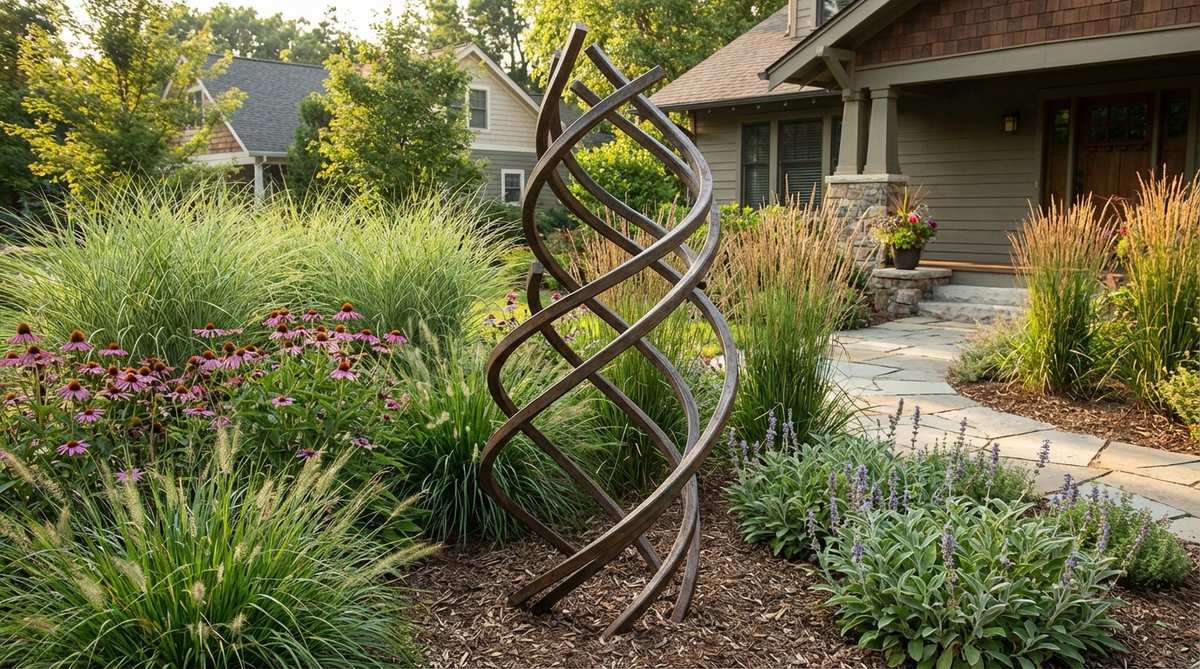
Upward spiraling metal suggests organic growth patterns translated into industrial materials. The sculpture captures vitality and movement, with lines flowing smoothly to show dynamic energy rather than static presence.
Craftsmen form thick steel bars through heat and force, creating spirals that maintain structural integrity while appearing fluid. Surface treatments range from raw steel to powder-coated colors.
The growth metaphor resonates strongly in garden settings, creating conceptual bridges between manufactured and natural elements. Use as a focal point in perennial borders where seasonal changes echo the sculpture’s upward thrust.
Stone & Natural Forms Rooted in Earth
Stone sculptures bring timeless presence and natural weight to gardens. Granite, limestone, serpentine, and springstone offer weather-resistant beauty that ages gracefully, developing character through exposure to rain and sun.
6. Carved Granite Monolith
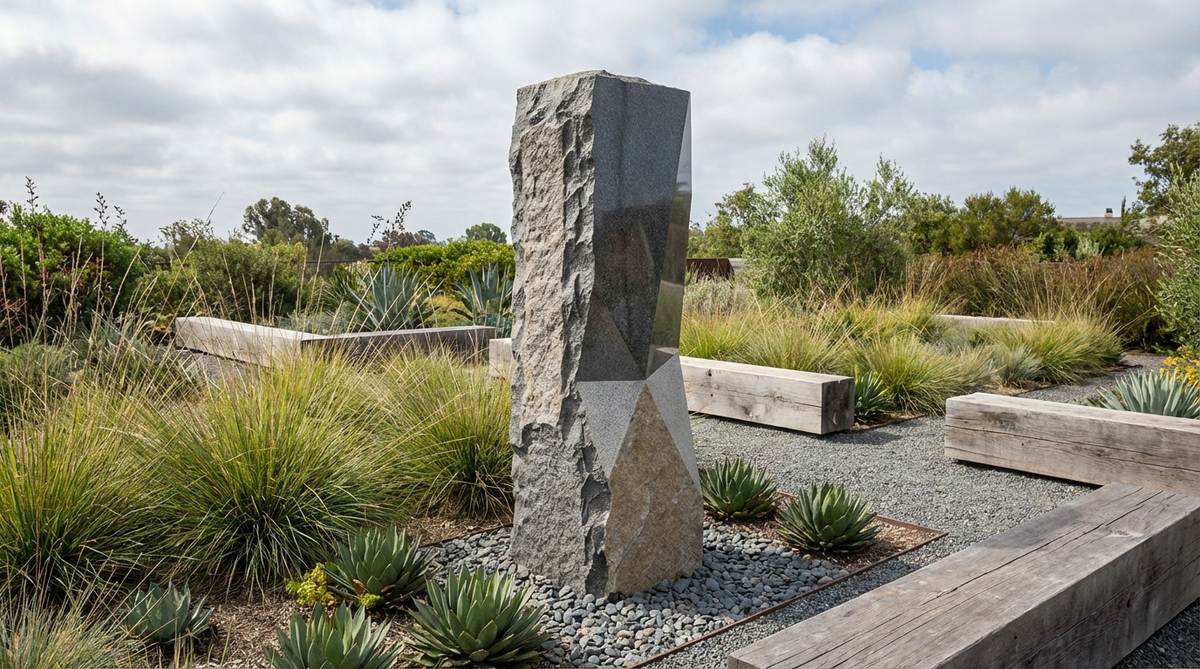
A single column of hand-carved granite stands as a contemporary interpretation of ancient standing stones. Smooth polished sections contrast with rough-hewn surfaces, creating textural dialogue between refinement and raw natural state.
Stonemasons select dense granite for superior weather resistance and carve both geometric patterns and organic textures into the surface. The monolith requires substantial foundation work but becomes a permanent garden landmark.
Position monoliths to create vertical punctuation in horizontal landscapes. The stone’s thermal mass absorbs heat during the day and radiates warmth at dusk, subtly affecting the microclimate around it.
7. Abstract Limestone Curves
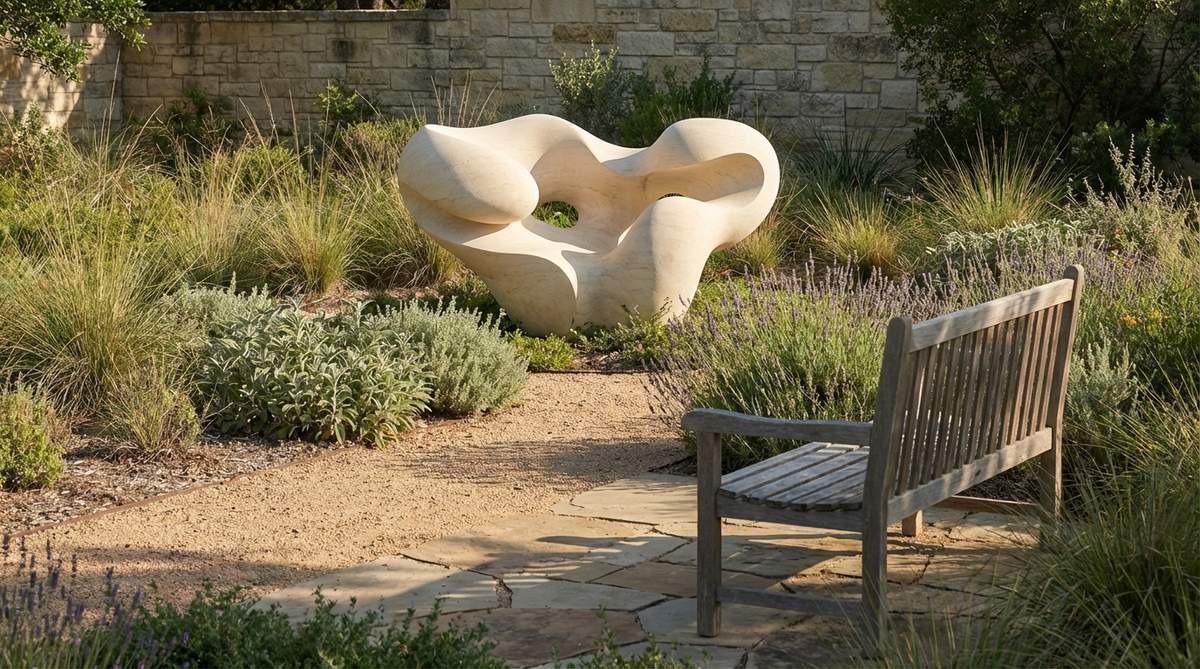
Flowing forms carved from pale limestone evoke wind-sculpted desert rocks or ocean-smoothed boulders. The stone’s natural cream and ivory tones provide neutral backdrop that complements any planting palette.
Artisans use Oamaru limestone or similar sedimentary stone that carves smoothly yet withstands outdoor exposure. Gentle curves invite touch, engaging visitors’ tactile senses alongside visual appreciation.
Limestone works beautifully in meditation gardens or quiet seating areas where its calming presence supports reflection. Avoid acidic soil contact that can accelerate weathering on the base.
8. Serpentine Organic Sculpture
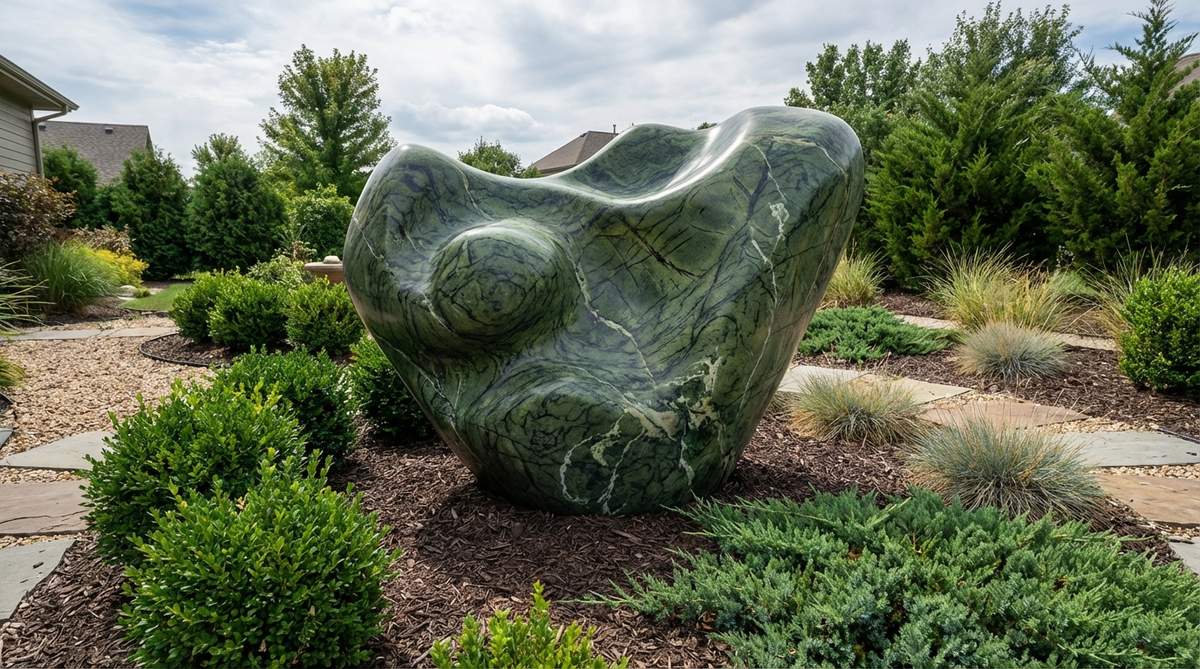
Deep green serpentine stone carved into fluid organic shapes references natural forms without literal representation. The stone’s inherent patterns and color variations make each piece unique, with veining that catches and holds the eye.
African sculptors, particularly from Zimbabwe’s Shona tradition, excel at revealing serpentine’s inner beauty through hand-carving techniques passed through generations. The dense stone resists weathering exceptionally well.
These sculptures serve as cultural bridges, bringing artistic traditions into contemporary landscapes. Position them among evergreen plantings where the dark stone creates striking contrast against foliage.
9. Stacked Stone Tower
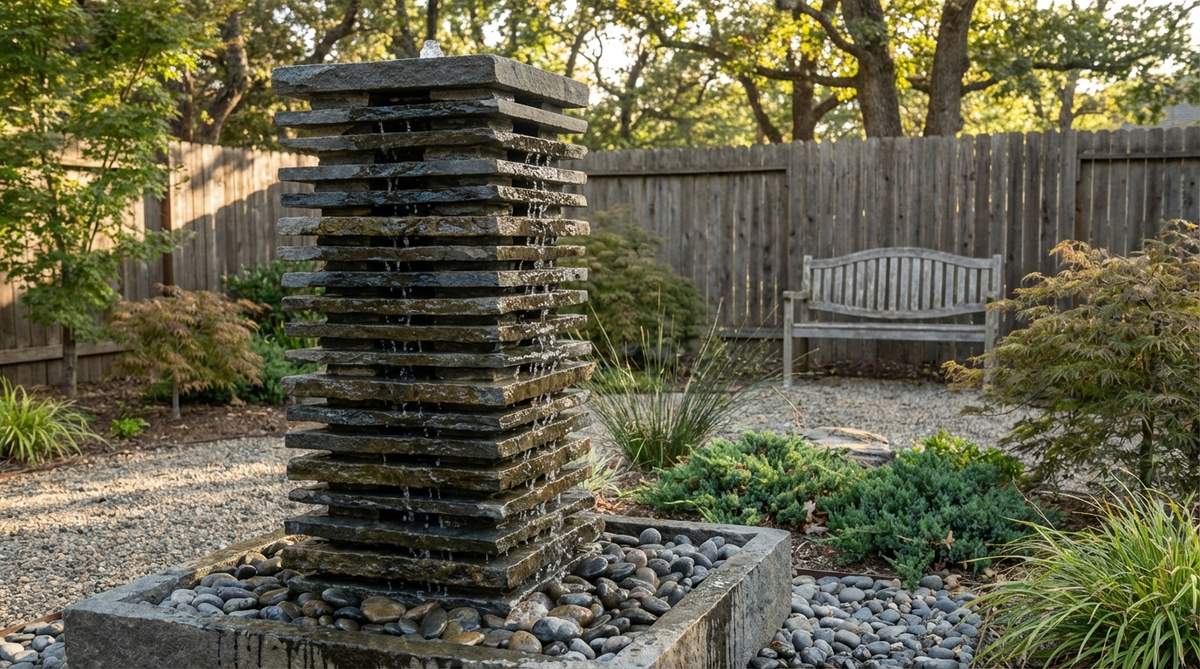
Balanced natural boulders stacked without mortar create cairn-like sculptures that suggest meditation, journey, and impermanence. Each stone’s shape and weight determines the tower’s final form through careful placement and natural friction.
Designers select flat-surfaced river rocks or field stones, stacking them to heights of 4-6 feet. The dry-stack method means towers can be reconfigured seasonally or left to weather naturally.
Stone towers introduce vertical elements without blocking sightlines, thanks to their open structure. They work particularly well in Japanese-inspired gardens or naturalistic settings where they echo mountain landscapes.
10. Carved Basalt Sphere
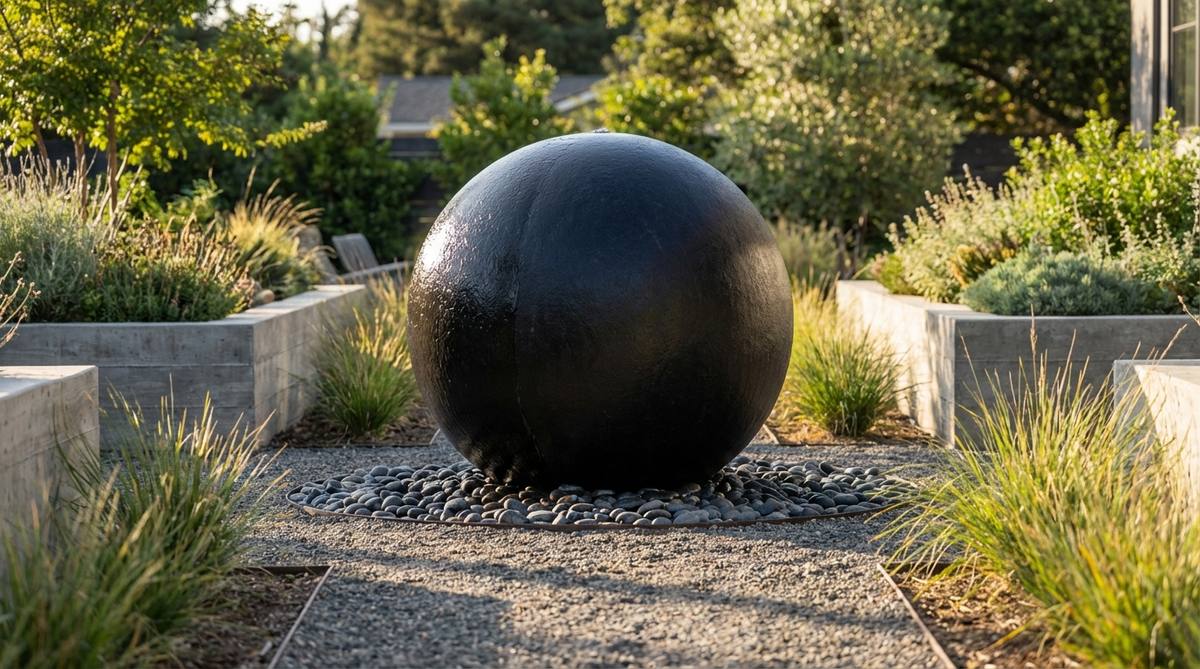
Dense black basalt carved into perfect spheres creates powerful focal points through pure geometric form. The dark stone absorbs light, appearing almost velvety in bright sun, then gleaming when wet from rain.
Stone carvers use diamond tools to achieve spherical precision, often creating multiple spheres in graduated sizes. Basalt’s volcanic origin gives it exceptional hardness and weather resistance.
Position basalt spheres on minimal plinths or set them directly on gravel beds where their perfect geometry contrasts with irregular natural elements. Group odd numbers for more dynamic compositions.
Reflective & Kinetic Pieces That Dance With Light
Reflective and kinetic sculptures transform gardens into dynamic environments where art responds to wind, light, and viewer movement. Mirror-polished surfaces and moving elements create ever-changing visual experiences.
11. Mirror-Polished Ribbon Sculpture
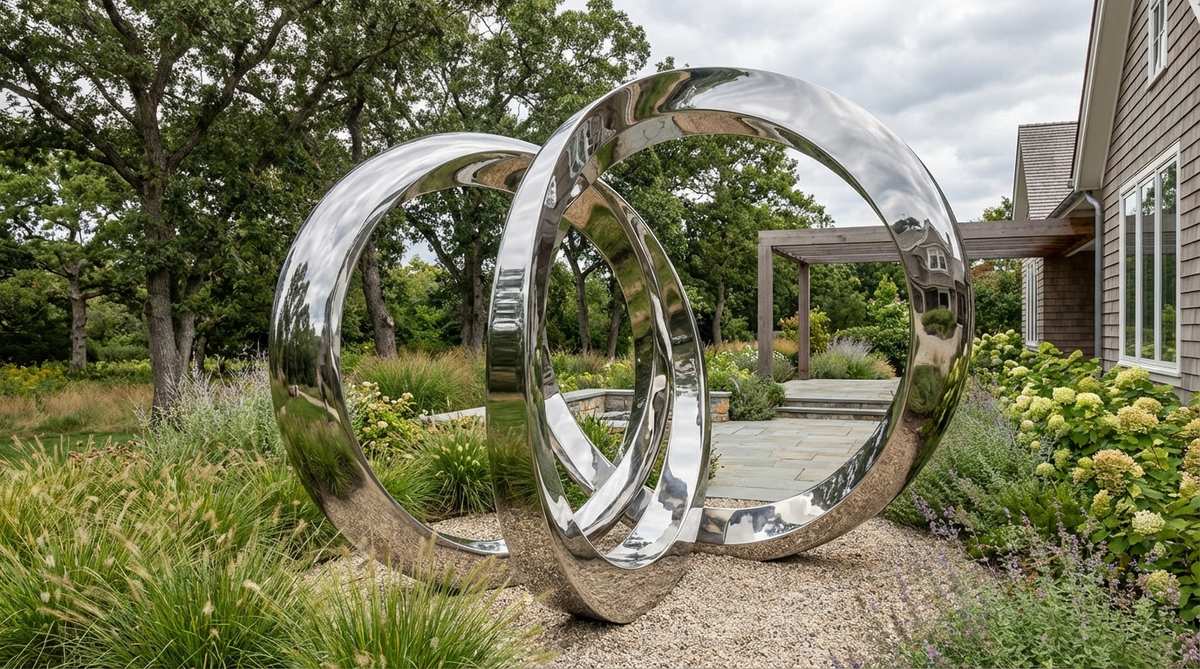
Continuous loops of mirror-finished stainless steel reflect garden surroundings in distorted, fascinating ways. The sculpture acts as liquid mirror, bending images of plants, sky, and architecture around its curved surfaces.
Metal fabricators polish each surface section to optical quality, maintaining consistent reflection across all planes. The ribbon form creates multiple viewpoints, each offering different reflected compositions.
This sculpture style transforms gardens into immersive experiences where viewers see familiar spaces reimagined through reflection. Clean surfaces monthly with microfiber cloths to maintain mirror clarity.
12. Kinetic Wind Sculpture
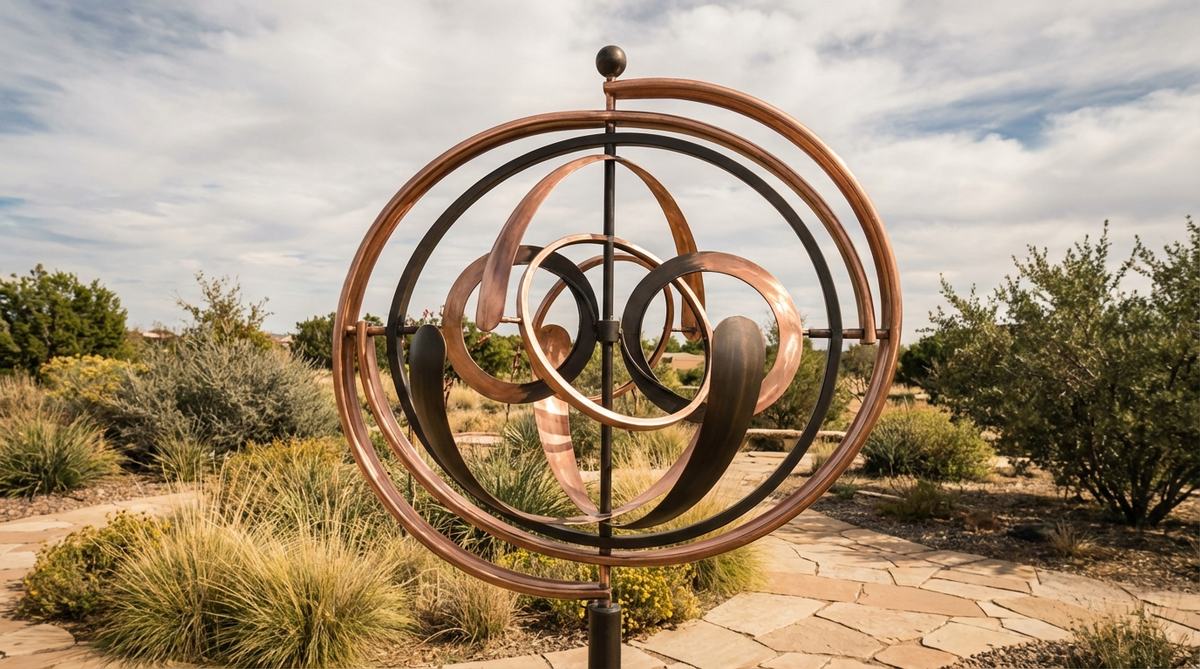
Balanced metal elements rotate on precision bearings, responding to even gentle breezes with graceful movement. Copper, bronze, or powder-coated steel components catch light differently as they turn, creating perpetual motion displays.
Engineers design kinetic pieces with carefully calculated weight distribution and bearing placement. Movement remains smooth and silent, with components that never collide despite constant rotation.
Wind sculptures introduce the fourth dimension—time—into garden design. Position them in open areas with consistent airflow rather than sheltered corners where movement would stall.
13. Reflective Tube Face
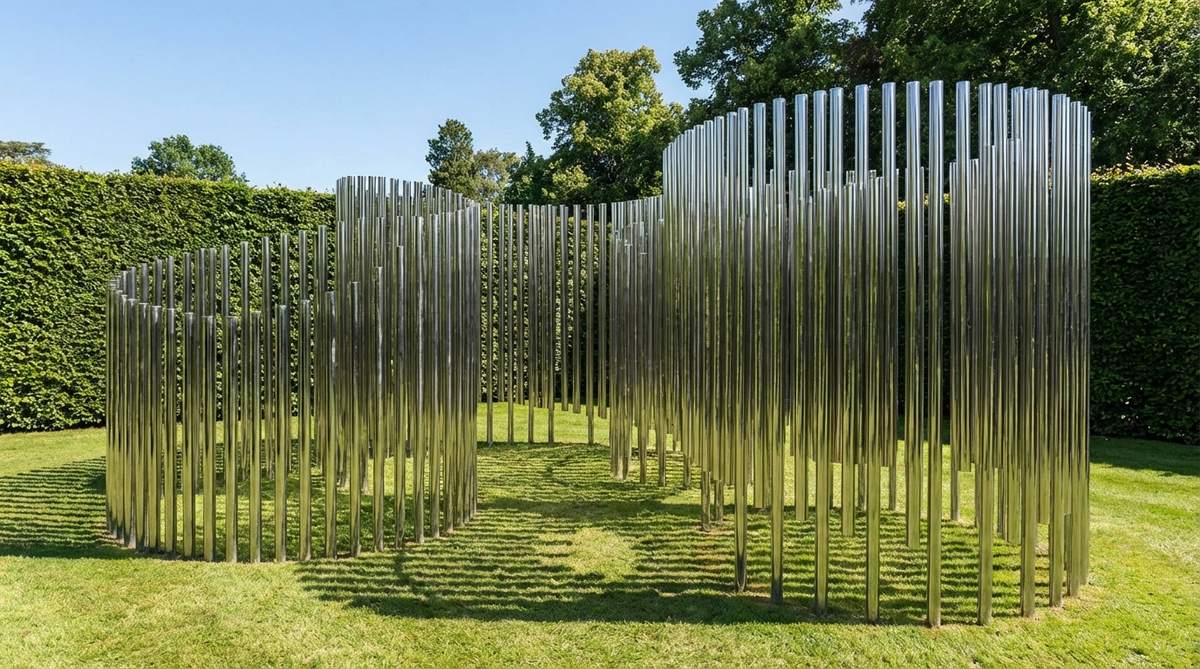
Hundreds of small mirror-finish stainless steel tubes arranged vertically create face-like forms that shift dramatically as viewers move around them. Each tube reflects a narrow slice of the environment, combining into fragmented, pixelated images.
The unusual construction method creates depth and dimensionality impossible with solid surfaces. Light plays through the tubes, creating intricate shadow patterns on ground surfaces.
Large-scale tube sculptures become instant focal points that draw visitors across entire properties. They work best against simple backgrounds—hedge walls or clear sky—where reflections read clearly.
14. Solar Reflector Disc
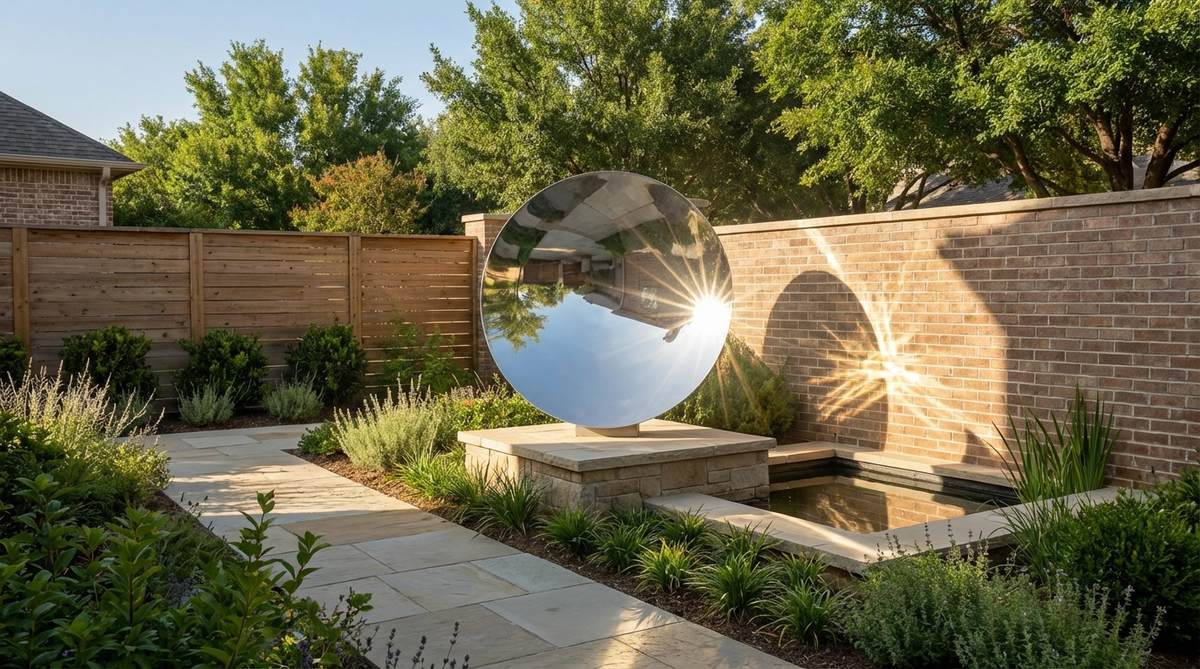
Concave mirror-polished discs catch and concentrate sunlight, creating bright focal points that shift throughout the day. The reflective surfaces project light patterns onto nearby walls, paths, or water features.
Designers angle discs to capture morning or afternoon sun, programming specific lighting effects at chosen times. The polished surfaces require orientation planning during installation to achieve desired effects.
Reflector discs create dramatic garden moments when positioned strategically. Use them to bring light into shadowed corners or animate blank walls with moving reflections.
Mixed Material Artworks Bridging Old & New
Combining metal with stone, wood, or glass creates hybrid sculptures that leverage each material’s unique properties. These pieces demonstrate how traditional and contemporary elements can coexist in harmonious balance.
15. Stone & Metal Hybrid Column
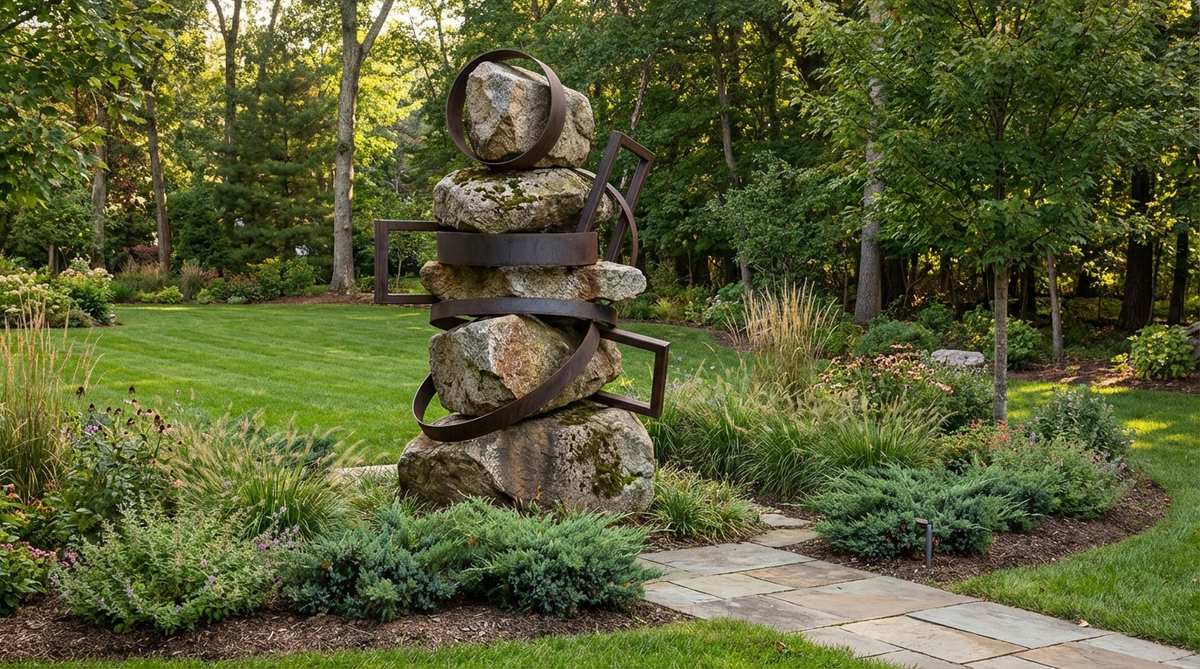
Natural granite boulders paired with fabricated steel elements create vertical compositions that bridge natural and industrial aesthetics. Metal components—rings, bands, or geometric forms—wrap around or intersect with rough stone surfaces.
Designers select contrasting materials deliberately, using stone’s organic irregularity to emphasize metal’s precise geometry. The combinations demonstrate humanity’s relationship with natural materials through transformation and juxtaposition.
Hybrid pieces work beautifully in transitional garden zones where formal and naturalistic areas meet. They help eye and mind bridge between different design languages.
16. Corten & Marble Composition
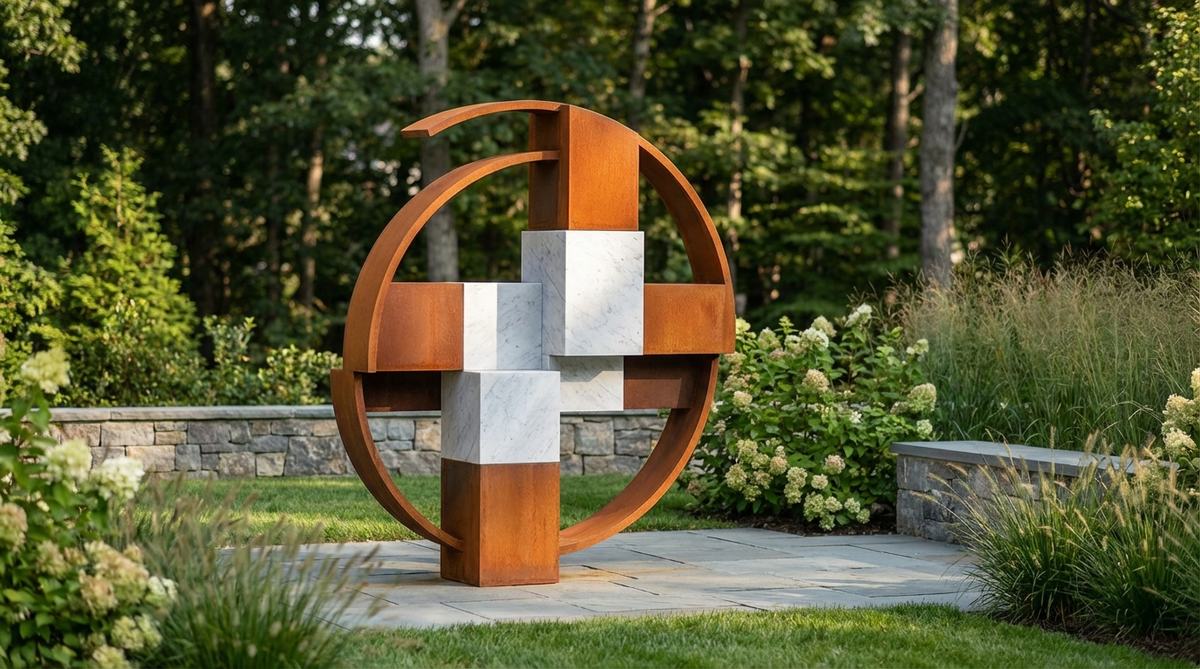
Rust-orange Corten steel paired with white Carrara marble creates stunning color and textural contrast. One material weathers actively while the other maintains classical permanence, creating dialogue about time and change.
Sculptors cut marble into geometric forms that nest within or balance against weathering steel frameworks. The combination references both classical statuary and contemporary industrial design.
This material pairing suits gardens seeking sophistication without pretension. Position where both materials receive adequate drainage to prevent staining from metal runoff onto marble surfaces.
17. Bronze & Slate Stele
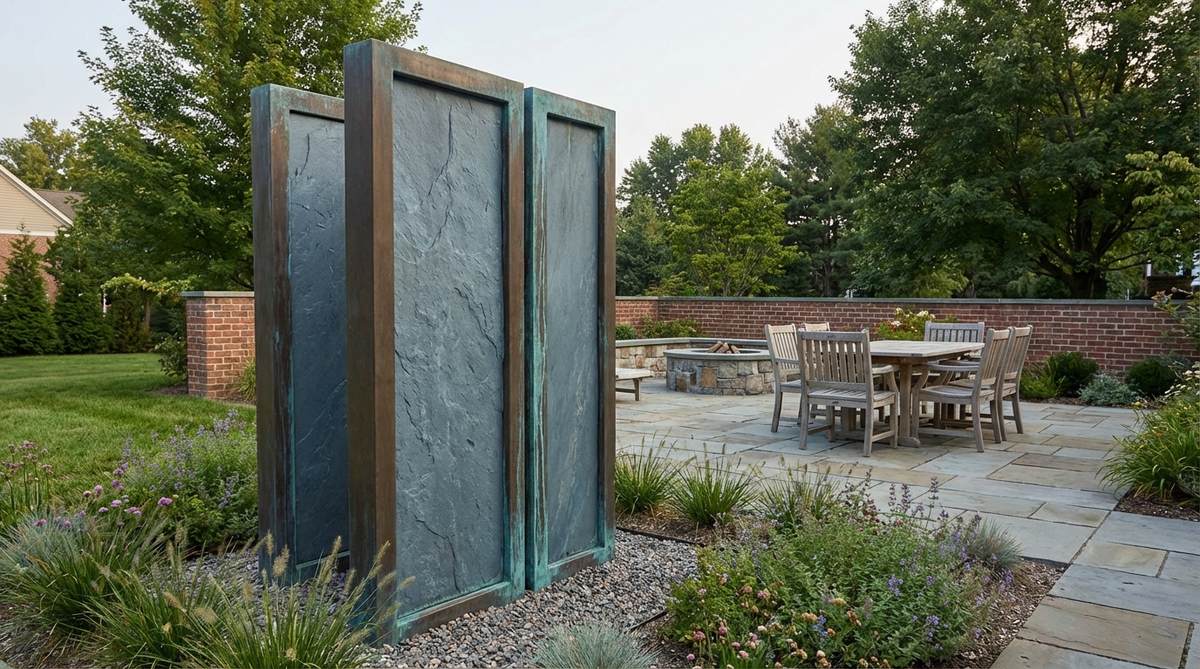
Upright panels of heather-blue Welsh slate framed in bronze create contemporary interpretations of ancient standing stones. Bronze develops green-blue patina over time, harmonizing with slate’s natural color while providing metallic accent.
Craftsmen precisely cut slate panels and weld bronze frames that protect edges while adding structural strength. The combination offers durability superior to either material alone.
Stele forms provide height without bulk, ideal for smaller gardens where massive sculptures would overwhelm. They cast minimal shadows while creating strong vertical statements.
18. Steel & Timber Abstract
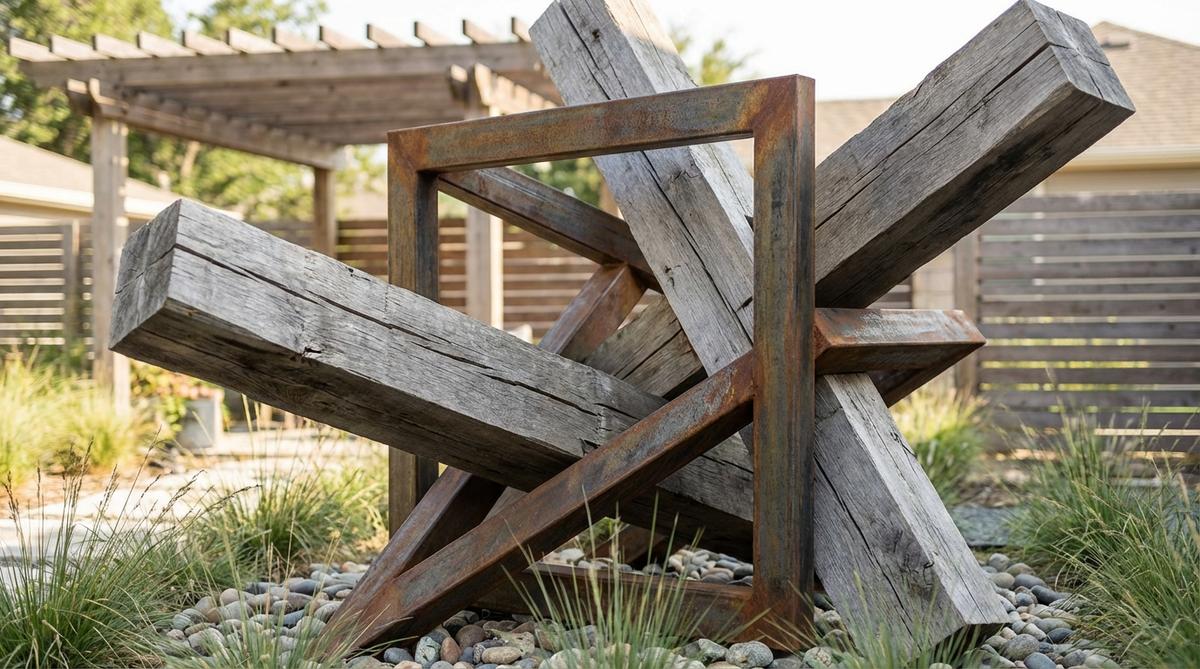
Reclaimed wood beams intersecting with steel frameworks create sculptures that age visibly and gracefully. Wood grays and checks over seasons while steel develops patina, documenting the passage of time through material transformation.
Designers treat wood with protective oils rather than sealers, allowing natural weathering while preventing rot. Steel components provide structural support as wood moves with humidity changes.
Mixed wood-metal pieces bring warmth to contemporary designs that might otherwise feel cold. They work especially well in gardens with existing wood elements like pergolas or fencing.
Geometric & Architectural Designs With Structural Impact
Geometric sculptures leverage mathematical precision and architectural principles to create pieces that feel simultaneously artistic and engineered. These works appeal to viewers who appreciate clean lines and structural clarity.
19. Intersecting Planes Sculpture
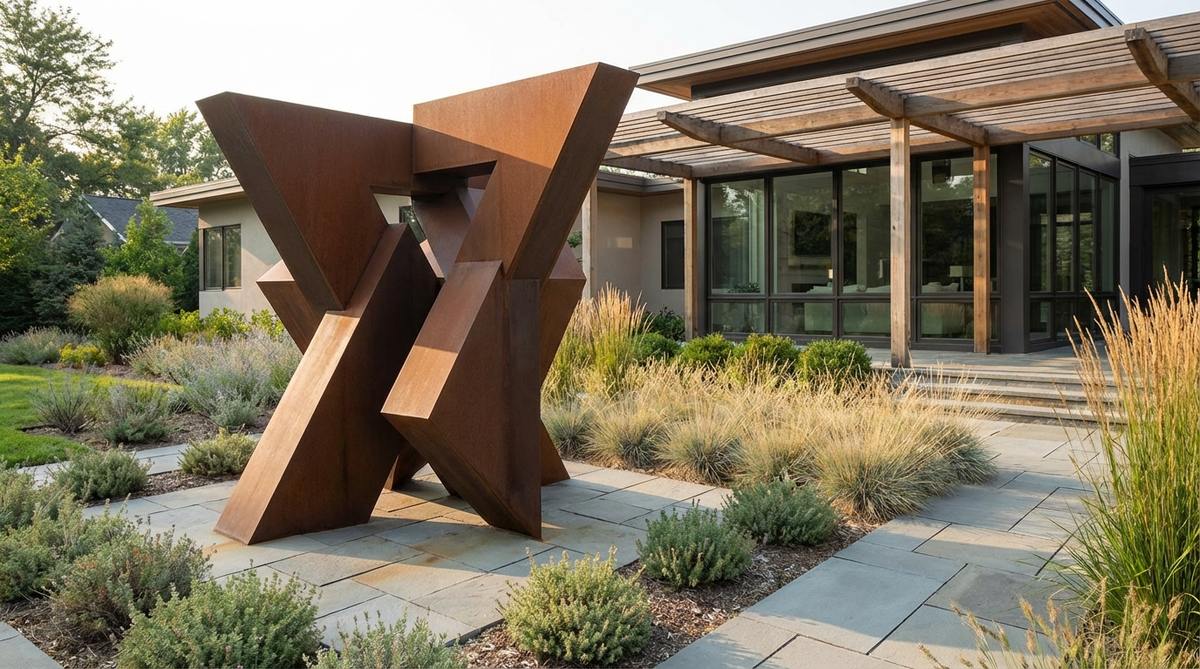
Multiple flat steel planes intersect at calculated angles, creating complex three-dimensional forms from simple two-dimensional elements. The negative spaces between planes become as important as the solid surfaces.
Engineers calculate intersection angles to distribute weight efficiently while achieving desired visual impact. The planes often rotate around a central axis, creating dynamic asymmetry.
These sculptures read clearly from distance thanks to their bold simplified forms, then reveal complexity upon closer inspection. They suit modernist gardens with strong architectural features.
20. Cubic Framework Structure
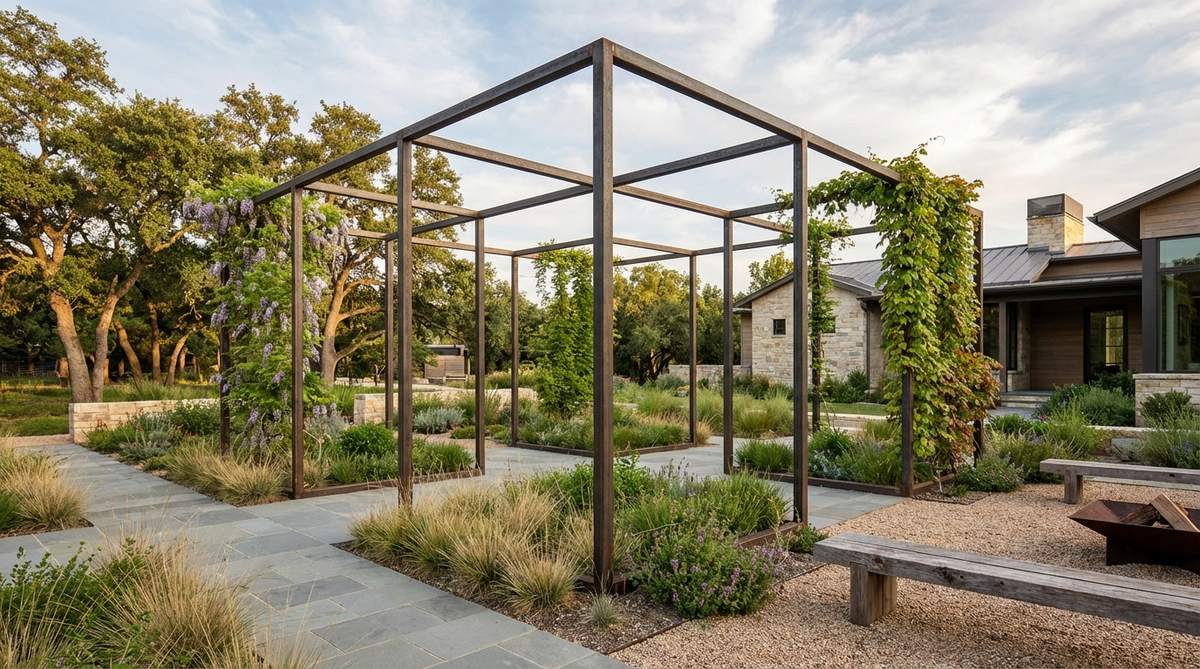
Open steel cubes or rectangular frames define space without enclosing it, creating sculptural rooms within garden settings. The frameworks establish human-scale presence while maintaining visual transparency.
Designers weld square tubing into precise cubic forms, often nesting multiple cubes at varied angles. The structures can support climbing plants, transforming from pure geometry into living architecture.
Framework sculptures function as both art and infrastructure. Position them as garden entries, destination points along paths, or frames for special views.
21. Spiral Helix Column
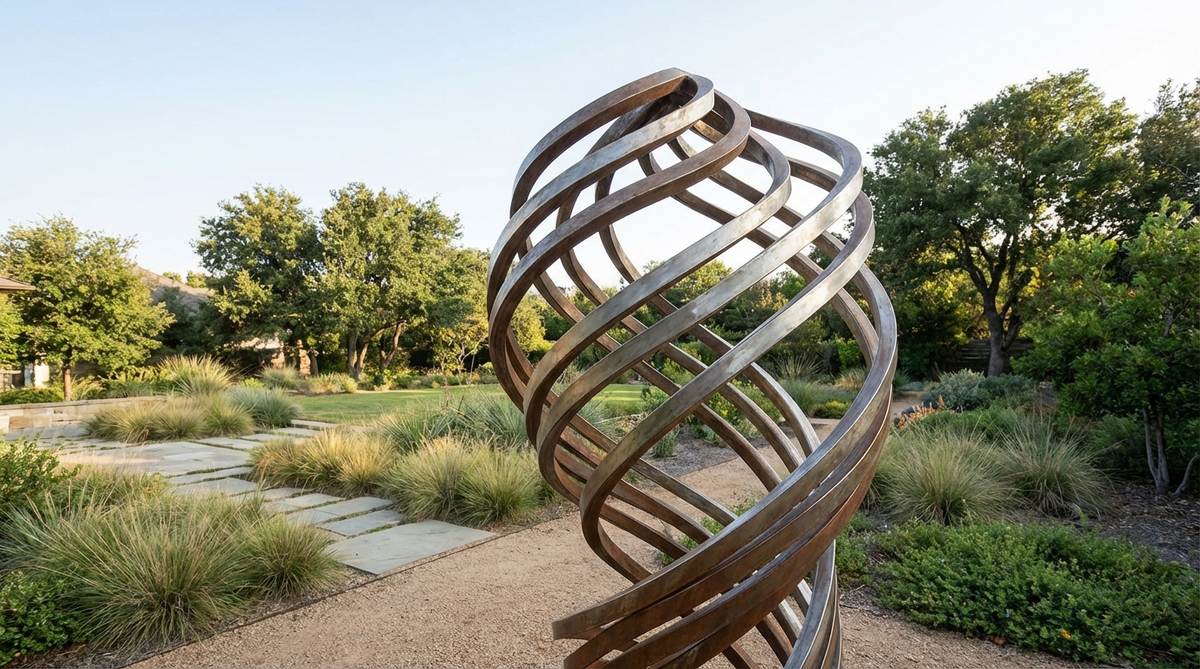
Metal ribbons twist upward in mathematical helixes, demonstrating how simple geometric principles generate complex visual forms. The spirals draw eyes skyward, extending garden experiences vertically.
Fabricators bend heavy steel bar stock using specialized equipment, maintaining consistent radius throughout the spiral. Multiple parallel spirals increase visual complexity and structural stability.
Helix forms suggest growth, DNA, and natural patterns found in shells and seed heads. They create particularly strong impact in minimalist settings where sculptural gestures stand alone.
22. Abstract Shell Metal Form
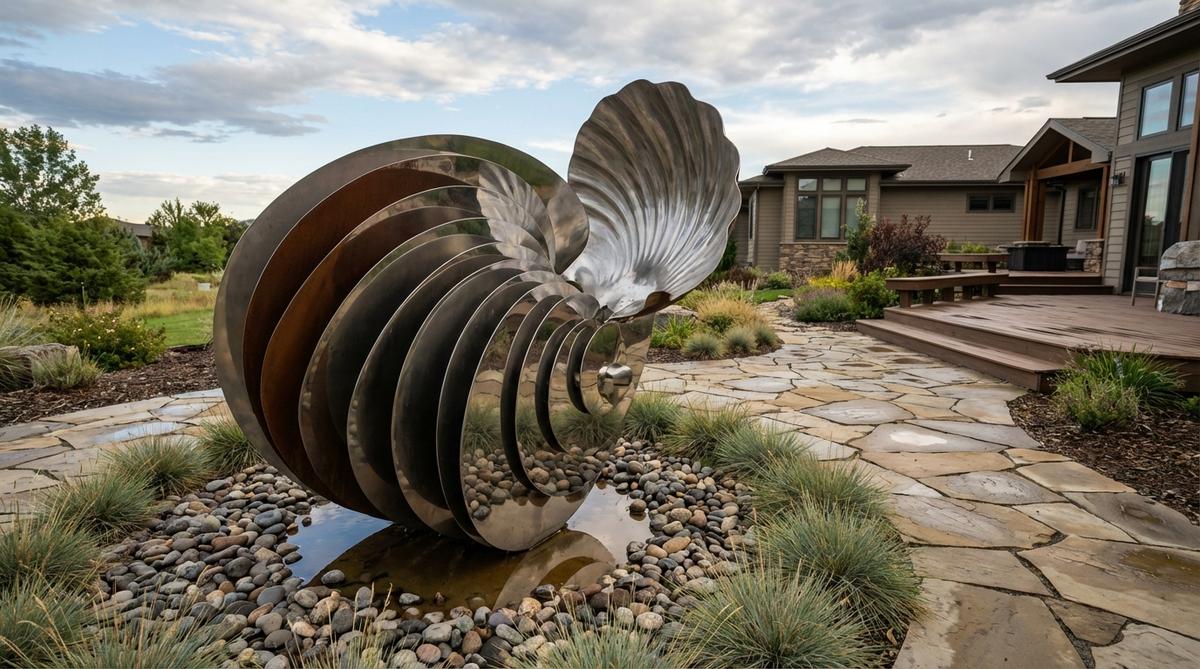
Layered metal sheets mimic shell structures, with overlapping elements that create depth and shadow. The forms reference natural geometry—nautilus spirals, clam shells—through industrial materials and construction methods.
Craftsmen cut individual metal pieces and weld them in sequence, building up shell-like forms layer by layer. Mirror polishing emphasizes the layered construction through graduated reflections.
Shell sculptures bridge organic and geometric design languages, making them versatile across various garden styles. They catch rain beautifully, creating temporary water features during storms.
23. Angular Shard Composition
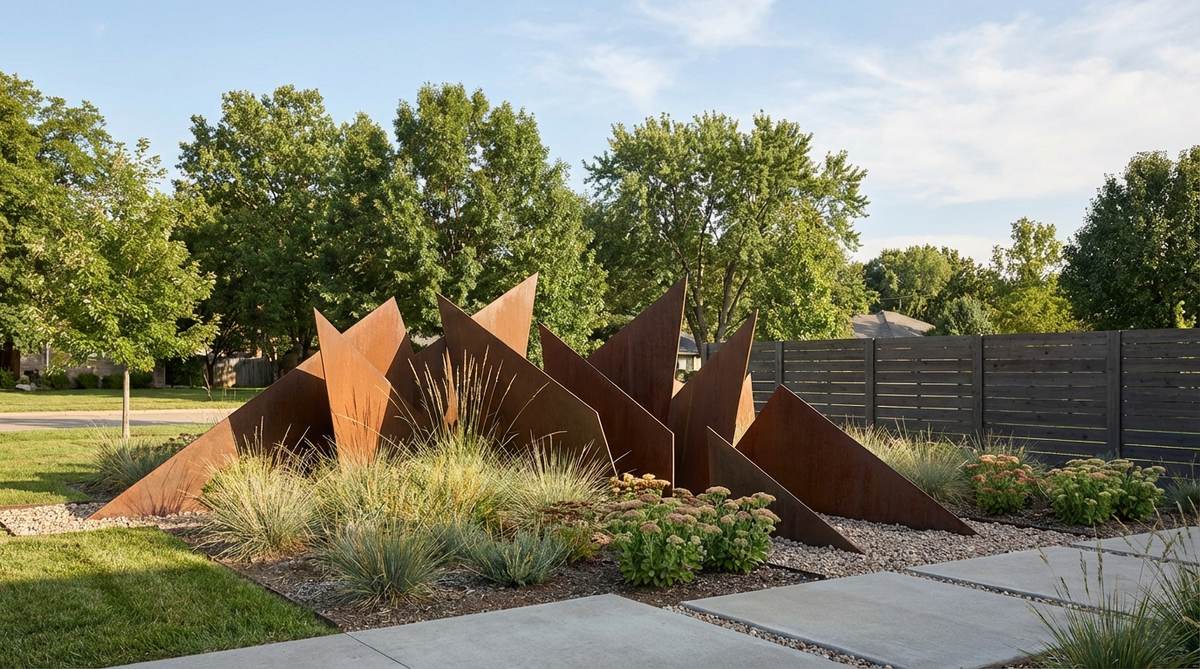
Sharp-edged metal fragments appear to emerge from the ground at dramatic angles, suggesting geological upheaval or crystalline growth. The aggressive geometry creates tension and energy in planted settings.
Designers anchor steel plates deep into foundations, allowing them to cantilever at steep angles without tipping. Sharp edges and points require careful siting away from high-traffic areas.
Shard sculptures introduce controlled chaos into ordered landscapes, creating focal points that challenge rather than comfort. They work best in bold contemporary gardens that embrace drama.
24. Ring & Circle Gateway
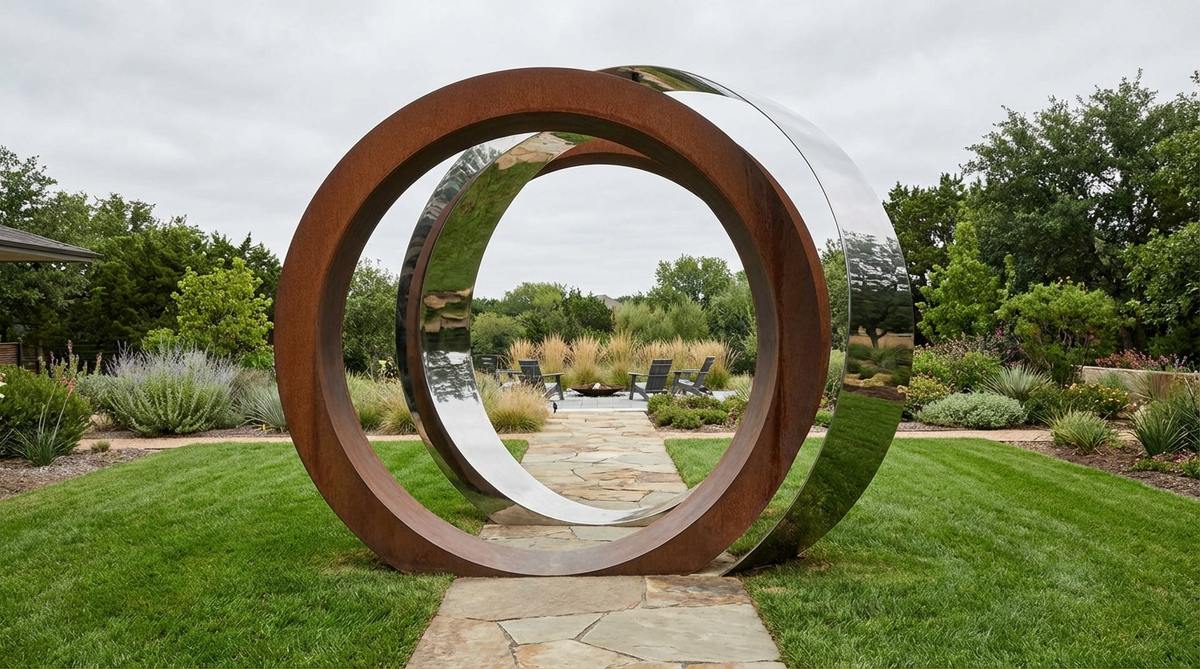
Massive metal rings positioned vertically or at angles create portals that frame views and mark transitions between garden rooms. Circles draw attention through their perfect geometry while encouraging passage through their centers.
Engineers calculate ring dimensions to create comfortable human scale—large enough to walk through while maintaining presence. Surface treatments range from raw Corten to mirror-polished stainless steel.
Ring sculptures function as both art and wayfinding elements. Position them to frame specific views—looking back toward the house or forward toward landscape features—turning ordinary sightlines into composed scenes.
Creating Your Garden Gallery
Selecting modern garden sculpture requires balancing aesthetic vision with practical considerations like scale, material durability, and environmental integration. Whether you choose mirror-polished stainless steel that amplifies light and reflection, weathering Corten that develops protective patina, or hand-carved stone that ages gracefully over decades, each piece transforms outdoor space into curated experience. Start by identifying focal point locations, then select sculptures that complement existing architectural elements while introducing new visual languages. The right contemporary piece becomes a permanent landmark that defines your garden’s character and evolves with surrounding plantings through seasons and years.
Frequently Asked Questions
What materials work best for modern garden sculptures in coastal climates?
Marine-grade stainless steel offers superior corrosion resistance for coastal gardens, withstanding salt spray without deteriorating. Bronze and copper also perform well, developing protective patinas that actually enhance weather resistance over time. Avoid mild steel unless you want active rust development, and ensure all stone sculptures have proper drainage to prevent salt accumulation in porous surfaces.
How do I determine the right sculpture size for my garden space?
Use the rule of proportional thirdsfocal point sculptures should measure roughly one-third the height of surrounding vertical elements like trees or structures. For small gardens under 1000 square feet, sculptures of 3-4 feet work best. Medium gardens of 1000-3000 square feet can accommodate 5-7 foot pieces, while large properties support monumental works of 8 feet or taller. Always mock up with temporary materials before purchasing to confirm scale feels appropriate.
How much maintenance do metal and stone garden sculptures require?
Corten and weathering steel require zero maintenance once the protective patina develops within 3-6 months. Mirror-polished stainless steel needs monthly cleaning with microfiber cloths and occasional soap-and-water washing to maintain reflective surfaces. Bronze and copper benefit from annual waxing if you want to preserve specific patina stages. Stone sculptures need only periodic moss removal with soft brushes and water—avoid pressure washers that can damage carved details.
Can modern sculptures work in traditional garden styles?
Contemporary sculptures create compelling contrast in formal or cottage gardens when chosen thoughtfully. Select pieces with organic curves rather than aggressive geometry, and use materials like bronze or stone that reference classical traditions through modern forms. Position abstract sculptures to create focal points at vista terminations or path intersections where traditional gardens would place urns or sundials. The juxtaposition often enhances both sculpture and garden by highlighting each element’s unique qualities.
What foundation requirements do large metal and stone sculptures need?
Sculptures over 5 feet tall or 200 pounds require concrete foundations extending below frost line—typically 18-36 inches depending on climate. Engineers recommend foundations measuring 1.5 times the sculpture’s base diameter, with steel anchor plates embedded in concrete. Stone sculptures need level, stable bases to prevent tilting. Wind load calculations become critical for tall pieces with large surface areas. Always consult structural engineers for sculptures over 8 feet or in areas with high wind exposure.