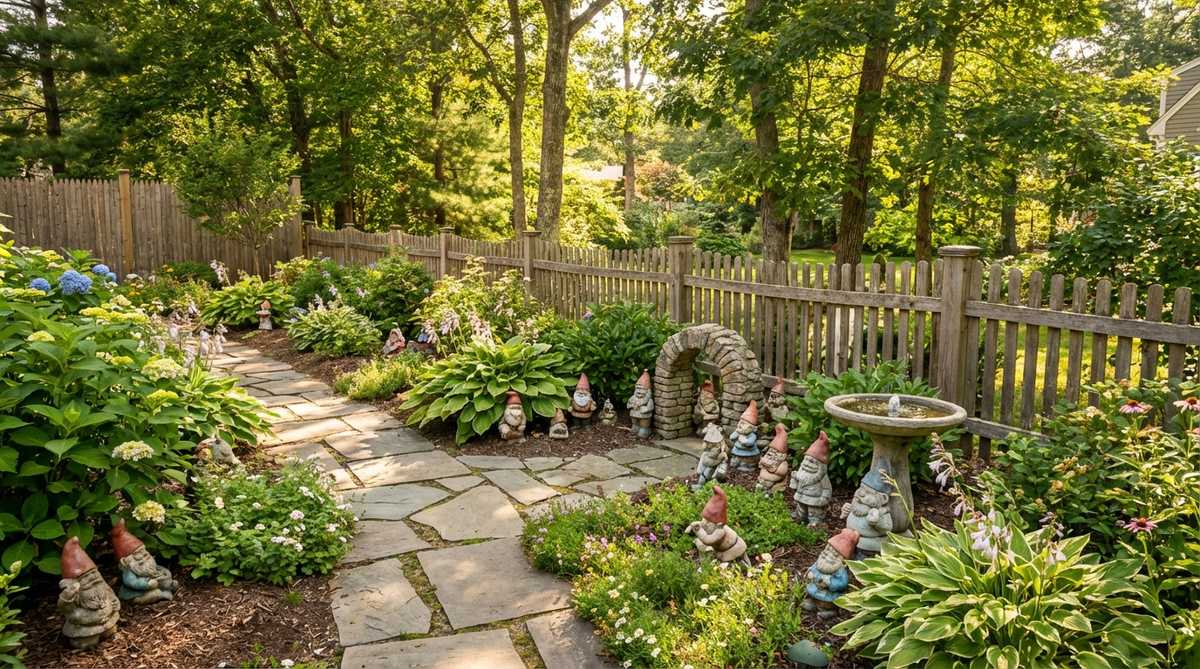
mini garden gnomes turn ordinary beds, planters, and pathways into playful story scenes that delight kids and adults alike [web:6][web:7]. As a trusted inspiration hub, Fresh Garden Ideas helps you place each figure with a designer’s eye so your yard feels intentional, not cluttered. Garden gnomes traditionally symbolize protection, good luck, and a joyful nod to folklore in outdoor spaces, which makes them perfect anchors for whimsical design [web:7].
Design SnapshotKey Principles
- Scale and proportion: Match gnome size to plant height and container dimensions so compositions feel balanced instead of random.
- Clear focal points: Use one lead gnome as a visual anchor, then support it with plants, stones, or smaller figures around it.
- Storytelling, not clutter: Treat each gnome grouping as a tiny scene with a beginning, middle, and end, rather than sprinkling figures everywhere.
- Longevity outdoors: Choose UV‑resistant, weather‑safe materials and elevate gnomes slightly on gravel or stone to keep bases dry and clean.
Front-door charm with mini garden gnomes
Entry areas are prime real estate for your most expressive mini garden gnomes because guests experience them up close as they arrive. Designers use these small accents to soften hardscapes, add color at eye level, and suggest the personality waiting inside the home.
1. Porch Planter Welcome Trio
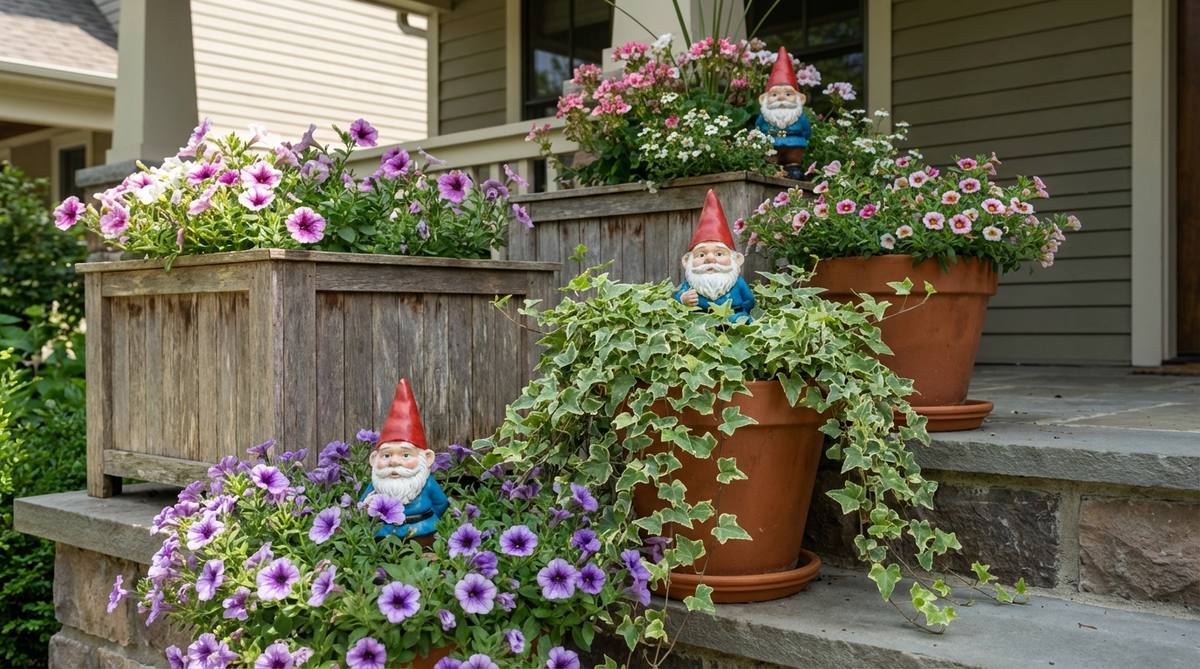
Picture three mini gnomes standing at different heights within a pair of tall porch planters, each peeking through foliage like they are greeting visitors. The mood feels friendly and slightly mischievous, which works beautifully with colorful annuals or trailing ivy.
Place one gnome near the rim, one midway in the foliage, and one tucked closer to the back to create depth in each container. This layout focuses on staggering hat heights, so choose plants that frame, not hide, the figures, such as petunias, calibrachoa, or compact ferns.
This approach turns generic porch pots into intentional welcome moments without needing elaborate hardscape work. For extra impact, repeat the same trio on both sides of the door so the entrance reads as a single, cohesive vignette.
2. Stair-Stacked Gnome Parade
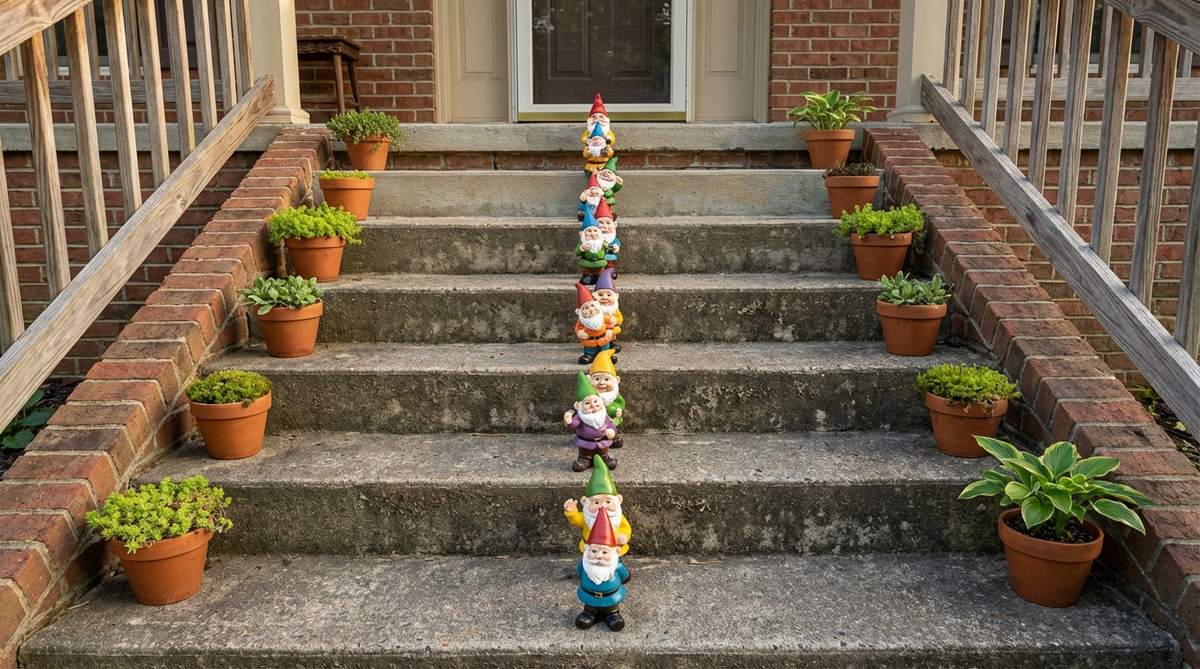
Imagine a playful line of gnomes marching up your front steps, each one slightly different in pose or color. The scene feels like a tiny parade leading guests straight to your door, adding energy to otherwise plain concrete or brick.
Use the natural vertical rhythm of your stairs and assign one gnome to every other step, then flank with small pots of low-growing plants. Designers often rotate hat colors along the stairs, which guides the eye upward and keeps the display from feeling repetitive.
This idea works especially well for narrow stoops where large planters overpower the space. Swap one or two gnomes seasonally, and the whole parade feels refreshed without reworking your entire layout.
3. Mailbox Guardian Gnome
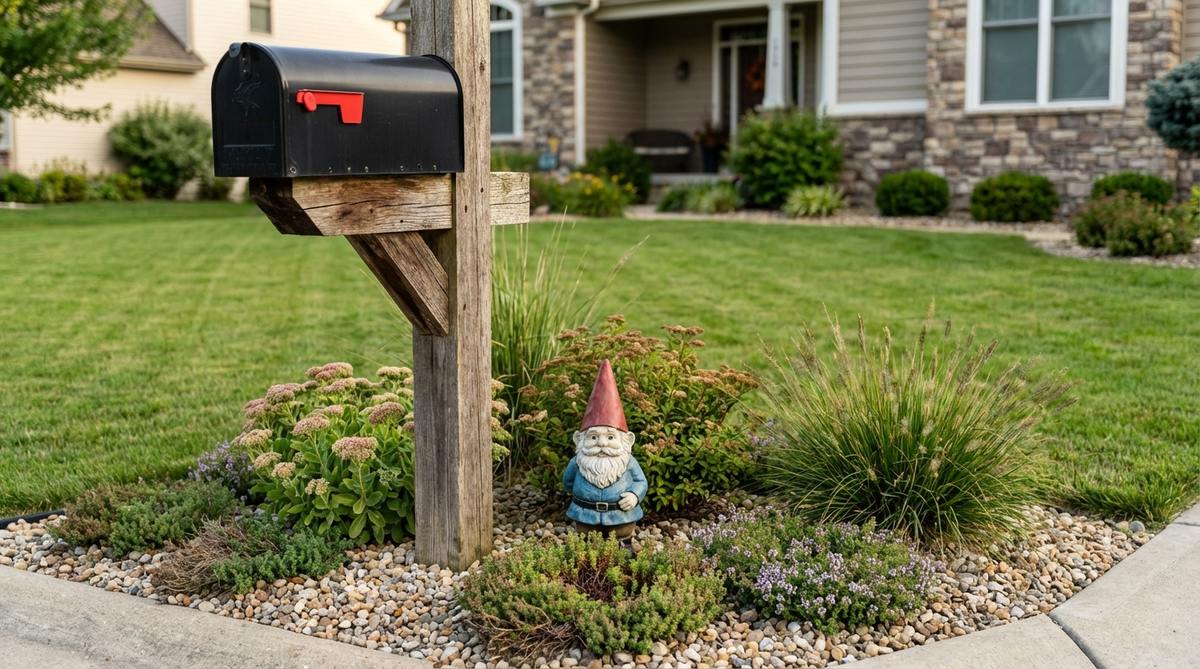
A single mini gnome stationed by the mailbox gives your curb presence a lighthearted twist. The visual reads like a tiny guard watching over letters and deliveries, which delights kids walking by.
Anchor the gnome in a small gravel or mulch pocket at the post base, then surround it with low perennials or drought-tolerant groundcovers. This layout focuses on keeping sightlines clear for drivers while still framing the figure with texture and color.
The result is a micro‑garden that softens a utilitarian element many homeowners ignore. If your area receives heavy sun, choose fade‑resistant resin or stone finishes so the colors stay crisp over multiple seasons.
4. Pathway Lantern Gnomes
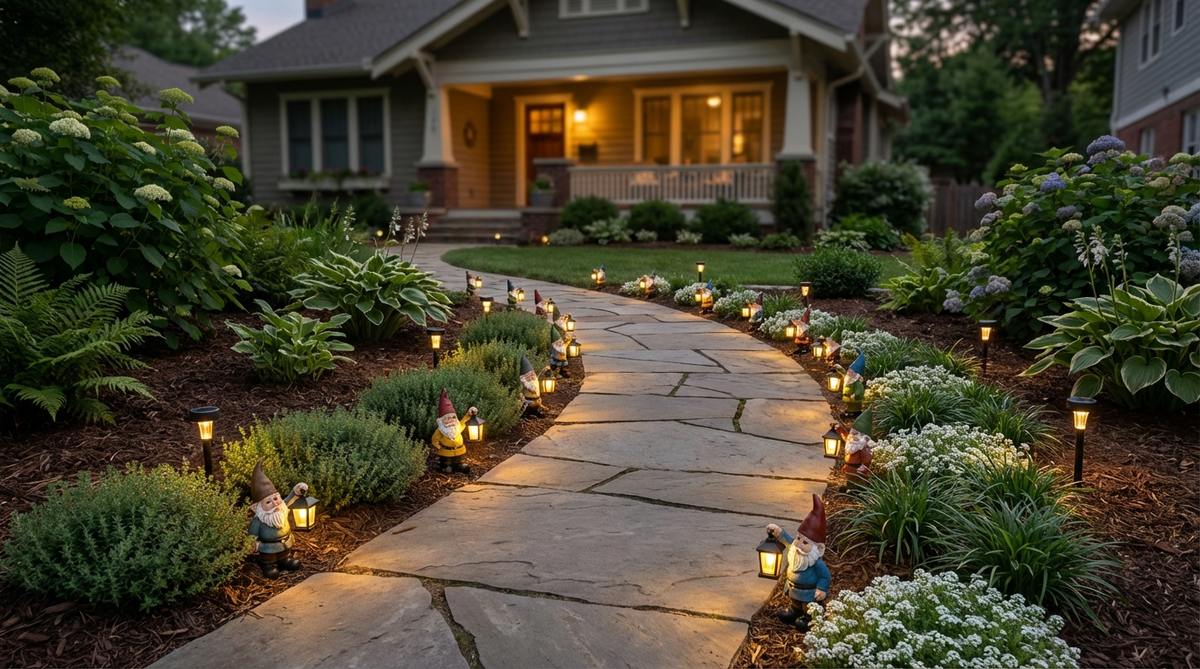
Along a garden path, a row of mini gnomes holding faux lanterns gives the impression of a tiny crew lighting the way after dark. The mood is whimsical and cozy, especially when the path curves slightly.
Space gnomes just outside the walking line, alternating sides so they visually “pass” a guest down the path. Pair them with low edging plants such as thyme, mondo grass, or alyssum so figures stay fully visible and the pathway feels framed rather than crowded.
Using solar lantern-style gnomes adds subtle nighttime glow without electrical work. This strategy improves both safety and ambiance, turning even a short side path into an experience instead of a shortcut.
5. Fence-Top Peeking Gnomes
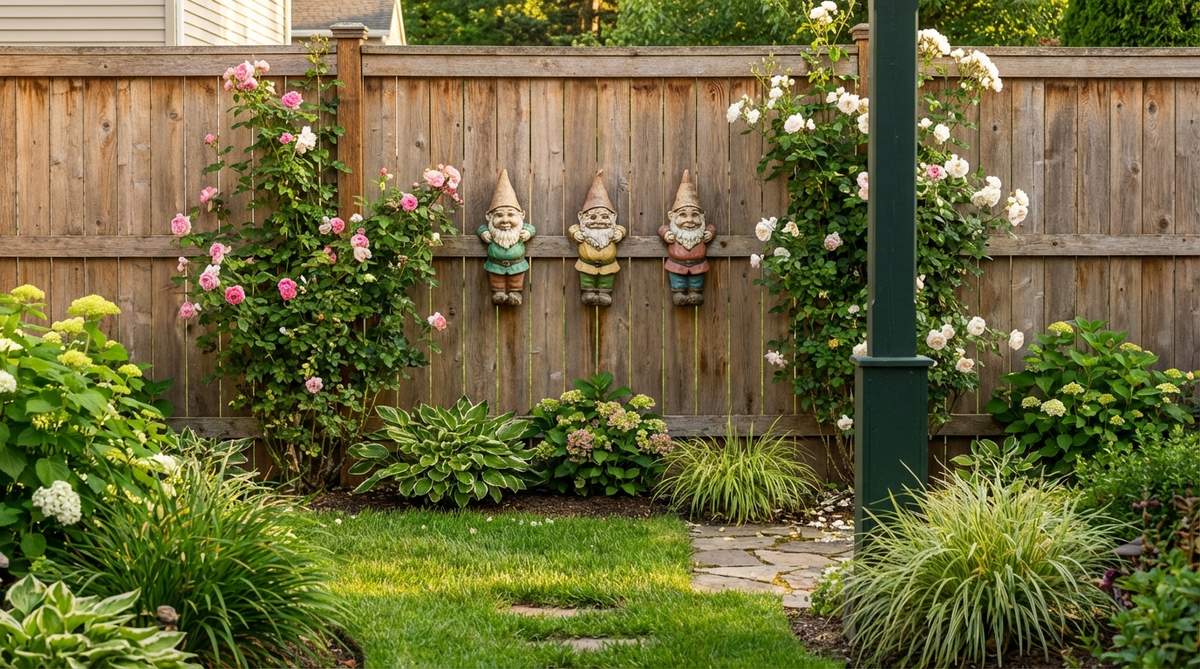
Mini gnomes perched along a fence top, just visible above the boards, create the impression of curious neighbors watching the garden. The visual is playful from both inside the yard and from the street side.
Secure each figure with discreet brackets or outdoor-safe adhesive so wind does not shift them, and stagger placements instead of lining them up perfectly. Designers often cluster gnomes near vertical elements such as posts or climbing roses for stronger compositional anchors.
This technique adds personality to long fence runs without repainting or rebuilding. Keep a few stretches of fence clear so the display still feels intentional, not like a shelf for every object you own.
6. Window Box Story Gnomes
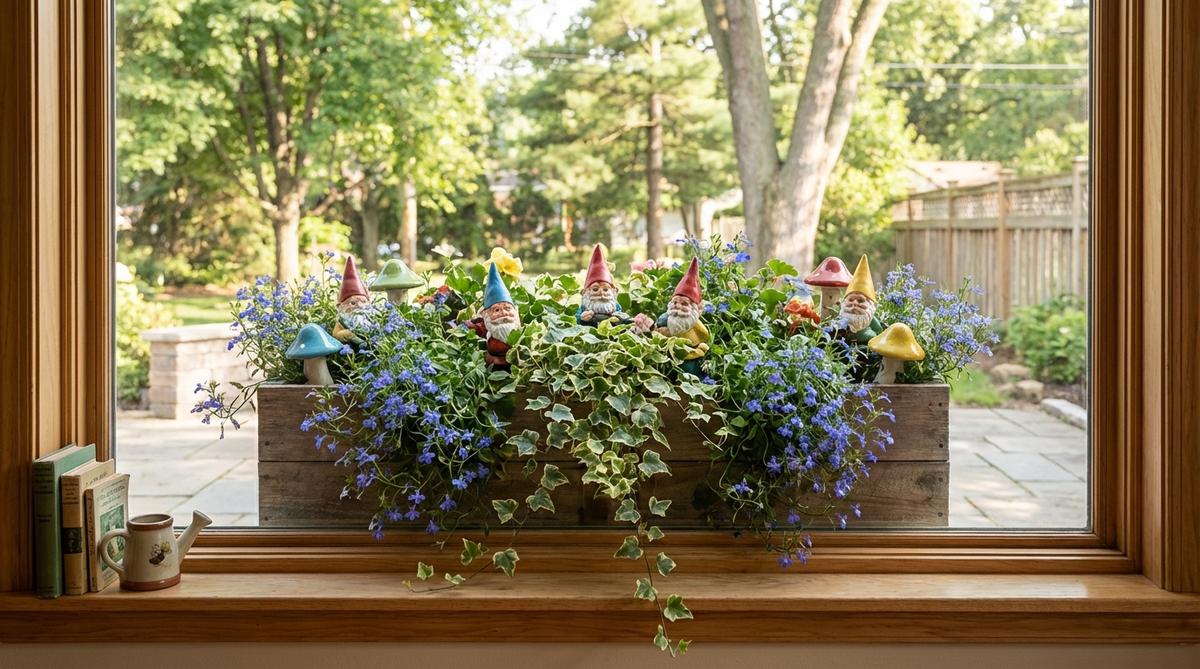
In a window box, mini garden gnomes appear almost at eye level from indoors, creating a storybook scene framed by the window trim. The mood is charming and immersive because the figures sit only a few inches from the glass.
Position one main gnome near the center and two supporting figures toward the corners, then weave trailing plants like lobelia or ivy around them. This layout focuses on color repetition, so echo hat tones in bloom colors to knit the entire composition together.
The reward is a living picture that changes as plants grow, bloom, and spill. Because window boxes are compact, you achieve high visual impact with just a handful of figures and a small plant palette.
7. Rail-Hanging Swing Gnomes
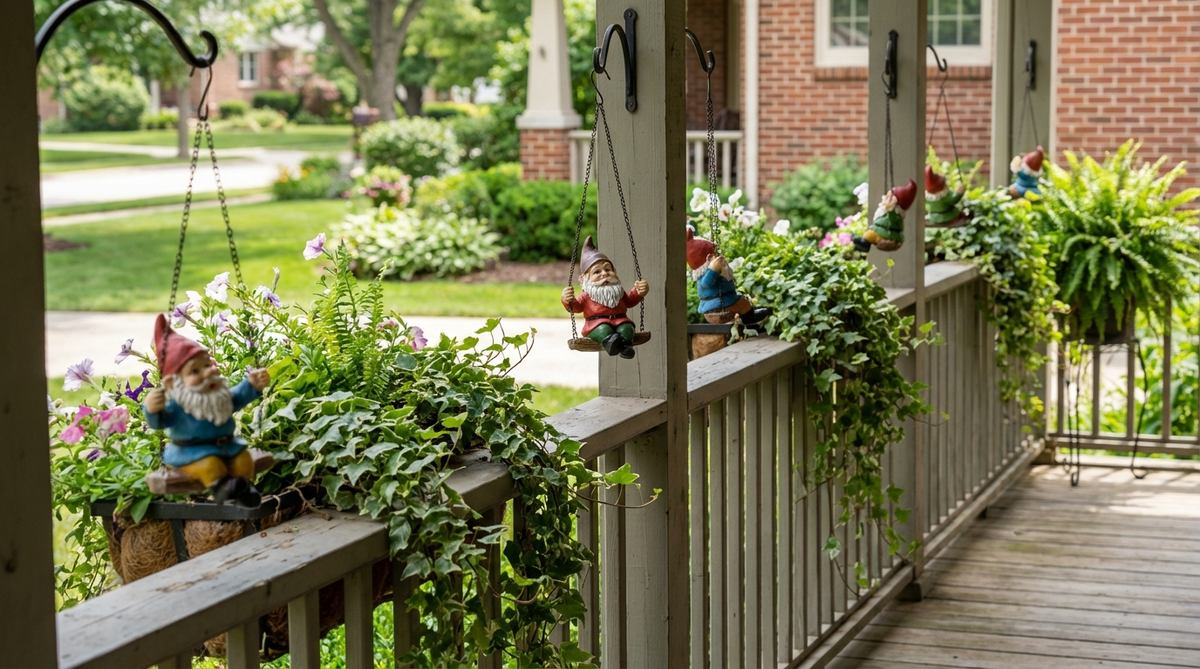
Imagine tiny gnomes on miniature swings hanging from a porch or deck rail, gently moving with the breeze. The scene feels light and kinetic, catching attention even in a busy outdoor setting.
Attach swing hooks evenly along the rail, then hang gnome swings at alternating heights to avoid a rigid, gridlike appearance. Pair the display with trailing plants in rail planters so greenery frames the figures without blocking their motion.
This setup adds vertical interest in spaces where floor room is limited. It also works well in rental properties because swings remove easily without altering the structure permanently.
8. Rock Border Gnome Guard
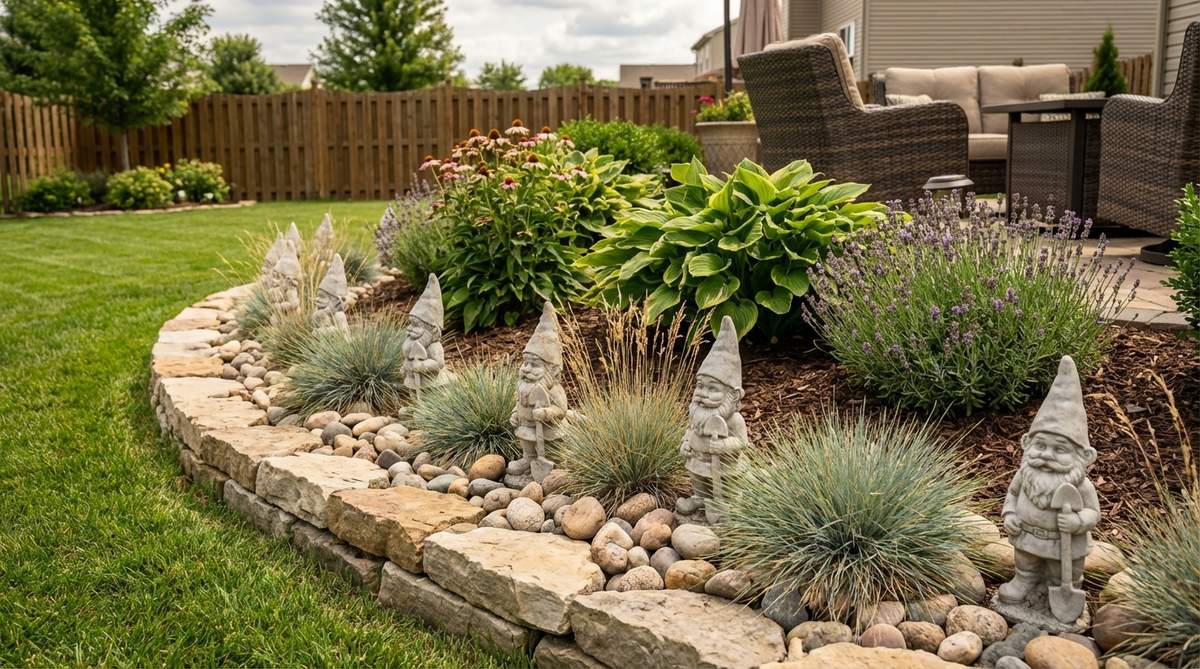
A low rock edge along a bed is an ideal stage for a line of mini gnomes acting as garden “guards.” The overall look is structured but still playful, especially when repeated on both sides of a main walk.
Alternate gnomes with slightly larger rocks or small clumps of ornamental grass to keep the rhythm from feeling too predictable. Designers use two or three repeating hat colors here to tie the border into nearby plantings or the home’s trim.
This concept works on new and established beds because it sits on top of existing soil and edging. It also offers a clear visual boundary that signals kids where not to step into the planting zone.
9. Hanging Basket Gnome Perches
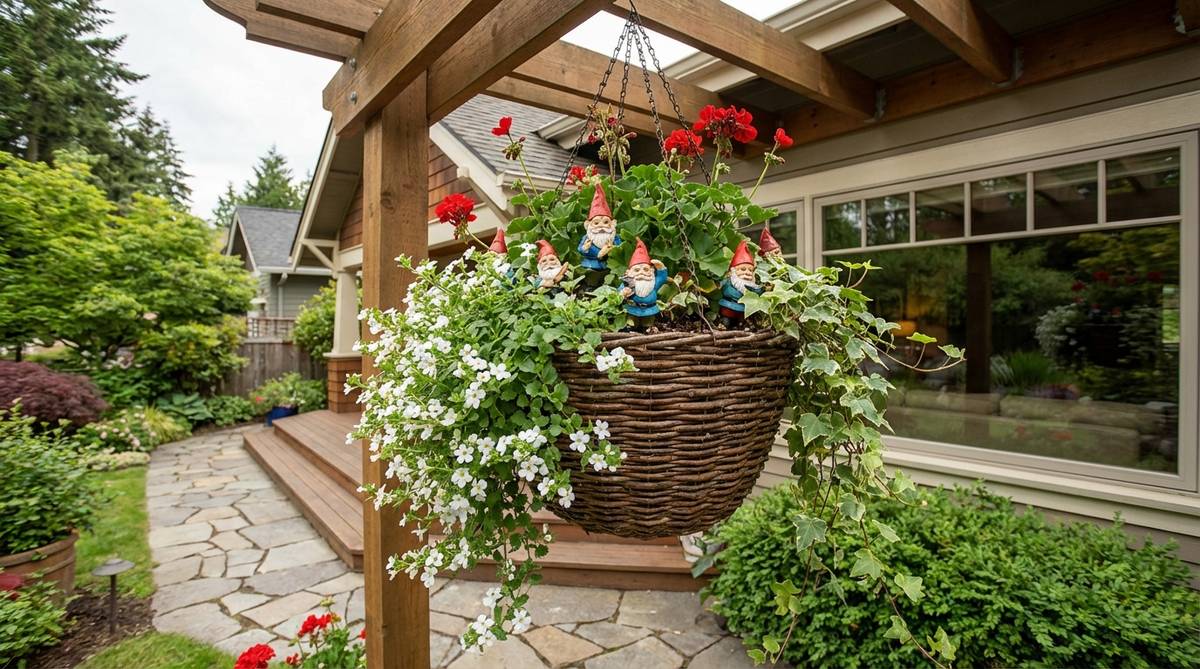
Small gnomes tucked into hanging baskets look like climbers who finally reached the canopy of your porch. The mood is whimsical and slightly theatrical, especially when baskets hang at staggered heights.
Use lightweight resin figures and secure them with floral wire to the basket frame, then plant airy annuals such as bacopa, verbena, or trailing geraniums around them. This layout focuses on keeping figures visible from below, so avoid overly dense or tall varieties.
Hanging displays free up floor and step space while still delivering strong character. They also create excellent sightlines from inside the home, turning windows into moving picture frames throughout the season.
10. Birdbath Edge Gnome Circle
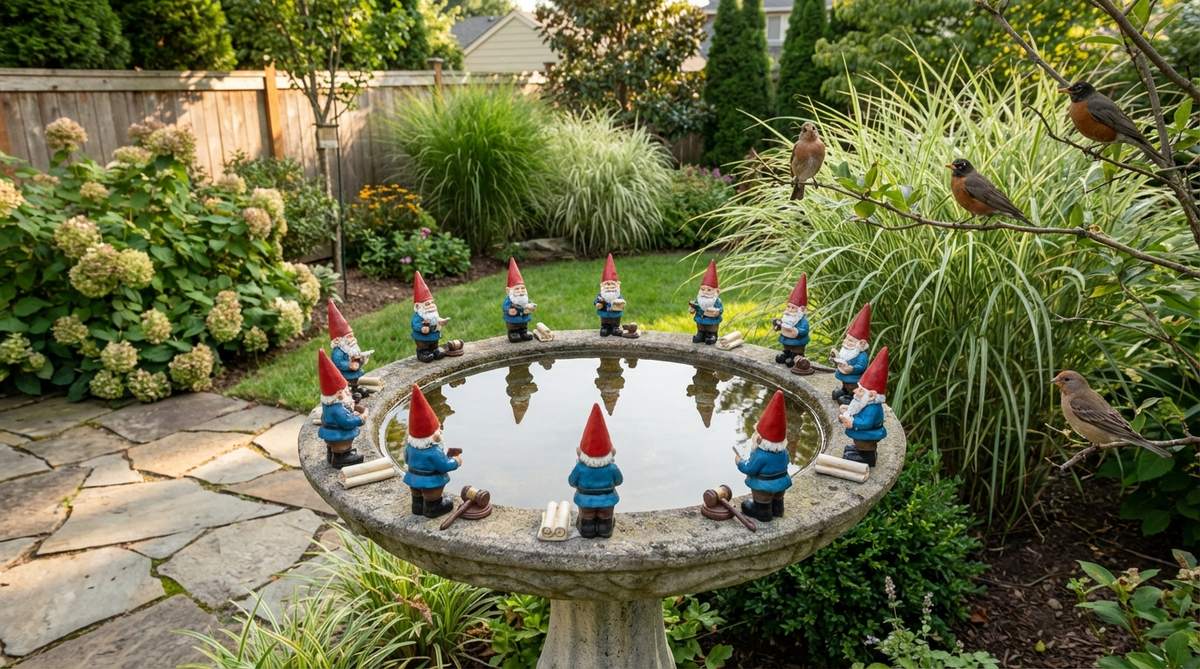
Arrange mini gnomes around the rim of a birdbath so they appear to hold a meeting over the water. The scene feels charming and slightly ceremonial, turning a basic basin into a focal point.
Choose smaller gnomes that do not overpower visiting birds and secure them with removable putty or stones at the base. Designers often repeat one accent color, such as red hats or blue jackets, to connect the gnomes visually with surrounding flowers or glazed pottery.
This idea upgrades an existing feature with minimal cost or labor. It also encourages birdwatching, since the whimsical figures draw people closer to observe what lands at their “table.”
11. Doorstep Mushroom Gnome Cluster
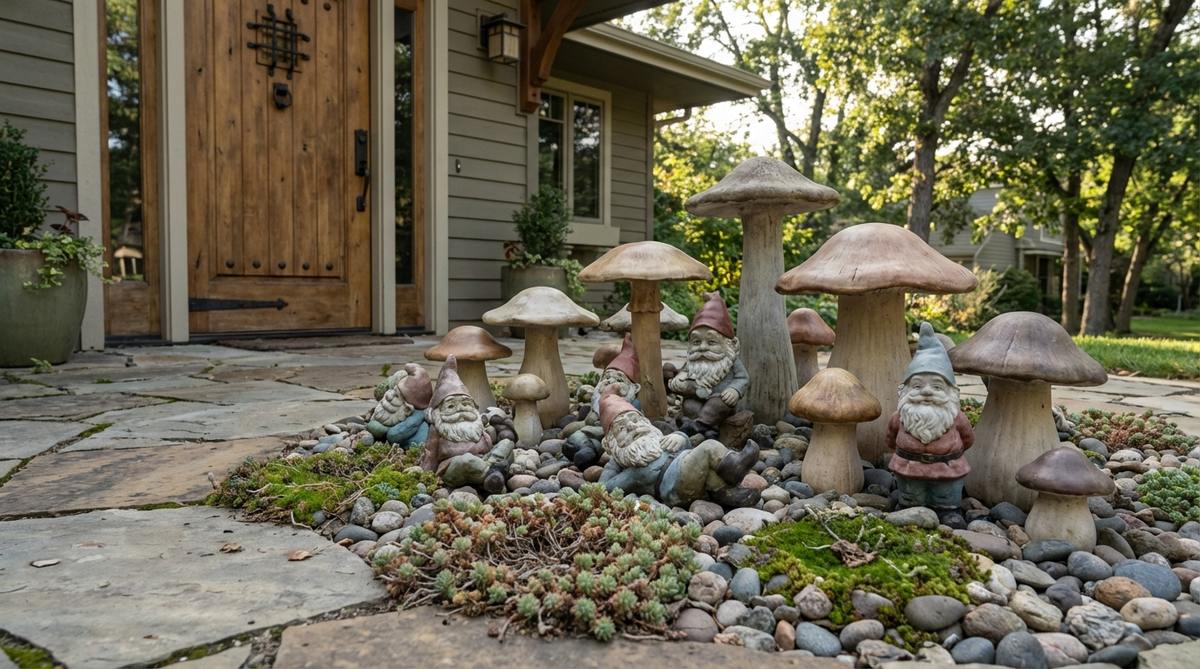
By your front door, a cluster of gnomes seated among ceramic or concrete mushrooms creates an instant fairy-tale threshold. The look is bold but contained, which suits modern homes that still want a touch of fantasy.
Group three to five mushrooms of varying heights, then tuck gnomes at the base or slightly between them to simulate a tiny woodland. This layout focuses on overlapping silhouettes, so position elements so shapes intersect rather than sitting in isolated rows.
The cluster acts like a sculptural installation that photographs well for family snapshots and seasonal photos. Swap in different accent pieces around the base, such as mini pumpkins or lanterns, to adapt the scene across the year.
12. Driveway Potted Gnome Greeters
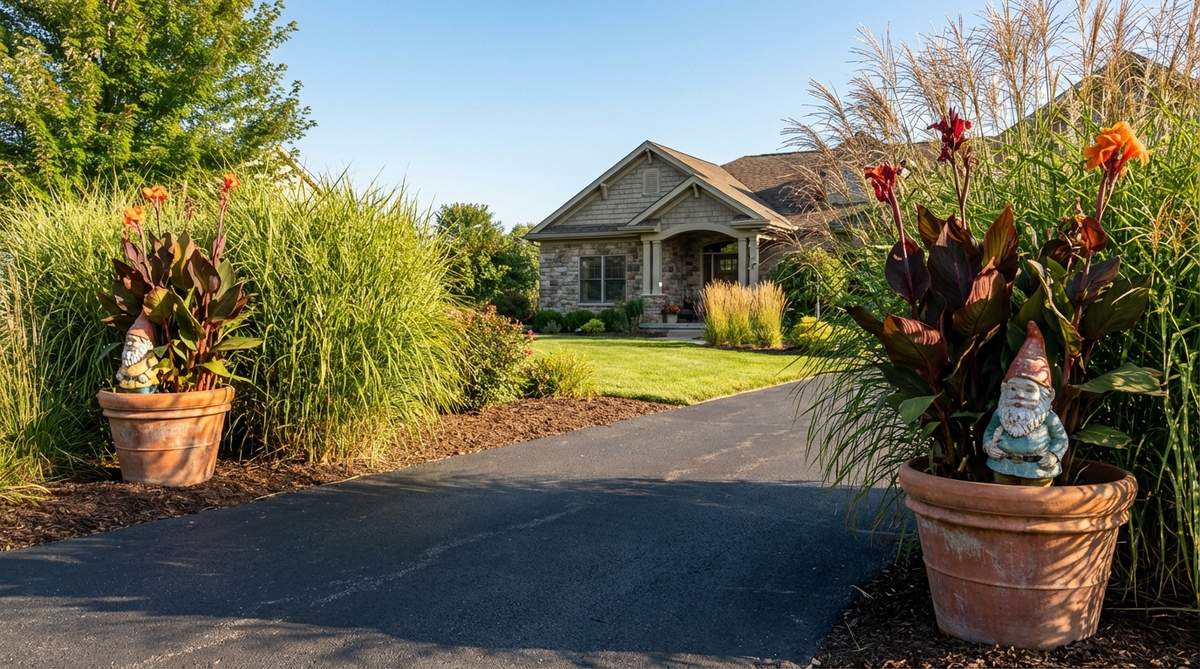
At the start of your driveway, large pots containing bold foliage and a pair of mini gnomes on each side introduce the garden’s personality before guests even park. The mood is friendly and sets expectations for a playful landscape.
Use tall grasses or canna lilies in the center, medium-height fillers around them, and then seat gnomes slightly forward and off-center near the pot rim. Designers repeat the same pot and gnome combination on both sides so the entry reads as one unified gateway.
This approach is especially effective on long or curved driveways that lack other visual cues. Because the gnomes are portable, you can reposition them for parties or holidays to direct traffic naturally.
Storybook mini garden gnomes scenes kids love
Beyond entrances, mini garden gnomes shine when used as characters in tiny landscapes that suggest a full narrative. These ideas focus on beds, veggie patches, and kid zones where imagination matters as much as plant performance.
13. Enchanted Fairy Village With Gnomes
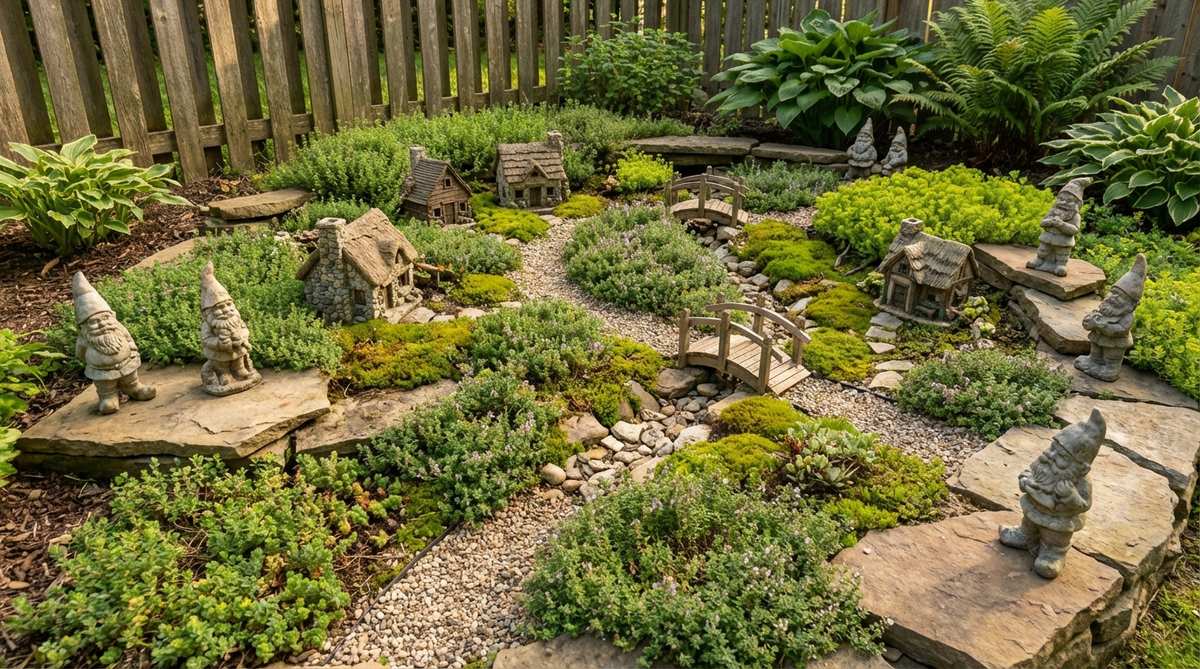
Visualize a low corner of the garden filled with tiny cottages, bridges, and several gnomes interacting with the scene. The mood feels like a living storybook where each visit reveals a new detail.
Start with a base of groundcover such as creeping thyme or mossy textures, then set houses, pathways, and gnomes on flat stones to keep them stable. This layout focuses on clear “streets” so kids have a mental map of where each character lives and travels.
Creating an organized village encourages children to engage gently instead of scattering figures randomly. You also gain a flexible zone that is easy to refresh with new props or seasonal accents without disturbing major plantings.
14. Vegetable Patch Helper Gnomes
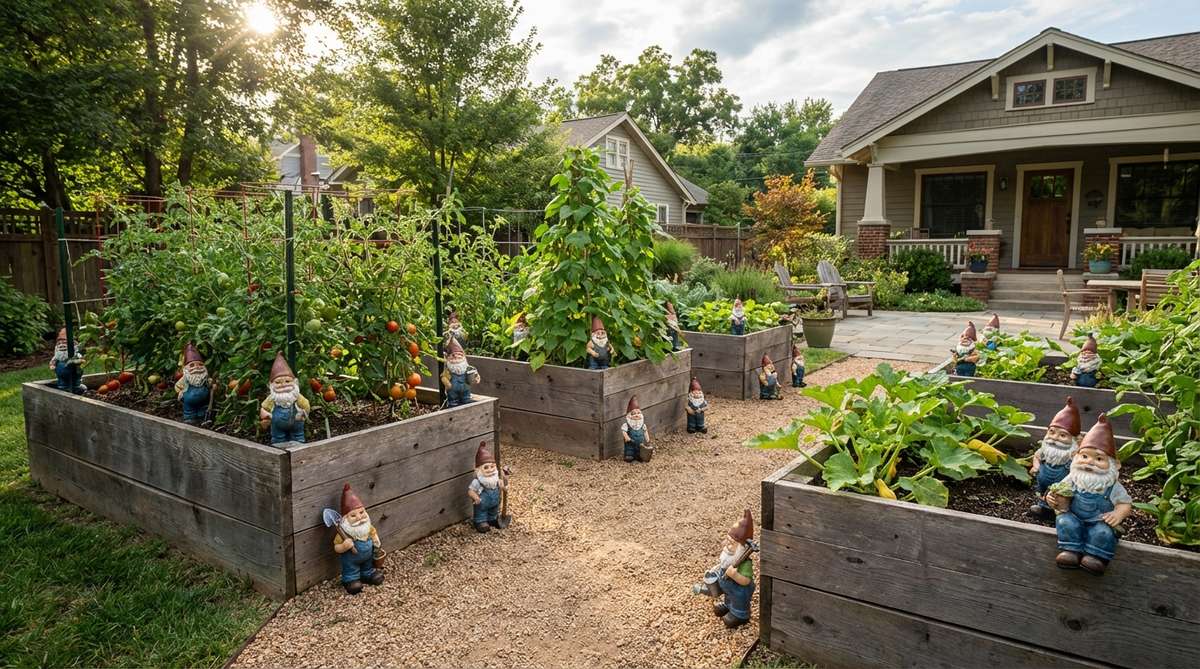
In raised beds or rows, mini gnomes posed with tools look like helpers tending tomatoes, beans, or squash. The scene adds whimsy to practical spaces that sometimes lean too functional.
Place one gnome at the corner of each bed section, ideally near crop labels or trellises, so they appear engaged with specific tasks. Designers often match gnome colors with painted plant markers to unify structure and decor.
This playful overlay encourages kids to take interest in vegetables and learn plant names. It also makes crop rotation easier to communicate, since families can refer to “where the watering gnome works” or “where the harvest gnome stands.”
15. Reading Nook Bookish Gnome Scene
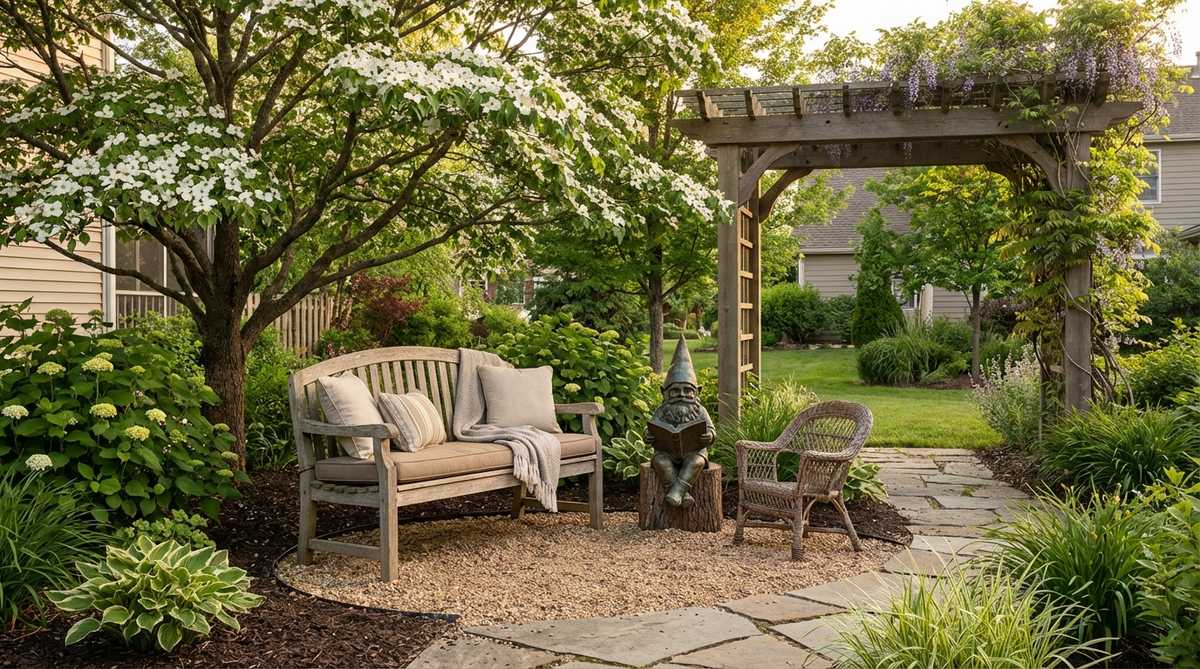
Under a small tree or pergola, a seated gnome holding a book near a child-sized chair establishes a quiet reading corner. The mood is calm and slightly magical, ideal for evening story time.
Lay a circular rug of mulch or pea gravel, then position a sturdy chair or bench and place the reading gnome on a low stump or crate. This layout focuses on comfort, so provide shade and easy access to a basket of weather-safe books.
The gnome becomes a visual cue that this zone is for slow moments, not rough play. Over time, the association between garden and reading supports healthy screen breaks and a stronger connection to nature.
16. Water Feature Fishing Gnome Corner
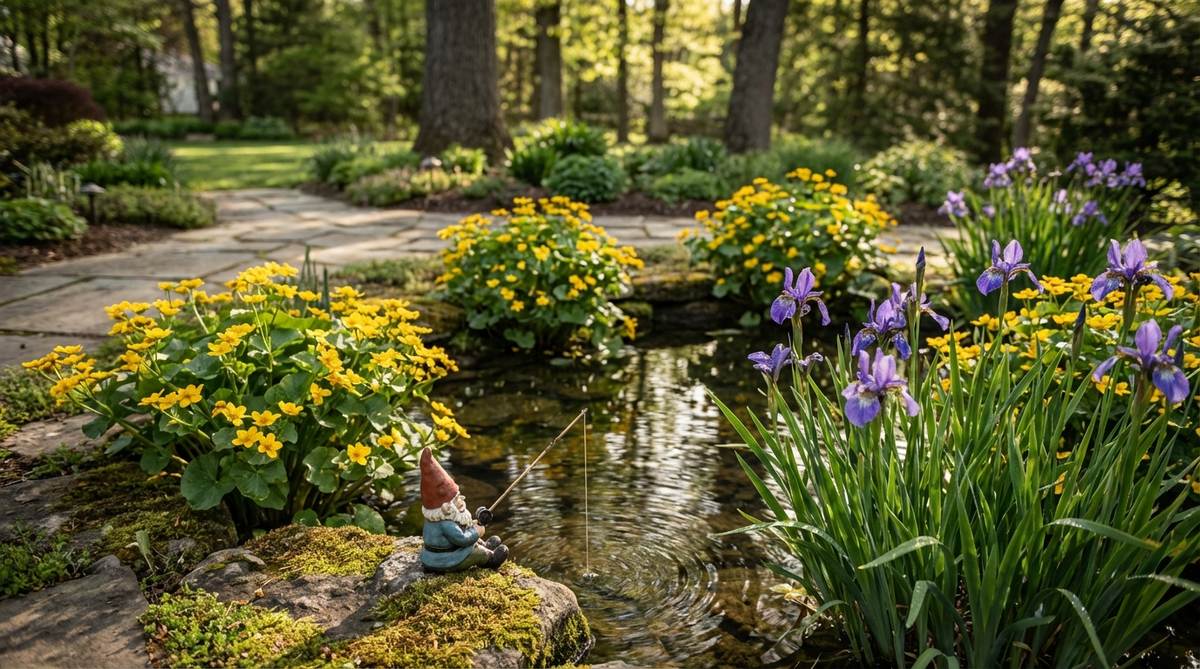
At the edge of a small pond, fountain, or even a large bowl, a fishing gnome leaning toward the water adds instant storytelling. The mood blends humor with tranquility, especially when reflections ripple around the figure.
Elevate the gnome slightly on a flat rock so it remains dry and visually dominant against the water surface. Designers pair this setup with moisture-loving plants such as iris, marsh marigold, or dwarf papyrus to echo the aquatic theme.
This vignette helps integrate manufactured water features into naturalistic plantings. It also provides a fun focal point for nighttime lighting from a subtle spotlight or nearby lantern.
17. Kids’ Digging Zone Gnome Crew
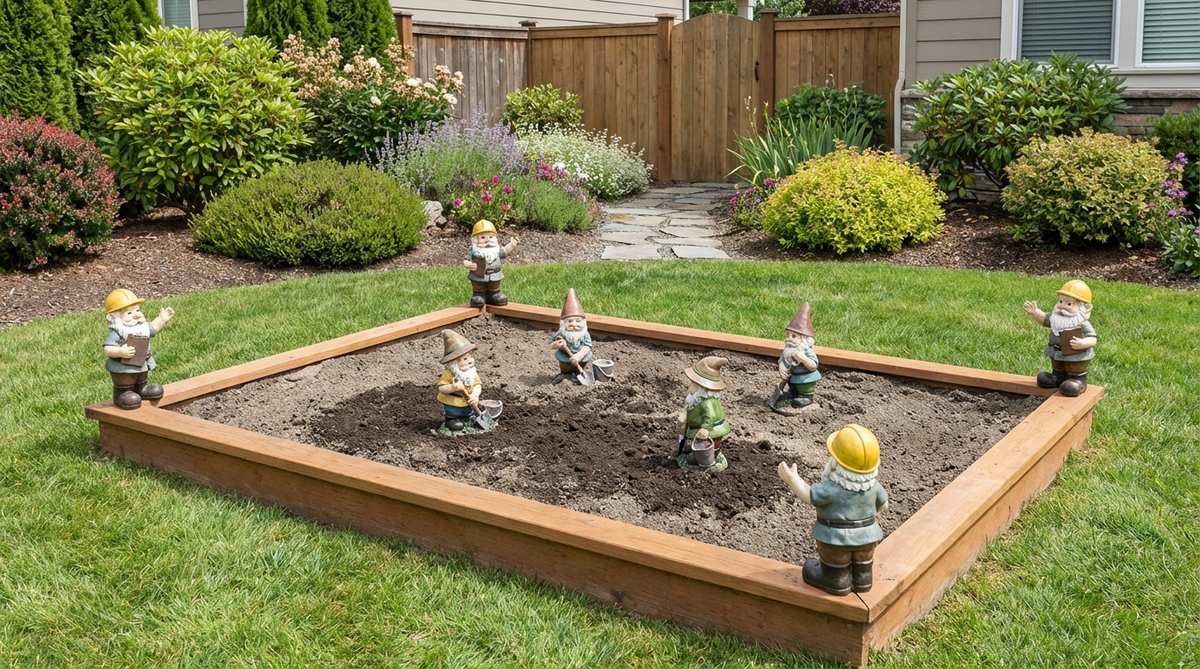
In a designated digging bed or sandbox, a team of gnomes holding shovels or buckets signals that play is encouraged in that one spot. The mood is active and welcoming, which channels energy away from more delicate beds.
Frame the zone with low edging and place gnomes at each corner as “foremen,” then add a storage crate for tools so the area stays organized. This layout focuses on clear boundaries, making it easier for kids to understand where they may dig freely.
You protect your ornamental plantings while still supporting hands-on exploration. Rotating the gnome crew’s positions occasionally keeps the space feeling new without needing constant redesign.
18. Tree Base Gnome Hamlet
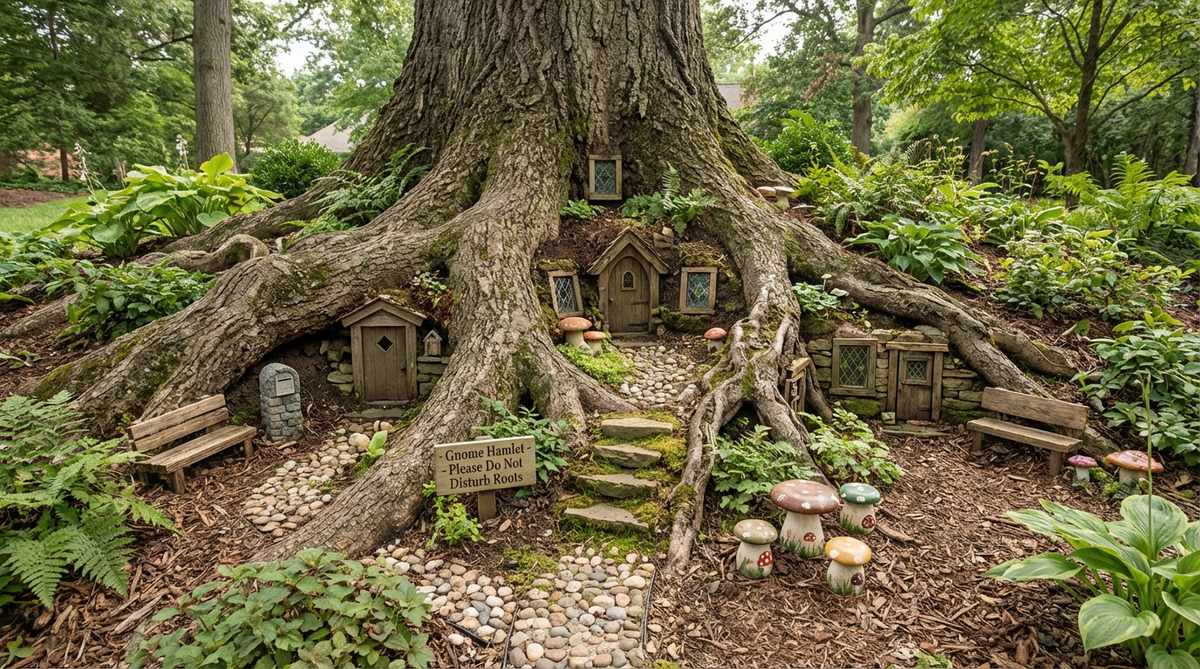
A mature tree with exposed roots offers a natural stage for a small gnome hamlet tucked into curves and hollows. The visual suggests an underground village just beneath the surface, which sparks curiosity.
Use flat stones to create small doorways at root bases, then position gnomes near these “entrances” and add tiny mailboxes, benches, or mushroom stools. Designers avoid piling soil directly against the trunk, instead working with existing contours for tree health.
This approach brings life to tricky dry-shade zones that resist dense planting. It also protects roots by directing foot traffic away, since the decorative elements mark the area as special and off-limits.
19. Herb Spiral Chef Gnome
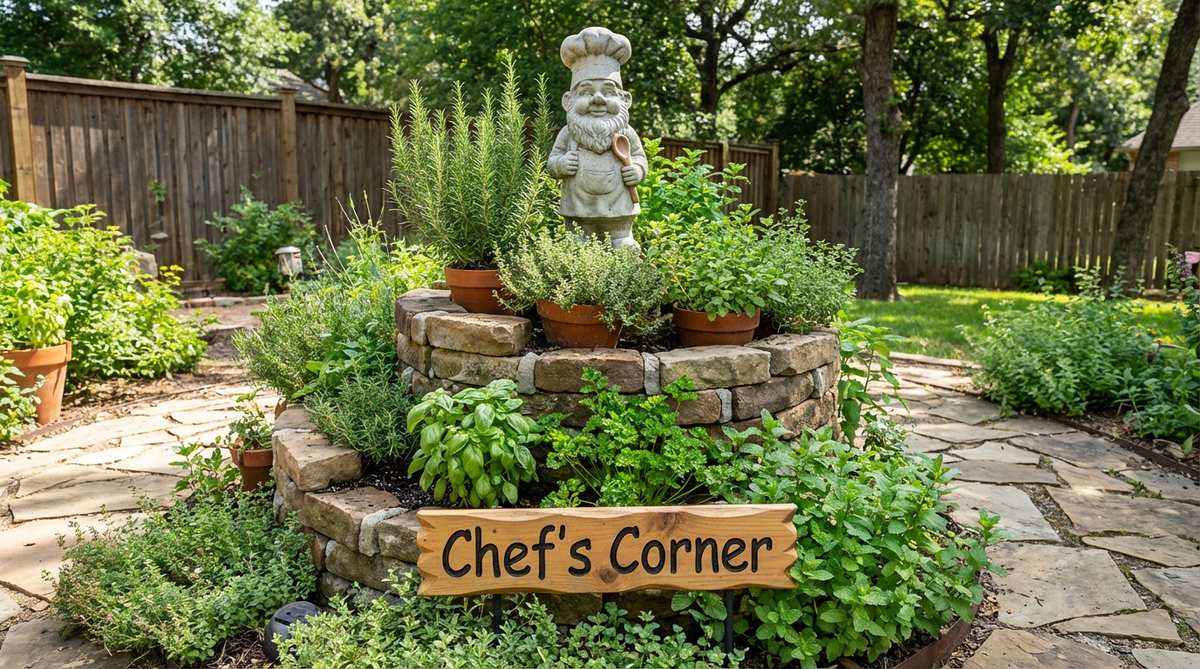
An herb spiral with a chef-themed gnome at the top feels like a miniature culinary tower. The mood is practical yet whimsical, tying kitchen use directly to the garden.
Build the spiral with stone or brick, plant herbs from dry-tolerant at the top to moisture-loving at the base, and place the gnome near a small sign labeled “Chef’s Corner.” This layout focuses on visibility from the house, so align the gnome with a key indoor window.
The figure acts as a landmark, making it easy for guests and kids to remember where to snip herbs. It also encourages harvesting because the scene feels intentional rather than like a random cluster of pots.
20. Cactus and Succulent Desert Gnomes
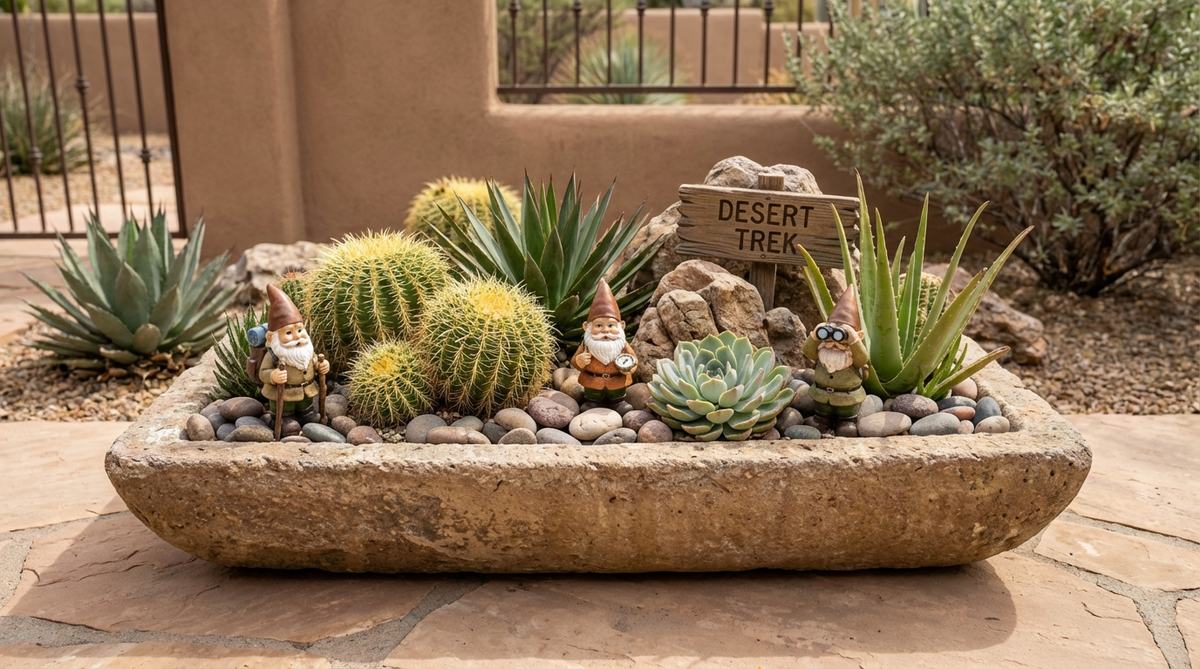
In a shallow dish or raised bed filled with succulents and stones, a few gnomes styled as adventurers create a miniature desert expedition. The mood is quirky and works beautifully in hot, dry climates.
Layer coarse sand, gravel, and chunky rocks, then plant low-growing sedums, hens-and-chicks, or small cacti around the figures. This layout focuses on strong negative space, so leave open sandy patches for the gnomes to “walk” through.
These low-water compositions are durable and low maintenance on patios and balconies. They also transition easily indoors during winter, since succulents tolerate container life well when provided bright light.
21. Mini Camping Gnome Campsite
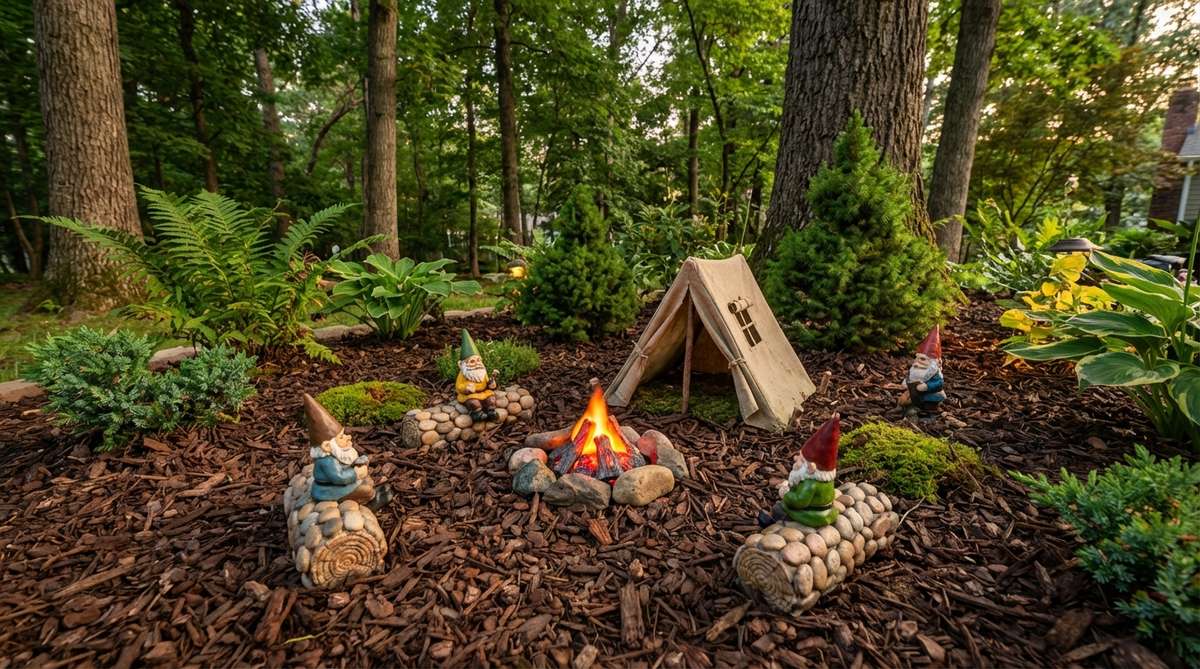
A tiny tent, faux campfire, and a circle of gnomes seated on pebble “logs” turn a corner bed into a woodland campsite. The scene feels adventurous and nostalgic for families who enjoy real camping trips.
Create a defined clearing using bark mulch, then edge it with native shrubs or small conifers and place the gnome group at the center. Designers use warm accent lighting or small solar stakes nearby to simulate campfire glow after dark.
This vignette becomes a storytelling station for kids and guests. It also provides an excellent home for forest-style plants such as ferns, hostas, and woodland phlox that appreciate the same dappled shade.
22. Tea Party Tabletop Gnome Scene
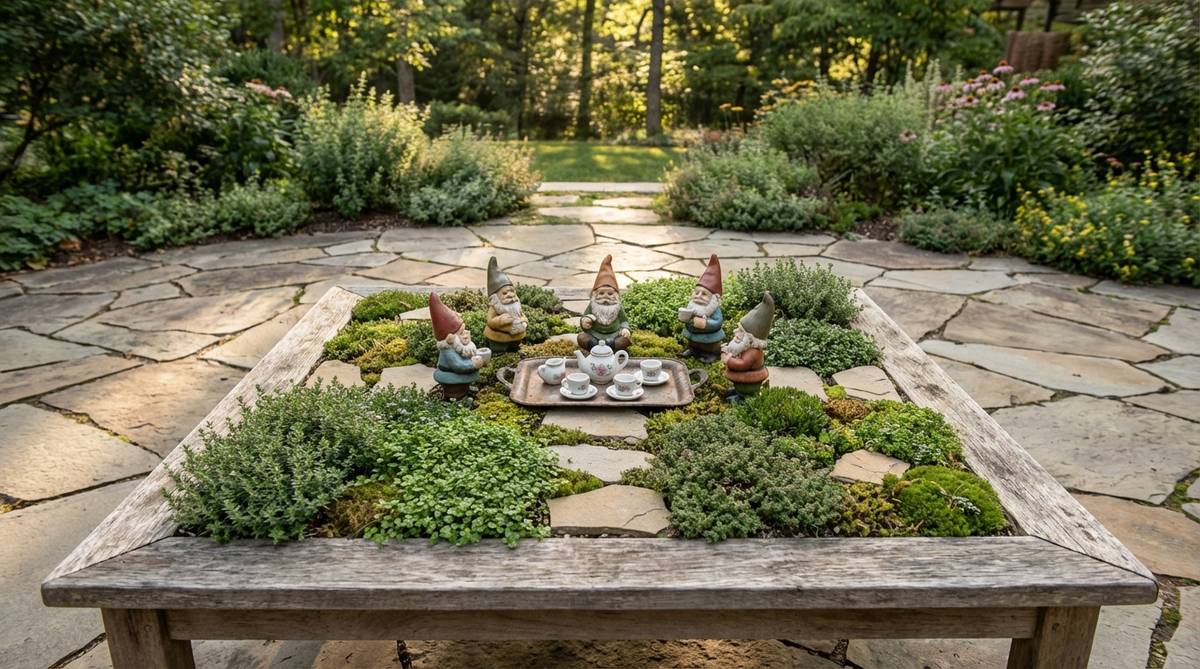
On a patio table, a shallow tray garden with gnomes around a miniature tea set introduces whimsy at adult eye level. The mood is playful yet refined, especially paired with real table linens and candles.
Fill the tray with a fast-draining mix, plant small thyme, baby’s tears, or moss between stepping stones, and seat gnomes at the “table.” This layout focuses on portability, so keep the tray light enough to move indoors during storms.
The arrangement doubles as a centerpiece for outdoor gatherings and children’s parties. Refreshing the plants or props seasonally keeps the composition interesting without requiring a full redesign.
23. Ladder Shelf Tiered Gnome Garden
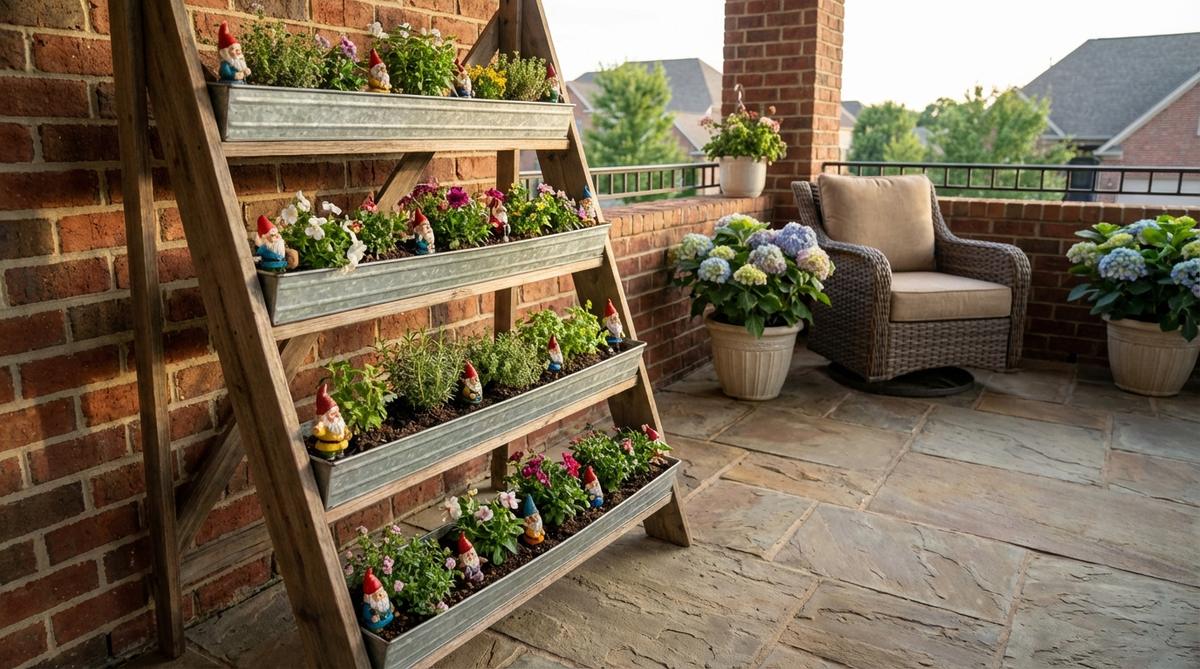
A leaning ladder shelf holding multiple shallow planters gives you a vertical stage for gnome stories at several heights. The overall effect mimics a multi-level apartment building for your figures.
Assign a theme to each shelf, such as “workshop,” “garden,” or “picnic,” and plant accordingly with herbs, flowers, or small shrubs. Designers keep color palettes tight for each tier so the eye can read scenes quickly from a distance.
This structure fits well on small patios, balconies, or side yards that need vertical interest. It also simplifies watering and maintenance because all containers sit within arm’s reach.
24. Broken Pot Gnome Cascade
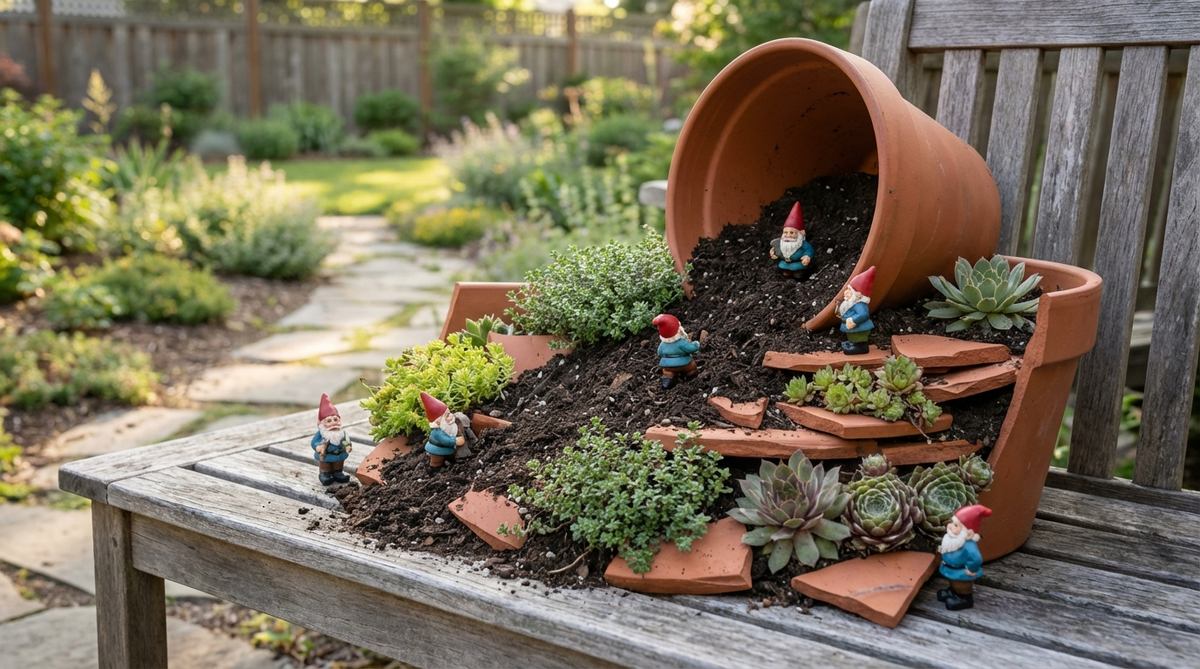
A cracked terracotta pot laid on its side with soil spilling out becomes a dramatic hillside for climbing gnomes. The mood is slightly wild and story-rich, turning damage into design.
Stack shards to form terraces, plant creeping groundcovers or small succulents on each level, and position gnomes as if they are ascending the slope. This layout focuses on layering foreground and background to give real depth in a compact footprint.
Repurposing broken containers saves materials from the landfill while creating a signature focal point. The composition also photographs beautifully, making it ideal for social sharing or a garden blog feature.
Seasonal and indoor mini garden gnomes displays
Mini garden gnomes work year-round, shifting easily from flowerbeds to mantels and desks with the seasons. These ideas show how to rotate scenes so figures feel fresh rather than permanent fixtures.
25. Spring Bulb Gnome Ring
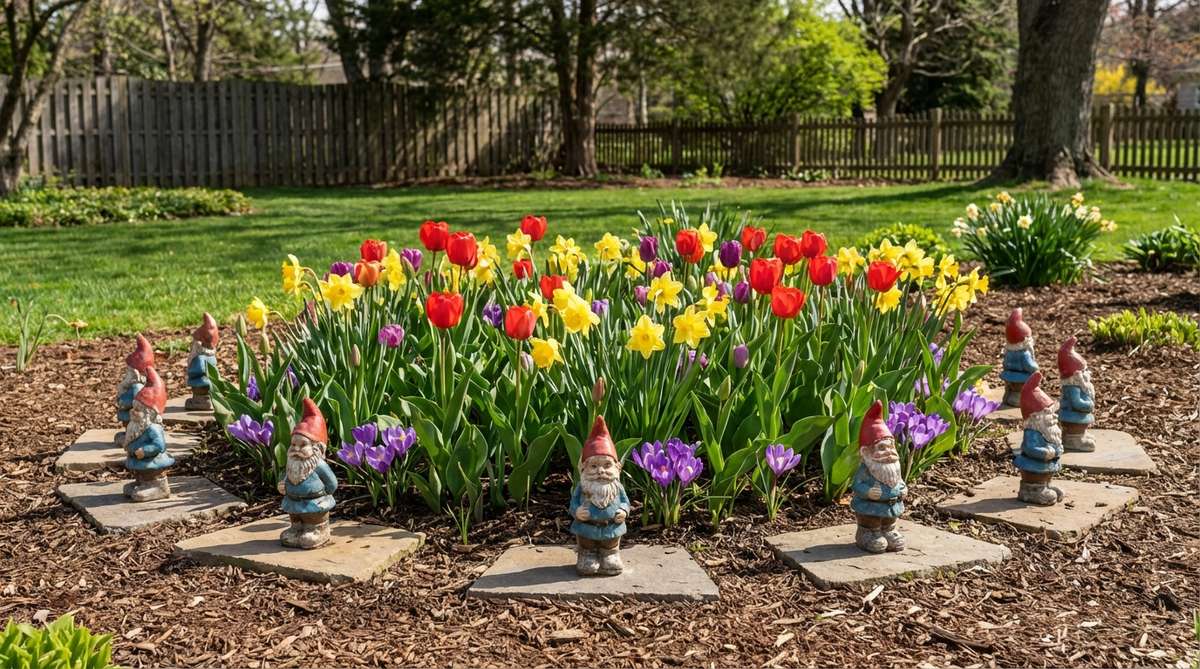
In early spring, a circle of gnomes around blooming tulips, daffodils, or crocus looks like a festival in your beds. The mood is celebratory and helps highlight bulbs that only shine for a short window.
Mark the bulb cluster during fall planting, then in spring place gnomes just outside the emerging foliage on small flat stones. This layout focuses on maintaining clear views of flowers, so keep figures low and slightly offset from stems.
When bulbs fade, remove or relocate the gnomes and cut back foliage cleanly. The ring approach keeps your display flexible across seasons while still honoring spring as a standout moment.
26. Summer Beach-Themed Gnome Planter
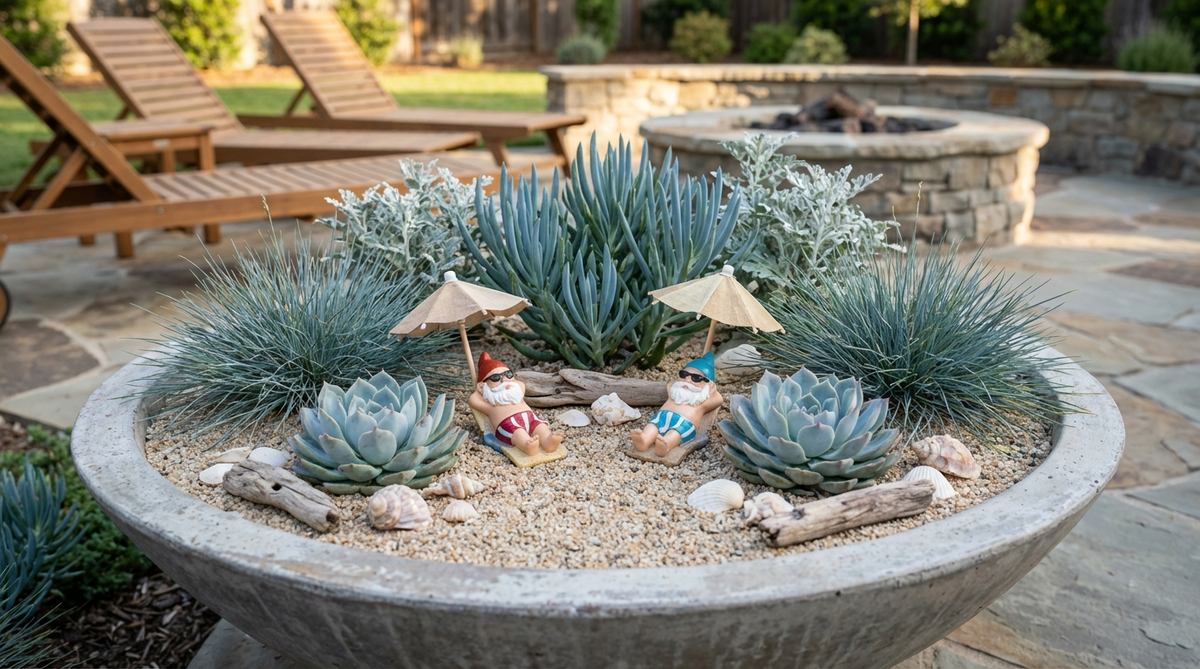
A wide, shallow planter filled with sand-colored gravel, blue-toned plants, and gnomes in beachwear brings coastal energy to any yard. The scene feels relaxed and vacation-ready, even if you live far from the ocean.
Use low succulents, blue fescue, or silver-leafed plants to mimic water and dunes, then add miniature umbrellas, shells, and lounging gnomes. Designers often place this planter near a seating area so it functions like living decor beside outdoor sofas or chairs.
This seasonal setup is easy to refresh with new accessories each summer. Because the plant palette favors drought-tolerant species, maintenance stays light during hot months.
27. Harvest Crate Autumn Gnomes
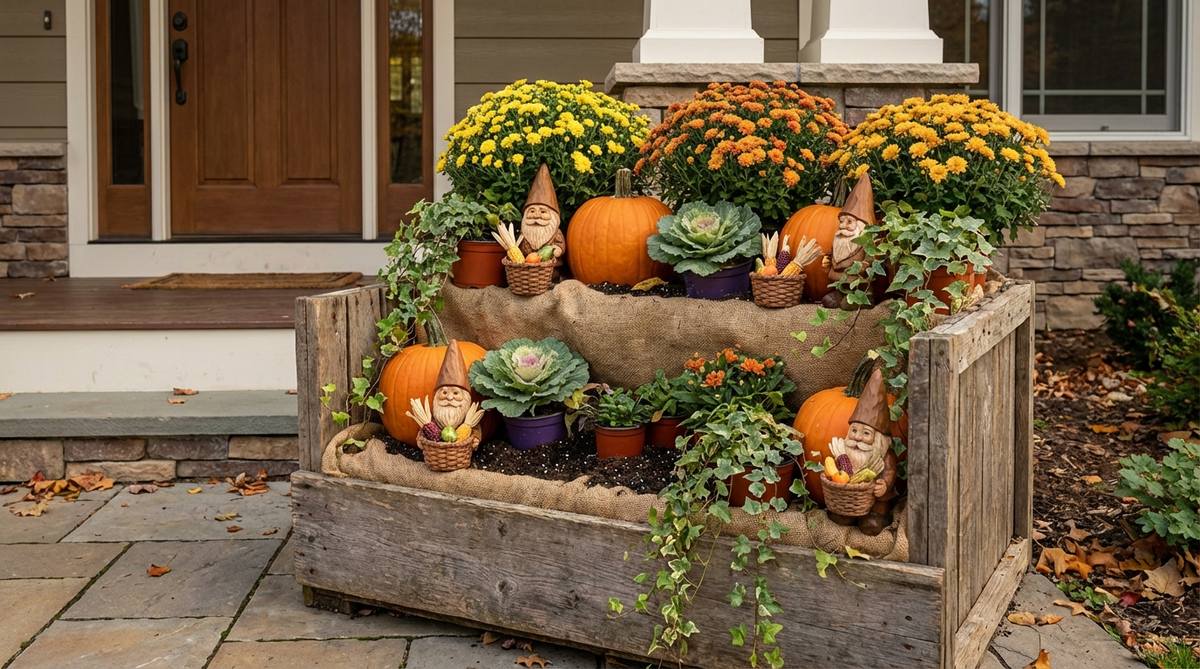
In fall, a wooden crate overflowing with pumpkins, mums, and gnomes holding harvest baskets feels warm and rustic. The visual pairs beautifully with front steps, porches, or barn-style doors.
Line the crate with plastic, layer potting mix, and sink nursery pots of seasonal flowers so you can swap them as they fade. This layout focuses on height changes, so mix tall mums with trailing vines and small gourds at the front where gnomes stand.
The crate acts like a movable stage you can shift around the property for events or photo backdrops. After autumn, remove the annuals and store the hardscape pieces for future seasonal displays.
28. Winter Lantern and Evergreen Gnomes
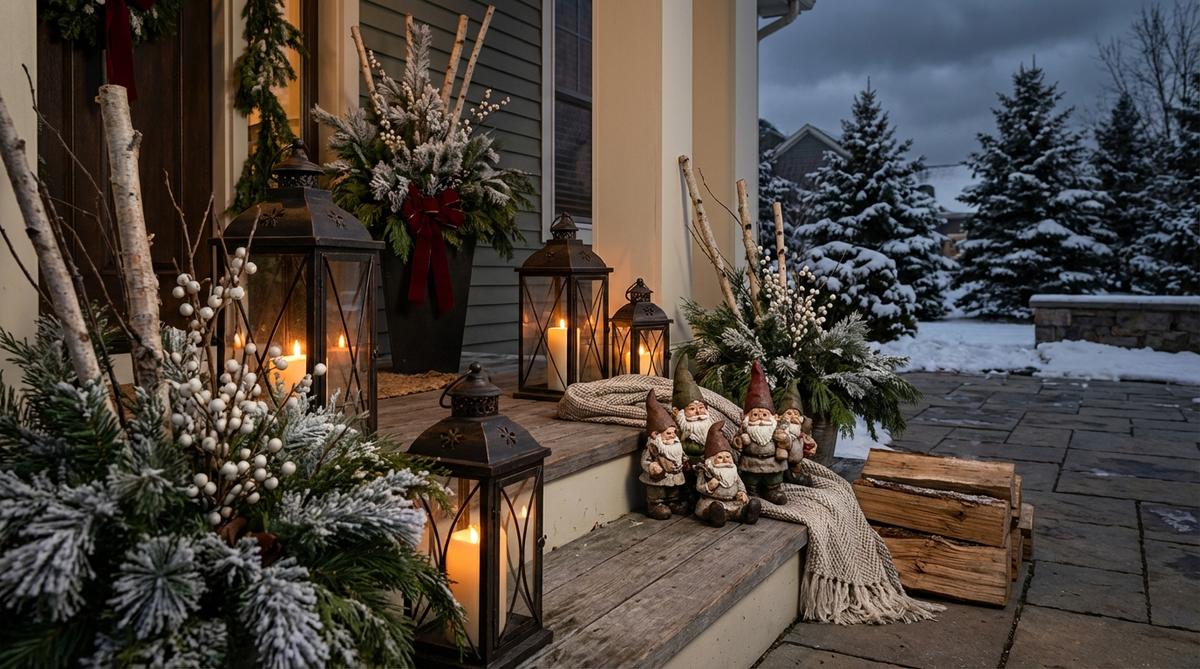
During winter, mini gnomes grouped with lanterns and evergreen boughs keep porches and patios feeling alive when most plants rest. The mood is cozy and welcoming on dark evenings.
Arrange weather-safe lanterns at different heights, tuck cut evergreen branches around them, and place gnomes where they appear to tend the lights. Designers choose a restrained palette of greens, whites, and one accent color so the composition reads clearly from the street.
This arrangement works without live soil, so it suits climates with frozen ground or limited planting options. Replacing greens as they dry keeps the display fresh while gnomes and lanterns remain as stable anchors.
29. Holiday Mantel Indoor Gnome Forest
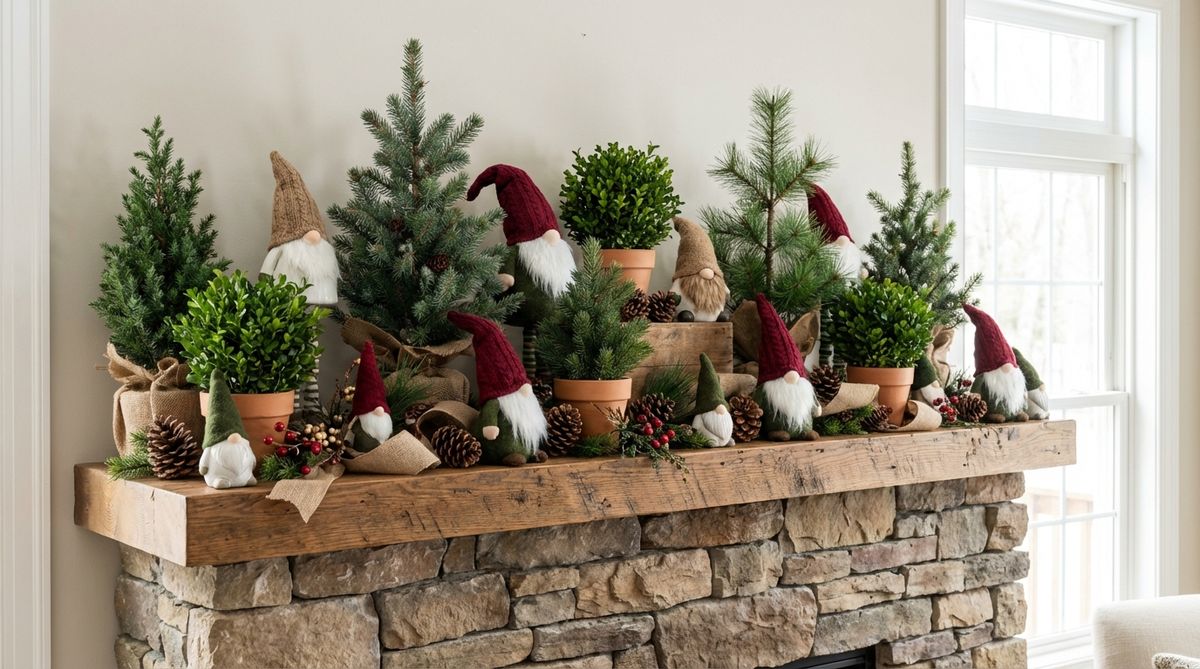
On a fireplace mantel, a line of small potted evergreens interspersed with gnomes in winter hats forms a miniature forest. The mood is festive but still natural, especially in homes that favor understated seasonal decor.
Use narrow, non-flammable risers to vary pot heights, then cluster gnomes in groups of two or three near the tallest trees. This layout focuses on rhythm, so repeat similar pot colors and gnome styles across the length of the mantel.
The display replaces disposable decor with living plants that transition easily to outdoor containers after the holidays. It also frames the fireplace as a central gathering zone with a clear visual story.
30. Kitchen Counter Herb Gnome Trio
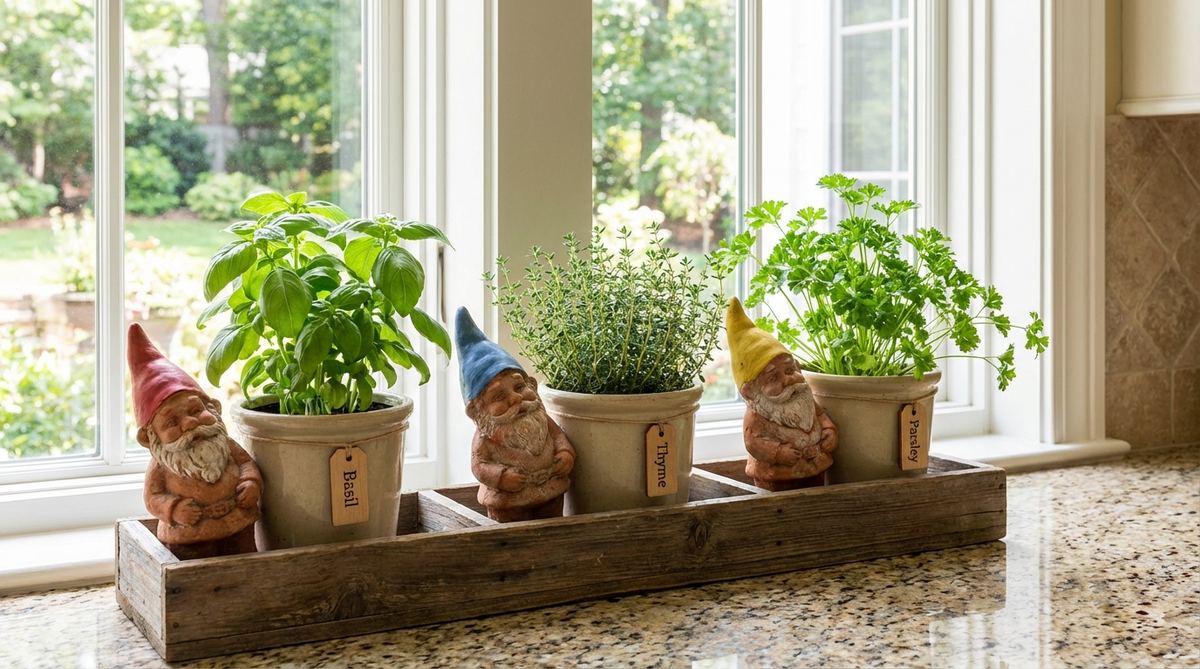
On a bright kitchen counter or windowsill, three small herb pots with one gnome leaning on each pot link cooking directly to gardening. The mood is practical and cheerful during daily meal prep.
Choose compact herbs like basil, thyme, or parsley, and line the pots on a shallow tray to catch water and keep surfaces clean. Designers often vary hat colors to indicate different herbs, turning the group into a playful labeling system.
Because everything stays within easy reach, you are more likely to harvest herbs regularly. The gnomes also help non-gardeners in the household remember which containers need regular watering.
31. Bathroom Shelf Spa Gnome Accent
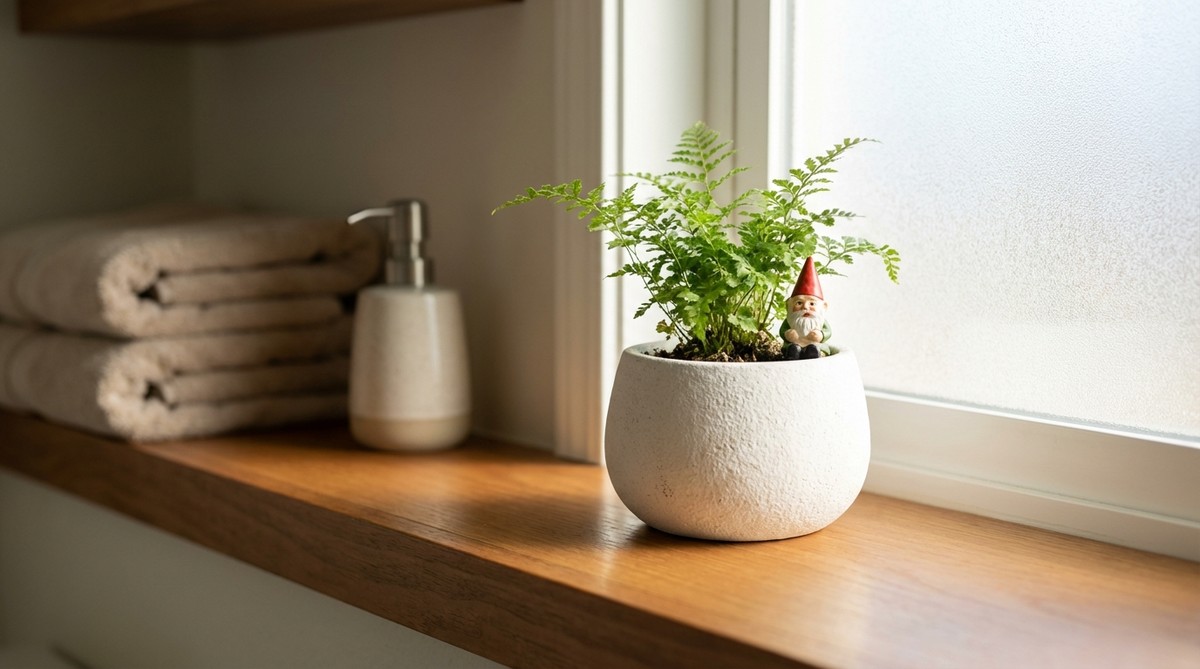
On a bathroom shelf, a small gnome seated beside an air plant or tiny fern softens the space and adds humor. The mood nods to spa culture while keeping things light.
Place the plant in a simple white or stone-textured pot, then position the gnome so it appears to admire or care for the foliage. This layout focuses on restraint, using just one plant and one figure to avoid visual clutter in a compact room.
The pairing introduces greenery into a high-traffic space that often feels purely functional. It also thrives with minimal care if you select species that tolerate humidity and moderate light.
32. Office Desk Planter Gnome
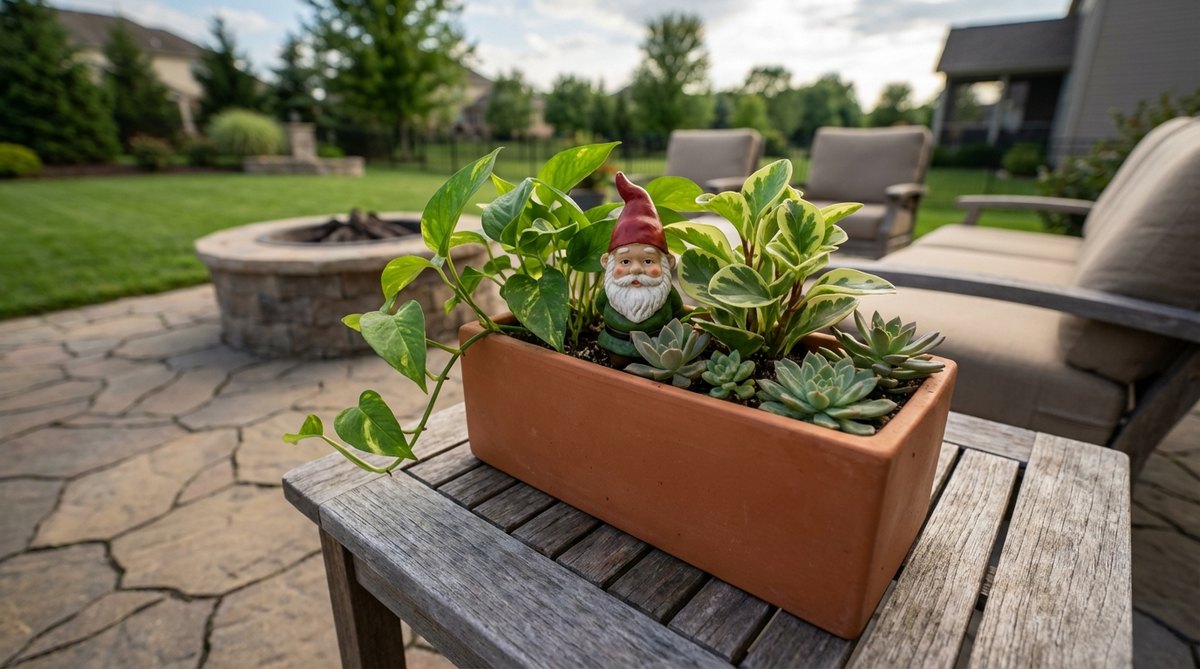
A single gnome in a low desk planter brings a touch of garden personality into your workspace. The mood is subtle enough for professional settings yet still sparks conversation.
Use a rectangular planter with a mix of low-maintenance plants such as pothos, peperomia, or small succulents, then seat the gnome at one corner as a quiet observer. This layout focuses on clear sightlines to screens and paperwork, so keep plant height modest.
The arrangement supports mental breaks without overwhelming the desktop. Over time, the tiny figure becomes a visual anchor that signals your personal style within a shared office.
33. Balcony Rail Planter Gnome Line
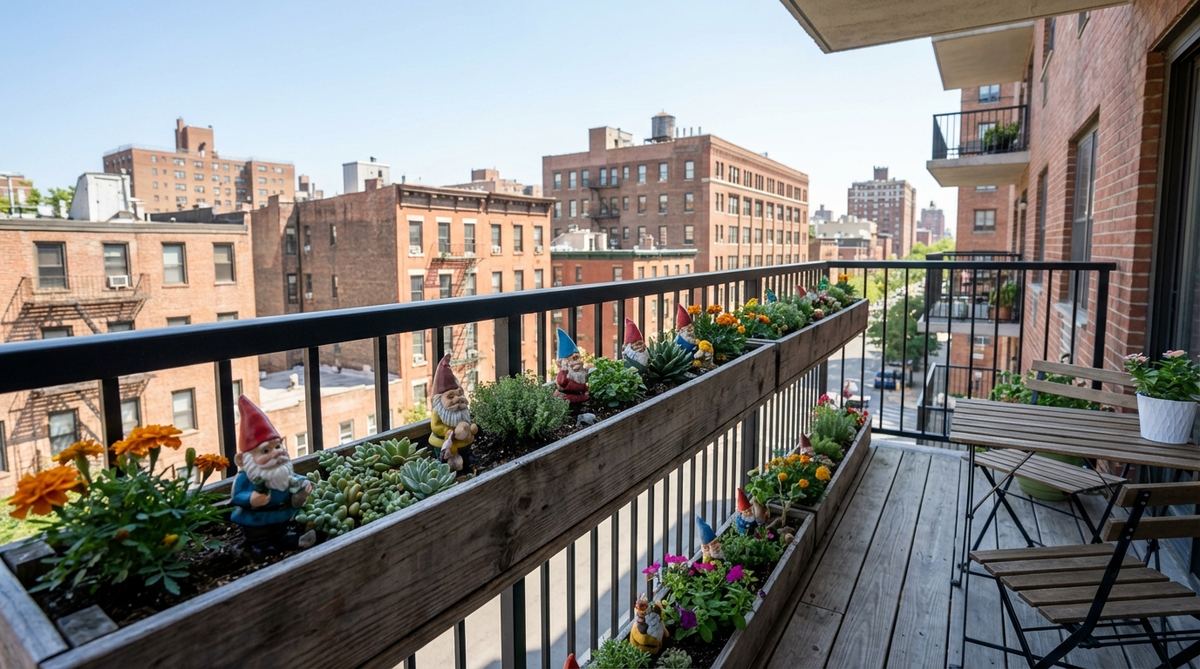
On an apartment balcony, a series of railing planters each hosting one gnome and a compact plant turns limited space into a linear garden. The mood is bright and uplifting, especially in urban settings.
Secure the planters firmly to the rail, plant sun-appropriate species, and place the gnome facing inward so residents enjoy the best view. Designers limit the number of different plant types so the overall line reads as one composition rather than a patchwork.
This approach respects weight limits and shared-space rules while still allowing strong personal expression. It also keeps walkways clear, which matters when balconies are narrow.
34. Tiny Terrarium Gnome World
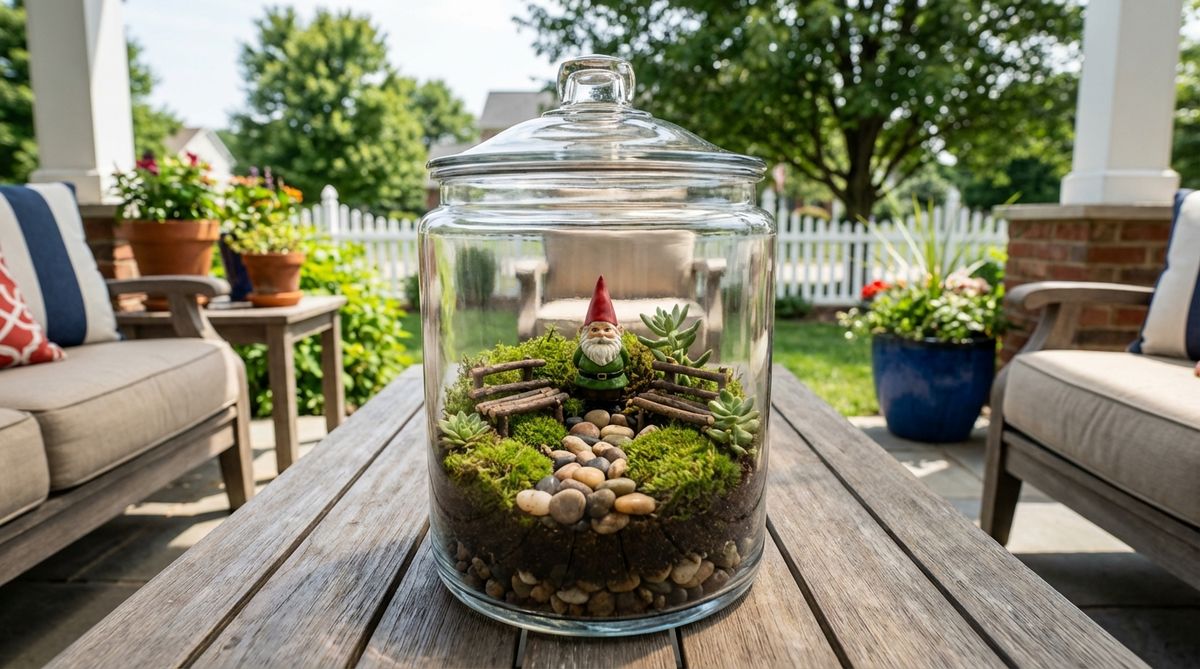
Inside a glass bowl or jar, a single gnome standing among moss, pebbles, and miniature accessories creates a self-contained world. The mood is contemplative and suits coffee tables, shelves, or bedside stands.
Layer drainage materials, soil, and moss, then position the gnome and any small props before misting lightly. This layout focuses on keeping foliage short and slow-growing so it does not obscure the figure over time.
Terrariums bring garden energy into rooms without strong natural light, as long as you select plants suited to the environment. They also offer an easy entry project for people new to plants and miniature decor.
35. Bookshelf Shadowbox Gnome Vignette
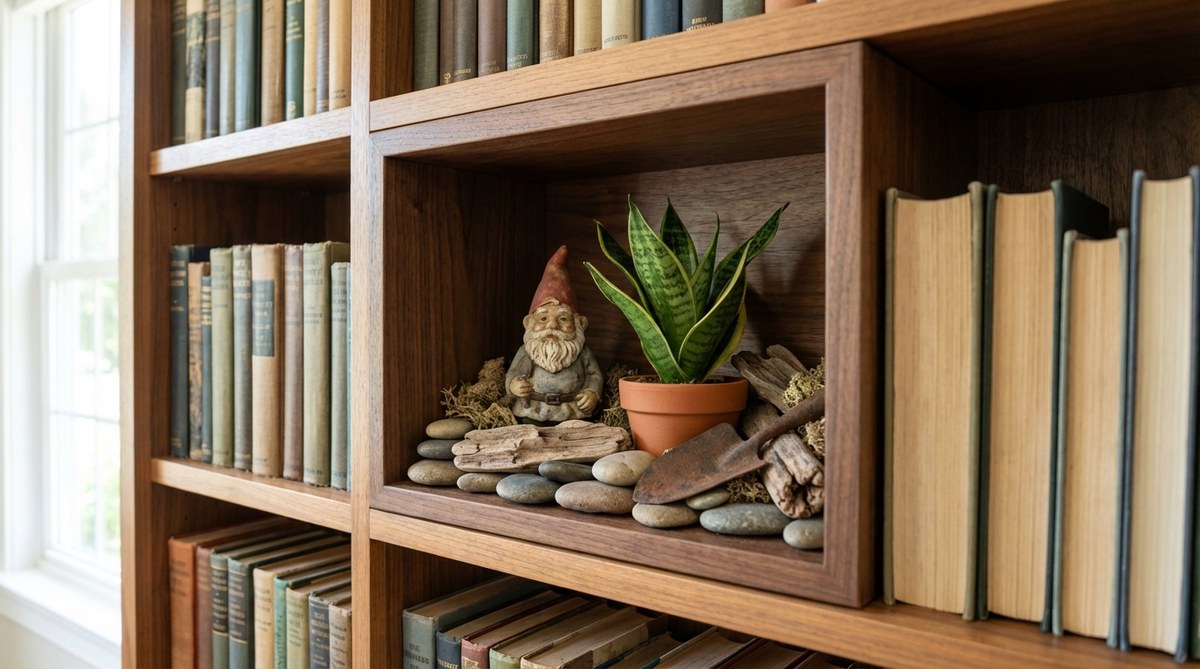
On a bookshelf, a recessed cubby styled with a small plant, a gnome, and a few found objects reads like a curated shadowbox. The mood is intimate and rewards anyone who looks closely.
Paint or line the back of the cubby for contrast, add a narrow ledge or tray, and arrange your gnome with a low-care plant such as a small sansevieria or ZZ cutting. This layout focuses on layering objects at slightly different depths to create real dimension in a shallow space.
The vignette breaks up long rows of books and introduces living texture to a room dominated by straight lines. Rotating the gnome or accessories a few times a year keeps the display feeling alive without major effort.
Bringing your mini garden gnomes to life
Thoughtfully placed mini garden gnomes transform ordinary corners, beds, and shelves into tiny stories that reflect your personality. Start with one or two scenes from this list, then expand over time as you refine your style, and revisit Fresh Garden Ideas on freshgardenideas.com for new layouts, plant pairings, and figure combinations that keep your displays evolving.
Frequently Asked Questions
How many mini garden gnomes should I group together in one area?
Most designers aim for small clusters of three to five gnomes in any single vignette so the scene feels intentional and readable. Larger spaces such as long paths or big beds support multiple clusters, but leaving open plant-only zones between them prevents the garden from feeling overcrowded.
Will mini garden gnomes damage my plants or soil?
Mini garden gnomes are generally gentle on plantings as long as they sit on stones, mulch, or bare soil rather than compressing delicate stems and roots. When you refresh beds seasonally, lift figures briefly so you can weed, top up mulch, and adjust their positions in a way that supports long-term plant health.