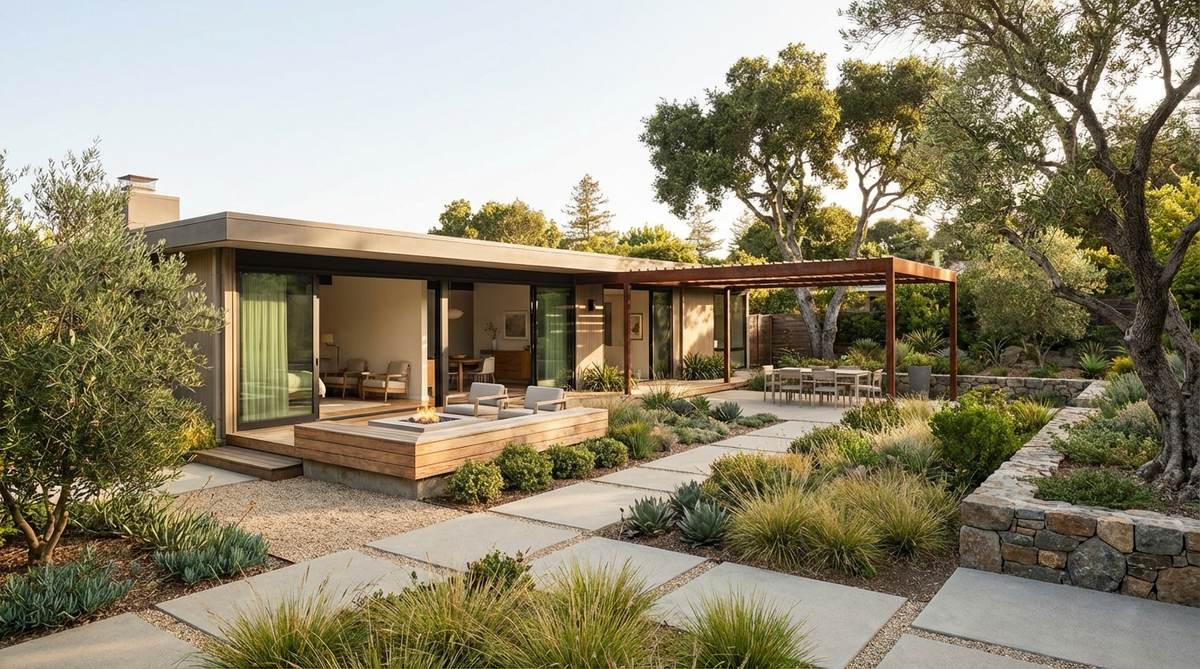
The mid century modern garden represents a perfect marriage of architectural precision and organic beauty, emphasizing clean lines, natural materials, and seamless indoor-outdoor flow. Whether you’re restoring an authentic 1950s landscape or creating a contemporary space inspired by this timeless aesthetic, these design strategies will help you achieve the sophisticated simplicity that defines the era. Fresh Garden Ideas brings you expert techniques to transform your outdoor space into a mid-century masterpiece.
Design SnapshotKey Principles
- Integration: Create seamless transitions between interior and exterior spaces using consistent materials and restrained color palettes
- Geometric Order: Employ rectangular pools, linear planters, and angular pathways to establish visual harmony and structural rhythm
- Natural Materials: Combine flagstone, concrete, wood, and natural boulders to balance modernist architecture with organic elements
- Minimalist Planting: Select low-maintenance plants with sculptural forms and architectural character, arranged in purposeful groups for maximum impact
Hardscape Foundations & Structural Elements
The structural bones of a mid century modern garden establish its character and longevity. Hardscape elements define circulation patterns, create outdoor rooms, and provide the geometric framework that anchors the entire design.
1. Concrete Grid Paving Systems
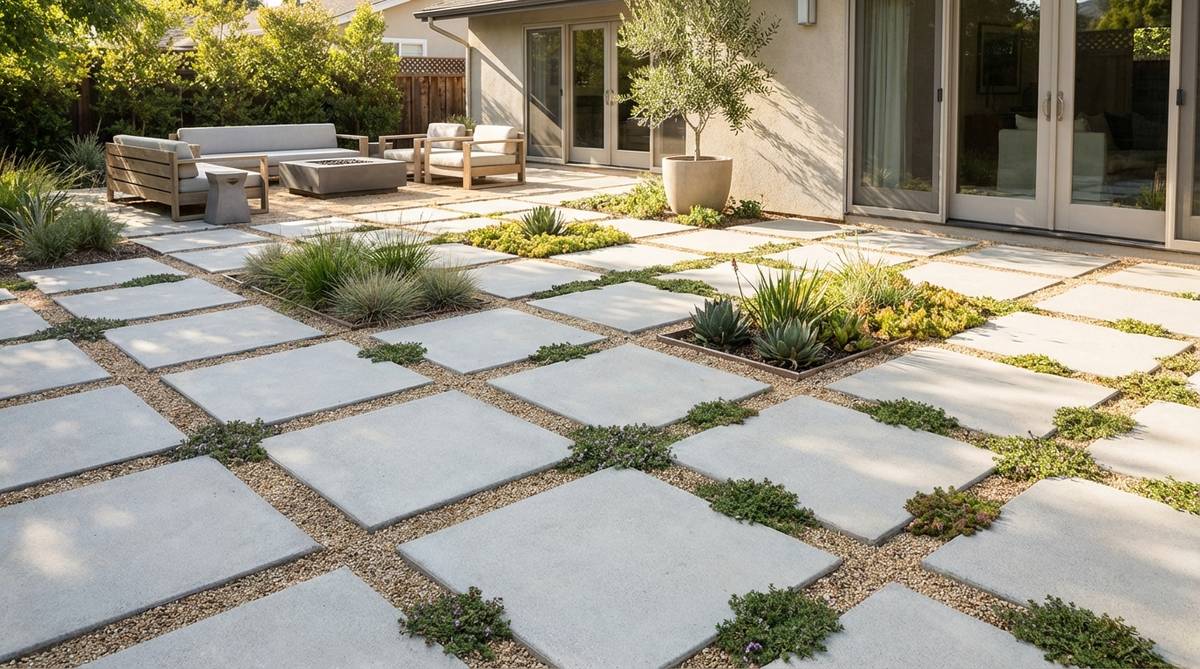
Large-format concrete pavers arranged in grid patterns create the quintessential mid-century floor plane. These modular units, typically 24-36 inches square, establish visual rhythm while allowing for strategic planting pockets.
Install pavers with consistent 2-4 inch gaps filled with decomposed granite or low groundcovers. This technique softens the hardscape while maintaining the crisp geometry essential to the style.
The grid system scales beautifully from intimate courtyards to expansive patios, offering flexibility for future modifications without compromising design integrity.
2. Flagstone Pathways with Irregular Patterns
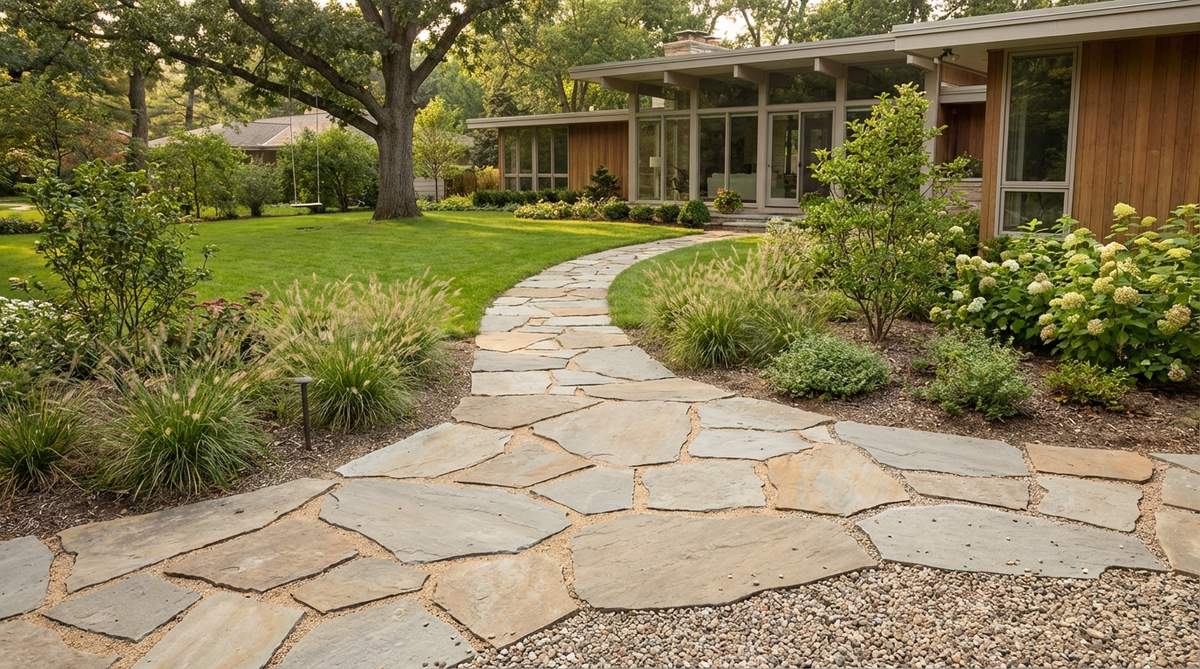
Crazy paving using natural flagstone introduces organic texture within the geometric framework. Select stones in warm gray or tan tones that complement rather than compete with architectural elements.
Lay flagstones with tighter joints for formal areas and wider spacing for casual zones. Fill joints with sand or fine gravel to prevent weed growth while maintaining permeability.
3. Dry-Stacked Stone Retaining Walls
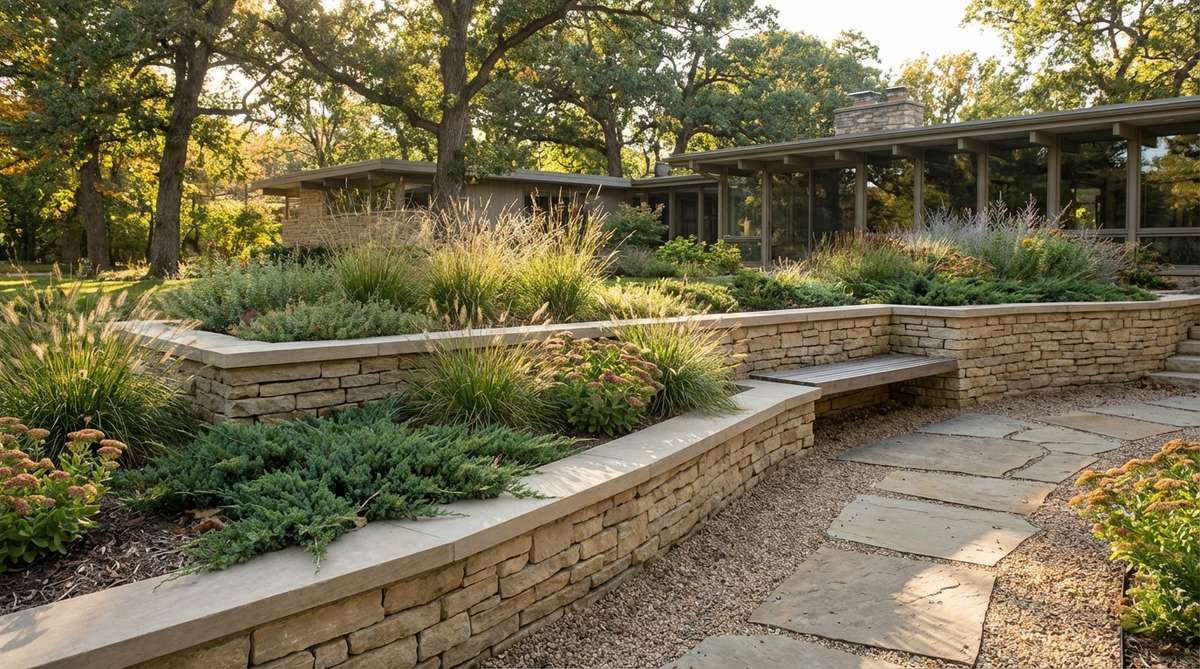
Lannon stone or similar regional materials stacked without mortar create textured vertical planes. These walls define elevation changes while maintaining the period’s preference for natural materials.
Design walls in geometric configurations with clean horizontal cap stones. Heights between 18-36 inches work best for seating edges and planter borders.
Dry-stack construction allows for drainage and slight movement, making it ideal for restoration projects where existing walls have failed.
4. Cantilevered Concrete Steps
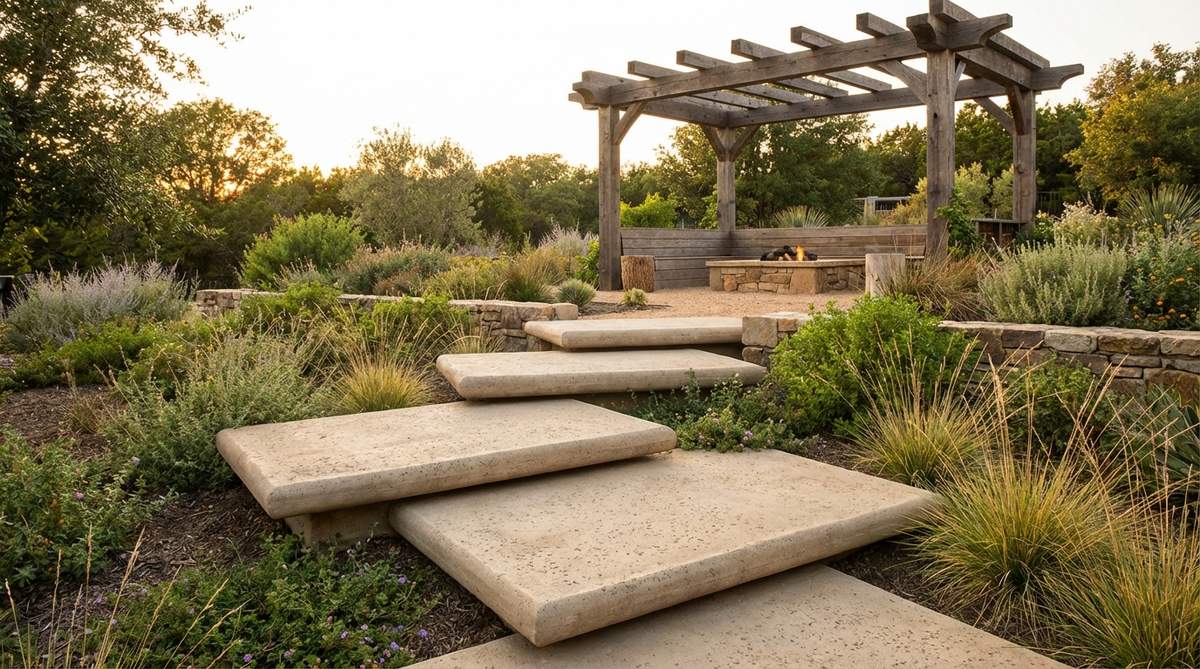
Floating concrete treads express structural honesty and architectural drama. Cast steps with rounded or chamfered edges to echo the period’s attention to detail.
Integrate steel reinforcement for spans exceeding 36 inches. Finish surfaces with sandblasted texture or embedded aggregate for slip resistance and visual interest.
5. Breeze Block Privacy Screens
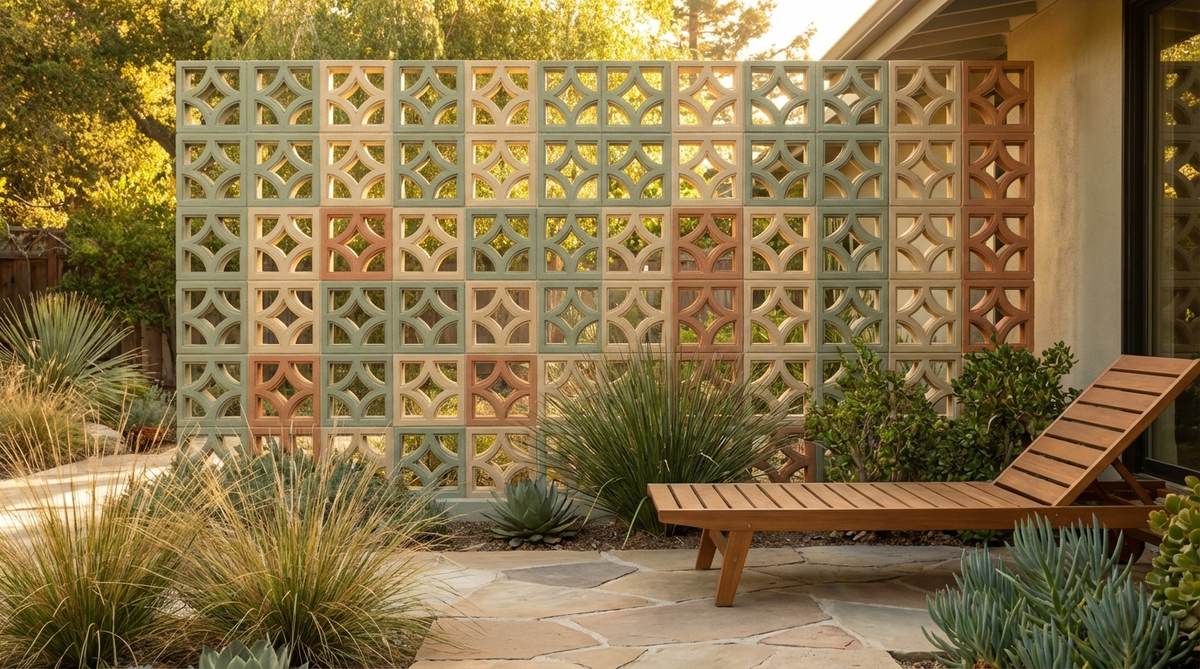
Decorative concrete blocks in geometric patterns provide privacy while filtering light and air. Choose from classic screen block designs or custom patterns that complement your home’s architecture.
Stack blocks to heights of 5-7 feet for effective screening. Paint in muted earth tones or leave natural for authentic period character.
6. Board-Formed Concrete Planters
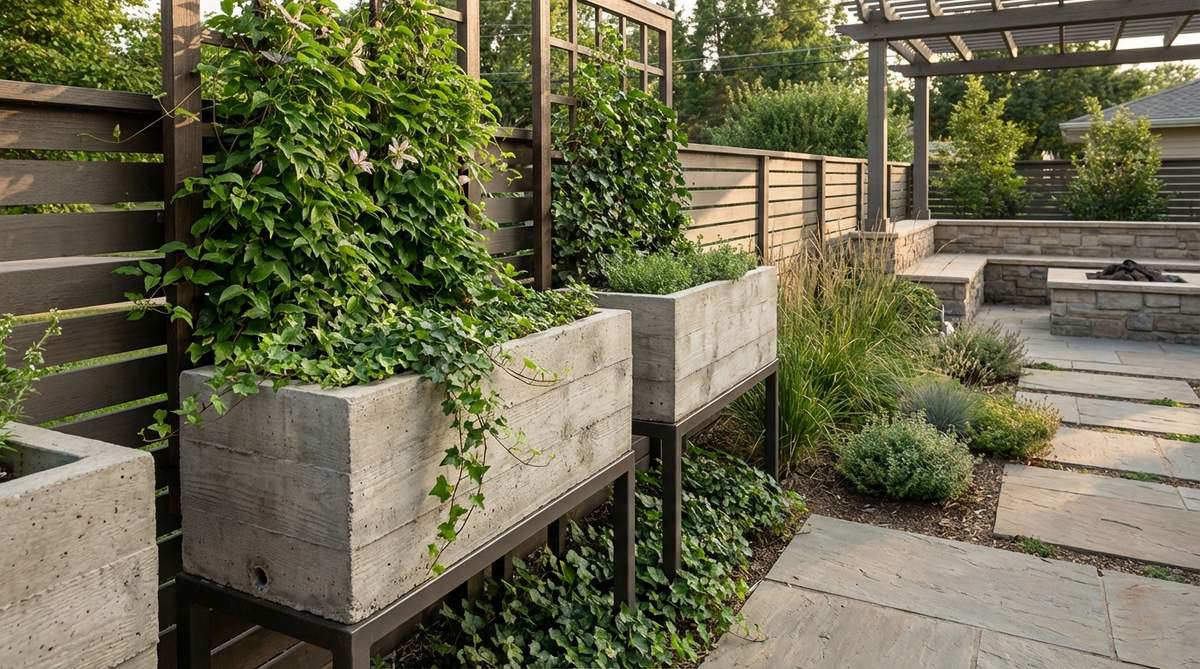
Rectangular planters cast against rough-sawn lumber retain wood grain impressions. These elevated beds introduce vertical gardening opportunities while celebrating material honesty.
Build planters 18-24 inches tall for comfortable viewing and maintenance. Incorporate drainage weep holes every 24 inches along the base.
7. Pebble Mosaic Accent Panels
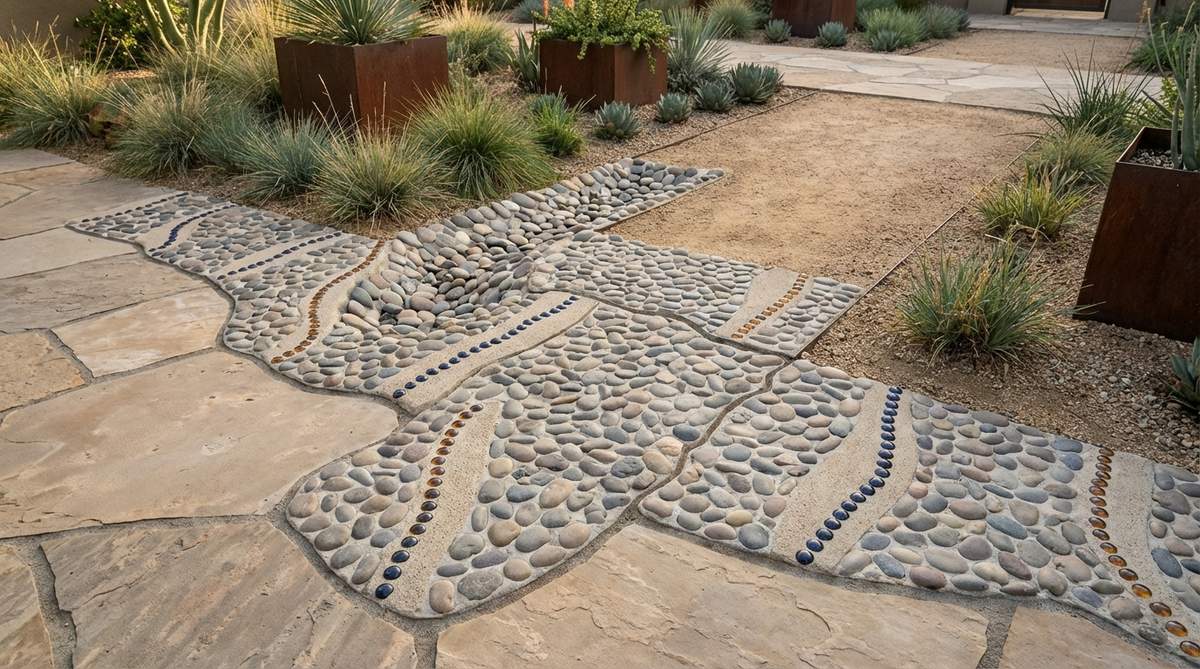
River rocks set in concrete create textural transitions between pavement types. Dark glass beads embedded in sandblasted concrete offer a refined alternative.
Use pebble mosaics as edging strips, runnels, or decorative insets. Limit to 10-15% of total hardscape to maintain visual restraint.
8. Gravel and Decomposed Granite Courts
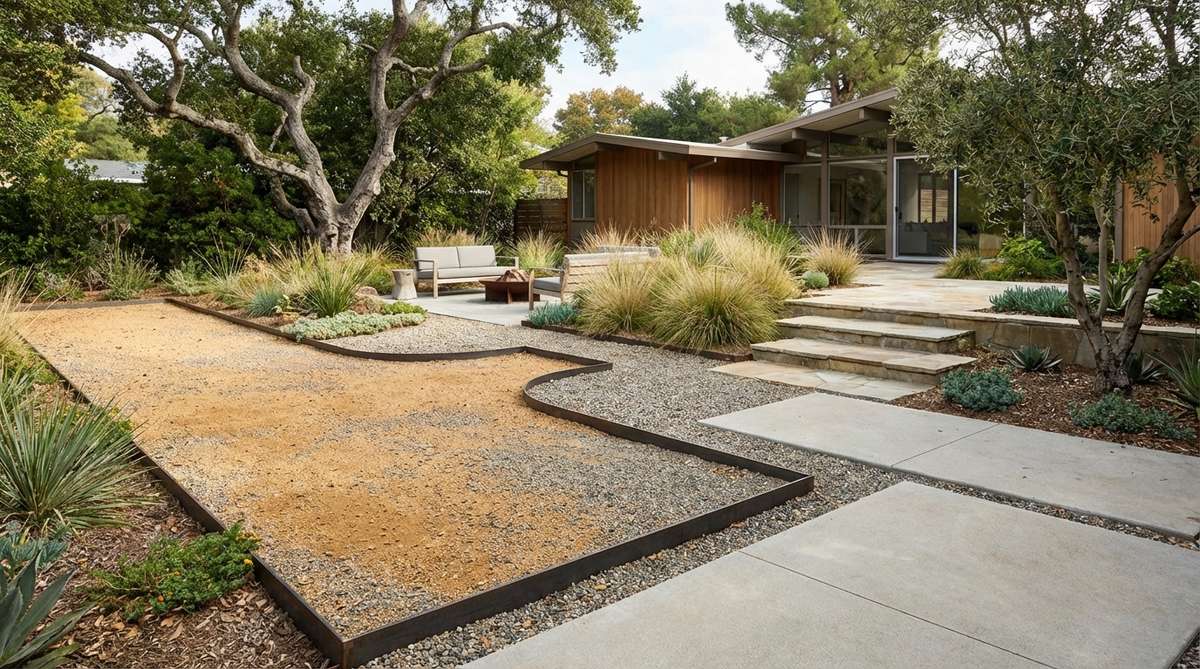
Crushed granite in ochre or gray tones provides permeable surfacing for secondary pathways and meditation areas. These loose materials contrast beautifully with rigid pavement.
Install over compacted base with steel edging to prevent migration. Depth of 2-3 inches allows for comfortable walking while discouraging weed growth.
9. Steel Edging and Coping
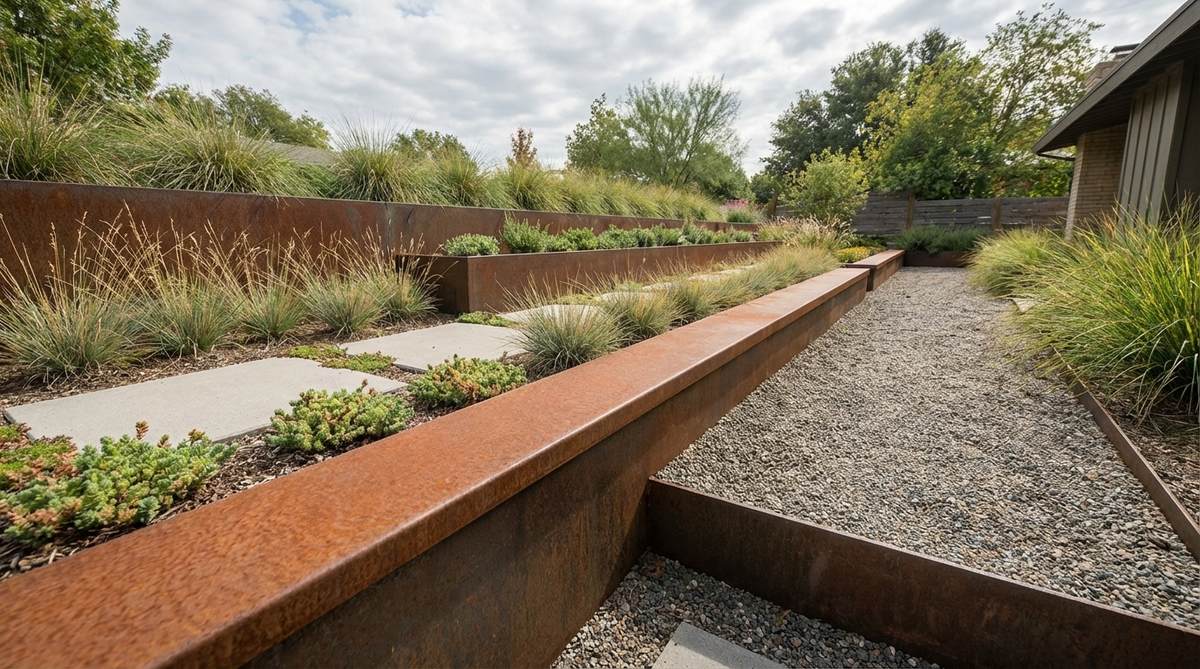
Weathering steel or painted metal strips define crisp boundaries between materials. The sharp lines reinforce geometric precision while accommodating curves when heated and bent.
Specify 1/4 inch thickness for rigidity. Allow Corten steel to develop its characteristic rust patina over the first season.
Architectural Plantings & Green Design
Plant selection focuses on sculptural form, textural interest, and minimal maintenance requirements. The restrained palette emphasizes evergreen structure punctuated by strategic seasonal color.
10. Columnar Evergreens as Vertical Accents
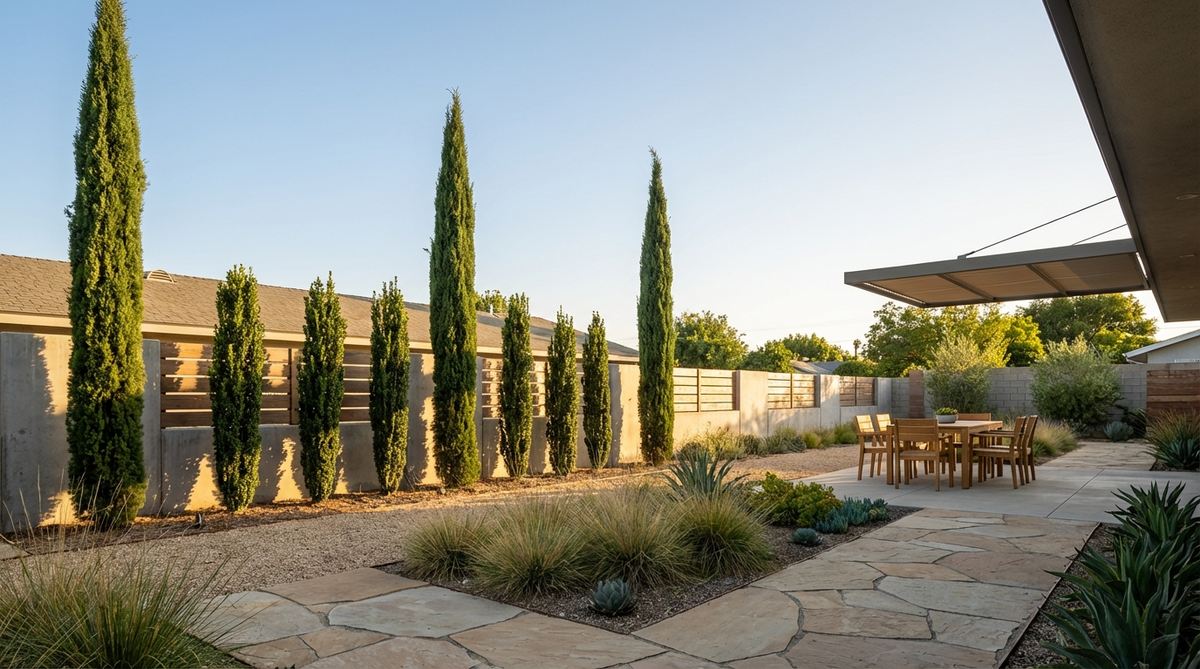
Italian Cypress and Sky Pencil Holly provide exclamation points in the landscape. Their narrow profiles establish vertical counterpoints to horizontal architecture without overwhelming the composition.
Plant in odd-numbered groups of 3 or 5 along property boundaries or flanking entryways. Space 4-6 feet apart for solid screening or wider for rhythmic punctuation.
These low-water specimens thrive in USDA zones 7-10, requiring only annual shaping to maintain crisp silhouettes.
11. Sculptural Succulents and Agaves
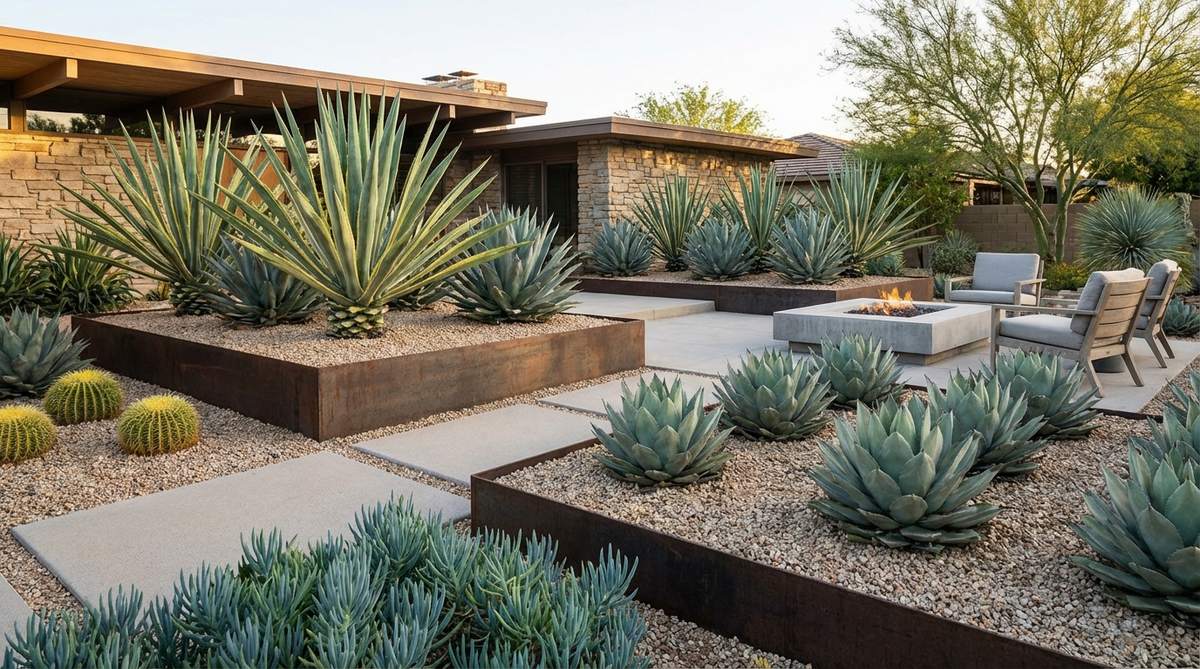
Architectural succulents deliver year-round structure with minimal water requirements. Agave americana, century plant, and whale’s tongue agave create bold focal points in Mediterranean and desert climates.
Arrange in geometric groupings within gravel beds or raised planters. Combine different sizes and forms to create dynamic compositions that reference abstract sculpture.
12. Ornamental Grass Masses
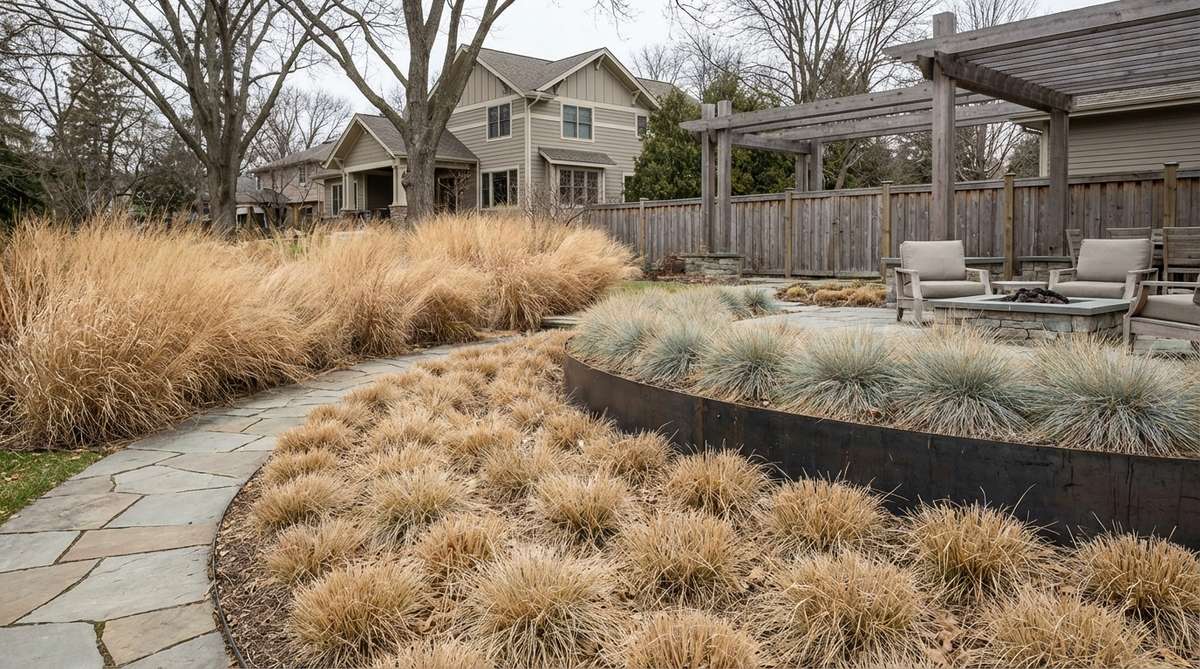
Feather reed grass and blue oat grass introduce movement and seasonal interest. Their vertical blades soften hard edges while maintaining the design’s modern character.
Plant in sweeping drifts of 15-30 specimens for maximum impact. Cut back to 4 inches in late winter to renew growth and preserve tidy appearance.
13. Clipped Japanese Holly Spheres
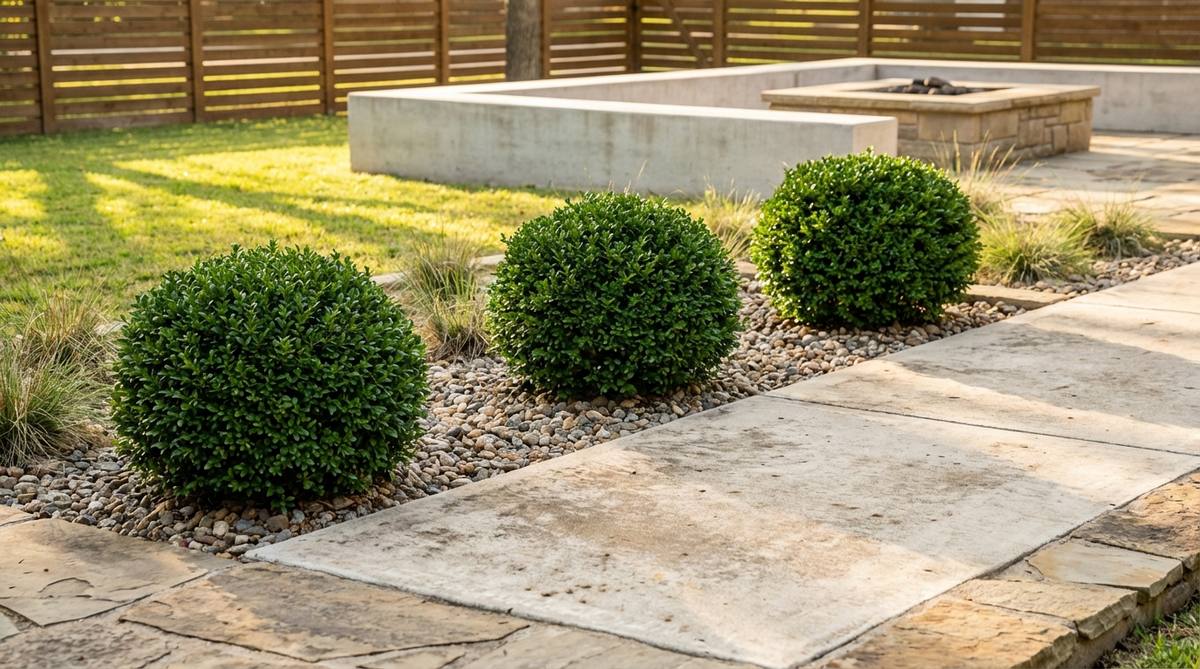
Ilex crenata cultivars shaped into perfect spheres echo the period’s fascination with geometric forms. Glossy dark foliage provides textural contrast against concrete and stone.
Establish in linear arrangements along pathways or clustered in odd numbers within planting beds. Shear twice annually to maintain precise shapes.
14. Bamboo Grove Screening
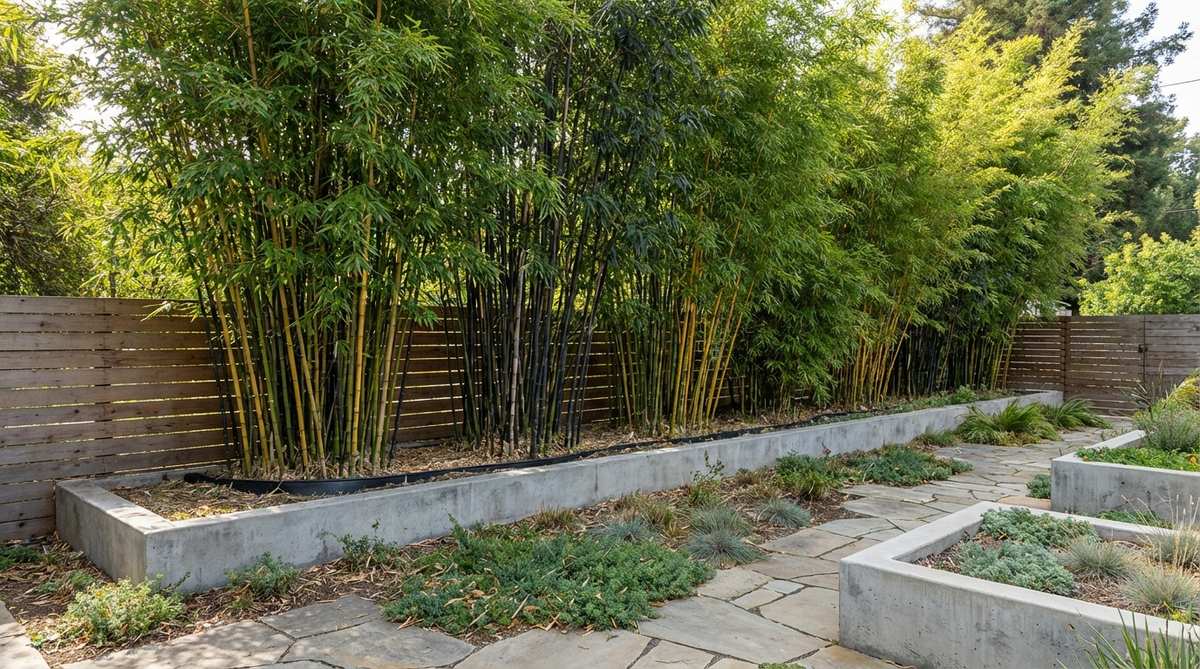
Clumping bamboo varieties create instant privacy with vertical drama. Golden bamboo and black bamboo offer distinctive stem colors that enhance year-round interest.
Install rhizome barriers extending 24 inches deep to contain spreading varieties. Space plants 3 feet apart for solid screening within two growing seasons.
15. Mass Groundcover Plantings
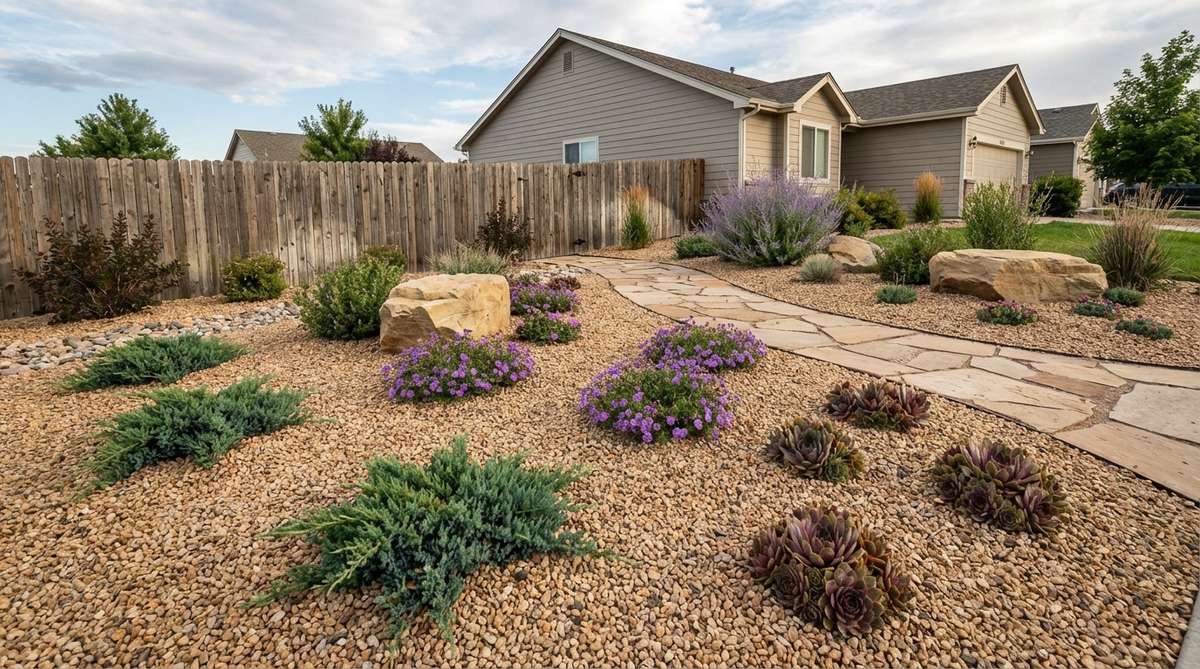
Low junipers, rock purslane, and hens-and-chickens replace traditional lawns in water-wise landscapes. These evergreen carpets require no mowing and minimal irrigation once established.
Plant on 12-18 inch centers for complete coverage within one year. Mulch with pea gravel to suppress weeds during establishment.
16. Specimen Olive Trees
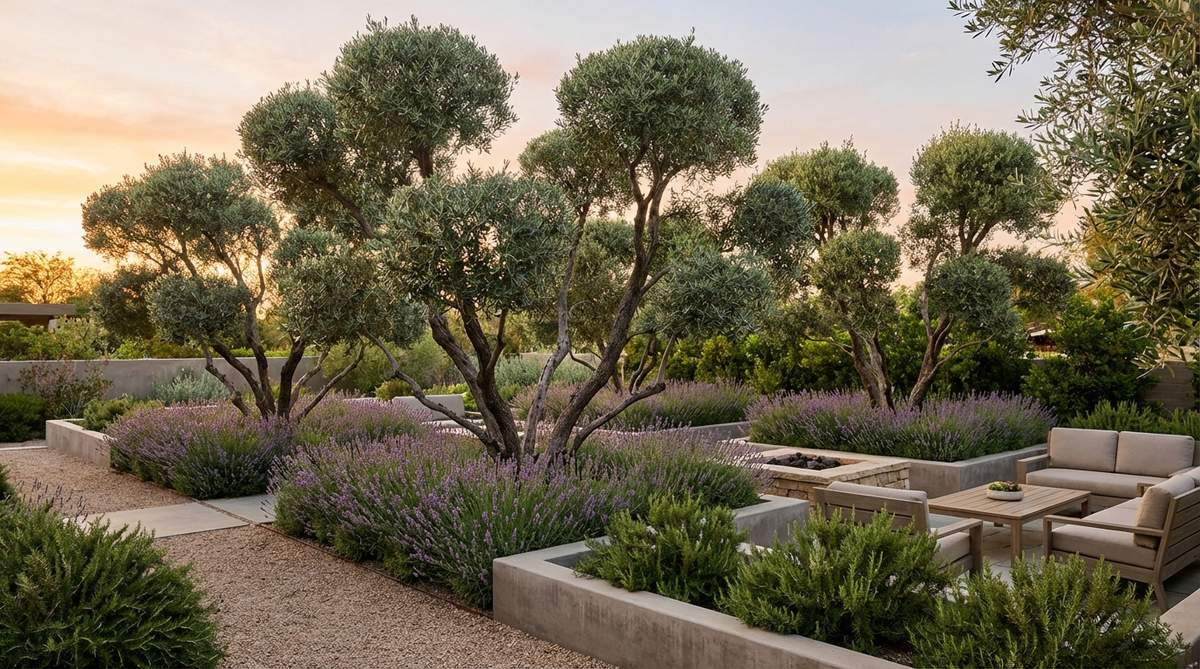
Multi-trunk olive trees provide sculptural canopy structure with Mediterranean character. Their gray-green foliage and gnarled trunks age gracefully, improving with time.
Position as focal points in courtyards or flanking outdoor living areas. Underplant with lavender or rosemary to complete the drought-tolerant palette.
17. Yucca and Desert Spoon Accents
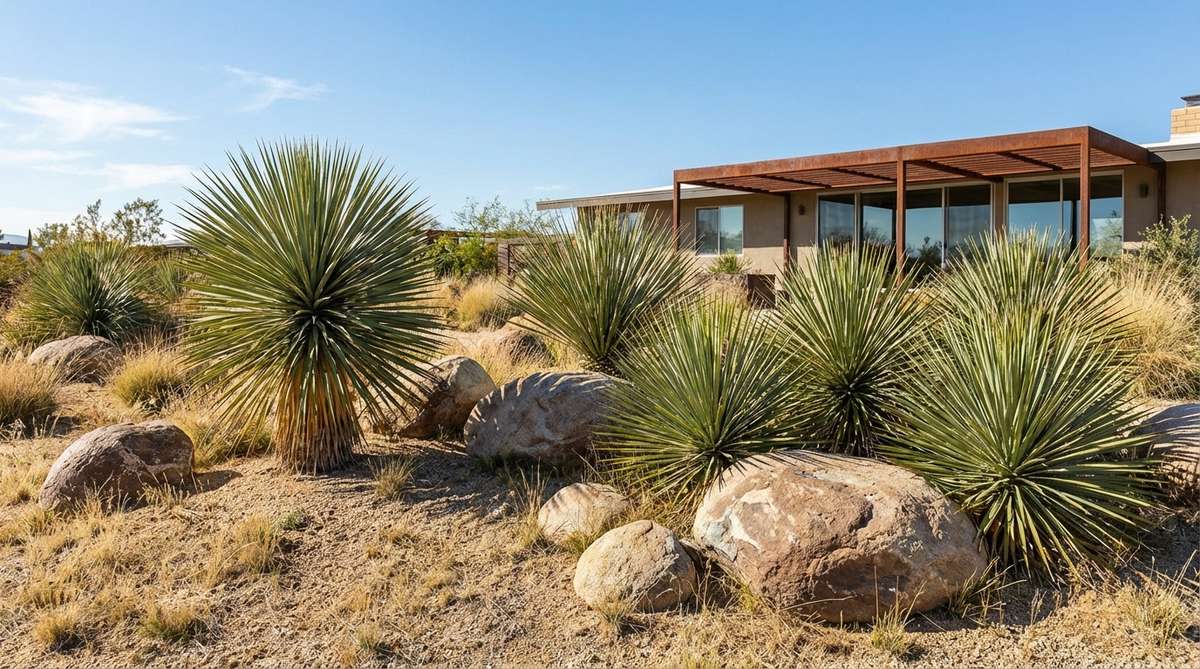
Spiky rosettes add futuristic drama while celebrating native plant adaptation. Yucca rostrata and desert spoon thrive in full sun with minimal supplemental water.
Plant singly as specimens or in groups of three for compound interest. Pair with smooth boulders to emphasize contrasting textures.
18. Eucalyptus and Birch Groves
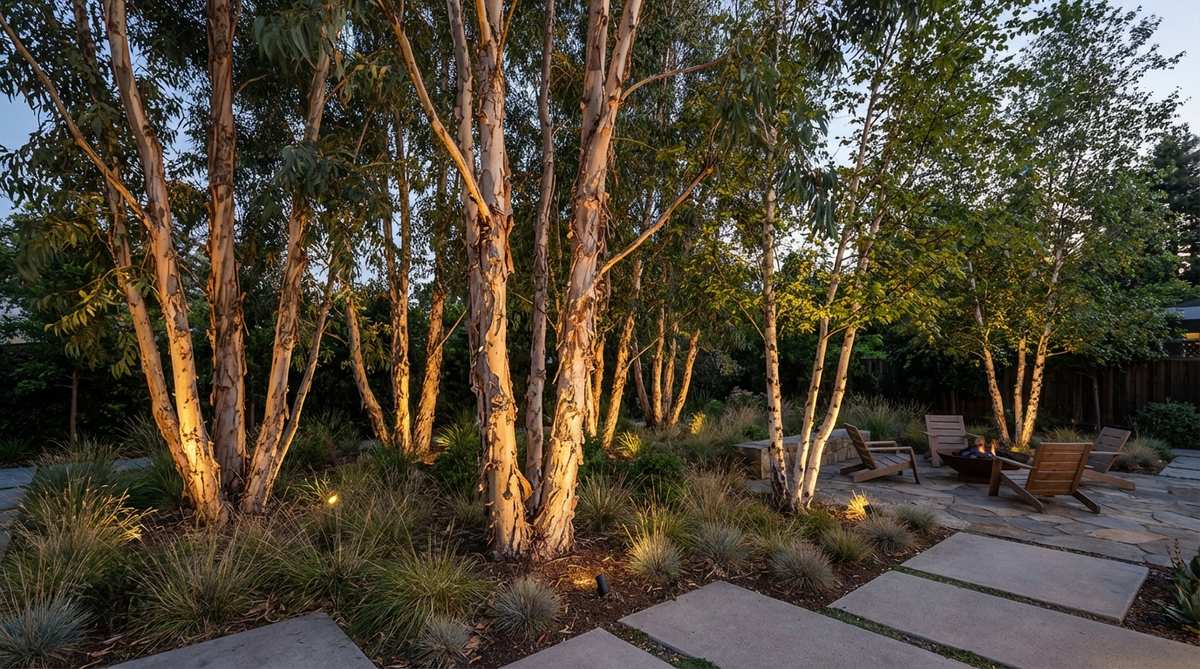
Multi-stem trees with distinctive bark create artistic focal points. White birch in cooler zones and eucalyptus in mild climates offer similar visual impact with contrasting textures.
Plant three specimens 4-6 feet apart to develop as a unified grove. Uplighting at night transforms bark into glowing sculptural elements.
Water Features & Pool Designs
Water elements reinforce geometric design principles while introducing sensory richness. Reflective surfaces expand perceived space and provide focal points for outdoor living areas.
19. Rectangular Lap Pools
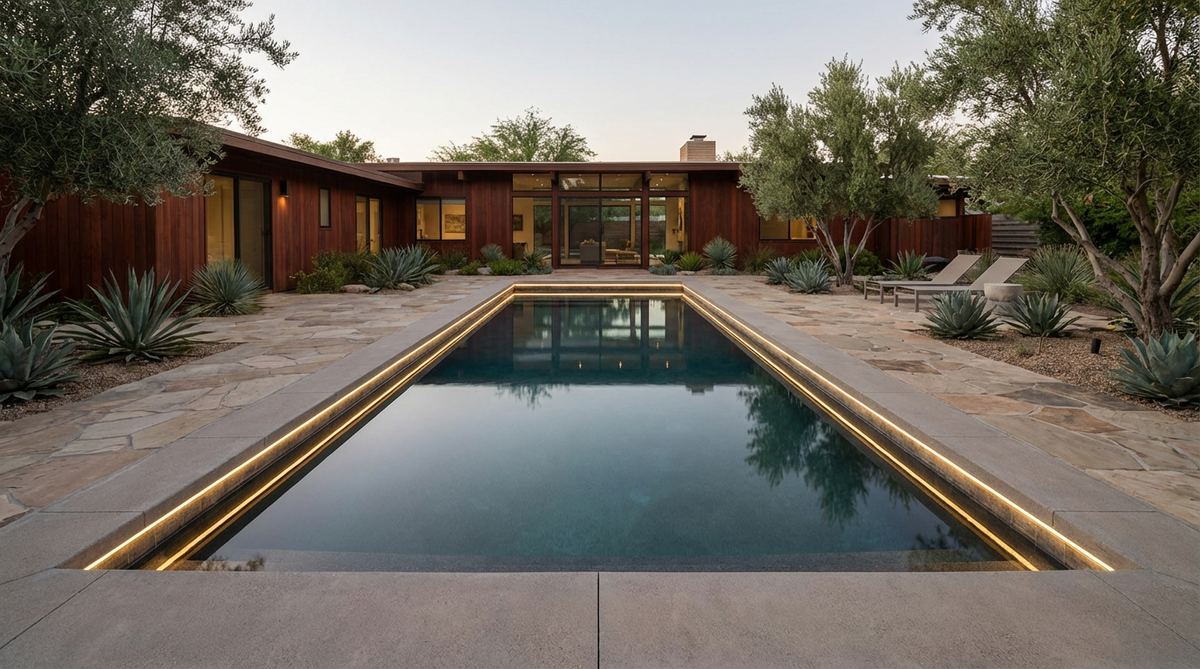
Linear pools emphasize clean geometry and function over decorative excess. Dimensions of 10×40 feet provide adequate lap swimming while maintaining proportional elegance.
Finish with dark plaster or tile to create reflective surfaces that mirror sky and surrounding architecture. Flush deck coping eliminates visual barriers between pool and patio.
Integrate LED lighting in recessed niches for evening ambiance without compromising daytime minimalism.
20. Knife-Edge Pool Perimeters
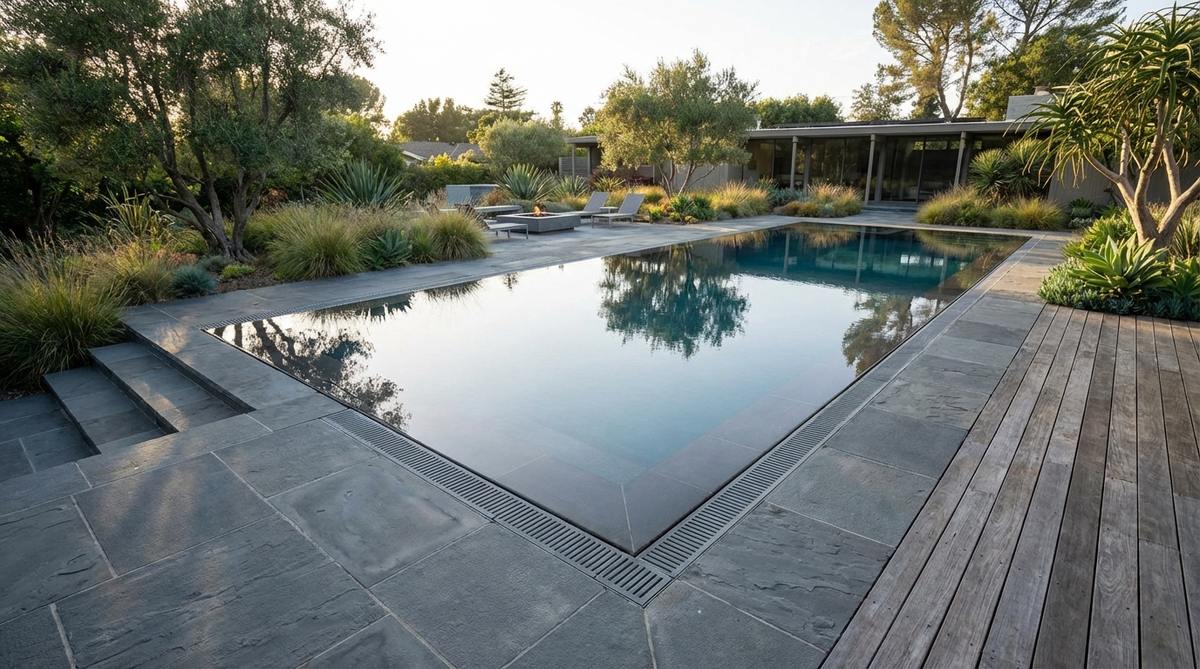
Waterlines set flush with surrounding decking create seamless visual planes. This detail requires precise grading and structural engineering but delivers unmatched sophistication.
Specify concealed overflow channels with hidden surge tanks. Use on one or two sides for dramatic effect while maintaining functional entry steps elsewhere.
21. Raised Rectangular Water Features
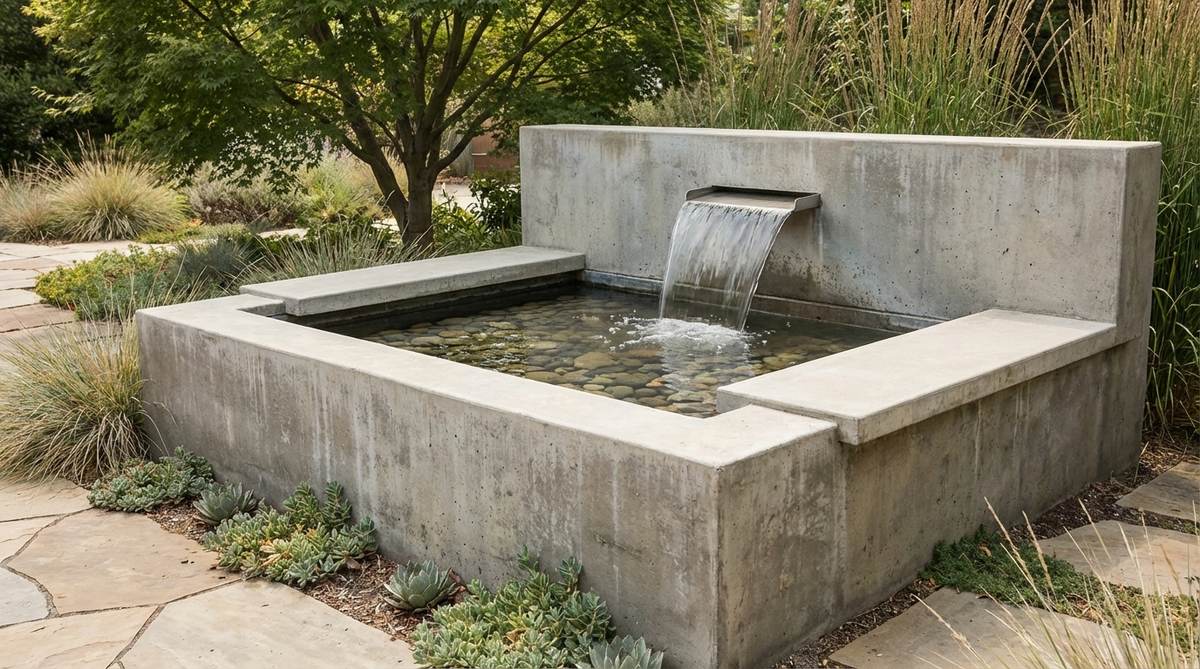
Elevated concrete basins bring water to eye level while providing seating edges. Wall-mounted spouts deliver water in controlled sheets or gentle arcs.
Build basins 18 inches tall and 24-36 inches wide. Recirculating pumps hidden within the structure maintain water clarity with minimal maintenance.
22. Boulder Fountain Compositions
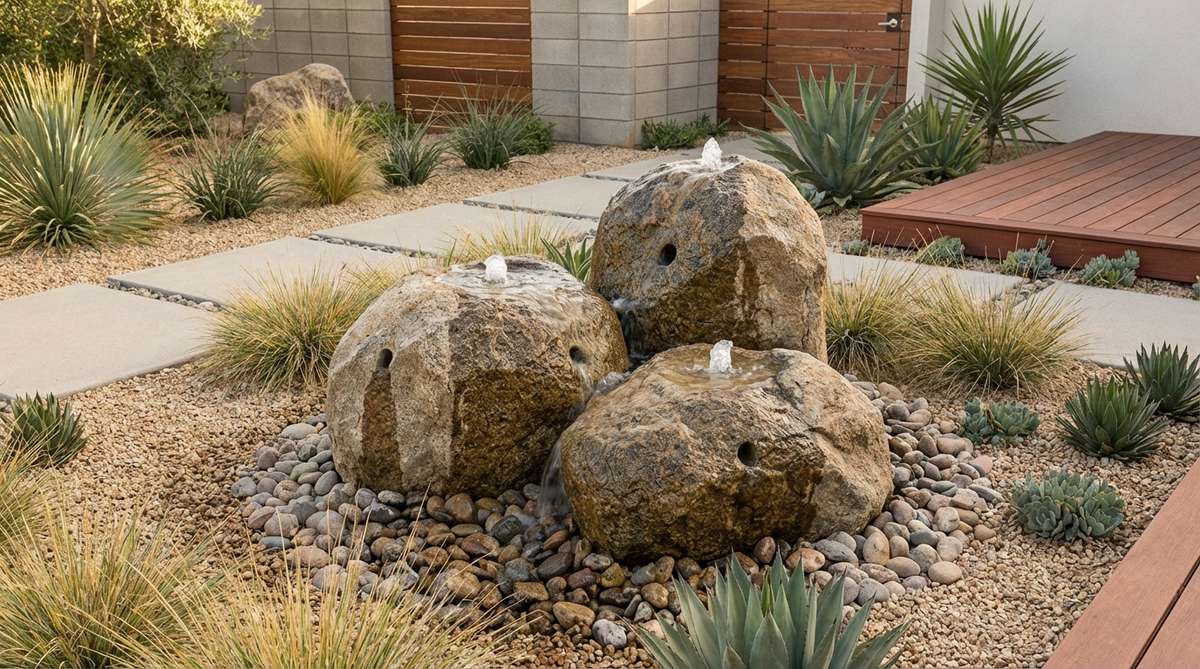
Natural boulders drilled to accept bubbling water balance organic form with engineered systems. Select stones with interesting shapes and colors that complement your hardscape palette.
Position within gravel courts or at planting bed intersections. Water flow rates of 200-400 GPH provide audible sound without excessive splash.
23. Linear Water Channels
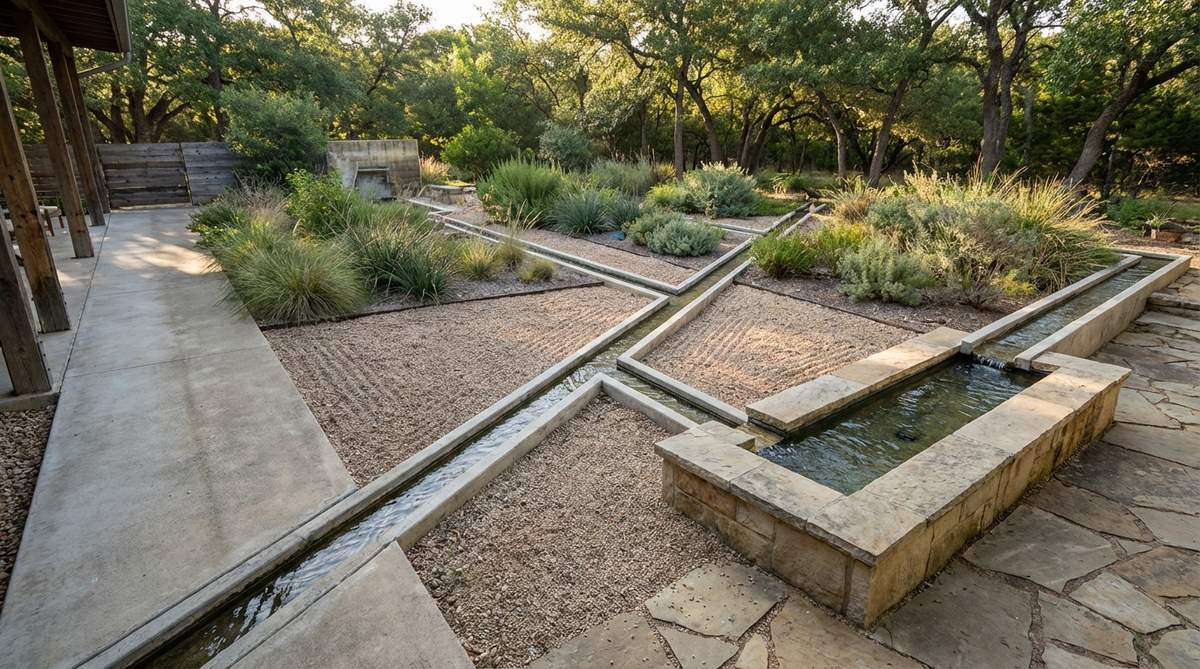
Narrow runnels connect spaces while directing eye movement through the garden. Concrete or bluestone channels 6-12 inches wide carry water between levels or toward focal features.
Angle channels at 1-2% grade for gravity flow. Terminate in recirculating basins concealed by grating or planting.
24. Circular Soaking Pools
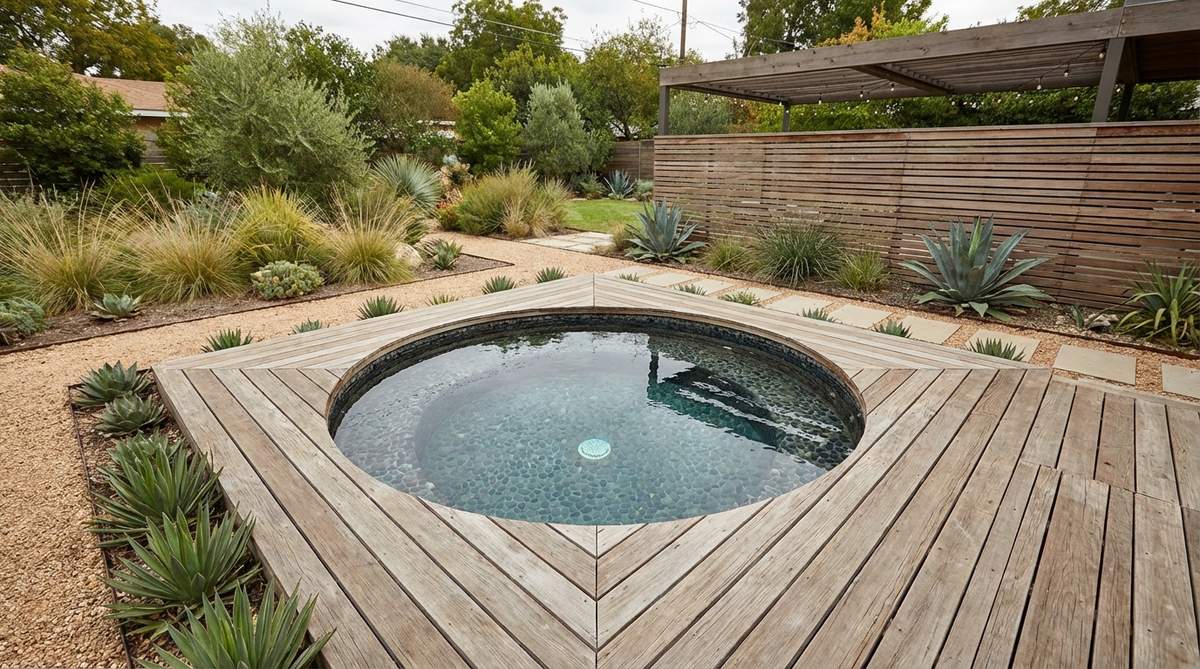
Round spas or plunge pools introduce curvilinear contrast within geometric gardens. Diameters of 6-8 feet accommodate intimate gatherings while maintaining human scale.
Finish interiors with dark tile or pebble aggregate. Surround with wooden decking in geometric patterns to reinforce the design vocabulary.
Outdoor Living Spaces & Furniture
Furnishings extend interior comfort outdoors while maintaining period-appropriate aesthetics. Select pieces that balance sculptural form with functional comfort.
25. Teak and Acacia Dining Sets
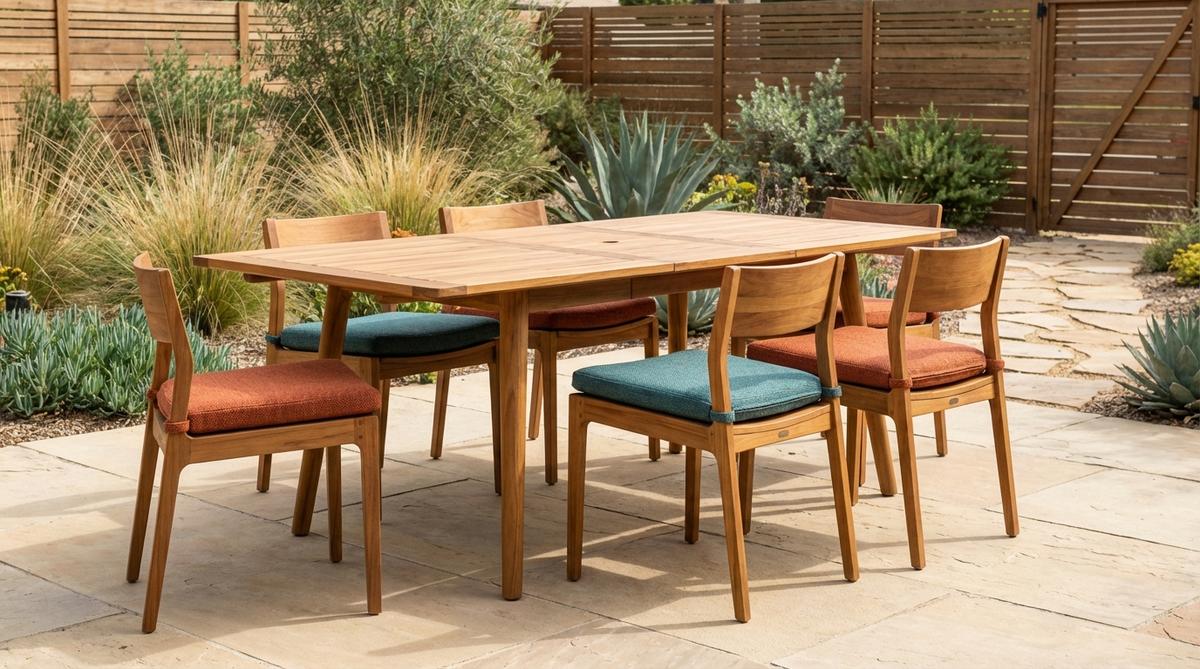
Hardwood furniture with clean lines and organic forms anchors dining areas. Expandable tables accommodate gatherings while folding to minimal profiles for everyday use.
Choose pieces with exposed joinery and minimal ornamentation. Allow teak to weather naturally to silver patina or maintain with annual oil treatments.
Pair with cushions in earth tones, burnt orange, or teal to reference period color palettes without appearing costume-like.
26. Cantilever Shade Structures
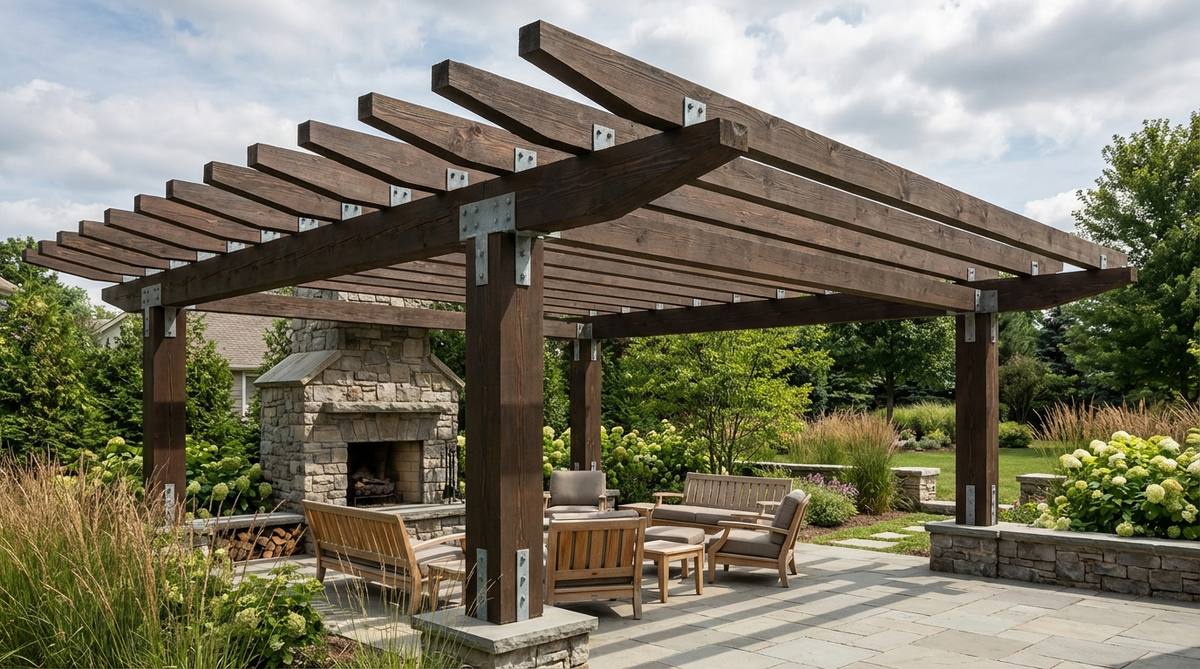
Heavy timber pergolas with exposed steel connections celebrate structural expression. Cantilevered beams extend 10-12 feet beyond support posts to shade seating areas.
Orient rafters east-west to maximize southern sun control. Space members 18-24 inches apart for dappled shade that shifts throughout the day.
27. Wire Mesh Lounge Chairs
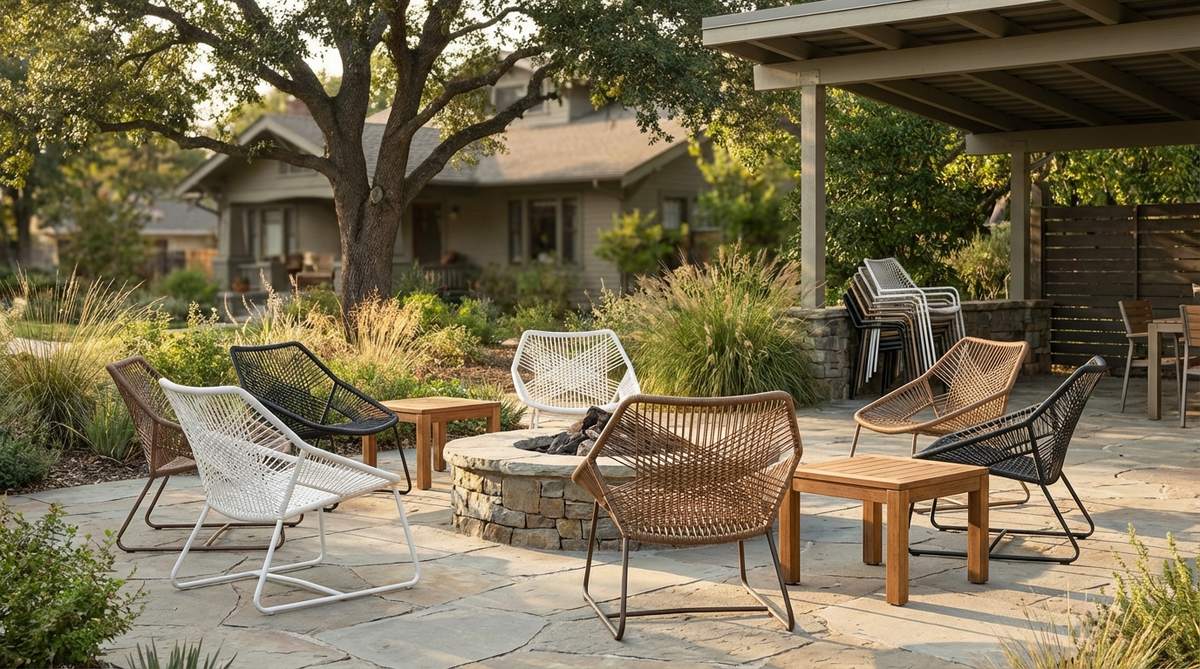
Metal frame chairs with woven seats reference industrial design influences. Powder-coated finishes in white, black, or bronze resist weather while maintaining crisp profiles.
Arrange in conversational groupings around low tables or fire features. Stack easily for seasonal storage in climates with harsh winters.
28. Built-In Concrete Seating
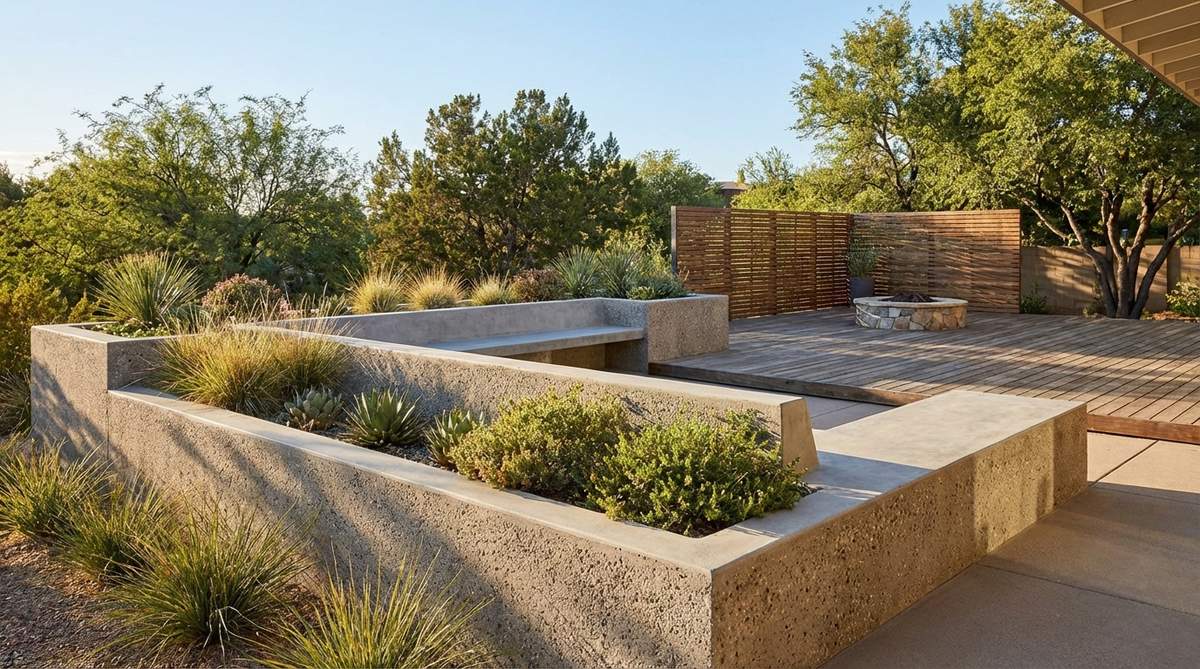
Poured benches integrated with retaining walls or planters provide permanent seating without visual clutter. Heights of 18 inches accommodate cushions while functioning as bare ledges.
Finish with smooth troweled surfaces or expose aggregate for texture. L-shaped configurations define outdoor rooms while maximizing seating capacity.
29. Butterfly Roof Pavilions
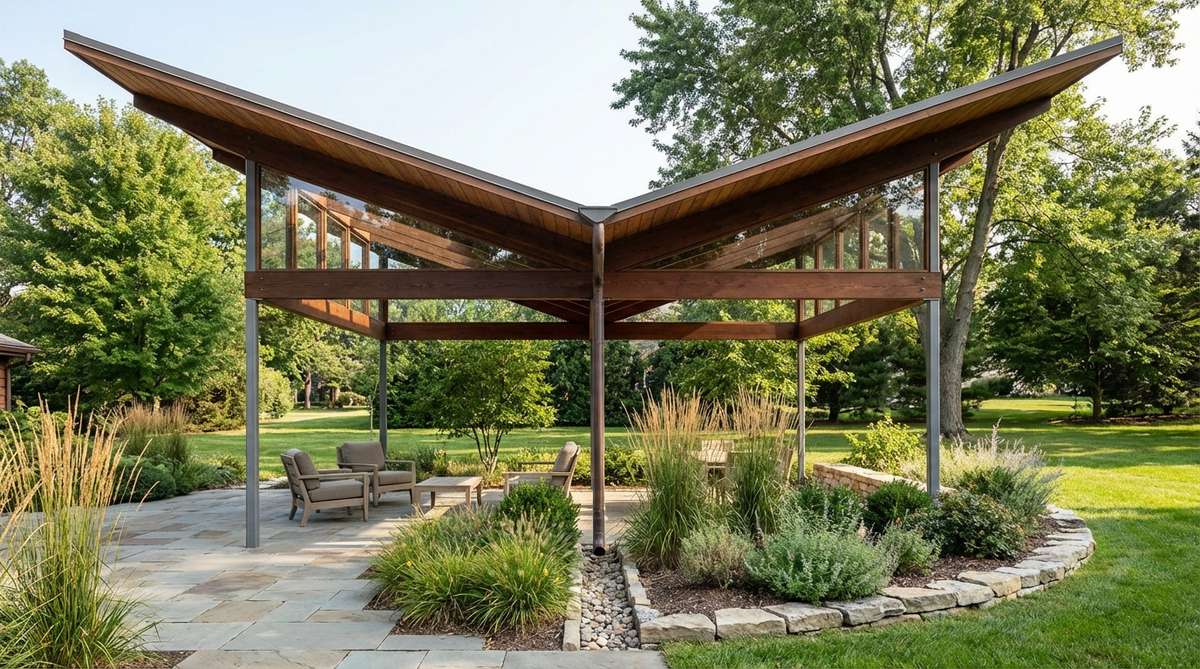
Angled rooflines with central valleys express mid-century optimism and structural innovation. These covered retreats provide weather protection while maintaining visual lightness.
Construct with exposed beams and minimal posts to preserve sightlines. Orient valleys to channel water toward planted areas or collection systems.
30. Modular Outdoor Sectionals
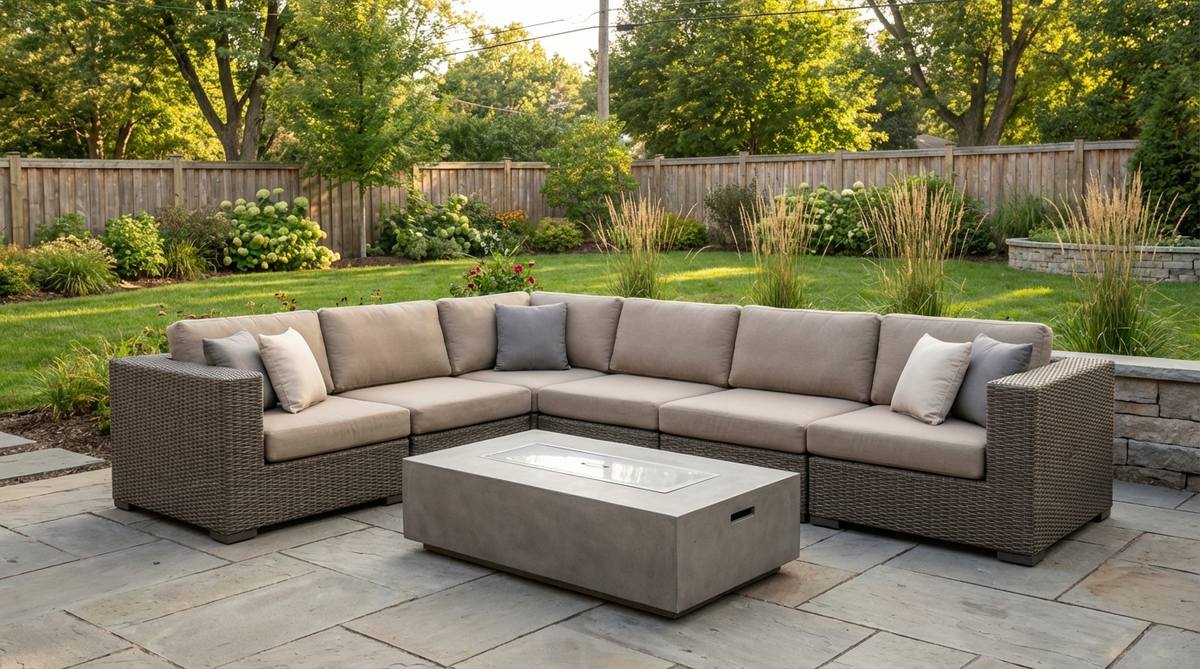
Contemporary weather-resistant sofas in neutral tones offer flexible seating arrangements. Pieces with low profiles and square arms reference period aesthetics while incorporating modern materials.
Select all-weather wicker in gray or taupe. Top with cushions in solid colors rather than busy patterns to maintain visual calm.
Lighting & Finishing Accessories
Thoughtful illumination extends garden enjoyment after dark while emphasizing architectural features. Accessories provide personality without compromising minimalist principles.
31. Recessed LED Path Lighting
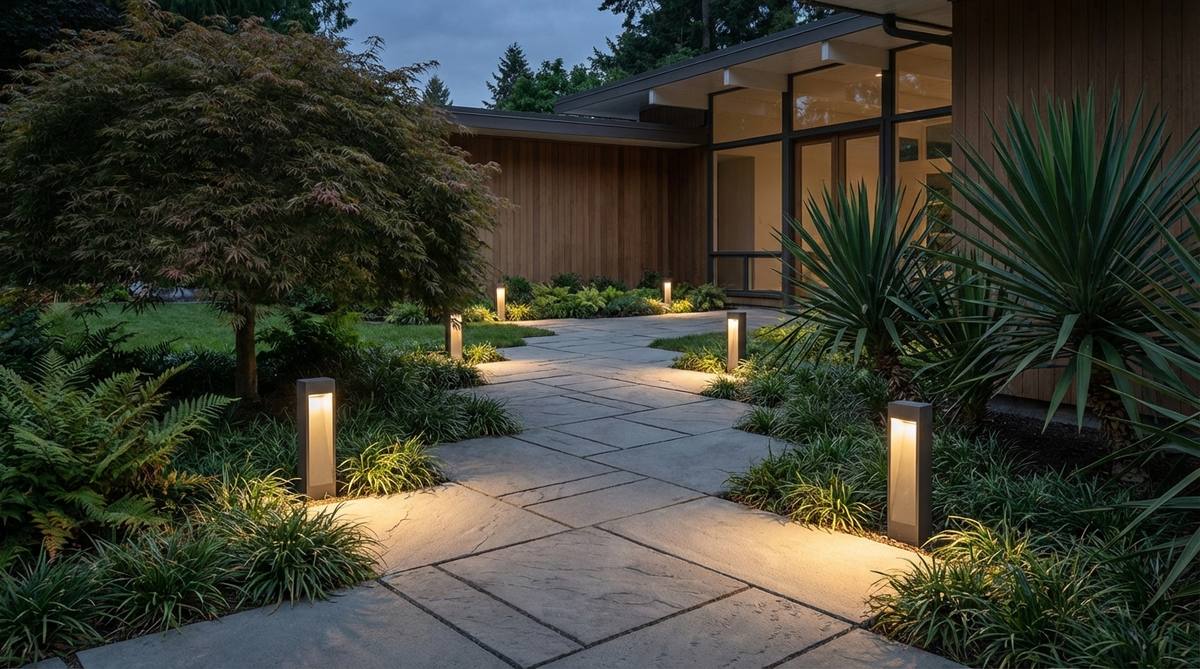
Flush-mounted fixtures eliminate visual clutter while providing safe navigation. Install at 8-10 foot intervals along primary circulation routes.
Choose warm white LEDs (2700-3000K) for inviting ambiance. Aim beams downward to minimize light pollution and glare.
Coordinate fixture placement with paving joints to reinforce geometric patterns visible during daylight hours.
32. Uplighting for Tree Canopies
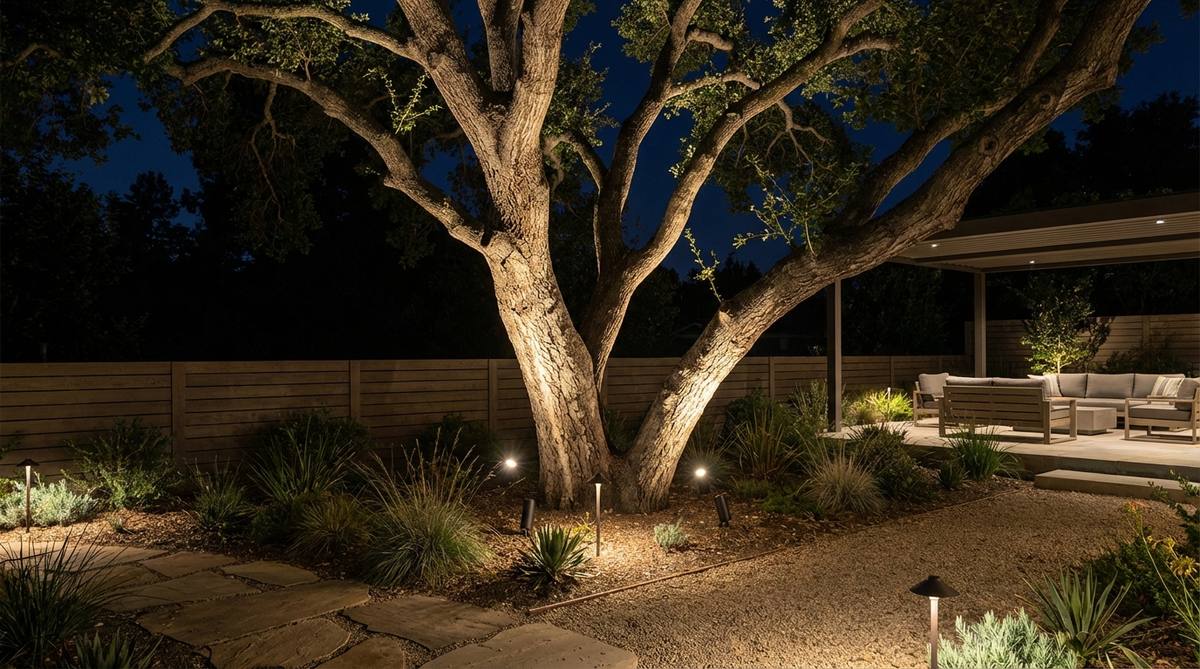
Narrow-beam fixtures positioned at tree bases transform bark and branch structure into nighttime sculpture. This technique celebrates vertical elements while creating overhead interest.
Use one fixture per trunk for multi-stem specimens. Angle beams to graze bark texture without spilling light into neighboring properties.
33. Cylindrical Planters in Groupings
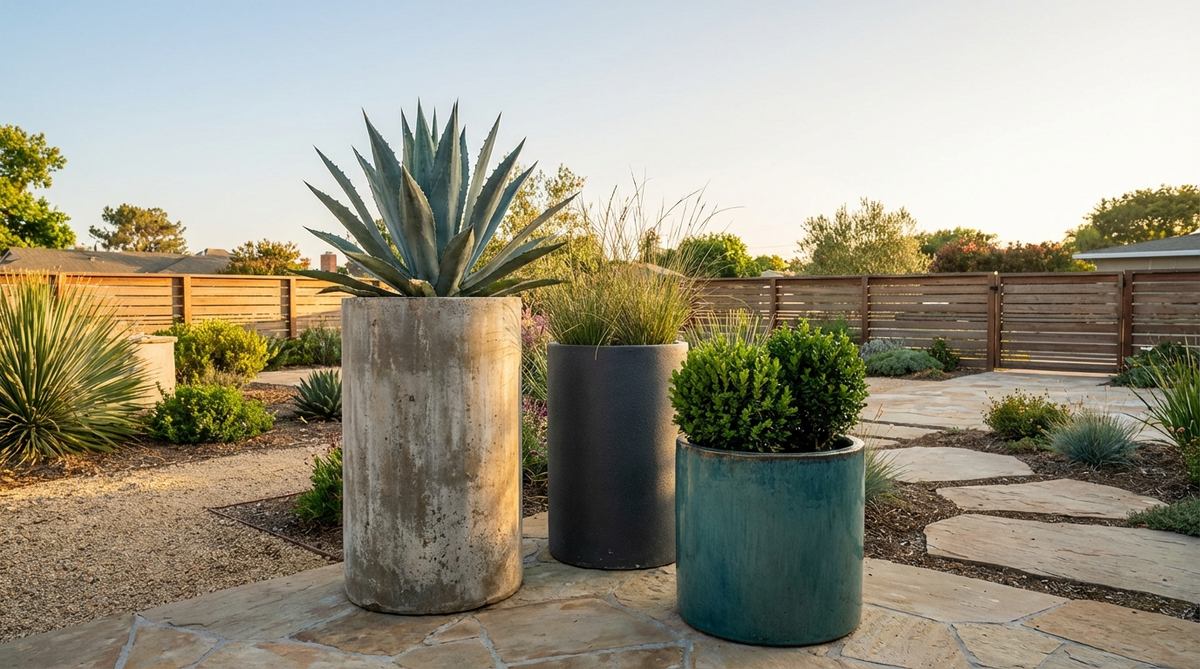
Oversized pots in concrete, fiberglass, or glazed ceramic introduce movable color and texture. Arrange three cylinders in varying heights to create dynamic compositions.
Plant with single species per container for bold impact. Agaves, ornamental grasses, or clipped evergreens work well at different scales.
34. Steel Fire Bowls
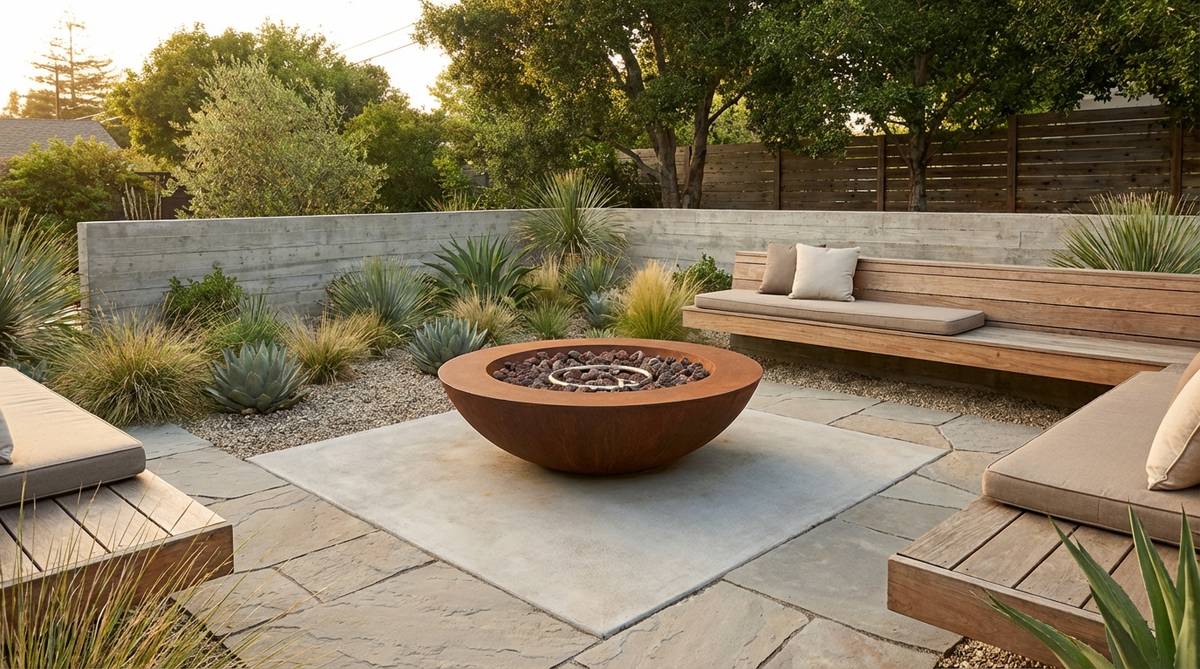
Circular or square fire features fabricated from weathering steel provide gathering focal points. Propane or natural gas fuel eliminates smoke while maintaining clean lines.
Position fire bowls on concrete pads 6-8 feet from seating edges. Surround with fire-rated pavement rather than combustible decking.
35. Geometric Outdoor Rugs
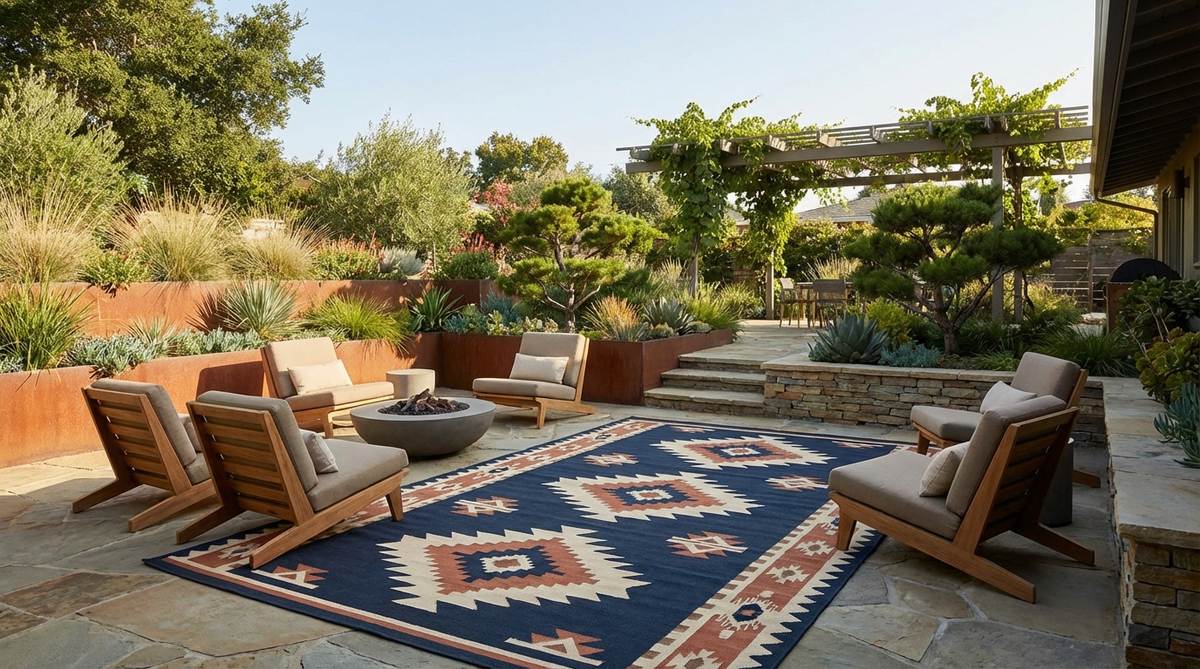
Weather-resistant rugs in bold patterns define seating zones while adding warmth to hard surfaces. Choose designs with angular motifs in limited color palettes.
Size rugs to extend 12-18 inches beyond furniture perimeters. Anchor corners with low-profile furniture legs to prevent wind displacement.
36. Horizontal Board Fencing
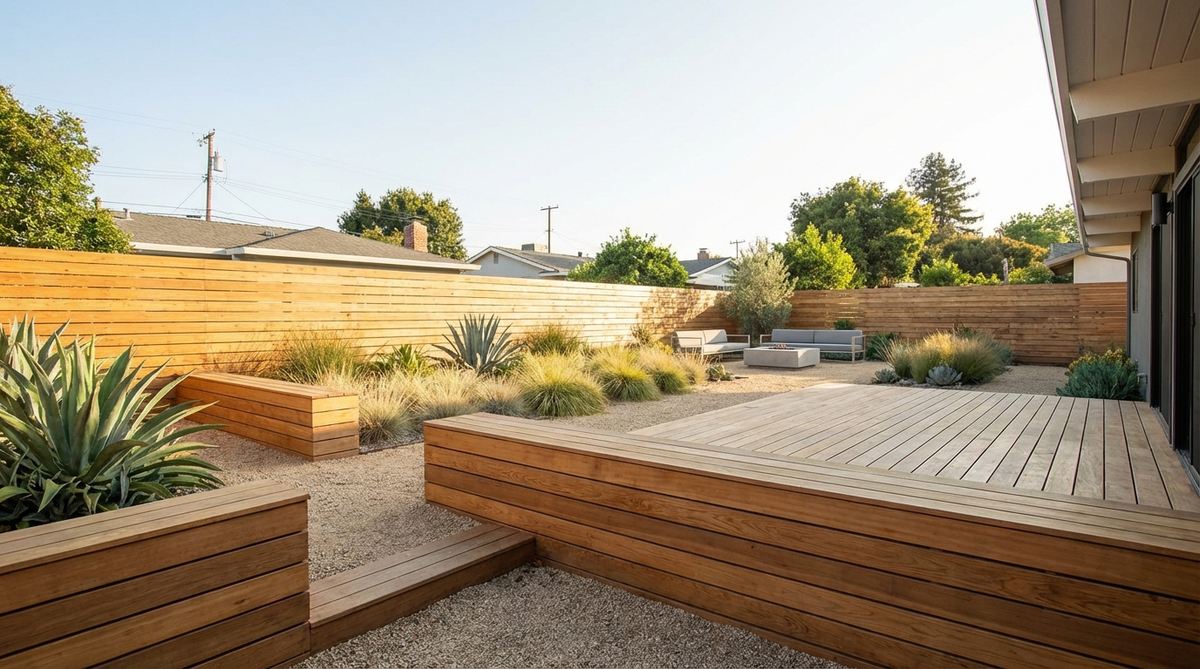
Cedar or redwood planks installed horizontally emphasize the low profiles characteristic of mid-century architecture. Boards 6-8 inches wide create substantial visual weight.
Space boards with 1/4 inch gaps for air circulation and dimensional stability. Finish with transparent stain to preserve wood grain while resisting weathering.
Restoration Essentials & Maintenance
Authentic restoration requires understanding original design intent while incorporating modern performance standards. These strategies honor period character while ensuring longevity.
37. Documenting Original Features
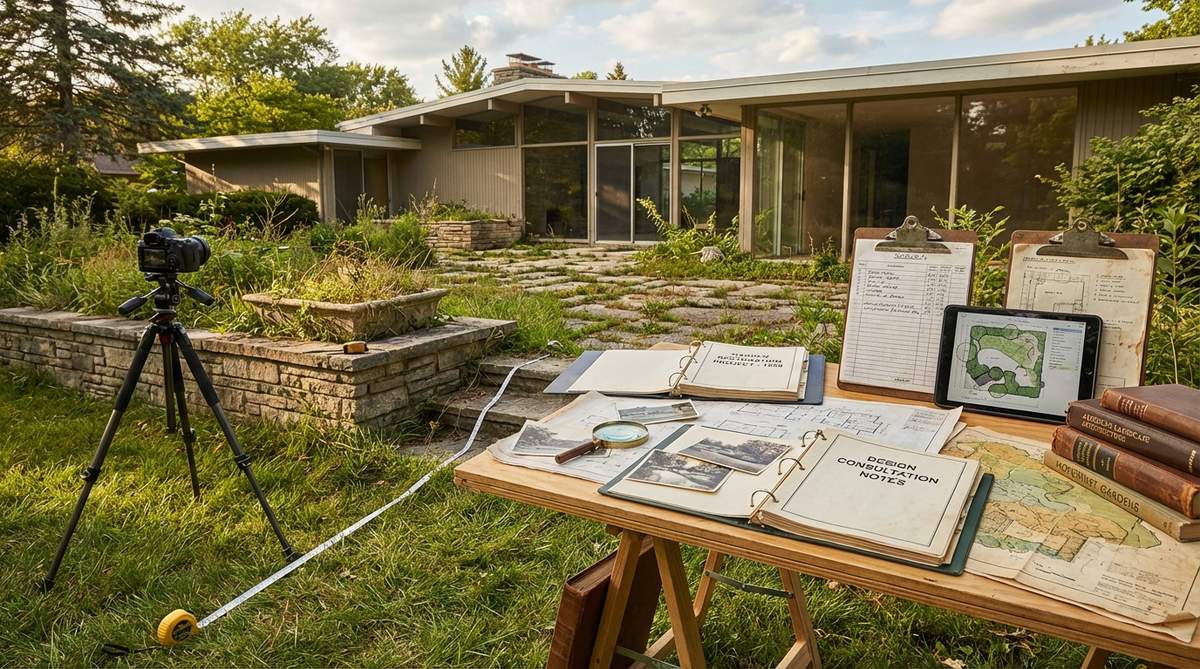
Photograph existing conditions before beginning restoration work. Research original plans through municipal archives or period publications to understand design intent.
Identify which elements are original, period-appropriate additions, or later alterations. Prioritize preserving authentic features even when damaged or degraded.
Consult landscape historians or architects specializing in mid-century design for guidance on appropriate interventions.
38. Repairing Concrete Surfaces
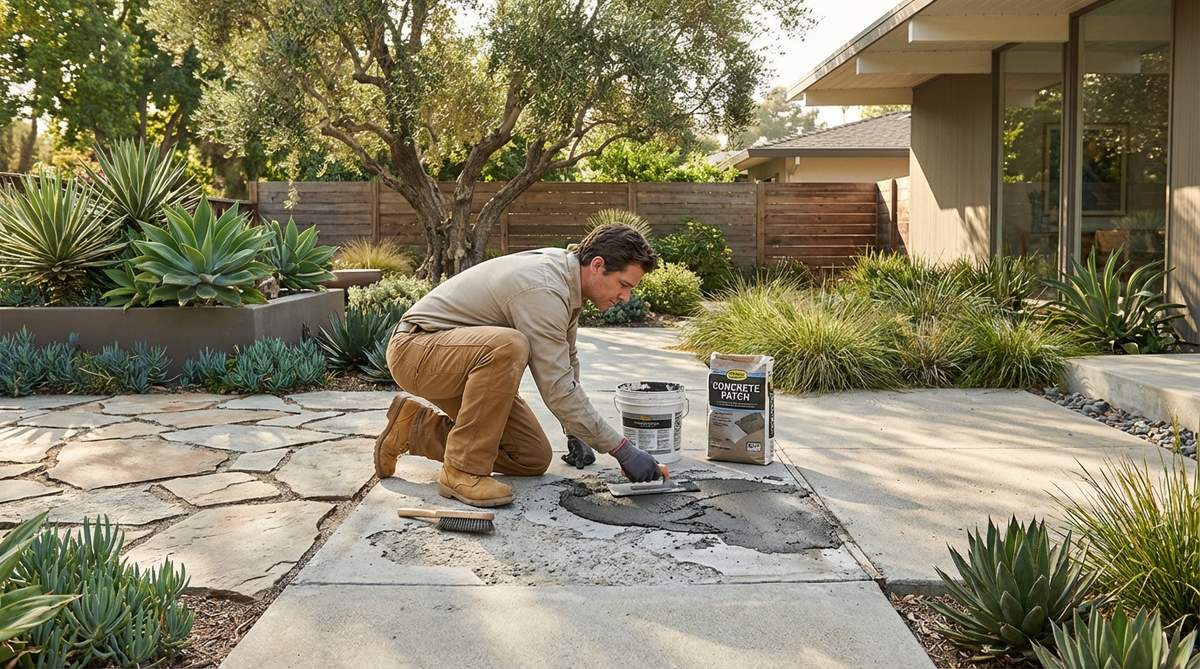
Address spalling and cracking with compatible repair mortars matched to original aggregates. Surface preparation determines bond success more than product selection.
Grind damaged areas to sound concrete before applying bonding agents. Consider complete resurfacing when repairs exceed 30% of visible area.
39. Updating Irrigation Systems
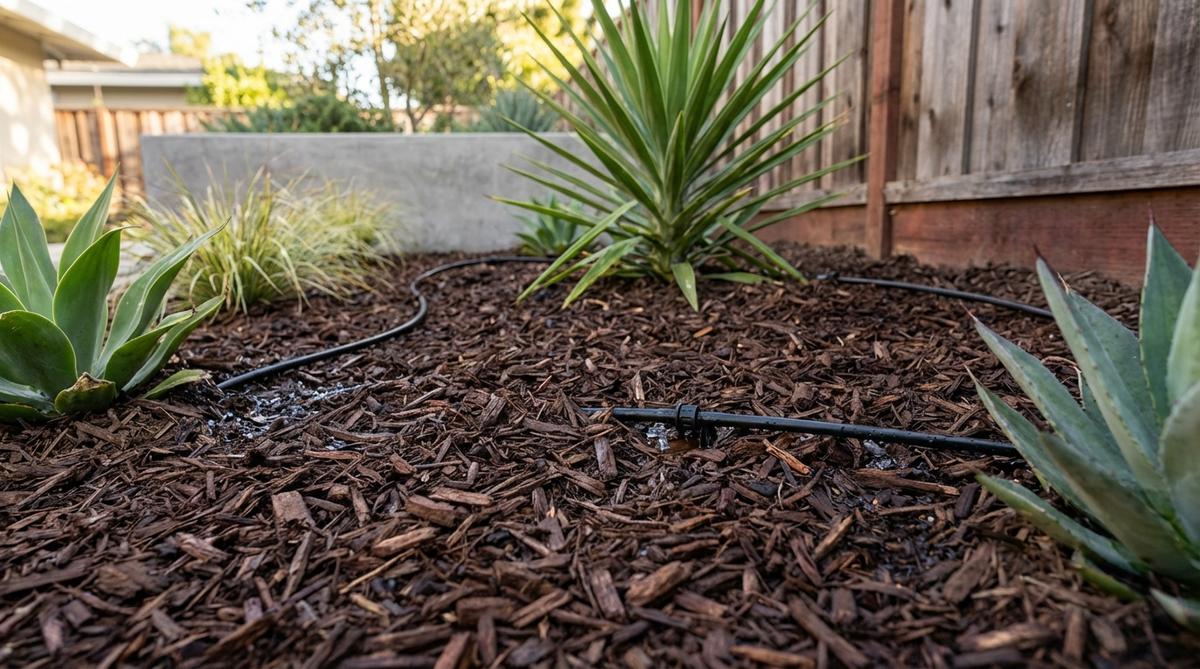
Replace inefficient spray systems with drip irrigation tailored to plant water requirements. Modern controllers with weather sensors reduce consumption by 30-50%.
Zone plantings by water needs to avoid overwatering drought-tolerant specimens. Conceal lateral lines beneath mulch to maintain visual clarity.
40. Preserving Mature Specimens
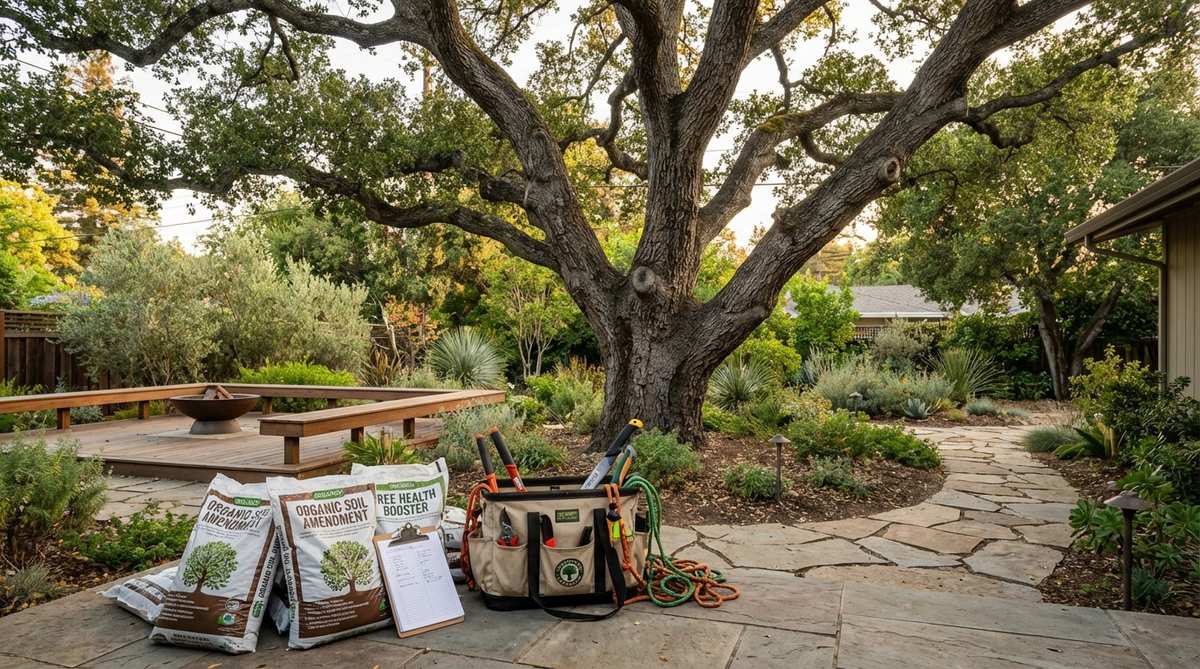
Protect existing trees and shrubs that contribute to garden character. Engage certified arborists to assess health and recommend preservation strategies.
Improve soil conditions with compost and mycorrhizal inoculants. Prune selectively to enhance form while removing dead wood and hazardous branches.
Bringing Your Vision to Life
Creating an authentic mid century modern garden requires balancing period design principles with contemporary performance expectations. Focus on geometric clarity, natural materials, and restrained plantings to achieve the sophisticated simplicity that defines this enduring aesthetic. Whether restoring an original 1950s landscape or designing a new space inspired by the era, these strategies provide a comprehensive framework for success. Start with hardscape foundations, layer in architectural plantings, and finish with carefully selected furnishings to transform your outdoor space into a timeless retreat that celebrates both nature and modernist design.
Frequently Asked Questions
What plants are best for mid century modern gardens?
Focus on architectural specimens with clean forms and minimal maintenance requirements. Excellent choices include Italian Cypress, Sky Pencil Holly, agaves, ornamental grasses like feather reed grass, Japanese Holly shaped into spheres, and sculptural succulents. In warmer climates, olive trees and various yucca species provide authentic period character. Select plants with strong evergreen structure and arrange them in purposeful groups rather than scattered individual specimens.
How do I maintain the minimalist aesthetic in my mid century garden?
Restraint is fundamental to the style. Limit your material palette to 3-4 types such as concrete, one stone variety, wood, and steel. Choose plants with year-round structure over seasonal bloomers. Keep planting beds weed-free and edges crisp through regular maintenance. Remove clutter including excessive garden ornaments, decorative containers, and busy patterns. Focus on geometry, clean lines, and purposeful negative space to achieve the uncluttered sophistication that defines mid-century design.
What is the difference between mid century modern and contemporary landscape design?
Mid-century modern landscapes reference specific design principles from the 1940s-1950s including integration of indoor-outdoor spaces, geometric forms, natural materials like flagstone and wood, and restrained color palettes. Contemporary design is broader and more eclectic, incorporating current trends and technologies without adhering to historical precedent. Mid-century gardens emphasize horizontal lines, modular paving systems, and period-appropriate plants, while contemporary landscapes might include mixed materials, asymmetrical layouts, and diverse planting styles.
How can I restore an original mid century garden while improving functionality?
Document existing features through photographs and research before beginning work. Preserve authentic elements like original paving, walls, and mature trees even if damaged. Update infrastructure including irrigation and lighting with modern systems installed discreetly. Replace failed materials with period-appropriate alternatives sourced from salvage yards or specialty suppliers. Improve drainage and soil quality using techniques that don’t alter surface appearance. Work with specialists who understand mid-century design to balance preservation with contemporary performance standards.
What are essential hardscape materials for authentic mid century modern gardens?
Concrete is foundational, used for paving, planters, and seating in smooth-troweled or board-formed finishes. Natural flagstone arranged in crazy paving patterns adds organic texture. Decomposed granite and pea gravel provide permeable surfacing for secondary areas. Wood appears in decking, fencing, and pergolas, typically cedar or redwood with horizontal grain emphasis. Steel edging, railings, and structural connections celebrate industrial materials. Limit your palette to 2-3 primary materials with one accent to maintain the restrained character essential to the style.