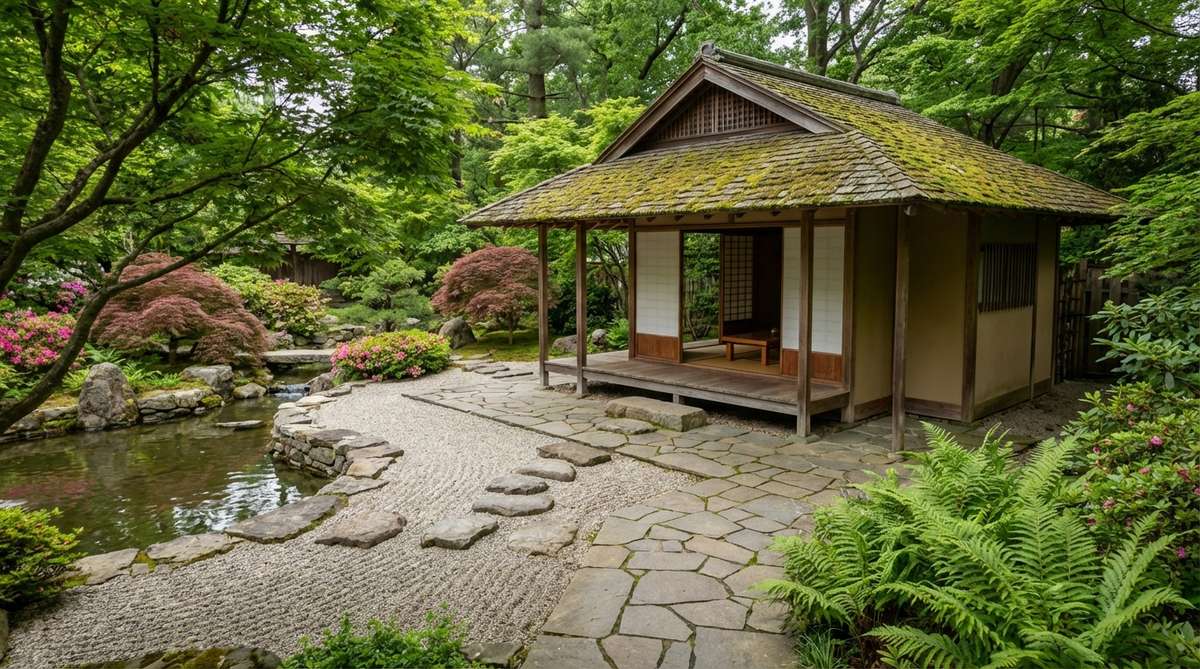
A japanese garden tea house transforms outdoor spaces into tranquil sanctuaries where ancient ceremony meets contemporary retreat design. Whether you’re planning a traditional chashitsu or a modern interpretation, these structures combine architectural elegance with spiritual purpose. Fresh Garden Ideas brings you expert-curated designs that honor centuries-old principles while adapting to modern American landscapes.
Design SnapshotKey Principles
- Wabi-Sabi Aesthetics: Embrace natural imperfection through weathered wood, moss-covered stones, and organic material patina
- Spatial Humility: Design intimate proportions (typically 4.5-10 tatami mats) to foster mindful presence and ceremonial focus
- Garden Integration: Connect structures to roji paths using stepping stones, lanterns, and transitional water features
- Material Authenticity: Prioritize cedar shingles, bamboo poles, shoji screens, and untreated timber for genuine character
Traditional ChashitsuCeremonial Tea House Foundations
Authentic chashitsu designs follow principles established by Sen no Rikyu in the 16th century. These structures emphasize humility, natural materials, and ceremonial precision. Each element serves both practical and spiritual functions within the tea ceremony tradition.
1. Soan Grass-Hut Style Tea House
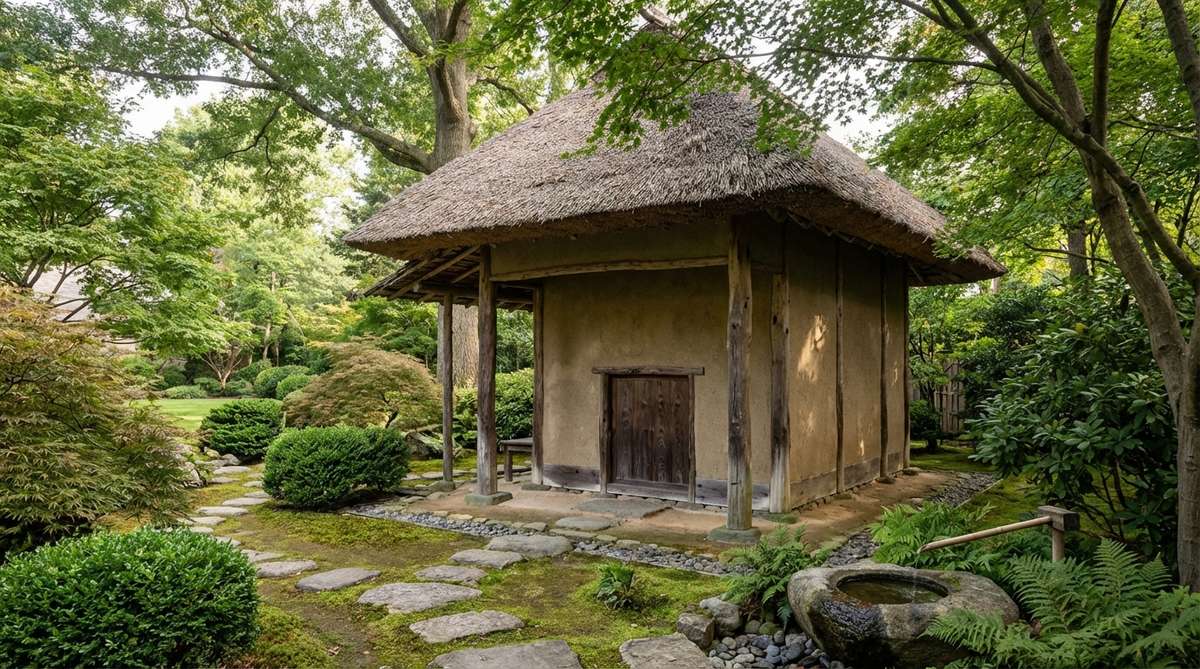
The soan represents the purest expression of wabi-sabi philosophy with thatched roofing, earthen walls, and rough-hewn timber posts. This rustic approach strips away ornamentation to reveal raw material beauty.
Designers position the entrance door (nijiriguchi) at just 26 inches high, requiring guests to bow and crawl through. This physical gesture removes social hierarchy and prepares participants mentally for the ceremony ahead.
The compact 4.5-tatami layout creates intimate proximity between host and guests. Install a sunken hearth (ro) offset from center to define functional zones without visual barriers.
2. Shoin-Style Formal Tea Pavilion
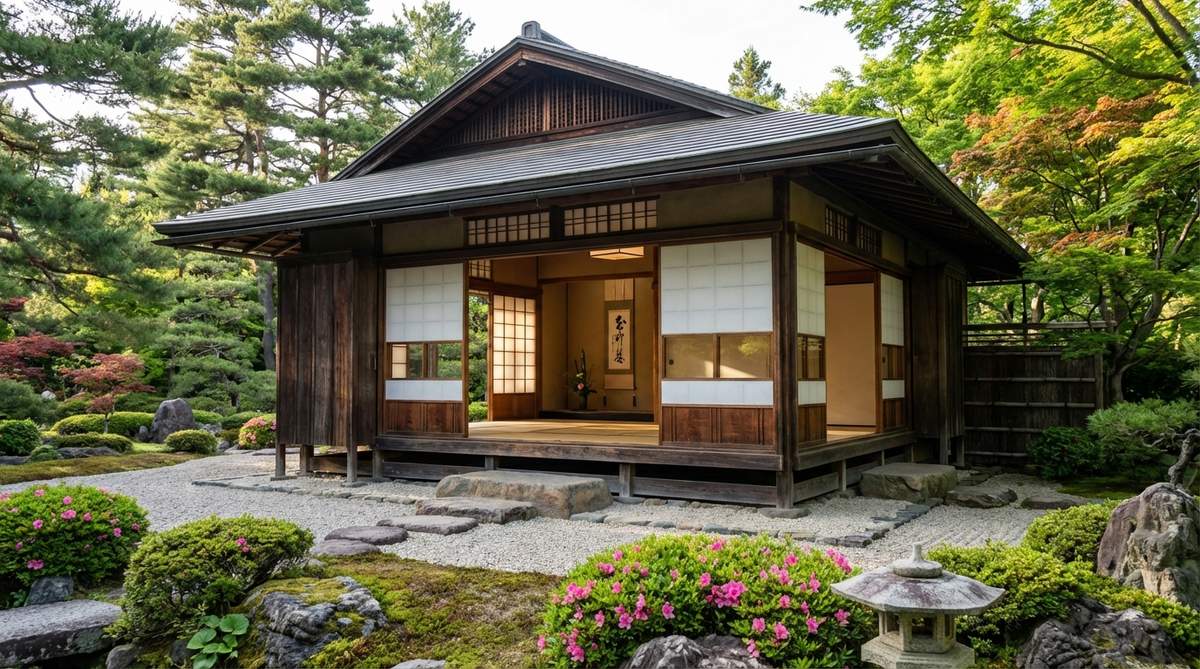
Shoin-style structures offer more architectural refinement through sukiya-zukuri principles with decorative alcoves and sliding fusuma panels. The design accommodates larger gatherings while maintaining ceremonial dignity.
Incorporate a tokonoma alcove measuring 3-4 feet wide for seasonal scroll displays and ikebana arrangements. Position this feature wall opposite the entrance to command visual attention as guests enter.
Add shoji windows along southern exposures to filter natural light through translucent paper screens. This diffused illumination creates the soft glow essential to tea ceremony atmosphere without harsh shadows.
3. Ro-Style Sunken Hearth Tea Room
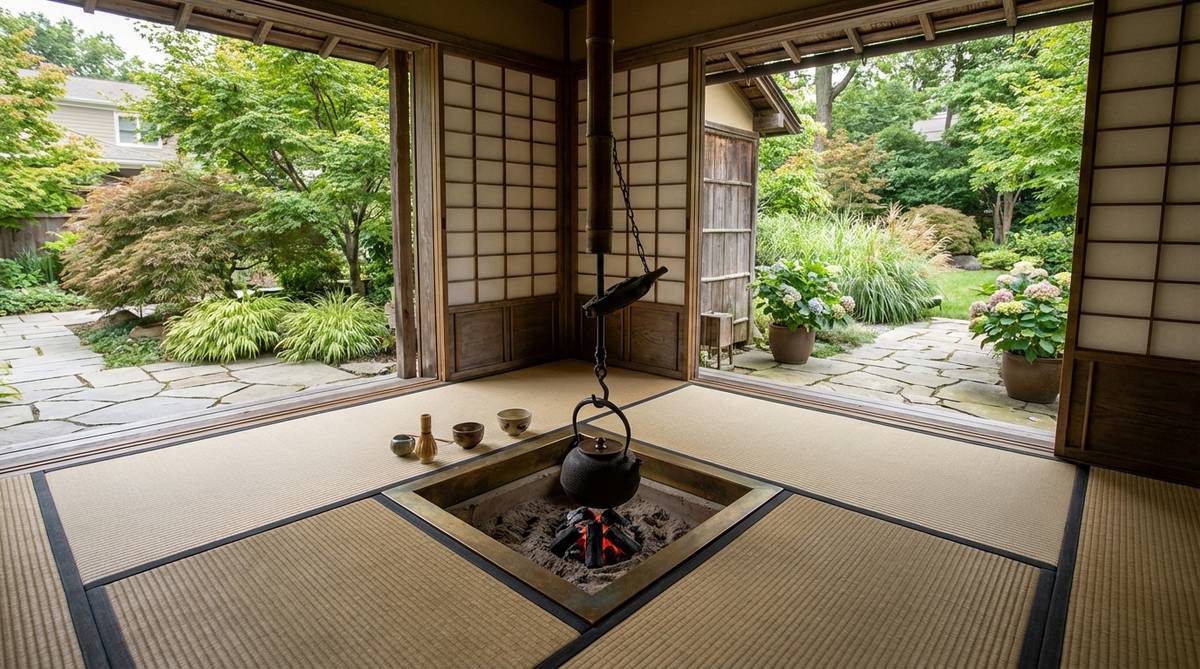
The ro configuration centers the structure around a square hearth cut 14 inches into the floor. Charcoal heating provides both practical warmth and ritualistic significance during winter ceremonies.
Frame the hearth opening with a bronze or iron rim secured flush to tatami edges. Position the kettle hook (jizai) directly overhead using adjustable bamboo or metal hardware.
Plan floor layouts to place the hearth one tatami mat away from the host’s position. This distance allows efficient kettle handling while maintaining proper ceremonial spacing from guests.
4. Furo-Style Portable Brazier Room
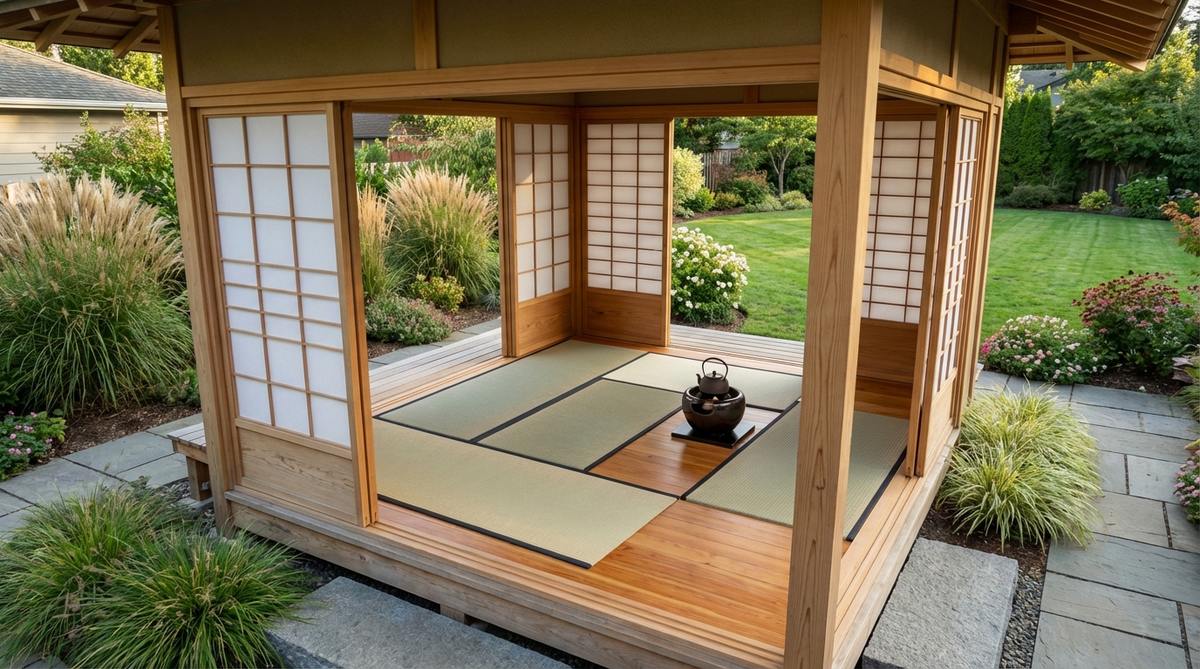
Furo structures omit sunken hearths in favor of movable ceramic braziers used during warmer months. This flexible approach suits American climates with distinct seasonal temperature variations.
Design open floor plans without permanent hearth infrastructure to maximize spatial versatility. The portable brazier can be positioned and removed as ceremonies require.
Install removable tatami sections that cover unused floor areas when braziers are not deployed. This maintains clean aesthetics and protects flooring during off-season storage.
5. Machiai Waiting Bench Structure
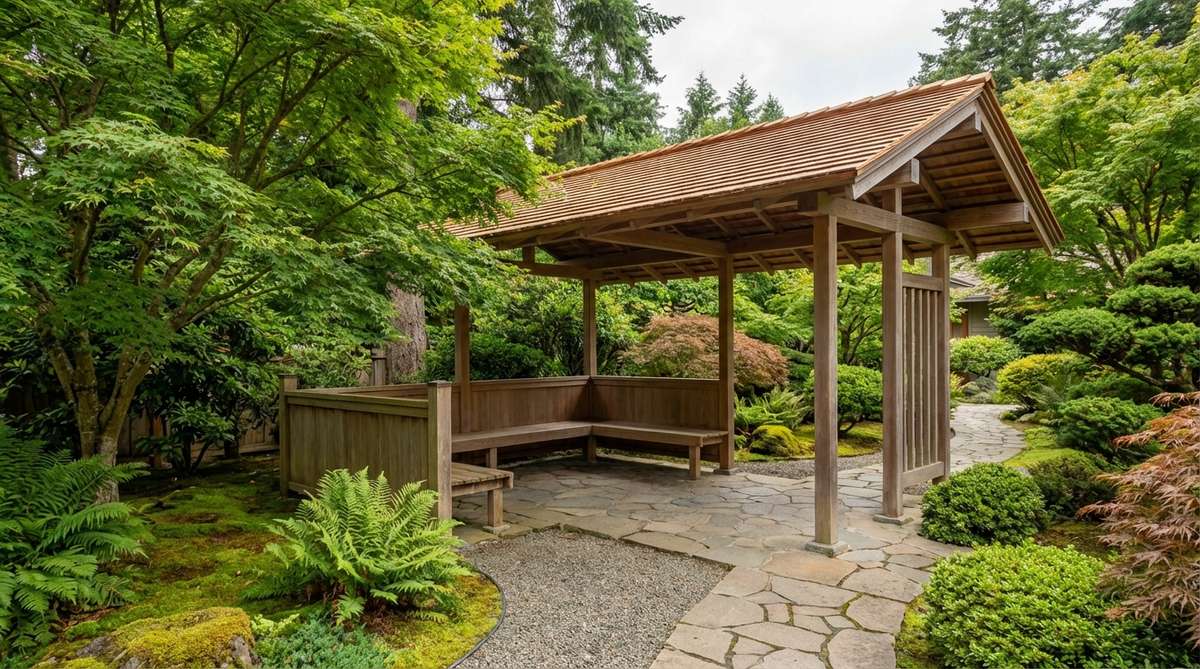
The machiai serves as a covered waiting area where guests gather before ceremonies begin. Roofed benches protect from weather while maintaining connection to the surrounding roji garden.
Build simple post-and-beam shelters 6-8 feet deep with slatted or shingled roofing. Include built-in benches at 18-inch height with back supports angled at 100 degrees for comfortable waiting.
Position machiai structures midway along garden paths between the entrance and tea house proper. This placement provides natural pause points for guests to compose themselves before proceeding.
6. Chumon Middle Gate Entry
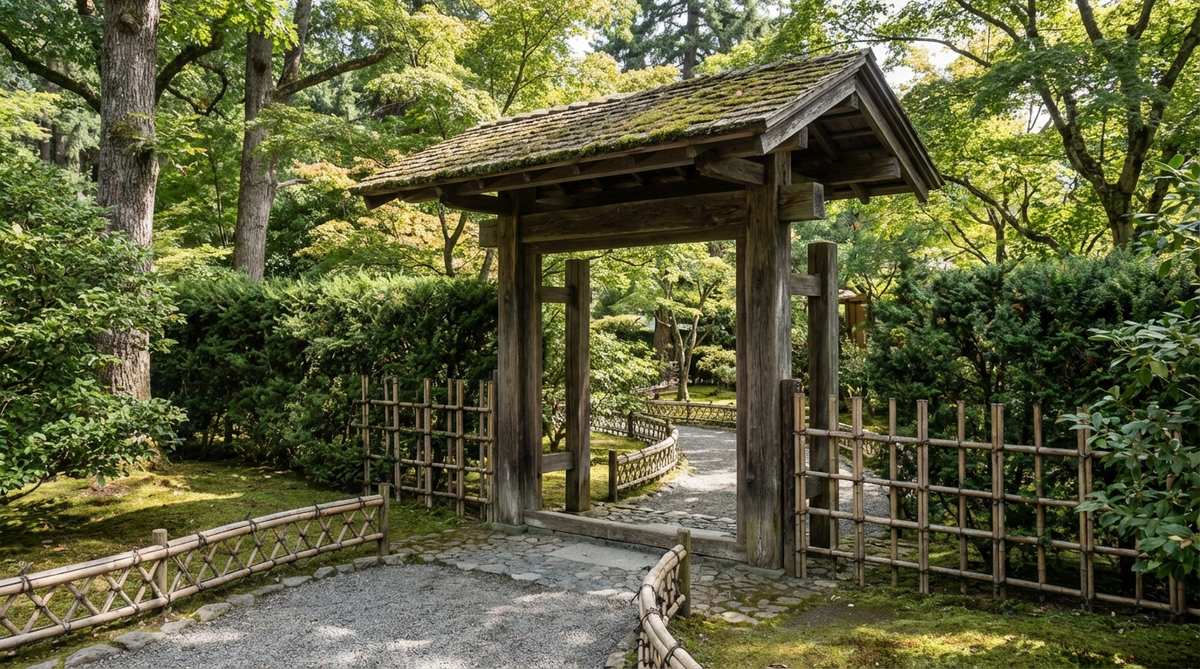
The chumon marks the threshold between outer and inner roji zones with a simple roofed gate structure. This architectural element signals transition from secular space into ceremonial territory.
Construct gates 5-6 feet tall using weathered timber posts capped with small hip roofs. Leave the passage unobstructed without doors to encourage flow while establishing psychological boundaries.
Flank gate posts with low bamboo fencing or natural hedging to define pathway edges. The contrast between open passage and closed sides reinforces the sense of crossing into sacred space.
Japanese Garden Shed & Storage Solutions
Functional japanese garden shed designs blend practical storage needs with aesthetic authenticity. These structures house tools, equipment, and seasonal decorations while complementing the tea garden’s visual harmony. Traditional joinery and natural materials elevate utilitarian buildings into landscape features.
7. Niwamono Okigoya Tool Storage
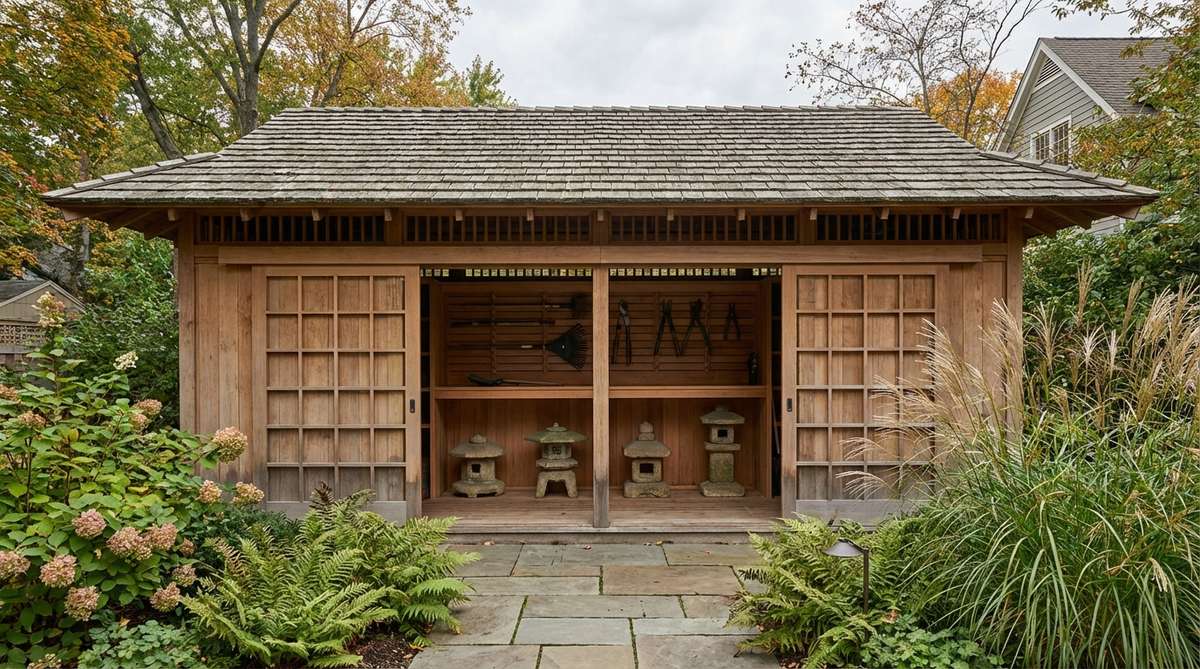
This dedicated garden storage building adapts tea house architectural language for practical purposes. Sliding doors, cedar construction, and shingled roofs maintain stylistic consistency across the property.
Design interiors with custom shelving systems along side walls for rakes, pruners, and water vessels. Include floor-level storage bays for heavy stone lanterns and larger ornamental pieces.
Integrate ventilation gaps beneath roof eaves to prevent moisture accumulation that damages wooden tools. Natural air circulation preserves equipment without mechanical systems.
8. Firewood Shelter with Bamboo Slat Walls
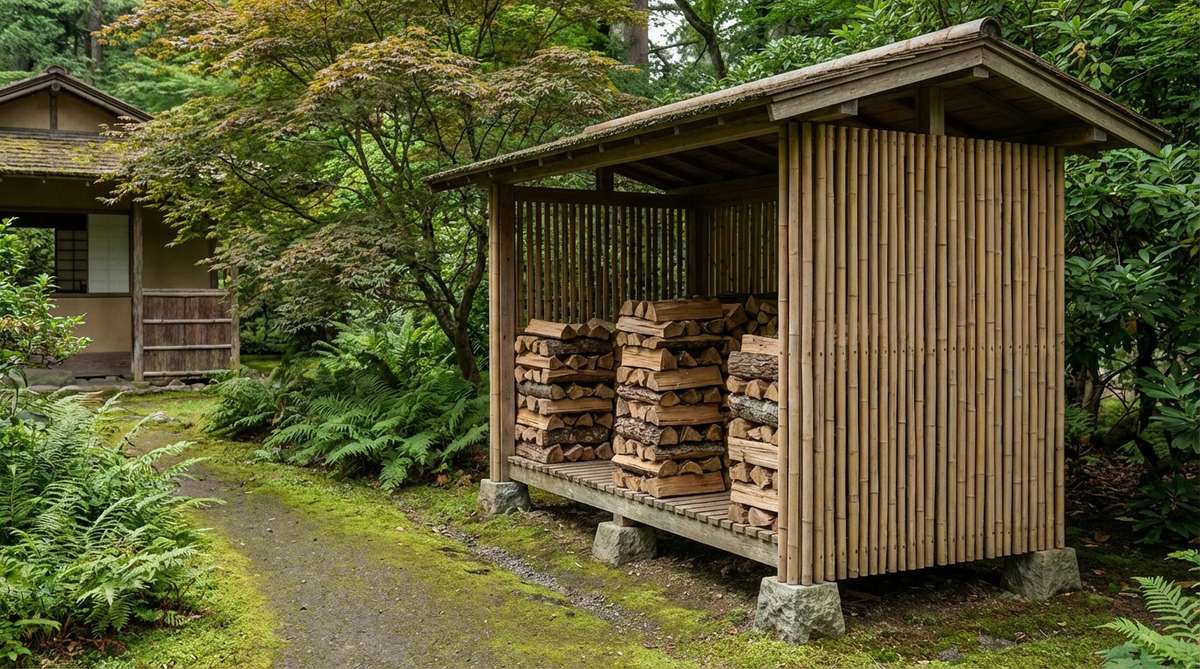
Open-sided firewood structures use vertical bamboo slats to promote air drying while deterring pests. The geometric pattern created by uniform bamboo poles adds textural interest to functional architecture.
Build three-sided shelters with southern exposures left open to maximize solar drying and easy access. Stack wood in alternating layers that allow continuous airflow between logs.
Raise storage platforms 8-12 inches above ground level using stone footings or timber skids. Elevation prevents ground moisture wicking into stored wood while discouraging termite intrusion.
9. Ceramic Ware Storage Kura
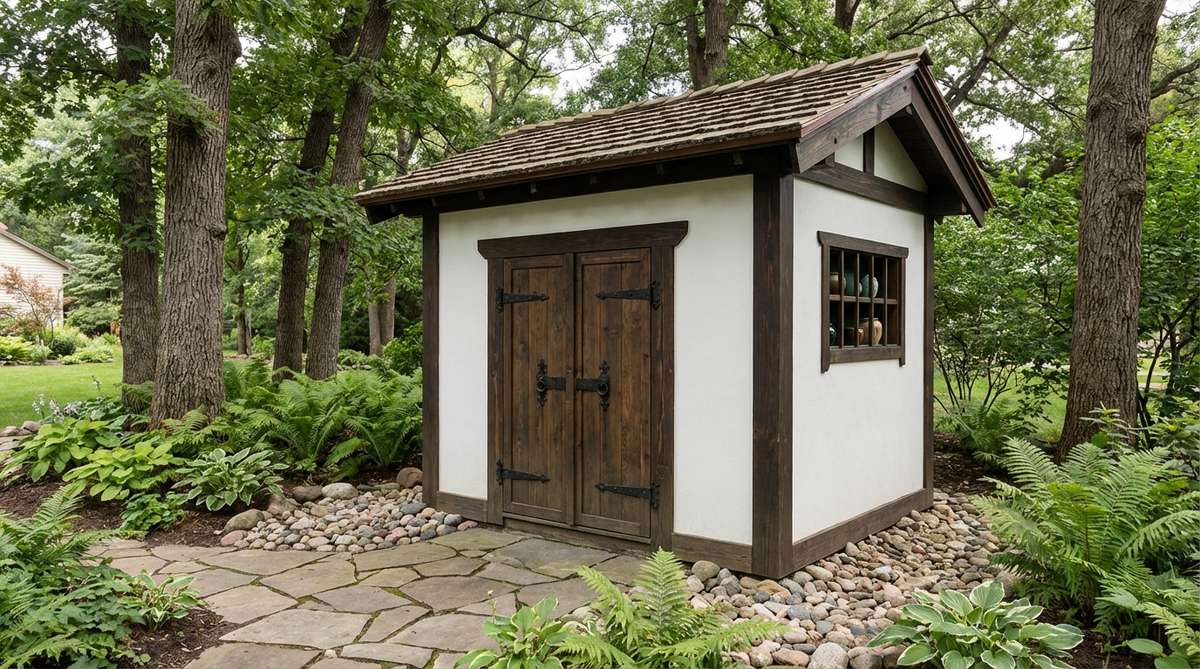
Miniature kura-style buildings protect valuable tea ceremony ceramics with thick earthen walls and climate-controlled interiors. White plaster exteriors contrasted with dark trim create striking visual statements.
Construct walls using double-stud framing packed with clay-straw insulation for thermal mass. Exterior lime plaster provides weather resistance and reflects summer heat.
Install heavy timber doors reinforced with metal hardware to secure valuable collections. Interior shelving should include felt-lined surfaces to cushion delicate pottery during storage.
10. Bonsai Display Shelter
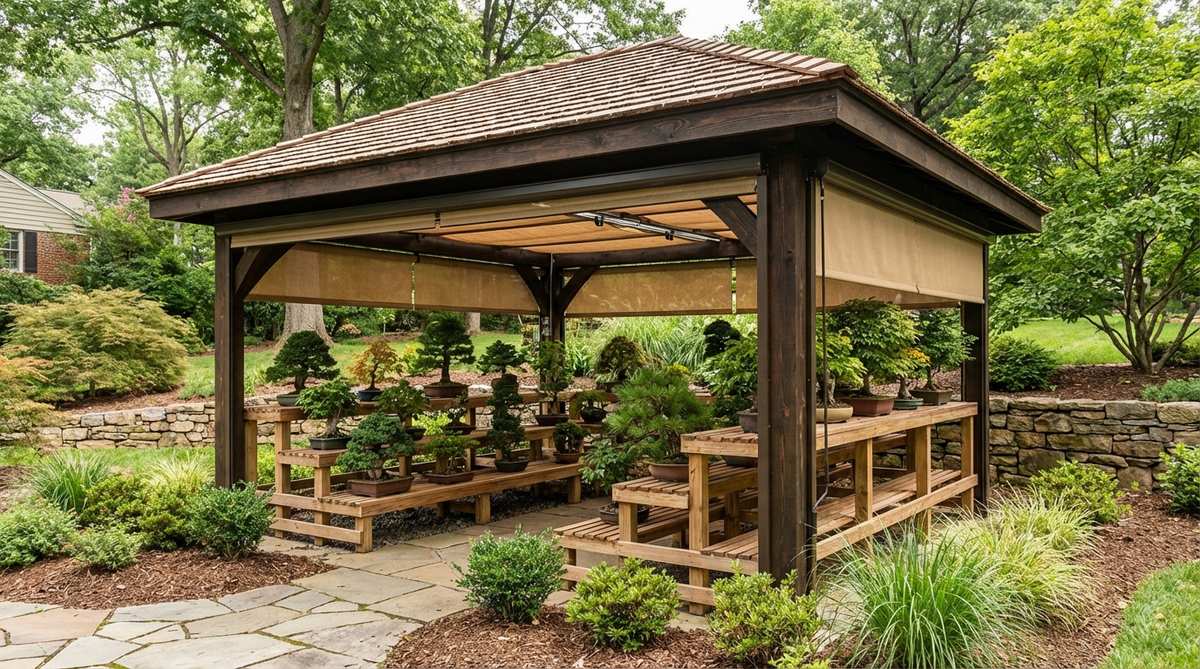
Dedicated bonsai structures feature open-front designs with graduated display benches arranged by tree height. Hip roofs protect specimens from excessive sun and rain while maintaining visibility.
Build tiered shelving 30-48 inches deep to accommodate various pot sizes with proper drainage underneath. Rear shelves sit higher than front rows to ensure each tree receives adequate light exposure.
Add adjustable shade screens on overhead tracks to modulate summer sun intensity. Bamboo reed or wooden slat screens cast dappled shadows that prevent leaf scorch on delicate species.
11. Garden Maintenance Equipment Bay
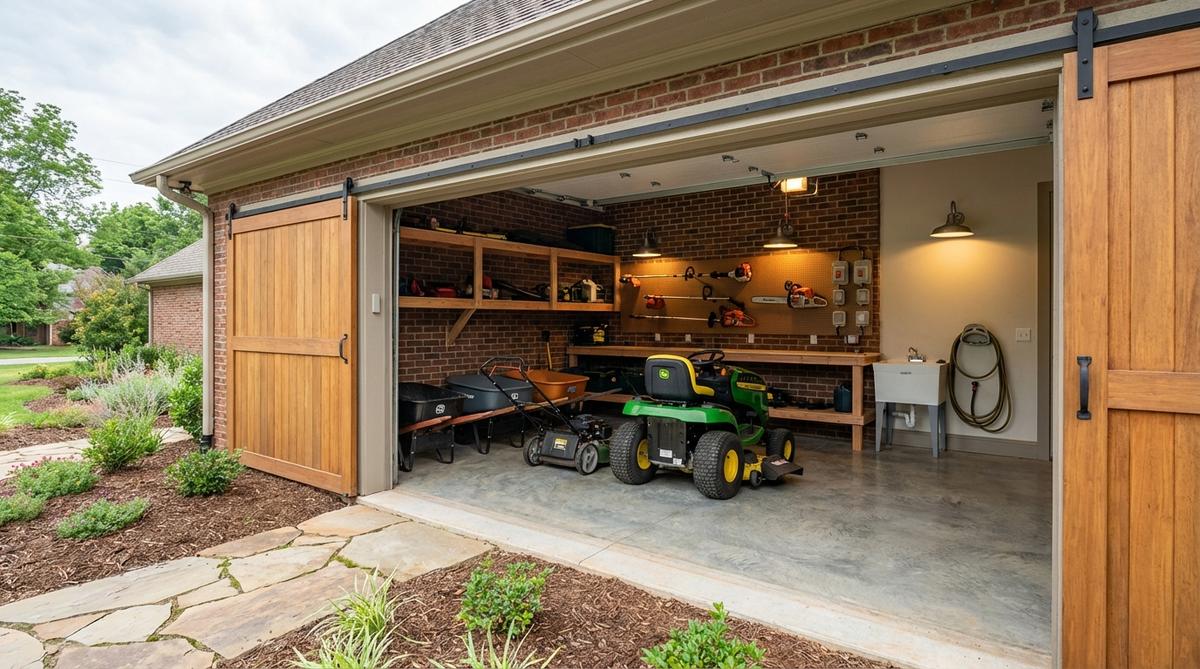
Larger maintenance bays accommodate mowers, wheelbarrows, and power equipment alongside hand tools. Dual sliding doors provide wide access for moving bulky items efficiently.
Partition interior spaces with removable panels that separate clean storage from soiled equipment areas. Concrete or gravel floors in work zones simplify debris cleanup after use.
Include electrical outlets and task lighting for equipment maintenance and winter project work. Battery charging stations keep cordless tools ready without cluttering the workshop area.
Japanese Garden Temple & Meditation Pavilions
Contemplative japanese garden temple structures serve as meditation retreats and spiritual focal points beyond tea ceremony use. These pavilions draw inspiration from Buddhist architecture while adapting scale for residential gardens. Elevated platforms and graceful rooflines create commanding presences within landscape compositions.
12. Azumaya Four-Post Viewing Pavilion
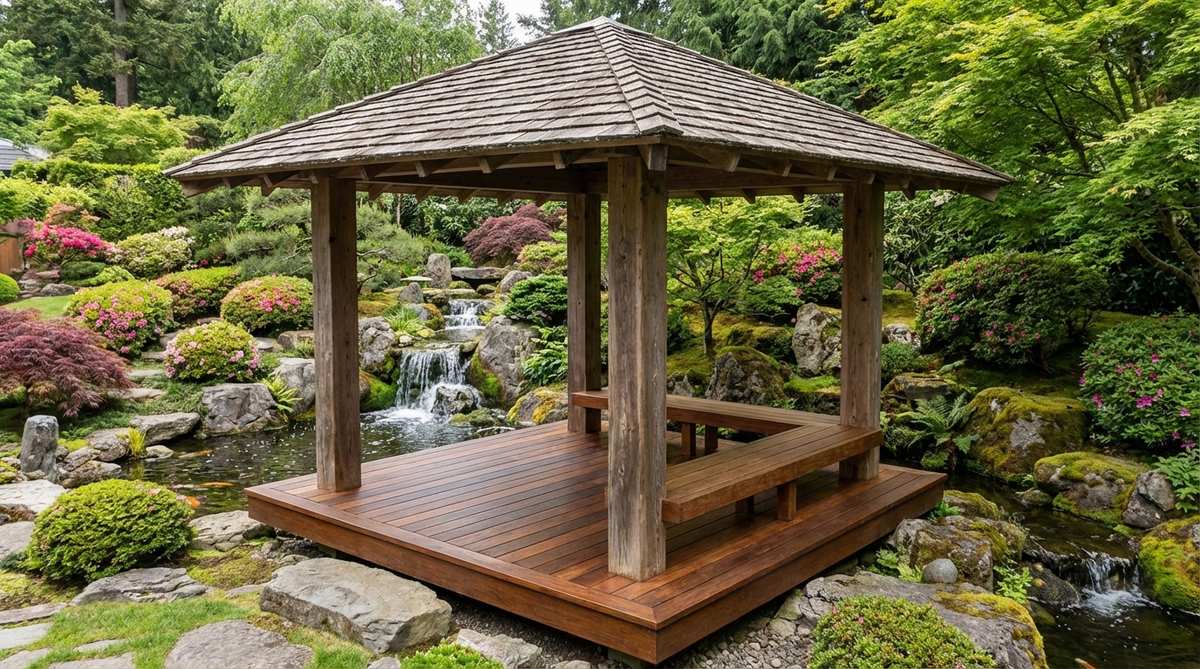
The azumaya uses four corner columns supporting a pyramidal roof with no walls or enclosures. This open design frames scenic views while providing weather protection for meditation or contemplation.
Position these structures at elevated garden points overlooking water features, stone arrangements, or borrowed scenery. The 10-12 foot square platform accommodates small groups without obstructing sightlines.
Finish floors with polished wood decking or traditional tatami mats depending on intended use. Built-in benches along two sides offer seating without introducing furniture clutter.
13. Tahoto Two-Story Pagoda Tower
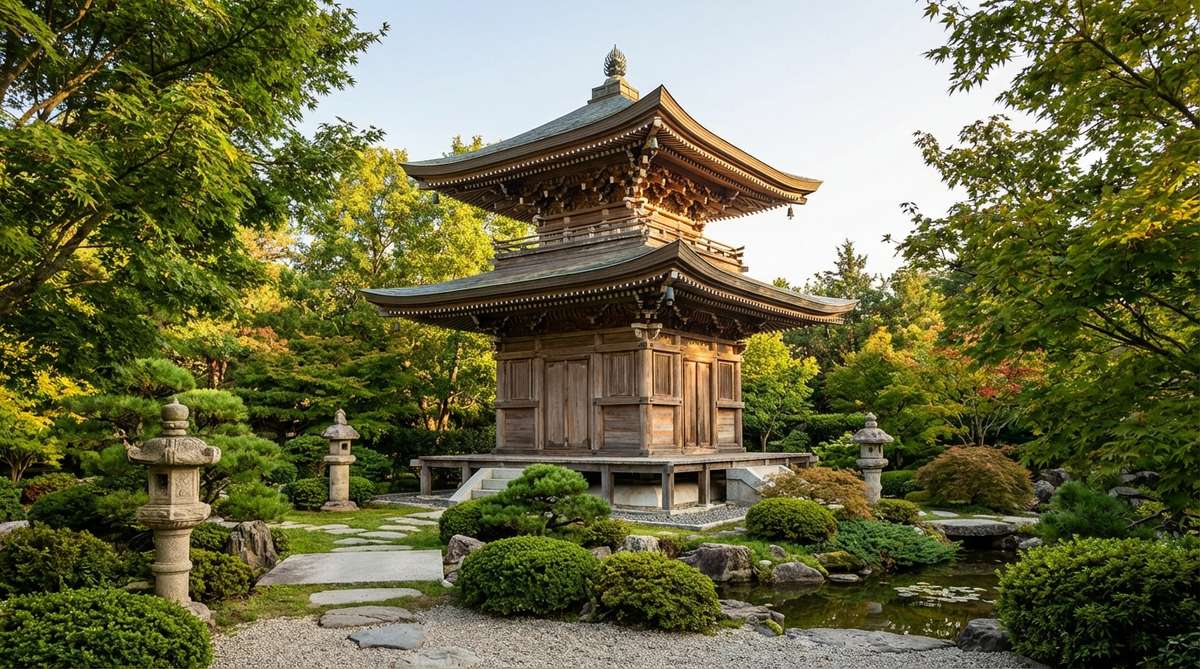
Miniature pagoda structures add vertical drama to garden compositions with stacked roofs and ornamental finials. These symbolic elements reference Buddhist cosmology while serving as landmark features.
Build scaled versions 12-16 feet tall using graduated roof tiers that decrease in diameter ascending upward. Timber frame construction with decorative brackets (tokyō) supports each overhanging eave layer.
Install interior shelves for displaying religious statuary, seasonal ornaments, or lighting elements. The upper level remains decorative while the ground floor functions as a display alcove.
14. Hondo Main Hall Meditation Room
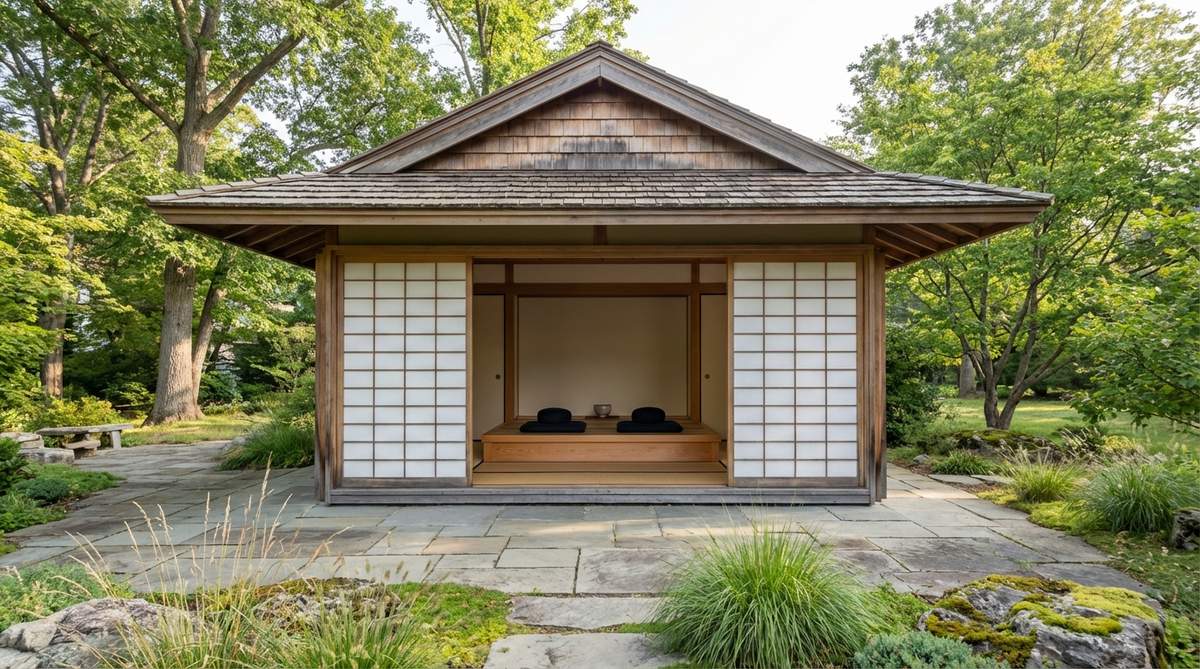
Simplified hondo designs adapt temple architecture for private meditation practice with single-room layouts and minimal ornamentation. Wide eaves and gentle roof slopes create sheltering forms.
Orient buildings to face east for morning light during meditation sessions. Large shoji panels along the front wall open completely to merge indoor and outdoor spaces during fair weather.
Install raised platforms (dan) at rear walls to elevate meditation cushions or small altars above floor level. This spatial hierarchy defines functional zones without permanent partitions.
15. Bell Tower Structure (Shōrō)
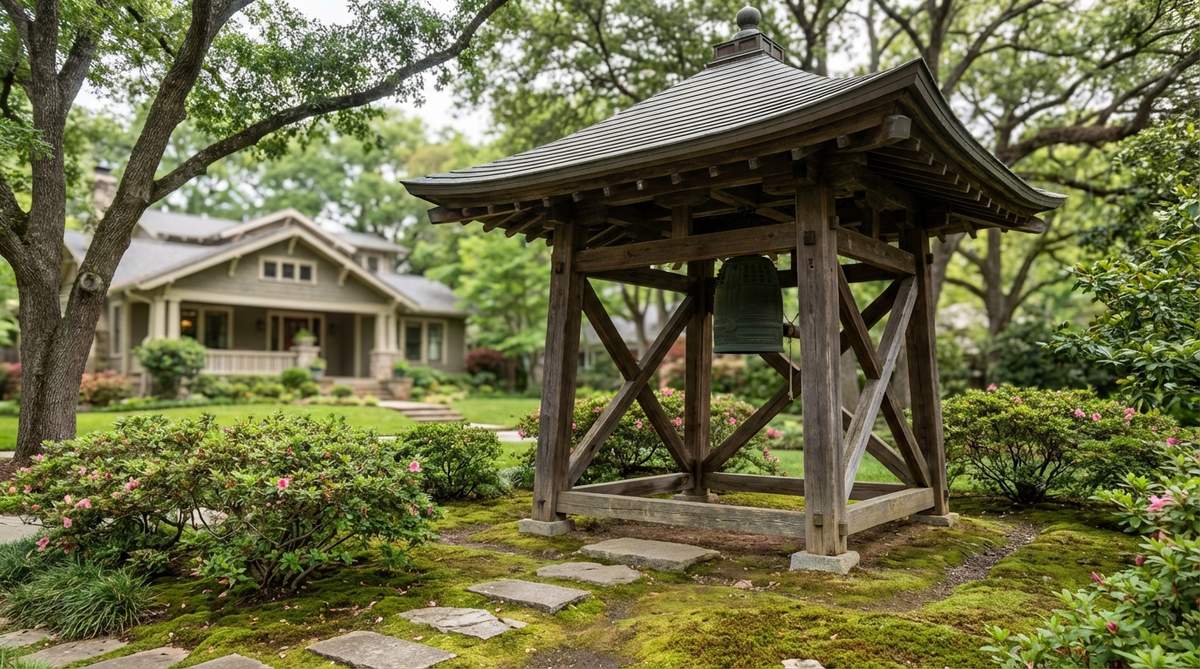
Garden bell towers house bronze bells used for time-keeping or ceremonial ringing. Open-sided towers with flared roofs allow sound to resonate across the landscape.
Design structures 8-10 feet tall with four posts and cross-bracing to support bell weight. Heavy timber construction prevents structural vibration during bell strikes.
Suspend bells from central beams using adjustable rope or chain hardware. Include a striking log (shumoku) hung horizontally for guests to sound the bell during ceremonies.
16. Guardian Gate Structure (Sanmon)
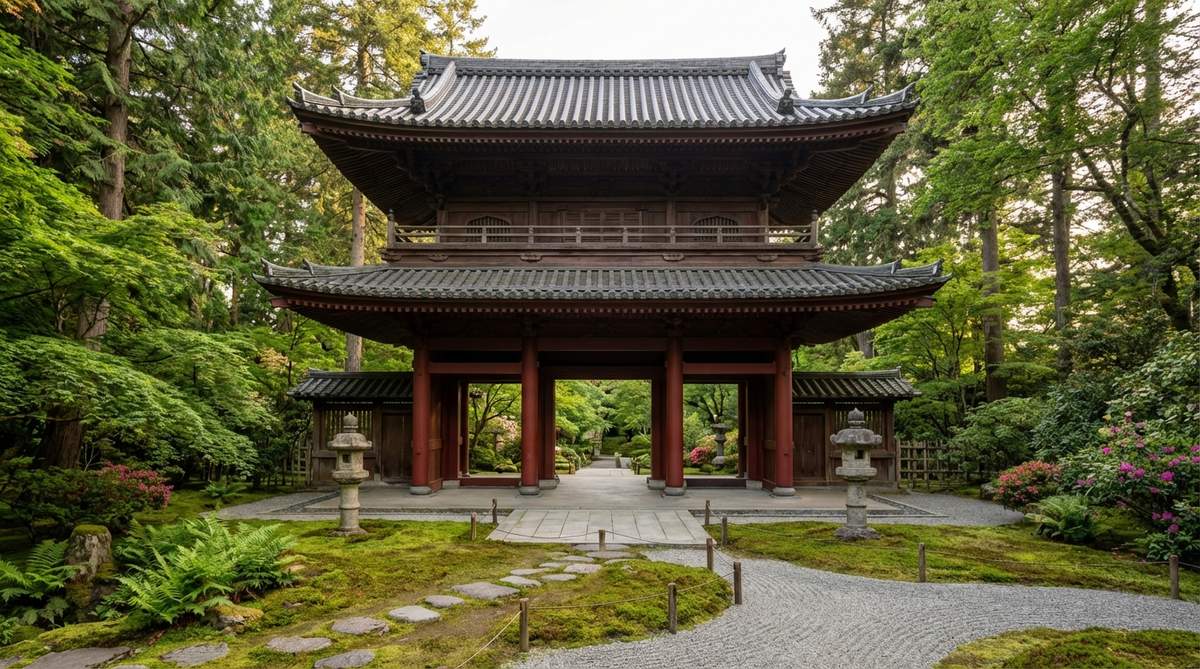
Symbolic entrance gates establish formal thresholds into sacred garden zones with substantial post-and-beam construction. These structures convey permanence and spiritual significance through architectural presence.
Build gates 10-14 feet tall with double-tiered roofs and substantial column bases. Traditional designs include guardian statues in side niches, though contemporary versions omit figurative elements.
Finish columns in deep red pigments or natural weathered timber depending on desired formality levels. Hardware includes decorative metal fittings at beam connections for structural reinforcement and visual interest.
Modern InterpretationsContemporary Tea House Structures
Contemporary architects reinterpret traditional principles using modern materials and construction methods. These designs honor ceremonial essence while addressing current building codes, climate control needs, and aesthetic preferences. Glass, steel, and concrete join wood and paper in harmonious compositions.
17. Glass-Walled Minimalist Tea Pavilion
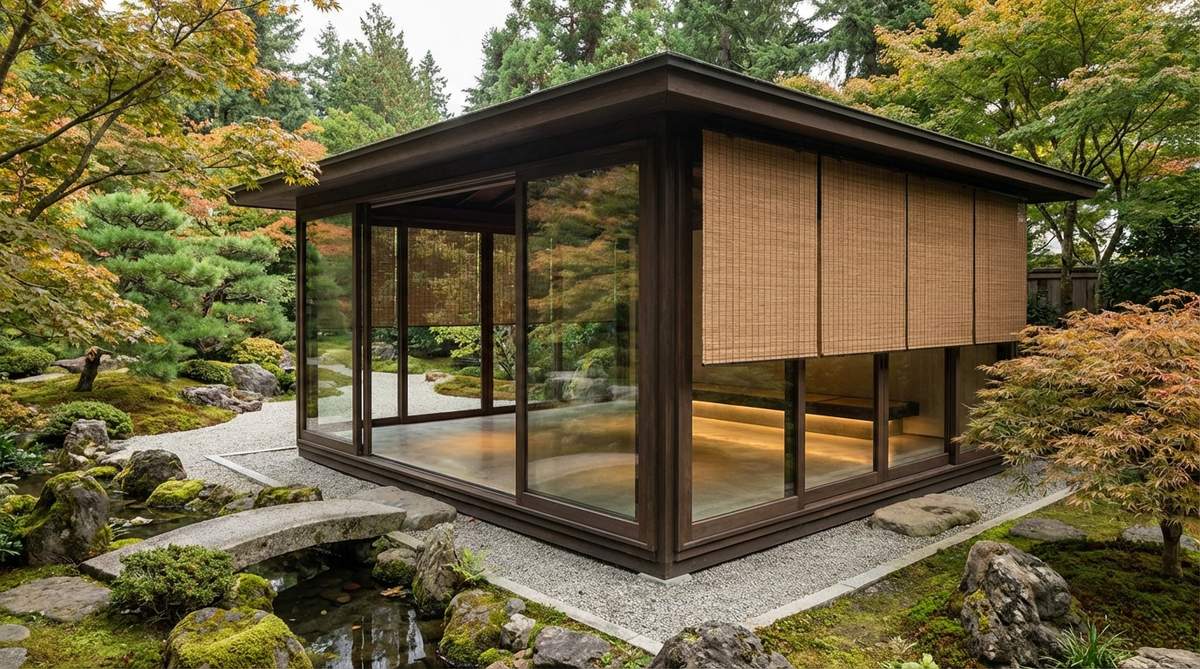
Floor-to-ceiling glass panels replace traditional shoji screens to maximize transparency and landscape connection. Frameless glazing systems create uninterrupted views while maintaining weather protection.
Install automated shade screens within cavity walls to control solar heat gain during ceremonies. Programmable systems adjust transparency based on time of day and seasonal sun angles.
Heated floors eliminate ro hearths while providing comfortable winter temperatures. Radiant systems integrated beneath stone or tile surfaces distribute warmth evenly without visible equipment.
18. Concrete and Cedar Fusion Structure
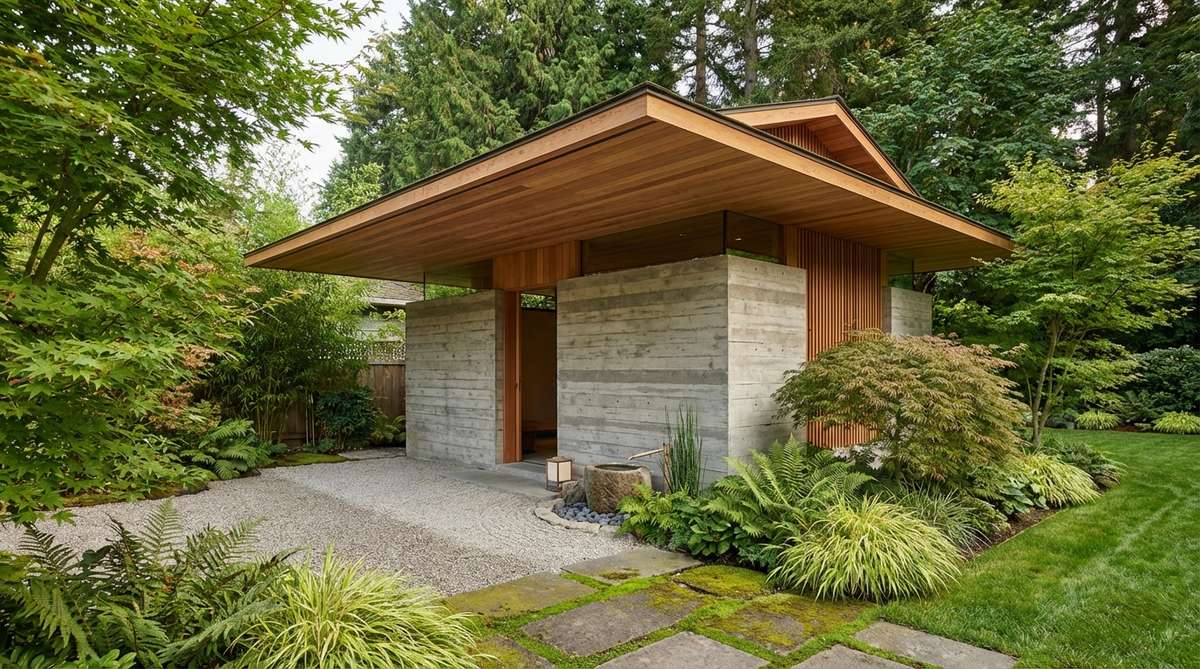
Poured concrete walls provide thermal mass and modern aesthetics while cedar accents soften industrial materials. Board-formed concrete textures echo wood grain patterns in unexpected applications.
Design concrete volumes as protective shells housing delicate cedar interior finishes. The juxtaposition between rough exterior and refined interior recreates traditional wabi-sabi contrasts.
Cantilever roof overhangs from concrete walls to create deep eaves without visible support posts. This structural expression honors traditional proportions through contemporary engineering.
19. Prefabricated Modular Tea House
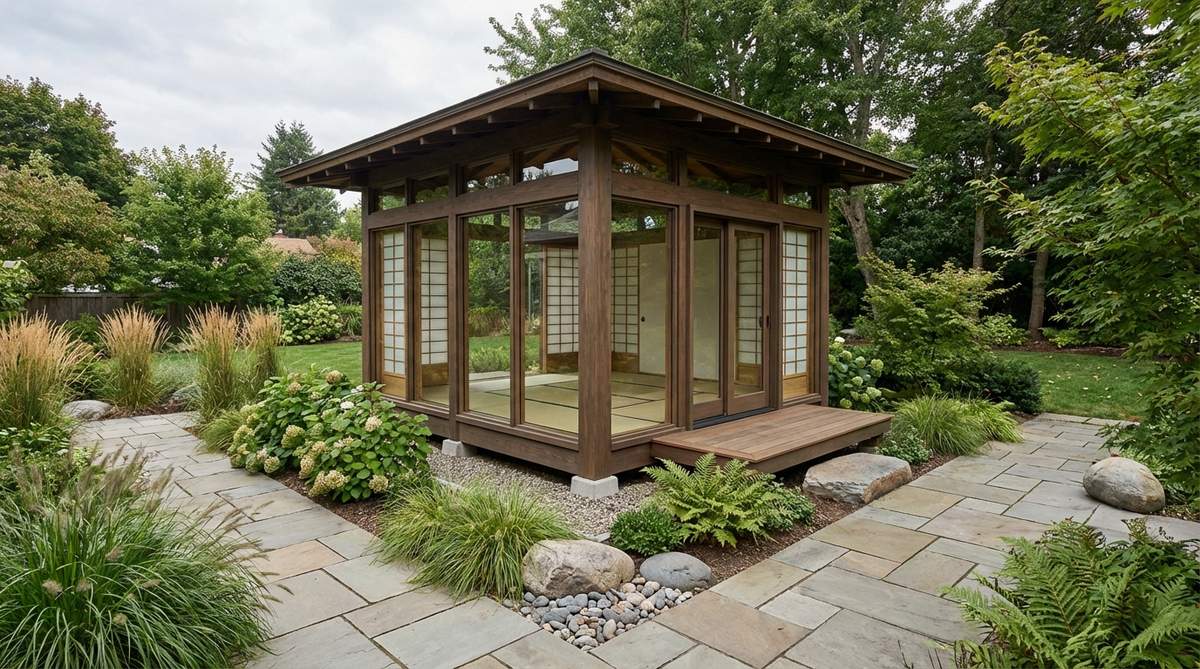
Factory-built modules ship complete to installation sites for rapid assembly without sacrificing traditional detailing. Precision manufacturing ensures consistent joinery quality and weathertight construction.
Specify panel systems with integrated shoji screens, tatami flooring, and finished wall surfaces. Modules connect using concealed fasteners that create seamless interior transitions.
Transport structures in sections small enough for standard delivery trucks and narrow property access. Two-person crews can erect complete buildings in single-day installations.
20. Living Roof Tea Garden Shelter
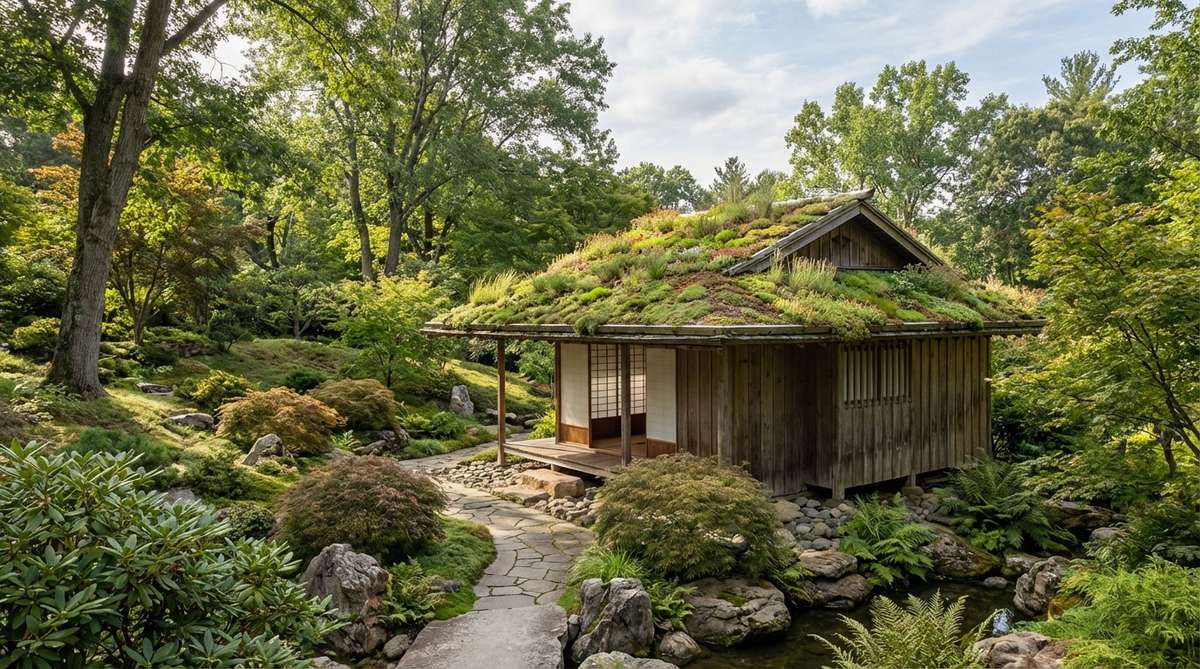
Planted roof systems integrate structures into landscape topography using native sedums, mosses, and low grasses. This approach reduces visual impact while providing ecological benefits.
Install waterproof membranes and root barriers beneath 4-6 inches of lightweight growing medium. Drainage layers prevent water accumulation that damages structural components.
Select drought-tolerant plant species that establish without irrigation once mature. Shallow-rooted varieties prevent membrane penetration while tolerating roof exposure conditions.
21. Floating Tea House Over Water
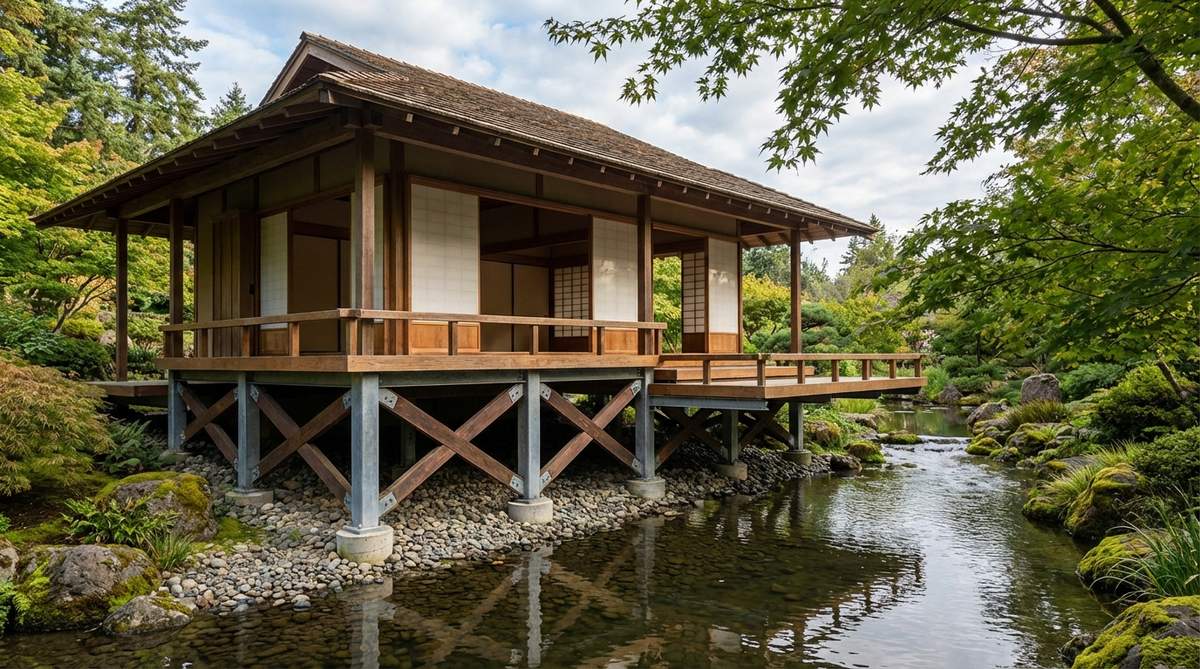
Structures elevated on posts above ponds or streams create unique sensory experiences with reflected light and water sounds. Cantilevered platforms extend over water surfaces for dramatic effect.
Engineer pier foundations to withstand seasonal water level fluctuations and flood events. Galvanized steel posts embedded in concrete footings resist moisture damage.
Design deck understructures with cross-bracing visible from shoreline perspectives. Exposed framework becomes sculptural element when viewed across water surfaces.
Japanese Garden HouseYear-Round Retreats
Full-scale japanese garden house structures function as complete living spaces beyond ceremonial use. These buildings incorporate sleeping quarters, kitchenettes, and modern amenities while maintaining authentic architectural character. Insulated construction and climate control enable four-season occupation in American temperature zones.
22. Sukiya-Style Guest House
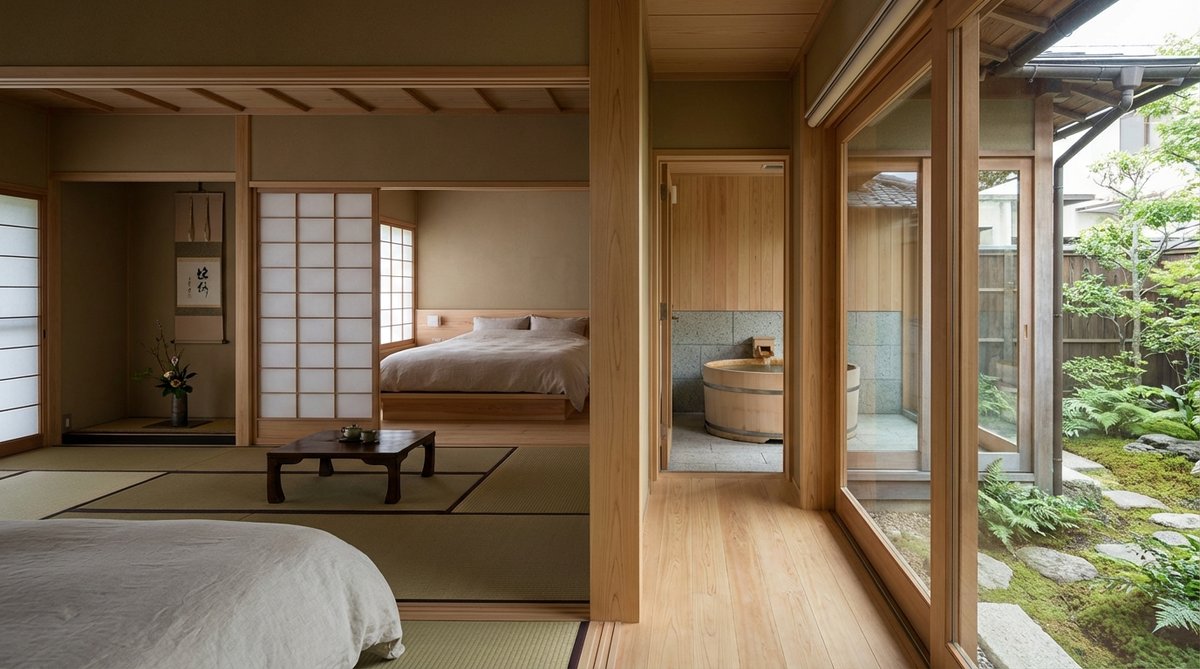
Multi-room layouts combine tea ceremony spaces with sleeping quarters and bathing facilities for extended stays. Sukiya-zukuri principles guide room proportions and circulation patterns throughout.
Connect spaces using interior corridors (roka) lined with shoji screens that modulate light and privacy. Sliding panels reconfigure floor plans from separate rooms to open areas for gatherings.
Install compact wet rooms with Japanese soaking tubs (ofuro) measuring 40×50 inches. Deep tubs allow seated bathing in less floor space than Western designs require.
23. Insulated Four-Season Tea Retreat
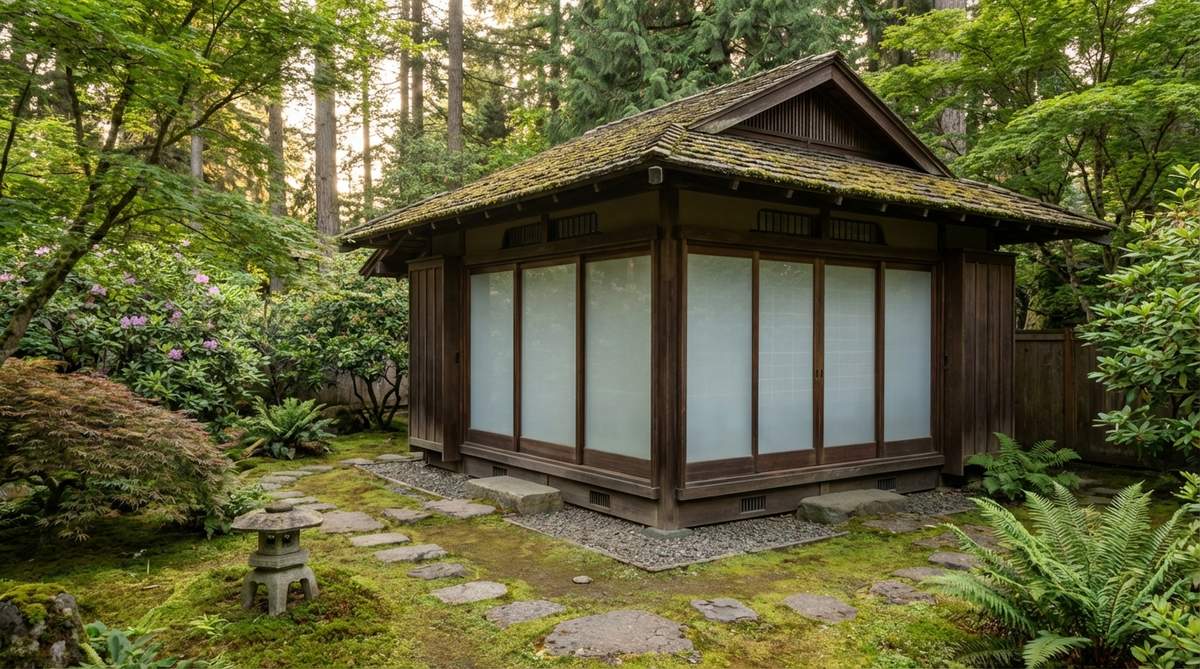
Spray foam insulation and high-performance windows enable winter heating and summer cooling without compromising traditional aesthetics. Concealed mechanical systems maintain comfort invisibly.
Specify triple-pane glazing with low-E coatings in shoji-style frames for thermal performance. Gas-filled cavities reduce heat transfer while maintaining visual transparency.
Install mini-split heat pumps with ceiling-mounted air handlers disguised behind decorative grilles. Efficient systems condition spaces without ductwork penetrations through walls and ceilings.
24. Tea House with Artist Studio
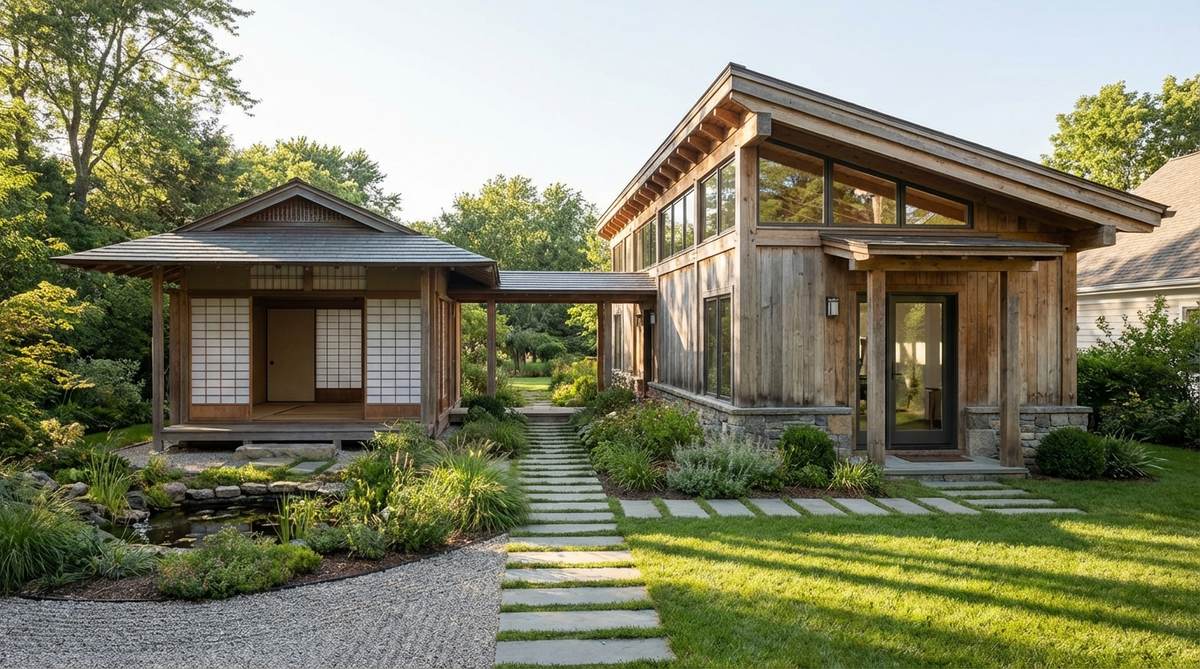
Dual-purpose structures dedicate one wing to ceremony while adjacent spaces serve as painting, pottery, or calligraphy studios. Shared aesthetic sensibilities unite creative practices under one roof.
Design studio areas with north-facing windows for consistent natural light without direct sun glare. High ceilings and open floor plans accommodate easels, pottery wheels, and work tables.
Separate studio entrances allow independent access without disturbing tea ceremony activities. Guests can appreciate artwork displayed in tokonoma alcoves created in adjacent studio spaces.
25. Garden House with Moon-Viewing Platform
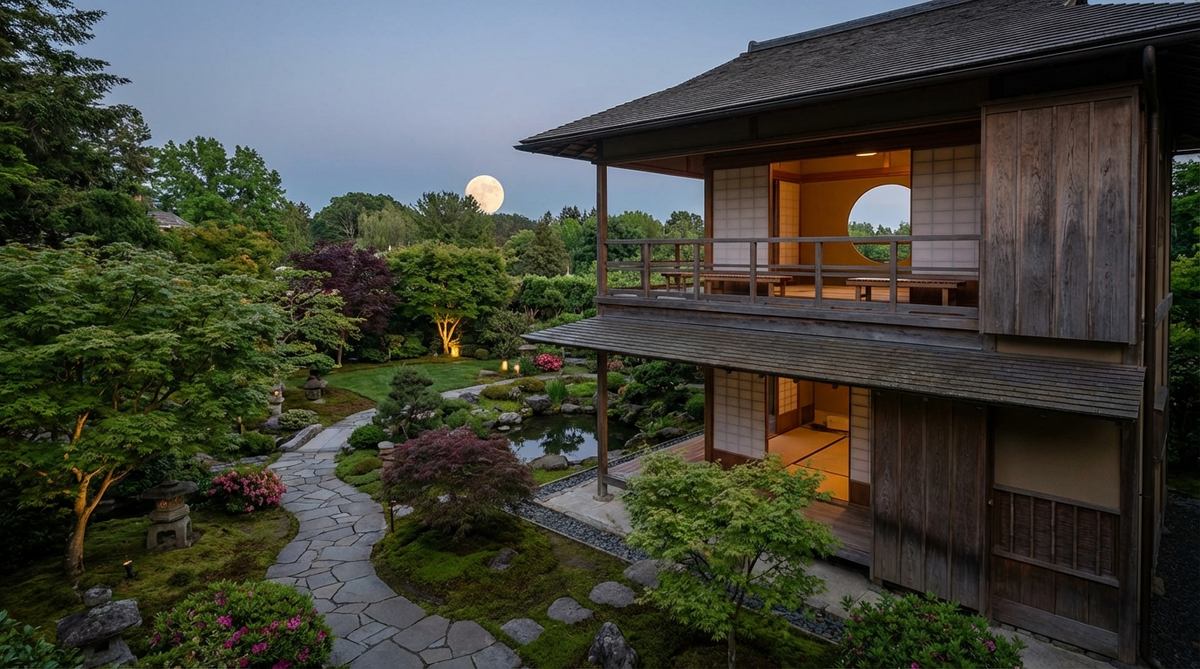
Second-story platforms (tsukimidai) extend from main structures for elevated views of evening gardens and celestial observations. Open railings and minimal furniture encourage contemplation.
Build platforms 12-16 feet above grade to clear understory vegetation and capture distant views. Structural cantilevers eliminate ground-level supports that obstruct garden sight lines.
Furnish with low benches or cushioned seating positioned to frame specific views. Seasonal plantings coordinate bloom times with full moon cycles for enhanced evening displays.
26. Tea Garden Writer’s Cabin
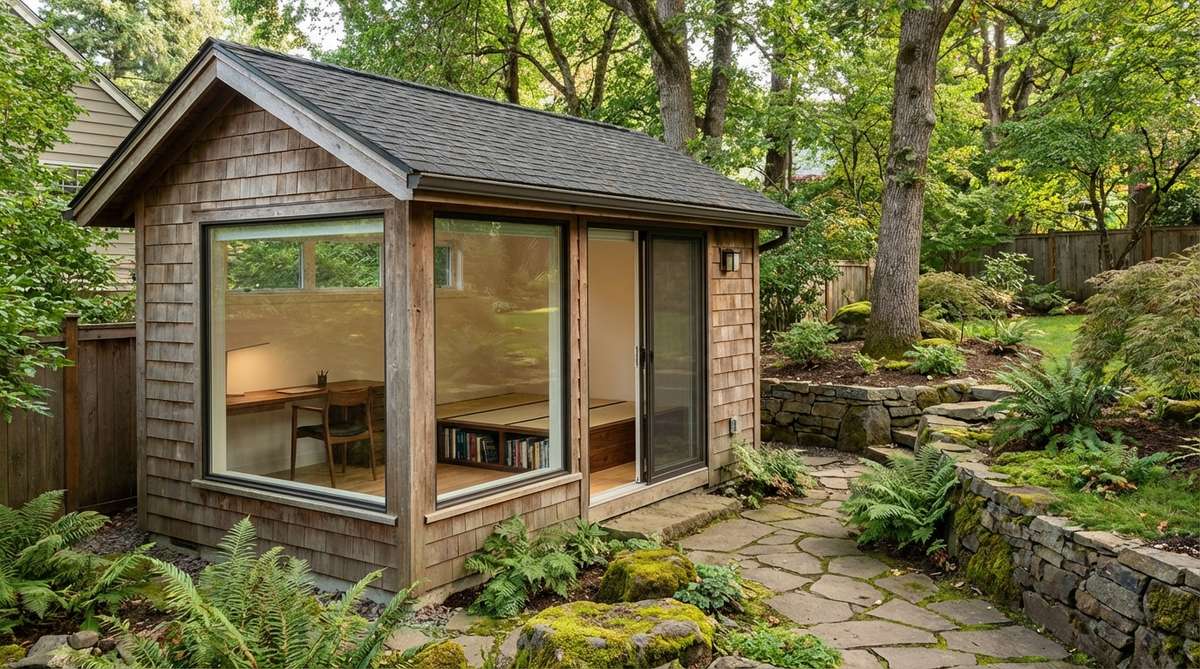
Compact writing retreats adapt tea house tranquility for literary work with built-in desks and library shelving. Sound-dampening construction maintains quiet environments for concentration.
Position writing desks perpendicular to windows to receive indirect natural light without screen glare. Garden views provide visual rest breaks without causing distraction during focused work.
Install under-floor book storage using shallow drawers beneath raised tatami platforms. This space-efficient approach houses reference libraries without wall-mounted shelving.
27. Wellness Retreat with Yoga Studio
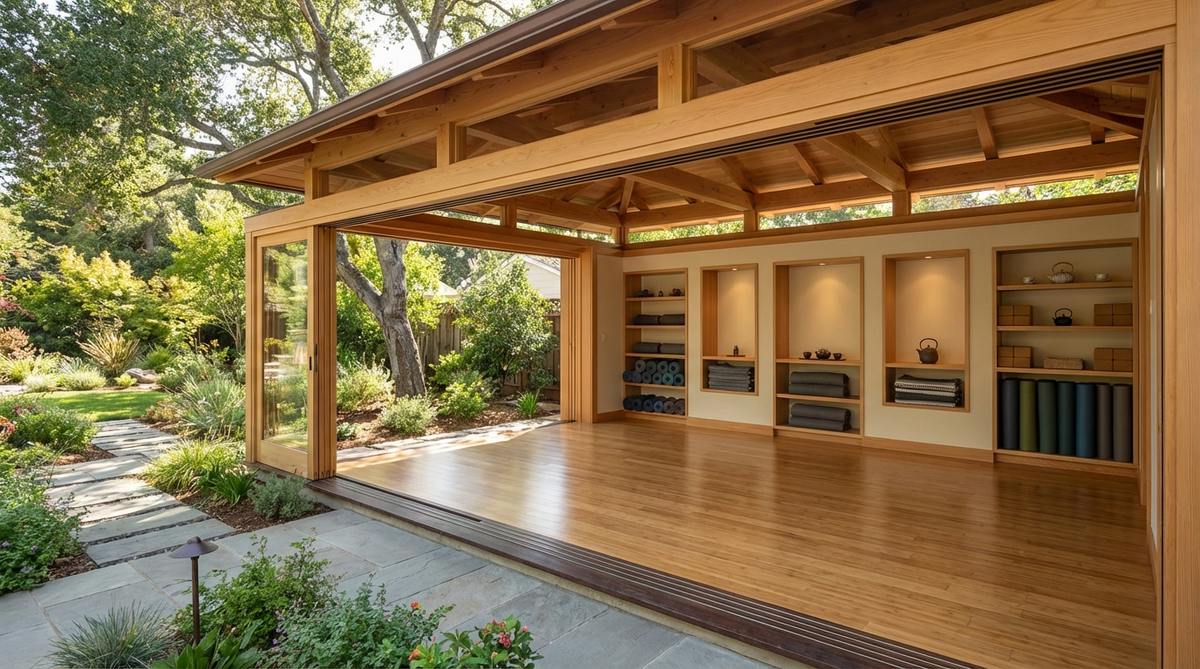
Tea ceremony principles translate naturally to yoga practice spaces emphasizing mindfulness and body awareness. Open floor plans accommodate group classes while maintaining intimate scale.
Finish floors with smooth bamboo planking suitable for bare feet and yoga mats. Radiant heating beneath surfaces provides comfort during winter practices.
Equip walls with discreet storage niches for yoga props, meditation cushions, and ceremonial tea implements. Dual functionality allows seamless transitions between activities throughout the day.
Bringing Tea House Tranquility to Your Garden
These japanese garden tea house structures demonstrate how ancient ceremonial architecture adapts to contemporary American landscapes while preserving essential spiritual qualities. Whether you choose traditional chashitsu authenticity or modern interpretations, the core principles of humility, natural materials, and mindful design remain constant. Start with structures matching your available space and ceremonial intentions, then expand your garden composition as experience and budget allow. The journey from initial construction to mature garden integration mirrors the tea ceremony itself—patient, deliberate, and deeply rewarding.
Frequently Asked Questions
What size should a traditional Japanese tea house be?
Authentic chashitsu measure 4.5 to 10 tatami mats (approximately 90-180 square feet), with 4.5 mats being the most traditional size established by Sen no Rikyu. This intimate scale seats 2-5 people comfortably for tea ceremonies. American adaptations often increase to 200-300 square feet to accommodate modern expectations for comfort and accessibility while maintaining the essential character of close proximity between host and guests.
What materials are used to build Japanese tea houses?
Traditional construction uses Japanese cedar or cypress for structural framing, bamboo for decorative elements and accents, rice paper (washi) for shoji screens, and clay mixed with straw for wall plaster. Roofing typically employs cedar shingles, thatch, or ceramic tiles depending on regional traditions. Contemporary American builds substitute local cedar, pine, or redwood while maintaining authentic joinery techniques. Avoid pressure-treated lumber for visible elements as chemicals and green tinting conflict with natural aesthetics.
Do I need a permit to build a tea house in my backyard?
Most municipalities require building permits for structures exceeding 120-200 square feet or those with electrical, plumbing, or permanent foundations. Smaller tea houses classified as accessory structures may fall under exemptions, but zoning setback requirements from property lines still apply universally. Contact your local building department early in planning to verify specific regulations for your area. Historic district properties face additional design review processes that scrutinize architectural compatibility.
How much does it cost to build a Japanese tea house?
Custom-built traditional tea houses range from $40,000-$150,000 depending on size, materials, and craftsmanship level. Prefabricated modular units start around $25,000 for basic 100-square-foot structures. DIY projects using standard construction techniques cost $15,000-$35,000 for materials if you provide labor. Premium elements like hand-carved details, imported Japanese materials, and master carpenter joinery can push costs above $200,000 for museum-quality installations. Site preparation, foundation work, and landscaping integration add 20-30% to base structure costs.
Can Japanese tea houses be used year-round in cold climates?
Traditional uninsulated tea houses function primarily in mild weather, but modern insulation techniques enable four-season use without sacrificing authentic appearance. Install spray foam insulation behind wall panels, upgrade to insulated shoji-style windows with thermal glazing, and add radiant floor heating beneath tatami mats. Mini-split heat pumps provide efficient climate control with minimal visual impact. Proper weatherization maintains interior temperatures of 65-70°F even during winter months in northern U.S. regions, allowing year-round tea ceremonies and meditation practice.