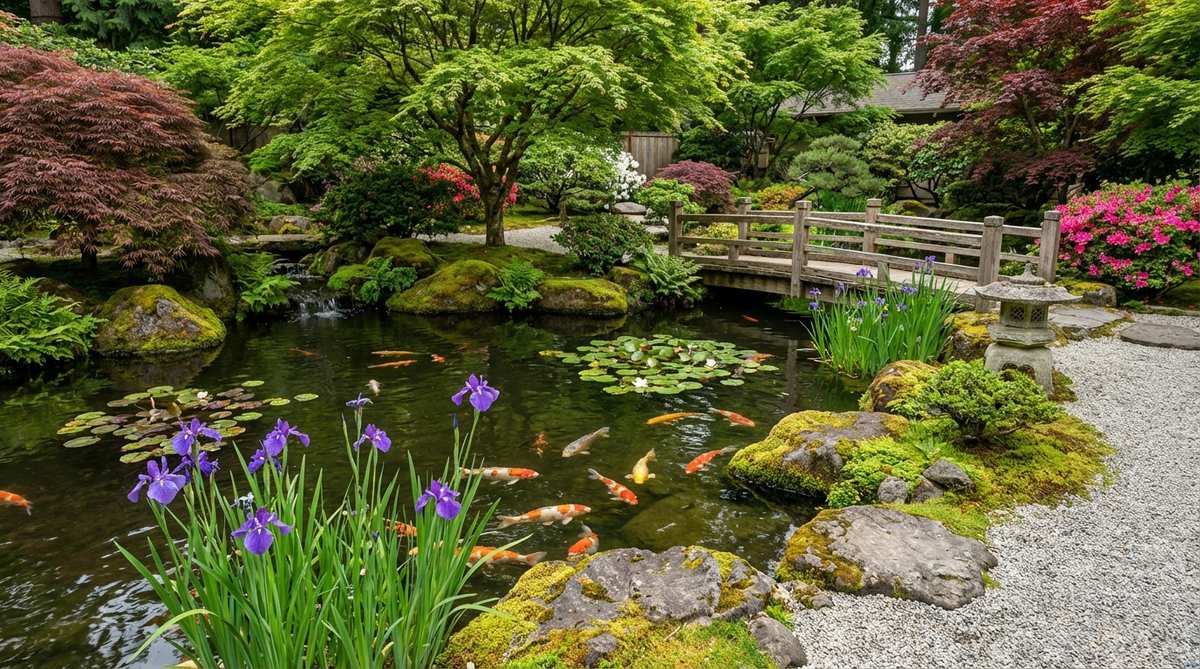
A japanese garden pond transforms any outdoor space into a tranquil retreat where koi fish glide through crystal-clear water and aquatic plants create natural harmony. Designers combine traditional Japanese elements with strategic plant placement to achieve balance, beauty, and optimal water quality. Fresh Garden Ideas brings you expert-curated designs that honor centuries of Japanese gardening wisdom while meeting modern functionality needs.
Design SnapshotKey Principles
- Natural Balance: Combine rocks, water, plants, and wooden elements to mimic natural ecosystems
- Depth Requirements: Maintain 3-5 feet depth for koi health and seasonal temperature stability
- Plant Integration: Use oxygenating, floating, and marginal plants for natural filtration and shade
- Irregular Shapes: Favor kidney or asymmetrical forms that replicate natural water bodies
Traditional Koi Pond Foundations With Natural Stone Arrangements
Traditional Japanese koi pond designs emphasize harmony between water, stone, and living elements. These foundational layouts establish the framework for successful long-term pond ecosystems that support healthy koi populations.
1. Kidney-Shaped Pond With Boulder Perimeter
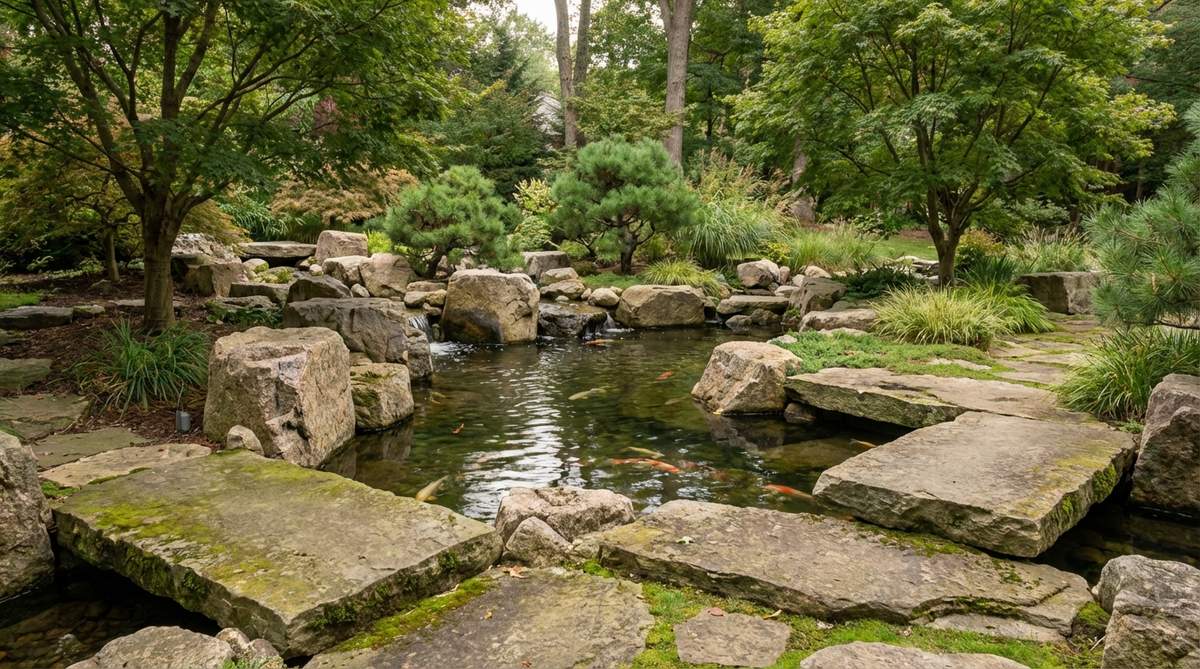
Large natural boulders define the irregular pond edge, creating organic curves that mirror mountain stream formations. Position flat stones at varying heights to establish visual depth and provide shade zones where koi retreat during summer heat.
The kidney configuration allows water circulation to reach all areas while creating distinct viewing perspectives from different garden angles. Boulder placement should follow the principle of odd numbers, with groupings of three or five stones producing the most natural appearance.
This design supports 1,000-3,000 gallon capacity ideal for small koi collections of 5-8 fish. Maintenance access remains simple with broad stone edges that support human weight for feeding and cleaning tasks.
2. Mirror Pond With Central Island
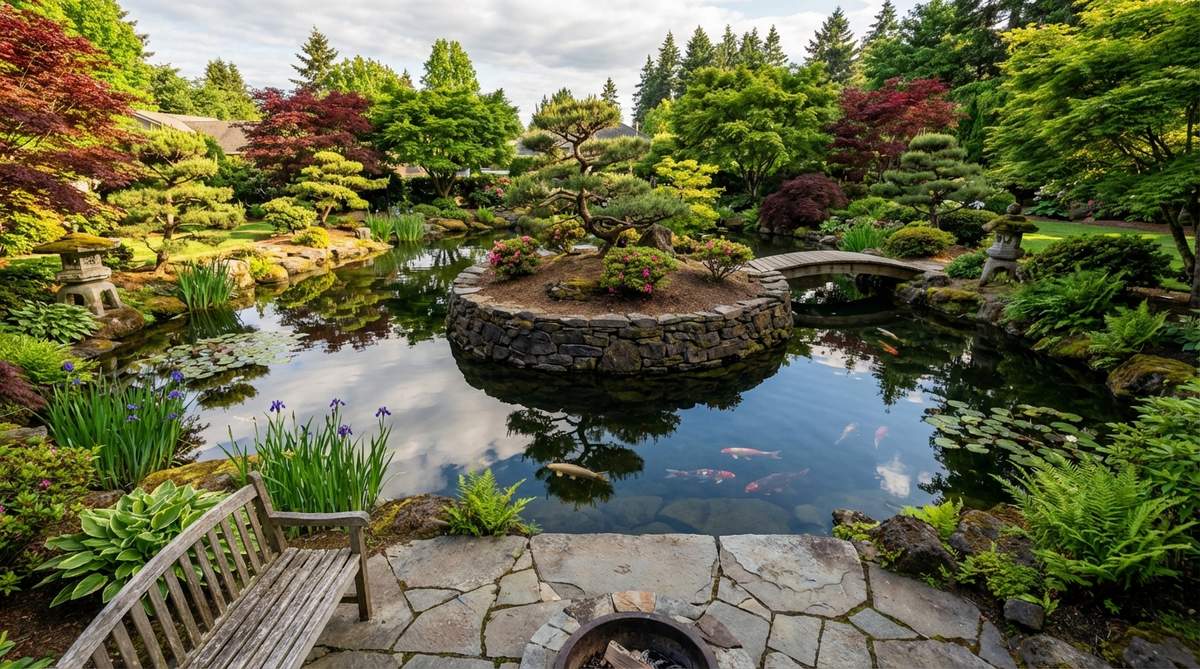
A calm water surface reflects surrounding plants and sky, creating the mirror effect celebrated in classical Japanese gardens. The central island, built from stacked stones and soil, supports Japanese maples or ornamental pines that anchor the composition.
Install the island to represent mythical Mount Horai or shape it to resemble a turtle or crane for longevity symbolism. Shallow water around the island perimeter encourages marginal plant growth while deeper zones provide koi swimming corridors.
Surface area should exceed 150 square feet to maintain mirror clarity and prevent wind ripples from dominating the reflection. Position the pond near seating areas where visitors appreciate the meditative water surface throughout daylight hours.
3. Asymmetrical Free-Form Pond
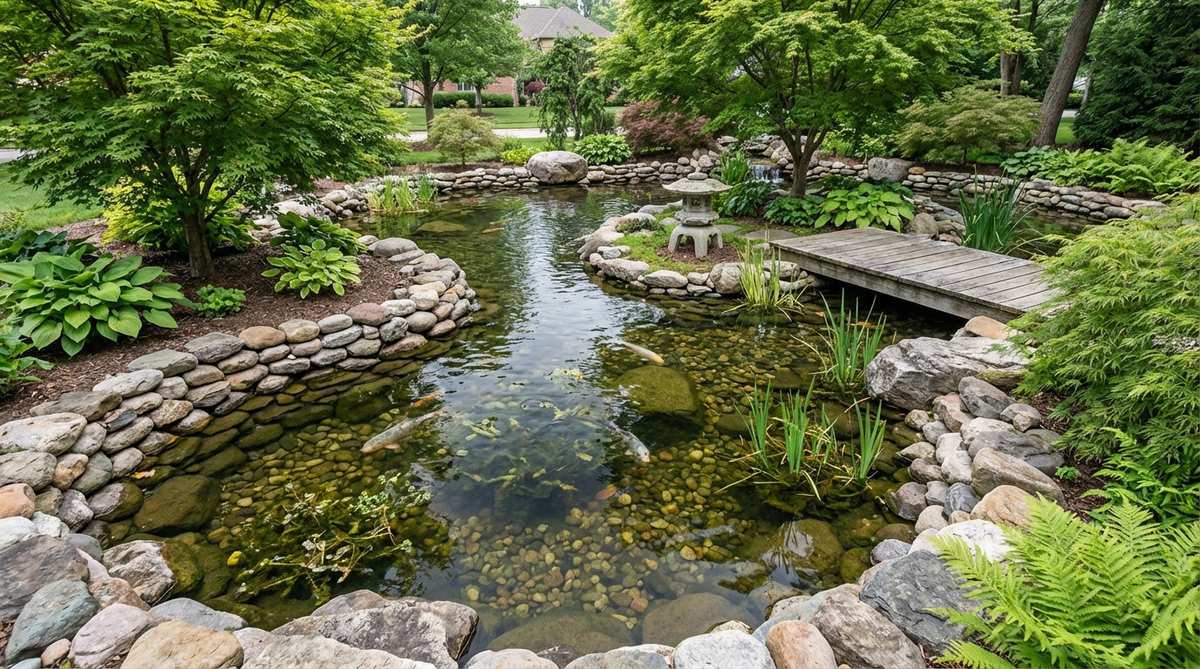
Reject geometric shapes entirely and create flowing curves that shift direction multiple times along the pond edge. This approach mimics natural ponds formed by water erosion over centuries, avoiding any hint of human construction.
Use smaller river rocks to line the bottom while larger feature stones punctuate key viewing points. Vary water depth from 6 inches at marginal zones to 4 feet in the main basin, creating distinct habitats for different plant species and koi activity levels.
4. Gravel Beach Entry Pond
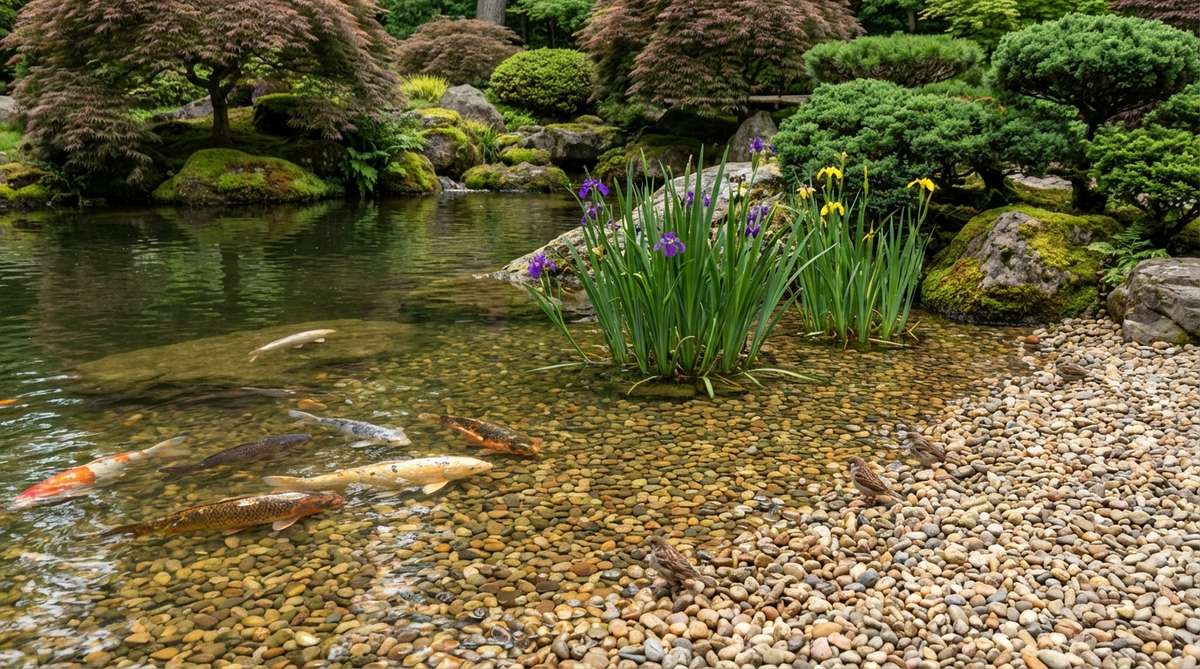
Transition from land to water through a gradual gravel slope that extends 2-3 feet from the garden edge. Fine pea gravel in earth tones creates a beach effect where water laps gently against the shore.
This design allows koi to approach shallow areas for feeding while birds access drinking zones safely. Plant marginal species like water iris directly in the gravel substrate for root stability and natural filtration benefits.
5. Raised Stone Wall Pond
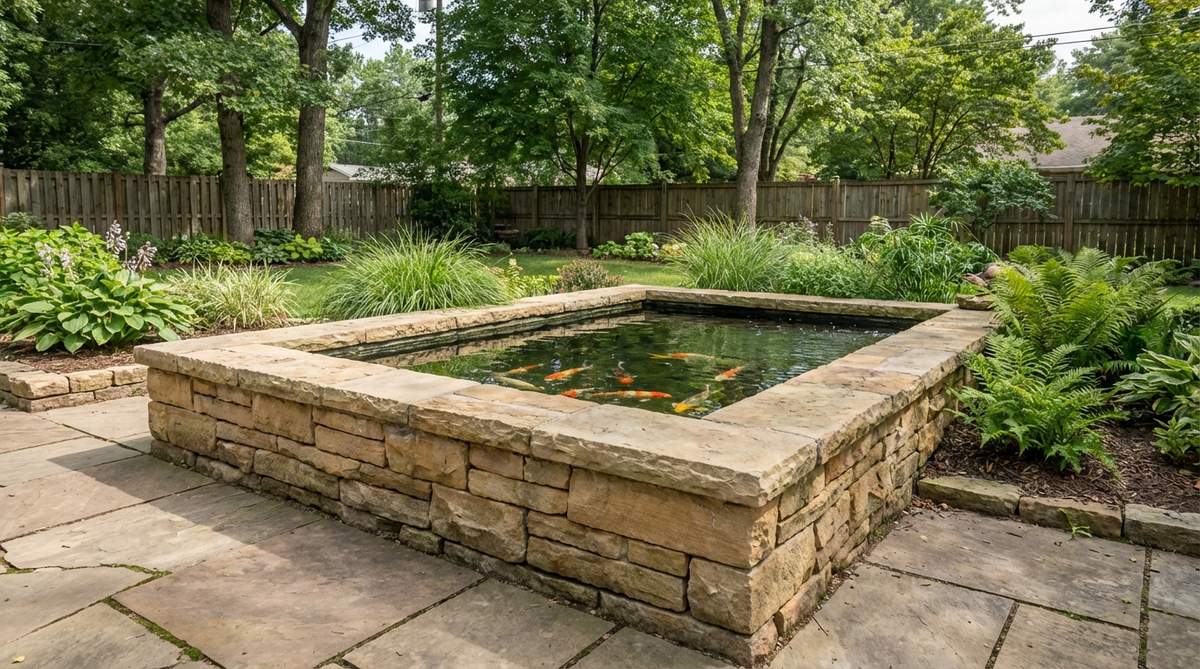
Construct dry-stack stone walls 18-24 inches high to elevate the pond above ground level, improving visibility and reducing debris entry from surrounding gardens. Hewn granite or sandstone blocks create formal edges while maintaining natural texture.
The raised design functions exceptionally well on flat properties where excavation proves difficult. Koi viewing improves dramatically as fish swim at waist height, and the elevated position discourages predators like raccoons and herons.
Japanese Garden Koi Pond Waterfall and Cascade Designs
Waterfalls introduce movement and sound while aerating pond water for improved koi health. Strategic waterfall placement creates focal points that draw the eye through the garden composition.
6. Single-Drop Natural Cascade
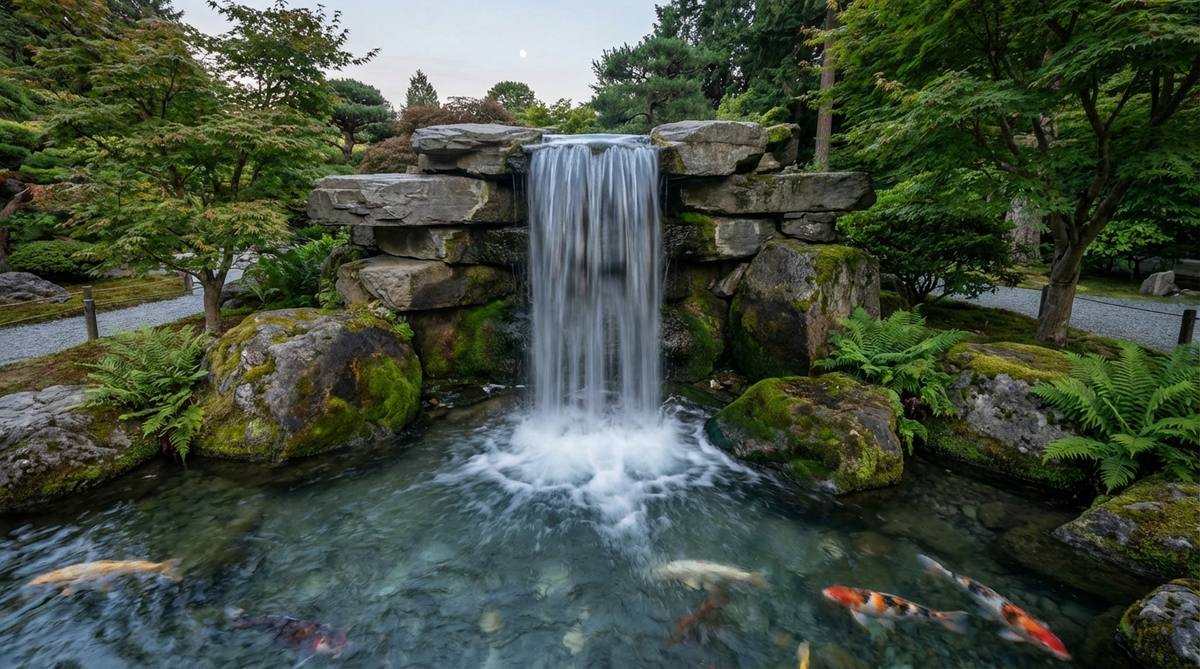
One dramatic vertical drop sends water plunging 3-5 feet into the main pond basin, creating substantial aeration and a powerful sound signature. Use large flat stones to direct water flow over a single edge point, avoiding dispersed trickles.
Position the waterfall where it faces the moon’s path for nighttime reflection, following traditional design principles. The splash zone naturally prevents algae growth on surrounding rocks through constant moisture and water movement.
Install filtration media behind the waterfall stones to combine biological filtration with aesthetic design. This hidden system removes particulates before water enters the main pond, maintaining exceptional clarity for koi viewing.
7. Multi-Tier Mountain Stream
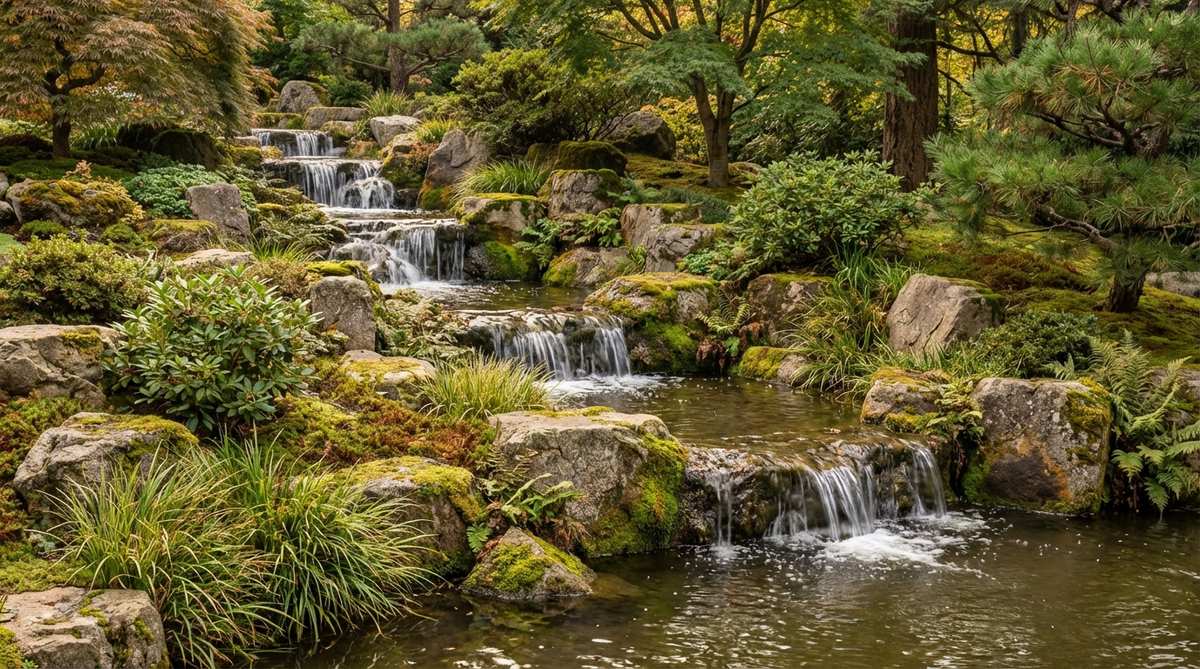
Create four to six descending pools that cascade from highest to lowest elevation, mimicking Japanese mountain watersheds. Each tier should drop 8-12 inches with varied stone arrangements producing different water sounds and visual effects.
Plant moisture-loving species like Japanese sedge and mosses between the tiers for authentic stream-side vegetation. The extended water path allows maximum oxygenation before reaching the main koi pond, significantly improving dissolved oxygen levels.
8. Broad Curtain Waterfall
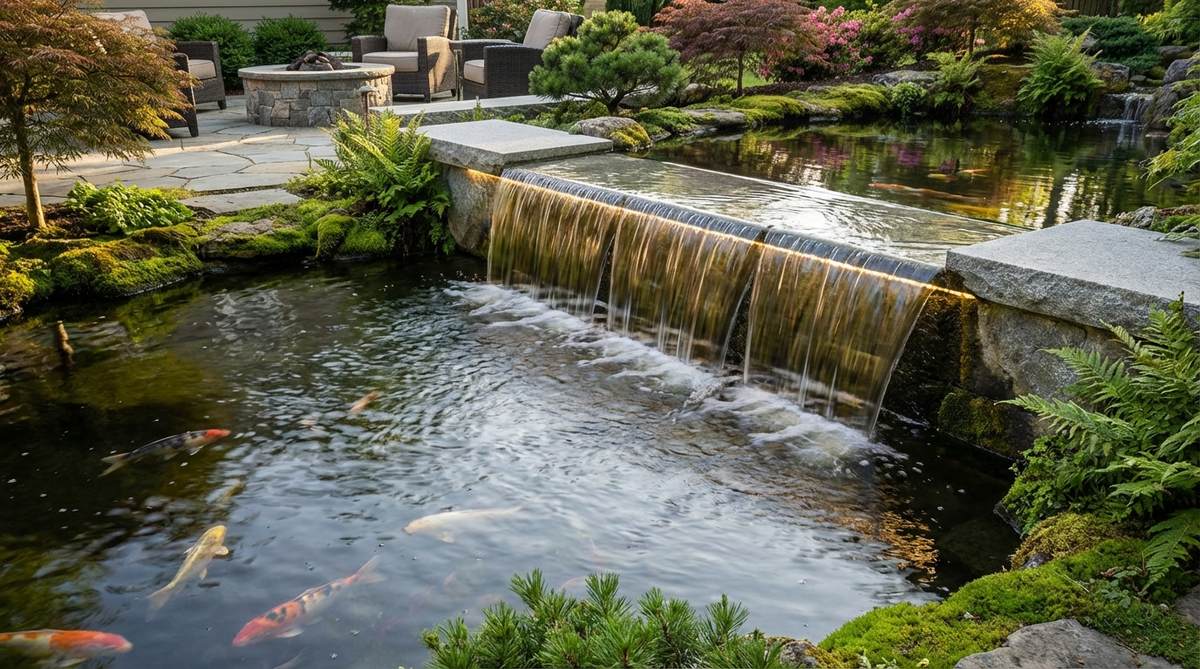
A wide, smooth stone edge 4-6 feet across creates a thin sheet of falling water that catches sunlight and produces gentle ambient sound. This design requires precise leveling of the weir stone to achieve uniform water distribution.
The broad curtain effect works particularly well as a backdrop feature where visitors view koi against the moving water curtain. LED lighting behind the waterfall transforms evening viewing with illuminated water columns.
9. Split-Stream Dual Waterfall
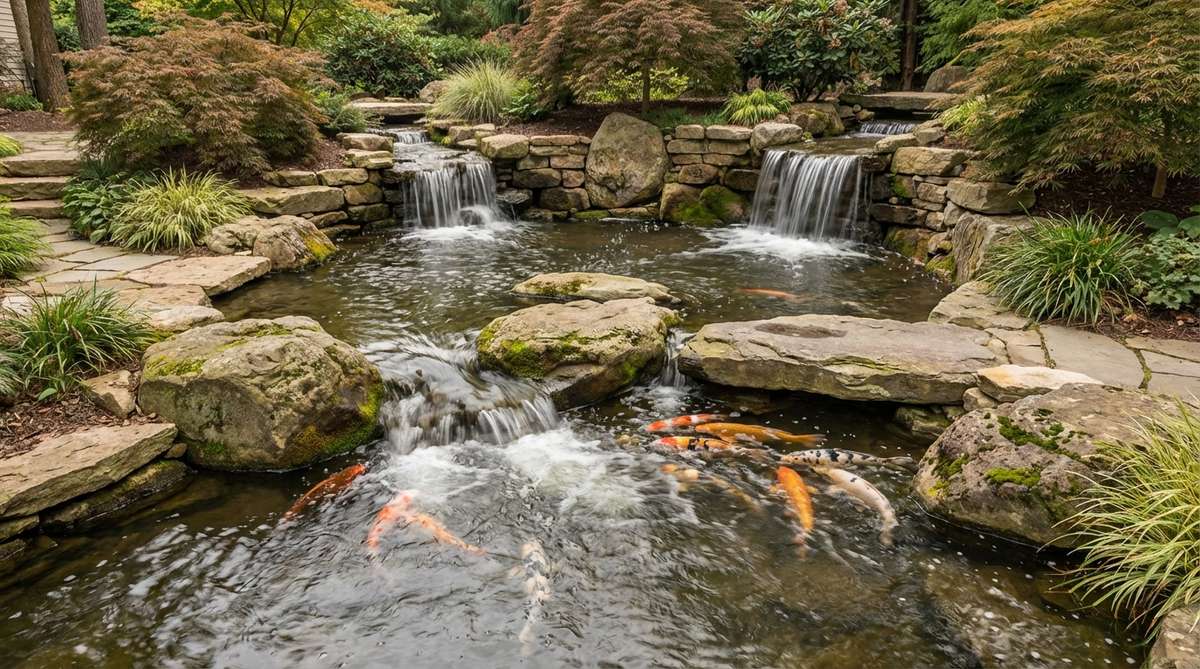
Divide incoming water into two separate falls that enter the pond from different angles, creating dynamic water movement patterns. Position the split at the source stream, using strategically placed stones to redirect flow.
This configuration prevents stagnant zones by establishing multiple circulation currents throughout the pond. Koi naturally congregate near the dual entry points where oxygen concentration peaks and water temperature stays cooler.
10. Underground Spring Bubbler
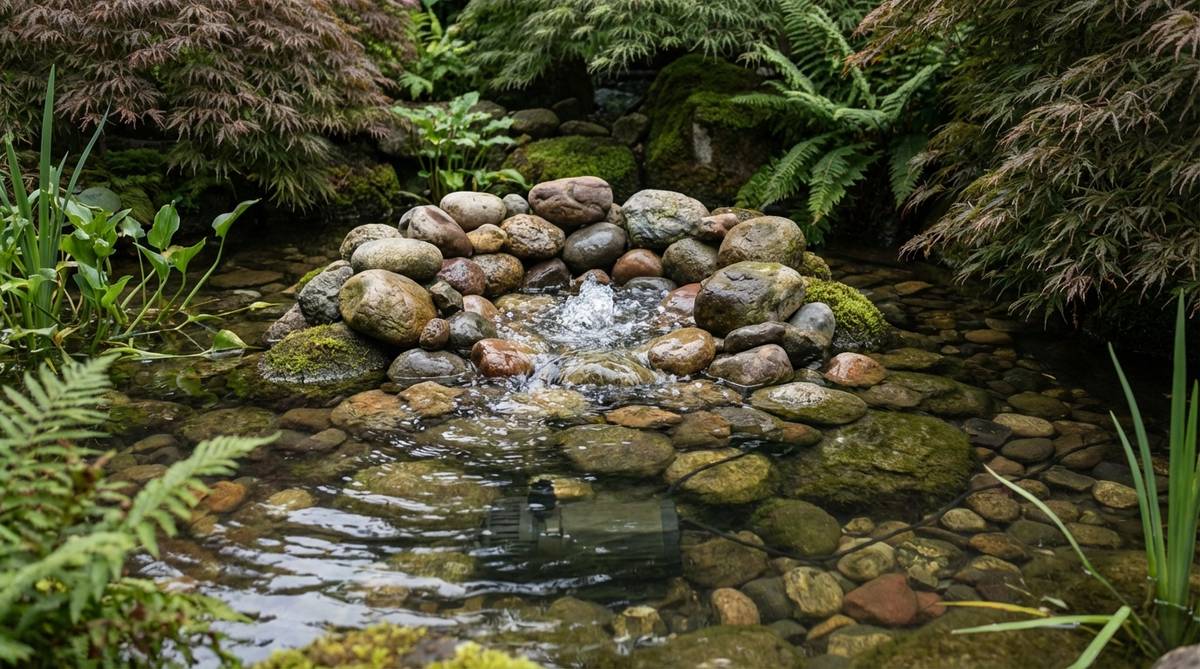
Water emerges from beneath a pile of river stones, creating the illusion of a natural spring feeding the pond. This subtle design produces gentle bubbling sounds without the vertical drama of traditional waterfalls.
Install a submersible pump beneath the stone arrangement, allowing water to percolate upward through carefully stacked gaps. The spring effect provides excellent aeration while consuming less energy than high-volume waterfall pumps.
Water Plant Integration Systems For Japanese Garden Ponds
Aquatic plants provide essential filtration, oxygen production, and shade while enhancing the natural aesthetic of koi ponds. Strategic plant selection creates balanced ecosystems that reduce maintenance requirements and support fish health.
11. Floating Plant Coverage Zones
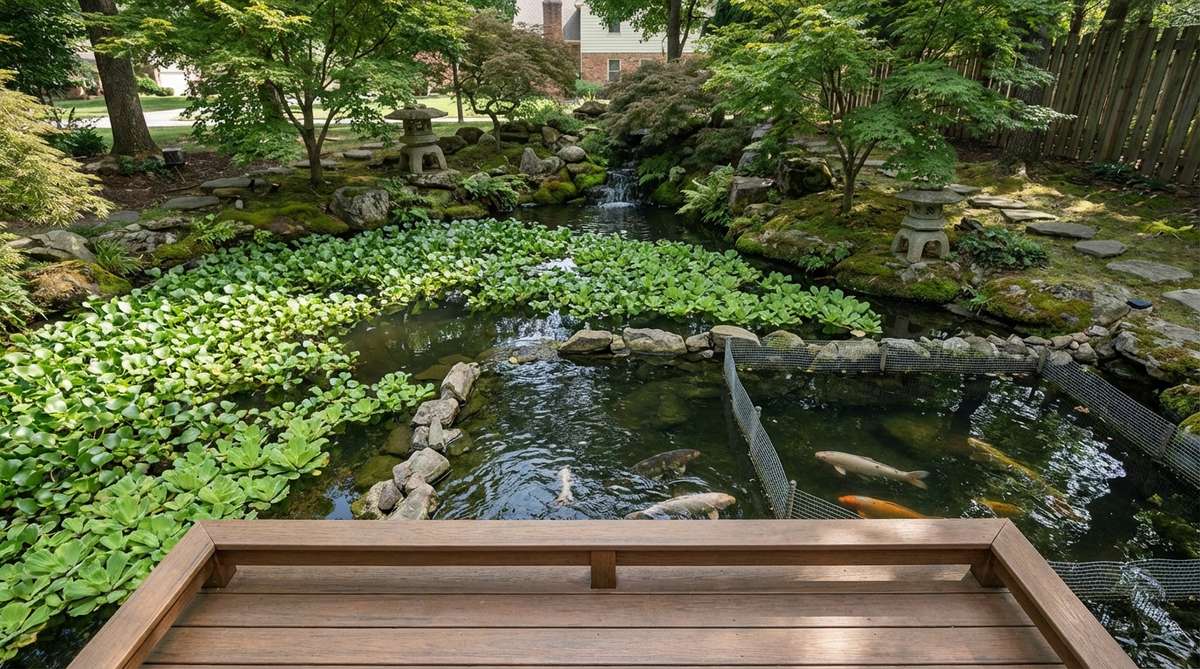
Dedicate 30-50% of the pond surface to floating species like water hyacinth and water lettuce that absorb excess nutrients preventing algae blooms. These plants create dappled shade patterns that reduce water temperature by 5-10 degrees during peak summer months.
Establish containment zones using submerged barriers to prevent floating plants from covering the entire surface. Koi require open water areas for feeding and human interaction, so maintain clear viewing zones in high-traffic areas.
Floating plant roots provide spawning habitat and shelter for young koi while filtering nitrates and phosphates continuously. Remove excess growth every 2-3 weeks during peak growing season to prevent overcrowding.
12. Marginal Plant Filtration Ring
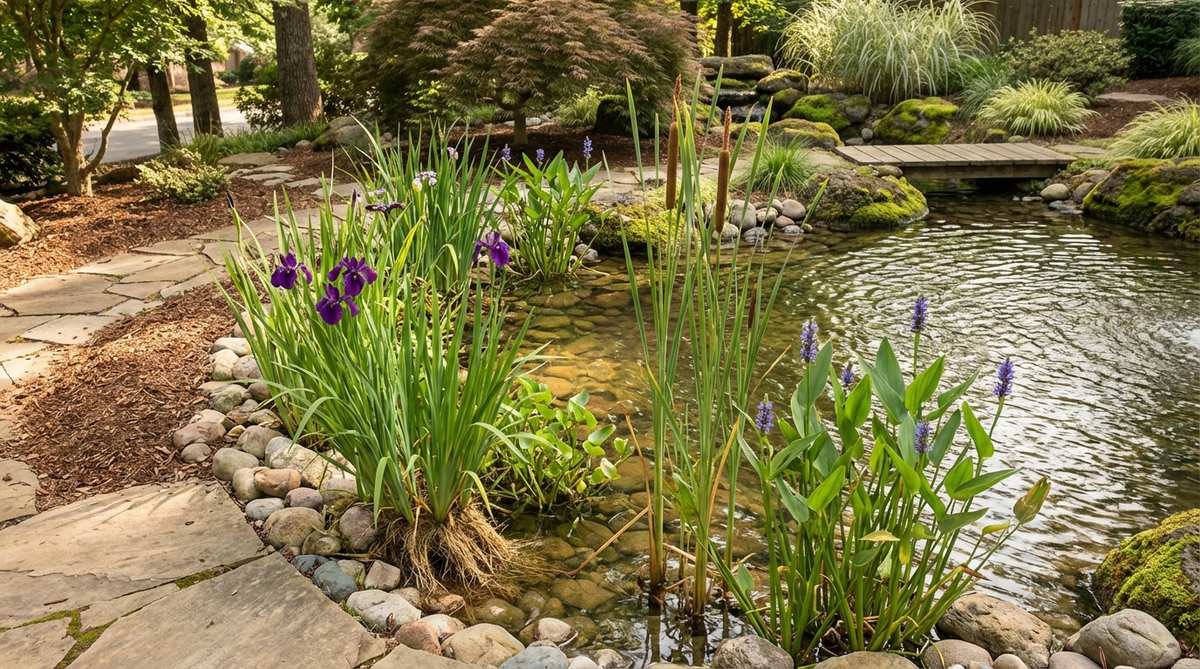
Line the entire pond perimeter with marginal species planted in shallow shelves 6-12 inches deep. Water iris, cattails, and pickerel rush establish robust root systems that filter water as it circulates along the pond edge.
These plants stabilize banks, prevent erosion, and create naturalistic transitions from land to water. Their vertical growth adds height variation to the overall composition, breaking the horizontal plane of the water surface.
13. Submerged Oxygenator Beds
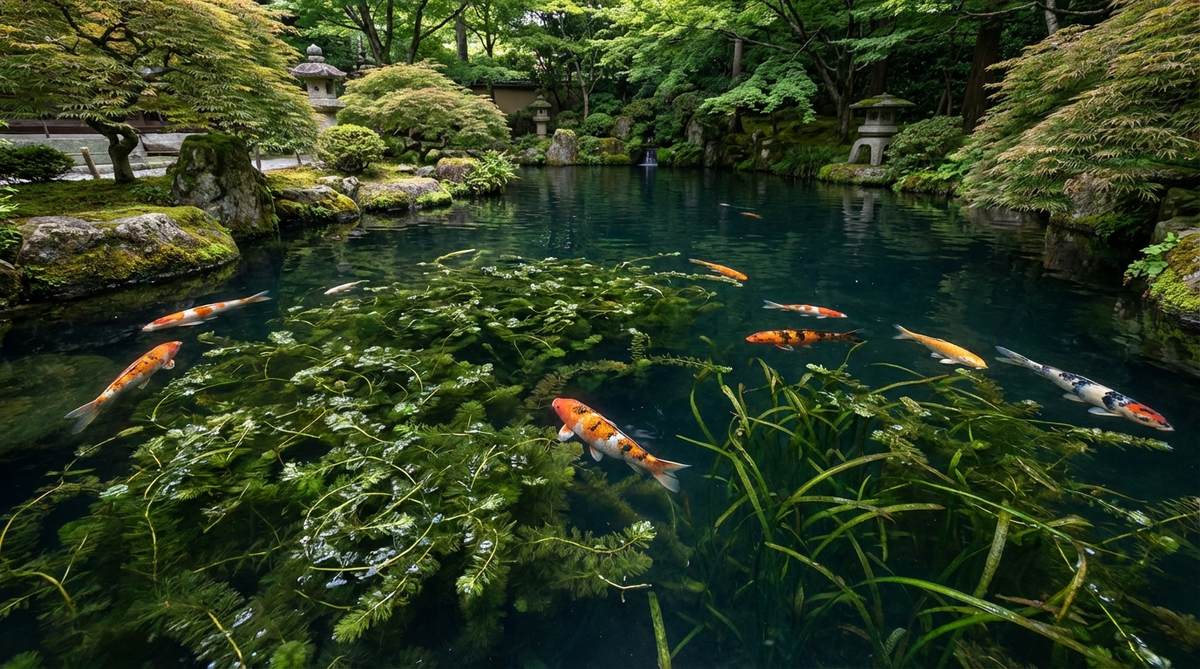
Plant dense clusters of hornwort, anacharis, and vallisneria in the deepest pond zones where they photosynthesize throughout the water column. These species produce oxygen directly into the water while consuming dissolved nutrients that would otherwise fuel algae.
Koi naturally browse on oxygenating plants, which provides dietary fiber and reduces the need for commercial food supplements. Position oxygenator beds away from main viewing areas since koi foraging disrupts plant structure and creates cloudy water temporarily.
14. Water Lily Focal Points
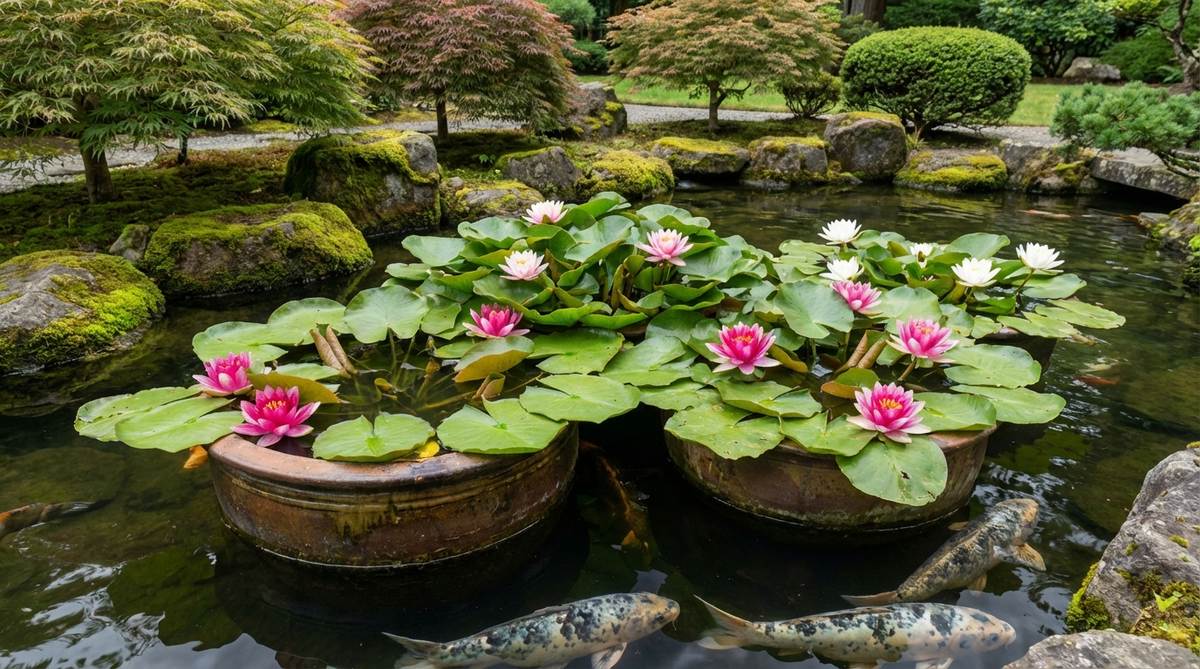
Hardy water lilies produce large floating pads that shade 4-6 square feet per plant while displaying spectacular blooms from late spring through early fall. Position individual lilies in decorative containers on the pond bottom to control spread and simplify seasonal management.
Select varieties with flower colors that complement koi coloration—white and yellow blooms enhance traditional kohaku and sanke patterns. Lily pads provide essential shade that prevents sunburn on light-colored koi and reduces heat stress during summer peaks.
15. Lotus Meditation Display
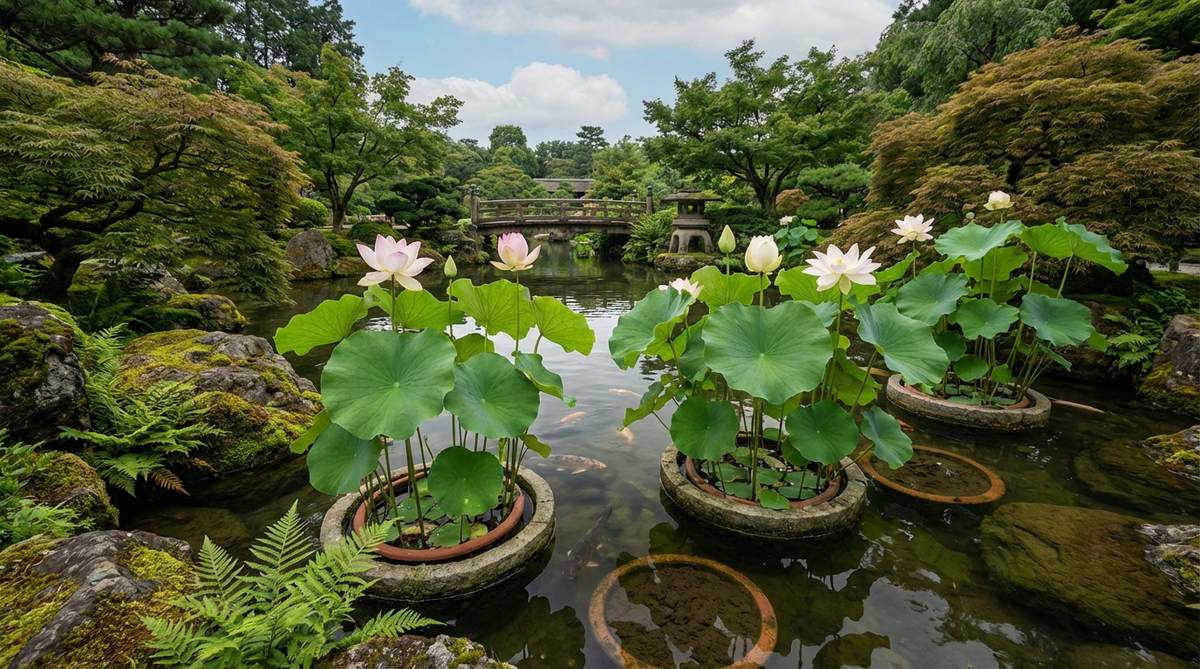
Sacred lotus plants rise 2-4 feet above water level with distinctive circular leaves and iconic flowers that symbolize purity in Japanese philosophy. Dedicated lotus containers placed strategically create vertical interest and seasonal drama as blooms emerge.
Lotus roots require contained growing environments to prevent aggressive spreading throughout the pond. Use large pots submerged 6-12 inches below the surface, filled with heavy clay soil that resists koi disturbance.
16. Duckweed Nutrient Control Layer
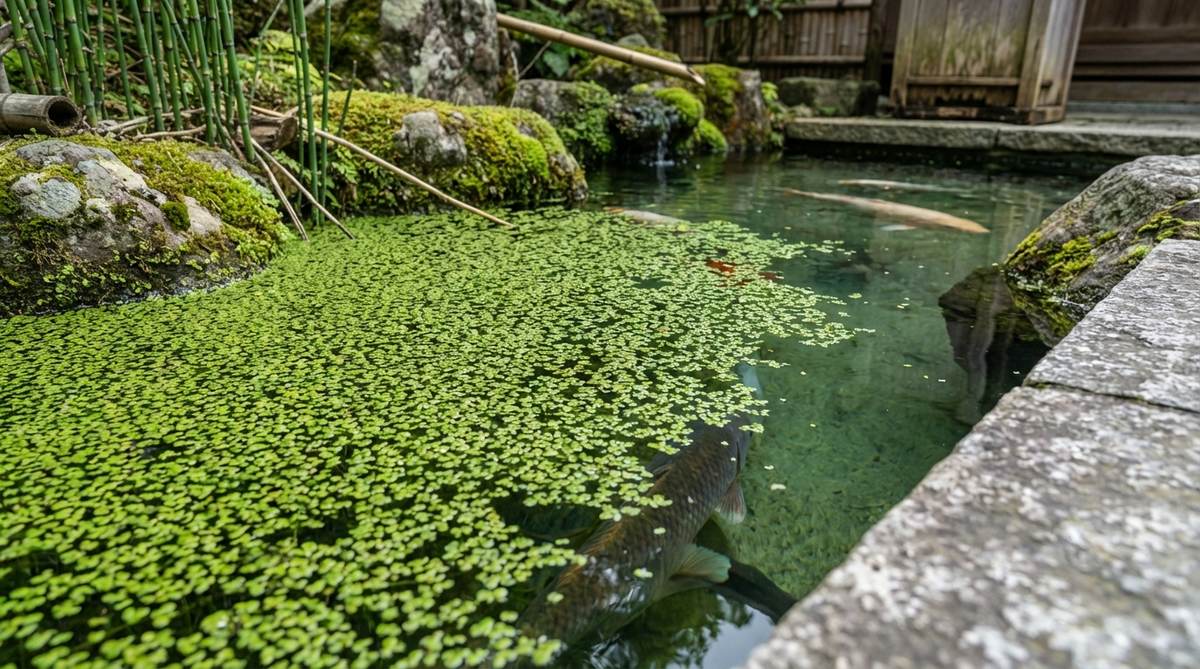
This tiny floating plant multiplies rapidly and provides both natural filtration and supplemental koi food. Duckweed absorbs ammonia and nitrates while creating a living green carpet across quiet water zones.
Koi consume duckweed eagerly, making population control automatic while adding plant-based nutrition to their diet. Introduce duckweed to calm areas away from waterfalls where strong currents would prevent establishment.
Bridge and Stepping Stone Features For Koi Pond Gardens
Bridges and stepping stones provide access points while creating dimensional layers that enhance garden depth. These structural elements guide movement through the space and establish distinct viewing perspectives.
17. Arched Wooden Bridge
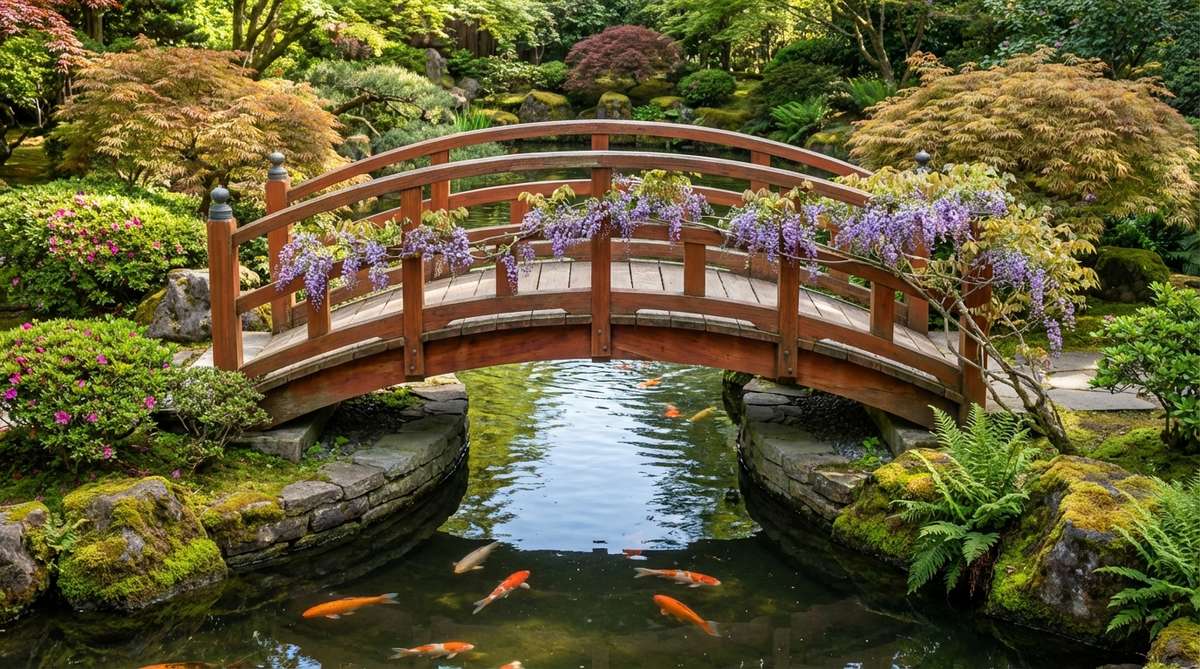
A curved wooden span rises over the pond’s narrowest point, connecting island features or opposite banks with dramatic visual impact. The arch symbolizes the pathway to paradise in traditional Japanese garden philosophy.
Construct the bridge from weather-resistant cedar or redwood with a gentle curve that allows easy crossing without steep inclines. Handrails add safety while providing attachment points for wisteria or climbing vines that soften the structure seasonally.
Position the bridge where it frames key views—approaching visitors should see the pond unfold below with koi visible through the water column. The elevated perspective transforms the garden experience and creates premier photo opportunities.
18. Flat Stone Slab Bridge
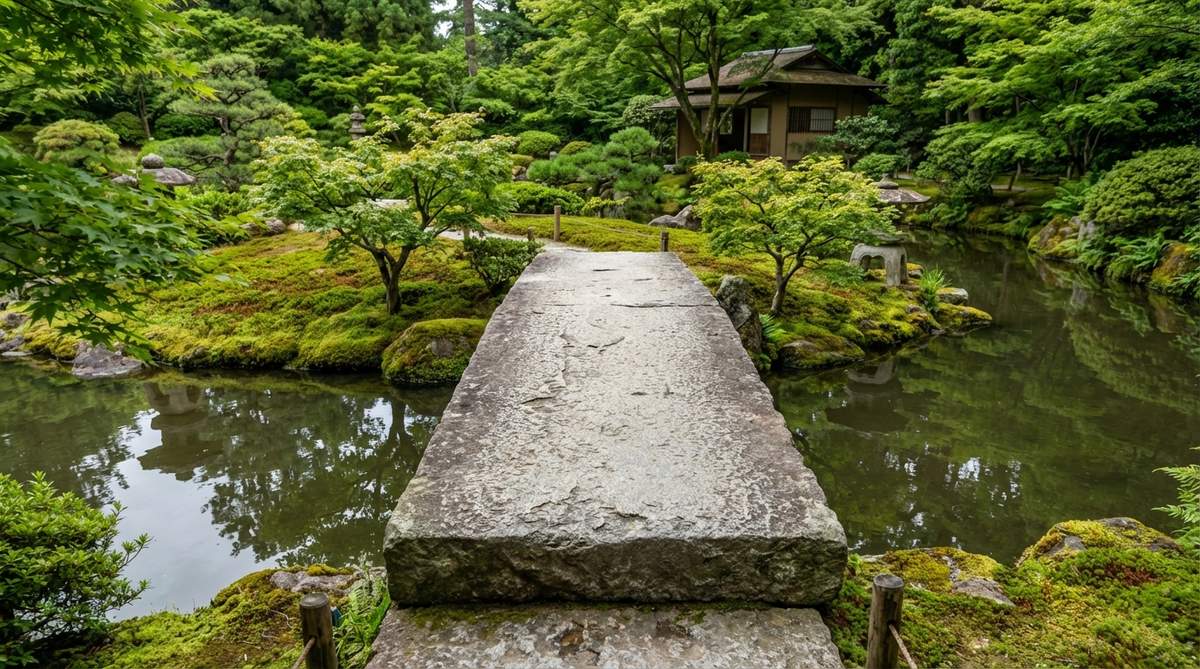
A single piece of hewn granite or sandstone 8-12 inches thick spans narrow pond sections with minimalist elegance. This simple crossing requires minimal structural support while providing substantial load capacity.
The flat profile maintains visual continuity across the water surface rather than interrupting sightlines with vertical elements. Use this design for intimate garden spaces where dramatic arched bridges would overpower the composition.
19. Zigzag Yatsuhashi Bridge
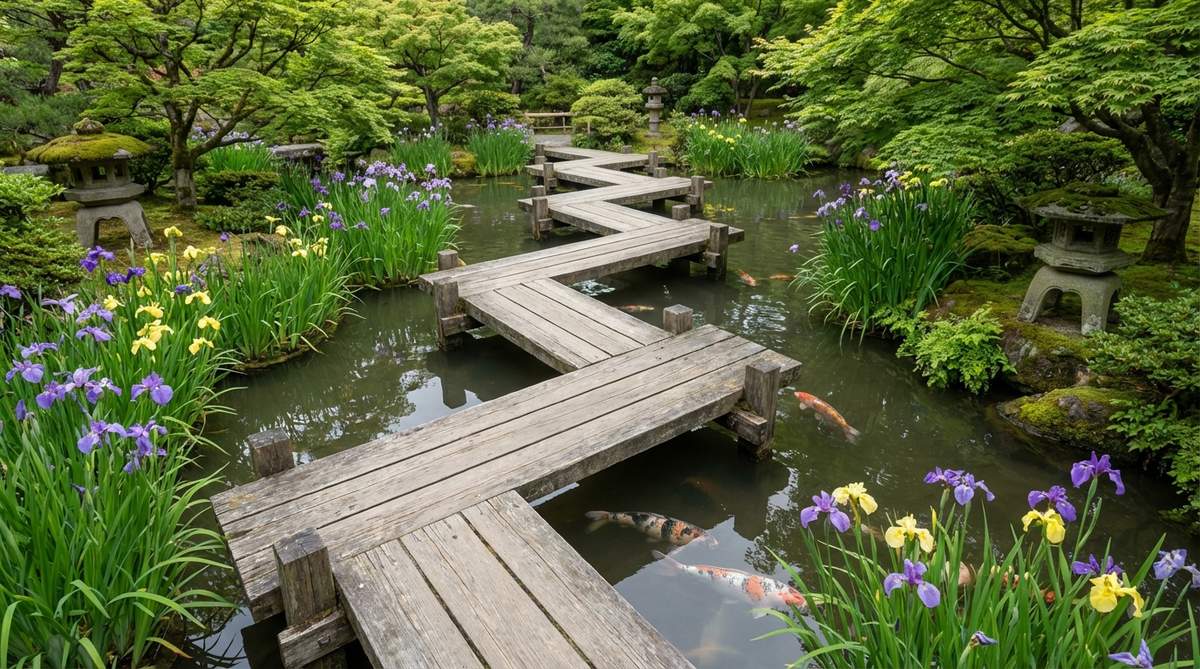
Eight connected wooden planks turn at right angles, creating a meandering path across the pond that forces slow, contemplative movement. This design originated in Japanese iris gardens where the extended crossing allows appreciation of blooms from multiple angles.
Each direction change offers a new perspective on koi movement and water plant arrangements. The zigzag form prevents spirits from crossing according to folklore, though the practical benefit lies in extending the garden journey and preventing rushing.
20. Round Concrete Stepping Stones
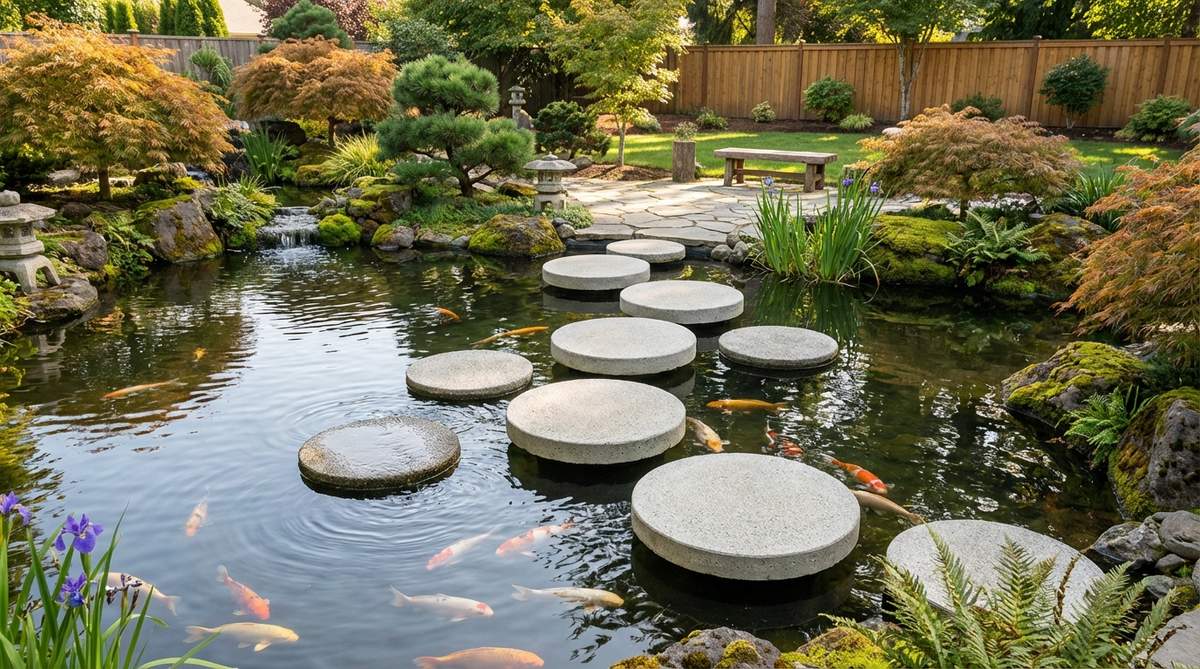
Custom-poured circular pads 18-24 inches in diameter create a floating pathway across the water surface. Space stones 6-8 inches apart to require deliberate stepping, which slows movement and encourages mindful pond observation.
The round forms echo the circular ripples koi create when feeding, establishing visual harmony between natural and constructed elements. Set stones just below water level so they appear to float, or raise them 2-3 inches above the surface for dry crossing.
21. Natural Boulder Stepping Path
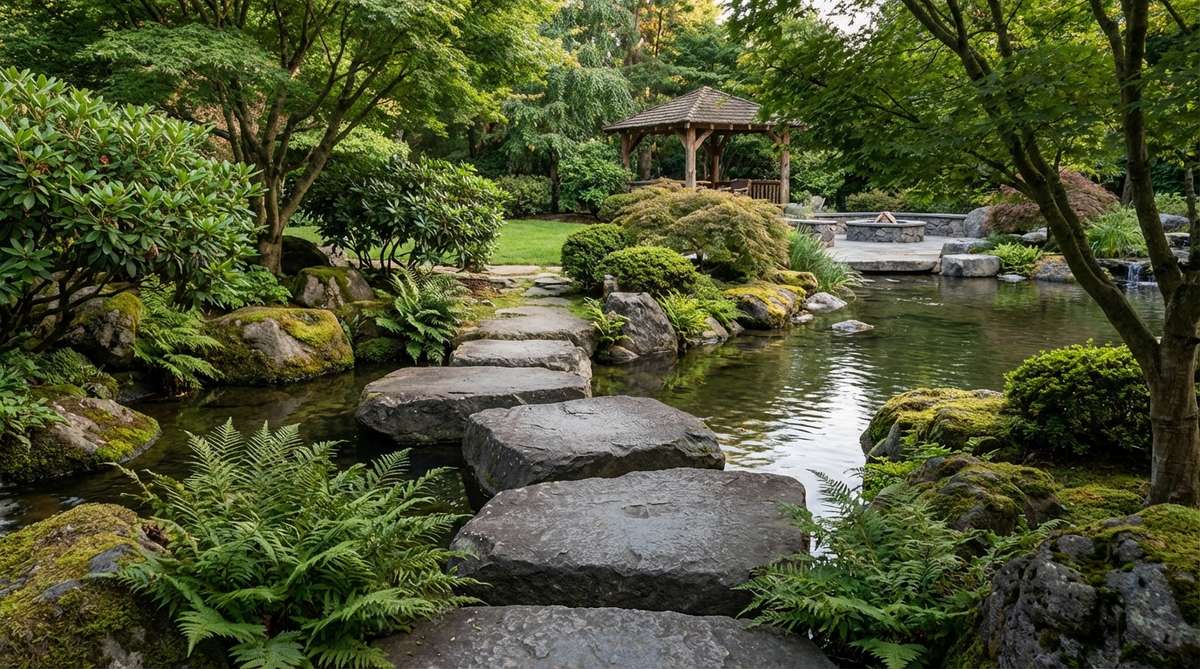
Large flat-topped boulders placed at irregular intervals create an adventurous crossing that engages visitors physically and mentally. Select stones with stable, level surfaces that prevent wobbling or tipping under weight.
The irregular spacing and natural stone shapes produce an organic aesthetic that contrasts with formal geometric bridges. This path type works best in larger ponds where extended crossings build anticipation before reaching the opposite shore or central island.
Modern Japanese-Inspired Koi Pond Designs
Contemporary interpretations blend traditional Japanese principles with current materials and geometric forms. These designs appeal to homeowners seeking cultural authenticity within modern architectural contexts.
22. Minimalist Rectangular Pond
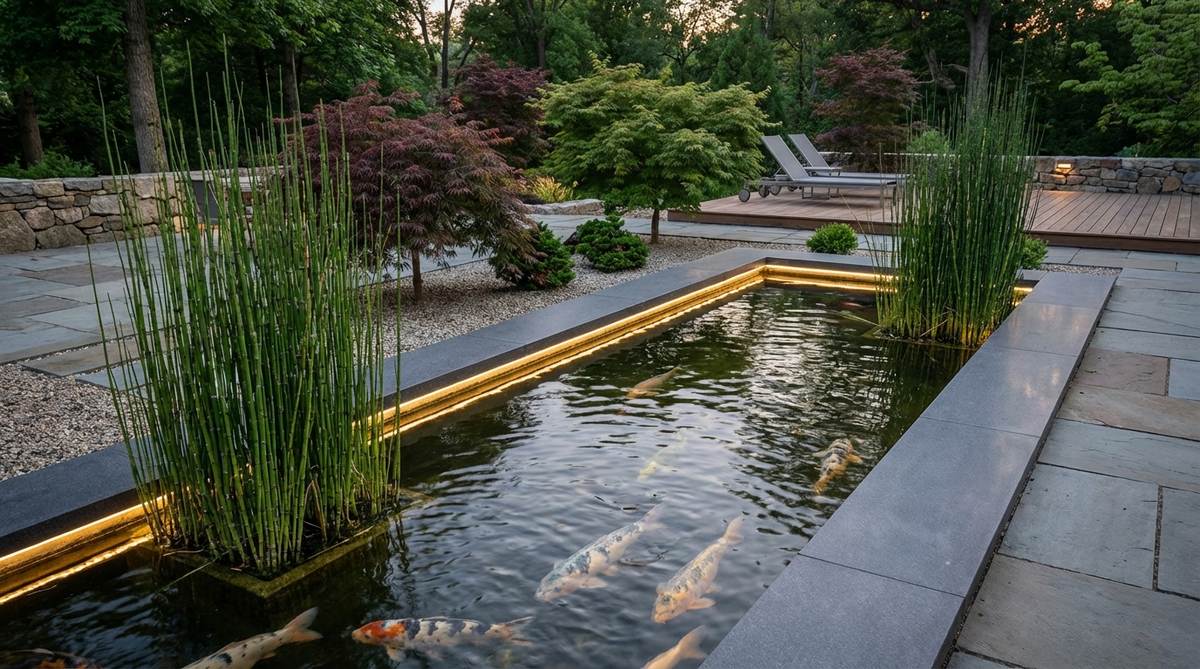
Clean geometric edges formed by poured concrete create a sharp contrast against organic koi movement and plant growth. The rectangular basin measures proportionally to surrounding architecture, often mirroring building dimensions or patio geometry.
Polished concrete edges in charcoal or earth tones provide a sleek surface that shows water reflections clearly. Integrate LED strip lighting along the perimeter for dramatic nighttime illumination that transforms the space.
This modern approach maintains Japanese aesthetic principles through simplicity and restraint while rejecting traditional naturalistic forms. Plant selections favor architectural species like horsetail reed and dwarf papyrus that echo the geometric theme.
23. Raised Steel Water Basin
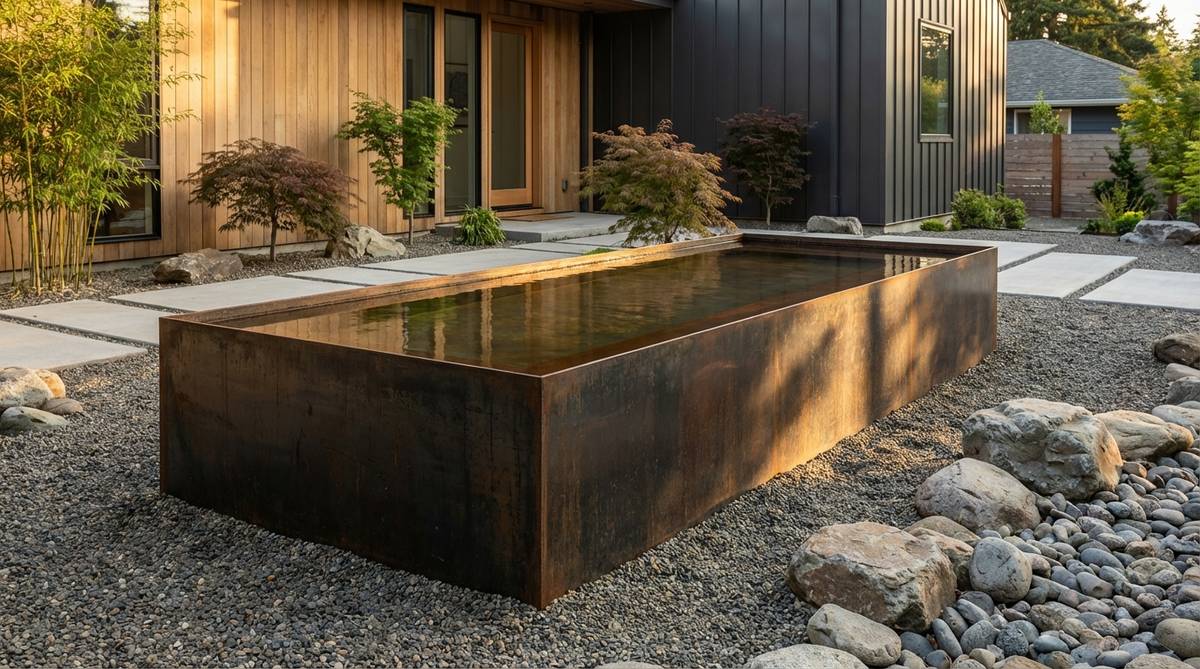
Weathering steel or stainless steel panels form the pond walls, creating an industrial aesthetic that develops rich patina over time. The raised design positions water at viewing height while the metal reflects changing light conditions throughout the day.
Steel construction allows thinner walls than concrete or stone, maximizing water volume within compact footprints. The material choice pairs naturally with contemporary homes featuring metal cladding or modern minimalist landscaping.
24. Infinity Edge Koi Pond
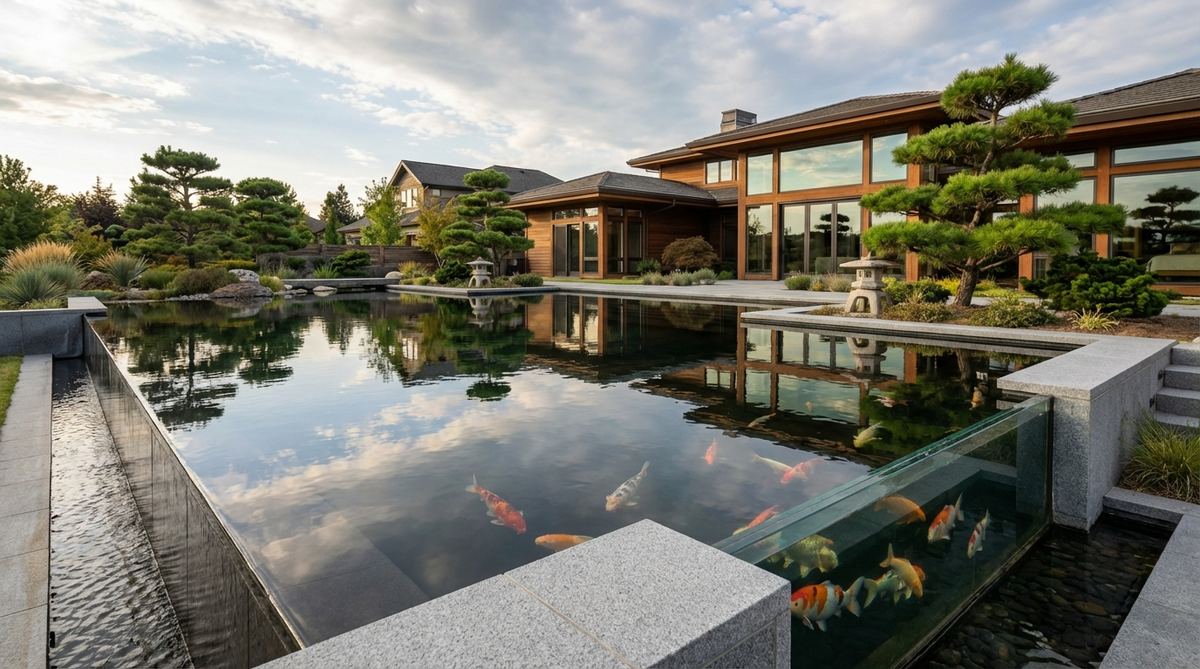
Water flows over one or more edges into a hidden catch basin, creating the illusion that the pond extends infinitely into the surrounding landscape. This dramatic effect works exceptionally well on sloped properties where the infinity edge faces downhill views.
The vanishing edge requires precise engineering to maintain water level and ensure even flow across the entire weir length. Koi remain safely in the main basin while the visual effect suggests limitless water extending toward the horizon.
25. Black Bottom Reflection Pond
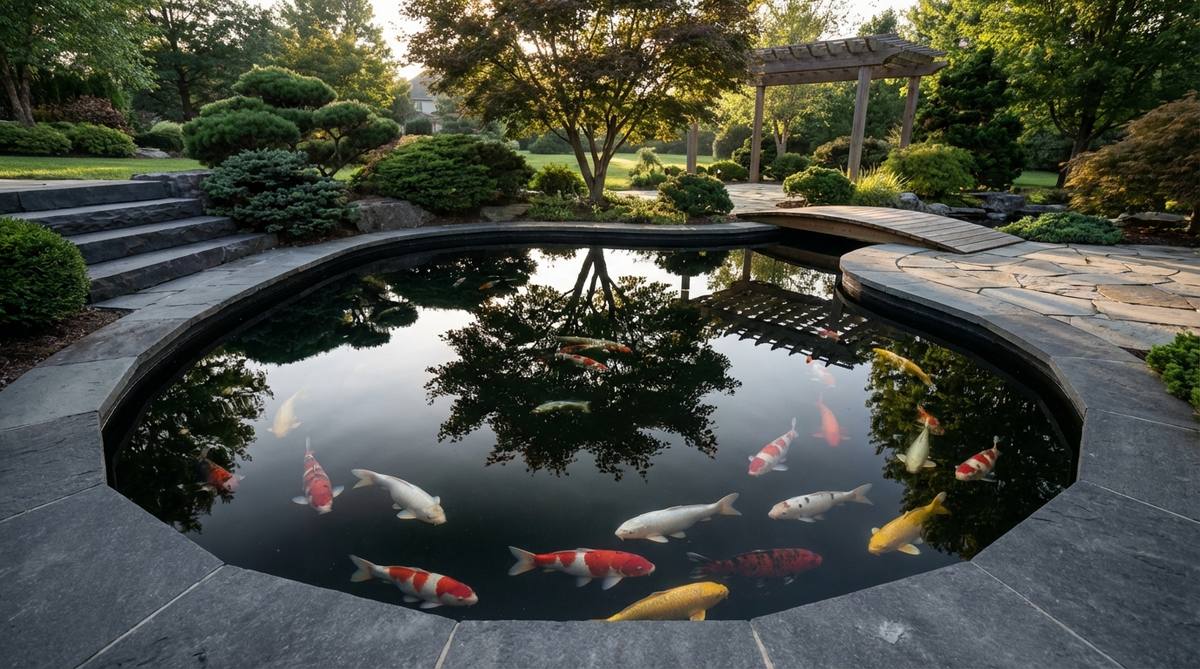
Dark liner material or black concrete creates a mirror-like surface that intensifies reflections while making koi colors appear exceptionally vibrant. The dark background provides dramatic contrast for white, red, and yellow koi patterns.
This modern technique amplifies the traditional Japanese mirror pond concept through contemporary materials. Water depth appears greater than actual measurements due to the dark bottom absorbing rather than reflecting light.
26. Courtyard Viewing Pond
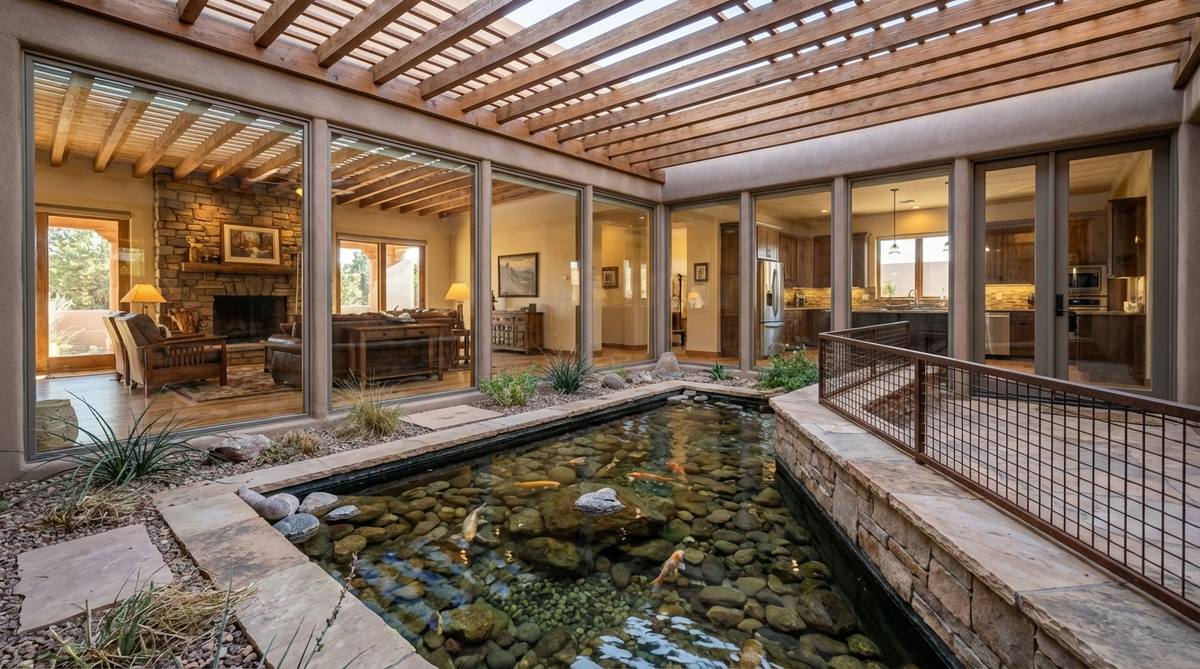
A shallow pond 12-18 inches deep occupies the center of an enclosed courtyard, visible from multiple rooms through floor-to-ceiling windows. This design emphasizes observation over interaction, creating a living artwork viewed from interior spaces.
Reduced depth simplifies maintenance and heating while still supporting koi populations if volume exceeds 800 gallons. The protected courtyard environment eliminates predator concerns and reduces debris contamination from overhead trees.
Multi-Level Pond Configurations For Japanese Gardens
Connecting multiple ponds at different elevations creates dynamic water movement and expands habitat diversity. These complex systems offer varied environments for different koi life stages and plant species.
27. Upper and Lower Connected Ponds
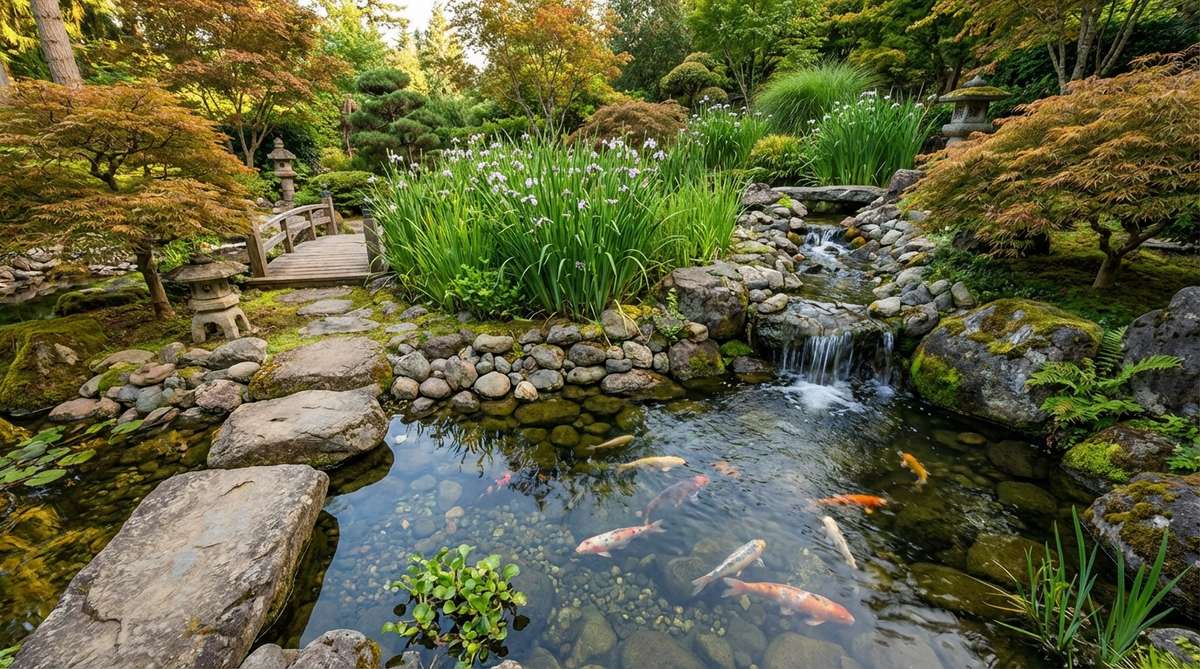
Two distinct basins linked by a stream or waterfall provide separate zones for different purposes—the upper pond functions as a plant filtration wetland while the lower basin serves as the main koi habitat. Gravity flow between levels creates natural circulation without additional pumping.
The upper pond accumulates sediment and supports heavy marginal plant growth that filters water before it cascades down to the fish zone. This biological filtration system dramatically reduces mechanical filter maintenance and improves overall water quality.
Size the upper pond at 20-30% of the lower pond’s volume to establish adequate filtration capacity. Plant the upper basin densely with water iris, rushes, and floating plants that remove nutrients and provide spawning habitat.
28. Terraced Hillside Ponds
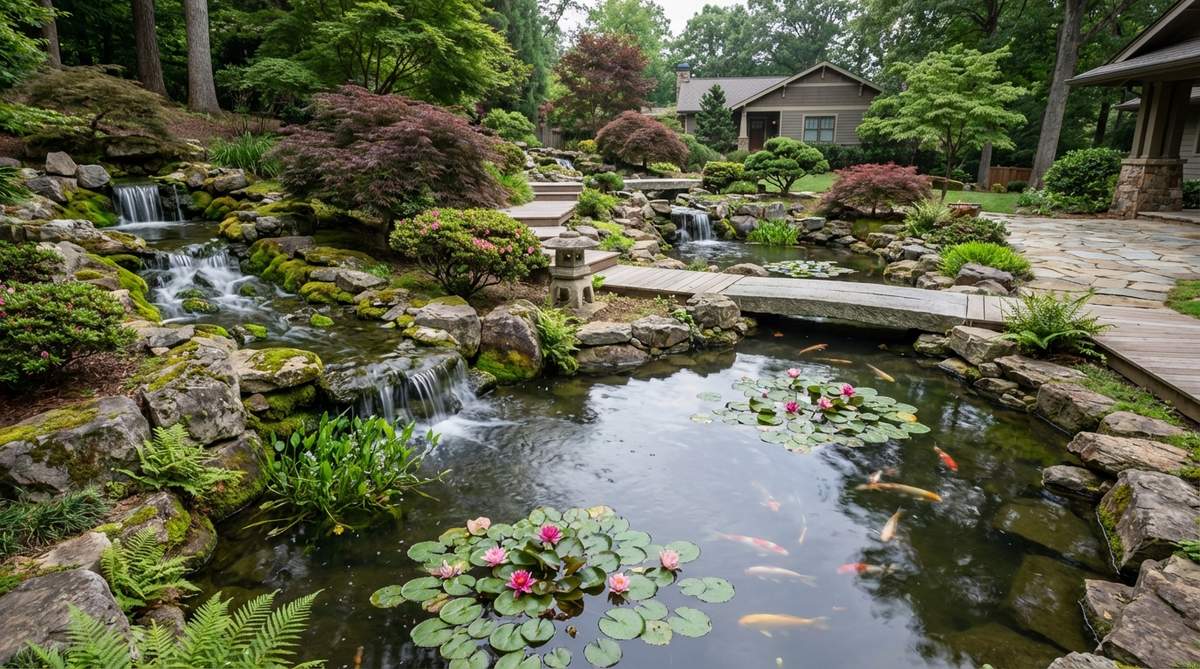
Three to five ponds descend a natural or constructed slope, with each level feeding the next through short waterfalls or streams. This design maximizes vertical space on sloped properties while creating multiple viewing zones throughout the garden.
Each terrace supports different plant communities based on water depth and flow rate—fast-moving upper terraces favor oxygenating plants while lower calm pools support water lilies and lotus. Koi move between levels freely, exploring the entire connected system.
29. Kidney Filter Stream System
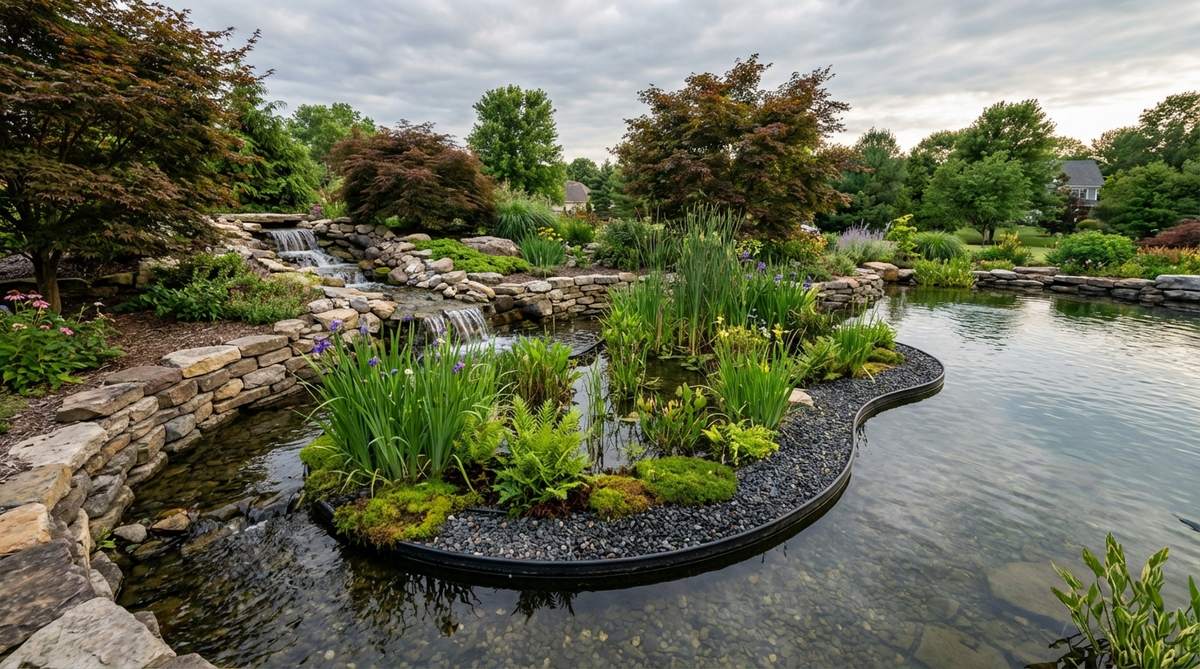
A kidney-shaped wetland filter sits midstream between the main pond and waterfall source, processing water through dense plant growth before returning it to the koi basin. This integrated filtration approach hides mechanical components within naturalistic landscaping.
The kidney wetland should be shallow (6-12 inches) and planted with vigorous marginal species that tolerate constant water flow. Gravel substrate provides surface area for beneficial bacteria colonization, combining biological and mechanical filtration functions.
30. Meditation Pool With Koi Pond
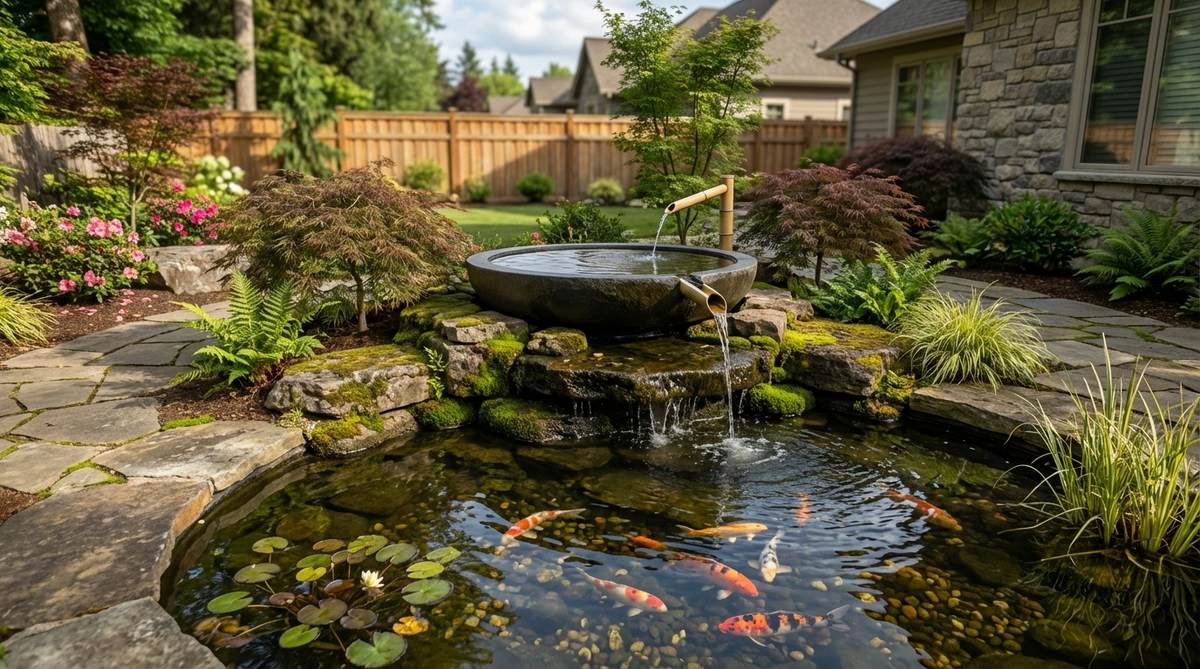
A small, still meditation pool sits elevated above the main koi pond, connected by a single water spout or bamboo fountain. The meditation pool remains plant-free and calm for reflection viewing, while the lower pond supports active koi life.
This separation creates distinct atmospheres within a unified water feature—contemplative stillness above and dynamic movement below. Visitors transition between moods by moving through the garden space.
31. Circular Pondless Basin Feeder
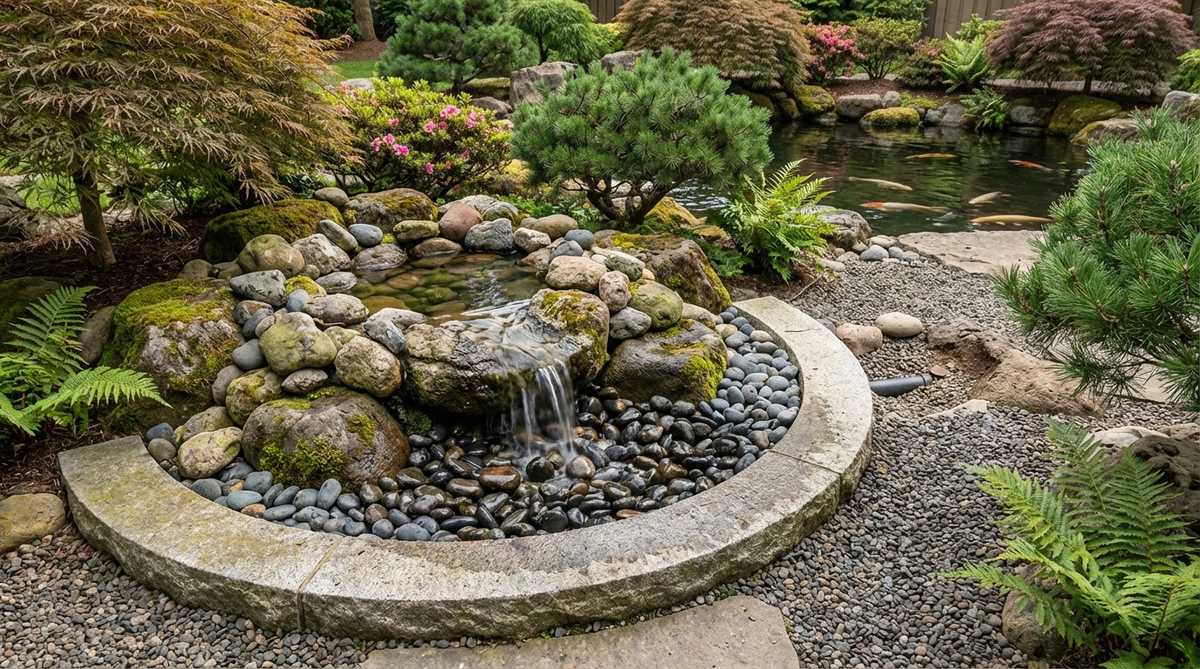
Water emerges from a decorative basin or stone arrangement, flows across a bed of river rocks, and disappears into a hidden reservoir before being pumped back to the source. This pondless feature connects to the main koi pond via underground piping, providing secondary aeration.
The circular flow creates movement and sound in areas where full ponds cannot be constructed due to space or safety constraints. The pondless section requires minimal maintenance while adding substantial aesthetic value to the overall garden composition.
Seasonal Planting Strategies For Japanese Koi Ponds
Strategic plant selection ensures year-round visual interest while maintaining water quality through changing seasons. Coordinating bloom times and foliage changes creates an evolving garden that never appears static.
32. Spring Iris Display
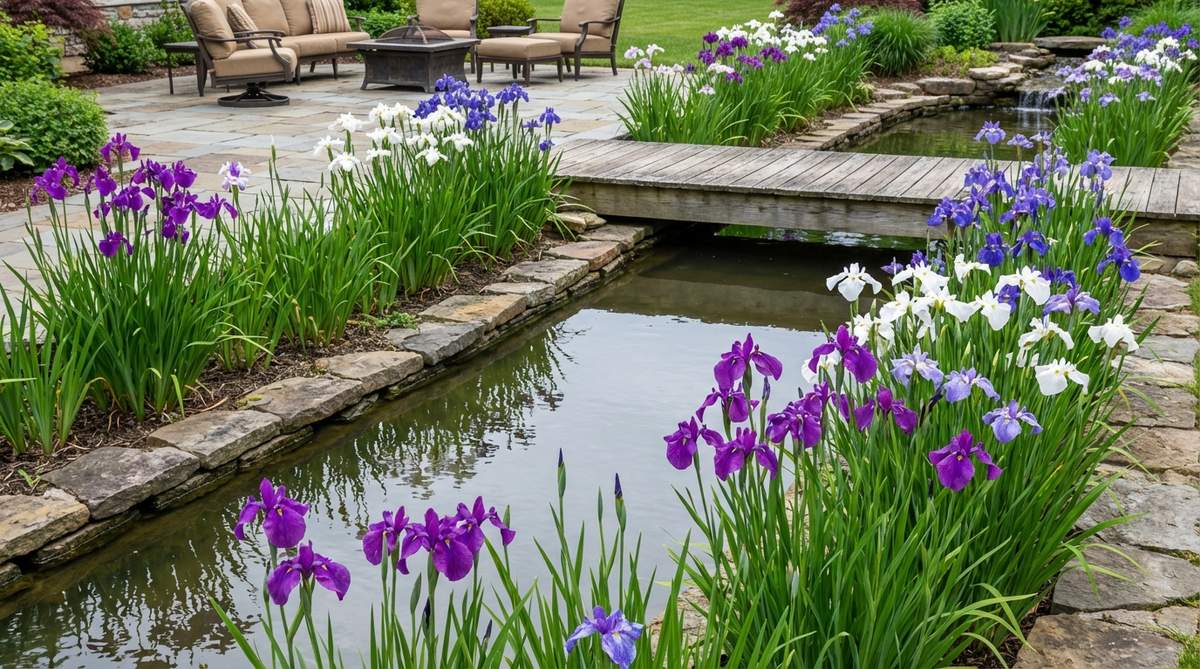
Japanese water iris planted densely along pond margins explode with purple, white, and blue blooms in late spring. These moisture-loving perennials thrive in shallow water or saturated soil, creating vertical color columns that reflect in the pond surface.
Position iris groupings where morning light illuminates the blooms from behind, making petals appear to glow. The sword-like foliage remains attractive throughout summer even after flowers fade, providing structural green accents.
Divide iris clumps every 3-4 years to maintain vigor and flowering density. Plant at least 12-24 plants per grouping to create substantial visual impact during the brief 2-3 week bloom period.
33. Summer Lotus Bloom Sequence
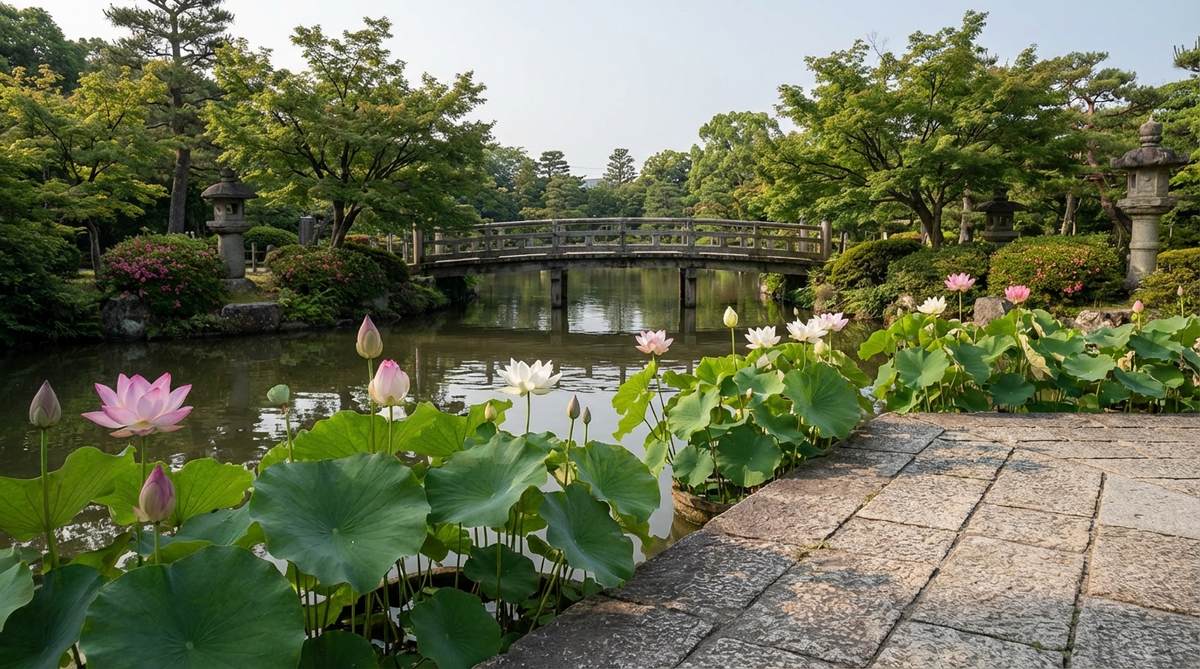
Stagger lotus varieties with different bloom times to extend flowering from early June through September. Early-blooming cultivars open in mid-June, followed by mid-season types in July, and late varieties finish the sequence in late August.
This succession ensures constant bloom presence throughout the peak garden viewing season. Lotus flowers last only 3-4 days individually, so extended blooming periods require multiple plants producing flowers in rotation.
34. Autumn Foliage Reflection
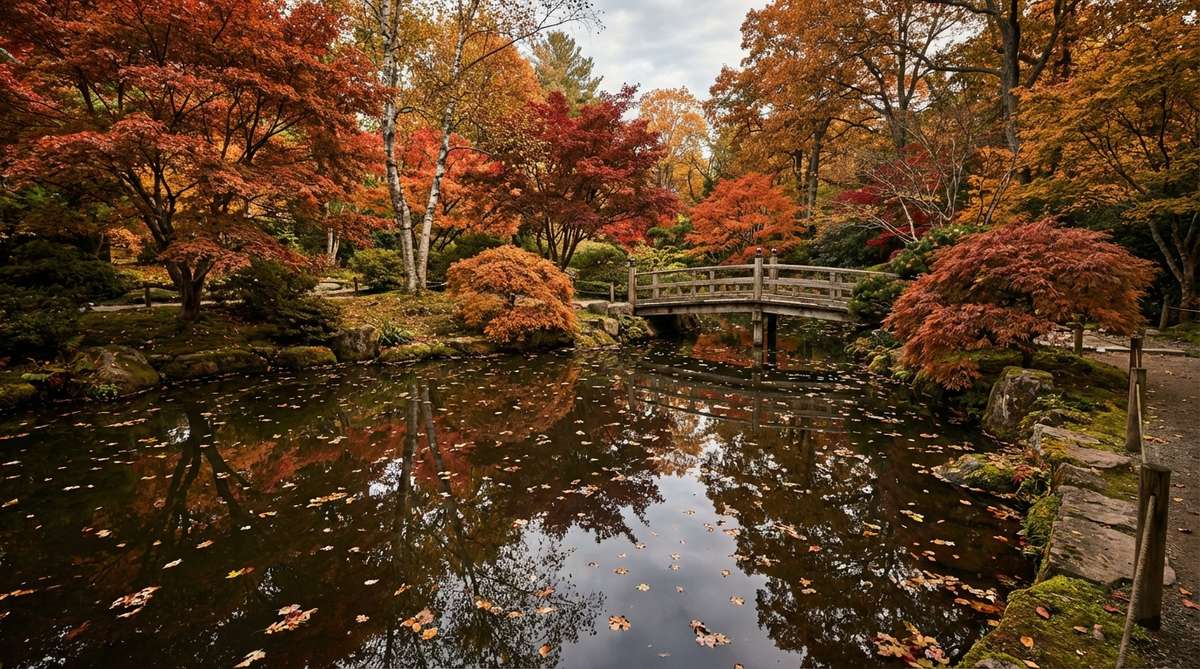
Position Japanese maples and other deciduous trees where fall foliage reflects in the pond surface, doubling the color impact. Red, orange, and gold leaves mirrored in dark water create the signature autumn aesthetic of Japanese gardens.
Allow some fallen leaves to drift on the pond surface temporarily for seasonal atmosphere before removing them to prevent water quality decline. The brief floating leaf period provides exceptional photographic opportunities and seasonal transition markers.
35. Winter Evergreen Structure
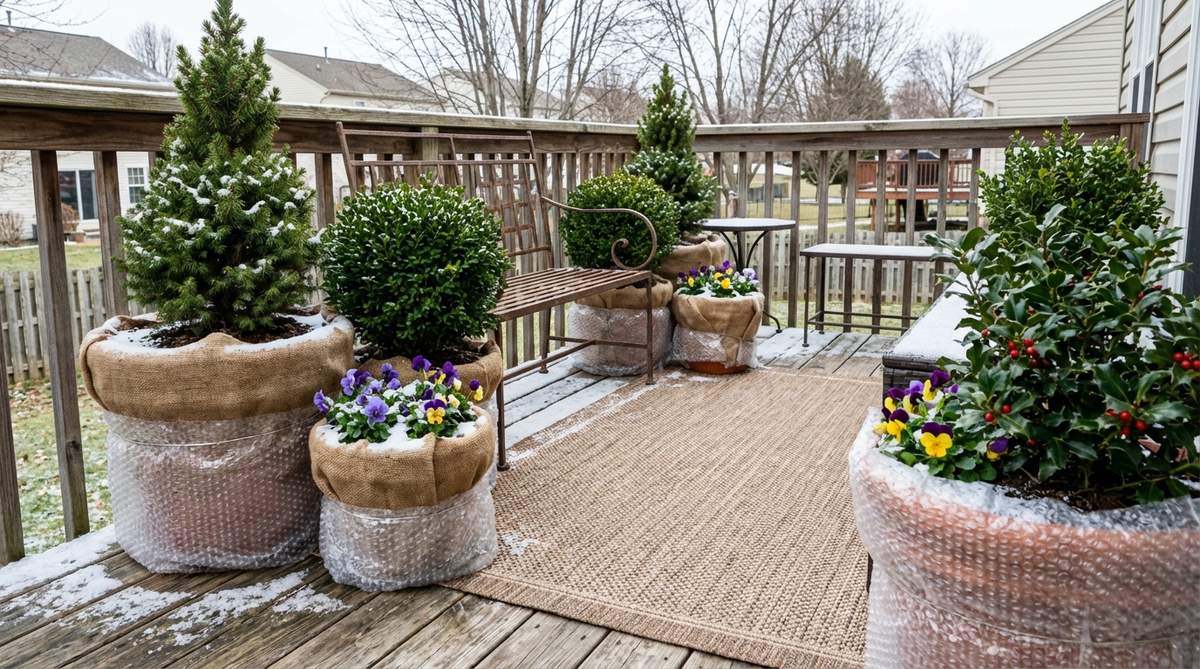
Evergreen conifers, bamboo, and ornamental grasses maintain green presence and structural form throughout winter dormancy. These plants prevent the garden from appearing dead or abandoned during cold months when deciduous species drop foliage.
Pine, juniper, and cryptomeria provide year-round color while their shapes become more pronounced under snow cover. Ornamental grasses like Japanese silver grass develop tan seed heads that add movement and texture to winter compositions.
36. Four-Season Rotation Beds
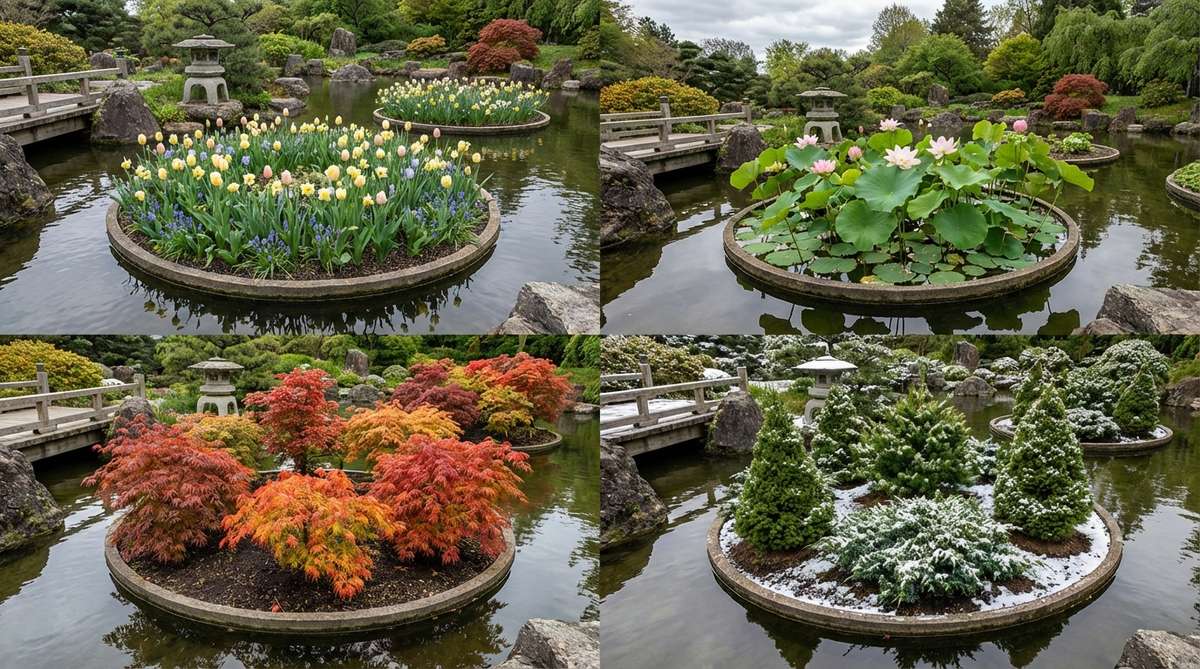
Dedicate specific planting zones to each season’s star performers, creating a rotation of focal points throughout the year. Spring bulbs and iris give way to summer lotus and water lilies, followed by autumn foliage plants and winter evergreens.
This strategic approach ensures the garden never lacks visual interest regardless of season. Visitors discover different primary features during each garden visit throughout the calendar year, maintaining engagement and encouraging repeated viewing.
Bringing Your Japanese Garden Pond Vision To Life
Creating a successful japanese garden pond requires balancing aesthetic principles with practical koi keeping and water plant management. The designs presented here demonstrate how traditional Japanese philosophy adapts to contemporary landscapes while maintaining core principles of harmony, natural balance, and mindful observation. Start with a clear vision of your desired atmosphere—whether traditional naturalism or modern interpretation—then select elements that support both visual goals and ecological function. Proper depth, adequate filtration through plants and mechanical systems, and thoughtful stone placement establish the foundation for decades of enjoyment. Your japanese garden koi pond will evolve over time as plants mature, koi grow, and seasonal changes create an ever-shifting composition that rewards patient observation and careful stewardship.
Frequently Asked Questions
What is the minimum depth for a japanese garden pond with koi?
A japanese garden pond should maintain a minimum depth of 3 feet, with 4-5 feet preferred for optimal koi health. This depth provides stable water temperatures year-round, allows koi to overwinter successfully in cold climates, and gives fish adequate space to dive and exhibit natural behaviors. Deeper zones also support better water quality by increasing total volume, which dilutes waste products and maintains stable chemistry. In warmer regions, depth helps koi escape surface heat during summer peaks.
Which water plants work best in koi ponds without being eaten?
Water lilies, lotus, and larger marginal plants like water iris resist koi damage better than delicate species. Koi consume soft plants like water lettuce, duckweed, and hornwort readily, which actually benefits both fish nutrition and pond maintenance. To protect valued ornamental plants, place them in protective baskets with larger gravel that prevents root disturbance, or dedicate separate shallow zones where koi cannot access plant bases. Hardy species with tough leaves and substantial root systems establish successfully even with occasional koi browsing.
How many koi can I keep in a 1000-gallon japanese garden pond?
A 1000-gallon pond supports 5-7 full-sized koi comfortably, following the guideline of 150-200 gallons per adult fish. This calculation assumes koi reach their mature length of 24-36 inches and accounts for adequate swimming space, territorial needs, and waste production capacity that filtration systems can process. Starting with younger, smaller koi allows the biological filtration to develop gradually as fish grow. Overcrowding leads to poor water quality, increased disease risk, stunted growth, and aggressive behavior, so conservative stocking ensures long-term success.
Do I need a waterfall in my japanese koi pond design?
Waterfalls are not strictly required but provide significant benefits including water oxygenation, surface agitation that prevents stagnant zones, and aesthetic appeal through movement and sound. Japanese garden tradition values flowing water as symbolic of life’s continuous movement and natural change. Alternative aeration methods like air stones, fountain features, or stream inlets achieve similar oxygenation results with different visual effects. The choice depends on your design goals, available space, and budget—formal minimalist designs may favor still water, while naturalistic gardens benefit from waterfall energy.
When is the best time to build a japanese garden pond?
Spring and fall offer ideal construction windows when moderate temperatures allow comfortable outdoor work and plants establish roots before temperature extremes arrive. Spring construction completed by late May gives water plants the entire growing season to develop, while fall projects finished by October allow systems to stabilize before winter. Avoid summer construction when heat stress affects both workers and newly installed plants, and winter building presents frozen ground challenges in cold climates. Plan projects to finish at least 6-8 weeks before the hottest or coldest seasonal periods for best results.