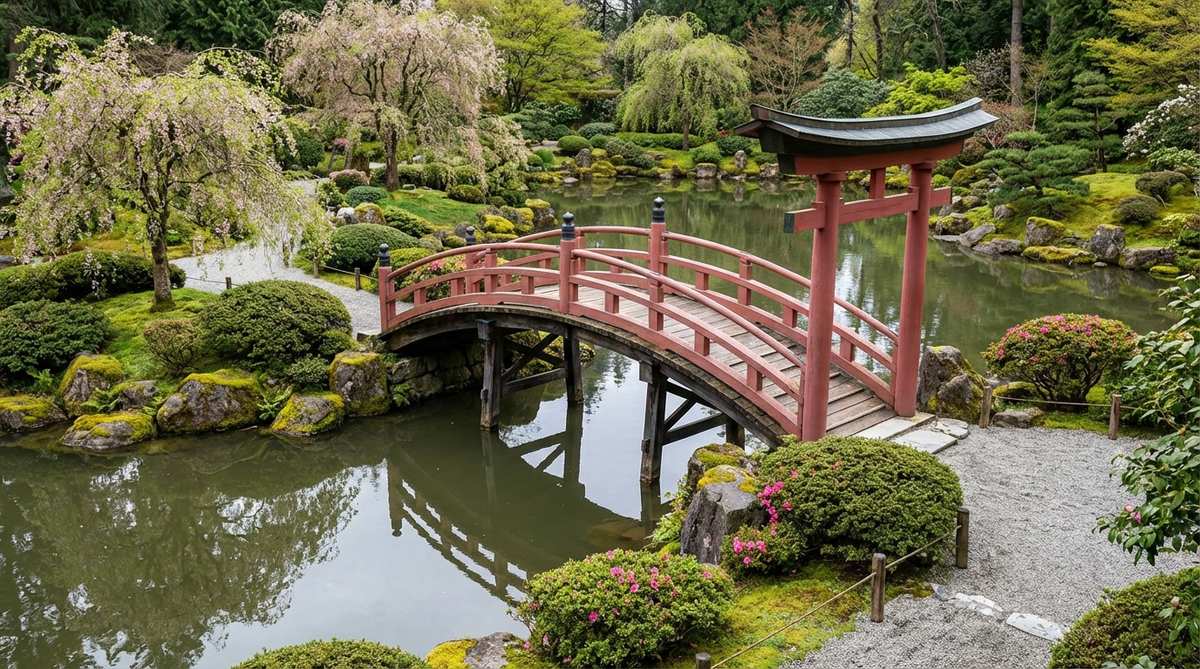
A japanese garden bridge transforms ordinary landscapes into meditative sanctums where architecture meets philosophy. These structures range from steeply arched drum bridges to flat stone slabs, each carrying symbolic weight beyond mere function. Fresh Garden Ideas presents authentic design principles rooted in centuries-old Japanese craftsmanship to help you select and implement the perfect bridge for your garden’s scale and character.
Design SnapshotKey Principles
- Symbolic Journey: Bridges represent transition from the mundane world to sacred spaces, encouraging mindfulness with each step
- Material Harmony: Wood, stone, and earth-covered bridges each bring distinct textures that dialogue with surrounding plantings
- Intentional Curvature: Arched profiles ward off negative energy while flat spans create horizontal calm across water features
- Color as Language: Red hues signal protection and wisdom, while natural wood tones emphasize unity with the landscape
Classic Arched Structures
Arched bridges embody the essence of Japanese garden philosophy through their drum-like silhouettes. The steep incline forces visitors to slow their pace and engage with the crossing ritual. Designers use these profiles to create focal points that command attention while maintaining balance with horizontal water planes.
1. Taiko-Bashi Drum Bridge
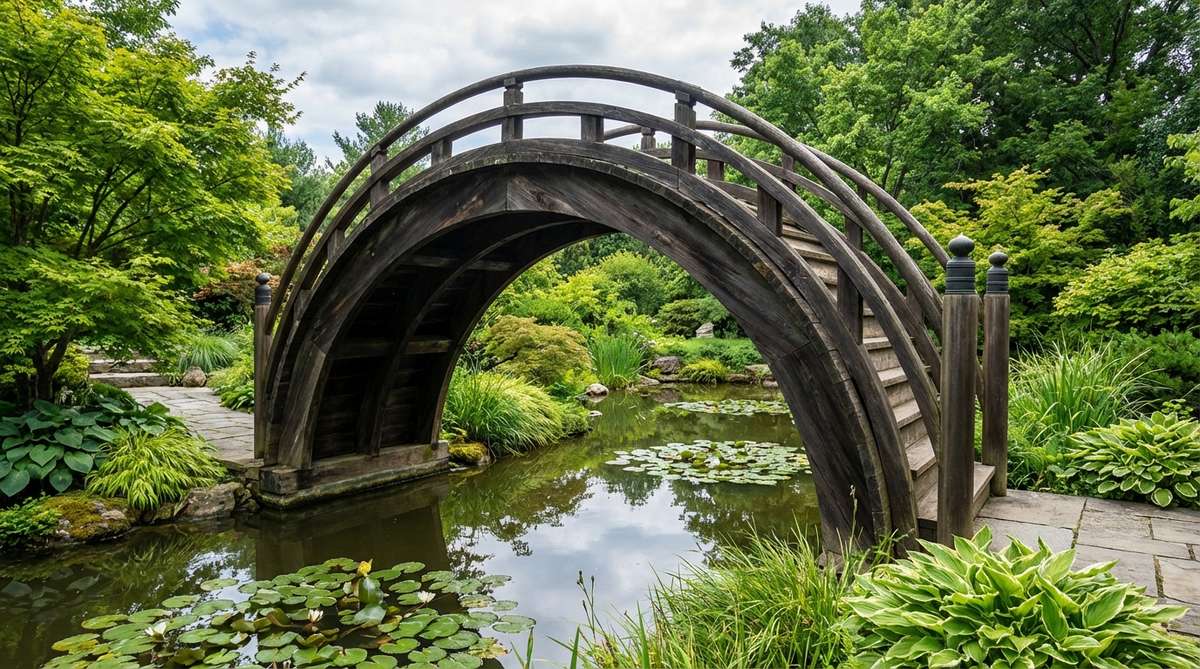
The highly arched taiko-bashi mirrors the semi-circular shape of a traditional Japanese drum when viewed from the side. Its steep 48-degree incline rises dramatically over ponds, creating a striking silhouette against sky and foliage.
Construct this bridge using curved laminated beams or individual planks shaped to form the arc. Railings should follow the curve precisely, often featuring vertical balusters that emphasize the ascent.
This design serves as a ceremonial crossing that transforms garden visitors into participants in a spiritual journey. The climb upward and descent symbolize elevation above earthly concerns before returning to the physical realm.
2. Moon Bridge Reflection
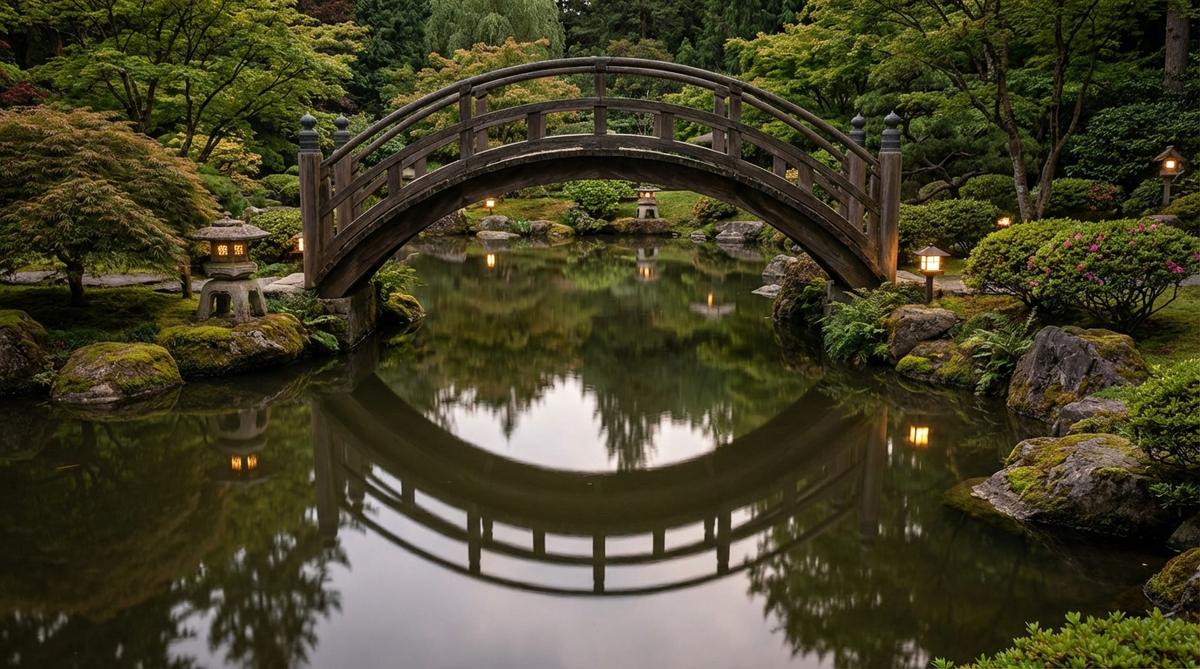
Moon bridges earn their name from the perfect circle created when the arch reflects in still water below. The geometric completion occurs only when conditions align—calm surface, correct viewing angle, deliberate lighting.
Position the bridge perpendicular to primary viewing points to maximize the reflection effect. Use darker wood finishes or weathered timber to enhance contrast with water surfaces.
The circular symbolism represents completeness and the cyclical nature of existence in Zen philosophy. Evening viewing sessions reveal how lantern light multiplies the bridge’s presence through aquatic mirroring.
3. Gentle Arc Garden Crossings
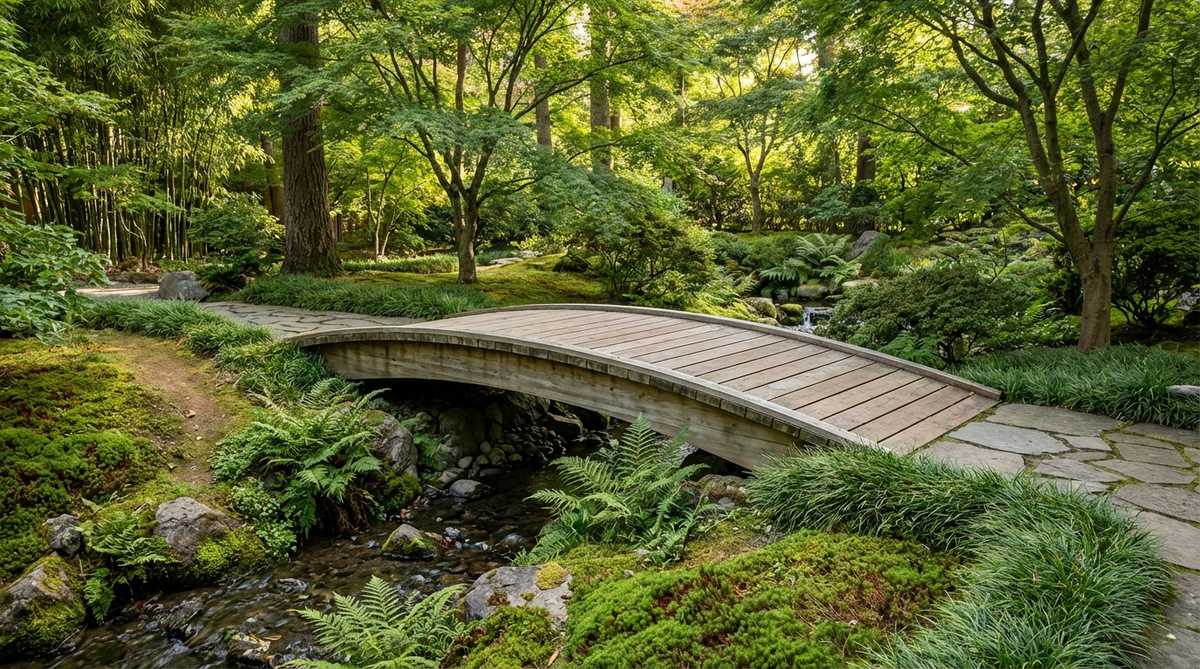
Not all arched bridges require dramatic elevation. Subtle curves spanning 5 to 15 degrees provide accessibility while maintaining symbolic arch geometry.
Install these lower-profile structures across narrow streams or between adjacent garden rooms. Cedar decking over pressure-treated framing delivers durability without excessive visual weight.
Gentle arches accommodate mobility limitations while preserving the transitional meaning inherent to curved spans. Plant low groundcovers along approaches to emphasize the bridge’s modest rise.
4. Double-Arch Lenticular Truss
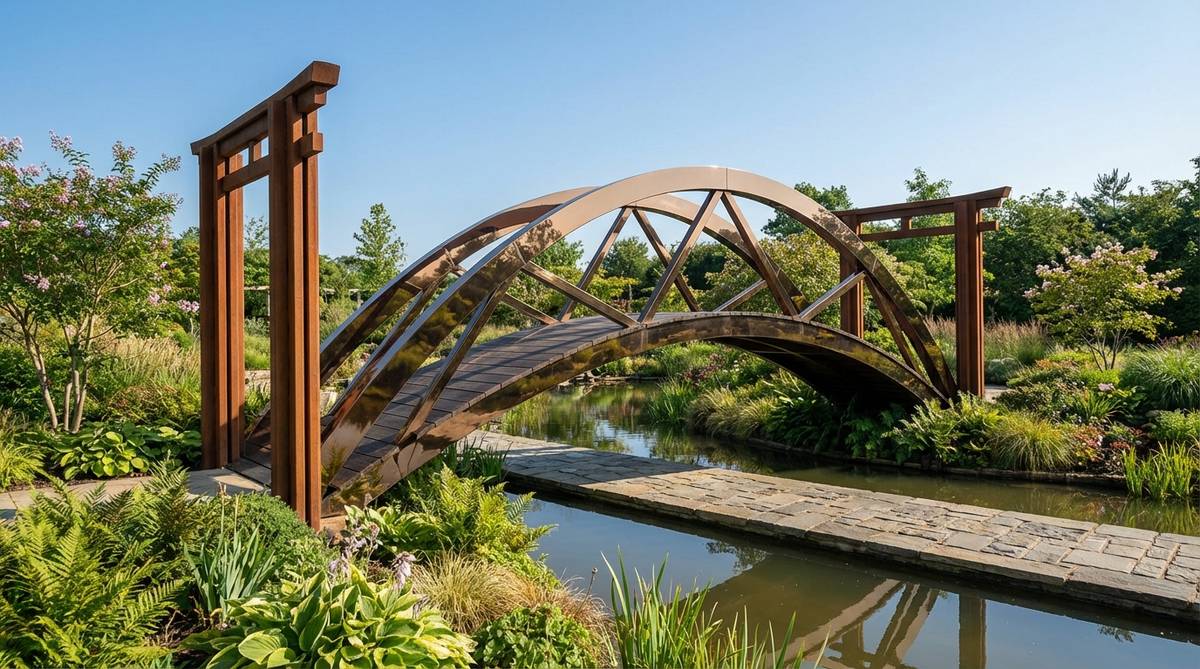
Contemporary interpretations layer mirrored arches—one curving upward for the walking path, another arching downward below. The upper chord offers elevated views while the lower chord dips near water level.
Engineer this design with steel trusses finished in earth tones, topped with wooden decking for warmth. Vertical columns connecting the paths become visual anchors resembling torii gates.
This structure provides two distinct crossing experiences from a single footprint. The engineering allows longer spans without center supports, preserving uninterrupted water flow beneath.
5. Steep Ceremonial Ascent
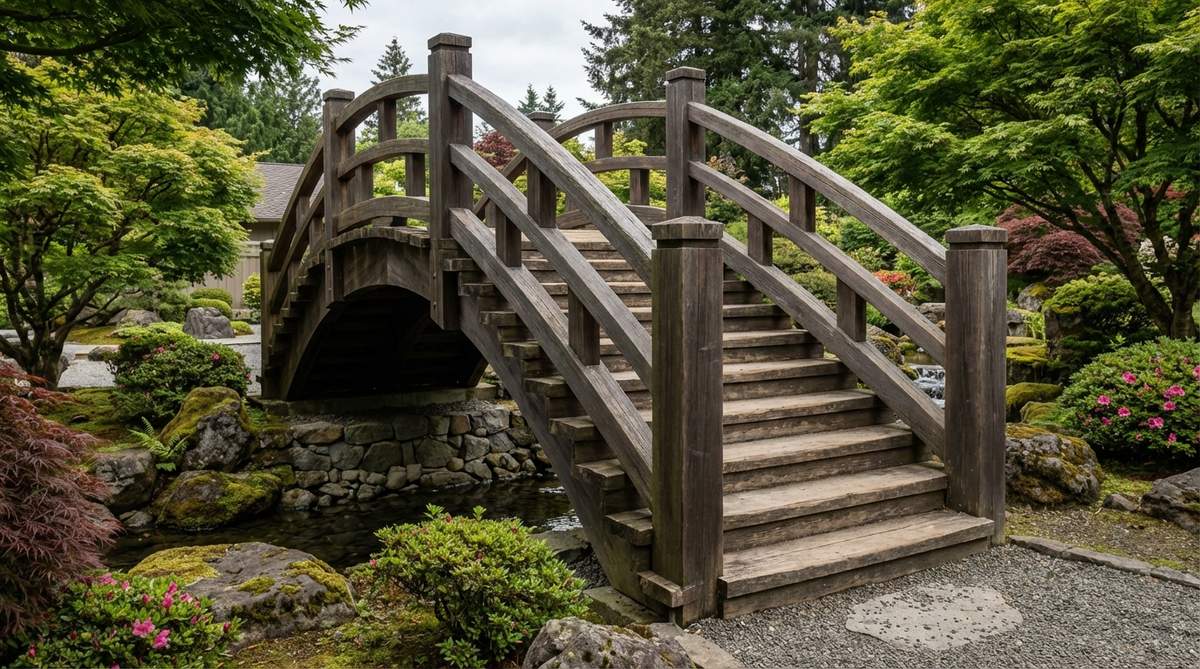
Ultra-steep bridges with inclines approaching 50 degrees function more as architectural statements than practical crossings. The challenge of ascending becomes the experience itself.
Build robust handrails at waist height with intermediate horizontal rails for safety. Space steps or tread surfaces at 8 to 10 inches apart to create footholds on extreme slopes.
These bridges work best in larger estates where dramatic scale supports monumental features. The physical effort required mirrors spiritual discipline in traditional temple garden contexts.
Iconic Red Bridge Expressions
The japanese garden red bridge stands as perhaps the most recognizable element in Eastern landscape architecture. Red pigment (traditionally cinnabar or vermillion) symbolizes protection against malevolent spirits, wisdom, and sacred transformation. These bridges create powerful focal points that energize green palettes while honoring cultural symbolism.
6. Vermillion Arched Guanyin
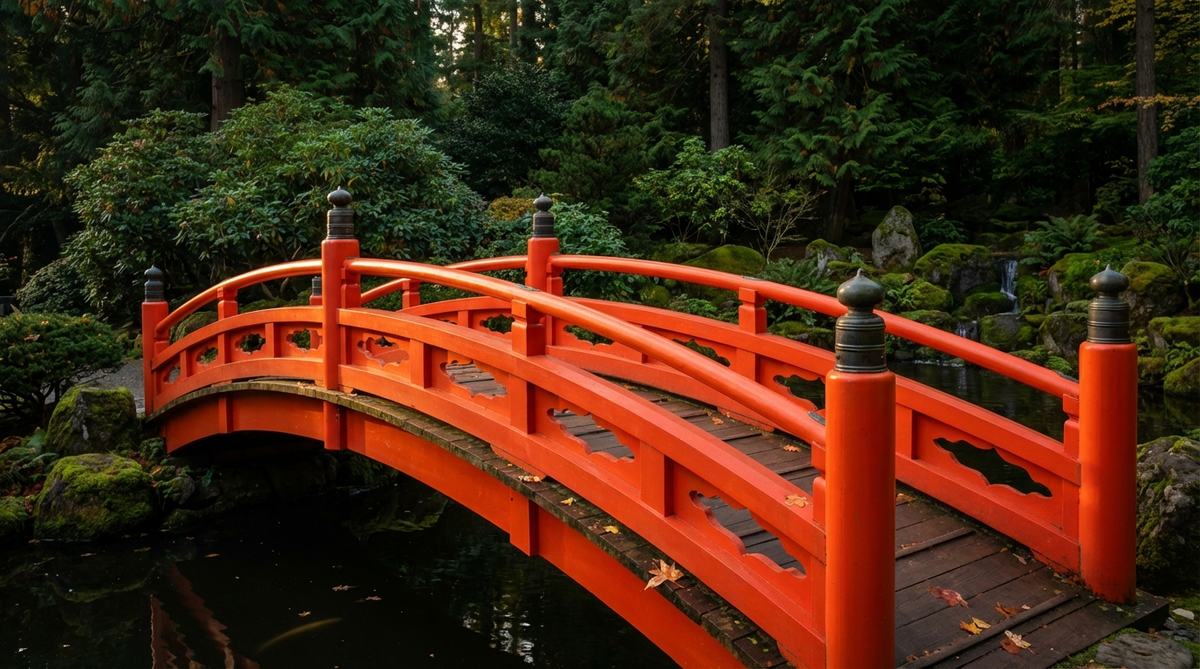
Named for the Buddhist deity of compassion, these red bridges combine steep arches with ornate railings featuring decorative cutouts. The vermillion finish radiates against evergreen backgrounds, commanding immediate visual attention.
Apply marine-grade red enamel or traditional mineral pigments suspended in linseed oil for authentic color depth. Detail the railings with cloud motifs or geometric patterns routed into horizontal members.
Position Guanyin bridges where they receive morning or late afternoon light to intensify the red’s luminosity. The color saturation peaks when viewed against dark conifer masses or shadowed water.
7. Flat Red Span Bridge
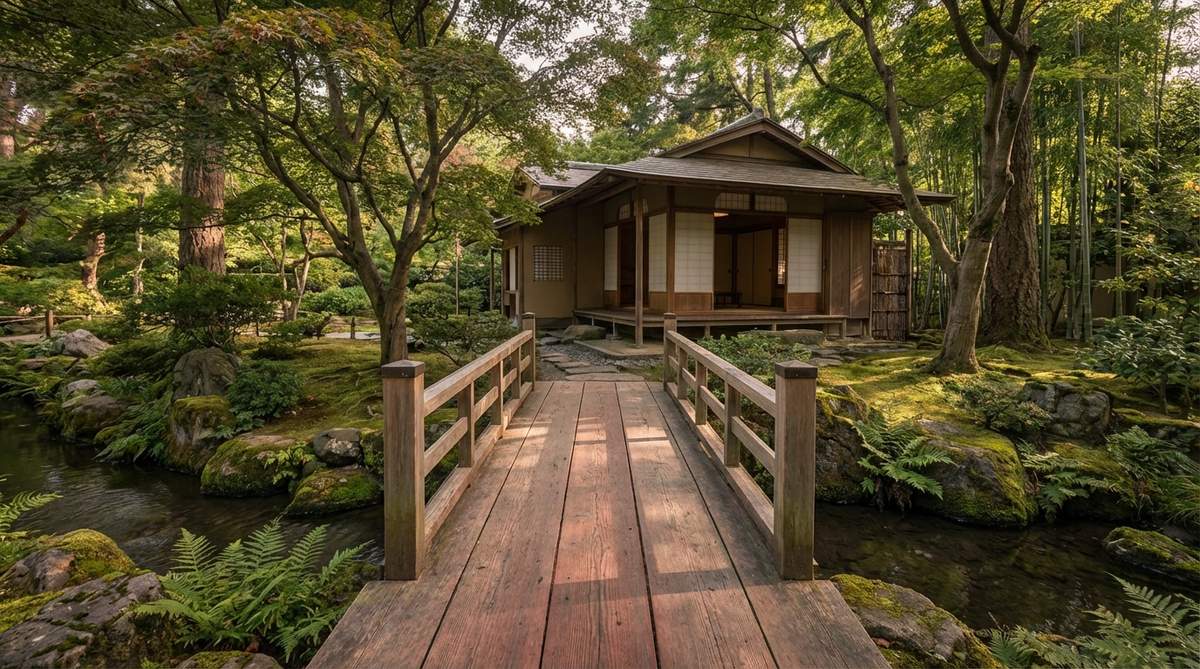
Horizontal red bridges deliver iconic color without requiring architectural acrobatics. The flat profile suits small gardens where arched structures would overwhelm available space.
Construct a simple beam bridge with red-stained cedar planks over treated joists. Railings can remain minimal—single horizontal rails—or incorporate traditional balustrade designs.
The horizontal red line creates strong directional movement through compositions. Use this design to guide foot traffic toward specific destinations like tea houses or meditation platforms.
8. Red Drum Bridge with Gold Accents
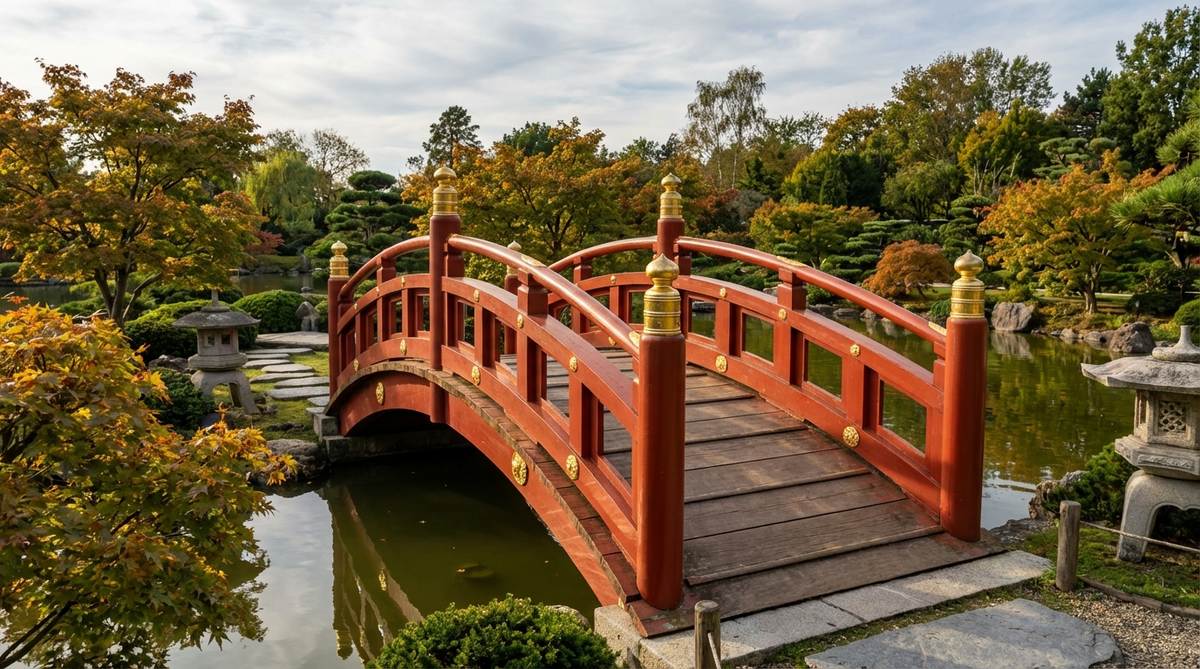
Elaborate versions layer gold leaf or gold paint onto railing finials, post caps, and decorative medallions. The metallic highlights elevate the bridge from garden feature to architectural jewelry.
Apply 23-karat gold leaf to horizontal rail terminals and vertical post tops using traditional sizing techniques. Seal with clear marine varnish rated for exterior exposure.
This treatment suits formal gardens or spaces designed to replicate temple aesthetics. The gold catches sunlight and creates shimmer points that animate the structure throughout the day.
9. Lacquered Red Finish
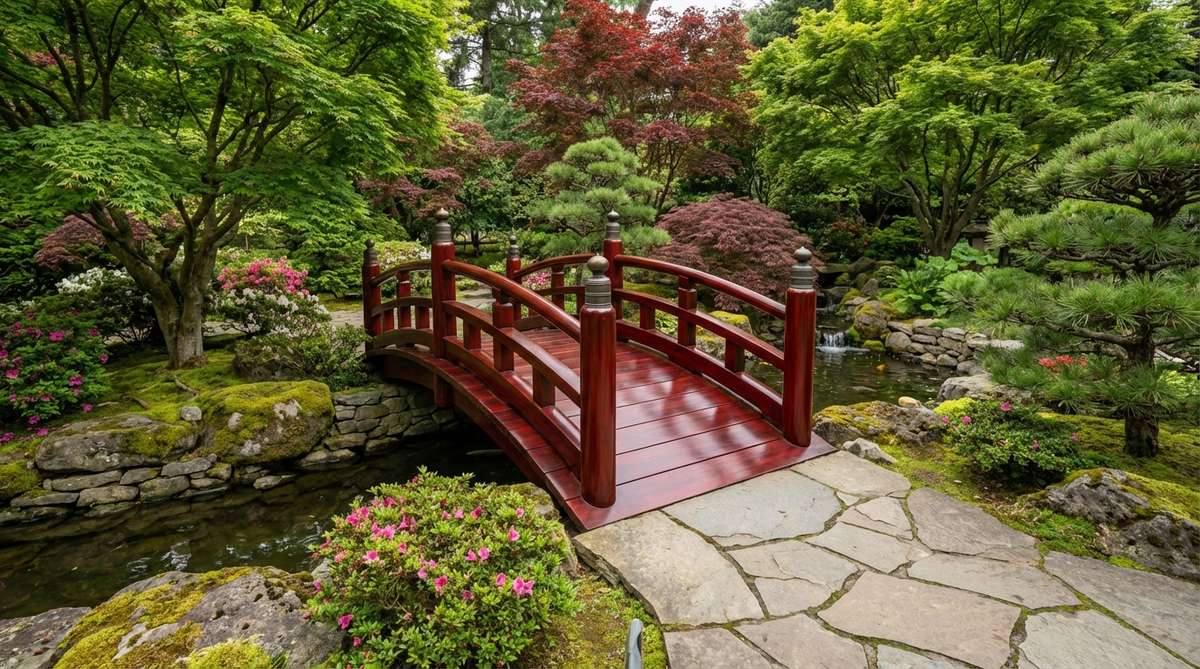
Traditional Japanese lacquer (urushi) produces a deep, glossy red surface that weathers beautifully over decades. The multi-layer application process creates unmatched depth and durability.
Source authentic urushi lacquer from specialty suppliers or use high-quality polyurethane alternatives with vermillion pigment. Apply in thin coats, sanding between layers, building to 8-12 coats total.
Lacquered surfaces develop a patina that enriches rather than degrades the appearance. Annual cleaning with mild soap preserves the finish without requiring frequent repainting.
10. Red Bridge Over Dry Stream
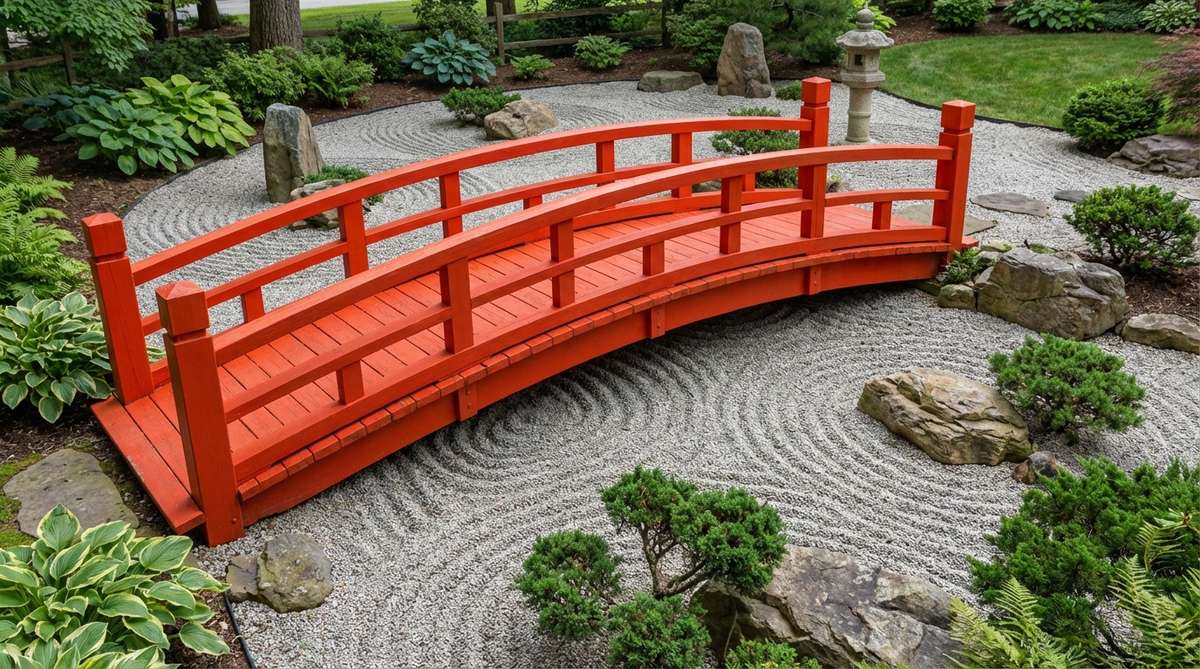
Red bridges spanning karesansui (dry landscape) gardens create powerful contrasts between vibrant architecture and monochromatic raked gravel. The bridge crosses symbolic rather than literal water.
Install the structure over carefully composed stone arrangements representing water flow. Rake gravel patterns beneath the span to suggest current and movement.
The visual tension between solid architecture and abstract water representation reinforces Zen concepts of presence and absence. Visitors cross “water” that exists only through suggestion and shared cultural understanding.
11. Sunset Red Weathered Timber
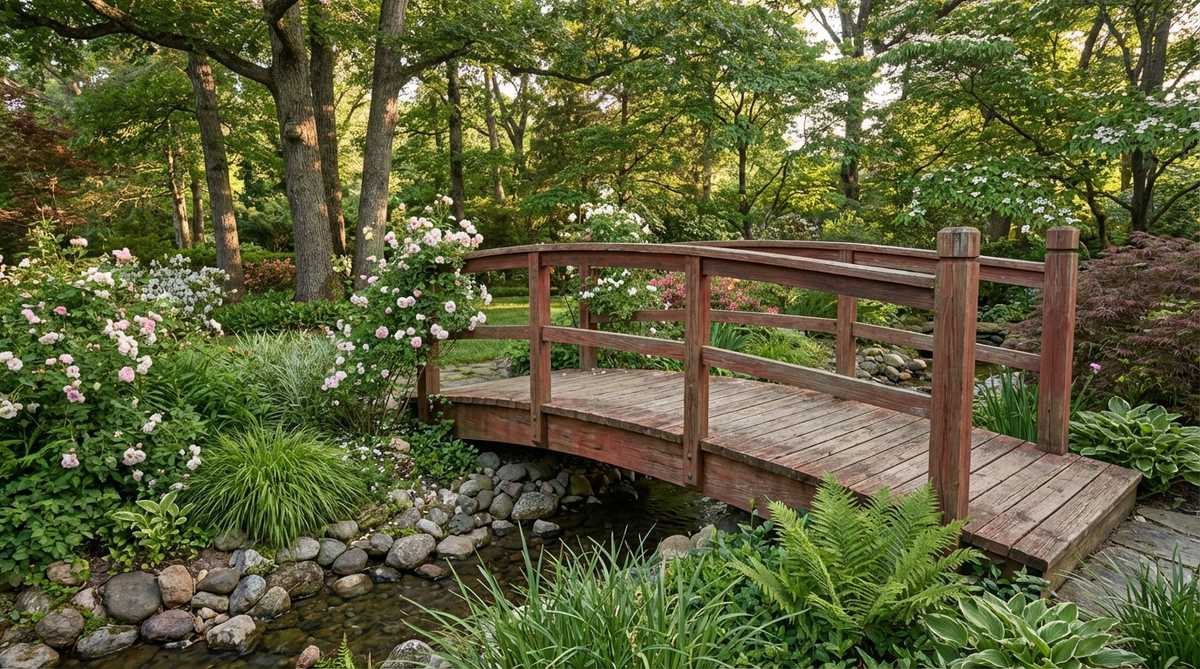
Instead of bright vermillion, some designers specify rust-red or barn-red stains that suggest age and natural oxide formation. These muted tones integrate more subtly into informal garden settings.
Apply oil-based stains with iron oxide pigments to rough-sawn lumber. The wood grain remains visible beneath the translucent color layer.
Weathered red tones suit cottage gardens or rustic landscapes where brilliant vermillion would clash with informal plantings. The color provides cultural reference without dominating the composition.
Wooden Platform Designs
Flat wooden bridges offer simplicity and versatility across varied garden scales. These hirabashi designs prioritize clean lines and honest material expression over ornamental complexity.
12. Single Log Crossing
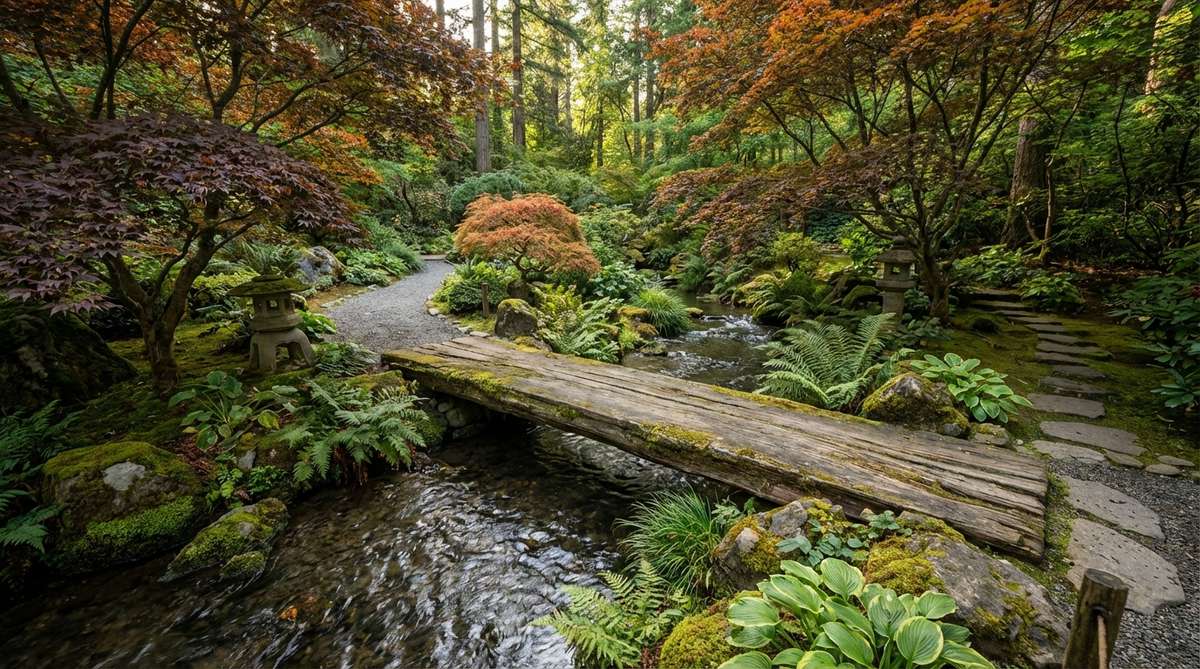
The most primitive bridge form uses one substantial log spanning water or low ground. Diameter should exceed 12 inches for adult crossings, with the top surface flattened or left rounded.
Select naturally decay-resistant species like cedar, redwood, or black locust. Remove bark and treat cut ends with wood preservative to extend lifespan.
Single logs evoke ancient forest pathways and emphasize nature’s raw materials. This design suits naturalistic gardens aiming for wild rather than refined character.
13. Twin Log Plank Bridge
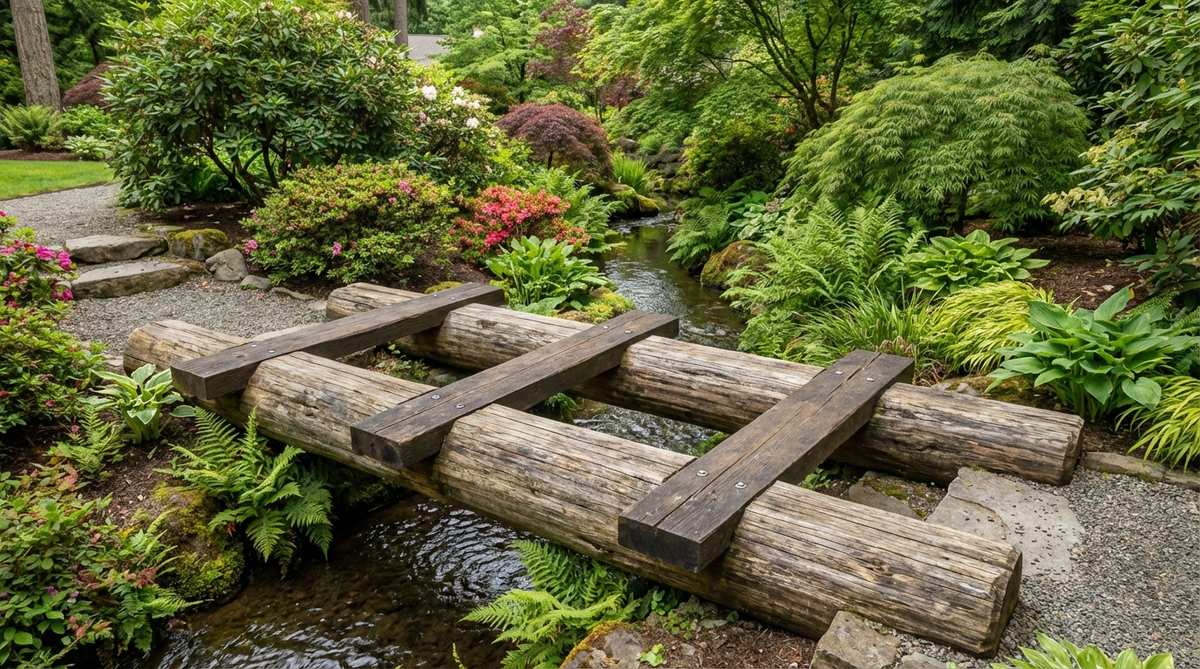
Two parallel logs placed 18-24 inches apart create a more stable crossing. Cross-planks laid perpendicular to the logs form the walking surface.
Notch the underside of each cross-plank to nest over the support logs, preventing lateral movement. Secure with galvanized screws driven at angles.
This configuration doubles visual weight compared to single logs while maintaining rustic simplicity. The design works well across wider streams up to 12 feet.
14. Maruki-Bashi Natural Log
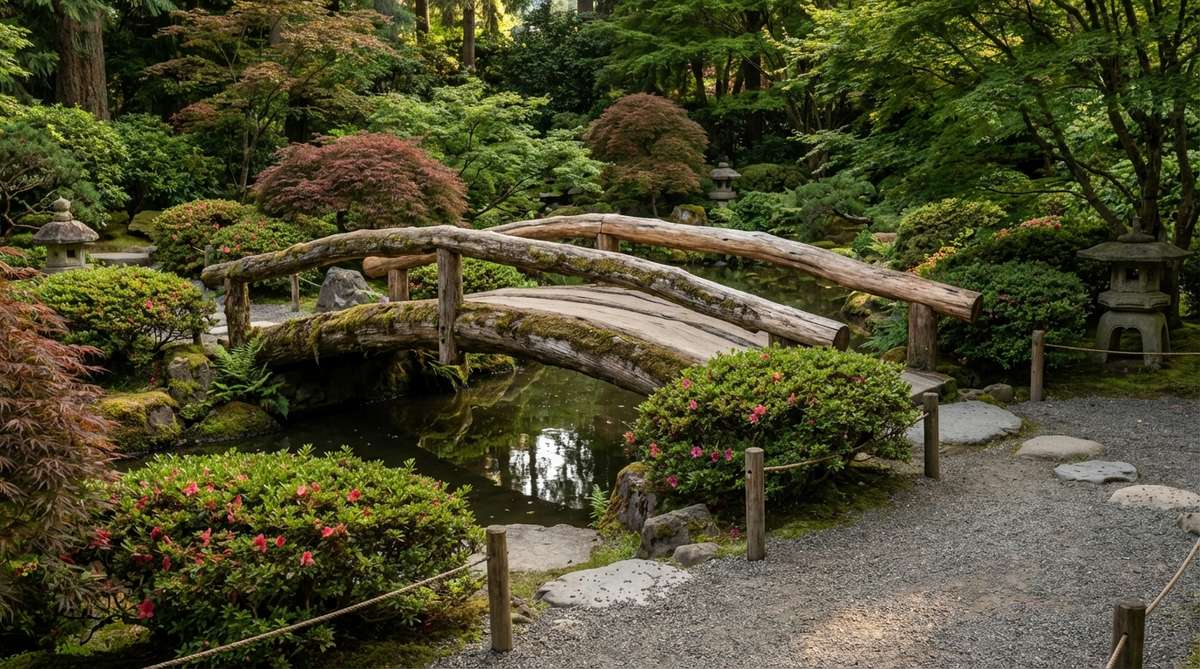
Maruki-bashi specifically refers to bridges constructed from minimally processed logs with natural curves and character intact. Irregular form becomes a design asset rather than a flaw.
Source logs showing gentle curves that can span the intended distance. Orient each piece to position its natural arc advantageously for load distribution.
The intentional imperfection connects the bridge to organic growth patterns. Visitors recognize the structure as derived from rather than imposed upon nature.
15. Cedar Plank Platform
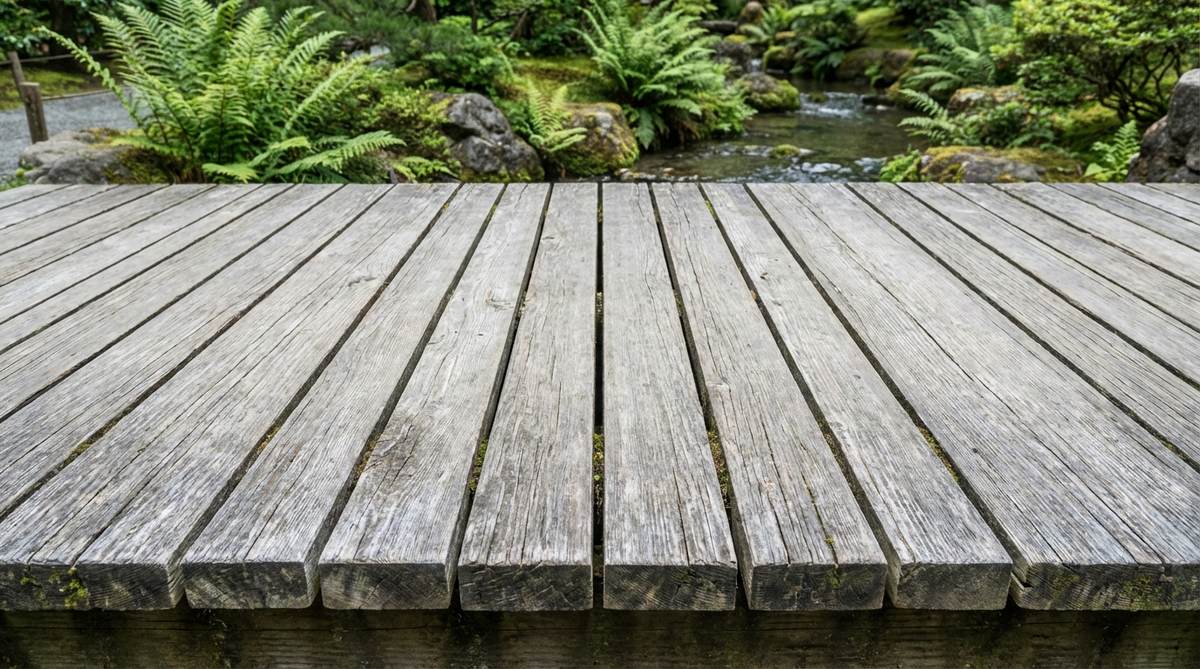
Wide cedar planks (6-8 inches) laid side-by-side over support beams create a substantial walking surface with minimal framing visible. The all-wood appearance feels monolithic and grounded.
Install planks perpendicular to traffic flow over doubled joists at 16-inch centers. Allow 1/8-inch gaps between planks for drainage and seasonal expansion.
Cedar’s natural oils resist rot without chemical treatment, developing a silver-gray patina over time. The weathering process adds character that improves with age.
16. Timber Frame with Railings
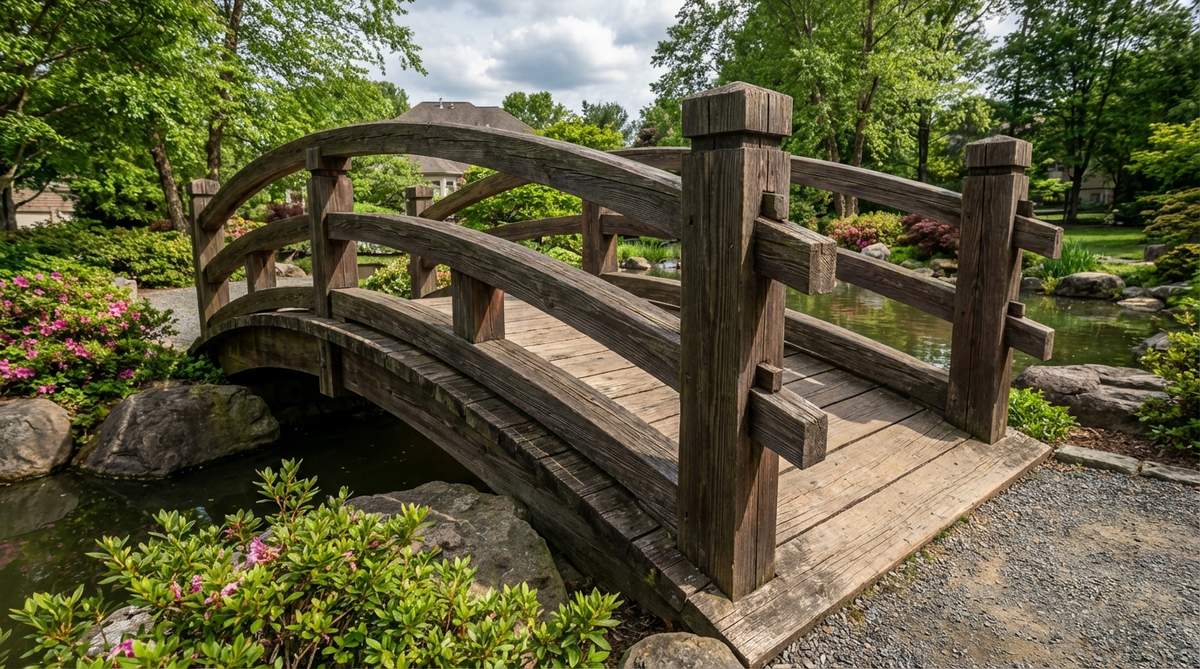
Exposed post-and-beam construction showcases joinery details—mortise-and-tenon connections, through-wedged tenons, or traditional Japanese carpentry techniques. Railings follow structural logic rather than decorative impulse.
Cut mortises precisely to accept tenons with tight tolerances. Pin or wedge joints rather than relying on metal fasteners for authentic appearance.
Visible joinery educates viewers about wood construction while celebrating craftsmanship. Each connection becomes a teaching moment about traditional building methods.
17. Floating Deck Bridge
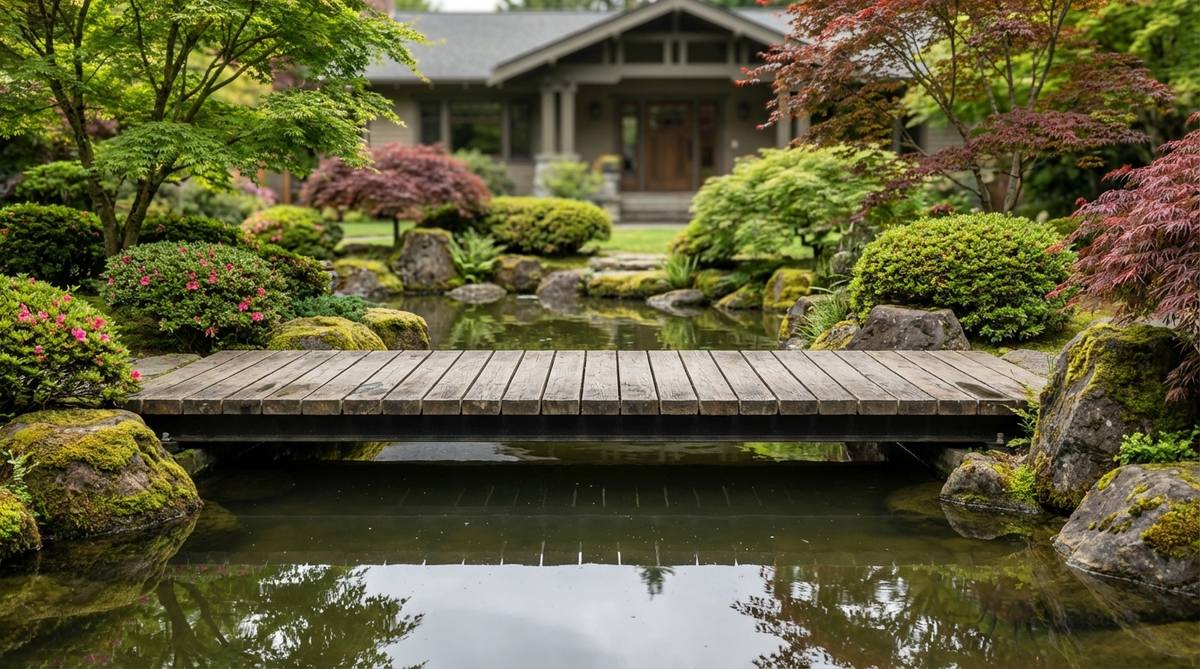
Low-profile platforms hovering just inches above water or marsh create the illusion of walking directly on the surface. Minimal vertical clearance enhances intimacy with aquatic environments.
Support the deck on concrete piers sunk below freeze depth or on helical piles. Keep the deck surface within 6 inches of normal water level.
The floating effect invites close observation of water plants, fish, and reflections impossible from elevated vantage points. Morning mist often obscures the structure entirely, heightening the magical crossing experience.
18. Hinoki Cypress Aromatic Bridge
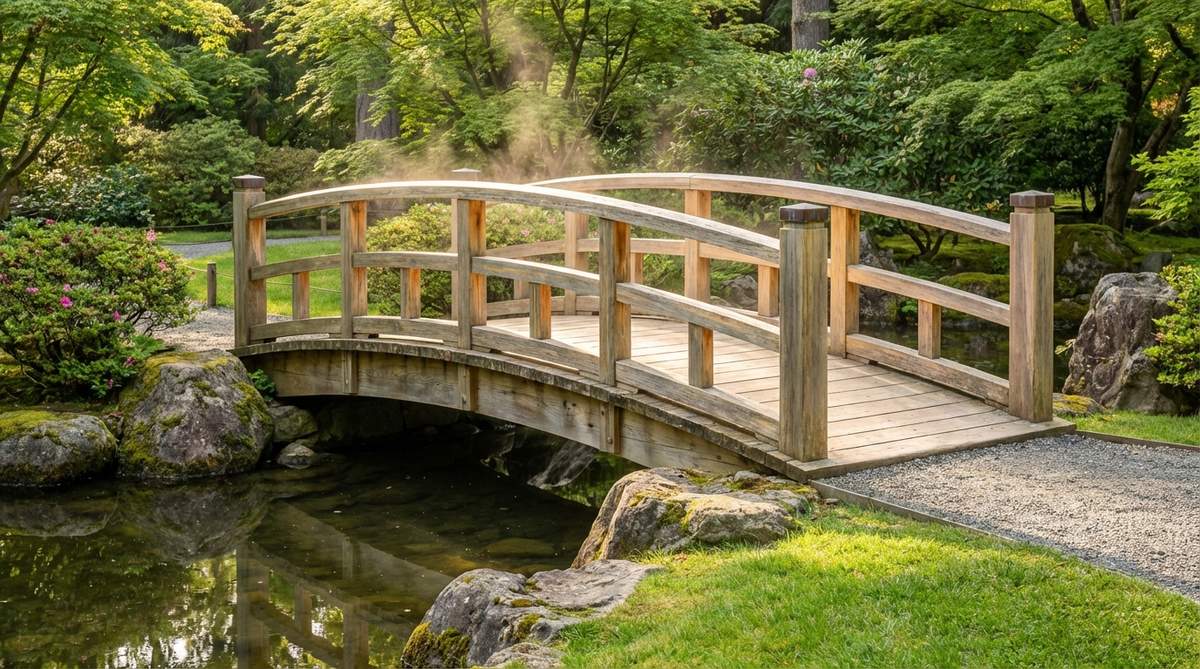
Hinoki (Japanese cypress) releases a distinctive lemony-cedar fragrance when warmed by sun. Bridges constructed entirely from this premium wood offer olfactory as well as visual experience.
Mill hinoki to finished dimensions and assemble without stain or finish to preserve the aromatic qualities. The natural oils provide excellent weather resistance.
The scent becomes part of the crossing ritual, engaging senses beyond sight and sound. Premium cost limits this design to smaller spans or accent applications.
Stone Bridge Foundations
Stone bridges communicate permanence and geological time scales. These structures weather gracefully, developing moss and lichen coatings that enhance rather than diminish their character.
19. Single Slab Granite Span
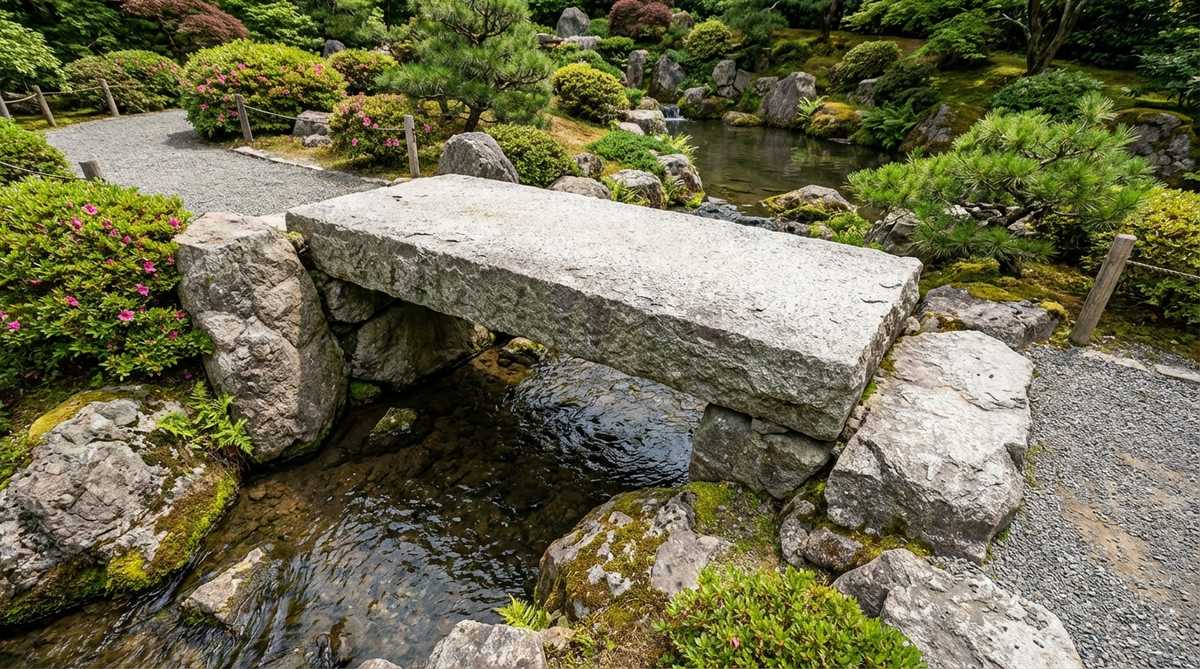
One massive stone slab bridges narrow crossings without intermediate supports. The monolithic character suggests ancient construction even in new installations.
Select granite slabs 18-24 inches thick for spans up to 8 feet. Anchor each end on substantial foundation stones buried to stable soil depth.
Single slabs work best in smaller residential gardens where sourcing appropriately sized stones remains feasible. The installation becomes a permanent feature requiring minimal maintenance over centuries.
20. Limestone Slab with Texture
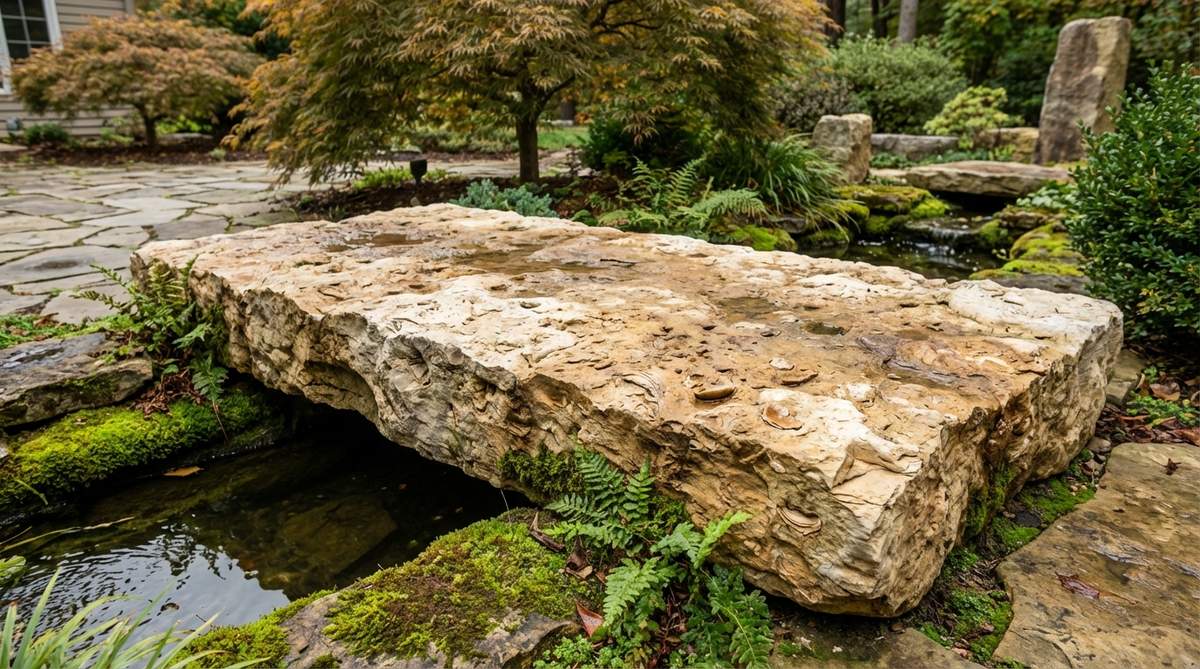
Limestone’s warmer tones and textured surfaces provide visual softness compared to granite’s speckled hardness. Natural pitting and fossil inclusions add organic detail.
Source limestone thick enough to prevent flexing under load—minimum 12 inches for 6-foot spans. The material’s relative softness allows custom shaping with masonry tools.
Limestone accepts moss and algae growth readily, accelerating the aged appearance. Water features surrounded by limestone bridges develop cohesive material palettes.
21. Arched Stone Bridge (Sori Ishibashi)
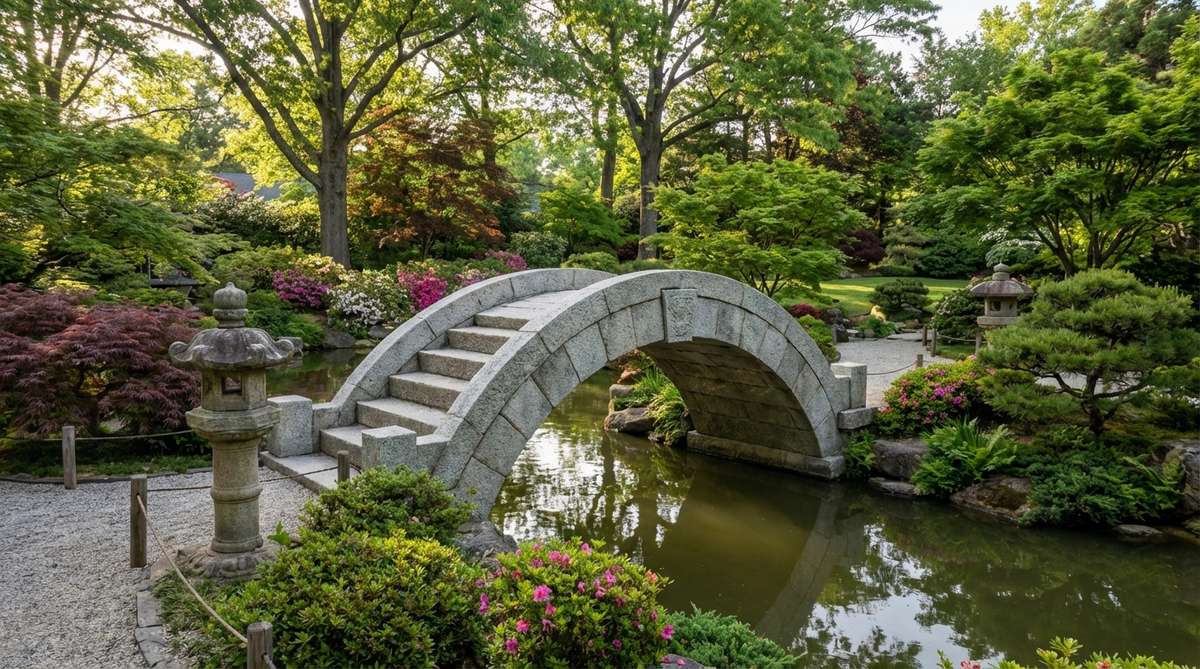
Stone arches require precisely cut voussoirs (wedge-shaped blocks) that transfer loads through compression. The curved form achieves strength without mortar in traditional construction.
Lay stones over temporary wooden formwork until the keystone locks the arch. Each stone should angle toward the arch center for proper load distribution.
Stone arches represent pinnacle achievements in traditional masonry, demonstrating engineering prowess through material and geometry alone. Modern installations often use mortar for added security while maintaining visual fidelity to historical examples.
22. Stepping Stone Sequence
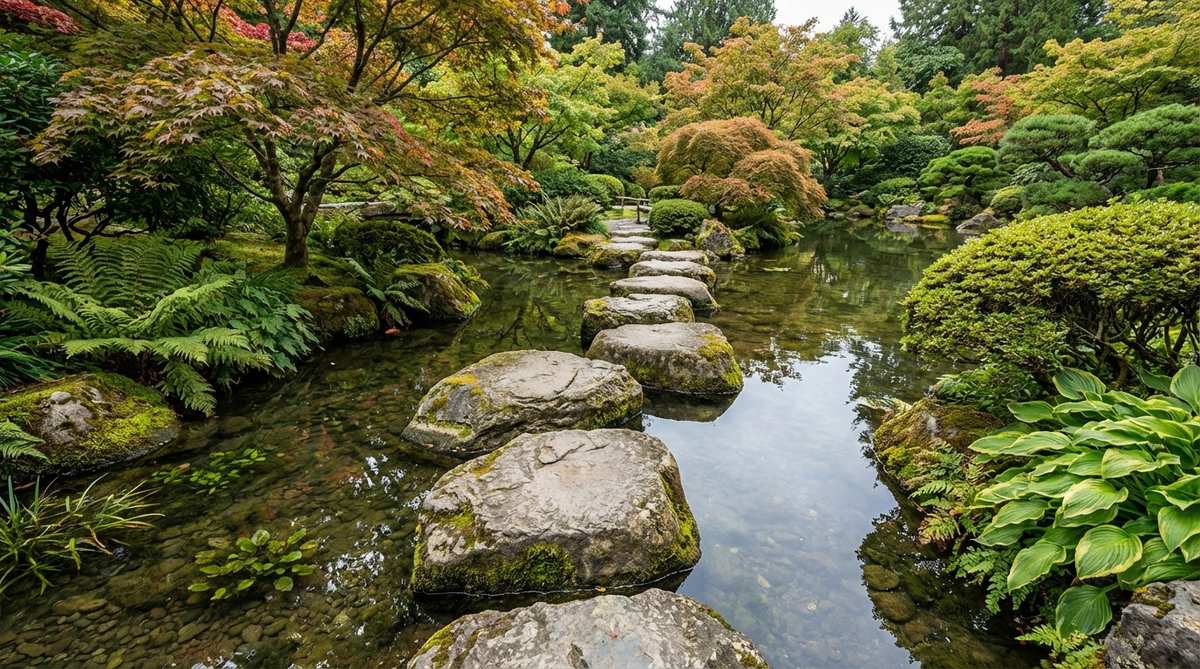
Individual stones placed at intervals create a discontinuous bridge where each step requires intentional placement. The gaps between stones slow movement and demand present-moment awareness.
Set stones 18-24 inches apart center-to-center, each embedded at least 6 inches deep. Top surfaces should sit 2-4 inches above normal water level.
Stepping sequences turn crossing into meditation practice. The measured pace and focused attention required mirror broader Zen principles about mindful engagement with physical space.
23. Sandstone Platform Bridge
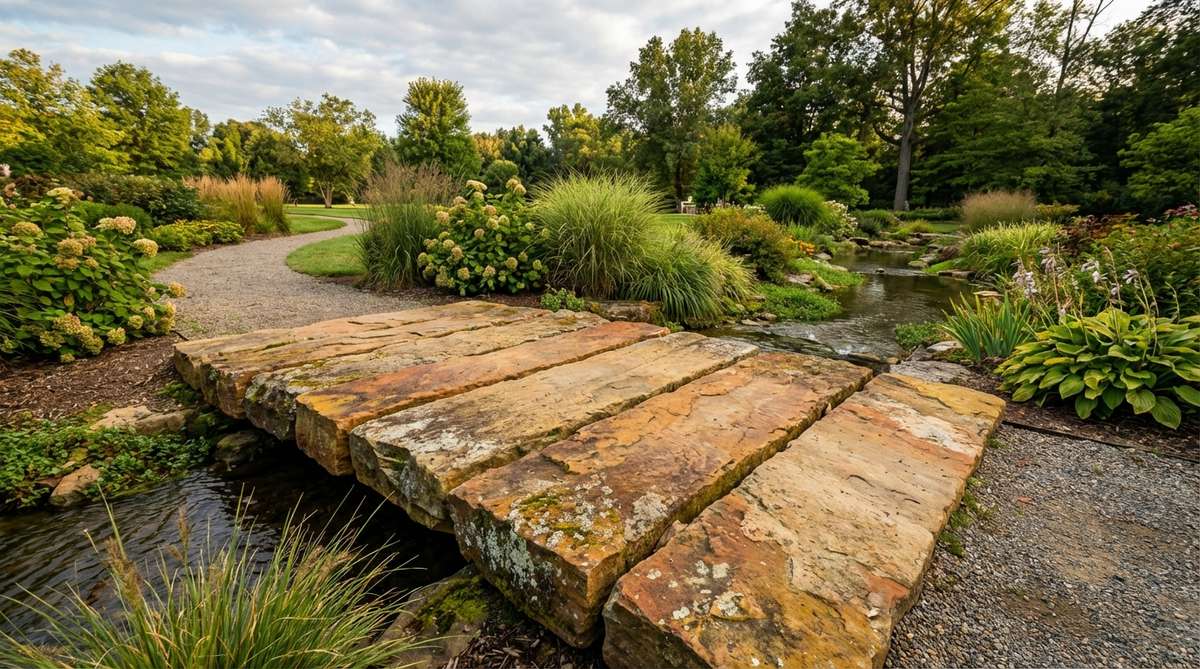
Multiple sandstone slabs arranged side-by-side create a wide, stable platform. The material’s warm ochre and rust tones complement foliage while providing textural contrast to water.
Install slabs over crushed stone base with minimal gaps between pieces. Use polymeric sand to fill joints while allowing drainage.
Sandstone’s porosity means it develops patina and biological growth patterns faster than denser stones. The material rewards regional sourcing, connecting the garden to local geology.
24. Boulder Hop Crossing
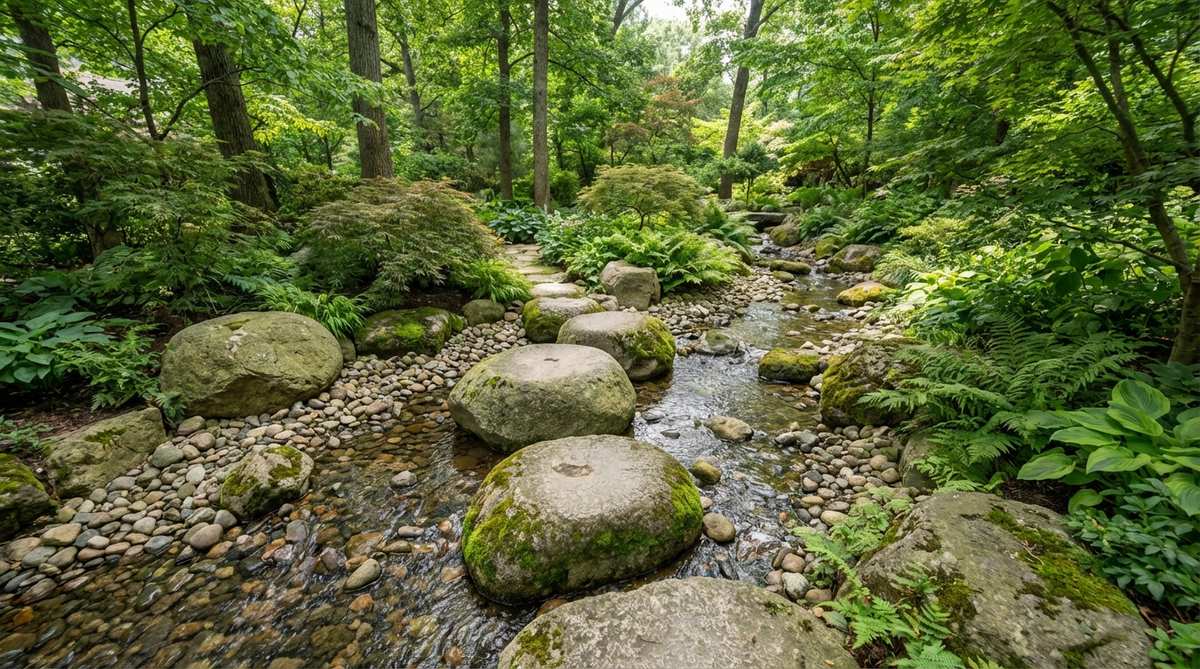
Naturally rounded boulders embedded in streambeds create informal crossings that mimic natural rock formations. Each boulder functions as an individual stepping platform.
Select rounded stones 18-30 inches in diameter with relatively flat tops. Bury each boulder one-third to one-half its height for stability.
Boulder crossings suit naturalistic stream gardens where refined architecture would disrupt wild character. The crossing challenges balance and coordination, engaging the body fully in the journey.
Zigzag Plank Variations
Yatsuhashi (eight-plank bridges) follow angular zigzag paths across marshes and iris ponds. The directional changes serve both functional and spiritual purposes in traditional design.
25. Classic Yatsuhashi Eight-Plank
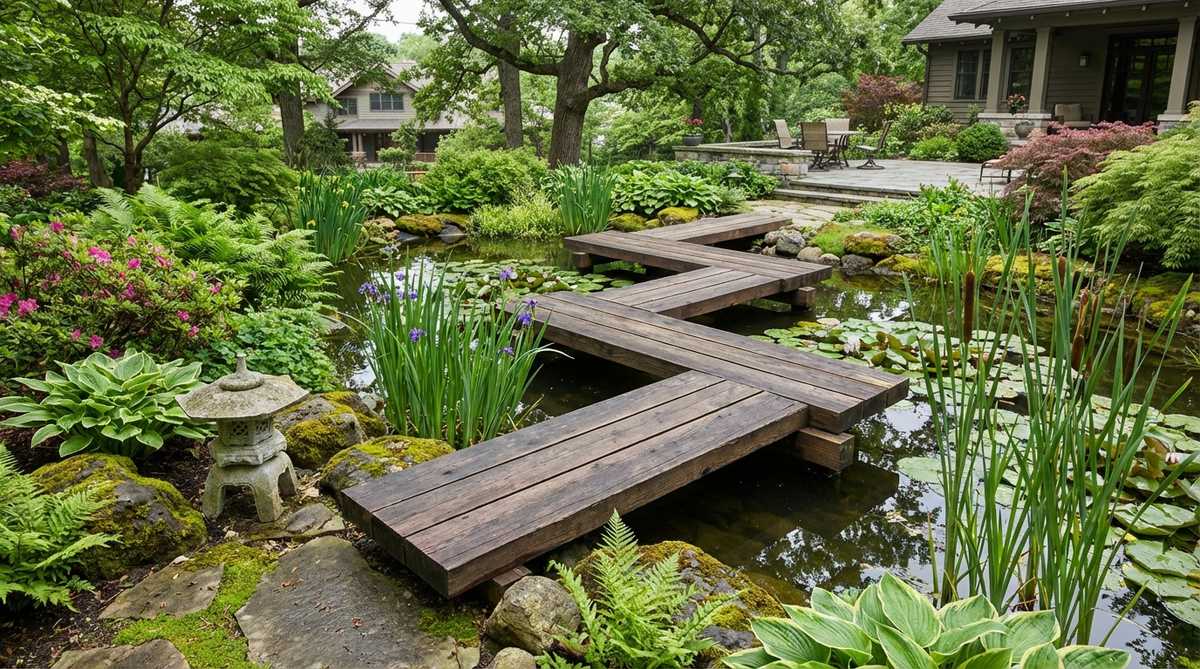
Eight narrow planks arranged at 90-degree angles to each other create the canonical form. Each plank measures 3-4 feet long and 12-18 inches wide.
Support each plank section on posts driven into the pond bed or marsh soil. Planks should float 4-8 inches above water or vegetation.
The angular path prevents evil spirits from entering garden inner sanctums—malevolent forces supposedly cannot navigate right angles or lift their feet. Visitors slow dramatically to negotiate each turn, inducing contemplative states.
26. Extended Zigzag Sequence
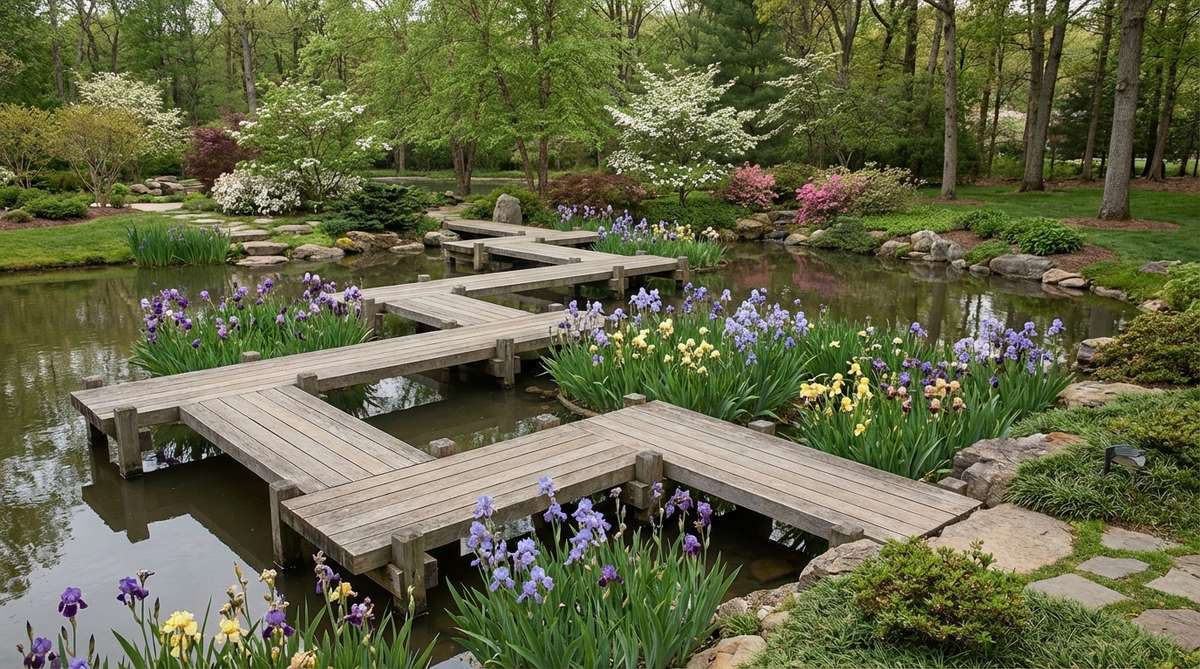
Longer bridges expand the eight-plank concept to twelve, sixteen, or more segments. The extended sequence amplifies the meditative walking experience.
Maintain consistent plank dimensions throughout while varying the number of turns. Design the path to showcase specific plantings—particularly iris cultivars—from multiple angles.
Extended sequences transform crossing from moment to journey. The repetitive turn-step-turn rhythm creates a physical mantra that occupies the conscious mind while allowing deeper awareness to surface.
27. Low-Profile Marsh Walkway
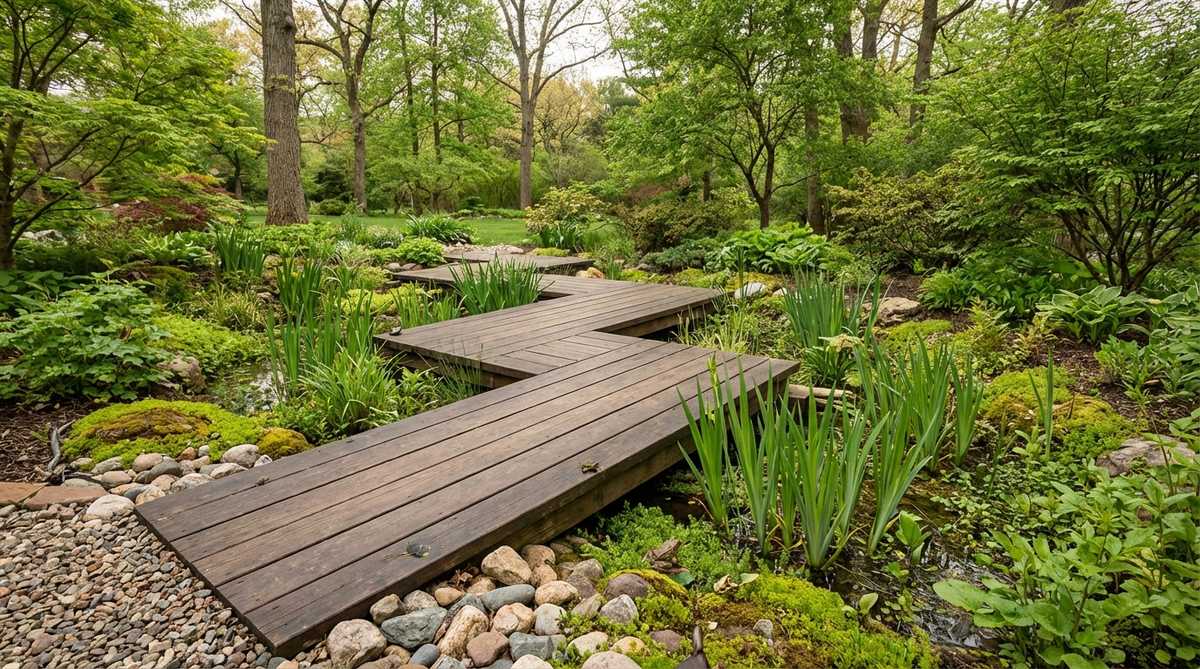
Zigzag planks set at ground level or just above marsh vegetation provide accessible crossings through wet areas. The minimal elevation preserves intimate connection with plant life.
Lay planks directly on crushed stone base in shallow water or saturated soil. Ensure adequate drainage beneath to prevent standing water on walking surfaces.
Low profiles immerse visitors in the marsh ecosystem, offering close views of frogs, insects, and emerging iris shoots. The design prioritizes ecological observation over architectural statement.
28. Iris Pond Viewing Platform
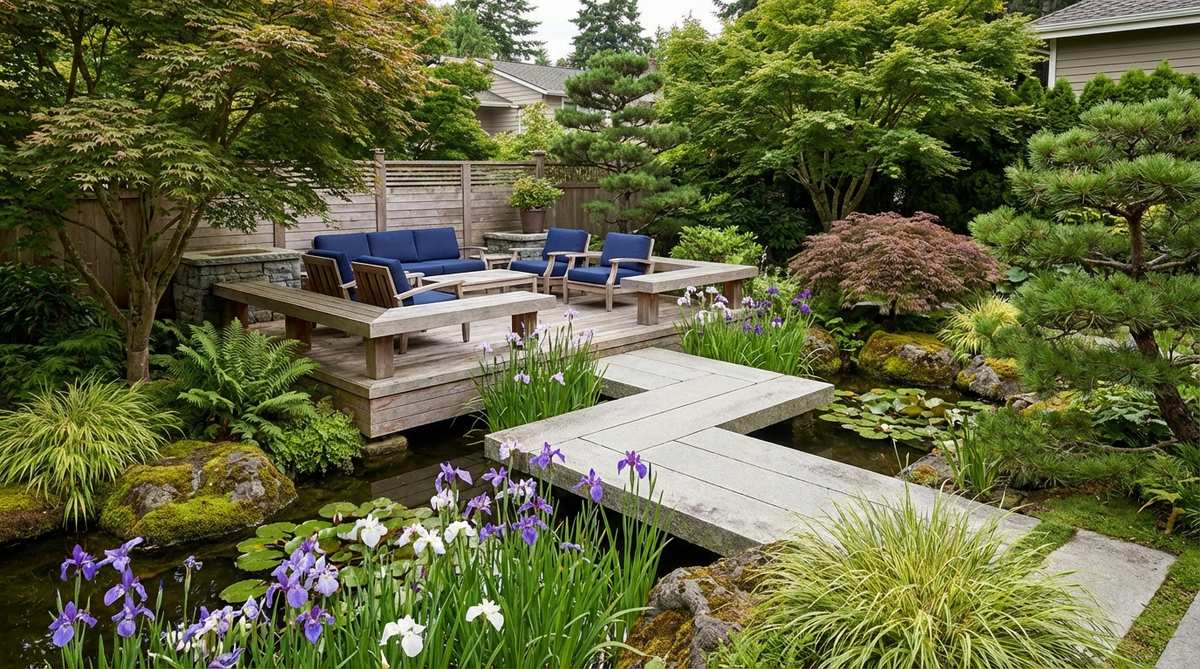
Some yatsuhashi incorporate wider sections functioning as stationary platforms for prolonged viewing. These zones interrupt the zigzag rhythm to encourage pausing.
Expand alternating plank sections to 4×4 feet or larger while maintaining narrow connecting segments. Position viewing platforms to frame specific plant groupings or water features.
The deliberate pause points structure the crossing experience, directing attention to curated views. Benches or seating stones on platforms extend dwell time and encourage social interaction.
Minimalist Contemporary Approaches
Modern interpretations distill traditional forms to essential geometries or introduce new materials while respecting philosophical foundations. These bridges honor heritage through reinterpretation rather than replication.
29. Steel Frame Wood Deck Hybrid
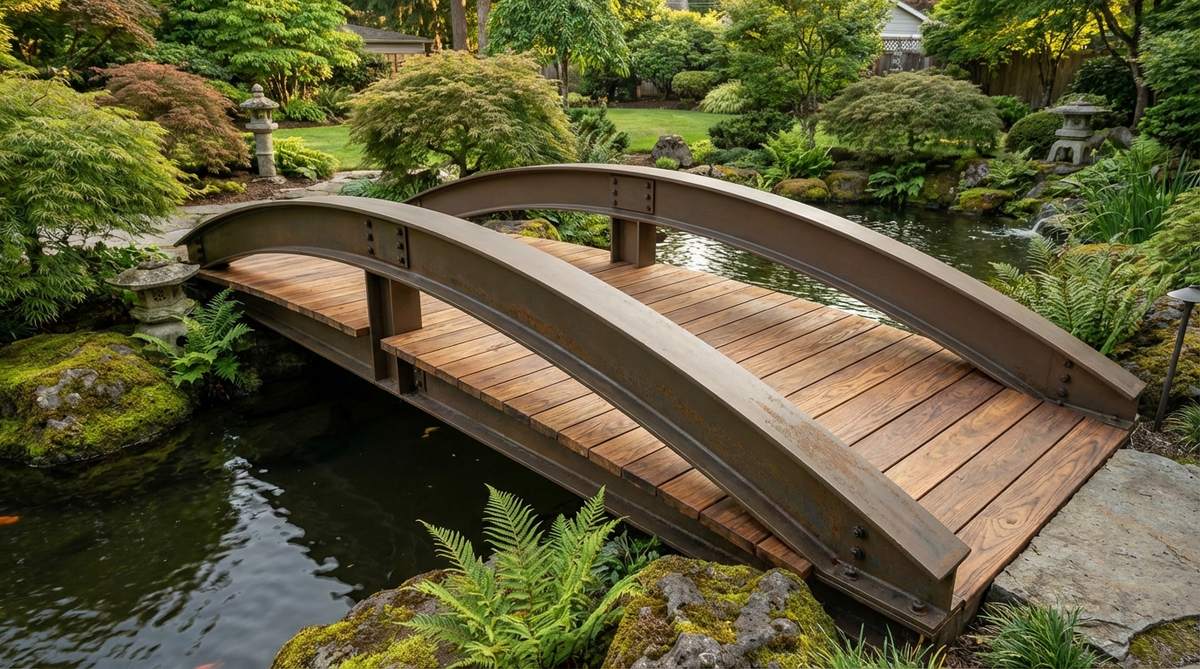
Powder-coated steel frames in earth tones support wooden decking, combining industrial strength with natural warmth. The material contrast celebrates both components.
Weld or bolt steel I-beams or tube sections into arched or flat profiles. Top with hardwood decking—teak, ipe, or thermally modified ash—for pedestrian surfaces.
The hybrid approach allows longer spans and lighter profiles than all-wood construction. Designers can emphasize either material through proportional choices and finish treatments.
30. Minimalist Flat Span
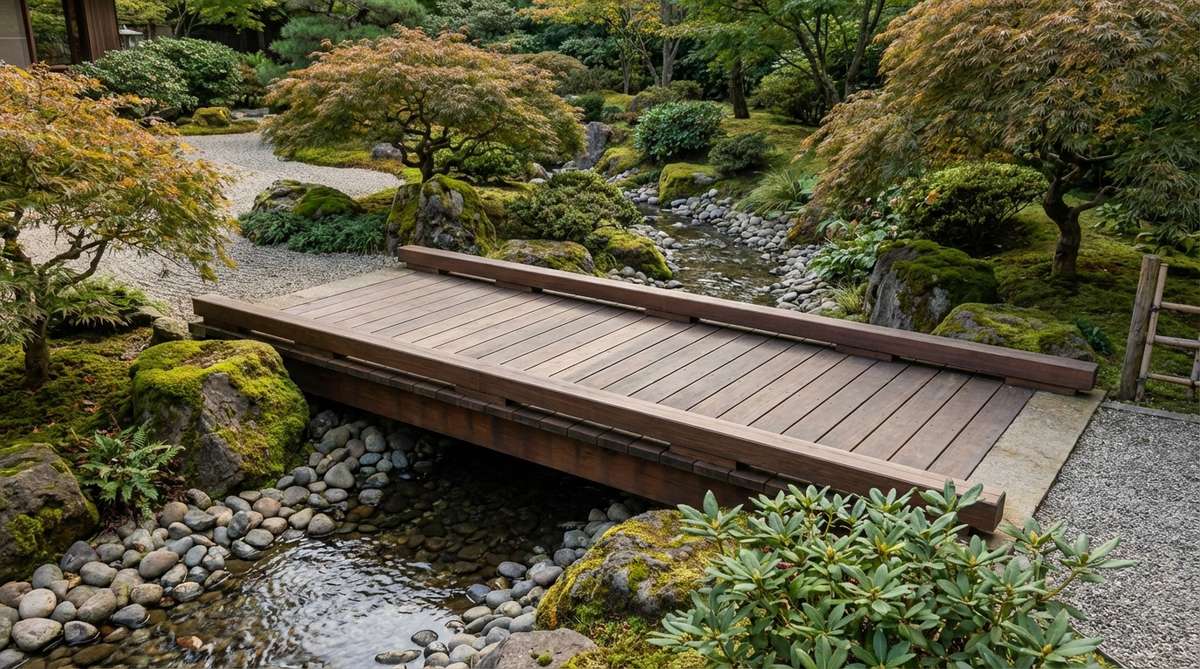
Ultra-simple bridges reduce design to three elementstwo support beams and a deck plane. Railings, ornament, and curvature disappear in favor of pure function.
Mill all components to identical cross-sections and finish uniformly. Assemble with concealed fasteners to eliminate visual hardware.
The severe reduction focuses attention on material quality and perfect execution of basic construction. Any flaw becomes immediately apparent, demanding meticulous craftsmanship.
31. Glass Panel Railings
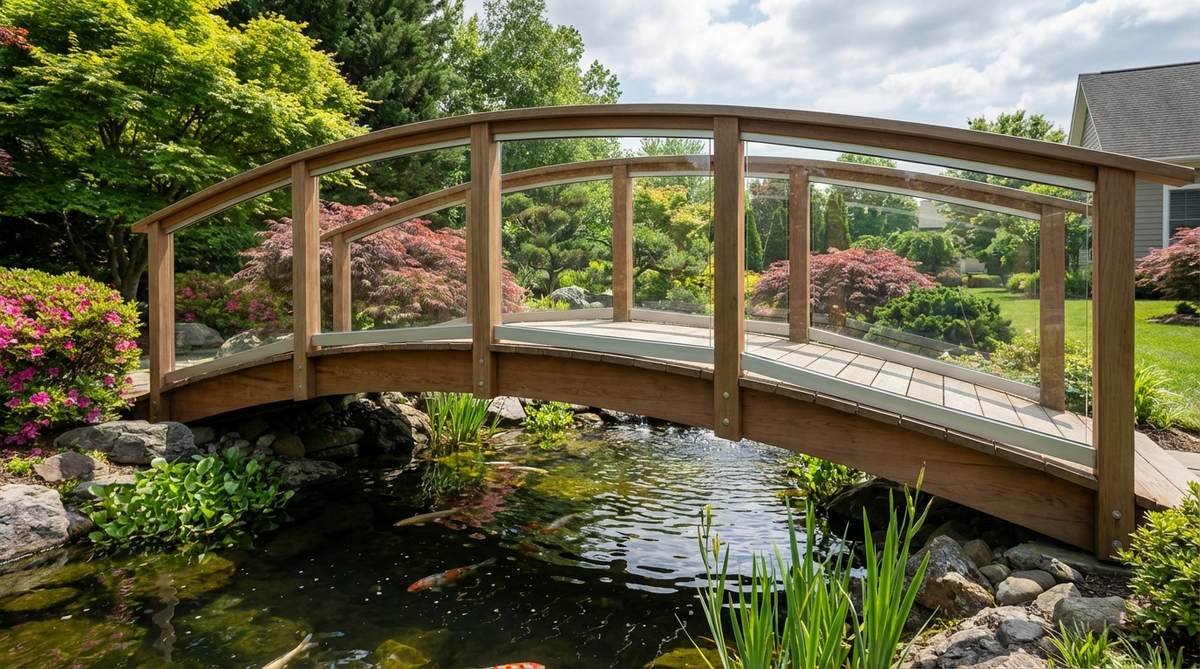
Tempered glass panels replace traditional wood or metal balusters, providing safety barriers that preserve sight lines. The transparency maintains visual connection to water and plantings below.
Install structural glass panels in aluminum or stainless channels mounted to posts. Specify low-iron glass for maximum clarity without greenish tint.
Glass railings suit modern gardens where traditional details would conflict with architectural vocabulary. The material allows bridge structures to recede visually while providing necessary safety features.
32. Cantilevered Deck Extension
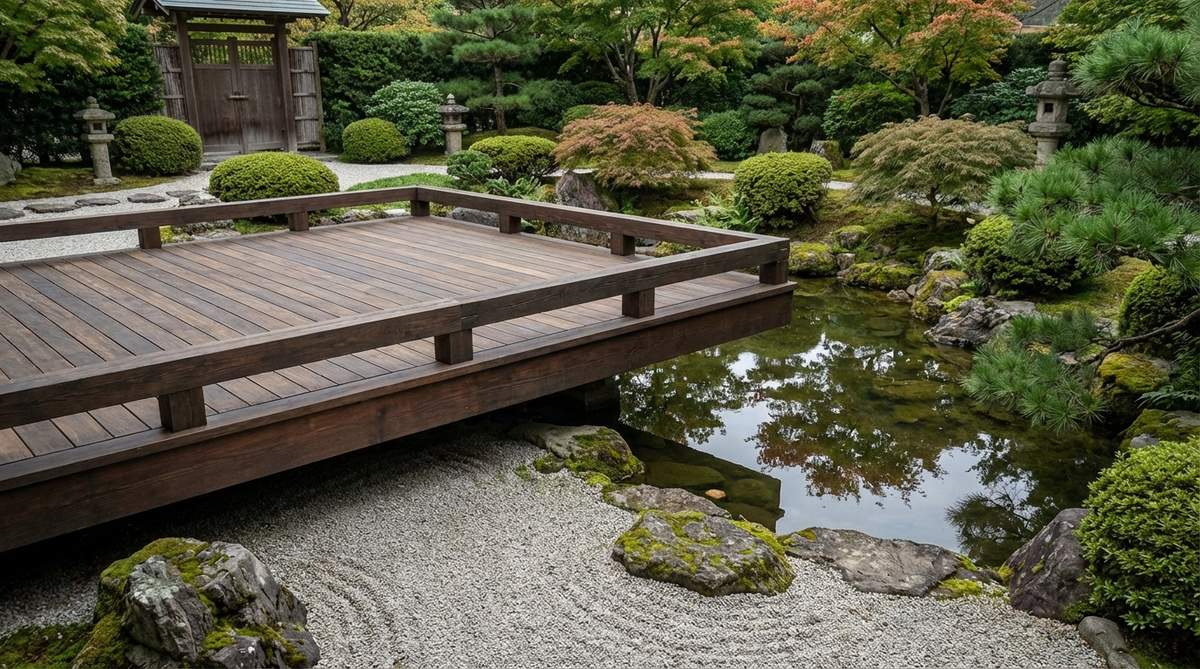
Structural decks extending beyond their support points create floating effects. The cantilevered sections appear to hover without visible means of support.
Engineer the cantilever with substantial back-span weight or anchor the deck to deeply buried foundation elements. Limit cantilever projection to one-third the total span for structural integrity.
Cantilevered designs challenge perceptions about weight, gravity, and support. The visual tension between apparent impossibility and physical reality engages viewers intellectually.
33. Recycled Composite Decking
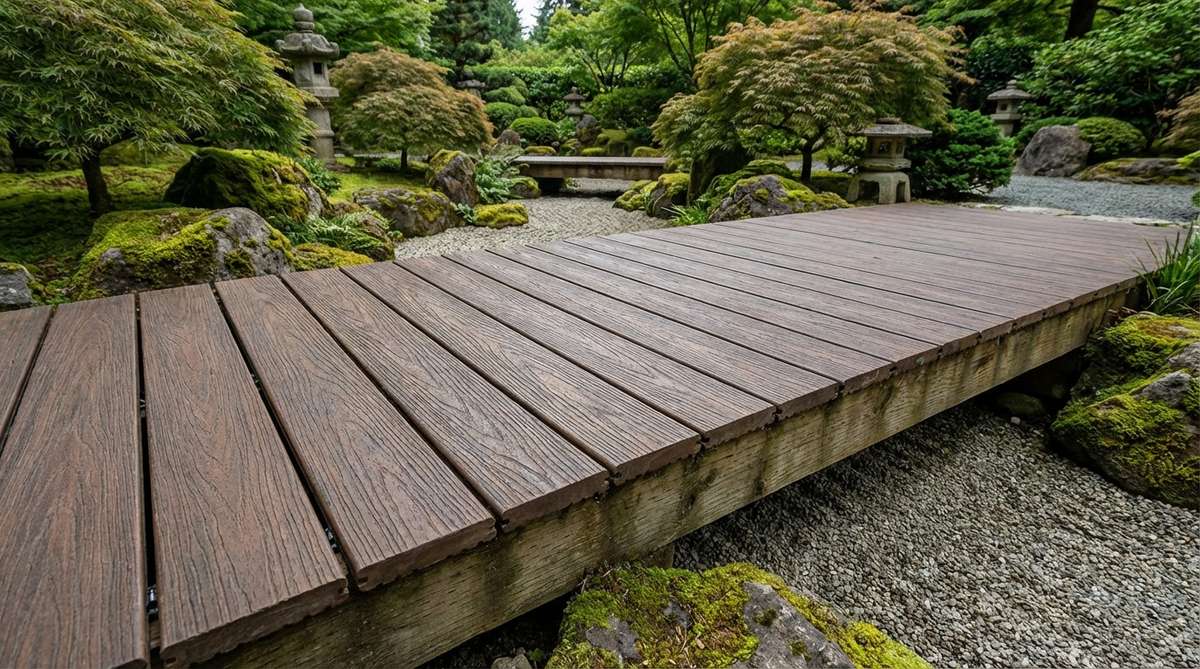
Wood-plastic composites manufactured from recycled materials offer durability and low maintenance. Modern formulations convincingly mimic wood grain and texture.
Frame with treated lumber or aluminum and install composite decking boards according to manufacturer specifications. Match color selections to regional wood species for authenticity.
Composite materials eliminate rot concerns in constantly wet environments while reducing forest resource consumption. The practical benefits suit residential gardens prioritizing sustainability and minimal upkeep.
34. Illuminated Evening Bridge
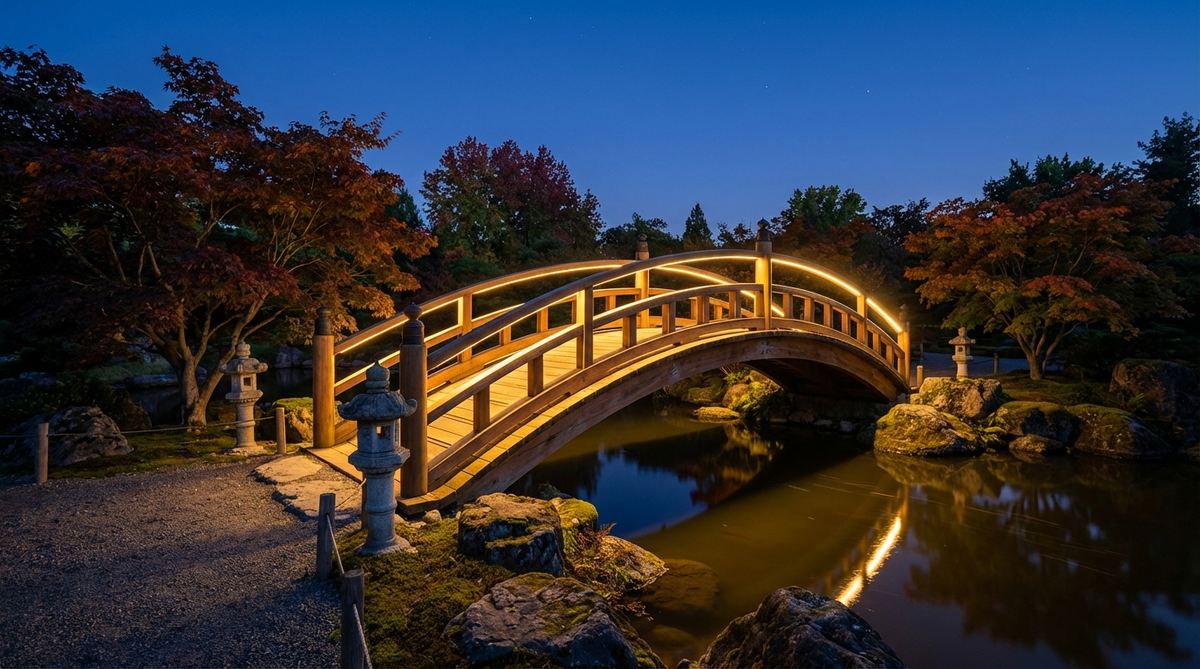
Integrated LED strips or low-voltage lighting transforms bridges into nighttime features. Light defines form after dark while providing safe passage.
Install waterproof LED strips beneath railings or along deck edges. Use warm color temperatures (2700-3000K) to complement wood tones and avoid harsh institutional lighting.
Evening illumination extends garden use into night hours and reveals compositions invisible during daylight. The bridge becomes a lantern floating over dark water, reversing typical day-night visual hierarchies.
Conclusion
The japanese garden bridge functions as physical crossing, spiritual metaphor, and architectural focal point simultaneously. From steep taiko-bashi drum bridges to simple stone slabs, each design communicates specific philosophical concepts while serving practical needs. Material choices between wood, stone, and contemporary hybrids affect longevity, maintenance, and environmental integration. Red finishes invoke protection and wisdom, while natural tones emphasize harmony with surroundings. Whether you implement a dramatic arched span or subtle flat crossing, the bridge you select should match your garden’s scale while honoring the meditative principles embedded in these time-tested forms. Begin by assessing your site’s water features, circulation patterns, and viewing angles, then choose the bridge architecture that transforms simple passage into meaningful journey.
Frequently Asked Questions
What wood species work best for Japanese garden bridges?
Cedar, hinoki cypress, and redwood offer natural decay resistance ideal for constant moisture exposure. Cedar provides excellent value with good durability, hinoki delivers premium aromatic qualities and weather resistance, while redwood combines rich color with structural stability. Avoid pressure-treated pine for visible elements due to its industrial appearance, though it works acceptably for hidden structural framing. Each species develops distinct patinas over time—cedar shifts to silver-gray, hinoki to warm honey tones, and redwood to deeper browns.
Why are some Japanese garden bridges painted red?
Red bridges symbolize protection against evil spirits, wisdom, and sacred transformation in Japanese cultural tradition. The vermillion color marks boundaries between ordinary and sacred spaces, encouraging spiritual mindfulness as visitors cross. Red also represents vitality and life force in Shinto belief systems. From a design perspective, red creates powerful focal points that energize green garden palettes while establishing clear visual hierarchy within complex compositions.
How steep should an arched Japanese bridge be?
Traditional taiko-bashi drum bridges feature dramatic 45-50 degree inclines that create ceremonial challenge, while accessible designs limit slopes to 5-15 degrees for safe navigation. Steeper bridges require robust handrails and may need intermediate steps or treads for footing. Consider your intended users—public gardens need gentle slopes meeting accessibility codes, while private estates can incorporate steeper traditional profiles. The arch height should relate proportionally to span length, typically rising one-quarter to one-third the horizontal distance.
What is the symbolic meaning of zigzag bridges?
Yatsuhashi zigzag bridges prevent evil spirits from entering garden inner sanctums because malevolent forces supposedly cannot navigate right angles or lift their feet. The angular path also slows visitors dramatically, inducing contemplative mental states through repetitive physical movement. Each 90-degree turn frames new views of surrounding plantings—particularly iris beds—creating dynamic visual sequences from static plant arrangements. The design embodies how physical architecture shapes psychological experience in Japanese garden philosophy.
How do you maintain wooden Japanese garden bridges?
Annual inspections should check for rot, loose fasteners, and structural movement, addressing issues immediately to prevent failure. Clean surfaces with mild soap and soft brushes to remove algae without damaging wood grain. Reapply protective finishes every 2-3 years depending on exposure—use penetrating oil stains for natural looks or marine enamel for painted bridges. Replace individual damaged components rather than entire structures when possible. Improve drainage around bridge approaches to minimize standing water contact with structural members.