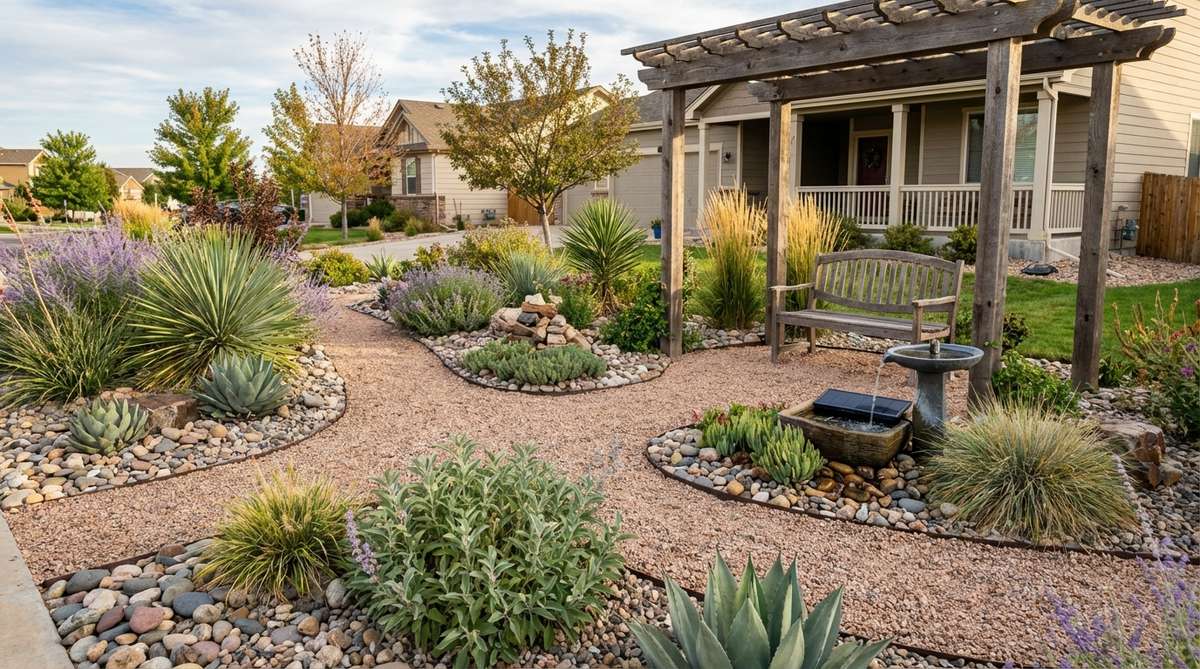
Gravel gardens combine water-wise design with striking visual appeal, offering homeowners a practical solution for creating beautiful outdoor spaces that thrive in arid conditions. Landscape architects increasingly recommend these drought-tolerant designs as they reduce irrigation demands by up to 50% while delivering year-round aesthetic impact. Fresh Garden Ideas provides expert guidance on implementing professional gravel garden layouts that balance ecological responsibility with design excellence.
Design SnapshotKey Principles
- Material Selection: Choose angular crushed stone over rounded pebbles for better interlocking and reduced migration
- Depth Matters: Apply gravel at 3-4 inches minimum to suppress weeds effectively and conserve soil moisture
- Drainage Foundation: Install landscape fabric or weed barrier before gravel application to prevent soil mixing
- Plant Compatibility: Select drought-adapted species with deep root systems that penetrate through gravel layers
Minimalist Modern Gravel Layouts
Contemporary gravel garden designs emphasize clean lines, geometric patterns, and restrained plant palettes. These layouts work exceptionally well for urban properties where crisp architectural elements complement modern home exteriors.
1. Monochromatic White Gravel Courtyard
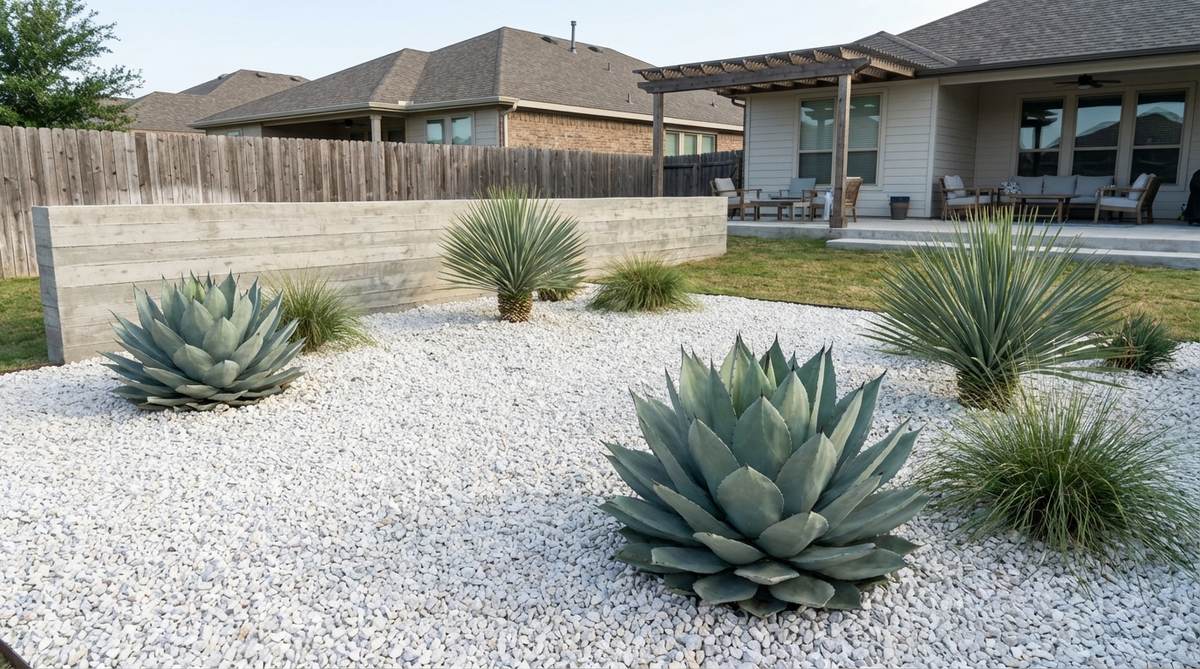
Crushed white limestone or marble chips create a luminous surface that reflects light into surrounding spaces. The bright substrate intensifies during midday sun, establishing a dramatic backdrop for architectural plantings.
Position three to five specimen plants with sculptural forms—such as agave, yucca, or ornamental grasses—at asymmetric intervals. Space plants 4-6 feet apart to emphasize their individual silhouettes against the white canvas.
This design requires minimal irrigation once established. White gravel stays cooler than darker materials, reducing heat stress on nearby plant roots.
2. Black Basalt Chipping Garden
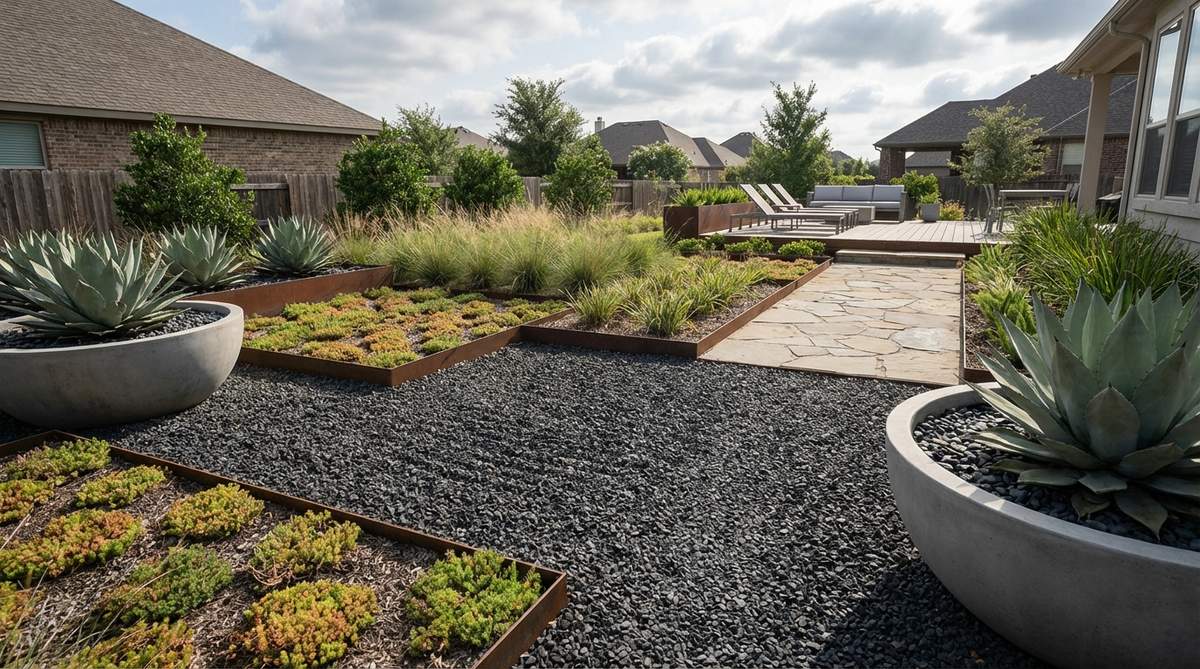
Dark volcanic rock provides stark contrast when paired with concrete planters and steel edging. The charcoal tones absorb heat during the day, creating a microclimate suitable for heat-loving succulents.
Frame beds with 1/4-inch steel strips set at right angles to define crisp borders. Fill planters with single-species groupings rather than mixed compositions to maintain the minimalist aesthetic.
Black gravel shows debris more readily than light colors. Weekly surface raking maintains the pristine appearance essential to modern design principles.
3. Geometric Grid Pattern Layout
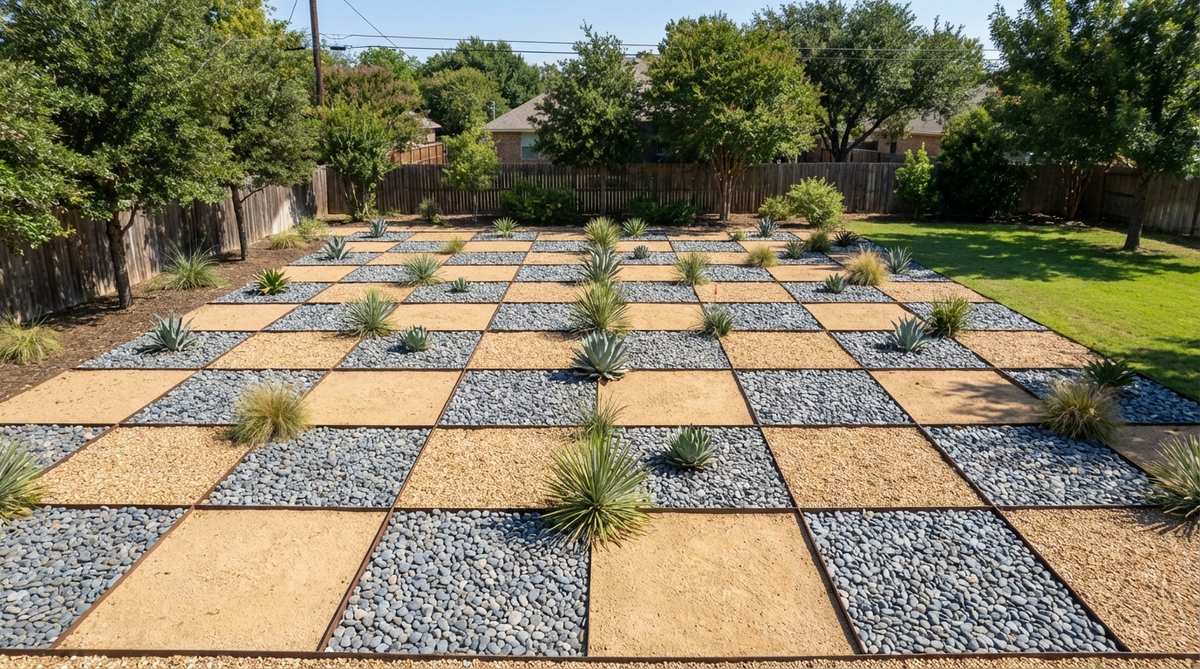
Metal or composite dividers partition the space into uniform squares filled with different gravel colors and textures. Each grid cell measures 3×3 feet or 4×4 feet, creating a checkerboard effect when viewed from above.
Alternate between buff-colored decomposed granite, gray river stone, and tan pea gravel to establish visual rhythm. Plant only at grid intersections, using identical species at each junction point for symmetrical impact.
This configuration simplifies maintenance by containing each material within defined boundaries. The grid structure prevents color mixing over time.
4. Concrete Paver and Gravel Integration
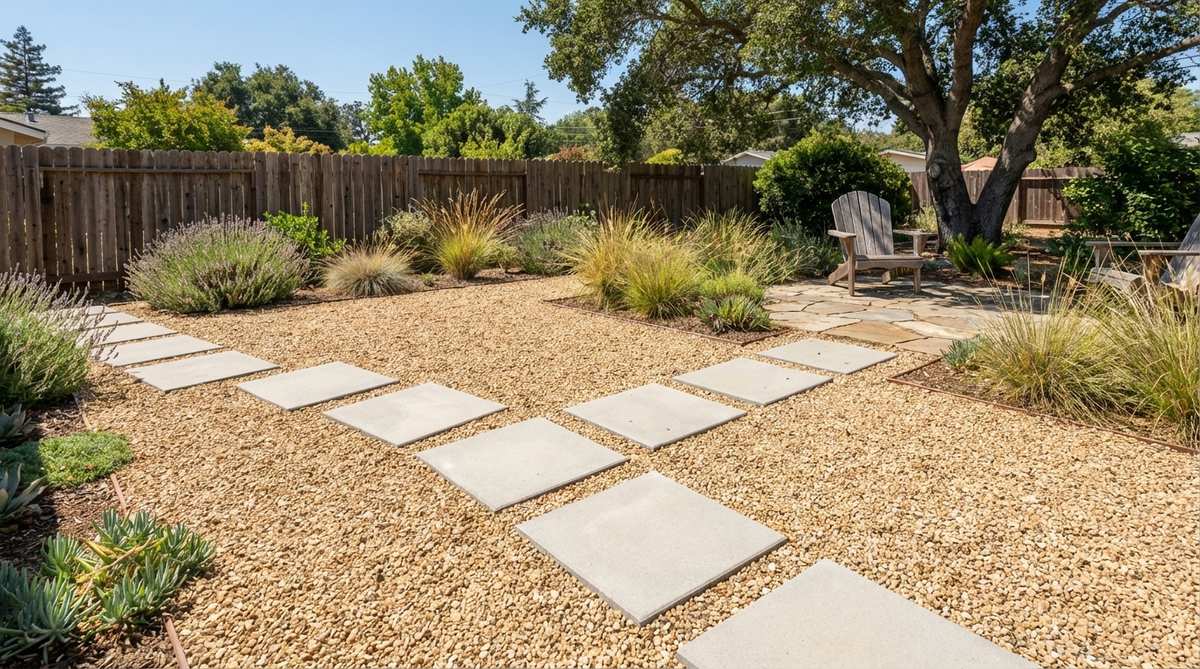
Large-format concrete pavers float atop a gravel field, creating stepping-stone pathways through the garden. The pavers establish circulation routes while the gravel remains the dominant ground cover.
Set 24×24-inch pavers 18 inches apart for comfortable walking pace. Surround each paver with 2-inch gray or tan gravel that extends to property boundaries.
This combination reduces hardscape costs compared to full paving while providing defined walking surfaces. Gravel between pavers allows rainwater infiltration throughout the space.
5. Linear Strip Planting Beds
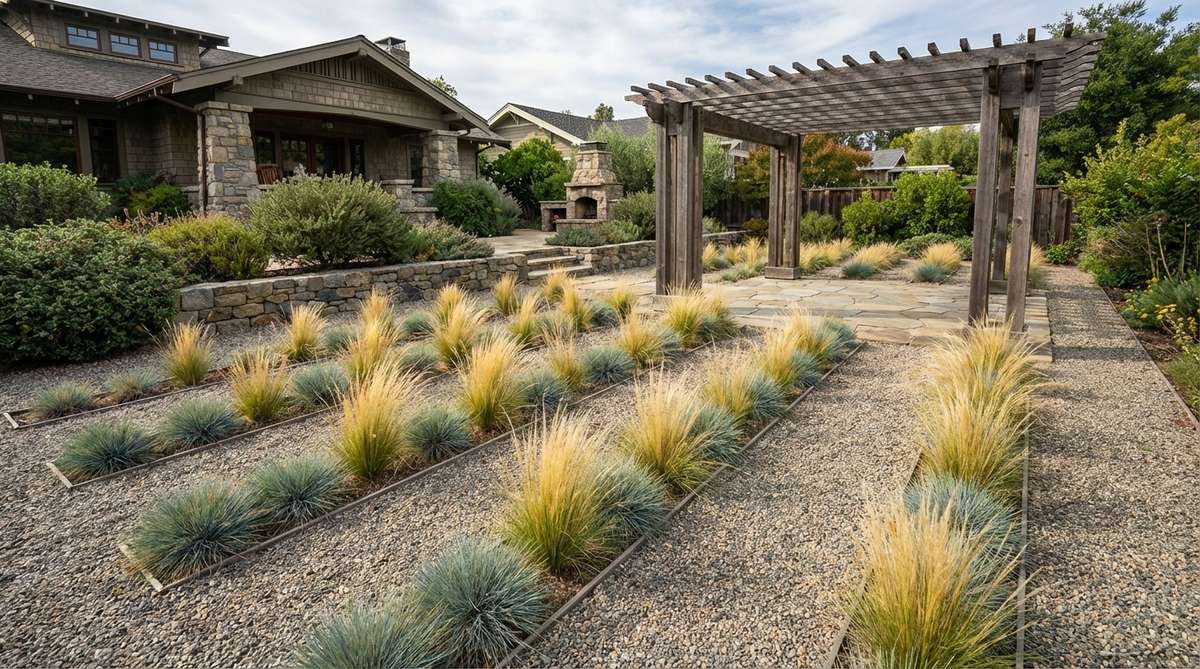
Narrow planting strips run parallel across gravel expanses, creating strong directional emphasis. Each strip measures 12-18 inches wide and extends the full length of the garden space.
Fill strips with single-species ornamental grasses like blue fescue or Mexican feather grass. Space strips 4-5 feet apart with gravel filling the areas between.
The linear arrangement guides the eye toward focal points or architectural features. Grasses provide vertical movement while gravel contributes horizontal stability.
6. Sculptural Boulder Anchors
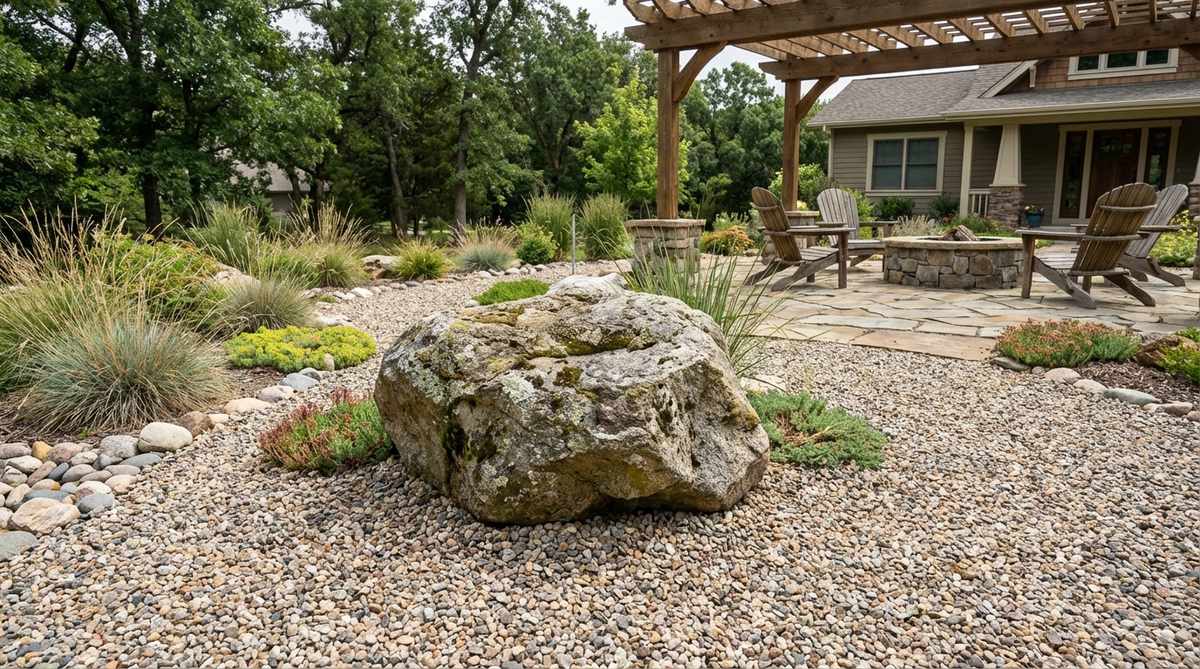
Place individual statement boulders weighing 500-1000 pounds at strategic locations within a gravel field. The massive stones function as sculptural elements rather than natural landscape features.
Select boulders with interesting shapes, colors, or surface textures that contrast with surrounding gravel. Position them off-center to avoid formal symmetry.
These permanent installations require professional delivery and placement. Once positioned, boulders provide enduring focal points that need zero maintenance.
Gravel Garden Ideas Inspired by Mediterranean Landscapes
Mediterranean design principles translate beautifully to xeriscaping contexts across North America. These warm-climate aesthetics incorporate terracotta elements, aromatic herbs, and sun-bleached color palettes.
7. Terracotta Pot Collection
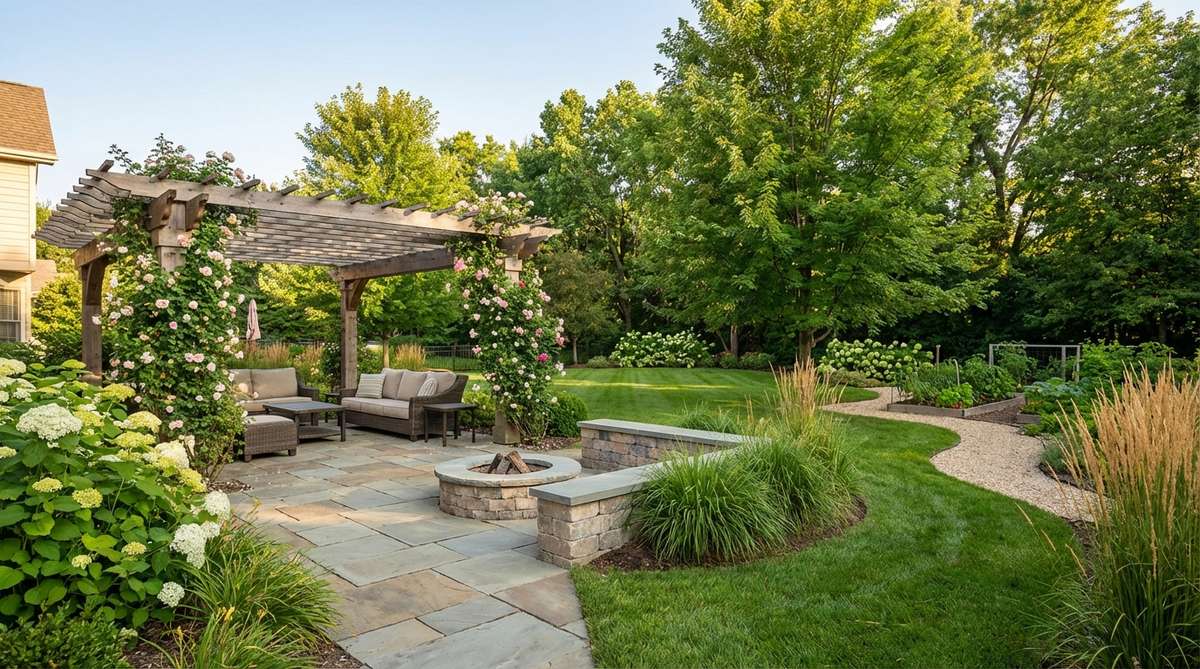
Group terracotta containers of varying sizes atop white or tan pea gravel. The warm clay tones paired with light gravel evoke Italian countryside gardens.
Fill containers with rosemary, lavender, santolina, and thyme—herbs that tolerate container conditions and emit fragrance when brushed. Arrange pots in odd-numbered clusters (3, 5, or 7) for natural composition.
Containers elevate plants above the gravel plane, creating multi-level interest. Terra cotta remains permeable, preventing root rot in potted xeric species.
8. Olive Tree Grove Effect
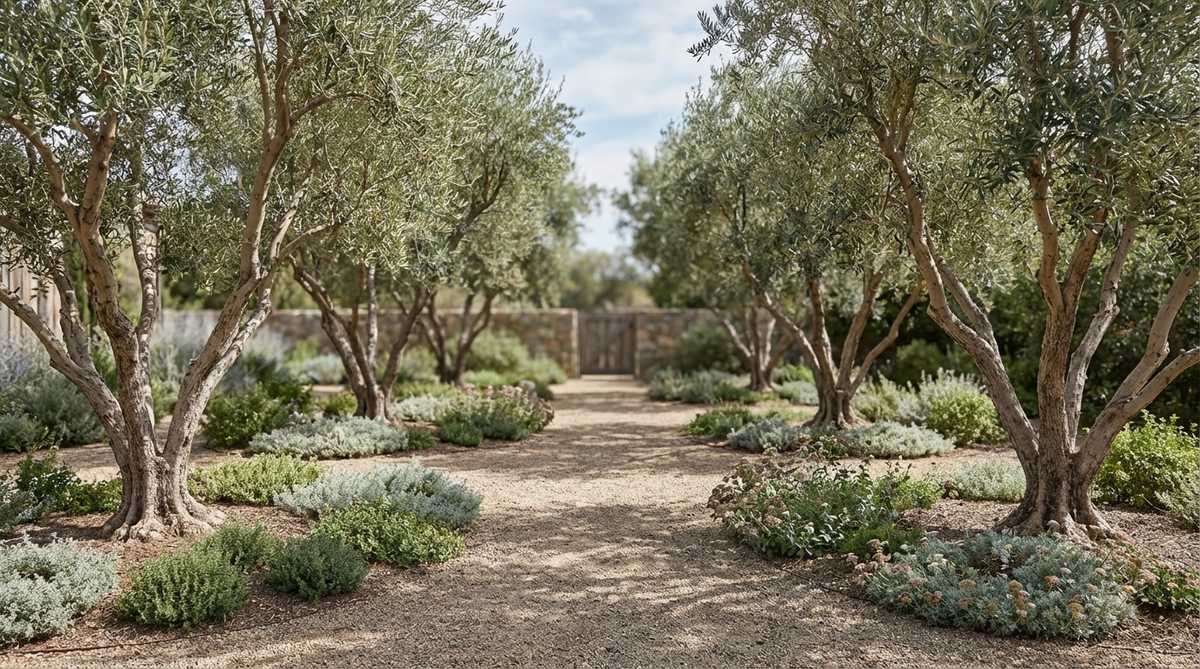
Multi-trunk olive trees planted at 15-20 foot intervals establish an orchard-like canopy over decomposed granite. The silver-gray foliage complements neutral gravel tones while providing dappled shade below.
Underplant with low-growing thyme, oregano, or sedums that tolerate partial shade. Keep gravel layer at 3 inches to allow herb roots to anchor in underlying soil.
Mature olives require minimal supplemental irrigation once established. Their evergreen foliage maintains visual interest throughout dormant seasons.
9. Rustic Stone Wall Backdrop
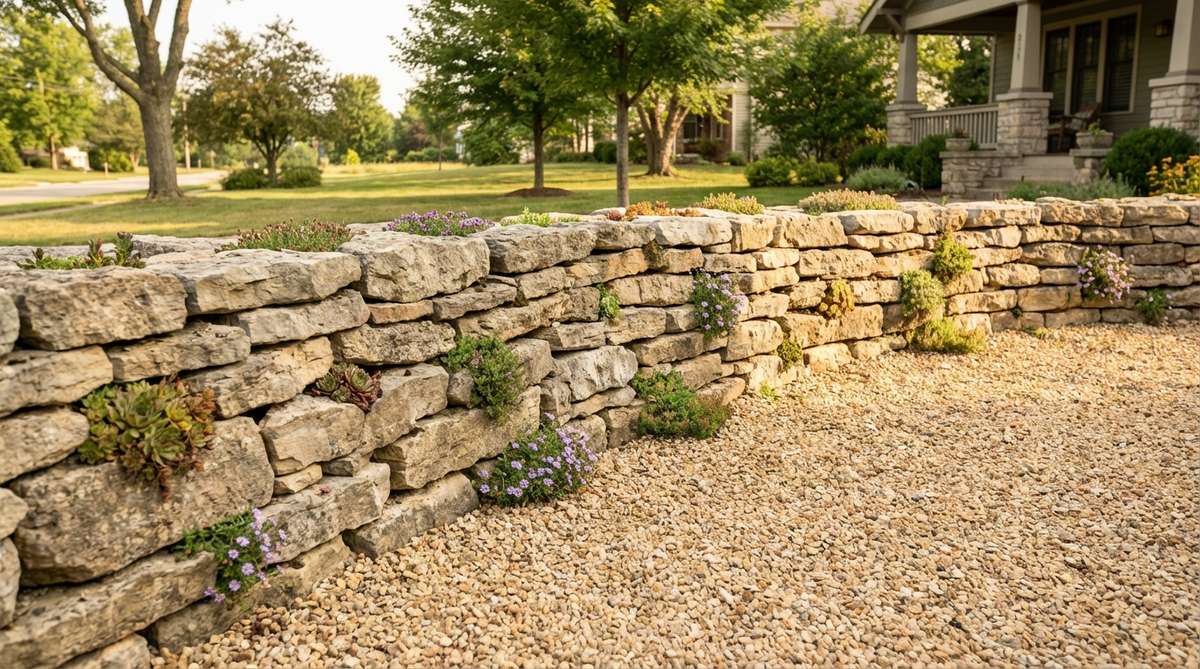
Dry-stacked limestone or sandstone walls edge the perimeter of gravel gardens, providing vertical structure and thermal mass. The weathered stone surfaces echo historic Mediterranean agricultural landscapes.
Build walls 2-3 feet high without mortar, allowing plants to colonize gaps between stones. Front the wall with buff-colored crushed stone that matches the wall material.
Stone walls absorb daytime heat and release it gradually at night, moderating temperature swings. The vertical surface also creates additional planting opportunities for rock-garden species.
10. Lavender Border Rows
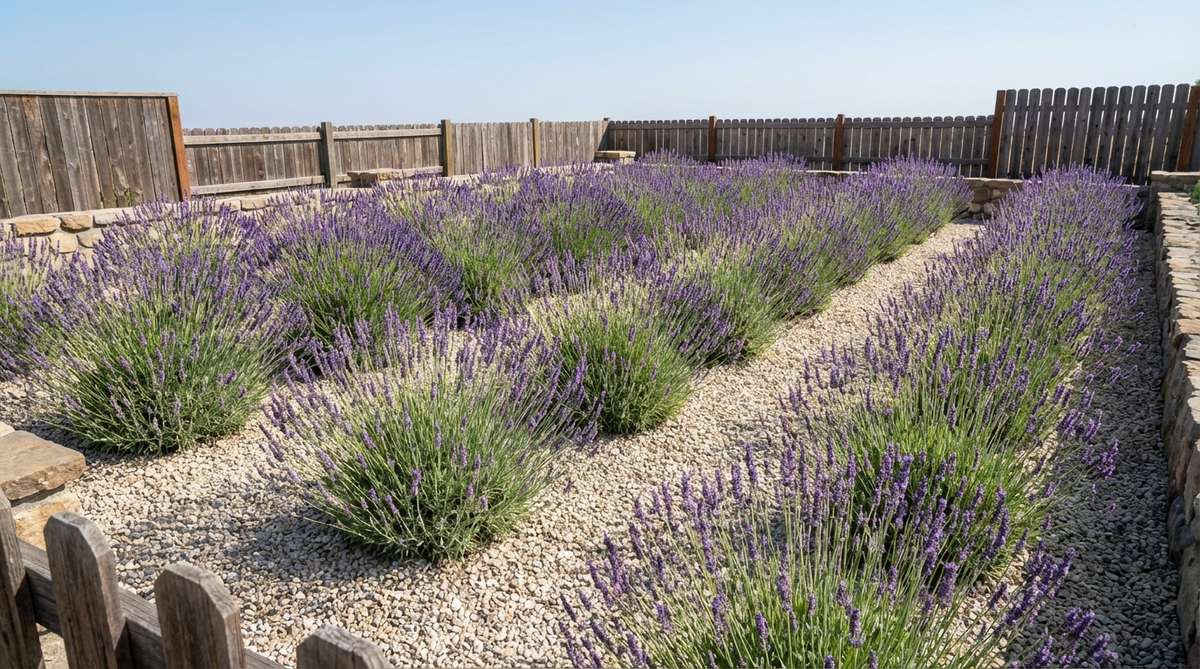
Parallel rows of lavender cultivars define edges and create internal divisions within gravel expanses. English lavender varieties tolerate cold winters, while Spanish lavenders suit milder zones.
Space plants 18-24 inches apart within rows, and separate rows by 4-5 feet of gravel. Shear plants after bloom to maintain compact form.
Lavender’s purple blooms provide seasonal color contrast against neutral gravel backgrounds. The plants’ drought tolerance aligns perfectly with xeriscape principles.
11. Gravel and Flagstone Patio
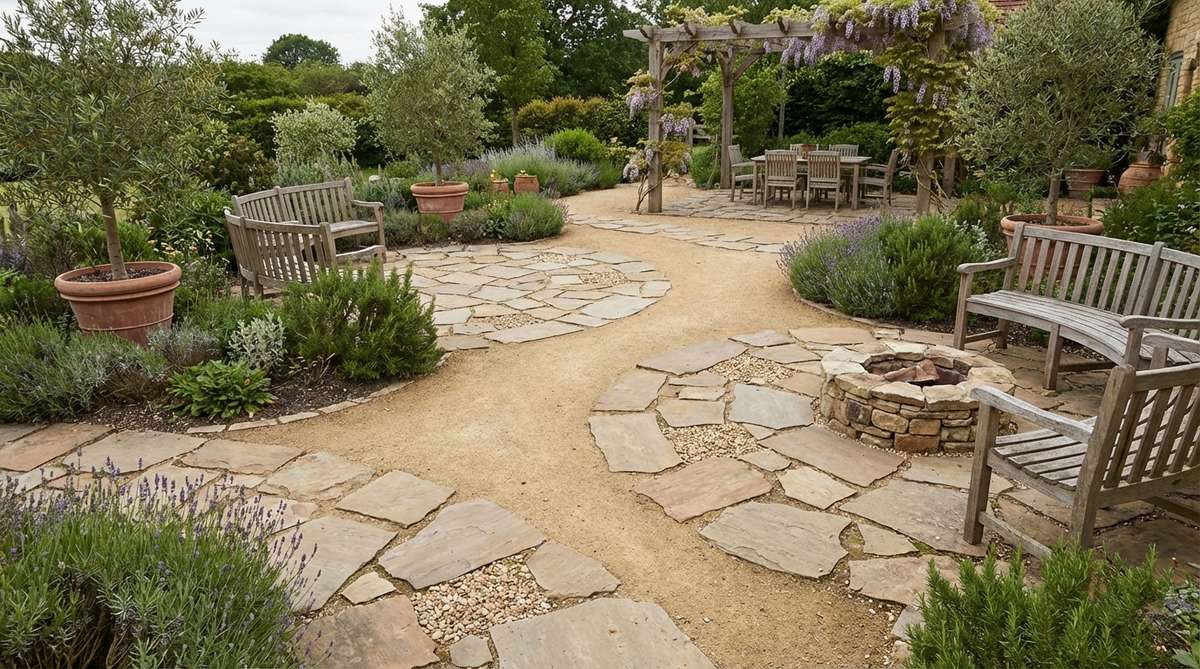
Irregular flagstone pieces set in buff-colored gravel create informal seating areas with Mediterranean character. The random stone placement contrasts with the uniform gravel texture.
Select flagstones 1.5-2 inches thick for stability underfoot. Set stones directly on compacted gravel base without mortar, allowing joints to remain flexible.
This permeable patio design allows rainwater infiltration between stones. The gravel joints require occasional top-dressing to maintain level surfaces.
12. Citrus Container Accent
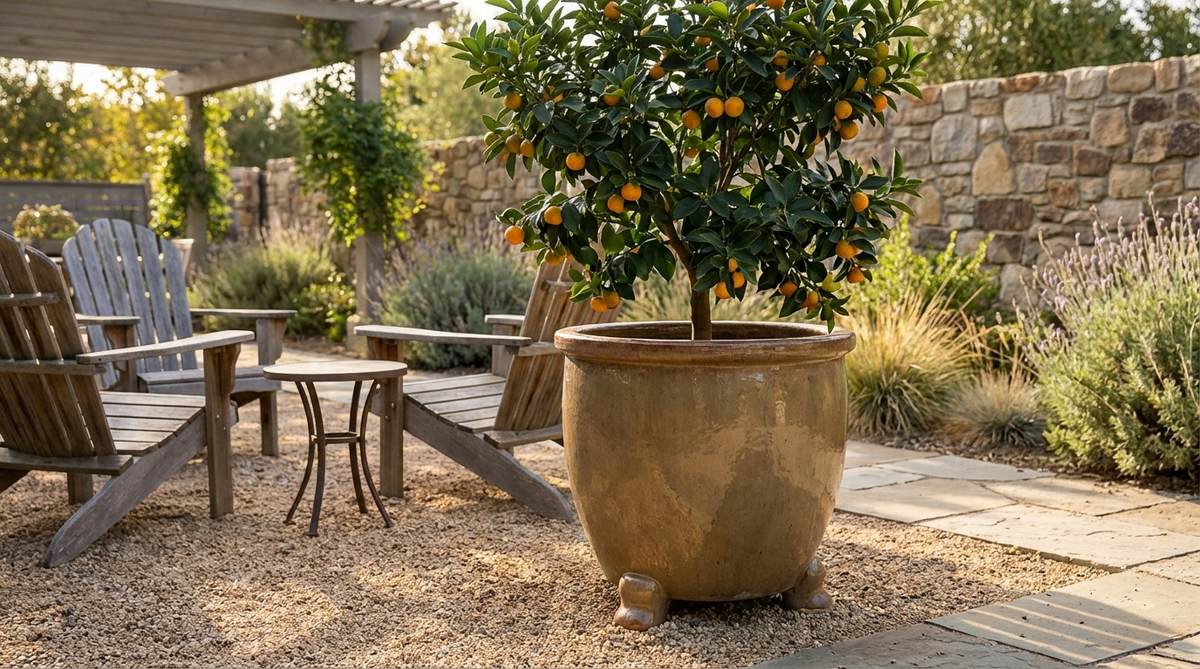
Large glazed ceramic pots containing dwarf citrus trees punctuate gravel courtyards with glossy foliage and seasonal fruit. Lemon, lime, or kumquat varieties work well in container culture.
Position citrus pots near seating areas where their fragrance enhances the outdoor experience. Elevate containers on pot feet to ensure drainage and air circulation.
Container citrus requires more frequent irrigation than in-ground plantings. The elevated placement prevents root contact with gravel, allowing better moisture monitoring.
Desert Xeriscape Gardens Using Gravel
True desert aesthetics embrace the beauty of arid-climate plants against mineral substrates. These designs celebrate adaptation strategies evolution has perfected in low-rainfall regions.
13. Agave and Aloe Showcase
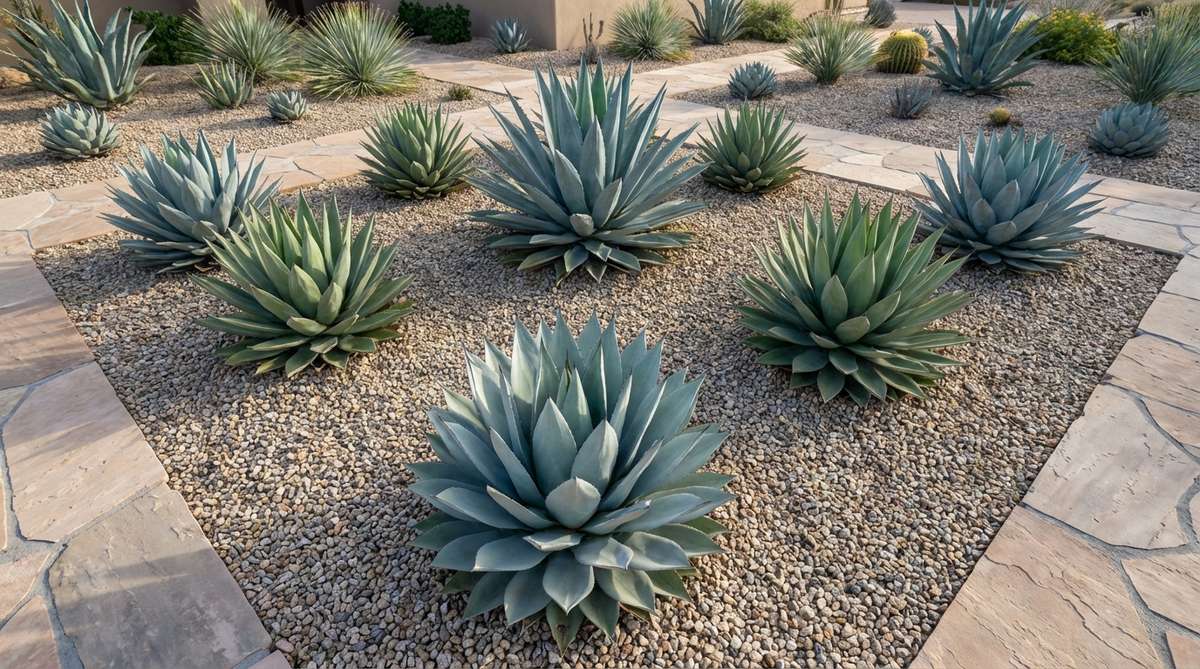
Large agave specimens form the backbone of desert gravel gardens, their architectural rosettes creating powerful focal points. Combine multiple species with varying leaf colors—blue, gray, green, and variegated forms.
Plant agaves directly into underlying soil after removing 12-inch diameter gravel circles. Backfill around root balls with native soil, then replace gravel as mulch layer.
Most agave species tolerate temperatures to 15°F once mature. Their sharp terminal spines require careful placement away from circulation routes.
14. Saguaro Cactus Composition
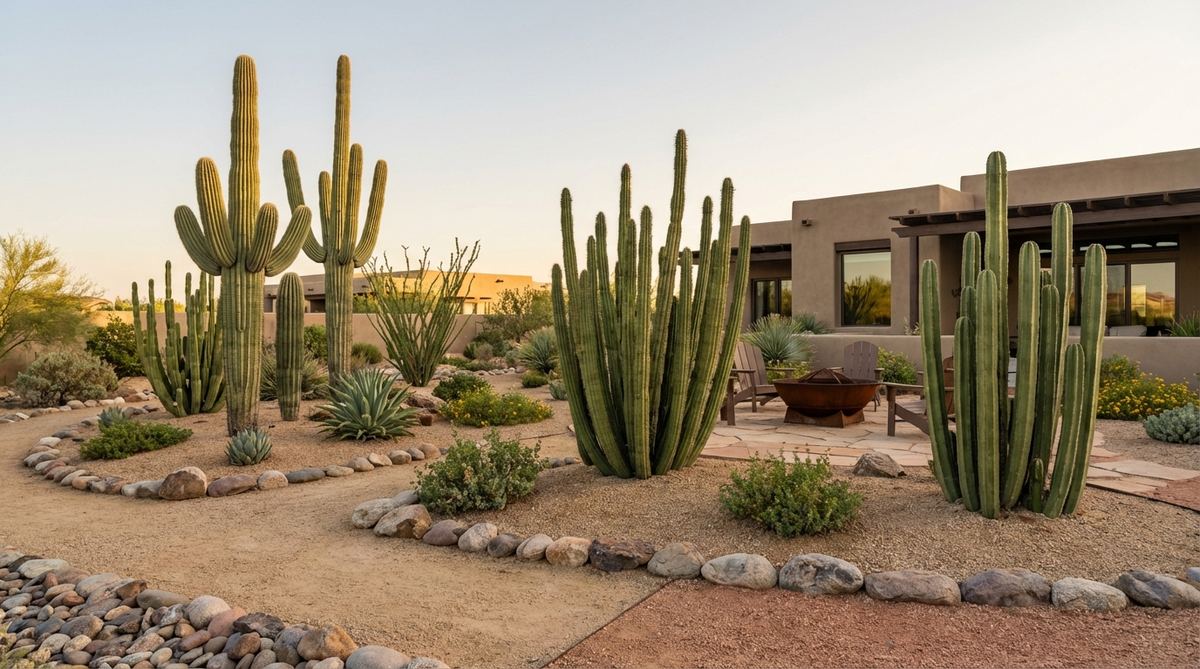
In appropriate climates (USDA zones 9-11), columnar cacti create vertical drama against low gravel planes. Saguaro, organ pipe, or Mexican fence post cacti establish strong vertical lines.
Position cacti in groups of three at varying heights for naturalistic effect. Surround with tan or reddish decomposed granite that mimics Sonoran Desert soils.
These slow-growing specimens represent long-term investments. Select nursery-grown plants rather than wild-collected specimens to support conservation.
15. Red Rock and Yucca Pairing
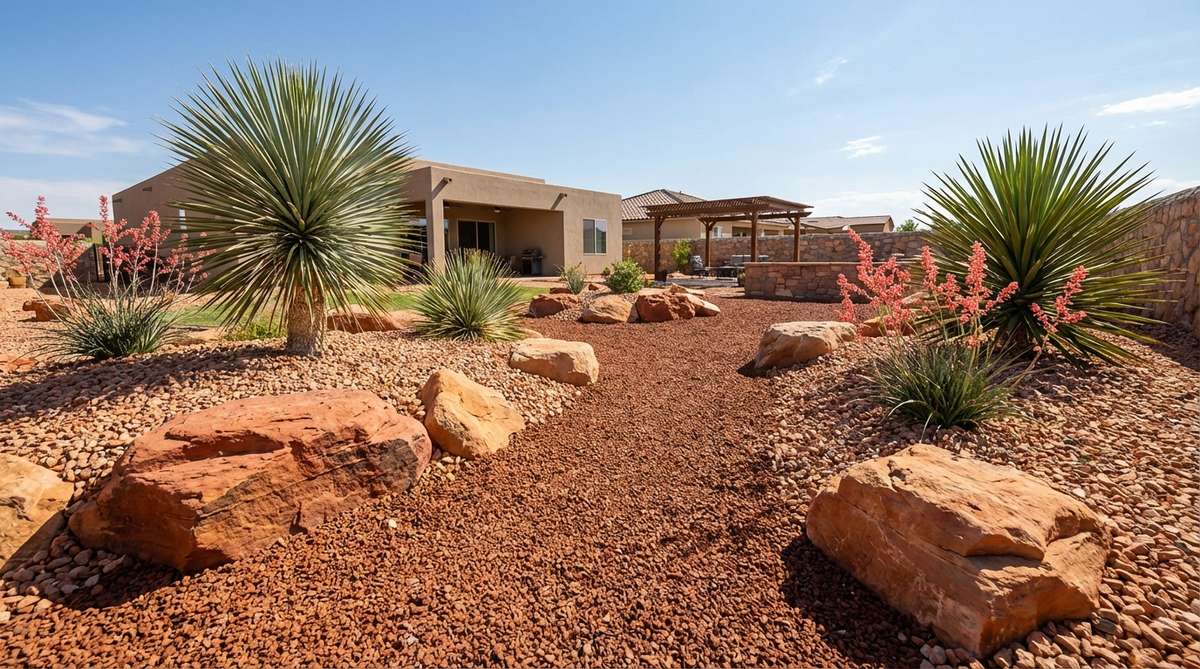
Iron-rich red or rust-colored gravel combined with architectural yuccas replicates Southwest canyon landscapes. The warm mineral tones intensify under direct sunlight.
Plant yucca rostrata, yucca rigida, or red yucca varieties that complement the red substrate. Add sandstone boulders with similar coloration to reinforce the regional aesthetic.
Red gravel reflects less light than pale colors, creating hotter microclimates. Choose heat-tolerant species that thrive in these intensified conditions.
16. Ocotillo Living Fence
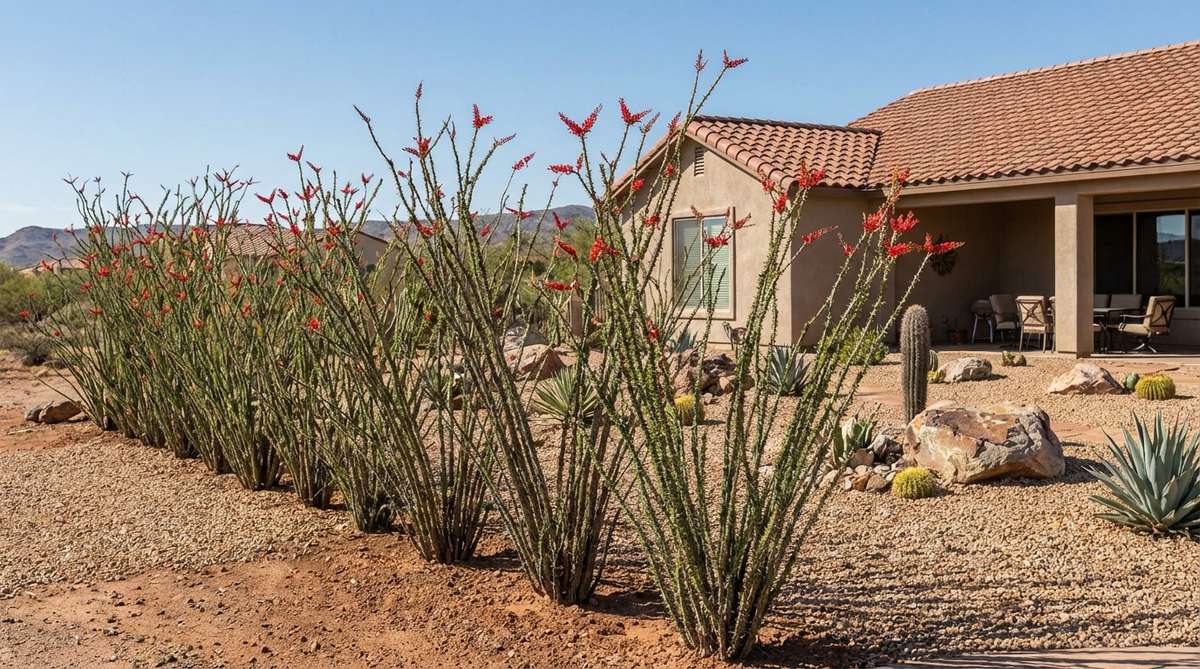
Ocotillo stems planted vertically along property lines create permeable barriers with seasonal interest. These deciduous desert shrubs leaf out after rainfall and produce red tubular flowers.
Set stems 12-18 inches apart in trenches, burying bottom 8-12 inches. Backfill with native soil and top with 3-inch gravel layer matching the surrounding garden.
Ocotillos establish slowly but live for decades once rooted. Their thorny stems deter intrusion while maintaining visual permeability.
17. Prickly Pear Groundcover
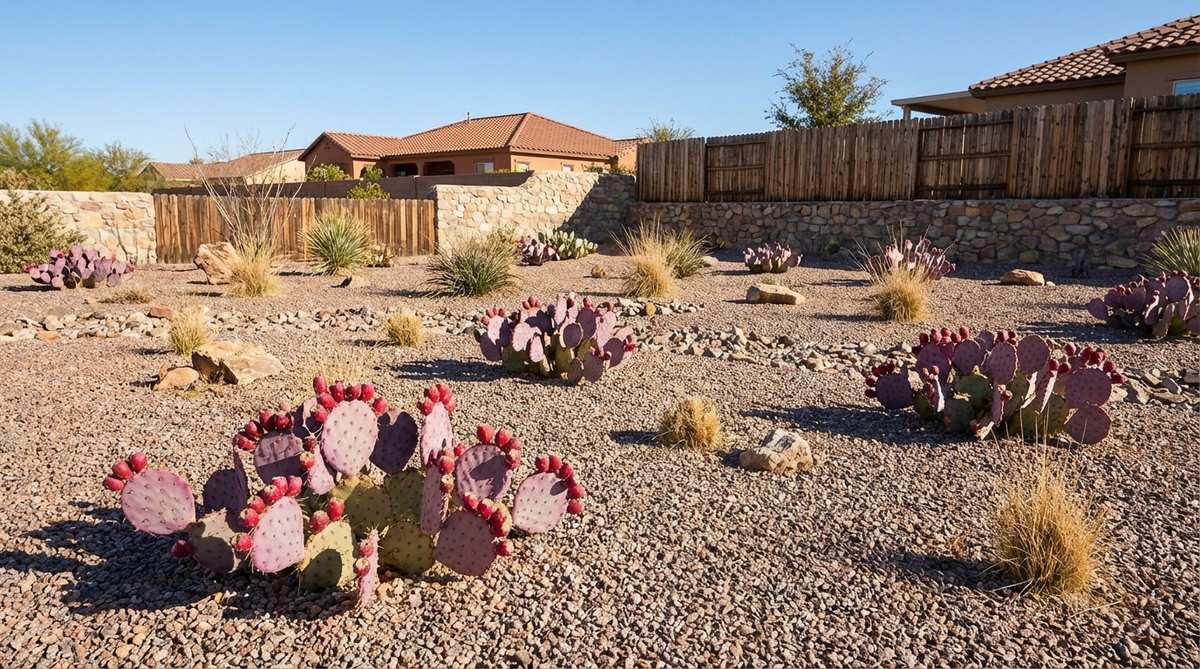
Low-growing prickly pear species spread across gravel surfaces, their paddle-shaped pads creating repeating forms. Santa Rita prickly pear adds purple tones during cool seasons.
Space plants 3-4 feet apart to allow for natural spreading. The gravel layer prevents pad contact with moist soil, reducing rot risk.
Prickly pears produce edible fruit and provide wildlife habitat. Their glochids (fine spines) require cautious handling during maintenance.
18. Desert Marigold Color Bursts
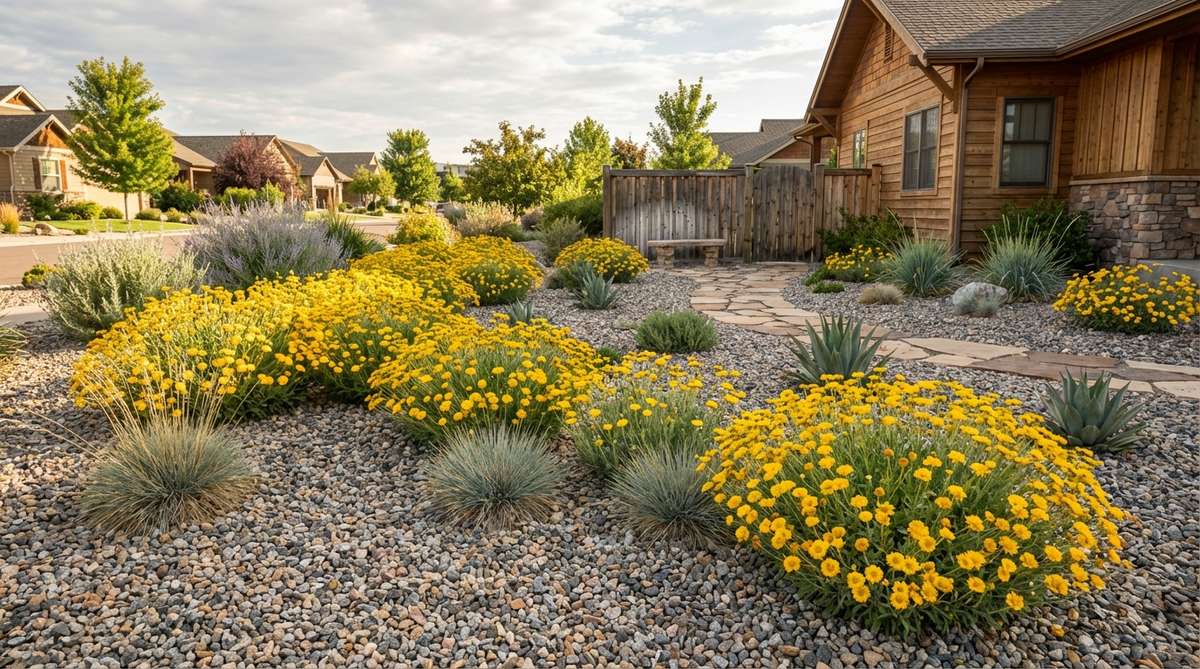
Perennial desert marigolds self-seed throughout gravel gardens, creating golden flower drifts from spring through fall. Their bright blooms contrast beautifully with gray or tan gravel.
Broadcast seeds directly onto gravel in autumn or early spring. Light irrigation helps establishment, after which plants survive on natural rainfall.
These short-lived perennials regenerate through continuous self-seeding. Their cheerful flowers soften harsh desert landscapes with seasonal color.
Garden Ideas Using Gravel for Pathways
Pathways establish circulation patterns while contributing texture and color to overall designs. Gravel paths offer flexibility unavailable with permanent hardscaping materials.
19. Meandering Crushed Stone Trail
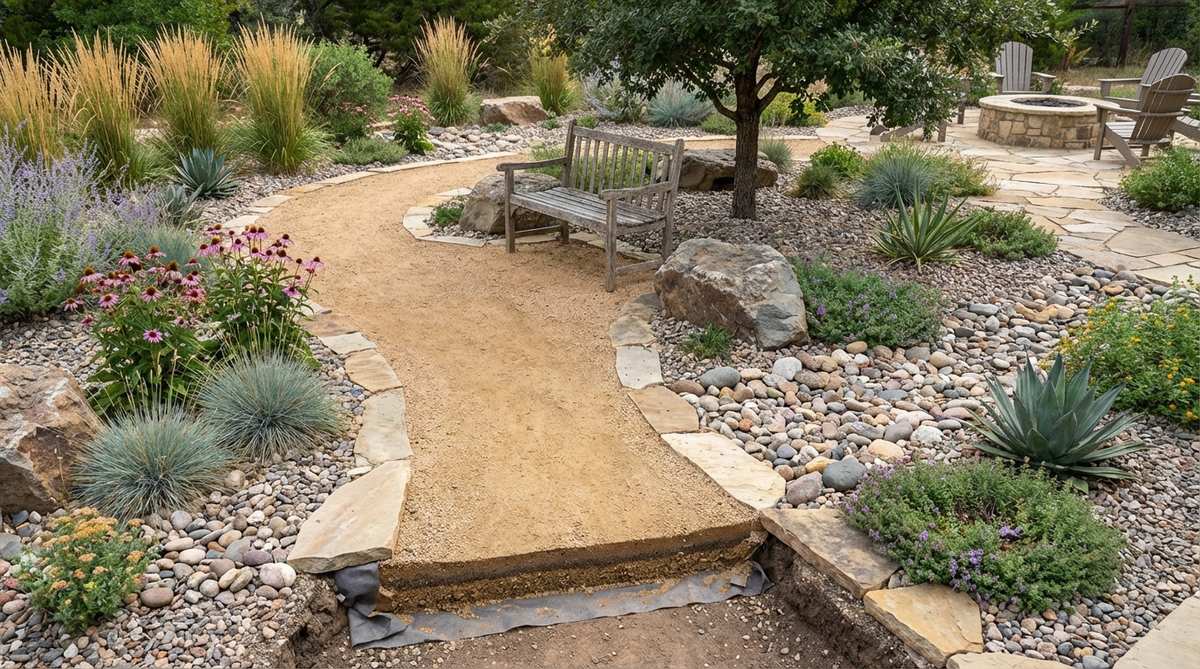
Curved pathways wind through planted areas, creating exploratory experiences within the garden. Decomposed granite compacts into firm walking surfaces when properly installed.
Excavate pathway areas to 4-inch depth and install landscape fabric. Add 3 inches of decomposed granite and compact with a plate tamper, then top with 1 inch loose material.
Meandering routes make small spaces feel larger by obscuring sight lines. The paths require annual top-dressing to maintain surface integrity.
20. Stepping Stone Gravel Combination
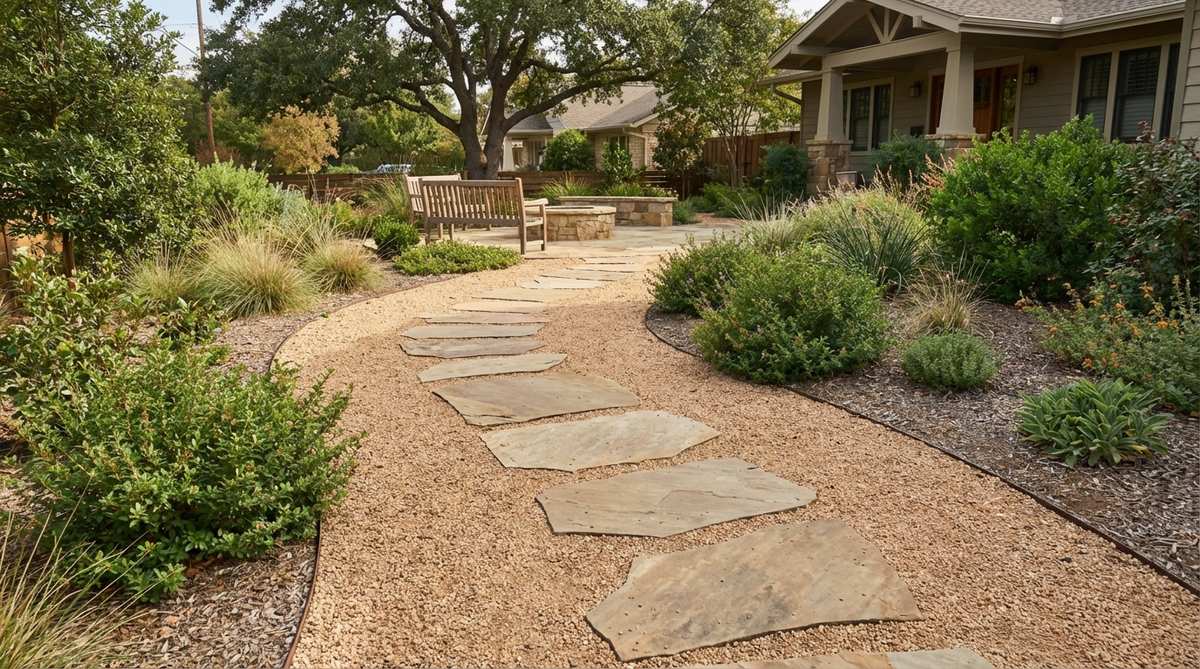
Individual stepping stones set at walking pace provide firm footing while gravel fills surrounding areas. This hybrid approach balances accessibility with permeable surface area.
Position 18-inch diameter stones 24 inches apart center-to-center. Set stone surfaces 1 inch above gravel level to prevent material migration onto stones.
The contrast between solid stones and loose gravel creates textural interest underfoot. This configuration costs less than full stone pathways while maintaining functionality.
21. Bordered Pea Gravel Walk
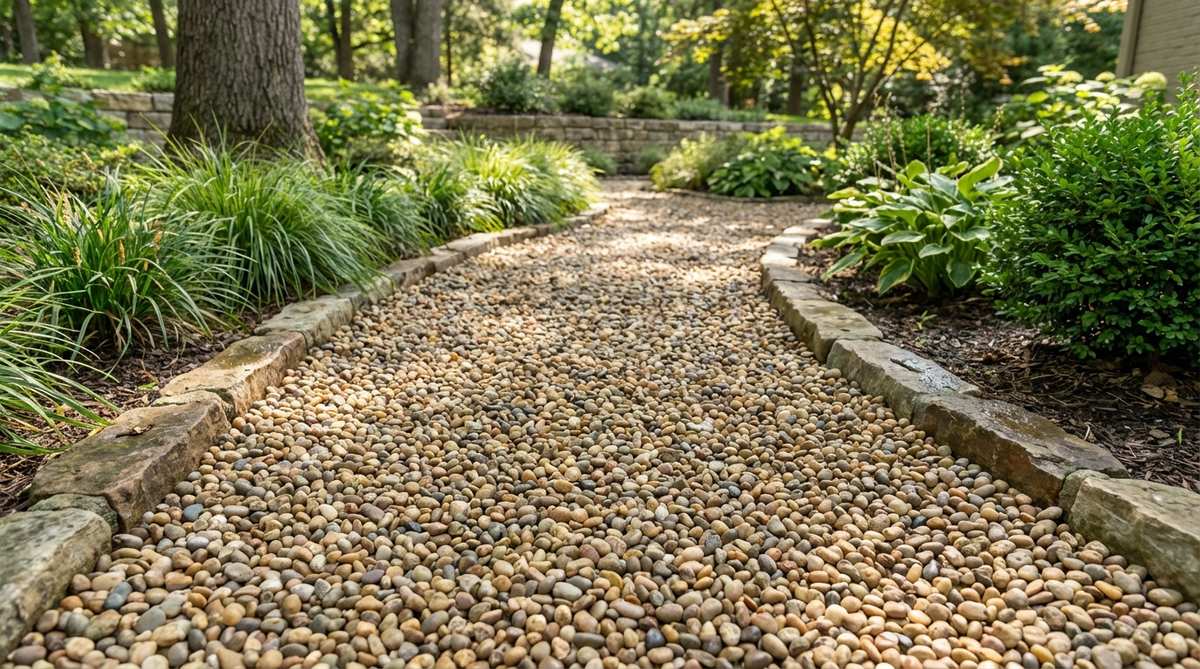
Steel, wood, or stone edging contains pea gravel within defined pathway boundaries. The rounded pebbles shift comfortably underfoot while edging prevents spreading.
Install edging 1 inch above final gravel surface to contain material effectively. Fill paths with 2-3 inches of 3/8-inch pea gravel over compacted base.
Pea gravel provides good drainage but shifts under foot traffic more than angular crushed stone. The smooth pebbles feel pleasant during barefoot garden walks.
22. Herringbone Brick and Gravel
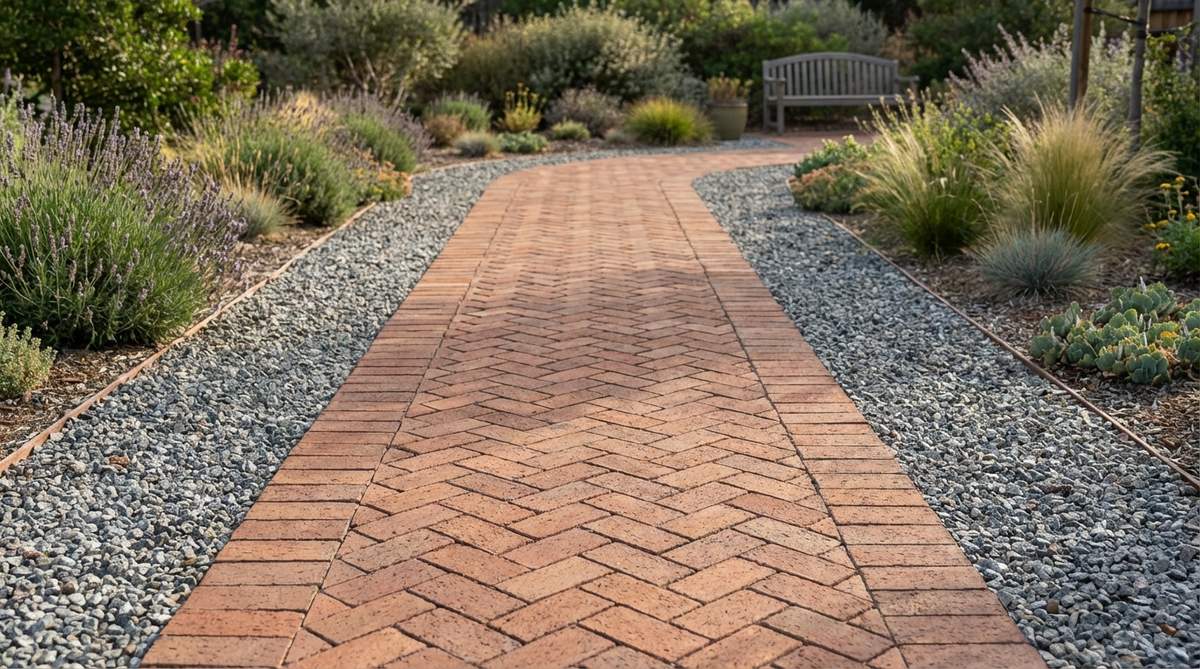
Brick pavers laid in herringbone pattern create central pathway spines while gravel shoulders extend on either side. The traditional brick pattern contrasts with organic gravel textures.
Set bricks on compacted gravel base without mortar, allowing water infiltration between units. Flank brick pathway with 12-18 inch gravel margins.
This design combines firm walking surface with permeable surrounds. Brick adds thermal mass that moderates temperature fluctuations.
23. Color Transition Pathway
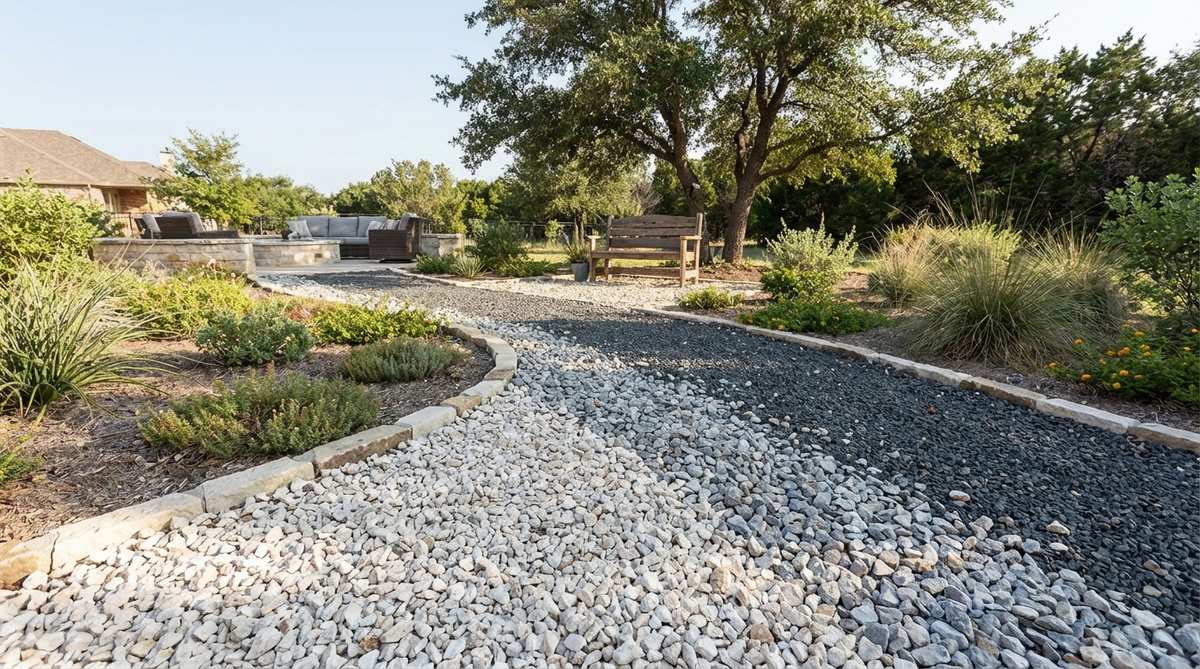
Pathways transition gradually from light to dark gravel colors, creating visual movement through the space. Start with white limestone at entry points and transition to gray or charcoal at destination areas.
Blend gravel colors in 3-foot transition zones where materials meet. Mix ratios gradually shift from 100% light to 100% dark over the blending distance.
Color transitions guide visitors through the garden while adding artistic dimension. This technique works best in longer pathway runs exceeding 20 feet.
24. Stabilized Gravel Surface
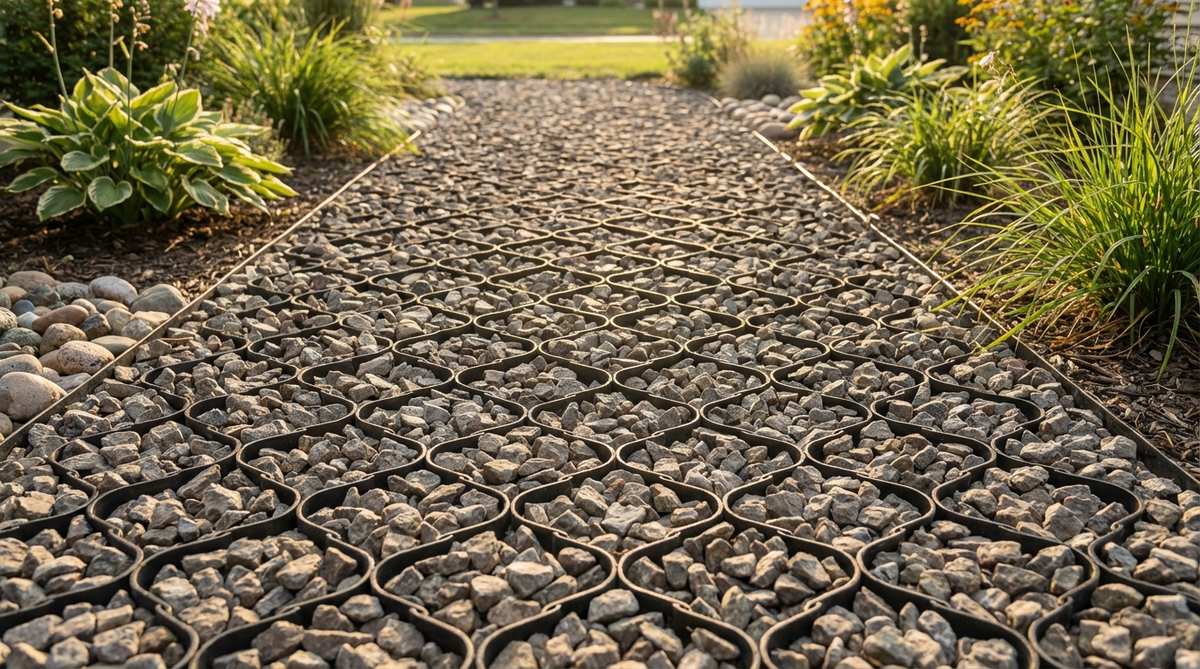
Honeycomb grid systems stabilize gravel within cellular structures, creating firm surfaces suitable for wheelchair access. The grids remain invisible once gravel fills the cells.
Install plastic or recycled rubber grids on compacted base material. Fill cells completely with 3/8-inch angular gravel and compact thoroughly.
Stabilized gravel meets ADA accessibility standards while maintaining permeability. This system prevents gravel migration under wheel traffic.
Textural Contrast Gravel Garden Designs
Combining multiple gravel types, sizes, and colors creates sophisticated visual complexity. These layered approaches demonstrate advanced understanding of material properties and relationships.
25. Multi-Size River Rock Mosaic
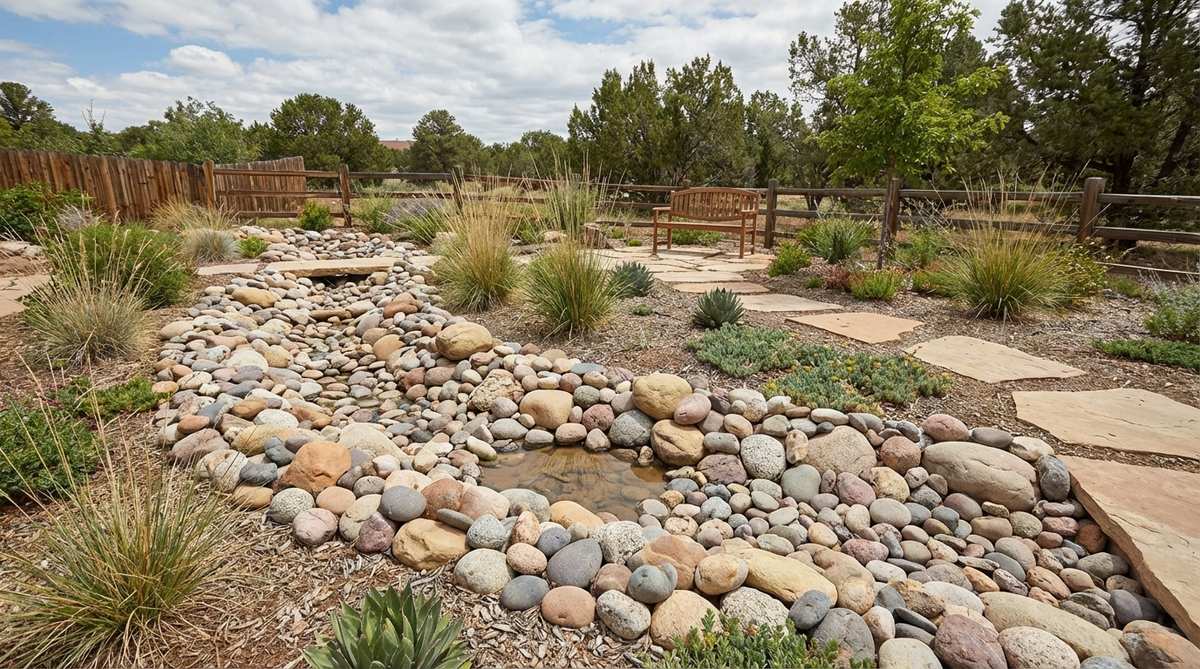
Smooth river rocks ranging from 1-inch to 6-inch diameter create textural variation across horizontal surfaces. The mixed sizing resembles natural stream beds where water sorts stones by size.
Install largest boulders first as anchor points, then fill intermediate areas with medium cobbles. Complete the composition with small pebbles filling remaining gaps.
This naturalistic arrangement provides habitat diversity for ground-dwelling wildlife. The varied surface topography adds visual interest when viewed from multiple angles.
26. Fine Versus Coarse Juxtaposition
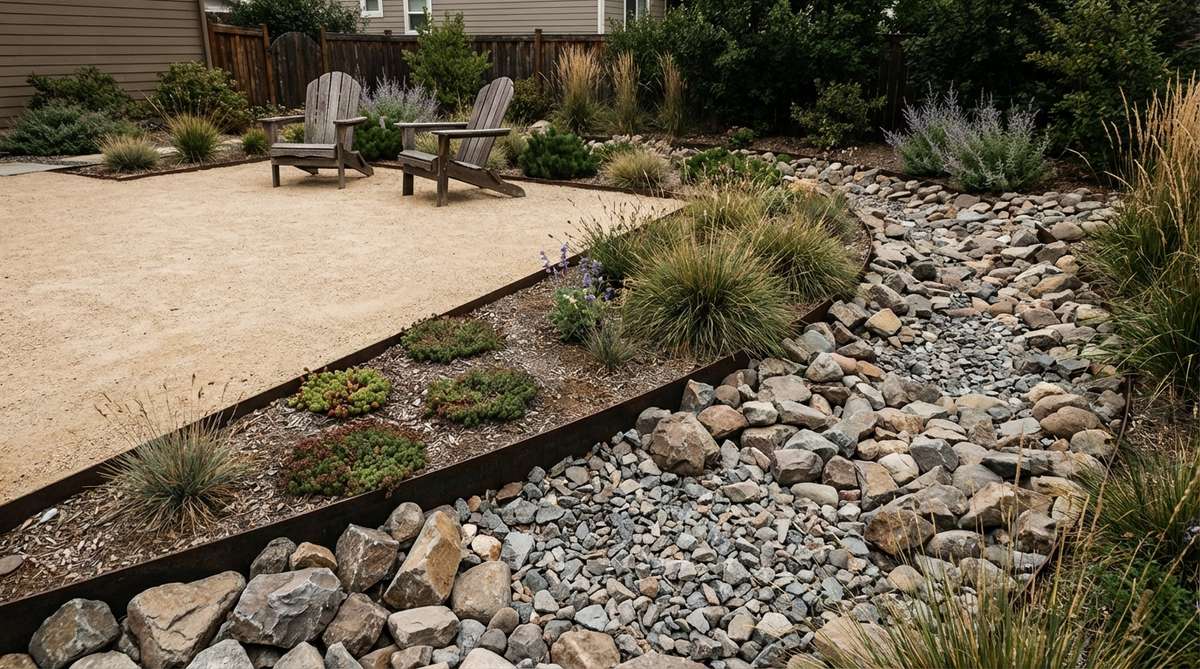
Adjacent zones of finely crushed gravel and larger angular rock create stark textural contrast. Decomposed granite areas feel smooth and refined while cobble sections appear rugged and bold.
Separate contrasting materials with flush metal edging to maintain distinct boundaries. The abrupt transitions emphasize each material’s unique characteristics.
This approach allows single gardens to accommodate multiple design moods. Fine gravel suits formal seating areas while coarse rock feels appropriate for naturalistic zones.
27. Raked Versus Loose Gravel
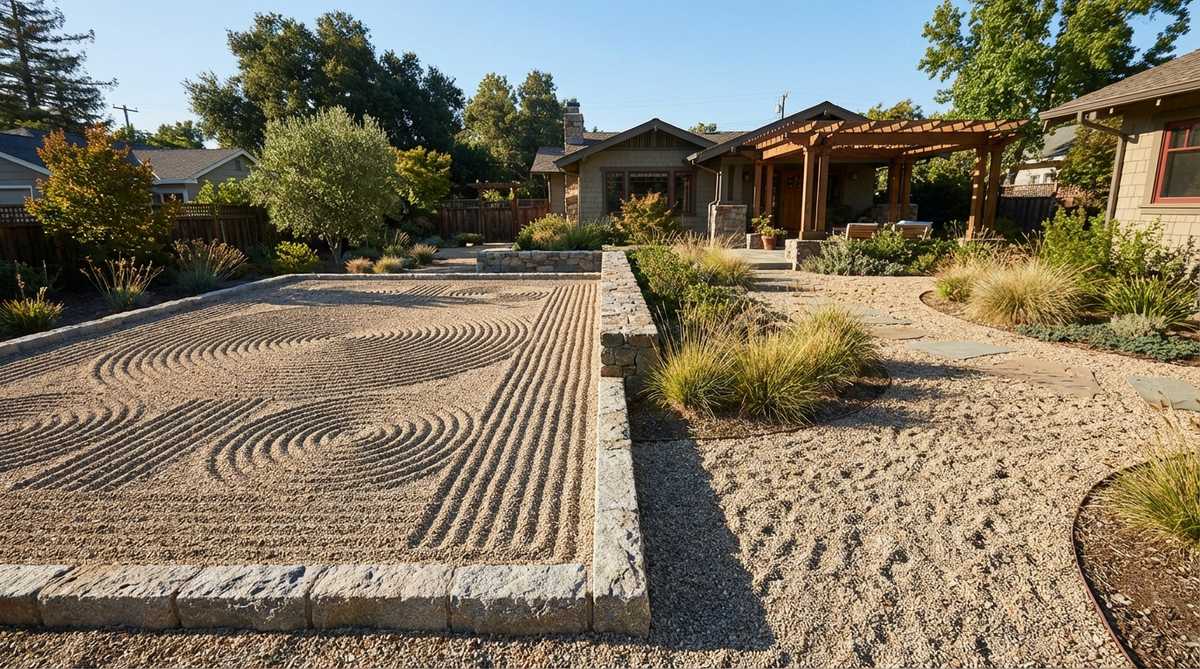
Raked gravel patterns in formal areas contrast with loosely scattered gravel in informal zones. The raked sections require regular maintenance to preserve pattern integrity.
Use 3/8-inch crushed granite for raking areas, as this size holds patterns effectively. Leave adjacent areas unraked to emphasize the distinction.
Raked patterns reference Japanese garden traditions while loose areas feel contemporary. This combination bridges cultural design influences within single compositions.
28. Polished Versus Rough Stone
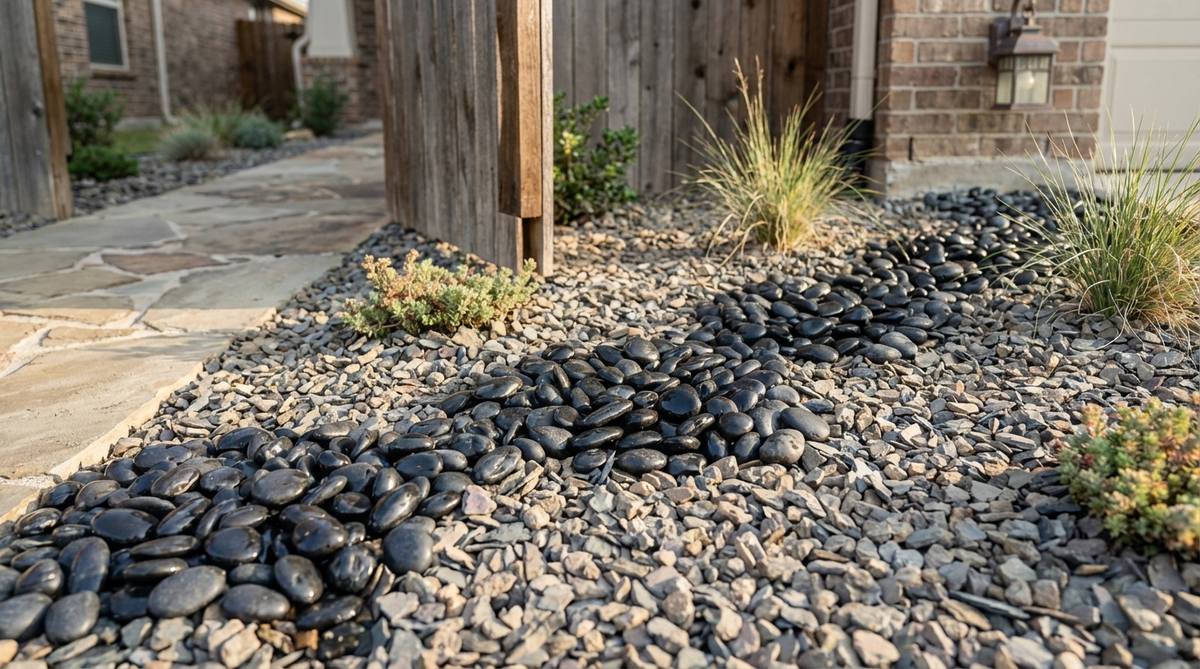
Polished black pebbles create glossy accents within matte-finish crushed stone fields. The contrasting surface treatments catch light differently throughout the day.
Use polished stones sparingly as accent materials due to their higher cost. Position them near entry areas or focal points for maximum impact.
Polished surfaces require occasional rinsing to maintain their lustrous finish. The maintenance tradeoff delivers distinctive visual sophistication.
29. Angular Versus Rounded Gravel
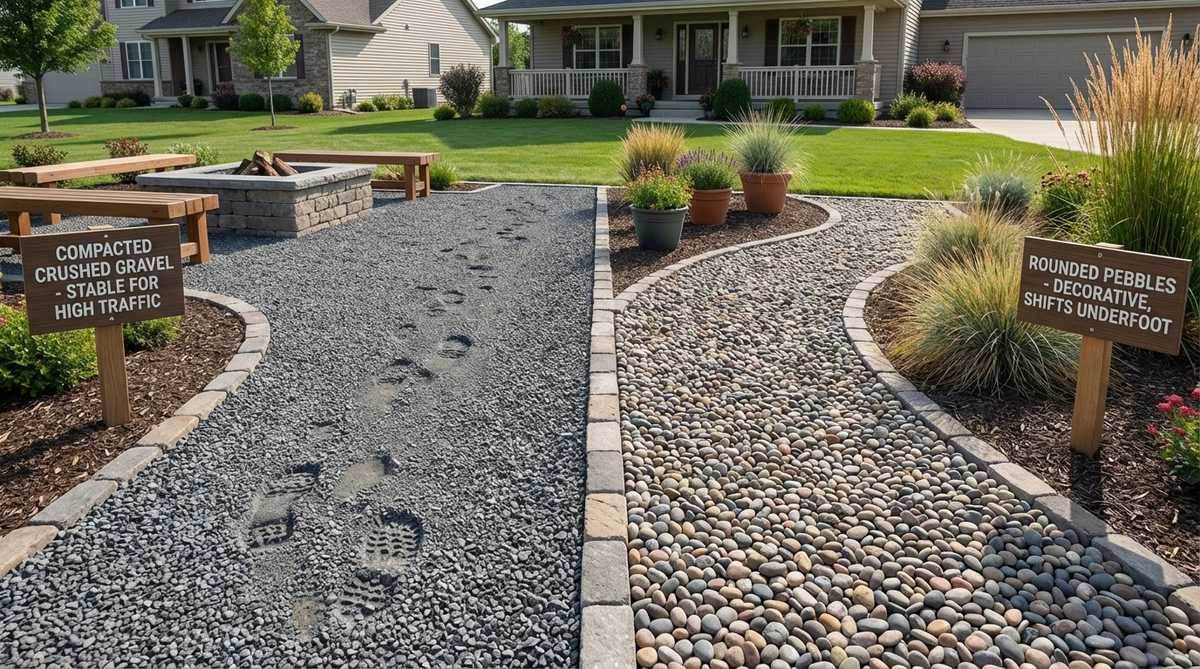
Crushed angular gravel compacts firmly underfoot while rounded pebbles shift and crunch with movement. The mechanical difference creates functional zoning opportunities.
Deploy angular crushed stone in high-traffic circulation routes where stability matters. Use rounded gravel in decorative beds where foot traffic occurs infrequently.
Angular edges interlock to resist displacement better than smooth surfaces. This technical property influences long-term maintenance requirements.
30. Layered Color Bands
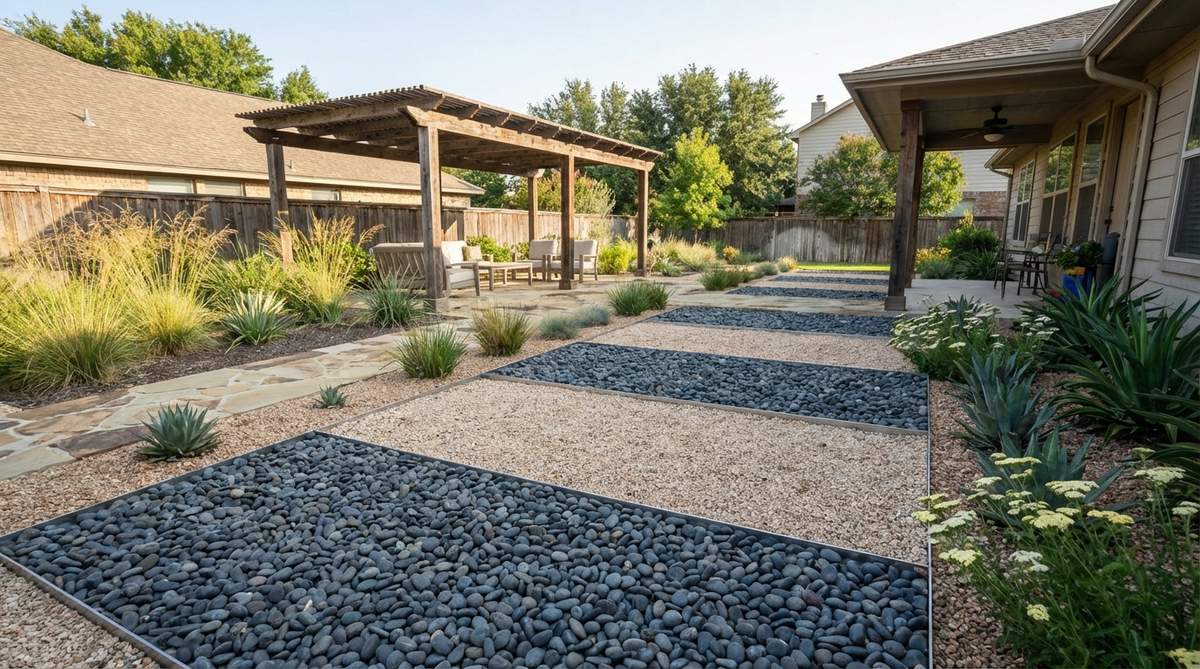
Horizontal bands of different gravel colors create striped patterns across the landscape plane. Each band measures 18-36 inches wide, running parallel across the space.
Install permanent edging between color bands to prevent mixing over time. Select colors with clear value contrast—pair dark with light rather than similar mid-tones.
Banded layouts emphasize the garden’s width or length depending on band orientation. This graphic approach suits contemporary design aesthetics.
Functional Outdoor Living Spaces with Gravel
Gravel serves as foundation material for active outdoor rooms where people gather, dine, and relax. These practical applications combine utility with low-maintenance performance.
31. Gravel Dining Terrace
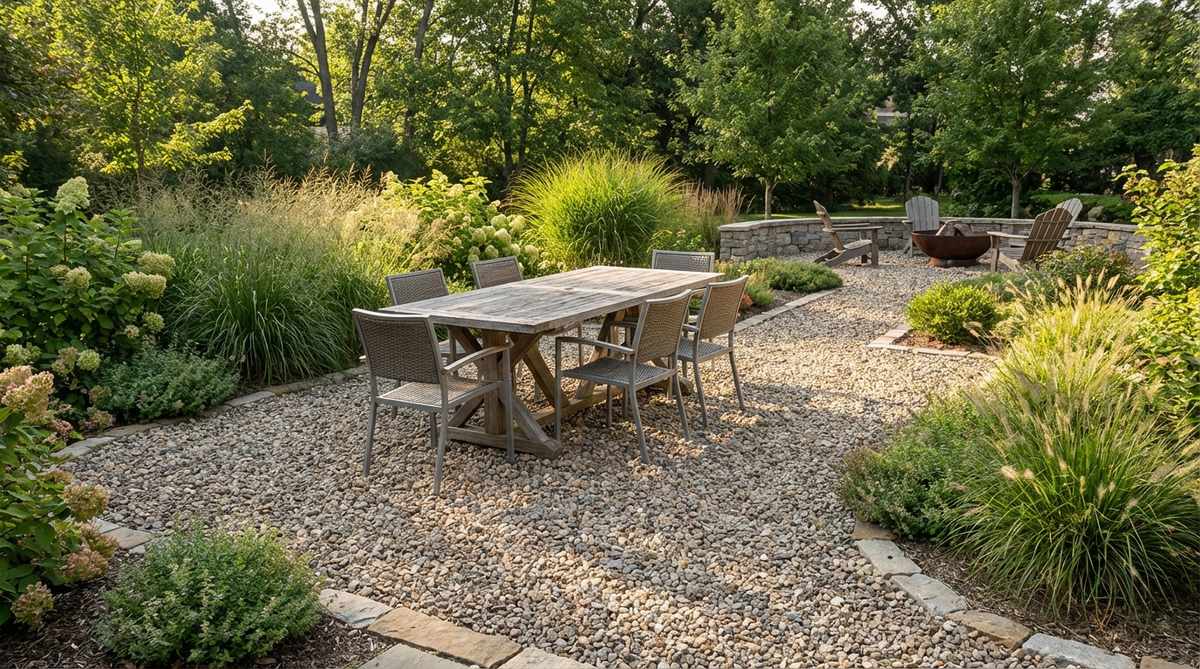
Outdoor dining areas floored with compacted crushed stone accommodate tables and chairs without permanent paving. The stable surface supports furniture legs while maintaining permeability.
Excavate to 6-inch depth and install 4 inches crushed base rock topped with 2 inches decomposed granite. Compact thoroughly to create firm, level surface.
Furniture remains easy to rearrange on gravel surfaces. The informal material suits casual dining atmospheres more than formal entertaining spaces.
32. Fire Pit Gathering Area
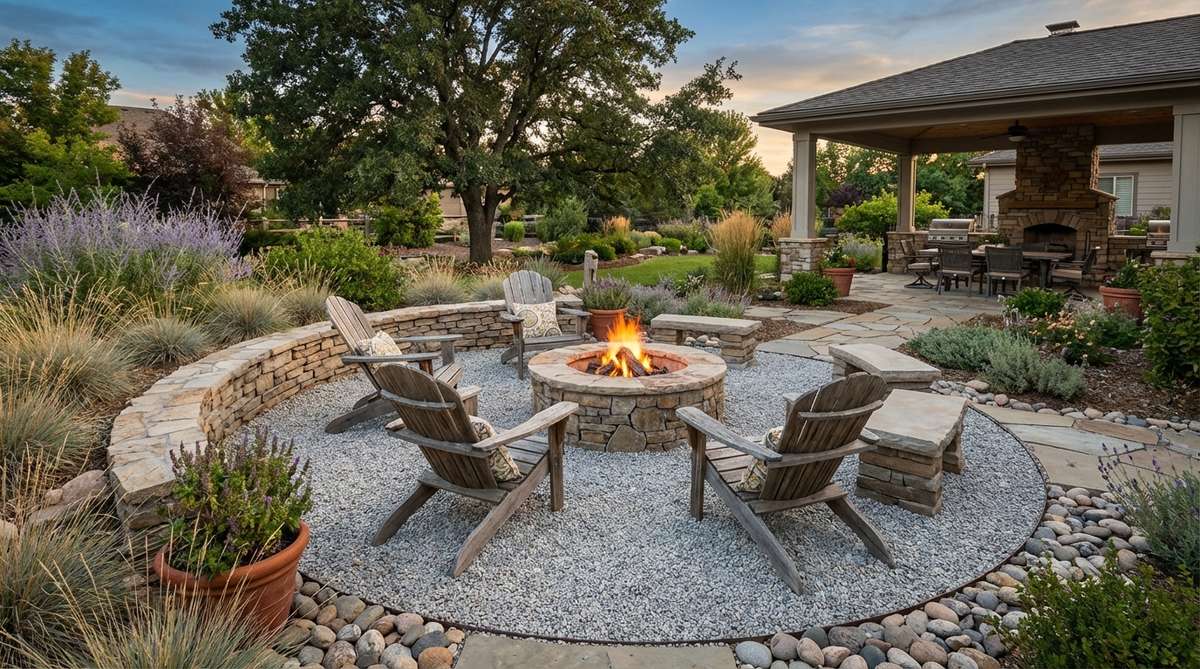
Gravel provides safe, non-combustible surfacing around fire features. A 12-15 foot diameter gravel circle accommodates fire pit and surrounding seating.
Install fire pit on concrete pad for stability, then surround with 3-4 inches of gravel. Choose light-colored gravel that remains visible during evening gatherings.
Gravel won’t ignite from flying sparks like organic mulches. The open drainage prevents water accumulation in the gathering space.
33. Outdoor Kitchen Foundation
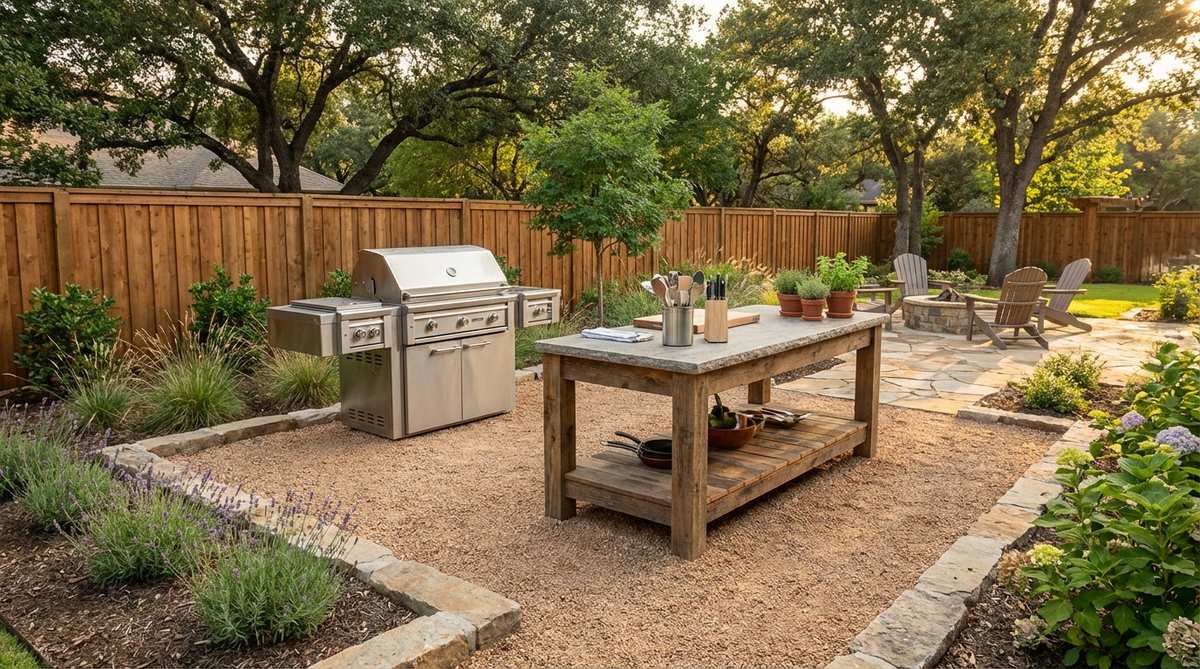
Gravel bases support outdoor cooking stations, providing level, stable platforms for freestanding grills and prep tables. The surface resists grease staining better than concrete.
Frame kitchen area with landscape timbers or stone edging. Fill with compacted crushed rock for bearing capacity under heavy equipment.
Gravel facilitates cleaning as food debris and liquids drain through the surface. Periodic raking maintains level working plane.
34. Meditation Sitting Circle
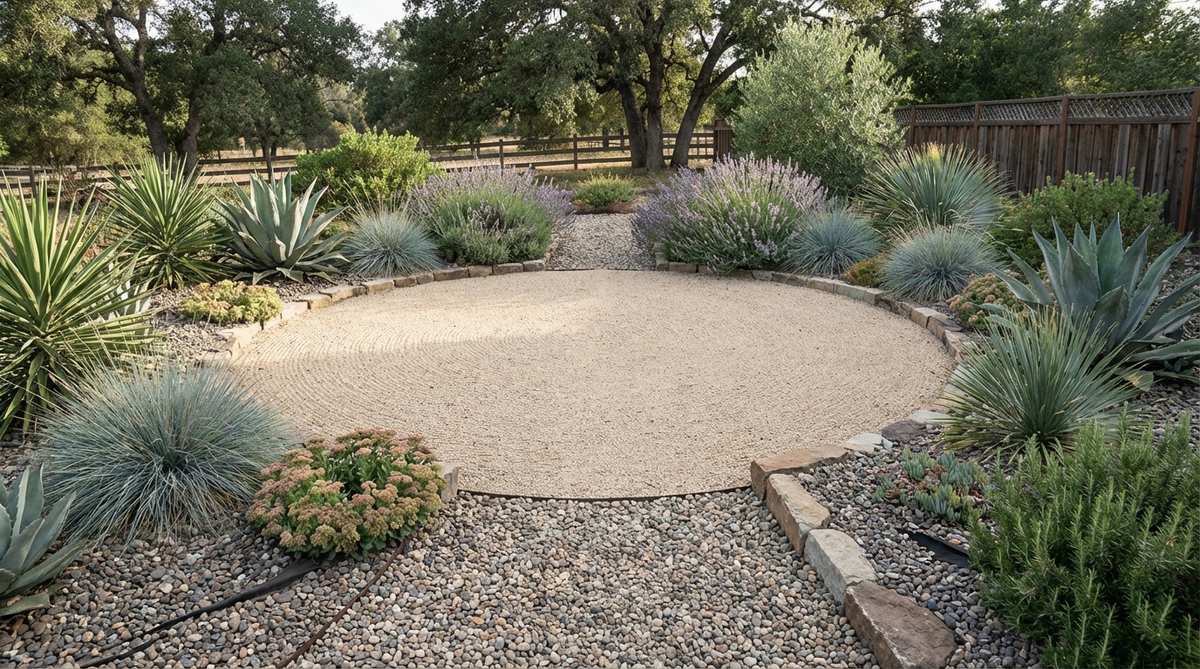
Circular gravel clearings within larger planted areas create contemplative spaces for yoga or meditation practice. The defined circle provides psychological containment.
Mark 10-12 foot diameter circle and remove existing vegetation. Install gravel 3 inches deep over landscape fabric.
The neutral gravel surface minimizes visual distraction during meditation. Regular raking maintains the peaceful, ordered appearance.
35. Children Play Zone
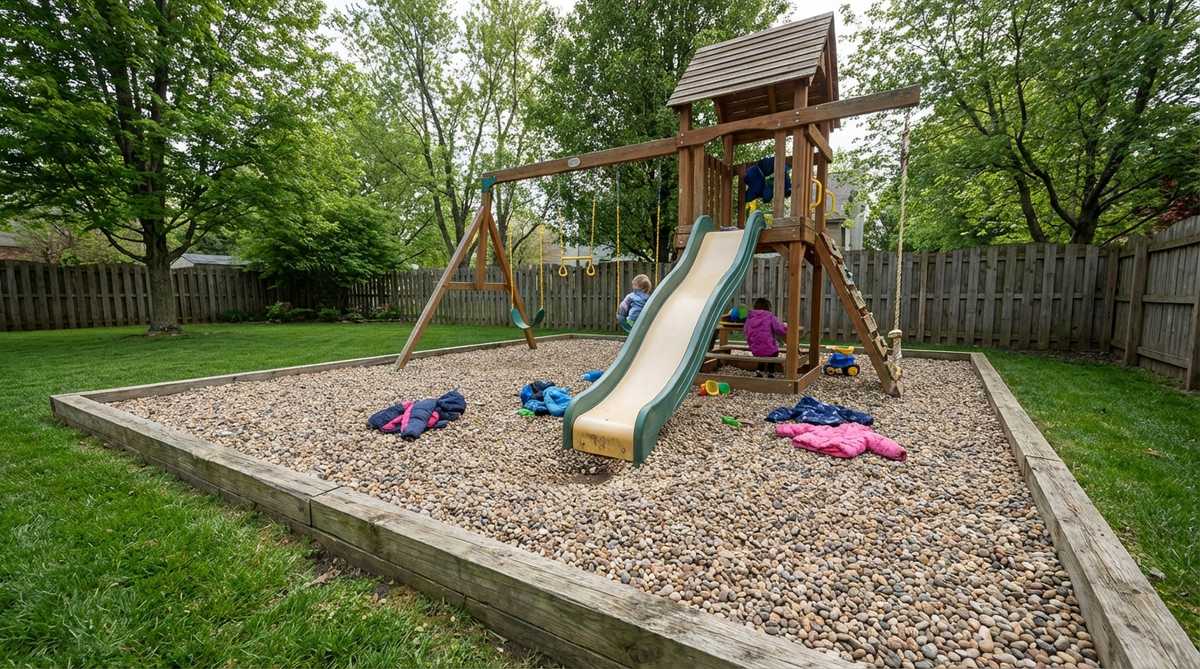
Pea gravel creates safer play surfaces than hardscape under swings and play equipment. The cushioning effect reduces impact injury risk.
Install 6-8 inches of 3/8-inch pea gravel in play areas. Border with landscape timbers to contain material within play zone.
Pea gravel requires periodic raking to maintain even depth. The loose material provides good drainage after rain events.
36. Dog Run Surfacing
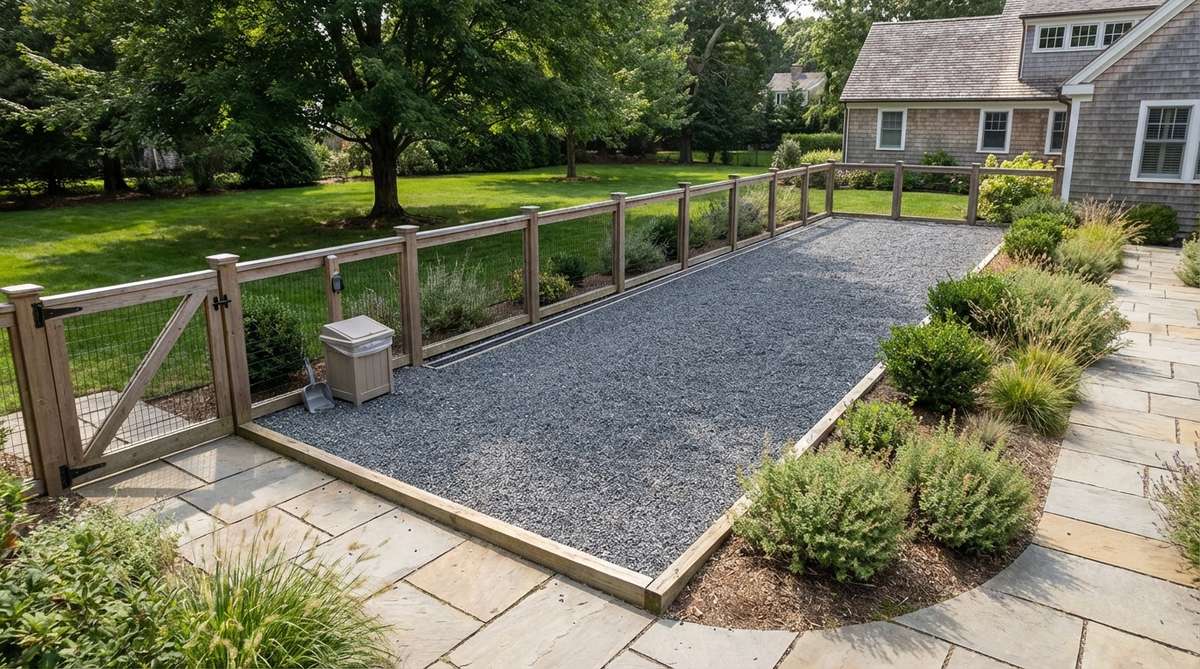
Gravel provides sanitary, draining surfaces for dog exercise areas. Waste removal remains straightforward, and odors don’t accumulate as with organic materials.
Use 3/4-inch crushed stone that won’t lodge between paw pads. Slope surface slightly for drainage away from primary dwelling.
Gravel stays cleaner than grass or bare soil in high-traffic dog areas. Periodic hosing maintains hygiene standards.
Asian-Inspired Gravel Garden Features
Eastern garden traditions employ gravel as symbolic element representing water, sky, or emptiness. These contemplative designs emphasize simplicity and restraint.
37. Zen Raked Gravel Court
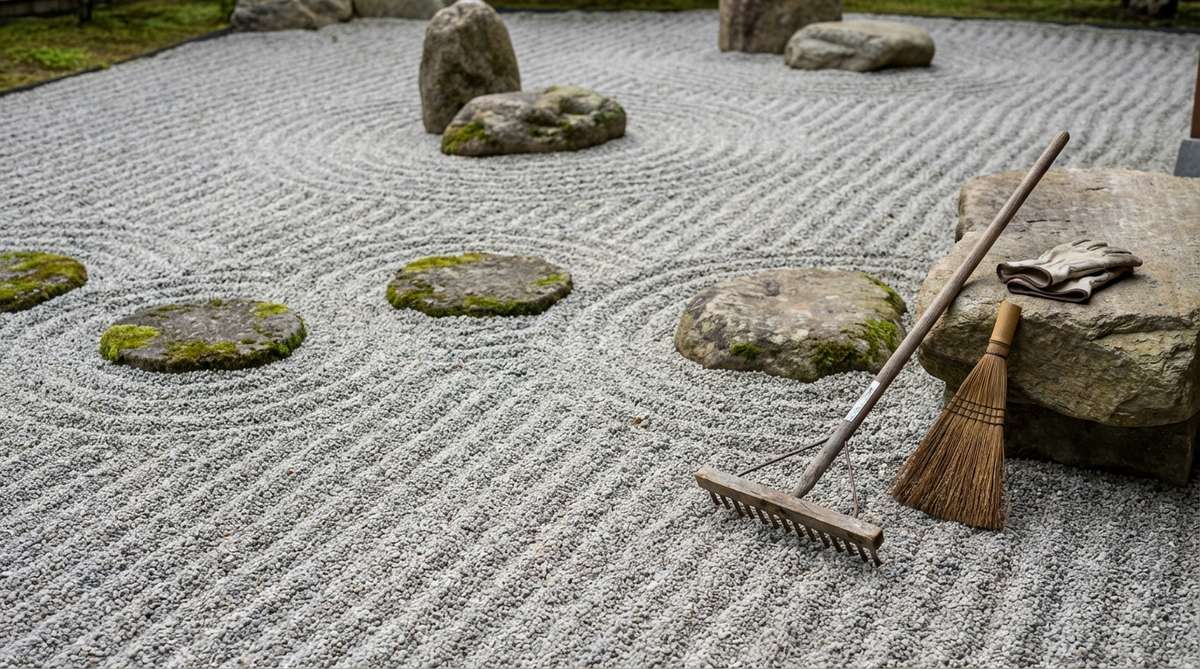
Fine crushed granite raked into wave or linear patterns creates the iconic Zen garden aesthetic. The patterns represent flowing water in symbolic dry landscapes.
Use 1/4-inch granite screenings 2-3 inches deep. Rake patterns with specialized tools, refreshing designs weekly or after disturbance.
This high-maintenance feature requires protected locations away from foot traffic and falling leaves. The meditative practice of raking provides therapeutic benefits.
38. Moss and Gravel Integration
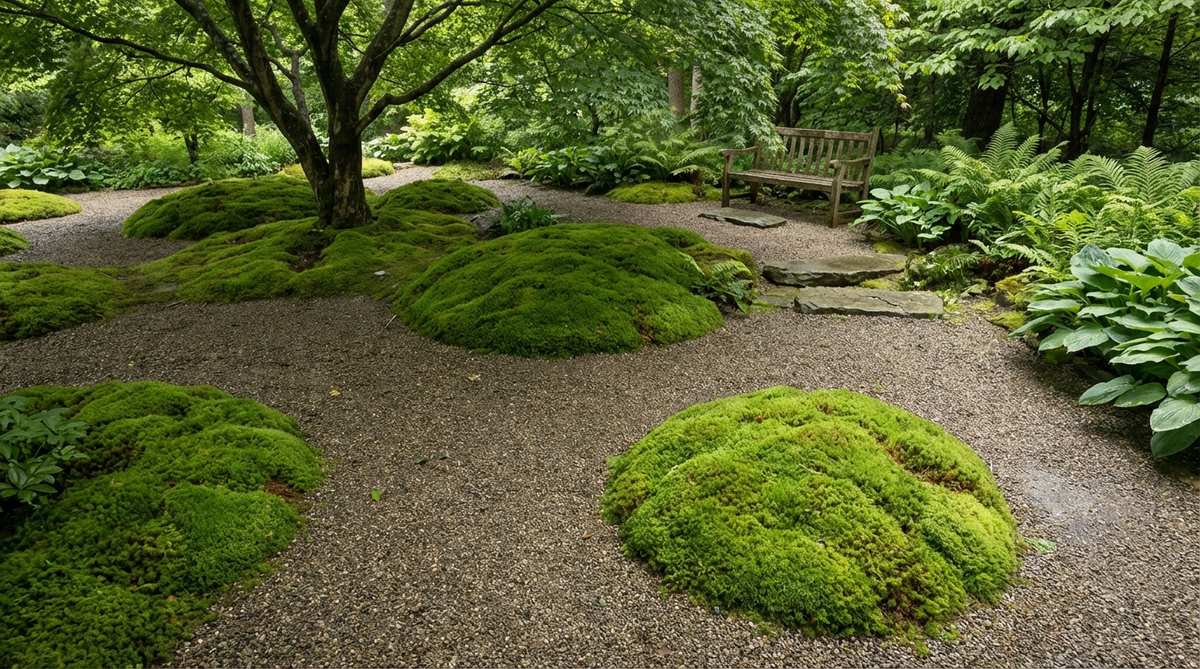
Moss islands emerge through fine gravel surfaces in shaded locations. The soft green mounds contrast with mineral textures, creating serene compositions.
Establish moss patches in underlying soil before applying gravel. Use 1-inch layer of fine gravel that allows moss to penetrate upward.
This technique requires shade and consistent moisture. The moss gradually colonizes gravel-covered areas, creating naturalistic patterns.
39. Boulder Grouping Arrangements
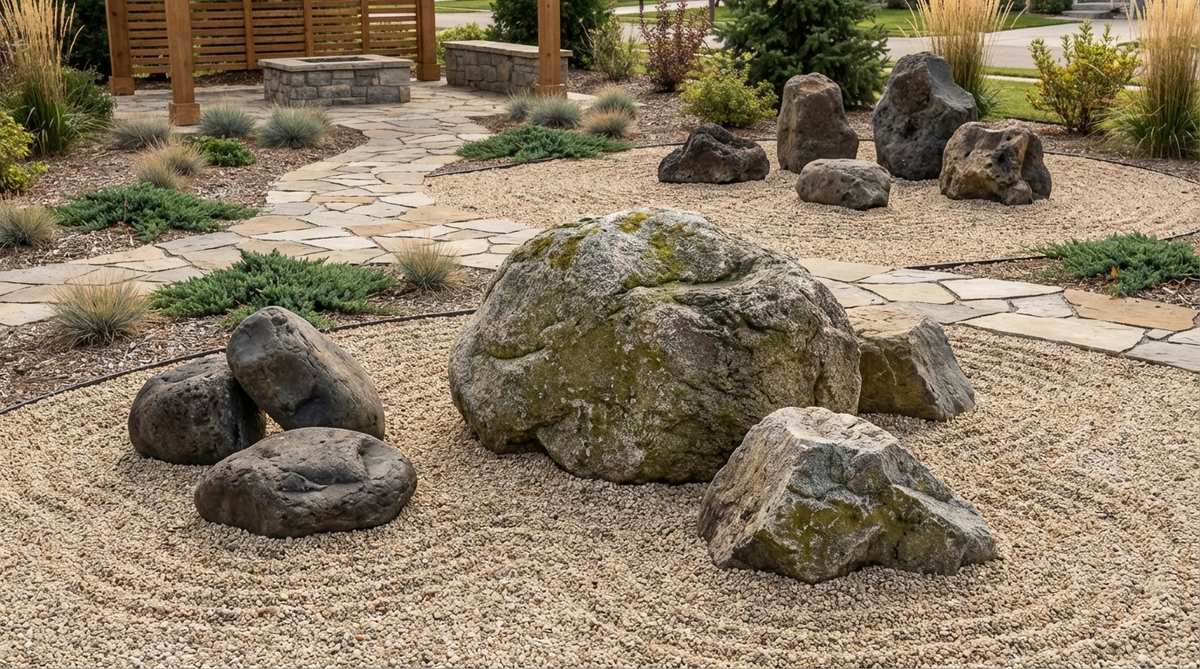
Japanese design principles govern boulder placement within gravel seas. Stones group in odd numbers (3, 5, 7) with varying heights and orientations.
Position largest boulder first as primary element. Add supporting stones in relationship to the main boulder, considering sight lines from viewing positions.
Traditional arrangements avoid symmetry while maintaining visual balance. The empty gravel space surrounding stones holds equal importance to the stones themselves.
40. Bamboo and Gravel Pairing
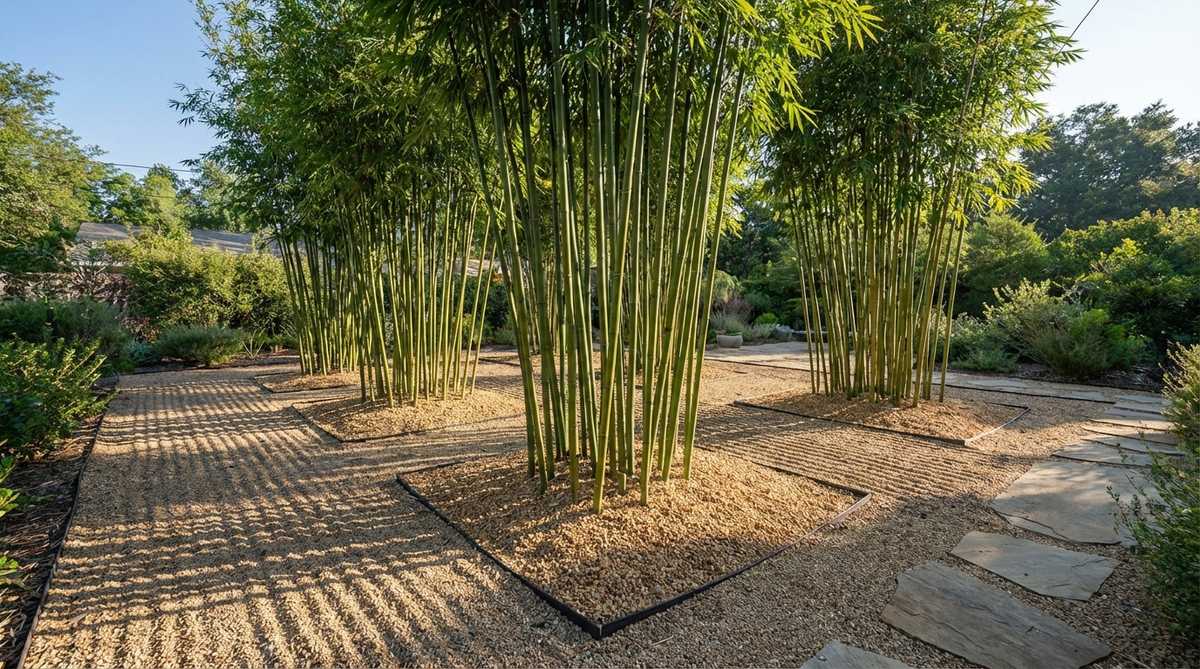
Clumping bamboo varieties planted through gravel create vertical elements with Asian character. The upright culms cast elegant shadows across horizontal gravel planes.
Install root barriers around bamboo planting zones to prevent underground spread. Apply gravel mulch 3 inches deep around bamboo clumps.
Select clumping rather than running bamboo species to avoid invasive spreading. The combination delivers immediate Asian aesthetic impact.
41. Stone Lantern Placement
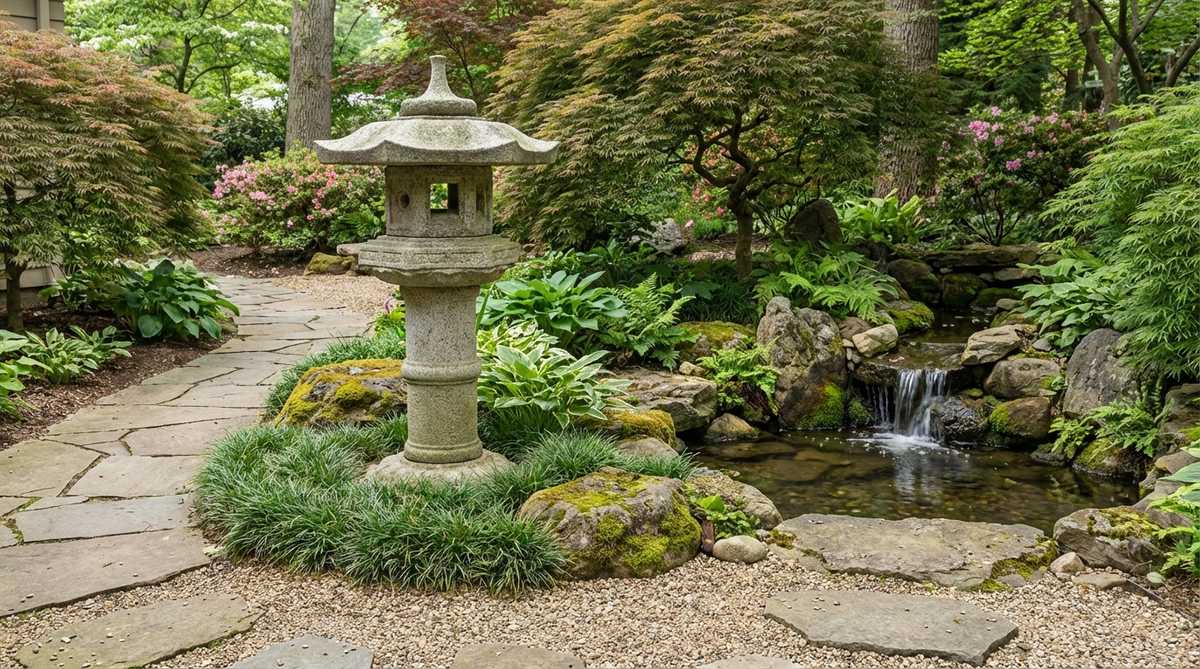
Traditional granite lanterns positioned within gravel gardens provide focal points and lighting options. These carved stone elements introduce sculptural vertical forms.
Set lanterns on concrete footings to prevent settling into gravel. Position near pathways or viewing areas for functional and aesthetic purposes.
Authentic stone lanterns represent significant investments. Quality reproductions deliver similar visual impact at lower cost points.
42. Gravel Stream Bed Simulation
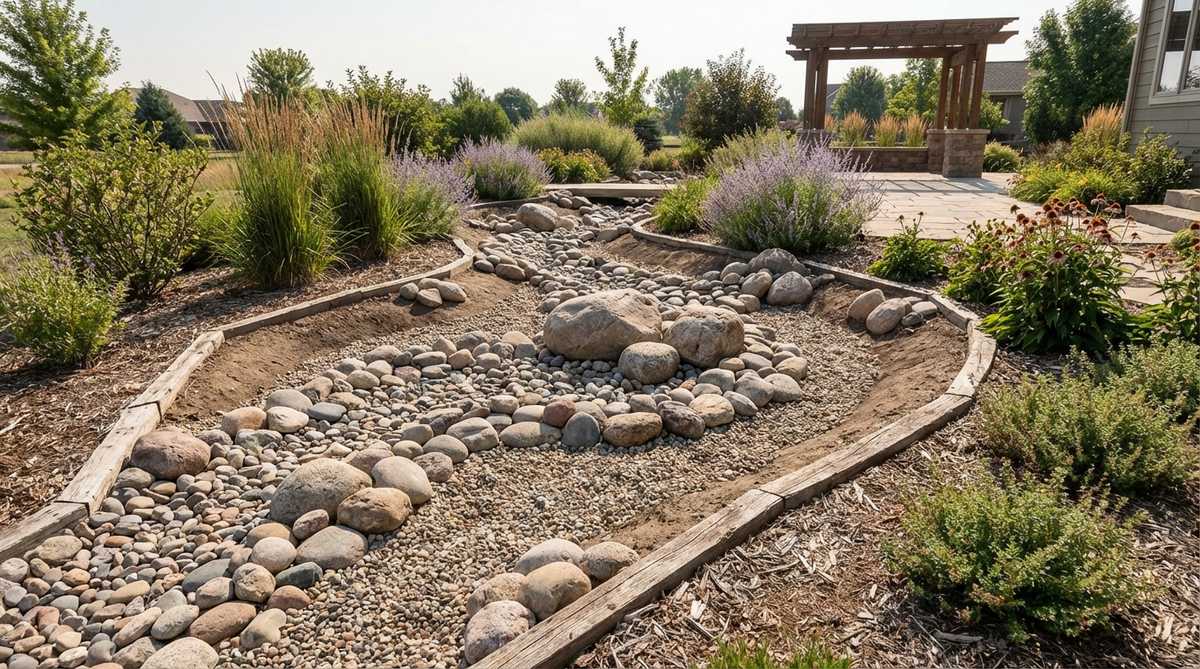
River rock arranged in flowing patterns suggests dried stream courses through the garden. Larger stones at channel centers transition to smaller gravel at edges.
Excavate shallow swales to contain the river rock arrangement. Grade gently to suggest directional water flow.
These dry streams function as drainage features during heavy rain while serving as decorative elements during dry periods.
Mixed Material Combinations with Gravel
Combining gravel with contrasting materials creates dynamic visual relationships. Strategic material mixing prevents monotony while maintaining cohesive design intent.
43. Wood Deck Gravel Transition
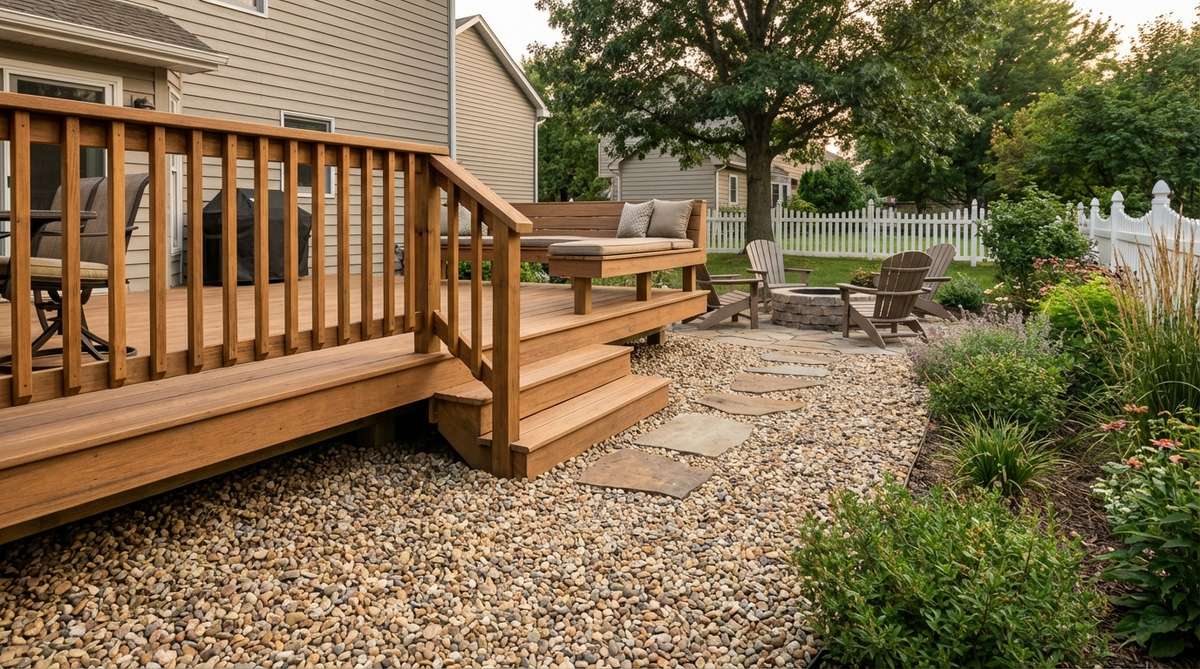
Elevated wood decking steps down to gravel-covered grade-level areas. The transition creates distinct zones for different activities within unified outdoor spaces.
Extend gravel beneath deck edges to prevent vegetation growth in shadowed areas. Match gravel color to deck wood tones for harmonious relationship.
Wood provides comfortable barefoot surface for lounging while gravel handles surrounding landscape functions. The material shift defines spatial boundaries without walls.
44. Concrete and Gravel Mosaic
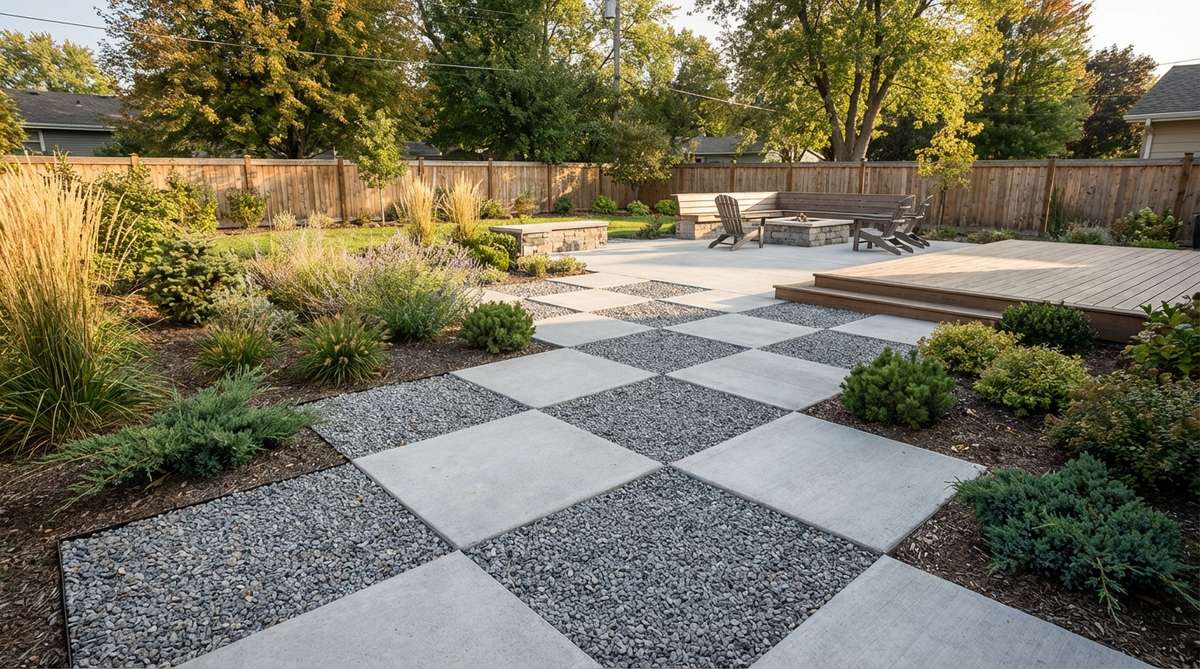
Cast-in-place concrete pads alternate with gravel panels in checkerboard or random arrangements. The solid concrete islands float within gravel matrix.
Pour concrete pads directly on prepared gravel base without separate footings. Size pads between 3×3 feet and 6×6 feet for comfortable proportions.
This cost-effective approach reduces concrete quantity while maintaining functional hard surfaces. The pattern scales to accommodate various site dimensions.
45. Decomposed Granite and Mulch
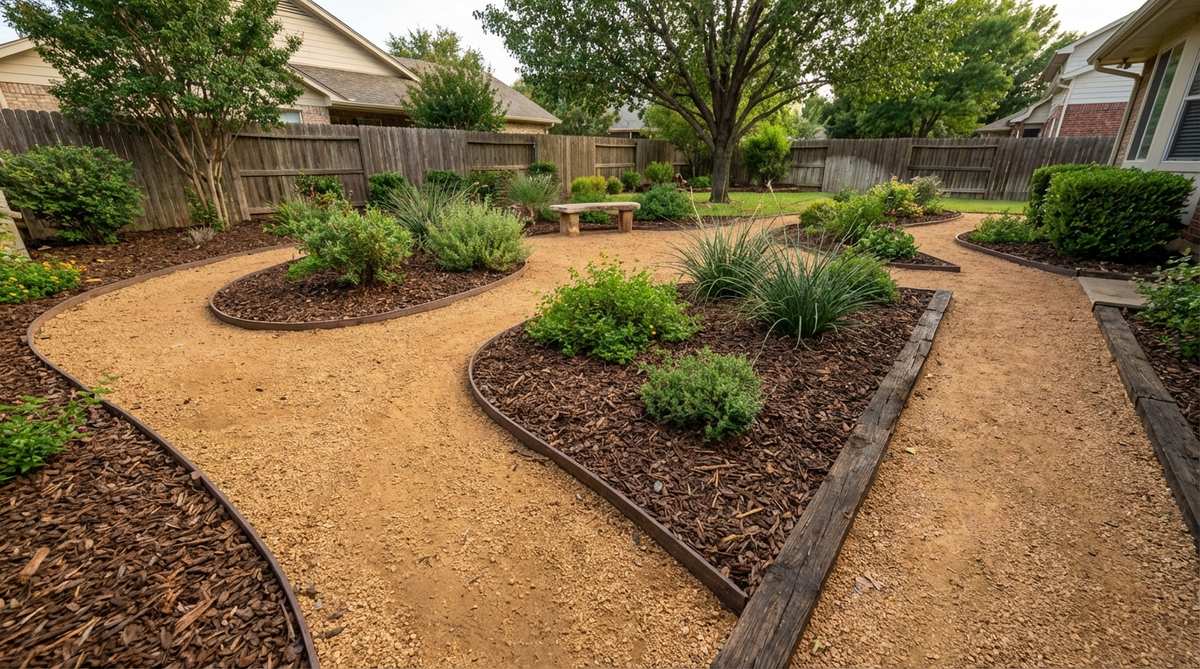
Wood chip mulch beds contrast with decomposed granite pathways, creating textural variety. The organic mulch supports shrubs while granite defines circulation.
Install permanent edging between materials to prevent mixing. Apply mulch 3 inches deep in planting beds and granite 2-3 inches deep in pathways.
The mulch requires periodic replenishment as it decomposes. Granite pathways remain stable for multiple years without replacement.
46. Steel Plate Gravel Accents
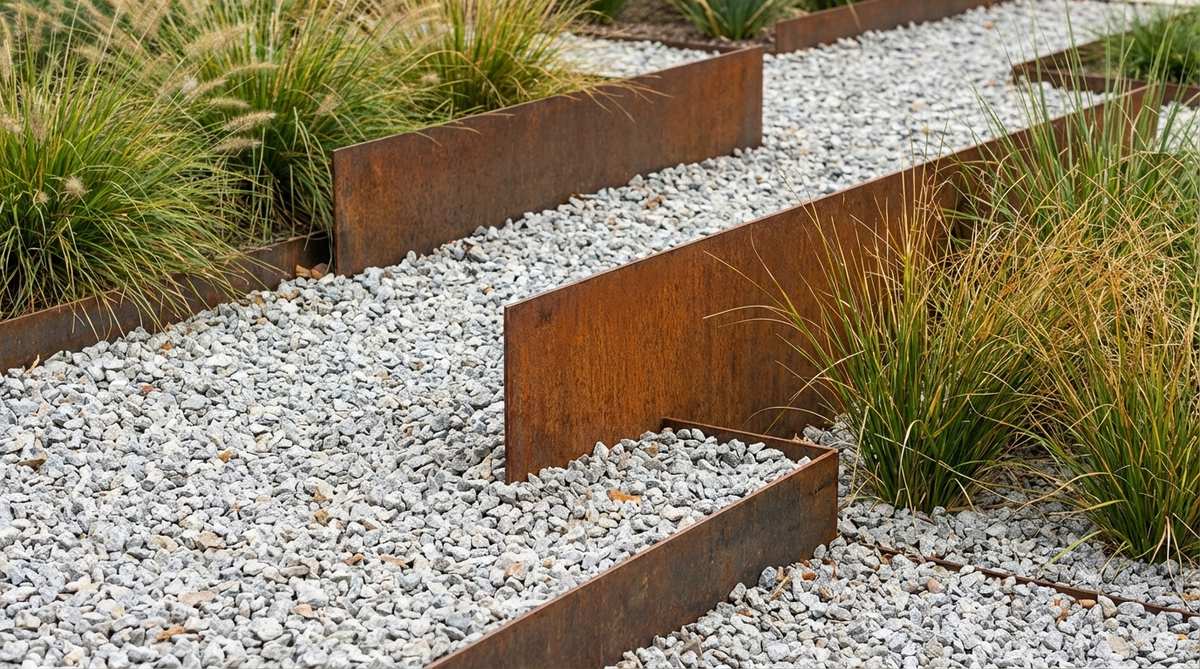
Rusted corten steel sheets set vertically or horizontally within gravel beds add industrial aesthetic elements. The weathered steel develops rich orange-brown patina over time.
Bury steel edges 6-8 inches deep for stability. The rust color intensifies over initial 6-12 months of weathering.
Steel’s linear forms contrast effectively with organic plant shapes. The material withstands decades of outdoor exposure without structural deterioration.
47. Glass Mulch Highlights
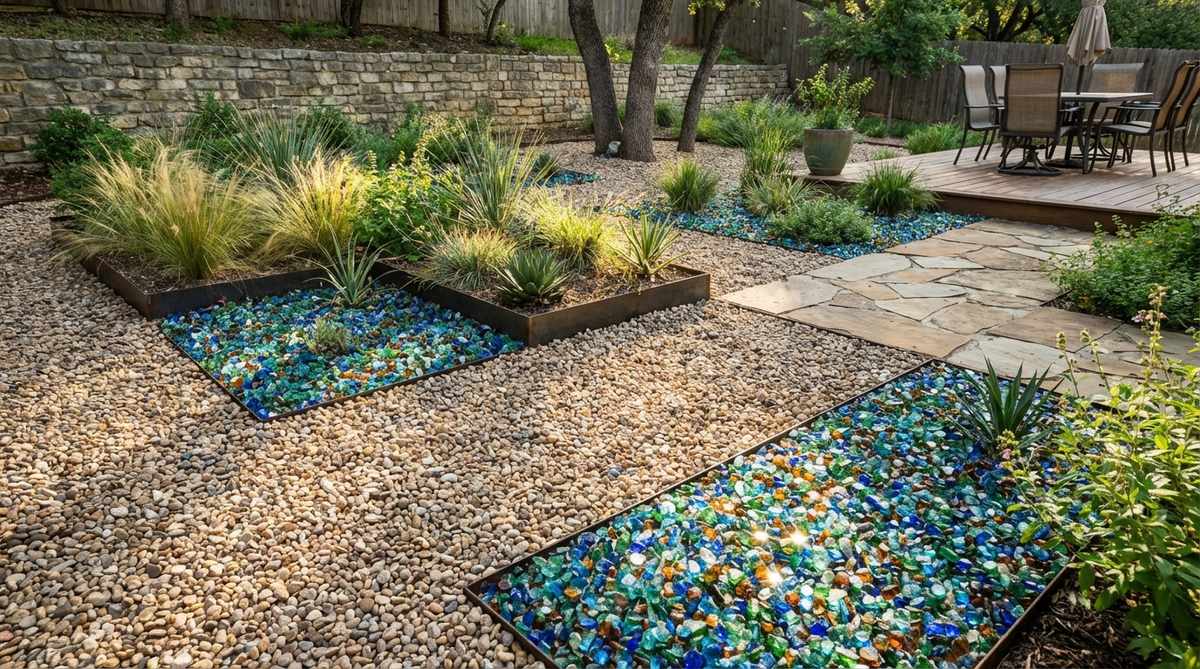
Recycled tumbled glass in bright colors creates jewel-like accents within neutral gravel. Small glass areas draw attention to specific garden features or planting zones.
Limit glass to 10-20% of total surface area to avoid overwhelming the composition. Use as highlighting material rather than primary ground cover.
Glass reflects light dramatically, creating sparkle effects in sunlight. The material stays cleaner than organic mulches in wet conditions.
48. Permeable Pavers Gravel Joints
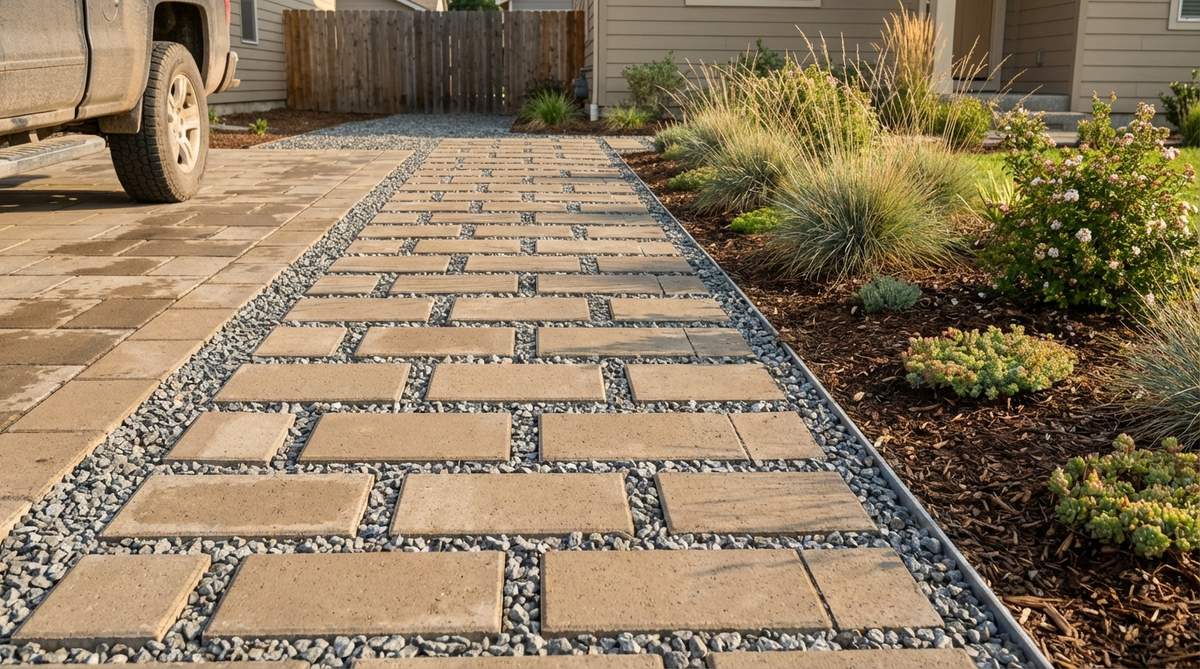
Grid-pattern pavers with wide gravel joints create semi-pervious surfaces suitable for occasional vehicle access. The gravel joints allow water infiltration while pavers carry weight loads.
Space pavers 2-3 inches apart and fill joints with 3/4-inch crushed stone. The gravel locks between angular paver edges.
This configuration works well for overflow parking or utility access routes. The predominantly gravel surface maintains landscape character.
Vertical Dimension Additions to Gravel Gardens
Gravel’s horizontal emphasis benefits from vertical counterpoints. Strategic height additions create balanced three-dimensional compositions.
49. Ornamental Grass Accents
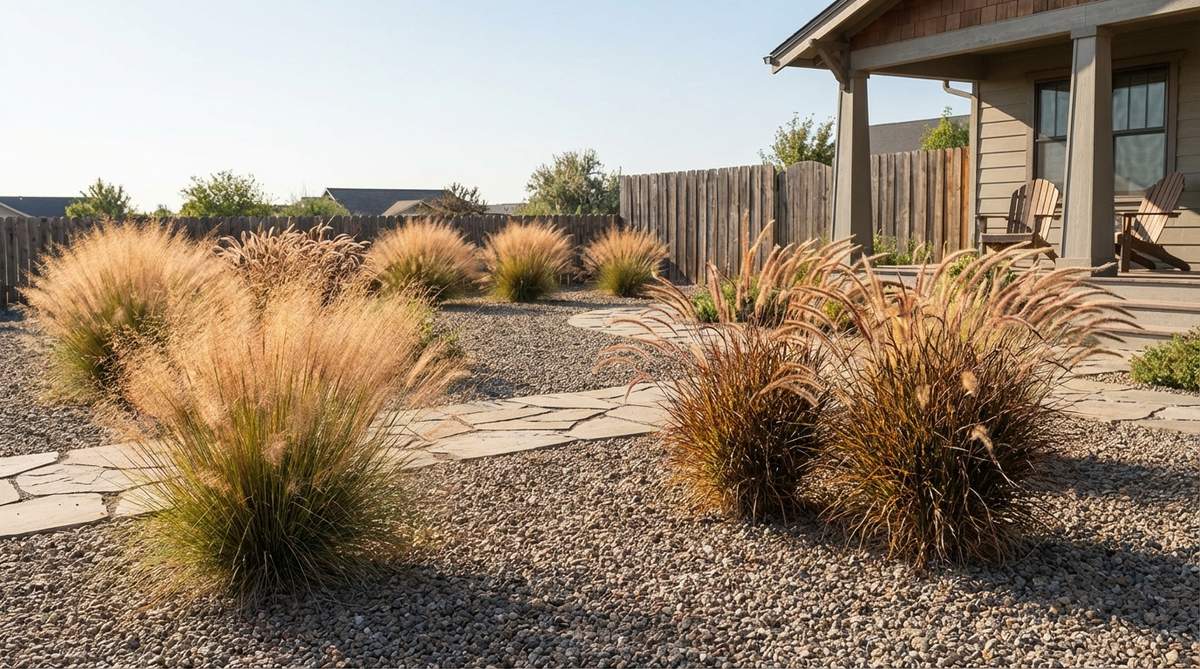
Tall fountain grasses, maiden grasses, or muhly grass planted through gravel provide graceful vertical movement. Their fine-textured foliage sways with breezes, animating static gravel surfaces.
Space grass clumps 4-6 feet apart to showcase individual plants. Cut back deciduous grasses in late winter before new growth emerges.
Grasses deliver seasonal interest through foliage color changes and persistent seed heads. Most species thrive with minimal supplemental irrigation.
50. Columnar Cactus Sentinels
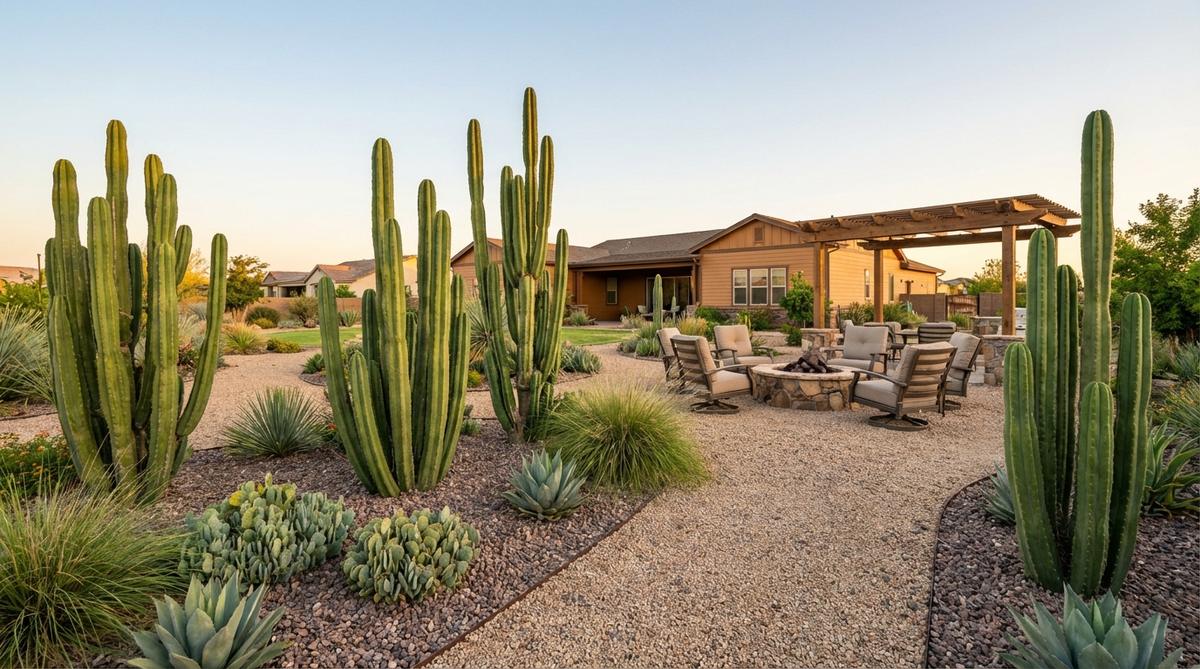
Tall cylindrical cacti create striking silhouettes against horizontal gravel planes. Species like San Pedro cactus or totem pole cactus grow 6-12 feet tall over time.
Plant single specimens as focal points or group three at varying heights. Ensure adequate spacing from walkways due to spines.
These architectural forms maintain presence year-round without seasonal dormancy. Their slow growth means compositions remain stable for decades.
51. Vertical Steel Sculptures
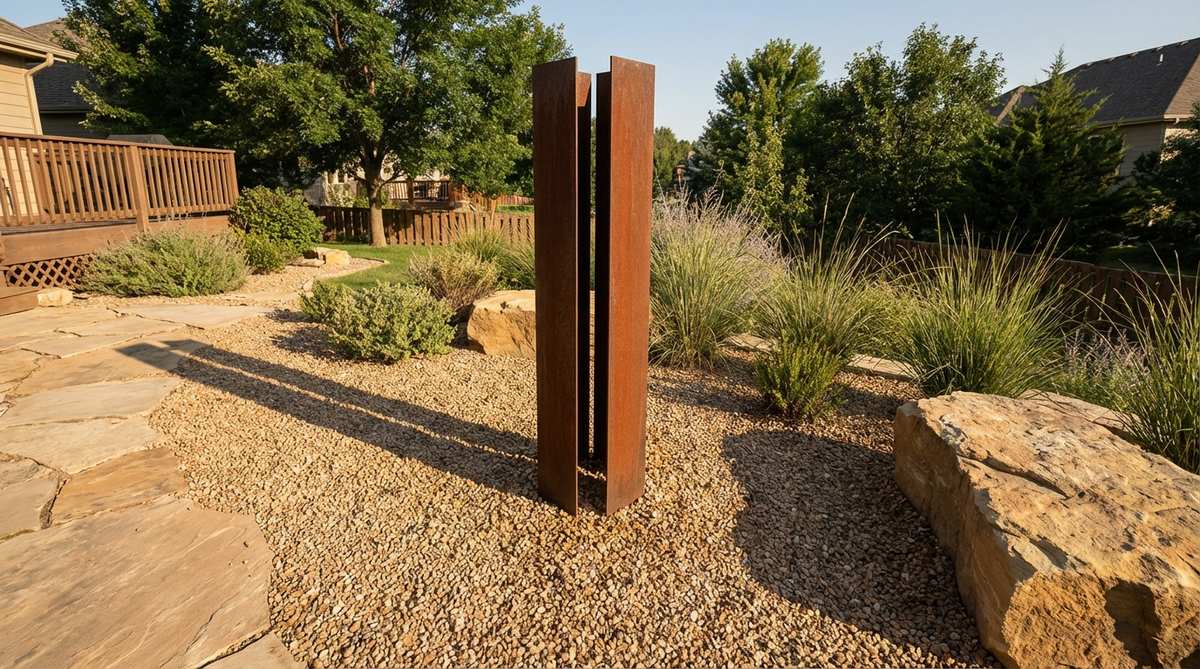
Custom or commercial steel artwork adds contemporary vertical elements to gravel gardens. Rusted steel pieces develop patina that complements natural stone tones.
Anchor sculptures with buried footings or ground stakes. Position pieces where they cast interesting shadows across gravel surfaces.
Art installations personalize spaces while serving as conversation focal points. The vertical forms balance extensive horizontal gravel areas.
52. Espalier Wall Plantings
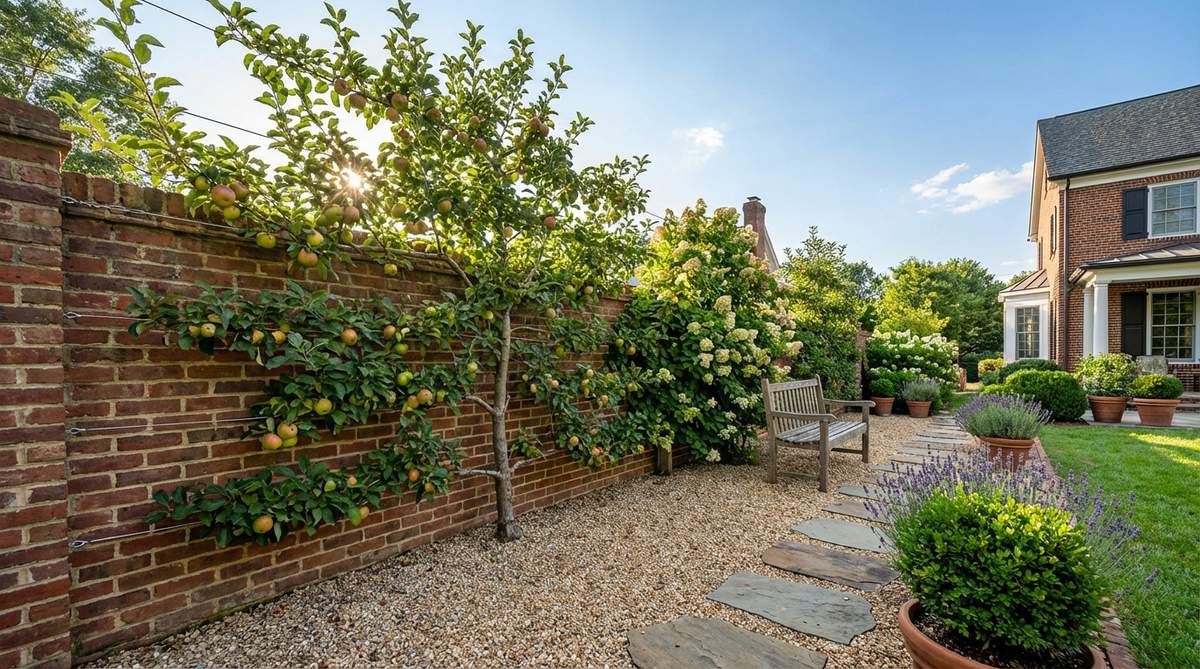
Fruit trees or ornamental shrubs trained flat against walls introduce vertical greenery without consuming ground-level garden space. The two-dimensional plant forms create living wall art.
Install horizontal wire supports at 12-inch vertical intervals. Train branches along wires through selective pruning and tying.
Espalier requires consistent maintenance but delivers high visual impact in narrow spaces. The technique combines formal structure with organic plant material.
53. Flagpole Palm Grouping
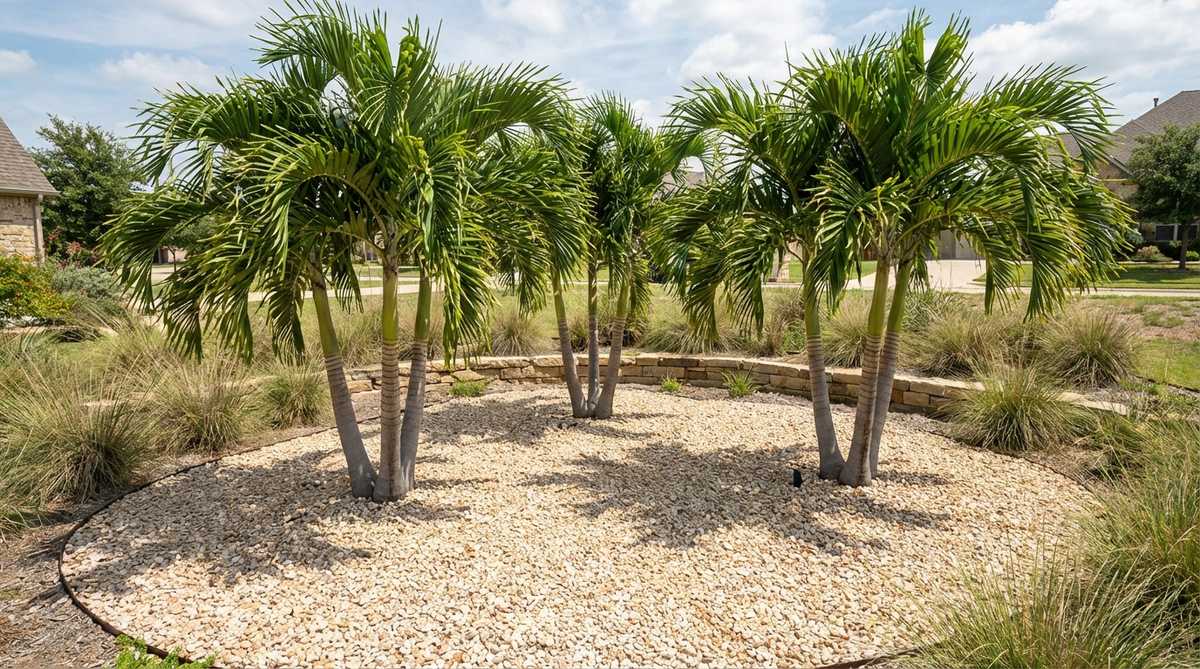
Multi-trunk flagpole palms planted through gravel create tropical vertical accents in frost-free zones. Their smooth gray trunks rise to 20-25 feet crowned by small fronds.
Group three to five trunks at varying heights for natural appearance. Surround with white or light-colored gravel to emphasize the vertical lines.
These palms tolerate drought once established and cast minimal shade. Their dramatic form suits contemporary and tropical design approaches.
54. Tall Agave Stalks
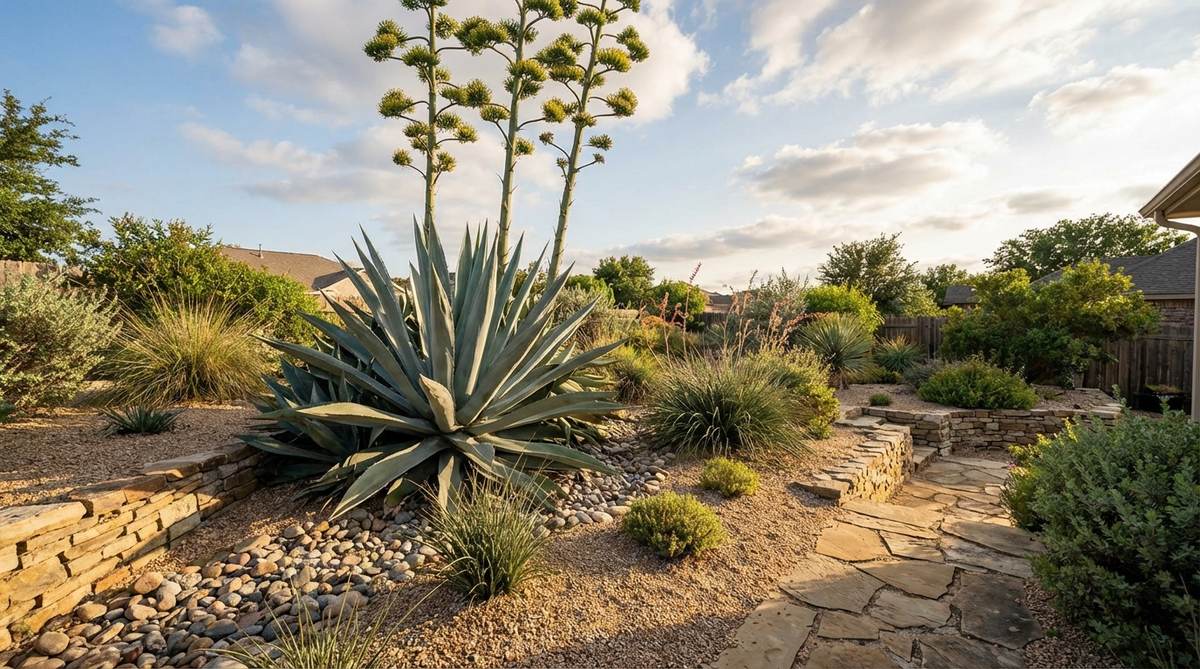
Mature agaves produce spectacular flower stalks reaching 15-30 feet before the plant completes its lifecycle. Plan for these temporary vertical events in gravel garden designs.
Position flowering-size agaves where their eventual stalks won’t interfere with overhead utilities. The stalks persist for months, creating dramatic seasonal features.
After flowering, agaves die but produce offsets for future generations. The lifecycle creates evolving vertical interest over multiple years.
Building Your Gravel Garden
Successful gravel gardens combine thoughtful material selection, proper installation technique, and appropriate plant choices to create resilient landscapes that perform beautifully across seasons. The 50+ designs presented here demonstrate the remarkable versatility of gravel as primary hardscape material in xeriscaping applications. Begin by selecting three to five ideas that align with your site conditions, climate zone, and aesthetic preferences, then adapt them to your specific property constraints. Fresh Garden Ideas encourages you to view gravel gardens not as compromises forced by water scarcity, but as opportunities to craft distinctive outdoor spaces that celebrate adaptation, efficiency, and timeless mineral beauty.
Frequently Asked Questions
What type of gravel works best for low-maintenance xeriscaping gardens?
Decomposed granite and crushed angular stone between 1/4-inch to 3/4-inch diameter perform best for xeriscape applications. Angular crushed materials compact into stable surfaces that resist displacement, while decomposed granite creates firm pathways when properly installed with compaction. Avoid rounded pea gravel in high-traffic areas as it shifts underfoot, though it works well for decorative beds. Match gravel color to your regional geology for natural integration—tan and buff tones suit desert environments while gray complements mountain landscapes.
How deep should gravel be applied for effective weed suppression?
Apply gravel 3-4 inches deep over landscape fabric to suppress weeds effectively while conserving soil moisture. Depths less than 3 inches allow weed seeds to germinate and penetrate through the gravel layer. Install commercial-grade landscape fabric before gravel application, overlapping seams by 6 inches to prevent gaps. The fabric blocks existing weeds while allowing water infiltration to underlying soil. Note that some drought-adapted plants seed naturally through gravel despite fabric barriers, which often enhances rather than detracts from naturalistic designs.
Can plants grow directly in gravel without underlying soil?
Most xeriscape plants require root access to underlying soil beneath gravel layers. The gravel functions as mulch rather than growing medium, conserving soil moisture while allowing roots to anchor in native earth below. Cut planting holes through landscape fabric and remove gravel in 12-18 inch diameter circles around each plant location. After planting in exposed soil, replace gravel as mulch layer around stems. Certain sedums and sempervivums colonize gravel surfaces naturally, but even these benefit from occasional soil contact for nutrient access.
How do gravel gardens compare to traditional mulched beds for water conservation?
Gravel gardens conserve moisture comparably to organic mulch while offering superior longevity and reduced maintenance. Both materials reduce evaporation from soil surfaces by blocking direct sun and wind exposure. Gravel never requires replacement due to decomposition, eliminating the annual mulch replenishment labor that organic materials demand. However, gravel increases soil temperature more than wood mulch, which benefits heat-loving species but may stress plants preferring cooler root zones. Select gravel for permanent plantings of drought-adapted species and reserve organic mulch for plants requiring cooler, more nutrient-rich conditions.
What maintenance does a gravel garden require throughout the year?
Gravel gardens require minimal maintenance compared to traditional landscapes, primarily involving debris removal, occasional raking, and edge maintenance. Remove fallen leaves, branches, and wind-blown litter monthly to maintain clean appearance. Rake gravel annually to redistribute material and level depressions caused by settling or foot traffic. Inspect edging twice yearly to ensure gravel remains contained within defined boundaries, repairing or adjusting borders as needed. Address any emerging weeds immediately before they establish extensive root systems. Most drought-adapted plantings require pruning only once annually, typically in late winter before spring growth begins.