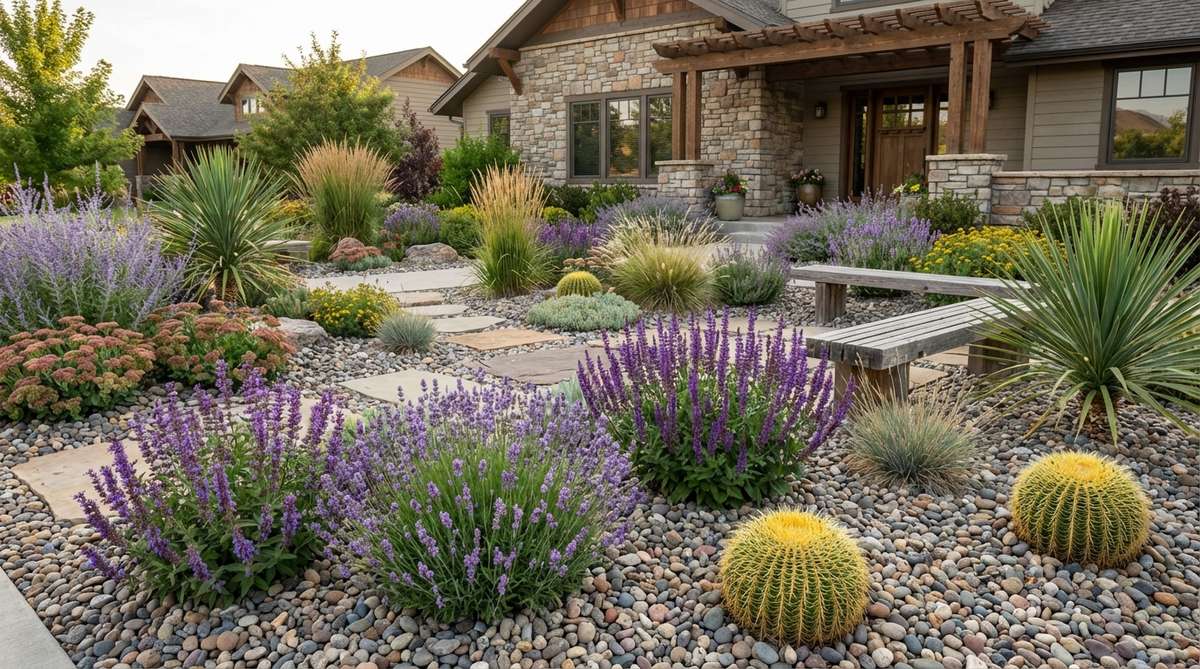
A gravel garden bed offers the perfect foundation for water-wise landscapes that thrive in hot, dry conditions. These carefully curated planting schemes combine texture, color, and structure to create resilient designs that require minimal irrigation once established. Fresh Garden Ideas brings you expert combinations proven to excel in drought-prone climates across the United States.
Design SnapshotKey Principles
- Well-Drained Foundation: 5-7cm deep gravel mulch over free-draining soil eliminates water pooling and root rot
- Mediterranean Palette: Silver-leaved plants, aromatic herbs, and ornamental grasses adapted to arid conditions
- Layered Structure: Combine low groundcovers, mid-height perennials, and tall accent plants for visual depth
- Open Spacing: Allow 30-40% unplanted gravel to create breathing room and showcase each specimen
Mediterranean Herb & Silver-Foliage Schemes
Mediterranean plants evolved in rocky, well-drained soils with scorching summers and mild winters. Their aromatic oils, silver foliage, and deep root systems make them natural choices for gravel garden beds across southern and western US regions.
1. Lavender-Santolina-Rosemary Trio
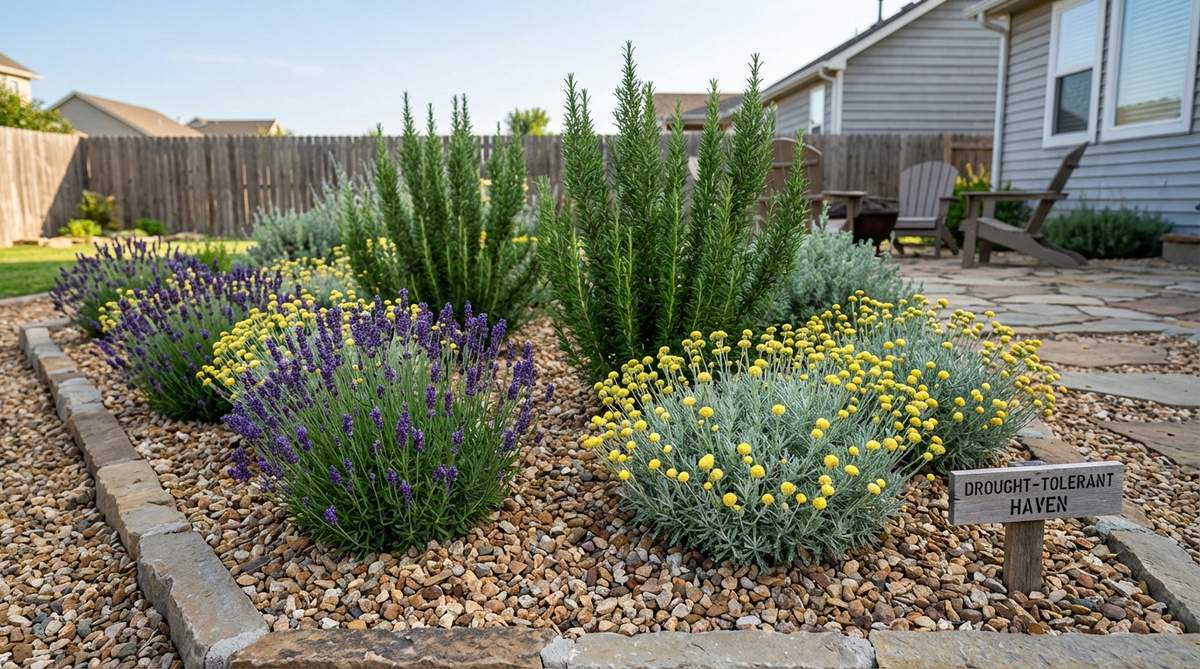
Plant English lavender (Lavandula angustifolia) as the backbone, flanked by cotton lavender (Santolina chamaecyparissus) with its button-yellow flowers and feathery gray foliage. Upright rosemary anchors the rear, creating height variation from 12 to 36 inches.
Space plants 18-24 inches apart in triangular clusters rather than rigid rows. The contrasting flower colors—purple, yellow, and blue—bloom sequentially from late spring through summer, extending visual interest.
This combination thrives in full sun with zero supplemental watering after establishment. Prune lightly after flowering to maintain compact forms and stimulate fresh growth.
2. Euphorbia-Thyme Carpet
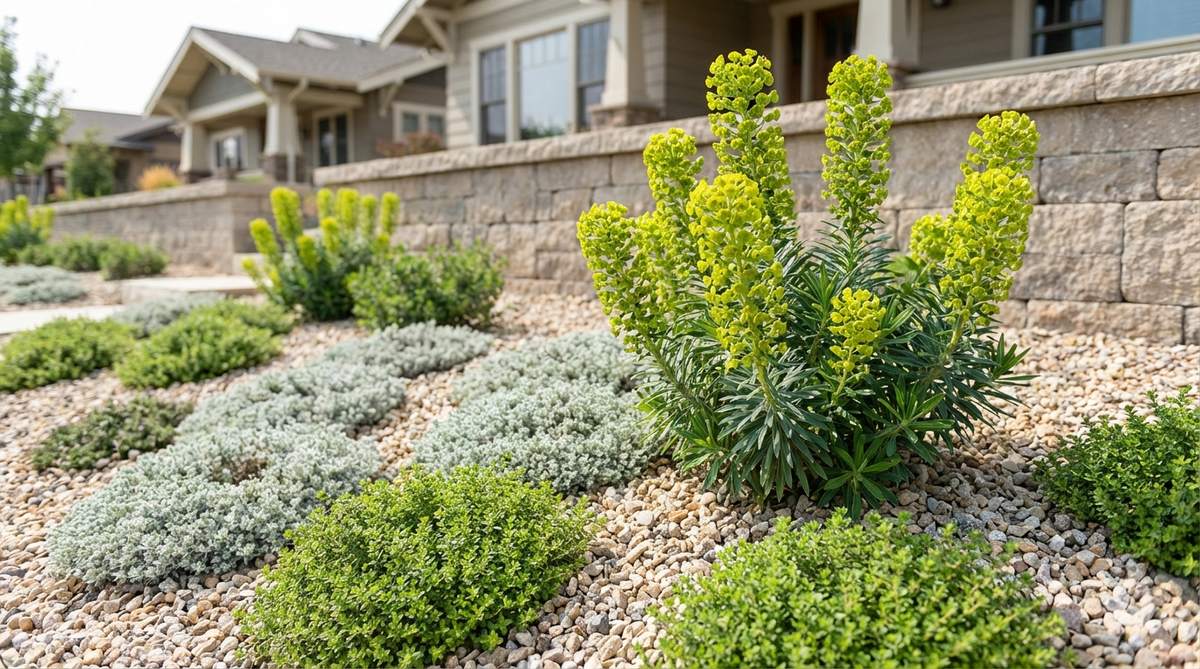
Mediterranean spurge (Euphorbia characias subsp. wulfenii) creates dramatic 4-foot chartreuse columns surrounded by low-growing creeping thyme varieties. The euphorbia’s architectural presence dominates from March through June with lime-green flower heads.
Fill gaps with woolly thyme (Thymus pseudolanuginosus) and lemon thyme, allowing them to weave between gravel and soften hard edges. Thyme releases fragrance when walked upon, engaging multiple senses.
Position euphorbias 36 inches apart as focal points, then infill with thyme at 8-inch spacing. Both species self-maintain with only annual deadheading for euphorbias in late summer.
3. Sage-Oregano-Marjoram Kitchen Garden
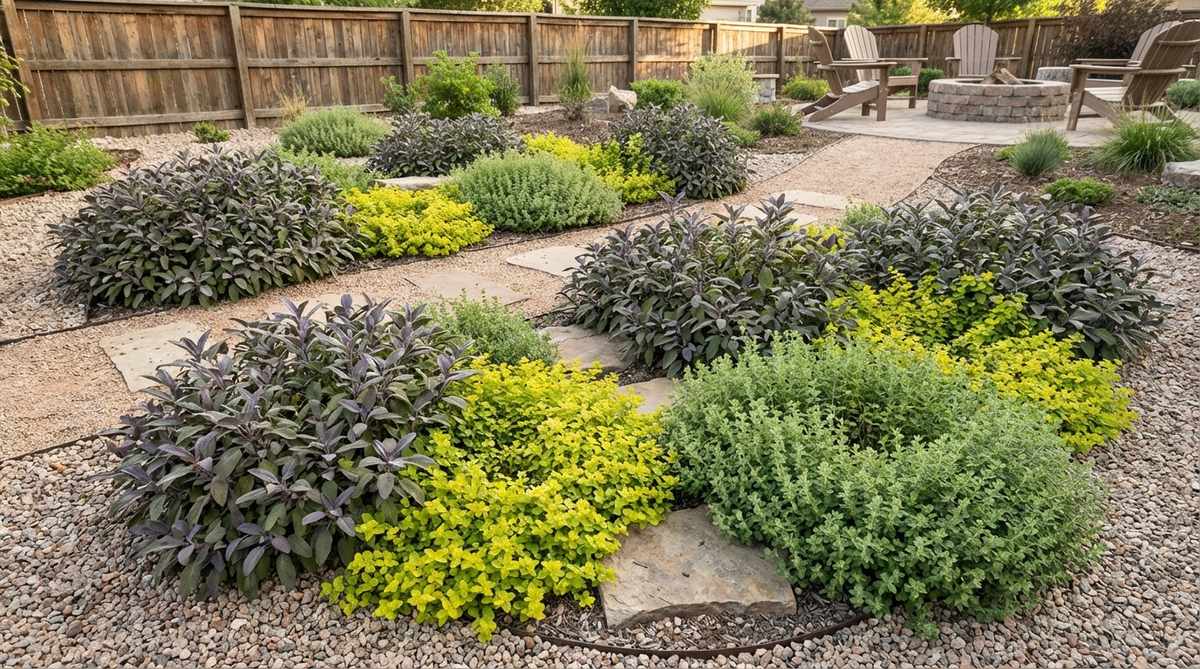
Functional and beautiful, this edible scheme features purple sage, golden oregano, and sweet marjoram in repeating clusters. The purple-gray foliage of sage contrasts sharply with oregano’s chartreuse leaves and marjoram’s soft green.
Arrange in informal drifts rather than formal rows, mimicking how herbs grow on Mediterranean hillsides. Harvest regularly from May through October to encourage bushy growth and prevent flowering.
4. Ballota-Nepeta Border
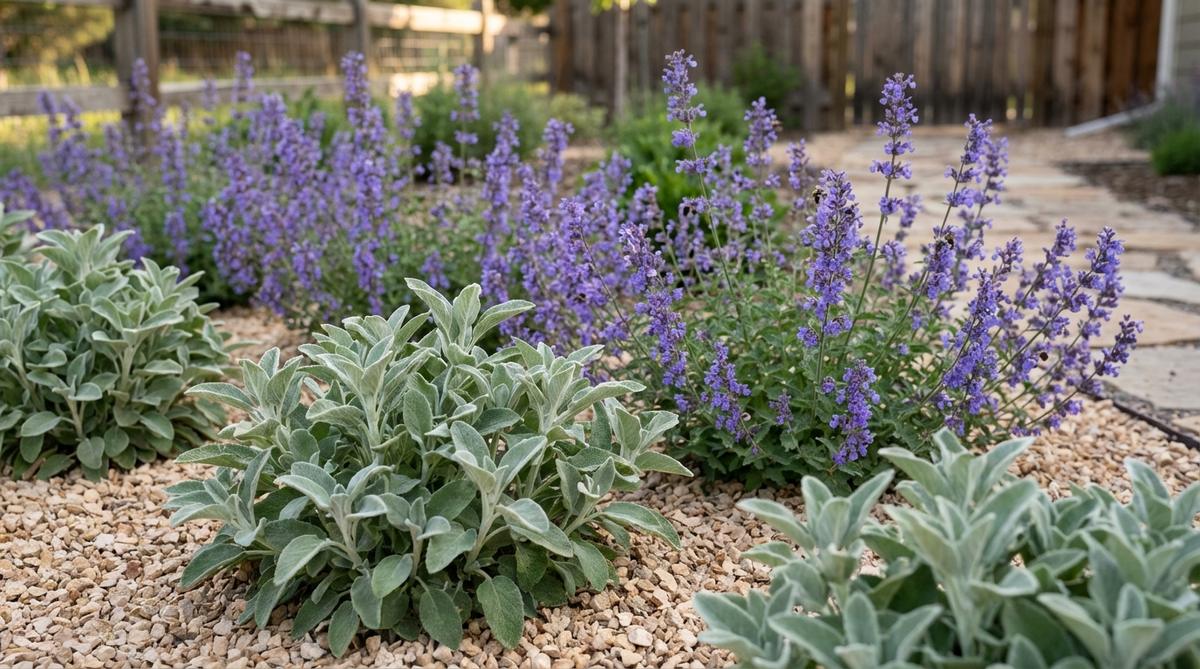
False dittany (Ballota pseudodictamnus) produces rounded, woolly gray-green leaves on 18-inch mounds that pair beautifully with catmint’s (Nepeta × faassenii) violet-blue flower spikes. Both species tolerate extreme heat and neglect.
Plant ballota in the foreground where its felt-textured foliage can be appreciated up close. Behind, nepeta creates a billowing cloud that blooms repeatedly if sheared back mid-summer.
5. Cistus-Brachyglottis Sunshine Combo
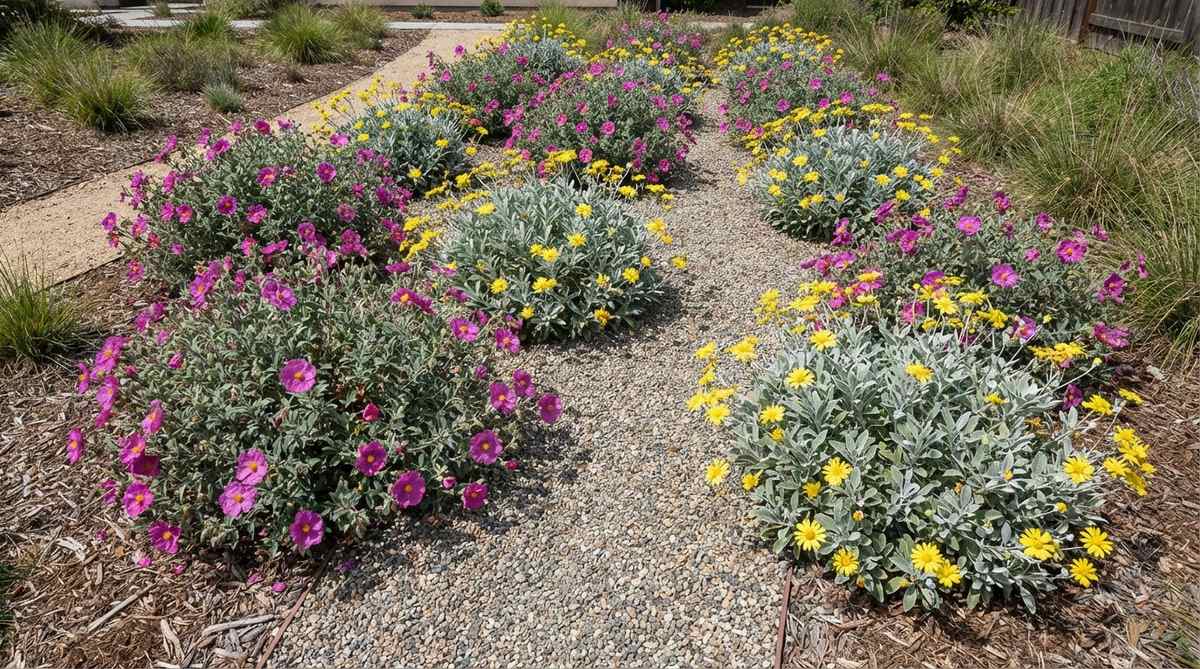
Rock rose (Cistus × pulverulentus ‘Sunset’) displays magenta-pink papery flowers in early summer above gray-green foliage. Pair with Brachyglottis ‘Sunshine’ for its silver leaves and yellow daisy flowers that bloom later, extending seasonal color.
Both shrubs reach 30-36 inches and require identical growing conditions. Space 3 feet apart, allowing their rounded forms to just touch at maturity, creating a cohesive mass.
Ornamental Grass Combinations
Ornamental grasses provide movement, sound, and year-round structure in gravel garden beds. Their fibrous root systems penetrate deep for moisture, while fine-textured foliage contrasts beautifully with gravel’s hard surface.
6. Feather Reed Grass Vertical Accent
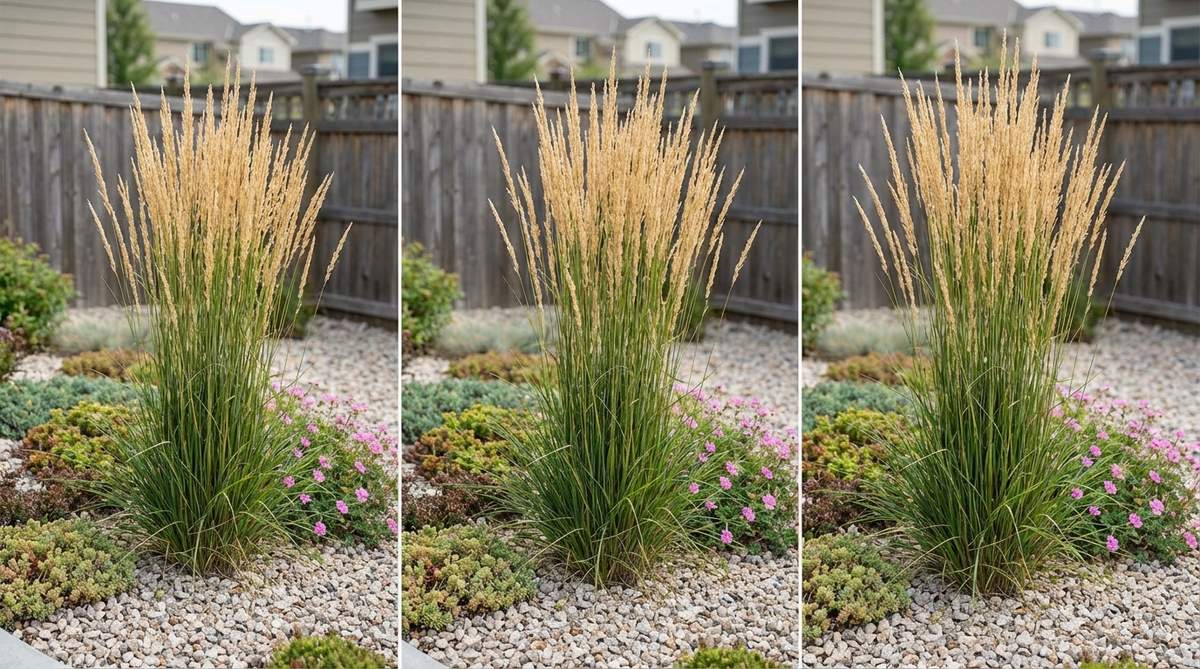
Calamagrostis × acutiflora ‘Karl Foerster’ shoots upright to 5 feet with narrow wheat-colored plumes from June onward. Its strongly vertical habit contrasts with low, spreading companions and creates architectural punctuation.
Plant single specimens every 4-5 feet as repeating accents through longer gravel beds. Underplant with low sedums or Geranium ‘Wargrave Pink’ to fill the zone around each grass clump.
Cut back to 4 inches in late winter before new growth emerges. The dried plumes stand through winter, catching frost and low-angle sunlight for four-season interest.
7. Blue Fescue Mounds
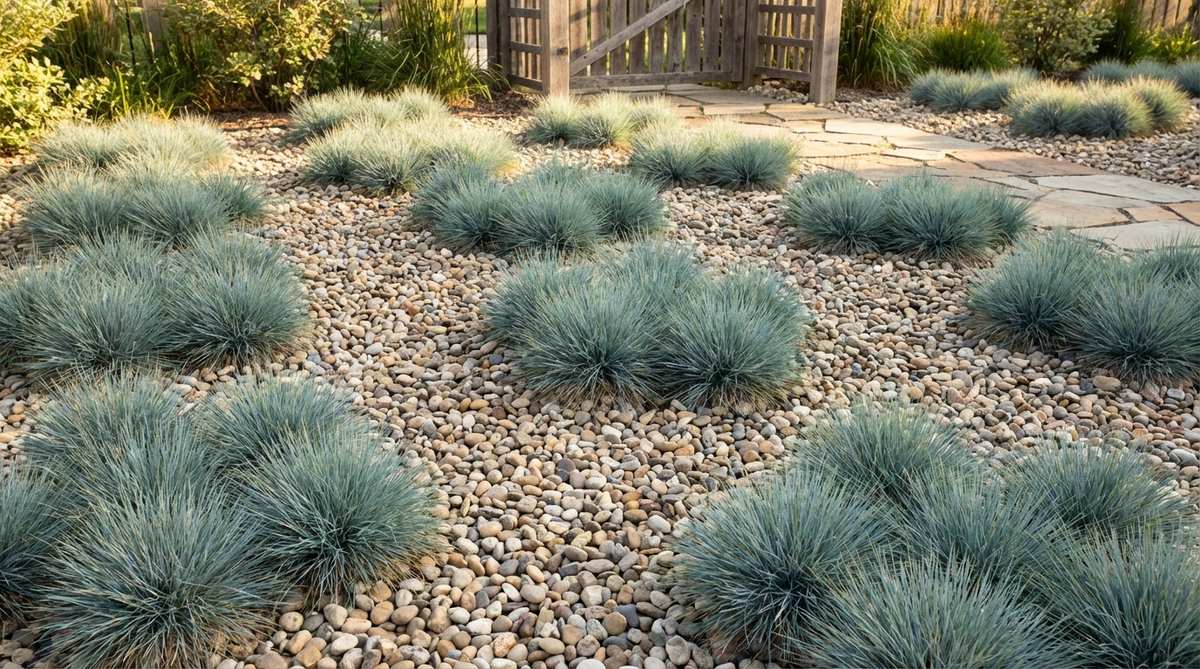
Festuca glauca forms tight, steel-blue tussocks reaching only 10-12 inches tall. Mass these in groups of five or seven for maximum impact, creating repeating spherical forms that echo gravel’s rounded texture.
Space 12 inches apart within each group, leaving 24-36 inches between groups. This clustering technique creates rhythm without monotony across larger gravel expanses.
8. Mexican Feather Grass Movement
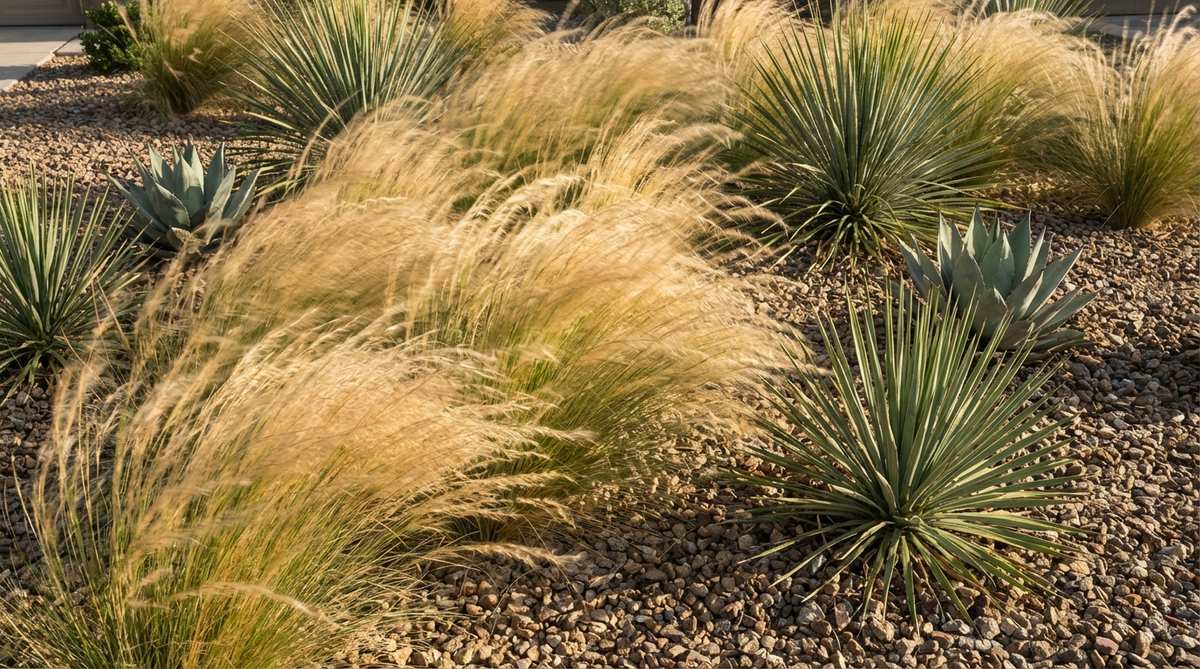
Nassella tenuissima produces impossibly fine, hair-like foliage that moves with the slightest breeze, adding kinetic energy to static gravel. Blonde seedheads appear in summer, creating a hazy, soft-focus effect.
Designers use this grass in large sweeps of 20-30 plants spaced 18 inches apart. Self-seeding occurs readily; either embrace the naturalistic spread or remove seedlings to maintain control.
Pair with spiky yuccas or agaves to emphasize the contrast between rigid and flowing forms. Shear back to 6 inches in early spring to remove winter damage.
9. Prairie Dropseed Fine Texture
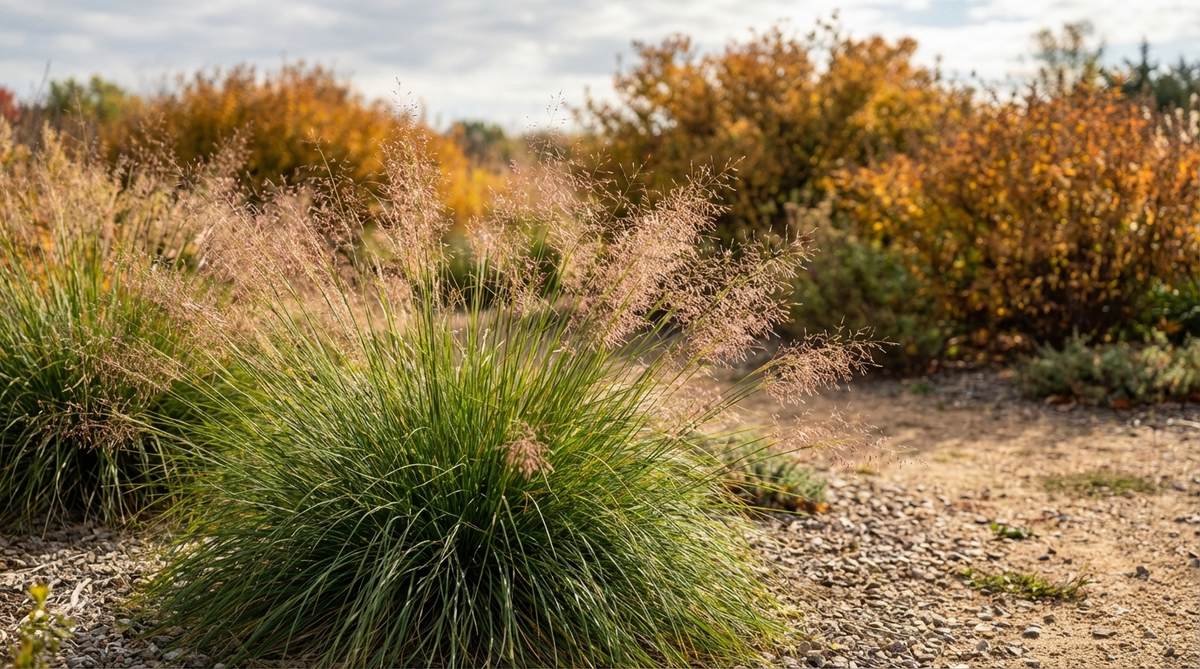
Sporobolus heterolepis creates 2-foot mounds of emerald-green foliage that turns golden-orange in fall. Airy pink seedheads hover above the foliage in late summer, emitting a distinctive coriander fragrance.
This native US grass tolerates extreme heat and cold, making it suitable from Texas to Minnesota. Plant 24 inches apart in informal drifts, allowing natural shapes to develop without pruning.
10. Little Bluestem Prairie Native
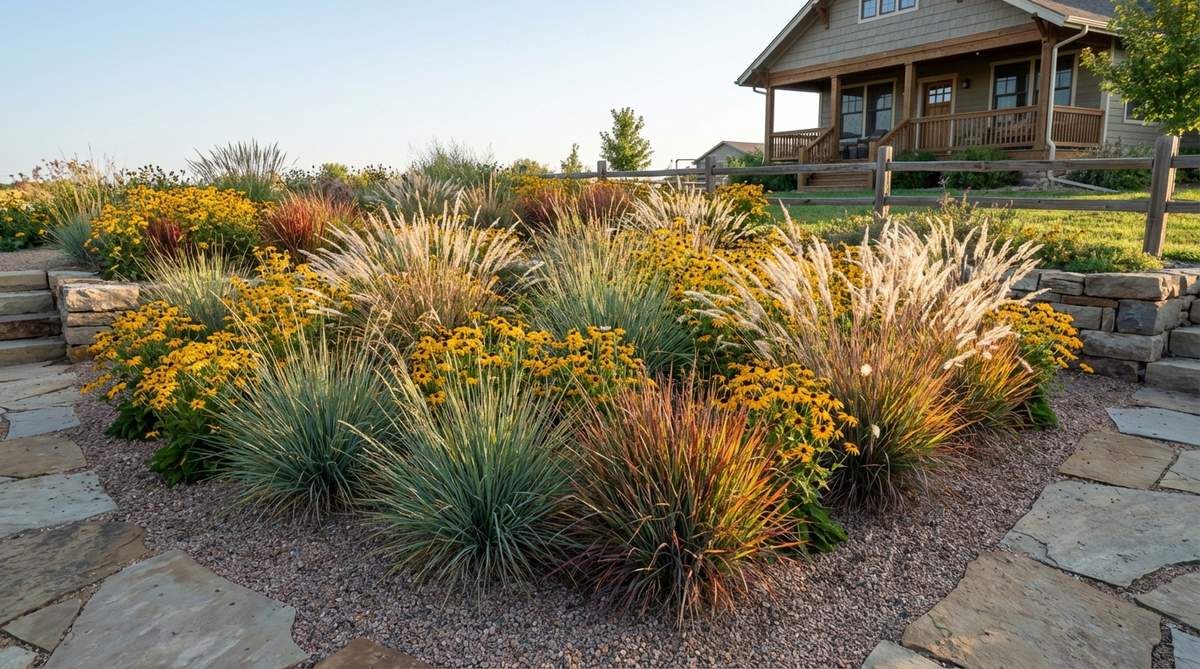
Schizachyrium scoparium displays blue-green summer foliage that transforms to burgundy, orange, and copper in autumn. Fluffy white seedheads catch afternoon light, creating a glowing effect through winter months.
Plant in groups of 9-15 specimens spaced 18 inches apart for a prairie-style meadow effect within gravel beds. Combine with black-eyed Susan (Rudbeckia hirta) for contrasting yellow flowers.
Gravel Garden Ideas With Pots
Container displays on gravel create focal points and introduce flexibility for seasonal color changes. The neutral gravel background showcases pot shapes and plant textures while providing excellent drainage beneath containers.
11. Terracotta Trio Mediterranean Herbs
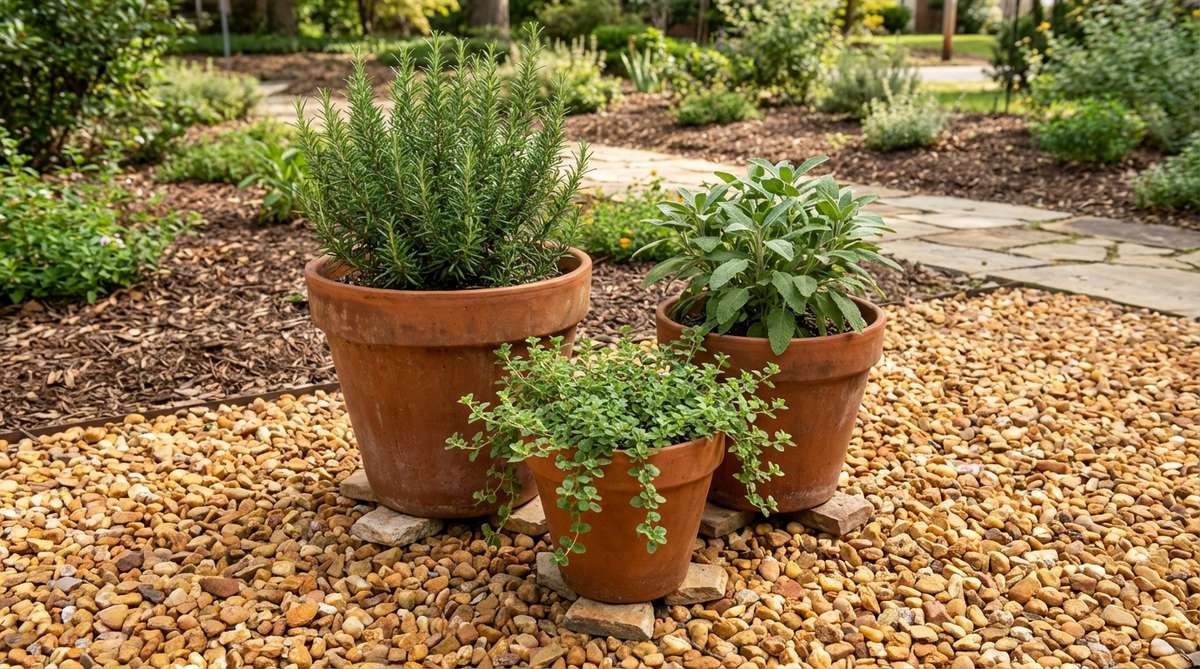
Arrange three aged terracotta pots in graduated sizes (24, 18, and 12 inches) planted with rosemary, sage, and trailing oregano respectively. Position in a triangular formation rather than a straight line to create depth.
The earthy orange tones of terracotta complement warm-toned gravels (buff, honey, or rust shades). Raise pots on small stones or pot feet to ensure drainage holes never sit in water.
Refresh herbs annually by dividing or replacing plants each spring. Water containers independently from in-ground plants, as pots dry faster than gravel beds.
12. Glazed Bowl Planters Agave Display
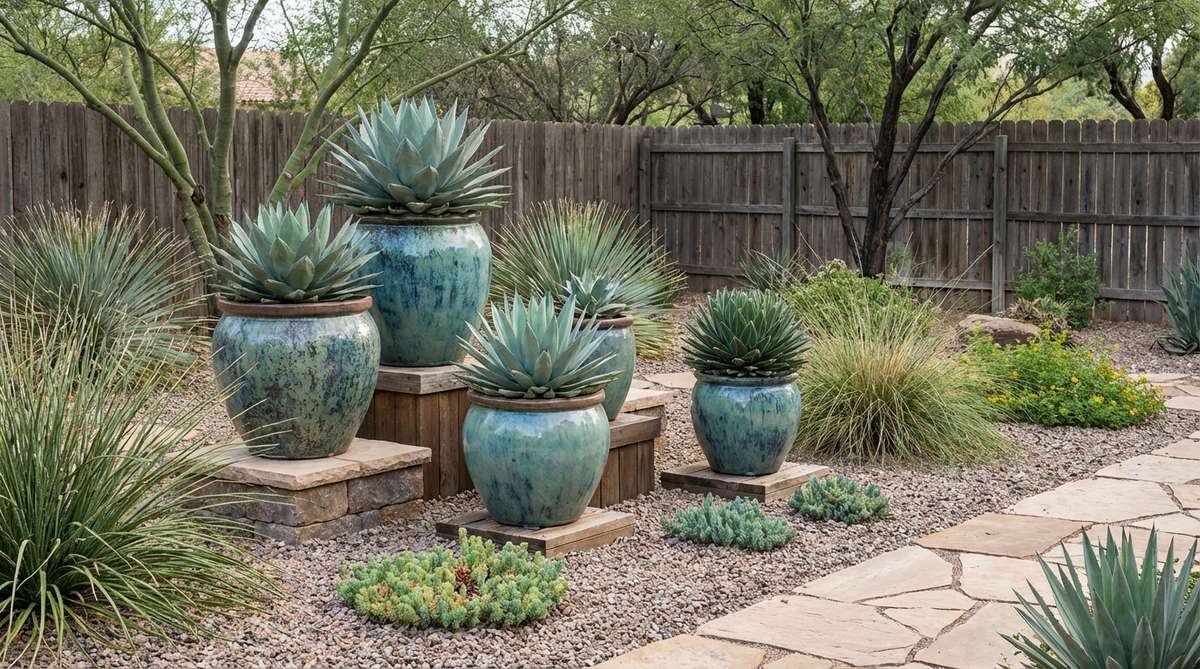
Oversized ceramic bowls in coordinating blue-green glazes showcase architectural agaves, each pot featuring a different variety. The rounded pot forms soften gravel’s angular texture while bold agave leaves provide dramatic contrast.
Position three bowls at varying heights using inverted pots or stone platforms. Plant Agave parryi, Agave ‘Blue Glow’, and Agave victoriae-reginae for diverse leaf patterns within a cohesive color palette.
13. Galvanized Metal Containers Industrial Look
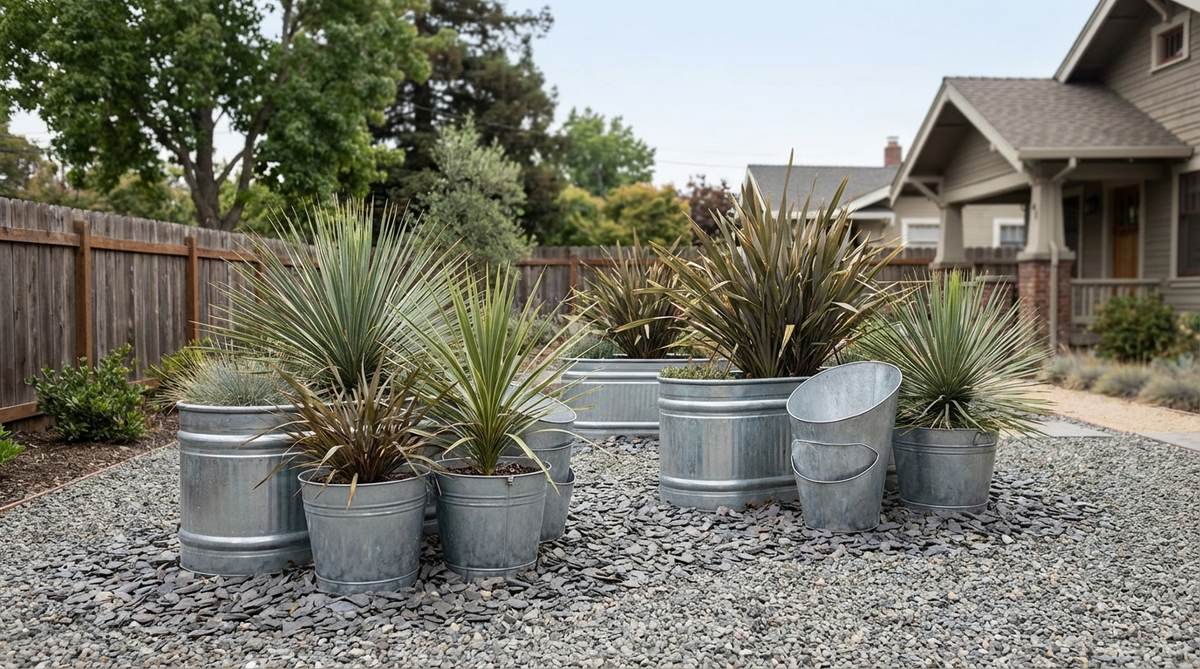
Large galvanized troughs and buckets create industrial-chic focal points planted with architectural phormiums, cordylines, or New Zealand flax. The silver metal finish pairs naturally with slate chips or gray gravels.
Drill drainage holes in solid-bottom containers before planting. Group odd numbers (three or five) of different-sized containers, allowing some to remain empty as sculptural elements that balance planted specimens.
14. Seasonal Color Rotation Pots
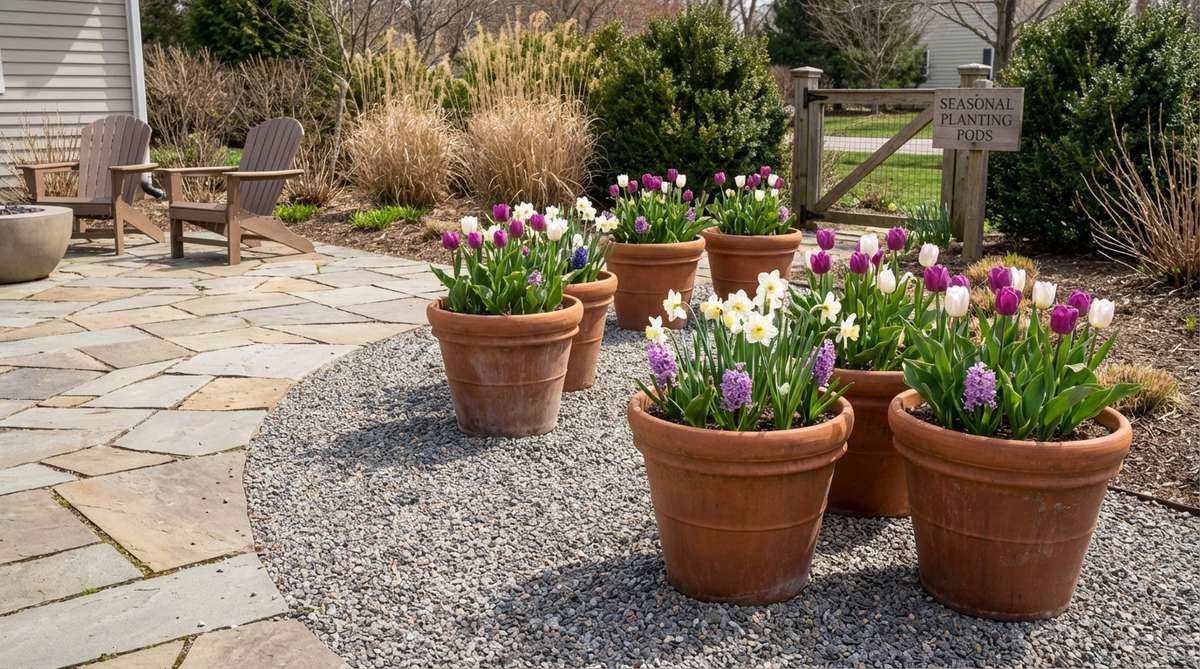
Designate specific gravel zones as “seasonal pods” where container plantings change four times yearly. Spring bulbs transition to summer annuals, then fall asters, and finally evergreen arrangements for winter.
Use identical pot styles in each pod to maintain cohesion despite changing plants. Place pods at entry points, path intersections, or seating areas where seasonal impact matters most.
15. Succulent Container Collection
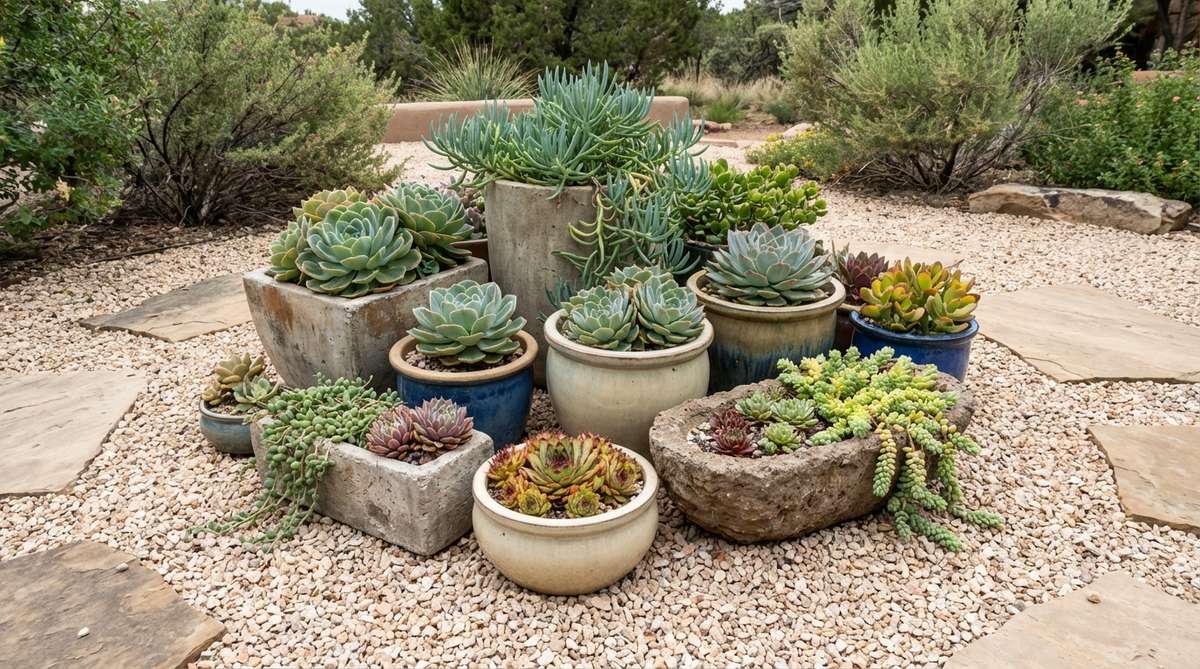
Assemble varied containers (concrete, glazed ceramic, hypertufa) planted exclusively with succulents in complementary colors. Include Echeveria, Sedum, Sempervivum, and trailing Senecio for textural diversity.
Arrange 7-12 pots in an asymmetrical cluster on pale gravel, creating a desert-garden vignette. Vary pot heights from 4 to 18 inches, positioning taller specimens toward the back or center.
Succulent & Cactus Displays
Desert-adapted plants offer extraordinary drought tolerance and sculptural forms perfect for gravel garden plants. Their water-storage capabilities allow survival through extended dry periods once established.
16. Agave-Yucca Statement Planting
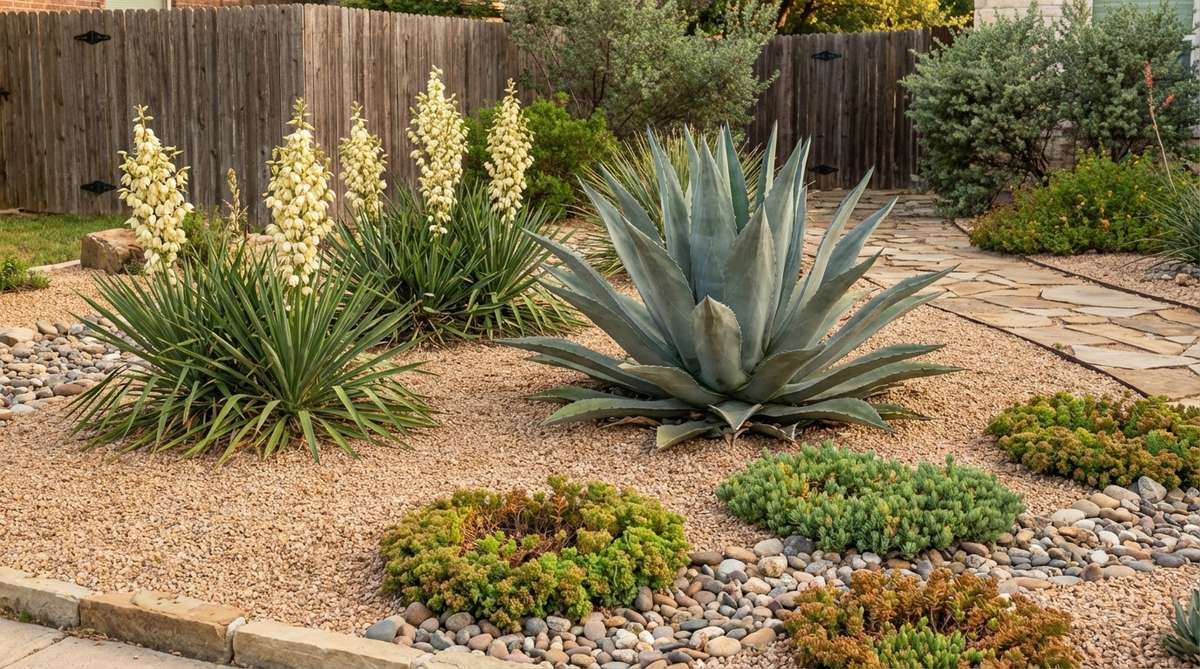
Pair century plant (Agave americana) with Adams needle yucca (Yucca filamentosa) to create bold architectural contrast against fine gravel texture. Agave’s broad, gray-blue rosettes span 6 feet at maturity, while yucca sends up dramatic 6-foot flower spikes.
Plant as single specimens with 6-8 feet of clear gravel surrounding each for proper scale and safety from sharp leaf tips. Underplant sparingly with low sedums to soften the base without competing visually.
Both species tolerate USDA zones 7-11 with excellent drainage. Mulch crowns with extra gravel during wet winter months to prevent rot in cold-winter regions.
17. Sedum Carpet Groundcover
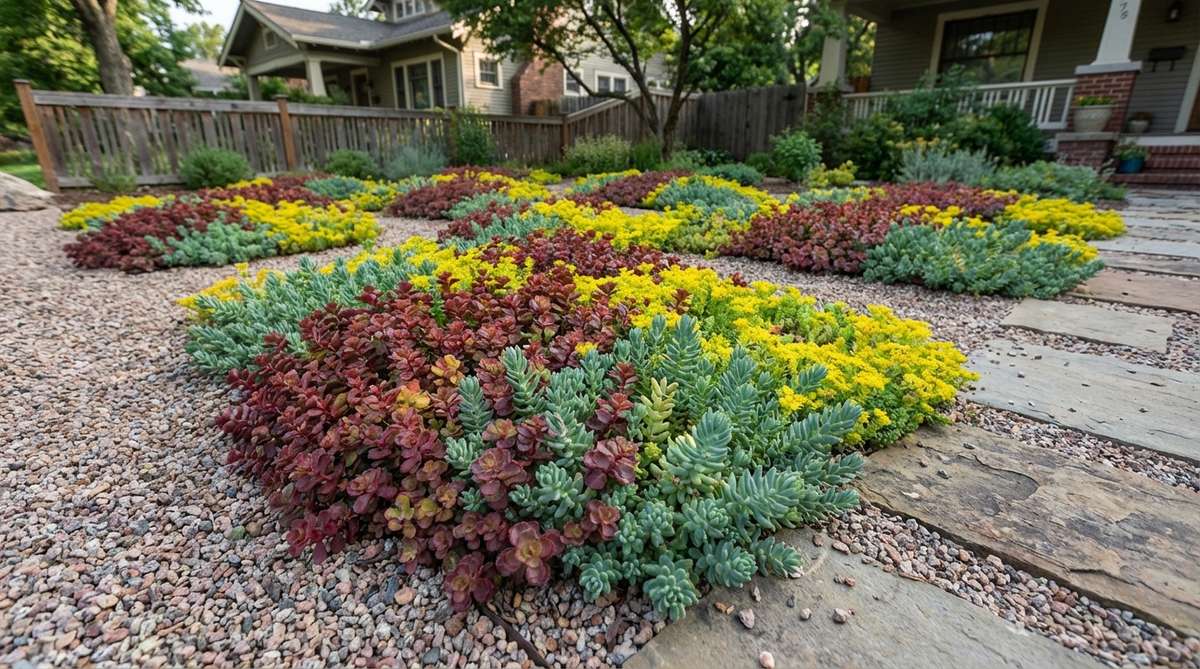
Low-growing sedums like Sedum spurium ‘Dragon’s Blood’ and Sedum acre create living carpets between gravel, softening transitions and adding green texture. Their succulent leaves store moisture, requiring zero supplemental irrigation.
Plant 4-6 inch plugs on 12-inch centers, allowing them to spread naturally into irregular patches. Combine red, yellow, and blue-green sedum varieties for color variation that changes seasonally.
18. Barrel Cactus Rock Garden
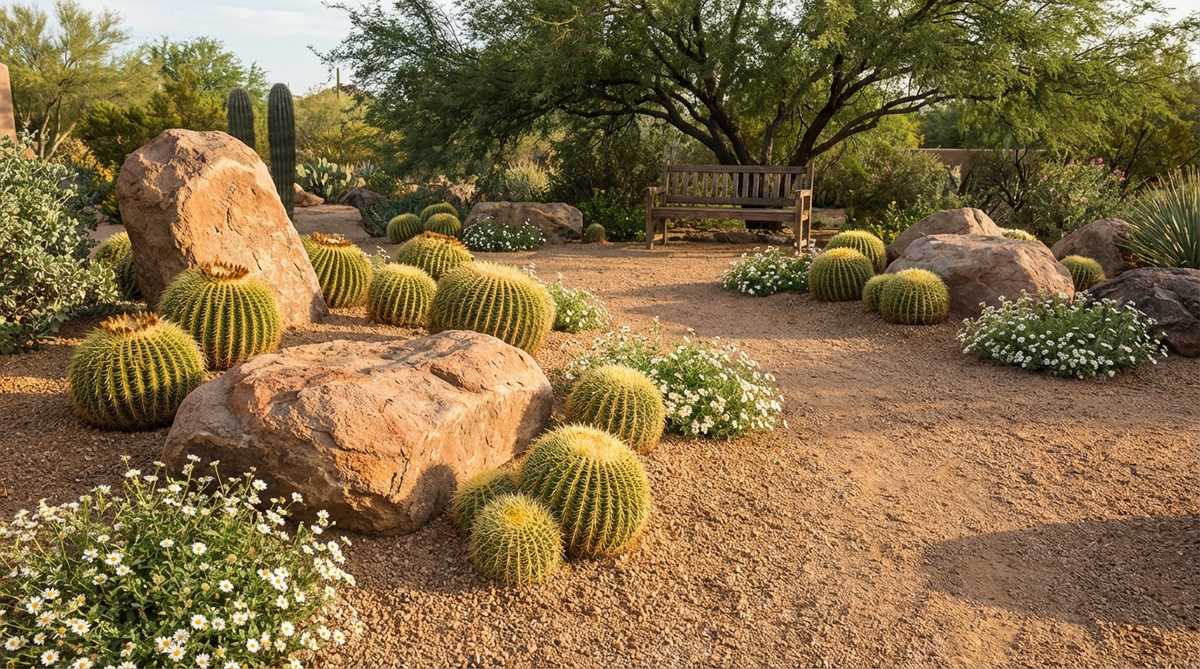
Golden barrel cactus (Echinocactus grusonii) arranged with large boulders and decomposed granite creates an authentic Southwest desert scene. The spherical cactus forms echo rounded gravel while providing strong geometric contrast.
Space 3-5 barrels irregularly among boulders, avoiding symmetrical placement. Supplement with blackfoot daisy (Melampodium leucanthum) for white flowers that soften the composition without obscuring cactus forms.
19. Echeveria-Sempervivum Tapestry
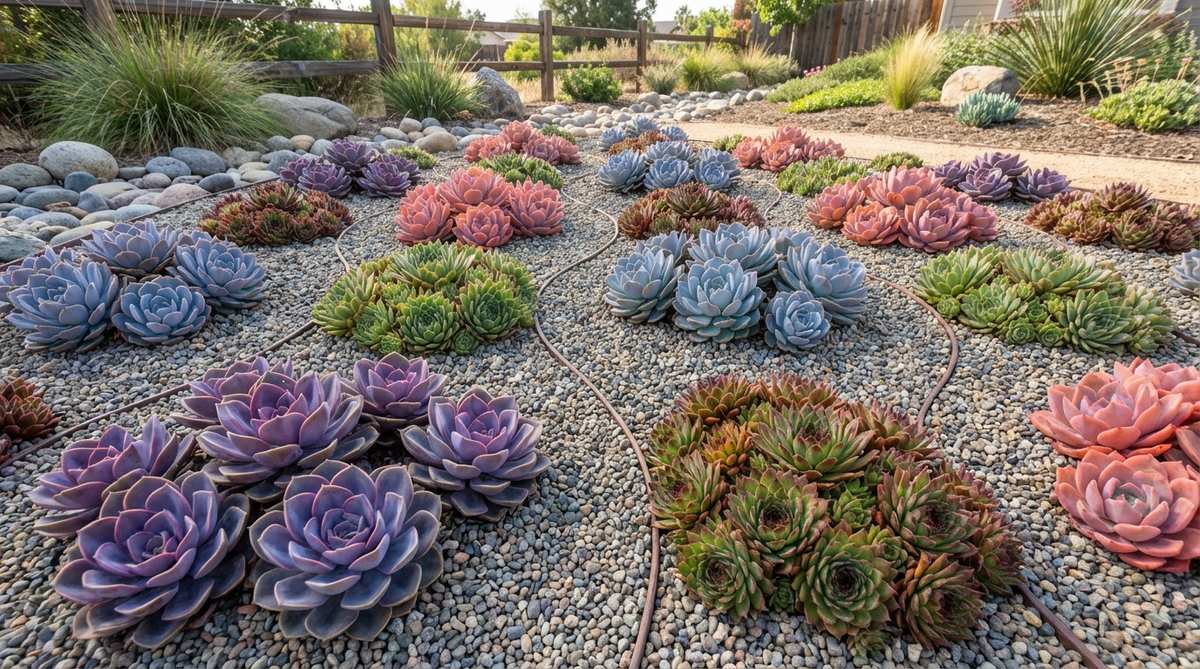
Create colorful succulent patchwork using Echeveria varieties (purple, blue, pink) alternating with hardy Sempervivum (hens and chicks). Both form tight rosettes but differ in size and cold tolerance.
Plant in repeating color blocks of 5-7 rosettes each, leaving gravel channels between groups. This layout showcases individual plant colors while creating overall pattern unity across larger areas.
20. Prickly Pear Native Cactus
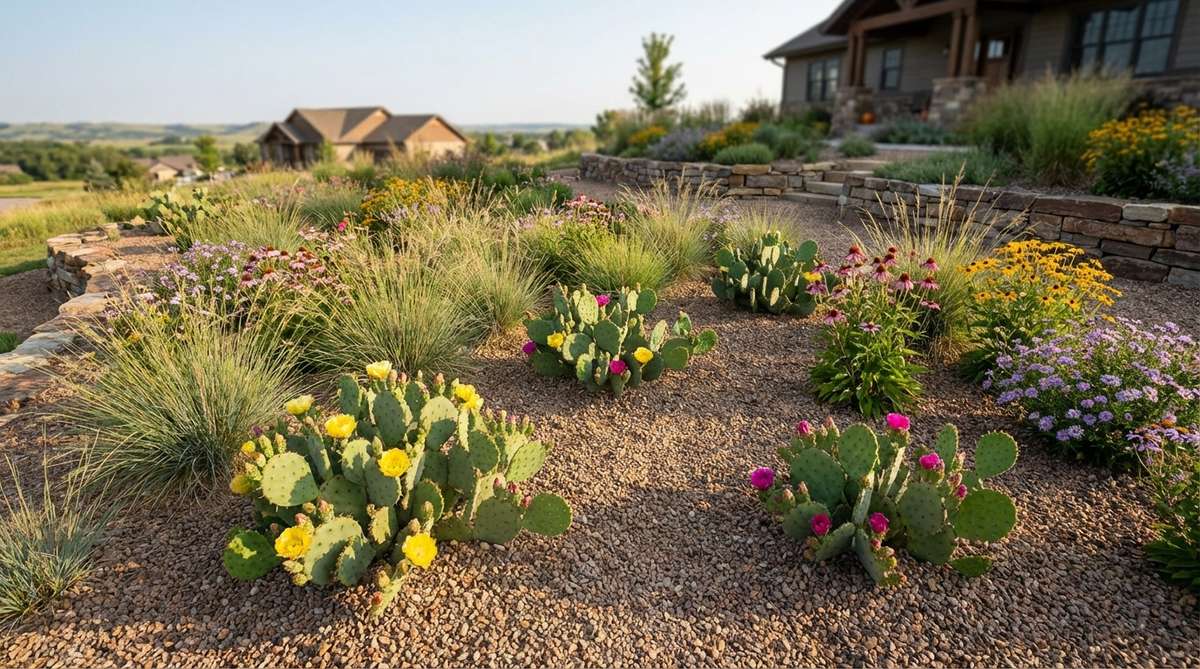
Opuntia species native to North America provide regional authenticity with paddle-shaped pads and vibrant yellow or magenta flowers in late spring. Eastern prickly pear (Opuntia humifusa) tolerates cold to zone 4.
Plant 36 inches apart, allowing colonies to expand naturally. Pair with native prairie grasses and wildflowers for an authentic high-desert or prairie planting scheme.
Native Prairie Gravel Beds
North American prairie natives evolved in rocky, well-drained soils with extreme temperature swings and minimal rainfall. These tough perennials combine beautifully in gravel beds that mimic their natural habitat.
21. Black-Eyed Susan-Blanket Flower
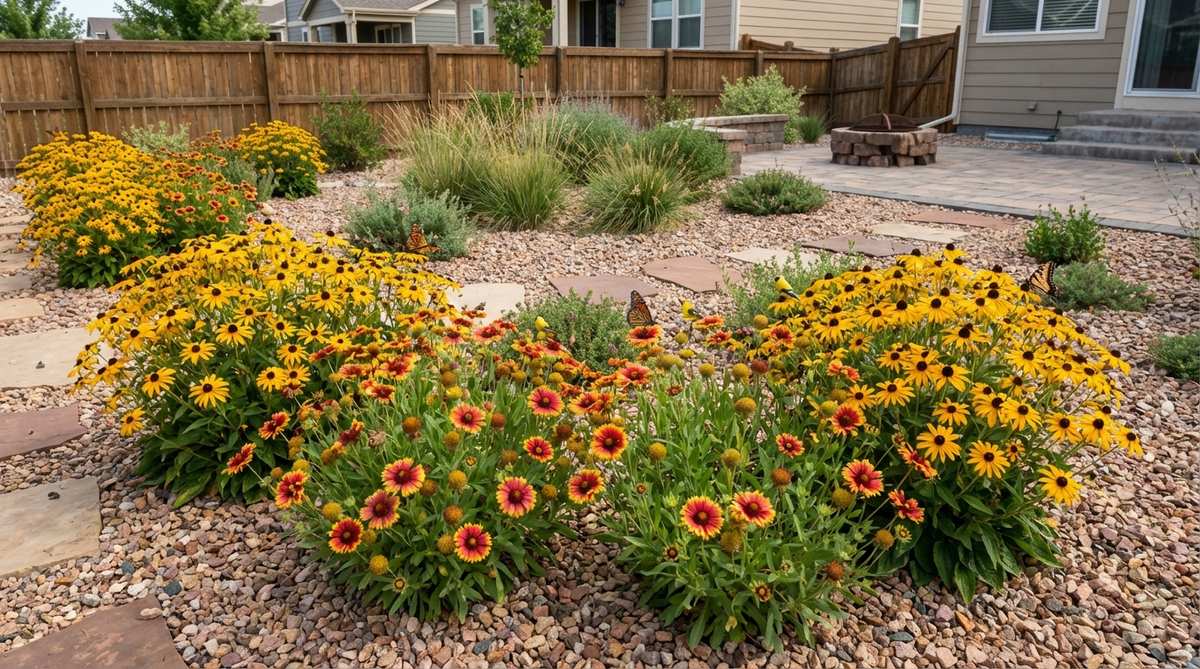
Rudbeckia hirta produces golden-yellow daisies with chocolate centers from June through frost, while Gaillardia × grandiflora adds red-and-yellow bicolor blooms. Both self-seed moderately, creating naturalistic drifts over time.
Plant in large informal groups of 12-20 specimens per species, intermixing rather than separating by type. Space 15-18 inches apart, deadheading spent flowers to prolong blooming or leaving seedheads for winter bird food.
These natives attract butterflies, bees, and goldfinches while tolerating drought, heat, and poor soil. Cut back to ground level in early spring before new growth emerges.
22. Purple Coneflower-Bee Balm
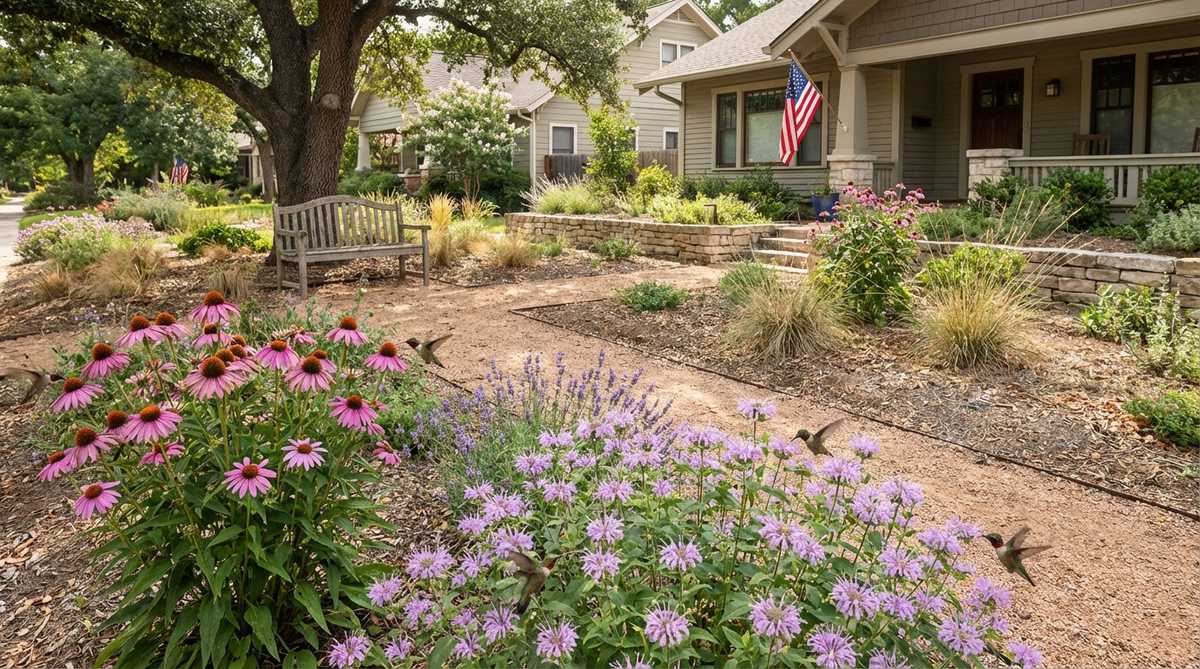
Echinacea purpurea’s pink-purple daisies rise on stiff stems above basal foliage, blooming June through August. Monarda fistulosa (wild bergamot) adds lavender whorled flowers and aromatic foliage attractive to hummingbirds.
Space coneflowers 18 inches apart in clusters of 7-11 plants, with bee balm filling gaps between clusters. Both species tolerate dry conditions but bloom longer with occasional deep watering during extreme drought.
23. Big Bluestem Prairie Grass
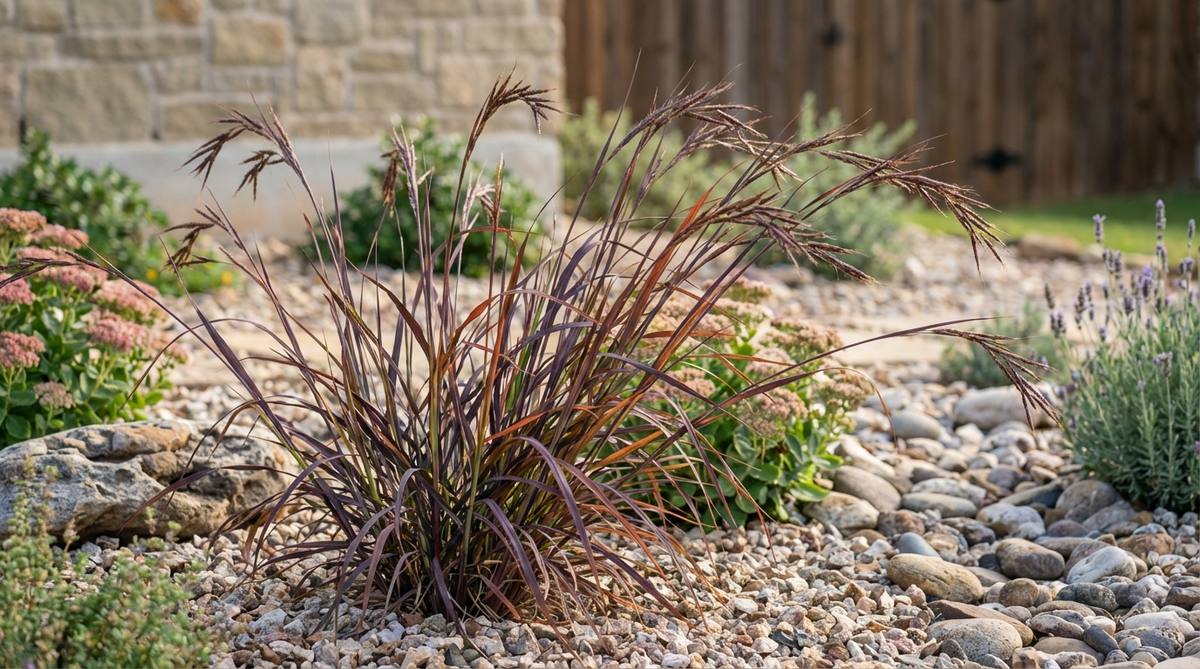
Andropogon gerardii ‘Blackhawks’ grows 5-7 feet tall with distinctive purple foliage that darkens through summer, turning copper-red in fall. Turkey-foot seedheads appear in late summer, persisting through winter.
Plant as single specimens or in groups of three, spacing 36 inches apart. This tall grass creates vertical drama and privacy screening while requiring zero maintenance beyond annual spring cutback.
24. Butterfly Milkweed Cluster
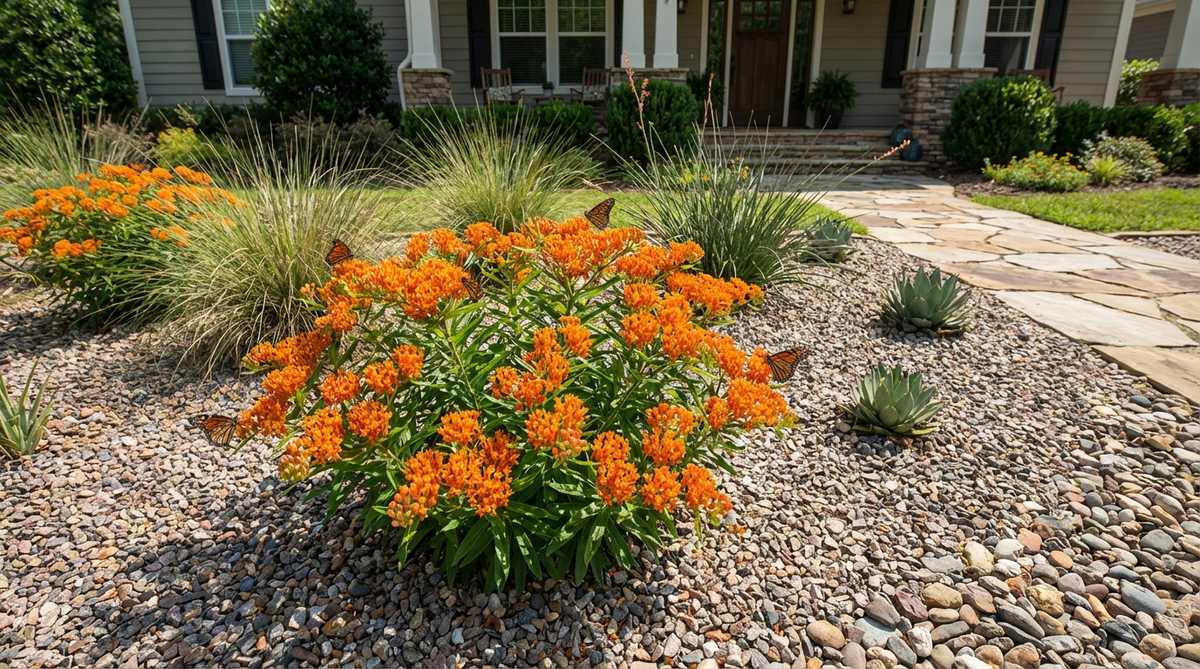
Asclepias tuberosa displays brilliant orange flower clusters that serve as essential monarch butterfly habitat. Its deep taproot makes it extremely drought-tolerant but difficult to transplant, so use container-grown plants.
Plant in groups of 5-9 on 15-inch centers, allowing the orange blooms to create concentrated color impact from June through July. Foliage emerges late in spring; mark locations to avoid accidental damage.
25. Gulf Muhly Grass Cloud
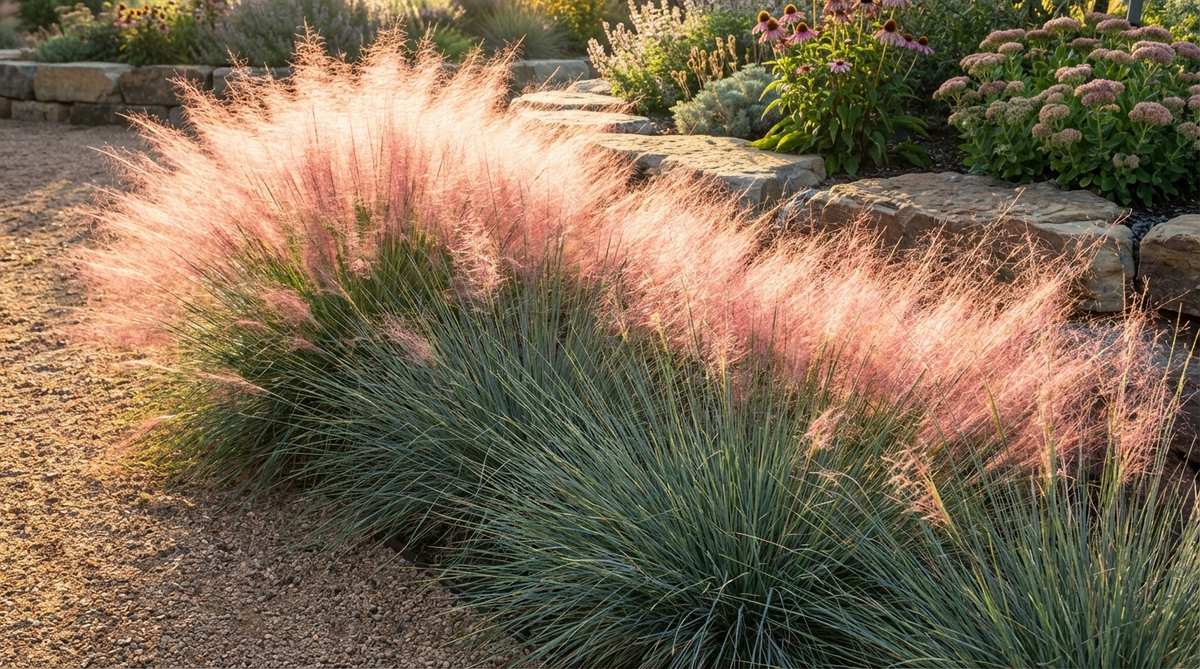
Muhlenbergia capillaris produces airy pink plumes in fall that seem to float above fine-textured foliage. The pink clouds glow when backlit by morning or evening sun, creating magical seasonal displays.
Mass 5-7 plants on 24-inch centers for cloud-like effect, or use single specimens as accents. Native to southeastern US coastal areas, it tolerates heat and humidity better than many drought-tolerant grasses.
Color-Themed Drought Schemes
Coordinating flower and foliage colors creates cohesive designs that feel intentional rather than random. Drought-tolerant plants offer surprising color range when selected strategically.
26. Silver-Blue Cool Palette
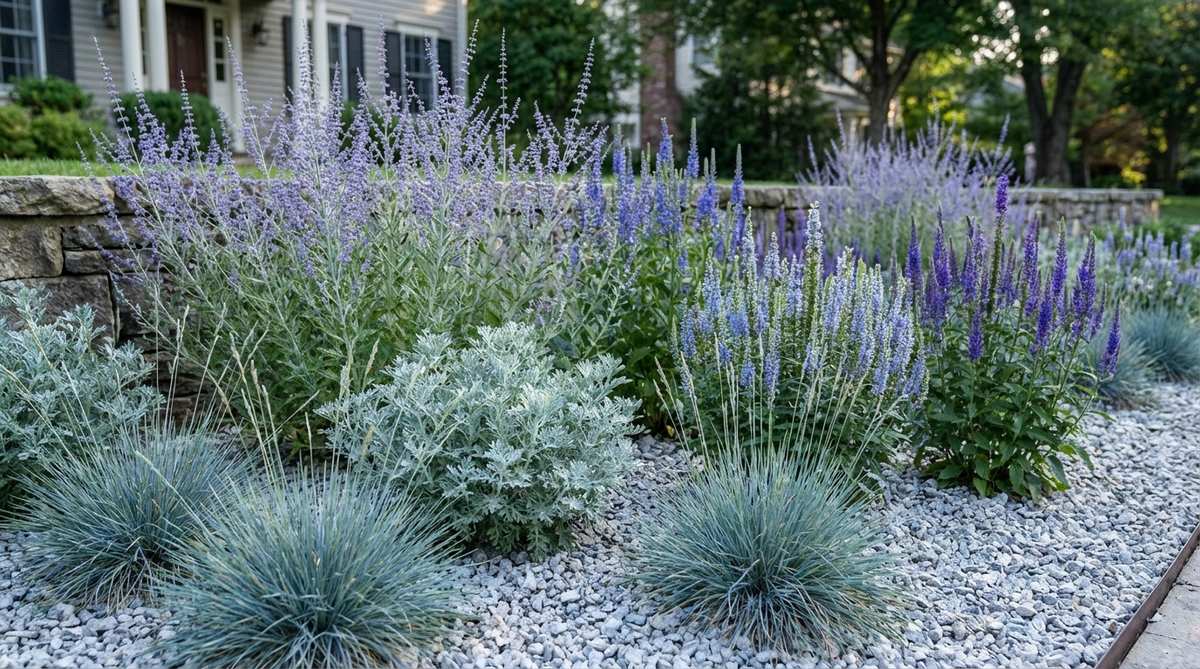
Combine silver-leaved Artemisia ‘Powis Castle’, blue fescue, Russian sage (Perovskia atriplicifolia), and Veronica ‘Royal Candles’ for a cool-toned composition. This palette feels calming and sophisticated against pale gray gravel.
Layer plants by heightArtemisia at 2 feet forms the midground, Russian sage at 3-4 feet creates the backdrop, with fescue and veronica filling the foreground at 12-18 inches.
All species bloom blue or purple from June through September, creating extended color without hot shades. Shear Russian sage and artemisia mid-summer to encourage fresh growth and repeat blooming.
27. Hot Sunset Scheme
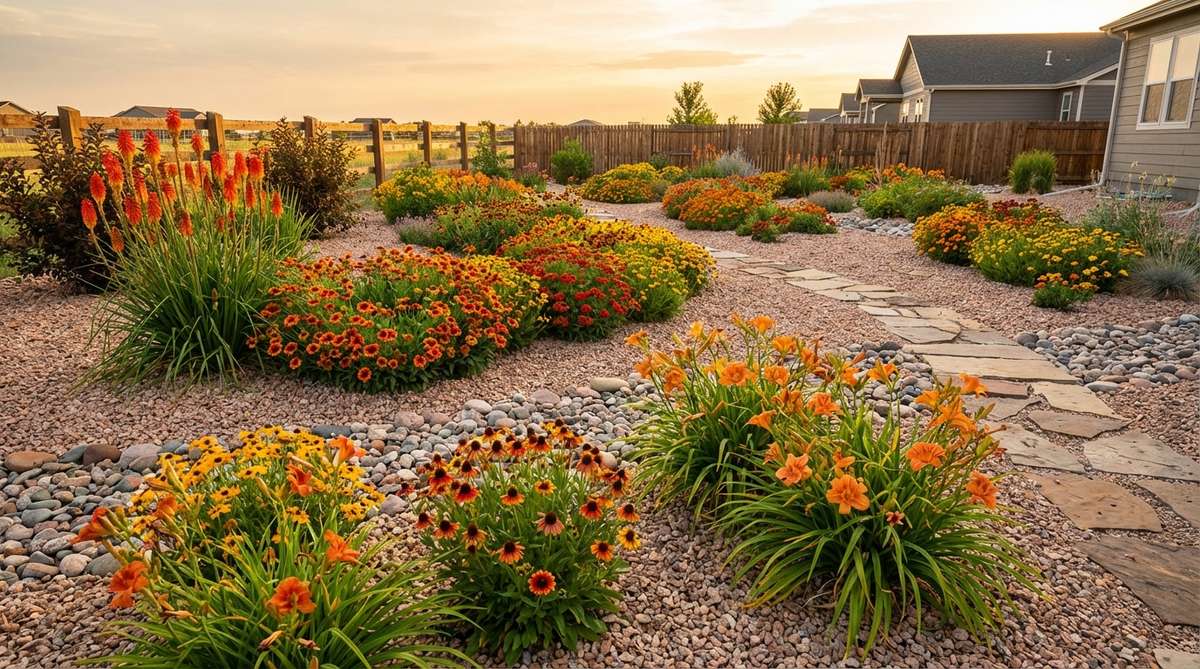
Blanket flower, red-hot poker (Kniphofia), daylilies in orange shades, and Mexican hat coneflower create fiery warmth. This high-energy combination suits contemporary or desert-themed landscapes.
Plant in bold drifts of single species rather than spotting individual plants. The massed color reads from distance while individual flower forms provide close-up interest.
28. White Garden Moonlight Scheme
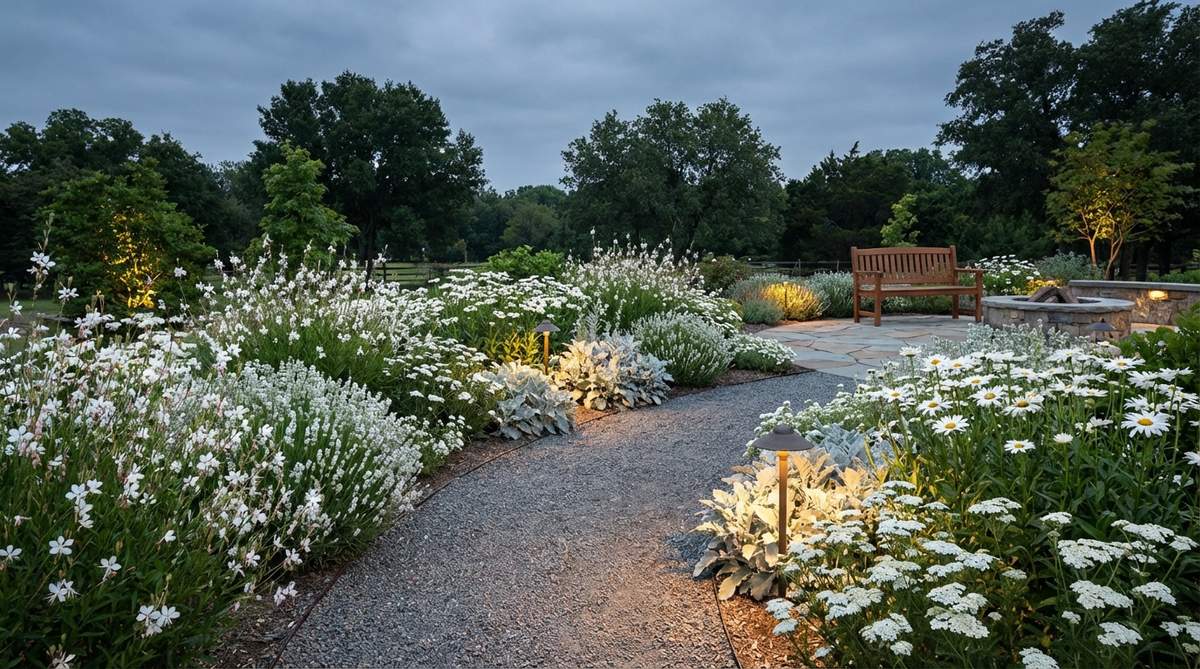
White-flowering species like Gaura lindheimeri, white lavender, Shasta daisy, and white yarrow (Achillea millefolium ‘White Beauty’) create luminous displays that glow at dusk. Silver foliage plants like dusty miller amplify the effect.
This palette works beautifully in evening gardens or along pathways lit by outdoor lighting. The white flowers reflect available light, making spaces feel larger and more open.
29. Yellow-Chartreuse Sunshine Border
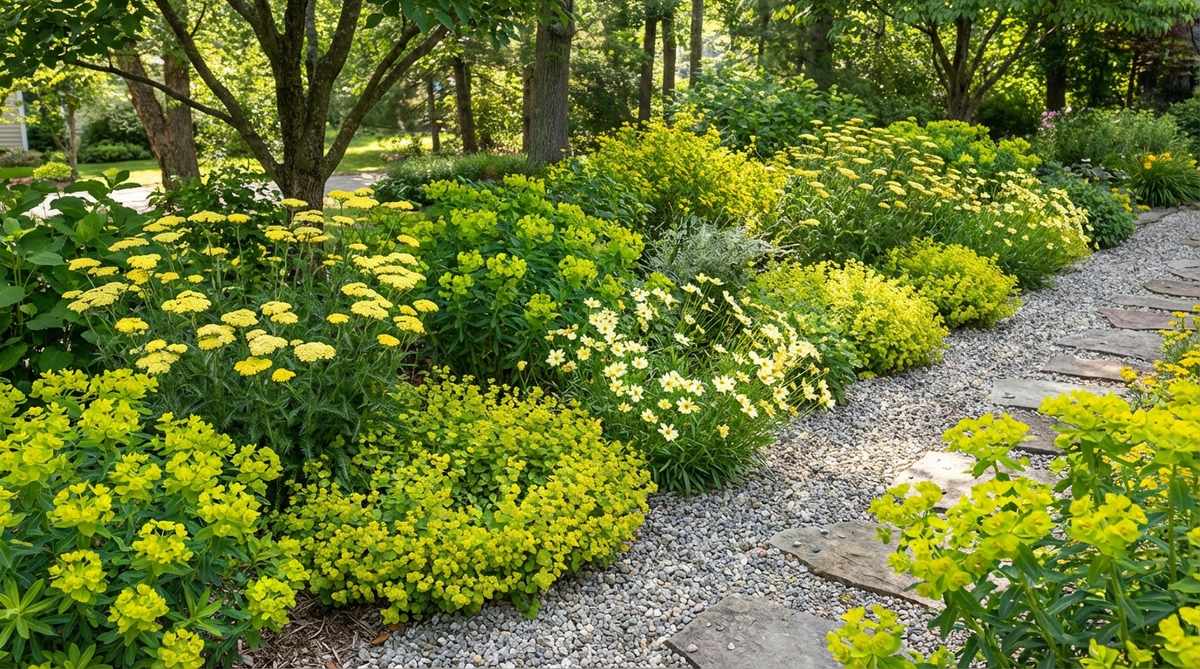
Achillea ‘Moonshine’ with flat yellow flower heads, golden oregano, Coreopsis verticillata ‘Moonbeam’, and Euphorbia × martini create cheerful yellow-green harmony. This combination brightens shaded edges of gravel beds.
Space plants 18-24 inches apart, allowing chartreuse foliage to weave together while flowers provide seasonal punctuation. Deadhead coreopsis and achillea regularly for continuous blooming through summer.
30. Purple-Pink Romantic Planting
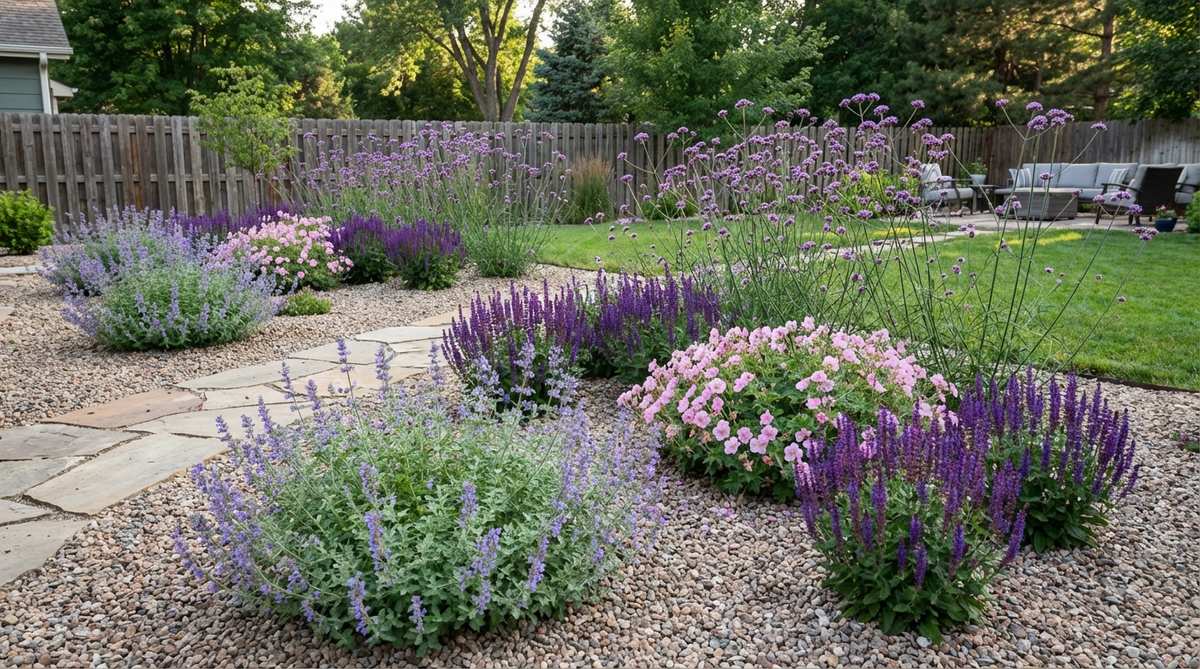
Combine catmint, salvia, Geranium ‘Wargrave Pink’, and Verbena bonariensis for soft, romantic color from May through October. The purple-pink gradient creates gentle transitions without harsh contrasts.
Plant verbena toward the back despite its airy habit; its see-through quality allows views through to other plants. Shear catmint and geranium after first flush to encourage repeat blooming.
Textural Contrast Plantings
Pairing plants with opposing leaf shapes and textures creates visual interest that persists even when flowers fade. Gravel garden plants offer remarkable textural diversity from needle-fine to bold and architectural.
31. Spiky-Soft Contrast
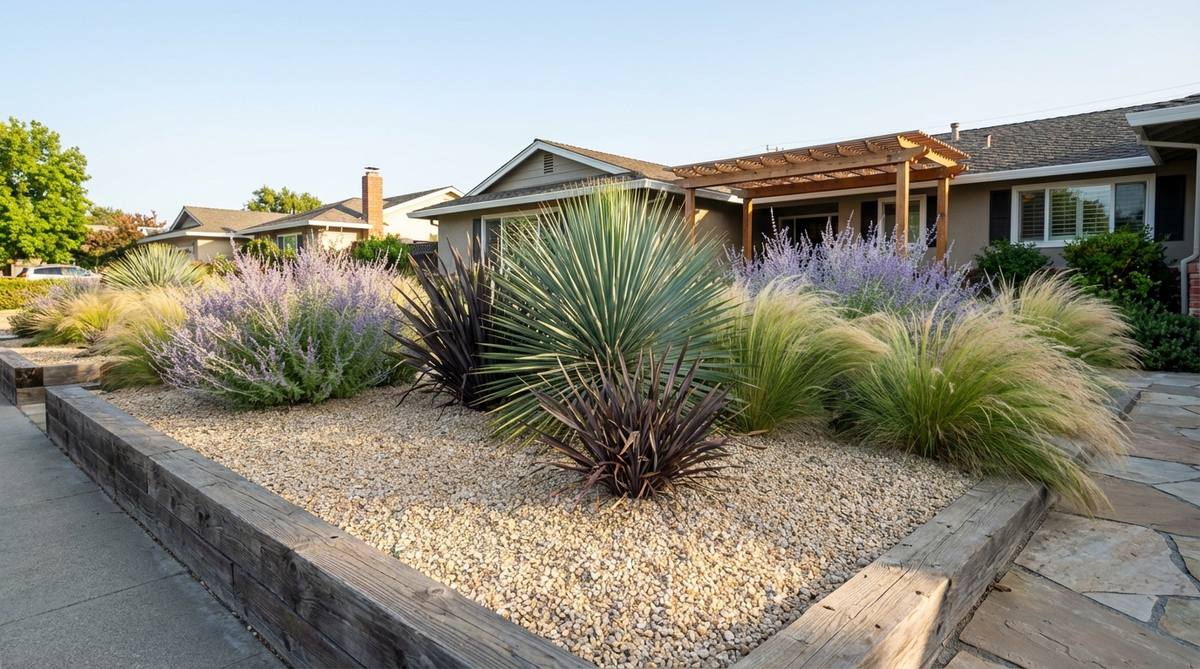
Position rigid yucca or phormium leaves against billowing Russian sage or Mexican feather grass to emphasize opposing textures. The sword-like foliage reads as structural punctuation while soft grasses provide movement and volume.
Plant spiky specimens first as anchor points, then surround with flowing grasses planted in groups of 5-7. Maintain 24 inches between architectural plants and grass clumps for each to retain distinct identity.
32. Broad-Leaf Fine-Leaf Pairing
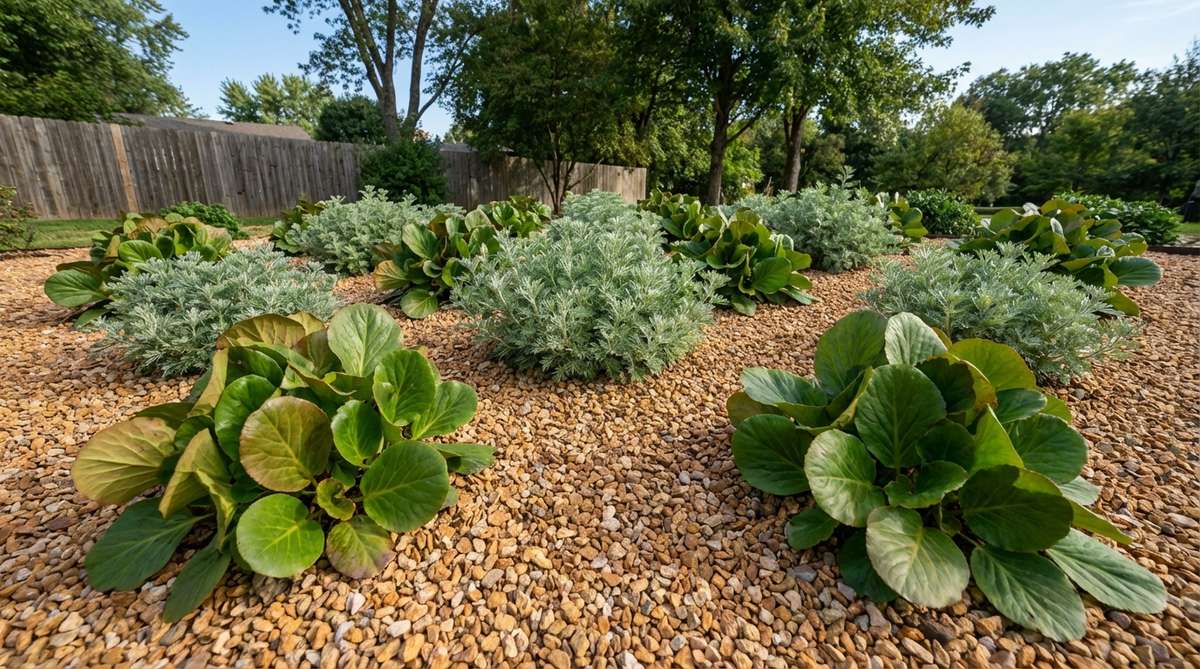
Large-leaved bergenia or sedum contrasts dramatically with thread-leaf coreopsis or fine-textured artemisia. This pairing works at close viewing distances where leaf detail can be appreciated.
Alternate broad and fine textures in repeating patternbergenia, coreopsis, bergenia, artemisia. Space 18 inches apart, allowing textures to intermingle slightly at edges while maintaining distinct zones.
33. Mounded-Upright Shapes
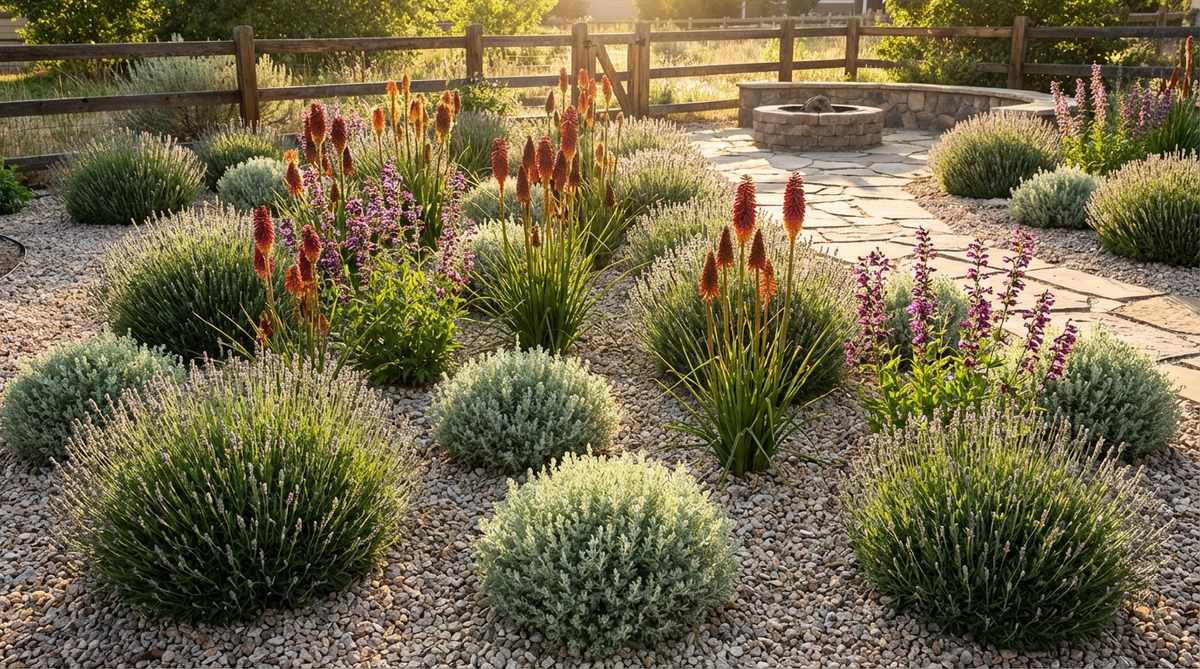
Rounded lavender or santolina mounds contrast with vertical beardtongue (Penstemon) or red-hot poker flower spikes. The combination creates dynamic silhouettes that change dramatically when backlit.
Plant mounded forms on 24-30 inch centers as foundation layer, then insert vertical accent plants at irregular intervals through the mounds. Three upright accents per seven mounds creates balanced but asymmetrical composition.
34. Glossy-Matte Foliage Mix
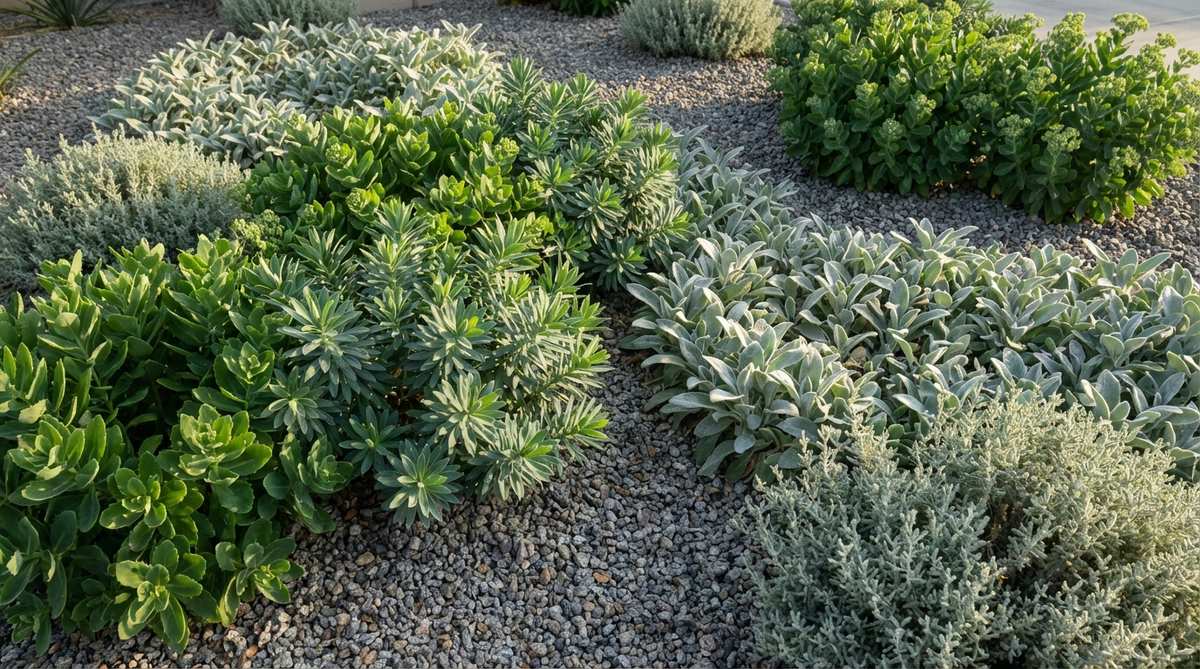
Shiny-leaved sedums or Mediterranean spurge contrast with matte-textured lamb’s ears (Stachys byzantina) or gray santolina. Light reflects differently off each surface, creating subtle depth even in monochromatic green schemes.
This pairing works best with morning or late afternoon side-lighting that emphasizes surface texture differences. Group each texture in patches rather than alternating single plants.
Final Thoughts On Drought-Tolerant Gravel Garden Beds
These 34 gravel garden bed planting schemes demonstrate the remarkable design possibilities available using drought-tolerant plants adapted to hot, dry conditions. Success depends on matching plants to your specific climate zone, providing excellent drainage through proper gravel depth, and allowing adequate establishment time before reducing irrigation. Start with five to seven species from one scheme category, then expand your palette as you gain confidence with these resilient plants. Fresh Garden Ideas encourages you to experiment with combinations that reflect your regional climate and personal aesthetic while embracing water-wise gardening practices.
Frequently Asked Questions
How deep should gravel be in a gravel garden bed?
Apply gravel mulch 5-7cm (approximately 2-3 inches) deep over prepared soil. This depth suppresses weeds, conserves moisture, and provides the signature gravel garden aesthetic without burying plant crowns. Avoid depths exceeding 8cm, which can prevent self-seeding and make planting more difficult.
Do I need to use landscape fabric under gravel gardens?
Experienced designers avoid landscape fabric in gravel garden beds because it prevents plants from self-seeding naturally and makes future planting adjustments difficult. Instead, start with thoroughly weeded soil, plant densely enough to shade out weeds, and hand-pull any that emerge through gravel during the first season.
How long until a gravel garden bed becomes drought-tolerant?
Most drought-tolerant perennials require one full growing season to establish root systems deep enough to survive without supplemental water. Water regularly during the first summer, then gradually reduce frequency in year two. By the third year, most schemes require irrigation only during extreme drought lasting more than 4-6 weeks.
What gravel color works best for plant displays?
Neutral gravels in buff, tan, or warm gray tones provide versatile backgrounds that complement most foliage and flower colors. Avoid bright white gravels that create harsh glare and dark gravels that absorb excessive heat. Local stone options typically offer the most natural appearance and lowest cost.
Can gravel garden plants survive extreme summer heat?
The drought-tolerant species in these schemes evolved in Mediterranean climates with summer temperatures routinely exceeding 95°F (35°C). They tolerate extreme heat better than humidity, so gardeners in humid-summer regions should prioritize air circulation, ensure excellent drainage, and select species proven in similar climates.
How do I maintain gravel garden bed plantings?
Annual maintenance includes cutting back perennial foliage in early spring before new growth emerges, raking gravel smooth to redistribute it evenly, removing any weeds that germinate, and dividing overcrowded perennials every 3-4 years. Most schemes require no fertilization, as lean soil produces more compact, drought-resistant growth.