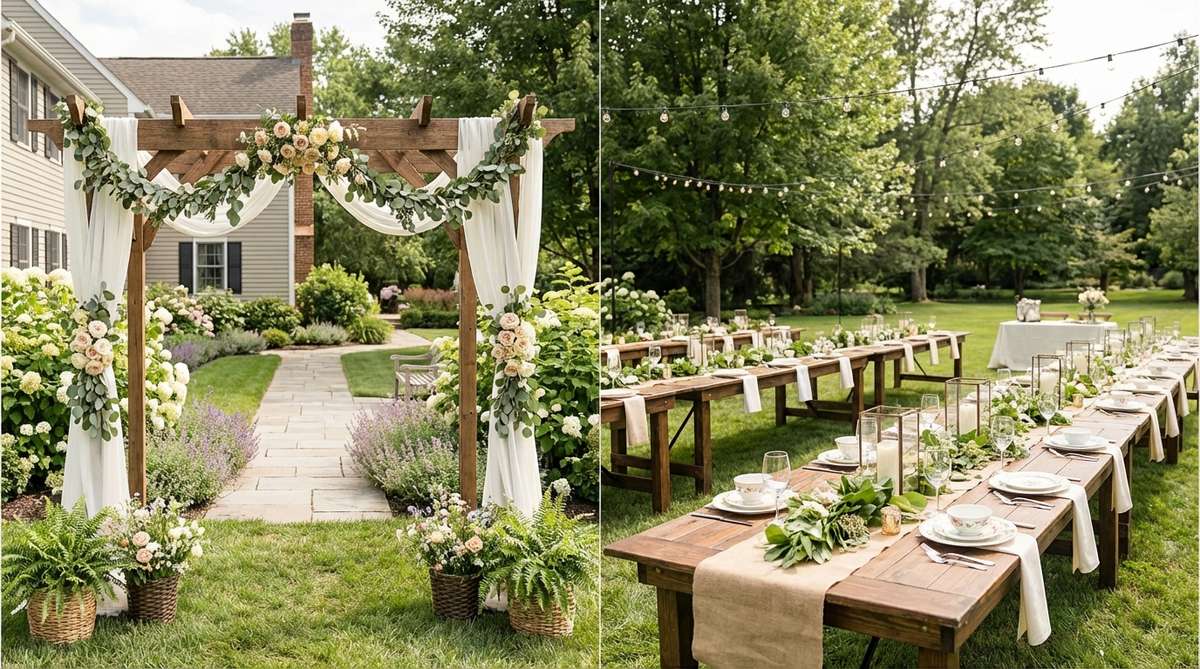
A garden decor wedding transforms outdoor spaces into enchanting celebration venues where natural beauty meets thoughtful design. From ceremony backdrops to reception tablescapes, the right decorative elements create an atmosphere that feels both elegant and organic. Fresh Garden Ideas brings you expert strategies to elevate your outdoor wedding with nature-inspired touches that captivate guests and celebrate the season.
Design SnapshotKey Principles
- Layered Florals: Combine seasonal blooms with greenery at varying heights to create dimensional visual interest throughout the space
- Strategic Lighting: Blend ambient string lights with candlelight to extend the celebration atmosphere from daylight into evening hours
- Natural Framing: Use arches, arbors, and living walls to define ceremony and reception zones while complementing garden surroundings
- Organic Texture: Incorporate wood, stone, moss, and raw materials that echo the outdoor environment for cohesive design flow
Ceremony Backdrops and Arches That Frame Your Garden Decor Wedding
The ceremony backdrop establishes the visual tone for your entire celebration. Designers create focal points that complement existing garden features while providing a memorable setting for vows and photographs.
1. Floral Archway with Seasonal Blooms
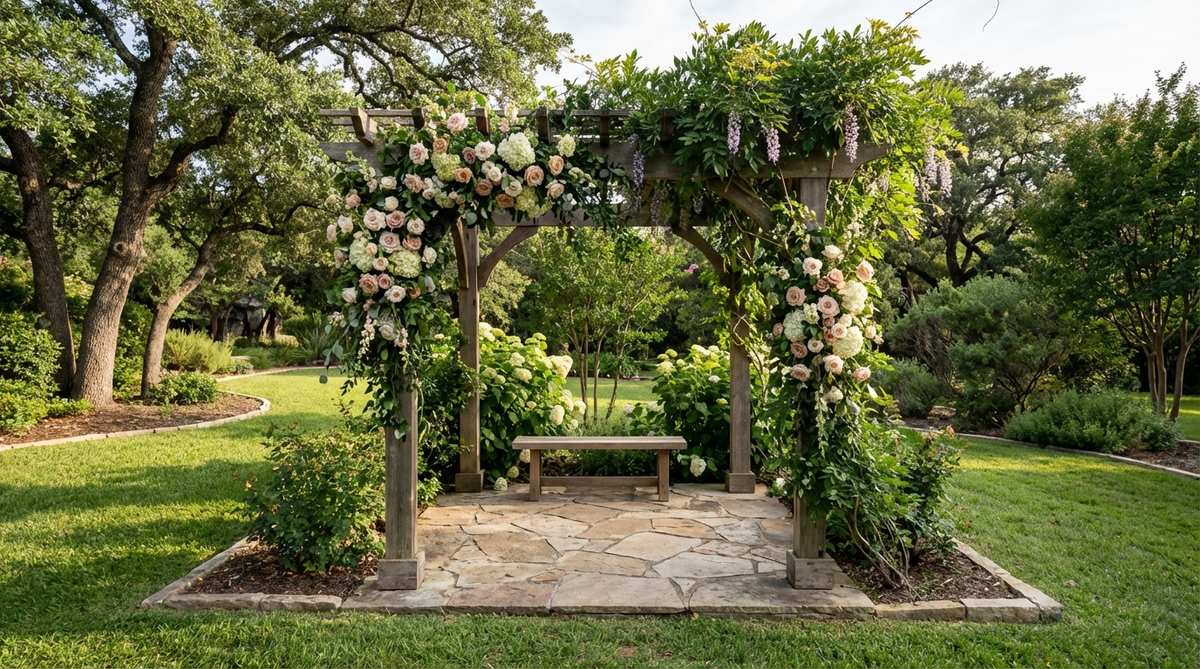
Seasonal flowers intertwined with lush greenery create a romantic frame that changes with the time of year. The archway blends seamlessly into garden surroundings while providing concentrated color at the altar.
Build the structure using sturdy metal or wooden frames, then layer flowers from the base upward. Vary bloom sizes and add trailing vines for organic movement that catches light and breeze.
This setup photographs beautifully from multiple angles and can be repositioned after the ceremony as a reception focal point.
2. Moss Garden Backdrop with Modern Accents
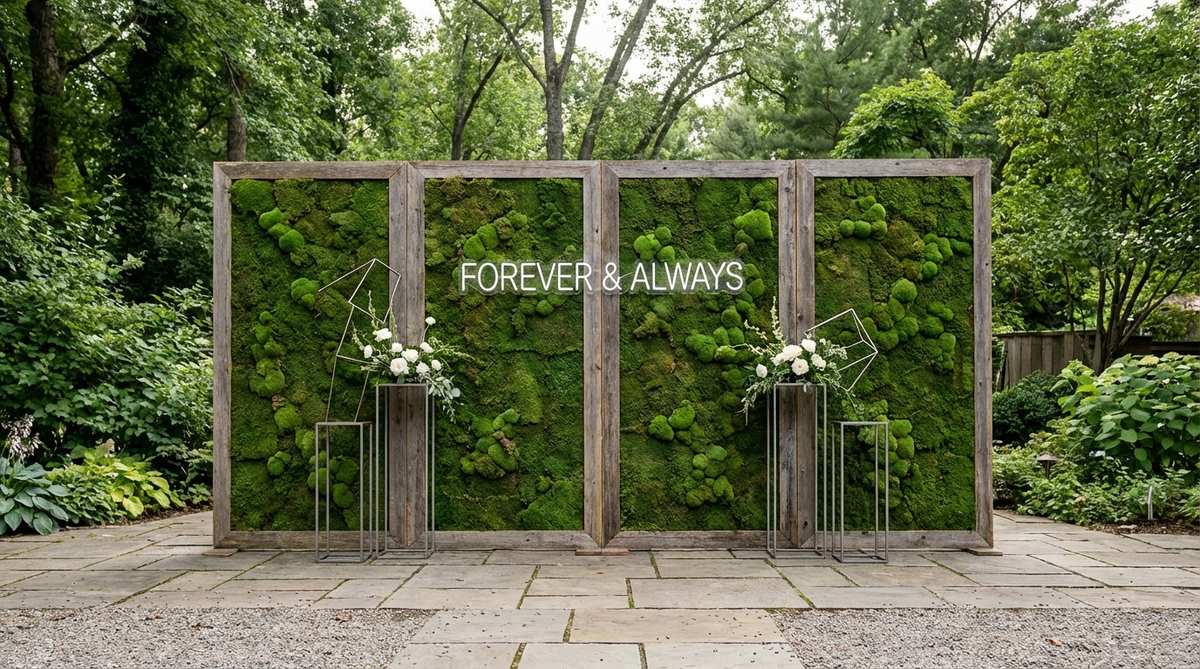
Moss-covered panels bring textural depth to contemporary wedding aesthetics. The verdant surface provides a natural canvas for neon signs, geometric installations, or minimalist floral accents.
Mount preserved moss onto wooden frames to create portable panels that require no watering. Position panels in tiers or create a full wall behind the ceremony space.
The rich green backdrop photographs exceptionally well and offers sound-absorbing qualities that improve ceremony acoustics.
3. Living Green Wall with Mixed Plantings
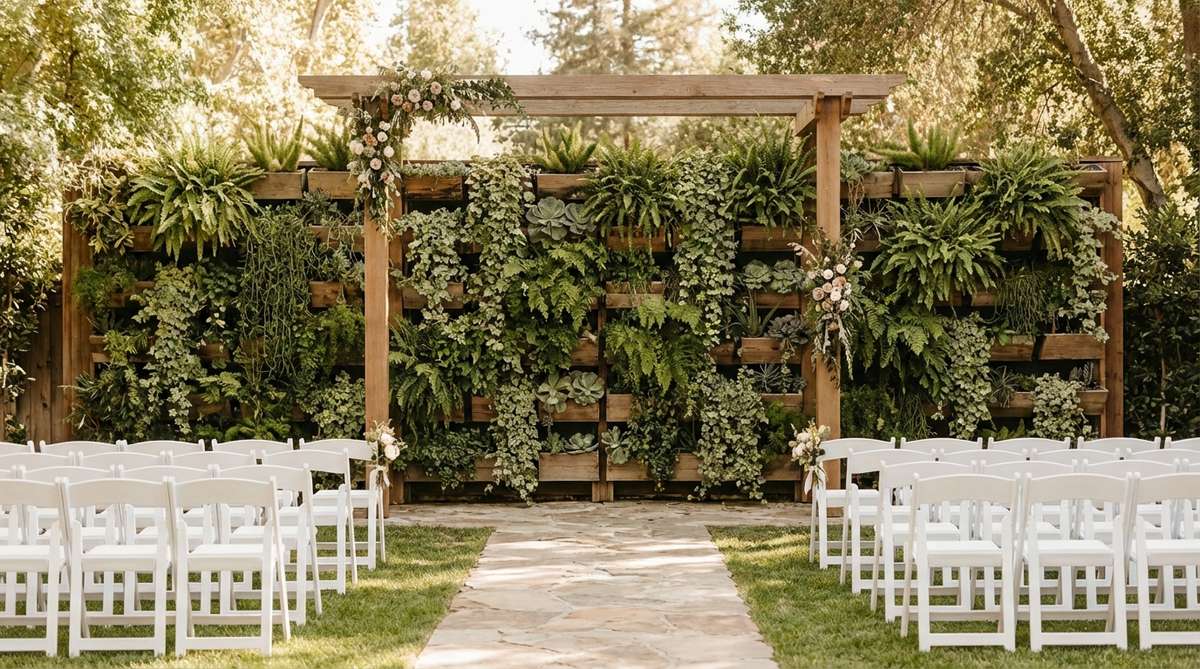
Ferns, ivy, and succulents arranged vertically create a lush living tapestry. This installation brings garden essence directly to the ceremony space with varied leaf shapes and textures.
Use modular planters or pocket systems to arrange plants by water needs and light requirements. The vertical structure adds height without blocking sightlines.
Living walls remain fresh throughout extended events and can transition to home gardens after the celebration.
4. Bamboo Arch with Tropical Foliage
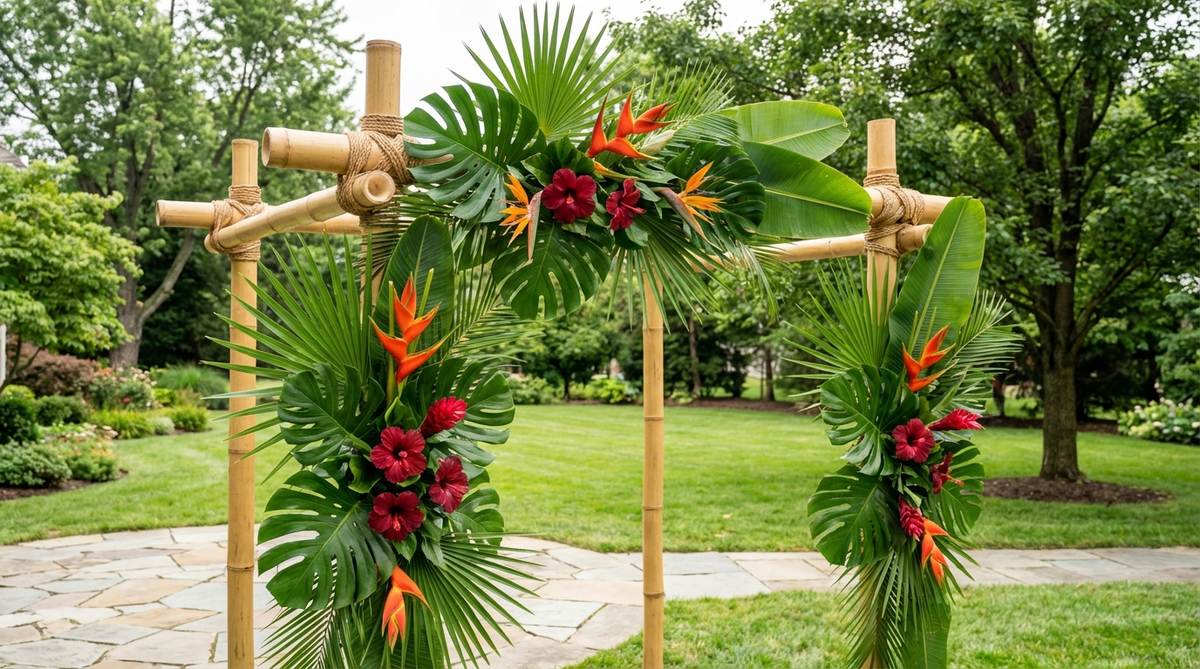
Natural bamboo poles form an elegant structural frame for monstera leaves, palm fronds, and banana leaf accents. The tropical aesthetic works particularly well for summer garden celebrations.
Lash bamboo poles together using natural fiber rope for authentic texture. Tuck large tropical leaves into the structure and accent with bold-colored blooms like bird of paradise or hibiscus.
This setup creates an island-inspired atmosphere that transports guests while maintaining garden wedding charm.
5. Wild Garden Flower Installation
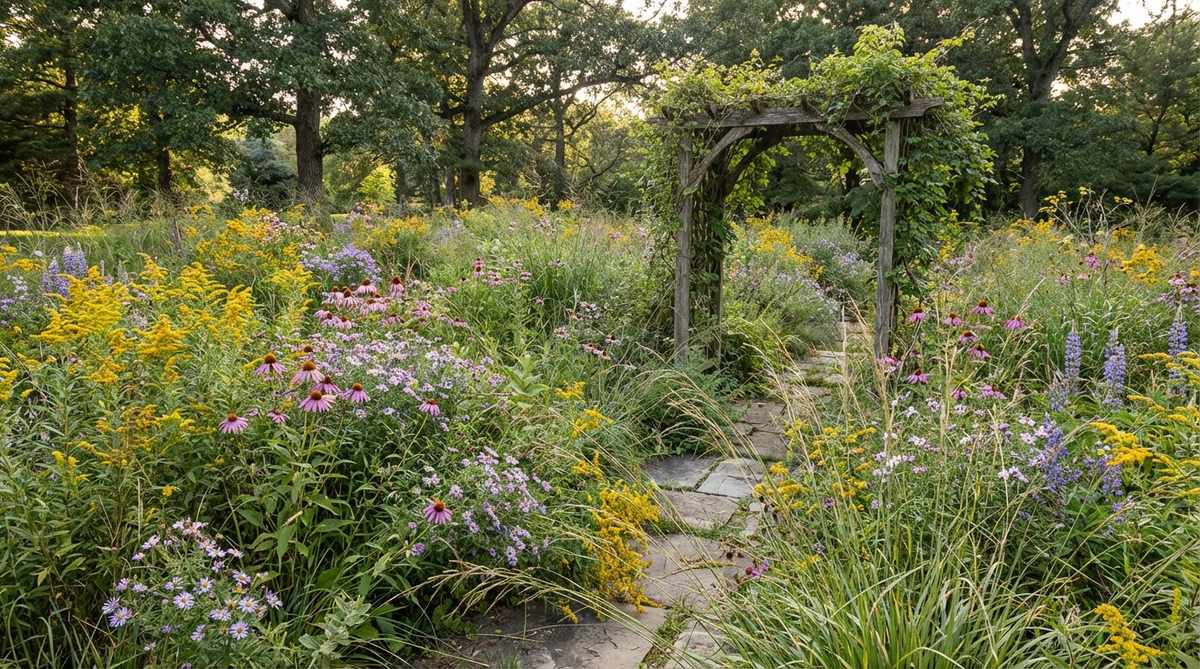
Wildflowers arranged in an overgrown, meadow-like display create an effortlessly romantic backdrop. The arrangement appears naturally occurring rather than formally constructed.
Select local wildflowers and native grasses, arranging them in loose clusters that spill beyond the defined structure. Allow stems to cross at various angles for authentic wild growth patterns.
This approach celebrates regional flora and reduces costs while delivering high visual impact through volume and variety.
6. Branch and Vine Natural Frame
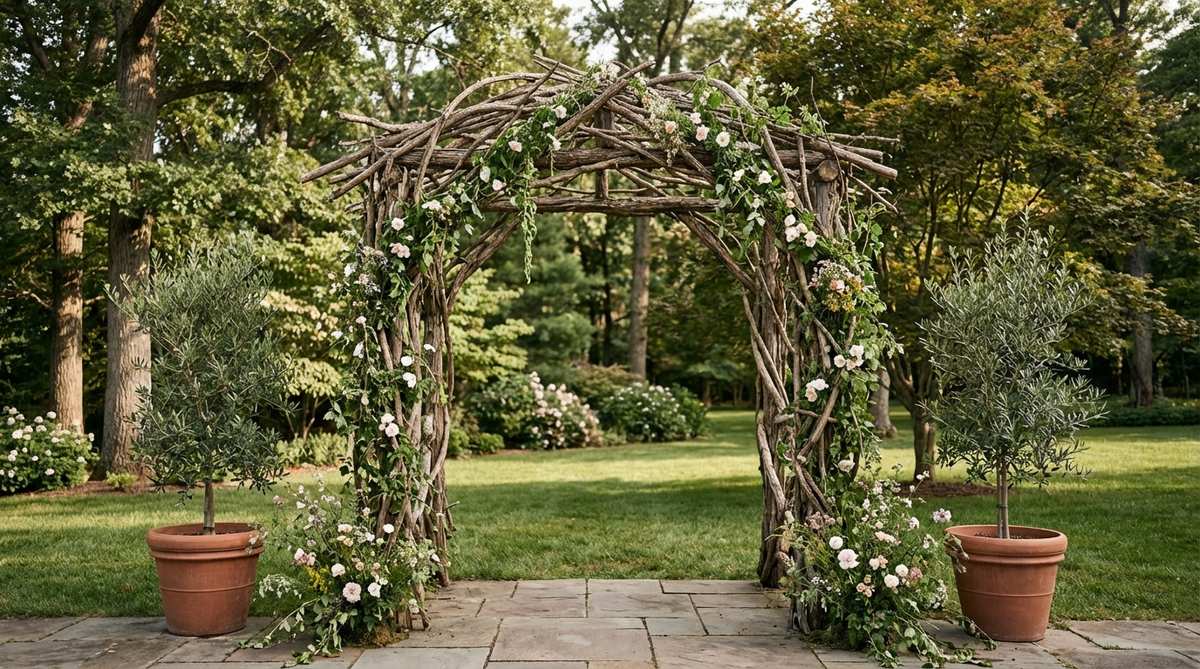
Gathered branches woven with trailing vines establish a woodland-inspired frame. The raw wood structure brings forest elements into garden settings.
Source branches from local trees, selecting pieces with interesting curves and natural character. Wire vines and small blooms throughout, leaving some branches bare for textural contrast.
Position potted trees on either side to enhance the forest feel and create a cohesive natural environment.
7. Hanging Floral Garland Canopy
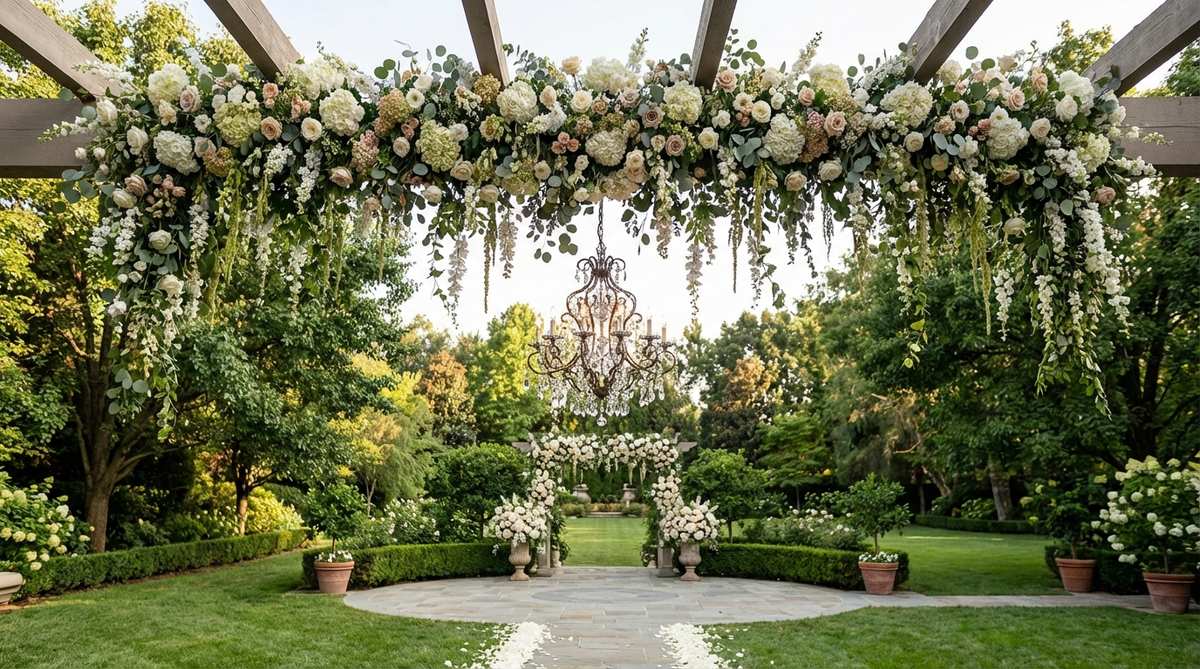
Suspended floral garlands create an overhead focal point that adds elegance without ground-level footprint. Blooms cascade above the ceremony space, creating dimension from above.
Secure garlands to overhead structures or dedicated rigging points. Layer different flower types and greenery varieties to achieve fullness and movement as air circulates.
Pair with a statement chandelier for glamorous contrast that elevates the outdoor setting.
Aisle Decorations That Guide the Garden Decor for Wedding Processional
Aisle design directs guest attention while establishing the path from entrance to altar. Effective arrangements mark the route without overwhelming the natural garden setting.
8. Minimalist Greenery Aisle Markers
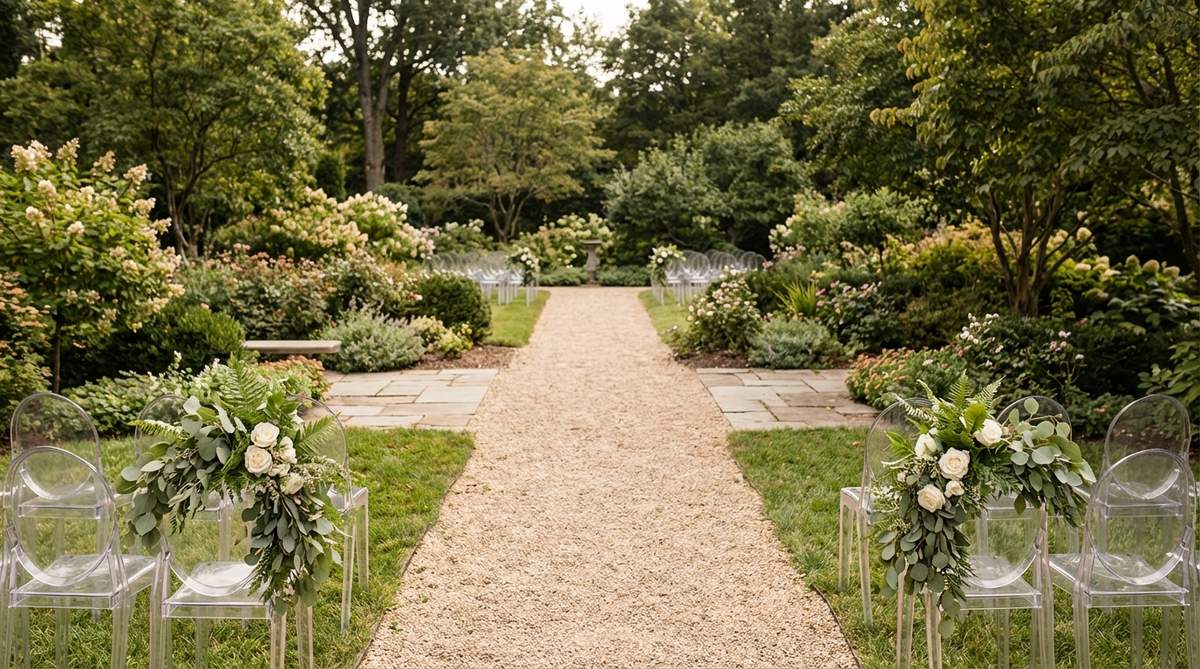
Strategic greenery placements at the aisle’s beginning and end provide subtle definition. The less-is-more approach lets the garden itself remain the primary visual element.
Position two substantial greenery arrangements at the aisle entrance, using translucent ghost chairs to maintain sight lines. The simple design works across wedding styles from modern to classic.
9. Rose Petal Lined Pathway
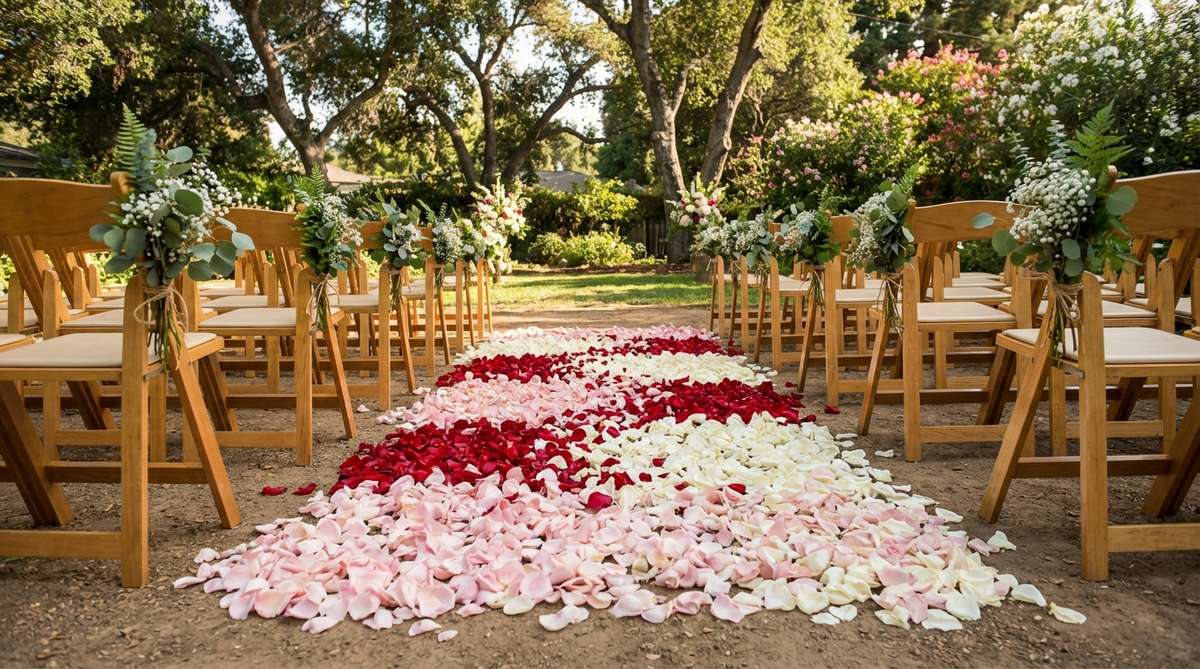
Fresh rose petals scattered along the aisle create a romantic carpet that adds color and fragrance. The simple treatment requires minimal setup while delivering significant visual softness.
Scatter petals in concentrated bands or gradient patterns that transition between colors. Tie small greenery bunches to chair corners for vertical interest that complements the ground treatment.
10. Lantern-Lined Aisle with Greenery Accents
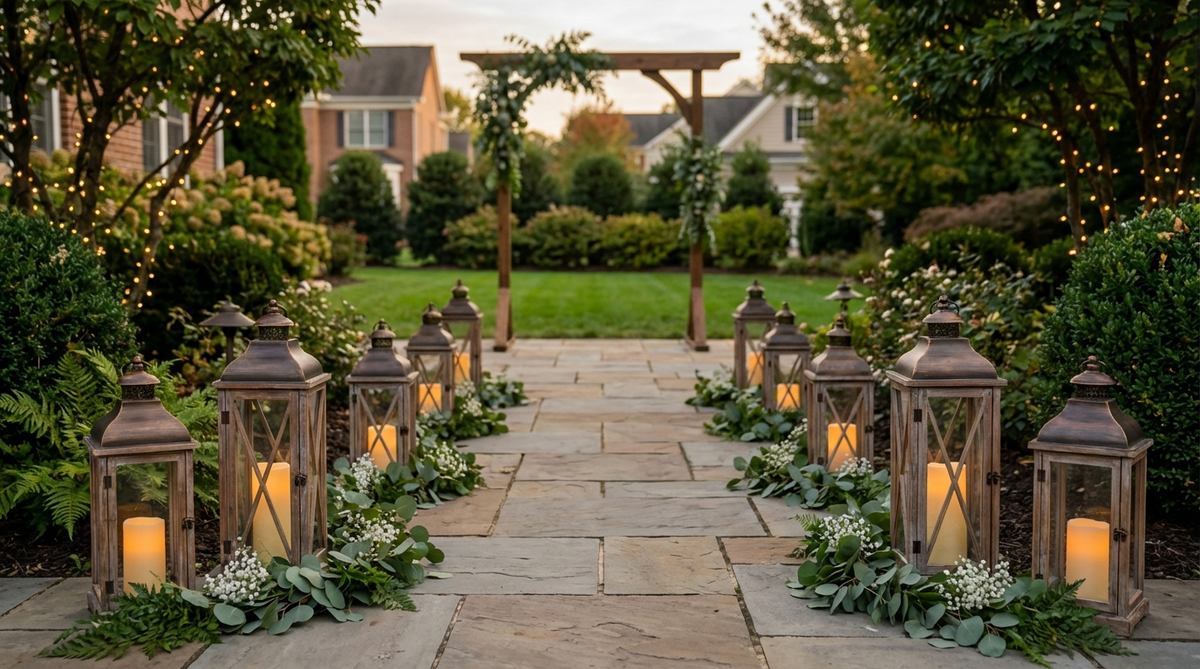
Metal or wooden lanterns placed at regular intervals provide both decor and functional lighting. The vertical elements guide the eye forward while offering warm evening glow.
Position lanterns on alternating sides of the aisle, layering in greenery sprigs to soften the metallic or wood finishes. Battery-operated candles ensure safety in breezy garden settings.
11. Wood Pedestal Aisle Anchors
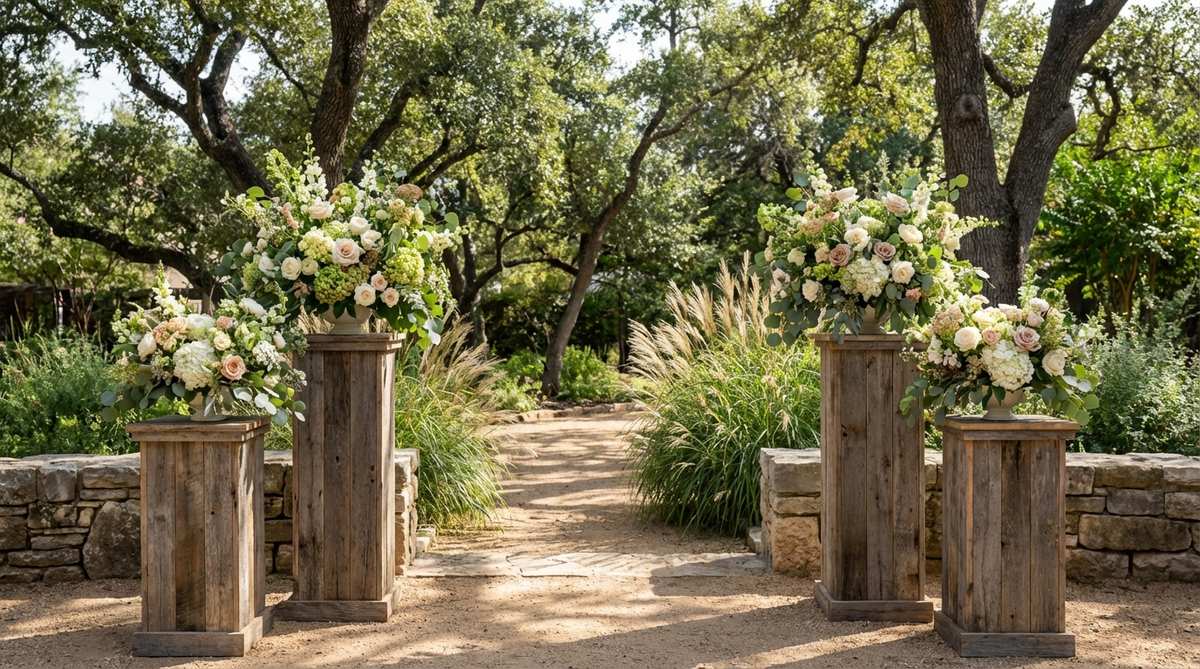
Rustic wood pedestals elevate floral arrangements while reinforcing organic garden aesthetics. The raised platforms create focal points that don’t require extensive ground coverage.
Place pedestals at strategic intervals, topping each with seasonal flowers and greenery. The vertical dimension adds structure to outdoor spaces with varied terrain.
Pedestals can showcase different arrangements at each position while maintaining cohesive design through consistent height and material.
12. Pampas Grass Ceremonial Pathway
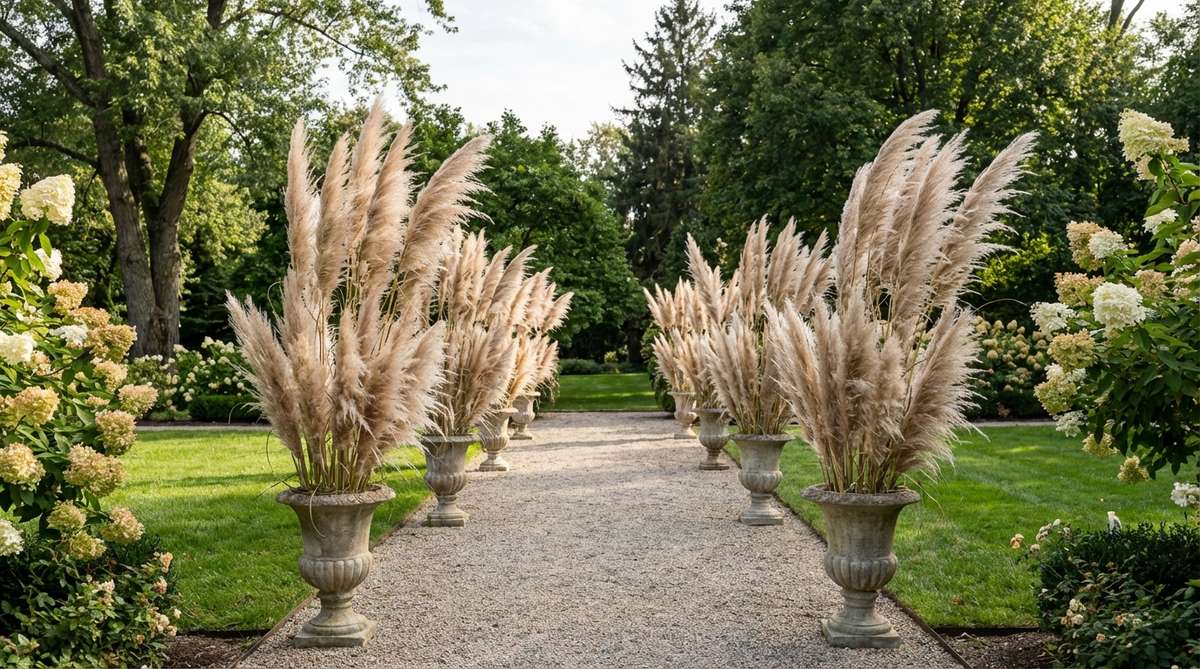
Tall pampas grass plumes create dramatic aisle markers with bohemian flair. The neutral tones work with any color palette while adding substantial visual height.
Group pampas stems in clusters of three to five, securing them in weighted urns or ground stakes. The feathery texture moves gracefully in outdoor breezes.
Add colored draping or ribbon accents to introduce hues without diminishing the grass’s commanding presence.
13. Planted Aisle Garden Look
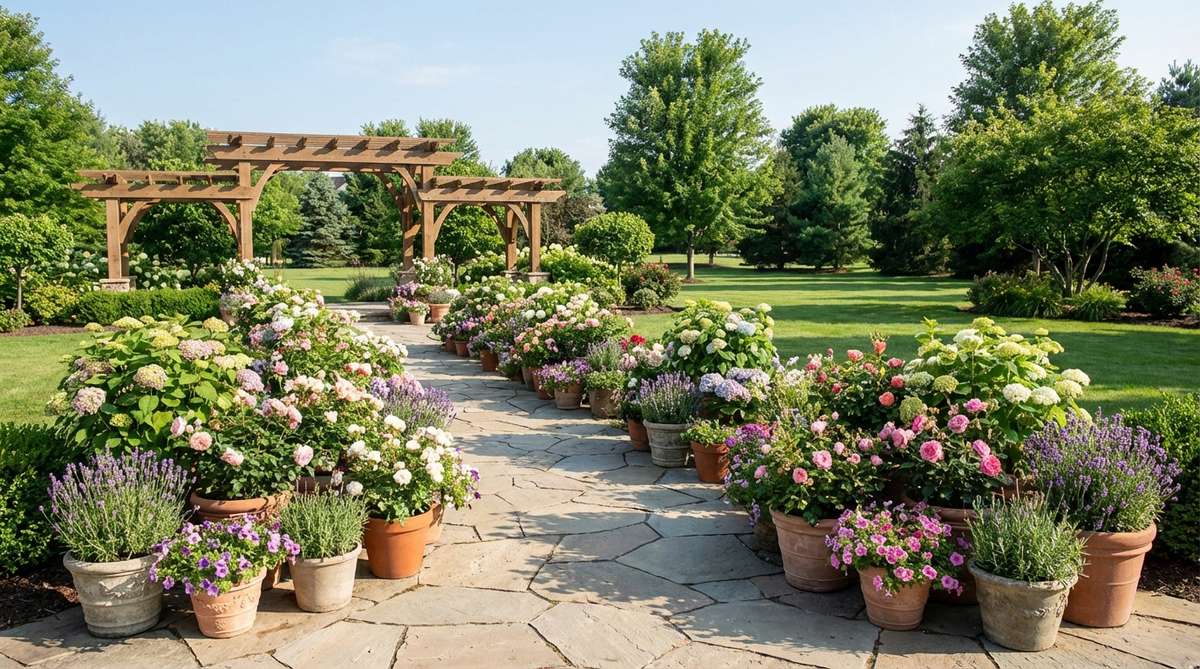
Potted flowering plants arranged along the aisle create the impression of a purpose-planted garden path. The living installations feel intentional and established rather than temporary.
Select plants in peak bloom, choosing varieties that match your garden’s existing palette. Arrange pots in organic clusters that vary in height and density.
Guests enjoy the garden-within-a-garden effect, and plants can be gifted after the event or transplanted into home landscapes.
14. Tropical Palm and Fern Borders
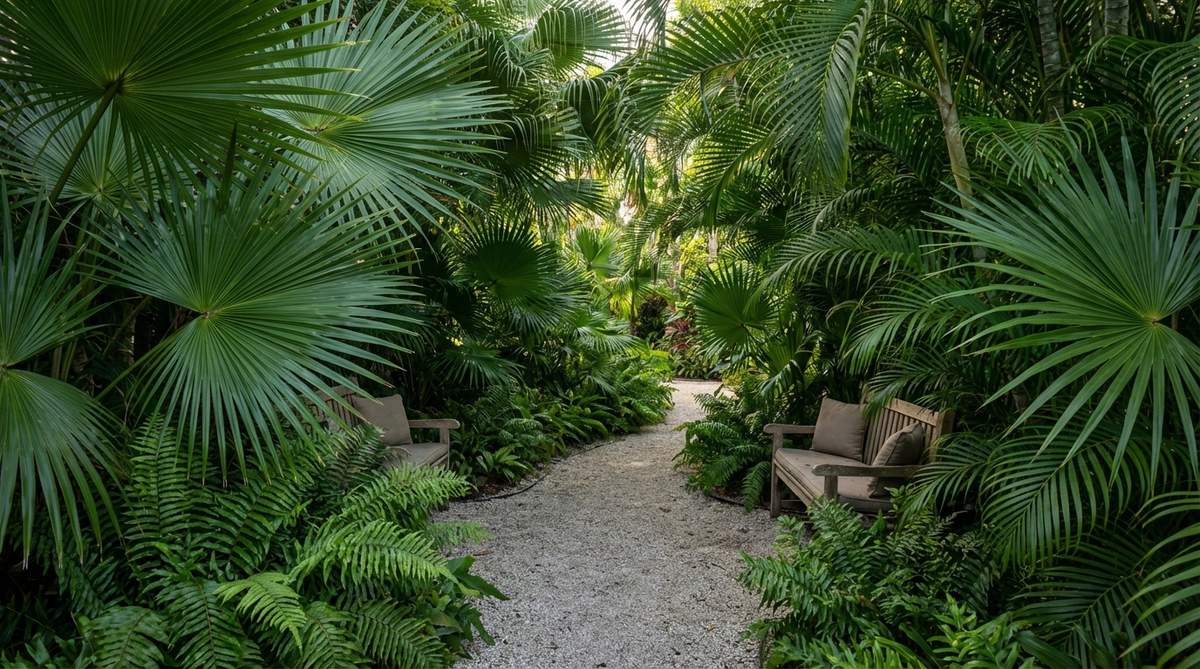
Large palm fronds and fern branches positioned at eye level create natural walls along the aisle. The greenery adds privacy while establishing tropical garden ambiance.
Mount large leaves to stands or stakes, positioning them to frame the aisle without blocking guest views. Layer different leaf shapes for textural variety.
Reception Centerpieces That Bring Garden Decor for Wedding to the Table
Table arrangements extend the garden aesthetic into the dining experience, creating intimate environments within the larger outdoor space.
15. Towering Garden Centerpieces in Brass
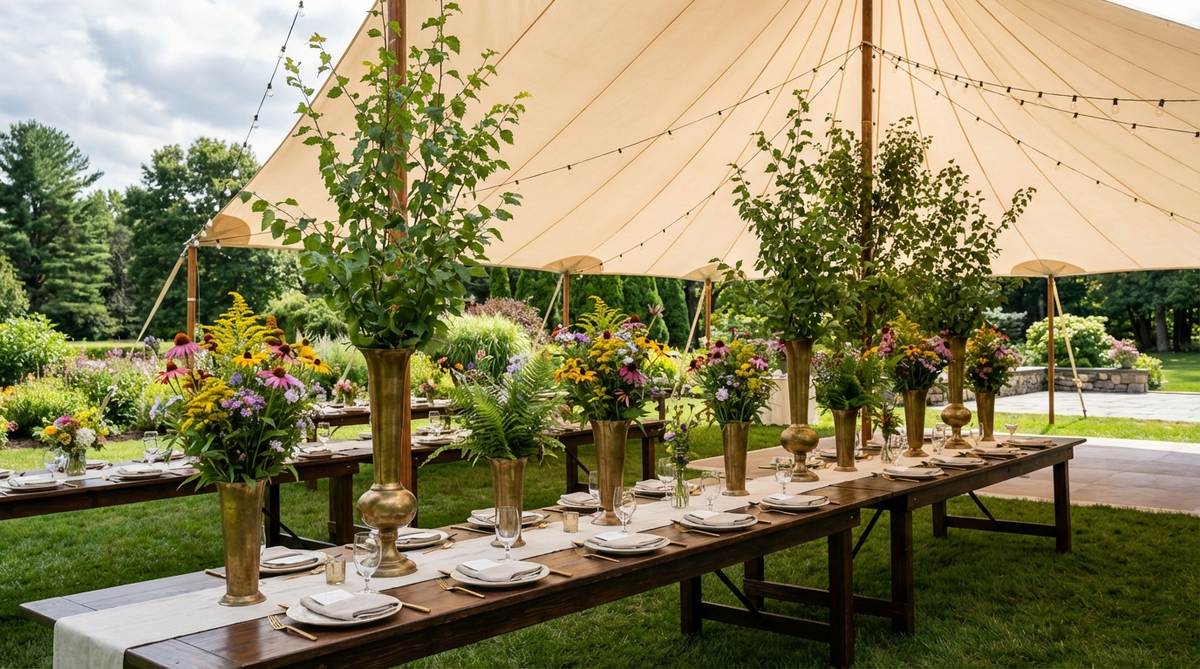
Tall brass vases filled with wild-looking arrangements bring vertical drama to reception tables. The height creates impact while allowing conversation flow beneath the blooms.
Include tree branches to enhance natural appearance and maintain visual connection to outdoor surroundings. Vary flower types to achieve organic, just-gathered aesthetics.
The elevated arrangements work especially well under tents, filling vertical space and creating an outdoor feel in covered areas.
16. Mushroom Terrarium Centerpieces
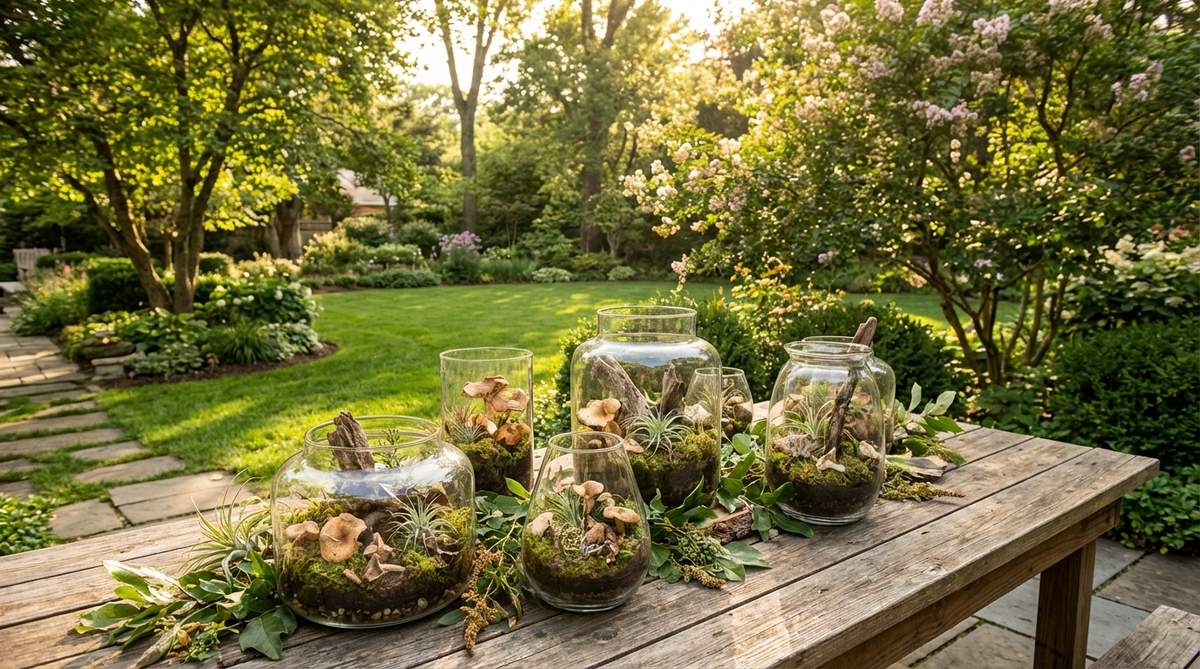
Glass terrariums filled with moss, mushrooms, and small wood pieces evoke woodland garden charm. Each centerpiece becomes a miniature ecosystem that guests examine closely.
Layer substrate materials for visual depth, positioning mushrooms at varying heights. Add air plants or small ferns for living interest.
The enclosed environments require no watering during events and make unique take-home gifts for selected guests.
17. White Orchid Table Runners
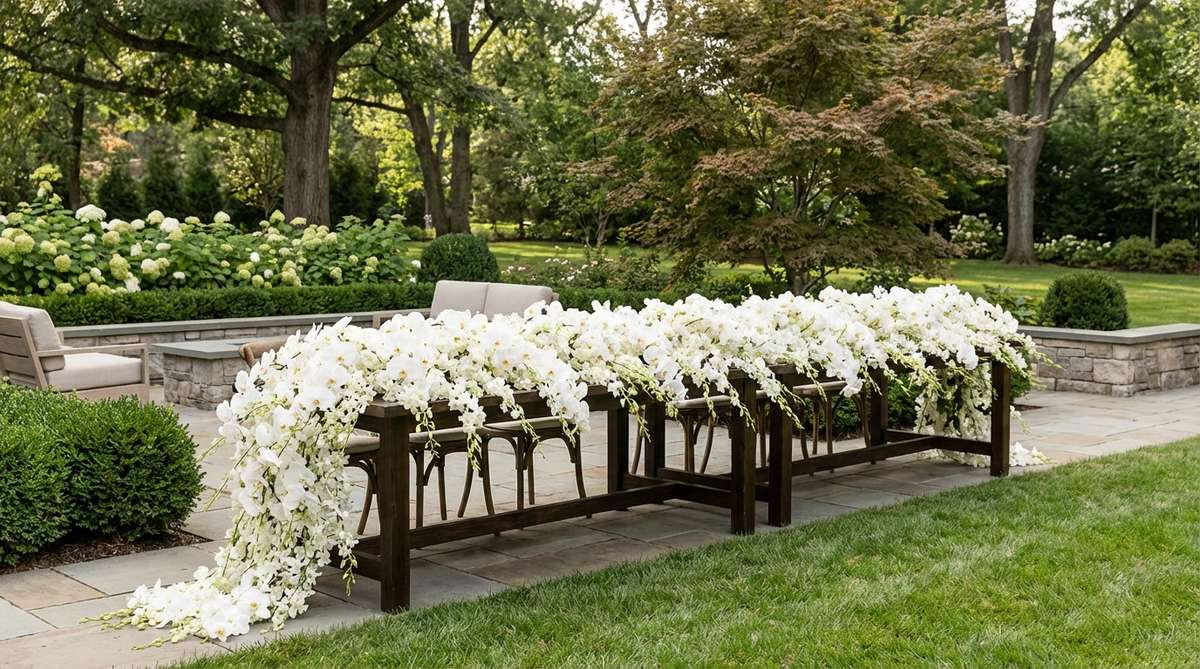
Orchids arranged as a continuous table runner create architectural drama with their distinctive silhouettes. The flowing arrangement cascades down table sides for ethereal effect.
Use a single orchid variety for visual cohesion, allowing stems to curve naturally. The monochromatic approach delivers impact through form rather than color variety.
This centerpiece style works particularly well on long banquet tables where it emphasizes length and draws the eye down the table’s full span.
18. Dahlia Arrangements in Fluted Glass
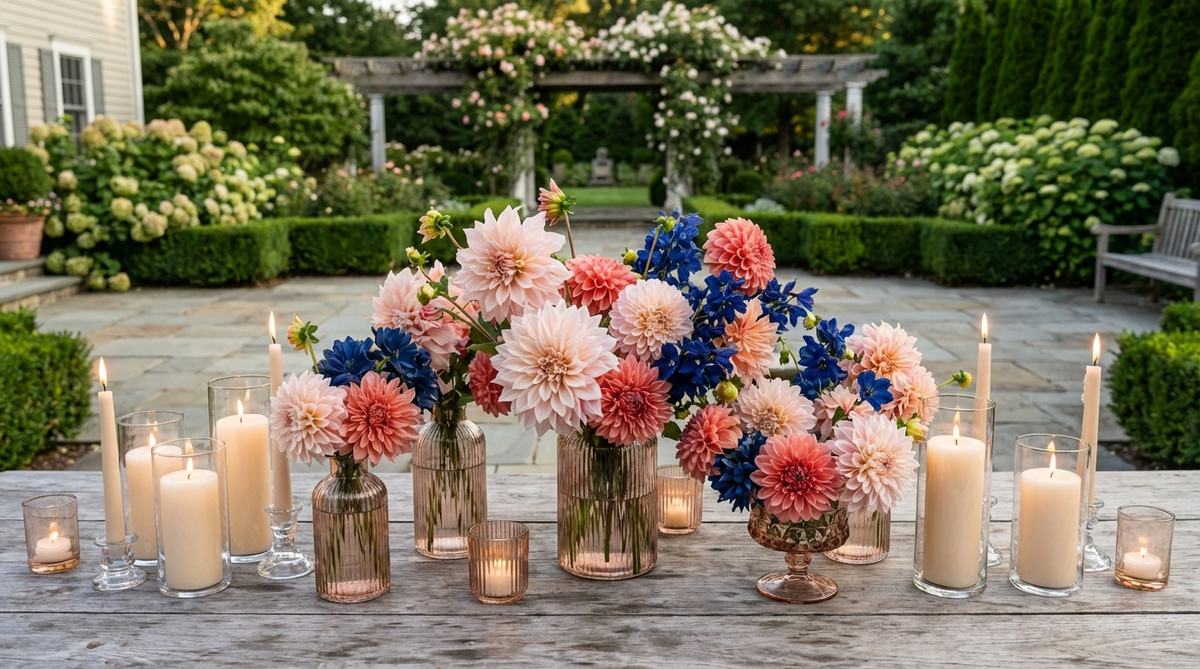
Striking dahlias in blush, coral, and blue tones gain added elegance from fluted glass vessels. The textured containers shimmer under candlelight as evening progresses.
Combine dahlias with feathery blooms that add silhouette interest. Position coordinating votive holders and taper candles in matching fluted glass around the central arrangement.
The trending texture elevates classic floral centerpieces while reflecting light throughout the reception space.
19. Vintage Book Stacks with Cloches
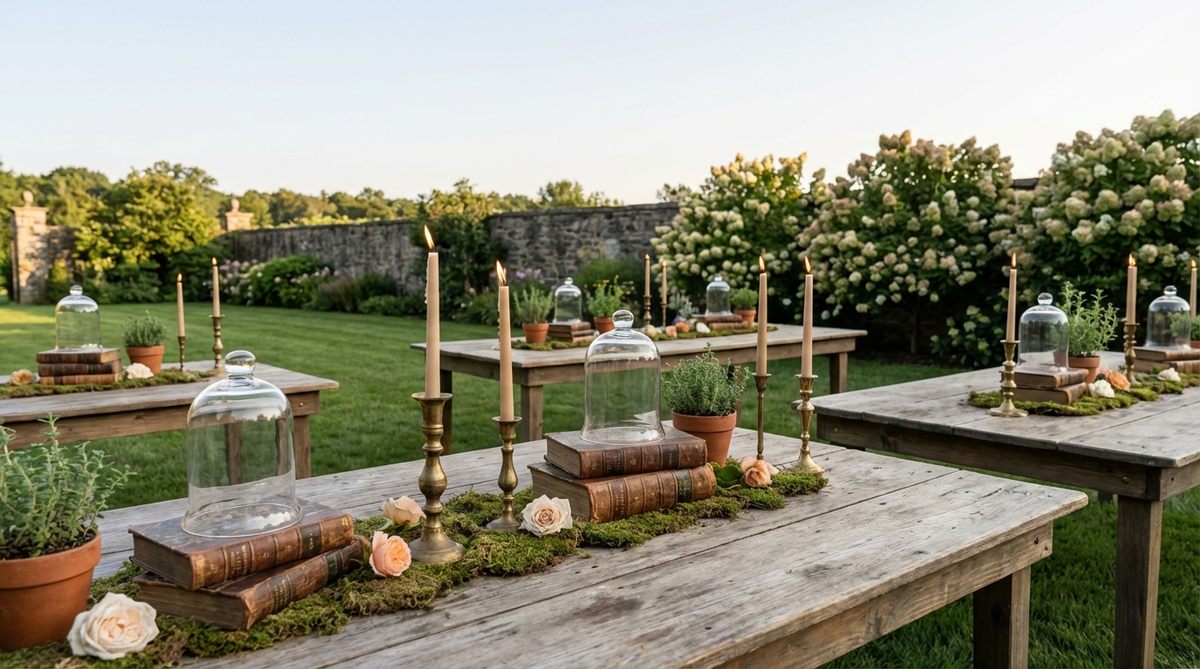
Antique books stacked at table centers provide height for small arrangements under glass cloches. The vintage elements add character while reducing total floral needs.
Top book stacks with brass candleholders and simple tapers for classic styling. The eclectic combination creates conversation starters at each table.
Source books from estate sales or use replicas to achieve the weathered aesthetic without damaging actual antiques.
20. Tropical Arrangements with Anthurium
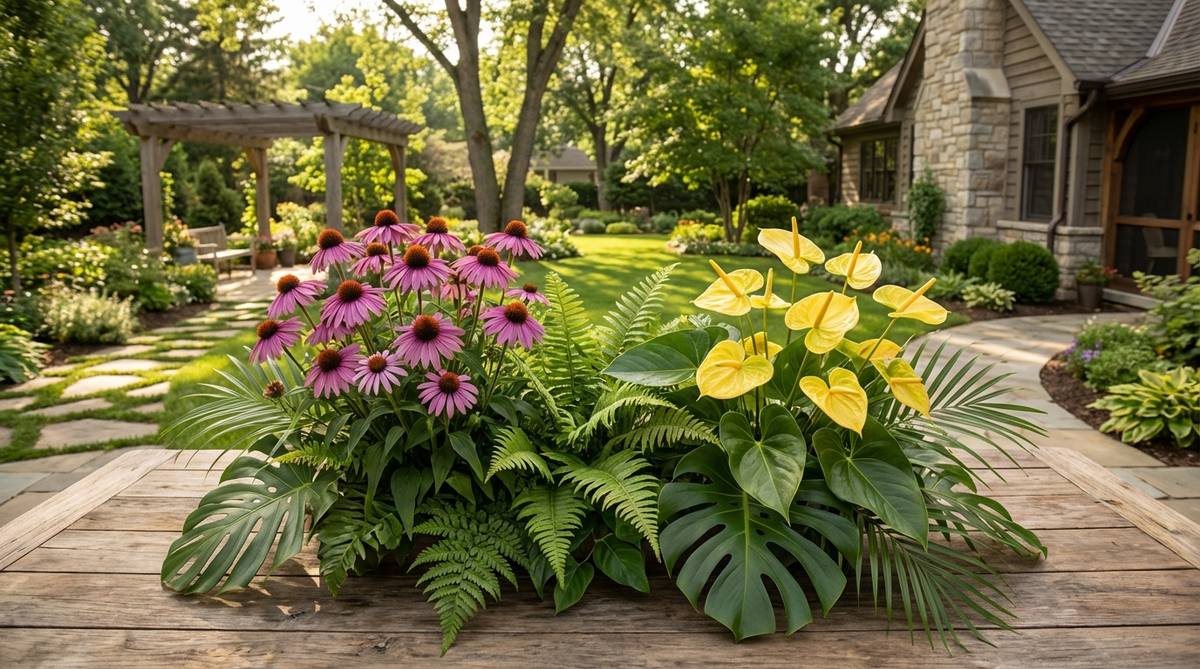
Echinacea and anthurium star in vibrant tropical centerpieces that celebrate bold color pairings. Purple and yellow blooms create natural contrast through complementary color theory.
Allow each arrangement to differ slightly in shape while maintaining color consistency. The variation adds organic interest across multiple tables.
These centerpieces bring California tropical aesthetics to garden settings, working particularly well for daytime celebrations.
21. Grounded Pink Tropical Displays
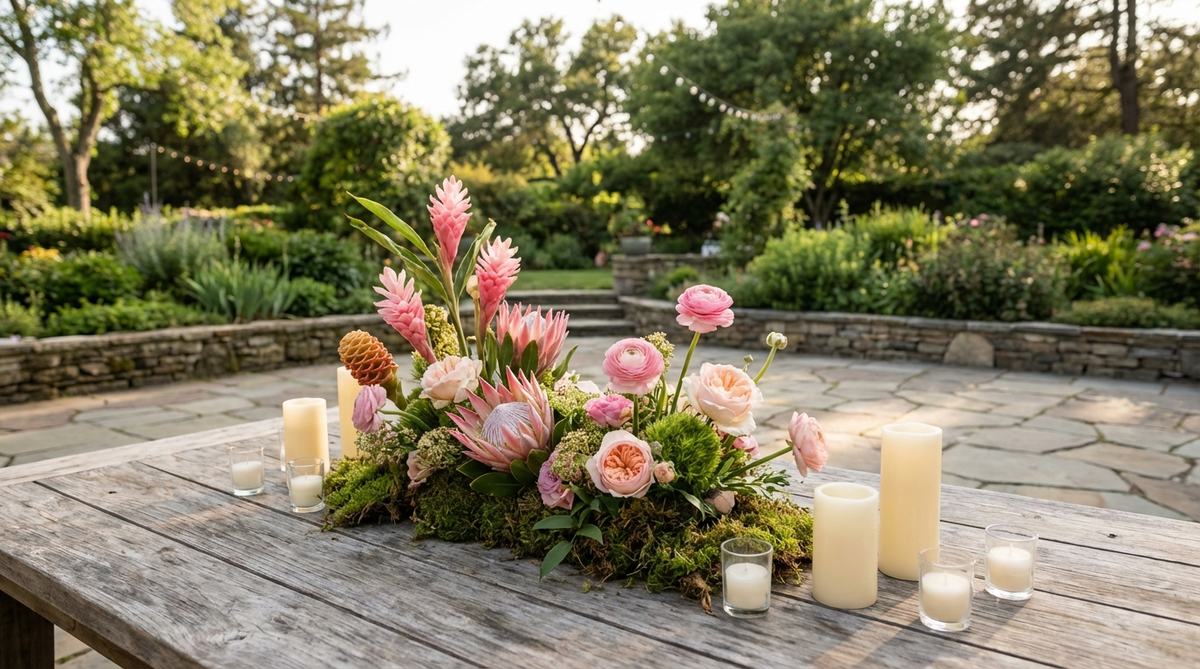
Low-profile arrangements that appear to grow directly from tabletops create whimsical garden magic. Tropical and classic blooms tangle together in organic clusters.
Position the floral mass to one side of the table center, allowing space for pillar and votive candles. The asymmetrical placement feels more natural than centered designs.
The arrangement’s interesting silhouette provides evening glow without blocking sightlines as candles illuminate the flowers from within.
22. Hydrangea Volume Centerpieces
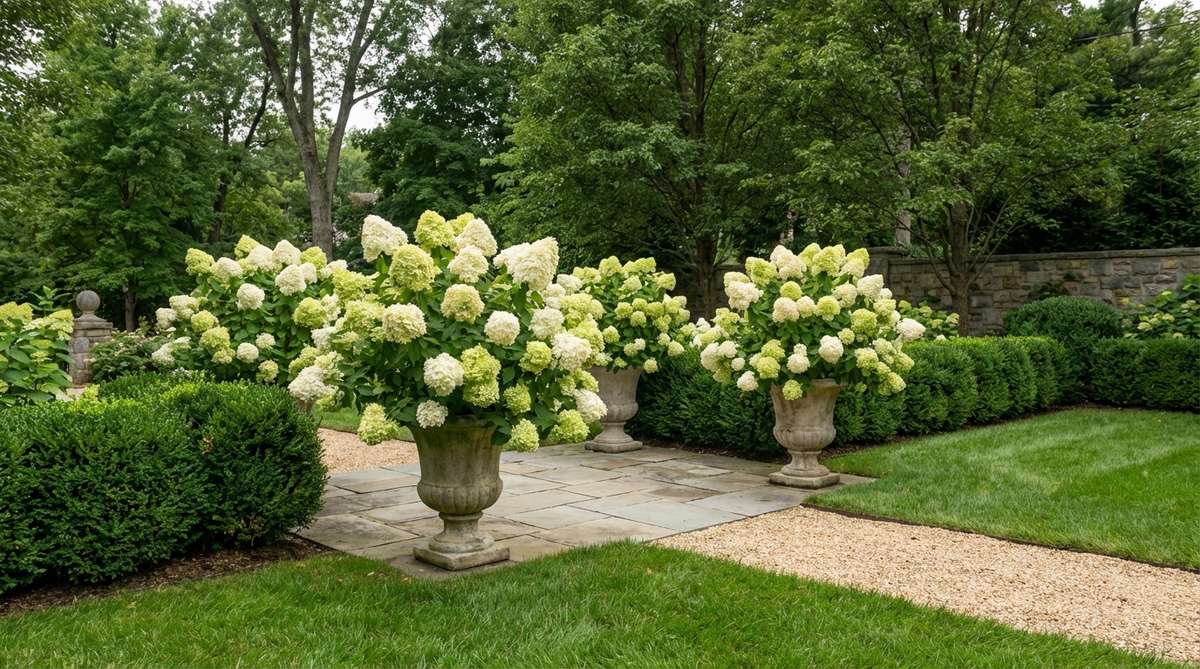
Hydrangeas deliver substantial visual impact through their clustered blooms and full heads. The versatile flowers work across color palettes and design styles.
Create modern sculptural arrangements or classic garden displays depending on vessel choice and companion flowers. Ivory and green hydrangeas offer timeless sophistication.
The voluminous blooms fill centerpieces efficiently, often requiring fewer stems than other flower varieties to achieve fullness.
23. Succulent and Air Plant Miniature Gardens
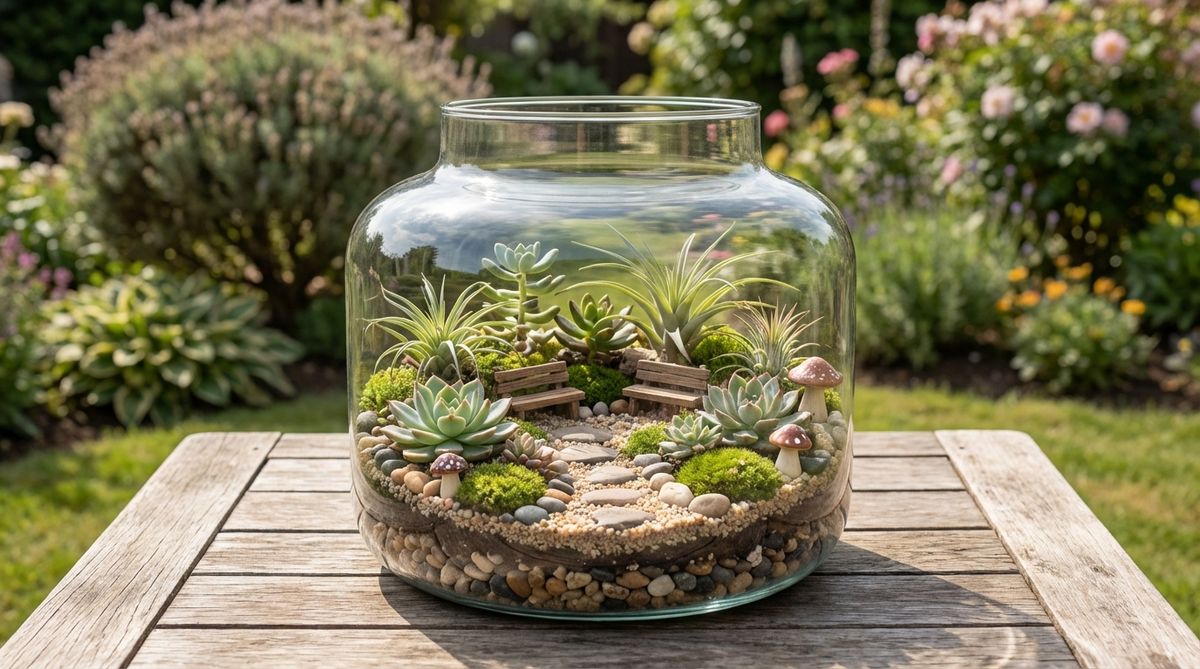
Glass containers filled with succulents and air plants create living centerpieces that double as favors. Each miniature landscape tells a small story through careful plant and element arrangement.
Layer small rocks to form paths, adding tiny decorative elements for personality. Vary container shapes across tables while maintaining plant palette consistency.
Guests enjoy discovering details in each unique garden world, and the arrangements survive without water throughout multi-hour events.
24. Birdcage Centerpieces with Florals
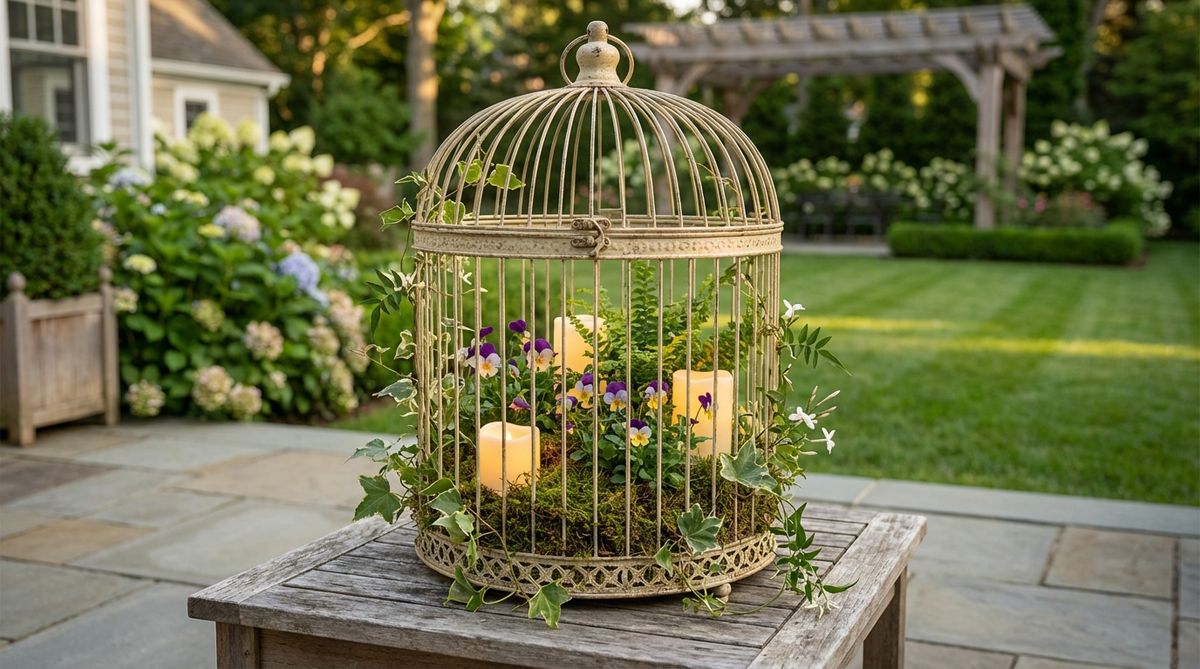
Vintage or new birdcages filled with moss, flowers, and battery candles create glowing miniature gardens. Vines thread through cage bars for organic integration.
Position LED candles inside for safe illumination that highlights the internal garden composition. The cages provide structure while maintaining an airy, see-through quality.
This approach combines functional lighting with decorative elements in a single cohesive centerpiece.
25. Chic White and Greenery Simplicity
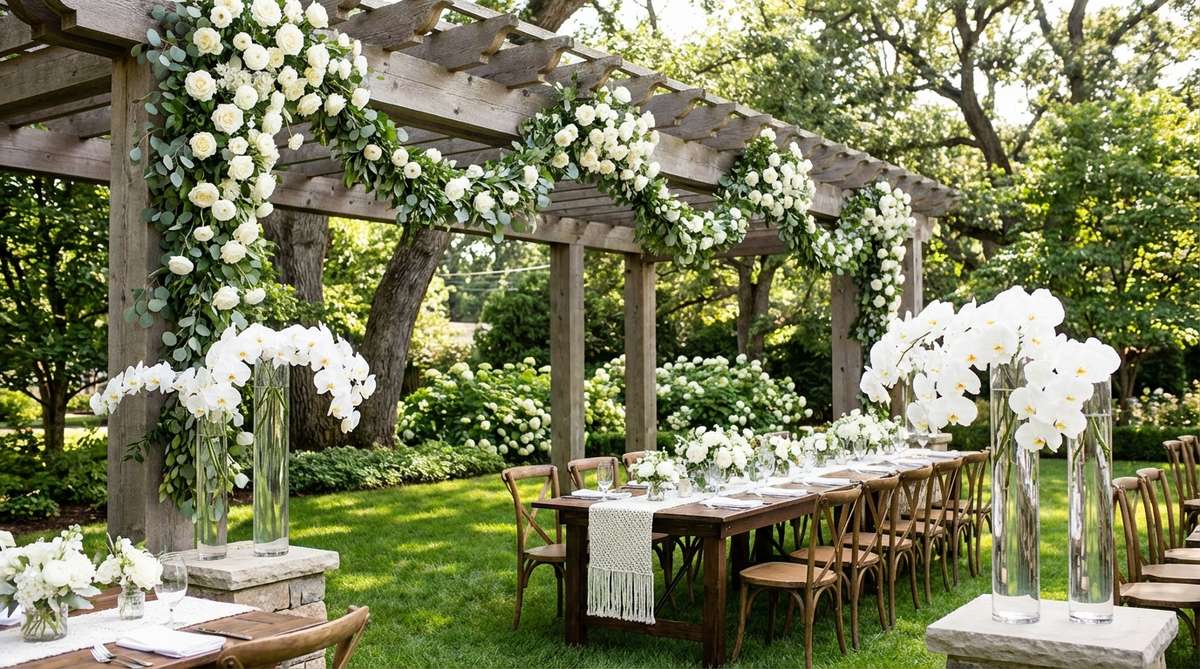
Pure white flowers paired with Italian ruscus and eucalyptus create elegant simplicity. The restrained palette allows form and texture to dominate.
Arrange flowing garlands down table centers, punctuating with tall white orchids in clear vases. Small baby’s breath clusters add delicate texture without introducing color.
The clean aesthetic works across seasons and complements any garden setting without competing with natural surroundings.
Lighting Installations That Extend Your Garden Decor Wedding Into Evening
Strategic lighting transforms garden spaces as daylight fades, creating romantic atmosphere while ensuring guest comfort and safety.
26. Woven Chandeliers on Laurel Posts
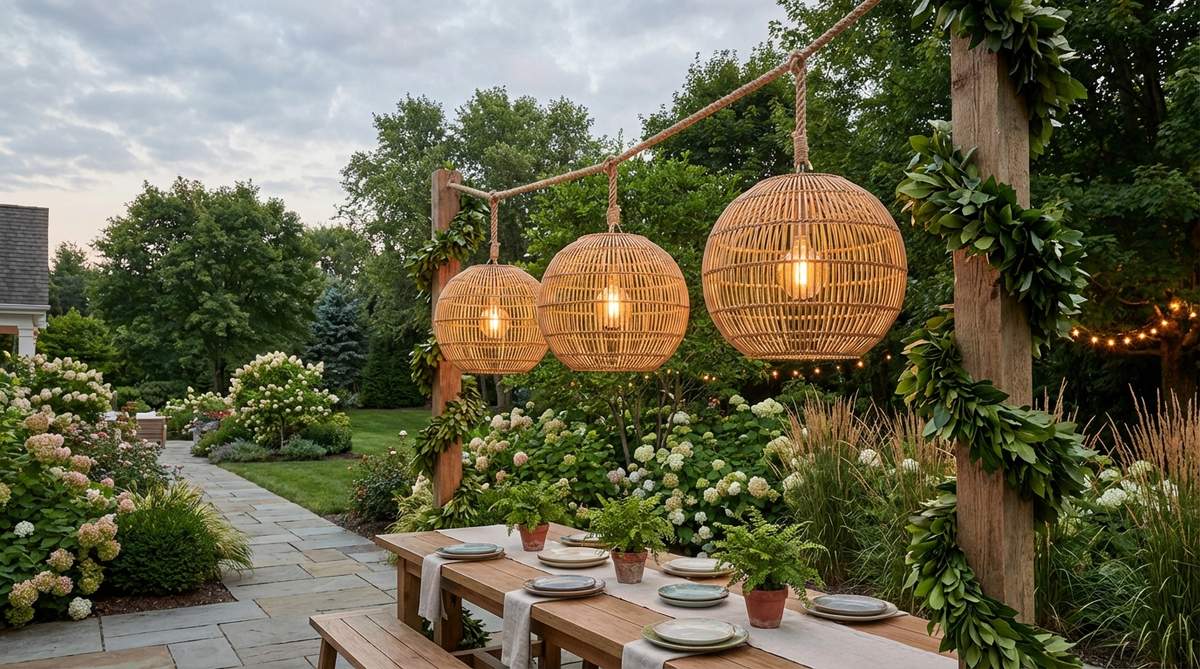
Natural fiber chandeliers hung from custom posts wrapped in laurel greenery blend organic materials with structured lighting. The textured fixtures add bohemian elegance.
Create posts using lumber wrapped spirally with fresh laurel or eucalyptus. Suspend chandeliers at varying heights for dimensional interest.
The woven material diffuses light softly while the natural posts integrate the installation into garden aesthetics.
27. Moravian Star Lantern Clusters
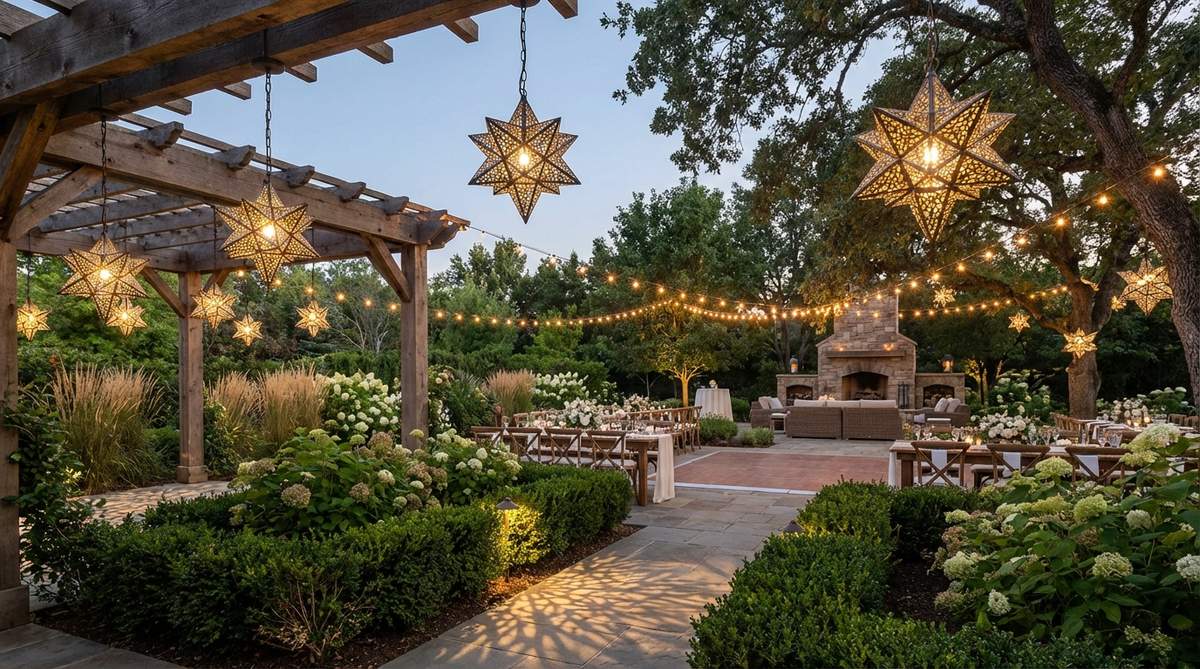
Geometric Moravian star lanterns provide sculptural lighting elements with heritage craftsmanship appeal. The faceted surfaces cast intricate shadow patterns.
Hang stars at different heights, combining with string lights for layered illumination. The geometric forms create striking contrast against organic garden shapes.
Available in multiple sizes, the stars work as standalone statement pieces or grouped installations that define reception zones.
28. Market Light Canopy
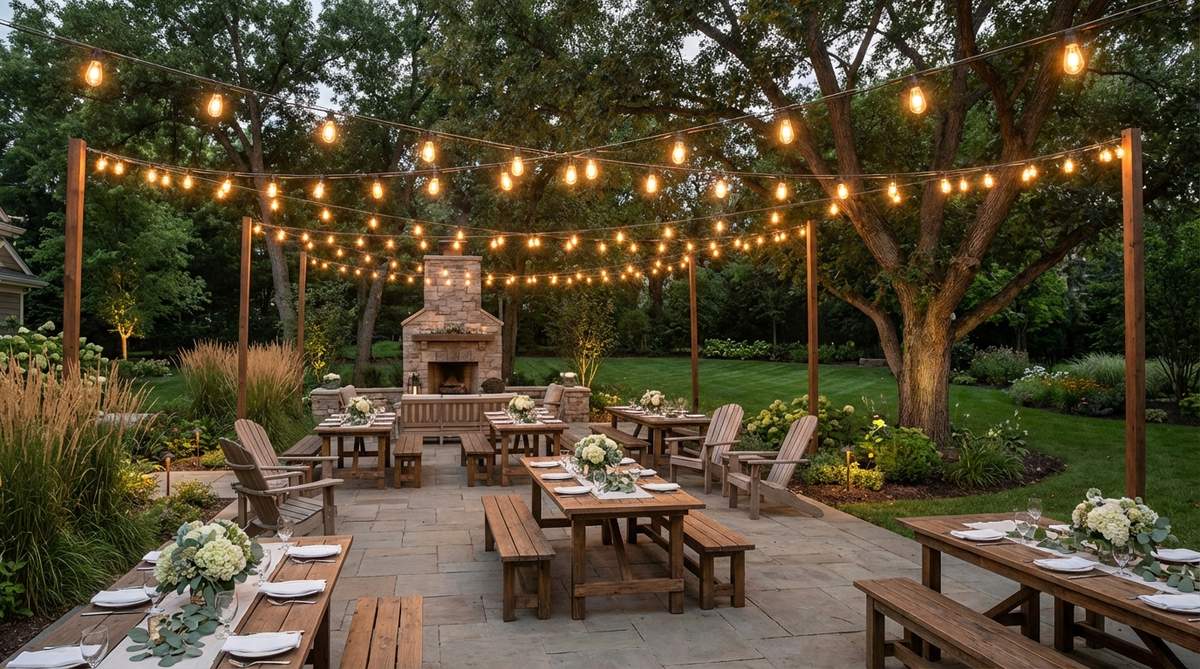
Simple market lights draped overhead create a glowing canopy that defines reception boundaries. The straightforward installation delivers maximum atmospheric impact.
String lights in parallel lines or crosshatch patterns depending on space configuration. The overhead position casts flattering downward light on guests and tables.
This versatile option works in backyards, venues, or beachside settings, adapting to any garden wedding location.
29. Ornate Gold Chandeliers
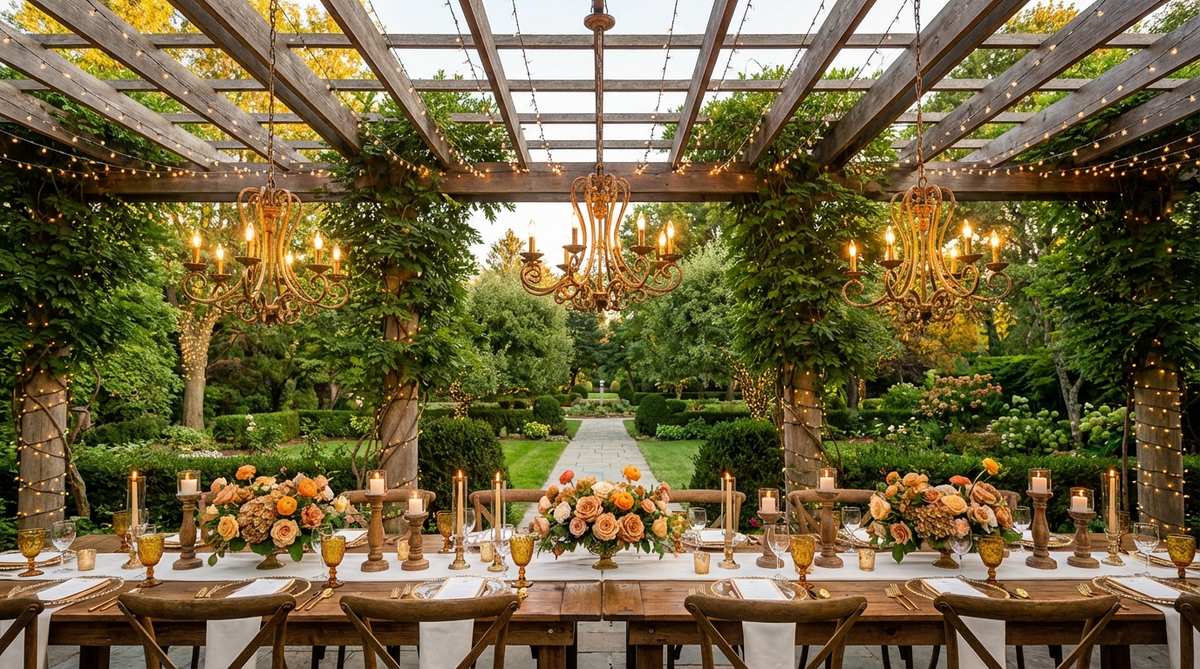
Gilded chandeliers suspended above banquet tables bring opulent contrast to natural outdoor settings. The metallic finish catches and reflects candlelight and string lights.
Hang multiple chandeliers in a row above long tables to create a formal dining atmosphere under open sky or tent coverage. The classic fixtures elevate casual outdoor venues.
Gold finishes complement warm-toned flowers and wood elements common in garden wedding palettes.
30. Low Arbor with Integrated String Lights
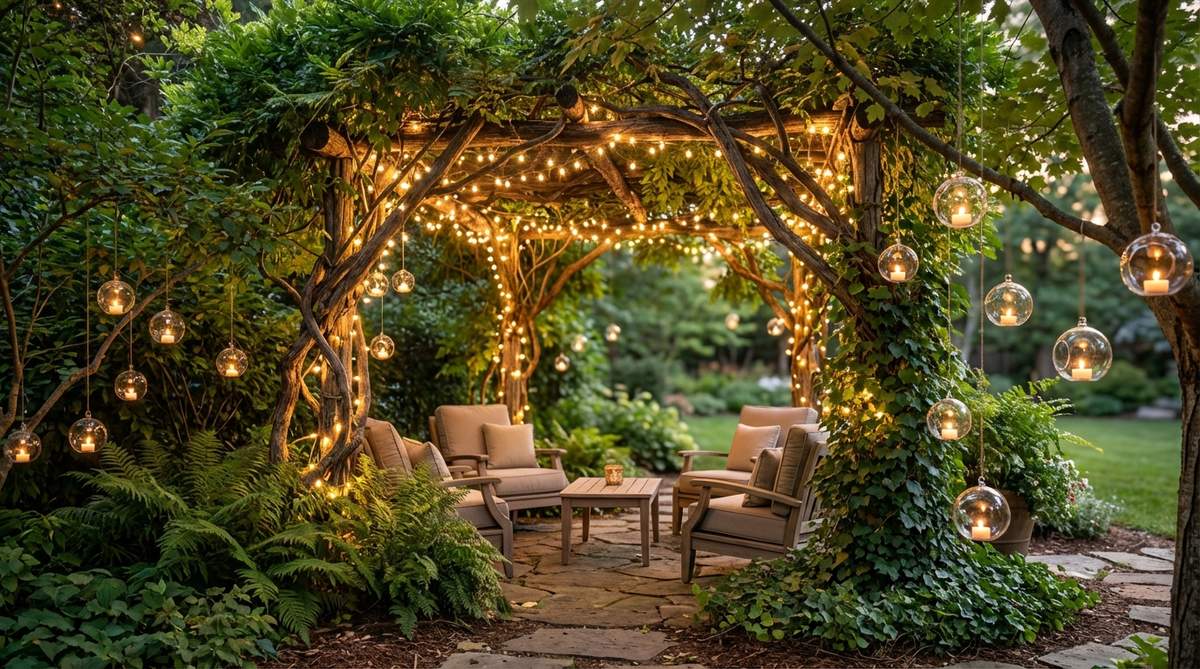
Woodland-inspired arbors heavy with greenery get woven lighting throughout branches and leaves. The integration creates an enchanted forest effect as lights twinkle within foliage.
Position seating beneath the lit arbor, adding hanging glass orbs with tea lights for additional glow points. The layered lighting creates depth and magic.
This installation works particularly well for lounge areas where guests gather between dinner and dancing.
31. Lanterns Suspended from Tree Limbs
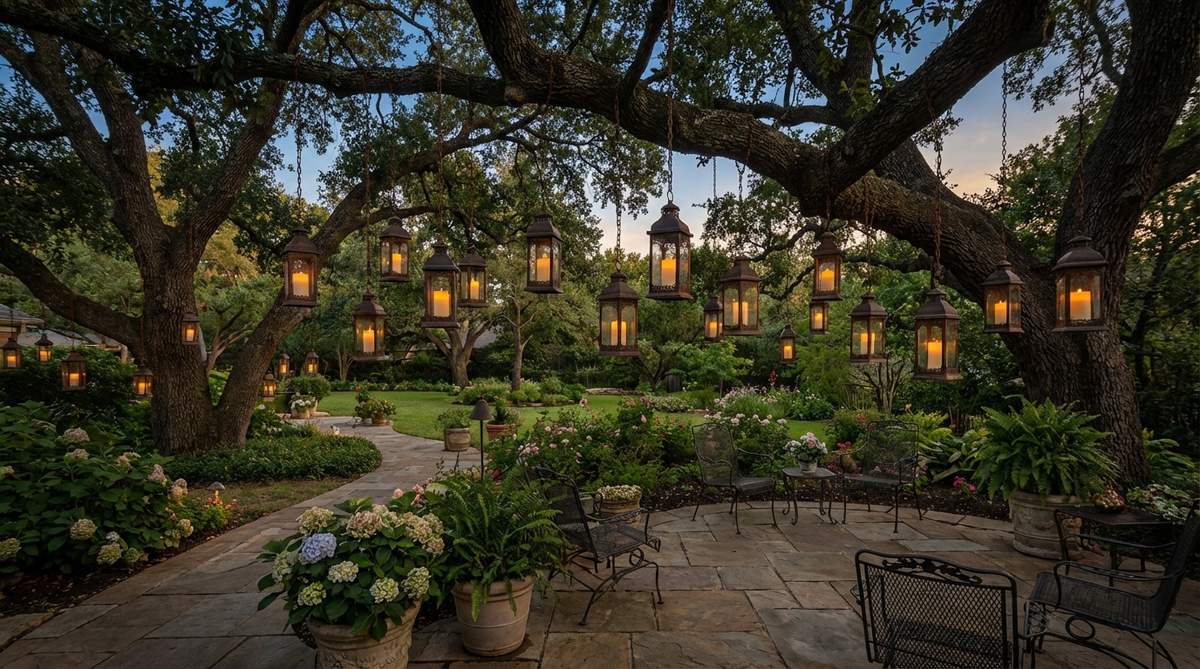
Metal or glass lanterns hung from low branches create organic lighting that uses existing garden architecture. The simple approach adds magic without extensive infrastructure.
Place lit candles inside lanterns for flickering warmth. The natural positioning at varied heights creates dynamic lighting zones.
This works exceptionally well for cocktail hours or as ceremony backdrop elements that continue functioning into evening events.
32. Vintage Hanging Lamps on Arbors
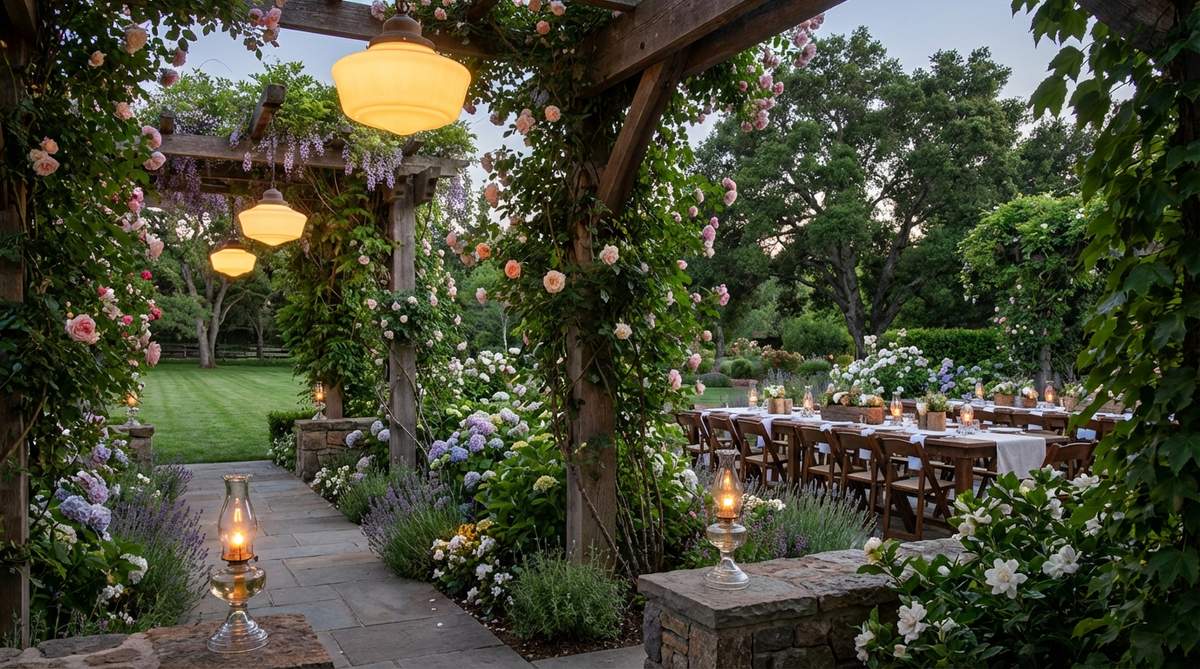
Antique glass lamps provide soft period lighting that highlights unique fixtures. The vintage aesthetic adds character while serving functional evening illumination needs.
Suspend lamps from handmade arbors decorated with blooms and greenery. The combination of old-world lighting and fresh natural elements creates romantic tension.
Source authentic vintage pieces or quality reproductions to achieve the weathered glass and metal patina that defines the look.
33. Disco Ball and Neon Sign Combination
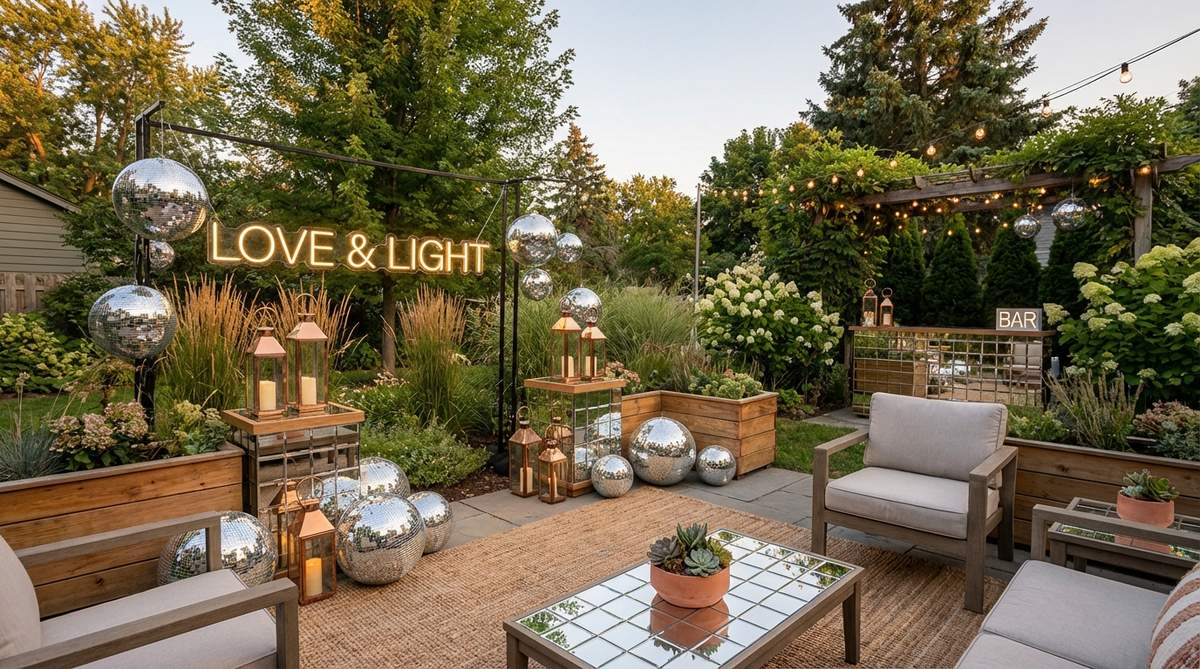
Reflective disco balls positioned near neon signs and lanterns create contemporary lighting with playful energy. The mirrored tiles multiply light sources throughout the space.
Install at bar areas or lounge zones where the modern aesthetic complements socializing. The unexpected elements add personality to traditional garden settings.
Balance the contemporary lighting with natural elements elsewhere to maintain overall garden wedding cohesion.
Architectural Elements That Define Garden Decor Wedding Spaces
Structural elements organize outdoor venues into defined zones while providing frameworks for additional decoration.
34. Trellis Installations
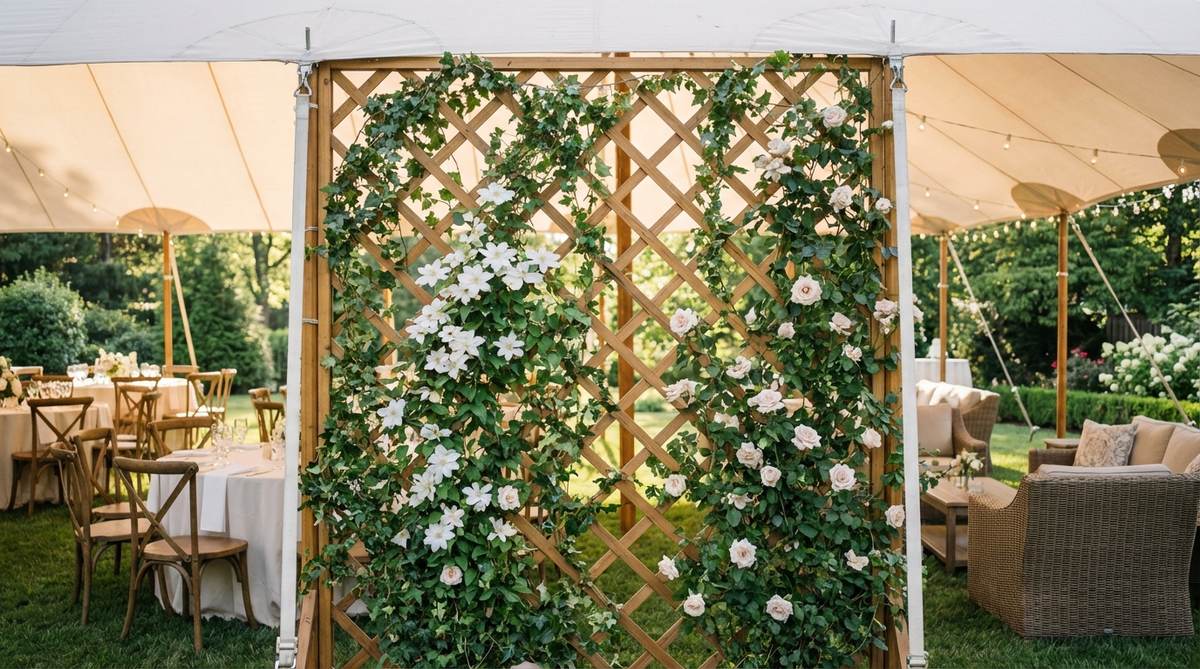
Freestanding trellises create vertical garden walls that section reception areas. The lattice structure supports climbing greenery and creates intimate spaces within open venues.
Position trellises to define boundaries between cocktail, dining, and dancing zones. Weave fresh vines and flowers through the openings for immediate garden integration.
The see-through quality maintains sightlines while providing visual separation that helps guests navigate the event flow.
35. Lattice Wall Stage Backdrop
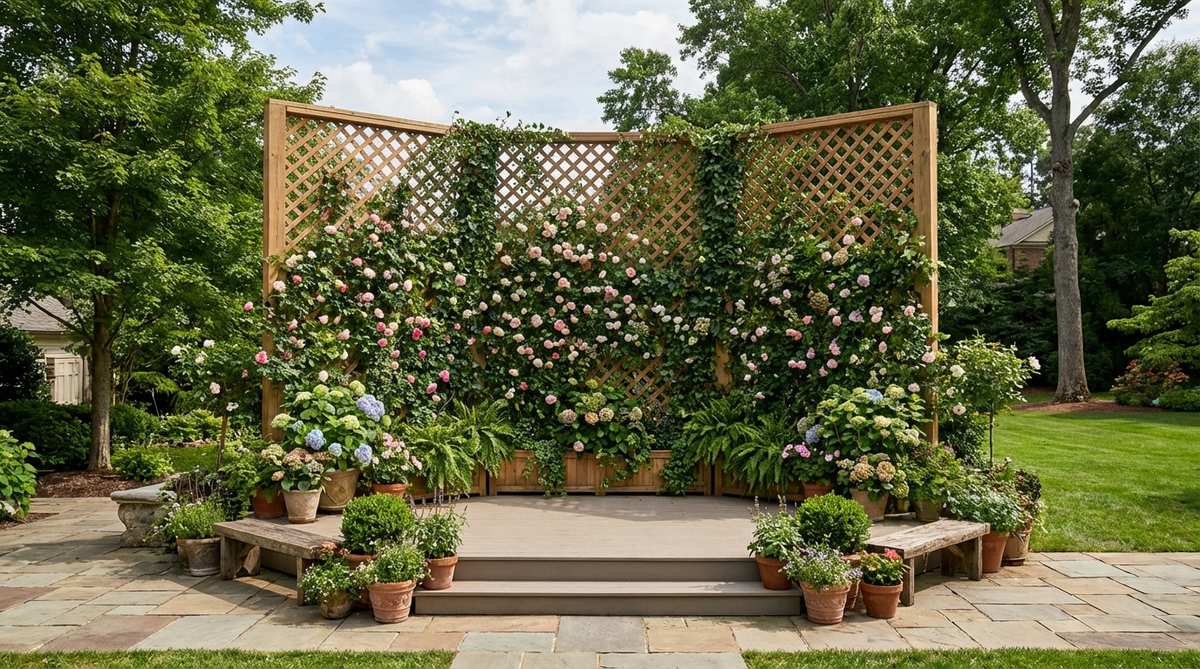
Decorative lattice behind live bands or DJ setups transforms functional spaces into design opportunities. The wall becomes a focal point that guests view throughout dancing.
Cover lattice with greenery and flowers to create a garden-inspired stage design. The vertical element adds dimension to otherwise flat performance areas.
This approach ensures all event zones receive thoughtful decoration rather than focusing exclusively on ceremony and dining spaces.
36. Gazebo Focal Points
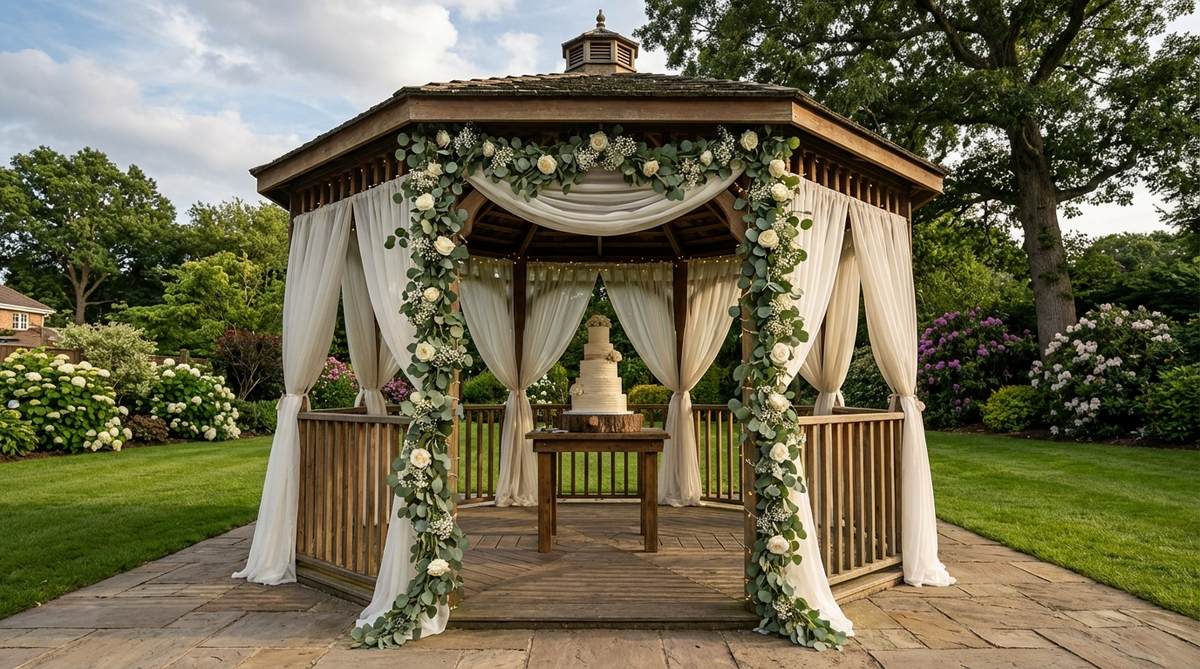
Existing or temporary gazebos provide natural focal points for ceremonies or cake displays. The covered structures offer practical shelter while framing special moments.
Enhance gazebo posts with garland wraps and drape sheer fabric from the roof structure. The permanent architecture requires less added decoration than open-air setups.
Position the structure to take advantage of garden views, allowing the gazebo to frame landscape features in ceremony photographs.
37. Champagne Wall Installations
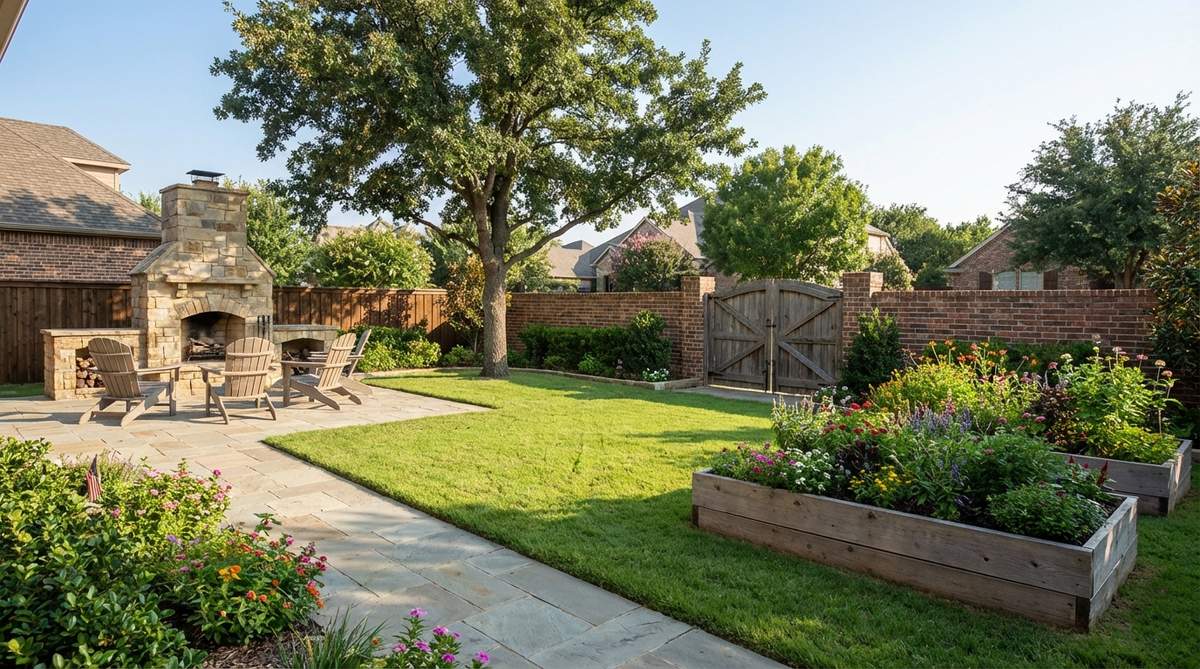
Wood-framed champagne walls greet guests with both function and visual appeal. The structured display organizes drinks while creating an Instagram-worthy arrival moment.
Construct the wall from warm-toned wood that complements garden settings. Position near entry points where guests can easily grab drinks before proceeding to ceremony or cocktail areas.
The wall serves double duty as decor and service element, streamlining drink distribution while adding contemporary flair.
Natural Accents That Complete the Garden Decor for Wedding Vision
Small organic details tie the overall design together while reinforcing the connection between celebration and natural setting.
38. Fresh Fruit Centerpiece Integration
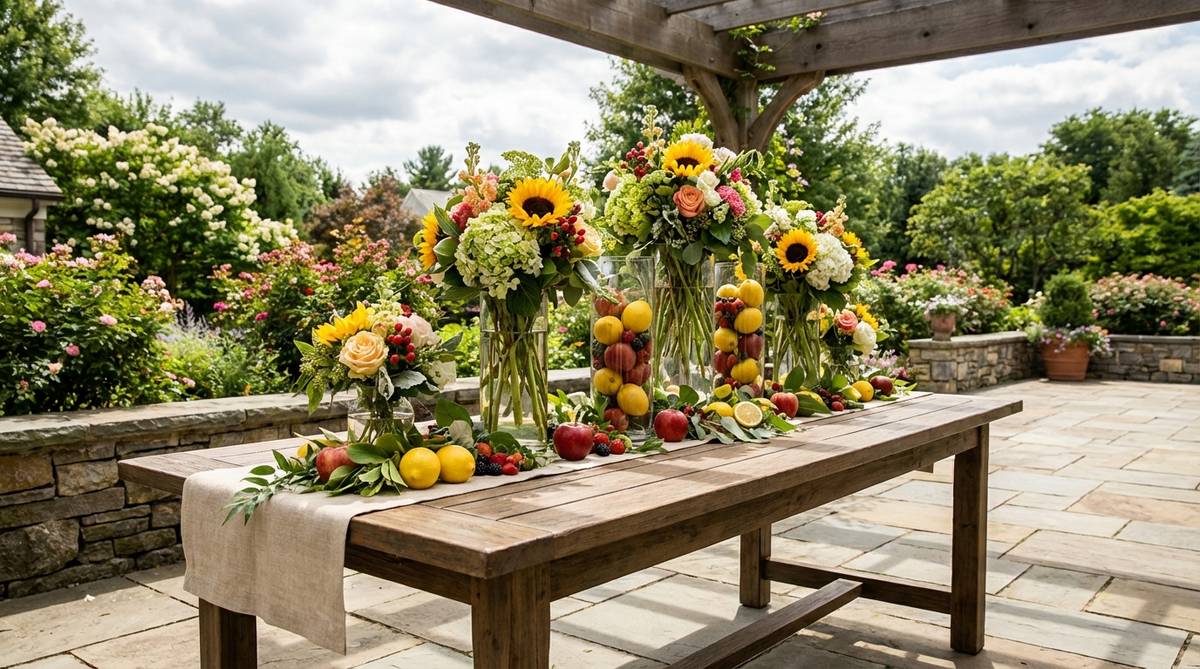
Lemons, apples, or berries incorporated into table arrangements add unexpected organic elements. The produce brings color, texture, and subtle fragrance to centerpieces.
Place whole fruits in glass vessels or tuck them into floral arrangements for pops of color. Citrus works particularly well for summer celebrations.
The natural elements connect dining decor to garden abundance and seasonal harvest themes.
39. Tree Branch and Fabric Weaving
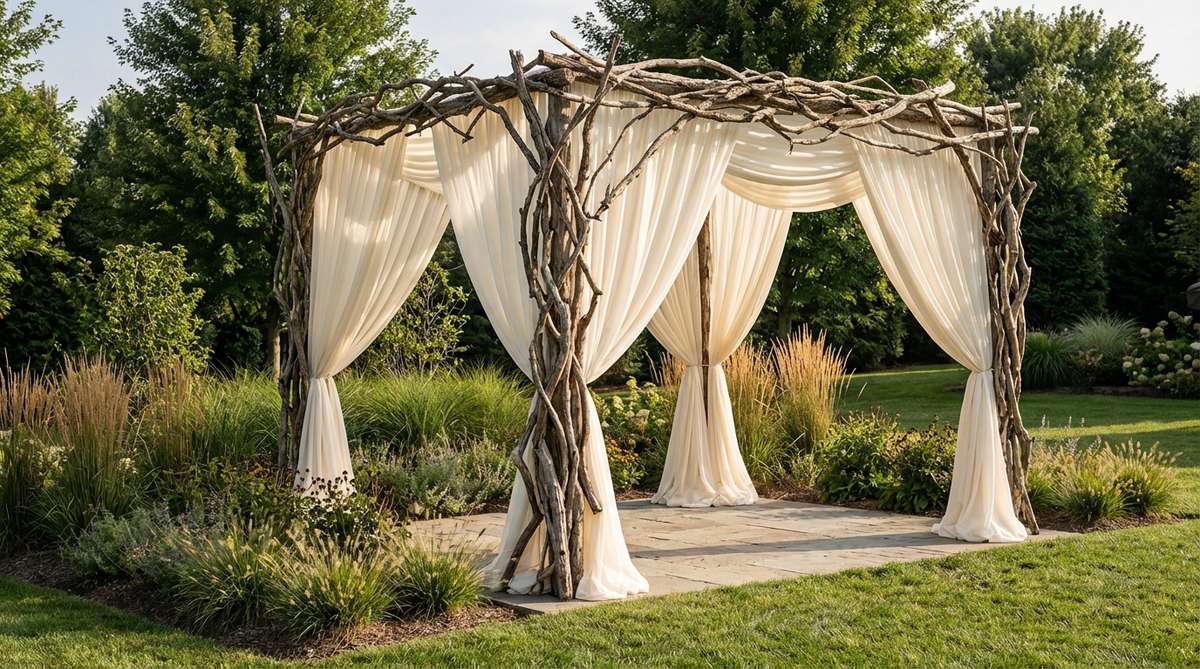
Raw tree branches woven with silky drapes create artistic contrast between natural and refined materials. The combination achieves modern sophistication while maintaining organic roots.
Secure branches as structural elements, then thread lightweight fabric through to soften the hard edges. The interplay creates visual interest through material opposition.
This technique works for arbors, backdrops, or hanging installations where the mixed-media approach adds contemporary edge.
40. Naturally Dyed Table Linens
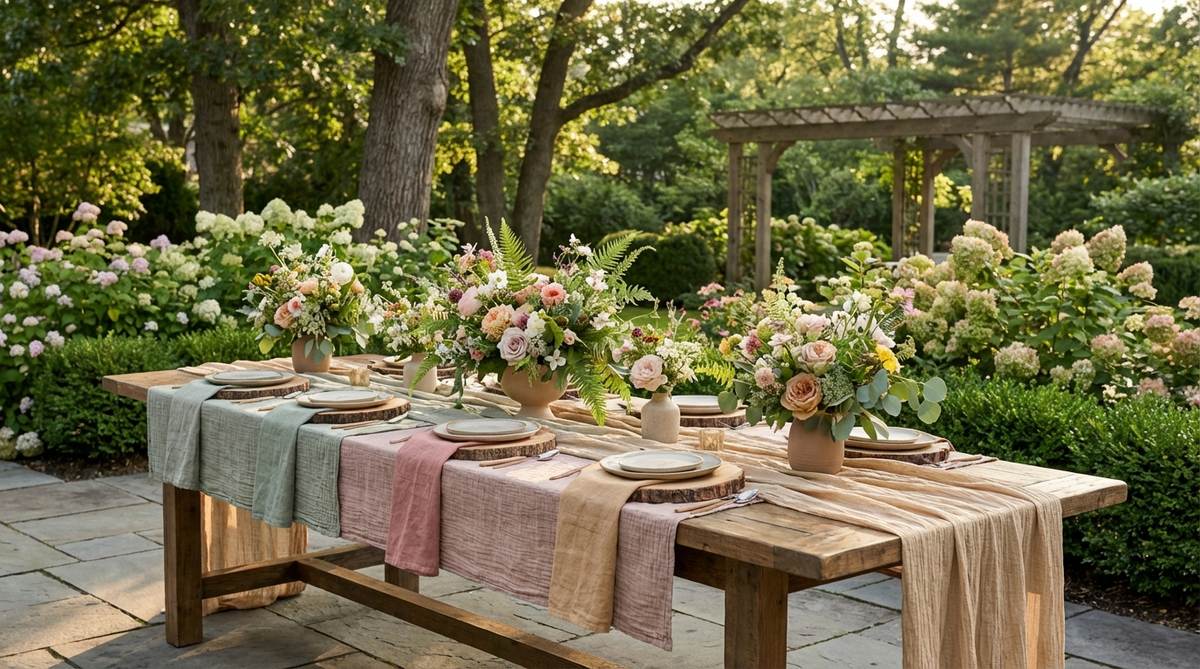
Linens colored with plant-based dyes reinforce organic aesthetics while introducing subtle earth tones. The muted colors complement rather than compete with floral arrangements.
Select linens in sage, dusty rose, or warm sand tones achieved through natural dye processes. The understated palette creates cohesion across multiple tables.
Pair with raw wood chargers or natural stone elements to build layers of organic texture.
41. Moss and Stone Table Accents
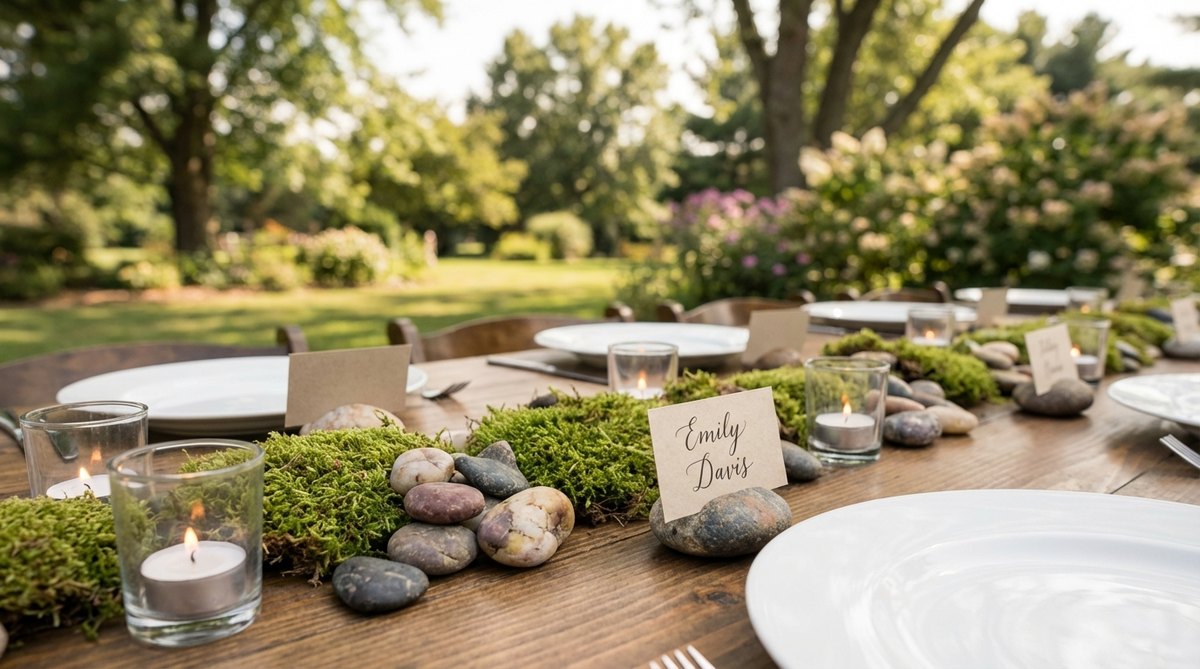
Small moss patches and smooth river stones scattered on tables bring miniature garden elements to each place setting. The tactile objects invite guest interaction.
Position moss-covered pieces around votive candles or use as place card holders. The natural materials require no special care and withstand outdoor conditions.
These small touches reinforce the garden theme without requiring extensive florals at every seat.
42. Wildflower and Dried Grass Bundles
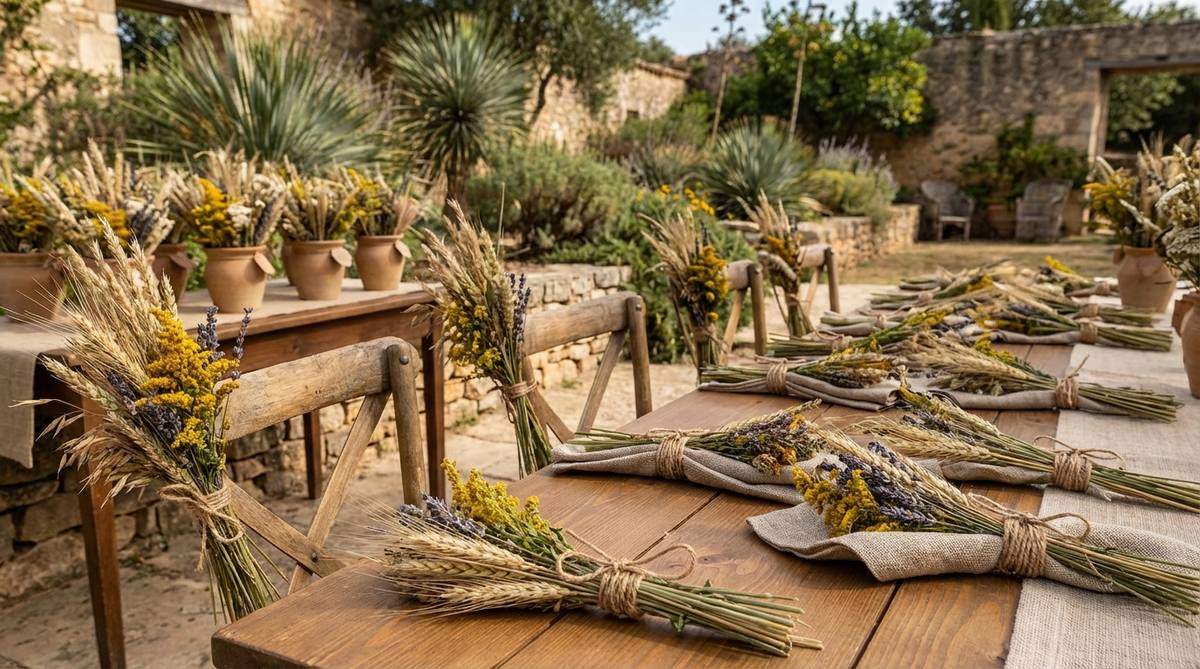
Dried grasses tied with wildflowers create rustic napkin ties or chair decorations. The preserved materials work across seasons without wilting concerns.
Gather small bundles secured with natural twine or ribbon in wedding colors. The texture adds dimension while celebrating meadow and prairie aesthetics.
Guests can take bundles home as simple favors that dry beautifully and last indefinitely.
Bringing Your Garden Decor Wedding Vision to Life
A successful garden decor wedding balances natural beauty with intentional design choices that enhance rather than overshadow the outdoor setting. The forty-plus ideas presented here demonstrate how ceremony backdrops, aisle treatments, centerpieces, lighting, and organic accents work together to create cohesive celebration spaces. Start with two or three focal installations that match your style priorities, then layer in complementary details that reflect the season and your personal aesthetic. The result transforms any garden venue into a memorable setting where natural elegance meets thoughtful celebration design.
Frequently Asked Questions
What are the essential elements for garden decor wedding ceremonies?
Essential elements include a focal backdrop or arch that frames the vows, aisle markers that guide the processional path, and seating arrangements that allow guests clear views while complementing the garden setting. Designers typically recommend starting with these three foundational pieces before adding supplementary details like signage, programs, or petal scatter. The backdrop receives the most visual attention in photos, so allocate your budget accordingly to ensure this element makes a strong statement that reflects your overall aesthetic vision.
How do you prevent outdoor wedding decorations from being damaged by wind or weather?
Secure all vertical elements using weighted bases, ground stakes, or sandbags hidden within decorative containers. Choose battery-operated candles instead of open flames for safety and reliability. Designers recommend testing setups the day before to identify stability issues, using floral wire to anchor loose elements, and having a backup plan for rain that includes tent options or indoor alternatives. Communicate with your venue about weather protocols and ensure your rental company provides appropriate anchoring systems for arches, signage, and other freestanding pieces.
What garden wedding flowers work best across different seasons?
Roses, hydrangeas, and greenery varieties like eucalyptus work reliably year-round in most climates. Spring celebrations benefit from tulips, peonies, and lilacs, while summer showcases dahlias, zinnias, and sunflowers. Fall weddings feature mums, marigolds, and autumn foliage, whereas winter gardens utilize evergreens, amaryllis, and hellebores. Selecting seasonal flowers reduces costs significantly and ensures blooms appear fresh and vibrant throughout your event. Consult with local florists about what grows regionally during your wedding month for the best quality and value.
How much lighting is needed for an evening garden wedding reception?
Professional designers recommend layering three lighting typesambient overhead lights like string lights or chandeliers, task lighting for dining tables and bars, and accent lighting for pathways and key features. Calculate approximately one string light strand per 10-15 linear feet of space, plus table lighting that allows guests to see food and read menus comfortably. Add 20% more lighting than you initially estimate, as outdoor spaces absorb more light than indoor venues. Test lighting at dusk before the event to ensure adequate coverage as natural light fades.
Can garden wedding decorations be reused or repurposed after the event?
Many elements transition successfully to home use or other celebrations. Living centerpieces in pots can be planted in gardens, while preserved florals and dried arrangements maintain appearance for months. Structural pieces like arches, trellises, and arbors often have resale value or can enhance home gardens permanently. Coordinate with your florist about preserving bouquets and special arrangements through drying or pressing. Consider gifting potted plants or succulent terrariums to guests as favors, extending the celebration’s impact while reducing waste and maximizing your decoration investment.