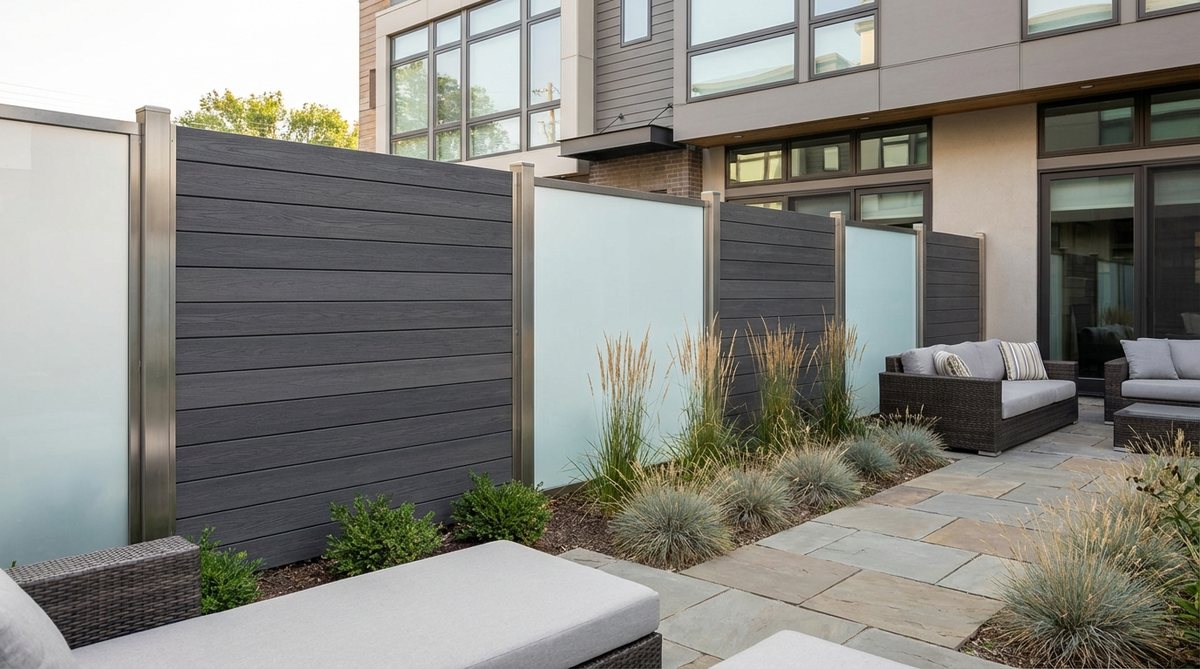
A contemporary garden fence transforms urban outdoor spaces into stylish, functional retreats that balance privacy with architectural appeal. Modern homeowners increasingly prioritize fencing that complements clean-lined architecture while addressing the unique challenges of compact city lots. Fresh Garden Ideas presents expert solutions that merge innovative materials, smart design, and sustainable practices to elevate any urban garden boundary.
Design SnapshotKey Principles
- Visual Expansion: Horizontal lines and slatted designs create the illusion of width in narrow urban yards
- Material Innovation: Composite materials and powder-coated metals offer durability with minimal environmental impact
- Dual Functionality: Integrated planters, seating, and storage maximize every square foot
- Light Management: Strategic spacing between panels maintains privacy while preserving natural illumination
Minimalist Metal and Composite Designs
Metal and composite materials define contemporary urban fencing through their durability, low maintenance, and architectural precision. These options suit homeowners seeking long-term value without recurring refinishing costs.
1. Powder-Coated Aluminum Panel Fence
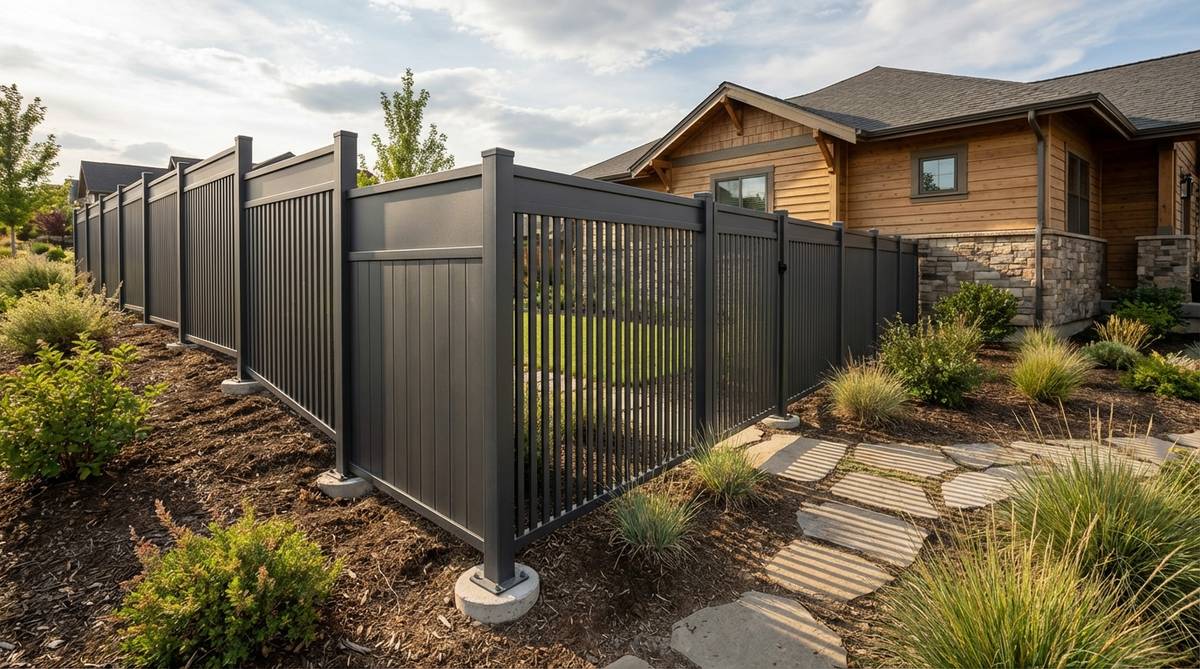
Anthracite gray aluminum panels deliver industrial elegance while resisting rust and corrosion in humid climates. The powder coating penetrates the metal surface, ensuring color remains consistent for decades.
Designers use full-height panels for maximum privacy or alternate panel heights to create rhythm along property lines. The lightweight material simplifies installation on uneven terrain common in urban lots.
Pair with concrete footings for stability in high-wind areas. Annual hosing removes surface dirt without chemical cleaners.
2. Recycled Composite Tongue-and-Groove Panels
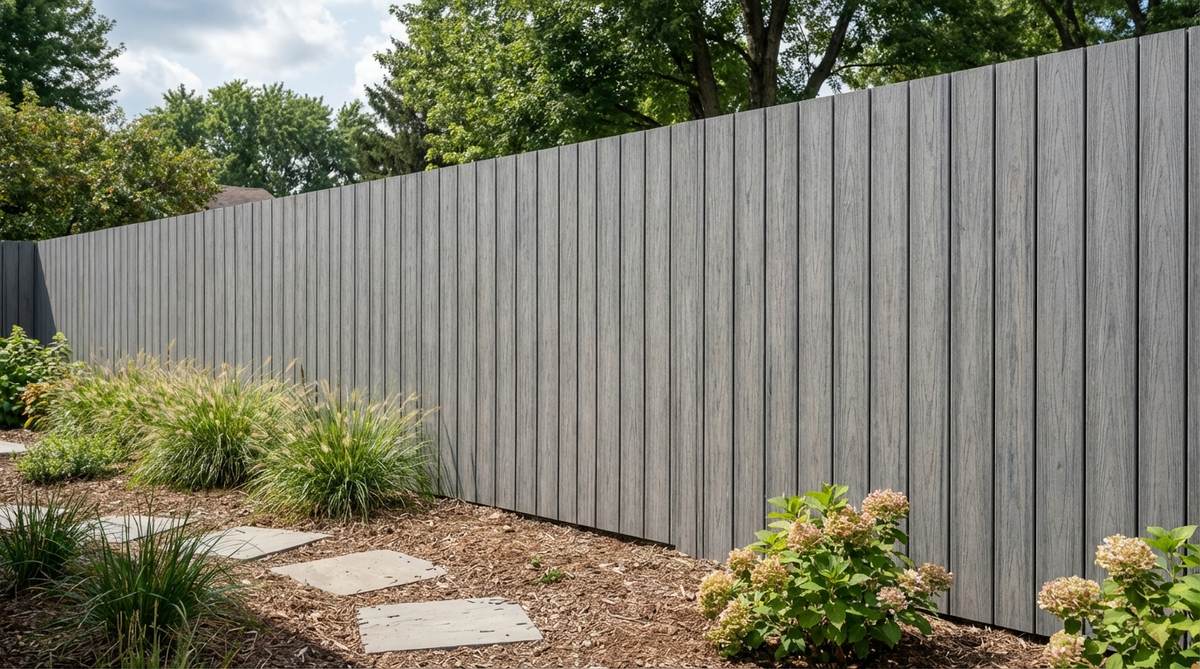
Composite fencing manufactured from recycled HDPE plastic and wood fibers mimics natural timber without maintenance penalties. The interlocking tongue-and-groove system creates seamless surfaces that block sightlines completely.
Install vertically for traditional appeal or horizontally to emphasize garden width. The material withstands temperature fluctuations better than solid wood.
Choose from weathered gray, cedar, or espresso finishes. The core color throughout prevents visible wear at edges.
3. Black Steel Frame with Corrugated Metal Infill
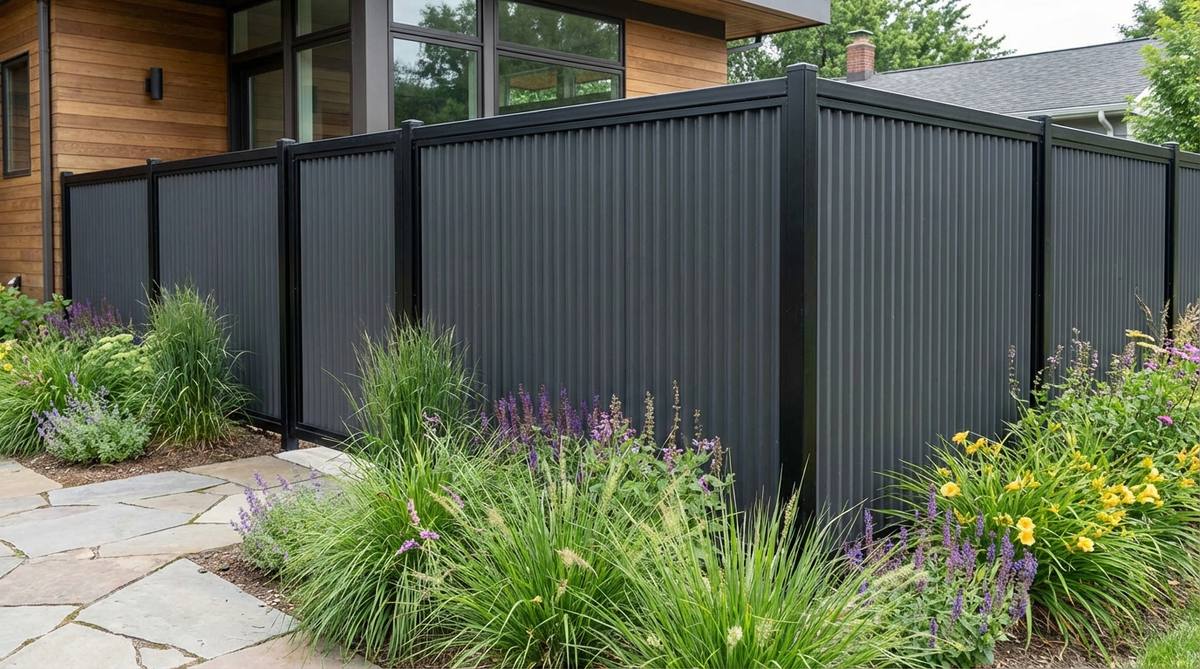
Matte black steel frames supporting corrugated metal sheets create bold industrial statements in loft-style gardens. The vertical corrugation adds subtle texture while maintaining clean geometry.
Frame construction allows modular replacement of individual panels without dismantling entire sections. Welded corners provide superior structural integrity compared to screwed joints.
Apply rust-inhibiting primer before installation in coastal environments. The dark finish recedes visually, making plantings stand out.
4. Perforated Metal Screen Fence
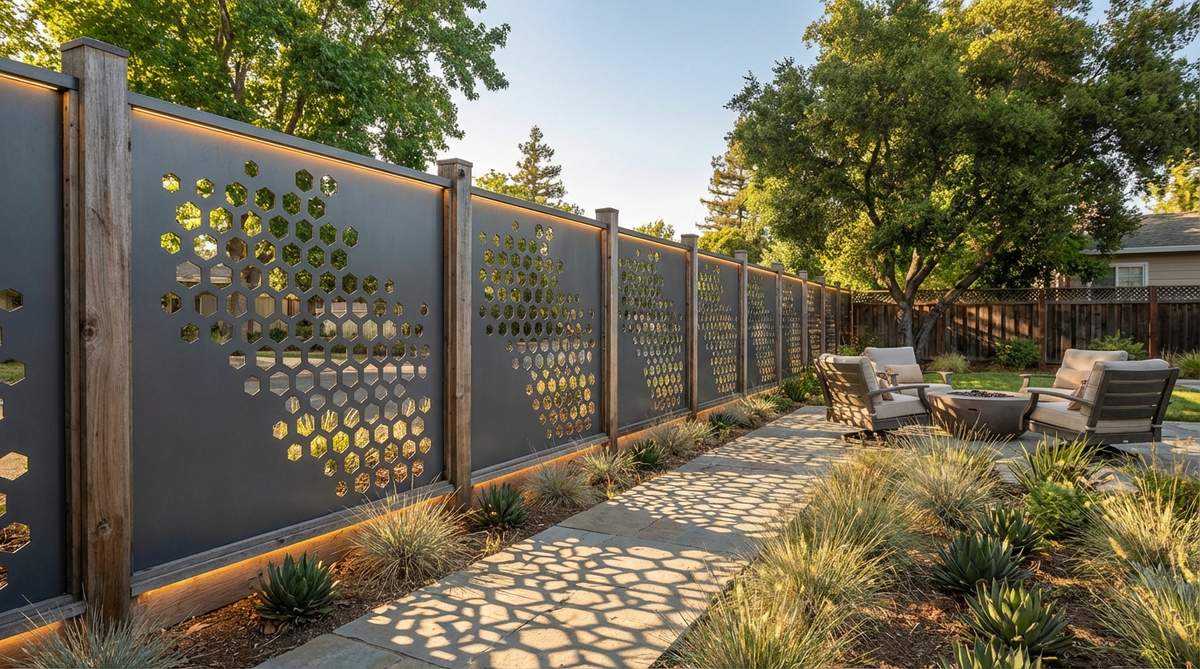
Laser-cut geometric patterns in metal sheets balance privacy with air circulation and filtered light. Hexagonal, circular, or custom motifs add architectural interest without overwhelming adjacent plantings.
Perforation density determines privacy levels—tighter patterns for front yards, more open designs for side boundaries. The screens function as living art that casts decorative shadows throughout the day.
Galvanized steel or aluminum options suit different budgets. Backlight the panels with ground-mounted LEDs for evening drama.
5. Composite Metro-Style Continuous Slat System
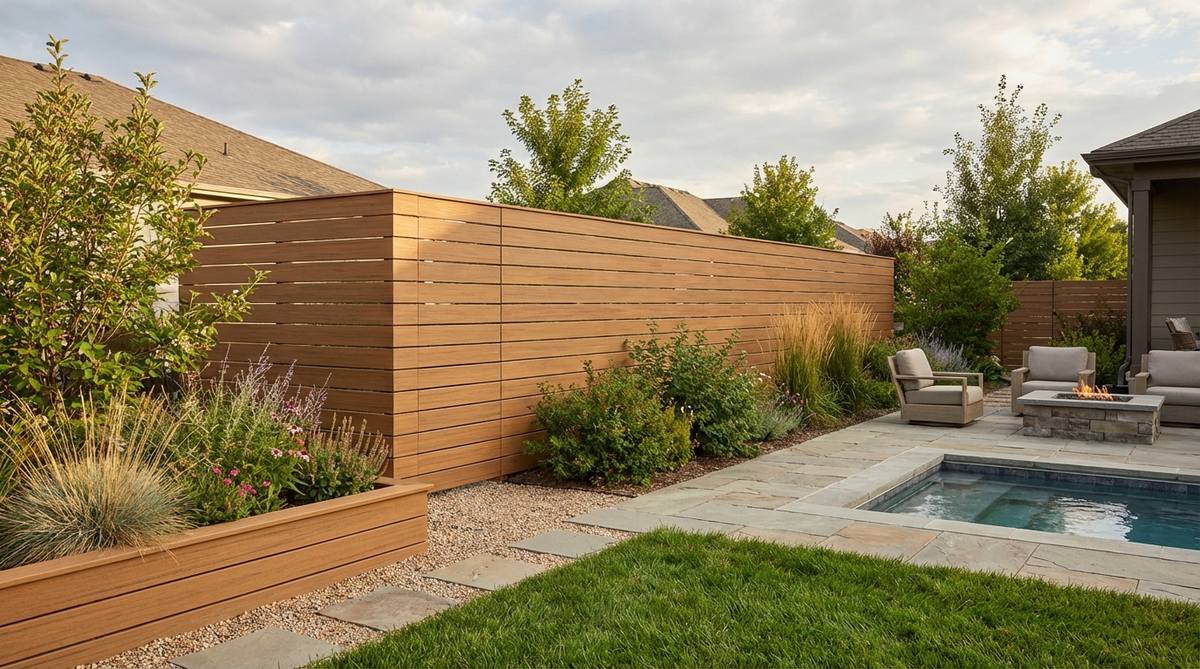
Frameless horizontal slats that appear to float create ultra-modern boundaries with no visible posts from either side. Hidden mounting hardware maintains uninterrupted lines across long runs.
This design works exceptionally well bordering patios or pools where visual continuity matters. The shadow lines between boards add dimension without competing with hardscaping.
Specify wider slats in small gardens to avoid visual clutter. The system installs faster than traditional post-and-panel fencing.
Horizontal Slat Systems That Stretch Visual Space
Horizontal board orientation makes narrow urban lots feel wider while delivering contemporary aesthetics that complement modern architecture. Designers favor this approach when visual expansion matters as much as boundary definition.
6. Cedar Horizontal Board Fence with Hidden Fasteners
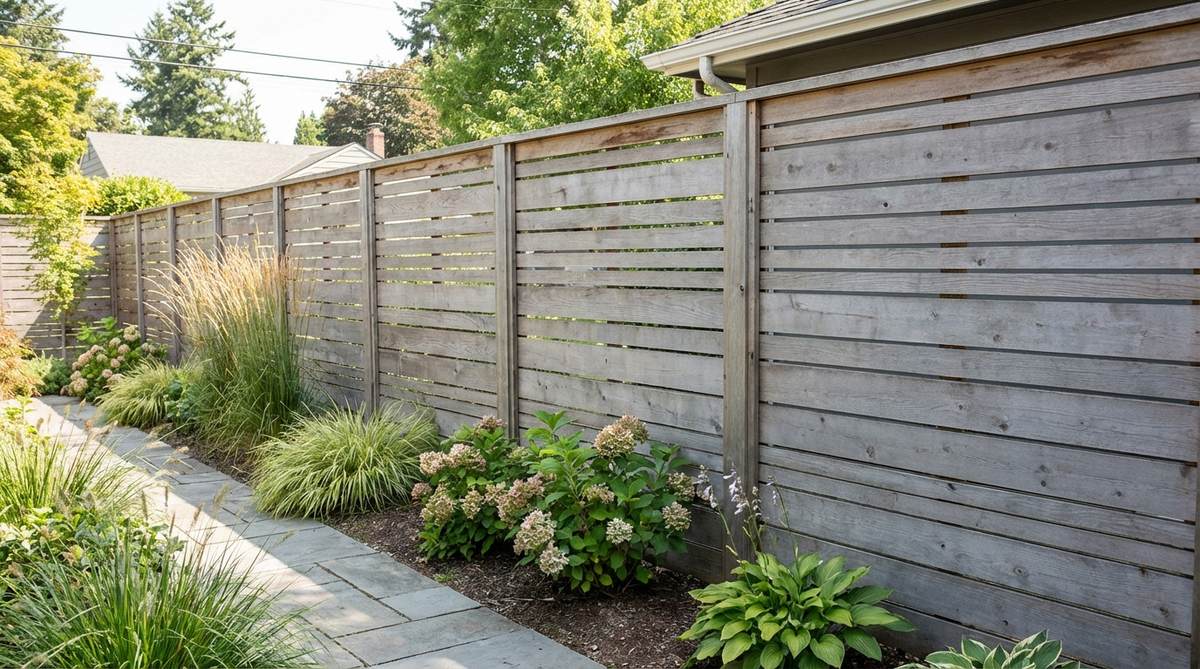
Western red cedar boards arranged horizontally age gracefully to soft gray when left untreated. Hidden clip systems eliminate visible screws for cleaner sightlines.
Boards span between posts set eight feet apart, creating strong horizontal emphasis. Vary board widths between 4 and 8 inches to add subtle rhythm.
Cedar’s natural oils resist decay without chemical treatment. Seal with clear penetrating oil to maintain golden tones.
7. Alternating-Width Horizontal Slat Fence
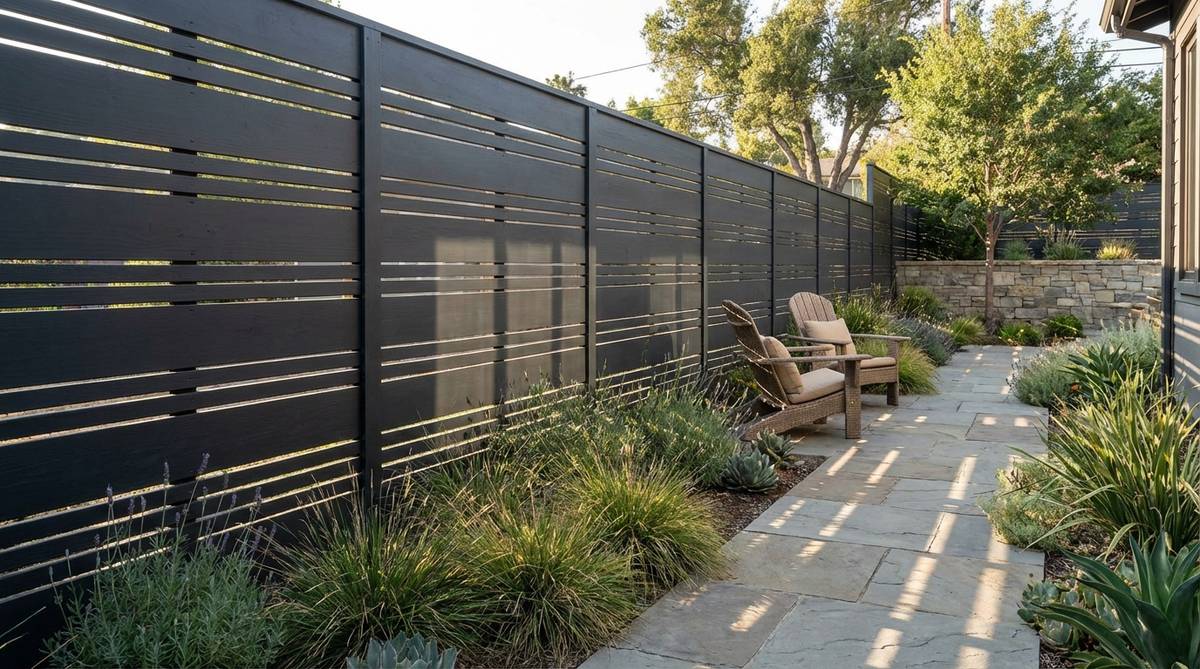
Combining narrow 2-inch slats with wider 6-inch boards creates visual interest while maintaining modern restraint. The pattern prevents monotony across long fence runs.
Designers space alternating widths randomly or in repeating sequences depending on garden formality. Wider boards at eye level enhance privacy where needed most.
Paint all components matching trim color for architectural cohesion. The varied widths cast changing shadow patterns as sun moves.
8. Horizontal Ipe Wood Slat Fence
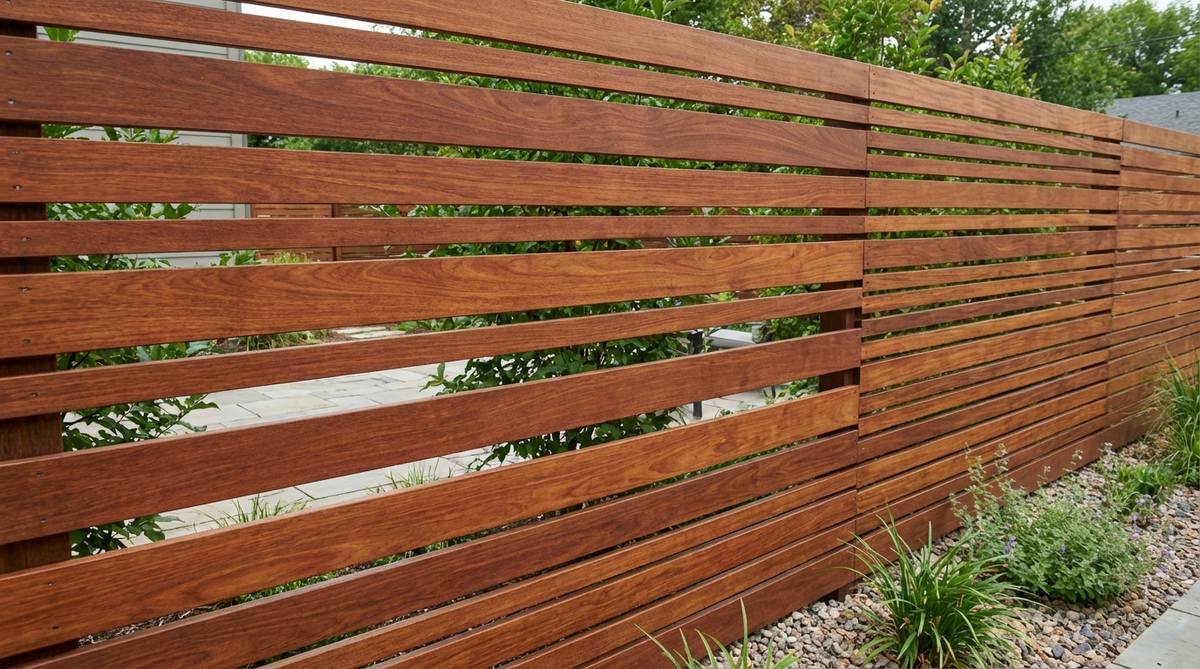
Ipe hardwood delivers exceptional longevity in demanding climates with natural resistance to rot, insects, and UV damage. The dense grain requires no finish yet darkens beautifully to rich brown over years.
Space slats one inch apart for semi-privacy or tightly for full screening. Pre-drill all fastener holes to prevent splitting the dense wood.
This premium material justifies higher initial costs through decades of performance. Annual cleaning with oxygenated bleach removes surface mildew.
9. Stained Horizontal Redwood Fence
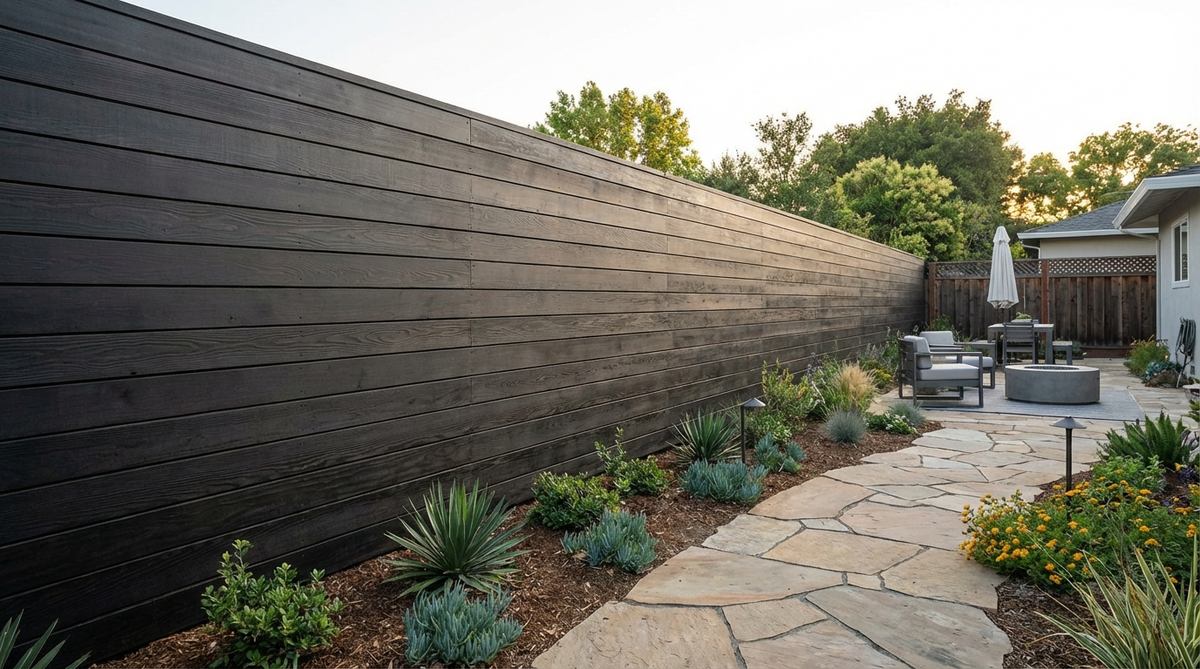
California redwood stained in charcoal or graphite tones provides warmth with contemporary edge. The fine grain accepts stain evenly without blotchiness.
Horizontal installation emphasizes the wood’s natural beauty while creating calming visual flow. Boards should acclimate to local humidity for one week before installation.
Reapply semi-transparent stain every three years. The tannins in redwood naturally resist decay.
10. Horizontal Slat Fence with Integrated LED Strips
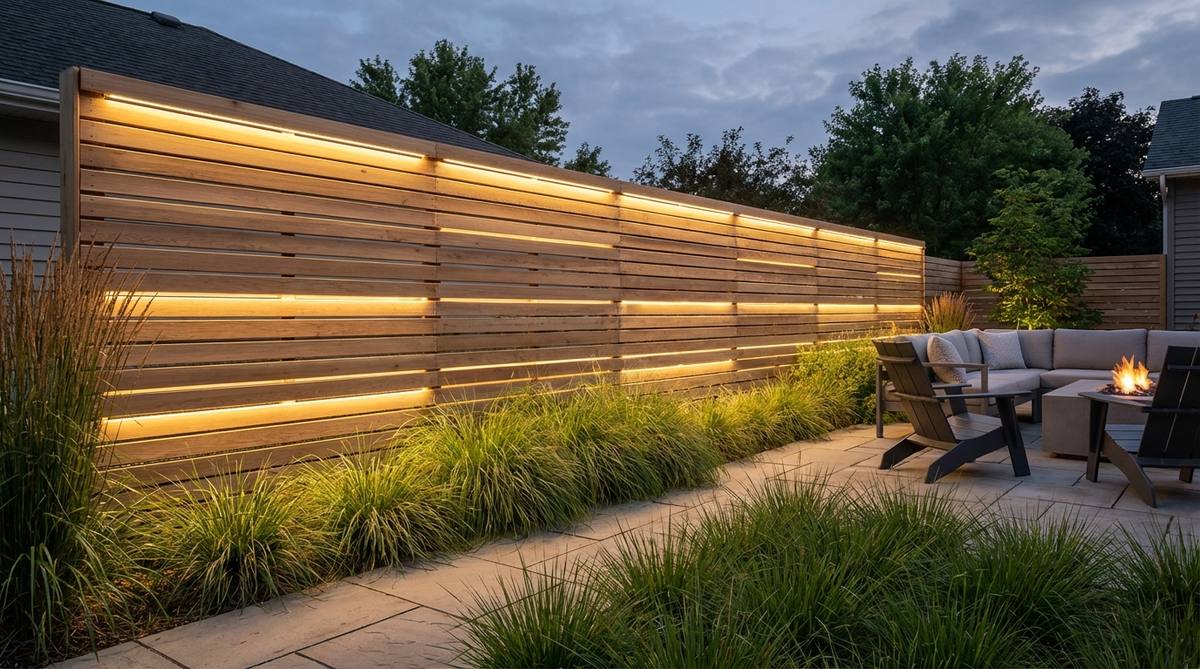
Recessed LED strips between horizontal boards transform functional fencing into evening illumination features. Warm white or color-changing LEDs highlight the linear design.
Install weatherproof LED channels behind every third or fourth slat for balanced light distribution. Low-voltage systems simplify electrical requirements.
Lighting emphasizes fence architecture while providing security illumination. Connect to smart home systems for automated control.
Vertical Garden-Integrated Fencing for Green Density
Urban gardeners maximize limited ground space by transforming fence surfaces into productive growing areas. These systems merge boundary definition with edible or ornamental cultivation.
11. Modular Planter Box Fence System
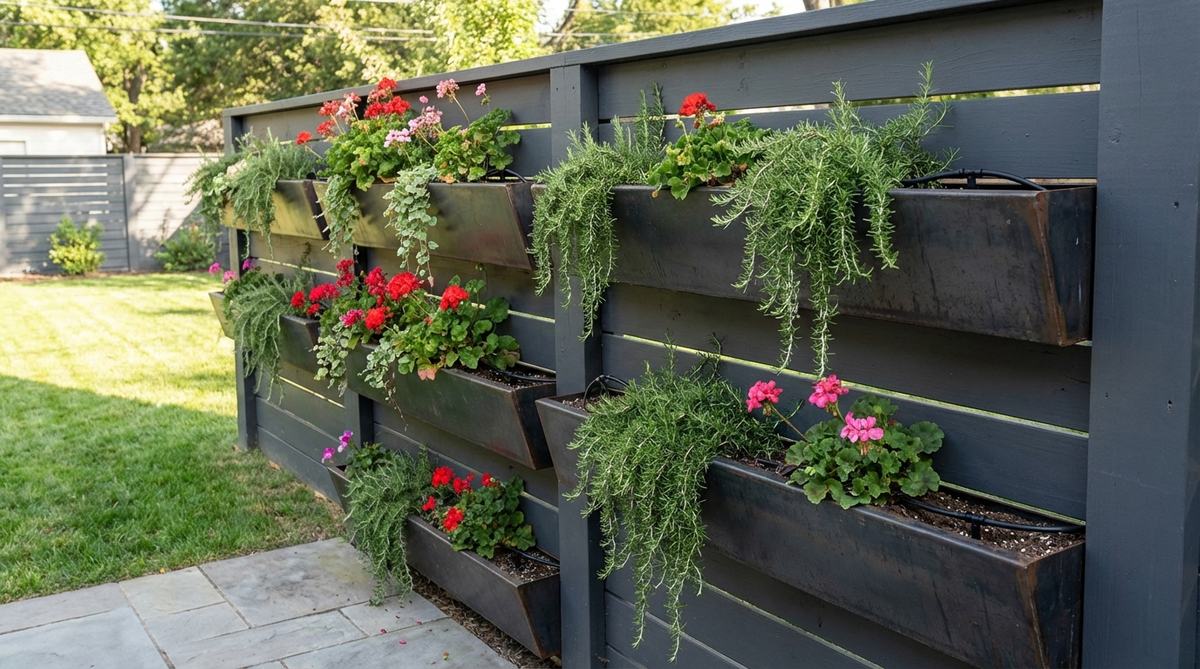
Built-in horizontal planter boxes stacked at intervals create living walls while maintaining fence structure. Each box holds 12-18 inches of soil for robust root development.
Plant cascading varieties like trailing rosemary or ivy geraniums for vertical flow. The staggered arrangement provides visual movement and seasonal color.
Install drip irrigation within planters for automated watering. Ensure adequate drainage to prevent waterlogging.
12. Trellis Panel Fence for Climbing Vines
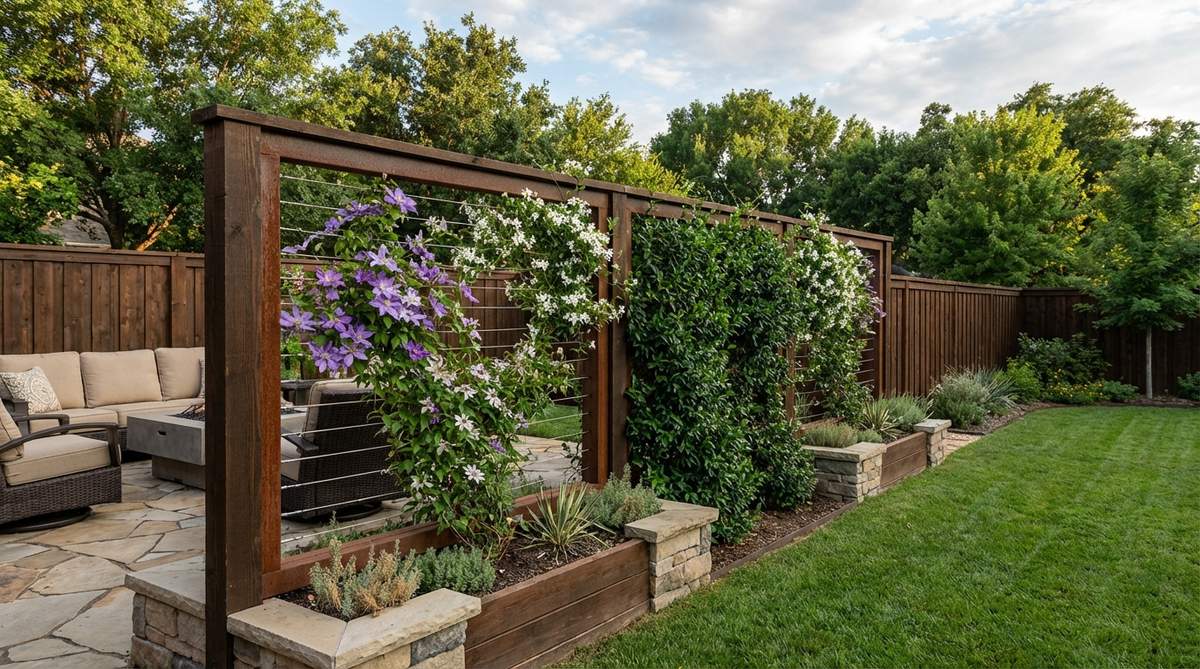
Horizontal wire or wooden lattice mounted to fence faces supports climbing plants that soften hard boundaries. Clematis, jasmine, or passion flower quickly cover the structure.
Space support wires 12 inches apart horizontally for even plant distribution. The trellis adds depth without additional footprint.
Select evergreen climbers for year-round coverage. Prune annually to prevent excess weight on fence structure.
13. Pocket Planter Vertical Garden Fence
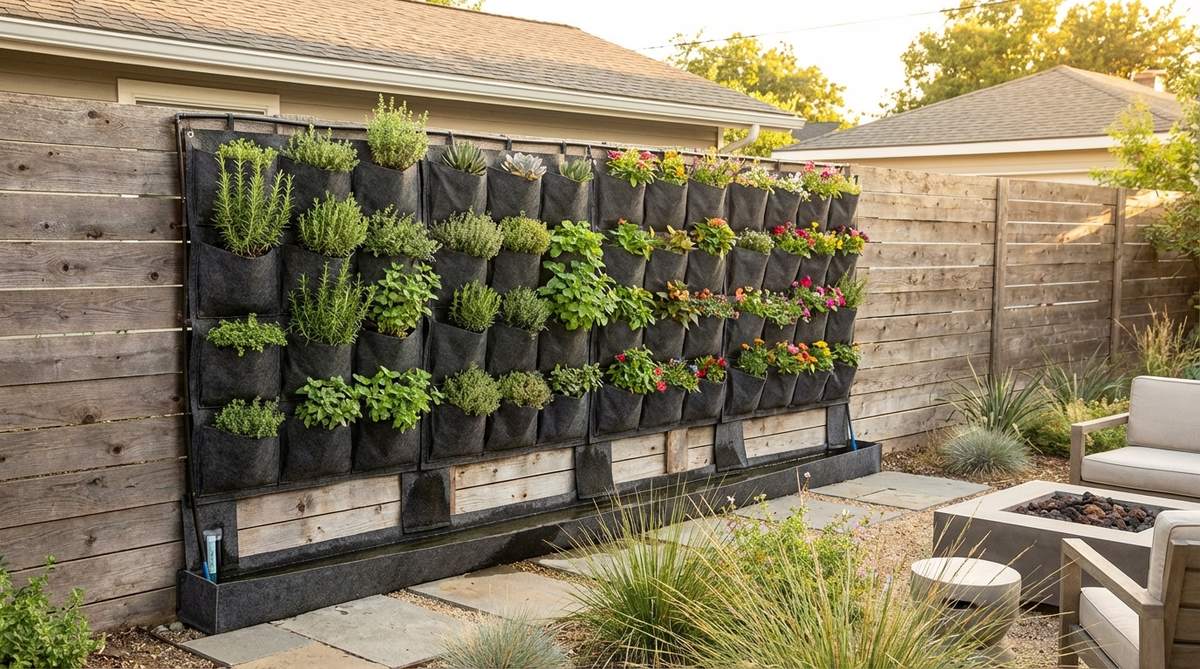
Fabric or rigid pockets mounted directly to fence surfaces accommodate herbs, succulents, or annual flowers. The grid arrangement creates organized visual impact.
Install pockets with built-in irrigation felt that wicks water from a reservoir at the base. This system reduces watering frequency significantly.
Rotate seasonal plantings for continuous interest. Choose drought-tolerant species for west-facing exposures.
14. Living Wall Panel System
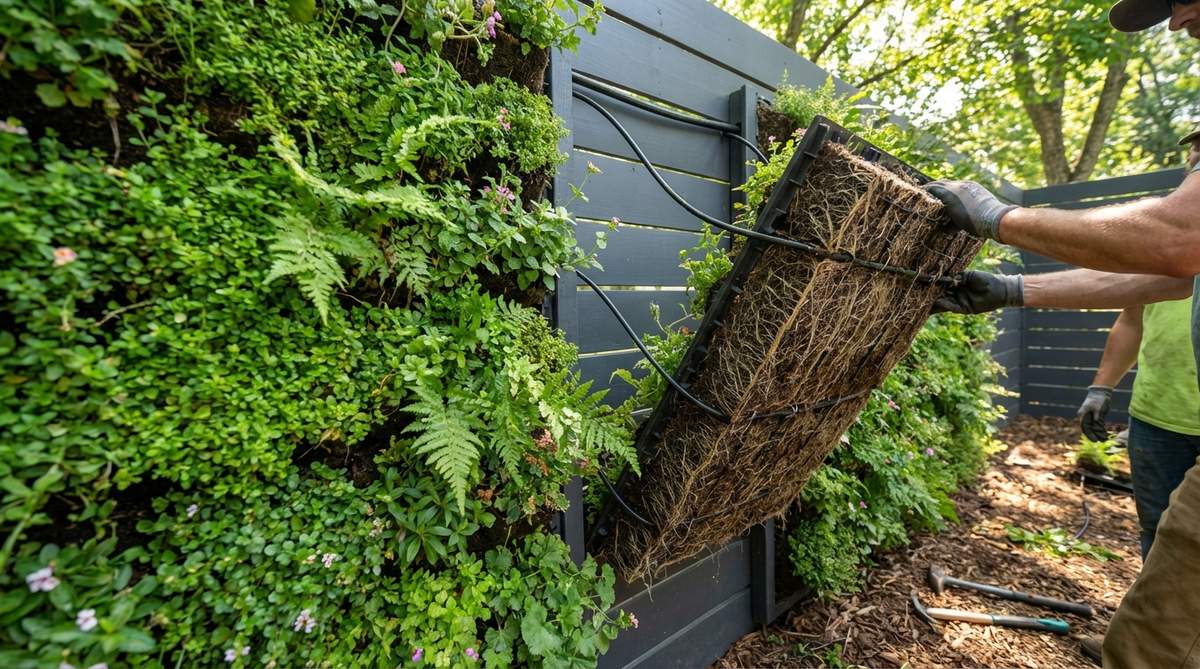
Pre-grown vegetated panels clip onto fence substrates, instantly creating lush green coverage. Professional nurseries cultivate these panels specifically for vertical installation.
Panels arrive with established root systems and integrated irrigation. The modular approach allows replacement of individual sections without disturbing adjacent areas.
Specify native groundcovers or ferns for low-maintenance options. Expect full coverage within six weeks of installation.
15. Espalier Support Fence for Fruit Trees
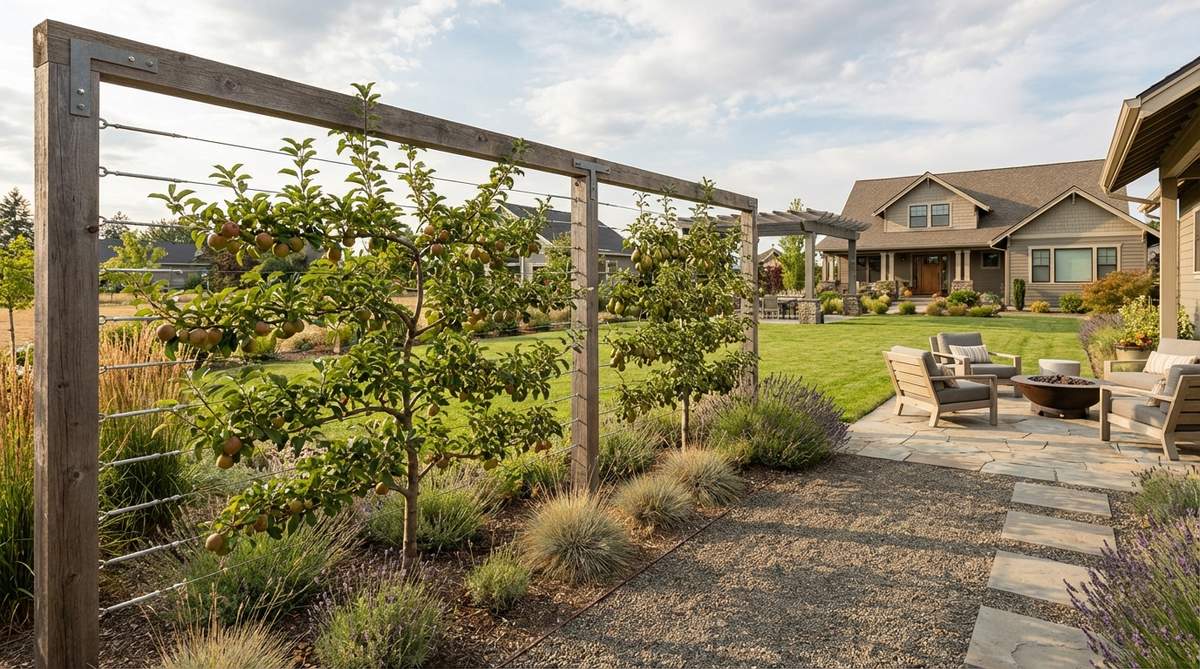
Horizontal wire systems tensioned between fence posts train fruit trees into flat two-dimensional forms. Apple, pear, and citrus varieties adapt well to this space-efficient technique.
Install galvanized wires at 18-inch vertical intervals starting 18 inches above grade. Prune trees annually to maintain flat profile against fence.
This method produces abundant fruit in minimal footprint. The formal pattern adds architectural structure to garden design.
Contemporary Garden Gate Designs That Welcome Entry
A well-designed contemporary garden gate establishes entry hierarchy while reflecting the aesthetic established by surrounding fencing. Modern gates prioritize smooth operation and security without sacrificing visual appeal.
16. Windowed Metal Frame Gate
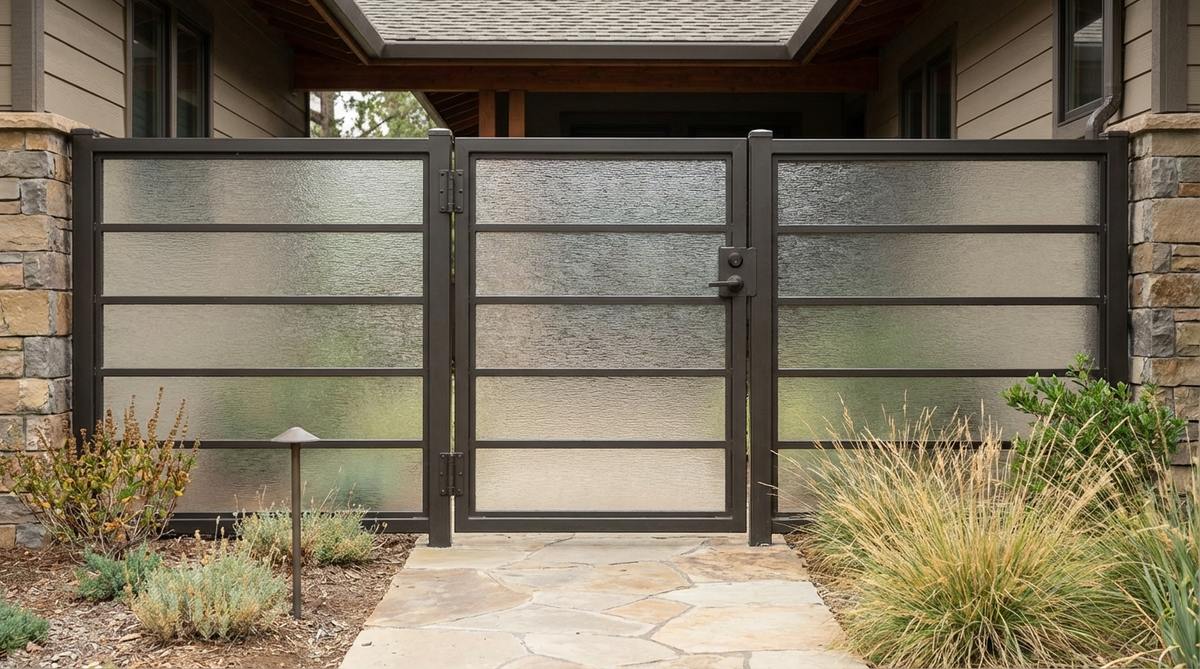
Metal frames incorporating horizontal glass panels provide controlled glimpses into garden spaces. Frosted or textured glass maintains privacy while transmitting light.
The transparent elements create invitation without full exposure. Frame the glass with matching fence material for design continuity.
Install commercial-grade hinges rated for glass weight. The design works especially well for courtyard entries.
17. Horizontal Slat Gate with Concealed Latch
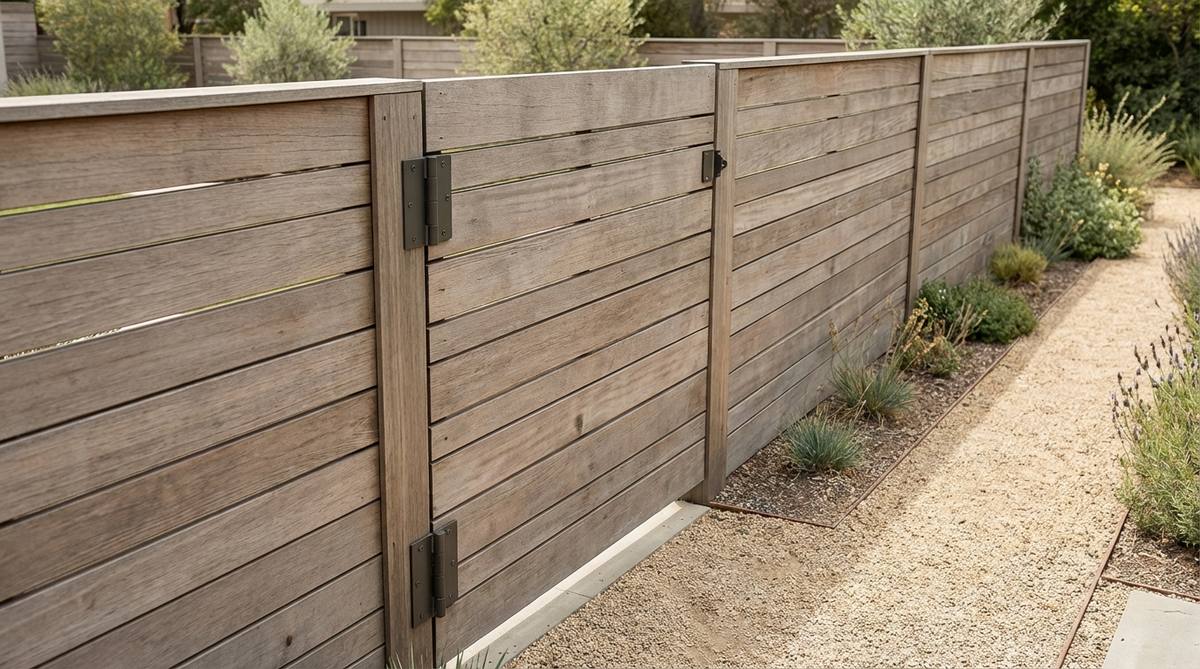
Matching horizontal boards continue fence pattern across gate opening with hidden magnetic latches for streamlined appearance. The seamless look maintains visual flow.
Specify self-closing hinges that prevent gates from being left ajar. Magnetic systems eliminate visible hardware entirely.
Ensure gate frame is reinforced to prevent sagging over time. The slat pattern should align precisely with adjacent fencing.
18. Perforated Panel Entry Gate
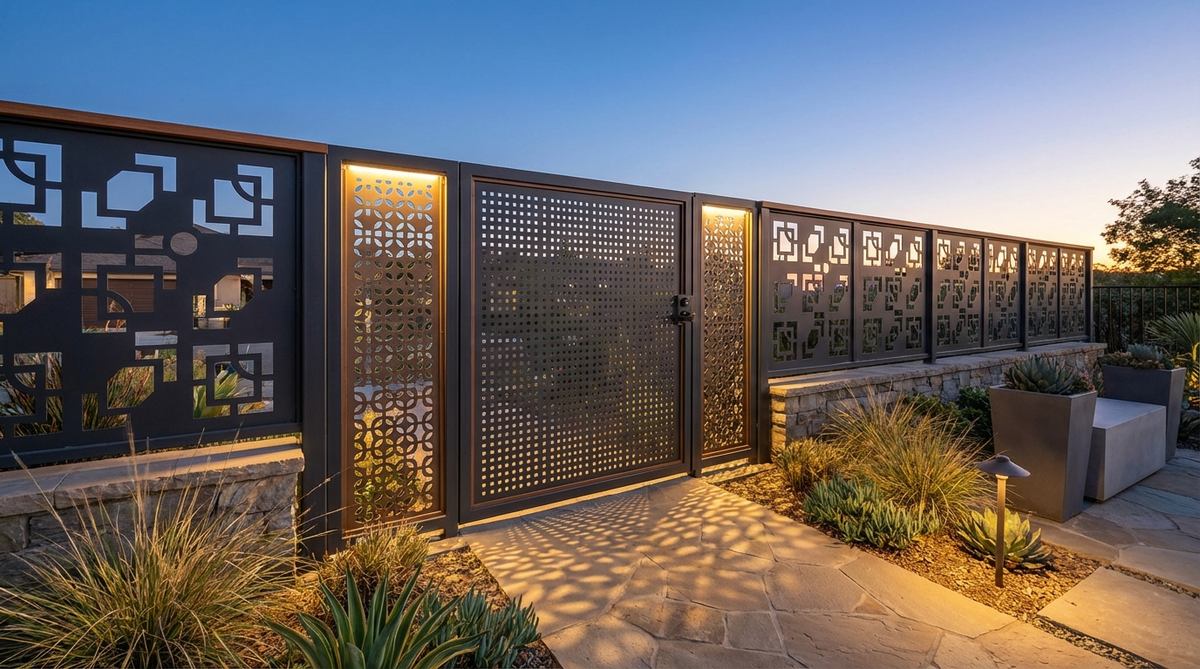
Matching perforated metal patterns from fence panels create unified entry statements. The geometric cutouts provide ventilation while suggesting what lies beyond.
Designers use denser perforation on gates than fencing for increased privacy at entry points. LED strip lighting behind perforation highlights the pattern at night.
Powder-coat gates in contrasting colors for subtle emphasis. The pattern casts decorative shadows across entry paths.
19. Composite and Steel Combination Gate
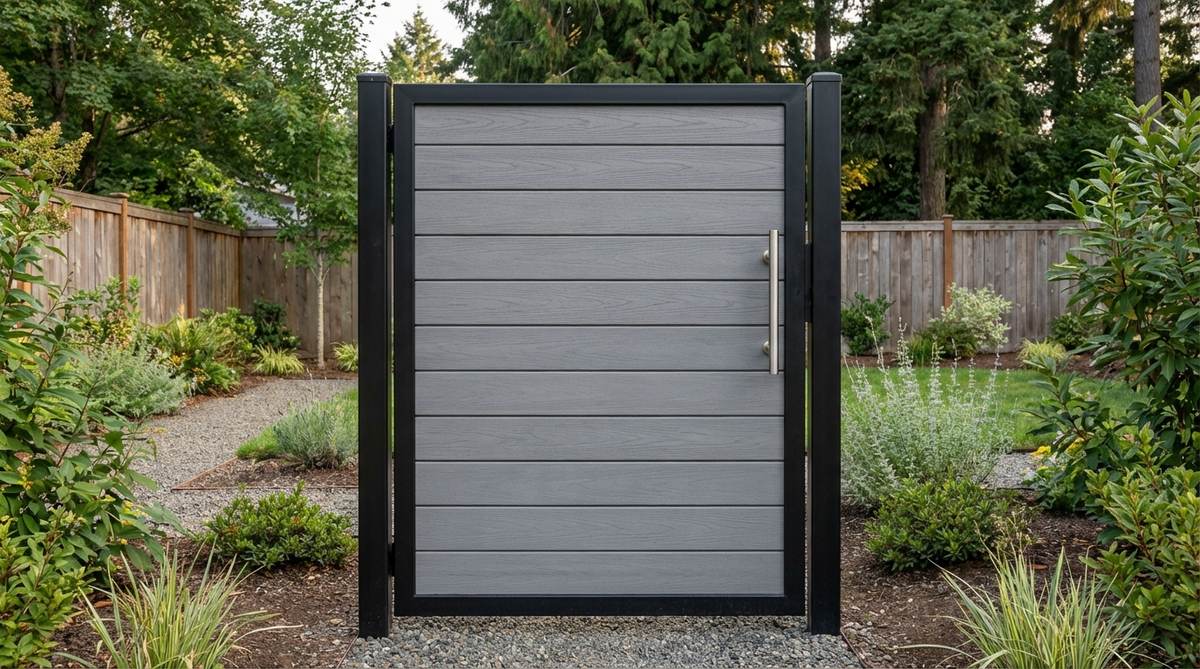
Composite boards framed in black steel tubing combine organic warmth with industrial structure. The contrast emphasizes both materials effectively.
This hybrid approach suits transitional gardens bridging traditional and modern styles. Steel framing prevents composite material warping.
Choose composite in gray tones that complement steel rather than compete. Add brushed stainless steel handle for tactile quality.
20. Pivot Gate with Offset Axis
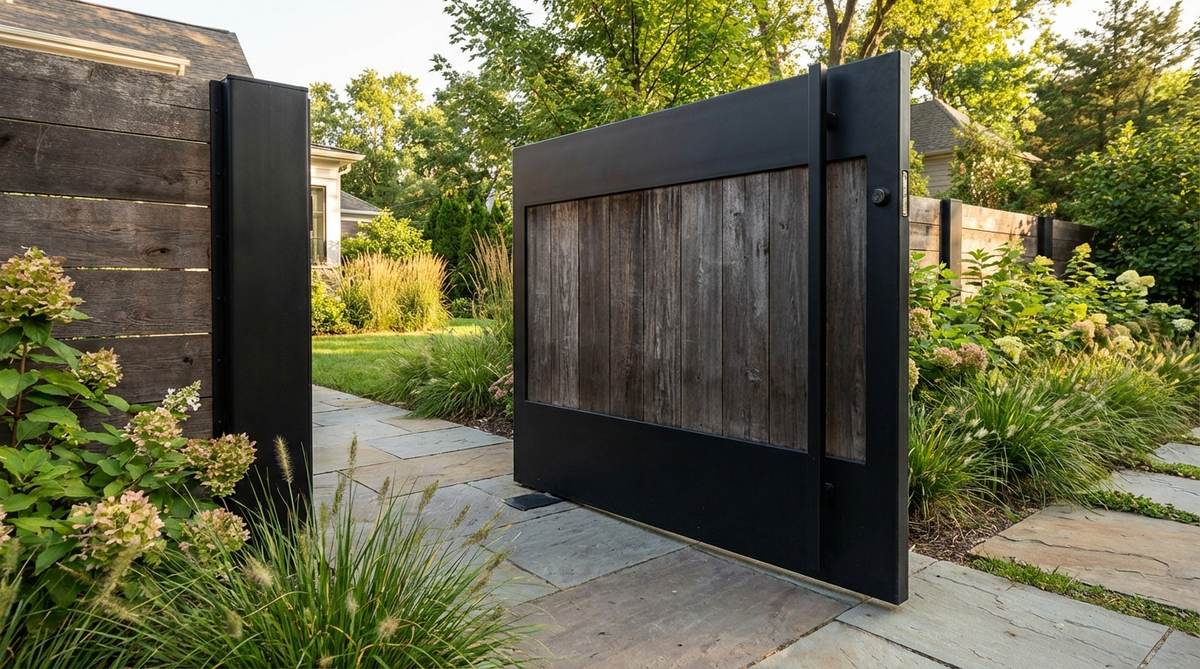
Pivot hardware positioned off-center creates gates that swing smoothly with minimal effort. This mechanism suits oversized gates in dramatic entries.
The pivot point bears weight more efficiently than traditional hinges, enabling larger gate panels. Specify concealed floor-mounted hardware for clean aesthetics.
This system requires professional installation for proper alignment. Add soft-close dampeners to prevent slamming.
Mixed Material Boundaries for Textural Depth
Combining materials creates visual interest while addressing different functional zones along property perimeters. Strategic material transitions define garden rooms effectively.
21. Stone Pillar and Metal Panel Fence
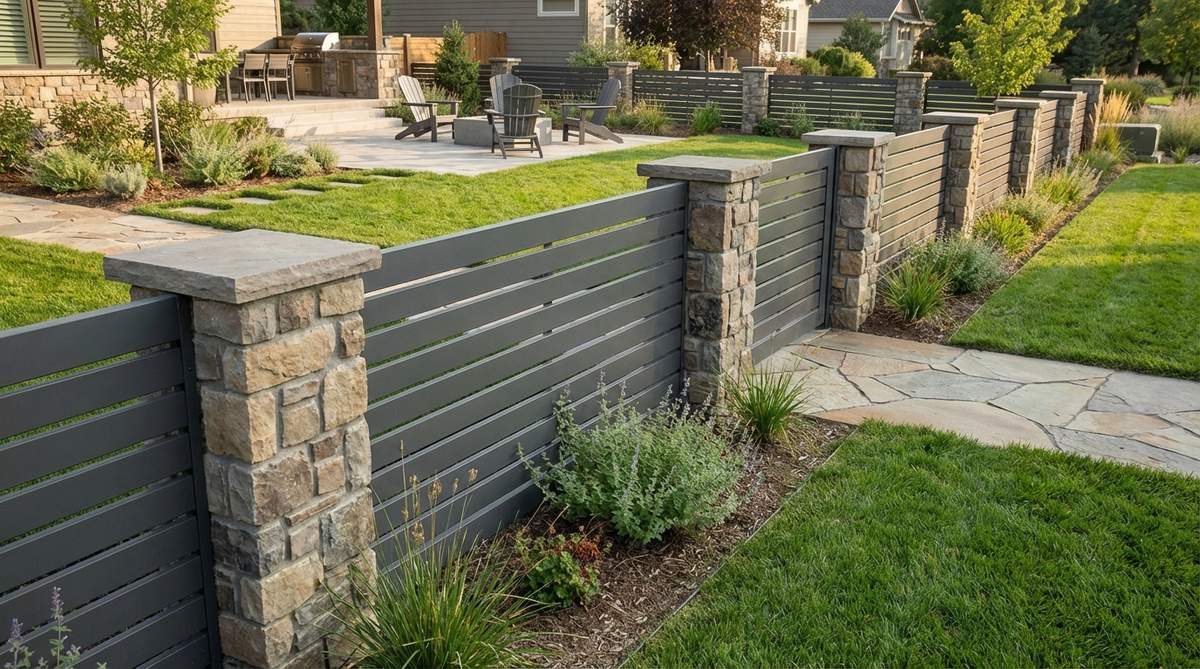
Natural stone or stacked stone veneer pillars at regular intervals anchor horizontal metal panels. The juxtaposition of organic mass with refined metal creates sophisticated contrast.
Pillars provide structural support while breaking long fence runs into manageable sections. Match stone color to existing hardscaping for cohesion.
Cap pillars with flat stone or concrete for weather protection. The vertical pillars add rhythm to horizontal fence lines.
22. Wood Slat and Concrete Block Combination
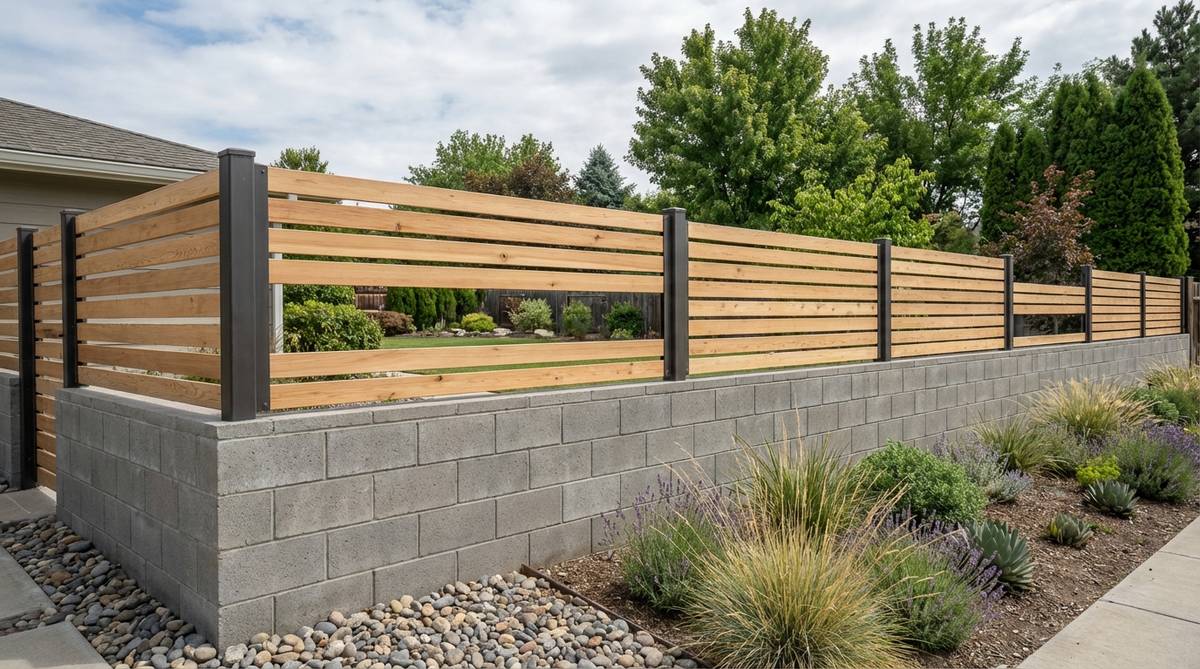
Stacked concrete blocks form lower fence sections with horizontal wood slats floating above. The solid base provides security while upper sections maintain views and light.
Leave blocks in natural gray or paint to match home exterior. Wood components attach to steel posts embedded in block cores.
This hybrid allows drainage at grade level while screening upper sightlines. Vary block and slat proportions based on privacy needs.
23. Gabion Wall with Aluminum Top Section
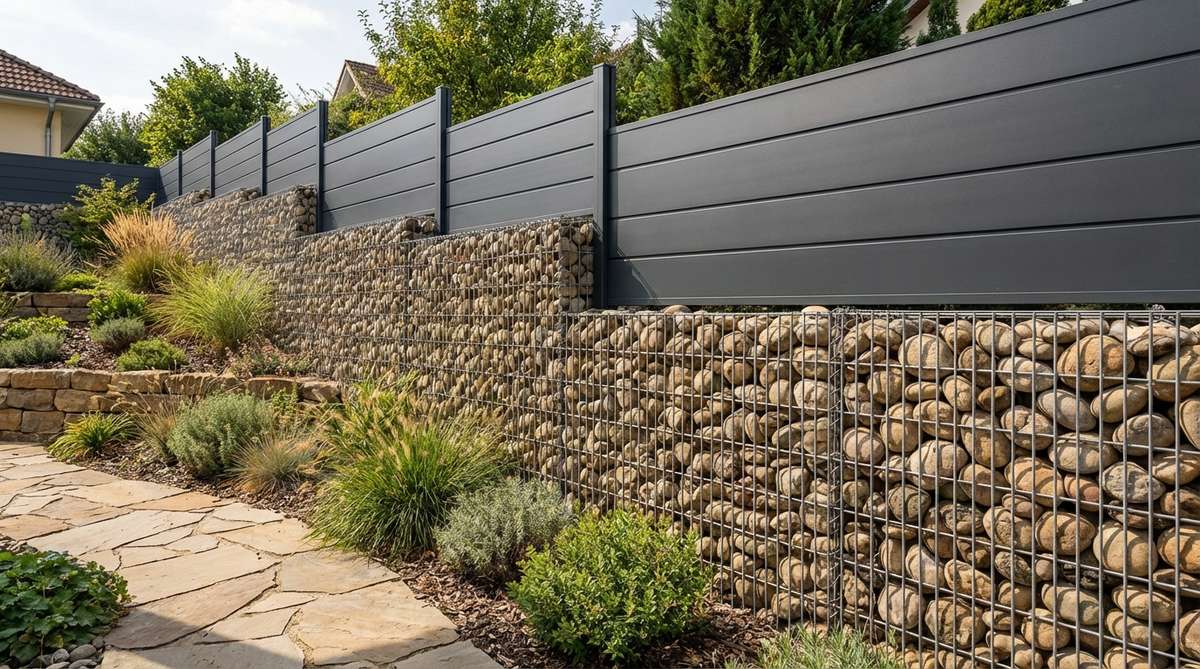
Wire cages filled with river rock create textured lower walls topped with sleek aluminum panels. The combination grounds contemporary designs in natural materiality.
Gabion sections handle grade changes easily while providing excellent drainage. Upper aluminum extends height for privacy without excessive weight.
Select rock color that complements landscape palette. The stone retains heat, creating microclimates for adjacent plantings.
24. Bamboo Panel and Steel Frame Fence
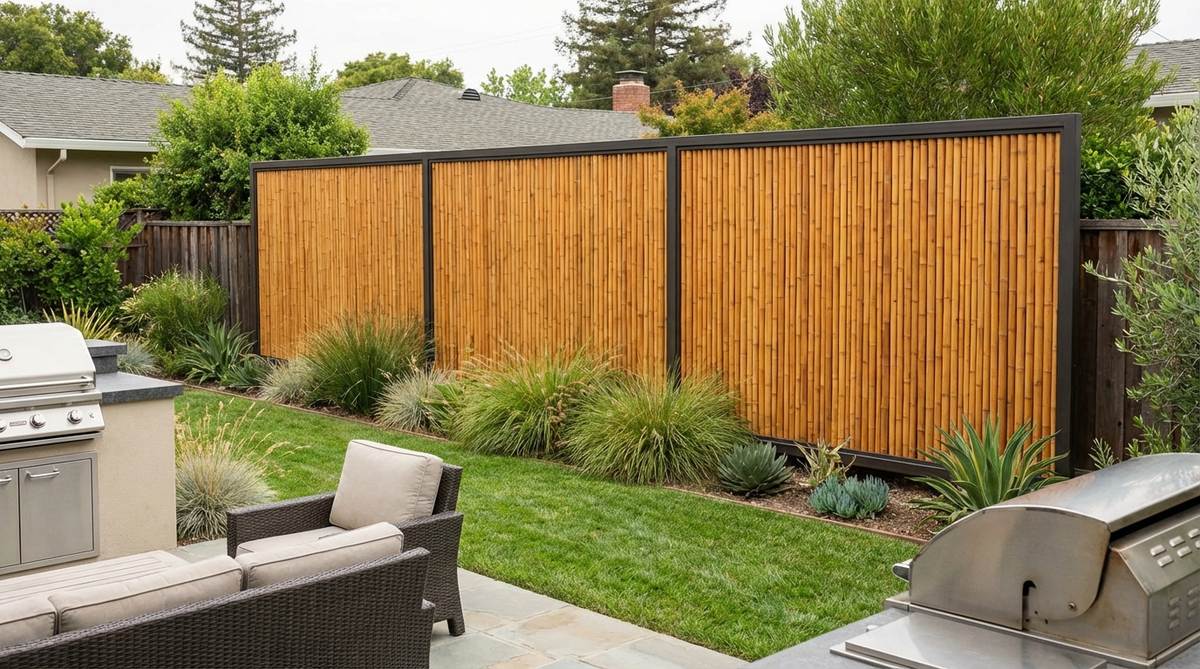
Sustainably harvested bamboo panels mounted in minimalist steel frames balance organic texture with contemporary structure. The natural material softens urban hardness.
Bamboo naturally resists decay and delivers rapid renewability. Steel frames prevent panel warping while providing crisp edges.
Apply clear UV-resistant sealer to preserve bamboo color. The vertical grain pattern complements horizontal fence orientation.
25. Glass Panel and Wood Post Fence
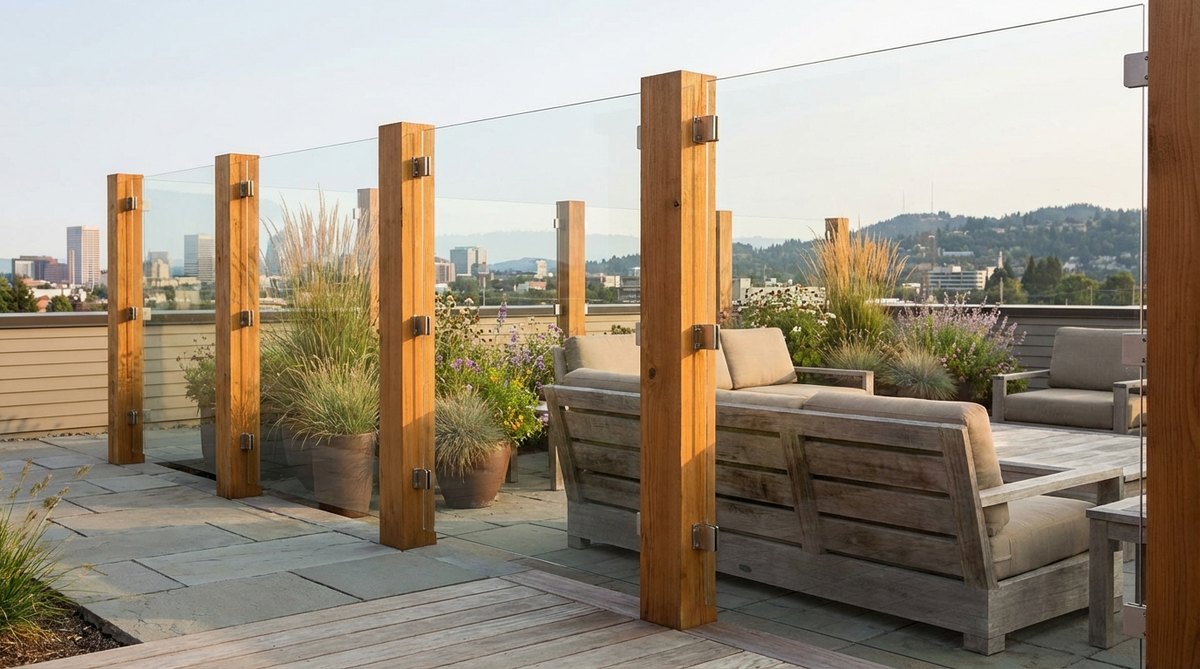
Frameless glass panels clamped between substantial wood posts maintain views while blocking wind. This approach suits rooftop or hillside gardens where vistas matter.
Tempered glass withstands impacts and thermal stress. The transparency prevents visual confinement in compact spaces.
Specify low-iron glass for minimal green tint. Wood posts provide warmth against glass coldness.
Space-Maximizing Multi-Functional Fences
Urban constraints demand every element serve multiple purposes. These fence designs integrate storage, seating, or display functions beyond basic boundary definition.
26. Fence with Integrated Bench Seating
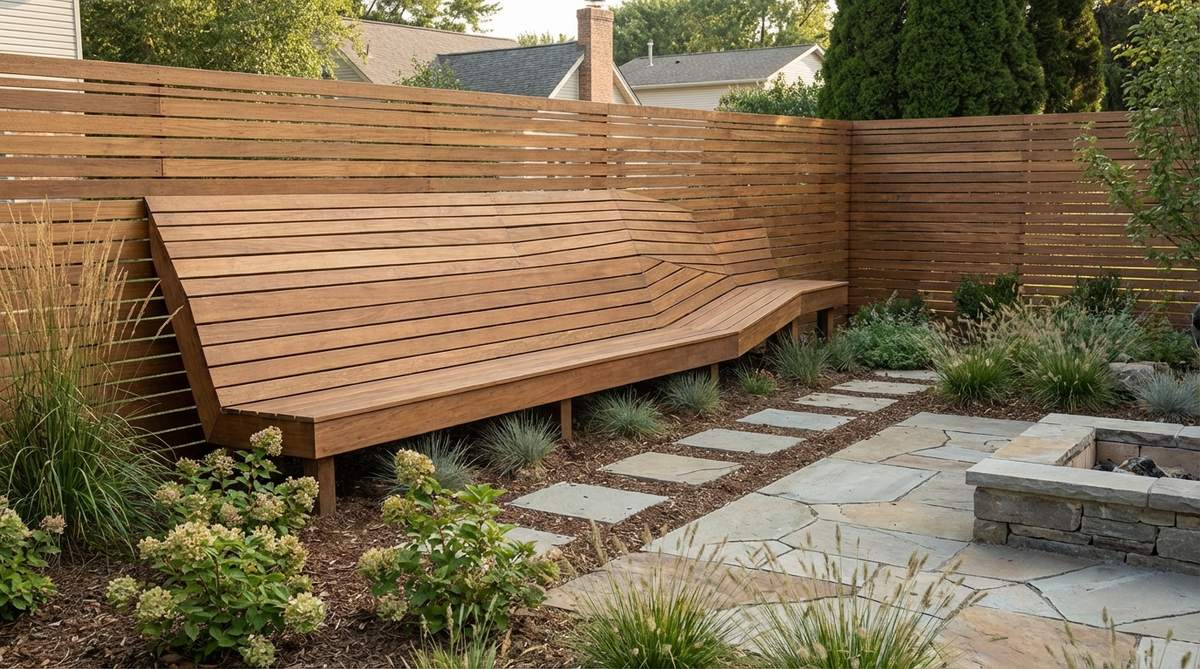
Extending horizontal slats forward to create bench depth transforms fencing into functional seating. The built-in approach saves floor space while providing gathering spots.
Frame bench sections with reinforced posts capable of supporting seated weight. Add cushions for comfort during extended use.
Position benches to capture sun or shade depending on climate. The dual function eliminates need for separate furniture.
27. Tool Storage Integrated Fence Panels
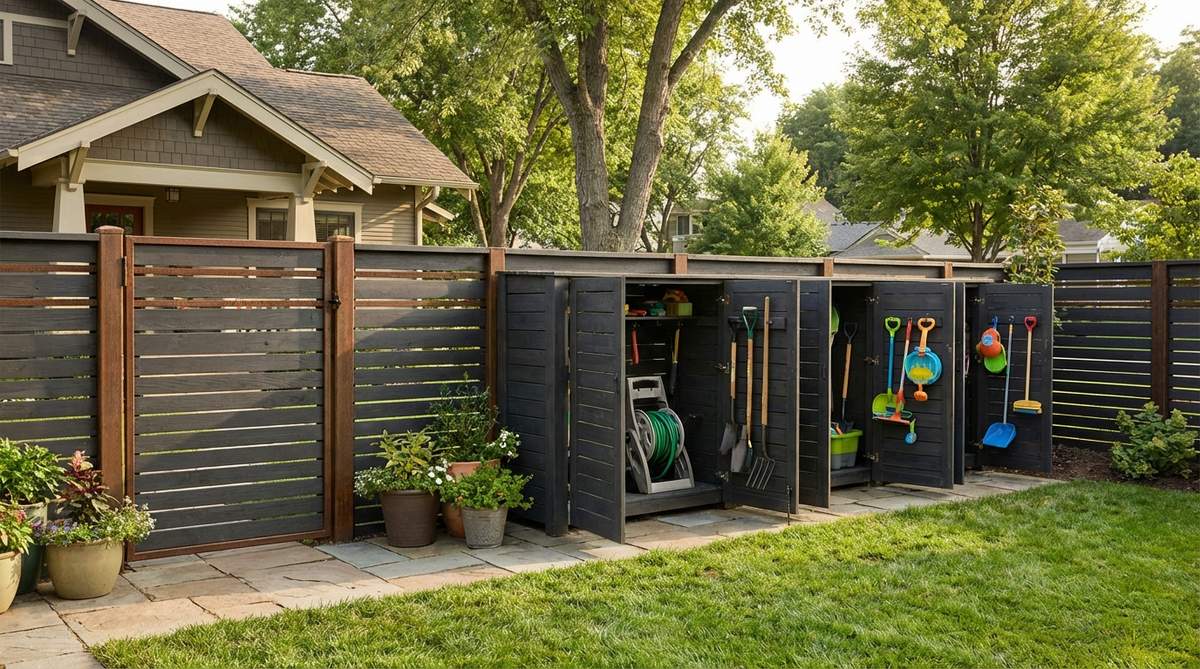
Hinged fence sections conceal shallow storage compartments for garden tools, hoses, and outdoor toys. The hidden storage maintains clean garden aesthetics.
Install magnetic catches to keep doors closed when not in use. Interior hooks organize frequently used items.
Weatherproof storage prevents tool rust and degradation. Position compartments near working areas for convenience.
28. Fold-Down Table Fence Attachment
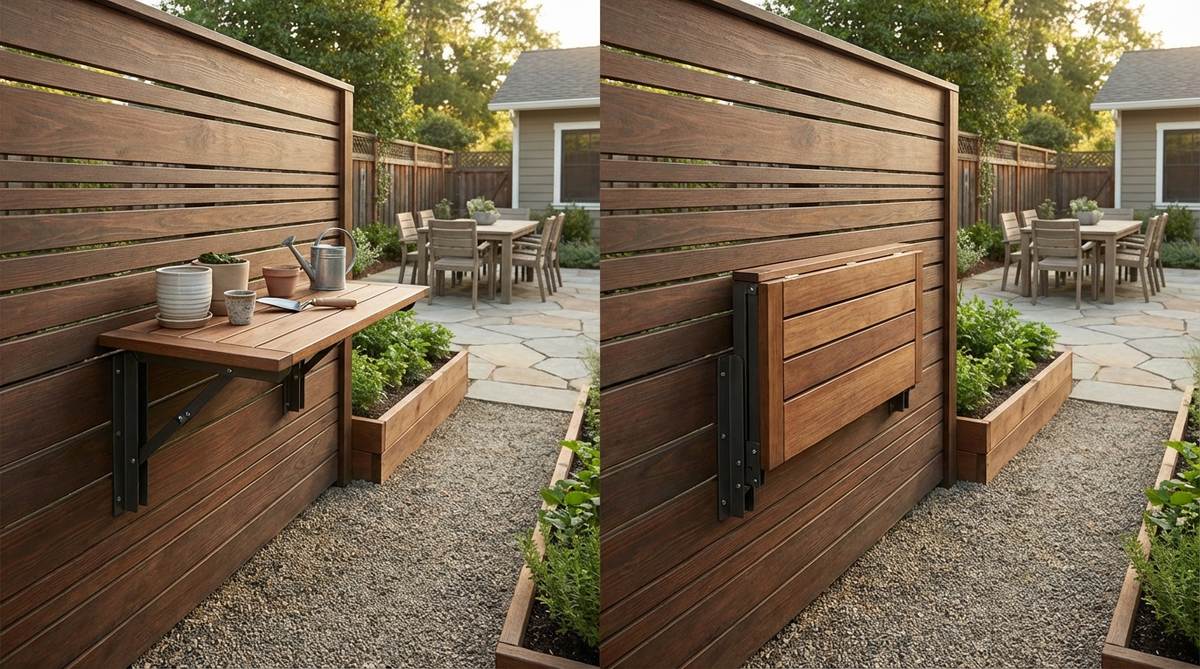
Hinged platforms mounted to fence faces fold down to create work surfaces or serving areas. The collapsible design preserves space when tables aren’t needed.
Support brackets lock into position for stability during use. Finish surfaces with weatherproof coatings to withstand exposure.
This feature suits dining areas or potting stations. Fold up when hosting larger gatherings.
29. Shelving Integrated Slat Fence
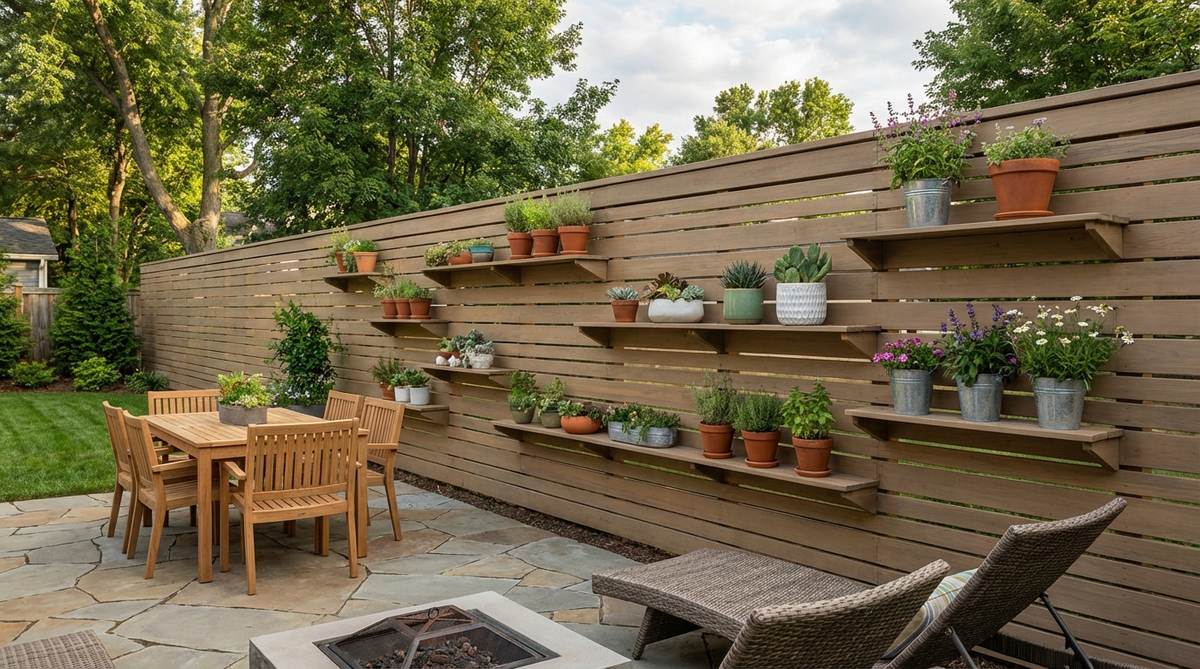
Horizontal boards project at intervals to create display shelves for potted plants or outdoor decor. The integrated approach eliminates separate shelving units.
Reinforce projecting boards with concealed brackets rated for load. Vary shelf depths for visual interest.
Arrange pots in staggered heights to create vertical garden displays. The shelves break up solid fence planes.
30. Murphy-Style Drop-Down Work Station
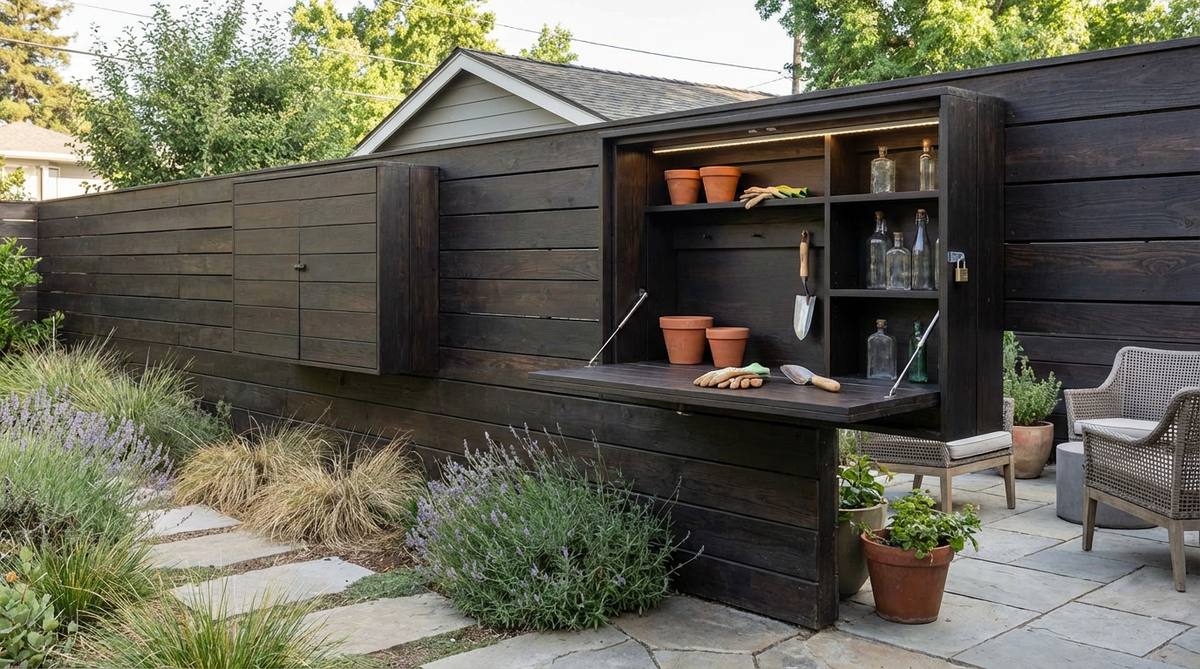
Cabinet-style units mounted to fences open to reveal potting benches or bar setups. The enclosed design protects contents from weather when closed.
Install locking mechanisms to secure valuable tools or equipment. Interior lighting enhances functionality during evening use.
This sophisticated solution suits serious gardeners or entertainers. Finish exterior to match fence for seamless integration.
Semi-Transparent Privacy Screens for Light Balance
Maintaining natural light while screening sightlines challenges urban designers. These solutions achieve privacy without creating oppressive enclosure.
31. Venetian-Style Slatted Fence
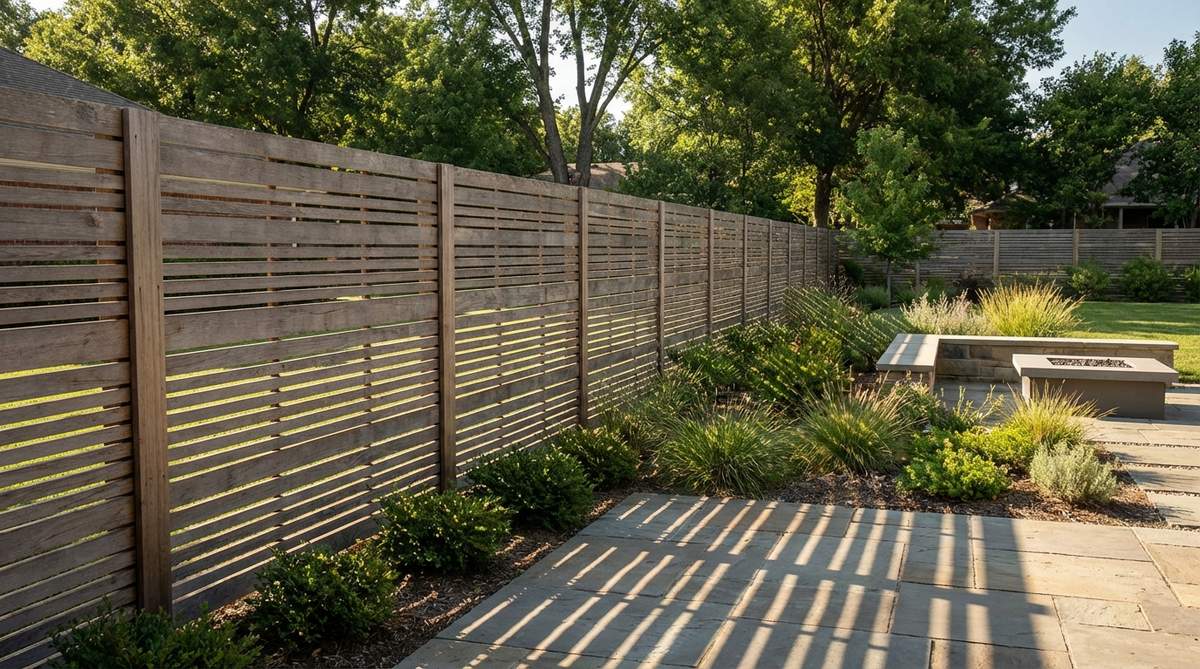
Horizontal boards spaced with 10mm gaps create effective privacy screens while permitting air circulation and dappled light. The consistent spacing produces rhythmic shadow patterns.
This style prevents the boxed-in feeling of solid fencing. Wider slats increase privacy coverage while maintaining contemporary proportions.
Install slats on both fence sides for uniform appearance. The design works horizontally or vertically depending on desired visual effect.
32. Vertical Louvered Privacy Fence
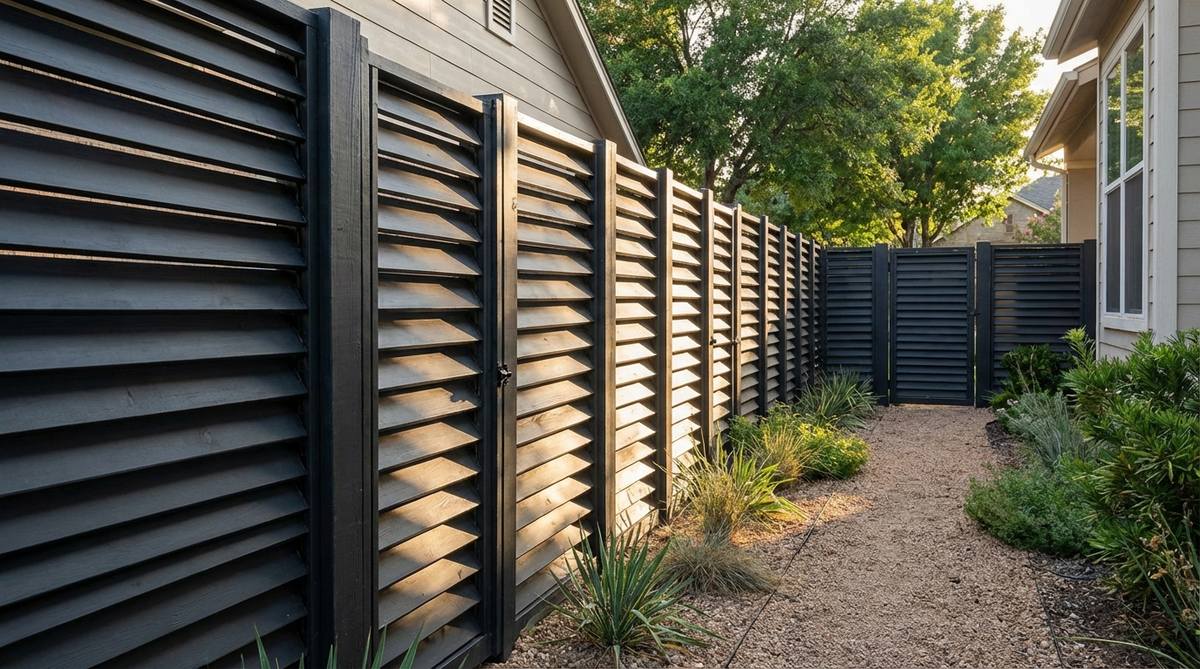
Angled slats positioned like window louvers deflect direct sightlines while allowing filtered views and airflow. The directional orientation provides privacy from specific angles.
Adjust louver angle based on predominant viewing angles from neighboring properties. Steeper angles increase privacy but reduce light transmission.
This approach suits side yards where cross-views create privacy concerns. Painted louvers create stronger shadow definition.
33. Laser-Cut Decorative Screen Panels
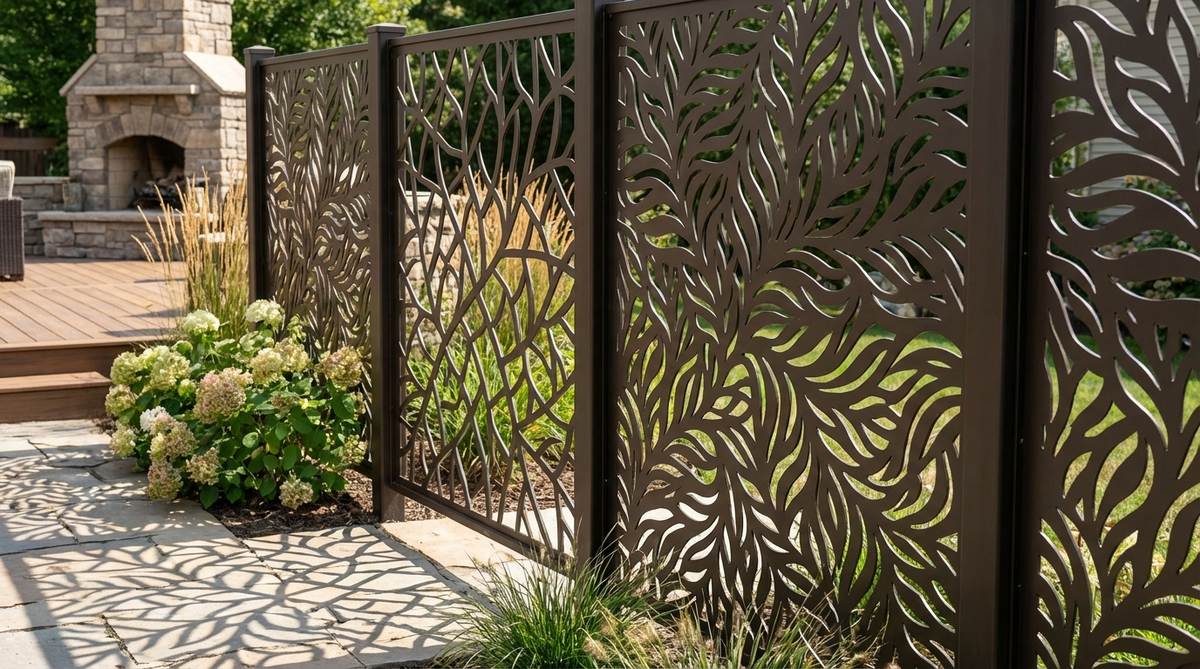
Custom patterns cut from metal or composite sheets provide privacy through visual complexity rather than solid barriers. Abstract or botanical motifs suit different garden styles.
Pattern density determines privacy levels—denser designs near living areas, more open along peripheral boundaries. The screens function as outdoor art installations.
Backlight for evening drama or leave unlit for daytime shadow play. Powder-coat in colors that complement planting schemes.
34. Wire Mesh and Climbing Plant Screen
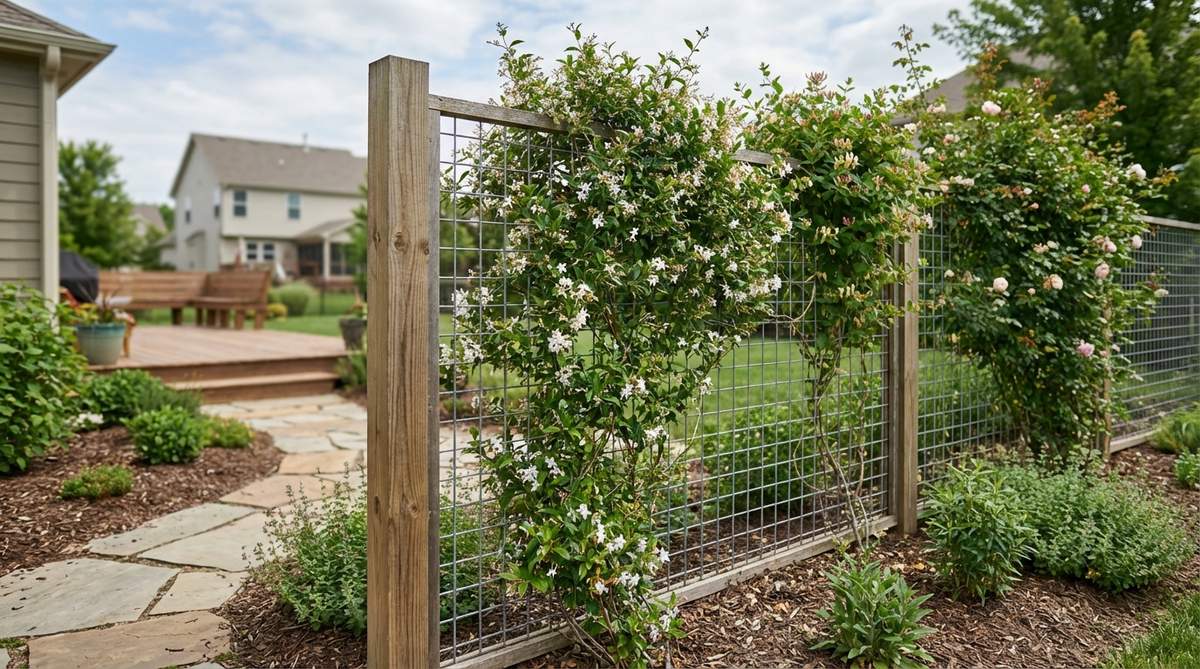
Galvanized wire mesh stretched between posts creates affordable frameworks for flowering vines or evergreen climbers. The living coverage provides seasonal variation.
Choose mesh with 2-4 inch openings sized for plant tendrils. The metal virtually disappears once plants establish.
Plant jasmine, honeysuckle, or climbing roses for fragrance. The system adapts easily as gardens mature.
35. Alternating Panel Solid and Open Fence
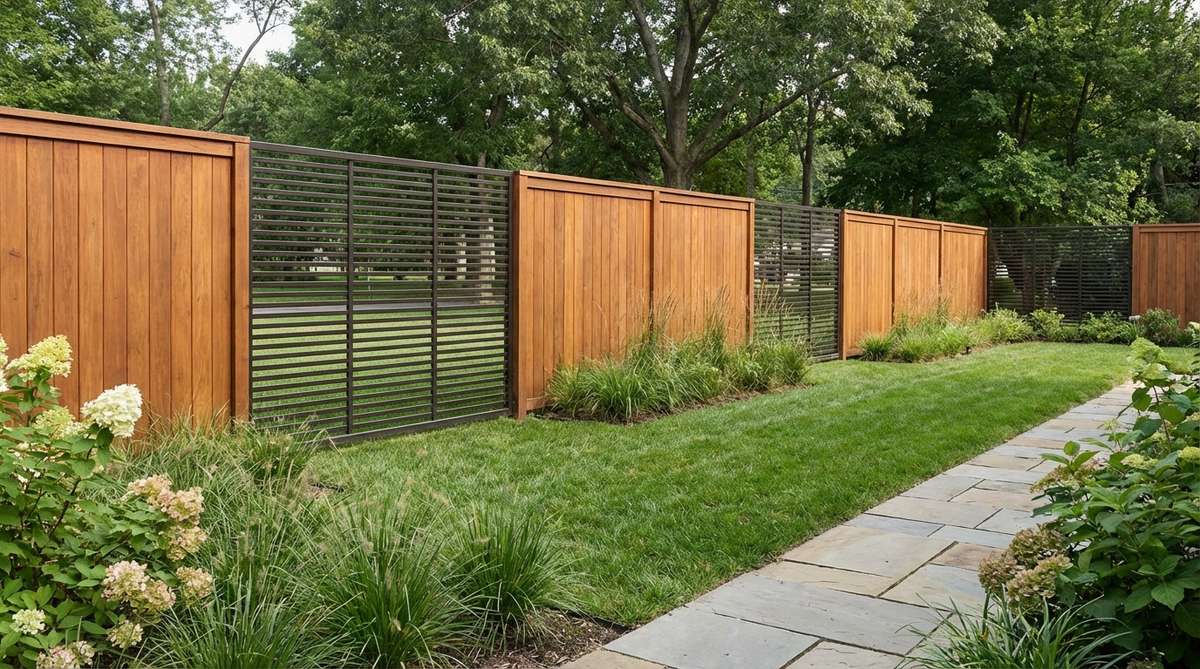
Rhythm created by alternating solid panels with open slatted sections balances privacy needs with visual interest. The pattern prevents monotony across long fence runs.
Position solid panels opposite windows or seating areas for targeted privacy. Open sections preserve views toward attractive landscapes.
Vary proportions based on privacy priorities—more solid panels for complete screening, fewer where openness matters. The alternation creates garden rooms naturally.
Creating Your Contemporary Urban Boundary
Selecting the right contemporary garden fence transforms urban outdoor spaces into private sanctuaries that reflect personal style while addressing practical needs. The solutions presented balance aesthetic sophistication with functional requirements specific to city living, from space optimization to sustainable material choices. Begin by assessing your priorities—privacy levels, maintenance commitment, budget parameters, and architectural context—then select designs that align with your vision. Whether you choose sleek metal panels, warm wood slats, or integrated vertical gardens, contemporary fencing elevates urban gardens from afterthoughts to intentional outdoor rooms worthy of the investment.
Frequently Asked Questions
What is the most durable contemporary fence material for urban environments?
Powder-coated aluminum and composite materials offer superior longevity in urban settings. Aluminum resists corrosion from pollution and moisture while requiring only occasional cleaning. Composite fencing manufactured from recycled plastics and wood fibers withstands temperature fluctuations without warping, cracking, or fading, making both options ideal for low-maintenance urban applications lasting 25-30 years.
How can I add privacy without making my small urban yard feel enclosed?
Venetian-style slatted fencing with 10mm spacing between horizontal boards provides effective privacy screening while maintaining airflow and filtered natural light. Alternating solid panels with open sections creates visual rhythm that prevents oppressive enclosure. Vertical garden integration softens boundaries organically, and choosing darker fence colors helps structures recede visually, making spaces feel larger despite physical screening.
Are contemporary garden gates difficult to install compared to traditional styles?
Contemporary gates with concealed hardware and pivot mechanisms require more precise installation than traditional hinged gates but deliver superior long-term performance. Most designs use modular systems that simplify alignment during installation. Professional installation ensures proper weight distribution and smooth operation, particularly for gates incorporating glass panels or heavy metal components. DIY installation remains feasible for simpler horizontal slat gates matching fence construction.
What fence height works best for urban privacy without permit complications?
Most municipalities allow fences up to 6 feet in rear and side yards without special permits, though front yard restrictions typically limit height to 3-4 feet. Verify local codes before installation, as regulations vary significantly. For additional privacy without increasing fence height, add trellis extensions supporting climbing plants or install elevated planter boxes along fence tops, both approaches that often fall outside height restriction technicalities.
How do I maintain contemporary fence materials in different climates?
Metal fences require annual inspection for coating chips and touch-up with matching paint to prevent rust, plus hosing to remove salt accumulation in coastal areas. Composite materials need only occasional cleaning with mild soap and water. Natural wood species like cedar or ipe benefit from annual cleaning and optional oil application to preserve color, though many homeowners prefer natural weathering to silver-gray. All fence types benefit from keeping plantings trimmed back to ensure airflow and prevent moisture retention.