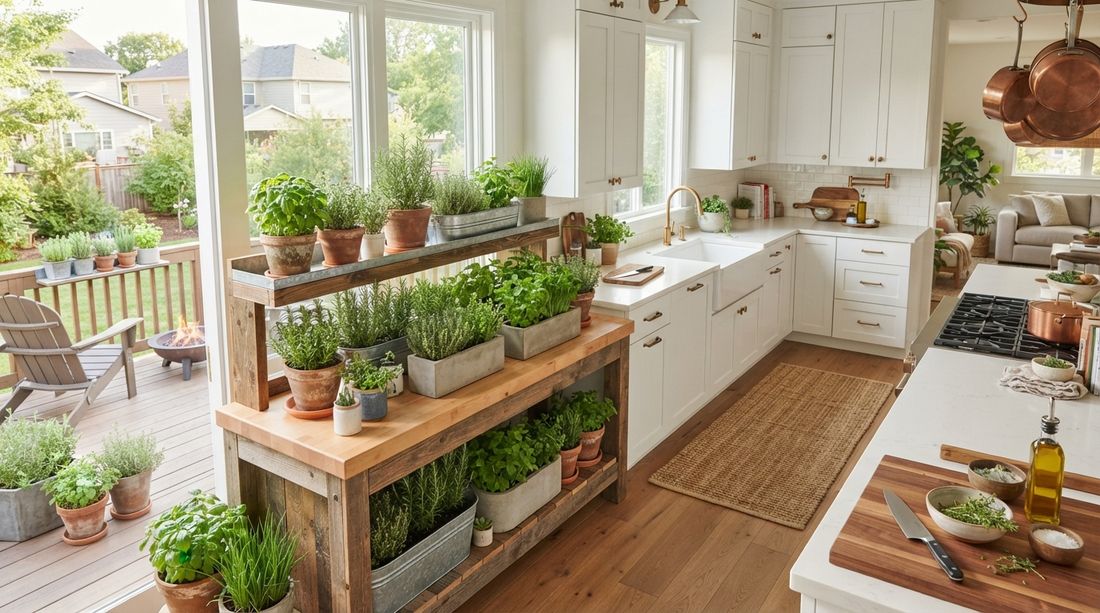
An indoor mini herb garden instantly elevates basic cooking spaces into thriving culinary zones. Sourcing commercial-grade planters alongside affordable bulk materials secures high-end finishes without heavy spending. Designer layouts maximize tiny apartment balconies perfectly.
Design SnapshotKey Principles
- Prioritize light: Place herbs on bright sills, railings, or stands where they receive at least 4–6 hours of sun or supplemental grow lighting.
- Choose container-ready herbs: Focus on compact, container-friendly classics like basil, oregano, thyme, mint, and chives for reliable harvests in small planters.
- Optimize drainage: Use pots with drainage holes, a light potting mix, and trays to prevent waterlogging while protecting indoor surfaces.
- Group by needs: Cluster sun-loving Mediterranean herbs together and give thirsty herbs like parsley or mint slightly deeper or separate containers.
Kitchen Countertop Mini Herb Gardens That Stay Cook-Friendly
These layouts keep foliage close to your chopping board without swallowing precious prep space. Designers focus on vertical lines, slim profiles, and movable pieces so you still have room for knives and cutting boards.
1. Magnetic Spice Tin Herb Rack
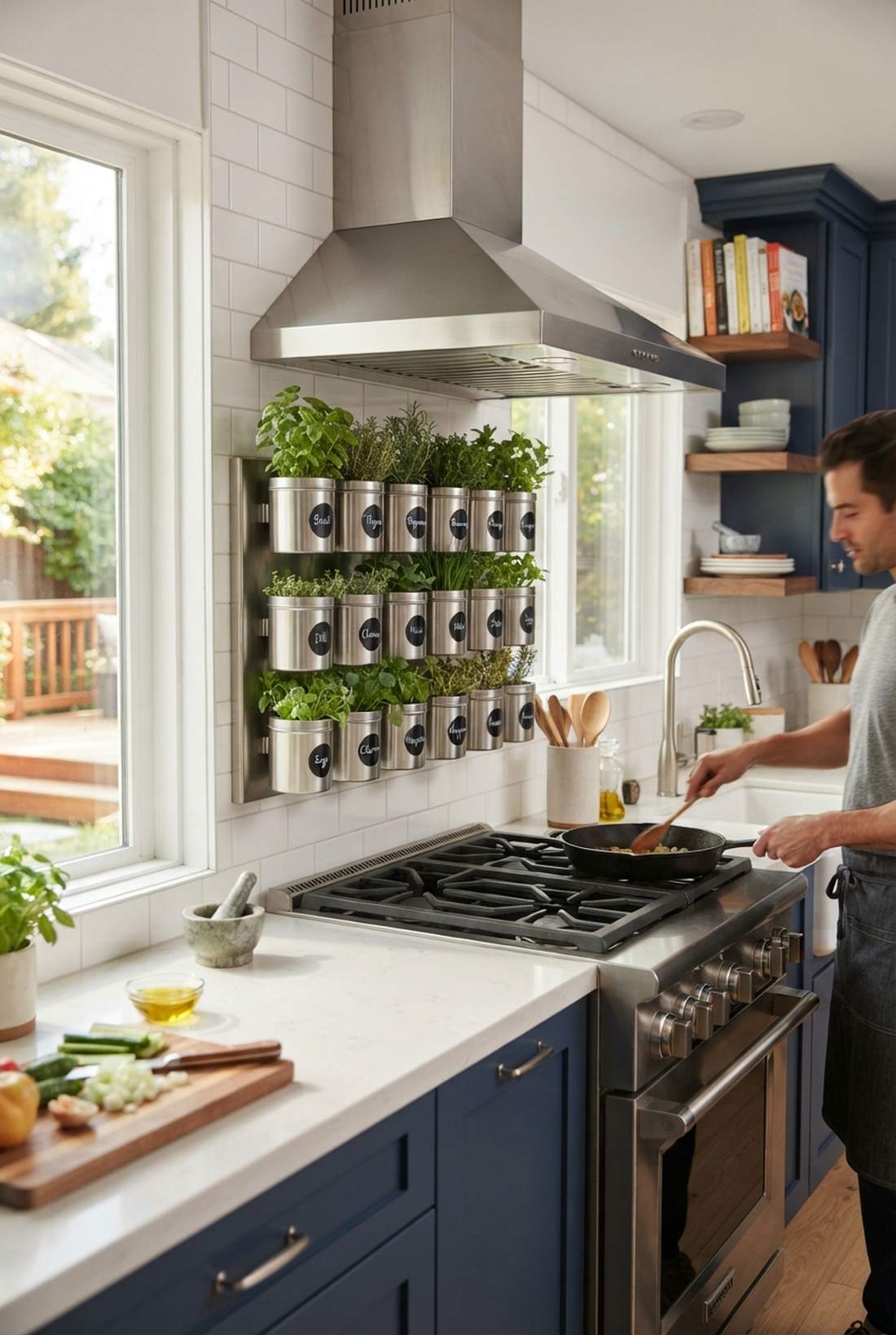
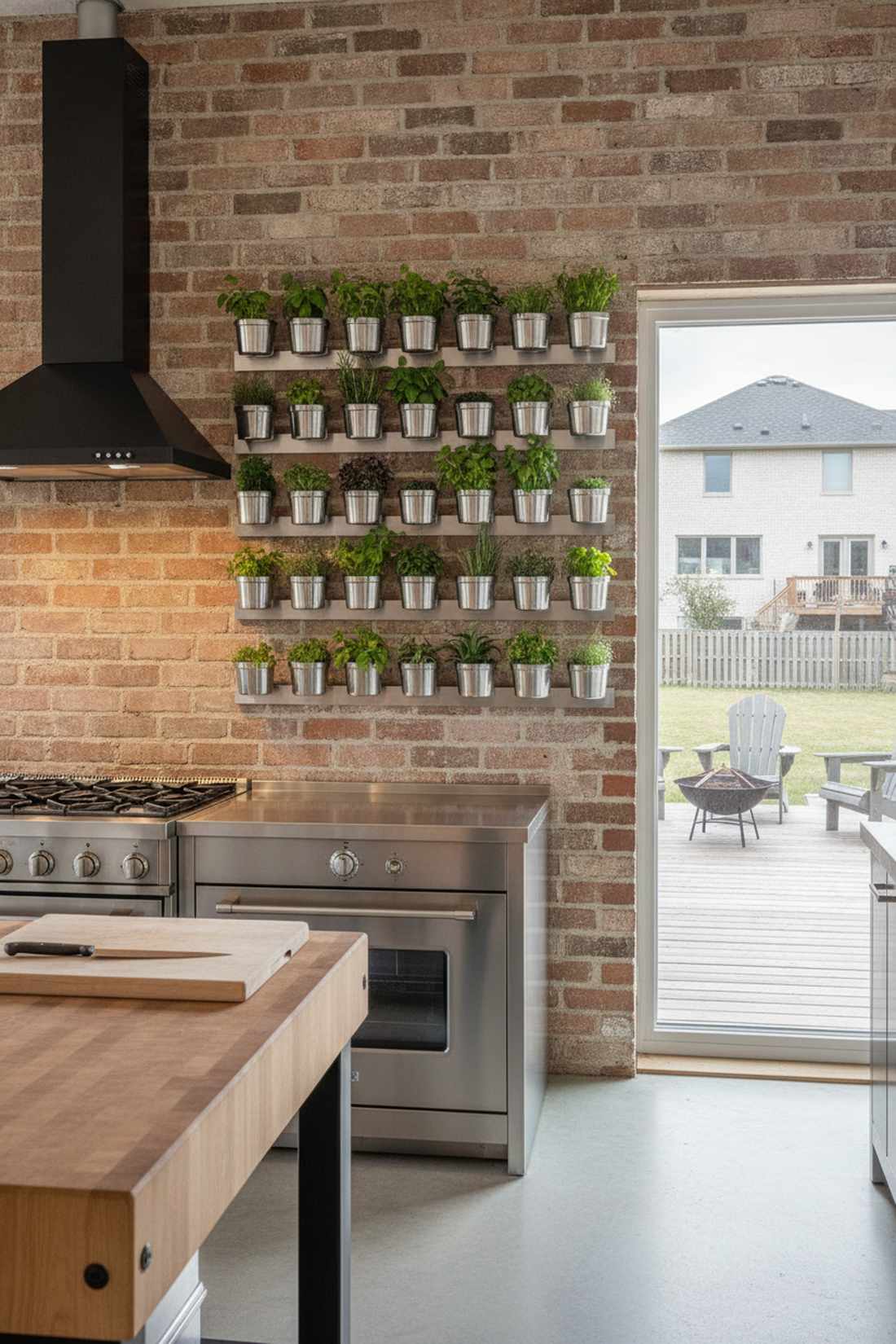
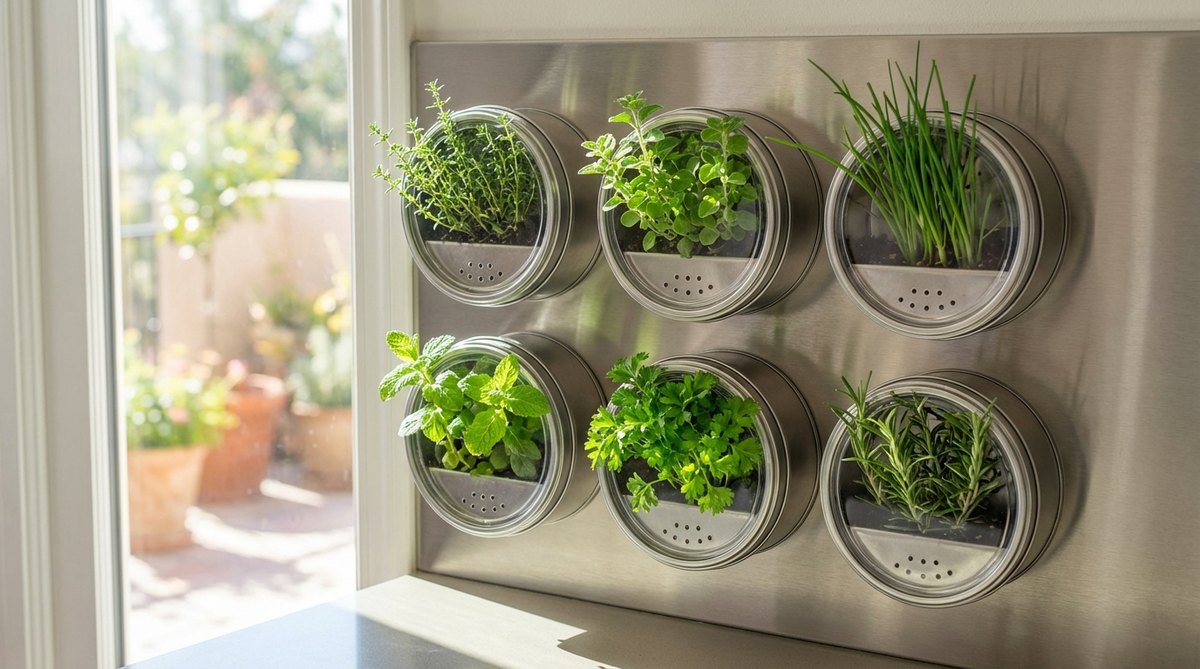
Gives off serious modern chef energy. Magnetic kitchen wall planters shine right next to the stove. Perfect for maximizing vertical clearance above tight prep zones.
Securing these shallow containers delivers a surprisingly premium look, turning everyday seasoning into a graphic green display. Swap standard magnets for heavy-duty commercial strips to completely prevent terrifying slips during cooking.
Expect to spend roughly $20–$35 for a full set. Save this to your DIY weekend kitchen upgrade board.
- Key Materials: Stainless steel spice tins, neodymium backing
- Vibe: Industrial culinary studio
- Difficulty: Quick 10-minute setup
- Budget Breakdown: Materials: $20 | Base: $15.
- Creator’s Tip: Punch secondary drainage holes with a metal awl to avoid soggy roots.
- Smart Sourcing: pre-drilled stainless steel magnetic tins (bulk pack) and premium indoor potting mix.
2. Slim Windowsill Railing Trough
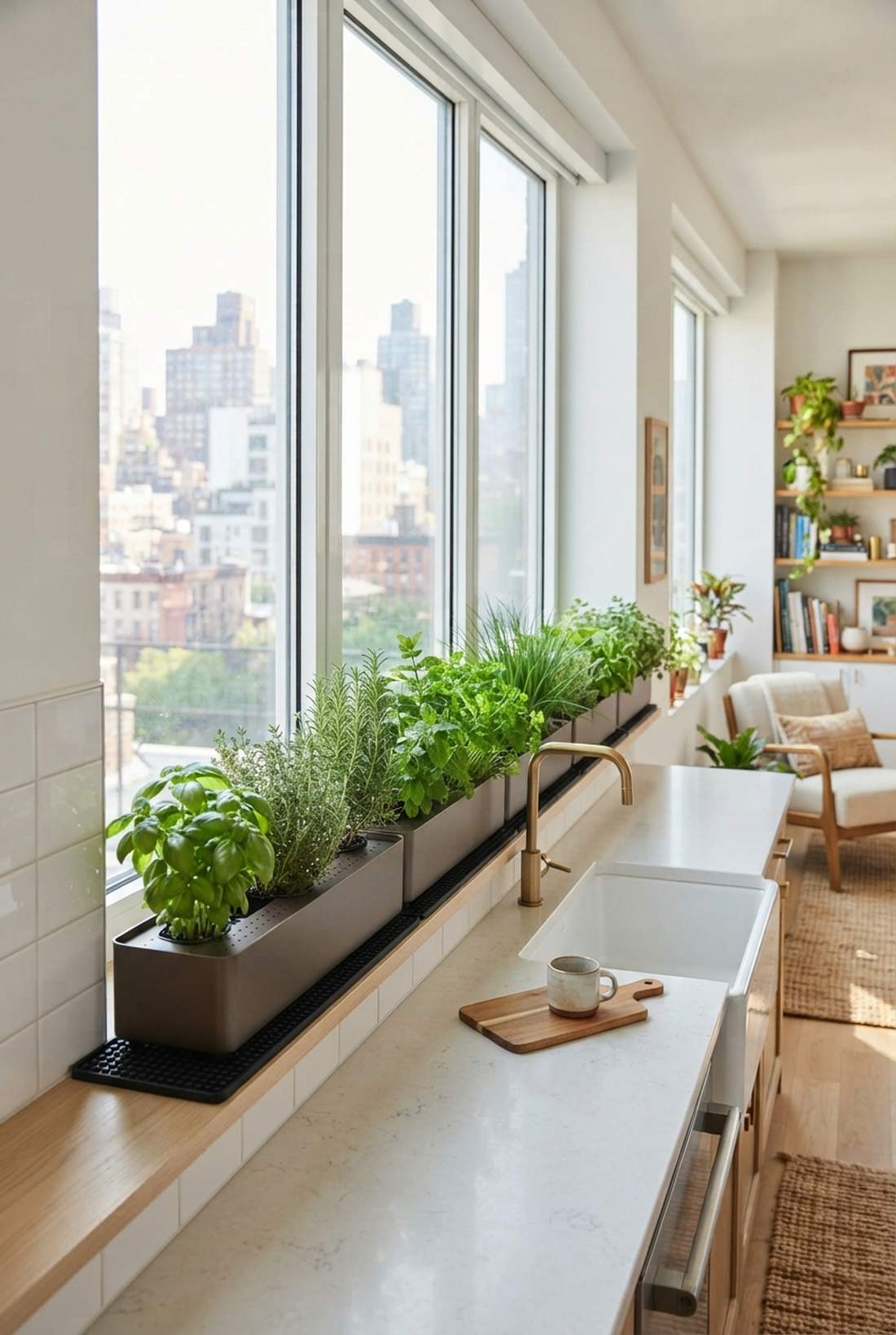
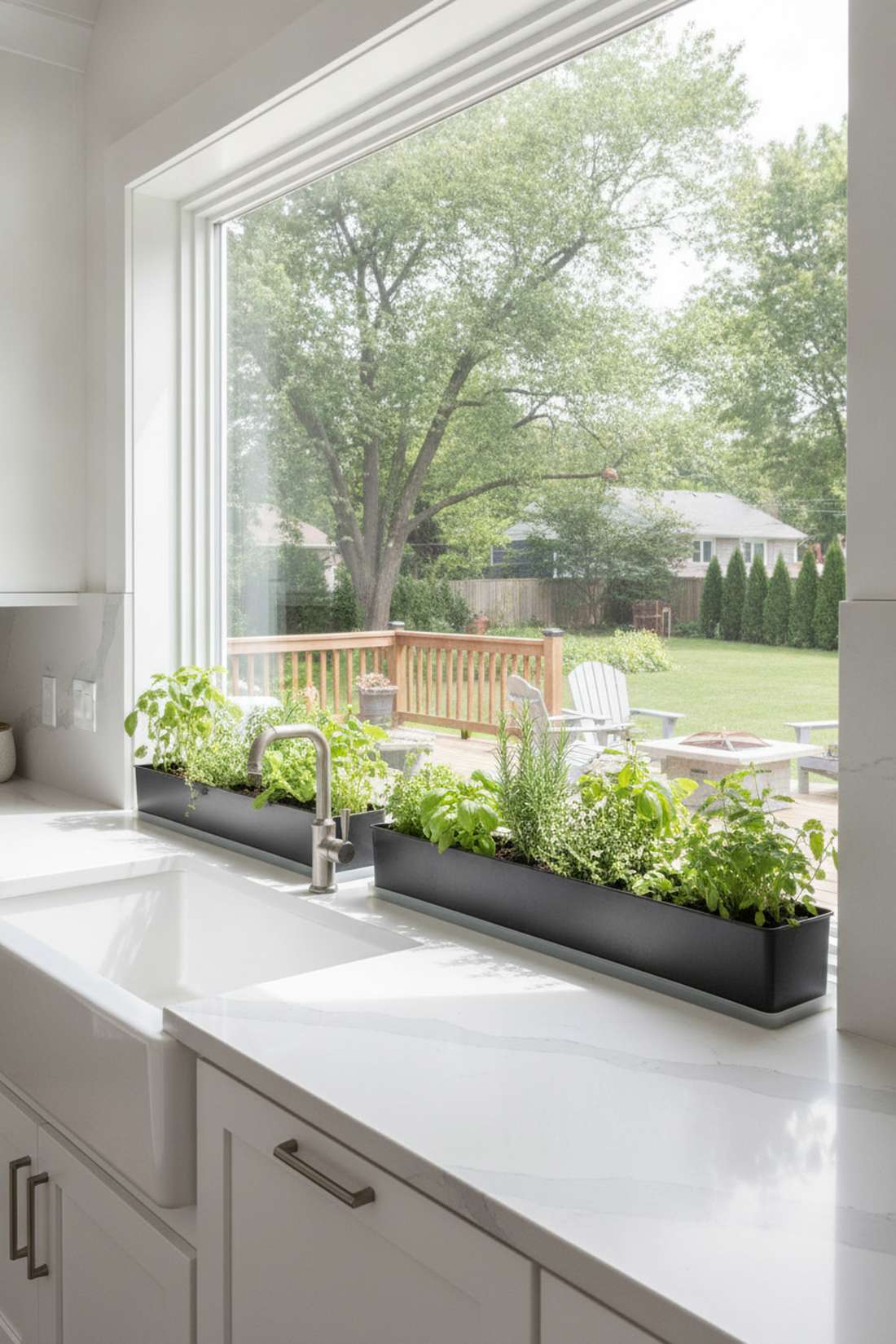
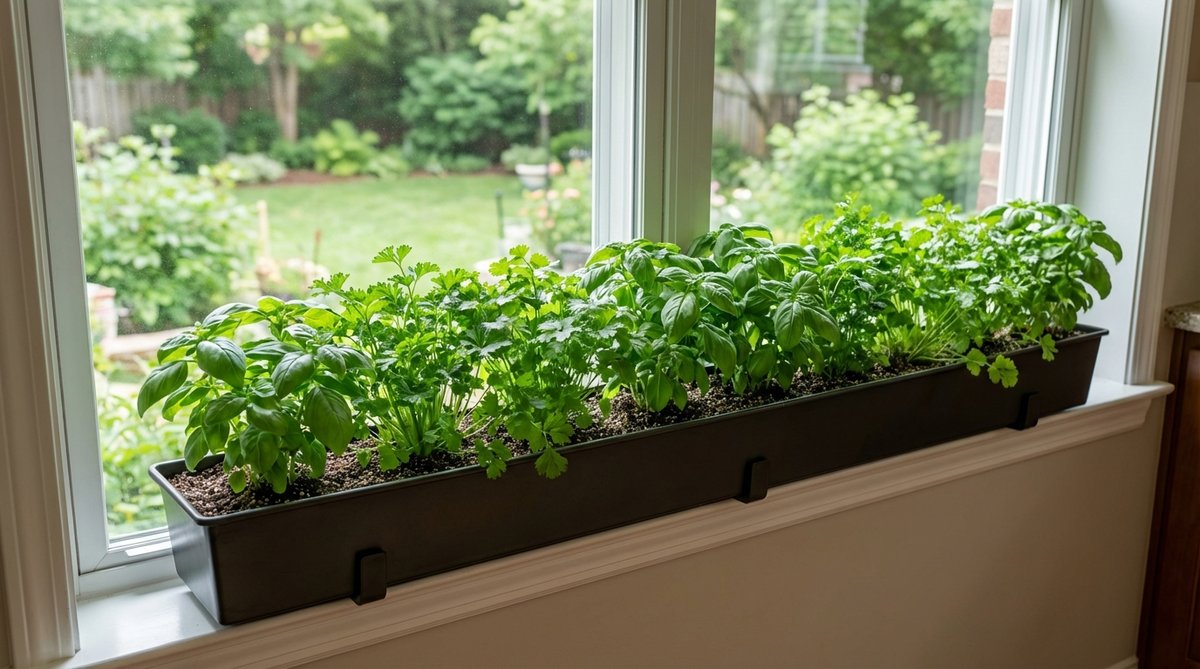
Feels like a chic urban conservatory. Minimalist windowsill herb troughs completely reshape dull sink spaces. Works exceptionally well for apartments craving a continuous green ribbon.
Creating a flush line across your glass edge looks far more expensive than it actually is. Most people ruin sill paint, but using a raised silicone mat saves the drywall effortlessly while boosting airflow.
This sleek setup usually costs about $40 to execute perfectly. Highly recommended for a quick weekend win.
- Key Materials: Powder-coated metal trough
- Vibe: Airy architectural modernism
- Difficulty: Easy beginner setup
- Budget Breakdown: Trough: $25 | Base: $15.
- Creator’s Tip: Add activated charcoal at the base to prevent mold buildup entirely.
- Smart Sourcing: UV-coated resin window troughs and high-porosity miniature garden supplies.
3. Tiered Bamboo Step Shelf
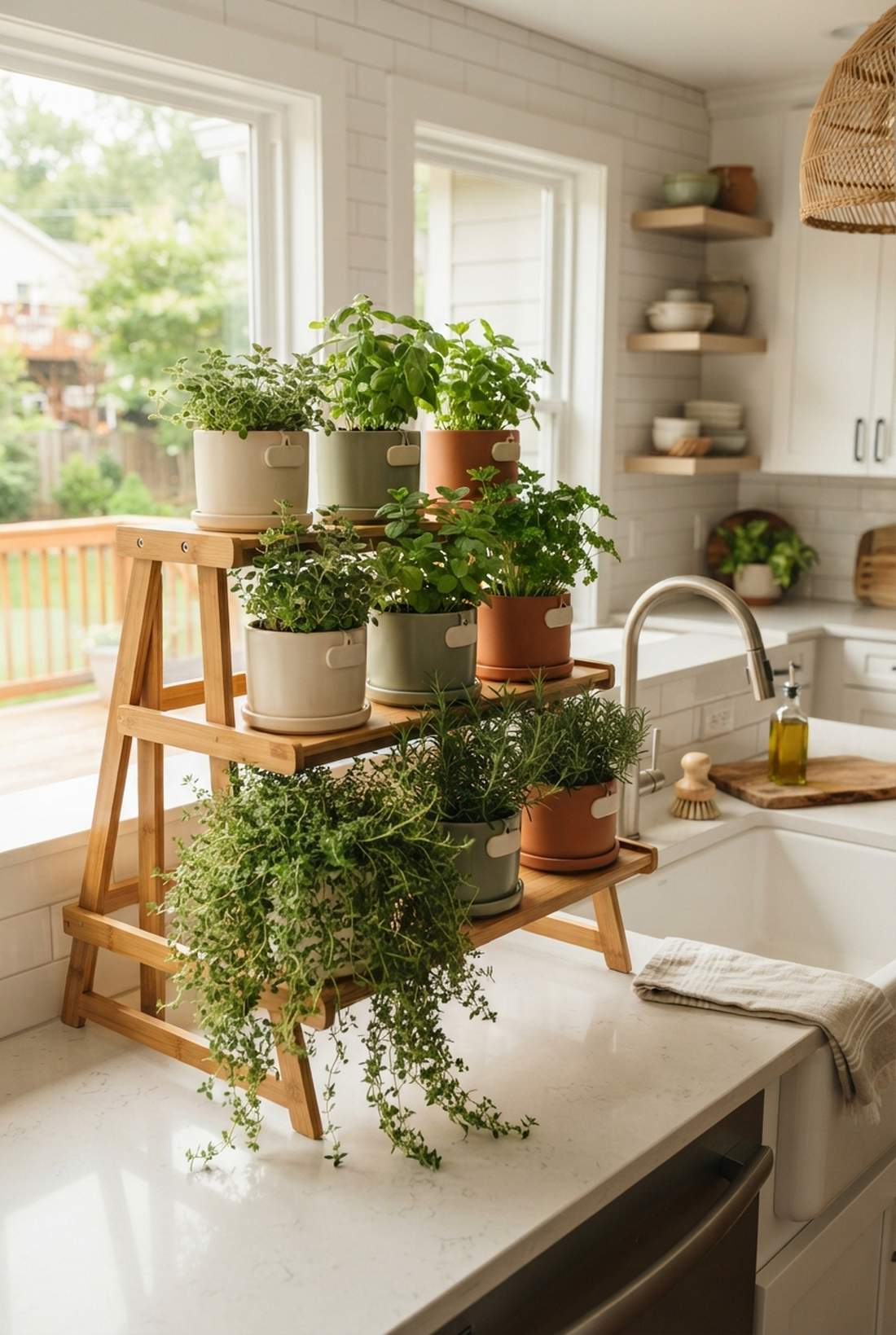
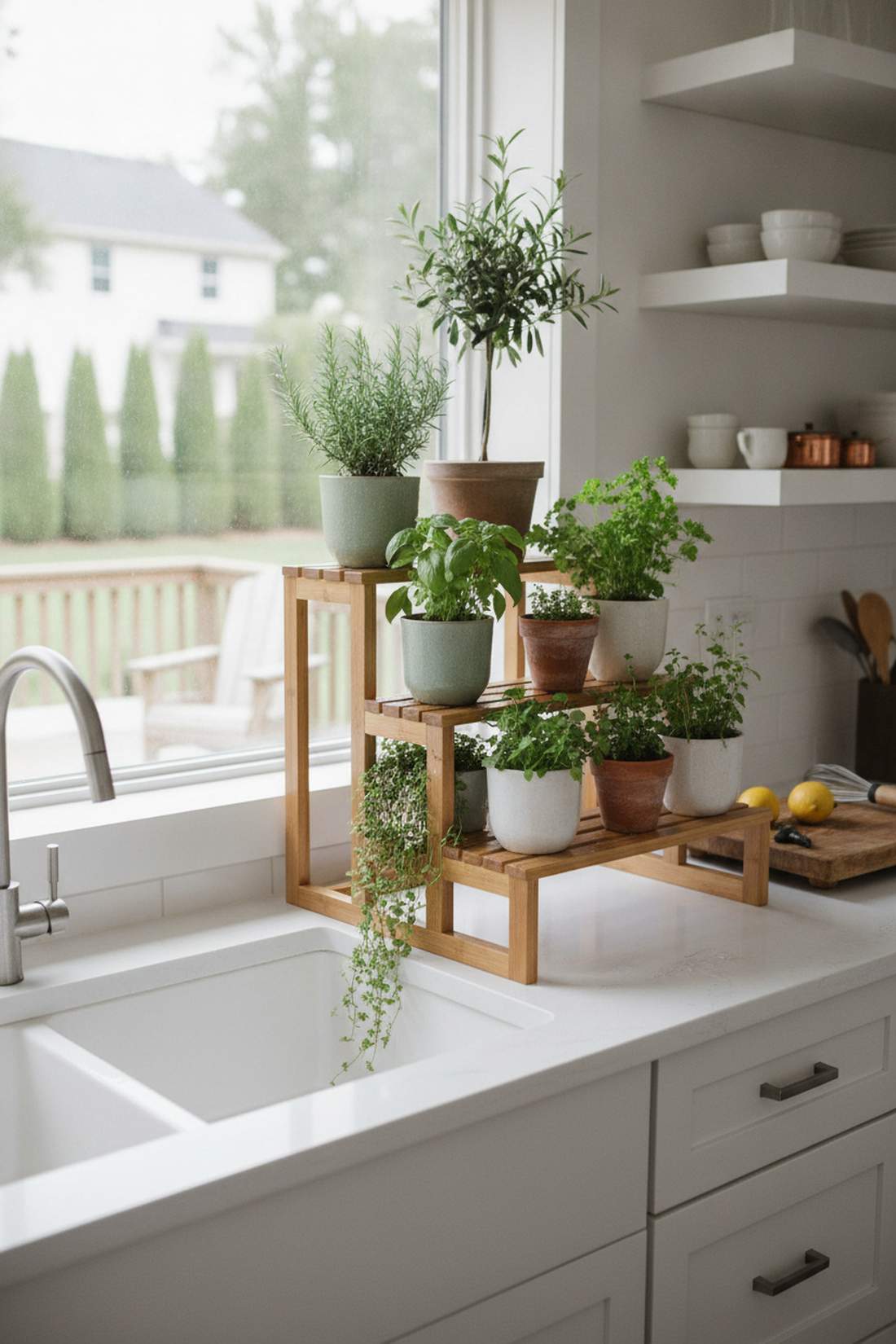
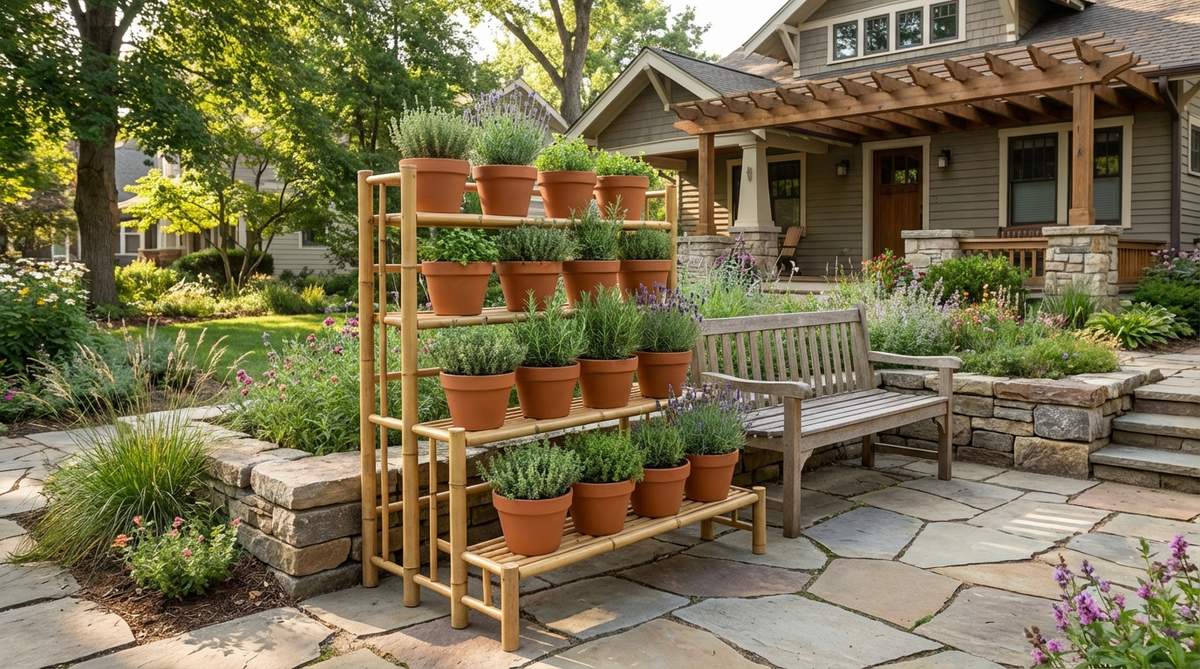
Projects a lush boutique-café mood instantly. Multi-level bamboo plant stands organize chaotic counters beautifully. Essential for grouping thirsty herbs close to the kitchen sink without clutter.
Staging different pot heights establishes a striking visual hierarchy that commands attention immediately. Many buyers grab weak wood, but treating natural bamboo ensures it effortlessly survives constant water splashes.
You can pull this together for roughly $30–$50. Pin this if you’re planning a tiny corner upgrade.
- Key Materials: Waterproofed bamboo shelving, matching ceramic pots
- Vibe: Warm organic minimalist
- Difficulty: Simple assembly
- Budget Breakdown: Shelf: $35 | Ceramic Set: $15.
- Creator’s Tip: Keep trailing thyme on the lowest rung to create a waterfall effect.
- Smart Sourcing: water-resistant tiered bamboo shelf kits and matte glazed ceramic planter packs.
4. Over-the-Sink Hanging Bar Planters
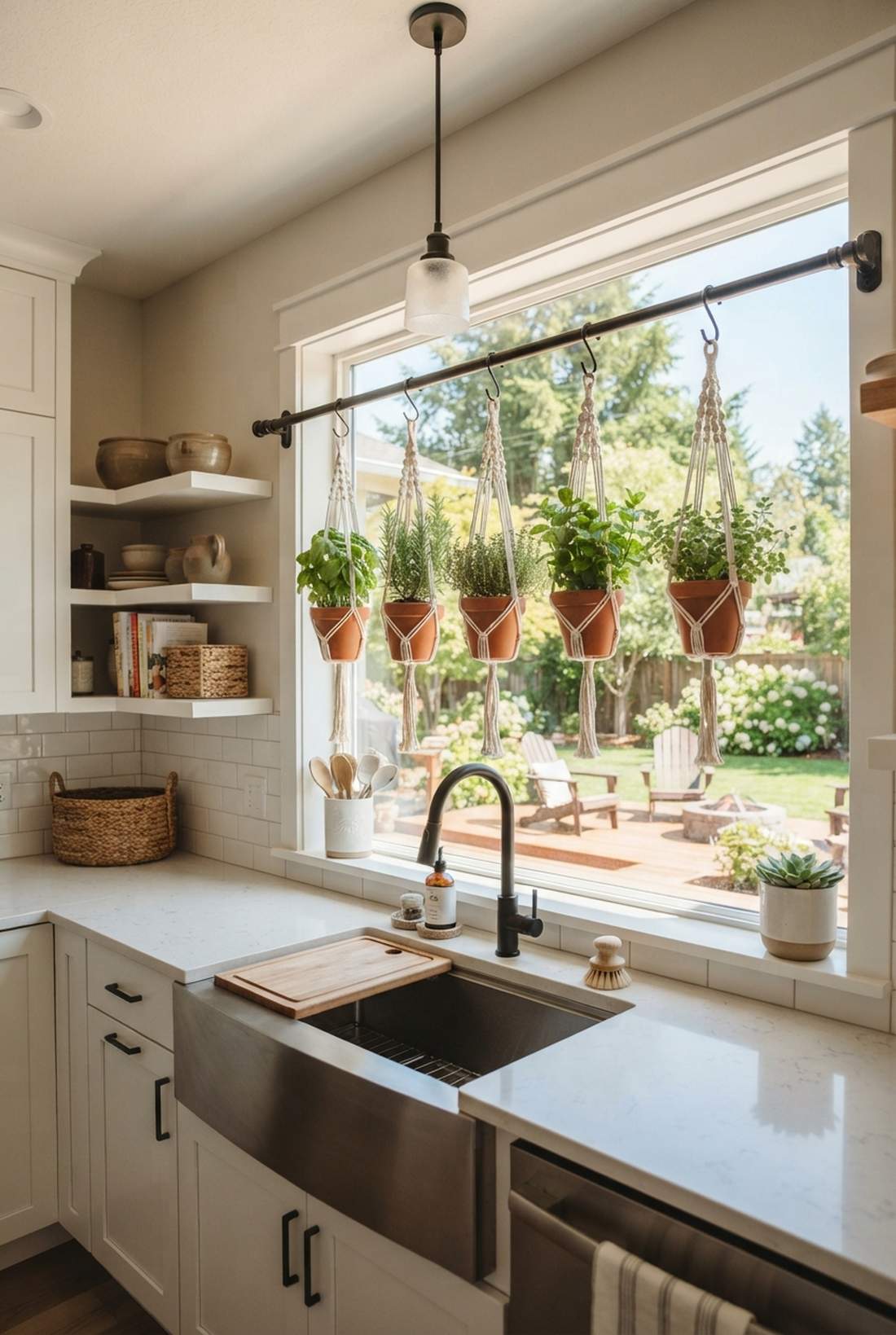
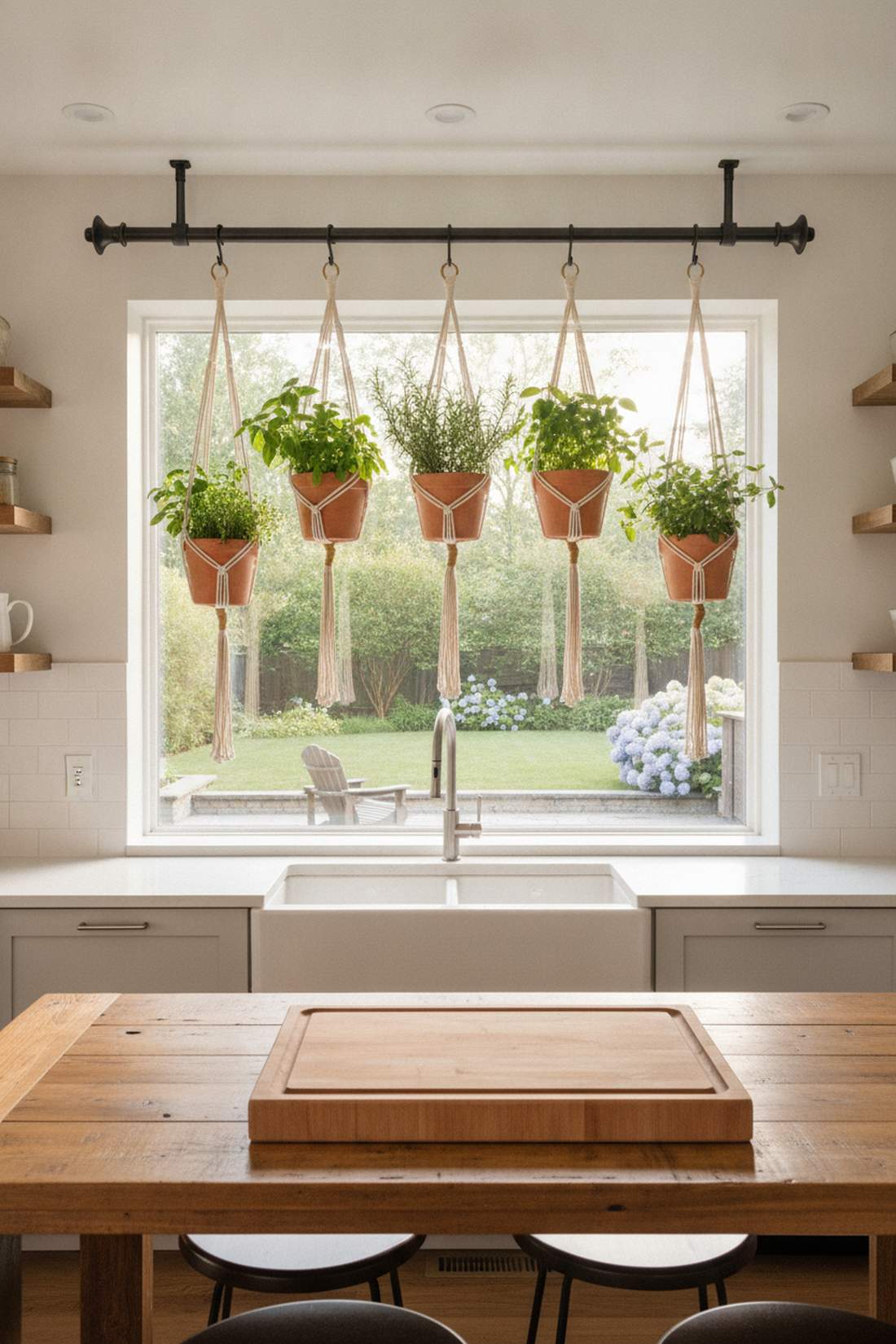
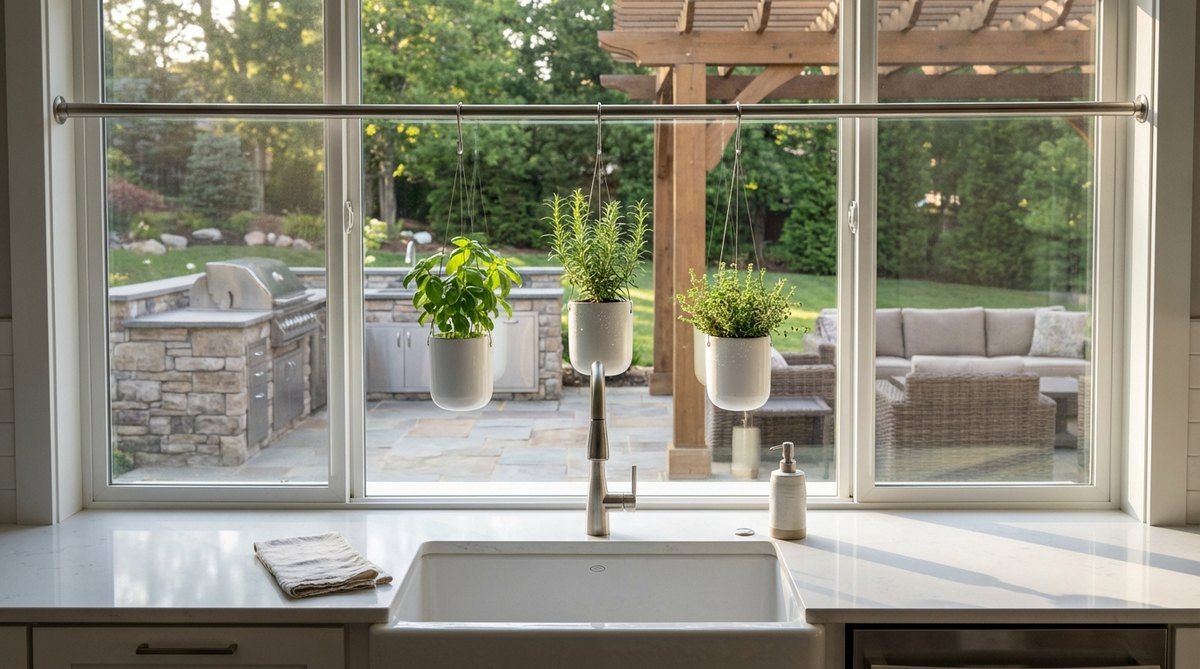
Conjures the magic of an upscale European bakery. Suspended tension rod herb gardens hover beautifully over deep basins. The ultimate layout for freeing up crucial cutting board space entirely.
Suspending lightweight pots provides a designer-level finish that entirely bypasses drilling into fragile tile. Integrate high-grade macrame slings to securely cradle standard nursery pots against accidental bumps while doing dishes.
Budget around $25–$45 for reliable mounting hardware. A brilliant solution for renters avoiding structural damage.
- Key Materials: Heavy-duty tension rod, S-hooks
- Vibe: Open-concept modern cafe
- Difficulty: Moderate measuring required
- Budget Breakdown: Rod: $20 | Slings: $15.
- Creator’s Tip: Position the bar high enough to comfortably clear tall faucets.
- Smart Sourcing: industrial-grade adjustable tension rails and pre-woven cotton plant hangers (multi-pack).
This next vertical layout is ridiculously cheap but visually passes as a $150 custom display…
5. Rotating Lazy Susan Herb Caddy
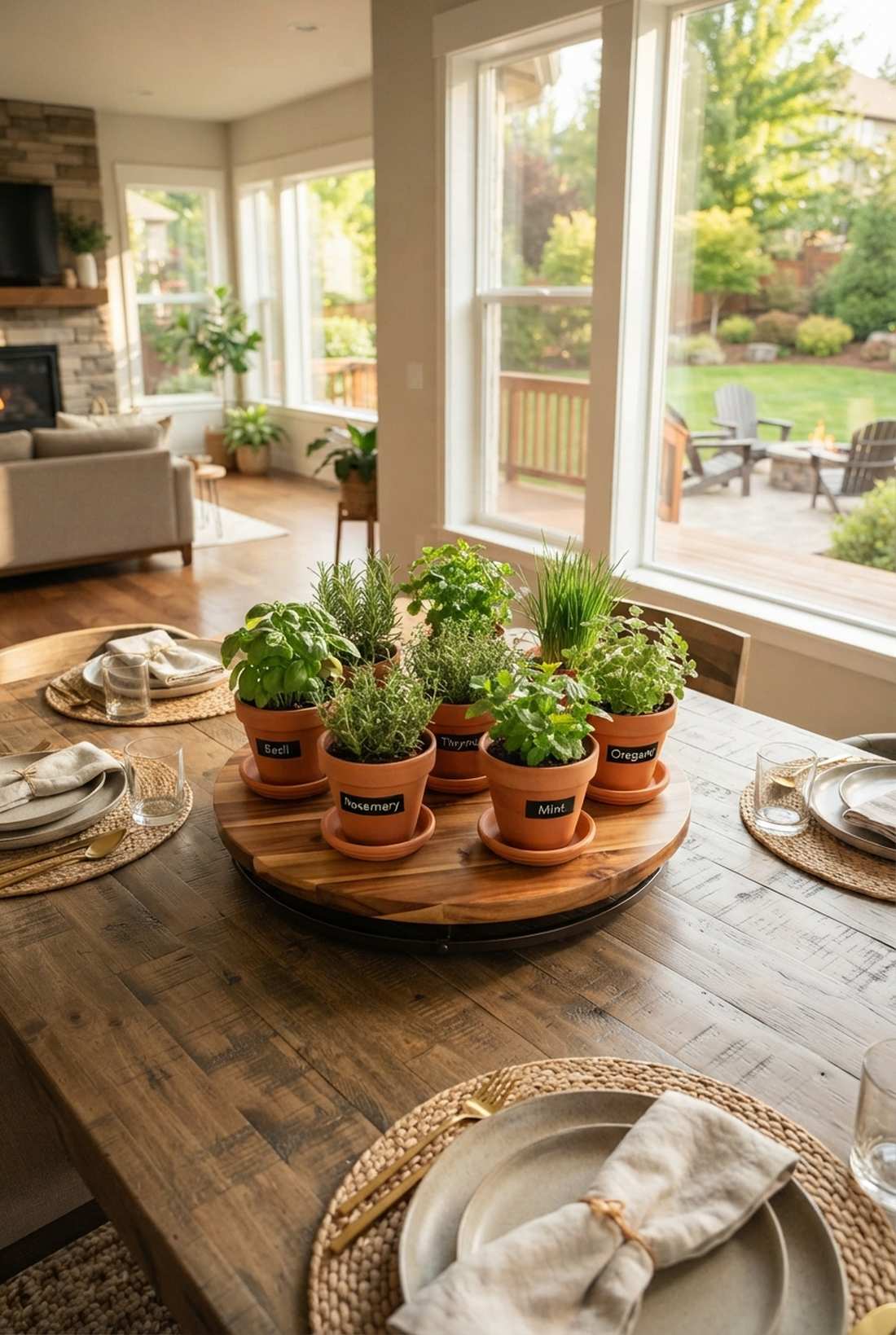
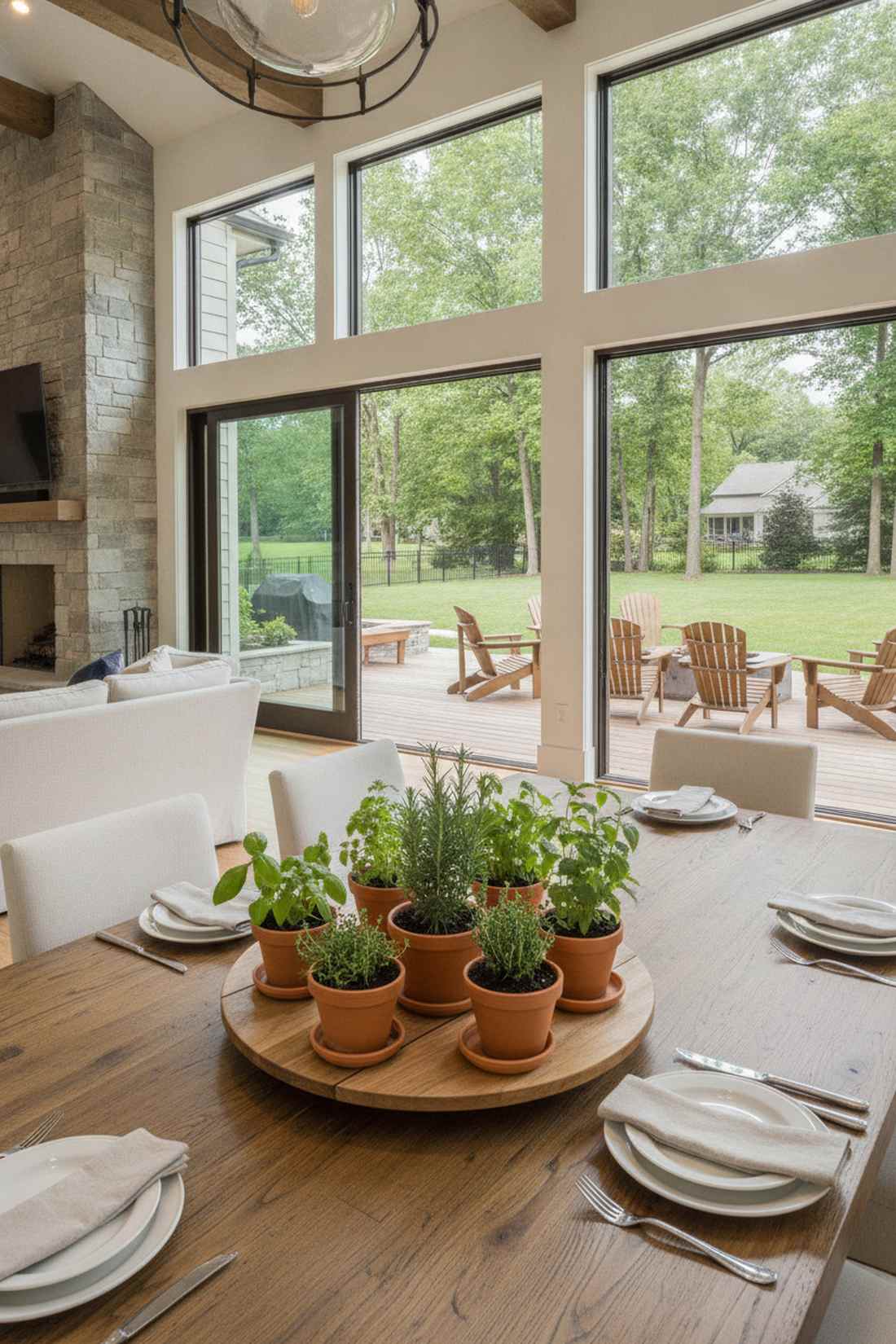
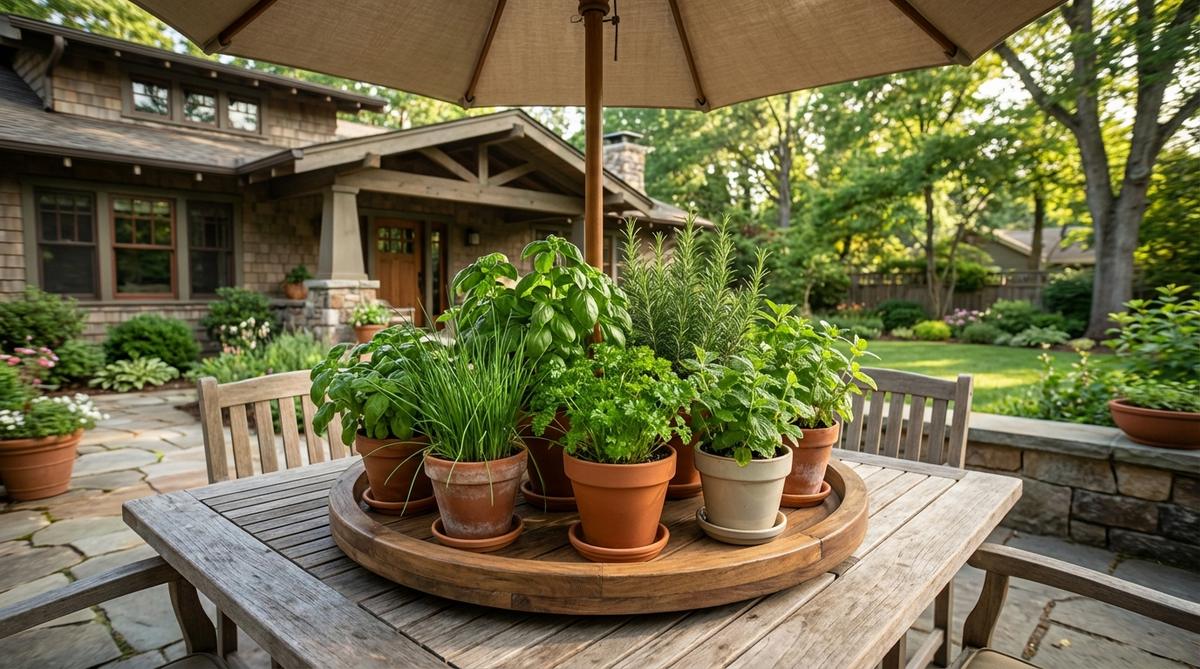
Feels like an interactive centerpiece straight out of a culinary magazine. Spinning island herb trays make harvesting a tactile dinner ritual. Excellent for big open-plan dining tables.
Grouping small seasonal aromatics on a turntable guarantees an unexpected wow factor for guests. Sourcing a moisture-resistant base entirely eliminates the sheer terror of rotting standard wood tables.
Plan to invest around $30–$40 for a durable rotating mechanism. Save this layout for your next interactive dinner party setup.
- Key Materials: Acacia wood lazy Susan, unified pot saucers
- Vibe: Farm-to-table dining
- Difficulty: Beginner-friendly arrangement
- Budget Breakdown: Base: $25 | Pots: $15.
- Creator’s Tip: Rotate 180 degrees daily for perfectly even sunlight exposure.
- Smart Sourcing: sealed acacia wood turntables and terracotta starter pots with drainage.
6. Under-Cabinet Rail Mason Jar Planters
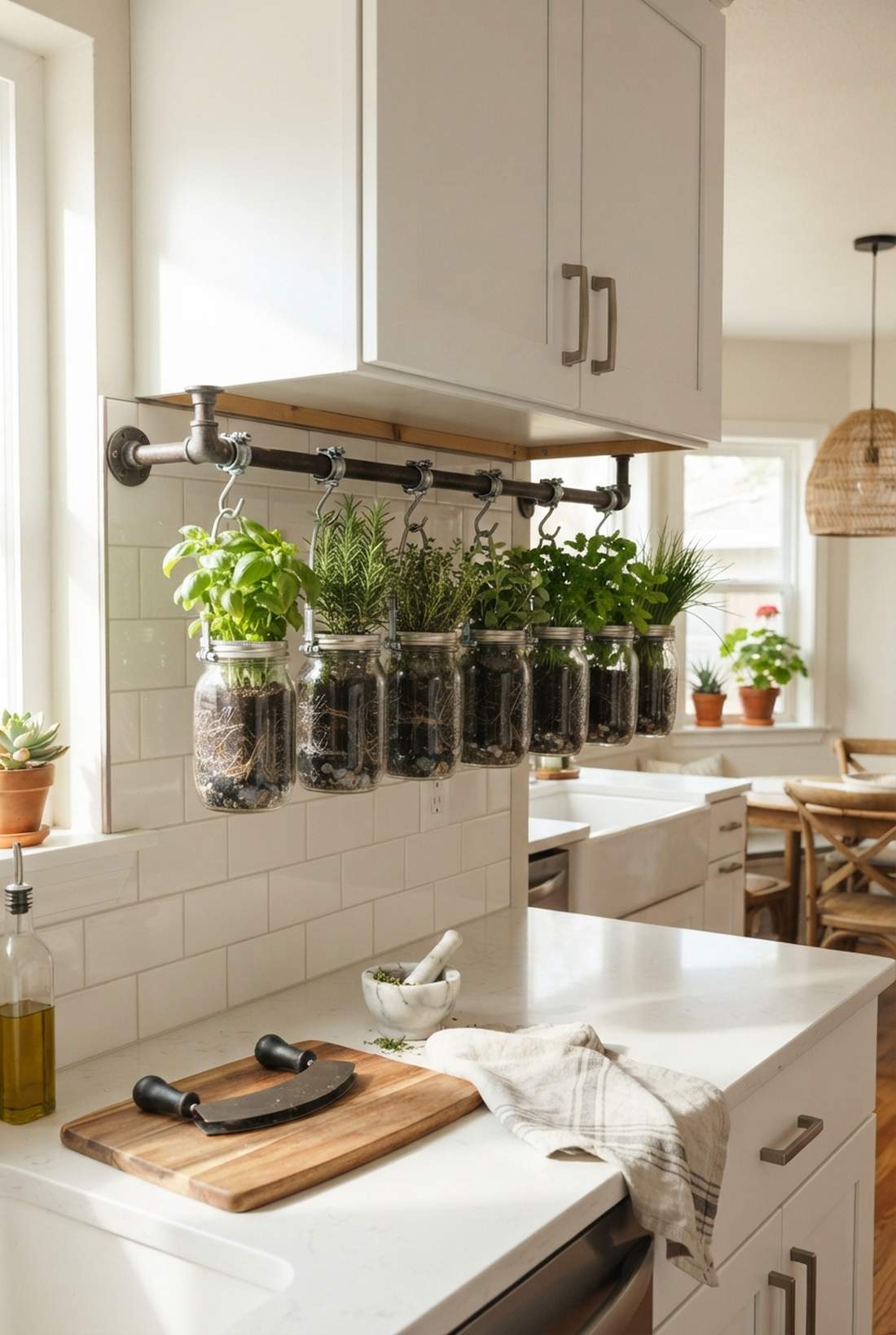
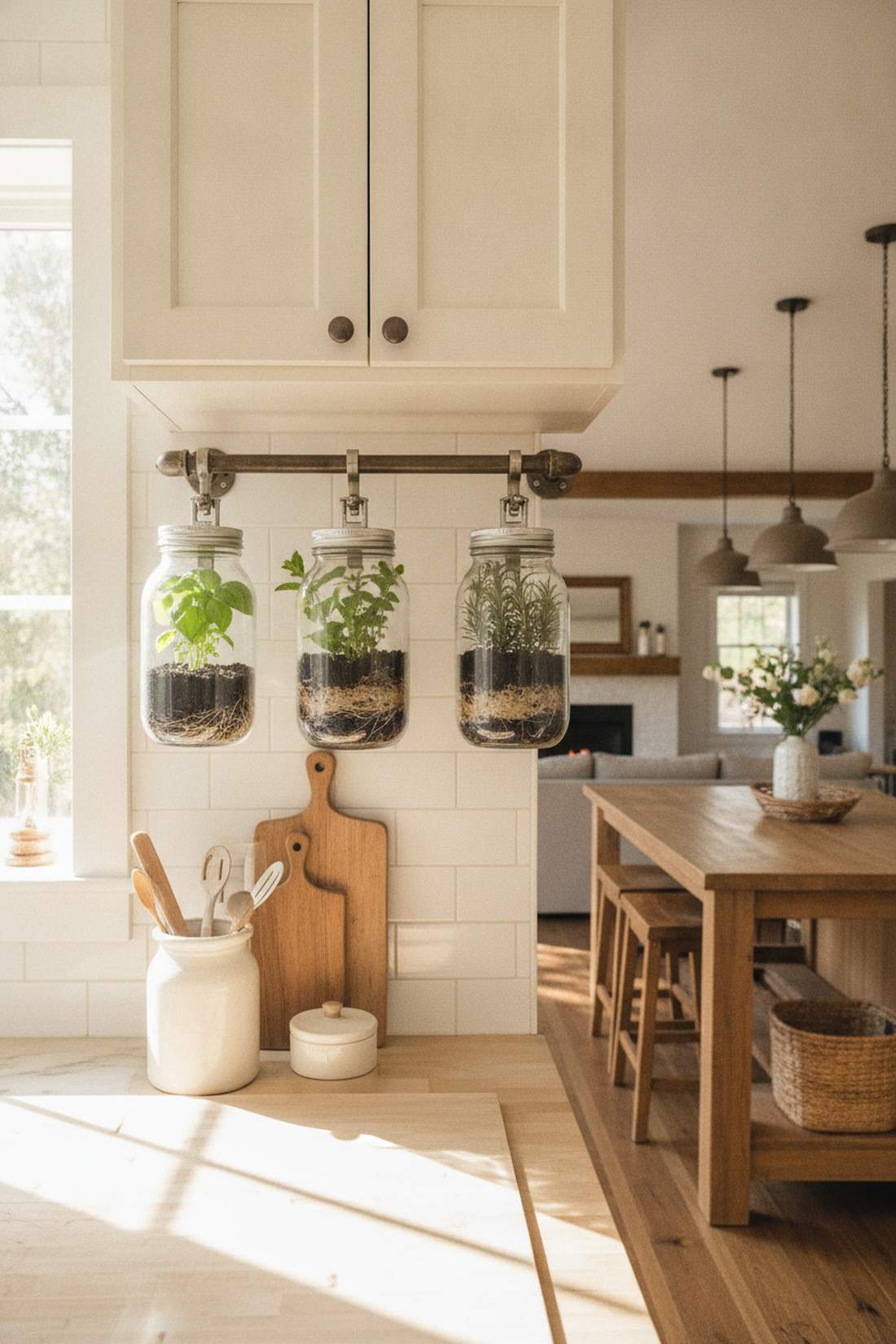
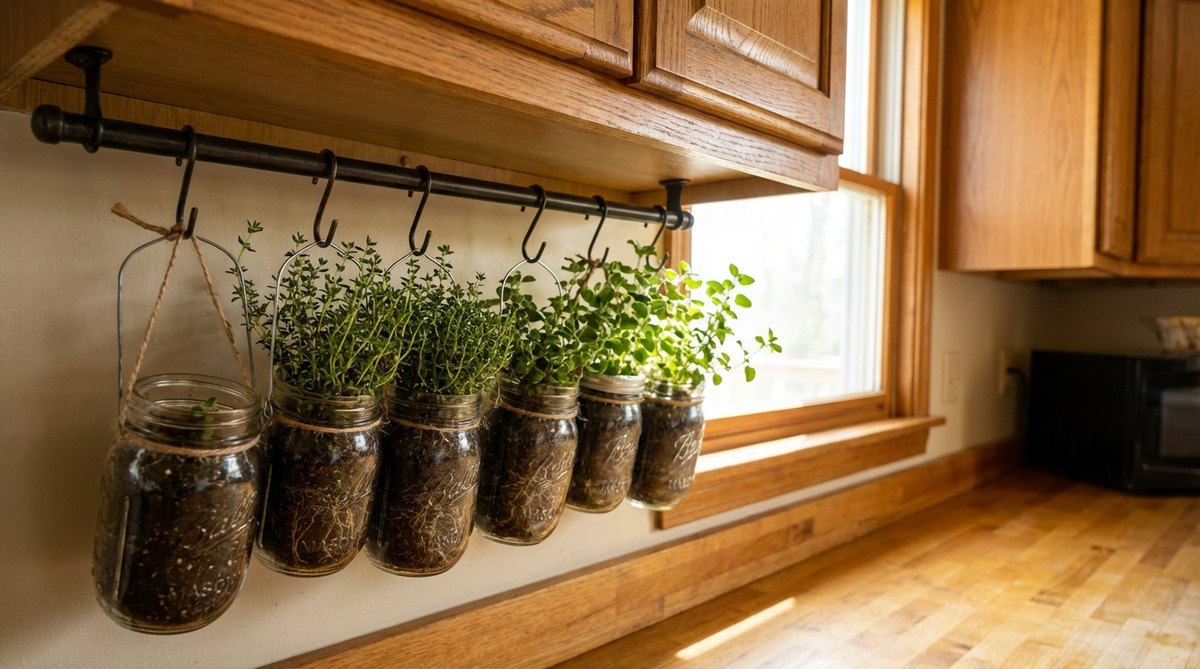
Emanates a crafted, rustic studio aesthetic. Hanging glass jar herb setups sparkle beautifully against blank backsplashes. A genius approach for utilizing the dead air below upper cabinetry.
Repurposing clear glass yields a surprisingly chic cross-section of roots and soil layers. Upgrading to heavy-duty pipe clamps ensures these heavy glass containers never plummet disastrously onto your countertops.
You can easily assemble this for under $25. It’s a fast upgrade that completely changes the lighting vibe.
- Key Materials: Towel rail, stainless jar clamps, mason jars
- Vibe: Vintage farmhouse craft
- Difficulty: Requires basic drill skills
- Budget Breakdown: Hardware: $15 | Jars: $10.
- Creator’s Tip: Place activated carbon at the bottom to offset the lack of drainage.
- Smart Sourcing: wide-mouth glass mason jars (bulk pack) and heavy-duty pipe clamp kits.
7. Slim Wall-Mounted Pocket Planters
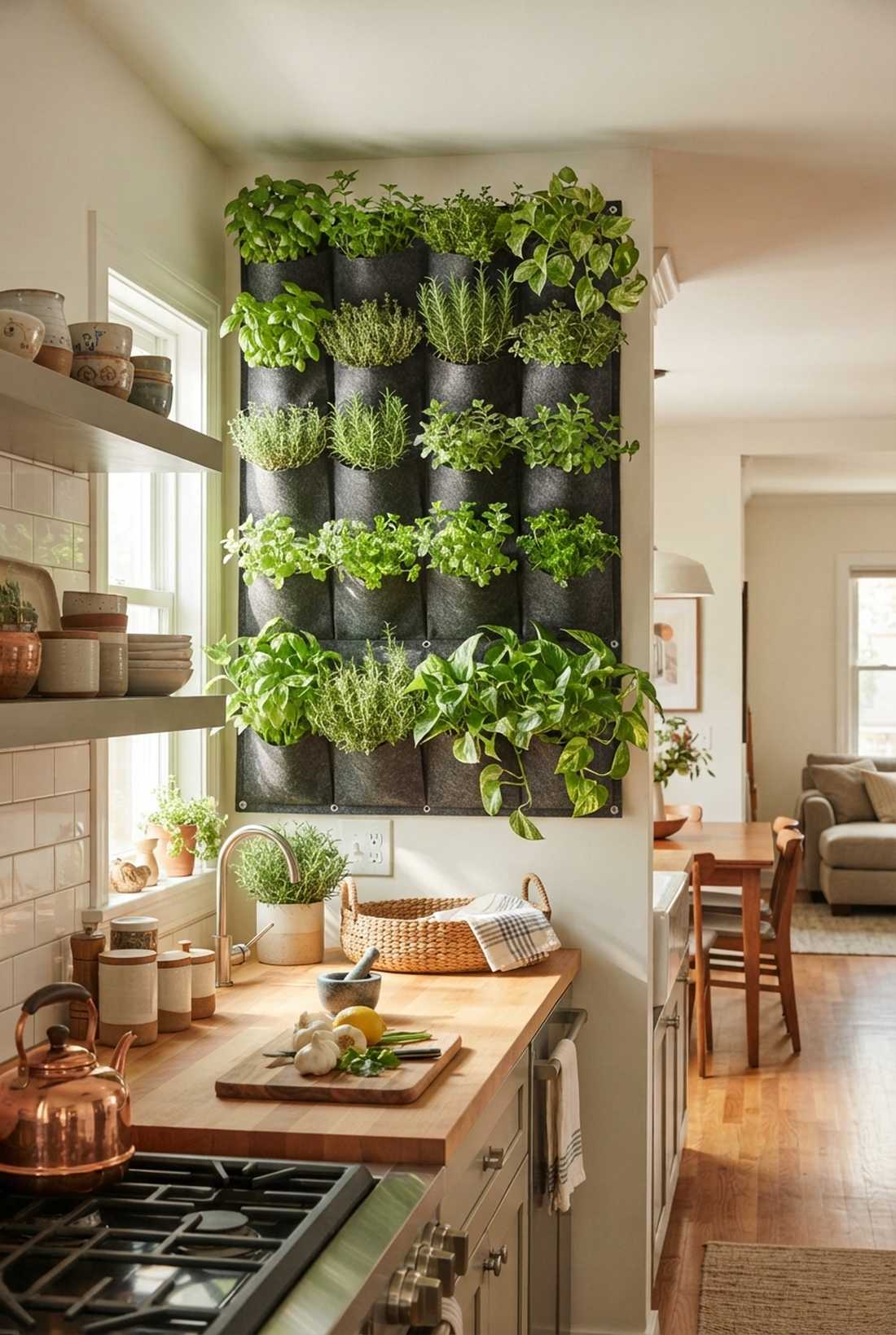
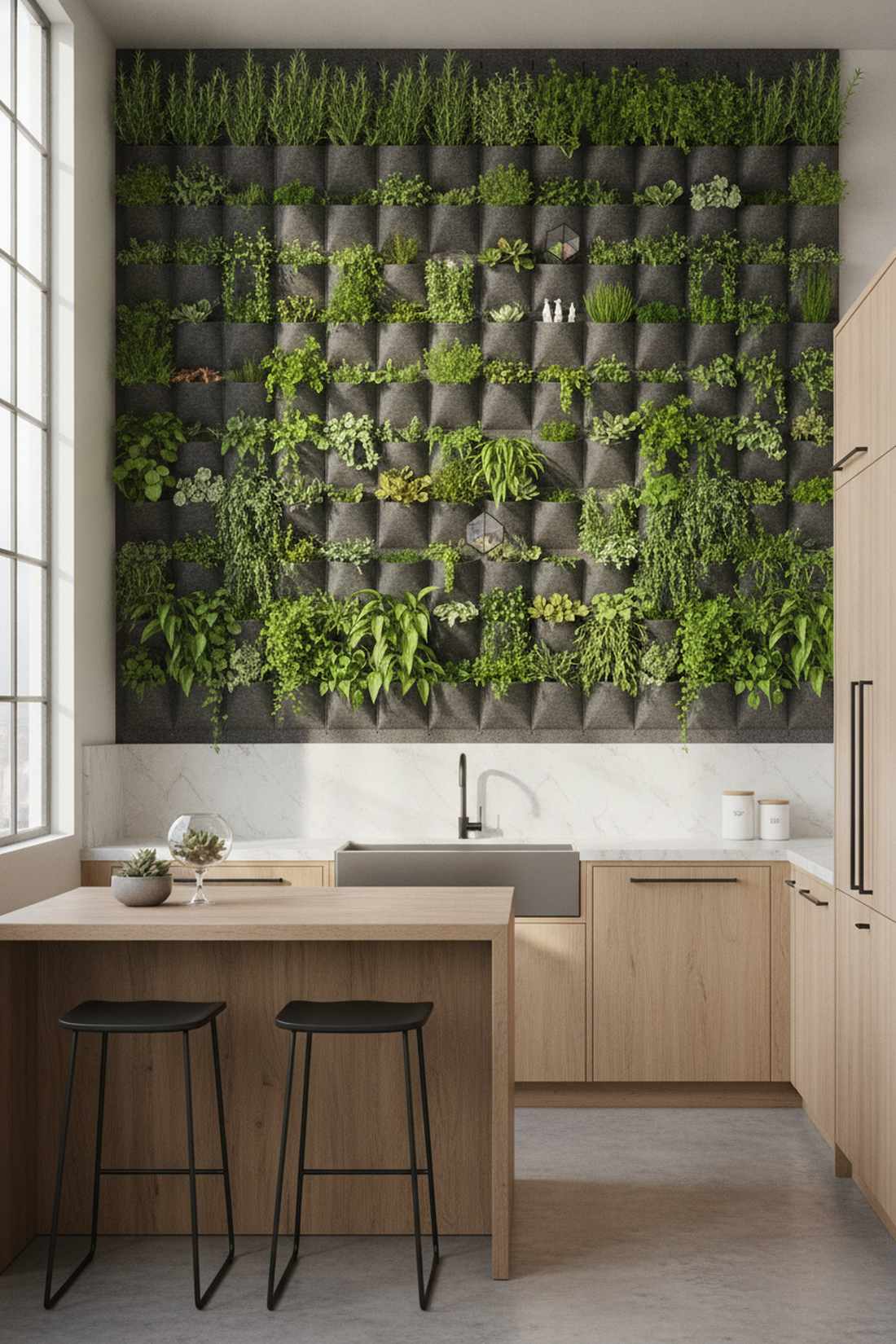
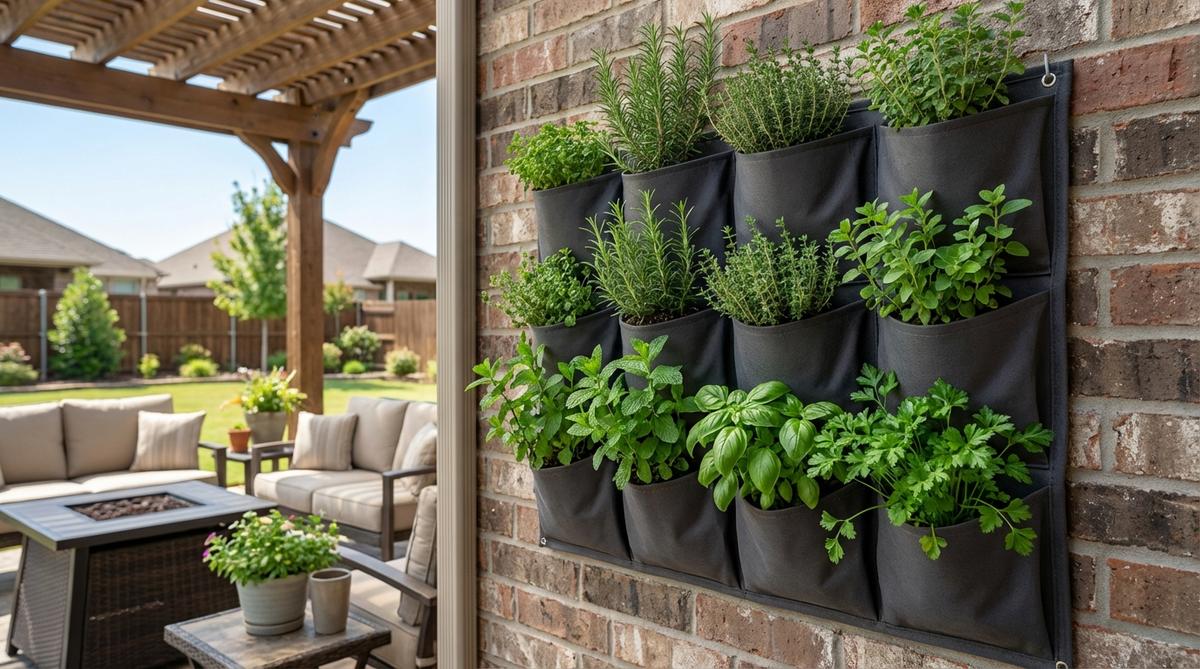
Looks like a lush living wall from a luxury hotel lobby. Vertical fabric pocket gardens transform barren kitchen walls into a leafy focal point. Flawless for tight galley kitchens needing greenery.
Layering shallow-rooted greens upward establishes an aggressive space-saving layout with huge visual impact. Utilizing waterproof membrane liners absolutely blocks wall damage from seeping moisture while holding high-end terrarium accessories.
Expect to spend $35–$60 depending on pocket count. Pin this if you want maximum yield in zero footprint.
- Key Materials: Felt vertical planter system, waterproof backing
- Vibe: Urban vertical jungle
- Difficulty: Moderate hanging task
- Budget Breakdown: Pocket Wall: $30 | Soil: $15.
- Creator’s Tip: Put drought-tolerant herbs at the absolute top tier.
- Smart Sourcing: waterproof-backed vertical pocket planters and lightweight indoor potting blends.
8. Stackable Ceramic Cube Planters
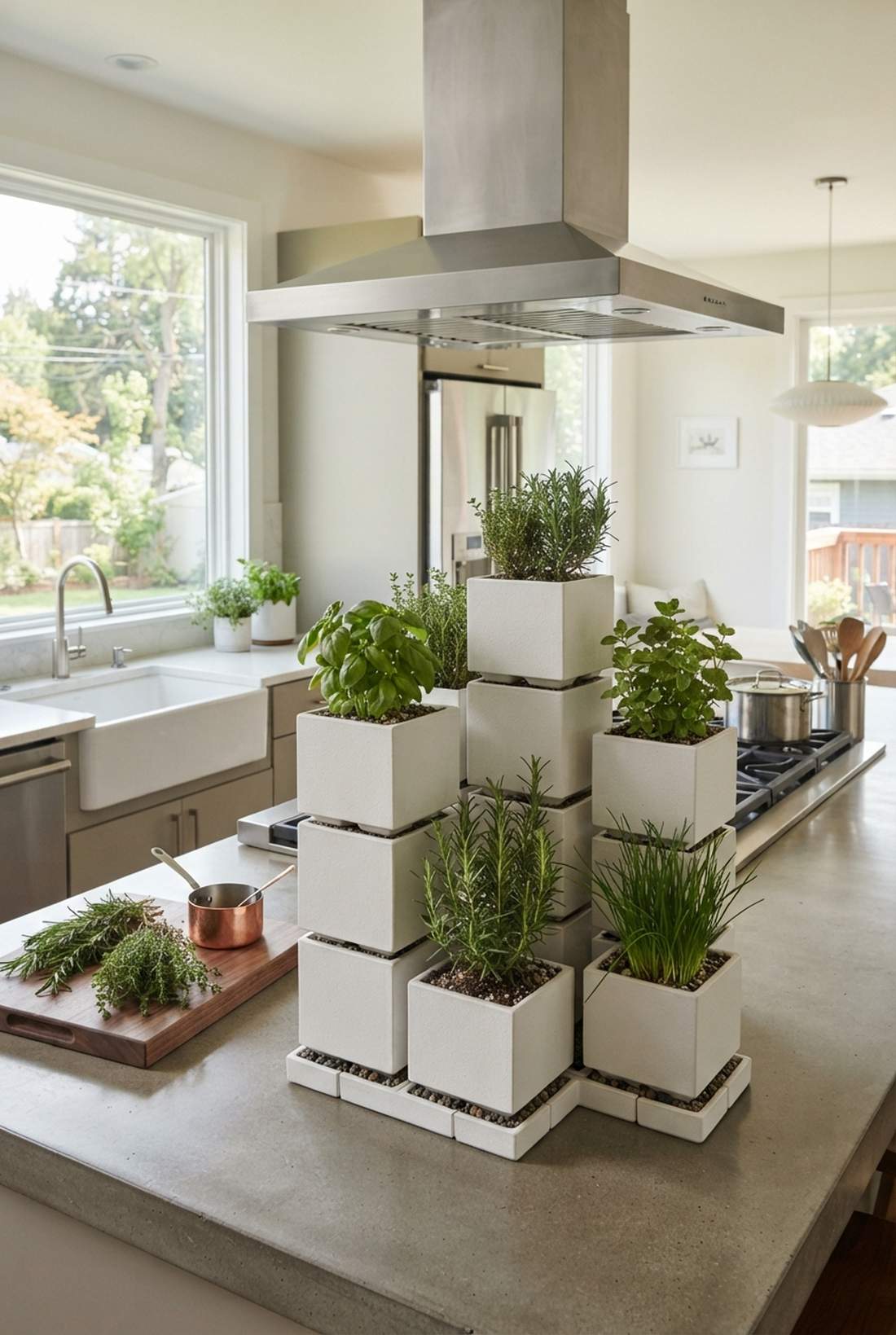
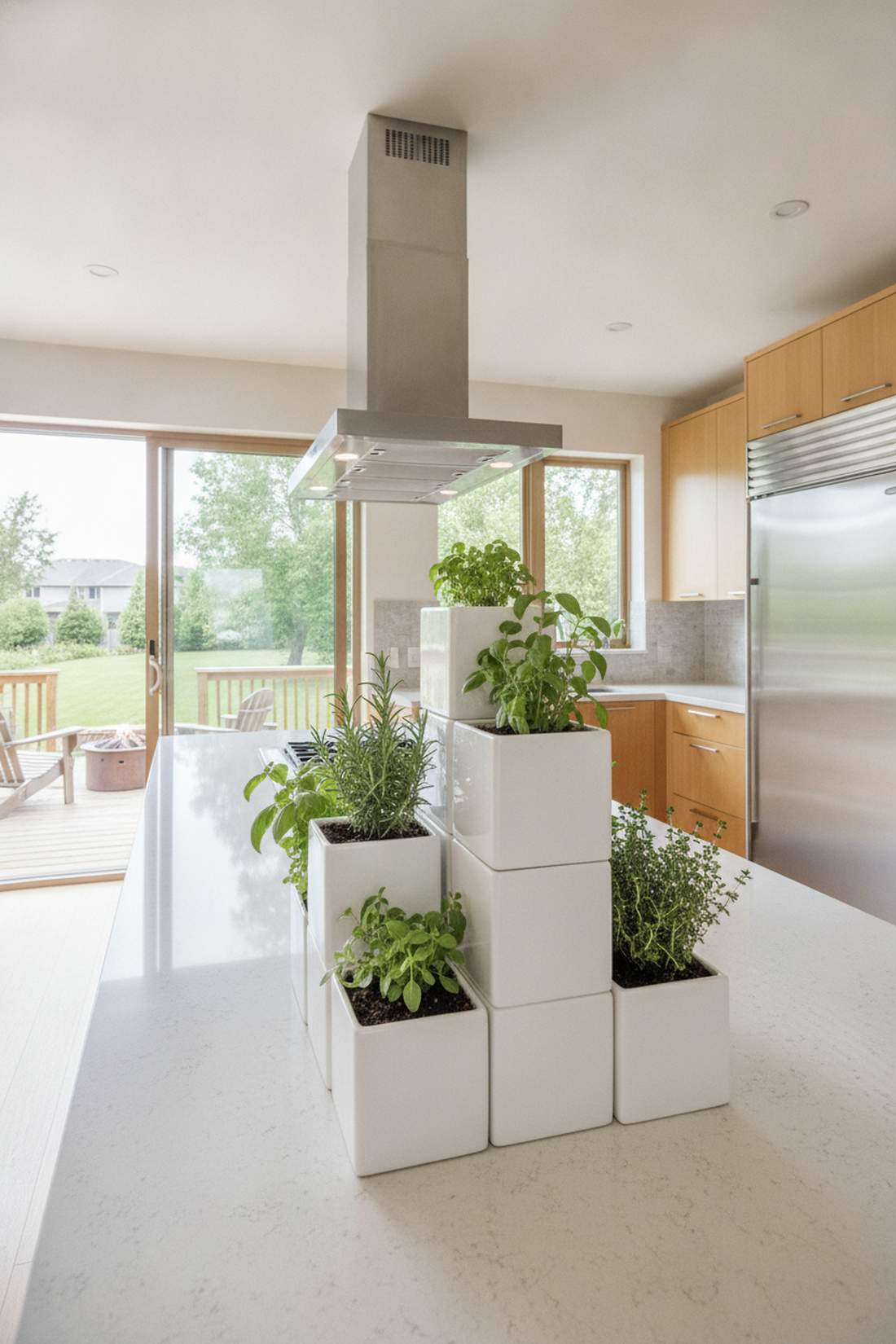
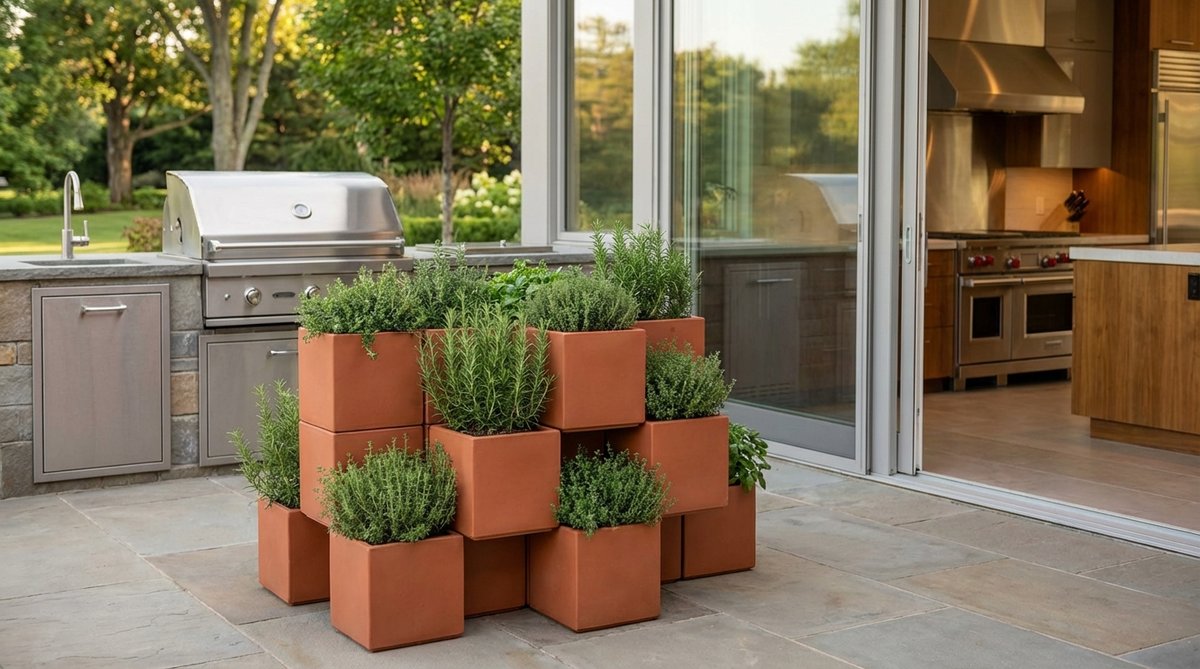
Gives a sleek, hyper-modern architectural presence. Modular ceramic herb blocks create a sculptural grid right on your counter. Perfect for pairing with stainless steel appliances.
Locking geometric shapes together mimics an upscale gallery installation instantly. Grabbing interlocking bases directly prevents top-heavy towers from tipping over disastrously during routine watering sessions.
Budget roughly $45–$70 for high-quality modular pieces. This layout effortlessly expands as your culinary skills grow.
- Key Materials: Interlocking ceramic cubes, grit mix
- Vibe: Geometric contemporary chic
- Difficulty: Easy stacking
- Budget Breakdown: Cubes: $50 | Base Mix: $15.
- Creator’s Tip: Leave a half-inch gap between stacks for critical airflow.
- Smart Sourcing: stackable modular planter cubes (starter kit) and premium drainage gravel bulk bags.
Ninety percent of renters completely skip this next corner hack until they see the exact spacing trick.
9. Glass Jar Hydroponic Herb Rail
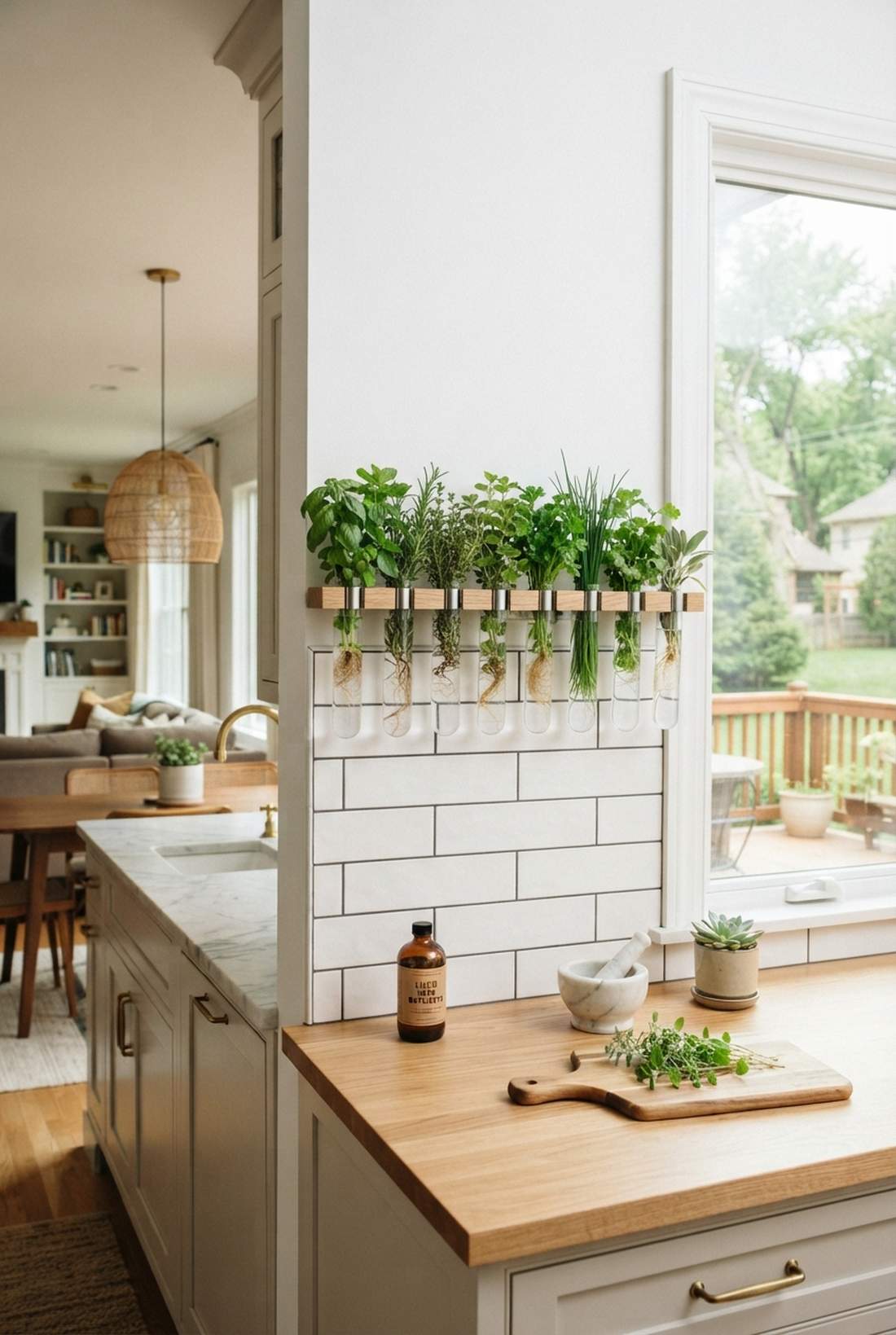
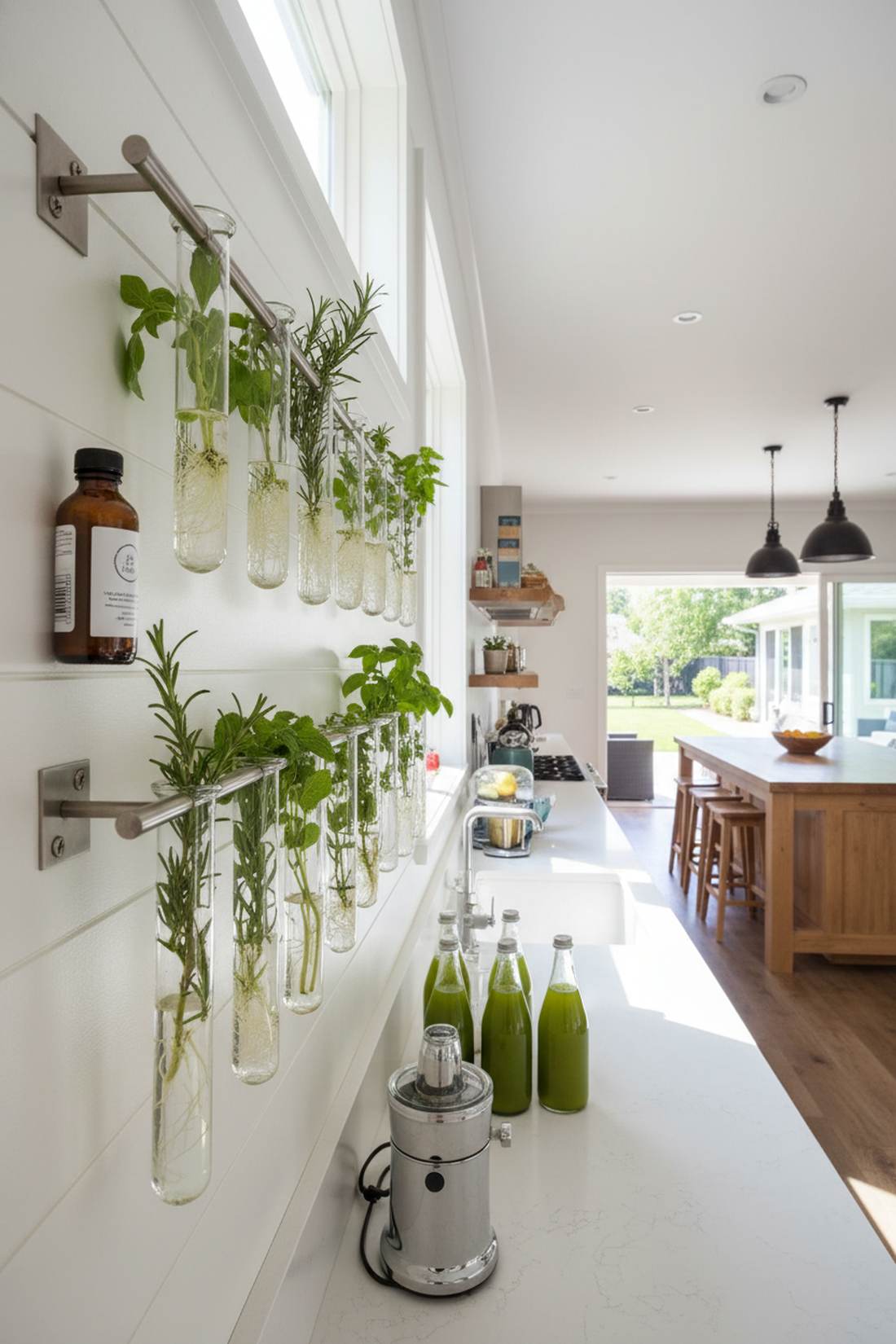
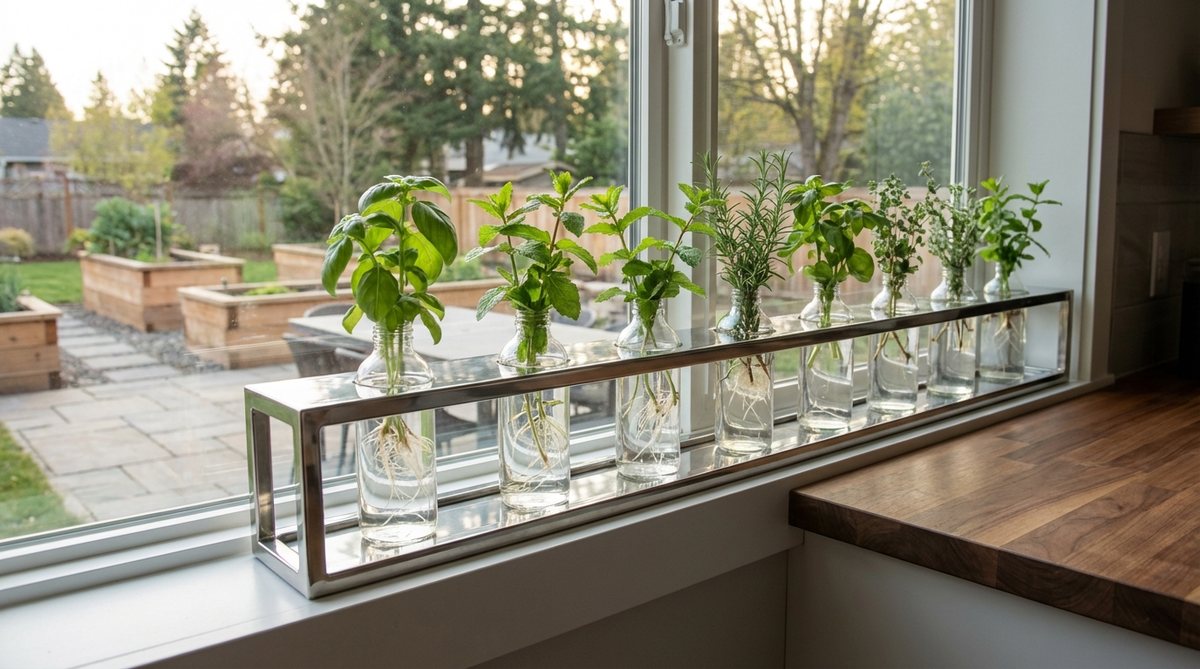
Feels like a chic botanical laboratory crossed with a juice bar. Wall-mounted hydroponic propagation tubes keep floating roots entirely visible. Ideal for cooks craving a pristine, soil-free environment.
Displaying bare roots in purified water forces a strikingly clean aesthetic that guests always notice. Integrating specialized liquid nutrients entirely ensures long-term vitality instead of just temporary survival in plain tap water.
This sleek setup runs around $30–$50 for the rail and glass. Save this to your soil-free indoor gardening board.
- Key Materials: Thin glass bottles, secure wall clips
- Vibe: Sleek modern science
- Difficulty: Easy assembly, high maintenance
- Budget Breakdown: Rail Set: $35 | Nutrients: $15.
- Creator’s Tip: Keep bottles narrow to maximize light penetration deeply into the water.
- Smart Sourcing: glass hydroponic propagation stations and concentrated liquid herb nutrients.
💡 Must-Have Supplies for High-End Setups
To build these setups faster and ensure they last, skip the generic craft aisles and invest in the right foundational kits.
- Base & Support: weatherproofed floating rail kits
- Setup Tools: indoor miniature garden supplies (starter kits)
- Weather/Durability Protection: UV-resistant clear acrylic sealants
10. Corner Ladder Plant Stand
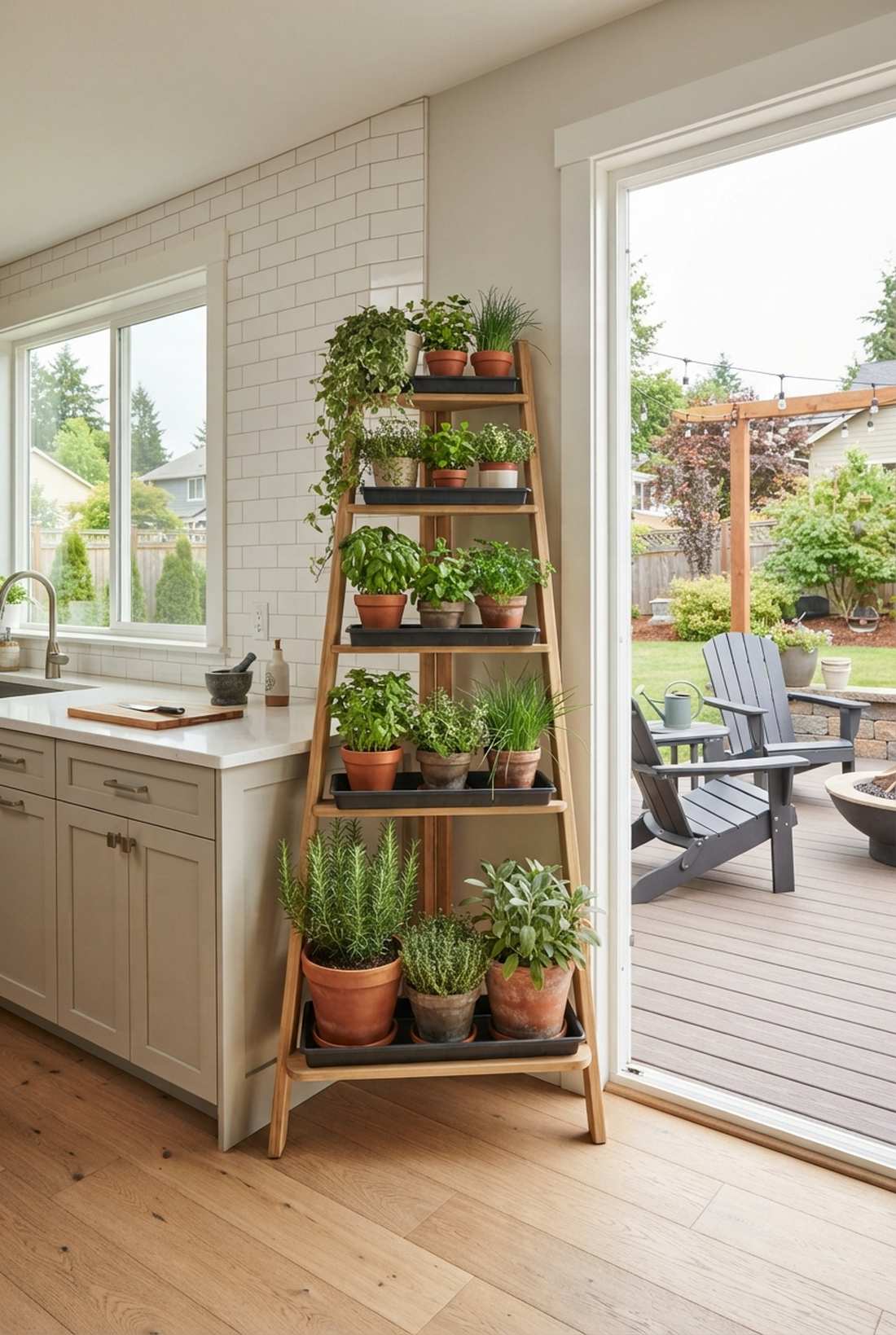
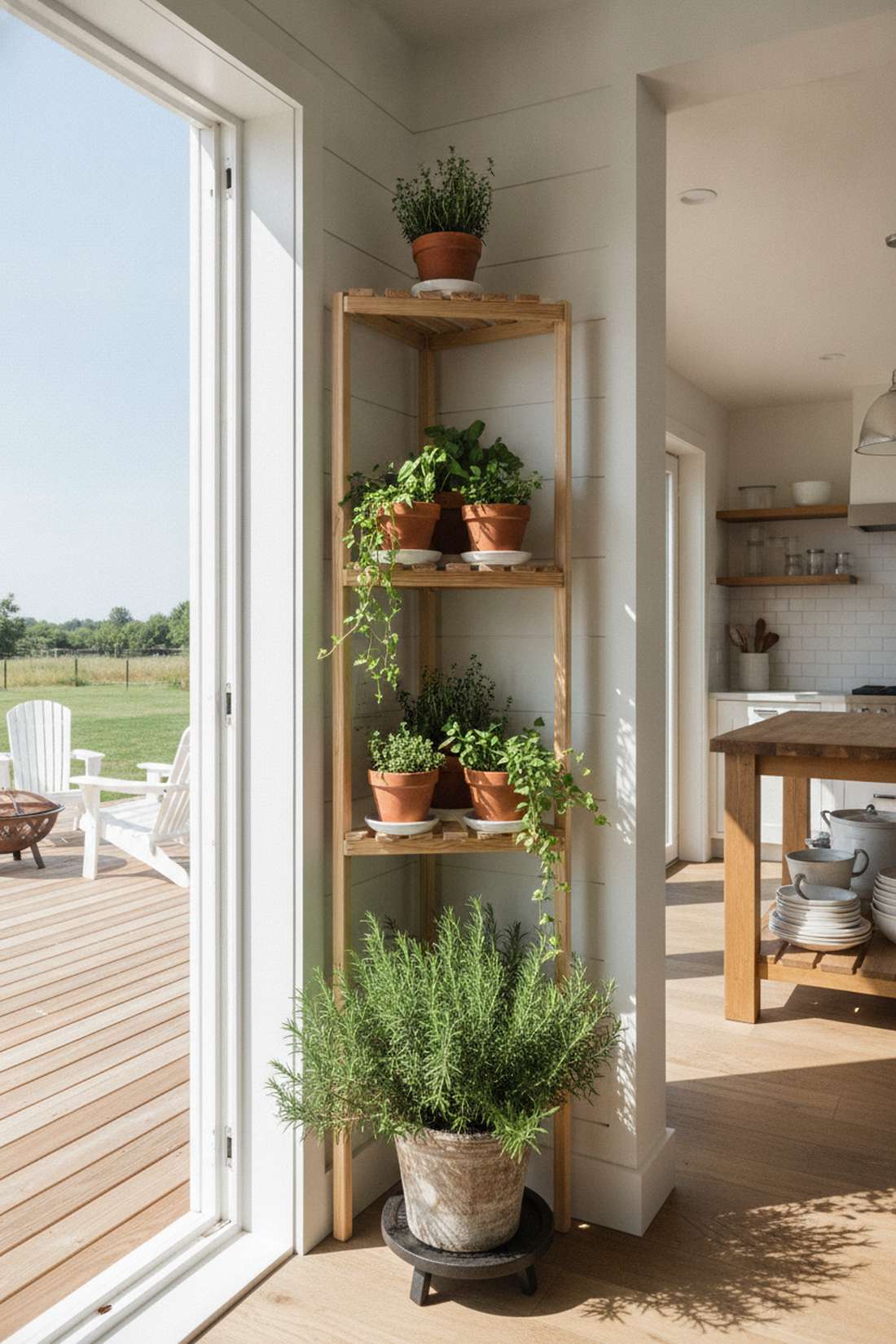
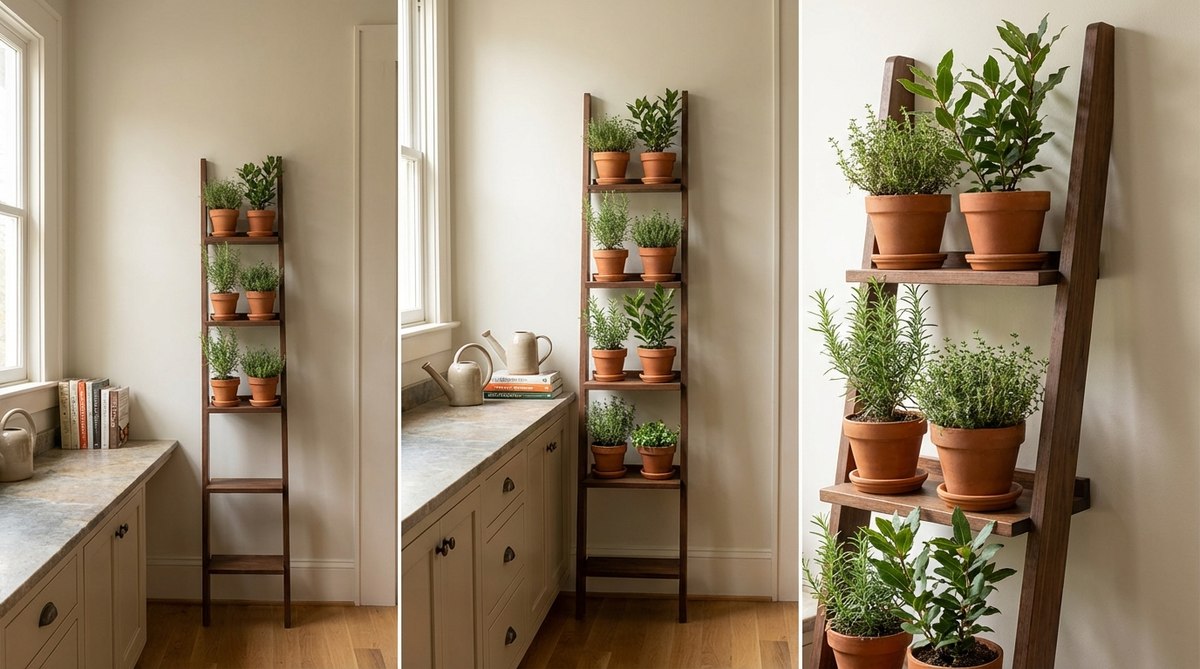
Projects a curated boutique plant shop atmosphere. Slender corner herb ladders rescue dead, unloved kitchen zones perfectly. Supremely suited to bridge the gap between indoor cooking and patio areas.
Utilizing cascading foliage on tiered rungs establishes an incredibly dynamic vertical tower. Reinforcing the base with hidden weight plates guarantees absolute stability in high-traffic, chaotic family kitchens.
Typically costs around $40–$65 for a solid wood frame. A flawless strategy for maximizing indirect sunlight spots.
- Key Materials: Wooden ladder shelf, uniform saucers
- Vibe: Bohemian vertical retreat
- Difficulty: Quick 15-minute build
- Budget Breakdown: Ladder: $45 | Base Trays: $10.
- Creator’s Tip: Place heavy rosemary pots at the very bottom for structural balance.
- Smart Sourcing: slim wooden corner tier shelves and heavy-duty plastic drip trays (multi-pack).
11. Drawer-Style Pull-Out Herb Box
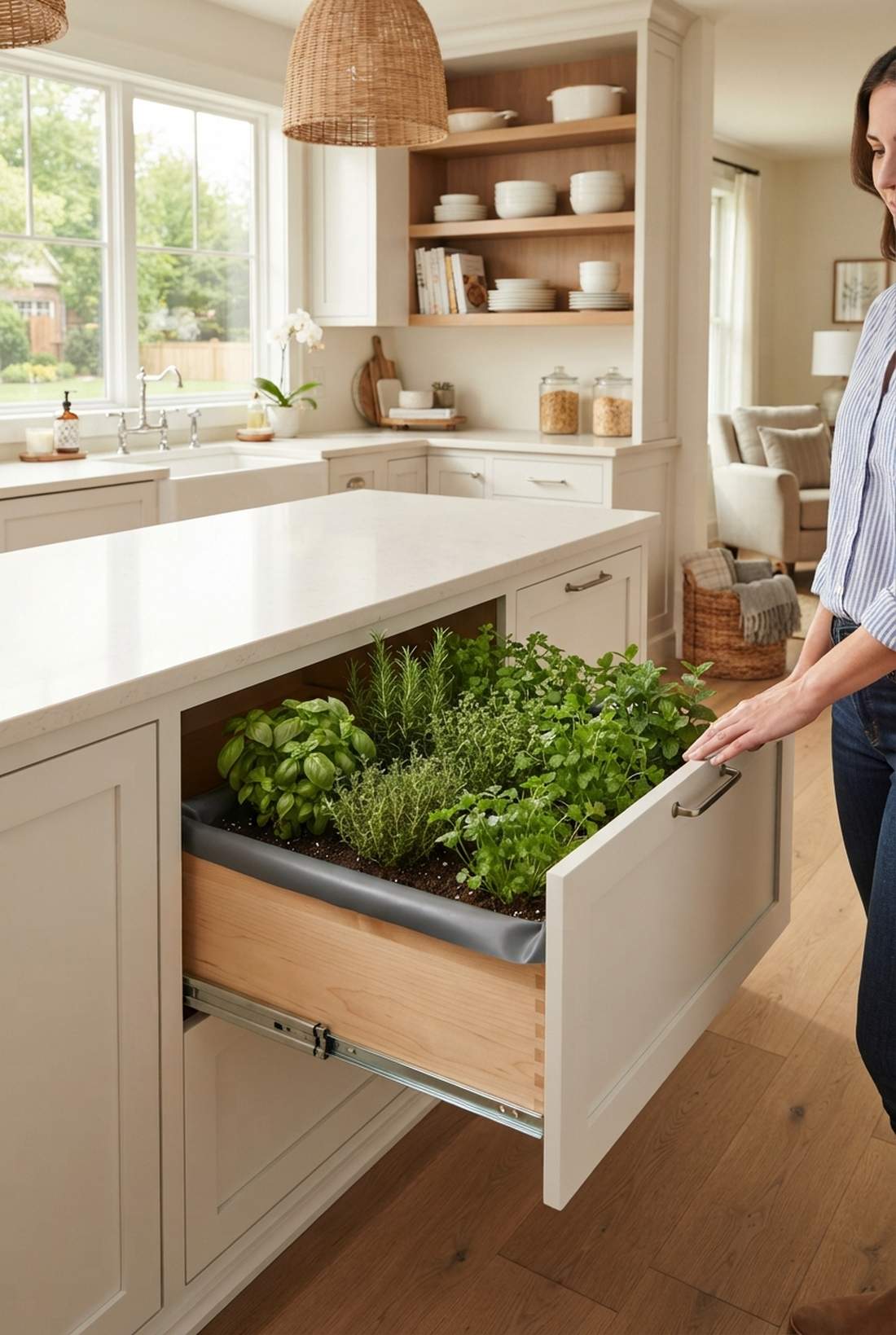
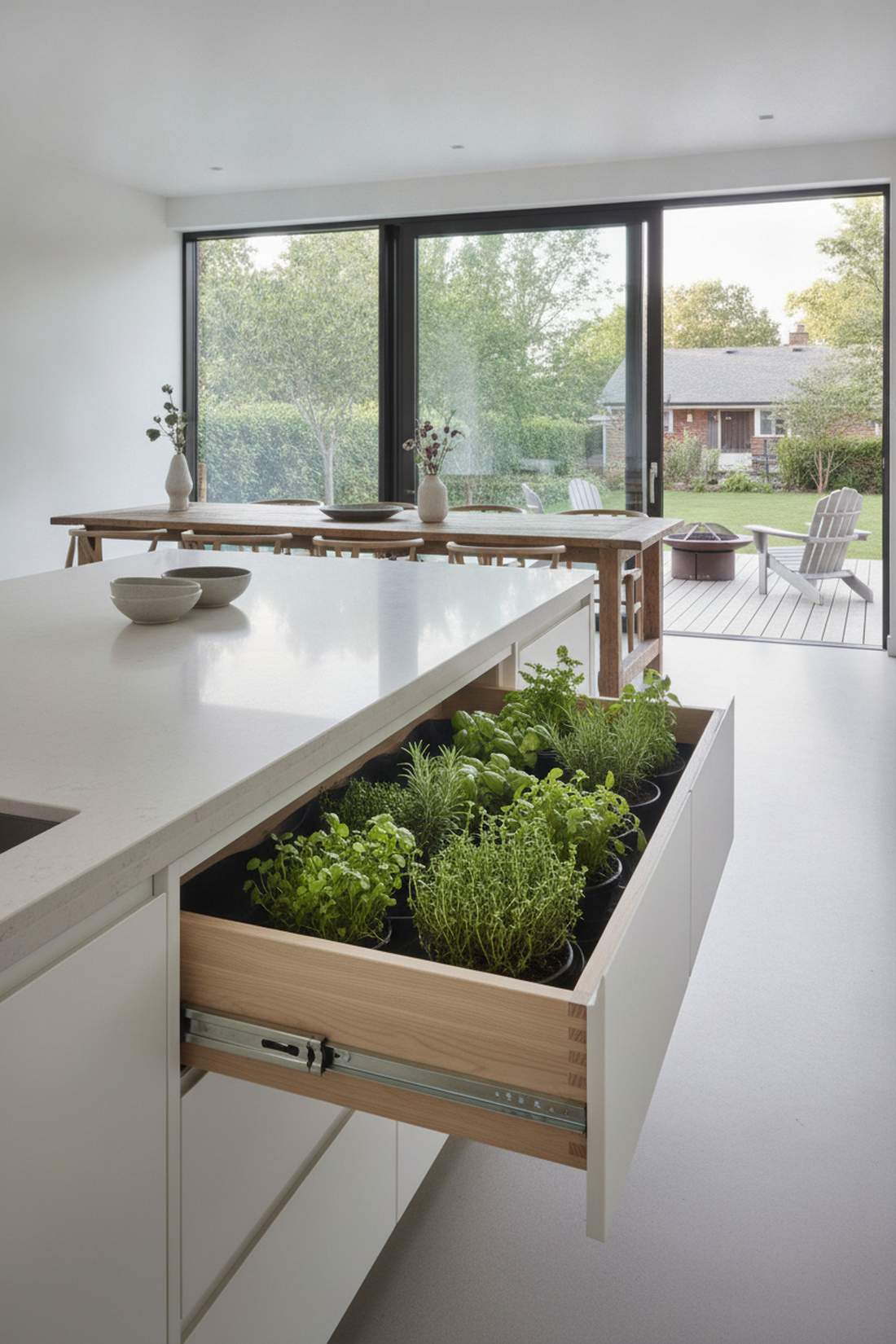
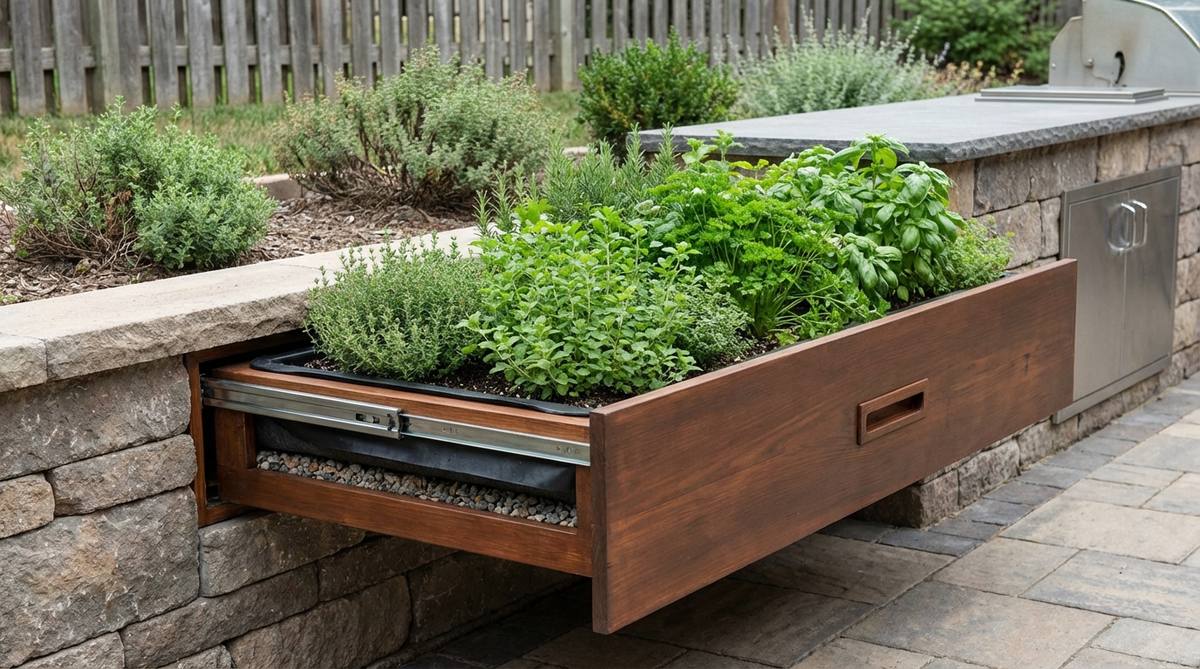
Embodies peak hidden-kitchen luxury. Sliding under-counter herb drawers keep countertops completely visually calm. A brilliant maneuver for minimalists who utterly despise looking at messy soil.
Housing a dense row of edibles on heavy-duty glides introduces a stunning hidden reveal that feels wildly expensive. Lining the wooden base with a thick pond membrane entirely prevents hidden rot over the long haul.
You can build this custom hack for about $50–$80. Pin this to your custom kitchen cabinetry ideas board.
- Key Materials: Drawer glides, waterproof membrane, shallow trough
- Vibe: Ultra-minimalist hidden utility
- Difficulty: Advanced DIY woodworking
- Budget Breakdown: Runners: $30 | Box: $25.
- Creator’s Tip: Ensure the plant canopy strictly clears the top counter lip when sliding closed.
- Smart Sourcing: heavy-duty soft-close drawer slides and flexible waterproof pond liner material.
Small Balcony Mini Herb Gardens With Big Flavor
On compact balconies, railing planters, stacking systems, and slim shelves turn inches into harvests. These ideas respect weight limits and wind exposure while framing views instead of blocking them.
12. Vertical Pallet Herb Wall
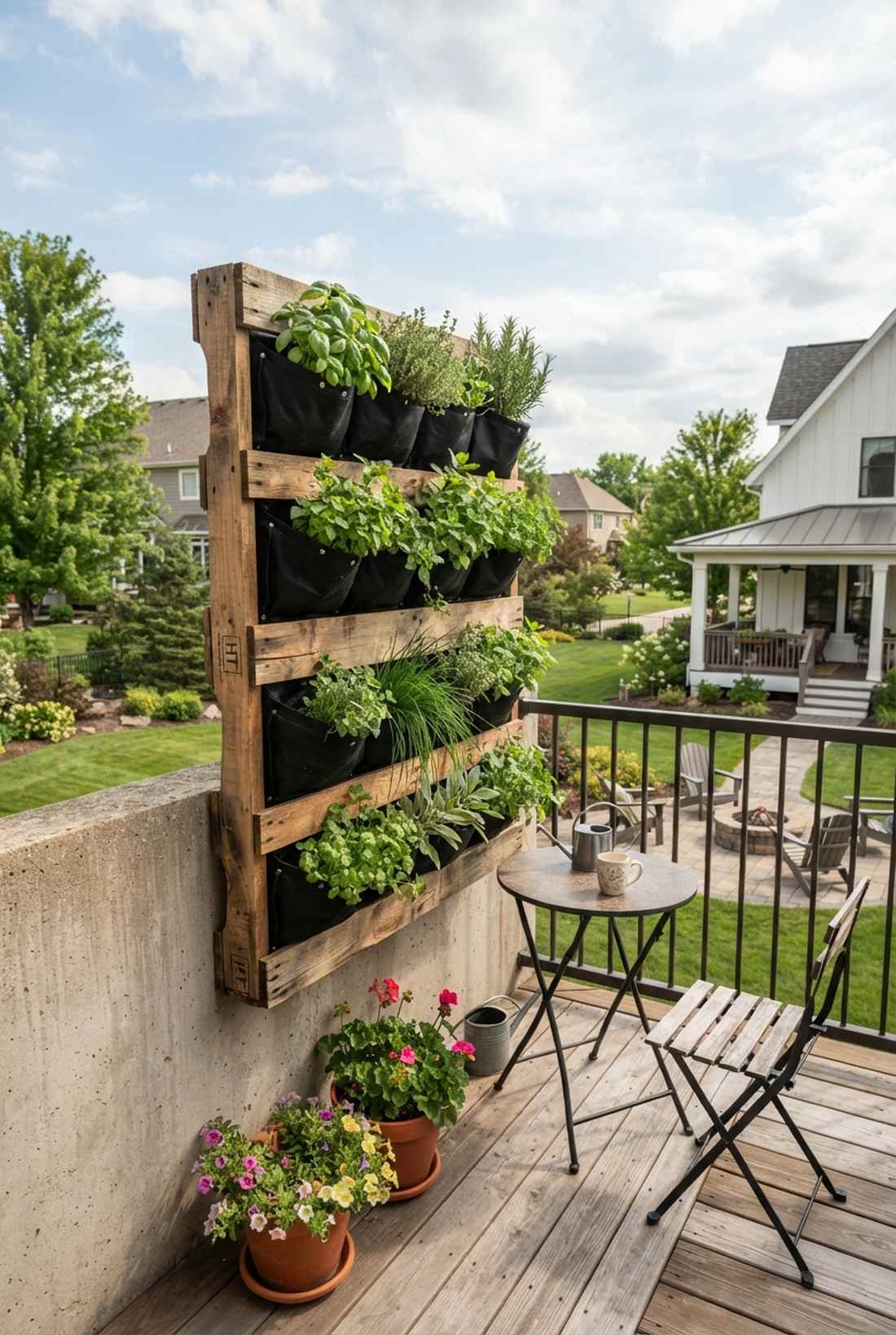
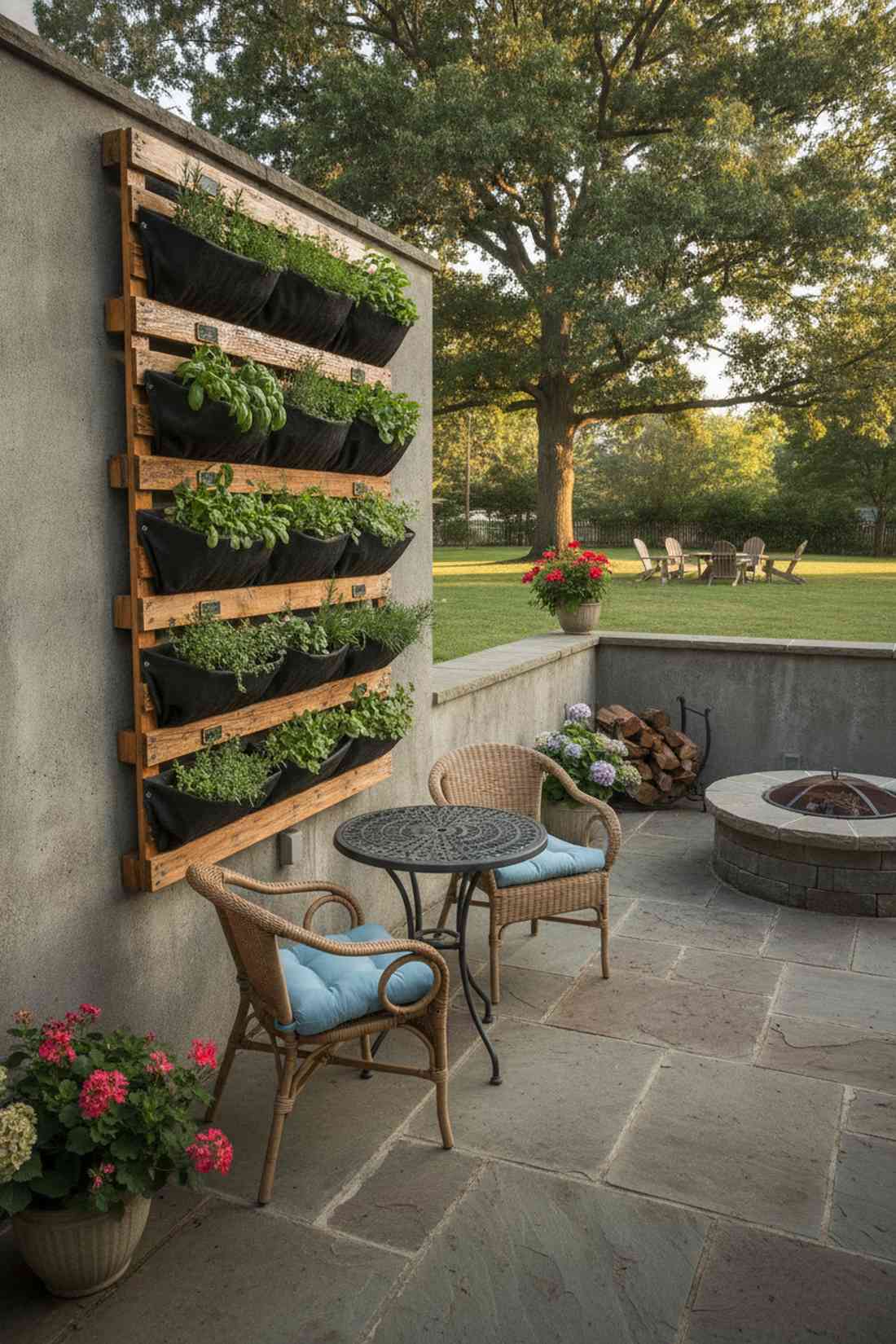
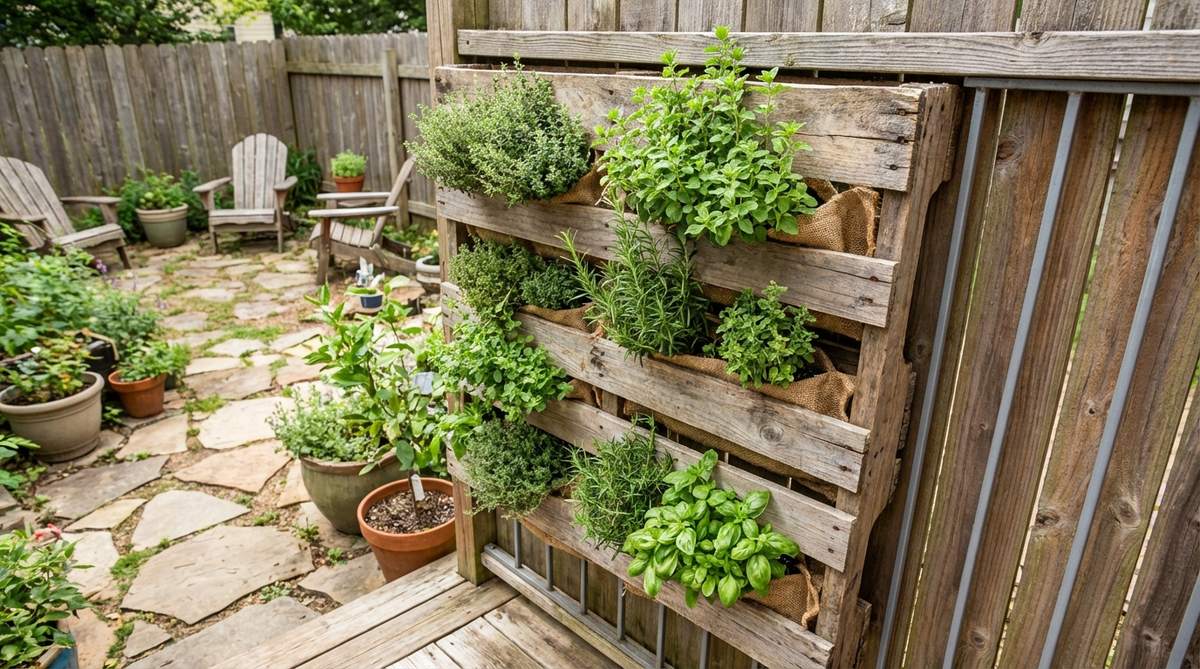
Feels like a cozy, rustic outdoor room. Upcycled wooden pallet planters soften harsh concrete balcony barriers. Fantastic for keeping floor space entirely clear for bistro furniture setups.
Stapling deep fabric pockets behind weathered slats yields a massive vertical footprint for mere pennies. Sanding down rough edges and heavily applying a UV-blocking clear coat stops weather deterioration instantly.
Pull this off for merely $20 in finishing materials. An absolute must-try for weekend upcycling warriors.
- Key Materials: Heat-treated pallet, heavy landscape fabric
- Vibe: Rustic farmhouse patio
- Difficulty: Requires heavy lifting
- Budget Breakdown: Pallet: $0 | Fabric/Sealer: $20.
- Creator’s Tip: Check for the “HT” stamp on pallets to completely avoid toxic chemical treatments.
- Smart Sourcing: heavy-duty landscape fabric rolls and outdoor UV-resistant wood sealer.
Wait until you see how affordable this upcoming balcony transformation is when using bulk-sourced materials.
13. Railing Clamp-On Herb Planters
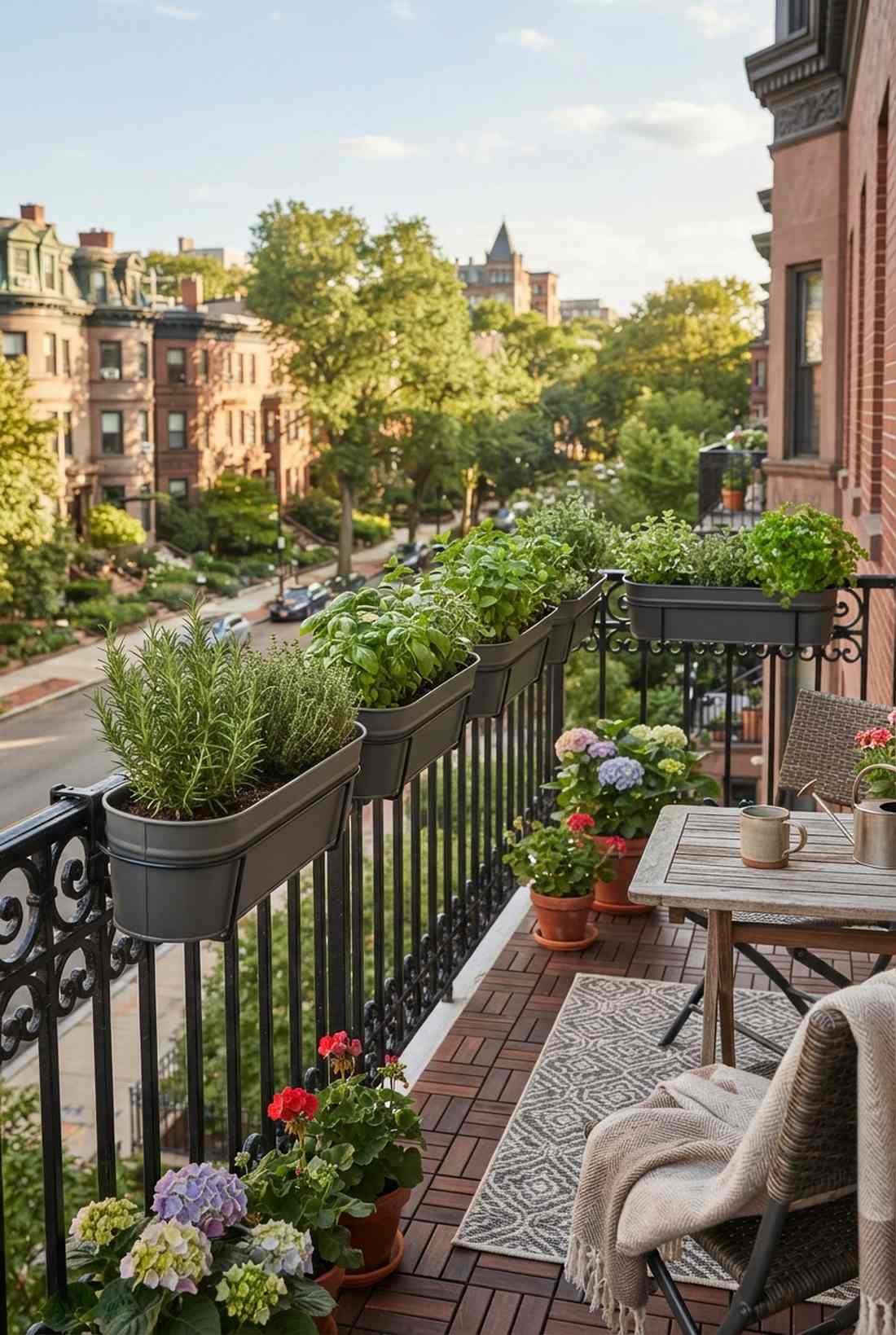
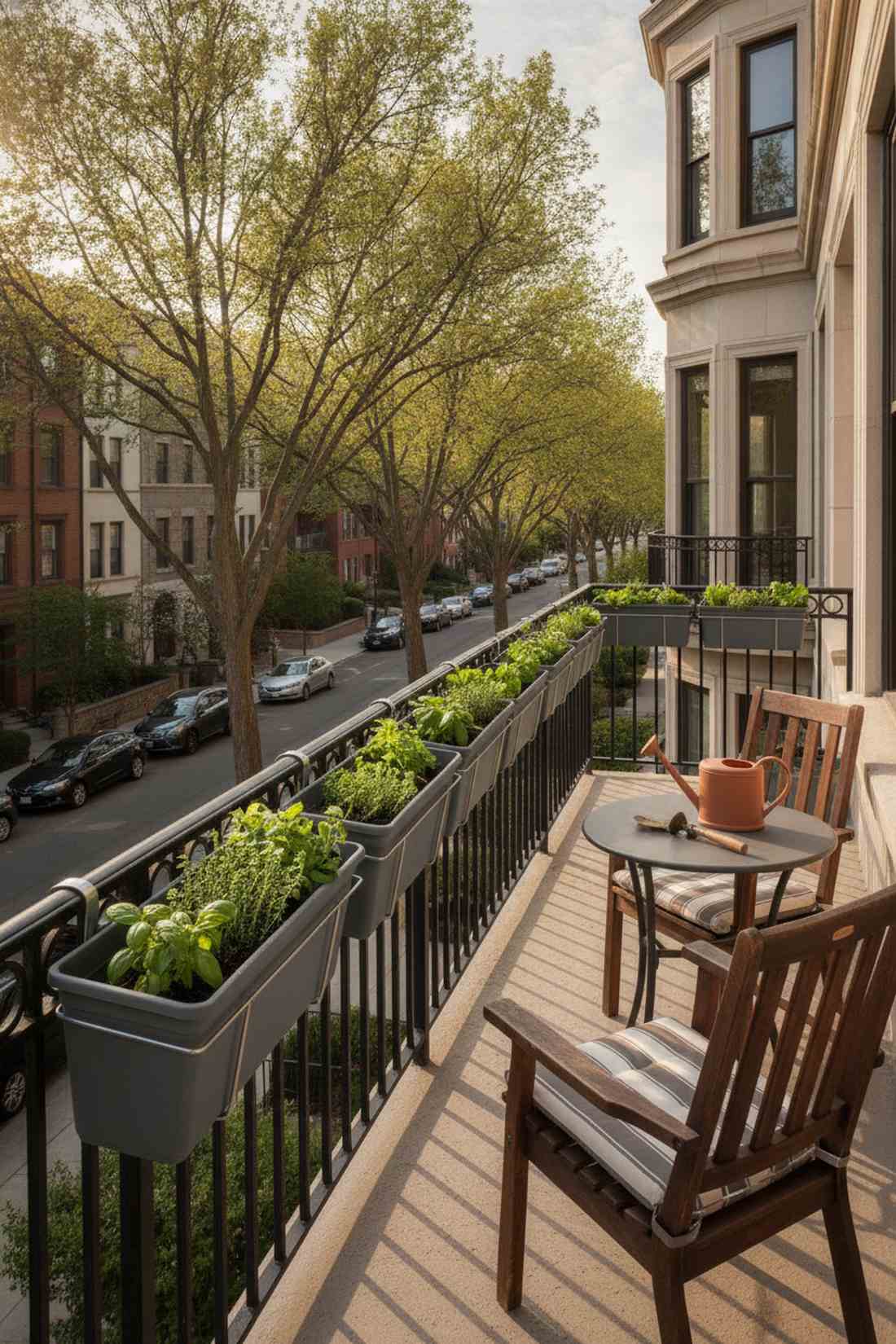
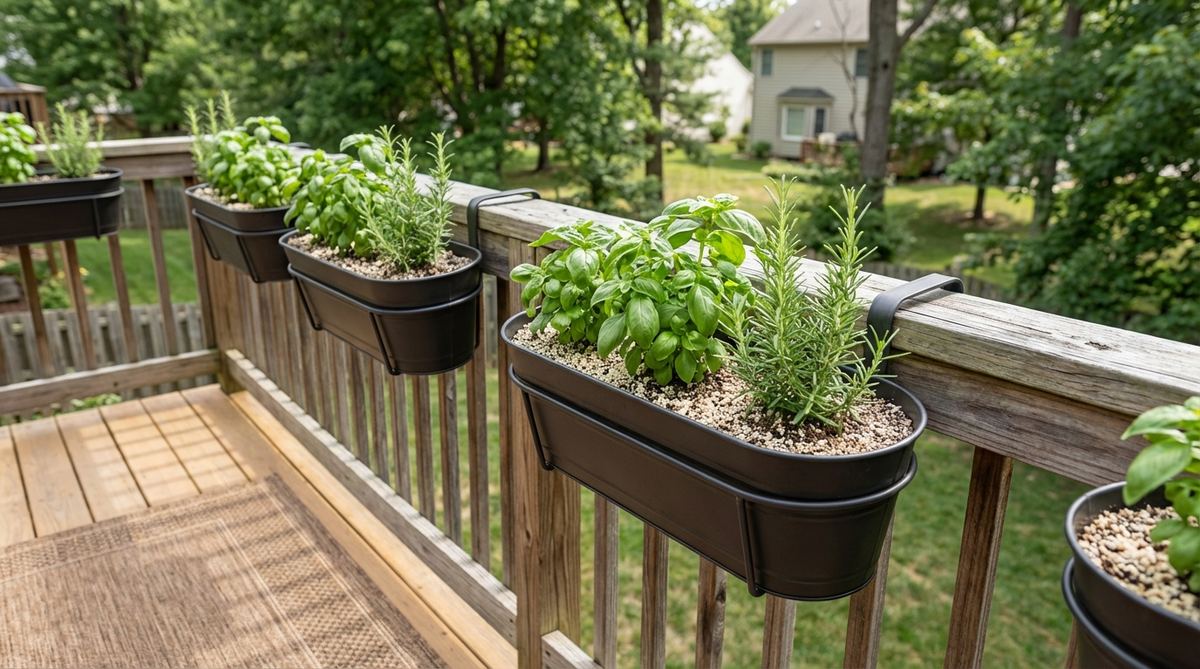
Draws a crisp, colorful line hovering exactly at eye level. Adjustable railing planter boxes transform plain metal balconies into lush boundaries. The smartest way to grab direct sunlight without sacrificing a single square foot.
Aligning uniform boxes across the outer rail commands a deeply structured, expensive street view. Bypassing cheap plastic for reinforced metal brackets absolutely prevents terrifying drops during high summer winds.
Set aside $35–$60 per premium box. Save this if you need to strictly respect tight apartment weight limits.
- Key Materials: Clamp-on troughs, secure brackets
- Vibe: Classic European apartment
- Difficulty: Snap-and-lock easy
- Budget Breakdown: Troughs: $40 | Soil: $15.
- Creator’s Tip: Group the heaviest planted pots directly over vertical support posts for max safety.
- Smart Sourcing: adjustable metal railing planter brackets and UV-coated clamp-on herb boxes.
14. Folding Ladder Balcony Garden
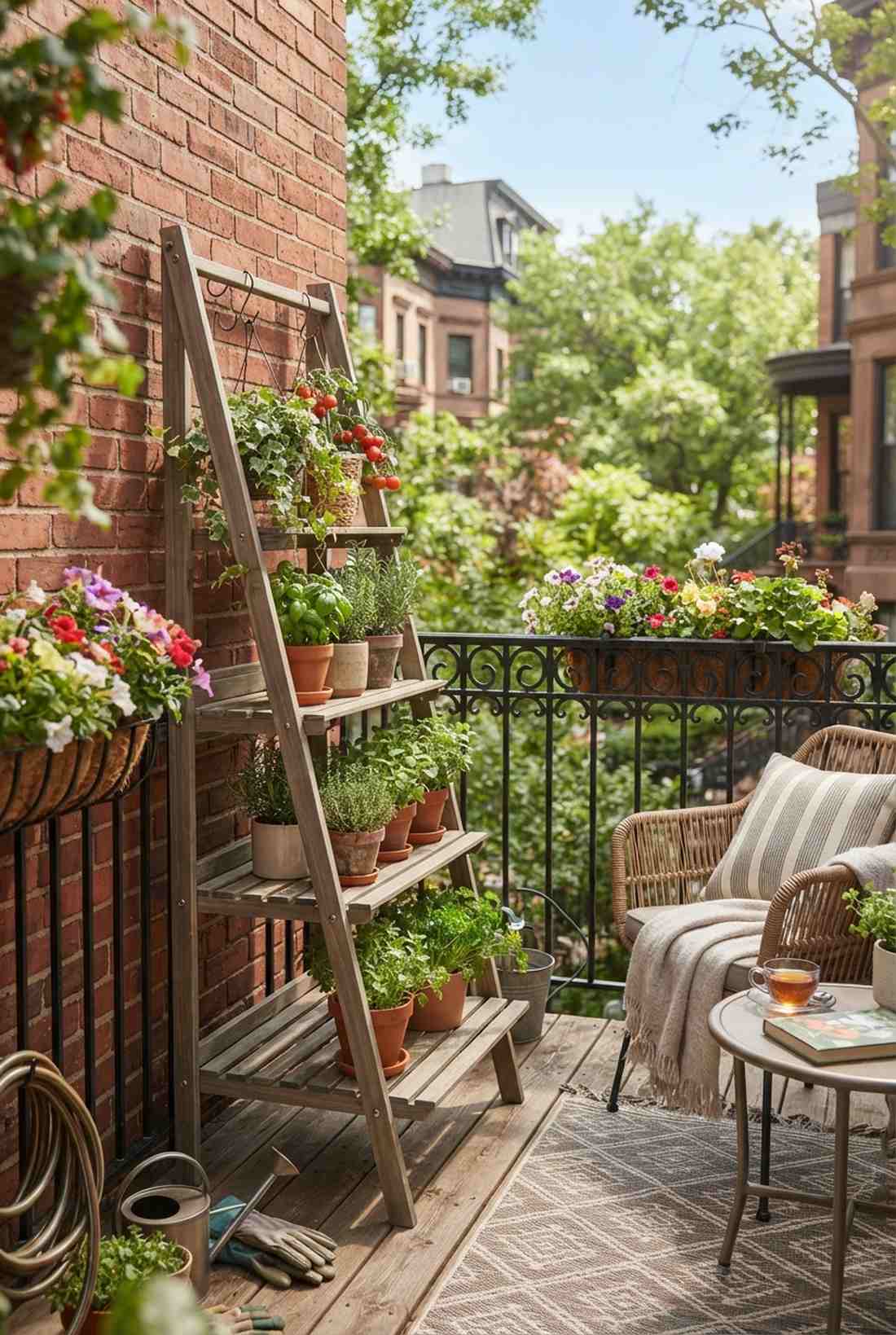
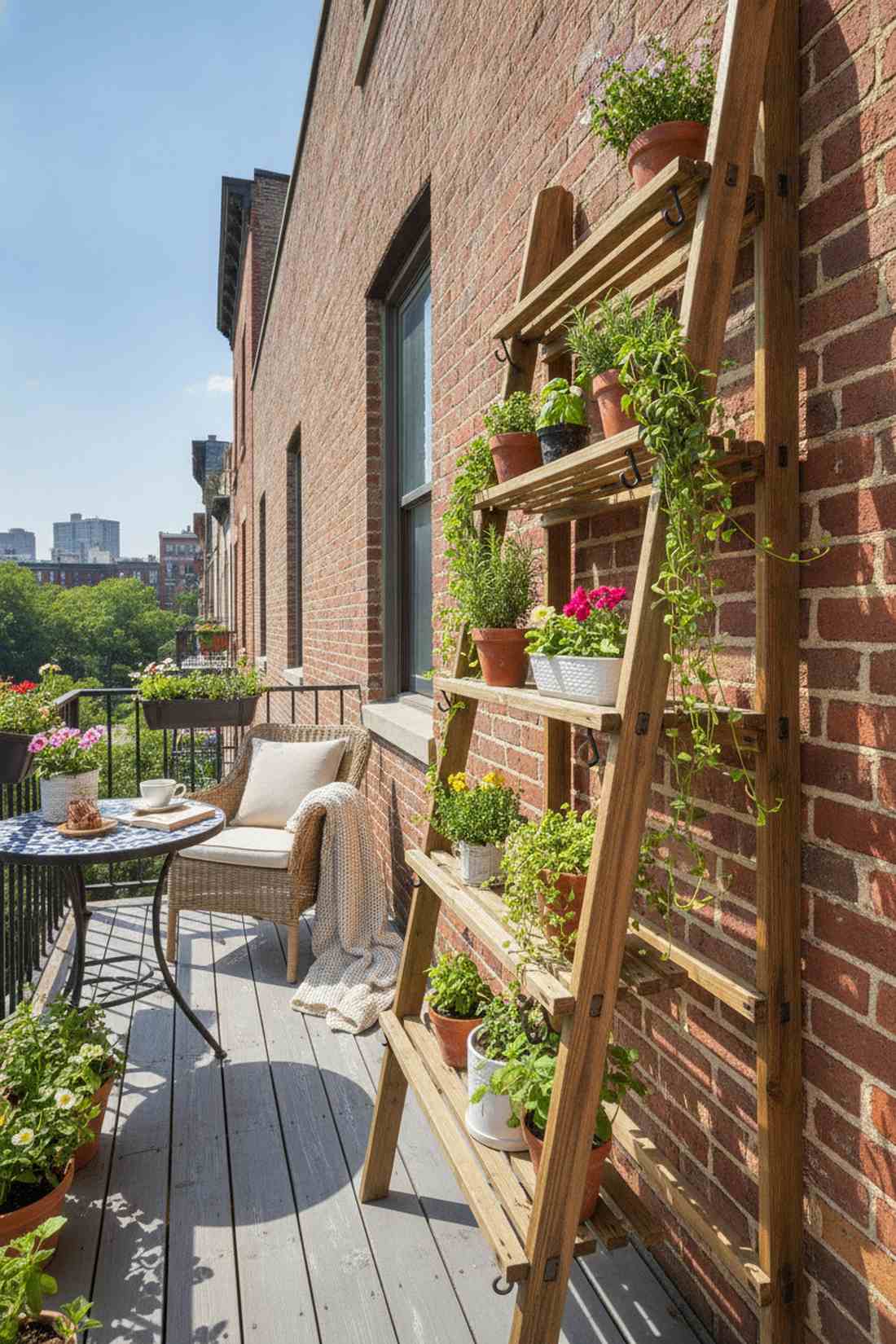
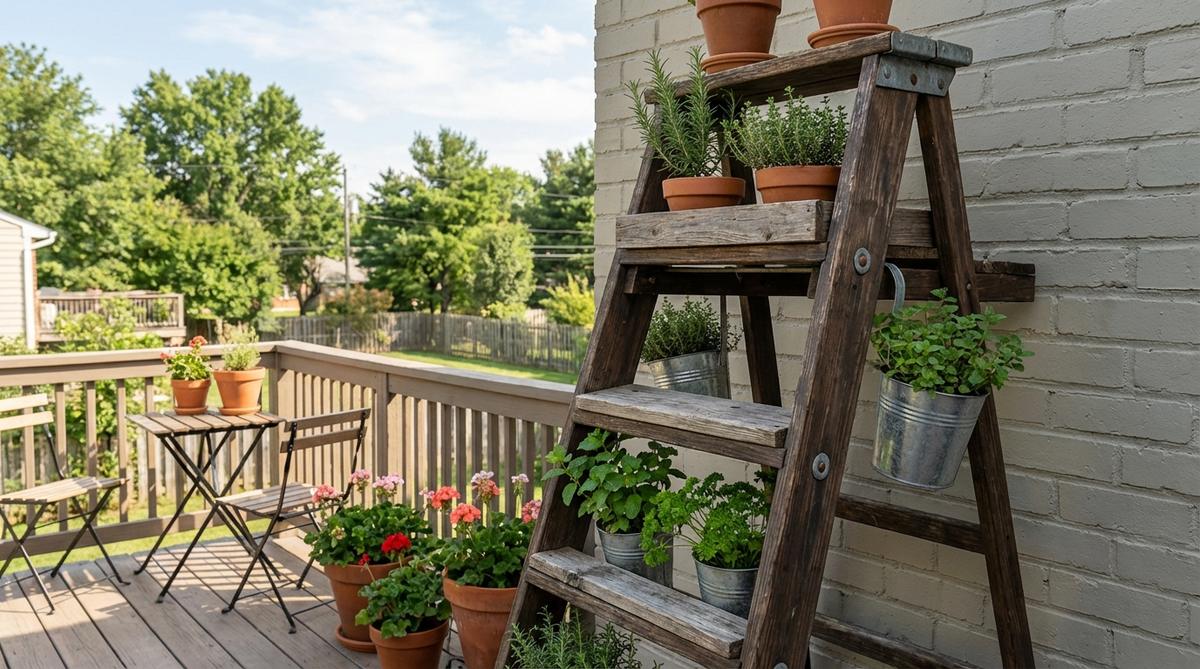
Delivers a casual, tiered backdrop that never feels overly permanent. Foldable wooden herb displays maximize awkwardly narrow outdoor spaces. Brilliant for renters who need to break down patio setups rapidly before winter.
Propping a slatted frame against brickwork achieves a highly photogenic layered effect instantly. Investing in heavy weatherized marine varnish guarantees the hardware won’t tragically seize up after heavy spring rainstorms.
Expect a total cost around $45–$70. A fantastic, hyper-flexible structure that adapts to changing seasons.
- Key Materials: A-frame folding ladder, matching hanging hooks
- Vibe: Relaxed renter-friendly chic
- Difficulty: Ready out of the box
- Budget Breakdown: Ladder: $50 | Hooks: $10.
- Creator’s Tip: Stagger trailing vines specifically to hide the industrial metal hinges.
- Smart Sourcing: weather-resistant folding plant stands and rust-proof S-hook hardware kits.
15. Stackable Balcony Herb Towers
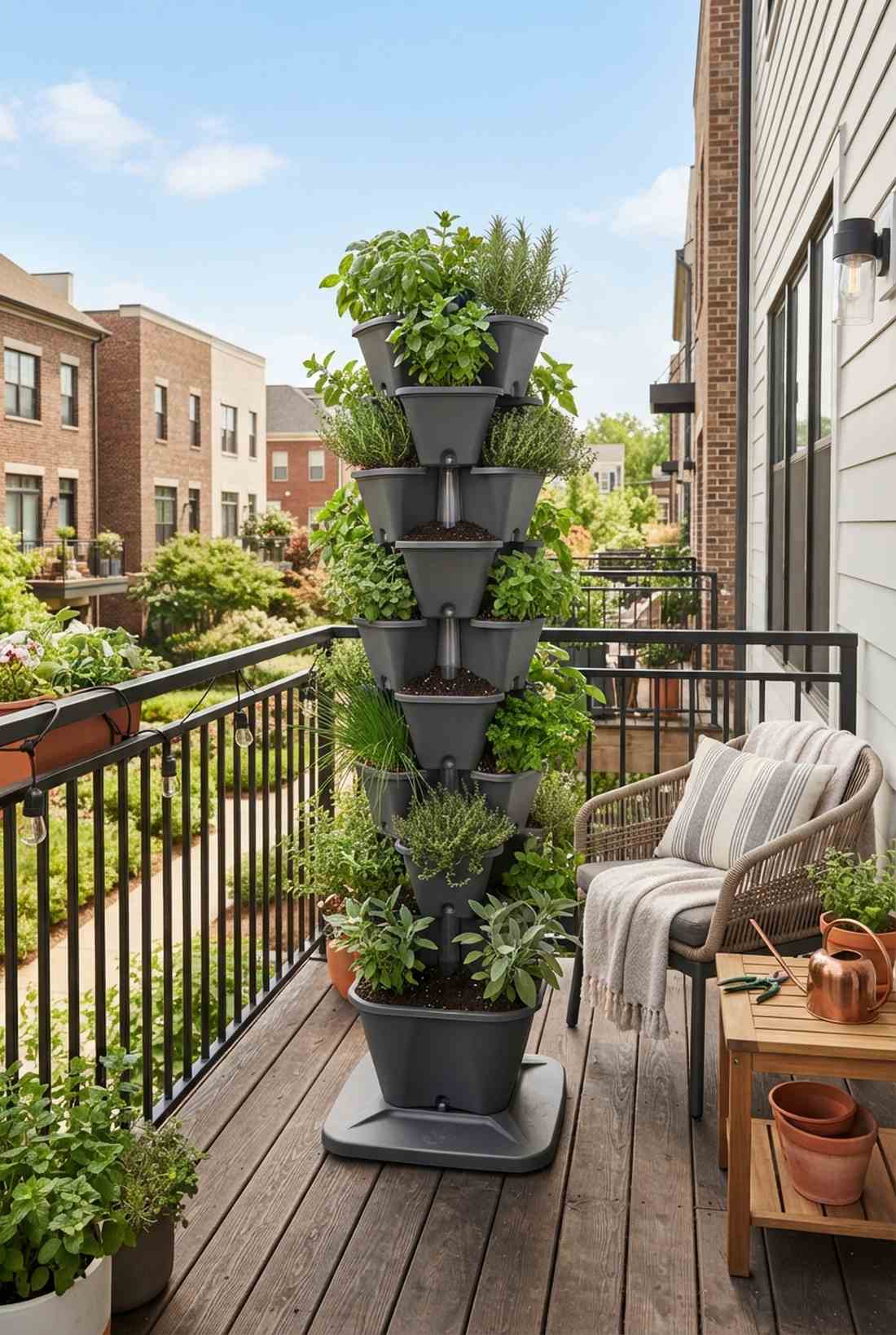
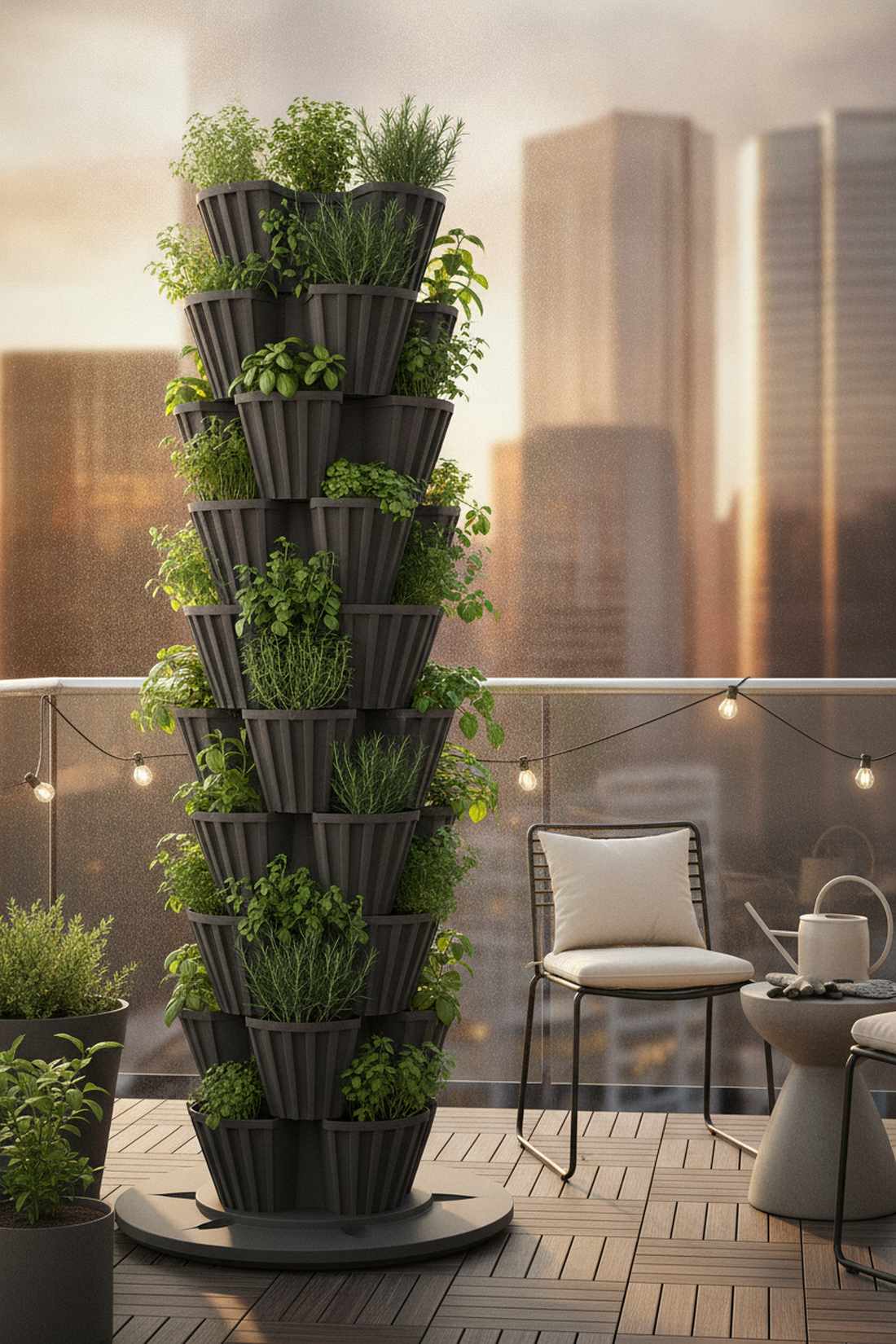
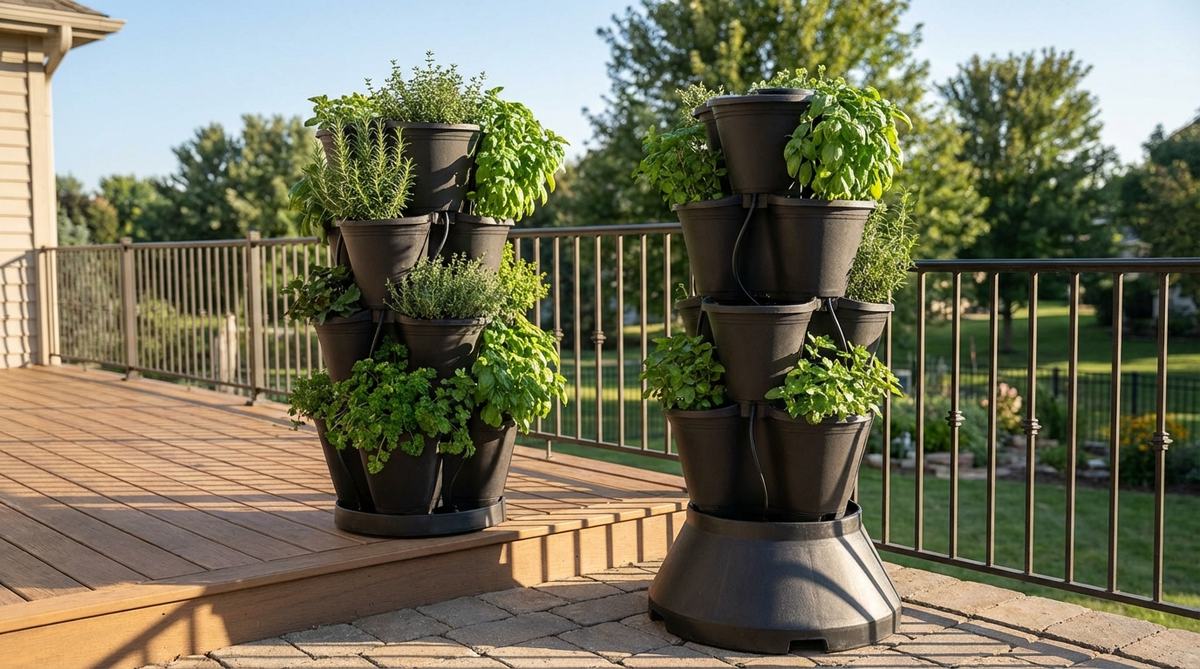
Rises up like an architectural green pillar against the sky. Vertical stackable planter columns squeeze massive yields into tiny corners. Flawless for anyone sharing a notoriously narrow deck space.
Building a modular column forces maximum density while keeping the footprint shockingly small and highly efficient. Utilizing a shared central soil core massively reduces the grueling time spent watering each individual plant.
Grabbing a quality tower runs approximately $40–$80. Pin this to your high-yield container garden board.
- Key Materials: Tapered modular tiers, weighted base plate
- Vibe: High-efficiency urban farming
- Difficulty: Simple stacking
- Budget Breakdown: Tower Kit: $60 | Soil: $15.
- Creator’s Tip: Drop a heavy paving stone inside the bottom tier for extreme wind resistance.
- Smart Sourcing: stackable vertical garden starter kits and moisture-control potting soil (bulk).
16. Hanging Bucket Herb Cluster
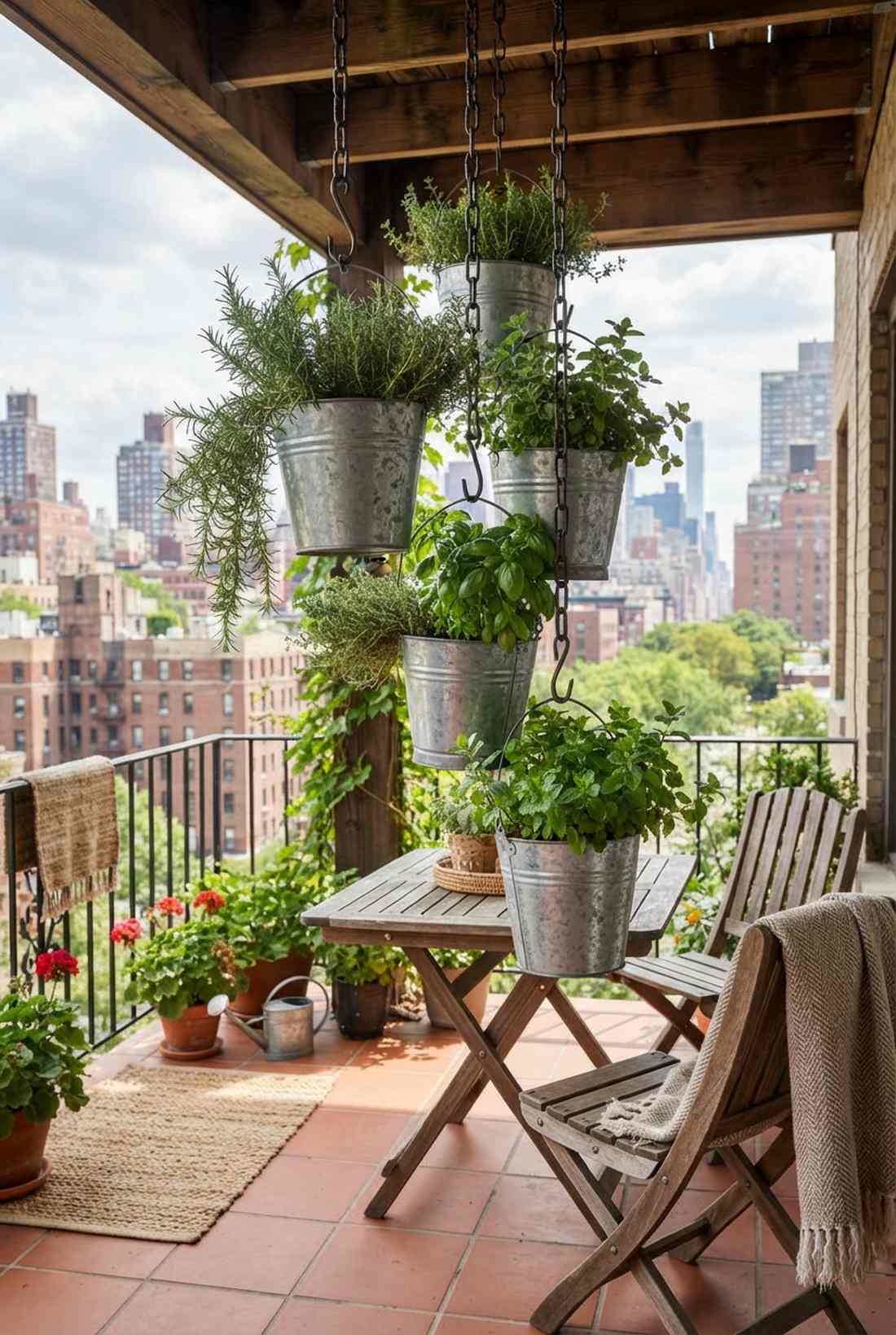
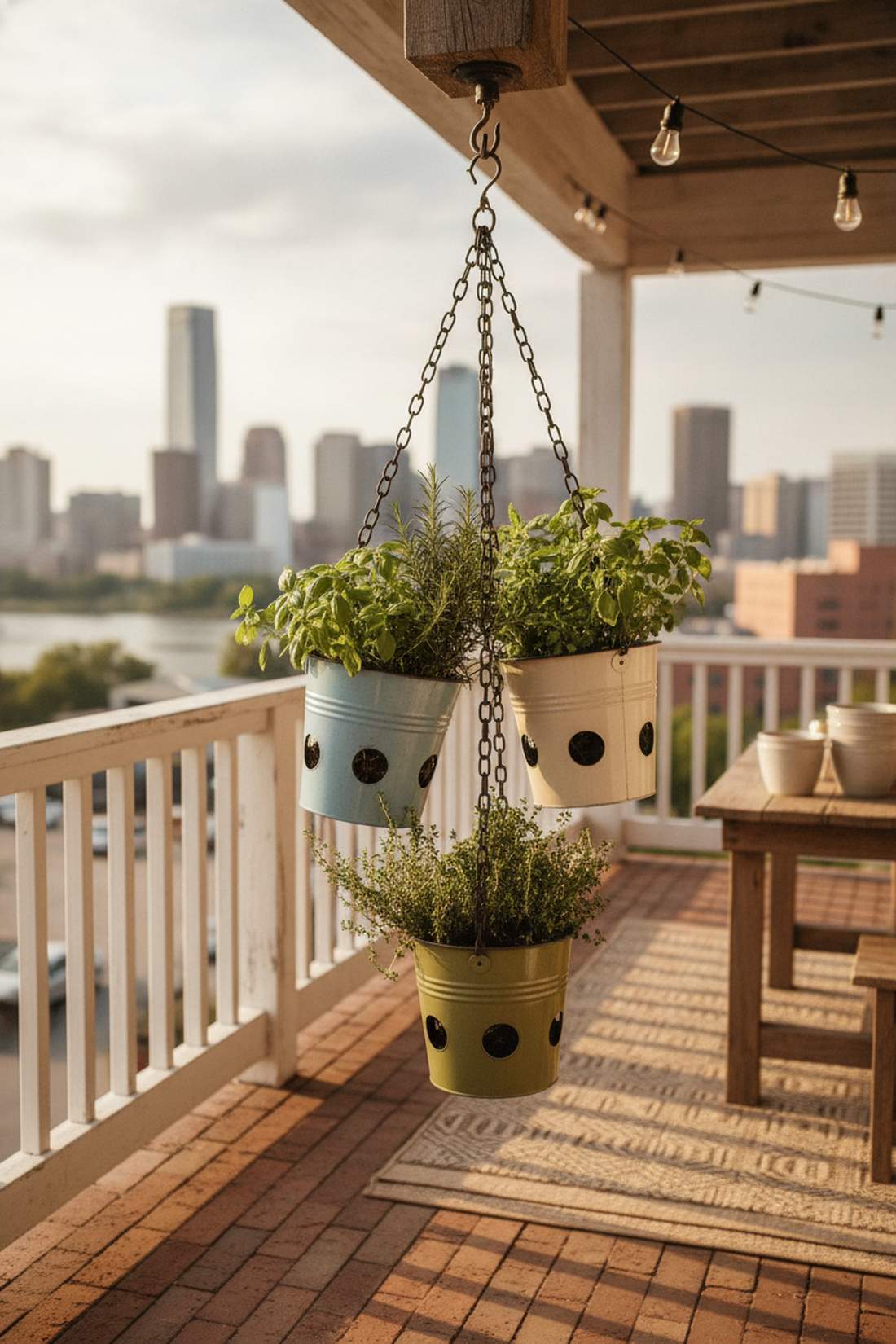
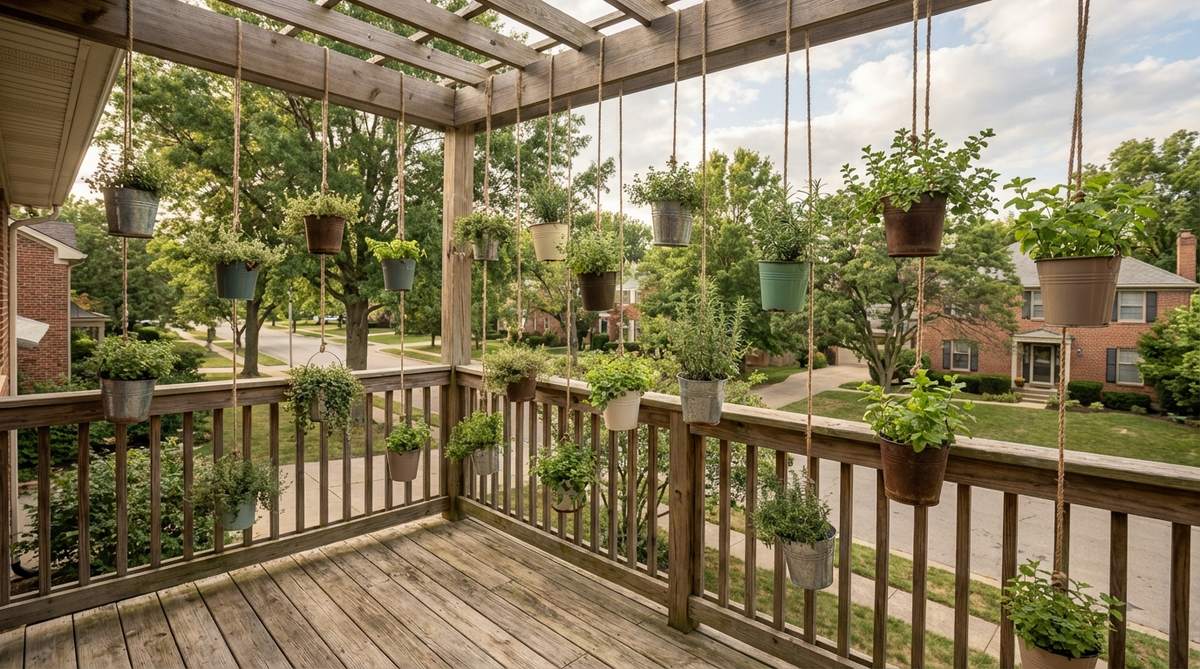
Sways gently, creating a playful, kinetic cloud of greenery above you. Suspended enamel bucket clusters utilize entirely ignored upper airspace. A stunning hack to frame outward city views beautifully.
Grouping staggered containers generates a whimsical aesthetic that completely distracts from ugly apartment ceilings. Punching large drainage holes and integrating robust steel chains securely prevents nasty surprises during heavy downpours.
You can easily assemble a trio for $25–$40. Extremely charming for injecting massive personality into dull patios.
- Key Materials: Metal buckets, exterior-grade chain, heavy hooks
- Vibe: Playful farmhouse canopy
- Difficulty: Requires overhead drilling
- Budget Breakdown: Buckets: $15 | Chains: $15.
- Creator’s Tip: Adjust chain lengths so the lowest bucket sits strictly safely above head height.
- Smart Sourcing: galvanized metal hanging buckets (multi-pack) and heavy-duty outdoor ceiling hooks.
This next suspension layout routinely tricks guests into thinking a professional landscaper installed it…
17. Narrow Corner Shelf Herb Nook
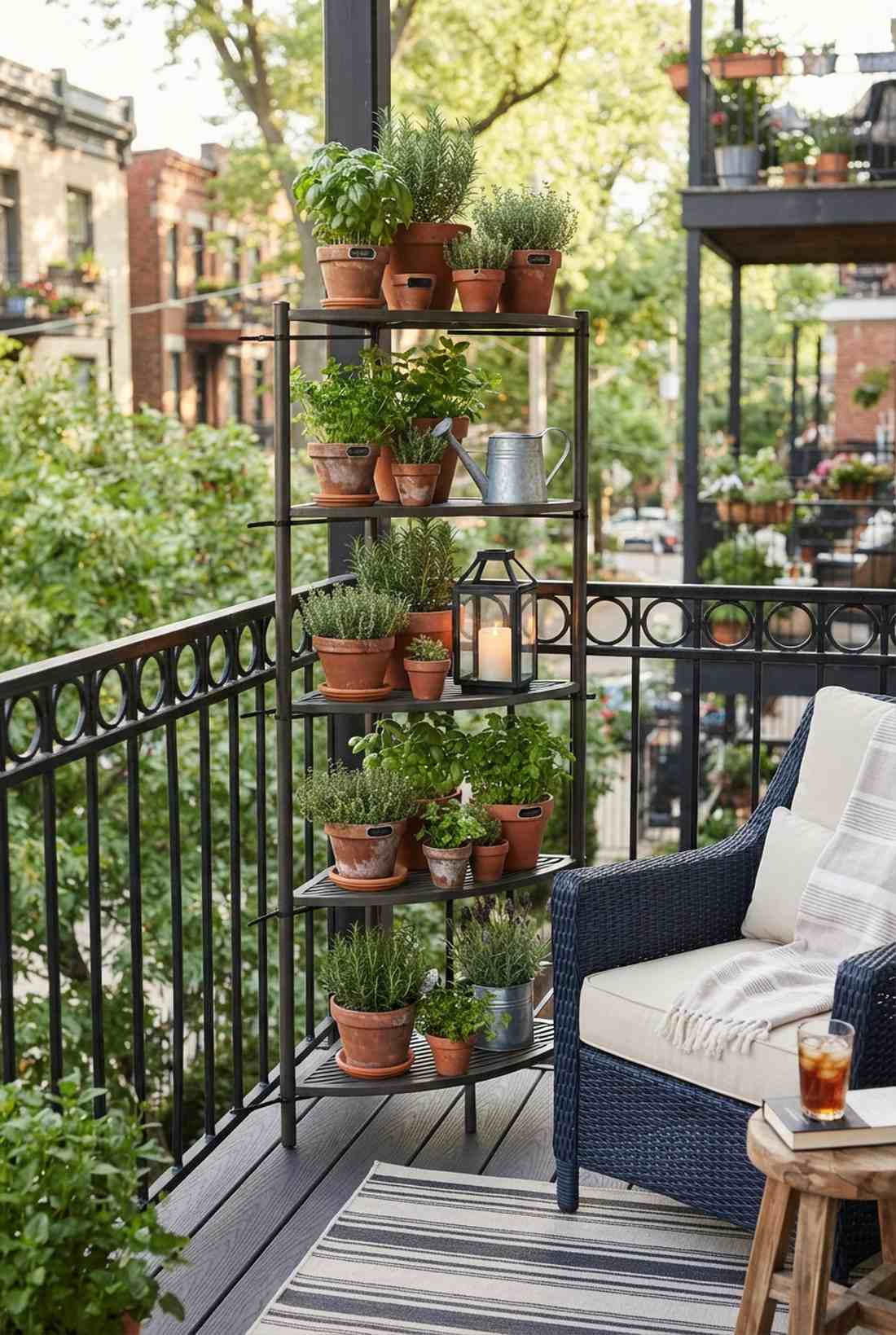
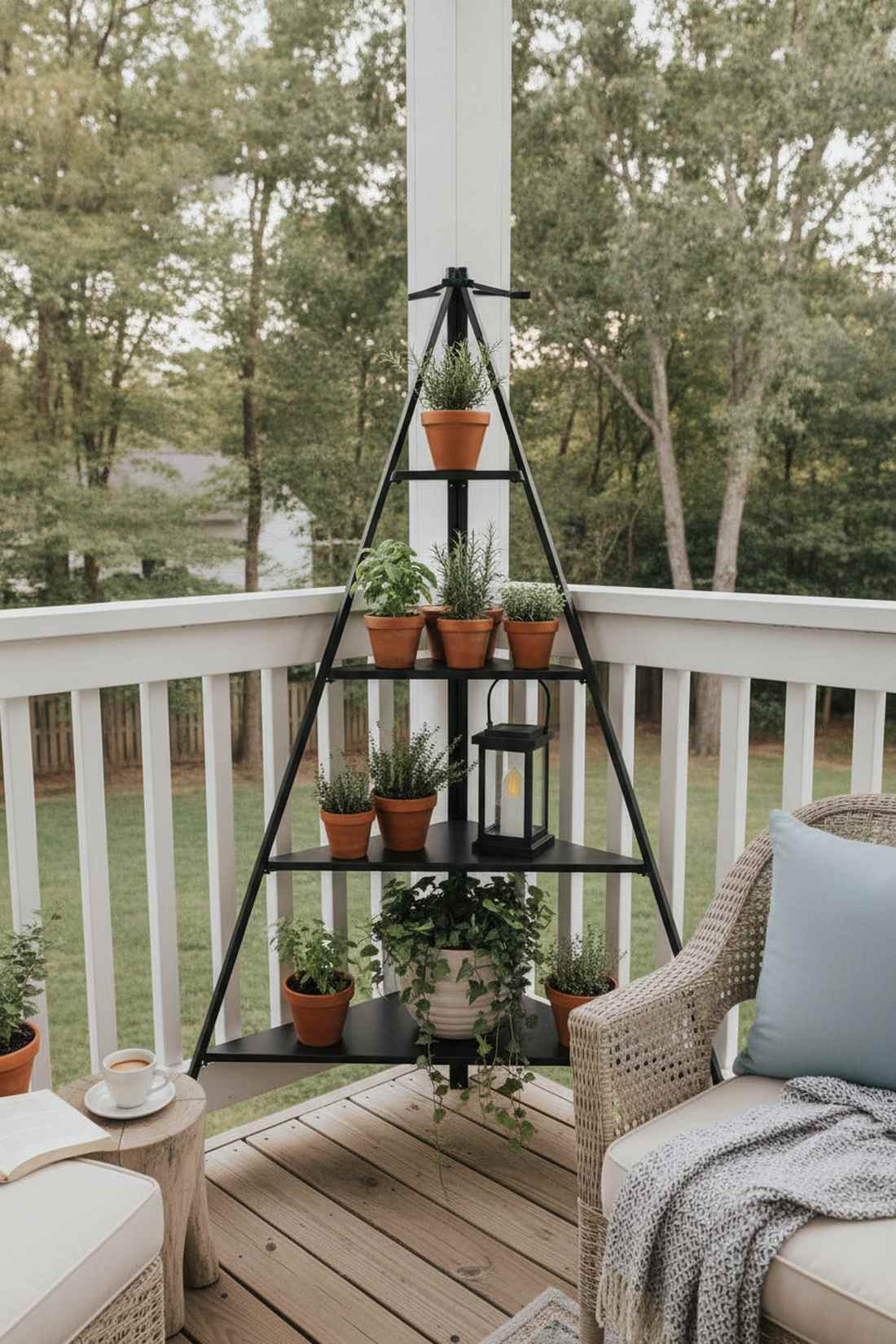
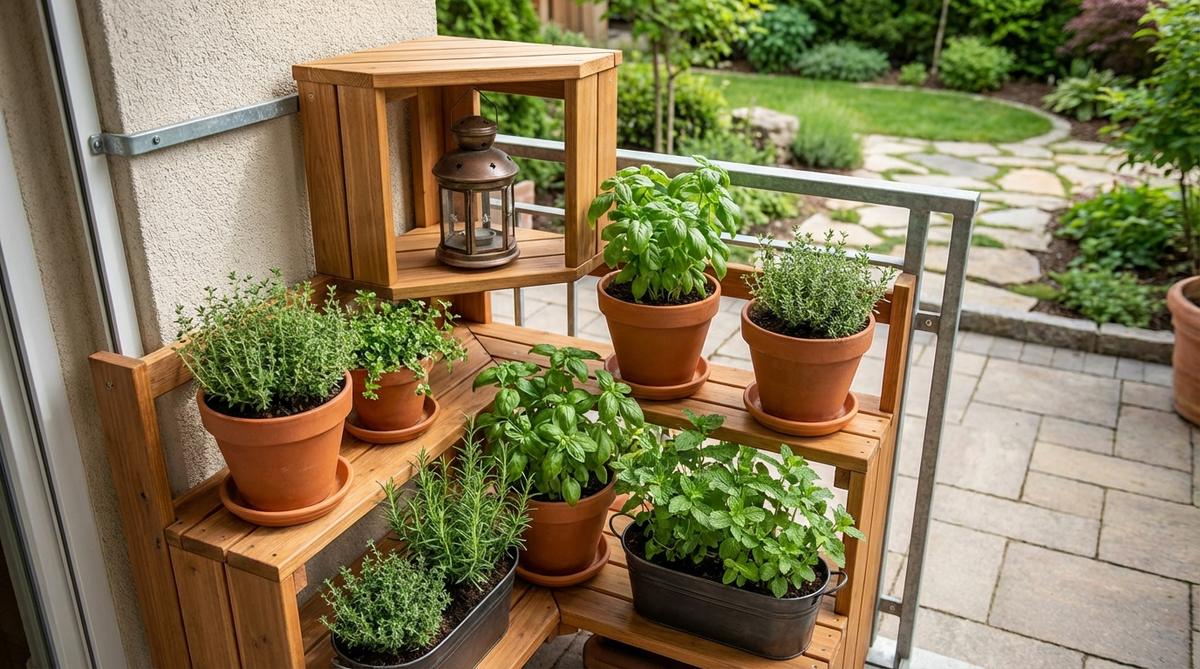
Feels like discovering a private, leafy sanctuary hidden in plain sight. Triangular balcony corner shelving conquers awkward layout geometry. The absolute perfect fit for framing a tiny outdoor reading chair.
Concentrating diverse pot sizes in a steep vertical slice establishes a surprisingly dramatic visual anchor point. Tying the top rack firmly directly to the metal railing entirely eliminates the terrifying threat of tipping.
Plan on spending $40–$65 for a rust-proof unit. Save this to your small patio makeover inspiration board.
- Key Materials: Rust-resistant corner rack, varied terracotta
- Vibe: Intimate shaded retreat
- Difficulty: Quick assembly
- Budget Breakdown: Shelf: $45 | Zip Ties: $5.
- Creator’s Tip: Keep one middle shelf completely open for an outdoor lantern to add night ambiance.
- Smart Sourcing: weatherproof metal corner plant shelves and industrial-strength black zip ties.
18. Raised Balcony Herb Trough
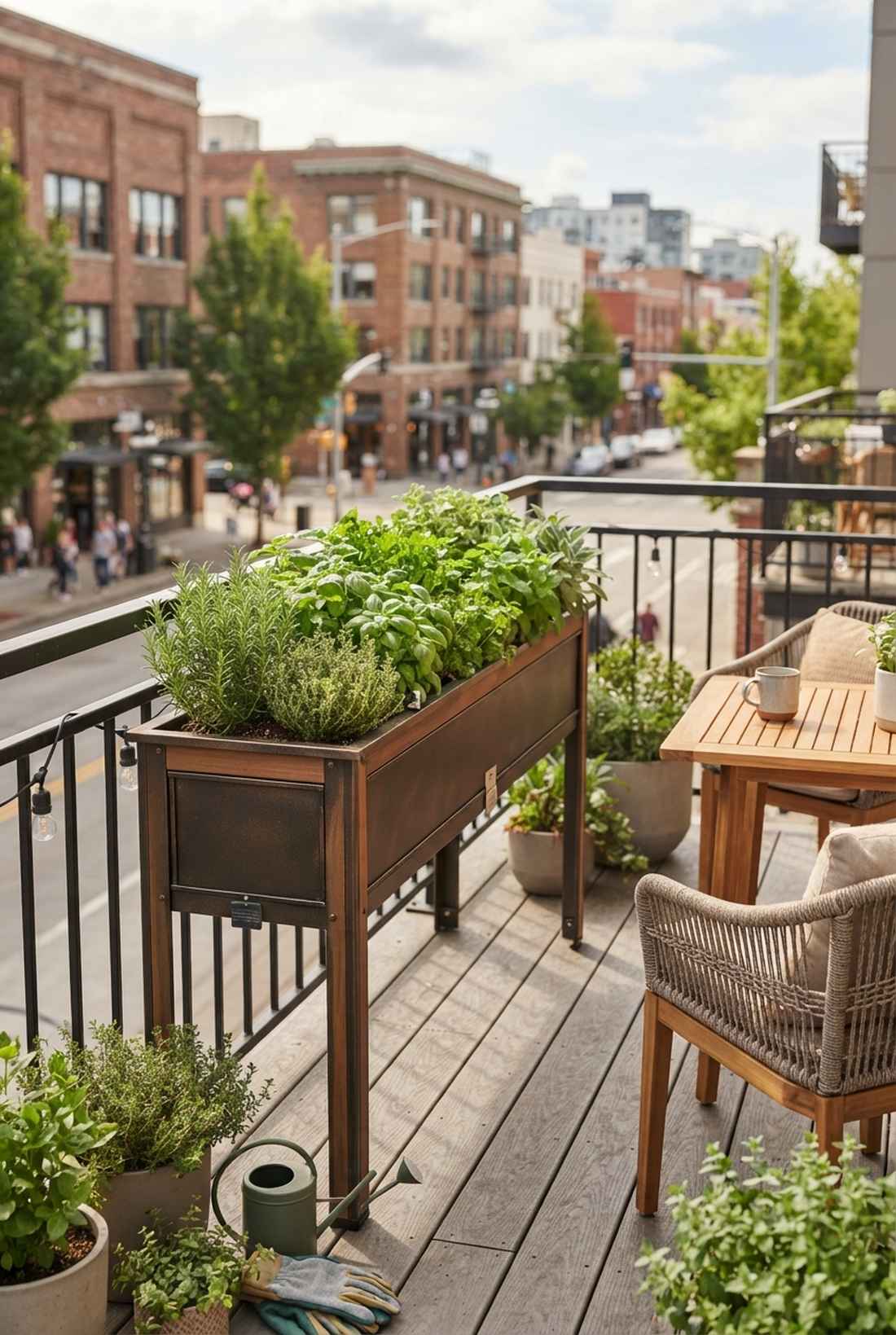
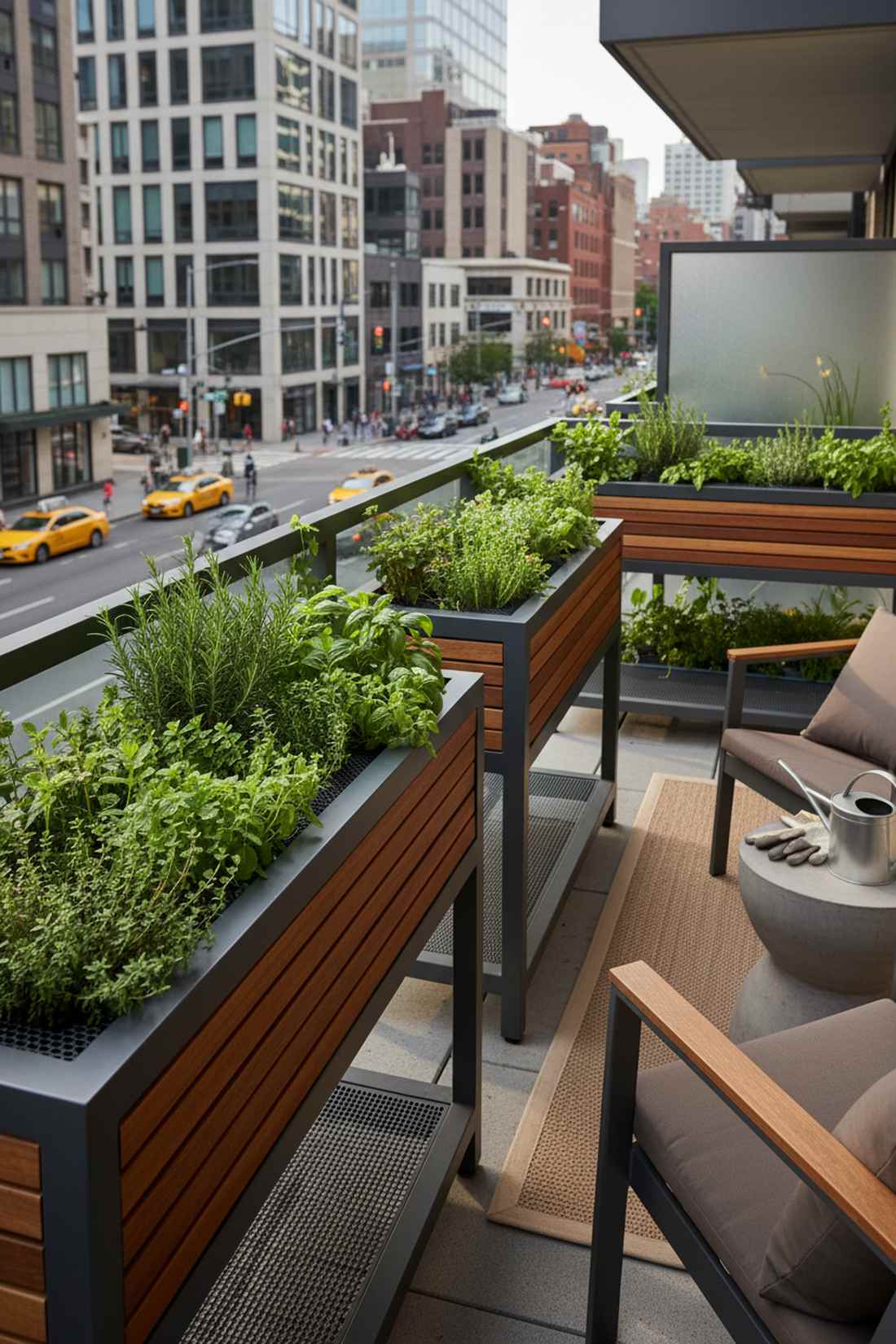
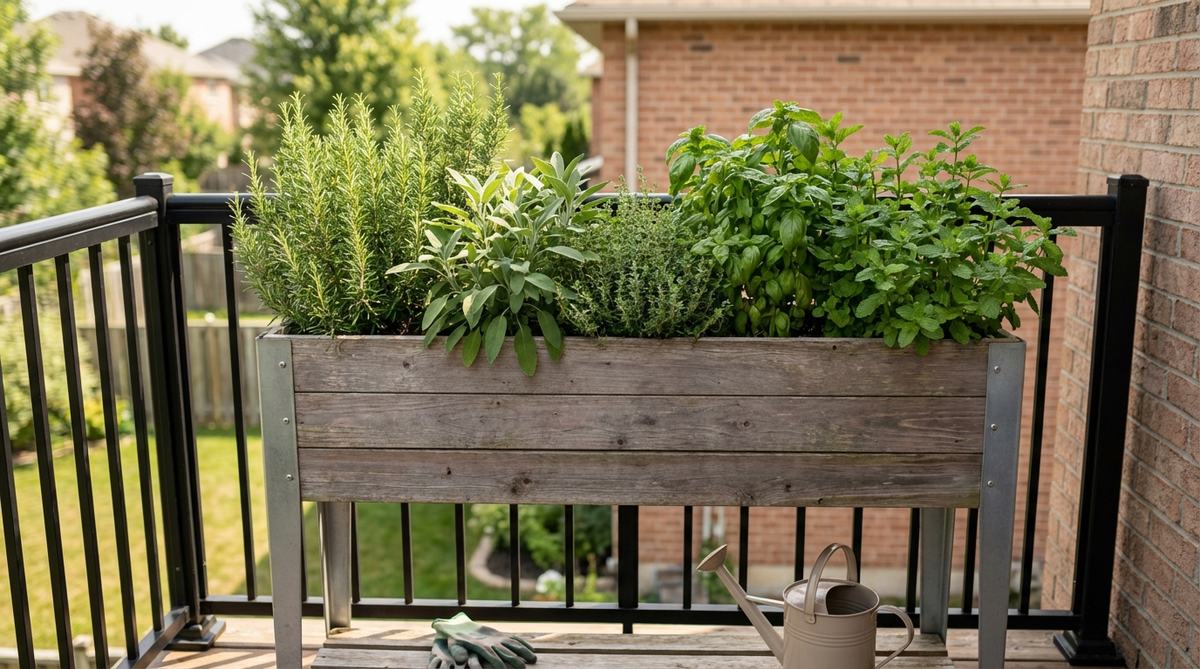
Acts as a lush, soft green barrier between your space and the chaotic street. Waist-high elevated herb planters deliver unbelievable harvesting convenience. Excellent for serious home cooks who despise bending over constantly.
Deploying a long, continuous mass of foliage forms a highly effective, incredibly premium living parapet wall. Upgrading to a self-draining false bottom strictly stops soil from turning into heavy, anaerobic sludge during rain.
This premium piece usually costs around $70–$120. A worthwhile investment that completely upgrades your patio ergonomics.
- Key Materials: Elevated metal/wood trough, rigid liner
- Vibe: Contemporary urban edge
- Difficulty: Requires some heavy lifting
- Budget Breakdown: Trough: $80 | Filler: $20.
- Creator’s Tip: Fill the bottom quarter entirely with recycled plastic bottles to drastically reduce soil weight.
- Smart Sourcing: elevated outdoor metal planter boxes and high-capacity drainage mesh liners.
19. Balcony Herb Privacy Screen
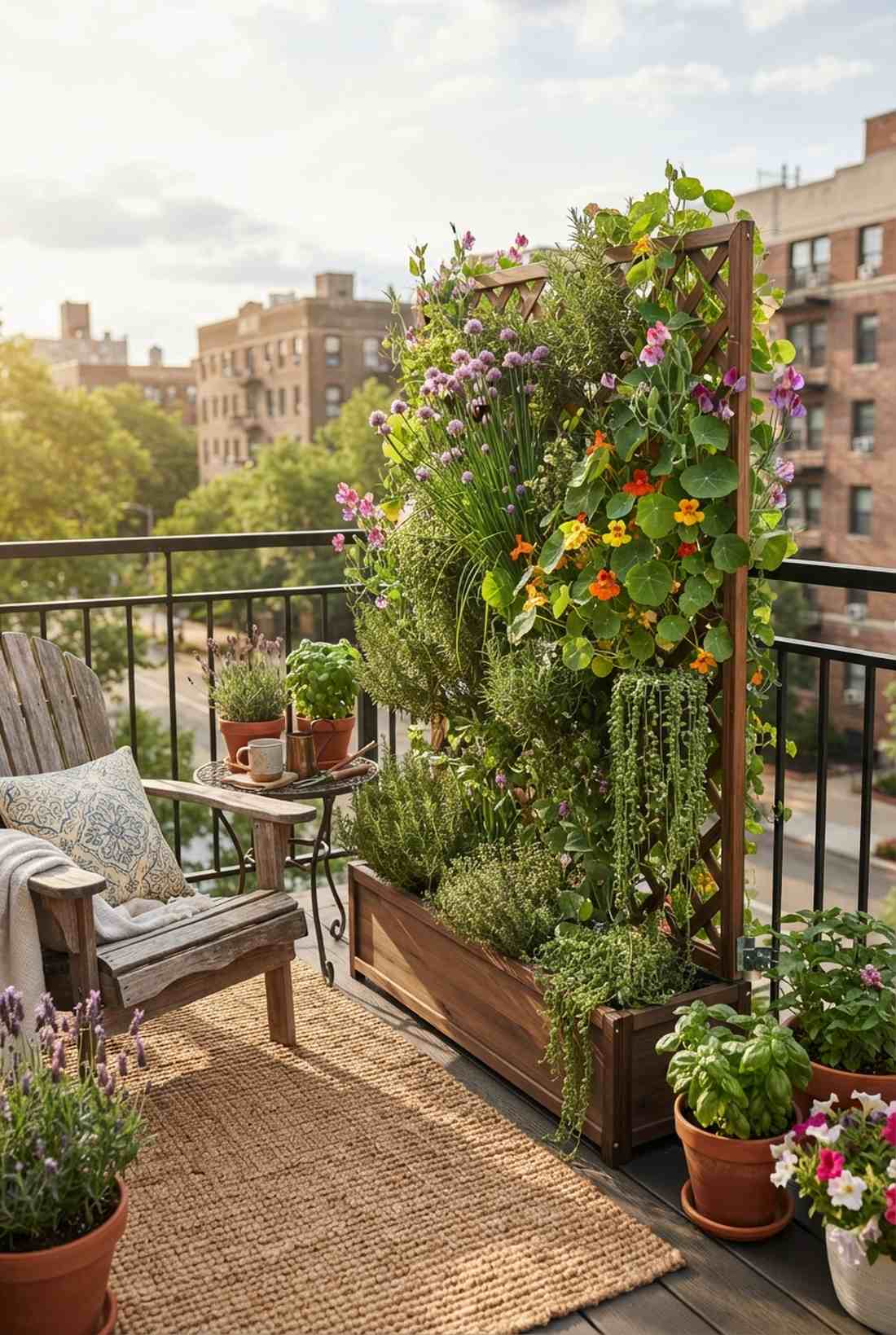
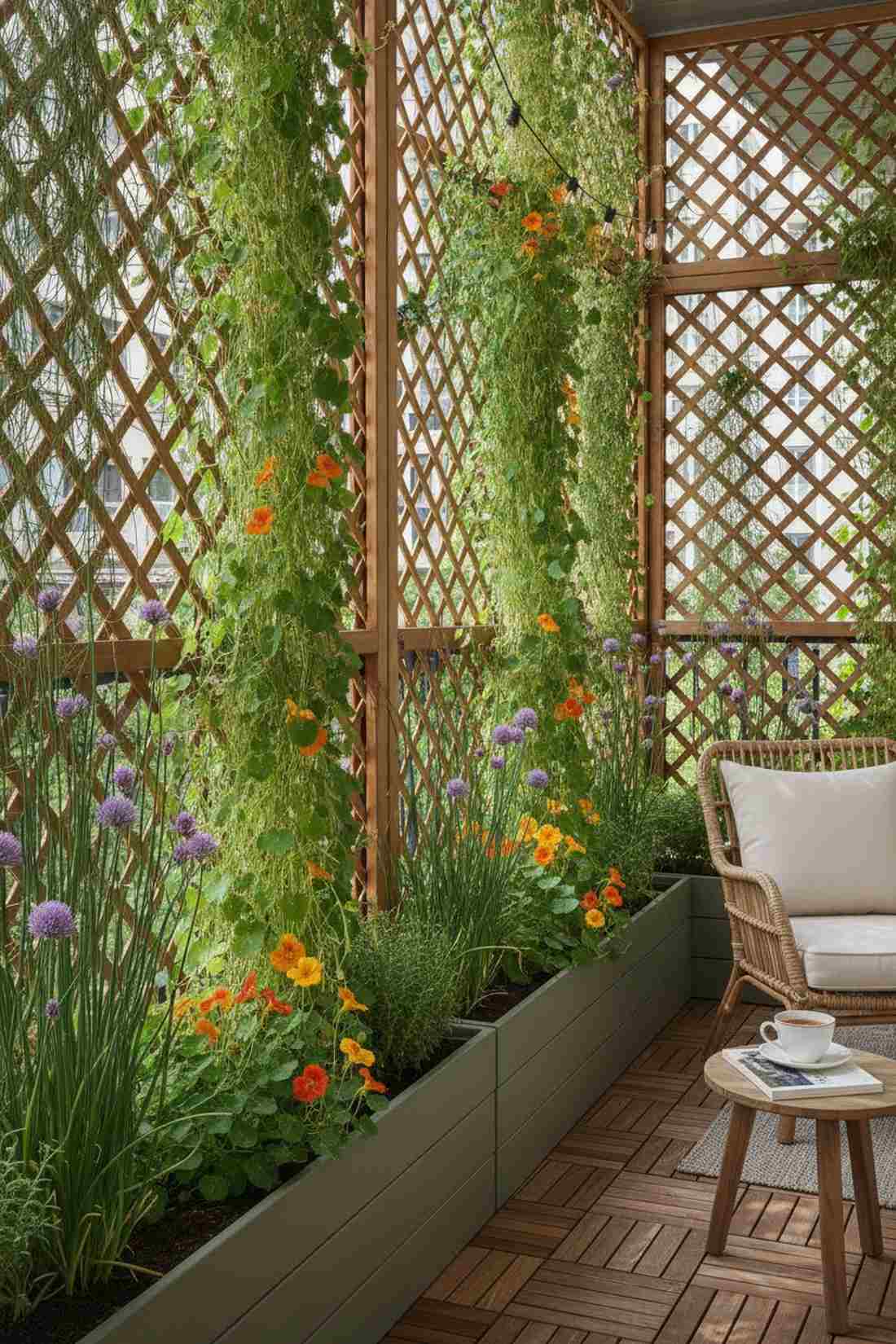
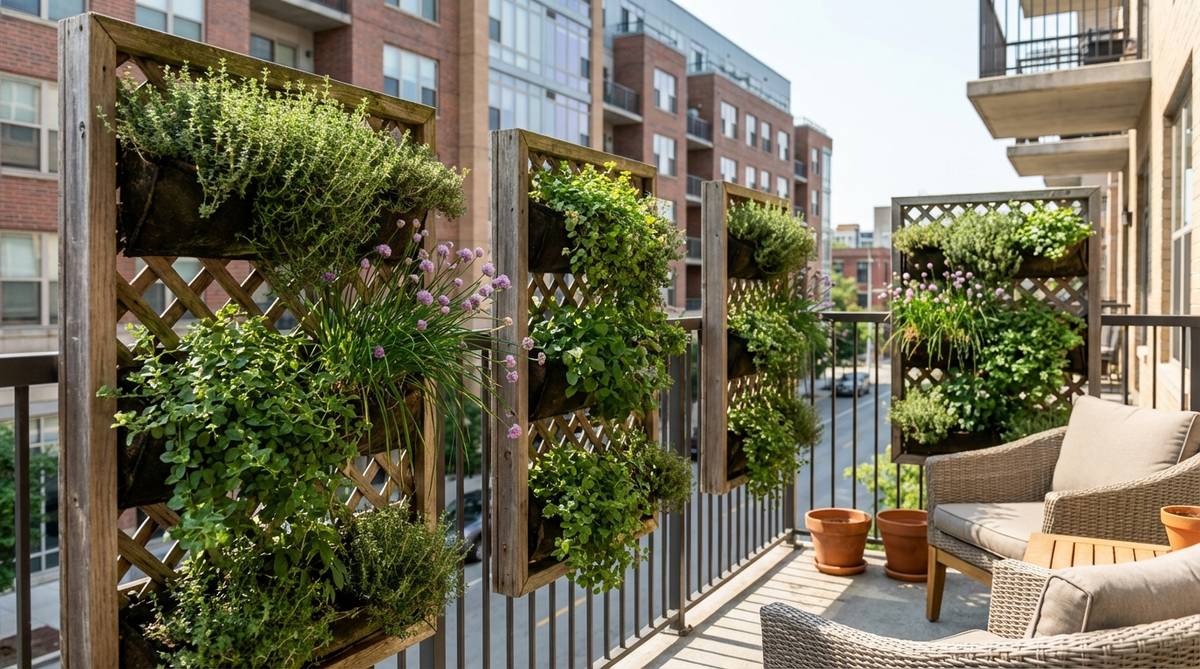
Envelops your space in a fragrant, secluded green shield. Living vertical herb trellises blur out nosy neighbors instantly. A game-changer when you desperately want seclusion without blocking essential summer breezes.
Weaving tall, flowering chives alongside cascading vines builds an incredibly dense, multi-textured privacy wall effortlessly. Using non-damaging compression brackets secures the massive lattice frame heavily without voiding your strict apartment lease.
Budget roughly $60–$95 for the frame and deep base boxes. Pin this if your apartment balcony feels terrifyingly overly exposed.
- Key Materials: Wooden lattice panel, slim base planter
- Vibe: Secret garden hideaway
- Difficulty: Moderate DIY securing
- Budget Breakdown: Trellis: $40 | Base Planter: $30.
- Creator’s Tip: Plant vigorous climbers like nasturtium strictly mixed with tall structured herbs.
- Smart Sourcing: pre-assembled outdoor wood lattice screens and railing-safe compression bracket kits.
20. Mobile Balcony Herb Bar Cart
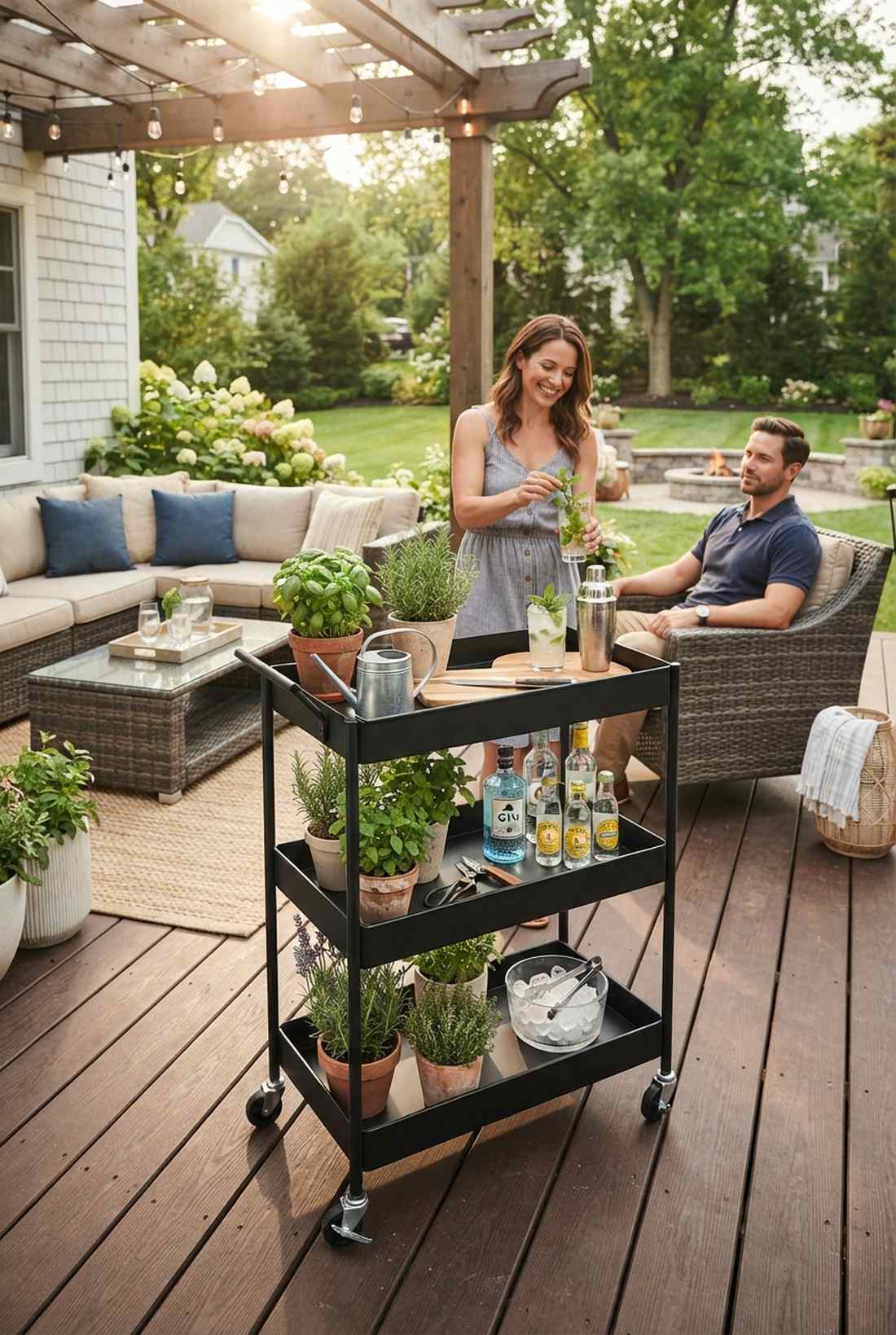
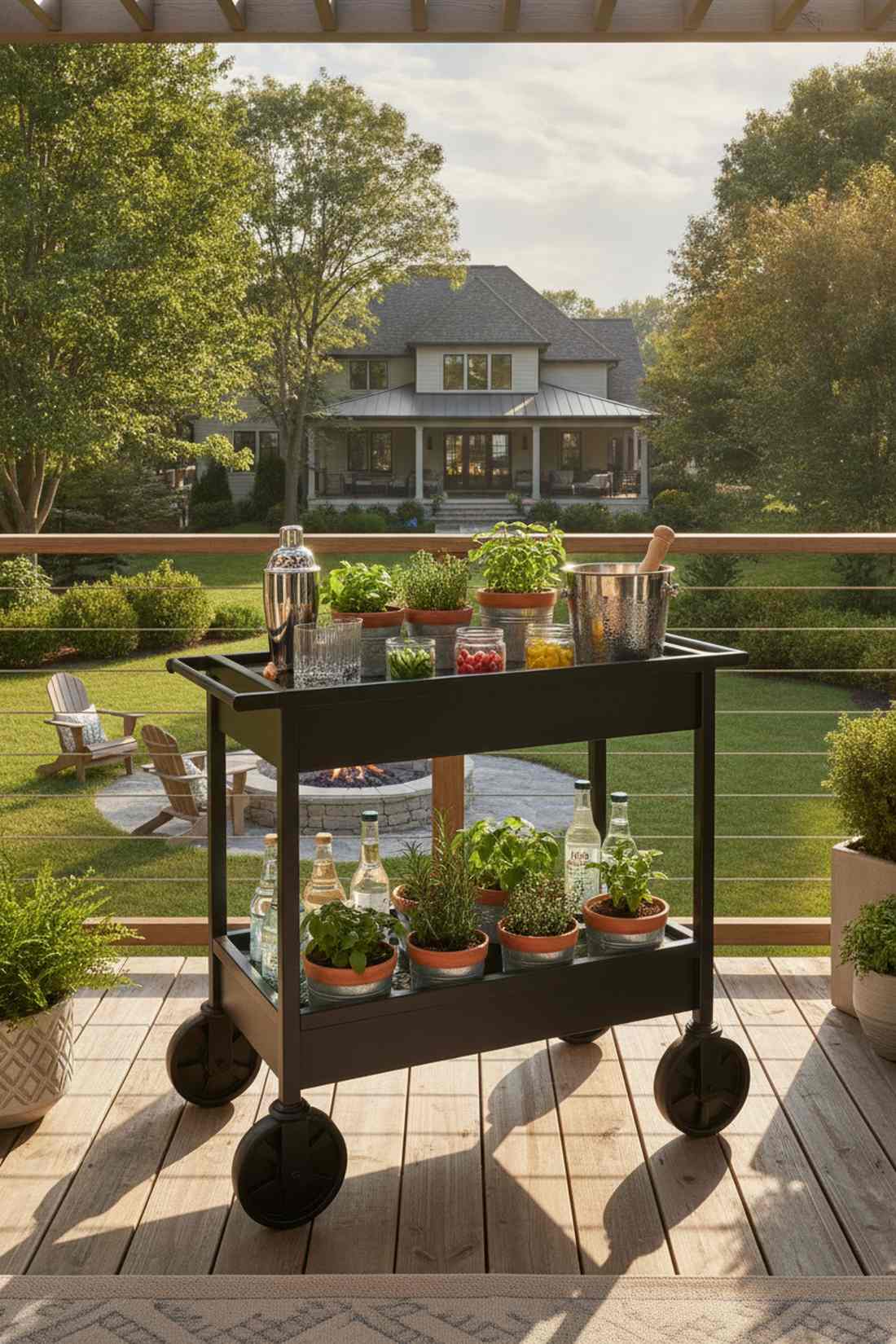
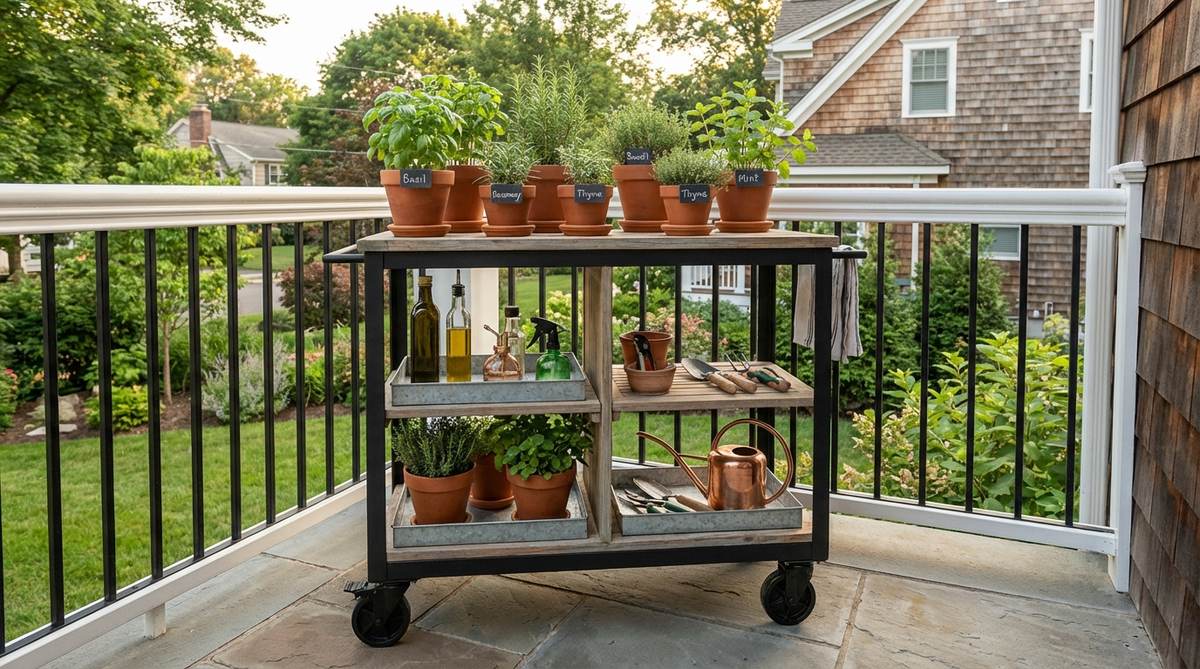
Exudes upscale outdoor entertaining energy instantly. Rolling garden bar carts merge cocktail hour with fresh botanical garnishes perfectly. Flawless for actively chasing elusive afternoon sun across a tricky, shaded deck.
Loading a sleek tiered trolley completely transforms utility storage into a highly mobile, aesthetic garden station. Seeking out heavy powder-coated locking casters guarantees the whole setup won’t dangerously roll away during an unexpected gust.
Grabbing a stylish, durable cart sets you back $50–$90. A brilliant, multi-functional piece for modern summer hosting.
- Key Materials: Metal rolling cart, deep water trays
- Vibe: Chic patio cocktail lounge
- Difficulty: Easy bolt assembly
- Budget Breakdown: Cart: $60 | Trays: $15.
- Creator’s Tip: Lock the wheels securely daily to definitively prevent slow shifting on uneven patio floors.
- Smart Sourcing: powder-coated metal utility rolling carts and heavy-duty locking caster wheels.
Skip the expensive hardware store runs—this next modular cart idea costs under forty bucks to replicate.
21. Macrame Hanging Herb Trio
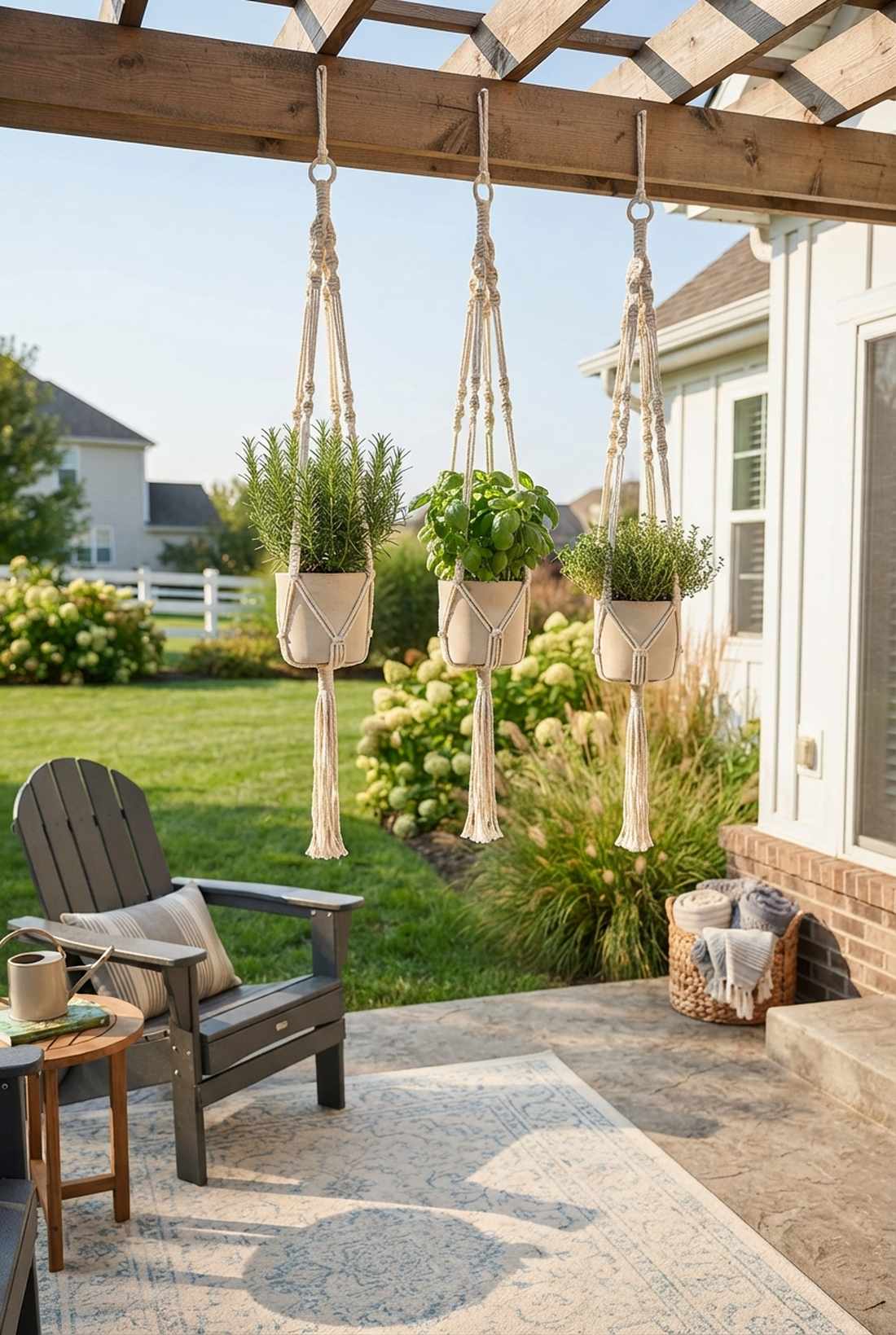
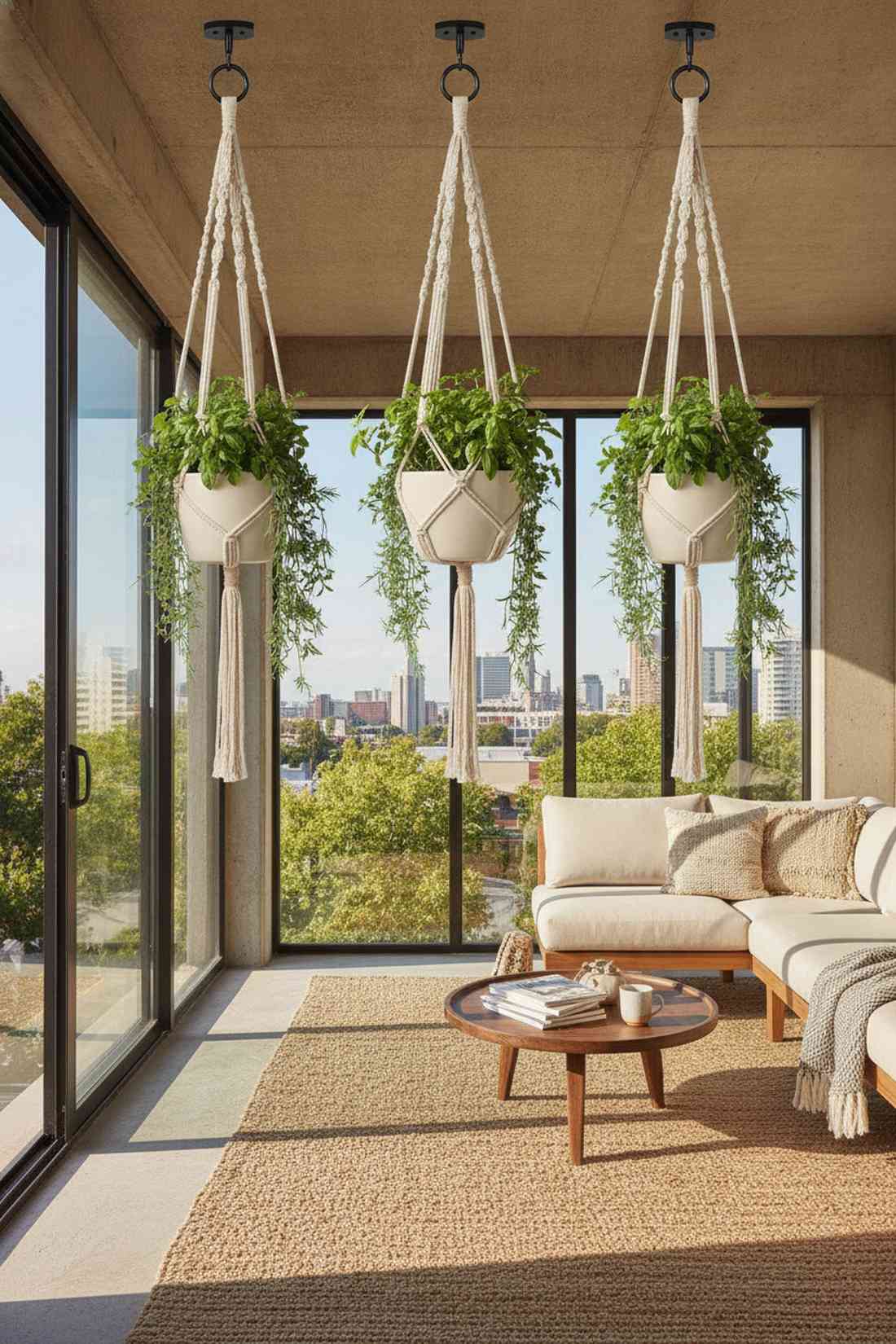
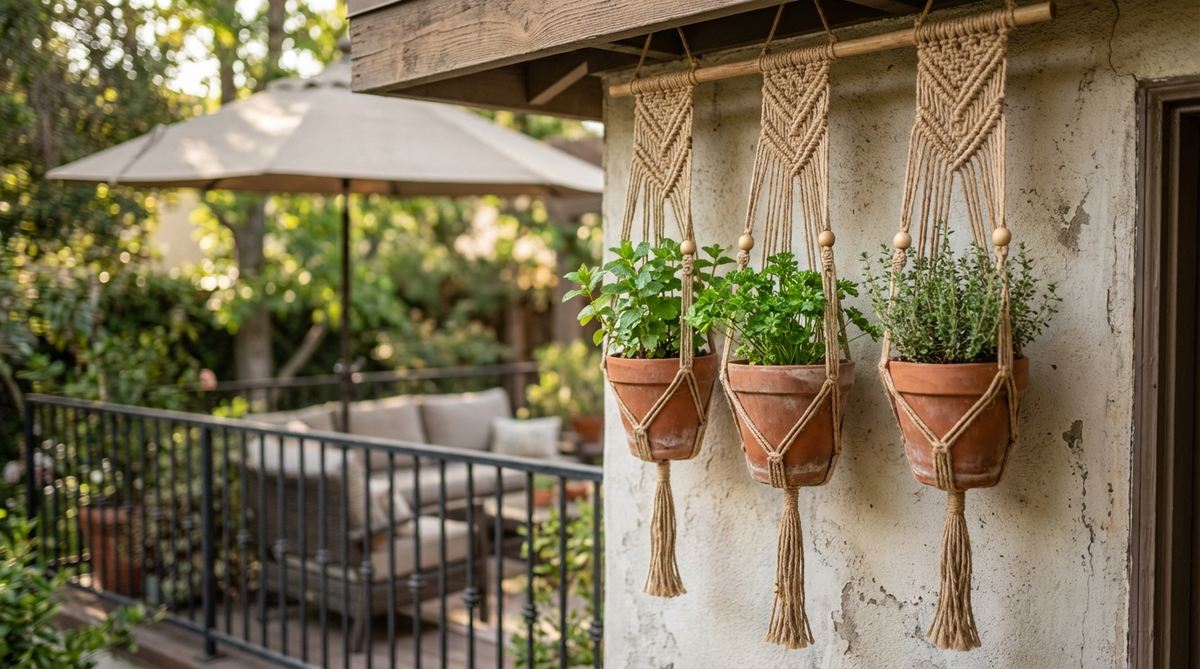
Brings a relaxed, breezy bohemian softness to stark concrete corners. Woven cotton plant hangers frame cascading leaves perfectly in mid-air. An amazing tactic for actively populating the empty visual void near patio ceilings.
Suspending a neatly matched set of three introduces a deeply calming, expensive-looking symmetrical geometry. Avoiding cheap synthetic rope for thick UV-treated natural cord drastically extends the lifespan against harsh summer sun rot.
You can arrange this gorgeous trio for strictly under $30. Save this if you deeply love a laid-back, layered styling approach.
- Key Materials: UV-resistant macrame, ceiling hooks, drip-free outer pots
- Vibe: Sun-drenched boho loft
- Difficulty: Easy hanging, measuring needed
- Budget Breakdown: Macrame: $15 | Pots: $10.
- Creator’s Tip: Use cachepots absolutely without bottom holes to prevent muddy drips on your balcony floor.
- Smart Sourcing: UV-treated outdoor macrame hanger sets and seamless decorative indoor cachepots.
22. Rail-Mounted Window Box With Trellis
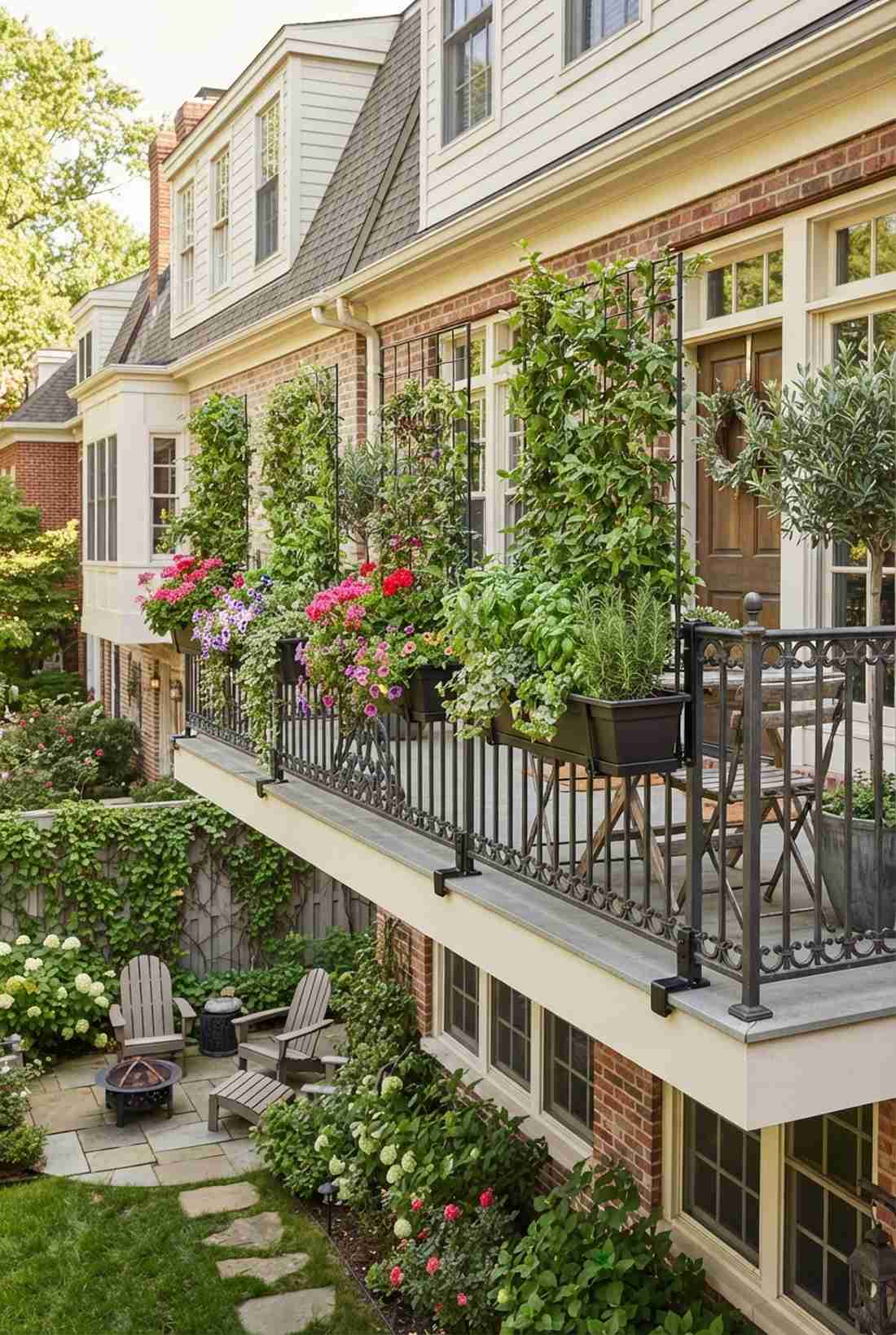
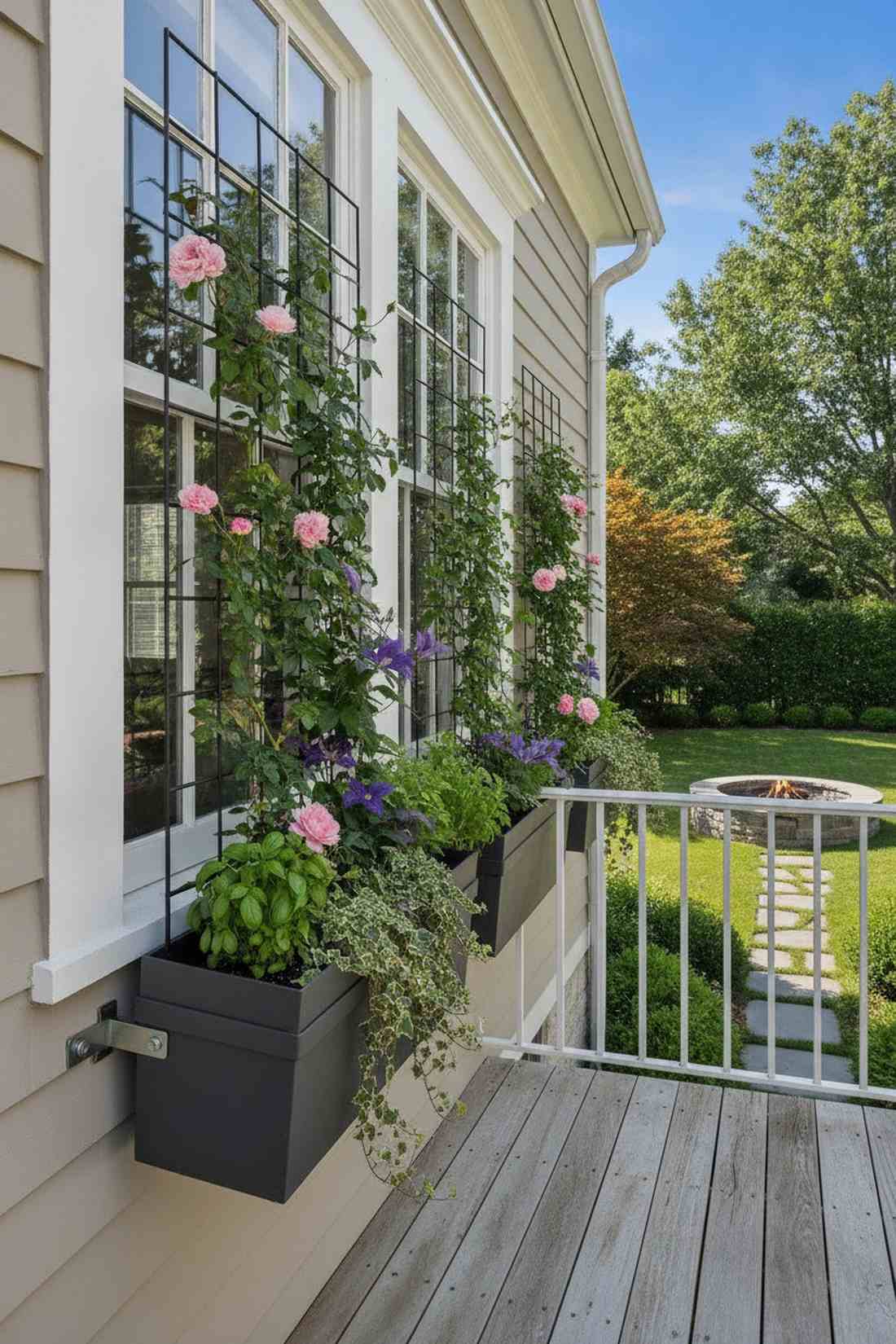
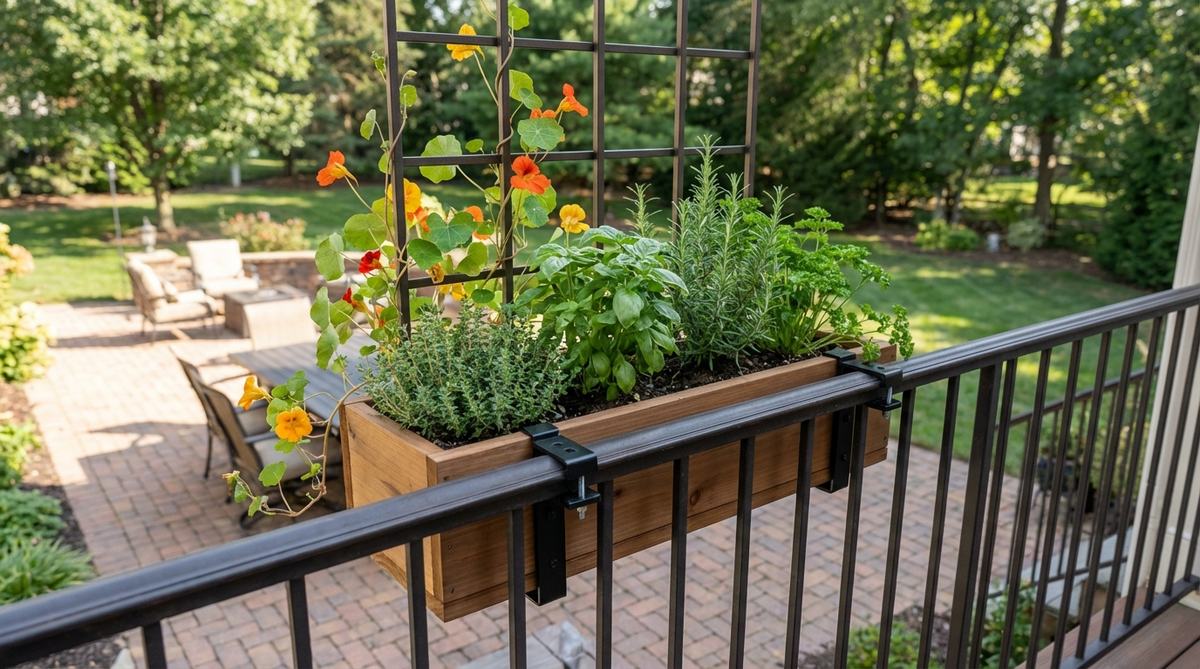
Commands attention precisely like a miniature, floating French garden. Rail-clamped window boxes with back grids push lush growth dramatically upward. The perfect hybrid solution for renters violently craving both yield and high decorative impact.
Fusing a deep soil reservoir firmly with a climbing support delivers a surprisingly opulent, three-dimensional facade. Securing heavy corrosion-resistant steel brackets fully prevents rust stains from permanently ruining your landlord’s painted railings.
This dual-function setup realistically runs around $45–$75. An absolute powerhouse design for strictly maximizing edge spaces.
- Key Materials: Window box, slim wire trellis, mounting clamps
- Vibe: Classic European balcony
- Difficulty: Moderate bracket alignment
- Budget Breakdown: Box/Trellis: $50 | Clamps: $15.
- Creator’s Tip: Prune aggressive climbers consistently weekly so they don’t choke out delicate basils.
- Smart Sourcing: window boxes with integrated trellis panels and rust-proof balcony rail clamp brackets.
Material Guide: Cheap vs. Premium Aesthetic
Knowing exactly where to save and where to spend makes all the difference in achieving that “looks expensive but isn’t” vibe.
- Standard vs. UV-Resistant/Premium: Sourcing UV-coated plastics and sealed woods stops planters from fading, cracking, or becoming brittle in the sun, extending their life by years.
- Pre-made Kits vs. Sourcing Locally: High-quality starter kits and bulk packs usually supply perfectly matched hardware, saving you massive frustration and unexpected trips to the hardware store.
Smart & DIY Mini Herb Garden Ideas For Creative Gardeners
These inventive projects layer storage, lighting, and labeling into your mini herb garden so it works like a tiny, efficient kitchen station. They suit renters and experimenters who enjoy changing layouts with the seasons.
23. Mason Jar Magnetic Fridge Garden
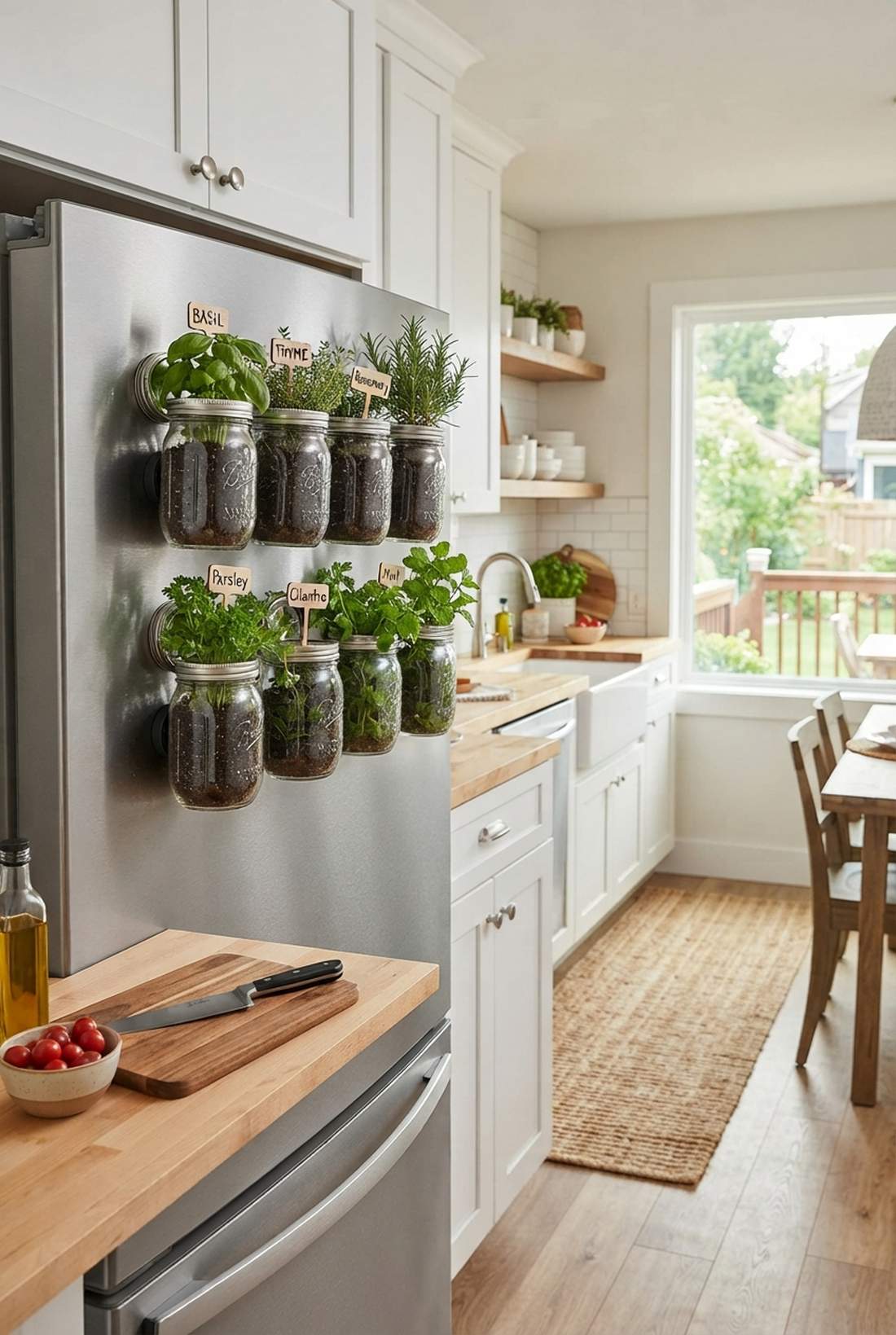
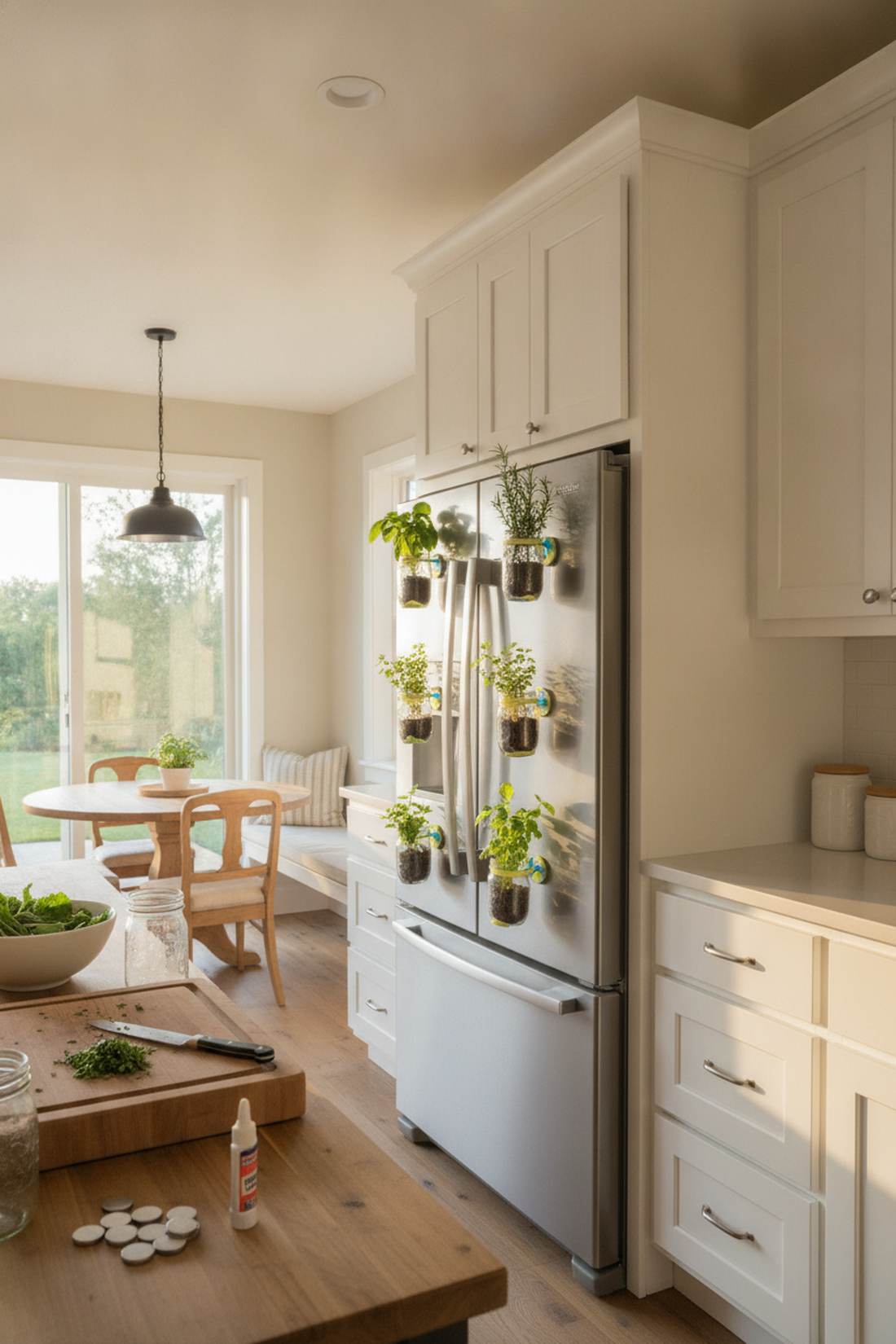
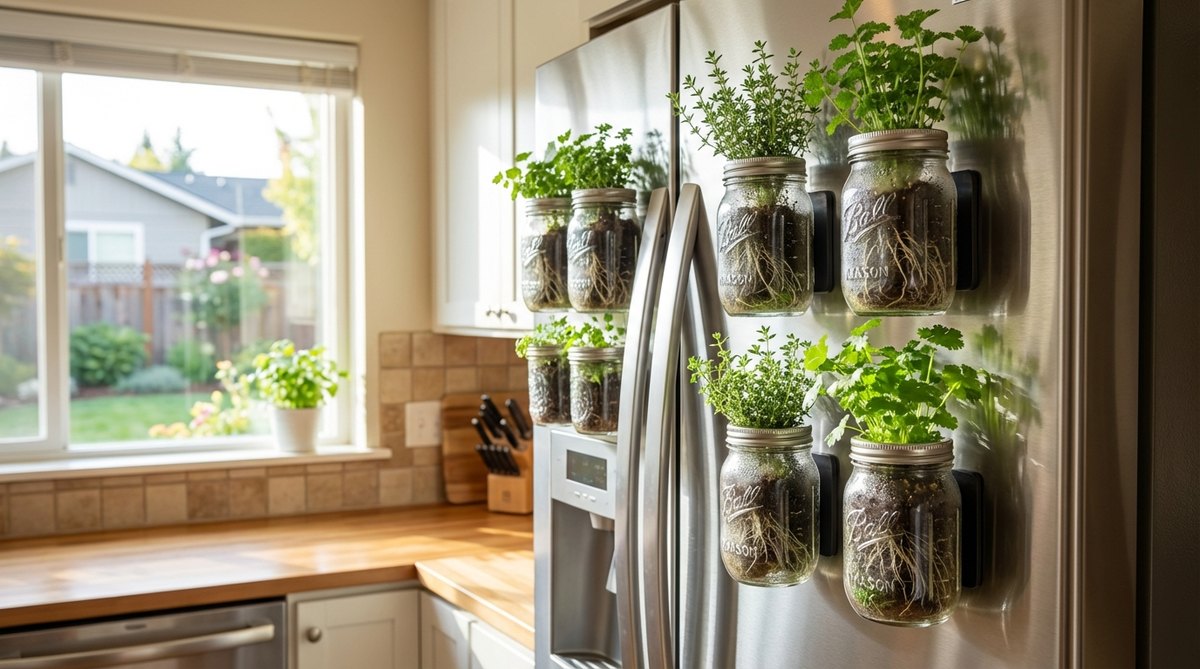
Injects a brilliant pop of living color right where you grab your groceries. Magnetic refrigerator herb jars make use of totally ignored kitchen real estate. Ideal for completely keeping fresh garnishes exactly zero steps from the prep station.
Slapping clear glass onto stark steel appliance sides creates a hyper-visible, highly addictive watering routine. Testing premium rare-earth magnets is strictly required, as standard craft strips will aggressively slide down the door disastrously under soil weight.
You can pull this ultra-clever hack off for just $15–$25. Pin this strictly to your zero-footprint kitchen hacks board.
- Key Materials: Half-pint mason jars, rare earth magnets, super glue
- Vibe: Quirky zero-waste kitchen
- Difficulty: Quick crafting project
- Budget Breakdown: Magnets: $12 | Jars: $8.
- Creator’s Tip: Apply a tiny strip of painter’s tape to the magnet back to definitively prevent scratching your fridge.
- Smart Sourcing: heavy-duty neodymium magnet discs (bulk) and half-pint glass mason jars.
24. Chalkboard-Labeled Tin Collection
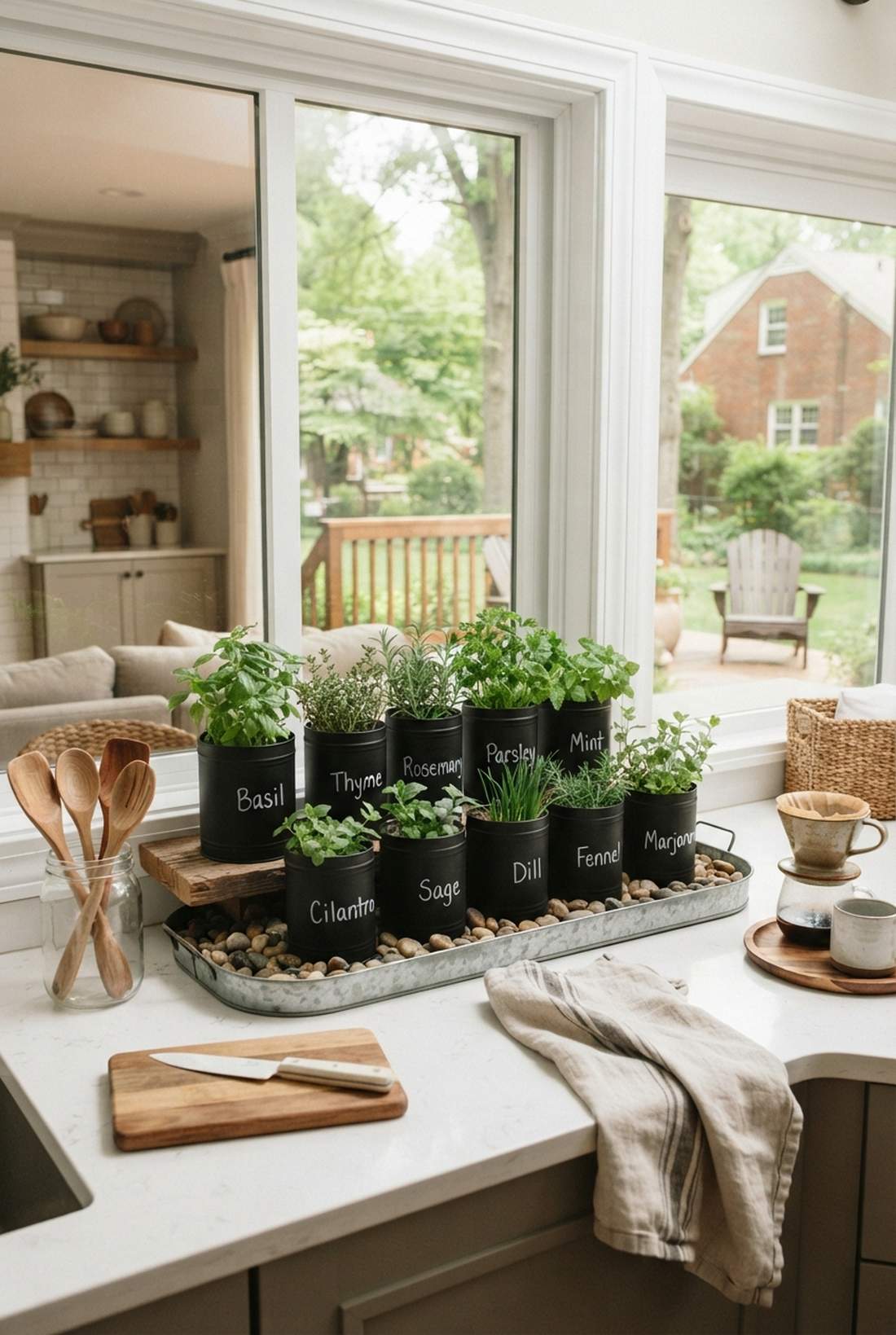
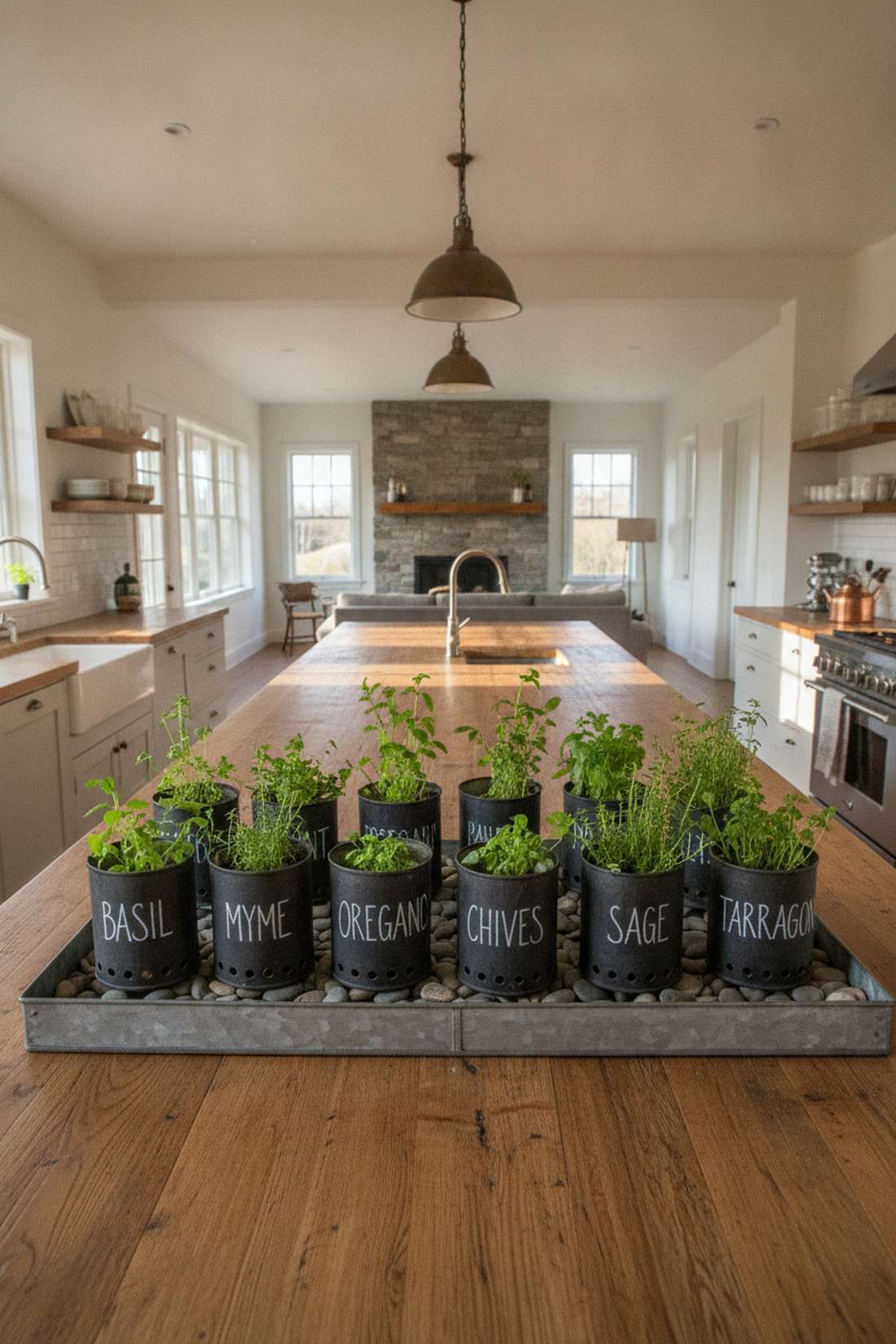
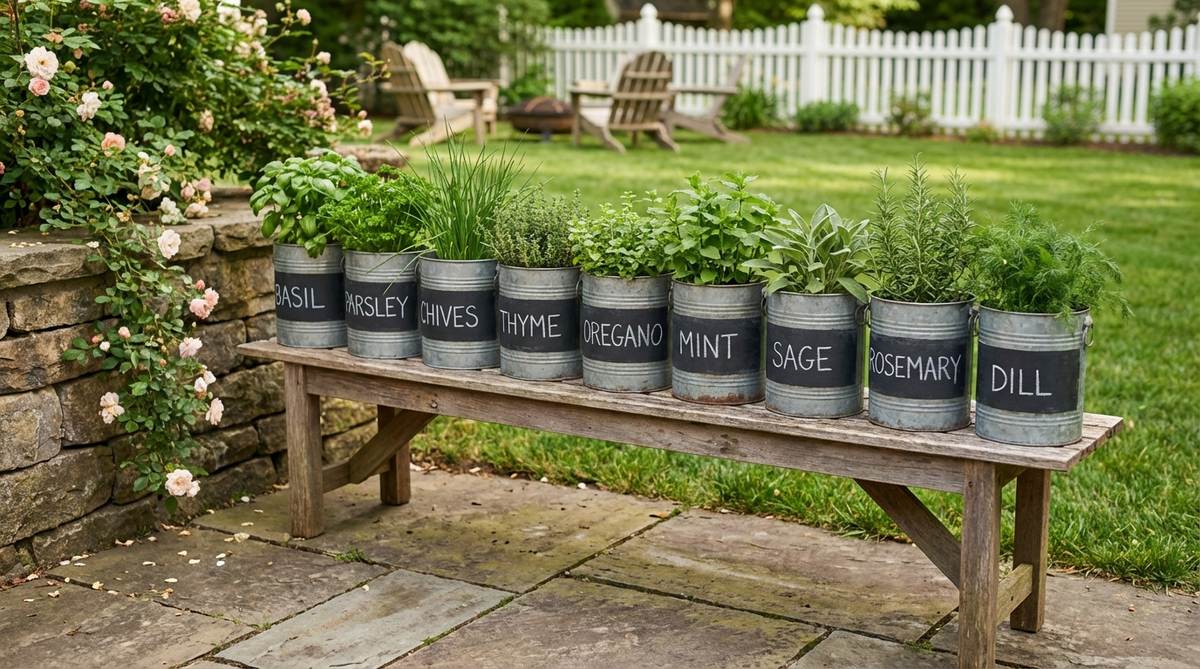
Delivers the hyper-organized charm of an artisanal coffee shop counter. Upcycled matte chalkboard herb tins unify messy mismatched plant sizes into one cohesive lineup. A flawless, low-cost strategy for open-plan kitchens where visual clutter is instantly noticed.
Painting cheap metal heavily with dark, textured bands yields a rugged, highly premium aesthetic for literal pennies. Drilling a wide cluster of base holes and lifting them onto a pebble tray completely eradicates the dreaded indoor root rot.
This entire uniform collection costs roughly $10–$20 to complete. It’s a wildly satisfying afternoon craft project that alters the entire room.
- Key Materials: Recycled food tins, chalkboard spray paint, chalk pens
- Vibe: Vintage mercantile aesthetic
- Difficulty: Beginner painting craft
- Budget Breakdown: Paint: $10 | Markers: $5.
- Creator’s Tip: Use bright liquid chalk markers absolutely instead of traditional sticks for razor-sharp typography.
- Smart Sourcing: premium matte chalkboard spray paint and fine-tip liquid chalk marker sets.
You wouldn’t believe the premium aesthetic this upcoming recycled container trick achieves in a tiny galley kitchen.
25. Reclaimed Wine Crate Herb Box
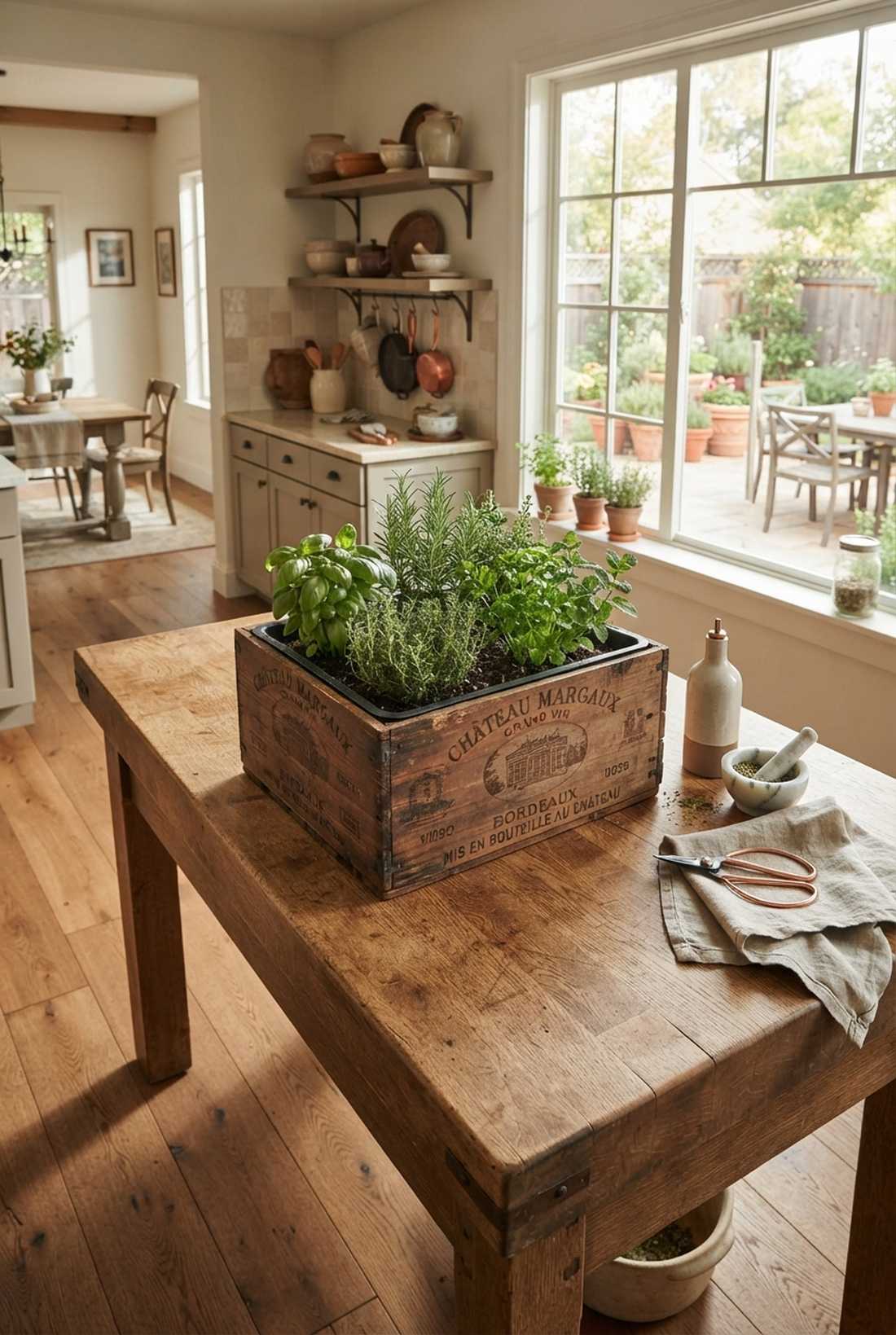
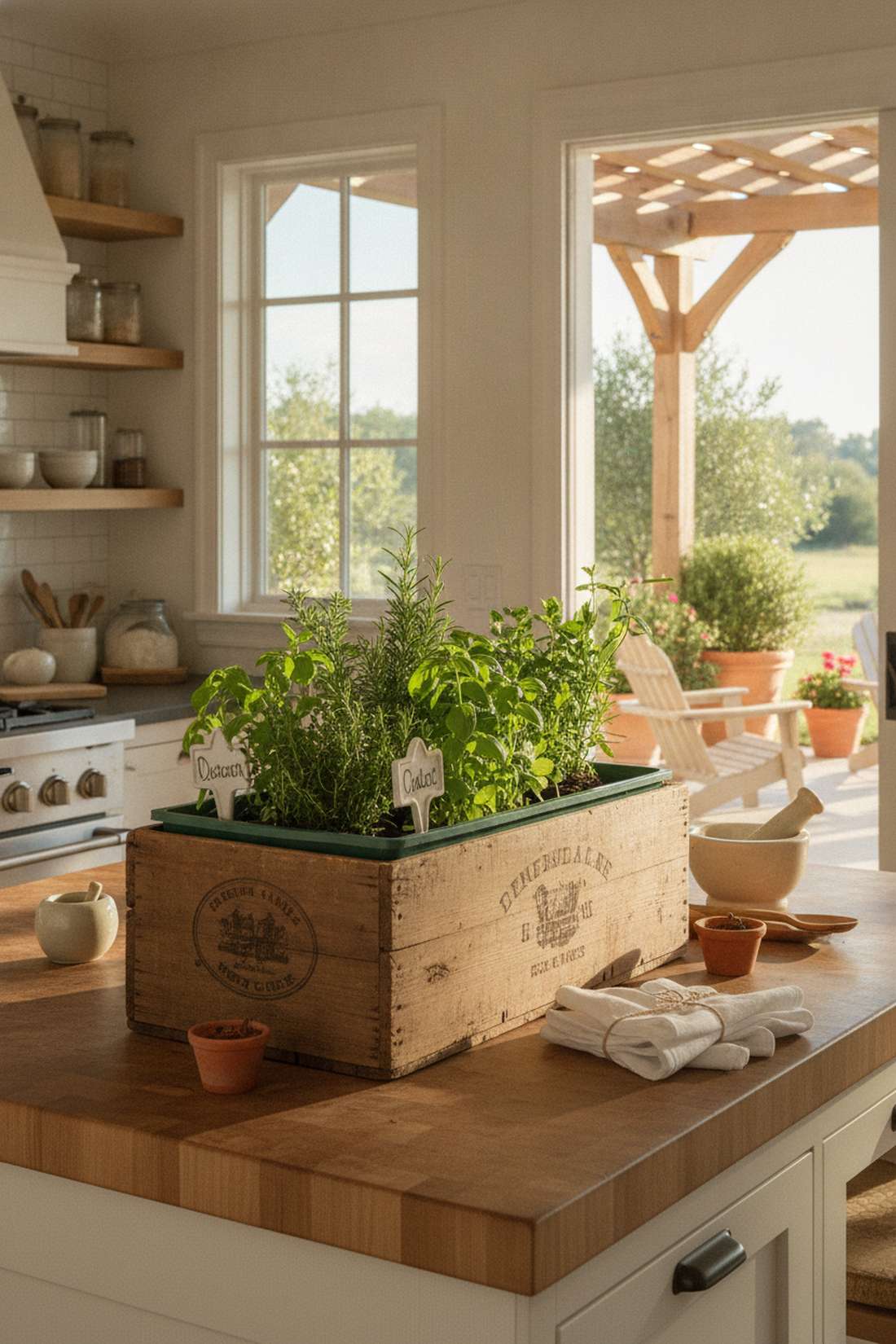
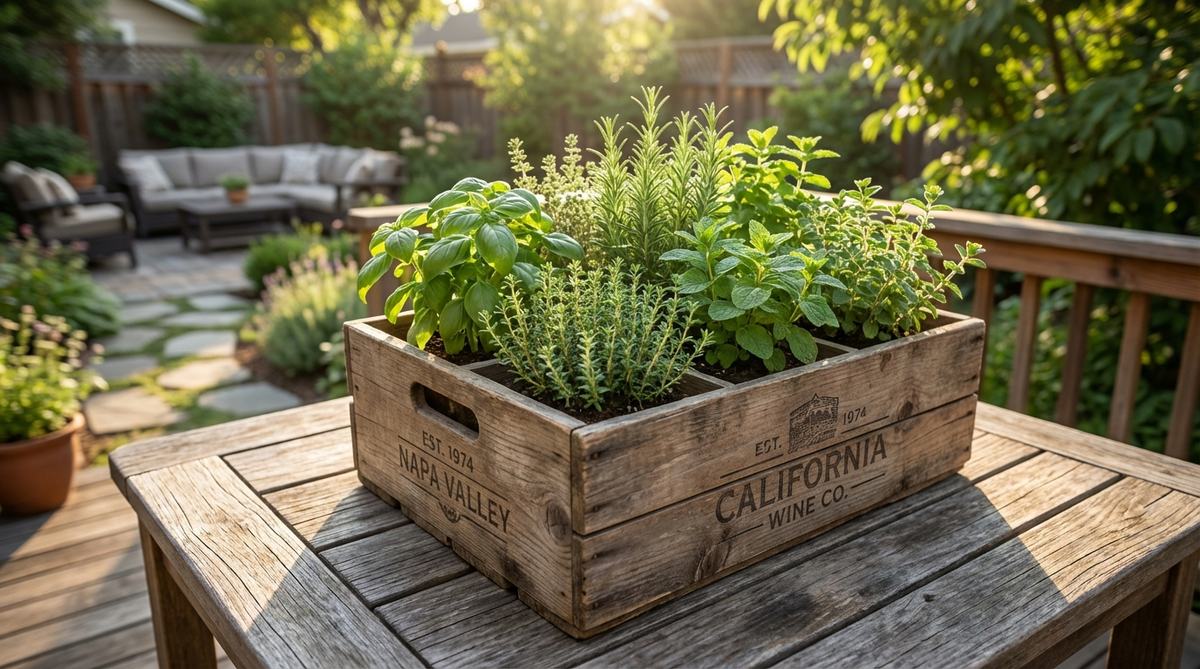
Feels exactly like a tiny, sun-drenched vineyard slice directly on your kitchen island. Wooden vintage wine crate planters bring immense warmth and deep historical patina. Perfect for seamlessly shifting between indoor windows and sunny patio tables.
Repurposing branded timber effortlessly establishes a surprisingly high-end culinary narrative that guests deeply adore. Dropping a commercial waterproof basin inside entirely stops wet, heavy soil from warping the antique wood ruinously over time.
Snagging a crate and durable liner usually costs totally under $30. Save this strictly if you obsess over rustic, story-driven decor.
- Key Materials: Wooden wine box, plastic drop-in liner
- Vibe: Rustic Tuscan farmhouse
- Difficulty: Easy drill-and-drop
- Budget Breakdown: Crate: $15 | Liner: $10.
- Creator’s Tip: Rub the exterior extremely lightly with mineral oil to enhance the faded stamped logos.
- Smart Sourcing: authentic reclaimed wooden wine crates and flexible plastic planter box liners.
26. Self-Watering Wick Planters
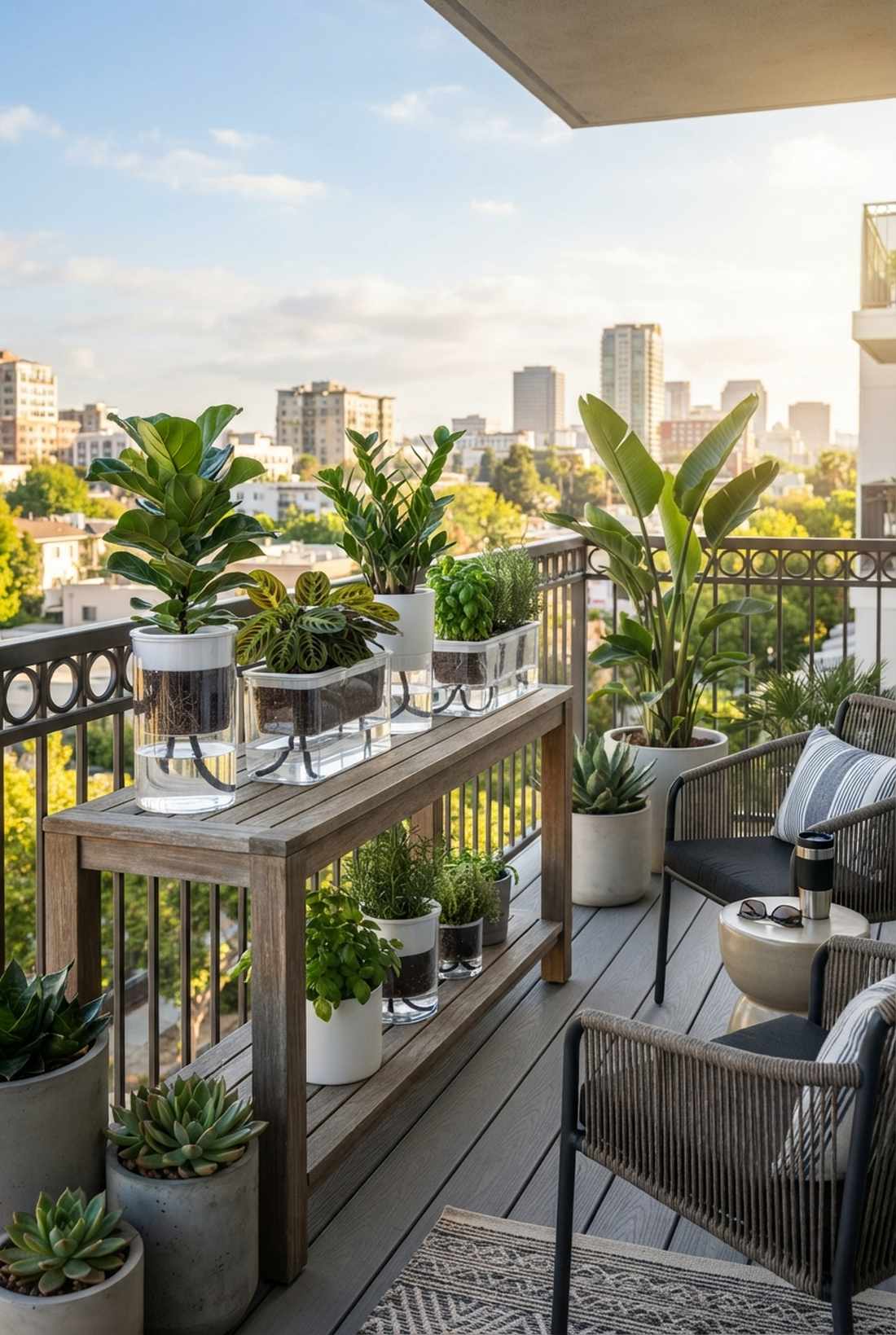
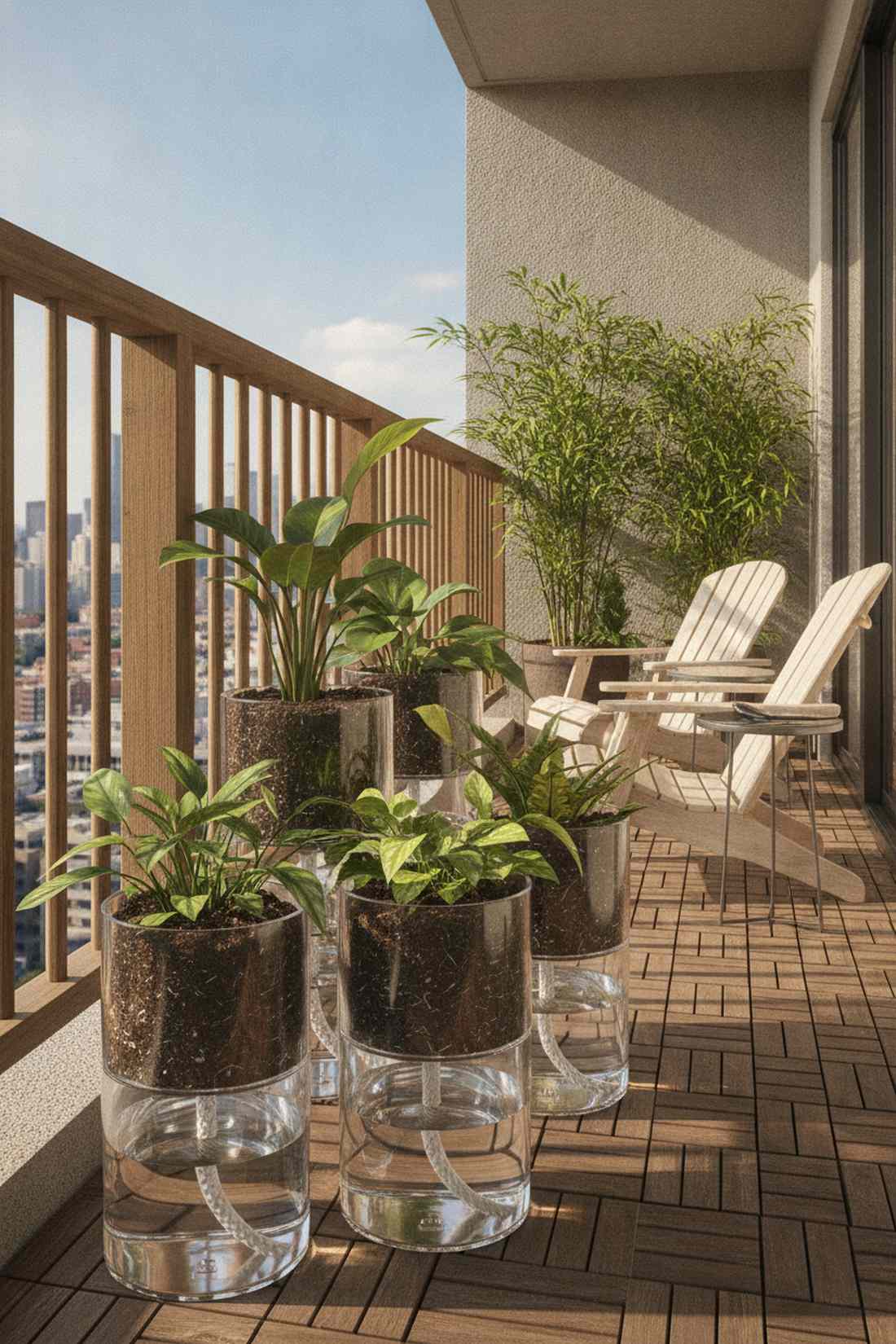
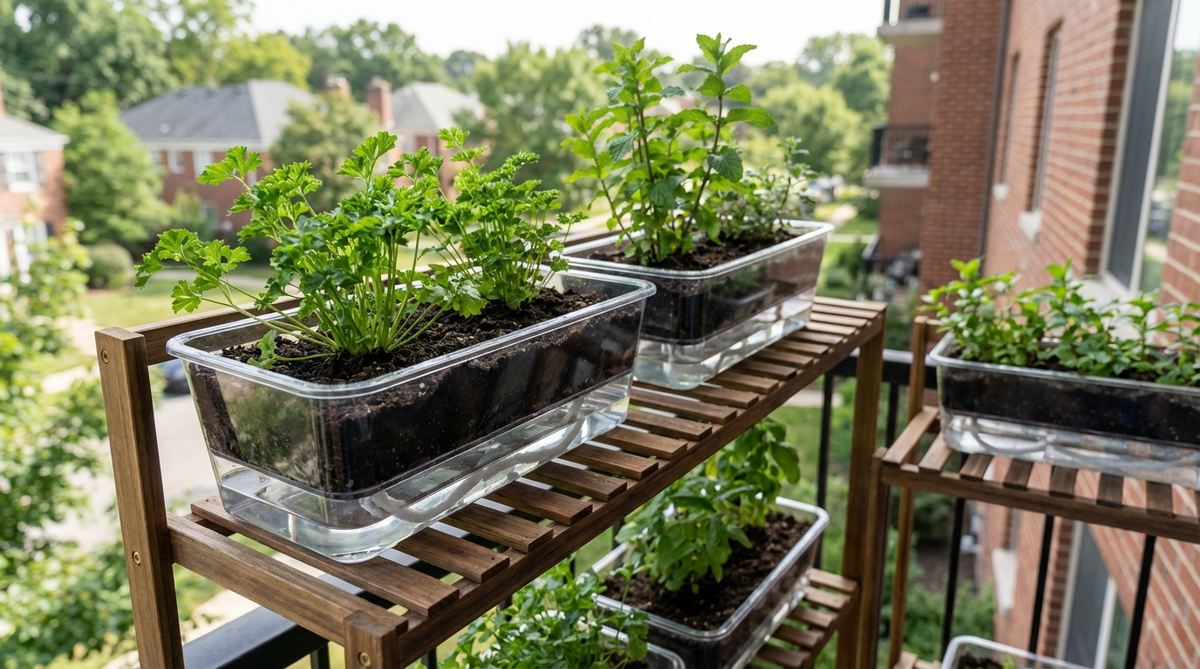
Projects a sleek, hyper-modern tech-forward efficiency for the exceptionally busy traveler. Visible reservoir self-watering pots eliminate the daily terror of crispy, dead leaves. An absolute lifesaver for horribly sun-baked balconies or deeply forgetful apartment owners.
Showcasing the water levels fully behind clear acrylic delivers a modern, deeply calming scientific peace of mind. Swapping cheap yarn fiercely for specialized thick nylon wicks guarantees a steady, perfectly calibrated moisture draw upward heavily into the root zone.
Expect to spend roughly $25–$45 for a reliable, completely modular set. Highly recommended if you travel constantly for work.
- Key Materials: Two-part clear pots, thick capillary wicks
- Vibe: Smart minimalist tech
- Difficulty: Zero-effort maintenance
- Budget Breakdown: Pots: $30 | Soil: $10.
- Creator’s Tip: Flush the top soil aggressively with heavy water once a month to remove built-up fertilizer salts.
- Smart Sourcing: clear self-watering wick planter sets and high-absorption capillary watering cords.
27. Upcycled Tea Tin Herb Lineup
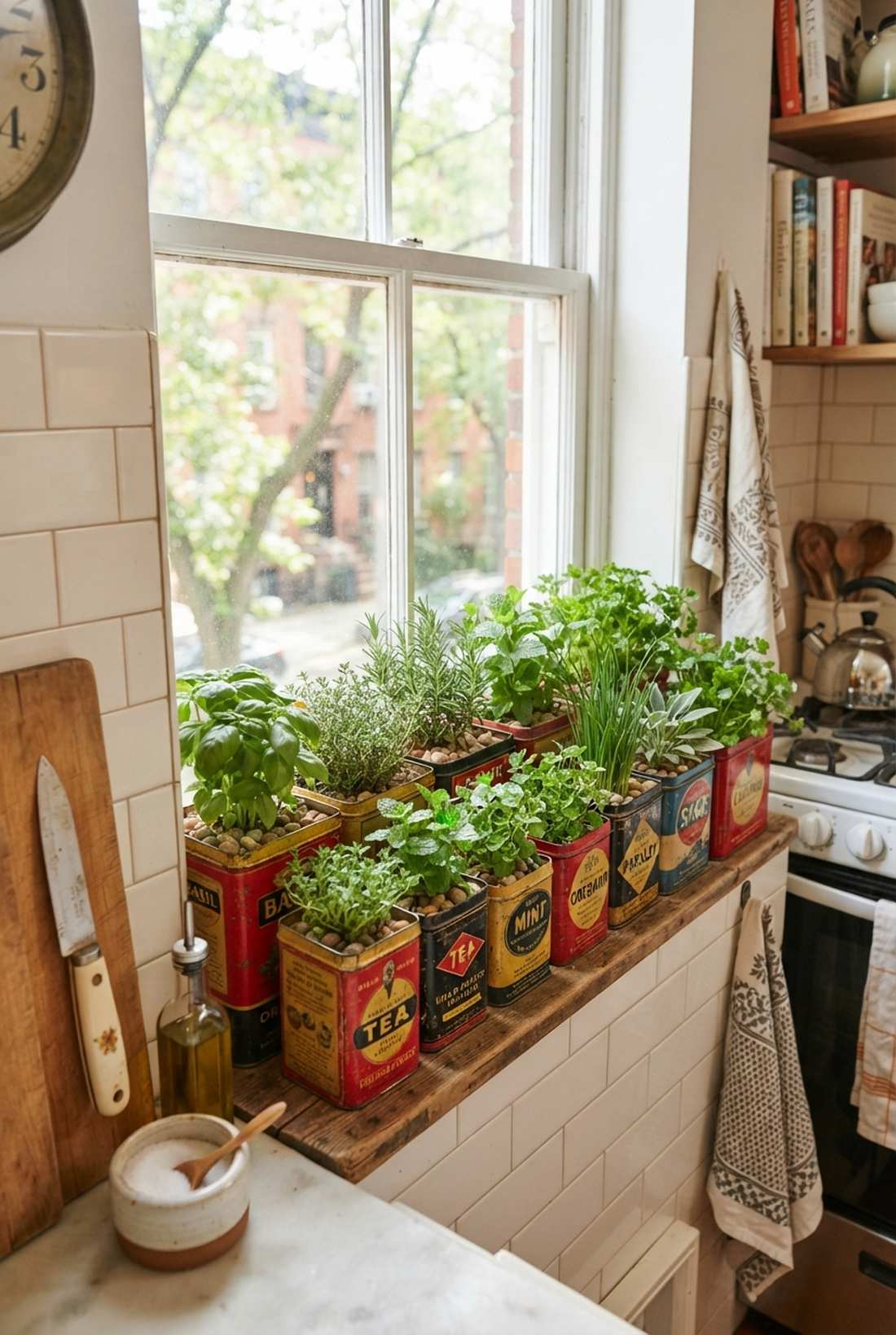
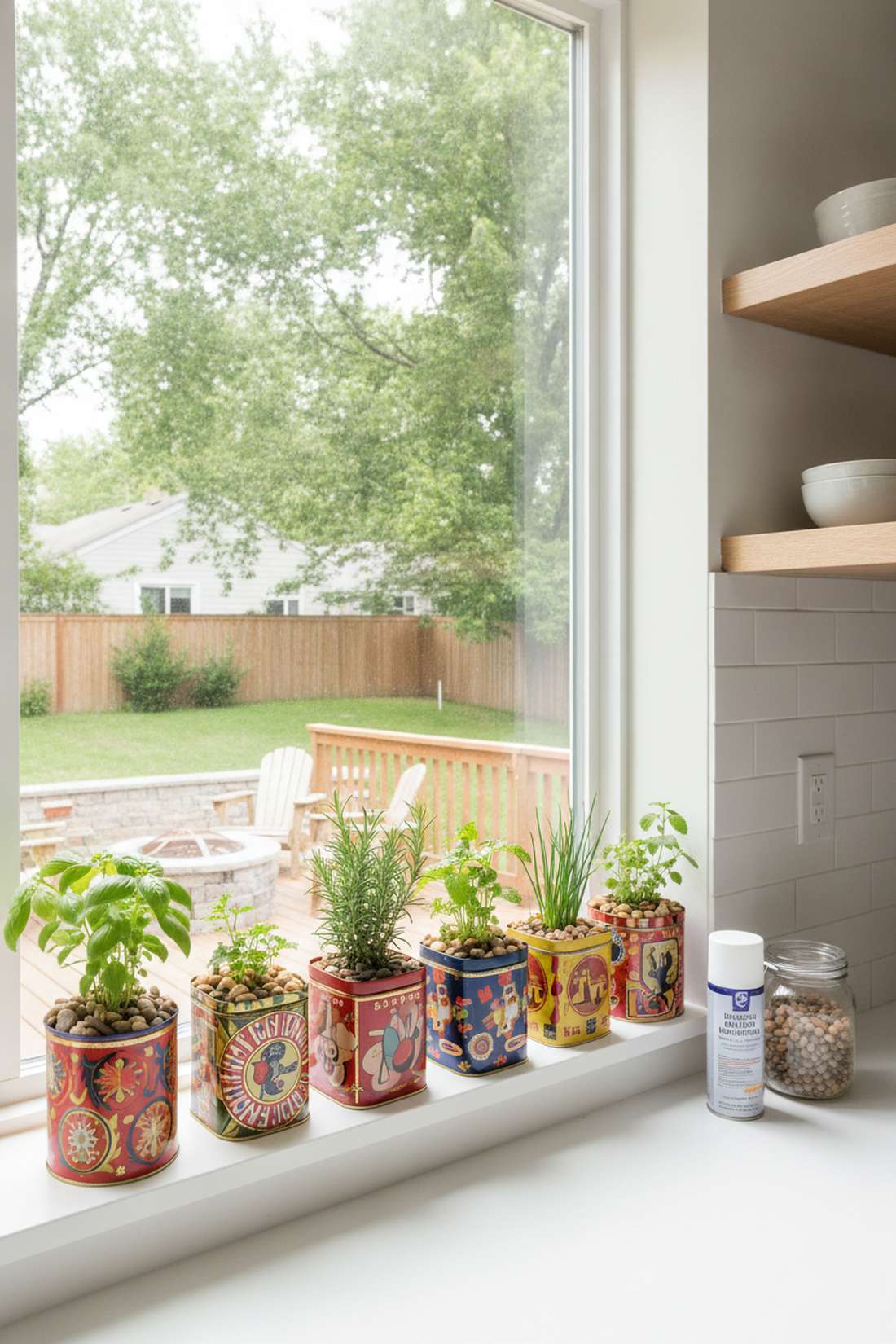
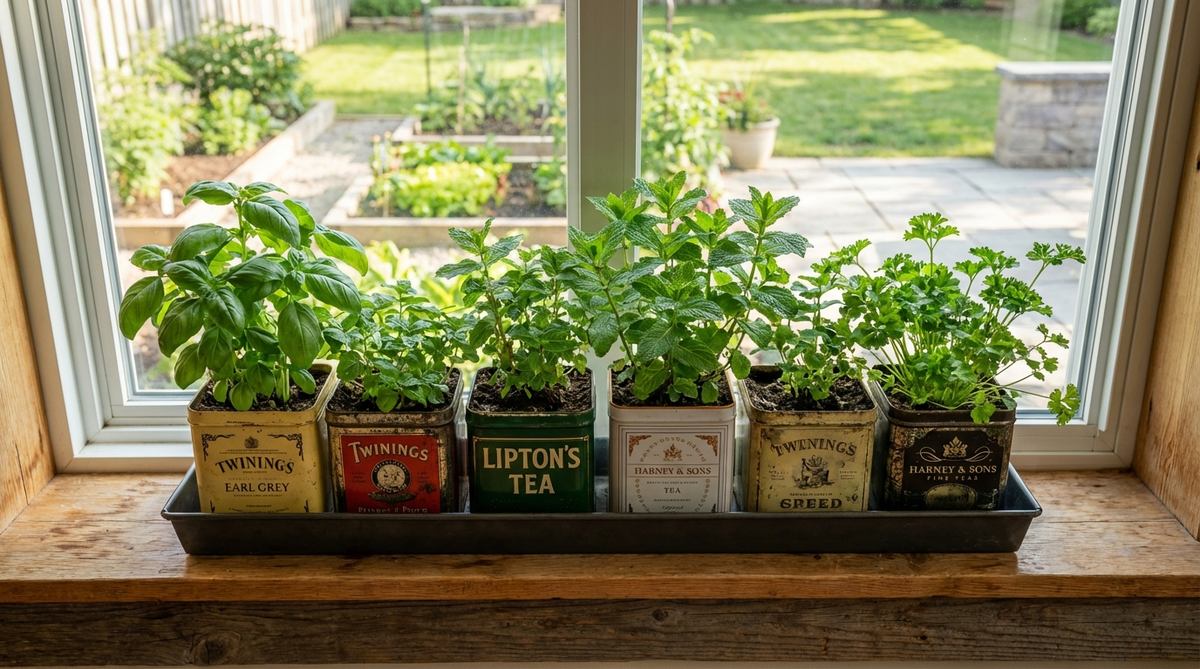
Sparkles wildly like a curated collection of tiny, vivid pop-art pieces. Vintage graphic tea tin planters pack massive character onto narrow, boring windowsills. A brilliant, highly eco-minded tactic for injecting loud pops of color strictly into neutral, sterile apartment kitchens.
Showcasing iconic packaging fiercely transforms literal garbage into a highly bespoke, incredibly designer-looking container set. Coating the bare metal interiors with a quick blast of clear rust-proofing spray absolutely doubles their entire structural lifespan.
This highly bespoke look essentially costs nothing if you save your tins, or roughly $15 at a thrift shop. Pin this heavily to your sustainable upcycling board.
- Key Materials: Colorful metal tins, clear rust-sealant spray, pebble base
- Vibe: Eclectic maximalist charm
- Difficulty: Fun, easy weekend upcycle
- Budget Breakdown: Tins: $0 | Sealer: $10.
- Creator’s Tip: Group the absolute most vibrant reds and golds strictly together for maximum visual contrast.
- Smart Sourcing: clear anti-rust protective enamel spray and bulk indoor plant drainage pebbles.
28. Under-Lit LED Smart Herb Planter
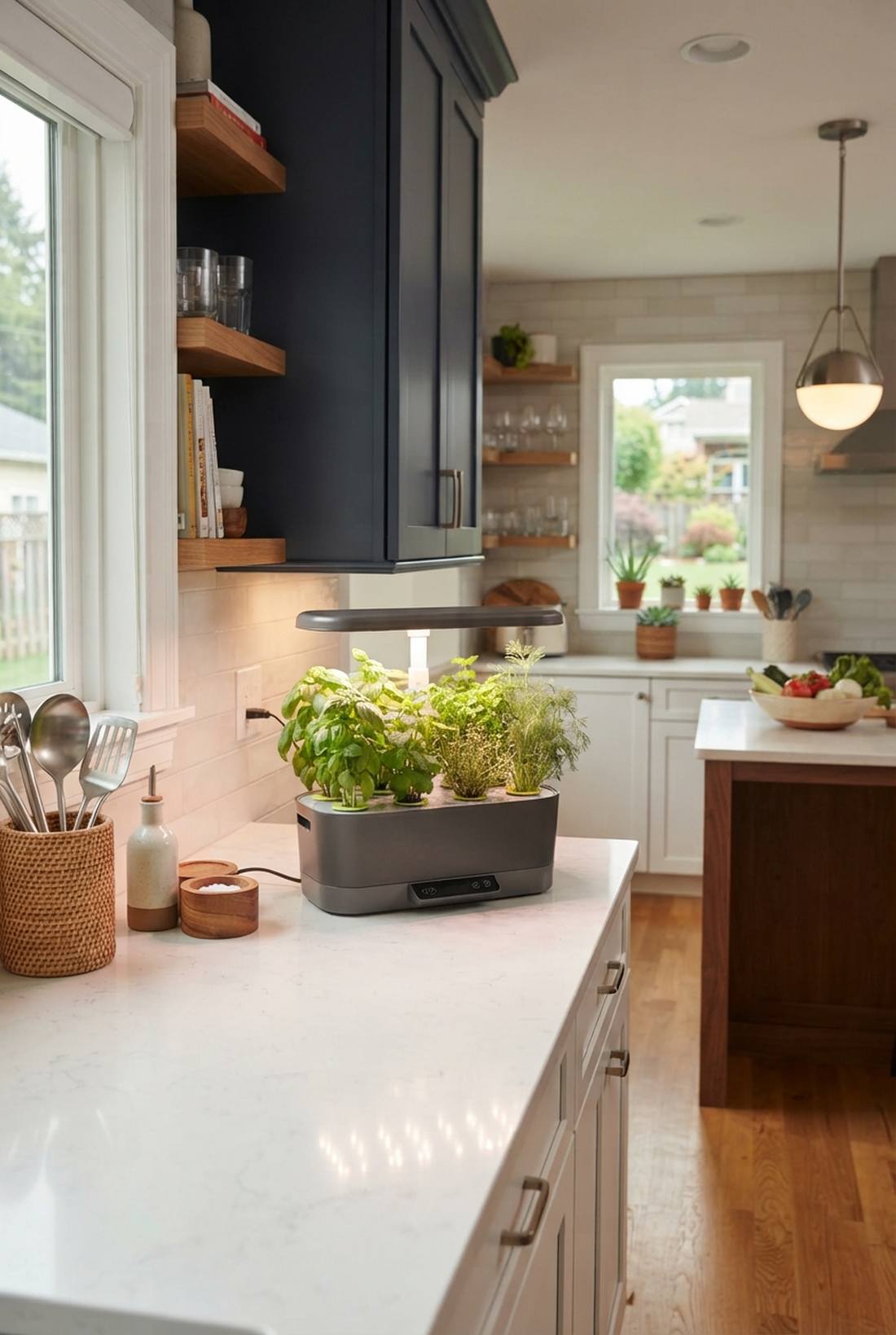
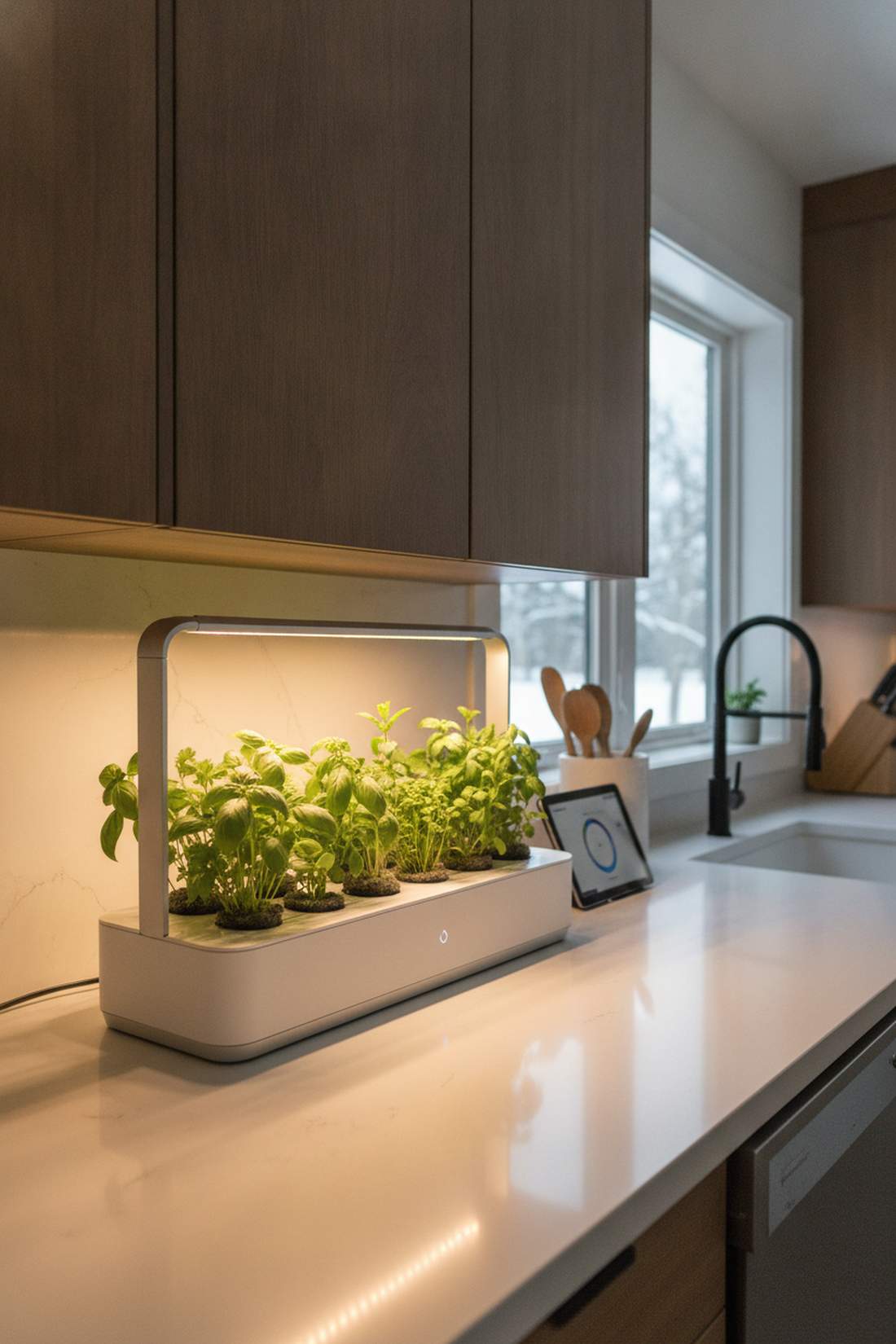
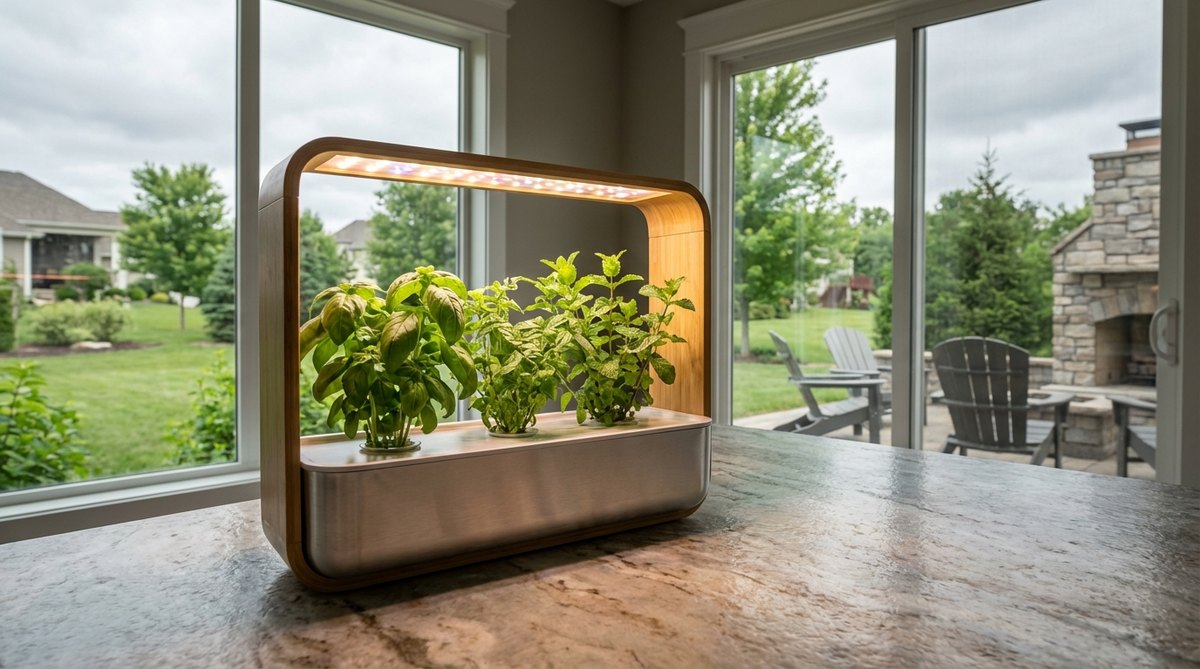
Glows warmly with a futuristic, clean energy that completely transforms deeply dark spaces. Countertop LED hydroponic gardens thrive brilliantly when tucked strictly under heavy upper cabinets. The absolute ultimate solution for hopelessly north-facing kitchens starving for natural sunlight.
Integrating high-intensity, full-spectrum diodes forces explosive, highly reliable growth even in the absolute bleakest winter months. Dropping the extra cash directly on a unit with automated day-night timers strictly removes literally all human error from the equation.
Premium automated setups notoriously range heavily from $60–$150. Save this instantly if you desperately want guaranteed, massive yields year-round.
- Key Materials: Plug-in smart planter base, LED canopy, seed pods
- Vibe: Sleek contemporary lab
- Difficulty: Plug-and-play simple
- Budget Breakdown: Unit: $80 | Pods: $15.
- Creator’s Tip: Keep the light canopy exactly two inches rigidly above the highest leaves for maximum absorption.
- Smart Sourcing: automated LED indoor smart garden kits and pre-seeded hydroponic sponge pods.
This next tech-focused layout absolutely dominates small, sunless apartment corners without breaking the bank…
29. Rotating Pegboard Herb Grid
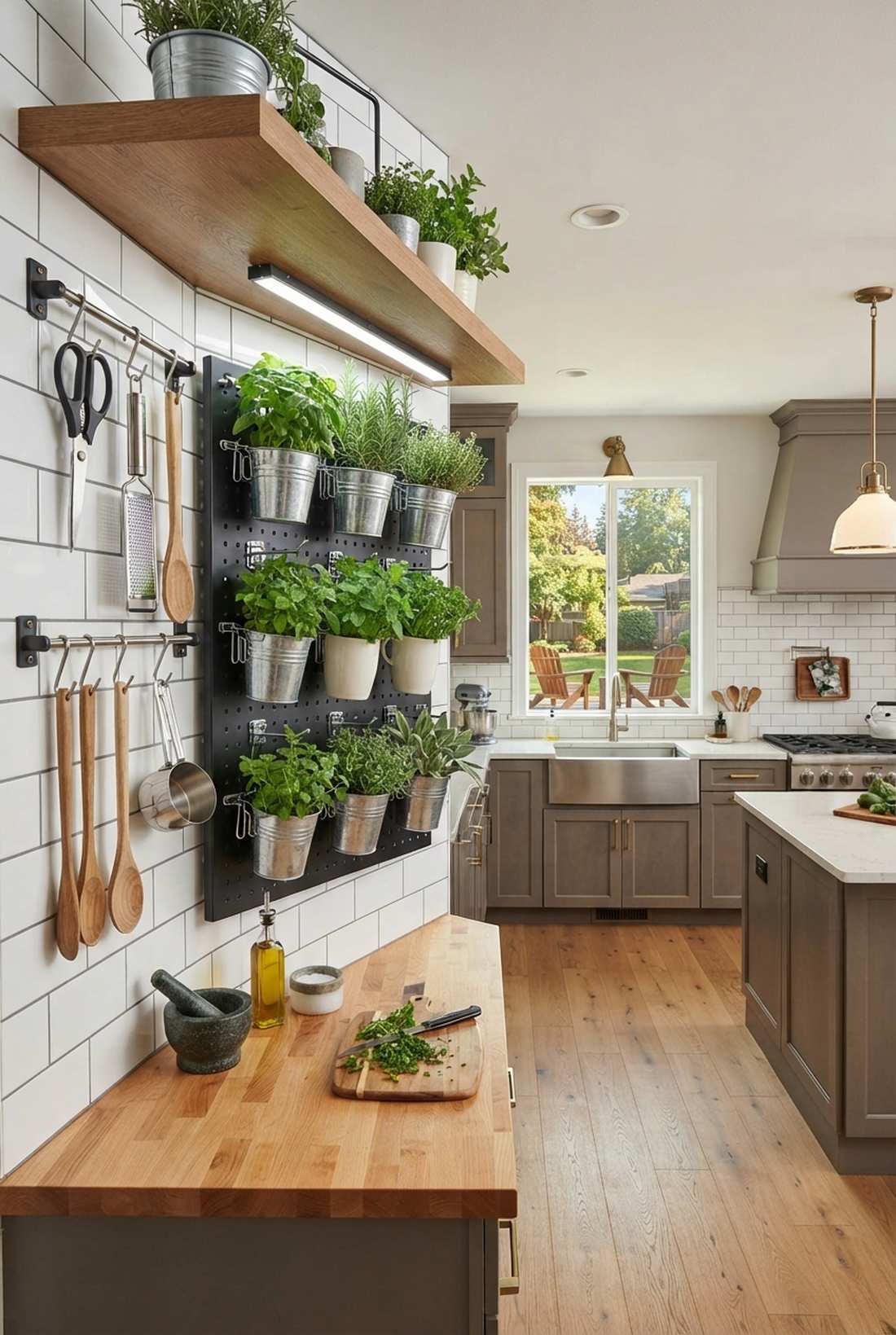
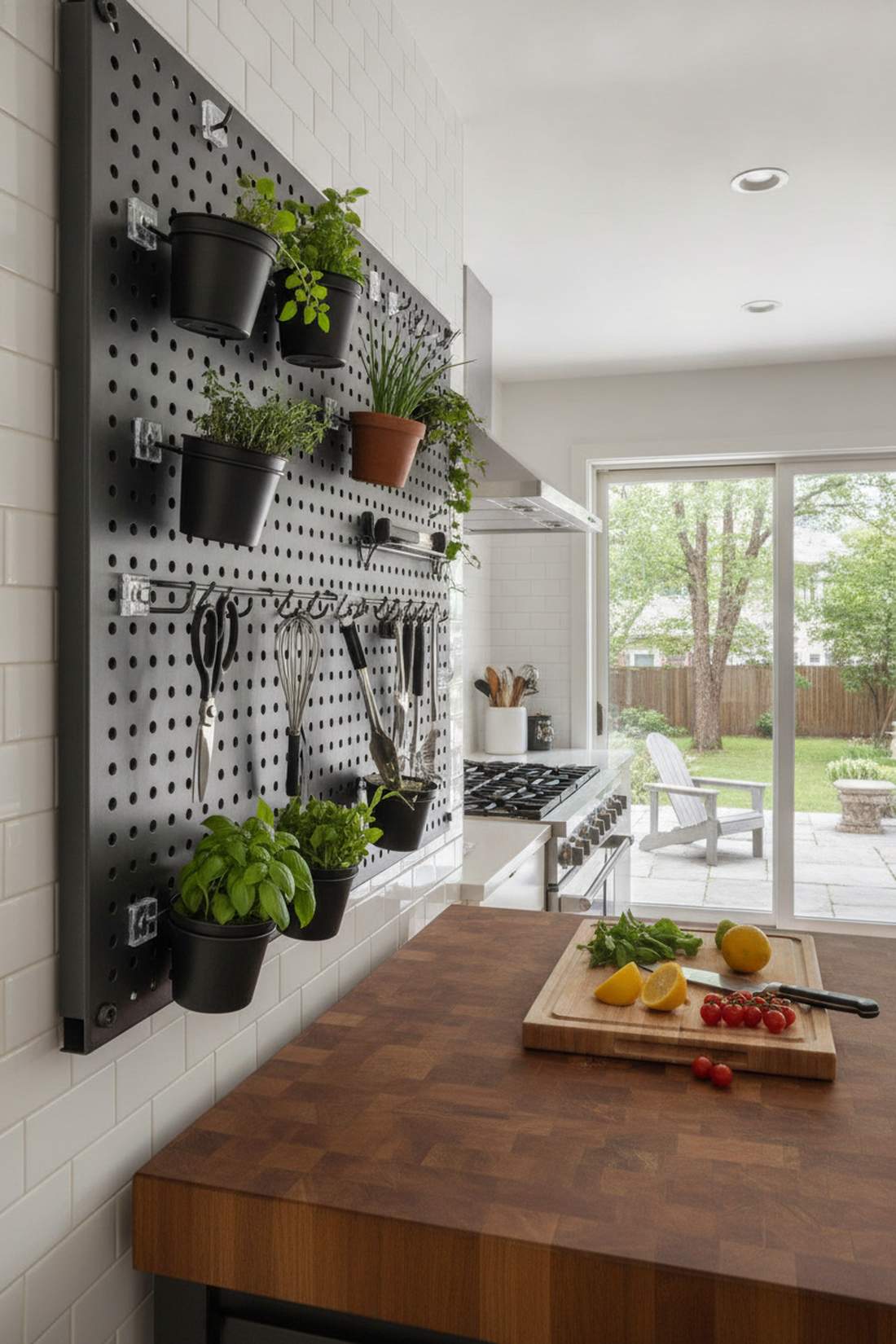
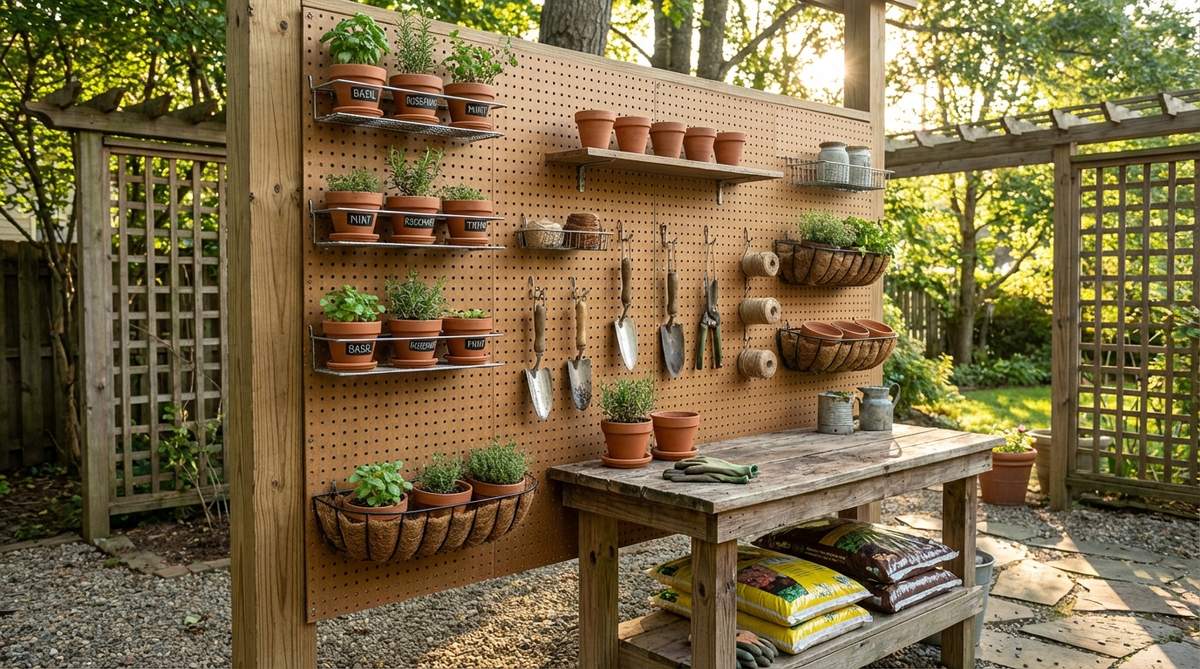
Exudes an intensely organized, wildly satisfying workshop aesthetic right on your kitchen wall. Modular kitchen pegboard displays adapt instantly to your constantly changing culinary whims. The strictly smartest possible layout for seamlessly blending sharp scissors, tools, and fresh greens.
Clipping custom steel baskets directly onto a rigid grid provides a shockingly versatile, highly industrial-chic focal point. Upgrading forcefully from weak MDF board to fully powder-coated metal totally prevents catastrophic buckling when you hang heavily watered pots.
Building a bulletproof metal rig usually costs about $40–$70. Pin this instantly to your ultimate wall-storage inspiration board.
- Key Materials: Metal pegboard, locking hook attachments, small cups
- Vibe: Industrial culinary workshop
- Difficulty: Requires secure wall anchoring
- Budget Breakdown: Board: $45 | Hooks/Cups: $20.
- Creator’s Tip: Always strictly lock your hooks with plastic tension clips so they absolutely never lift when removing a pot.
- Smart Sourcing: heavy-duty powder-coated metal pegboards and assorted pegboard locking hook kits.
30. Hanging Test Tube Herb Propagation Rail
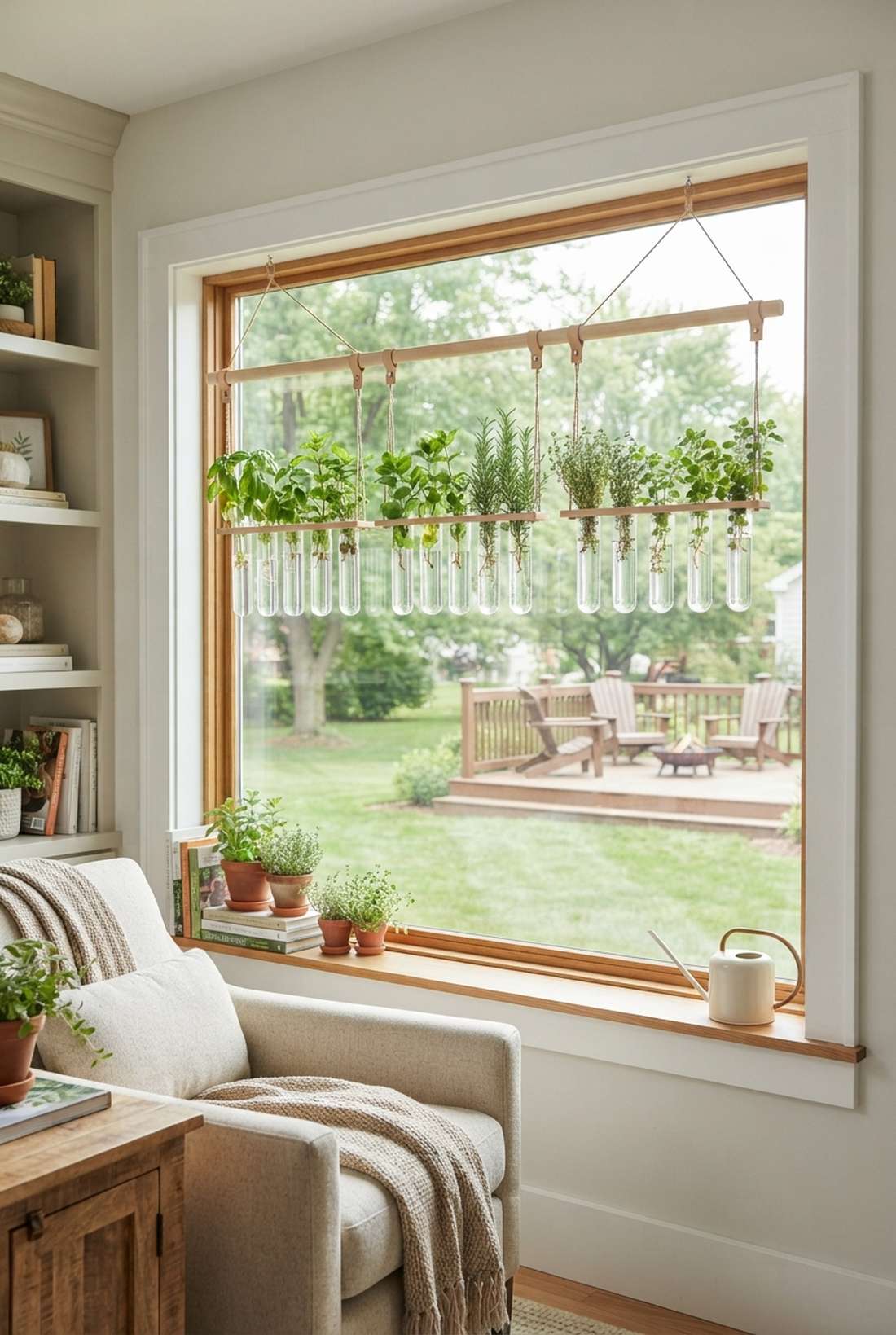
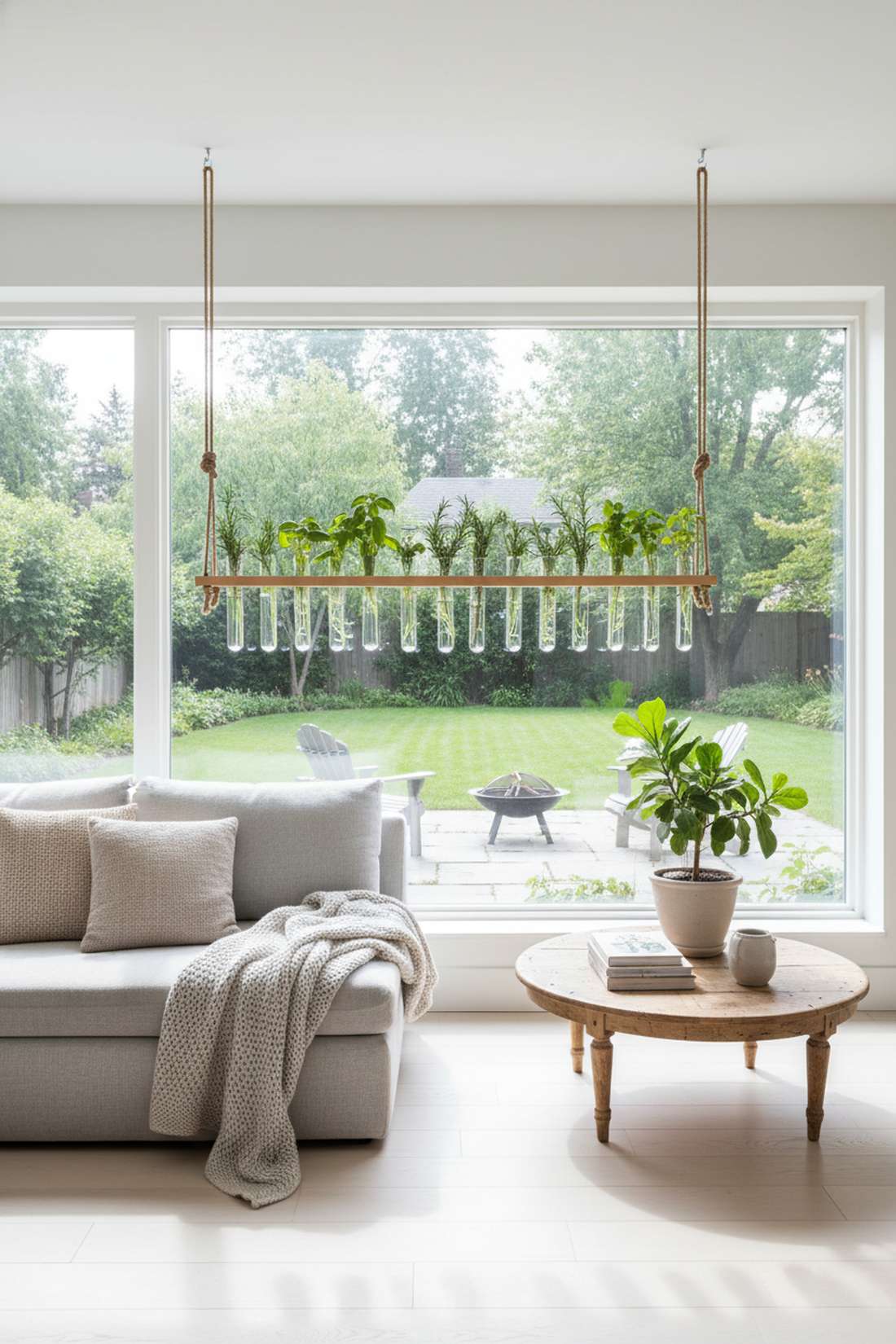
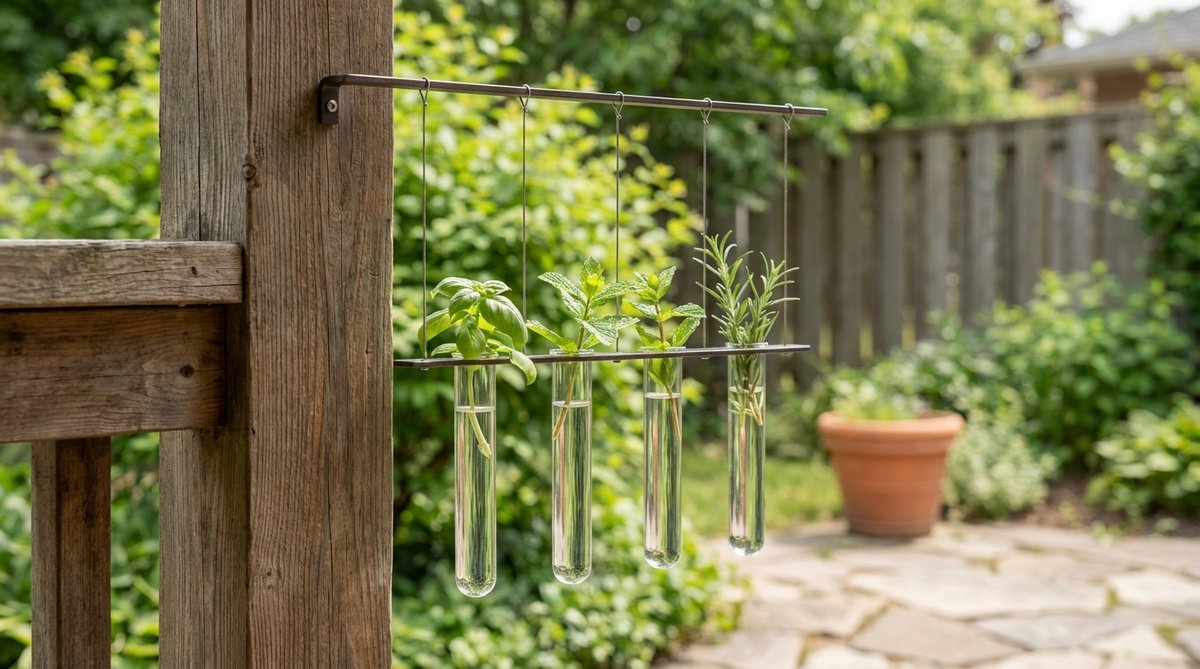
Floats effortlessly like a delicate, airy botanical art installation against the bright glass. Suspended glass propagation test tubes multiply your plants completely while looking incredibly expensive. Perfect for visually breaking up harsh, horribly empty window frames absolutely without blocking the actual light.
Showcasing individual, exceptionally bright green clippings cleanly inside pristine glass yields a deeply calming, wildly minimalist energy. Securing thick borosilicate tubes fiercely prevents the tragic shattering that inevitably happens when cheap craft glass gets repeatedly bumped during dishwashing.
Grab a stunning pre-made hanging rack easily for just $20–$35. A totally brilliant way to endlessly restock your main planters entirely for free.
- Key Materials: Wooden rail, borosilicate tubes, leather or twine straps
- Vibe: Ethereal botanical studio
- Difficulty: Very easy setup
- Budget Breakdown: Rack: $25 | Feed: $5.
- Creator’s Tip: Add exactly one drop of liquid root hormone cleanly to the water to speed up the process massively.
- Smart Sourcing: wooden hanging test tube propagation stations and shatter-resistant borosilicate glass tubes (bulk).
31. Modular Cube System For Renters
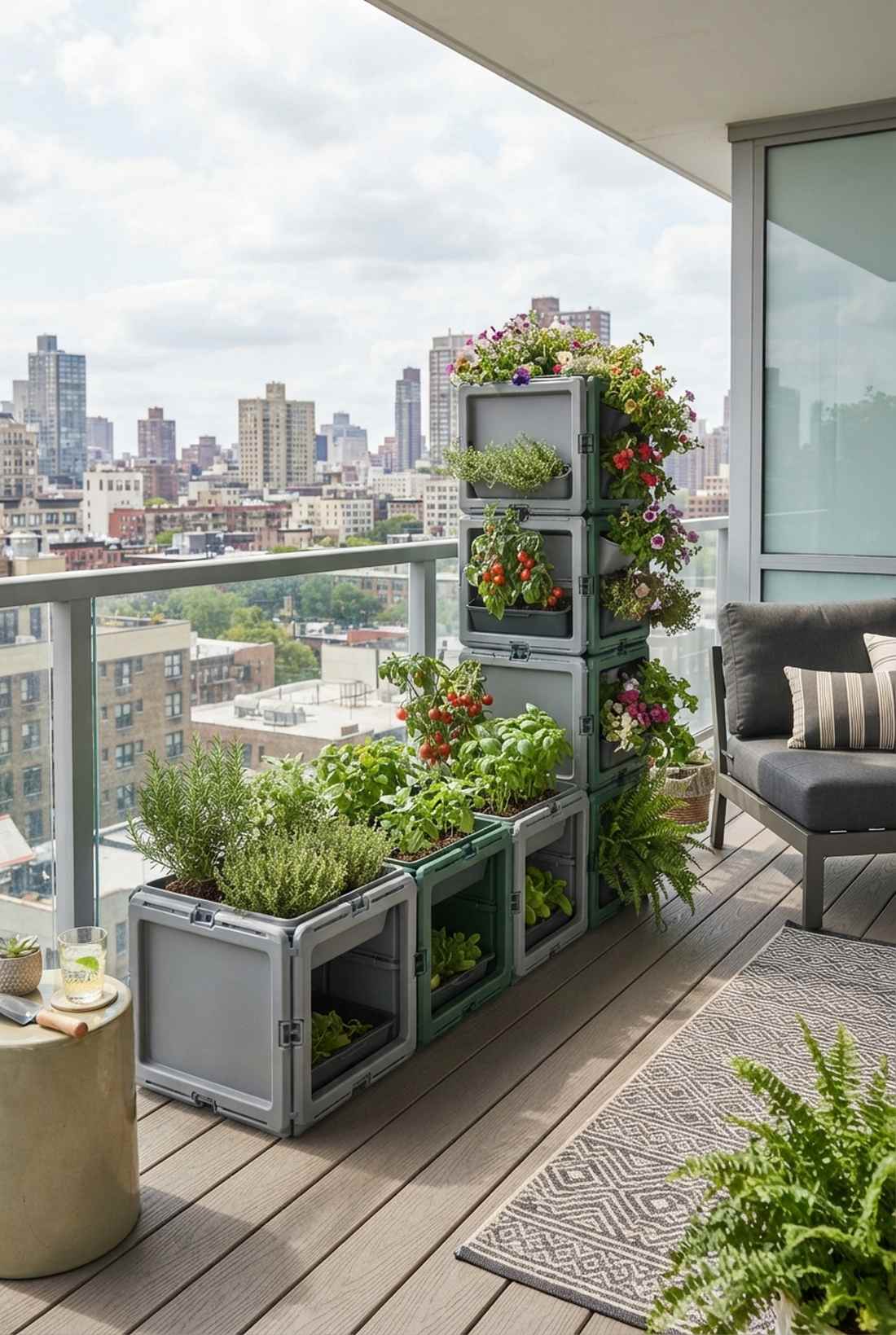
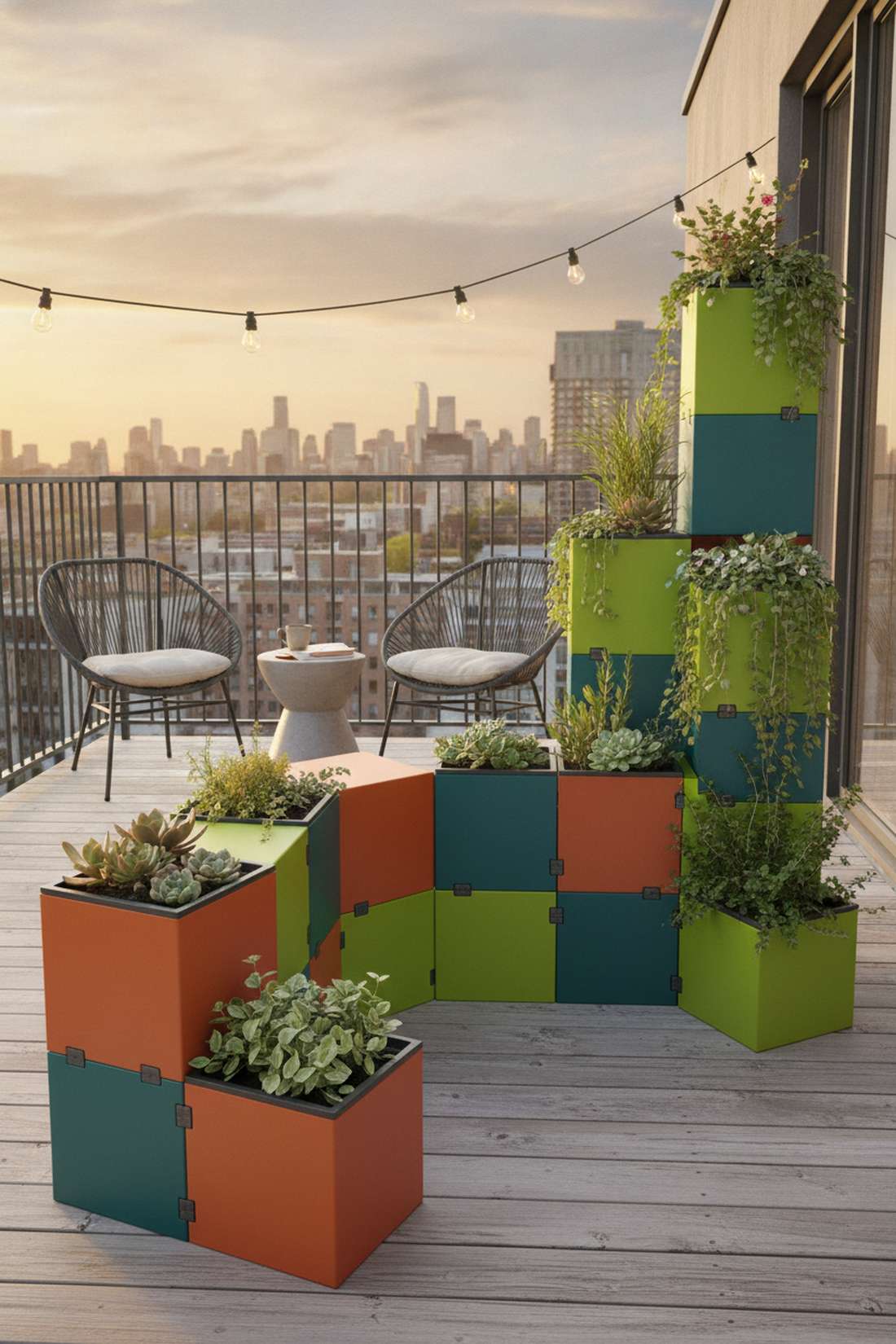
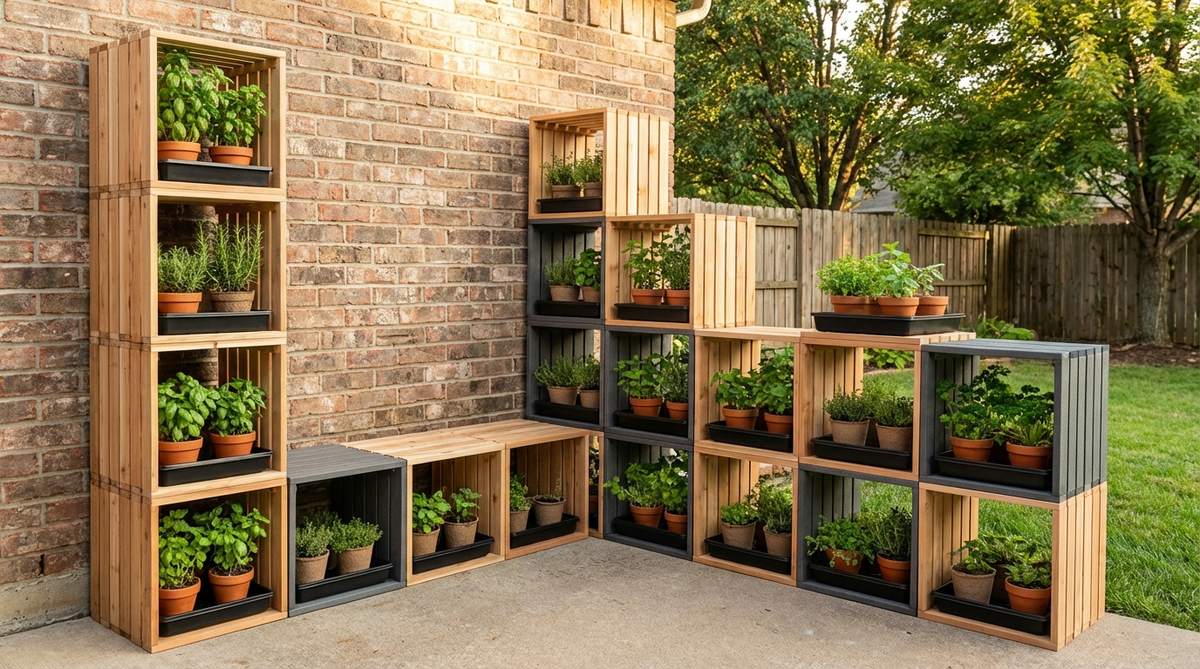
Delivers the extreme flexibility of adult building blocks strictly for your balcony space. Interlocking plastic planter cubes snap fully together to form low benches or tall towers literally on a whim. The absolute holy grail of outdoor setups specifically for serial movers who refuse heavy permanent installations.
Shifting the rigid geometry entirely based on the season guarantees your patio layout absolutely always looks wildly fresh and deeply intentional. Seeking out heavy-duty, heavily UV-stabilized polymers ensures the vibrant colors firmly won’t turn into chalky, horribly brittle garbage by August.
A highly reliable starter kit of premium cubes generally costs $50–$90. Pin this instantly if you heavily need a garden that fully packs up strictly in ten minutes.
- Key Materials: Snap-together poly cubes, waterproof tray inserts
- Vibe: Playful contemporary modular
- Difficulty: Like snapping Legos together
- Budget Breakdown: Cubes: $65 | Inserts: $15.
- Creator’s Tip: Configure a massively wide, low bench aggressively during hurricane season to completely prevent wind toppling.
- Smart Sourcing: UV-stabilized modular plastic planter kits and heavy-duty drop-in planter liner trays.
32. Seasonal Themed Herb Trios
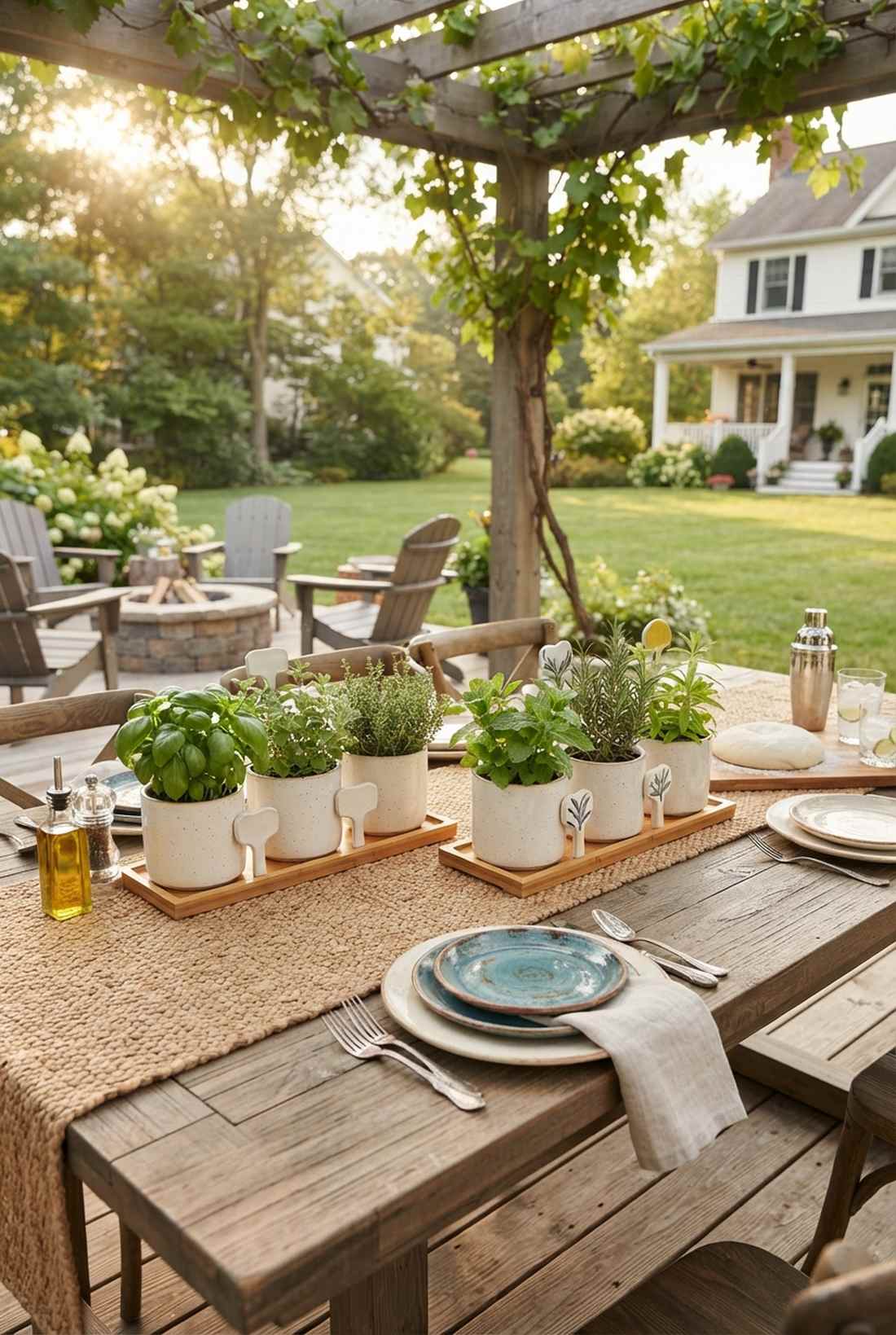
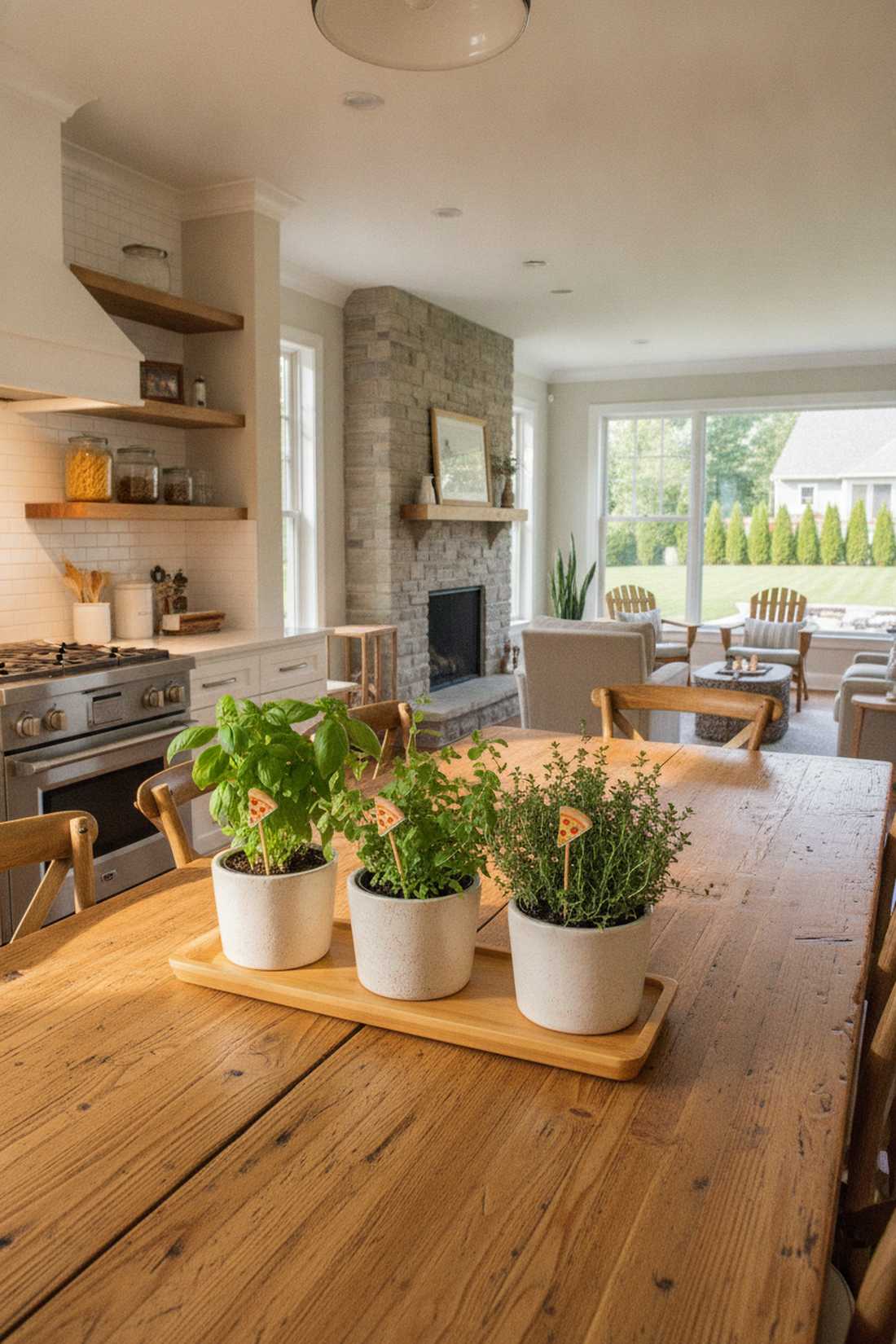
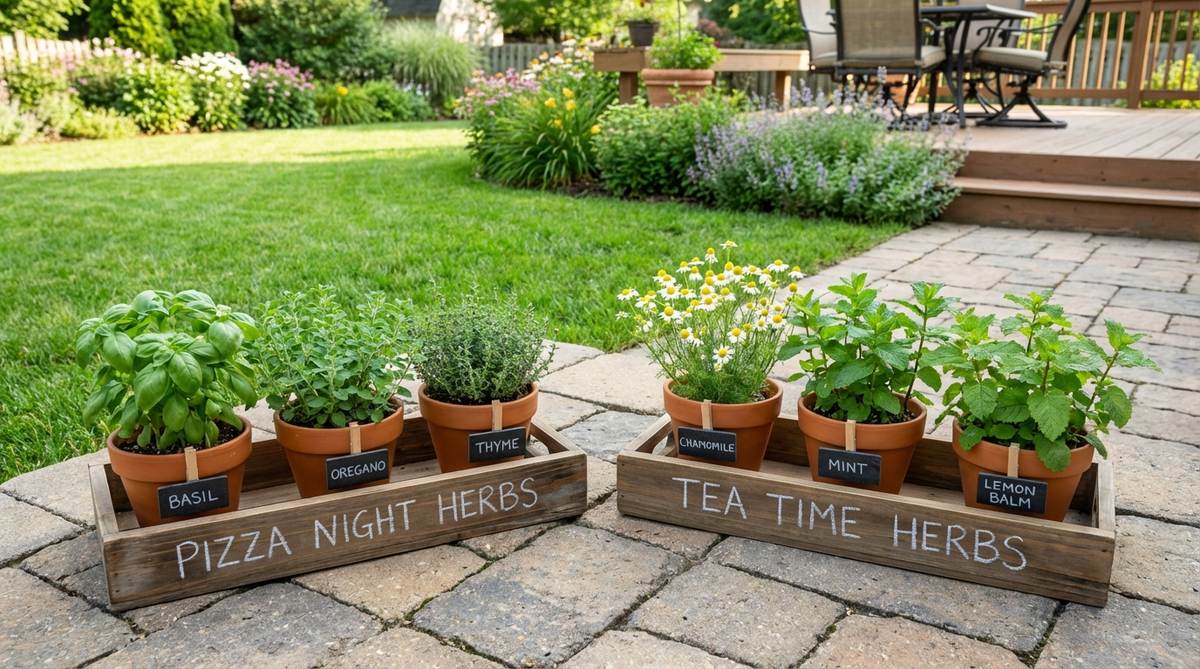
Brings a deeply playful, intensely curated narrative straight to the center dinner table. Themed culinary herb pot clusters firmly organize chaos directly into brilliant, highly purposeful micro-gardens. Fantastic strictly for beginners who deeply want highly actionable ingredients for “Pizza Night” or “Cocktail Hour.”
Grouping specific intense flavor profiles perfectly on unified, sharply labeled bamboo trays entirely elevates the standard messy scattered pot aesthetic. Buying perfectly matching premium ceramic triples instantly tricks the naive eye purely into seeing an incredibly expensive designer collection.
You can effortlessly build a gorgeous custom trio totally for $20–$40. It’s an incredibly thoughtful, remarkably fast upgrade that changes exactly how you cook.
- Key Materials: Three matching pots, unified tray, themed seed/starter picks
- Vibe: Curated gourmet pantry
- Difficulty: Exceptionally beginner friendly
- Budget Breakdown: Pots/Tray: $25 | Plants: $10.
- Creator’s Tip: Group herbs strictly with exact absolutely identical watering needs to avoid drowning one while completely parching another.
- Smart Sourcing: matching ceramic trio pots with bamboo trays and themed culinary herb starter seed kits.
Bringing Your Mini Herb Garden To Life
Executing any of these exactly 30+ premium mini herb garden blueprints dramatically upgrades your daily cooking and living space. By investing strictly in smart kits, heavy-duty hardware, and highly modular layouts, you firmly guarantee an expensive, high-yield result without the insane designer price tags. Start with one incredibly specific layout, source your materials intelligently, and utterly completely transform your tiny space today.
Frequently Asked Questions
What are the easiest herbs to grow in a mini herb garden?
For most indoor kitchens and sunny balconies in the United States, basil, thyme, oregano, rosemary, sage, mint, parsley, and chives rank among the absolute most reliable starter herbs. Grabbing premium indoor potting mix and robust starter kits specifically ensures these container-friendly species thrive instantly and respond rapidly to constant culinary trimming.
How much light does a mini herb garden need indoors?
Most culinary herbs firmly demand strictly at least 4–6 hours of direct or highly strong indirect light daily. If your apartment severely lacks south-facing windows, bypassing cheap setups for an automated LED smart planter guarantees you absolutely still achieve massive, high-end setups even in perfectly total shade.