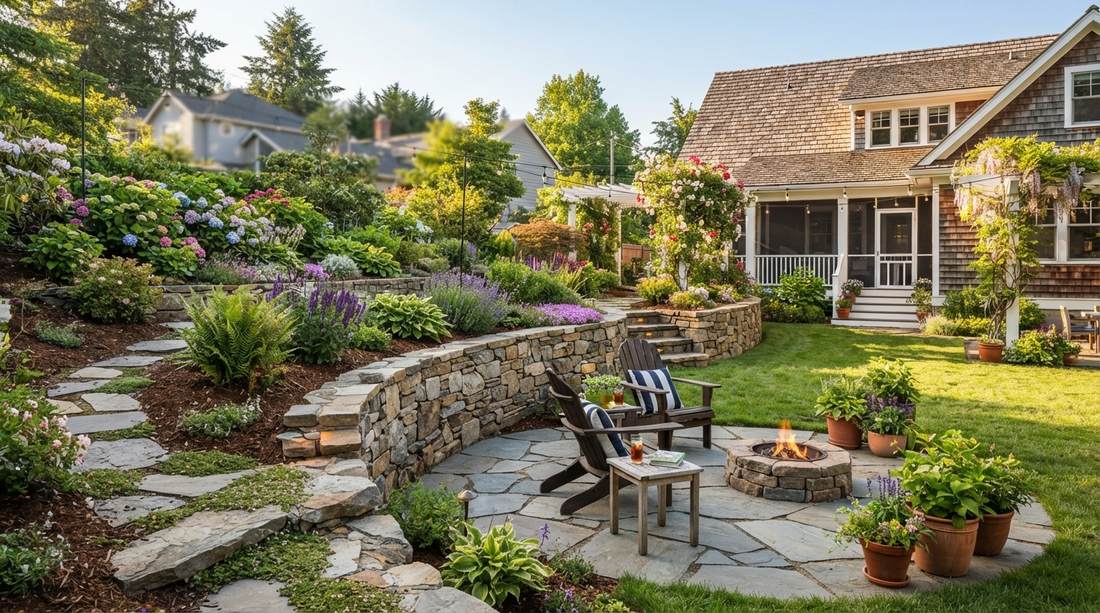
Sloped yards require a structural upgrade to stop aggressive soil erosion immediately. Building a small garden retaining wall unlocks flat, usable outdoor living space. Smart material choices deliver designer-level landscapes without the massive contractor markups.
Design SnapshotKey Principles
- Height Matters: Walls under 3 feet typically don’t require engineering permits in most jurisdictions, making them ideal for DIY small garden projects.
- Drainage First: Install perforated drain pipes and gravel backfill behind every retaining wall to prevent water pressure buildup and structural failure.
- Material Selection: Choose materials based on soil type, slope angle, and aesthetic goals—natural stone offers timeless beauty while concrete blocks provide affordable durability.
- Tiered Approach: Multiple shorter walls create more usable planting terraces and reduce structural load compared to one tall barrier.
Natural Stone EleganceTimeless Walls for Slope Control
1. Dry-Stacked Fieldstone Wall
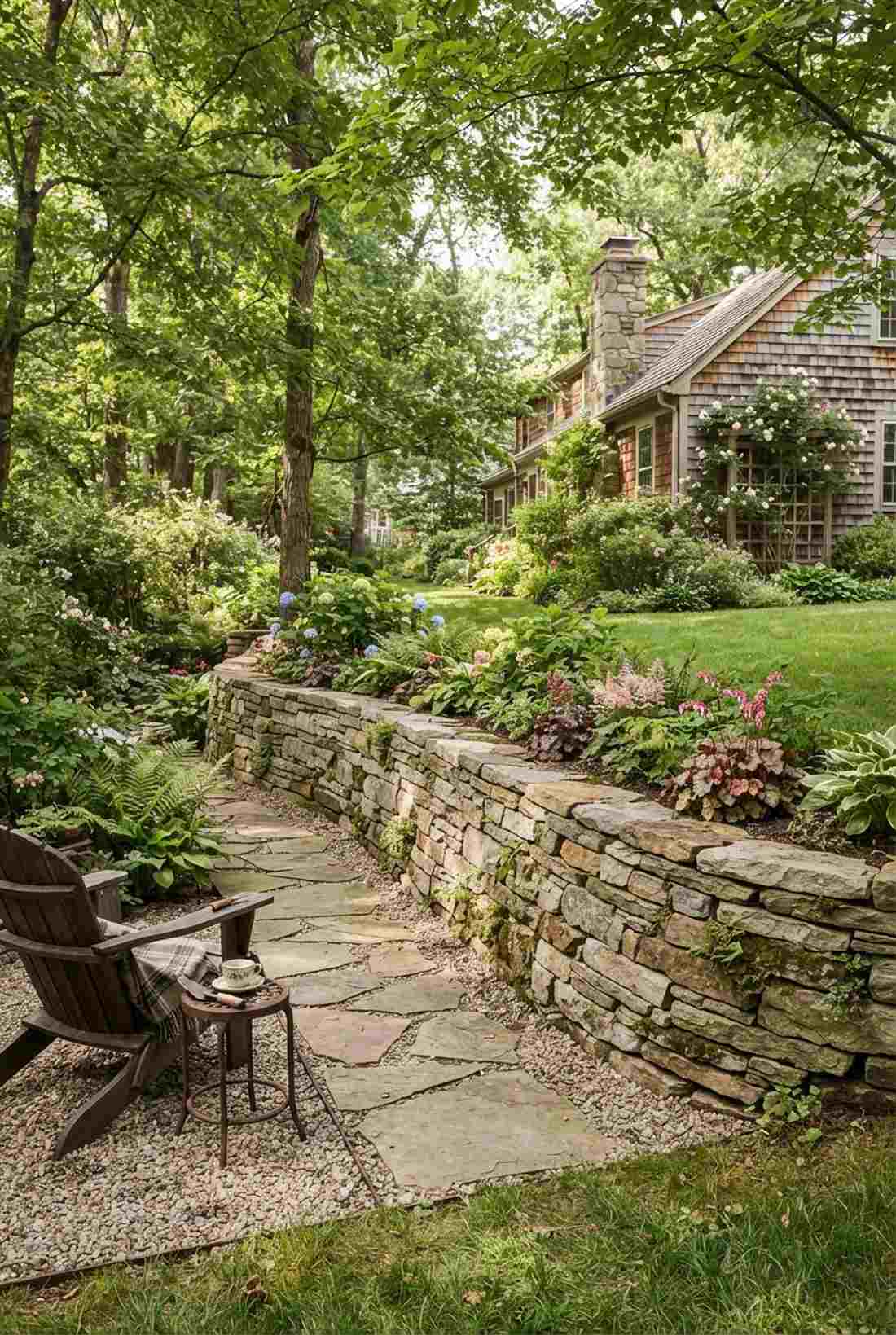
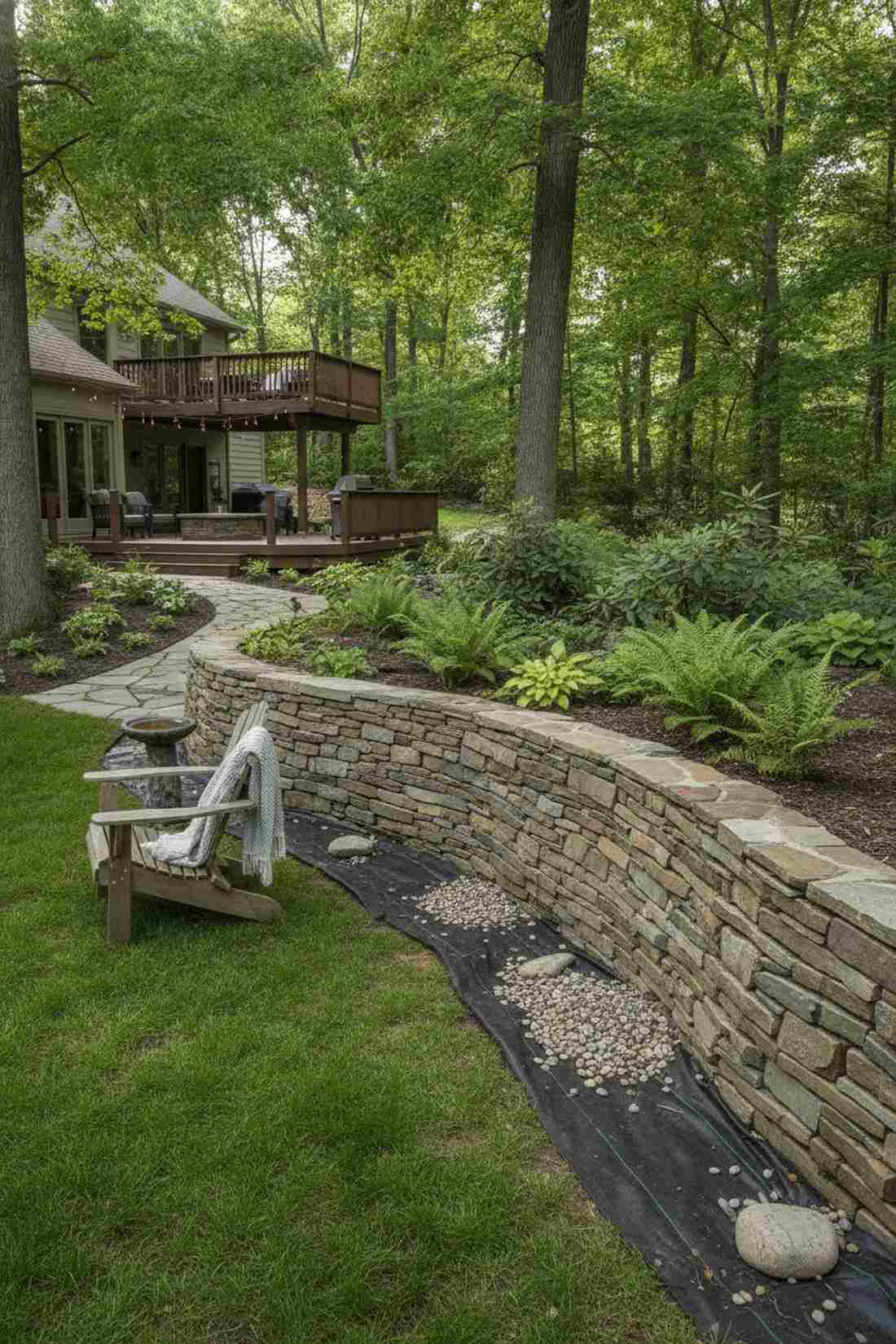
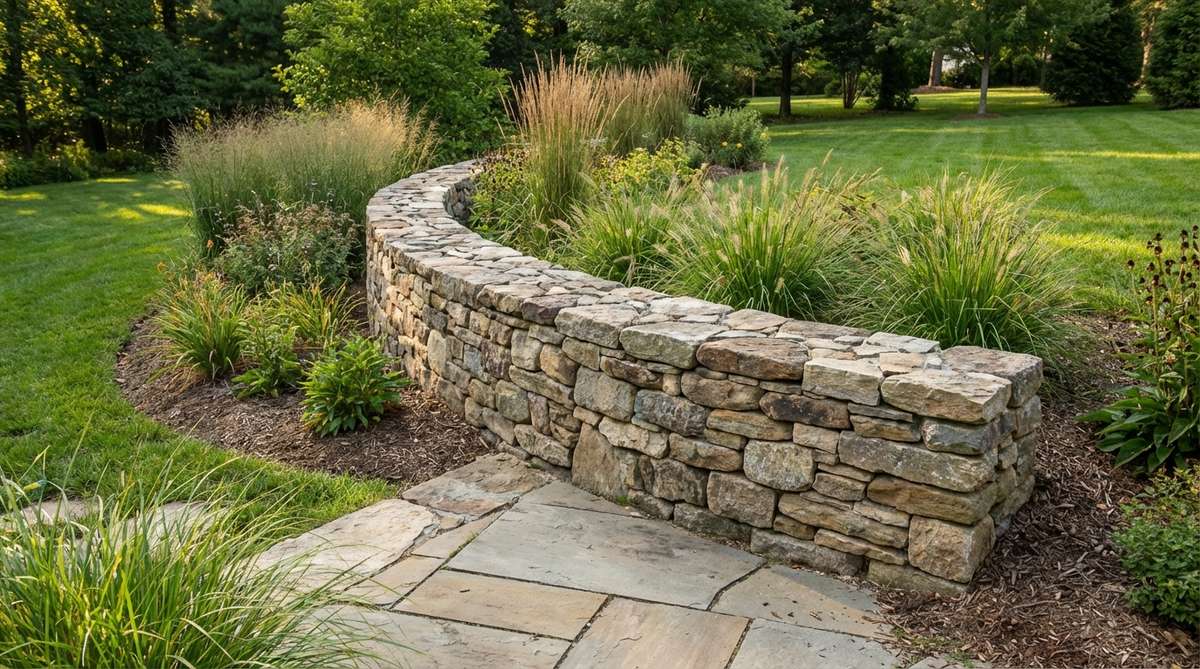
This layout feels like a tiny hidden forest you stumbled upon in the countryside. The organic landscape stone border works exceptionally well for a shaded backyard corner where natural aesthetics matter most.
Most people overpay for mortar when a simple gravity-based stack delivers a surprisingly premium look. Using irregular flat-faced stones angled slightly backward creates a highly stable, self-draining barrier that requires zero commercial adhesives.
You can easily pull this off for around $40–$80 depending on local quarry access. Save this to your DIY weekend garden board for future inspiration.
- Key Materials: Pre-sorted flat fieldstone, commercial-grade drainage gravel
- Vibe / Style: Rustic English cottage
- Difficulty: Intermediate manual labor
- Budget Breakdown: Stone: $50 | Base Gravel: $15
- Creator’s Tip: Always pitch the wall backward at a 1-inch per foot ratio to prevent blowout.
- Smart Sourcing: Palletized flat-face fieldstone (bulk delivery), Heavy-duty landscape fabric rolls
2. Mortared Limestone Terrace
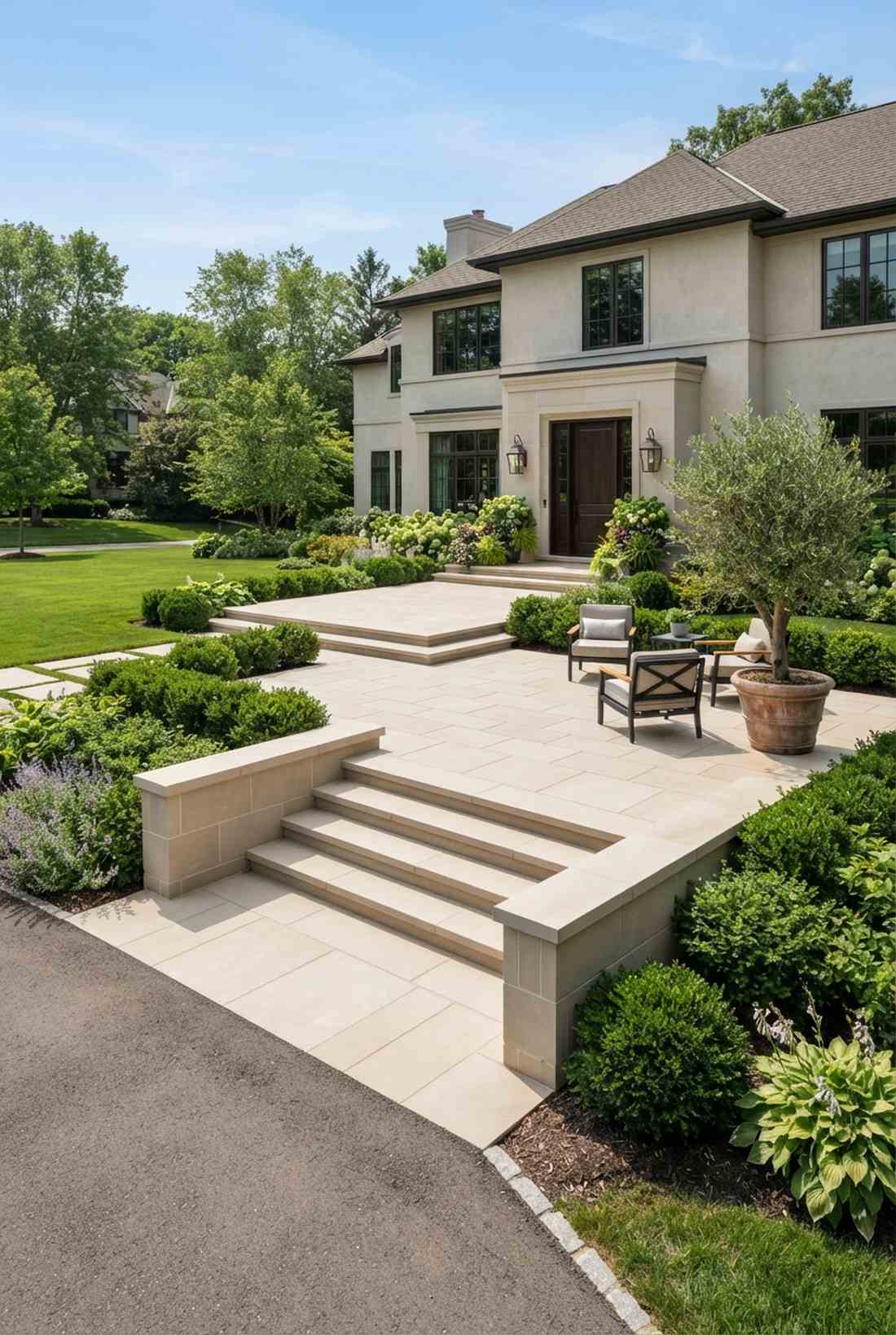
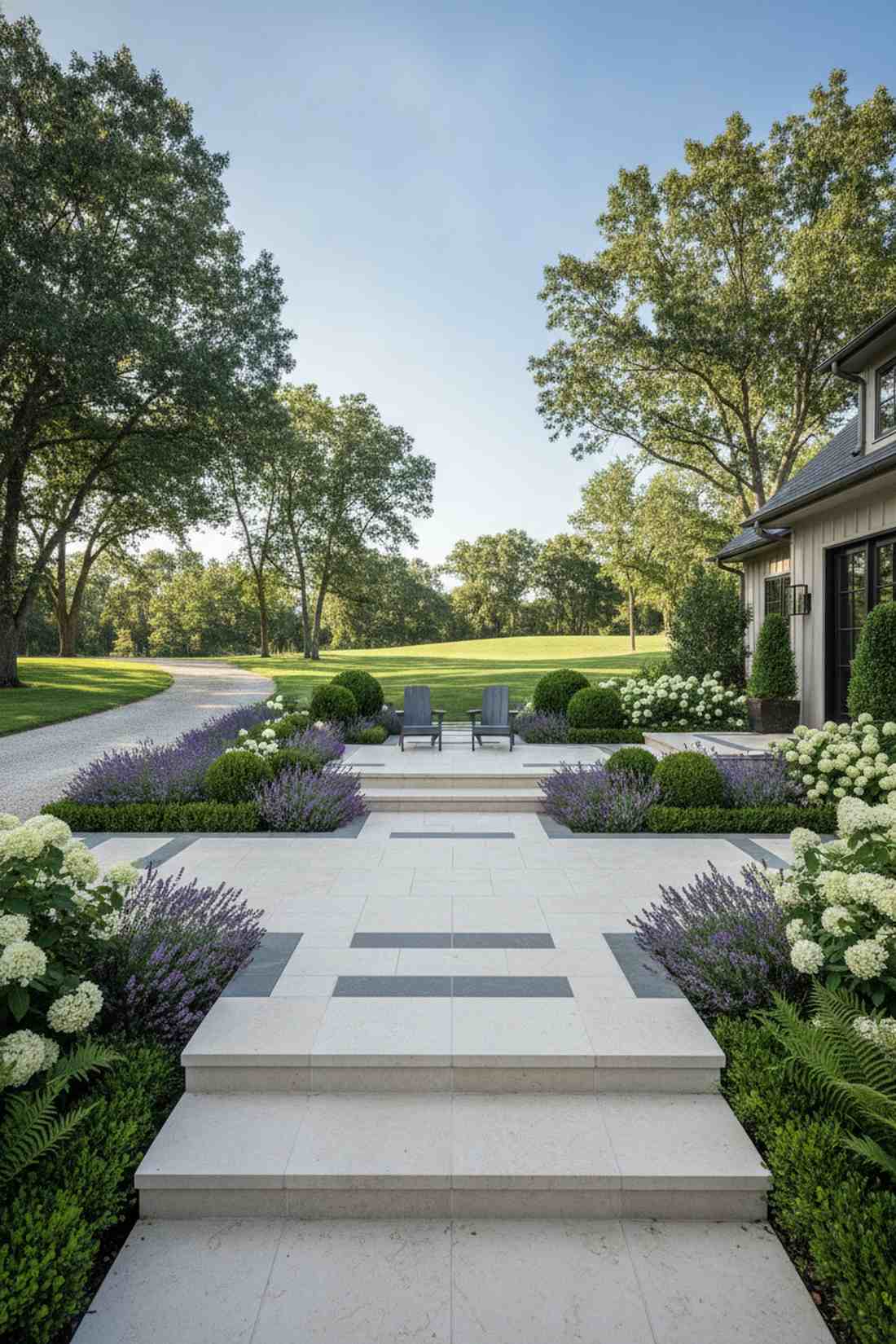
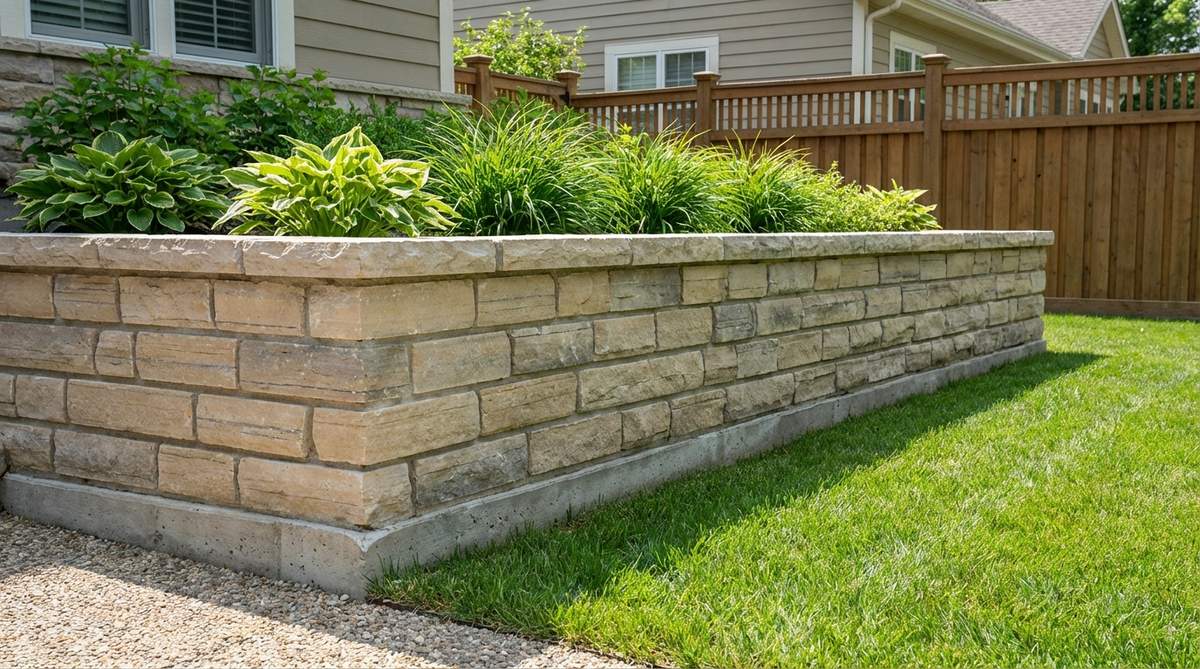
This strict geometric design gives off strong luxury villa vibes. Implementing a formal limestone garden terrace is the ultimate use-case for a steep front entryway needing curb appeal.
Contractors charge thousands for this, but laying uniform blocks on a proper footing looks far more expensive than it actually is. Securing the joints with a high-yield structural mortar mix prevents seasonal shifting and keeps the facade perfectly straight.
Expect to spend roughly $120–$250 for a short run. It’s a permanent upgrade that completely changes the property value.
- Key Materials: Precision-cut limestone blocks, high-strength mortar mix
- Vibe / Style: Contemporary estate
- Difficulty: Advanced masonry
- Budget Breakdown: Limestone: $180 | Mortar/Tools: $40
- Creator’s Tip: Use a masonry sponge to clean excess mortar before it cures for a pristine finish.
- Smart Sourcing: Pre-mixed commercial structural mortar, Professional masonry trowel kits
3. Granite Boulder Retaining System
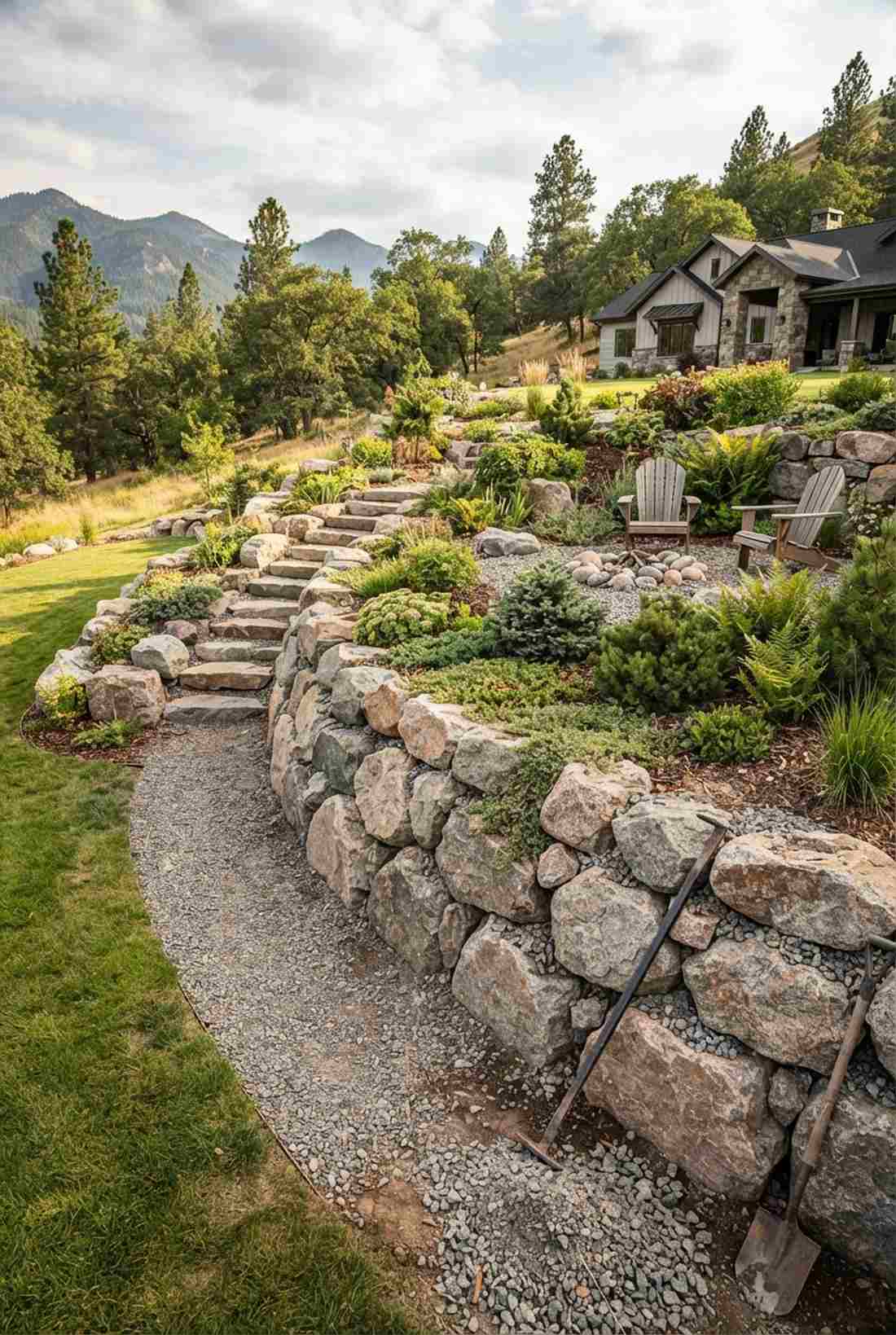
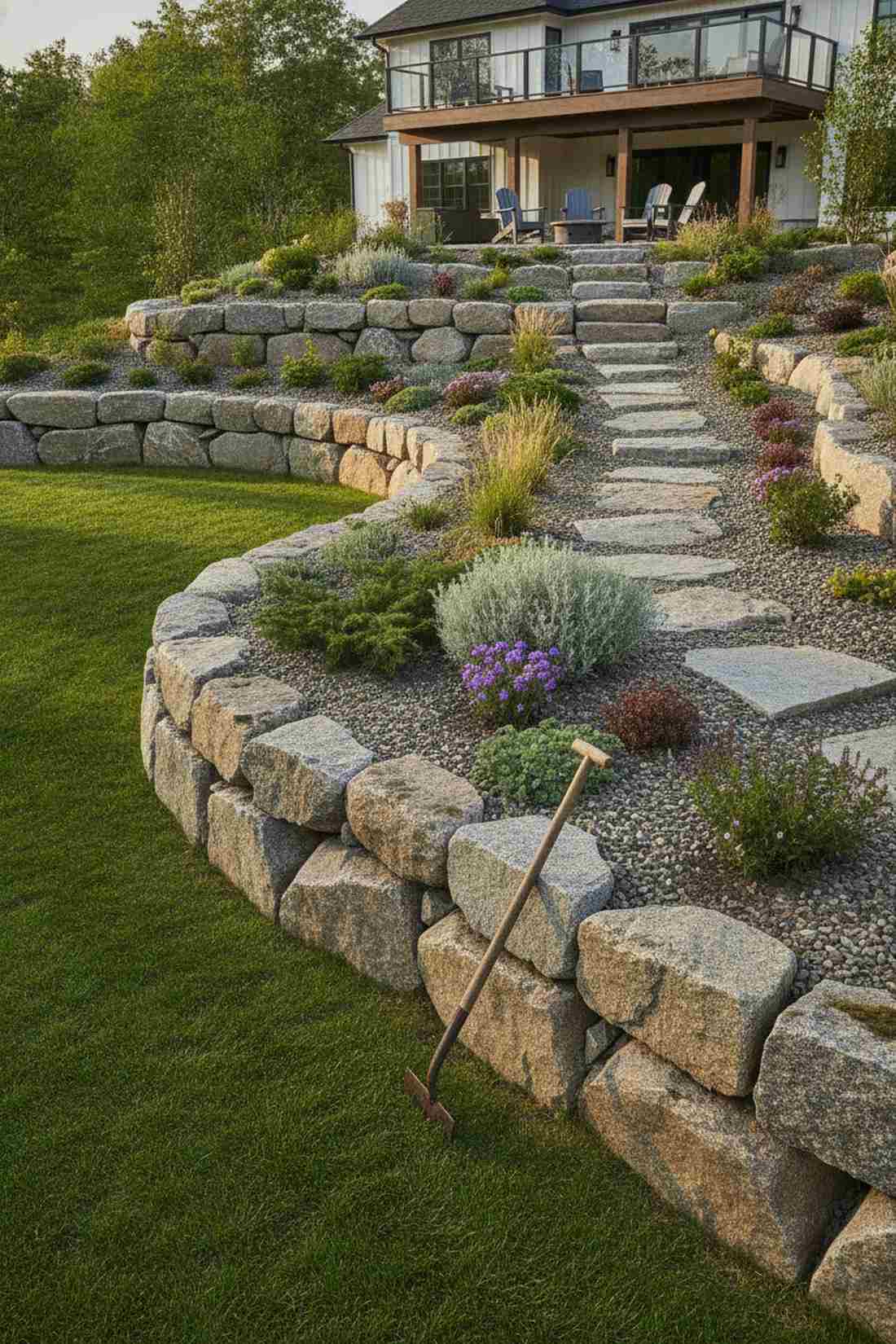
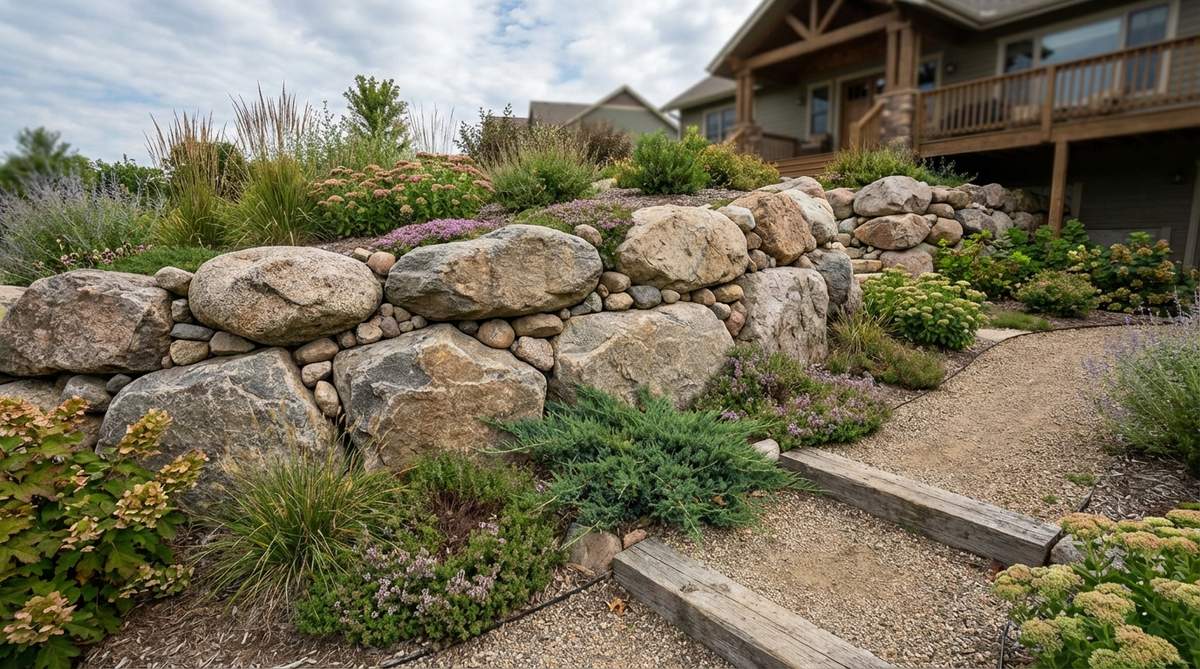
Anchoring massive rocks feels incredibly grounded and timeless. A heavyweight boulder landscape barrier is perfect for framing a sprawling hillside terrace without looking artificial.
Many homeowners avoid boulders thinking they need a crane, but strategic placement of medium-sized rocks yields a designer-level finish. Trenching them deeply into the slope allows natural soil settling, eliminating the need for complex internal drainage grids.
The rocks themselves are often cheap, but delivery will run you $100–$300. Pin this if you’re planning a massive earth-moving project this spring.
- Key Materials: Medium granite boulders, crushed rock backfill
- Vibe / Style: Rugged alpine garden
- Difficulty: Heavy equipment required
- Budget Breakdown: Boulders: $150 | Delivery: $150
- Creator’s Tip: Bury at least one-third of the boulder below grade to ensure it never rolls.
- Smart Sourcing: Heavy-duty digging bars, Bulk crushed drainage stone
4. Sandstone Ledgestone Facing
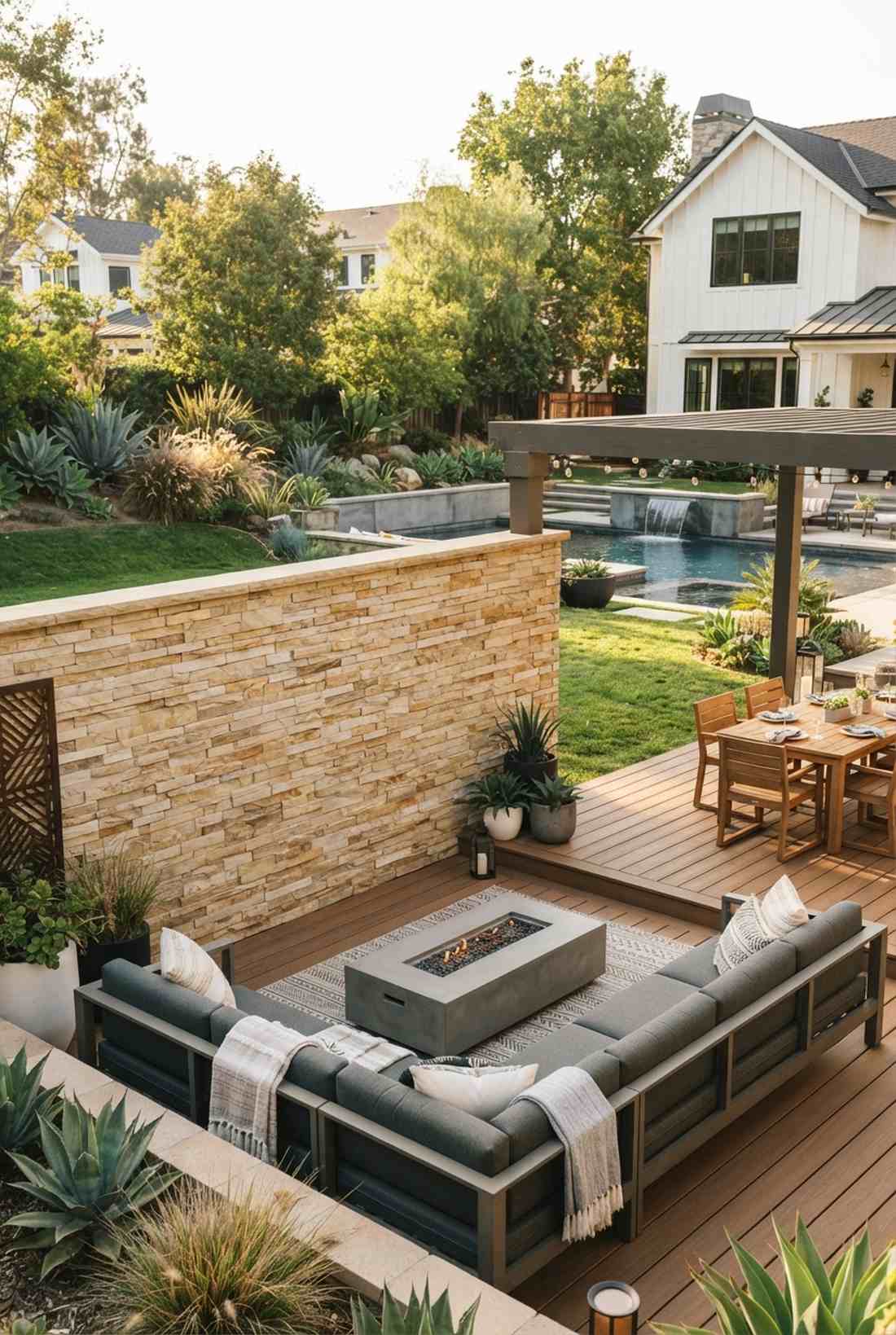
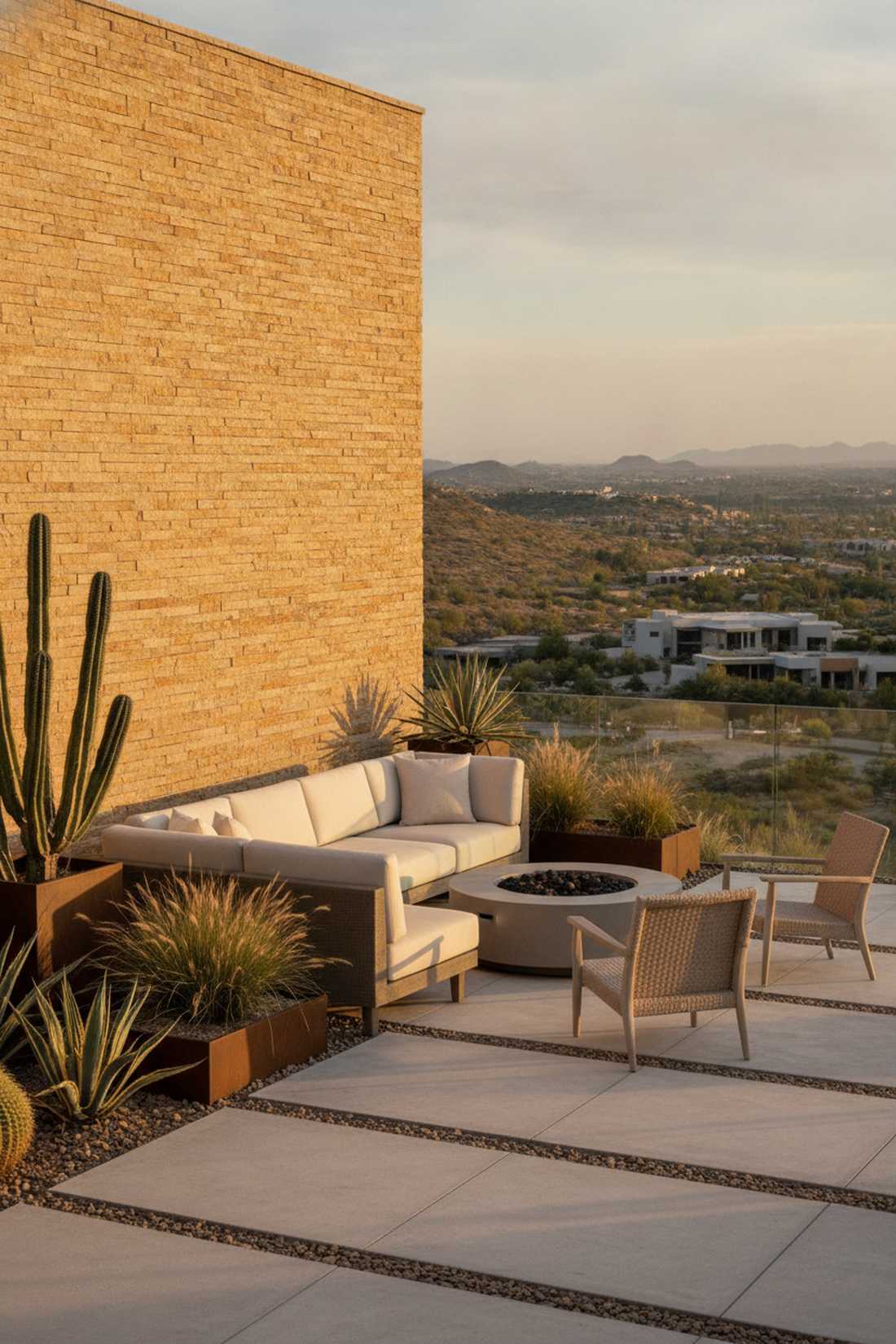
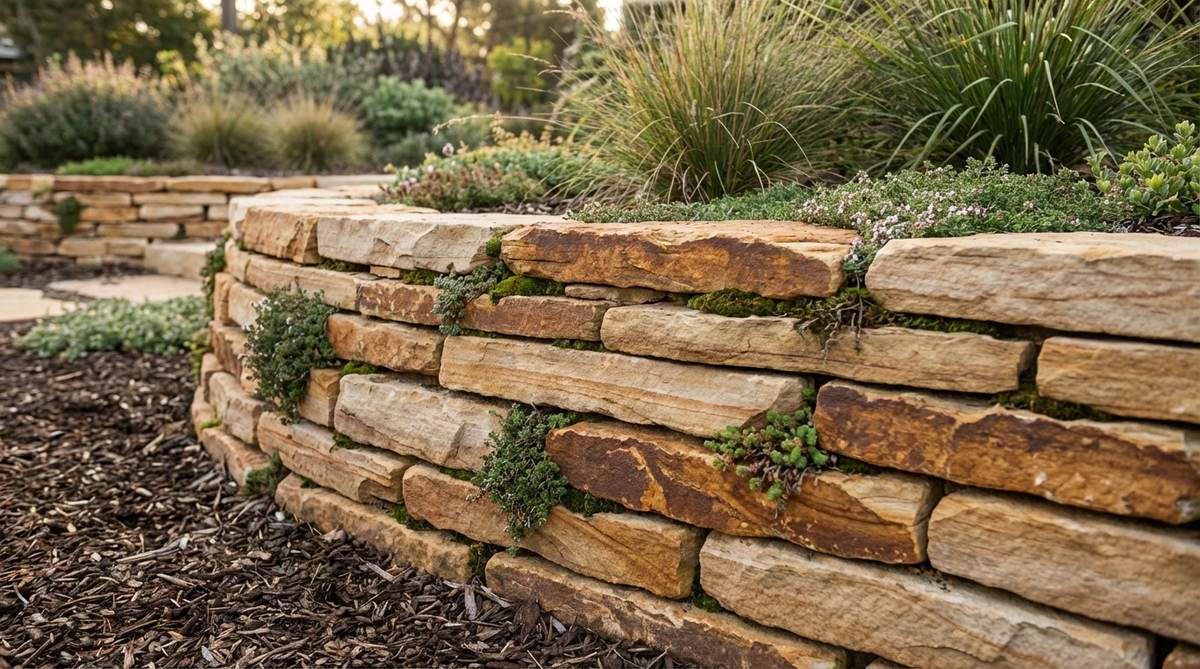
The warm horizontal lines make this setup straight out of a modern architectural magazine. Using a thin-cut sandstone veneer wall transforms a boring urban patio into a high-end entertaining space.
Building a solid stone wall is cost-prohibitive, but applying premium veneer over cheap structural blocks changes the game entirely. Integrating weather-resistant masonry adhesive guarantees the delicate ledgestone pieces survive harsh winter freeze-thaw cycles.
This hybrid method generally costs between $15–$25 per square foot. Highly recommended for spaces where guests sit up close.
- Key Materials: Concrete cinder blocks, sandstone veneer panels
- Vibe / Style: Warm modern desert
- Difficulty: Intermediate DIY
- Budget Breakdown: Block Core: $40 | Veneer: $150
- Creator’s Tip: Start veneering from the outside corners to hide the seams flawlessly.
- Smart Sourcing: Pre-cut natural stone veneer panels, Exterior-grade stone veneer adhesive
Most people get their retaining wall budget completely wrong… until they discover the ridiculously cheap layout coming up next.
5. River Rock Accent Wall
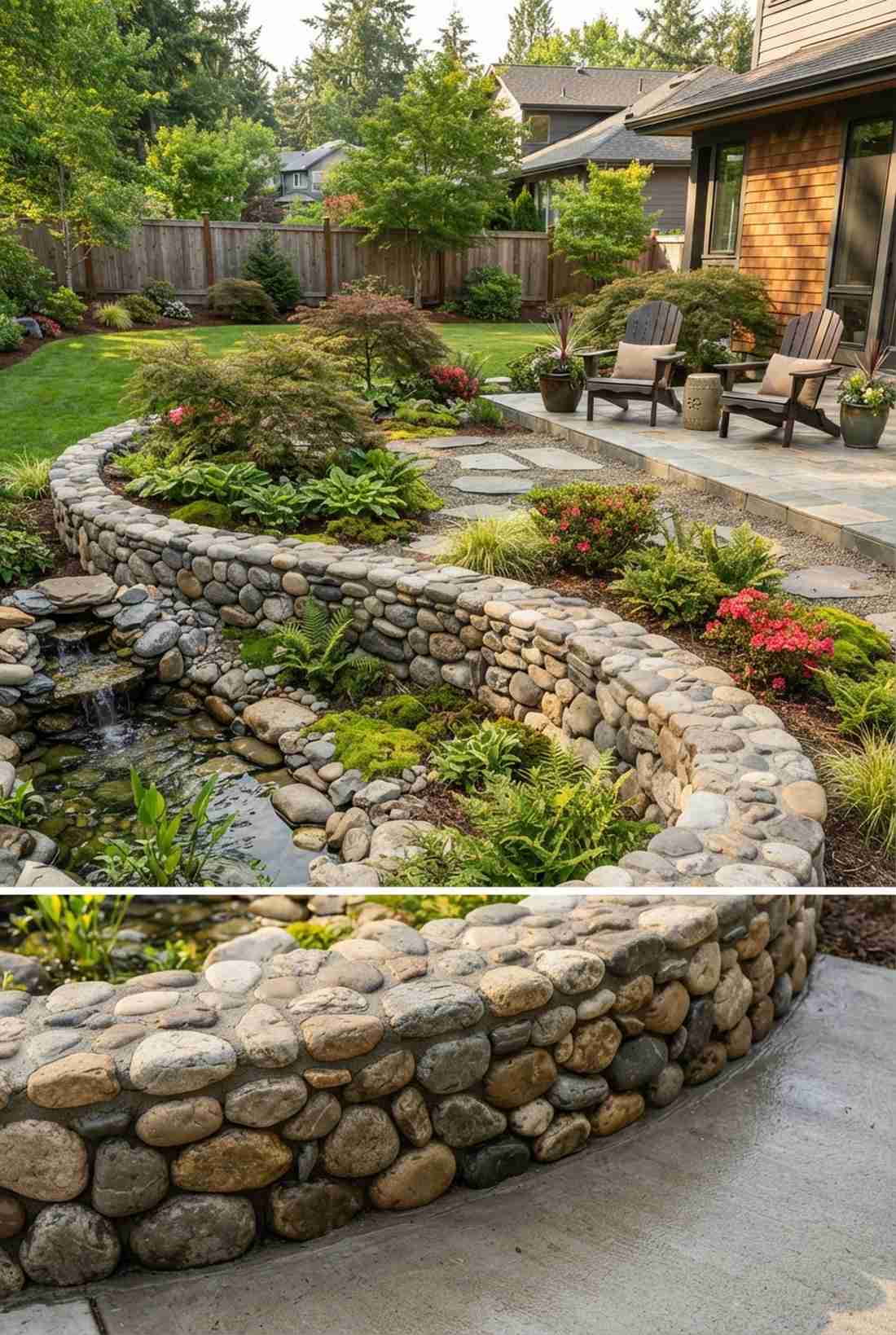
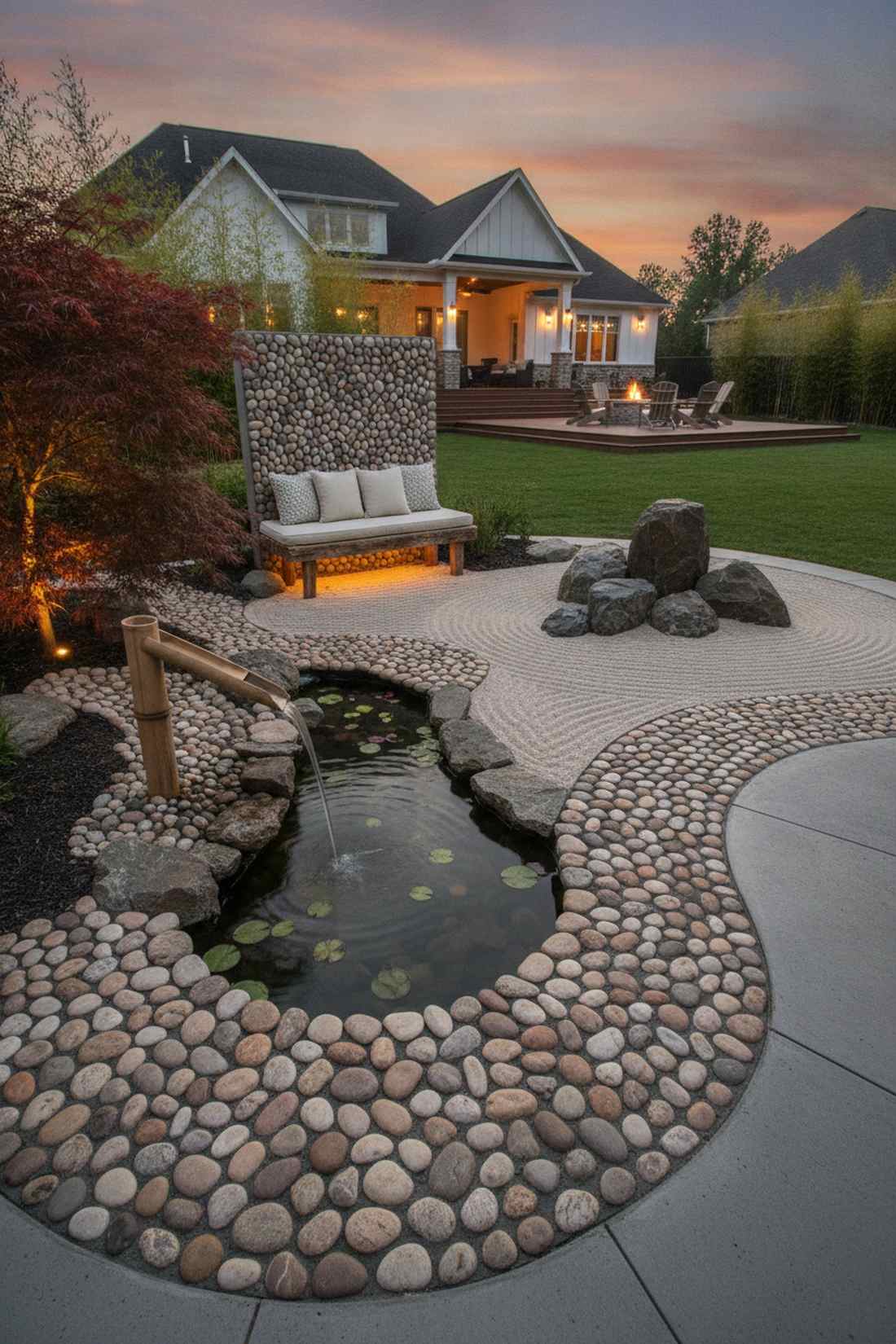
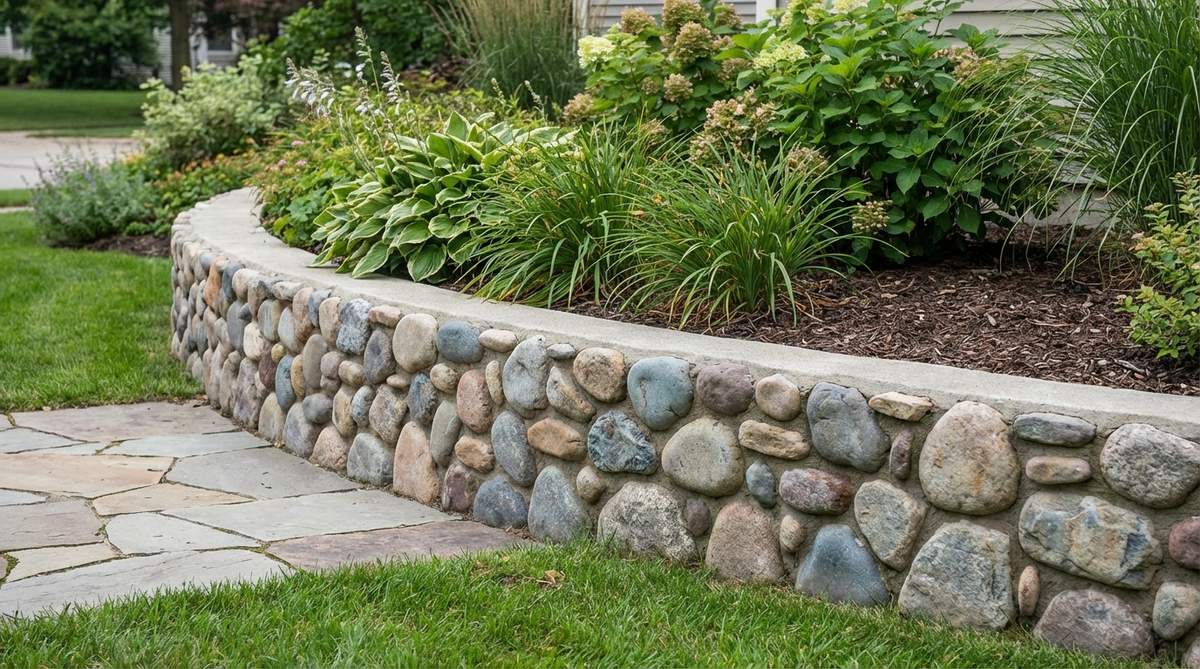
Smooth pebbles instantly create a zen, calming atmosphere. A mortared river rock garden border works beautifully along low, curved garden beds near water features.
Slapping loose rocks together is a recipe for disaster, but pressing uniform stones into a wet concrete base delivers a highly durable, custom look. The key to making it look natural is varying the colors while maintaining consistent rock depth.
You can gather materials or buy bagged stone, keeping costs under $50. Save this for your zen garden mood board.
- Key Materials: Sorted river rocks, thinset mortar
- Vibe / Style: Japanese zen garden
- Difficulty: Easy but tedious
- Budget Breakdown: River Rock: $30 | Thinset: $15
- Creator’s Tip: Sort your stones by size in buckets before mixing any mortar to speed up placement.
- Smart Sourcing: Polished mixed river rock (bulk bags), Clear UV-resistant stone sealer
Budget-Friendly Timber SolutionsWarm Wood for Small Slopes
6. Vertical Railway Sleeper Wall
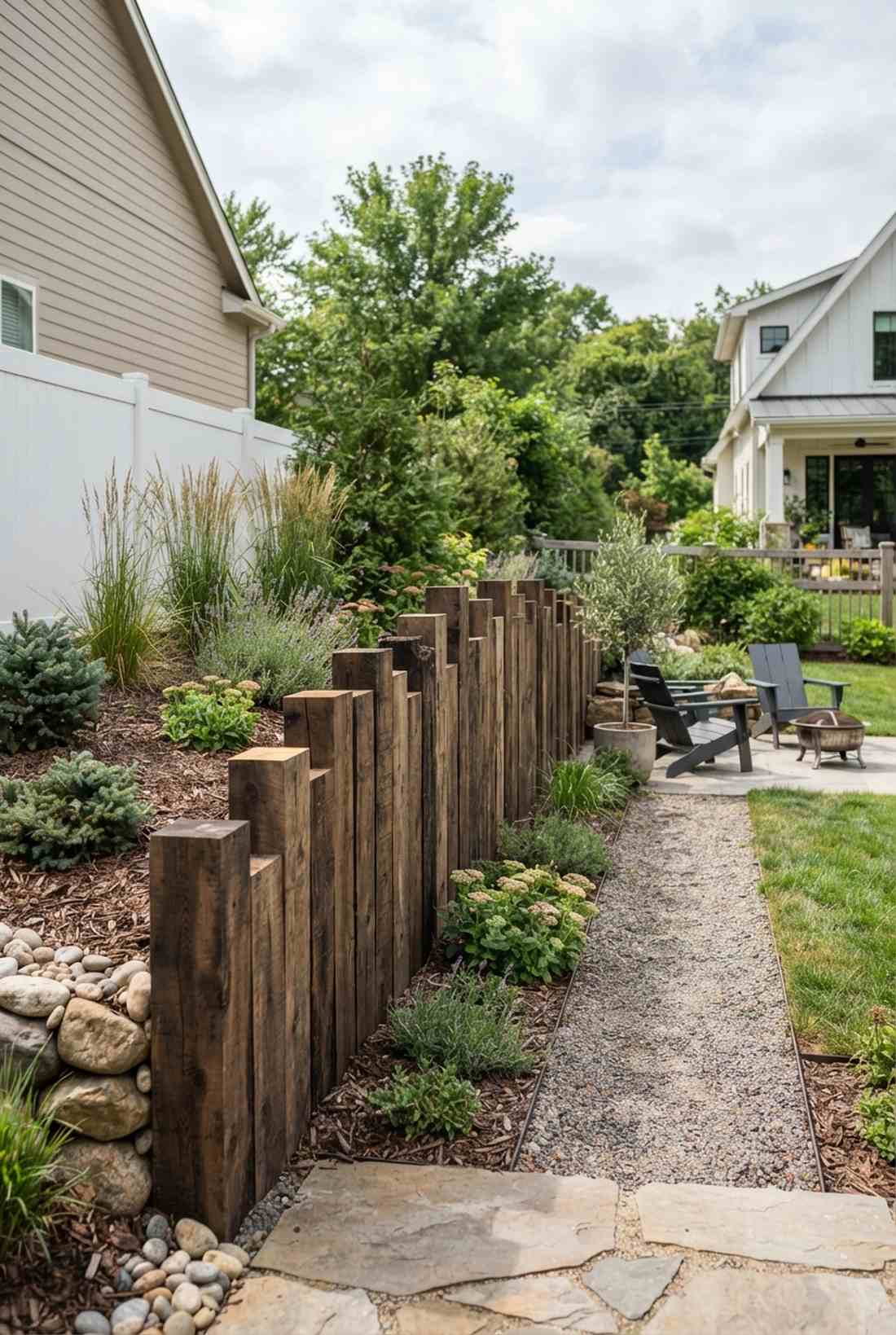
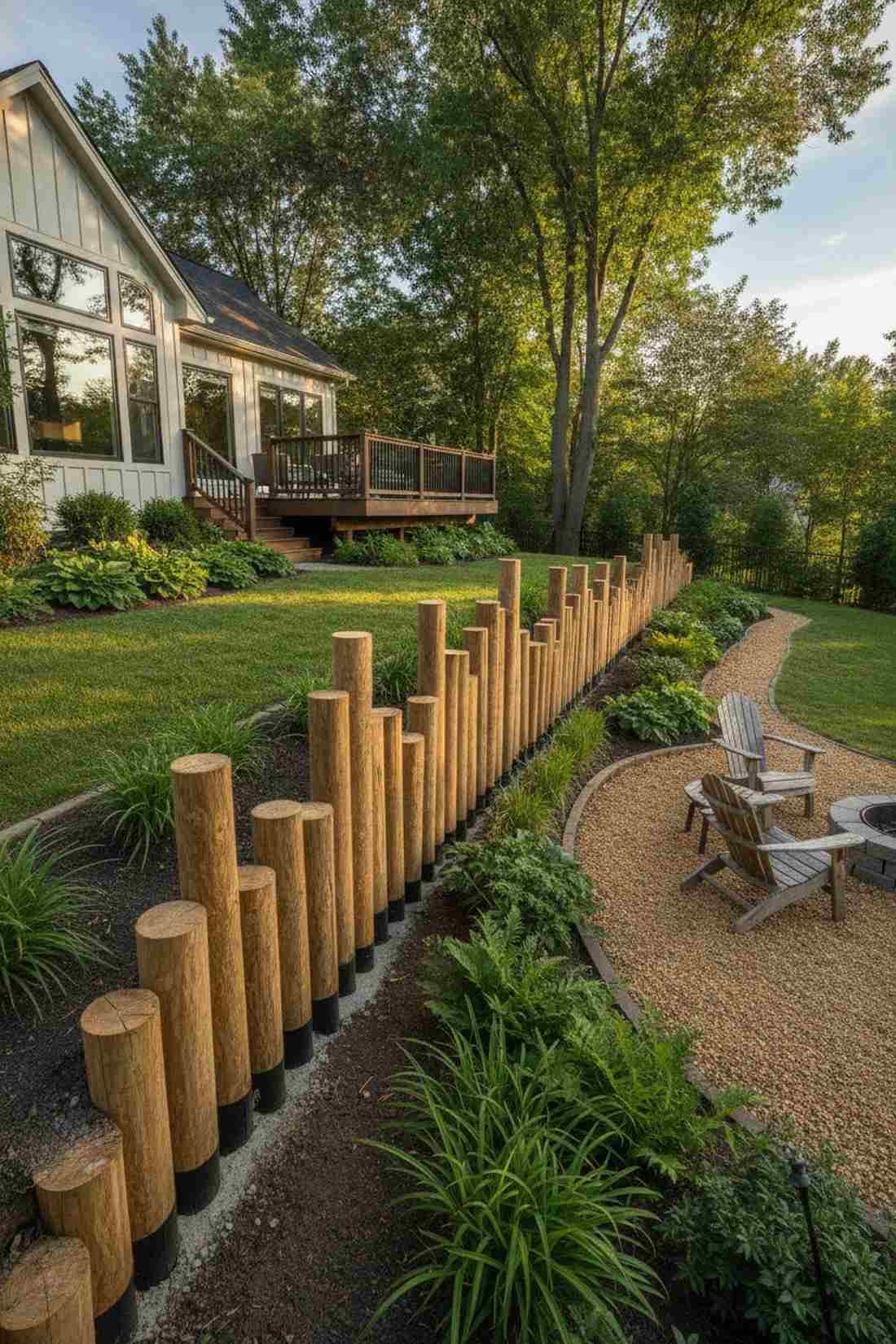
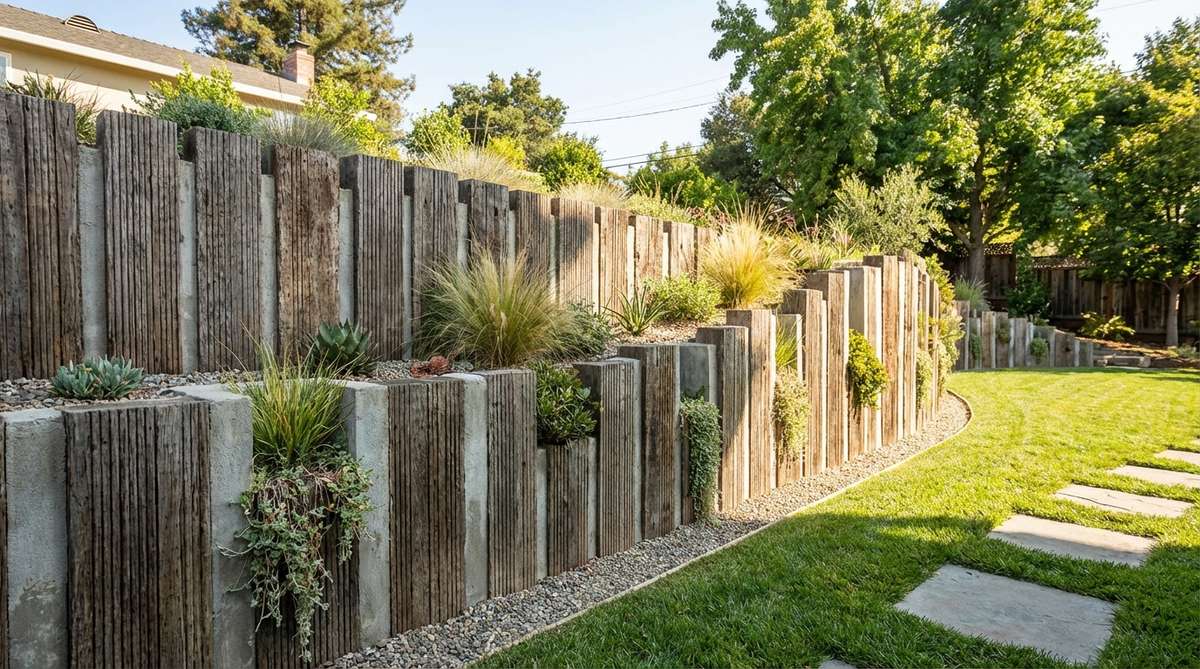
The jagged, staggered heights make this layout feel edgy and custom-built. Installing a vertical wood sleeper retaining edge is the ultimate solution for tight side yards with aggressive elevation changes.
Laying wood horizontally is standard, but sinking vertical posts locks the soil in place while creating a stunning visual rhythm. Treating the buried ends with heavy-duty rot protection extends the life of this budget-friendly design by decades.
This high-impact design costs around $20 per linear foot. It’s a fast upgrade that completely changes the property vibe.
- Key Materials: Pressure-treated sleepers, quick-set concrete
- Vibe / Style: Modern architectural
- Difficulty: Intermediate digging
- Budget Breakdown: Timber: $120 | Concrete: $30
- Creator’s Tip: Vary the heights by 2-4 inches randomly to give it a sculptural, non-uniform aesthetic.
- Smart Sourcing: Pre-cut pressure-treated landscape timbers, Underground wood preservative treatments
7. Horizontal Timber Sleeper Terrace
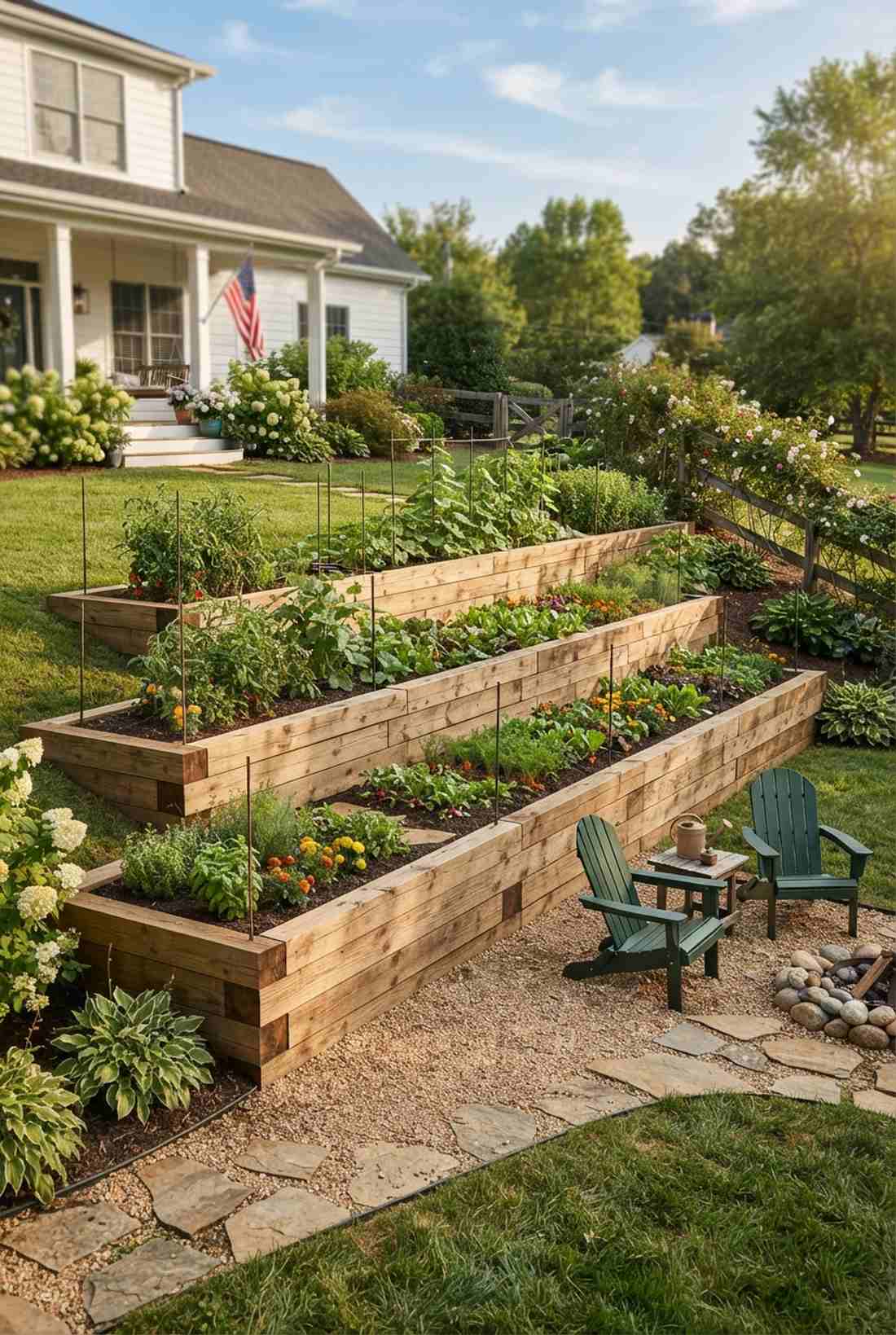
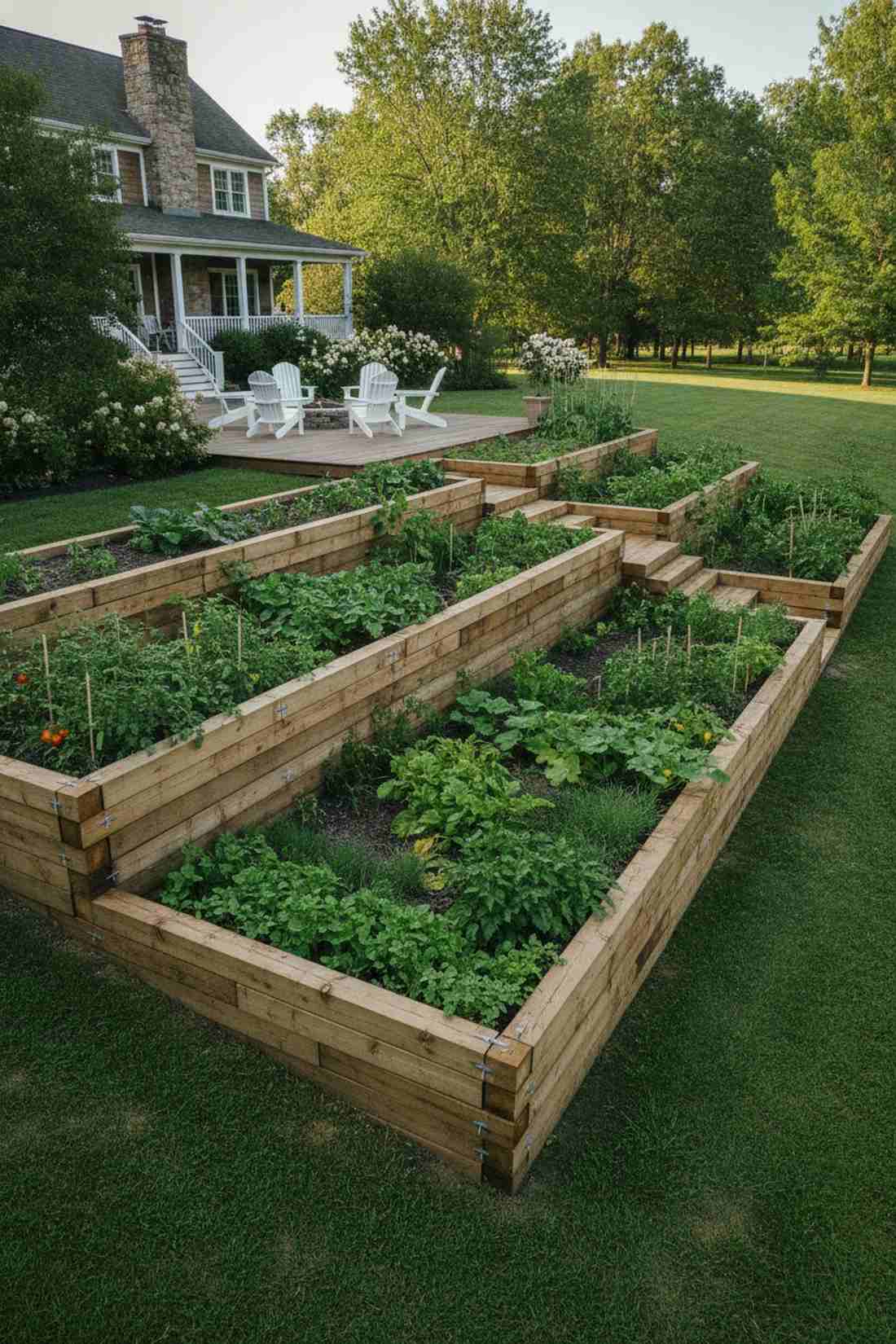
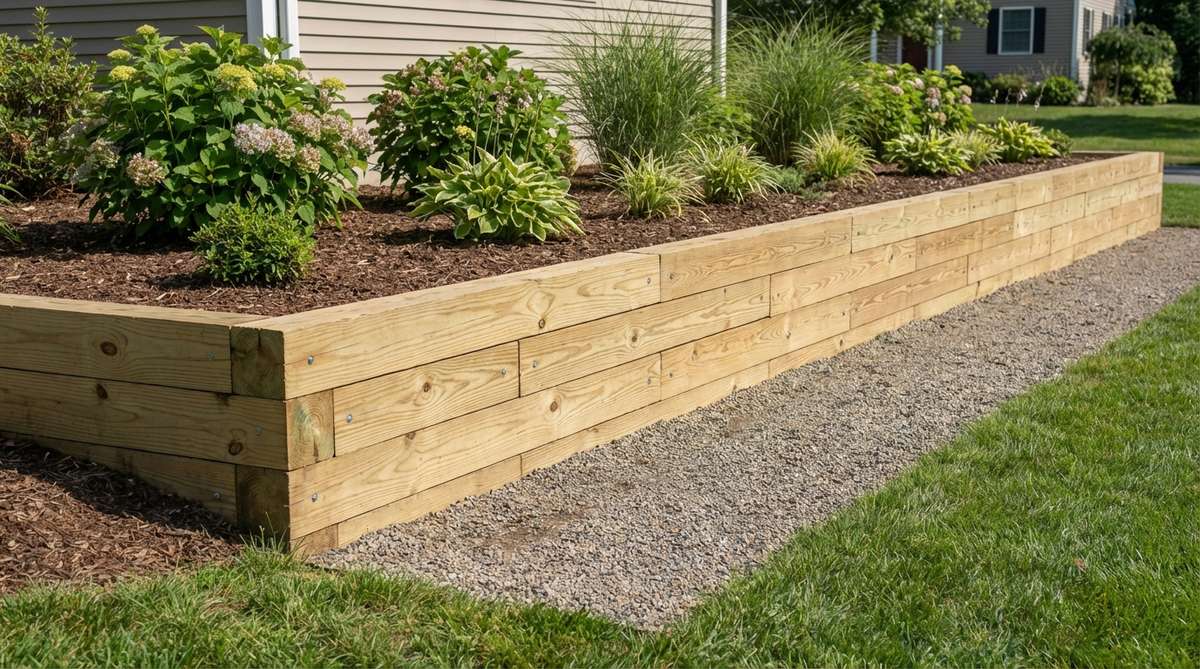
This classic, rugged setup brings instant warmth to an overgrown slope. A stacked timber terrace wall is the go-to layout for a deep backyard vegetable garden needing level ground.
Avoid using flimsy landscape spikes; instead, driving heavy-duty rebar through pre-drilled timber posts guarantees massive structural integrity. Staggering the joints like brickwork ensures lateral soil pressure won’t push the wall outward over time.
Materials generally run a highly affordable $15–$25 per square foot. Pin this layout to your spring landscaping checklist.
- Key Materials: 6×6 treated timbers, galvanized rebar stakes
- Vibe / Style: Traditional farmhouse
- Difficulty: Heavy lifting
- Budget Breakdown: Timbers: $90 | Rebar/Hardware: $25
- Creator’s Tip: Ensure the first base row is perfectly level—any mistake here amplifies as you build up.
- Smart Sourcing: Galvanized landscape timber screws (bulk pack), Extra-long heavy-duty rebar stakes
8. Treated Pine Post-and-Board
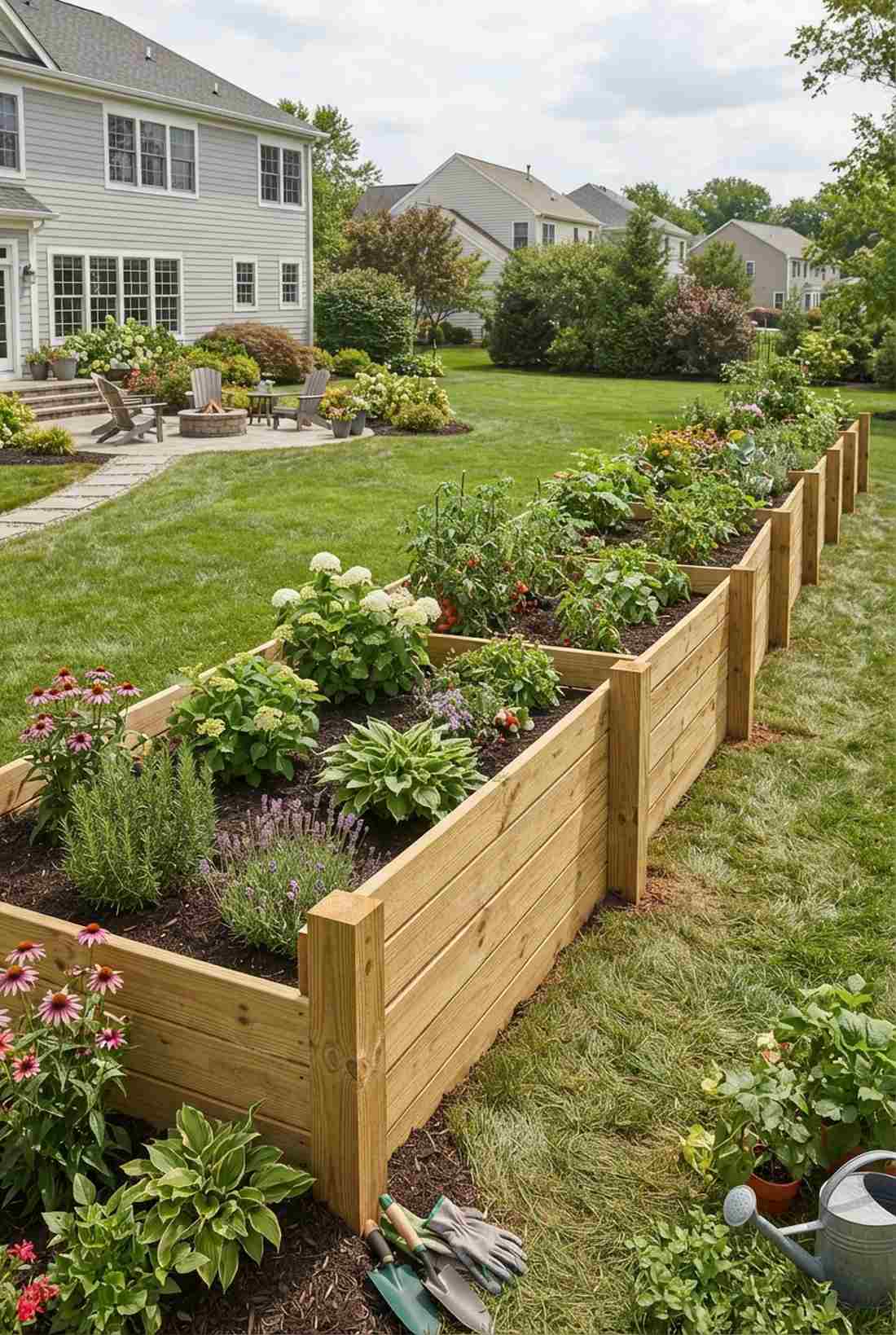
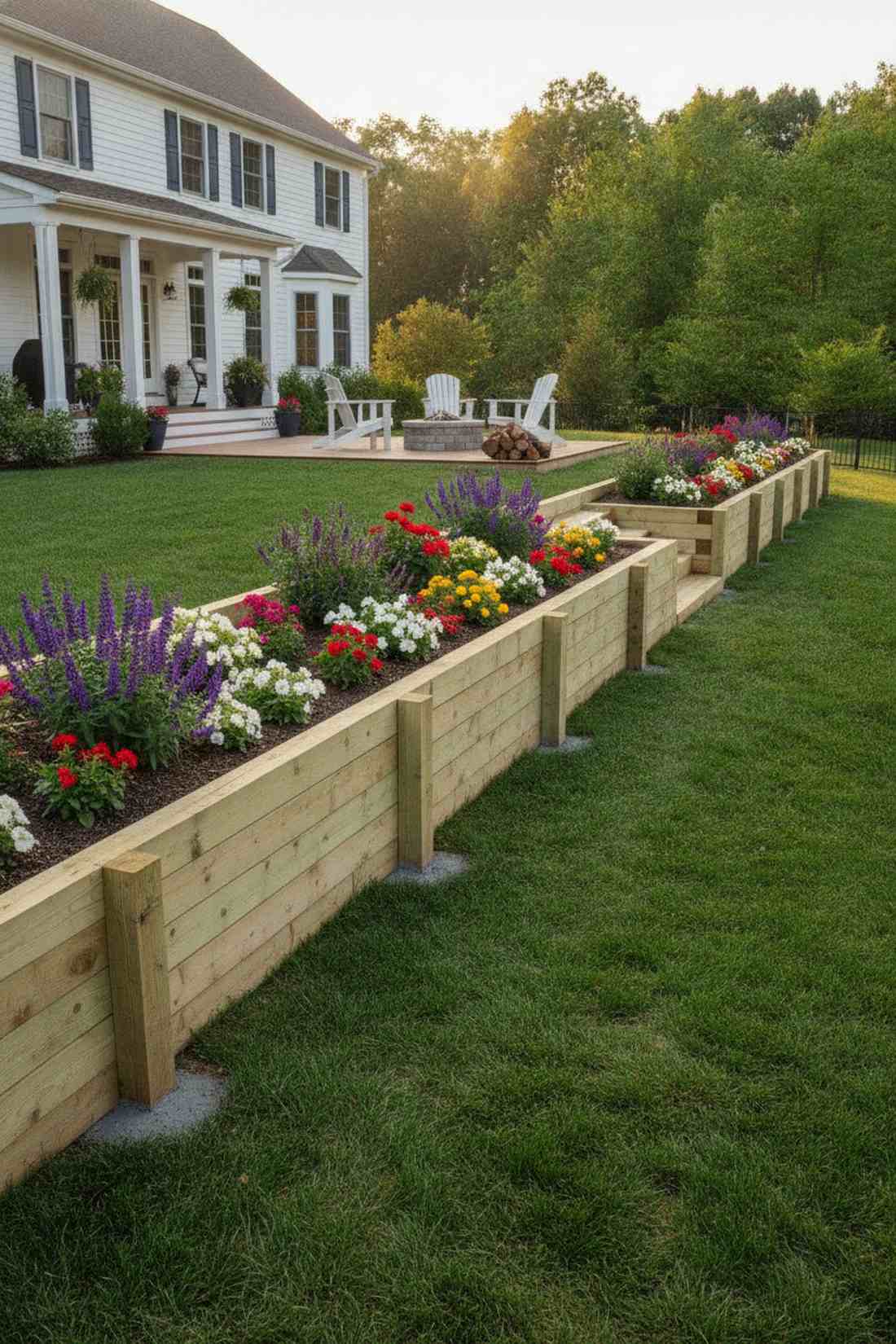
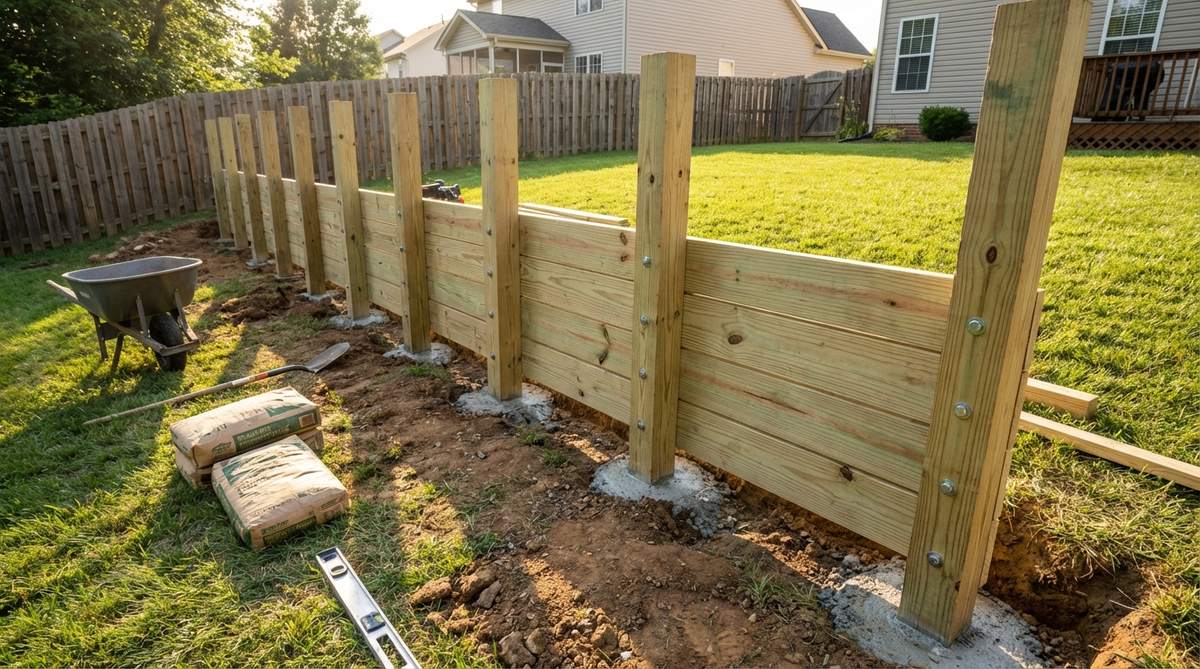
Sleek and highly functional, this setup feels incredibly neat and organized. Using a modular post-and-board retaining fence is brilliant for creating distinct raised flower beds along a property line.
Most beginners struggle with massive timber blocks, but sliding 2-inch boards behind anchored posts gives a designer-level finish with half the muscle required. Leaving slight gaps between horizontal boards naturally solves drainage problems without complex pipe systems.
Expect to spend around $60–$100 for a small 10-foot section. It’s incredibly cost-effective for long, sweeping boundaries.
- Key Materials: 4×4 posts, 2×8 treated boards
- Vibe / Style: Clean suburban
- Difficulty: Beginner DIY
- Budget Breakdown: Posts: $30 | Boards: $45
- Creator’s Tip: Bolt the boards to the back side (dirt side) of the posts so the soil weight pushes the boards into the support.
- Smart Sourcing: Weather-resistant exterior deck screws, Pre-mixed fast-setting post hole concrete
9. Reclaimed Wood Pallet Wall
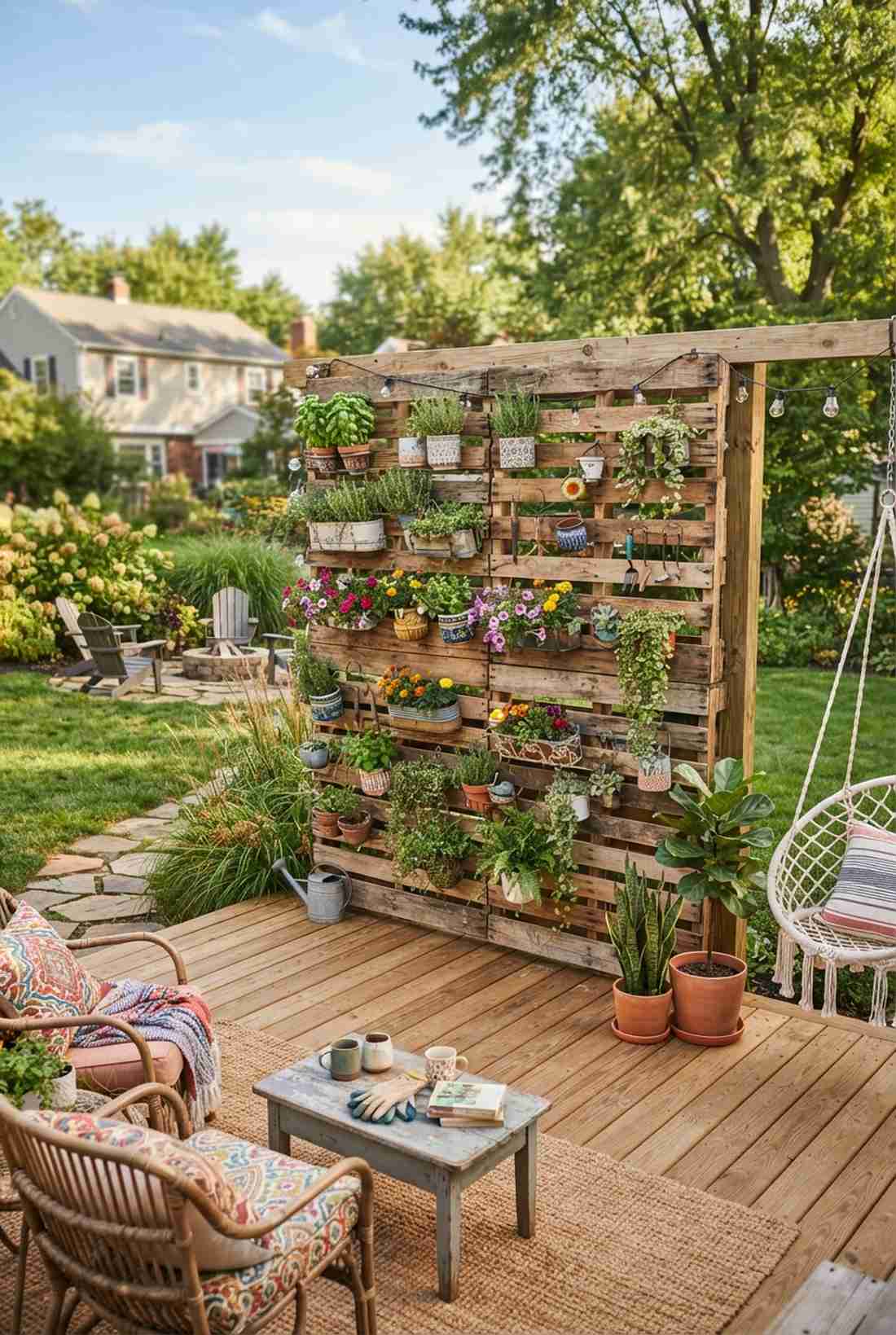
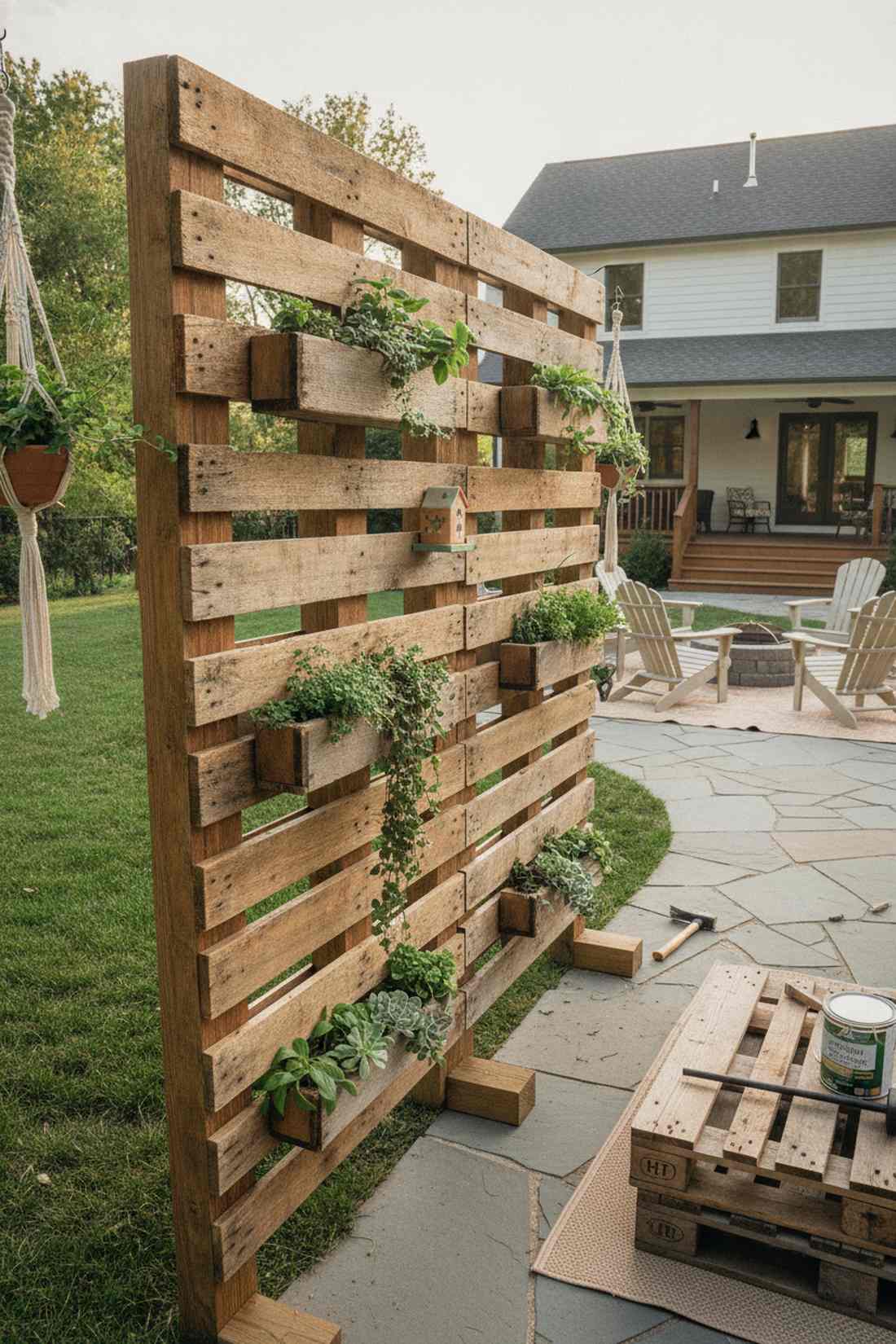
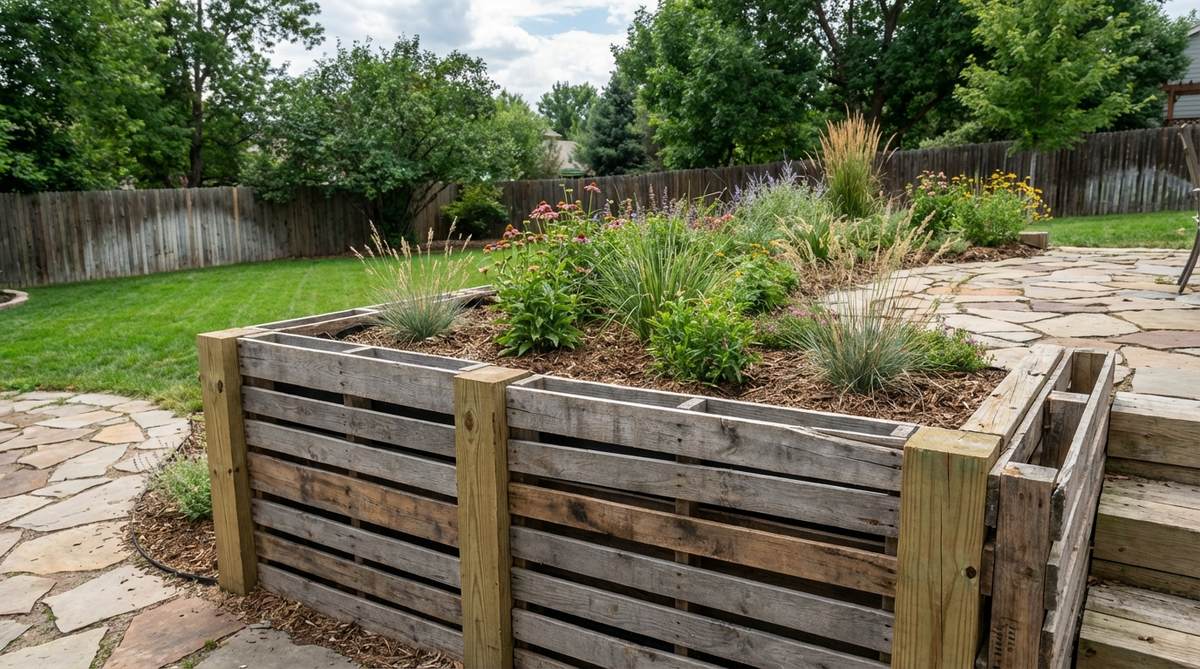
Distressed and beautifully weathered, this eco-friendly build feels straight out of an upcycling blog. A reclaimed pallet planter wall is perfect for a casual bohemian backyard on a near-zero budget.
Using raw pallet wood often rots quickly in the dirt, but applying a thick marine-grade sealant turns free trash into a surprisingly durable barrier. Deconstructing the pallets and rebuilding them over treated anchor posts prevents the whole structure from leaning.
You can build this almost entirely for free, just paying $15 for hardware. Save this to your extreme budget DIY board.
- Key Materials: Heat-treated shipping pallets, wood sealant
- Vibe / Style: Upcycled boho
- Difficulty: Easy beginner setup
- Budget Breakdown: Pallets: $0 | Hardware/Sealer: $25
- Creator’s Tip: Only use pallets stamped “HT” (Heat Treated) to avoid toxic chemical leaching into your soil.
- Smart Sourcing: Heavy-duty wood pallet dismantling tools, Eco-friendly waterproof wood sealant
💡 Must-Have Supplies for High-End Setups
To build these setups faster and ensure they last, skip the generic craft aisles and invest in the right foundational kits.
- Base & Support: Heavy-duty commercial geotextile fabric rolls
- Setup Tools: Professional masonry and hardscaping leveling kits
- Weather/Durability Protection: UV-resistant clear masonry sealants
10. Hardwood Log Retaining Edge
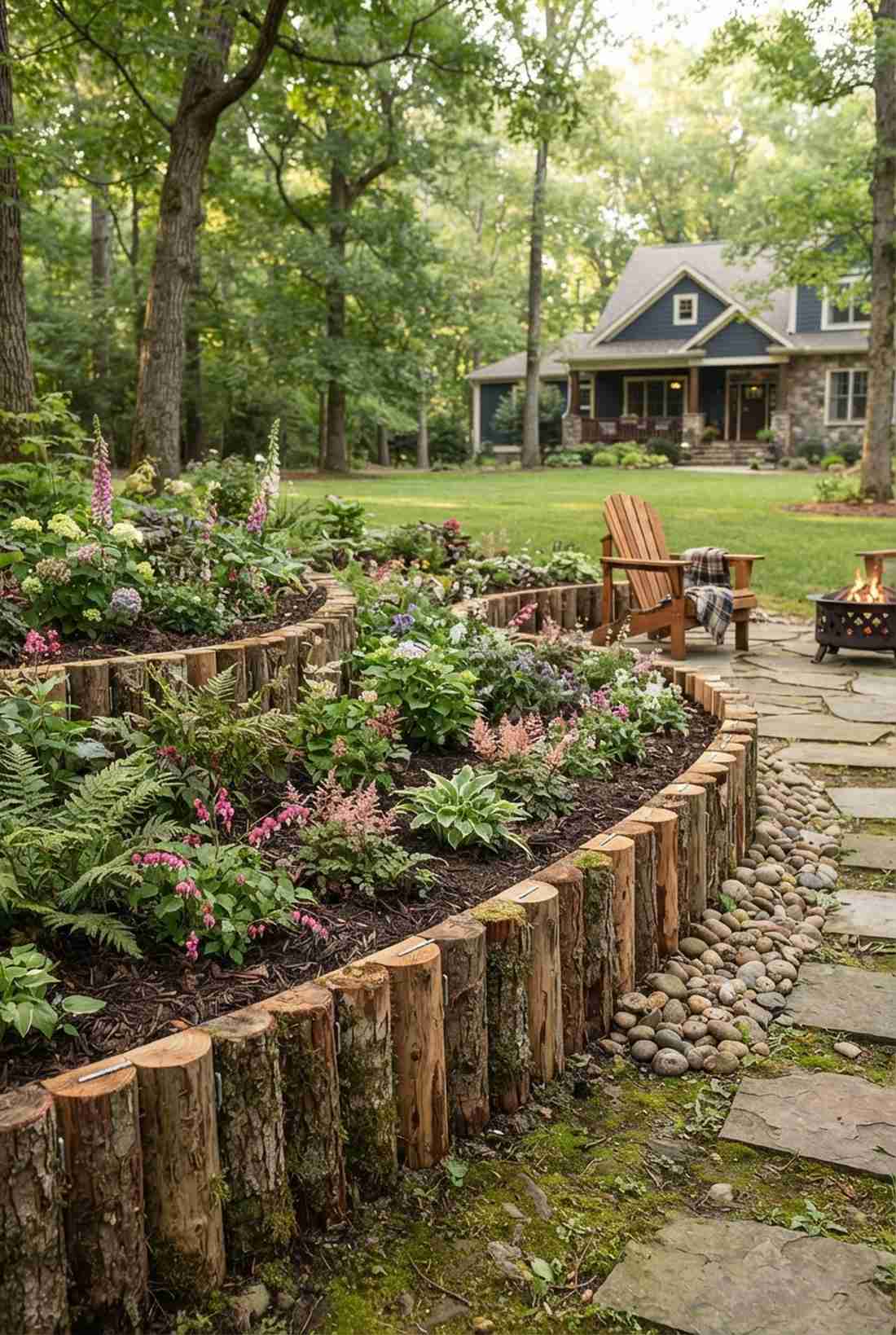
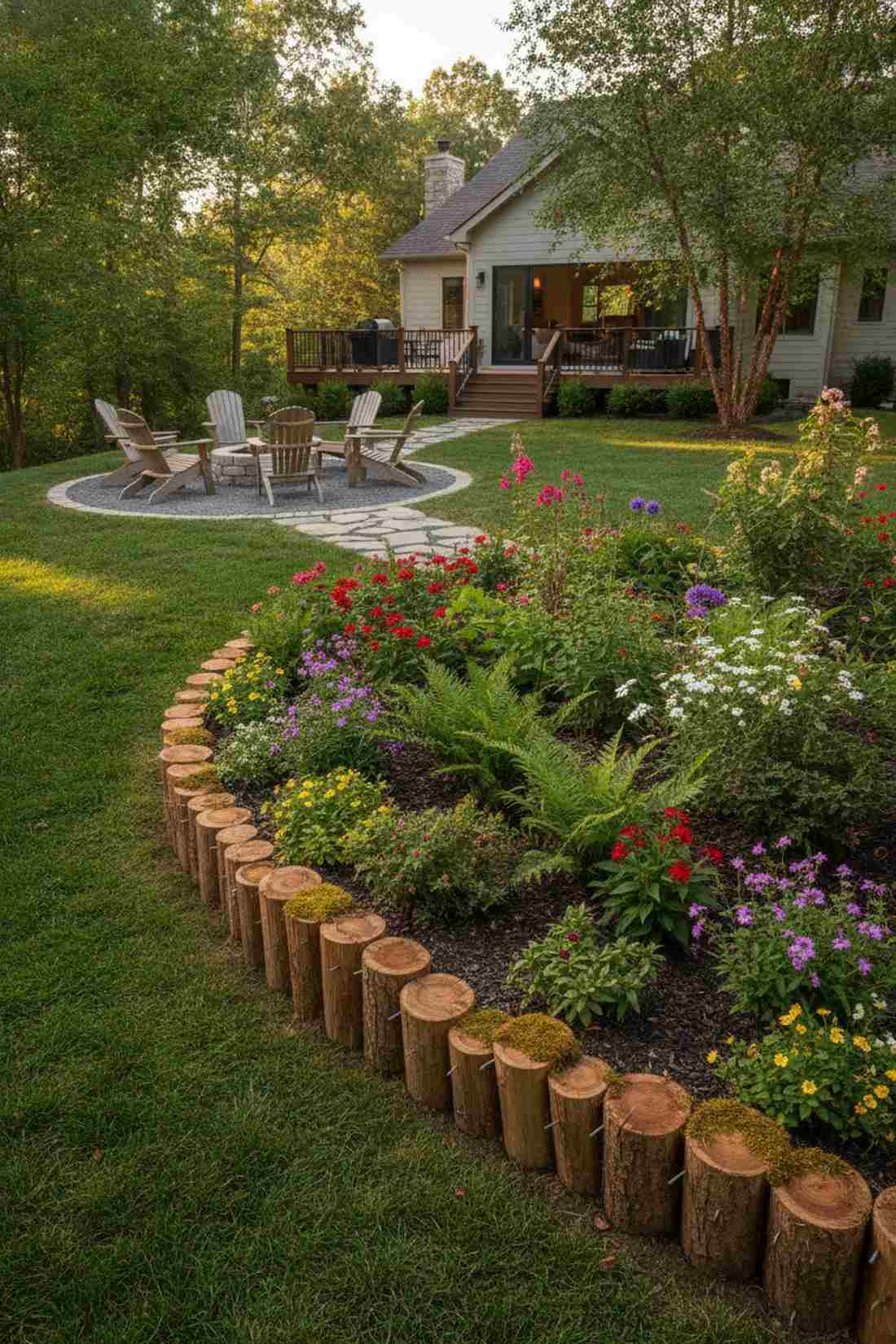
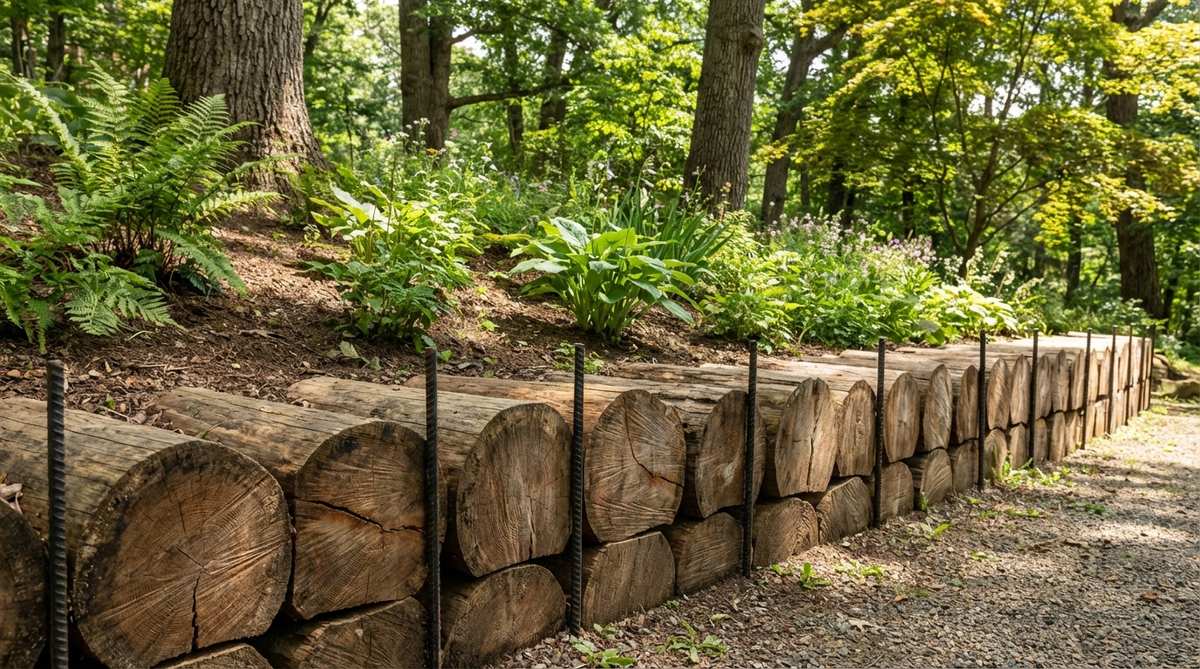
This whimsical border feels like a fairy tale pathway. Setting up a natural hardwood log garden boundary is absolute perfection for a woodland-themed sloped flowerbed.
Buying processed lumber is standard, but sourcing rot-resistant logs like cedar or locust delivers a highly organic aesthetic that outperforms softwoods. Pinning them tightly together with internal metal spikes keeps the soil locked away while moss naturally colonizes the bark.
If you source locally, this costs under $30. It’s a charming weekend project for nature lovers.
- Key Materials: Cedar or locust half-logs, metal spikes
- Vibe / Style: Fairy tale woodland
- Difficulty: Beginner friendly
- Budget Breakdown: Logs: $0-$40 | Spikes: $15
- Creator’s Tip: Strip the bark off the buried side of the log to significantly slow down the rotting process.
- Smart Sourcing: Pre-cut cedar landscape edging rolls, Heavy-duty galvanized ground staples
Modern Concrete SystemsEngineered Durability Meets Design Flexibility
11. Interlocking Concrete Block Wall
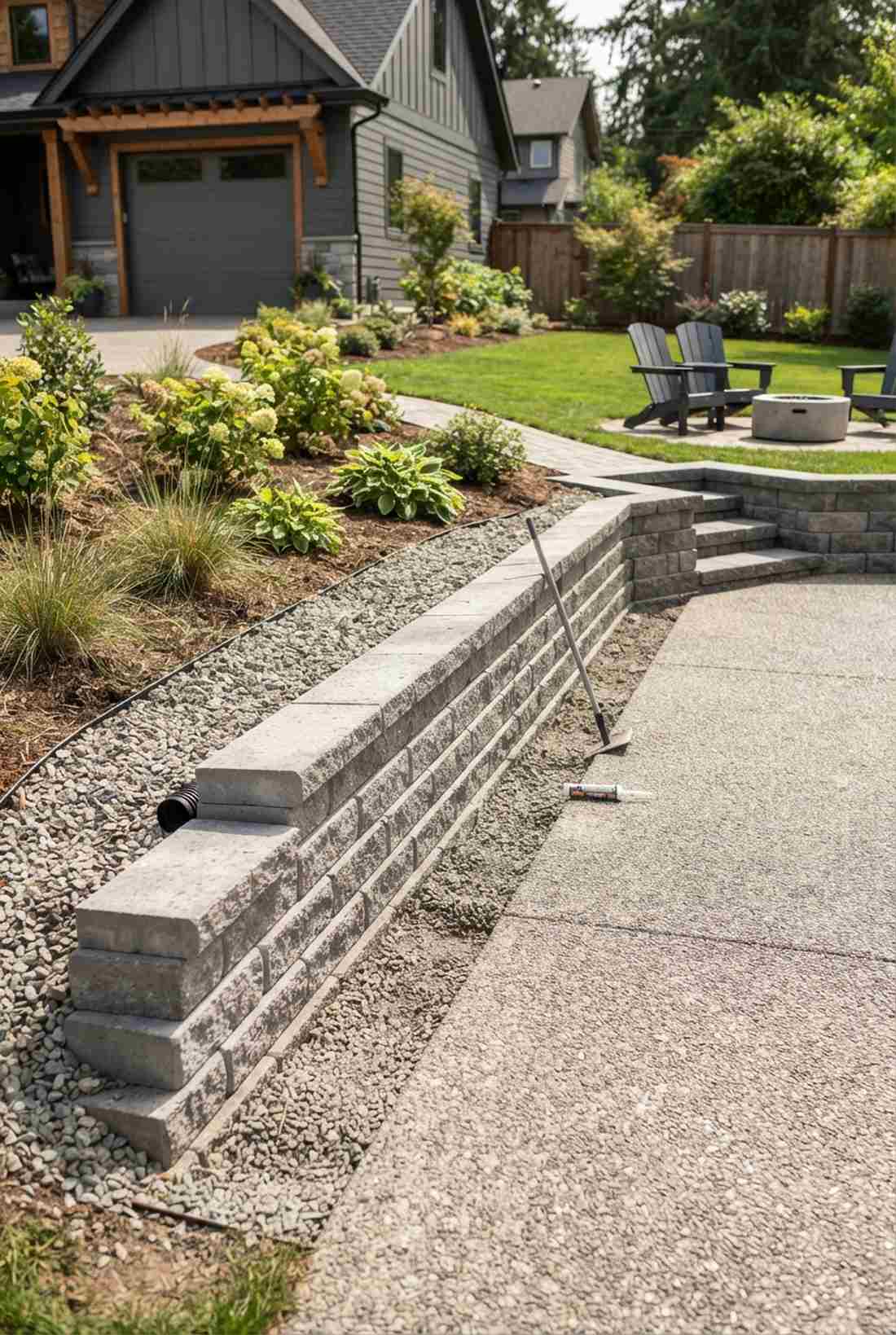
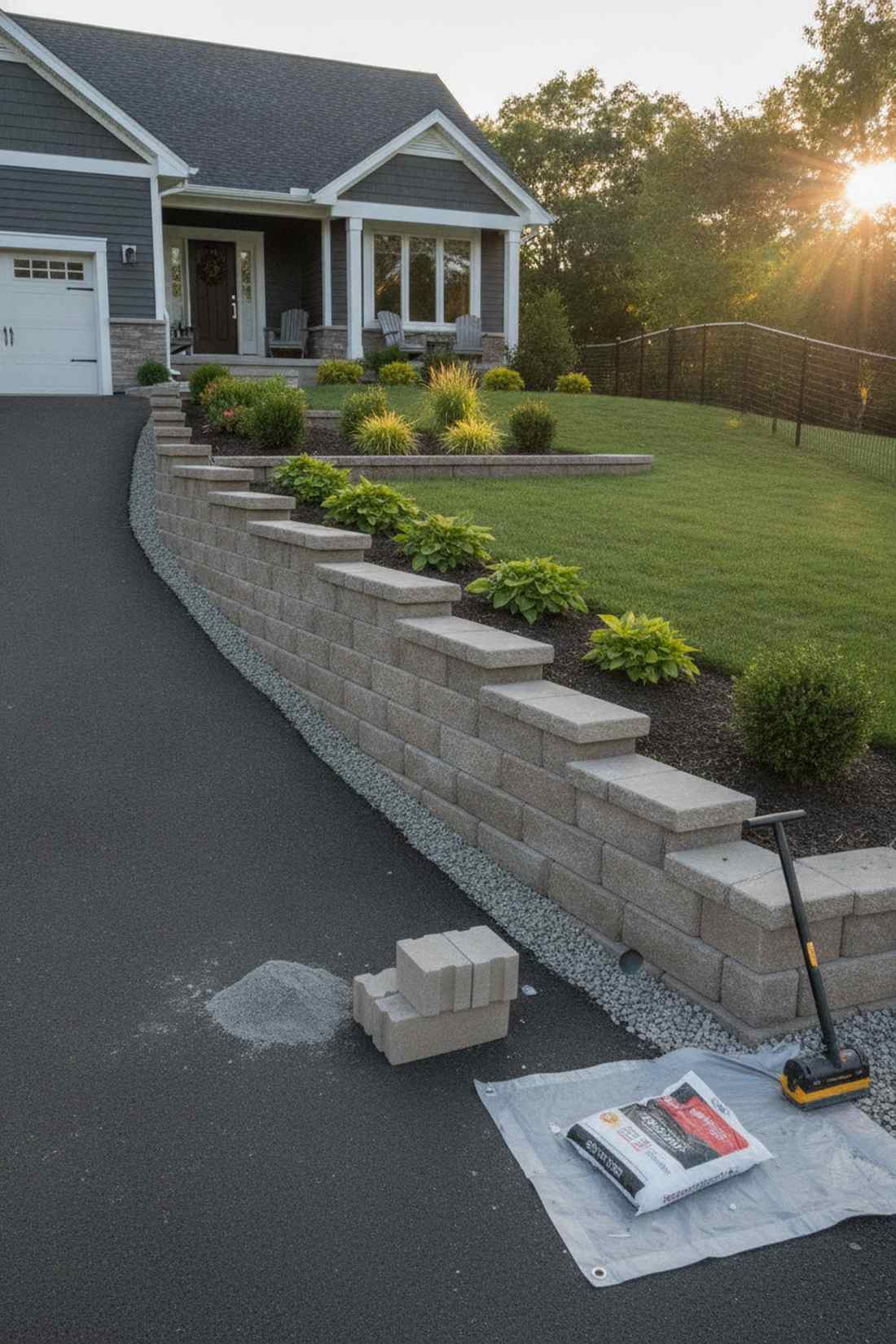
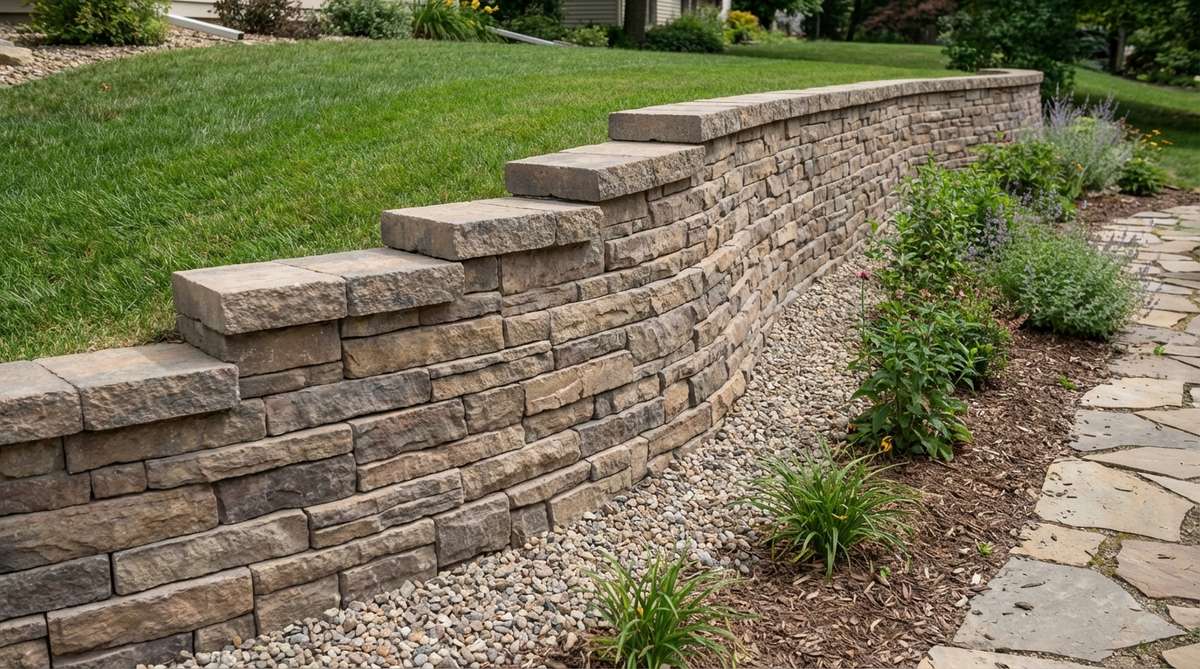
Clean, structural, and foolproof, this layout screams low-maintenance durability. Dropping in a modular interlocking block system is the best use-case for a DIYer tackling a serious driveway slope.
Wet mortar is messy and hard to master, but using engineered lip-system blocks guarantees a perfect setback angle automatically. Backfilling with crushed gravel and perforated pipe completely neutralizes the hydrostatic water pressure that destroys most walls.
Expect to spend $4–$6 per block. Pin this if you want a professional look without hiring a masonry crew.
- Key Materials: Segmental retaining blocks, 3/4-inch clear gravel
- Vibe / Style: Modern suburban
- Difficulty: Medium DIY
- Budget Breakdown: Blocks: $200 | Gravel Base: $40
- Creator’s Tip: Never skip the gravel base trench; a perfectly compacted leveling pad is the secret to a wall that never sags.
- Smart Sourcing: Commercial-grade retaining wall block adhesive, Professional hand tamper tools
12. Poured Concrete Custom Wall
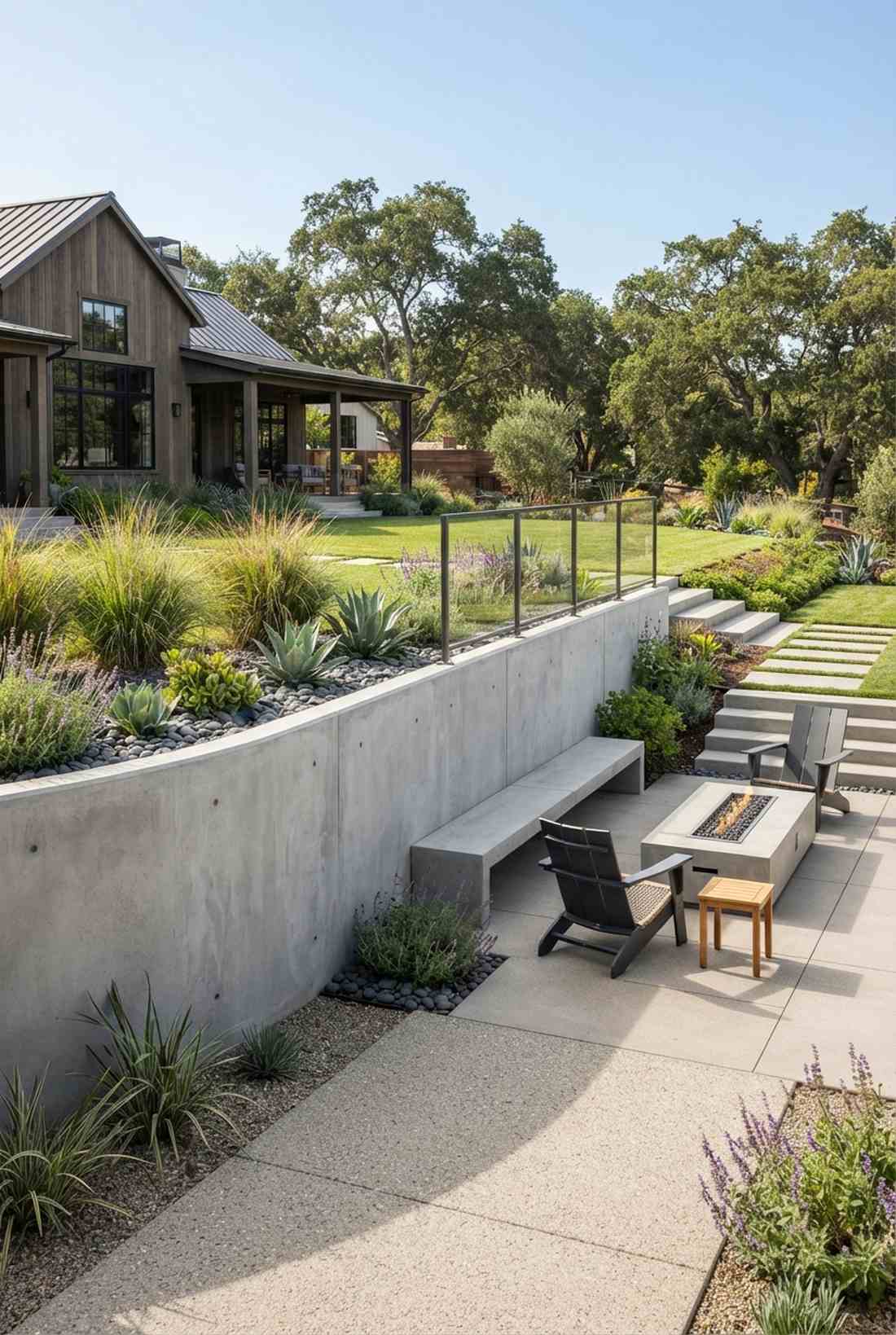
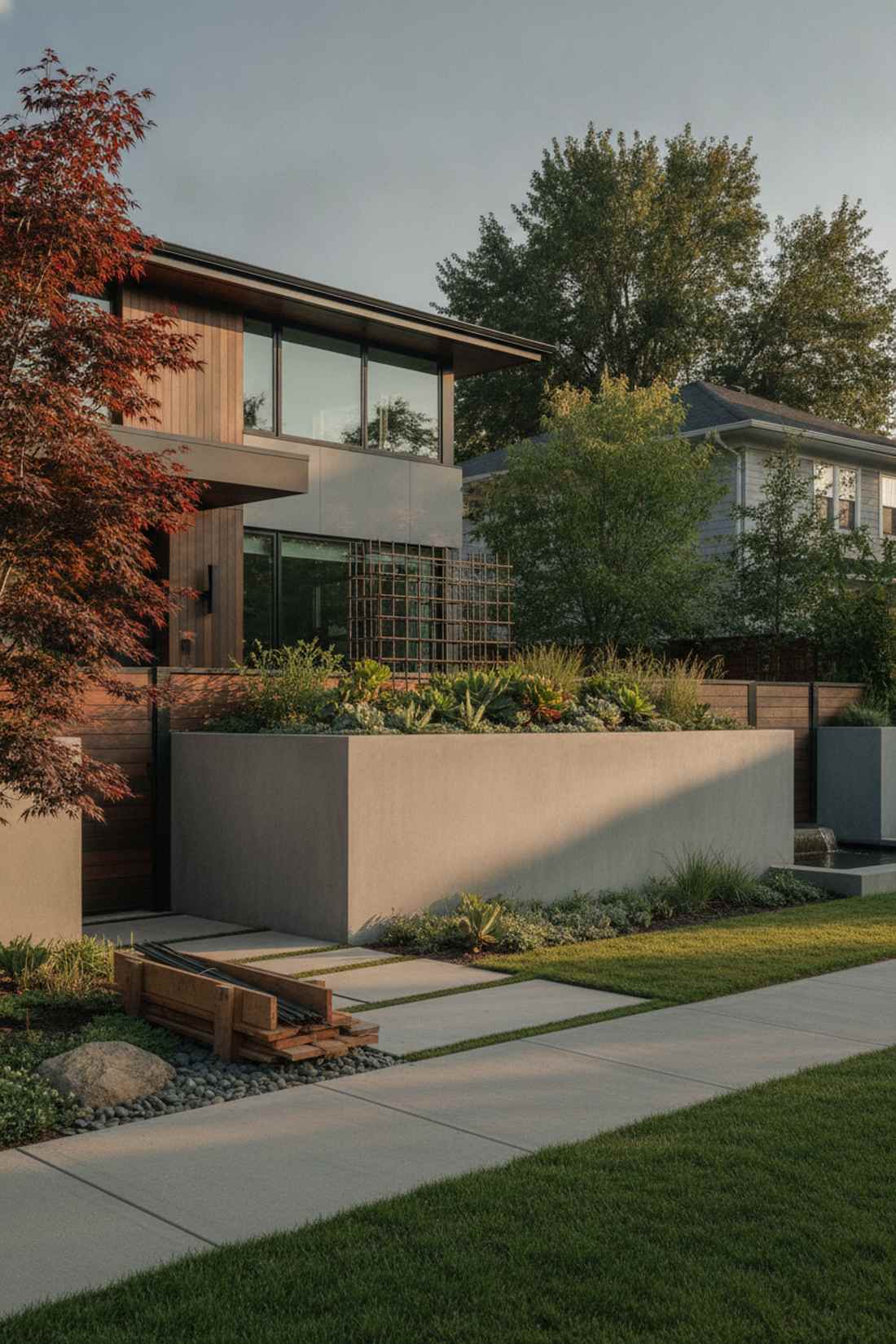
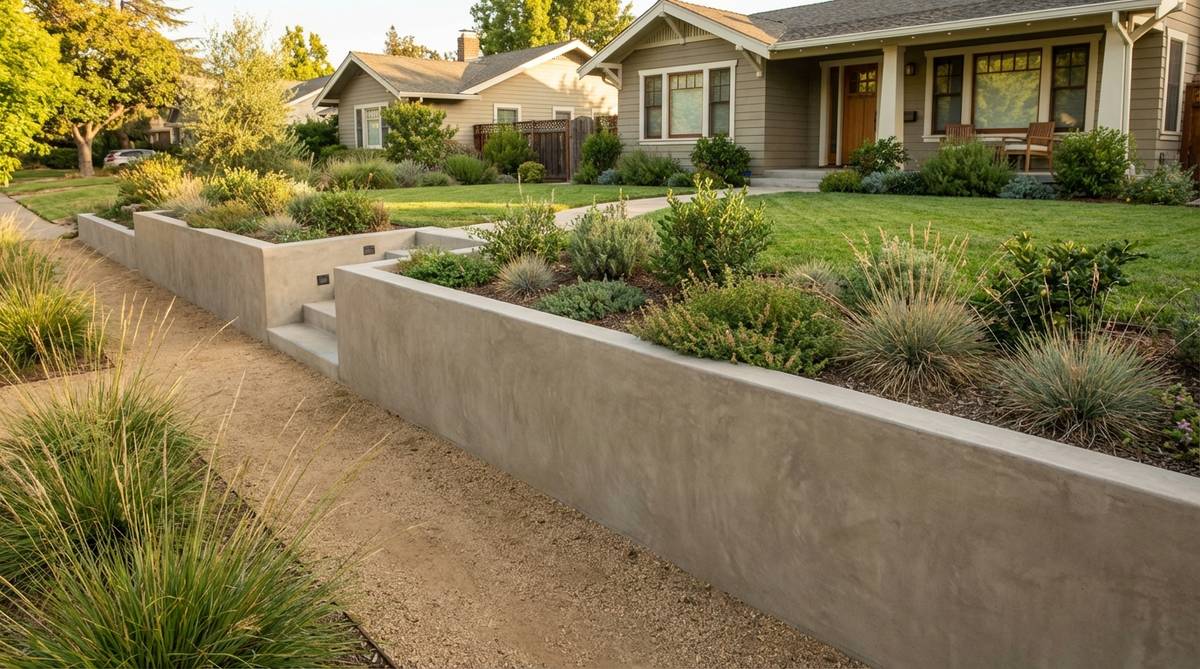
Sleek, minimalist, and unbreakable—this aesthetic commands attention. A solid poured concrete retaining wall shines beautifully in ultra-modern architectural front yards.
Cinder blocks look cheap, but pouring a seamless, vibrated concrete wall provides industrial-level strength with a designer-level finish. Integrating steel rebar grids before the pour ensures the monolithic structure easily holds back tons of wet earth.
Forming and pouring costs roughly $150–$300 in raw materials for a small section. It’s a permanent legacy upgrade to your property.
- Key Materials: Portland cement mix, wooden formwork, steel rebar
- Vibe / Style: Brutalist modern
- Difficulty: Advanced DIY
- Budget Breakdown: Concrete: $120 | Lumber/Rebar: $80
- Creator’s Tip: Rent a concrete vibrator; removing air bubbles prevents ugly honeycomb voids on the visible face.
- Smart Sourcing: Pre-bent steel rebar corner kits, Heavy-duty concrete form release agent
13. Concrete Block with Stucco Finish
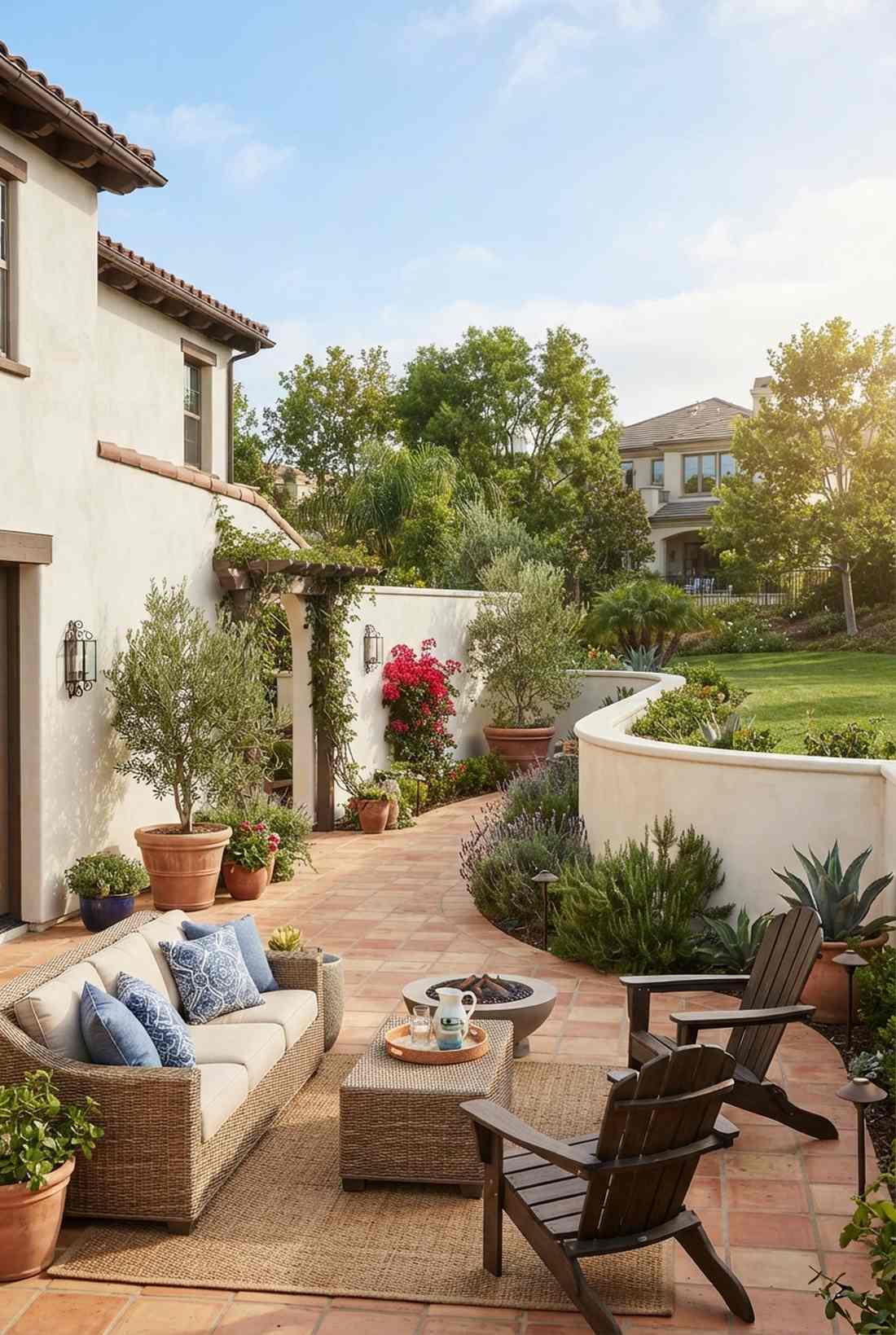
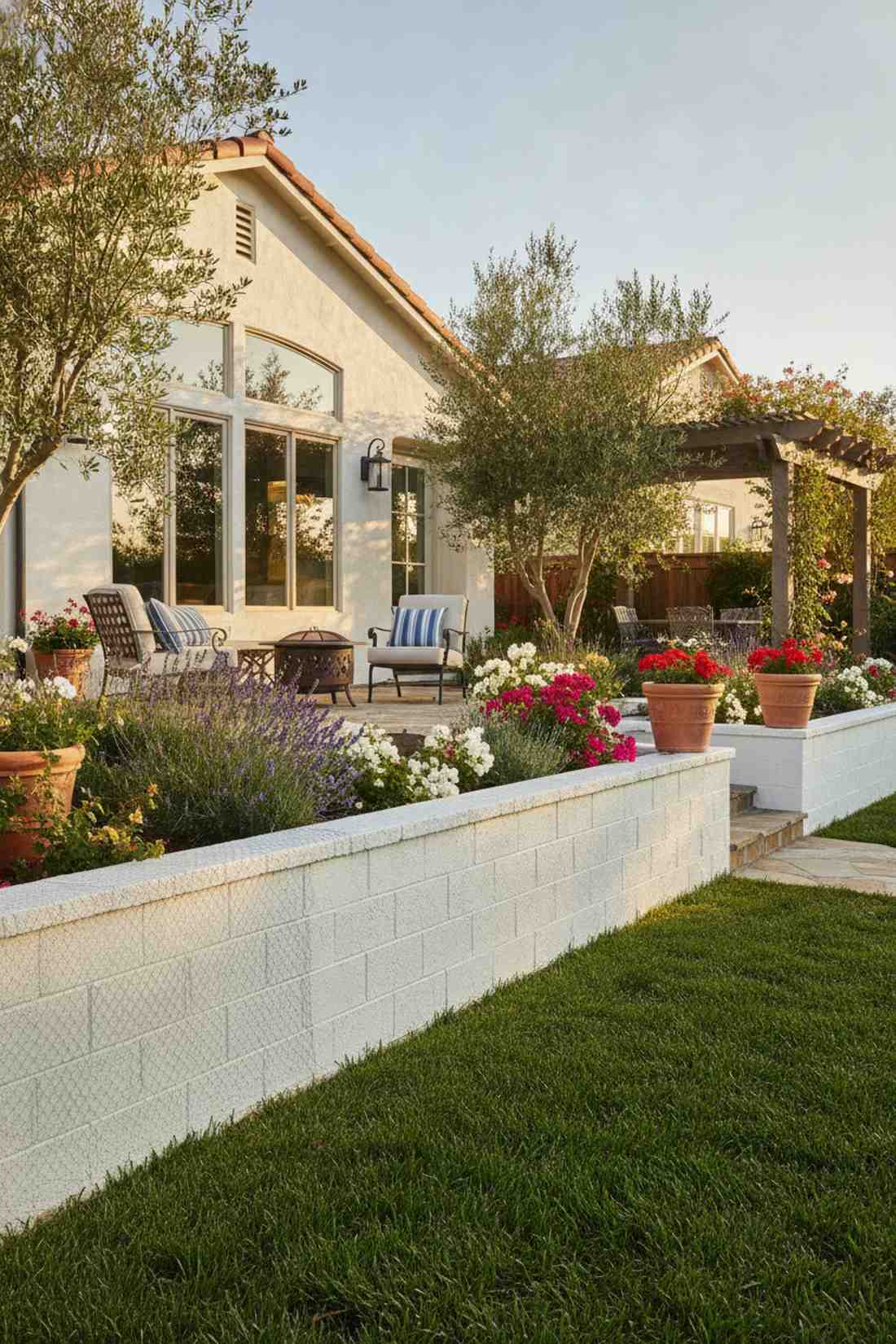
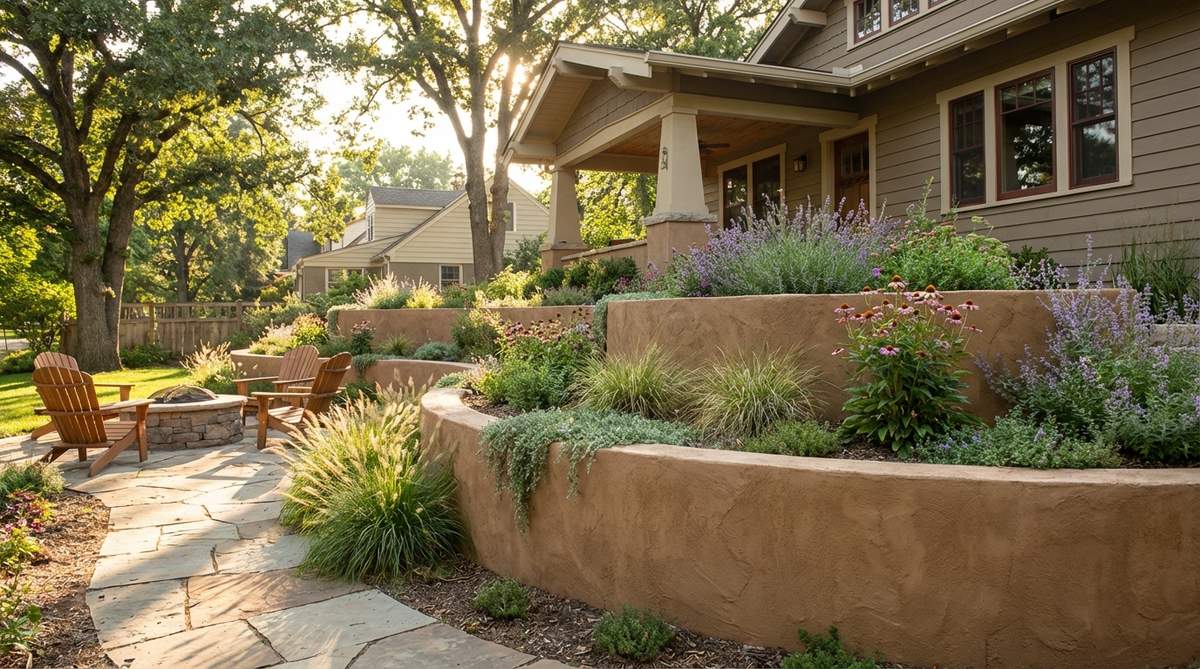
Smooth and bright, this setup feels like a sunny Mediterranean courtyard. Wrapping a basic wall in a decorative stucco cement finish is the smartest way to blend a retaining wall into your home’s existing exterior.
Leaving raw cinder blocks exposed ruins your curb appeal, but a simple scratch and brown coat turns cheap masonry into a premium architectural feature. Adding a fiberglass mesh layer into the base coat stops ugly hairline cracks from ruining the aesthetic over time.
This multi-step process runs about $80–$120 in materials. Save this to your backyard makeover board.
- Key Materials: Cinder blocks, exterior stucco mix, fiberglass mesh
- Vibe / Style: Mediterranean villa
- Difficulty: Intermediate plastering
- Budget Breakdown: Block Core: $50 | Stucco/Mesh: $60
- Creator’s Tip: Keep the stucco damp for 48 hours after application to cure it properly and prevent brittle flaking.
- Smart Sourcing: Pre-mixed acrylic exterior stucco (bucket), Alkali-resistant fiberglass stucco mesh
Before you run to the hardware store for basic blocks, this next factory-made system will literally save you three days of backbreaking labor…
14. Precast Concrete Panel System
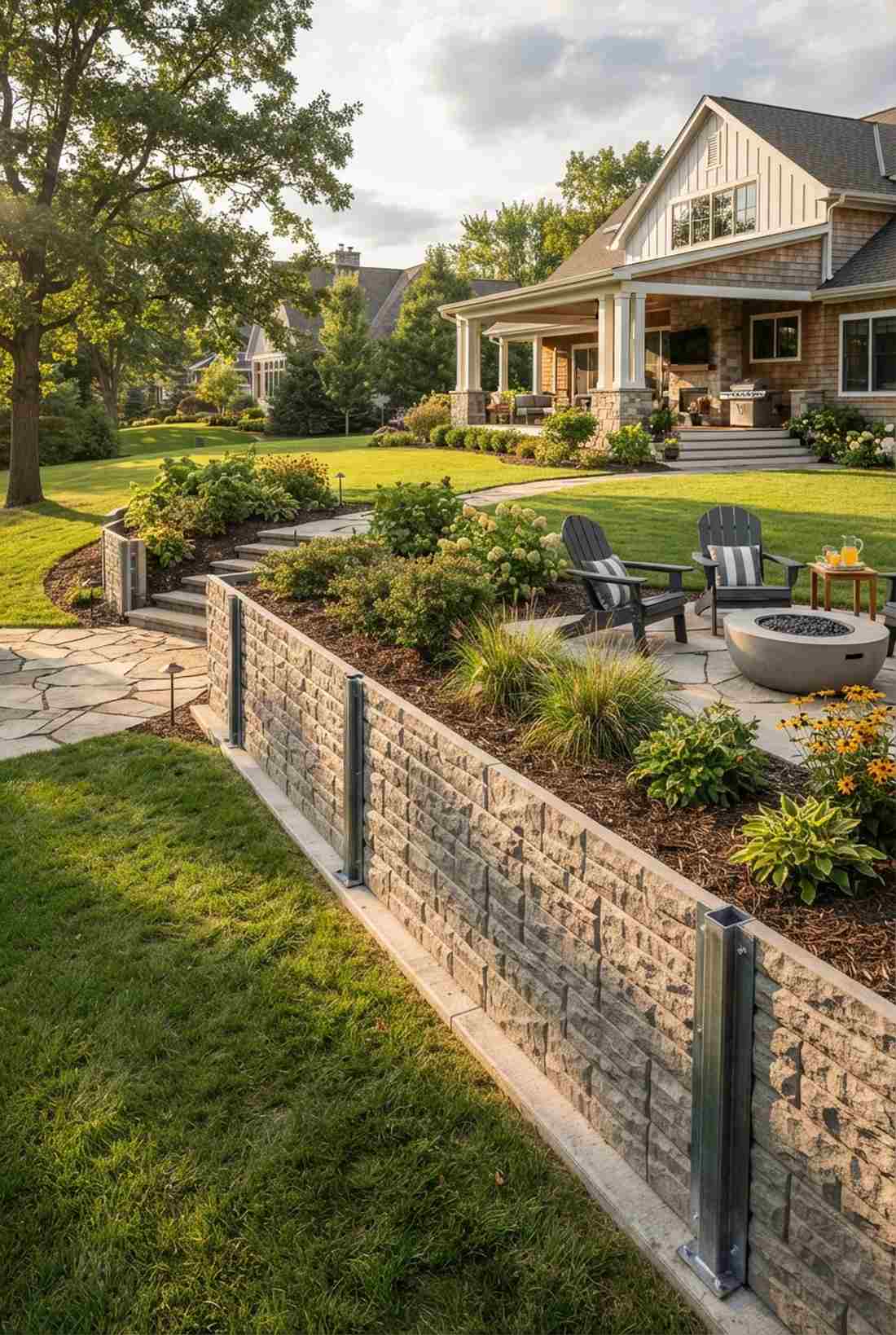
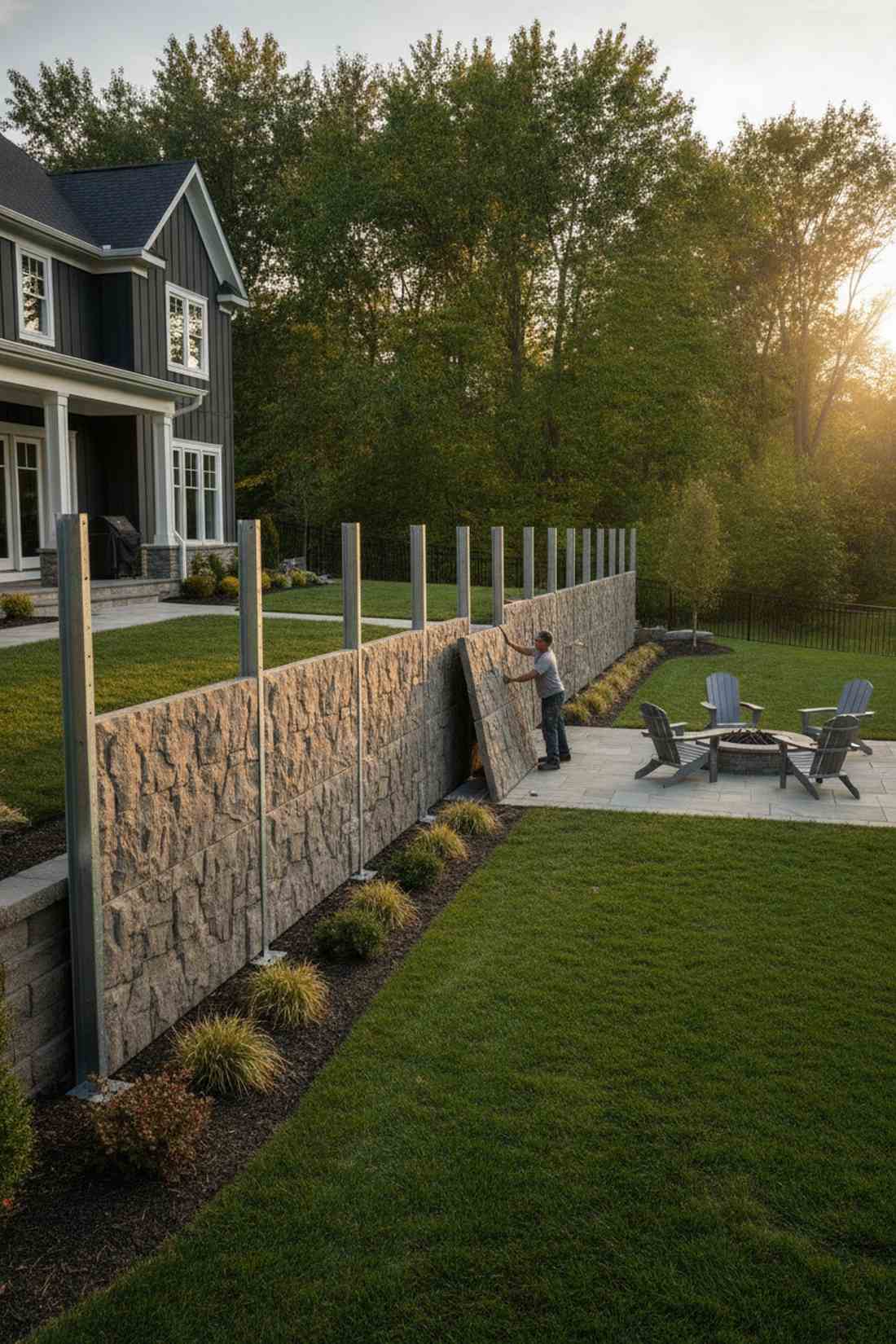
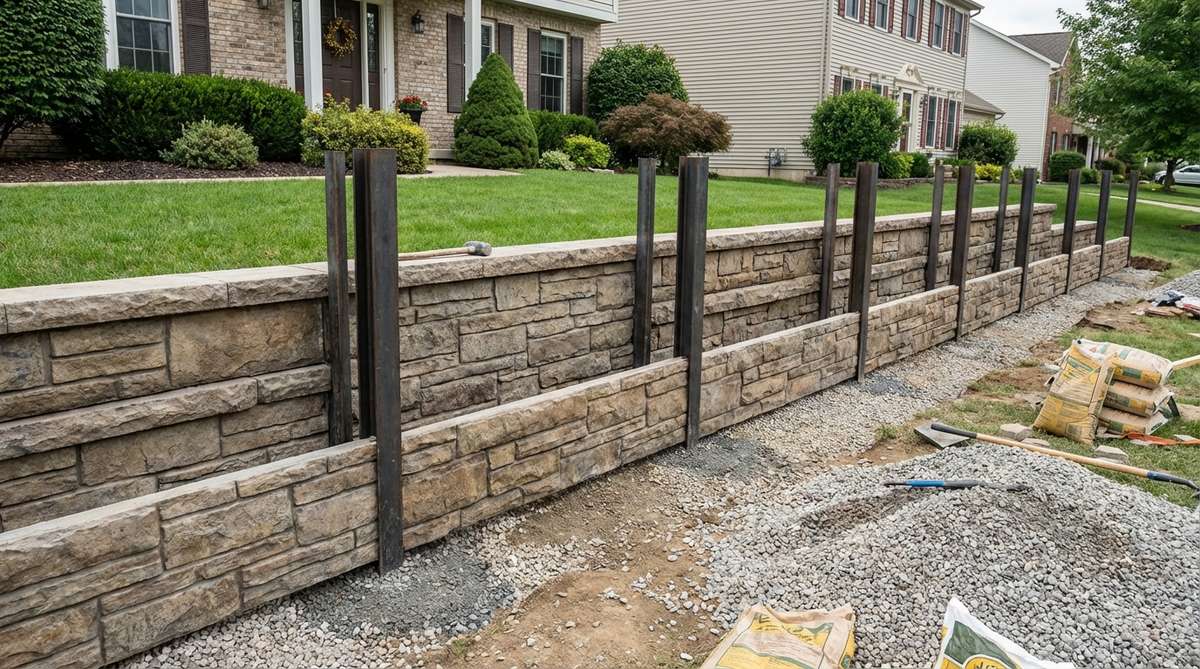
This layout offers the perfect illusion of carved stone in a fraction of the time. Slipping a precast textured panel retaining system into steel H-channels is ideal for massive backyard borders.
Stacking hundreds of heavy blocks destroys your back, but sliding engineered panels between anchored posts delivers a surprisingly premium look instantly. These systems are factory-cured for extreme weather resistance, bypassing the curing risks of poured concrete.
Though initially pricier at $40+ per linear foot, the labor savings are massive. Pin this if you need a tall wall finished this weekend.
- Key Materials: Precast concrete panels, steel H-posts
- Vibe / Style: Upscale commercial
- Difficulty: Two-person assembly
- Budget Breakdown: Panels: $300 | Posts/Concrete: $100
- Creator’s Tip: Ensure your post spacing is accurate down to the millimeter before the concrete sets, or the panels won’t slide in.
- Smart Sourcing: Galvanized steel retaining wall H-posts, Precast faux-stone concrete panels
15. Concrete Block Planter Wall
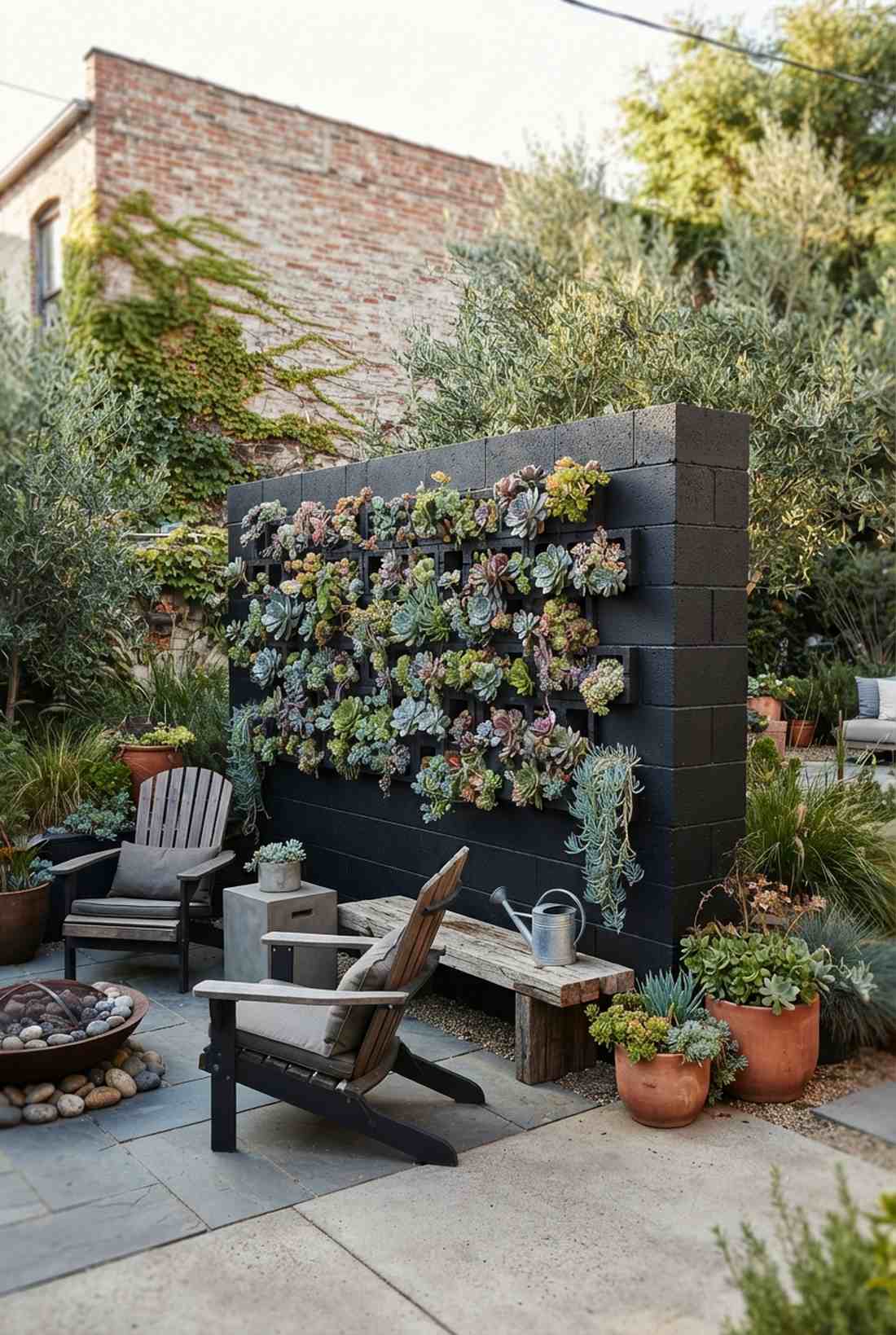
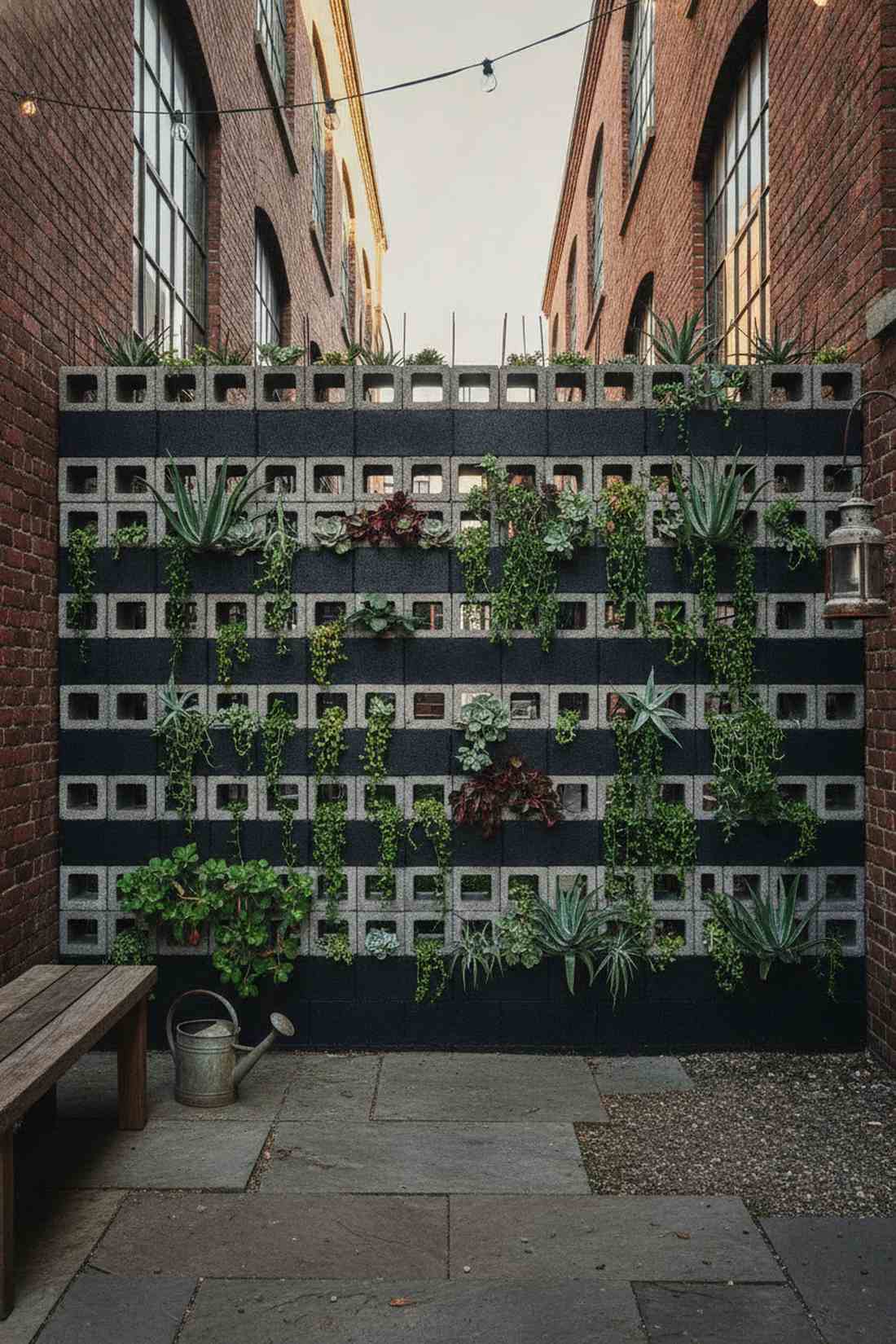
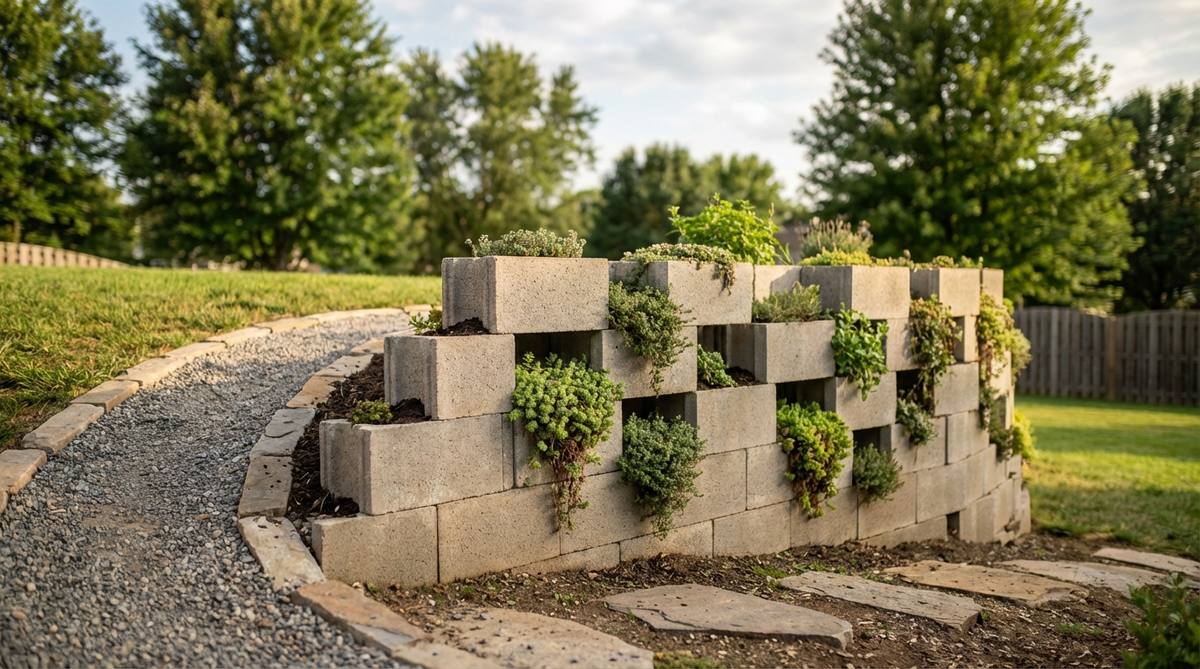
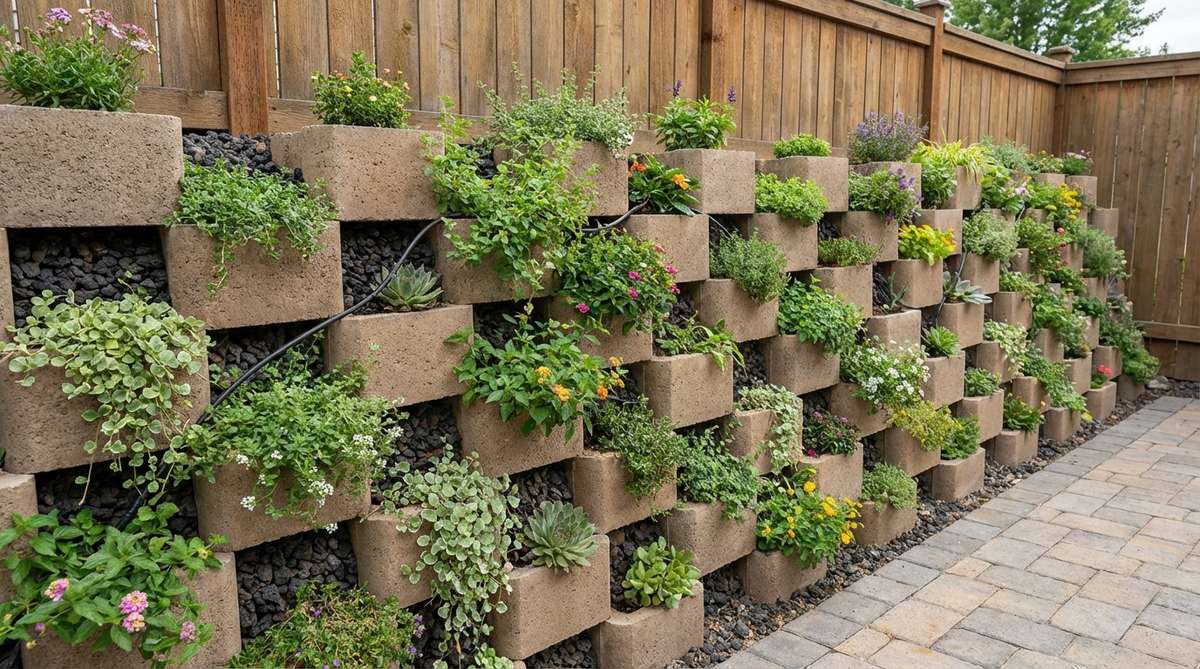
Industrial chic meets vibrant greenery in this brilliant layout. Creating a cinder block living planter wall works wonders for a drab alleyway or tight urban garden needing vertical life.
Most view hollow cinder blocks as ugly construction waste, but turning them outward creates perfect built-in pockets for drought-tolerant succulents. Filling the rear structural cores with rebar and concrete ensures the wall stays rigid while the front cores bloom.
At just $3 a block, you can build this eye-catching feature for under $50. It’s a wildly popular hack for a reason.
- Key Materials: Standard cinder blocks, potting soil mix
- Vibe / Style: Urban industrial jungle
- Difficulty: Easy DIY
- Budget Breakdown: Blocks: $30 | Soil/Plants: $25
- Creator’s Tip: Paint the blocks matte black before planting to make the green foliage pop aggressively.
- Smart Sourcing: Drought-tolerant succulent starter kits, Premium moisture-control potting mix
Eco-Conscious AlternativesSustainable Slope Solutions
16. Gabion Wire Basket Wall
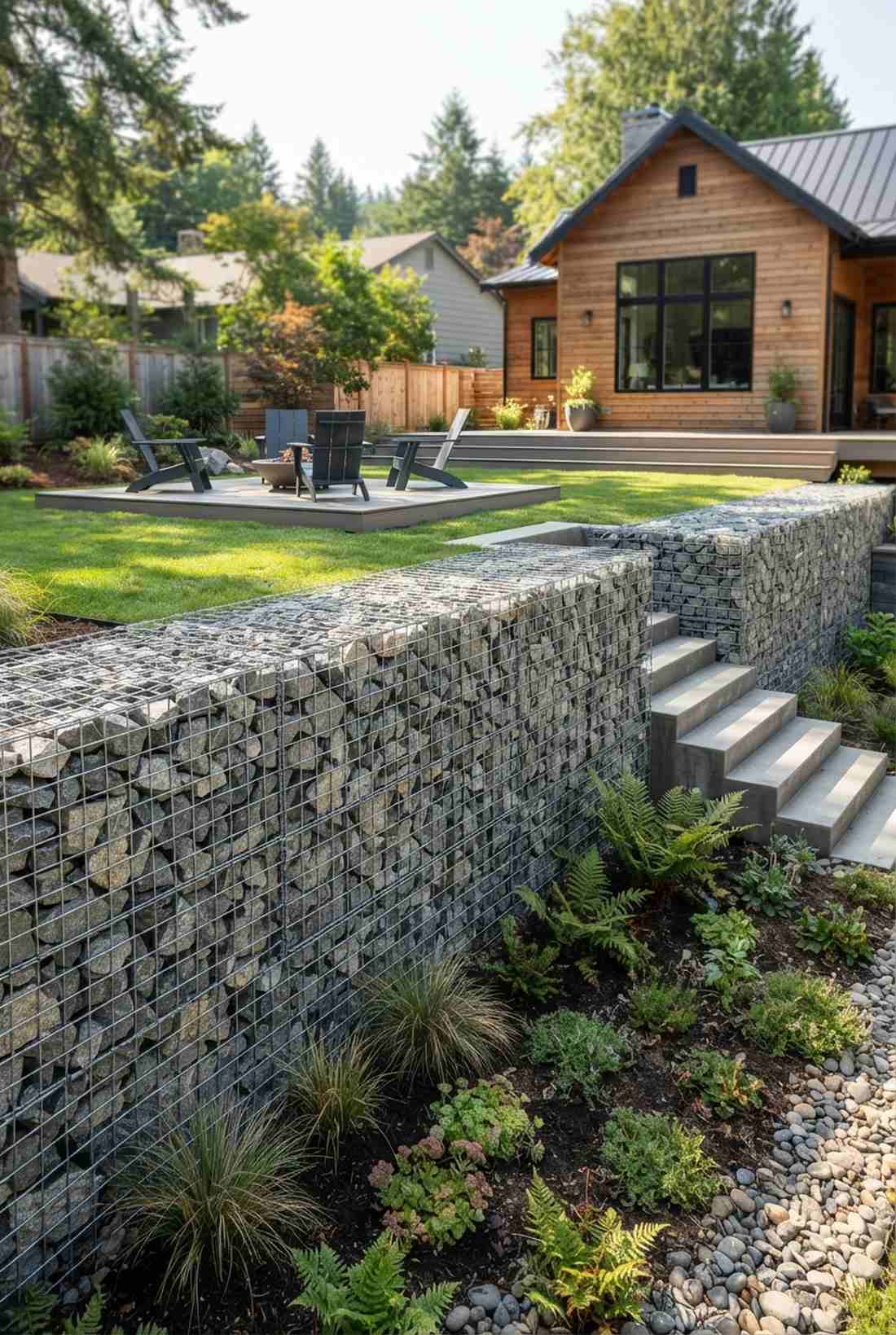
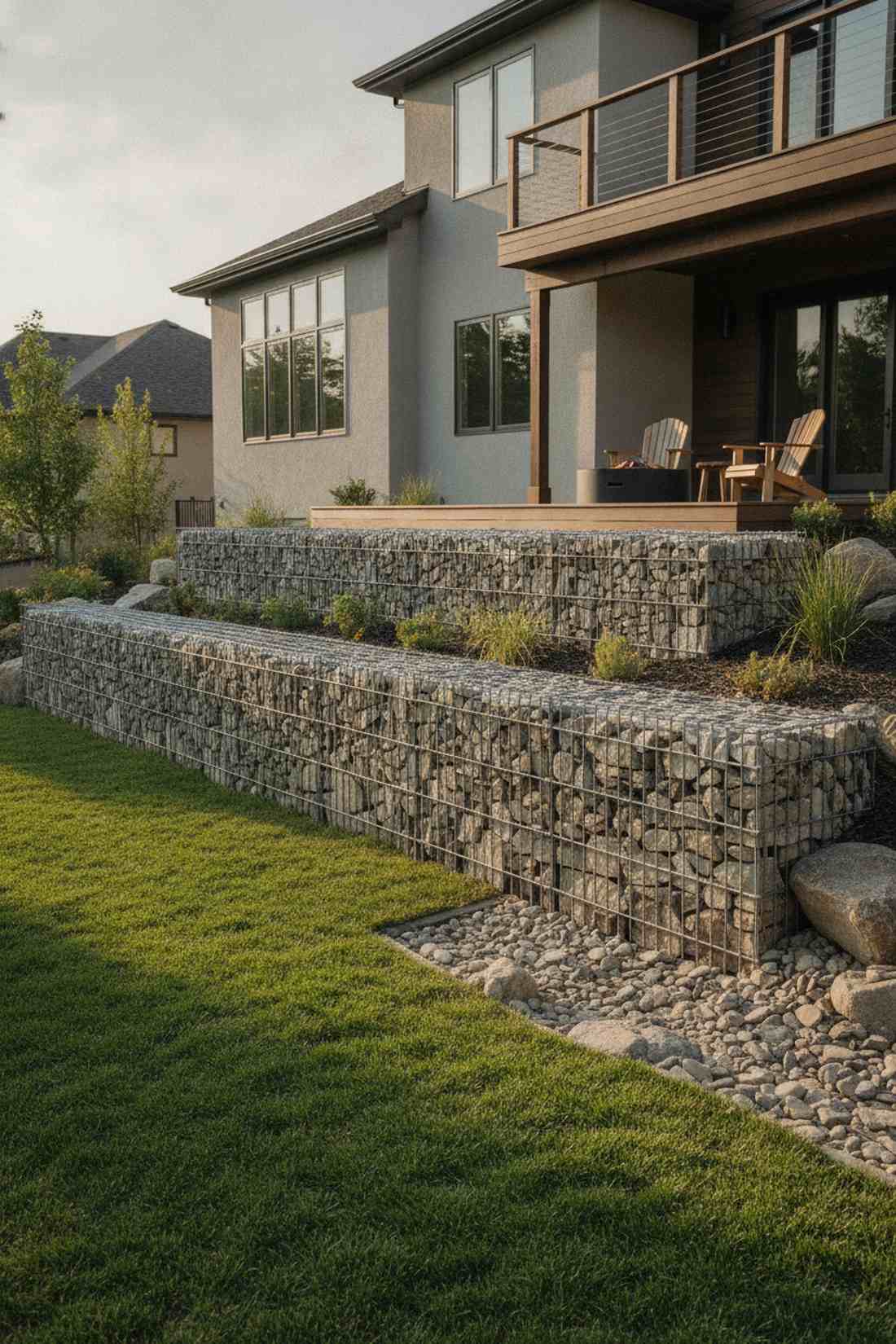
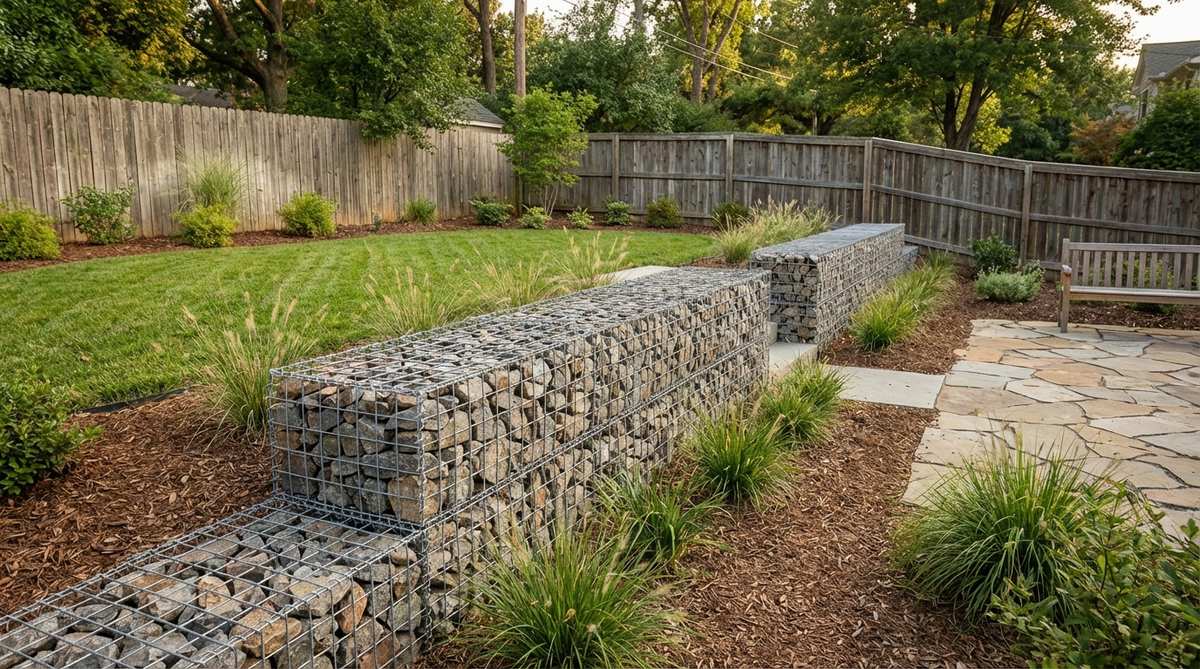
Raw, textural, and highly modern, this aesthetic dominates contemporary landscape design. A stone-filled gabion basket barrier is the ultimate drainage-friendly solution for flood-prone sloped properties.
Solid walls trap water and inevitably crack, but caging jagged rocks in galvanized steel mesh creates a massive gravity wall that lets water pass right through. You can cut costs drastically by filling the hidden inner core with ugly recycled concrete and only facing the front with premium stone.
Baskets run about $40 each, plus the cost of fill. Save this if you live in an area with heavy rainfall.
- Key Materials: Galvanized gabion cages, angular fill stone
- Vibe / Style: Industrial modern
- Difficulty: Labor intensive
- Budget Breakdown: Cages: $80 | Rock Fill: $60
- Creator’s Tip: Use angular stones, not smooth river rocks; the jagged edges interlock to prevent the basket from bulging outward.
- Smart Sourcing: Heavy-duty galvanized gabion basket kits, Commercial hog ring pliers
17. Recycled Concrete Rubble Wall
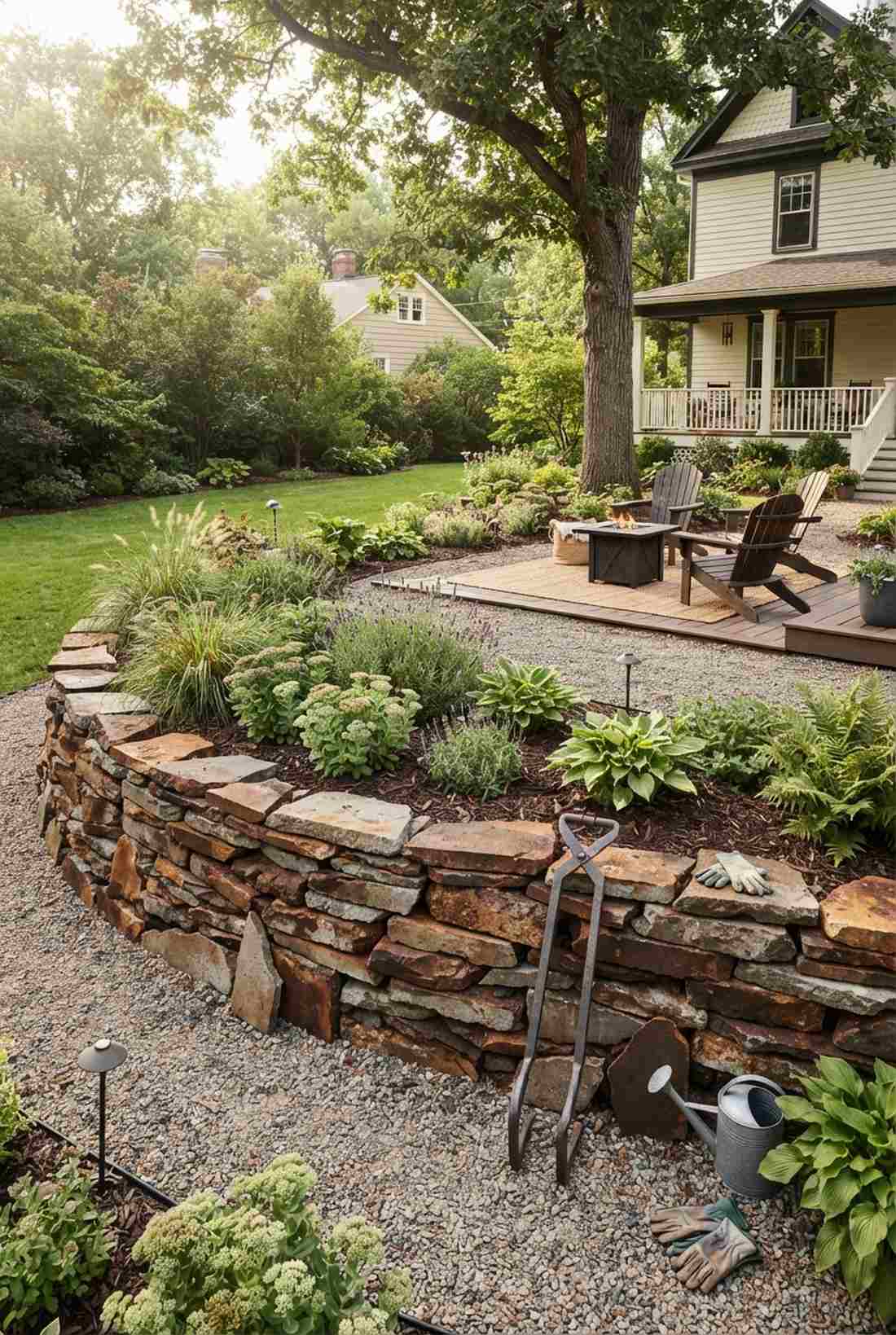
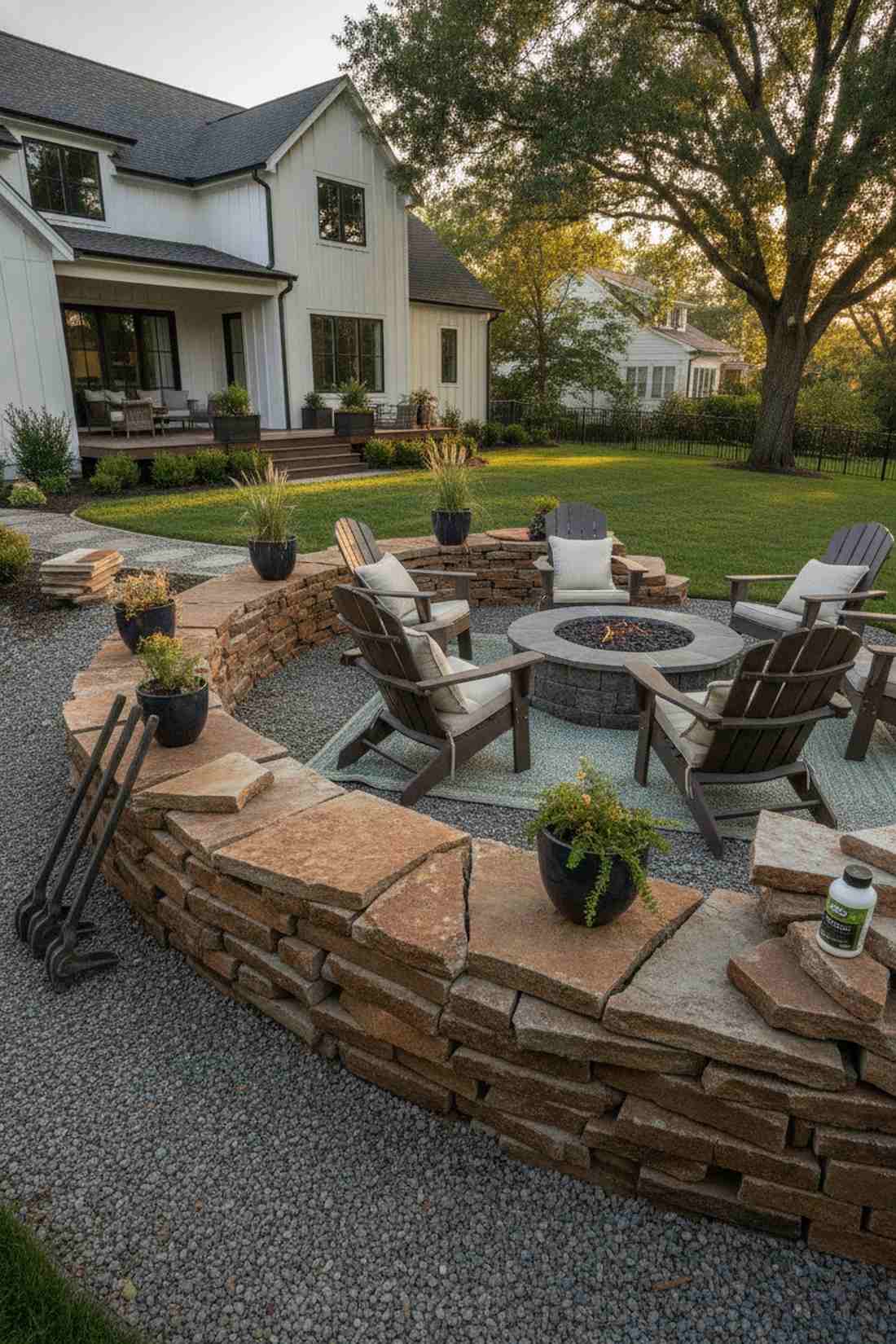
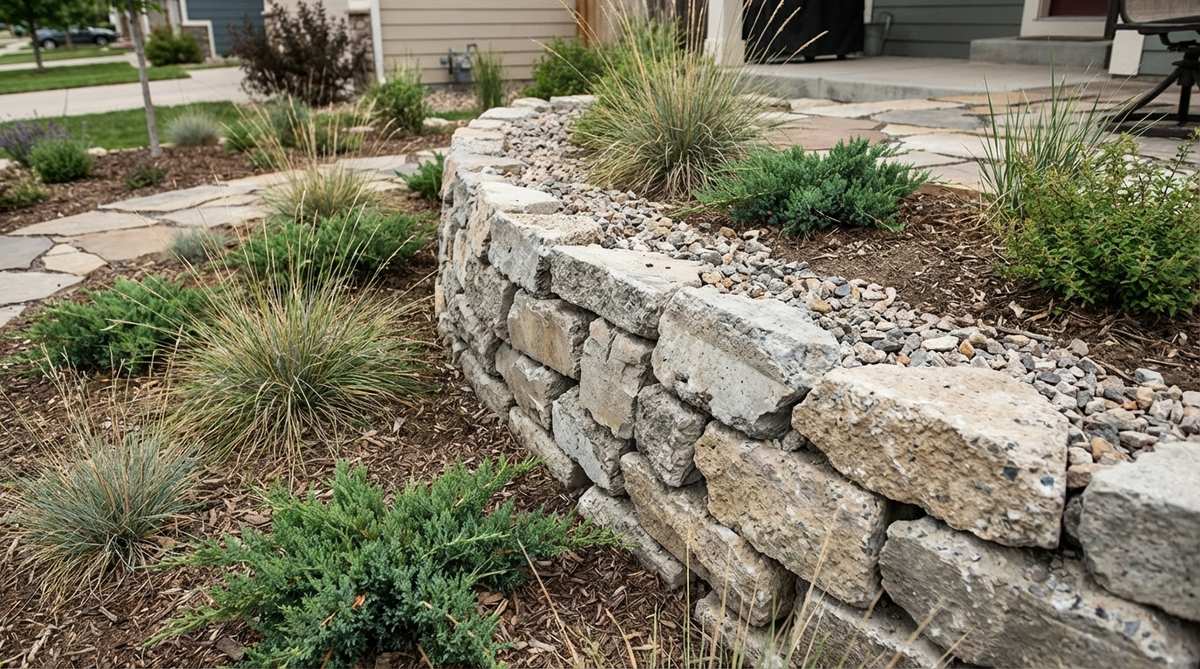
This rugged, upcycled layout feels wonderfully post-industrial. Building a broken urbancrete rubble wall—often called “urbanite”—is a genius hack for a cheap, highly textural backyard terrace.
Paying for quarry stone is a trap when demolished driveway chunks deliver a surprisingly premium look for free. Stacking the flat broken edges outward mimics natural flagstone while keeping thousands of pounds of waste out of landfills.
Your only real cost is the gas to haul the free rubble. It’s an ultra-budget win for the determined DIYer.
- Key Materials: Salvaged concrete chunks, base gravel
- Vibe / Style: Urban ruins
- Difficulty: Heavy manual labor
- Budget Breakdown: Rubble: $0 | Gravel: $20
- Creator’s Tip: Stain the concrete chunks with a watered-down iron sulfate solution to turn the ugly gray into a rich, rusty earth tone.
- Smart Sourcing: Heavy-duty concrete lifting tongs, Eco-friendly masonry stain concentrate
18. Recycled Brick Garden Wall
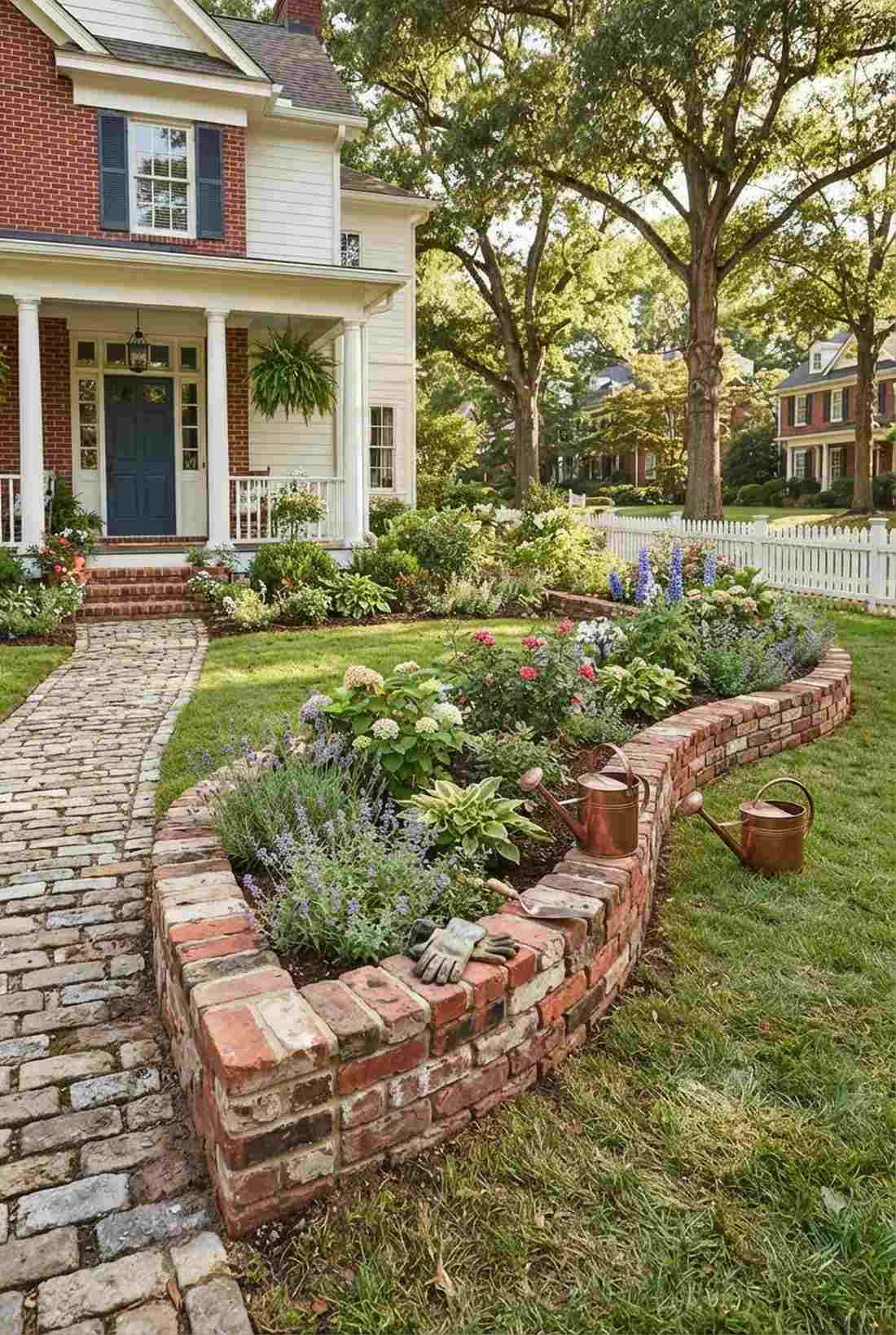
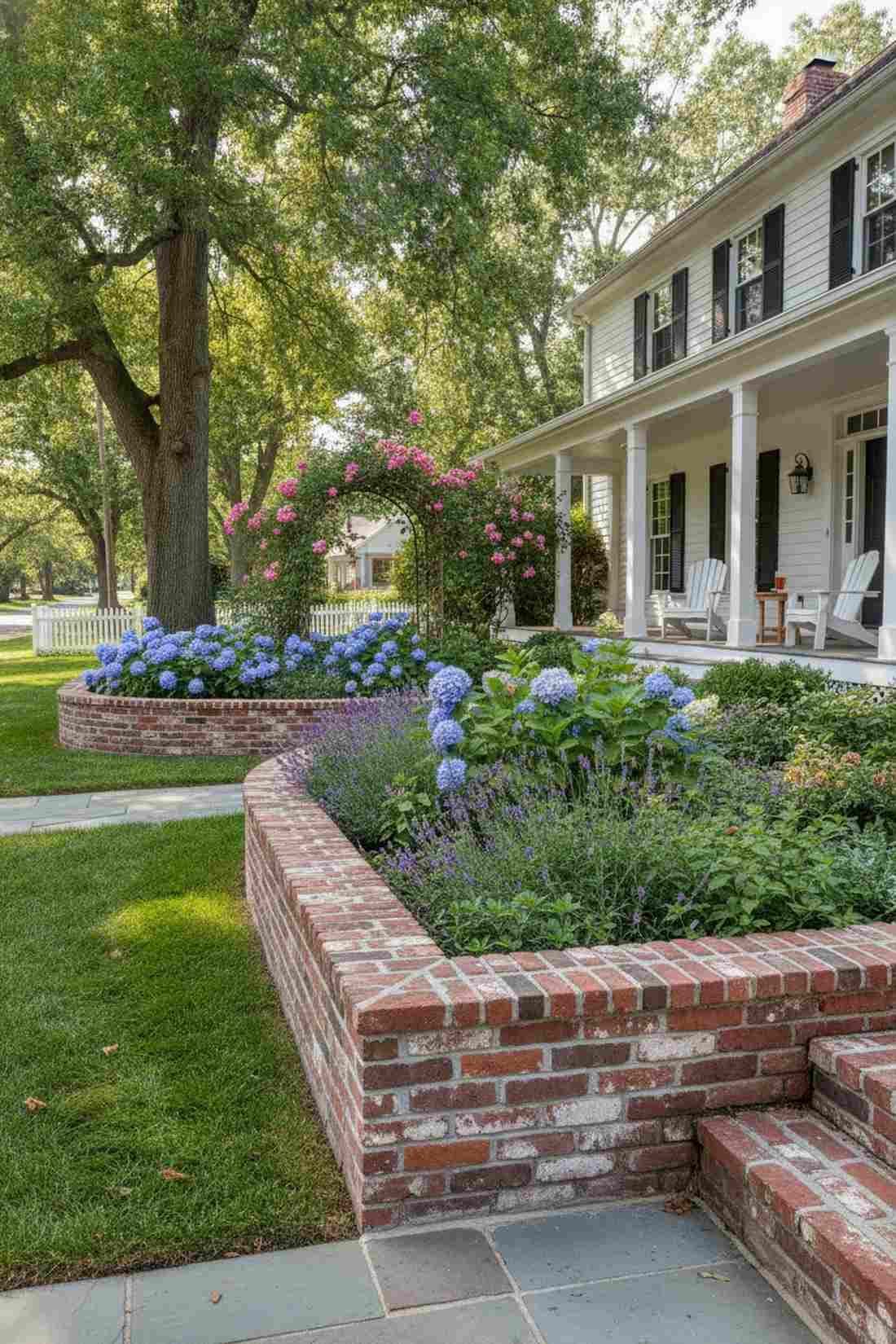
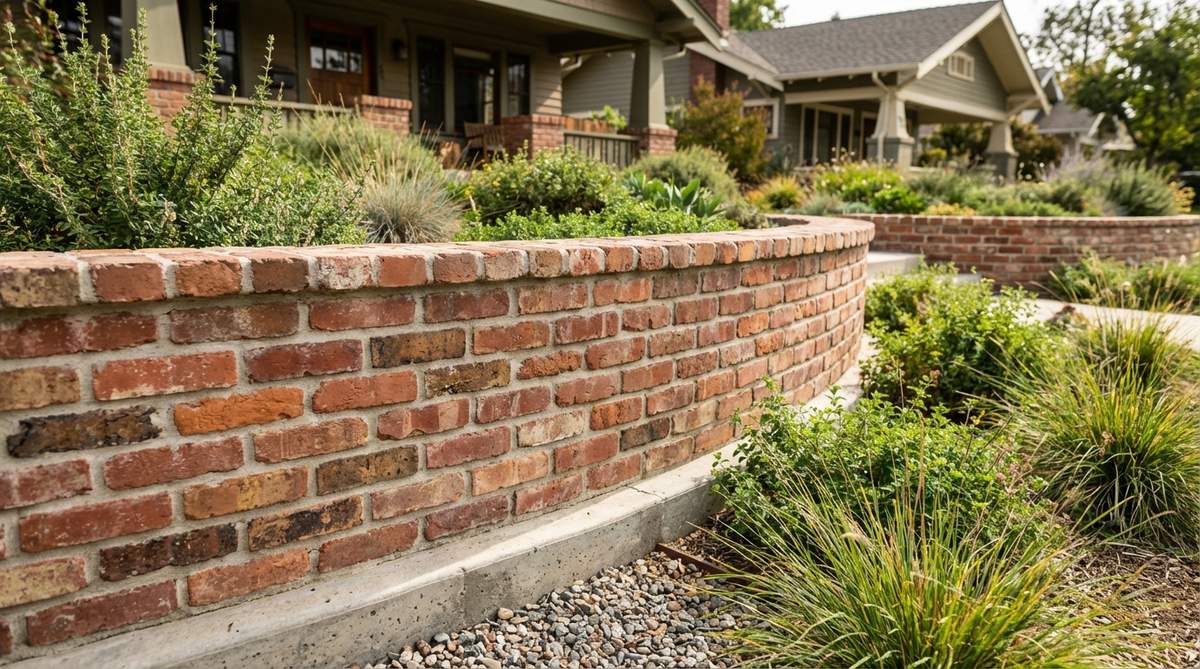
The rich red tones and chipped edges bring instant historical character. A reclaimed antique brick garden edge adds heritage charm to front-yard flower beds of traditional homes.
New bricks look sterile and fake, but sourcing century-old demolished brick gives a designer-level finish packed with patina. Embedding them in a fresh mortar bed provides modern structural integrity wrapped in a vintage aesthetic.
Expect to pay a premium for cleaned reclaimed bricks, around $1–$2 per brick. Pin this to your cottage garden inspiration board.
- Key Materials: Salvaged red bricks, masonry mortar
- Vibe / Style: Heritage colonial
- Difficulty: Intermediate masonry
- Budget Breakdown: Bricks: $100 | Mortar: $20
- Creator’s Tip: Soak old bricks in water before laying them; dry bricks will suck the moisture out of the mortar and ruin the bond.
- Smart Sourcing: Professional brick-laying trowel sets, Pre-mixed historical pointing mortar
Material Guide: Cheap vs. Premium Aesthetic
Knowing exactly where to save and where to spend makes all the difference in achieving that “looks expensive but isn’t” vibe.
- Standard Wood vs. Pre-Treated Timber: Raw wood rots in 2 years. Upgrading to pressure-treated timber bundles prevents fungal decay and soil moisture destruction.
- Loose Soil vs. Heavy-Duty Geotextile: Never just pile dirt behind a wall. Wrapping your backfill in commercial-grade landscape fabric prevents mud from bleeding through your beautiful stone joints.
19. Geotextile Reinforced Soil Wall
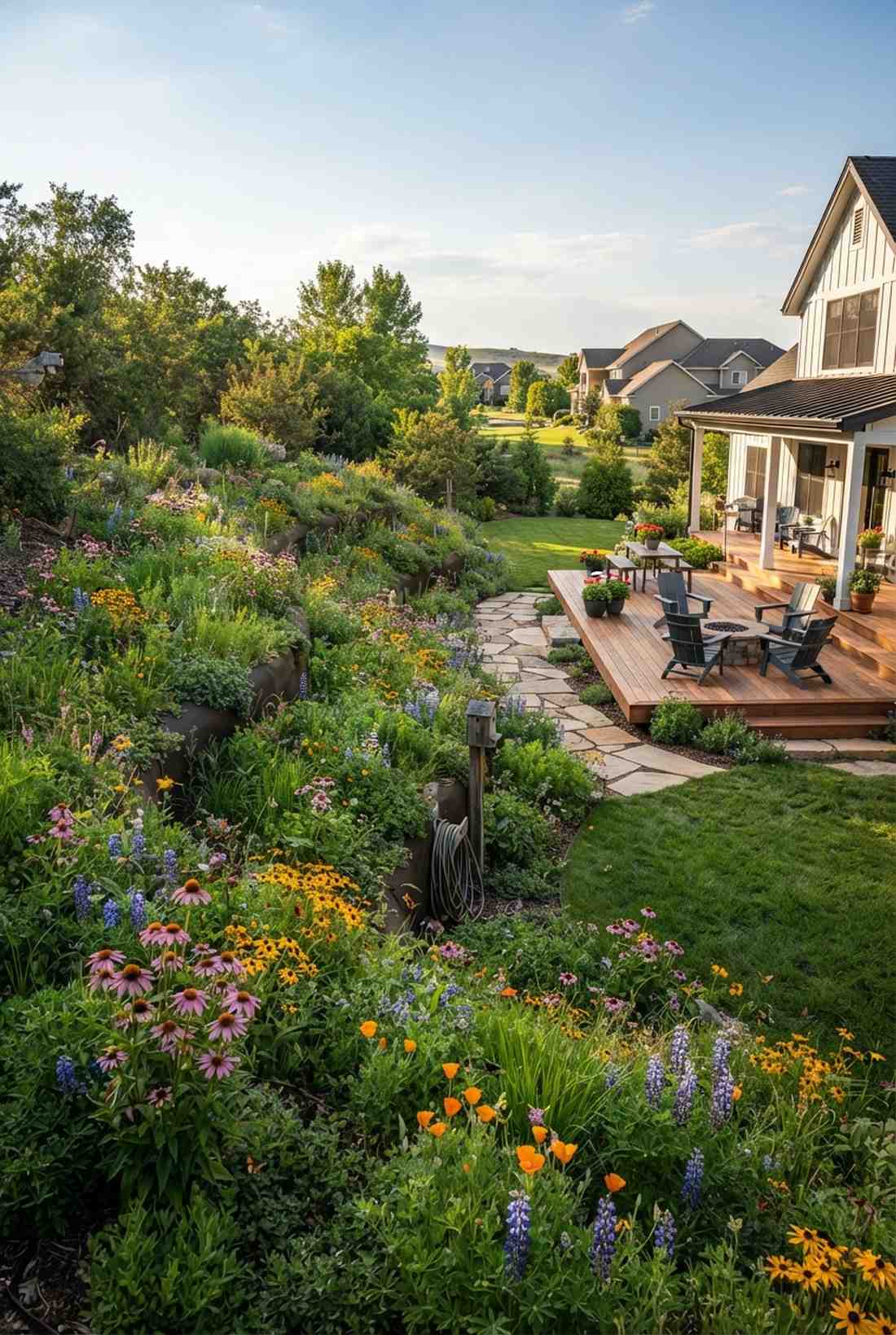
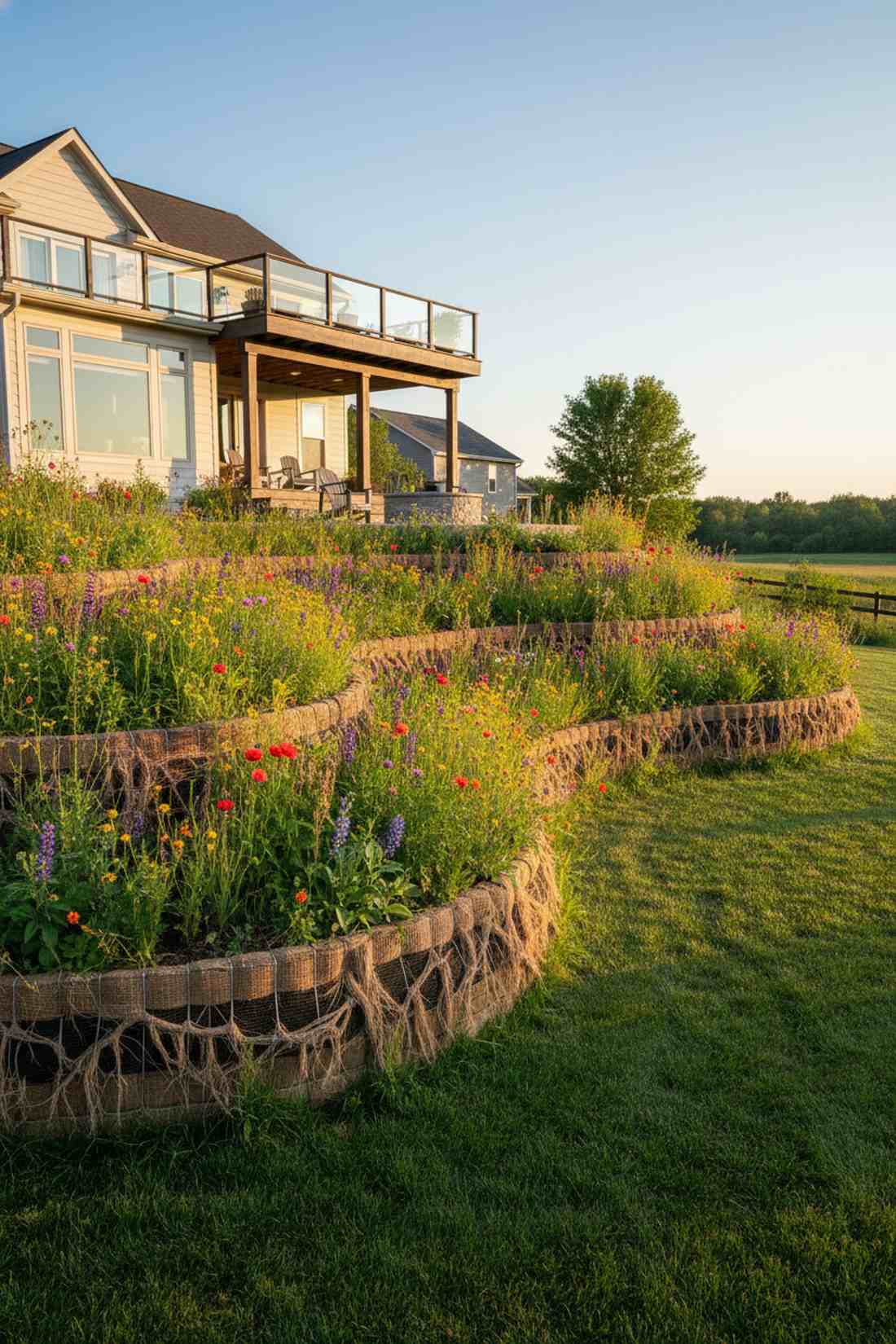
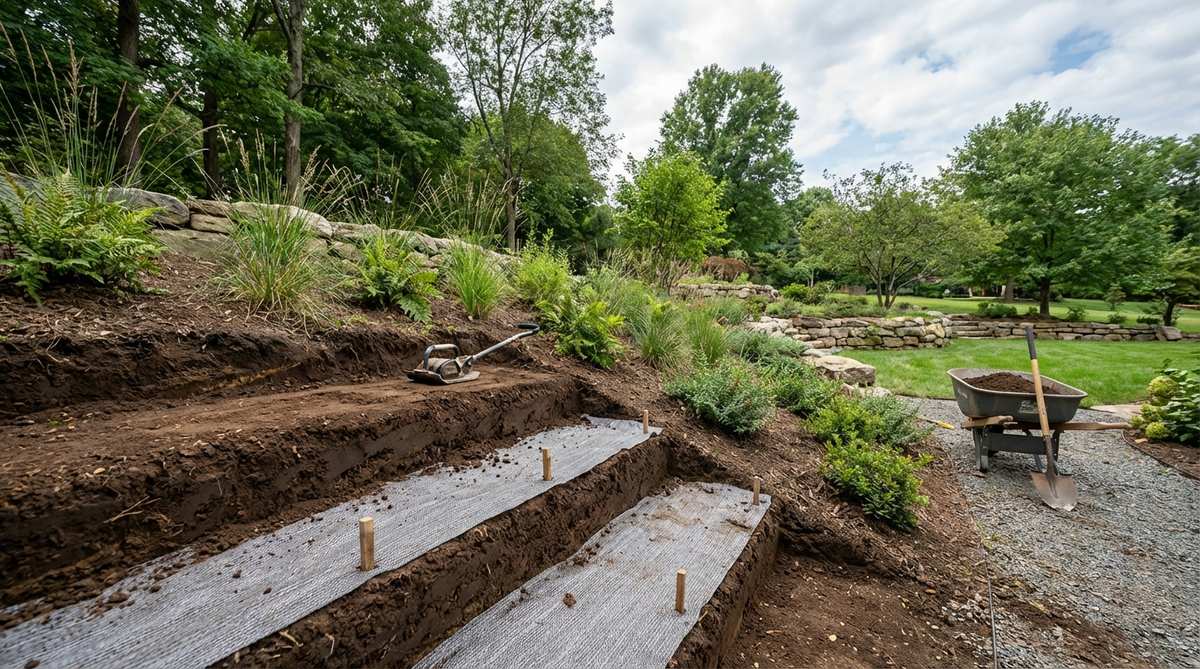
Lush and completely organic, this invisible structure feels like magic. A fabric-reinforced living soil terrace is the ultimate ecological choice for stabilizing a nature-focused hillside.
Building a hard concrete barrier disrupts the ecosystem, but sandwiching compacted dirt with high-tensile fabric layers stabilizes the earth while allowing deep root penetration. Once the front face is hydro-seeded, the plastic reinforcement vanishes beneath a blanket of thick greenery.
This civil engineering trick costs about $30 in fabric per tier. Highly recommended for restoring eroded hills naturally.
- Key Materials: Woven geotextile grid, compacted soil
- Vibe / Style: Wildflower meadow
- Difficulty: Advanced planning
- Budget Breakdown: Fabric Grid: $40 | Seed: $15
- Creator’s Tip: You must use a mechanical plate compactor on every soil layer; foot-stomping is not enough to activate the fabric’s tension.
- Smart Sourcing: High-tensile woven geotextile fabric rolls, Deep-root slope stabilization seed mix
Most DIYers rely on dead materials… but this next ancient technique literally grows stronger every single year.
20. Living Willow Wattle Fence
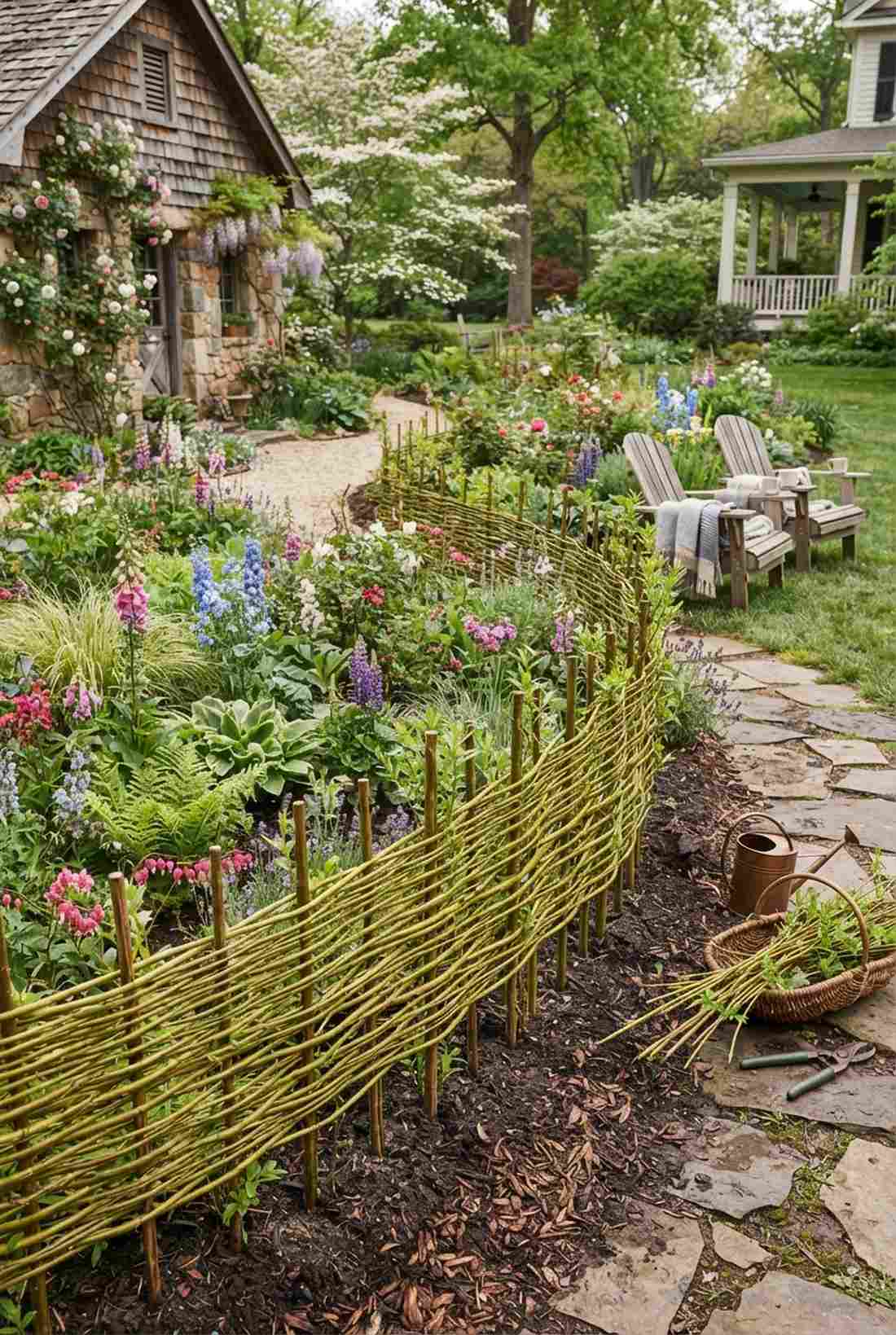
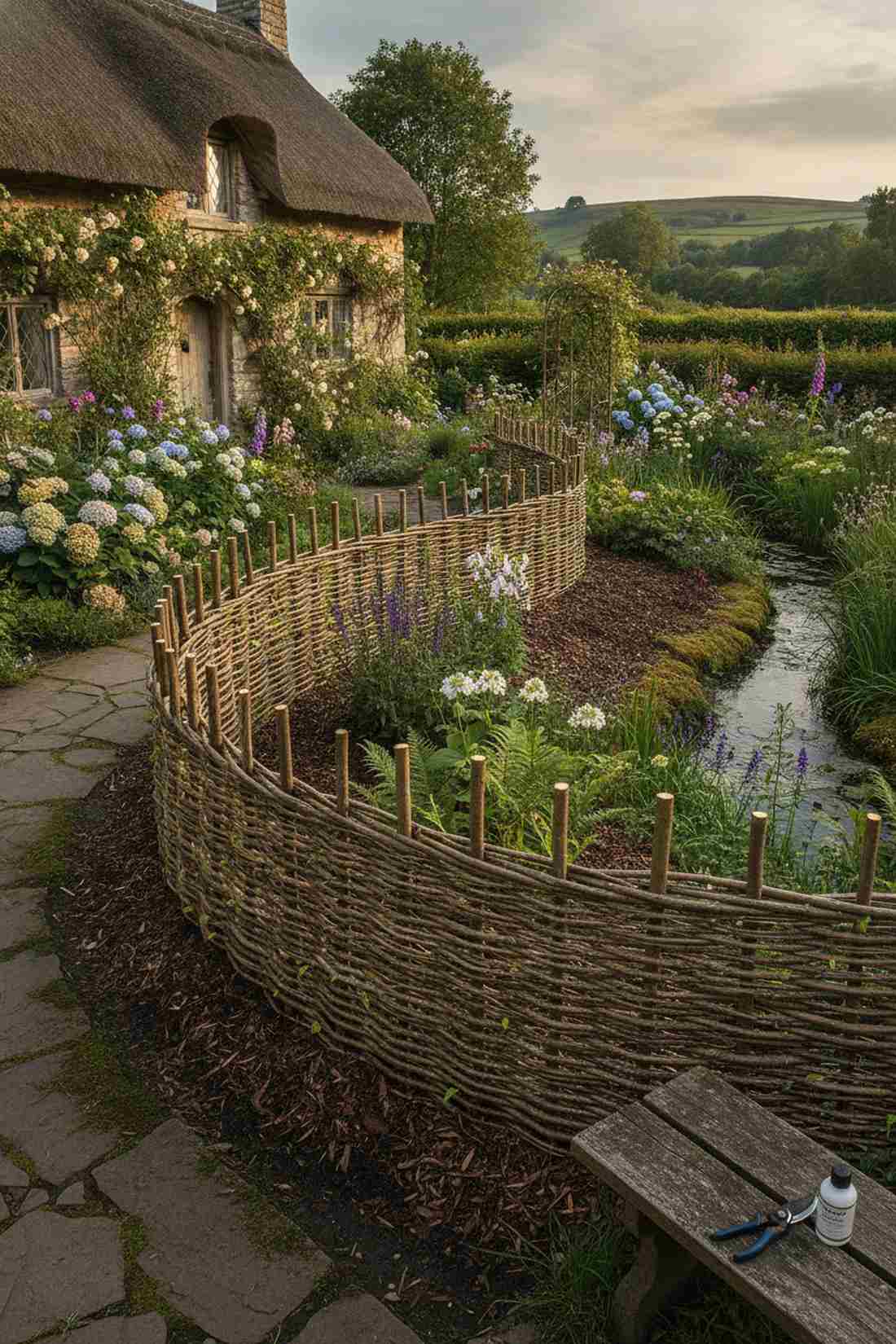
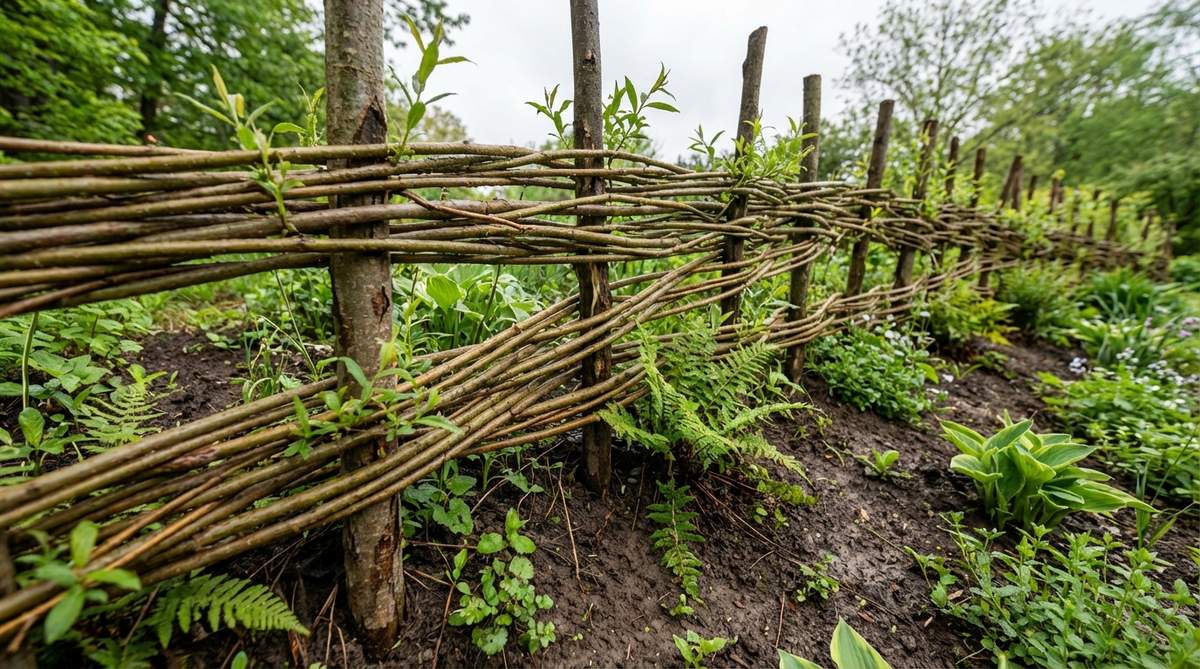
This woven botanical masterpiece looks like it was grown by elves. Crafting a living woven willow wattle edge is the absolute perfect aesthetic for a damp, whimsical cottage garden.
Standard fences rot and weaken, but driving live willow stakes into moist dirt allows them to root, creating a structural barrier that literally heals itself. Weaving flexible whips horizontally between the vertical stakes holds back loose mulch and soil effortlessly.
If you have access to willow trees, this is 100% free. Save this to your permaculture garden board.
- Key Materials: Fresh-cut willow stakes and whips
- Vibe / Style: Ancient Celtic
- Difficulty: Easy weaving
- Budget Breakdown: Willow: $0 | Rooting Hormone (Optional): $10
- Creator’s Tip: Plant the vertical stakes deep in early spring while the wood is dormant to guarantee they sprout roots instead of just rotting.
- Smart Sourcing: Liquid plant rooting hormone gel, Heavy-duty pruning shears
Creative Vertical DesignsSpace-Maximizing Wall Innovations
21. Modular Living Wall System
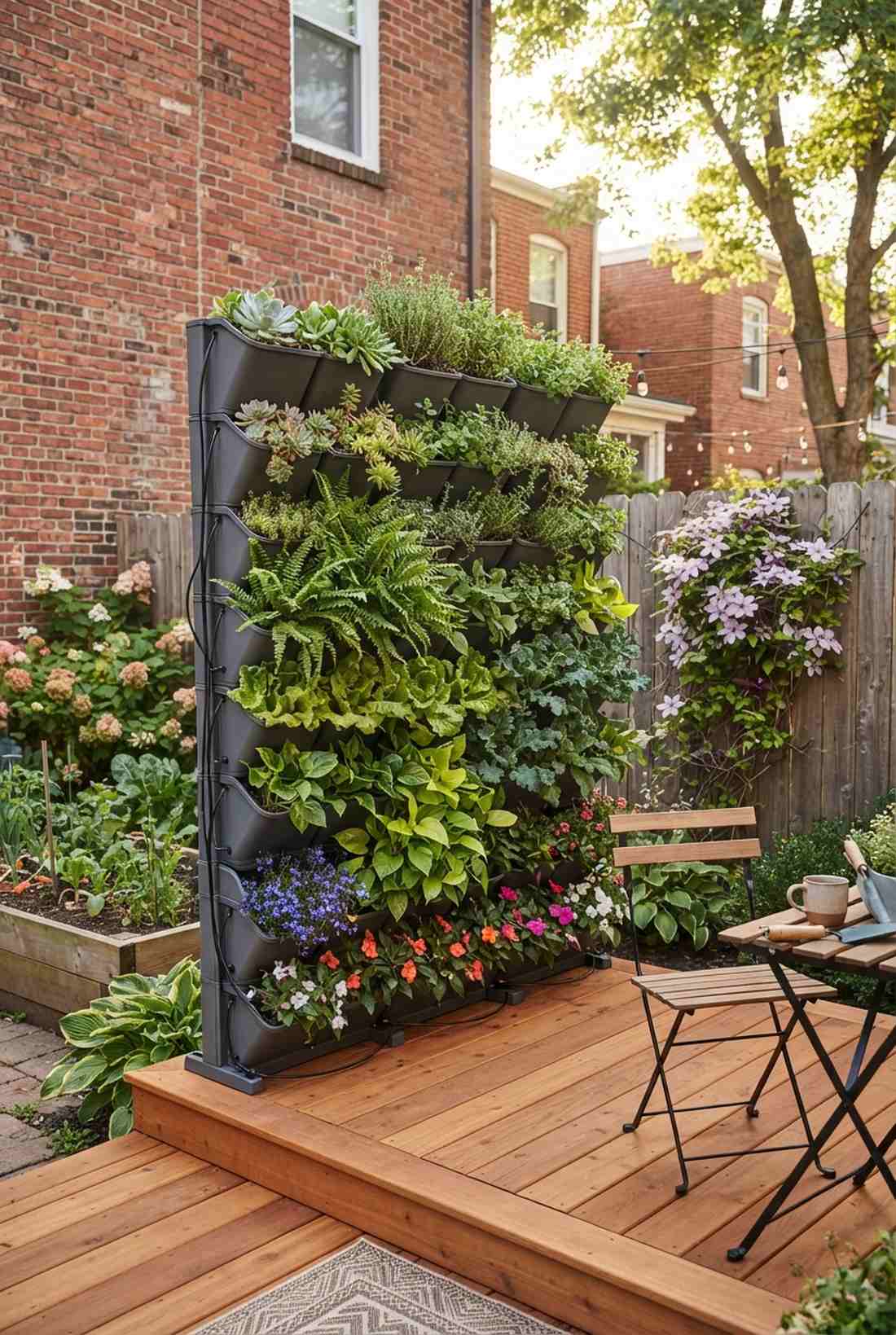
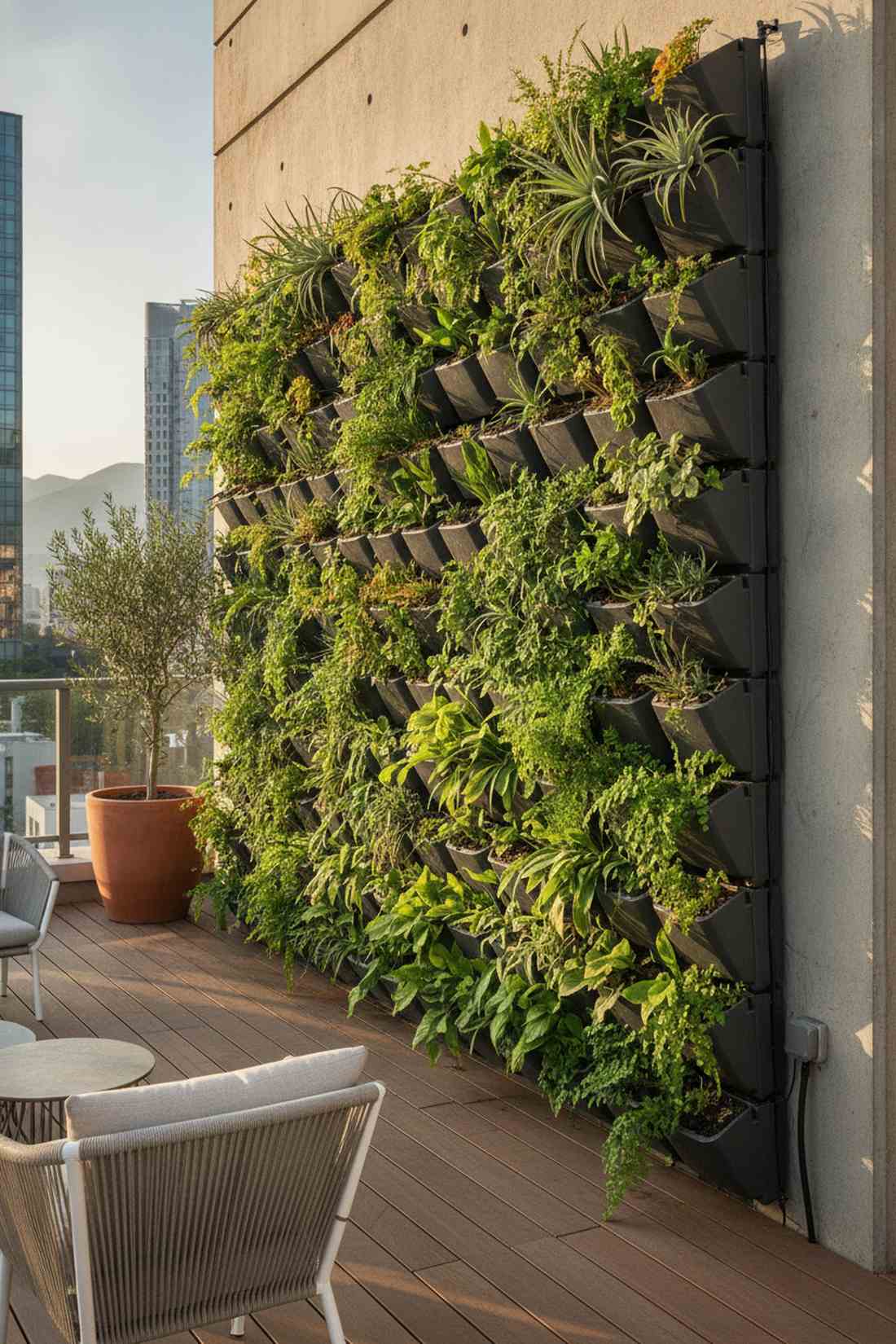
Bursting with life, this layout feels like a vertical jungle. A stackable modular planter wall is a game-changer for tiny urban patios where floor space is limited.
Plain blocks are boring, but snapping together angled planting pods delivers a surprisingly premium look that hides the plastic structure entirely. Integrating a hidden micro-drip irrigation line behind the scenes ensures every tier stays perfectly watered without lifting a finger.
Kits range from $60 to $150 depending on height. It’s a brilliant way to double your planting real estate.
- Key Materials: Plastic modular planters, drip tubing
- Vibe / Style: Modern eco-luxury
- Difficulty: Beginner setup
- Budget Breakdown: Planter Kit: $90 | Irrigation: $25
- Creator’s Tip: Put moisture-loving plants at the bottom and drought-tolerant ones at the top, as water naturally pools downward.
- Smart Sourcing: Stackable vertical garden planter kits, Micro-drip automatic irrigation systems
22. Corten Steel Planter Wall
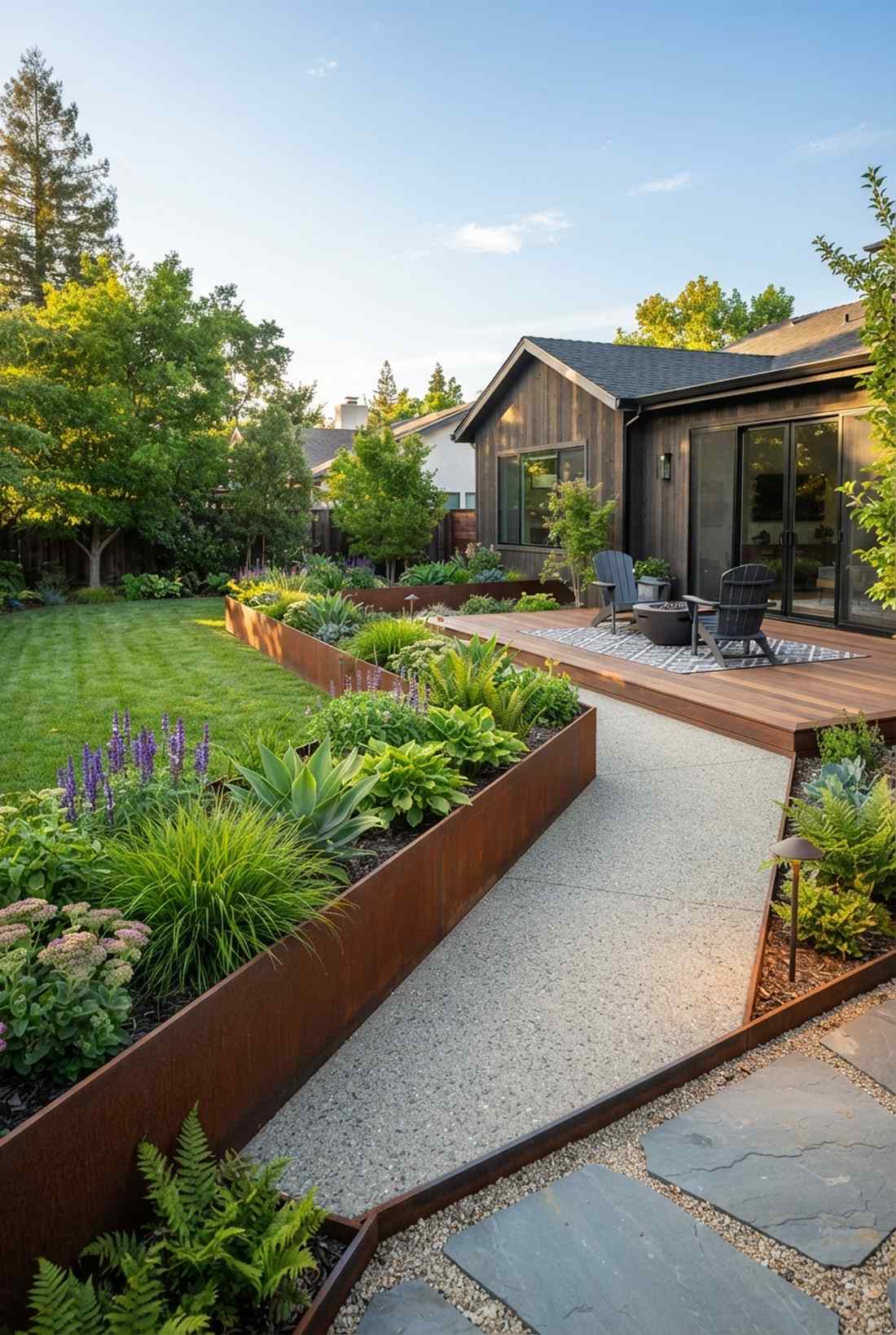
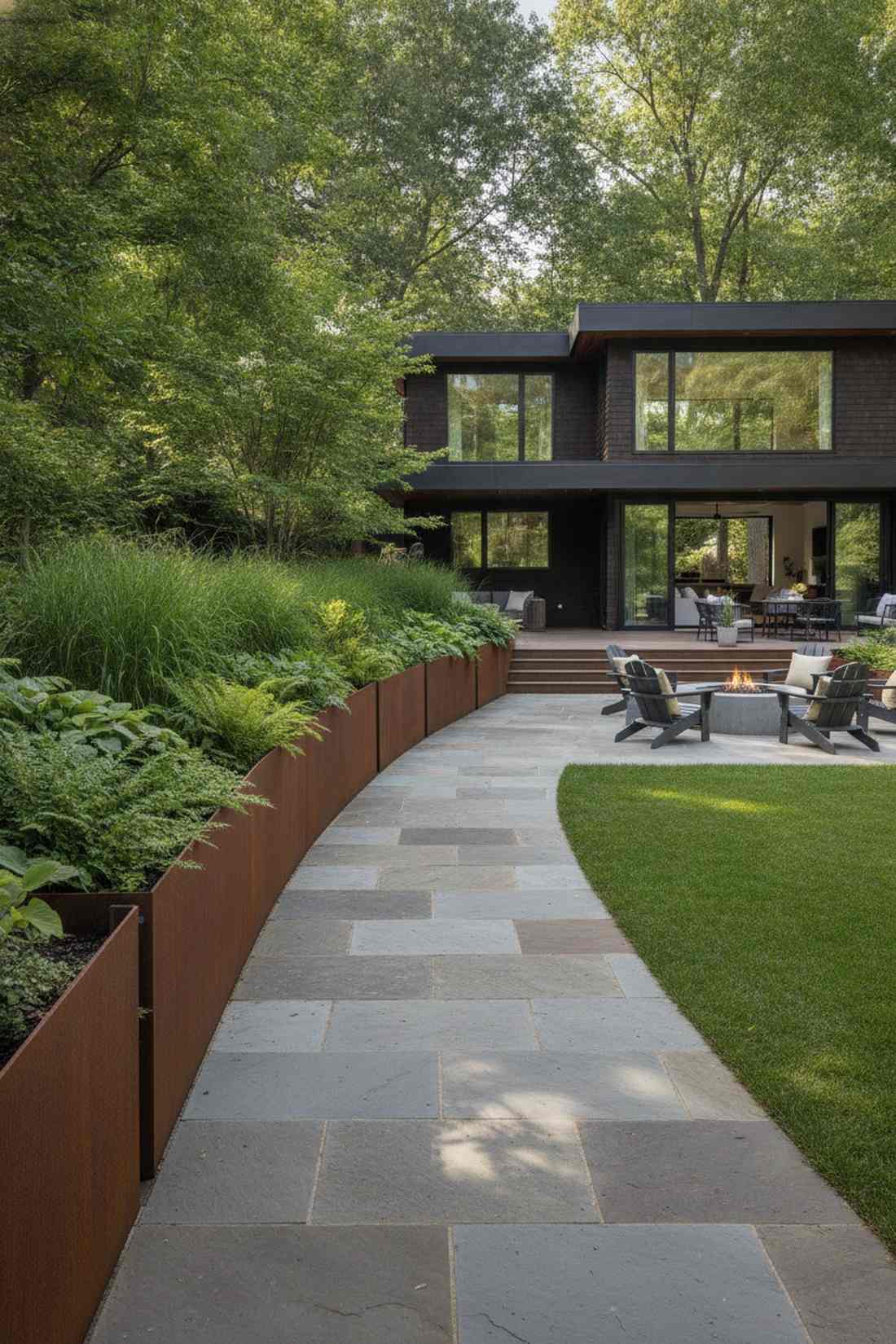
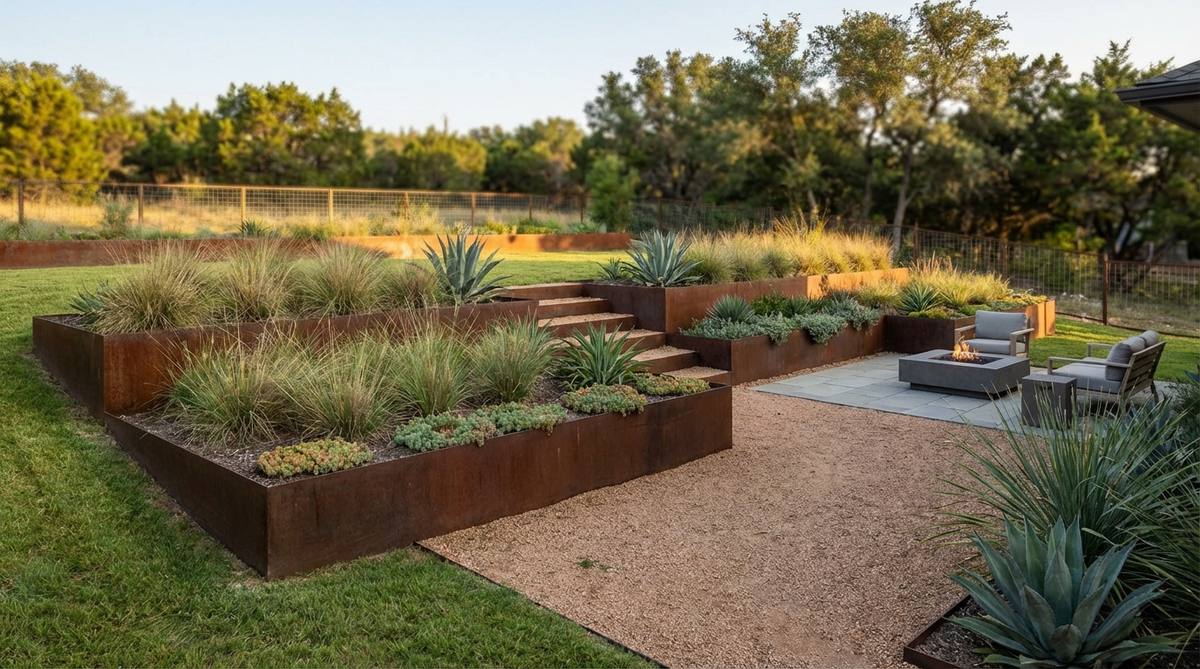
The deep, velvety rust color provides incredible architectural contrast against green leaves. Sinking a weathering Corten steel retaining panel is the ultimate modern use-case for a sleek, minimalist pathway border.
Painting metal to stop rust is exhausting, but utilizing specialized weathering steel intentionally rusts the outer layer to form a permanent, impenetrable protective shield. The ultra-thin profile maximizes usable garden space compared to a bulky 12-inch cinder block wall.
Custom panels cost around $150–$300, but they last over 50 years. Pin this if you love high-end modern landscape design.
- Key Materials: Corten steel sheets, structural stakes
- Vibe / Style: Sleek architectural
- Difficulty: Intermediate fabrication
- Budget Breakdown: Steel Panels: $200 | Hardware: $30
- Creator’s Tip: Spray the steel with a mix of hydrogen peroxide, salt, and vinegar to force the rich rust patina to develop overnight.
- Smart Sourcing: Pre-formed Corten steel garden edging kits, Heavy-duty metal panel joining brackets
23. Tiered Wooden Planter Boxes
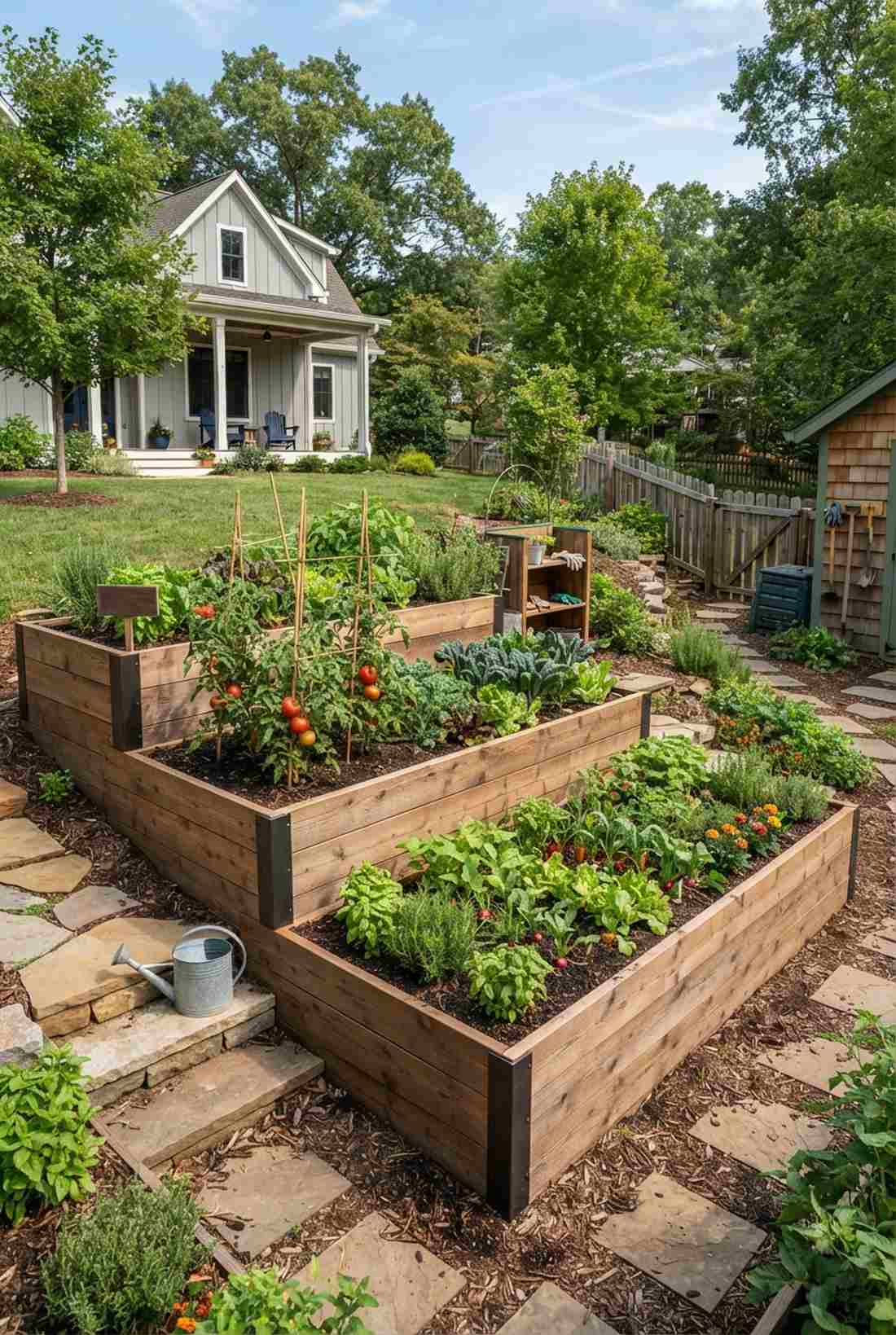
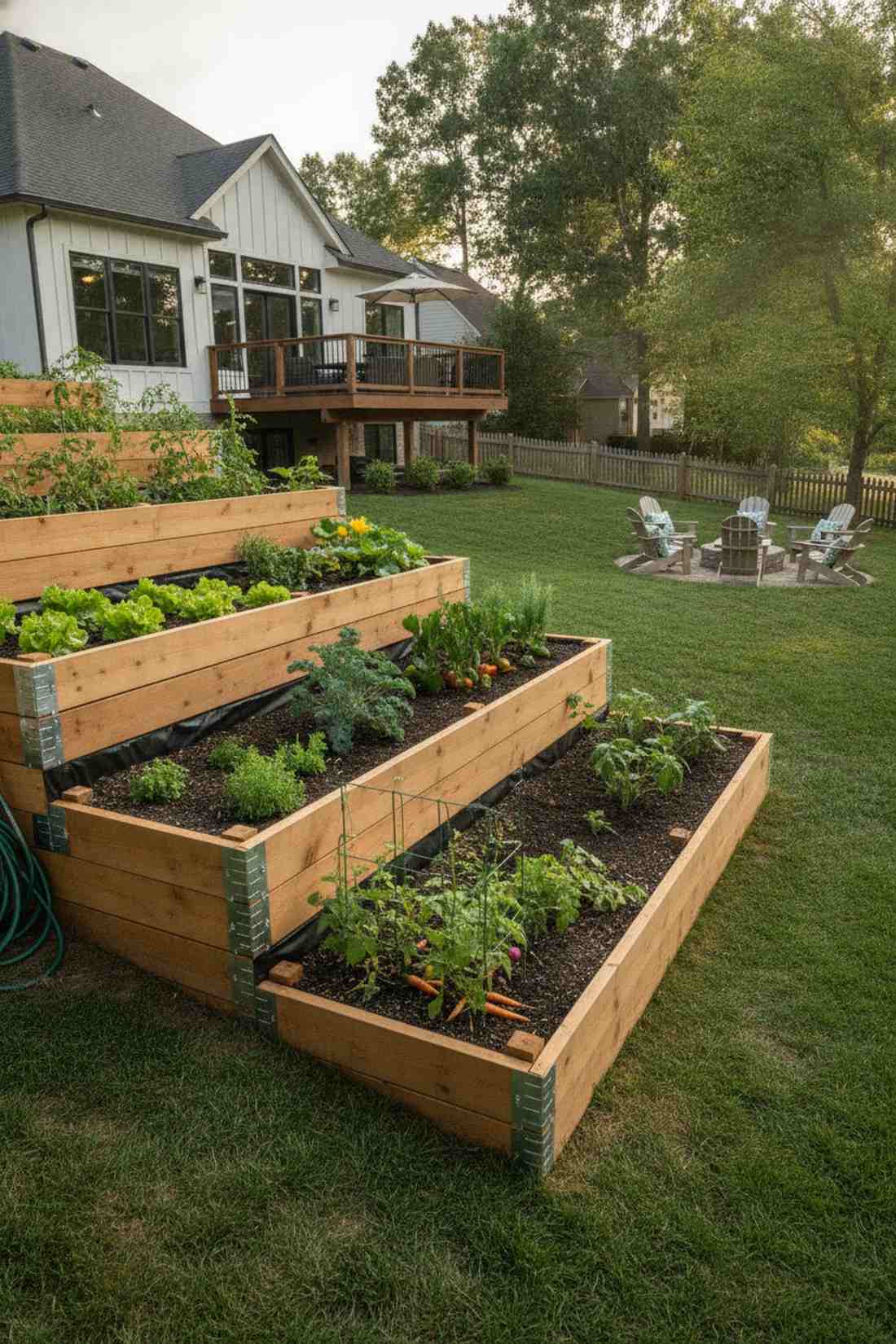
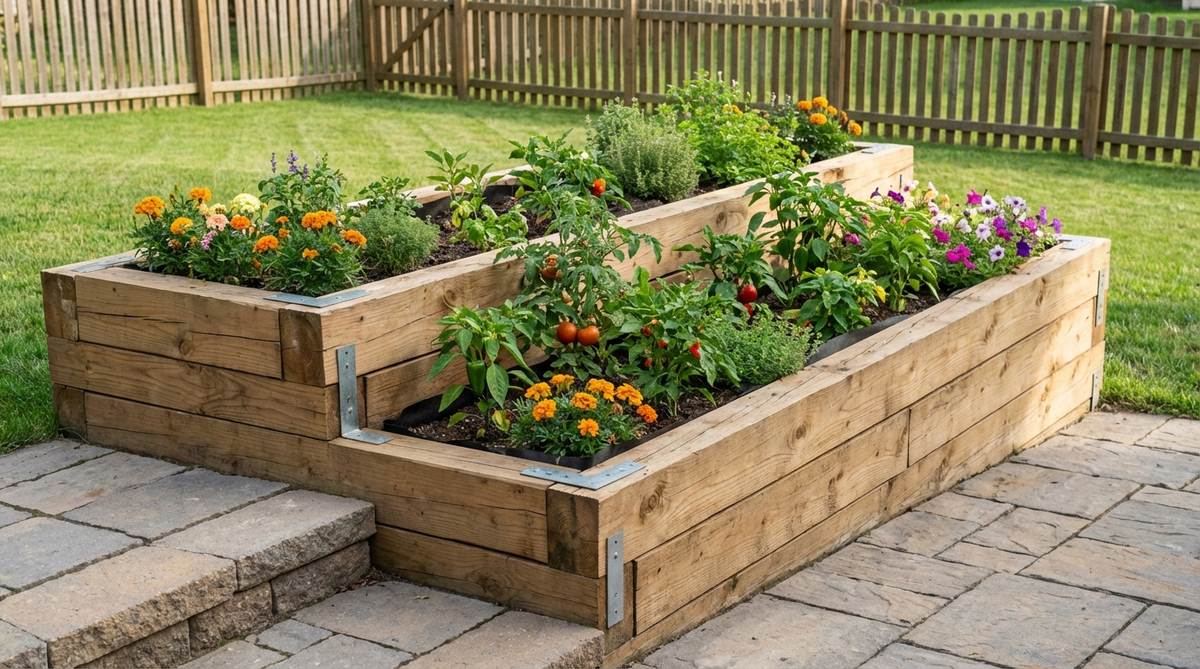
This stepped approach feels highly organized and highly productive. Designing a stepped wooden raised bed terrace completely rescues a steep, useless backyard hill for vegetable farming.
Building one massive wall requires dangerous engineering, but breaking the slope into three shorter, stepped cedar boxes looks far more expensive than it is. The boxed layout permanently solves soil erosion while giving you deep, perfect topsoil for heavy-feeding crops.
Lumber will cost about $150–$250 total. It’s the smartest way to start a backyard homestead.
- Key Materials: 2×10 cedar planks, corner braces
- Vibe / Style: Functional homestead
- Difficulty: Beginner carpentry
- Budget Breakdown: Cedar: $180 | Soil/Brackets: $60
- Creator’s Tip: Line the inside of the wood with thick black plastic sheeting before adding dirt to double the lifespan of the timber.
- Smart Sourcing: Heavy-duty raised bed corner brackets (4-pack), Organic raised bed soil mix (bulk)
24. Stone Veneer Seat Wall
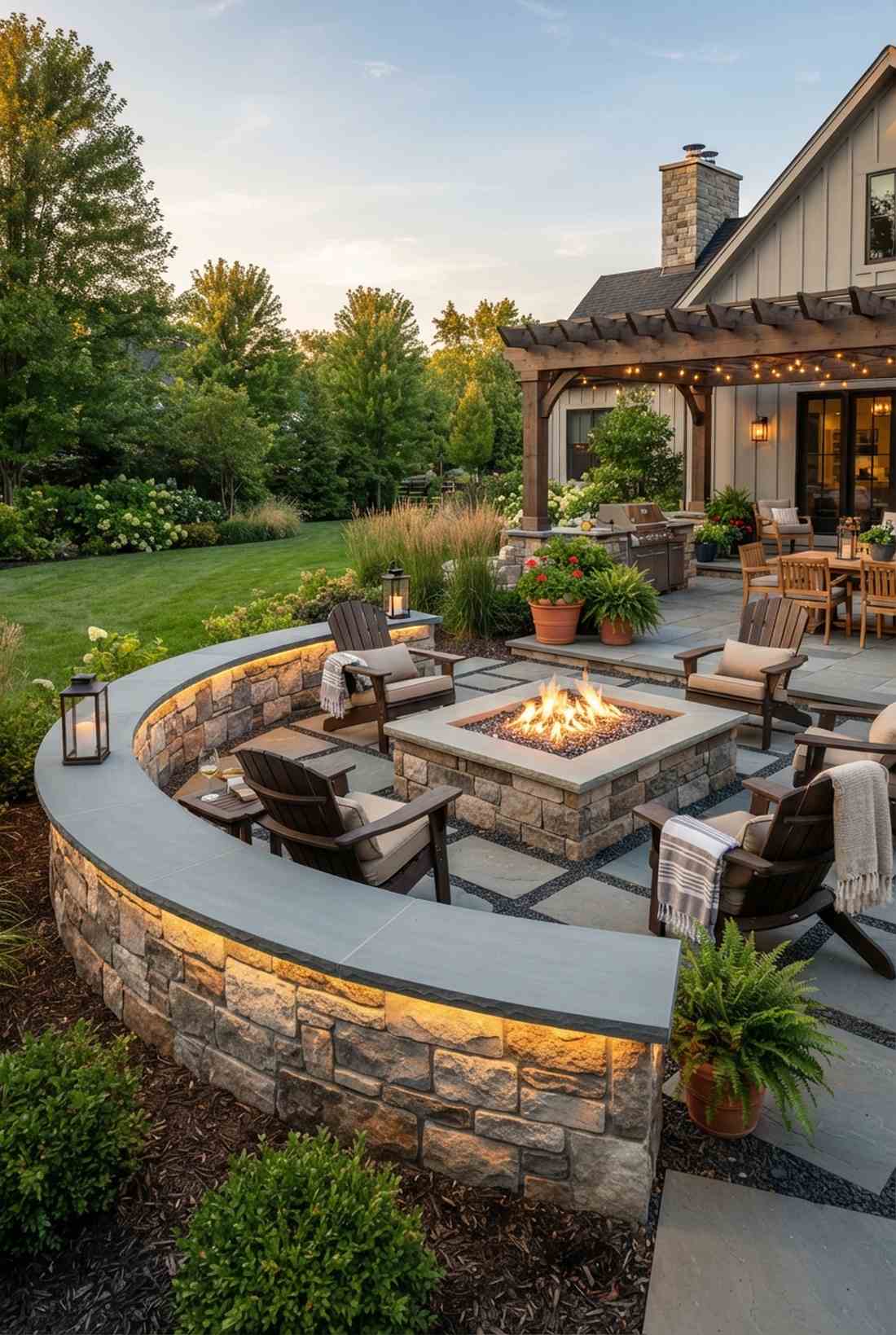
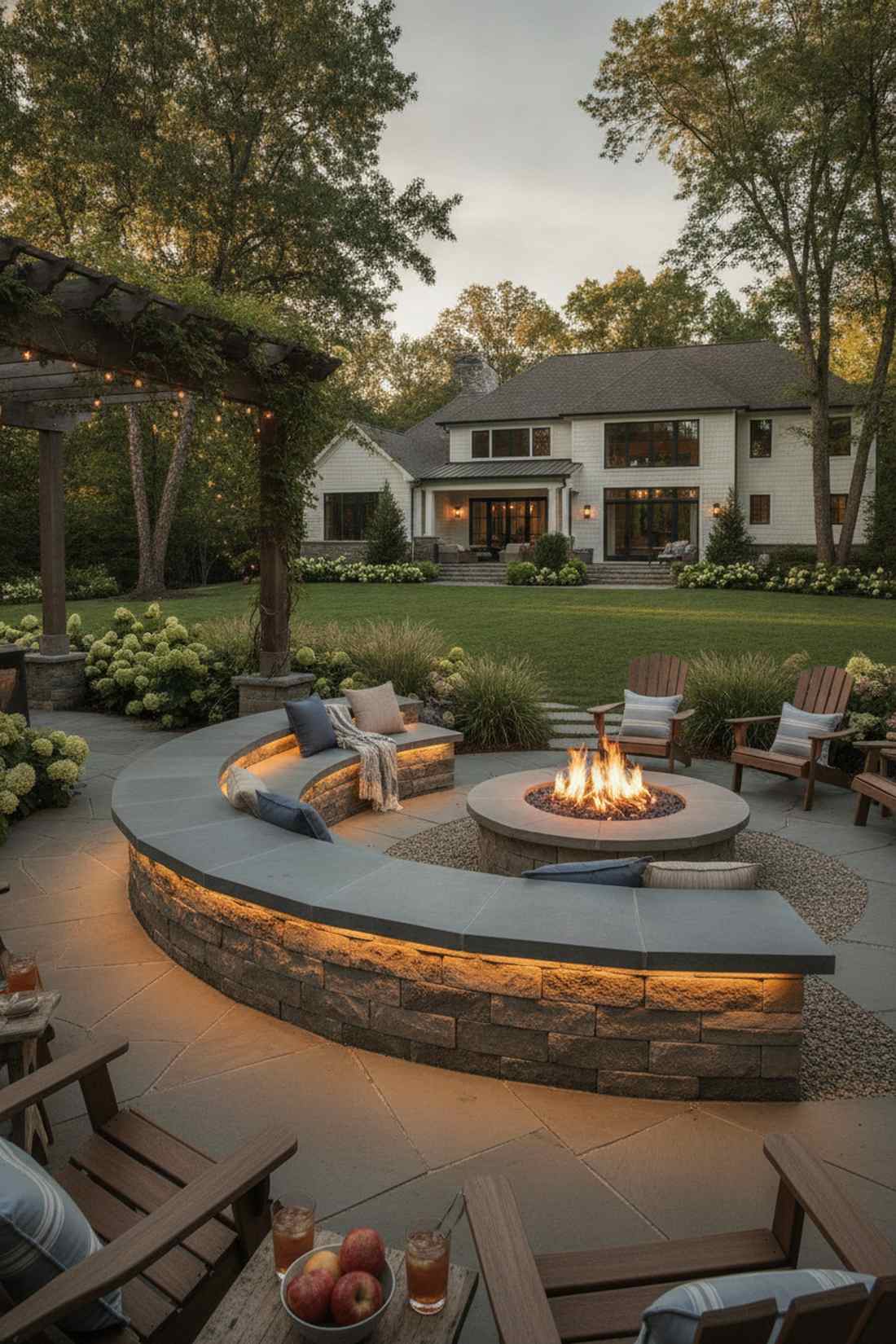
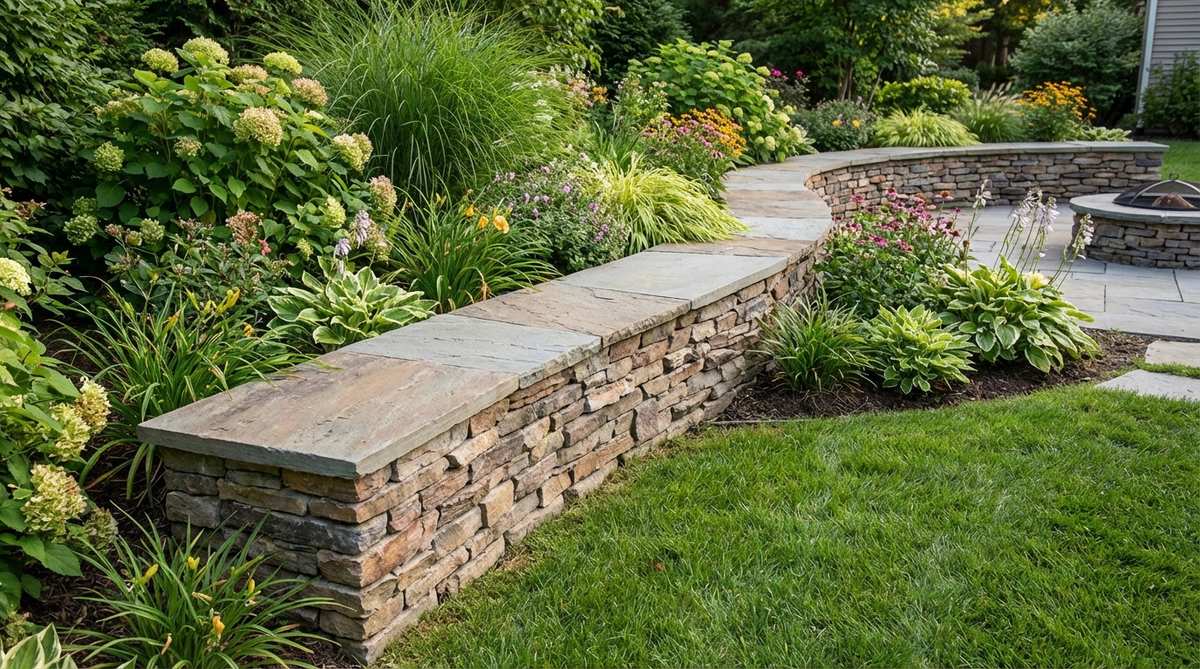
This dual-purpose design feels like a cozy outdoor living room. Topping a short barrier with a flat bluestone seating cap is a masterclass in maximizing a small firepit courtyard.
A simple retaining wall just holds dirt, but capping it with a 14-inch deep polished stone gives a designer-level finish that doubles as party seating. Cantilevering the cap slightly over the edge creates a shadow line that makes the whole structure look incredibly high-end.
The premium caps add about $50–$80 to the build. Save this layout for your ultimate patio upgrade.
- Key Materials: Block core, stone veneer, flat capstones
- Vibe / Style: Luxury entertainer
- Difficulty: Advanced masonry
- Budget Breakdown: Wall Core: $60 | Premium Caps: $90
- Creator’s Tip: Run a hidden LED light strip exactly under the cap overhang for a breathtaking nighttime floating effect.
- Smart Sourcing: Pre-cut bluestone wall caps, Waterproof outdoor LED strip lights
Wait until you see this next brilliant trick that turns a boring structural wall into a high-yield kitchen asset…
25. Vertical Herb Garden Wall
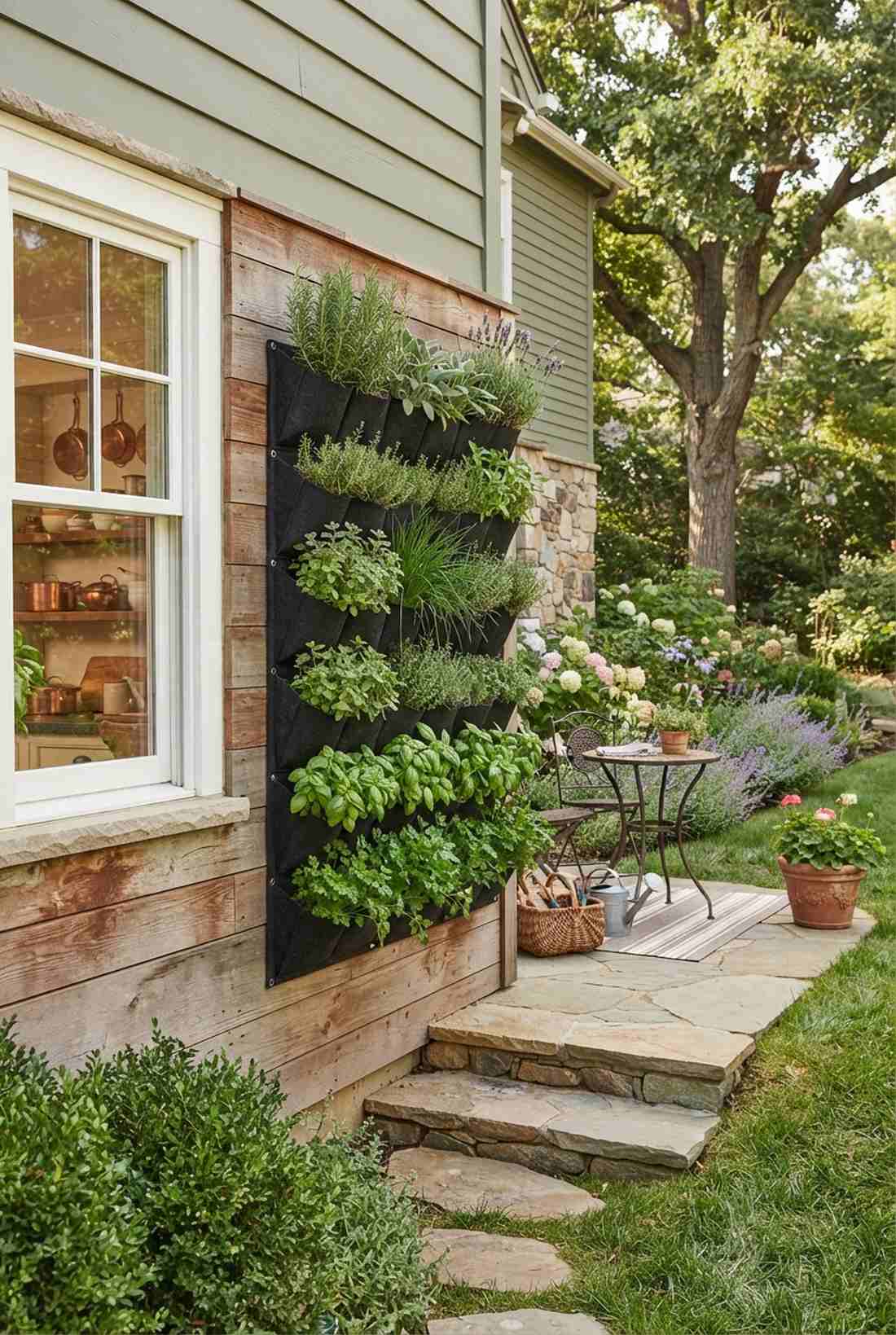
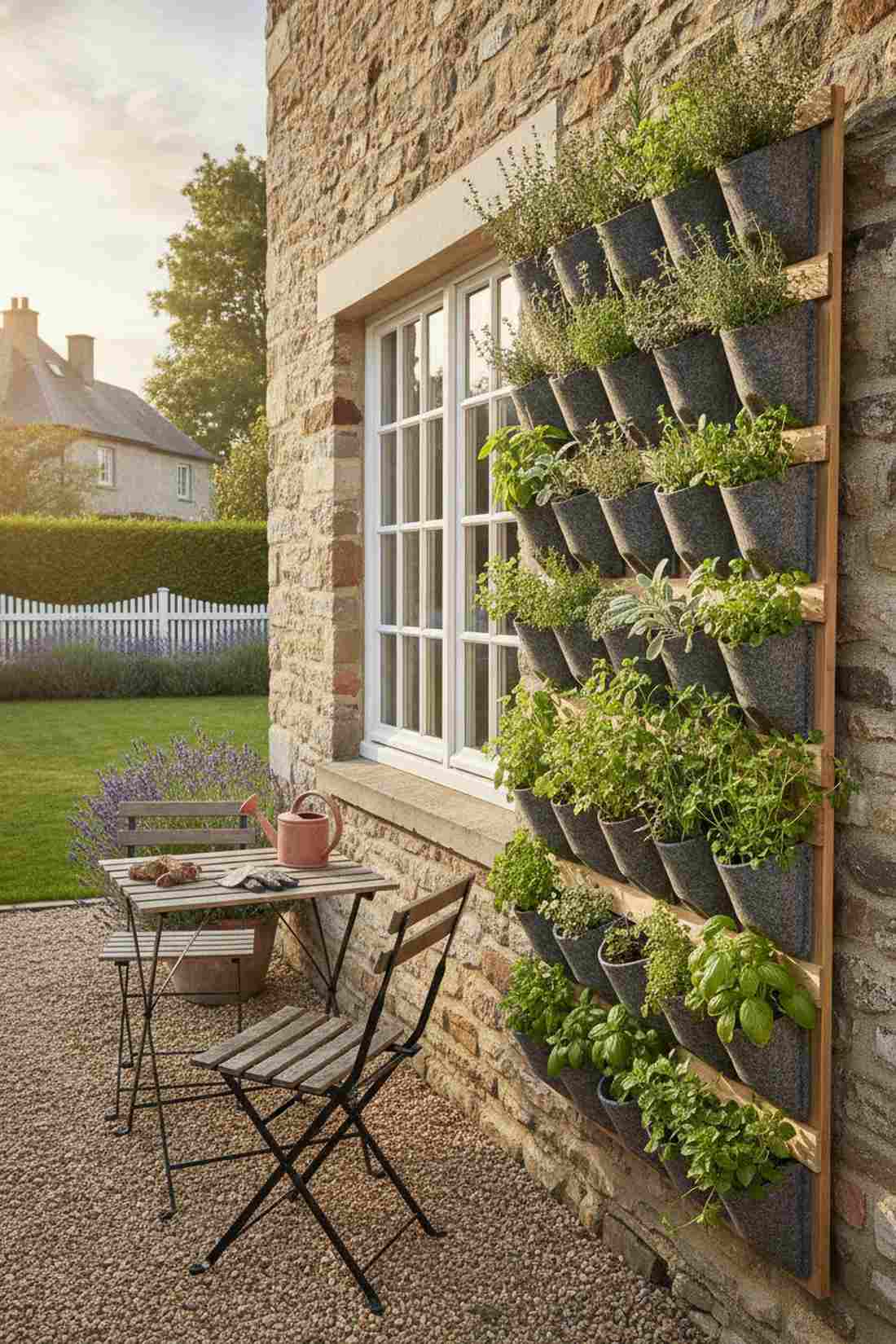
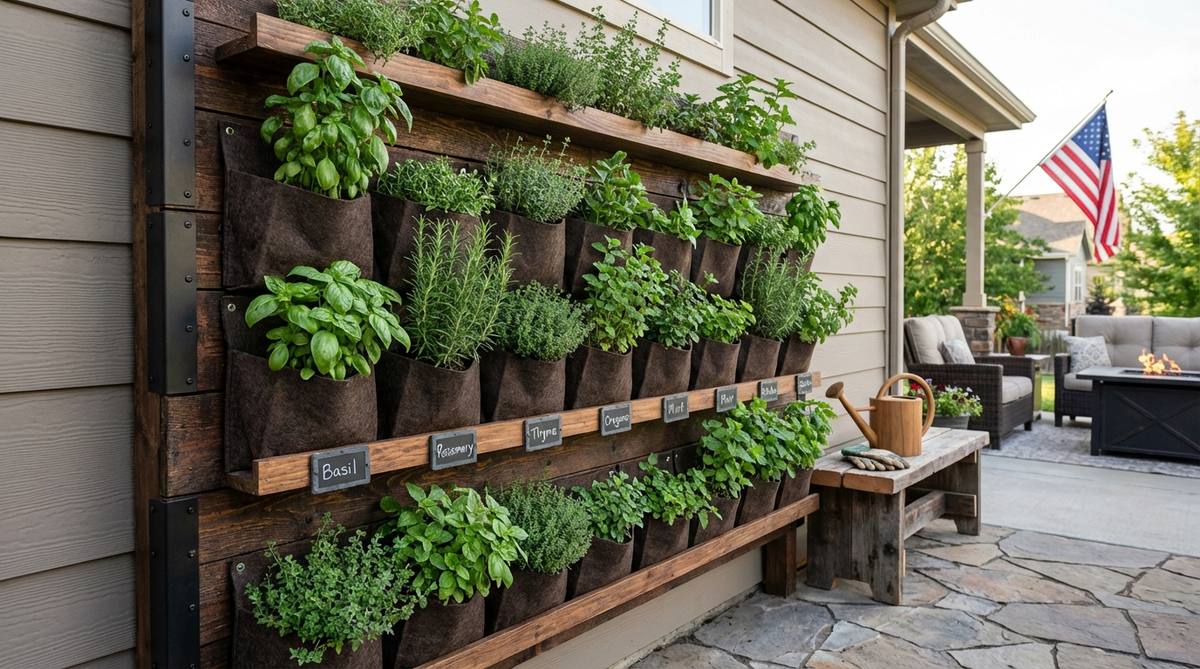
Fragrant, lush, and incredibly practical. Integrating a pocketed culinary herb retaining face works beautifully directly outside a kitchen window on a gentle slope.
Standard walls waste valuable sunlight, but embedding PVC tubes or attaching cedar shelving to the facade delivers a surprisingly premium look that feeds you daily. The vertical orientation provides the exact aggressive drainage that delicate Mediterranean herbs demand.
You can retrofit an existing wall for under $40. It’s a must-do for any cooking enthusiast.
- Key Materials: Wall-mount planter pockets, herb starters
- Vibe / Style: French country kitchen
- Difficulty: Easy retrofit
- Budget Breakdown: Wall Pockets: $30 | Herbs: $15
- Creator’s Tip: Group your herbs by water needs: basil and parsley at the wetter bottom, thyme and rosemary at the dry top.
- Smart Sourcing: Heavy-duty felt vertical wall planters, Culinary herb seed starter kits
26. Illuminated Glass Block Accent
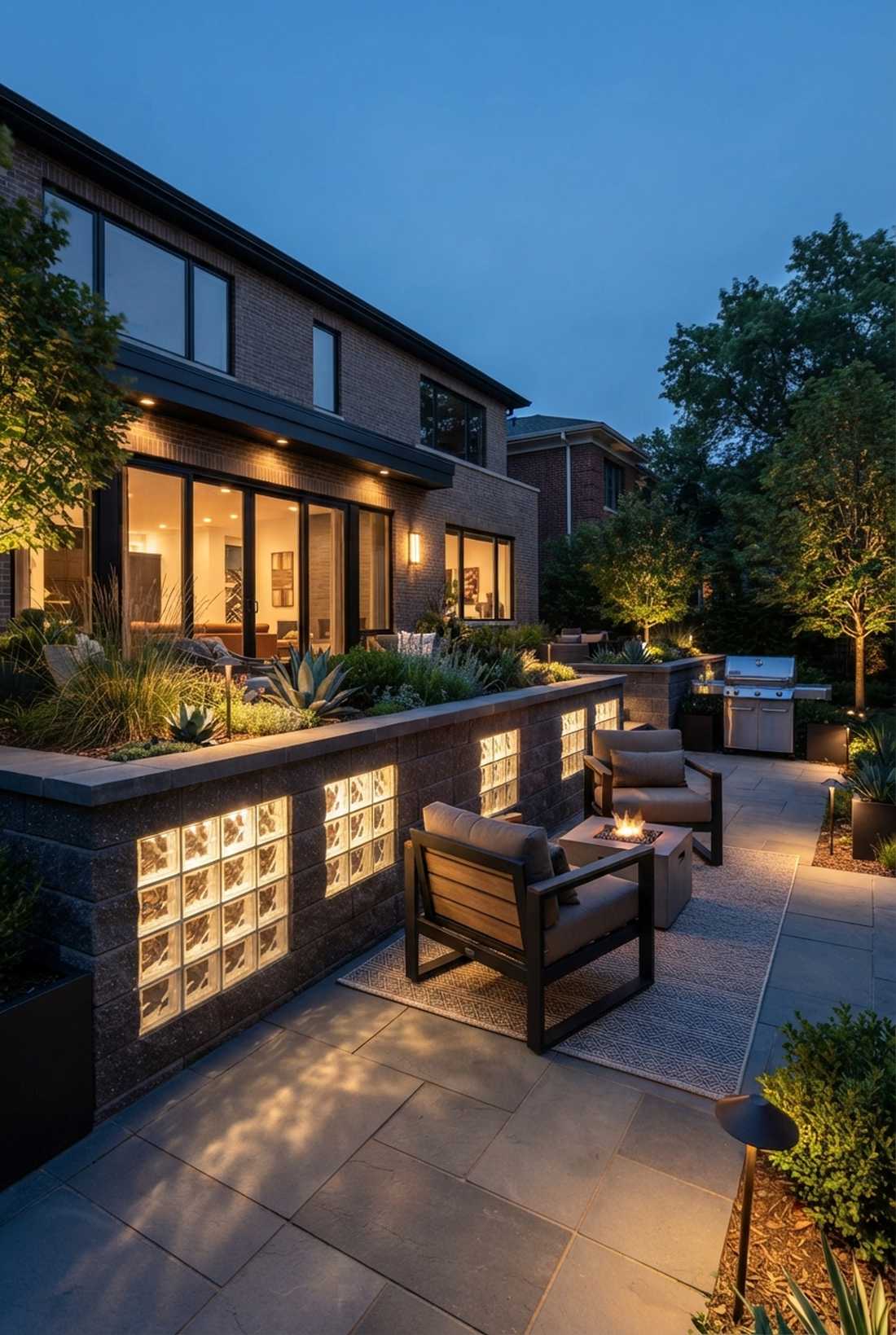
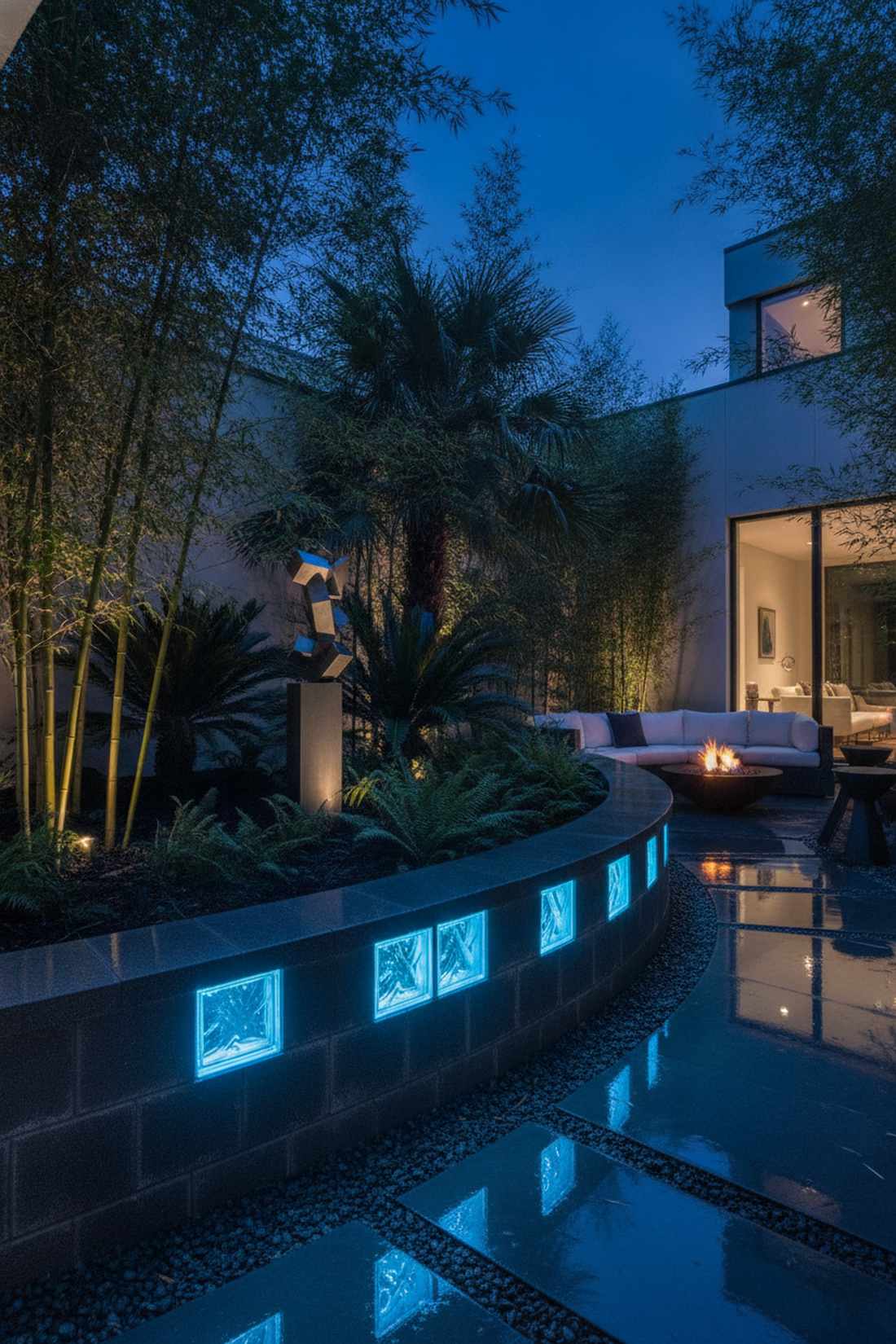
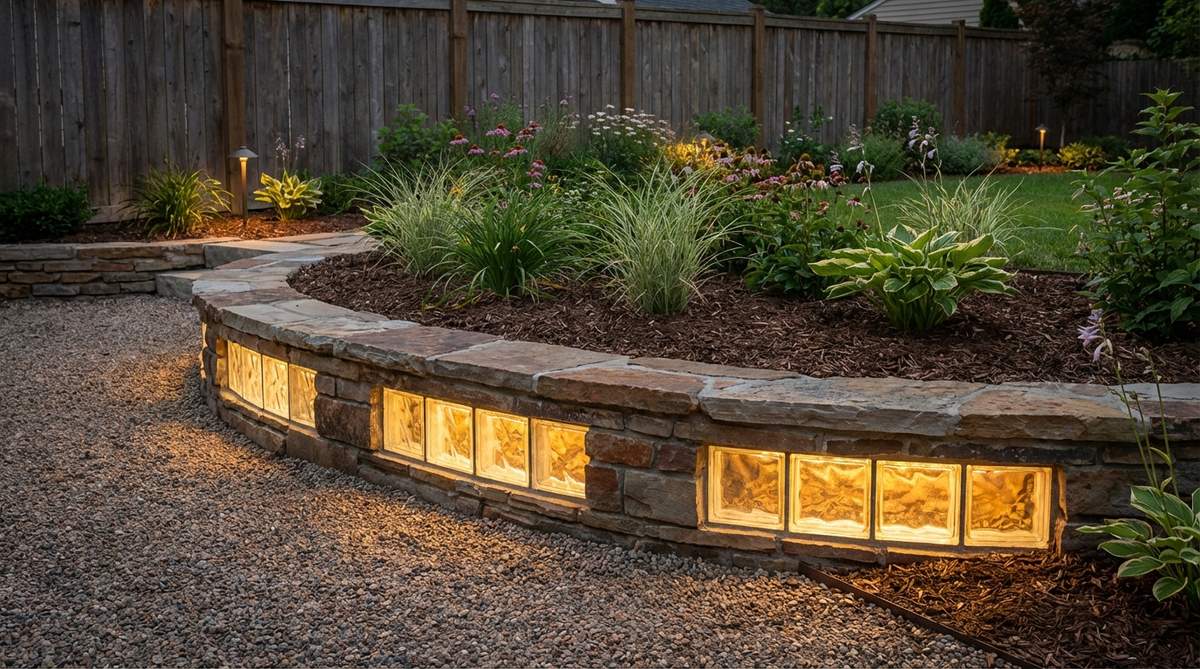
This translucent detail feels like an upscale boutique hotel at night. Embedding a glowing glass masonry accent block completely transforms a short modern retaining wall in a dark urban courtyard.
Solid masonry can feel heavy and oppressive, but swapping out a few bricks for glass blocks looks far more expensive than it is. Backlighting them with low-voltage landscape wiring creates an unbelievable ambiance that standard spotlights can’t touch.
Glass blocks cost about $15 each. Pin this if you love dramatic evening landscape lighting.
- Key Materials: Structural glass blocks, low-voltage wiring
- Vibe / Style: Neon modernism
- Difficulty: Intermediate electrical/masonry
- Budget Breakdown: Glass Blocks: $45 | LED Kit: $30
- Creator’s Tip: Use a specialized glass-block mortar mix; standard cement won’t bond properly to the smooth glass surface.
- Smart Sourcing: Architectural glass masonry blocks, Low-voltage waterproof landscape lighting kits
27. Two-Tier Terrace Garden
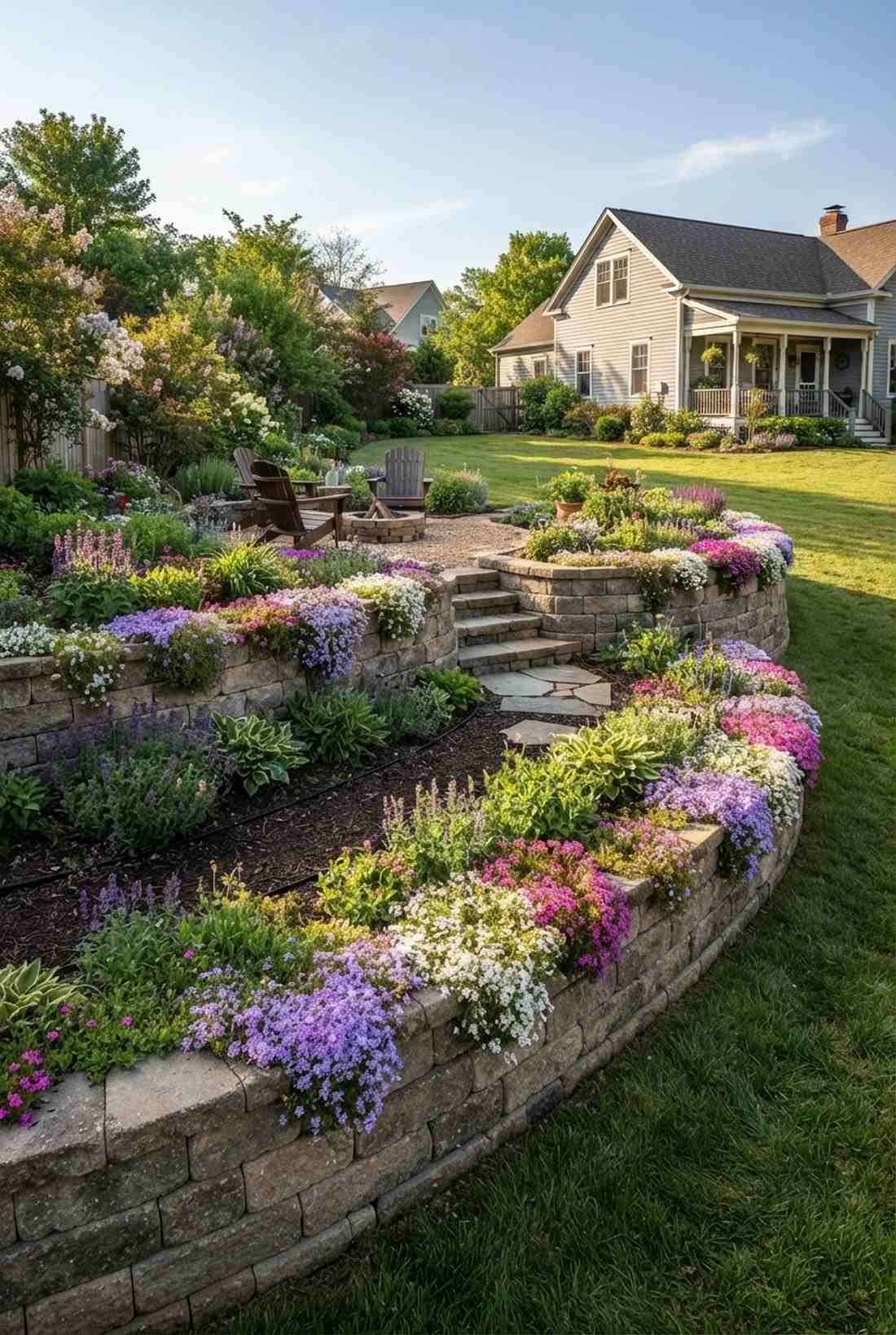
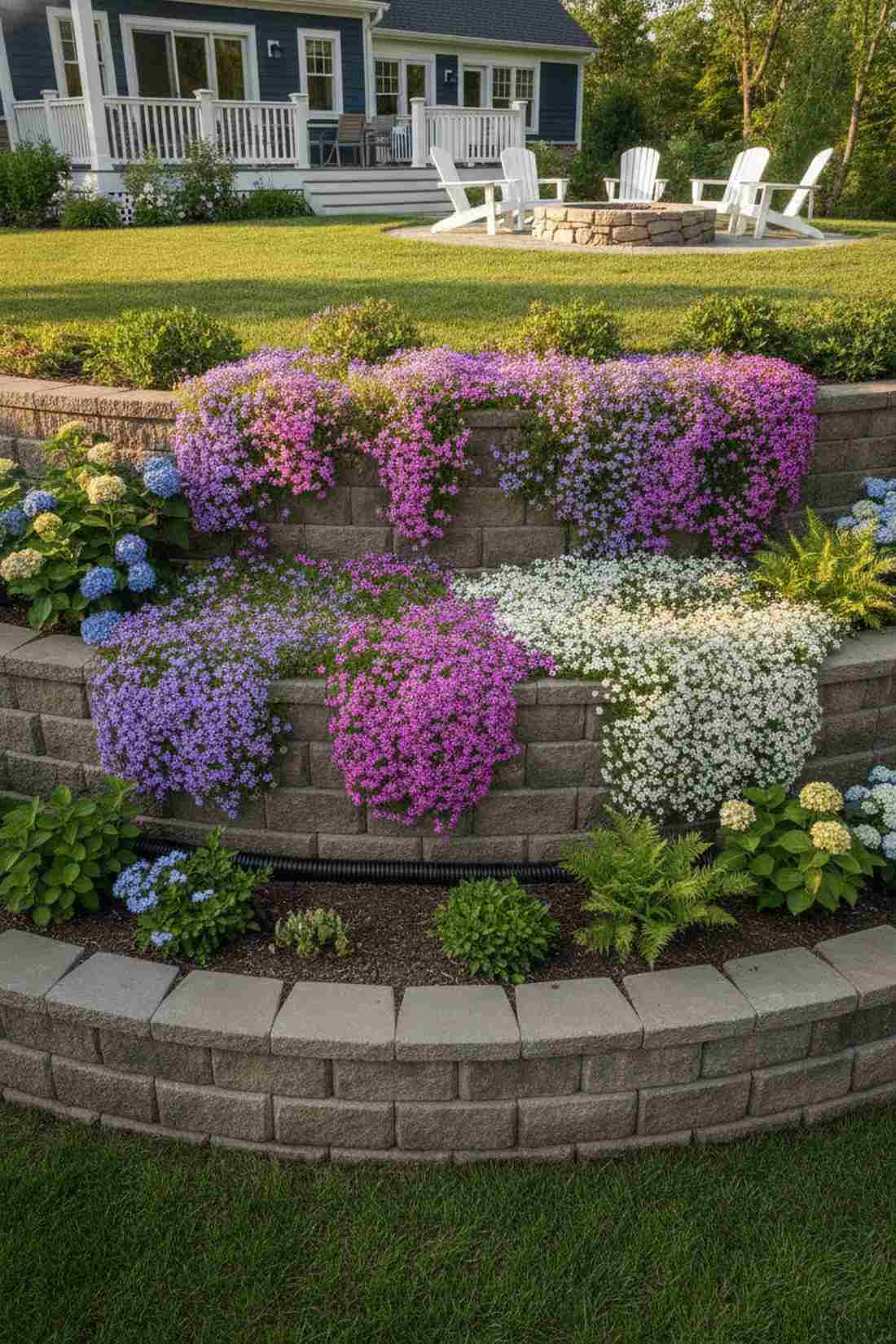
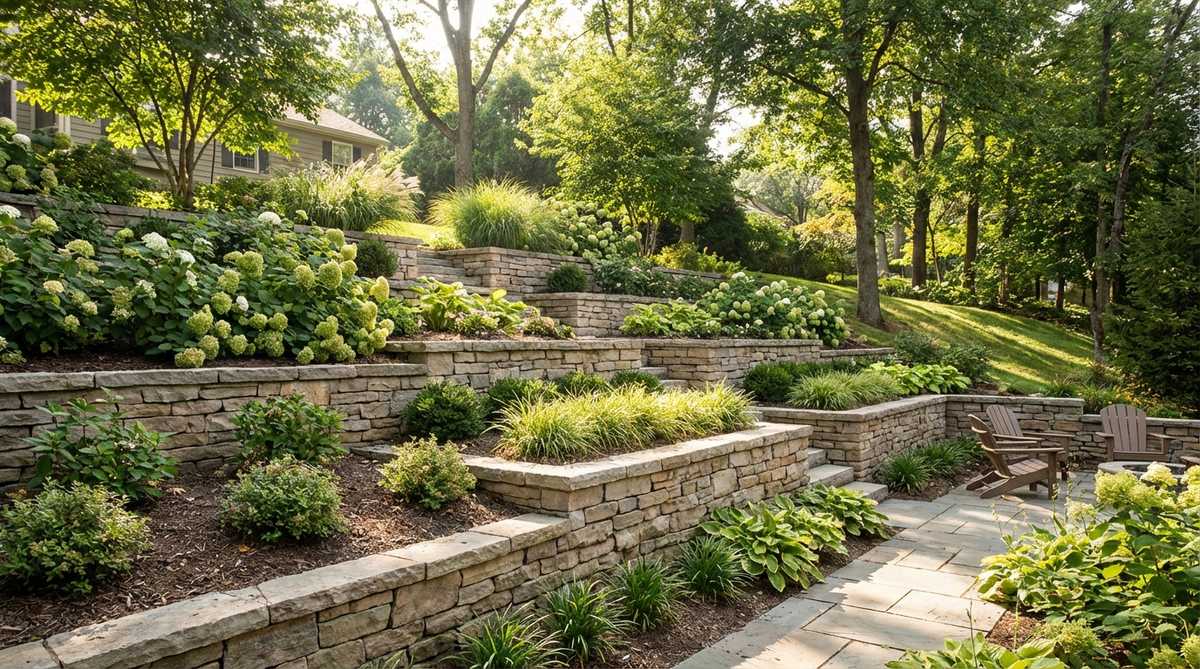
This stepped layering feels lush, expansive, and professionally landscaped. Splitting a steep drop into a double-tiered planting terrace is the ultimate use-case for severe backyard hills.
Most people try to build one massive 6-foot wall and fail, but creating two separate 3-foot walls gives a designer-level finish and avoids costly engineering permits entirely. The flat space created between the tiers becomes the perfect stage for vibrant, cascading perennial flowers.
By keeping the walls under 3 feet, you save thousands on professional contractor fees. Highly recommended for aggressive slopes.
- Key Materials: Any chosen block/timber, abundant backfill
- Vibe / Style: Classic botanical garden
- Difficulty: High labor, low complexity
- Budget Breakdown: Wall Materials: $250 | Fill Dirt: $80
- Creator’s Tip: Ensure the upper wall is set back from the lower wall by a distance equal to at least twice the lower wall’s height for optimal soil stability.
- Smart Sourcing: Commercial-grade drainage pipe (perforated), Cascading creeping phlox starter kits
Transform Your Sloped Garden Today
Strategic placement of these 27 small garden retaining wall setups completely converts frustrating slopes into high-end, functional outdoor living spaces. Start by analyzing your specific erosion patterns before selecting your premium materials or budget-friendly starter bundles. Tackle just one tiered section first to master the layout and build confidence.
Whether you install pressure-treated timber bundles, utilize UV-resistant structural adhesives for stone veneer, or opt for full DIY slope stabilization kits, the foundational prep determines your success. Always secure your base gravel, install perforated drainage, and lock in heavy-duty geotextile fabric. Treat your sloped terrain as the ultimate blank canvas to build a designer-quality terrace that vastly outshines a flat, boring backyard.
Frequently Asked Questions
What is the most budget-friendly small garden retaining wall option?
Pressure-treated timber starter bundles and reclaimed materials like concrete rubble or salvaged brick offer the ultimate cost-saving advantage at $15-$35 per square foot. Skipping the masonry contractor and using heavy-duty DIY landscape timber screws drastically cuts overhead. For the absolute lowest price point, vertical timber sleepers require fewer materials than horizontal stacking and give a designer-level finish for walls under 4 feet.
How tall can I build a retaining wall without professional engineering?
Most local codes allow walls under 3 to 4 feet tall without requiring expensive structural stamps or professional intervention. Once you cross that height, you must rely on commercial-grade retaining blocks and engineered geotextile fabric grids to prevent catastrophic collapse. Always check local guidelines, but choosing a two-tier terrace system is the smartest way to bypass height restrictions while maintaining a premium aesthetic.
What drainage requirements do small garden retaining walls need?
Hydrostatic pressure will destroy any layout, so installing commercial-grade perforated drainage pipe behind the base is non-negotiable. You must surround the pipe with clean gravel and wrap it tightly in heavy-duty landscape fabric rolls to prevent mud from clogging the system. Ensuring gravity pulls the trapped water out through lower elevation weep holes guarantees your wall lasts decades.
Which retaining wall material lasts longest in small gardens?
Palletized natural stone veneer and poured concrete structures easily dominate longevity, effortlessly surviving 50 to 100 years. Precast faux-stone concrete panels offer that same indestructible lifespan but at a much faster installation speed. If you choose wood, upgrading to UV-resistant clear masonry sealants and underground wood preservative treatments is mandatory to prevent early rot.
Can I build a curved retaining wall in a small garden?
Absolutely, but you need the right foundational kits to pull it off cleanly. Modular retaining wall corner blocks and flexible galvanized gabion basket kits easily conform to organic, sweeping curves without awkward gaps. Rigid materials like pre-cut timber require intense angled cutting, making modular interlocking stone the superior choice for winding garden beds.
What plants grow well in retaining wall pockets?
High-drainage environments require robust, drought-tolerant roots to survive. Investing in drought-tolerant succulent starter kits or creeping thyme plugs guarantees lush foliage with near-zero maintenance. For vertical drape effects along the stone, cascading creeping Jenny or trailing rosemary completely softens the hard industrial edges and gives the wall a premium living aesthetic.