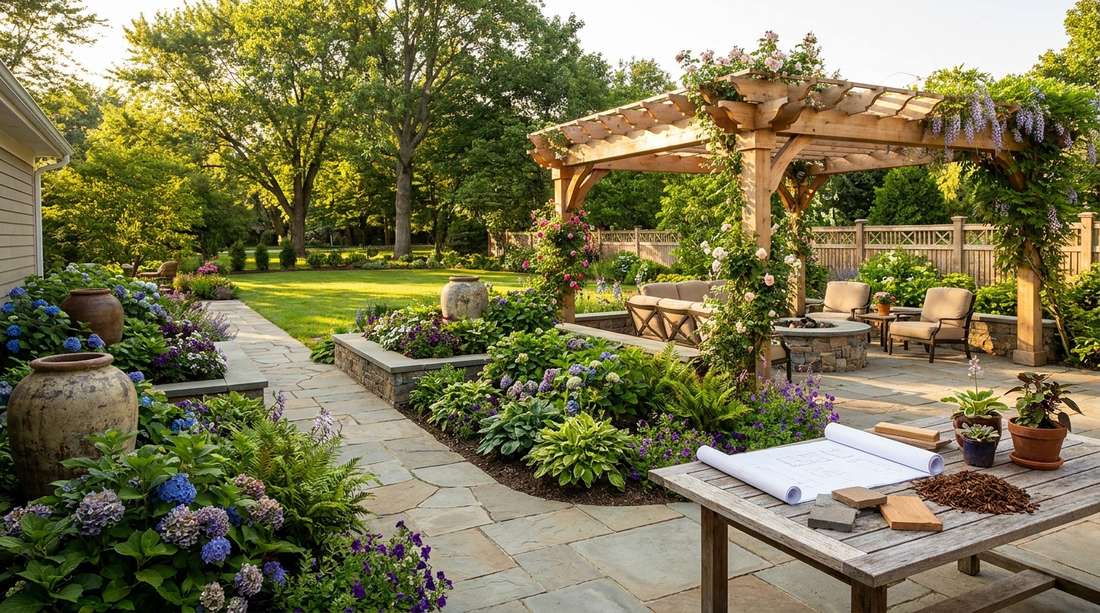
Designing professional lush gardens requires strategic depth, not just random planting. Leveraging bulk landscape materials and premium foliage layers easily slashes nursery costs. Your backyard instantly transforms into a high-end botanical retreat.
Design Snapshot: Key Principles
- Vertical Layering: Arrange plants in foreground, middle, and background tiers based on mature height to create depth across horizontal and vertical planes
- Texture Contrast: Pair broad leaves with fine foliage, strappy grasses with dense hedges, and smooth surfaces with rough textures for visual complexity
- Dense Groupings: Plant in odd-numbered clusters (3, 5, or 7) rather than single specimens to achieve the mass plantings that define lush landscapes
- Continuous Coverage: Use ground covers, middle-story shrubs, and canopy trees to eliminate bare soil and create overlapping layers that mimic natural forest structure
Foundation Layering Techniques for Lush Garden Ideas
1. Foreground-Middle-Background Configuration
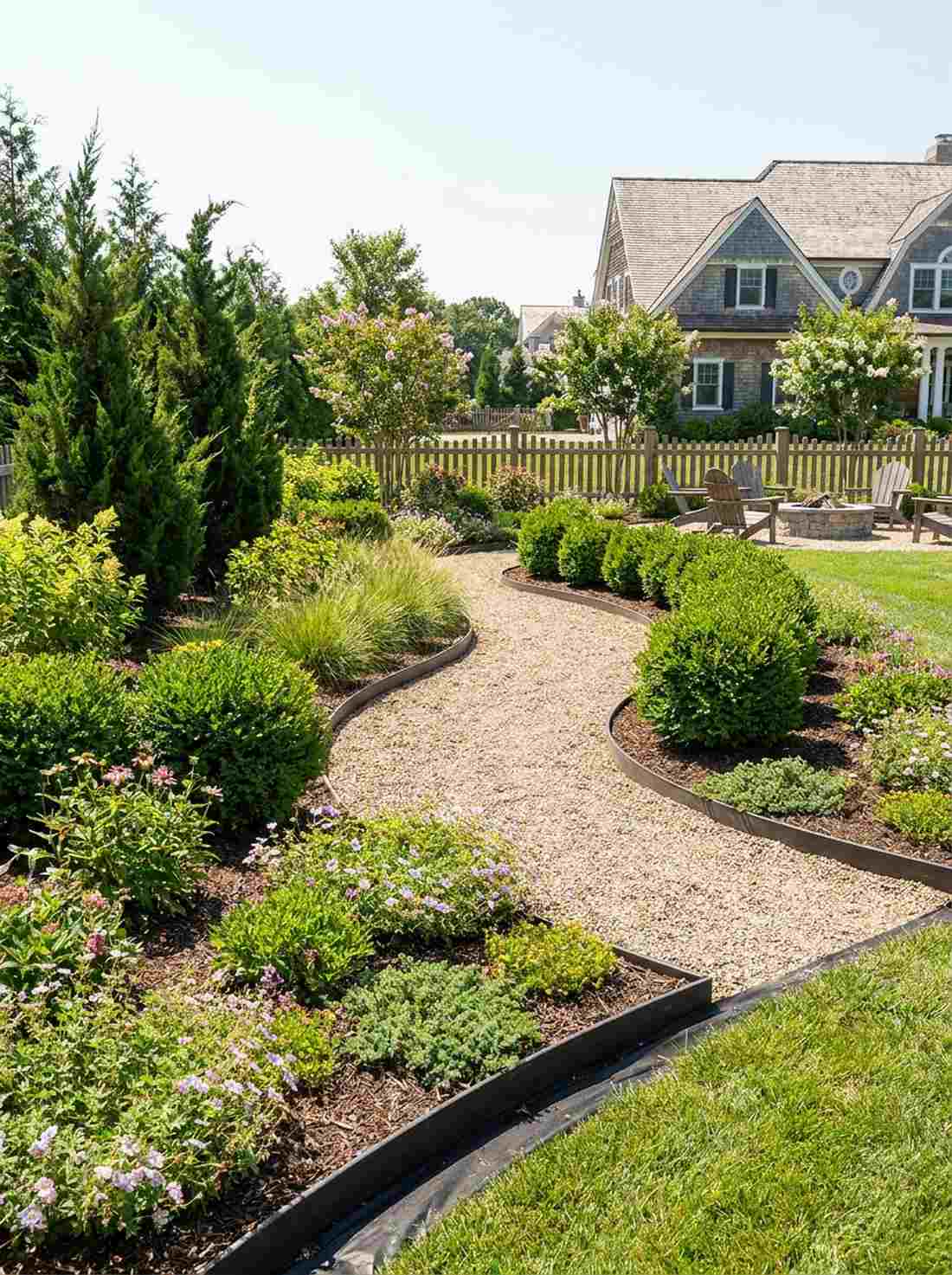
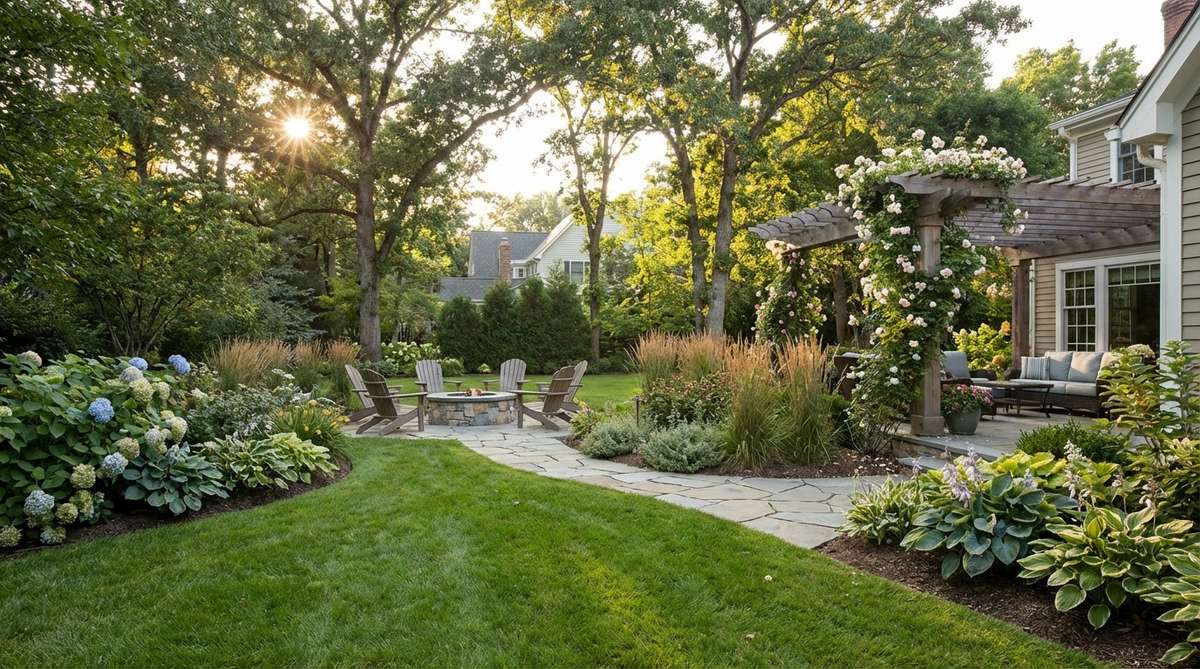
This classic setup feels like a secret estate walkway you just stumbled upon. Multi-tier border plantings work perfectly for defining property lines with absolute elegance.
Most homeowners settle for flat rows, but stepping down plant heights delivers a surprisingly premium look instantly. Incorporating heavy-duty landscaping fabric underneath prevents weeds while protecting your high-end topsoil investment.
Expect to spend around $50–$90 depending on your initial shrub sizes. Save this to your DIY weekend garden board for future reference!
- Key Materials: UV-resistant landscape border edging
- Vibe / Style: High-end estate perimeter
- Difficulty: Beginner-friendly weekend project
- Budget Breakdown: Edging: $25 | Plants: $45 | Fabric: $20.
- Creator’s Tip: Always overlap the weed barrier seams by six inches to stop aggressive grass runners.
- Smart Sourcing: Grab a commercial-grade landscape fabric (bulk roll) and a pre-cut heavy-duty border kit.
2. Drifts and Odd-Numbered Groupings
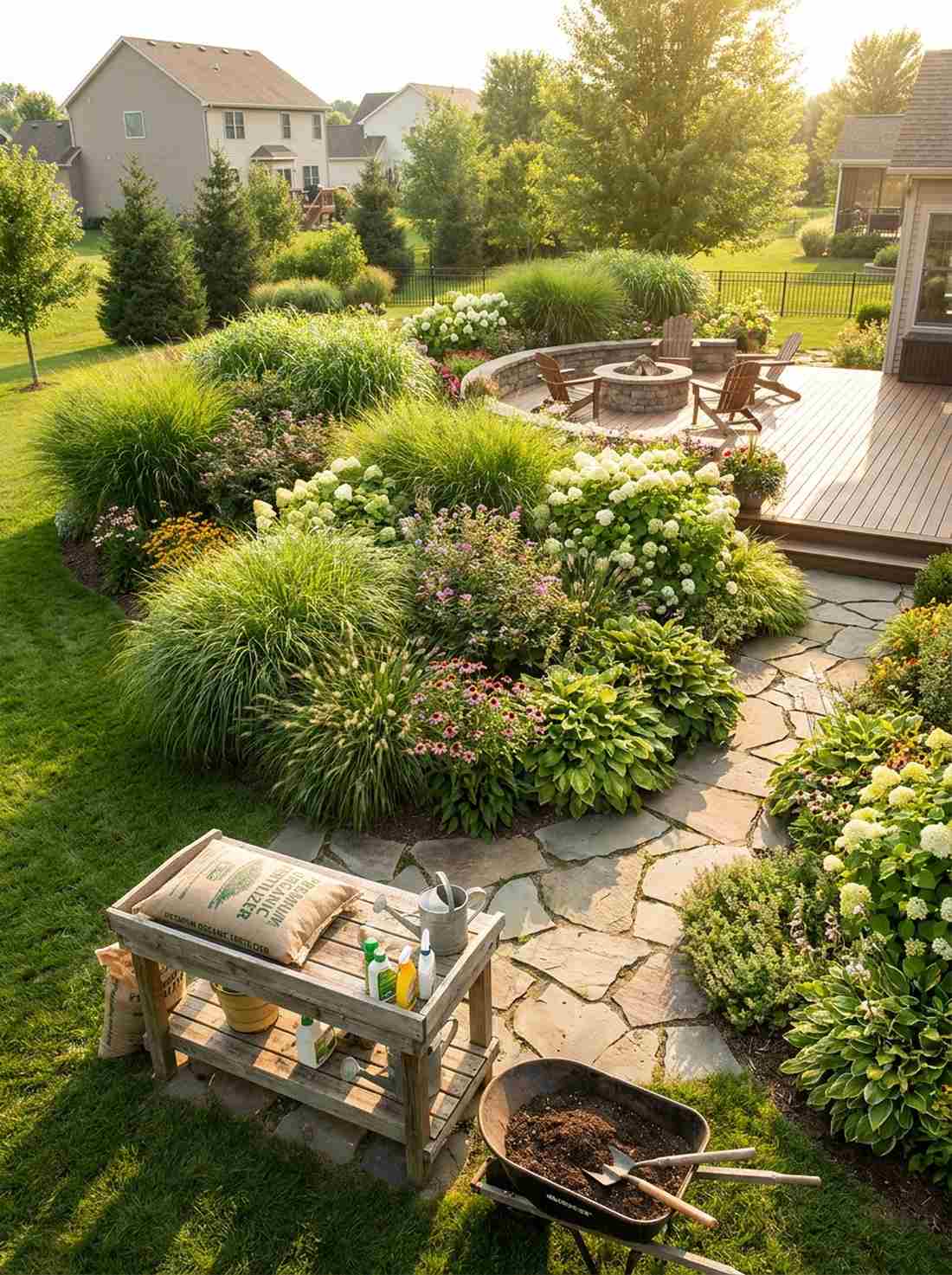
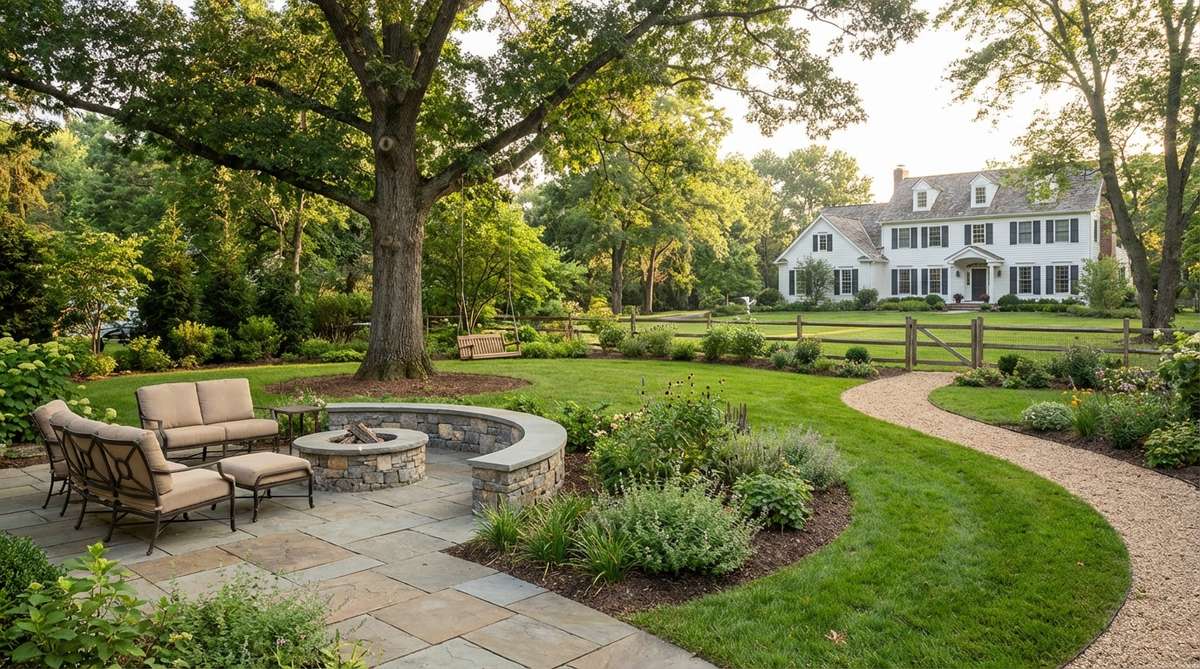
Grouping in drifts creates an immersive, wildly overgrown vibe straight out of a botanical magazine. Dense clustering techniques are phenomenal for oversized corner garden beds.
Planting isolated shrubs looks painfully amateurish, but massing them in groups of three or five completely elevates the aesthetic. Using professional-grade root stimulators ensures these thick foliage clusters establish rapidly without die-off.
Budgeting $30–$50 per plant cluster makes this highly achievable. It’s a fast upgrade that completely changes the visual weight of your yard.
- Key Materials: High-density plant starter packs
- Vibe / Style: Lush botanical showcase
- Difficulty: Easy planting strategy
- Budget Breakdown: Soil amendments: $15 | Starter plants: $35.
- Creator’s Tip: Space them slightly tighter than the nursery tag recommends to force a solid canopy.
- Smart Sourcing: Invest in premium organic fertilizer (bulk bucket) and high-yield root stimulator solutions.
3. Texture PairingBroad Versus Fine
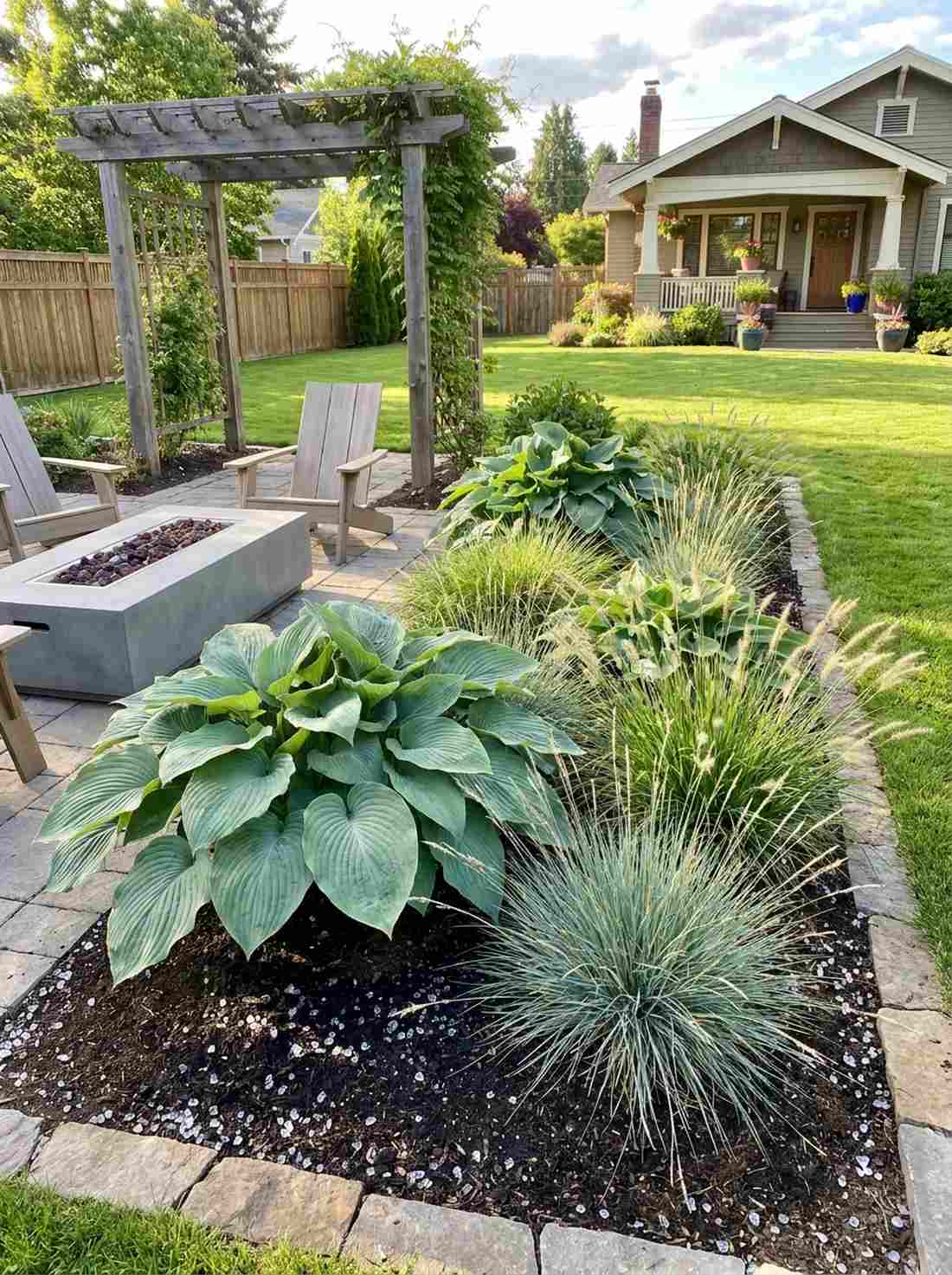
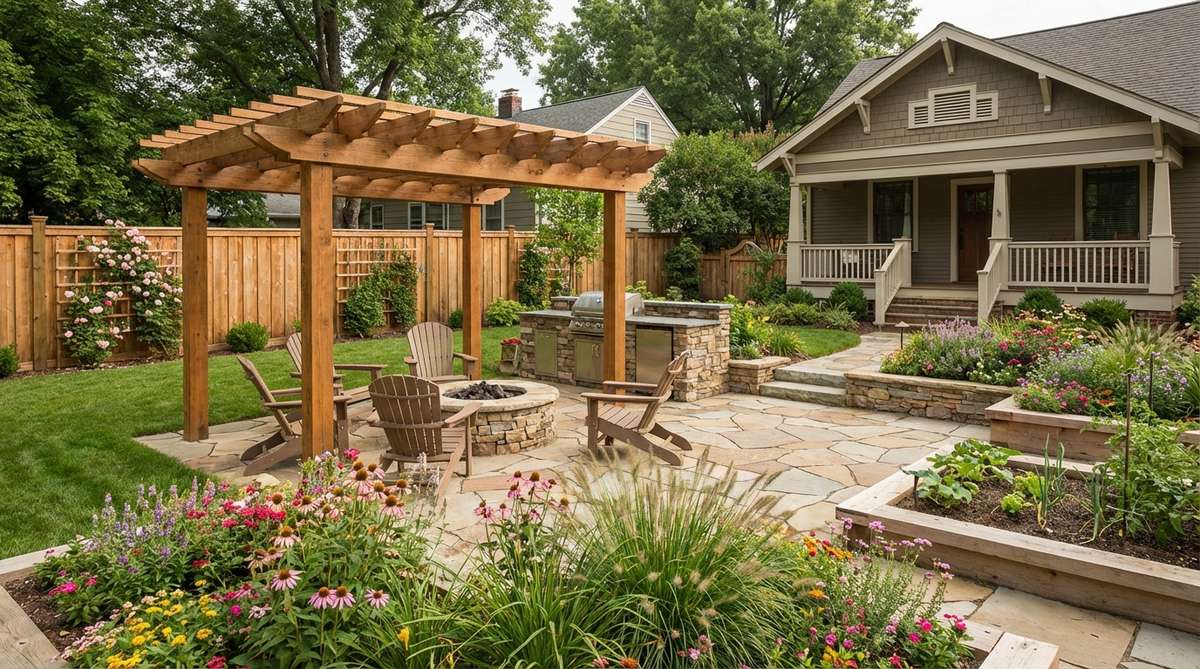
The stark difference in leaf sizes feels like a curated gallery of nature’s best textures. Broad and fine foliage mixing is ideal for modern patio perimeters requiring high visual impact.
Many ignore foliage texture entirely, yet combining strappy grasses with massive hosta leaves yields a designer-level finish. Upgrading the soil base with premium moisture-retaining crystals keeps these varied species thriving together.
You can easily pull this off for around $40–$60 using basic perennials. Highly recommended for a quick weekend win.
- Key Materials: Ornamental grass plugs
- Vibe / Style: Modern textured sanctuary
- Difficulty: Simple layout planning
- Budget Breakdown: Grass plugs: $20 | Broadleaf plants: $30.
- Creator’s Tip: Use contrasting colors alongside texture for a double-impact visual trick.
- Smart Sourcing: Pick up water-retaining soil crystals (bulk pack) and weather-resistant garden markers.
4. Color Layering Beyond Flowers
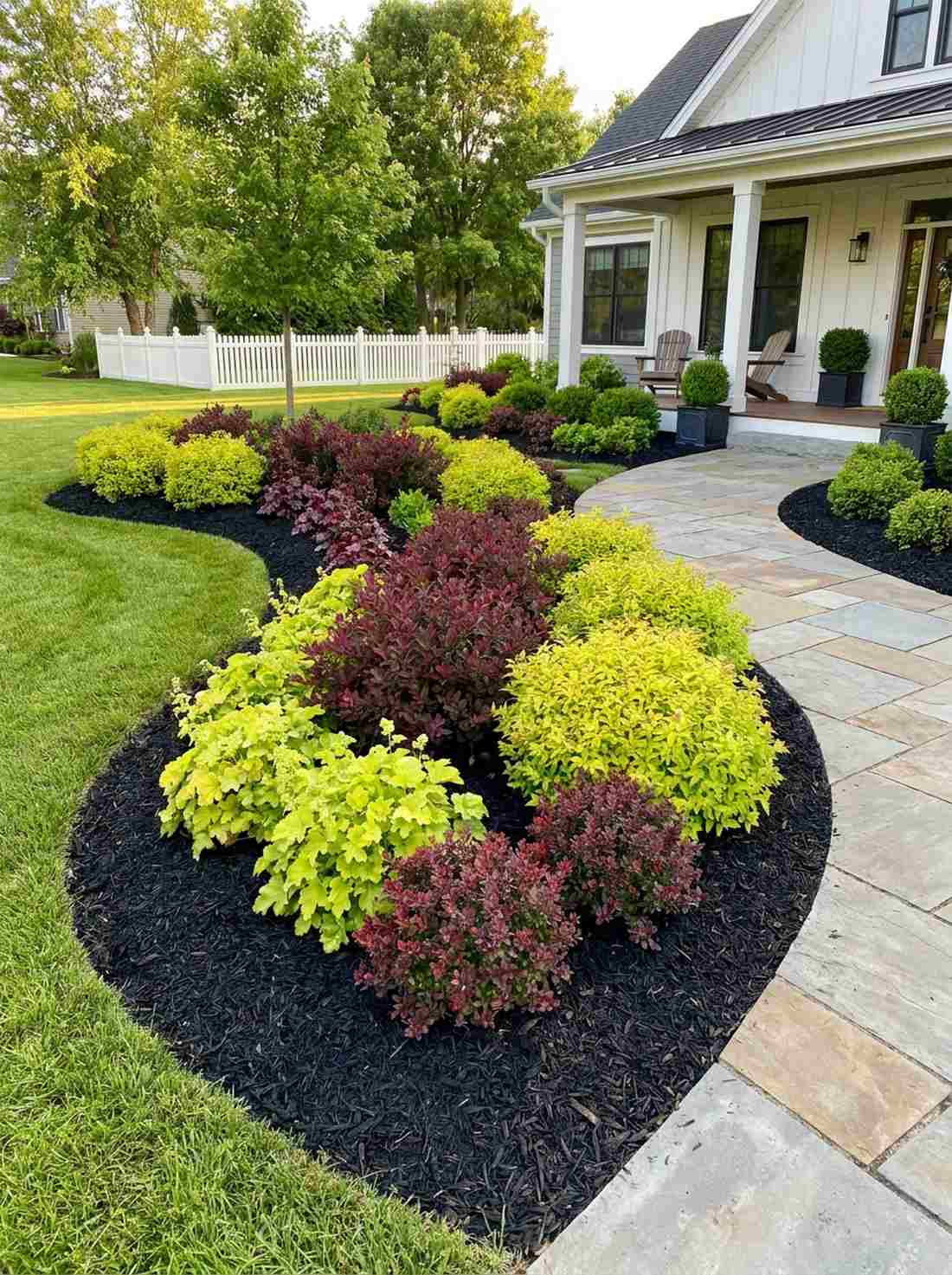
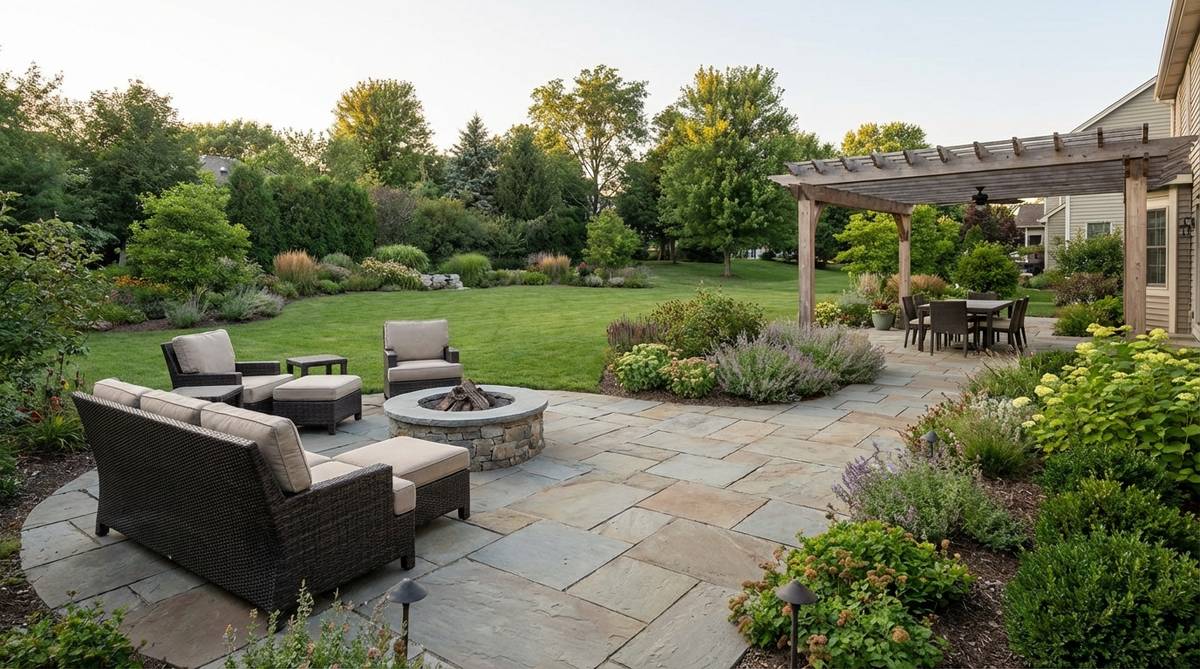
Relying on leaf color rather than blooms feels like a permanent painting you get to walk through daily. Non-floral color blocking is perfect for low-maintenance front yard curb appeal.
Relying solely on flowers is a rookie mistake; structural colored foliage gives a surprisingly expensive look year-round. Top-dressing these colored beds with dark commercial-grade mulch forces the bright leaves to pop intensely.
This layout runs about $45–$80 but outlasts seasonal flowers by months. Pin this if you’re tired of deadheading blooms!
- Key Materials: Dark-dyed hardwood mulch
- Vibe / Style: Year-round vivid courtyard
- Difficulty: Moderate selection process
- Budget Breakdown: Premium Mulch: $30 | Colored Shrubs: $50.
- Creator’s Tip: Pair chartreuse and deep burgundy for the highest possible contrast ratio.
- Smart Sourcing: Utilize commercial-grade black mulch (bulk delivery) and slow-release shrub food spikes.
This next strategy is ridiculously cheap but creates a canopy that looks like a $500 custom landscape installation…
5. Bridge Planting Between Layers
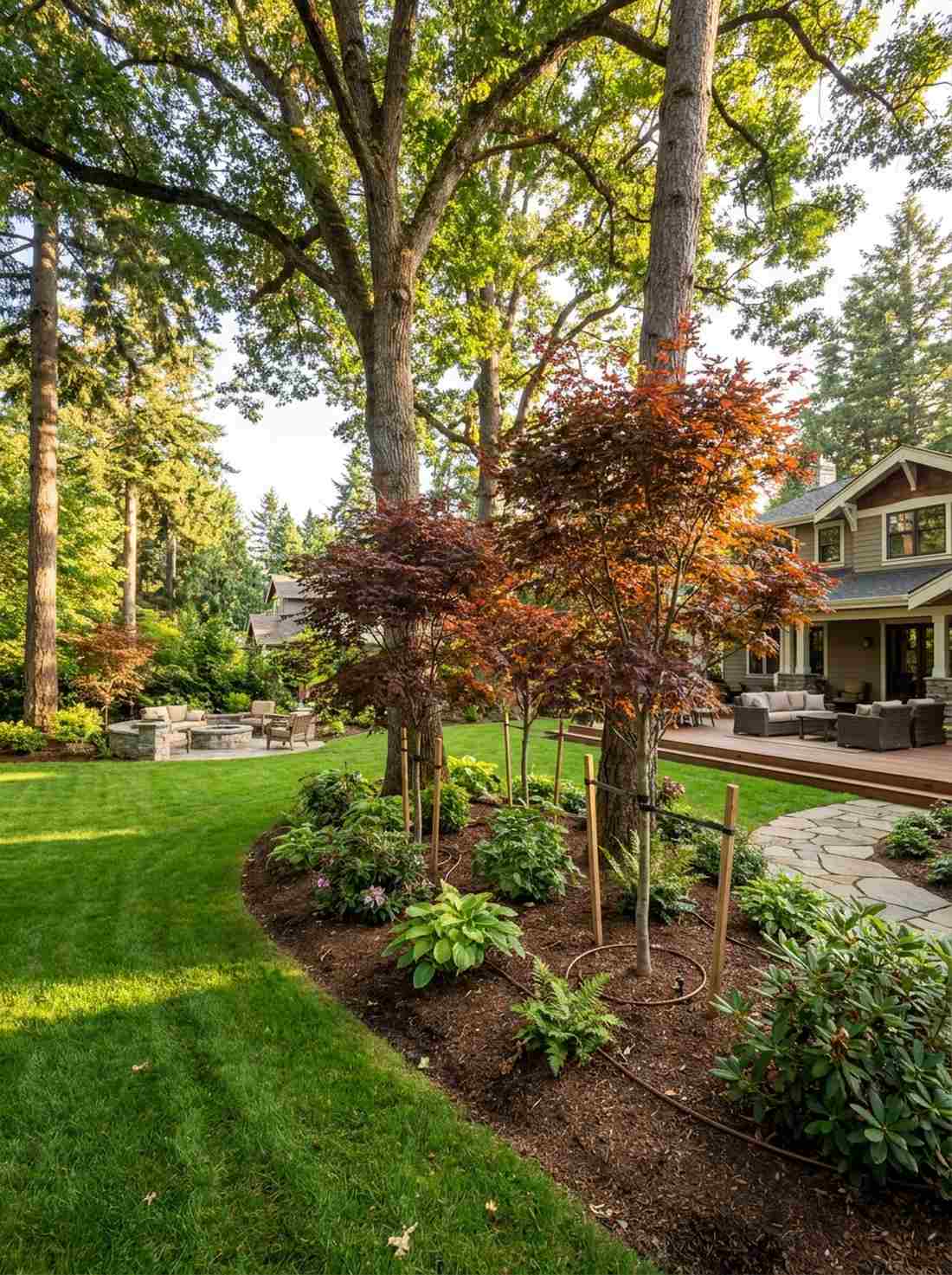
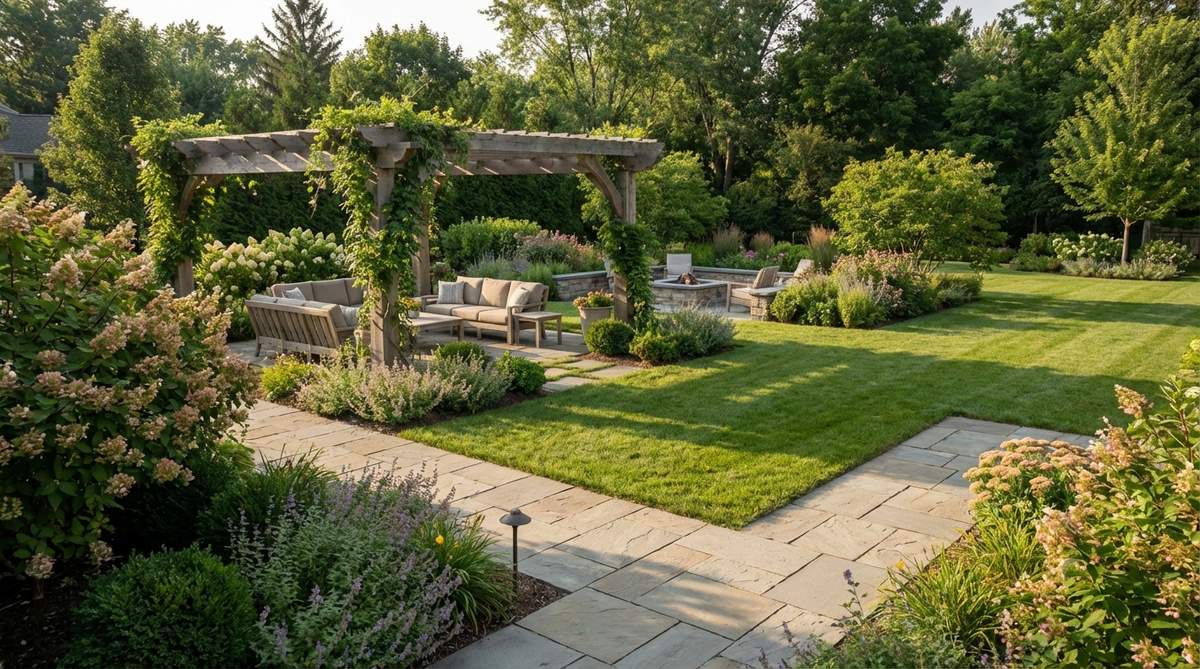
Adding these mid-level transitional plants feels like filling in the missing puzzle pieces of a high-end estate. Understory bridge landscaping serves beautifully to soften harsh, towering tree trunks.
Leaving a massive gap between the grass and tree canopy looks unfinished, but planting mid-sized maples or laurels bridges that awkward vertical void perfectly. Including a pro drip irrigation kit ensures these competitive root zones all get adequate water.
A solid bridge tree can cost $60–$120 but instantly adds maturity to the yard. It’s an essential move for seamless vertical flow.
- Key Materials: Mid-sized ornamental trees
- Vibe / Style: Mature forested estate
- Difficulty: Intermediate planting
- Budget Breakdown: Tree specimen: $80 | Irrigation line: $25.
- Creator’s Tip: Dig the hole twice as wide as the root ball to help the bridge plant compete with existing trees.
- Smart Sourcing: Buy a pro drip irrigation kit (starter bundle) and a heavy-duty tree staking kit.
6. Undulating Swathes for Movement
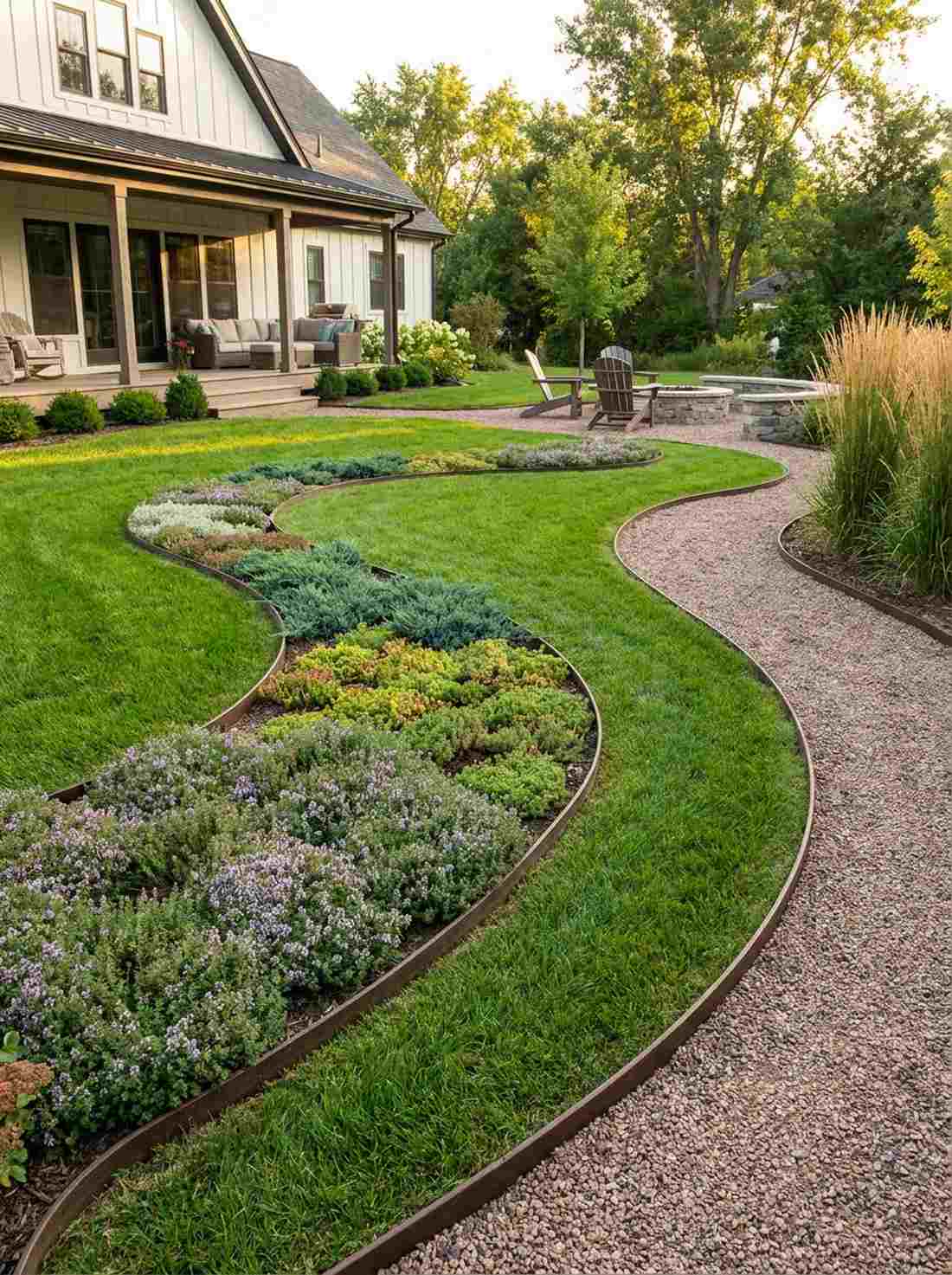
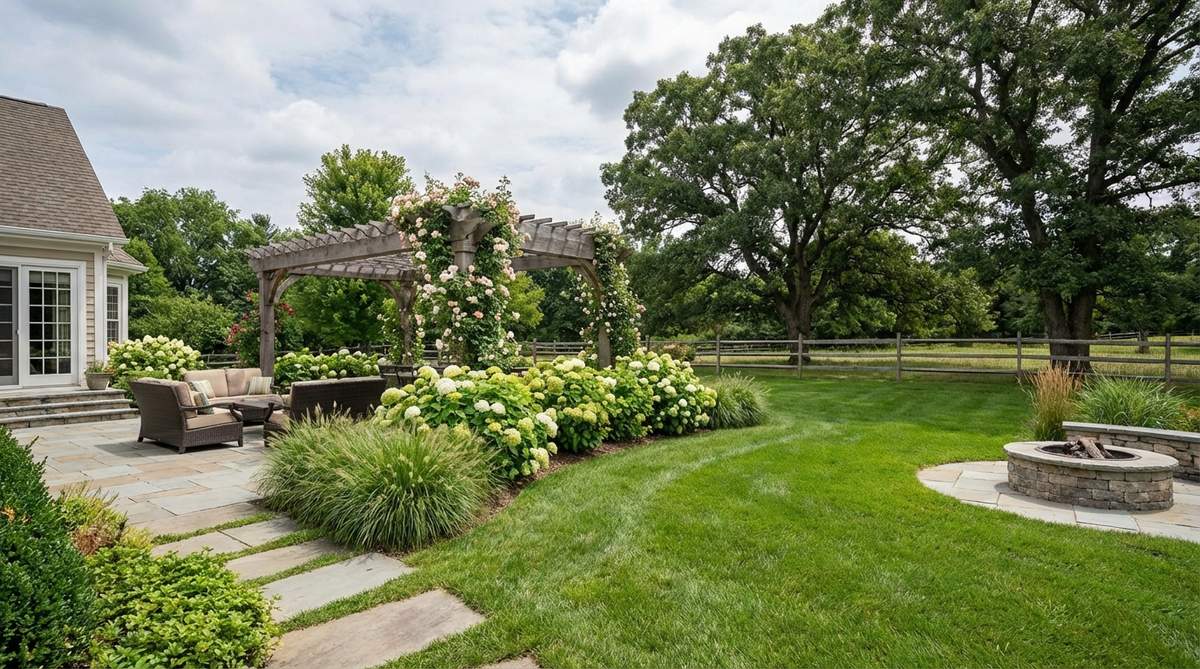
Curving borders create an organic rhythm that feels like a gentle river flowing right through your property. S-curve groundcover swathes are the ultimate solution for breaking up boxy, rigid lawn shapes.
Square beds scream amateur DIY, whereas sweeping organic curves deliver a high-end architectural dynamic. Using flexible, no-dig commercial edging makes outlining these dramatic waves completely foolproof.
Expect a minor investment of $40–$70 in specialized edging and groundcovers. Save this to your landscape geometry board!
- Key Materials: Flexible no-dig border edging
- Vibe / Style: Flowing contemporary meadow
- Difficulty: Easy weekend shaping
- Budget Breakdown: Edging kit: $35 | Groundcover flats: $35.
- Creator’s Tip: Lay out a garden hose first to visualize the curves before you commit to digging.
- Smart Sourcing: Grab a UV-coated flexible edging roll and pre-cut weed barrier curves.
Tropical & Jungle-Inspired Lush Home Garden Designs
7. Canopy Palms Over Filler Foliage
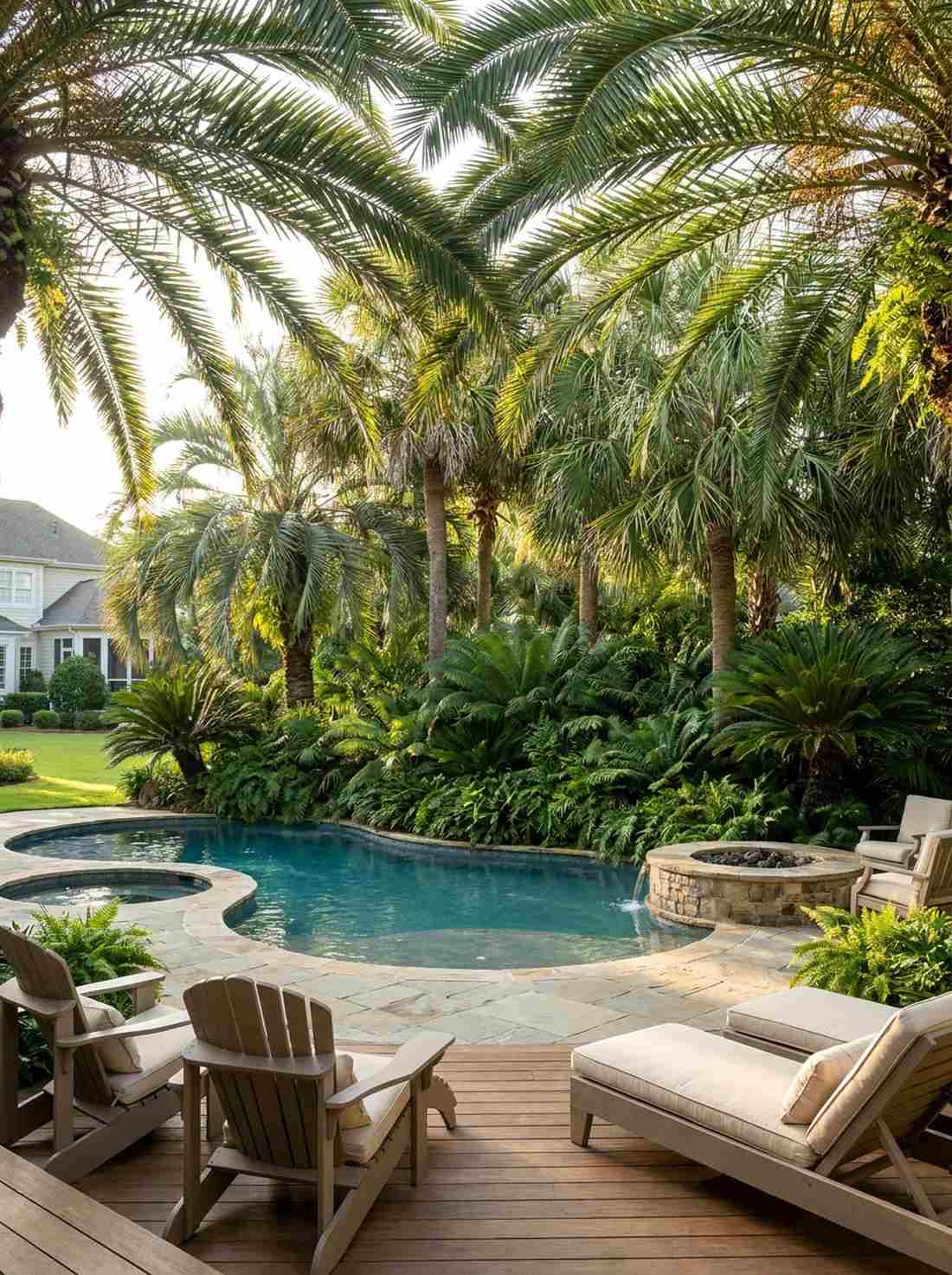
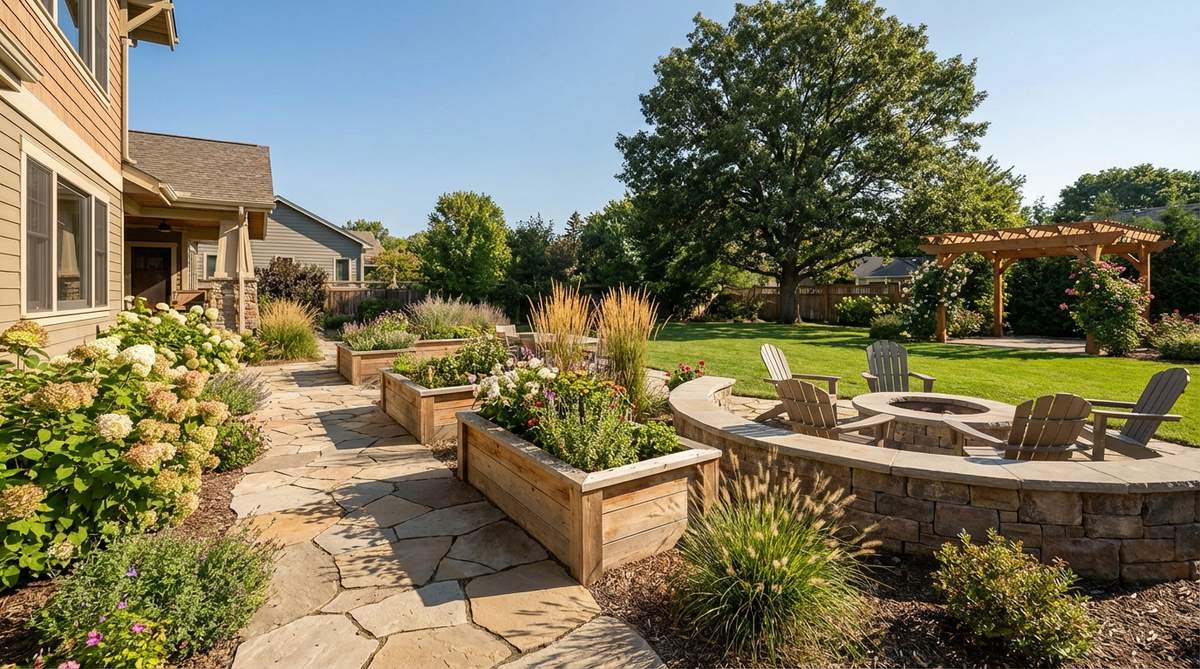
Looking up through these staggered fronds feels exactly like relaxing at an exclusive Balinese eco-resort. Layered palm canopy design works magic for enclosing a sun-drenched pool patio.
Most neglect the mid-tier layer, but packing ferns tightly beneath tall palms creates an aggressively lush aesthetic. If you’re building terrariums, miniature garden supplies like faux palm sets mimic this exact tropical density indoors.
Setting up this triple-tier canopy averages $150–$300 for mature plants. Pin this if you’re craving an outdoor vacation vibe!
- Key Materials: Cold-hardy palm varieties
- Vibe / Style: Luxury tropical resort
- Difficulty: Advanced planting
- Budget Breakdown: Canopy Palm: $150 | Understory Ferns: $60.
- Creator’s Tip: Use palm-specific nutritional sprays to keep the upper fronds deep green.
- Smart Sourcing: Use bulk pack organic palm fertilizer and UV-resistant faux outdoor ferns for shady spots.
8. Broad Leaf Contrast with Fine Foliage
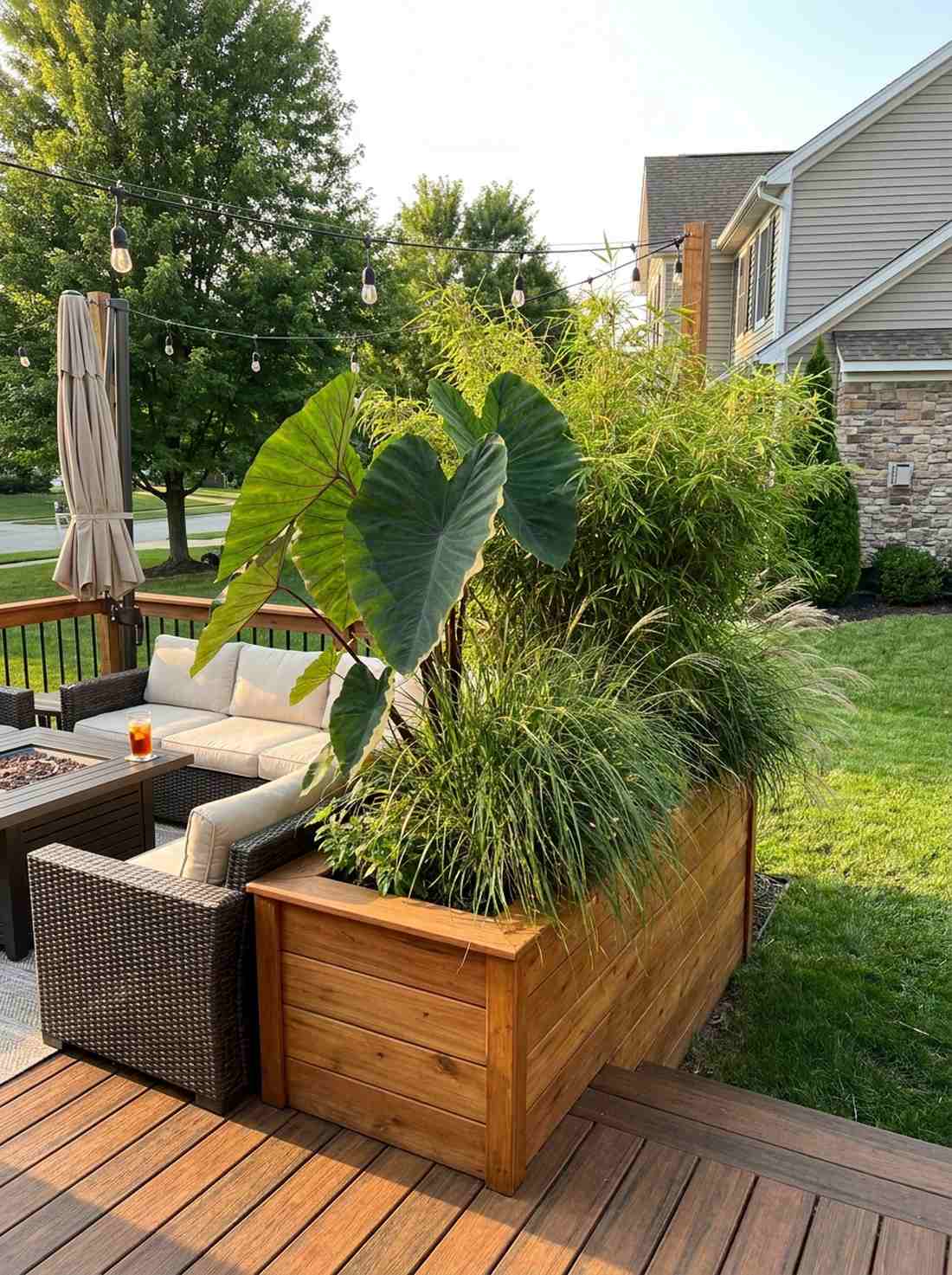
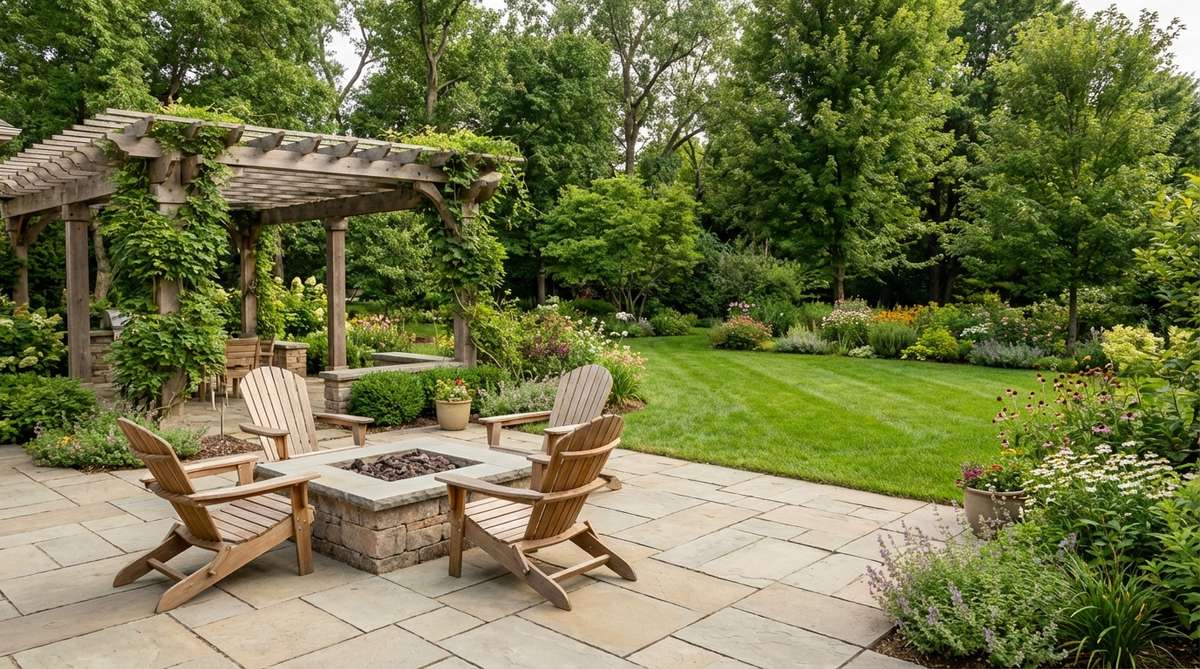
The dramatic clash of giant elephant ears against wispy bamboo feels like a vibrant jungle scene come to life. Oversized tropical leaf pairing is the perfect secret weapon for shading a hot deck corner.
Using only one leaf size creates visual fatigue, whereas forcing extreme texture contrasts looks far more expensive than it is. Adding heavy-duty moisture mats beneath the soil ensures these thirsty giant leaves never wilt.
You can execute this striking contrast for roughly $35–$65. It’s a fast upgrade that completely changes the vibe.
- Key Materials: Elephant ear (Colocasia) bulbs
- Vibe / Style: Bold exotic oasis
- Difficulty: Beginner-friendly
- Budget Breakdown: Bulbs: $25 | Fine grass: $20.
- Creator’s Tip: Over-winter expensive tropical bulbs indoors to save money next season.
- Smart Sourcing: Snag heavy-duty moisture retaining mats (bulk pack) and premium tropical potting mix.
Most people completely ignore this next layout… until they realize it hides ugly fencing instantly.
9. Vibrant Tropical Color Accents
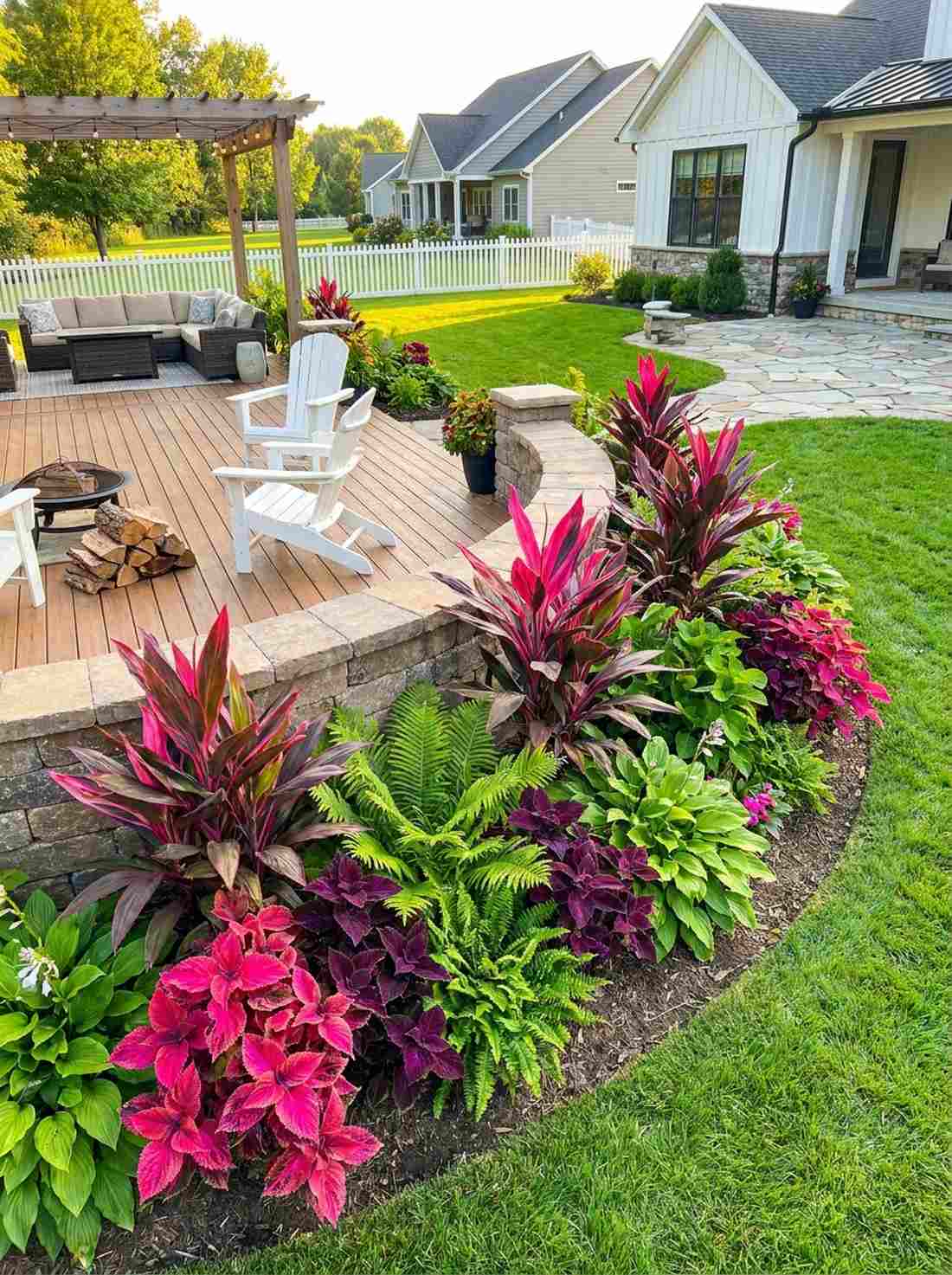
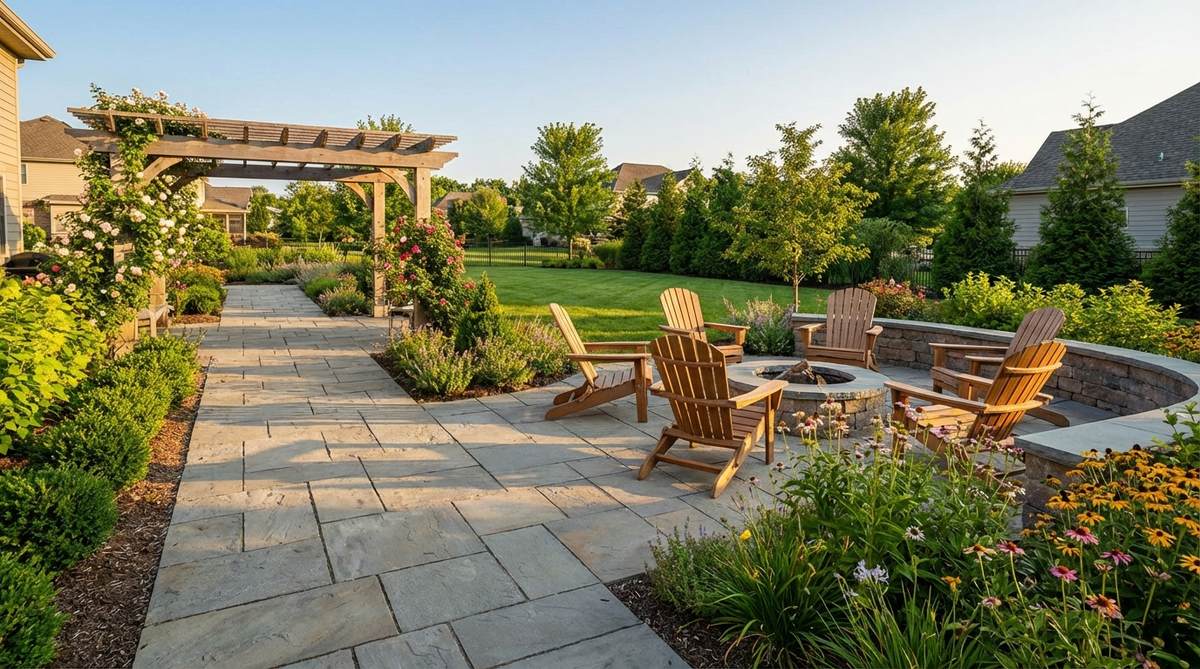
Splashes of neon pink and deep purple foliage feel like a vibrant sunset painted directly onto your garden bed. Saturated tropical foliage accents are unmatched for brightening up dull, monochromatic green spaces.
Standard green hedges are boring, but weaving cordyline and coleus throughout the layers provides a designer-level finish. Utilizing slow-release color-boosting plant food guarantees those reds and purples stay intensely bright all summer.
Grabbing a few vibrant tropicals costs barely $20–$40. Save this idea for an instant pop of yard drama!
- Key Materials: Neon coleus starter packs
- Vibe / Style: Electric island escape
- Difficulty: Extremely easy
- Budget Breakdown: Accent plants: $30 | Color-boost food: $10.
- Creator’s Tip: Pinch the tops off your coleus plants early to force them to grow wider and bushier.
- Smart Sourcing: Purchase slow-release color boosting fertilizer (bulk bucket) and pre-mixed tropical soil kits.
💡 Must-Have Supplies for High-End Setups
To build these setups faster and ensure they last, skip the generic craft aisles and invest in the right foundational kits.
- Base & Support: Commercial-grade weed barrier fabric (bulk roll)
- Setup Tools: Heavy-duty steel landscape edging kits
- Weather/Durability Protection: UV-resistant clear foliage sealant sprays
10. Spilling Over Pathway Edges
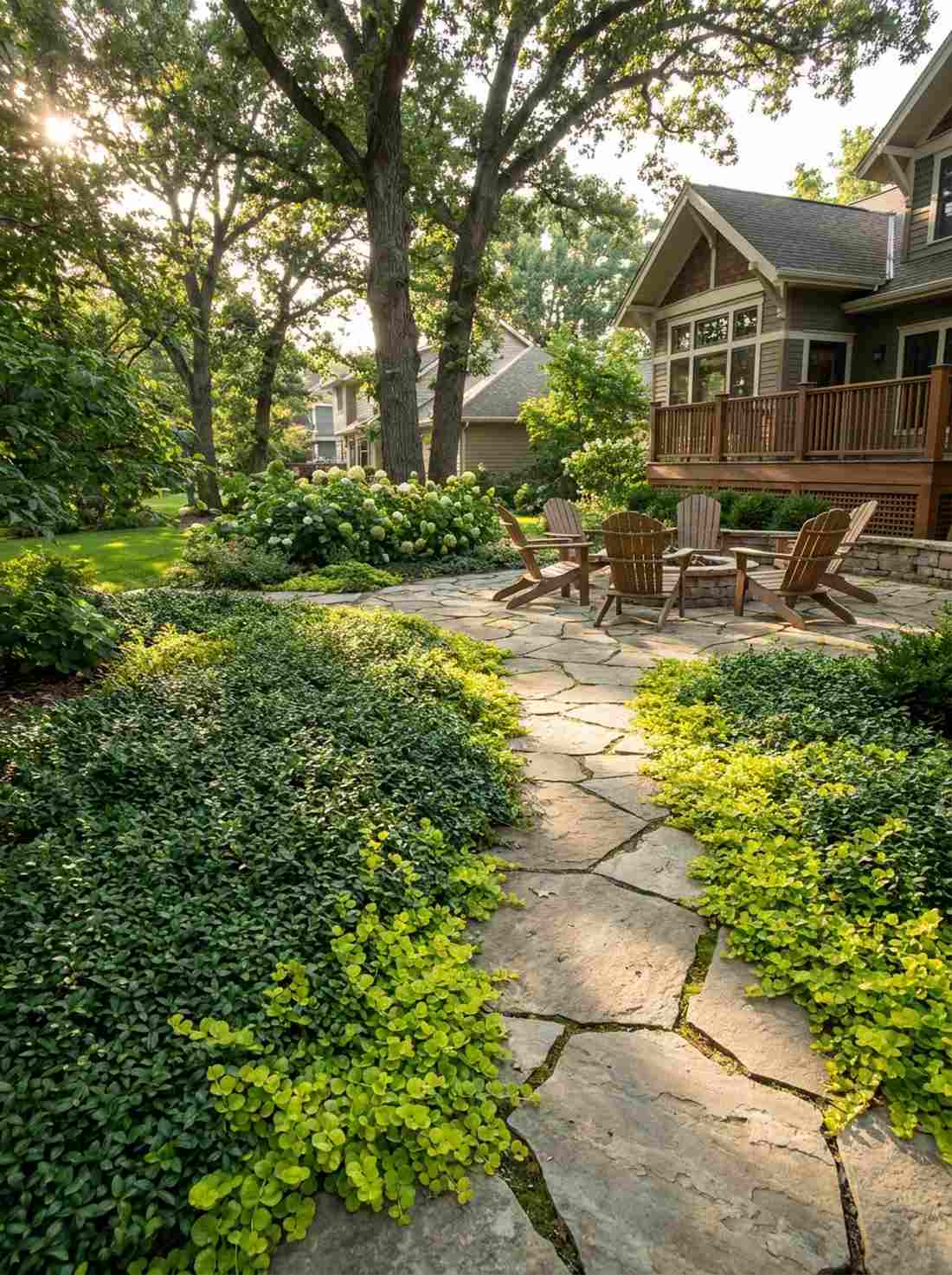
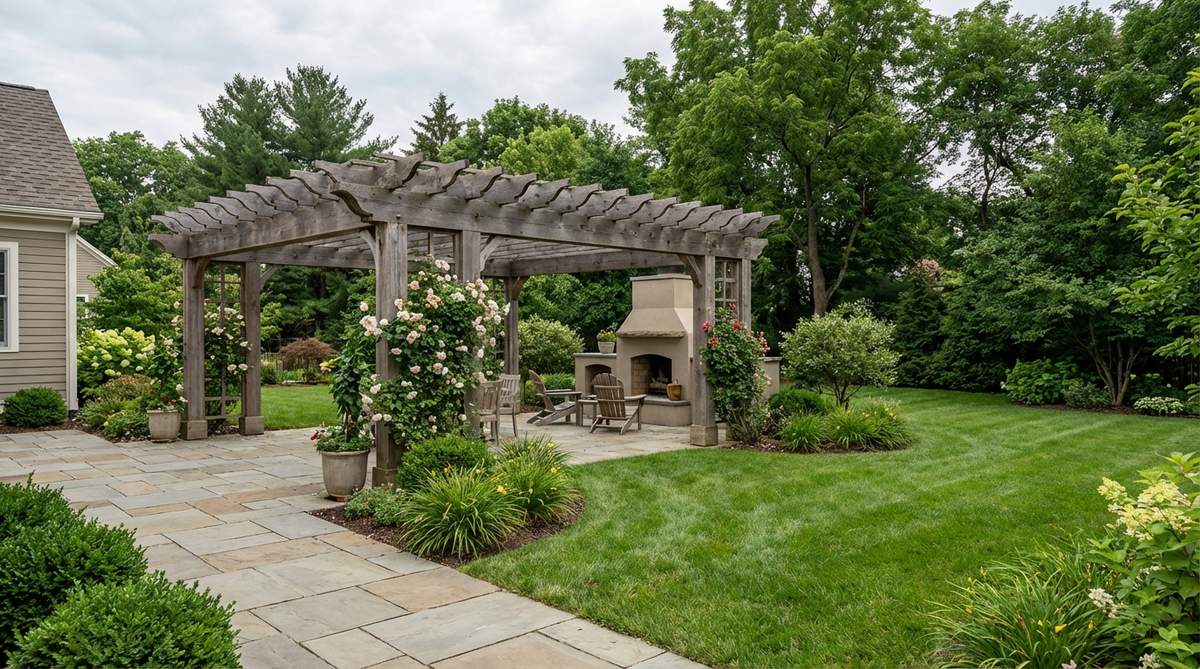
Watching greenery slowly consume a stone walkway feels like you’ve discovered an ancient, untouched ruin. Creeping edge overspill designs are the ultimate hack for softening brutal concrete sidewalks.
Perfectly trimmed edges look sterile, whereas intentionally letting vines creep over stones delivers a remarkably high-end aesthetic. For indoor miniature versions, terrarium accessories like creeping moss perfectly replicate this wild encroachment.
This unruly yet calculated look requires just $15–$30 in creeping vines. Highly recommended for a quick weekend win.
- Key Materials: Creeping fig or creeping Jenny
- Vibe / Style: Reclaimed jungle pathway
- Difficulty: Easy but requires pruning
- Budget Breakdown: Creeping plants: $20 | Pathway soil: $10.
- Creator’s Tip: Use a flat spade to sharply cut back the overgrowth once a month to keep it walkable.
- Smart Sourcing: Get a bulk pack of creeping plant plugs and heavy-duty edging shears.
11. Water Features Surrounded by Density
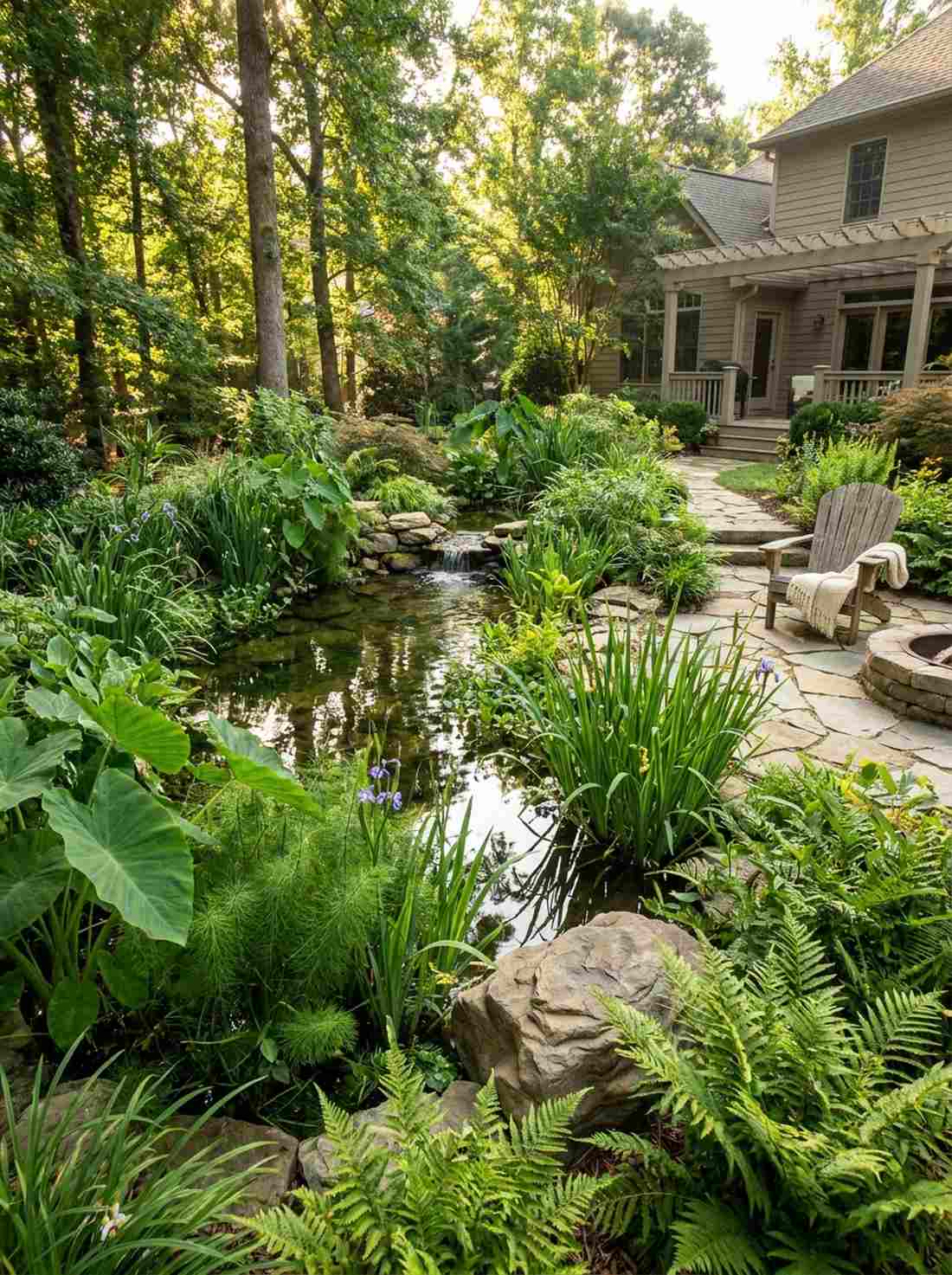
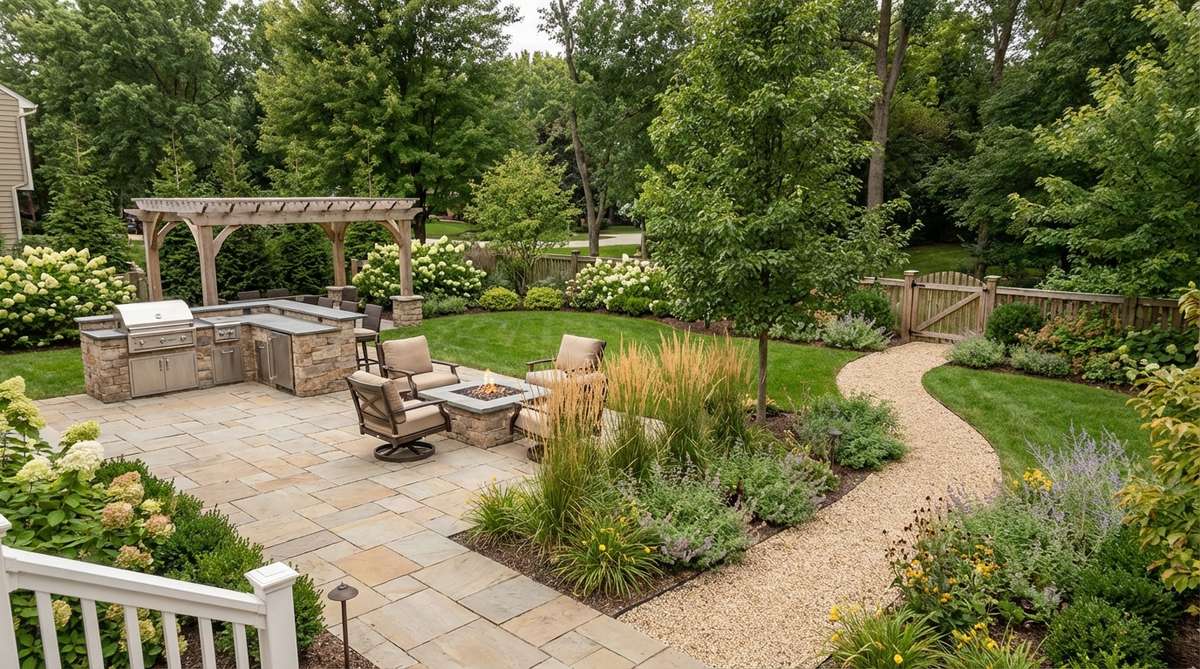
The sound of water masked by thick fronds feels incredibly meditative and secluded from the outside world. Dense pond perimeter planting works exceptionally well for creating a backyard zen focal point.
Exposing the plastic rim of a pond liner is a fatal design flaw, but packing marginal aquatics tightly around the edge hides everything brilliantly. Integrating a UV-clarifier pump kit ensures the water remains crystal clear despite the heavy foliage.
A basic pump and marginal plant set runs about $80–$150. Pin this if you’re planning a water garden upgrade!
- Key Materials: Submersible pump and taro plants
- Vibe / Style: Hidden lagoon sanctuary
- Difficulty: Intermediate wiring/plumbing
- Budget Breakdown: Pump kit: $60 | Marginal plants: $50.
- Creator’s Tip: Hide the pump’s power cord completely inside a hollow faux rock.
- Smart Sourcing: Invest in a UV-coated submersible pond kit and pre-cut aquatic planter baskets.
12. Fast-Growing Screening with Ficus
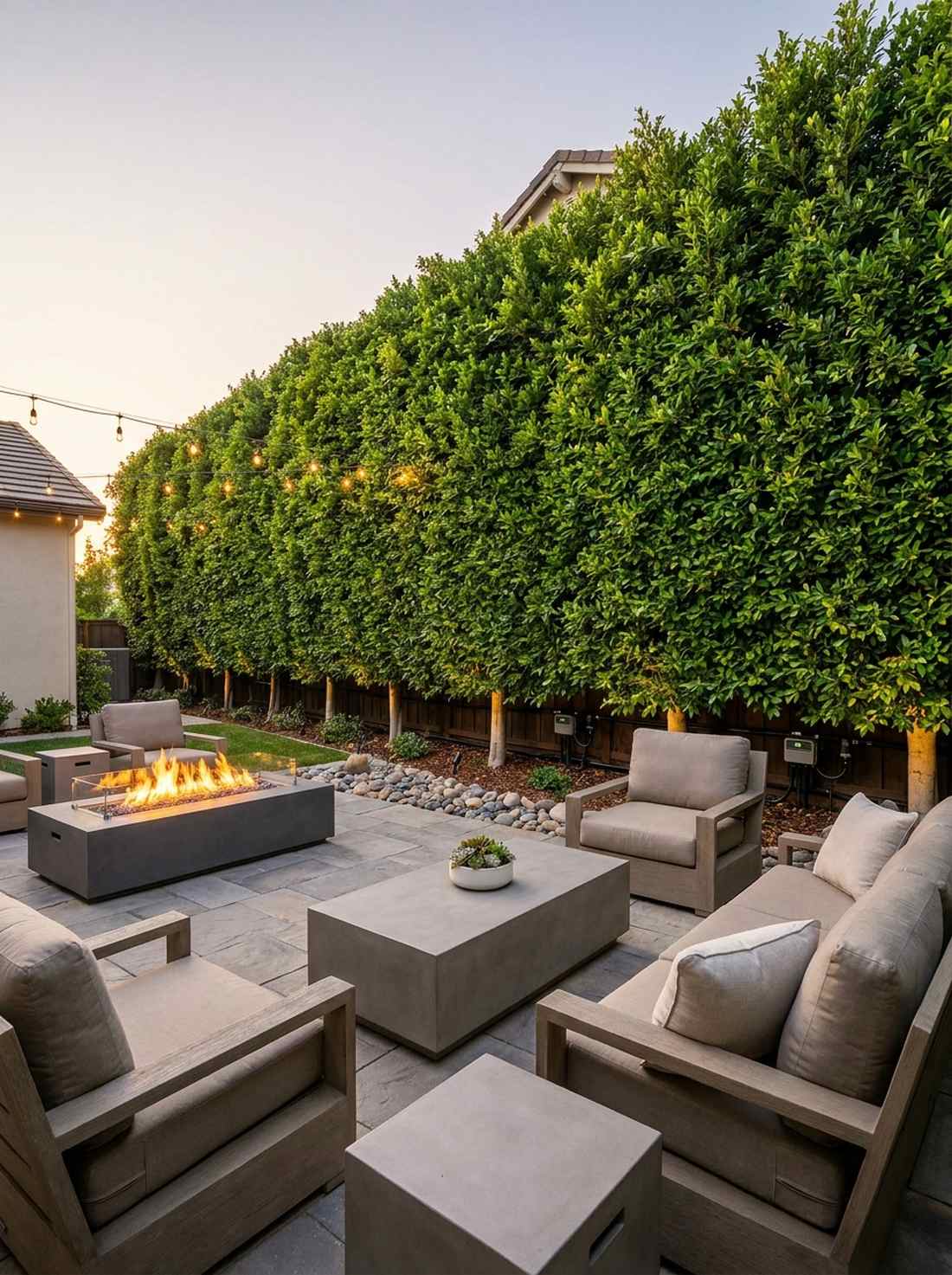
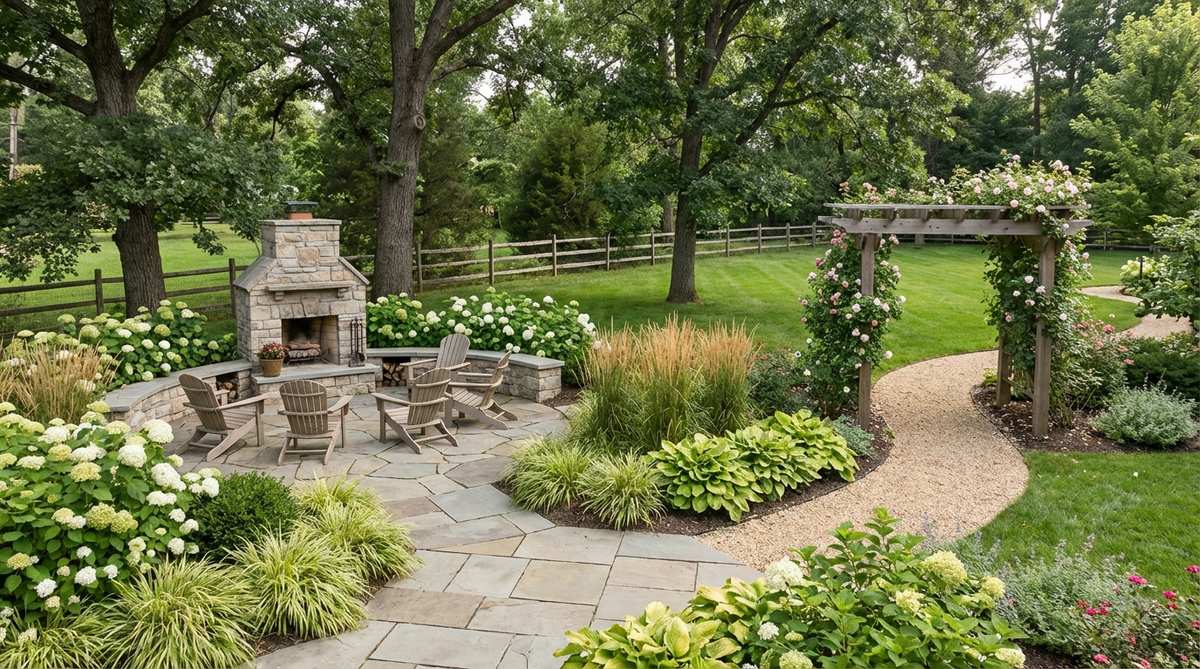
A towering wall of glossy green leaves feels like wrapping your yard in a premium velvet curtain. Rapid-growth living privacy walls are unmatched for blocking out nosy neighbors on a tight property line.
Wooden fences degrade and warp over time, while a properly maintained ficus wall yields a permanently expensive architectural look. Setting up an automated commercial drip line is mandatory to push these hedges to their maximum growth speed.
Starting a ficus wall costs roughly $100–$250 depending on linear footage. It’s an investment that pays huge dividends in privacy.
- Key Materials: Ficus Hillii Flash starter shrubs
- Vibe / Style: Exclusive VIP courtyard
- Difficulty: Requires diligent pruning
- Budget Breakdown: Ficus shrubs: $150 | Drip line: $45.
- Creator’s Tip: Shear the sides aggressively while letting the top grow to force maximum density at eye level.
- Smart Sourcing: Buy a commercial-grade hedge trimmer kit and automated smart drip irrigation controllers.
Cottage Garden AbundanceLush Green Garden Ideas
13. Tall Spires at Border Backs
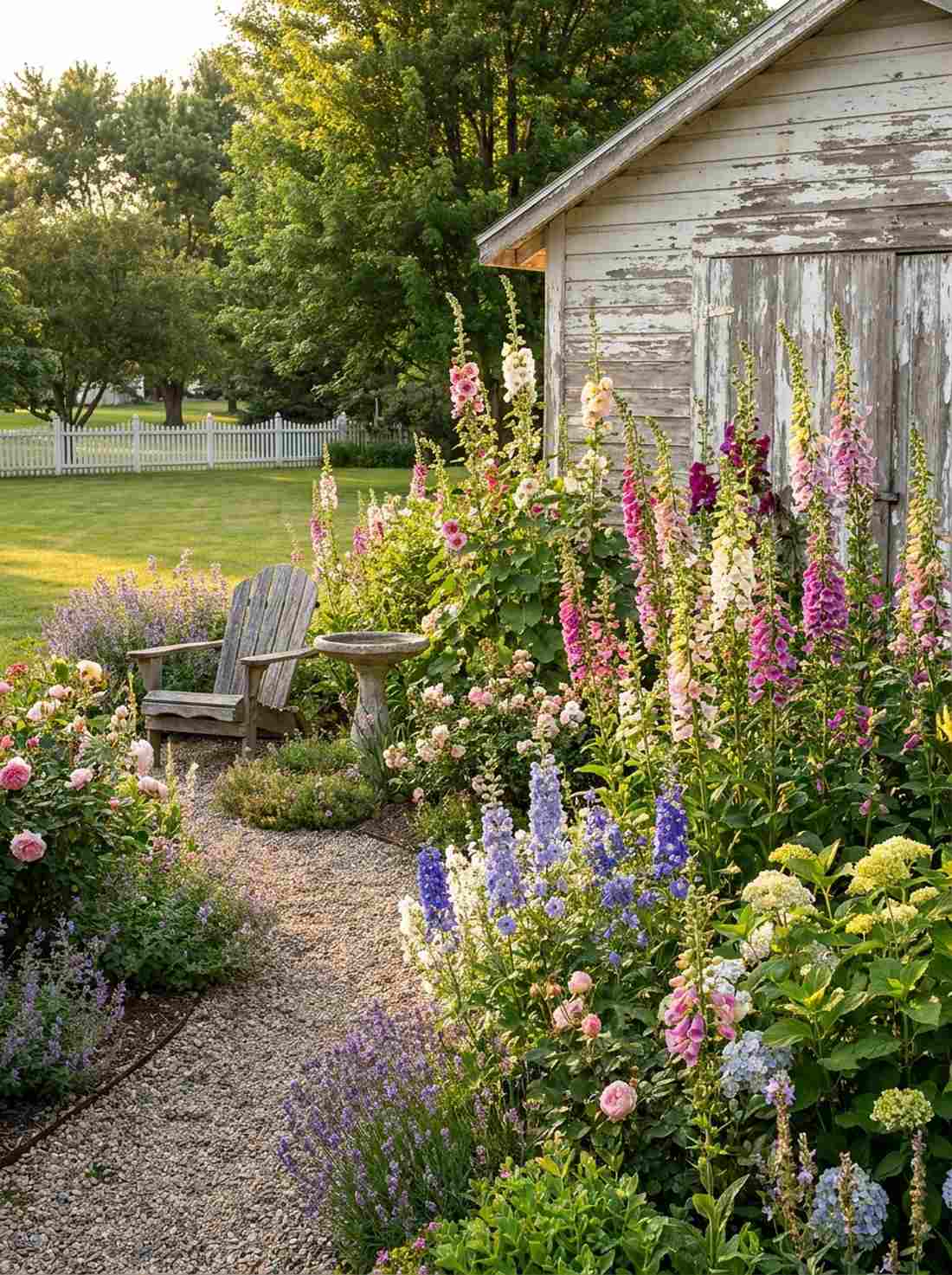
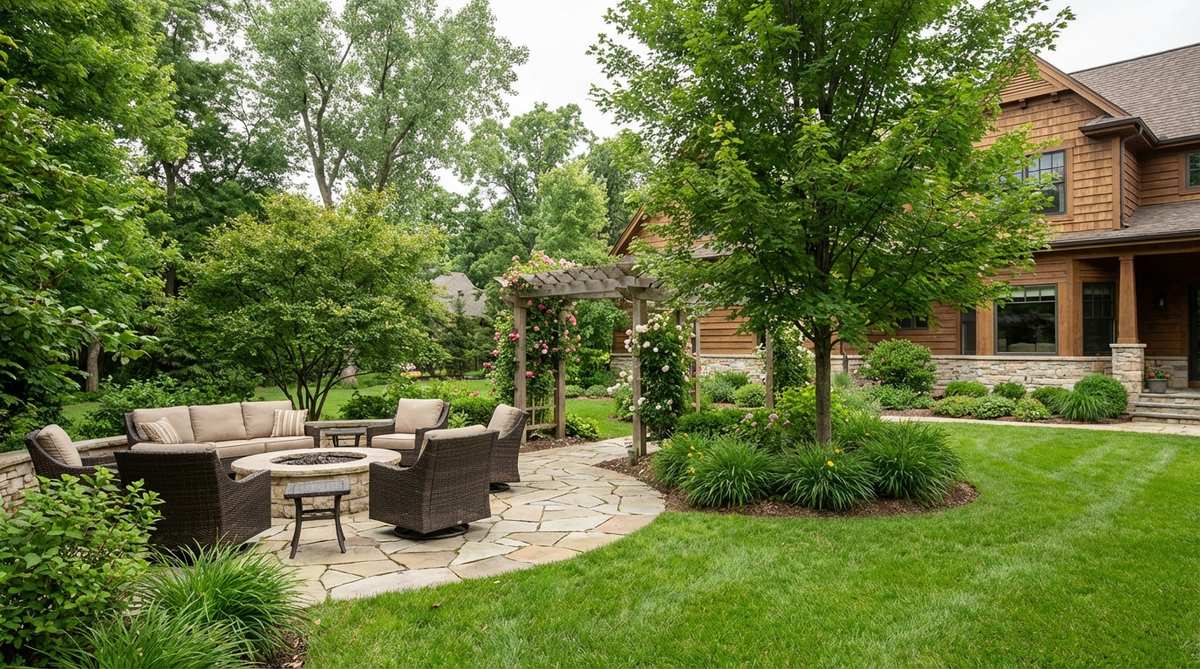
Towering floral spikes reaching for the sky feel right out of a vintage countryside fairytale. Vertical cottage border backdrops are the perfect strategy for covering up peeling shed walls.
Planting everything at the same height looks messy, but anchoring the back with delphiniums gives a structured, designer-level finish. Using heavy-duty invisible staking ensures these massive flower heads don’t snap during summer storms.
You can seed or plug these tall spires for a mere $20–$40. Pin this to your dream cottagecore garden board!
- Key Materials: Foxglove or Hollyhock seed packs
- Vibe / Style: Whimsical storybook meadow
- Difficulty: Moderate staking required
- Budget Breakdown: Seeds/Plugs: $25 | Stakes: $15.
- Creator’s Tip: Tie the stems using soft green Velcro tape so the supports remain entirely invisible.
- Smart Sourcing: Grab a bulk pack of invisible plant stakes and premium organic bloom boosters.
14. Middle Layer Repeat Performers
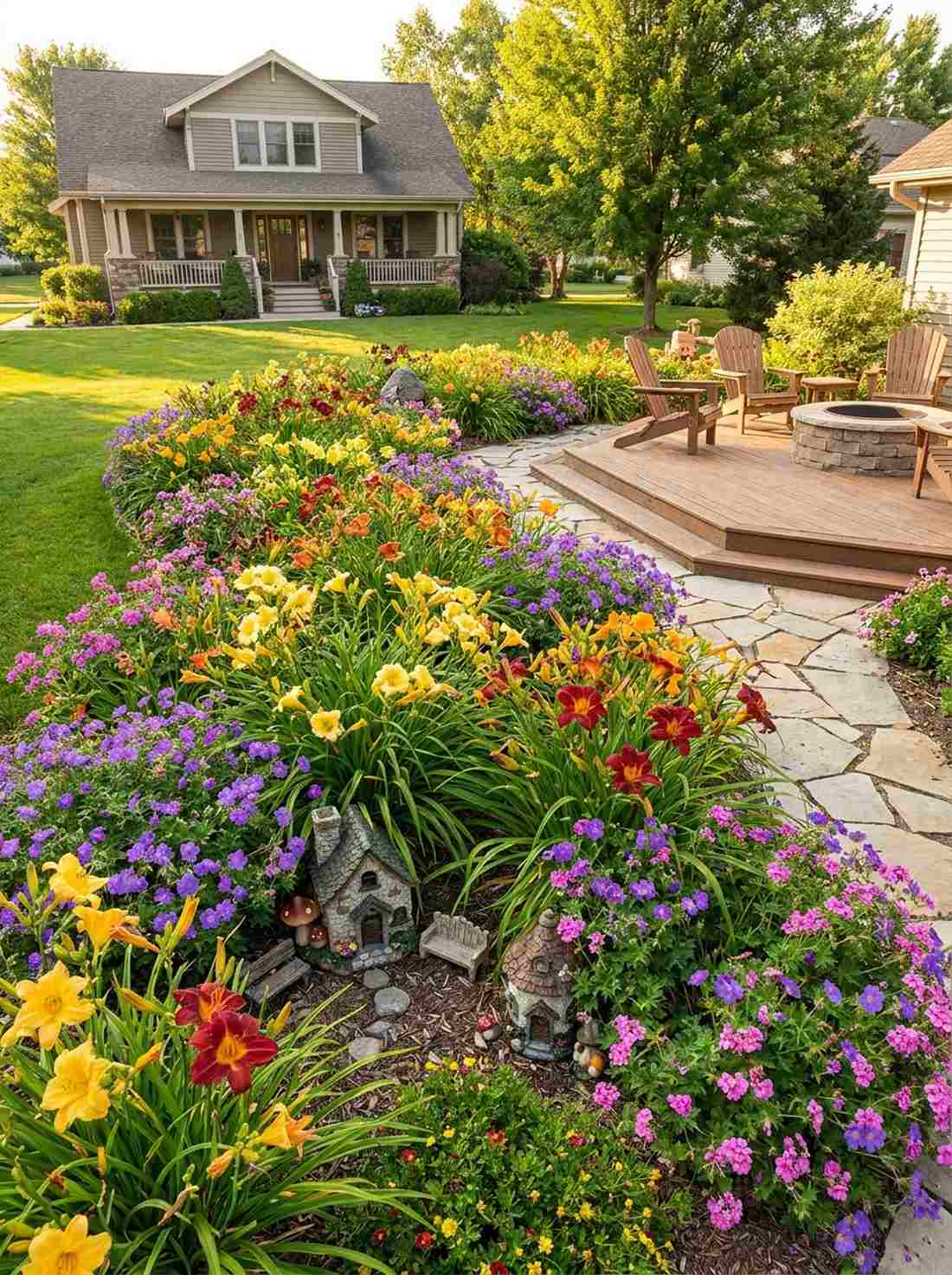
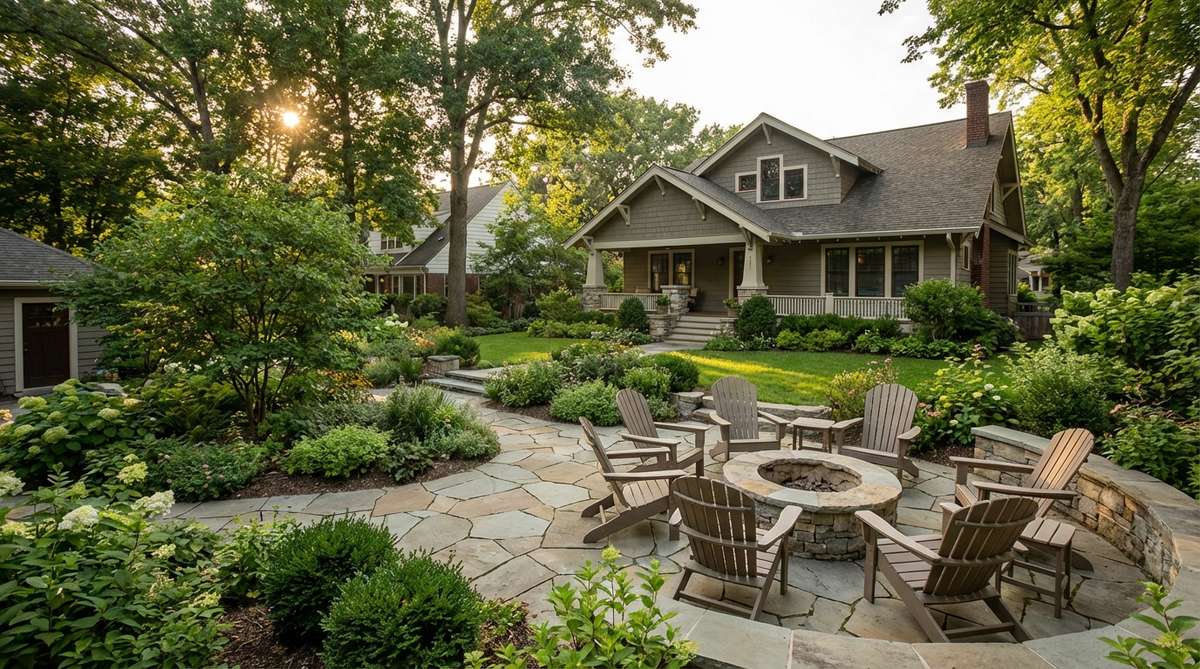
Waves of continuous blooms feel like a garden that effortlessly takes care of itself all season. Perpetual blooming mid-layer borders serve wonderfully to fill the vast empty spaces between trees and paths.
Relying on one-hit-wonder spring bulbs leaves a dead yard by July, while repeat bloomers deliver a surprisingly premium look straight through autumn. Sneaking in fairy garden kits among these dense mid-layers adds a whimsical surprise for guests.
A solid cluster of repeat perennials will set you back about $40–$75. Highly recommended for a high-impact, low-effort yard.
- Key Materials: Reblooming daylilies or hardy geraniums
- Vibe / Style: Abundant romantic estate
- Difficulty: Easy maintenance
- Budget Breakdown: Perennials: $50 | Compost: $15.
- Creator’s Tip: Cut the foliage back halfway immediately after the first bloom to force a massive second flush.
- Smart Sourcing: Pick up UV-coated resin fairy cottage kits and slow-release perennial food spikes.
If you think buying adult trees is the only way to get density, the next hack will save you hundreds…
15. Front Edge Softeners
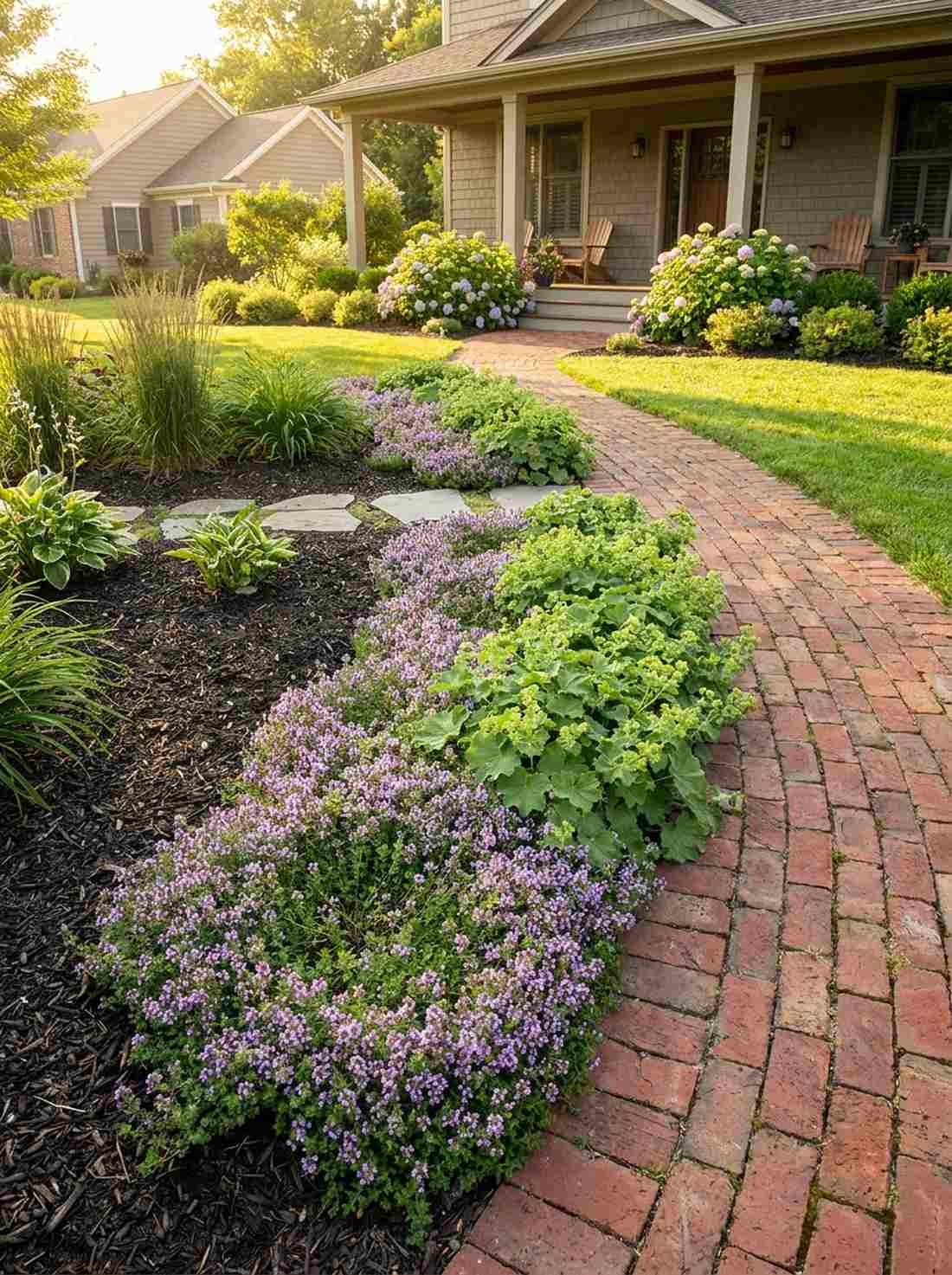
Soft foliage spilling onto brick pathways feels cozy, inviting, and wonderfully unstructured. Mounding border softening techniques are ideal for blurring the harsh transition between mulch beds and manicured lawns.
Sharp, rigid dirt edges look incredibly corporate, whereas a soft cascade of creeping thyme yields a beautifully organic, expensive aesthetic. Laying down a pre-cut weed barrier strip just beneath the spill keeps the grass from invading the bed.
This border hack costs less than $30 to execute. Save this if you want to eliminate tedious weed-whacking!
- Key Materials: Lady’s mantle or creeping thyme plugs
- Vibe / Style: Relaxed countryside stroll
- Difficulty: Beginner-friendly
- Budget Breakdown: Edge plugs: $20 | Barrier strip: $10.
- Creator’s Tip: Choose evergreen softeners so your borders still look defined even in the dead of winter.
- Smart Sourcing: Snag pre-cut weed barrier strips (bulk pack) and a heavy-duty hand trowel kit.
16. Interplanting Edibles and Ornamentals
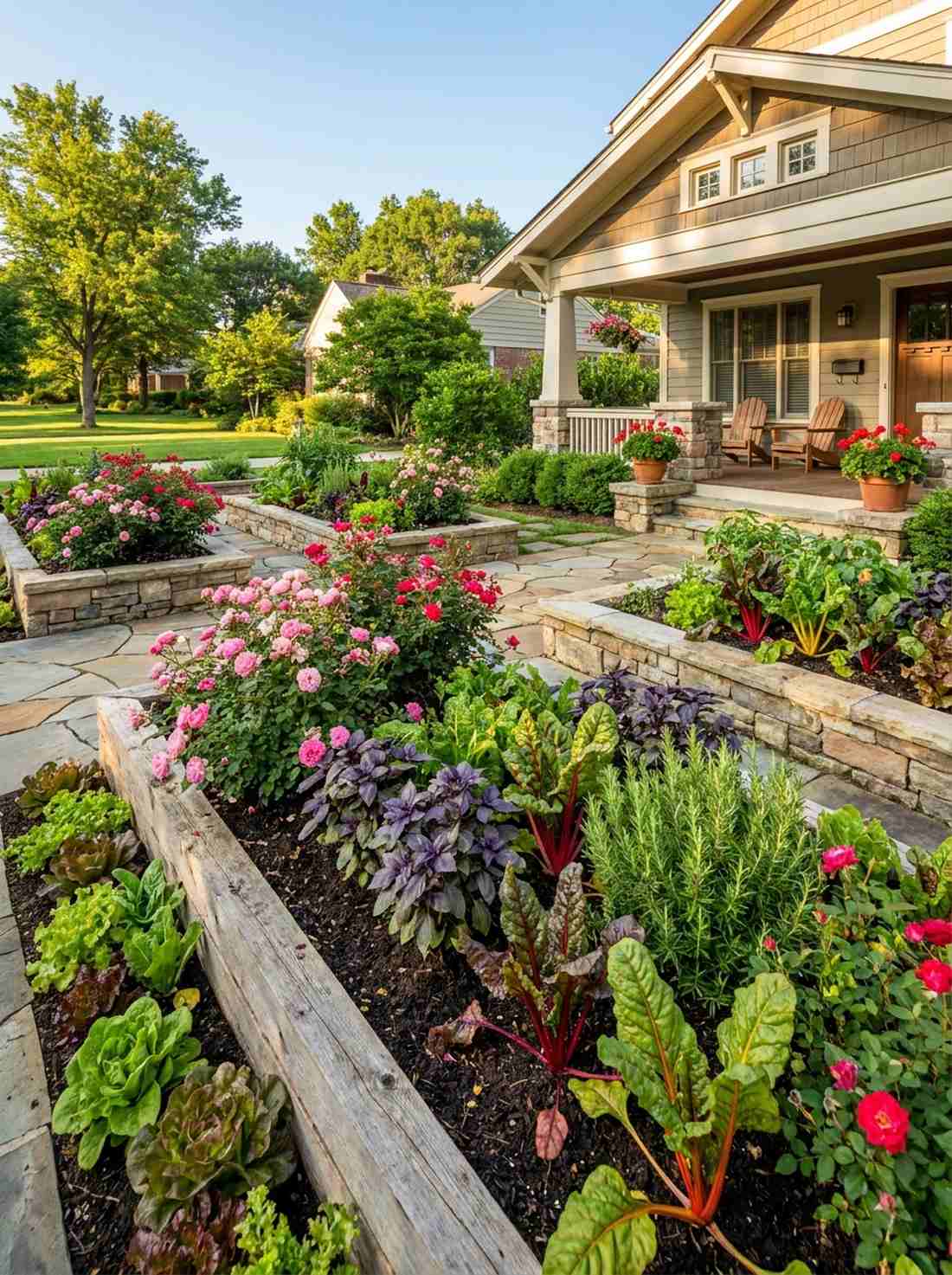
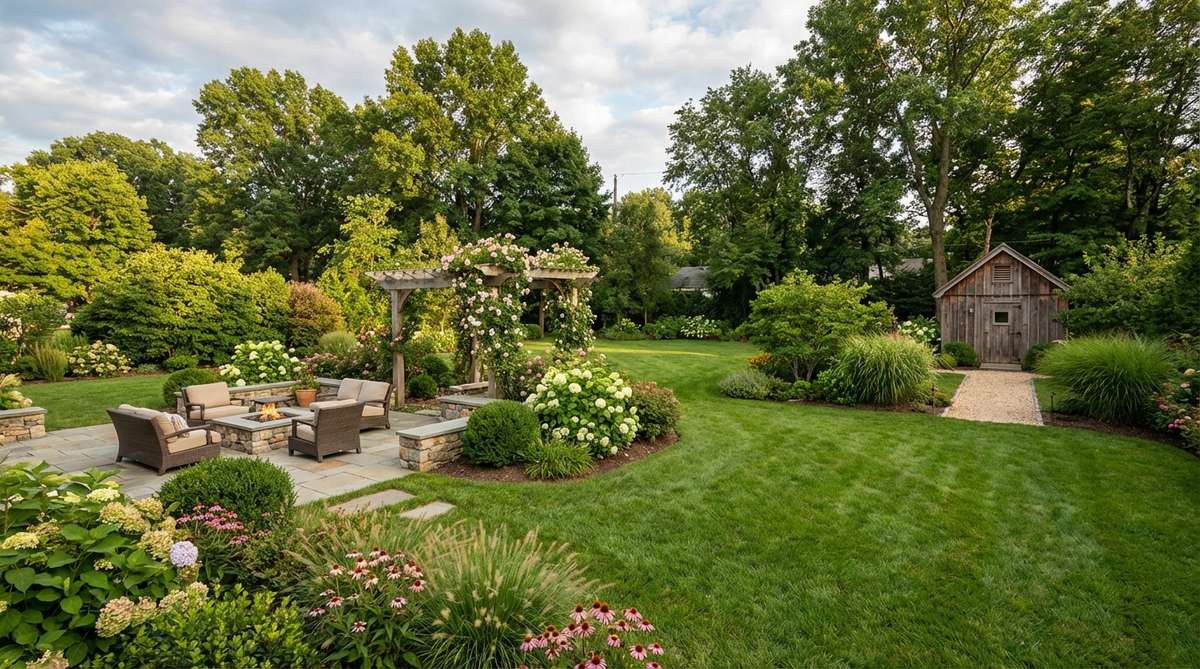
Plucking fresh rosemary from a bed of blooming roses feels like owning a historic French potager garden. Ornamental edible intercropping is an ingenious space-saver for small suburban front yards.
Hiding vegetables in a wooden backyard box is outdated; mixing purple basil with standard flowers creates a remarkably high-end aesthetic. Utilizing premium raised bed soil blends ensures both the food and flowers get extreme nutrient density.
Seed packets and herb starters for this setup run about $25–$45. Pin this to your ultimate sustainable living board!
- Key Materials: Purple basil and Swiss chard seeds
- Vibe / Style: Productive Parisian courtyard
- Difficulty: Intermediate soil management
- Budget Breakdown: Herb starters: $20 | Premium soil: $20.
- Creator’s Tip: Plant the fast-growing lettuces near the front edge so you don’t trample flowers during harvest.
- Smart Sourcing: Buy premium organic raised bed soil (bulk bags) and UV-resistant plant labeling kits.
17. Self-Seeding Naturalization
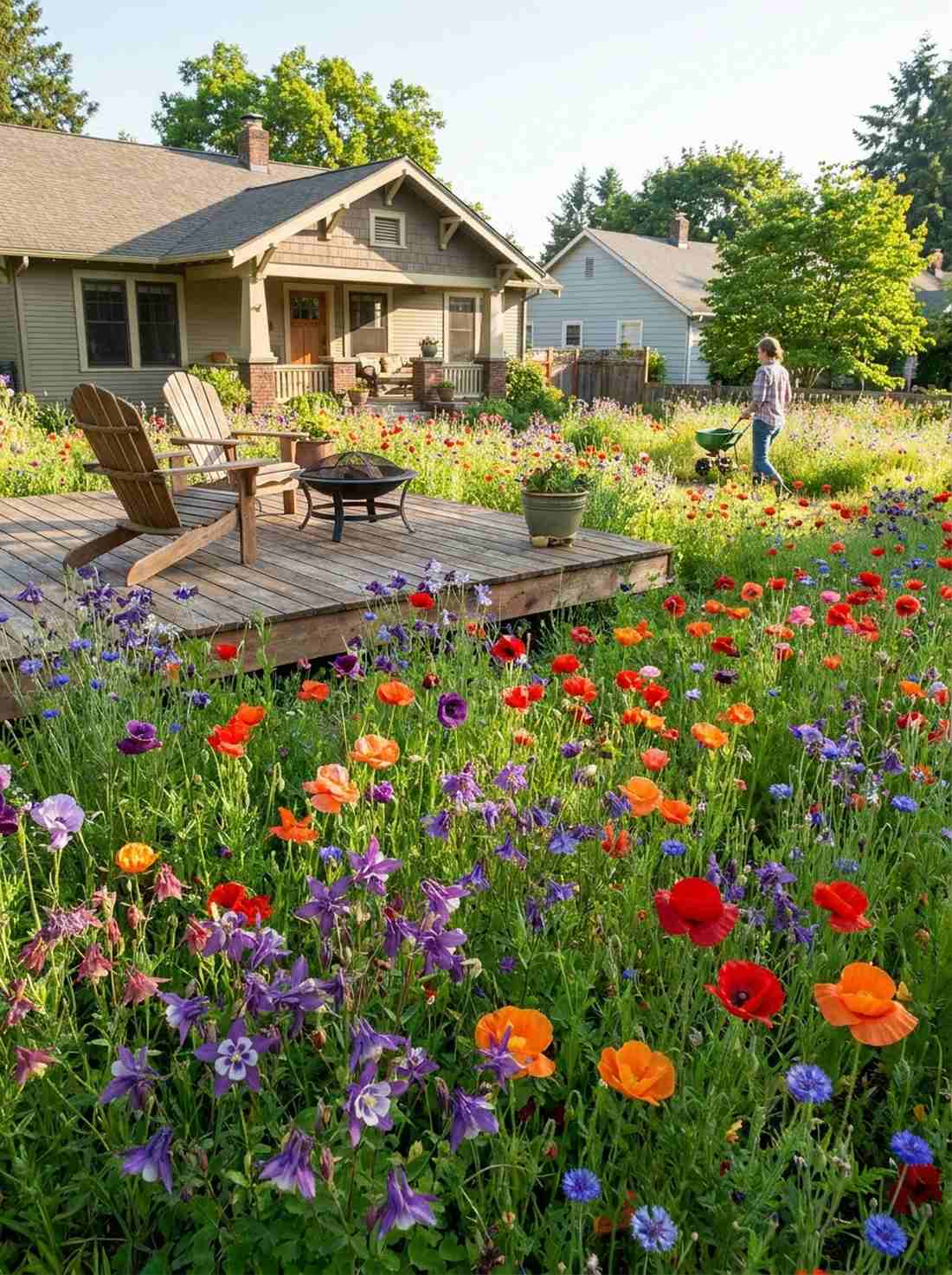
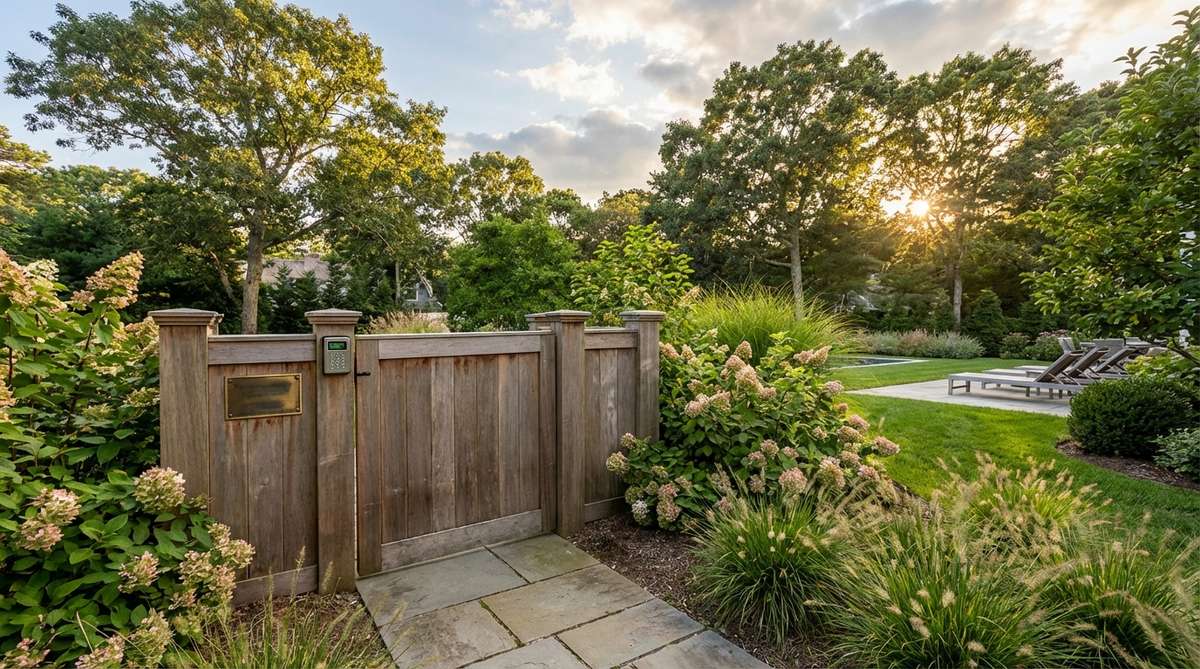
Watching unexpected wildflowers pop up in perfect harmony feels like nature did the landscaping for you. Controlled self-seeding ecosystems work perfectly to fill massive acreage on a shoestring budget.
Manually replanting every spring is exhausting, but encouraging self-seeders yields a wildly lush look that gets thicker every single year. Broadcast spreading bulk wildflower seeds over bare patches creates an instant, cheap filler.
You can start this naturalizing process for roughly $15 in bulk seed. It’s a brilliant strategy for lazy, gorgeous gardening.
- Key Materials: Bulk poppy and aquilegia seeds
- Vibe / Style: Untamed meadow beauty
- Difficulty: Requires selective weeding
- Budget Breakdown: Seed mixes: $15 | Sand for spreading: $5.
- Creator’s Tip: Mix the tiny seeds with play sand before tossing them to ensure an even, untangled distribution.
- Smart Sourcing: Grab a bulk pack of perennial wildflower seeds and a handheld rotary seed spreader.
18. Rose Arbors and Pergolas
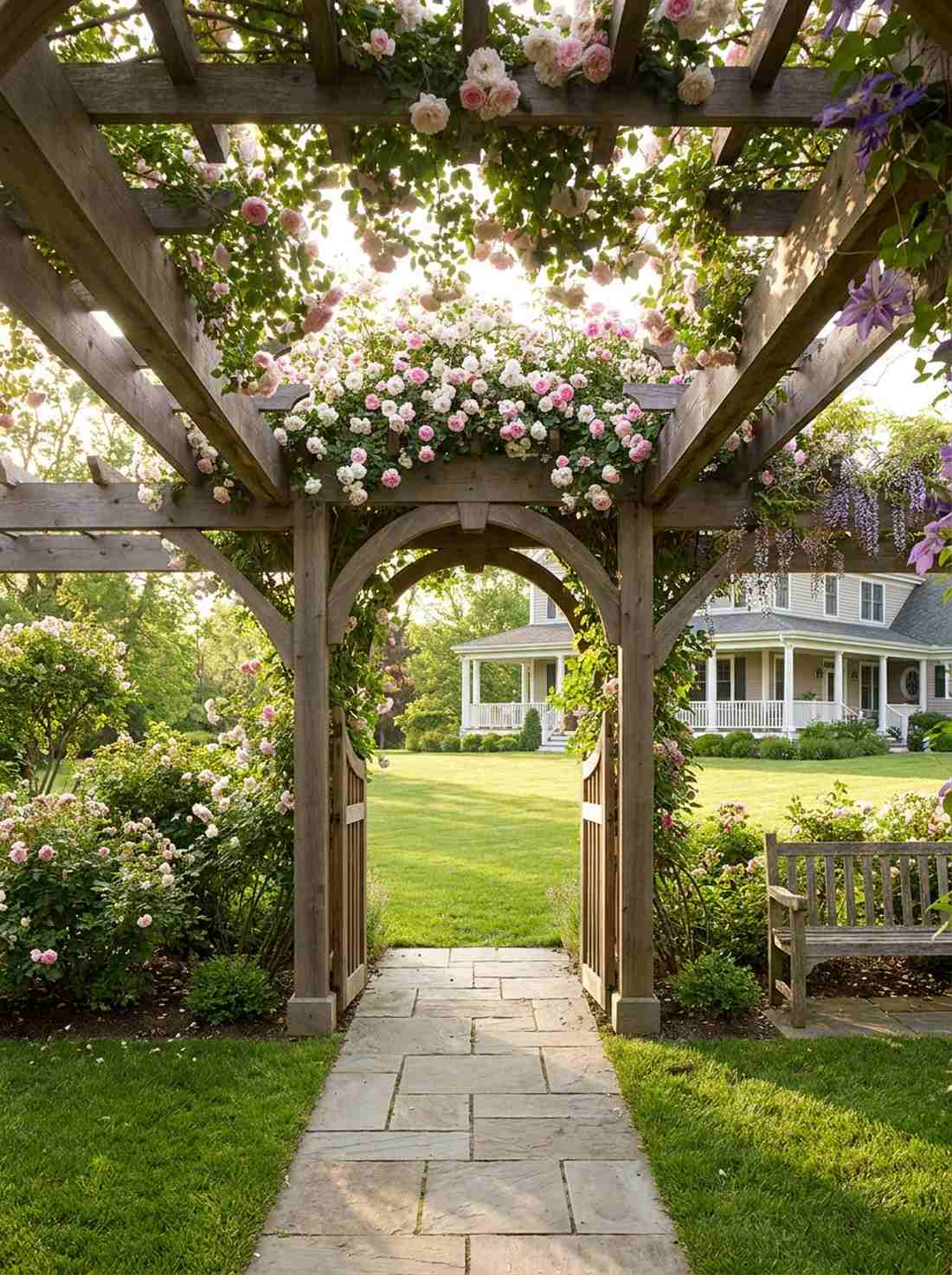
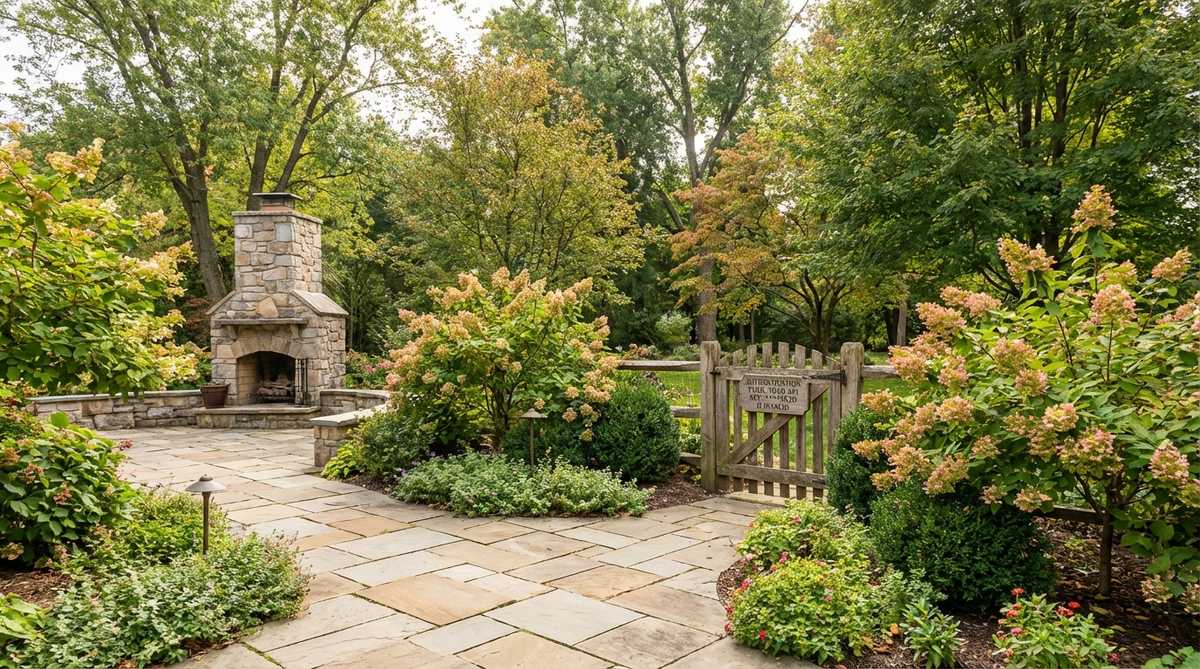
Walking under a fragrant canopy of trailing roses feels like stepping through the gateway to a royal estate. Climbing floral architectural structures are the ultimate focal points for breaking up long, boring yard layouts.
A bare wooden arbor looks cheap and unfinished, but training heavy climbing roses over it delivers a remarkably premium, established look. Securing the vines with UV-coated garden ties ensures the heavy canes won’t pull the structure down.
Expect to invest $150–$400 for a sturdy arbor and premium climbing roses. Save this if you’re planning a major yard renovation!
- Key Materials: Sturdy wooden arbor and climbing roses
- Vibe / Style: Classic romantic gateway
- Difficulty: Advanced structural assembly
- Budget Breakdown: Arbor kit: $250 | Climbing roses: $80.
- Creator’s Tip: Train the rose canes horizontally along the base before letting them climb up, forcing more blooms lower down.
- Smart Sourcing: Invest in a heavy-duty cedar arbor kit and UV-coated flexible garden ties (bulk roll).
19. Lavender Ribbons and Borders
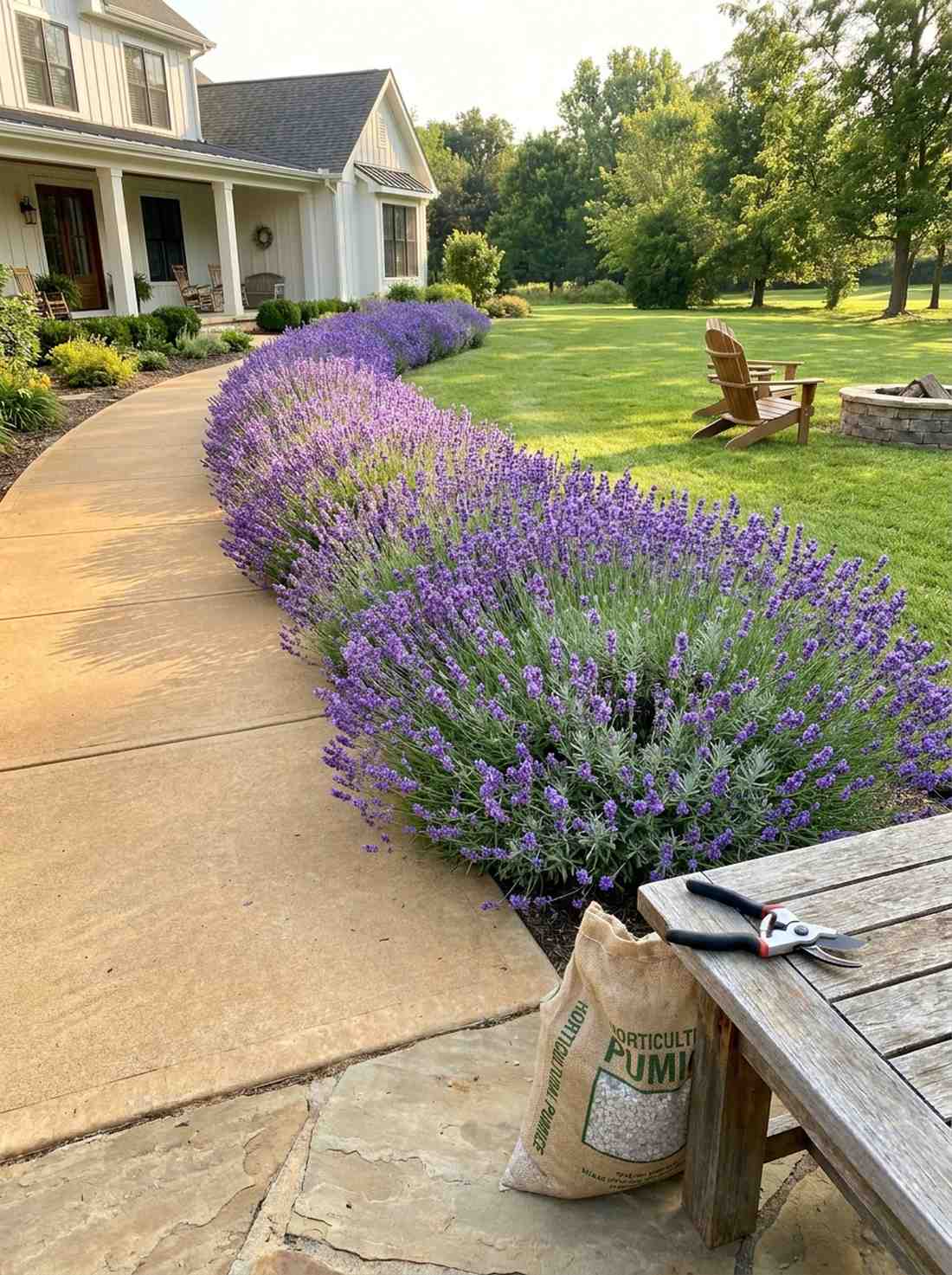
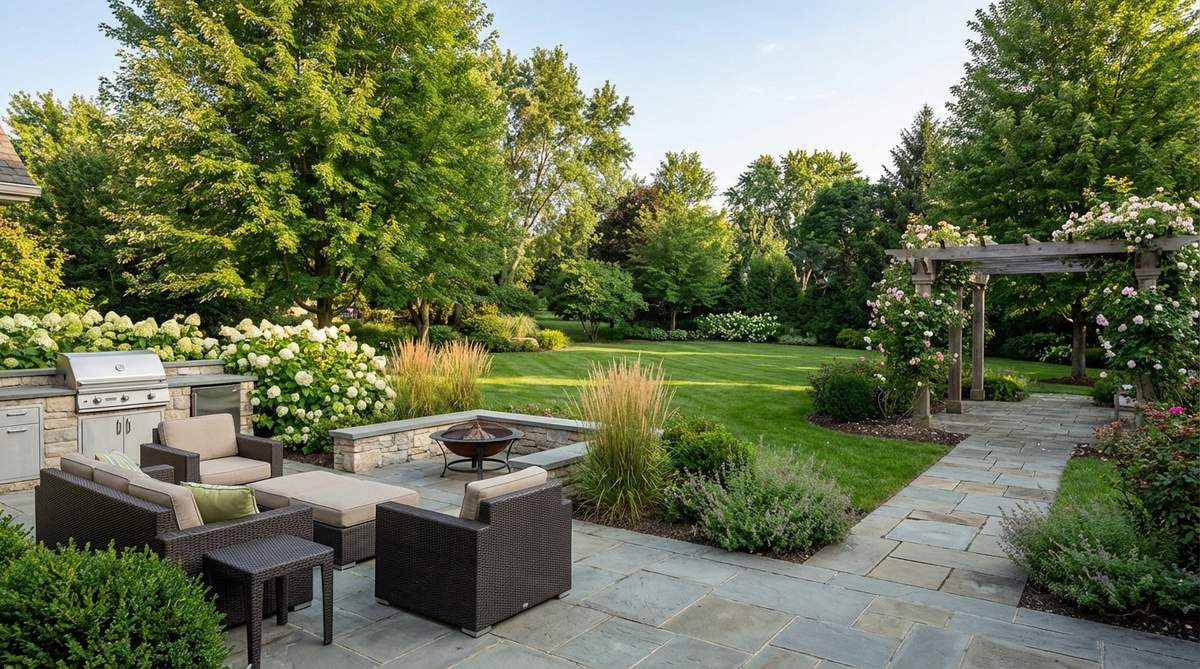
The sweeping purple lines and intoxicating scent feel like a high-end spa entrance located right in your driveway. Evergreen aromatic border ribbons are phenomenal for outlining hot, sun-baked concrete paths.
Using standard boxwoods is predictable, while a solid drift of English lavender offers a much more expensive, sensory-rich aesthetic. Amending the trench with bulk horticultural pumice guarantees the fast drainage lavender absolutely requires to survive.
Creating a long lavender ribbon costs about $60–$120 in nursery flats. It’s a fast upgrade that completely changes the vibe.
- Key Materials: English lavender flats
- Vibe / Style: Sun-drenched provencal pathway
- Difficulty: Moderate pruning required
- Budget Breakdown: Lavender plugs: $80 | Drainage pumice: $20.
- Creator’s Tip: Never cut back into the hard woody stems; only shear the soft green growth to keep the mounded shape.
- Smart Sourcing: Pick up bulk horticultural pumice bags and premium bypass pruning shears.
Landscapers actively gatekeep this next technique because it eliminates the need for professional maintenance…
Woodland & Shade Garden Layers for Lush Garden Design
20. Canopy Trees for Dappled Shade
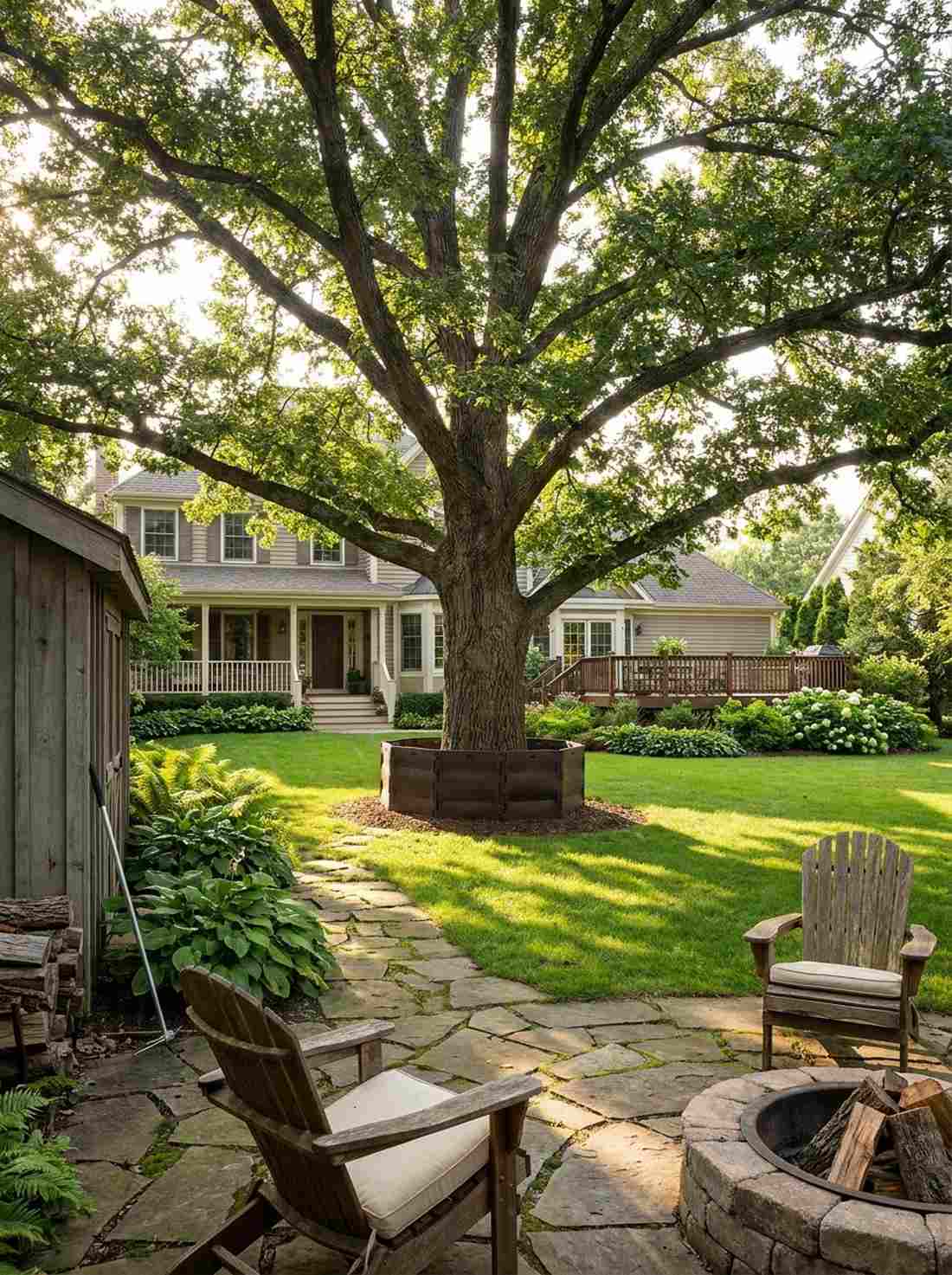
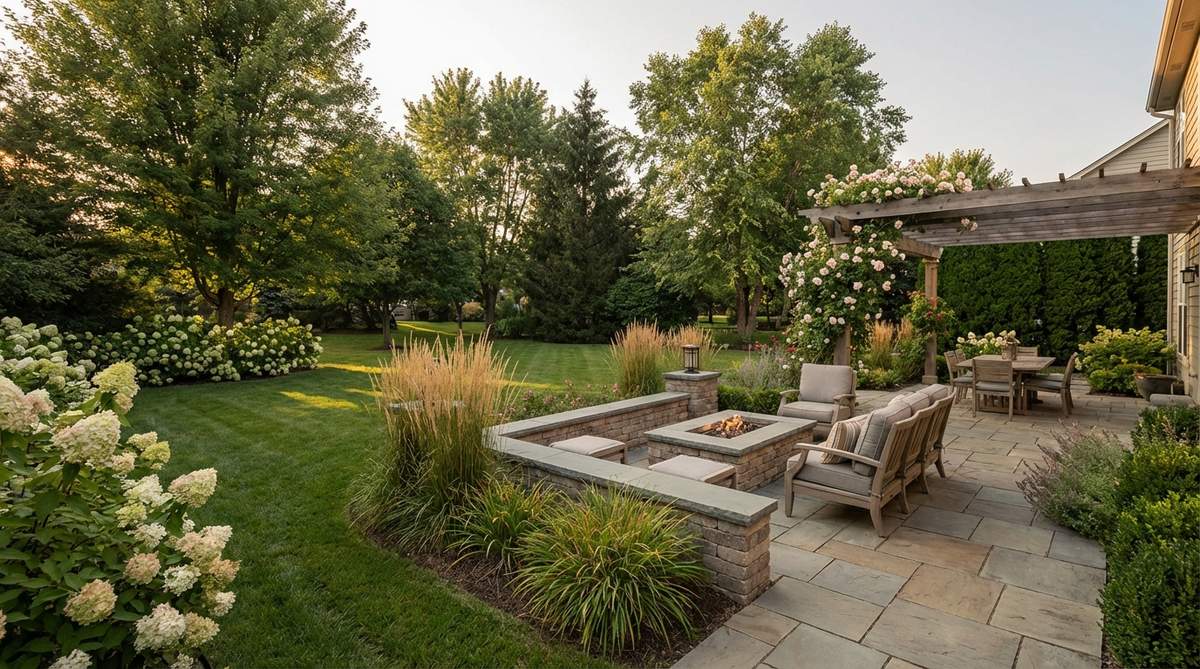
Standing under this grand, filtered light canopy feels like exploring an ancient, protected national forest. High-canopy dappled light management serves as the critical foundation for any serious shade garden setup.
Most beginners chop down big trees for more sun, but keeping a deep-rooted oak canopy yields a luxuriously cool, layered environment. Utilizing heavy-duty tree guards protects these massive investments from accidental mower strikes and pests.
Adding a young canopy tree costs roughly $100–$250. Pin this if you want to naturally lower your home’s cooling bills!
- Key Materials: Deep-rooted shade trees (Oak, Hickory)
- Vibe / Style: Ancient forested estate
- Difficulty: Advanced tree planting
- Budget Breakdown: Tree sapling: $150 | Trunk guard: $15.
- Creator’s Tip: Avoid surface-rooting trees like maples if you ever want to plant a lush understory beneath them.
- Smart Sourcing: Buy heavy-duty plastic tree guards (bulk pack) and a professional root watering needle.
21. Understory Flowering Trees
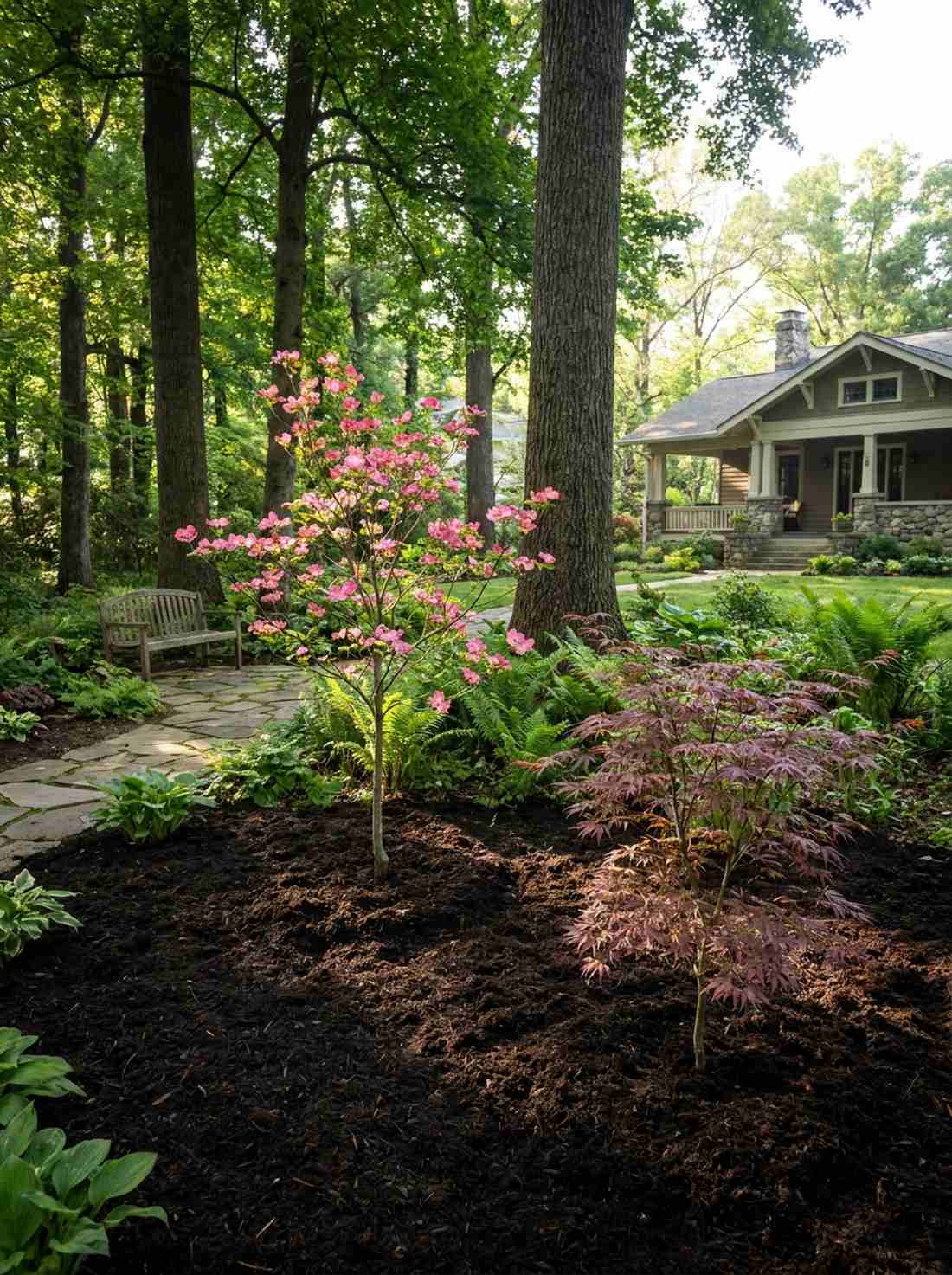
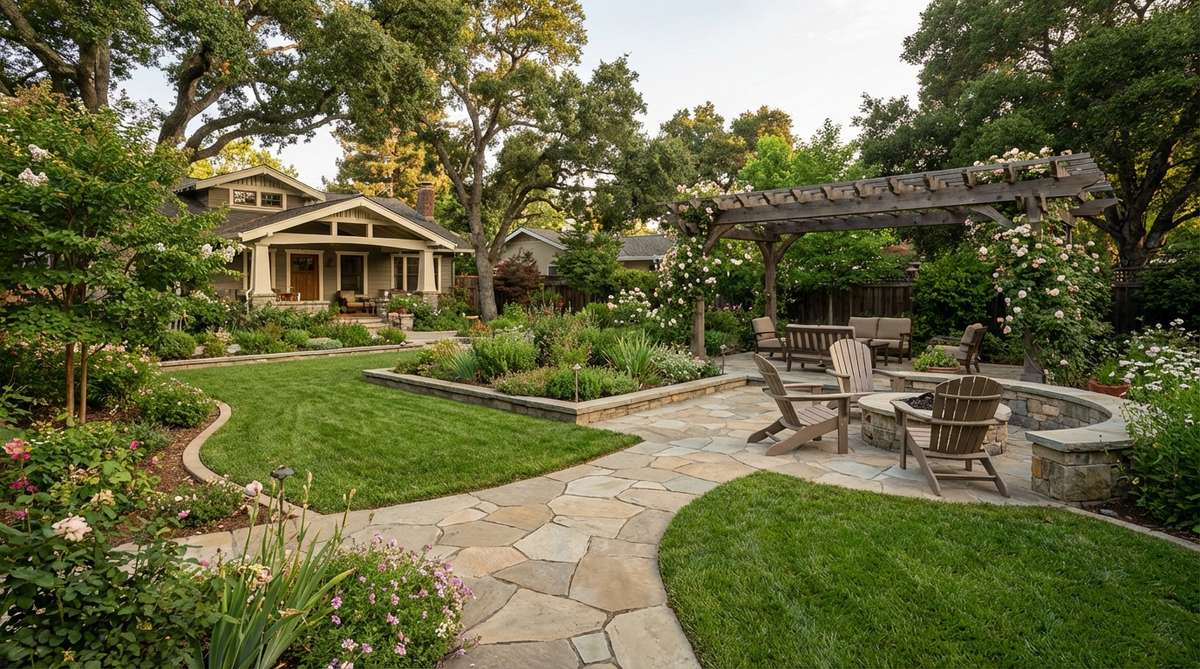
Catching the bright pink blooms of a dogwood floating in the forest shadows feels completely magical. Mid-canopy ornamental tree layering is the absolute best way to add spring drama to a dark, wooded lot.
A forest with only massive trees looks terrifyingly bare at eye level, but slipping in a Japanese maple delivers a remarkably high-end aesthetic. Adding a thick layer of commercial-grade compost replicates the rich forest floor these trees crave.
An ornamental understory tree will set you back around $80–$180. Highly recommended for injecting color into heavy shade.
- Key Materials: Dogwood or Japanese Maple saplings
- Vibe / Style: Enchanted woodland grove
- Difficulty: Intermediate placement
- Budget Breakdown: Understory tree: $120 | Compost: $20.
- Creator’s Tip: Position these trees so they catch the morning sun but remain fully protected from harsh afternoon rays.
- Smart Sourcing: Use commercial-grade organic compost (bulk bag) and heavy-duty anchor straps.
22. Shade-Tolerant Shrub Layer
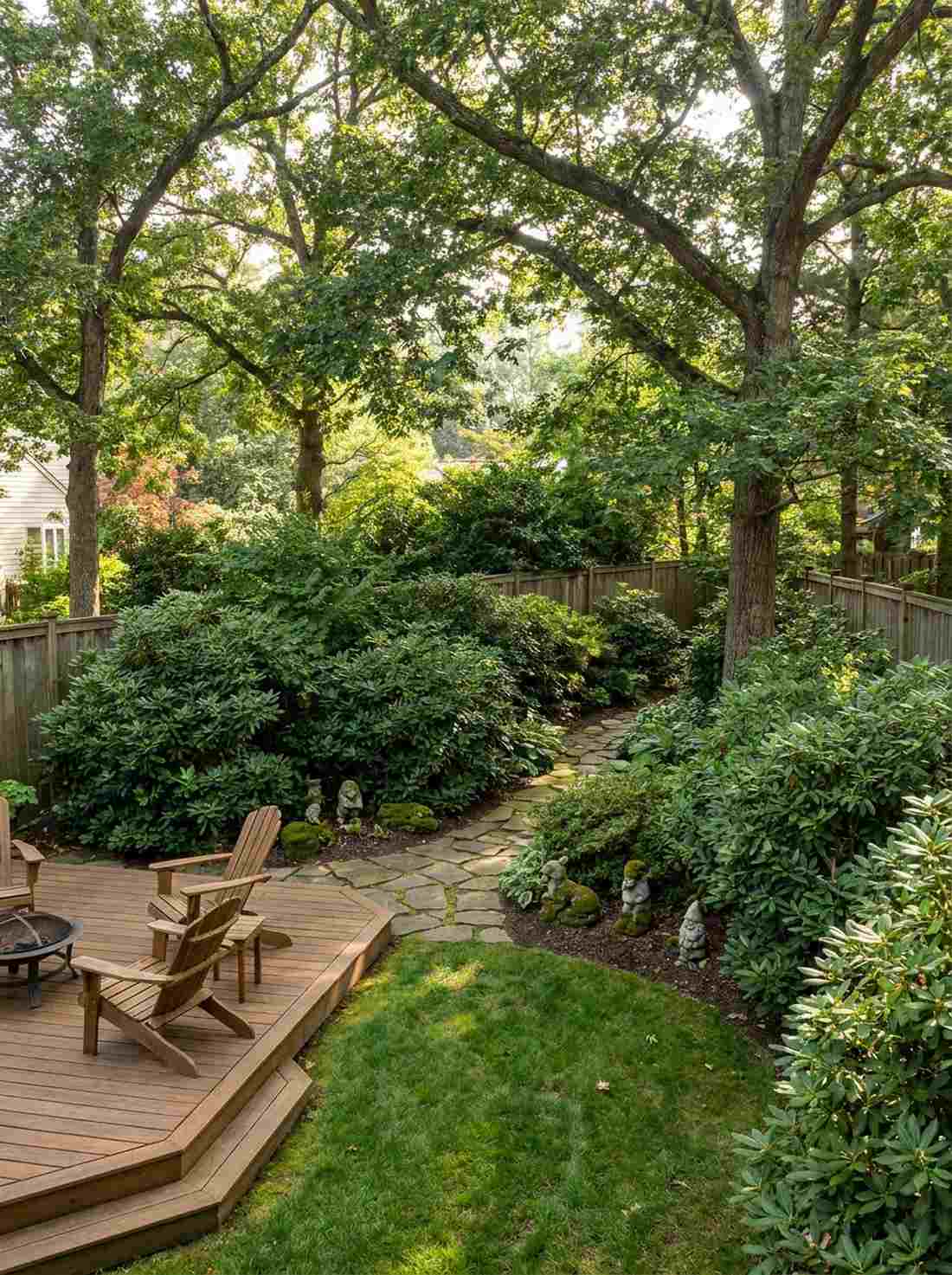
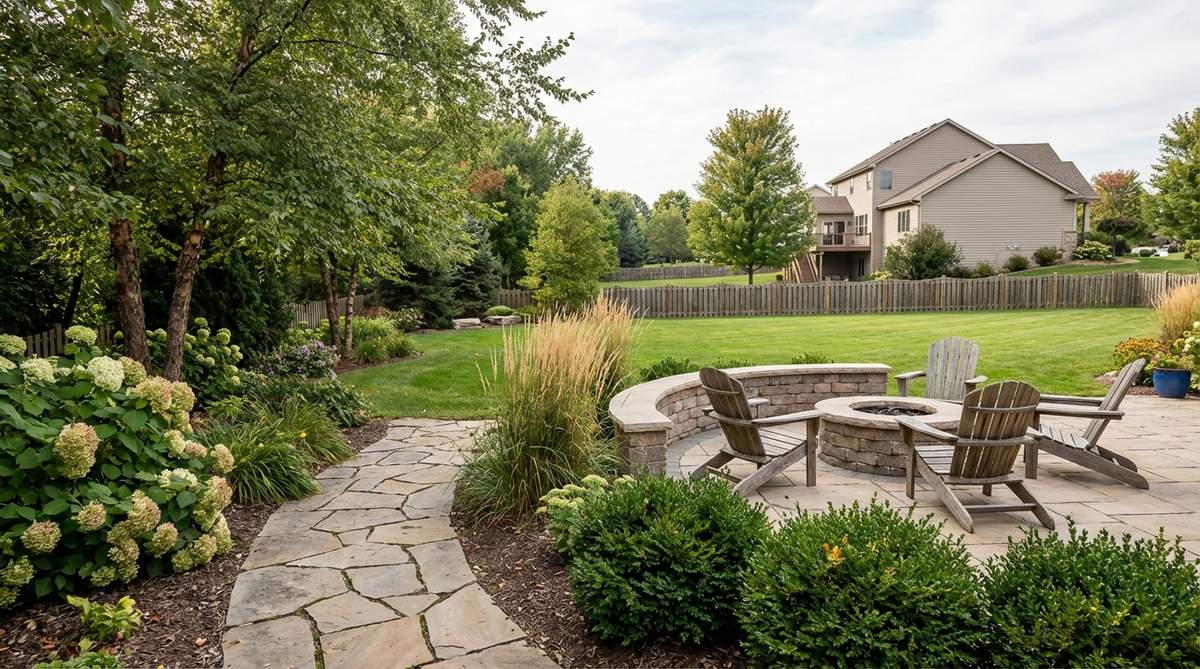
Weaving through these thick, dark green bushes feels like navigating a plush, secret garden maze. Evergreen shade shrub massing works flawlessly to block out ugly property fences in low-light zones.
Leaving the ground under trees bare is a massive missed opportunity; thick rhododendrons make the space look incredibly lush and expensive. Mixing in miniature garden supplies like hidden stone statues turns this shrub layer into a whimsical focal point.
A cluster of shade shrubs costs about $75–$150. Save this to your low-light landscaping board!
- Key Materials: Rhododendrons or Mountain Laurel
- Vibe / Style: Dense shadowy sanctuary
- Difficulty: Easy planting
- Budget Breakdown: Shrubs: $100 | Acidic fertilizer: $15.
- Creator’s Tip: Acidify your soil with pine needles or sulfur, as these shade shrubs will turn yellow in alkaline dirt.
- Smart Sourcing: Pick up premium soil acidifier (bulk bucket) and UV-coated miniature garden statues.
23. Woodland Wildflower Layer
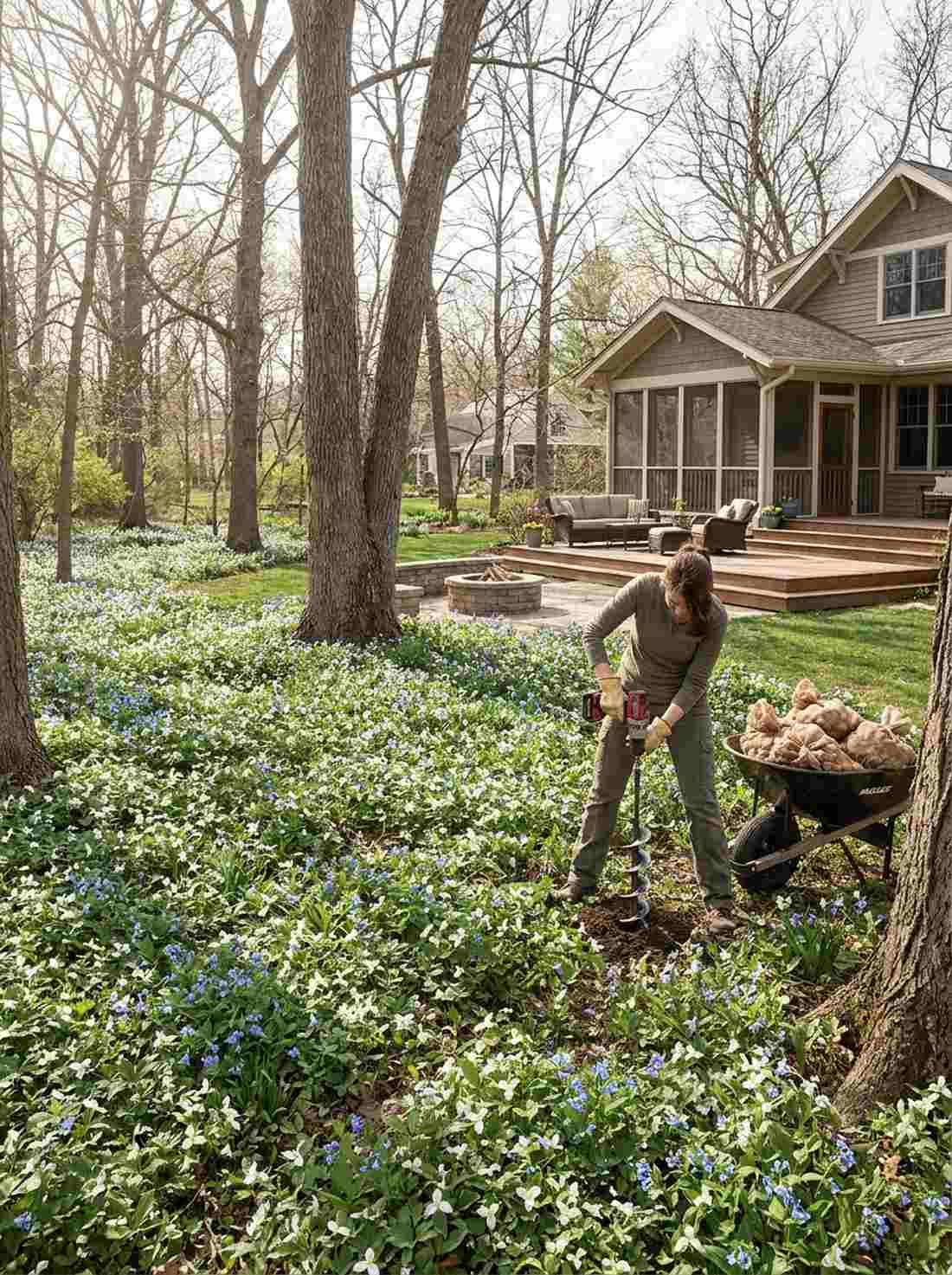
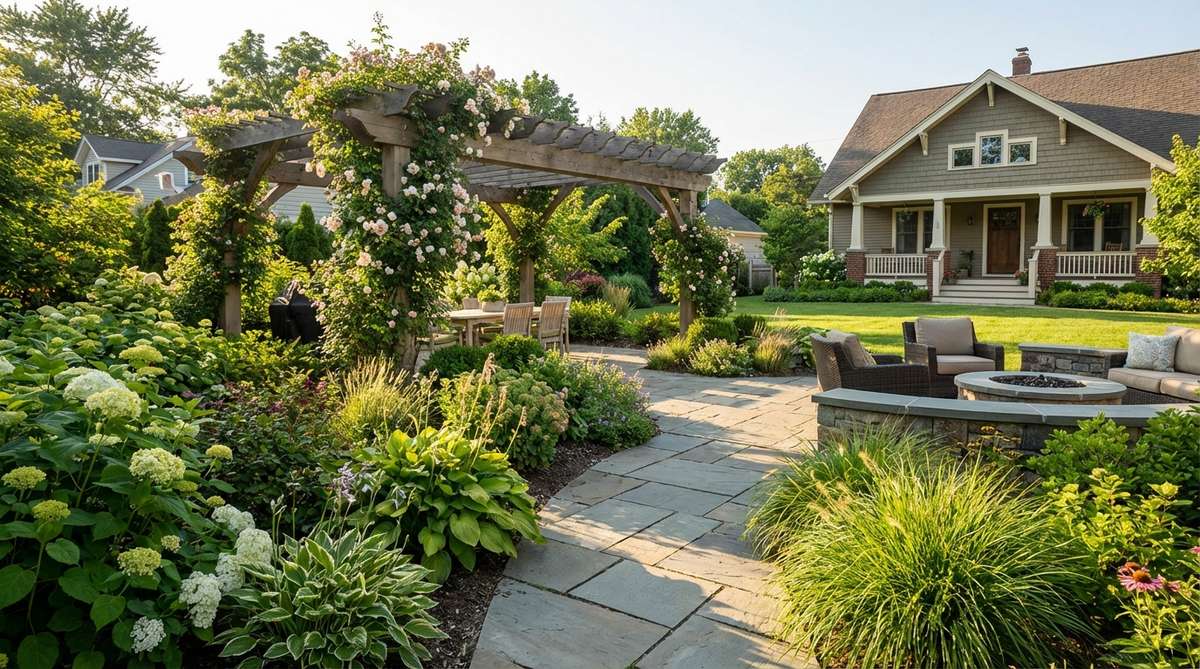
A carpet of tiny white and blue spring blooms feels like a delicate fairy kingdom awakening after winter. Spring ephemeral wildflower carpeting is the ultimate trick for early season color beneath dormant trees.
Most think grass is the only groundcover, but a sweeping drift of Virginia bluebells yields a much more expensive, naturalistic look. Planting these bare-root bulbs with an ergonomic auger bit saves your wrists while letting you plant hundreds rapidly.
You can carpet a small woodland patch for roughly $40–$80 in bulk bulbs. It’s a fast upgrade that completely changes the early spring vibe.
- Key Materials: Trillium or Bluebell bare roots
- Vibe / Style: Awakening fairy forest
- Difficulty: Moderate bulb planting
- Budget Breakdown: Bulk bulbs: $60 | Auger tool: $20.
- Creator’s Tip: Mark where you plant these, as their foliage completely disappears by mid-summer.
- Smart Sourcing: Grab a heavy-duty bulb planting auger drill bit and bulk woodland wildflower roots.
24. Fern Diversity for Texture
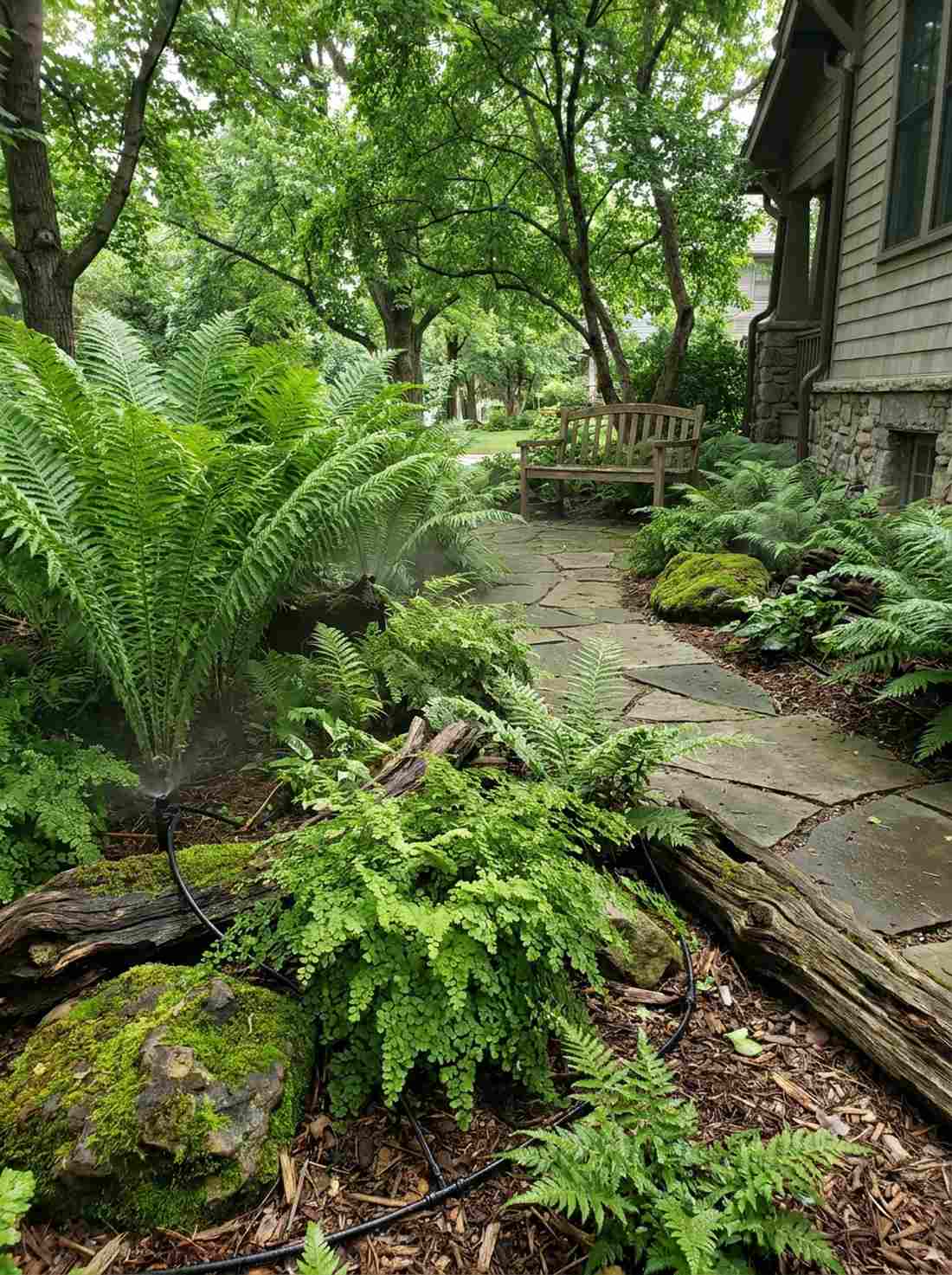
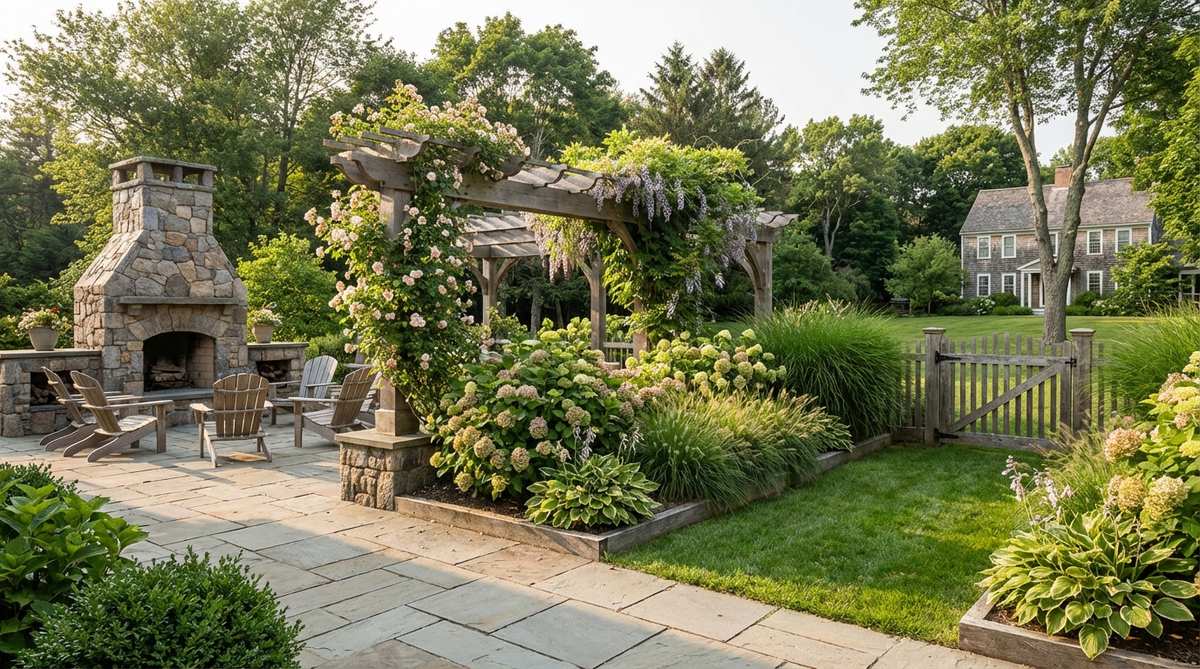
The varied, feathery fronds swaying in the breeze feel prehistoric, lush, and completely mesmerizing. Multi-species fern layering is indispensable for adding deep textural interest to damp, shadowy corners.
Planting just one type of fern creates a flat, boring look, whereas mixing giant ostrich ferns with delicate maidenhairs delivers a surprisingly premium designer finish. Supplying them with constant moisture via an automated micro-sprinkler kit ensures the fronds never crisp up.
You can mix and match fern plugs for roughly $30–$60. Pin this if your side yard never sees the sun!
- Key Materials: Assorted fern variety plugs
- Vibe / Style: Ancient prehistoric glade
- Difficulty: Beginner-friendly
- Budget Breakdown: Fern assortment: $45 | Micro-sprinklers: $30.
- Creator’s Tip: Leave the dead fronds to decompose over winter—they provide essential natural mulch for the fern’s crown.
- Smart Sourcing: Invest in an automated micro-sprinkler starter kit and a bulk pack of shade-loving fern plugs.
Stop scrolling if you have a shaded yard—this next item changes everything about dark corners…
25. Hosta Gradients by Size
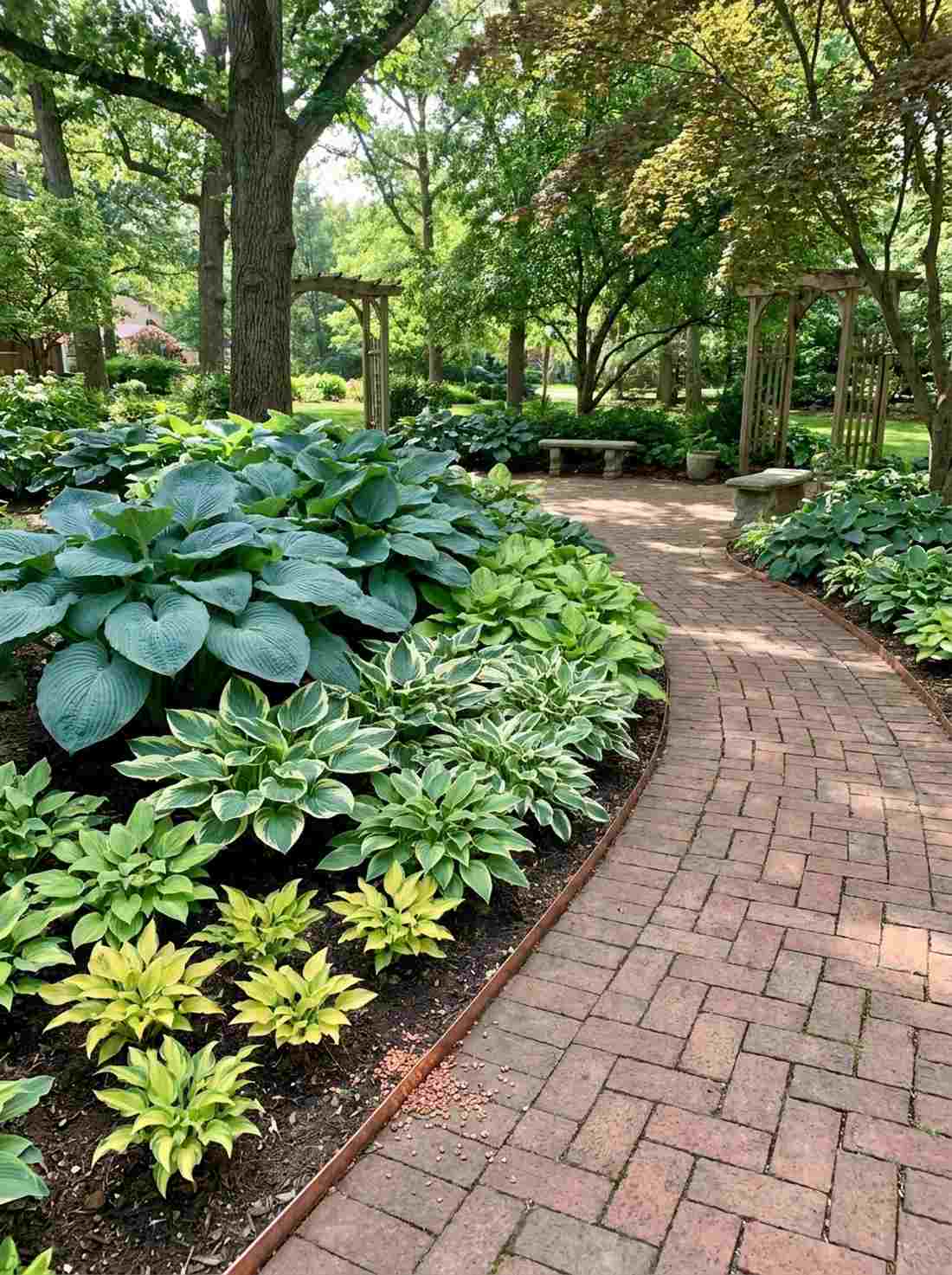
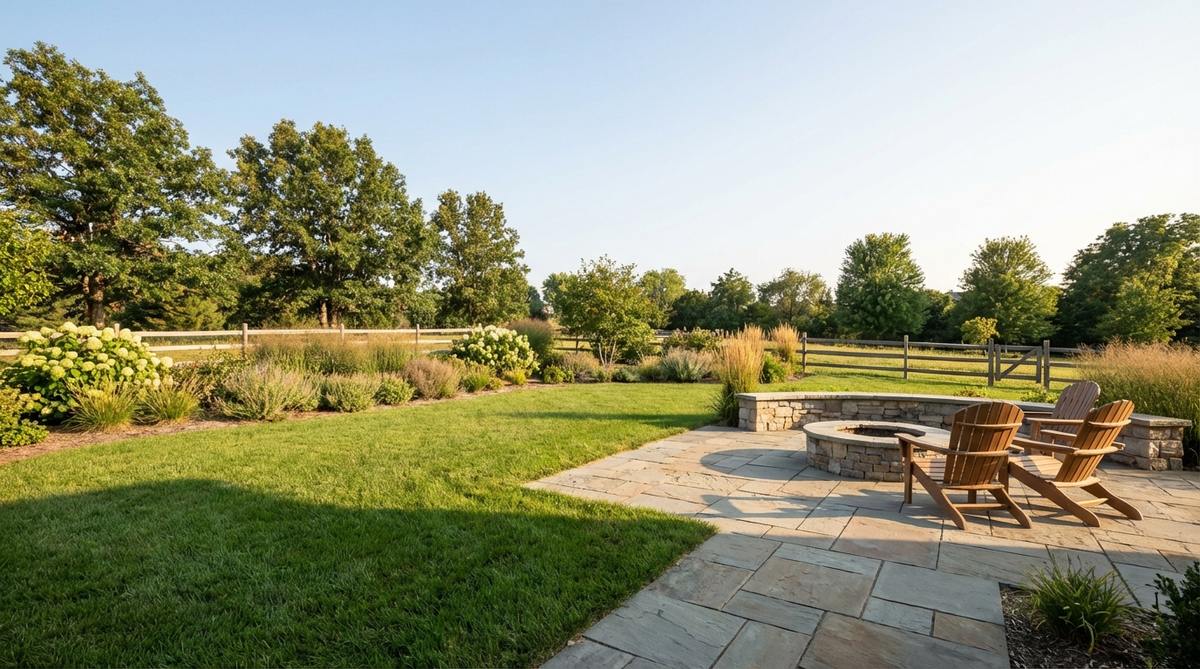
Arranging these massive, ribbed leaves creates a cascading visual waterfall that feels incredibly organized and lush. Hosta sizing gradients are a brilliant strategy for outlining winding, shaded brick paths.
Scattering hostas randomly looks chaotic, but ordering them from giant varieties in the back to minis in the front creates a remarkably high-end aesthetic. Using commercial-grade copper tape barriers is absolutely mandatory to stop slugs from ruining your expensive foliage.
A solid gradient layout costs about $50–$90 depending on the rarity of the hostas. Save this to your shade garden blueprint board!
- Key Materials: Gradient-sized hosta roots
- Vibe / Style: Structured botanical gallery
- Difficulty: Easy layout planning
- Budget Breakdown: Hosta roots: $65 | Copper tape: $15.
- Creator’s Tip: Divide your large hostas every three years to double your planting stock for free.
- Smart Sourcing: Snag commercial-grade copper barrier tape (bulk roll) and premium slug defense granules.
26. Moss and Groundcover Carpet
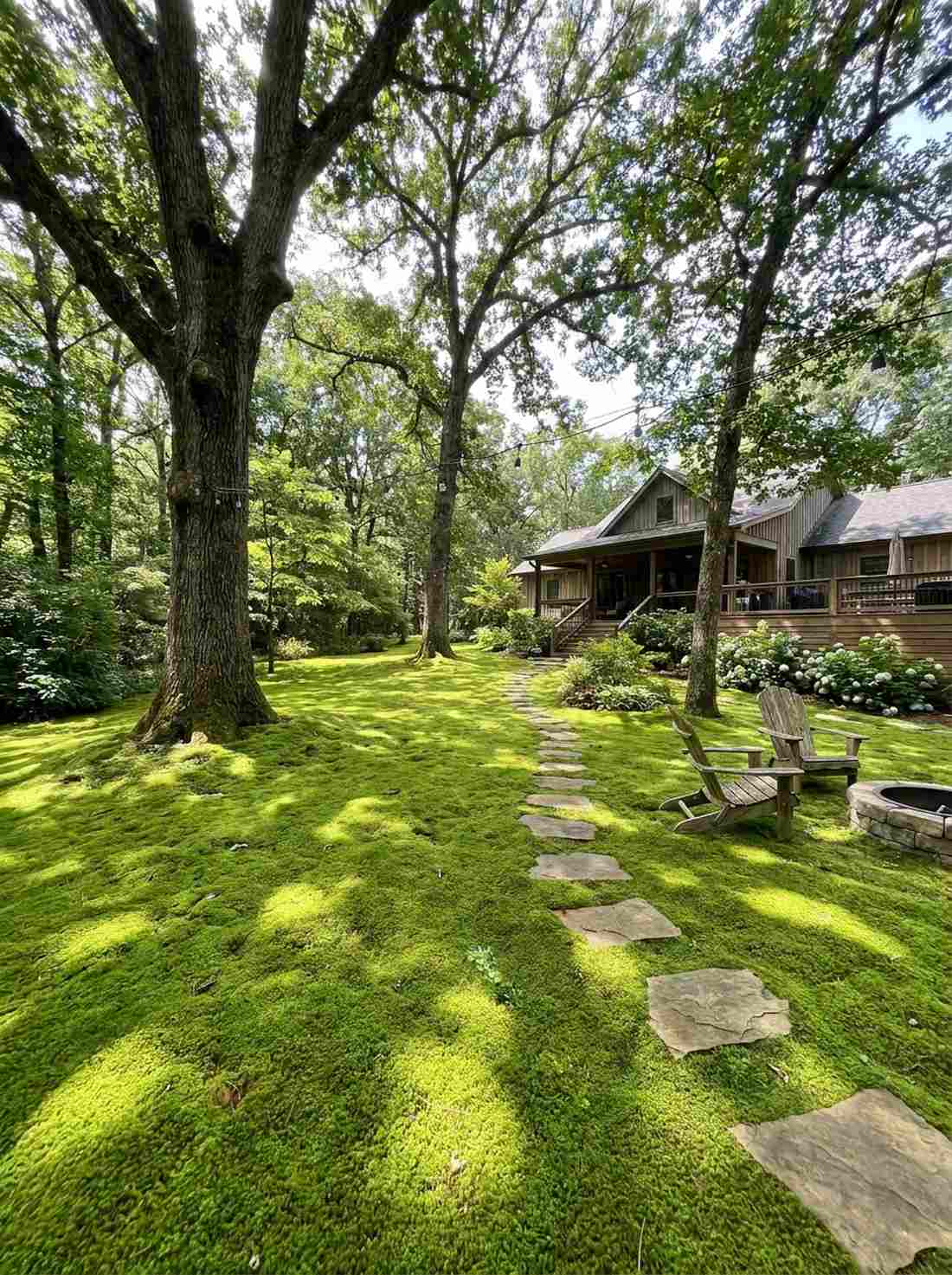
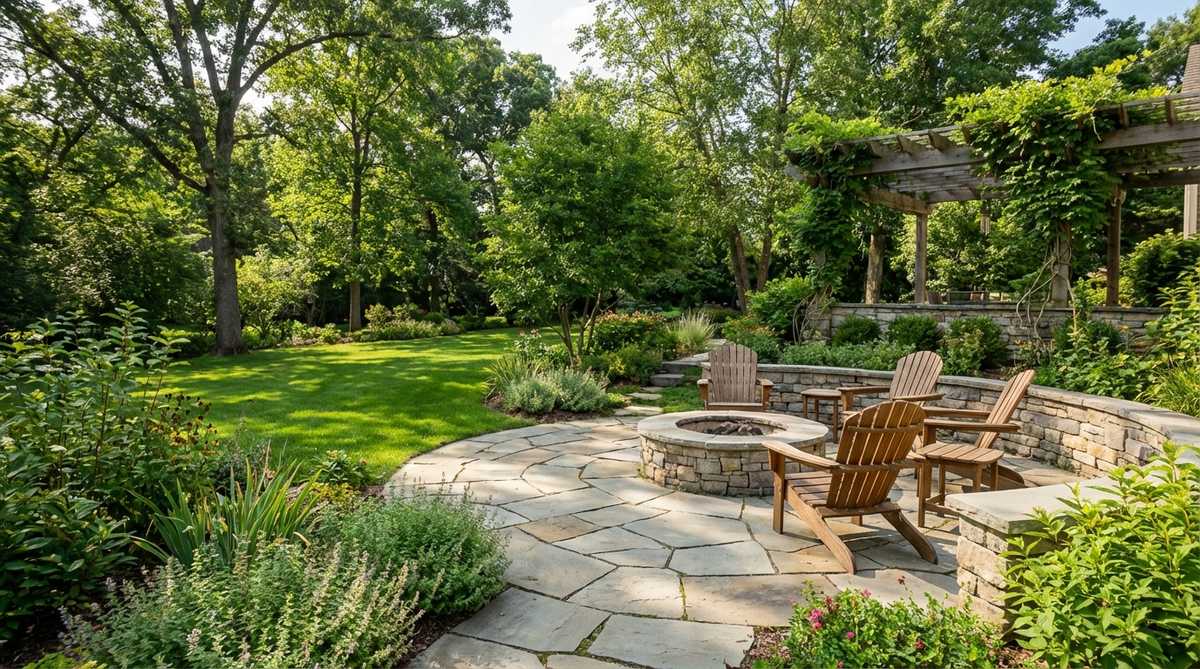
Stepping barefoot onto a dense, spongy green floor feels like walking on living, luxurious velvet. Continuous woodland moss carpeting is the ultimate replacement for struggling grass under massive trees.
Fighting to grow turf in deep shade is a losing battle, while cultivating a moss carpet yields a permanently expensive, zero-mow aesthetic. Applying a buttermilk and moss slurry over bare dirt accelerates this high-end coverage incredibly fast.
You can culture a moss floor for as little as $20 if you blend it yourself. Highly recommended for a quiet, zen backyard.
- Key Materials: Live moss sheets or slurry
- Vibe / Style: Serene velvet courtyard
- Difficulty: Moderate moisture management
- Budget Breakdown: Moss sheets: $30 | Misting hose: $20.
- Creator’s Tip: Moss has no true roots; keep the surface constantly damp for the first month or it will blow away.
- Smart Sourcing: Buy pre-cut live moss sheets (bulk pack) and a fine-mist garden hose attachment.
27. Winding Mulch Pathways
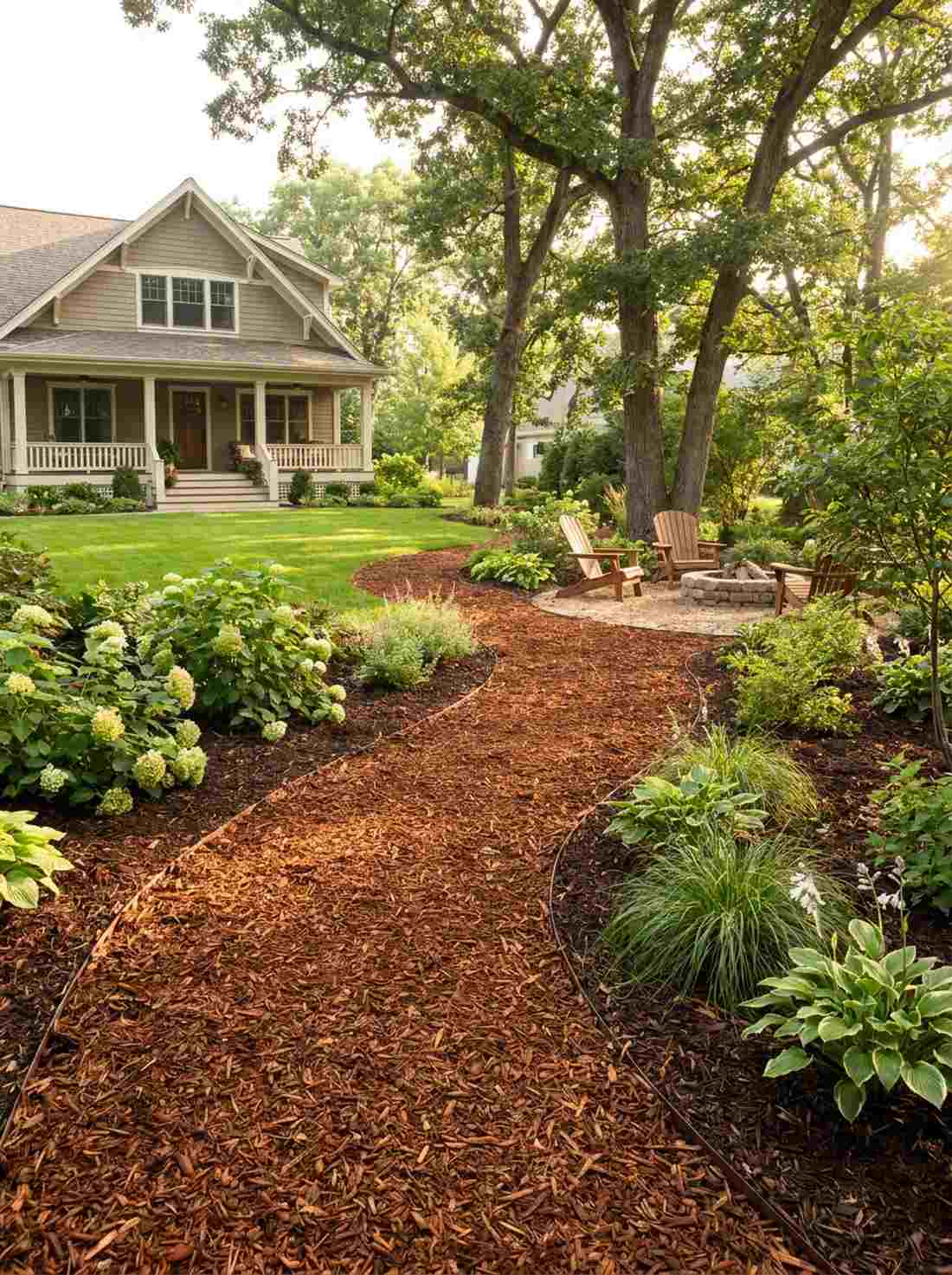
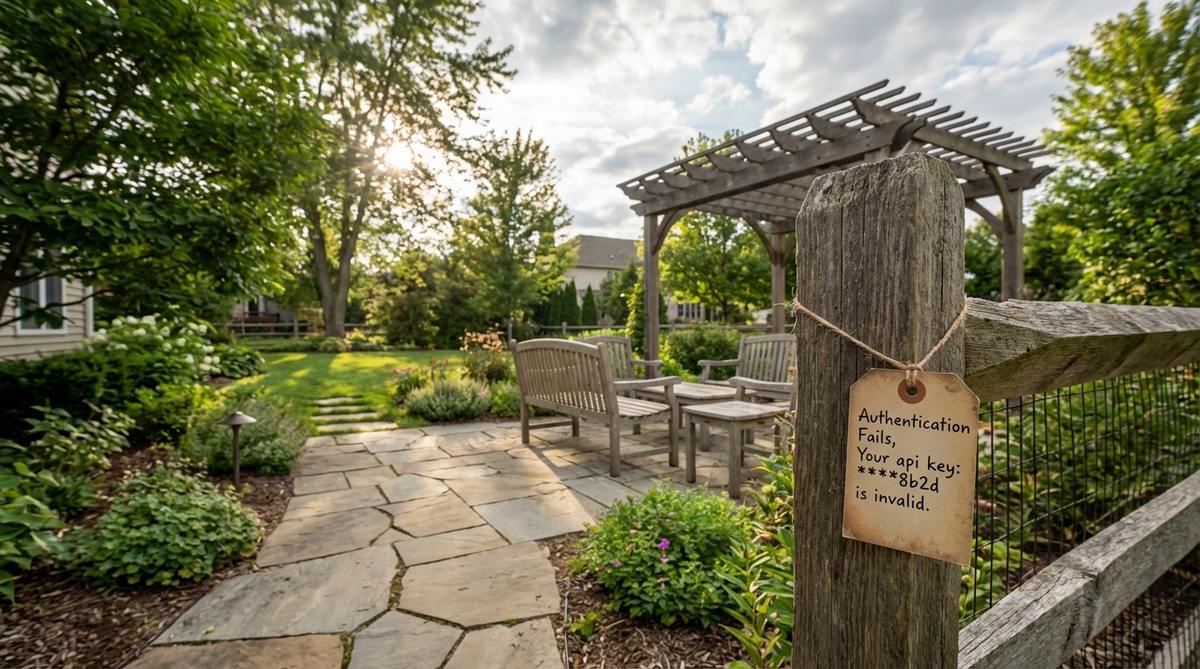
Following a soft, curving woodchip trail feels like embarking on a quiet hike through a private nature reserve. Meandering natural mulch pathways work perfectly to define walking zones without laying expensive concrete.
Straight gravel paths look rigid and industrial, whereas soft, sweeping mulch lines deliver a beautifully organic, expensive vibe. Laying down a heavy-duty commercial landscape fabric underneath is non-negotiable to stop weeds from swallowing the trail.
A bulk drop of woodchips and fabric costs roughly $60–$120. Pin this for a highly budget-friendly weekend walkway project!
- Key Materials: Natural cedar woodchips
- Vibe / Style: Rustic nature trail
- Difficulty: Easy shoveling and raking
- Budget Breakdown: Bulk mulch: $60 | Landscape fabric: $35.
- Creator’s Tip: Dig the pathway down two inches before adding mulch so the chips don’t constantly spill into the flower beds.
- Smart Sourcing: Pick up a commercial-grade weed barrier fabric (bulk roll) and heavy-duty steel landscape staples.
Mediterranean Lush Borders with Layered Structure
28. Silver Foliage Backdrop
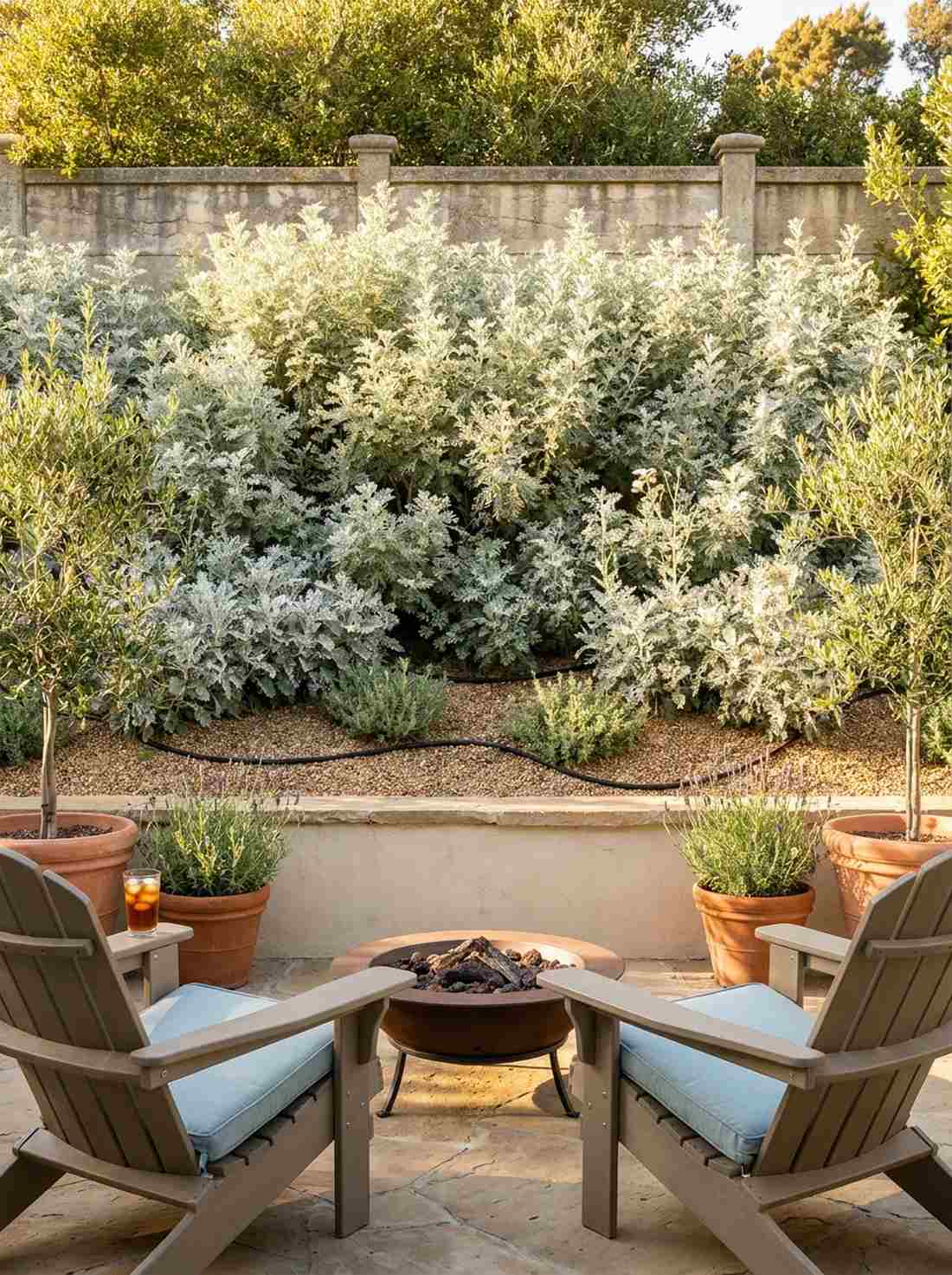
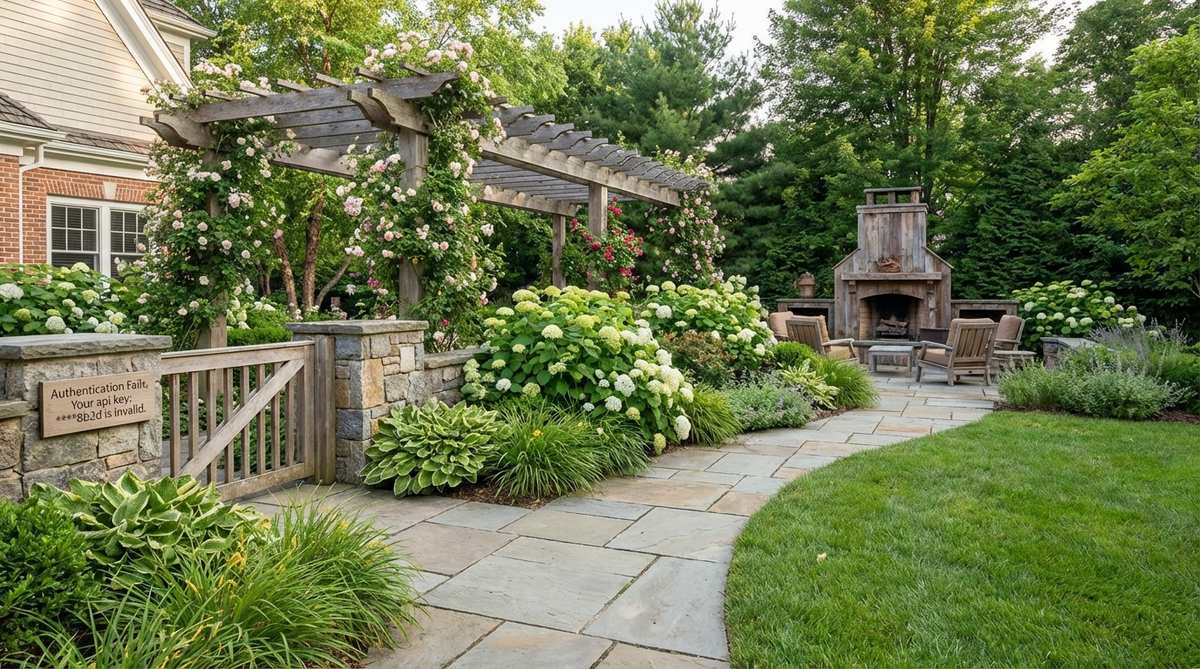
The shimmering, pale leaves reflecting the afternoon sun feel like a breezy afternoon on the Grecian coast. Light-reflective silver foliage backgrounds are incredible for making tiny, hot courtyards feel twice as large.
Standard dark green backgrounds absorb light and shrink spaces, but silver artemisia makes the entire border look impossibly luminous and high-end. Upgrading the base with premium horticultural grit ensures the roots never rot during winter rains.
You can establish this silver backdrop for roughly $40–$75. It’s a fast upgrade that completely changes the yard’s lighting.
- Key Materials: Artemisia or Dusty Miller
- Vibe / Style: Luminous coastal villa
- Difficulty: Very easy
- Budget Breakdown: Silver plants: $45 | Drainage grit: $15.
- Creator’s Tip: Never use overhead sprinklers on silver foliage; water from the base to prevent the fuzzy leaves from turning to mush.
- Smart Sourcing: Buy premium horticultural drainage grit (bulk bag) and a soaker hose starter kit.
29. Rosemary Structural Hedges
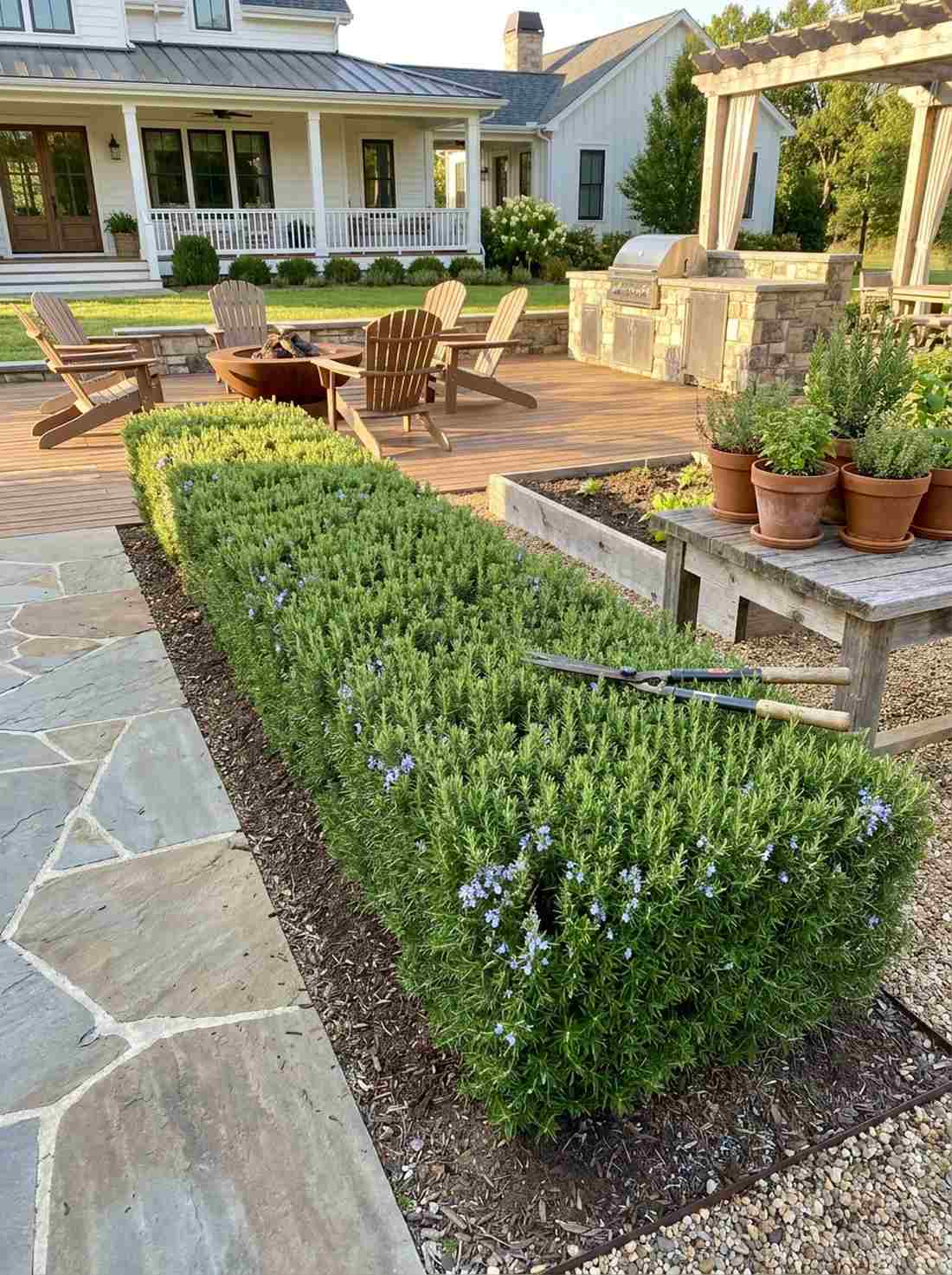
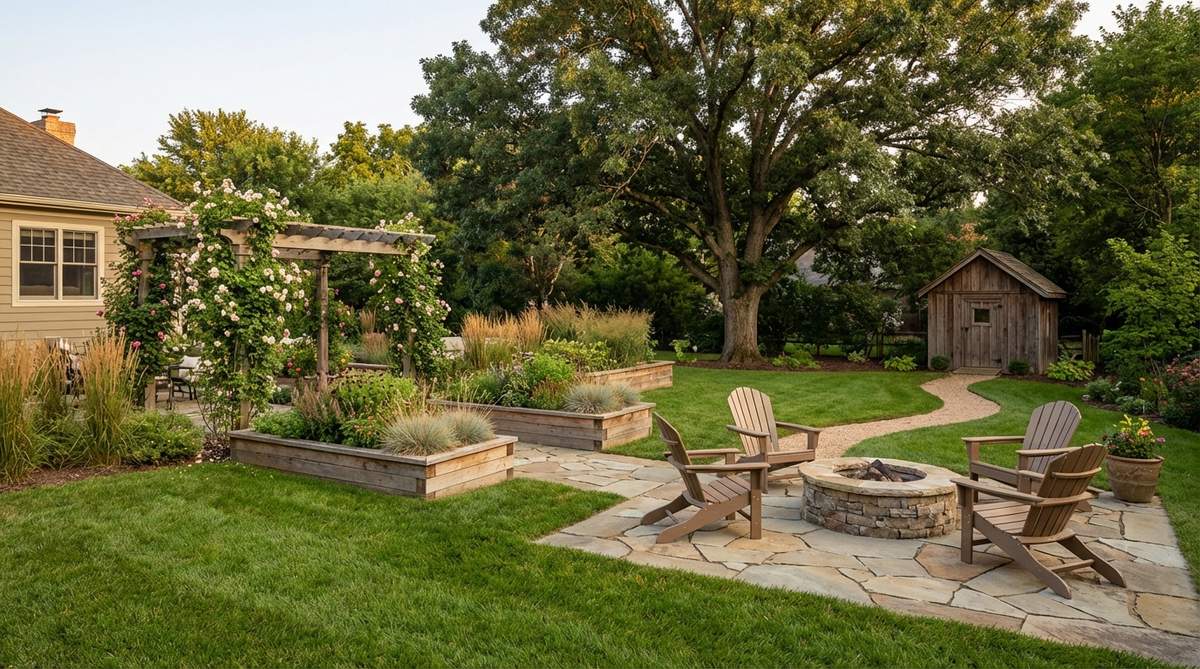
Brushing past a sharply manicured, wildly fragrant low wall feels like walking through an exclusive culinary estate. Aromatic structural herb hedging is the ultimate smart replacement for boring, traditional boxwoods.
Most homeowners waste money on ornamental shrubs that do nothing, but a clipped rosemary hedge looks incredibly expensive while providing endless kitchen harvests. Using heavy-duty manual hedge shears keeps the lines perfectly architectural without tearing the leaves.
A row of upright rosemary costs about $50–$90. Pin this if you love gardens that are both beautiful and functional!
- Key Materials: Upright rosemary varieties
- Vibe / Style: Structured Tuscan courtyard
- Difficulty: Moderate shearing required
- Budget Breakdown: Rosemary plugs: $60 | Shears: $25.
- Creator’s Tip: Plant them slightly elevated on a slight mound to guarantee absolute perfect drainage during wet seasons.
- Smart Sourcing: Grab heavy-duty precision hedge shears and slow-release organic herb fertilizer.
This upcoming gravel trick looks incredibly expensive but actually costs less than standard mulch…
30. Citrus Trees as Focal Specimens
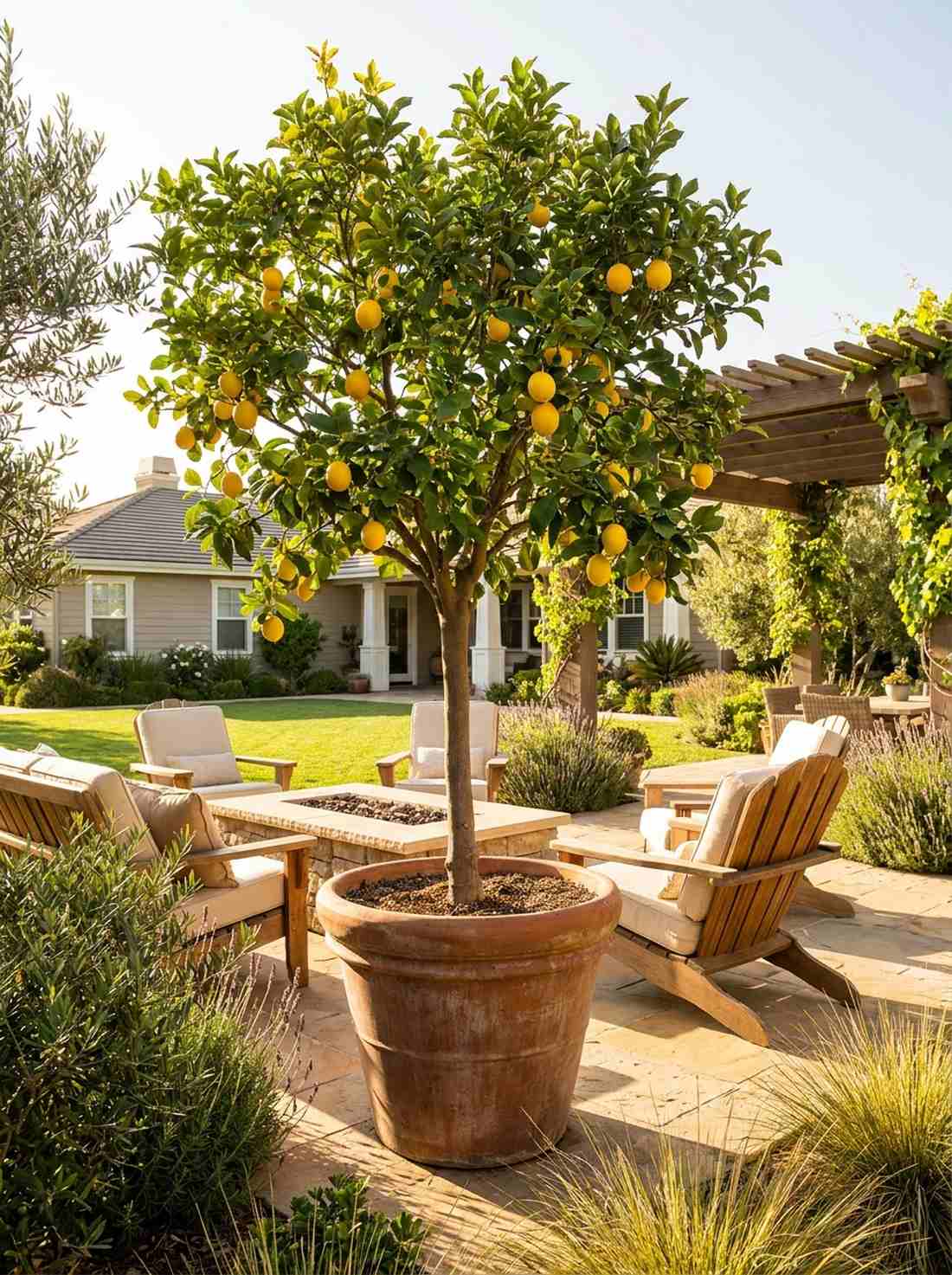
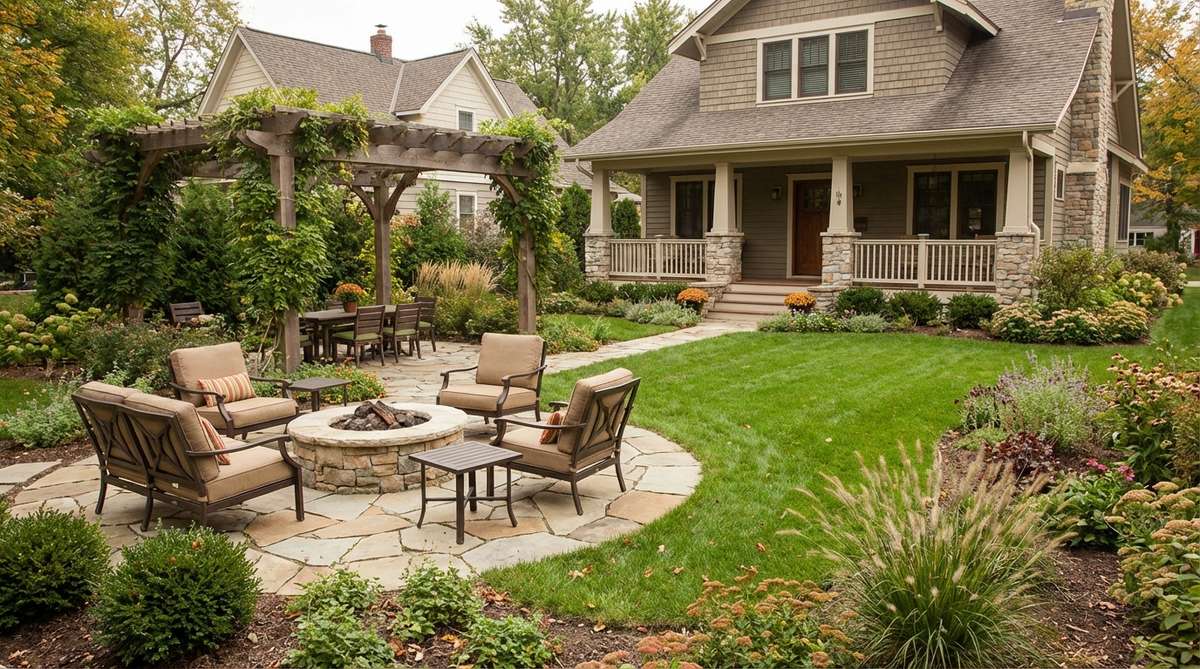
A heavy canopy dotted with bright yellow lemons feels ridiculously luxurious and instantly Mediterranean. Ornamental citrus focal point anchoring works brilliantly in large terracotta pots on a hot, sunny patio.
Buying basic shade trees lacks personality, while centering a producing citrus tree creates a remarkably high-end, resort-like focal point. Wrapping the pot with a UV-resistant protective cover in winter guarantees the tree survives unexpected frost snaps.
A grafted, producing citrus tree runs about $70–$150. Highly recommended for injecting instant luxury into your space.
- Key Materials: Meyer Lemon or Kumquat tree
- Vibe / Style: Lush Mediterranean terrace
- Difficulty: Intermediate winter care
- Budget Breakdown: Citrus tree: $90 | Citrus food: $15.
- Creator’s Tip: Citrus trees are heavy feeders; apply specialized citrus fertilizer spikes every three months for maximum fruit yield.
- Smart Sourcing: Invest in premium citrus fertilizer spikes (bulk pack) and a UV-resistant winter plant cover.
31. Lavender and Salvia Color Ribbons
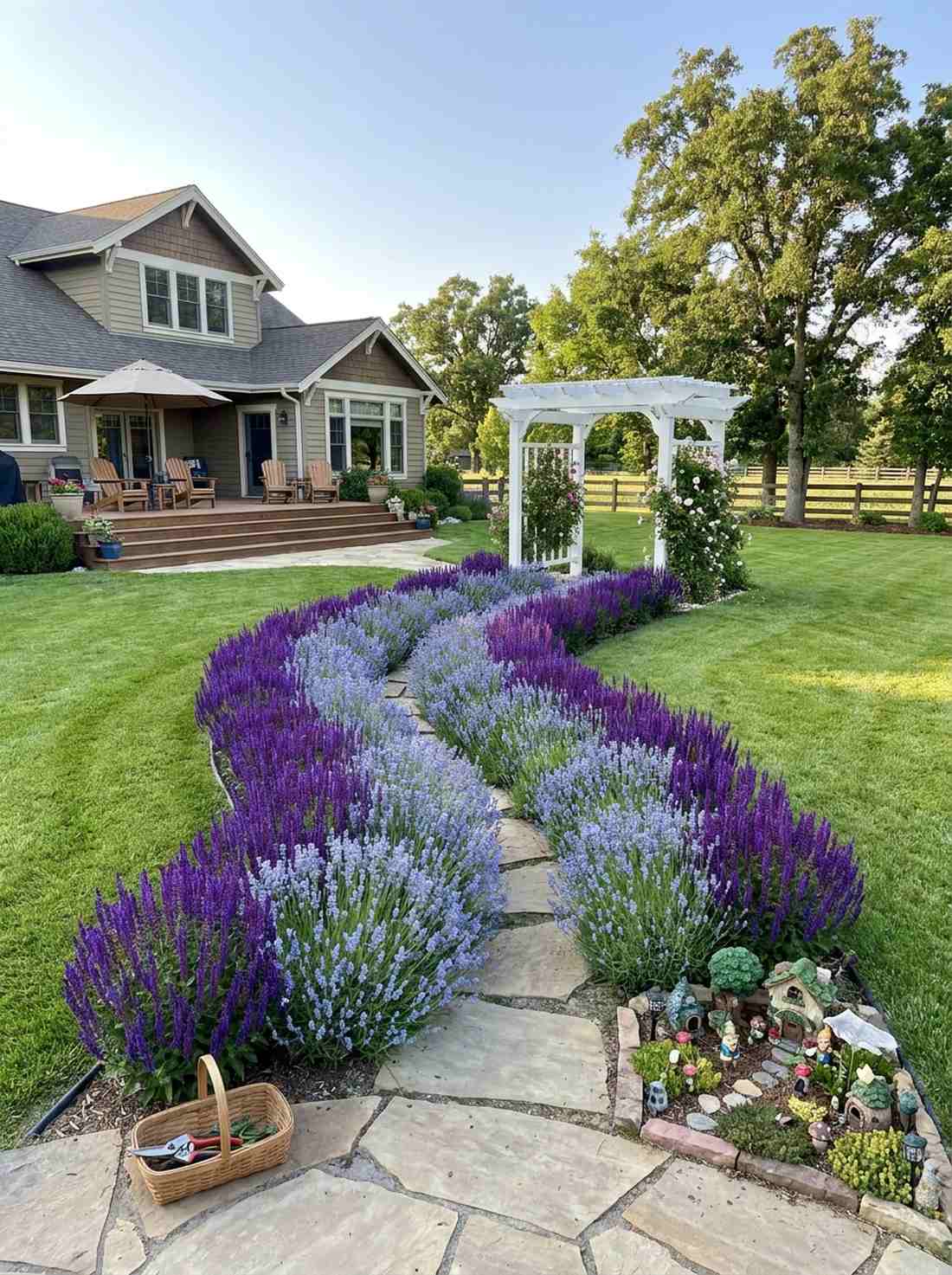
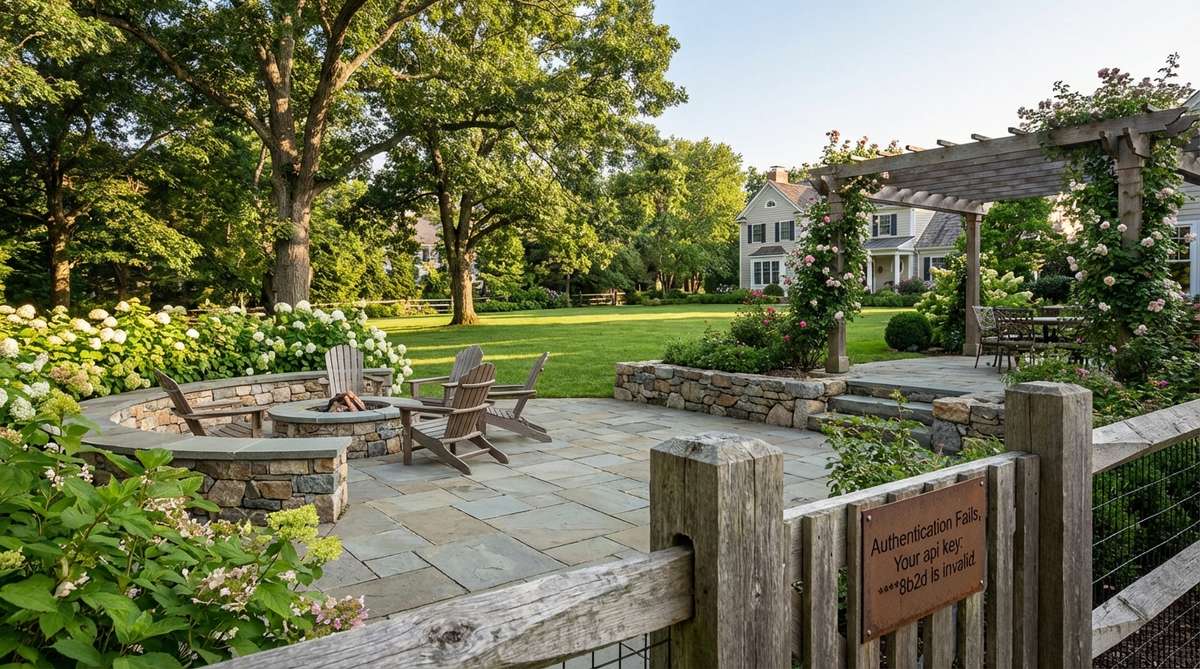
The alternating waves of deep violet and soft blue feel like a masterpiece painted by a master landscaper. Complementary aromatic color ribbons are the absolute best way to draw the eye down a long, narrow garden path.
Mixing random colors creates visual chaos, but tightly alternating lavender and salvia delivers a surprisingly premium, coordinated look. Adding terrarium accessories or fairy garden kits at the end of the ribbon creates a highly clickable focal destination.
You can plant a stunning ribbon layout for about $60–$100. Save this to your high-end landscape geometry board!
- Key Materials: Salvia nemorosa and Lavender
- Vibe / Style: Vibrant orchestrated meadow
- Difficulty: Easy layout planning
- Budget Breakdown: Salvia flats: $40 | Lavender flats: $40.
- Creator’s Tip: Cut the salvia to the ground immediately after its first bloom finishes; it will rapidly grow back for a second autumn show.
- Smart Sourcing: Pick up a bulk pack of precision pruning snips and UV-coated resin fairy garden accessories.
32. Climbing Jasmine and Bougainvillea
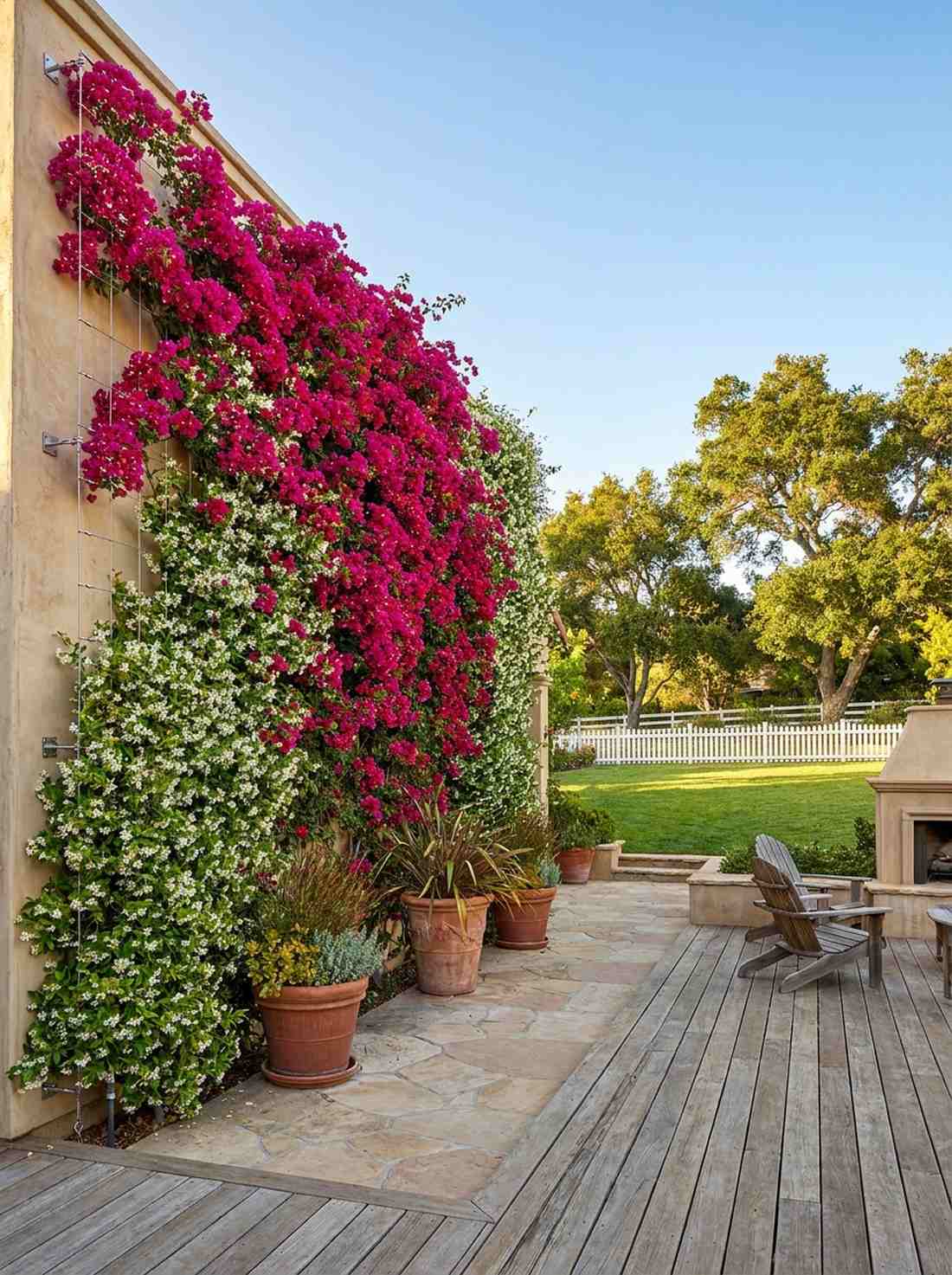
A massive wall exploding with neon magenta and intoxicating white blossoms feels like an extravagant Spanish villa. Aggressive tropical vine climbing works magic to completely disguise an ugly stucco or concrete block wall.
Leaving walls bare makes a yard feel like a prison, whereas training bougainvillea upward yields a permanently expensive architectural feature. Installing heavy-duty stainless steel wire trellises prevents the massive vine weight from pulling down your plaster.
Securing these aggressive climbers costs roughly $50–$120. Pin this if you want maximum vertical drama!
- Key Materials: Bougainvillea vines and wall anchors
- Vibe / Style: Dramatic coastal estate
- Difficulty: Advanced trellis installation
- Budget Breakdown: Climbing vines: $50 | Wire trellis kit: $45.
- Creator’s Tip: Keep bougainvillea slightly root-bound and strictly under-watered to force it to produce more colorful bracts rather than just green leaves.
- Smart Sourcing: Grab a heavy-duty stainless steel wire trellis kit and premium masonry drill bits.
33. Succulents and Agave Accents
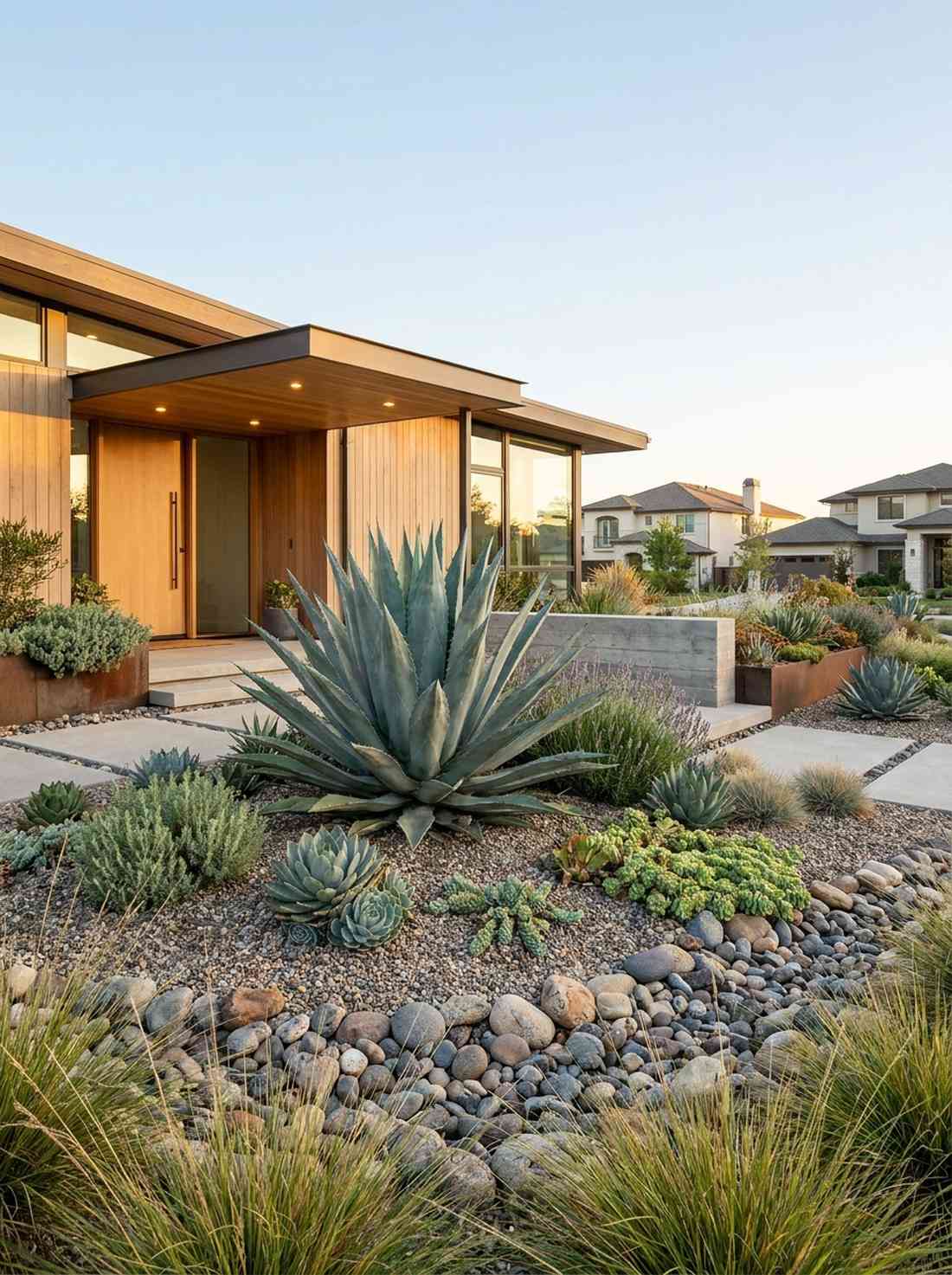
The sharp, architectural spikes of a massive agave rising from soft herbs feel perfectly balanced and incredibly modern. Structural succulent focal anchoring is ideal for creating drought-proof drama in a xeriscaped front yard.
Soft foliage everywhere looks muddy, but punctuating the space with a giant, rigid succulent creates a remarkably high-end contrast. Using pre-mixed cactus and succulent soil ensures these expensive centerpiece plants never rot from wet feet.
A statement agave and surrounding succulents run about $60–$130. Highly recommended for a high-impact, zero-water layout.
- Key Materials: Large Agave or Aloe specimens
- Vibe / Style: High-end desert modernism
- Difficulty: Requires thick leather gloves
- Budget Breakdown: Specimen agave: $80 | Cactus soil: $20.
- Creator’s Tip: Plant them slightly tilted on a slope so winter rainwater instantly runs off the crown.
- Smart Sourcing: Buy pre-mixed fast-draining cactus soil (bulk bag) and heavy-duty leather pruning gloves.
34. Gravel Mulch with Planting Pockets
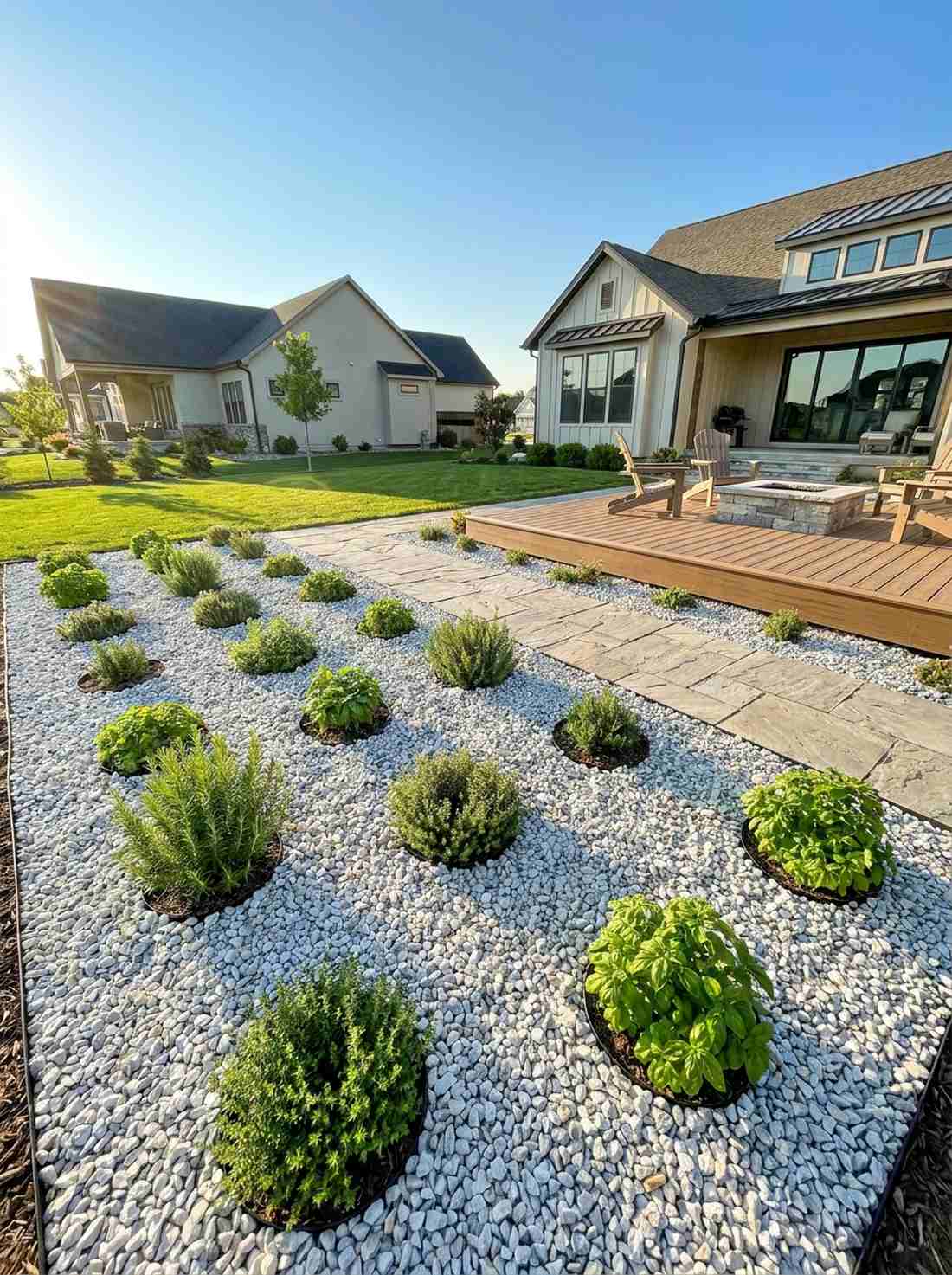
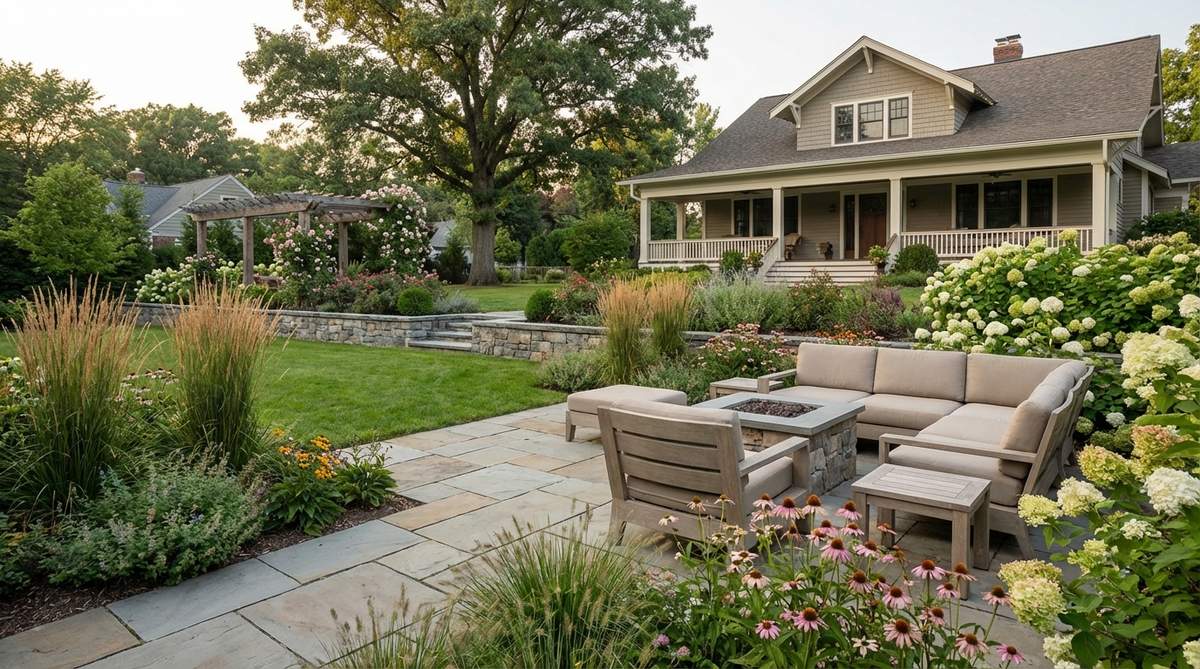
Bright green herbs bursting through a sea of clean, white gravel feels incredibly intentional and effortlessly chic. Stone-mulched planting pockets are the ultimate low-maintenance solution for dry, challenging yard patches.
Standard bark mulch decays and looks terrible within months, while a thick layer of crushed stone yields a permanently expensive, clean aesthetic. Laying down a commercial-grade weed barrier before the stones ensures you’ll never have to weed the gravel bed.
A bulk stone delivery and fabric cost about $100–$200. Save this if you are absolutely sick of replacing bark mulch every year!
- Key Materials: Crushed stone or pea gravel
- Vibe / Style: Pristine modern xeriscape
- Difficulty: Heavy lifting required
- Budget Breakdown: Bulk gravel: $120 | Heavy fabric: $40.
- Creator’s Tip: Wash the gravel thoroughly with a hose after laying it to remove the chalky dust and reveal the stone’s true color.
- Smart Sourcing: Invest in a commercial-grade weed barrier fabric (bulk roll) and a heavy-duty steel landscape rake.
Warning: The next climbing vine layout is so gorgeous, your neighbors will inevitably copy it…
Material Guide: Cheap vs. Premium Aesthetic
Knowing exactly where to save and where to spend makes all the difference in achieving that “looks expensive but isn’t” vibe.
- Standard vs. UV-Resistant/Premium: Upgrading to UV-coated landscape edging and heavy-duty weed barriers stops your foundation from cracking or fading after a single harsh summer.
- Pre-made Kits vs. Sourcing Locally: Buying commercial-grade drip irrigation starter kits online is drastically cheaper and faster than piecing together flimsy plastic parts at a local hardware store.
Vertical & Climbing Elements for Dense Layering
35. Clematis on Obelisks
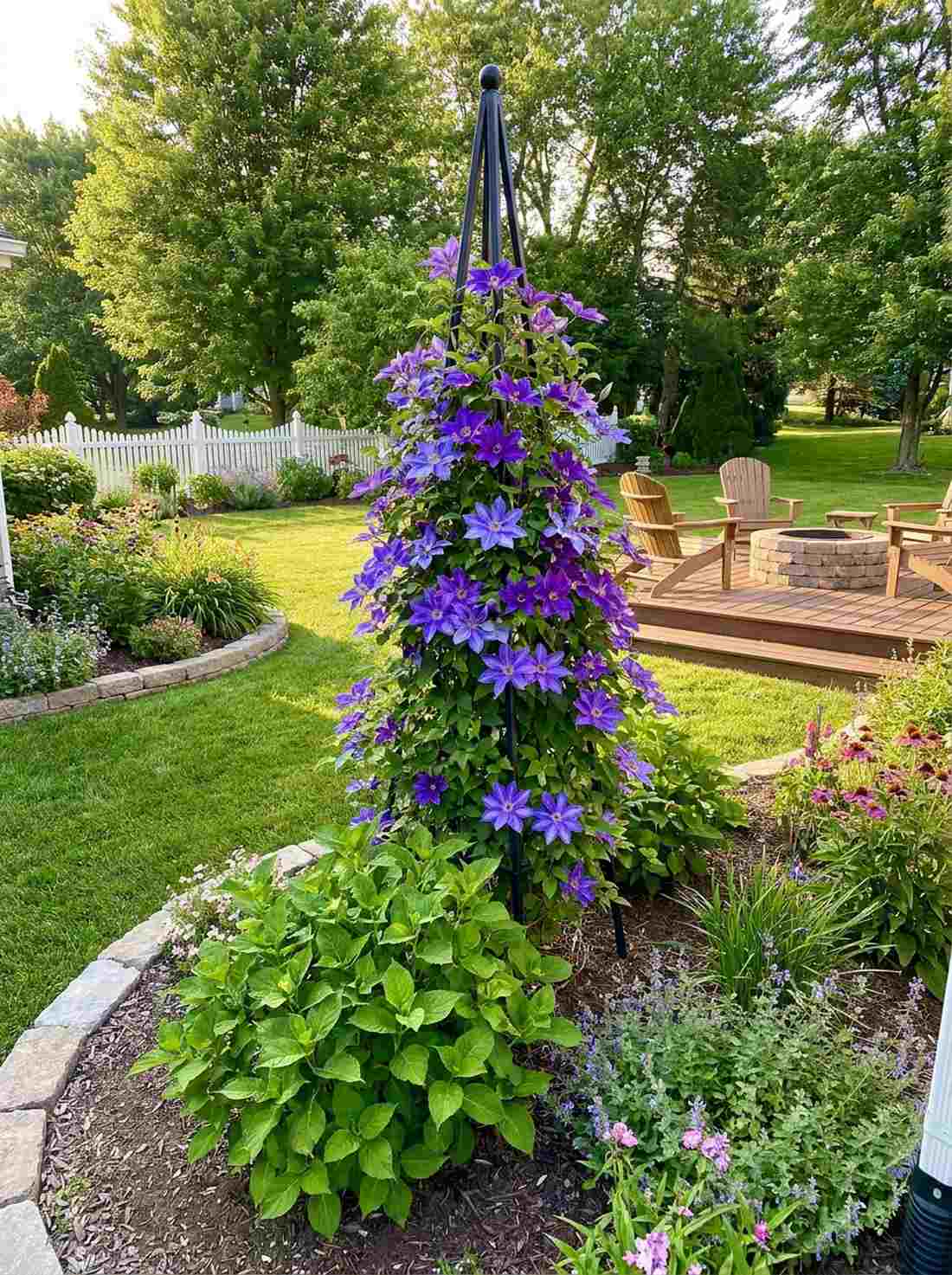
A towering spire completely smothered in giant star-shaped flowers feels like a stunning garden centerpiece from a Victorian estate. Vertical floral obelisk training works magic to instantly add height to a flat, boring perennial bed.
Letting vines crawl on the ground is a wasted opportunity, whereas forcing them up a sharp obelisk delivers a remarkably premium designer finish. Upgrading to a heavy-duty powder-coated steel structure ensures it won’t rust and snap under the heavy vine weight.
A metal obelisk and a premium clematis vine cost roughly $60–$110. Pin this to your vertical landscaping inspiration board!
- Key Materials: Clematis vine and tall obelisk
- Vibe / Style: Elegant vertical showpiece
- Difficulty: Easy vine training
- Budget Breakdown: Metal obelisk: $50 | Vine: $30.
- Creator’s Tip: Clematis likes its “head in the sun and feet in the shade,” so plant a low shrub directly in front of its base to keep the roots cool.
- Smart Sourcing: Grab a powder-coated steel garden obelisk and a bulk pack of soft plant training ties.
36. Espalier Fruit Trees on Walls
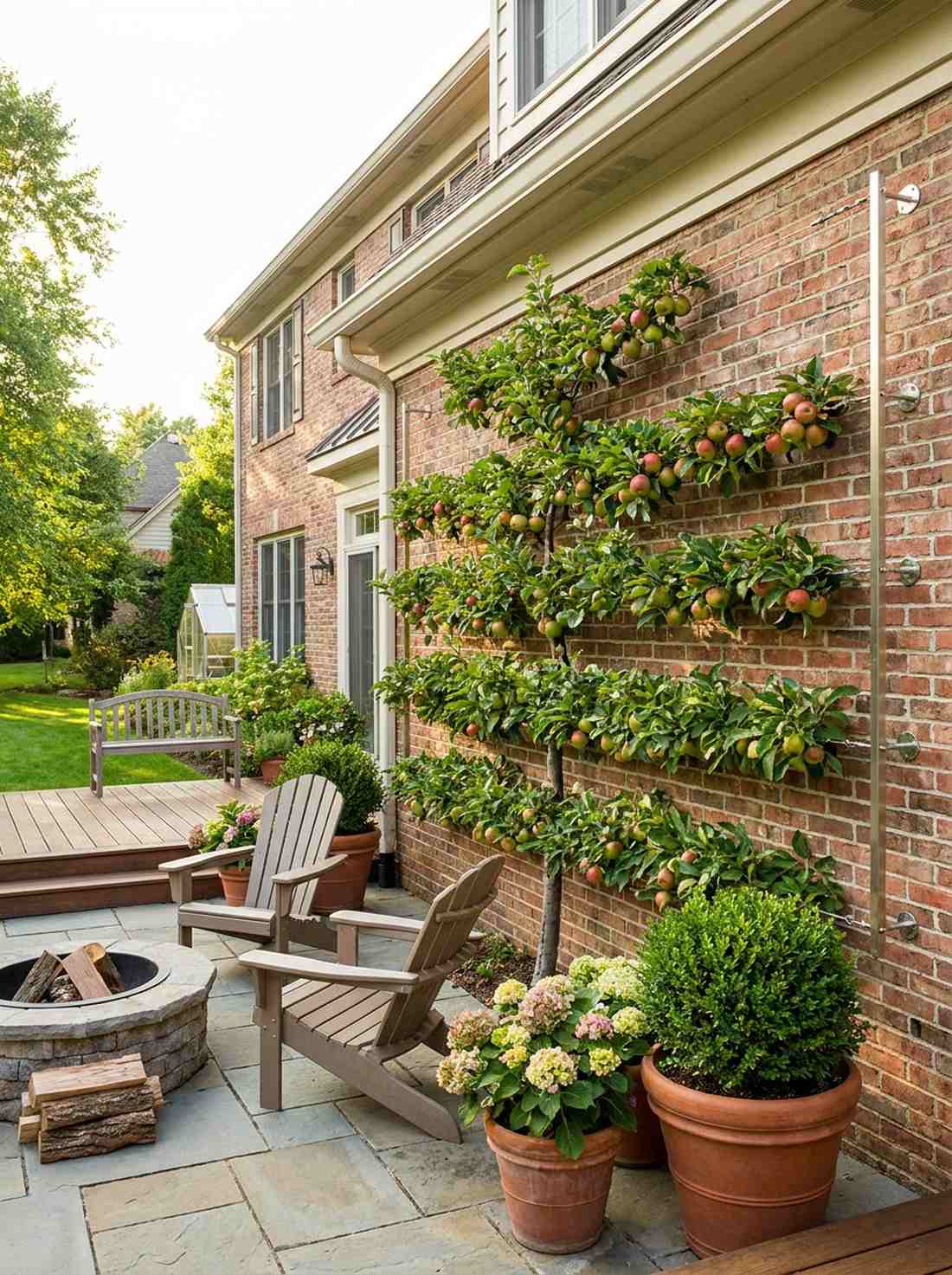
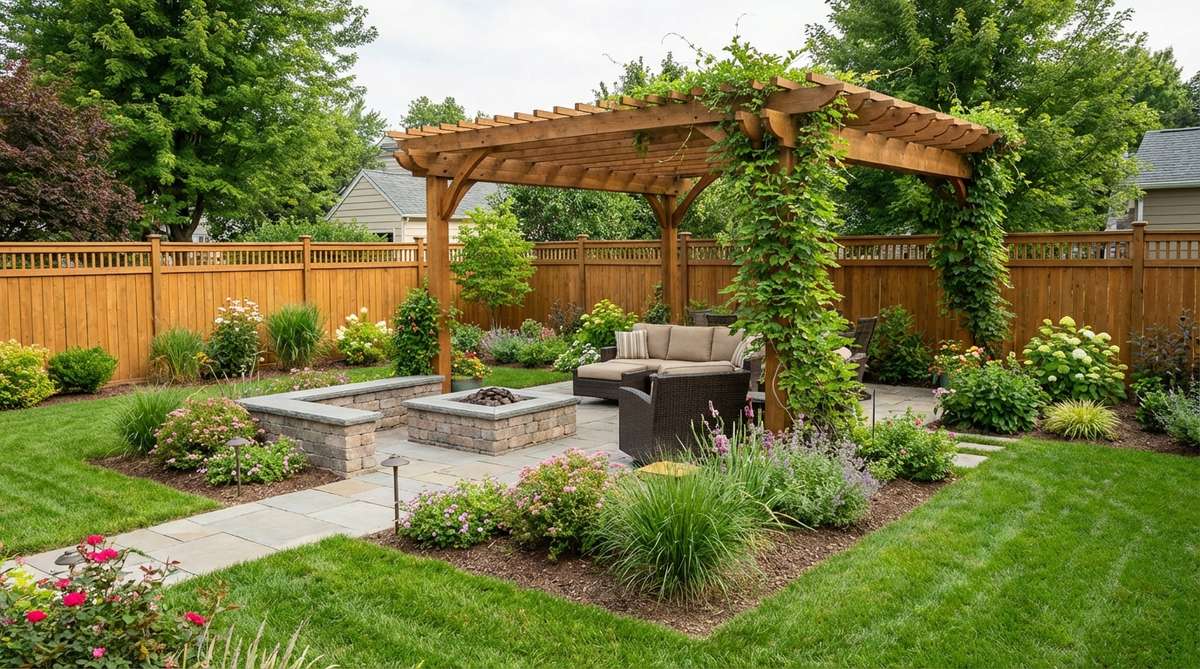
Apples growing flat against a sunny brick wall feel like an incredibly sophisticated feat of botanical engineering. Flat espalier wall training is the absolute most ingenious way to grow an orchard in a tiny urban courtyard.
Most assume you need acreage for fruit trees, but training them flat against a structure yields a highly expensive architectural look while saving massive space. Utilizing heavy-duty masonry anchors ensures the heavy fruit load never pulls the training wire out of the wall.
Setting up an espalier wire system and tree costs roughly $80–$160. Highly recommended for a high-end, productive garden.
- Key Materials: Dwarf fruit tree and wire kit
- Vibe / Style: Cultivated European courtyard
- Difficulty: Advanced pruning required
- Budget Breakdown: Bare-root tree: $45 | Wire trellis kit: $50.
- Creator’s Tip: Prune aggressively twice a year to maintain the strict horizontal shape and force the tree to produce fruit spurs instead of foliage.
- Smart Sourcing: Buy a heavy-duty stainless steel wire trellis kit and premium bypass pruning shears.
37. Wisteria Canopy Arbors
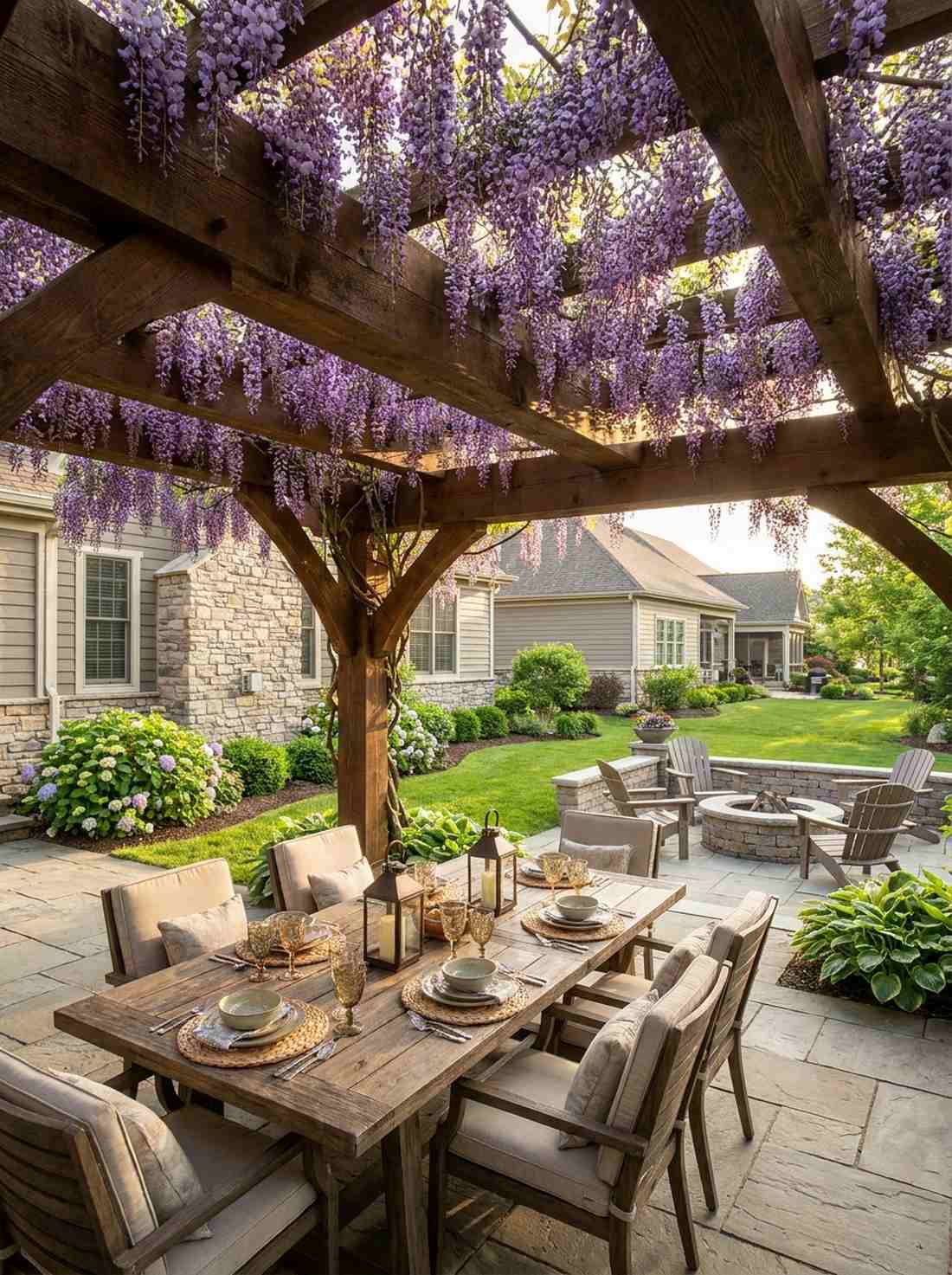
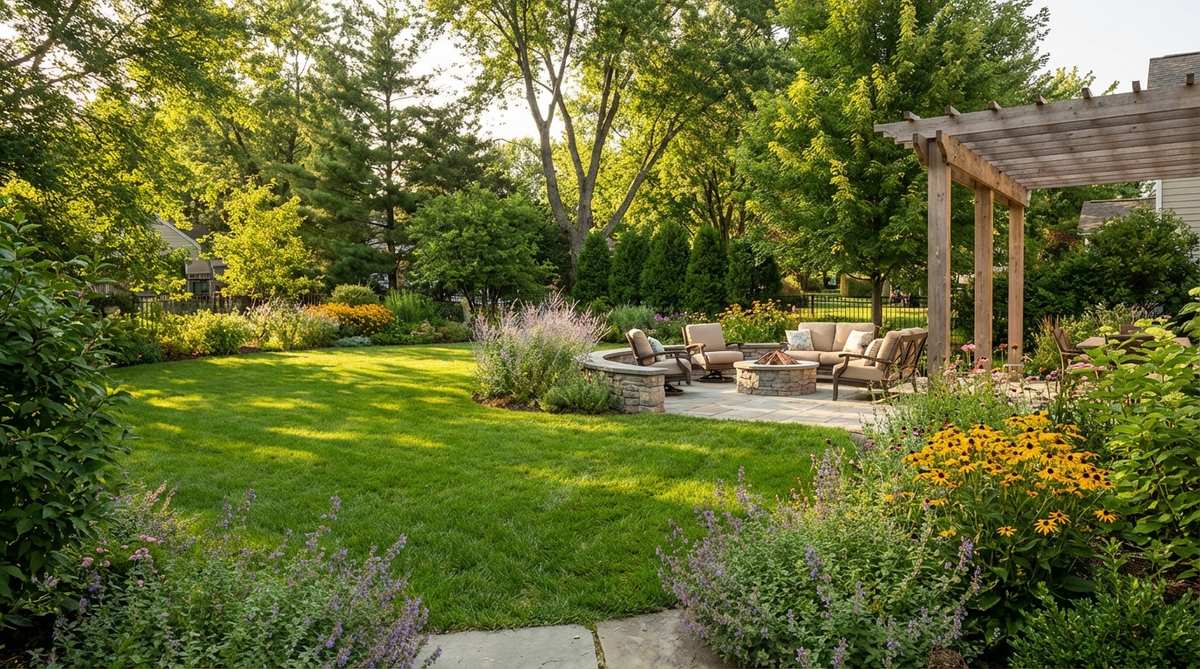
Sitting beneath a dripping ceiling of purple blossoms feels like pure, unapologetic garden luxury. Heavy-duty wisteria canopy shading works phenomenally well to create a shaded outdoor dining room.
Flimsy wood pergolas will be crushed by wisteria, but building a heavily reinforced arbor creates a permanently expensive, breathtaking destination. Using high-grade loppers to relentlessly prune the vine prevents it from tearing your house apart.
A proper canopy structure and vine run about $300–$600. Save this if you want the ultimate backyard statement piece!
- Key Materials: Heavy timber arbor and Wisteria vine
- Vibe / Style: Opulent floral pavilion
- Difficulty: Intense structural requirement
- Budget Breakdown: Timber structure: $400 | Vine: $50.
- Creator’s Tip: Buy the American species (Wisteria frutescens) instead of the Asian varieties; it blooms beautifully but is significantly less invasive and destructive.
- Smart Sourcing: Invest in commercial-grade heavy-duty loppers and heavy galvanized structural brackets.
38. Ivy on Masonry Structures
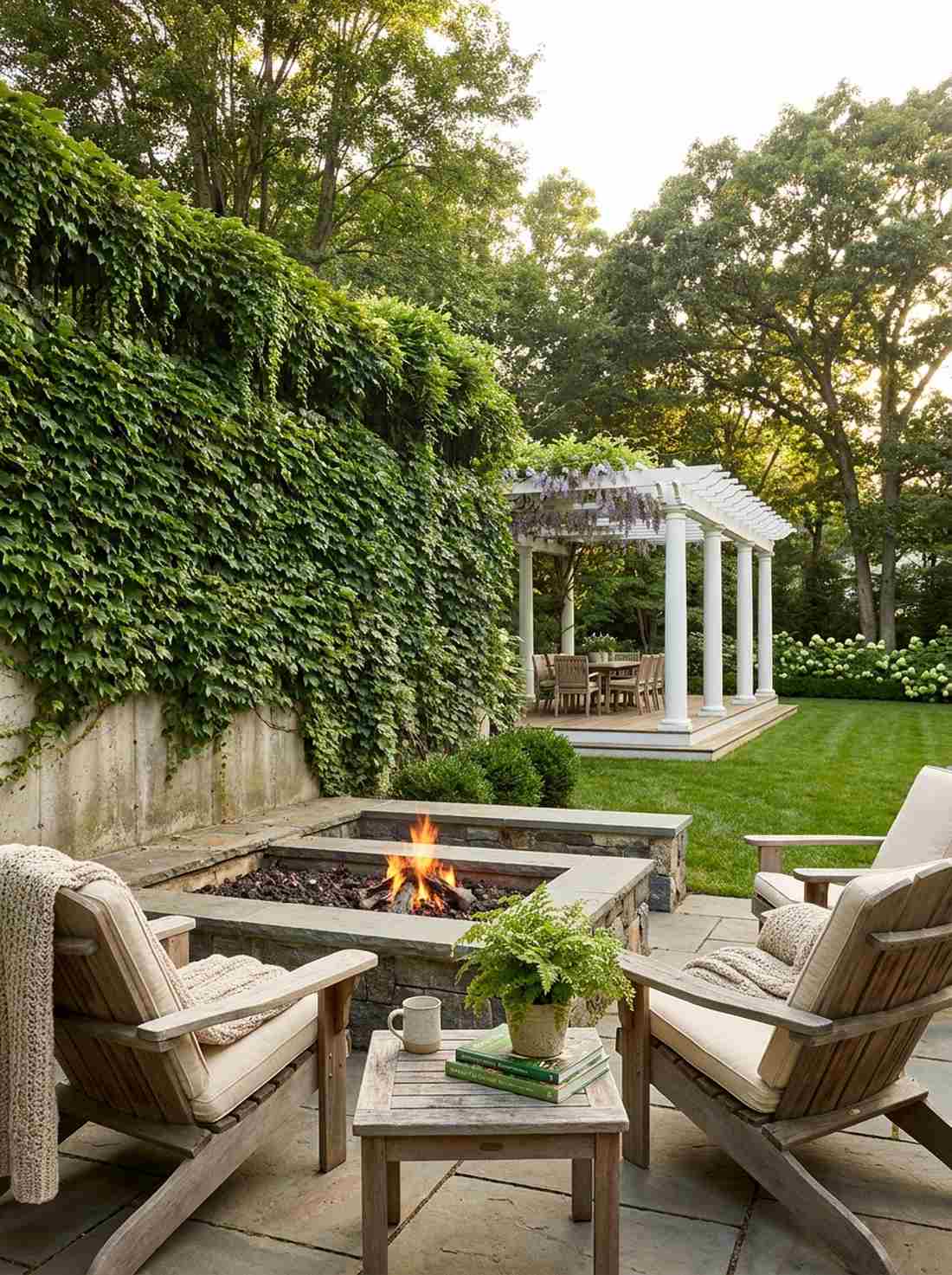
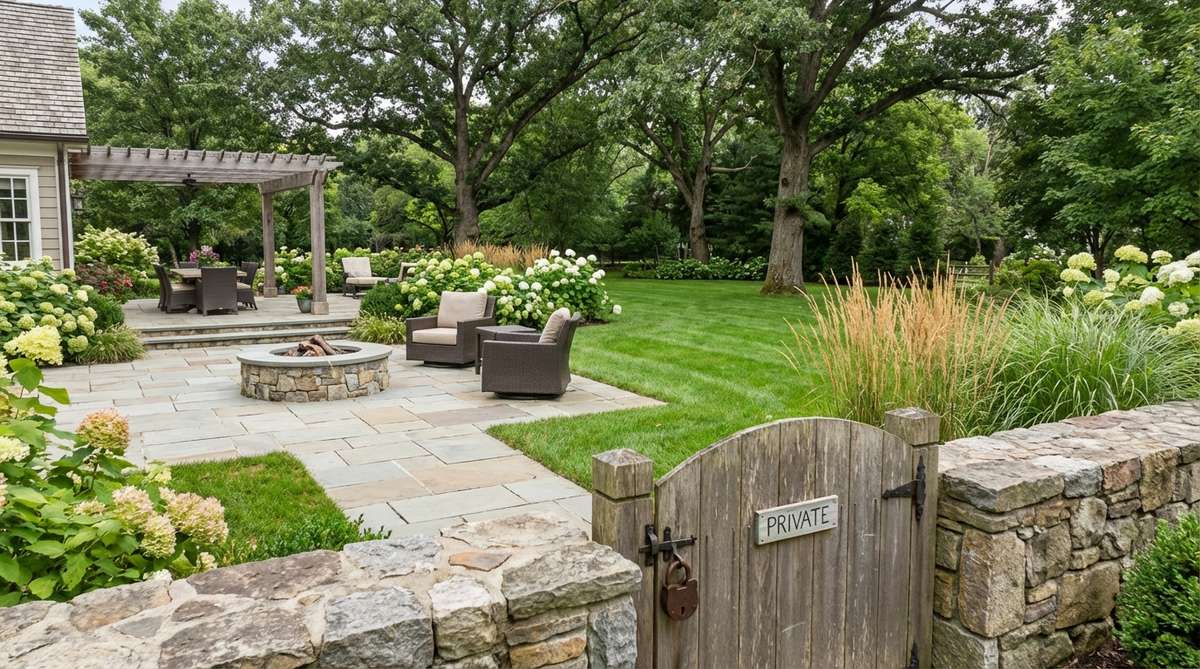
A solid wall of clinging green ivy feels incredibly historic, collegiate, and dripping with old-money charm. Evergreen masonry vine clinging is the perfect stealthy tactic to hide an ugly, aging concrete retaining wall.
Painting an ugly cinderblock wall looks cheap, whereas letting Boston Ivy completely consume it delivers a surprisingly premium, established look. If you lack a real wall, miniature garden supplies like faux ivy panels can replicate this exact look on a balcony fence.
You can start an ivy wall for less than $40 in starter plugs. It’s a fast upgrade that completely changes the yard’s boundaries.
- Key Materials: Boston Ivy or English Ivy plugs
- Vibe / Style: Historic ivy-league estate
- Difficulty: Easy but requires wall monitoring
- Budget Breakdown: Ivy plugs: $30 | Root stimulator: $10.
- Creator’s Tip: Never let ivy climb onto wooden siding or into your gutters, as the aerial roots will cause severe structural rot.
- Smart Sourcing: Snag high-yield root stimulator solutions and UV-resistant faux ivy privacy panels for quick fixes.
You’re probably wasting money on expensive pavers until you see how this next ground cover hack works…
39. Annual Vine Screens
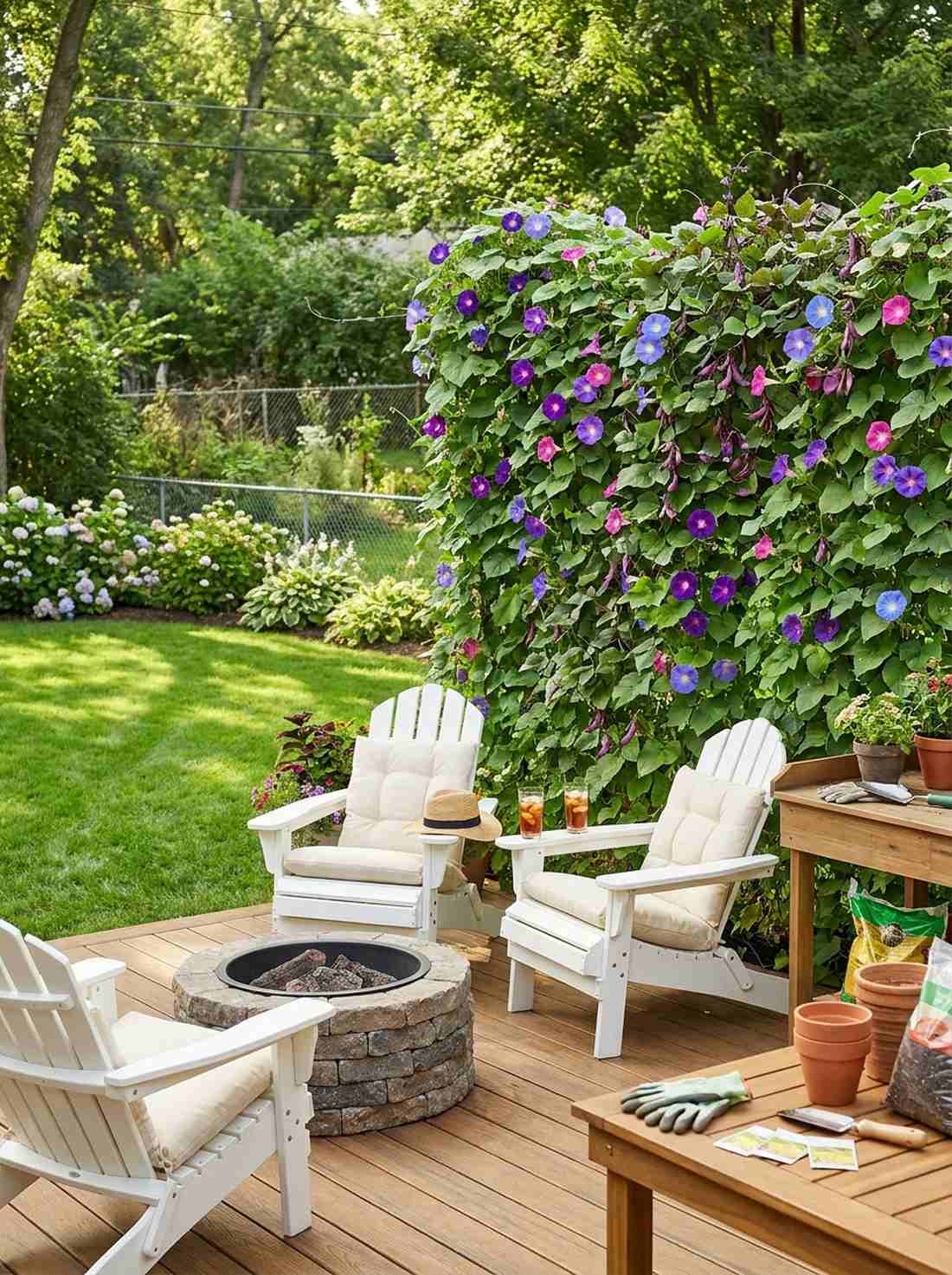
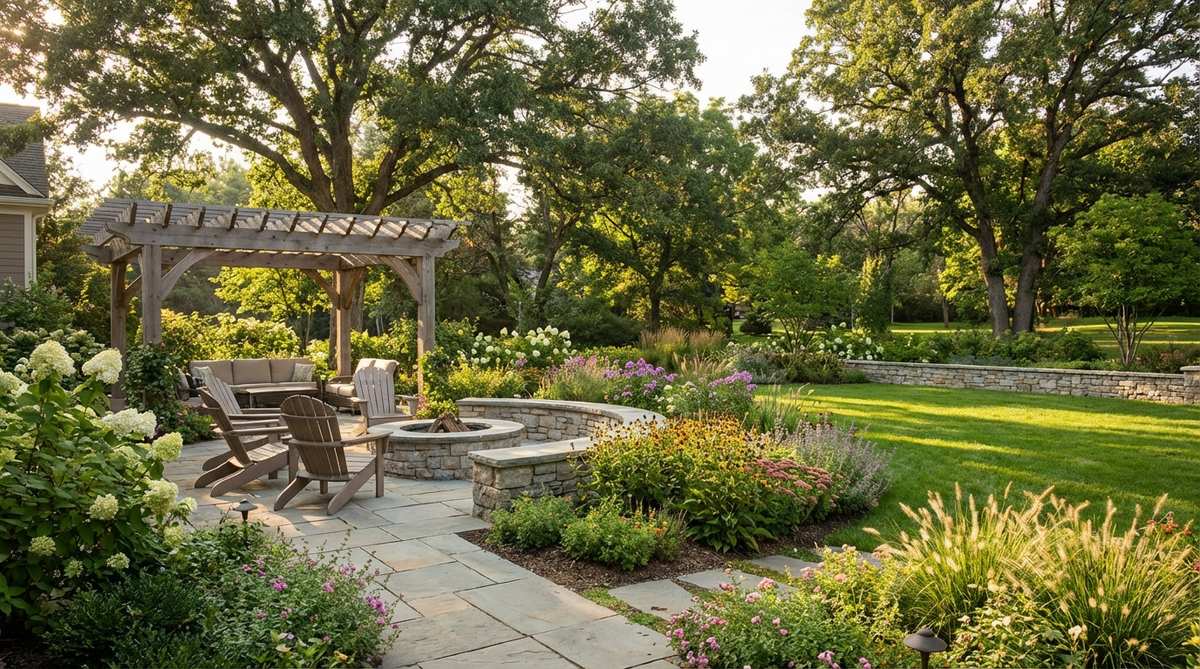
A sudden, explosive wall of morning glories feels like a vibrant, temporary tapestry you wove overnight. Rapid-growth annual vine screening is an unbelievable hack for hiding your neighbor’s messy yard in just a few weeks.
Waiting years for evergreen shrubs to grow is frustrating, but planting hyacinth bean seeds delivers a remarkably lush privacy screen almost instantly. Stringing up heavy-duty nylon trellis netting gives these rapid climbers the exact grip they need to soar.
This massive green wall costs less than $20 in seeds and netting. Pin this for the fastest privacy screen imaginable!
- Key Materials: Morning glory seeds and trellis netting
- Vibe / Style: Explosive summer tapestry
- Difficulty: Extremely easy
- Budget Breakdown: Seed packs: $5 | Nylon netting: $15.
- Creator’s Tip: Soak the large seeds in warm water for 24 hours before planting to double their germination speed.
- Smart Sourcing: Grab a heavy-duty nylon trellis netting (bulk size) and premium organic seed starting mix.
40. Climbing Hydrangea for Shade
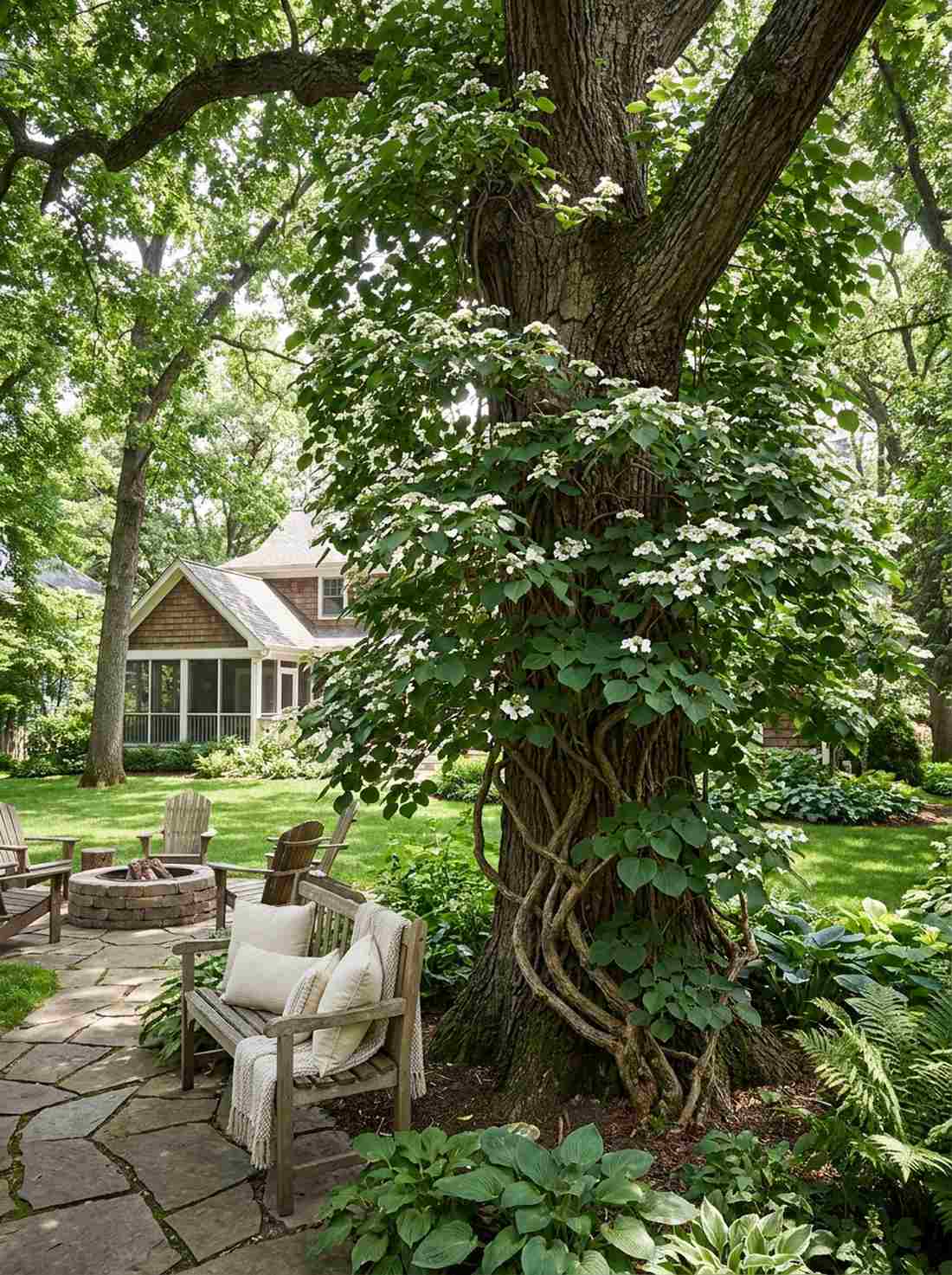
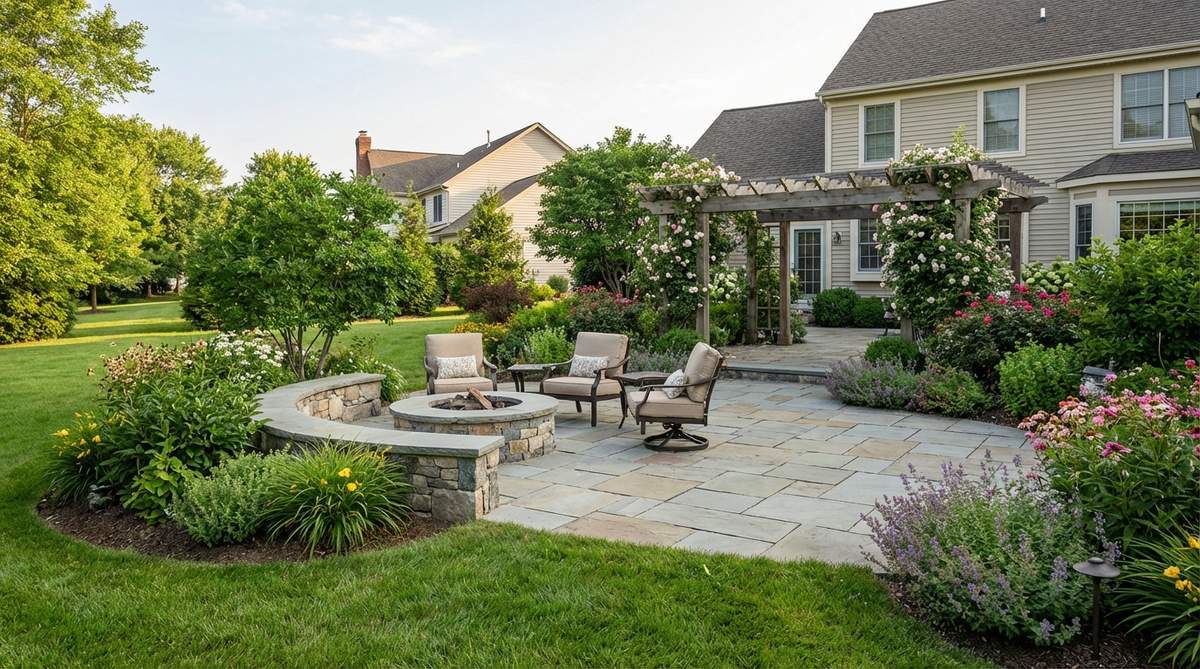
Thick, woody vines hugging a massive tree trunk covered in white lace flowers feels deep, ancient, and romantic. Shade-tolerant floral tree climbing is the ultimate solution for adding vertical interest where the sun never shines.
Most climbing vines die instantly in deep shade, but the climbing hydrangea thrives and yields a remarkably expensive, woodland aesthetic. Using temporary heavy-duty tree wraps helps guide the heavy vine until its own aerial roots bite into the bark.
A starter climbing hydrangea costs roughly $40–$75. Highly recommended for injecting life into a dark forest corner.
- Key Materials: Climbing hydrangea shrub
- Vibe / Style: Romantic shadowed woodland
- Difficulty: Requires patience (slow starter)
- Budget Breakdown: Hydrangea vine: $55 | Tree wrap: $10.
- Creator’s Tip: It takes about three years for this plant to establish and start climbing aggressively; do not give up on it during the “sleep” phase.
- Smart Sourcing: Pick up a heavy-duty breathable tree trunk wrap and slow-release acidic shrub fertilizer.
41. Bamboo Teepees for Vegetables
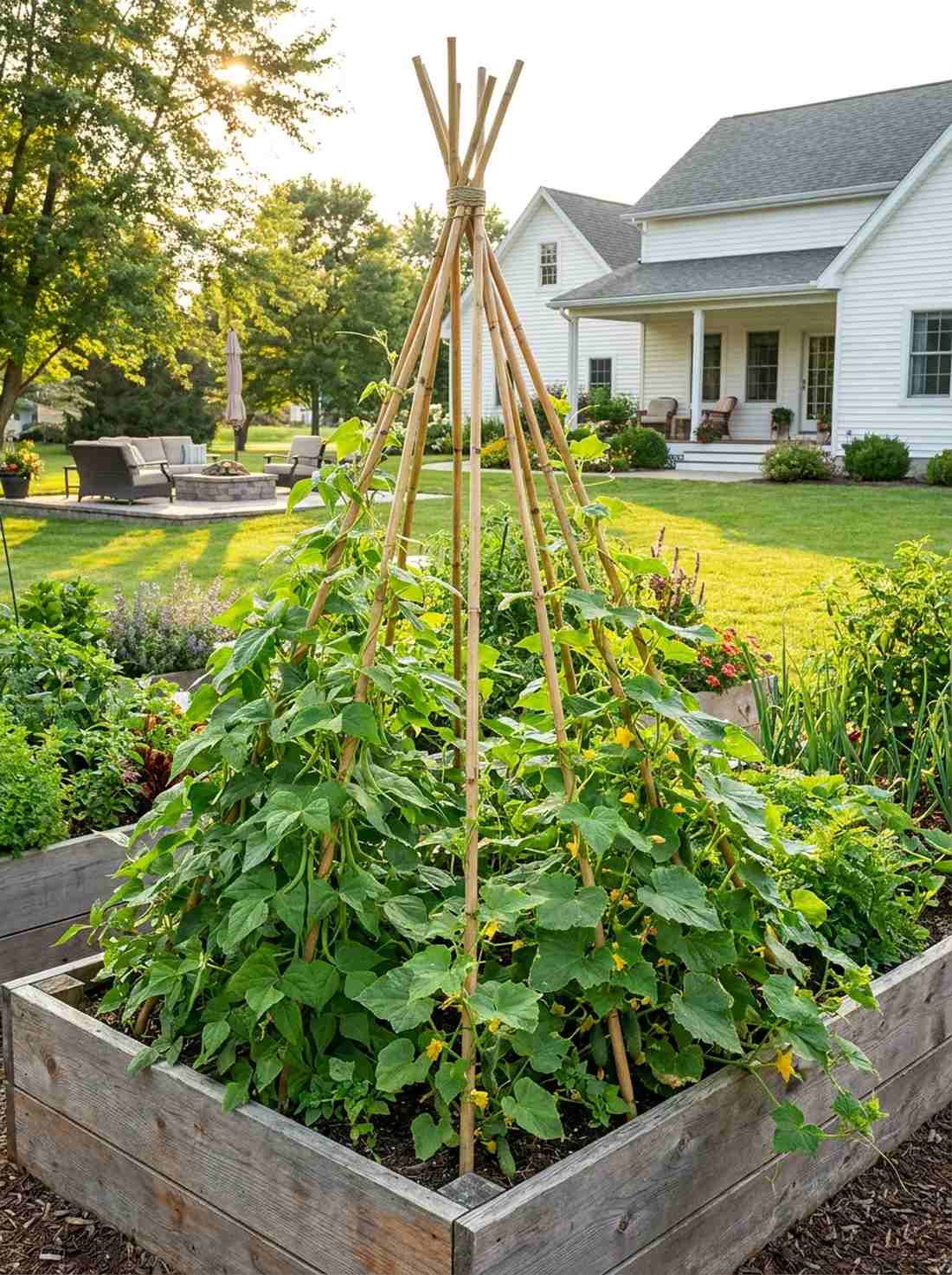
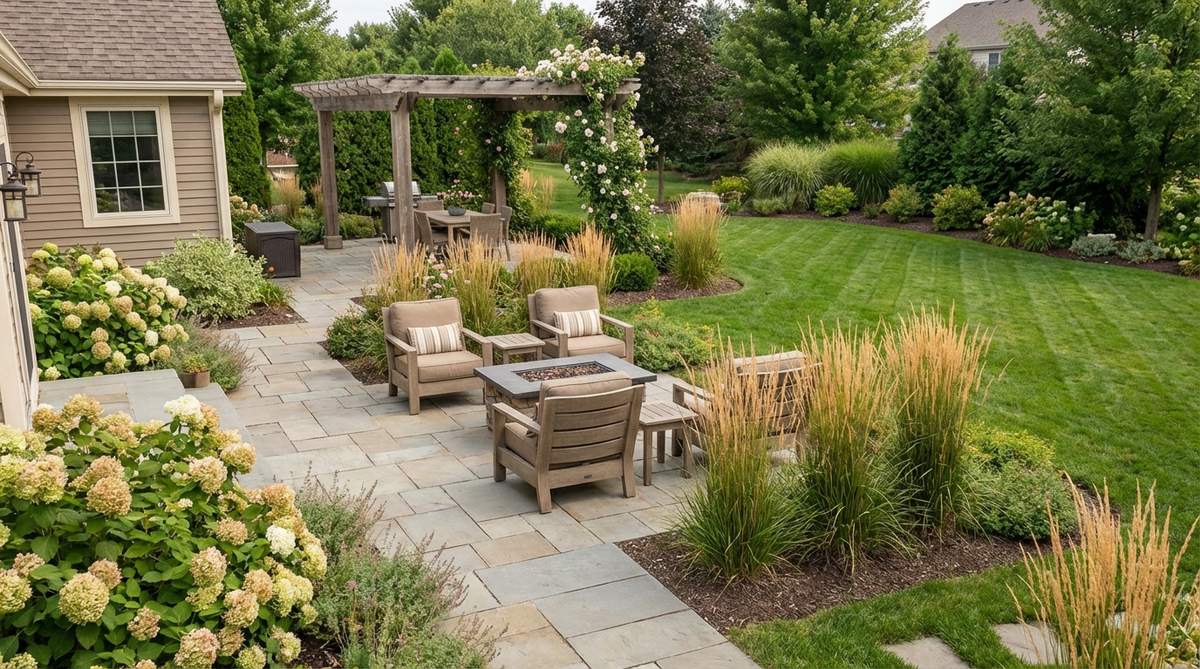
A towering, rustic pyramid dripping with fresh green beans feels like a highly productive, artistic farmhouse feature. Architectural vertical vegetable trellising serves perfectly to add massive yield to a tiny raised bed.
Sprawling cucumber vines look incredibly messy, but training them up a tall teepee creates a high-end architectural focal point in the kitchen garden. Tying the poles with UV-coated heavy twine ensures the entire structure survives high summer winds.
Building this rustic tower costs about $15–$30. Save this to your small-space urban homesteading board!
- Key Materials: Tall bamboo poles and climbing veggie seeds
- Vibe / Style: Rustic vertical potager
- Difficulty: Easy lashing project
- Budget Breakdown: Bamboo poles: $20 | Twine: $5.
- Creator’s Tip: Push the poles at least eight inches deep into the soil before tying the top, otherwise the weight of mature vegetables will topple it.
- Smart Sourcing: Invest in a bulk pack of natural bamboo garden stakes and UV-coated heavy-duty garden twine.
Ground Cover & Finishing Touches for Complete Coverage
42. Creeping Thyme Between Pavers
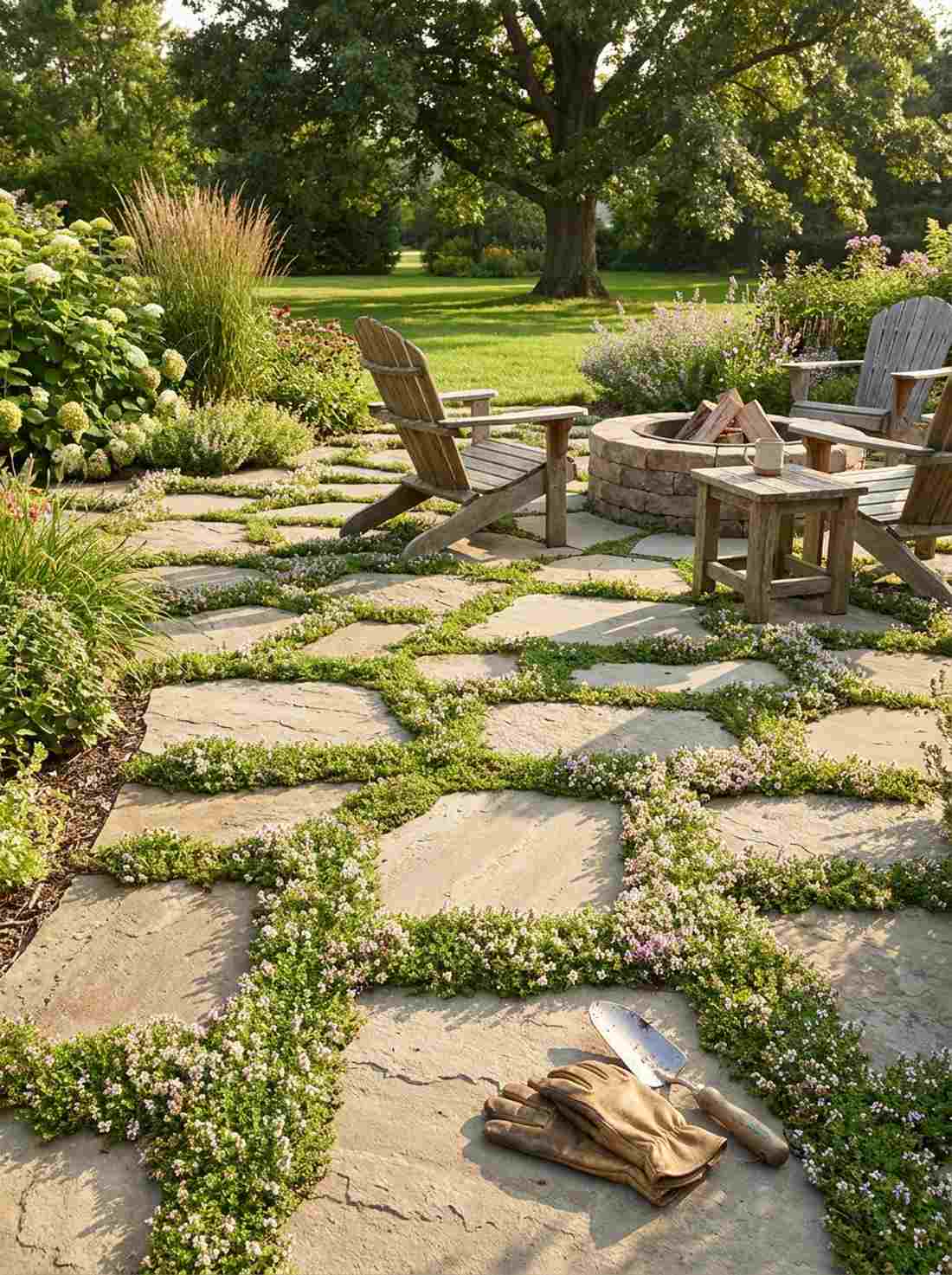
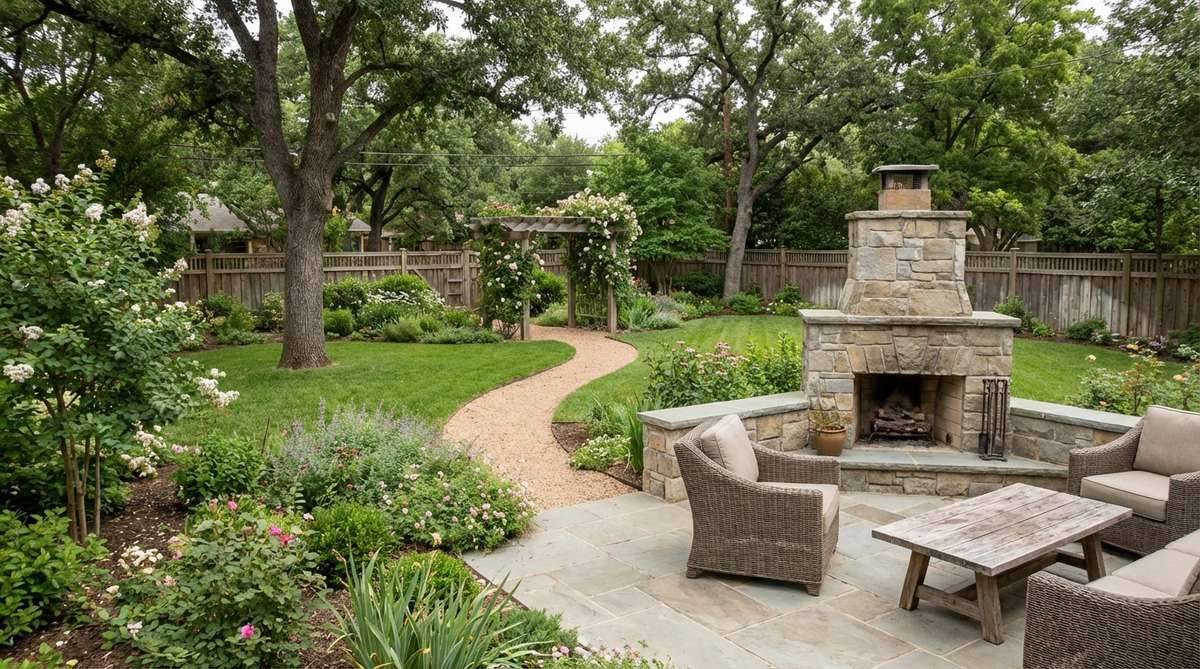
Stepping on this fragrant, fuzzy green grout feels like an interactive, sensory garden experience. Aromatic paver joint softening is the absolute perfect trick to make a brand-new patio look completely integrated and established.
Filling gaps with plain sand is painfully boring, whereas stuffing them with creeping thyme delivers a surprisingly premium, living tapestry look. Sweeping premium starter soil directly into the cracks gives these tiny plugs the perfect foundation to spread rapidly.
This living patio upgrade costs roughly $30–$60 in plant plugs. Pin this if you hate weeding the cracks in your walkway!
- Key Materials: Elfin or Woolly thyme plugs
- Vibe / Style: Whimsical interactive patio
- Difficulty: Tedious but easy
- Budget Breakdown: Thyme flats: $40 | Crack soil: $10.
- Creator’s Tip: Mix thyme varieties with different bloom colors (pink and white) for a gorgeous mosaic effect when they flower.
- Smart Sourcing: Buy creeping thyme plugs (bulk tray) and a precision narrow trowel tool.
43. Ajuga for Rapid Coverage
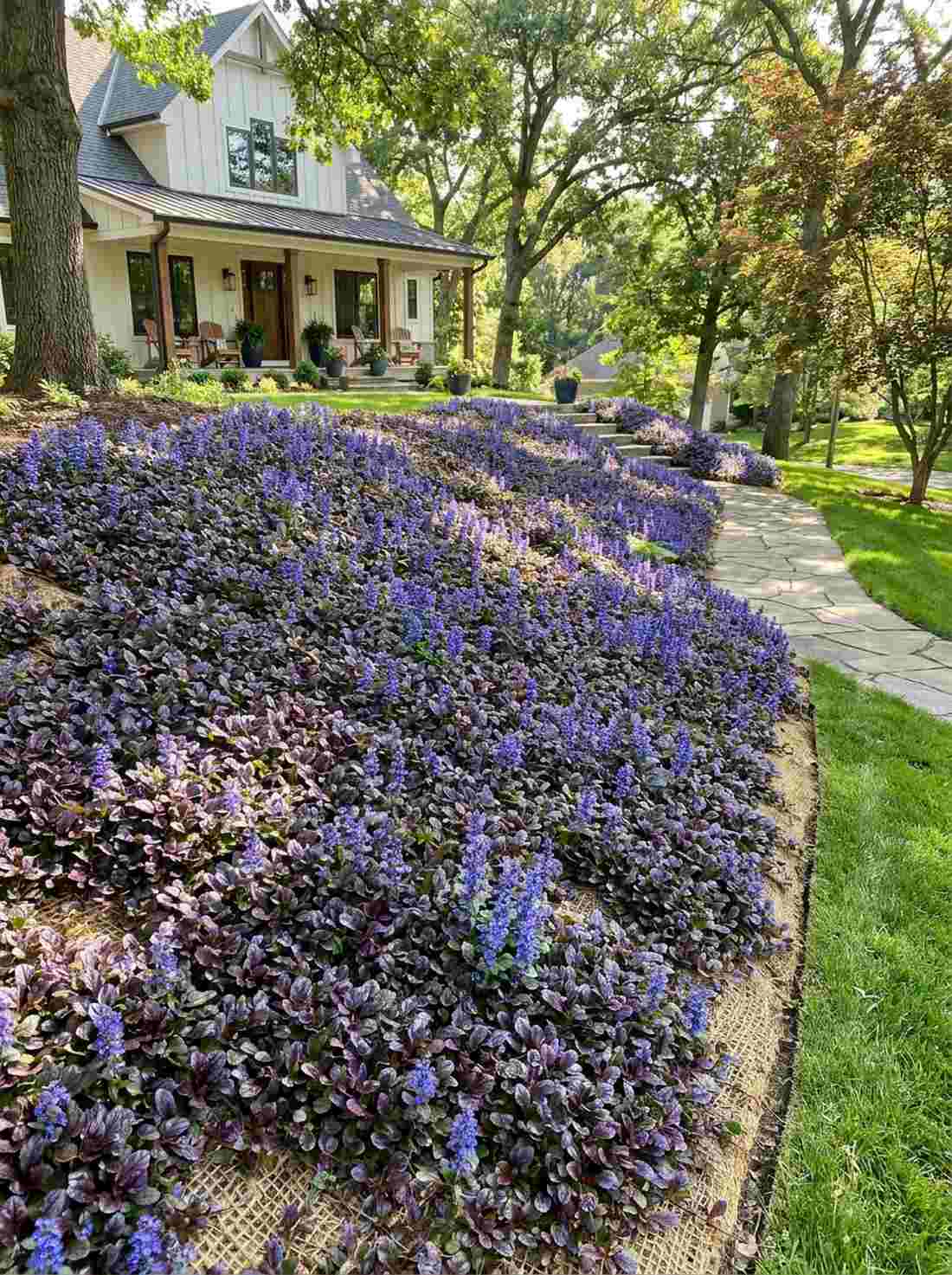
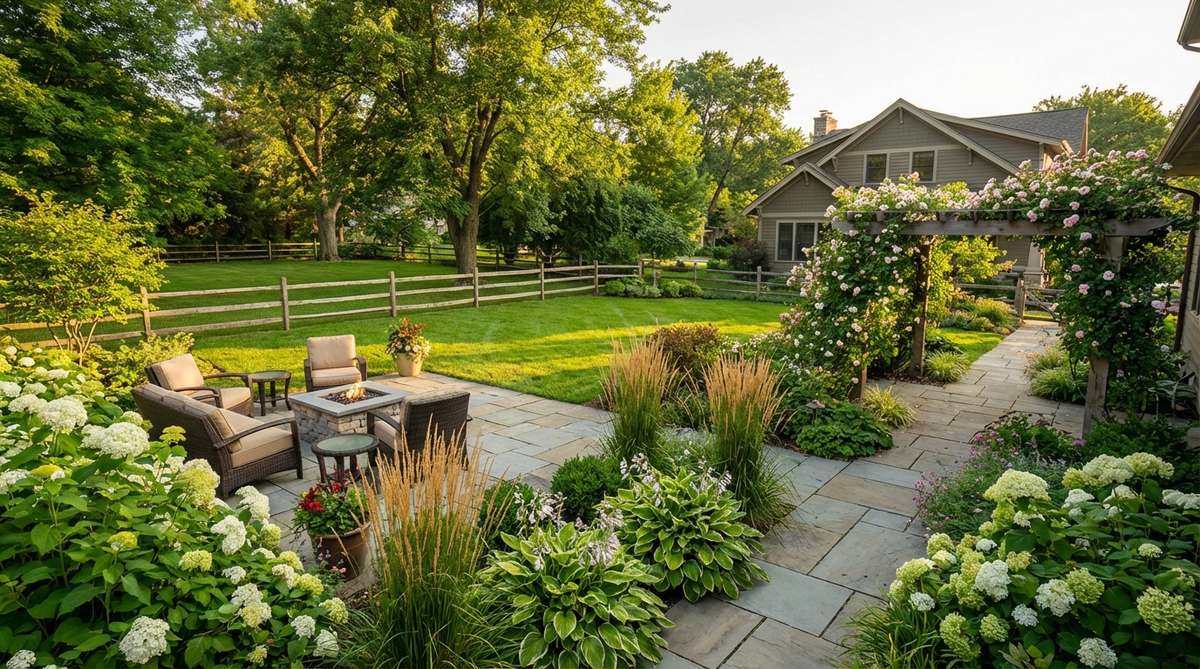
A sweeping, glossy purple carpet spiked with blue flowers feels like an incredibly luxurious ground blanket. Rapid-spreading evergreen groundcover massing works flawlessly to choke out weeds on a difficult, shaded slope.
Using grass on a steep hill is a mowing nightmare, but establishing a dense layer of ajuga delivers a high-end look with zero maintenance required. Installing heavy-duty erosion control netting first ensures the plugs hold onto the slope during heavy rain.
You can lock down a hill for about $50–$100. Highly recommended for a fast, colorful landscaping win.
- Key Materials: Ajuga reptans (Bugleweed)
- Vibe / Style: Glossy low-maintenance carpet
- Difficulty: Easy planting
- Budget Breakdown: Ajuga flats: $60 | Erosion netting: $25.
- Creator’s Tip: Edge the bed sharply twice a year with a spade; ajuga spreads by runners and will invade your lawn if left completely unchecked.
- Smart Sourcing: Grab heavy-duty jute erosion control netting (bulk roll) and a half-moon edging shovel.
44. Sedum Carpet for Dry Sites
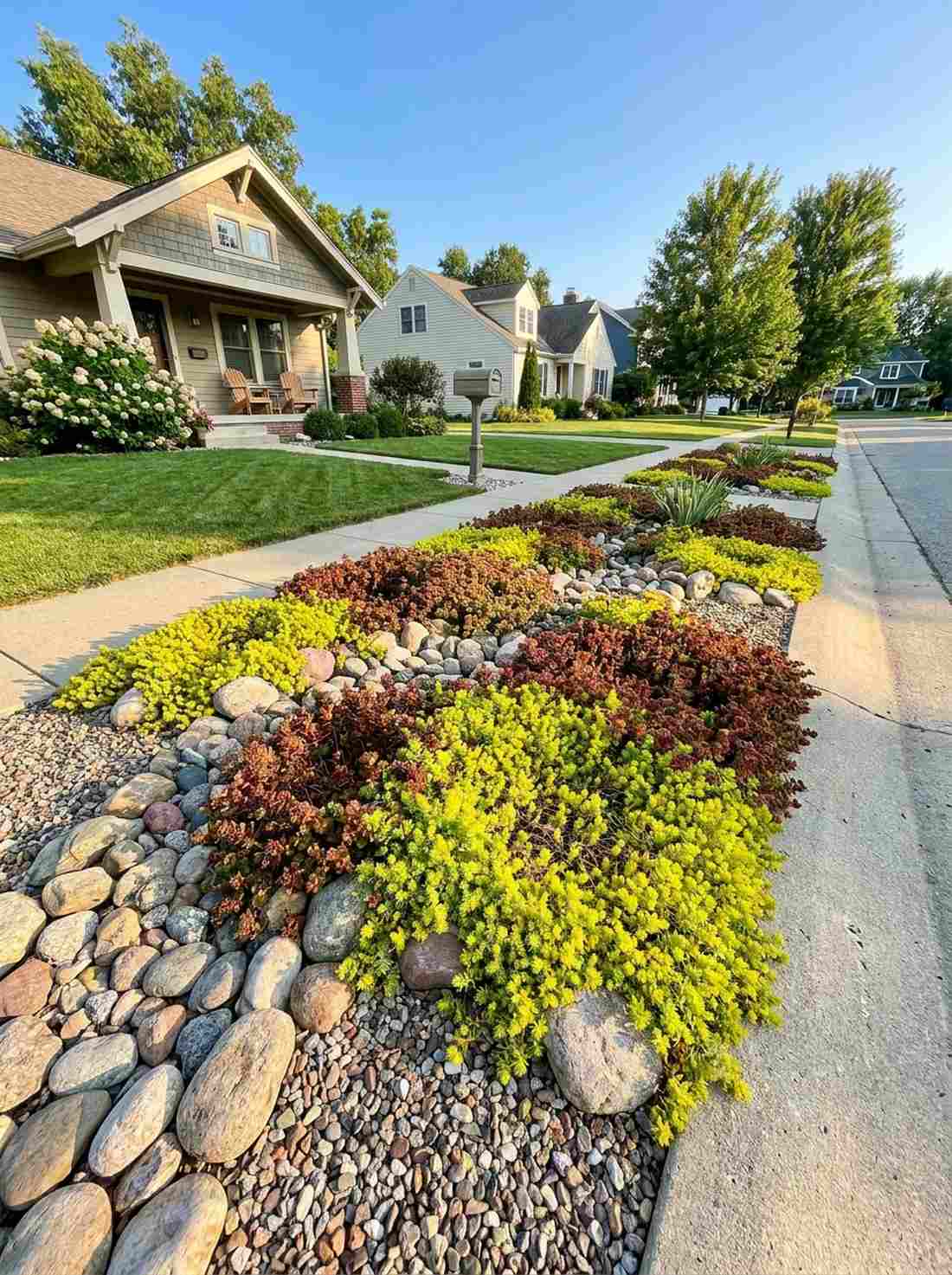
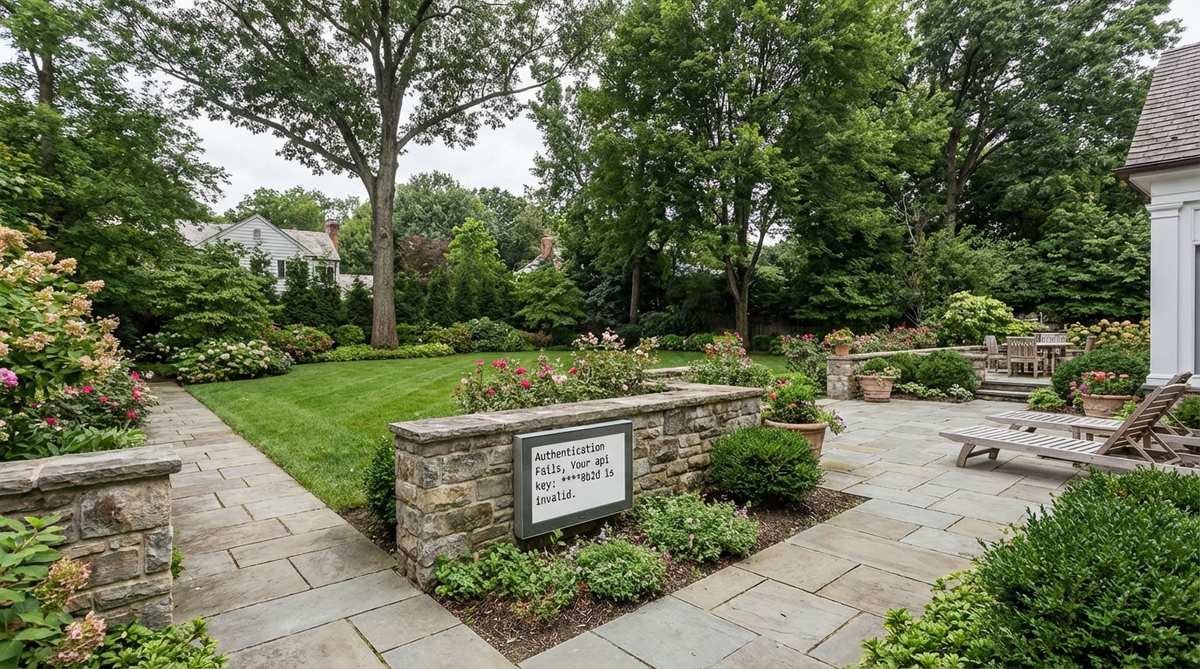
The bright chartreuse and bronze succulent leaves spilling over rocks feel like a vibrant, sun-baked coral reef. Drought-proof succulent carpeting is the ultimate hands-off solution for the hellish strip of dirt near the street.
Most plants scorch and die near hot pavement, but a thick sedum mat yields a perfectly manicured, highly expensive aesthetic without a drop of extra water. Utilizing commercial-grade gravel mulch around the roots speeds up their creeping behavior immensely.
A tray of creeping sedum costs barely $20–$40. Save this idea for the hottest, driest corner of your yard!
- Key Materials: Sedum ‘Angelina’ or ‘Dragon’s Blood’
- Vibe / Style: Vibrant dry-scape mosaic
- Difficulty: Extremely easy
- Budget Breakdown: Sedum flats: $30 | Gravel mulch: $15.
- Creator’s Tip: If a piece breaks off, just shove the stem directly into the dirt—it will root itself and start a brand new plant instantly.
- Smart Sourcing: Pick up a bulk pack of mixed creeping sedums and premium horticultural drainage gravel.
Before you hire a designer, this final landscaping secret is literally the ultimate money-saver…
45. Pachysandra for Deep Shade
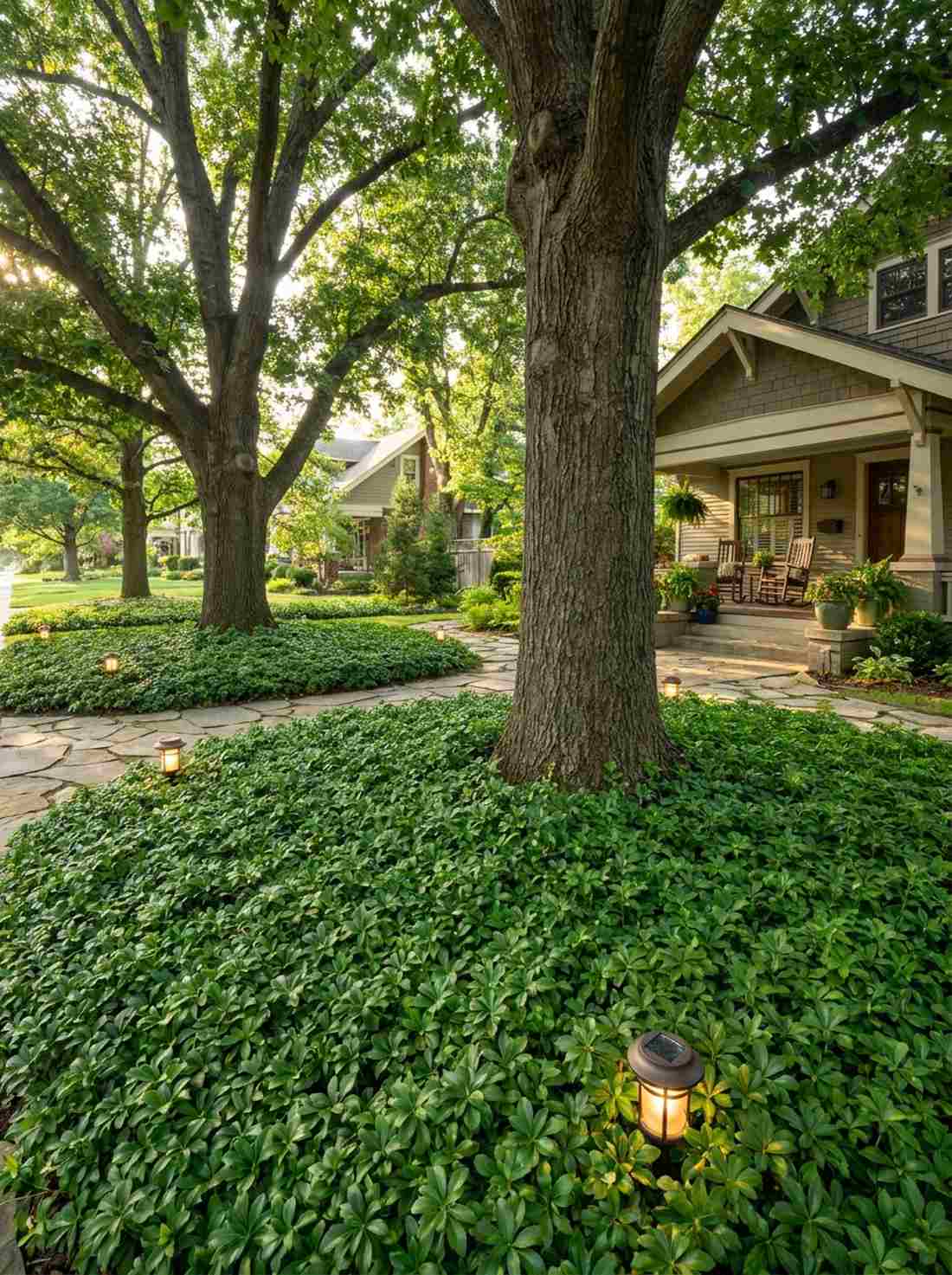
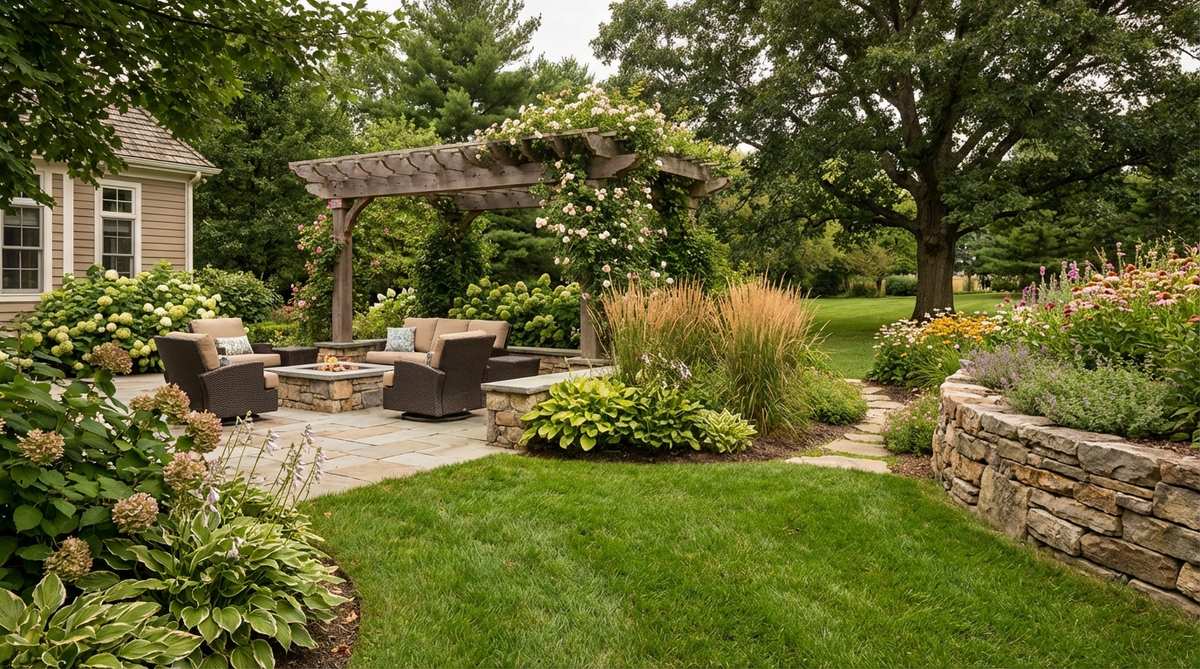
The perfectly uniform, glossy green sea beneath the trees feels like the manicured grounds of a historic university. Uniform shade carpet establishment works absolute magic for unifying massive, fragmented patches of dark soil.
Struggling with patchy shade grass looks neglected, while a solid block of pachysandra creates a remarkably high-end, intentional design. Mixing in fairy garden kits or small lanterns gives this deep green sea a fun, interactive glow at night.
A bulk flat of these shade lovers costs about $40–$80. Pin this to your ultimate front yard curb appeal board!
- Key Materials: Japanese Pachysandra flats
- Vibe / Style: Stately estate understory
- Difficulty: Beginner-friendly massing
- Budget Breakdown: Plant flats: $60 | Compost: $20.
- Creator’s Tip: Plant them closer together than the nursery recommends (about 6 inches apart) for an instant, weed-blocking canopy.
- Smart Sourcing: Buy UV-coated outdoor solar lanterns and commercial-grade organic compost (bulk bag).
46. Sweet Woodruff Scented Carpet
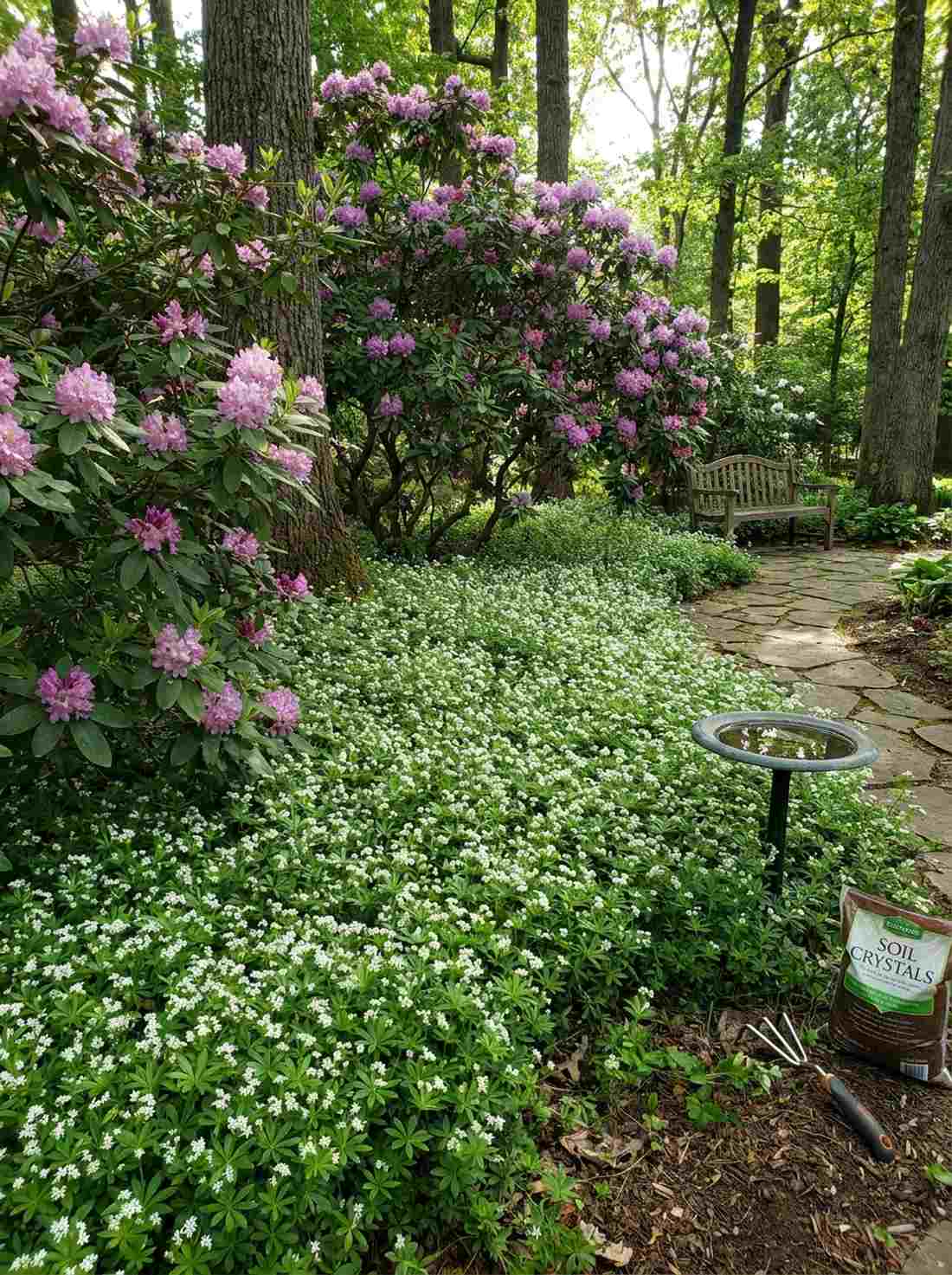
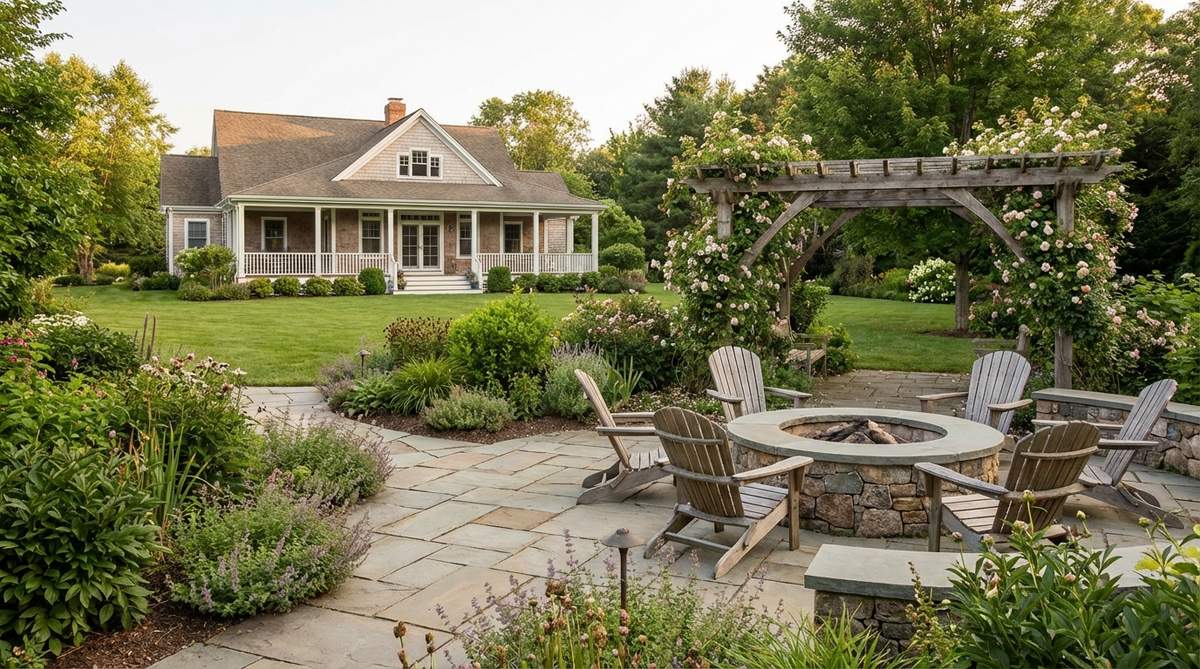
The delicate, star-shaped foliage smelling faintly of fresh vanilla feels incredibly charming and wildly romantic. Aromatic woodland groundcover massing is an exquisite trick for planting beneath large, established rhododendrons.
Leaving the ground under shrubs bare is completely boring, whereas adding a layer of sweet woodruff yields a beautifully delicate, expensive texture. Digging in premium moisture-retaining soil crystals guarantees these delicate roots never dry out in the shadow of big shrubs.
You can establish this scented carpet for roughly $30–$60. Highly recommended for a sensory-rich shade garden.
- Key Materials: Sweet Woodruff (Galium odoratum)
- Vibe / Style: Scented romantic glade
- Difficulty: Moderate moisture needs
- Budget Breakdown: Starter plants: $35 | Soil crystals: $15.
- Creator’s Tip: Let the foliage dry naturally in the fall; the cut leaves emit a powerful scent of freshly mown hay that perfumes the garden.
- Smart Sourcing: Grab water-retaining soil crystals (bulk pack) and a premium handheld cultivator tool.
47. Moss Phlox Spring Color Waves
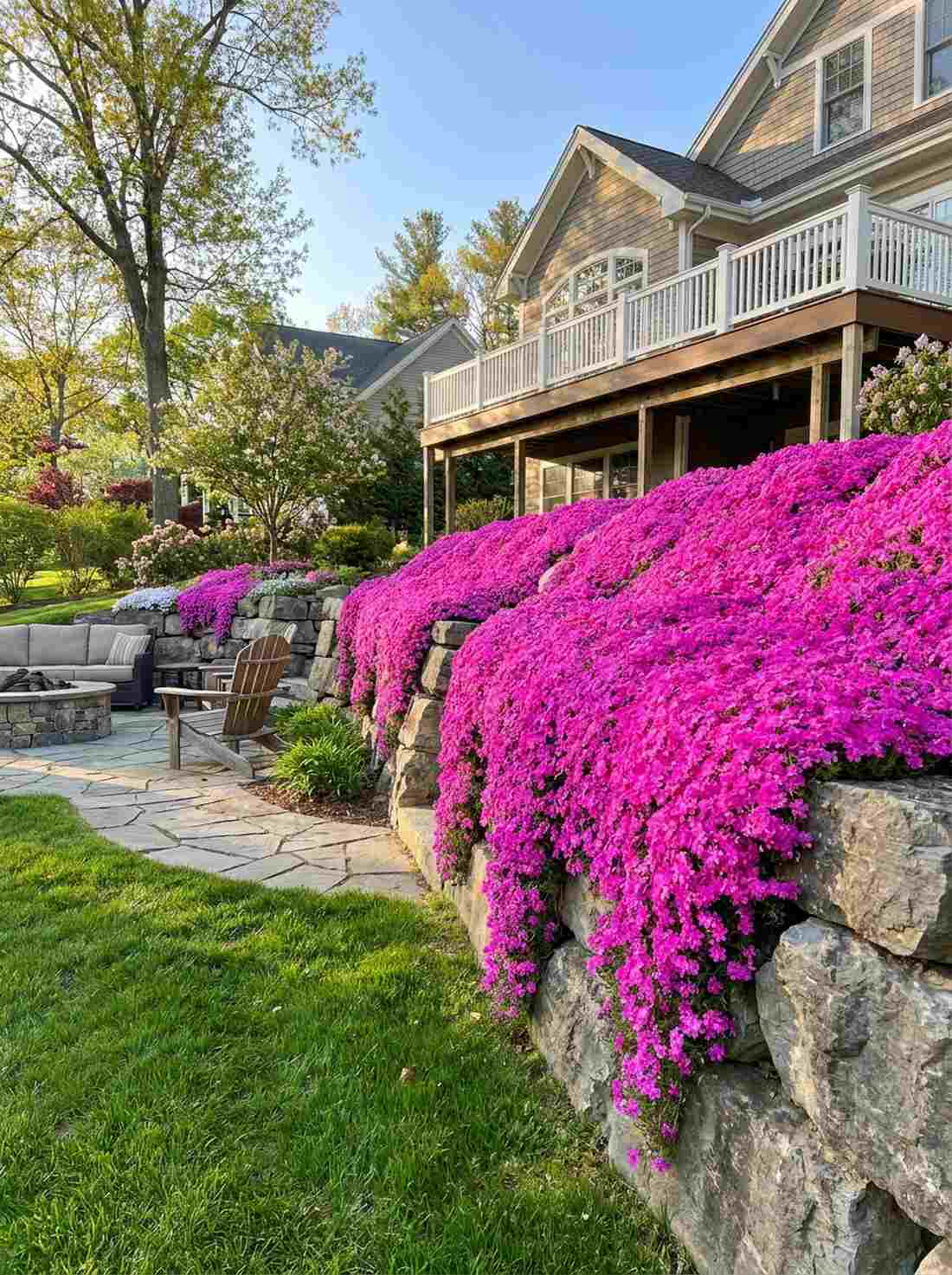
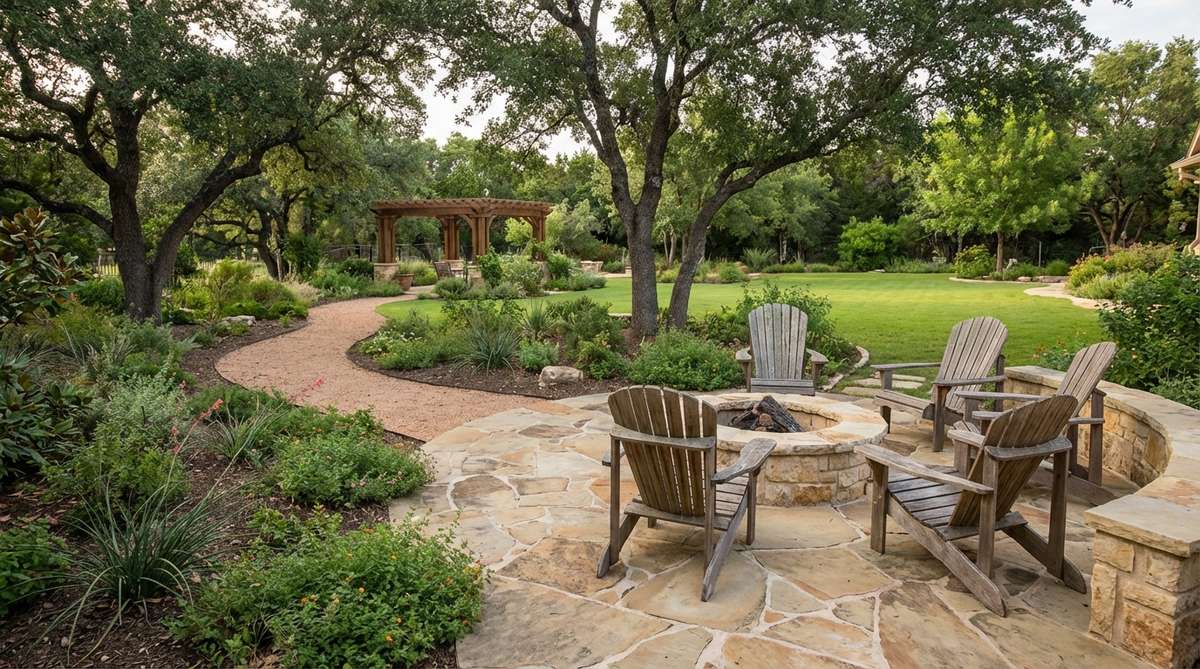
A massive, blinding sheet of neon pink spilling over a rock wall feels like a brilliant explosion of pure spring joy. Cascading early-bloom groundcover layering serves flawlessly to transform ugly retaining walls into floral masterpieces.
A bare stone wall is aggressively industrial, but letting moss phlox cascade down the face delivers a shockingly premium, expensive aesthetic. Spraying a heavy-duty organic weed pre-emergent in the rocks beforehand ensures grass won’t grow through your floral carpet.
A few plugs to start the cascade will cost about $25–$50. Save this if you want the brightest yard on the block come April!
- Key Materials: Creeping Phlox (Phlox subulata)
- Vibe / Style: Explosive floral cascade
- Difficulty: Very easy
- Budget Breakdown: Phlox plugs: $30 | Pre-emergent: $15.
- Creator’s Tip: Give the plants a harsh “haircut” with shears right after they finish blooming to keep the green mat thick and prevent woody centers.
- Smart Sourcing: Pick up a bulk pack of creeping phlox plugs and premium organic pre-emergent weed preventer.
48. Vinca Variegated Brightness
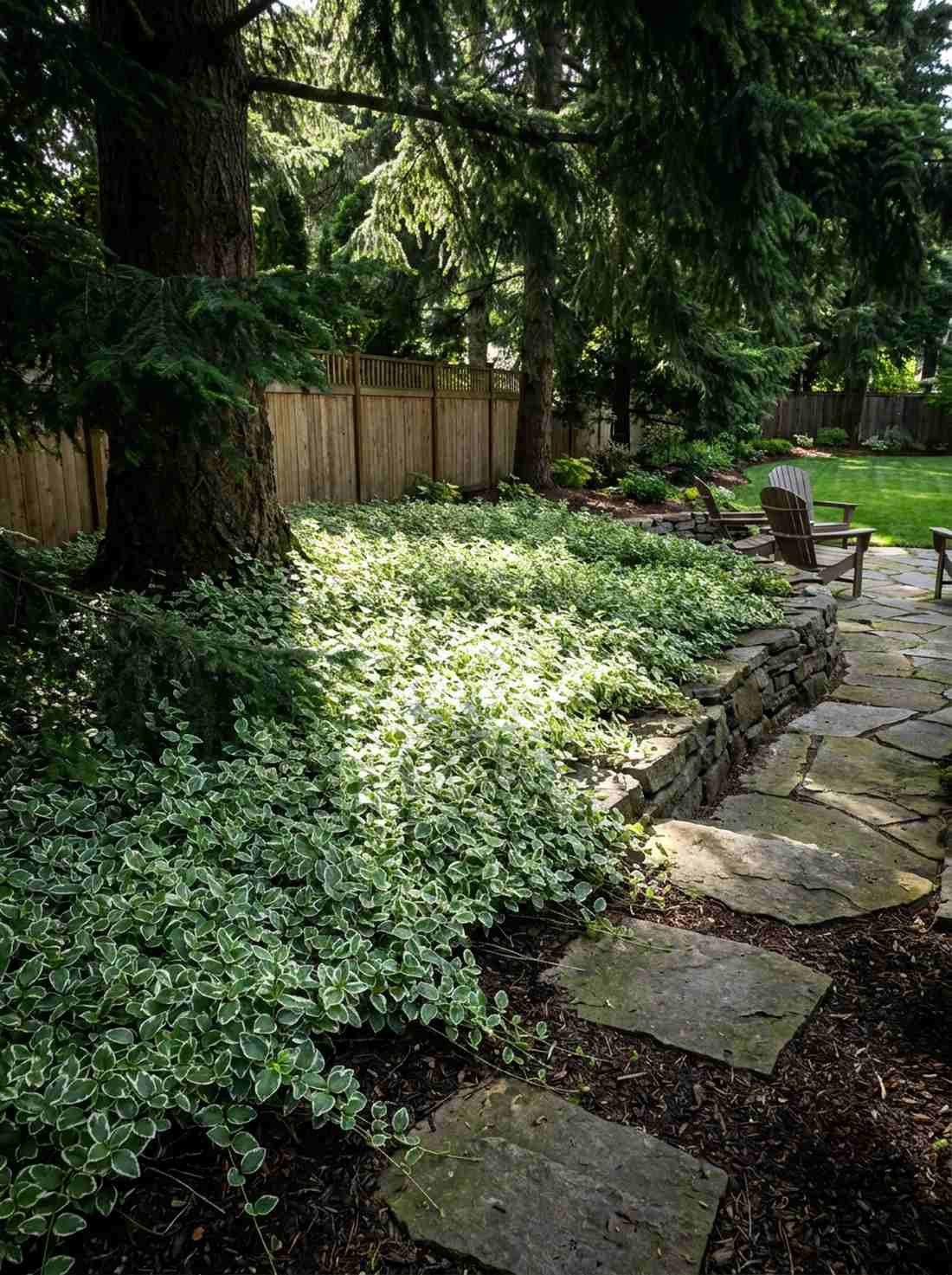
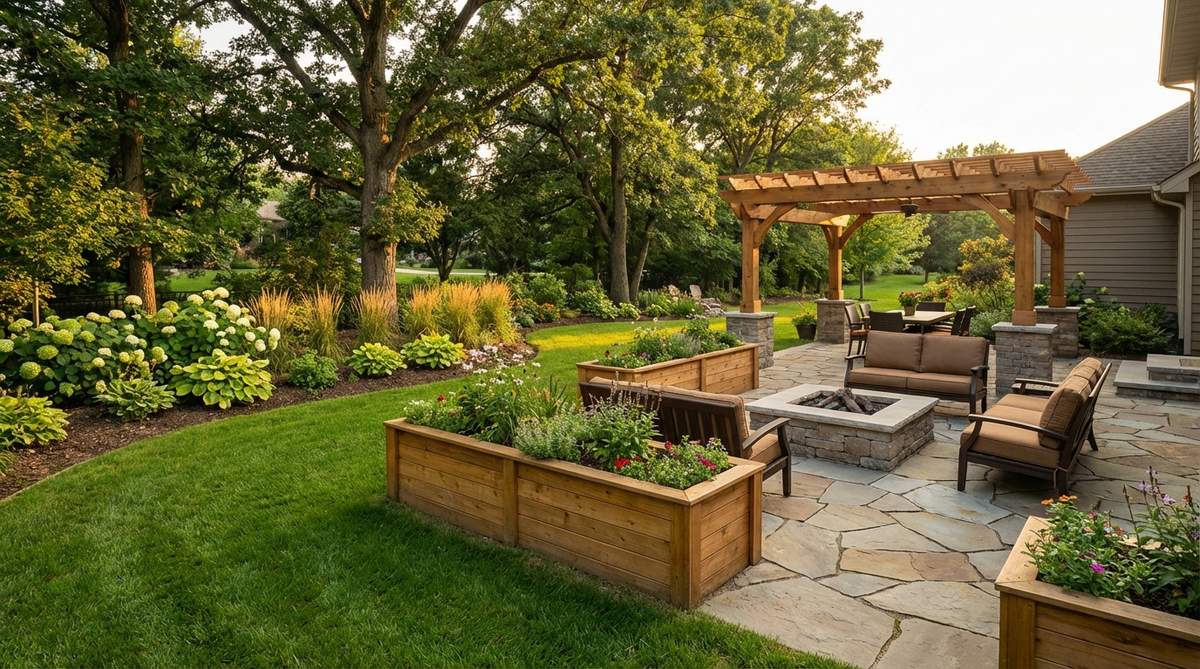
The bright white-edged leaves trailing through the dark corners feel like you’ve turned on a spotlight in the shadows. Illuminating variegated groundcover techniques are incredibly effective for brightening up the darkest, driest spots under evergreens.
Dark green plants simply disappear in the shadows, while striking variegated vinca creates a highly noticeable, designer-level contrast. Utilizing professional heavy-duty landscape staples ensures the creeping vines stay pinned down exactly where you want them.
You can conquer a dark corner with vinca for about $20–$45. It’s a fast upgrade that completely changes the lighting of a space.
- Key Materials: Variegated Vinca minor
- Vibe / Style: Illuminated woodland floor
- Difficulty: Extremely easy and tough
- Budget Breakdown: Vinca flats: $30 | Anchors: $10.
- Creator’s Tip: This plant is incredibly tough; use it aggressively in spots where absolutely nothing else will grow.
- Smart Sourcing: Invest in heavy-duty steel landscape staples (bulk box) and variegated groundcover starter plugs.
Creating Your Lush Layered Paradise
Executing these 48 professional blueprints requires understanding exactly how to blend scale, texture, and smart purchasing. By skipping the retail markups and investing in bulk landscape materials, commercial weed barriers, and high-density plant starter packs, you achieve that expensive, overlapping aesthetic on a fraction of the budget. Start with your structural trees, secure your borders with UV-coated edging, and finish with a rich carpet of groundcovers to eliminate bare soil. Your outdoor space will rapidly evolve into the ultimate premium botanical retreat.
Frequently Asked Questions
How do I start creating layered planting in a new garden?
Always begin by securing the tallest canopy layers with heavy-duty tree staking kits, then work downward. Using high-density plant starter packs instead of massive nursery pots saves you hundreds while allowing you to group in drifts of three or five easily. This progressive method ensures a highly structured, expensive-looking outcome.
What spacing should I use for dense, lush plantings?
Skip the standard tag advice and utilize a tight-spacing method to achieve a premium, instant canopy. Plant your commercial-grade bulk plugs at roughly two-thirds of their mature spread. This forces the foliage to intermingle seamlessly, creating the aggressive density seen in high-end magazine shoots.
How can I add layering to an existing flat garden?
Instantly add vertical height by installing powder-coated steel garden obelisks or heavy-duty wire trellises for climbers. You don’t need to rip out old beds; simply sneak in mid-tier shrubs and carpet the base with pre-cut live moss sheets or creeping sedums to rapidly multiply your design depth.
Which plants work best for year-round layered structure?
Invest in robust evergreens as your architectural backbone. Pair dense boxwoods with broadleaf rhododendrons, and anchor the floor with variegated vinca. Supplementing these beds with premium organic slow-release fertilizer guarantees they hold their structural shape and vibrant color through the harshest winter months.
How do I maintain dense layered plantings without overcrowding?
Controlled density is key to avoiding a messy yard. Use professional bypass pruning shears annually to thin out competing branches and divide your heavy perennials every few years. Applying a commercial-grade weed barrier fabric initially prevents invasive weeds from choking out your intentional layers.