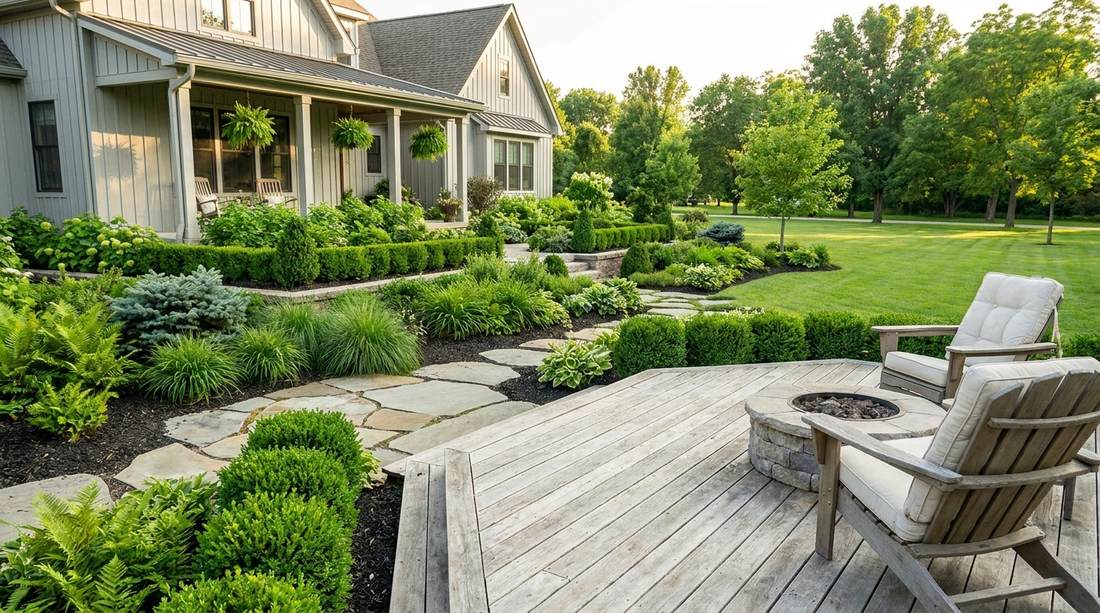
Single-hue landscaping unlocks serious curb appeal fast. Master these premium green gardens using smart bulk materials and clever architectural layouts. Achieve a luxury landscape without the heavy designer price tag.
Design Snapshot: Key Principles
- Texture Dominance: Combine fine ferns, bold hostas, and architectural grasses to create visual weight without color
- Tonal Layering: Use lime greens, emerald foliage, and dark evergreens to establish depth through shade variation
- Structural Rhythm: Alternate upright forms with trailing plants and mounding shrubs for dynamic composition
- Seasonal Consistency: Select evergreen specimens and perennials that maintain green interest across all months
Foundational Foliage Frameworks
Establishing structure begins with selecting plants that provide year-round green presence. These foundational concepts create the permanent skeleton upon which seasonal interest builds.
1. Boxwood Matrix Borders
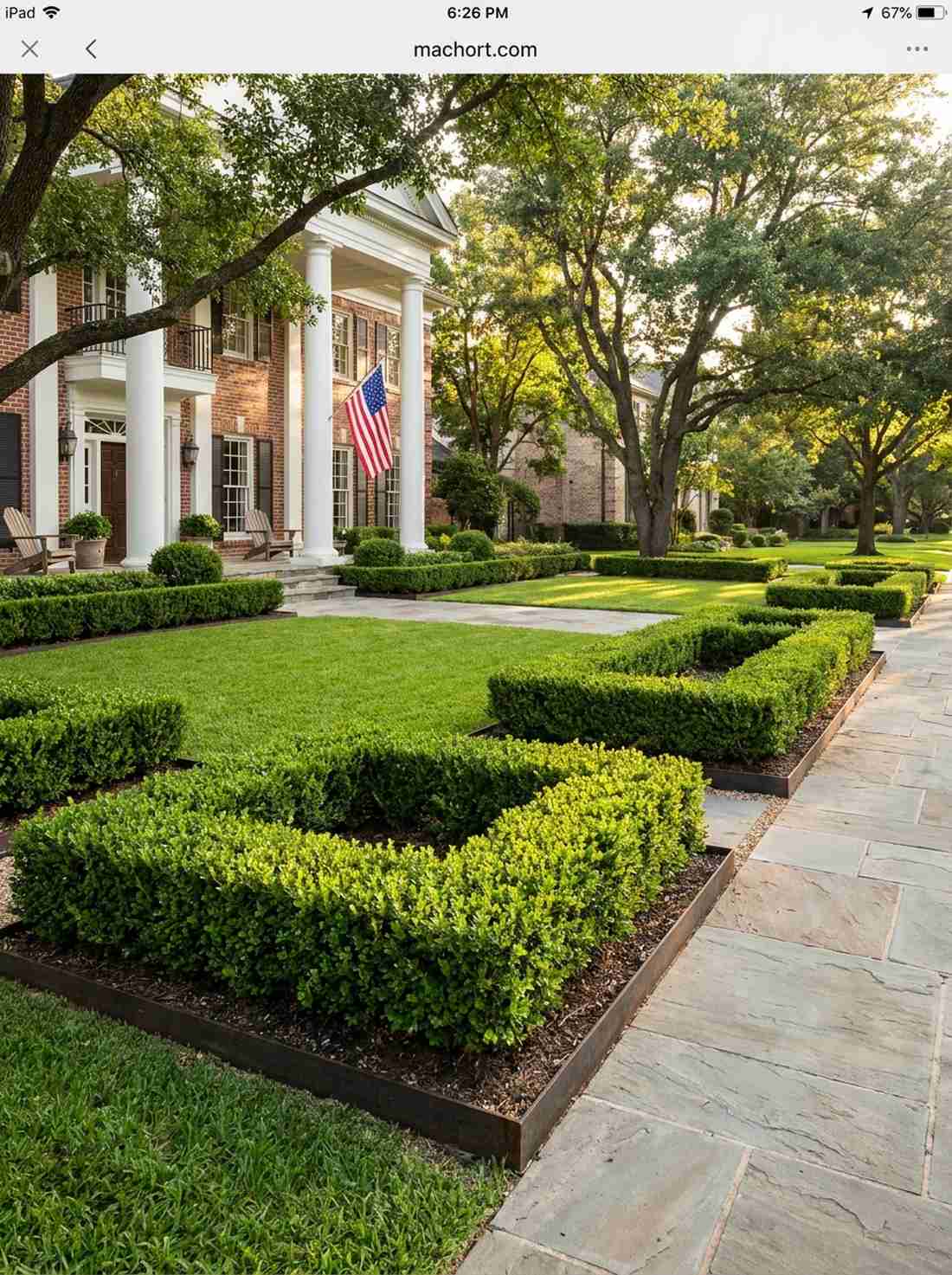
This layout feels like a stately European estate you just stumbled into. It relies heavily on structured front yard edging, working exceptionally well for defining flat, grassy entryways.
Forget overpriced landscaping firms; establishing a rigid matrix border delivers a surprisingly premium look with minimal effort. You can easily elevate the design by utilizing heavy-duty landscape fabric and professional garden border kits.
You can easily pull this off for around $80–$150 depending on the perimeter. Save this to your weekend DIY exterior board.
- Key Materials: Buxus shrubs, commercial-grade landscaping fabric
- Vibe / Style: Formal geometric estate
- Difficulty: Intermediate planting
- Budget Breakdown: Shrubs: $100 | Edging Materials: $50
- Creator’s Tip: Use a string line during planting to guarantee razor-sharp geometric alignment.
- Smart Sourcing: pre-cut steel border edging (bulk pack) and heavy-duty weed barrier rolls.
2. Yew Cone Punctuation
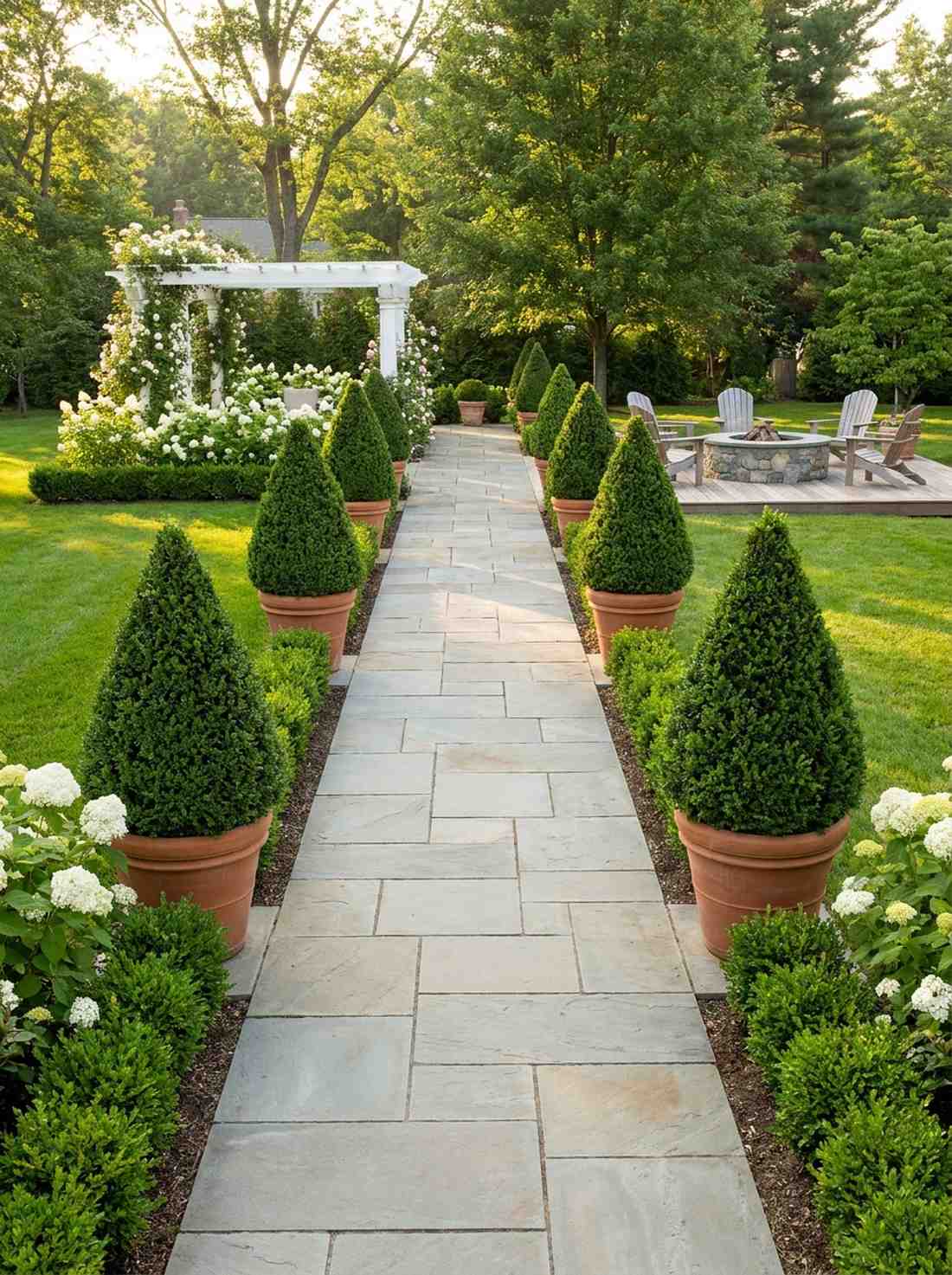
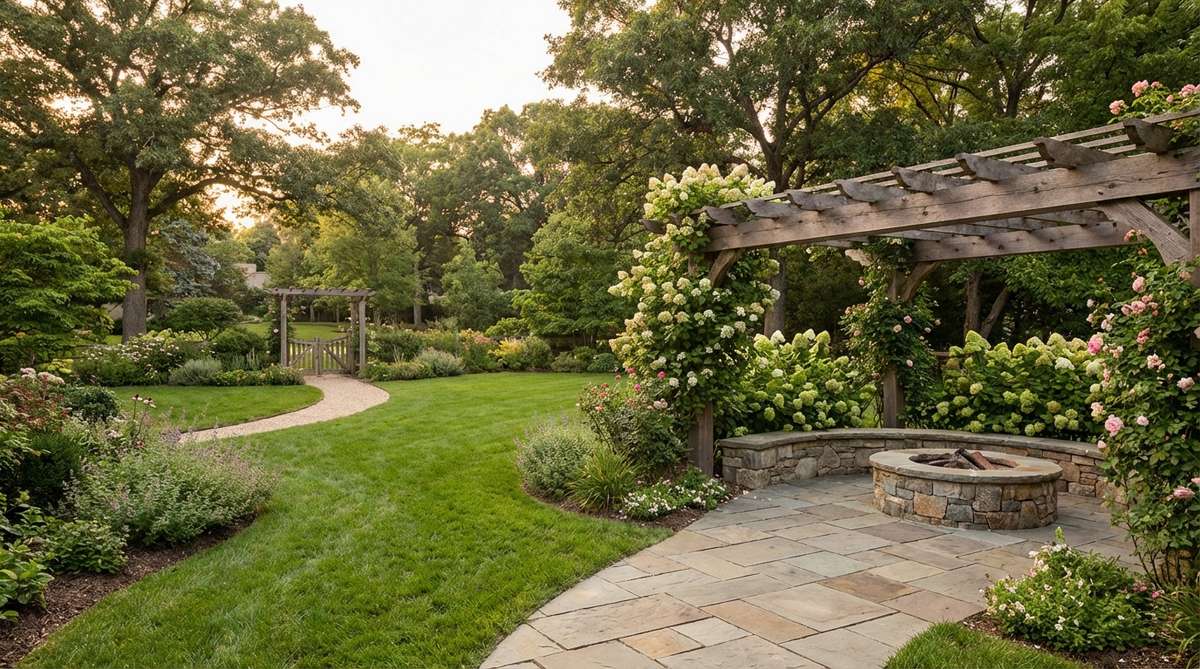
Channeling a perfectly manicured botanical garden, this aesthetic uses sculptural pathway focal points. It is absolutely perfect for highlighting long, straight garden walkways.
Most beginners overcomplicate spacing, but dropping vertical evergreens at eight-foot intervals creates an instantly expensive rhythm. Incorporating premium soil amendments and specialized shaping tools keeps the look sharp year-round.
Expect to spend roughly $200 for a set of mature starter plants. It’s a fast upgrade that completely changes the vibe of any pathway.
- Key Materials: Taxus baccata specimens, slow-release fertilizer
- Vibe / Style: Modern English garden
- Difficulty: Easy setup, moderate maintenance
- Budget Breakdown: Conifers: $180 | Soil Amendments: $20
- Creator’s Tip: Always trim from the bottom up to ensure the base stays wider than the top for sunlight.
- Smart Sourcing: premium topiary shaping shears and organic evergreen fertilizer spikes.
3. Bamboo Screening Walls
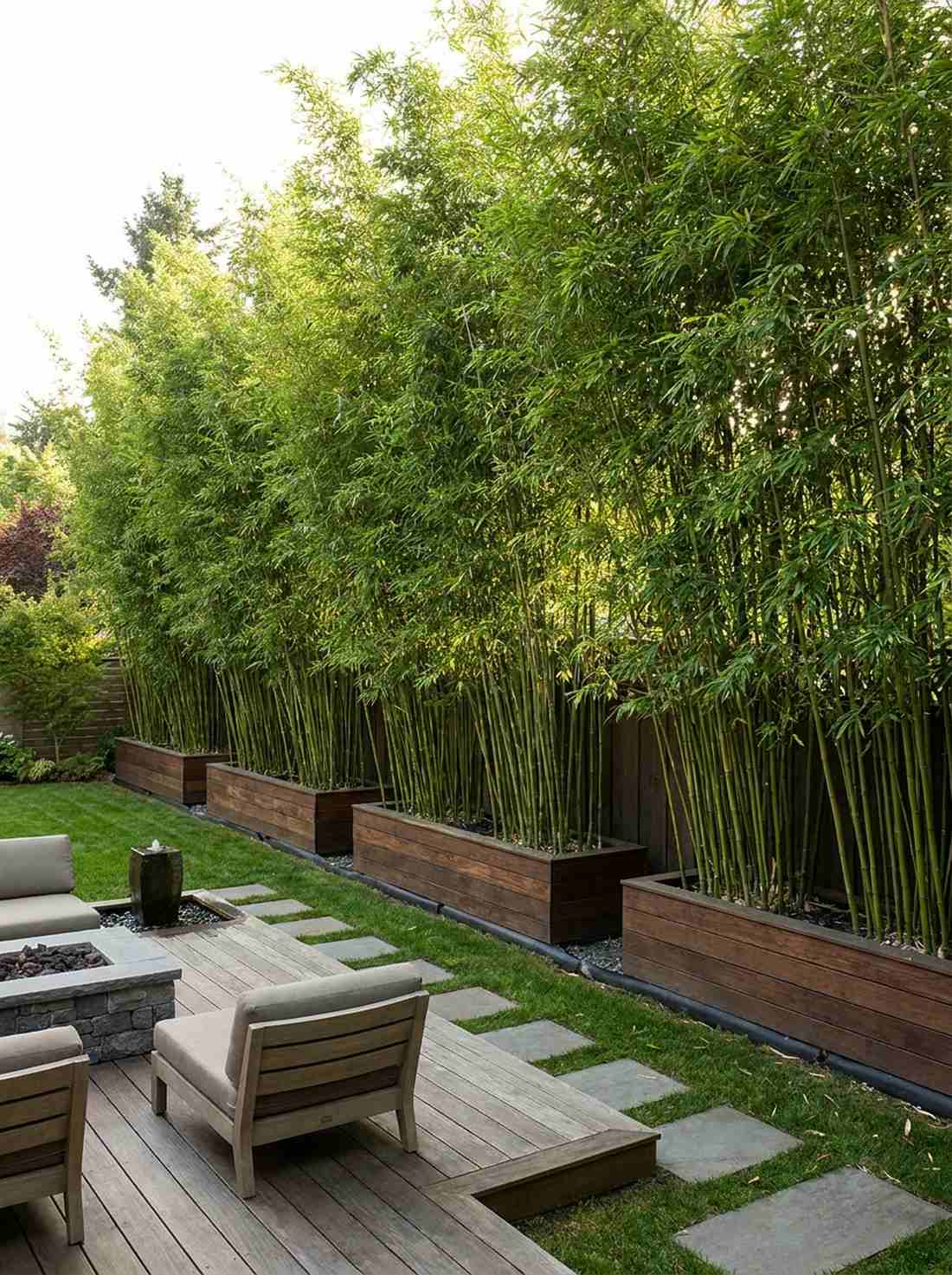
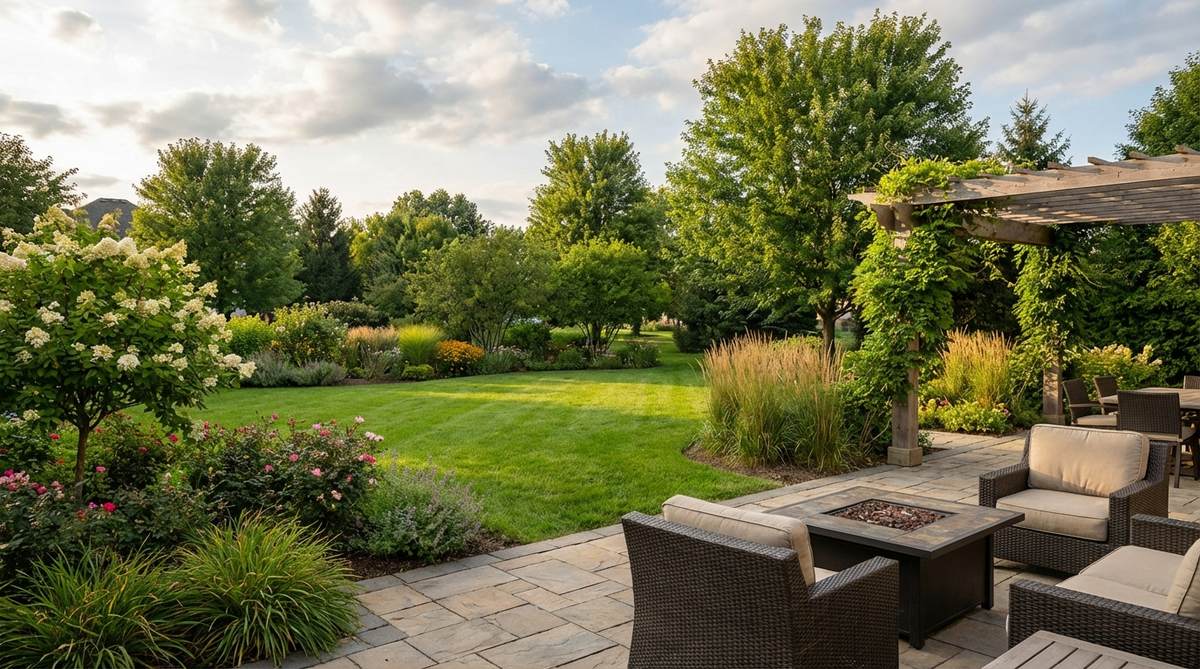
Creating a vibe that feels like a secluded Zen retreat, this design leverages natural privacy screen planters. It works wonders for an overlooked suburban backyard.
Instead of relying on ugly vinyl fencing, a living wall brings a top-tier green garden landscape to life. Deploying robust rhizome barriers is non-negotiable to prevent aggressive spreading while maintaining that chic, contained look.
You can set this up for about $150–$250. Pin this if you’re planning a private outdoor sanctuary.
- Key Materials: Clumping bamboo varieties, deep root barriers
- Vibe / Style: Minimalist Zen oasis
- Difficulty: Intermediate installation
- Budget Breakdown: Plants: $150 | Root Shields: $100
- Creator’s Tip: Dig trenches twice as wide as the root ball to allow fast initial clumping.
- Smart Sourcing: high-density polyethylene root barrier rolls and bulk bamboo starter plants.
4. Massed Ornamental Grass Drifts
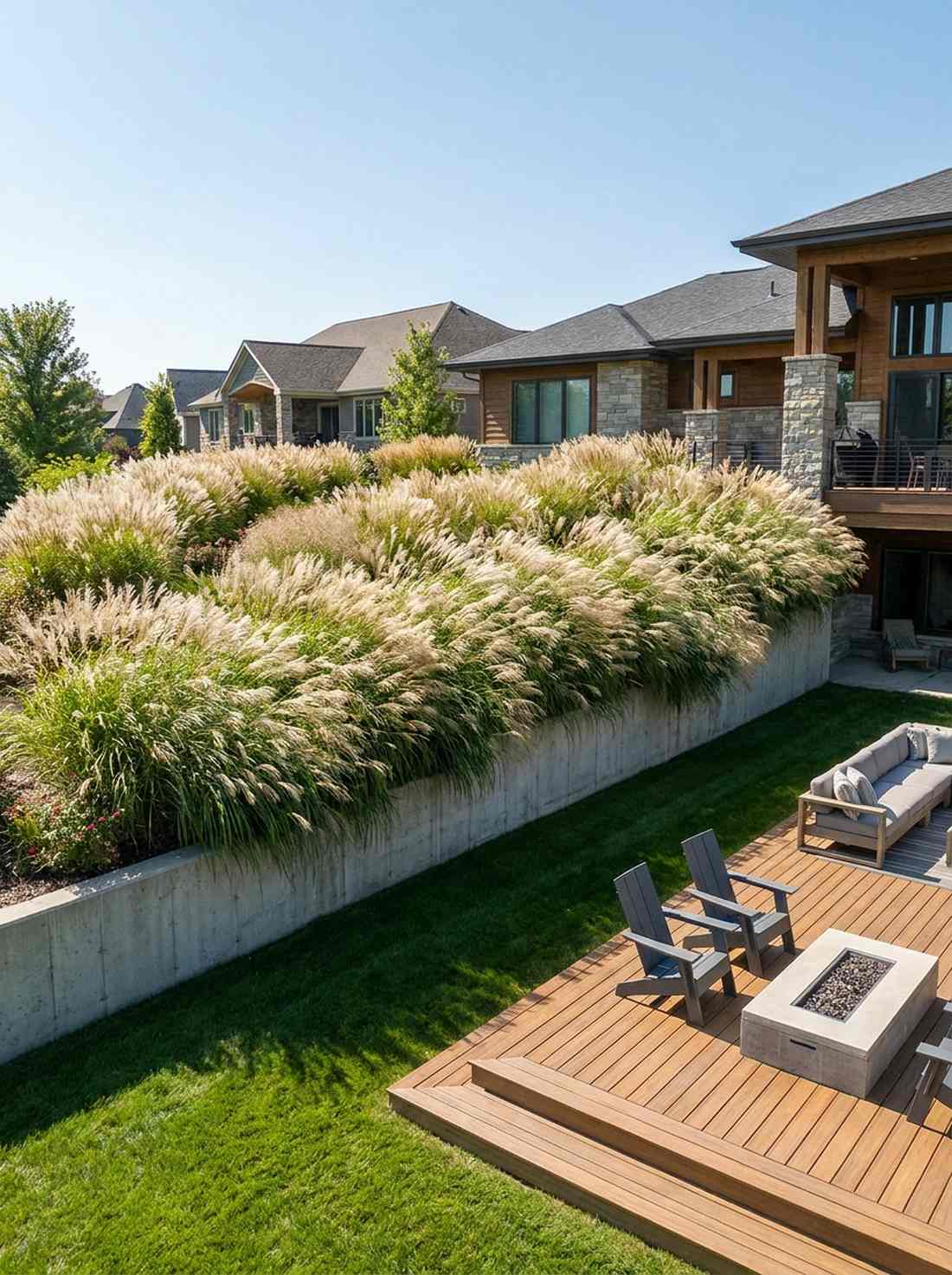
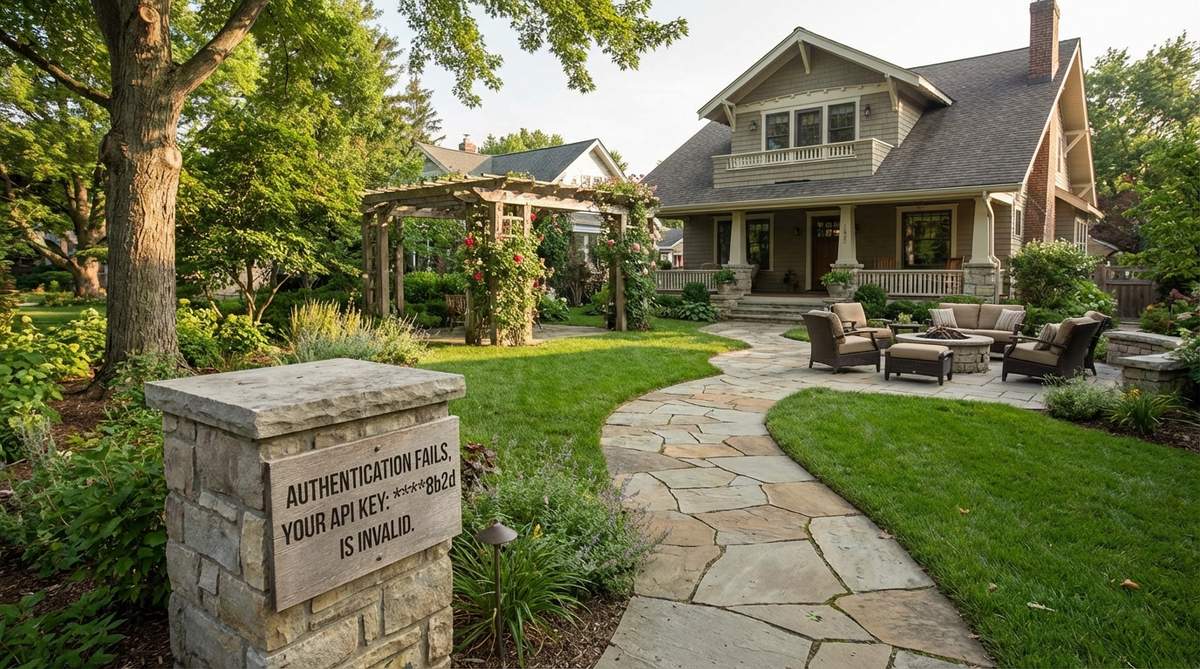
This layout brings wild, sweeping meadow energy that feels straight out of a coastal resort. The billowing landscape borders concept is perfect for softening harsh concrete retaining walls.
While many opt for static shrubs, massed grasses provide motion that makes any space look far more expensive than it is. Utilizing bulk ornamental grass plugs and automated drip lines ensures rapid, lush establishment.
Setting this up usually costs between $60 and $120. Highly recommended for a high-impact weekend win.
- Key Materials: Miscanthus plugs, drip irrigation tubing
- Vibe / Style: Breezy coastal contemporary
- Difficulty: Beginner friendly
- Budget Breakdown: Grass Plugs: $80 | Irrigation: $40
- Creator’s Tip: Plant in odd-numbered clusters (3, 5, 7) to mimic natural growth patterns.
- Smart Sourcing: bulk ornamental grass plug trays and starter drip irrigation kits.
This next setup is ridiculously cheap but looks like a $2,000 custom landscape installation…
5. Holly Hedge Architecture
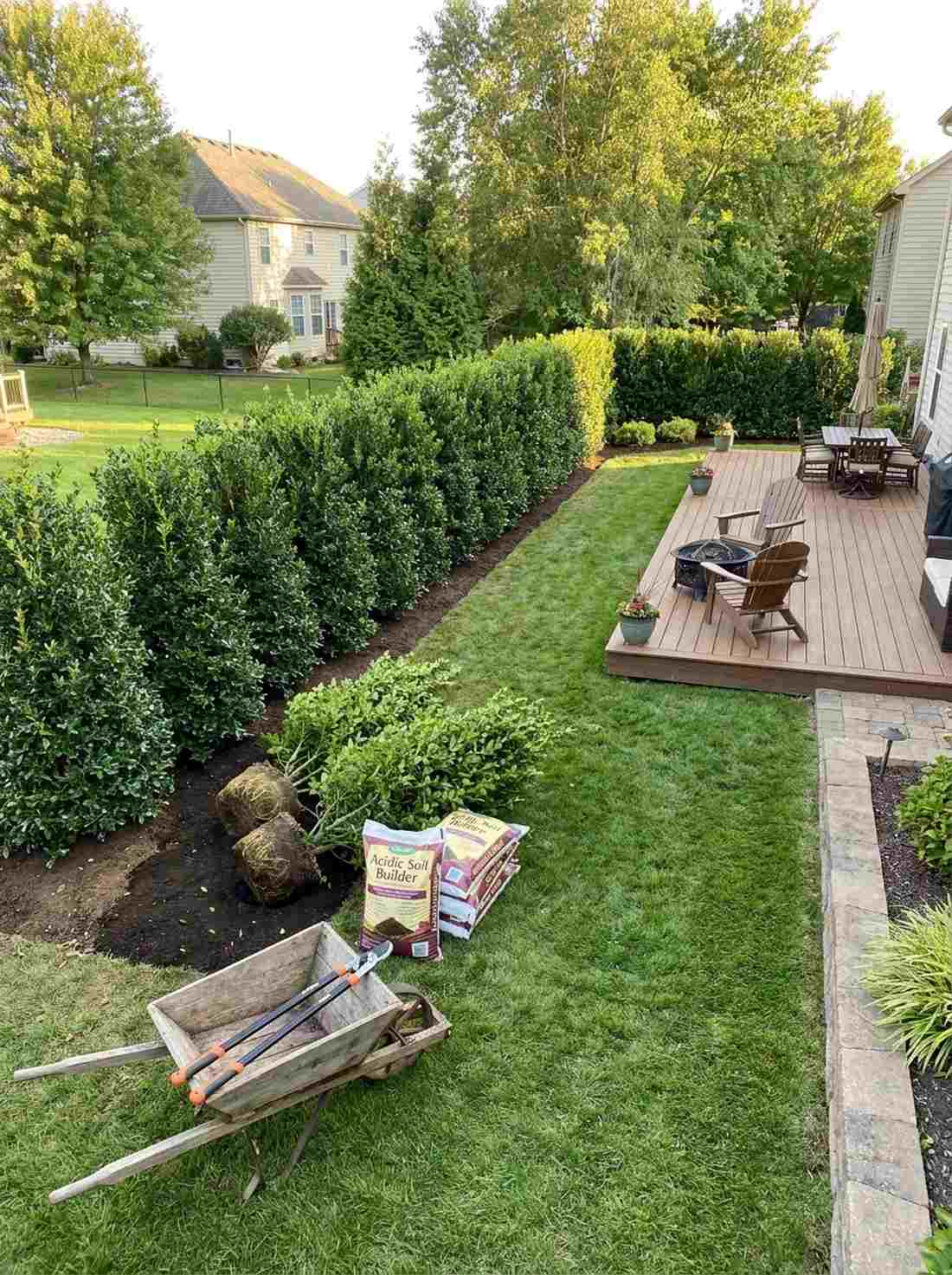
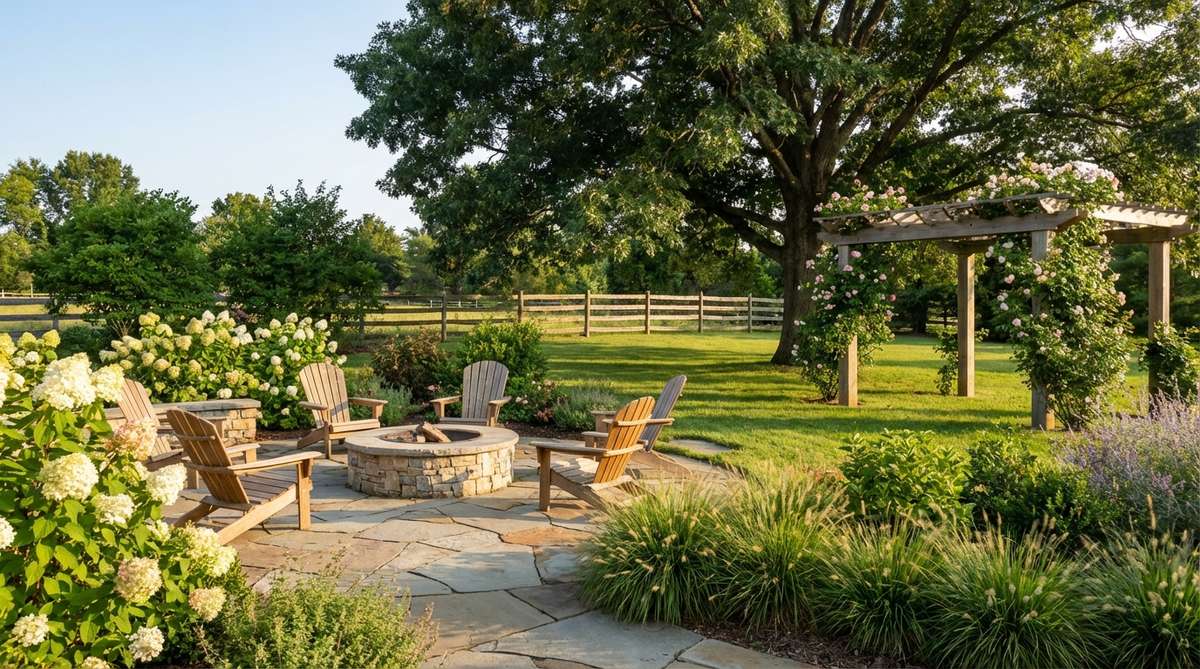
Emanating an impenetrable fortress aesthetic, this approach utilizes glossy evergreen boundaries. It’s the ultimate use-case for securing property lines without sacrificing natural beauty.
Ditch the generic chain-link fence; a dense holly structure gives a designer-level finish while doubling as a natural security barrier. Investing in mature root-balls and specialized acidic soil mixes dramatically accelerates the privacy effect.
You can build a starter perimeter for roughly $300. Save this idea for a functional yet gorgeous property line.
- Key Materials: Ilex shrubs, acidic soil builder
- Vibe / Style: Classic estate boundary
- Difficulty: Moderate
- Budget Breakdown: Shrubs: $250 | Soil Prep: $50
- Creator’s Tip: Space plants slightly closer than recommended if you need an immediate visual block.
- Smart Sourcing: commercial-grade acidic soil amendments and heavy-duty pruning loppers.
6. Arborvitae Column Rhythm
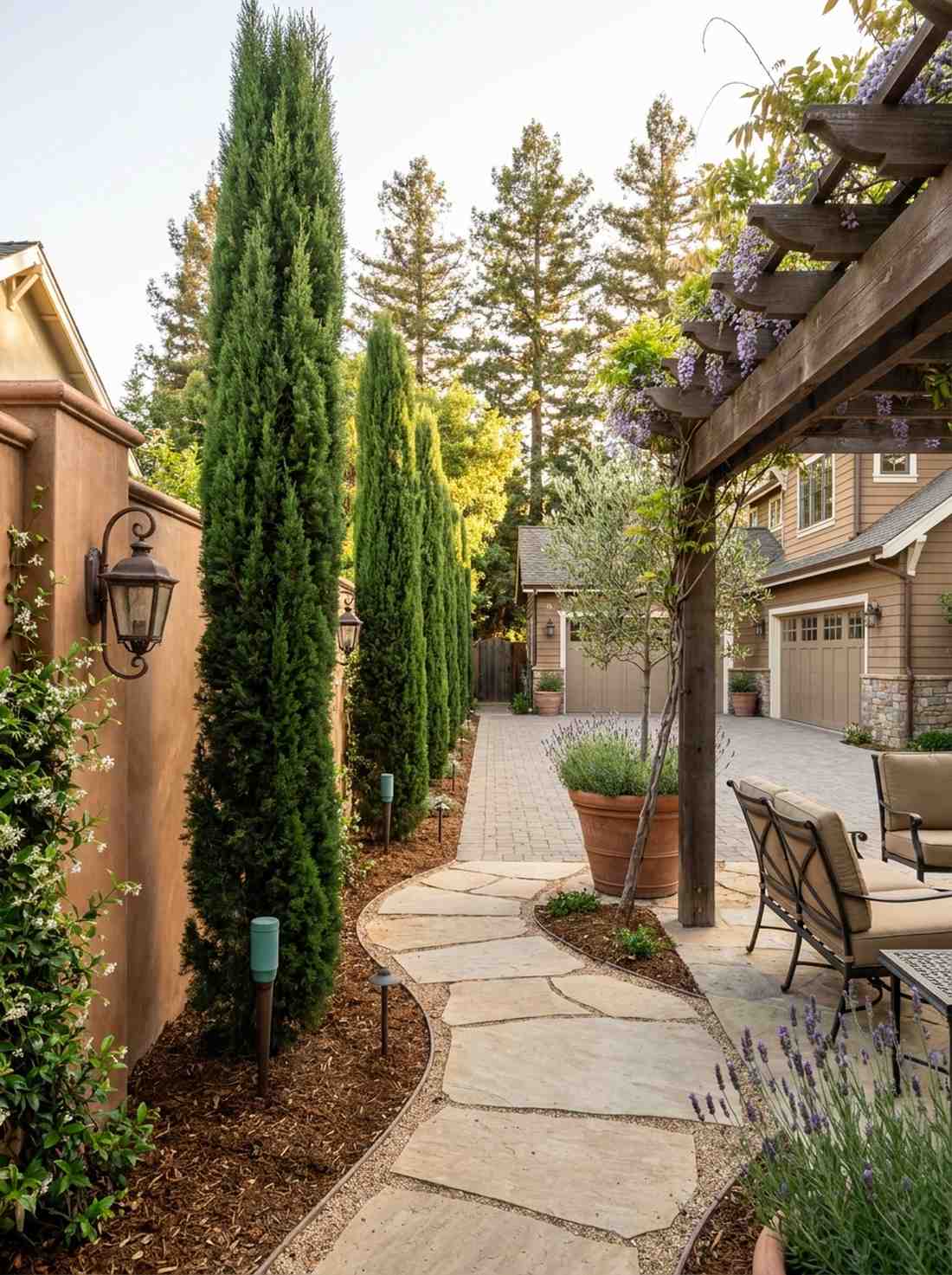
Feeling like an upscale Mediterranean courtyard, this idea heavily features tall narrow privacy trees. It is flawless for tight spaces alongside driveways or narrow property gaps.
Skip the chaotic mixed borders; installing identical vertical columns delivers a highly sought-after architectural aesthetic. Supporting them with deep-root watering stakes ensures these evergreens thrive even during intense summer heat.
Pulling this off will cost about $40–$80 per tree. It’s an effortless way to manufacture instant luxury.
- Key Materials: Thuja occidentalis trees, deep watering stakes
- Vibe / Style: Modern Mediterranean
- Difficulty: Easy
- Budget Breakdown: Trees: $300 | Watering System: $60
- Creator’s Tip: Never trim the central leader branch, or the tree will lose its natural columnar shape.
- Smart Sourcing: deep-root watering spike kits and bulk organic mulch bags.
Textural Contrast Compositions
Visual interest in green gardens emerges primarily through texture juxtaposition. Combining plants with contrasting leaf sizes, shapes, and surface qualities creates dynamic impact.
7. Hosta Fern Pairings
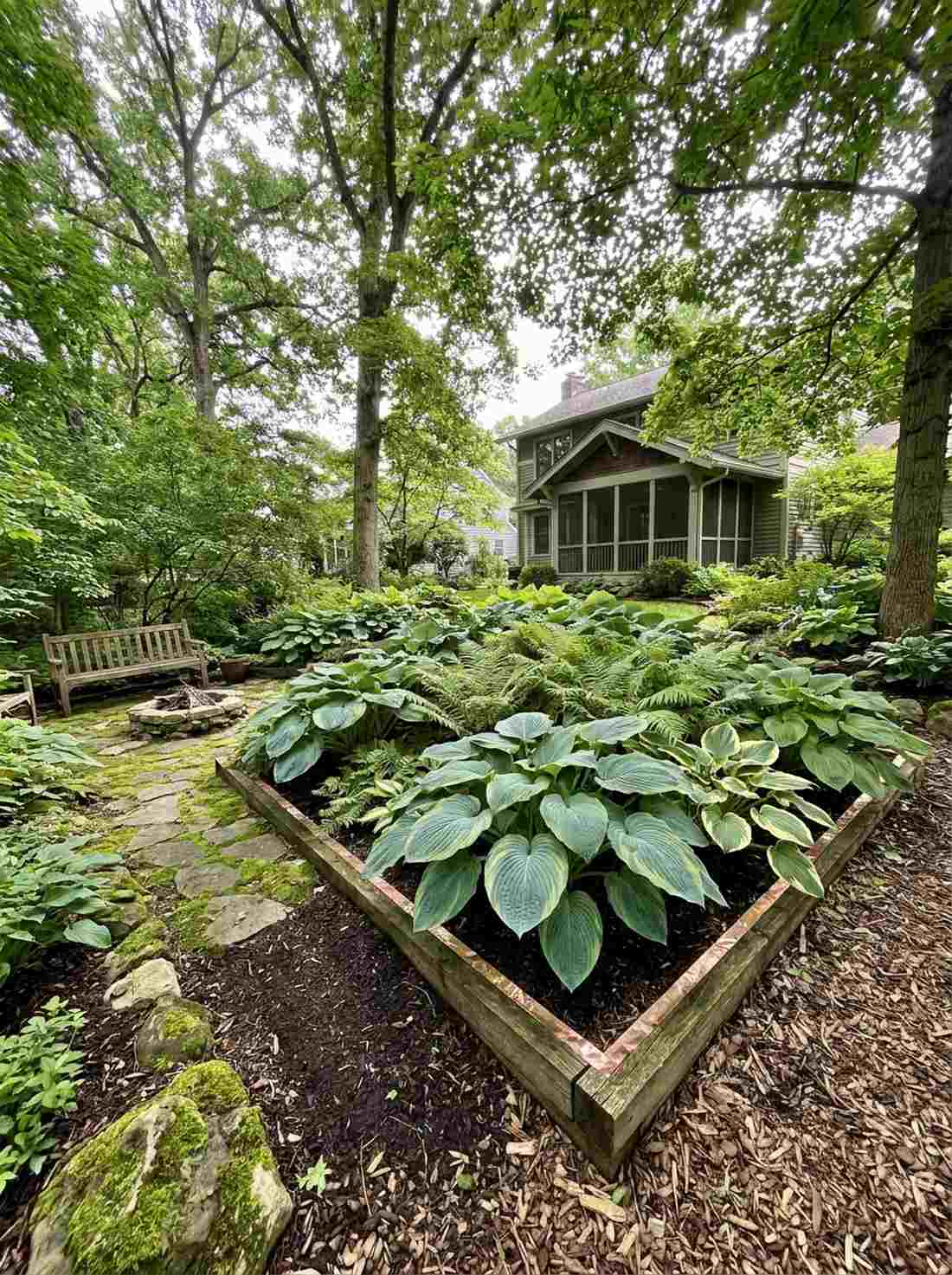
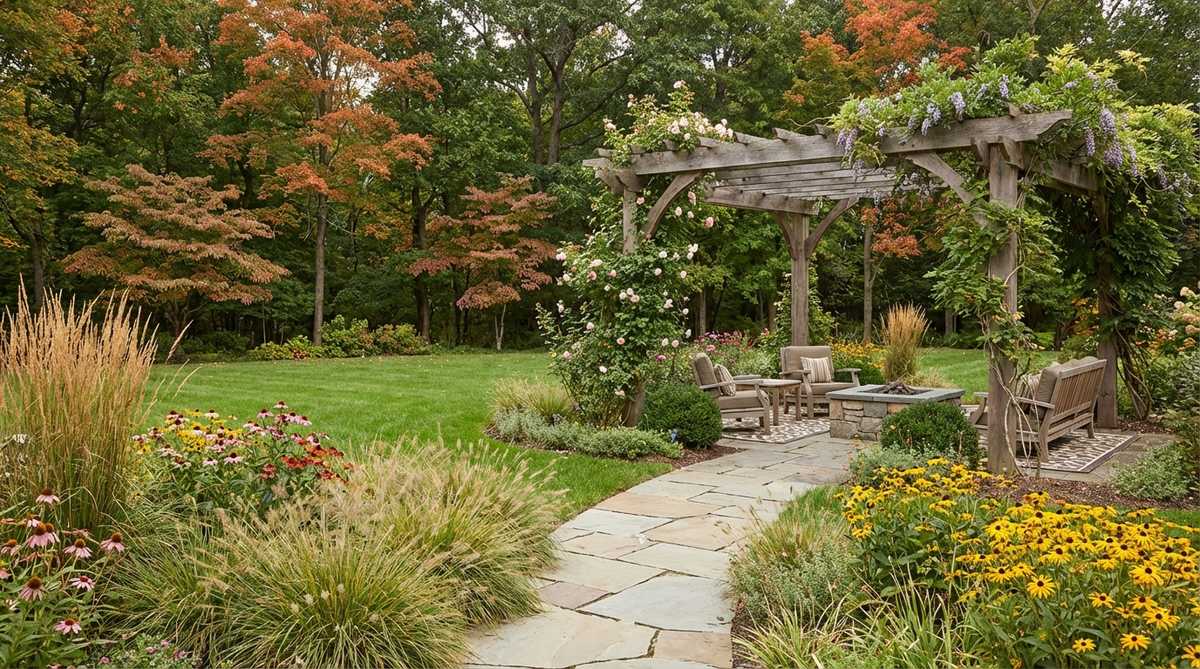
This lush combination feels like a hidden forest glen you discovered by accident. Using a shade garden foliage mix, it is the absolute perfect solution beneath dense tree canopies.
Don’t let shaded zones go bare; pairing massive ribbed leaves with delicate fronds creates an enviable green garden image. Sourcing premium bare-root perennials guarantees massive first-year growth compared to tiny nursery pots.
Expect a materials cost of around $40–$75. Pin this directly to your shady backyard inspiration board.
- Key Materials: Bare-root hostas, native fern rhizomes
- Vibe / Style: Deep woodland fairycore
- Difficulty: Very easy
- Budget Breakdown: Bulbs & Roots: $60 | Compost: $15
- Creator’s Tip: Add a layer of slug-repellent copper tape around the bed edges to protect the broad leaves.
- Smart Sourcing: bulk shade garden bare-root kits and weatherproof copper barrier tape.
8. Ornamental Grass Broad-Leaf Combos
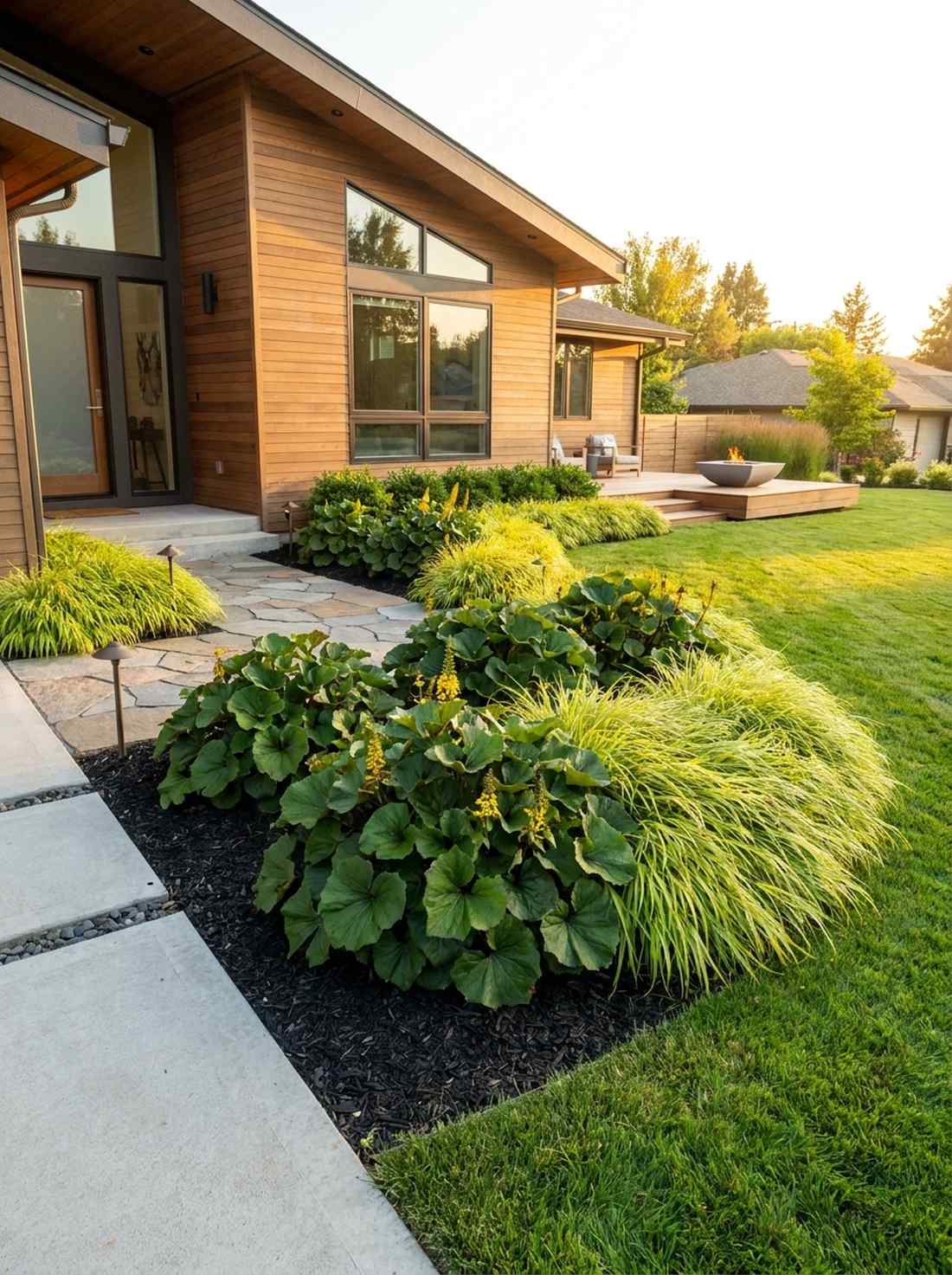
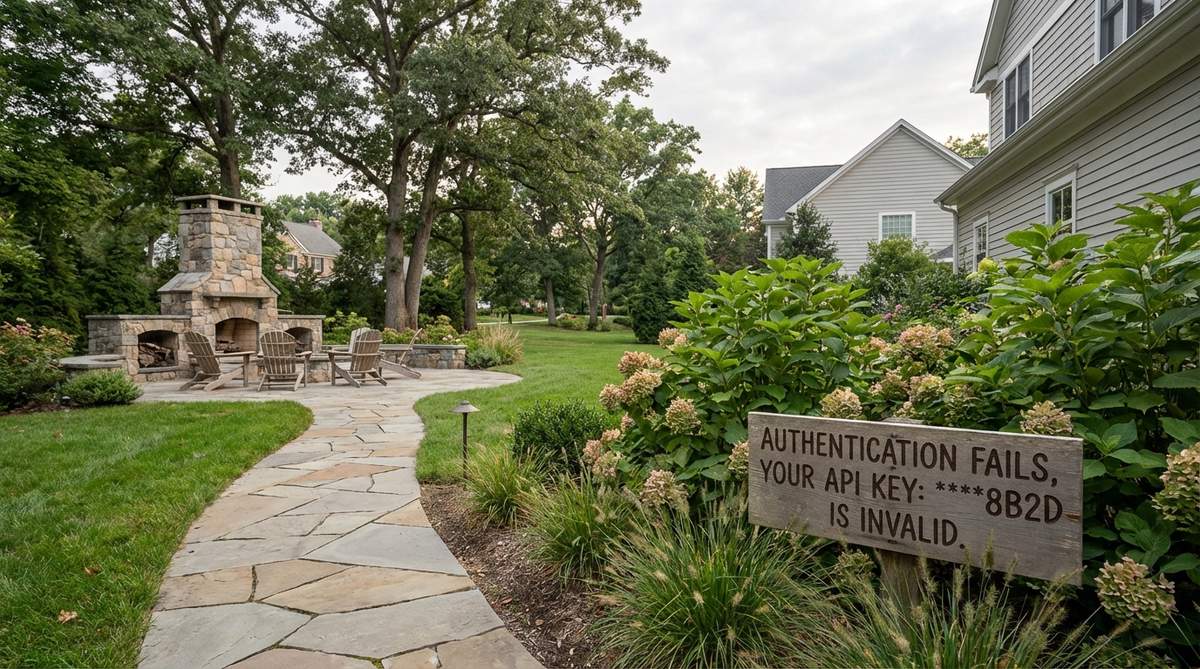
Bringing a highly modern, architectural energy, this layout focuses on mixed texture landscape beds. It serves as a striking foundation planting for modern, angular homes.
While standard front yards rely on boring foundation shrubs, this high-contrast pairing commands attention and looks expertly curated. Utilizing professional landscaping mulch to highlight the varied leaf structures makes the foliage pop visually.
This layout averages about $80–$140 for a standard bed. It provides a massive curb appeal boost overnight.
- Key Materials: Ligularia plants, Hakonechloa grass
- Vibe / Style: High-end contemporary
- Difficulty: Beginner
- Budget Breakdown: Plants: $100 | Premium Mulch: $40
- Creator’s Tip: Group the broad leaves tightly as a focal point, using the grass as a flowing skirt around them.
- Smart Sourcing: premium black dyed mulch (bulk pack) and slow-release foliage fertilizer.
9. Succulent Groundcover Matrices
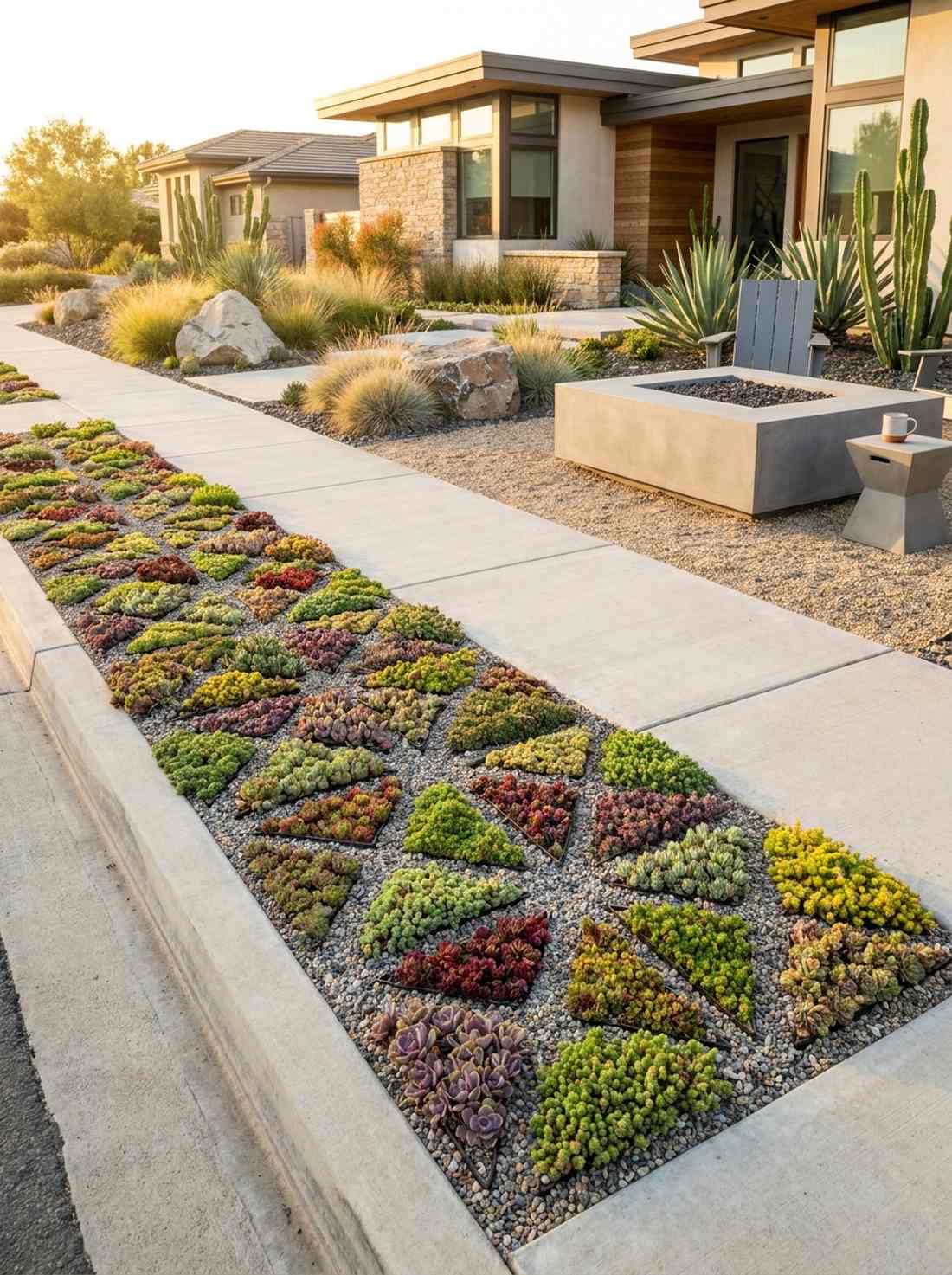
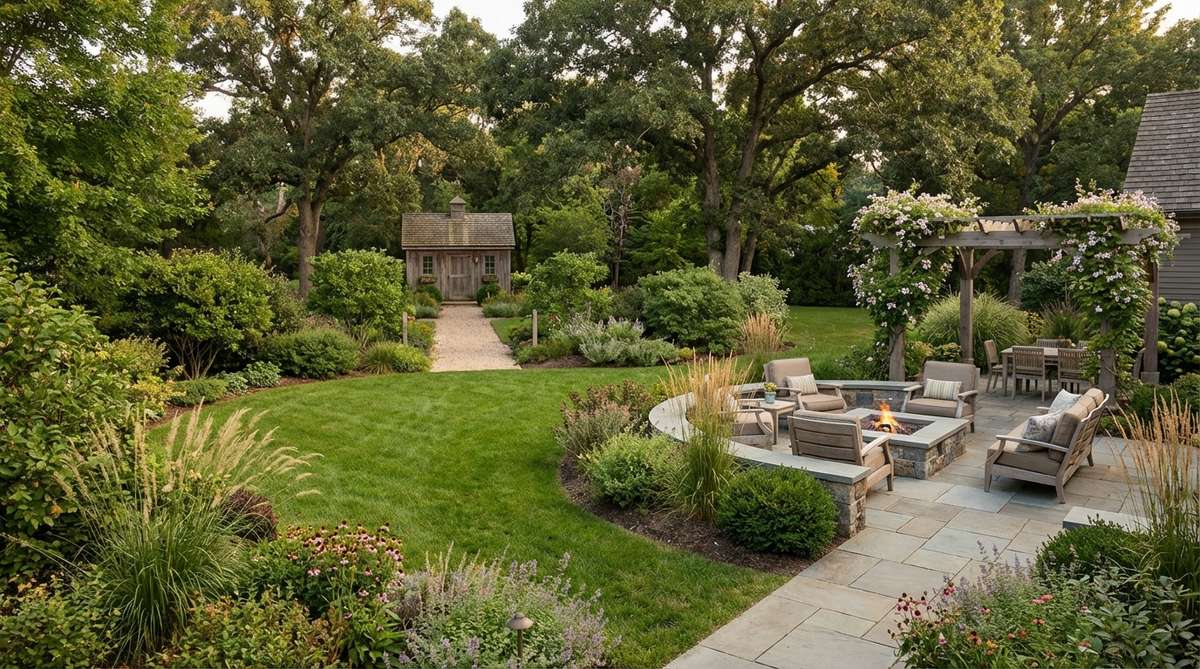
This geometric layout feels like stepping onto a sleek, drought-proof alien planet. It showcases living succulent mosaic beds, ideal for blazing hot, full-sun sidewalk strips.
Ignoring thirsty turf grass in favor of fleshy groundcovers completely eliminates mowing while projecting a rich, custom aesthetic. Leveraging miniature garden supplies and sharp drainage gravel prevents root rot and maintains the crisp design.
You can execute this for under $50 if you use small plugs. Save this for a zero-maintenance front yard hack.
- Key Materials: Mixed sedum plugs, crushed granite gravel
- Vibe / Style: Ultra-modern desert
- Difficulty: Easy
- Budget Breakdown: Succulent Plugs: $35 | Gravel Topcoat: $15
- Creator’s Tip: Mix sharp sand into your native soil to instantly improve drainage before planting.
- Smart Sourcing: bulk succulent plug starter trays and decorative decomposed granite bags.
💡 Must-Have Supplies for High-End Setups
To build these setups faster and ensure they last, skip the generic craft aisles and invest in the right foundational kits.
- Base & Support: Commercial-grade weed barrier rolls
- Setup Tools: Heavy-duty steel landscape edging kits
- Weather/Durability Protection: UV-resistant plant protection sprays
Most people get this completely wrong… until they try the exact layout coming up next.
10. Needle Evergreen Broadleaf Combinations
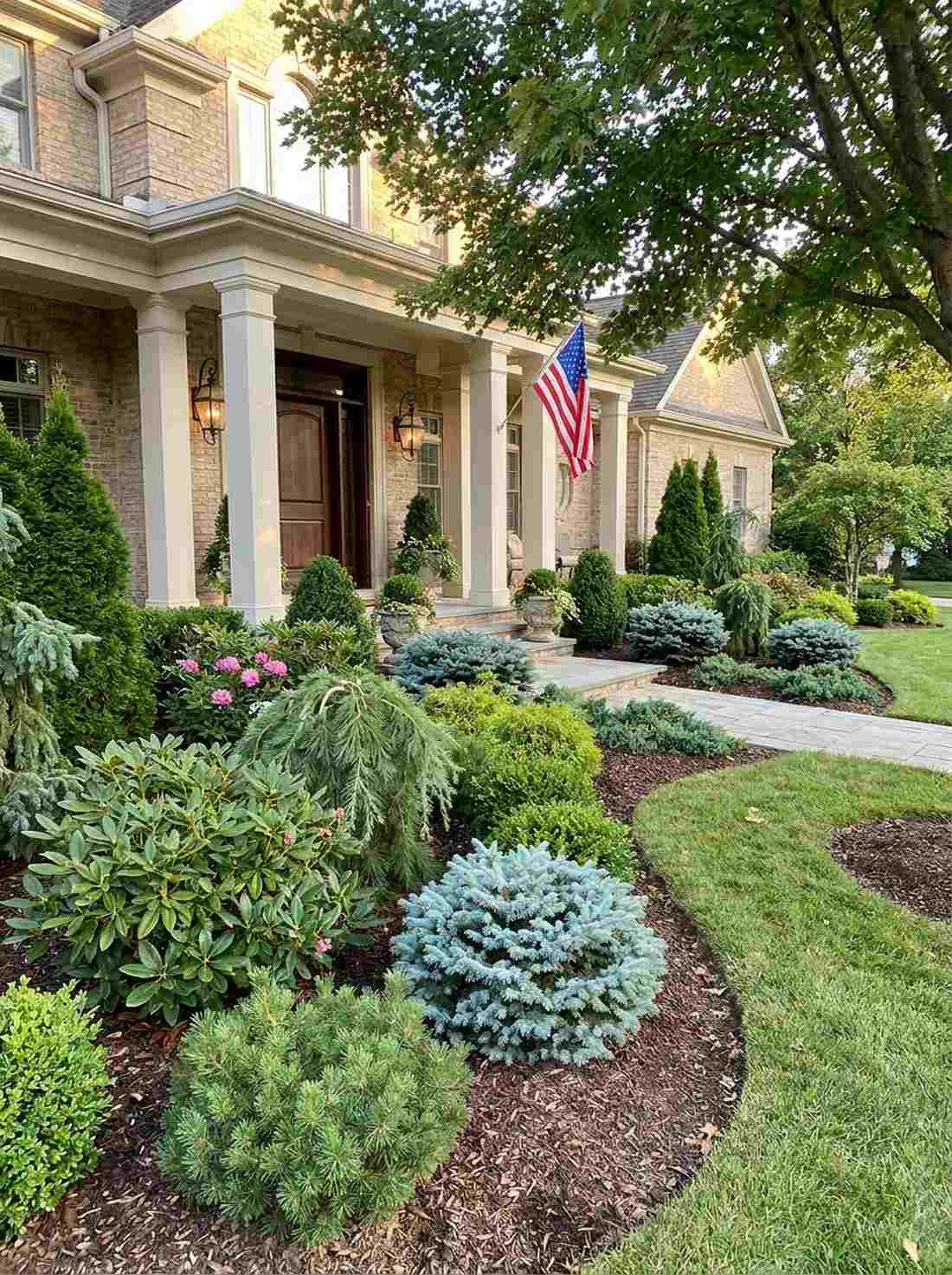
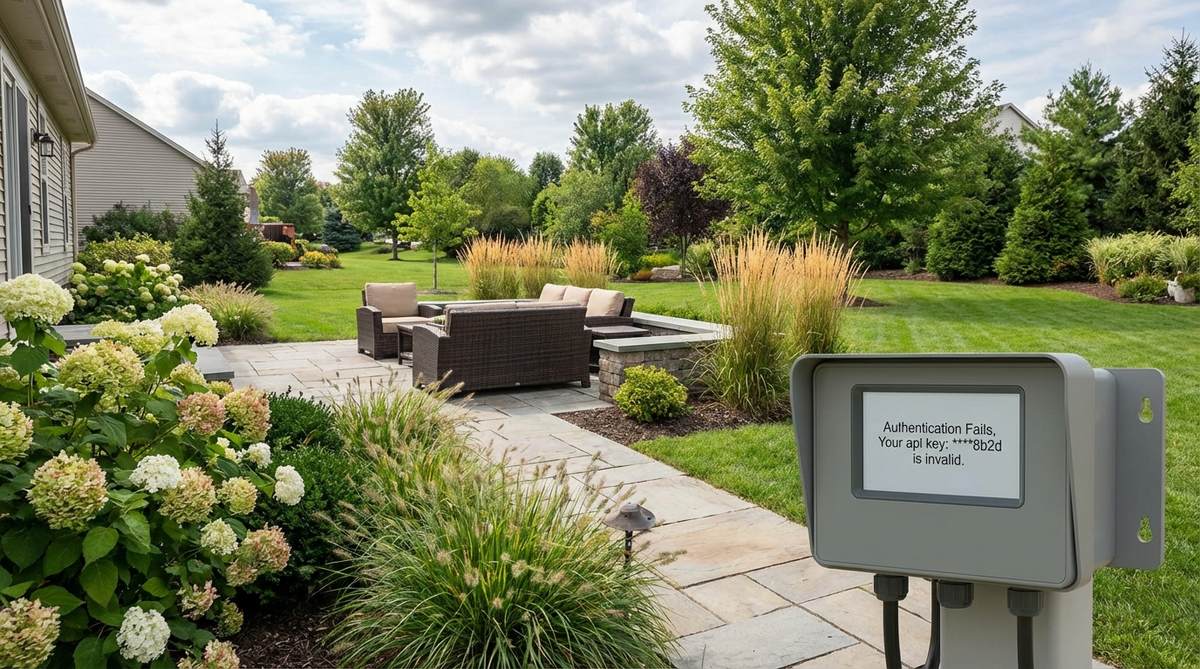
Carrying the prestigious energy of an old-money estate, this concept highlights layered evergreen foundation shrubs. It is brilliantly suited for flanking grand front entryways or porches.
Unlike deciduous layouts that look dead in December, combining fine needles with broad, waxy leaves ensures continuous visual weight. Purchasing mature container specimens creates an instantaneous transformation that rivals professional installations.
Expect to spend $150–$300 for premium container sizes. Highly recommended if you want year-round perfection.
- Key Materials: Dwarf conifers, Rhododendrons
- Vibe / Style: Stately classic exterior
- Difficulty: Intermediate
- Budget Breakdown: Broadleaf Shrubs: $150 | Conifers: $150
- Creator’s Tip: Plant the conifers slightly elevated to prevent waterlogging during heavy spring rains.
- Smart Sourcing: mycorrhizal root enhancer powder and heavy-duty root grow bags.
11. Spiky Mounding Contrasts
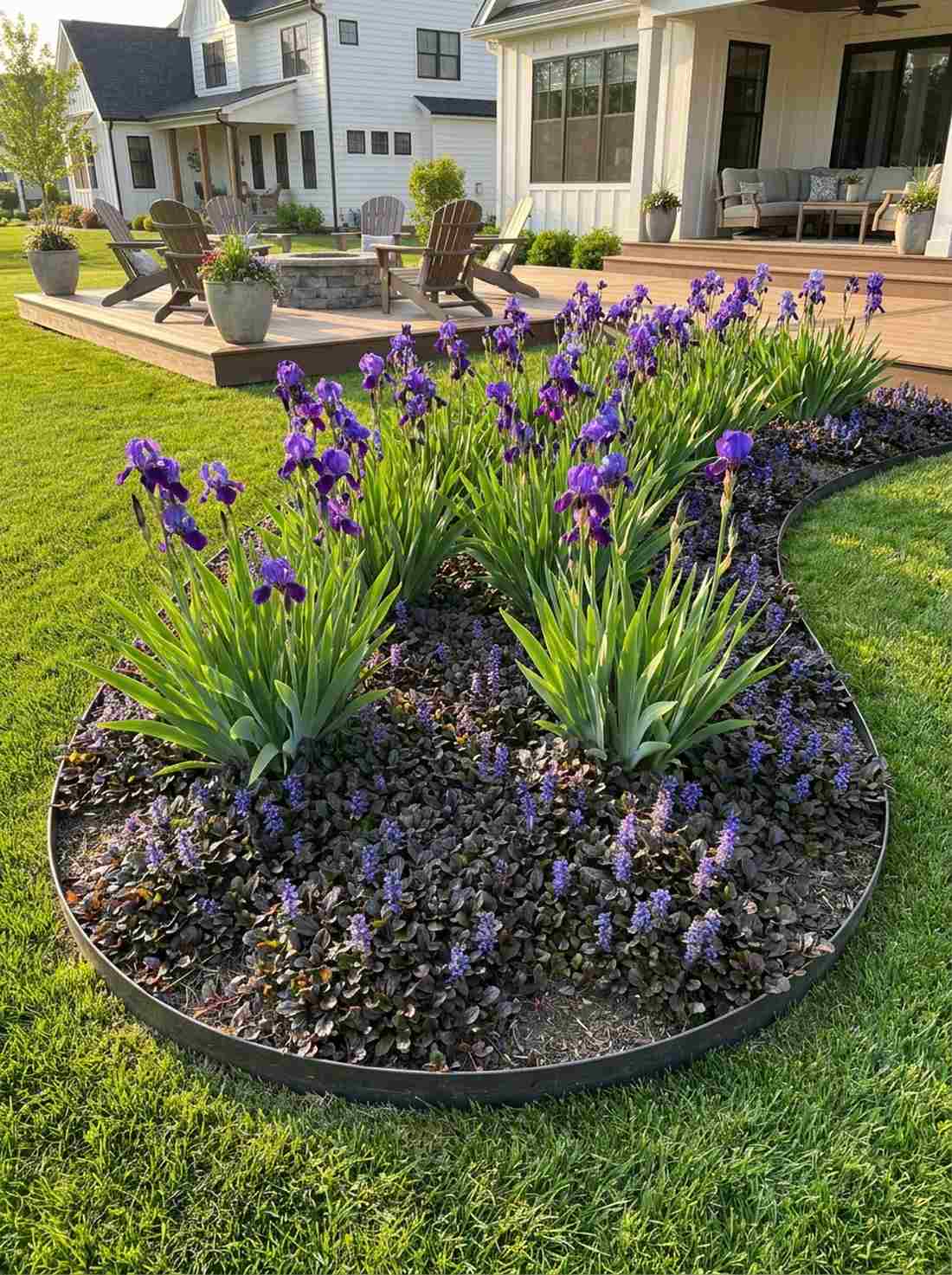
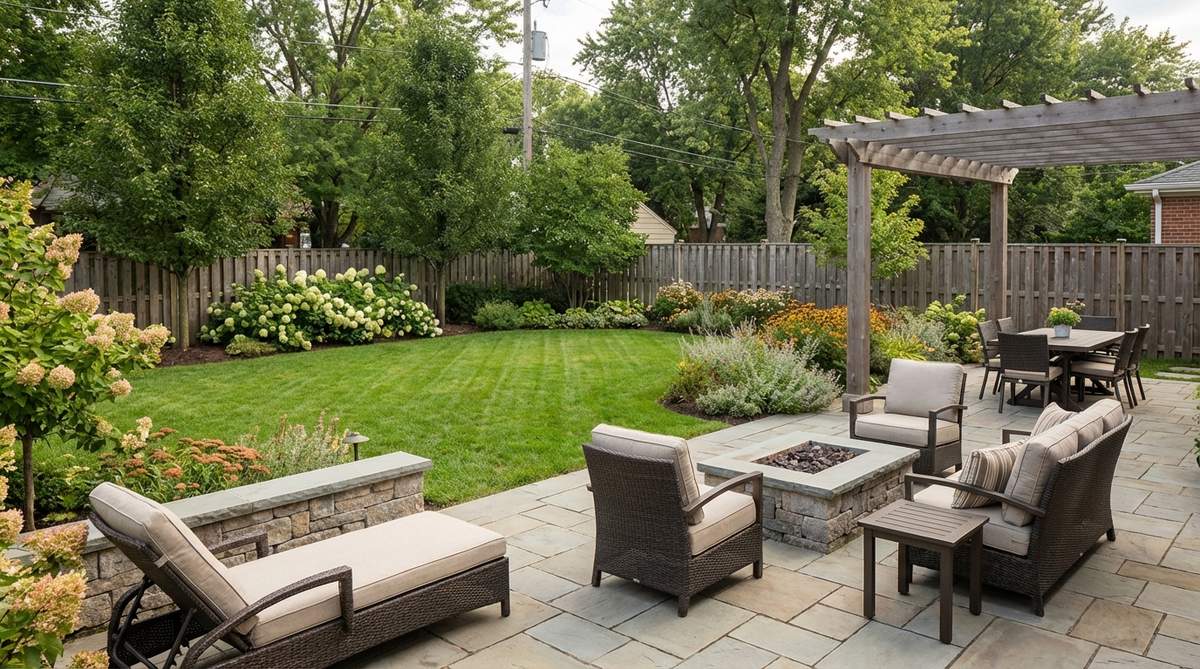
This energetic setup feels like a vibrant botanical painting brought to life. By executing a vertical thriller and spiller combo, it becomes the ultimate centerpiece for large island beds.
Amateurs often plant flat, monotonous gardens, but driving vertical spikes through creeping groundcovers introduces massive drama. Using specialized edging to contain the creeping elements keeps the spiky focal points prominent and pristine.
Materials generally cost around $60–$90. Pin this to your advanced landscaping techniques board.
- Key Materials: Upright Iris, Ajuga groundcover
- Vibe / Style: Dynamic transitional garden
- Difficulty: Beginner
- Budget Breakdown: Spiky Plants: $50 | Groundcover Flats: $40
- Creator’s Tip: Plant the spiky elements in staggered triangles rather than straight lines for natural depth.
- Smart Sourcing: flexible aluminum landscape edging and bulk creeping groundcover flats.
12. Glossy Matte Leaf Interplay
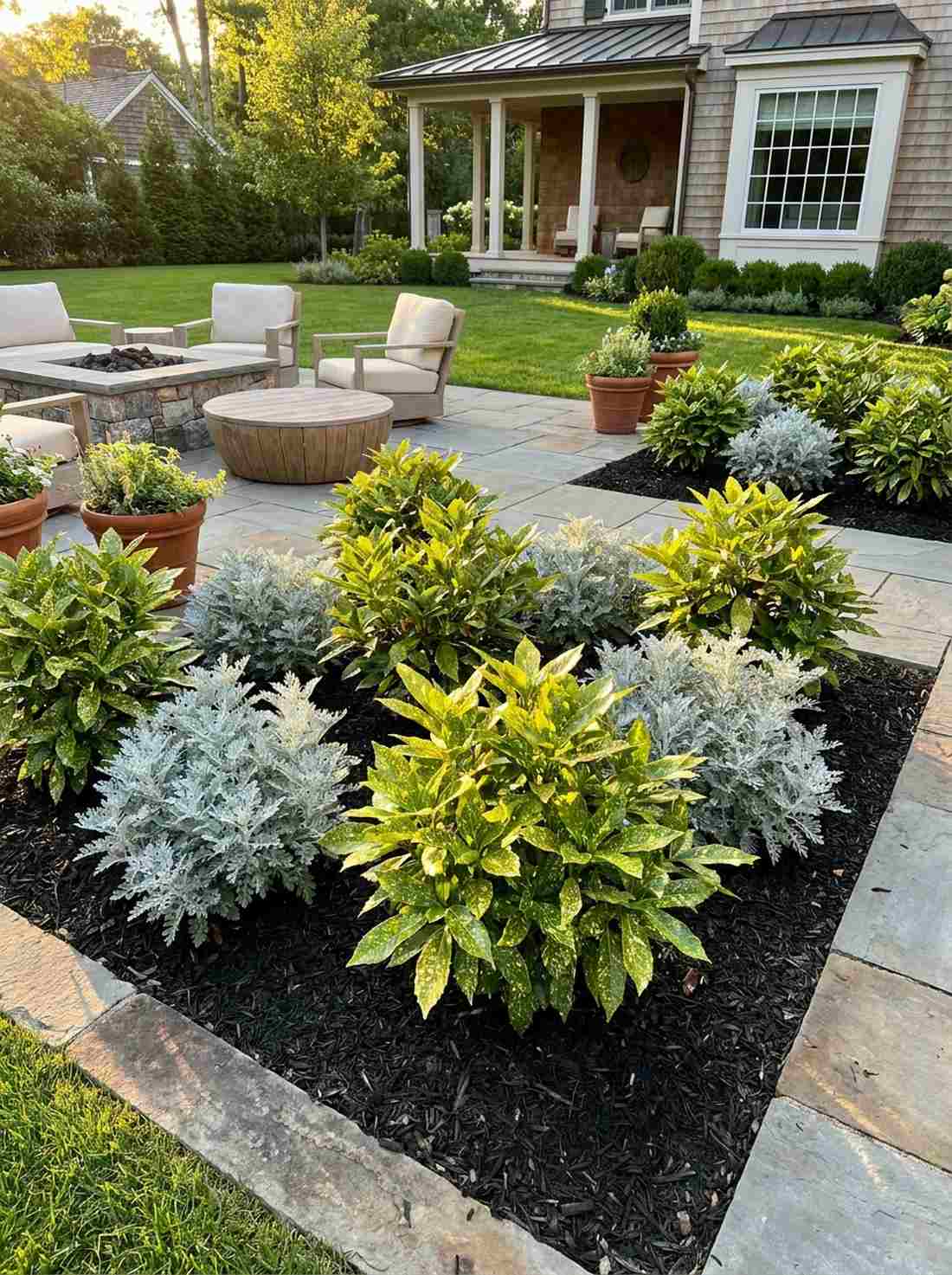
Radiating a subtle, highly sophisticated glow, this idea relies on light-reflecting foliage contrasts. It absolutely shines when placed in areas that catch golden-hour sunlight.
Instead of relying on flowers for color, mixing felted leaves with highly reflective surfaces plays with natural light to look incredibly luxurious. Integrating premium compost ensures both plant types produce their most vibrant, healthy leaf textures.
This aesthetic trick can be done for roughly $40. It’s a genius way to make simple plants look exotic.
- Key Materials: Aucuba plants, Artemisia
- Vibe / Style: Subtle luxury courtyard
- Difficulty: Easy
- Budget Breakdown: Plants: $30 | Organic Compost: $10
- Creator’s Tip: Position the glossy plants directly in the path of the evening sun for a glowing effect.
- Smart Sourcing: premium organic compost bags and moisture-retaining coco coir bricks.
13. Climbing Hydrangea Walls
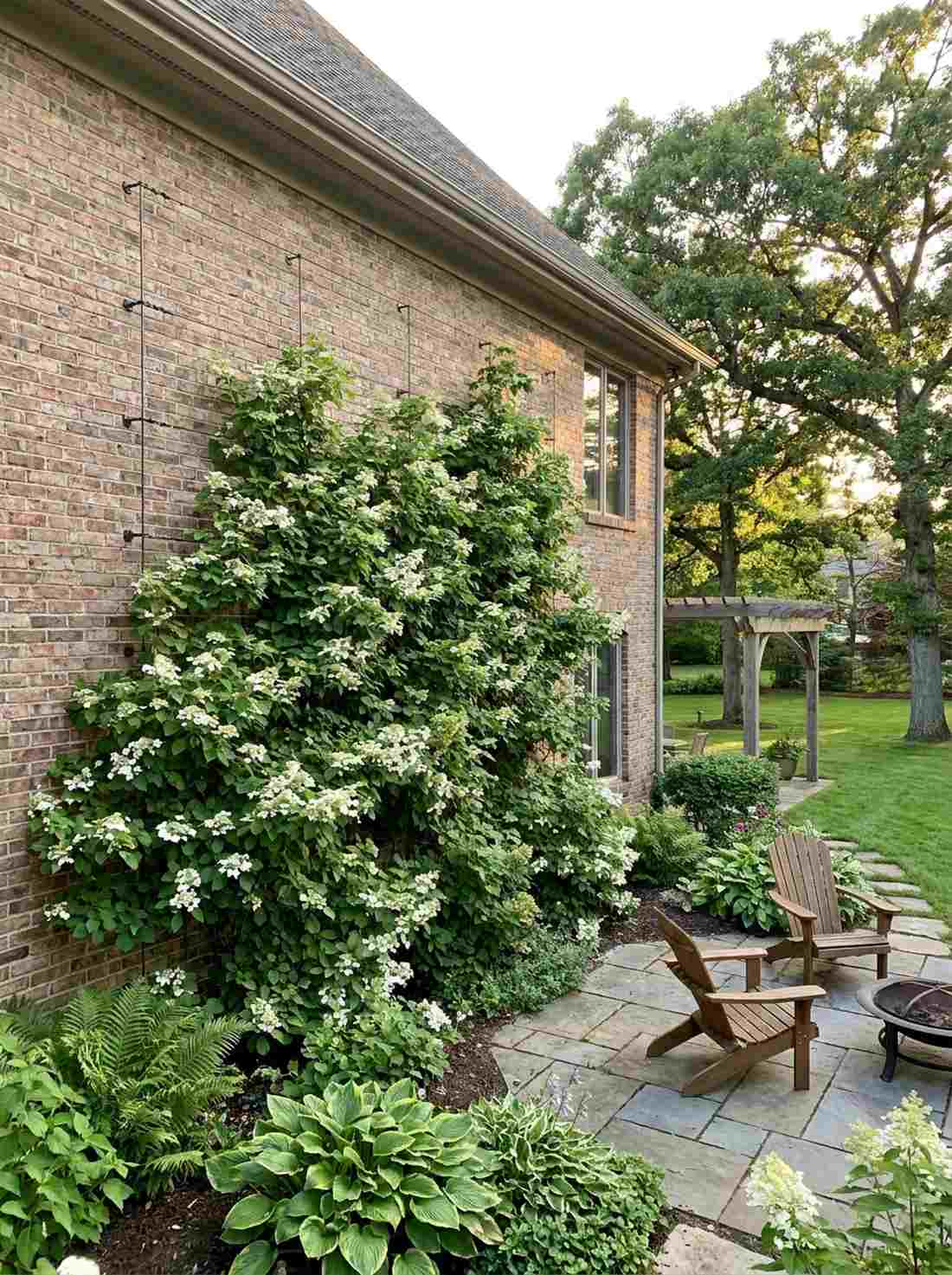
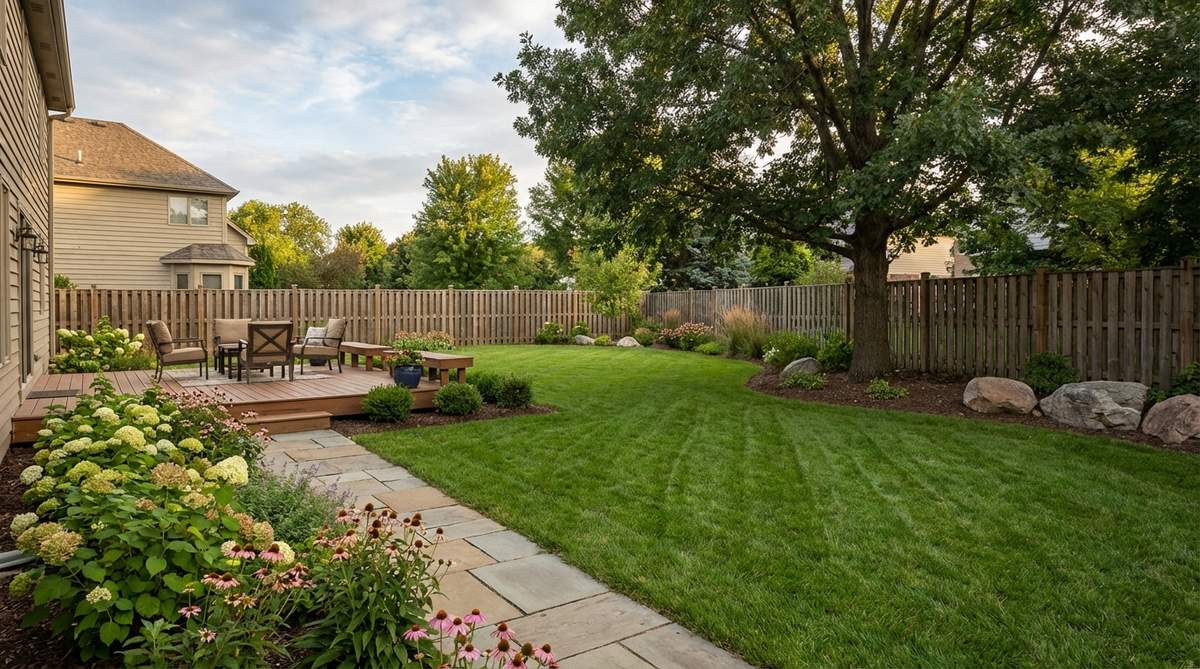
This sprawling vertical setup feels like a centuries-old English manor house. Using self-clinging living facades, it is the ultimate cover-up for ugly brick walls or blank garage sides.
Standard ivy can destroy mortar, but this specific climbing approach offers a lush, expensive look with manageable structural impact. Applying a specialized masonry trellis kit helps guide the initial growth exactly where you want it.
A starter vine and trellis setup runs around $75–$120. Save this if you need to hide an ugly exterior wall.
- Key Materials: Climbing hydrangea vines, masonry anchors
- Vibe / Style: Romantic heritage estate
- Difficulty: Intermediate
- Budget Breakdown: Vines: $60 | Anchors/Wire: $30
- Creator’s Tip: Tape the initial vines horizontally along the wall base to encourage a wider spread before vertical growth.
- Smart Sourcing: heavy-duty masonry wire trellis kits and specialized vine tying tape.
14. Modular Living Wall Panels
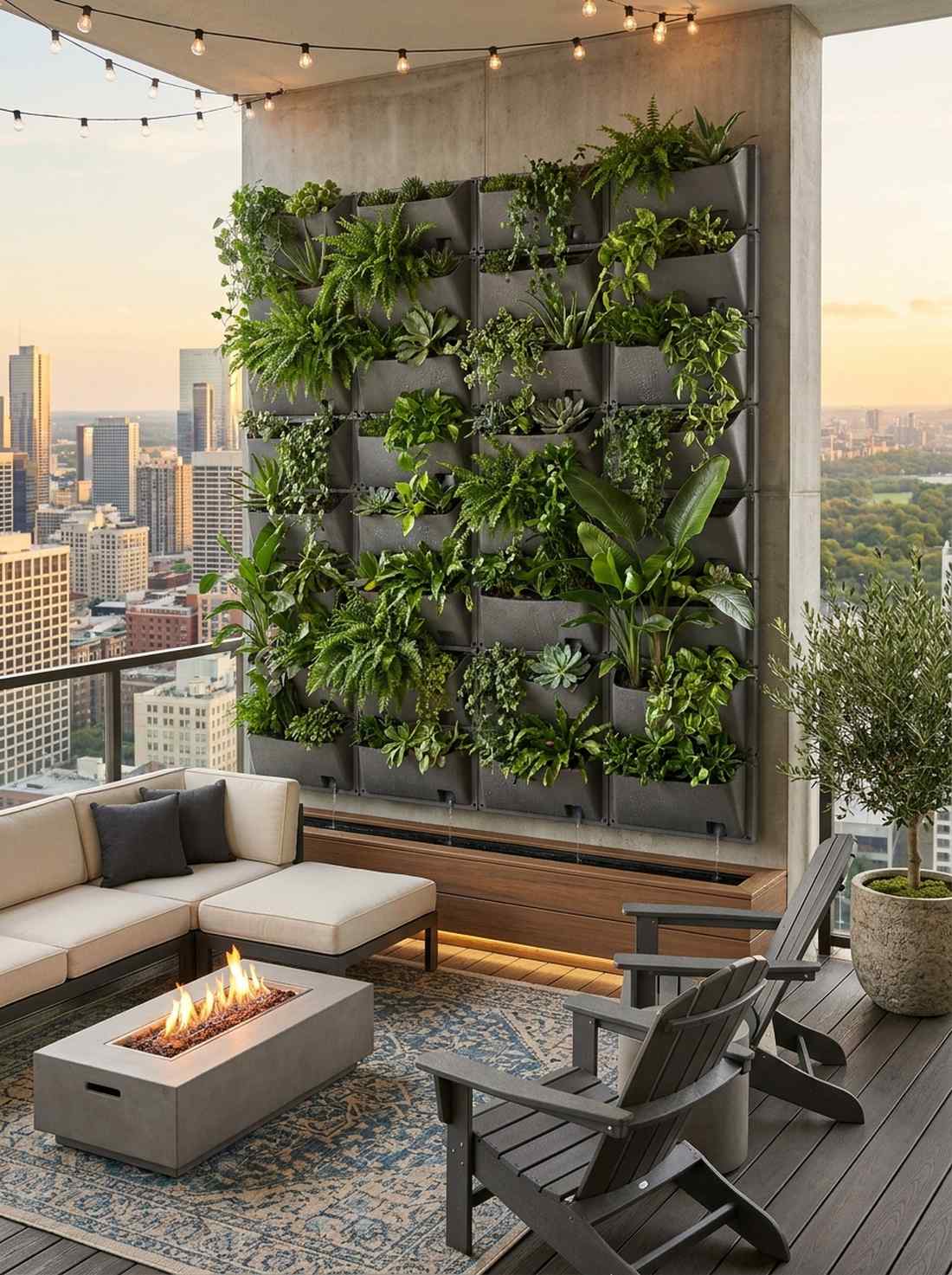
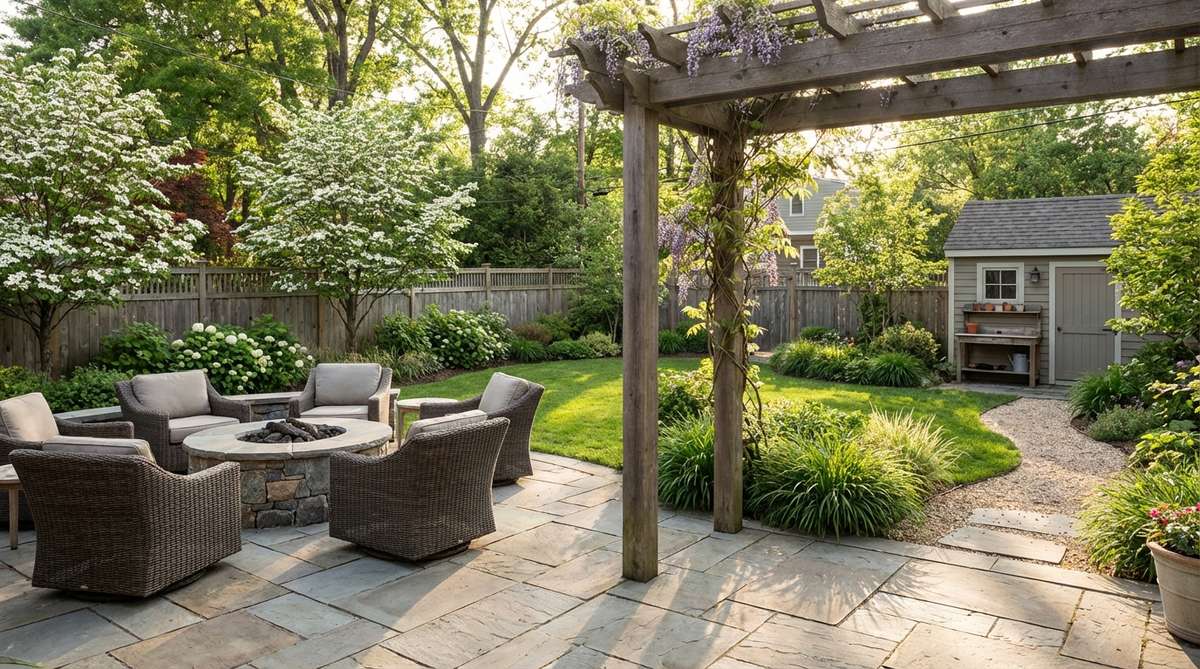
Screaming upscale urban penthouse, this feature thrives on vertical garden pocket systems. It works miracles for tiny apartment balconies or enclosed concrete patios.
Forget messy DIY dirt walls; clicking pre-made modular panels together guarantees a flawless, leak-proof architectural feature. Adding UV-coated self-watering reservoirs turns this into a zero-maintenance showstopper that neighbors will envy.
Building a 3×3 foot section costs about $150–$250. Pin this to your small-space balcony makeover board.
- Key Materials: Plastic planting modules, moisture-control potting mix
- Vibe / Style: Modern eco-luxury
- Difficulty: Moderate installation
- Budget Breakdown: Wall Panels: $150 | Plants & Soil: $80
- Creator’s Tip: Put the thirstiest ferns at the bottom where water naturally drains and collects.
- Smart Sourcing: UV-coated modular living wall kits and indoor/outdoor self-watering drip systems.
Wait until you see the next one—it’s the ultimate secret for high-end landscaping.
15. Ivy Trained on Cable Systems
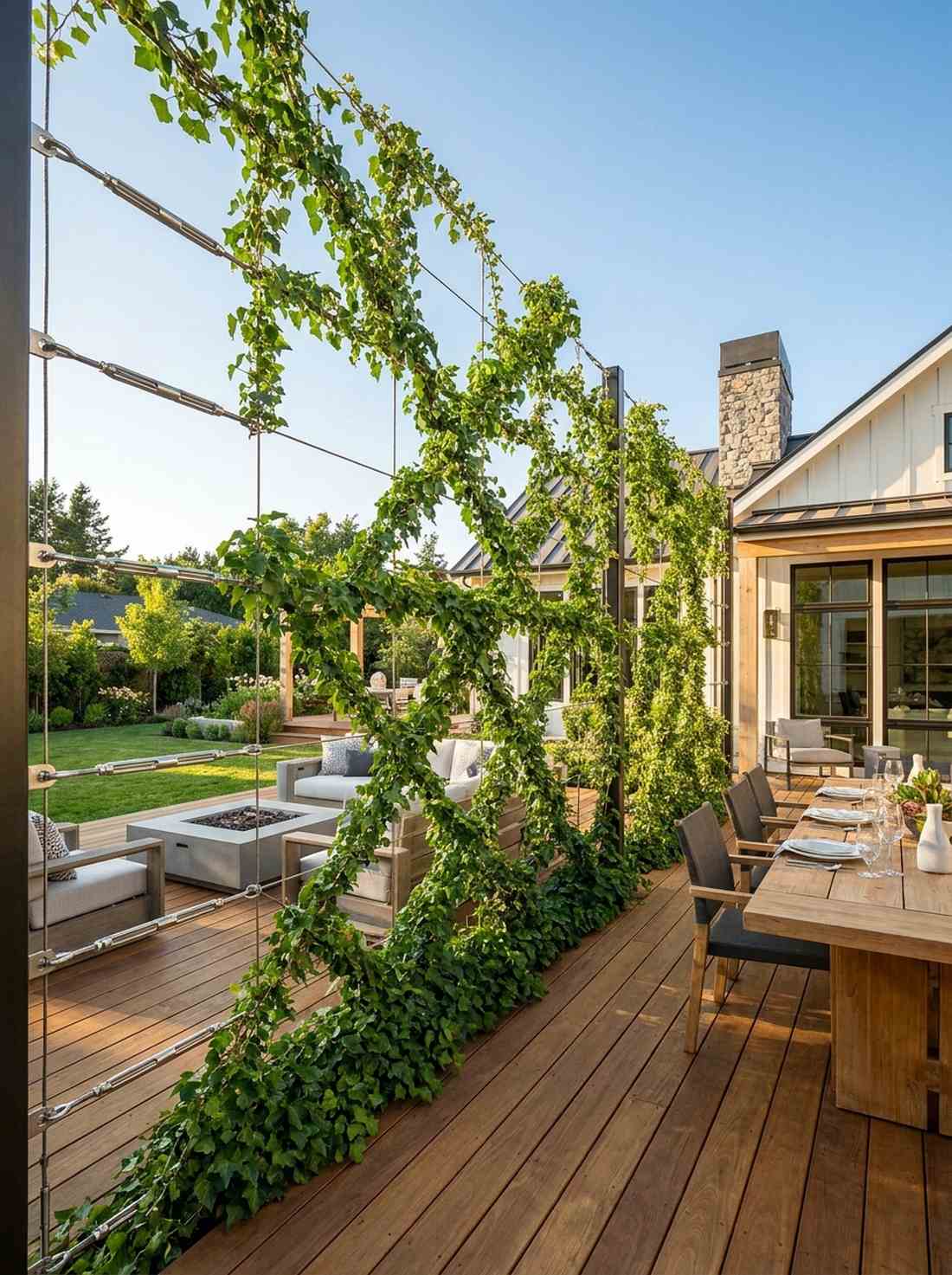
This hyper-organized aesthetic looks like a modern corporate atrium. Focused on a wire-trained green garden landscape, it’s ideal for partitioning spaces on a large wooden deck.
Letting vines run wild looks messy, but forcing them along tension cables delivers a crisp, architectural masterclass. Investing in marine-grade stainless steel hardware ensures your cables won’t snap under the heavy foliage weight.
You can achieve this sleek look for about $100 in hardware. It completely upgrades the standard patio vibe.
- Key Materials: Stainless steel cable kits, Hedera helix
- Vibe / Style: Geometric industrial modern
- Difficulty: Advanced hardware setup
- Budget Breakdown: Cable Hardware: $80 | Starter Ivy: $20
- Creator’s Tip: Use turnbuckles at the end of every wire run to easily tighten sagging cables annually.
- Smart Sourcing: marine-grade steel wire trellis kits and heavy-duty cable turnbuckles (bulk pack).
16. Clematis Armandii Pergola Canopies
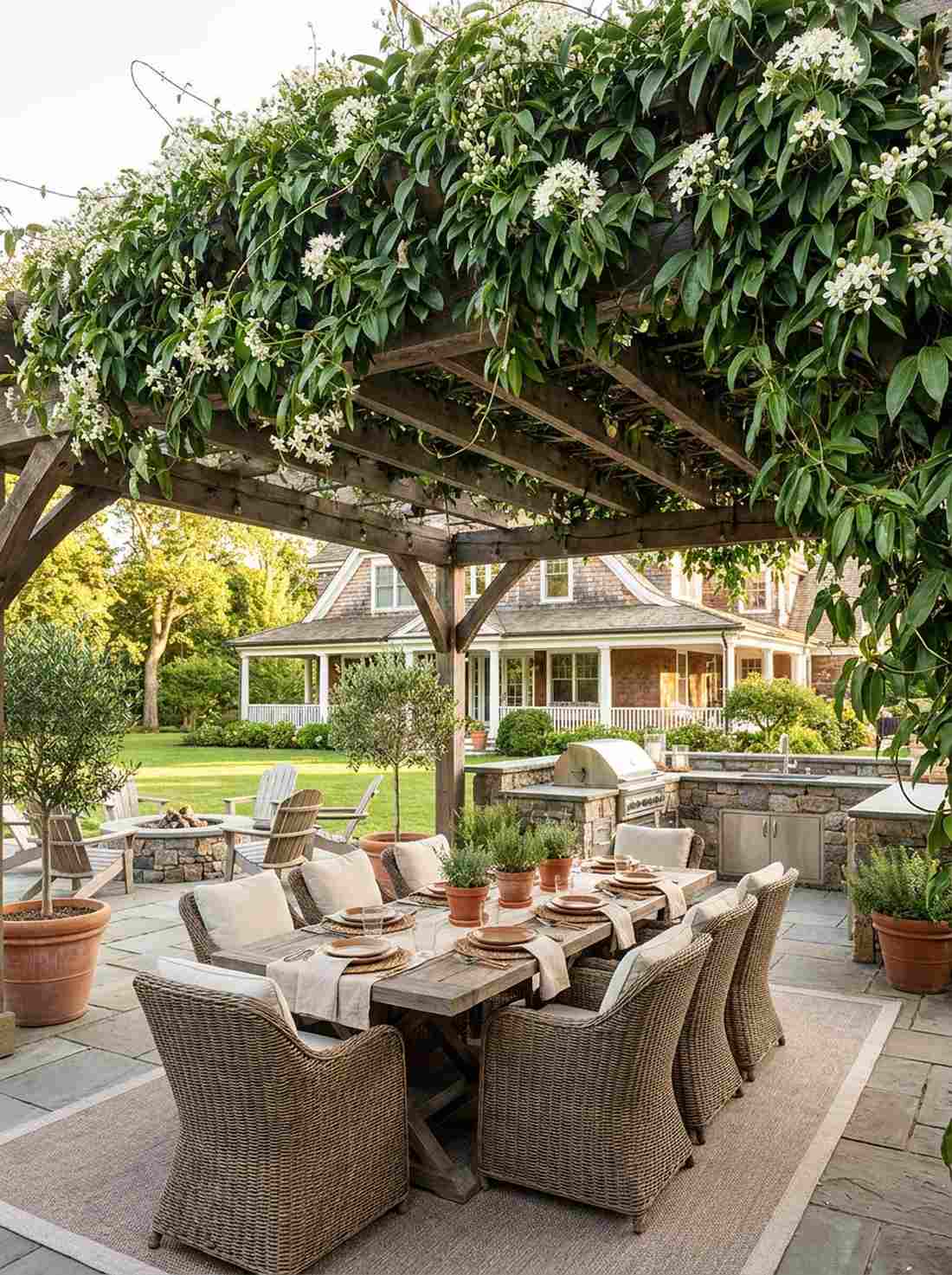
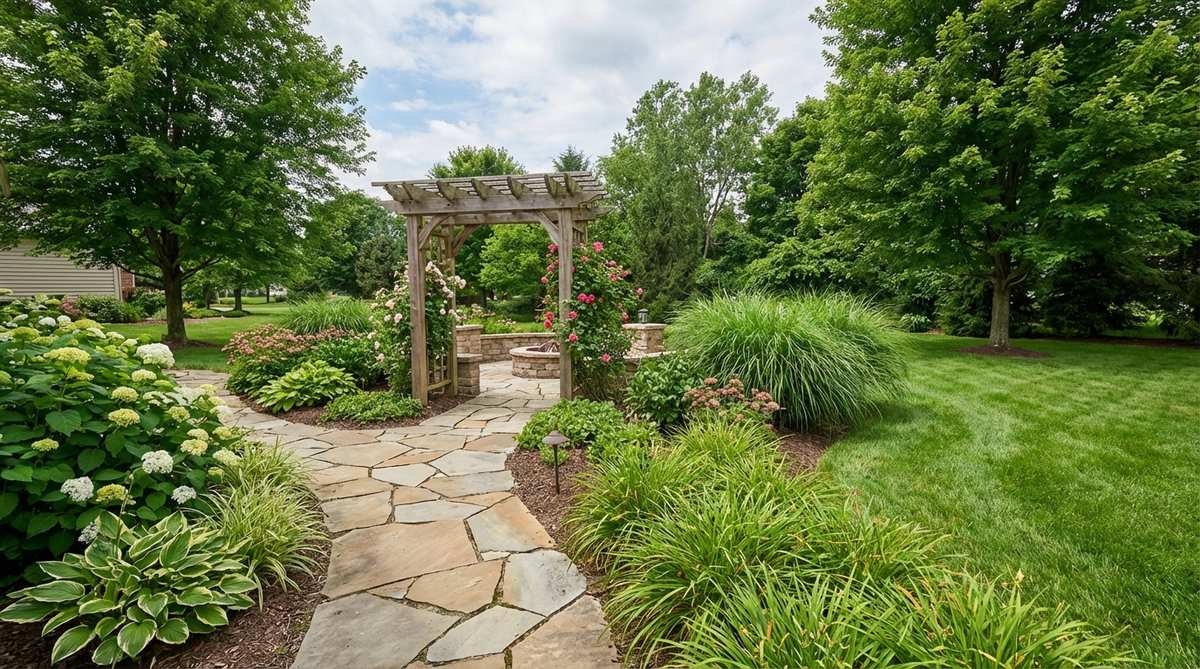
Bringing a lush, romantic energy, this setup acts as a living patio shade cover. It is breathtaking when grown over outdoor dining pergolas or sitting arbors.
Instead of buying expensive canvas shade sails that rip in the wind, a living evergreen canopy provides permanent, expensive-looking shelter. Utilizing heavy-duty garden twine kits helps train the heavy vines securely to the overhead beams.
Starter plants and tying gear will run you about $60–$100. Save this for your ultimate backyard dining setup.
- Key Materials: Evergreen clematis, outdoor twine
- Vibe / Style: Lush Mediterranean terrace
- Difficulty: Intermediate
- Budget Breakdown: Vines: $75 | Twine/Supports: $15
- Creator’s Tip: Prune heavily immediately after the spring bloom to keep the canopy lightweight and dense.
- Smart Sourcing: weatherproof coated garden wire ties and heavy-duty pergola support anchors.
17. Boston Fern Hanging Layers
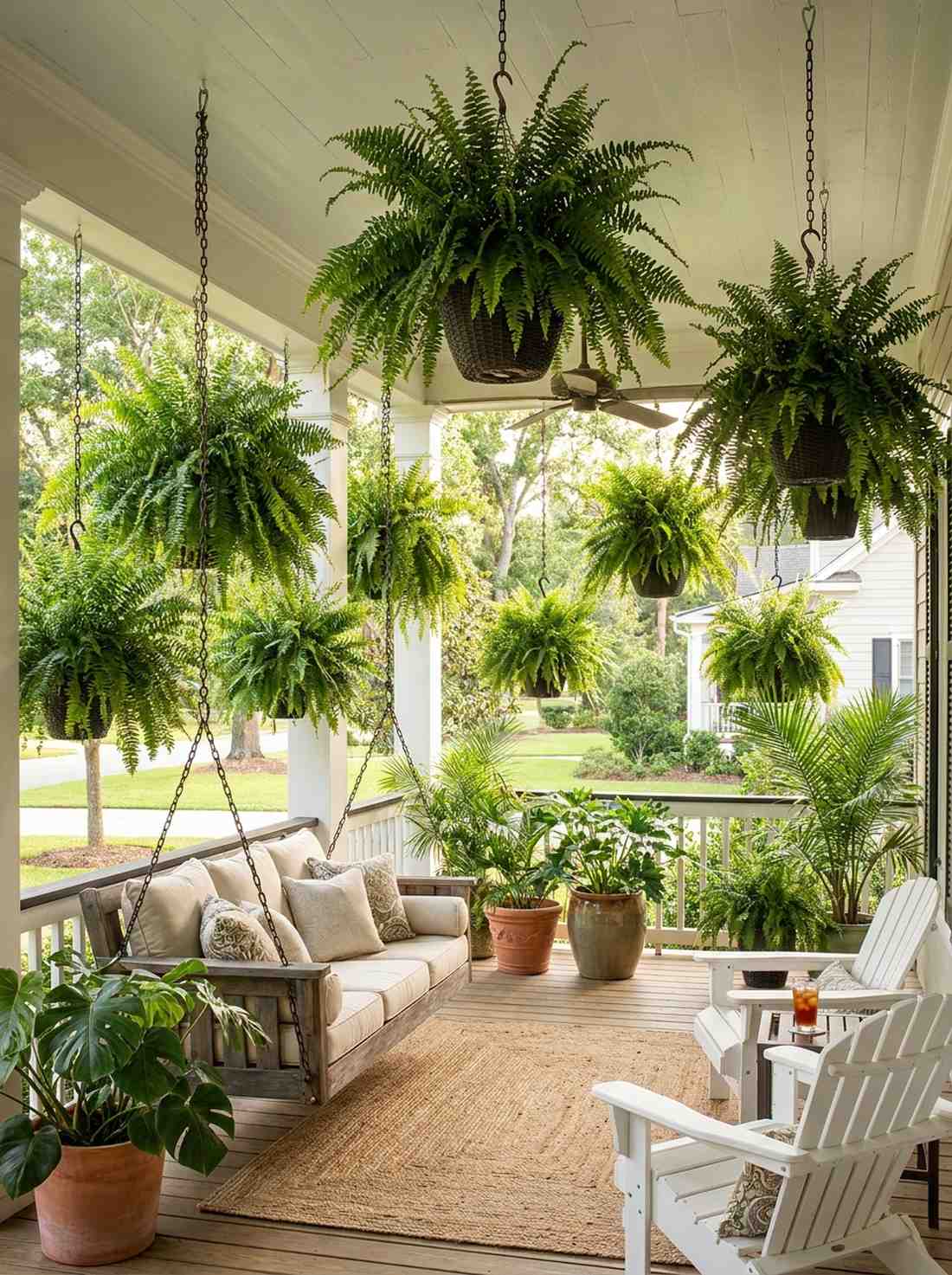
This suspended arrangement feels like a breezy, tropical Victorian conservatory. Utilizing staggered hanging shade baskets, it is the best way to utilize the dead air space on a covered front porch.
Hanging a single basket is boring, but cascading multiple huge ferns at varying heights creates immersive, 3D architecture. Swapping cheap plastic hooks for heavy-duty ceiling toggles prevents disaster during high wind storms.
You can create a lush hanging forest for about $80–$120. Highly recommended for instantly boosting porch appeal.
- Key Materials: Large ferns, adjustable chain hangers
- Vibe / Style: Southern gothic / Tropical porch
- Difficulty: Easy
- Budget Breakdown: Ferns: $80 | Hardware/Chains: $30
- Creator’s Tip: Drop two ice cubes into the center of each basket on hot days for slow, drip-free watering.
- Smart Sourcing: heavy-duty hanging basket chains (multi-pack) and weatherproof ceiling toggle hooks.
18. Star Jasmine Espalier Forms
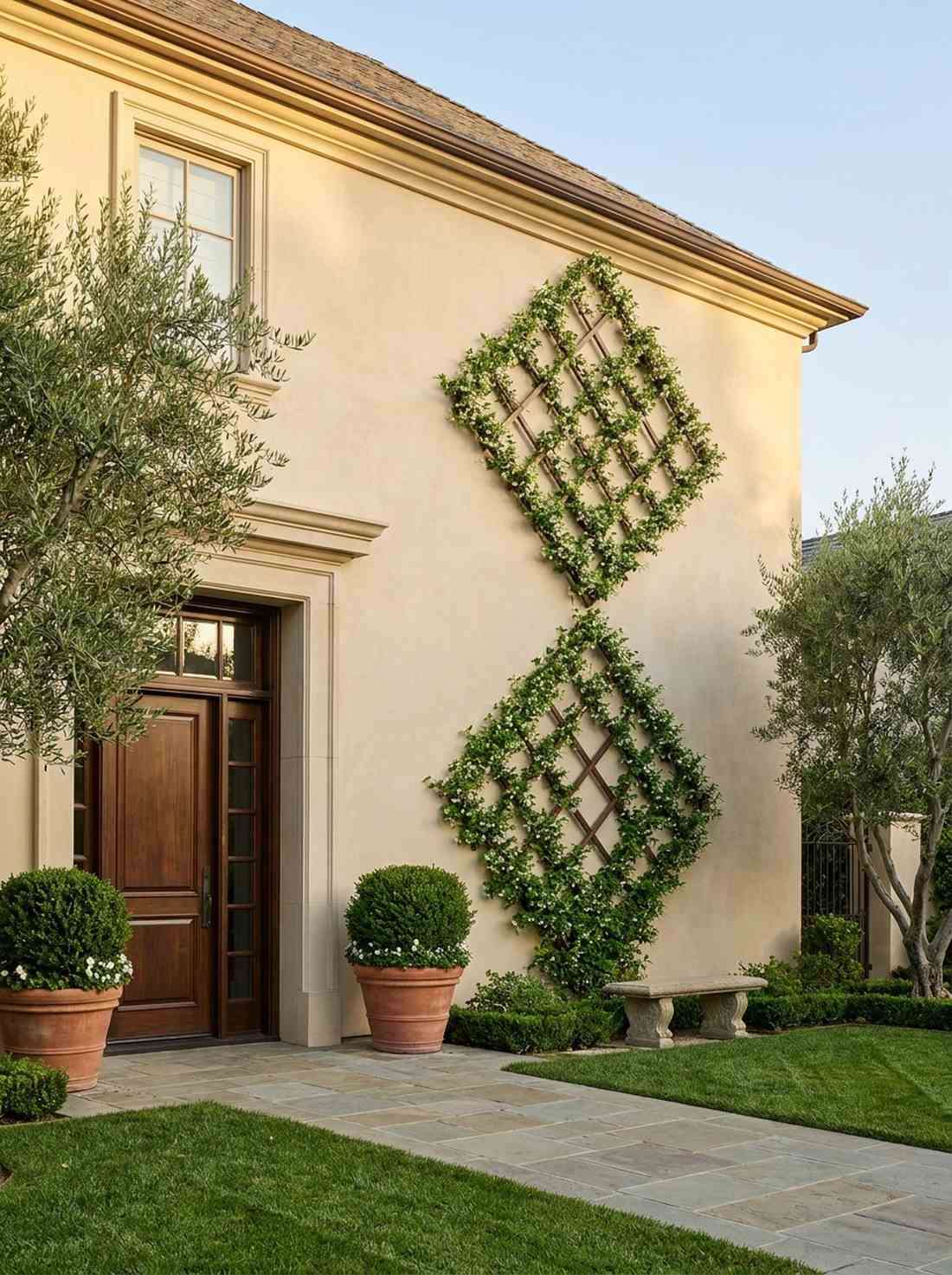
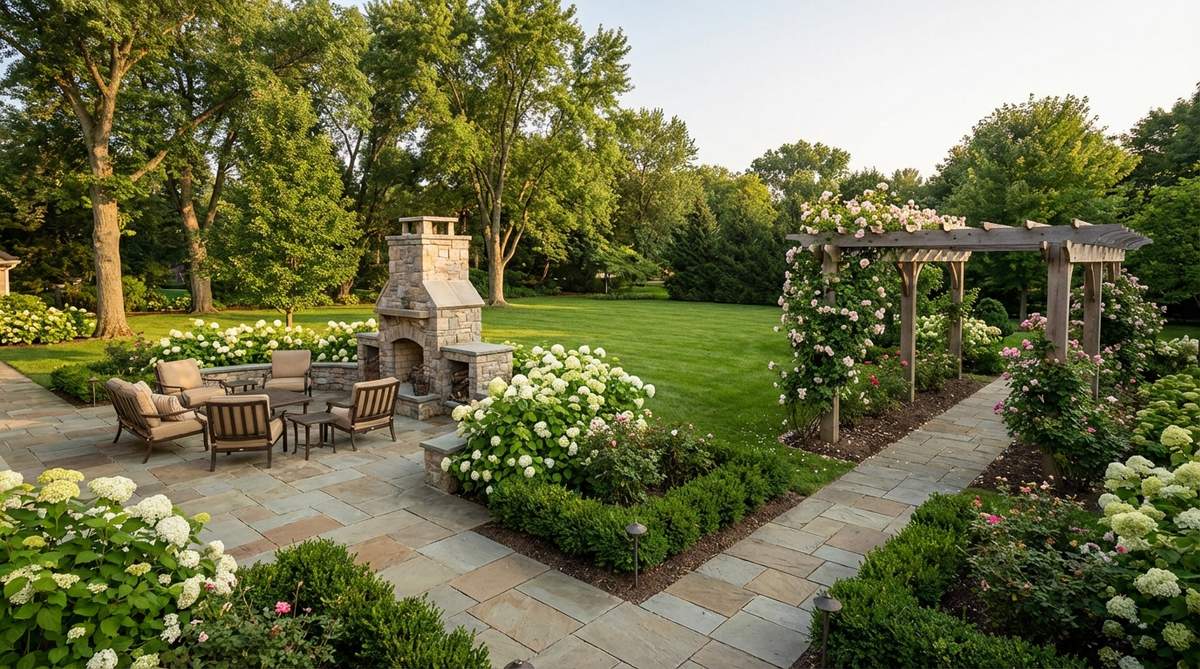
Exuding severe architectural discipline, this technique creates flat living wall art. It works beautifully against blank stucco walls beside a front door.
While espalier is historically difficult, using pre-built diamond lattice kits makes forming the flat profile incredibly straightforward and luxurious. Securing the vines with soft plant ties prevents trunk scarring and encourages rapid geometric growth.
Expect to spend around $90–$150 depending on the trellis size. Pin this if you love strictly controlled garden layouts.
- Key Materials: Trachelospermum jasminoides, wooden/wire lattice
- Vibe / Style: Formal French courtyard
- Difficulty: Advanced pruning
- Budget Breakdown: Lattice Kit: $80 | Plants: $40
- Creator’s Tip: Aggressively snip any shoot that grows outward toward you to force horizontal, flat spreading.
- Smart Sourcing: pre-fabricated diamond lattice kits and soft-tie garden plant wire.
19. Woodland Fern Colonies
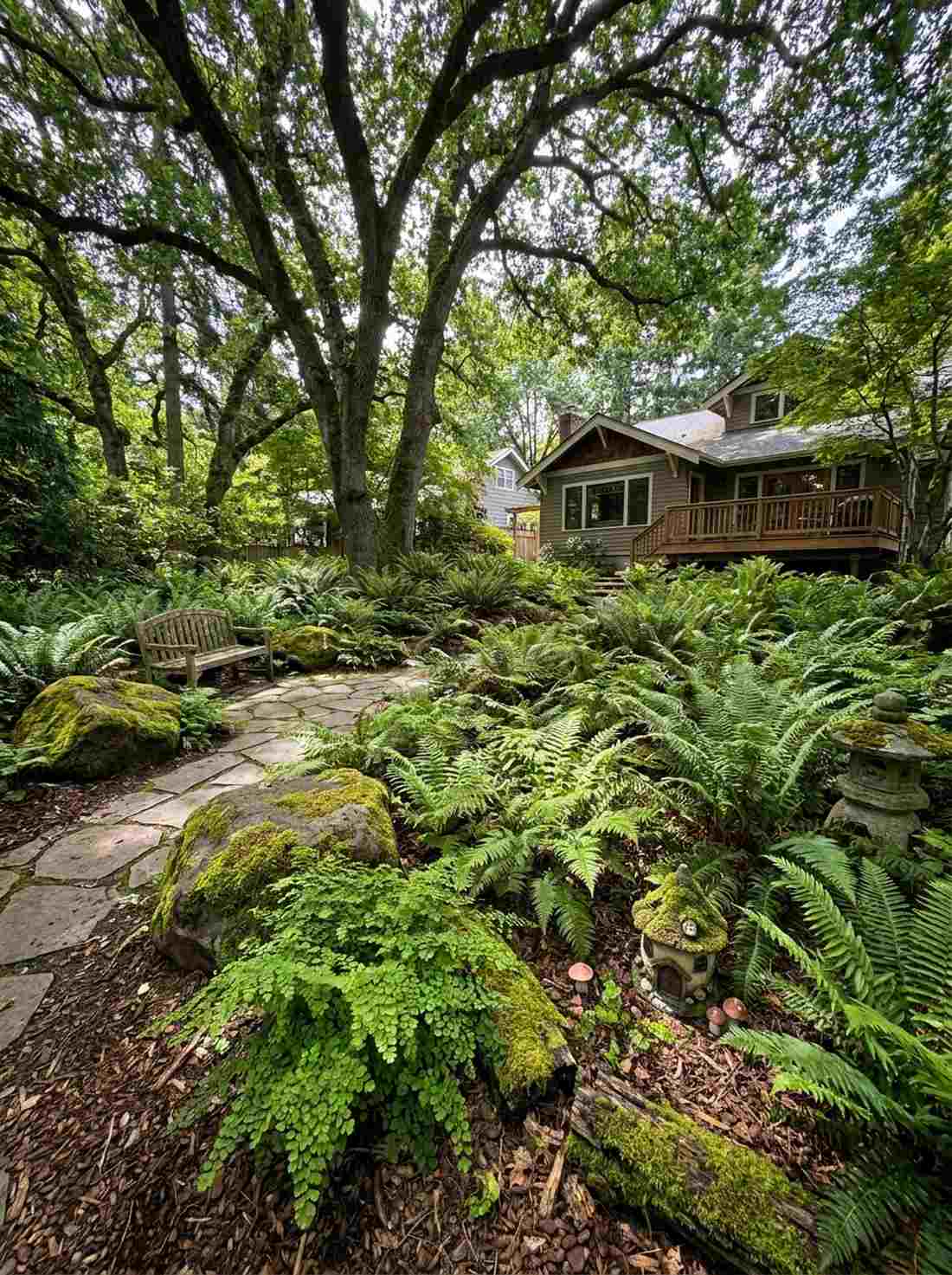
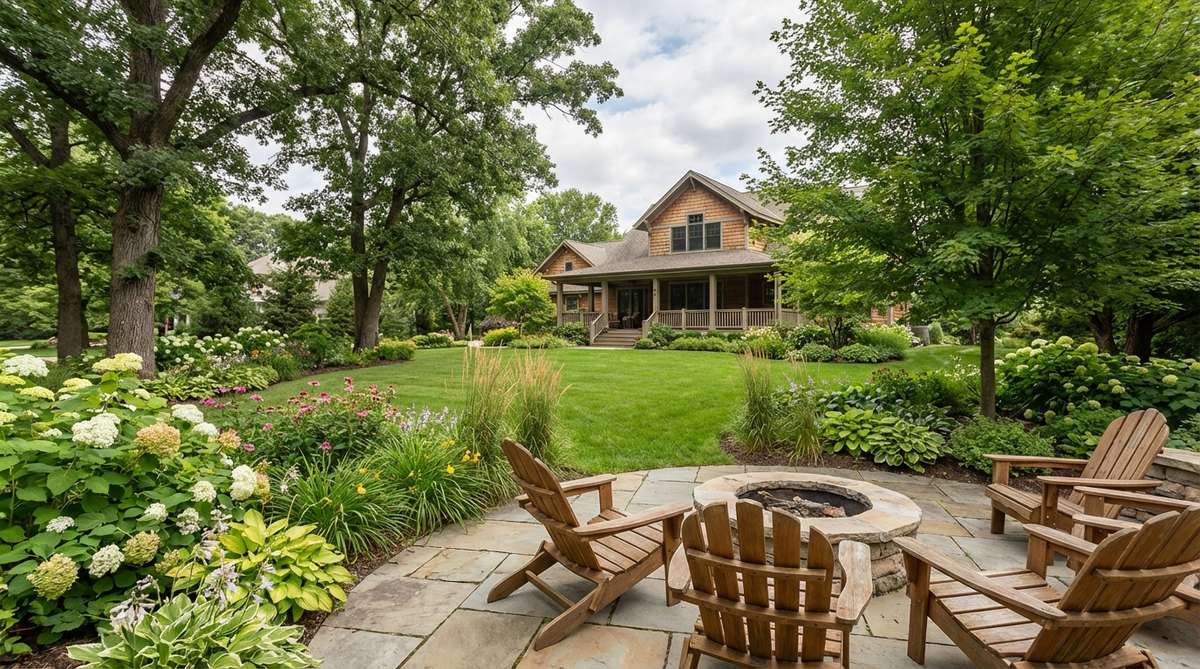
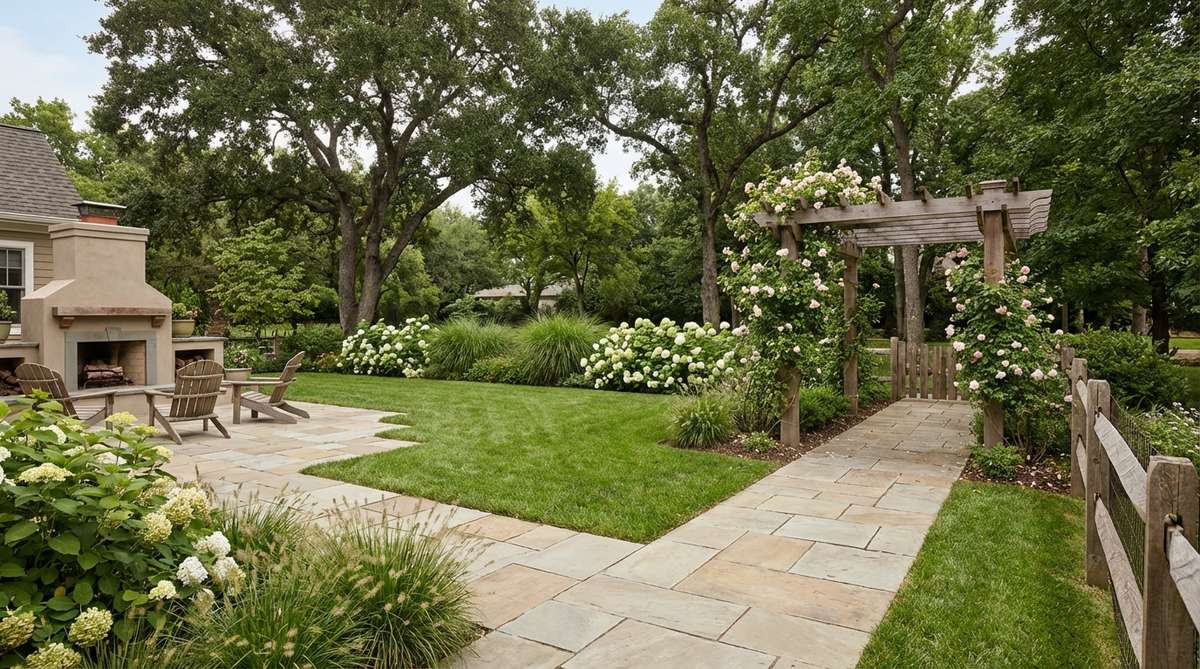
This serene layout feels like stepping deep into an untouched national park. Driven by native shade forest groundcovers, it solves the nightmare of landscaping under massive, old-growth oak trees.
Most homeowners waste money trying to grow grass in the dark, but a massive fern colony looks intentional, expensive, and magical. Sourcing terrarium accessories or fairy garden kits to nestle into the fronds adds an incredible secret detail.
You can buy bulk rhizomes for around $50–$90. It’s the smartest way to fix a barren, shaded yard.
- Key Materials: Mixed fern rhizomes, leaf mold compost
- Vibe / Style: Wild Pacific Northwest
- Difficulty: Very easy
- Budget Breakdown: Bulk Rhizomes: $60 | Compost: $20
- Creator’s Tip: Do not bury the fern crowns; keep them slightly above the soil line to prevent rotting.
- Smart Sourcing: bulk native fern bare-roots and UV-coated resin fairy cottage kits.
If you’re tight on space, the upcoming concept completely breaks the rules.
20. Hellebore Groundcover Carpets
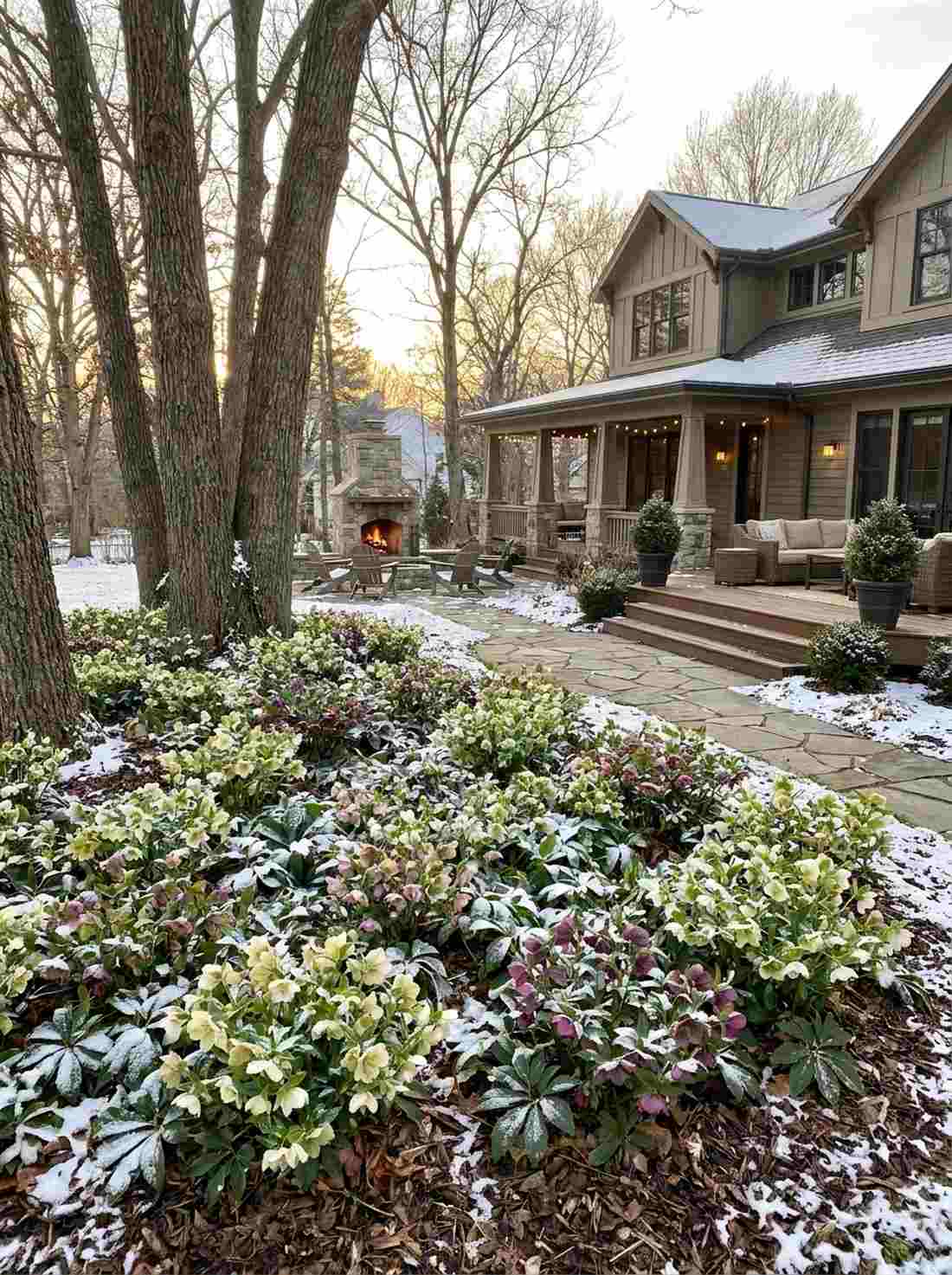
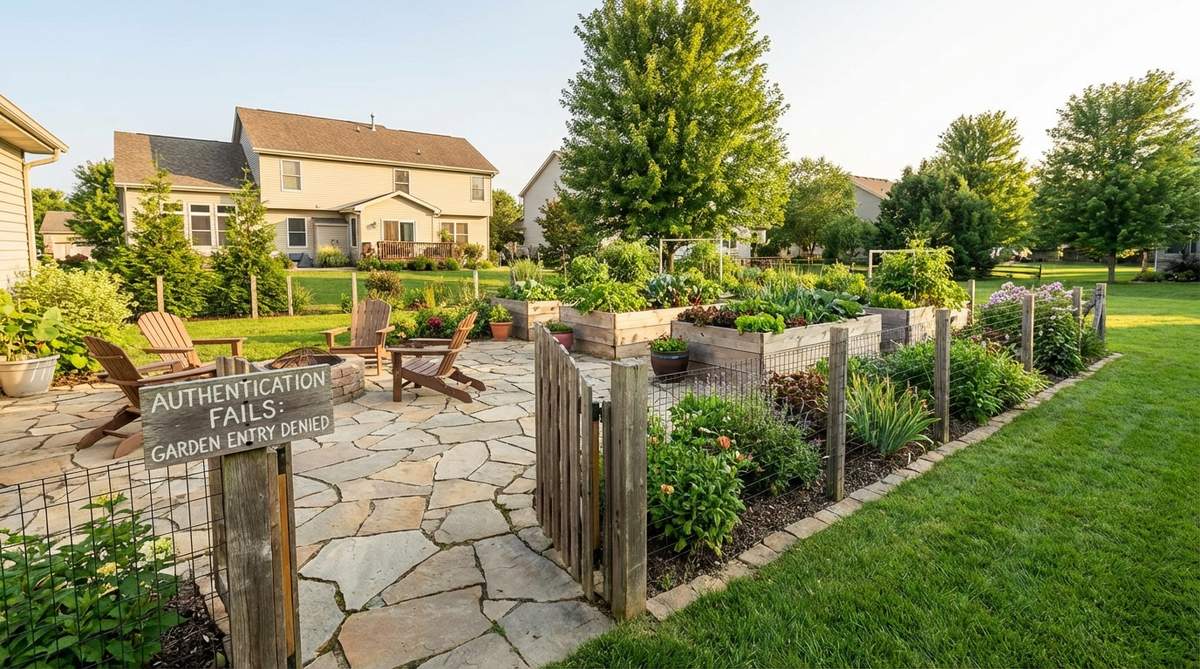
Radiating resilience and beauty, this setup offers a winter evergreen flowering carpet. It is absolute perfection for north-facing beds that get zero direct sunlight.
Instead of dealing with dead winter beds, utilizing these tough architectural plants guarantees lush coverage when everything else is dormant. Bulk seed packs or bare-root bundles make establishing this high-end groundcover surprisingly affordable.
Starting a decent colony costs about $75–$130. Save this for a bulletproof winter garden solution.
- Key Materials: Helleborus plugs, organic mulch
- Vibe / Style: Resilient winter woodland
- Difficulty: Easy
- Budget Breakdown: Plugs: $100 | Mulch: $20
- Creator’s Tip: Snip off the old, ragged leaves in late January so the fresh green blooms pop perfectly.
- Smart Sourcing: bulk bare-root hellebore kits and premium organic leaf mulch.
21. Solomon’s Seal Arching Layers
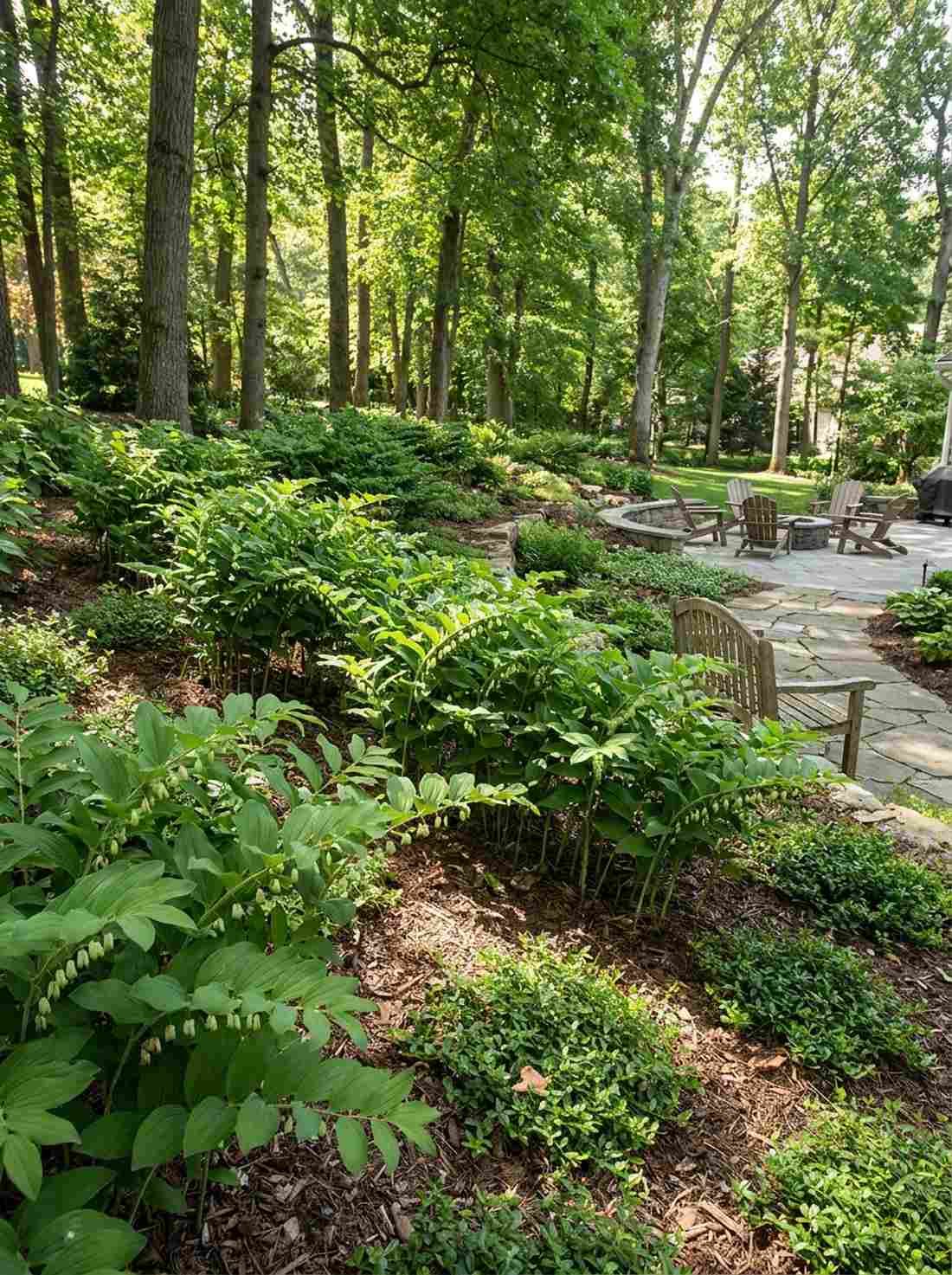
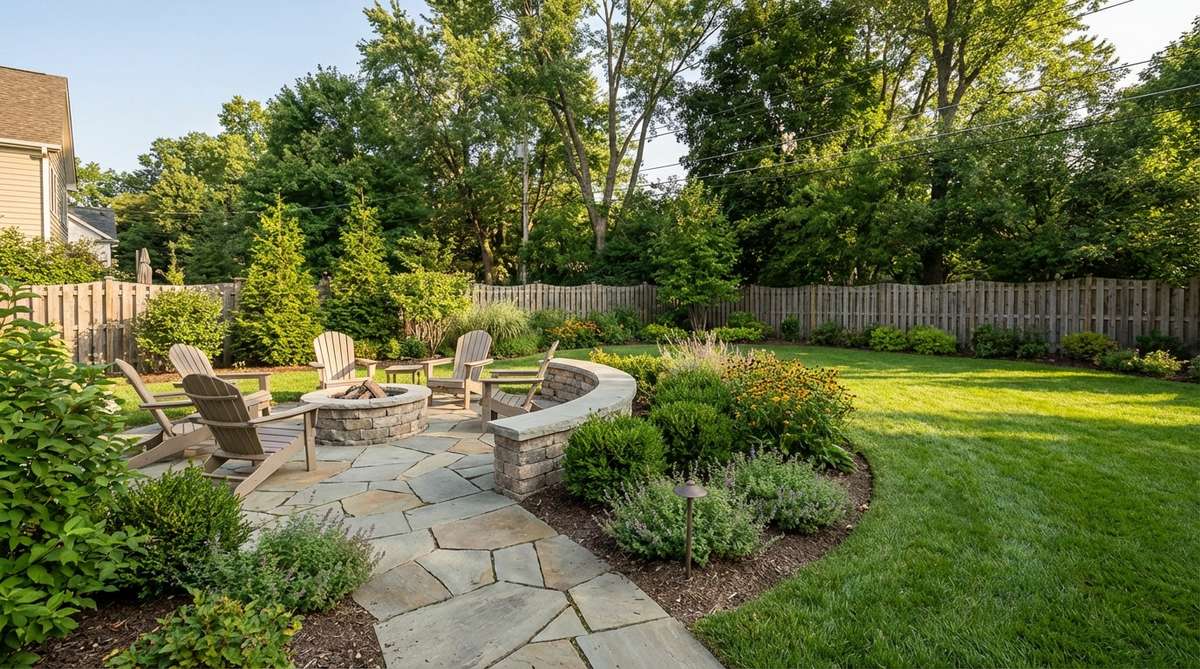
This elegant design yields a graceful, sweeping green garden image. Relying on horizontal layered shade stems, it forms an incredible visual bridge between tall trees and flat groundcovers.
Defying the usual chaotic yard look, these arching stems create highly defined architectural lines without any artificial staking. Using high-quality organic fertilizers ensures the stems grow thick enough to support their dramatic arcs.
You can establish these beds for roughly $40–$70. It completely transforms flat, boring shade zones.
- Key Materials: Polygonatum rhizomes, rich organic soil
- Vibe / Style: Japanese woodland elegance
- Difficulty: Beginner
- Budget Breakdown: Rhizomes: $45 | Soil: $15
- Creator’s Tip: Plant them on a slight slope if possible; the arching effect looks twice as dramatic when tiered.
- Smart Sourcing: bulk shade rhizome packs and slow-release organic bone meal.
22. Epimedium Weed-Suppressing Mats
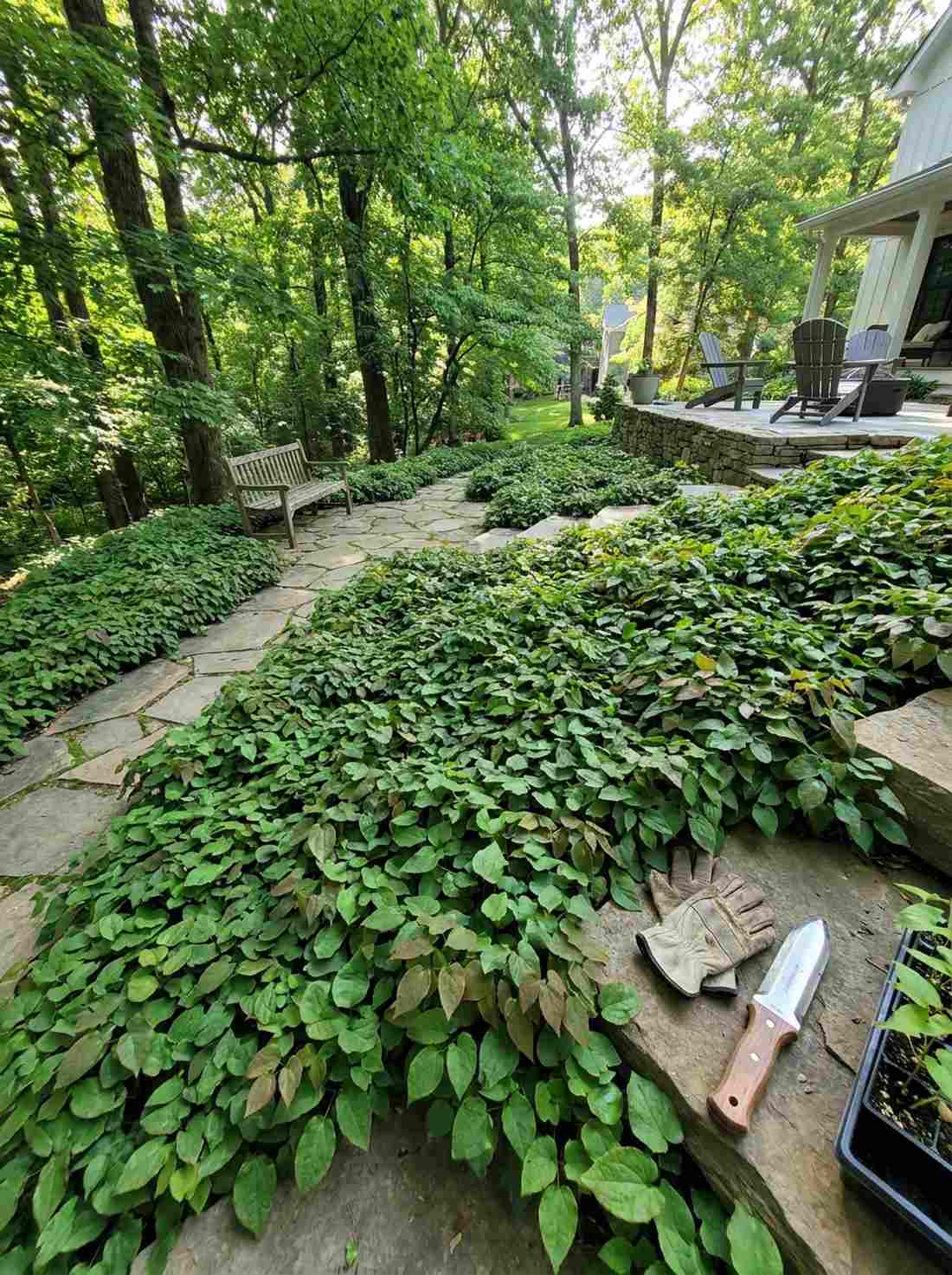
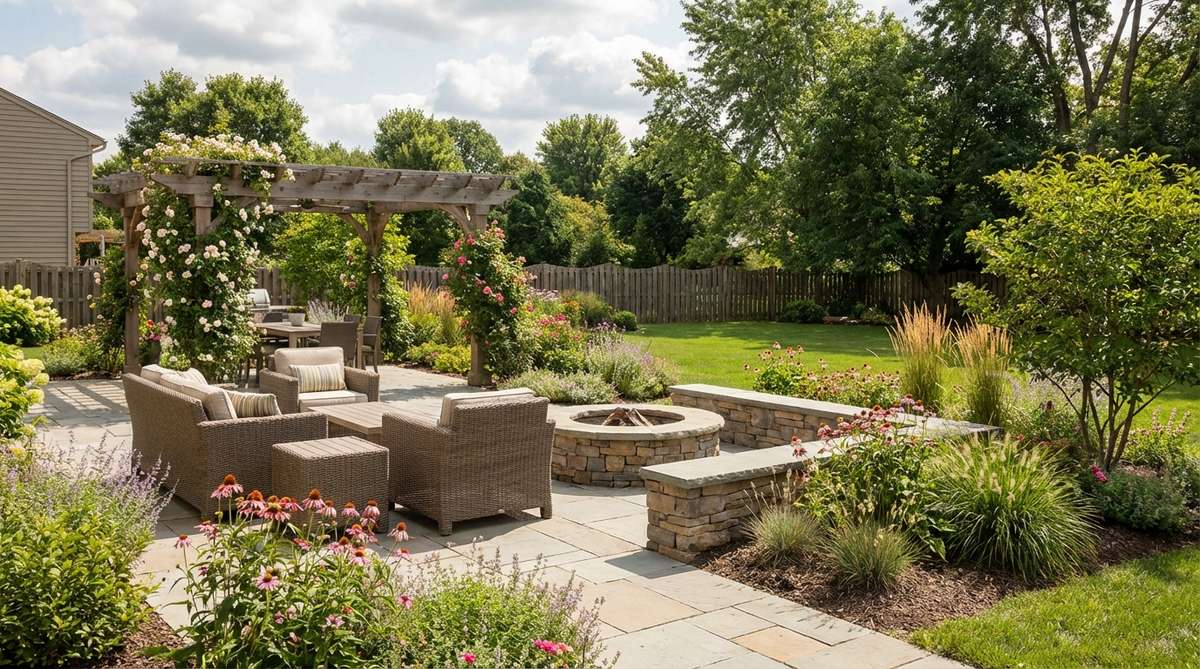
This layout operates like a bulletproof armor shield that also happens to look gorgeous. It relies on a dense evergreen weed barrier, making it the smartest choice for steep, shaded hillsides.
Pulling weeds in the shade is miserable, but this creeping mat physically chokes out invaders while looking like a million bucks. Investing in a specialized soil knife makes slicing through tough tree roots to plant these plugs incredibly fast.
A tray of plugs will run you about $60–$90. Pin this immediately if you hate pulling backyard weeds.
- Key Materials: Epimedium plugs, root-cutting trowel
- Vibe / Style: Low-maintenance utility
- Difficulty: Easy
- Budget Breakdown: Plugs: $70 | Tools: $20
- Creator’s Tip: Mow the entire patch down on the highest setting in early spring to refresh the foliage instantly.
- Smart Sourcing: heavy-duty hori hori soil knives and bulk groundcover plug flats.
23. Japanese Forest Grass Luminous Mounds
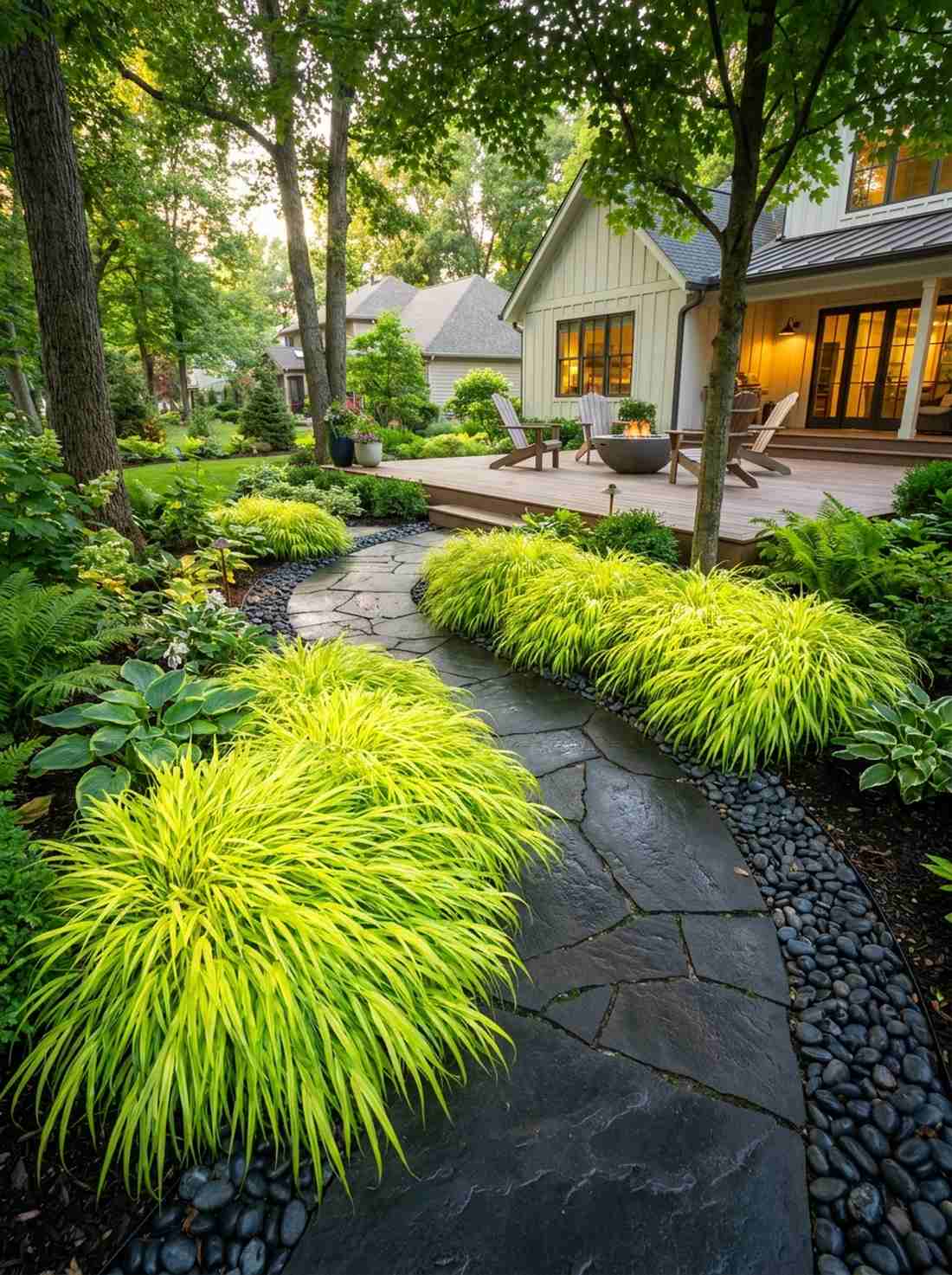
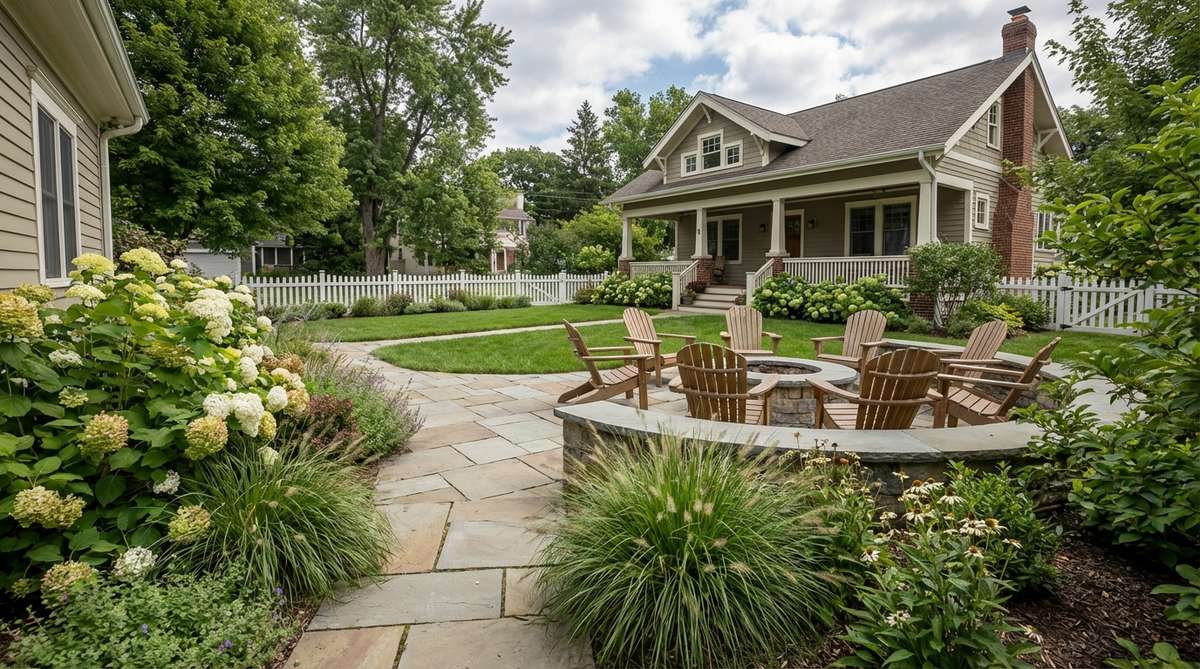
Emanating an almost neon glow, this setup utilizes cascading chartreuse shade grass. It acts as a stunning visual highlighter along dark, winding garden pathways.
When dark green gets monotonous, dropping these luminous mounds into the design acts exactly like strategic landscape lighting. Buying miniature garden supplies like small river stones to border the grass makes the bright green pop aggressively.
You can edge a path for about $80–$140. It’s an elite designer secret for brightening gloomy yards.
- Key Materials: Hakonechloa macra, decorative river rock
- Vibe / Style: Vibrant Zen modern
- Difficulty: Easy
- Budget Breakdown: Grass Pots: $100 | River Rocks: $30
- Creator’s Tip: Ensure the soil stays consistently moist; this grass will bleach and burn if it dries out.
- Smart Sourcing: polished black decorative river stones (bulk pack) and moisture-control garden soil.
24. Sweet Woodruff Fragrant Carpets
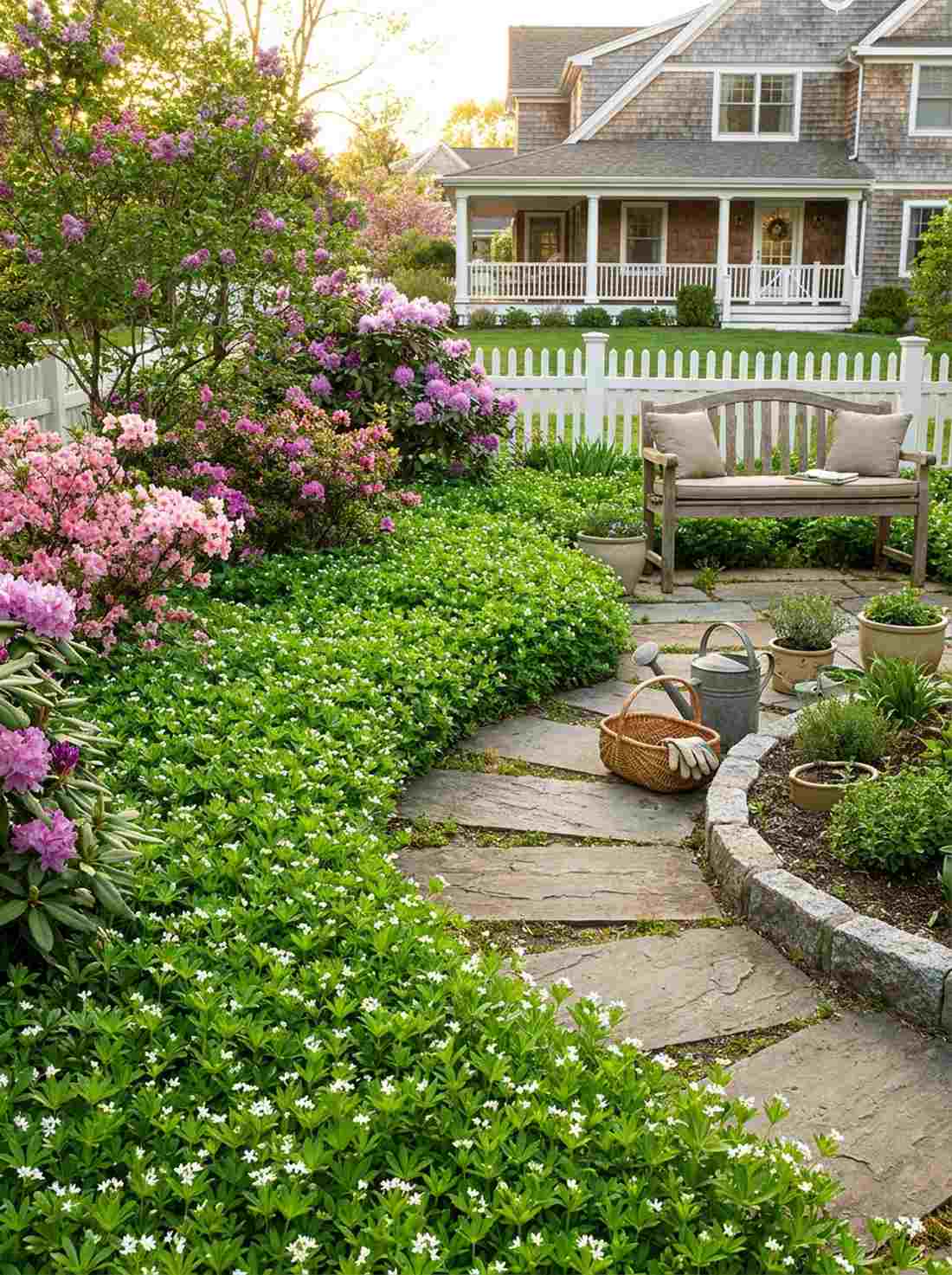
This setup feels like a fragrant, plush green rug spread across the forest floor. Focusing on a scented creeping groundcover, it is amazing for planting directly under flowering spring shrubs.
Standard mulch is boring and degrades, but establishing a living, fragrant carpet delivers a surprisingly premium look that smells incredible after rain. Using bulk seed spreaders and a starter fertilizer gets the carpet fully connected in just months.
Seed and prep materials cost a mere $30–$50. Save this for a sensory garden upgrade.
- Key Materials: Sweet woodruff bare-roots/seeds, starter fertilizer
- Vibe / Style: Cottagecore sensory garden
- Difficulty: Very easy
- Budget Breakdown: Seeds/Roots: $30 | Fertilizer: $15
- Creator’s Tip: Crush a few leaves in your hand while walking by to release a scent reminiscent of fresh hay and vanilla.
- Smart Sourcing: bulk sweet woodruff live bare-roots and premium groundcover starter fertilizer.
Skip the expensive contractors; the next blueprint saves you thousands instantly.
25. Fatsia Japonica Statement Shrubs
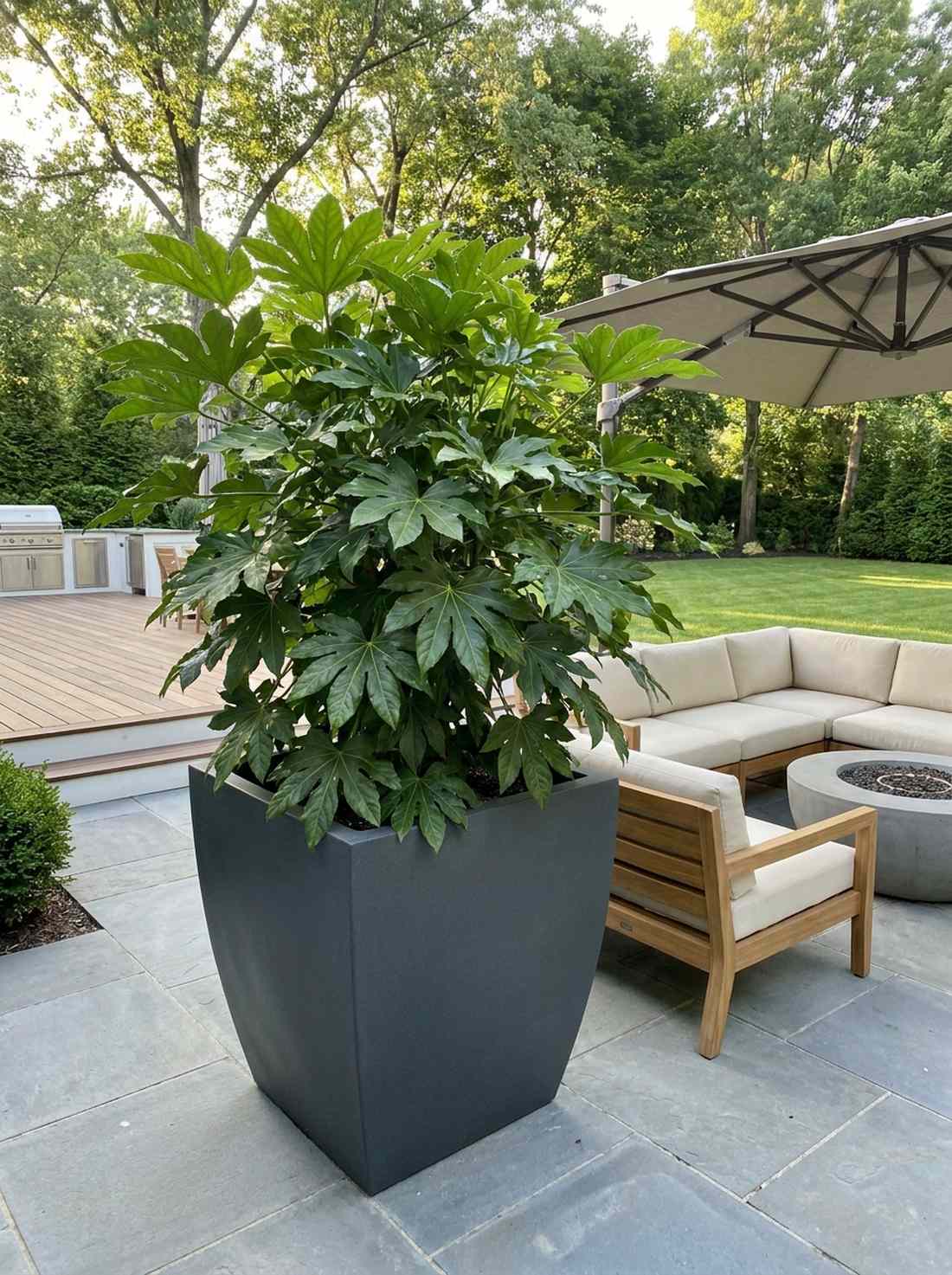
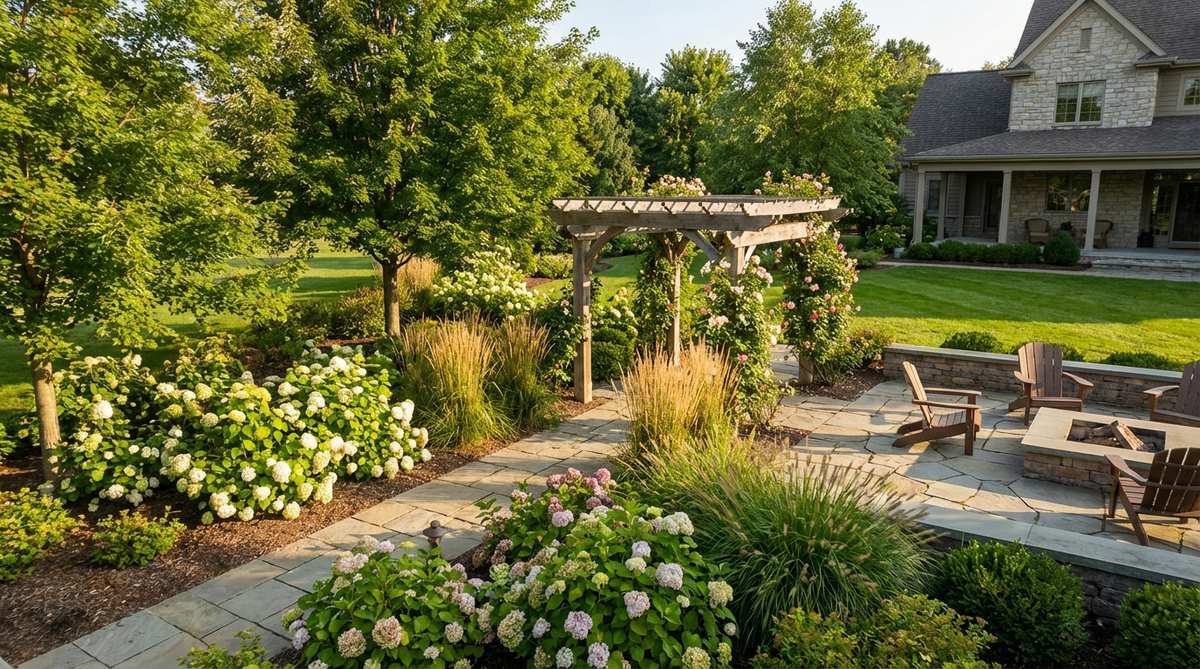
Projecting massive tropical energy in cooler climates, this look hinges on oversized bold foliage anchors. It is the perfect bold statement piece for a shaded modern patio corner.
Most homeowners assume tropical looks require hot climates, but this frost-hardy beast gives a designer-level finish anywhere. Upgrading to a massive, UV-resistant outdoor planter makes the shrub look like a highly curated museum installation.
A large specimen and a premium pot will cost around $100–$200. It’s a massive visual win for minimal effort.
- Key Materials: Mature Fatsia plant, oversized modern planter
- Vibe / Style: Temperate tropical modern
- Difficulty: Easy
- Budget Breakdown: Plant: $60 | Premium Planter: $120
- Creator’s Tip: Wipe the massive leaves with a damp cloth monthly to keep them glossy and dust-free.
- Smart Sourcing: UV-resistant fiberglass modern planters and premium indoor/outdoor potting mix.
26. Yucca Rostrata Desert Geometry
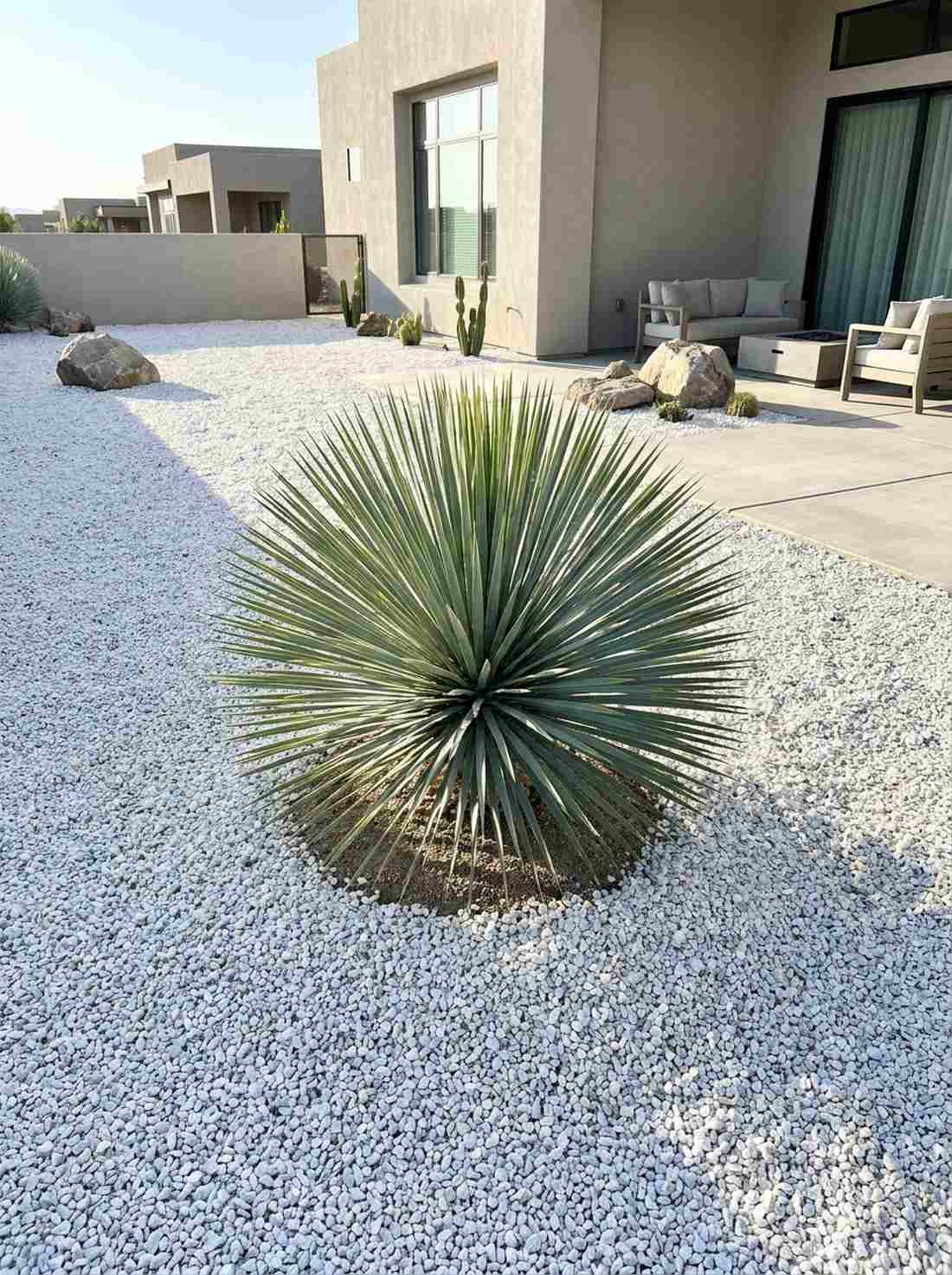
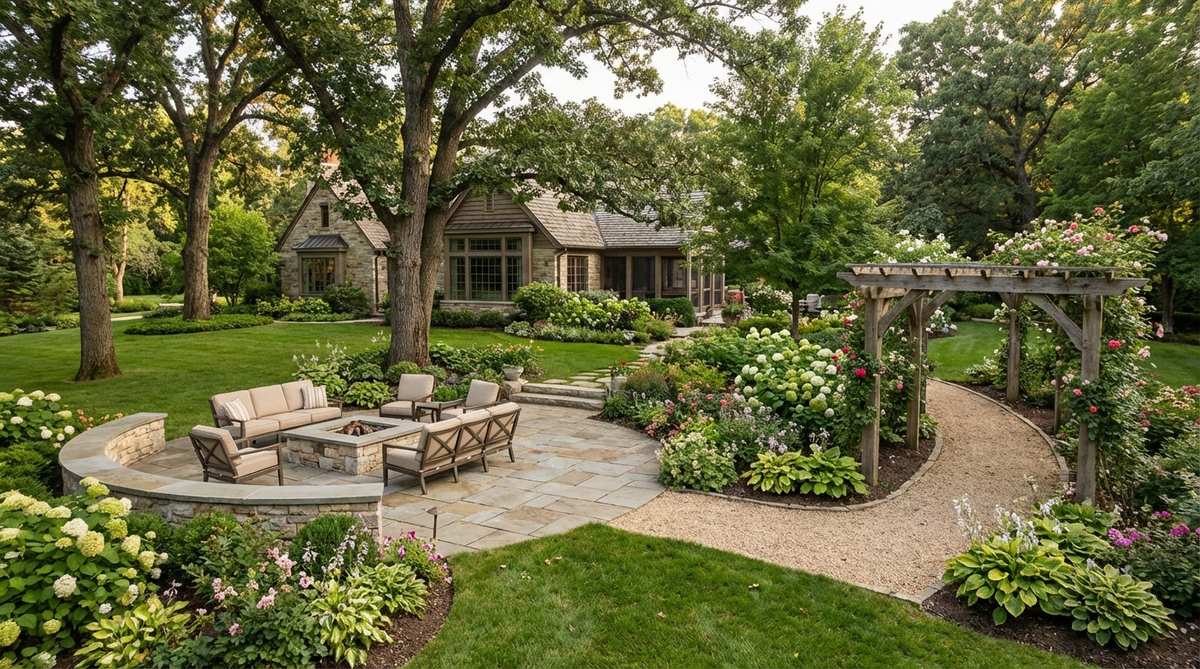
Looking completely otherworldly, this design acts as a spherical architectural centerpiece. It belongs front-and-center in a minimalist, white-gravel desert yard.
Forget messy shrubbery; plopping a perfect, rigid sphere into a landscape looks far more expensive than it is. Using heavy-duty cactus soil mixes and thick landscaping fabric prevents weed competition from ruining the stark geometry.
A medium specimen runs $150–$250 due to slow growth. Pin this if you want a zero-water sculptural yard.
- Key Materials: Yucca specimen, sharp draining cactus mix
- Vibe / Style: High-desert minimalist
- Difficulty: Easy (wear heavy gloves)
- Budget Breakdown: Yucca: $200 | Cactus Soil: $30
- Creator’s Tip: Never overwater this; plant it slightly mounded so rain instantly rolls away from the trunk.
- Smart Sourcing: commercial-grade cactus and palm soil mixes and puncture-resistant leather landscaping gloves.
27. Phormium Tenax Blade Fountains
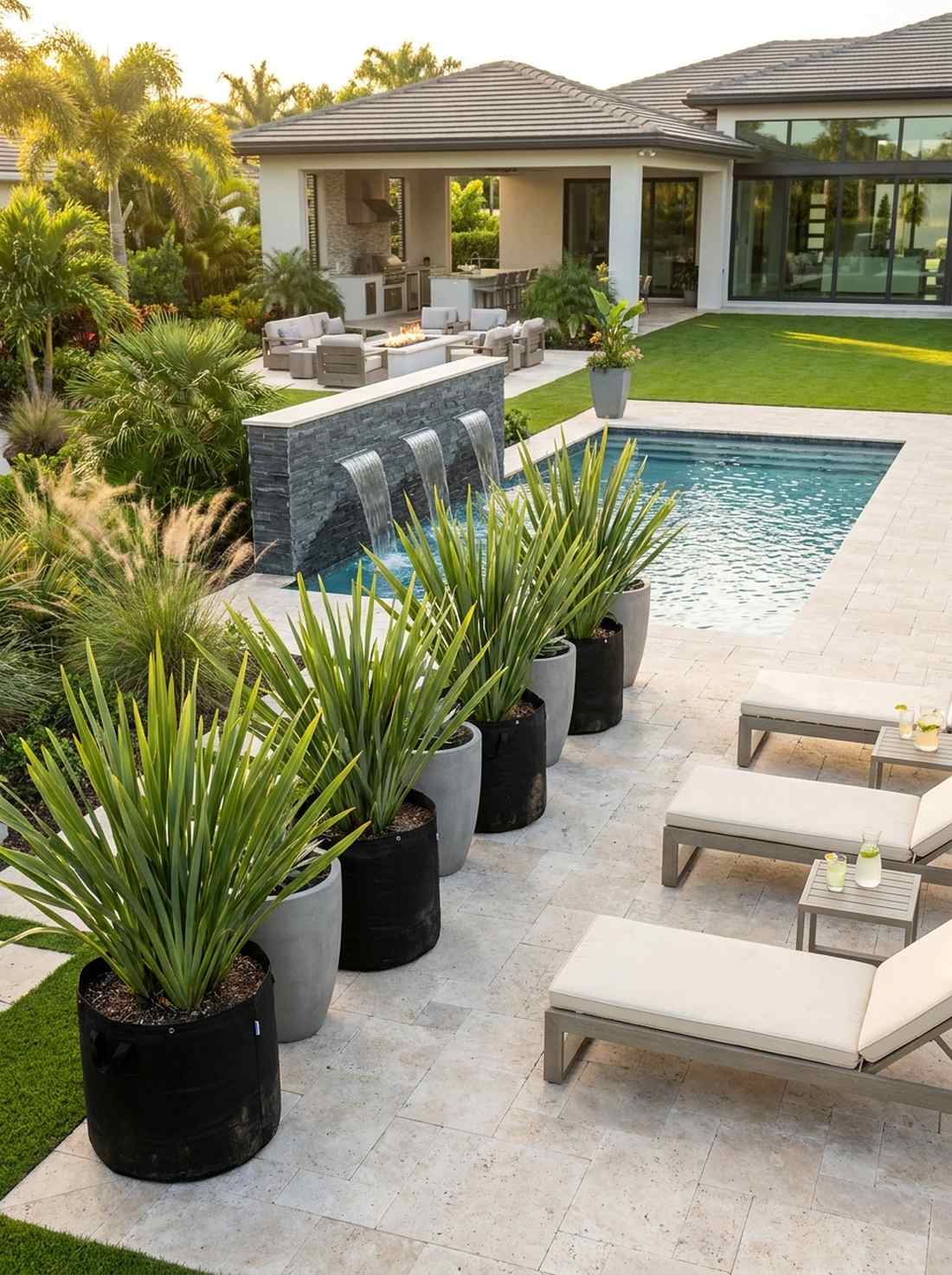
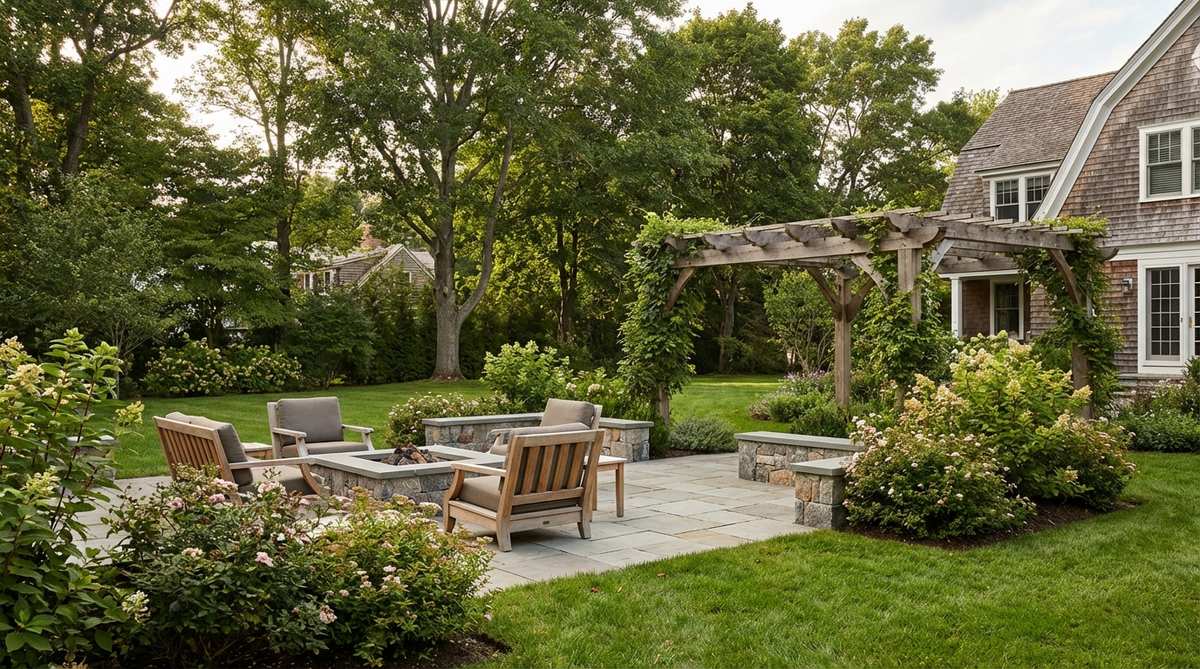
Exploding upward like frozen green fireworks, this setup focuses on vertical strappy foliage accents. It works brilliantly beside modern water features or pool decks.
Standard poolside plants drop leaves everywhere, but this architectural fountain offers massive scale with zero debris. Utilizing heavy-duty root grow bags if planted near pipes prevents the aggressive root system from causing plumbing damage.
Expect a cost of $50–$90 per plant. It’s the ultimate clean-line modern landscaping trick.
- Key Materials: Green Phormium cultivars, root containment bags
- Vibe / Style: Sleek resort pool deck
- Difficulty: Easy
- Budget Breakdown: Plant: $60 | Containment: $20
- Creator’s Tip: Pull dead blades straight down to snap them off cleanly at the base rather than cutting them.
- Smart Sourcing: heavy-duty fabric root containment bags and premium slow-release palm fertilizer.
28. Agave Attenuata Soft Succulent Rosettes
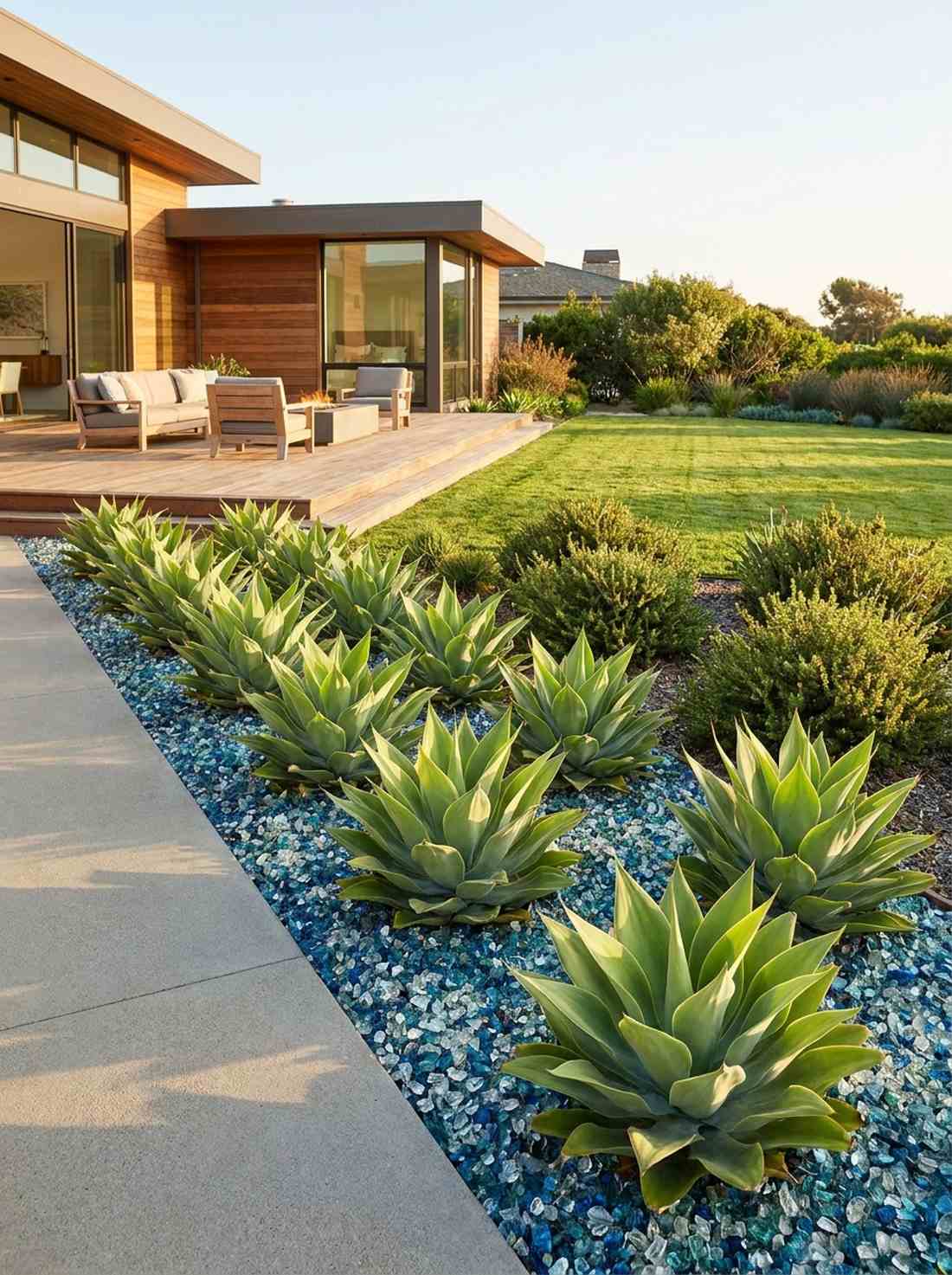
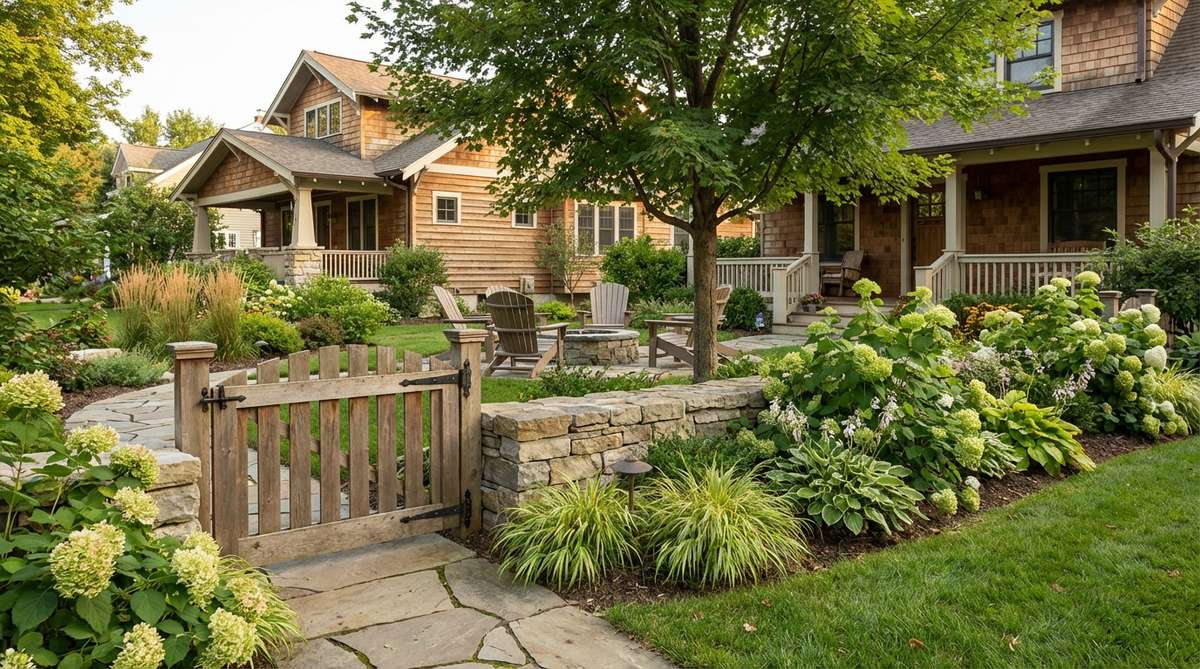
This lush layout brings an incredibly smooth, sculptural energy to any green garden landscape. Emphasizing spineless geometric succulent forms, it is safe and stunning for high-traffic walkway borders.
Most agaves are dangerous trip hazards, but this soft-edged variety delivers a surprisingly premium look without the emergency room risk. Adding commercial-grade weed barrier underneath premium crushed glass or gravel makes the rosettes visually explode.
You can create a striking row for about $100–$180. Save this for a modern, family-friendly desert vibe.
- Key Materials: Agave attenuata pups, decorative top-dressing
- Vibe / Style: Modern coastal California
- Difficulty: Easy
- Budget Breakdown: Plants: $120 | Crushed Glass Mulch: $40
- Creator’s Tip: Protect them with a light frost blanket if winter temperatures temporarily dip below freezing.
- Smart Sourcing: tumbled landscape glass mulch (bulk pack) and heavy-duty frost protection blankets.
29. Pittosporum Tenuifolium Wavy Foliage Screens
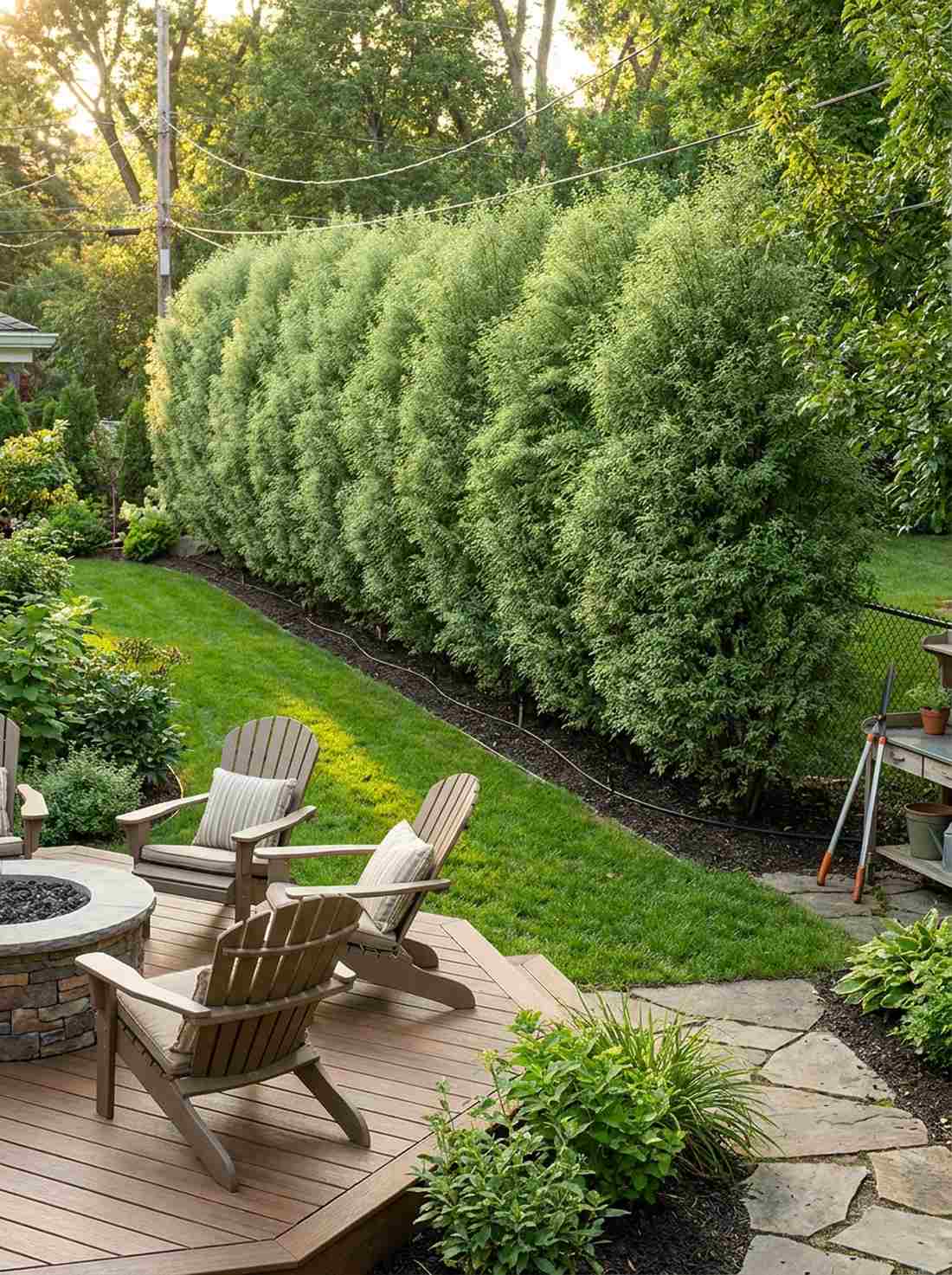
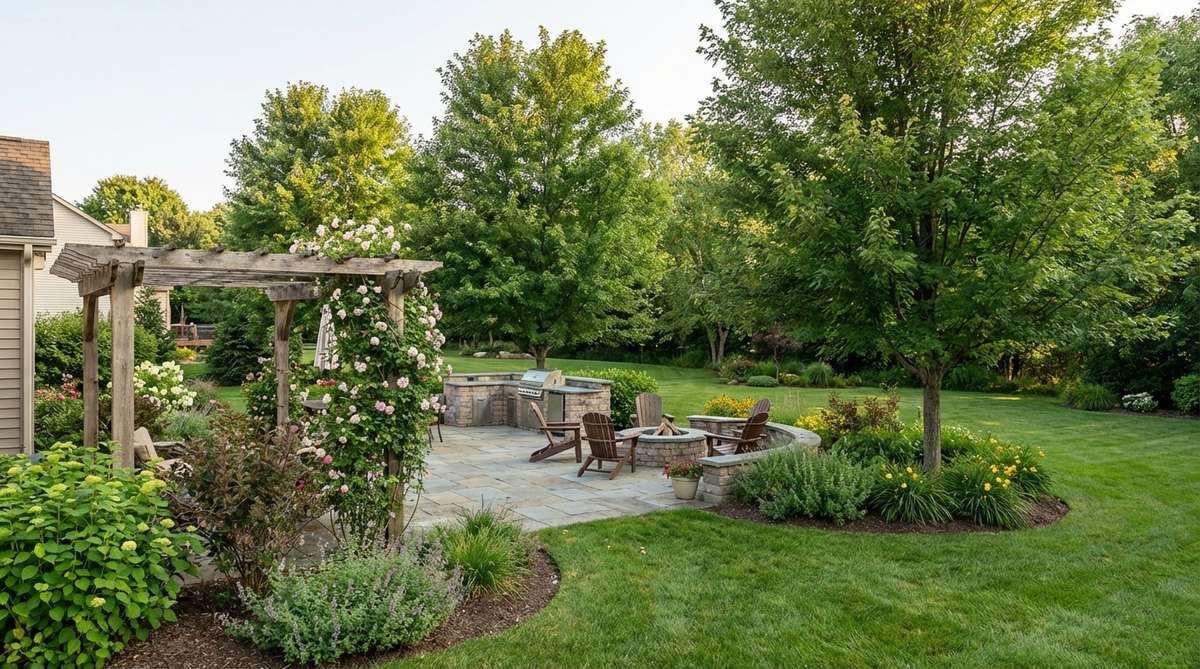
Delivering a soft, billowing privacy solution, this idea highlights fine-textured evergreen screening. It is exactly what you need to hide a chain-link fence without looking rigid or aggressive.
Unlike stark wooden fences, a wavy living screen gives a designer-level finish that dances in the breeze. Installing a premium drip irrigation line ensures the entire massive screen grows at the exact same uniform rate.
A 20-foot screen setup will cost around $200–$350. Highly recommended for elegant boundary lines.
- Key Materials: Pittosporum shrubs, drip line kit
- Vibe / Style: Soft contemporary privacy
- Difficulty: Intermediate
- Budget Breakdown: Shrubs: $250 | Drip Kit: $50
- Creator’s Tip: Pinch the new growth tips twice a year to force the shrub to become incredibly dense.
- Smart Sourcing: automated timer drip irrigation starter kits and professional hedge shearing tools.
The trick in the next section is something professional designers charge a premium for.
30. Euphorbia Characias Chartreuse Spires
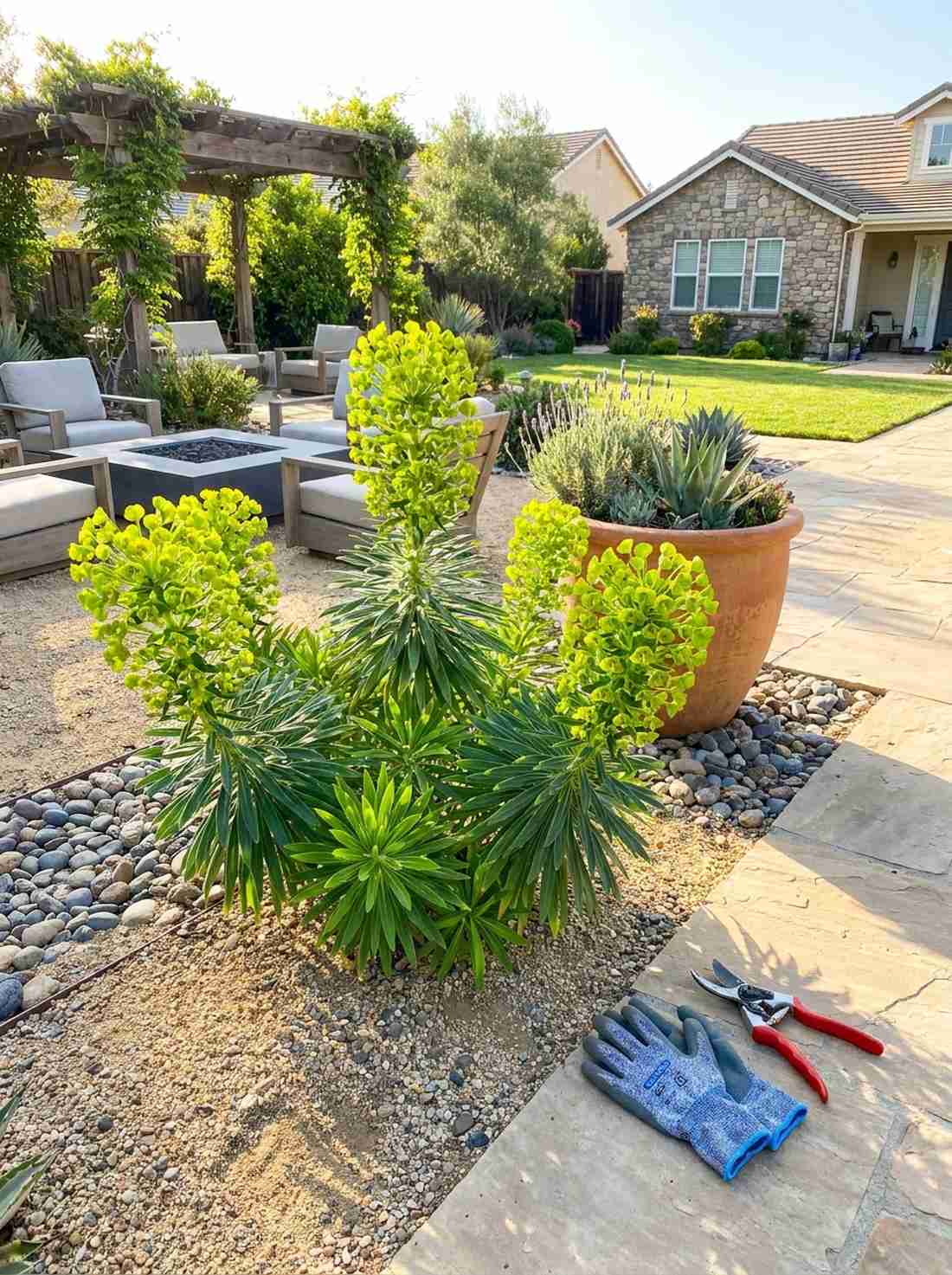
Strikingly alien and bold, this setup features electric lime architectural spikes. It acts as an incredible focal point in dry, Mediterranean-style gravel gardens.
Most drought-tolerant yards look dull and gray, but injecting these acid-green spires looks far more expensive than it is. Because the sap is messy, investing in puncture-resistant gloves and specialized pruning shears is absolutely essential for cleanup.
Adding three of these to a bed costs roughly $45–$70. Pin this to your bold modern landscaping board.
- Key Materials: Euphorbia plants, safety gear
- Vibe / Style: Avant-garde Mediterranean
- Difficulty: Moderate (requires safety gear)
- Budget Breakdown: Plants: $50 | Gloves: $20
- Creator’s Tip: Cut the spent flower stalks completely to the base; never leave half-cut dead stems showing.
- Smart Sourcing: professional bypass pruning shears and heavy-duty nitrile coated garden gloves.
31. Ajuga Reptans Creeping Carpets
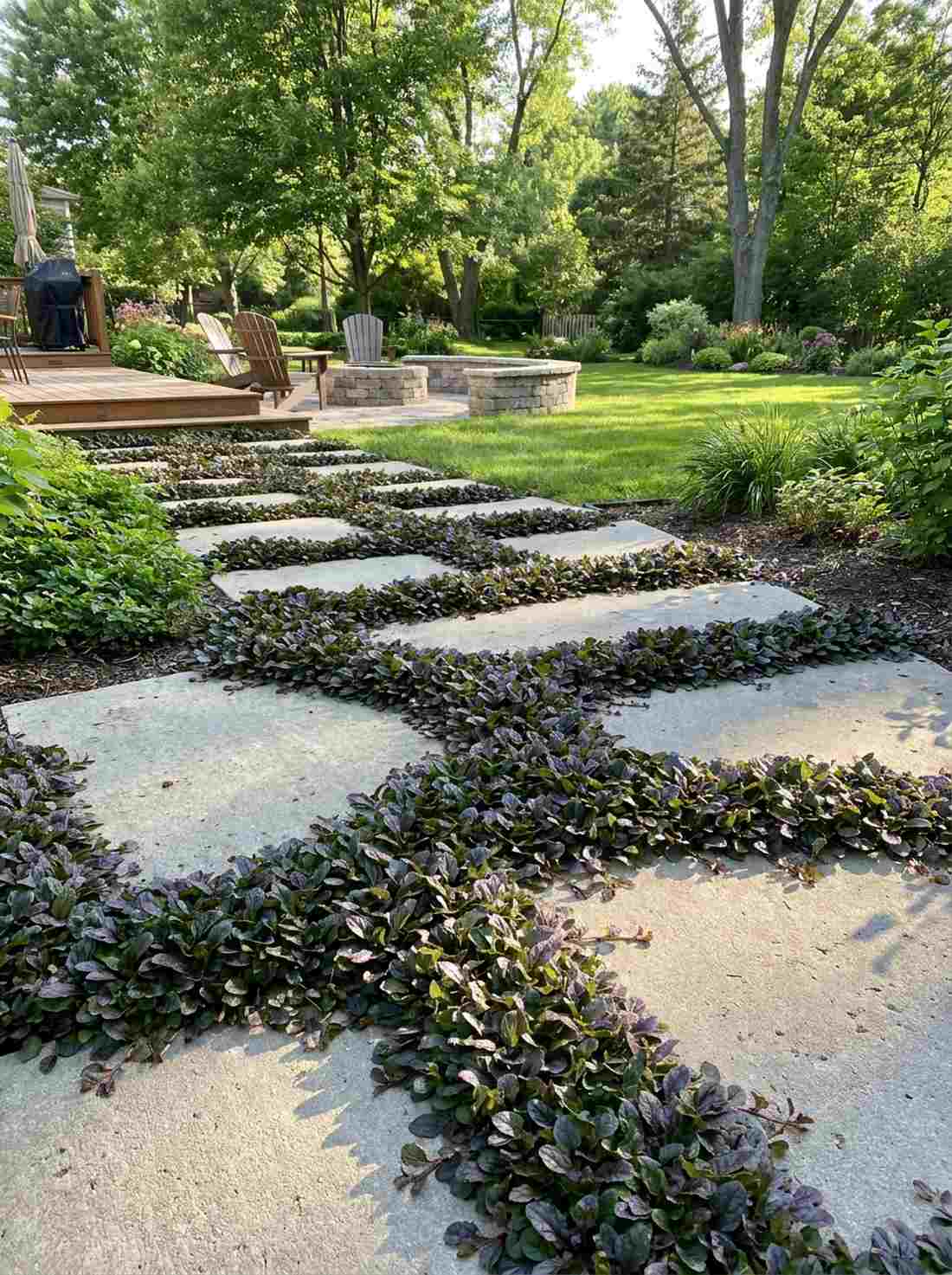
Creating a dark, moody foundation, this idea deploys a fast-spreading foliage mat. It excels as a lush filler between massive concrete stepping stones.
Instead of battling weeds in patio cracks, establishing a dense creeping carpet delivers a surprisingly premium look with zero effort. Buying bulk flats of plugs rather than individual pots saves massive money and speeds up total coverage.
A full flat of 50 plugs costs about $40–$60. It’s a fast upgrade that completely changes the patio vibe.
- Key Materials: Ajuga plug flats, stone pavers
- Vibe / Style: Lush transitional pathway
- Difficulty: Very easy
- Budget Breakdown: Plug Flats: $50 | Paver Sand: $15
- Creator’s Tip: Plant them slightly below the paver level so the mower blades miss them entirely.
- Smart Sourcing: bulk creeping groundcover plug flats and polymeric paver joining sand.
32. Pachysandra Terminalis Shade-Tolerant Mats
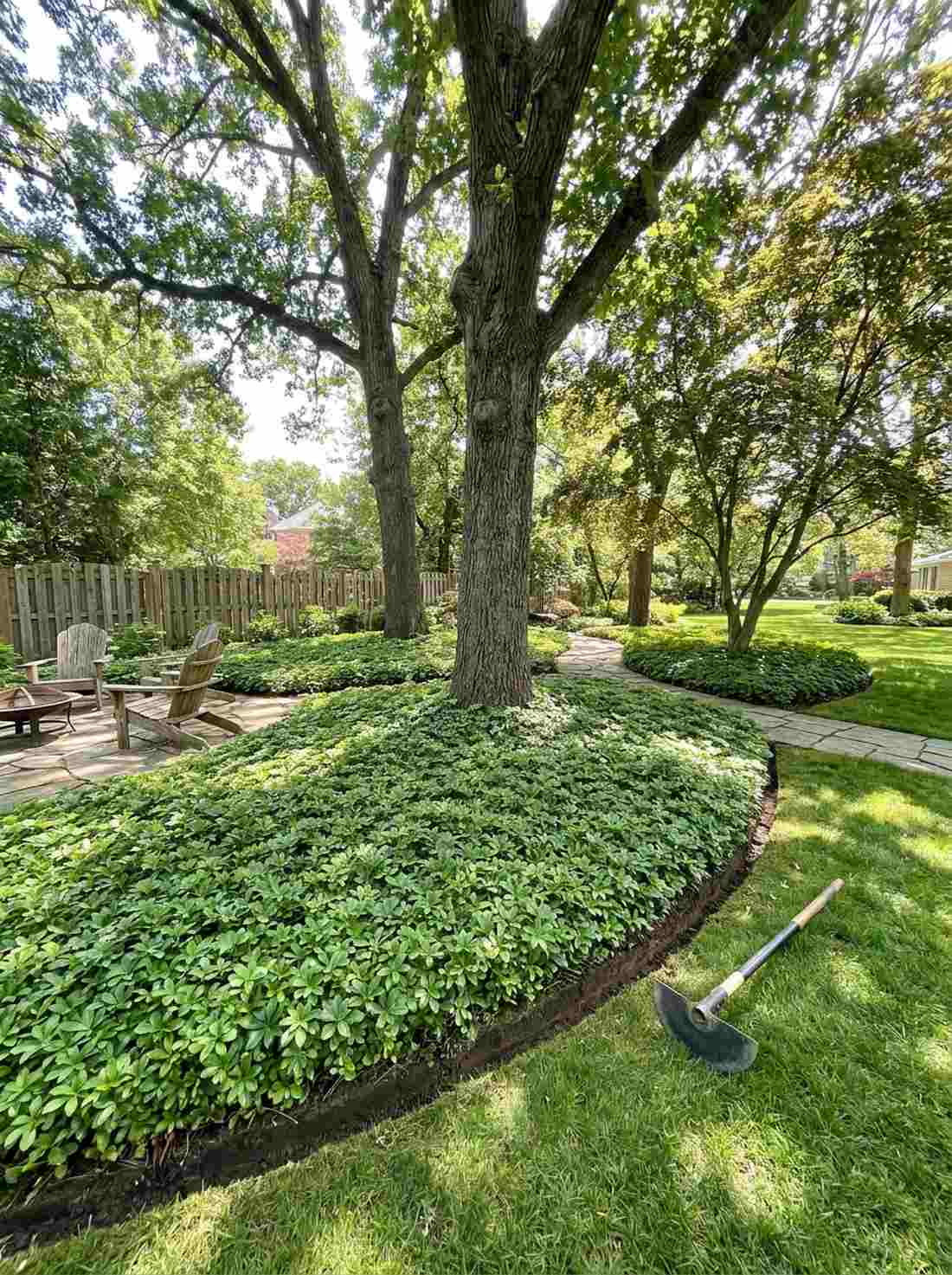
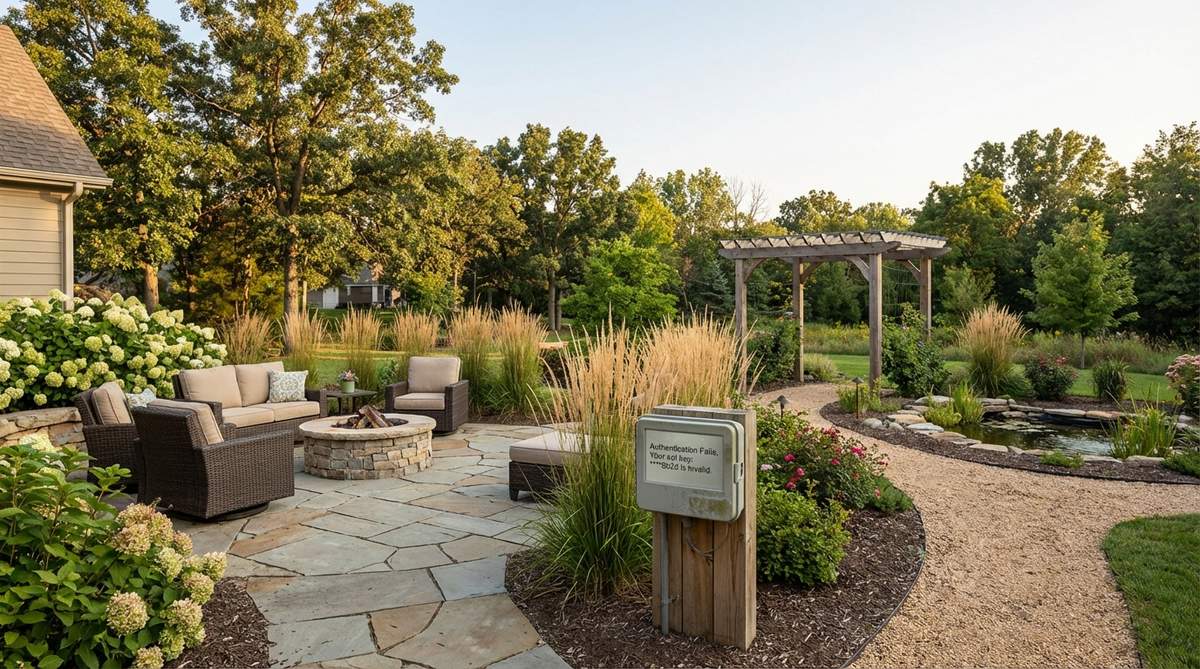
This classic East Coast look features uniform deep-shade carpeting. It is the ultimate solution for the barren dirt zones directly under mature pine or maple trees.
Grass will never grow in deep shade, but a glossy sea of Pachysandra gives a designer-level finish that requires zero mowing. Using a premium edging trench tool keeps this aggressive spreader perfectly contained away from the lawn.
You can cover a large tree base for around $80–$120. Save this idea to fix your worst backyard dead zones.
- Key Materials: Pachysandra flats, trench edger
- Vibe / Style: Traditional estate understory
- Difficulty: Easy
- Budget Breakdown: Flats: $90 | Edging Tool: $30
- Creator’s Tip: Rake tree leaves off this carpet before winter snowfall to prevent fungal dead spots.
- Smart Sourcing: heavy-duty half-moon step edgers and bulk shade groundcover bare-roots.
33. Irish Moss Fine-Textured Seams
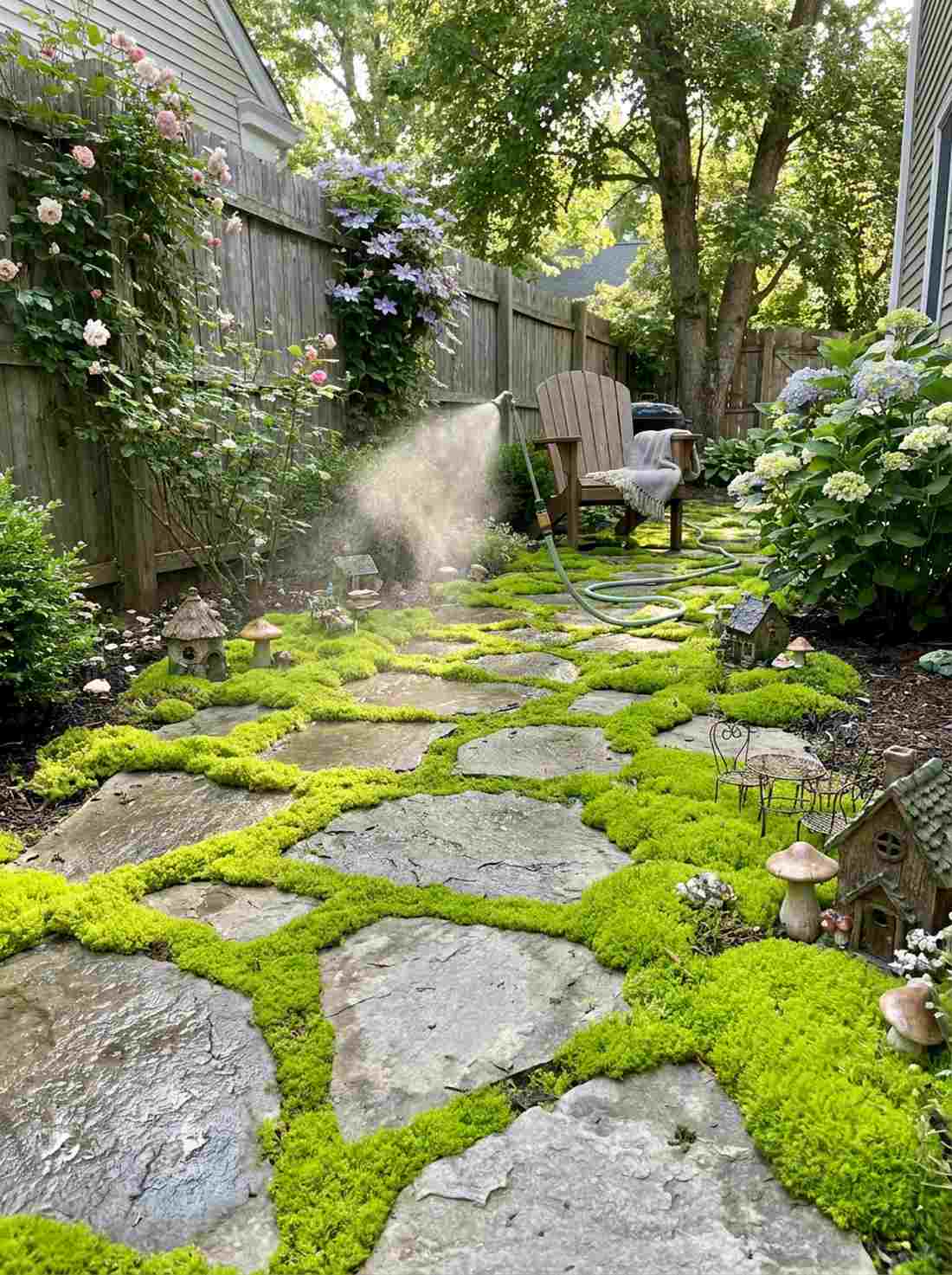
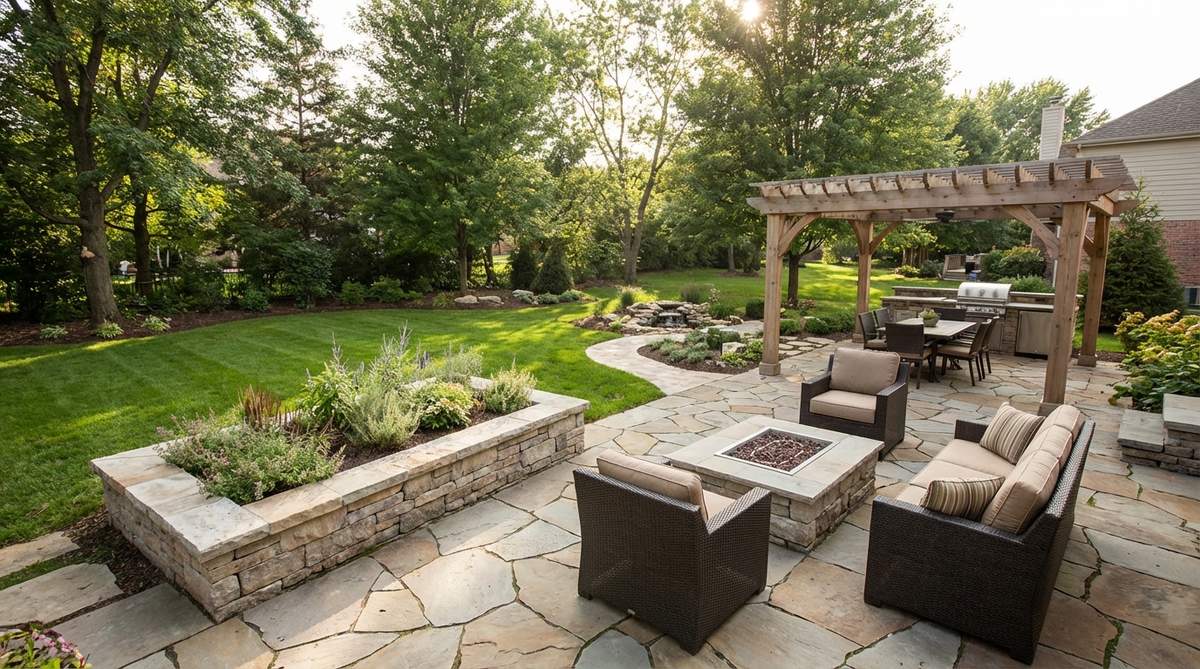
Looking like an enchanted fairy pathway, this setup relies on ultra-fine mossy paver joints. It works wonderfully between natural flagstone paths in damp, partially shaded side yards.
Basic gravel pathways look cheap, but weaving neon-green moss through the stones looks far more expensive than it is. Utilizing miniature garden supplies and a misting hose attachment ensures the moss establishes rapidly without being washed away.
Materials generally cost $30–$60 for a short path. Pin this for a magical cottage garden touch.
- Key Materials: Irish moss flats, gentle misting nozzle
- Vibe / Style: Fairycore cottage path
- Difficulty: Intermediate moisture management
- Budget Breakdown: Moss Flats: $40 | Nozzle: $15
- Creator’s Tip: Tear the moss flats into tiny chunks rather than cutting them to blend the edges naturally.
- Smart Sourcing: gentle garden hose misting wands and UV-coated resin fairy garden kits.
34. Sedge Meadow Alternatives
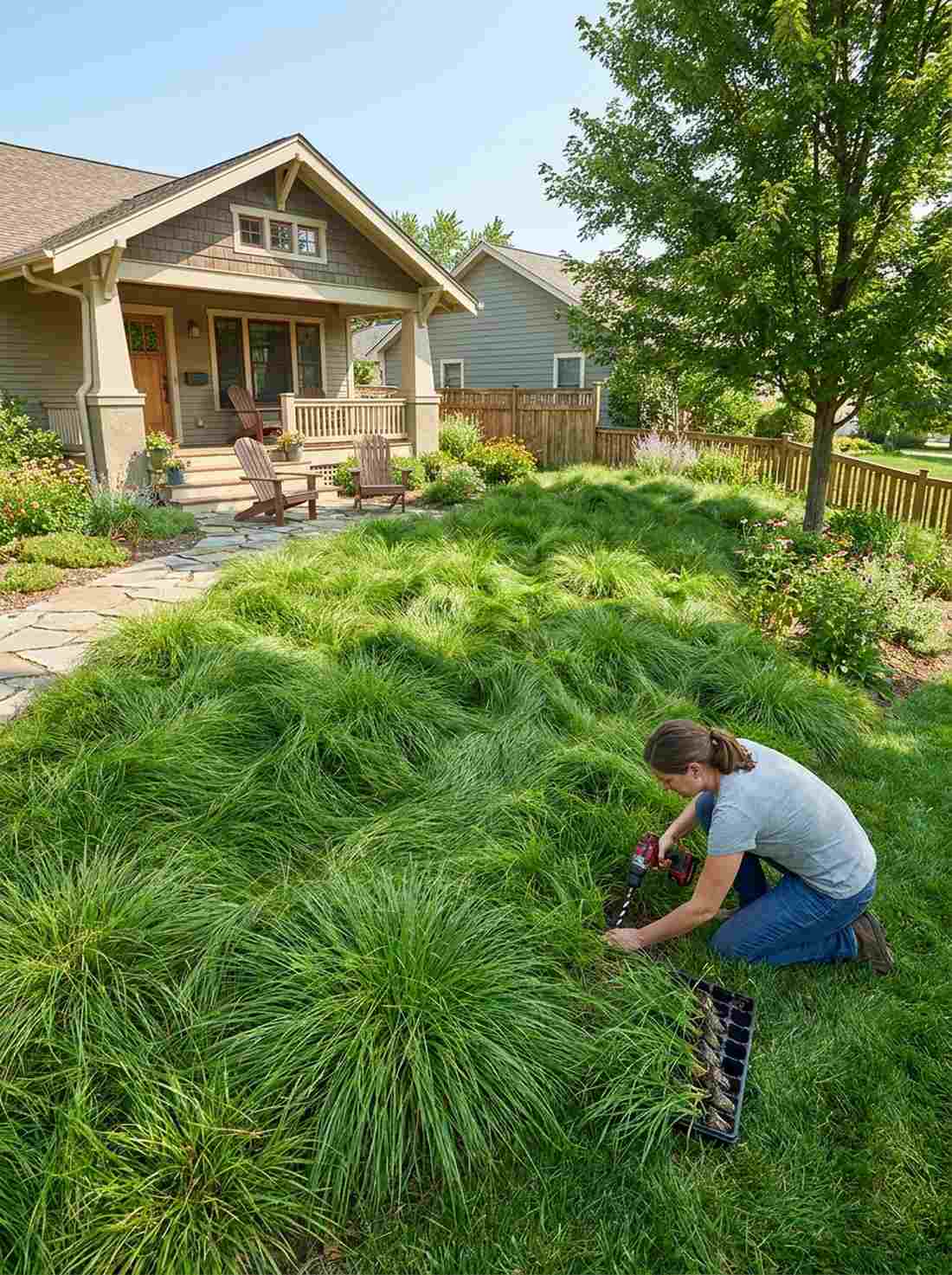
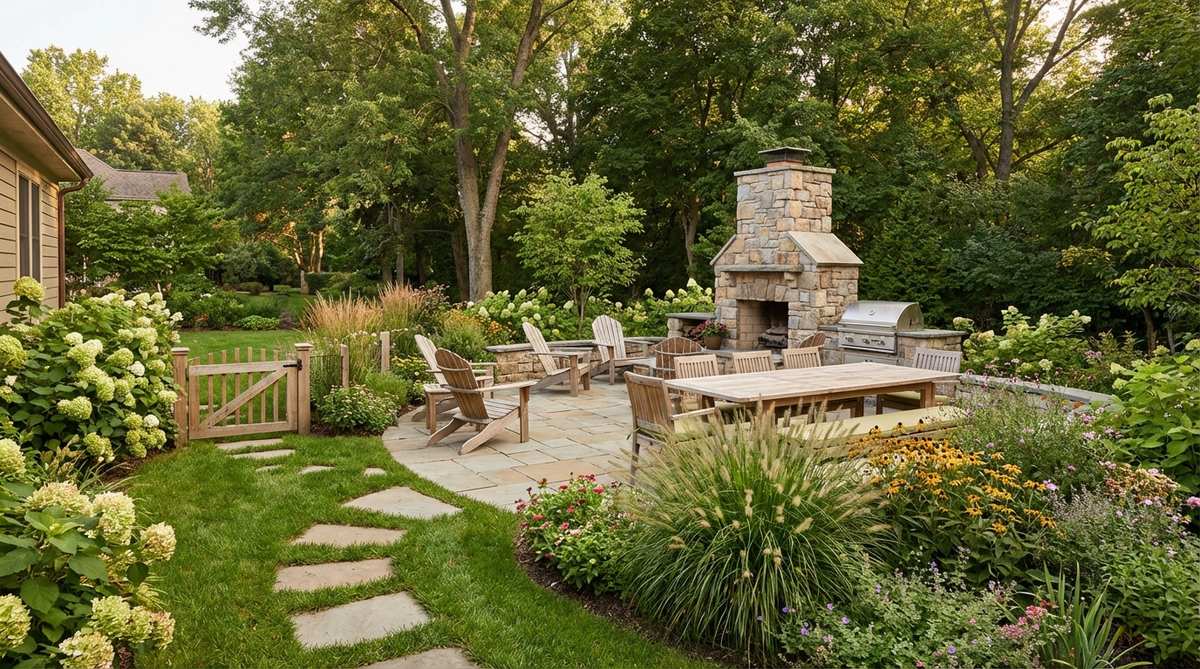
This eco-friendly aesthetic creates a flowing no-mow grass substitute. It is absolutely brilliant for sloping front yards where pushing a lawnmower is dangerous.
Stop paying for expensive lawn care; a massive field of native sedge gives a designer-level finish that naturally flops into beautiful green waves. Using specialized plug auger drill bits makes planting hundreds of these plugs take minutes instead of days.
Converting a small lawn costs around $150–$300 in bulk plugs. It’s a massive time and money saver.
- Key Materials: Carex plugs, drill auger
- Vibe / Style: Wild organic modern
- Difficulty: Moderate initial labor
- Budget Breakdown: Bulk Plugs: $200 | Drill Bit: $20
- Creator’s Tip: Water heavily for the first month; once established, you literally never need to water or mow it.
- Smart Sourcing: power drill garden auger bits (bulk pack) and bulk native sedge plug trays.
Never settle for boring yards when the upcoming layout exists.
35. Baby Tears Living Paving
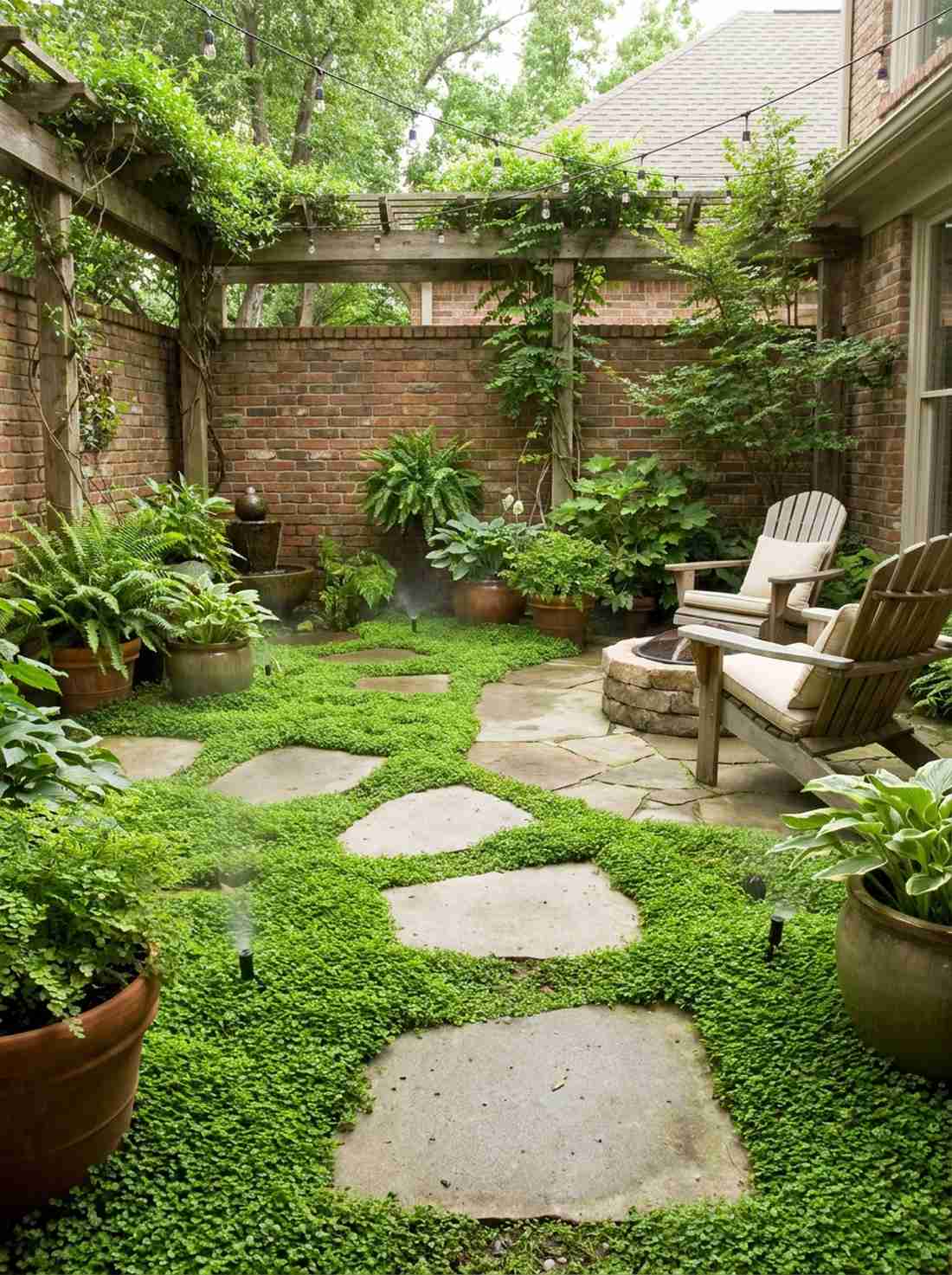
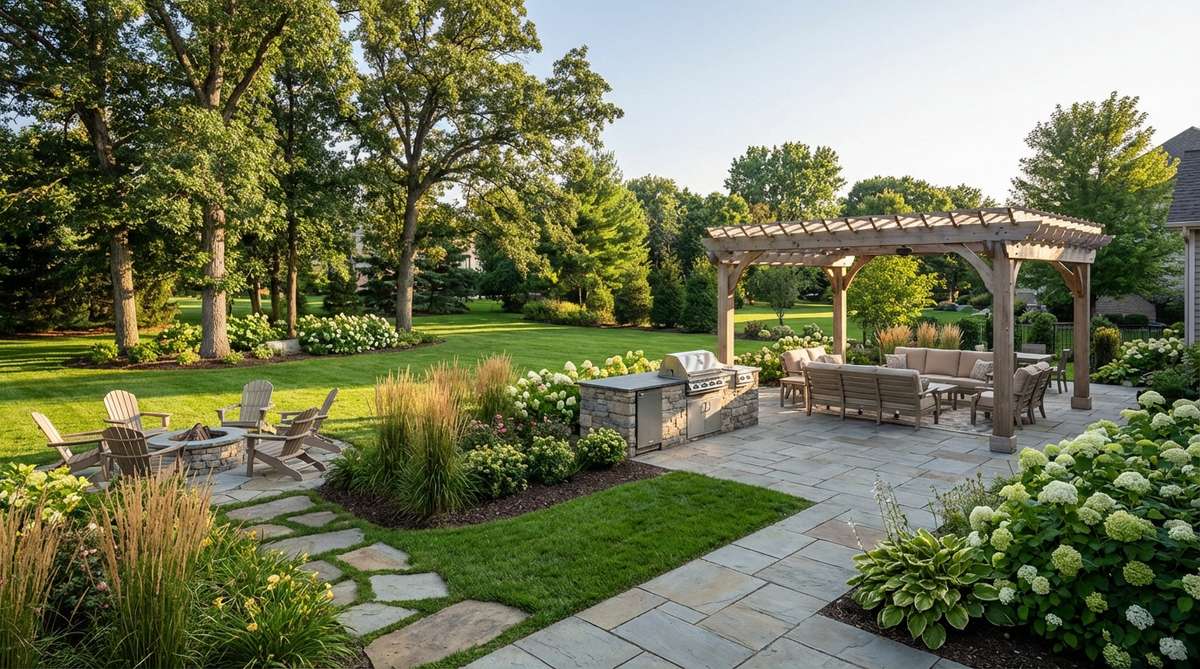
Emanating a lush, terrarium-like delicacy, this layout showcases an intense green garden image using micro-leaf patio groundcovers. It is flawless for damp, heavily shaded courtyard floors.
Standard concrete looks brutal, but covering the soil gaps with this hyper-dense green mat delivers a surprisingly premium look. Employing terrarium accessories or micro-sprinkler systems keeps the ambient humidity exactly where this fragile-looking plant needs it.
You can establish this for roughly $25–$50. Pin this if you have a shaded, walled-in patio space.
- Key Materials: Baby Tears pots, micro-sprinklers
- Vibe / Style: Lush greenhouse courtyard
- Difficulty: Intermediate
- Budget Breakdown: Plants: $30 | Sprinklers: $20
- Creator’s Tip: Never walk on it; use stepping stones to cross the area as the stems are highly fragile.
- Smart Sourcing: micro-drip irrigation misting kits and premium indoor/outdoor potting mix.
36. Creeping Thyme Fragrant Pathways
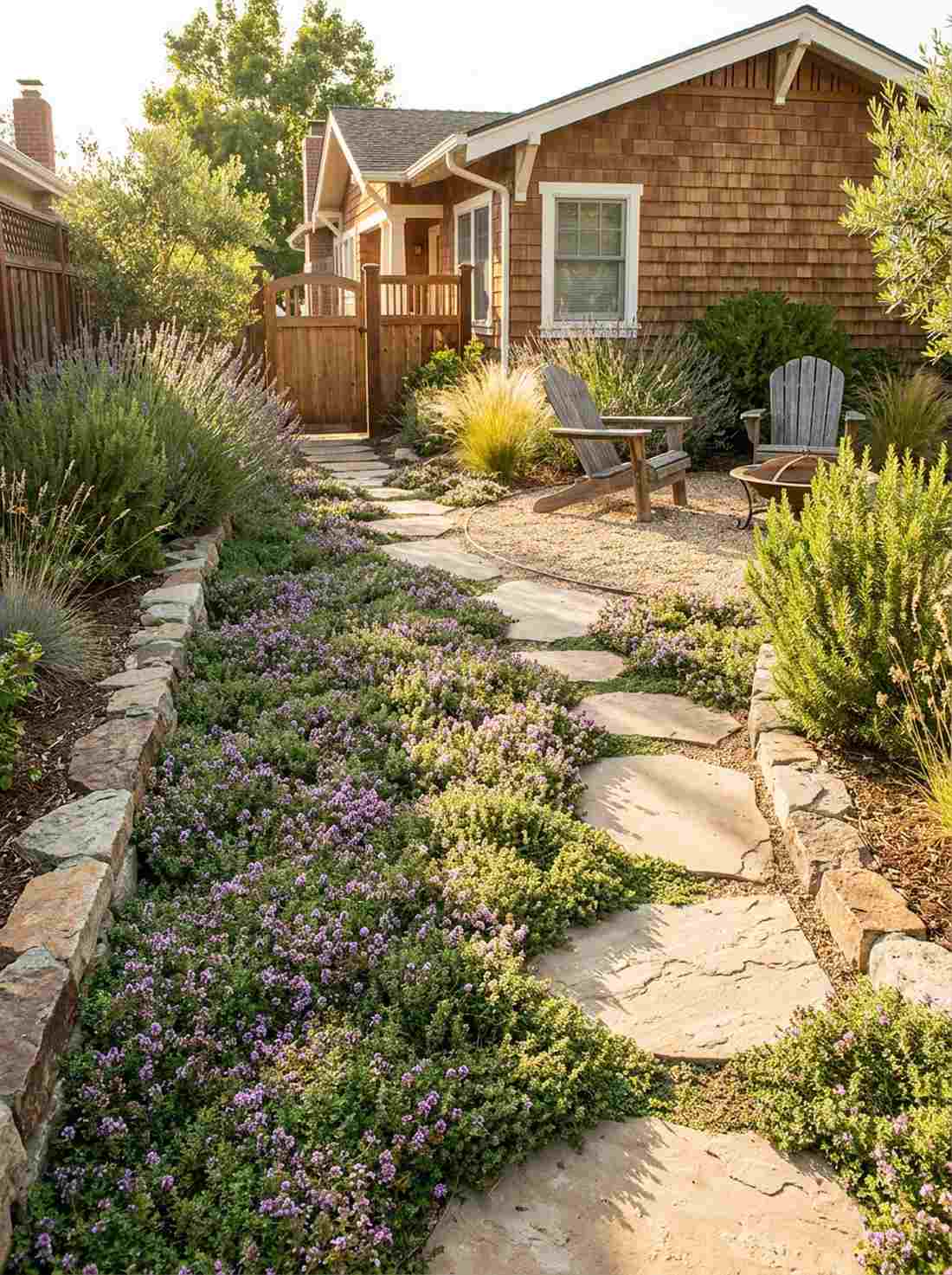
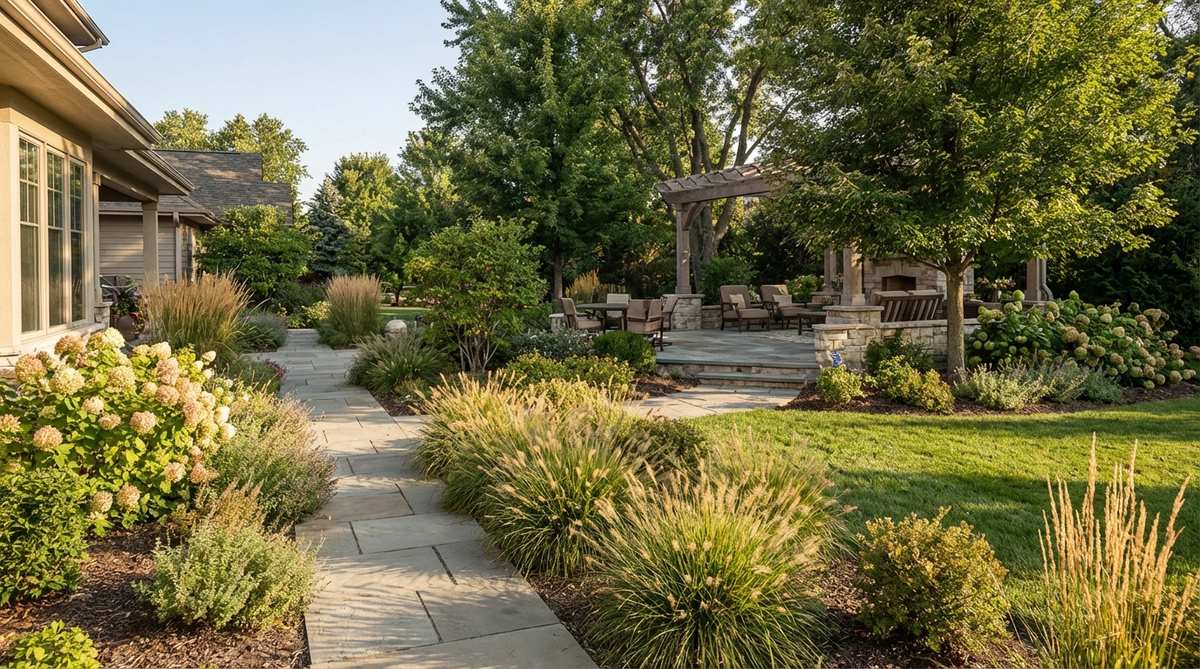
This layout offers a tough, walkable surface disguised as a scented drought-proof carpet. It is the ultimate choice for a sunny, high-traffic side-yard path.
Most walkable groundcovers need massive water, but thyme thrives on neglect and looks incredibly high-end when it spills over edging. Mixing a high-quality sand base into the soil before planting ensures the rapid drainage this herb demands.
Installing a pathway border costs about $40–$75. Save this for a beautiful, water-wise stepping stone upgrade.
- Key Materials: Creeping thyme, coarse sand
- Vibe / Style: Mediterranean villa path
- Difficulty: Easy
- Budget Breakdown: Thyme flats: $50 | Sand: $15
- Creator’s Tip: The more you walk on it, the denser it grows and the better it smells.
- Smart Sourcing: bulk creeping thyme seed packs and heavy-duty landscaping pathway fabric.
37. Geometric Boxwood Parterre
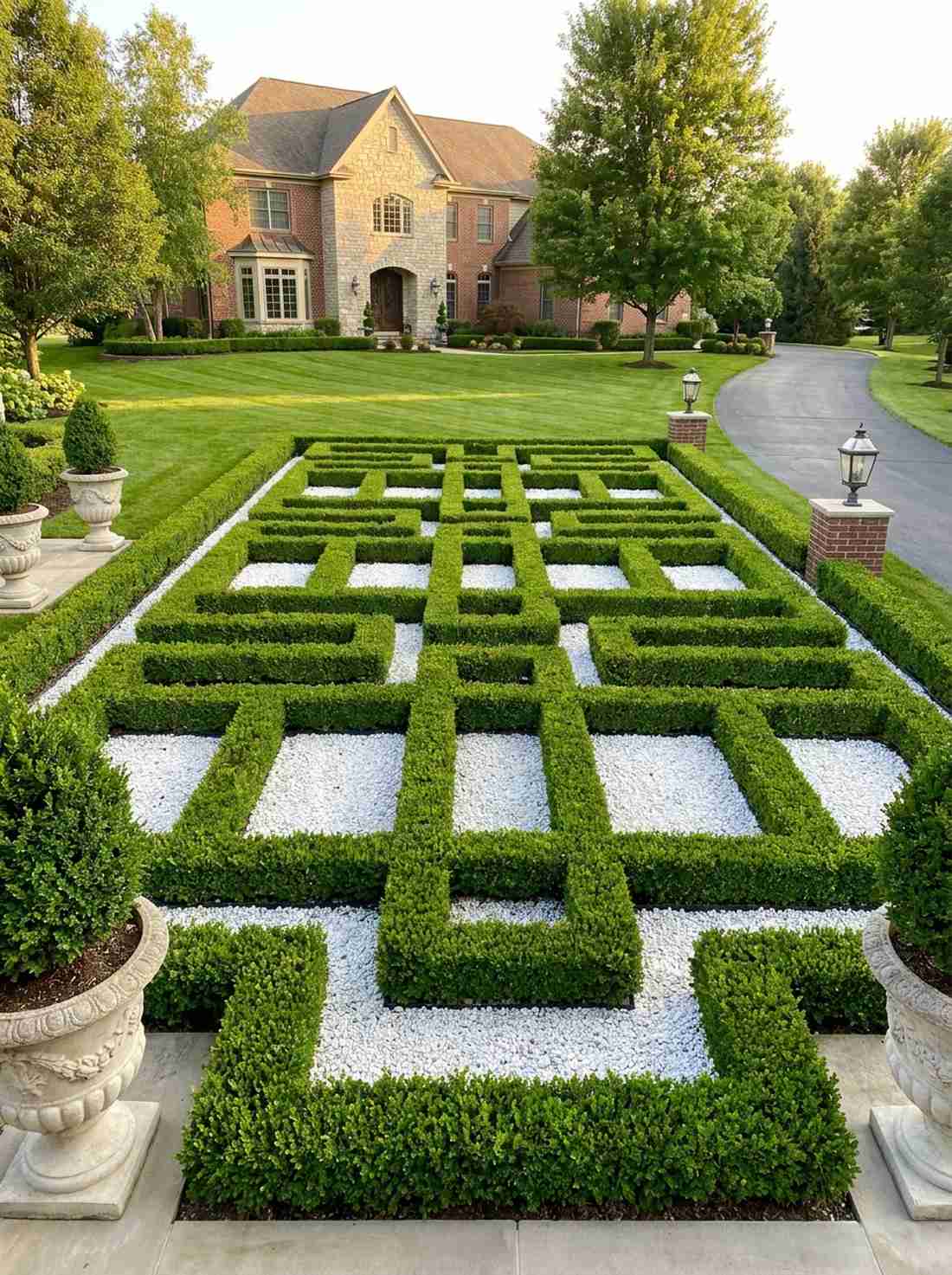
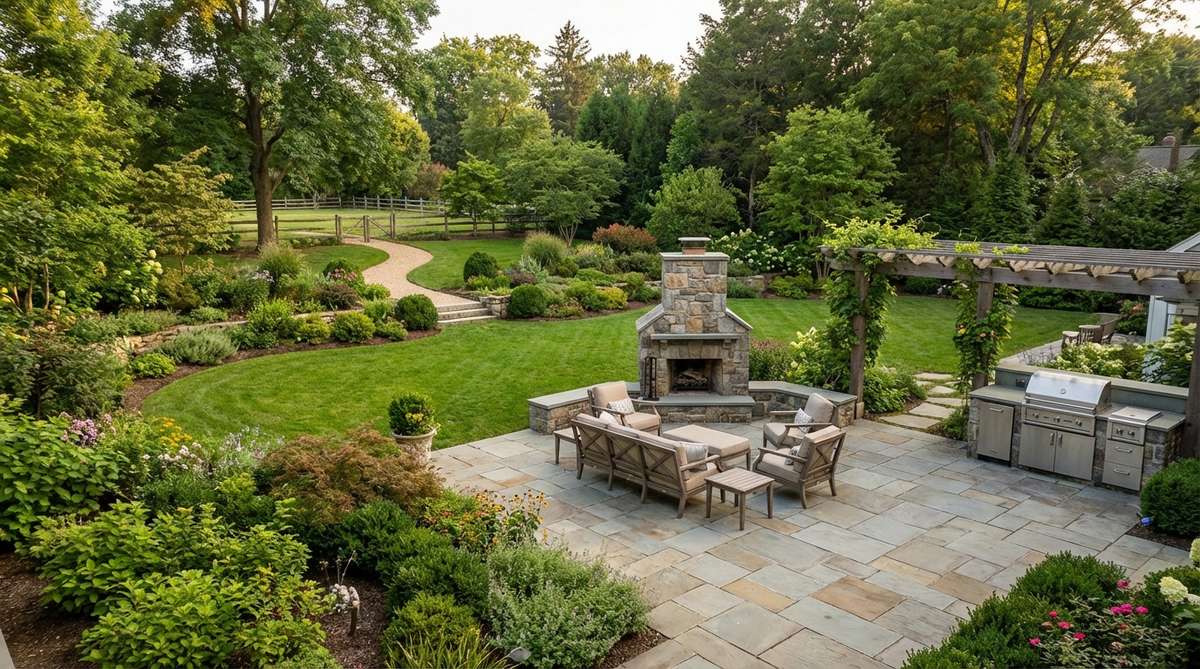
This ultra-formal design feels like a billionaire’s French chateau courtyard. It utilizes interlocking geometric hedge patterns, making it a show-stopping centerpiece for a flat front lawn.
Curved garden beds look messy, but laser-straight geometric lines give a designer-level finish that screams luxury. Utilizing professional landscaping spray paint to mark your exact grid before digging prevents crooked, amateur-looking results.
Depending on size, this costs around $200–$500 in bulk shrubs. It completely changes the vibe of your home’s exterior.
- Key Materials: Dwarf boxwoods, marking paint
- Vibe / Style: Grand formal European
- Difficulty: Advanced precision
- Budget Breakdown: Shrubs: $350 | Marking Tools: $20
- Creator’s Tip: Fill the empty spaces inside the squares with bright white gravel to make the green lines pop.
- Smart Sourcing: professional inverted landscaping spray paint and premium topiary shaping shears.
38. Single-Species Grass Fields
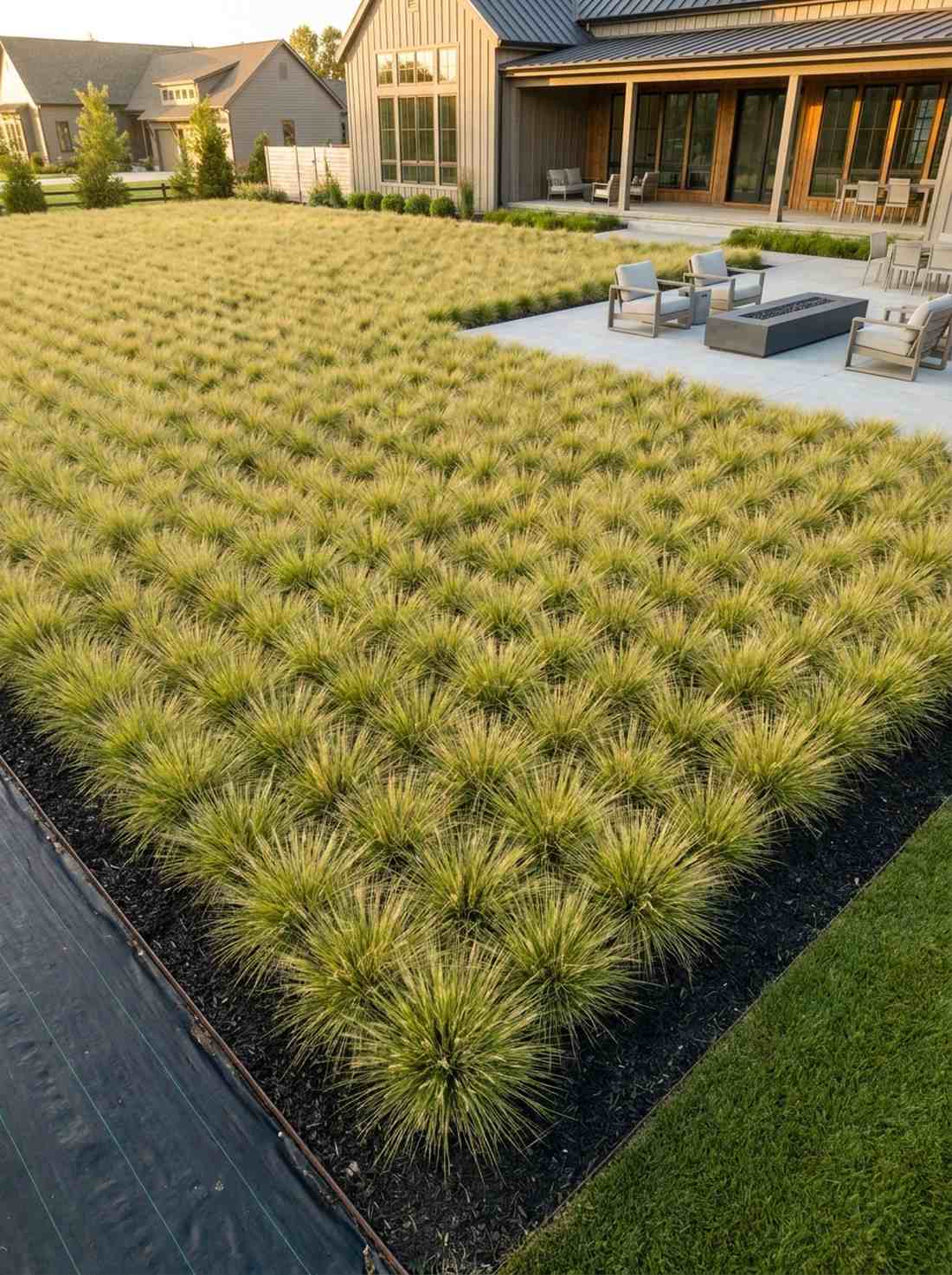
Projecting immense calm and modern simplicity, this approach highlights monolithic ornamental grass grids. It works perfectly for vast, empty backyard spaces you don’t want to mow.
Most homeowners mix too many plants, but a massive field of identical grass looks far more expensive than it is. Buying wholesale plug trays and using heavy-duty weed barriers keeps the monolithic aesthetic perfectly clean.
You can cover a massive area for about $300–$600. Save this layout for an ultra-modern landscape overhaul.
- Key Materials: Identical grass plugs, commercial weed barrier
- Vibe / Style: Architectural prairie modern
- Difficulty: Moderate labor
- Budget Breakdown: Bulk Plugs: $400 | Weed Barrier: $100
- Creator’s Tip: Stagger the planting in a diagonal grid rather than squares to make the field look full faster.
- Smart Sourcing: commercial-grade weed barrier bulk rolls and heavy-duty steel landscape staples.
39. Steel-Edged Green Panels
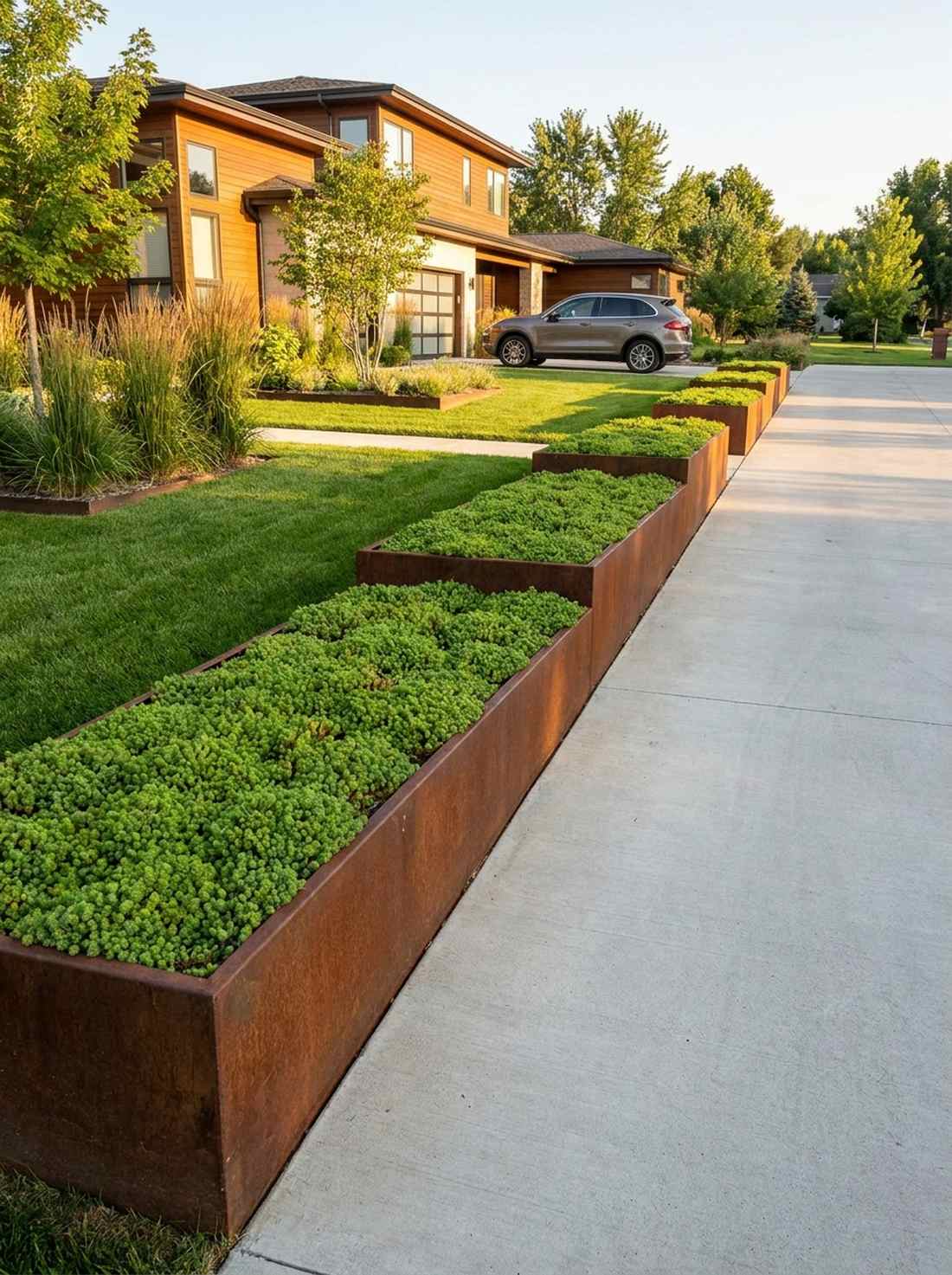
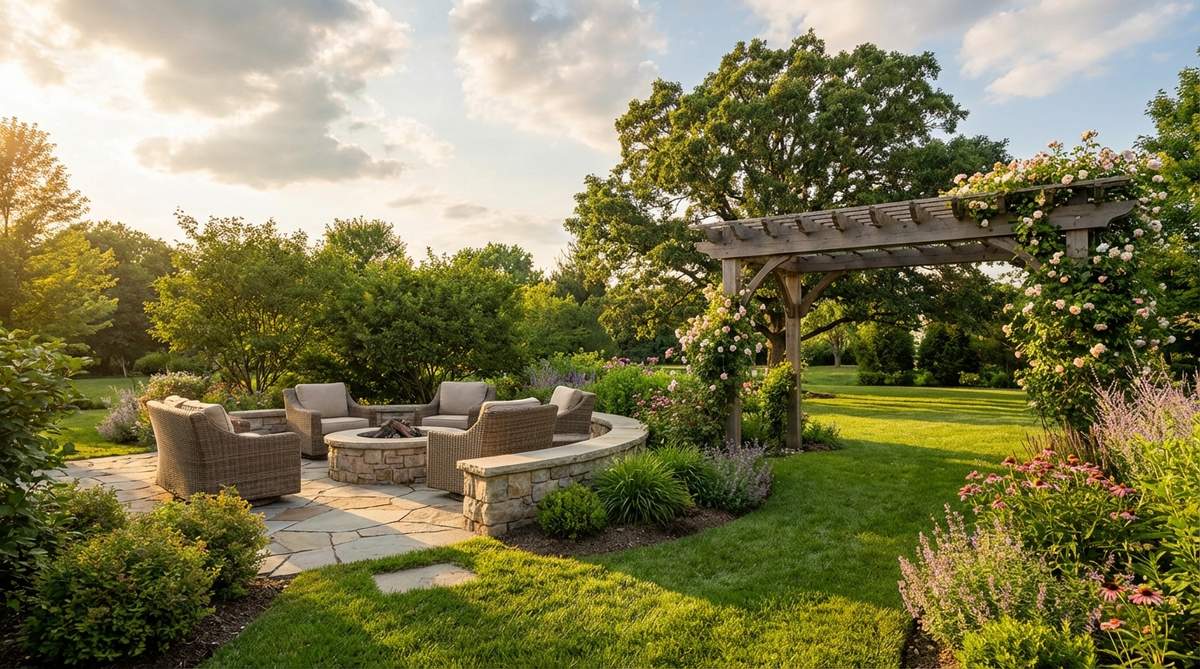
This edgy, industrial setup looks like a trendy downtown hotel terrace. It frames groundcovers within raised corten steel borders, ideal for modernizing a plain concrete driveway edge.
Plastic edging cracks and looks cheap; wrapping your greens in weathering steel delivers a surprisingly premium look with incredible longevity. Securing the steel firmly with heavy-duty stakes prevents soil blowout during heavy rainstorms.
Steel edging and plants run about $150–$300 per section. Pin this to your industrial modern exterior board.
- Key Materials: Corten steel edging strips, uniform groundcover
- Vibe / Style: Industrial modern chic
- Difficulty: Intermediate
- Budget Breakdown: Steel Edging: $200 | Plants: $50
- Creator’s Tip: Spray the new steel with a mix of hydrogen peroxide and salt to instantly force the rusty patina.
- Smart Sourcing: flexible corten steel landscape edging kits and heavy-duty steel edging stakes.
Material Guide: Cheap vs. Premium Aesthetic
Knowing exactly where to save and where to spend makes all the difference in achieving that “looks expensive but isn’t” vibe.
- Standard vs. Premium Edging: Cheap plastic heaves in winter. Investing in steel or heavy-duty aluminum border kits keeps geometric lines razor-sharp for decades.
- Pre-made Kits vs. Sourcing Locally: Buying wholesale plug trays online is vastly cheaper than buying individual 1-gallon pots from local nurseries for mass plantings.
This next minimalist hack totally shifts the vibe of any standard patio.
40. Tiered Platform Plantings
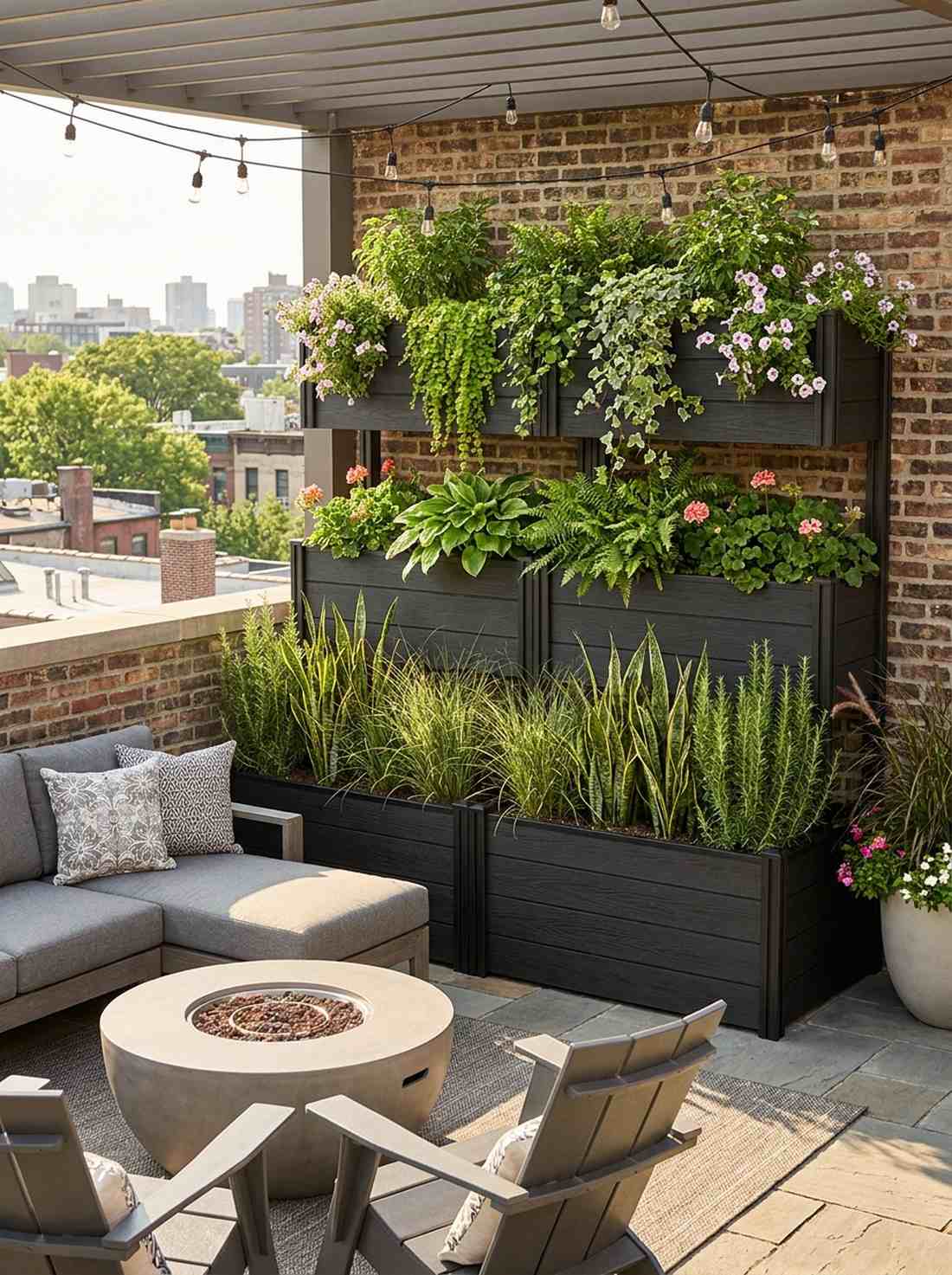
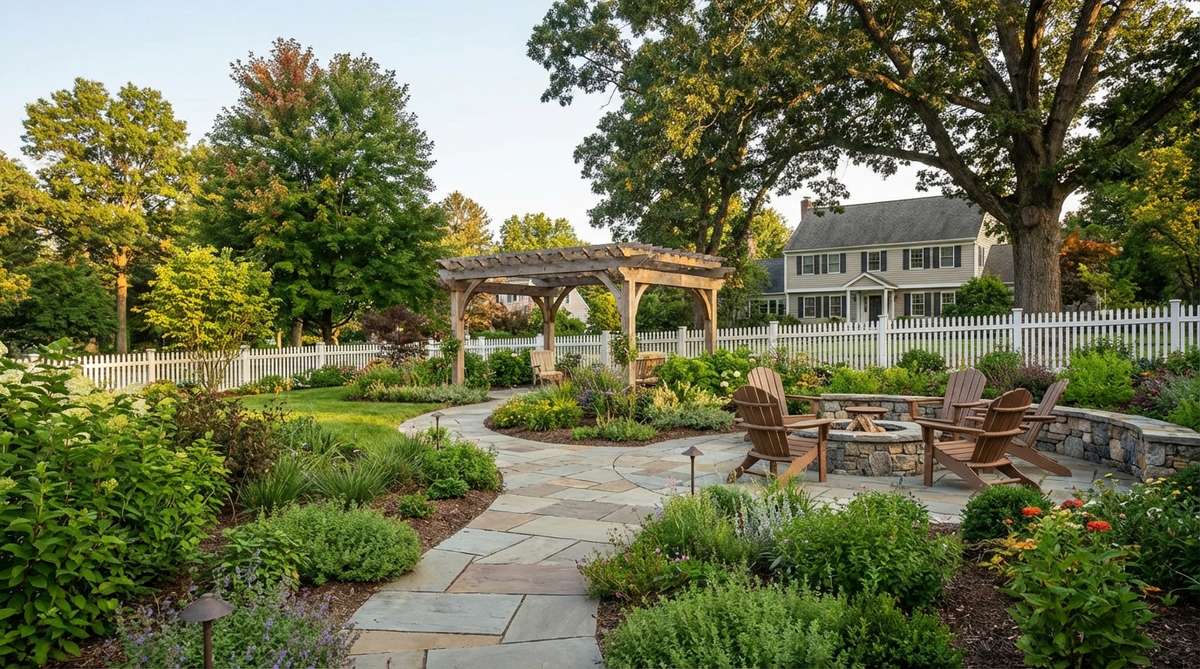
Emanating serious sculptural weight, this idea showcases multi-level green planter boxes. It completely transforms tiny, flat urban courtyards by forcing the eye upward.
Flat gardens in small spaces look tiny, but building vertical tiers gives a designer-level finish that maximizes limited square footage. Utilizing UV-coated modular planter kits allows you to snap these tiers together without cutting wood.
A three-tier setup costs around $150–$250. Highly recommended for renters or small space owners.
- Key Materials: Modular raised beds, cascading greens
- Vibe / Style: Urban sculptural terrace
- Difficulty: Easy
- Budget Breakdown: Planter Kits: $180 | Soil & Plants: $70
- Creator’s Tip: Put the tallest architectural plants on the bottom tier and the cascading spillers on the top.
- Smart Sourcing: UV-coated modular raised planter kits and premium indoor/outdoor potting mix.
41. Grid-Planted Specimen Arrays
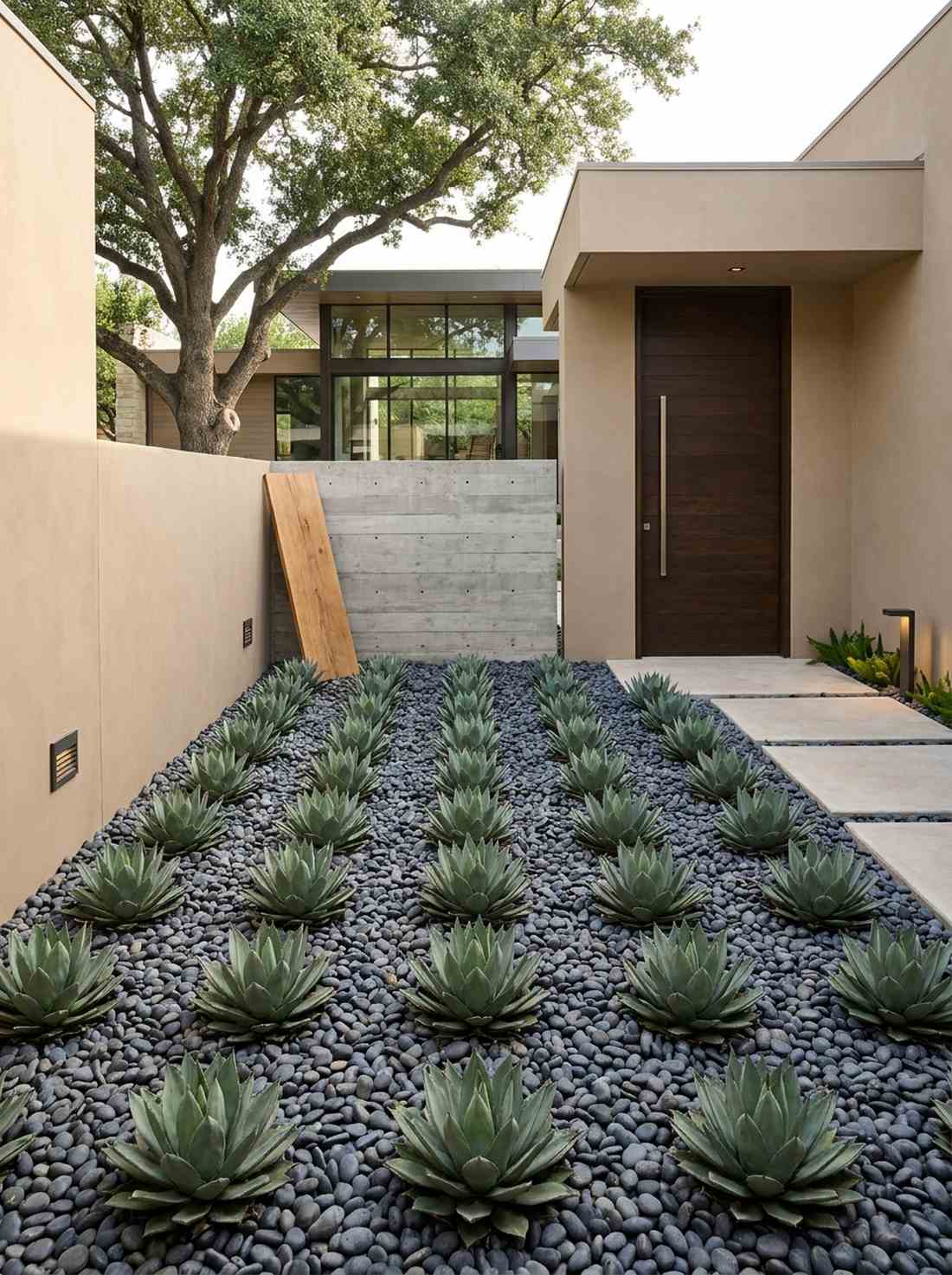
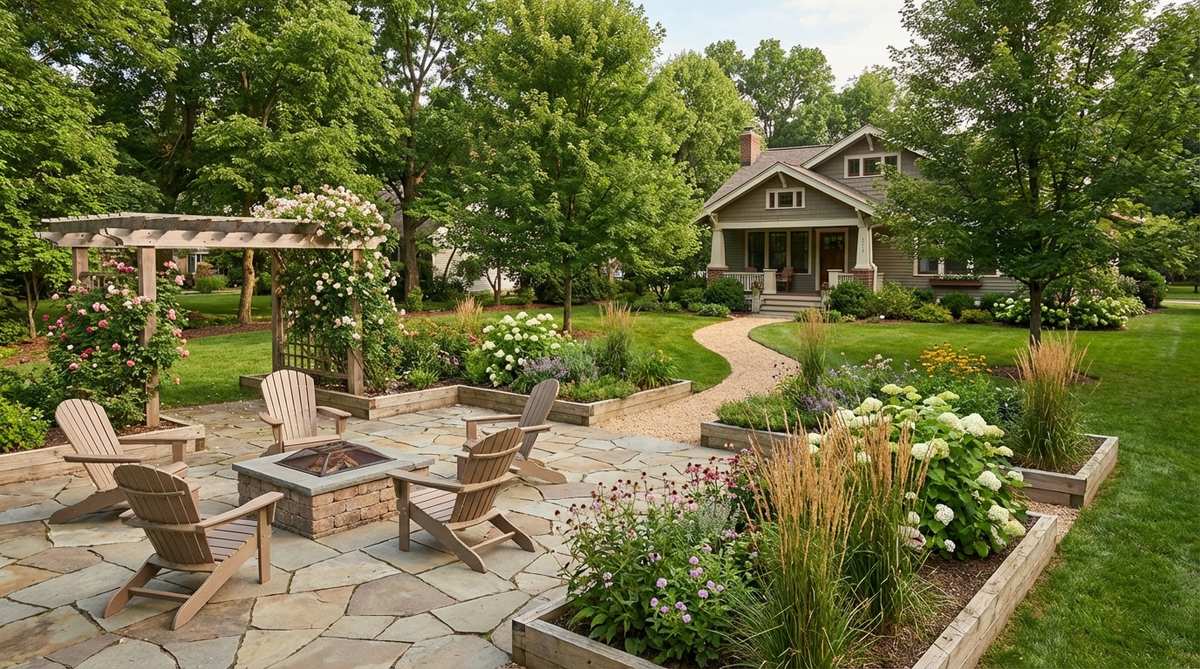
This striking layout feels like an expensive contemporary art installation. It focuses entirely on a perfectly spaced architectural plant matrix, best utilized in modern, walled entry courtyards.
Randomly placing plants looks messy; locking identical specimens into a mathematical grid looks far more expensive than it is. Spreading a thick layer of premium decorative gravel over commercial weed barrier ensures the grid stays visually flawless.
Depending on the specimen, this runs $200–$400. Pin this layout for a high-end minimalist front yard.
- Key Materials: Identical architectural plants, decorative stone
- Vibe / Style: Museum-quality minimalist
- Difficulty: Easy (requires exact measuring)
- Budget Breakdown: Plants: $250 | Gravel/Barrier: $100
- Creator’s Tip: Use a physical wooden spacer board to ensure the distance between every single plant is accurate to the millimeter.
- Smart Sourcing: commercial-grade weed barrier bulk rolls and polished decorative river stones (bulk pack).
42. Linear Hedge Corridors
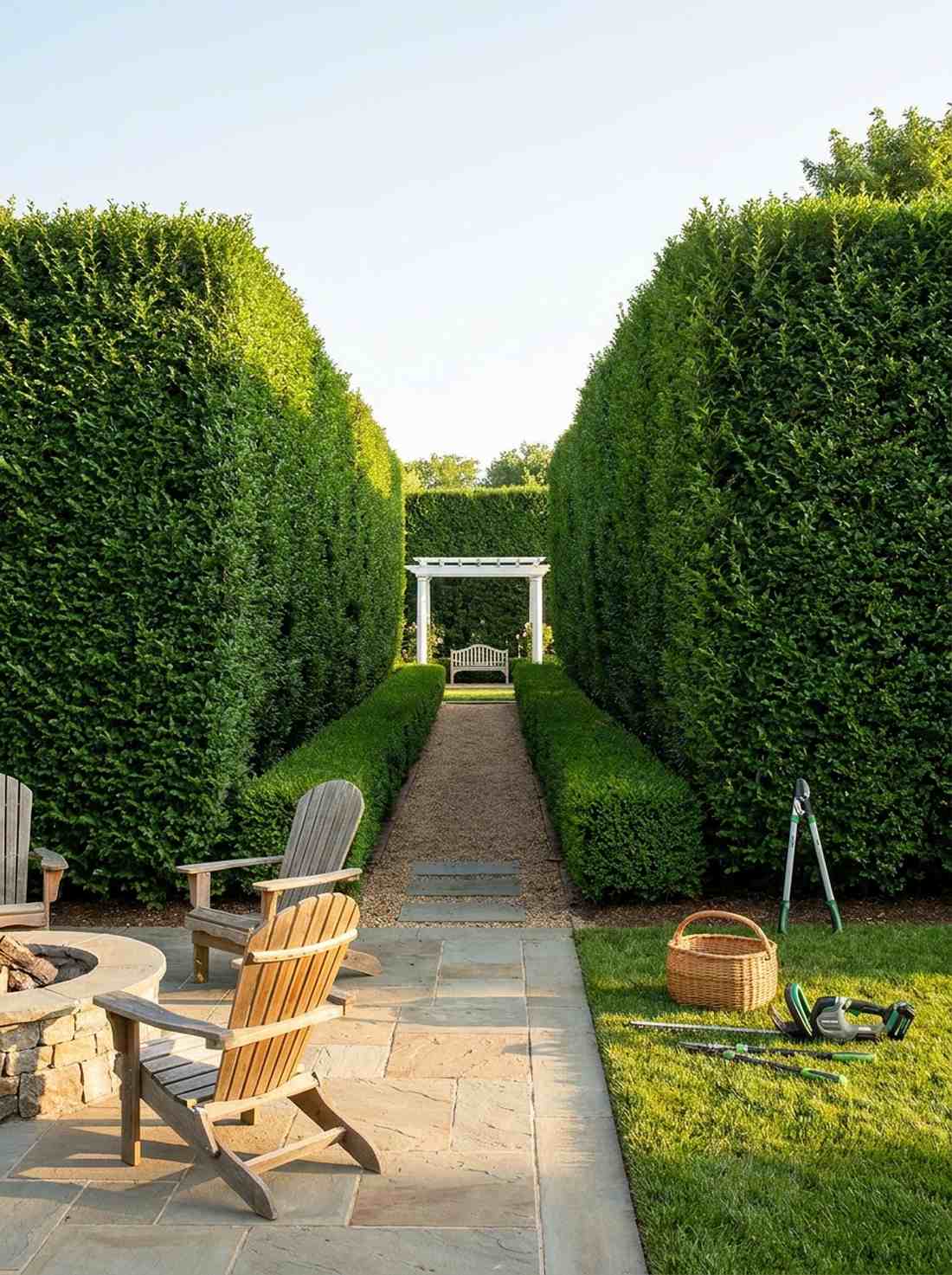
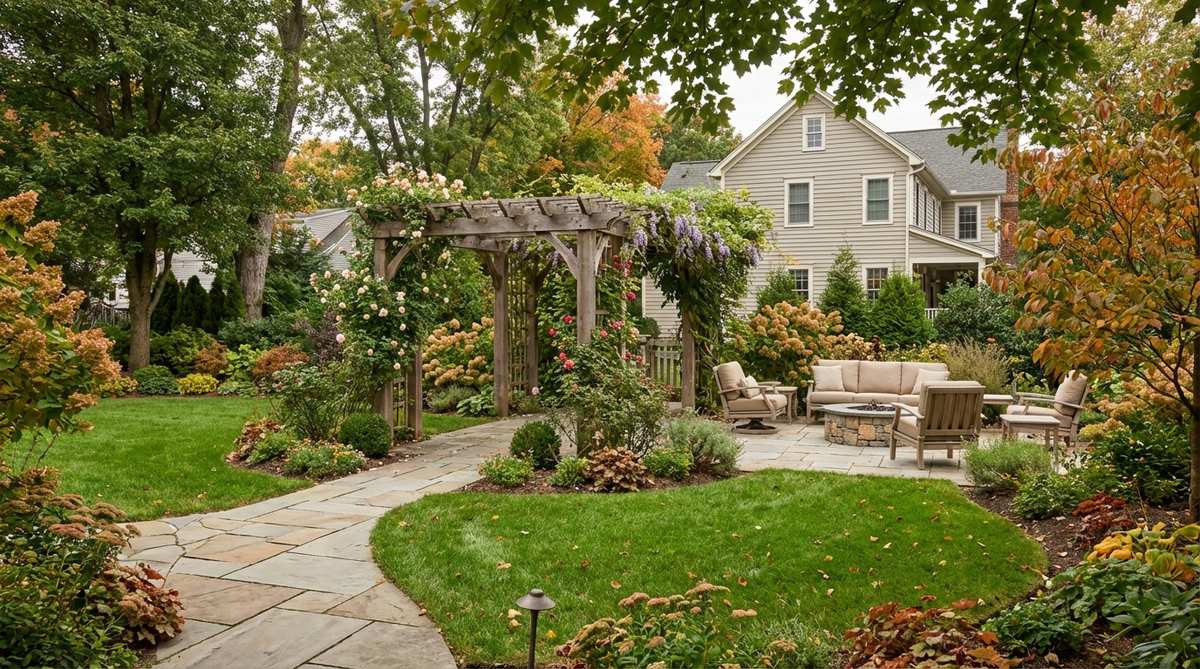
Bringing massive Alice in Wonderland energy, this grand green garden landscape uses tall parallel green walls. It is the ultimate trick for making a short backyard pathway feel infinitely long.
Wide open lawns are boring, but creating a tight, structured corridor gives a designer-level finish that forces a sense of journey. Using professional electric hedge trimmers is absolutely necessary to maintain the sharp, boxy walls.
Establishing the corridor costs around $300–$500 in hedge starters. It’s a fast upgrade that completely changes the spatial vibe.
- Key Materials: Fast-growing hedging (like Privet), trimmer
- Vibe / Style: Dramatic estate maze
- Difficulty: Moderate maintenance
- Budget Breakdown: Shrubs: $350 | Tools: $100
- Creator’s Tip: Slightly taper the top of the hedge inward so sunlight can reach the bottom branches and prevent bare spots.
- Smart Sourcing: cordless professional electric hedge trimmers and heavy-duty pruning loppers.
43. Native Grass Prairie Restoration
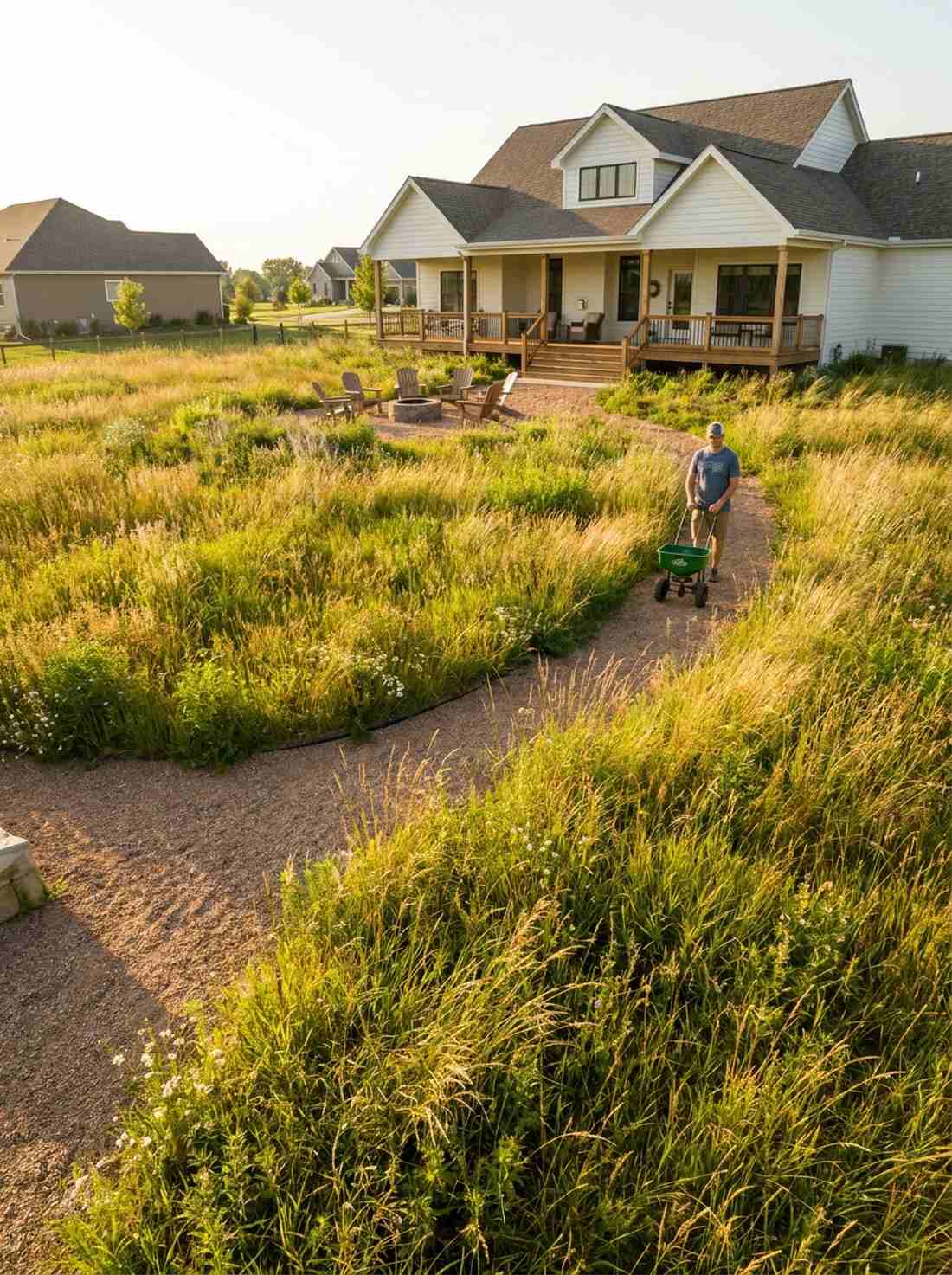
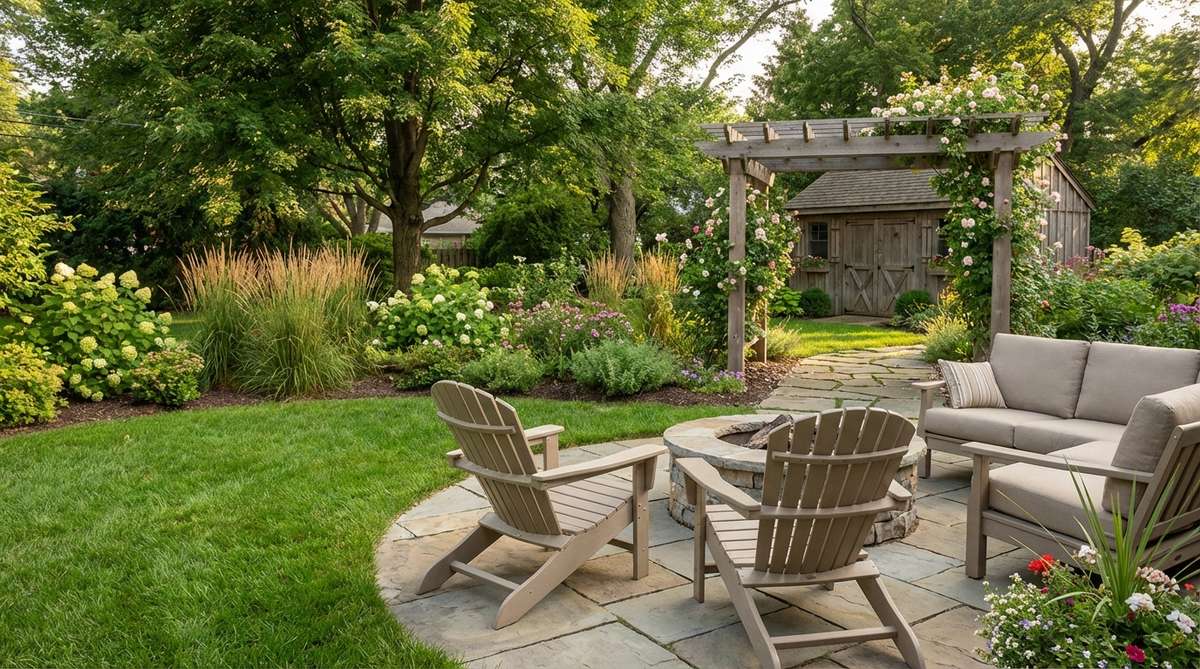
This flowing layout looks like a sun-drenched, expensive natural reserve. Emphasizing deep-rooted native meadow grasses, it is the smartest fix for massive, water-starved suburban lawns.
Paying to water a useless lawn is a waste; swapping to native prairie grasses delivers a surprisingly premium look that requires zero irrigation. Buying bulk seed mixes specific to your region guarantees a massive, effortless germination rate.
You can seed a large area for about $50–$100. Save this for a massive drop in your summer water bill.
- Key Materials: Native grass seed bulk mix, seed spreader
- Vibe / Style: Wild sustainable eco-chic
- Difficulty: Easy
- Budget Breakdown: Bulk Seed: $60 | Spreader: $30
- Creator’s Tip: Mix the tiny seeds with play sand before broadcasting so you can easily see where you’ve already thrown them.
- Smart Sourcing: bulk native grass seed mixes and handheld rotary seed spreaders.
44. Artemisia Silver-Green Foliage
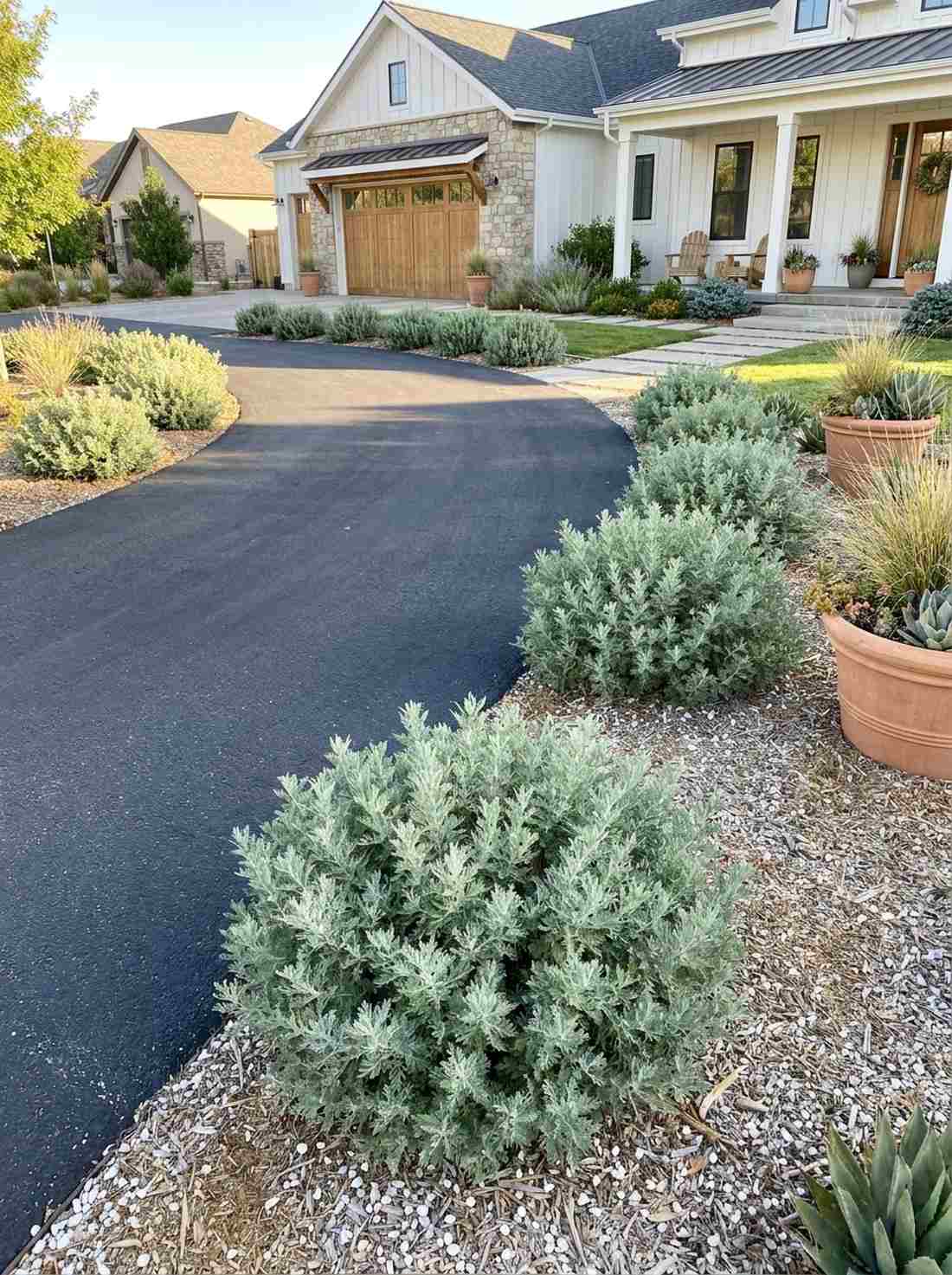
Bringing an icy, sophisticated tone, this idea hinges on drought-proof metallic foliage. It creates a striking, cooling contrast when planted along baking-hot asphalt driveways.
Standard green bushes burn in the heat, but this silver-green powerhouse looks far more expensive than it is while shrugging off drought. Adding sharp drainage amendments like pumice prevents the roots from rotting during winter rains.
A row of these costs roughly $60–$90. It’s an elite trick to make hot, ugly zones look luxurious.
- Key Materials: Artemisia plants, pumice/perlite
- Vibe / Style: Cool-toned coastal Mediterranean
- Difficulty: Easy
- Budget Breakdown: Plants: $50 | Drainage Amendments: $20
- Creator’s Tip: Cut the entire plant back by half in mid-summer if it starts to flop open from the center.
- Smart Sourcing: bulk horticultural perlite bags and professional bypass pruning shears.
Don’t buy any more plants until you see how this next framework operates.
45. Lavender Structural Mounds
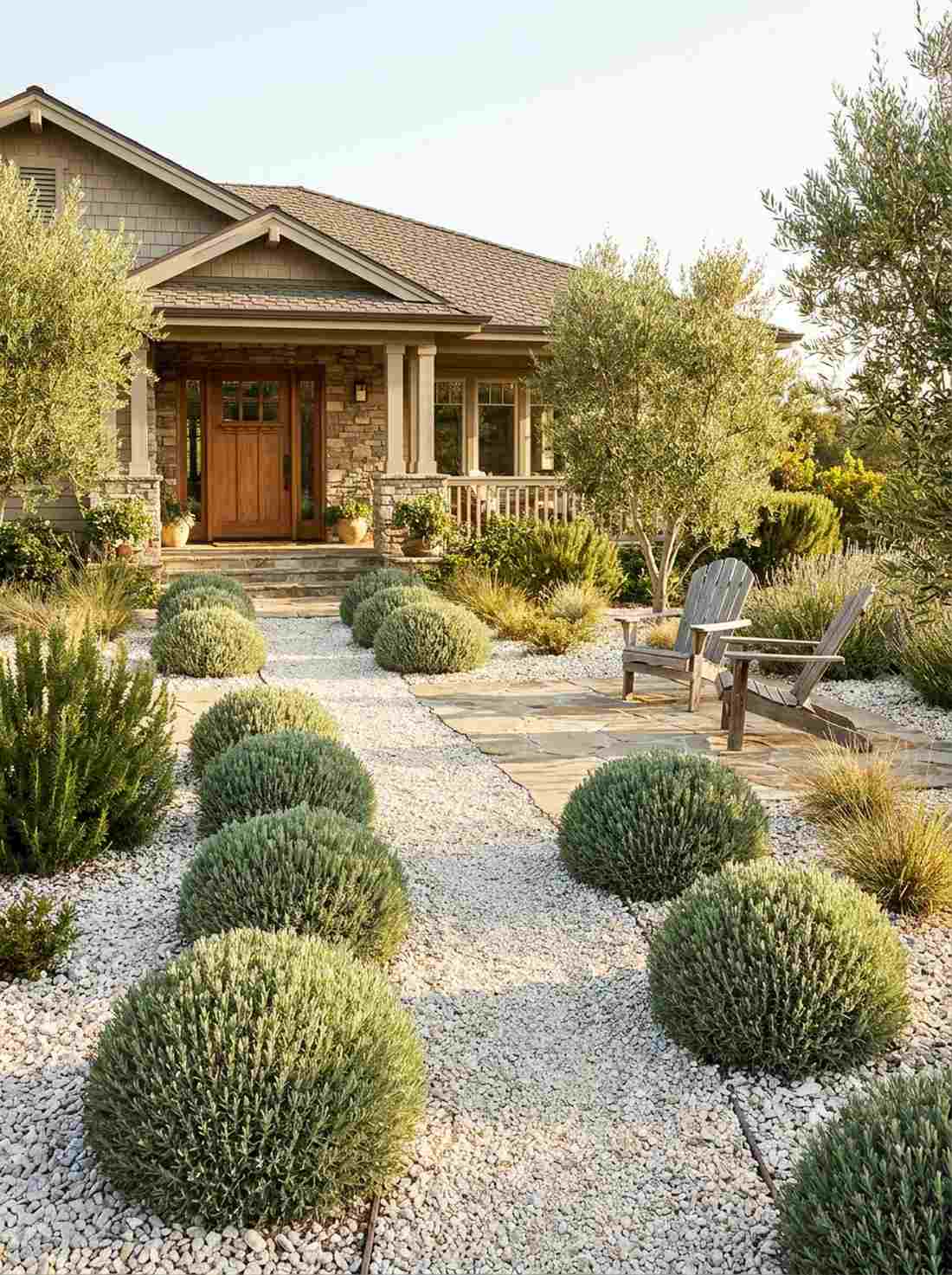
This setup feels like a fragrant, sun-baked estate in Provence. Utilizing aromatic gray-green spheres, it is perfect for lining sunny walkways leading up to the front door.
Most people treat lavender as a messy wildflower, but shearing them into tight green mounds gives a designer-level finish year-round. Top-dressing the beds with white gravel rather than wood mulch reflects heat and keeps the foliage totally dry.
You can create this sensory border for about $80–$130. Pin this to your drought-tolerant landscaping board.
- Key Materials: French or English Lavender, limestone gravel
- Vibe / Style: Classic French countryside
- Difficulty: Intermediate pruning
- Budget Breakdown: Lavenderpots: $90 | Gravel: $30
- Creator’s Tip: Never prune down into the brown, woody stems; only cut the soft green growth or the plant will die.
- Smart Sourcing: decorative limestone landscape gravel and premium topiary shaping shears.
46. Sage Shrub Anchors
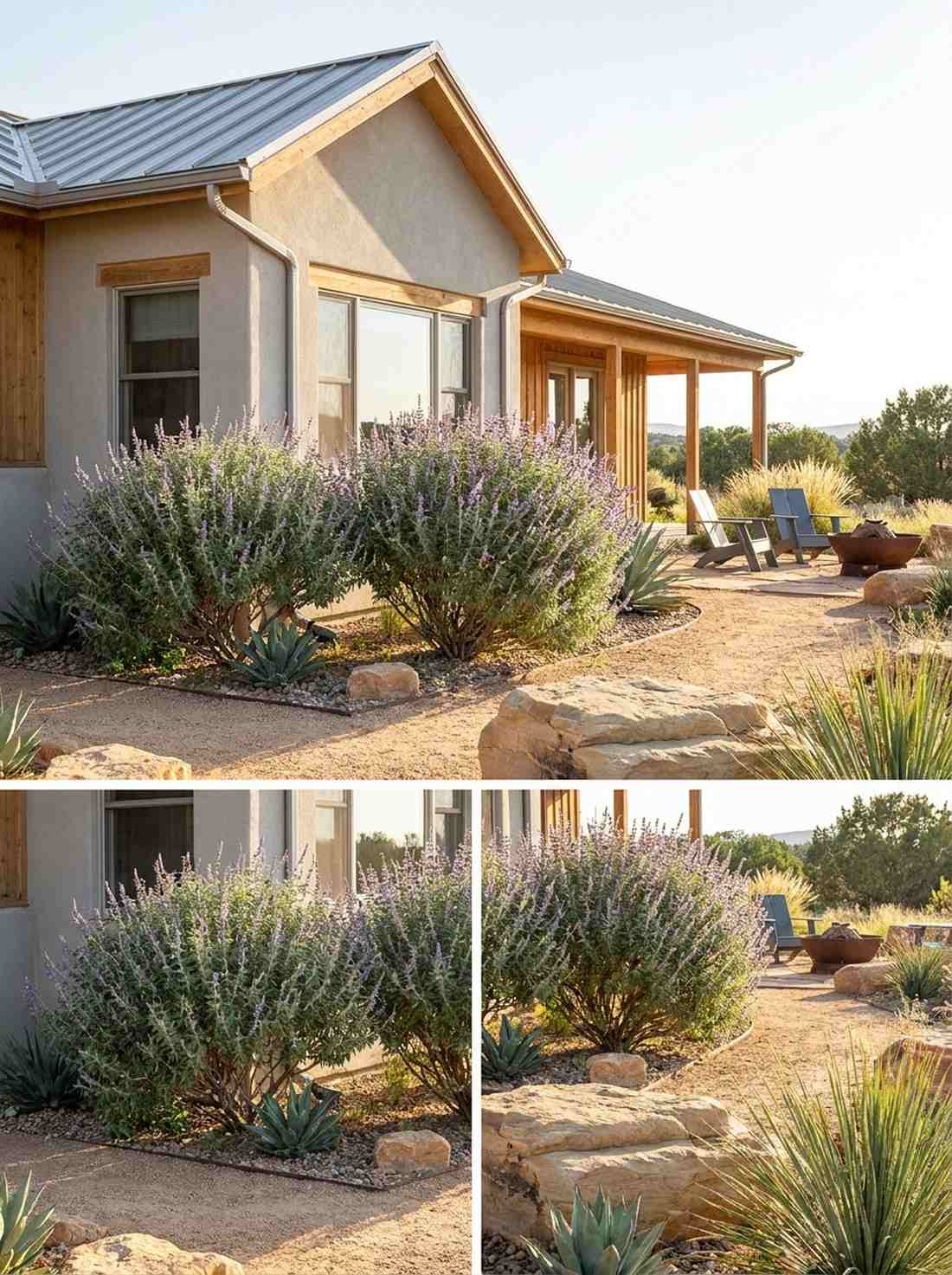
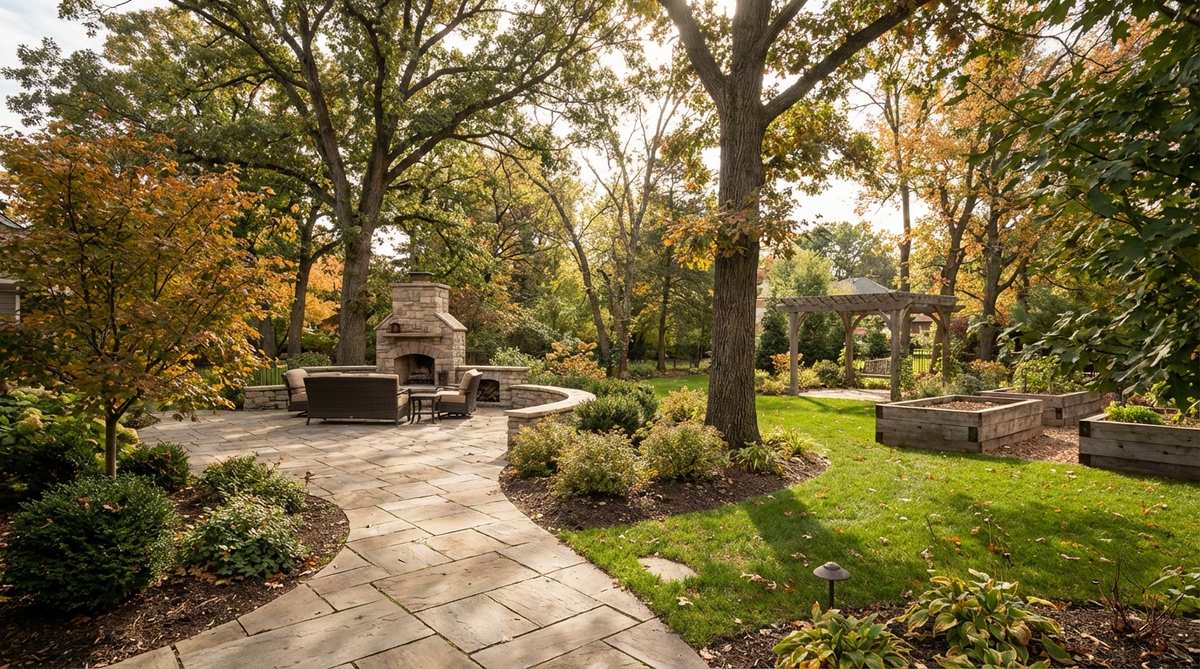
Delivering heavy architectural presence in brutal heat, this concept uses woody drought-tolerant foundation bushes. It works flawlessly to anchor the corners of a dry, western-facing house.
Flimsy flowers die by July, but establishing massive sage anchors delivers a surprisingly premium look that thrives on absolute neglect. Using bulk starter fertilizer ensures the woody roots grip the native soil quickly before the summer heat hits.
Three large anchors cost roughly $60–$100. Highly recommended for low-water home foundations.
- Key Materials: Salvia shrub varieties, root starter fertilizer
- Vibe / Style: High-desert contemporary
- Difficulty: Easy
- Budget Breakdown: Shrubs: $70 | Fertilizer: $15
- Creator’s Tip: Water them deeply but very infrequently; they prefer the soil to dry out completely between soakings.
- Smart Sourcing: mycorrhizal root enhancer powder and moisture-meter soil probes.
47. Sedum Green Roof Systems
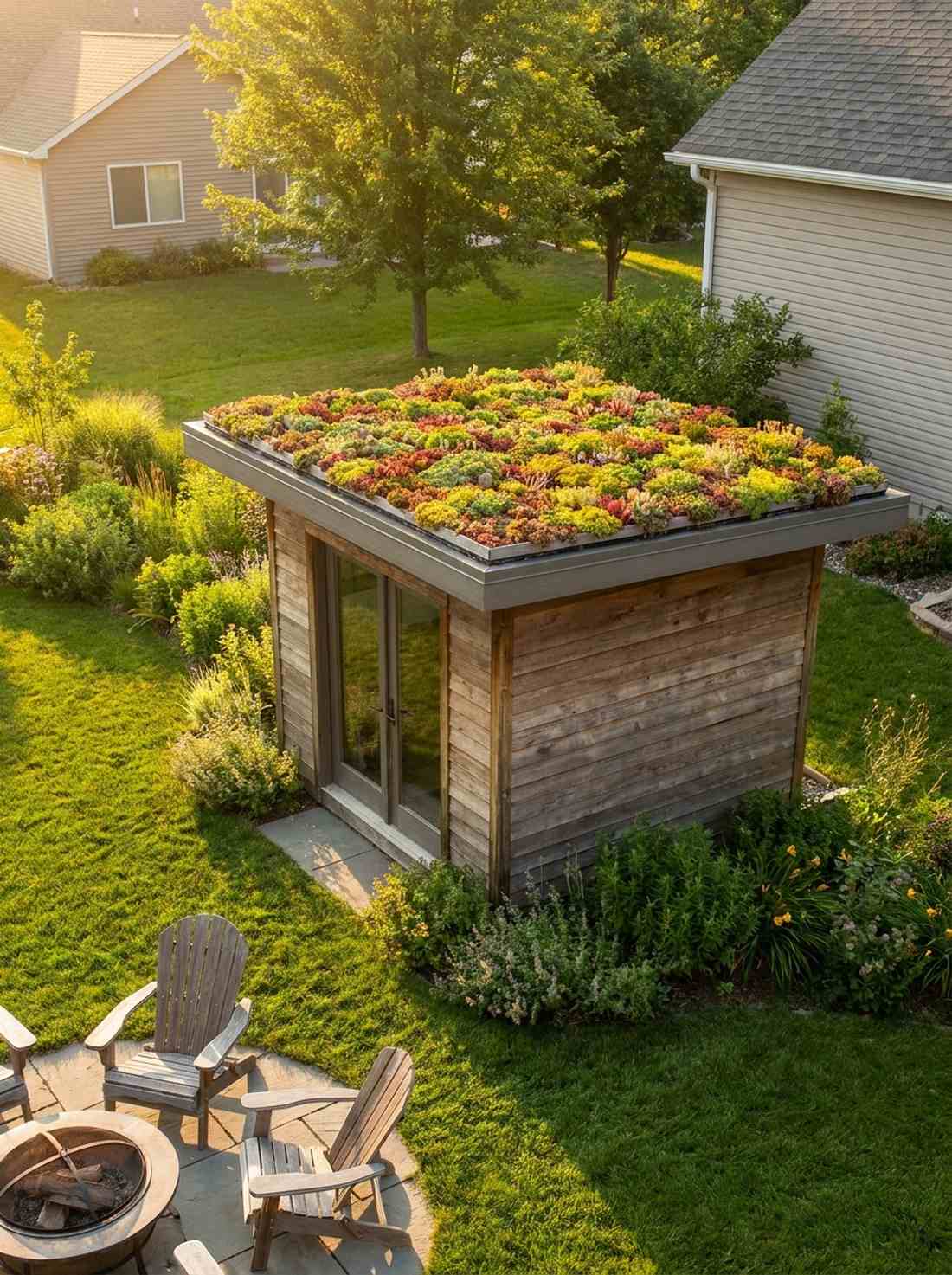
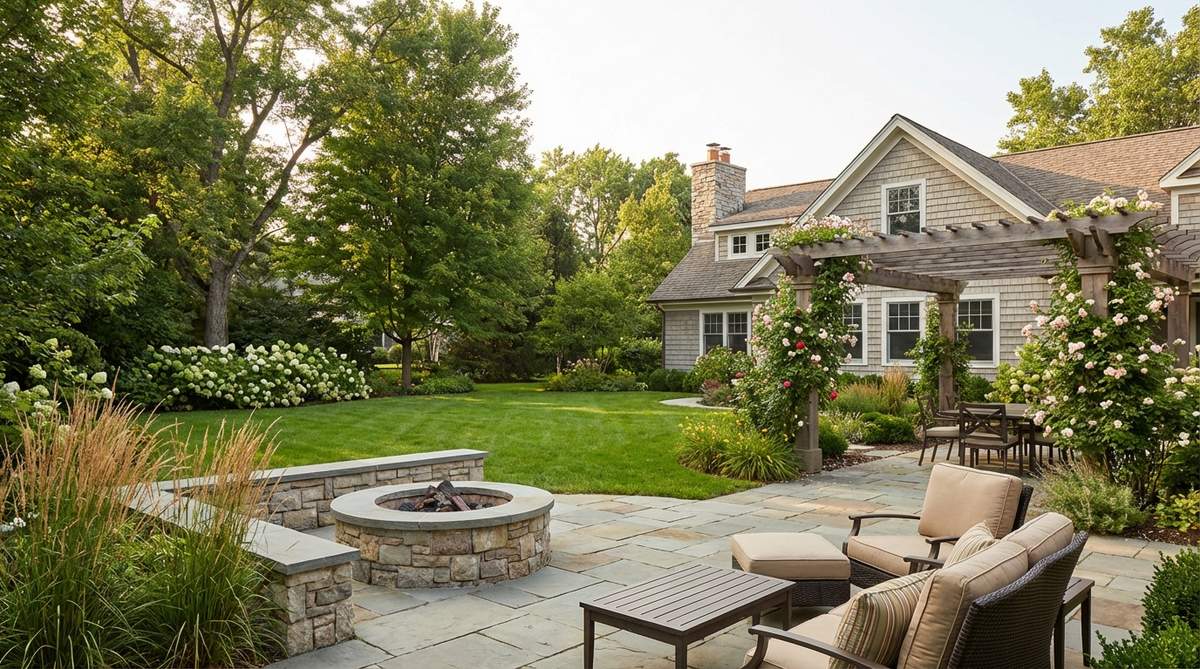
This layout pushes an ultra-modern, eco-chic green garden image by deploying shallow-root succulent mats. It is the absolute coolest way to upgrade a flat shed or doghouse roof.
Naked shingles look cheap and get hot; installing a living roof gives a designer-level finish while naturally cooling the structure underneath. Sourcing specialized green-roof drainage mats prevents the wood from rotting while keeping the succulents alive.
A small shed roof conversion costs around $150–$250. Save this for the ultimate backyard DIY flex.
- Key Materials: Sedum mat rolls, waterproof membrane
- Vibe / Style: Ultra-modern sustainable
- Difficulty: Advanced installation
- Budget Breakdown: Sedum Rolls: $120 | Membranes/Trays: $80
- Creator’s Tip: Ensure the roof has a slight pitch (at least 2 degrees) so heavy rain can escape the drainage mat.
- Smart Sourcing: commercial green roof drainage mats and bulk sedum groundcover plug flats.
48. Fountain Grass Xeric Drifts
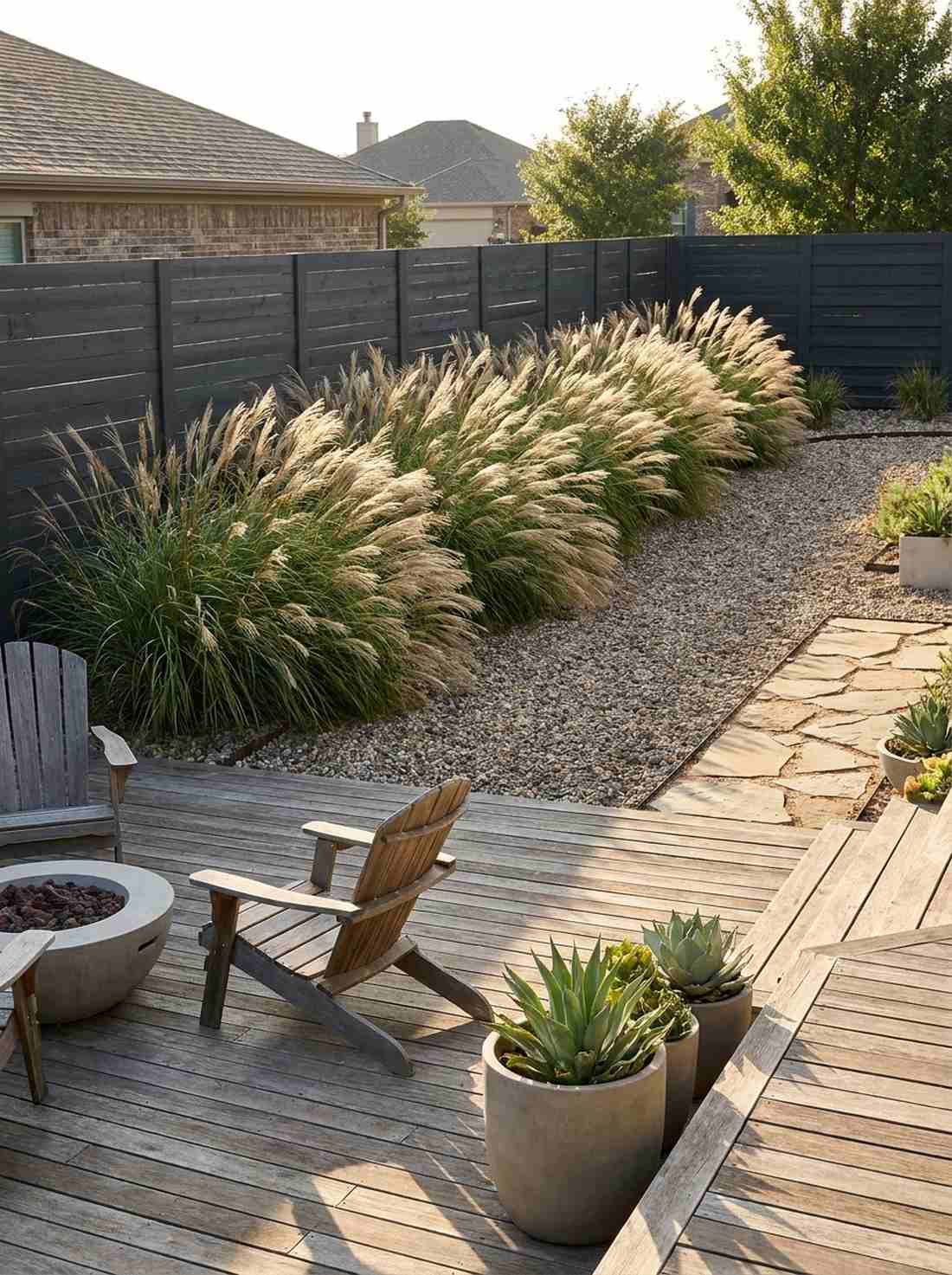
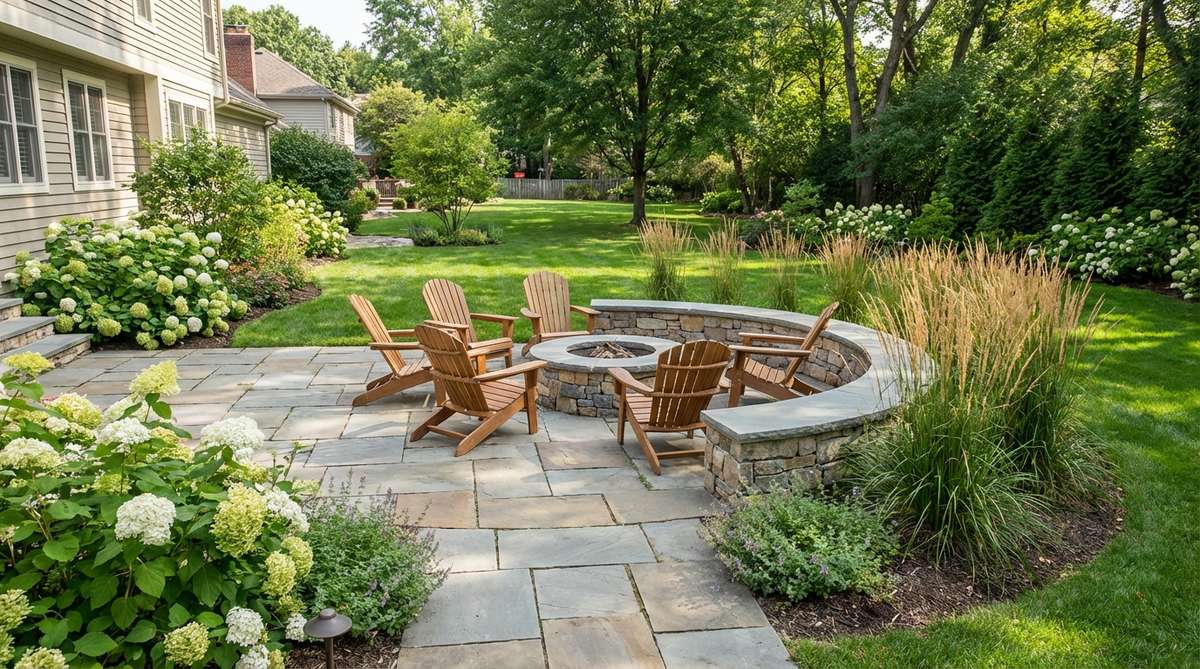
Bringing incredible dynamic motion to a static yard, this idea uses arching water-wise grass clusters. It is visually stunning when planted en masse against a dark-painted modern fence.
Instead of rigid hedges, utilizing grasses that catch the wind looks far more expensive than it is. Integrating commercial-grade landscape fabric below the gravel mulch stops aggressive weeds from ruining the clean, sweeping aesthetic.
You can plant a large drift for about $70–$120. It’s a fast upgrade that completely changes the fence-line vibe.
- Key Materials: Pennisetum grasses, heavy weed barrier
- Vibe / Style: Breezy modern xeric
- Difficulty: Easy
- Budget Breakdown: Grasses: $80 | Barrier/Pins: $30
- Creator’s Tip: Tie the grass into a tight bundle with a bungee cord in early spring before cutting it down for zero-mess cleanup.
- Smart Sourcing: commercial-grade weed barrier bulk rolls and heavy-duty steel landscape staples.
49. Juniper Groundcover Slopes
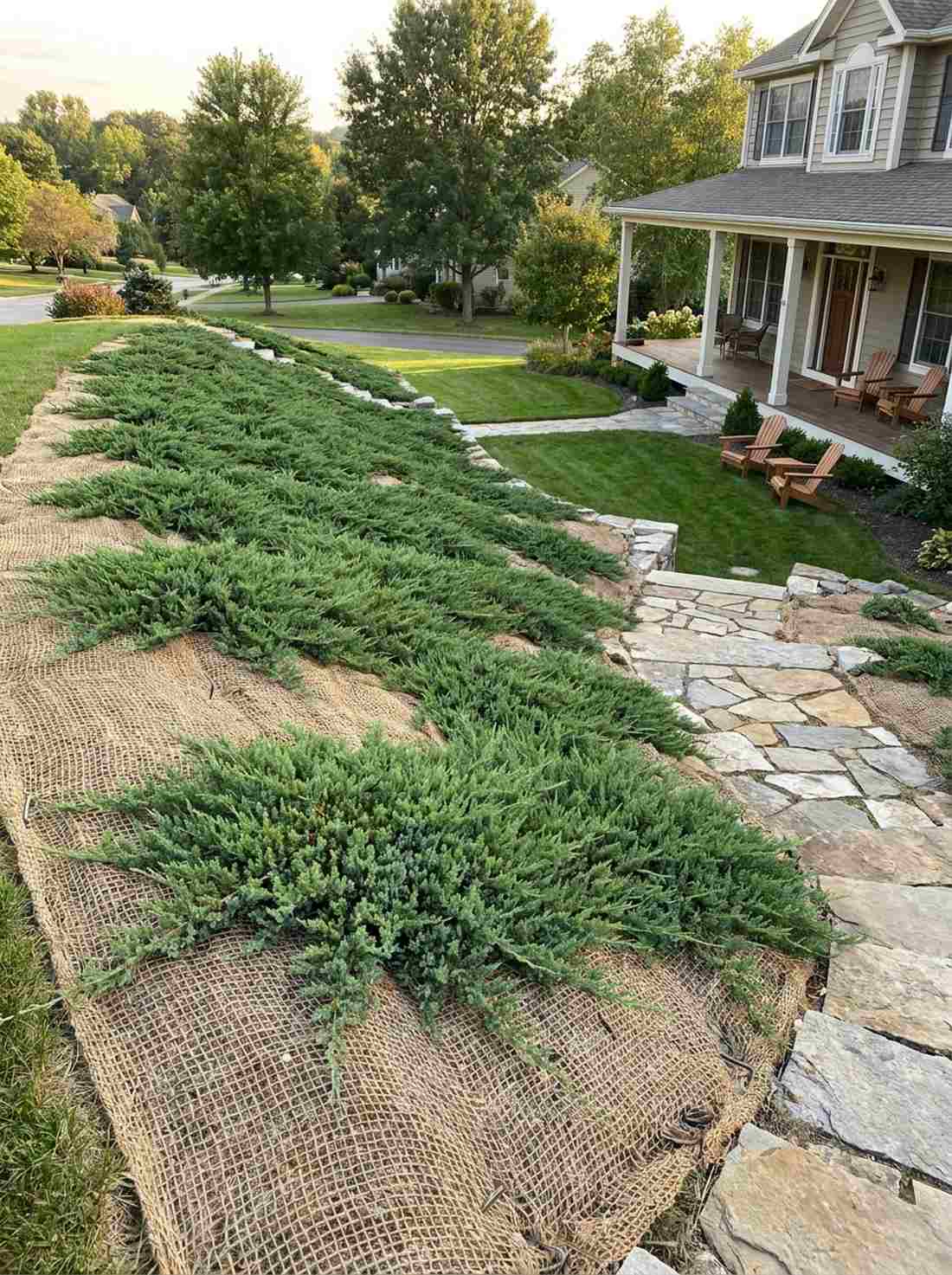
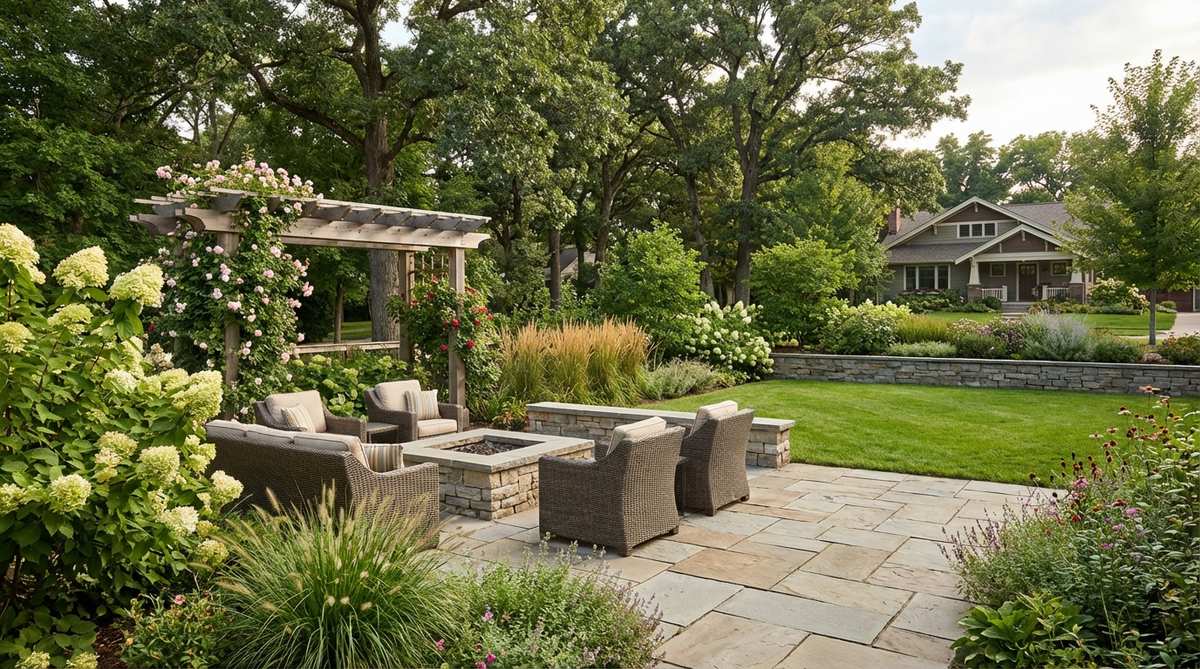
This bulletproof layout completely eliminates the danger of mowing hills by using creeping evergreen conifer mats. It is the mandatory solution for steep, eroding front yard banks.
Risking injury to cut grass on a cliff is ridiculous; dropping prostrate junipers delivers a surprisingly premium look that permanently locks the soil in place. Buying heavy-duty jute netting holds the dirt firm while the roots establish their permanent grip.
Securing a slope costs roughly $150–$300 depending on the pitch. Pin this immediately if you have a dangerous yard hill.
- Key Materials: Creeping juniper pots, erosion control netting
- Vibe / Style: Rugged mountainous utility
- Difficulty: Intermediate (working on slopes)
- Budget Breakdown: Plants: $180 | Jute Netting: $50
- Creator’s Tip: Pin the branches down to the soil with landscaping staples to force them to root faster along the stem.
- Smart Sourcing: biodegradable jute erosion control netting and heavy-duty steel landscape staples.
The upcoming material hack is why some yards look twice as expensive.
50. Agave Gravel Garden Specimens
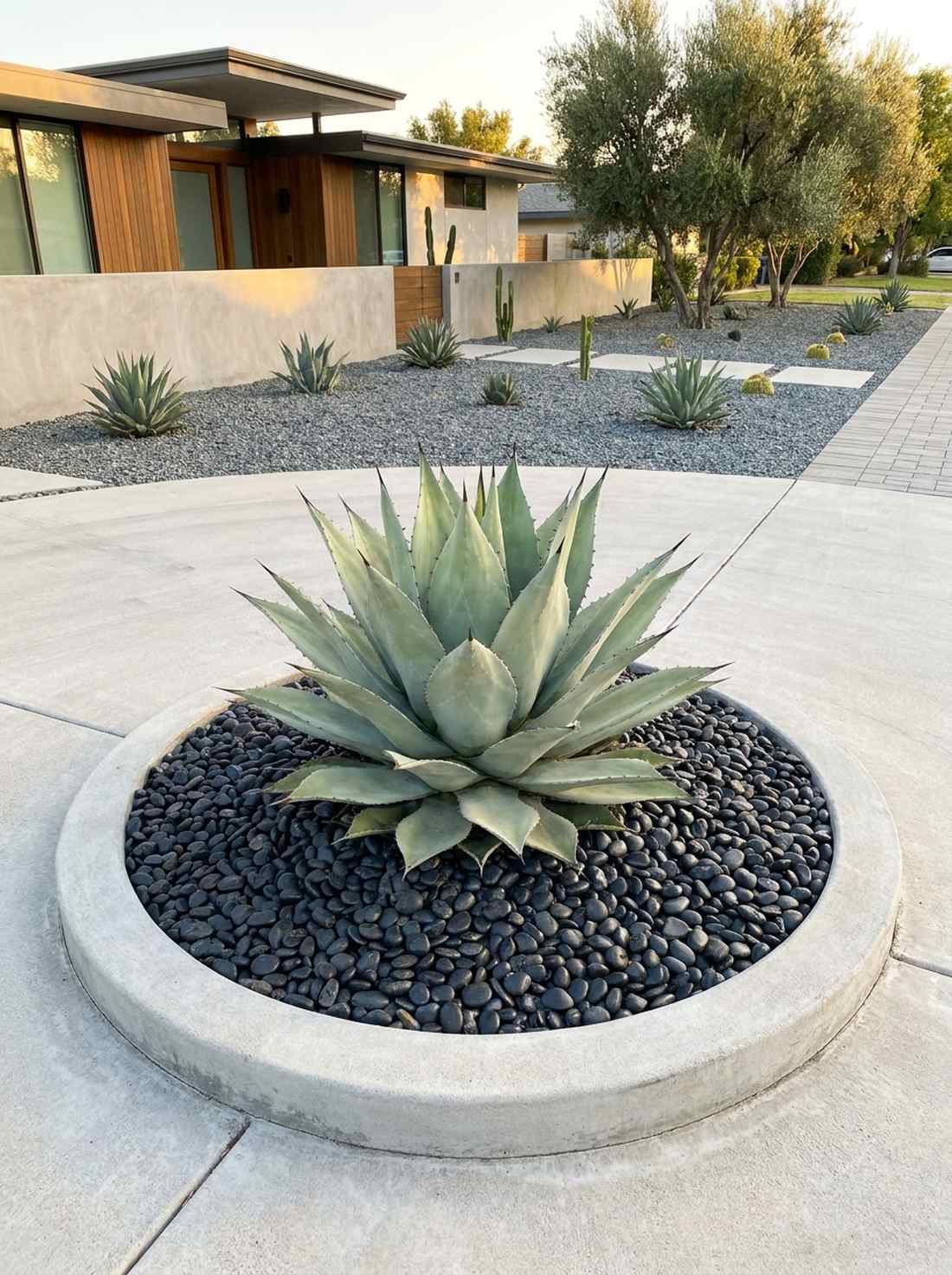
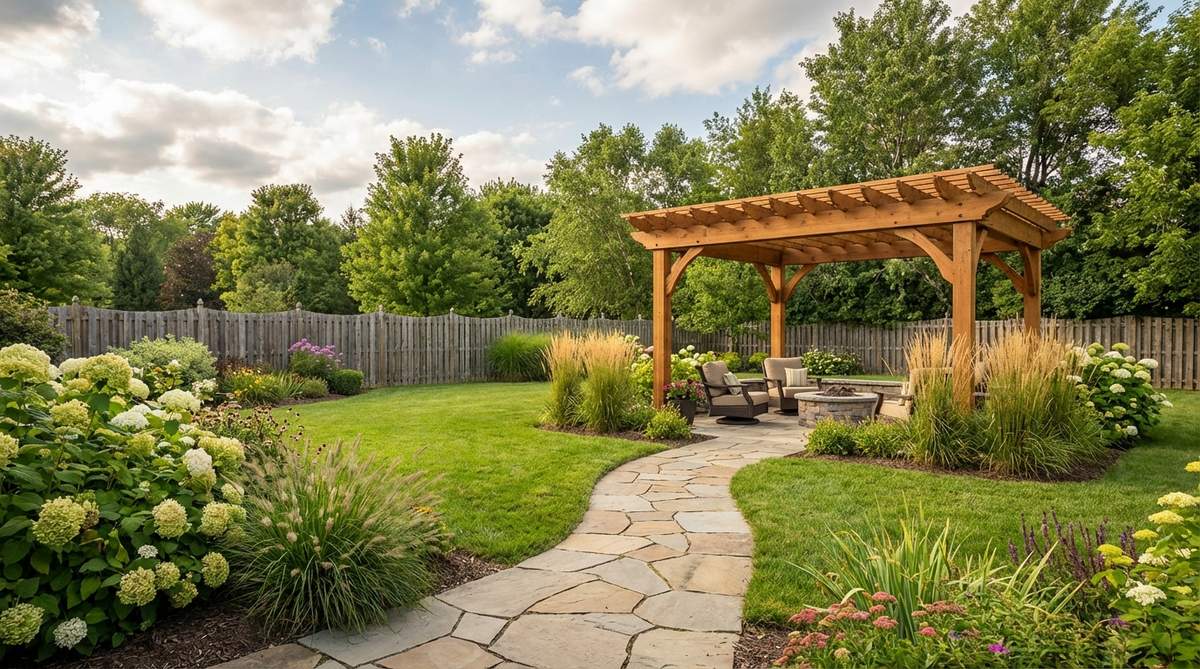
Commanding complete attention, this setup relies on isolated sculptural desert rosettes. It is the absolute perfect centerpiece for a minimalist concrete driveway island.
Crowding plants degrades their impact; isolating a massive agave in a sea of gravel gives a designer-level finish that requires zero water. Upgrading the top-dressing to polished black river rock creates a museum-quality contrast against the pale green leaves.
A large specimen and premium rock cost about $150–$250. Save this for a high-impact, zero-effort front yard.
- Key Materials: Large Agave specimen, premium contrast gravel
- Vibe / Style: Brutalist desert modern
- Difficulty: Easy (heavy lifting required)
- Budget Breakdown: Agave: $150 | Black Rock: $60
- Creator’s Tip: Use thick cardboard under the gravel instead of plastic fabric; it blocks weeds but eventually breaks down to feed the soil.
- Smart Sourcing: polished black decorative river stones (bulk pack) and puncture-resistant leather landscaping gloves.
51. California Native Shrub Tapestries
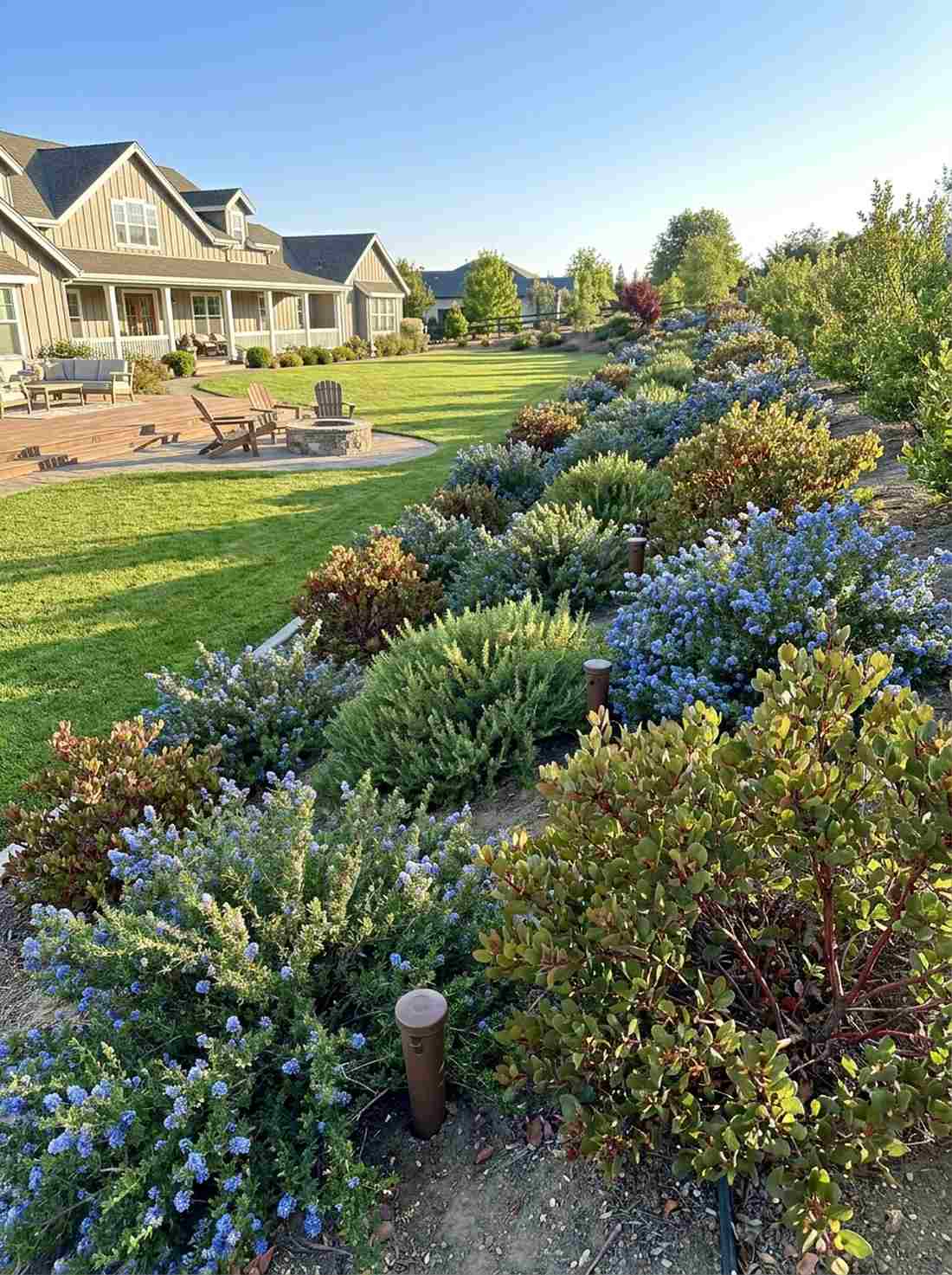
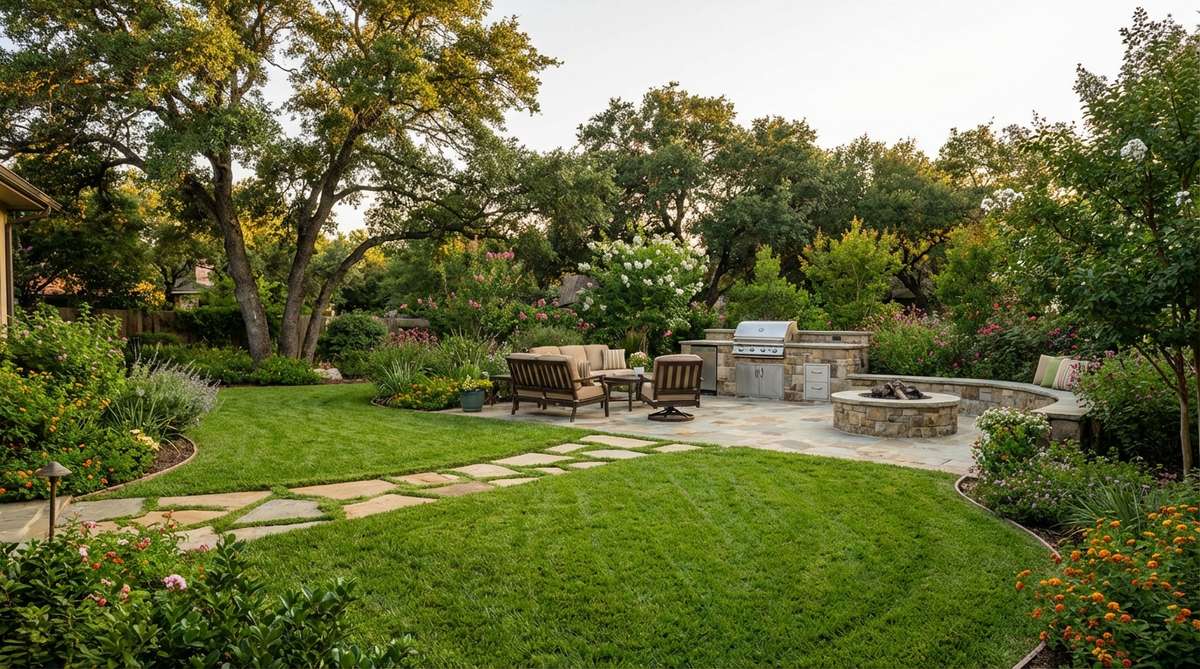
This layout mimics the stunning texture of wild coastal hills using a drought-adapted evergreen mix. It works wonders for massive, sloped boundary lines that get blasted by summer sun.
While basic yards rely on thirsty tropicals, a native tapestry looks far more expensive than it is and survives strictly on winter rainfall. Using deep-root watering spikes during the first year guarantees they survive long enough to become fully independent.
You can establish this boundary for around $200–$350. It’s a fast upgrade that permanently cuts your water bill.
- Key Materials: Ceanothus, Arctostaphylos, deep watering stakes
- Vibe / Style: Premium coastal chaparral
- Difficulty: Intermediate
- Budget Breakdown: Native Shrubs: $250 | Watering Tools: $40
- Creator’s Tip: Plant them in late fall; the winter rain will establish the roots perfectly before the summer heat hits.
- Smart Sourcing: deep-root watering spike kits and heavy-duty pruning loppers.
52. Pine Needle Understory Gardens
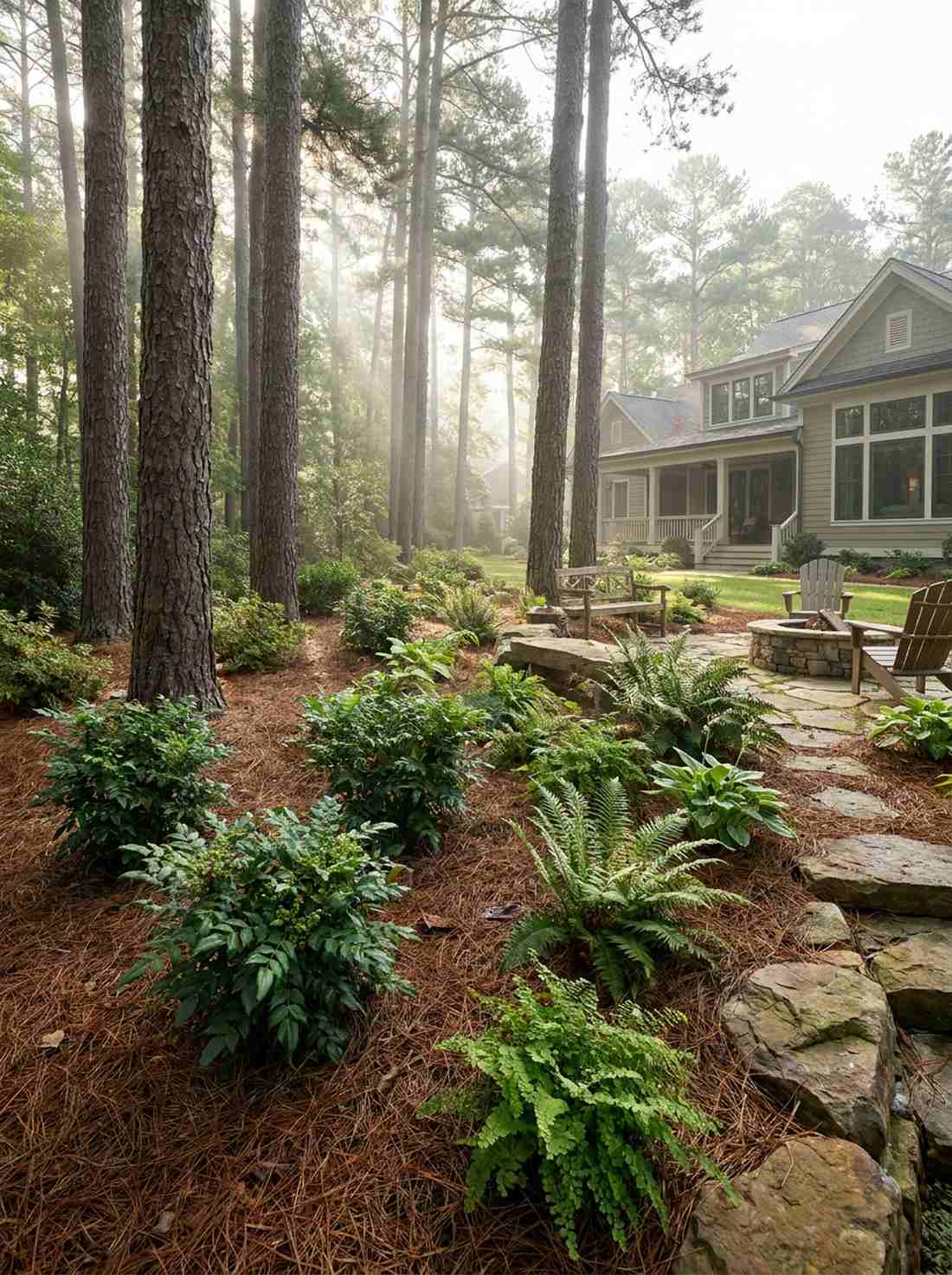
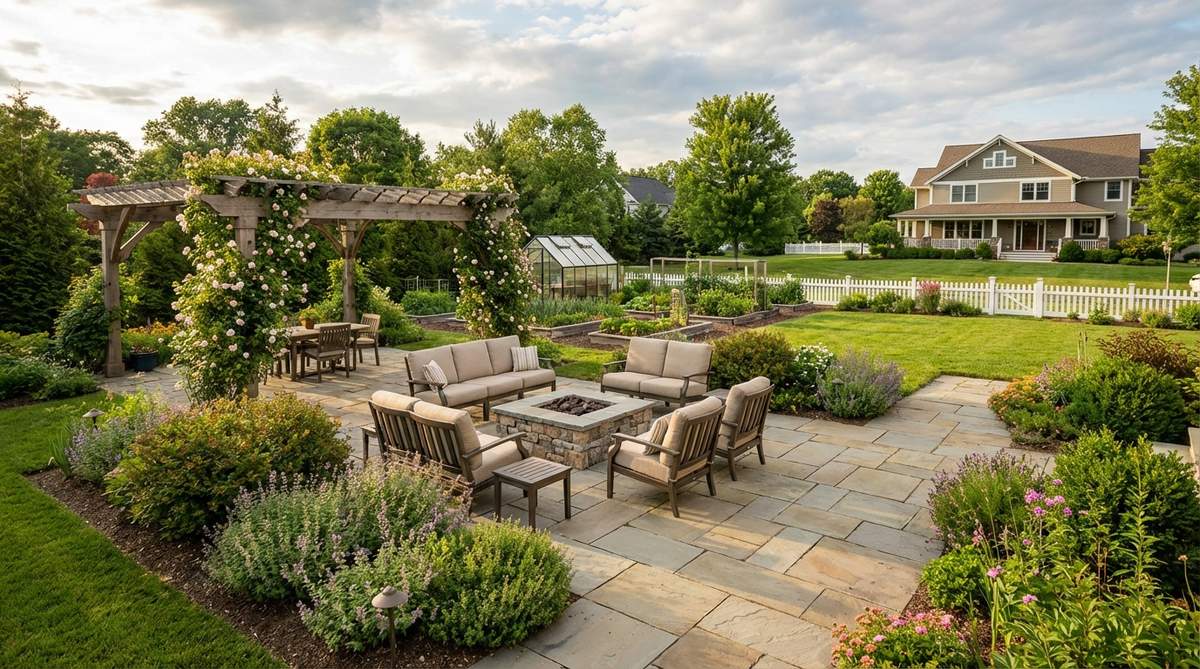
This moody, atmospheric design uses acid-loving shade survivors to build an incredible layered aesthetic. It solves the nightmare of what to plant directly under massive, needle-dropping pine trees.
Most plants die under pines, but leaning into the acidity with specific understory ferns delivers a surprisingly premium look with zero extra mulch needed. Sourcing specialized acidic soil amendments ensures these shade-lovers thrive despite the heavy tree root competition.
Creating this understory costs roughly $80–$140. Pin this layout to finally fix that dead zone under your evergreens.
- Key Materials: Mahonia, tough ferns, soil acidifier
- Vibe / Style: Deep woodland retreat
- Difficulty: Easy
- Budget Breakdown: Plants: $90 | Acidifier: $20
- Creator’s Tip: Leave all the fallen pine needles exactly where they are; they act as the perfect free, acidic mulch.
- Smart Sourcing: commercial-grade acidic soil amendments and bulk native fern bare-roots.
Conclusion
Monochromatic landscaping reveals a yard’s true architectural potential—form, texture, and spatial geometry—without the messy distraction of chaotic colors. These exactly 52 concepts prove that leaning into a premium, single-hue aesthetic expands your creative possibilities and instantly elevates your property value. Implement these precise blueprints, invest in the right UV-resistant materials and smart sourcing kits, and you will achieve a luxury designer look that rewards both close observation and massive curb appeal.
Frequently Asked Questions
What makes green gardens more challenging than multicolored designs?
Without chaotic flowers to hide behind, these setups demand perfect texture mapping and architectural layout. You must exploit leaf size, rely on heavy-duty landscape edging kits for sharp lines, and use UV-resistant outdoor planters to generate visual weight. This approach forces a premium, intentional design that always looks more expensive.
How do you prevent monochromatic green gardens from appearing monotonous?
The secret is extreme textural contrast and smart product sourcing. Pair glossy, broad leaves with fine-textured ornamental grass plugs, and utilize premium black dyed mulch to make the varying green tones pop aggressively. Adding structural elements like UV-coated modular living wall kits breaks up flat spaces with vertical dimension.
Which green plants provide year-round interest in cold climates?
Evergreen conifers, boxwoods, and yews are your structural backbone. For lower layers, bulk bare-root hellebore kits and hardy ferns provide bulletproof coverage in zones 5-7. Don’t cut down your ornamental grasses; their tan winter structure looks incredible against the snow when paired with dark evergreen companions.
Can green garden landscapes work in small urban spaces?
Absolutely—they actually make confined spaces feel massive by removing visual clutter. Leveraging UV-coated modular raised planter kits and marine-grade steel wire trellis kits pushes the foliage vertically without eating up precious floor space. This unified, high-end aesthetic is a staple of luxury balcony and patio design.
What maintenance challenges do all-green gardens present?
The biggest challenge is keeping the geometric lines razor-sharp so the yard looks intentional, not overgrown. You must invest in commercial-grade weed barrier bulk rolls to prevent unwanted weeds, and use cordless professional electric hedge trimmers for crisp shaping. Keeping the groundcover clean of debris using leaf blowers is essential for that polished, designer finish.