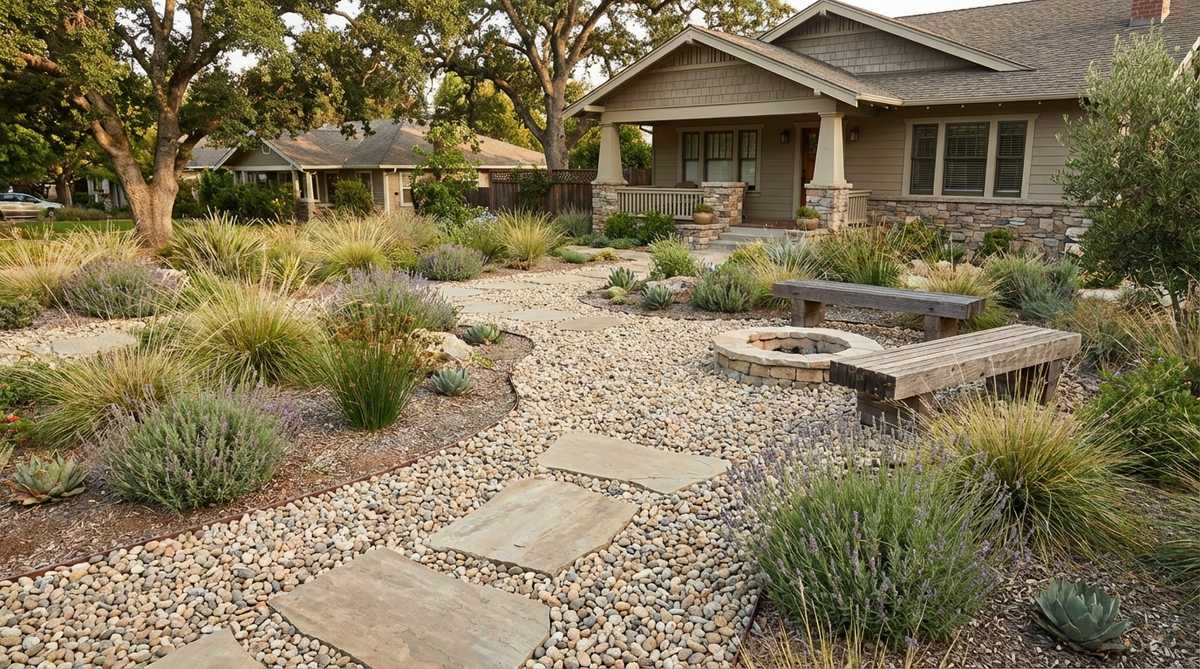
Pea gravel gardens offer a versatile foundation for outdoor spaces where drainage, texture, and low maintenance meet elegant design. These rounded stones create a softer feel underfoot than traditional hardscaping while allowing water to filter naturally through the landscape. Fresh Garden Ideas brings you expert-curated designs that transform yards with functional beauty and lasting appeal.
Design SnapshotKey Principles
- Superior Drainage: Rounded stones allow water to pass through freely, preventing pooling and protecting plant roots from rot
- Comfortable Texture: Smooth, pea-sized stones feel softer underfoot than angular gravel and create a natural, organic aesthetic
- Easy Installation: Pea gravel fills any shape with minimal tools, offering design flexibility for custom layouts and borders
- Low Maintenance: Unlike organic mulches, pea gravel doesn’t decompose and hides dirt while suppressing weed growth effectively
Pathways & Walkways With Natural Flow
Garden pathways using pea gravel provide a practical surface that guides foot traffic while maintaining excellent permeability. The small stones settle into a stable walking surface when properly installed with a compacted base and landscape fabric underneath.
1. Meandering Cottage Garden Path
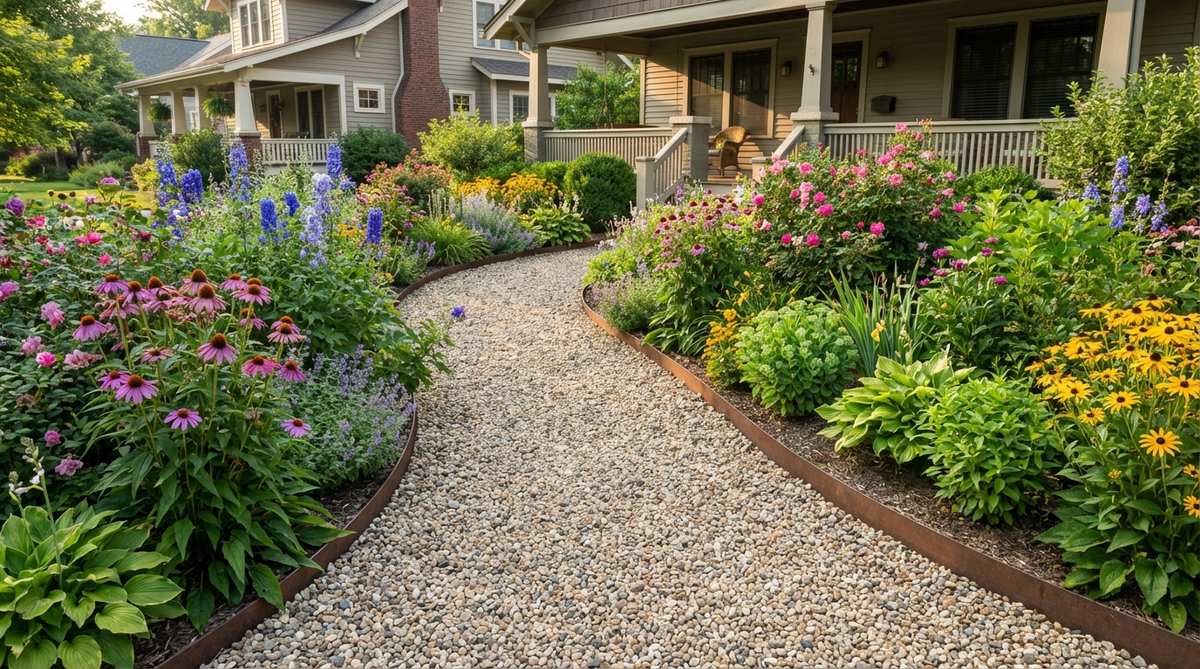
A curved pathway through planting beds creates an inviting journey through the garden space. The gravel’s neutral tones complement surrounding perennials and flowering plants without competing for visual attention.
Install metal or stone edging along both sides to contain the gravel and define the path boundaries. Grade the path with a slight slope to direct water away from adjacent planting areas.
This design works particularly well in informal garden styles where the relaxed texture contrasts with soft plant forms. The crunching sound underfoot adds a sensory element that announces visitors approaching the house.
2. Stepping Stone Gravel Combination
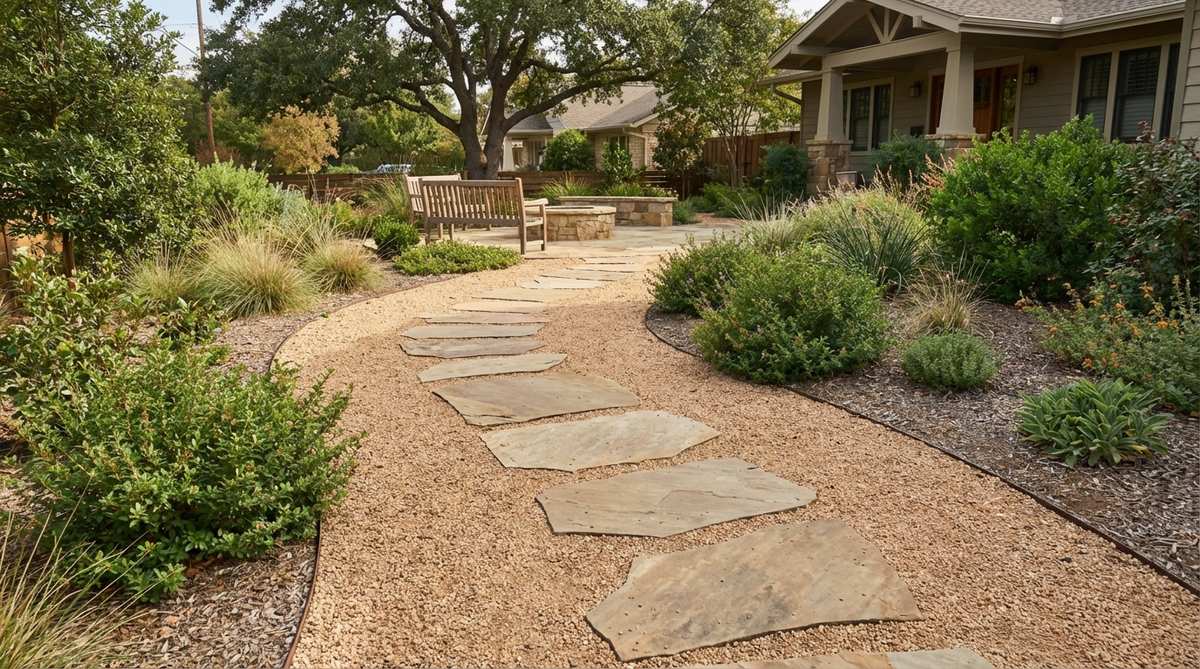
Large flagstones or concrete pavers embedded in pea gravel create a structured pathway with visual interest. The stones provide firm footing while gravel fills the gaps, reducing the material cost compared to solid paving.
Space stepping stones 18-24 inches apart for comfortable stride length. Pour gravel to match the top surface of the stones, creating a flush transition that prevents tripping hazards.
This hybrid approach suits contemporary and traditional landscapes equally well. The design reduces heat absorption compared to solid concrete paths while maintaining easy wheelchair or stroller access.
3. Side Yard Access Path
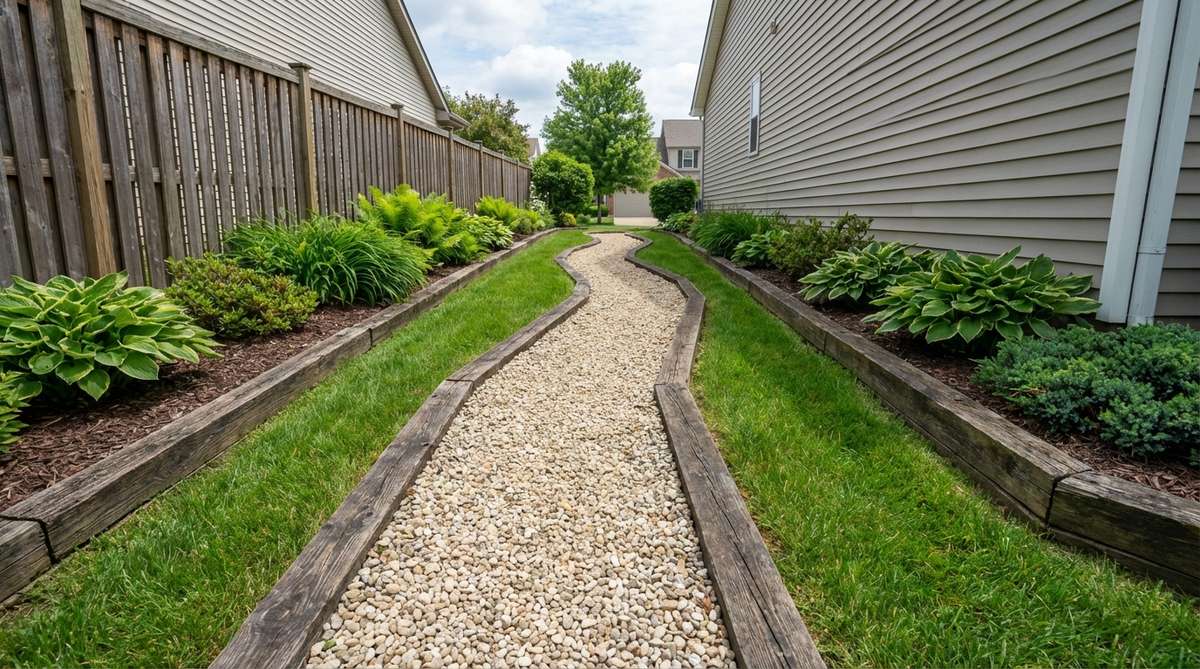
Narrow side yards between houses often suffer from poor drainage and limited light. A pea gravel path solves both issues by providing a permeable surface that handles runoff from roof gutters and adjacent hardscaping.
Excavate 4-6 inches deep and add a crushed stone base before spreading 2-3 inches of pea gravel. Install pressure-treated lumber or composite edging boards to prevent gravel migration into lawn areas.
The light color of gravel brightens shadowed spaces and creates a clean transition zone for utilities and trash bins. Maintenance stays minimal since the surface doesn’t grow moss or algae like solid pavers in low-light conditions.
4. Geometric Grid Pathway
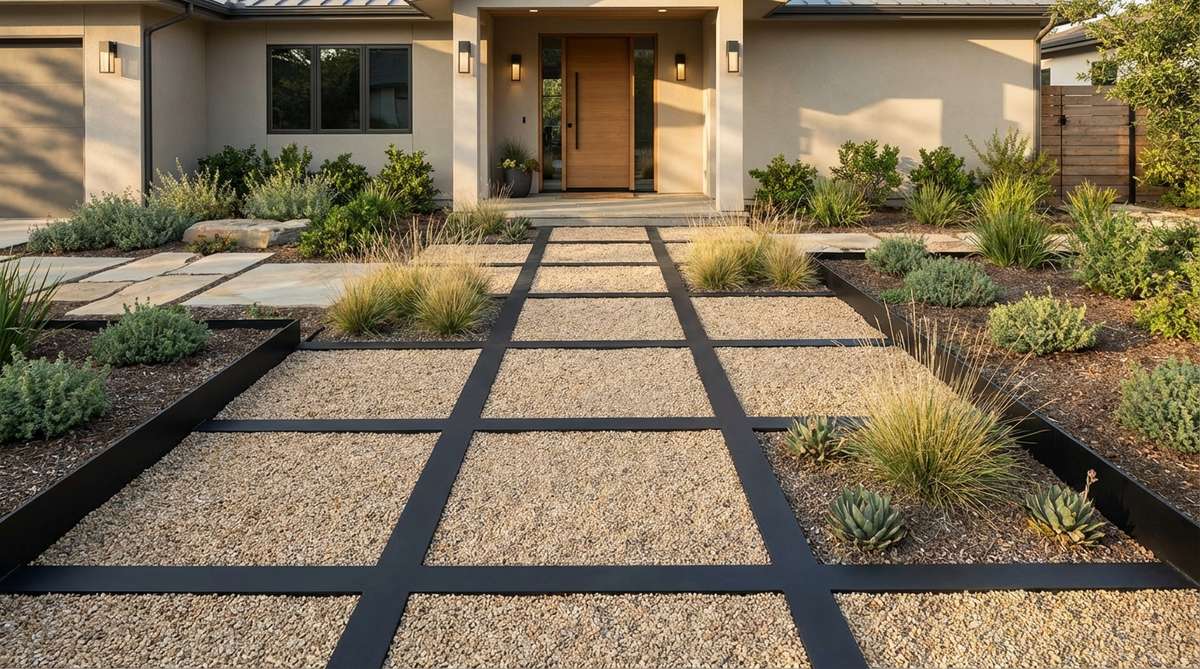
Metal or composite strips arranged in a grid pattern create distinct squares or rectangles filled with pea gravel. This structured design brings modern precision to outdoor spaces while maintaining the softness of gravel texture.
Use powder-coated steel edging in black or weathered steel finishes for a contemporary look. Each grid cell measures 12-18 inches square, allowing for optional planting pockets between gravel sections.
The geometric layout works well in courtyard settings or as a front entry feature. The defined lines provide visual organization that complements minimalist architecture and clean-lined plantings.
5. Woodland Garden Trail
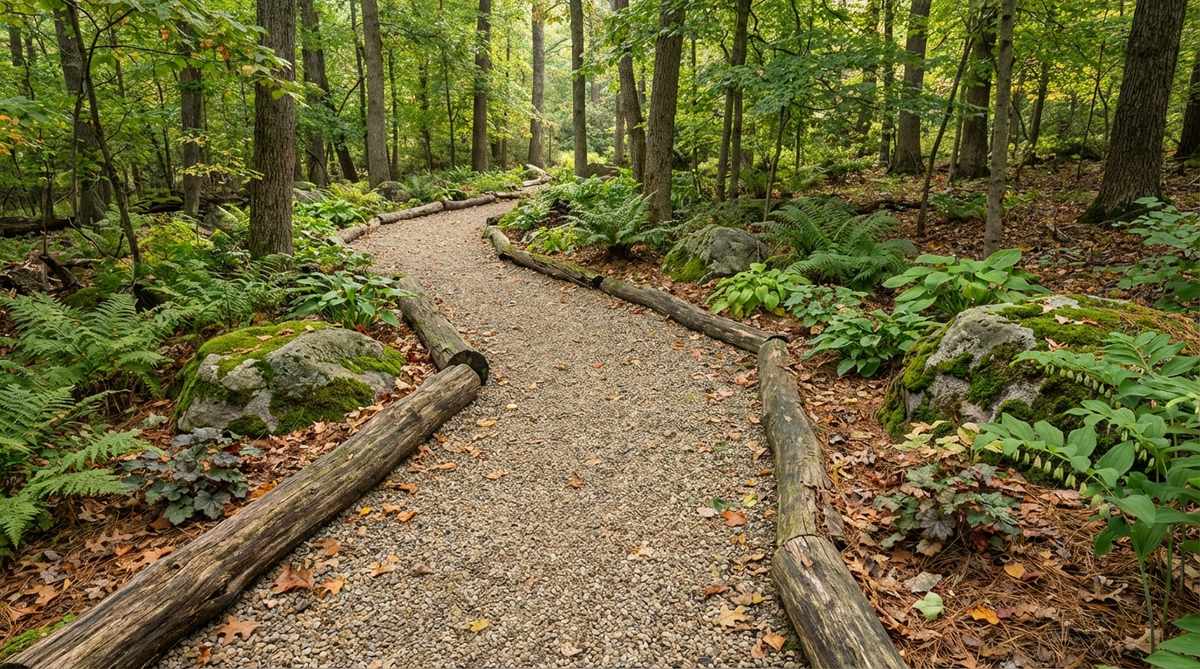
A naturalistic path winds through established trees and shade plantings using pea gravel that blends with the forest floor. The permeable surface allows tree roots to access water and air without compaction damage.
Keep the path width between 3-4 feet to maintain an intimate scale appropriate for wooded settings. Use fallen logs or boulders as natural edging elements that reinforce the organic aesthetic.
The neutral gravel color disappears into the landscape, letting specimen plants and seasonal interest take center stage. Fallen leaves blend into the gravel rather than requiring constant removal like they would on solid surfaces.
6. Front Entry Welcome Path
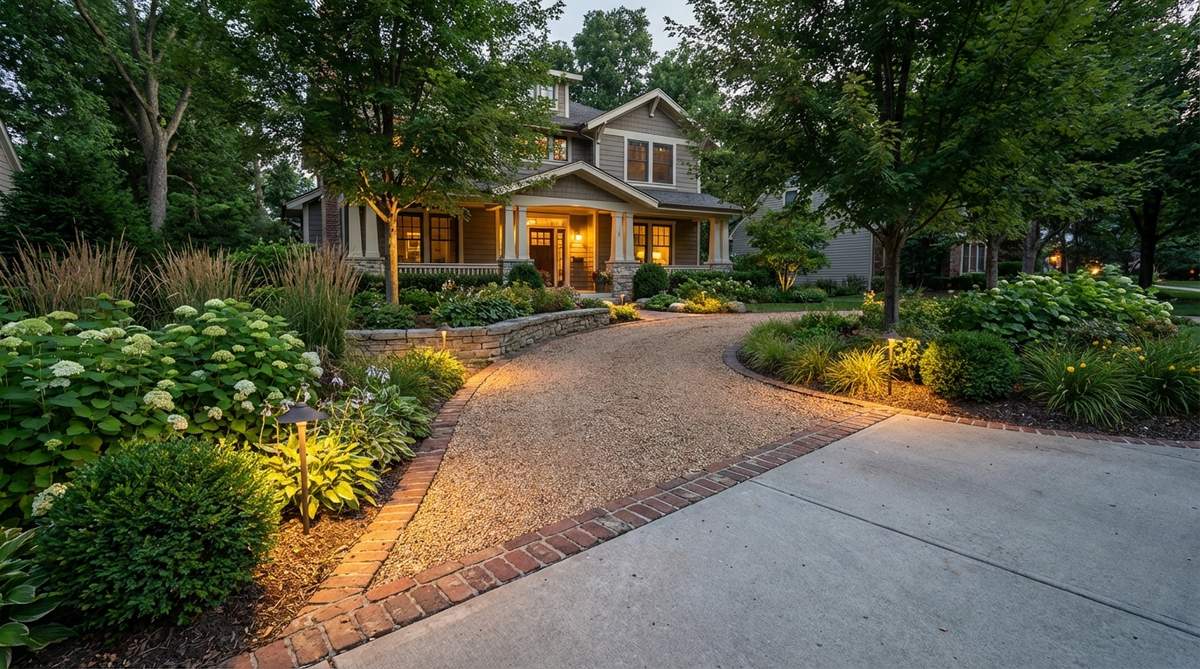
A wide gravel path from driveway to front door creates an inviting approach that showcases foundation plantings. The generous width accommodates multiple people walking side by side and handles foot traffic from deliveries and guests.
Border the path with brick or cut stone edging that matches the home’s exterior materials. Install landscape lighting along the edges to illuminate the pathway safely after dark.
This design increases curb appeal while managing stormwater runoff from the driveway. The gravel surface stays cleaner than concrete, which shows every dirt streak and tire mark.
Patios & Seating Areas For Outdoor Living
Pea gravel patios deliver the look of high-end hardscaping at a fraction of the cost and labor. The loose-fill nature accommodates irregular shapes and allows for easy DIY installation without specialized tools or skills.
7. Circular Fire Pit Gathering Space
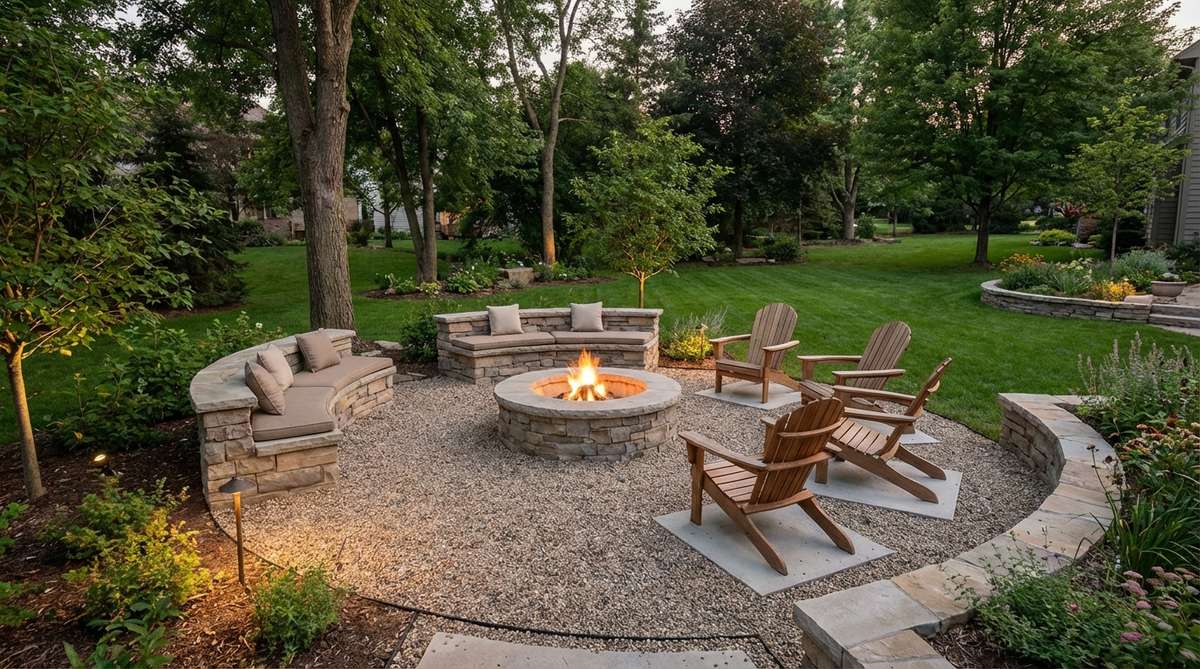
A round gravel patio centered on a fire pit creates an intimate gathering zone for evening entertainment. The circular form encourages conversation and provides equal access to the fire’s warmth from all sides.
Use a fire-resistant base layer of crushed rock beneath the gravel for added safety. Ring the circle with built-in stone benches or Adirondack chairs positioned on concrete footing pads to prevent sinking.
The gravel surface handles dropped embers better than wood decking and won’t scorch like grass. Extend the patio 8-10 feet beyond the fire pit to accommodate multiple seating zones and safe circulation space.
8. Dining Terrace Under Pergola
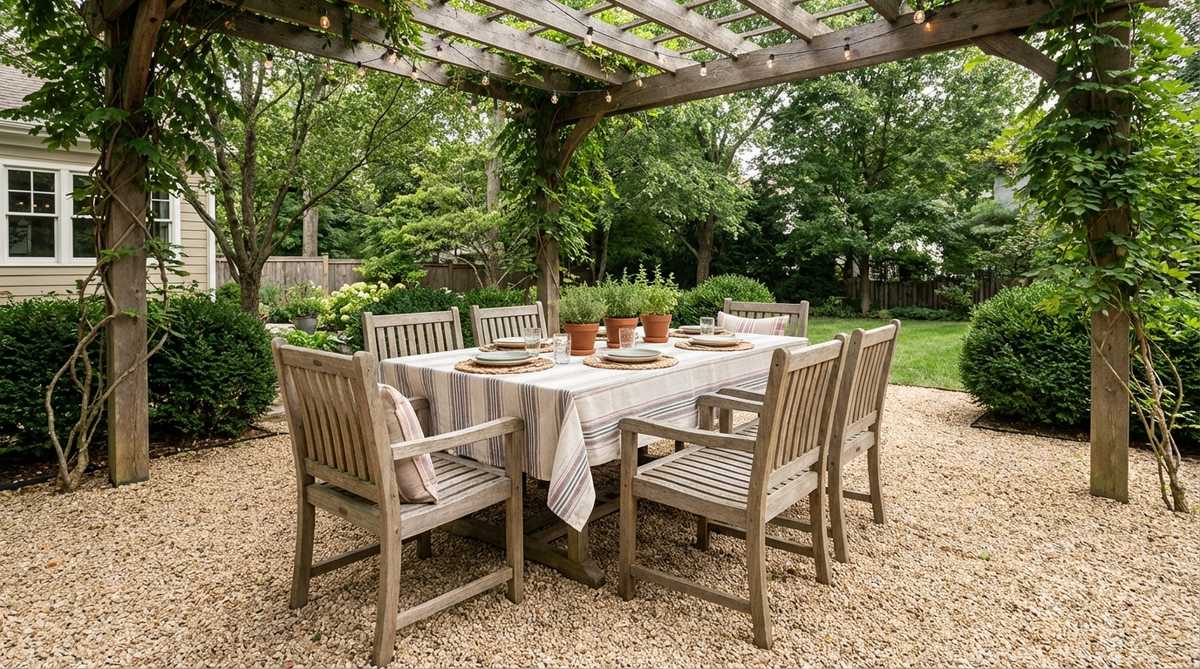
An outdoor dining area floored with pea gravel brings a European bistro feel to residential gardens. The gravel base provides stable footing for dining tables and chairs while maintaining the casual atmosphere of outdoor living.
Install the pea gravel 3-4 inches deep over compacted crushed stone to prevent furniture legs from sinking. Define the dining zone with a change in gravel color or a border of potted plants.
String lights overhead and add weather-resistant table linens to complete the ambiance. The permeable surface handles spills better than wood decking and won’t stain from dropped food or beverages.
9. Modern Lounge Patio
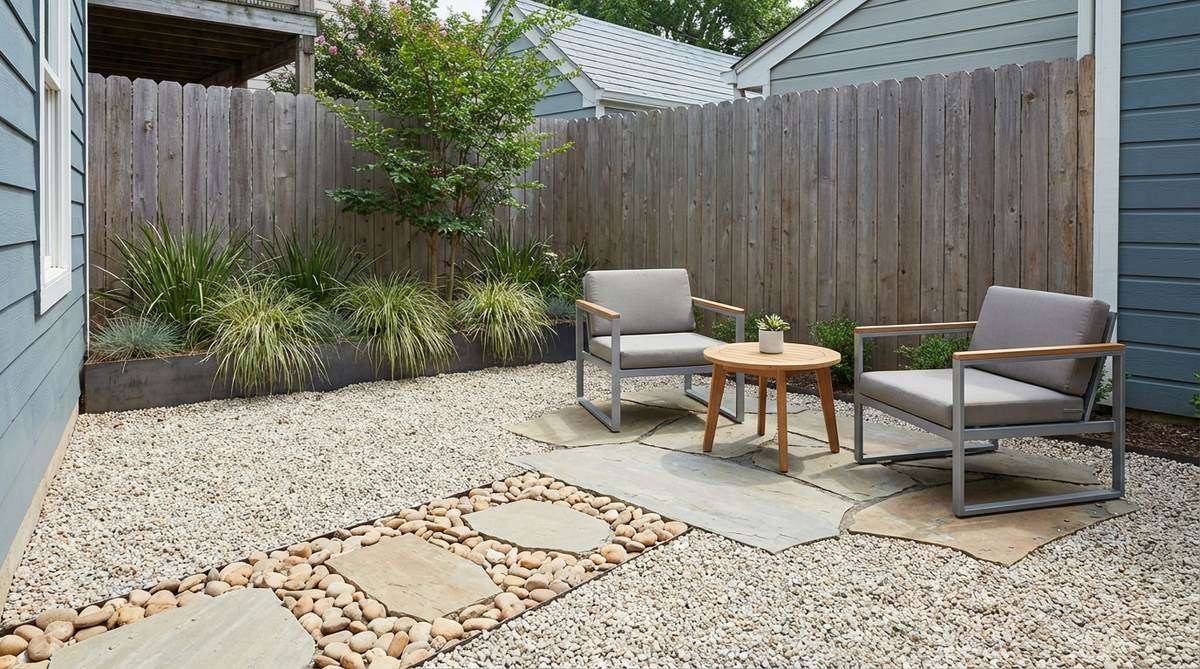
A minimalist patio design uses pea gravel as a clean backdrop for contemporary outdoor furniture. The monochromatic gravel field lets sculptural seating pieces and architectural plantings command attention.
Choose smooth river rock in gray or tan tones that complement metal and teak furniture finishes. Add stabilizer grid underneath high-traffic areas to keep the gravel from shifting under furniture weight.
This approach works particularly well in small urban yards where simplicity creates the illusion of more space. The neutral surface reflects light without glare, maintaining a comfortable environment even in full sun.
10. Sunken Conversation Pit
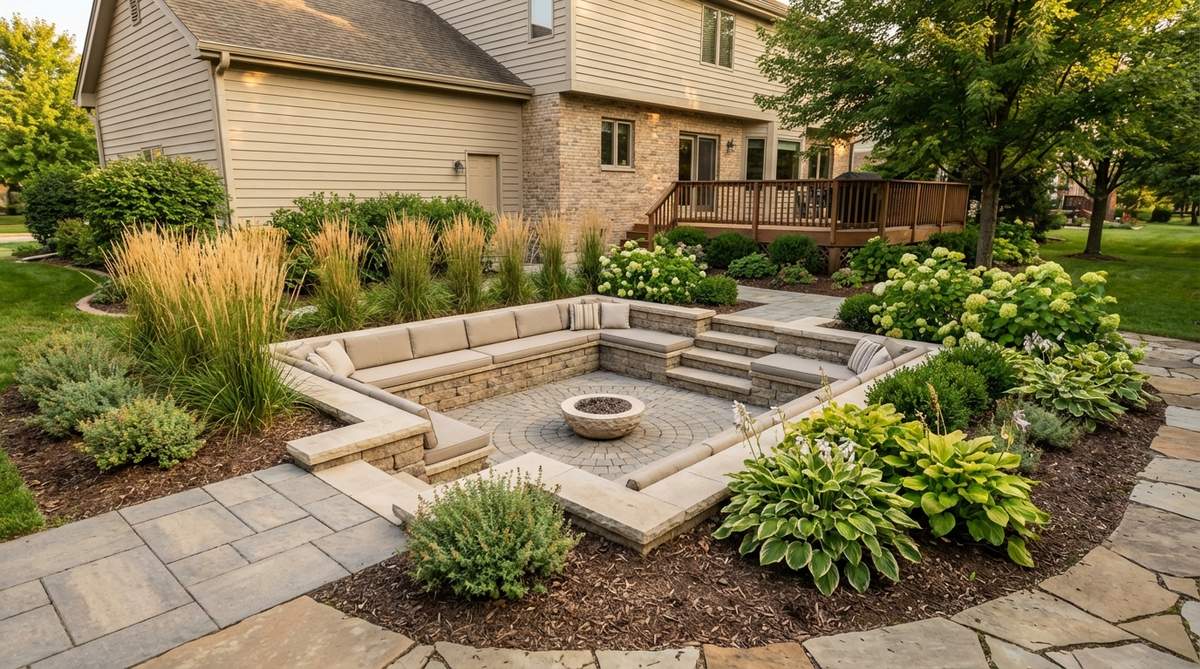
A patio area recessed 12-18 inches below grade creates an intimate gathering space protected from wind. Gravel fills the floor while built-in stone or concrete seating rings the perimeter.
Ensure proper drainage by grading the gravel floor with a slight slope toward a central drain or French drain system. Build steps on at least two sides for easy access.
The lowered position provides acoustic benefits, containing conversation without shouting. Add throw pillows and outdoor cushions to built-in seating for comfort while maintaining clean lines.
11. Bistro Nook In Courtyard
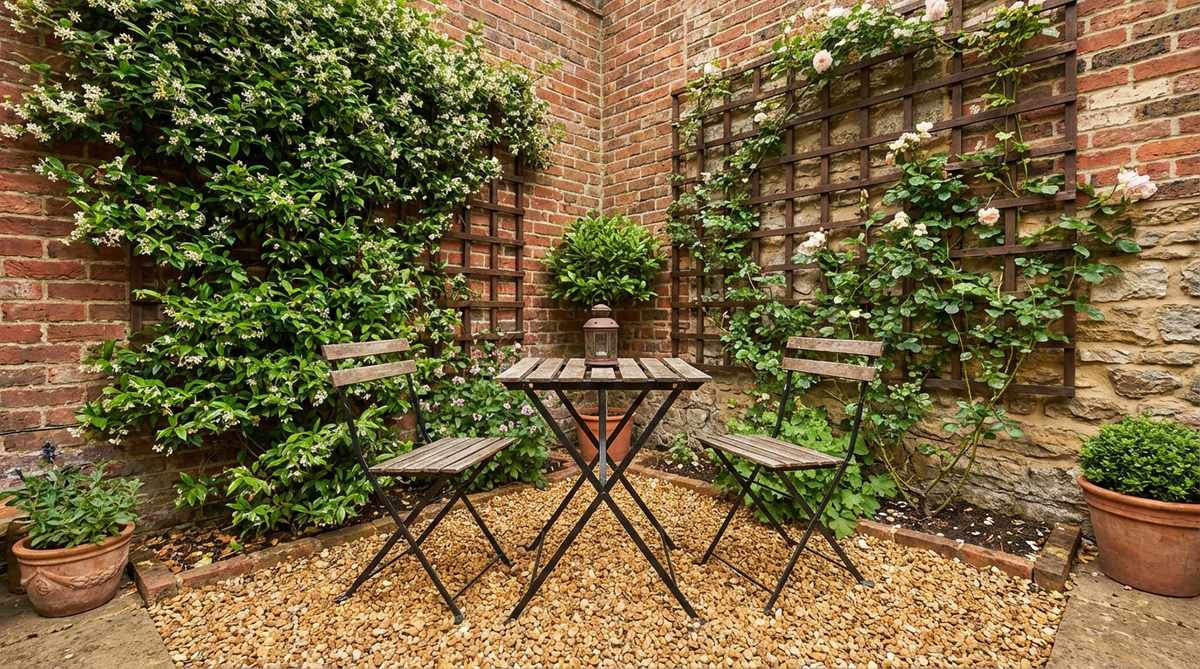
A small gravel-floored area tucked into a corner accommodates a café table and two chairs for morning coffee or intimate meals. The compact footprint fits spaces too small for traditional patio construction.
Border the nook with climbing vines on trellises or espaliered fruit trees for enclosure and privacy. Install the gravel just 2 inches deep since the light furniture and foot traffic don’t require deep base preparation.
This design transforms overlooked corners into functional outdoor rooms. The quick installation allows for seasonal adjustments—simply rake the gravel smooth and reposition furniture as needed.
12. Mixed Material Entertainment Deck
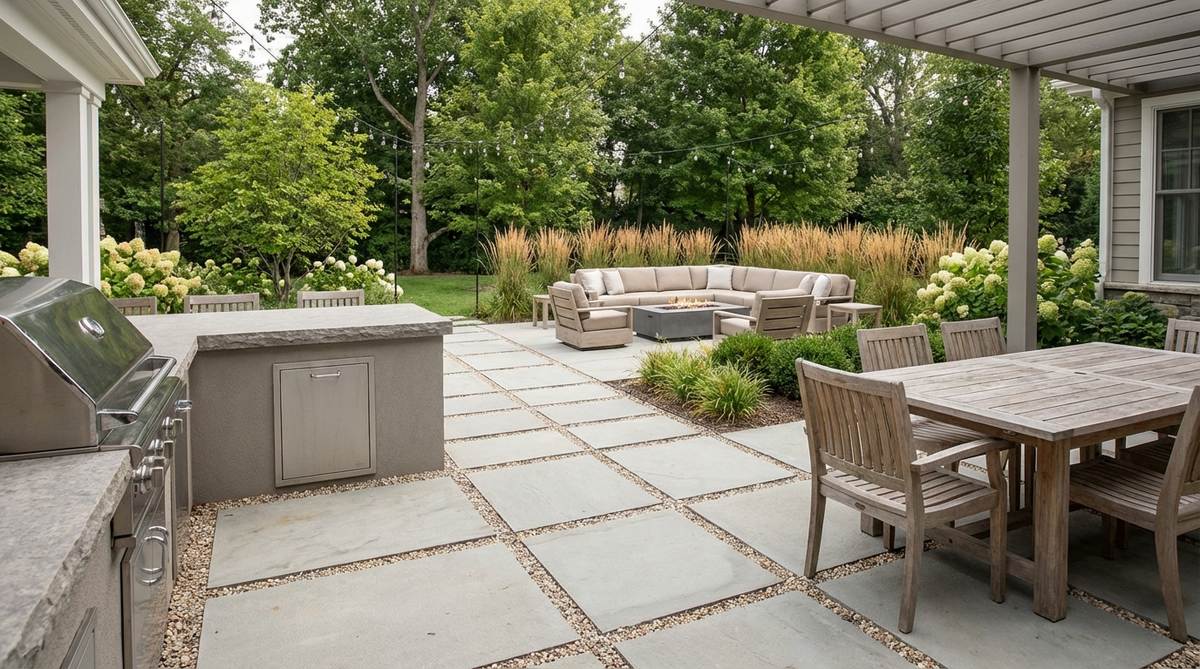
Large format pavers create defined seating zones while pea gravel fills the spaces between, softening the overall look. This combination reduces material costs while adding textural variety to the patio design.
Arrange pavers in a grid or linear pattern with 6-12 inch gravel joints between each piece. The gravel joints allow flexibility as pavers can settle independently without cracking.
Use contrasting colors—dark pavers with light gravel or vice versa—to emphasize the pattern. The design accommodates multiple furniture groupings while maintaining visual cohesion across the entire entertainment space.
Garden Beds & Borders With Texture
Pea gravel functions as a long-lasting mulch alternative in planting beds, suppressing weeds while allowing water and air to reach plant roots. The stone surface stays in place unlike organic mulches that decompose and migrate.
13. Raised Bed Gravel Surround
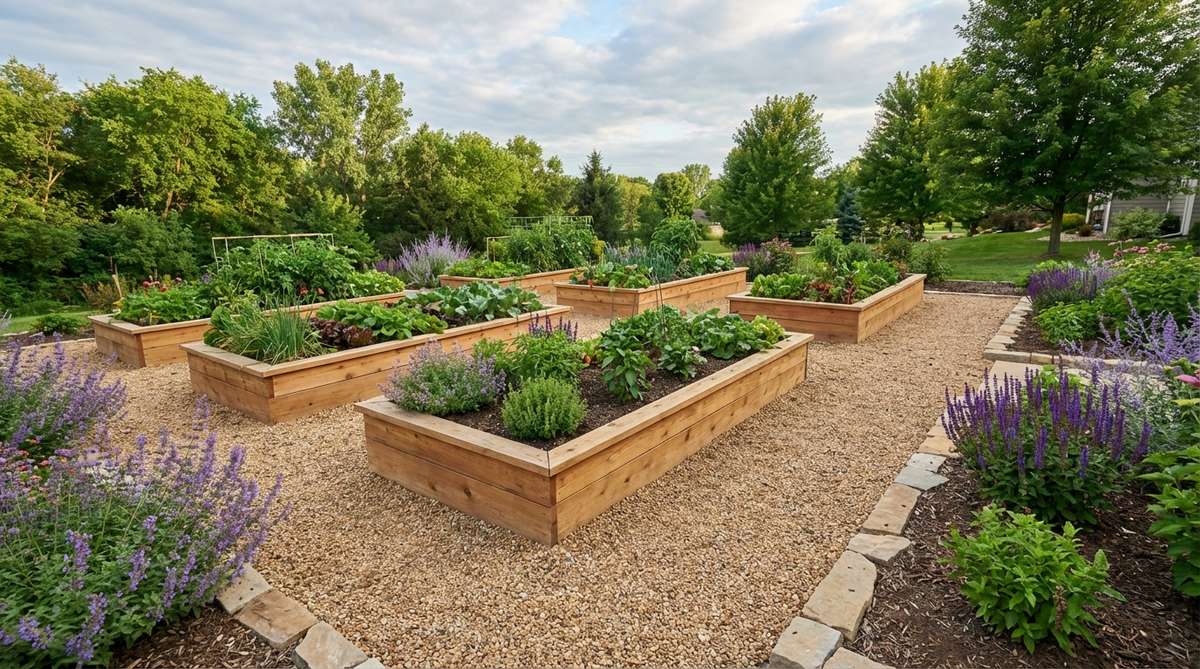
Elevated planting boxes rise from a pea gravel floor, creating a garden that’s accessible and visually organized. The gravel eliminates muddy pathways between beds while providing excellent drainage around the bed walls.
Build beds from cedar, composite materials, or galvanized steel at 18-24 inches high for comfortable planting and harvesting. Spread gravel 3 inches deep in the pathways, installing landscape fabric first to prevent soil mixing.
This layout works efficiently in vegetable gardens and cutting gardens where organized access matters. The clean gravel surface prevents soil splash onto plant leaves, reducing disease pressure in edible crops.
14. Succulent Garden With Gravel Mulch
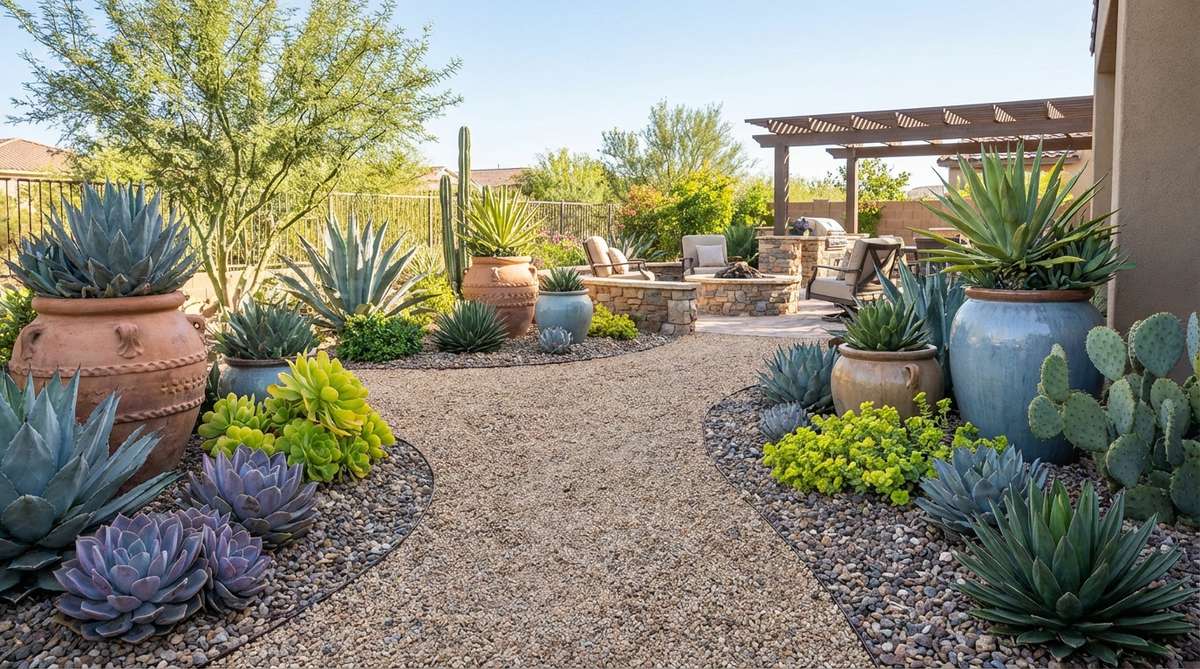
Desert plants and succulents thrive when surrounded by pea gravel that provides sharp drainage and reflects heat. The stone mulch prevents moisture from sitting against plant crowns, reducing rot issues common with organic mulches.
Install plants at the same depth as their nursery containers and top-dress with 2-3 inches of gravel around each specimen. Choose gravel colors that contrast with foliage tones—light gravel showcases blue-gray plants while dark gravel highlights chartreuse varieties.
The combination creates a cohesive design aesthetic reminiscent of southwestern landscapes. Gravel stays permanently in place even during heavy rains, unlike lightweight bark mulch that floats away.
15. Perennial Border With Gravel Base
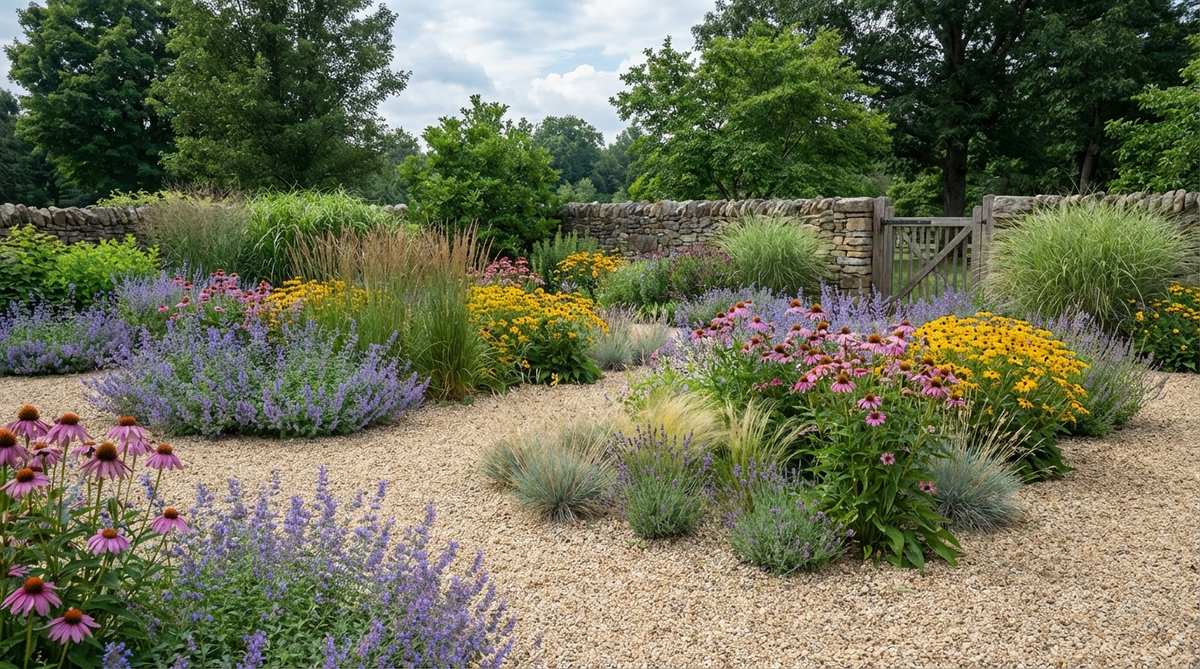
A traditional perennial planting gains modern edge when underplanted with pea gravel instead of organic mulch. The neutral background lets seasonal flower colors take center stage without competing textures.
Amend the planting soil with compost before installation, then spread gravel 2 inches deep after plants establish. Leave 2-3 inches of clear space around plant stems to prevent moisture buildup.
The gravel surface simplifies garden maintenance by eliminating annual mulch replacement. Weeding becomes easier since intruders stand out against the uniform stone background.
16. Specimen Tree Gravel Ring
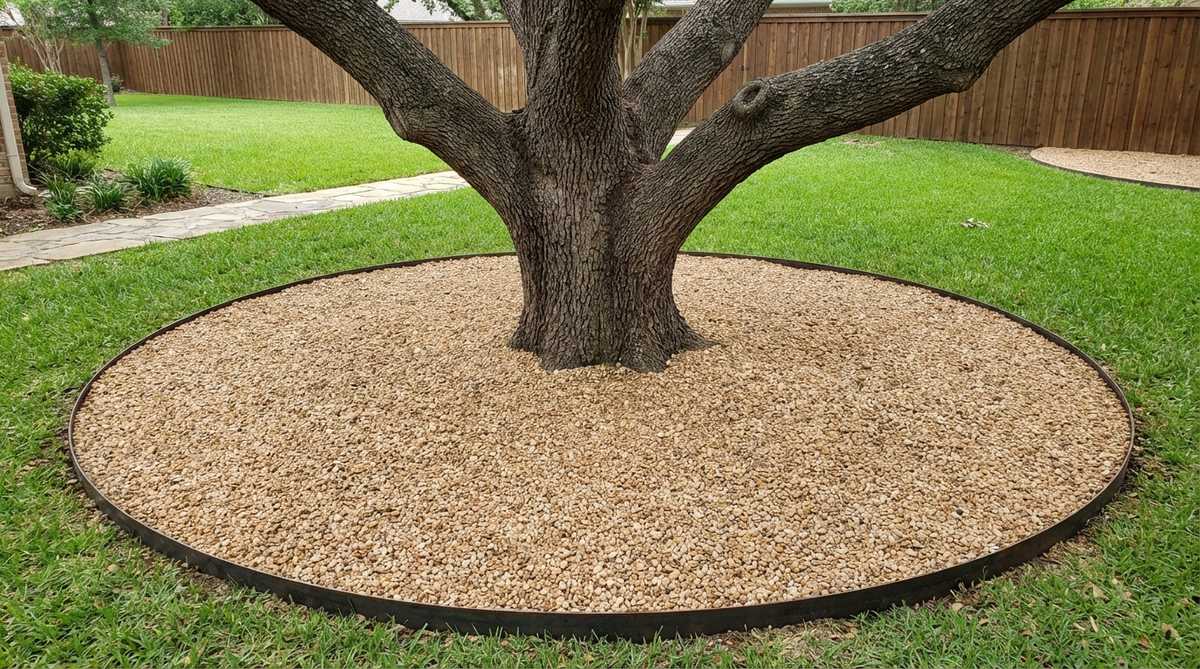
A circular bed of pea gravel surrounding a mature tree protects the root zone from compaction while eliminating turf competition. The clean look draws attention to the tree’s trunk and branching structure as focal points.
Extend the gravel ring to match the tree’s drip line, ensuring the entire root zone receives benefits. Edge the circle with steel, stone, or aluminum benderboard for crisp definition.
This design works particularly well for trees with surface roots that make mowing difficult. The gravel stays permeable, allowing oxygen and water to reach roots without the damage caused by repeated mower collisions.
17. Ornamental Grass Gravel Meadow
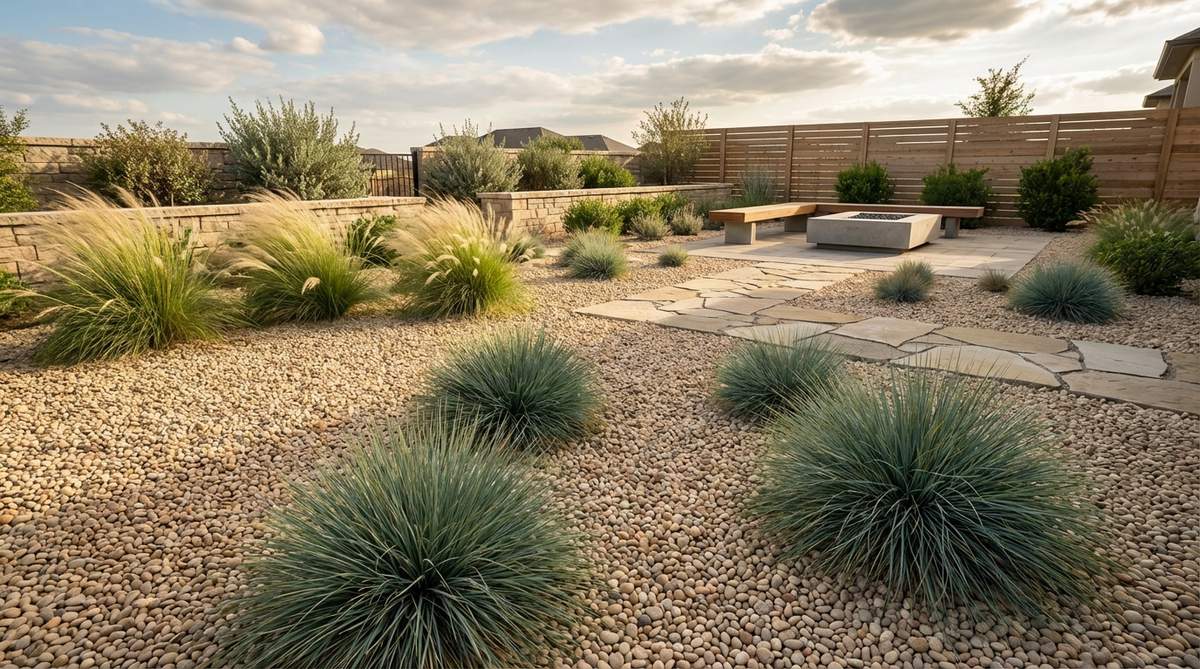
Clumping grasses planted individually in a sea of pea gravel create a contemporary meadow effect. The sparse spacing showcases each plant’s architectural form while the gravel provides a tidy, controlled backdrop.
Select drought-tolerant grasses like blue fescue, Mexican feather grass, or fountain grass varieties. Plant in a naturalistic pattern with varied spacing between 24-36 inches.
The composition stays attractive year-round as grass seed heads remain standing through winter months. The gravel mulch eliminates the need for seasonal cutbacks found in traditional meadow plantings.
18. Alpine Rock Garden
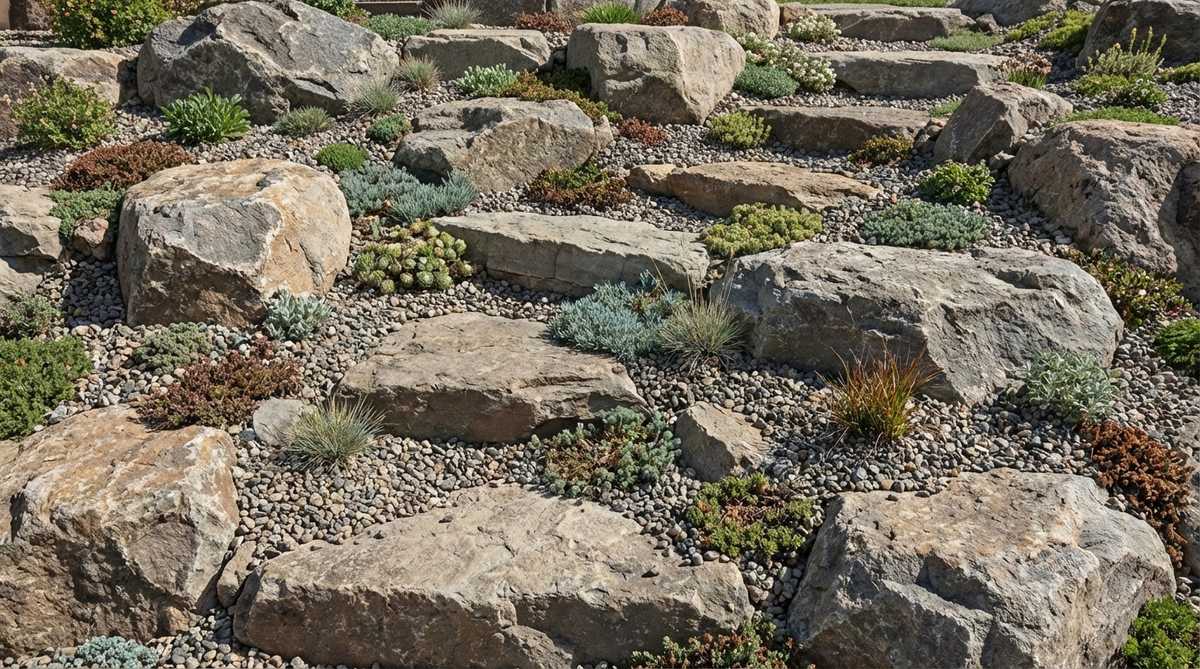
Small alpine plants nestle between boulders with pea gravel filling the gaps, mimicking mountain scree habitats. The sharp drainage replicates the natural conditions these plants require to thrive.
Position large rocks first to create elevation changes and planting pockets. Fill around rocks with gravel and tuck plants into crevices where soil can accumulate.
This garden type flourishes in full sun locations with poor soil where traditional plantings struggle. The gravel mulch keeps plant crowns dry, preventing the rot that kills alpine species in humid climates.
Courtyards & Outdoor Rooms
Enclosed outdoor spaces benefit from pea gravel’s ability to unify the floor plane while maintaining a soft, natural character. The material adapts to irregular courtyard shapes that would require expensive custom paving.
19. Zen Meditation Corner
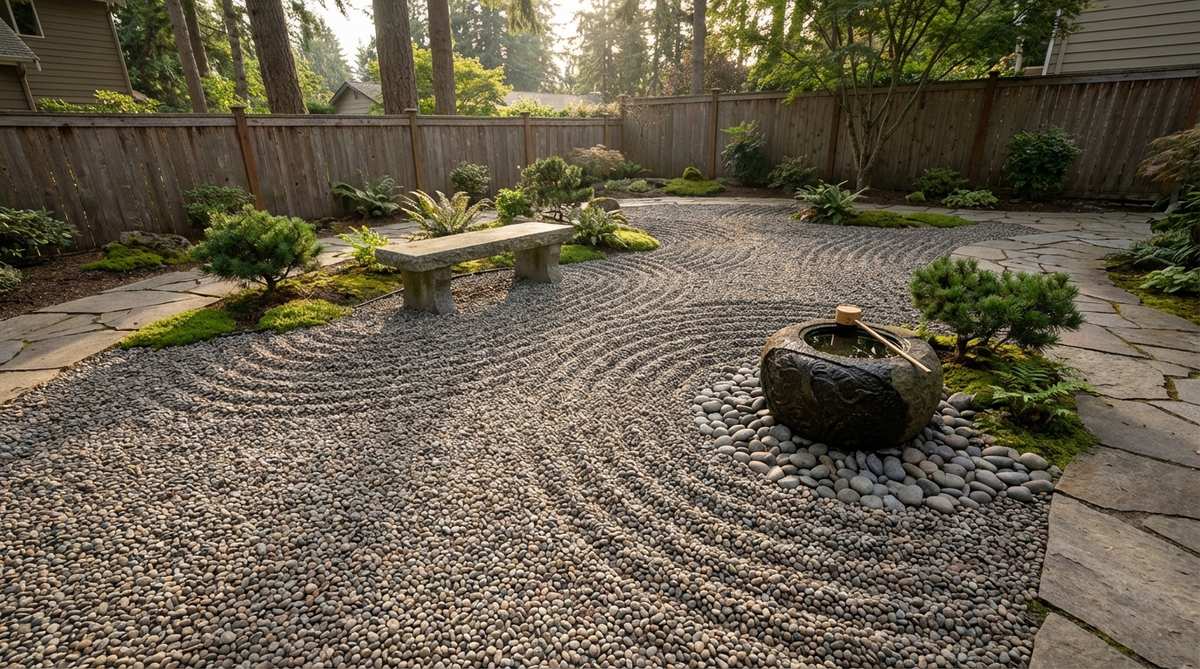
A quiet gravel courtyard following Japanese garden principles offers space for contemplation and rest. Smooth gravel raked into patterns provides visual interest that changes with light throughout the day.
Include a simple stone bench, a water basin, and minimal plantings in the composition. Rake concentric circles around key elements to create implied movement in the static gravel surface.
The design requires minimal maintenance beyond occasional raking to refresh patterns and remove debris. The act of raking itself becomes a meditative practice that connects the gardener with the space.
20. Spanish Style Interior Courtyard
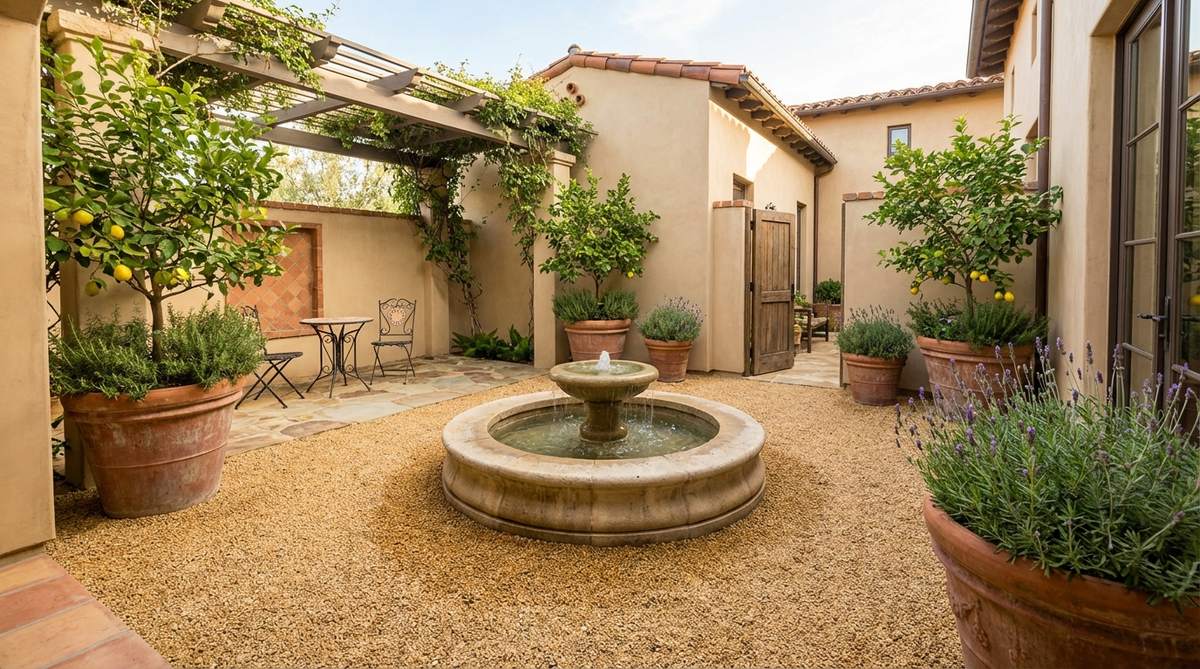
A central fountain surrounded by pea gravel creates a cool retreat in Mediterranean-inspired architecture. Terra cotta containers planted with citrus, lavender, and rosemary complete the Old World aesthetic.
Use warm-toned gravel in tan or gold hues that complement stucco walls and tile accents. Install the gravel 3-4 inches deep to muffle sound and create a soft walking surface.
The permeable gravel handles fountain overflow and irrigation runoff without creating puddles. The design stays functional in hot climates where the gravel reflects light without retaining excessive heat like paved surfaces.
21. Modern Sculpture Courtyard
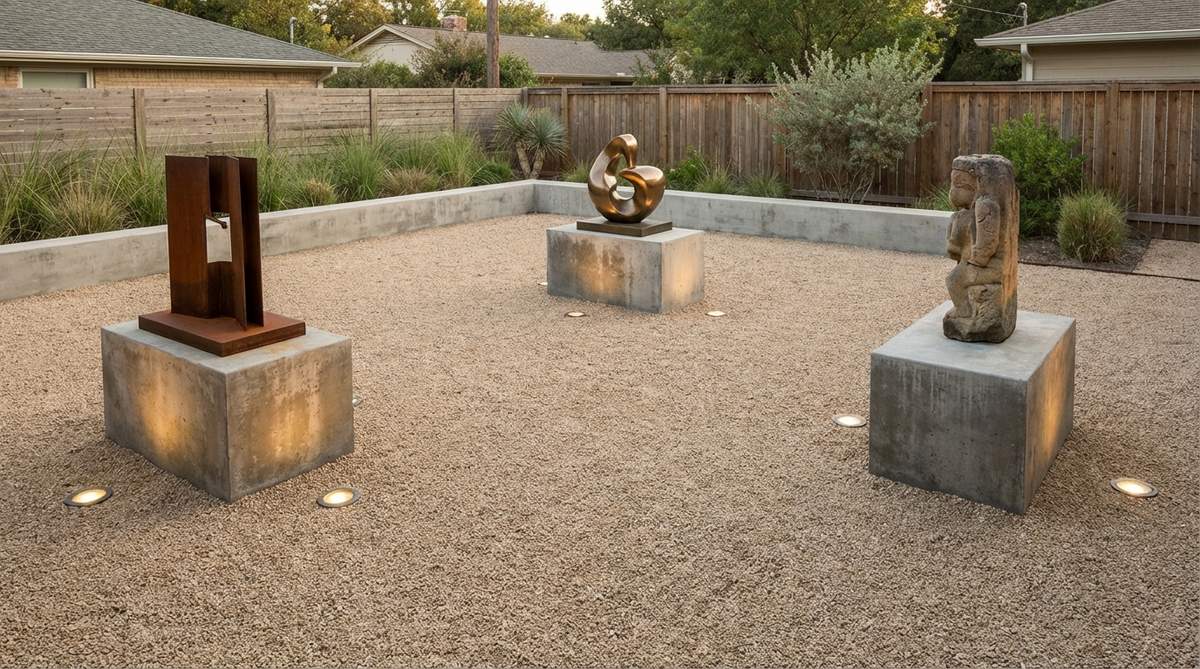
A minimalist gravel floor provides a gallery-like setting for displaying outdoor sculpture and artistic elements. The neutral surface doesn’t compete with artwork while maintaining a refined, curated appearance.
Choose fine-grade pea gravel in a single color for visual simplicity. Position sculptures on concrete pads buried flush with the gravel surface for stability.
Add focused uplighting to highlight sculptural pieces after dark. The composition remains flexible, allowing artwork rotation without permanent installation requirements.
22. Secret Garden Pocket Courtyard
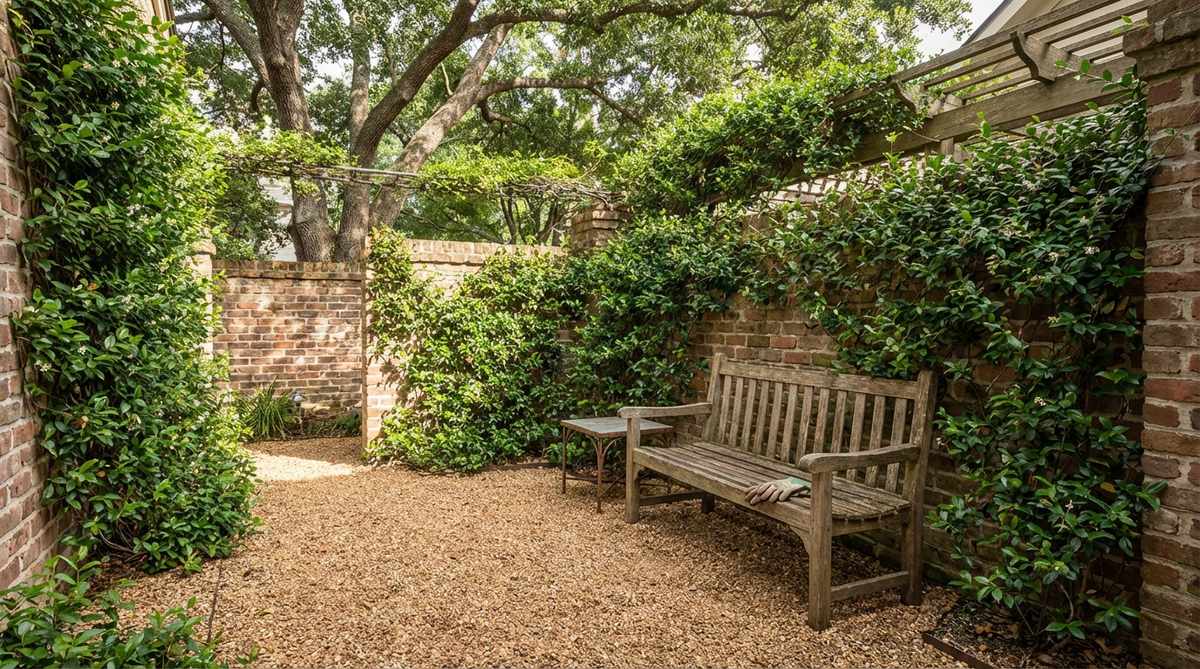
A small gravel-floored courtyard hidden behind walls or hedges becomes a private outdoor sanctuary. Climbing vines on walls provide enclosure while overhead branches filter sunlight onto the gravel floor.
Furnish with a single bench or pair of chairs and a small side table. Install the gravel over landscape fabric to minimize weeding in this low-light environment.
The intimate scale makes maintenance minimal while the enclosed walls protect the space from wind. The sound of footsteps on gravel provides natural security, announcing anyone entering the private retreat.
23. Multi Level Terrace Courtyard
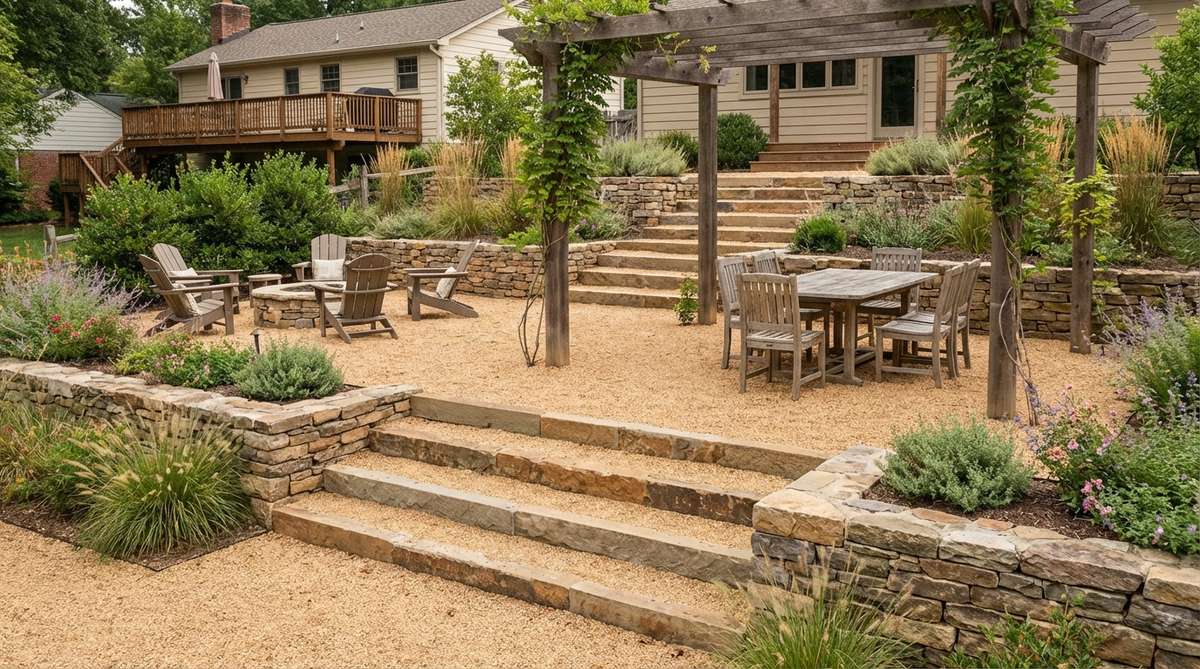
Stepped levels connected by shallow stairs use pea gravel on each terrace to unify the vertical design. The consistent flooring material ties together different elevations while accommodating the grade change economically.
Build retaining walls from stacked stone, concrete blocks, or timber to define each level. Install gravel 2-3 inches deep on each terrace with proper base preparation to prevent settling.
This approach works well on sloped lots where flat outdoor space is limited. Each level can serve different functions—dining on one terrace, lounging on another—while maintaining visual cohesion through consistent gravel flooring.
Functional Spaces & Drainage Solutions
Beyond aesthetics, pea gravel solves practical landscape challenges related to drainage, erosion, and utility access. The permeable nature makes it ideal for areas where water management is critical.
24. Foundation Drainage Zone
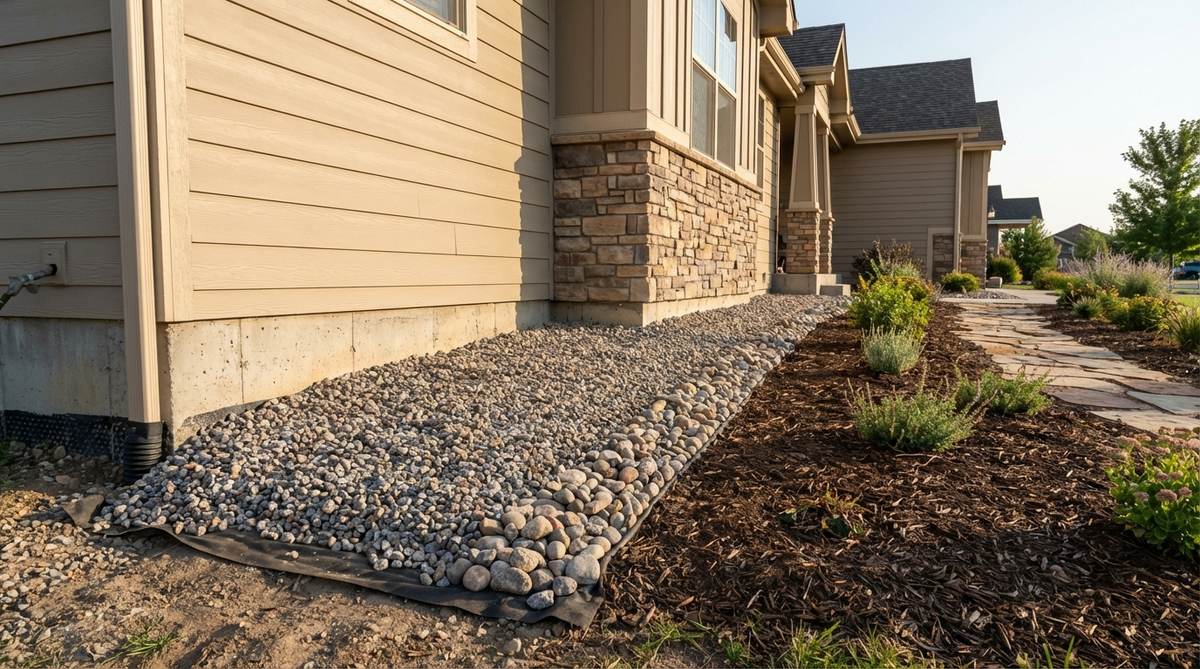
A gravel band around the house perimeter directs roof runoff away from the foundation while eliminating mulch that holds moisture against walls. The stone layer allows water to percolate down to drainage systems without pooling.
Install a 3-foot wide gravel strip sloped away from the foundation at 1 inch per 10 feet. Place landscape fabric underneath to separate gravel from soil and prevent settling.
This functional solution prevents basement moisture issues and foundation damage from standing water. The gravel stays cleaner than mulch and doesn’t harbor pests or promote rot against wood siding.
25. Dry Creek Bed Drainage
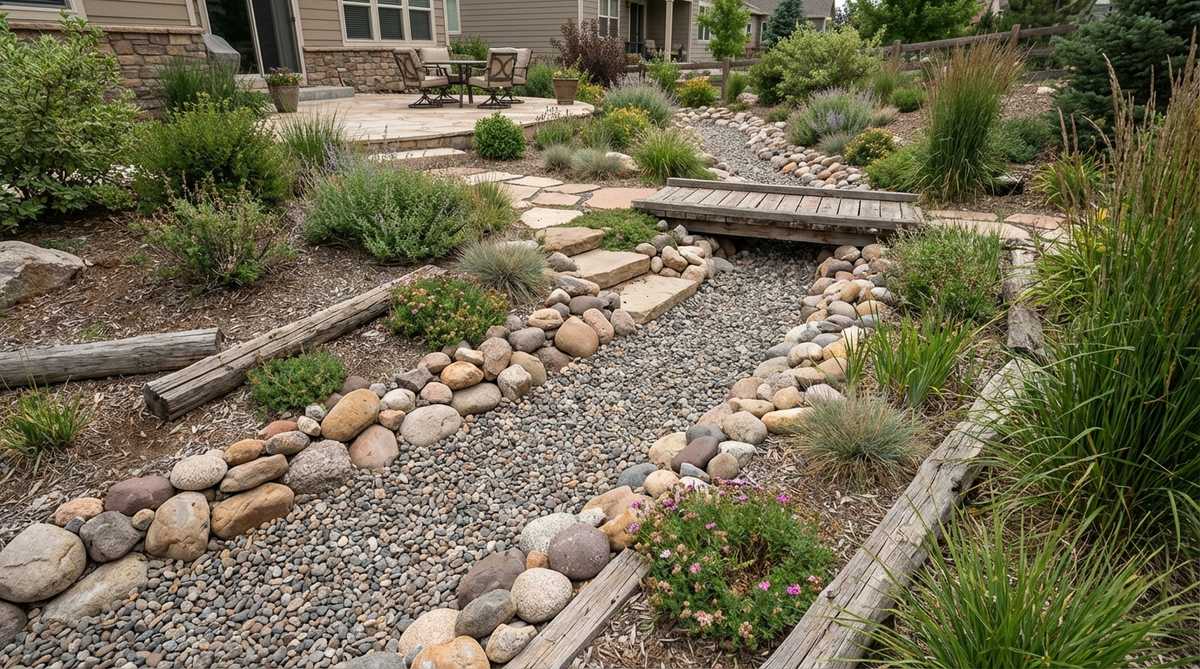
A naturalistic stream bed filled with pea gravel manages stormwater runoff while creating visual interest in the landscape. Larger river rocks along the edges contain the gravel and reinforce the creek aesthetic.
Route the creek bed through low spots where water naturally flows during rain events. Vary the width from 18 inches to 4 feet to mimic natural watercourses.
Plant moisture-loving perennials along the edges where occasional water collects. The design transforms a drainage problem into an attractive landscape feature that functions during storms and looks intentional when dry.
26. Pet Friendly Dog Run
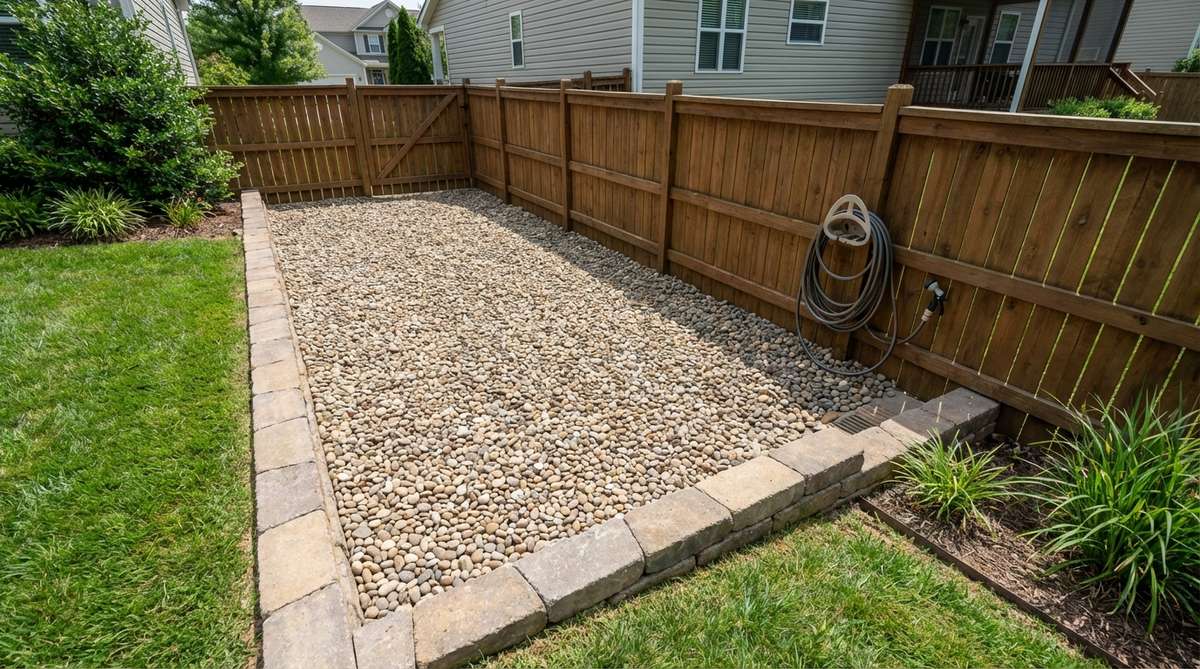
A dedicated gravel area for dogs provides a durable, sanitary surface that drains quickly after rain. The stone surface doesn’t turn muddy like bare soil and stays cleaner than grass.
Fence the run area and install pea gravel 3-4 inches deep over landscape fabric. Choose larger-sized pea gravel (3/8 to 1/2 inch) that’s less likely to stick in paw pads.
The gravel surface makes waste cleanup simple and prevents the worn dirt patches that develop in grass dog runs. Rinse the area occasionally with a hose to keep it fresh and odor-free.
27. Utility Access Pad
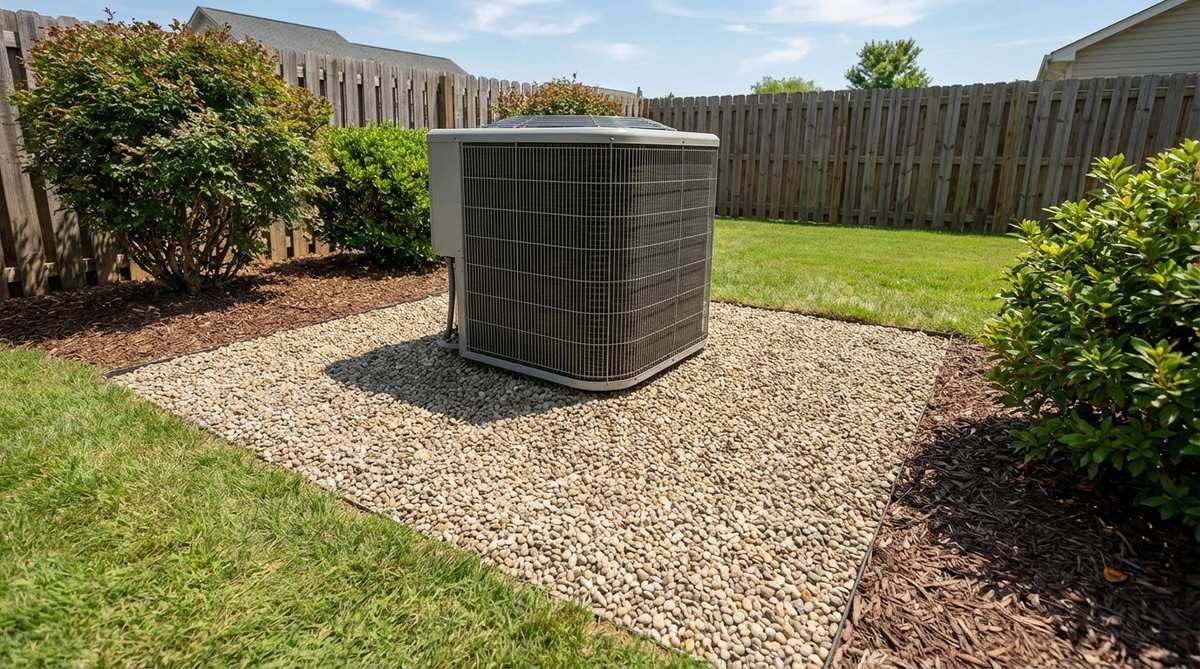
Gravel pads at air conditioning units, pool equipment, and utility meters provide stable footing for service access. The permeable surface handles condensation drips and equipment runoff without creating mud.
Size each pad to extend 2 feet beyond equipment on all sides for comfortable service access. Install gravel 4 inches deep over compacted base material to prevent equipment vibration from causing settling.
The neutral appearance blends into the landscape while serving a practical function. Unlike concrete pads, gravel installations can be easily expanded or relocated if equipment upgrades require different configurations.
28. Lightweight Vehicle Parking Pad
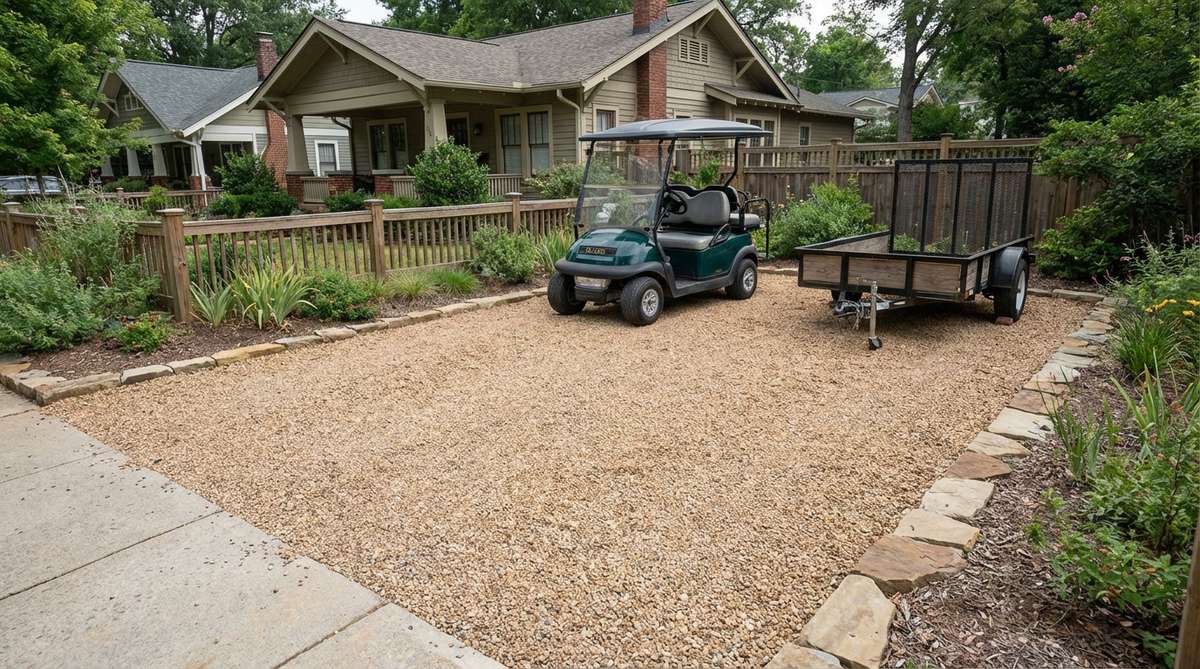
A secondary parking area for golf carts, trailers, or occasional guest vehicles uses pea gravel over a deep compacted base. The permeable surface prevents runoff issues while providing adequate support for light vehicle weight.
Excavate 6-8 inches deep and install 4 inches of crushed stone base, then top with 2-3 inches of pea gravel. Consider adding a stabilization grid system to prevent ruts from forming in high-traffic areas.
Edge the parking area with pressure-treated timbers or steel edging to contain the gravel. The surface works best on level ground where vehicles won’t cause the gravel to shift downhill.
Conclusion
These pea gravel gardens demonstrate how functional drainage solutions can deliver beautiful outdoor spaces that require minimal maintenance and cost less than traditional hardscaping. From intimate courtyard retreats to sprawling pathways and practical utility zones, pea gravel adapts to nearly any landscape challenge. Start with proper base preparation, choose quality edging materials, and watch as your outdoor space transforms into a permeable, textured environment that performs beautifully year after year.
Frequently Asked Questions
How deep should pea gravel be for pathways and patios?
Install pea gravel 2-3 inches deep for pathways and patios after preparing a proper base. First excavate 4-6 inches total depth, add 2-4 inches of compacted crushed stone or road base, then top with the pea gravel layer. The base layer provides stability and prevents the rounded pea gravel from shifting under foot traffic. Deeper installations aren’t necessary and waste material, while shallower applications expose the landscape fabric underneath and don’t provide adequate coverage.
Does pea gravel need landscape fabric underneath?
Yes, landscape fabric is recommended under pea gravel installations to separate the stone from soil and prevent weed growth. The fabric blocks weed seeds in the soil from reaching sunlight while allowing water to drain through freely. Choose commercial-grade woven landscape fabric rather than thin plastic sheeting, which tears easily and doesn’t allow proper drainage. Overlap fabric seams by 6-8 inches and secure with landscape staples before adding the base and gravel layers.
What size pea gravel is best for gardens?
Standard pea gravel measures 3/8 inch in diameter and works well for most garden applications including pathways, patios, and mulching around plants. This size feels comfortable underfoot, stays in place reasonably well, and provides good drainage. Smaller 1/4 inch gravel compacts too tightly and can migrate easily, while larger 1/2 to 3/4 inch sizes feel less stable to walk on and create wider gaps that small pets or children might find uncomfortable. The 3/8 inch size offers the best balance of comfort, stability, and appearance.
How do you keep pea gravel from spreading into the lawn?
Install permanent edging materials along all borders between pea gravel and lawn areas to contain the stones. Metal edging, concrete mowing strips, pressure-treated lumber, or stone borders all work effectively when installed flush with or slightly above the gravel surface. The edging should extend 3-4 inches deep into the ground to prevent gravel from migrating underneath. Maintain a clean edge by occasionally raking stray stones back into the gravel area and keeping lawn grass from creeping over the border.
Is pea gravel more expensive than mulch?
Pea gravel costs more initially than organic mulch but proves more economical over time since it never needs replacement. Expect to pay $40-50 per cubic yard for pea gravel delivered, compared to $25-35 for hardwood mulch. However, mulch requires complete replacement every 1-2 years as it decomposes, while gravel lasts indefinitely with only occasional raking and minor top-dressing needed. Over a five-year period, gravel costs less than half what mulch replacement would cost while providing superior weed suppression and drainage.