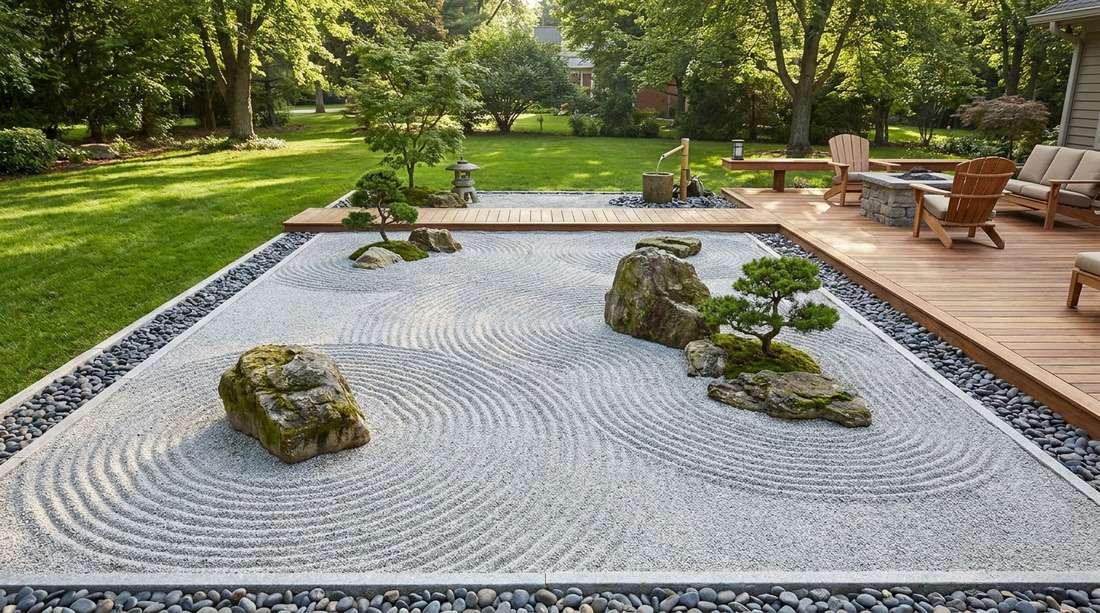
Transform your outdoor or desktop space with premium zen garden sand layouts. Sourcing pre-crushed granite bulk packs guarantees crisp, weather-resistant line definition effortlessly. Elevate your landscape into a high-end meditation sanctuary without overspending.
Design Snapshot & Key Principles
- Material Selection: Opt for crushed granite or decomposed granite (5/8″ white granite chips) over traditional sand for wind-resistant styling.
- Tool Precision: Invest in wide-toothed bamboo rakes for consistent spacing and fine-toothed detailing rakes for intricate stonework.
- Body Mechanics: Raking requires full-body rhythm, utilizing your legs for steady pulling to avoid arm fatigue.
- Pattern Philosophy: Treat traditional templates as a base—infuse personal mindfulness to create authentic, designer-level outdoor decor.
Traditional Water Flow Patterns Using Zen Garden Gravel
Water representation forms the foundation of karesansui design. These layouts guide visitors’ eyes across the garden while evoking natural waterways, turning basic yards into luxury retreats.
1. Parallel Straight Lines
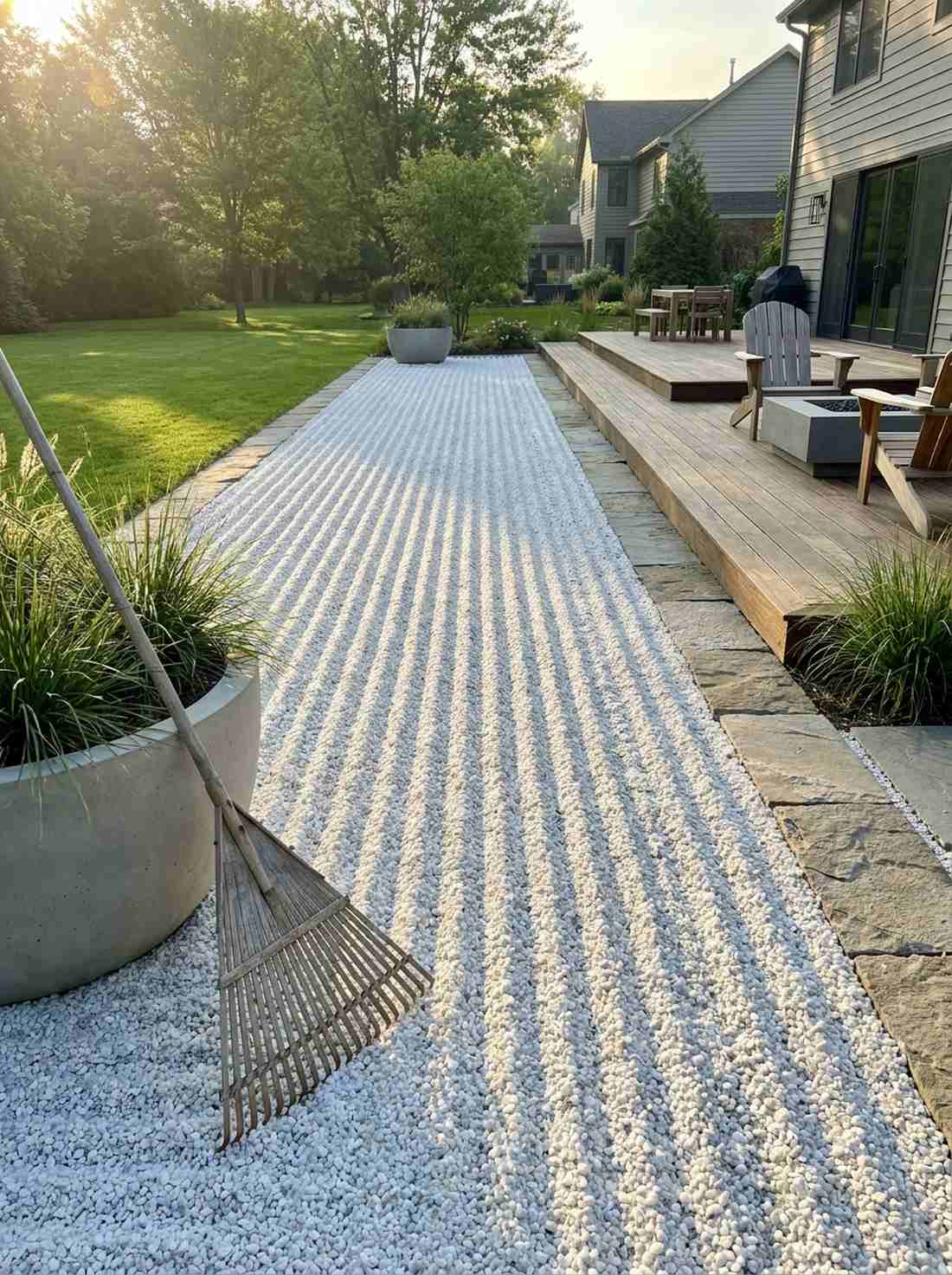
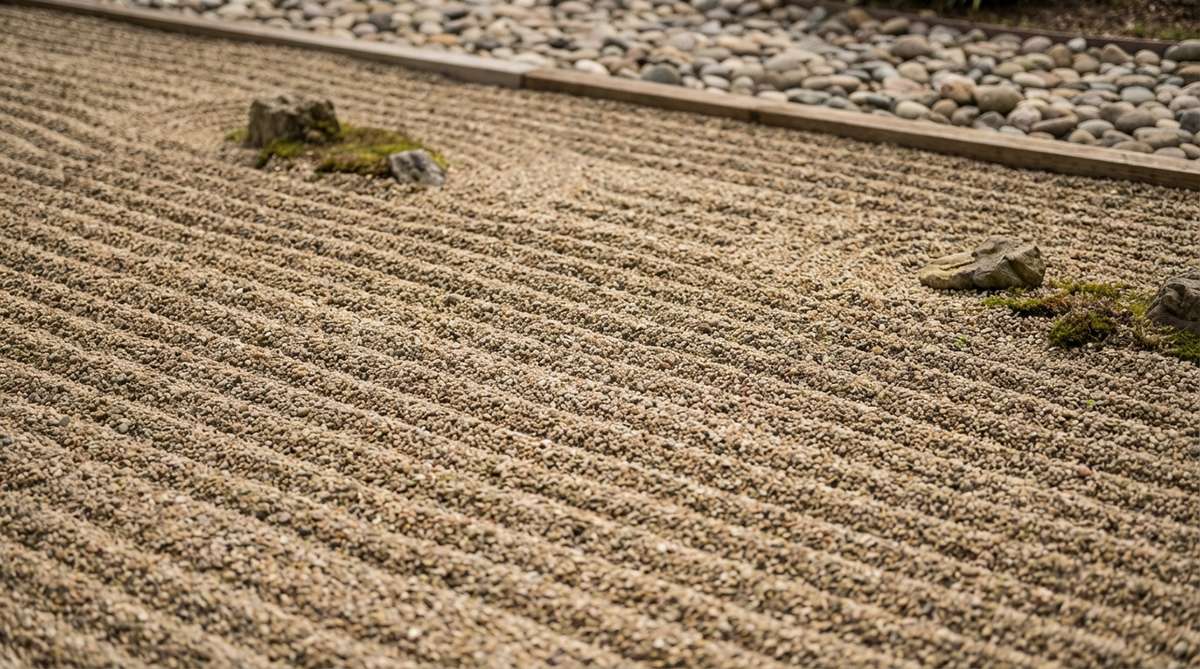
This layout feels like looking out over an infinitely calm ocean at dawn. Serving as the ultimate minimalist backyard groundcover, it works exceptionally well for a shaded patio border where simplicity reigns supreme.
Most beginners overcomplicate their first design, but mastering these straight, undisturbed tracks delivers a surprisingly premium look. By utilizing heavy-duty crushed quartz, the ridges stand tall against wind, giving a designer-level finish that anchors the entire yard.
You can easily pull this off for around $20–$40 if buying stone locally. Save this to your DIY weekend garden board so you don’t forget the layout!
- Key Materials: 5/8″ white granite chips (bulk bags), wide-toothed bamboo rake.
- Vibe / Style: Ultra-modern minimalist calm.
- Difficulty: Easy beginner setup.
- Budget Breakdown: Materials: $35 | Rake: $25.
- Creator’s Tip: Keep your elbows locked and walk backward slowly to maintain perfectly straight, waveless lines.
- Smart Sourcing: weather-treated wide bamboo rakes and pre-washed white granite bulk sacks.
2. Surf Pattern (Sazanamimon)
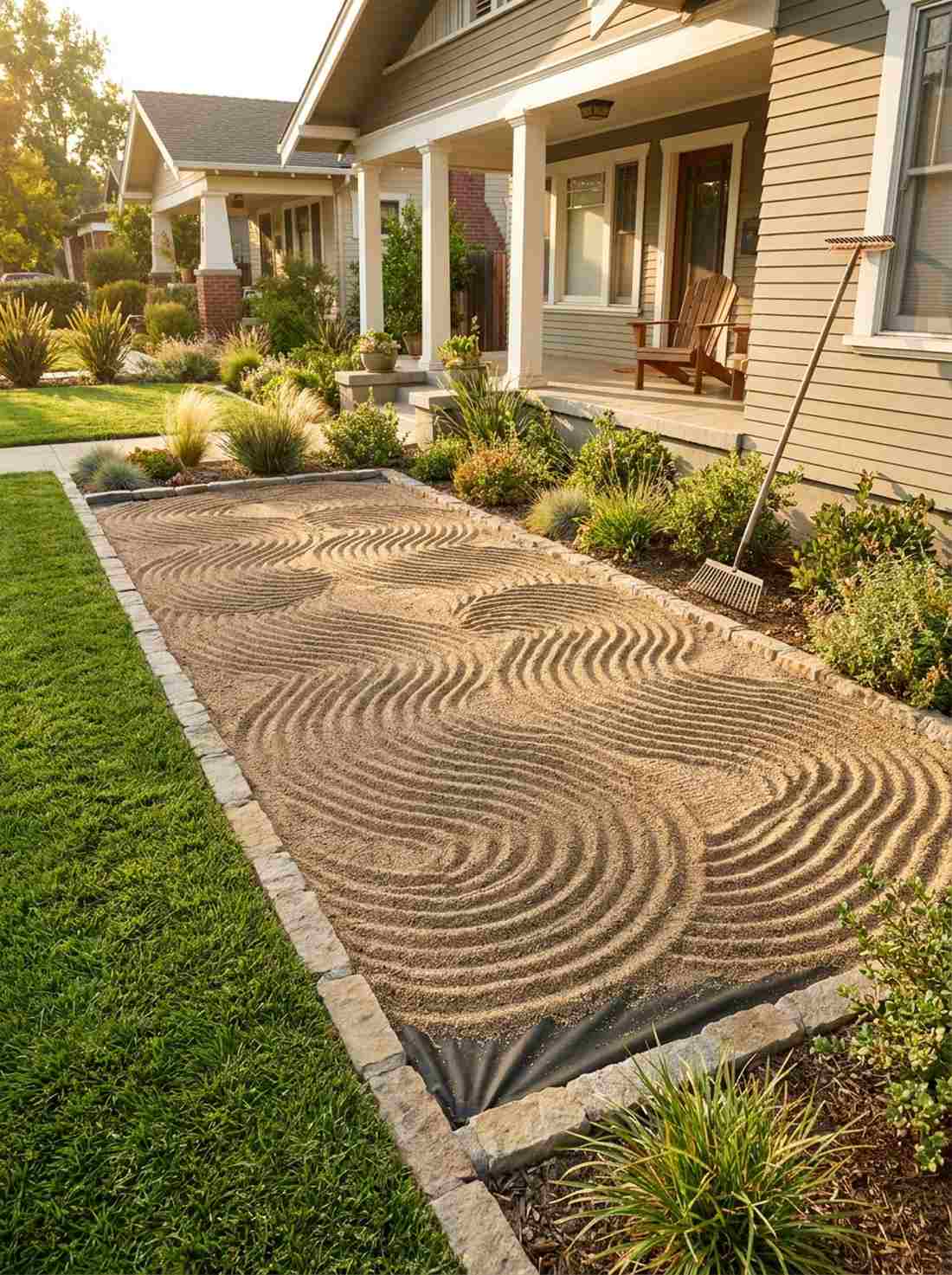
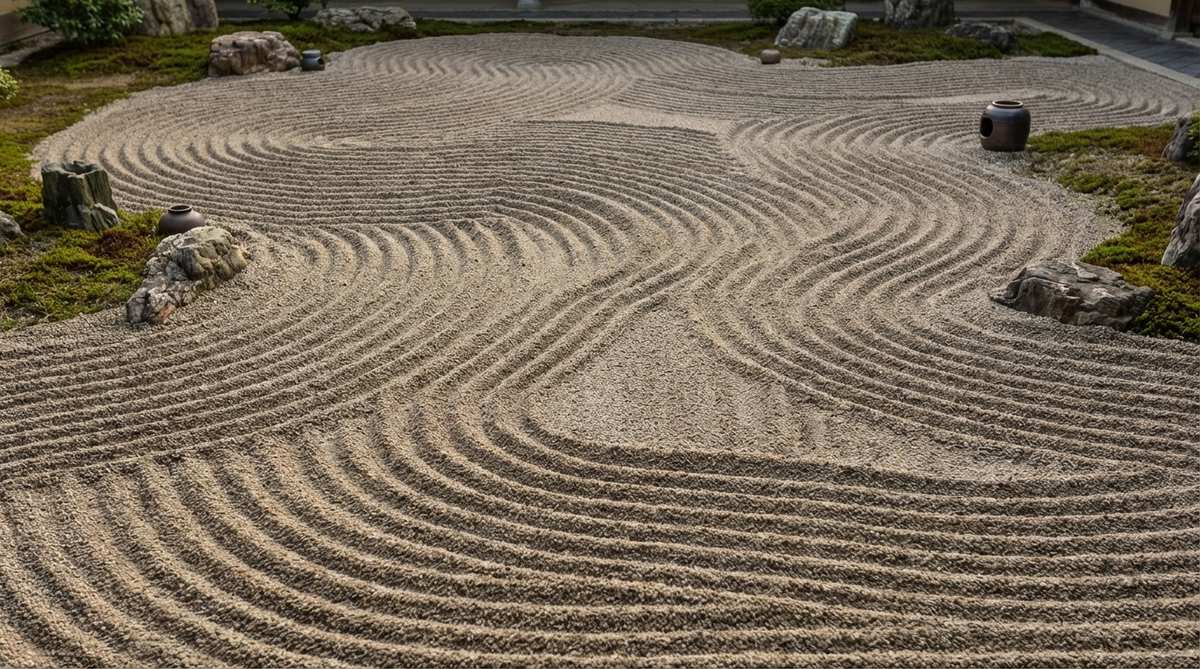
Mimicking the rhythmic swells of a gentle sea, this aesthetic feels like a hidden coastal retreat right in your backyard. A brilliant front yard focal point concept, it is perfect for long, rectangular landscape beds.
People assume you need expensive landscaping teams for curves, yet an ergonomic rake creates this undulating texture in minutes. Applying this over commercial weed barrier fabric prevents organic blending, making it look far more expensive than it is.
This weekend upgrade usually costs under $50 depending on your yard size. It’s a fast upgrade that completely changes the vibe.
- Key Materials: Medium-grain decomposed granite, commercial-grade landscaping fabric.
- Vibe / Style: Flowing organic movement.
- Difficulty: Moderate (requires consistent wave spacing).
- Budget Breakdown: Base fabric: $20 | Gravel: $30.
- Creator’s Tip: Shift your weight from leg to leg rather than twisting your wrists to keep the wave amplitude perfectly uniform.
- Smart Sourcing: UV-resistant weed barrier rolls and adjustable tension garden rakes.
3. Open River Wave
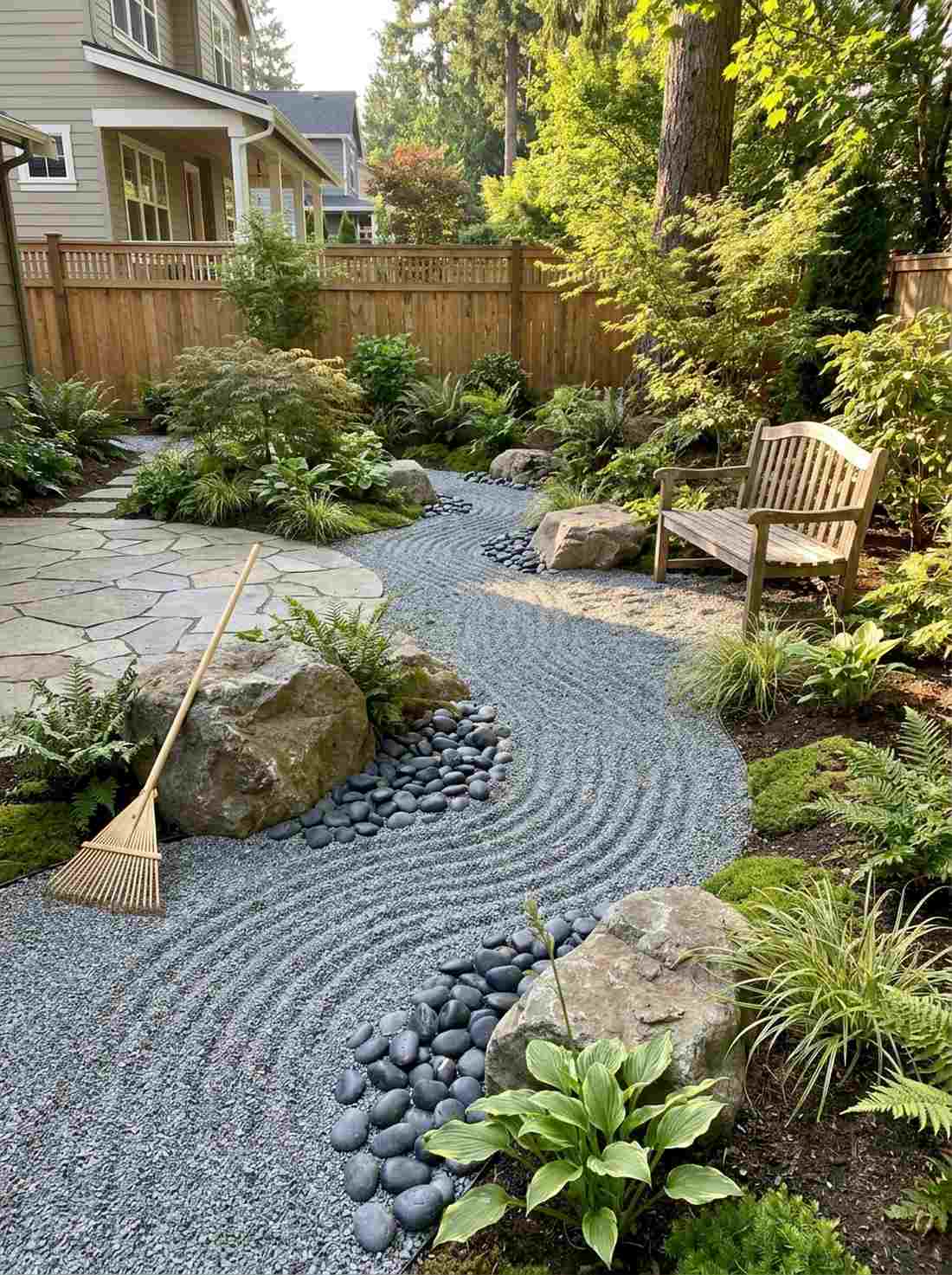
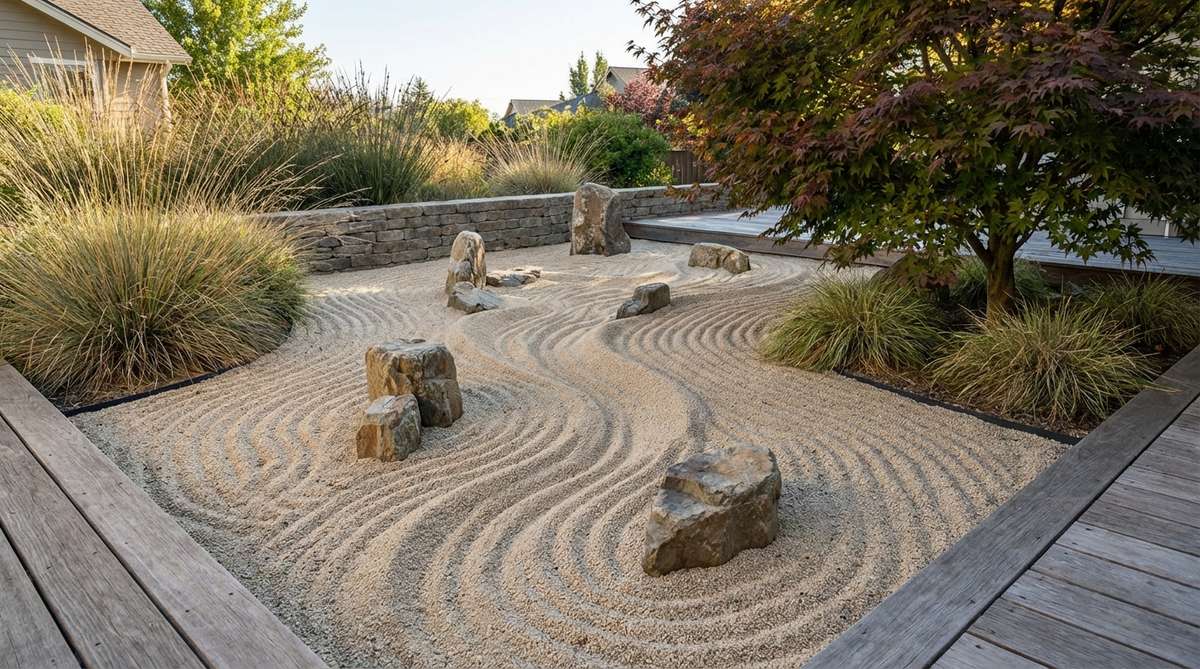
Soft meandering streams that wrap around stones feel like a tiny hidden forest you accidentally discovered. This courtyard zen oasis setup acts as a brilliant pathway guide connecting a patio to a garden bench.
This layout thrives on asymmetry, turning standard gravel into a dynamic, high-end landscape feature. Incorporating premium terrarium accessories or large river boulders breaks the visual plane, forcing the eye to naturally follow the “water’s” flow.
Expect to spend about $60 if adding fresh decorative boulders to the mix. Pin this if you’re planning a small space landscape upgrade.
- Key Materials: Assorted smooth river stones, fine-crushed grey granite.
- Vibe / Style: Naturalistic woodland stream.
- Difficulty: Beginner-friendly.
- Budget Breakdown: Boulders: $40 | Base Sand: $20.
- Creator’s Tip: Always place your feature rocks first, then rake the gravel *around* them, never the other way around.
- Smart Sourcing: polished black river stones (bulk pack) and fine-tooth detailing rakes.
4. Stream Current (Nagareru-mon)
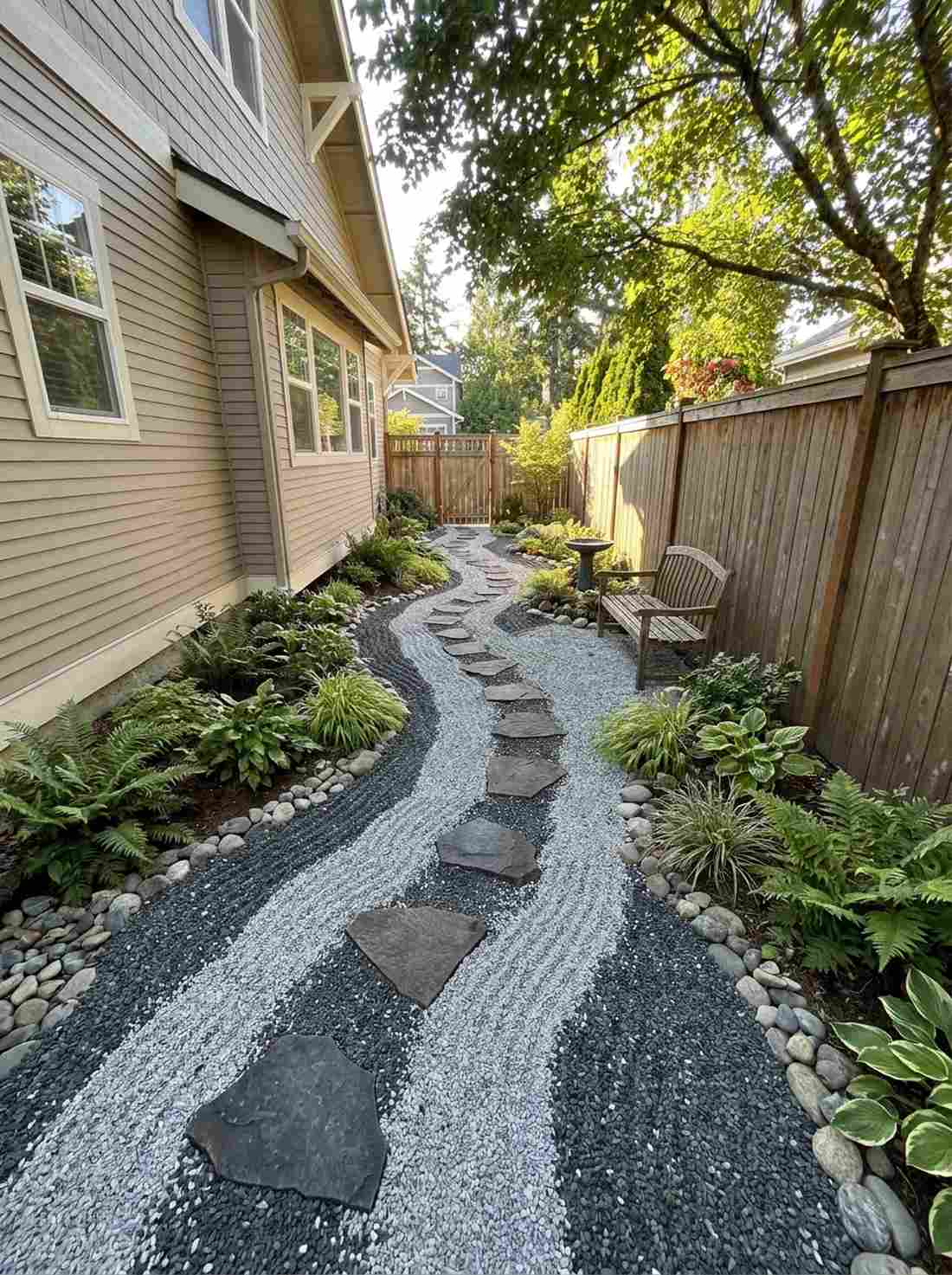
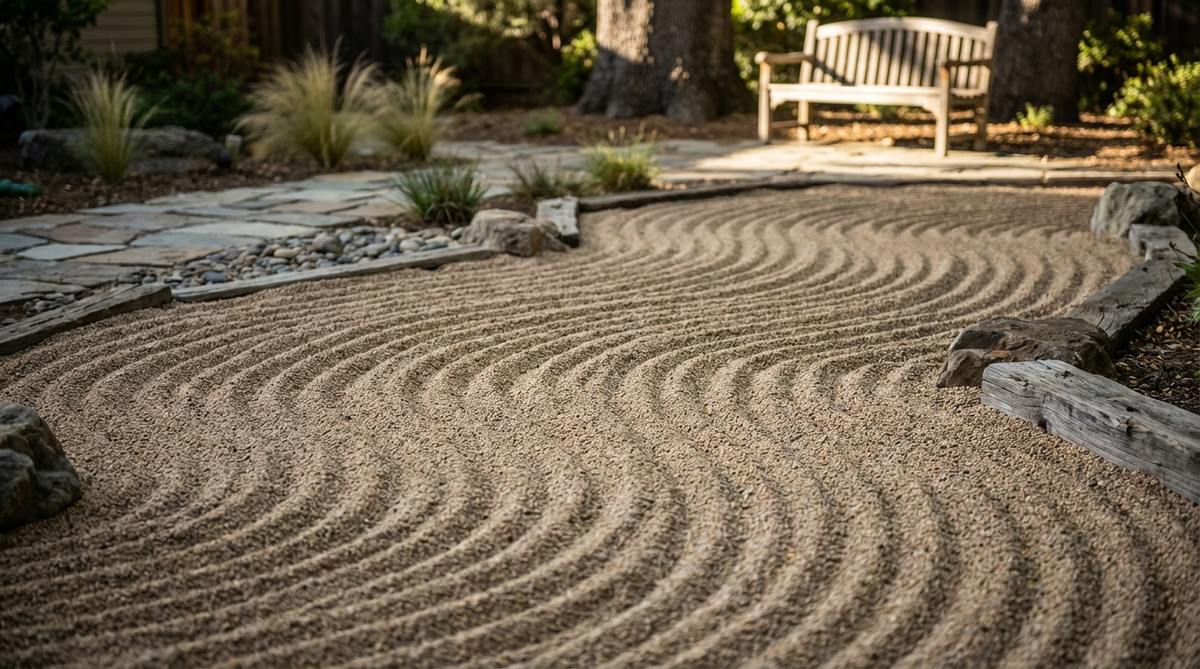
Projecting a sense of rapid, purposeful energy, this design brings life to stagnant spaces. It serves as a striking side-yard narrow pathway decor, ideal for dead zones between a house and a fence.
Many homeowners leave side yards bare, but implementing this directional current layout completely revitalizes the area. Sourcing a complete miniature garden supplies kit can help you easily mock up the design on a tabletop before committing to the full outdoor scale.
Materials for a narrow strip like this run roughly $30 to $55. Highly recommended for a quick weekend win.
- Key Materials: High-contrast gravel, stepping stone accents.
- Vibe / Style: Energetic and purposeful flow.
- Difficulty: Moderate spacing control.
- Budget Breakdown: Gravel: $40 | Accent stones: $15.
- Creator’s Tip: Vary the length of your lines occasionally to mimic depth changes in a natural streambed.
- Smart Sourcing: heavy-duty path edging kits and multi-head zen rake sets.
This next setup is ridiculously cheap but looks like a $500 custom meditation display…
5. Ocean Wave (Tachinamimon)
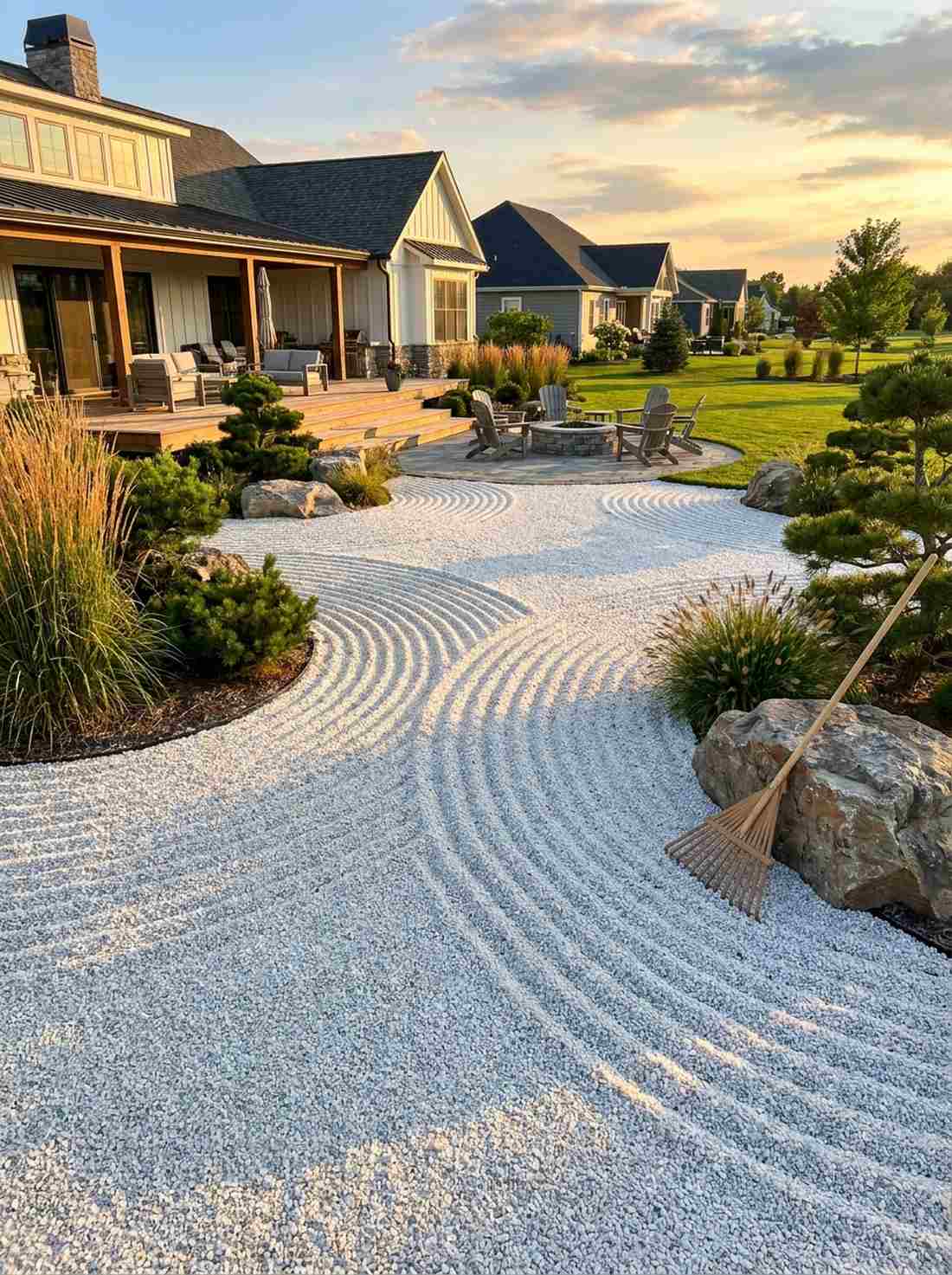
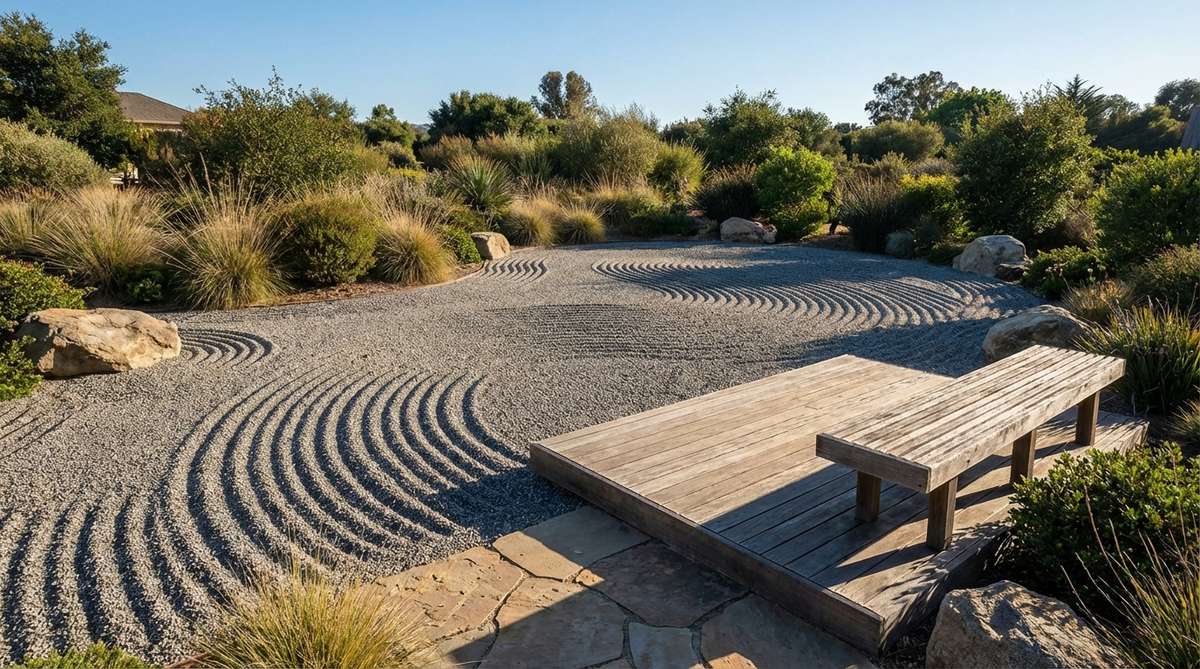
Aggressive, bold curves capture the raw drama of crashing breakers, creating a visually loud yet peaceful paradox. This large-scale viewing garden aesthetic is perfect for dominating an expansive, otherwise empty backyard.
While subtle ripples get lost in large yards, these dramatic sweeping crests demand attention and scream luxury design. By opting for a lighter-colored crushed quartz stone bulk, the shadows cast by the deep rake grooves pop dramatically during the golden hour.
This dramatic layout requires a bit more gravel depth, usually costing around $80–$100. Save this idea for a major backyard overhaul!
- Key Materials: Deep-fill crushed white quartz, large-tine drafting rake.
- Vibe / Style: Dramatic oceanic energy.
- Difficulty: Advanced (requires deep, strong pulls).
- Budget Breakdown: Quartz: $75 | Rake: $25.
- Creator’s Tip: Dig your rake teeth at least 2 inches deep to ensure the bold crests don’t collapse overnight.
- Smart Sourcing: deep-tine wooden landscaping rakes and high-contrast crushed quartz bags.
6. Cascading Waterfall Lines
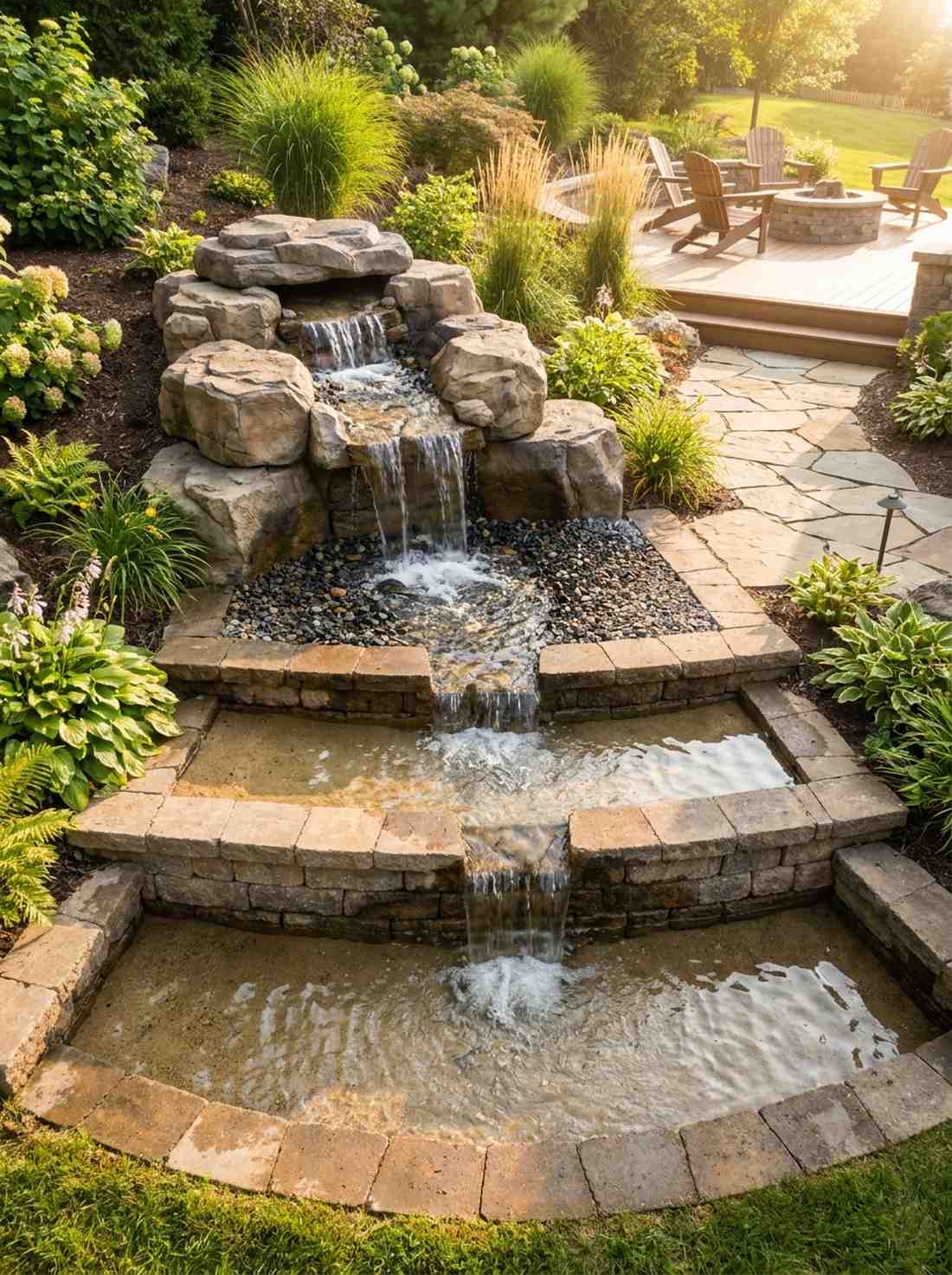
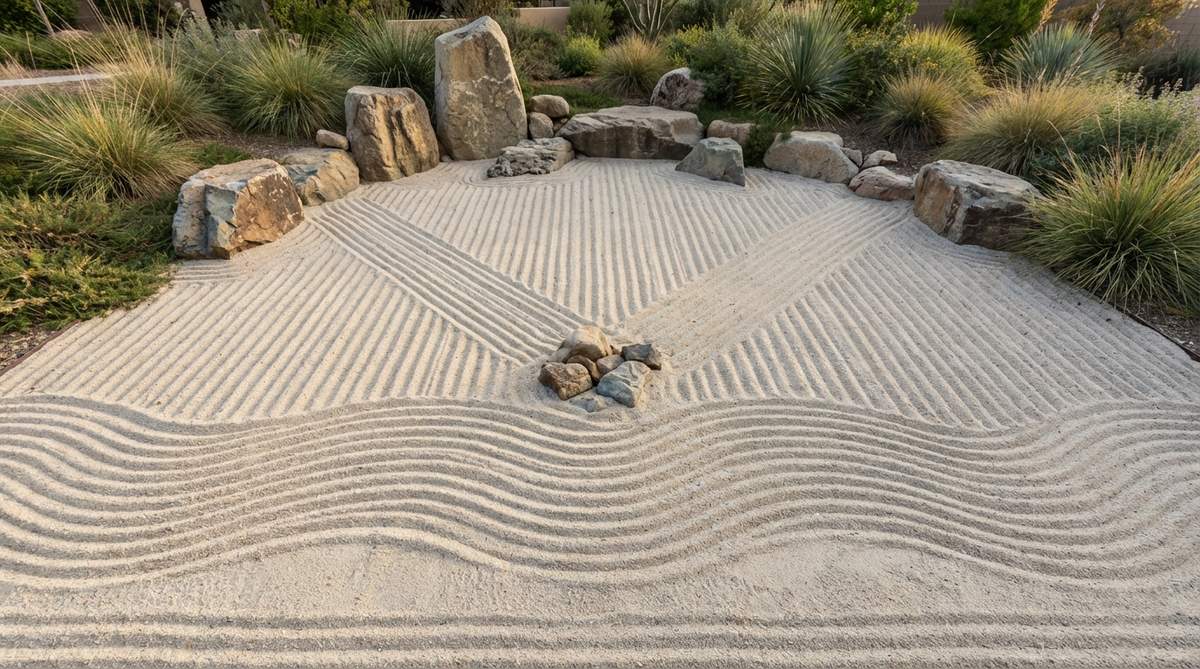
Vertical drops crashing into horizontal pools feel like a tranquil shrine hidden in the mountains. This sloped garden terrace feature works magic on uneven ground or raised planter boxes.
Fighting a slope is a landscaping nightmare, but this cascading technique turns a hilly problem into a premium focal point. Stacking UV-coated resin faux rocks at the top creates the illusion of a cliff-side spring without the heavy lifting.
You can execute this retaining wall upgrade for under $60. It’s an absolute game-changer for awkward sloped yards.
- Key Materials: Retaining wall blocks, vertical drop gravel, base pool sand.
- Vibe / Style: Dynamic vertical energy.
- Difficulty: Moderate.
- Budget Breakdown: Faux Rocks: $35 | Gravel: $25.
- Creator’s Tip: Let the vertical lines converge slightly at the bottom to naturally mimic water pooling together.
- Smart Sourcing: lightweight faux landscaping boulders and erosion-control gravel bases.
Circular and Spiral Designs With Zen Garden Pattern Depth
Circular patterns introduce focal points and represent cosmic forces. Perfecting these curves instantly elevates a space from an amateur sandbox to a professional landscape installation.
7. Concentric Circles
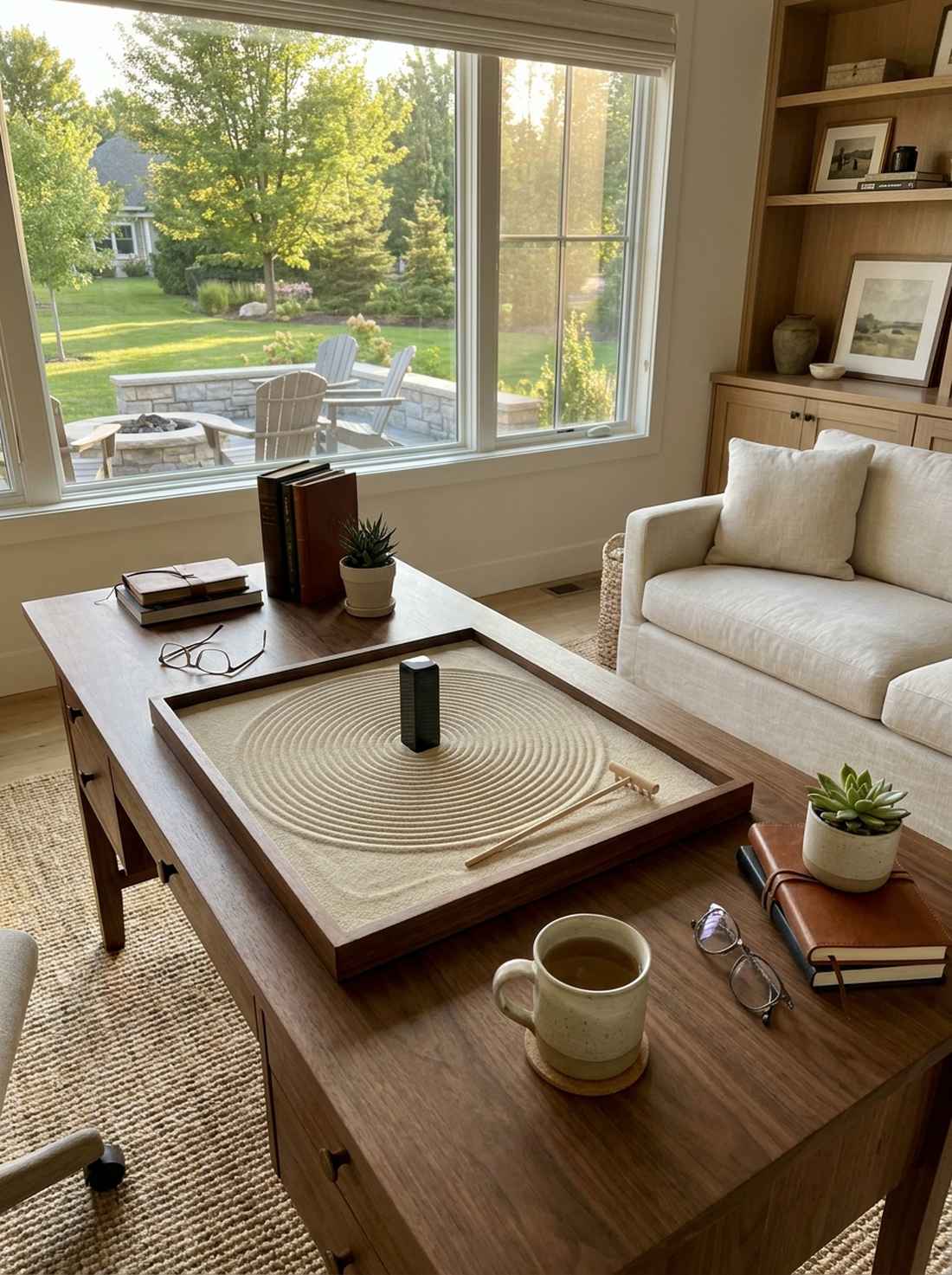
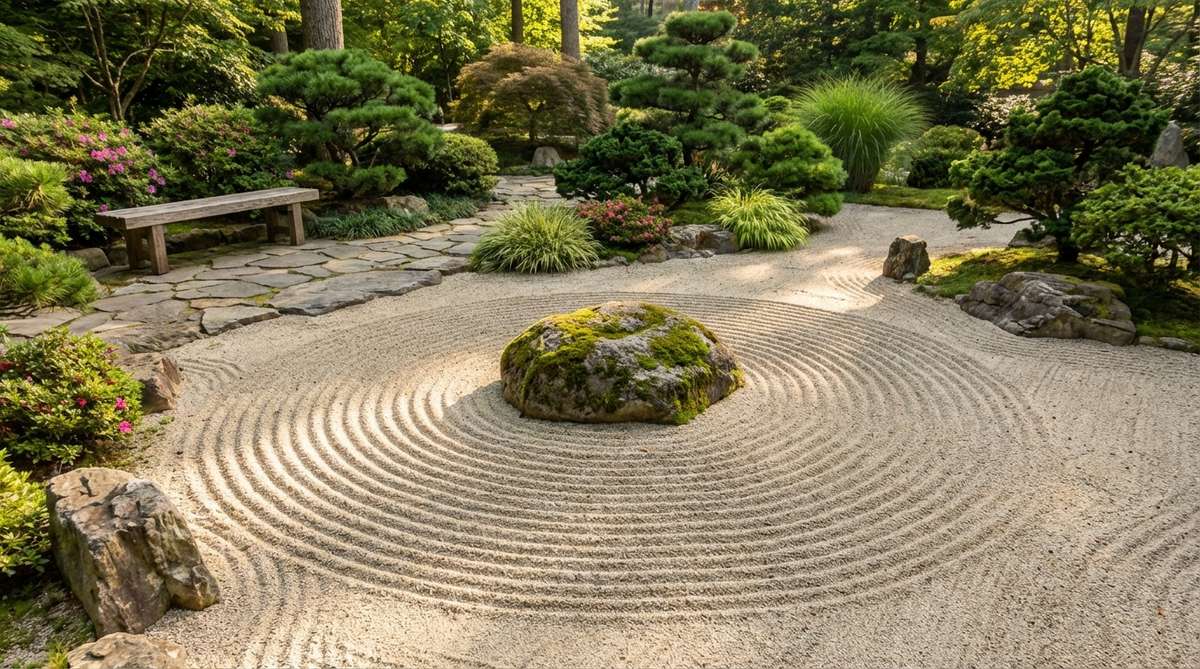
Hypnotic expanding rings radiating from a singular point look straight out of a Kyoto temple brochure. A flawless desktop meditation decor or central patio piece, it demands instant contemplation.
Achieving a perfect circle without a compass seems impossible, yet utilizing a tethered string guide delivers a flawless, expensive-looking geometry. Incorporating a single pre-cut polished basalt column in the center immediately anchors the eye and elevates the whole setup.
Setting this up costs as little as $15 for a desktop size, or $50 for a patio. Pin this to your mindfulness decor board.
- Key Materials: Fine-grade zen sand, central anchor stone.
- Vibe / Style: Classic hypnotic tranquility.
- Difficulty: Advanced (requires a steady hand).
- Budget Breakdown: Centerpiece: $30 | Sand: $20.
- Creator’s Tip: Keep your body rotating slowly around the center point rather than stepping and stopping to prevent jagged edges.
- Smart Sourcing: desktop zen garden starter kits and polished basalt anchor stones.
8. Sideways Concentric Ripples (Uzumaki-mon)
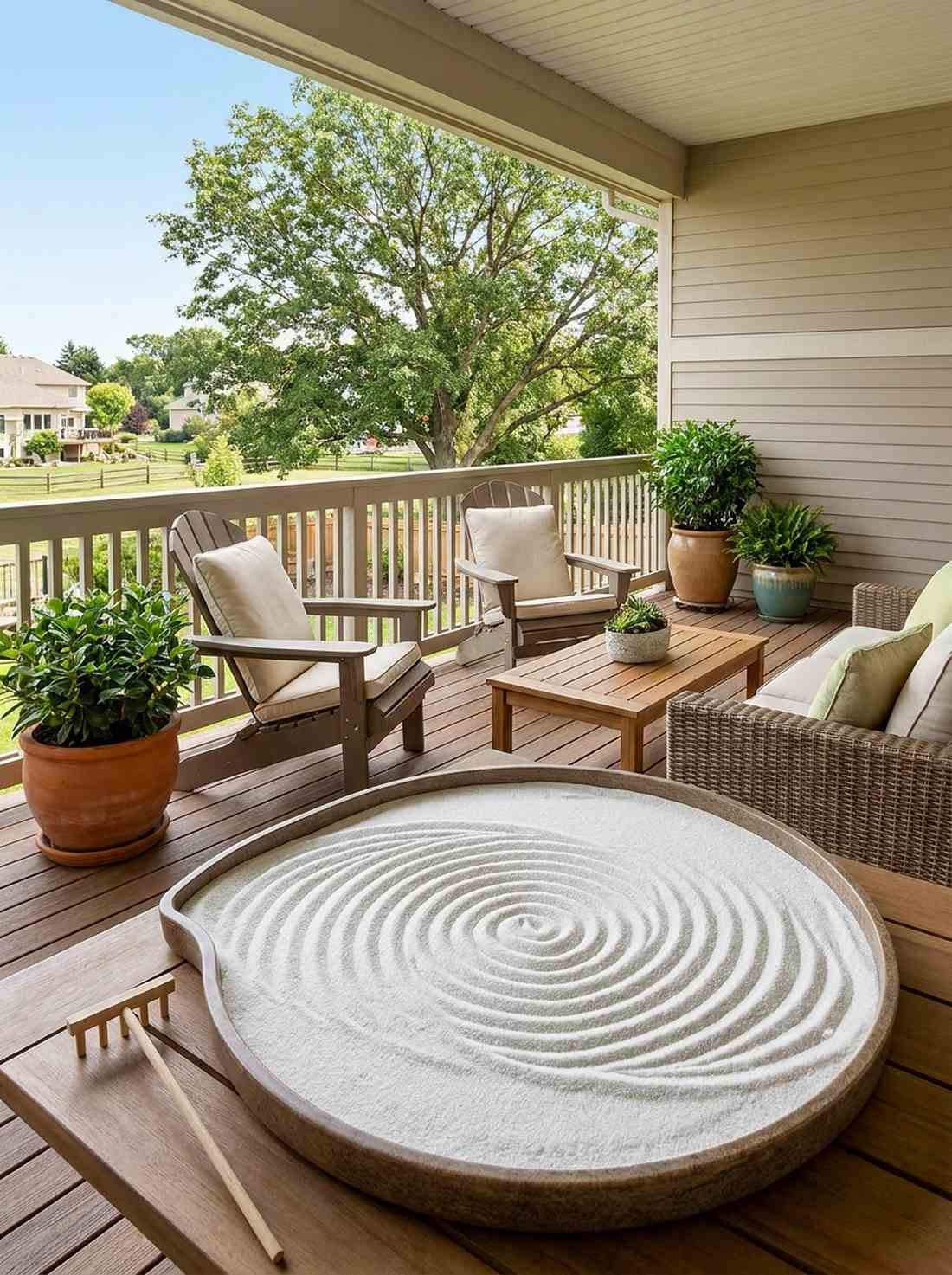
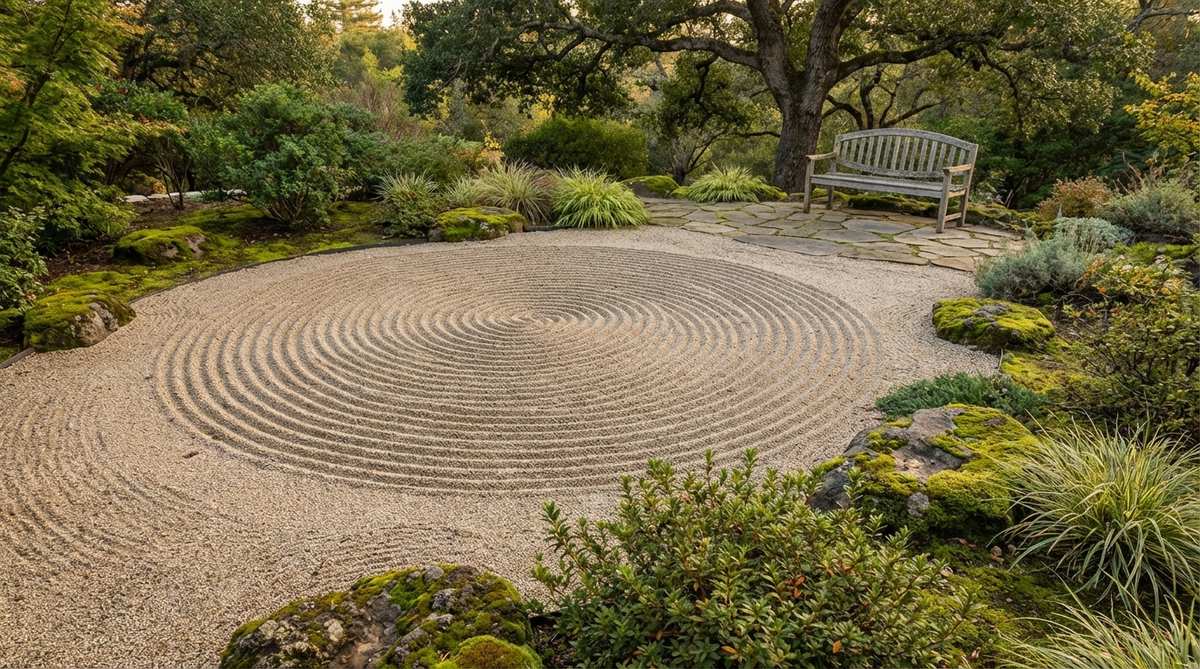
This asymmetrical vortex visually pulls you in, capturing the chaotic beauty of an ocean whirlpool. It acts as an incredible corner focal point design, perfect for tucking into the edge of a balcony.
Symmetrical designs can sometimes feel stiff, but offsetting this spiral gives your outdoor space a highly custom, avant-garde architectural feel. Sourcing premium indoor zen garden kits allows you to test these tight spiraling techniques before raking tons of outdoor gravel.
A balcony-sized version of this will set you back about $35. Highly recommended for injecting movement into small, rigid spaces.
- Key Materials: Asymmetrical planter base, fine white sand.
- Vibe / Style: Dynamic, unbalanced tension.
- Difficulty: Moderate.
- Budget Breakdown: Base Tray: $20 | Sand: $15.
- Creator’s Tip: Start from the outside and spiral inward; it’s much easier to hide your rake’s exit point in the center.
- Smart Sourcing: asymmetrical resin planter trays and ultra-fine silica sand (dust-free).
9. Whirlpool (Maru-uzu-mon)
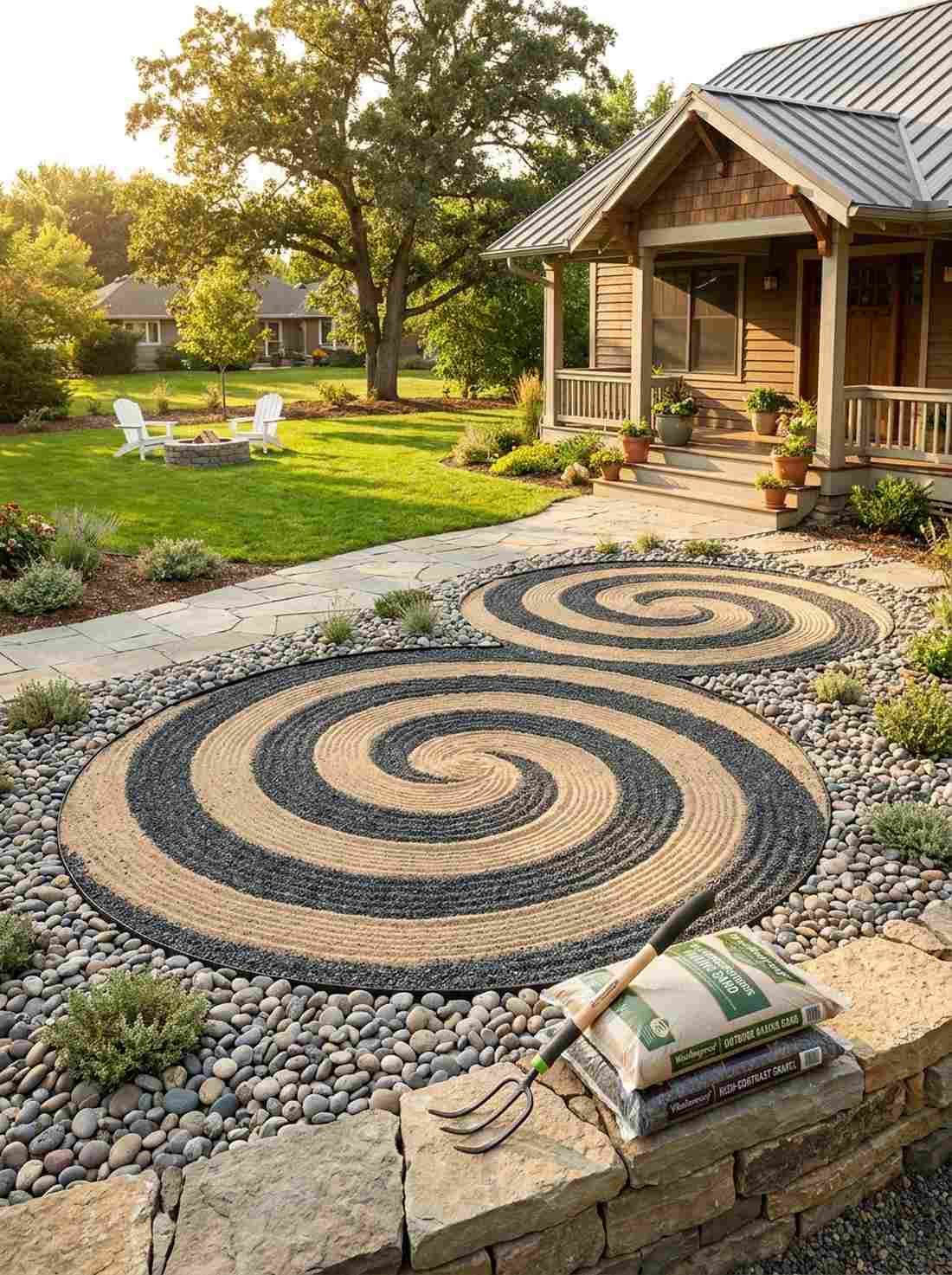
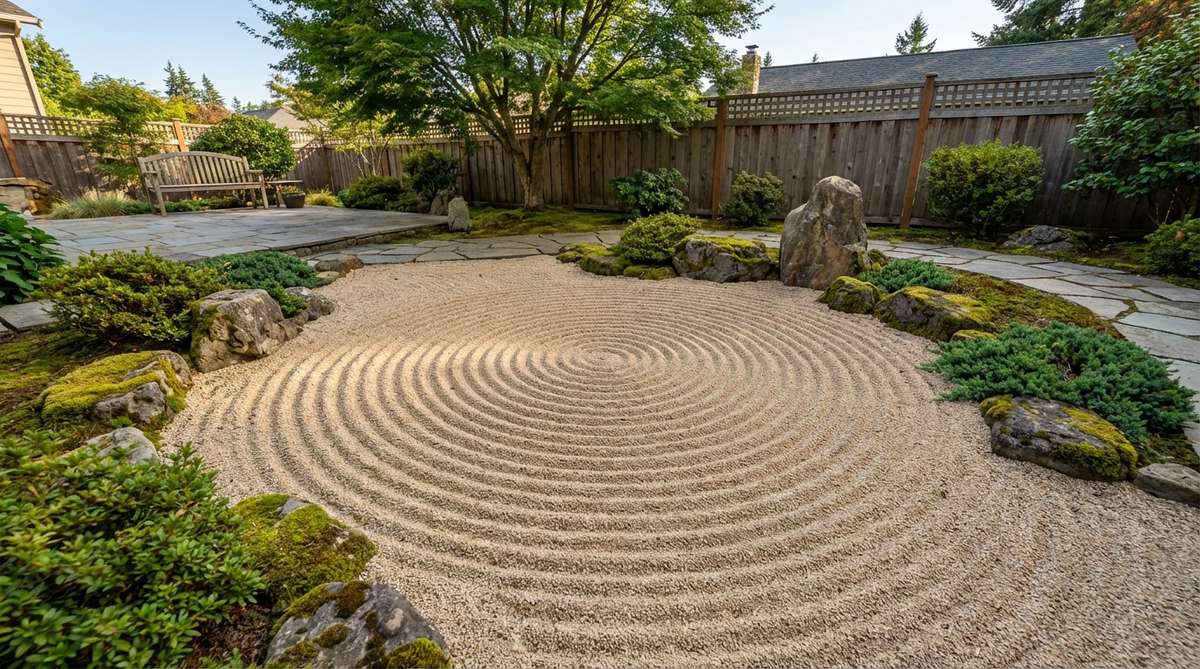
Turbulent, tightening coils project raw power and deep mystery. This dramatic entrance pathway accent immediately sets a serene yet powerful tone before guests even reach your door.
Standard flat yards lack personality, but dropping a pair of these whirlpool patterns creates instant visual rhythm that feels professionally installed. Using an ergonomic four-tine cultivator makes carving these deep, aggressive spirals significantly easier on your wrists.
This layout is a budget-friendly $25 DIY project. Save this visual if you want to make a big impact with zero construction.
- Key Materials: High-contrast gravel, multi-head rake.
- Vibe / Style: Intense, focused energy.
- Difficulty: Advanced (maintaining gap width).
- Budget Breakdown: Rake: $15 | Stone: $10.
- Creator’s Tip: Decide if your energy is flowing inward or outward before you start; it changes your posture.
- Smart Sourcing: short-handled ergonomic cultivators and weatherproof outdoor raking sand.
💡 Must-Have Supplies for High-End Setups
To build these setups faster and ensure they last, skip the generic craft aisles and invest in the right foundational kits.
- Base & Support: commercial-grade weed barrier rolls
- Setup Tools: traditional 4-piece bamboo rake starter kits
- Weather/Durability Protection: clear acrylic protective sealants (for accent stones)
Most people get this completely wrong… until they try the exact layering layout coming up next.
10. Half-Circle Arcs
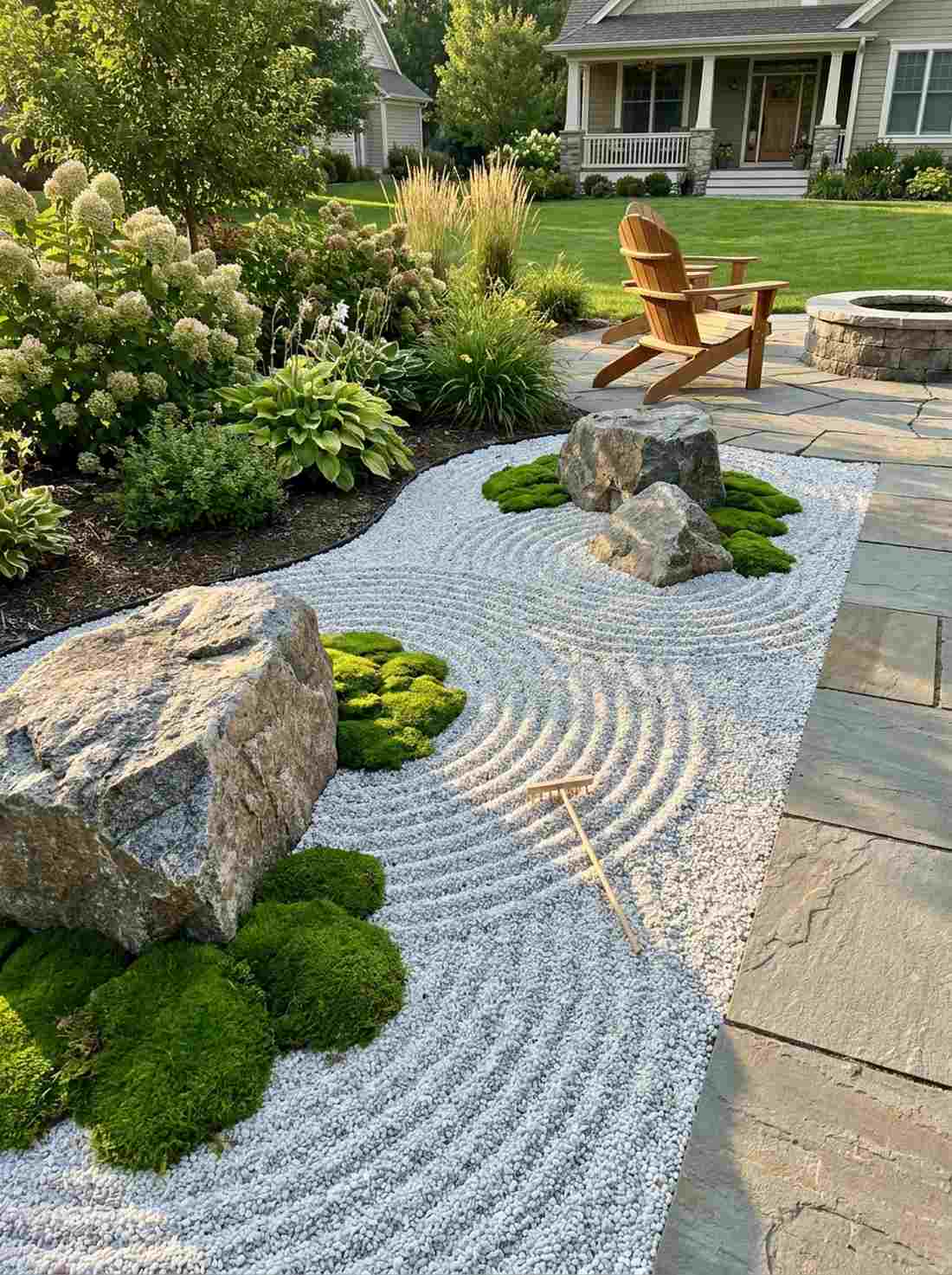
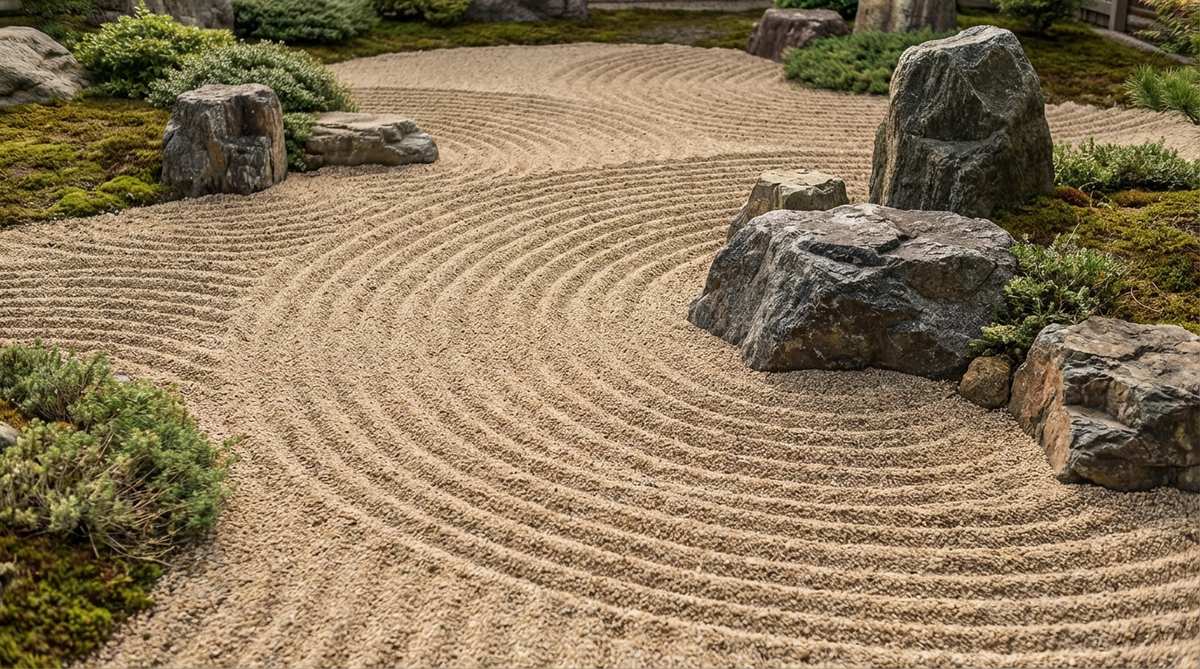
Ripples bouncing off a rocky shore bring a deeply organic, narrative feel to a flat surface. An exceptional rock garden border filler, it naturally bridges the gap between wild boulders and structured pathways.
Instead of leaving the edges of your garden flat, these echoing arcs give a designer-level finish that makes the stones look naturally embedded. Incorporating pre-cut preserved moss sheets around the base of the rocks provides a vibrant green contrast against the white arcs.
You can upgrade your rock borders for under $40. It’s a subtle tweak that makes a massive aesthetic difference.
- Key Materials: Boulders, moss accents, fine detailing rake.
- Vibe / Style: Sheltered coastal shore.
- Difficulty: Easy beginner setup.
- Budget Breakdown: Moss: $25 | Rake: $15.
- Creator’s Tip: Stack multiple arcs tightly behind each other to simulate echoes bouncing off a cliff face.
- Smart Sourcing: pre-cut preserved moss sheets (bulk pack) and miniature detailing zen rakes.
11. Double Spiral Formation
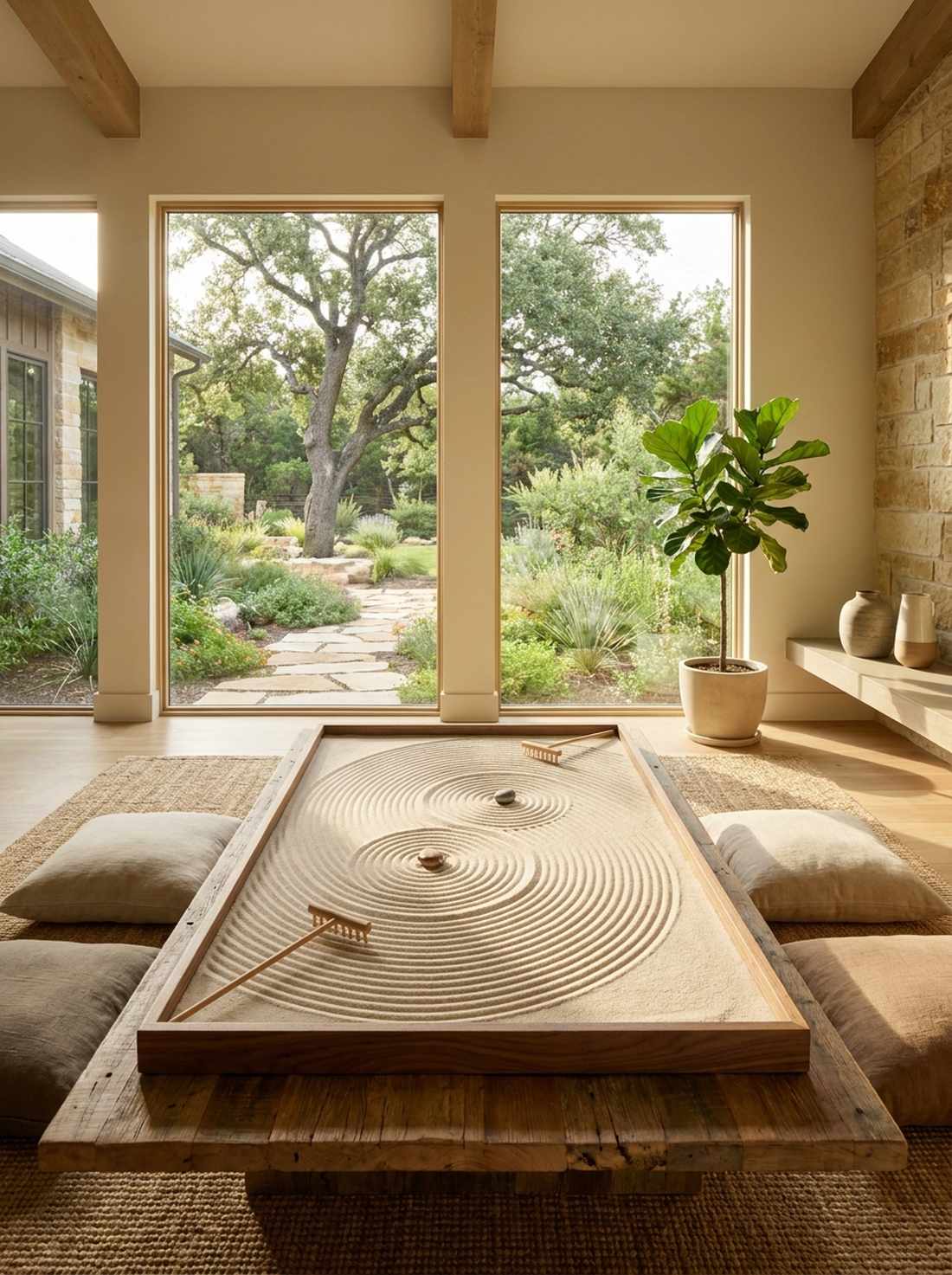
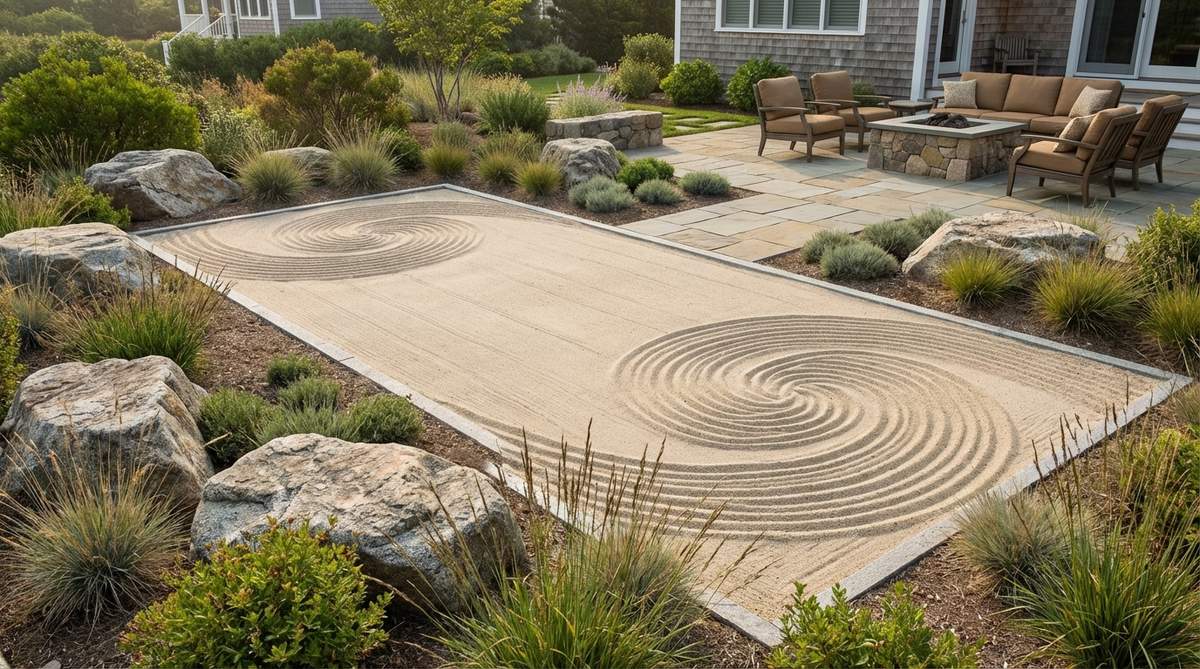
Two opposing vortexes create a striking yin-yang tension that is impossible to ignore. As a stunning centerpiece for a meditation room, this balanced duality anchors the entire space.
Achieving perfect symmetry is tough, but using this dual-node setup delivers a surprisingly premium look that guests will obsess over. You can easily replicate this indoors by picking up a large wooden zen garden starter kit and practicing the dual-hand motion.
An indoor tray setup costs roughly $45 from start to finish. Pin this to your interior zen decor board!
- Key Materials: Large sand tray, double rakes.
- Vibe / Style: Symmetrical harmonic tension.
- Difficulty: Advanced (requires dual-focus).
- Budget Breakdown: Premium Tray: $30 | Sand: $15.
- Creator’s Tip: Map out the two center points with tiny pebbles before you start raking to ensure perfect alignment.
- Smart Sourcing: extra-large bamboo zen trays and dual-sided pattern rakes.
Directional Gravel Techniques for Movement and Flow
Directional patterns guide visual movement and create pathways through the contemplative space. Landscape designers use these specific angles to manipulate how large a yard actually feels.
12. Diagonal Crossing Lines
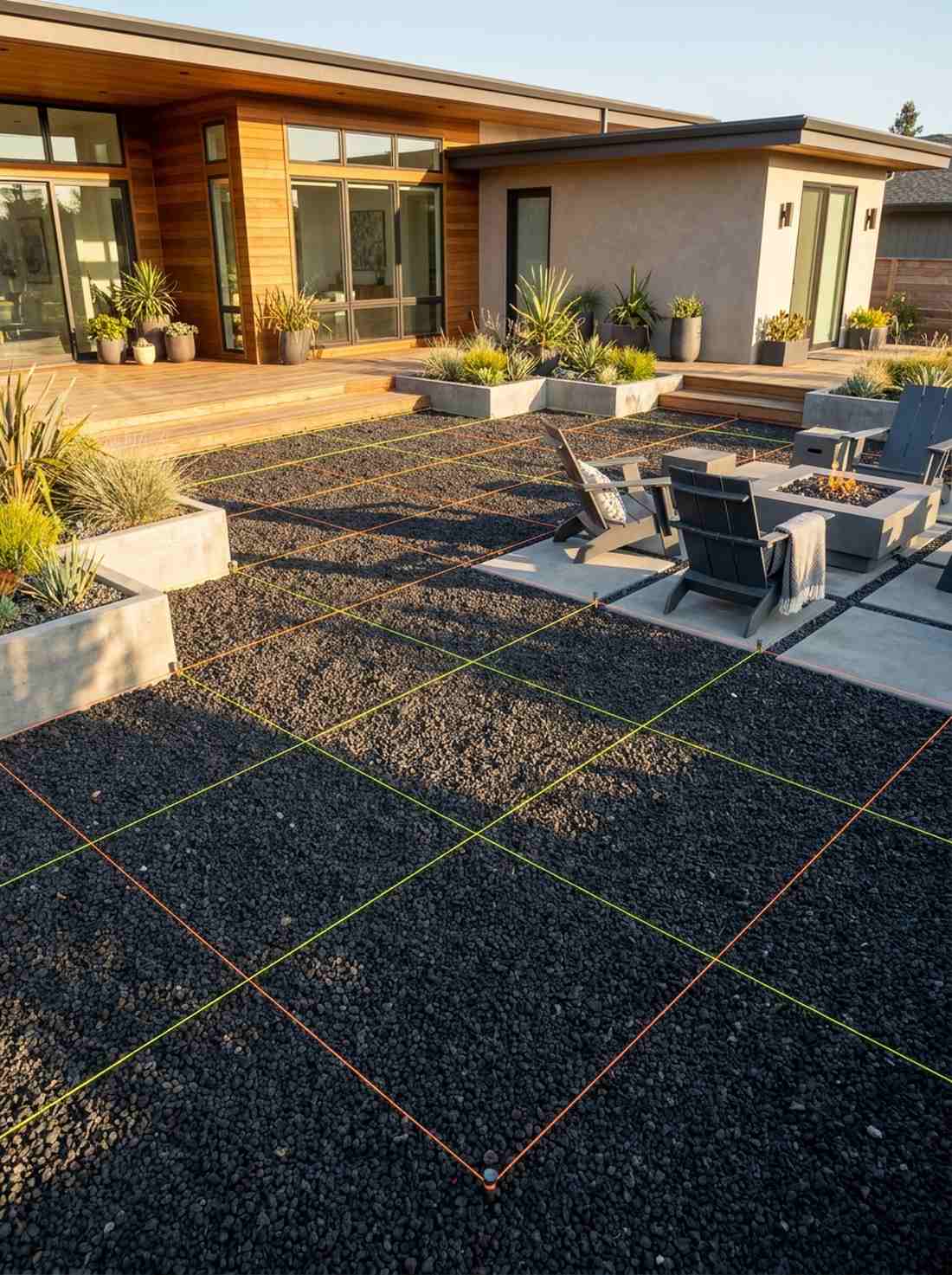
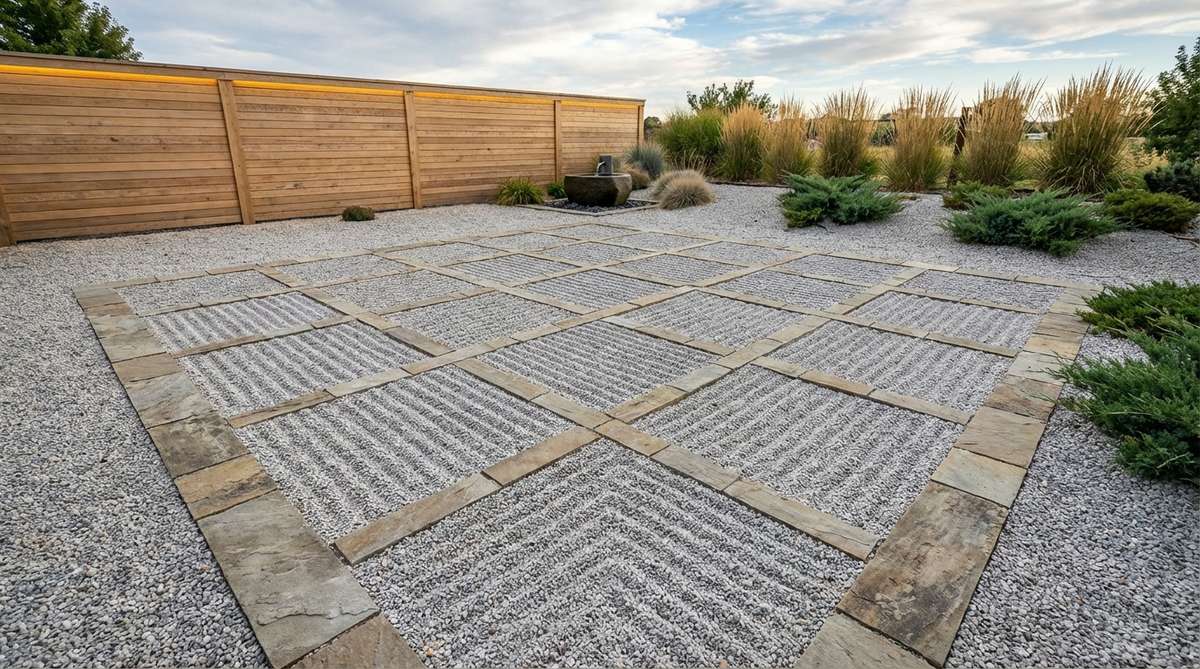
This striking diamond grid feels like an ultra-modern architectural blueprint brought to life. A flawless contemporary courtyard groundcover, it pairs beautifully with concrete planters and modern home exteriors.
While traditionalists avoid sharp intersections, this geometric crosshatch looks far more expensive than standard straight rows. Applying this over a base of crushed black lava rock creates a high-contrast, moody aesthetic that modern landscape architects charge thousands for.
You can execute this modern grid for roughly $70. Save this if you love crisp, contemporary outdoor living spaces.
- Key Materials: Black lava rock, measuring string.
- Vibe / Style: Crisp geometric modernism.
- Difficulty: Moderate (requires strict grid adherence).
- Budget Breakdown: Lava Rock: $60 | String line: $10.
- Creator’s Tip: Use landscaping string pulled taut across the yard as a guide for your first set of diagonals to ensure a perfect 45-degree angle.
- Smart Sourcing: crushed black lava rock (50lb bags) and neon masonry string lines.
13. Curved Sweeping Strokes
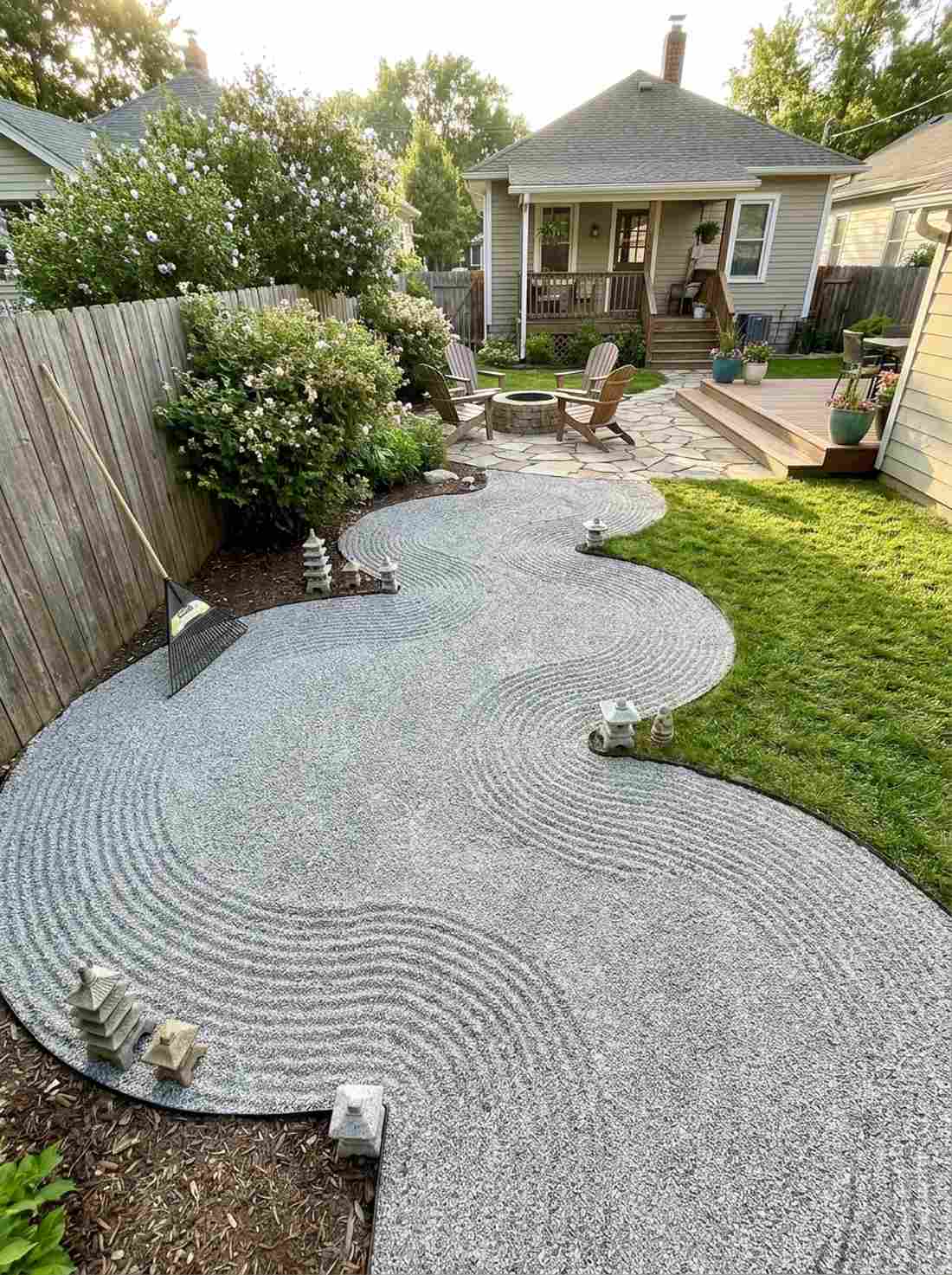
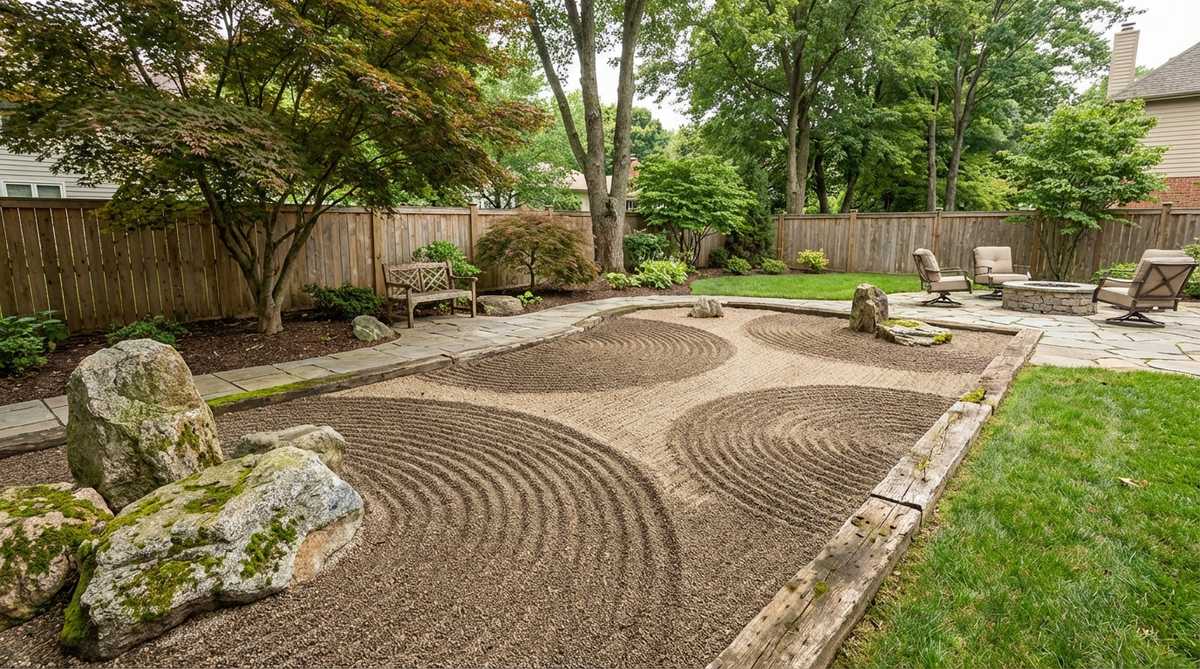
Broad, wind-swept arcs give the illusion of rolling clouds or gentle hillside contours drifting across your lawn. This expansive backyard filler concept makes tight, claustrophobic spaces feel twice as wide.
Rigid lines can sometimes make a yard feel boxed in, but sweeping gestures organically blur property boundaries. Sourcing fairy garden accessories bulk to place tiny architectural elements along the curves gives the landscape a whimsical, massive sense of scale.
This space-enhancing trick costs around $40 in gravel. Highly recommended for small urban backyards.
- Key Materials: Wide garden rake, light grey decomposed granite.
- Vibe / Style: Airy, expanding clouds.
- Difficulty: Easy (very forgiving).
- Budget Breakdown: Granite: $25 | Accents: $15.
- Creator’s Tip: Walk in a wide, natural arc using your whole body; do not try to steer the rake with just your arms.
- Smart Sourcing: miniature architectural pagodas and wide-sweep landscape rakes.
14. Radiating Fan Pattern
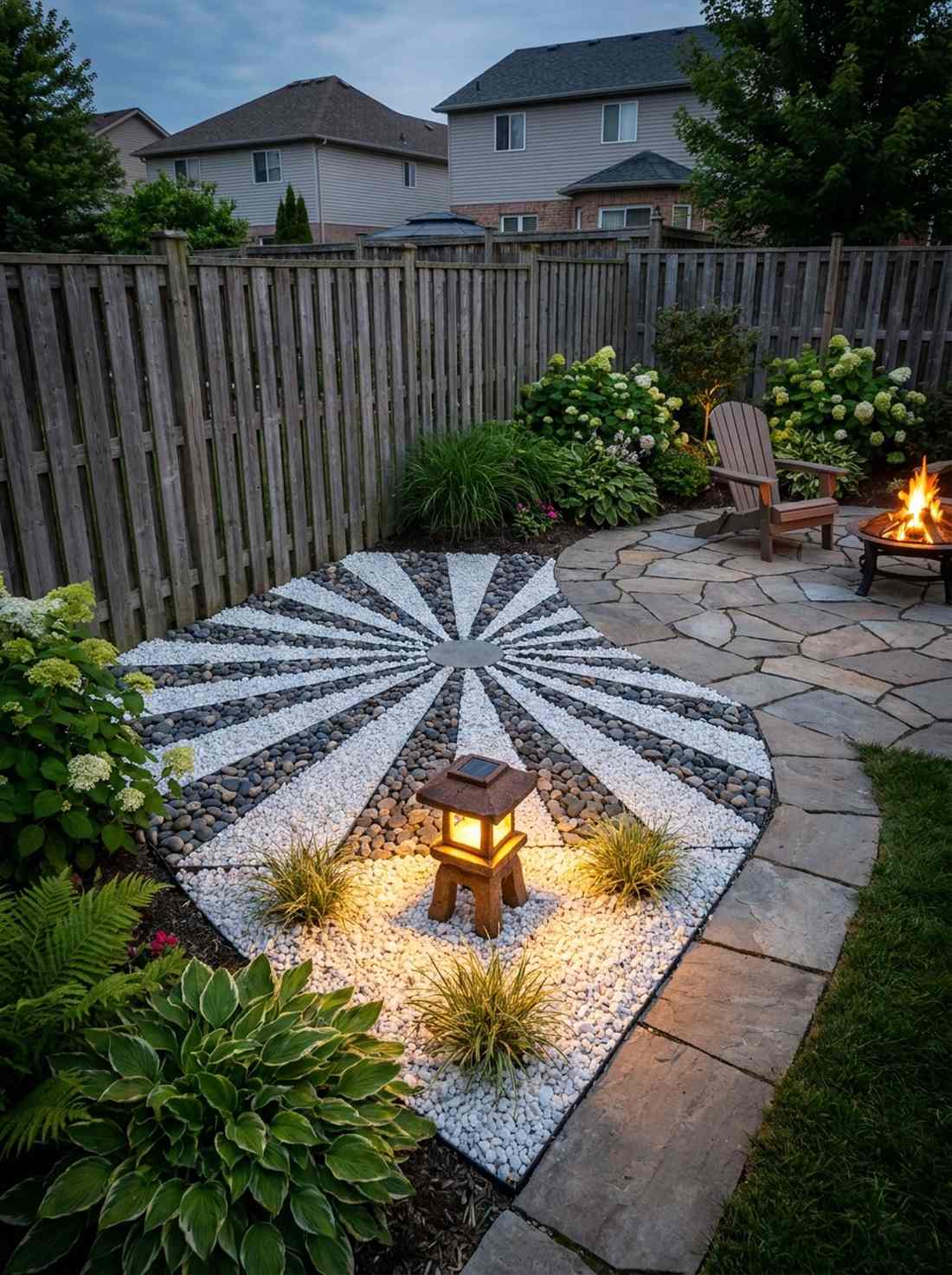
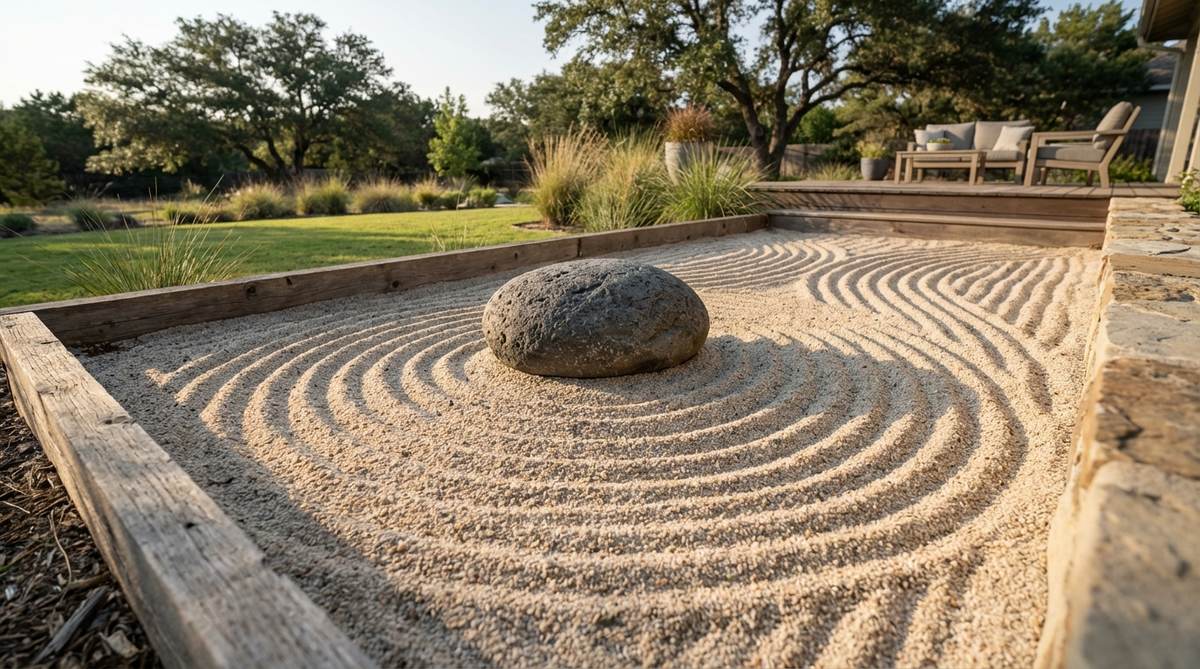
Exploding outward from a single point, this sunburst aesthetic instantly commands the viewer’s eye. It is the ultimate corner garden highlight technique, turning an ignored fence corner into the star of the yard.
Most corner spaces just collect dead leaves, but this radiating fan transforms a dead zone into a highly deliberate design statement. Anchoring the origin point with a weatherproof LED stone lantern adds a premium glow that looks incredible during evening hours.
Expect this glowing corner upgrade to cost about $65. Pin this to your patio lighting and decor board!
- Key Materials: Corner anchor piece, white quartz gravel.
- Vibe / Style: Expansive radiant energy.
- Difficulty: Moderate.
- Budget Breakdown: Lantern: $45 | Gravel: $20.
- Creator’s Tip: Ensure the spaces between lines gradually widen uniformly as they extend outward from the center.
- Smart Sourcing: solar-powered resin stone lanterns and high-visibility white quartz chips.
This next visual trick is a massive secret in the commercial landscaping world…
15. Converging Perspective Lines
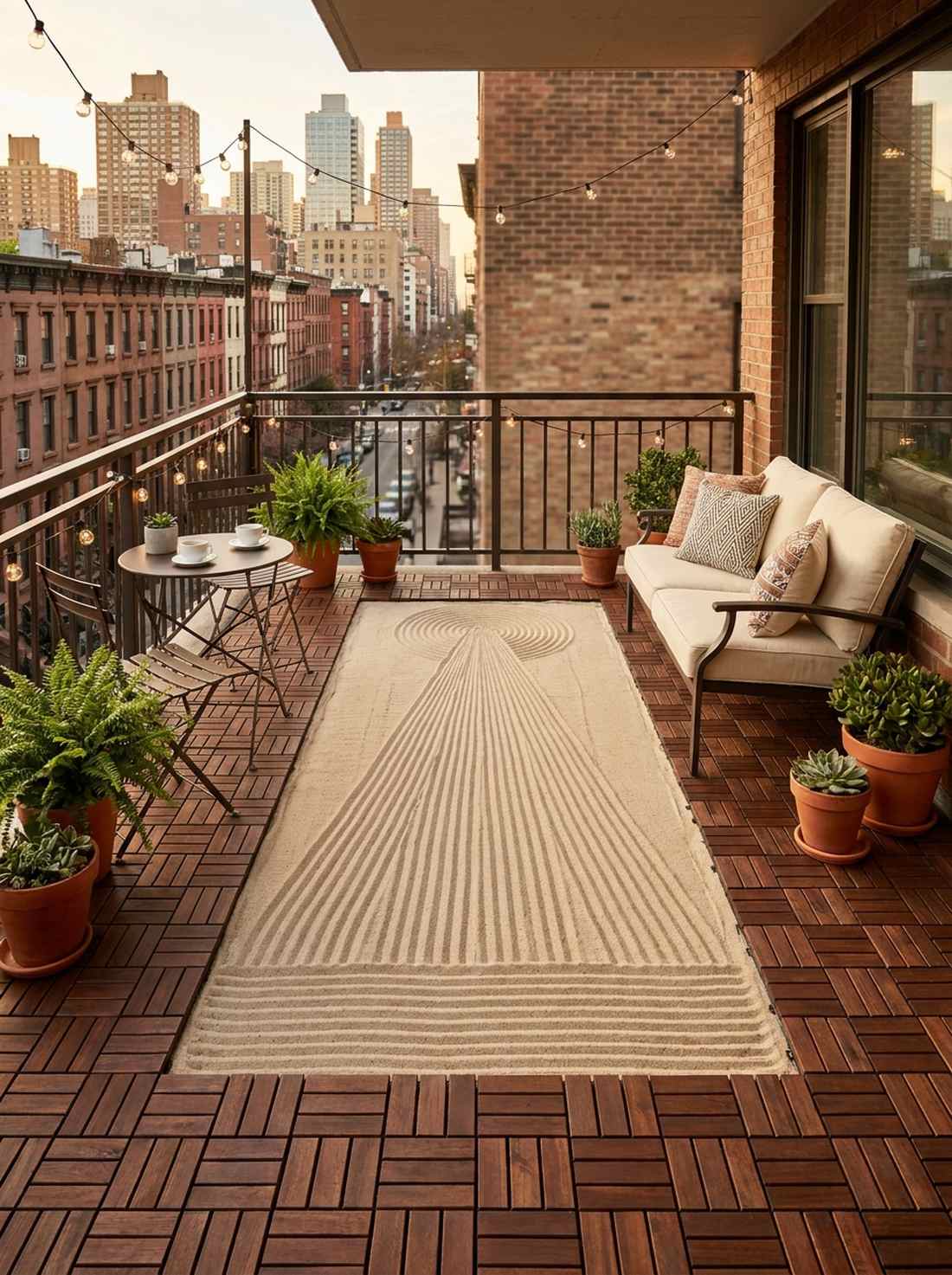
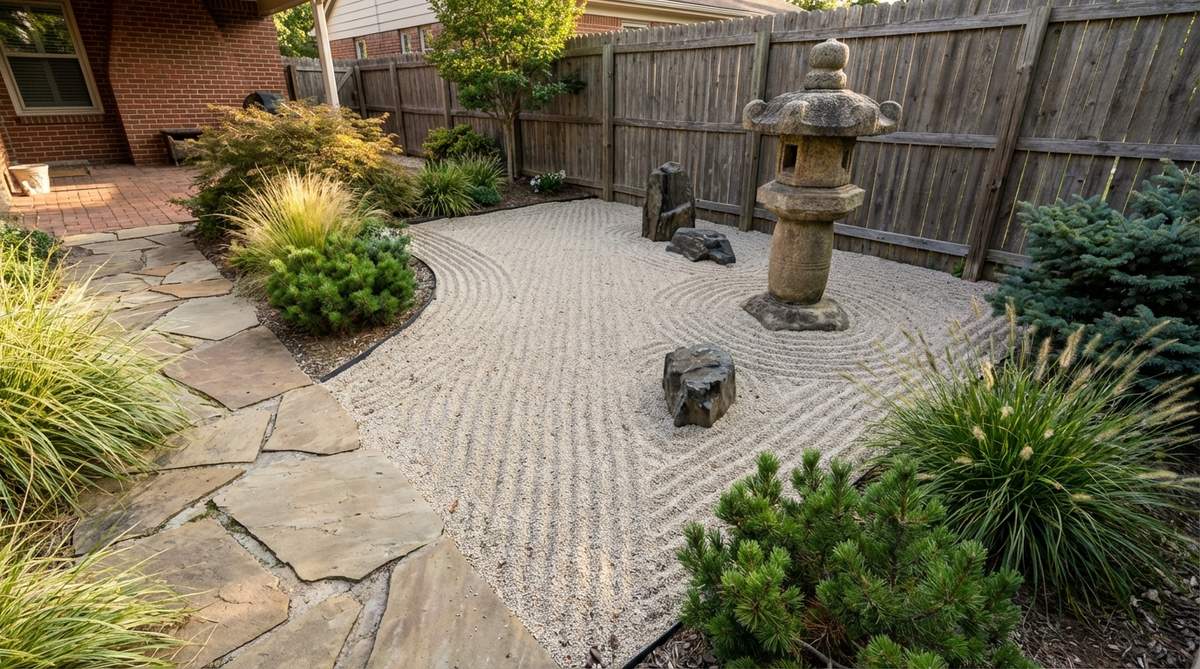
By forcing lines to meet at a distant vanishing point, you create a mind-bending illusion of endless depth. A genius small balcony expansion hack, it tricks the brain into seeing a much longer space.
Dealing with cramped spaces is frustrating, but applying this forced-perspective trick delivers a surprisingly premium look of acreage. Laying down interlocking outdoor deck tiles on the perimeter frames the perspective beautifully, making the sandbox look like an intentional art installation.
You can create this optical illusion for under $50. It’s an absolute lifesaver for apartment dwellers.
- Key Materials: Straight-edge rake, border tiles.
- Vibe / Style: Deep spatial illusion.
- Difficulty: Advanced (requires precise angling).
- Budget Breakdown: Tiles: $35 | Sand: $15.
- Creator’s Tip: Pick a specific dot on your back wall or fence and ensure every single line aims exactly at that spot.
- Smart Sourcing: snap-together acacia wood deck tiles and precision straight-edge drafting tools.
16. S-Curve Meandering Path
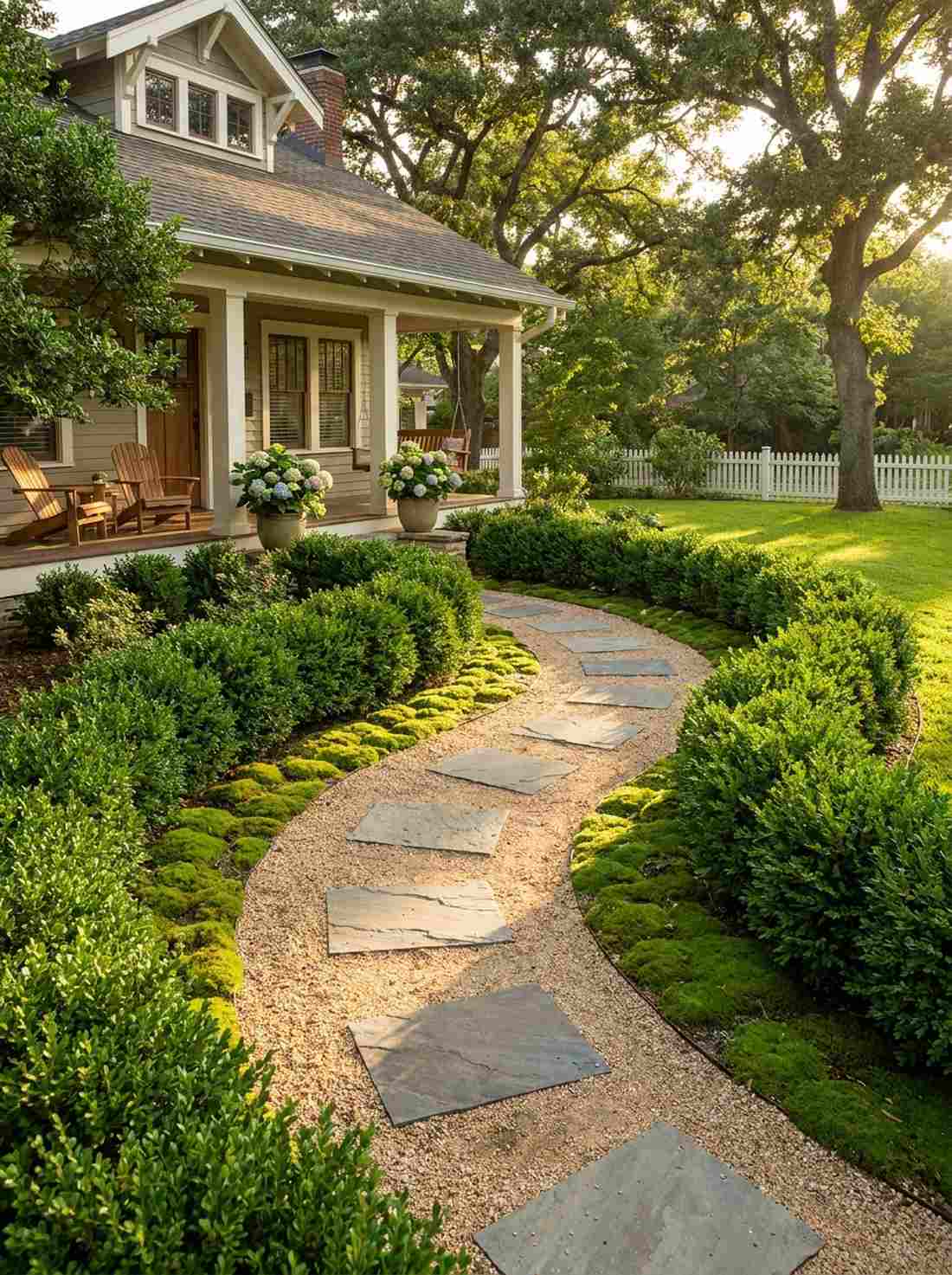
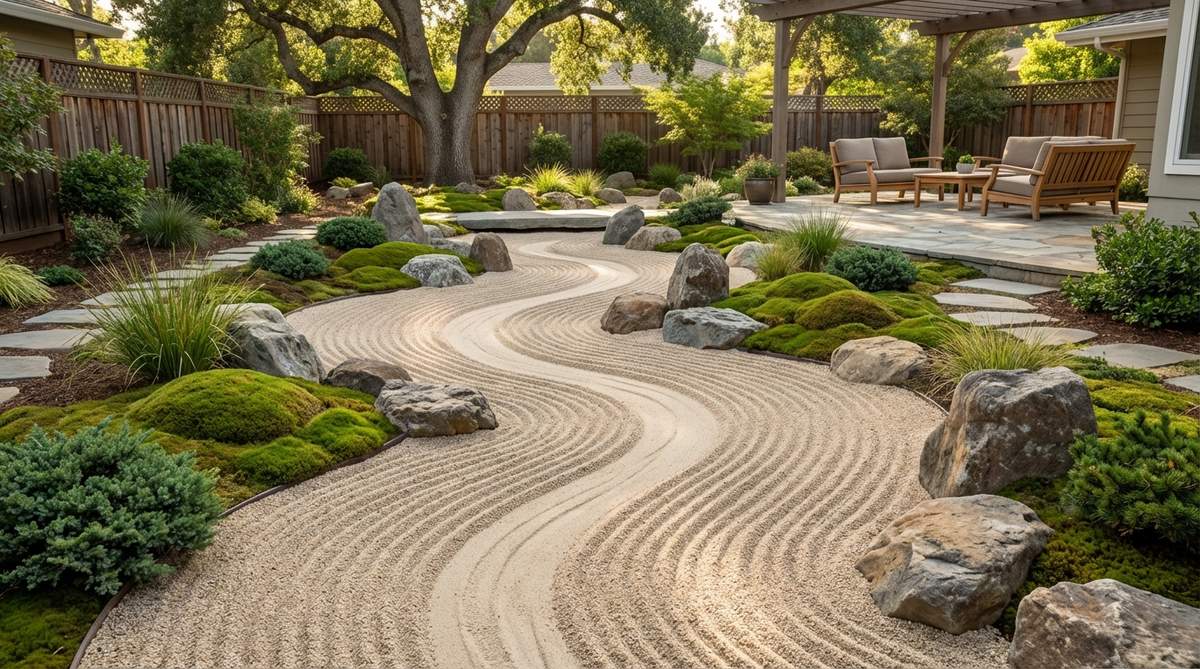
A lazy, winding “river” of sand slicing through green moss feels like a secluded hike through the Kyoto mountains. This front yard pathway alternative replaces boring concrete sidewalks with mindful artistry.
Straight concrete paths are harsh and uninviting, whereas an S-curve provides a lush, designer-level finish that welcomes guests organically. Trimming the edges with UV-protected faux boxwood shrubs keeps the winding “banks” looking manicured year-round without constant pruning.
This pathway overhaul usually costs around $80–$120. Save this if you hate your boring front walkway!
- Key Materials: Path gravel, faux or live border shrubs.
- Vibe / Style: Relaxed countryside journey.
- Difficulty: Moderate.
- Budget Breakdown: Shrubs: $60 | Gravel: $40.
- Creator’s Tip: Place staggered flat stepping stones inside the curves to encourage visitors to slow down and enjoy the journey.
- Smart Sourcing: UV-resistant faux boxwood panels and bulk natural slate stepping stones.
17. Chevron Arrow Formation
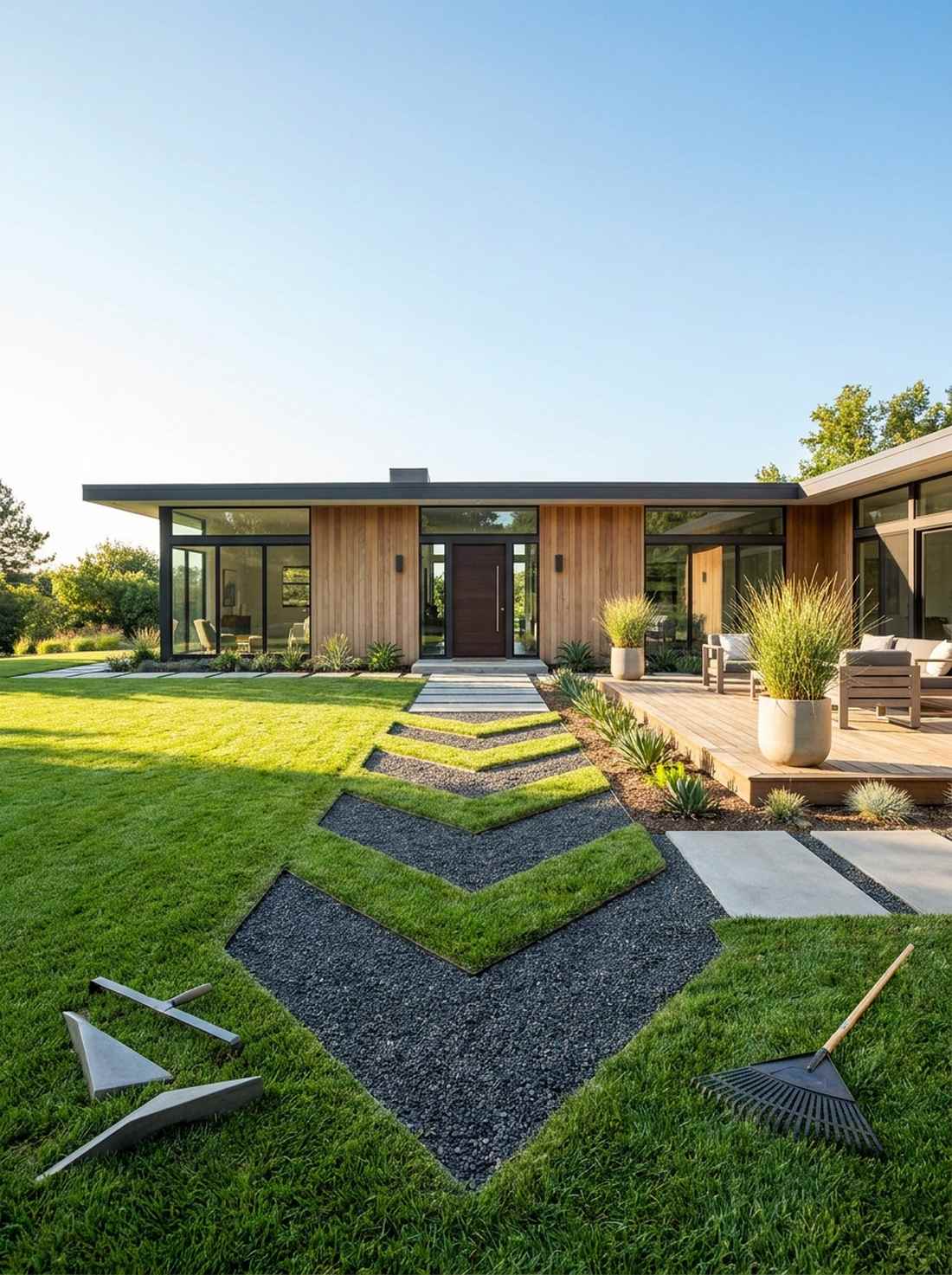
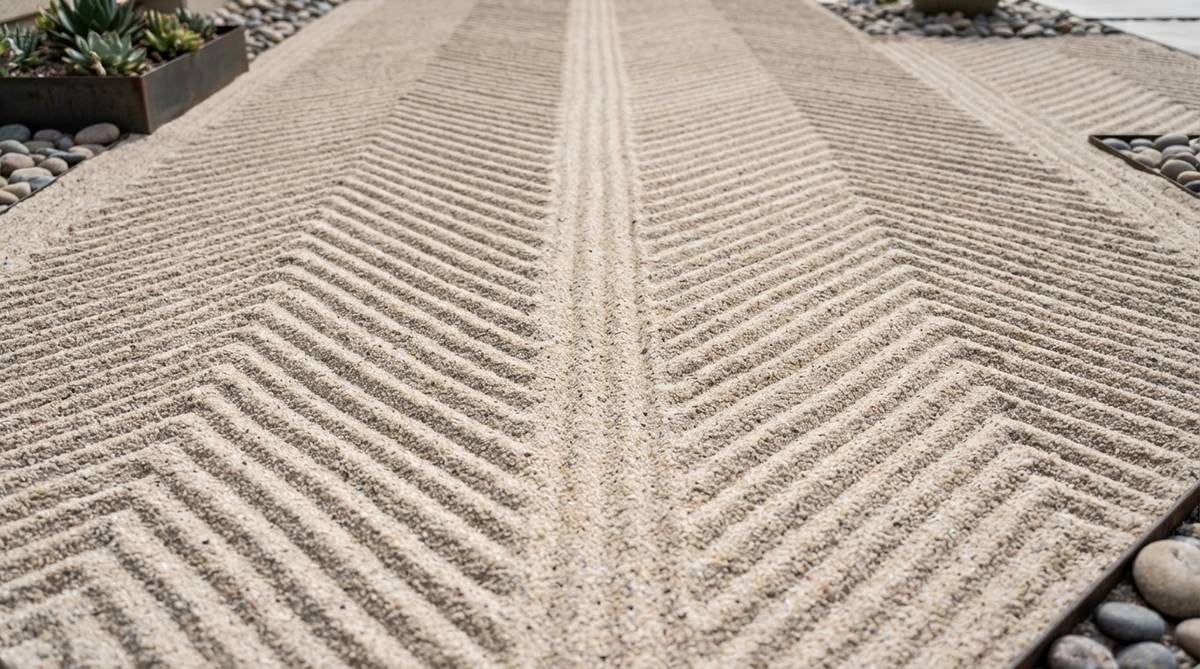
Sharp, aggressive V-shapes charge forward with an undeniable mid-century modern flair. An excellent entryway directional guide layout, it subliminally points guests right to your front door.
Many organic setups lack structure, but this bold chevron pattern gives a designer-level finish that pairs perfectly with modern architecture. Using commercial-grade landscaping templates can help you stamp out perfect V-angles without having to constantly measure.
This sleek architectural look runs about $45 in materials. Pin this for a fast, modern curb-appeal boost.
- Key Materials: Angular drafting tools, fine gravel.
- Vibe / Style: Bold directional modernism.
- Difficulty: Advanced (requires perfect angle mirroring).
- Budget Breakdown: Templates/Tools: $20 | Gravel: $25.
- Creator’s Tip: Rake the central spine line first, then pull the 45-degree angles downward from that main artery.
- Smart Sourcing: adjustable angle landscaping guides and high-contrast charcoal gravel.
Geometric Zen Garden Pattern Systems
Geometric approaches bring mathematical precision to meditative design. These patterns appeal to designers working in modern contexts where clean lines and repeating motifs complement architectural surroundings.
18. Grid Square Pattern
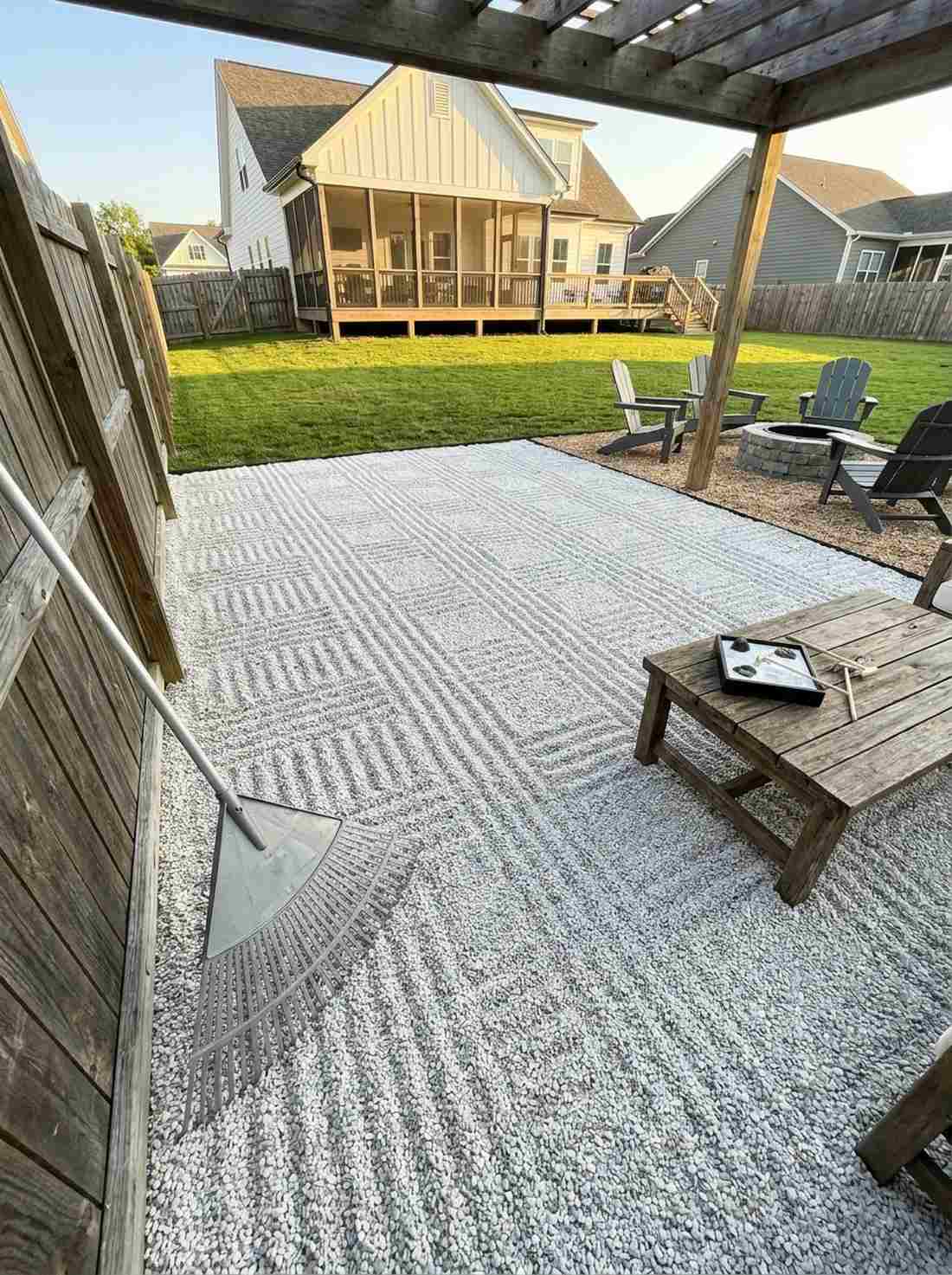
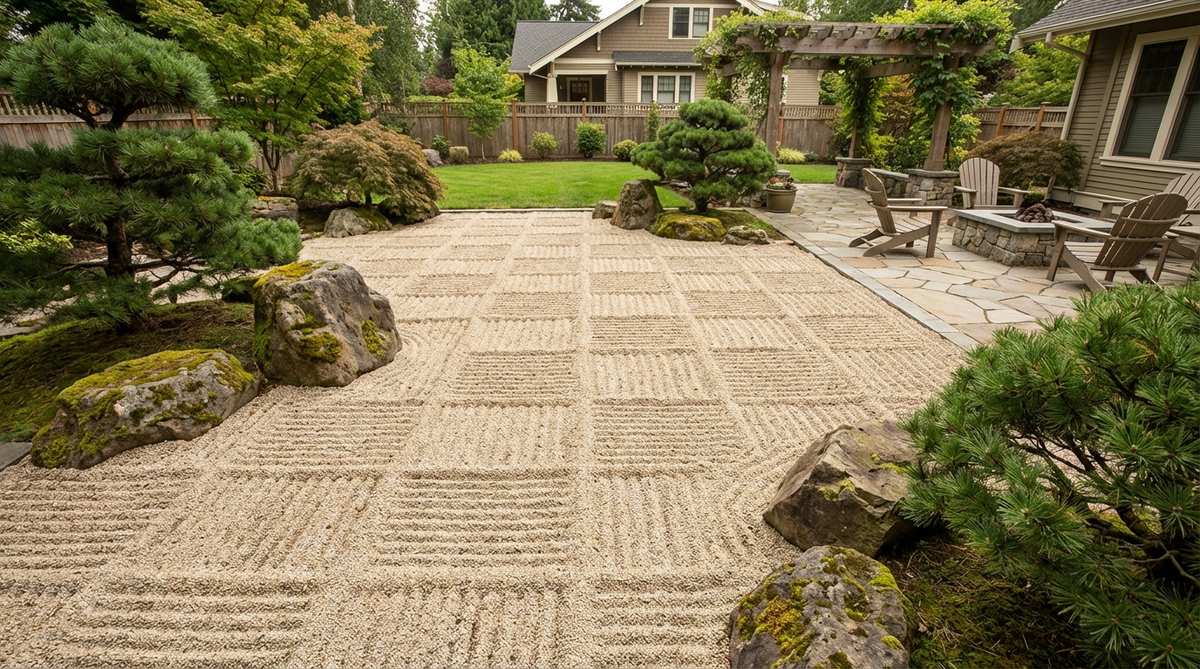
Perfectly rigid waffle grids impose a satisfying, mathematical order onto wild outdoor spaces. A highly structural patio paver alternative, it replaces expensive stonework with a fraction of the cost.
Laying real stone pavers is backbreaking and expensive, but this raked grid looks surprisingly premium and high-end. Utilizing an all-in-one zen garden kit for indoor practice helps you master the perpendicular overlap technique before taking it to the yard.
You can achieve this faux-paver look for around $30. It’s an incredible hack for budget-friendly backyard renovations.
- Key Materials: Standard wide rake, white gravel.
- Vibe / Style: Imposing architectural order.
- Difficulty: Moderate (requires steady crossing).
- Budget Breakdown: Rake: $15 | Gravel: $15.
- Creator’s Tip: Rake all your horizontal lines first, then lightly drag the rake vertically to avoid destroying the underlying ridges.
- Smart Sourcing: all-inclusive desktop zen garden kits and lightweight aluminum yard rakes.
19. Herringbone Angles
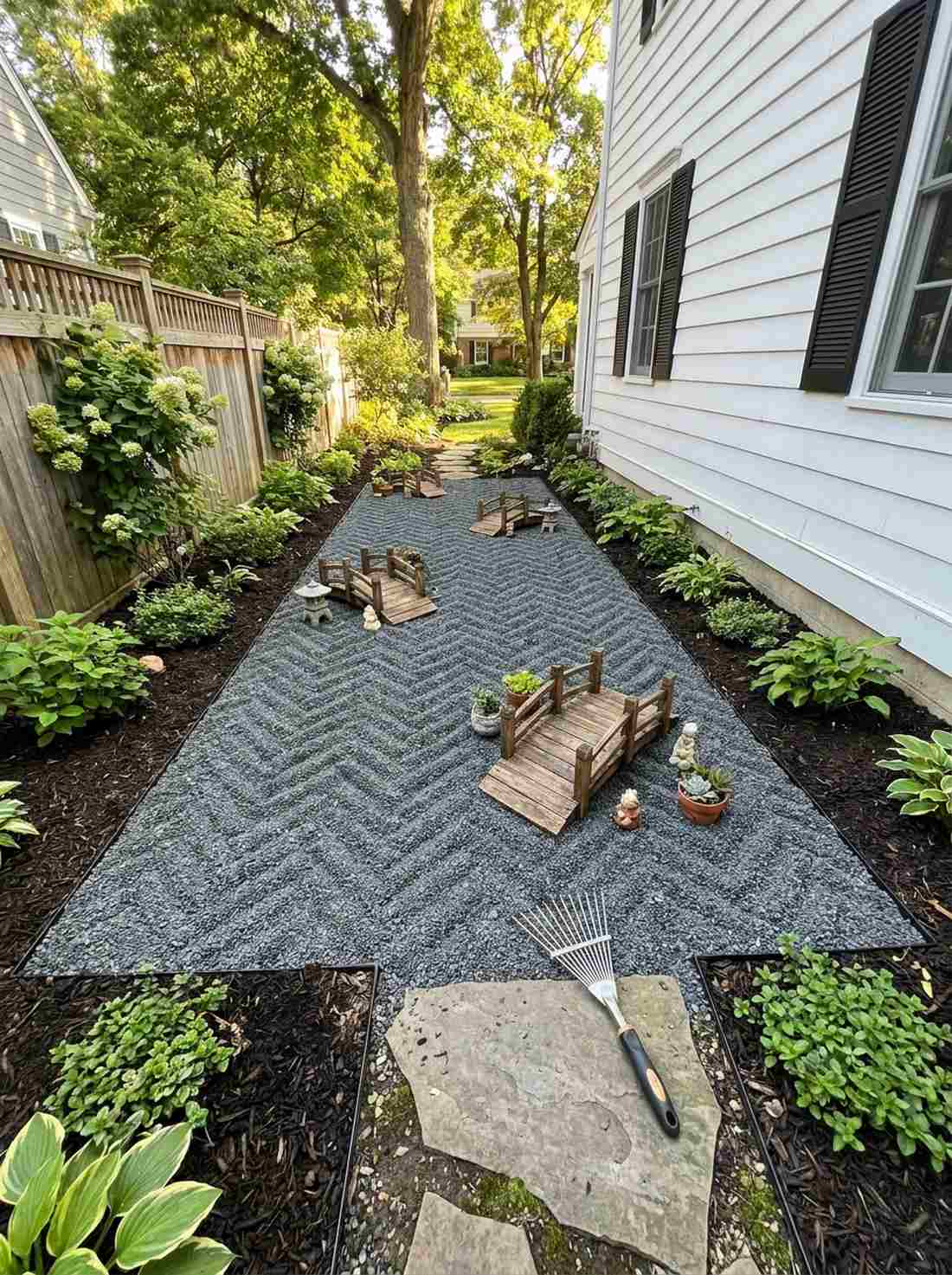
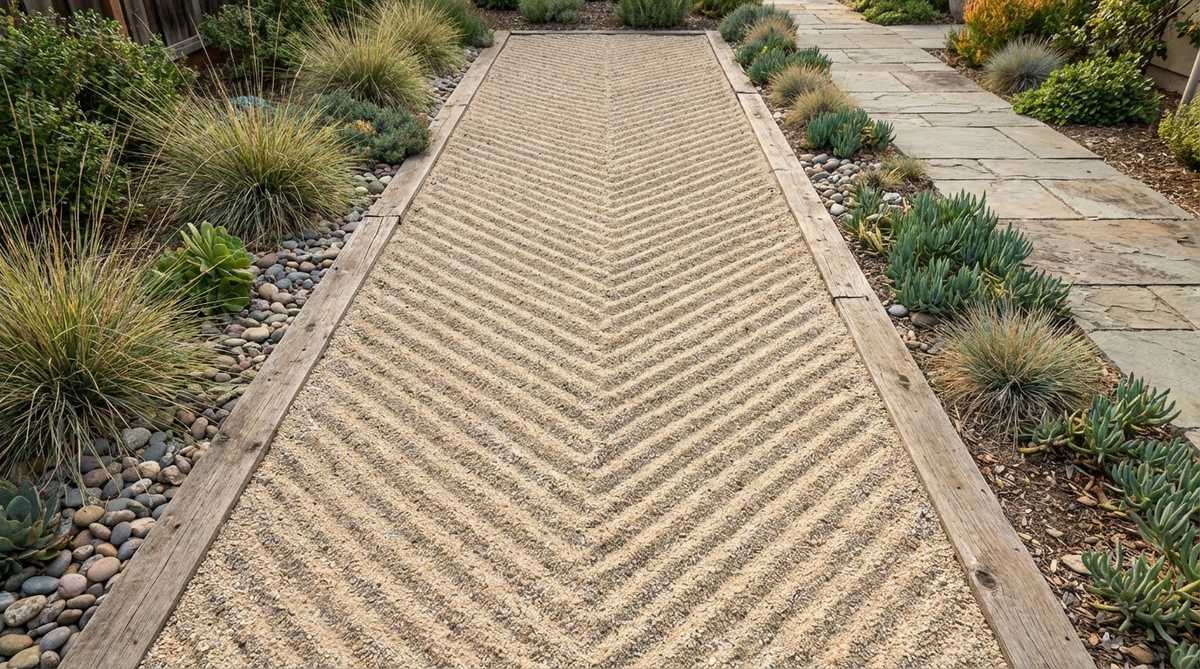
Alternating zig-zags create a rich, woven texture that looks like an expensive outdoor rug. This narrow side-yard ground texture is perfect for injecting high design into tight, awkward strips of land.
Most people leave narrow property gaps totally barren, but this herringbone pattern elevates the space into a luxury corridor. Sourcing premium terrarium accessories like miniature bridges to span across the pattern creates a gorgeous, storybook micro-landscape.
This intricate texture upgrade costs about $40. Save this to your side-yard landscaping ideas board!
- Key Materials: Fine detailing rake, tight gravel base.
- Vibe / Style: Classic woven luxury.
- Difficulty: Advanced.
- Budget Breakdown: Accessories: $20 | Gravel: $20.
- Creator’s Tip: Use a short, handheld rake and work in tight 1-foot square sections to keep the zig-zags uniform.
- Smart Sourcing: miniature wooden garden bridges and short-tine handheld rakes.
Wait until you see how this next layout mimics expensive masonry for literally pennies…
20. Brick Bond Pattern
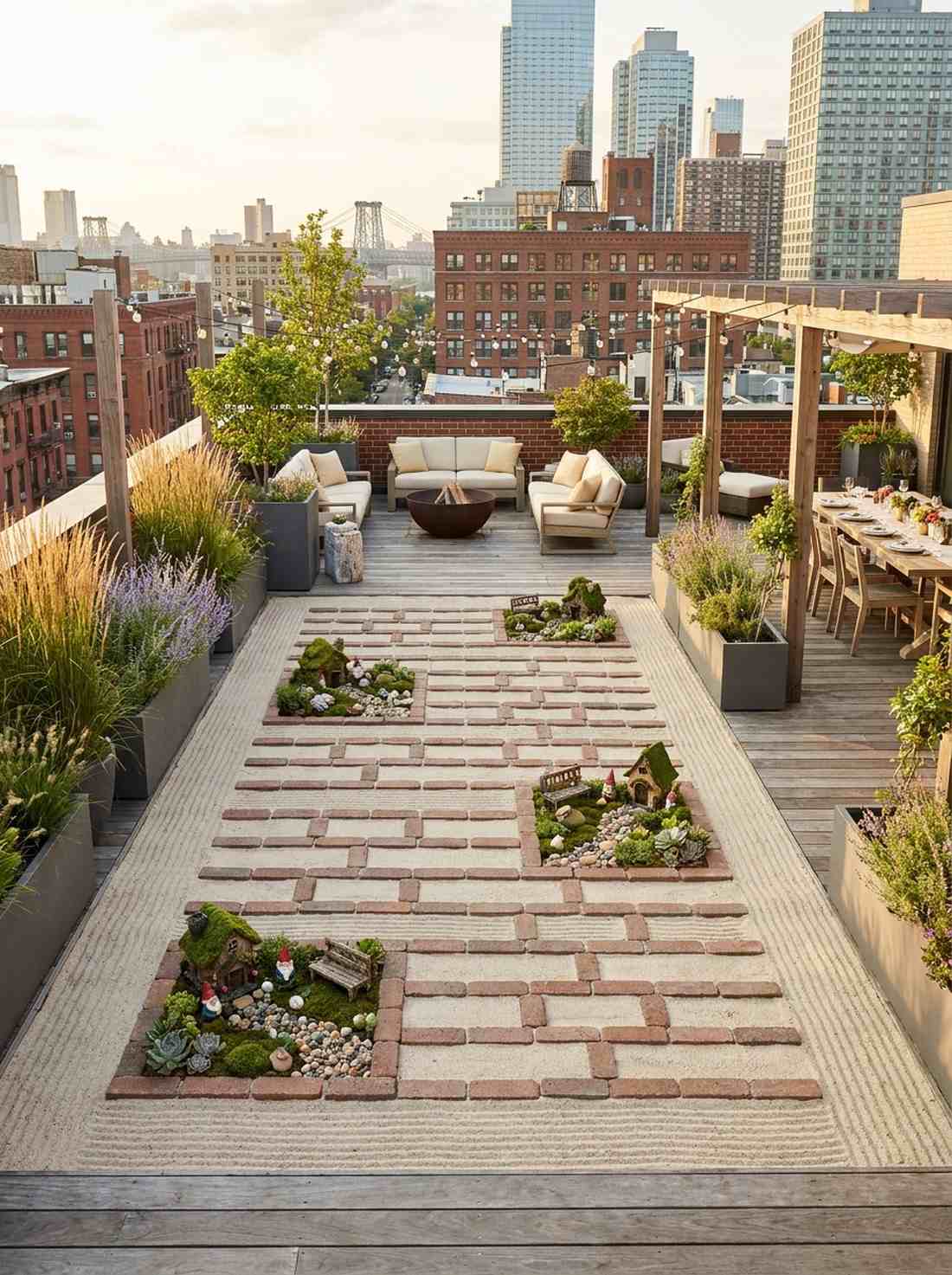
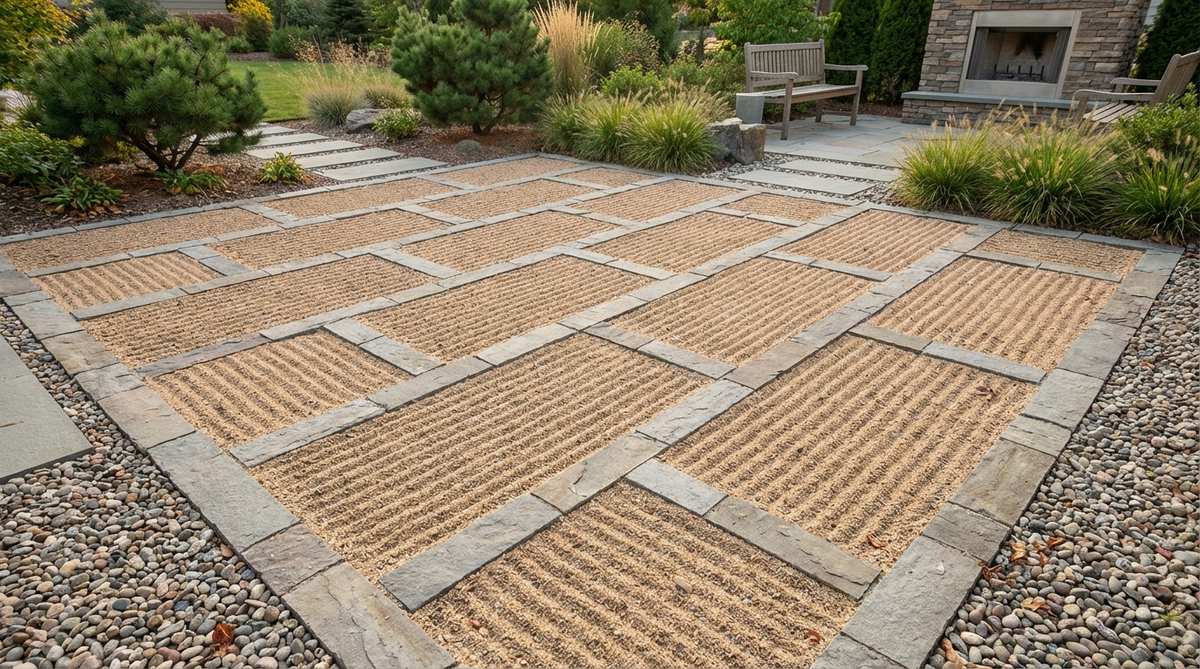
Staggered rectangular zones mimic traditional bricklaying, providing a highly structured, urban aesthetic. An incredible rooftop garden base design, it bridges the gap between raw nature and city architecture.
Buying actual bricks will drain your budget fast, yet this raked trompe l’œil gives a designer-level finish for next to nothing. Integrating bulk pack fairy garden kits within specific “bricks” allows you to create tiny, contained scenes that delight guests.
This faux-brick layout runs merely $25. Highly recommended if you love the industrial-chic look.
- Key Materials: Flat straight-edge tool, fine sand.
- Vibe / Style: Urban masonry fusion.
- Difficulty: Moderate.
- Budget Breakdown: Sand: $15 | Tools: $10.
- Creator’s Tip: Use a flat piece of scrap wood to stamp the vertical “grout” lines between your raked horizontal blocks.
- Smart Sourcing: fairy garden accessories (bulk pack) and masonry trowel sets.
21. Triangular Wedge Sections
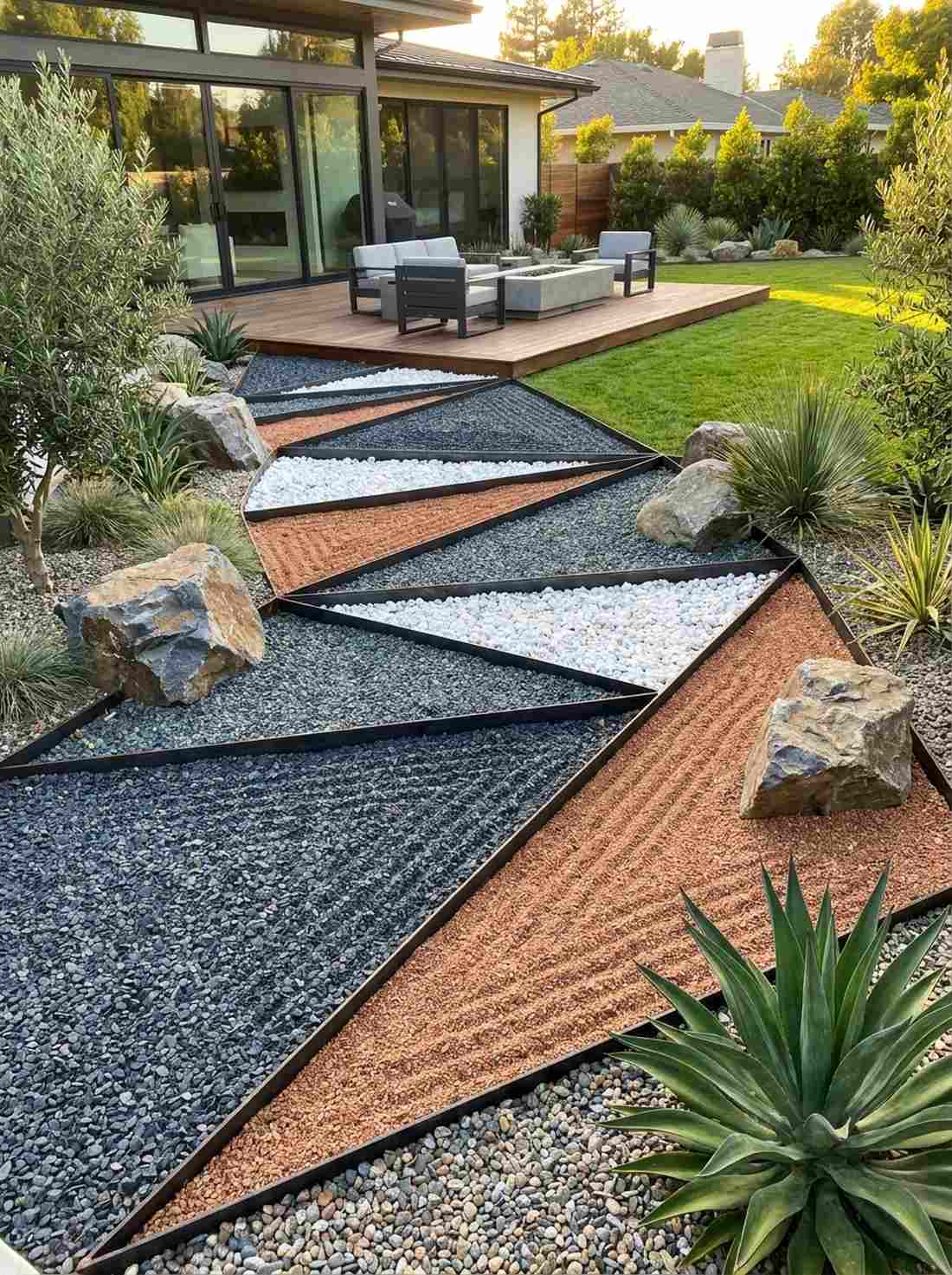
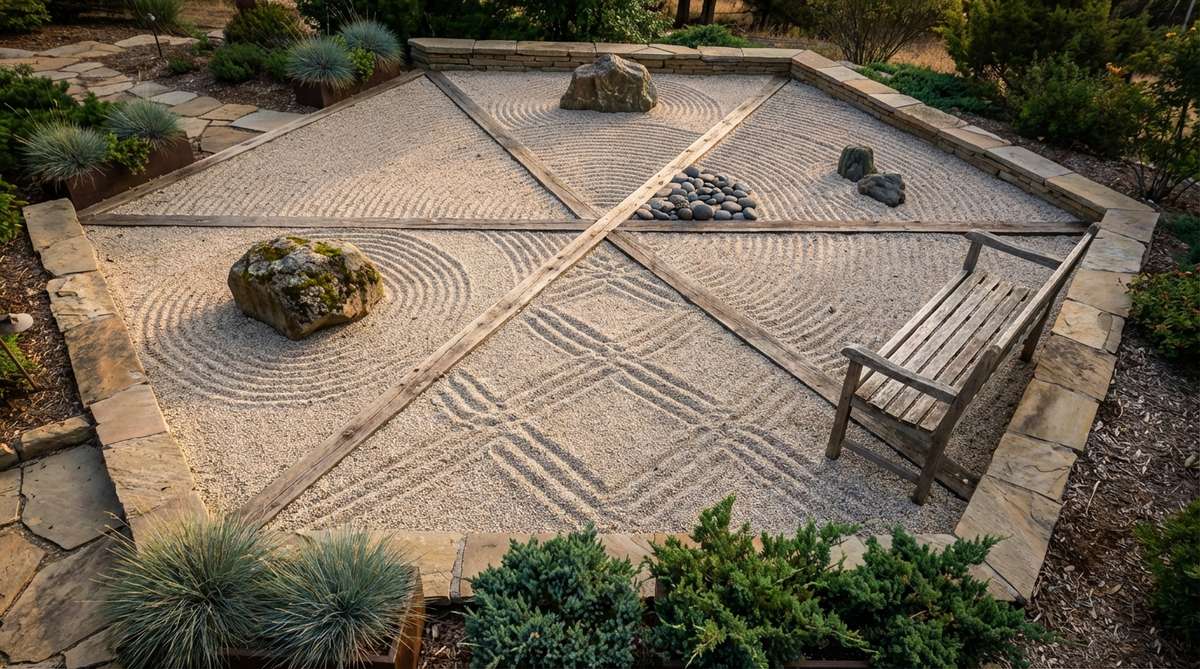
Slicing the garden into dynamic geometric shards feels like walking through a shattered, beautiful crystal. A highly aggressive modern art landscape layout, it serves as a brilliant conversation starter.
Standard flowing curves can feel a bit dated to modernists, but this angular territory mapping delivers a surprisingly premium look. Using heavy-duty landscape edging coils to permanently separate the triangles ensures your crisp design never washes away in the rain.
This segmented masterpiece costs around $55 to establish. Pin this if you love bold, museum-quality yard art.
- Key Materials: Garden edging, contrasting gravel colors.
- Vibe / Style: Shattered modernism.
- Difficulty: Moderate.
- Budget Breakdown: Edging: $25 | Gravels: $30.
- Creator’s Tip: Rake the sand in each triangular wedge in a completely different direction to maximize the visual contrast.
- Smart Sourcing: no-dig landscape edging kits and multi-color decorative gravel assortments.
22. Concentric Squares
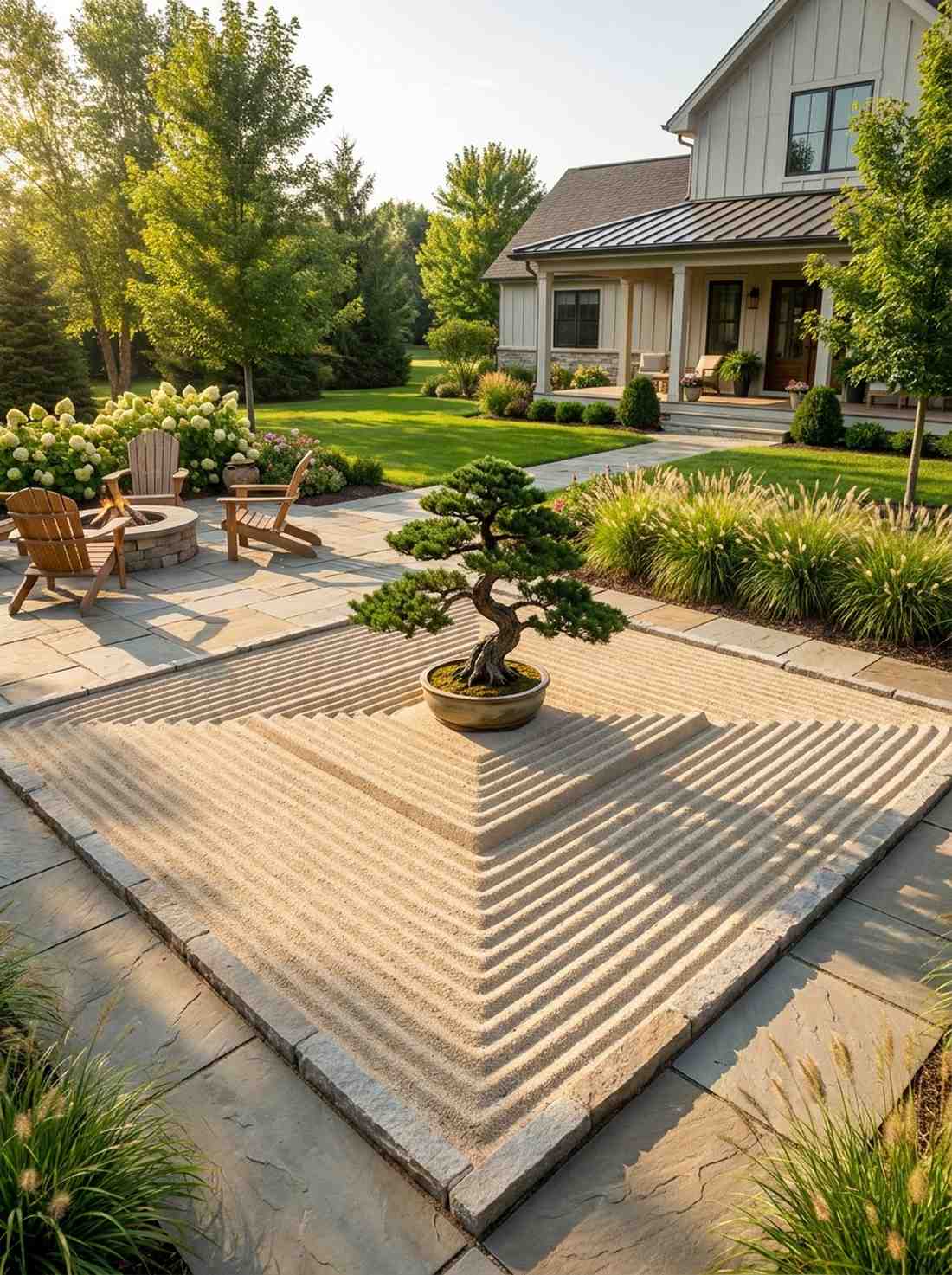
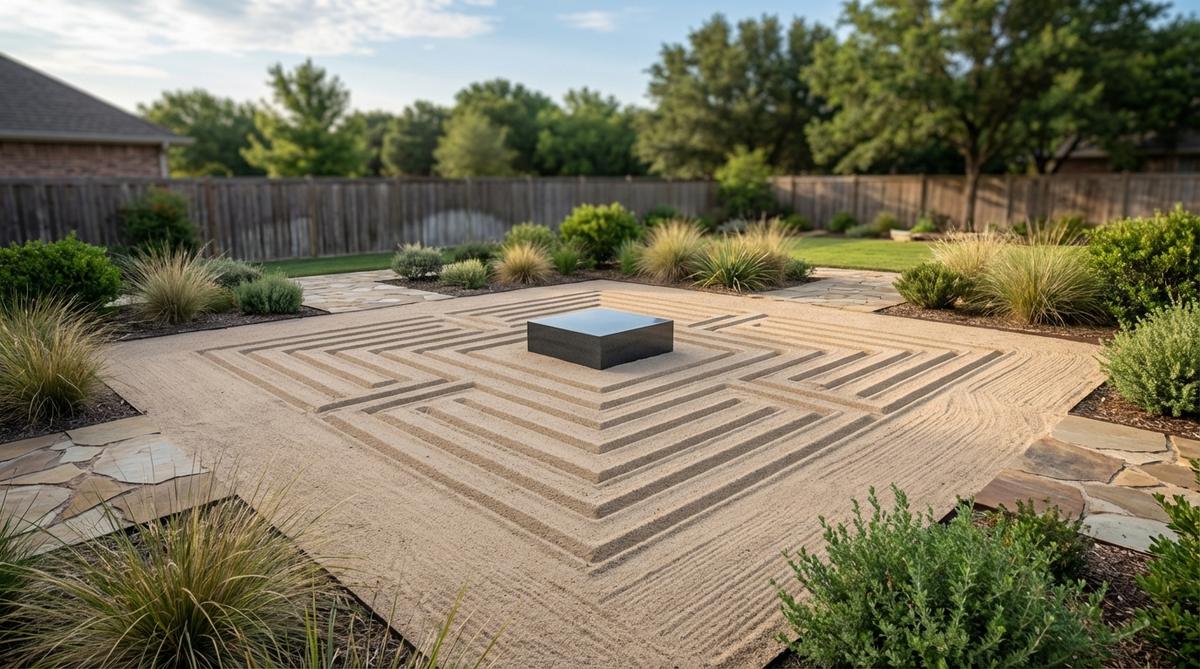
Nesting boxes echoing inward pull your focus directly to the center like an architectural target. An ideal pedestal base design, it perfectly frames a focal statue or a prized bonsai tree.
A bare statue looks lonely, but wrapping it in these sharp, expanding squares anchors it to the earth and makes it look far more expensive than it is. Dropping a weatherproof faux bonsai tree in the middle gives you the high-end temple look without the decades of pruning.
This framing technique costs roughly $60 with a good centerpiece. Save this for your outdoor sculpture display ideas.
- Key Materials: Centerpiece statue/tree, precision rake.
- Vibe / Style: High-focus architectural framing.
- Difficulty: Moderate (requires precise 90-degree turns).
- Budget Breakdown: Centerpiece: $45 | Sand: $15.
- Creator’s Tip: Rake slightly past your corners, then use a flat tool to tamp the corners into perfect, crisp 90-degree angles.
- Smart Sourcing: UV-protected artificial outdoor bonsai and precision corner-tamping tools.
Advanced Combination Techniques With Zen Garden Gravel
Master practitioners combine multiple patterns within a single garden to create layered meaning and visual sophistication. These approaches require technical skill and aesthetic judgment to maintain harmony.
23. Stylized Wave (Seigaihamon)
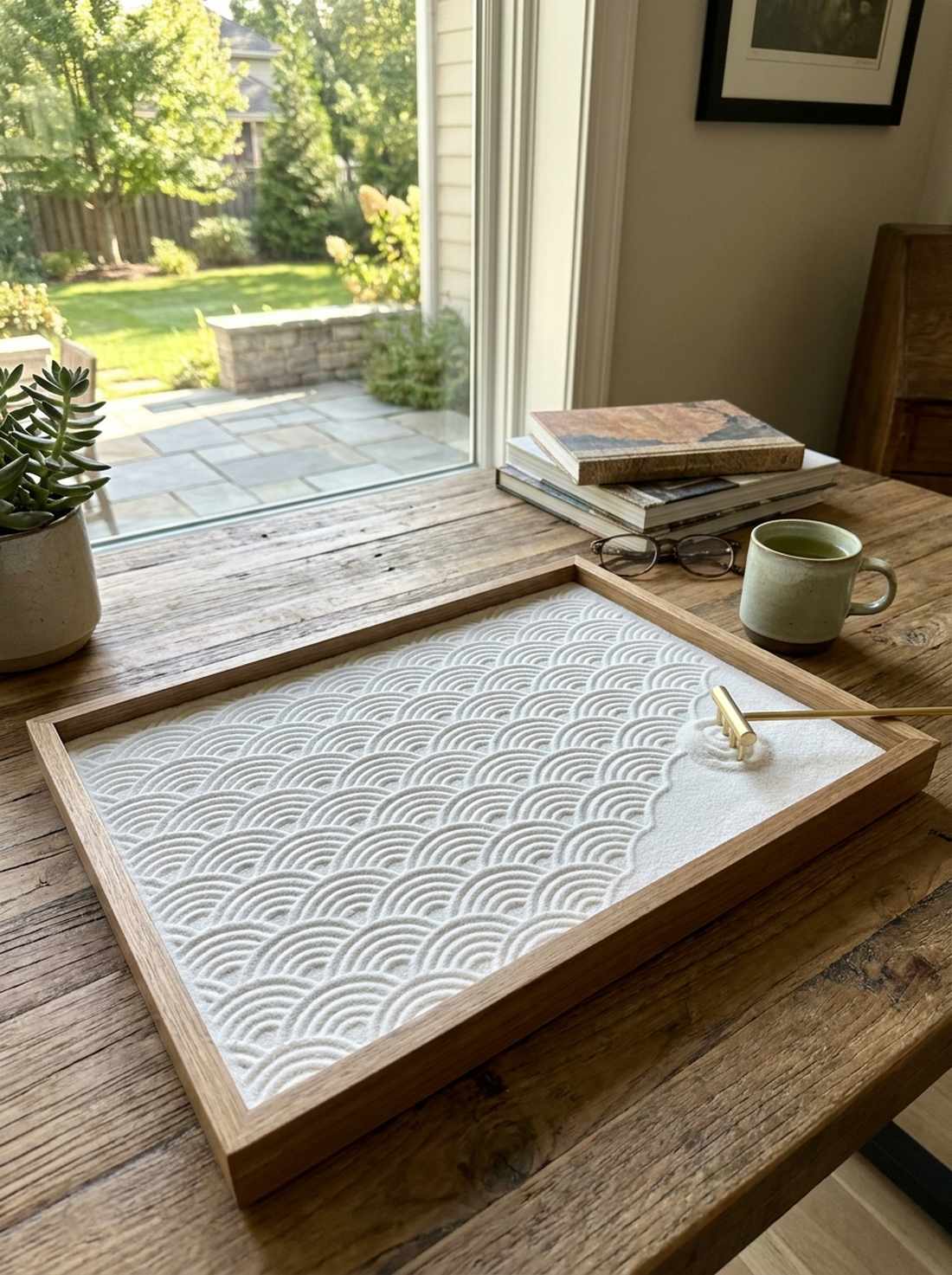
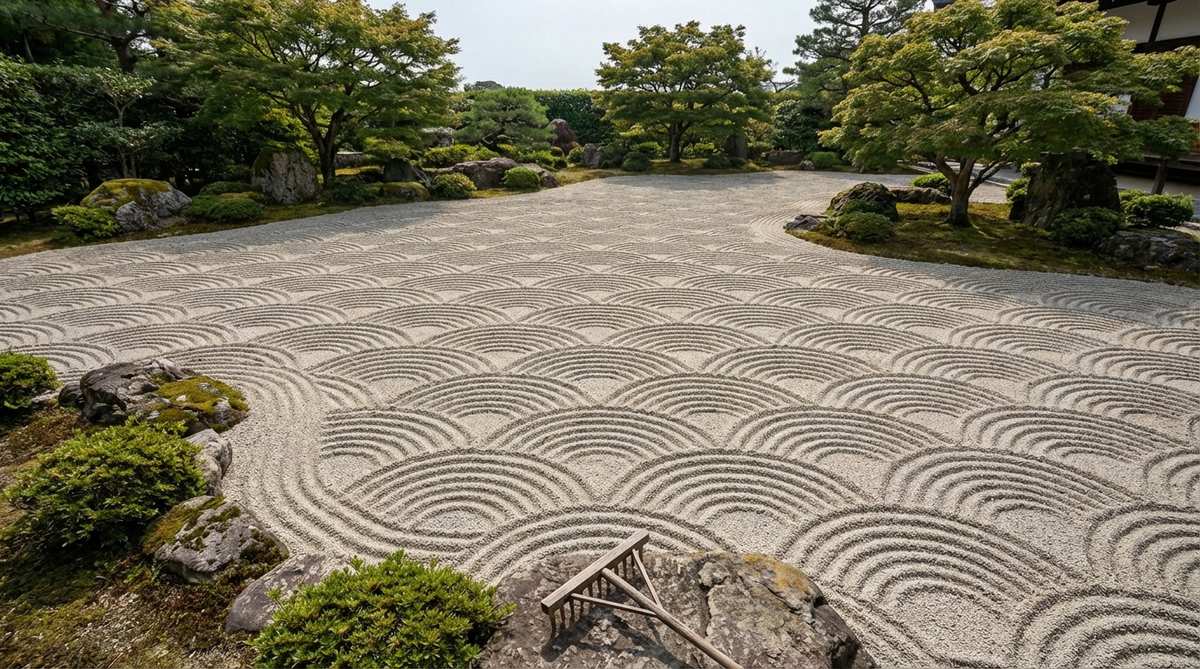
Tight, interlocking semi-circles that look like dragon scales or traditional kimono fabric. This intricate miniature tabletop zen feature is incredibly dense and rewards up-close, mindful viewing.
Execution of this traditional motif usually intimidates people, yet taking it slow delivers a surprisingly premium look that screams authenticity. Using a specialized brass-tined micro rake allows you to carve these tiny overlapping scales with absolute precision without collapsing the sand.
You can build this high-detail desk setup for about $35. A perfect, meditative craft project for a quiet Sunday.
- Key Materials: Ultra-fine white sand, micro detailing rake.
- Vibe / Style: Dense, traditional Japanese textile.
- Difficulty: Expert (highly time-consuming).
- Budget Breakdown: Sand: $15 | Micro-rake: $20.
- Creator’s Tip: Work strictly from the bottom row upward, allowing each new arc to gracefully cover the base of the previous row.
- Smart Sourcing: brass-tine miniature zen rakes and ultra-fine white silica sand.
24. Island Surrounded by Ripples
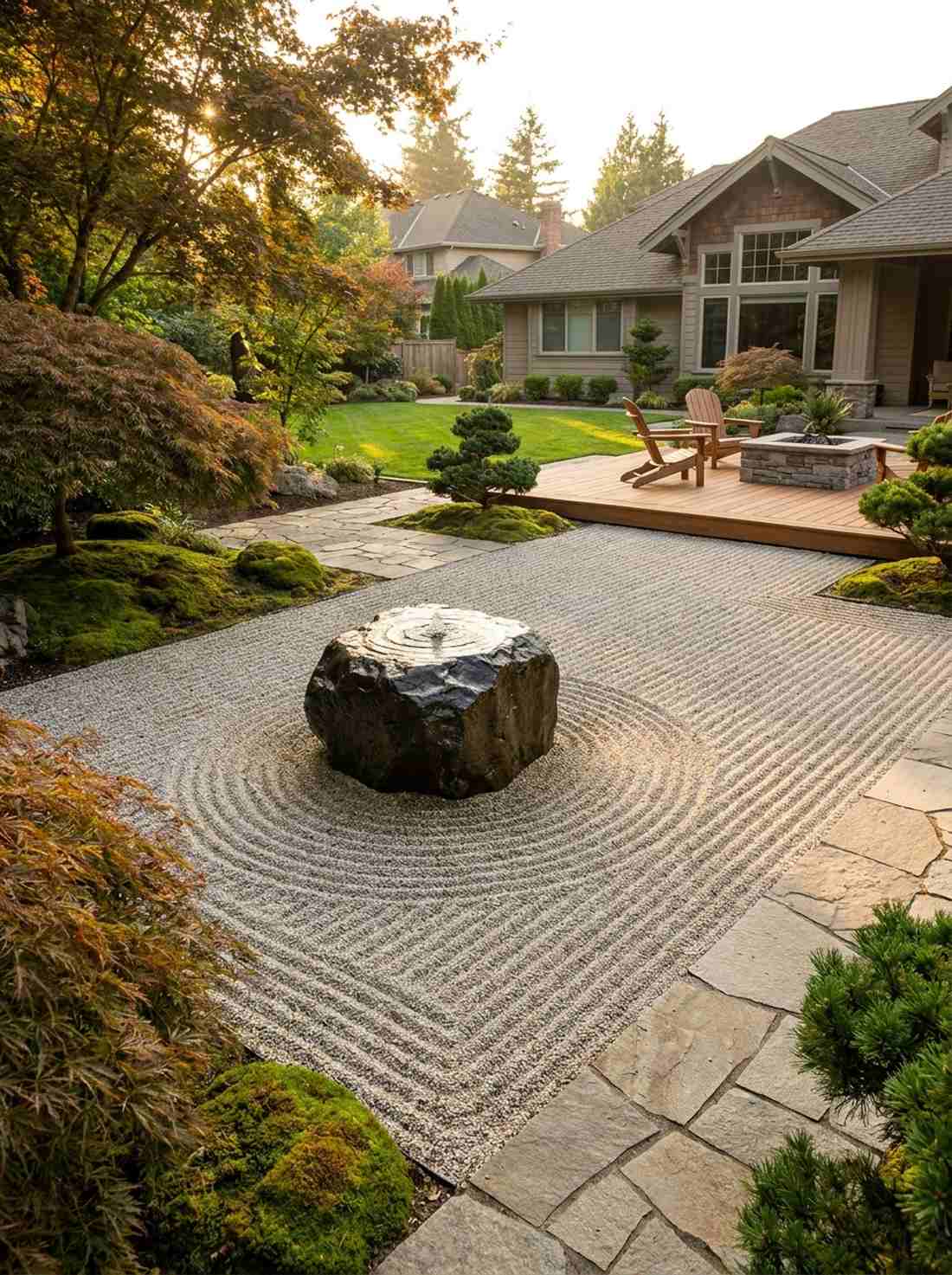
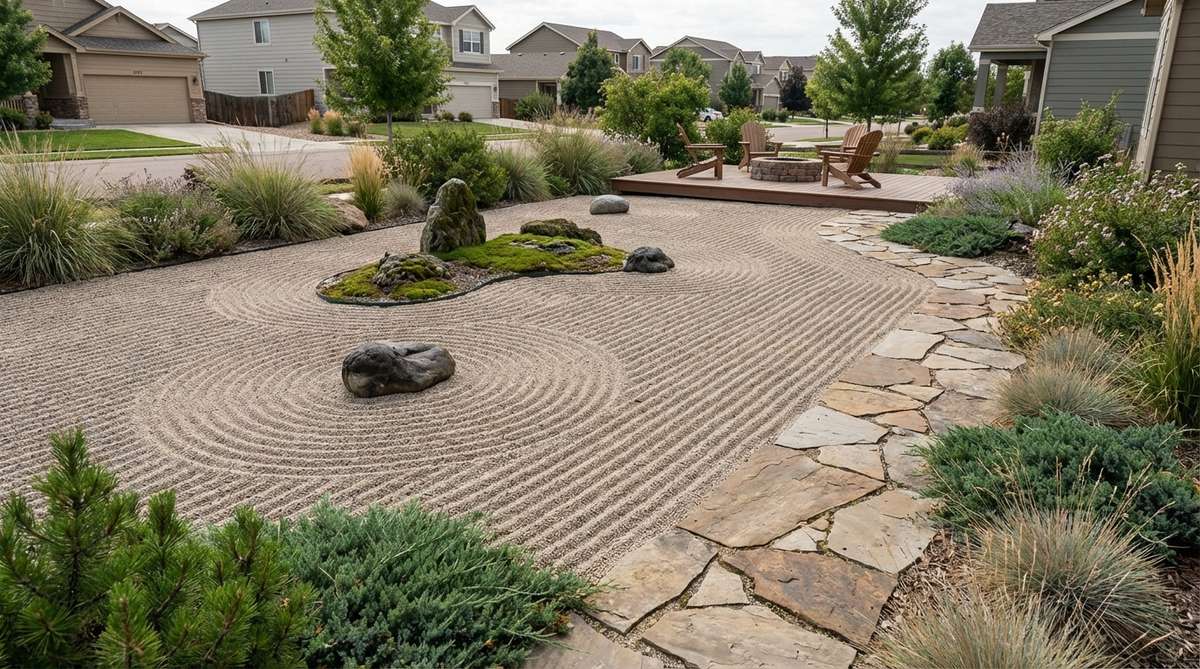
A solitary stone engulfed by tight rings, afloat in a sea of straight lines, feels like a lonely mountain in the ocean. This classic Japanese temple layout is the gold standard for authentic outdoor meditation spaces.
Mixing straight tracks with circles usually ends in a messy overlap, but creating a buffer zone gives a designer-level finish. Strategically placing a pre-drilled fountain rock as the island allows you to add actual trickling water to the visual ripples.
Integrating a small fountain stone brings this to about $70. Pin this to your ultimate dream backyard board!
- Key Materials: Large island boulder, mixed-width rakes.
- Vibe / Style: Authentic monastic calm.
- Difficulty: Advanced (managing pattern borders).
- Budget Breakdown: Fountain rock: $50 | Gravel: $20.
- Creator’s Tip: Always rake the circular island ripples *first*, then carefully pull your straight sea lines right up to the edge of the circles.
- Smart Sourcing: pre-drilled basalt fountain stones and submersible mini water pumps.
Most DIYers ruin their garden’s flow by ignoring this simple boundary rule…
25. Split-Field Dual Pattern
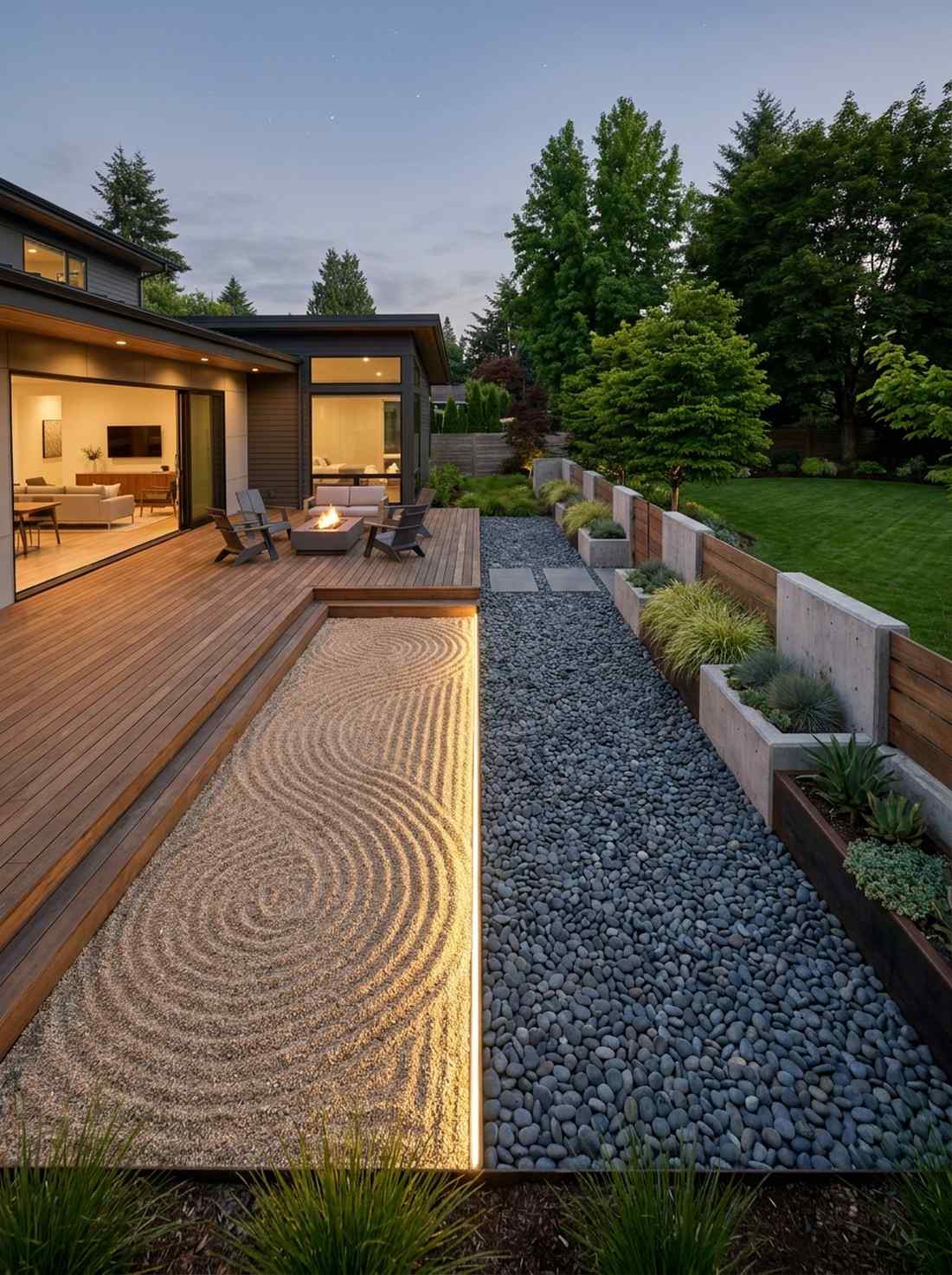
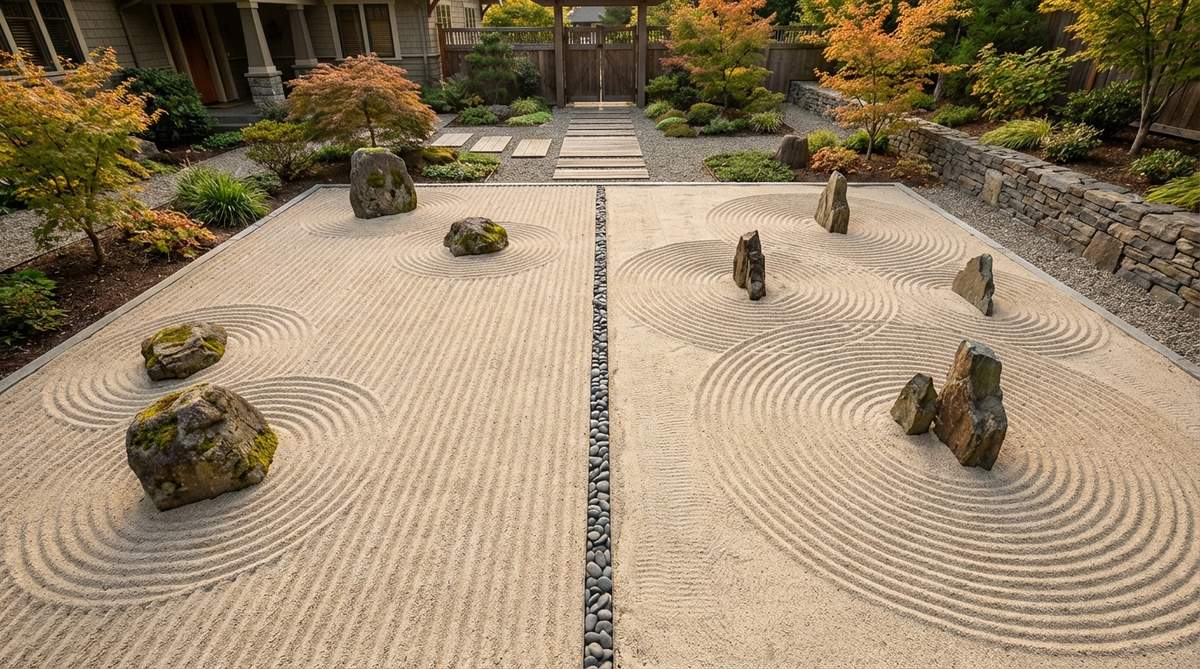
Slashing the garden in half with two contrasting textures creates an intoxicating battle between chaos and order. This bold contemporary gallery viewing garden makes a massive statement in modern minimalist homes.
A single texture can bore the eye over a large expanse, but this jarring split looks far more expensive than standard layouts. Embedding a flush line of weatherproof LED strip lighting right down the border line highlights the dramatic clash of textures beautifully at night.
This striking, divided look costs roughly $60 with the lighting hack. Save this for a high-impact patio visual.
- Key Materials: Border divider, two distinct rake heads.
- Vibe / Style: High-contrast modern duality.
- Difficulty: Moderate.
- Budget Breakdown: LED strips: $30 | Divider edge: $30.
- Creator’s Tip: Use a physical piece of sunken steel or plastic edging to keep the two patterns from slowly blurring together over time.
- Smart Sourcing: outdoor-rated waterproof LED strips and flexible steel landscape edging.
Material Guide: Cheap vs. Premium Aesthetic
Knowing exactly where to save and where to spend makes all the difference in achieving that “looks expensive but isn’t” vibe.
- Standard Sand vs. UV-Resistant Crushed Granite: Standard sandbox sand blows away instantly and loses pattern depth. Upgrading to 5/8″ crushed granite ensures the ridges lock together, holding their shape through wind and light rain.
- Pre-made Kits vs. Sourcing Locally: For indoor or desktop setups, starter kits save both time and money because buying micro-rakes and pure silica separately is costly. For outdoor yards, always buy bulk stone locally but order premium wooden rakes online.
26. Nested Circles with Radiating Lines
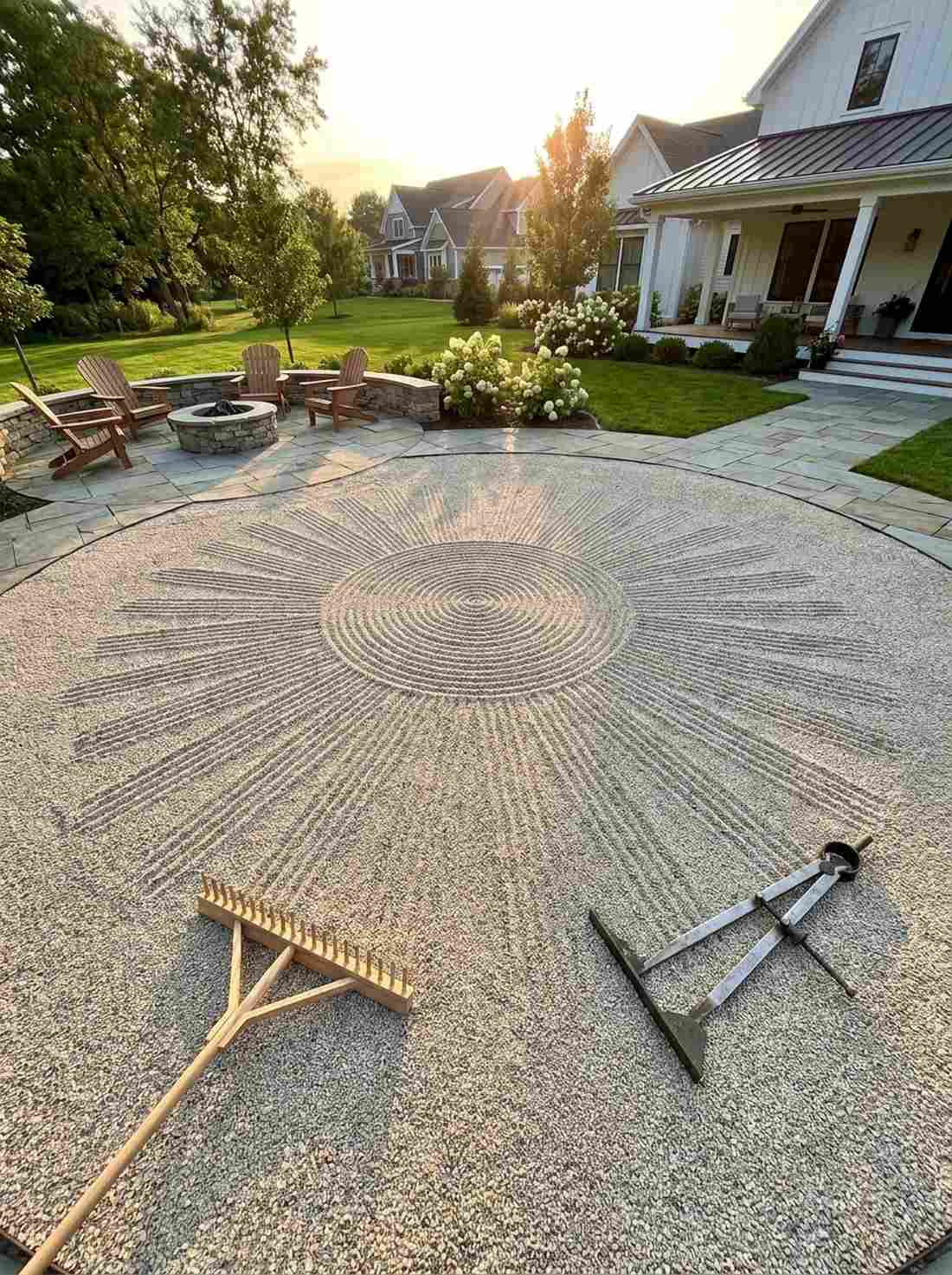
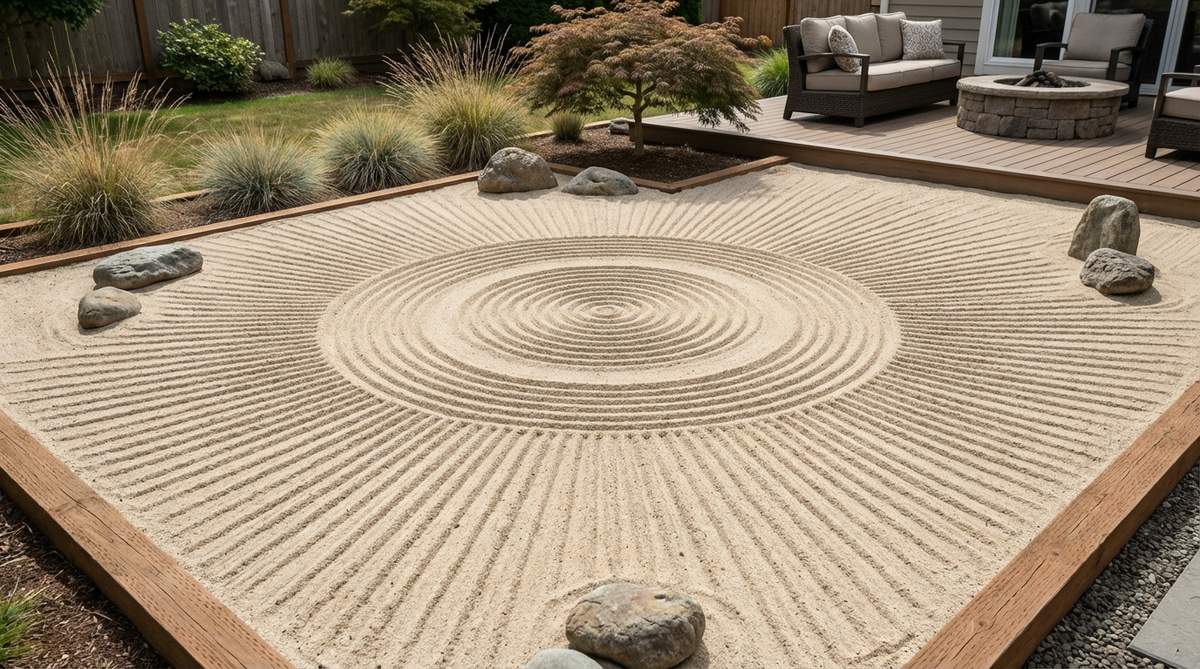
A tight central bullseye that bursts outward into a starburst feels like looking directly at a frozen sun. This intense central courtyard sunburst layout commands attention from every possible viewing angle.
Connecting circular rings to straight spokes usually creates messy corners, but taking your time here delivers a surprisingly premium look. Utilizing a heavy-duty compass drawing tool attached to your rake handle guarantees your inner nested circles are mathematically flawless.
You can execute this complex geometry for under $35. Highly recommended if you want to show off your raking skills.
- Key Materials: Center anchor, fine gravel, compass tool.
- Vibe / Style: Explosive solar energy.
- Difficulty: Expert.
- Budget Breakdown: Compass tool: $15 | Base sand: $20.
- Creator’s Tip: Rake the radiating sunbeams first, then stamp the inner nested circles over them to create clean, sharp intersection points.
- Smart Sourcing: large-scale landscaping compasses and extra-wide bamboo rakes.
27. Wave-to-Calm Transition
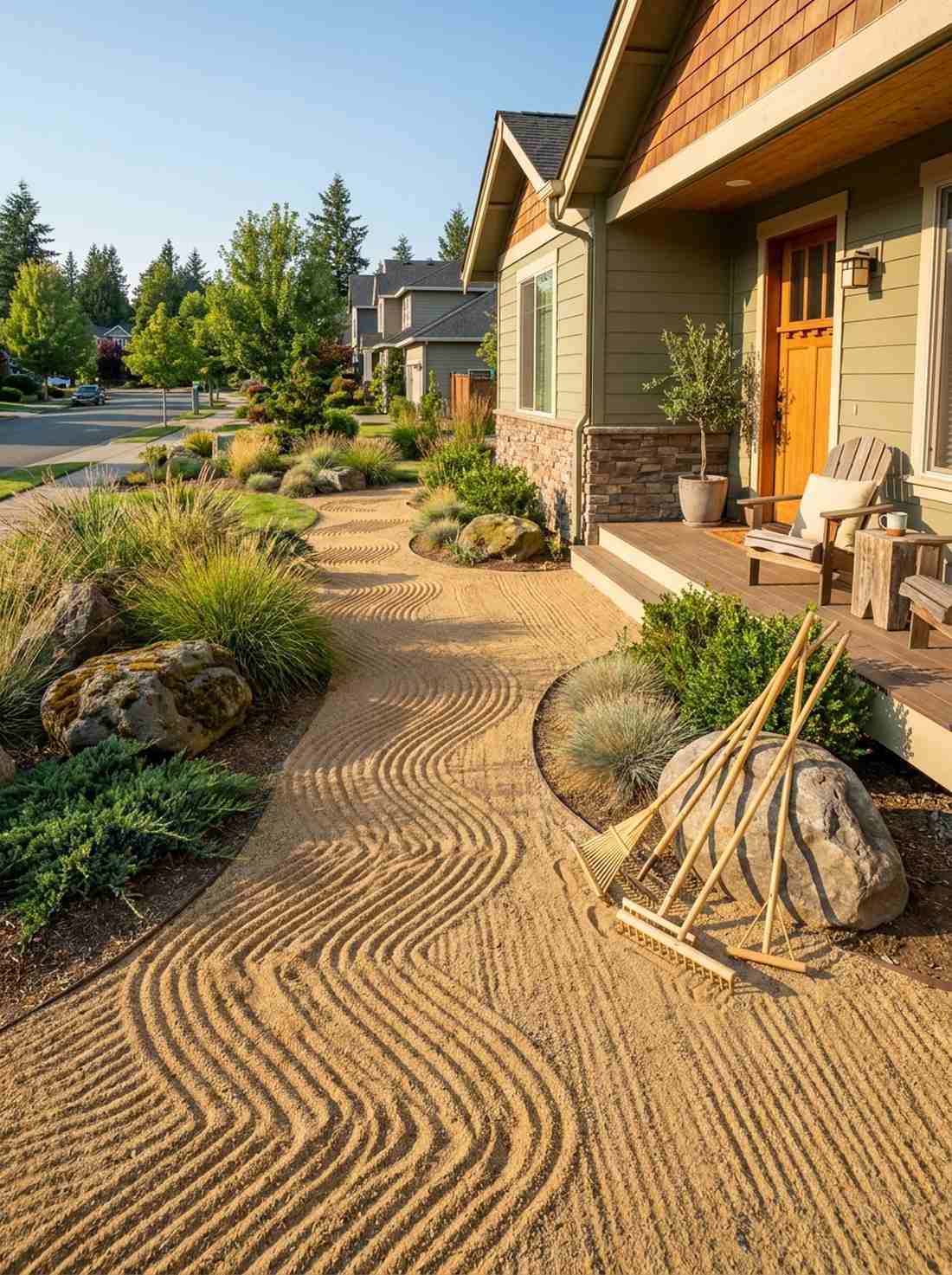
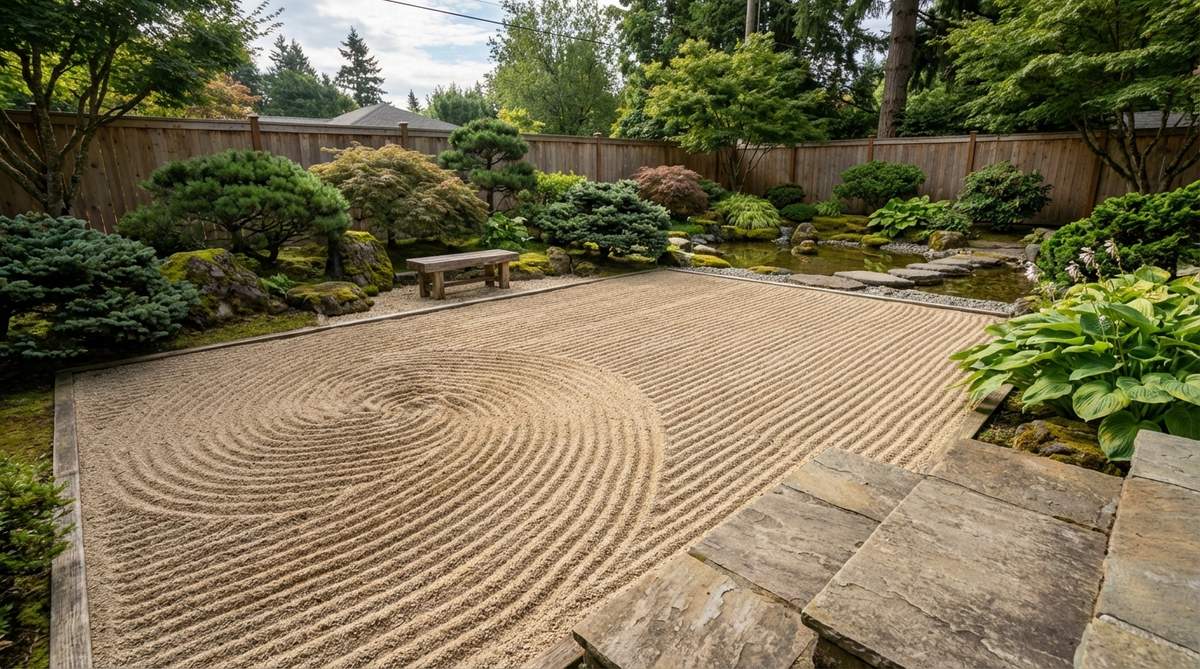
Watching violent, thrashing zig-zags slowly melt into peaceful, flat lines is a visual metaphor for finding inner peace. This narrative garden pathway design is brilliant for a walkway leading from a busy street to a quiet front door.
Creating a gradient of texture is tough, yet mastering this fade-out gives a designer-level finish that looks like custom art. Sourcing a complete zen garden tools kit gives you various rake widths, allowing you to gradually shift from wide, deep grooves to fine, shallow scratches.
This psychological pathway upgrade costs around $45 in tools and sand. Pin this to your mindfulness and meditation boards.
- Key Materials: Graduated rake set, standard gravel.
- Vibe / Style: Journey from chaos to serenity.
- Difficulty: Advanced (requires subtle pressure changes).
- Budget Breakdown: Tool Kit: $25 | Gravel: $20.
- Creator’s Tip: As you walk, slowly reduce the downward pressure on the rake handle until you are barely grazing the surface at the “calm” end.
- Smart Sourcing: multi-head zen garden tool kits and medium-grain decomposed granite.
28. Multi-Directional Flow System
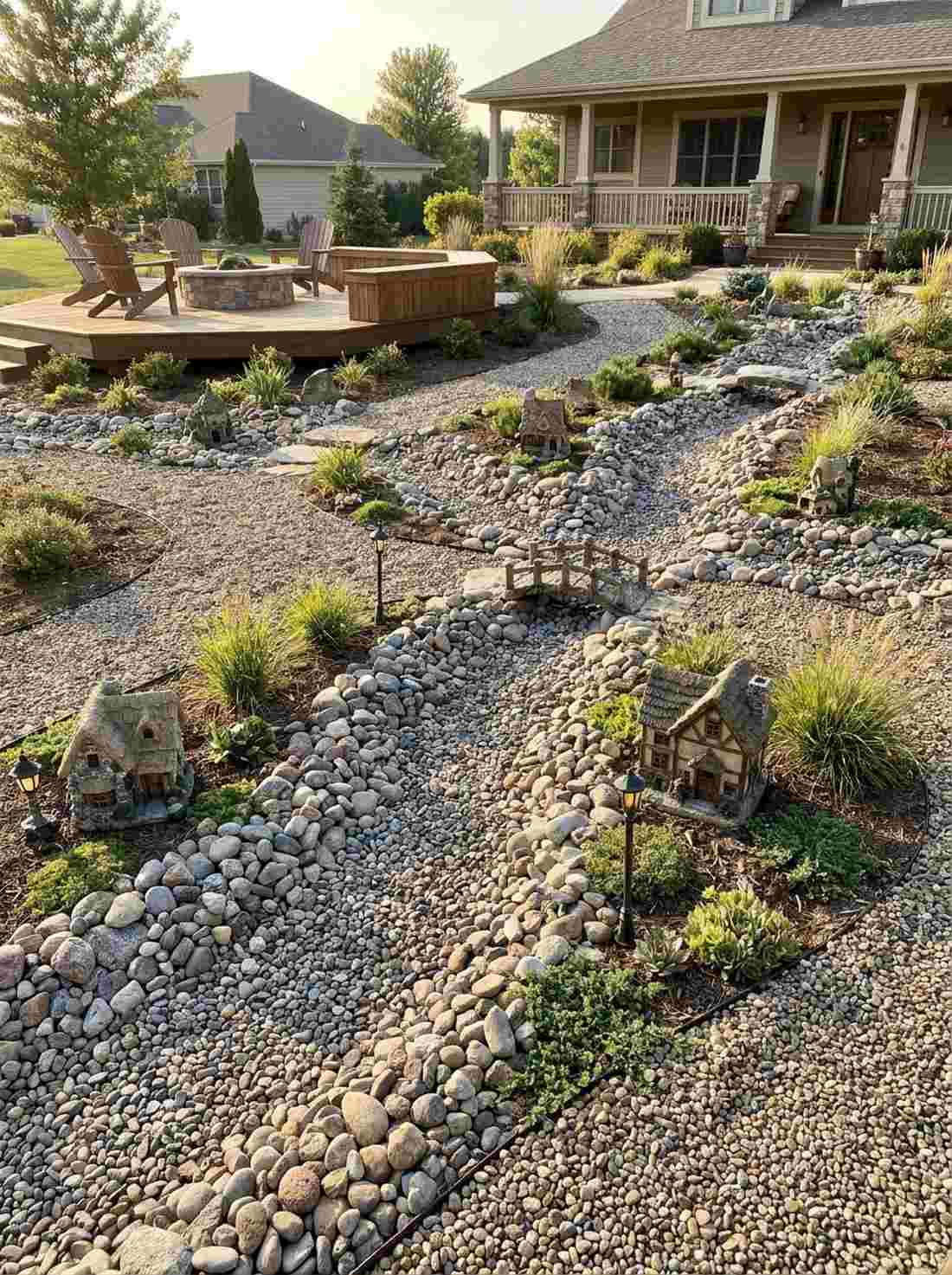
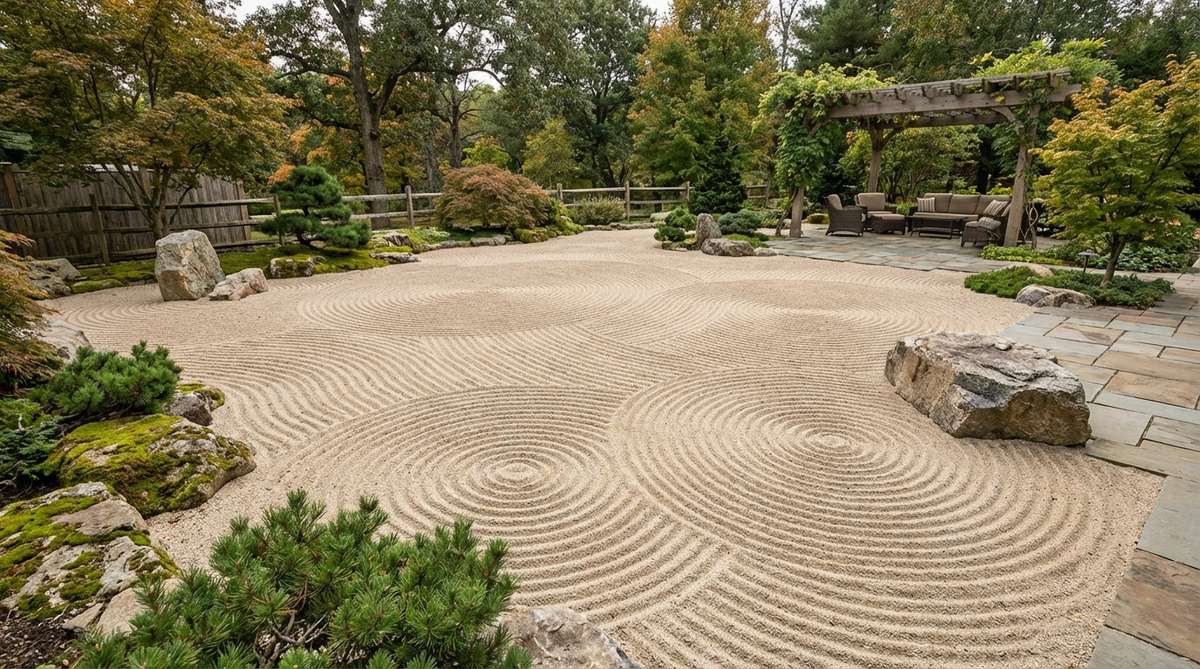
Multiple currents crashing and blending together feels like looking down at a chaotic, beautiful river delta. This sprawling large estate landscape filler is the only pattern dynamic enough to cover massive open dirt lots.
Repeating one pattern over a huge yard looks fake, but letting multiple streams collide makes it look far more expensive and natural. Dropping UV-coated resin fairy cottage kits onto the “banks” of these crashing rivers turns a massive blank yard into a giant, livable fantasy map.
Covering a large yard this way runs about $150 in bulk stone. Save this massive idea for your dream property.
- Key Materials: Bulk gravel delivery, miniature village accents.
- Vibe / Style: Sweeping continental map.
- Difficulty: Expert (managing massive scale).
- Budget Breakdown: Bulk Gravel: $100 | Cottages: $50.
- Creator’s Tip: Sketch the “river” collisions on paper first; winging a multi-directional flow on a massive scale usually leads to a messy aesthetic.
- Smart Sourcing: UV-coated resin fairy cottage kits and bulk landscaping gravel delivery.
Seasonal and Symbolic Arrangements
Certain patterns carry specific seasonal associations or symbolic meanings in Japanese garden tradition. Understanding these cultural layers adds depth to your design choices.
29. Autumn Maple Leaf Curves

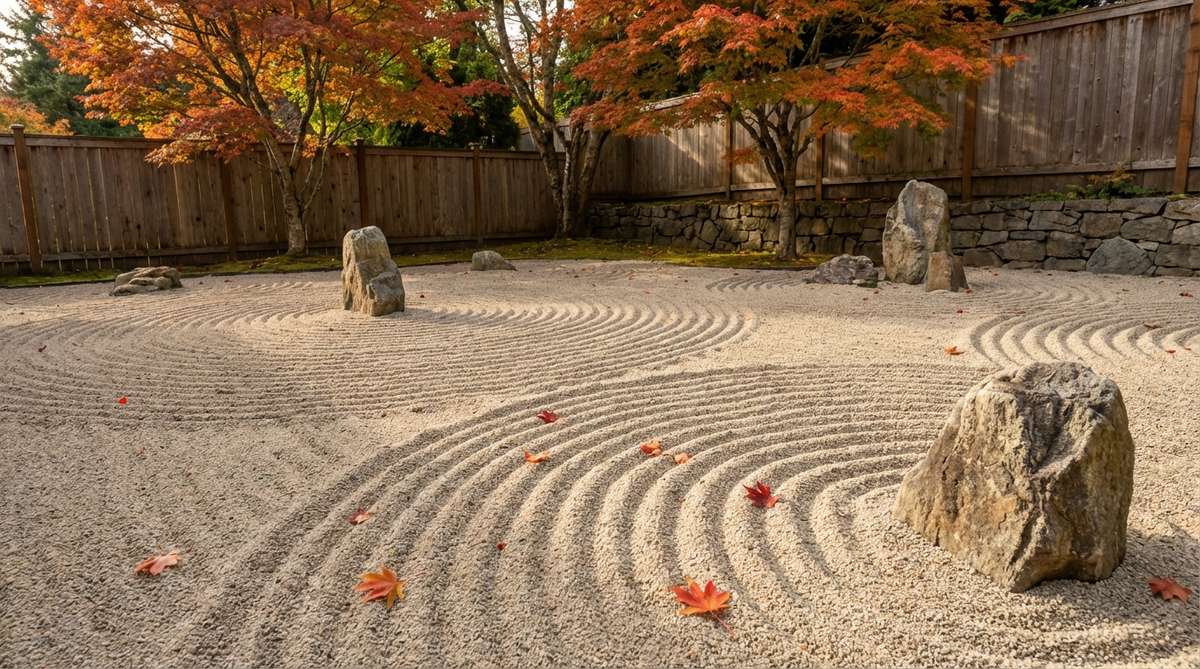
Erratic, tumbling swoops mimic the chaotic, beautiful path of a falling leaf caught in an autumn breeze. This seasonal patio refresh technique brings instant autumnal vibes without needing to plant new foliage.
Rigid lines feel wrong in the fall, so this chaotic drifting pattern delivers a surprisingly premium look of intentional neglect. Scattering a few premium artificial maple leaves (bulk pack) atop the sand seals the illusion of a crisp October afternoon.
This quick seasonal swap costs less than $20. Pin this to your Fall Decor and Outdoor Transition boards!
- Key Materials: Faux maple leaves, standard rake.
- Vibe / Style: Crisp, tumbling autumn decay.
- Difficulty: Easy.
- Budget Breakdown: Faux leaves: $10 | Sand: $10.
- Creator’s Tip: Do not try to make the curves symmetrical; let your arms swing wildly to mimic unpredictable wind currents.
- Smart Sourcing: premium artificial maple leaves (bulk pack) and lightweight aluminum detailing tools.
If you want your desktop decor to stay fresh year-round, you MUST try this next seasonal swap…
30. Spring Plum Blossom Dots
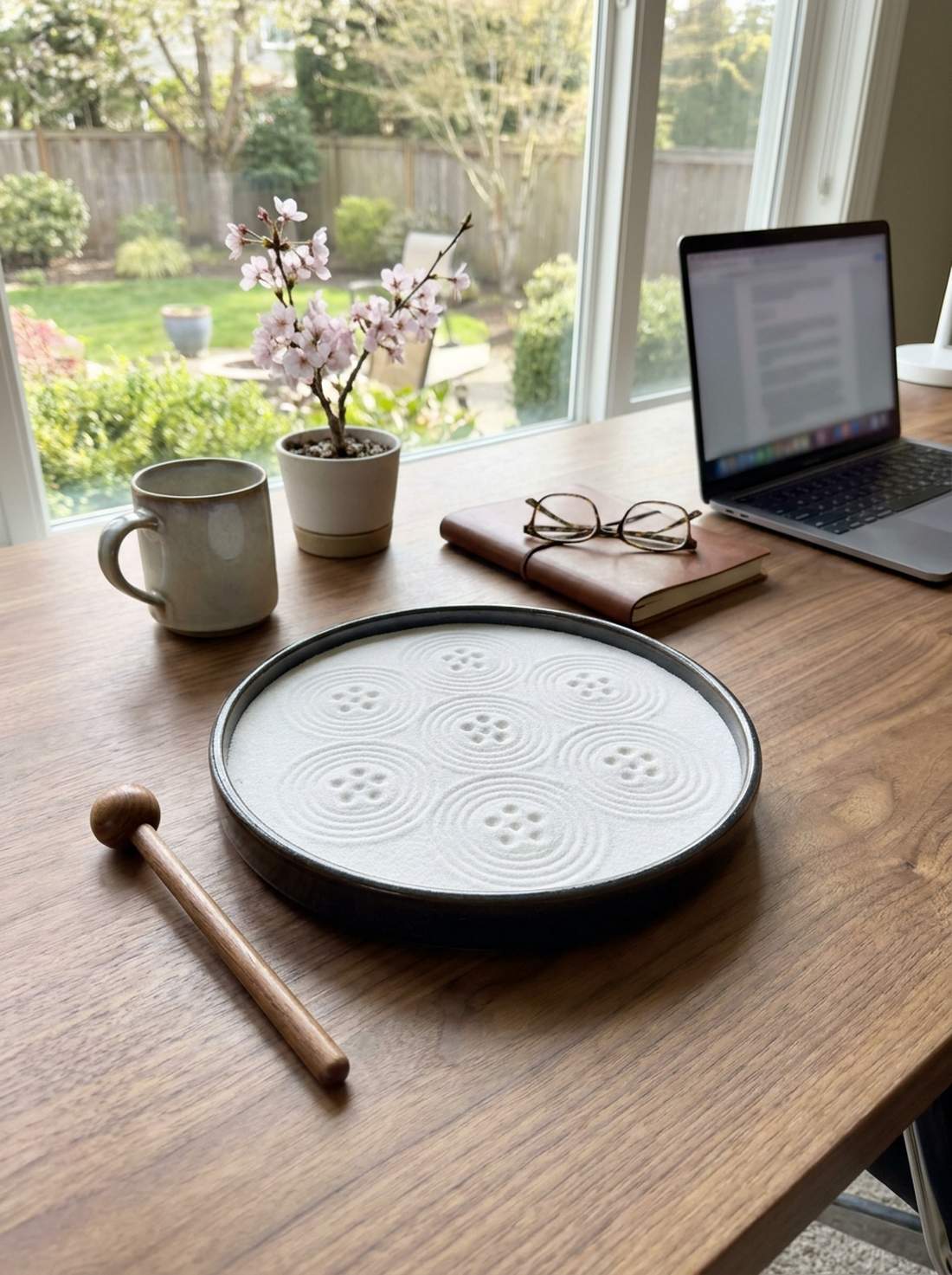
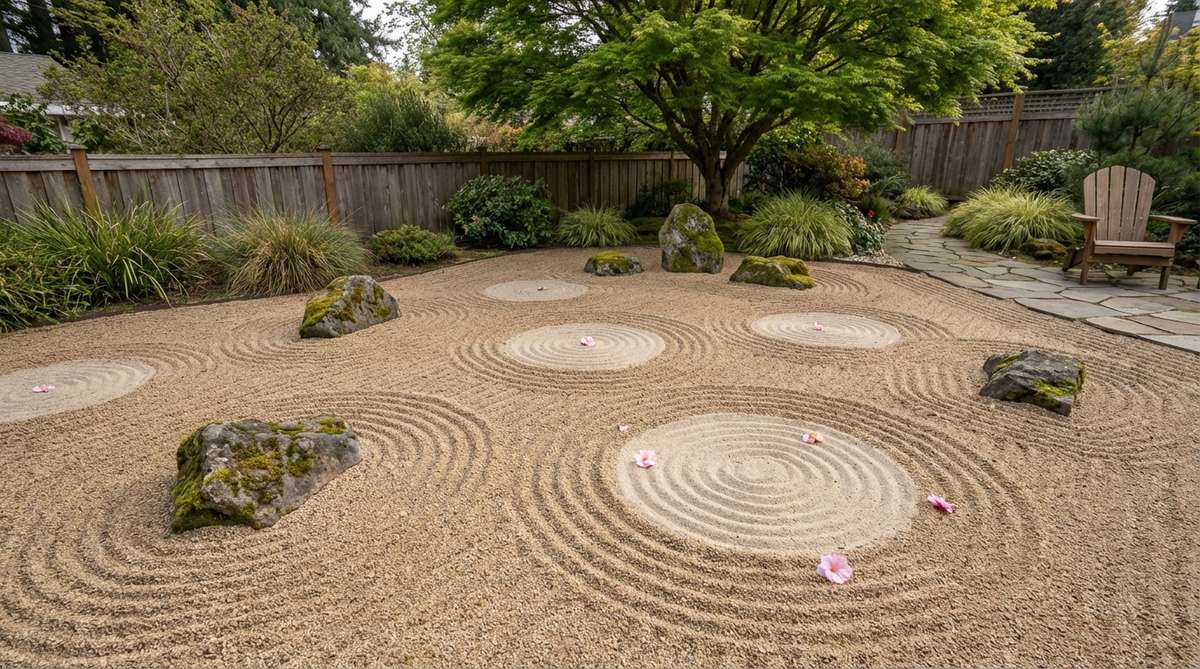
Tiny stamped craters surrounded by delicate ripples look exactly like fresh blossoms landing in a tranquil pond. A stunning springtime desktop refresh layout, it breathes fresh life and renewal into a stale office space.
Most desktop sand gardens get raked once and forgotten, but this dotted layout looks far more expensive and interactive. Using the back end of a wooden zen garden stylus allows you to press perfect little dimples into the sand without dragging it.
This little desk trick costs absolutely nothing if you already have a kit. It’s the perfect way to welcome the spring equinox.
- Key Materials: Dowel rod or stylus, fine silica sand.
- Vibe / Style: Delicate spring renewal.
- Difficulty: Moderate.
- Budget Breakdown: Stylus tool: $8 | Base kit: $15.
- Creator’s Tip: Rake the entire surface perfectly flat first, then gently press your dots, and finally use a micro-rake to draw the tiny ripples around them.
- Smart Sourcing: wooden zen garden stylus sets and pure white indoor silica sand.
31. Winter Frost Crystal Geometry
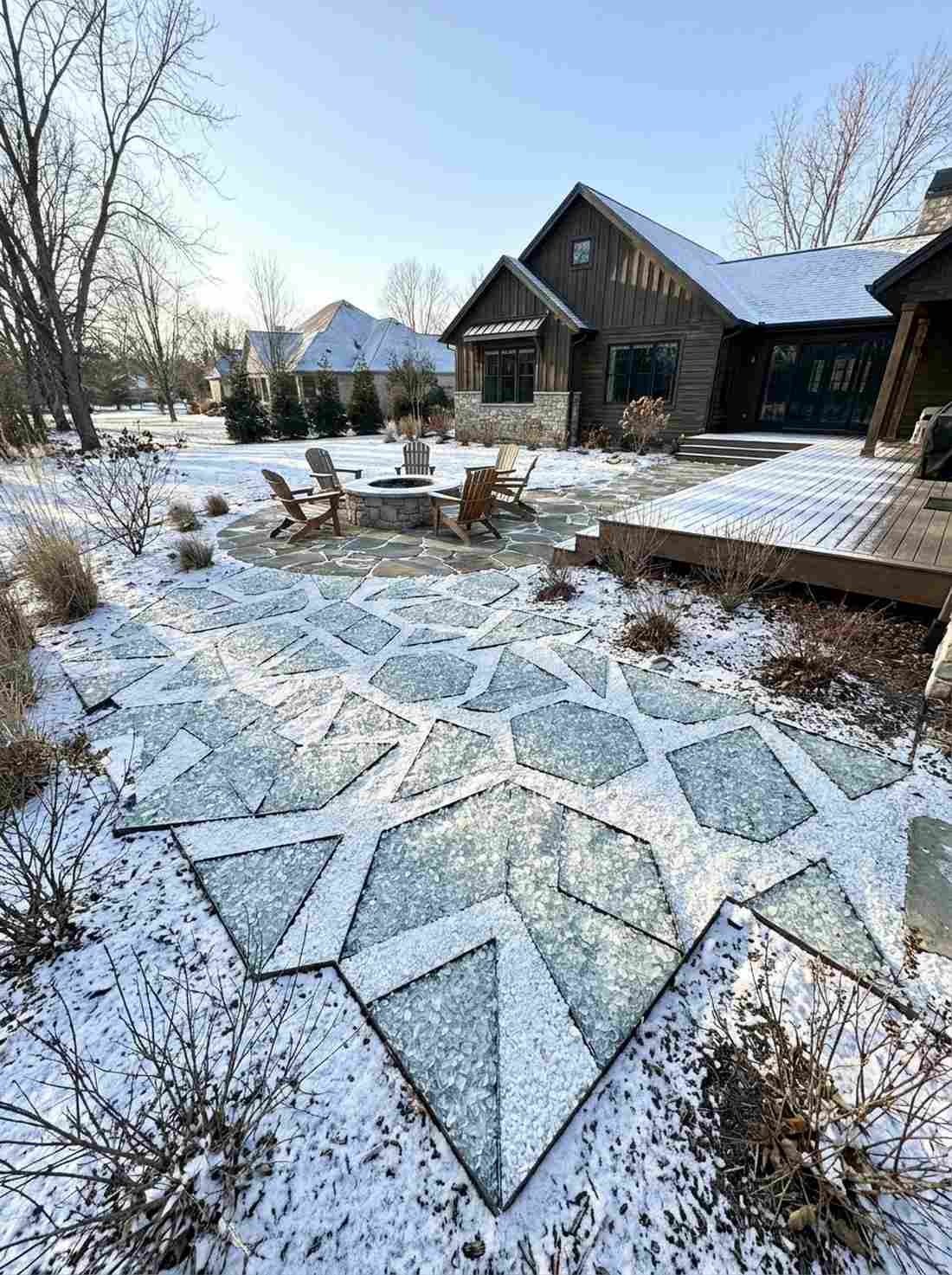
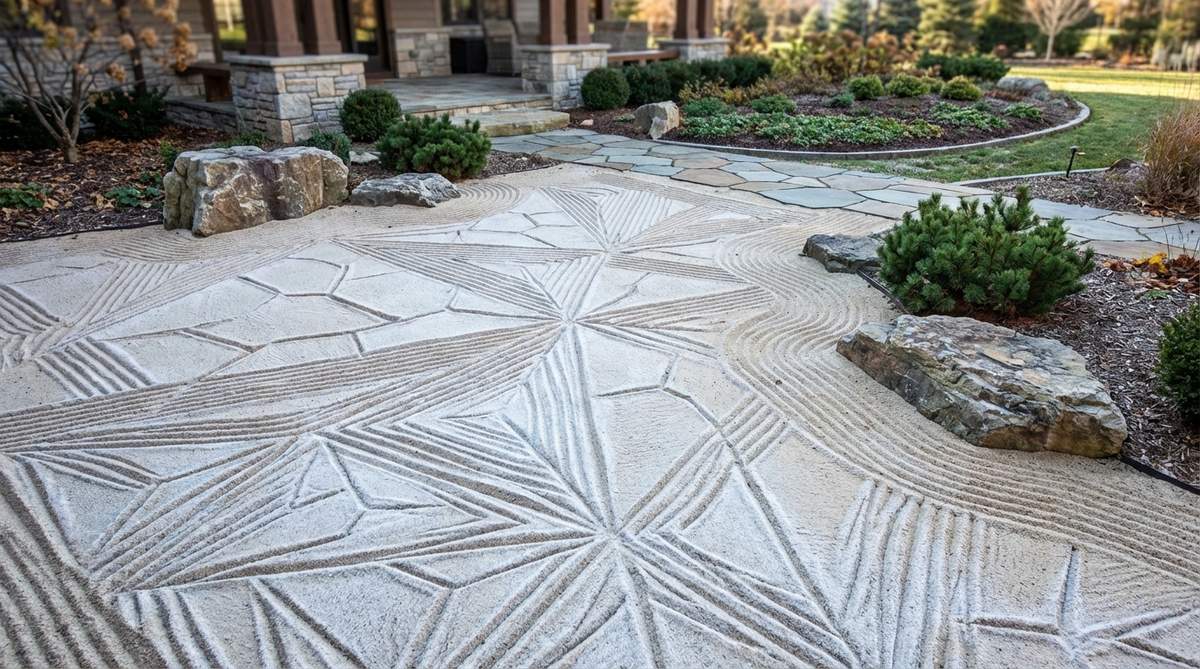
Harsh, jagged hexagons and triangles replicate the freezing bite of shattered ice and frost on a windowpane. This winter landscape adaptation keeps your yard looking intentionally styled even when all the plants are dead.
Soft curves look out of place in December, but this aggressive frost geometry gives a designer-level finish to a dormant yard. Mixing in some shattered glass landscaping mulch with your white gravel adds an authentic, icy sparkle that catches the winter sun brilliantly.
Adding the glass mulch upgrade runs about $45. Save this visual for your winter landscaping survival guide.
- Key Materials: Glass landscape mulch, white crushed quartz.
- Vibe / Style: Cold, crystalline fracture.
- Difficulty: Advanced (requires precise straight edges).
- Budget Breakdown: Glass mulch: $30 | Quartz: $15.
- Creator’s Tip: Use a flat wooden board to press the straight lines in, rather than pulling a rake, to keep the “crystal” edges razor-sharp.
- Smart Sourcing: tumbled clear glass landscaping mulch and heavy-duty metal tampers.
32. Summer Cloud Scroll Pattern
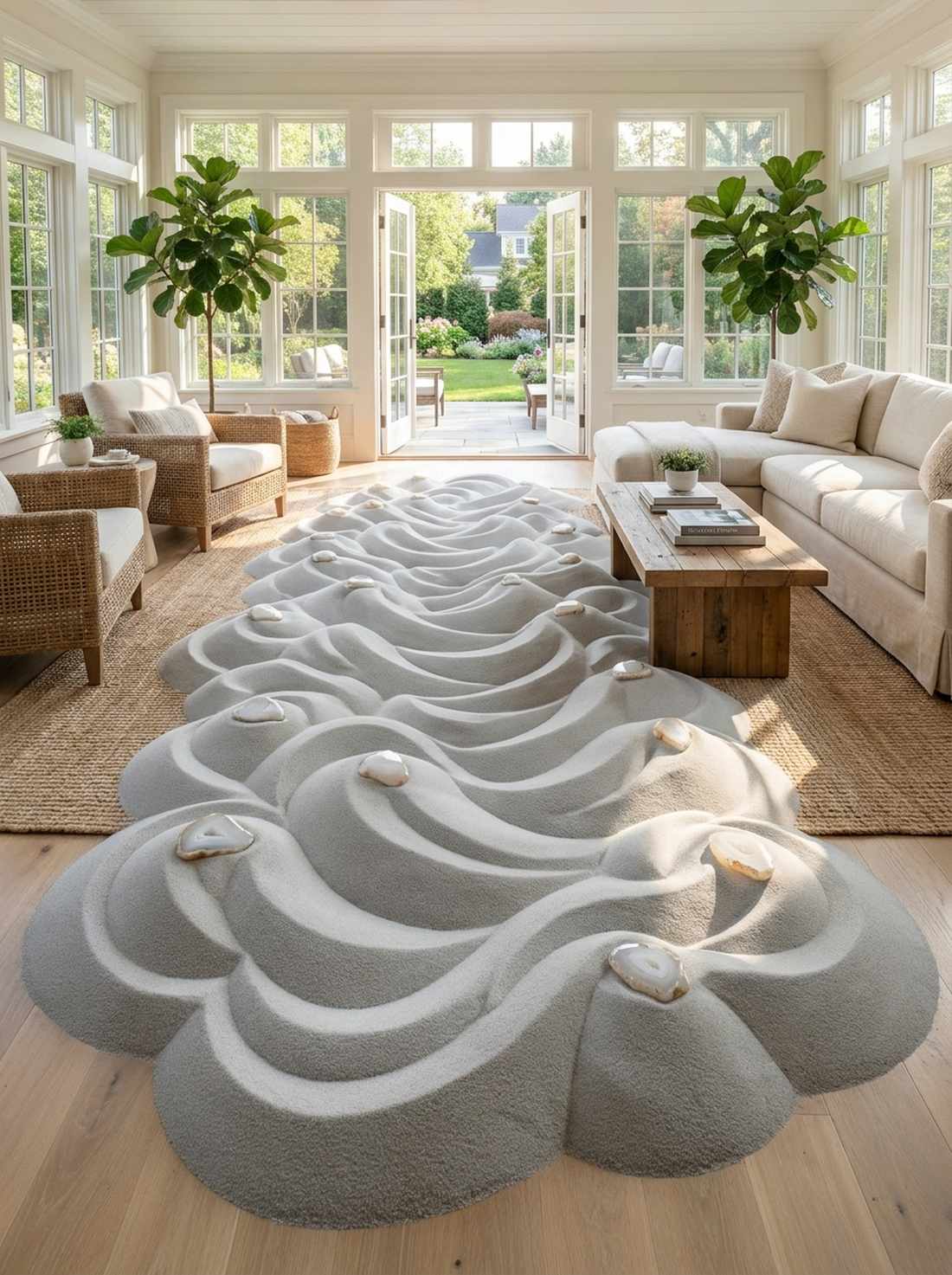
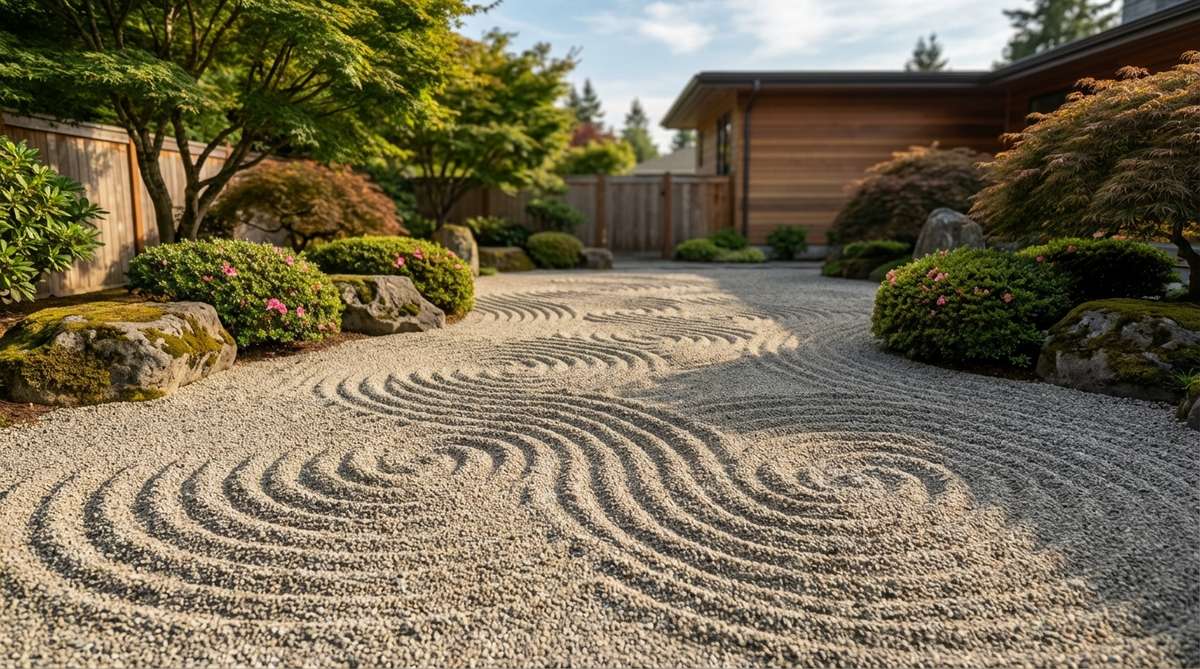
Plump, billowing overlapping curves feel like staring up at massive cumulonimbus clouds on a lazy July afternoon. An uplifting sunroom floor decor concept, it brings a sense of airy lightness to heavy indoor spaces.
Achieving puffy curves requires practice, yet this buoyant layout delivers a surprisingly premium look that lightens the mood of any room. Placing a few polished white agate stones at the crests of the “clouds” gives the setup a luxurious, high-end spa aesthetic.
You can create this heavenly layout for about $35. Pin this if you love bright, airy, and peaceful room aesthetics!
- Key Materials: White agate stones, light grey sand.
- Vibe / Style: Soft, floating summer skies.
- Difficulty: Moderate.
- Budget Breakdown: Agate stones: $20 | Sand: $15.
- Creator’s Tip: Make the curves at the top of the design slightly smaller than the ones at the bottom to create an illusion of looking up into the sky.
- Smart Sourcing: polished white agate stones (bulk) and smooth-edge detailing trowels.
33. Lunar Phase Progression
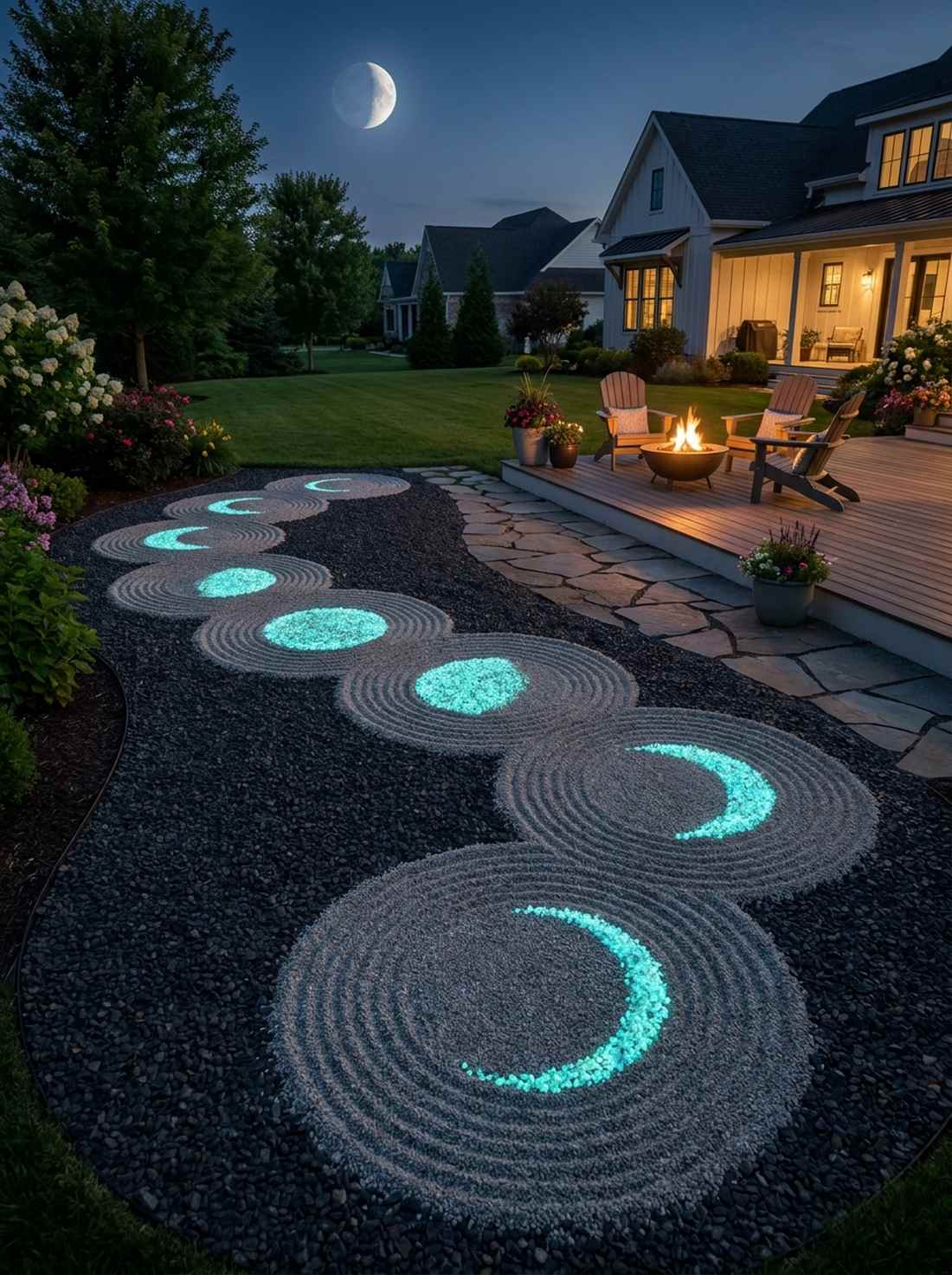
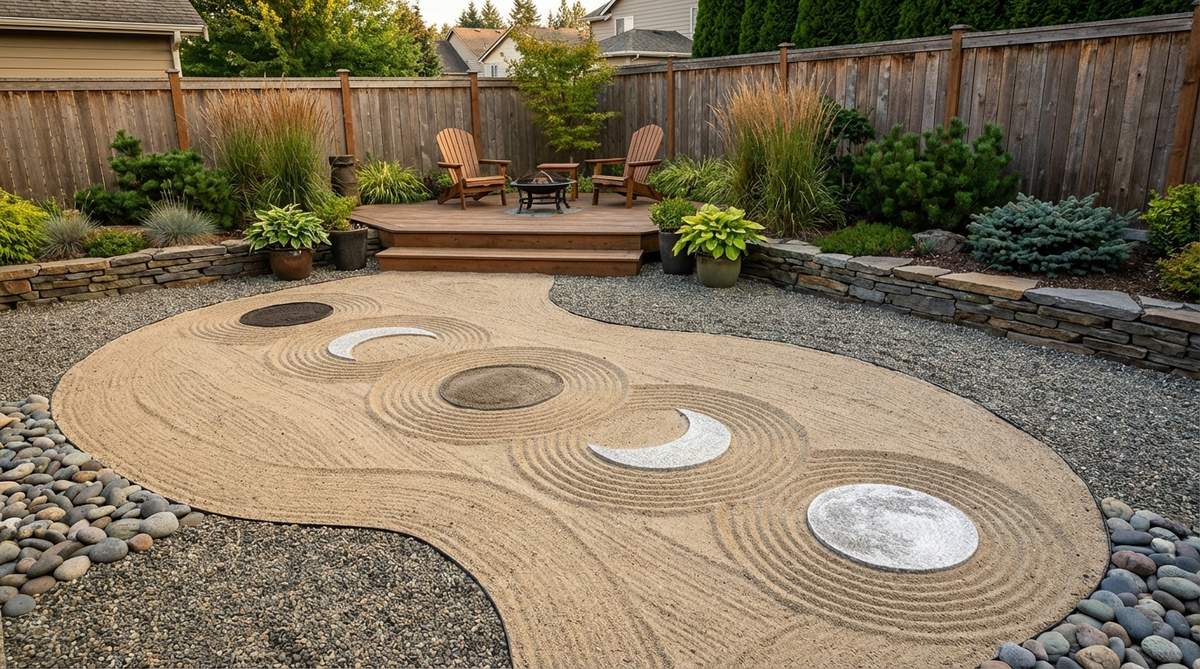
A sequence of stamped circles shifting from full rings to thin crescents creates an astronomical timepiece in your gravel. This nighttime meditation garden feature is completely mesmerizing when lit by the actual moon.
Basic raking ignores the sky, but tracking the moon phases into the earth looks far more expensive and deeply intentional. Applying a light dusting of glow-in-the-dark landscaping gravel inside the crescent stamps makes the phases literally glow at night without any electricity.
This glowing lunar calendar costs roughly $40 to execute. A must-save for anyone who loves astronomy and night gardens.
- Key Materials: Glow-in-the-dark stones, circle stamps.
- Vibe / Style: Mystical astronomical tracking.
- Difficulty: Advanced (requires careful masking/stamping).
- Budget Breakdown: Glow gravel: $25 | Base sand: $15.
- Creator’s Tip: Cut out cardboard stencils of the moon phases to perfectly mask off where you drop the glow-in-the-dark accent gravel.
- Smart Sourcing: glow-in-the-dark landscaping gravel and pre-cut acrylic moon phase stencils.
Conclusion
Executing these exact 33 high-end zen garden sand patterns blends structural landscape design with smart, budget-friendly sourcing. Whether you are laying down heavy-duty crushed granite in your backyard or setting up a premium desktop starter kit in your office, the right tools dictate the final look. Start with basic grids or straight pathways, secure your foundations with commercial-grade weed barrier, and watch your outdoor space transform into a luxury meditation sanctuary.
Frequently Asked Questions
What type of material works best for zen garden sand patterns?
If you want a layout that looks expensive and lasts, skip standard sandbox play-sand entirely. The ultimate base is 5/8-inch crushed white granite or decomposed granite because the sharp edges lock together, holding deep rake lines even in high winds. Ordering premium white granite bulk bags ensures your pattern won’t wash away after a light rain, giving you that authentic, high-end Kyoto temple aesthetic.
How often should zen garden gravel patterns be re-raked?
For outdoor setups, a quick touch-up once a week keeps the aesthetic crisp, especially if you are using lightweight materials. However, if you upgrade to a heavier, weather-resistant stone base, you can often go weeks without losing your design. Desktop users with indoor zen garden kits tend to re-rake daily as a fast, mindful break from screen time, completely resetting their focus.
Can you mix different zen garden sand patterns in one space?
Absolutely, mixing textures is how landscape architects make a space look incredibly expensive. The trick is using physical barriers like flexible steel landscape edging to keep the patterns from bleeding into each other. A popular high-end look is pairing a chaotic “whirlpool” around a focal rock right next to a highly structured “grid square” pattern, creating a beautiful tension between nature and geometry.
What tools are essential for creating professional zen garden patterns?
You cannot achieve a premium, designer-level finish with a standard metal leaf rake. For backyards, you need a traditional wide-toothed bamboo rake (often sold in 4-piece landscaping starter sets) for deep, consistent grooves. For indoor trays, a dedicated set of miniature wooden detailing rakes and a smoothing stylus are absolutely critical to creating sharp, micro-scale designs without frustrating collapses.
Do zen garden sand patterns have specific symbolic meanings?
Yes, and utilizing that symbolism adds incredible depth to your layout. Straight tracks mimic calm, endless water (perfect for anxiety-reducing spaces), while tight concentric circles emulate the ripples of a dropped stone, representing the impact of a single action. Incorporating premium terrarium accessories like tiny pagodas or bridges into these symbolic layouts turns a basic sand pit into a deeply meaningful storytelling landscape.