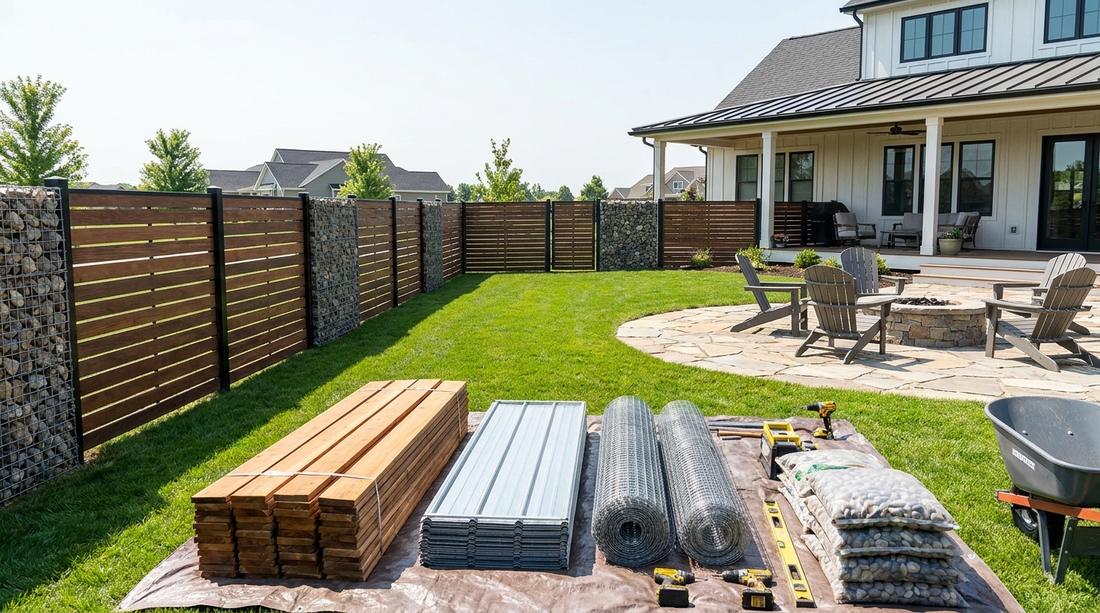
Installing a modern garden fence instantly elevates your property’s street appeal. Discover exactly which premium materials and spacing blueprints work best. Achieve that custom architectural look on a realistic budget today.
Design Snapshot Key Principles
- Material Selection: Choose weather-resistant options like composite, treated timber, or powder-coated metals that maintain appearance for decades
- Slat Configuration: Horizontal or vertical orientation dramatically changes visual perception—horizontal expands width, vertical adds height
- Gap Management: Spacing between boards determines privacy level while affecting airflow and light transmission
- Color Strategy: Neutral tones create timeless appeal, while bold contrasts establish strong architectural statements
Horizontal EleganceModern Fence Designs That Expand Visual Space
Horizontal fence panels create uninterrupted sight lines that make gardens appear wider and more expansive. These designs dominate trends for their clean, contemporary aesthetic and straightforward installation process.
1. Tight-Gap Horizontal Cedar Panels
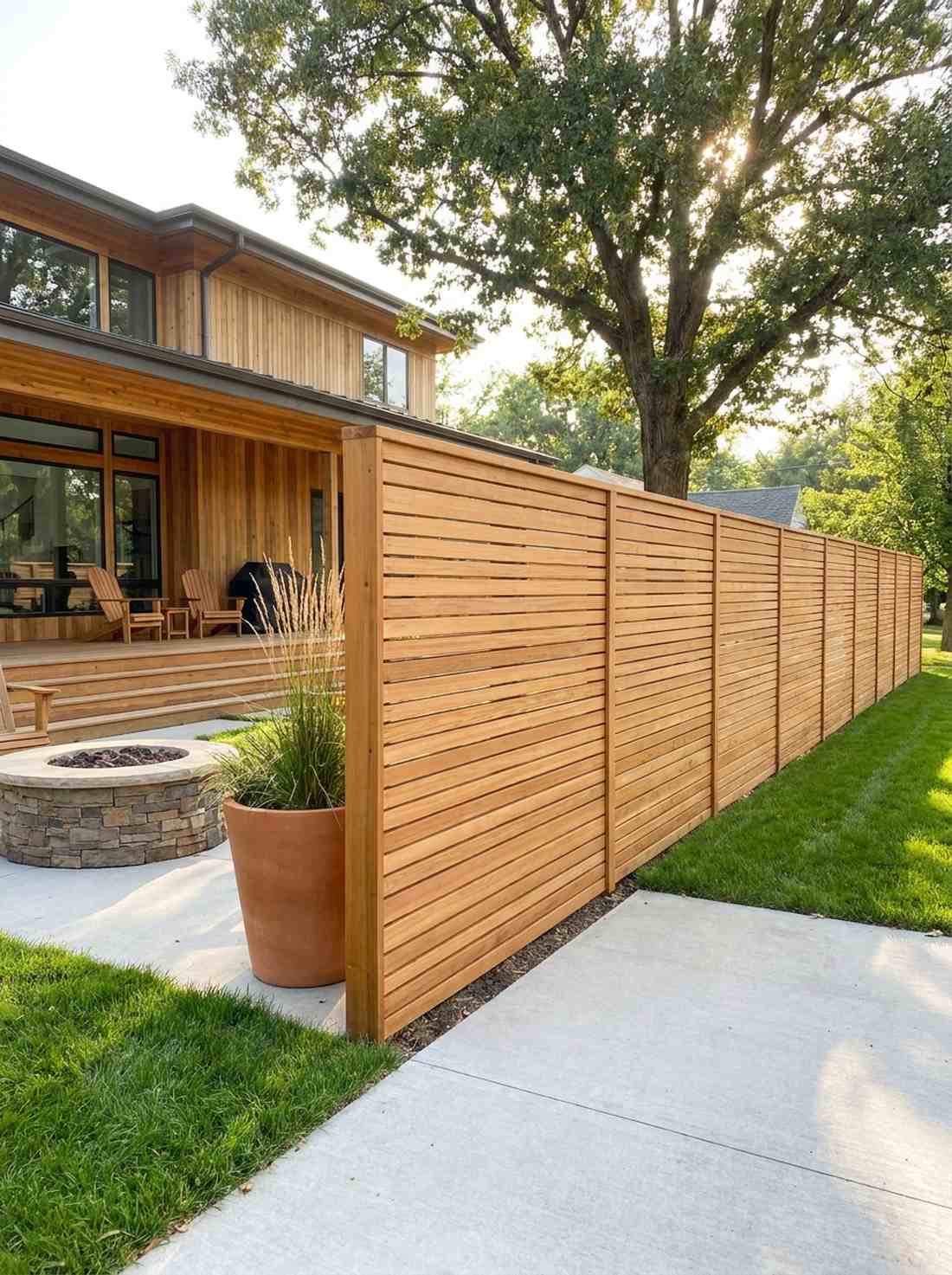
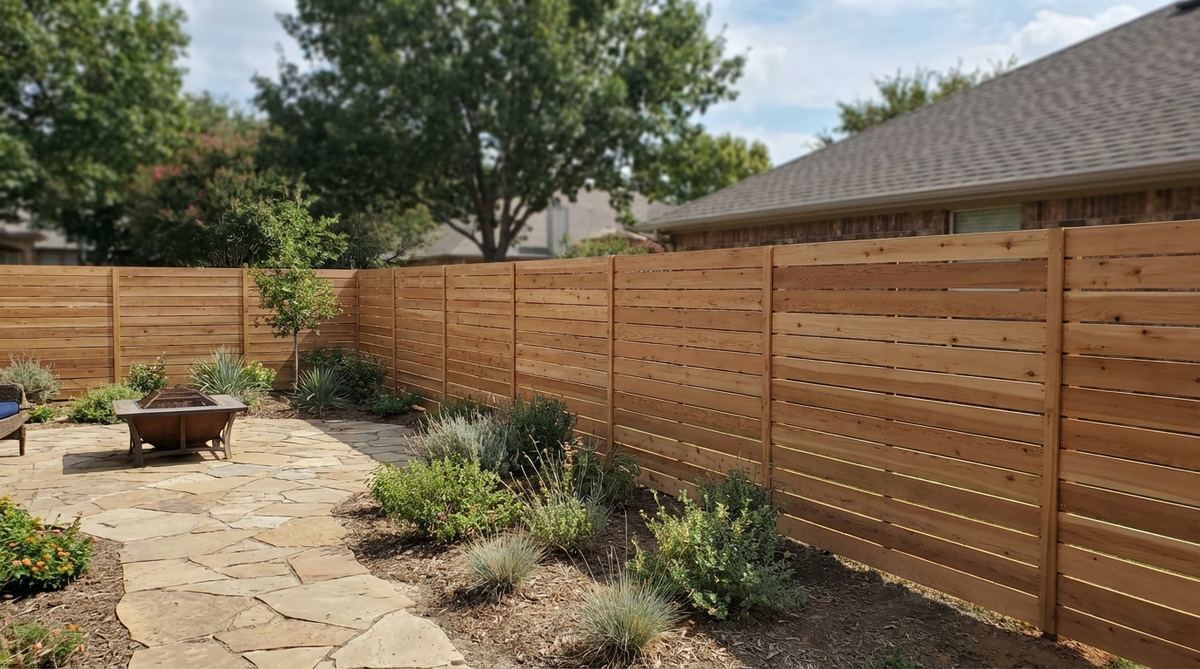
This setup feels like a luxury spa courtyard you accidentally discovered. Modern front garden fence ideas using tightly spaced wood instantly warm up cold concrete. Works exceptionally well for street-facing boundaries requiring both airflow and absolute privacy.
Most homeowners settle for basic panels, but this specific alignment delivers a surprisingly premium look. By utilizing pre-cut horizontal timber slats, the visual width of your property practically doubles without heavy construction.
You can easily pull this off for around $25–$45 per linear foot depending on wood grade. Save this to your DIY weekend garden board!
- Key Materials: Premium cedar boards, exterior stainless fasteners
- Vibe / Style: Warm architectural minimalism
- Difficulty: Medium weekend project
- Budget Breakdown: Materials: $30/ft | Base Posts: $15/each.
- Creator’s Tip: Use temporary quarter-inch shims to guarantee perfectly parallel gaps across the entire run.
- Smart Sourcing: Pre-milled natural cedar boards (bulk pack) and UV-resistant clear wood sealant.
2. Charcoal-Stained Horizontal Slats
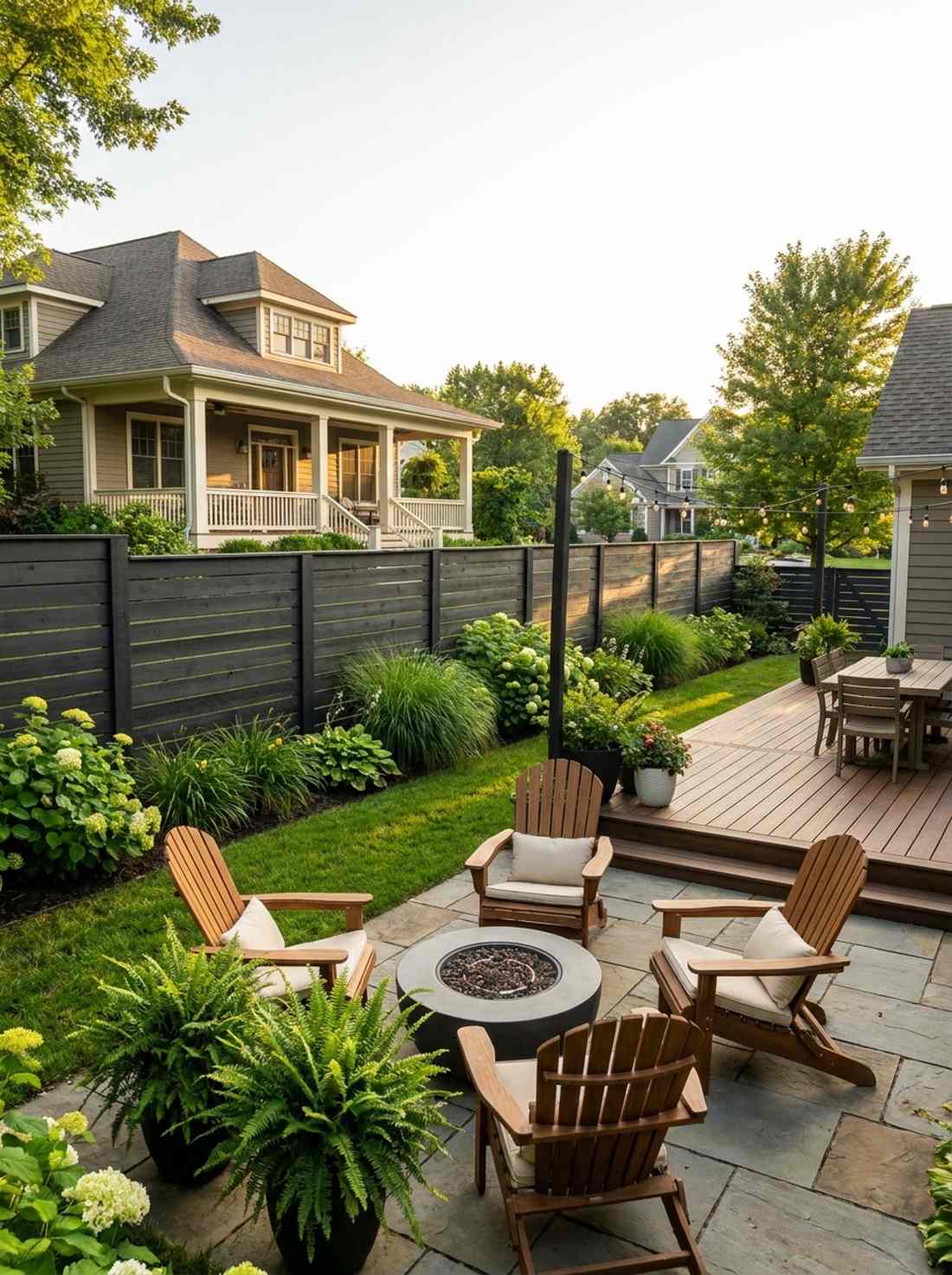
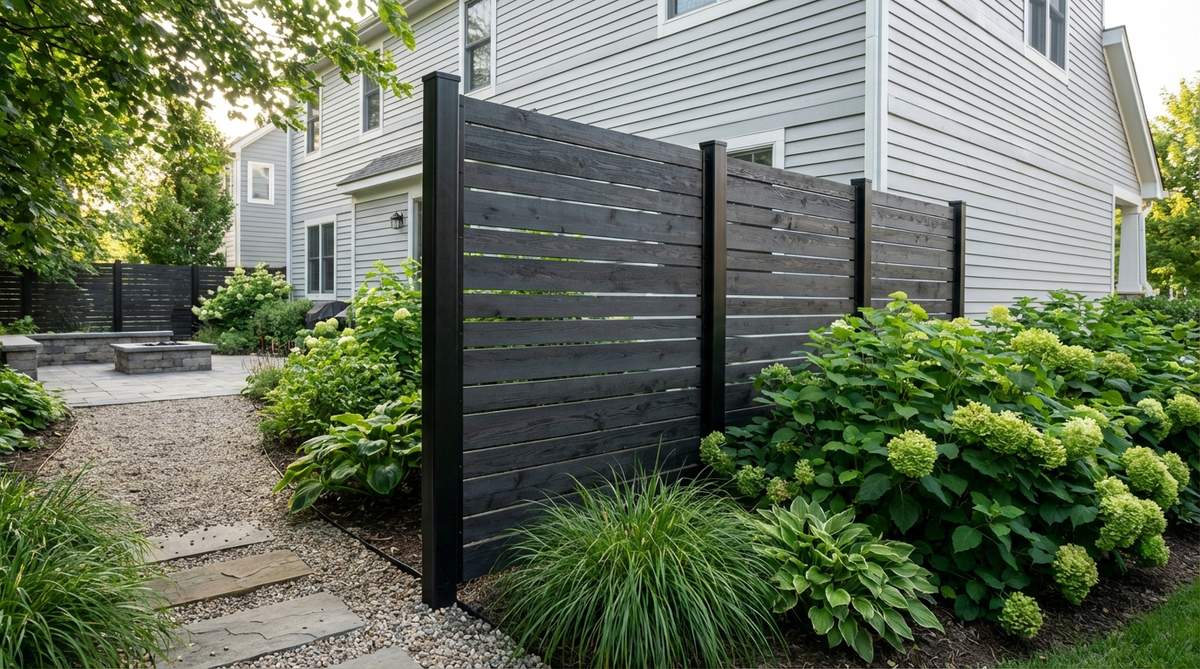
Radiates a moody, high-end studio energy that commands attention. Dark-toned modern garden fence colours absorb background clutter and make your green plants pop vibrantly. Perfect for suburban backyards needing a serious aesthetic overhaul.
Contractors often overcharge for dark finishes, yet treating basic pressure-treated lumber yourself gives a designer-level finish. Snag some heavy-duty fence stain kits to guarantee the color won’t fade after one summer.
Expect to spend roughly $15–$25 per foot when applying the finish yourself. Pin this if you’re planning a dark modern exterior upgrade!
- Key Materials: Treated lumber, charcoal exterior stain
- Vibe / Style: Industrial-chic contrast
- Difficulty: Beginner-friendly staining
- Budget Breakdown: Lumber: $12/ft | High-grade Stain: $40/gallon.
- Creator’s Tip: Apply two coats with a 24-hour drying gap to ensure maximum pigment absorption and weatherproofing.
- Smart Sourcing: Matte charcoal exterior stain (UV-protective) and wide-coverage foam roller kits.
3. Shadowline Interlocking Fence Boards
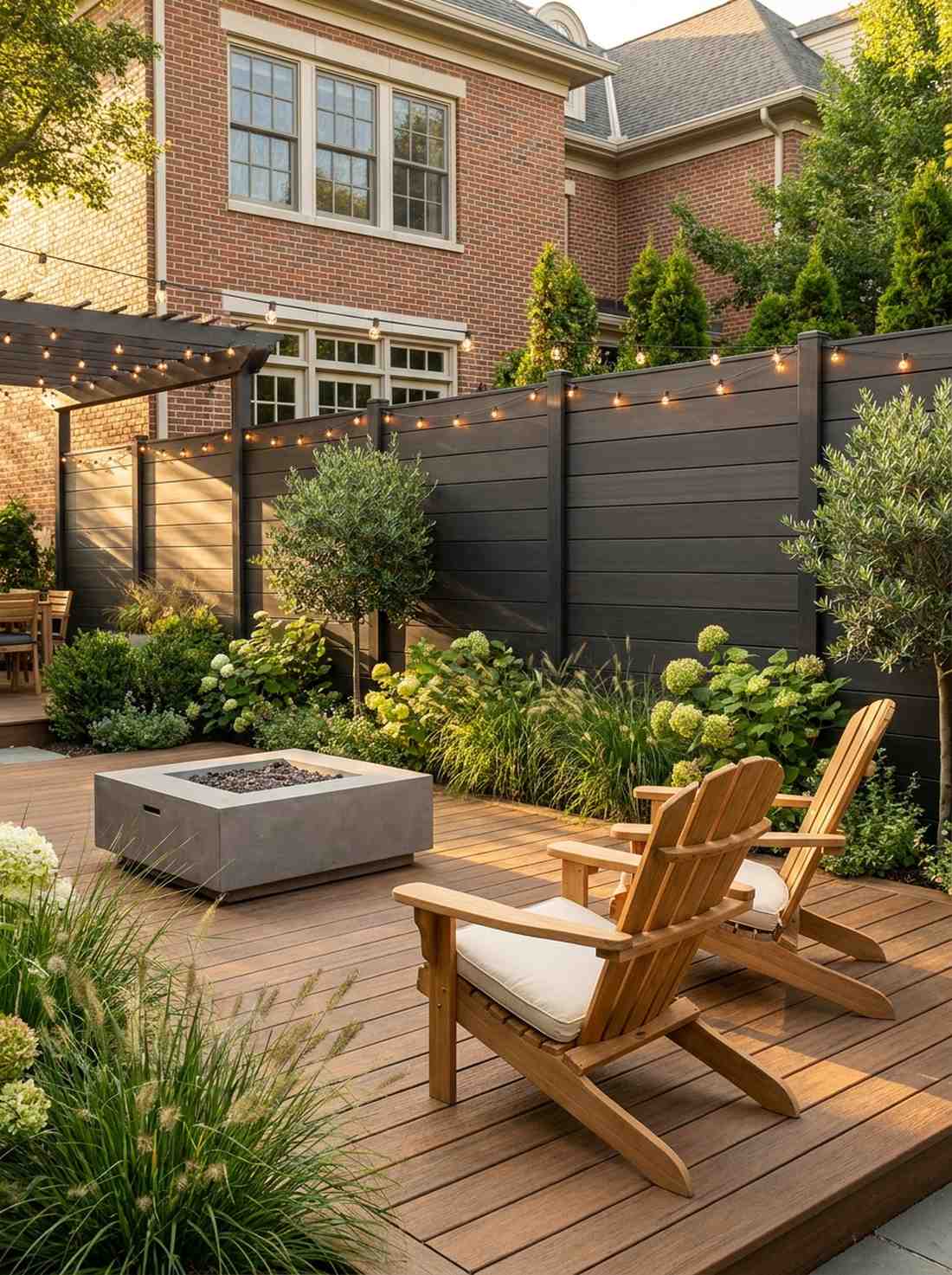
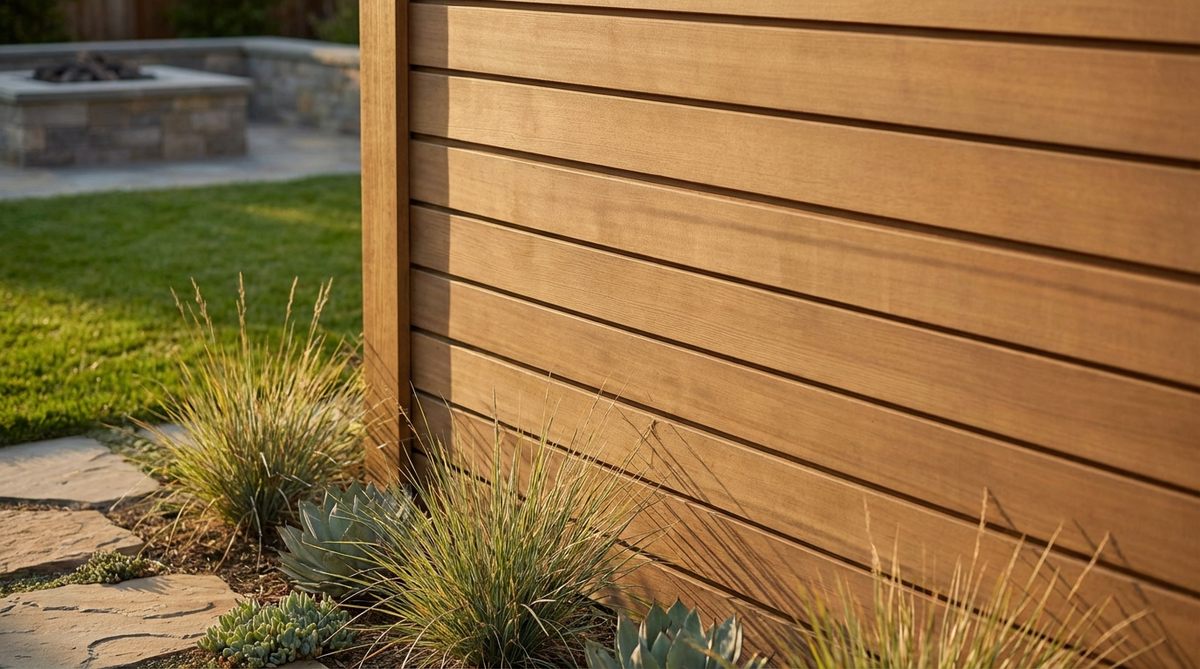
Looks straight out of an upscale neighborhood magazine feature. Seamless privacy wall decor creates subtle depth without looking busy or cluttered. Ideal for urban courtyards where neighborly boundaries need to be strictly defined.
Many skip this tongue-and-groove method, but it looks far more expensive than it actually is. It completely hides messy fasteners, providing a flawless modern garden fence design that mimics expensive indoor wall paneling.
Material costs hover around $35–$50 per panel section. It’s a fantastic structural upgrade that completely changes the outdoor vibe.
- Key Materials: Interlocking timber profiles, hidden brackets
- Vibe / Style: Flawless contemporary smooth
- Difficulty: Intermediate carpentry
- Budget Breakdown: Panels: $35/each | Hidden brackets: $20/pack.
- Creator’s Tip: Always leave a millimeter of expansion room in the groove so boards don’t buckle during humid seasons.
- Smart Sourcing: Interlocking composite boards (pre-cut) and concealed fence fastening systems.
4. Two-Tone Horizontal Fence Design
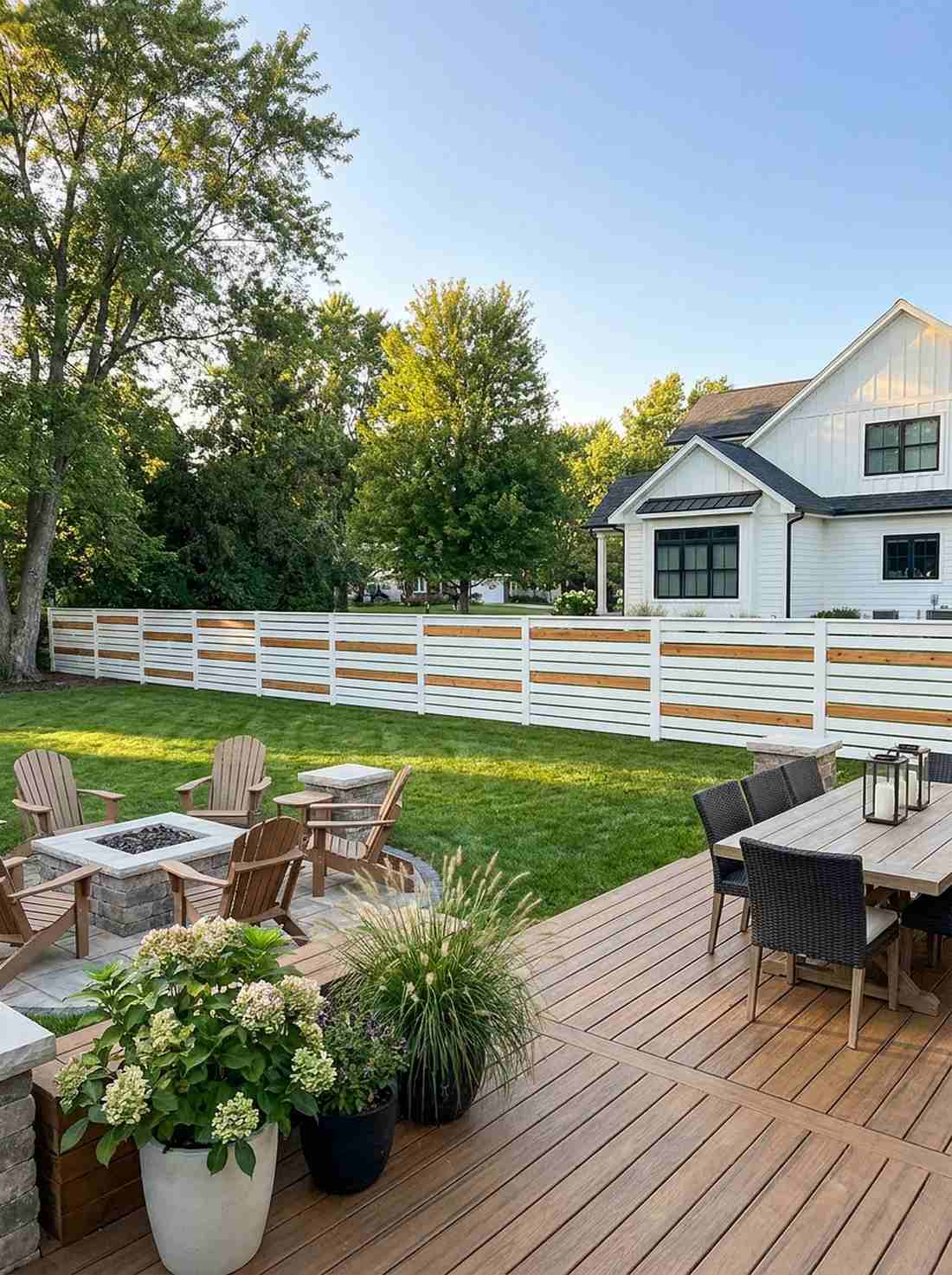
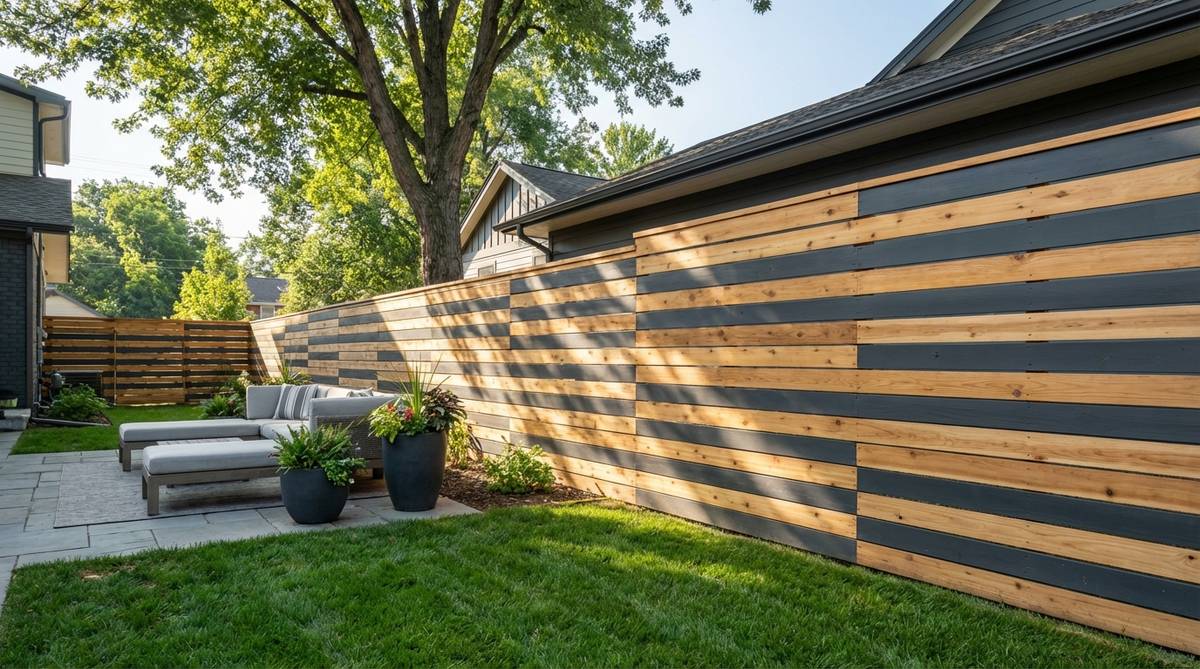
Feels like a playful yet sophisticated outdoor art installation. Mixed-tone garden boundary styling breaks up long, boring property lines with an eye-catching rhythm. Excellent for expansive yards that otherwise look flat and uninspired.
Instead of painting everything one flat shade, alternating tones creates an incredibly dynamic visual matrix. Blending weatherproof garden panels with natural wood accents establishes a custom look without requiring custom fabrication.
You can execute this for under $30 a foot by mixing budget and premium woods. Save this layout for your next major backyard renovation!
- Key Materials: Dual-finish wood slats, template spacers
- Vibe / Style: Dynamic visual rhythm
- Difficulty: Easy pattern assembly
- Budget Breakdown: Painted boards: $10/ft | Stained accent boards: $18/ft.
- Creator’s Tip: Sketch your pattern beforehand; every third board being an accent color usually provides the best mathematical balance.
- Smart Sourcing: Pre-finished white slat bundles and premium cedar accent boards.
This next setup is ridiculously cheap but looks like a $1,000 custom display once the landscaping grows in…
5. Wide-Board Horizontal Contemporary Fencing
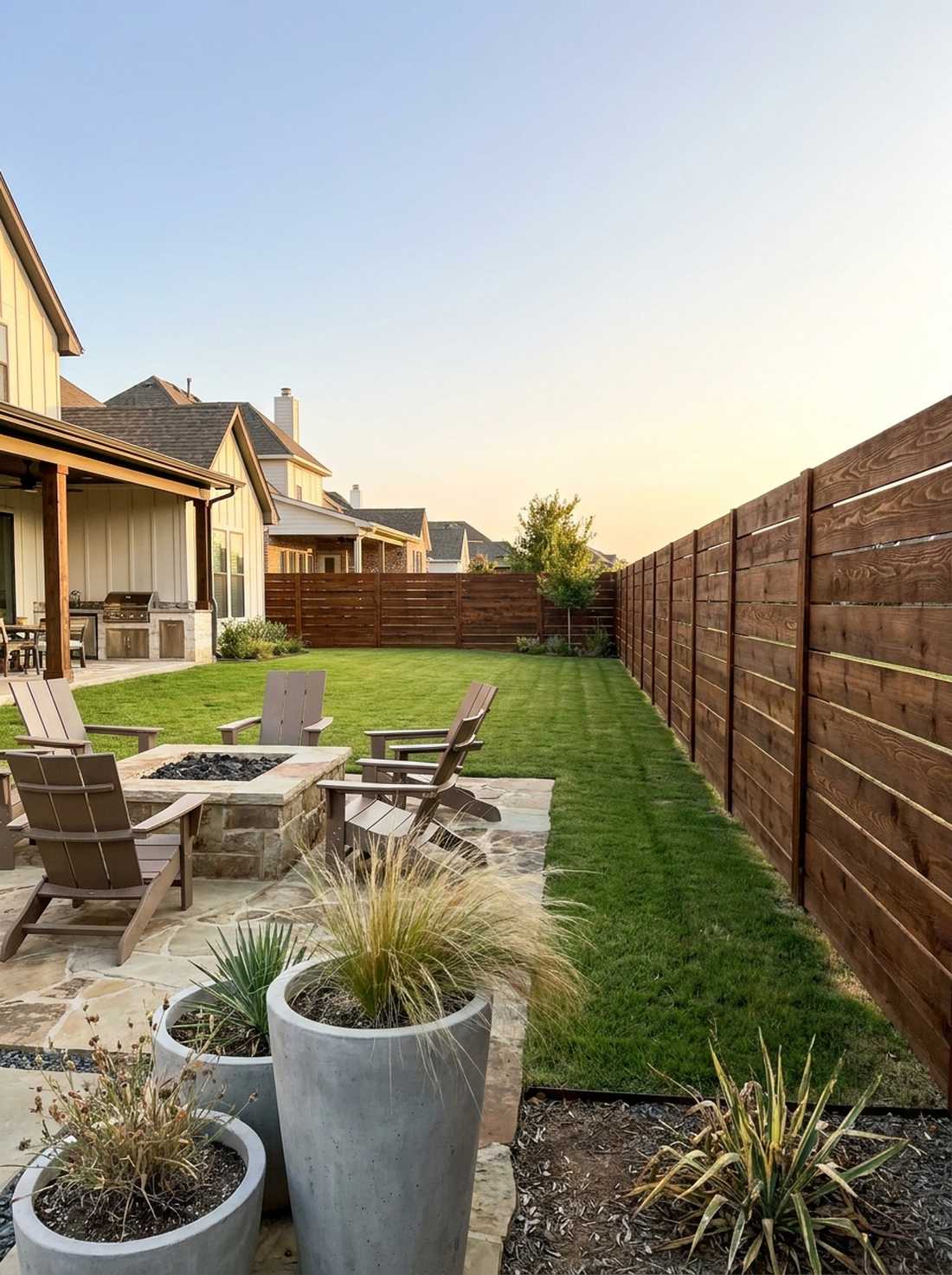
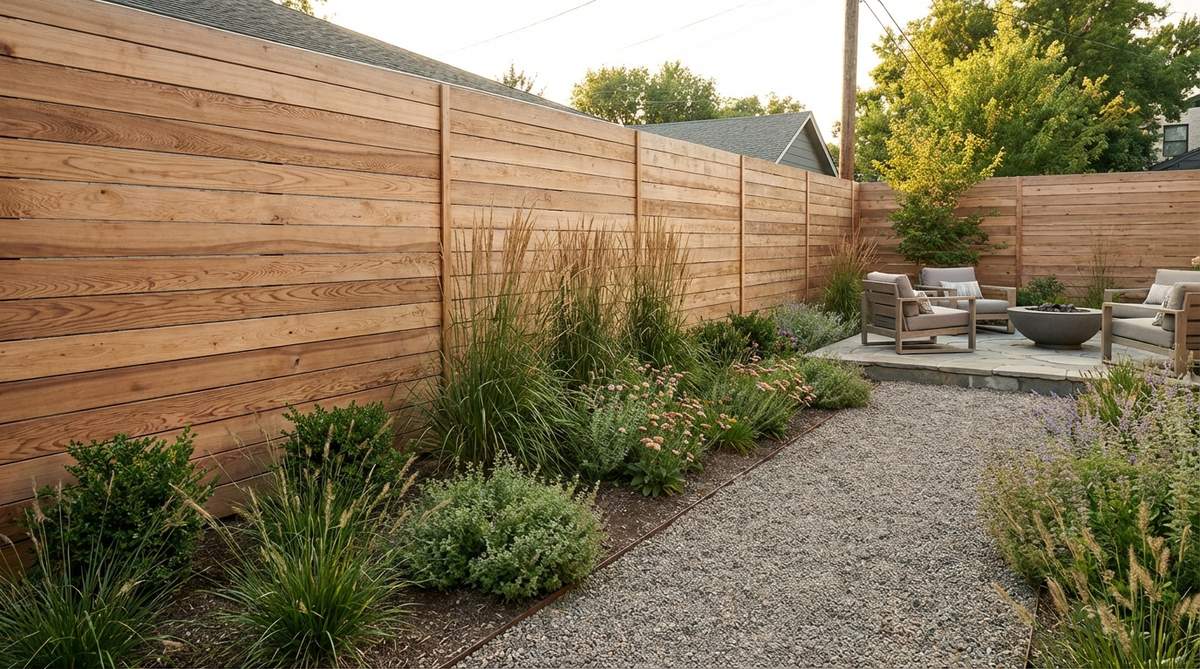
Gives off an ultra-rich, massive estate energy that feels incredibly secure. Chunky wood panel boundaries reduce visual clutter by minimizing horizontal seam lines. Works exceptionally well for minimalist landscapes craving heavy structural framing.
People often buy flimsy pickets, yet utilizing eight-inch wide boards guarantees a fortress-like designer aesthetic. Investing in heavy-duty structural lumber reduces installation time simply because there are fewer pieces to mount.
Budget roughly $40–$60 per section for wider, thicker lumber cuts. Highly recommended for a bold, statement-making weekend win.
- Key Materials: 8-inch wide timber planks, robust framing rails
- Vibe / Style: Heavy minimalist geometry
- Difficulty: Requires a second pair of hands
- Budget Breakdown: Wide planks: $45/section | Hardware: $15/section.
- Creator’s Tip: Add a vertical center brace behind every wide-board panel to prevent the heavy wood from sagging over time.
- Smart Sourcing: Extra-wide structural timber packs and heavy-duty corner brace brackets.
6. Horizontal Slats With Metal Frame Border
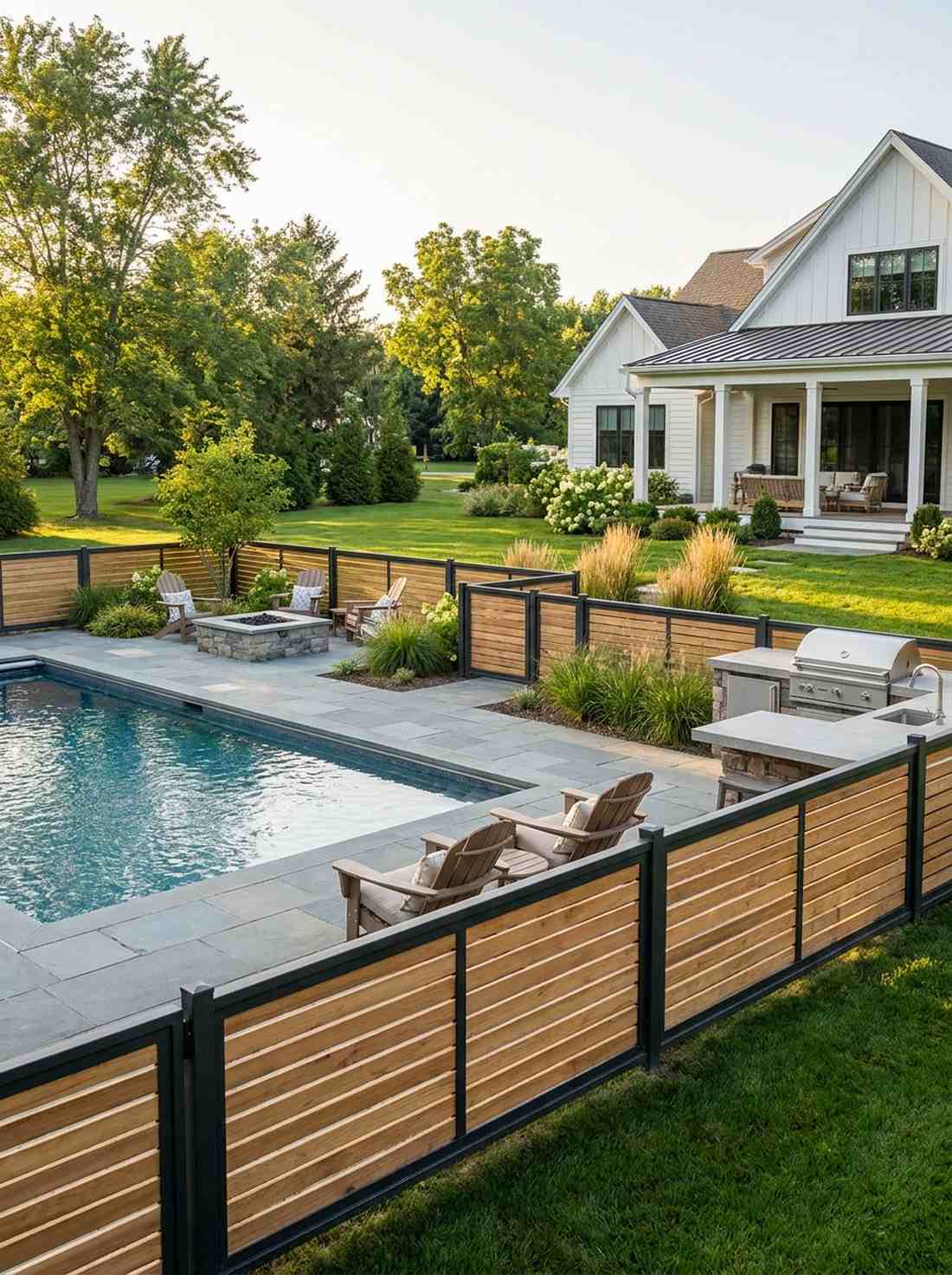
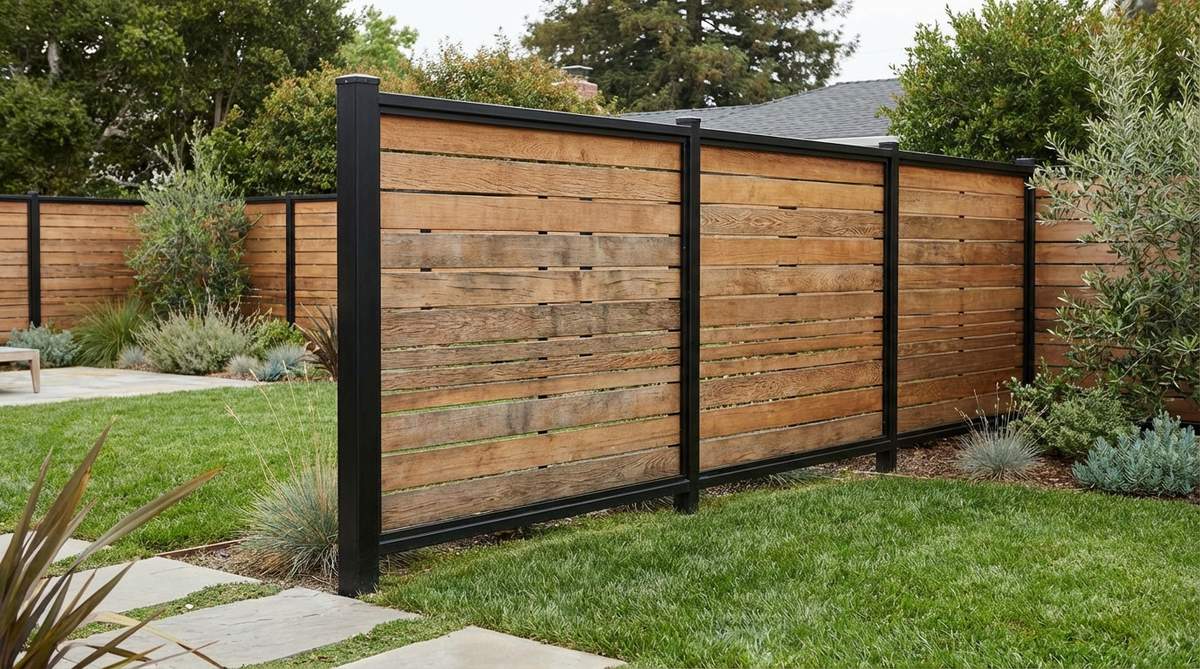
Feels like stepping into an exclusive, modern coastal resort. Metal-framed outdoor screening perfectly marries natural wood warmth with precise industrial borders. Flawless choice for exposed pool areas or high-wind environments.
Skipping traditional wood posts for steel frames is a secret to making fences last triple the lifespan. Wrapping natural cedar in a powder-coated perimeter kit completely prevents warping and twisting.
This hybrid build averages $50–$80 per foot but outlasts standard fences by decades. Pin this if you want absolute durability and style!
- Key Materials: Steel frame borders, timber infill slats
- Vibe / Style: Industrial-meets-organic
- Difficulty: Advanced leveling required
- Budget Breakdown: Metal frames: $60/panel | Wood infill: $20/panel.
- Creator’s Tip: Bolt the metal frames to concrete anchors first, then simply slide the wood slats into the pre-drilled channels.
- Smart Sourcing: Powder-coated aluminum fence frame kits and pre-cut wood slat inserts.
7. Graduated-Spacing Horizontal Fence
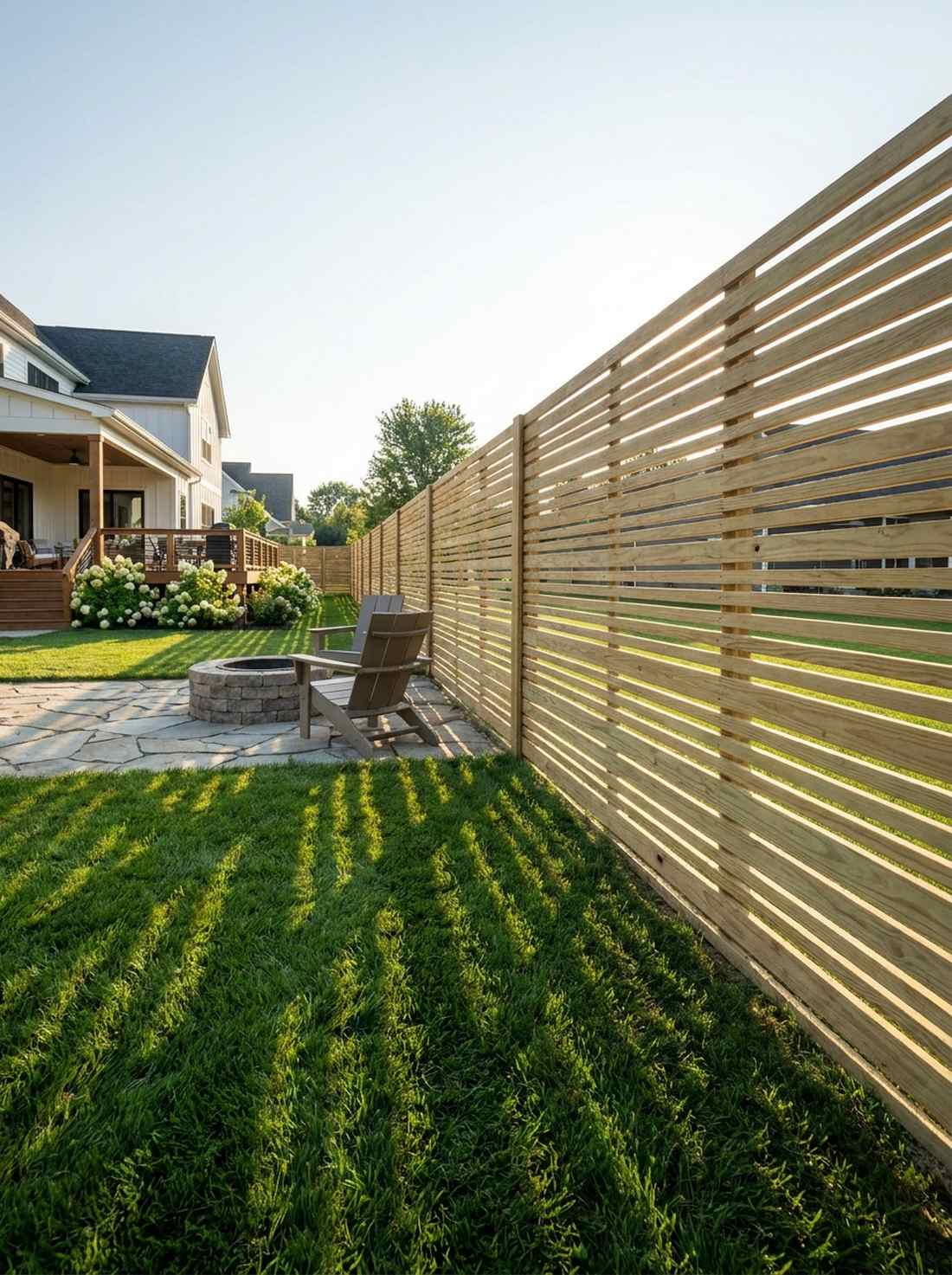
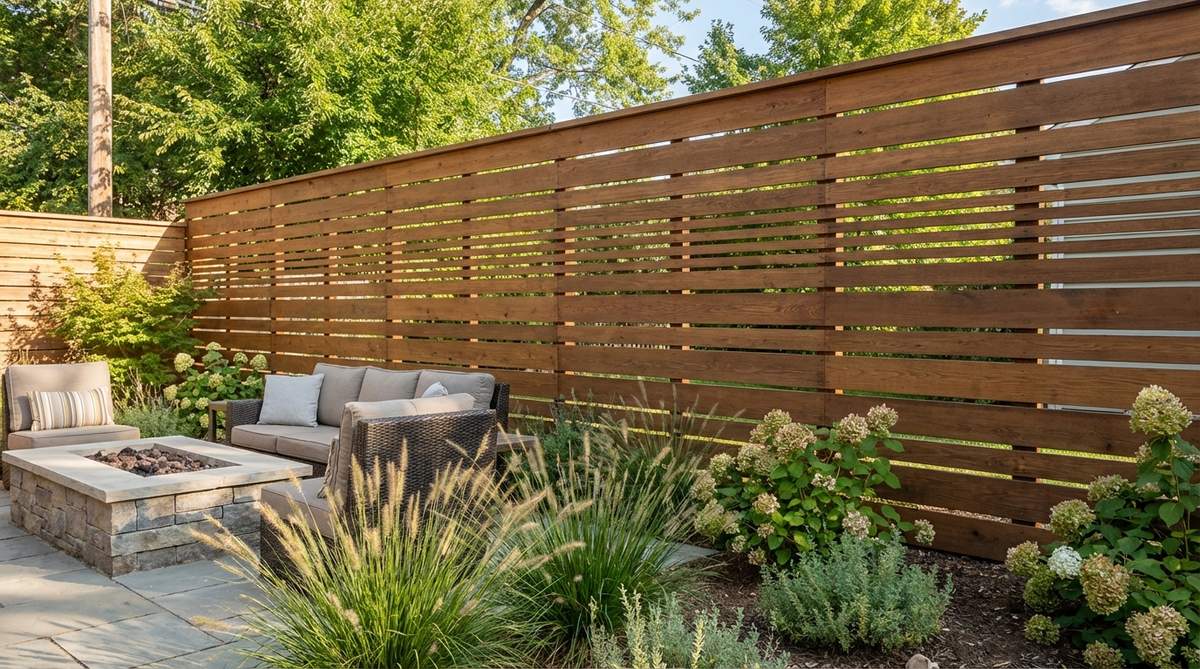
Radiates pure architectural cleverness that plays with natural light beautifully. Variable gap garden enclosures keep the bottom secure while letting the top breathe. Stunning implementation for windy hilltop homes or dense suburban lots.
Most fences block everything, but this calculated spacing technique delivers both privacy and an airy, open atmosphere. Utilizing precision spacer blocks during the build makes this intricate look surprisingly simple to achieve.
You’ll spend around $20–$35 per foot, essentially saving money on lumber where the gaps widen. A brilliant design to keep your space breezy!
- Key Materials: Standard lumber, multiple sizing shims
- Vibe / Style: Clever optical gradient
- Difficulty: Intermediate measuring skills
- Budget Breakdown: Lumber: $25/ft | Spacing tools: $5.
- Creator’s Tip: Keep gaps tightest at eye-level (around 5 feet high) to block nosy neighbors, expanding the gaps near the ground and sky.
- Smart Sourcing: Multi-size tile and wood spacer sets and bulk packs of pressure-treated slats.
8. Horizontal Ship-Lap Privacy Panels
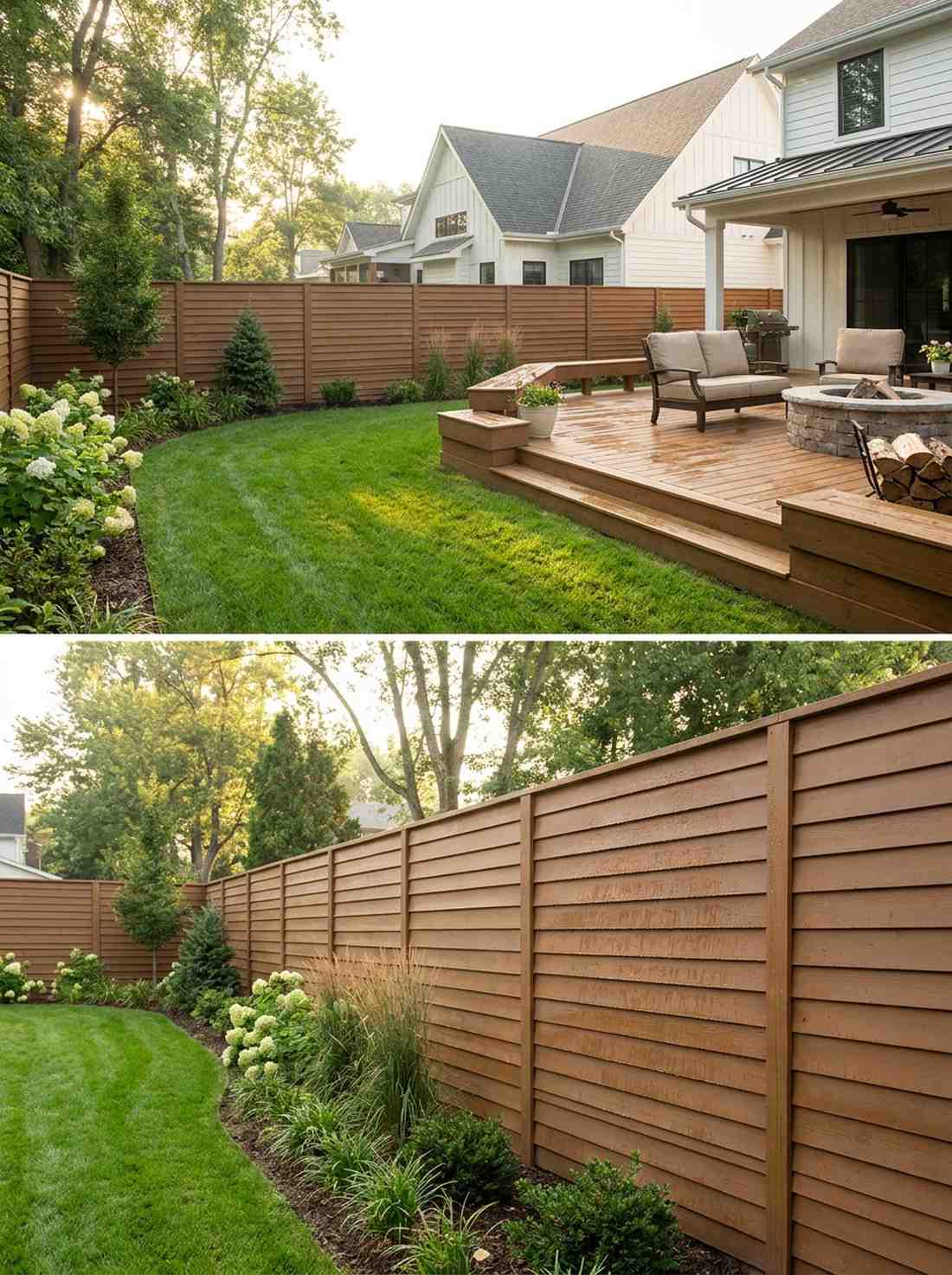
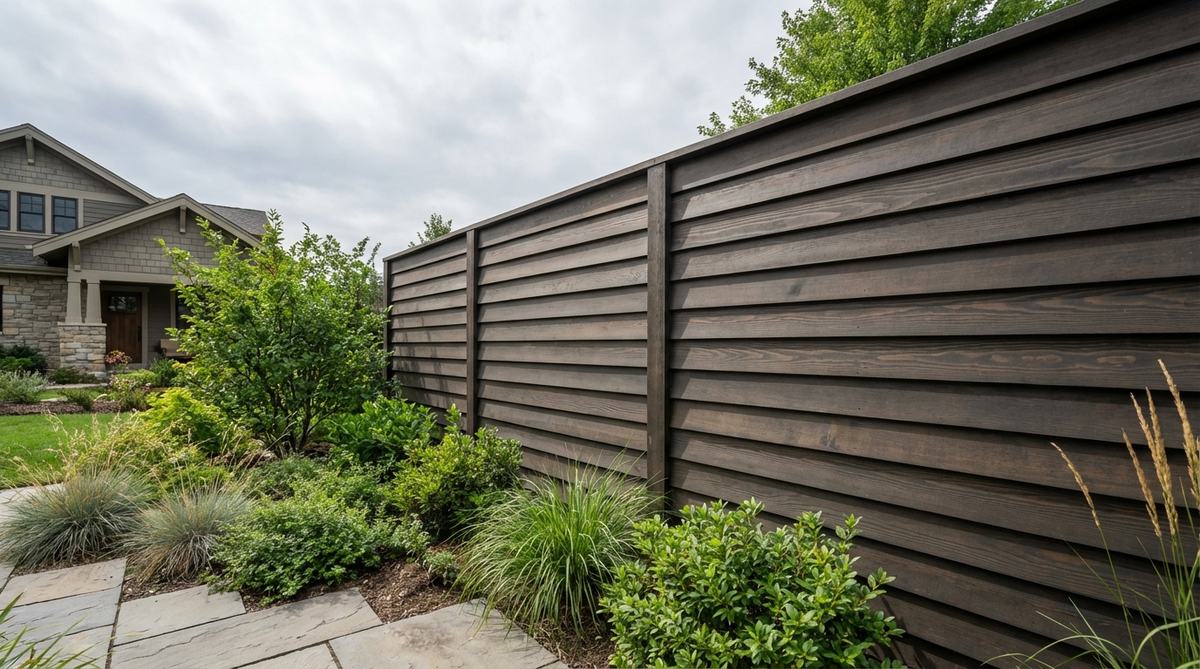
Feels like a cozy, modernized cabin hideaway right in your backyard. Overlapping wood boundary designs eliminate every single gap while shedding rain effortlessly. The ultimate choice for rainy climates requiring absolute visual lockout.
While traditional butt-joints shrink and expose gaps, shiplap guarantees a completely impenetrable visual barrier. Snagging pre-milled exterior shiplap boards transforms a basic fence into a weatherproof architectural wall.
Expect costs around $30–$45 per linear foot for quality milled boards. Save this to your extreme privacy inspiration board!
- Key Materials: Exterior shiplap profiles, rust-proof nails
- Vibe / Style: Absolute impenetrable privacy
- Difficulty: Easy stacking assembly
- Budget Breakdown: Shiplap boards: $35/ft | Galvanized nails: $10/box.
- Creator’s Tip: Install from the bottom up, ensuring the overlap points downward so rainwater sheets completely off the fence.
- Smart Sourcing: Pre-primed exterior shiplap bundles and stainless steel siding nail kits.
💡 Must-Have Supplies for High-End Setups
To build these setups faster and ensure they last, skip the generic craft aisles and invest in the right foundational kits.
- Base & Support: Heavy-duty powder-coated steel ground spikes
- Setup Tools: Self-leveling laser alignment kits
- Weather/Durability Protection: UV-blocking transparent marine-grade wood sealant
Vertical Slat Privacy Solutions For Height And Definition
Vertical fence panels emphasize height, making spaces feel taller and more enclosed. The orientation suits narrow lots where visual elevation compensates for limited width.
9. Tight Vertical Picket Modern Fence
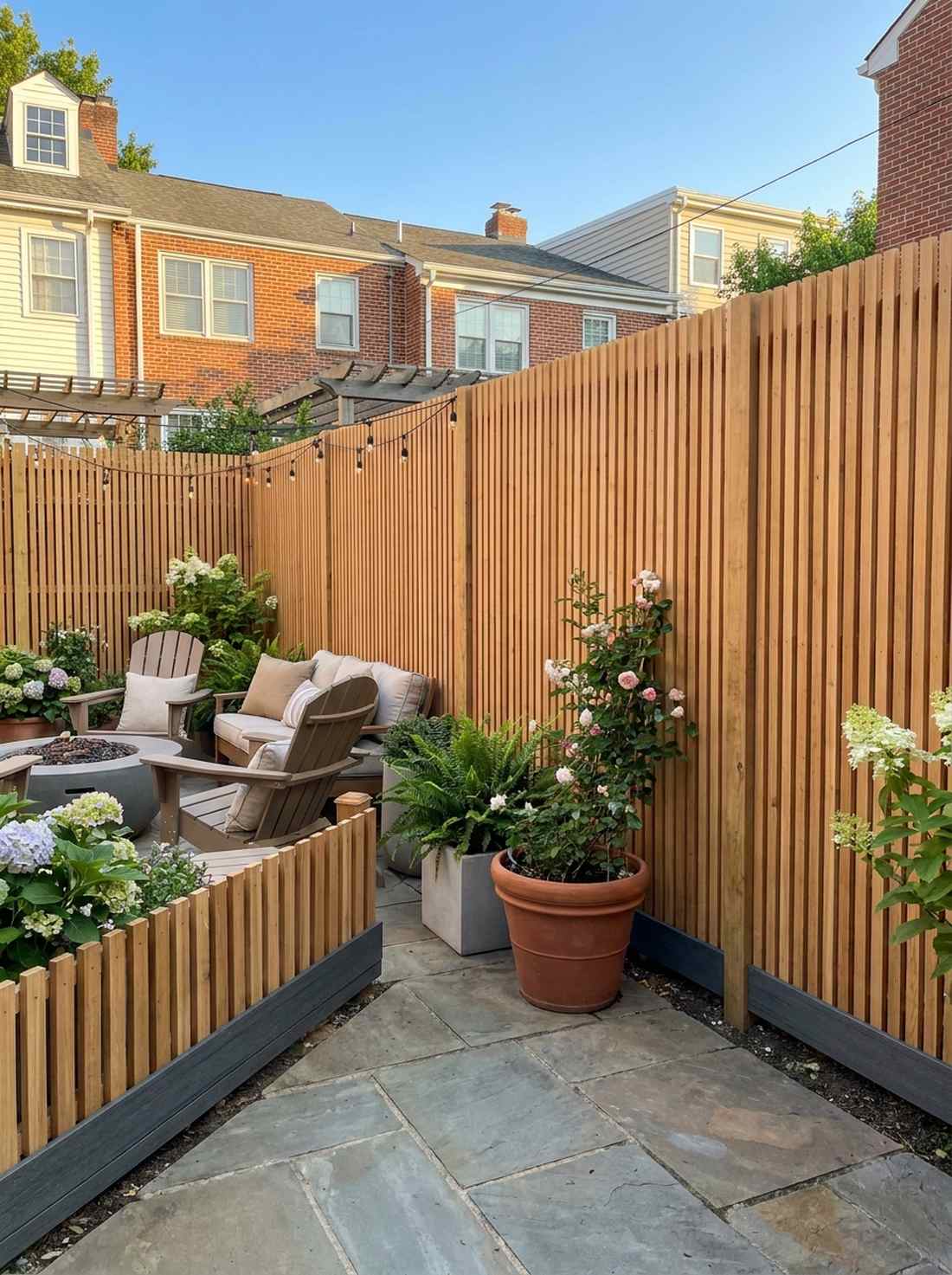
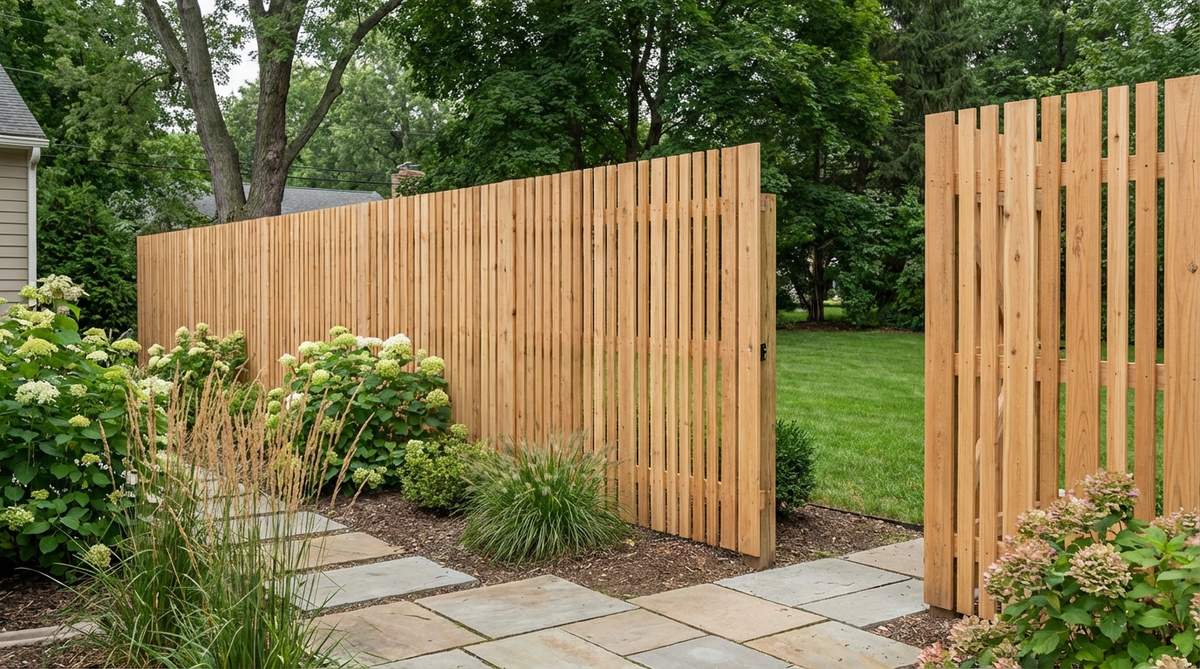
Gives off an elegant, elevated cottage aesthetic without the old-fashioned fuss. Sleek vertical boundary styling pulls the eye upward, making tiny yards feel incredibly tall. Flawless application for tight townhouse gardens.
People often ignore pickets as outdated, but tightening the gaps to an eighth-inch creates a fiercely modern silhouette. Utilizing weather-resistant composite strips at the ground level prevents the common rotting issue associated with this style.
You can execute this classic upgrade for about $20–$40 a foot. It’s a fast layout that completely redefines small spaces.
- Key Materials: Narrow wooden pickets, rot-proof bottom rails
- Vibe / Style: Modernized classic vertical
- Difficulty: Easy repetitive installation
- Budget Breakdown: Pickets: $25/ft | Composite base: $15/ft.
- Creator’s Tip: Keep the bottoms strictly two inches off the soil to prevent moisture wicking and insect damage.
- Smart Sourcing: Pre-cut narrow vertical pickets (bulk pack) and moisture-blocking composite base boards.
Most people get this completely wrong… until they try the exact layout coming up next, which instantly adds massive curb appeal.
10. Alternating-Width Vertical Slat Fence
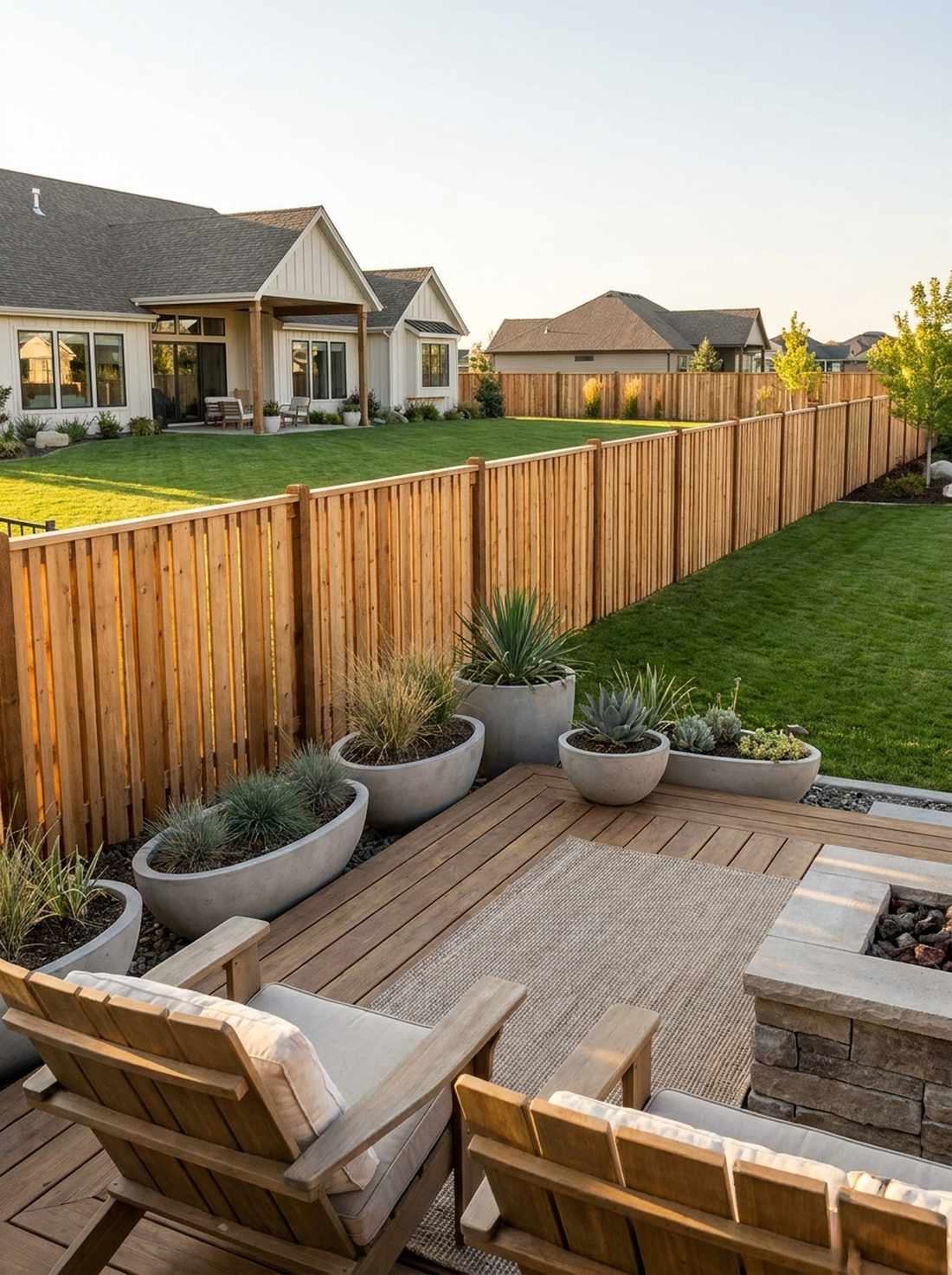
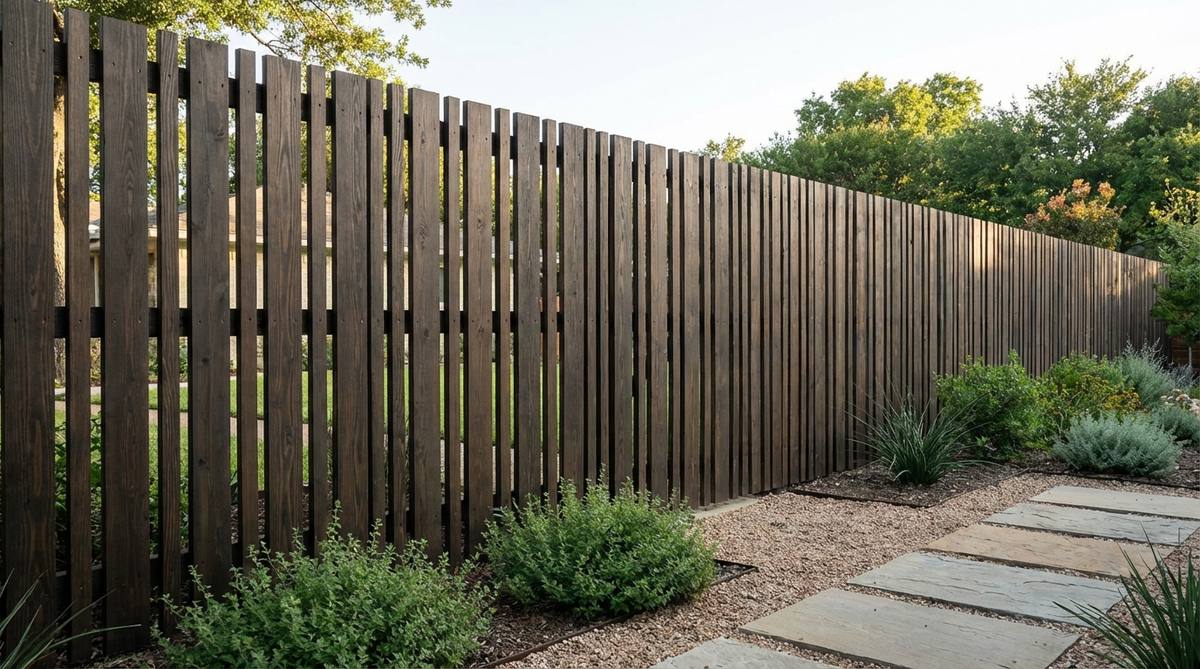
Feels like a custom architectural barcode that beautifully frames your property. Mixed-width vertical garden barriers inject massive texture into spaces that otherwise feel incredibly flat. Perfect for highlighting modern sculptural plant beds.
Standard fences rely on identical boards, yet mixing 4-inch and 2-inch slats delivers a surprisingly premium look. By securing variable-width timber bundles, you create an unpredictable, high-end rhythm without paying for custom milling.
This textured approach runs about $25–$35 per foot. Pin this if you want a subtle but highly engaging boundary design!
- Key Materials: 2-inch and 4-inch boards, standard backing rails
- Vibe / Style: Textured architectural rhythm
- Difficulty: Medium attention to pattern required
- Budget Breakdown: Mixed lumber: $30/ft | Fasteners: $10/box.
- Creator’s Tip: Install all the wider boards first at mathematically measured intervals, then simply plug the narrow slats into the remaining gaps.
- Smart Sourcing: Assorted width cedar slat packs and heavy-duty exterior wood screws.
11. Vertical Board-On-Board Privacy Screen
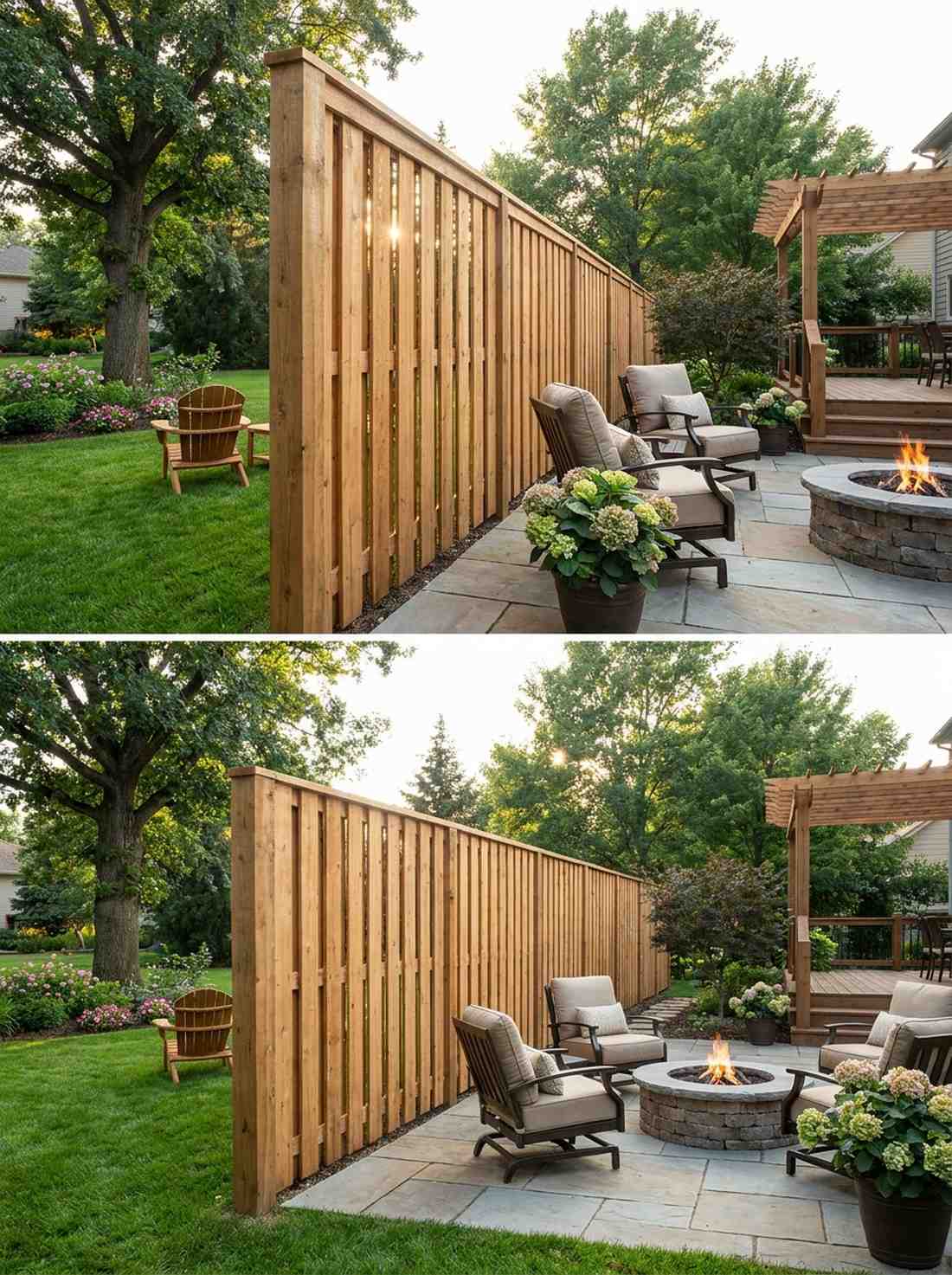
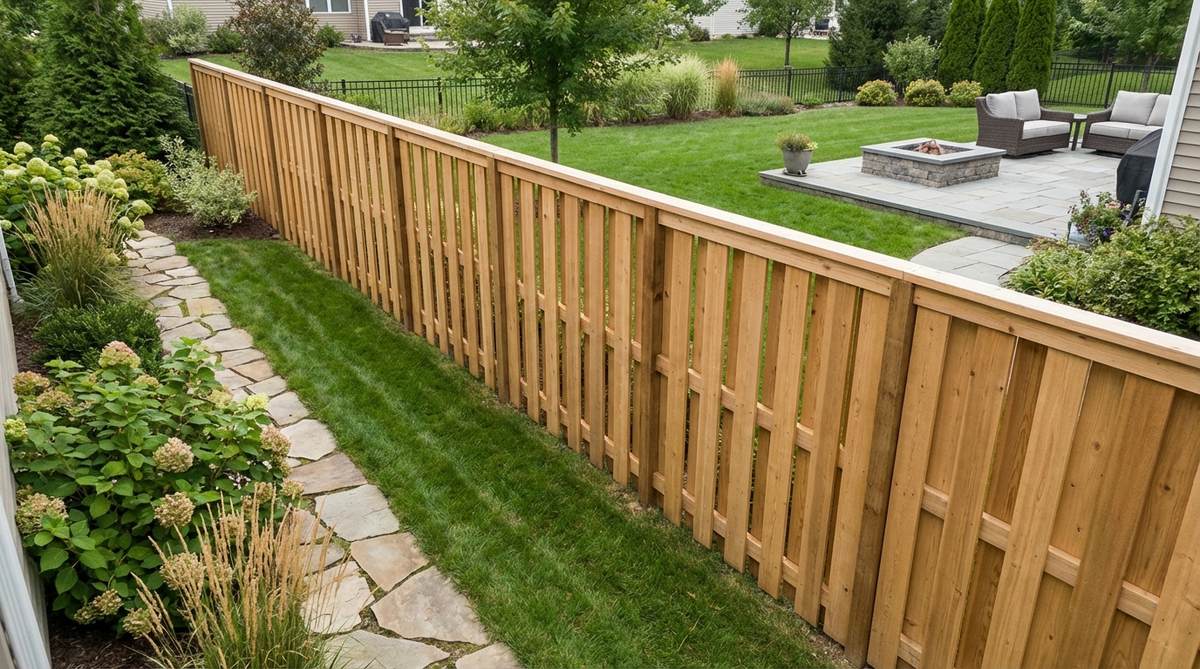
Provides a deeply satisfying, dimensional aesthetic from absolutely every angle. Double-sided garden screen panels keep neighbors happy because both sides look totally finished. Ideal for shared property lines requiring maximum wind diffusion.
While flat fences block the breeze entirely, this offset layout looks far more expensive than it is while allowing gentle airflow. Using pre-treated overlapping fence panels gives a heavy, fortress-like depth that basic fences lack.
Expect to invest $35–$55 per linear foot due to the double material usage. A highly recommended investment for collaborative neighborhood boundaries.
- Key Materials: Double-quantity standard boards, heavy framing
- Vibe / Style: Deep structural shadowplay
- Difficulty: Easy but material-heavy
- Budget Breakdown: Double lumber: $45/ft | Long screws: $15/box.
- Creator’s Tip: Overlap the boards by at least an inch and a half so the wood shrinking in summer doesn’t accidentally open up sight lines.
- Smart Sourcing: Pre-cut overlap privacy boards (bulk crate) and extended length coated decking screws.
12. Vertical Slat Fence With Cap Rail
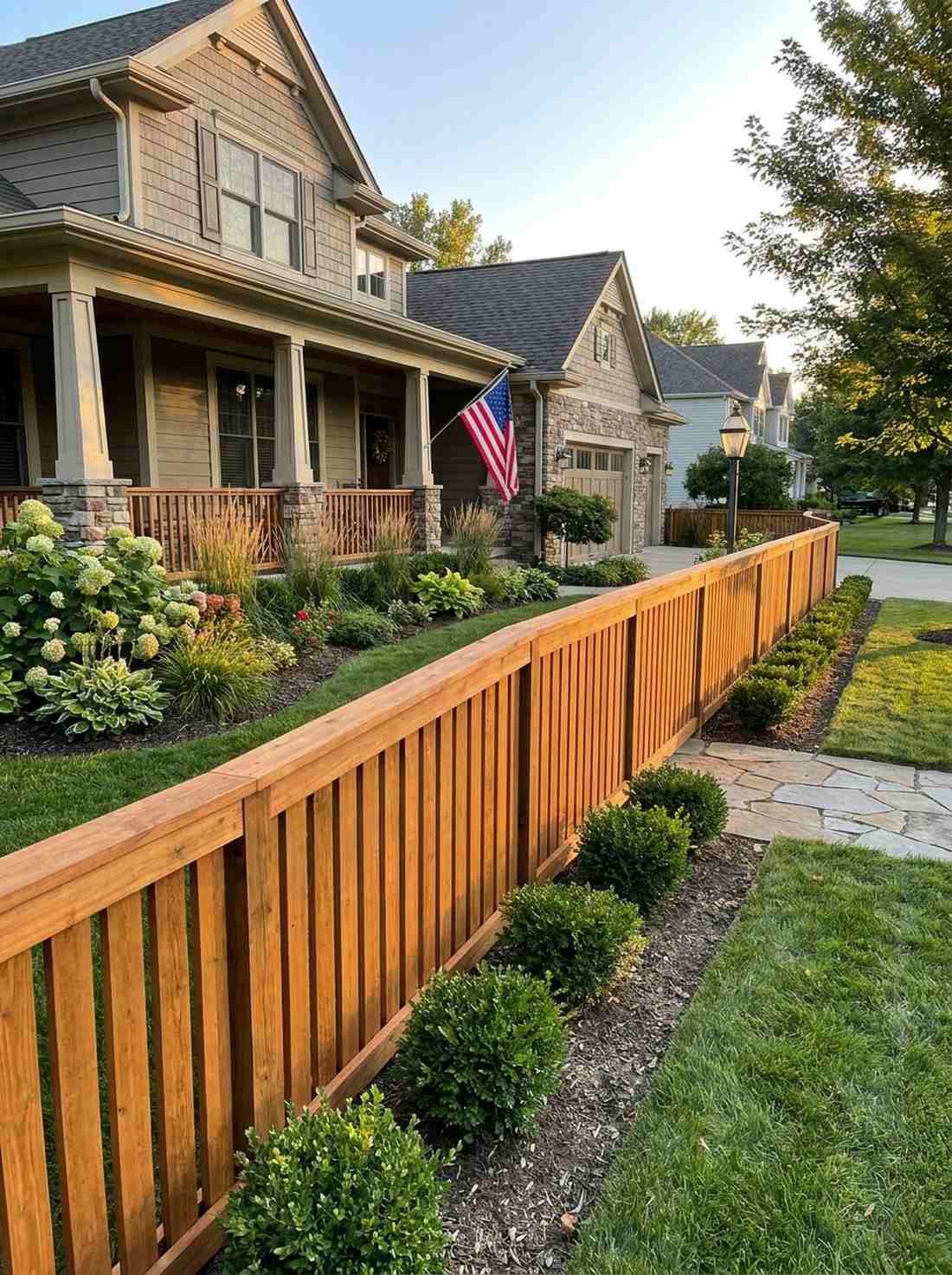
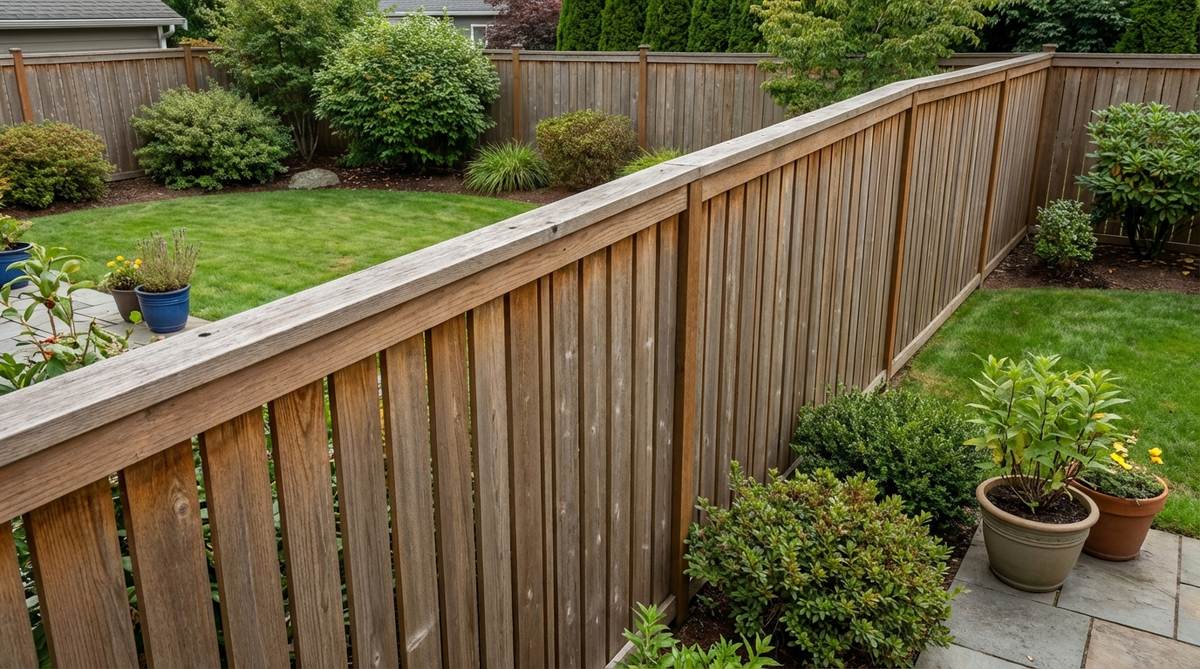
Radiates a perfectly tailored, neat-and-tidy energy that commands respect. Capped vertical boundary fences frame the messy end-grains of the wood into a crisp, singular line. Brilliant for formal front yards requiring a polished, finished look.
Exposing vertical board tops leads to water rot, but adding a simple horizontal cap gives a designer-level finish and prevents decay. Integrating sloped wooden cap kits ensures rain instantly slides off the most vulnerable part of your fence.
Adding a cap rail only adds about $5–$10 per foot to your base build. Save this to your DIY property value booster board!
- Key Materials: Vertical pickets, wide horizontal top rail
- Vibe / Style: Crisp, framed formality
- Difficulty: Beginner-friendly finishing
- Budget Breakdown: Base fence: $25/ft | Cap rails: $8/ft.
- Creator’s Tip: Slightly bevel or angle the top cap rail so standing water never pools on the flat surface after a heavy rainstorm.
- Smart Sourcing: Pre-beveled fence cap rails and weatherproof wood filler for seamless joints.
13. Staggered-Height Vertical Fence Panels
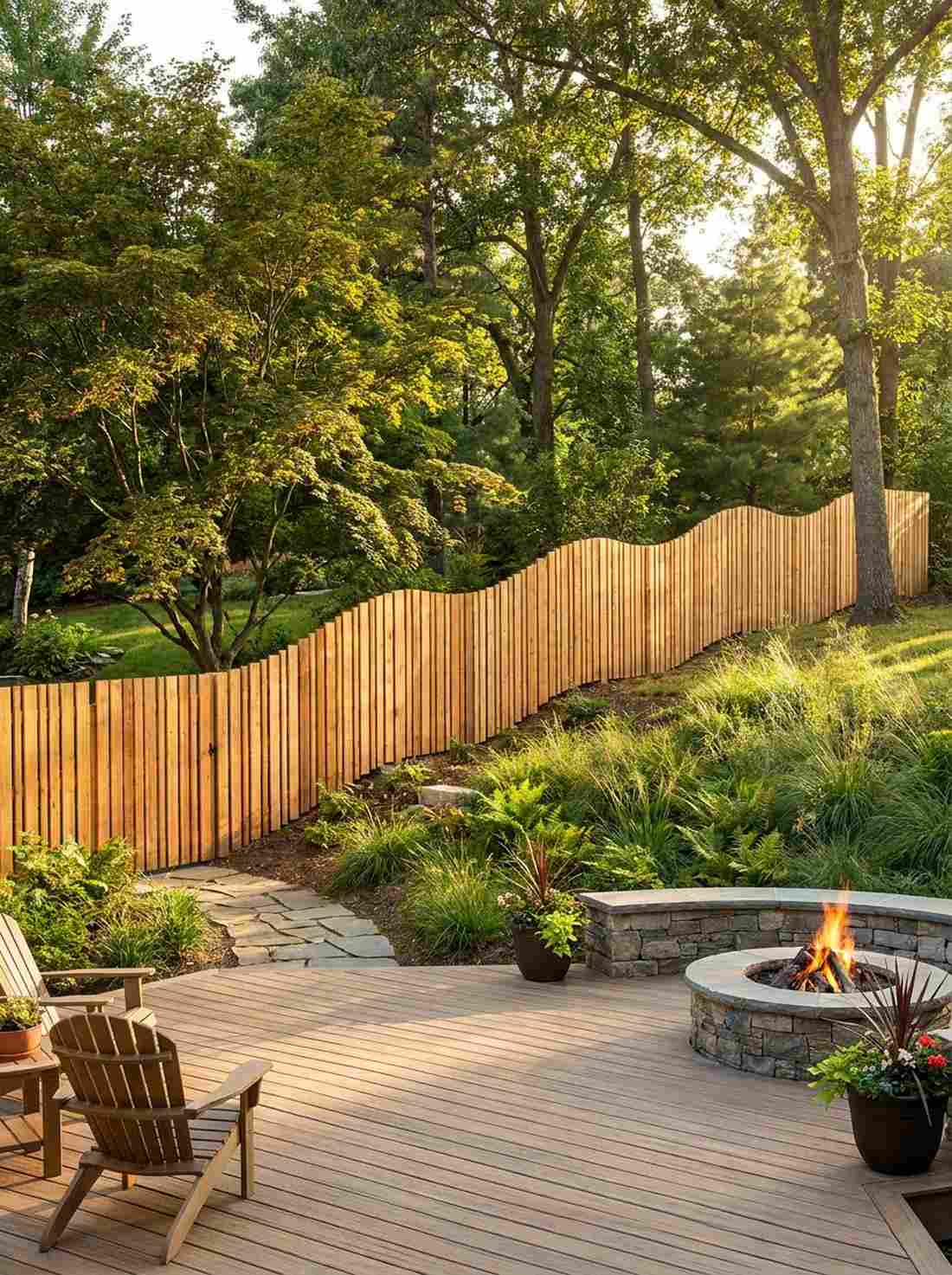
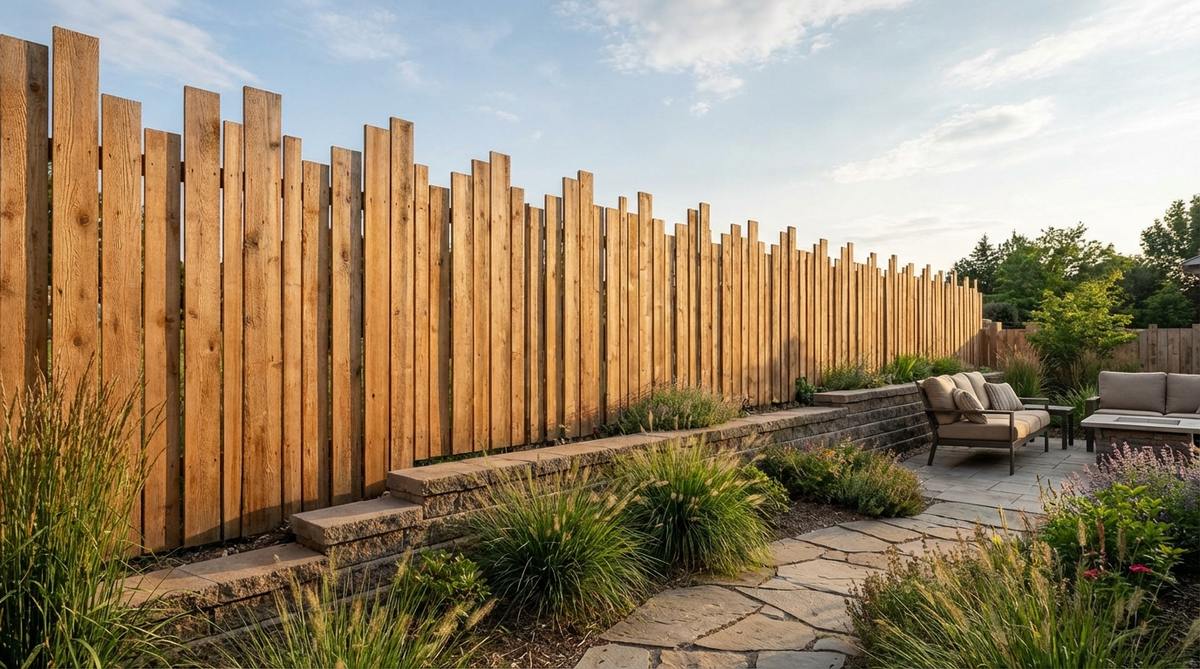
Feels like an organic, rolling wave that perfectly mimics nature’s imperfections. Variable height modern garden fences soften the harsh, straight lines usually associated with rigid property borders. Fantastic for sloped or uneven woodland lots.
Instead of aggressively fighting the terrain, this jagged styling creates a surprisingly premium look that flows with the earth. By intentionally cutting staggered timber pickets at rhythmic heights, you bridge the gap between structure and sky.
You can execute this artsy vibe for just $20–$30 a foot using standard materials. A gorgeous trick that completely customizes basic wood!
- Key Materials: Standard boards cut to various lengths
- Vibe / Style: Organic sculptural flow
- Difficulty: Requires pre-planning the wave pattern
- Budget Breakdown: Standard lumber: $25/ft | Custom cutting time: Free.
- Creator’s Tip: Never randomize the heights; group them in sets of three or five to create an intentional, rhythmic pattern rather than a messy mistake.
- Smart Sourcing: Bulk bundles of standard vertical pickets and high-precision crosscut hand saws.
14. Narrow-Gap Vertical Contemporary Panels
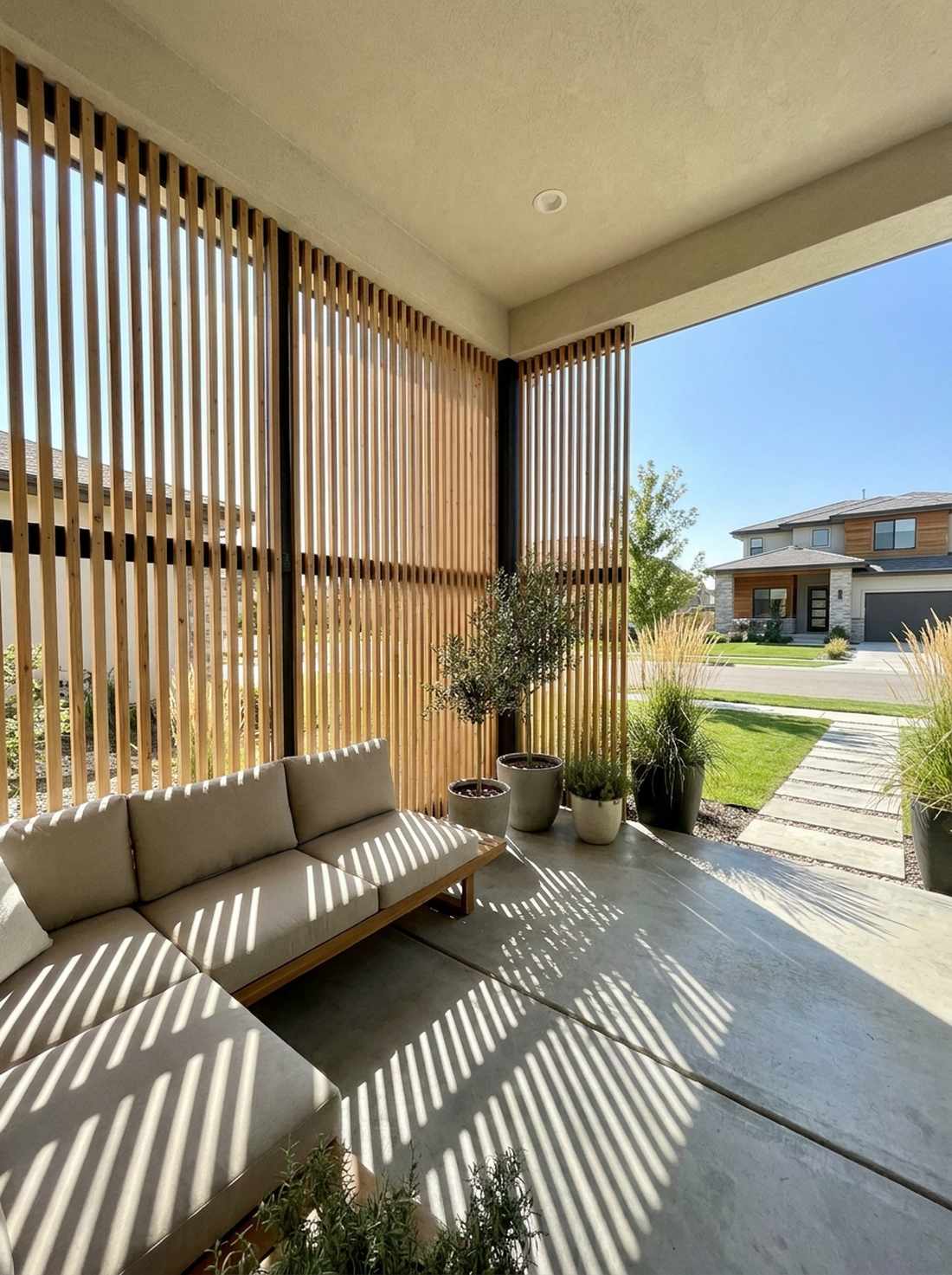
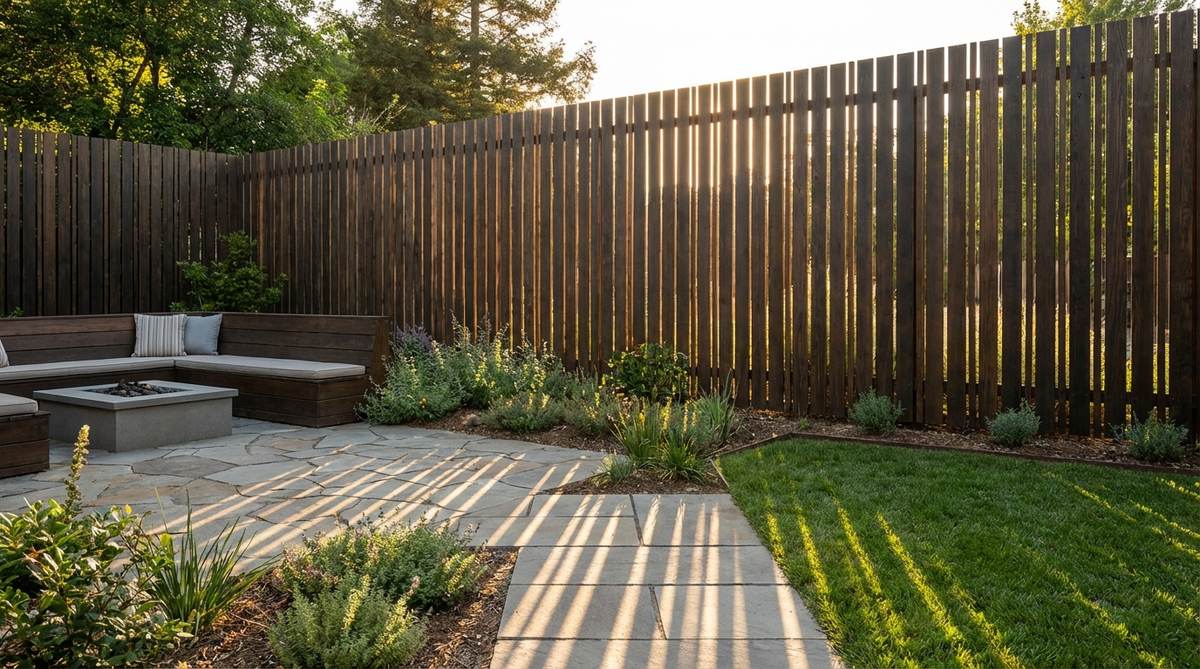
Gives off an airy, museum-courtyard vibe that doesn’t feel oppressively closed in. Semi-transparent outdoor paneling filters harsh sunlight into beautiful, shifting shadow patterns. Absolutely perfect for a sunny front patio enclosure.
Solid walls can feel like a prison, yet leaving precise half-inch gaps looks far more expensive than it is while maintaining security. Utilizing pre-milled vertical slat kits saves 15% on lumber costs while upgrading the visual lightness of the yard.
You can pull this off for $20–$35 a foot depending on the wood species chosen. Pin this if you love a light, breathable aesthetic!
- Key Materials: Precision-cut wood slats, half-inch spacers
- Vibe / Style: Breezy contemporary secure
- Difficulty: Easy repetitive alignment
- Budget Breakdown: Slats: $25/ft | Backing rails: $5/ft.
- Creator’s Tip: Paint the horizontal backing rails pitch black before installing the vertical slats so the supports visually disappear into the shadows.
- Smart Sourcing: Pre-sanded narrow vertical slats (bulk pack) and matte black exterior spray paint.
Stop buying flimsy wooden stakes. The upcoming structural secret ensures your layout survives the absolute worst weather imaginable…
15. Vertical Slat Fence With Steel Posts
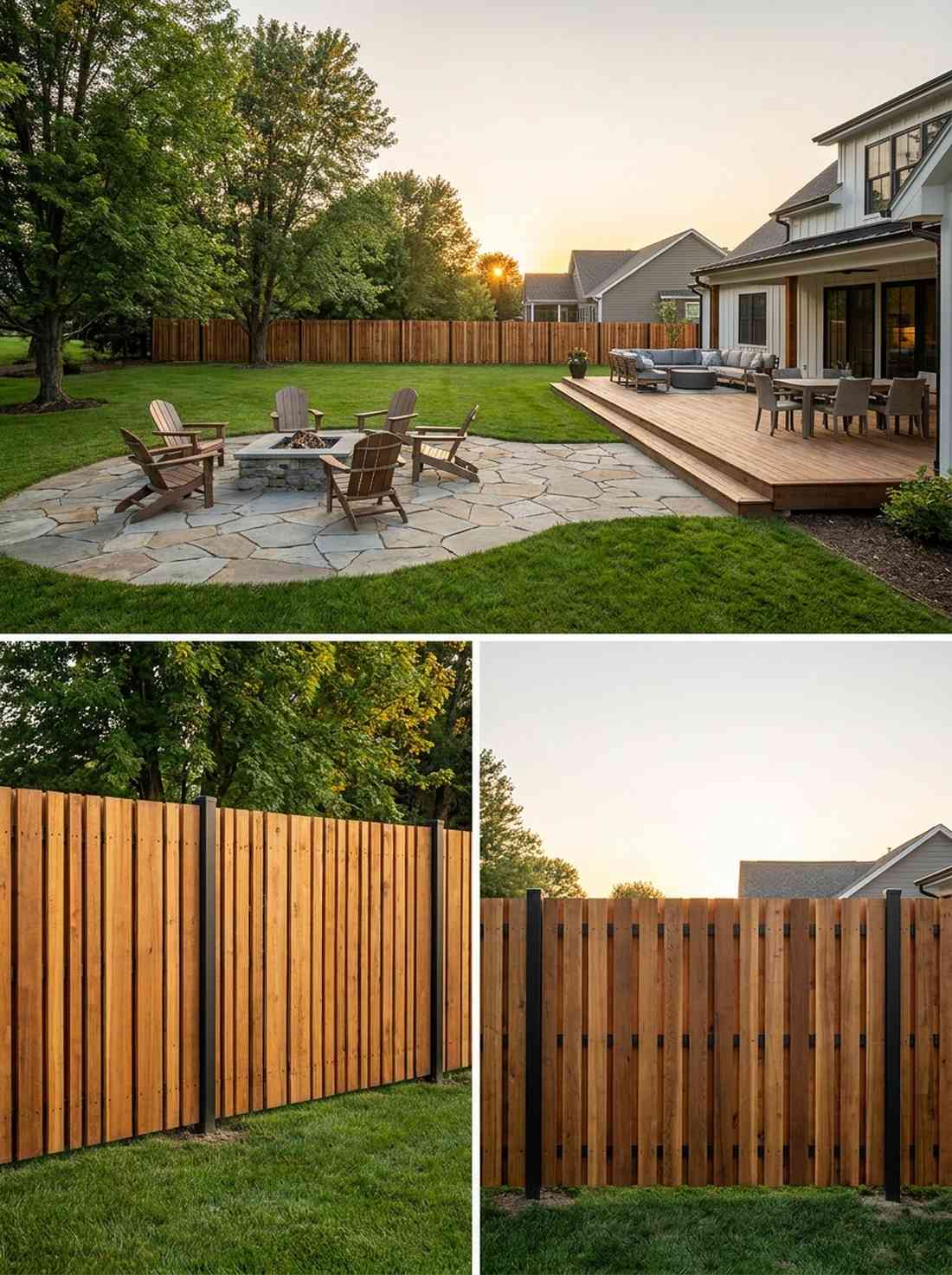
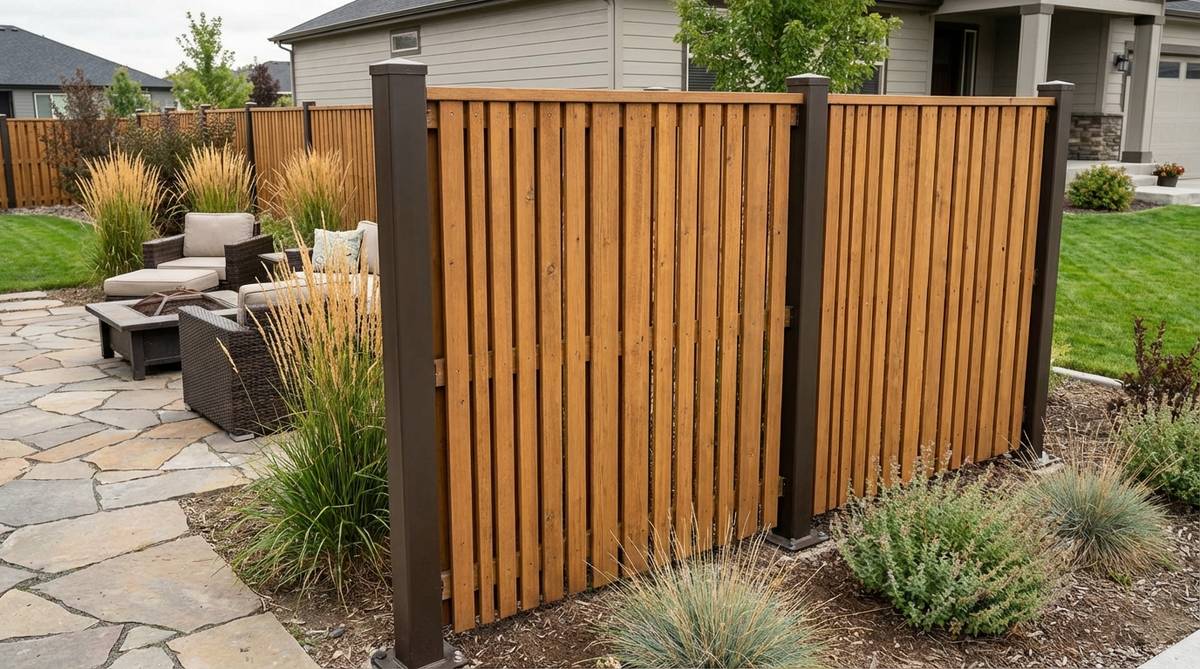
Radiates bulletproof strength mixed with warm, natural modernism. Metal-supported timber boundaries eliminate the leaning and wobbling that plagues aging backyards. The ultimate choice for areas dealing with high winds or shifting clay soils.
While traditional 4×4 posts rot underground, embedding steel creates an ultra-premium aesthetic that practically lasts forever. Sourcing heavy-duty galvanized steel fence posts allows you to span longer distances, saving money on the overall framework.
Expect to spend $40–$70 a foot for this hybrid fortress. Highly recommended for a forever-home investment that requires zero structural maintenance.
- Key Materials: Steel tubing posts, wood infill brackets, vertical boards
- Vibe / Style: Unbreakable industrial warmth
- Difficulty: Advanced concrete footings required
- Budget Breakdown: Steel posts: $40/each | Concrete/Wood: $30/ft.
- Creator’s Tip: Hide the metal-to-wood connection points by using black oxidized lag bolts that blend directly into dark steel posts.
- Smart Sourcing: Powder-coated steel square posts and metal-to-wood wrap brackets.
16. Vertical Batten-Board Screen Fence
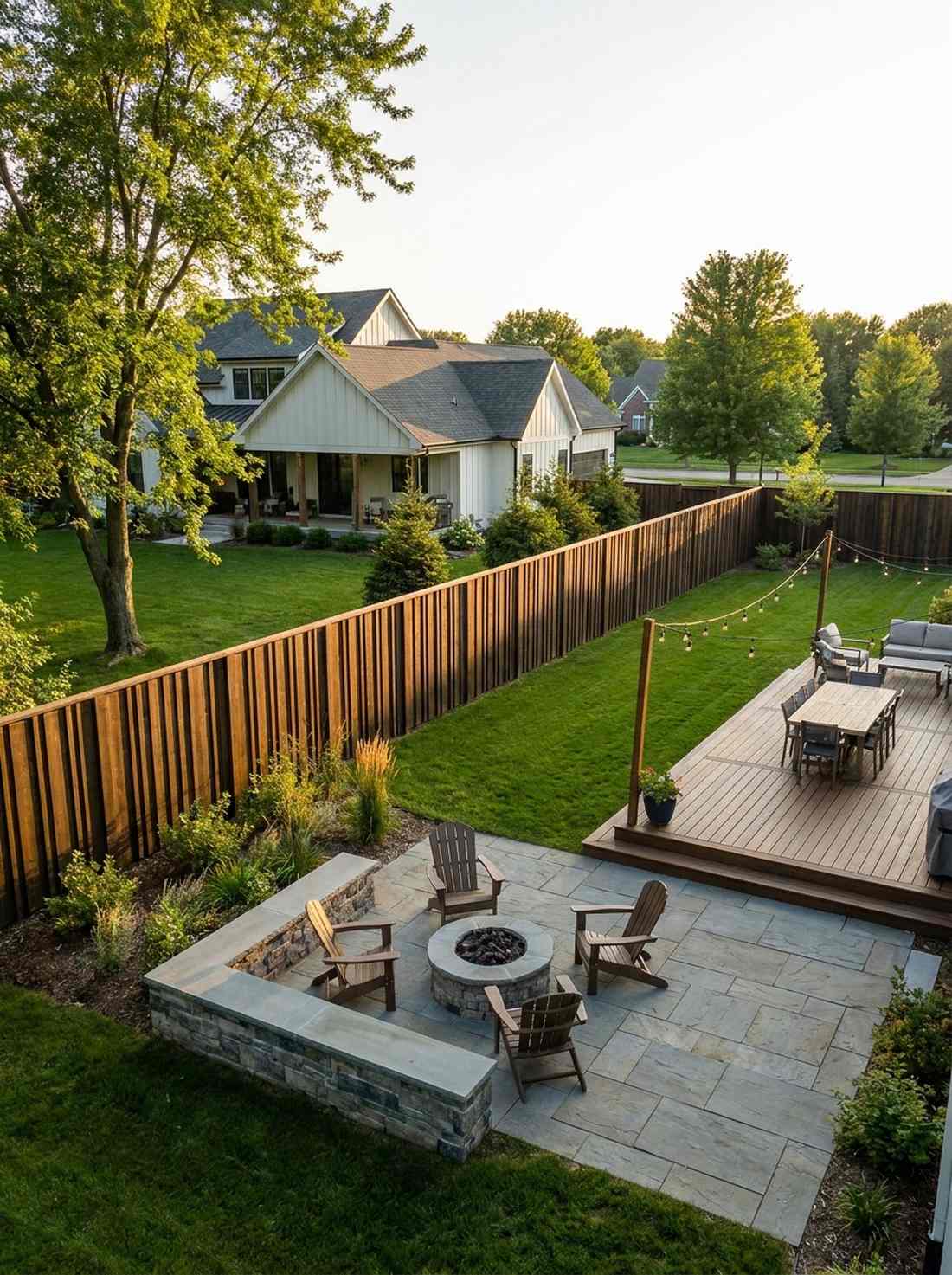
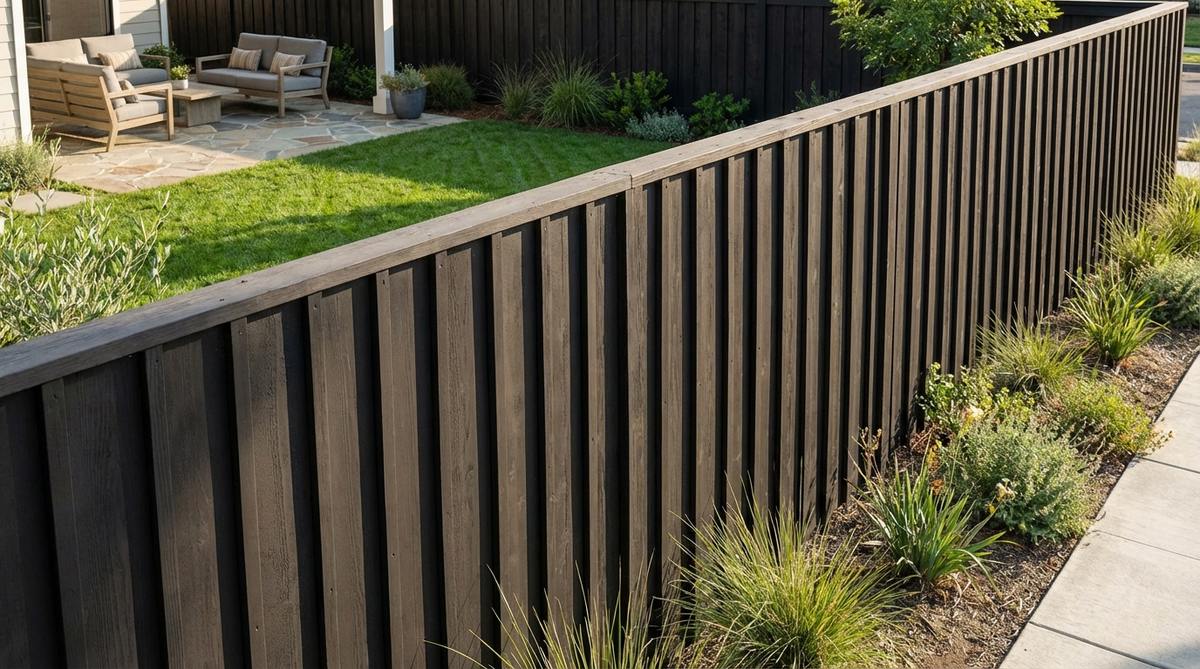
Feels like a deeply textured, historic barn wall upgraded for the 21st century. Layered wooden yard barriers create incredibly strong, high-contrast shadow lines across the boundary. Excellent for sprawling rustic-modern property lines.
Many builders use single-layer boards, but layering thin strips over wide panels gives a designer-level finish of immense depth. Applying pre-cut batten strips directly over the seams radically reinforces the fence’s rigidity against severe weather.
This heavy, layered technique costs about $35–$50 per linear foot. Save this to your modern farmhouse inspiration board!
- Key Materials: Wide backing boards, narrow surface battens
- Vibe / Style: Deeply textured modern-farmhouse
- Difficulty: Easy but material intensive
- Budget Breakdown: Backing boards: $25/ft | Batten strips: $15/ft.
- Creator’s Tip: Fasten the narrow battens strictly to the board on one side of the seam, allowing the other board to expand freely beneath it without cracking.
- Smart Sourcing: Pre-cut finishing batten strips (bulk pack) and heavy-duty wide backing planks.
Mixed Material Fence Innovations Combining Strength And Beauty
Combining distinct materials produces fences with superior performance characteristics and visual complexity. These designs leverage each material’s strengths while minimizing individual weaknesses.
17. Wood And Metal Fusion Fence
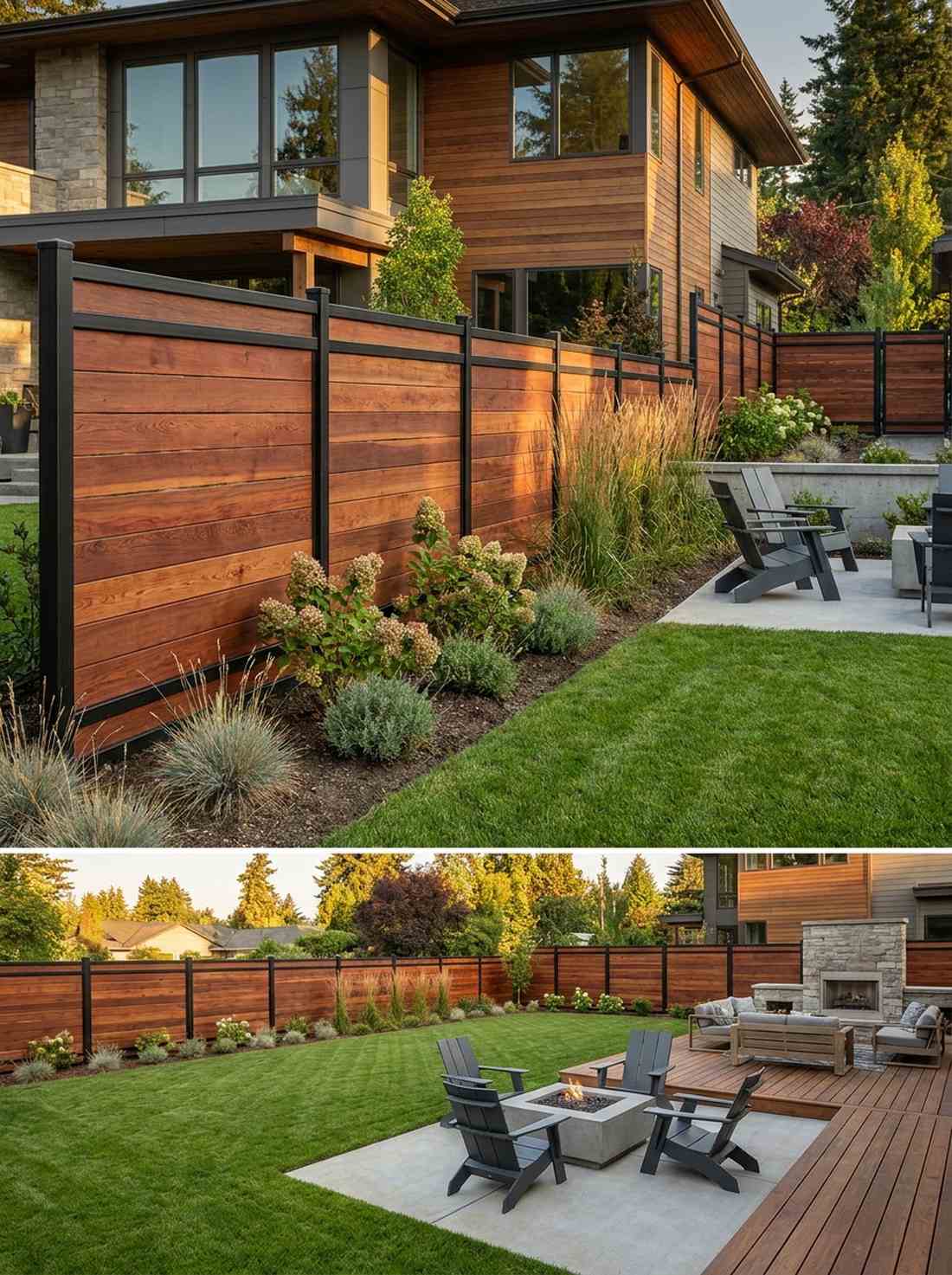
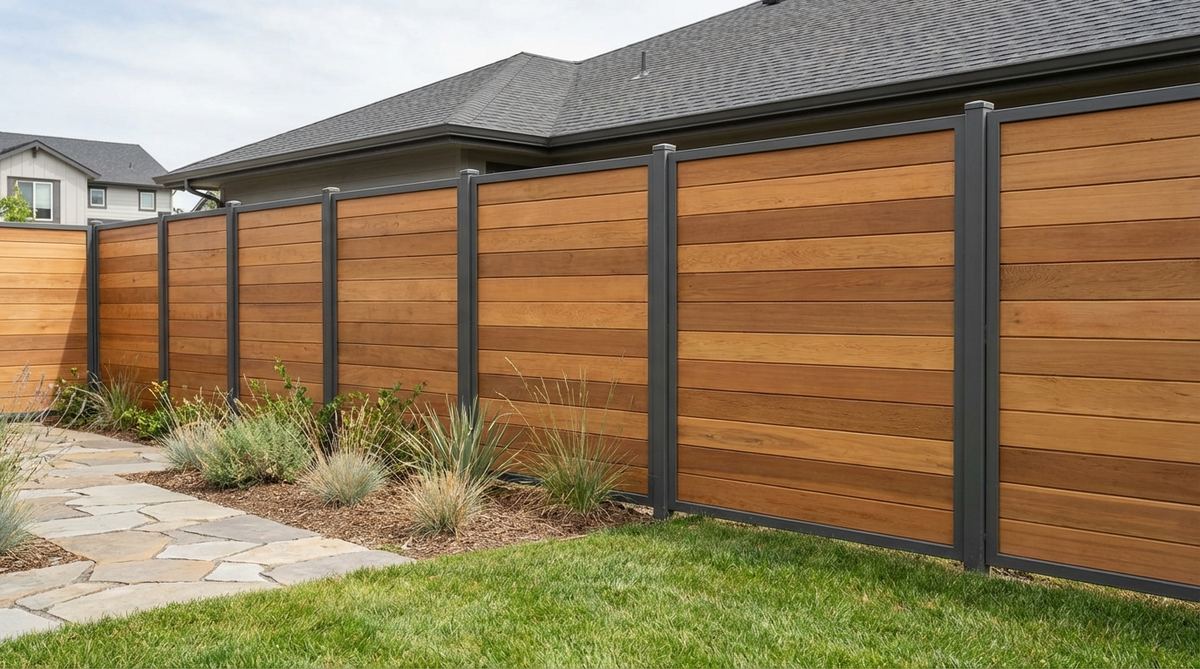
Gives off an expensive, contemporary urban loft vibe right in your garden. Mixed-material modern garden fences perfectly balance soft organic wood grain with harsh, indestructible metal frames. Ideal for chic suburban upgrades that need to look distinctly architectural.
Instead of choosing one aesthetic, this fusion method delivers a surprisingly premium look that captures the best of both worlds. By locking premium redwood panel inserts inside black steel brackets, you completely eliminate the possibility of wood warping.
Budget around $60–$90 per foot for this luxury hybrid. It’s a striking setup that absolutely dominates neighborhood curb appeal.
- Key Materials: Powder-coated steel rails, redwood infill
- Vibe / Style: Sophisticated urban hybrid
- Difficulty: Advanced leveling and metalworking
- Budget Breakdown: Metal framing: $50/ft | Redwood slats: $30/ft.
- Creator’s Tip: Design the wood panels as removable drop-in modules, making future staining or individual board replacement incredibly easy.
- Smart Sourcing: Pre-welded steel frame modules and weather-resistant redwood slat inserts.
18. Stone Pillar Wood Panel Fence
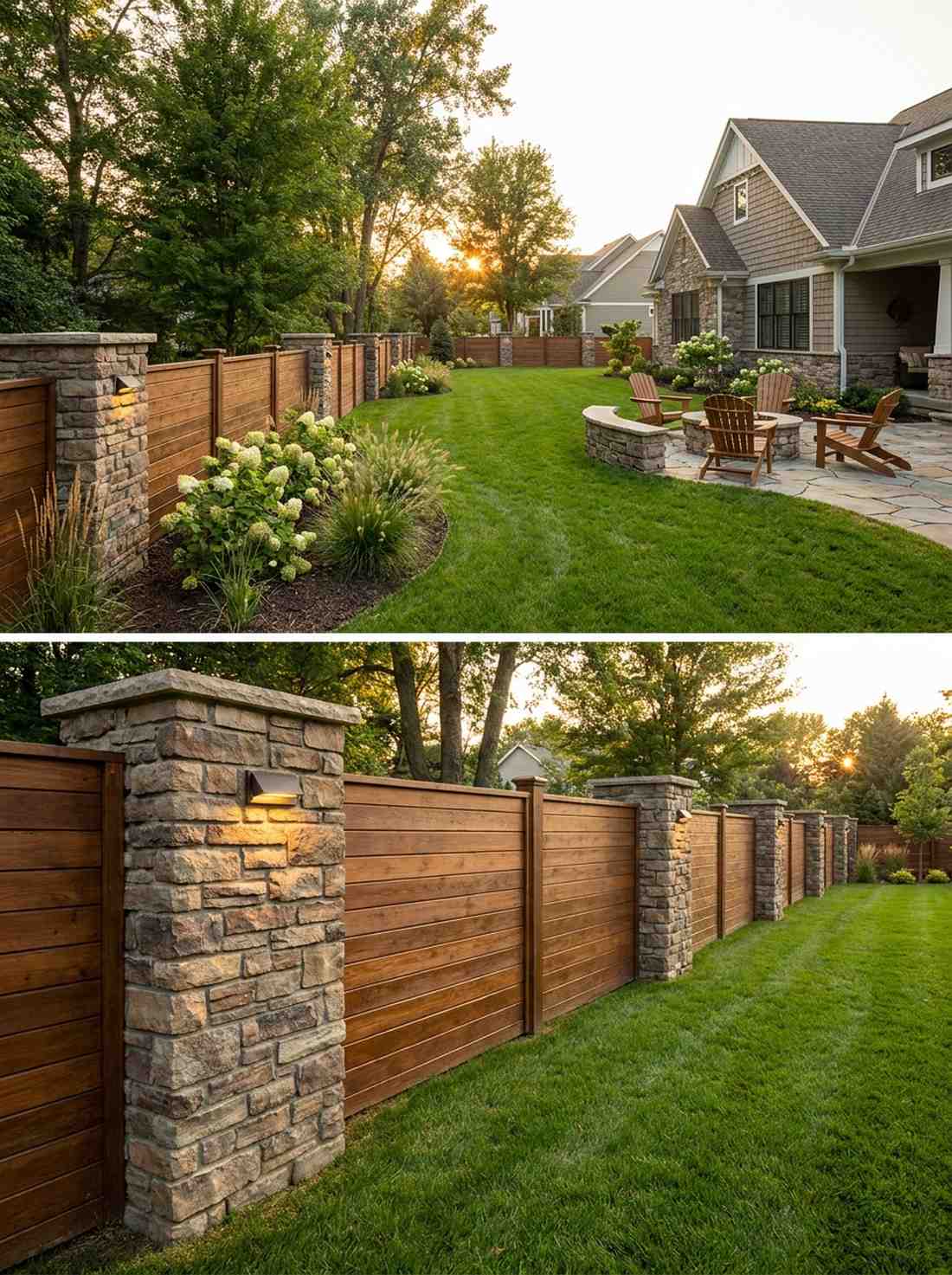
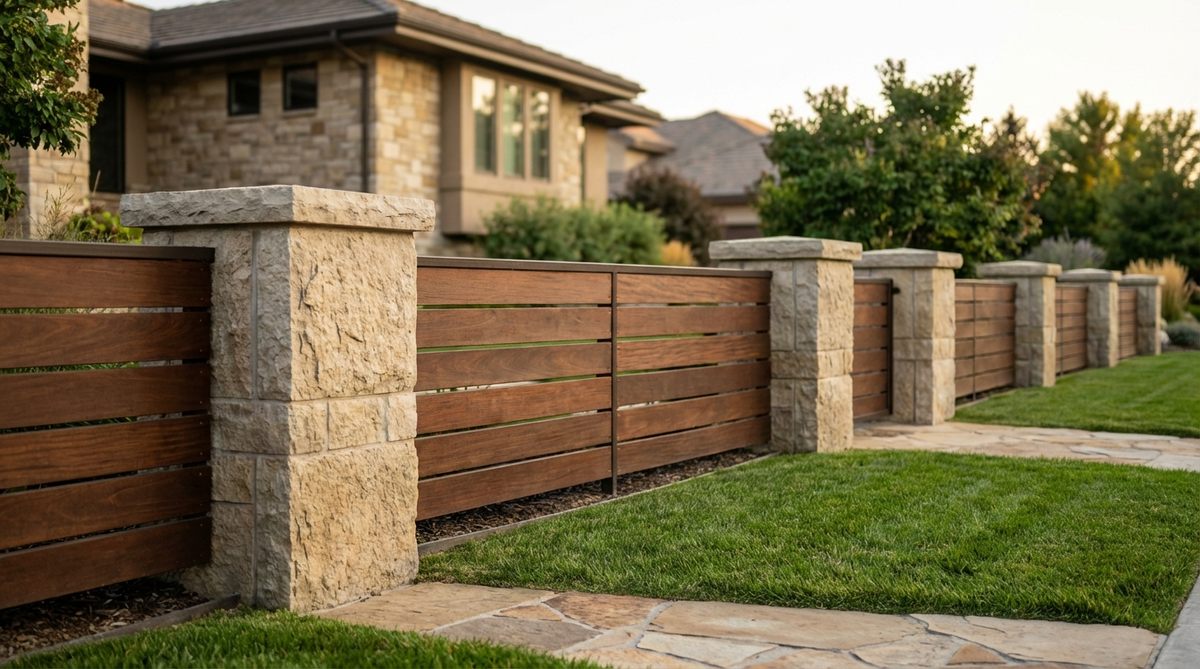
Radiates the heavy, permanent majesty of a multi-million dollar gated estate. Masonry and timber boundary walls establish unmatched structural authority and historical permanence. Flawless choice for large properties featuring brick or stone house facades.
Most people rely entirely on wood, yet adding stone anchors guarantees a designer-level finish that elevates the whole property value. Bridging the gap with affordable horizontal wood infills keeps the overall project from bankrupting your masonry budget.
Expect to invest $100+ per foot due to the required masonry work. Save this to your ultimate luxury dream home board!
- Key Materials: Concrete blocks, natural stone veneer, wood panels
- Vibe / Style: Majestic estate permanence
- Difficulty: Professional masonry required
- Budget Breakdown: Stone pillars: $300/each | Wood infill: $40/ft.
- Creator’s Tip: Run electrical conduit up through the center of the stone pillars during construction to easily add high-end integrated lighting later.
- Smart Sourcing: Easy-install faux stone pillar kits and pre-built horizontal wood panel inserts.
19. Corrugated Metal And Wood Frame
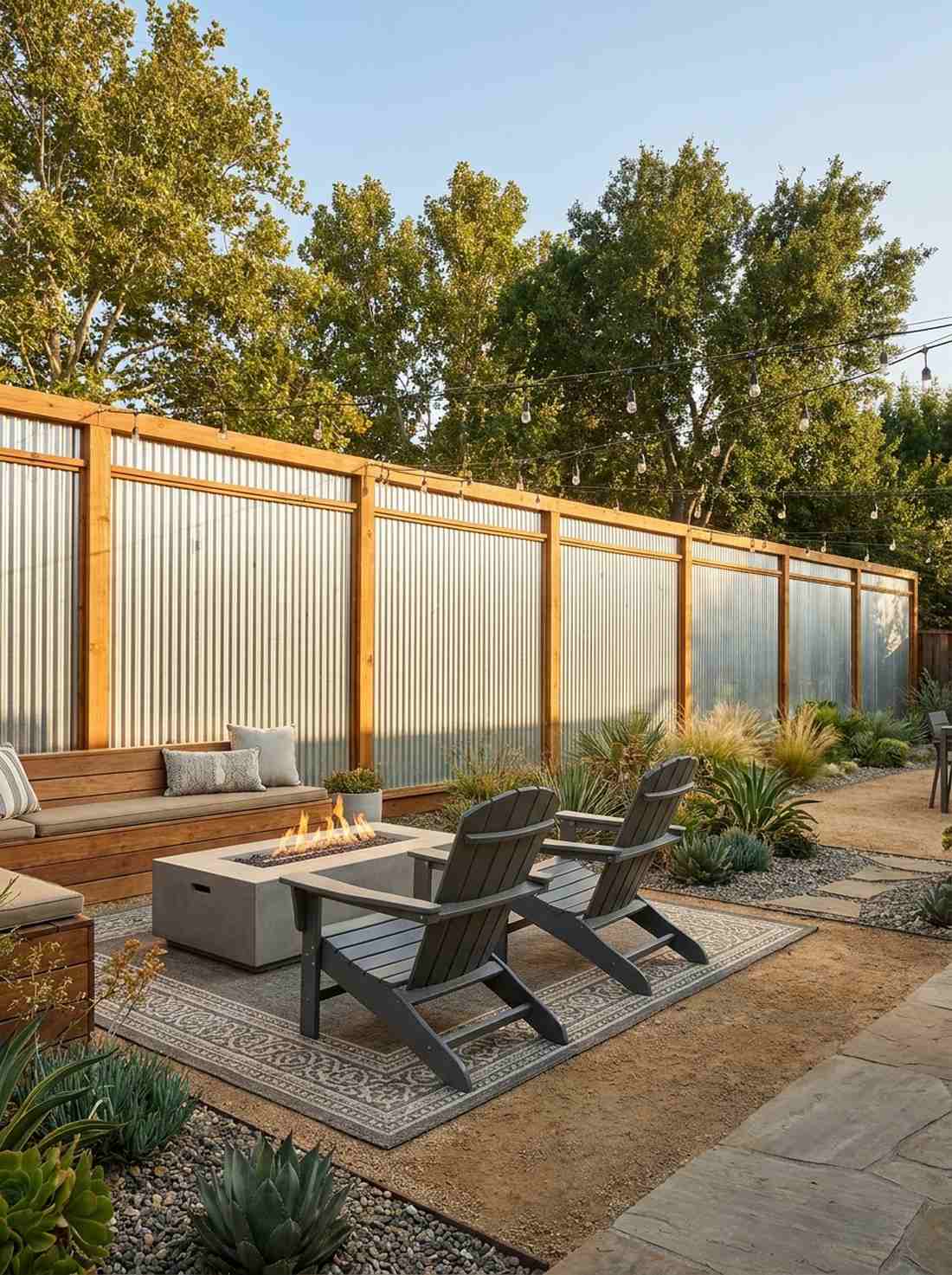
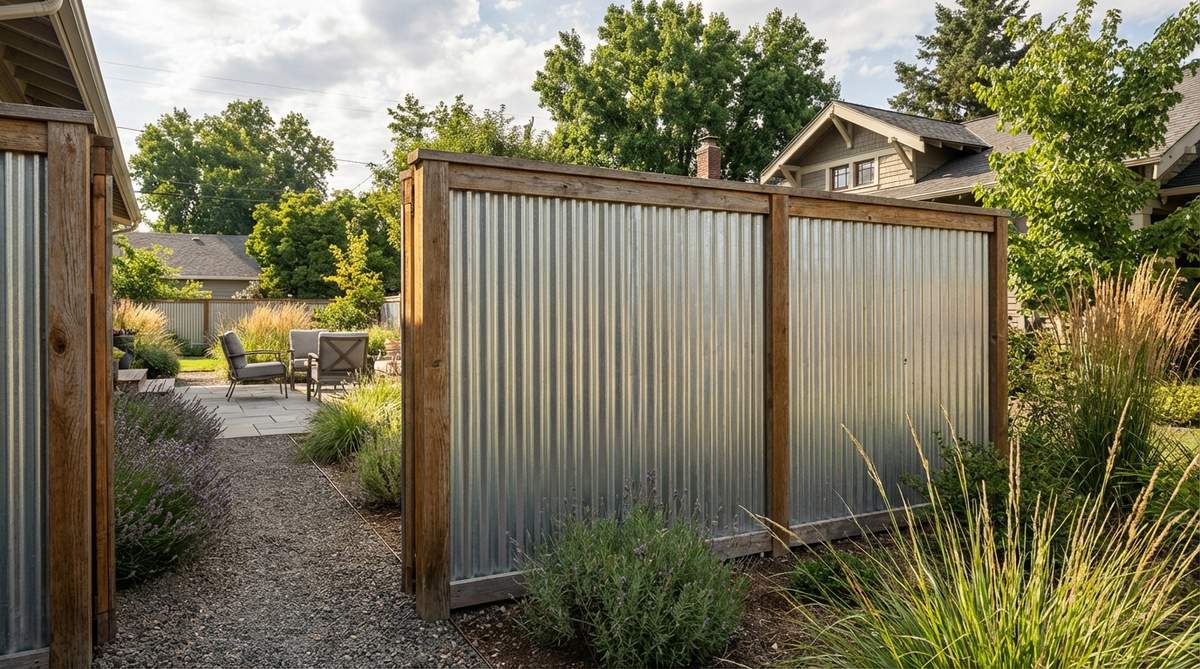
Feels like an impossibly cool, upcycled architectural studio space. Industrial garden screening elements reflect light beautifully while providing an impenetrable privacy barrier. Perfectly suited for arid climates where organic wood rapidly dries and splinters.
Avoid the cheap junkyard look; framing galvanized steel with clean timber creates an ultra-premium aesthetic for pennies. Sourcing rust-resistant corrugated steel sheets gives you massive, instant coverage that is surprisingly fast to install.
This highly resilient setup costs just $20–$35 per linear foot. A ridiculously fast weekend upgrade that completely changes the vibe.
- Key Materials: Corrugated metal panels, heavy timber framing
- Vibe / Style: Refined industrial chic
- Difficulty: Easy panel mounting
- Budget Breakdown: Metal sheets: $15/ft | Wood frame: $15/ft.
- Creator’s Tip: Always use rubber-washer screws when piercing the metal panels to prevent water from seeping into the wooden frame behind it.
- Smart Sourcing: Galvanized corrugated metal sheets (bulk pack) and self-sealing roofing screws.
Most DIYers ruin their fences at the base. The next method entirely eliminates the number one cause of fence rotting…
20. Glass Panel Aluminum Frame Fence
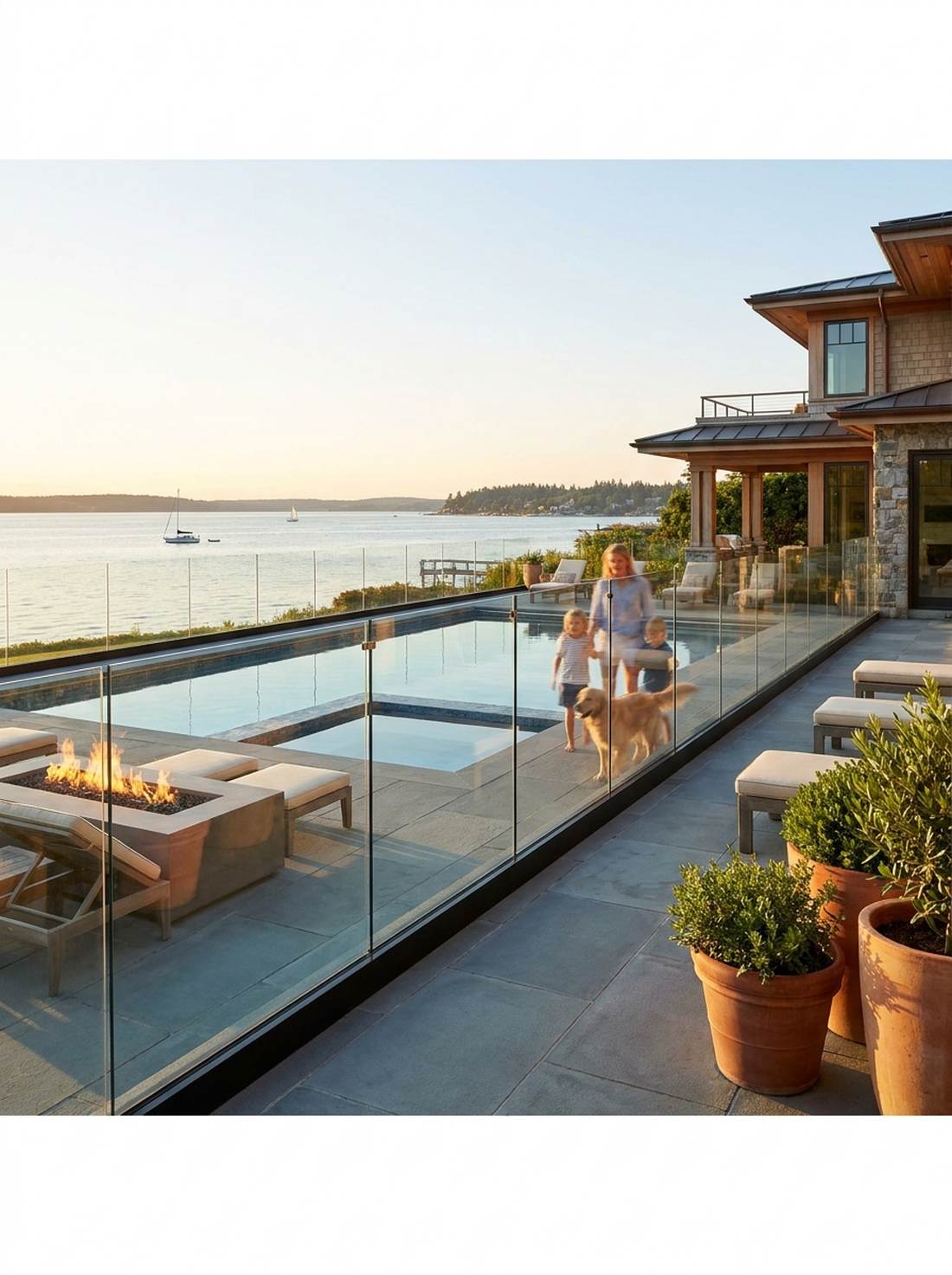
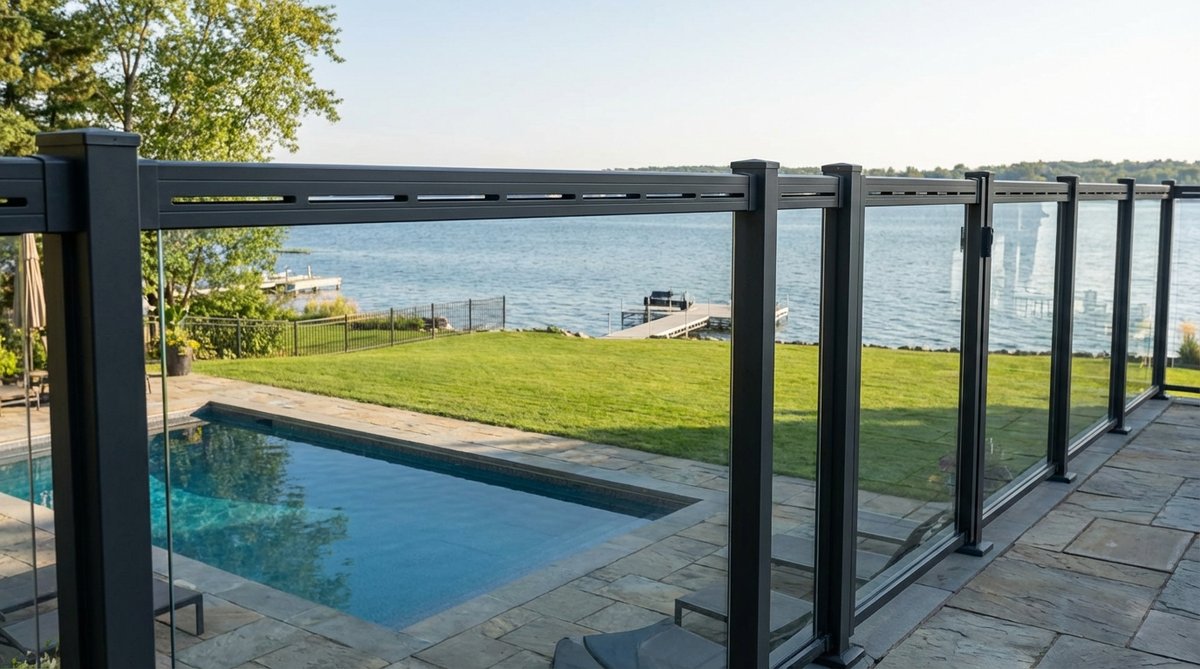
Gives off an ultra-luxurious, invisible boundary effect that preserves million-dollar views. Transparent outdoor boundary framing keeps children and pets safe without blocking the gorgeous landscape beyond. Absolutely essential for waterfront properties or sleek pool enclosures.
Solid barriers destroy natural scenery, but this transparent technique looks far more expensive than it is while expanding visual space. Locking shatter-proof tempered glass panels into sleek aluminum channels ensures maximum safety and high-end modernism.
Material costs run high at $80–$150 per foot, but preserving a perfect view is priceless. Pin this if you refuse to block your horizon!
- Key Materials: Thick tempered glass, aluminum base channels
- Vibe / Style: Invisible luxury resort
- Difficulty: Professional handling recommended
- Budget Breakdown: Glass panels: $100/ft | Base channels: $30/ft.
- Creator’s Tip: Ensure your bottom aluminum channels have integrated weep holes so rainwater doesn’t pool, freeze, and shatter the glass in winter.
- Smart Sourcing: Outdoor-rated tempered glass panel kits and slotted aluminum mounting channels.
21. Wood Slat Concrete Base Fence
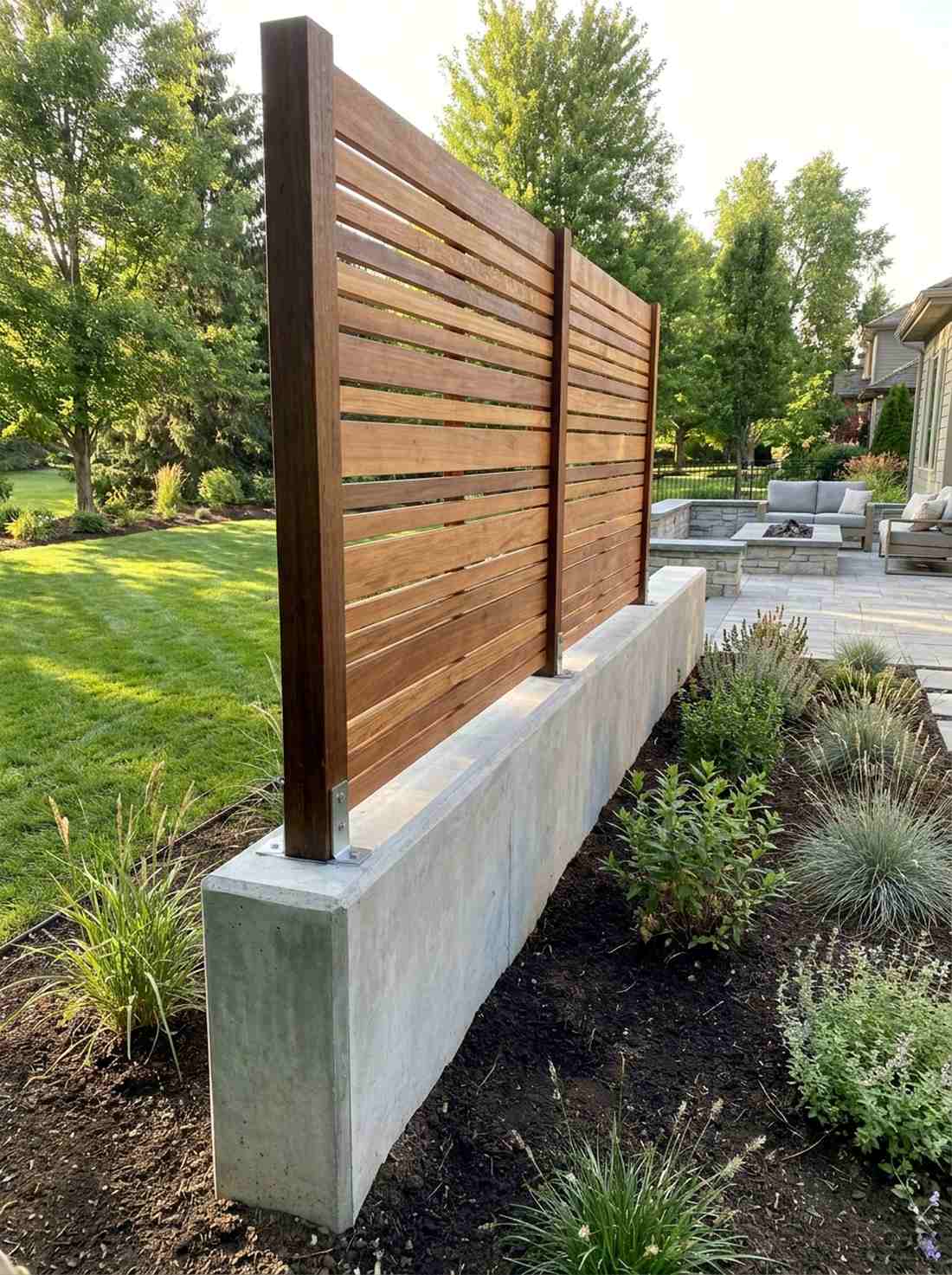
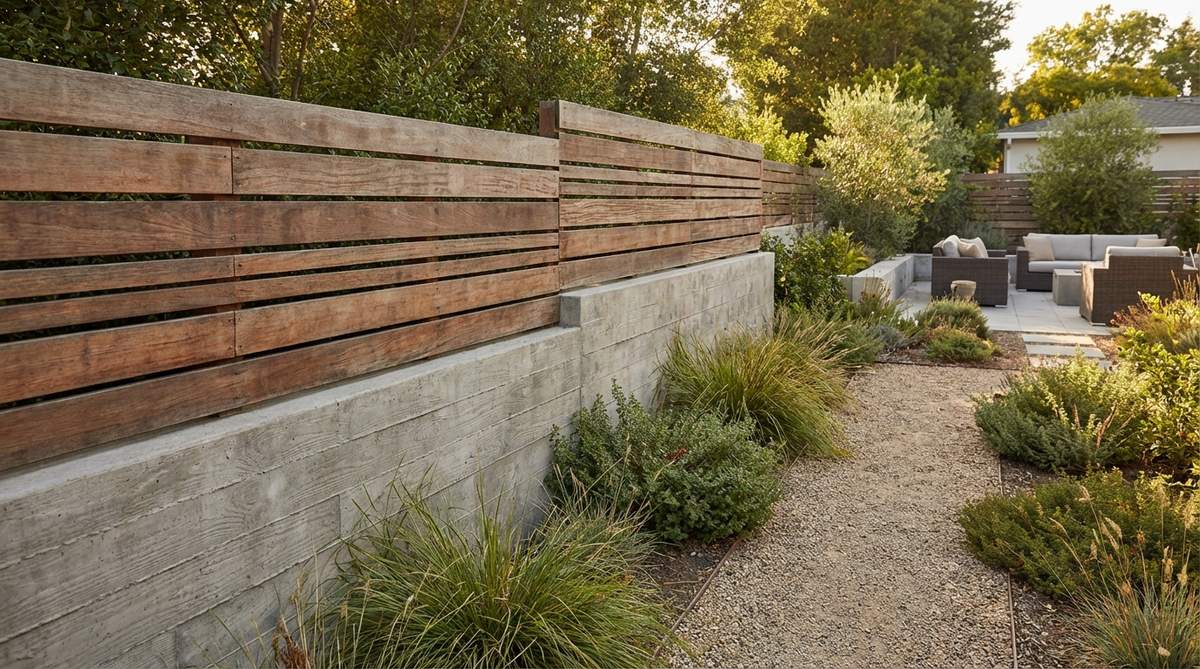
Radiates a grounded, highly engineered strength that easily survives brutal winters. Concrete and timber garden borders physically lift vulnerable wood away from damp, rot-inducing soil. The smartest implementation for low-lying yards prone to heavy water runoff.
Many contractors bury wood directly into the dirt, yet this elevated method guarantees a designer-level finish that lasts three times longer. By pouring a simple solid concrete base wall, your beautiful timber slats never touch the destructive ground moisture.
Expect to spend around $50–$80 per foot for this hybrid defense system. Highly recommended for areas struggling with heavy landscaping drainage issues.
- Key Materials: Poured concrete base, wood slat uppers
- Vibe / Style: Bulletproof modern foundation
- Difficulty: Advanced concrete forming
- Budget Breakdown: Concrete base: $40/ft | Wood upper: $30/ft.
- Creator’s Tip: Embed heavy steel saddle brackets directly into the wet concrete so attaching your wooden fence posts later is perfectly secure.
- Smart Sourcing: Heavy-duty concrete post anchors and pre-built wood slat panels.
22. Metal Lattice Wood Frame Hybrid
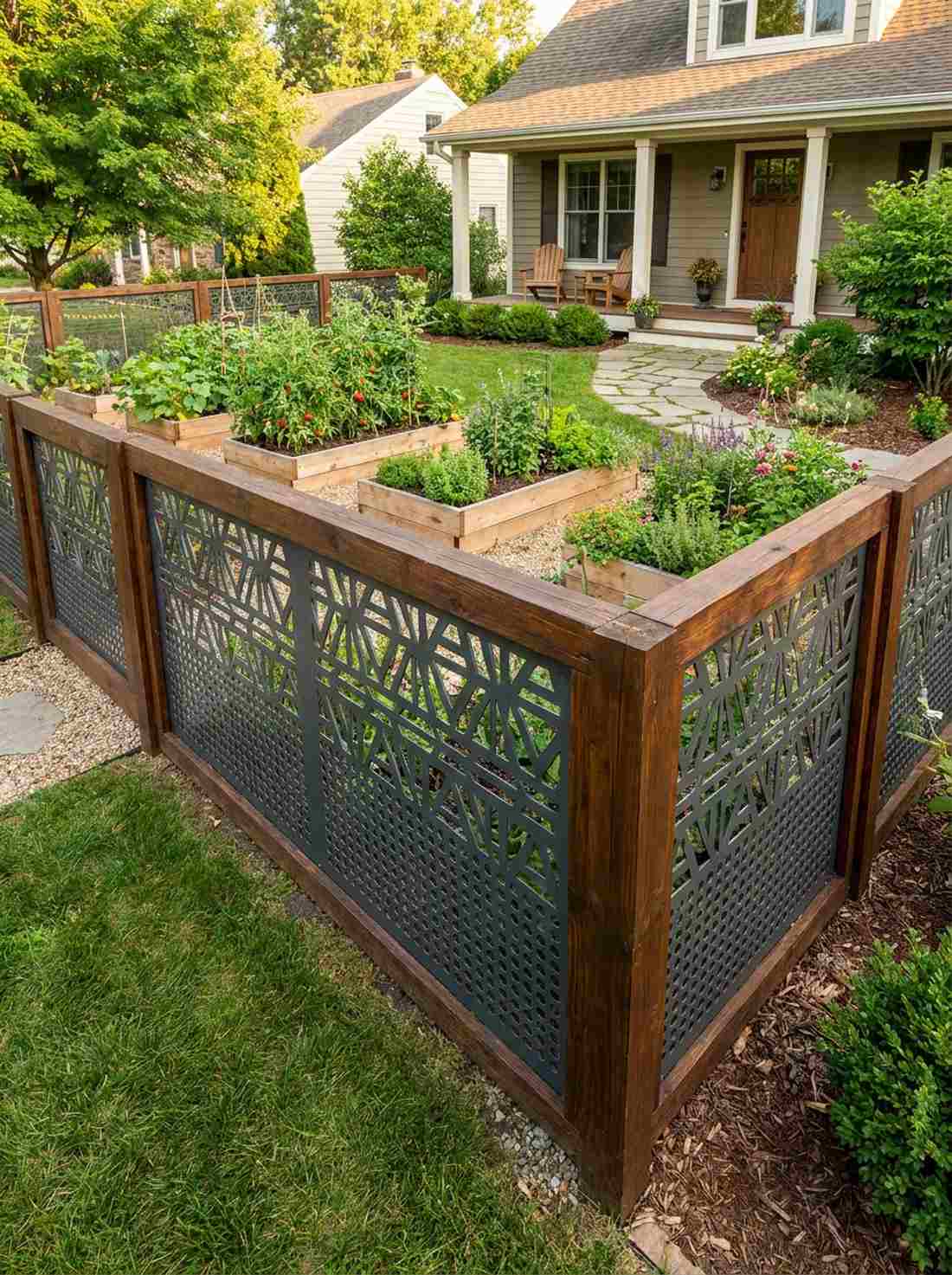
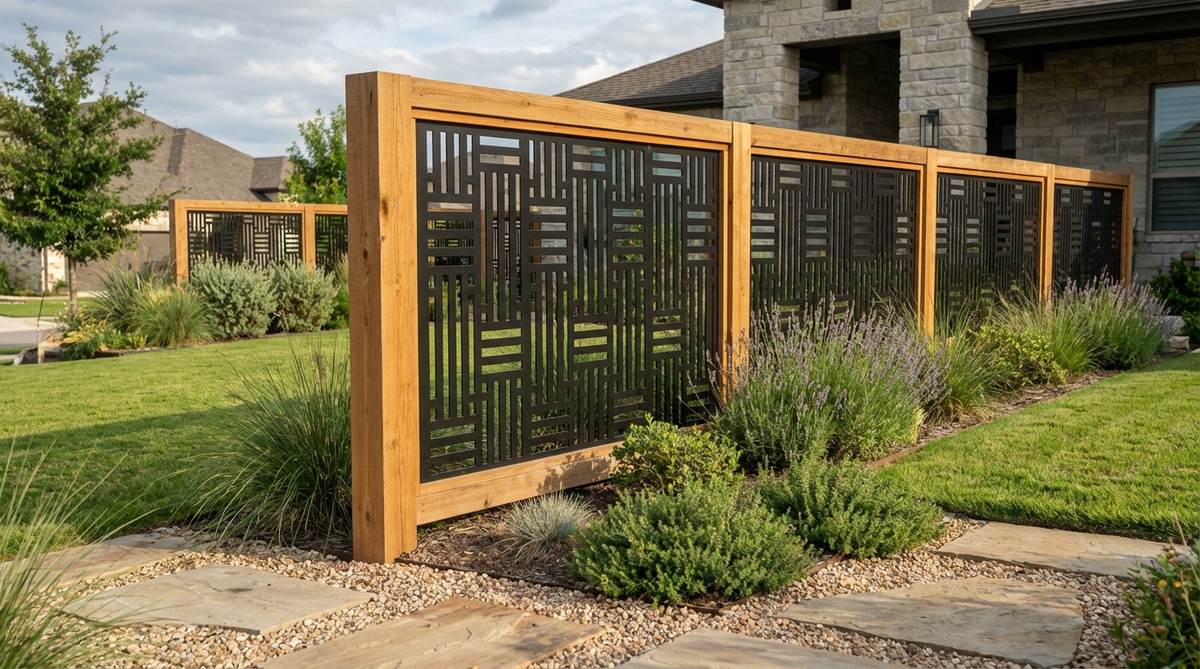
Feels like a delicate, artistic secret garden hidden behind a secure modern fortress. Laser-cut privacy screen integration allows gorgeous dappled sunlight through while firmly keeping intruders out. Fantastic for front yard boundaries requiring a modern vegetable garden fence that isn’t entirely walled off.
Standard wooden lattice looks cheap and rots fast, but utilizing metal inserts creates an ultra-premium aesthetic that requires zero maintenance. Securing geometric powder-coated metal screens inside a chunky timber frame completely reinvents semi-transparent fencing.
You can execute this artsy hybrid for about $40–$70 a foot. Save this to your elegant landscaping ideas board!
- Key Materials: Decorative metal panels, sturdy timber framing
- Vibe / Style: Intricate artistic security
- Difficulty: Easy framing and dropping in
- Budget Breakdown: Metal inserts: $45/panel | Wood framing: $20/ft.
- Creator’s Tip: Choose laser-cut patterns with smaller holes near the bottom to keep small pests out, transitioning to larger geometric openings up top.
- Smart Sourcing: Laser-cut geometric metal privacy panels and grooved timber framing kits.
23. Bamboo Steel Frame Modern Fence
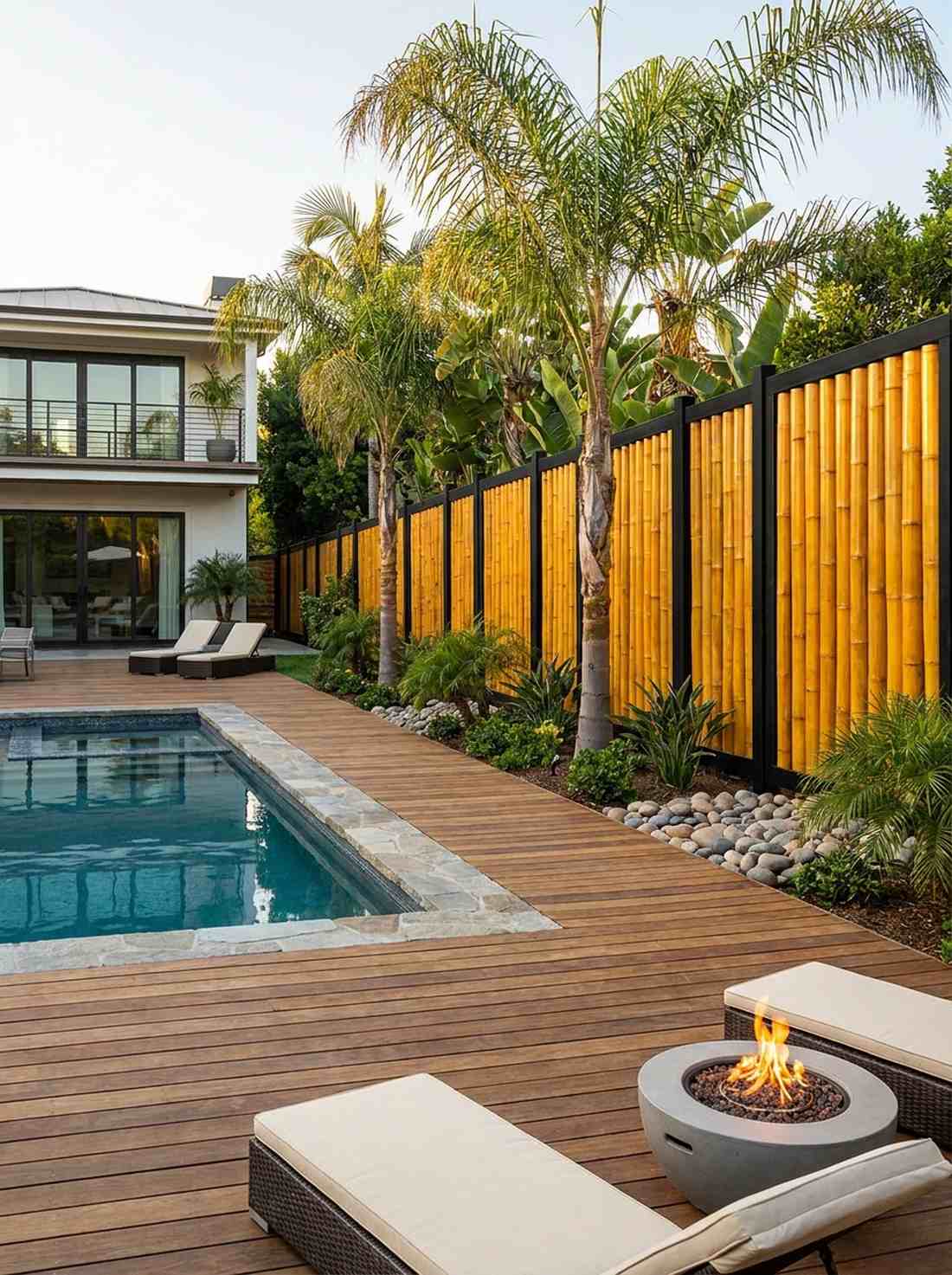
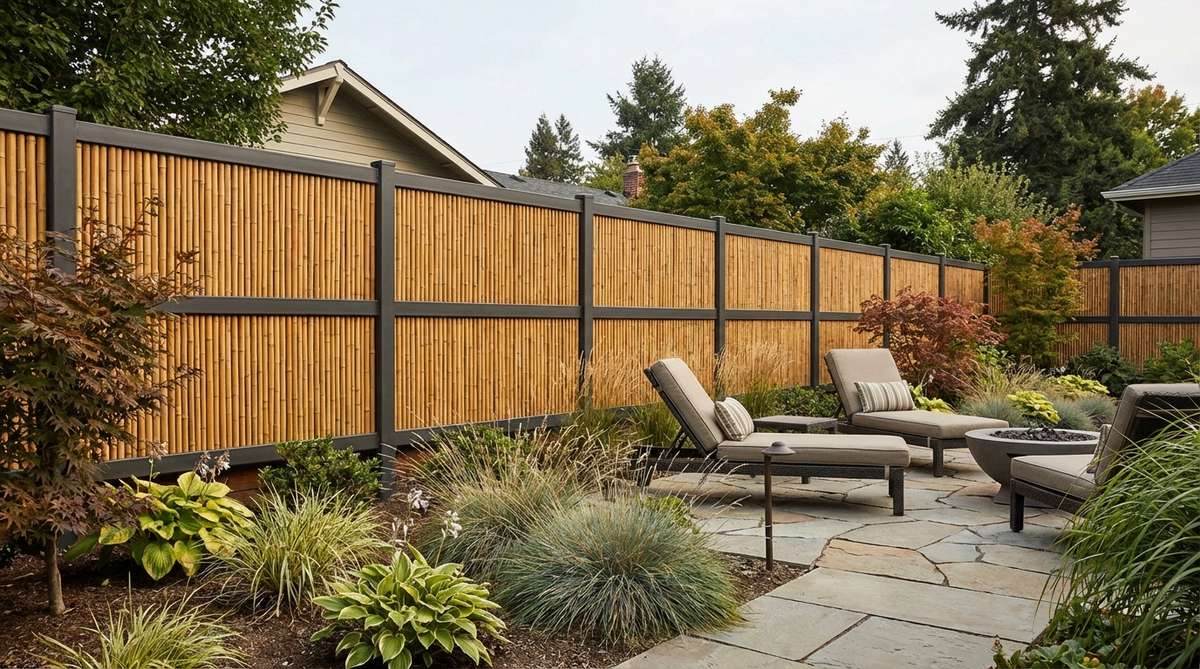
Gives off an incredibly serene, high-end tropical spa energy that instantly relaxes the mind. Sustainable organic boundary setups soften harsh urban environments with glowing golden tones. Absolutely perfect for zen-inspired courtyard gardens or poolside retreats.
Flimsy bamboo rolls look messy, yet framing solid stalks inside rigid metal delivers a surprisingly premium look of structured exoticism. Utilizing weather-treated solid bamboo poles inside sharp black steel contrasts nature perfectly against industrial lines.
Expect to spend $40–$60 per foot for high-density, treated materials. A gorgeous eco-friendly upgrade that completely changes the backyard vibe!
- Key Materials: Thick treated bamboo, black steel framing
- Vibe / Style: Structured tropical zen
- Difficulty: Intermediate fitting required
- Budget Breakdown: Bamboo panels: $35/ft | Steel frame: $20/ft.
- Creator’s Tip: Never use hollow ornamental bamboo for structural fences; always specify solid-core bamboo species to prevent splitting during temperature shifts.
- Smart Sourcing: Solid-core treated bamboo fencing rolls and adjustable steel fence frame kits.
24. Brick Wood Slat Combination Fence
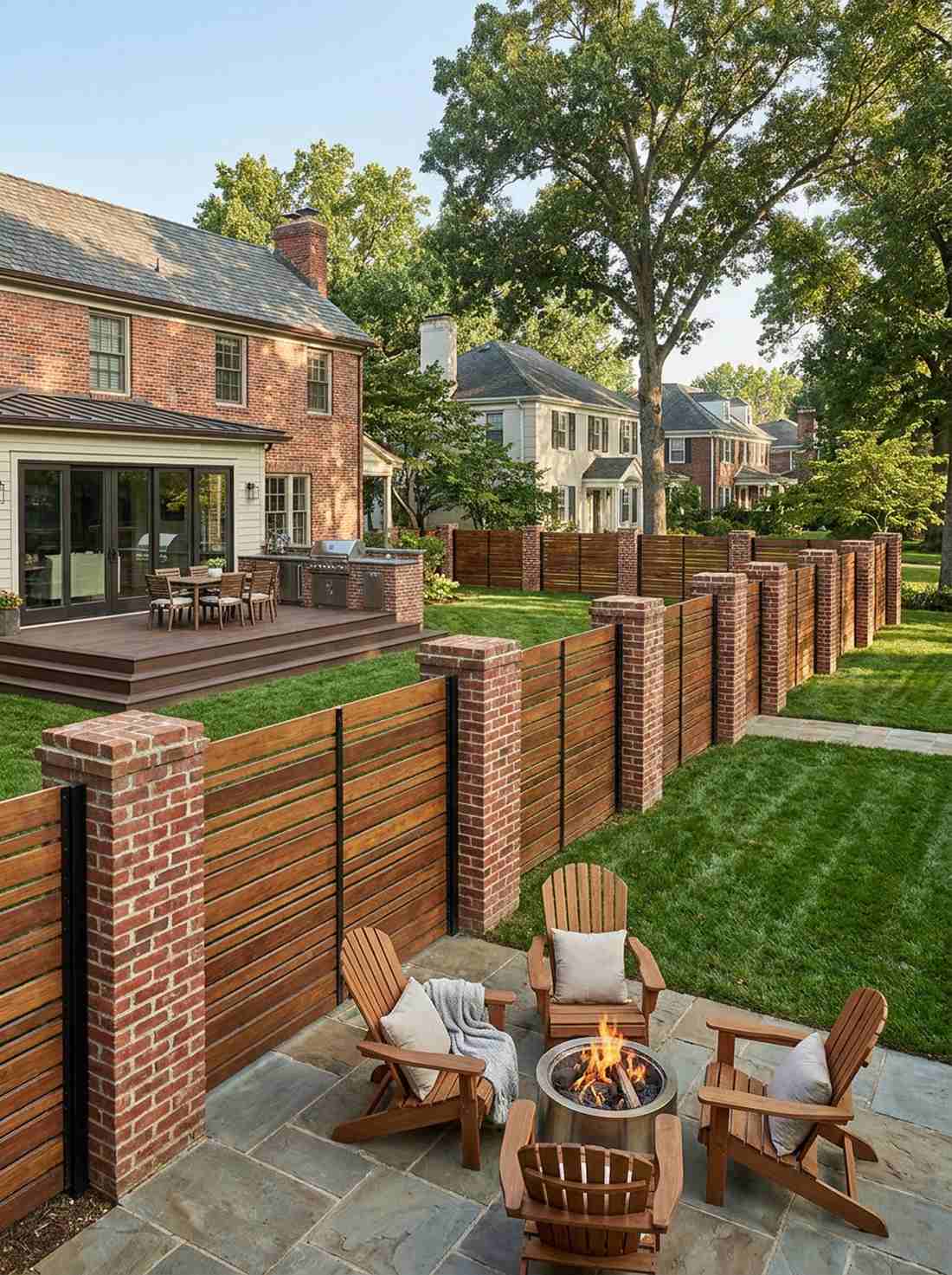
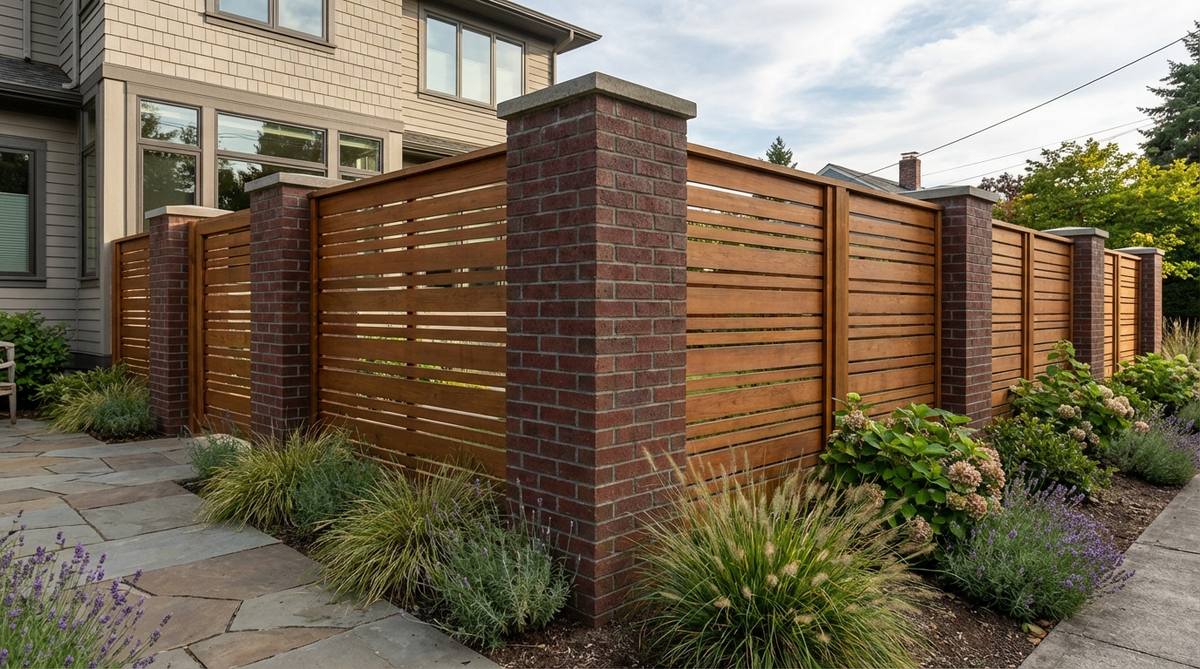
Radiates immense historical charm seamlessly blended with sharp contemporary lines. Masonry column property borders provide unshakeable visual weight while keeping the budget in check with wood infills. The perfect transition piece for older homes receiving a modern backyard renovation.
Building a solid brick wall is financially devastating, but alternating brick with timber creates a classic aesthetic that looks far more expensive than it is. Dropping horizontal modern timber slats between traditional red brick updates the entire neighborhood’s curb appeal.
This classic hybrid will run $70–$110 per foot. Pin this if you want to marry old-school masonry with modern design!
- Key Materials: Traditional brick, mortar, horizontal wood panels
- Vibe / Style: Transitional historic modernism
- Difficulty: Professional masonry required
- Budget Breakdown: Brick columns: $250/each | Wood slats: $35/ft.
- Creator’s Tip: Match the mortar color of the new brick columns exactly to the mortar used on your house for a perfectly cohesive estate look.
- Smart Sourcing: Pre-mixed color-match masonry mortar and pre-assembled horizontal wood slat sections.
You can have the most beautiful boundary in the world, but if your entry point looks cheap, the illusion shatters. Upgrade your access next…
Contemporary Modern Garden Gate Solutions For Stylish Access
A modern garden gate serves as focal point and functional entry, establishing aesthetic tone while controlling access. Contemporary designs emphasize clean lines and integrated hardware.
25. Horizontal Slat Matching Gate
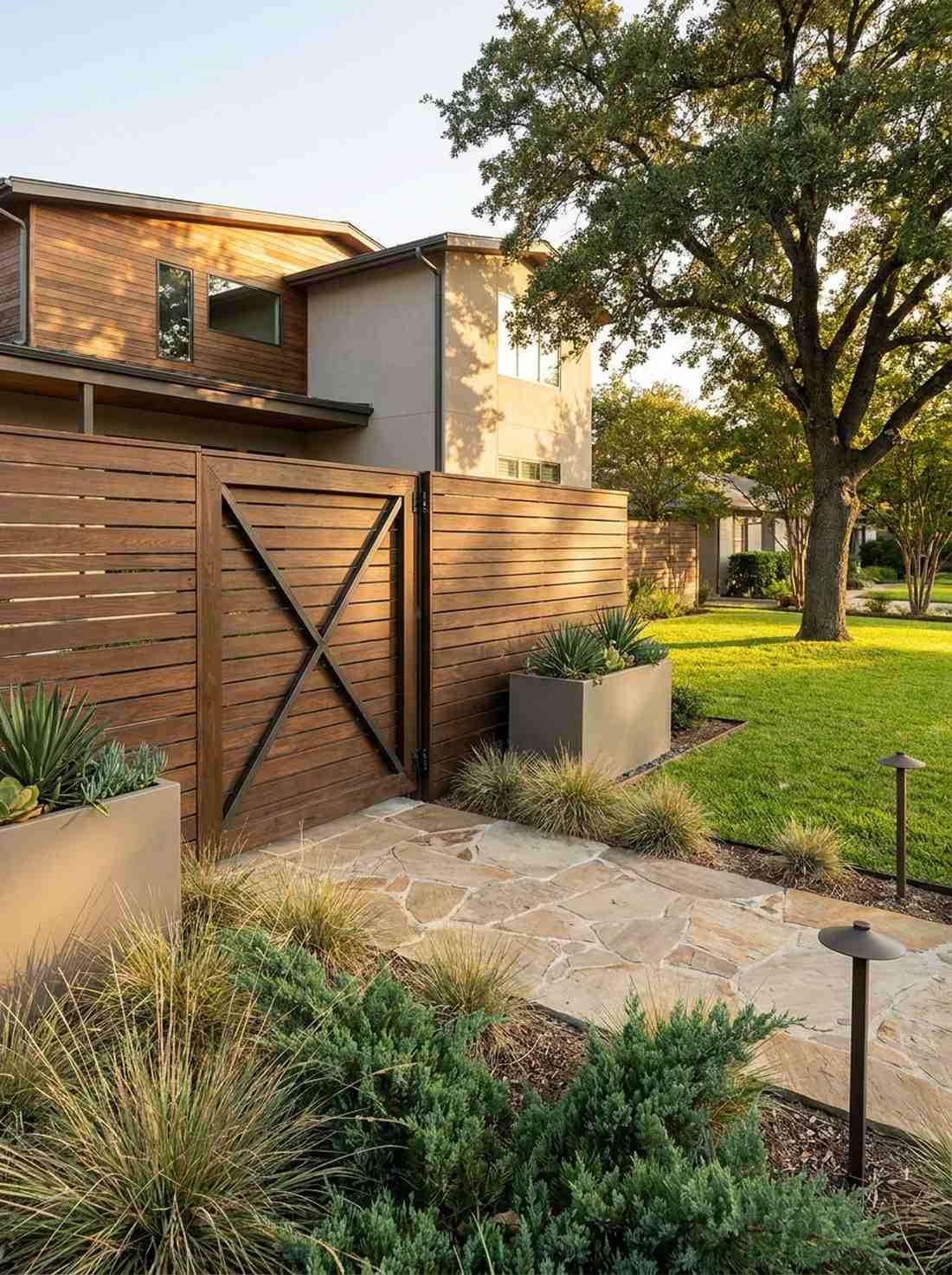
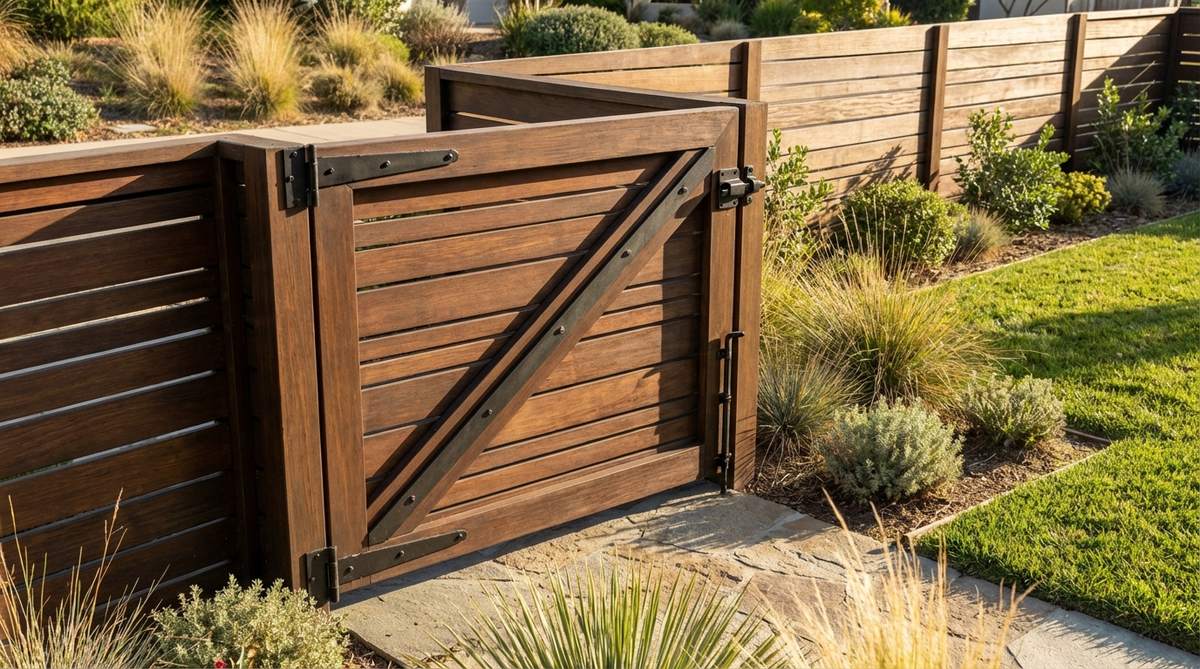
Feels like a secret, seamless portal hidden directly in plain sight. Unified entry boundary styling camouflages the entrance, making the property line feel continuous and expensive. Flawless choice for minimalist homes craving unbroken architectural lines.
Many builders use mismatched, off-the-shelf doors, yet strictly mirroring your fence pattern guarantees a designer-level finish. Integrating a heavy-duty anti-sag gate frame kit ensures those perfectly matched horizontal lines never warp or droop over time.
Building this custom door costs roughly $150–$300 for materials. Save this to your ultimate seamless property design board!
- Key Materials: Matching timber slats, diagonal steel bracing
- Vibe / Style: Seamless architectural flow
- Difficulty: Intermediate door hanging
- Budget Breakdown: Wood materials: $80 | Heavy hinges/braces: $100.
- Creator’s Tip: Buy hinges rated for at least 125 percent of the gate’s actual weight; wood absorbs water and gets heavier during rainy seasons.
- Smart Sourcing: No-sag adjustable steel gate frame kits and heavy-duty self-closing gate hinges.
26. Pivot Gate For Modern Entries
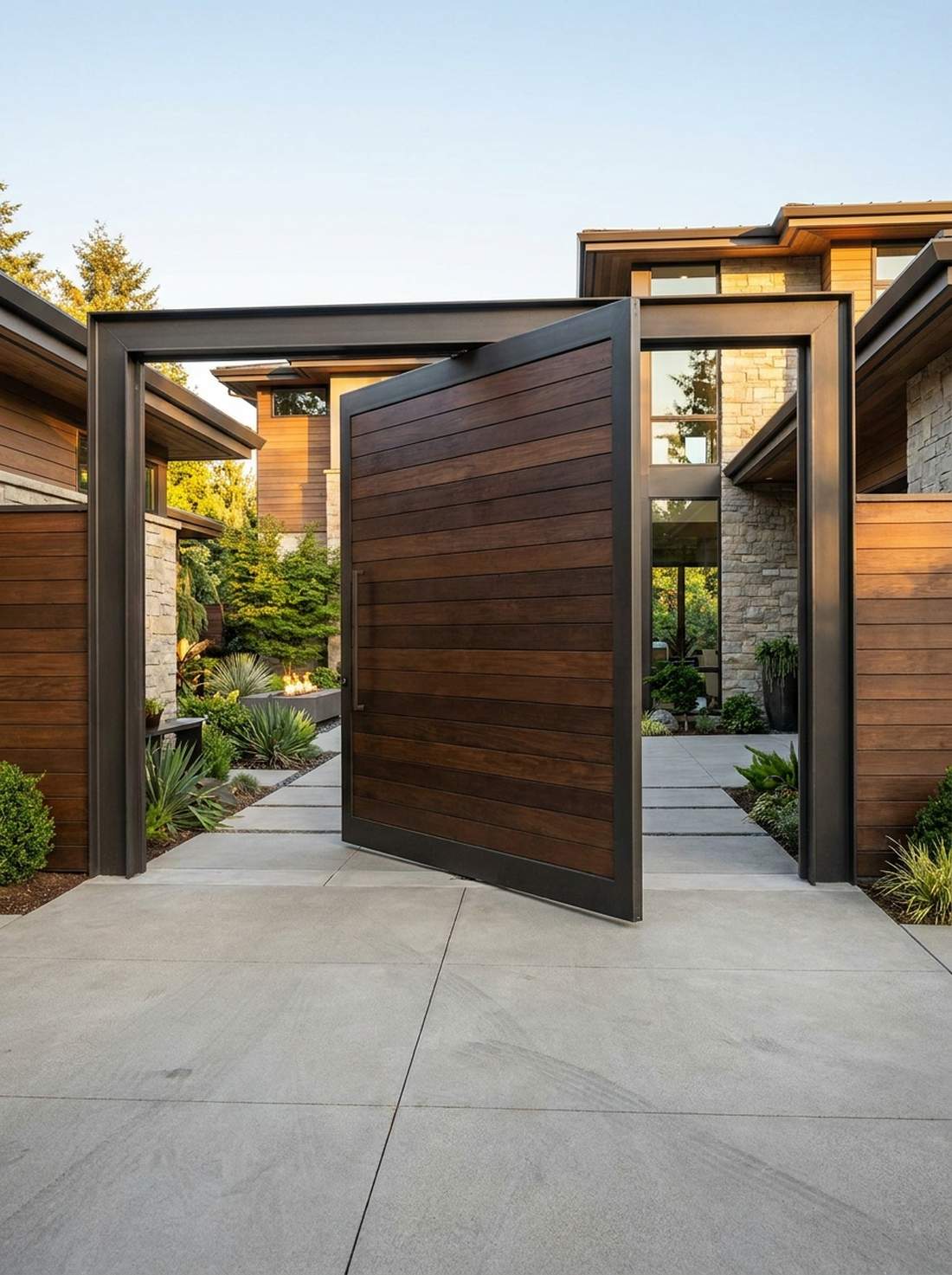
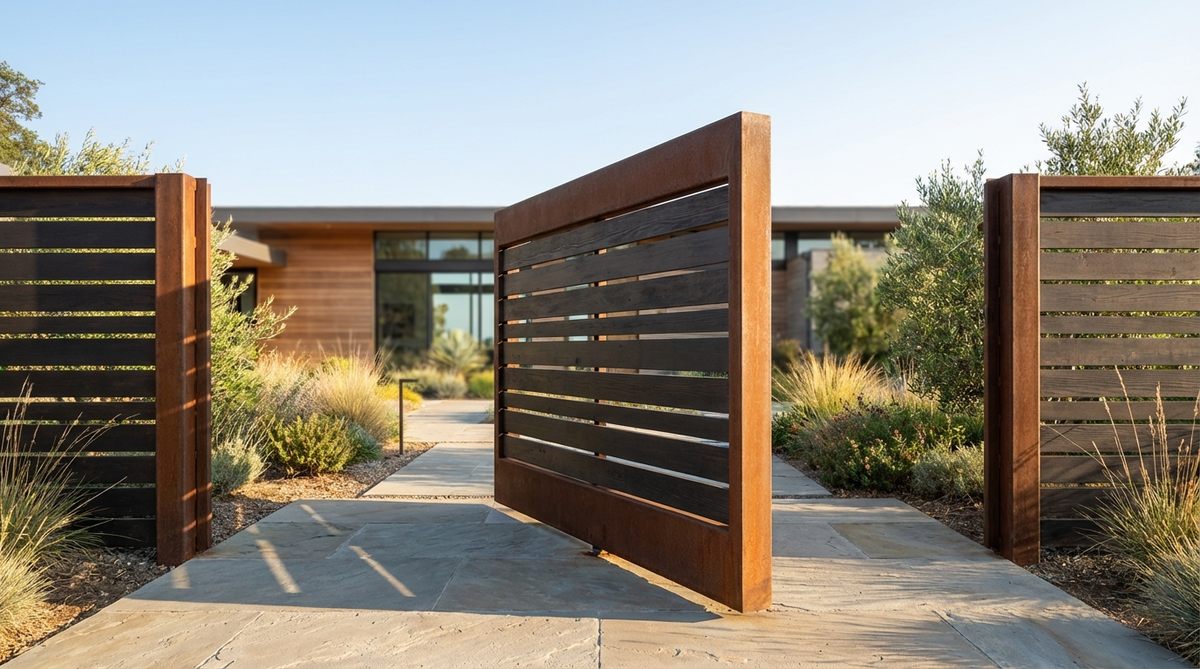
Gives off an ultra-premium, cinematic energy every single time it opens. Central-axis garden entry doors rotate smoothly on a pinpoint rather than swinging on clunky side hinges. A massive flex for high-end modern estates prioritizing dramatic entryways.
Standard hinges struggle with massive modern doors, but this pivoting layout looks far more expensive than it is while supporting immense weight perfectly. Sourcing heavy-duty commercial pivot hardware allows you to build a massive, wide gate without any structural leaning.
The specialized hardware pushes costs to $400–$800, but the luxury effect is undeniable. Highly recommended for a jaw-dropping front entrance.
- Key Materials: Floor/ceiling pivot hardware, massive wood/metal frame
- Vibe / Style: Cinematic luxury entrance
- Difficulty: Advanced precision alignment
- Budget Breakdown: Pivot hardware set: $300 | Gate materials: $200.
- Creator’s Tip: Since pivot gates open both inward and outward, ensure you have completely clear, level hardscaping on both sides of the entrance.
- Smart Sourcing: Heavy-duty offset pivot hinge kits and reinforced steel entry door frames.
27. Steel Frame Wood Infill Gate
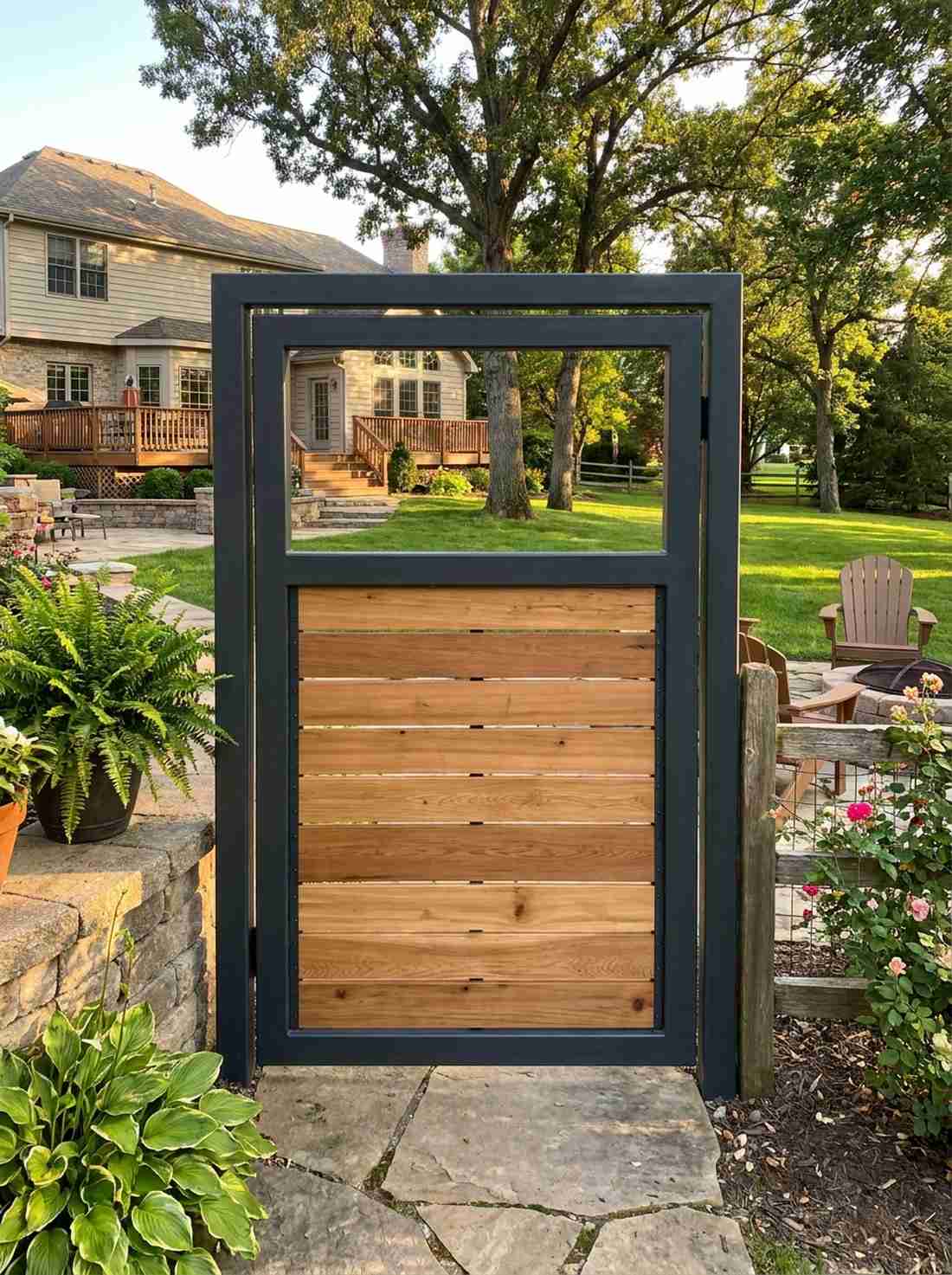
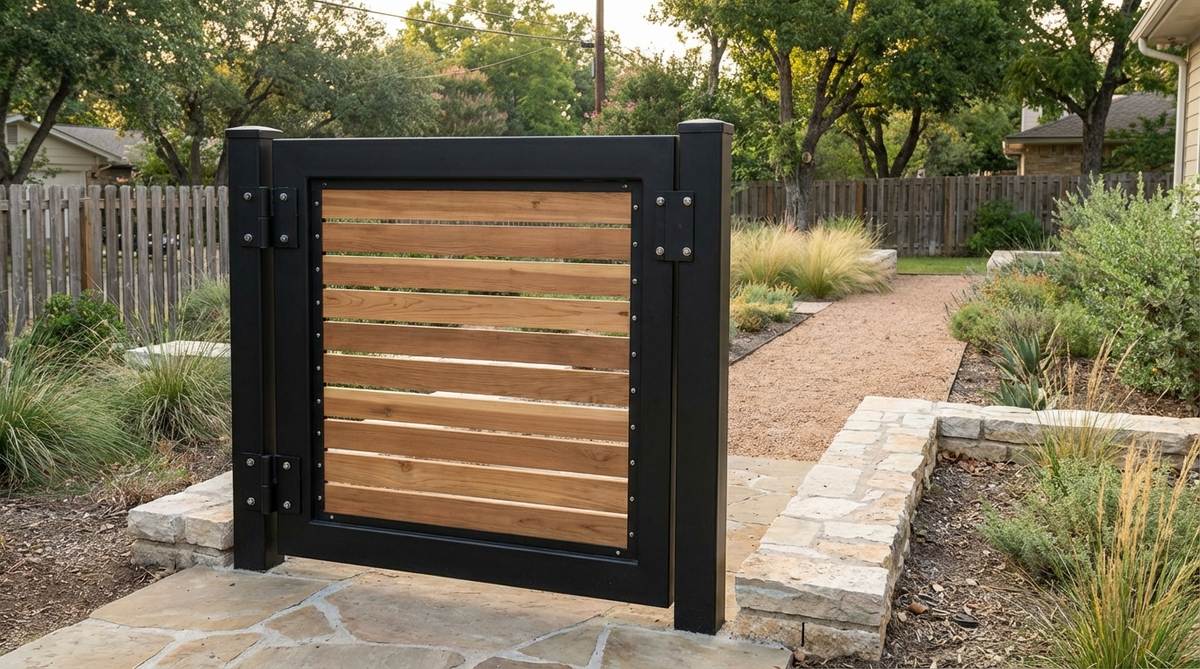
Radiates absolute unshakeable security while remaining incredibly handsome. Metal-reinforced property doors prevent the notorious twisting and jamming associated with pure wood construction. The ultimate reliable entryway for highly trafficked side yards.
Wooden gates always swell and stick in the winter, yet encasing timber inside steel creates an ultra-premium aesthetic that swings perfectly year-round. Utilizing powder-coated metal gate frames with wood inserts marries industrial toughness with natural warmth.
This hybrid door averages $250–$450 to assemble. Pin this if you are tired of your current wooden gate dragging on the ground!
- Key Materials: Welded steel frame, timber slat inserts
- Vibe / Style: Industrial-strength warmth
- Difficulty: Metal fabrication or pre-fab kits required
- Budget Breakdown: Steel frame kit: $200 | Wood inserts: $100.
- Creator’s Tip: Leave a small quarter-inch expansion gap between the wood infill and the steel frame so the wood can swell safely during humid months.
- Smart Sourcing: Adjustable steel gate frame kits (pre-welded) and stainless steel fastening hardware.
28. Minimalist Wood Slat Gate
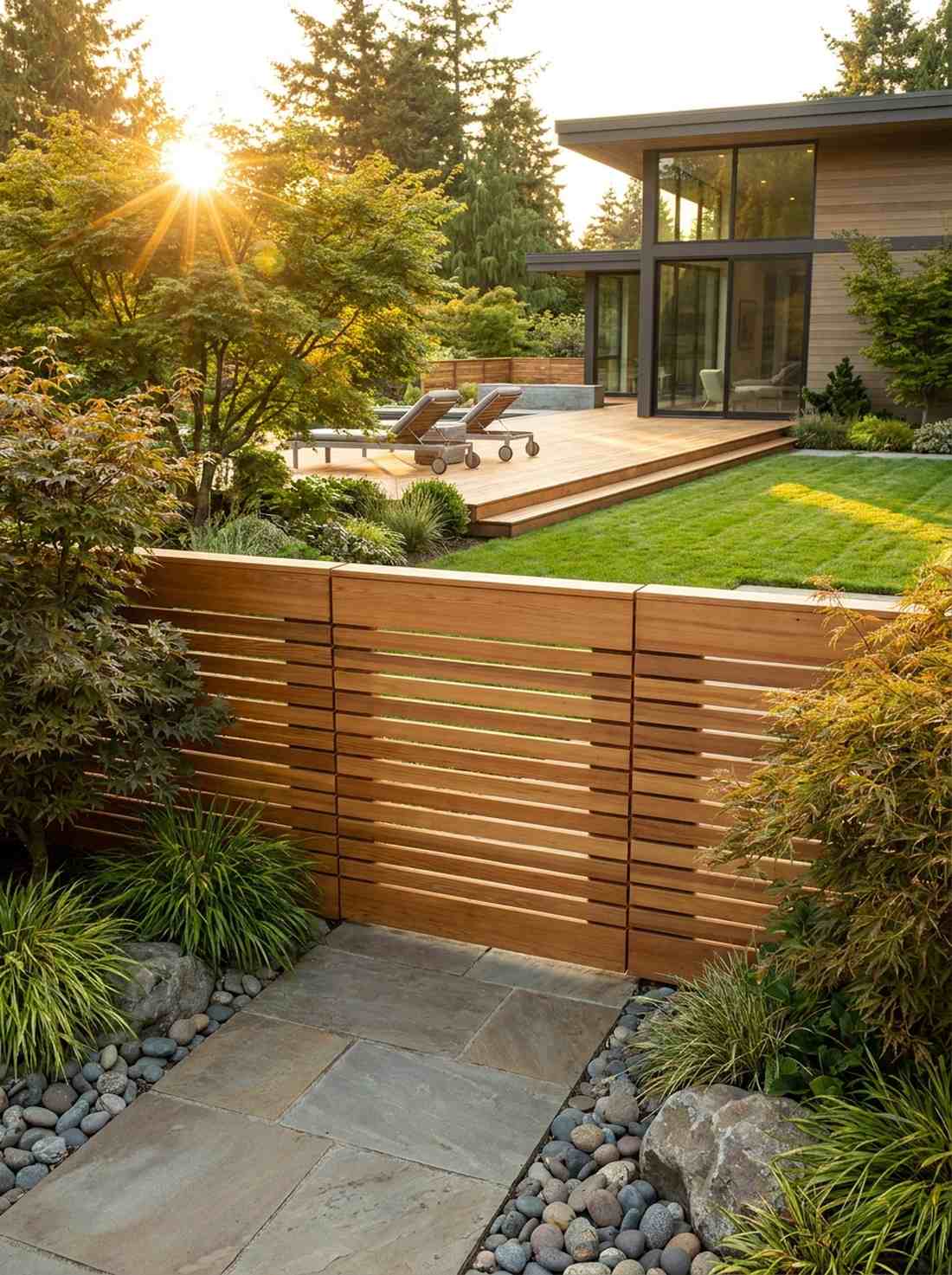
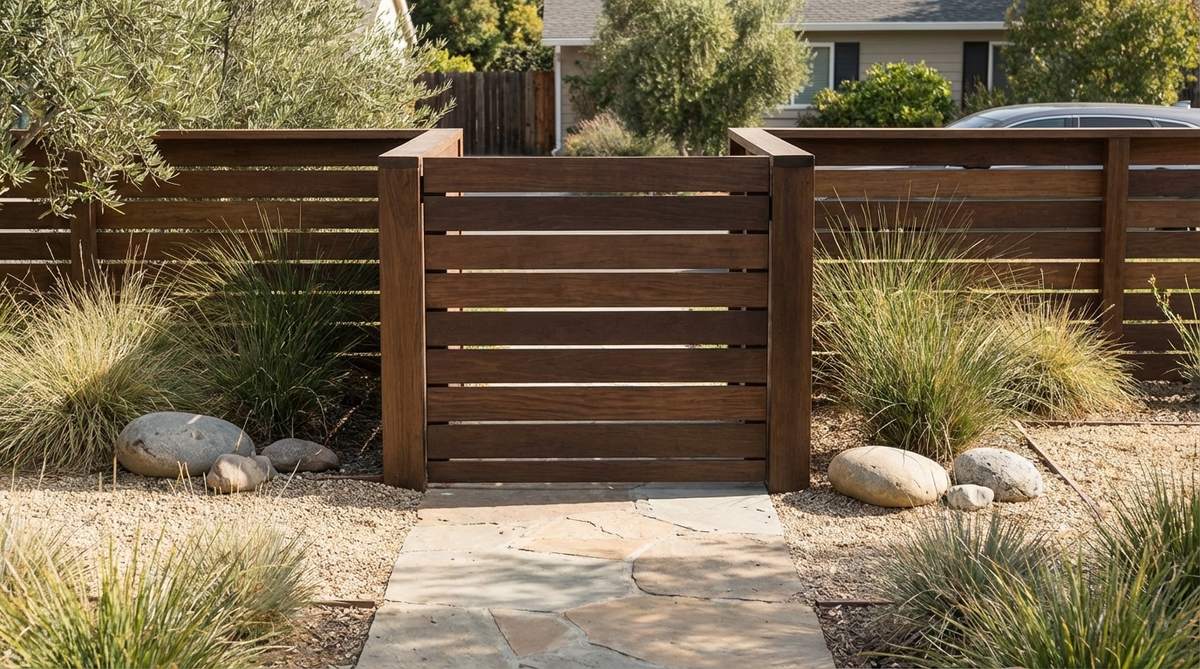
Feels like a serene, highly intentional boundary straight out of a Kyoto courtyard. Concealed-hardware garden entries strip away all the visual noise of ugly latches and bulky hinges. Flawless application for deeply zen, minimalist property layouts.
Most DIY gates look cluttered with chunky locks, but this hidden method delivers a surprisingly premium look of pure simplicity. By employing magnetic hidden gate latches and European pocket hinges, the door becomes a subtle, smooth transition piece.
Pulling off this sleek look costs around $150–$250. A fantastic upgrade that prioritizes profound architectural restraint.
- Key Materials: Clean wood slats, concealed magnetic hardware
- Vibe / Style: Ultra-restrained zen minimalism
- Difficulty: Requires precise hardware routing
- Budget Breakdown: Minimalist timber: $100 | Hidden hardware: $120.
- Creator’s Tip: Use a router to sink the hinges completely flush into the wood, ensuring the gap between the gate and the fence is practically invisible.
- Smart Sourcing: Heavy-duty concealed magnetic gate latches and flush-mount invisible exterior hinges.
Material Guide: Cheap vs. Premium Aesthetic
Knowing exactly where to save and where to spend makes all the difference in achieving that “looks expensive but isn’t” vibe.
- Standard vs. UV-Resistant/Premium: Spending an extra $30 on marine-grade sealant stops fading and prevents a $1,000 fence from turning dull gray in a single year.
- Pre-made Kits vs. Sourcing Locally: While raw lumber is cheap, utilizing heavy-duty steel frame starter kits saves hours of frustrating carpentry and completely prevents future sagging.
29. Laser-Cut Metal Pattern Gate
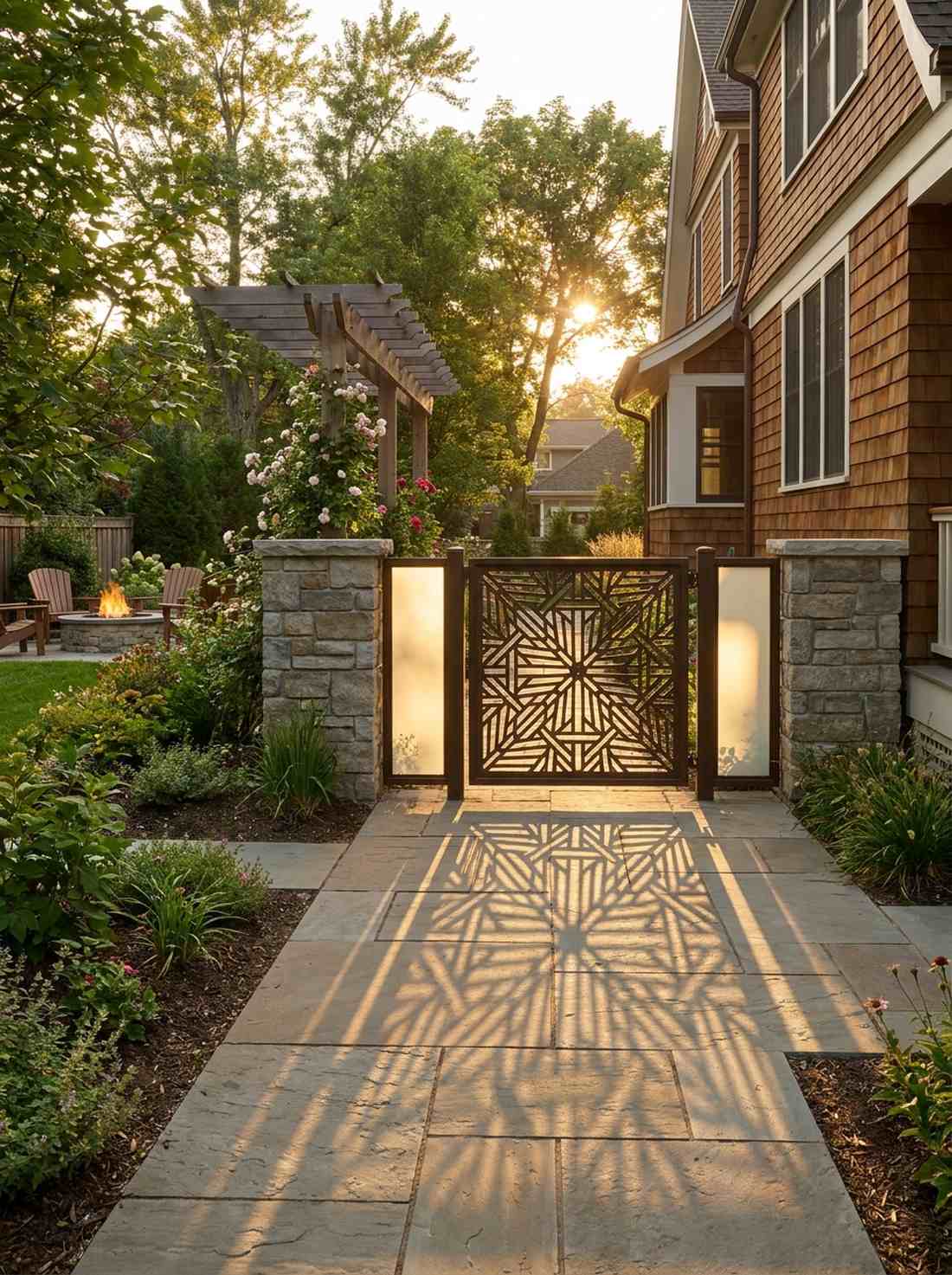
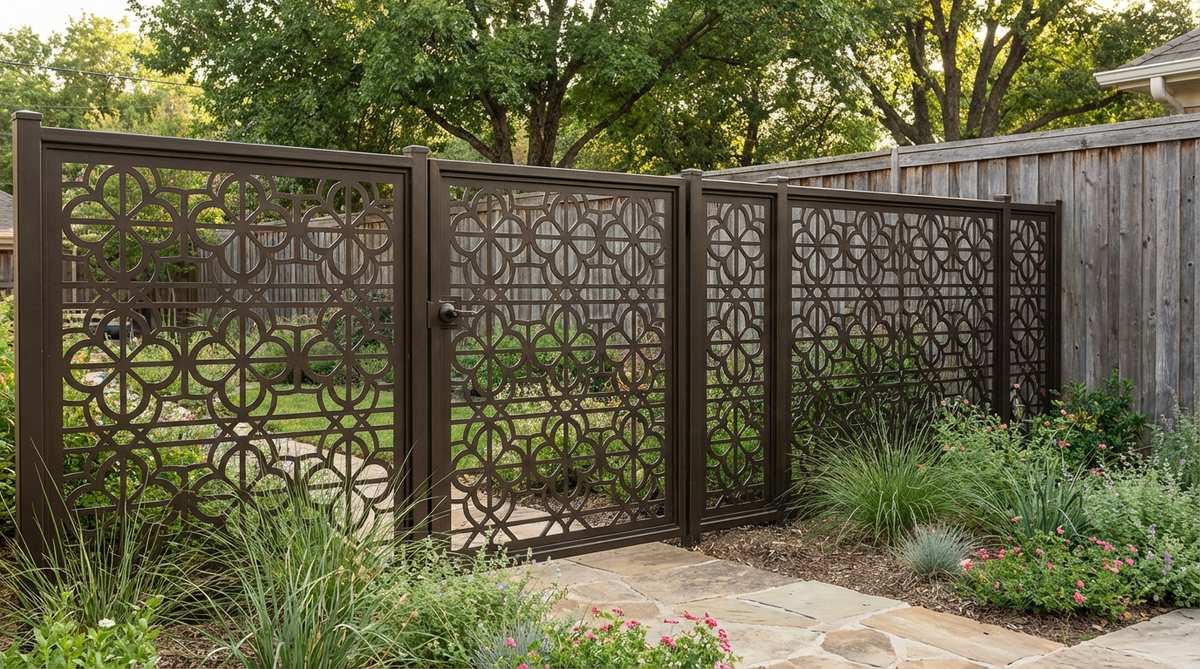
Gives off a deeply artistic, bespoke gallery vibe right at your property line. Intricate metal entry screens function as gorgeous outdoor art pieces while maintaining serious security. Absolutely perfect for turning a boring side alley into a focal point.
Basic doors are purely functional, but utilizing laser precision creates an ultra-premium aesthetic that casts beautiful, complex shadows at sunset. Sourcing pre-cut geometric steel panels gives you millionaire-level customization without paying for local artistic metalwork.
These stunning metallic doors run $300–$600 depending on pattern density. Save this to your high-end curb appeal inspiration board!
- Key Materials: Powder-coated laser-cut aluminum or steel
- Vibe / Style: Bespoke functional art
- Difficulty: Easy mounting of pre-made panels
- Budget Breakdown: Decorative metal panel: $350 | Mounting hardware: $50.
- Creator’s Tip: If privacy is a concern, mount a sheet of frosted acrylic directly behind the metal pattern to block sightlines while letting light glow through.
- Smart Sourcing: Laser-cut geometric metal privacy panels and exterior-grade frosted acrylic sheets (bulk pack).
30. Double Gate With Integrated Automation
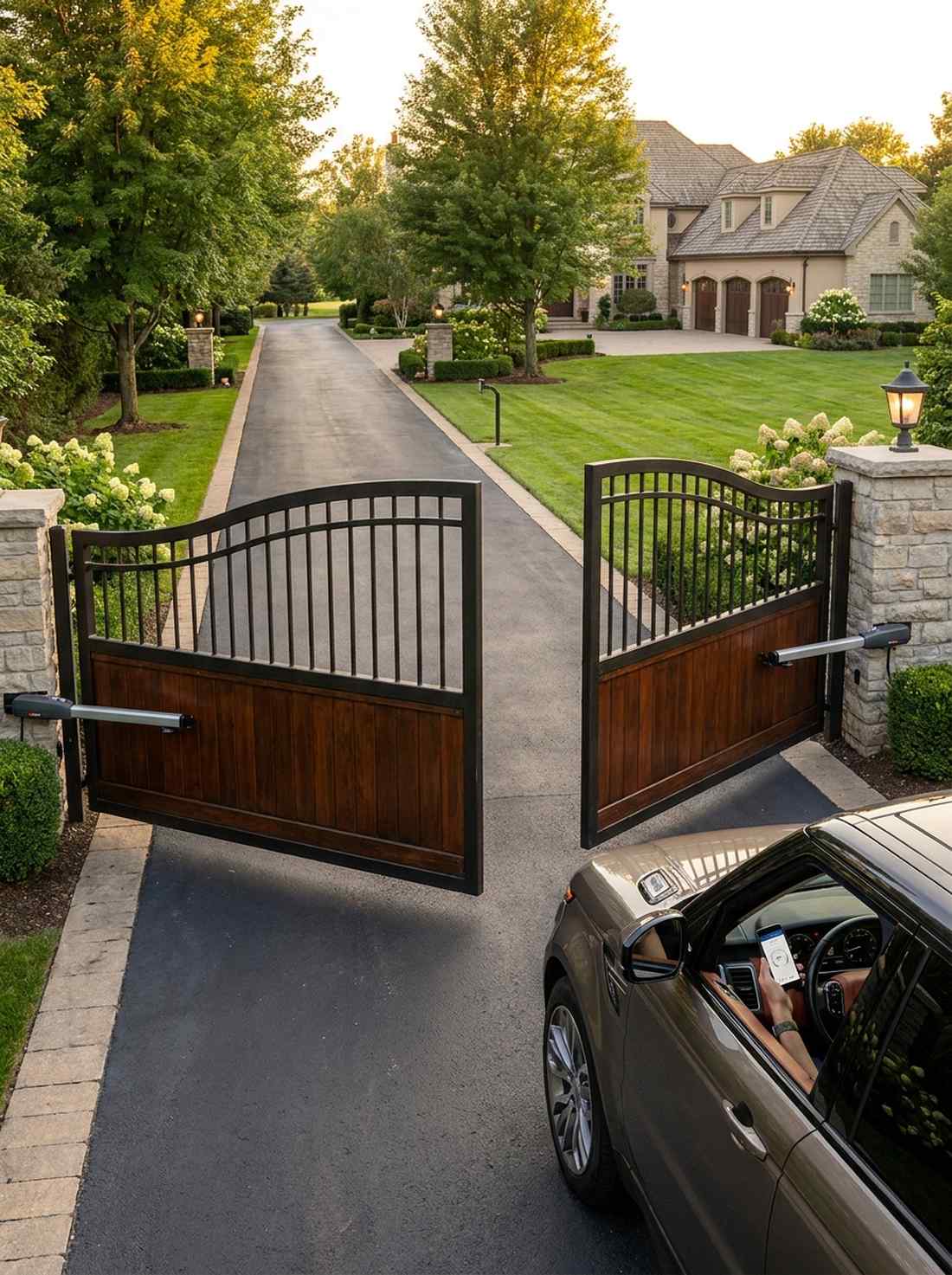
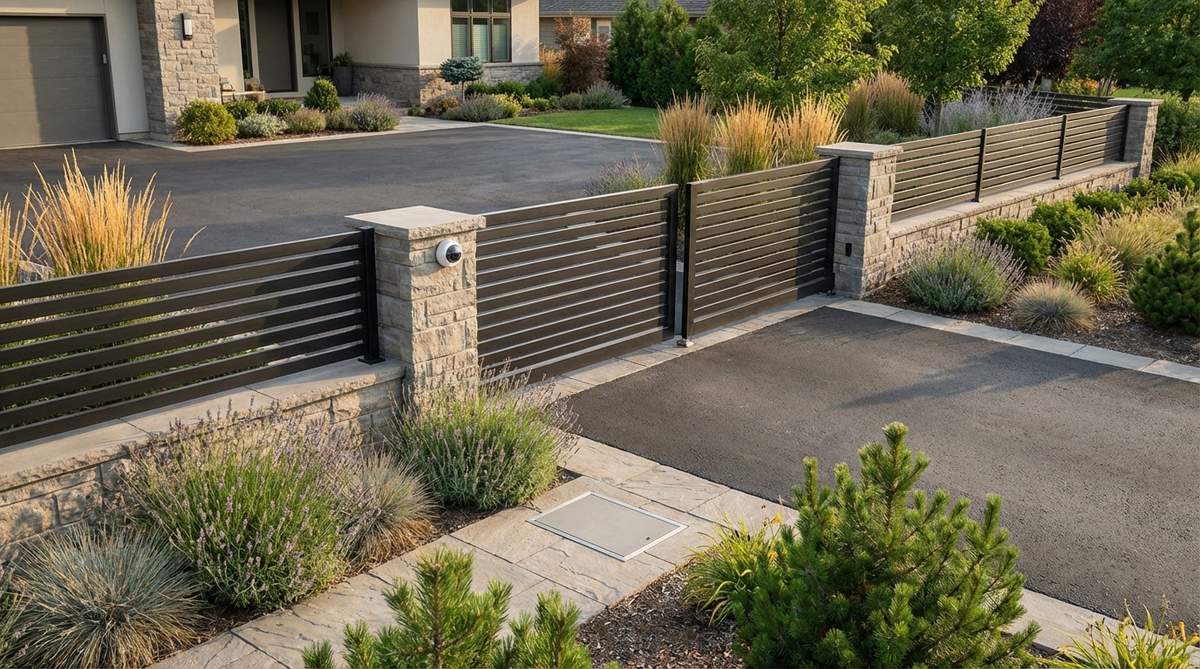
Radiates massive estate energy, opening smoothly like magic as you pull into the driveway. Motorized dual entry systems provide incredible daily convenience while firmly securing the perimeter. Essential for expansive properties requiring frequent, secure vehicle access.
Manual gates become a tedious chore in the rain, yet this automated layout guarantees a designer-level finish of modern luxury. Integrating smart-phone controlled gate motors completely modernizes the property without needing complex commercial wiring.
Automation adds $500–$1,500 to the gate cost, but the daily convenience is legendary. Highly recommended for a serious lifestyle upgrade.
- Key Materials: Double gate panels, motorized swing arms
- Vibe / Style: High-tech estate luxury
- Difficulty: Advanced electrical and leveling
- Budget Breakdown: Dual gates: $600 | Smart motor kit: $800.
- Creator’s Tip: Always run your underground electrical conduit before pouring the driveway or setting the fence posts to avoid tearing up the yard later.
- Smart Sourcing: Heavy-duty dual swing gate opener kits and smart-phone integrated gate controllers.
31. Seamless Gate Hidden In Fence
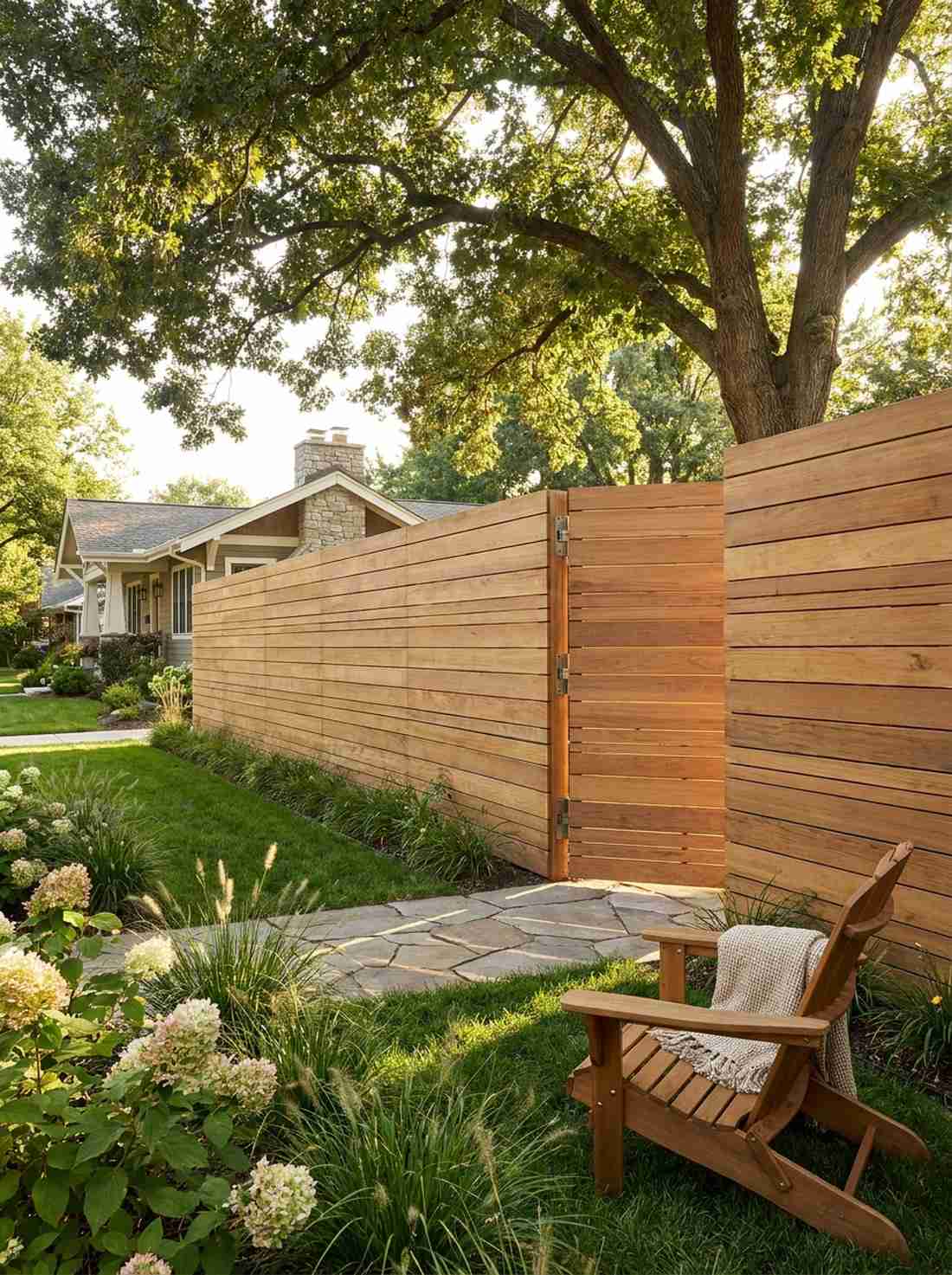
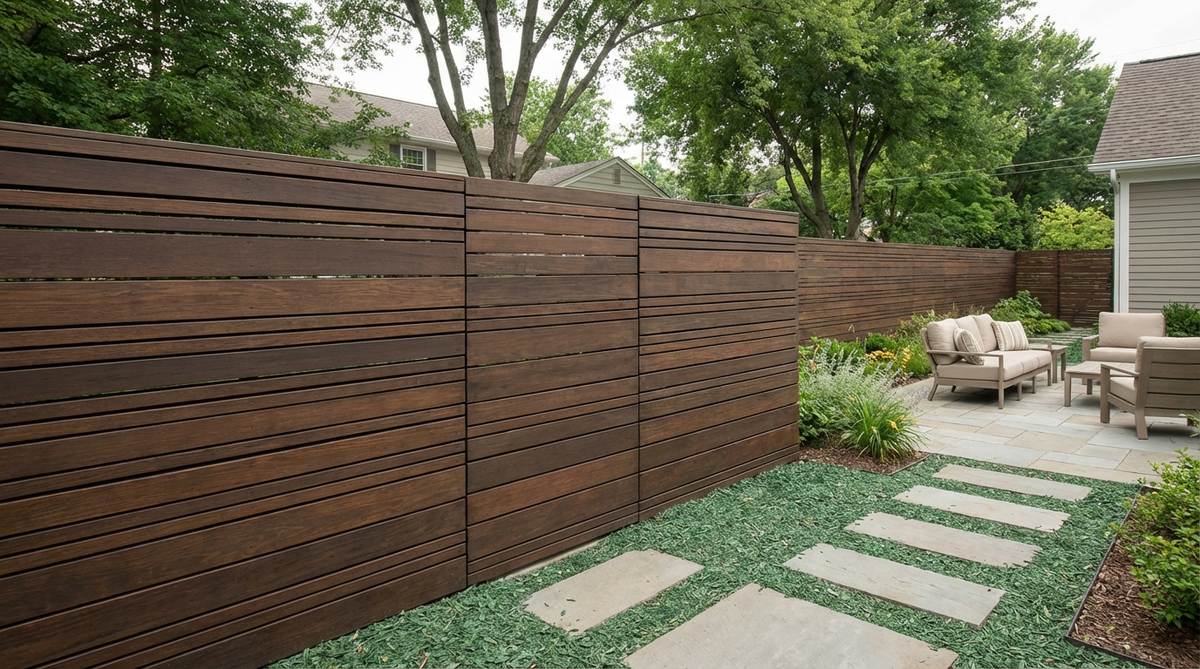
Feels exactly like a secret agent passageway hidden from the public eye. Camouflaged boundary entryways completely disappear into the fence line, offering surprise access only you know about. Flawless application for side yards where you don’t want to draw attention.
Most gates loudly announce themselves, but this stealthy trick looks far more expensive than it is while enhancing perimeter security. By perfectly matching the slat lines and utilizing invisible push-to-open latch kits, the door vanishes completely.
Creating this illusion costs around $200 in specialized hidden hardware. Pin this if you love clever, James Bond-style architectural tricks!
- Key Materials: Perfectly matched fence slats, invisible hardware
- Vibe / Style: Stealthy continuous architecture
- Difficulty: Extreme precision alignment required
- Budget Breakdown: Matched wood: $100 | Invisible hardware: $150.
- Creator’s Tip: Continue the horizontal lines of the fence directly across the gate cut so the wood grain matches up perfectly when the door is closed.
- Smart Sourcing: Heavy-duty invisible exterior hinges and heavy-duty push-to-open outdoor latches.
32. Arched-Top Modern Garden Gate
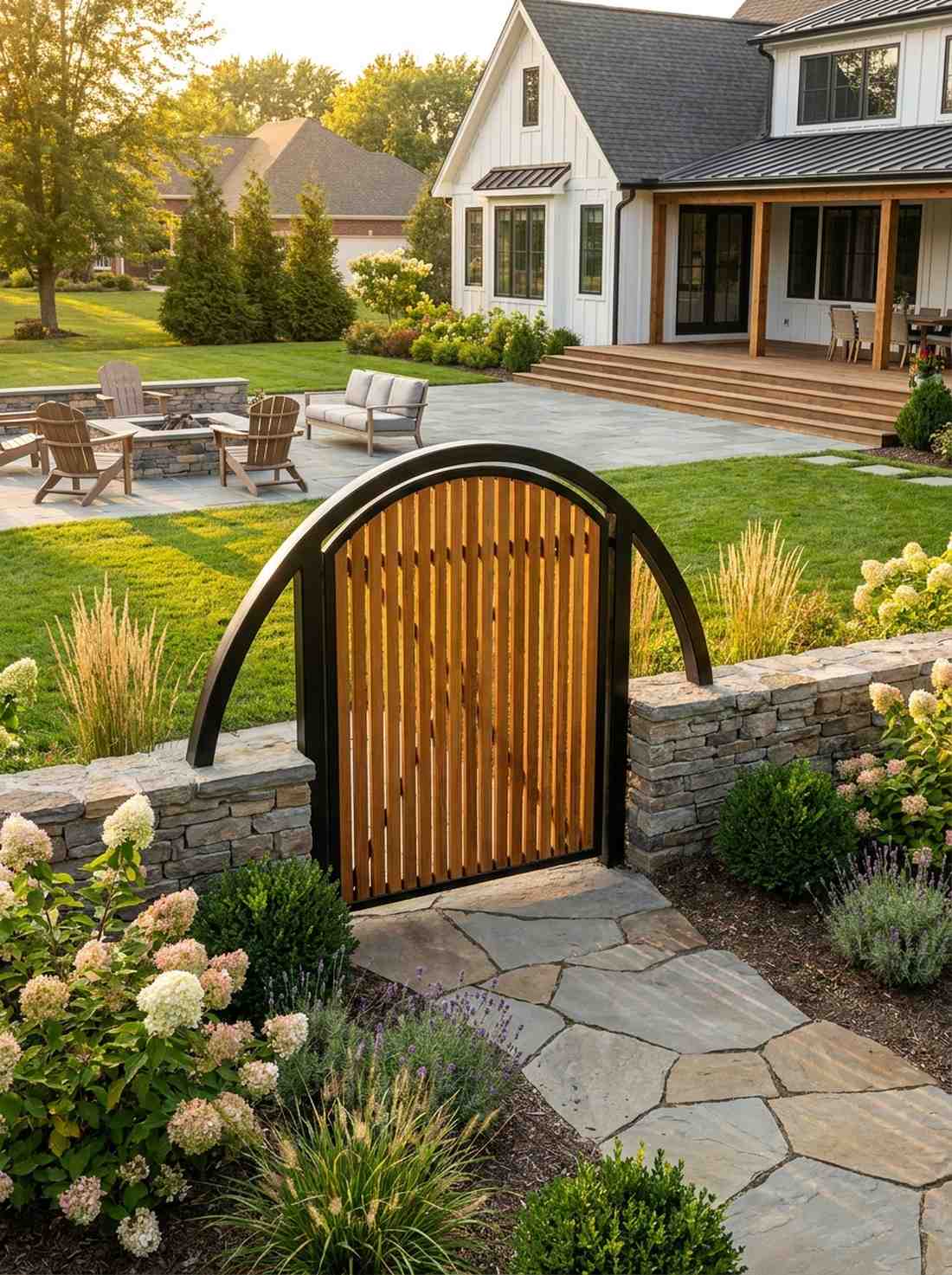
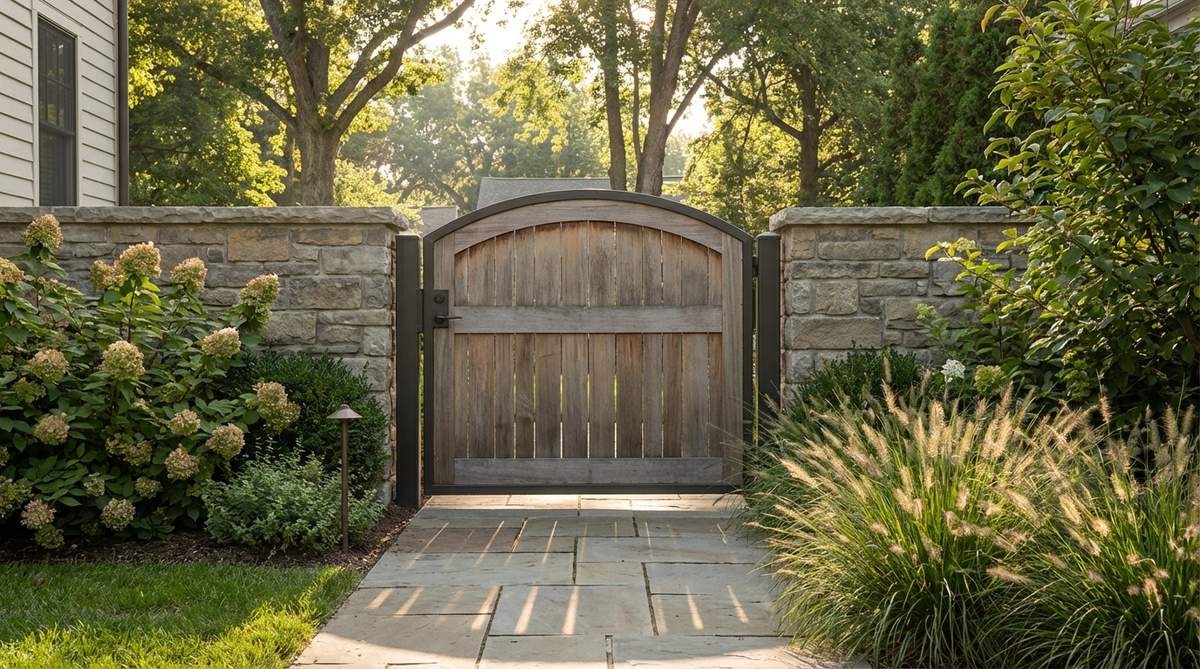
Gives off an incredibly welcoming, softened modern vibe that draws the eye upward. Curved property entry points break up the rigid, harsh geometry of typical contemporary boxes. Ideal for transitional homes bridging the gap between classic charm and modern edges.
Standard flat doors are boring, yet cutting a gentle sweeping curve delivers a surprisingly premium look that elevates the whole boundary. Securing a pre-bent steel arch framing kit allows you to achieve this elegant curve without advanced carpentry skills.
This softened entry style runs about $200–$350 for materials. Save this to your elegant landscaping mood board!
- Key Materials: Arched metal or wood frame, vertical infill slats
- Vibe / Style: Softened transitional elegance
- Difficulty: Intermediate template cutting
- Budget Breakdown: Arched frame: $150 | Wood slats: $100.
- Creator’s Tip: Create a perfect cardboard template of your arch before cutting any expensive wood to ensure the curve is mathematically flawless.
- Smart Sourcing: Pre-formed arched steel gate frames and flexible wood trim bending kits.
Stop painting and staining every three years. The next evolution in boundary design requires absolutely zero maintenance while looking identical to real wood…
Composite And Low-Maintenance Fence Panels For Durability
Composite materials combine recycled wood fiber with polymers, creating fencing that resists rot, insects, and fading. These panels deliver decades of service with minimal upkeep.
33. WPC Horizontal Composite Panels
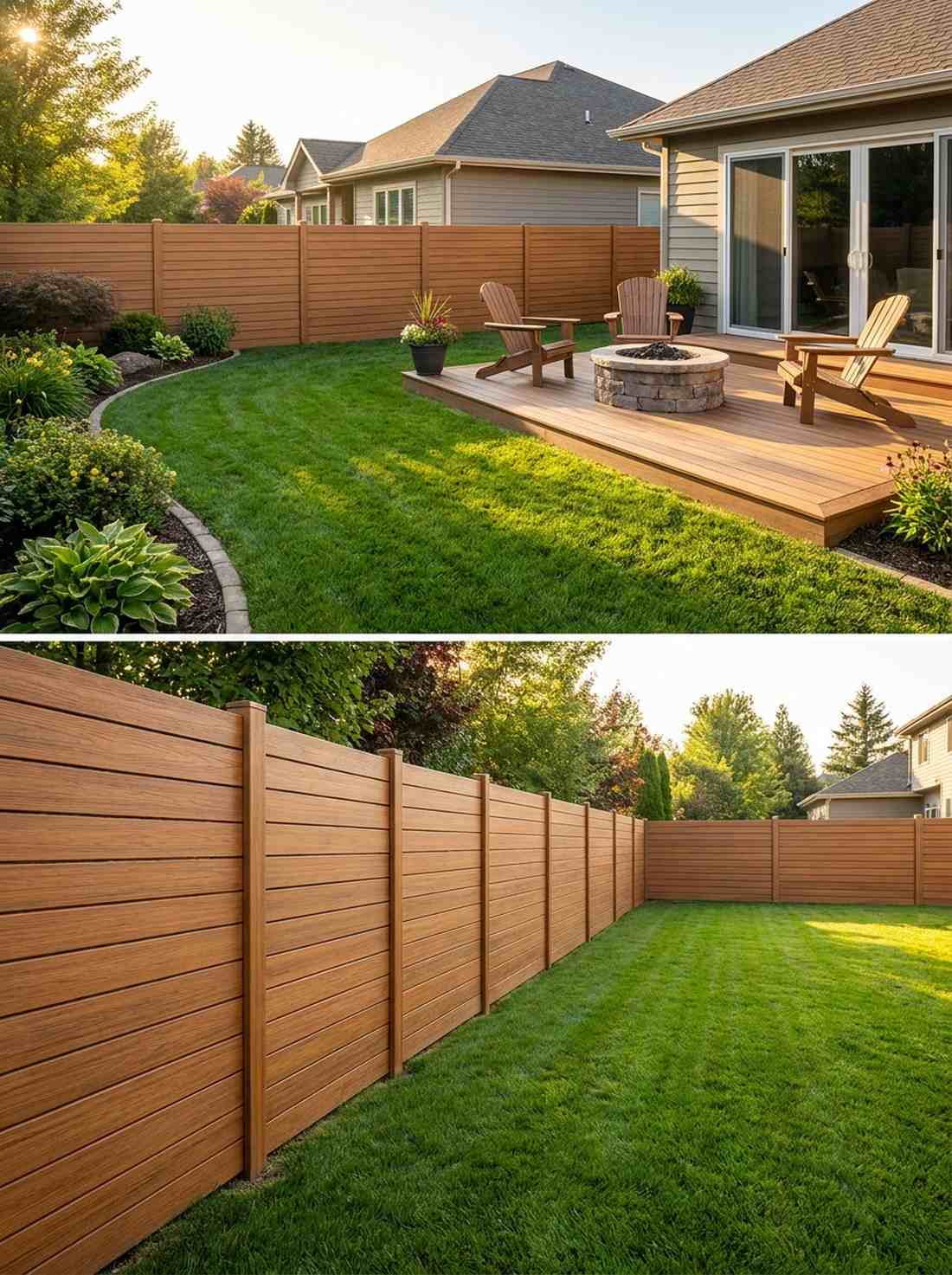
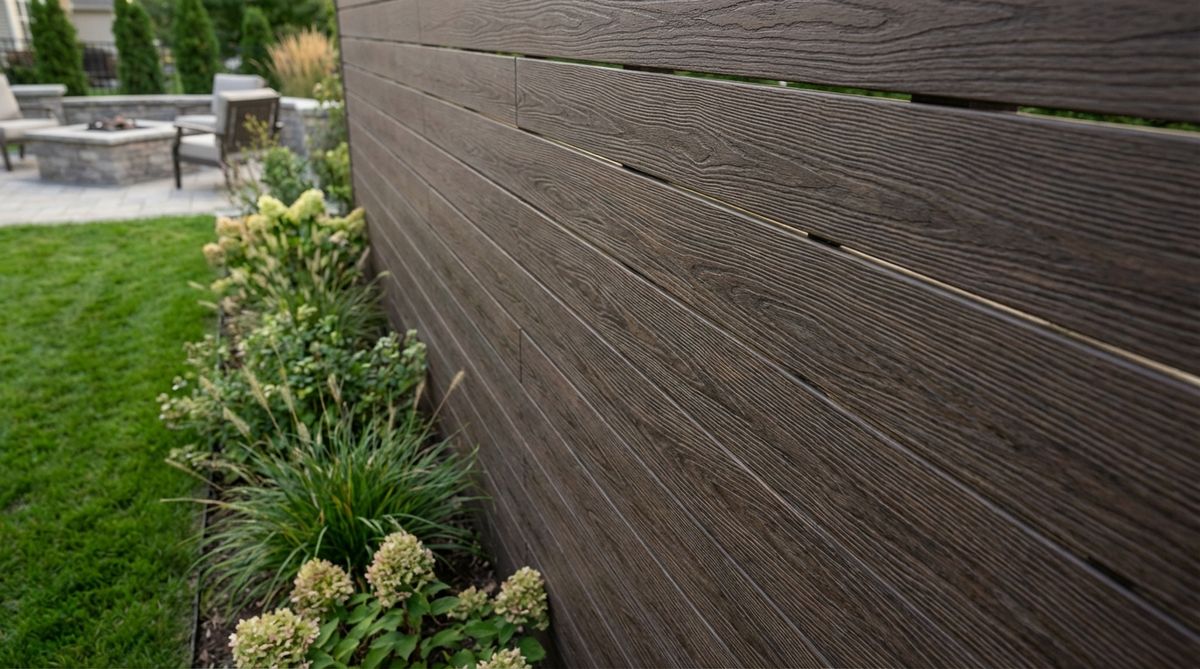
Feels like a pristine, brand-new installation every single day of its 30-year lifespan. Wood-plastic hybrid boundaries provide the gorgeous warmth of organic timber without any of the agonizing rot or splinters. Perfectly suited for busy homeowners who refuse to spend their weekends painting.
Many people suffer through exhausting maintenance, yet this modern polymer layout guarantees a designer-level finish that practically cleans itself with the rain. Utilizing co-extruded composite slat packs ensures the UV-resistant color never fades, cracks, or warps.
This high-tech material costs $40–$70 per foot upfront but saves thousands in future labor. Highly recommended for a true “set it and forget it” upgrade!
- Key Materials: WPC composite boards, hidden fastening tracks
- Vibe / Style: Flawless permanent warmth
- Difficulty: Easy click-and-lock assembly
- Budget Breakdown: Composite panels: $55/ft | Hidden tracks: $15/ft.
- Creator’s Tip: Always leave a strict 1/8-inch expansion gap at the ends of the boards; composite expands rapidly when baked in the summer sun.
- Smart Sourcing: Pre-cut WPC composite fence boards (bulk pack) and composite-specific hidden fastening tracks.
34. Composite Slat With Aluminum Posts
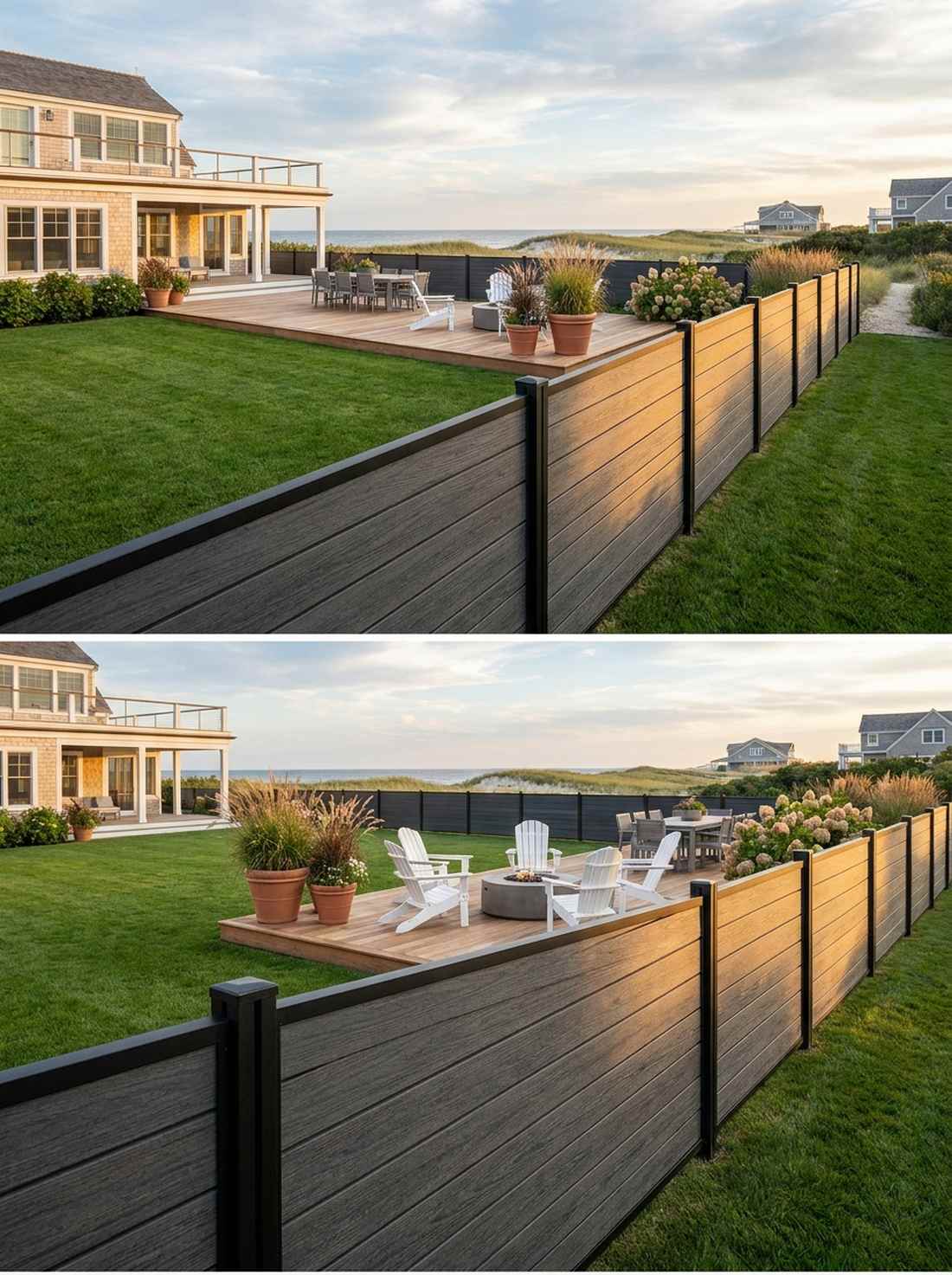
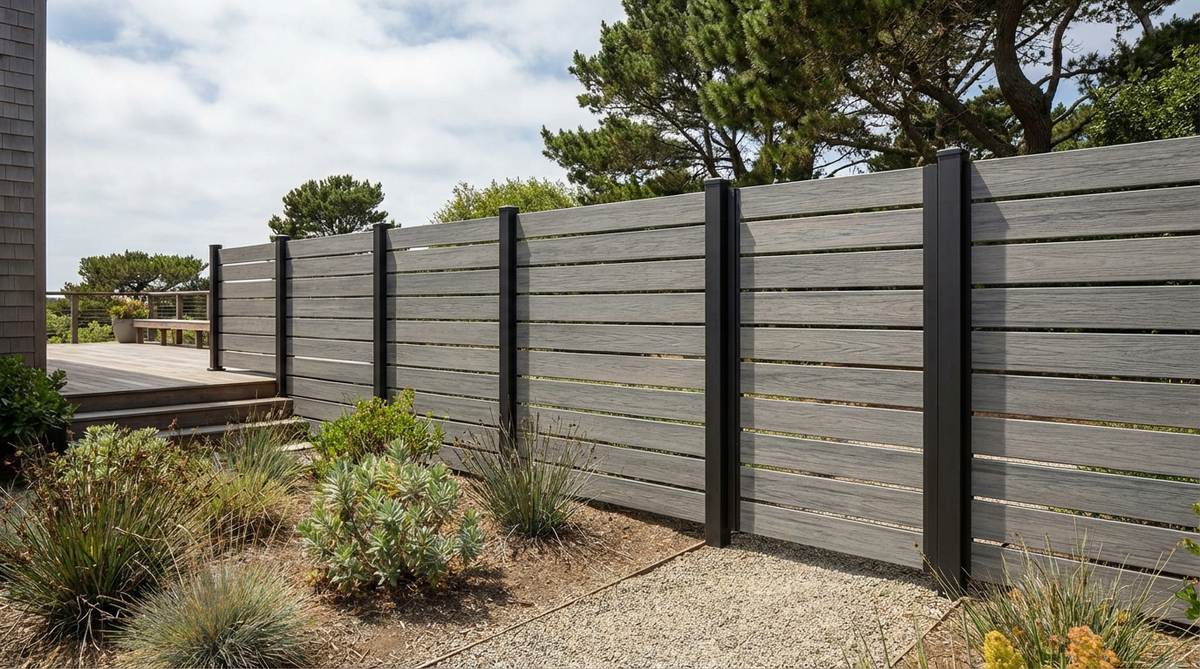
Radiates absolute indestructible confidence, completely immune to rust, rot, and salt. Polymer and alloy garden borders establish a zero-maintenance fortress that looks incredibly sharp. The ultimate necessity for coastal homes where salt air destroys traditional materials in months.
Wood posts rot and steel rusts, but this exact combination looks far more expensive than it is while offering literal lifetime durability. By locking composite strips into powder-coated aluminum slotted posts, you eliminate every vulnerable failure point.
Expect an upfront investment of $60–$90 per foot. Save this to your forever-home planning board!
- Key Materials: Aluminum posts, composite horizontal slats
- Vibe / Style: Unkillable modern precision
- Difficulty: Intermediate post setting required
- Budget Breakdown: Aluminum posts: $80/each | Composite infill: $45/ft.
- Creator’s Tip: Use U-channel aluminum inserts to neatly cover the top and bottom edges of the composite boards for a tightly framed, professional finish.
- Smart Sourcing: Slotted aluminum fence posts and premium composite horizontal slat bundles.
35. Embossed Wood-Grain Composite Fence
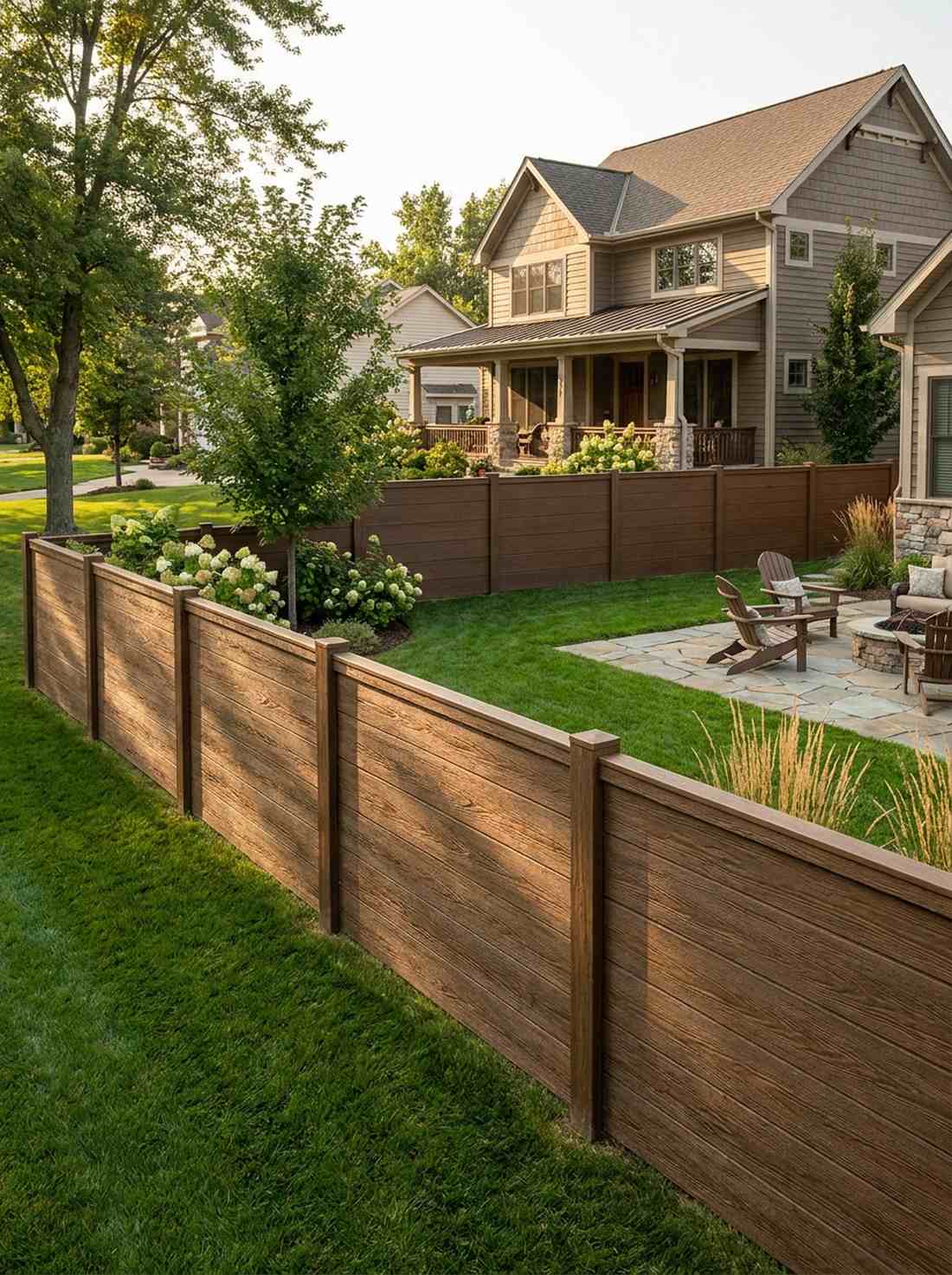
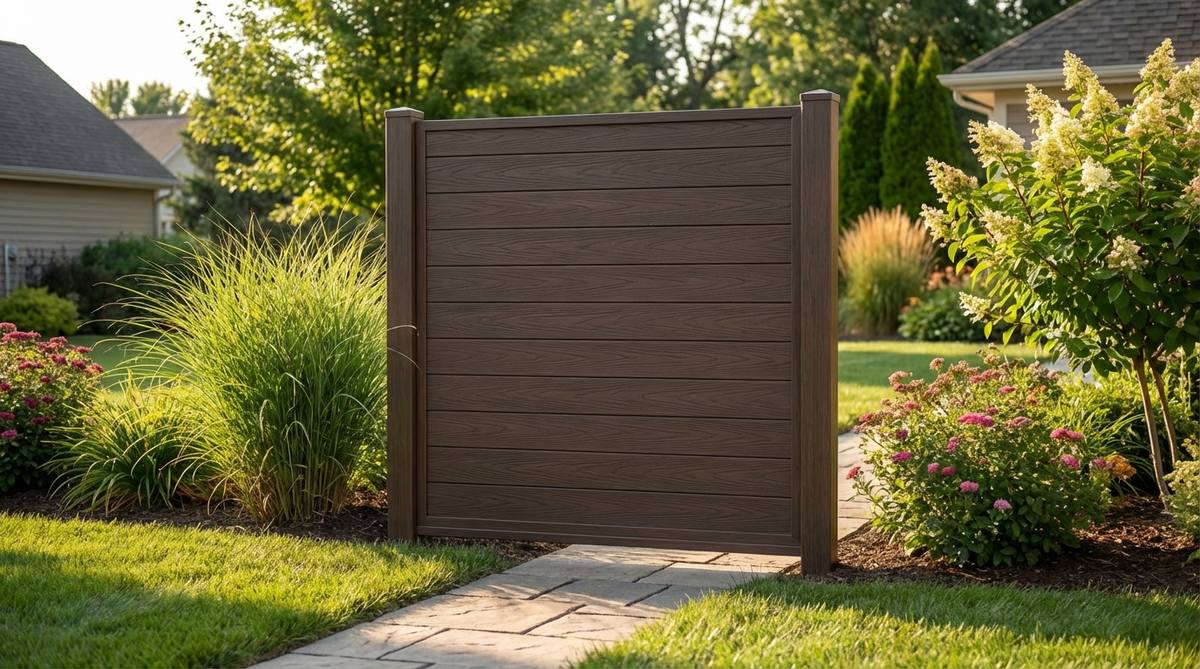
Gives off an incredibly convincing, rich organic texture without the organic vulnerabilities. Textured synthetic privacy walls fool the eye perfectly from a few feet away, casting realistic grain shadows in the sunlight. Excellent for high-end suburban developments demanding strict aesthetic consistency.
Cheap plastics look shiny and fake, yet utilizing deep-embossed technology delivers a surprisingly premium look that mimics actual rough-sawn lumber. Securing matte-finish textured composite panels gives you the classic rustic feel without the termite risk.
These advanced textured boards run around $45–$75 per foot. A fantastic way to fake nature with high-tech science!
- Key Materials: Deep-embossed composite boards, matching trim
- Vibe / Style: Hyper-realistic organic faux
- Difficulty: Easy standard installation
- Budget Breakdown: Textured boards: $55/ft | Hardware: $10/ft.
- Creator’s Tip: Ensure you buy a “matte” finish line of composites; glossy boards instantly give away the fact that it’s synthetic plastic.
- Smart Sourcing: Deep-embossed matte composite fence kits and color-matched exterior composite screws.
36. Vinyl Privacy Fence Panels
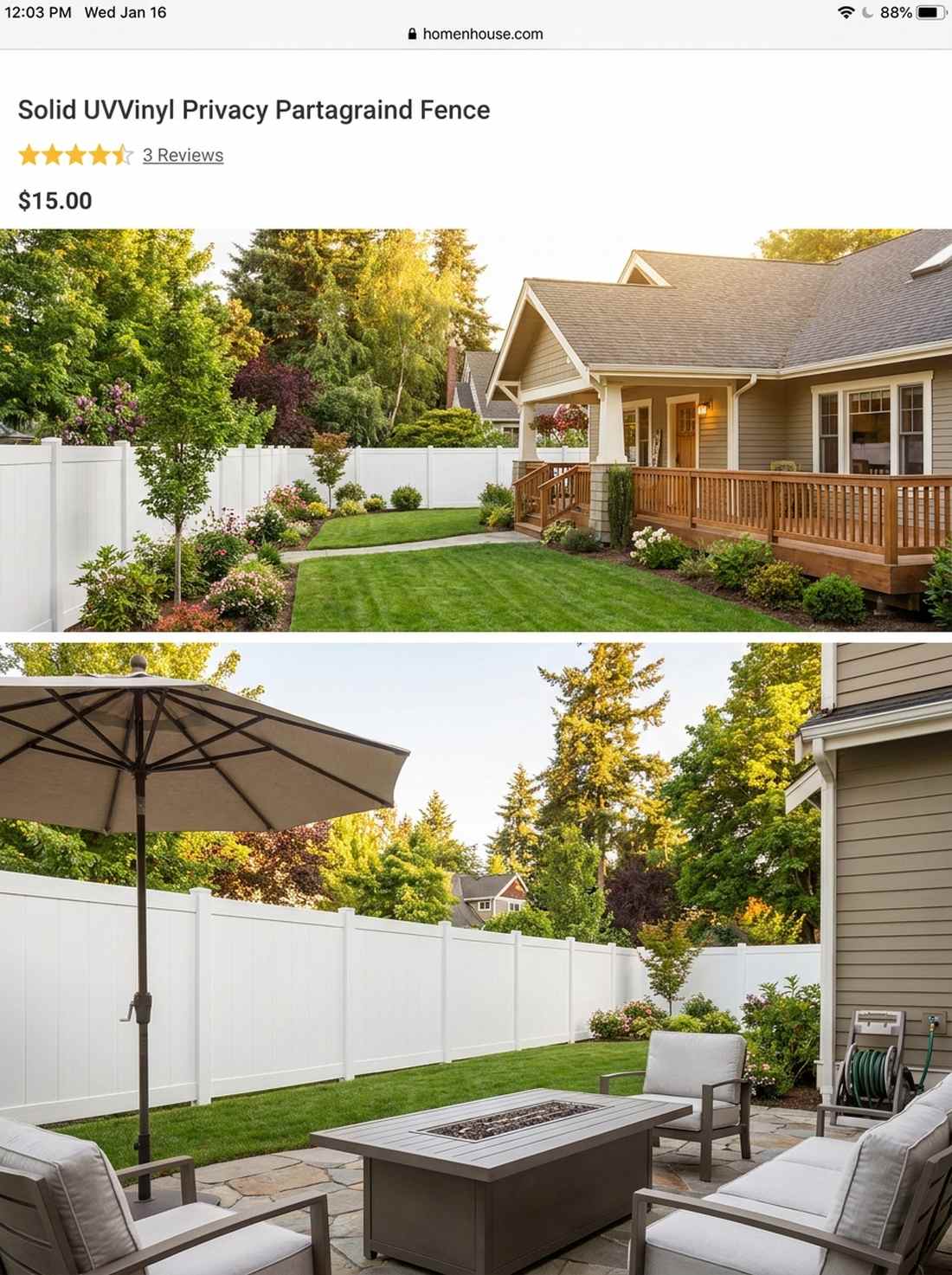
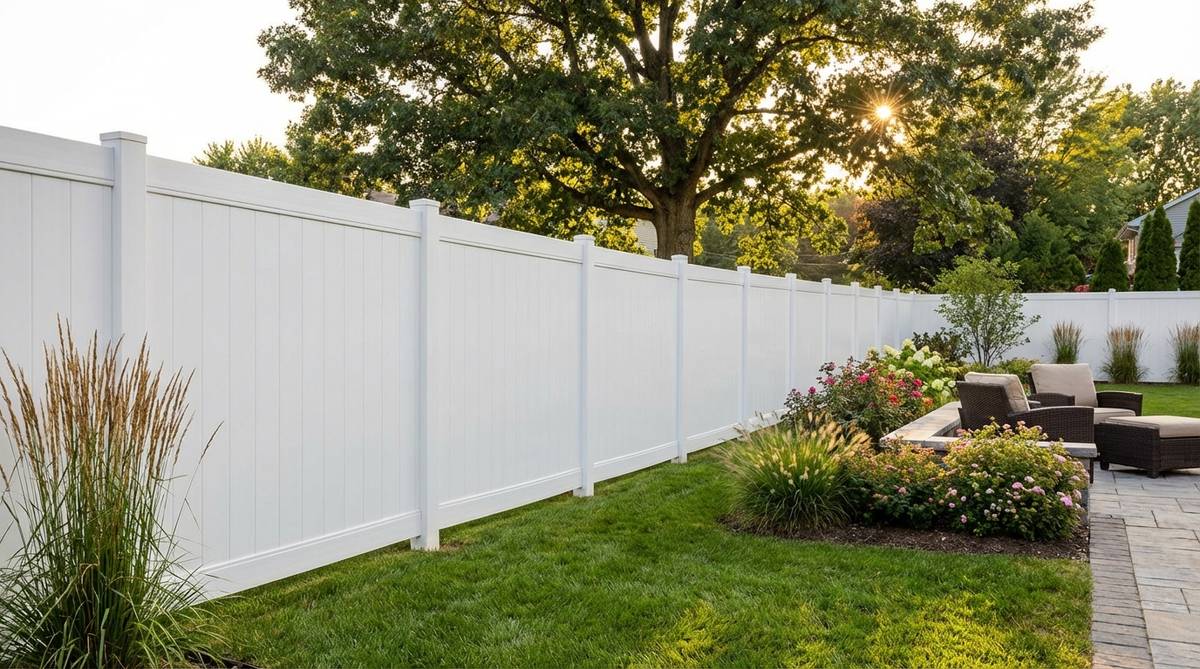
Feels like a crisp, flawlessly clean boundary that simply requires a quick hose-down to look brand new. Reinforced polymer property barriers provide the absolute ultimate in low-maintenance, solid-wall privacy. Flawless application for busy families prioritizing complete backyard seclusion.
Many dismiss vinyl as basic, but installing sleek, modern profiles guarantees a designer-level finish that never turns yellow or brittle. By utilizing internally reinforced vinyl panel kits, you prevent the wobbling and cracking associated with older, cheaper plastic fences.
Vinyl is highly affordable at $25–$45 per linear foot. Pin this if you want maximum privacy with zero weekend upkeep!
- Key Materials: High-grade UV-resistant vinyl panels, metal post inserts
- Vibe / Style: Crisp impenetrable white/grey
- Difficulty: Easy interlocking panel assembly
- Budget Breakdown: Vinyl panels: $30/ft | Steel post stiffeners: $15/each.
- Creator’s Tip: Always slide galvanized steel stiffener pipes inside your hollow vinyl gate posts so the heavy doors don’t pull the plastic out of alignment.
- Smart Sourcing: UV-blocking vinyl privacy fence kits and galvanized steel internal post stiffeners.
37. Co-Extruded Composite Fencing
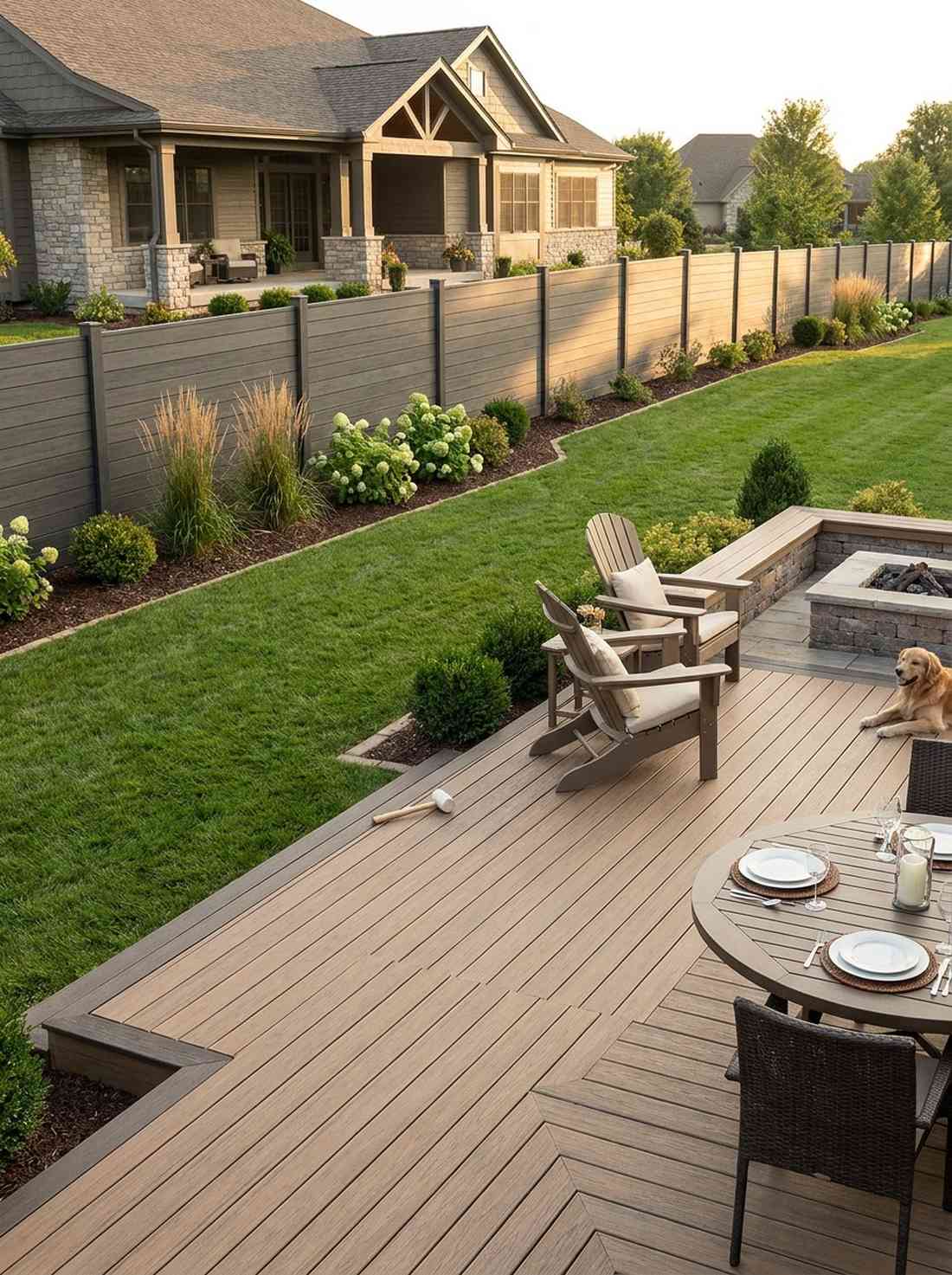
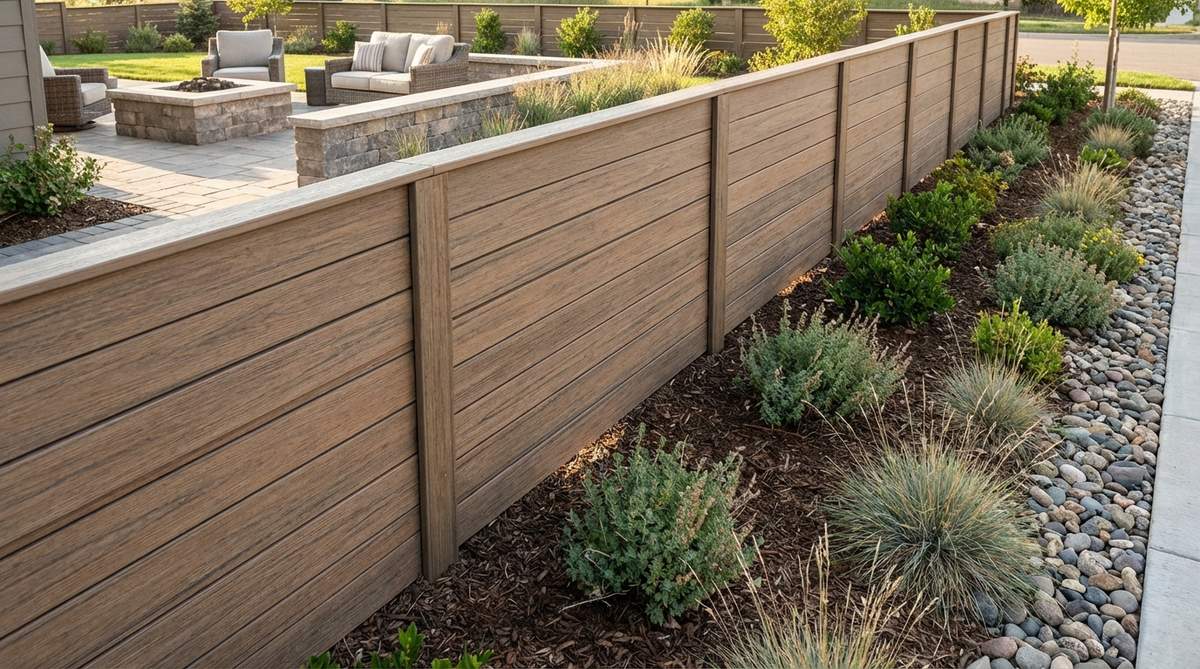
Radiates state-of-the-art engineering, wrapped in an impenetrable protective shell. Capped synthetic yard borders physically repel stains, scratches, and harsh chemicals, keeping the core material completely safe. The ultimate luxury choice for homes with destructive pets or wild neighborhood weather.
Standard composites can still scratch, yet this advanced polymer armor looks far more expensive than it is while shrugging off practically any damage. Sourcing co-extruded capped polymer boards is essentially wrapping your entire boundary in a protective phone case.
This premium technology costs $50–$85 per foot. Highly recommended for an absolutely flawless, bulletproof boundary upgrade.
- Key Materials: Polymer-capped composite boards, specialized clips
- Vibe / Style: Flawless indestructible modern
- Difficulty: Intermediate clip fastening
- Budget Breakdown: Capped boards: $65/ft | Hidden clips: $15/box.
- Creator’s Tip: Never use a hammer on capped composites; always use a rubber mallet during installation to avoid denting the advanced protective shell.
- Smart Sourcing: Co-extruded composite decking/fencing boards (bulk) and non-marring rubber installation mallets.
38. Composite Board-On-Board Fence
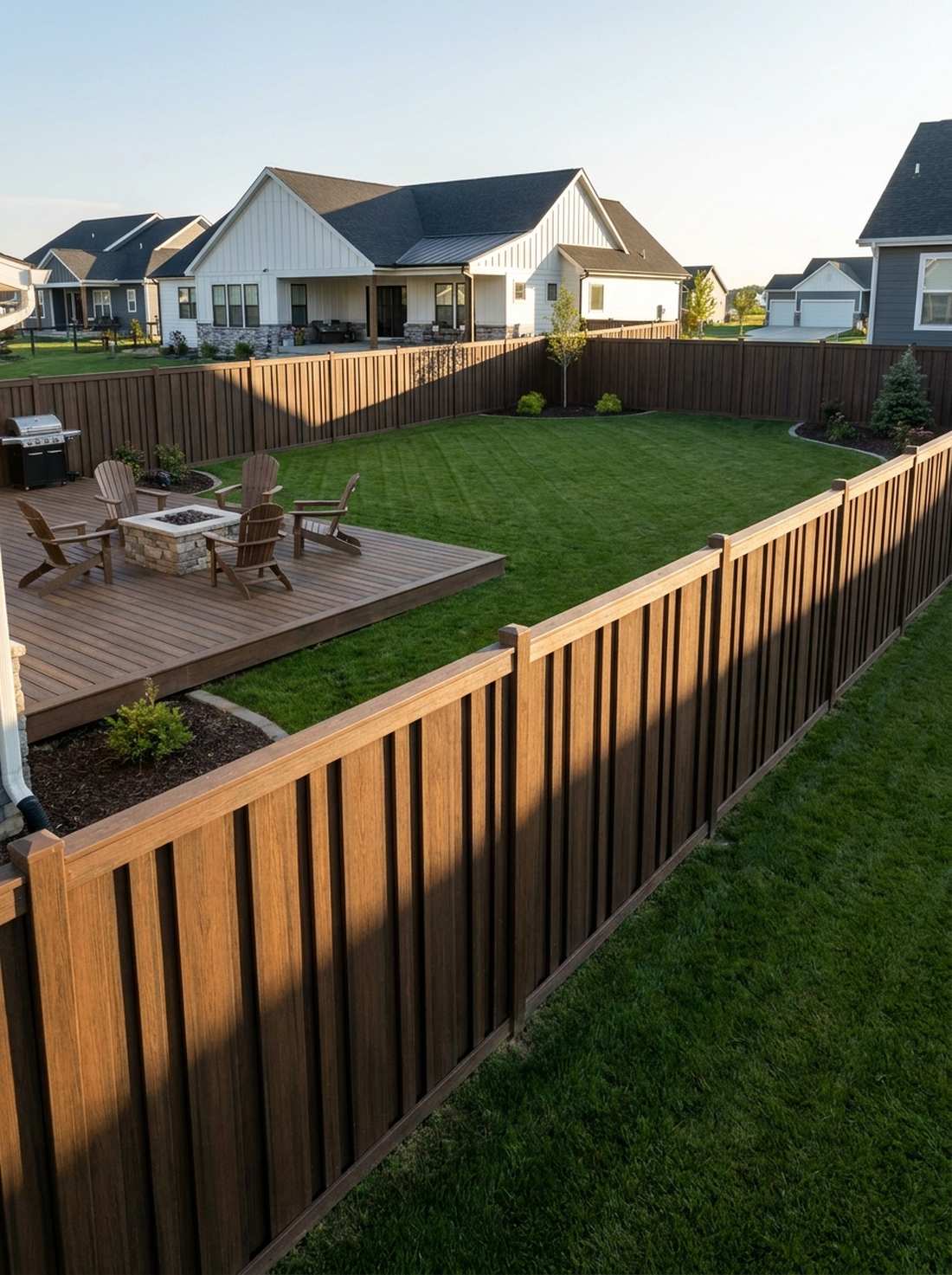
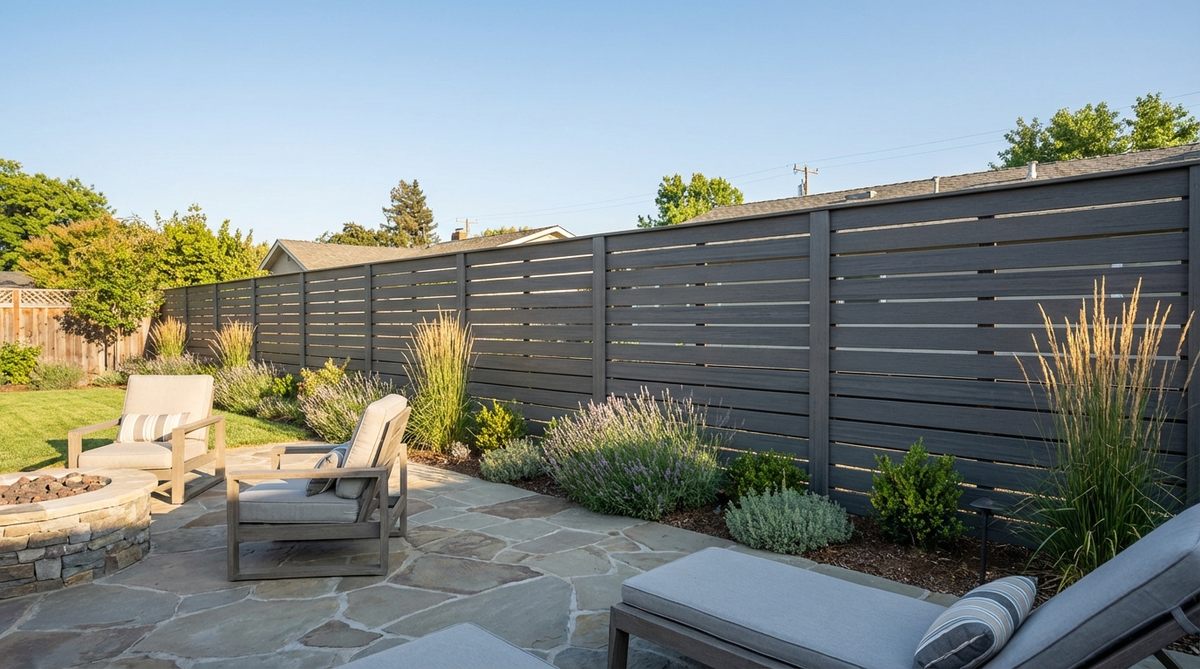
Provides a deeply satisfying, heavy 3D shadow effect that won’t warp or twist over the decades. Double-sided synthetic boundary styling keeps both you and your neighbors happy with an identical, perfect finish on both sides. Ideal for high-wind suburban corridors requiring breathable privacy.
Wood versions of this style eventually warp and open up gaps, but this composite layout guarantees a perfectly straight, designer-level finish forever. Utilizing dimensionally stable composite planks means the boards will never shrink and expose your yard to peeping eyes.
Expect a heavy material cost of $60–$90 per foot due to overlapping. Save this to your premium neighborhood collaboration board!
- Key Materials: Double-quantity composite boards, heavy rails
- Vibe / Style: Permanent deep architectural shadow
- Difficulty: Material-heavy repetitive alignment
- Budget Breakdown: Composite planks: $75/ft | Fasteners: $15/ft.
- Creator’s Tip: Use color-matched screws and perfectly align your fastener heights; sloppy screw placement is highly visible on flawless composite boards.
- Smart Sourcing: Pre-cut composite privacy boards (bulk pack) and color-matched composite deck screws.
39. Recycled Composite Eco-Fence
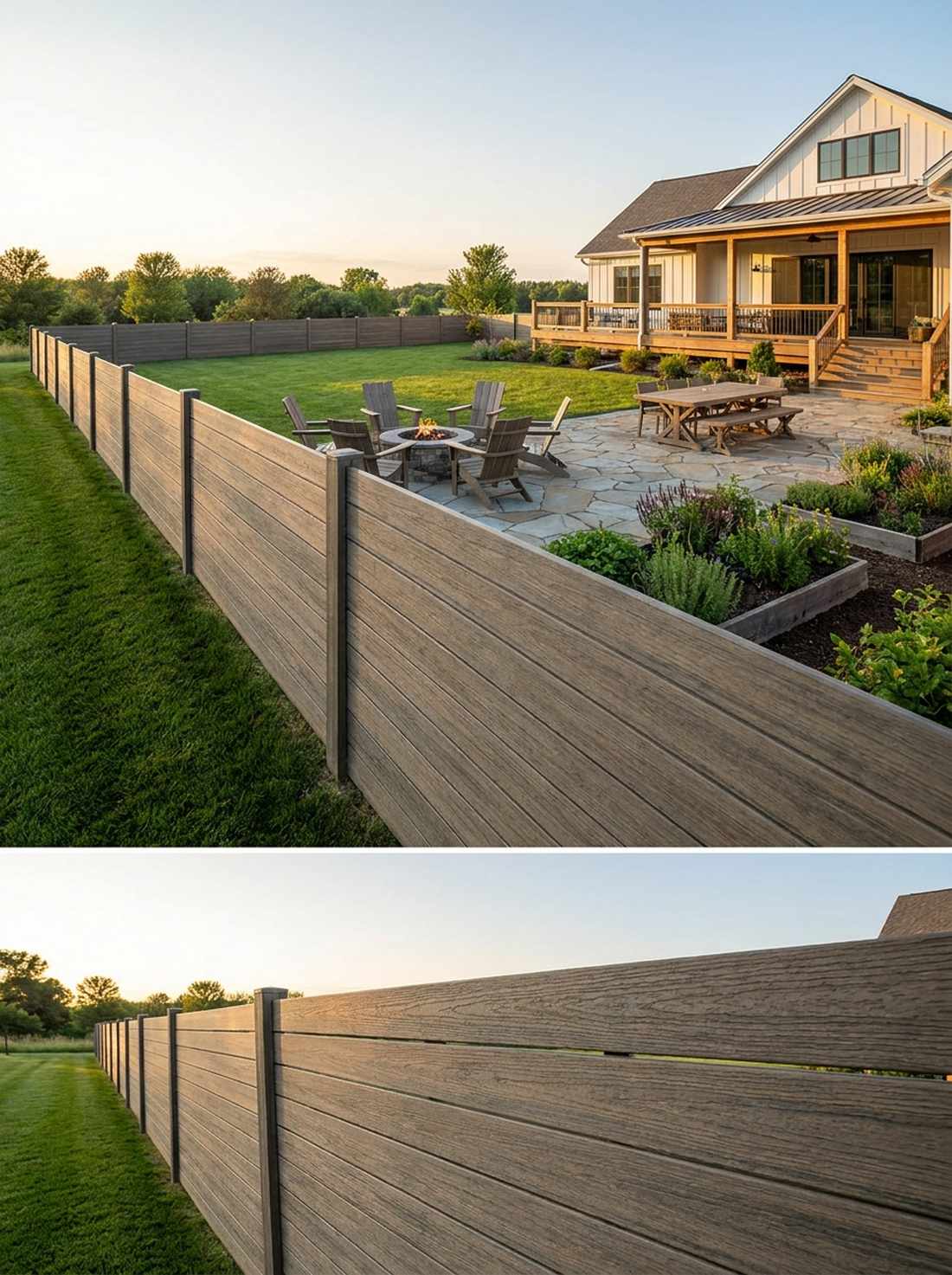
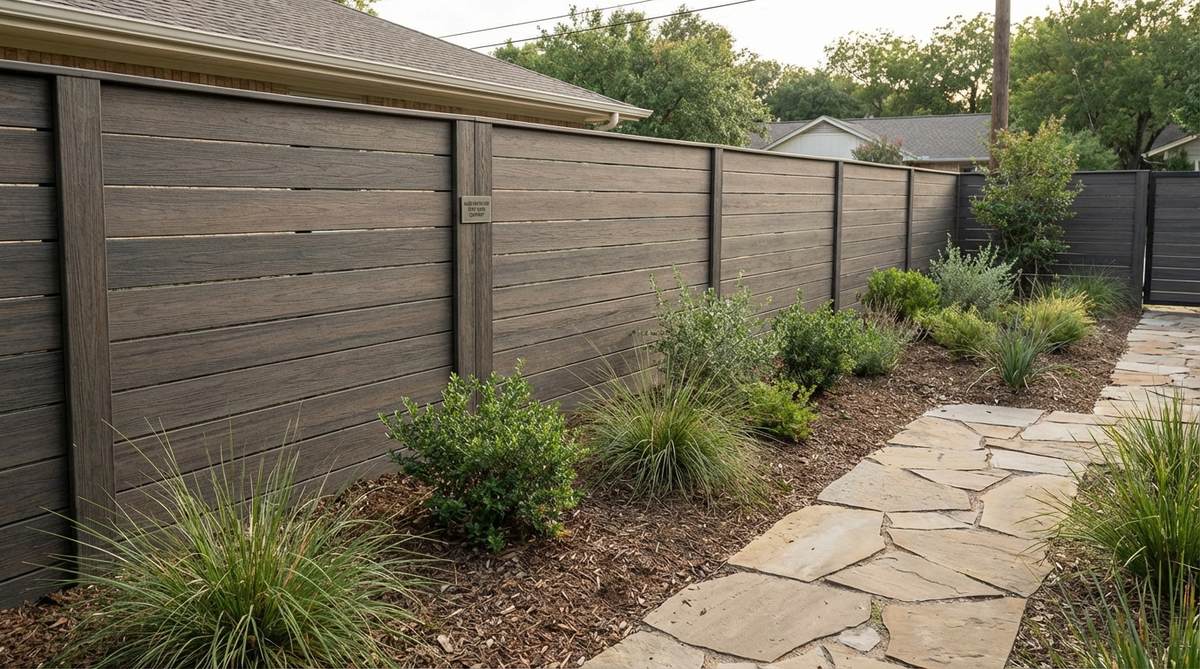
Feels incredibly grounding, knowing your beautiful boundary is actively helping the planet. Eco-friendly recycled property barriers divert thousands of plastic bags and scrap wood from landfills while looking absolutely stunning. Flawless choice for deeply environmentally conscious homeowners building sustainable estates.
People assume green materials look cheap, yet this recycled method delivers a surprisingly premium look that qualifies for LEED building credits. Securing 90% post-consumer recycled composite kits proves that extreme durability and environmental responsibility can easily coexist.
These eco-warrior panels run about $45–$70 per foot. Pin this if you want a gorgeously green property upgrade!
- Key Materials: High-recycled-content composite boards
- Vibe / Style: Sustainable luxury
- Difficulty: Easy standard assembly
- Budget Breakdown: Eco-boards: $55/ft | Installation gear: $10/ft.
- Creator’s Tip: Check the manufacturer’s thermal expansion charts; recycled plastics often expand more in direct sunlight than virgin plastics.
- Smart Sourcing: LEED-certified recycled composite fence packs and expansion-accommodating hidden slide clips.
40. Composite Shadowbox Fence Panel
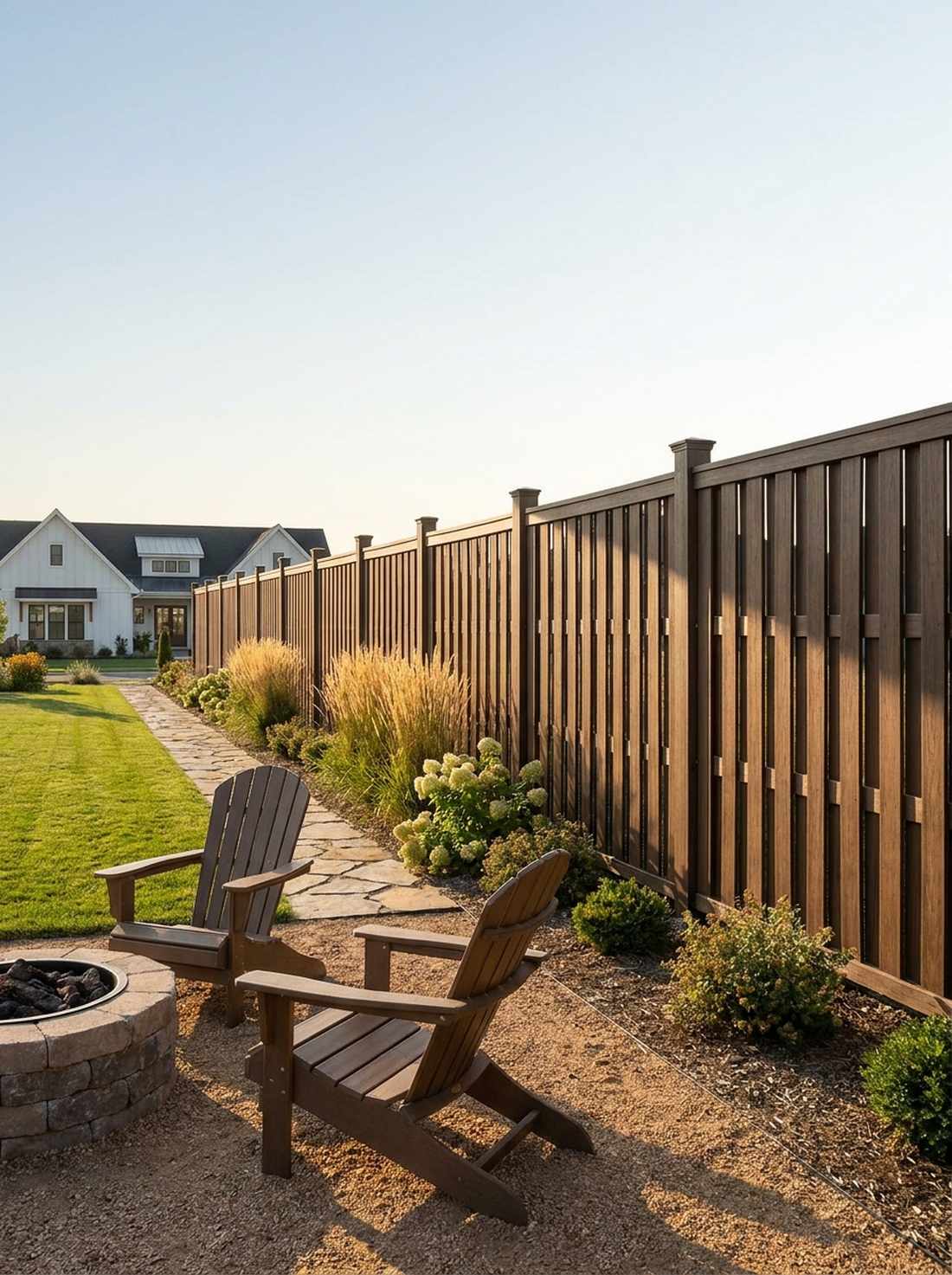
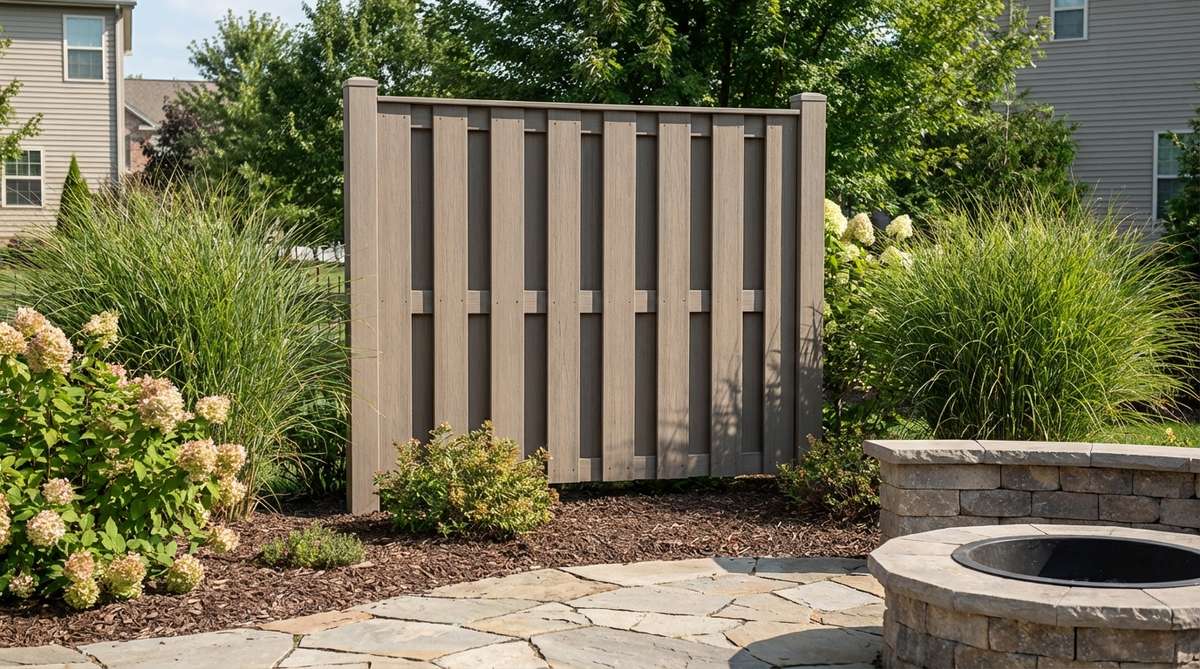
Gives off an incredibly dynamic, shifting visual effect as you walk past it. Alternating synthetic panel designs break up the monotony of long property lines by creating geometric depth from both sides. Fantastic for long, expansive side-yard perimeters.
Wooden shadowboxes eventually sag under their own weight, but this polymer layout looks far more expensive than it is while remaining perfectly rigid. By utilizing lightweight hollow-core composite boards, you achieve the massive 3D look without stressing the structural support posts.
This dimensional upgrade costs roughly $55–$85 per linear foot. A highly recommended fix for boring, flat property lines.
- Key Materials: Hollow-core composite slats, robust framing
- Vibe / Style: Rigid geometric depth
- Difficulty: Intermediate spacing and leveling
- Budget Breakdown: Lightweight slats: $60/ft | Framing: $20/ft.
- Creator’s Tip: Cap the tops of the hollow-core boards to prevent wasps or spiders from building nests inside the composite chambers.
- Smart Sourcing: Hollow-core lightweight composite boards and composite board end-cap plugs.
Basic fences just sit there. The next few setups transform your boundary line into a literal piece of living, breathing art…
Architectural Screen Fence Systems For Artistic Expression
Screen fences balance privacy with artistic expression, using pattern and perforation to create functional art. These systems suit properties where design makes strong statements.
41. Laser-Cut Corten Steel Screens
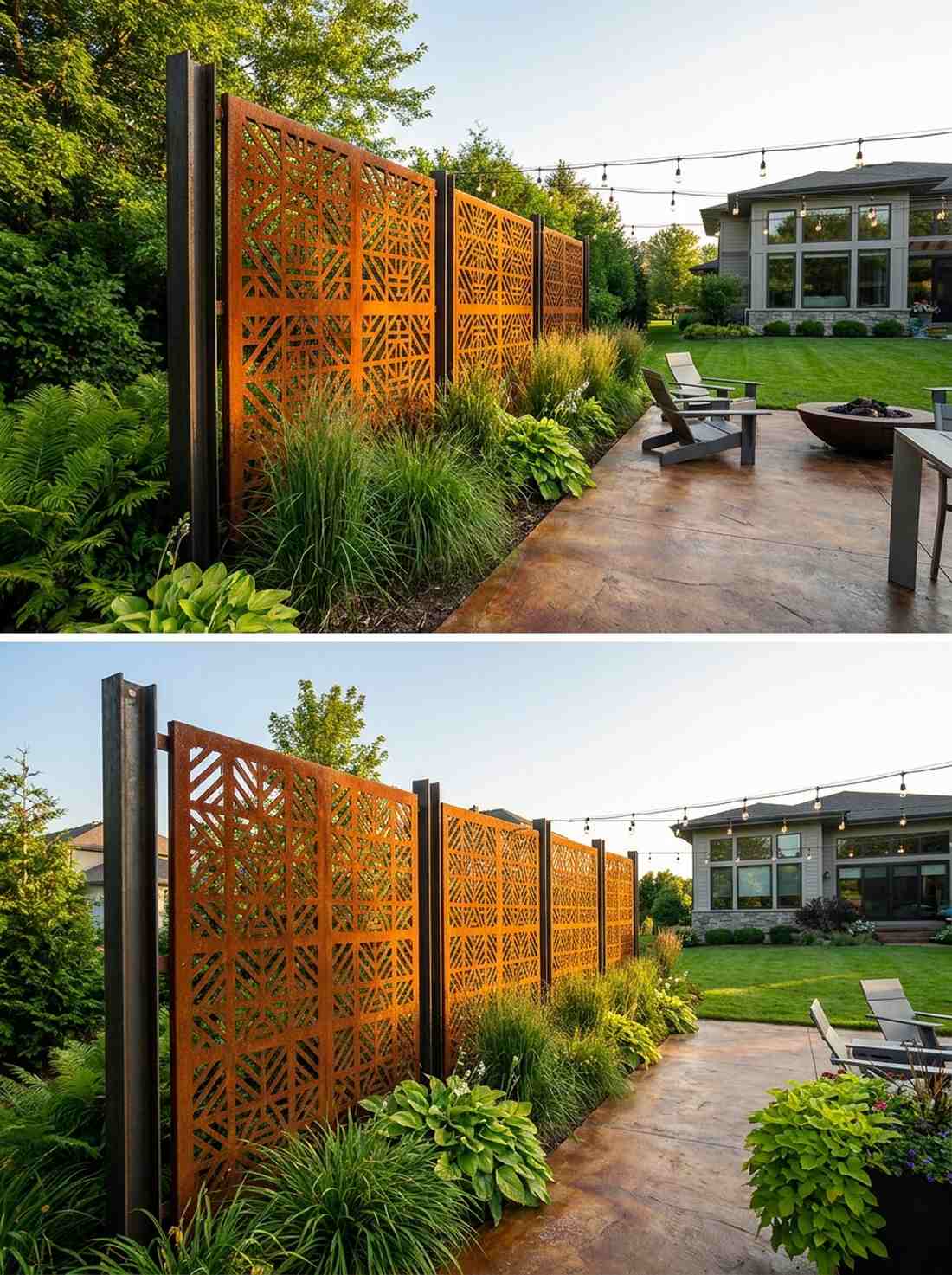
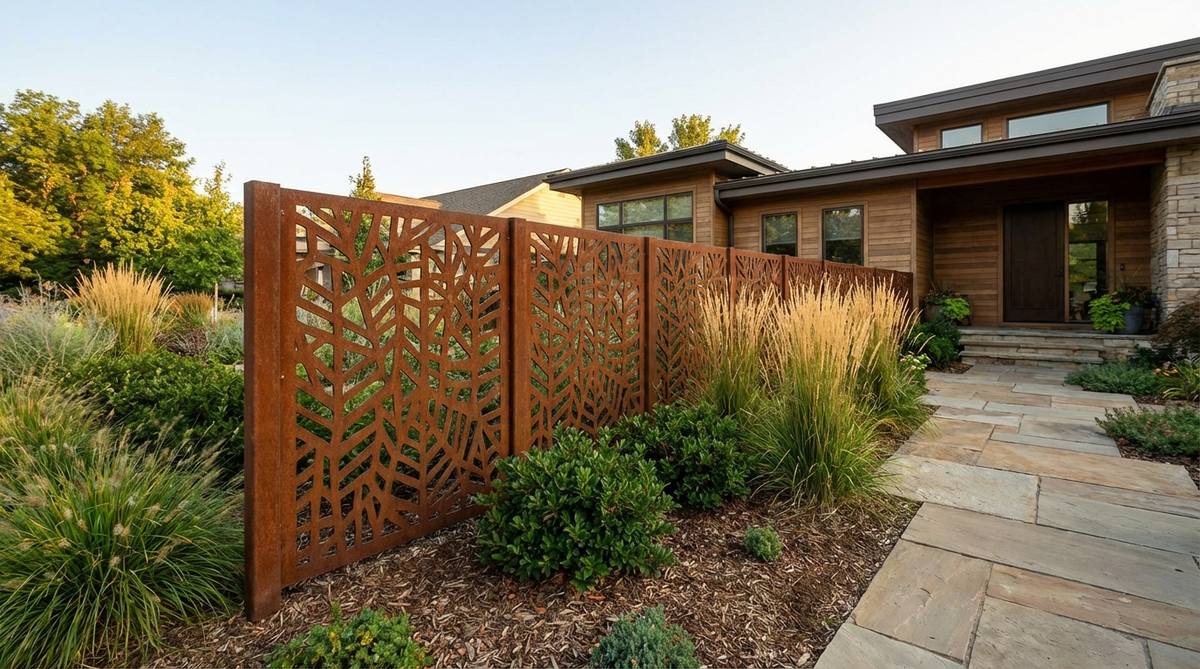
Radiates an ultra-modern, dramatic gallery energy that perfectly contrasts with lush green plants. Weathering steel outdoor partitions develop a gorgeous, protective rust patina that completely seals the metal from further corrosion. The ultimate statement piece for high-end contemporary landscape architecture.
Many homeowners fear rust, yet utilizing deliberate Corten steel guarantees a designer-level finish that thrives on exposure to the elements. Integrating precision laser-cut Corten panels turns a basic privacy wall into a breathtaking, maintenance-free art installation.
These luxury screens run $80–$150 per section, but require absolutely zero painting. Save this to your dramatic landscape art board!
- Key Materials: Corten weathering steel panels, steel mounting posts
- Vibe / Style: Dramatic industrial art
- Difficulty: Heavy lifting required
- Budget Breakdown: Corten screens: $100/panel | Heavy posts: $40/each.
- Creator’s Tip: Ensure runoff from the rusting panels doesn’t drip onto light-colored concrete or stone, as the initial oxidation process will cause severe orange staining.
- Smart Sourcing: Laser-cut Corten steel privacy screens and protective concrete sealant.
42. Perforated Metal Privacy Screen
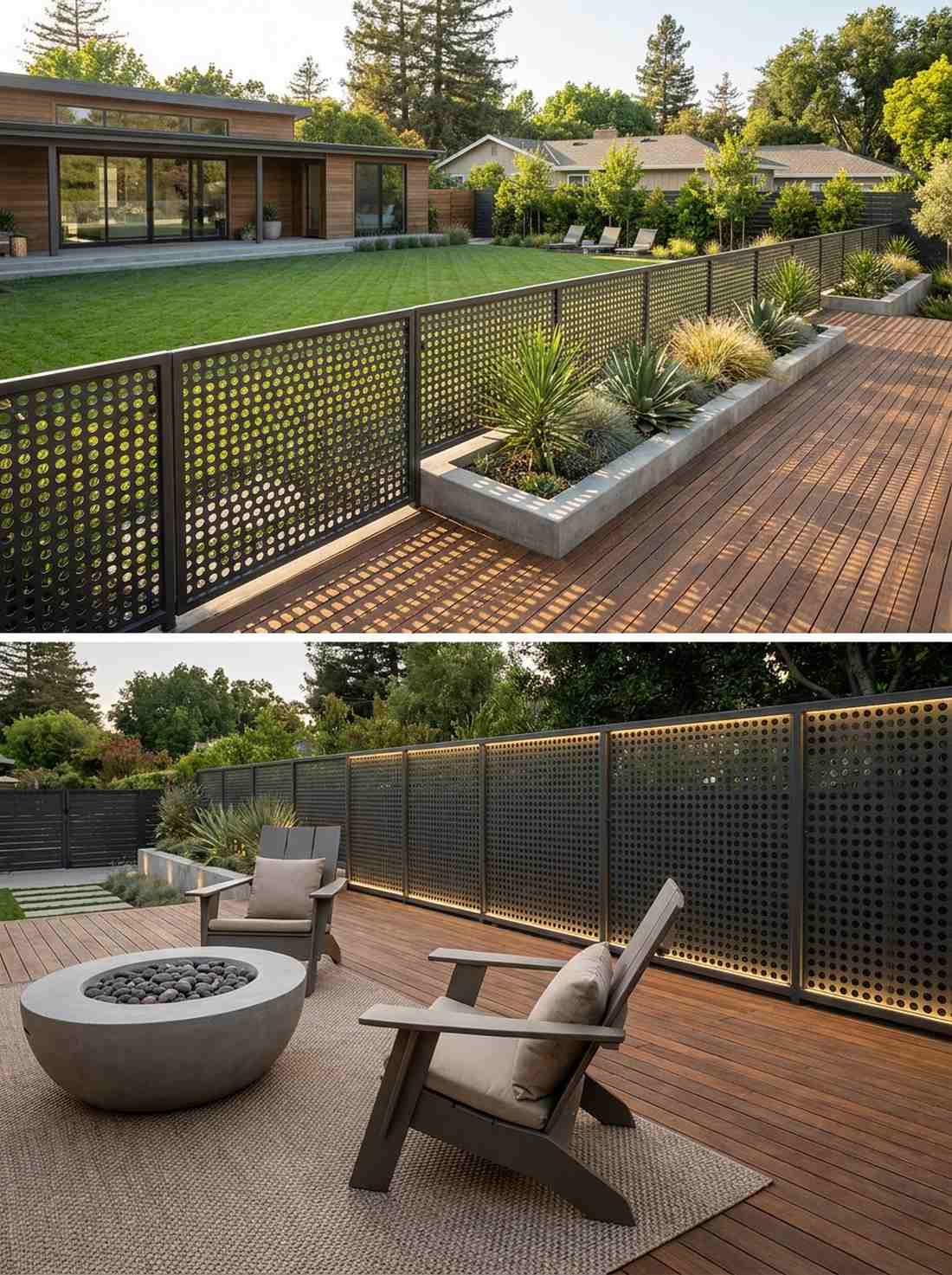
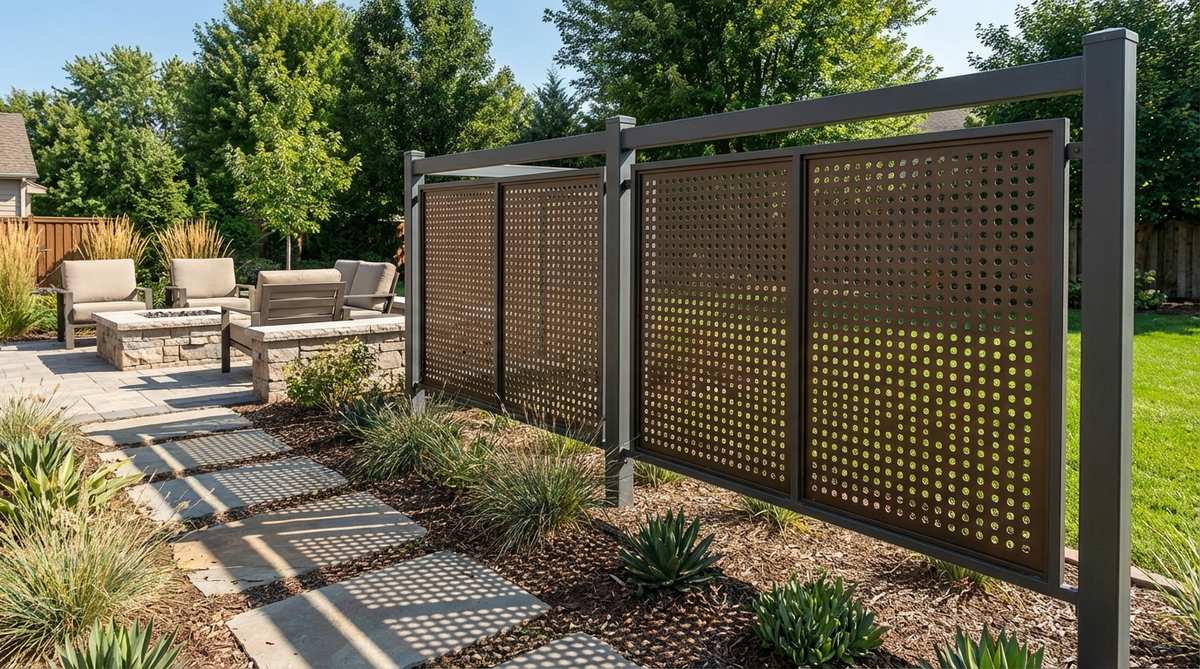
Feels like an impossibly sleek, high-tech filter that plays beautifully with the sun. Systematic metal hole-punched barriers provide incredible security while allowing gentle breezes and dappled light to pass through. Absolutely perfect for ultra-modern mid century modern garden fence aesthetics.
Solid metal walls feel like a commercial warehouse, but this perforated layout looks far more expensive than it is, giving off a light, breathable energy. Sourcing powder-coated perforated aluminum sheets allows you to dial in your exact privacy level simply by choosing the hole size.
This high-tech screening costs around $60–$100 per linear foot. Pin this if you love crisp, geometric perfection!
- Key Materials: Perforated aluminum sheets, framing channels
- Vibe / Style: High-tech geometric breathable
- Difficulty: Easy panel insertion
- Budget Breakdown: Perforated sheets: $70/ft | Framing: $20/ft.
- Creator’s Tip: Backlight the perforated screens with outdoor LED strip lighting at night to turn the fence into a massive, glowing architectural lantern.
- Smart Sourcing: Powder-coated perforated metal sheets (bulk) and waterproof outdoor LED strip kits.
43. Vertical Slat Screen With Variable Spacing
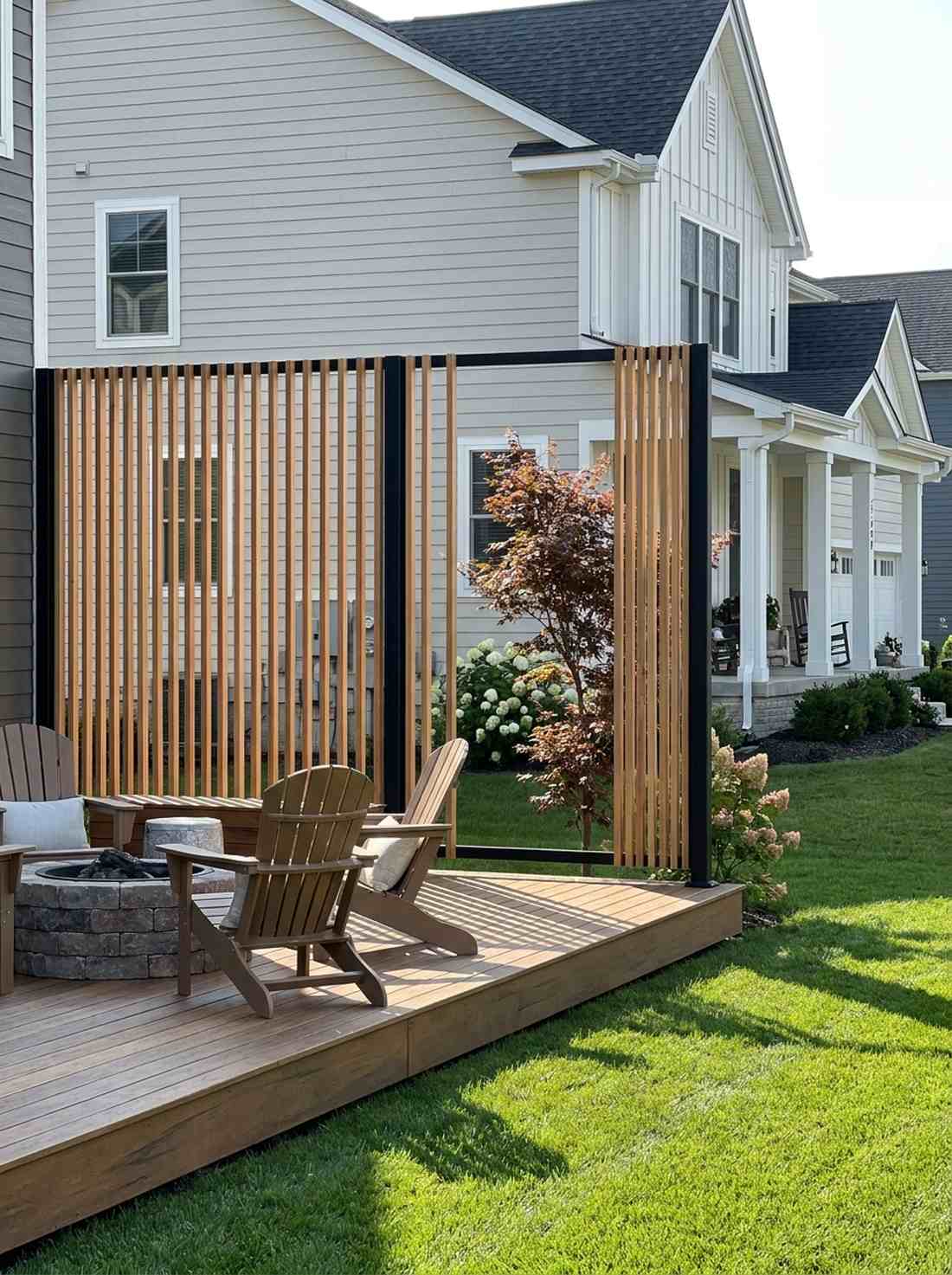
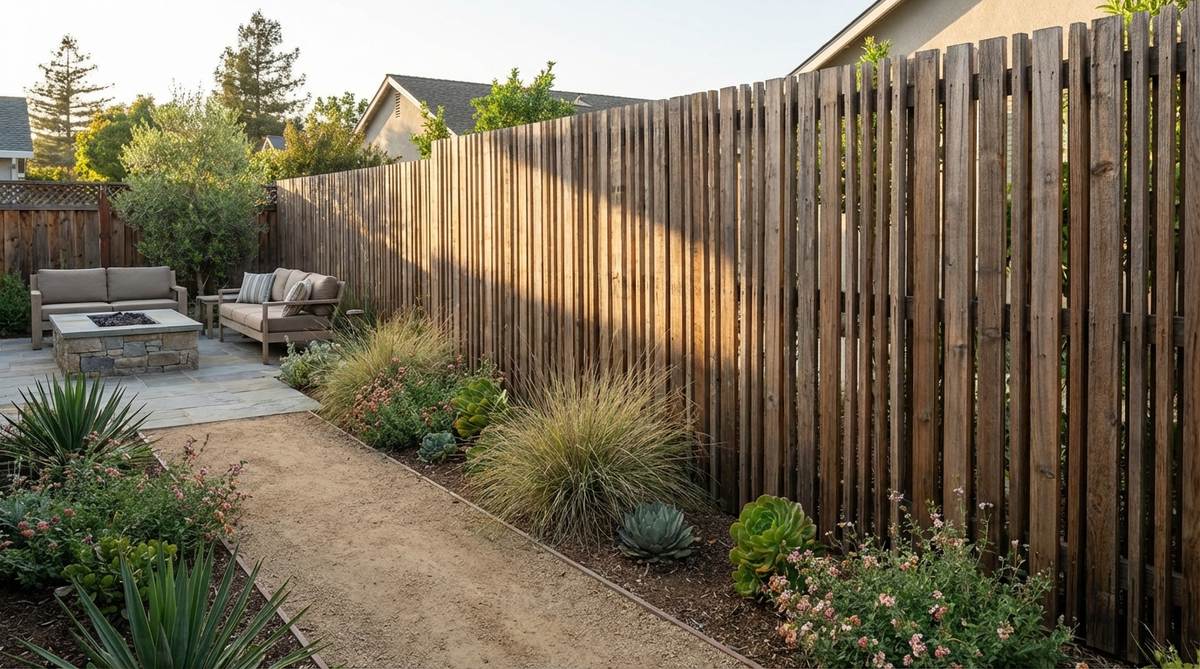
Gives off an incredibly soothing, rhythmic optical illusion as you walk past. Unpredictable vertical timber boundaries break all the rules of standard fencing by mixing tight privacy with wide-open gaps. Ideal for highlighting specific garden features while hiding ugly utility boxes.
Strictly uniform fences are predictable, yet this calculated variable spacing delivers a surprisingly premium look that feels bespoke and customized. Utilizing pre-cut architectural slat bundles allows you to block the exact sightlines you hate while opening up the views you love.
This customized approach runs $30–$50 per foot depending on material density. A highly recommended trick for absolute visual control.
- Key Materials: Variable-placed timber slats, dark backing rails
- Vibe / Style: Bespoke optical rhythm
- Difficulty: Heavy pre-planning required
- Budget Breakdown: Timber slats: $40/ft | Framing: $10/ft.
- Creator’s Tip: Stand at your patio seating area and have a friend slide the slats back and forth before screwing them in to perfectly block out the neighbor’s windows.
- Smart Sourcing: Premium clear cedar slat bundles and matte black structural backing rails.
44. Living Wall Fence Integration
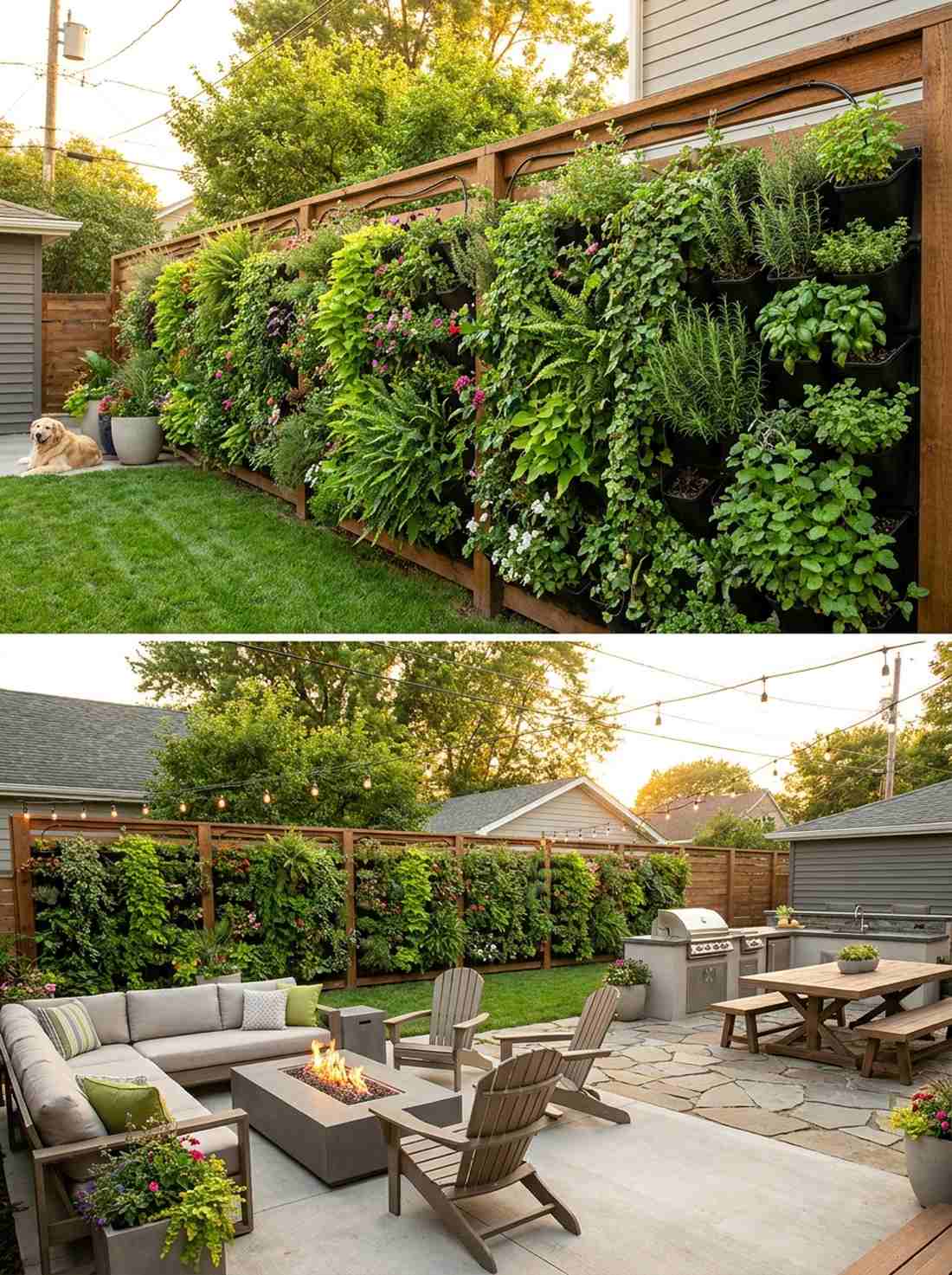
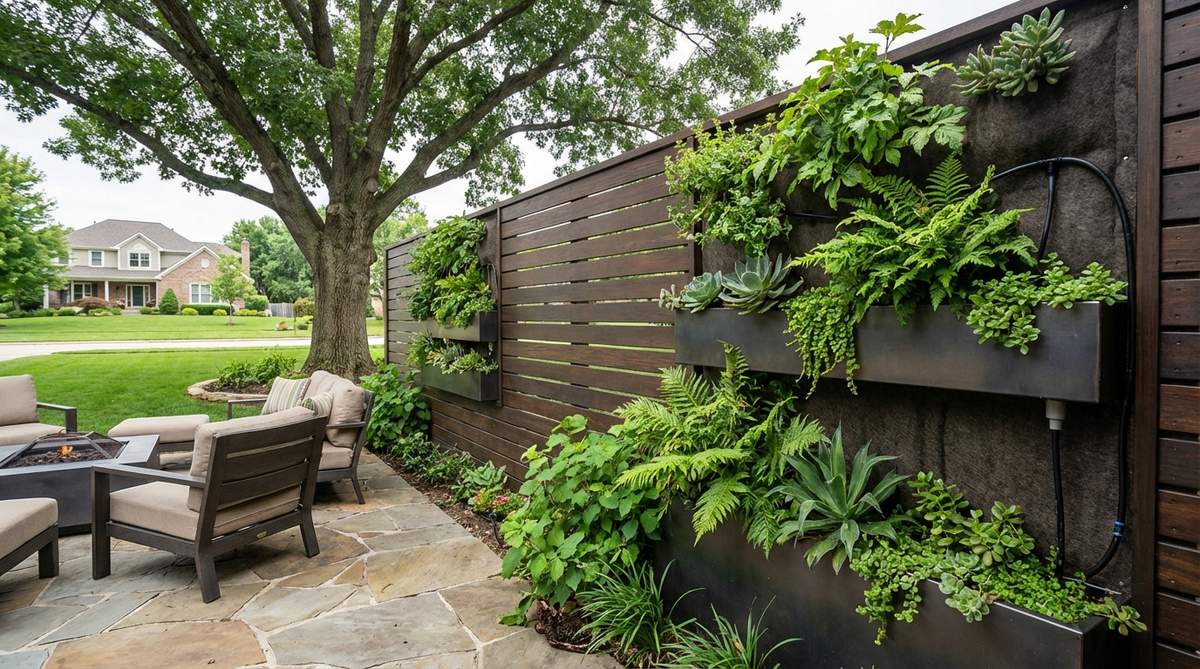
Feels like a lush, breathing jungle oasis that literally brings the boundary to life. Vertical garden boundary setups seamlessly blend hard architectural structure with explosive organic greenery. The ultimate solution for a modern vegetable garden fence in tight urban concrete yards.
Standard panels are dead space, but integrating planters creates an ultra-premium aesthetic that purifies the air and dampens city noise. By securing modular vertical planter kits directly to a heavy-duty fence frame, you instantly create a massive wall of trailing vines or herbs.
Building the structure and adding the planters costs $50–$90 per foot. Save this to your urban jungle inspiration board!
- Key Materials: Heavy-duty fence panels, integrated planter boxes
- Vibe / Style: Explosive organic architecture
- Difficulty: Requires integrated irrigation planning
- Budget Breakdown: Base fence: $40/ft | Planter system: $45/ft.
- Creator’s Tip: Install a hidden drip irrigation tube along the top rail before adding the plants; hand-watering a vertical wall is messy and exhausting.
- Smart Sourcing: Modular vertical garden planter kits and automatic micro-drip irrigation systems.
45. Modular Concrete Block Fence
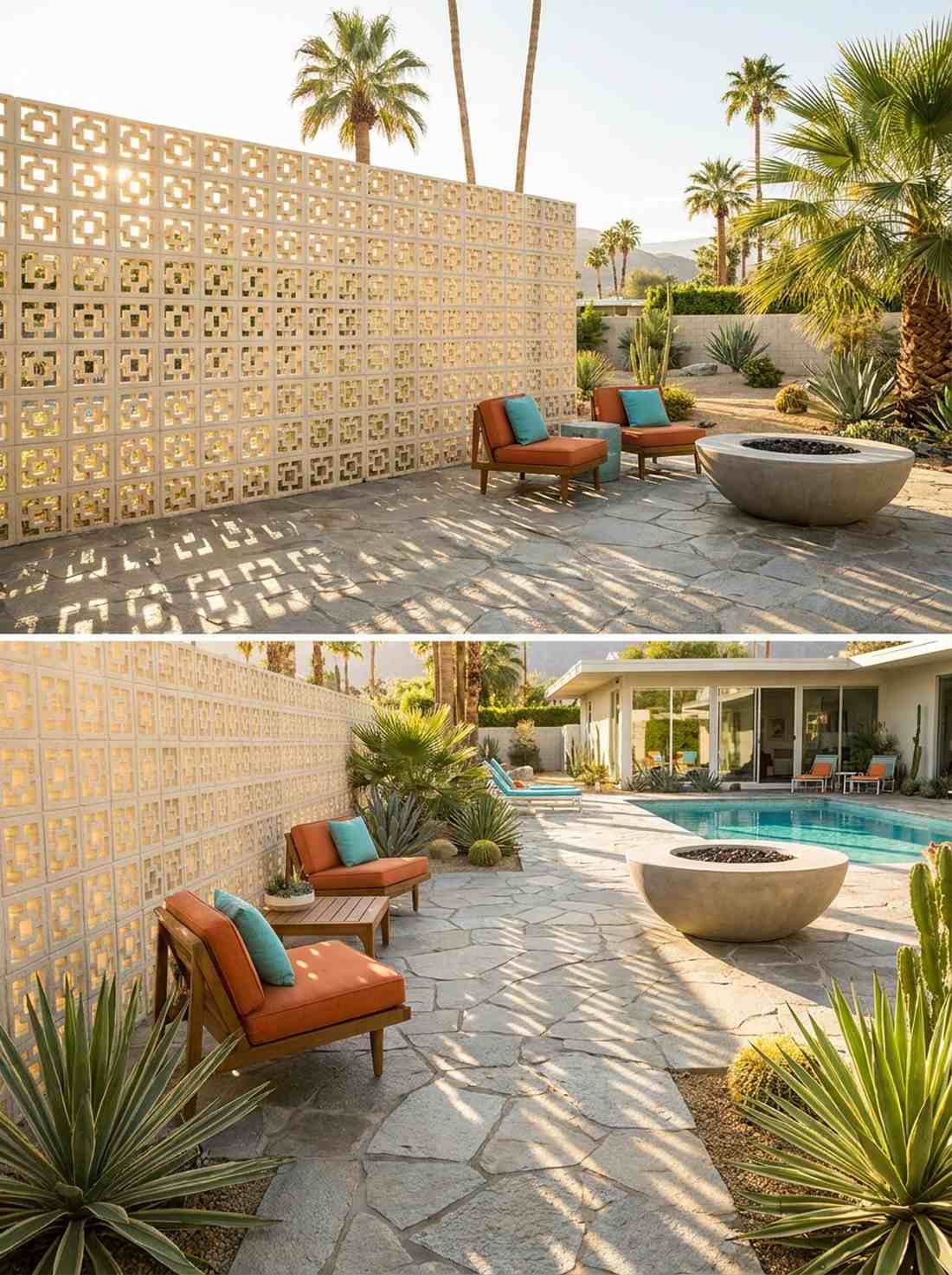
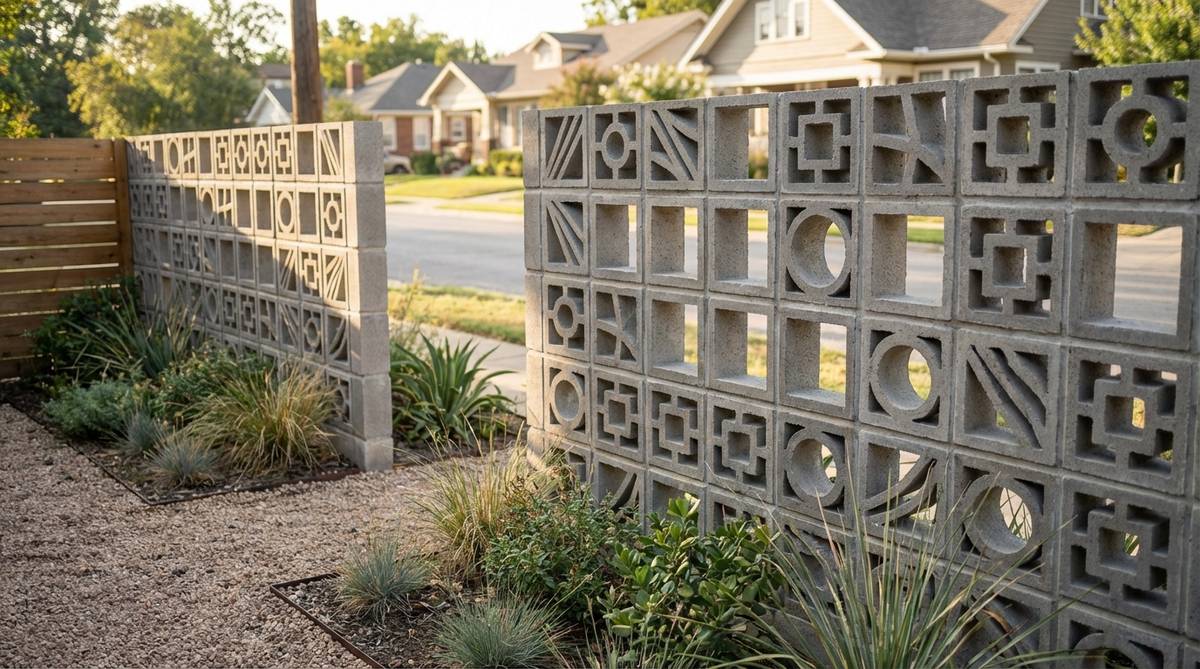
Radiates an incredibly cool, retro-futuristic Palm Springs resort energy. Geometric breeze-block boundaries provide massive physical weight while remaining visually airy and completely semi-transparent. Flawless application for hot climates needing sun screening without blocking the breeze.
Pouring solid concrete looks like a prison, yet stacking patterned blocks guarantees a designer-level finish that screams mid-century luxury. Sourcing decorative modular breeze blocks allows you to build a fortress that still lets beautiful dappled light flood the patio.
Expect to invest $80–$120 per foot for materials and proper masonry labor. Highly recommended for a stunning, permanent architectural statement.
- Key Materials: Decorative concrete blocks, rebar, mortar
- Vibe / Style: Mid-century resort luxury
- Difficulty: Professional masonry required
- Budget Breakdown: Breeze blocks: $70/ft | Mortar/Rebar: $30/ft.
- Creator’s Tip: Always run vertical steel rebar through the hollow cores of the blocks and fill them with concrete to ensure the wall survives high winds or earthquakes.
- Smart Sourcing: Geometric decorative breeze blocks (pallet) and heavy-duty vertical steel rebar.
Bringing Your Modern Garden Fence Vision To Reality
Selecting the right modern garden fence design involves balancing absolute privacy with high-end aesthetic preferences and realistic maintenance capabilities. These 45 design concepts demonstrate exactly how contemporary fencing transcends basic boundary definitions to become premium landscape architecture. Start by assessing your property’s specific requirements—consider sight lines requiring screening, weather variables, and sourcing high-CPC premium materials that elevate the final look.
Whether you are investing in low-maintenance UV-coated composites, applying rich dark stains to timeless wood, or utilizing dramatic mixed materials, these 45 setups transform outdoor spaces into expensive-looking private sanctuaries. Begin your upgrade by securing the right starter kits and bulk supplies, consulting local codes, and utilizing the smart sourcing strategies outlined above to guarantee your boundary lasts for decades.
Frequently Asked Questions
What is the most durable material for modern garden fence panels?
Co-extruded composite panels combined with heavy-duty aluminum frames provide the absolute superior durability, resisting moisture, UV damage, and insect damage for decades. By investing in premium polymer-capped composite bundles, you eliminate the need for future maintenance entirely. Steel and aluminum alternatives also deliver exceptional longevity, especially when treated with a powder-coated rust-prevention finish, making them a top-rated choice for high-end boundaries.
How do horizontal and vertical fence orientations affect privacy differently?
Horizontal and vertical orientations provide equivalent privacy when board spacing remains constant, but they dramatically alter visual perception. Horizontal panels visually expand the space, making narrow lots feel wider, while a modern front garden fence using vertical panels emphasizes height and elegance. Utilizing precision wood spacer tools during installation ensures your gaps remain perfectly consistent regardless of which orientation you choose.
What spacing between fence slats provides adequate privacy?
Quarter-inch to half-inch spacing between modern garden fences blocks direct sight lines from typical viewing distances while maintaining crucial airflow and light transmission. For absolute maximum privacy, upgrading to a board-on-board layout using pre-cut overlap privacy boards eliminates sightlines completely. This method looks far more expensive while remaining highly budget-friendly if you source the materials in bulk.
How can I integrate a modern garden gate that matches my fence panels?
Build gates using the exact identical materials, utilizing no-sag adjustable steel gate frame kits to create seamless visual continuity without the risk of future drooping. Match your modern garden gate hardware perfectly by securing heavy-duty concealed magnetic gate latches and exterior-rated hinges. For a truly high-end appearance, align the gate board patterns precisely with the adjacent fence sections so the entryway visually disappears.
Do modern fence panels require special maintenance compared to traditional designs?
Maintenance requirements depend entirely on smart material sourcing rather than the design style itself. Upgrading to UV-blocking vinyl privacy fence kits or high-end composites means you only need a quick pressure wash annually. If you choose natural timber for your modern garden fence ideas, applying a marine-grade clear wood sealant every three years is mandatory to prevent graying and preserve that expensive, newly-installed aesthetic.