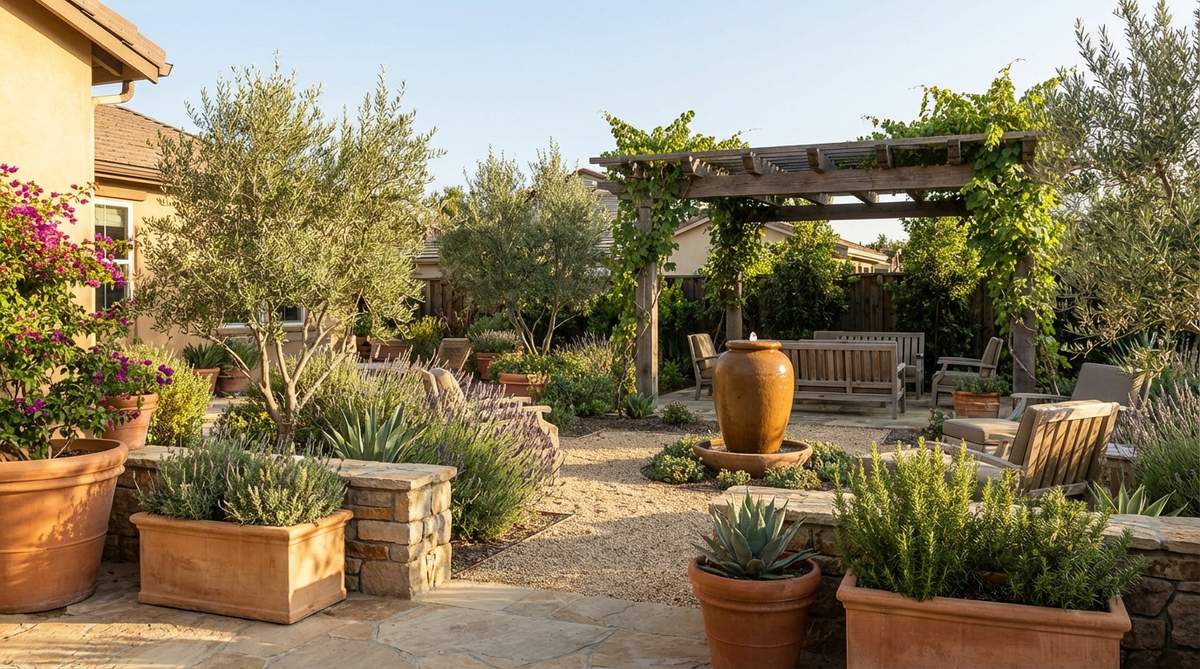
Mediterranean garden design combines sun-drenched color palettes, terracotta elements, and drought-resistant plants to create resilient outdoor spaces that thrive in warm climates. Fresh Garden Ideas brings you expert themes that transform yards into rustic retreats inspired by southern European landscapes, blending timeless materials with water-wise planting strategies.
Design SnapshotKey Principles
- Earthy Color Palette: Terracotta, ochre, sand, and stone tones with pops of azure blue and vibrant green
- Drought-Tolerant Plants: Lavender, rosemary, olive trees, cistus, and silver-leaved specimens requiring minimal water
- Natural Materials: Terracotta pots, natural stone pathways, gravel mulch, and weathered wood structures
- Architectural Elements: Pergolas for shade, water features for ambiance, and wrought iron accents
Terracotta Container Gardens That Define Mediterranean Style
Terracotta planters serve as the foundation for authentic Mediterranean garden design, offering both functional benefits and visual warmth. The porous clay material allows plant roots to breathe while naturally regulating moisture levels.
1. Aged Tuscan Urn Clusters
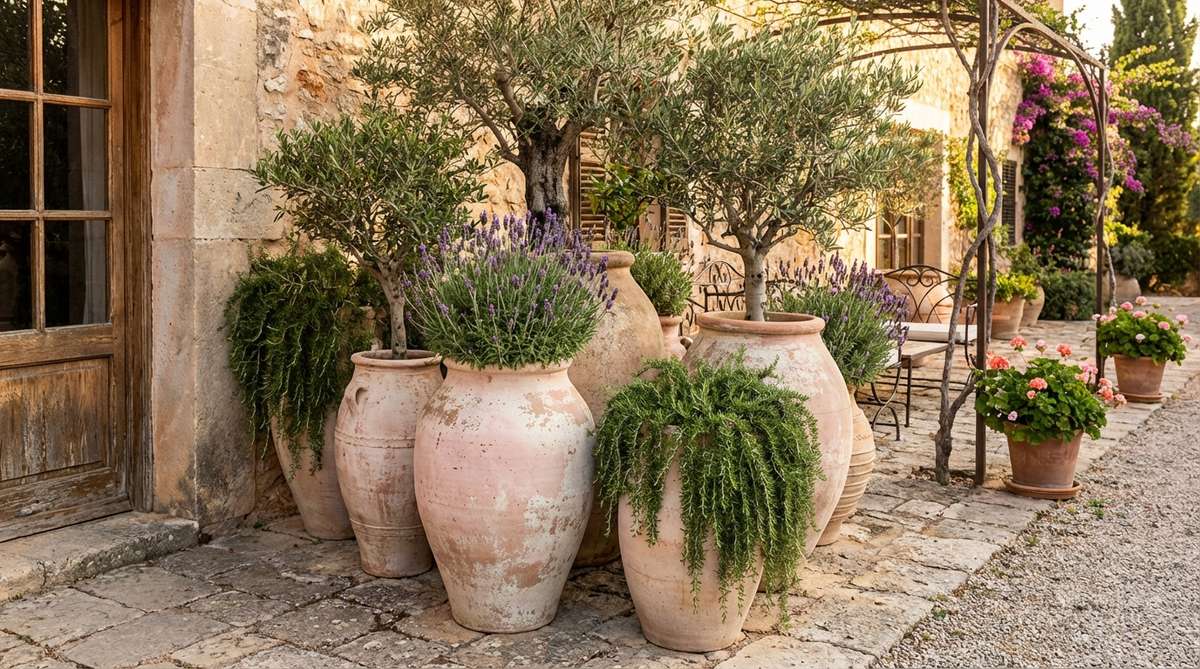
Grouping large weathered urns in varying heights creates the relaxed courtyard atmosphere characteristic of Tuscan villas. The pale pinkish hue of aged terracotta develops a natural lime-bloomed patina over six weeks of artisan production.
Position three to five urns near entryways or seating areas, planting them with olive trees, lavender, and trailing rosemary. The varied heights establish visual hierarchy while the weathered finish suggests timeless Mediterranean heritage.
This arrangement requires minimal watering once established and the terracotta naturally wicks away excess moisture during rainy periods.
2. Mixed-Size Pot Groupings
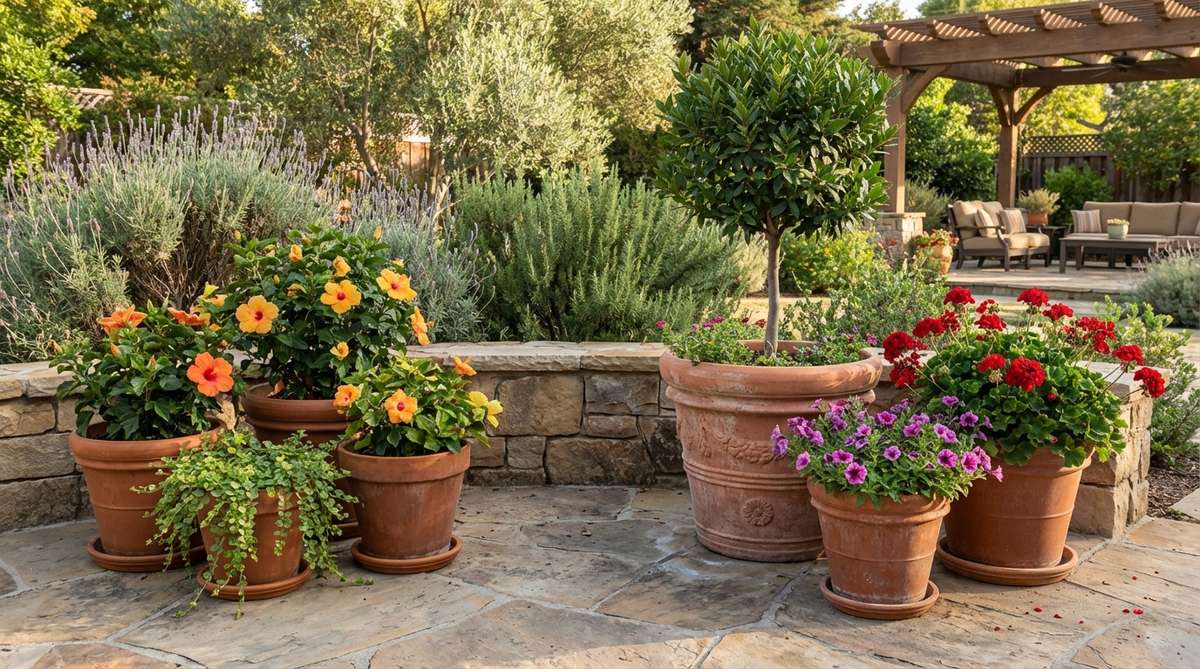
Arranging terracotta pots of different dimensions mimics the organic accumulation found in Mediterranean village gardens. This layered approach combines statement planters with smaller accent pots to fill corners and borders.
Select pots ranging from 12 inches to 24 inches in diameter, clustering them in odd-numbered groups. Plant geraniums, petunias, and hibiscus in the smaller vessels while reserving larger pots for structural plants like bay trees.
The varied sizes create depth perception in compact spaces while maintaining the cohesive earthy palette that defines the style.
3. Hand-Painted Mediterranean Patterns
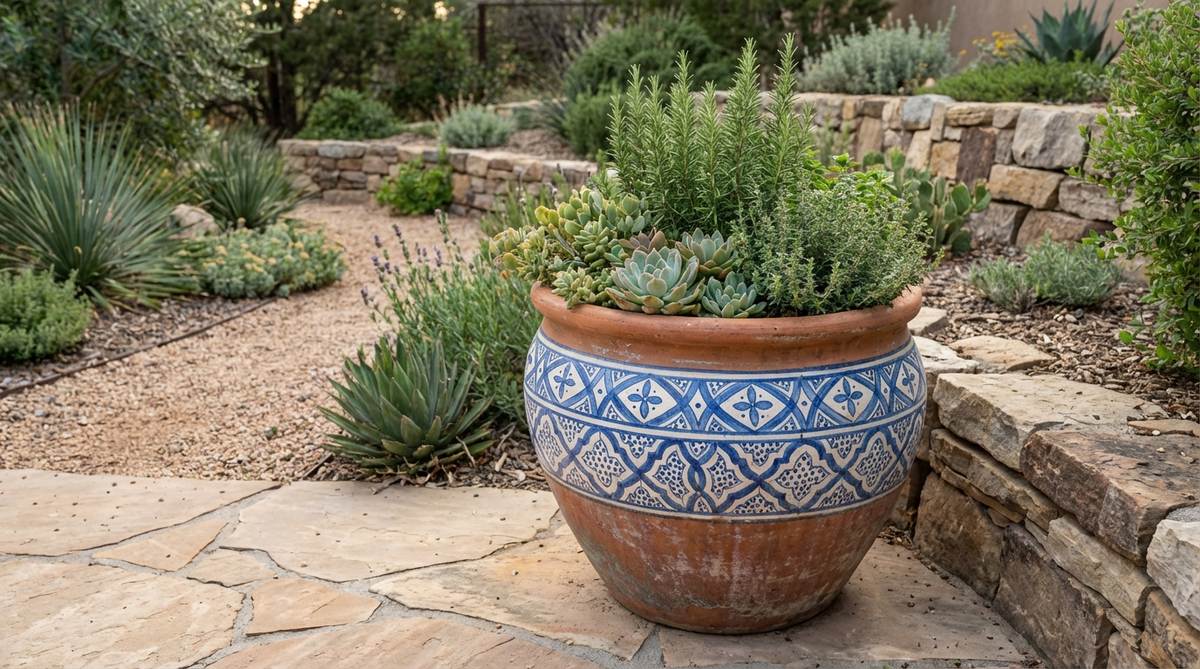
Decorating terracotta pots with Mediterranean-inspired motifs adds personalized artistry to your garden while honoring traditional ceramic techniques. Blue and white geometric patterns evoke Greek island aesthetics.
Use outdoor acrylic paints to apply simple repeating designs around pot rims or create full surface patterns. Allow painted pots to cure for 48 hours before planting drought-tolerant succulents or herbs.
4. Tiered Terracotta Fountain Planters
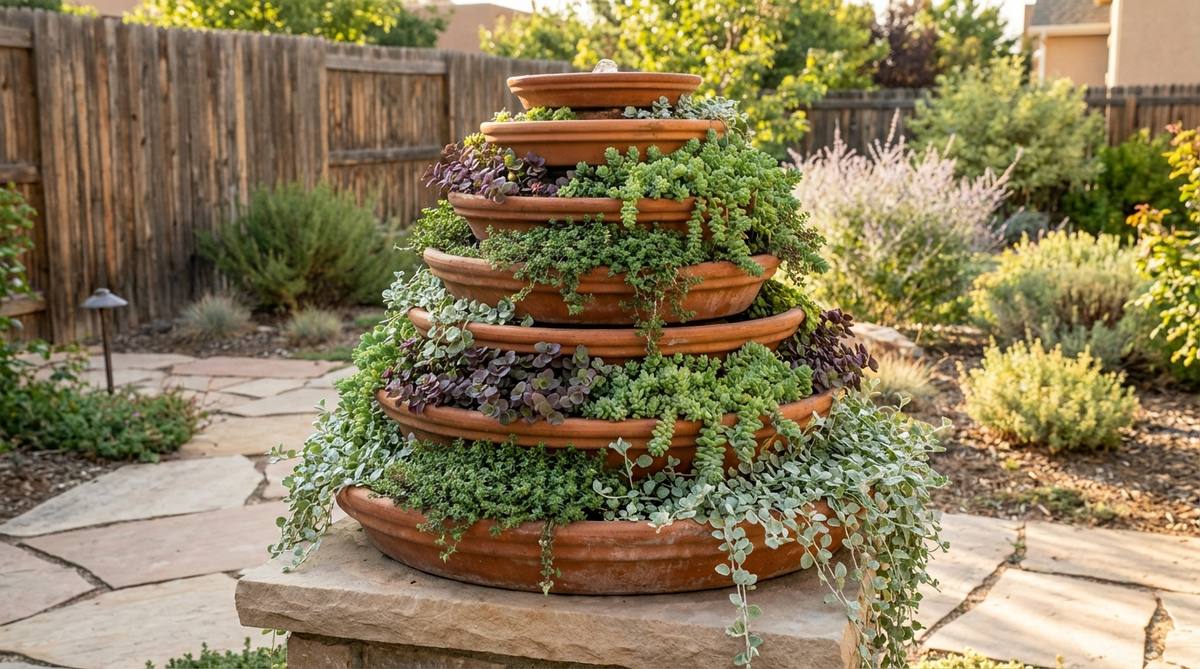
Stacking graduated terracotta saucers creates a fountain-style planter that cascades with trailing plants. This vertical arrangement maximizes space while providing the soothing visual of a water feature without actual plumbing.
Start with an 18-inch base pot, add a 14-inch middle tier, and crown with a 10-inch top pot. Plant trailing sedums, creeping thyme, or dwarf succulents that spill over edges.
5. Rustic Oil Jar Focal Points
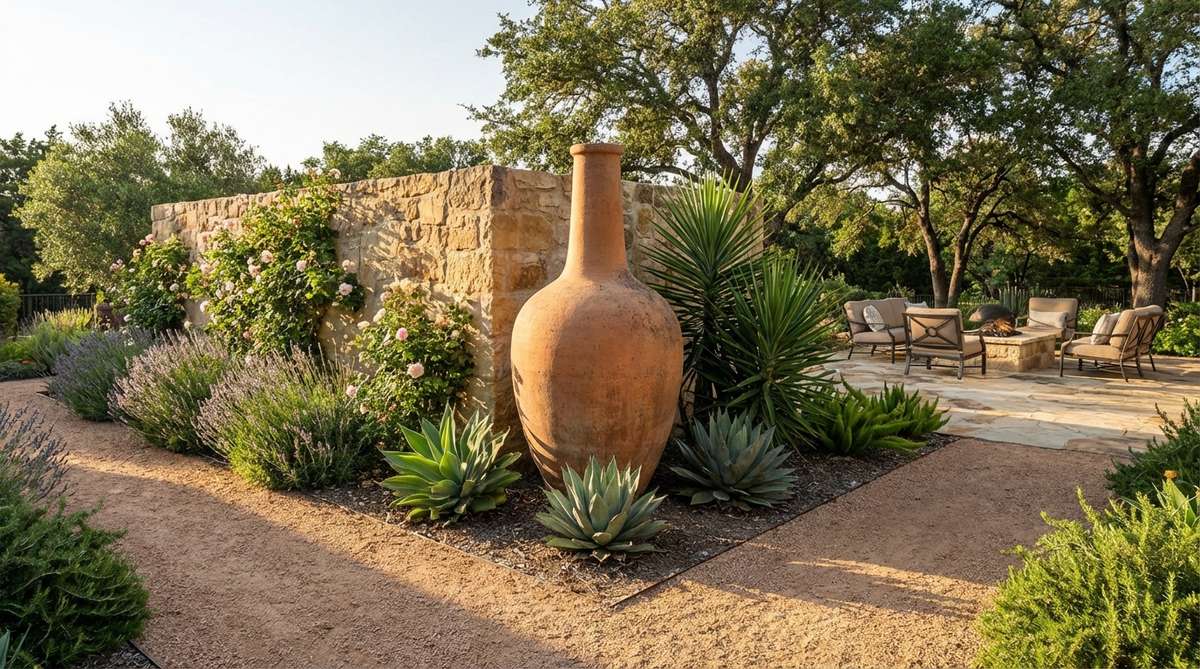
Traditional Mediterranean oil jars serve as dramatic focal points that anchor garden compositions. These tall, narrow-necked vessels bring vertical interest and historical authenticity.
Position a single large oil jar at pathway intersections or against sun-warmed walls. Plant architectural agaves or yuccas in the wider-mouthed versions, or leave the narrowest authentic jars unplanted as sculptural elements.
6. Terracotta Wall Pocket Gardens
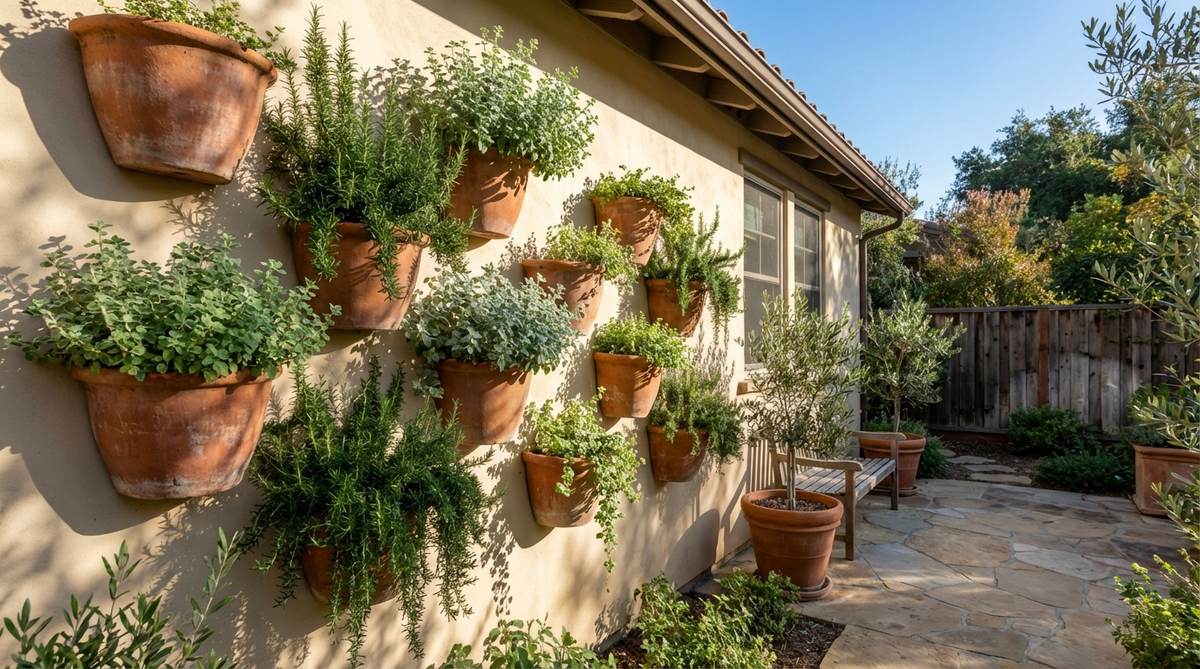
Mounting terracotta wall pockets transforms vertical surfaces into planted displays that conserve ground space. These semi-circular or conical vessels attach to stucco walls or wooden fences.
Install pockets in staggered arrangements and fill them with cascading herbs like oregano, marjoram, and trailing rosemary. The vertical installation improves air circulation around plants while showcasing their aromatic foliage at eye level.
Drought Plant Combinations For Water-Wise Landscapes
Selecting the right drought-tolerant plants ensures your Mediterranean garden thrives with minimal irrigation while delivering year-round visual interest. These combinations pair plants with similar water needs and complementary textures.
7. Lavender and Rosemary Hedges
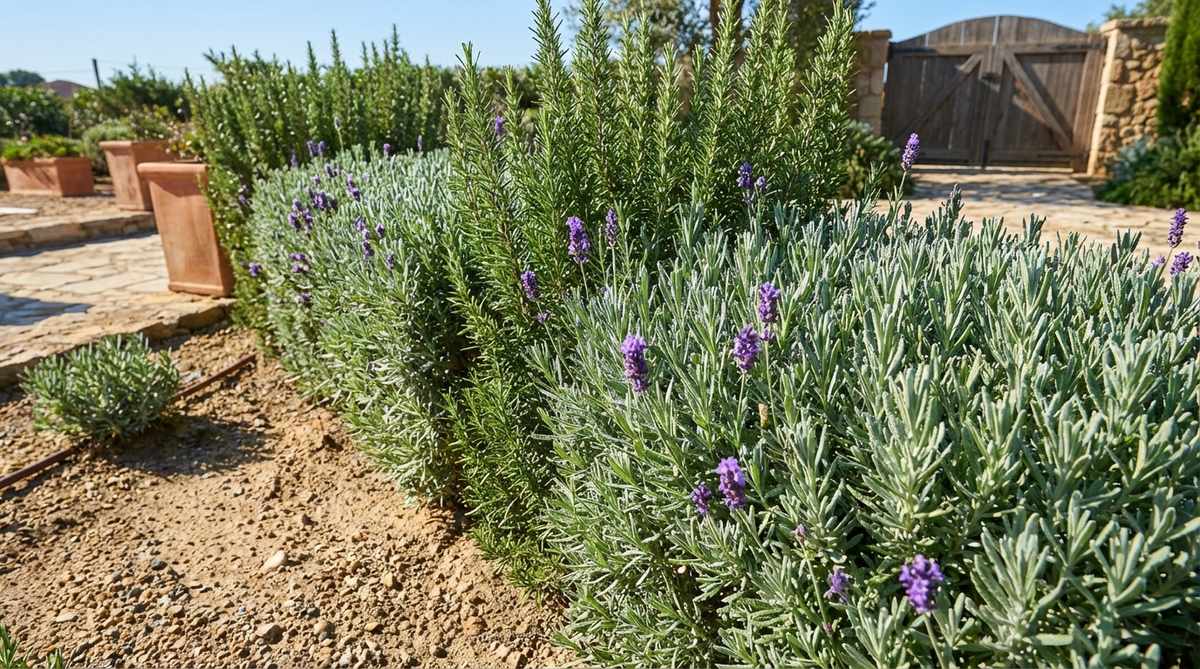
Planting alternating lavender and rosemary specimens creates fragrant evergreen borders that define garden rooms. Both plants feature silvery foliage and aromatic oils that repel pests naturally.
Space plants 18 inches apart in full sun with well-drained sandy soil. Trim after flowering to prevent woody growth and maintain compact hedge form.
This pairing requires extremely low water once established and provides cut flowers, culinary herbs, and pollinator habitat simultaneously.
8. Silver Foliage Tapestry
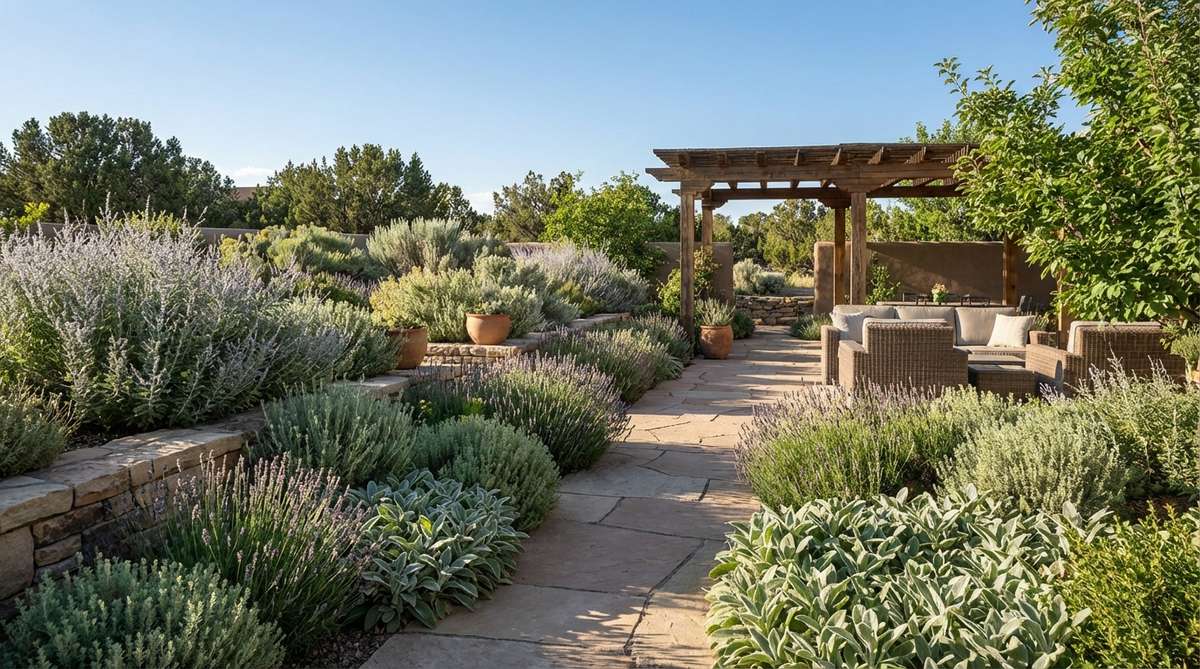
Combining gray-leaved plants creates a cooling visual effect that reflects intense sunlight. Sage, curry plant, and lamb’s ear form a textural tapestry in silver tones.
Plant in drifts rather than rows, allowing plants to intermingle naturally. The varied leaf shapes provide interest even when plants are not flowering.
9. Olive Tree Understory Planting
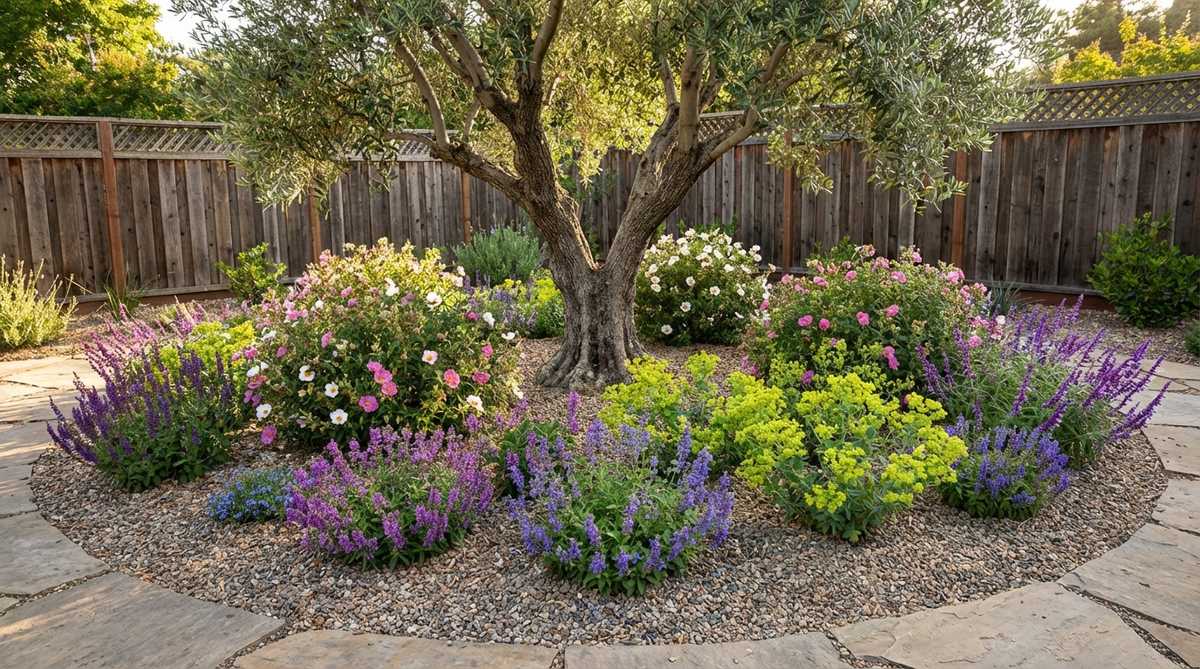
Planting beneath olive trees requires selecting species that tolerate root competition and dappled shade. Cistus, bupleurum, and low-growing salvias thrive in these conditions.
Create a circular planting bed extending to the tree’s drip line, mulching with gravel to retain moisture. The understory plants soften the tree’s gnarled trunk while the olive provides structural presence year-round.
10. Rockrose and Bougainvillea Slopes
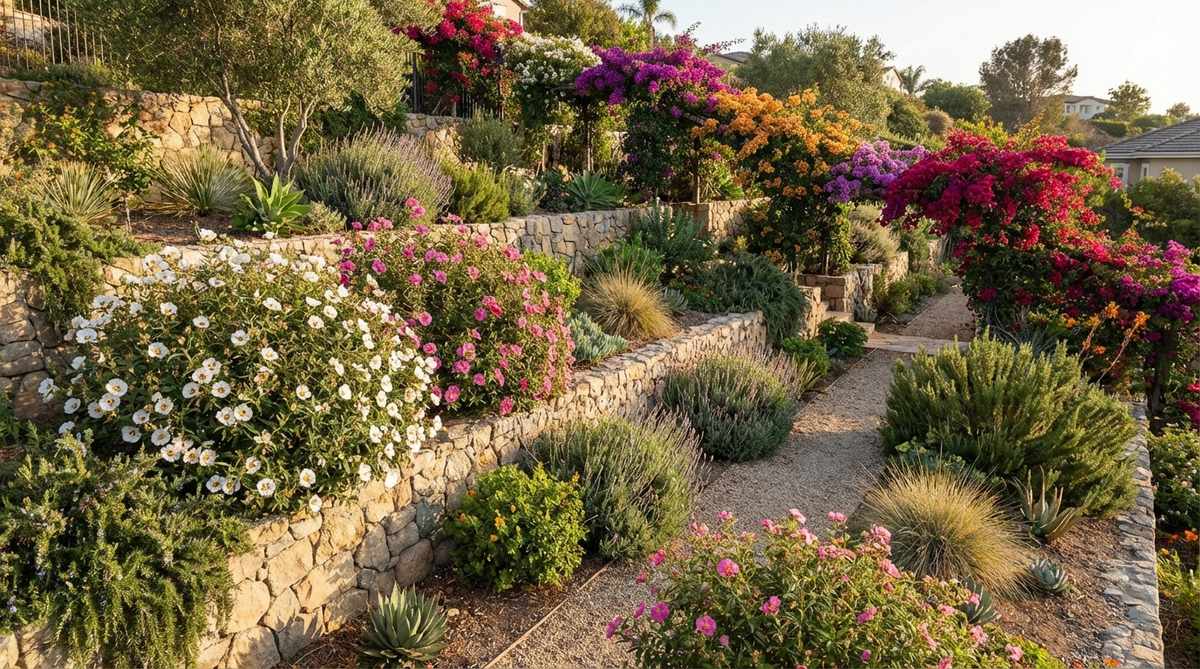
Cistus rockrose carpets slopes with fast-spreading growth and papery blooms while bougainvillea adds vertical accent with vibrant bracts. Both species shrug off drought and poor soils.
Plant rockrose on 24-inch centers for erosion control, positioning bougainvillea at slope tops where it can cascade downward. This combination requires no supplemental water once established in zones 9-11.
11. Yucca and Agapanthus Accents
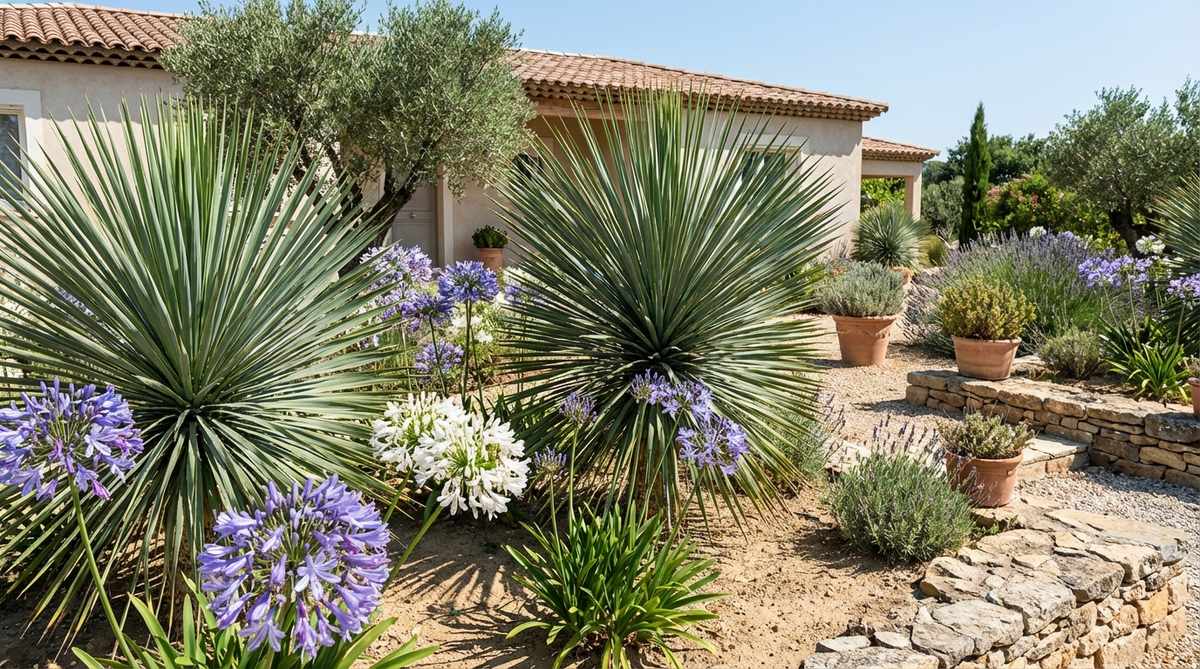
Pairing yucca’s sword-like evergreen foliage with agapanthus blooms creates dramatic focal points. The yucca provides year-round architectural structure while agapanthus contributes seasonal color.
Plant yuccas as permanent anchors with agapanthus clustered in front for spring and summer flower displays. Both tolerate coastal conditions and require well-drained soil.
12. Herb Spiral Microclimate
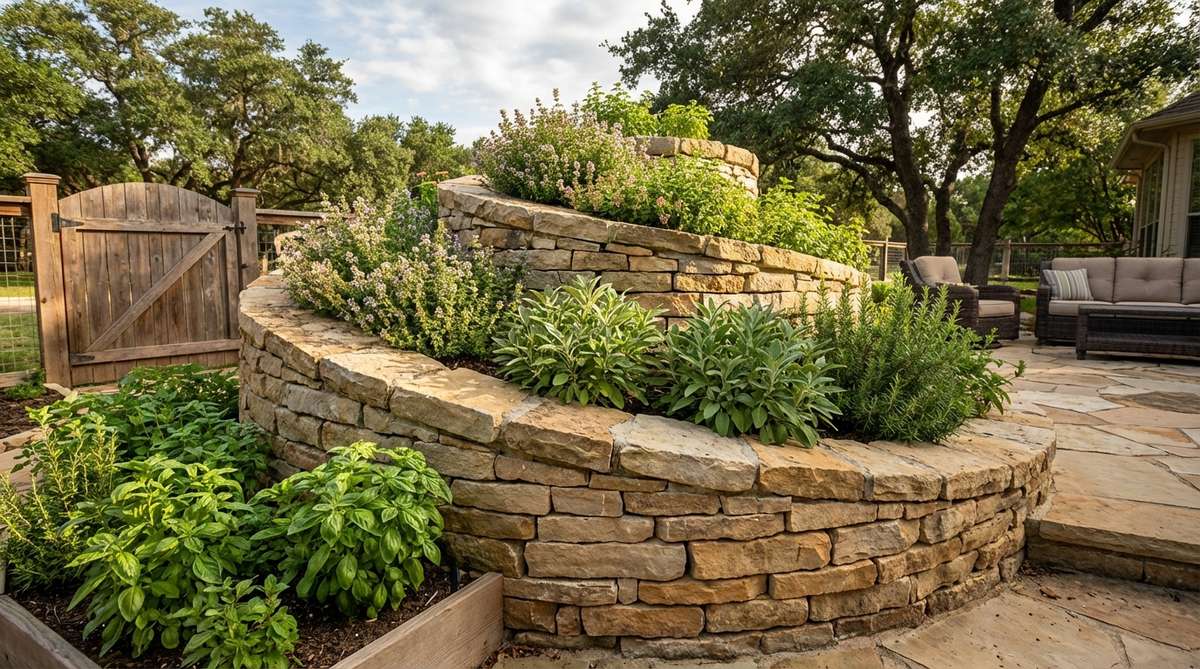
Constructing a spiral stone wall creates multiple microclimates for herbs with varying water needs. Mediterranean herbs occupy the driest upper levels while moisture-tolerant parsley grows at the base.
Build the spiral 3-4 feet in diameter using natural stone, planting thyme and oregano at the top, sage and rosemary mid-level, and basil at the bottom. This structure maximizes growing space in compact areas.
Courtyard and Pathway Designs With Gravel and Stone
Mediterranean gardens rely on hardscaping to define spaces and reduce lawn areas that demand irrigation. Gravel and natural stone create permeable surfaces that manage water while establishing authentic visual character.
13. Golden Gravel Pathways
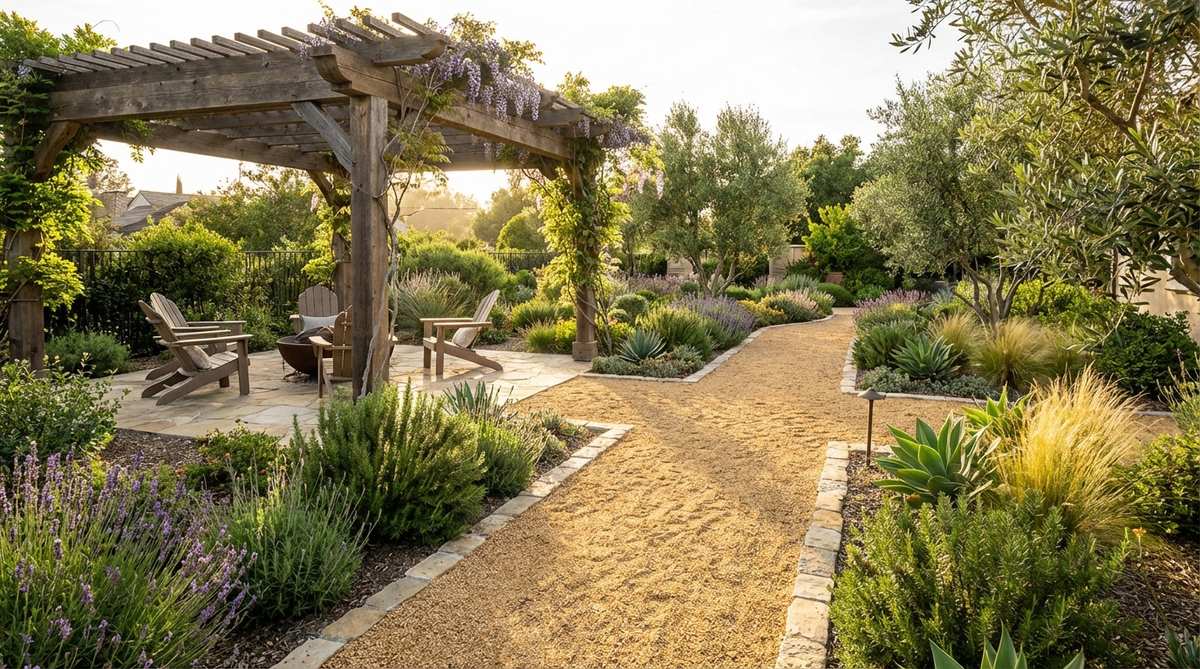
Installing 20mm golden gravel pathways establishes the weathered, sun-drenched aesthetic central to Mediterranean landscapes. The mixture of yellow, cream, and brown stones reflects light and complements terracotta elements.
Edge pathways with limestone or sandstone pavers to prevent gravel migration. The permeable surface allows rainwater infiltration while requiring no maintenance beyond occasional raking.
Golden gravel brightens shaded areas and provides excellent drainage around drought-tolerant plant roots.
14. Mosaic Pebble Courtyard
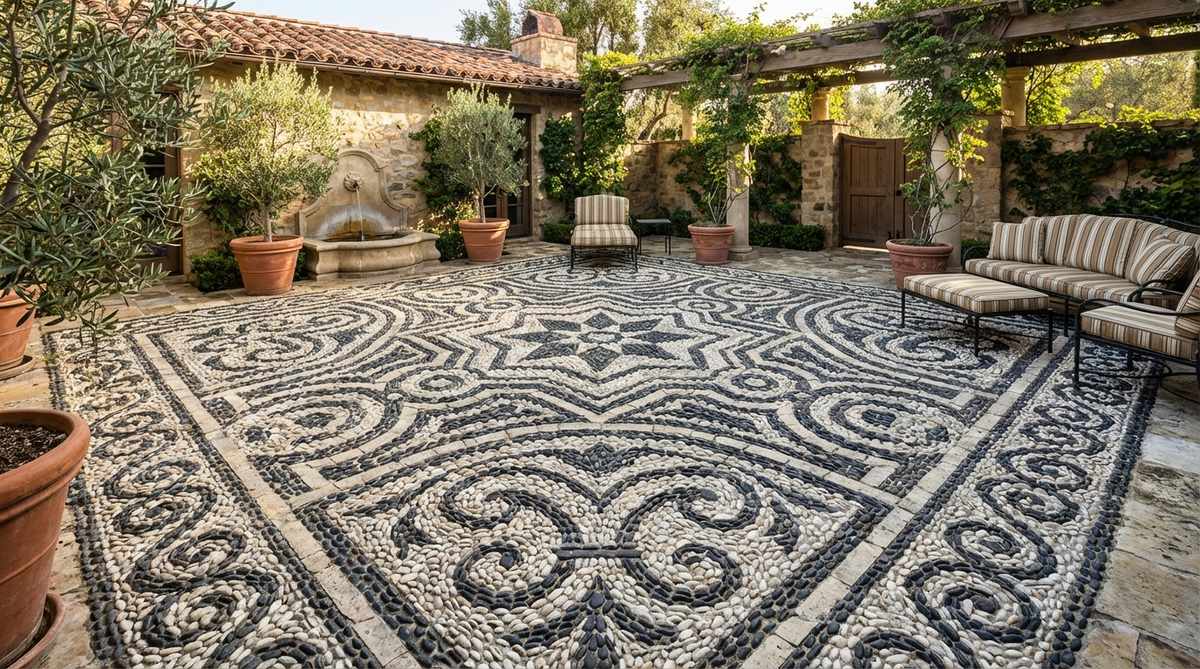
Creating pebble mosaic patterns in courtyard floors honors traditional Mediterranean craftsmanship. Black and white river stones form geometric or organic designs underfoot.
Set pebbles vertically in sand-cement mortar, working in small sections to maintain pattern accuracy. This labor-intensive technique produces permanent art that withstands foot traffic for decades.
15. Reclaimed Stone Terrace
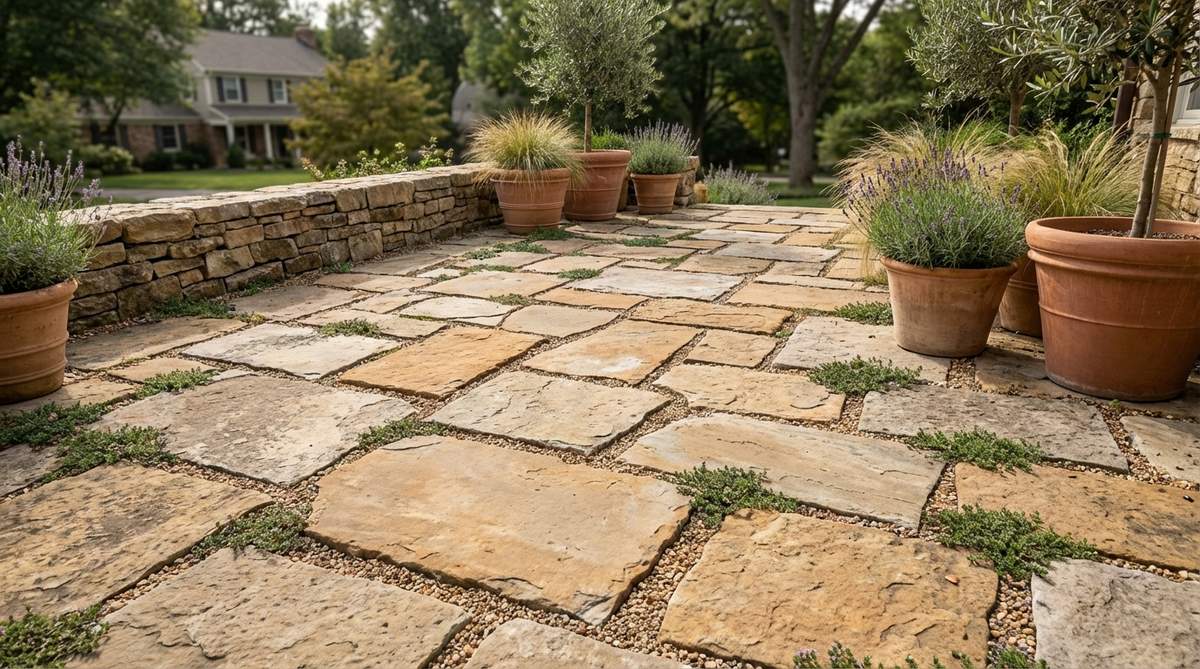
Sourcing weathered limestone or sandstone from reclamation yards delivers instant patina and sustainable materials. Irregular flagstones laid in random patterns create the informal character of village squares.
Leave joints wide and fill with gravel or low-growing thyme to soften edges. The varied stone sizes and natural weathering suggest centuries of use.
16. Gravel Mulch Borders
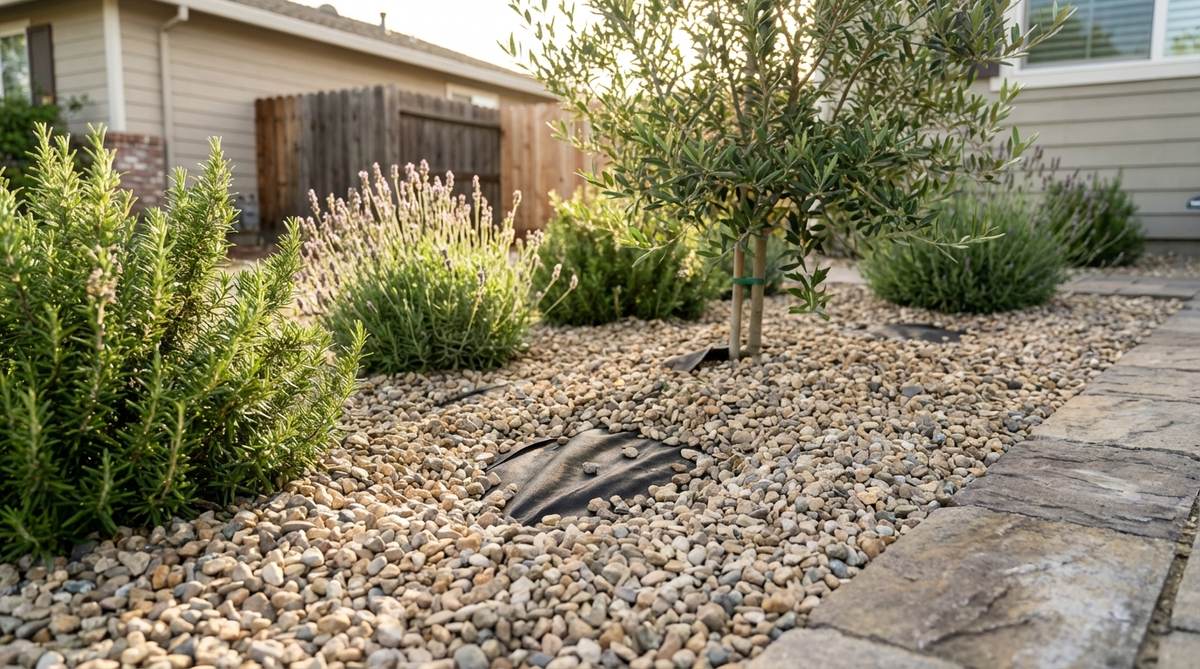
Replacing organic mulch with 10mm gravel around plant bases improves drainage while deterring weeds. The mineral mulch reflects heat upward, benefiting sun-loving Mediterranean species.
Apply gravel 2-3 inches deep over landscape fabric, creating a clean maintenance-free surface. The gravel won’t decompose or blow away like bark mulch.
17. Dry Stream Bed Feature
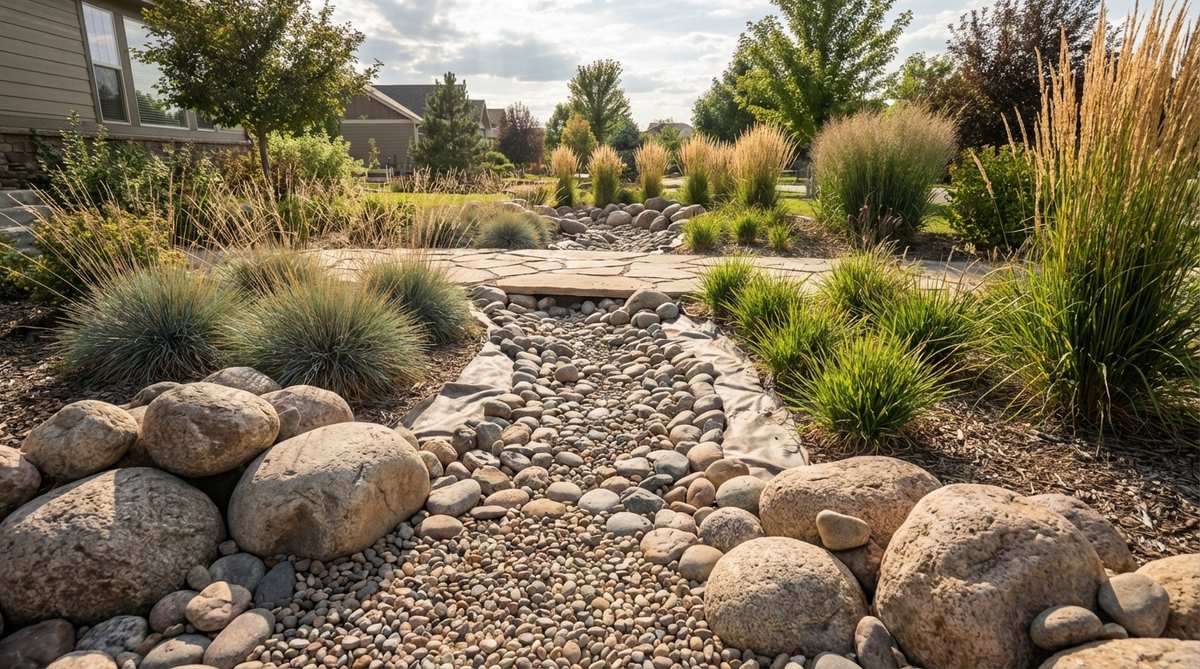
Constructing a decorative dry stream bed with river rocks manages drainage while adding visual movement. This feature mimics seasonal watercourses common in Mediterranean climates.
Dig a shallow meandering channel, line with landscape fabric, and fill with graduated stone sizes from boulders to pea gravel. Plant drought-tolerant grasses and sedges along banks.
Architectural and Shade Elements For Outdoor Living
Shade structures extend the usability of Mediterranean gardens during peak heat while providing vertical frameworks for climbing plants. These architectural elements blend function with aesthetic appeal.
18. Wisteria-Draped Pergola
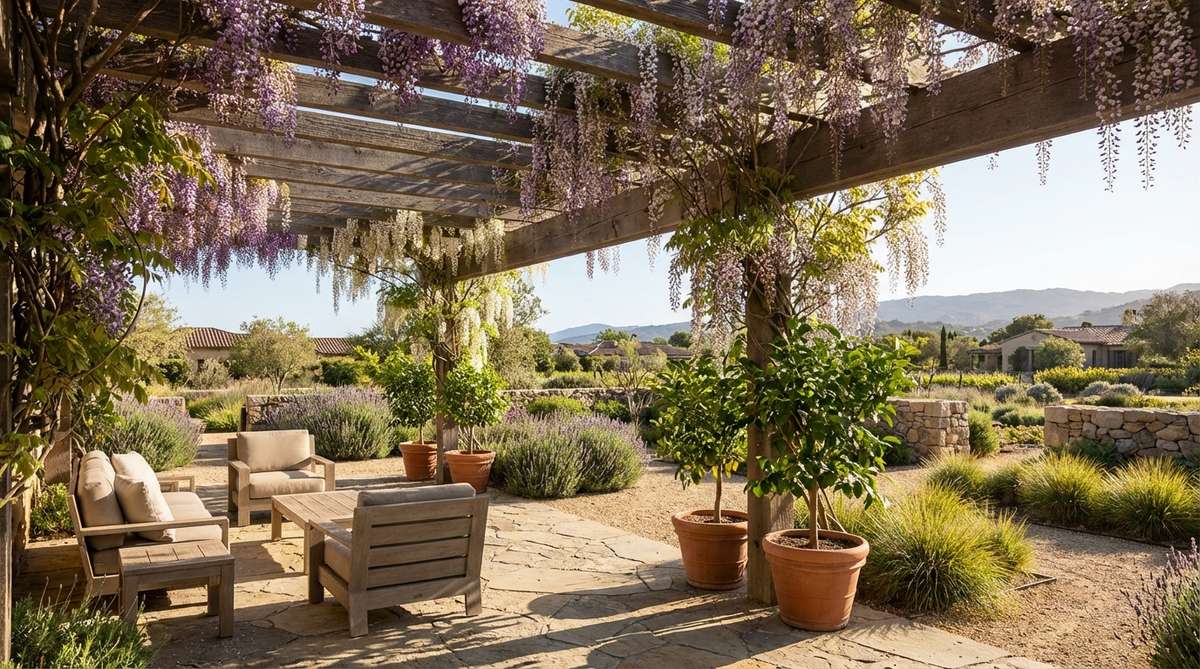
Installing a timber or wrought iron pergola creates essential shade for seating areas while supporting fragrant climbing plants. Wisteria’s cascading blooms deliver dramatic spring displays.
Position pergolas to shade west-facing patios from intense afternoon sun. Train wisteria vines across horizontal beams, pruning annually to control growth and maximize flowering.
The dappled shade beneath allows for entertaining while protecting furnishings from UV damage.
19. Bougainvillea Arbor Entrance
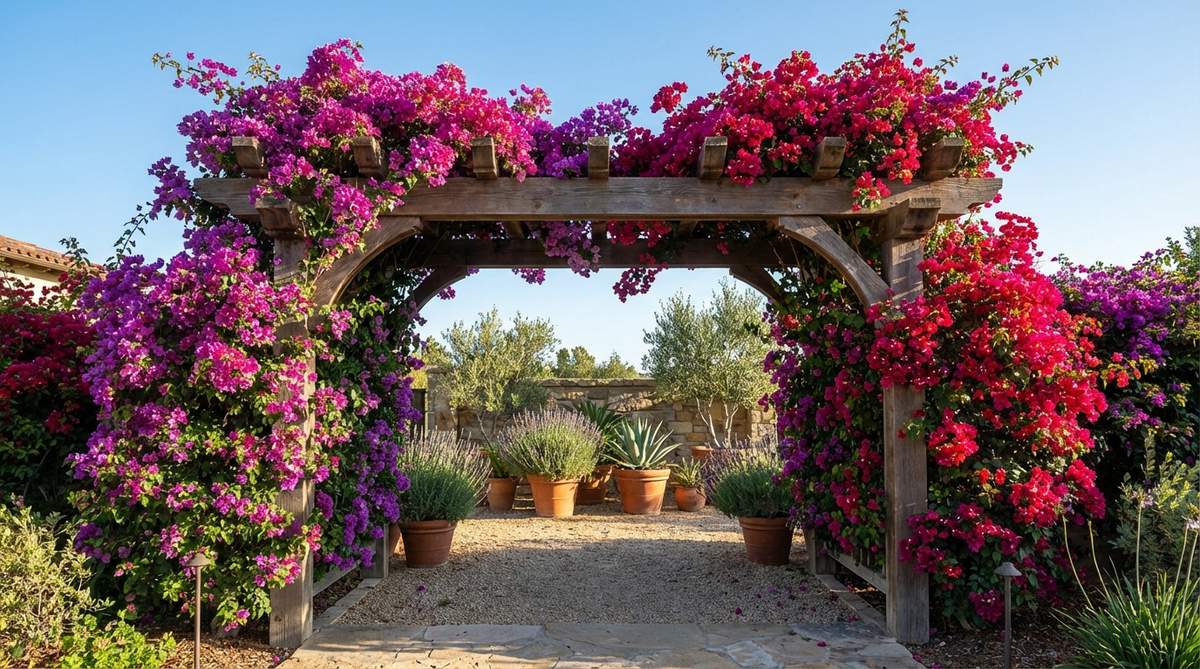
Framing garden entrances with bougainvillea-covered arbors creates vibrant thresholds that signal transitions between spaces. The papery bracts provide color for months with negligible water.
Install a simple metal or wood arch and train bougainvillea up both sides. In zones 9-11, the plant remains evergreen and flowers repeatedly throughout warm months.
20. Canvas Shade Sail Dining
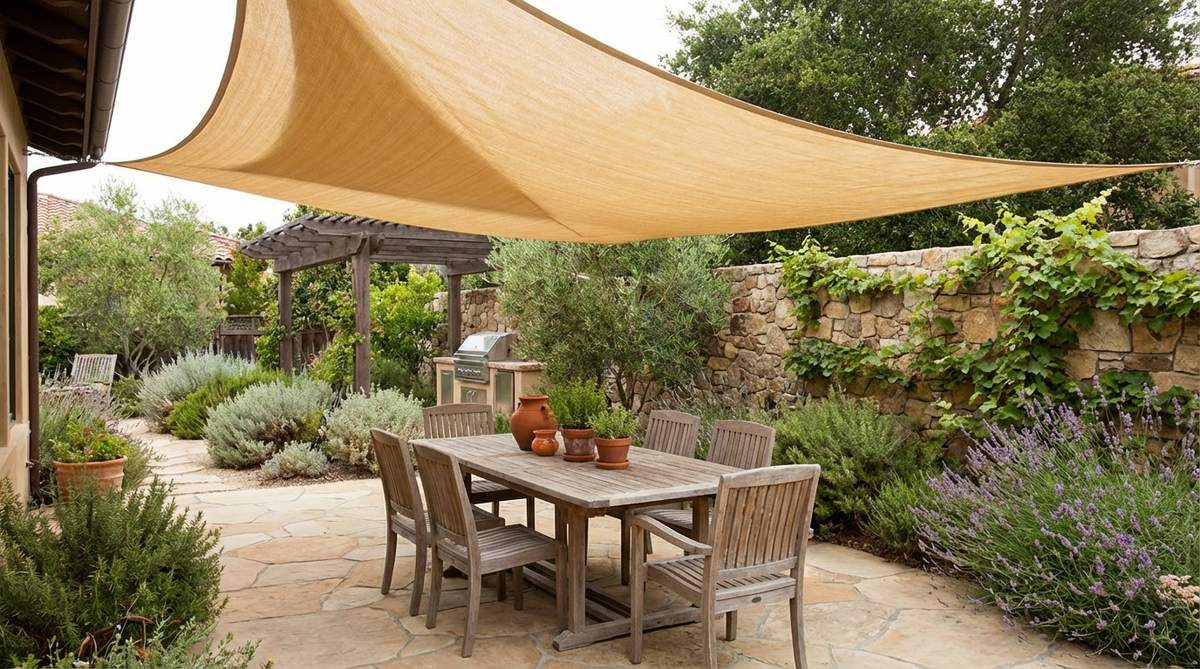
Mounting triangular canvas sails over dining areas provides flexible shade without permanent structures. The billowing fabric evokes Mediterranean seaside restaurants.
Anchor sails to posts or building walls at varying heights to create dynamic forms. Choose sand, terracotta, or natural canvas colors that complement the garden palette.
21. Stone Wall Fountain Accent
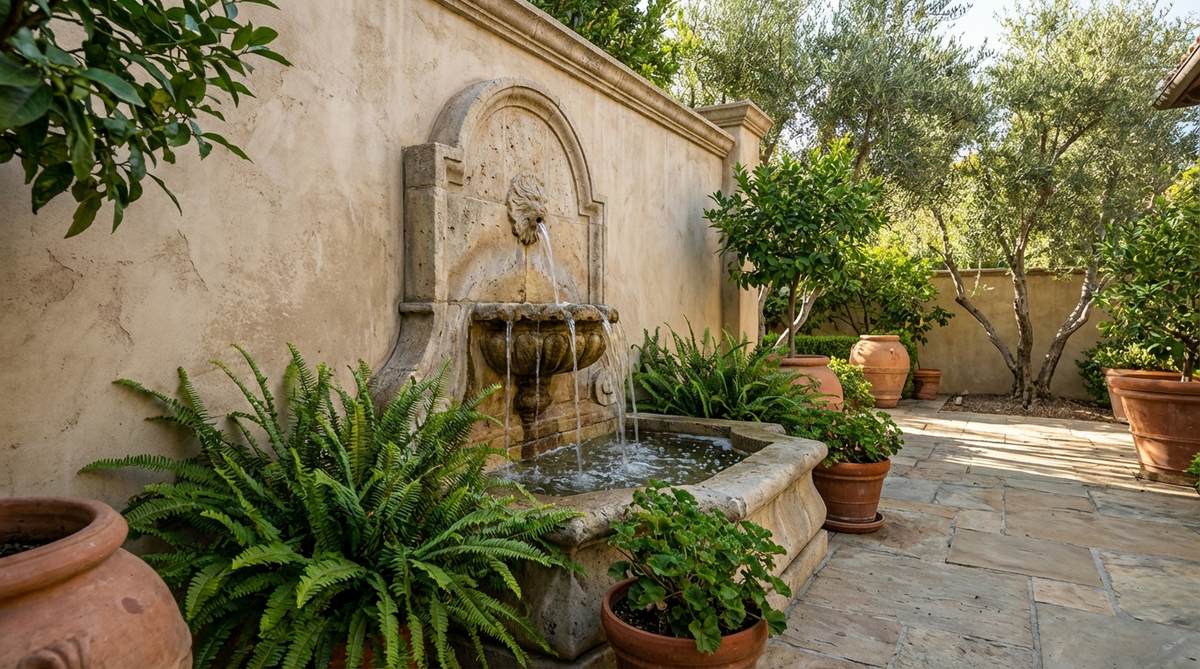
Installing a wall-mounted terracotta or stone fountain introduces soothing water sounds without the footprint of freestanding features. These vertical elements attach to courtyard walls or fences.
Use recirculating pumps to minimize water consumption, and plant water-loving ferns or maiden hair in the splash zone below. The fountain provides focal interest and masks ambient noise.
22. Wrought Iron Bistro Nook
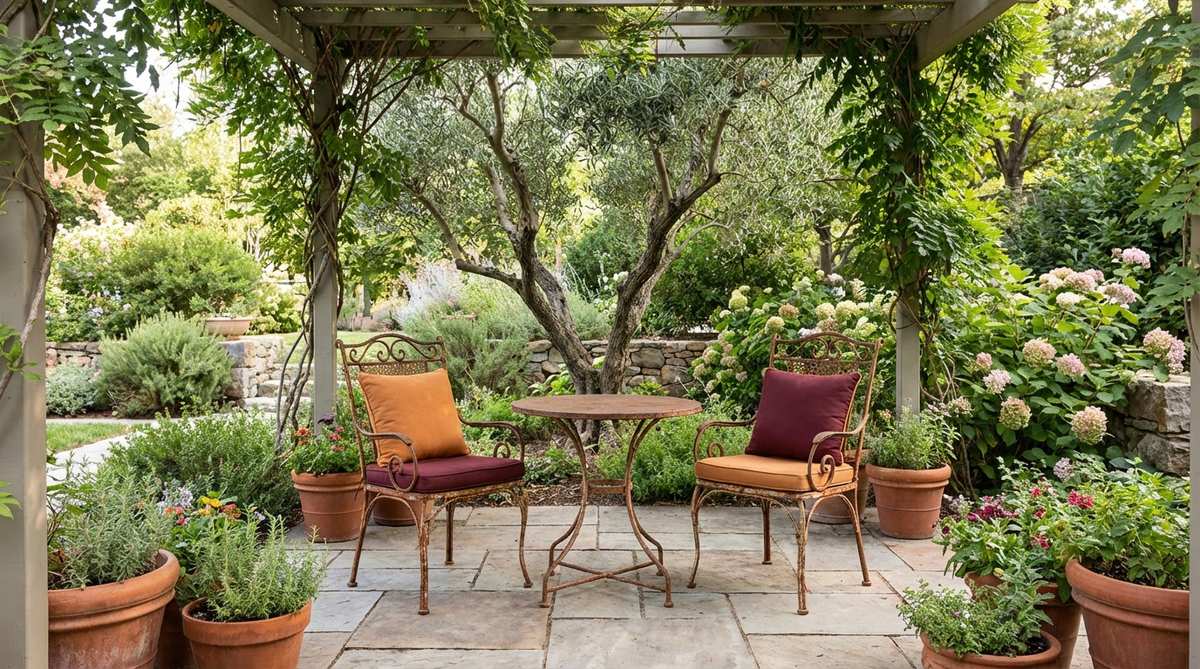
Positioning ornate wrought iron furniture creates intimate dining or reading areas that capture Mediterranean cafe culture. The metal develops attractive rust patina that enhances authenticity.
Add cushions in warm colors like orange, saffron, and burgundy, placing the furniture beneath existing trees or pergolas for natural shade.
Vertical and Fragrant Gardens Maximizing Sensory Appeal
Mediterranean gardens engage all senses through aromatic plants and vertical growing techniques that make efficient use of space. These designs prioritize fragrance and three-dimensional interest.
23. Climbing Jasmine Trellis
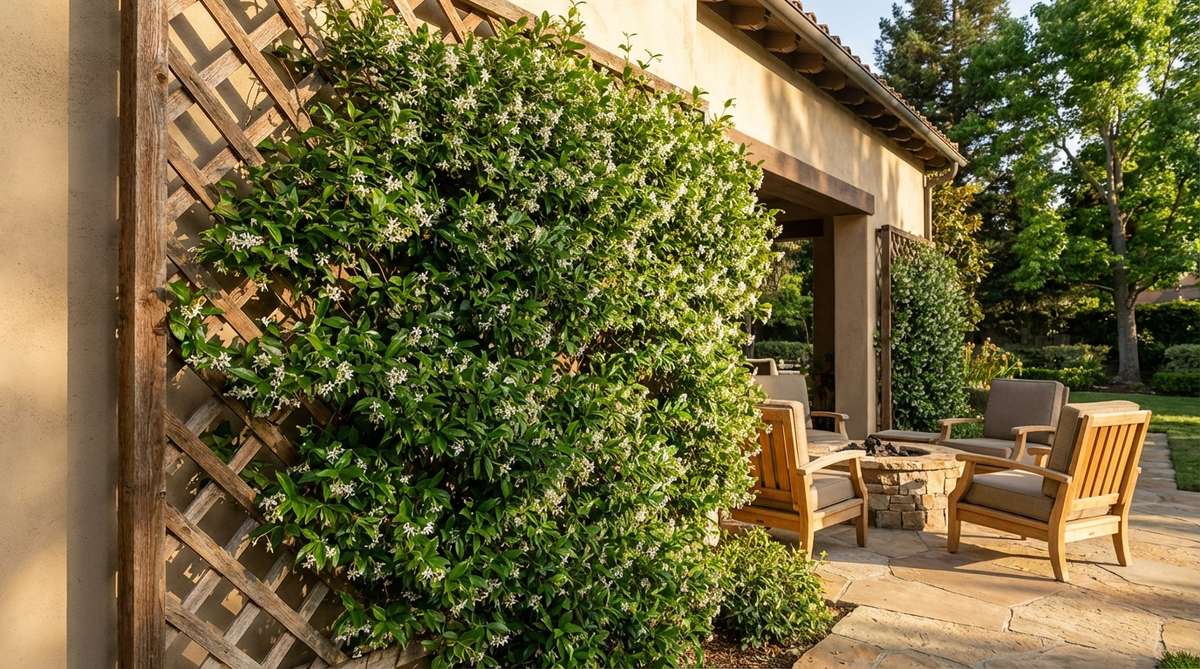
Training star jasmine or Spanish jasmine on wall-mounted trellises fills gardens with intense evening fragrance. The evergreen vines provide privacy screening year-round.
Install wooden lattice or wire grid systems 6 inches from walls to allow air circulation. The jasmine blooms prolifically in full to partial sun with moderate water during establishment.
Position near seating areas or bedroom windows to maximize enjoyment of the signature perfume.
24. Vertical Succulent Living Wall
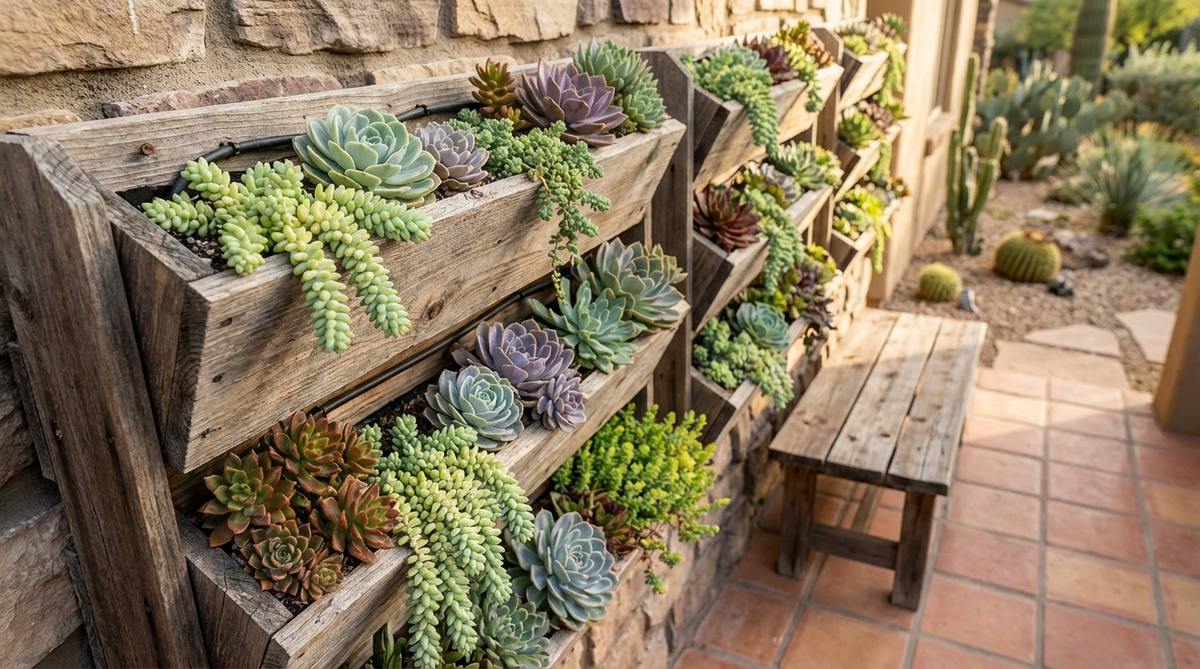
Mounting pocket planters or specialized frames creates living walls of drought-tolerant succulents. Echeveria, sedum, and sempervivum varieties provide color variation in compact installations.
Use well-draining cactus soil mix and water sparingly, allowing the system to dry between irrigations. Vertical gardens work well on small balconies or narrow side yards.
25. Fig Tree Espalier
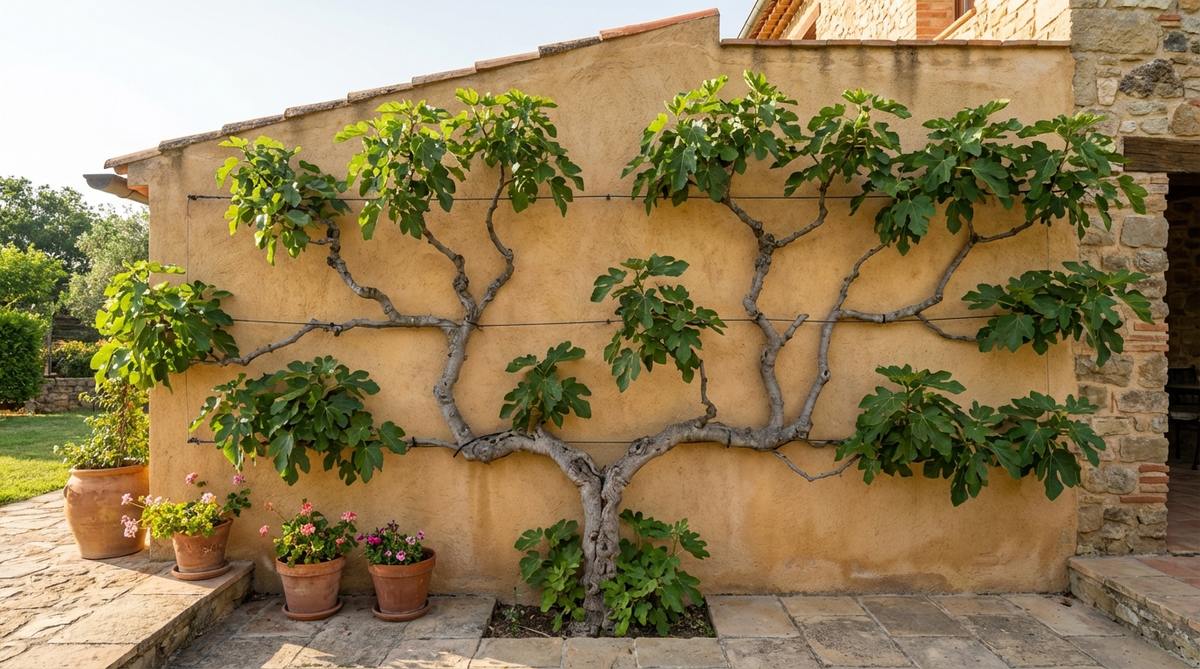
Training fig trees flat against sunny walls conserves space while improving fruit production. The espalier technique originated in Mediterranean walled gardens to maximize warmth.
Plant figs 12 inches from walls, securing branches to horizontal wires as they grow. The wall radiates stored heat, extending the growing season and sweetening fruit.
26. Hanging Terracotta Herb Garden
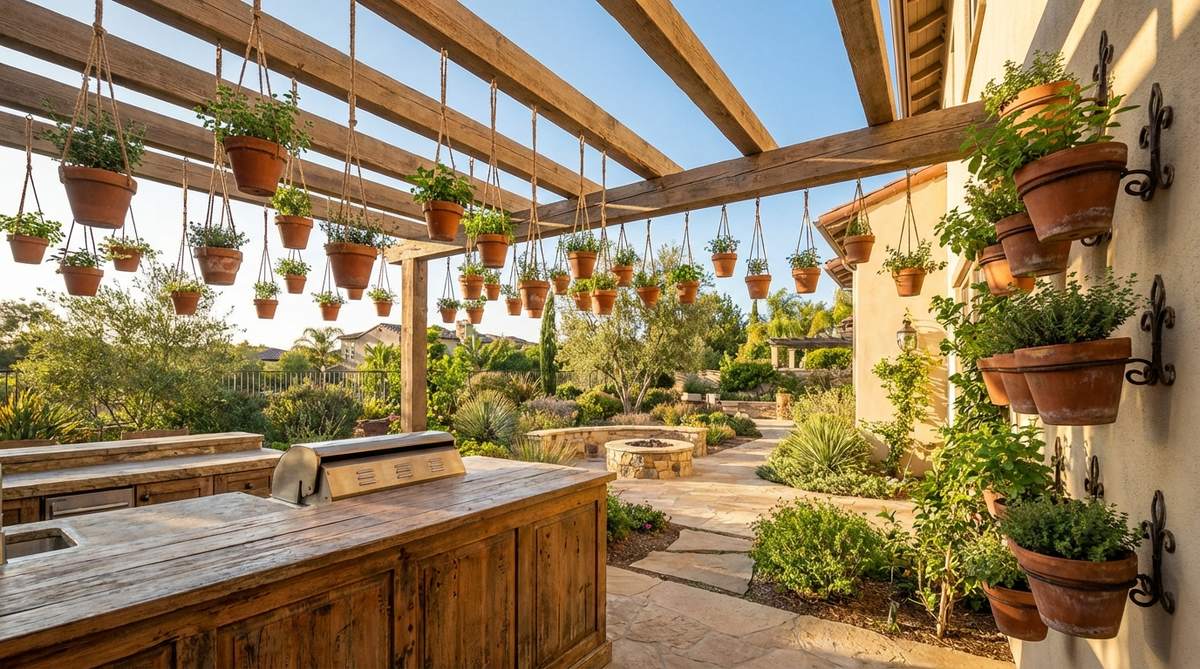
Suspending small terracotta pots from pergola beams or wall brackets positions culinary herbs within easy reach. This vertical approach keeps herbs accessible while freeing ground space.
Use chains or rope hangers rated for outdoor use, planting oregano, thyme, and mint in individual pots. The elevation improves drainage and air circulation around herb foliage.
27. Cypress Allee Entrance
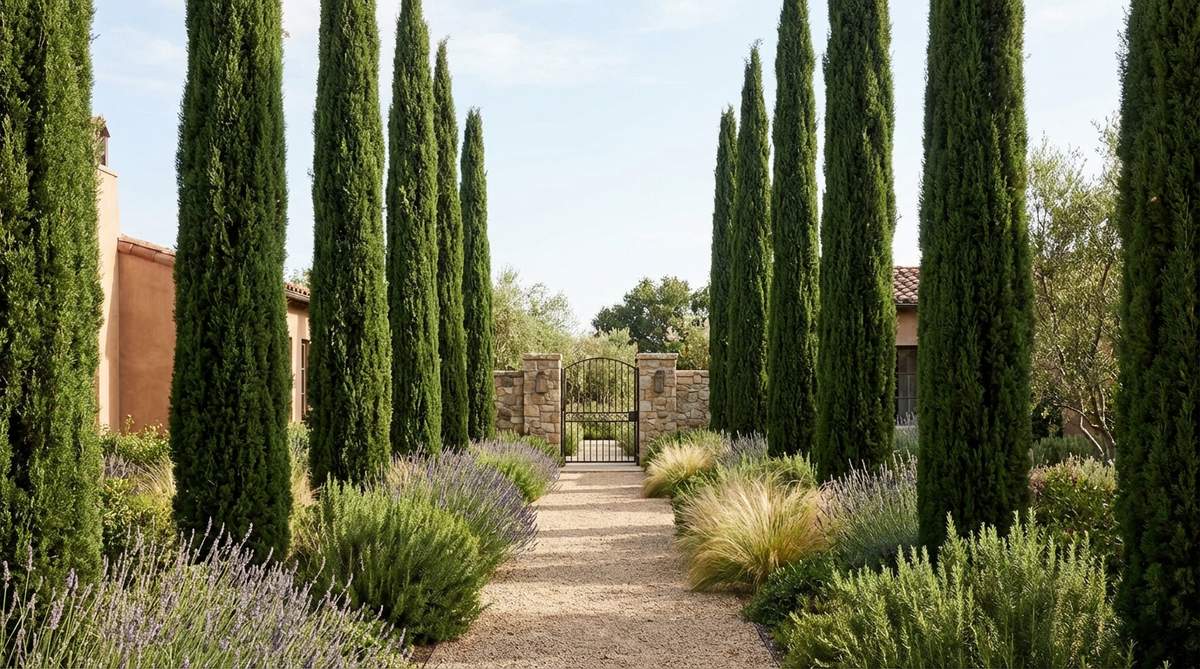
Planting paired Italian cypress trees along driveways or paths creates formal vertical accents that frame views. The columnar evergreens require minimal width while achieving dramatic height.
Space trees 6-8 feet apart on both sides of pathways, selecting varieties suited to your hardiness zone. Cypress tolerates drought once established and needs no pruning to maintain narrow form.
28. Scented Geranium Collection
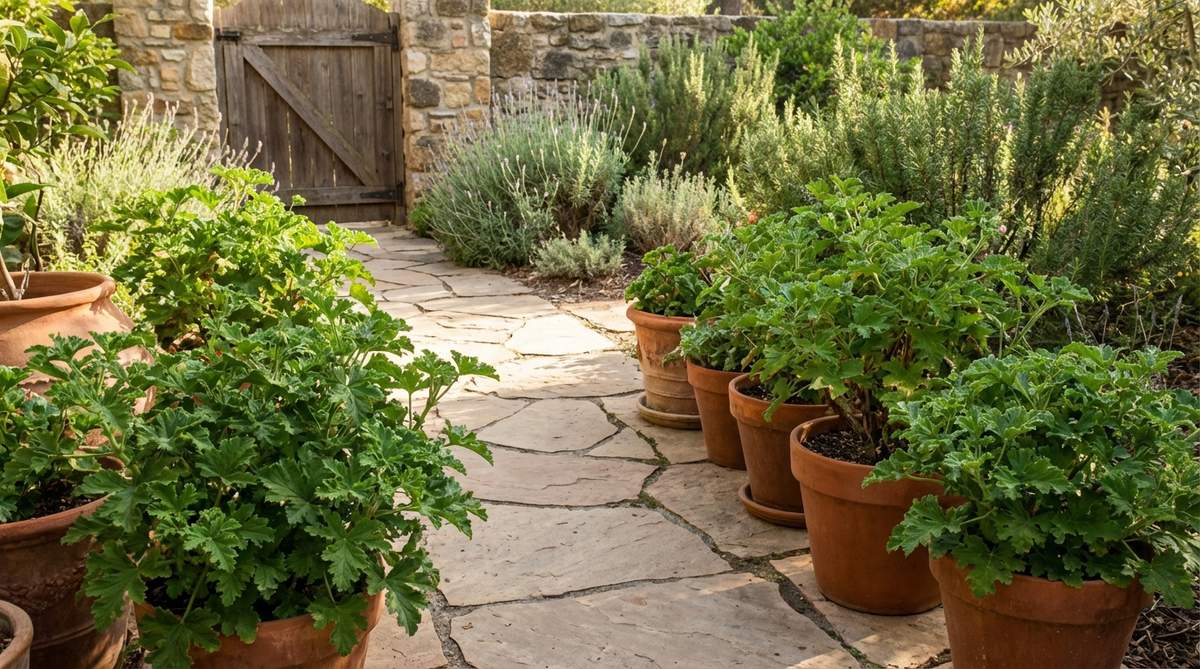
Growing multiple scented geranium varieties in terracotta pots creates a fragrance garden with rose, lemon, mint, and nutmeg aromas. The textured leaves release scent when brushed.
Arrange pots along pathways where foot traffic will naturally trigger fragrance release. These tender perennials overwinter indoors in cold climates or remain evergreen in zones 10-11.
Conclusion
Mediterranean garden design delivers enduring beauty through strategic use of terracotta elements and drought-tolerant plant selections that thrive in challenging conditions. These 28 themes demonstrate how earthen materials, water-wise plants, and thoughtful architectural features create outdoor spaces that honor southern European traditions while addressing contemporary sustainability needs. Start with terracotta container groupings and layer in fragrant herbs, then expand your design with hardscaping and shade structures to transform any yard into a sun-drenched Mediterranean retreat that conserves resources without compromising aesthetic impact.
Frequently Asked Questions
What are the best drought-tolerant plants for Mediterranean garden design?
Lavender, rosemary, sage, olive trees, cistus, and bougainvillea rank among the most reliable drought-tolerant plants for Mediterranean gardens. These species feature deep root systems and silvery or succulent foliage that minimizes water loss. Yucca, agapanthus, and various sedums also thrive with minimal irrigation once established. Select plants rated for your USDA hardiness zone and ensure excellent drainage to replicate their native growing conditions.
How do terracotta pots benefit Mediterranean garden plants?
Terracotta’s porous clay composition allows air and moisture to pass through pot walls, preventing root rot by enabling excess water to evaporate. This natural breathability regulates soil temperature and prevents overheating in intense sun. The material’s weight provides stability for top-heavy plants like olive trees, while the earthy color complements Mediterranean plant palettes. Terracotta pots develop attractive patina over time, enhancing the weathered aesthetic central to this garden style.
Can I create a Mediterranean garden in regions with cold winters?
Yes, by selecting cold-hardy substitutes for classic Mediterranean plants and using containers for tender specimens. Hardy lavender varieties, Russian sage, catmint, and certain rosemary cultivars survive zone 5 winters. Plant tender citrus, olive trees, and bougainvillea in terracotta pots that move indoors before frost. Focus on the design principles of gravel pathways, stone hardscaping, and earthy color palettes that function in any climate, adapting the plant palette to your specific hardiness zone.
What type of soil works best for Mediterranean garden plants?
Mediterranean plants require fast-draining soil that prevents water from pooling around roots. Mix native soil with coarse sand, perlite, or fine gravel to improve drainage, aiming for a sandy or rocky consistency. Most Mediterranean species prefer slightly alkaline to neutral pH between 6.5 and 8.0. Avoid adding organic matter like compost to drought-tolerant plant areas, as these plants evolved in lean, low-fertility soils and excessive nutrients promote weak, leggy growth.
How much water does a Mediterranean garden require once established?
Established Mediterranean gardens typically need deep watering every two to three weeks during active growth, with many plants surviving months without supplemental irrigation once mature. Water requirements vary by plant species, climate, and soil type, but the design philosophy prioritizes minimal intervention. Deep, infrequent watering encourages roots to grow downward rather than spreading near the surface. During dormant winter months, natural rainfall usually provides sufficient moisture, and overwatering poses greater risk than drought.
What gravel size is ideal for Mediterranean garden pathways?
Use 20mm gravel for comfortable walking paths that resist displacement underfoot, while 10mm gravel works better as decorative mulch around plant bases. The larger size provides stability for high-traffic areas and requires less frequent maintenance. For decorative applications like dry stream beds, combine multiple sizes from large boulders down to pea gravel for natural appearance. Golden or honey-colored gravel in cream and brown tones authentically replicates Mediterranean landscapes while complementing terracotta containers.