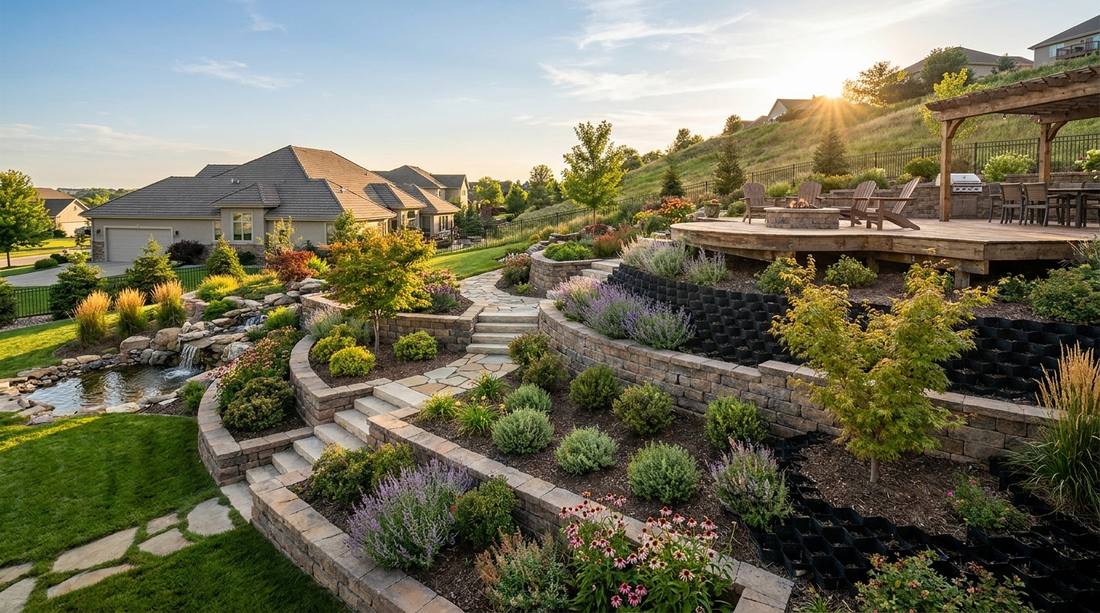
Gravity is the quiet thief of hillside properties, relentlessly pulling rich topsoil and expensive mulch down into a soggy mess at the property line every time it rains. What looks like a severe landscaping liability is actually a highly coveted canvas for vertical garden design on a slope, provided you stop fighting the grade and start locking it in. By swapping outdated mounds for commercial-grade retaining blocks and UV-stabilized terracing grids, a washed-out backyard suddenly becomes a structured, multi-level architectural retreat that commands serious property value.
Design Snapshot Key Principles
- Structural Integrity: Deploying professional drainage kits prevents hydrostatic pressure from shattering masonry.
- Grade Management: Tiered retaining wall systems outperform single massive drops for severe inclines.
- Material Selection: Utilizing bulk-pack interlocking blocks slashes contractor fees while ensuring load-bearing safety.
- Ecological Balance: Integrating deep-rooted stabilization plugs controls runoff naturally without synthetic mesh.
Foundational Terracing Frameworks That Reshape Steep Terrain
Before buying plants, you must conquer the elevation. These structural blueprints slice aggressive hillsides into highly stable, flat platforms using modern engineered materials.
1. Stepped Platform Terracing
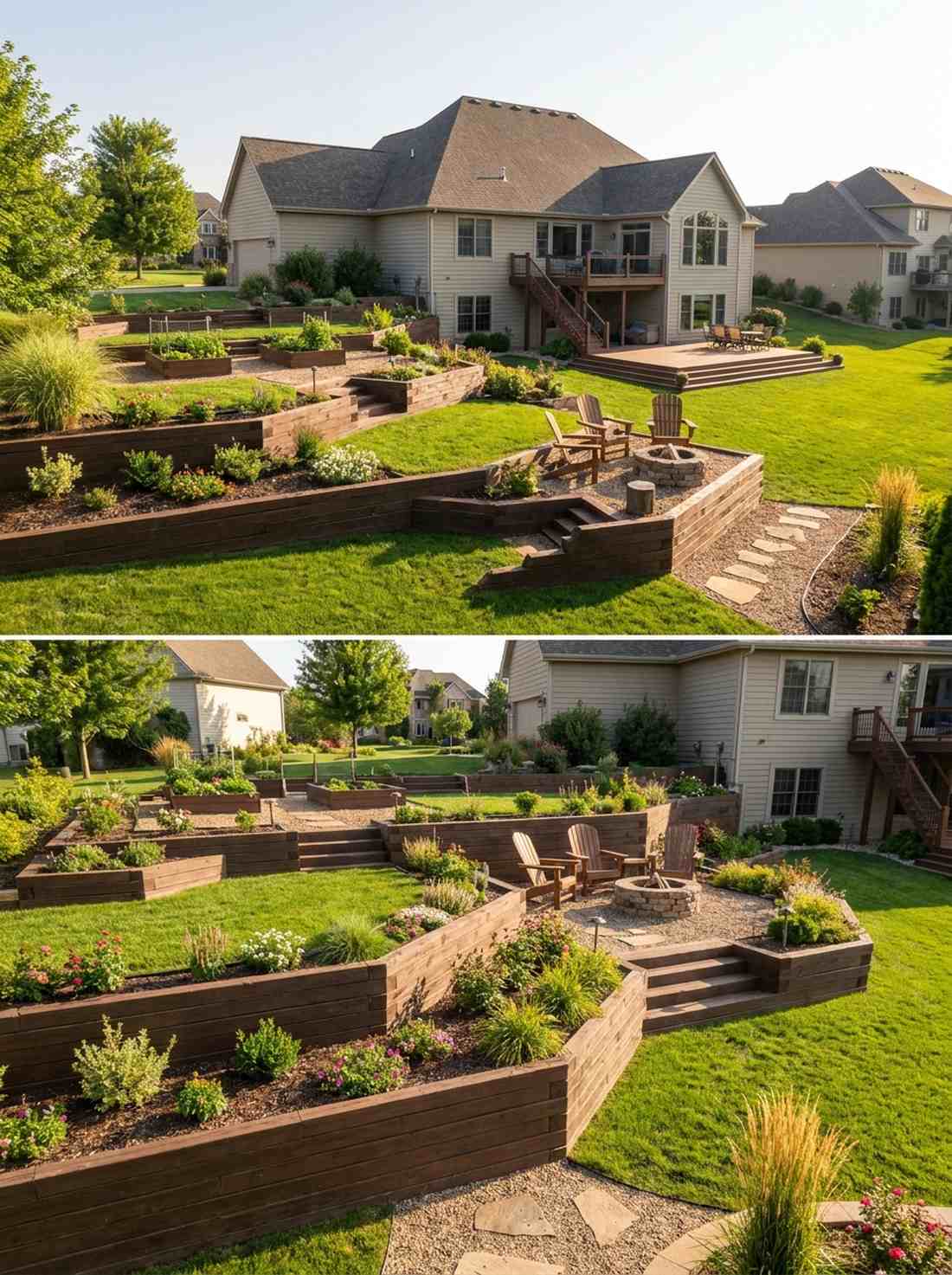
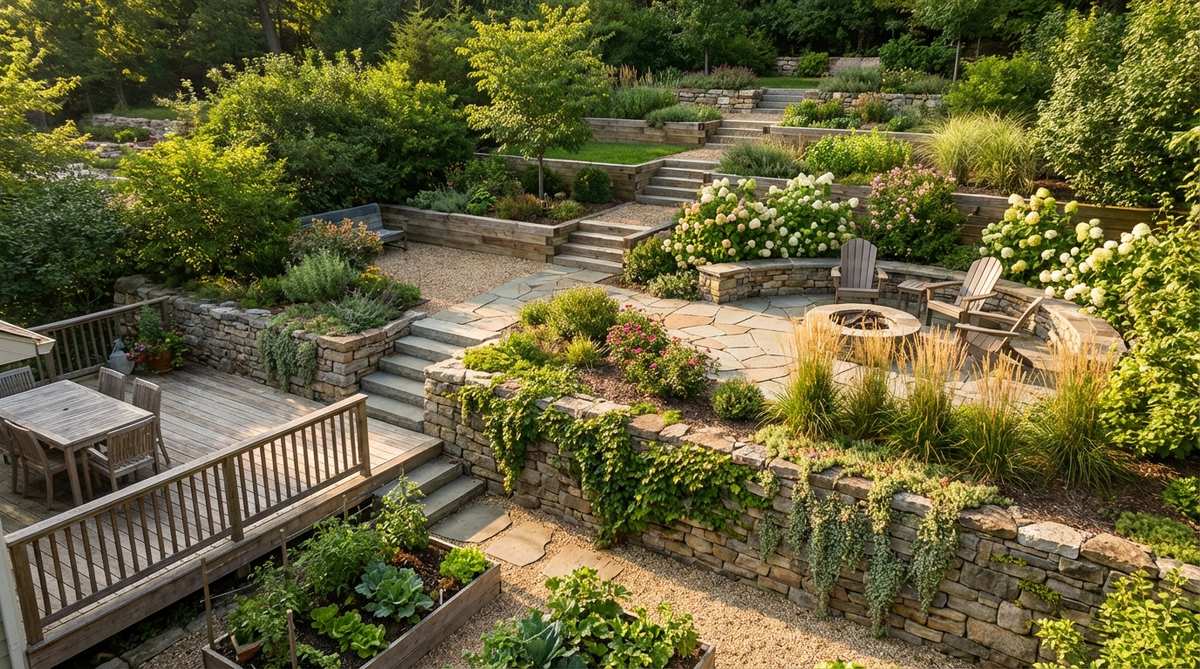
This multi-tier stepped patio garden feels like a private vineyard estate secluded from the rest of the neighborhood. It works exceptionally well for severe backyards where you need flat, usable zones rather than just ornamental plants.
Instead of a massive, expensive monolith, splitting the grade into 18-inch drops delivers a surprisingly premium look that actually manages water runoff far better. Slipping heavy-duty commercial landscape fabric behind these tiers ensures weed-free, stabilized soil that won’t blow out during a storm.
You can easily pull off a basic tier section for around $40–$80 in raw materials. Save this layout to your hillside backyard board if you want maximum usability.
- Key Materials: Pre-cut pressure-treated retaining timbers and structural gravel base
- Vibe / Style: Structured modern estate
- Difficulty: Intermediate weekend build
- Budget Breakdown: Timbers: $35 | Base Gravel: $15 | Backfill Soil: $20.
- Creator’s Tip: Always tilt your vertical timbers backward 1 inch per foot of height to combat soil expansion.
- Smart Sourcing: Pre-drilled landscape timber anchors (bulk pack) or heavy-duty non-woven geotextile fabric rolls.
2. Gradual Berm Integration
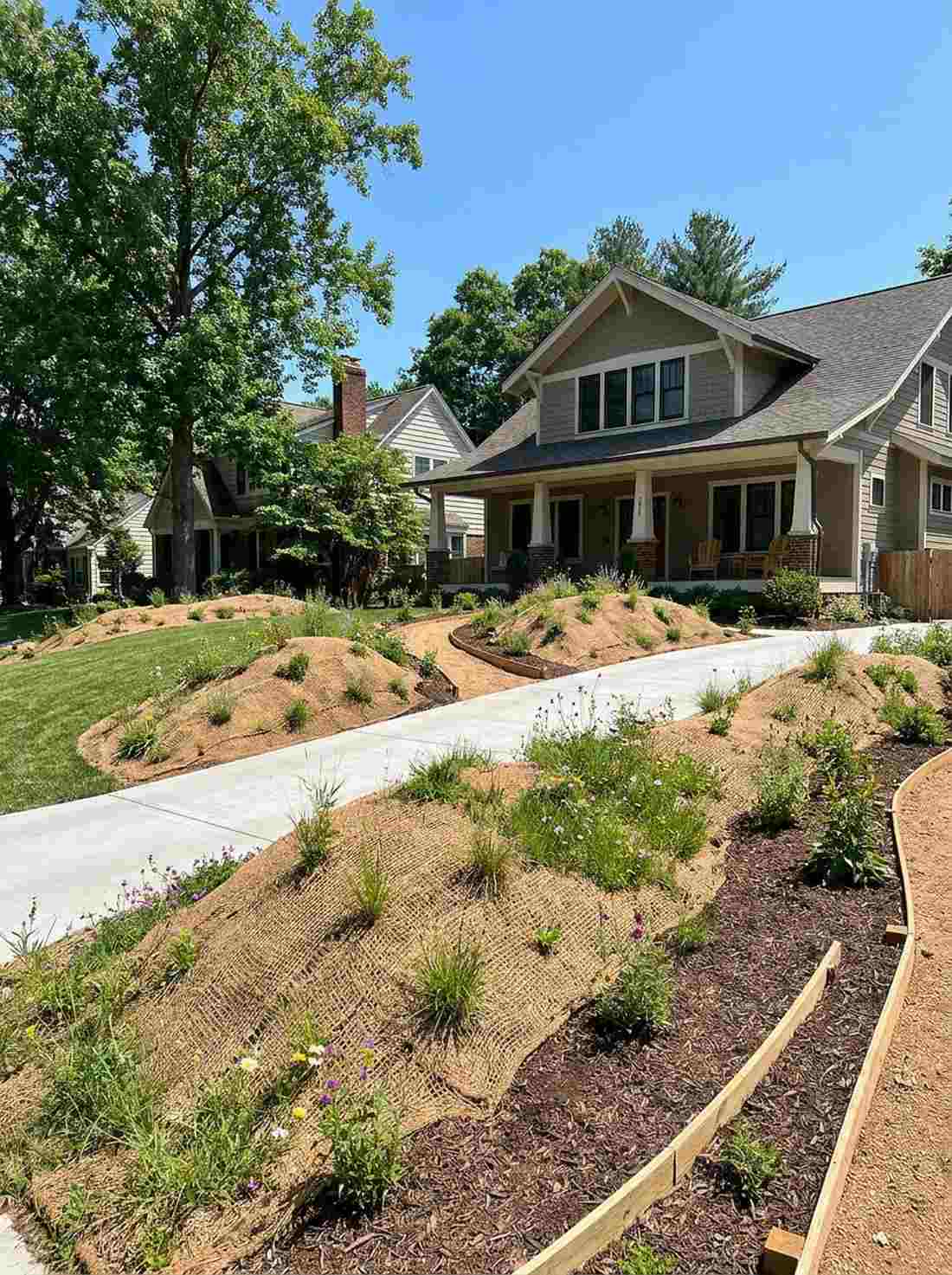
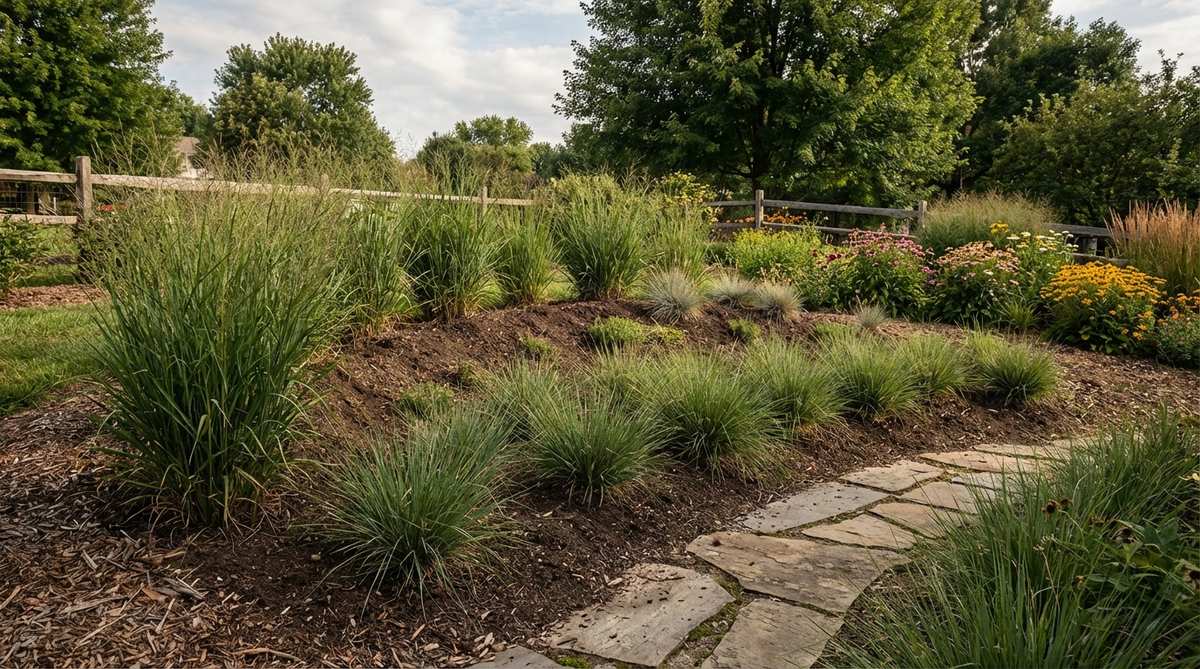
A sweeping naturalistic mounded landscape design feels like a soft, rolling meadow untouched by human hands. This aesthetic is absolutely ideal for wide, gentle front yard slopes where you want curb appeal without aggressive masonry.
Skipping vertical walls completely gives a designer-level finish while saving thousands on interlocking concrete blocks. Securing the mound with biodegradable erosion control blankets during the first season is the secret to stopping topsoil from washing into the street.
Expect to spend about $25–$50 per berm section depending on soil delivery costs. It’s a fast upgrade that completely softens the harsh angles of modern driveways.
- Key Materials: Bulk premium topsoil blends and erosion jute netting
- Vibe / Style: Soft organic flow
- Difficulty: Easy beginner project
- Budget Breakdown: Bulk Soil: $30 | Netting: $15 | Starter Seeds: $5.
- Creator’s Tip: Pack a dense clay core inside the berm to give it unshakeable structure, then top with fluffy loam.
- Smart Sourcing: Biodegradable jute erosion control mats (100ft roll) or bulk hydroseed starter kits.
3. Cascade Terrace System
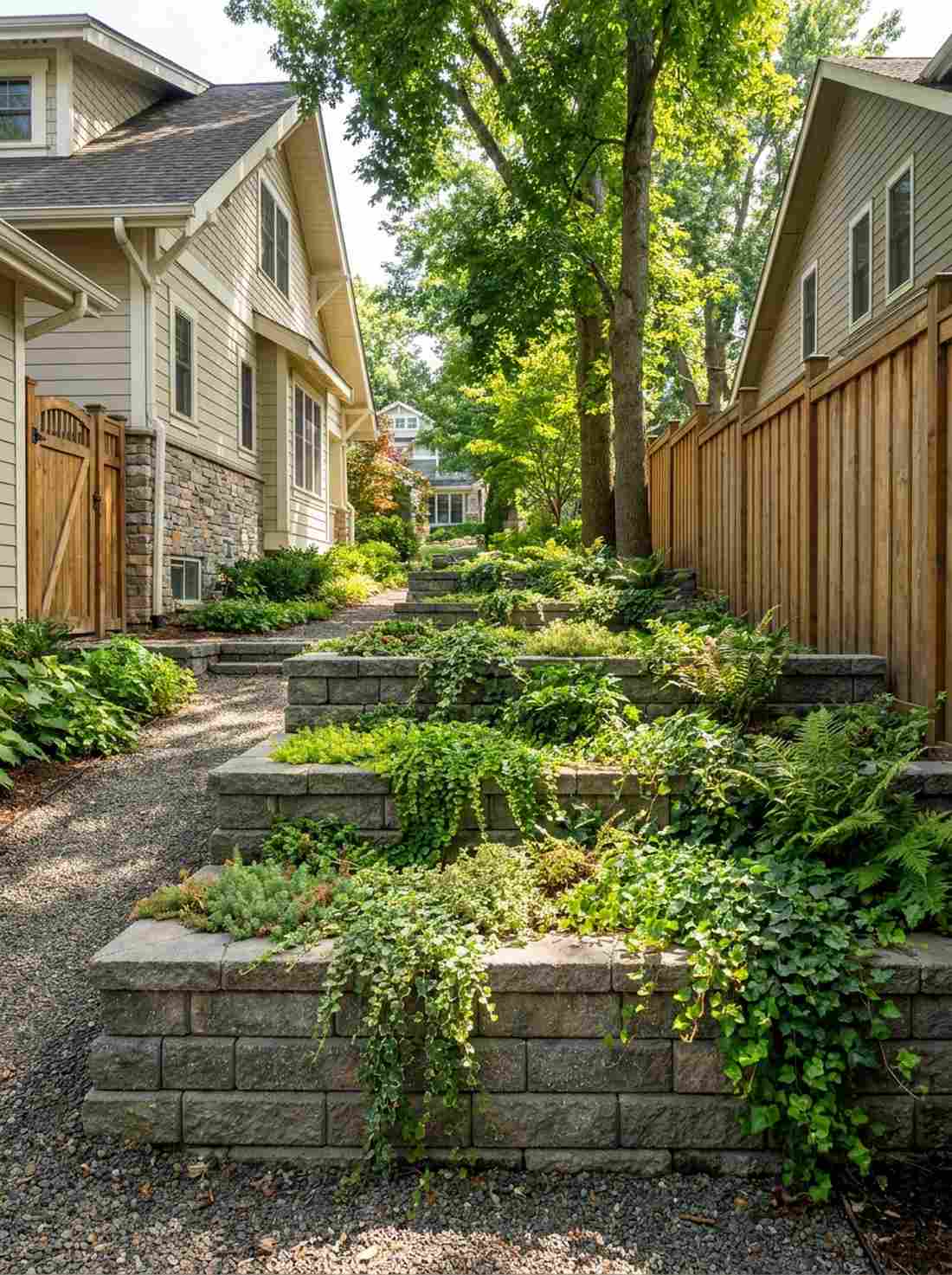
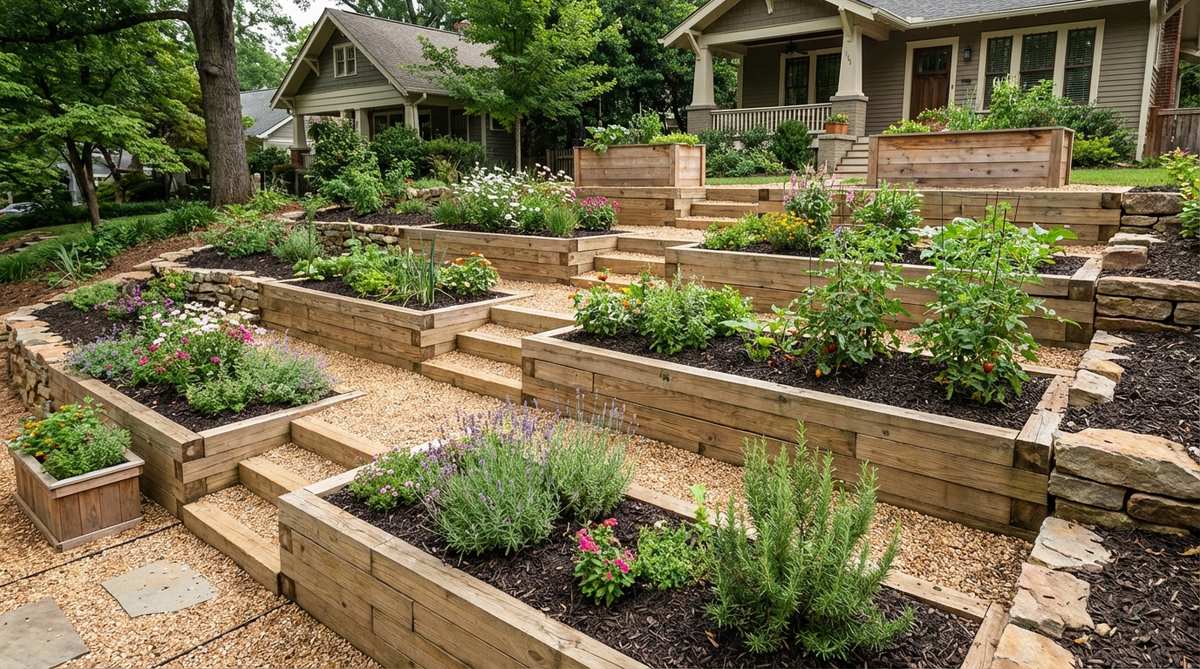
Creating narrow waterfall-style planter tiers pulls you into a cascading rhythm of greenery that naturally draws the eye upward. This specific garden design on slope placement is brilliant for tight, steeply angled side-yards between closely built houses.
A shocking number of DIYers try to stretch single platforms too wide, but keeping shelves to a tight 2-foot depth looks far more expensive than it is. Integrating commercial-grade miniature garden supplies and trailing vines over the edge instantly masks the short barrier walls.
This compact system generally runs $20–$45 per mini-level. Pin this if you have a narrow pathway that constantly suffers from mudslides.
- Key Materials: Interlocking mini retaining blocks (pallet bundle)
- Vibe / Style: Lush cascading jungle
- Difficulty: Quick weekend stacking
- Budget Breakdown: Mini Blocks: $25 | Base Sand: $10 | Trailing Plants: $10.
- Creator’s Tip: Use a string line and line level on every single row; a cascade looks sloppy if the lines aren’t laser-straight.
- Smart Sourcing: Polyurethane landscape block adhesive (pro-grade) or pre-mixed trailing sedum starter trays.
4. Contour-Following Curves
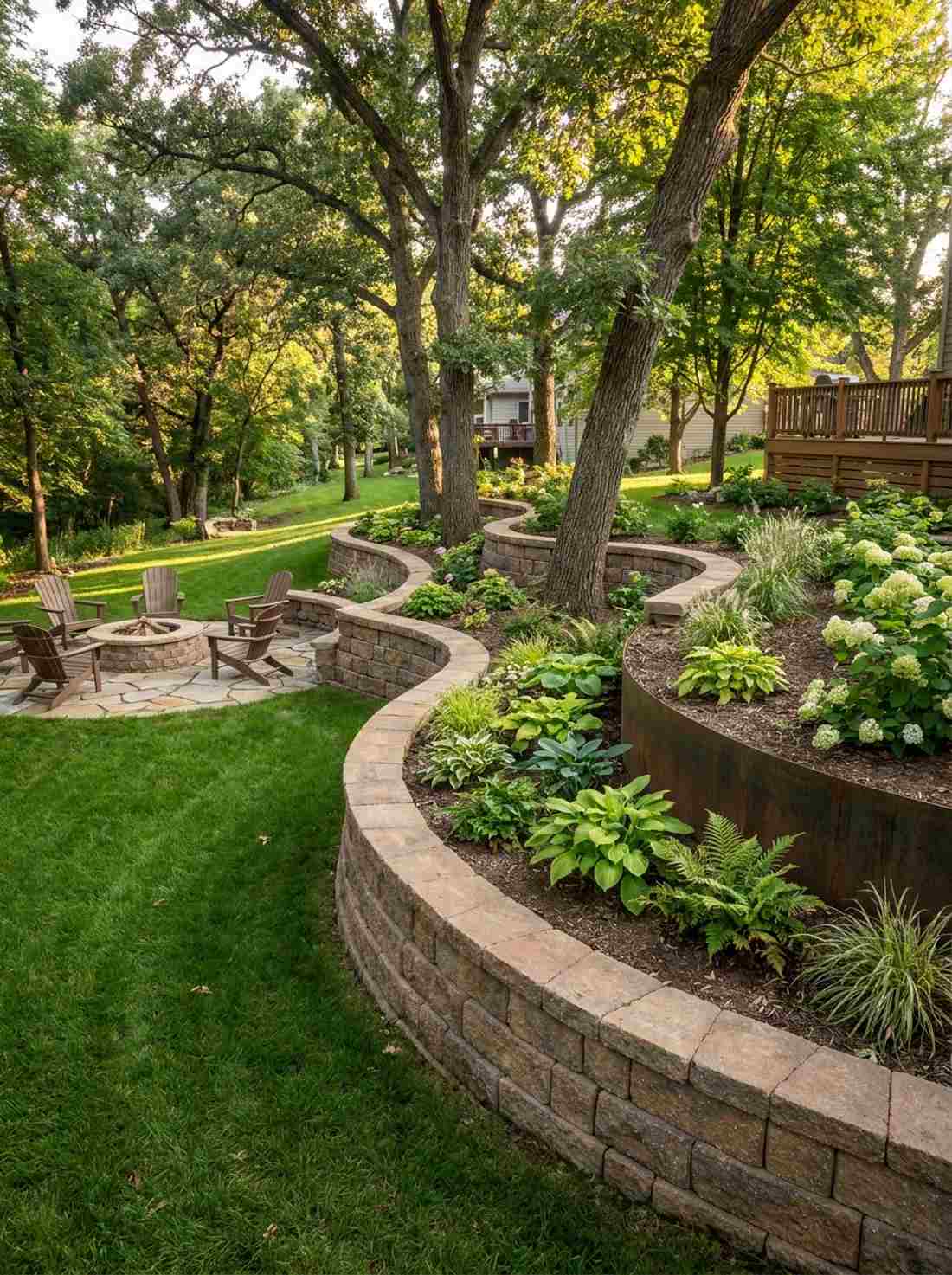
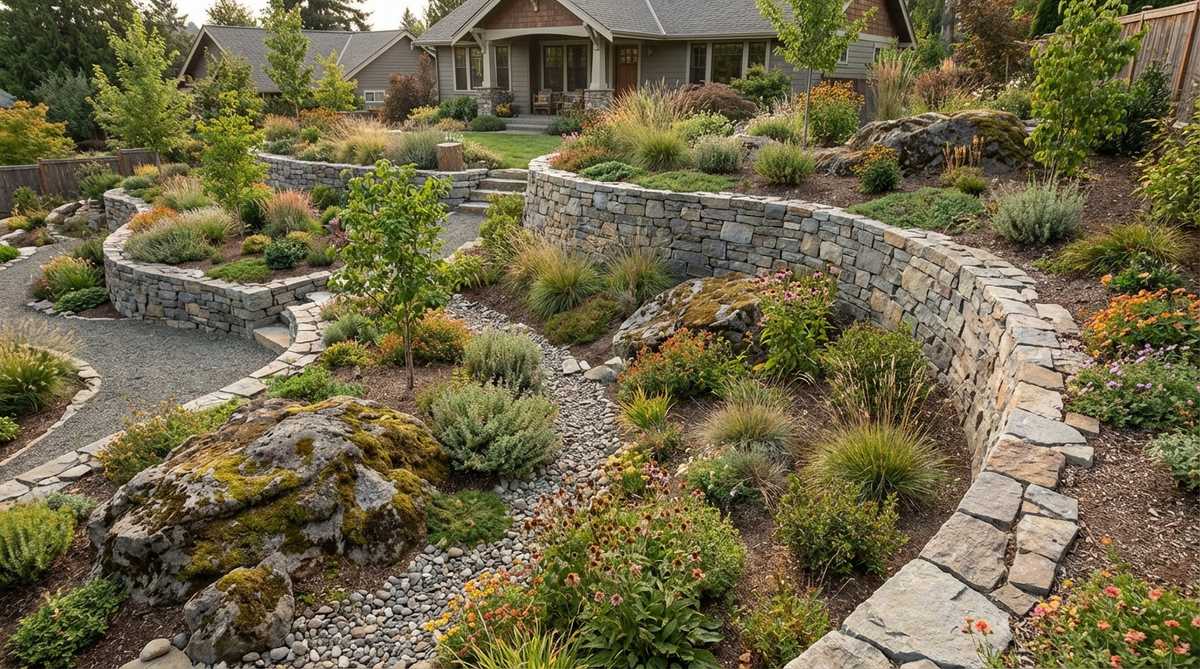
Establishing organic curved retaining walls mimics the graceful, sweeping lines of a natural river canyon. This fluid setup works exceptionally well for properties dotted with mature trees where straight architectural lines would clash with the roots.
Rigid geometric lines often crack under localized root pressure, but snake-like curves inherently distribute lateral soil weight like a fortress. Using flexible steel edging kits or specialized radius blocks allows you to hug the natural topography seamlessly.
Curved installations cost roughly $35–$60 per linear curve. It offers a high-end country club aesthetic that instantly boosts curb appeal.
- Key Materials: Tumbled trapezoidal retaining blocks
- Vibe / Style: Sweeping botanical garden
- Difficulty: Intermediate leveling required
- Budget Breakdown: Radius Blocks: $40 | Leveling Sand: $10 | Marking Paint: $5.
- Creator’s Tip: Map out the curves using a heavy garden hose before digging to ensure the flow looks natural from the street.
- Smart Sourcing: Flexible commercial steel landscape edging (pre-weathered) or UV-coated string line levels.
Most beginners completely underestimate hydrostatic pressure… until their brand new retaining wall explodes during the first spring storm. The next layout changes the game entirely.
Retaining Wall Architecture For Load-Bearing Beauty
Your barrier isn’t just a dirt holder; it’s the anchor of your entire outdoor living space. Choosing high-strength materials dictates the lifespan of your slope.
5. Natural Stone Gravity Walls
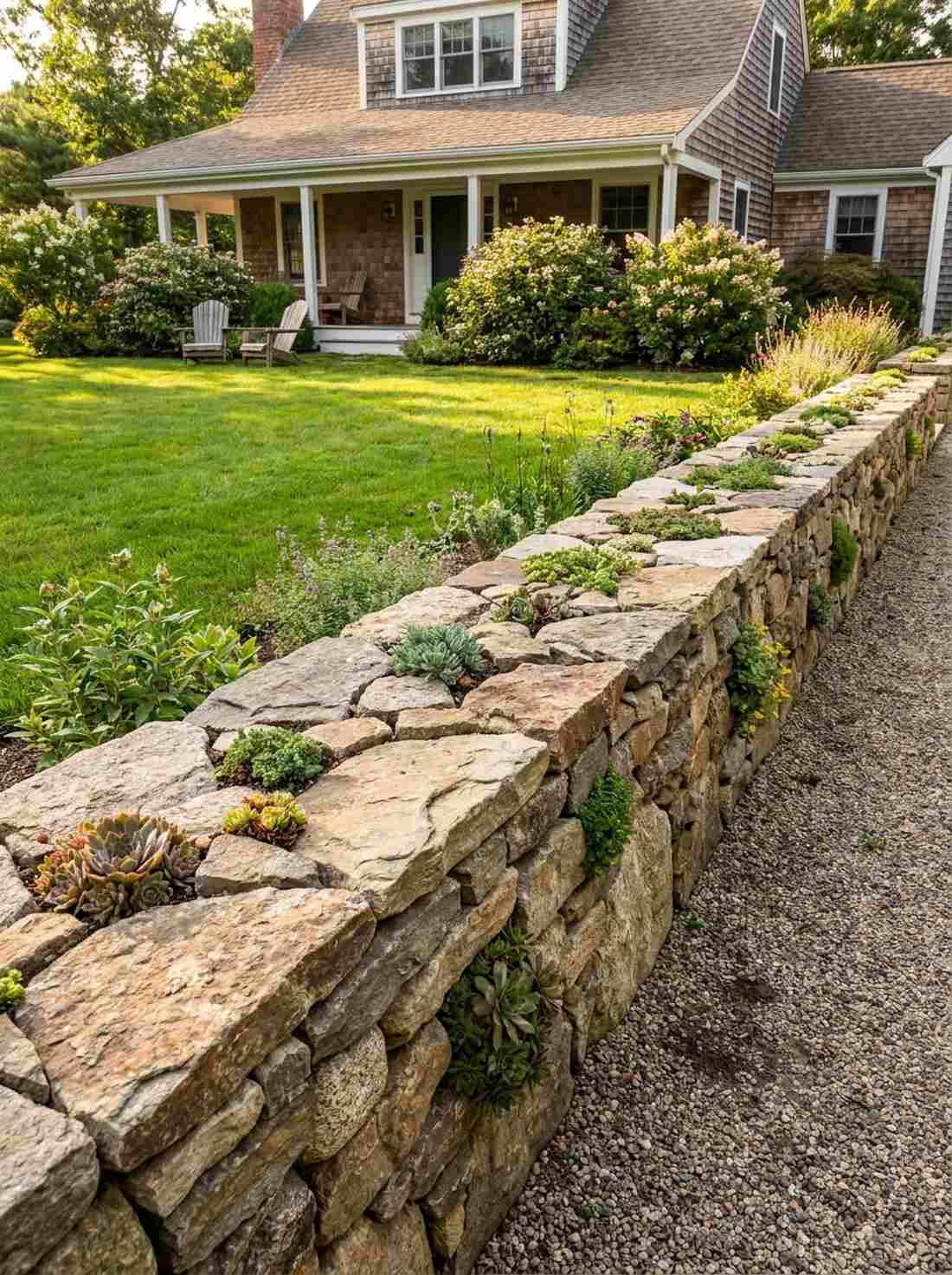
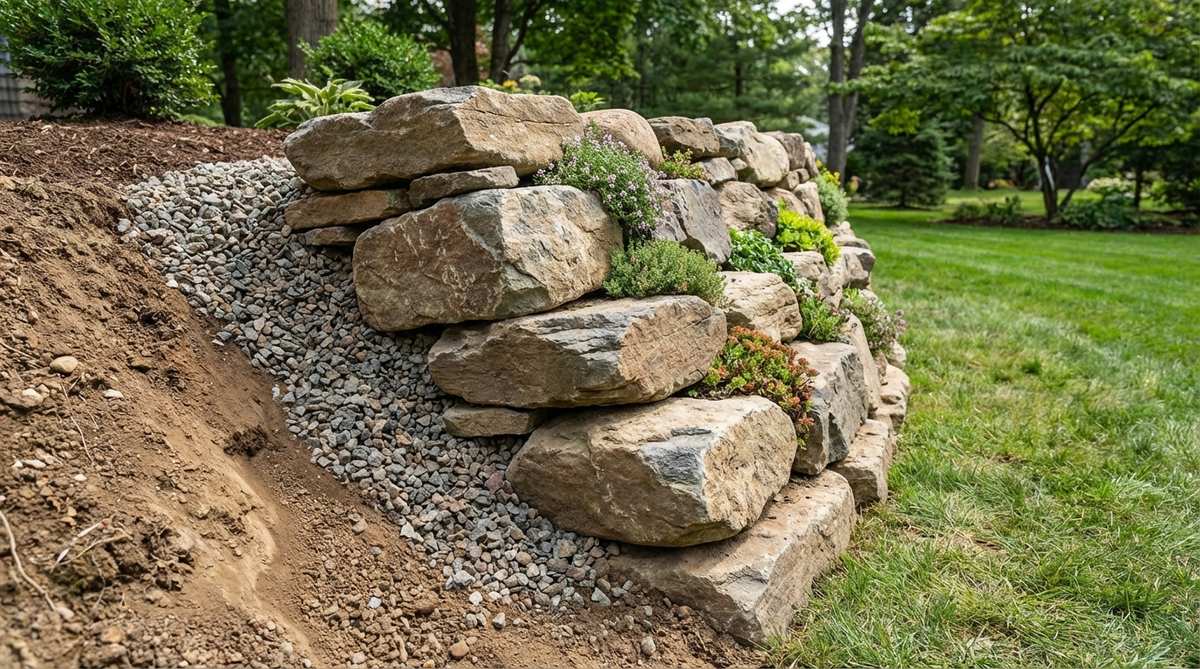
Building dry-stacked fieldstone borders looks straight out of a rustic English countryside cottage hidden in the hills. This timeless visual is flawless for informal backyard borders where you want masonry that ages beautifully.
While mortared walls lock water in and eventually crack, a dry-stacked gravity system breathes naturally, filtering heavy rain without blowing out. Sneaking premium alpine plant plugs into the crevices completely transforms the rock face into a living canvas.
Natural stone palettes usually cost $50–$90 per section depending on local quarry rates. Save this to your cottage garden inspiration board.
- Key Materials: Palletized irregular flagstone or fieldstone
- Vibe / Style: Historic European countryside
- Difficulty: Physically demanding puzzle
- Budget Breakdown: Stone Pallet: $60 | Crushed Base: $15 | Crevice Soil: $5.
- Creator’s Tip: Always place your largest, heaviest “tie stones” spanning the width of the wall every few feet to lock the structure together.
- Smart Sourcing: Heavy-duty masonry splitting chisels or crevice-friendly alpine succulent assortments.
6. Timber-Framed Planters
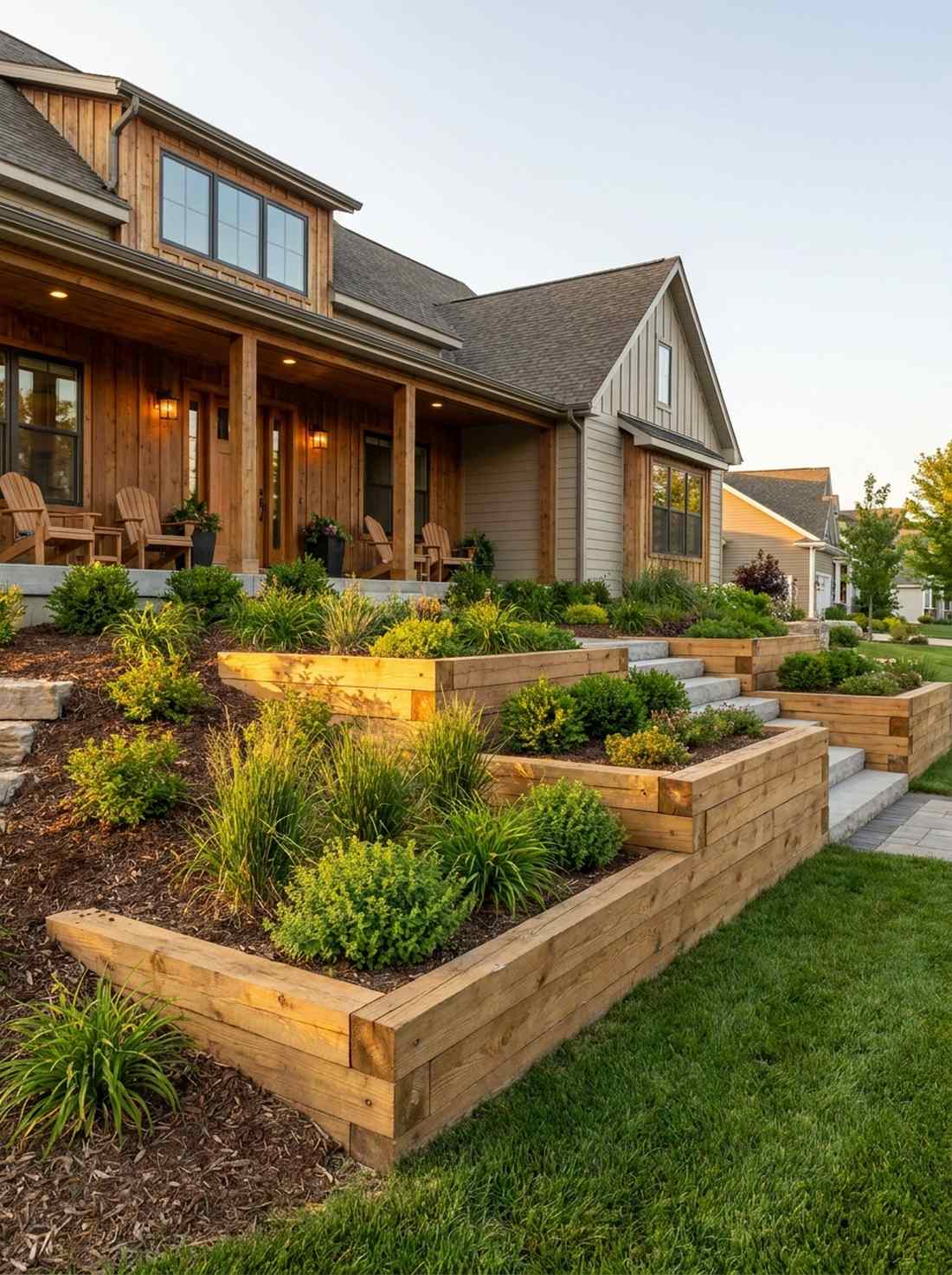
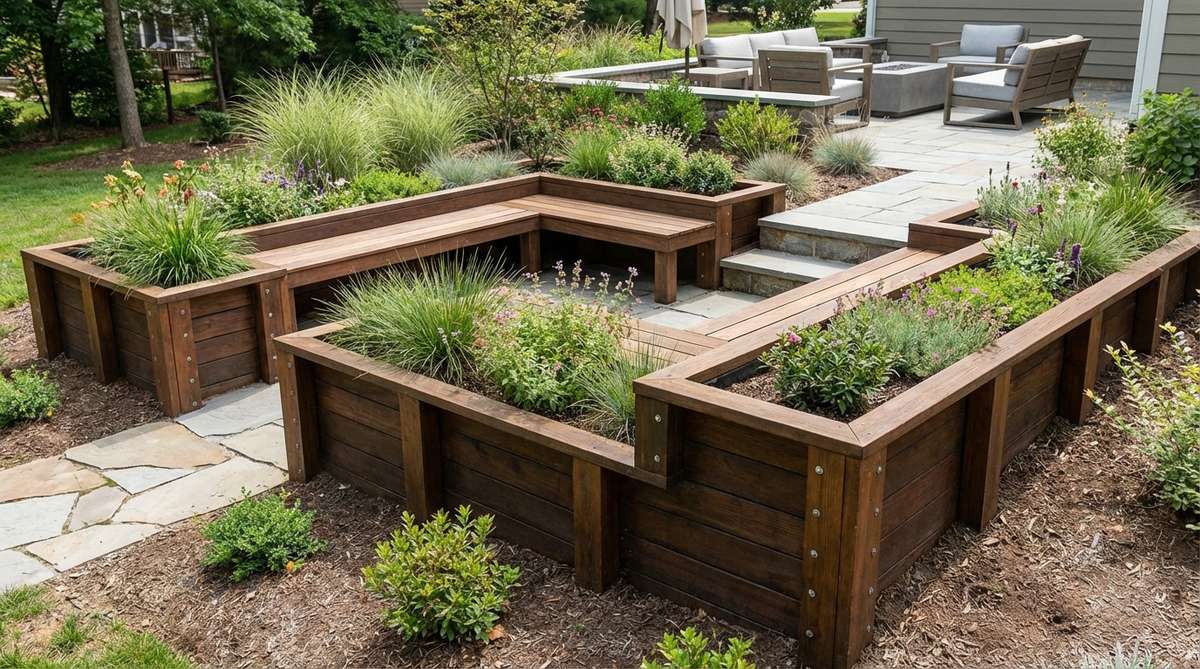
A series of geometric wooden slope planters injects a crisp, architectural warmth directly into the raw earth. This is a massive win for suburban front lawns where you want clean, modern lines without pouring concrete.
Using standard nails guarantees failure, but locking these boxes together with structural timber screws guarantees a setup that outlasts brutal winters. Incorporating pre-cut internal waterproof membranes prevents the soil moisture from rotting the wood prematurely.
You can build a robust planter cell for roughly $30–$55. It’s an incredibly satisfying weekend upgrade that looks professionally installed.
- Key Materials: Ground-contact rated lumber and heavy-duty screws
- Vibe / Style: Mid-century modern outdoor
- Difficulty: Basic carpentry
- Budget Breakdown: Treated Wood: $35 | Structural Screws: $10 | Liner: $10.
- Creator’s Tip: Treat the freshly cut ends of your lumber with a brush-on copper green preservative to seal the vulnerable grain.
- Smart Sourcing: Exterior-grade structural timber screws (bulk bucket) or heavy-duty waterproof planter liner rolls.
7. Modular Block Systems
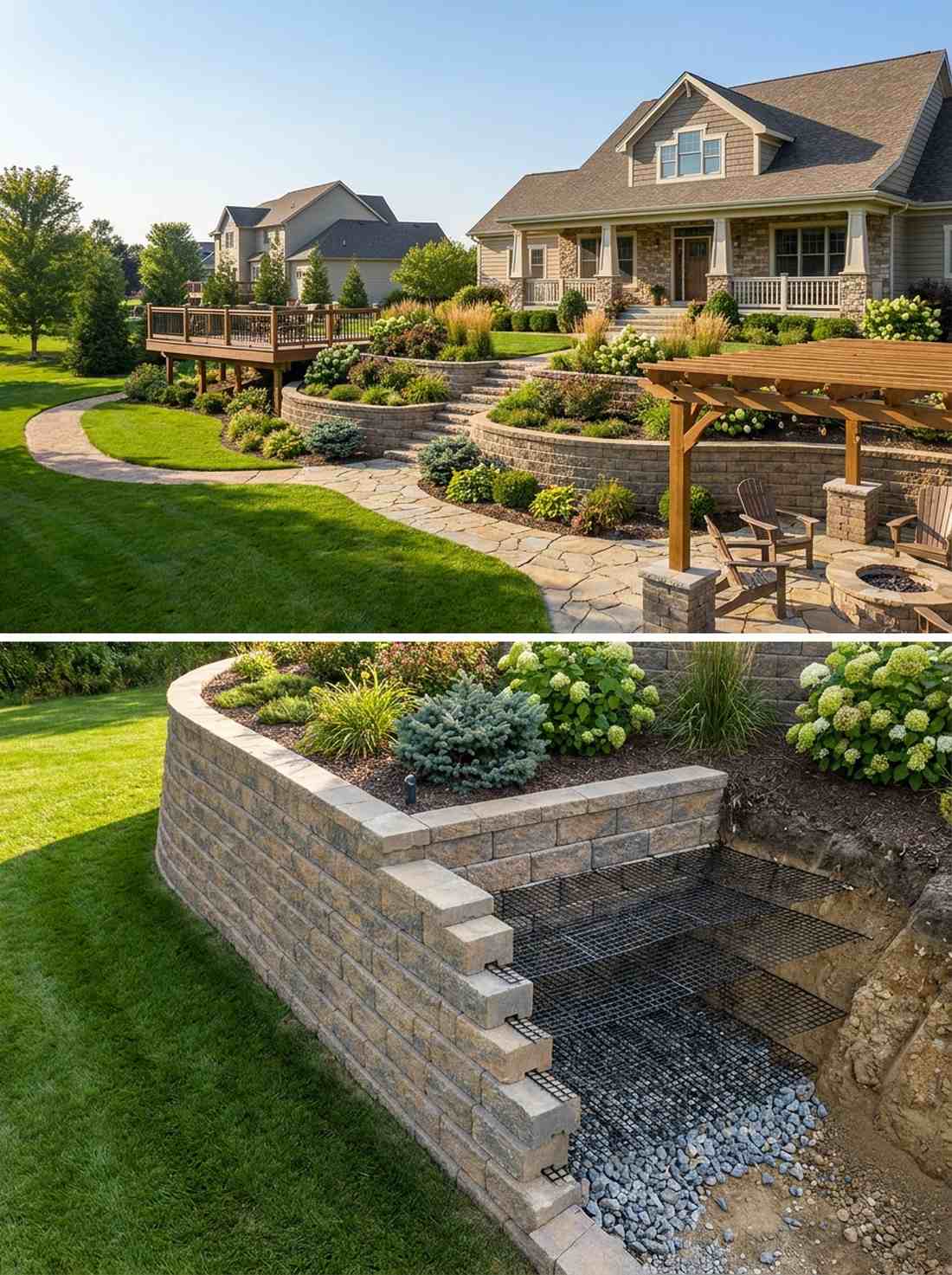
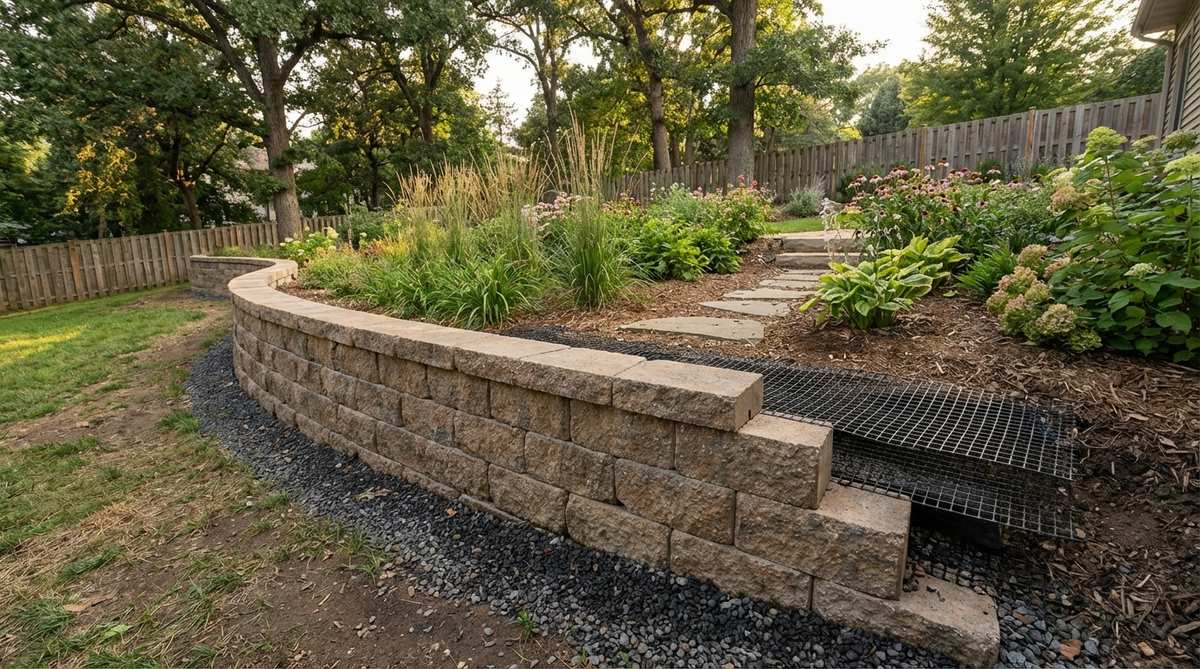
Dropping in interlocking segmental retaining systems feels unshakeable, mimicking the fortress-like stability of high-end commercial properties. If you are searching for serious garden design on slope stabilization near a property line, this is the gold standard.
Novices assume blocks just stack, but the true strength comes from sandwiching layers of UV-stabilized geogrid mesh between the courses deep into the hillside. This hidden engineered grid guarantees the wall won’t bow forward even under massive mud weight.
Block modules generally run $45–$85 per linear foot with base materials. Pin this if you need a permanent, bulletproof soil solution.
- Key Materials: Engineered retaining wall blocks with rear lips
- Vibe / Style: Impeccably manicured suburban
- Difficulty: Requires meticulous base leveling
- Budget Breakdown: Blocks: $50 | Base Pad: $15 | Geogrid: $20.
- Creator’s Tip: Never use round pea gravel for the base; always use angular crushed stone with dust so it compacts into concrete-like hardness.
- Smart Sourcing: Bi-axial geogrid reinforcement mesh (commercial grade) or cast-iron tamper tools.
8. Poured Concrete Cantilever Walls
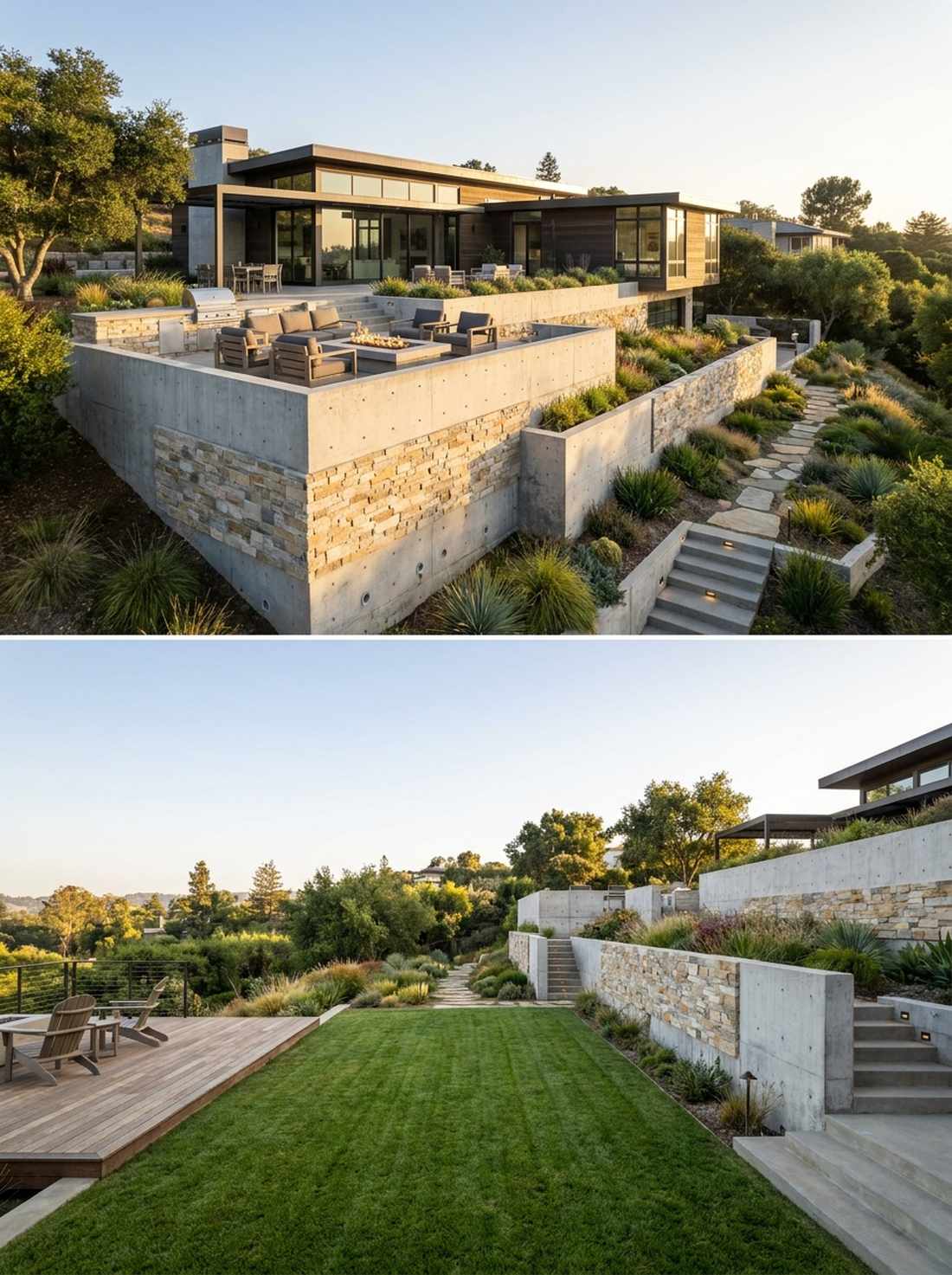
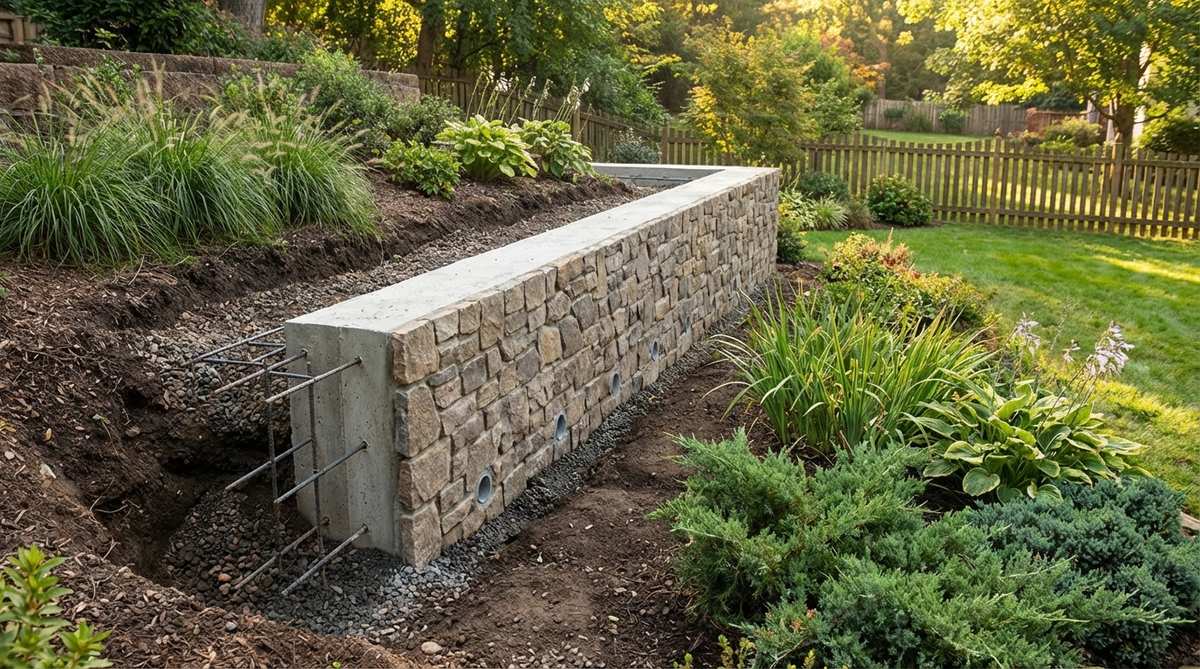
A sweep of monolithic poured concrete terraces screams ultra-luxury brutalist chic that dominates modern architecture feeds. This is the absolute best choice for aggressive, high-load hillside homes where failure is not an option.
While DIY blocks are great for small hills, an engineered L-shaped footer literally uses the weight of the dirt to pin the wall down, making tipping mathematically impossible. Facing the raw concrete with premium natural stone veneers hides the industrial core with a designer finish.
Concrete forming is pricey, hovering around $100–$150 per section. It’s an investment that secures your property value for a lifetime.
- Key Materials: High-strength concrete mix and structural rebar
- Vibe / Style: Modern architectural luxury
- Difficulty: Advanced/Professional grade
- Budget Breakdown: Concrete/Rebar: $80 | Forms: $30 | Weep Pipes: $10.
- Creator’s Tip: Ensure your PVC weep holes are installed at the lowest grade point before pouring to prevent explosive water pressure buildup later.
- Smart Sourcing: Pre-bent #4 structural rebar corner pieces or peel-and-stick natural stone veneer panels.
9. Gabion Basket Walls
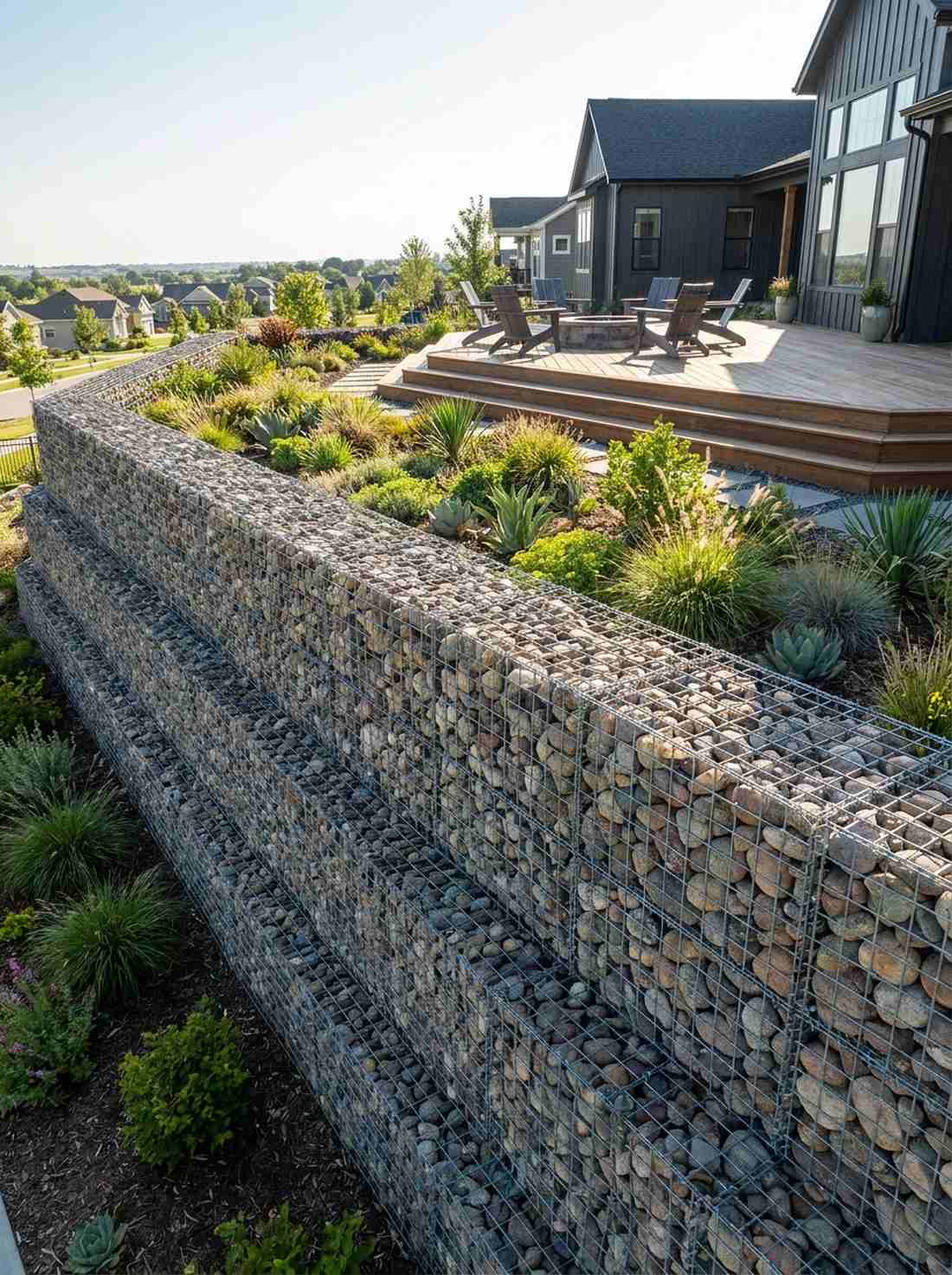
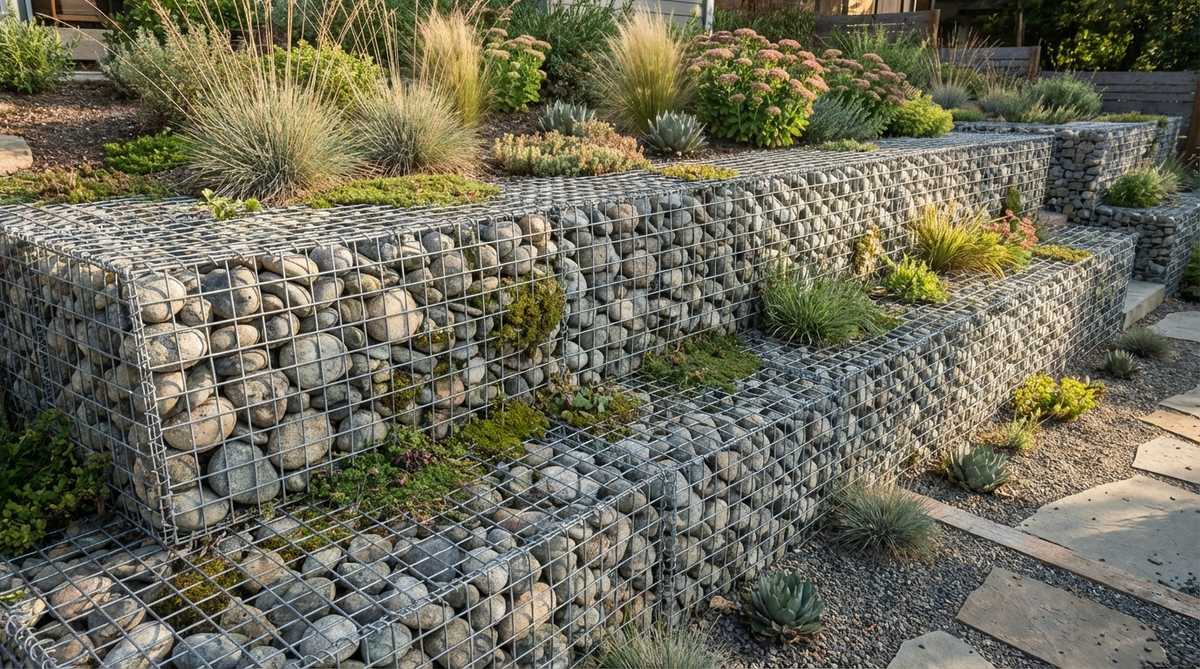
Stacking wire-mesh river rock walls blends an industrial warehouse edge with the ruggedness of the deep wilderness. This aesthetic is brilliant for modern xeriscapes on a steep incline where you want maximum drainage without mortar.
Many homeowners ignore gabions as “commercial only,” but filling pre-welded galvanized cages with local river rock creates a wall that literally cannot crack. Because water passes right through the entire structure, you eliminate the need for complex subsurface French drain systems.
A standard basket section costs about $40–$70 to fill yourself. Save this for an edgy, zero-maintenance slope upgrade.
- Key Materials: Galvanized steel gabion cages and 4-inch river rock
- Vibe / Style: Contemporary industrial landscape
- Difficulty: Easy but heavy lifting
- Budget Breakdown: Wire Cages: $30 | Local Rock Fill: $30 | Connector Spirals: $5.
- Creator’s Tip: Hand-pack the stones on the visible front face of the cage so it looks like a flat puzzle, then dump the rest in the middle.
- Smart Sourcing: Rust-proof zinc-aluminum coated gabion kits or heavy-duty cage lacing wire.
💡 Must-Have Supplies for High-End Setups
To build these setups faster and ensure they survive winter freezes without blowing out, skip the generic craft aisles and invest in the right commercial foundational kits from day one.
- Base & Support: Woven heavy-duty landscape stabilization fabric (bulk rolls)
- Setup Tools: Commercial grade cast-iron hand tampers
- Weather/Durability Protection: Professional hydrostatic drainage pipe kits with pre-wrapped sleeves
If you think masonry is expensive, wait until you see the damage uncontrolled hillside water causes. These next hydraulic hacks turn a drainage nightmare into an aesthetic masterpiece.
Water-Responsive Slope Designs That Harness Drainage
Steep gradients act like natural water slides. Instead of letting runoff destroy your beds, these specialized features capture and redirect the flow.
10. Cascading Rill Channels
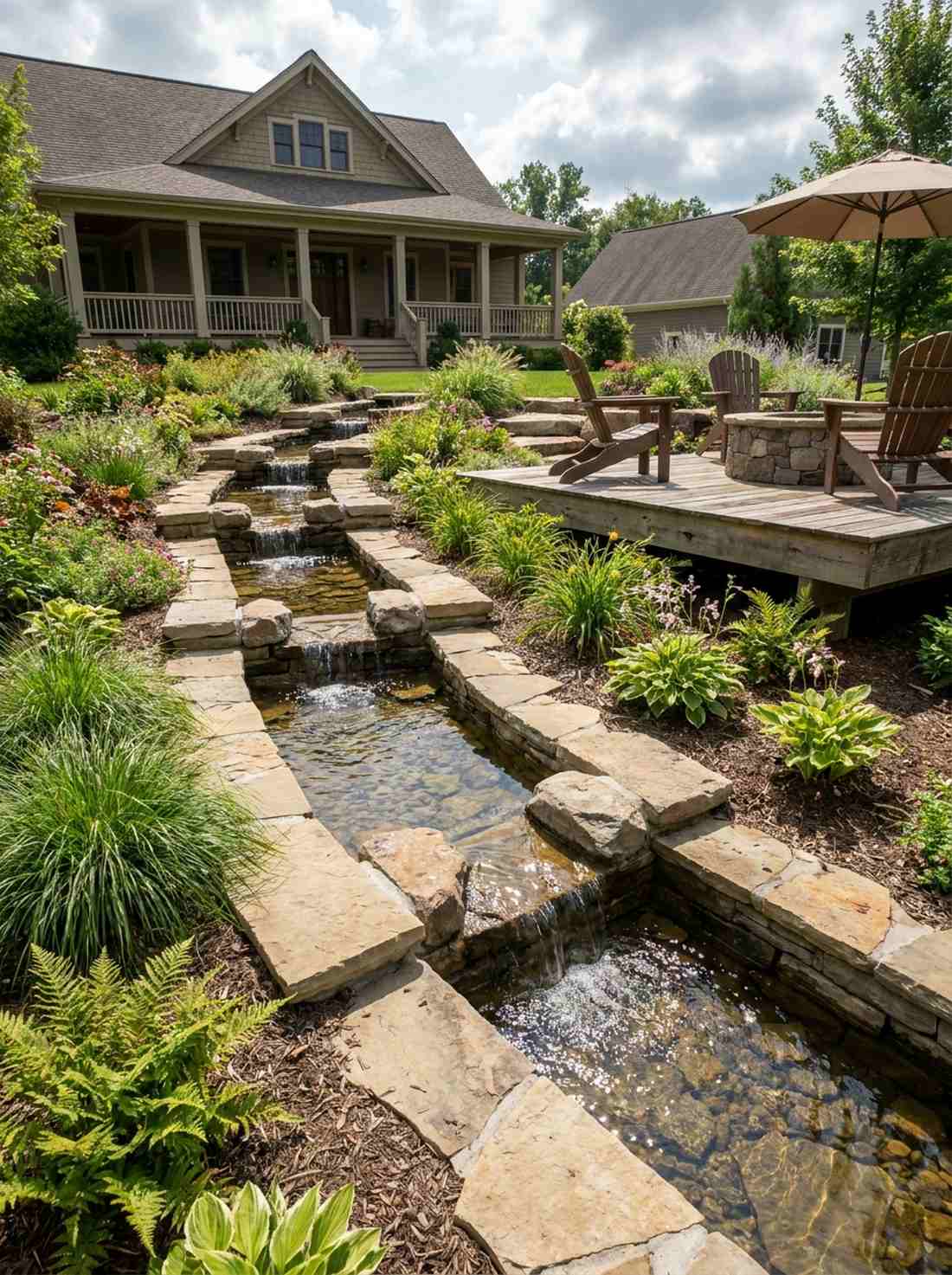
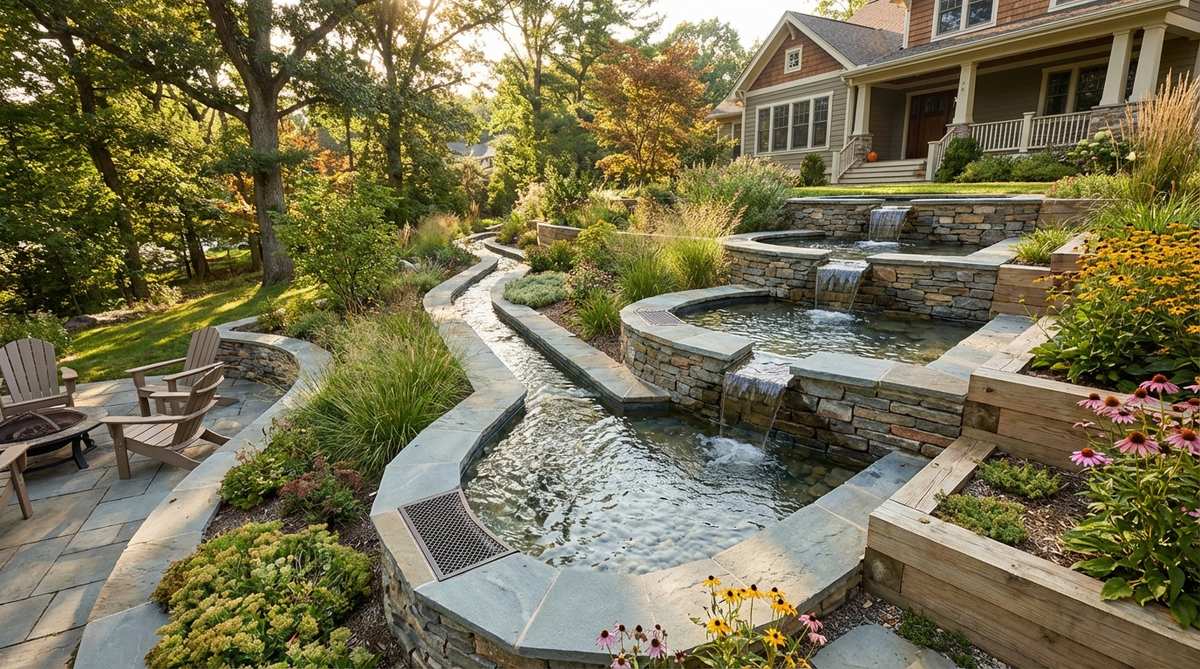
Integrating stone-lined downhill water channels transforms dead silence into a mesmerizing, babbling mountain brook right in your yard. This setup is perfectly tailored for properties dealing with heavy seasonal runoff that usually carves ugly trenches into the lawn.
What contractors won’t tell you is that combining a closed-loop recirculation pump with natural rain capture delivers a surprisingly premium look for pennies on the dollar. Sourcing a heavy-duty submersible pump kit keeps the water dancing down the steps even during dry summer months.
Building a rill pathway costs roughly $60–$100 in liners and stone. It brings an unparalleled sense of Zen to an otherwise stressful hillside.
- Key Materials: Flexible EPDM pond liner and flat mortar stones
- Vibe / Style: Tranquil alpine resort
- Difficulty: Intermediate plumbing/masonry
- Budget Breakdown: EPDM Liner: $40 | Pump: $35 | Accent Stones: $25.
- Creator’s Tip: Create deliberate “choke points” in the channel with larger stones to force the water to bubble and create soothing noise.
- Smart Sourcing: Pre-cut EPDM rubber pond liner (45 mil thickness) or submersible waterfall pump kits (auto-shutoff).
11. Rain Garden Terraces
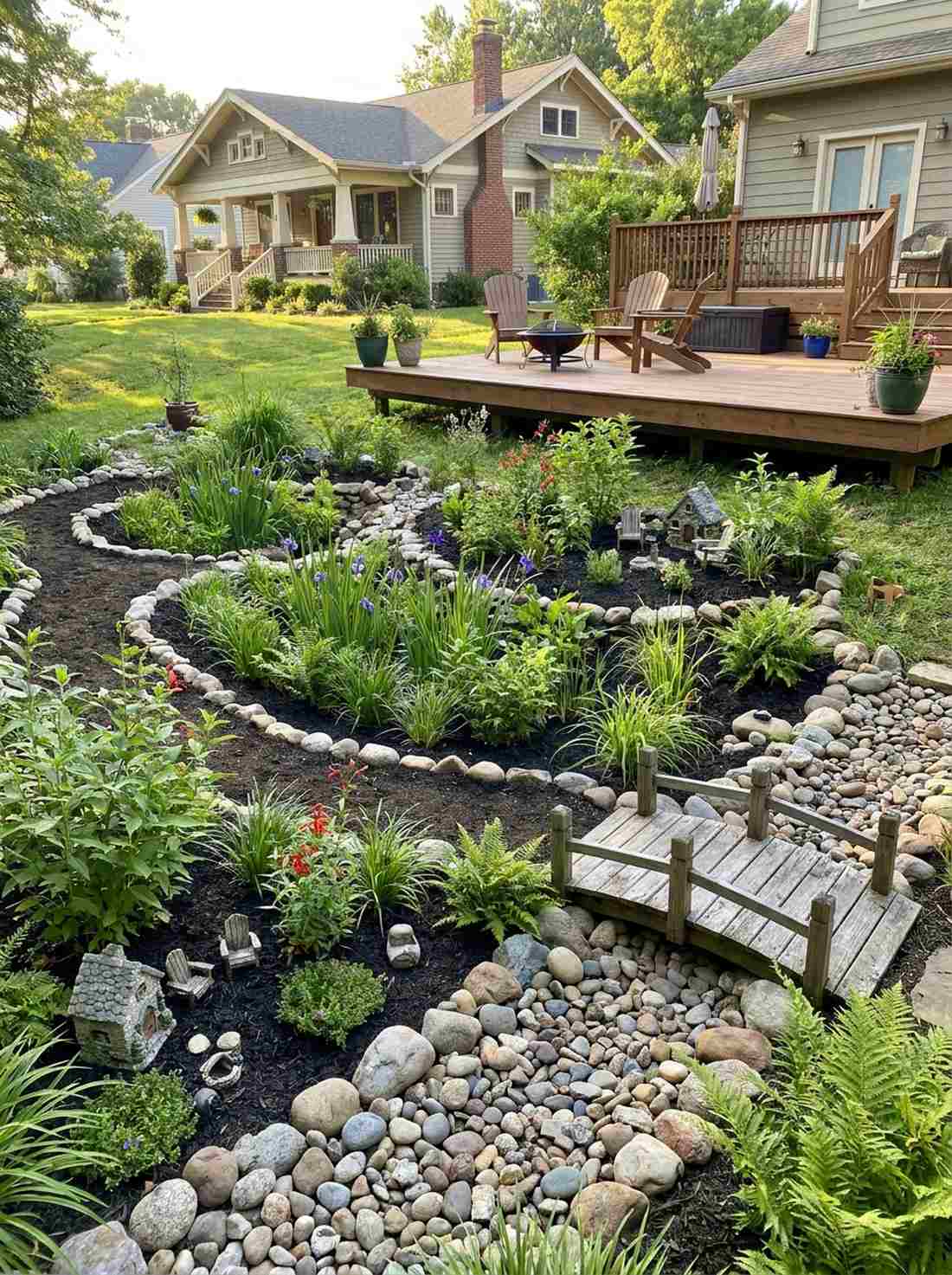
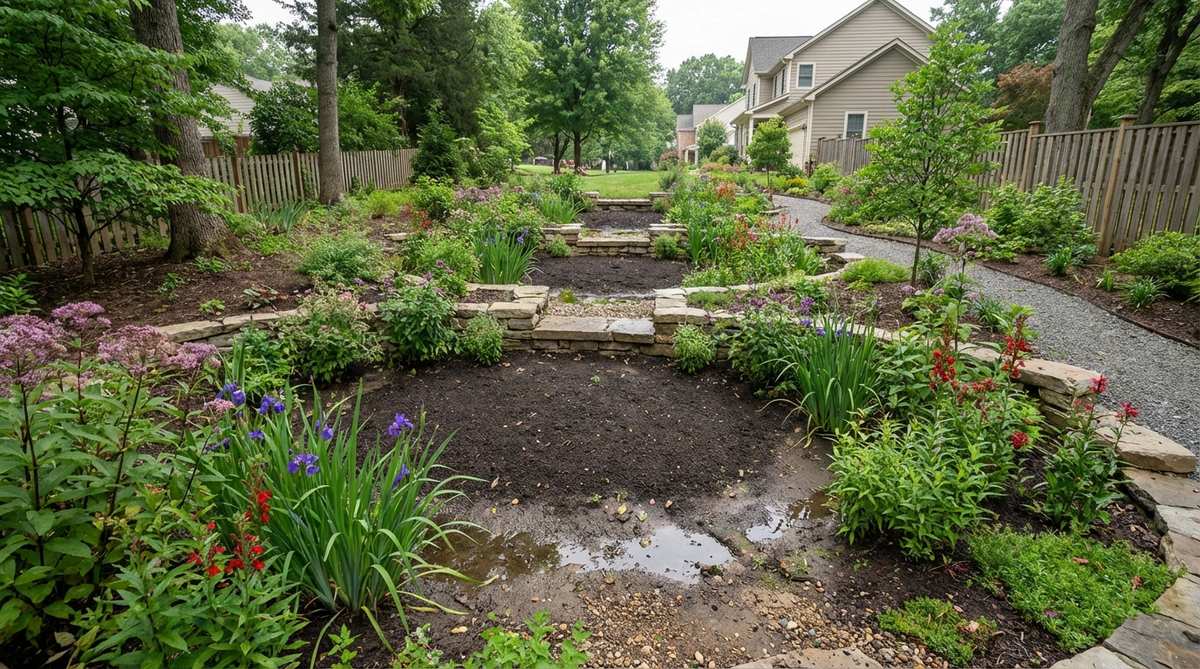
Digging out sunken wetland terrace beds feels like discovering a thriving, secret eco-sanctuary hidden at the bottom of the property. This is an absolute lifesaver for soggy bottom-of-the-hill zones where standard turf grass just rots and dies.
Instead of battling mud pits with chemical fertilizers, filling a depressed basin with ultra-porous soil media turns a swamp into a massive natural sponge. Integrating native moisture-loving botanicals and fairy garden kits alongside the edges makes the drainage zone look entirely intentional.
You can establish a functional rain basin for $30–$60. Pin this layout if your lower yard floods every April.
- Key Materials: Sand-compost bio-retention mix and native wetland plugs
- Vibe / Style: Lush botanical sanctuary
- Difficulty: Moderate excavation
- Budget Breakdown: Bio-soil: $25 | River Rock: $15 | Wetland Plants: $20.
- Creator’s Tip: Ensure your rain garden overflow notch is directed safely toward a storm drain, not your neighbor’s basement.
- Smart Sourcing: Bulk porous bio-char soil amendments or weatherproof miniature garden bridge accessories.
12. Boulder-Cascade Waterfalls
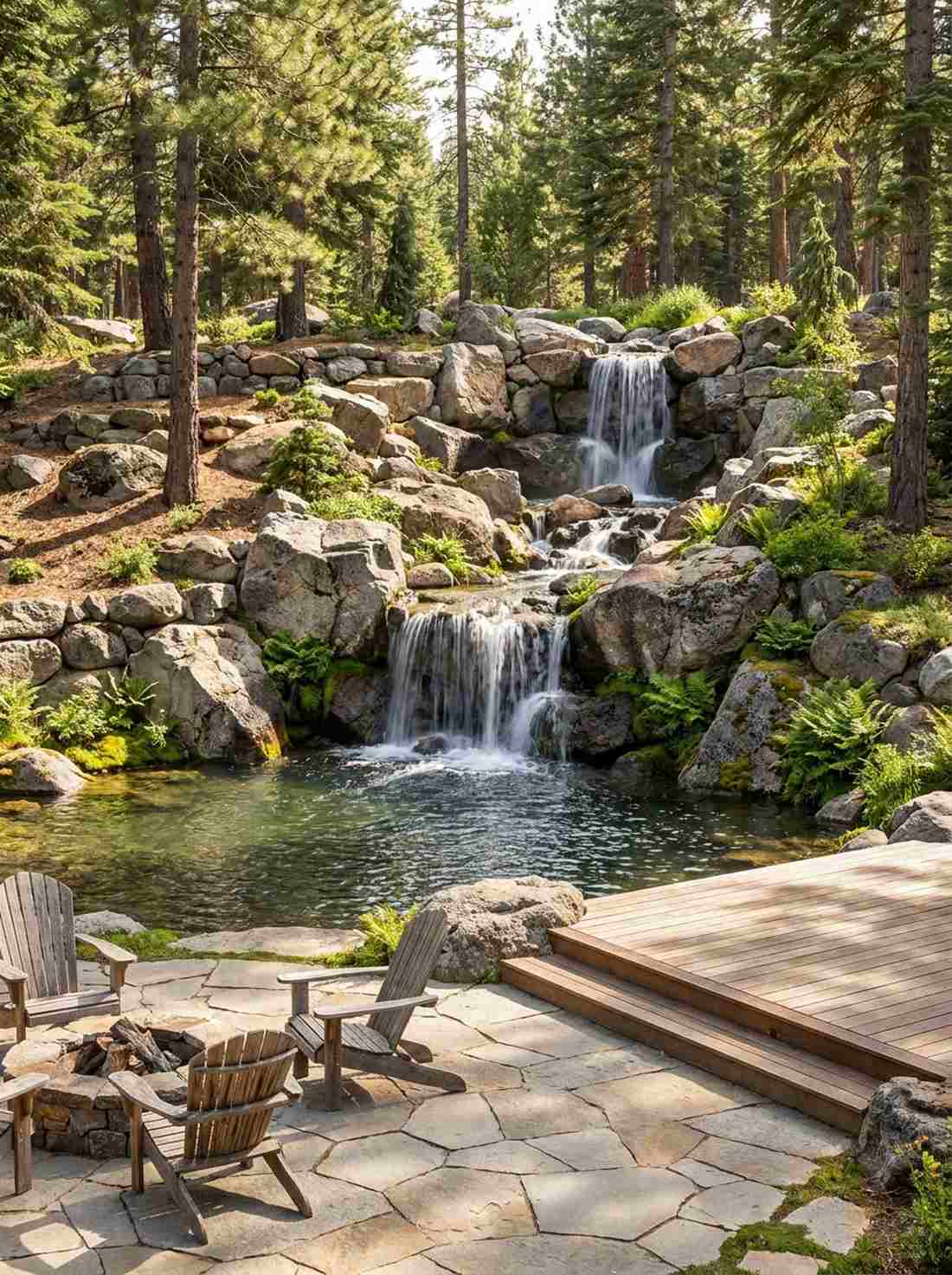
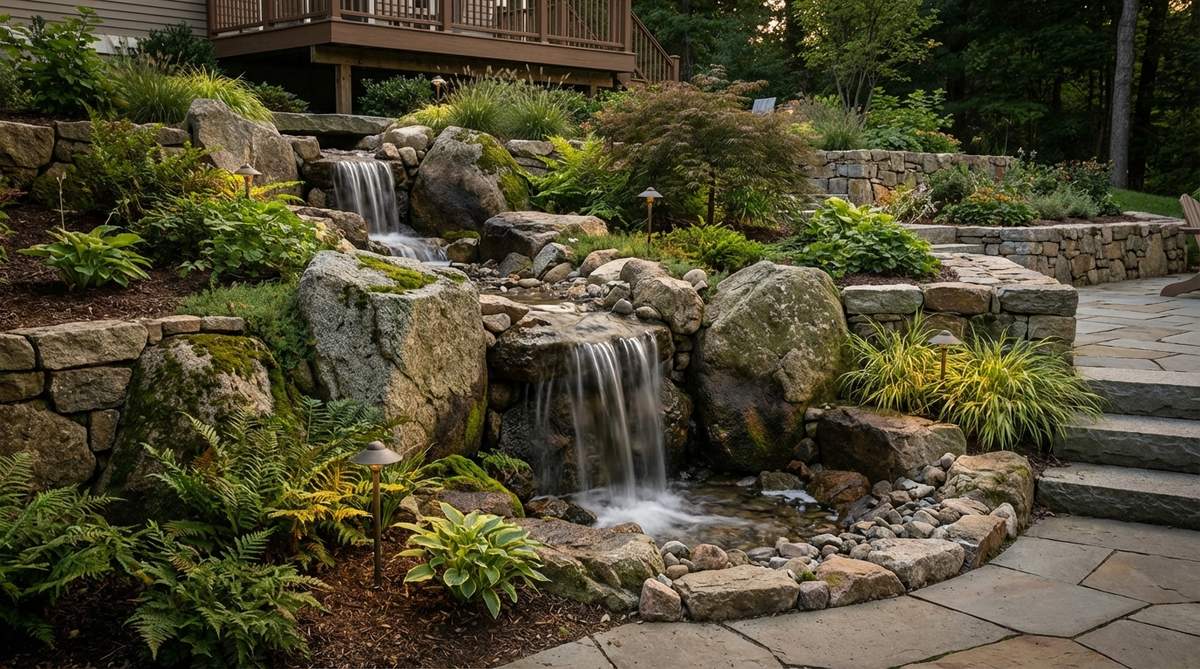
Anchoring massive boulder waterfall features captures the raw, untamed power of a hidden river gorge. This is a stunning, high-impact focal point for deep woodland properties where standard flowerbeds simply get lost in the scale.
While novice landscapers scatter small rocks aimlessly, nesting 500-pound accent boulders directly into the terrace face locks the slope down with immense gravitational force. Using expanding waterproof waterfall foam completely hides the plumbing while forcing water tightly over the stone lips.
Boulder sourcing and placement can cost $100–$200 per tier. It’s an aggressive design statement that completely dominates the visual space.
- Key Materials: Landscape accent boulders and expanding waterfall sealant
- Vibe / Style: Rugged national park
- Difficulty: Heavy machinery/labor required
- Budget Breakdown: Boulders: $100 | Foam Sealant: $20 | Tubing: $15.
- Creator’s Tip: Bury the bottom third of every boulder into the soil; rocks sitting flat on the surface look fake and unstable.
- Smart Sourcing: Black expanding polyurethane waterfall foam (multi-pack) or crush-proof kink-free water tubing.
13. French Drain Integration
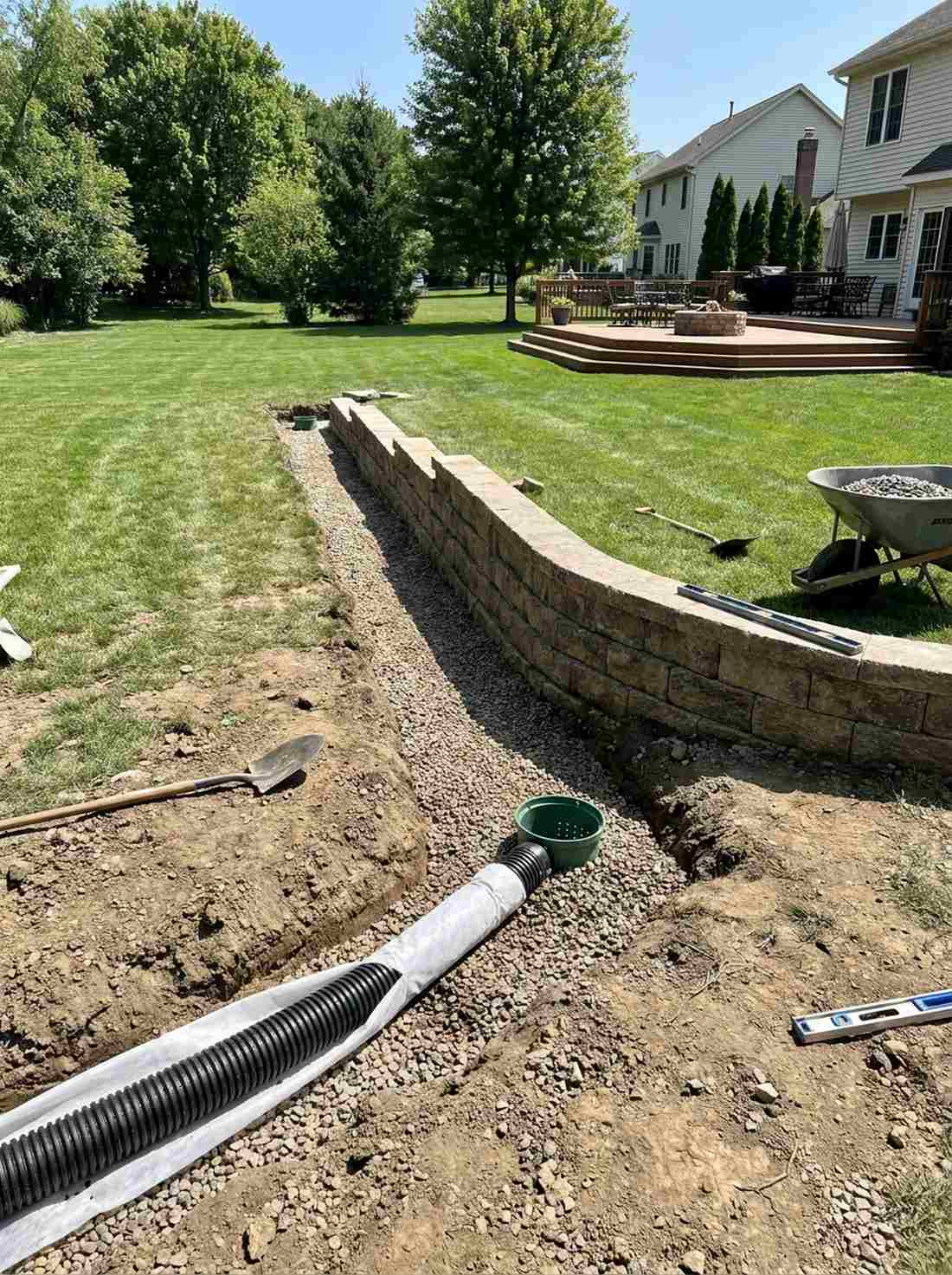
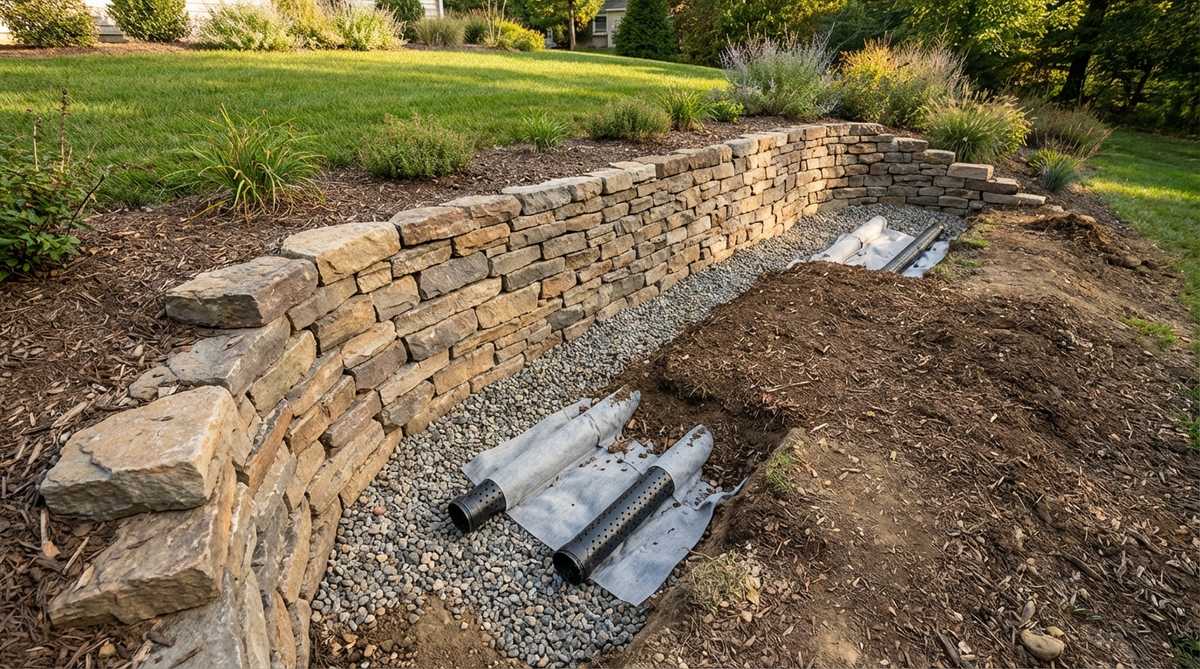
Burying hidden sub-surface drainage trenches behind your structures is the invisible hero that keeps your dream landscape from washing into the street. This specific implementation is non-negotiable for anyone building a serious masonry barrier over two feet tall.
Skipping this step guarantees cracked blocks, but wrapping perforated corrugated pipe in professional filter fabric creates a permanent hydrostatic relief valve. It intercepts ground seepage seamlessly before it ever has a chance to saturate and bloat your planting terraces.
A proper drainage trench runs about $20–$40 per 10 feet. It’s the cheapest insurance policy you will ever buy for your backyard.
- Key Materials: Perforated drain pipe with pre-installed fabric sleeves
- Vibe / Style: Invisible structural integrity
- Difficulty: Dirty but straightforward trenching
- Budget Breakdown: Sleeved Pipe: $25 | Drain Rock: $10 | Catch Basin: $5.
- Creator’s Tip: Always slope your trench pipe down at a minimum 1% grade (1 inch drop per 8 feet) to ensure water actually exits.
- Smart Sourcing: Pre-assembled French drain kits (slotted pipe + peanuts) or heavy-duty pop-up drainage emitters.
14. Groundcover Carpet Planting
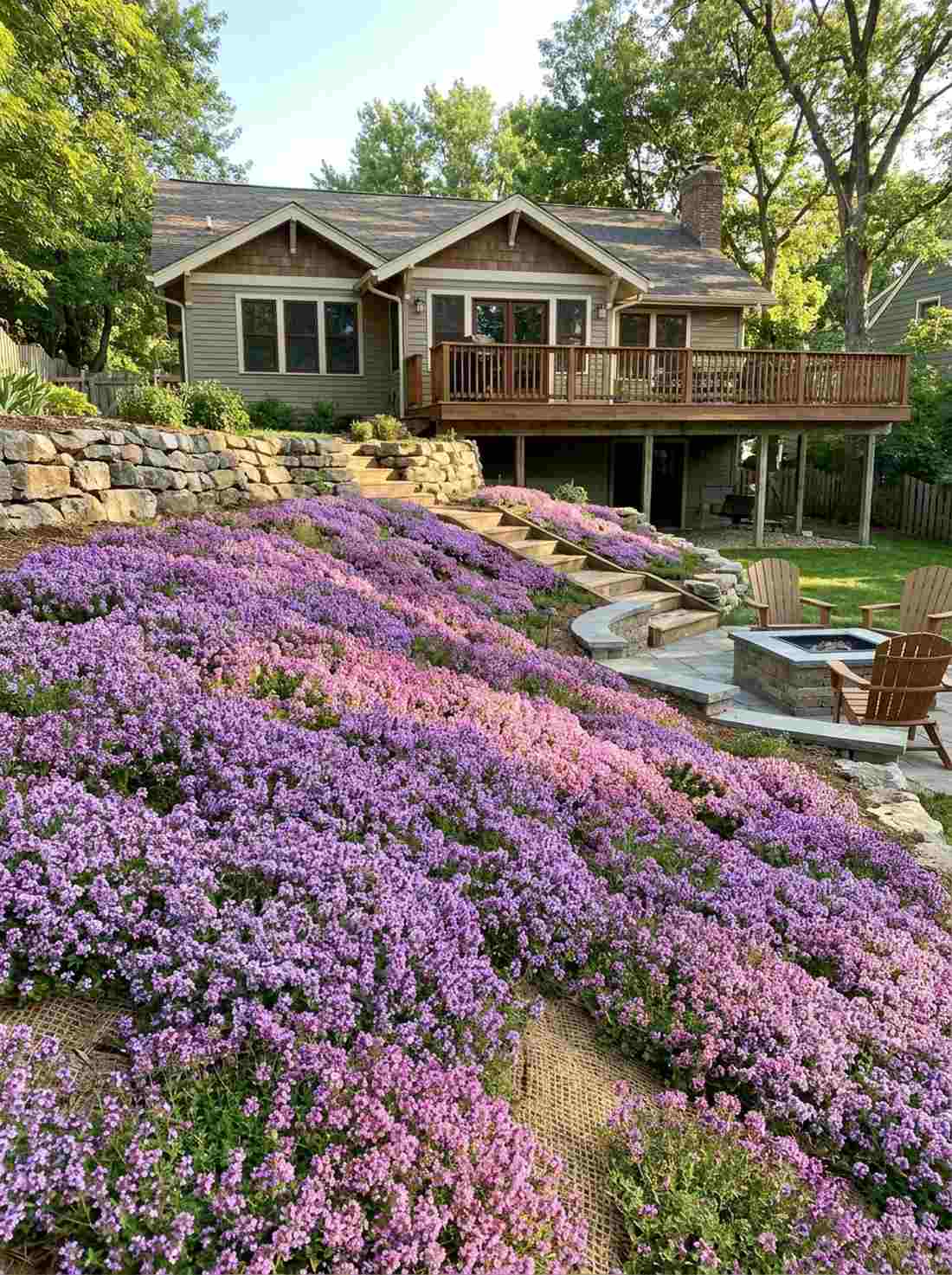
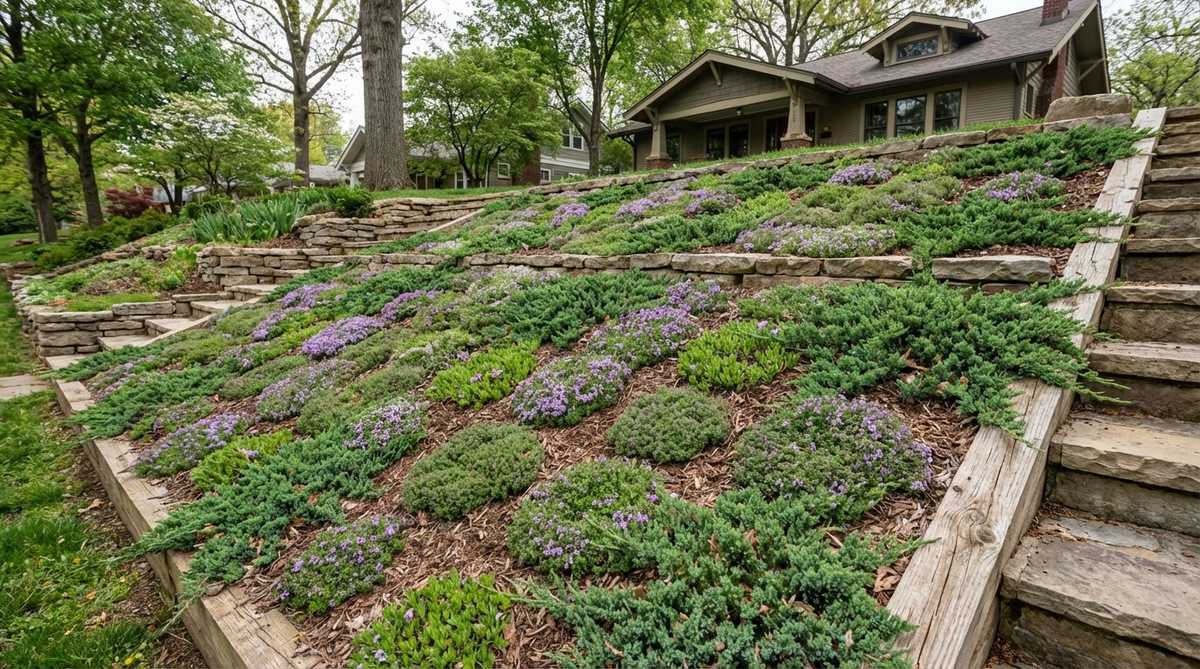
Cultivating dense creeping thyme slope mats feels like rolling out a plush, flowering carpet that you desperately want to walk barefoot on. This is the ultimate zero-mow solution for awkwardly steep banks where pushing a lawnmower is downright dangerous.
Trying to maintain turf grass on an incline is a losing battle, but planting vigorous nodal groundcovers establishes a living erosion barrier that chokes out weeds completely. Dropping a bulk pack of pre-rooted sedum trays into the dirt slashes the establishment time by an entire season.
You can carpet a small bank for $30–$55 in starter plugs. Save this to your low-maintenance gardening board immediately.
- Key Materials: Creeping groundcover plug trays and shredded mulch
- Vibe / Style: Fairy-tale cottage carpet
- Difficulty: Easy but requires initial weeding
- Budget Breakdown: Plant Plugs: $40 | Starter Fertilizer: $10 | Mulch: $5.
- Creator’s Tip: Plant through a biodegradable jute mesh to hold the soil in place while the tiny roots take their first hold.
- Smart Sourcing: Live creeping thyme plug flats (bulk tray) or slow-release slope establishment fertilizer.
The biggest mistake DIYers make on a hill is planting shallow-rooted annuals. This next set of organic anchors will literally bolt your soil to the bedrock.
Planting Strategies For Grade Transitions And Erosion Control
Concrete can only do so much. True slope stability requires a deep, interconnected biological matrix that grips the subsoil tighter than any synthetic material.
15. Native Grass Stabilization
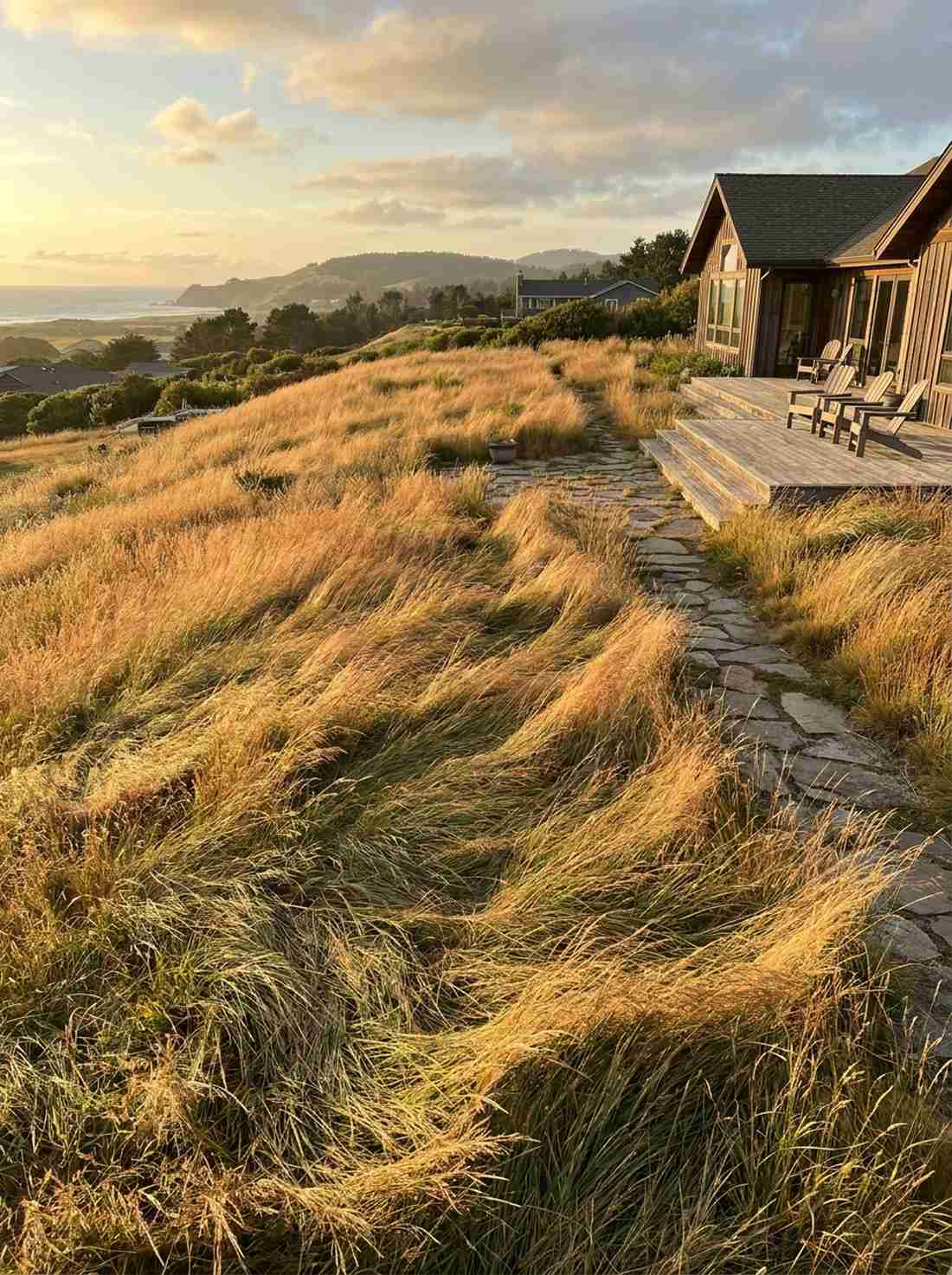
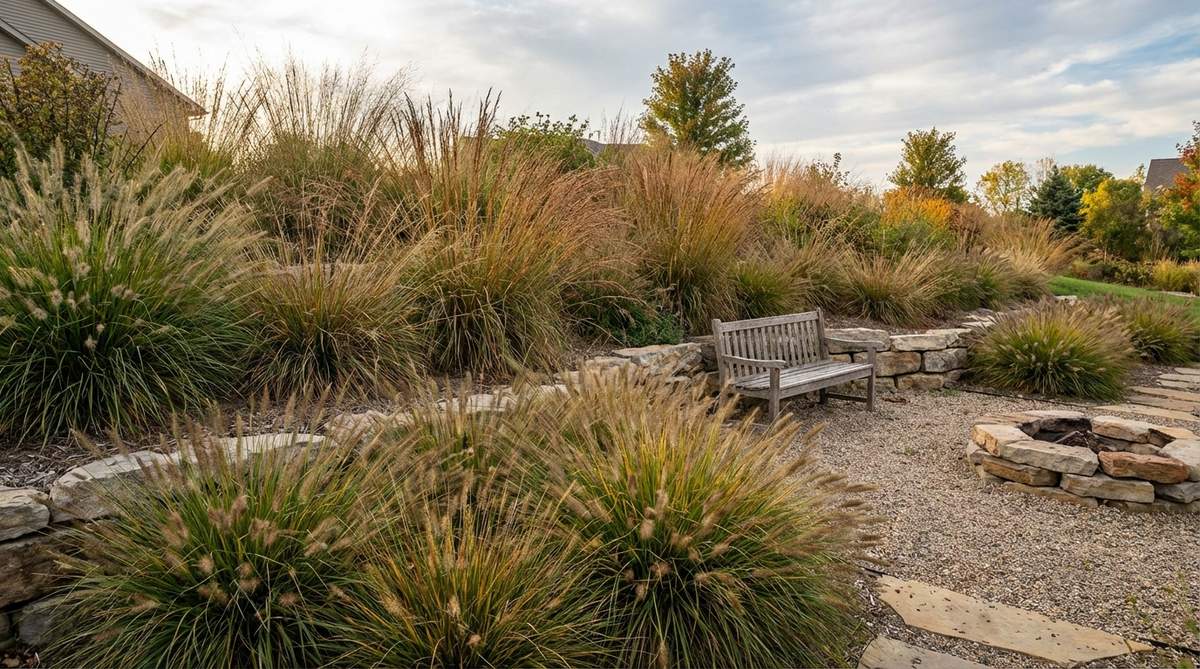
Sweeps of deep-rooted prairie grass slopes catch the late afternoon sun like a glowing, golden wave moving in the breeze. When considering garden design ideas on a slope, this is exceptional for large, windswept hillside lots that need mass coverage fast.
Manicured shrubs often fail here, but switchgrass and bluestem send fibrous roots up to ten feet deep, locking down the hillside with incredible tension. Buying native seed mixes fortified with mycorrhizal fungi ensures hyper-fast germination before the next storm washes your work away.
A mass hydroseed or plug layout costs about $20–$40 for a wide area. It delivers dramatic four-season structure with virtually zero watering.
- Key Materials: Native deep-root prairie grass seed mix
- Vibe / Style: Wild coastal meadow
- Difficulty: Minimal effort, high reward
- Budget Breakdown: Premium Seed Mix: $25 | Straw Tackifier: $10 | Fungi Inoculant: $5.
- Creator’s Tip: Cut them down to 3 inches every late winter to remove dead thatch and force explosive, dense new growth in spring.
- Smart Sourcing: Mycorrhizal root-boosting inoculant powder or bulk native ornamental grass seed blends.
16. Terraced Vegetable Plots
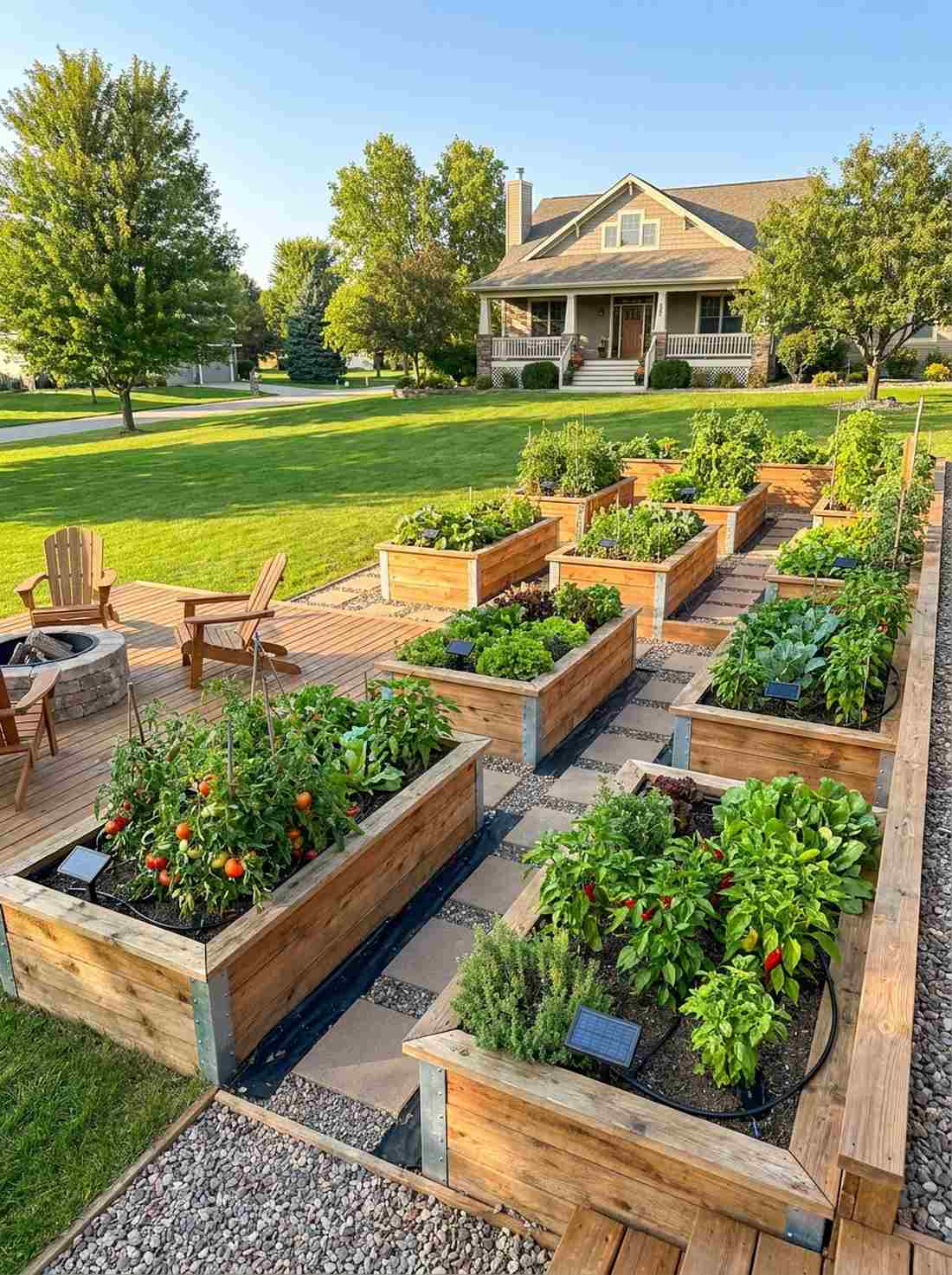
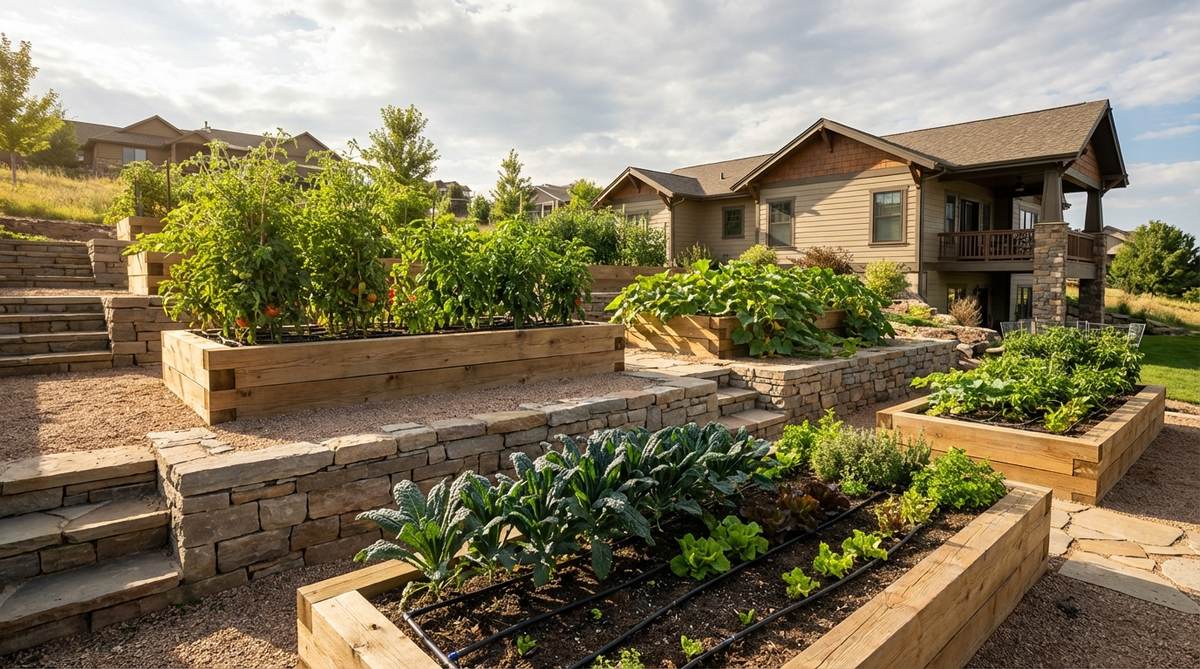
Building sun-drenched stepped edible gardens turns an unusable, dangerous hill into a thriving homestead bounty. This is the absolute peak of vegetable garden design on a slope for south-facing yards that receive punishing summer sun.
Planting directly into an incline guarantees your irrigation runs right off, but leveling the grade into raised boxes creates perfect, deep-draining horticultural zones. Lining the pathways with premium weed barriers ensures you spend your weekends harvesting tomatoes instead of pulling crabgrass.
A raised edible terrace box usually runs $40–$75 in cedar and soil. Pin this if you want to slash your grocery bill beautifully.
- Key Materials: Rot-resistant cedar boards and organic raised bed soil
- Vibe / Style: Rustic urban homestead
- Difficulty: Weekend carpenter project
- Budget Breakdown: Cedar Boards: $45 | Organic Soil: $20 | Corner Brackets: $10.
- Creator’s Tip: Always run your vegetable rows horizontally along the contour of the slope, never vertically up and down, to trap maximum moisture.
- Smart Sourcing: Pre-fabricated galvanized raised bed corner brackets or automated solar drip irrigation kits.
17. Mediterranean Herb Spirals
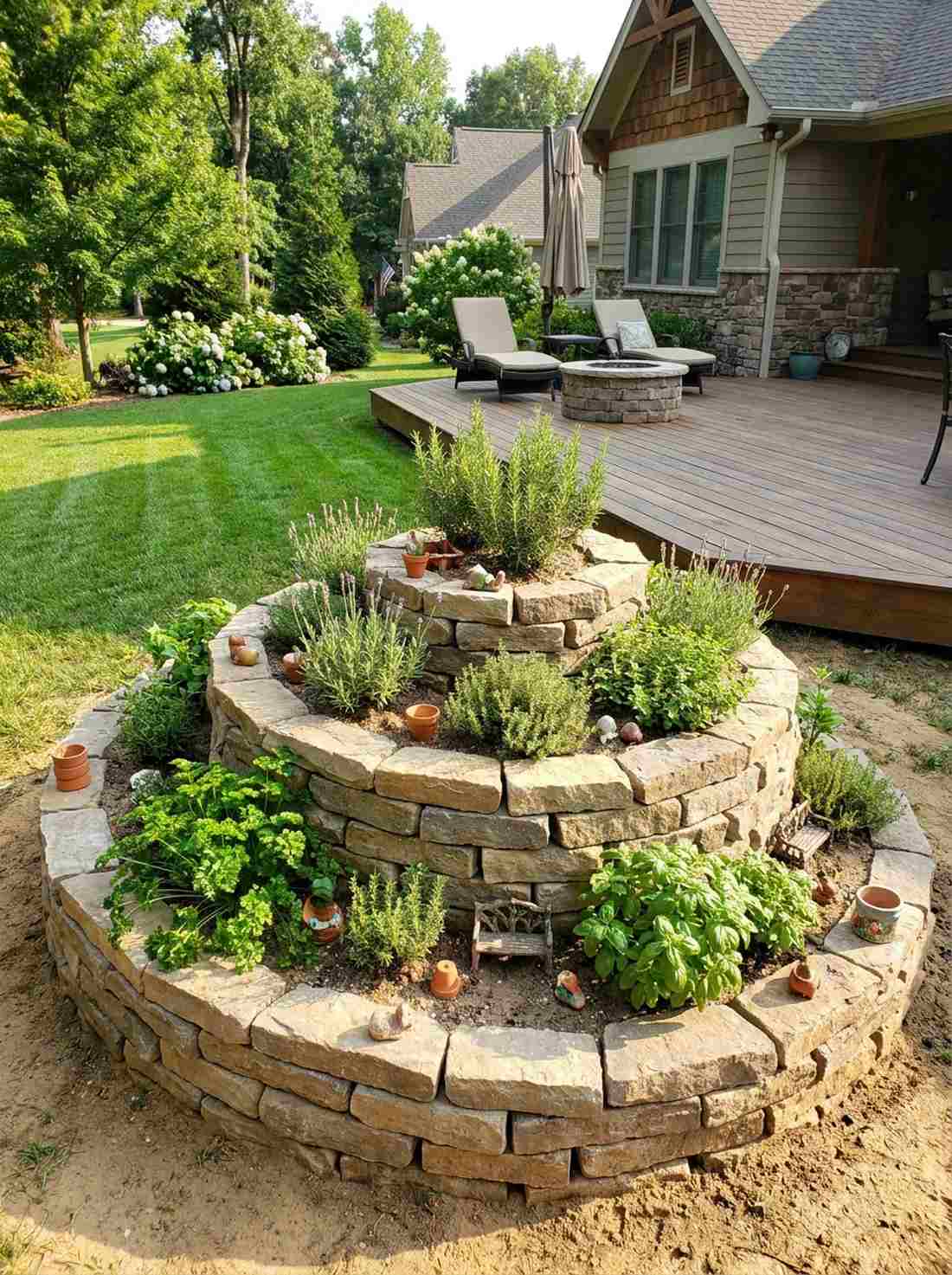
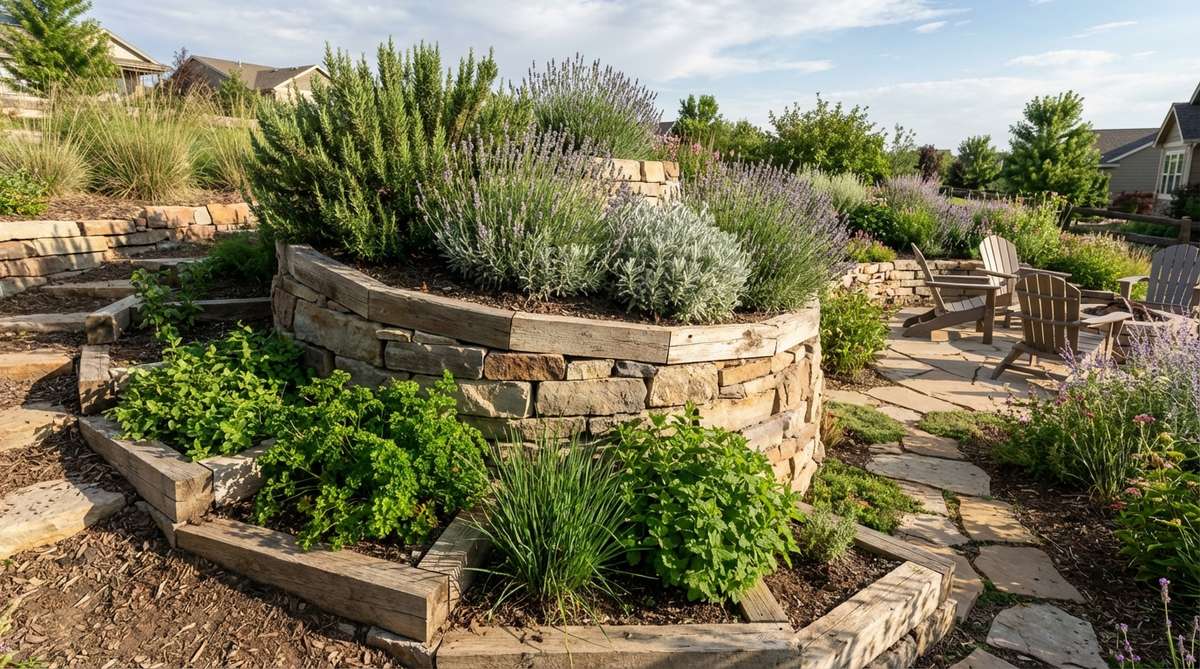
Constructing coiled stone Mediterranean herb mounds feels like discovering a miniature, fragrant labyrinth in the middle of your yard. This compact perfection is exactly what you need for tiny sloped side yards where traditional garden rows refuse to fit.
Most flat herb beds rot from overwatering, but a vertical stone spiral creates multiple microclimates—hot and dry at the peak for rosemary, cool and moist at the base for parsley. Utilizing bulk terrarium accessories to decorate the stones elevates it from a dirt mound to an architectural centerpiece.
You can build a small spiral for just $15–$35 using salvaged rocks. It’s a genius space-saving hack for culinary enthusiasts.
- Key Materials: Stackable landscape stones and sandy loam mix
- Vibe / Style: Old-world apothecary
- Difficulty: Fast afternoon puzzle
- Budget Breakdown: Small Stones: $20 | Sandy Soil: $5 | Herb Starts: $10.
- Creator’s Tip: Fill the bottom center core of the spiral with construction rubble or gravel for massive drainage before adding soil.
- Smart Sourcing: Miniature garden supplies (fairy house accents) or drought-tolerant Mediterranean herb seed vaults.
18. Woodland Edge Transitions
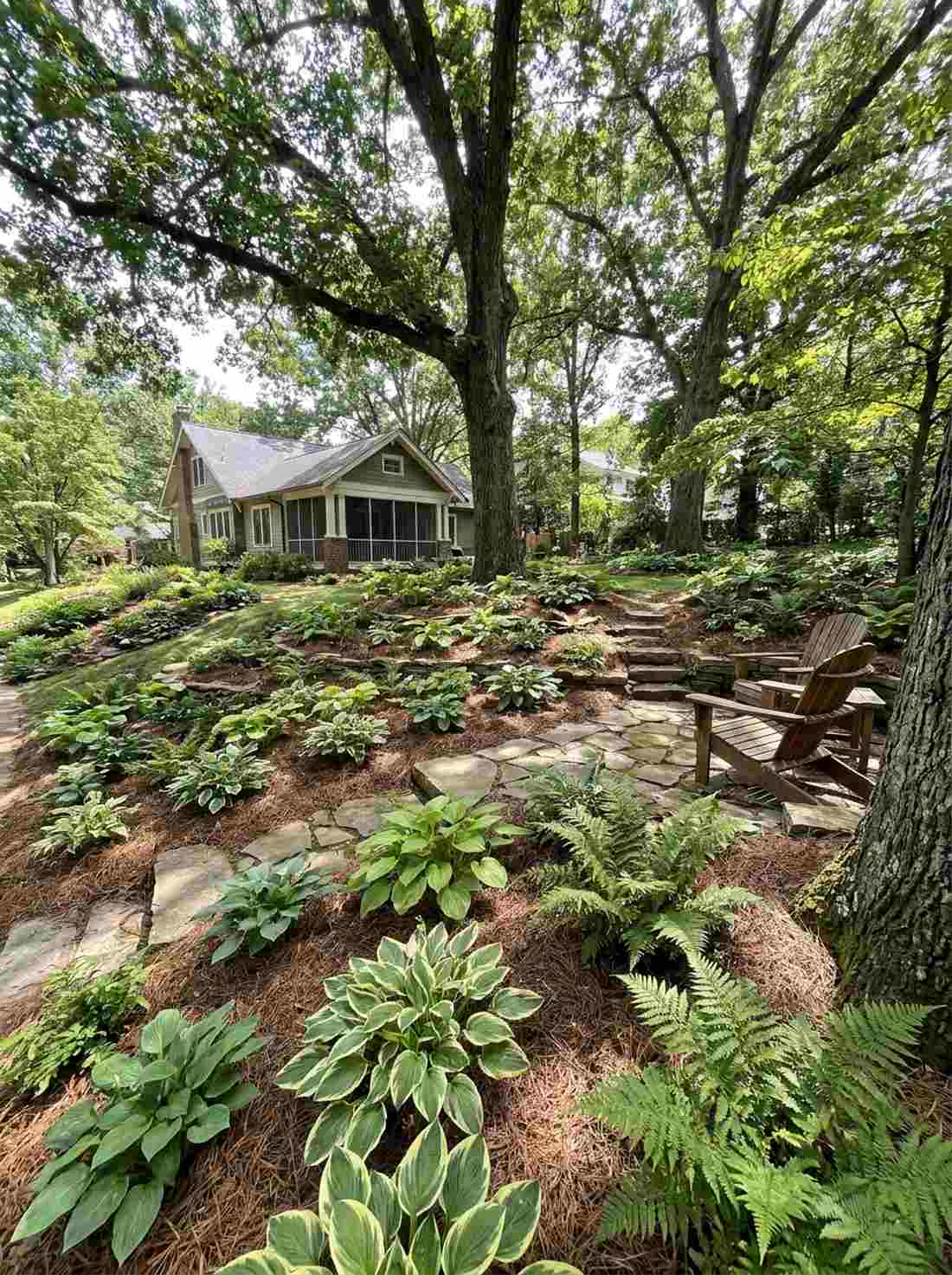
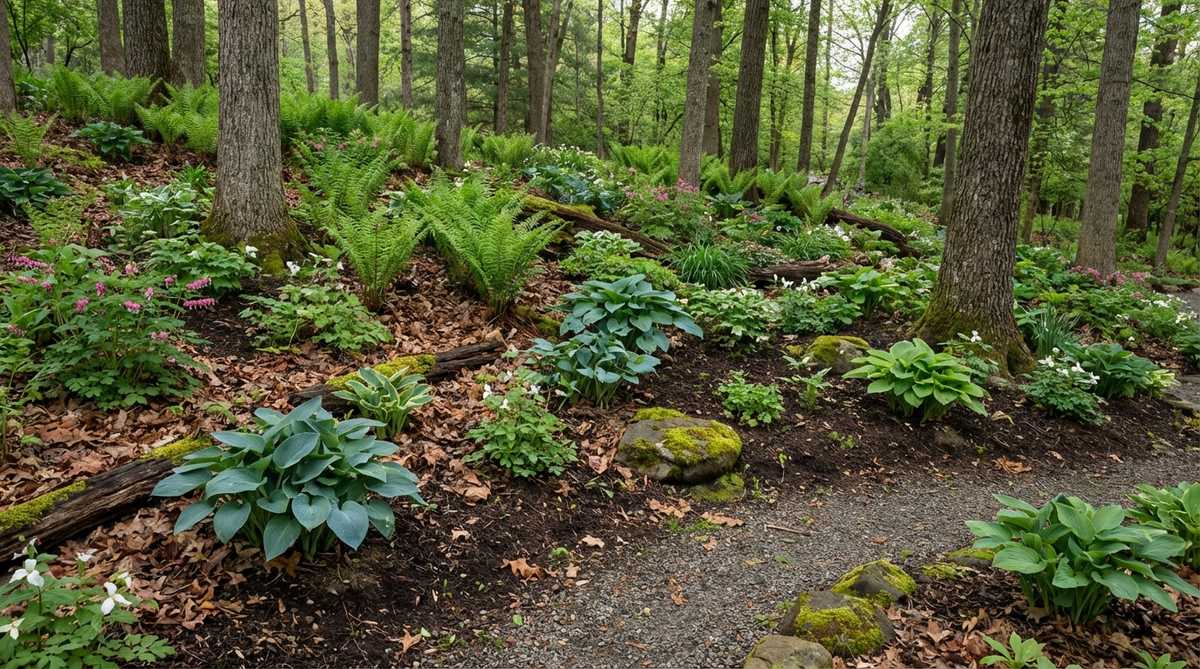
Layering shaded fern and hosta terraces is like stepping out of the suburbs and directly into a cool, ancient forest understory. This layout effortlessly transforms dismal, north-facing shady inclines where sun-loving turf absolutely refuses to grow.
Trying to force traditional lawns under tree canopies is a waste of money, but drifting shade-tolerant native perennials mimics wild forest ecology perfectly. Amending the hard clay with concentrated leaf mold compost creates a rich, spongy floor that traps water instantly.
Woodland drifts cost roughly $35–$60 per shade zone. Save this layout if you are tired of looking at bare dirt under your oaks.
- Key Materials: Bare-root hosta bundles and native fern plugs
- Vibe / Style: Deep forest sanctuary
- Difficulty: Easy planting, heavy amending
- Budget Breakdown: Shade Plugs: $40 | Leaf Mold Compost: $15 | Pine Mulch: $5.
- Creator’s Tip: Never rake the autumn leaves out of this area; let them fall and decompose naturally to feed the woodland soil biome.
- Smart Sourcing: Premium shade-garden bare root assortments or bulk concentrated humic acid soil conditioners.
Material Guide: Cheap vs. Premium Aesthetic
Knowing exactly where to save pennies and where to spend the big bucks makes all the difference in achieving that “looks expensive but isn’t” slope vibe.
- Standard Wood vs. Pre-Treated Ground Contact: Regular wood rots in 24 months on a wet slope. Upgrading to ground-contact rated timber stops decay and guarantees decades of structural hold.
- Box Store Blocks vs. Interlocking Retaining Kits: Generic cinder blocks require mortar and rebar. Sourcing engineered interlocking blocks with rear setback lips saves days of labor and self-braces against the hill.
If you want your yard to stop looking like a cookie-cutter subdivision, the next material choice completely shatters the suburban mold.
Material-Driven Terrace Solutions For Distinct Aesthetics
The materials you select for your retaining walls speak volumes. These distinct textures bridge the gap between basic landscaping and custom architectural design.
19. Reclaimed Railway Sleeper Steps
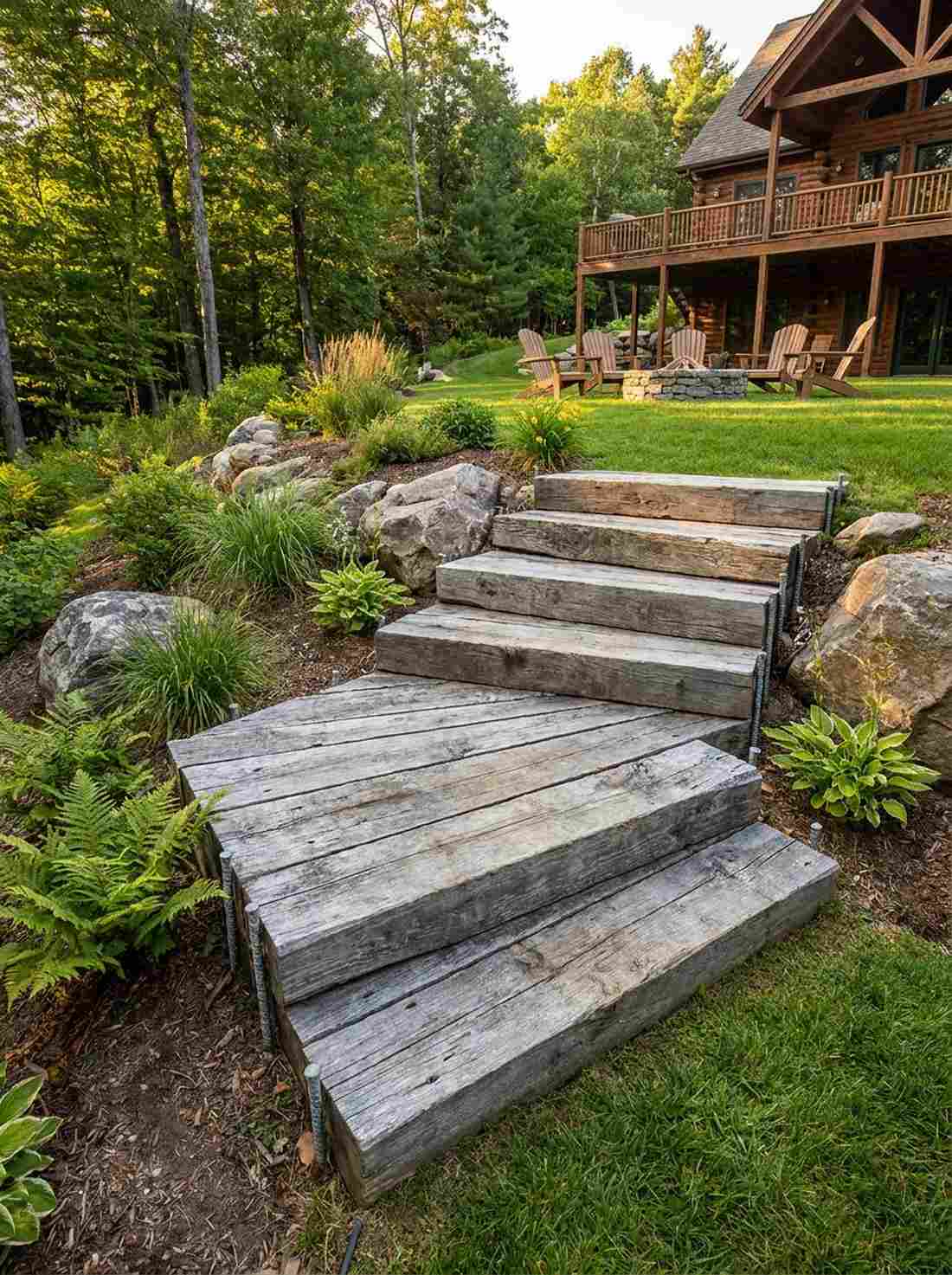
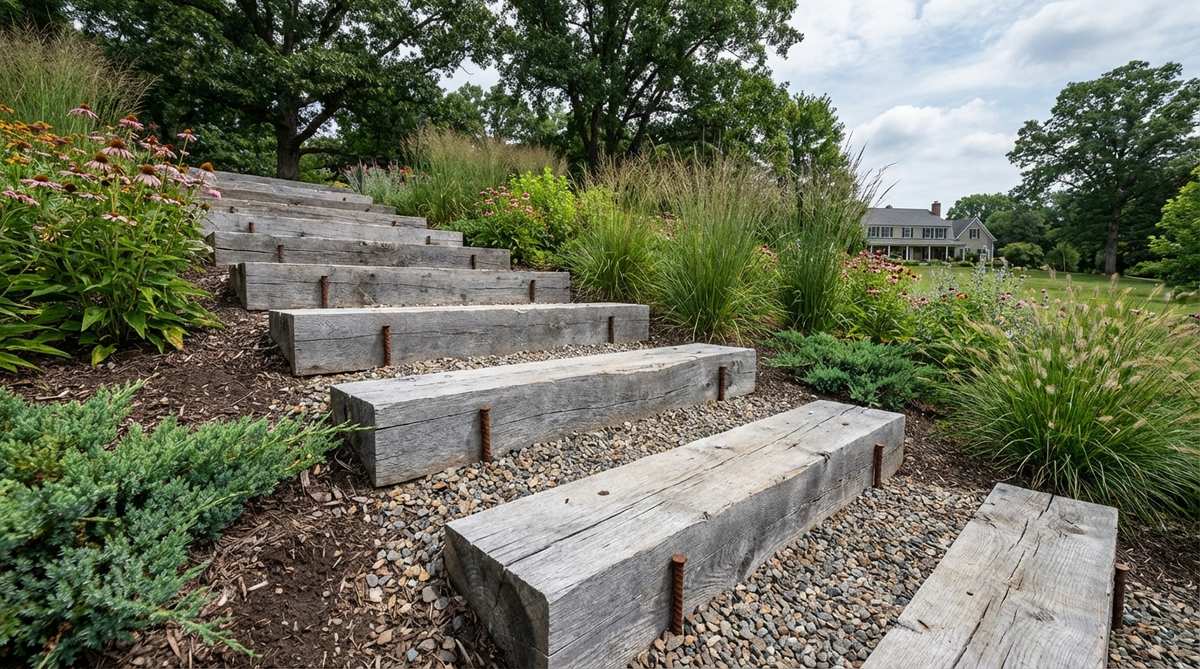
Burying weathered timber sleeper steps anchors the earth with a rugged, historic character that brand new lumber simply cannot fake. This is the ideal heavy-duty transition for properties bridging the gap between wild woodland and manicured lawn.
While fresh lumber looks overly sterile, authentic reclaimed railway ties deliver a surprisingly premium look infused with a rich, silver-gray patina. Pinning these massive beams straight into the hillside with heavy-duty galvanized rebar spikes creates an immovable staircase.
Reclaimed timber steps run roughly $40–$75 per tier. It adds instant history and incredible durability to your backyard hikes.
- Key Materials: Authentic reclaimed railway ties and 1/2-inch rebar
- Vibe / Style: Rugged mountain lodge
- Difficulty: Requires heavy lifting/sledgehammering
- Budget Breakdown: Timbers: $45 | Rebar Spikes: $15 | Base Gravel: $10.
- Creator’s Tip: Pre-drill the lumber with a long auger bit before hammering the rebar through, otherwise the dense antique wood will splinter.
- Smart Sourcing: Heavy-duty 24-inch galvanized rebar stakes (bulk bundle) or extended wood auger drill bits.
20. Corten Steel Edging
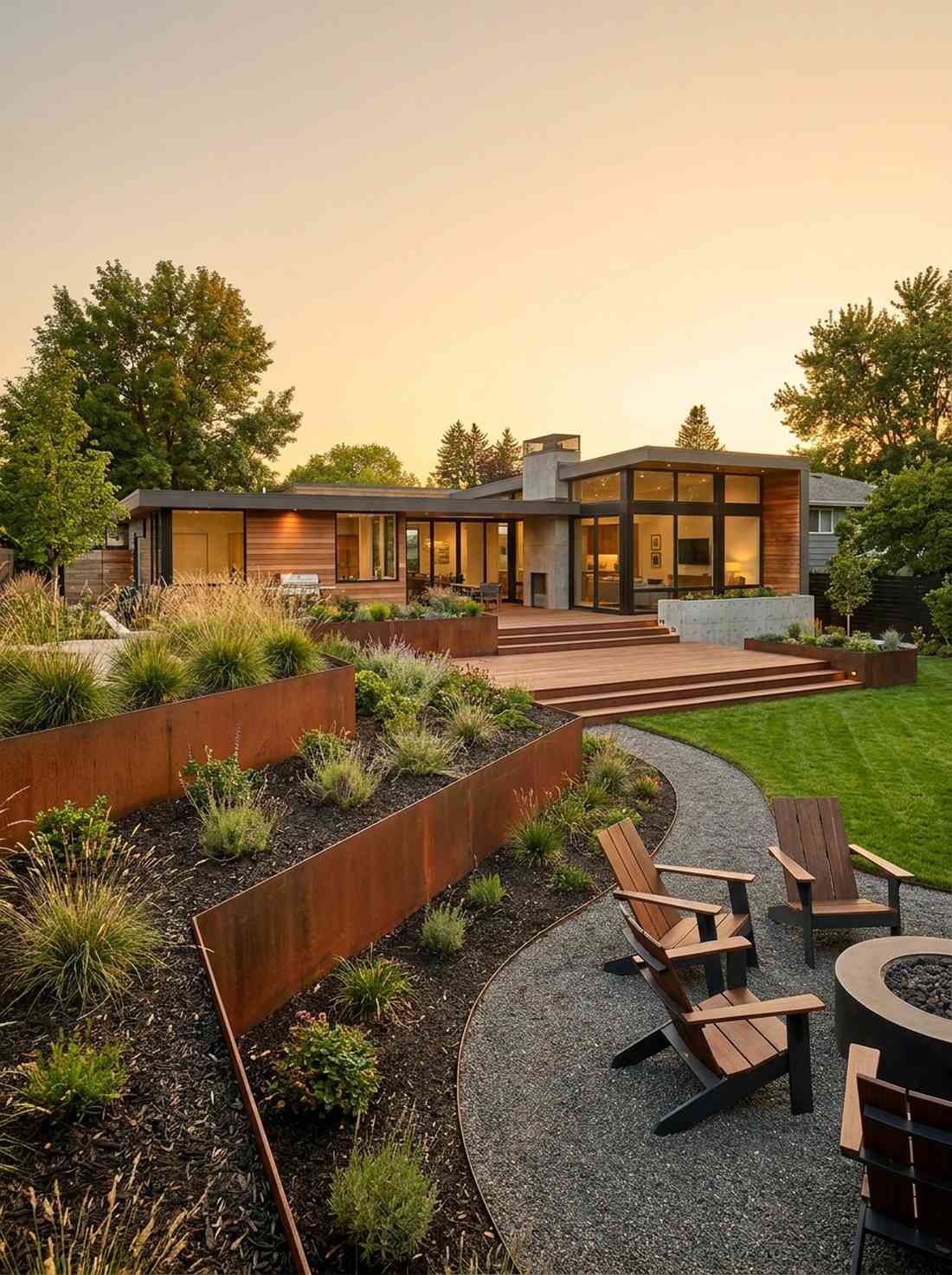
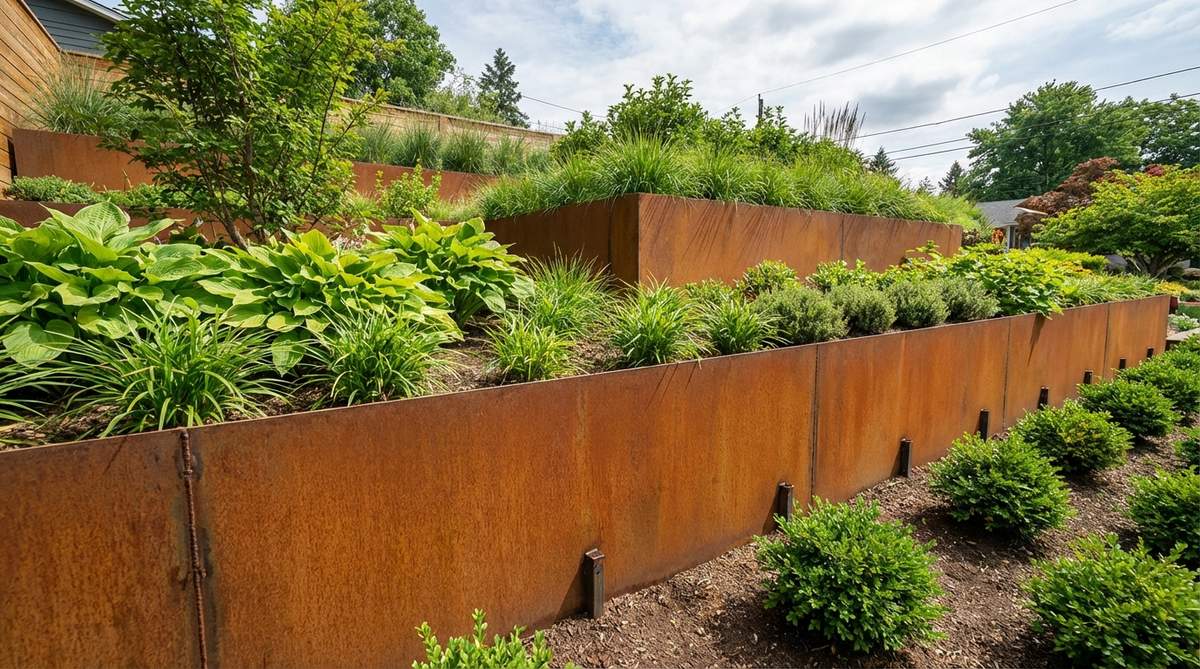
Installing rusted weathering steel edging slices through soft organic shapes with razor-sharp, modern precision. This is a highly coveted, striking contrast piece specifically meant for contemporary architectural homes wanting low-profile terraces.
Using cheap plastic borders looks incredibly tacky, but authentic Corten panels form a stable rust patina that literally protects the steel from further corrosion. Bolting these commercial-grade plates together creates seamless ribbon-like walls that hold back massive amounts of soil.
Steel retaining strips cost about $60–$90 per panel section. Pin this immediately if you love the minimalist industrial aesthetic.
- Key Materials: Pre-weathered Corten steel landscape panels
- Vibe / Style: Ultra-modern architectural
- Difficulty: Fast bolting setup
- Budget Breakdown: Steel Panels: $70 | Connector Bolts: $5 | Backing Gravel: $10.
- Creator’s Tip: Spray brand new panels with a mixture of hydrogen peroxide, salt, and white vinegar to force the rust patina to form overnight.
- Smart Sourcing: Heavy-duty Corten steel retaining rings (pre-rolled) or rust-accelerator landscape sprays.
21. Brick Traditional Terracing
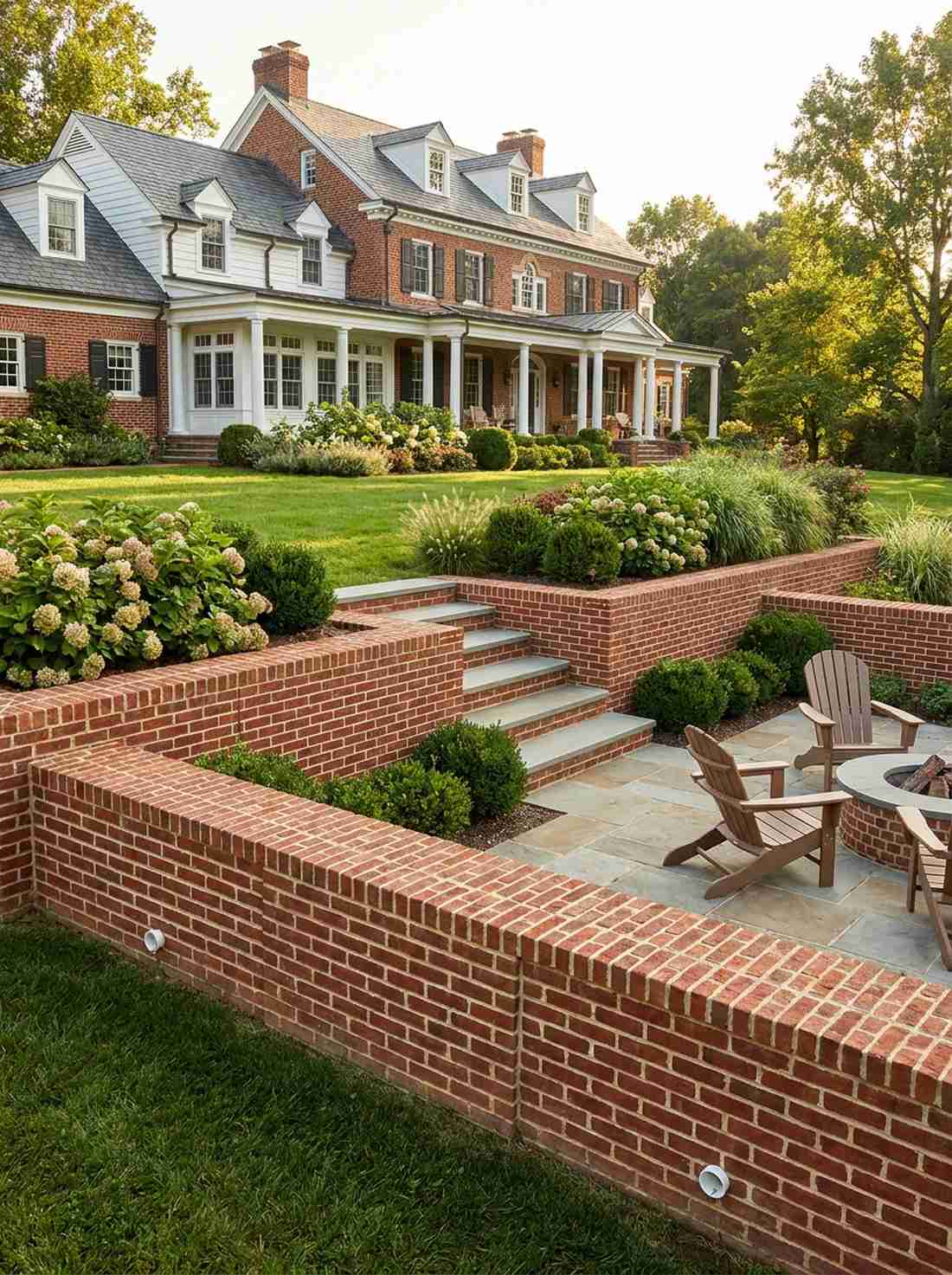
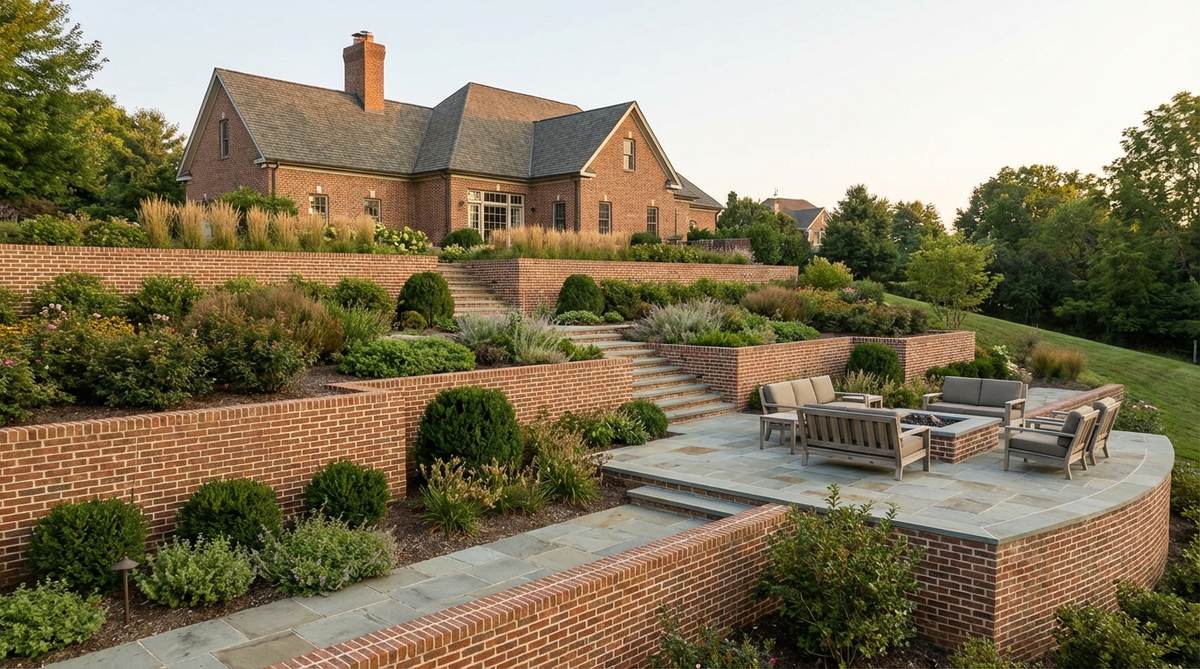
Laying mortared clay brick terrace walls echoes the timeless elegance and permanence of historical southern estates. This provides a flawless, seamless integration for homes that already feature traditional brick exterior cladding.
Most people dread masonry work, but opting for a classic Flemish bond pattern gives a designer-level finish that commands serious neighborhood respect. Inserting pre-cut PVC weep pipes at the base course guarantees groundwater escapes before cracking the mortar joints.
A small brick retaining wall runs $70–$120 in materials. It’s a high-class, permanent investment for front-yard curb appeal.
- Key Materials: Fired clay landscape bricks and Type-S structural mortar
- Vibe / Style: Classic colonial estate
- Difficulty: Advanced masonry skills needed
- Budget Breakdown: Brick Pallet: $80 | Mortar Mix: $20 | Weep Tubes: $5.
- Creator’s Tip: Always brush your mortar joints with a stiff masonry brush just as the cement starts to set to give it a clean, professional finish.
- Smart Sourcing: Pre-mixed Type-S high strength mortar (bulk bags) or professional convex brick jointers.
22. Living Willow Walls
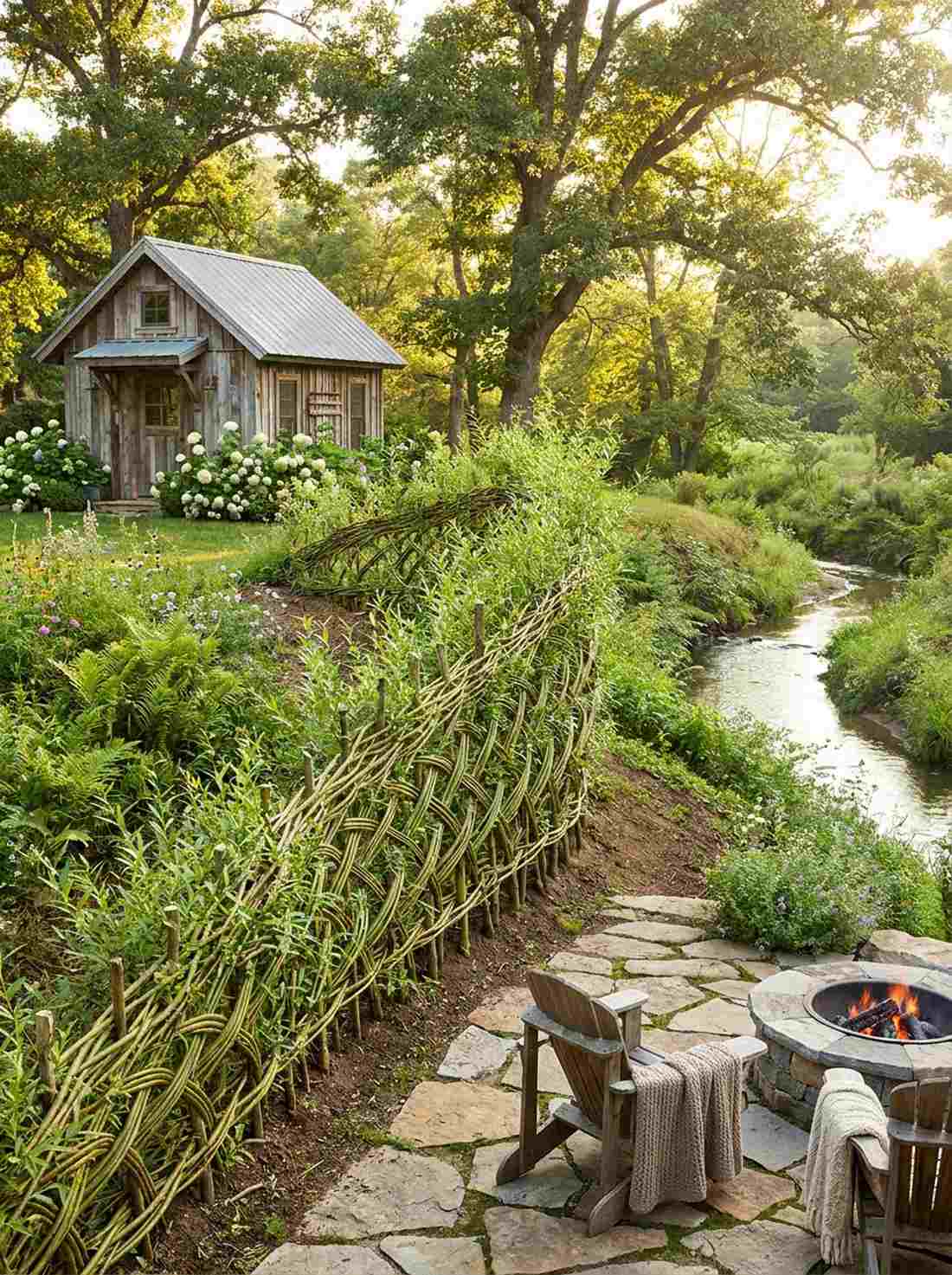
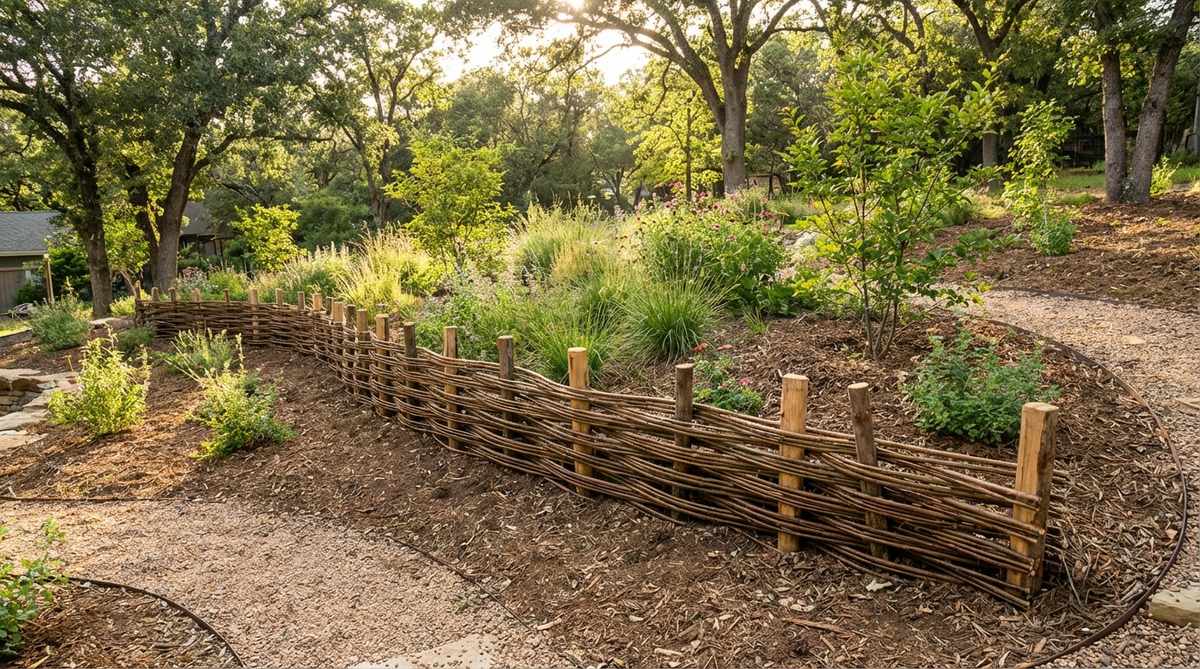
Weaving living willow retaining baskets feels like bringing an organic, breathing piece of earth art to life right in your garden. This beautiful, eco-friendly stabilization method is phenomenal for gentle creek banks or rural permaculture zones.
Instead of relying on dead wood, jamming freshly cut willow stakes into moist soil causes them to actually root and leaf out, reinforcing the terrace as it grows. It delivers a surprisingly premium look that blends perfectly with fairy garden kits and wild cottage aesthetics.
You can create a living wall for under $20 if you source local clippings. Save this hack to your zero-waste gardening board.
- Key Materials: Live green willow whips (unrooted)
- Vibe / Style: Permaculture earth-art
- Difficulty: Easy weaving, high maintenance
- Budget Breakdown: Willow Whips: $15 | Tying Twine: $5 | Rooting Hormone: $5.
- Creator’s Tip: Soak the bottom halves of your willow stakes in buckets of water for a week before planting to trigger explosive root nodules.
- Smart Sourcing: Live willow cuttings (bulk pack for rooting) or biodegradable garden lacing twine.
Specialized Slope Applications For Unique Functions
Why stop at just holding back dirt? If you have the elevation, you can engineer highly specialized outdoor living zones that flat yards could never accommodate.
23. Amphitheater Seating Terraces
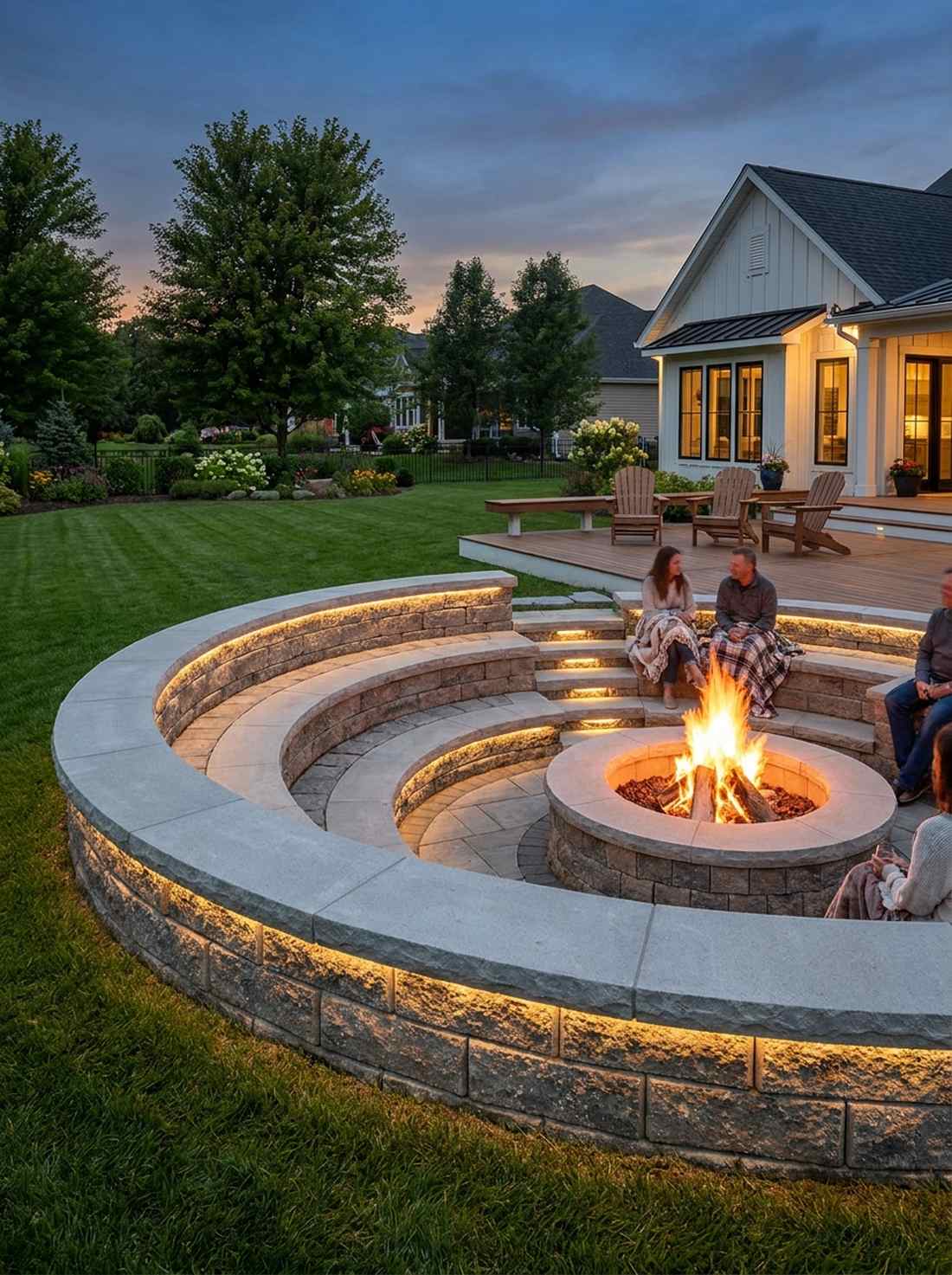
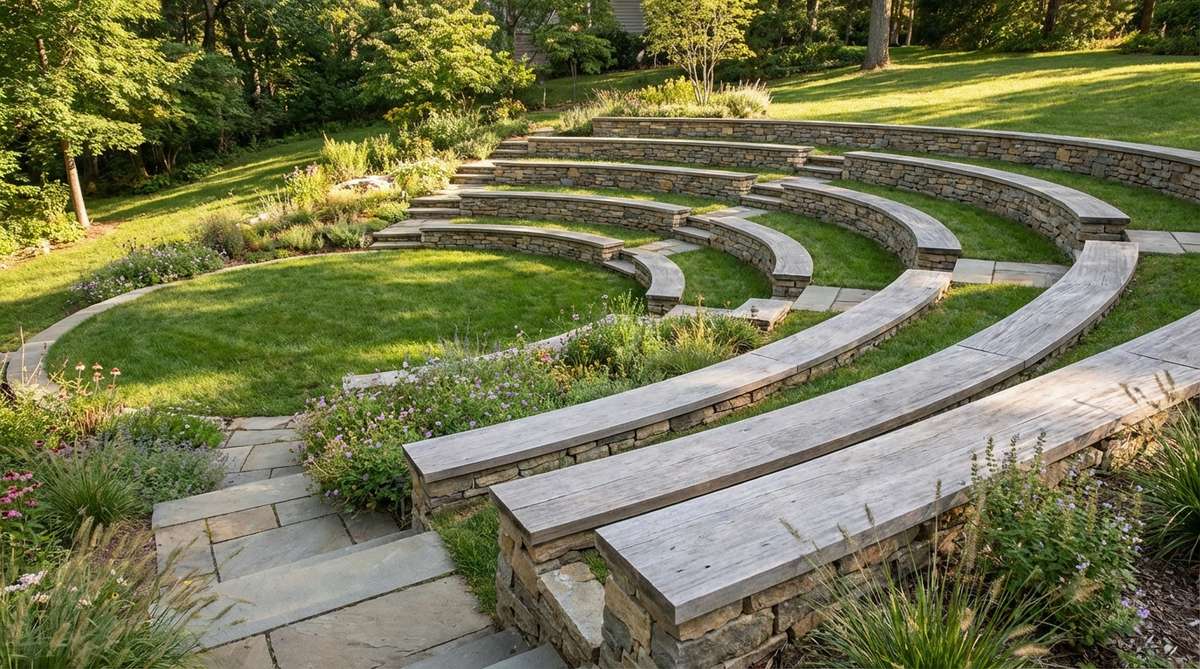
Carving out curved stone amphitheater seating invites legendary evening gatherings around a central, sunken fire pit. This is the absolute ultimate entertainment upgrade for a severely recessed backyard bowl that currently goes unused.
What looks like a massive contractor job can actually be achieved by capping standard 18-inch block walls with smooth, premium seating stones. Adding weatherproof LED light strips under the overhang completely transforms the raw block into a high-end glowing arena.
Building a seating ring costs roughly $80–$150 per curve. It eliminates the need for bulky patio furniture forever.
- Key Materials: Radius retaining blocks and smooth concrete capstones
- Vibe / Style: Luxury evening fire-lounge
- Difficulty: Moderate heavy block lifting
- Budget Breakdown: Blocks/Caps: $100 | Base Pad: $20 | Adhesive: $10.
- Creator’s Tip: Set the seating height strictly between 17 and 19 inches from the ground level—anything higher or lower is ergonomically uncomfortable.
- Smart Sourcing: Waterproof outdoor LED strip lights (cut-to-length) or polyurethane block adhesive tubes.
24. Solar Collection Terraces
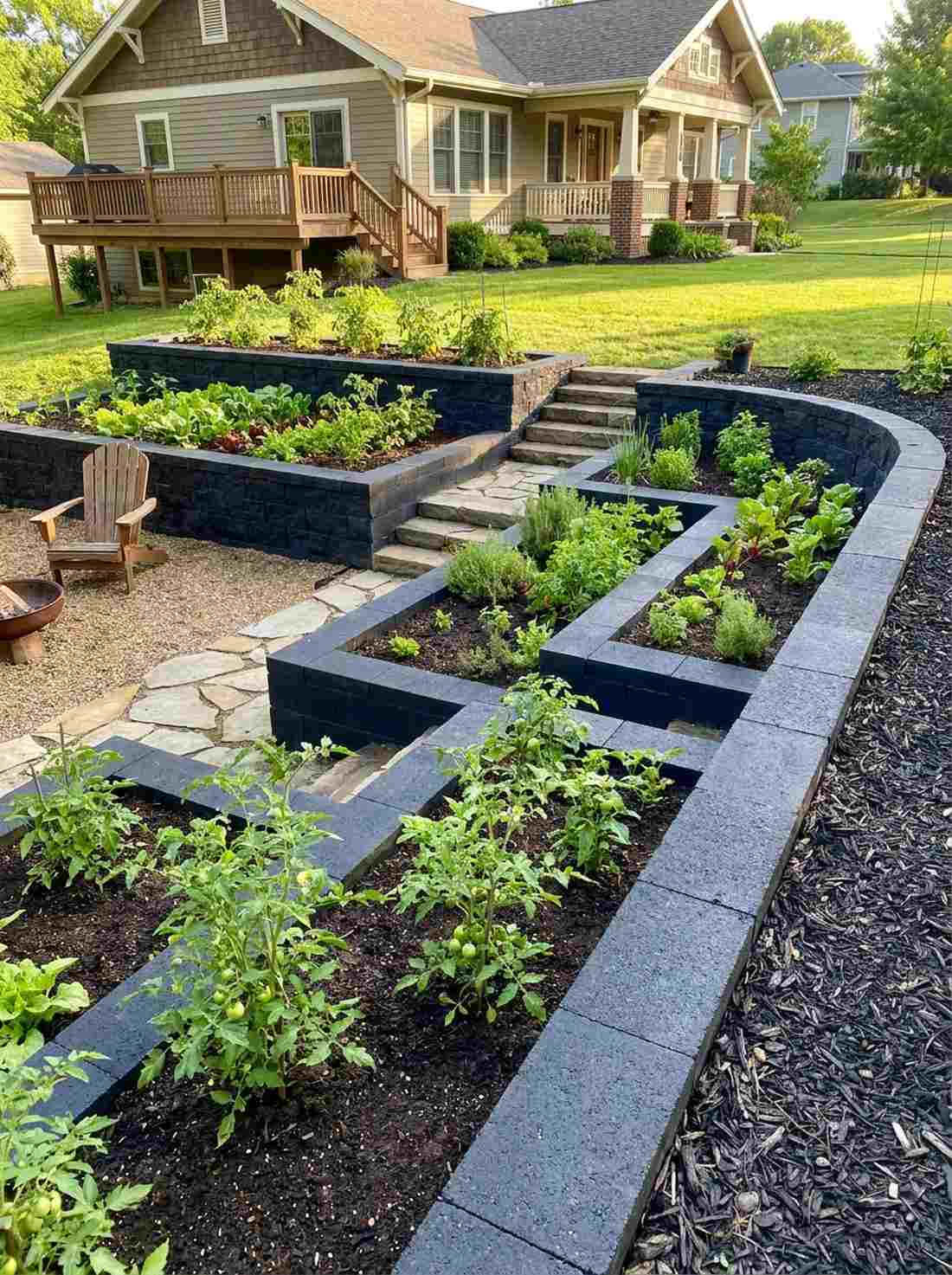
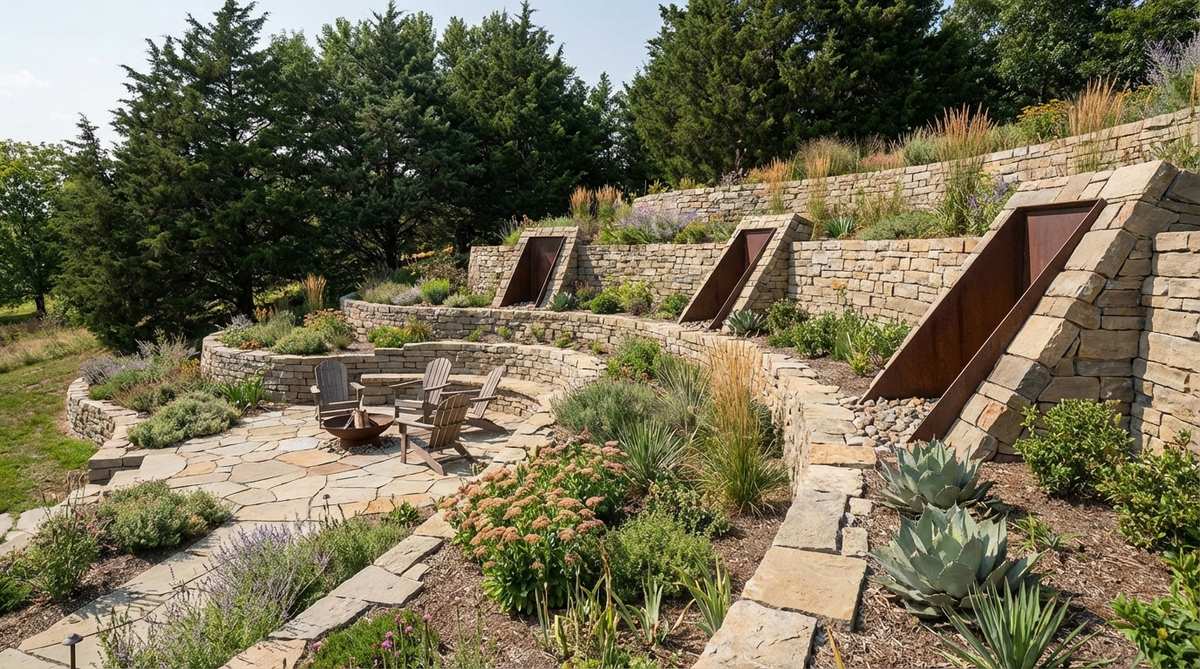
Engineering sun-optimized terraced garden beds is a brilliantly designed trap for early spring warmth. This layout is entirely perfect for extending the growing season on cold-climate slopes that need every ounce of sunlight.
Flat gardens lose heat fast, but building south-facing masonry walls acts as a thermal mass, absorbing heat all day and radiating it into the soil all night. Coating the backing walls with dark, UV-resistant concrete sealers maximizes the solar gain exponentially.
A thermal terrace runs $40–$70 in heavy mass materials. Pin this if you want to harvest ripe tomatoes weeks before your neighbors.
- Key Materials: Dense concrete blocks or dark stone
- Vibe / Style: High-efficiency homestead
- Difficulty: Intermediate plotting
- Budget Breakdown: Dark Stone: $45 | Backfill Soil: $15 | Dark Mulch: $10.
- Creator’s Tip: Paint the back retaining wall a deep charcoal or matte black to soak in maximum solar radiation during early spring frosts.
- Smart Sourcing: Dark stone masonry blocks (pallet load) or UV-resistant black concrete dye.
Most backyards have a boring flat lawn. The final feature takes full advantage of gravity to build the most luxurious water feature imaginable.
25. Tiered Water Garden Pools
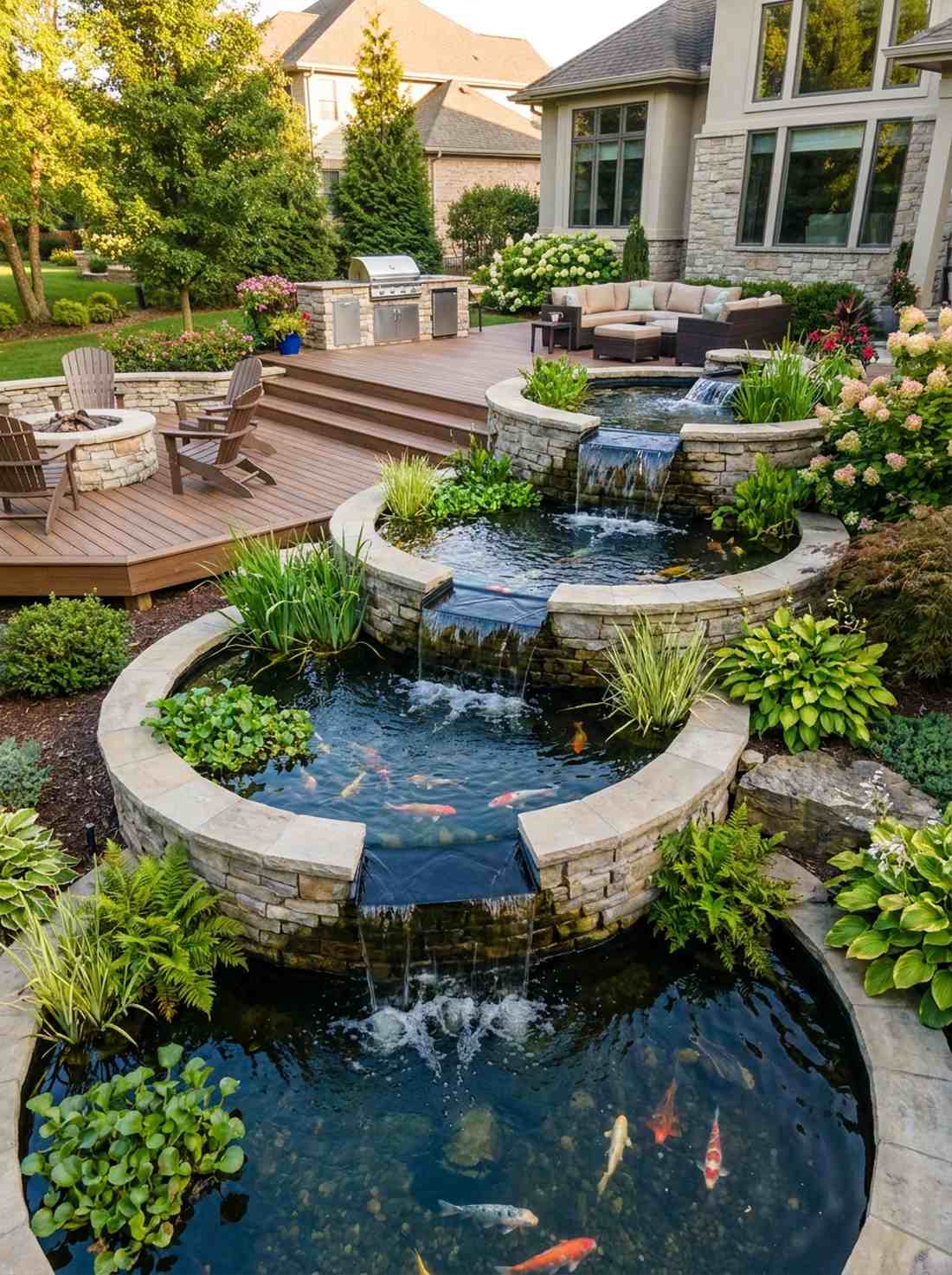
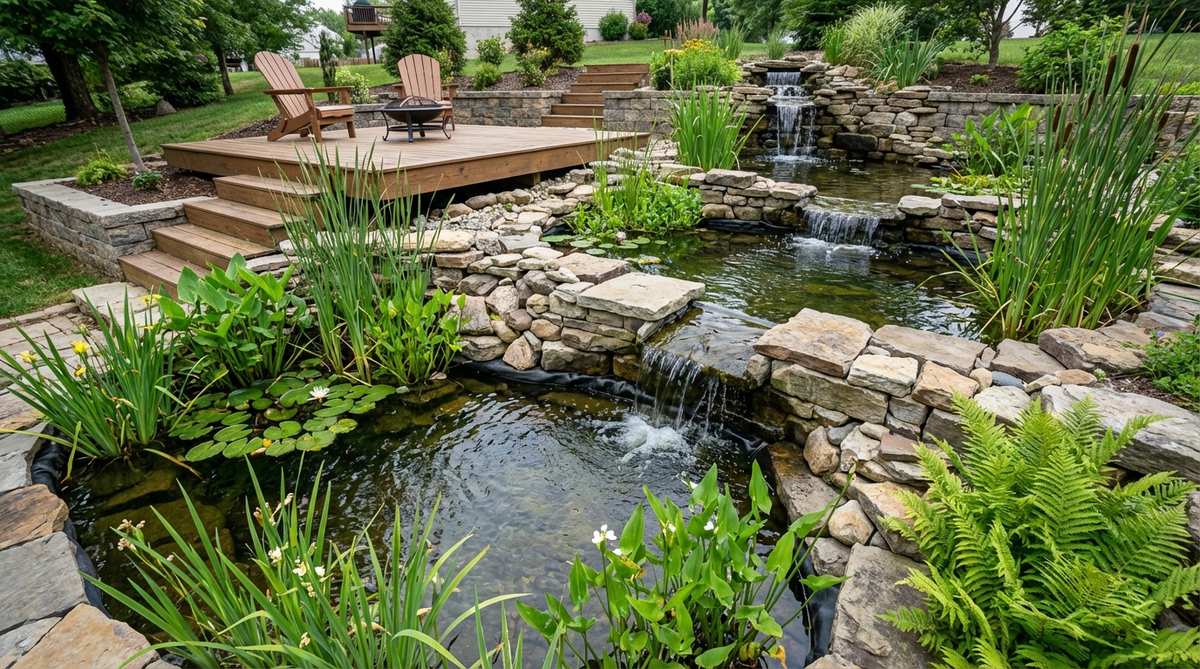
Excavating cascading multi-level water garden pools creates a hypnotic, shimmering staircase of reflecting water and aquatic life. This is the absolute pinnacle of luxury hillside landscaping, guaranteed to become the crown jewel of your property.
A lot of homeowners fear leaks, but connecting stacked basins with premium EPDM rubber spillways delivers a surprisingly premium look that is virtually watertight. Utilizing a heavy-duty commercial filtration pump at the base shoots the water back up to the top, oxygenating your Koi effortlessly.
Multi-pool systems start around $150–$300 depending on liner size. It’s a show-stopping weekend transformation that demands attention.
- Key Materials: Heavy-duty pond liner and a commercial recirculation pump
- Vibe / Style: Five-star luxury botanical
- Difficulty: Advanced digging and plumbing
- Budget Breakdown: Large Liners: $100 | Pro Pump: $80 | Tubing/Fittings: $40.
- Creator’s Tip: Always make the top pool slightly smaller than the bottom collection basin so the system never runs dry when the pump turns off.
- Smart Sourcing: Commercial-grade submersible pond pumps (debris-tolerant) or pre-formed plastic spillway lips.
Building Landscapes That Rise To The Challenge
Successful garden design on a slope transforms an eroding liability into a massive property value booster through these 25 strategic blueprints. By leveraging commercial-grade interlocking blocks, high-end drainage kits, and aggressive native rooting plugs, you permanently stop gravity from destroying your yard. Start with proper subsurface French drains and structural block foundations, then layer in your premium plants and materials to secure a multi-tier outdoor living space that thrives year-round.
Frequently Asked Questions
How high can I build a retaining wall without hiring an engineer?
Most building codes cap DIY retaining walls at 3 to 4 feet before requiring engineered blueprints, though local regulations vary. If you are stacking walls over 3 feet, upgrading to interlocking retaining wall systems and installing professional hydrostatic drainage pipe kits behind the barrier is critical to prevent a blowout. Always verify with your local permitting office, especially if the wall supports a driveway surcharge.
What is the most cost-effective material for DIY slope terracing?
Pre-cut pressure-treated landscape timbers remain the absolute best budget hack, typically running $15-25 per heavy-duty piece. For a more permanent stone aesthetic, investing in modular concrete block pallets gives you commercial-level strength without the insane cost of hired masons. Sourcing bulk landscape fabric rolls online rather than buying small retail cuts also drastically cuts your baseline materials bill.
How do I prevent erosion between terraces during heavy rain?
The instant your dirt is moved, you must lock it down with biodegradable jute erosion control mats to survive the first rains. Planting deep-rooted native grass plugs through the netting, combined with hidden French drain trenches wrapped in professional filter fabric, safely intercepts massive sub-surface water flows before they liquefy your terrace.
Can I terrace a slope myself or should I hire professionals?
If your incline is under 15 degrees and your walls are staying under 2.5 feet, a confident DIYer armed with commercial-grade cast-iron tampers and laser levels can easily handle the job. However, if you are fighting severe shear drops, massive runoff, or need poured concrete cantilever walls, paying a pro with heavy excavation equipment is cheaper than replacing a collapsed DIY wall.
What plants work best for stabilizing steep slopes between retaining walls?
Switch out weak nursery annuals for deep-rooted native anchors like switchgrass or creeping juniper plugs. For hyper-fast coverage, combining bulk tray groundcover succulents with mycorrhizal root-boosting inoculant powder forces the plants to weave a dense, living root net that acts exactly like a synthetic geo-grid, locking the soil tight within a single season.