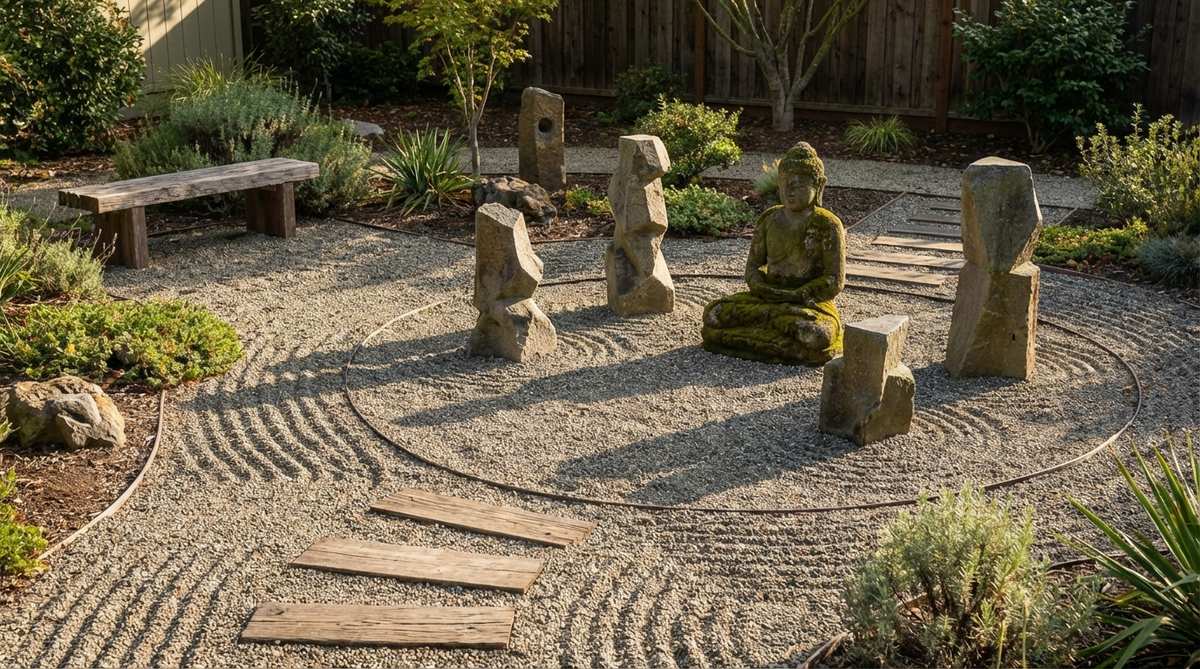
Zen garden statues transform ordinary outdoor spaces into tranquil meditation sanctuaries through carefully selected Buddha figures and abstract sculptures. These mindfully chosen pieces balance spiritual symbolism with artistic expression, creating focal points that inspire contemplation and inner peace. Fresh Garden Ideas brings you expert guidance on selecting the perfect statuary to elevate your zen garden design.
Design SnapshotKey Principles
- Material Selection: Choose weather-resistant materials like granite, lava stone, bronze, or weathered marble for durability in all climates
- Scale and Proportion: Match statue size to garden dimensions—statement pieces for open spaces, modest sculptures for intimate corners
- Strategic Placement: Position statues as focal points at pathway ends, near water features, or against natural backdrops of greenery
- Symbolic Balance: Blend traditional Buddha figures with modern abstract forms to honor heritage while expressing contemporary aesthetics
Traditional Buddha Statues for Timeless Serenity
Traditional Buddha statues anchor zen garden design with centuries-old spiritual symbolism. These classical forms invite meditation and contemplation through their serene expressions and time-honored postures.
1. Seated Meditation Buddha
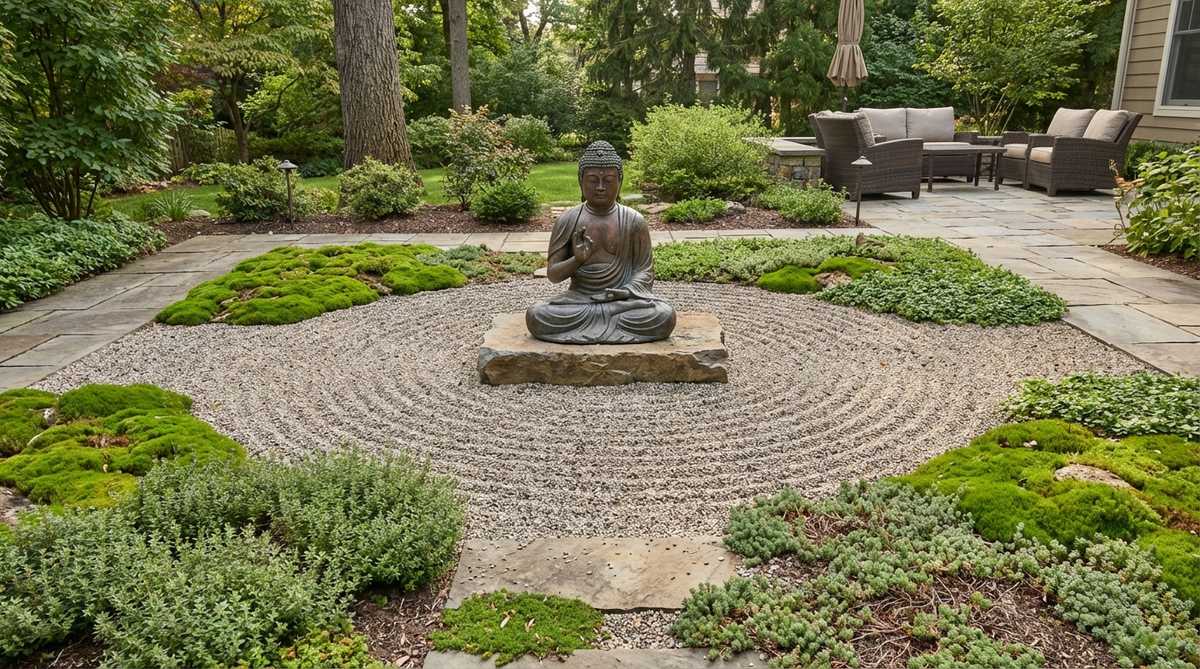
The classical seated Buddha in meditation pose creates an immediate focal point with its symmetrical form and peaceful countenance. Weathered bronze finishes develop natural patinas over time, deepening the sense of ancient wisdom.
Position this statue on a raised stone platform surrounded by raked gravel in concentric circles. The traditional hand mudras guide energy flow and establish spiritual intention in your garden space.
Pair with moss patches and low-growing ground covers to frame the figure naturally. This arrangement helps visitors transition from everyday consciousness into mindful awareness.
2. Reclining Buddha
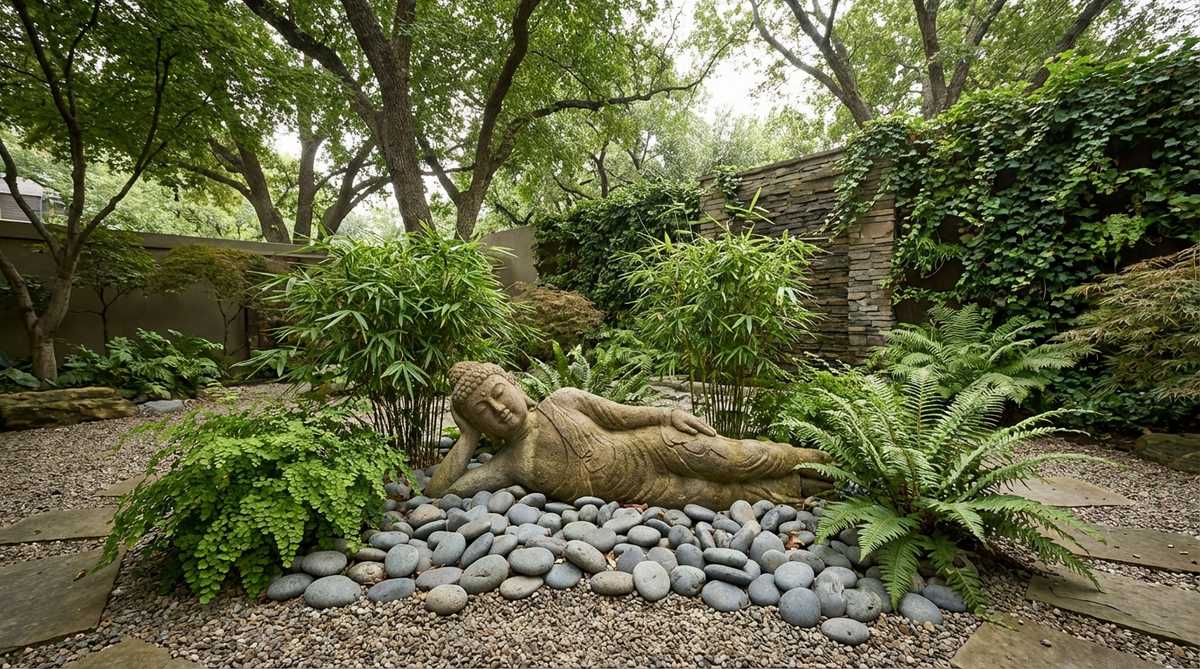
A reclining Buddha carved from natural stone embodies peaceful acceptance and the transition to enlightenment. The horizontal orientation creates visual rest, contrasting with vertical garden elements like bamboo or ornamental grasses.
Elevate slightly on a bed of river stones or polished pebbles to prevent moisture damage. Surround with miniature bamboo and shade-loving ferns for an intimate meditation vignette.
This pose symbolizes Buddha’s final moments before nirvana, encouraging reflection on impermanence and inner peace.
3. Standing Buddha
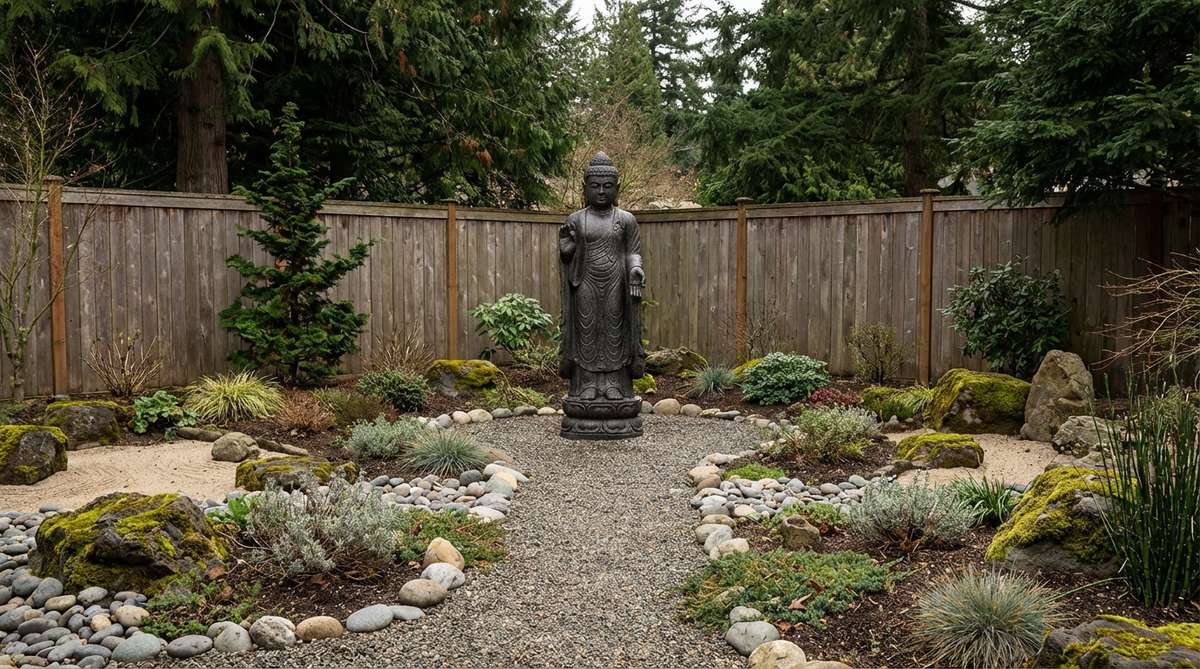
The standing Buddha with hands in blessing mudra radiates compassion and protection throughout your garden. Granite or lava stone versions withstand harsh weather while maintaining their carved details for decades.
Place at the terminus of a winding pathway to reward visitors who journey through your garden. The vertical stance draws eyes upward, encouraging spiritual elevation.
Height placement affects visual impact—pedestals increase prominence, while ground-level positioning creates intimate encounters.
4. Laughing Buddha
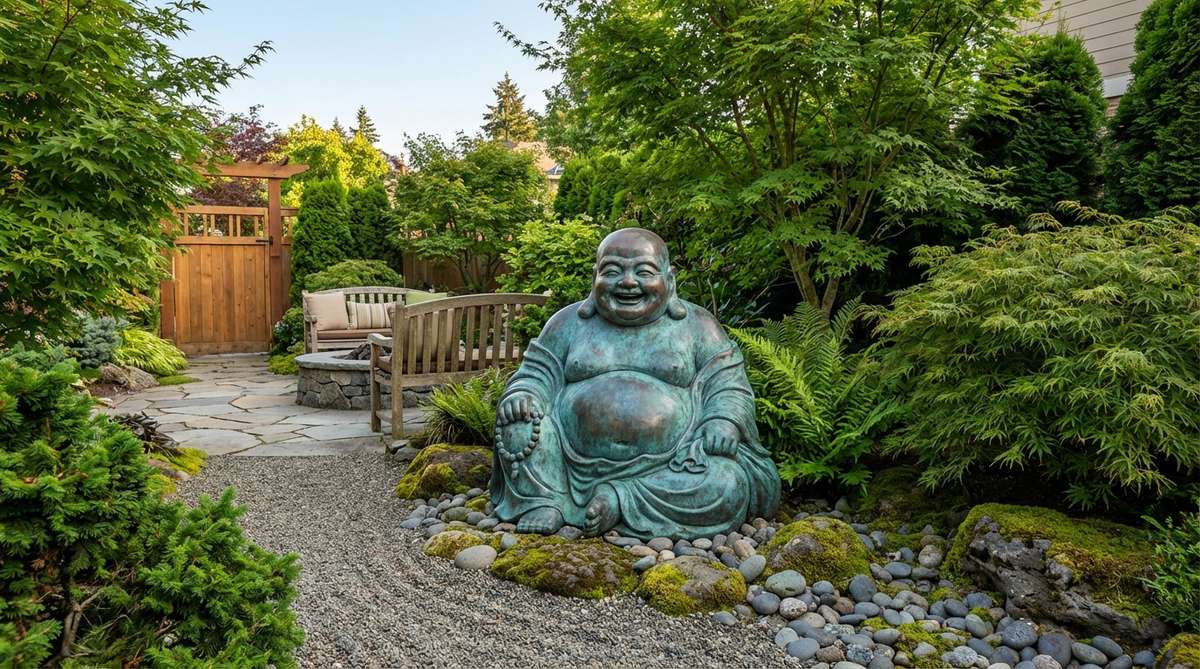
The jolly Buddha figure introduces warmth and joy to balance more austere zen elements. His rotund belly and wide smile remind viewers to embrace contentment and celebrate life’s simple pleasures.
Position near seating areas or garden entrances to welcome guests with positive energy. The informal posture softens formal garden design without compromising spiritual depth.
Copper or bronze castings develop rich blue-green patinas that contrast beautifully with surrounding foliage.
5. Teaching Buddha
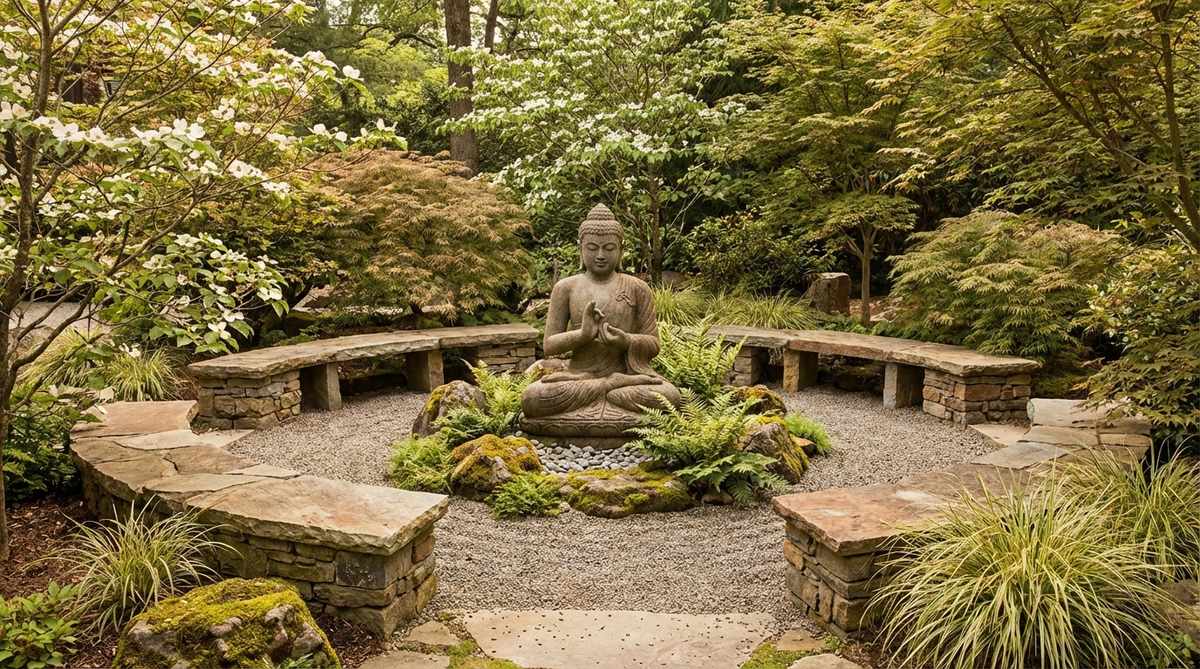
Buddha in the teaching pose displays hands forming the wheel of dharma mudra, symbolizing enlightenment teachings. This statue works particularly well in gardens designed for group meditation or educational purposes.
Create a semi-circular seating arrangement facing the statue to facilitate outdoor dharma discussions. Natural stone benches or flat boulders provide simple, weather-resistant seating options.
The raised hand gesture naturally draws attention, functioning as both spiritual icon and sculptural focal point.
6. Meditating Monk
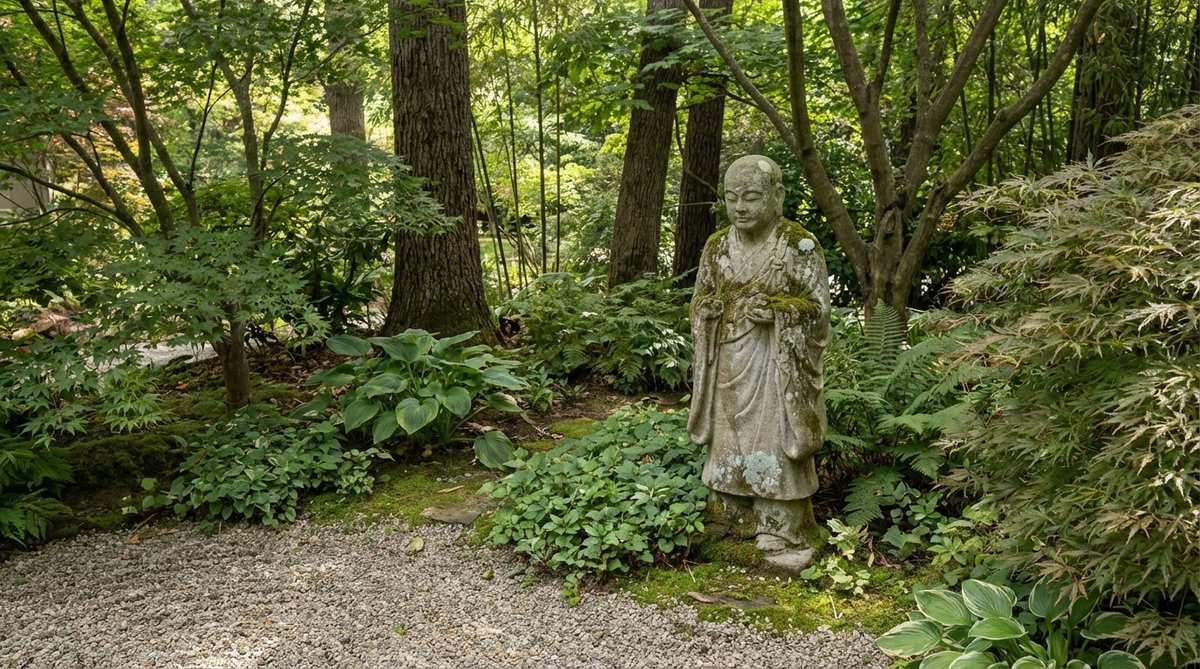
A humble monk statue in traditional robes adds authenticity and human scale to your zen garden. These figures typically display simpler craftsmanship than Buddha statues, emphasizing mindfulness practice over divine presence.
Tuck into quiet corners surrounded by moss and shade plants for discovered moments of reflection. The modest scale encourages visitors to pause and look closely rather than viewing from a distance.
Stone or ceramic materials age gracefully, acquiring moss and lichen growth that enhances their contemplative character.
7. Thai Walking Buddha
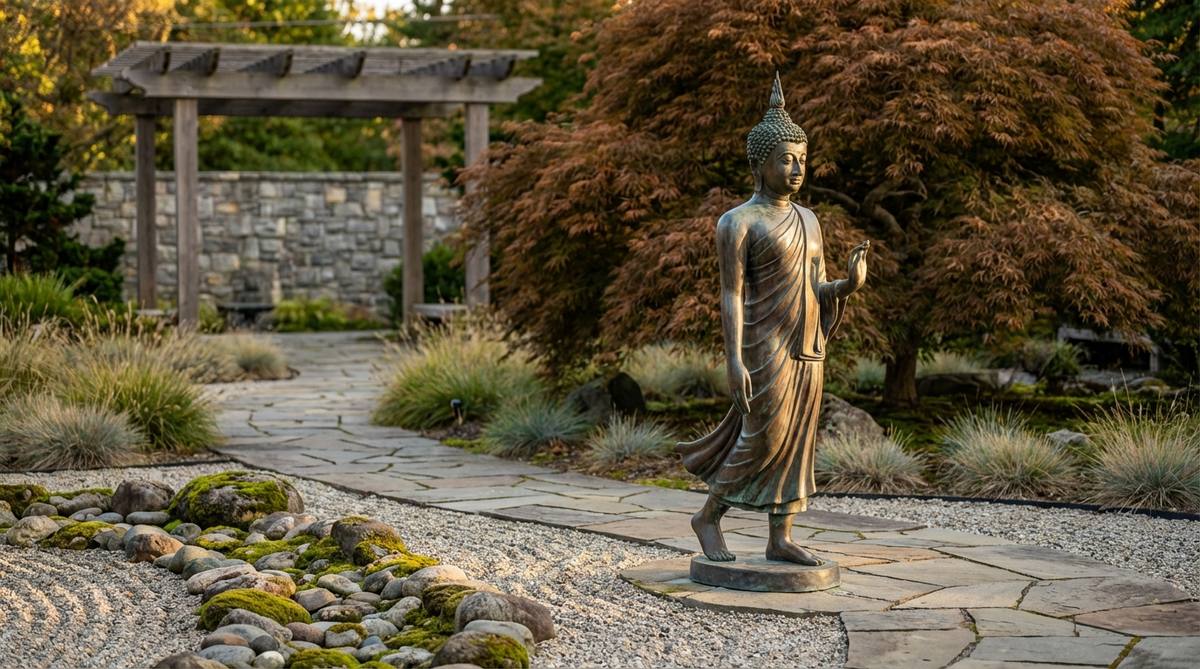
The distinctive Thai walking Buddha captures motion frozen in stone, with one foot raised and robes flowing backward. This dynamic pose represents the journey toward enlightenment as active engagement rather than passive waiting.
Position along pathways to reinforce themes of spiritual journey and mindful movement through space. The forward lean creates visual momentum that guides visitors deeper into the garden.
Bronze versions allow fine detail in fabric folds and facial features that bring the sculpture to life.
8. Medicine Buddha
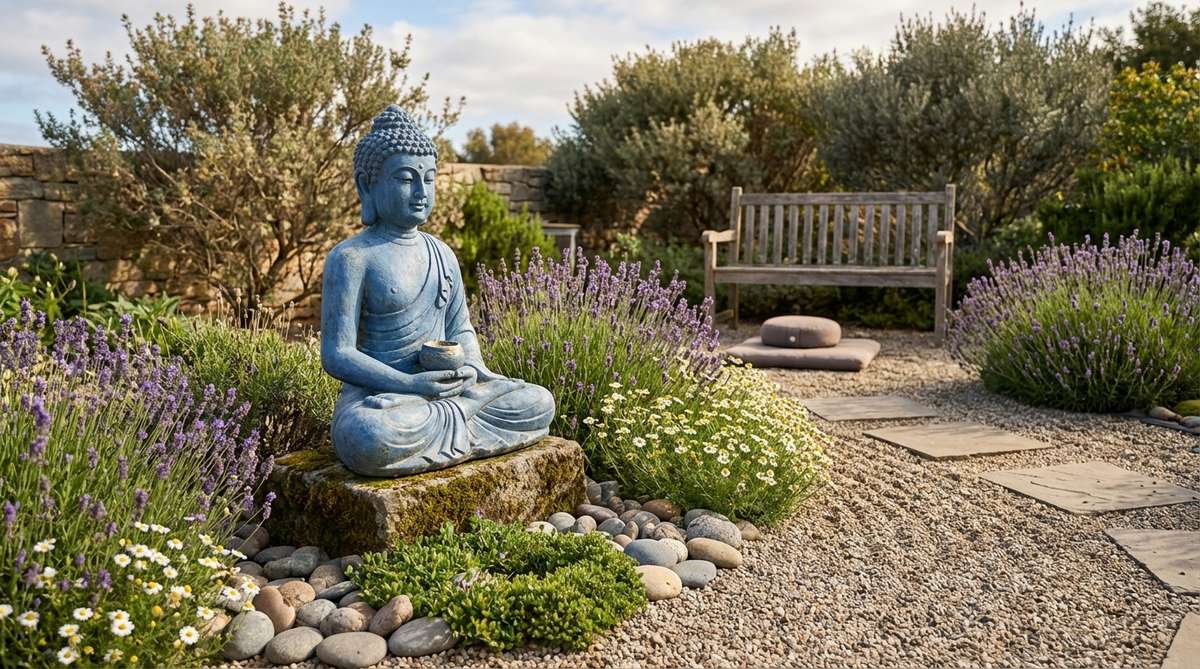
The Medicine Buddha in characteristic blue coloring holds a healing bowl, bringing themes of wellness and restoration to garden sanctuaries. Lapis lazuli inlays or painted stone finishes achieve the traditional blue appearance.
Incorporate near meditation spaces designed for healing practices or stress relief. Surround with medicinal herbs like lavender or chamomile to reinforce therapeutic intentions.
The right hand in blessing mudra directs healing energy outward into the surrounding garden environment.
Modern Abstract Zen Garden Sculpture
Contemporary abstract sculptures reinterpret zen principles through minimalist forms and innovative materials. These pieces bridge traditional Eastern philosophy with Western modernist aesthetics.
9. Stone Spiral Sculpture
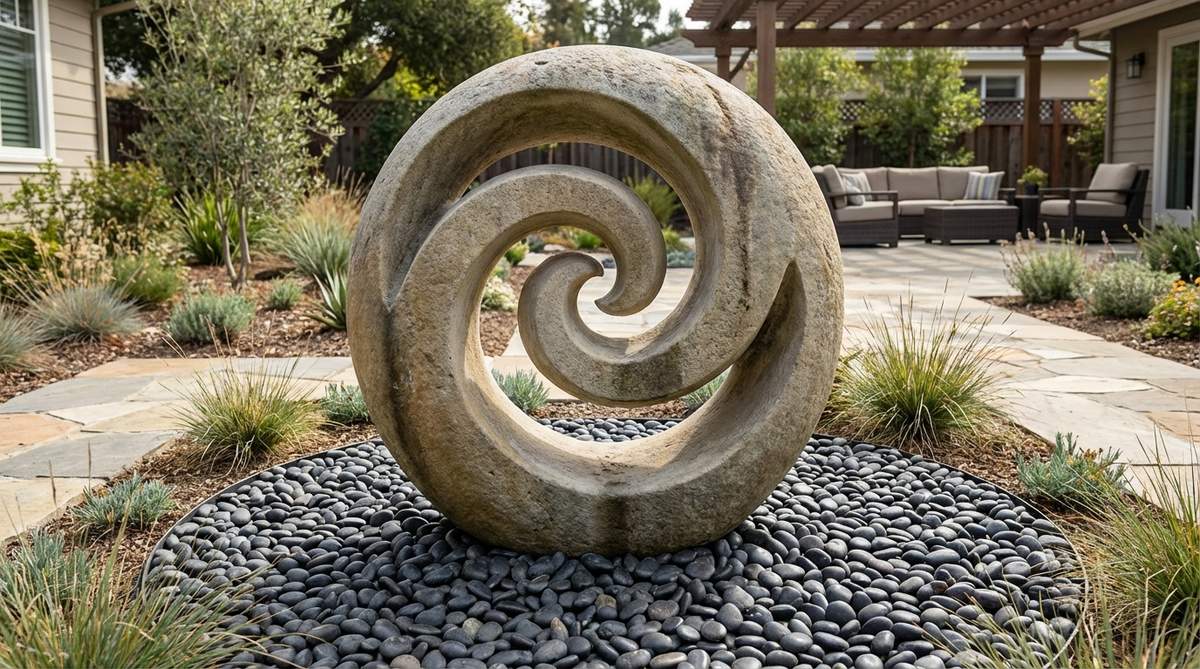
A carved stone spiral represents the continuous journey of meditation and life’s cyclical nature. The flowing form lacks beginning or end, embodying infinity and eternal return.
Place within polished black pebble beds for dramatic contrast that emphasizes the sculpture’s curves. Lighting from below after dark creates shadow patterns that extend the visual impact.
The negative space within spirals holds equal importance to the stone itself, teaching lessons about emptiness and fullness.
10. Abstract Stone Figure
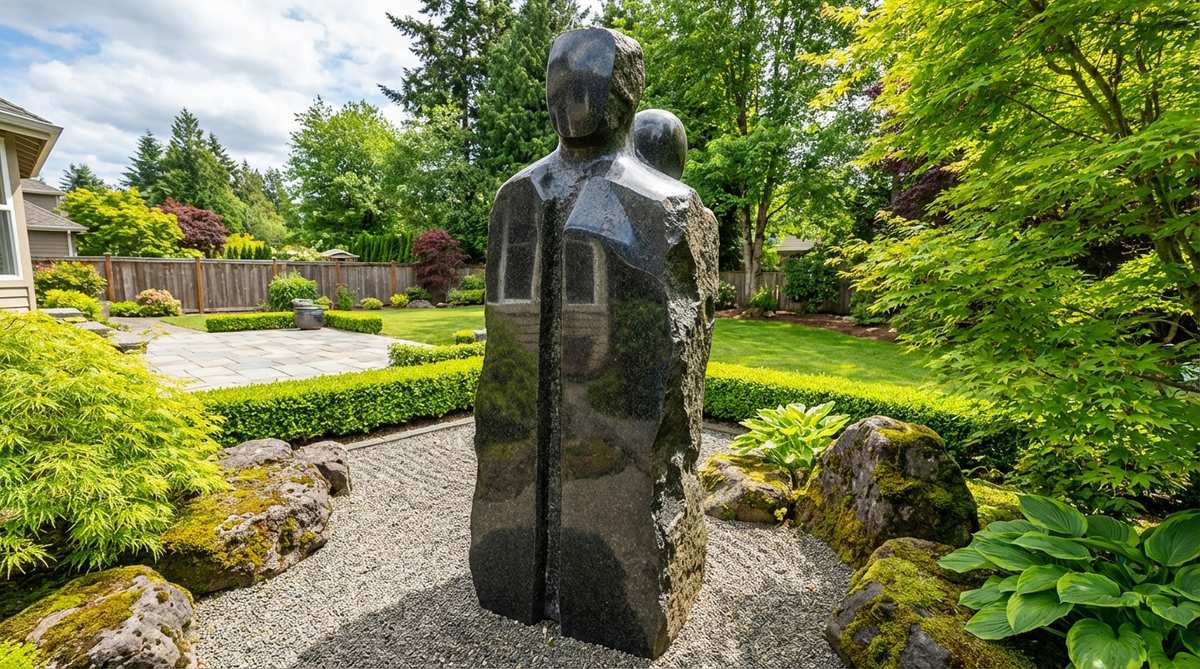
Simplified human forms carved from dark granite stand as powerful vertical elements with minimal detail. Smooth surfaces catch and reflect light differently throughout the day, creating ever-changing visual experiences.
These imposing figures work best as singular focal points rather than grouped installations. Their ambiguous features allow viewers to project personal meaning and interpretation.
The contrast between dark stone and bright green surroundings intensifies both elements.
11. Stacked Stone Cairn
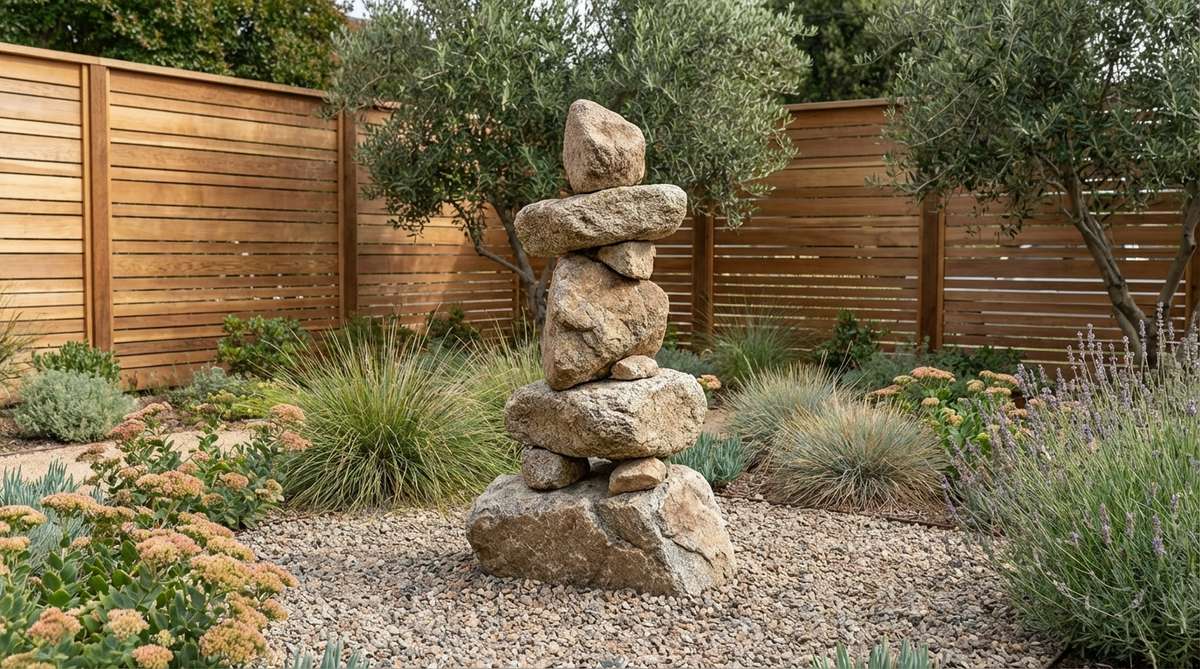
Balanced rock cairns demonstrate harmony achieved through careful attention and patient adjustment. Each stone supports and depends on others, visualizing interconnection and interdependence.
Create permanent versions using discreet adhesive or mortar, or leave naturally balanced for impermanence lessons. Visitors often feel compelled to build their own temporary cairns nearby.
Vary stone sizes from large base rocks to small cap stones for visual stability and architectural interest.
12. Geometric Metal Sculpture
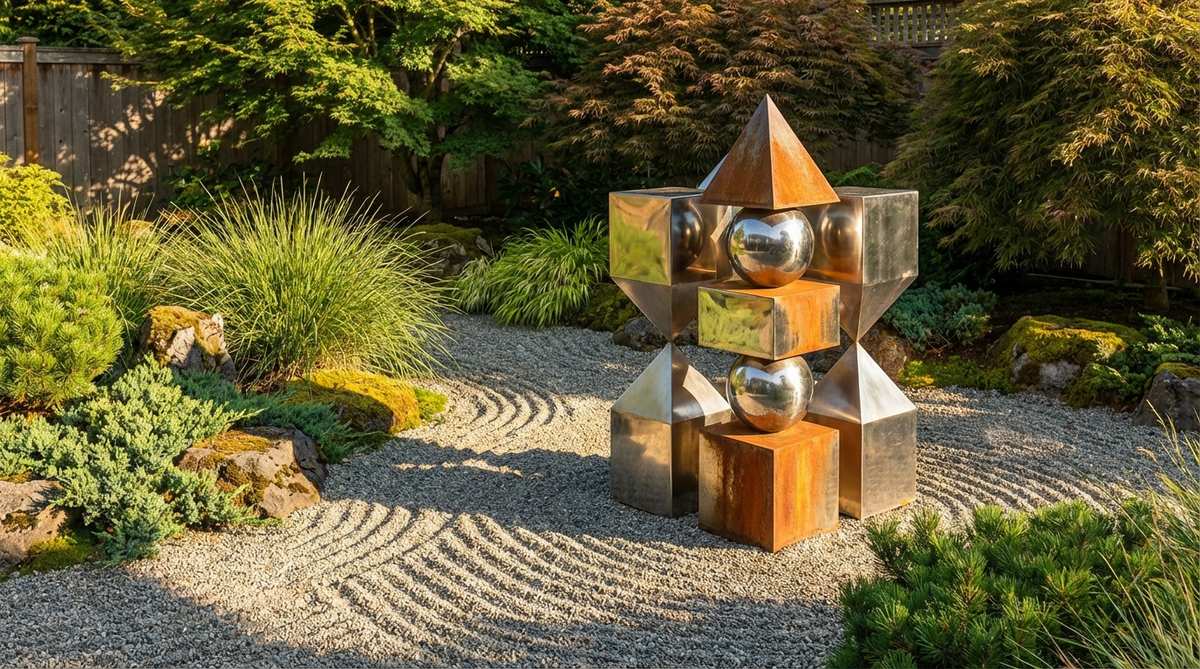
Stainless steel geometric forms introduce contemporary industrial aesthetics to organic garden settings. Polished surfaces mirror surrounding vegetation, creating visual dialogue between manufactured and natural elements.
Cube, sphere, and pyramid shapes reference sacred geometry and universal mathematical principles. Weathering steel develops rich rust patinas that warm the metallic coldness.
Position to catch morning or evening sun for dramatic shadow play across raked gravel.
13. Abstract Wave Form
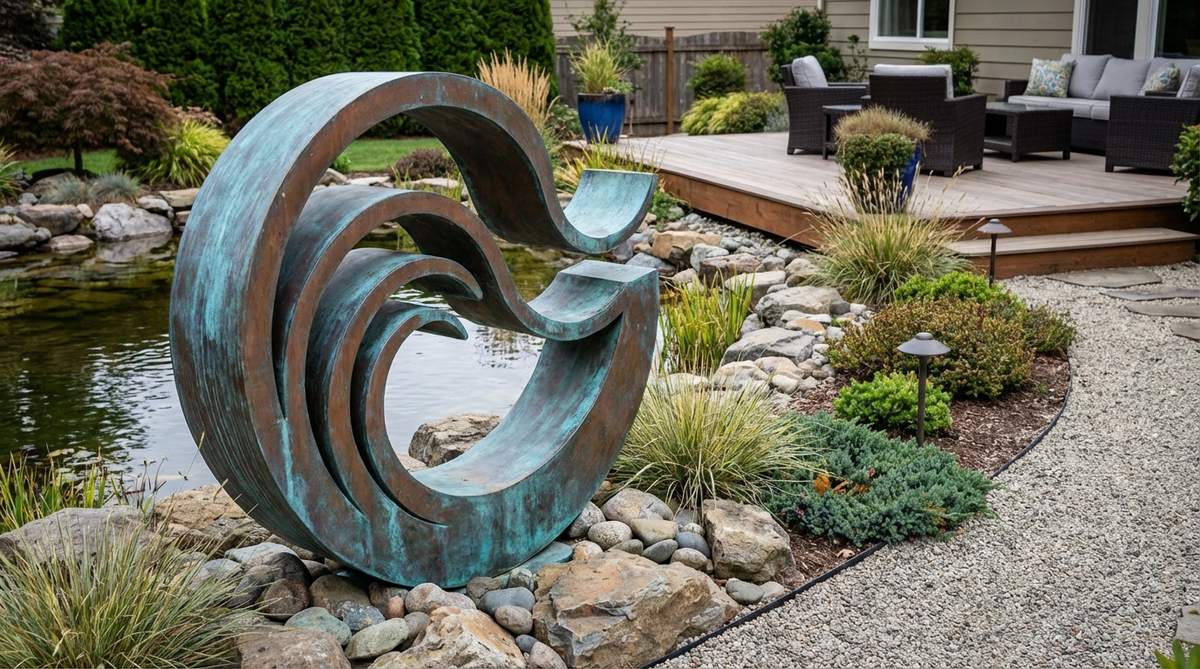
Flowing sculptural curves suggest water movement frozen in stone or metal. These dynamic forms bring energy and motion to static garden compositions.
Install near actual water features to reinforce aquatic themes, or use in dry gardens as symbolic water representations. Bronze or weathered copper finishes age to blue-green hues that suggest aged water stains.
Multiple wave forms at different scales create rhythm and visual progression through space.
14. Minimalist Cube Installation
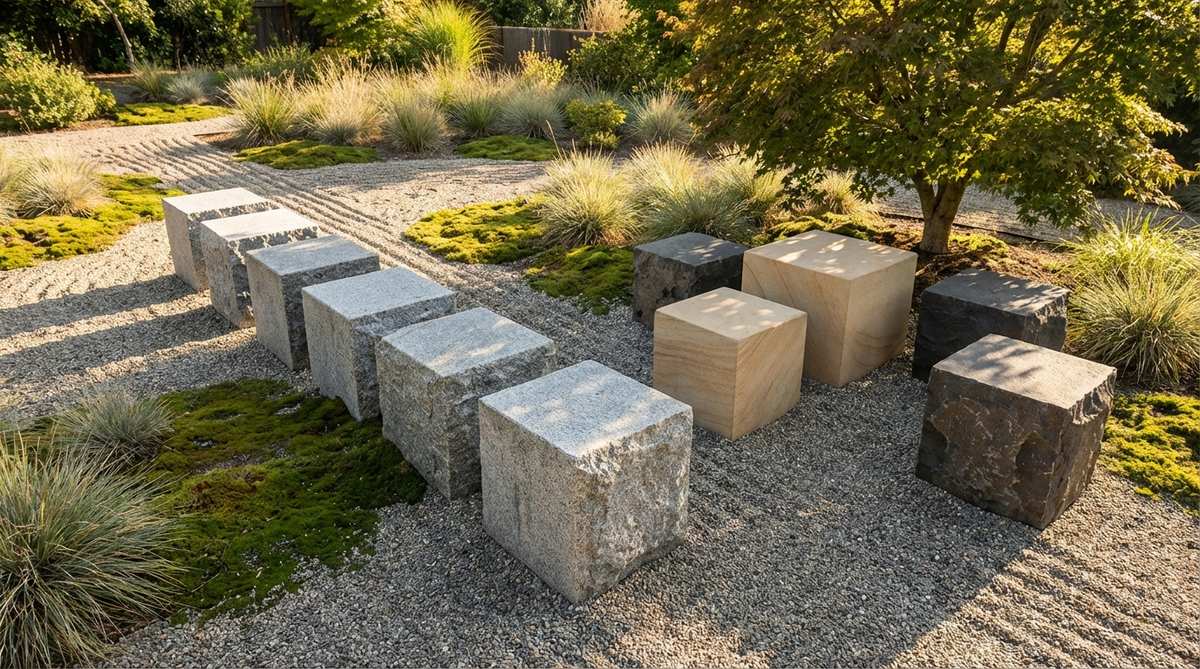
Simple stone cubes arranged in thoughtful patterns demonstrate how repetition and variation create interest from basic forms. The severe geometry contrasts productively with organic plant shapes.
Experiment with grouping—linear arrangements guide movement, while clustered installations invite circular viewing. Different stone types within identical forms add subtle complexity.
These sculptures function equally well as seating elements, blending practical utility with aesthetic purpose.
15. Totem Pole Sculpture
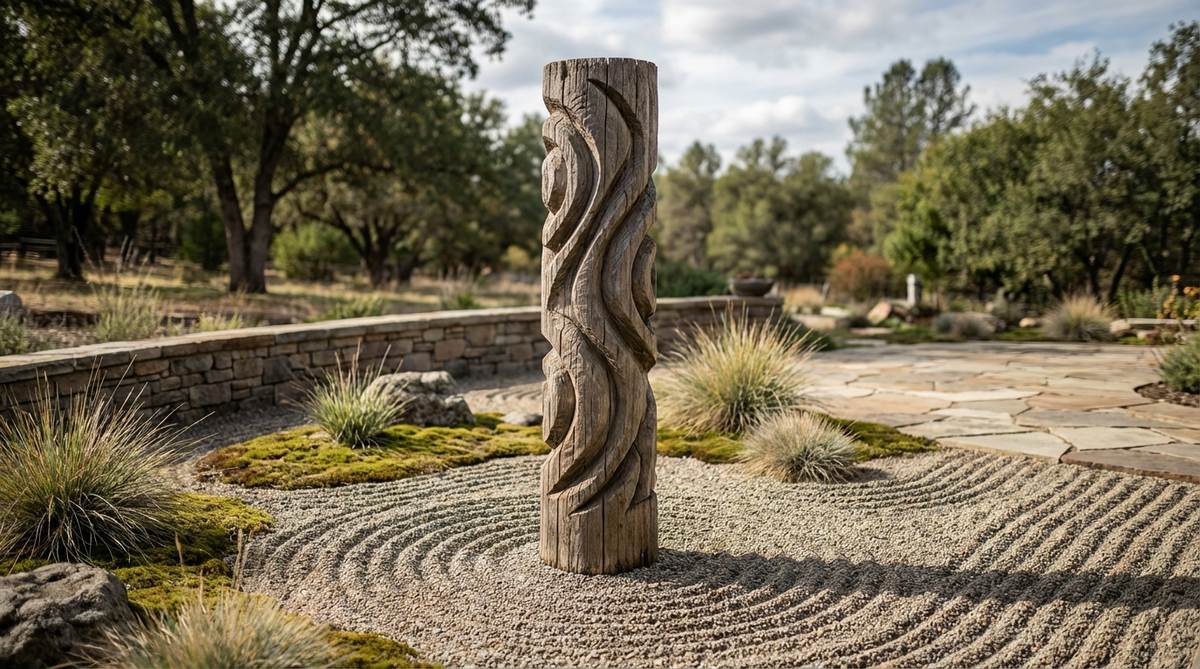
Vertical totem structures carved with abstract symbols create strong vertical accents in horizontal gardens. Weathered wood or stone columns develop character through seasonal exposure.
Hand-carved marks and tool textures add human presence without literal representation. These pieces ground sky and earth, emphasizing the vertical axis of existence.
Position singly for dramatic impact or in small groves to suggest ancient ritual sites.
16. River Stone Sculpture
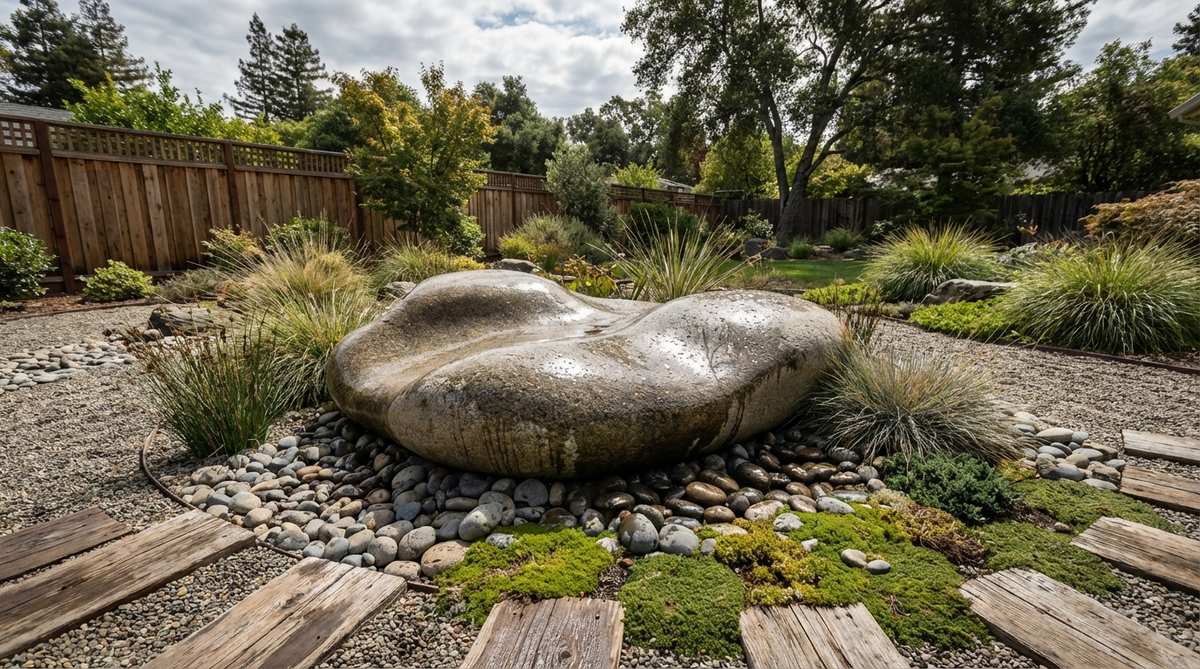
Smooth river pebbles shaped like oversized beach stones bring tactile appeal and organic curves. These sculptures mimic nature’s patient erosion process through human craftsmanship.
Polished granite or marble versions reflect light beautifully when wet, encouraging interaction with garden irrigation and rainfall. The generous curves invite touch and physical connection.
Group multiple sizes together to suggest natural stone deposits shaped by ancient water flow.
Japanese Architectural Elements and Stone Lanterns
Traditional Japanese garden architecture provides both illumination and symbolic meaning through carefully designed stone structures. These elements originated in temple grounds before becoming essential zen garden decor.
17. Yukimi Snow-Viewing Lantern
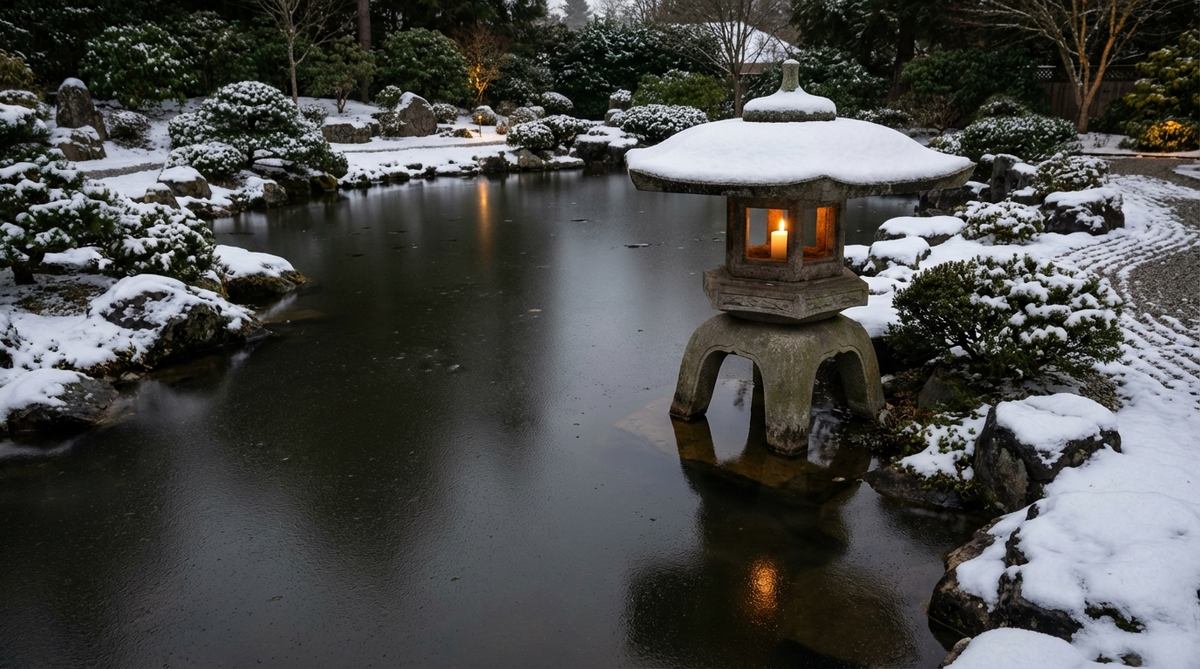
The yukimi doro features a large curved roof and hexagonal fire box supported by three or four curved legs. This distinctive 17th-century design originally marked water’s edge for nighttime navigation.
Place at the intersection of land and water elements—the broad roof catches snow beautifully and reflects candlelight onto dark water. The name literally translates to “snow-viewing lantern” for its winter aesthetic appeal.
Cast stone versions weather authentically while maintaining structural integrity through decades of freeze-thaw cycles.
18. Pagoda Lantern
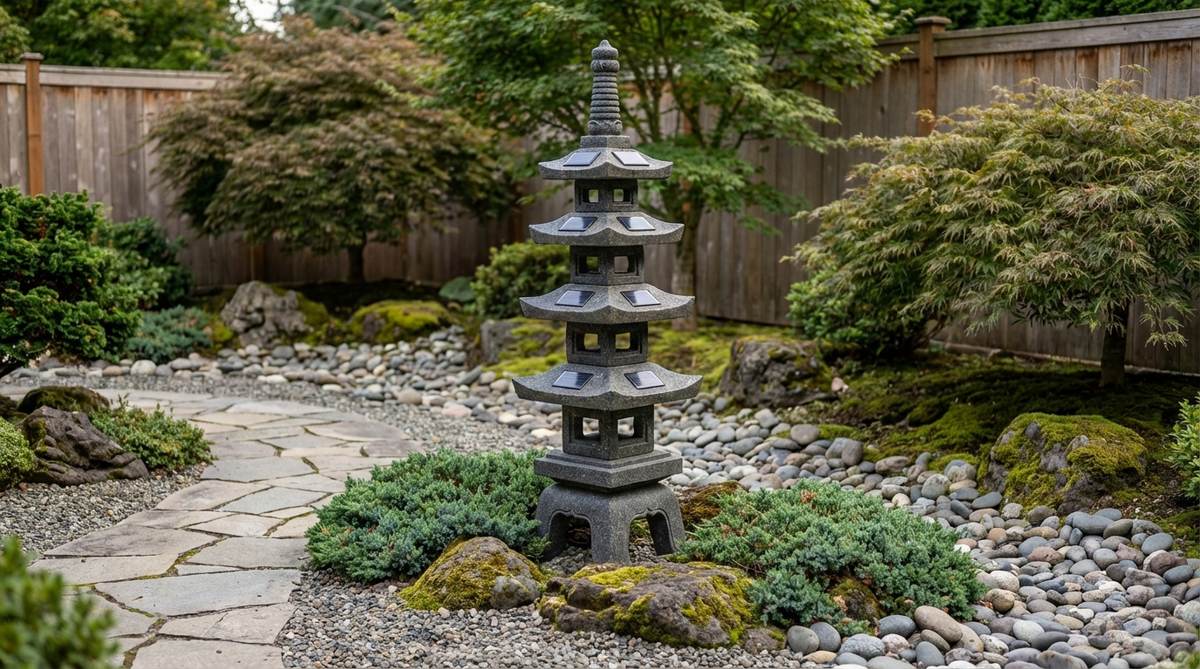
Multi-tiered pagoda structures reference Buddhist temple architecture and sacred relic housing. The ascending levels symbolize spiritual elevation and the path from earthly concerns toward enlightenment.
Position these vertical elements to balance horizontal garden expanses or anchor pathway intersections. Solar panels hidden within modern versions provide gentle evening illumination without electrical infrastructure.
The repetitive tier structure creates rhythm and emphasizes upward movement of spiritual aspiration.
19. Kasuga Lantern
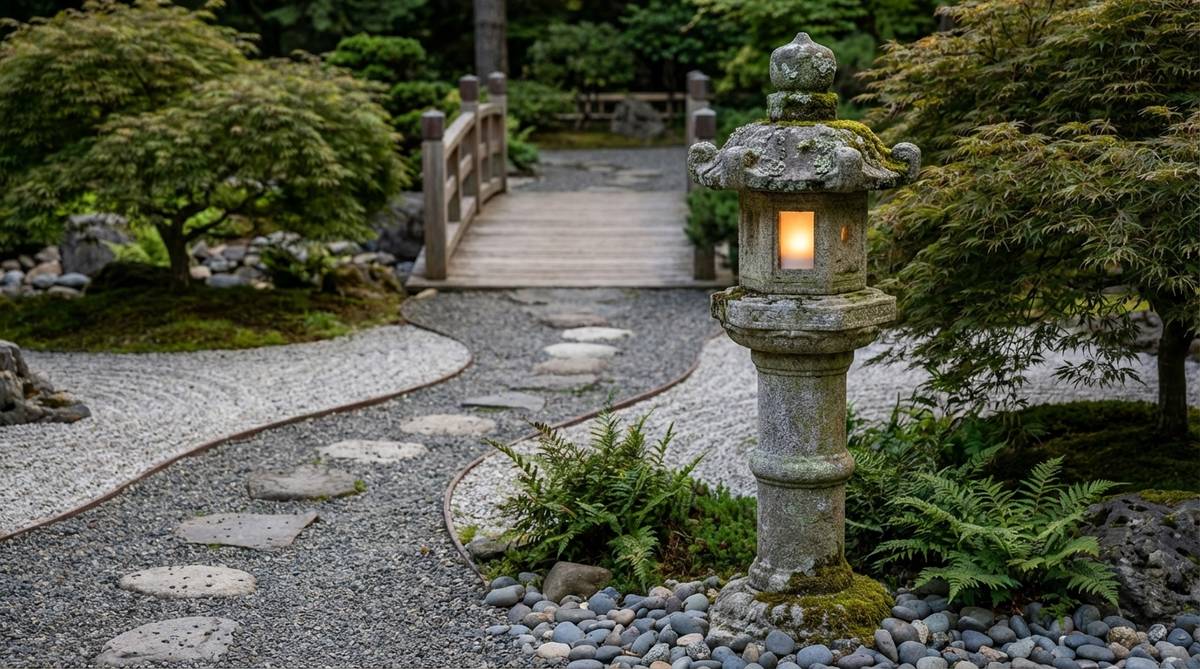
The kasuga style lantern stands tall on a cylindrical pedestal with a rectangular fire box and peaked roof. Originally placed along shrine pathways, these lanterns guide visitors through garden spaces both literally and symbolically.
Install along curves in paths where light will guide nighttime navigation safely. The elevated fire box maintains visibility over low plantings and ground fog.
Granite construction develops lichen growth patterns that authenticate the traditional appearance over time.
20. Oribe Lantern
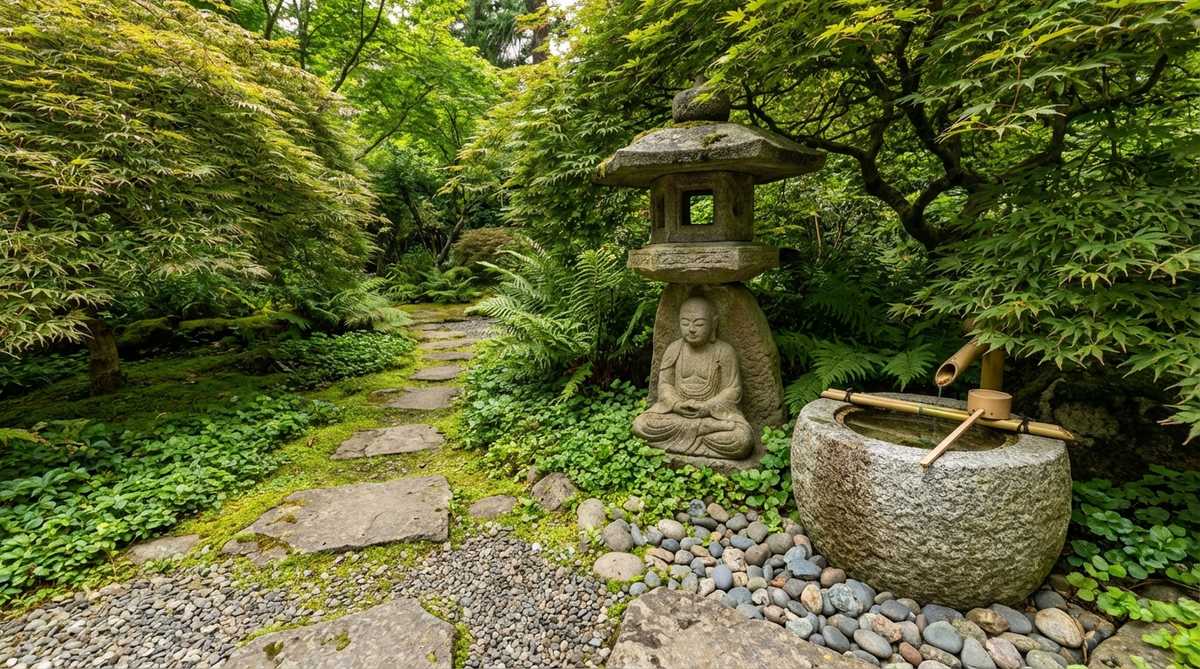
The distinctive oribe lantern includes a carved figure of a cross-legged person as its pedestal, creating sculptural interest beyond pure architectural form. This tea garden favorite adds human scale and narrative element.
Position near stone water basins or along tea garden paths to maintain historical context. The carved figure represents devotion and mindful service.
The irregular shape and human element make oribe lanterns more approachable than formal architectural styles.
21. Stone Pagoda Tower
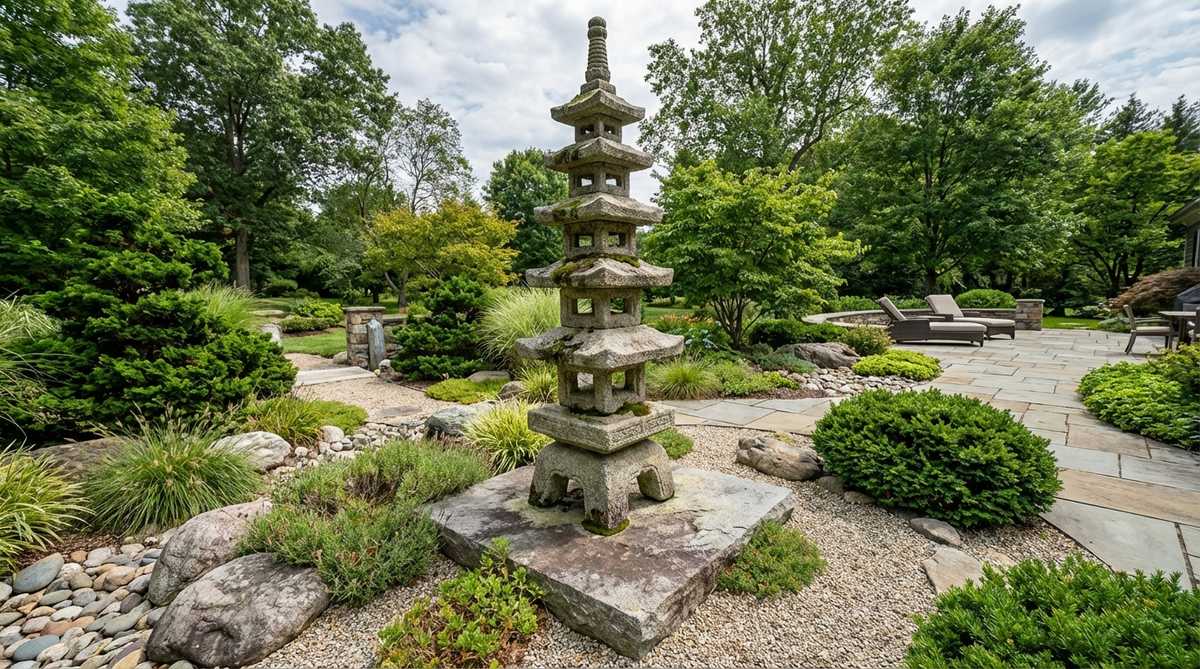
Five-tiered pagoda towers represent the five elements—earth, water, fire, wind, and void—stacked in ascending order. These substantial structures command attention as major garden focal points.
Requires stable foundation work to support considerable weight and prevent settling or tilting. Position centrally or as vista terminators visible from multiple garden vantage points.
Each tier’s proportions follow specific traditional ratios that create visually harmonious progressions.
22. Tachi-Gata Lantern
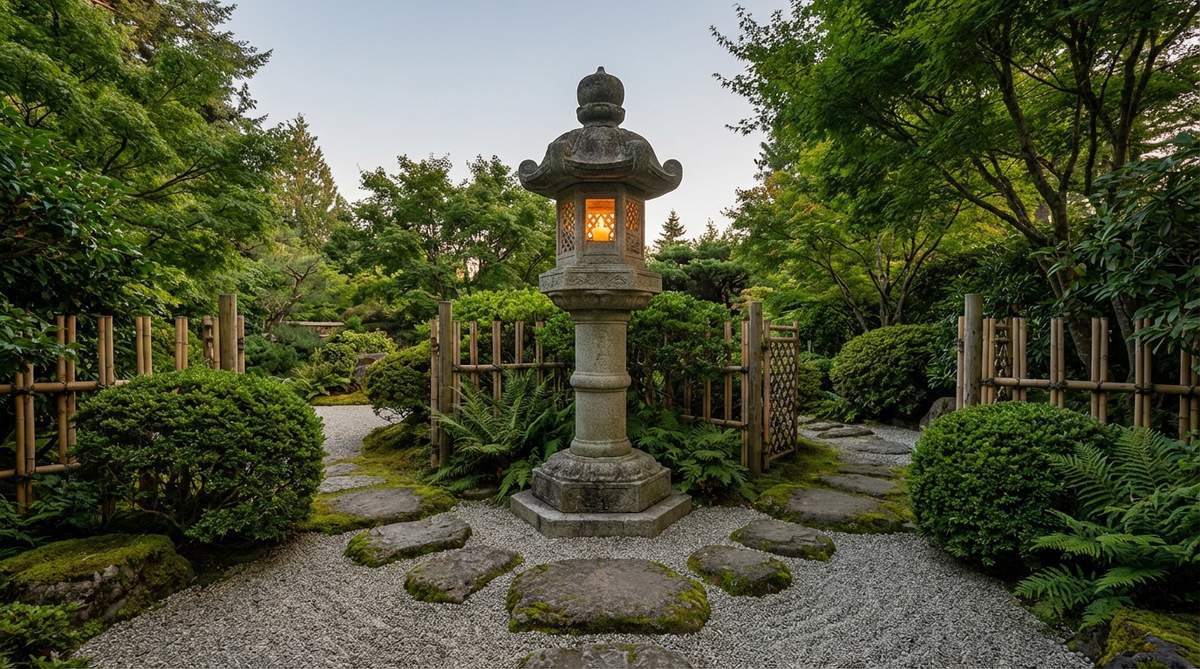
The tachi-gata or “pedestal” lantern stands 6-8 feet tall on a substantial octagonal base, providing illumination at human eye level. This formal style suits ceremonial garden entrances and main focal points.
The impressive height requires proportional surrounding space—cramped placement diminishes impact. Consider sight lines from primary viewing positions when establishing placement.
Intricate carving details in the fire box panels filter candlelight into decorative patterns.
23. Miniature Stone Pagoda
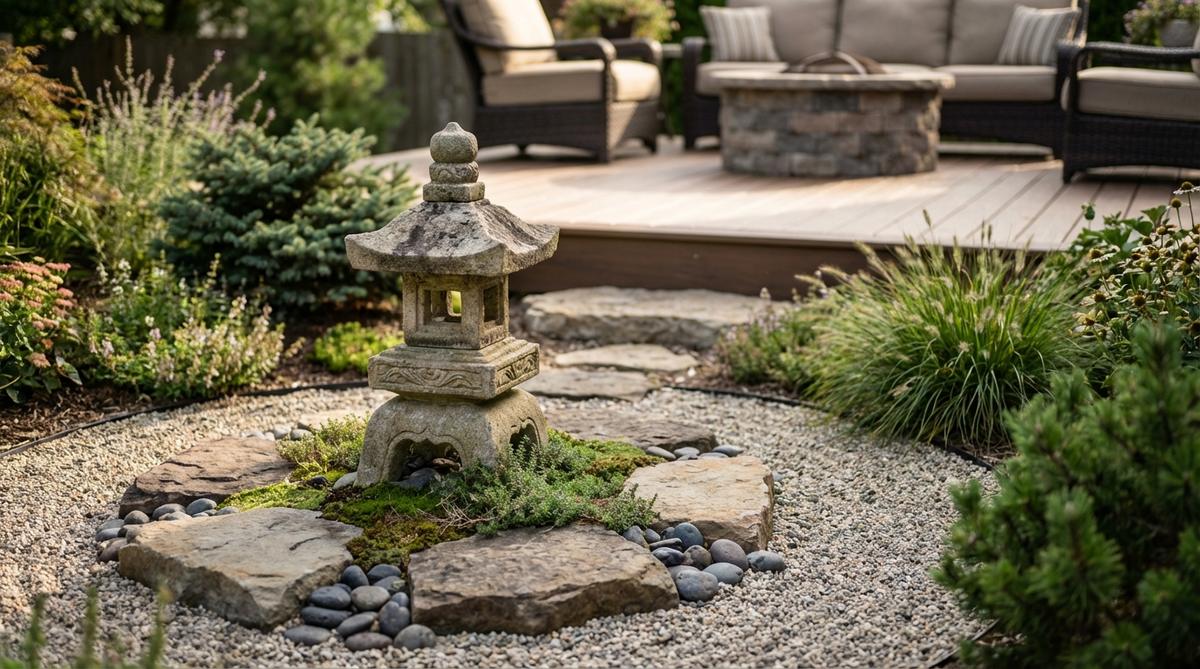
Tabletop-scale pagodas 12-18 inches tall suit smaller gardens and intimate meditation spaces. These condensed versions maintain proper proportional relationships while fitting confined areas.
Group on flat stones or incorporate into rock garden arrangements for layered vertical interest. The reduced scale invites close inspection of carved details often overlooked on larger pieces.
Lightweight construction allows seasonal repositioning to refresh garden compositions throughout the year.
Animal and Mythological Zen Garden Decor
Animal sculptures and mythological creatures introduce symbolic meaning and cultural narratives to zen garden spaces. These figures bridge natural observation with spiritual teachings.
24. Koi Fish Sculpture
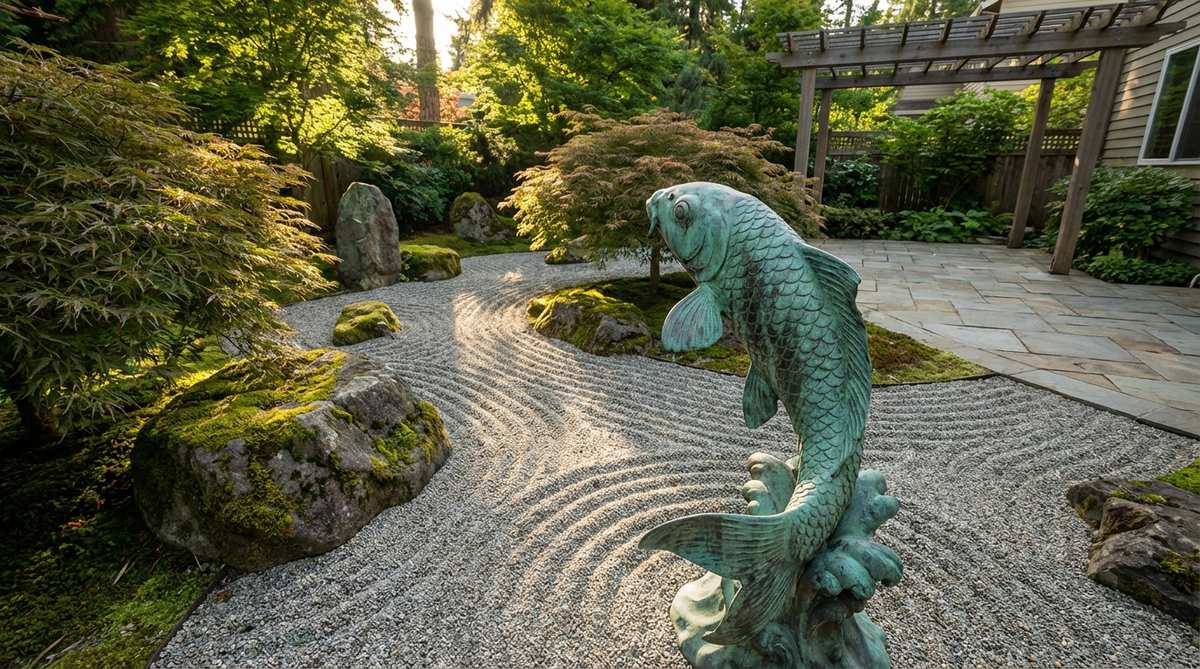
Bronze or stone koi represent perseverance, as these fish famously swim upstream against current. Metallic finishes develop verdigris patinas that suggest aged bronze bells or temple fixtures.
Position emerging from gravel “streams” to suggest fish breaching water surface. Multiple koi at varying heights create dynamic movement through static materials.
The upstream-swimming koi symbolizes determination to overcome obstacles on the path to enlightenment.
25. Crane Sculpture
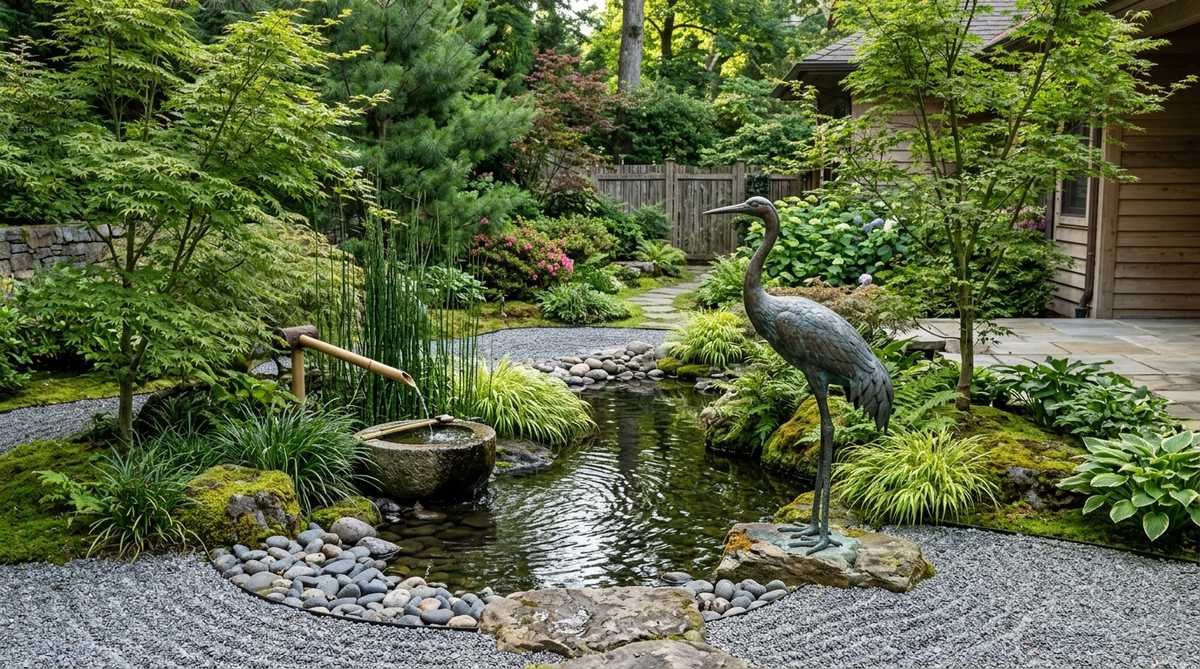
The graceful crane symbolizes longevity, good fortune, and spiritual elevation in Asian traditions. Tall-legged bronze cranes introduce elegant vertical lines that complement horizontal garden planes.
Place near water features where actual cranes might naturally hunt, reinforcing realistic habitat associations. The extended neck and watchful posture suggest vigilant awareness and mindfulness.
Pair sculptures with actual crane-attracting plants to blur boundaries between art and living garden elements.
26. Dragon Sculpture
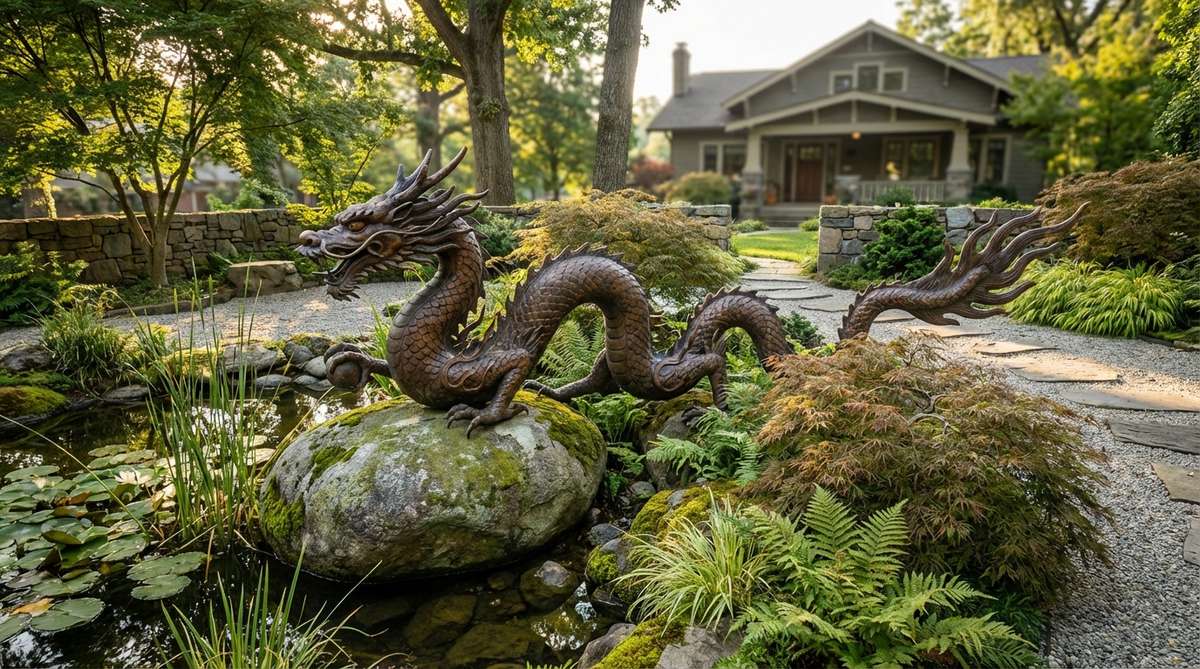
Eastern dragons represent wisdom, power, and nature’s forces—fundamentally different from Western dragon mythology. Serpentine forms wind through plantings or coil around stone arrangements.
Weathered bronze dragons develop rich brown and green patinas that help them recede into foliage. Position near water elements to honor dragons’ traditional association with rainfall and rivers.
The dragon’s ability to fly and swim represents transcendence of physical limitations and spiritual mastery.
27. Turtle Sculpture
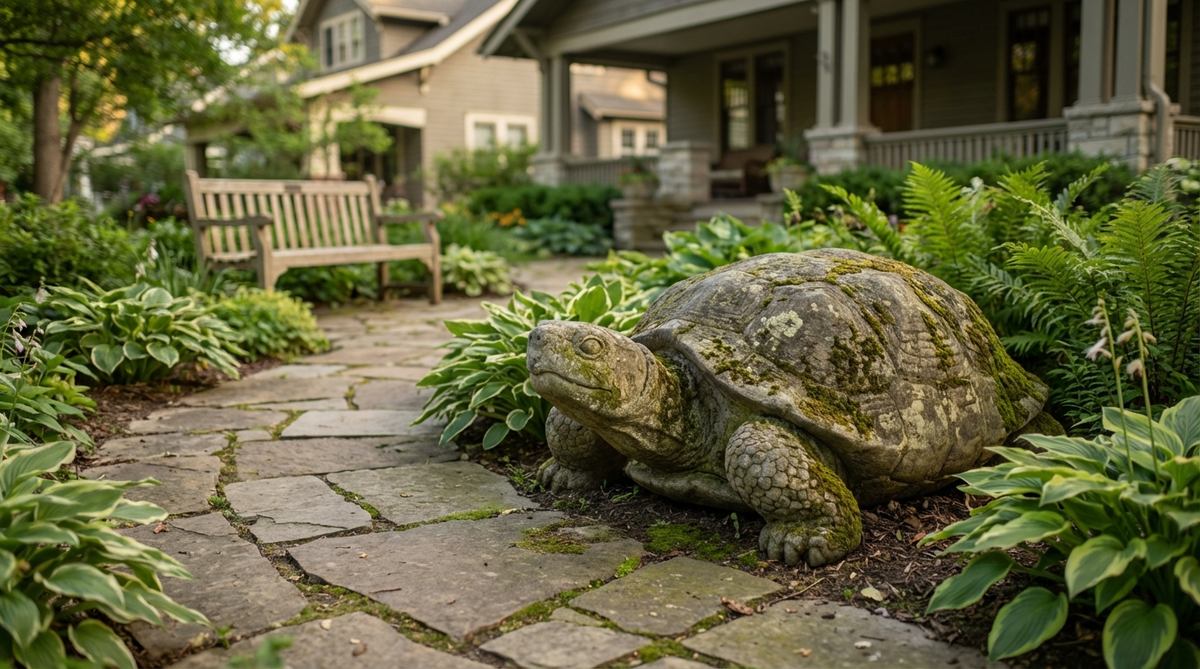
Turtles symbolize longevity, stability, and the world’s foundation in Asian cosmology. Low-profile turtle sculptures suit ground-level placements along pathways or garden borders.
Stone turtles weather naturally and develop moss growth that enhances their ancient character. The slow-moving nature teaches patience and reminds viewers that enlightenment unfolds gradually.
Bronze versions with detailed shell patterns catch light dramatically when positioned in dappled shade.
28. Foo Dog Guardian
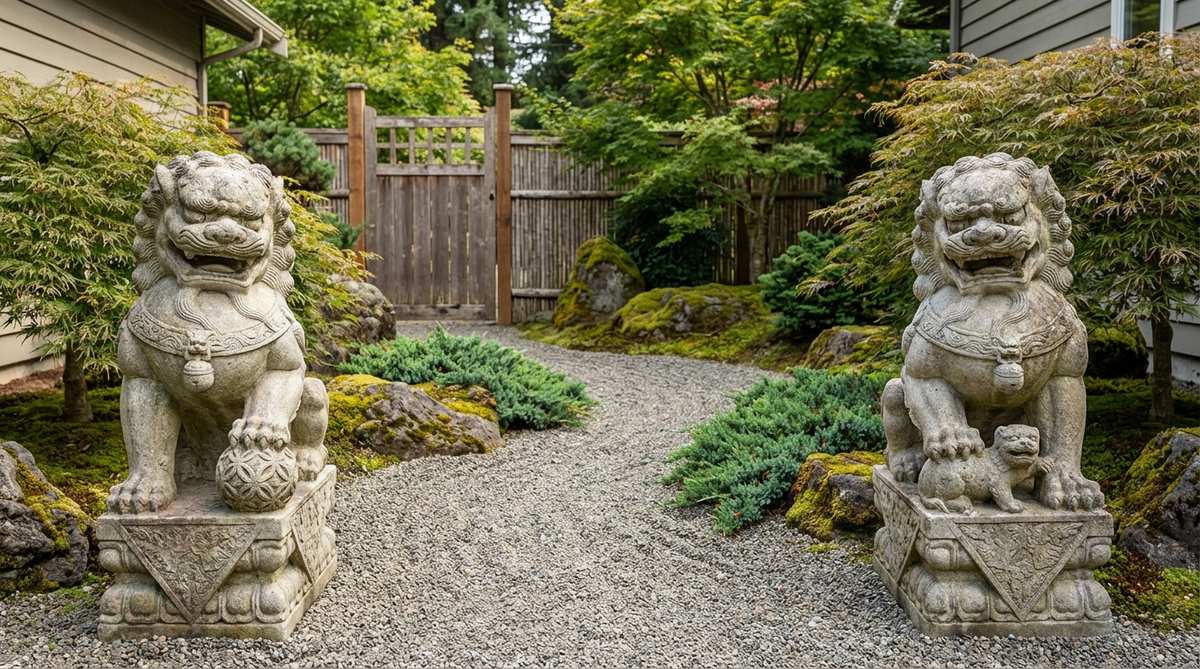
Paired foo dogs or lion-dogs traditionally guard temple entrances, offering protection and warding off negative energy. One typically holds a ball representing unity, the other a cub symbolizing protection.
Position flanking garden gates or pathway entrances to establish boundaries between secular and sacred space. The fierce expressions contrast with inner garden serenity.
These dynamic sculptures introduce motion and energy that activates threshold transitions.
29. Frog Sculpture
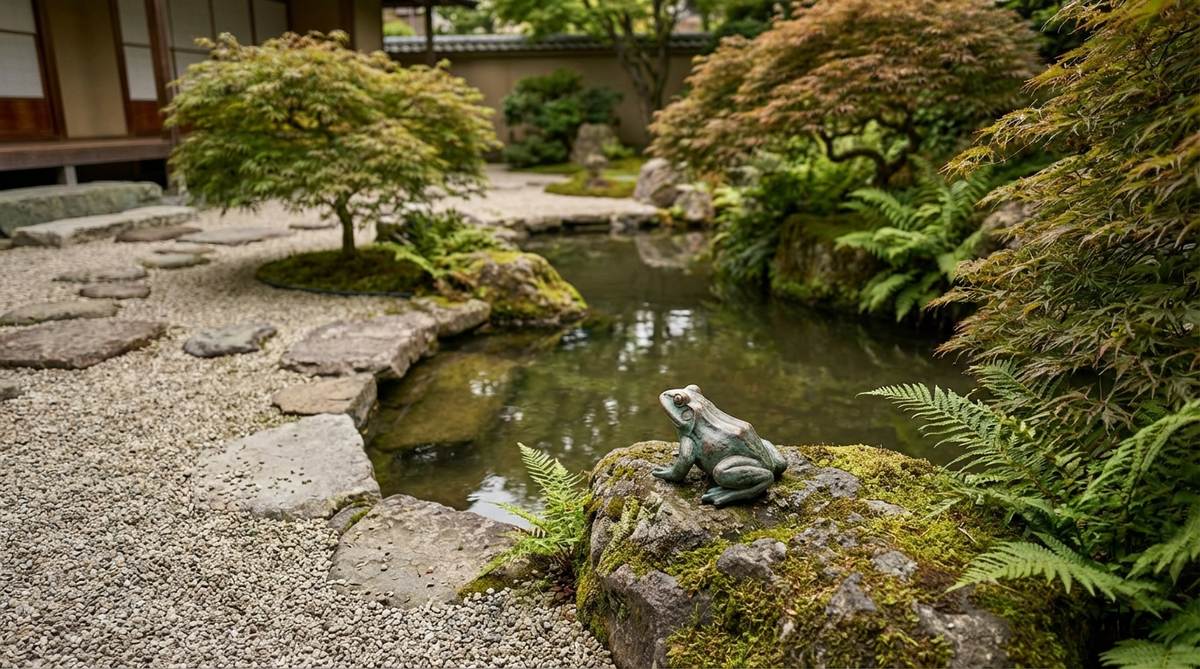
The frog represents transformation and adaptability—moving between water and land realms. Small bronze frogs add whimsy and accessibility to formal zen garden designs.
Cluster near actual ponds to delight visitors discovering sculptural frogs among living ones. The association with water and rain brings auspicious connotations of abundance.
Verdigris patinas on bronze frogs suggest the damp, aquatic environments these creatures inhabit.
30. Elephant Sculpture
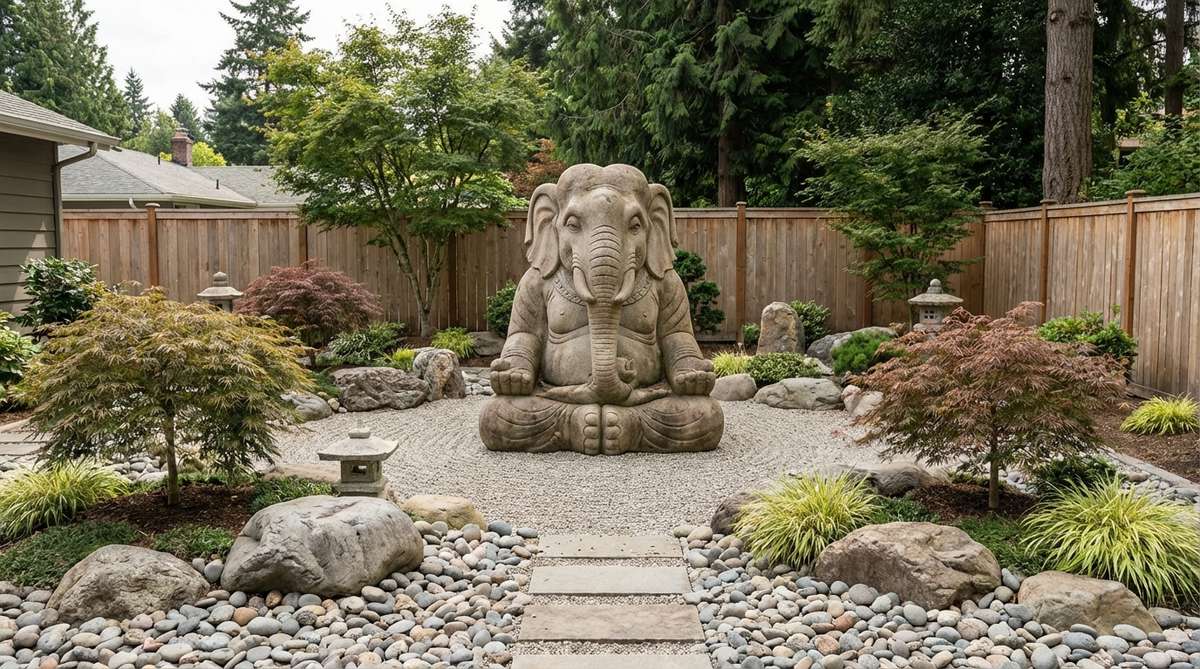
Elephants symbolize wisdom, memory, and patient strength in Buddhist tradition. These substantial sculptures require significant space and serve as commanding focal points.
Stone elephants in meditation poses combine animal and Buddha statue categories, reinforcing themes of mindful awareness extending to all sentient beings.
The massive presence grounds garden energy and provides psychological weight that anchors design composition.
31. Phoenix Sculpture
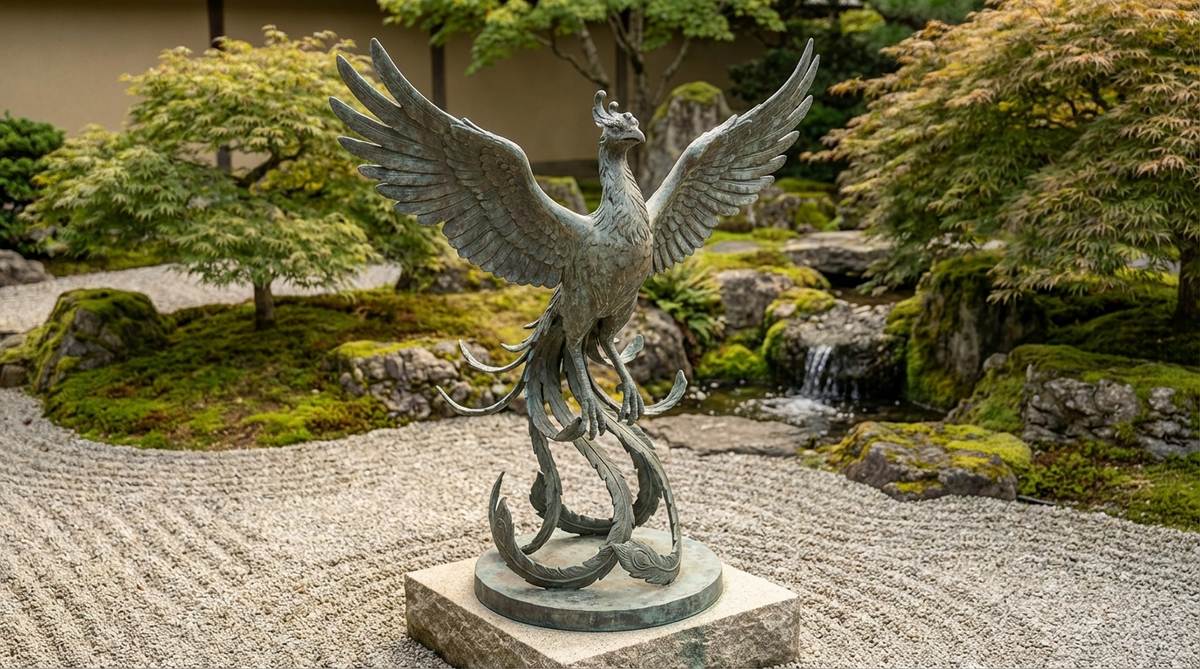
The phoenix represents renewal, transformation, and rising above difficulties. Dynamic bronze castings capture the bird in flight with outstretched wings and flowing tail feathers.
Mount on pedestals or suspend from overhead structures to emphasize aerial grace. The upward movement contrasts productively with downward-oriented gravel raking patterns.
Flame-inspired forms in the tail feathers reference the phoenix’s association with fire and rebirth.
Contemporary Mixed-Media Installations
Modern zen garden sculptures increasingly combine materials and incorporate kinetic elements that respond to environmental conditions. These innovative pieces expand traditional boundaries while maintaining contemplative purpose.
32. Wind Chime Sculpture
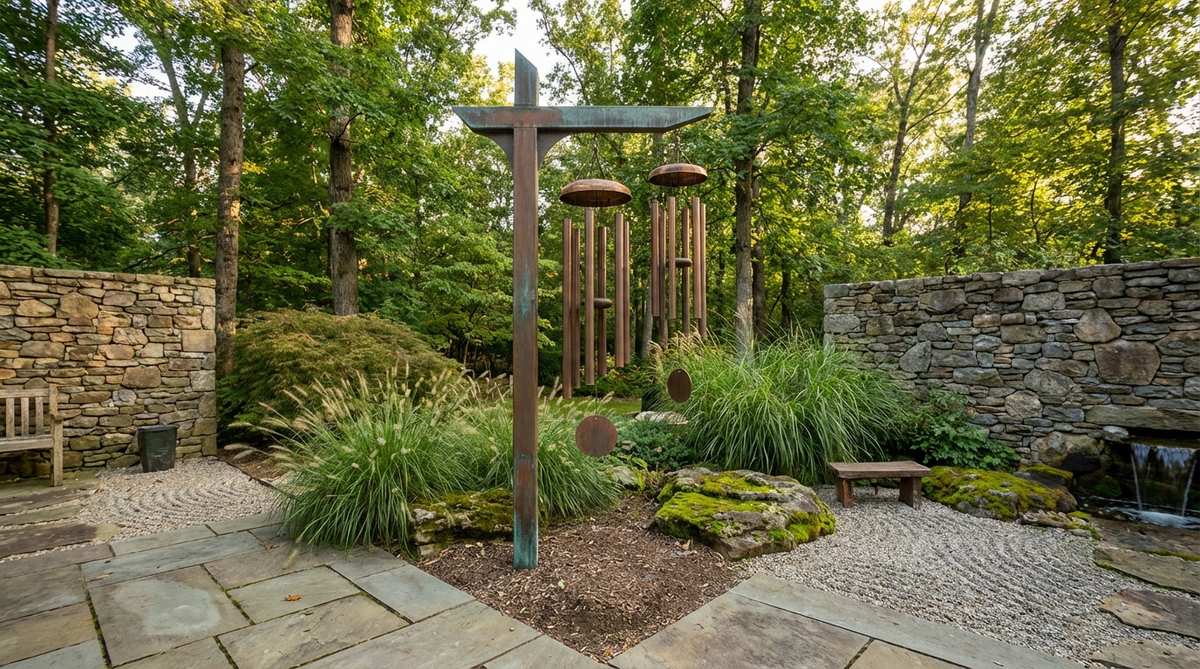
Artistic metal sculptures incorporating tuned wind chimes add auditory dimension to visual garden experience. The gentle sounds enhance meditative atmosphere and mark subtle air movements invisible to the eye.
Position in areas with natural breeze corridors—near garden corners or between buildings where air funnels. The melodic tones blend with rustling leaves and water sounds into cohesive soundscape.
Bronze or copper tubes develop patinas while maintaining resonant acoustic properties through decades of use.
33. Kinetic Sphere Sculpture
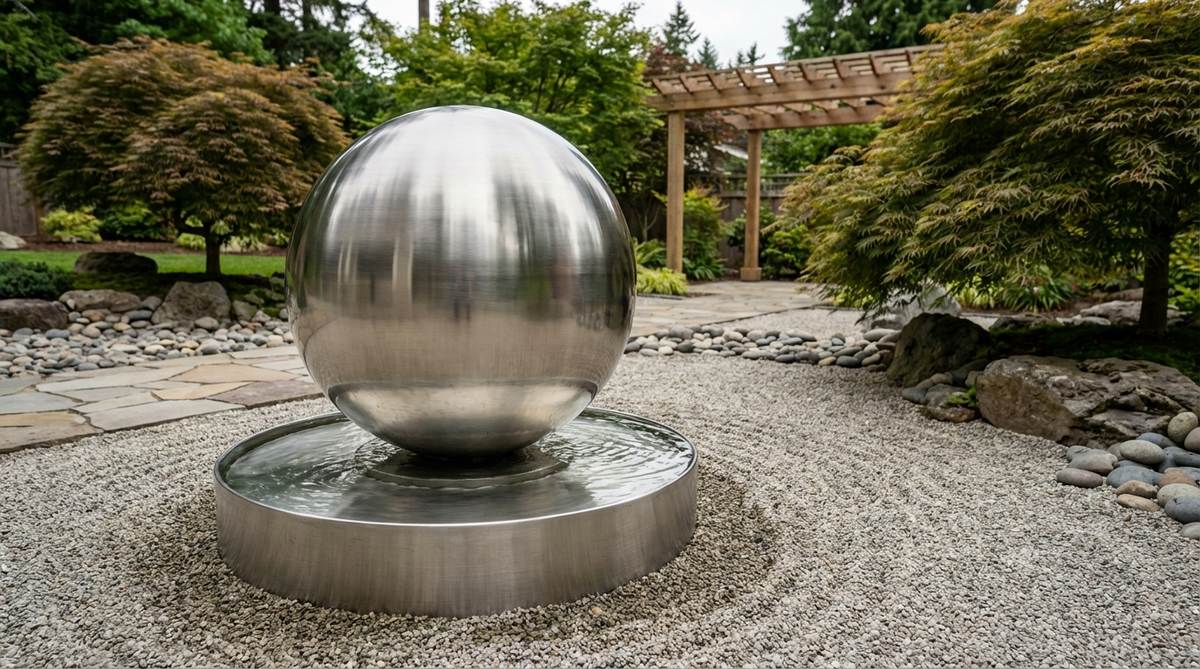
Rotating spheres balanced on water bearings move with wind or water pressure, demonstrating impermanence through constant motion. Polished stone or metal surfaces reflect surrounding garden elements in distorted, contemplative ways.
These interactive sculptures reward touch and engagement while teaching lessons about cause and effect. Minimal friction allows even light breezes to generate visible movement.
The continuous rotation symbolizes life’s cyclical nature and the turning wheel of dharma.
34. Bamboo Water Feature Sculpture
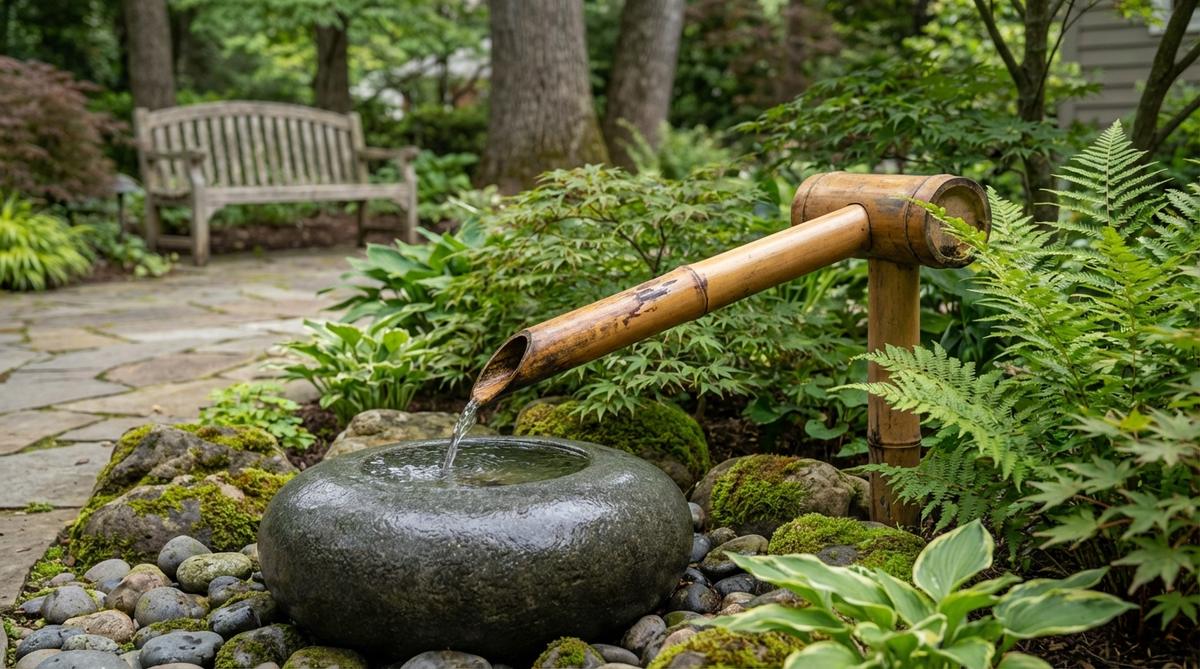
Shishi-odoshi or deer-scarer sculptures combine bamboo pipes with counterweight mechanisms that create rhythmic sounds. Water fills a bamboo segment until it tips, strikes a stone, and resets with a distinctive clack.
The regular percussion marks time passage and returns wandering attention to present moment awareness. Originally designed to startle deer from crops, these features now serve purely contemplative functions.
Natural bamboo weathers to golden tones while maintaining structural integrity for years before requiring replacement.
35. Mirror-Polished Abstract
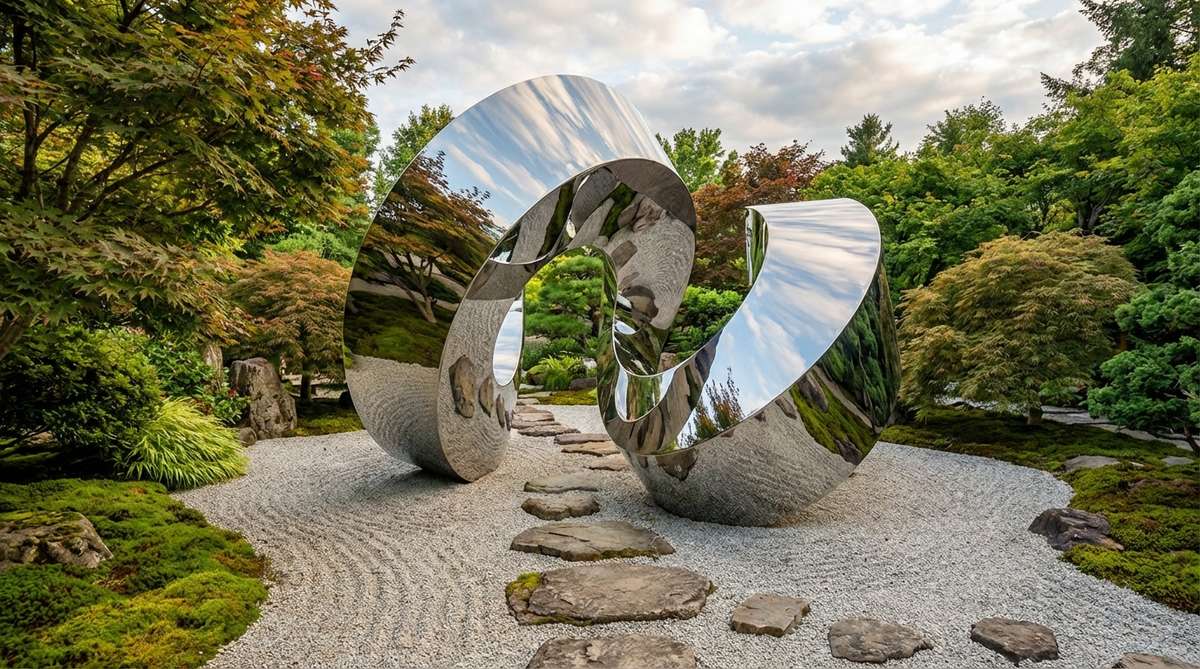
Highly polished stainless steel abstract forms reflect and fragment surrounding gardens into contemplative visual puzzles. The mirrored surfaces dissolve boundaries between sculpture and environment.
These contemporary pieces challenge viewers to see familiar garden elements from radically altered perspectives. Distorted reflections encourage looking beyond surface appearances.
Position where reflected images will capture sky, clouds, and foliage in constantly changing natural light.
36. Zen Garden Jizo Statue
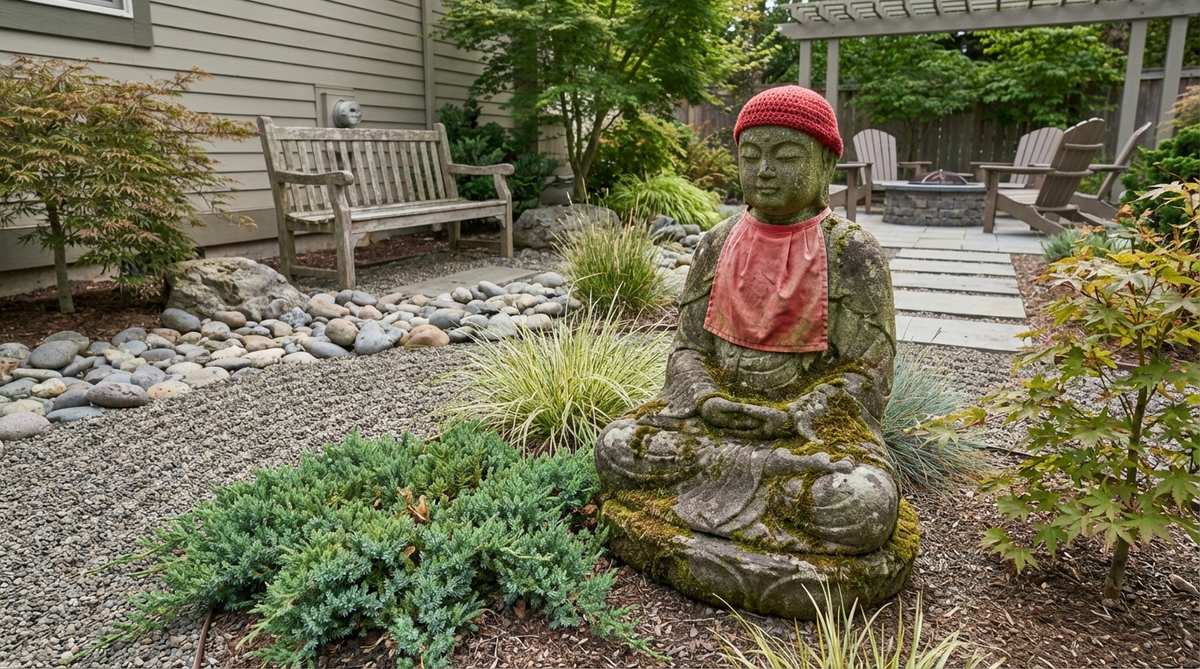
Jizo bodhisattva statues protect travelers and children while offering compassion to all beings. These gentle figures often wear red bibs and caps placed by devotees seeking blessings.
Stone jizo statues weather beautifully and welcome moss growth that adds ancient character. The simple monk’s robes and peaceful expression invite protection and care-taking impulses.
Group multiple jizo figures to create narrative arrangements suggesting community and mutual support.
37. Abstract Bronze Meditation Figure
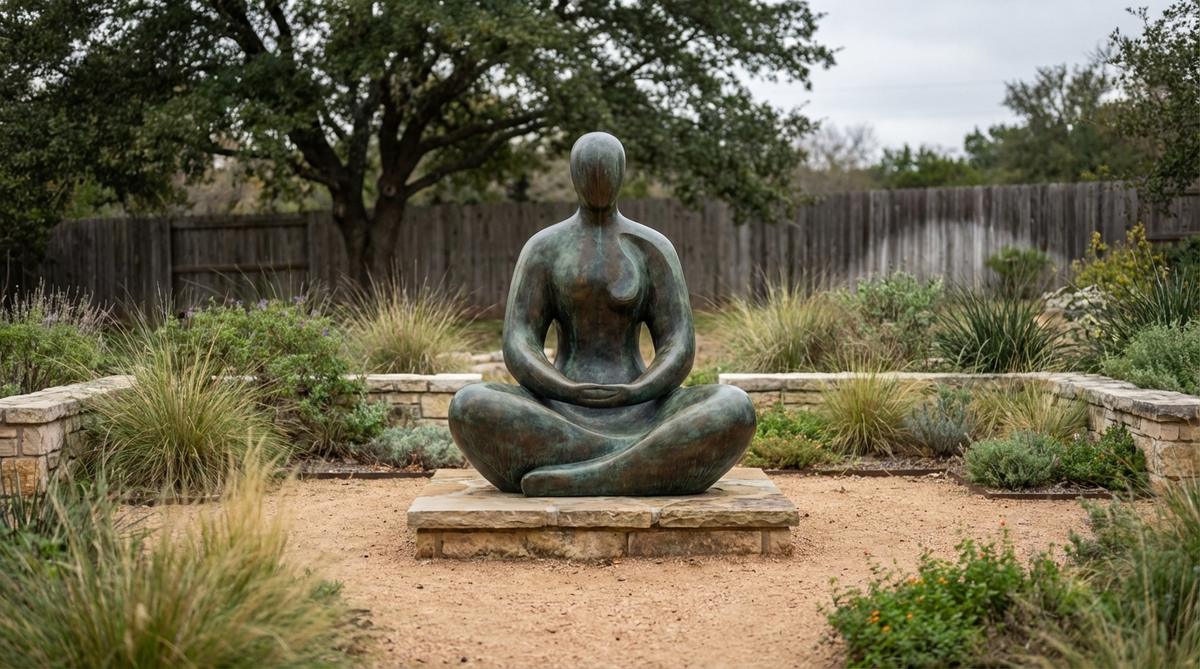
Simplified bronze meditation figures distill human form to essential curves and volumes. The minimal detailing encourages viewers to recognize meditative pose through suggestion rather than literal representation.
These bridging pieces connect traditional Buddha imagery with contemporary sculptural aesthetics. The abstract approach respects multiple spiritual traditions while maintaining contemplative focus.
Bronze patinas develop rich depth that enhances sculptural modeling and surface texture over time.
Bringing It All Together
Selecting the right zen garden statues transforms outdoor spaces into personal sanctuaries for reflection and renewal. Whether you choose traditional Buddha figures that honor centuries of spiritual practice, contemporary abstract sculptures that challenge perception, or classic Japanese architectural elements like stone lanterns, each piece should resonate with your personal aesthetic while serving contemplative purposes. Start with a single focal sculpture positioned thoughtfully, then gradually expand your collection as your garden evolves. Visit Fresh Garden Ideas regularly for more expert guidance on creating outdoor spaces that nourish both eyes and spirit.
Frequently Asked Questions
What materials work best for outdoor zen garden statues?
Granite, lava stone, bronze, and marble offer superior weather resistance for outdoor zen garden statues. Granite withstands freeze-thaw cycles without cracking, lava stone develops attractive moss growth due to its porous surface, and bronze develops rich patinas that enhance sculptural details. Marble requires sealing every 2-3 years but provides elegant smooth finishes. Choose materials based on your climate—coastal areas benefit from corrosion-resistant metals, while cold climates require frost-proof stone selections.
Where should I position Buddha statues in my zen garden?
Position Buddha statues facing east to symbolize enlightenment and new beginnings, placing them as focal points at pathway ends or against natural backdrops of greenery. Elevate statues on platforms or pedestals to increase prominence, or place at ground level for intimate encounters. Incorporate water features or surrounding plantings like moss and bamboo to create contemplative vignettes. Avoid cluttered placements—zen design principles emphasize spaciousness and intentional positioning that invites reflection.
How do I maintain and clean zen garden statues?
Clean stone statues with water and soft-bristled brushes, avoiding harsh chemicals that damage surface finishes. Marble requires gentle cleaning with mild detergent and periodic sealing to prevent staining. Bronze and metal sculptures develop natural patinas that require no maintenance—attempting to polish removes desirable aged appearance. Welcome moss and lichen growth on stone pieces as these enhance authentic character. Perform seasonal inspections to ensure stable positioning and address any settling or tilting issues promptly.
Can I mix traditional Buddha figures with modern abstract sculptures?
Mixing traditional Buddha statues with contemporary abstract sculptures creates dynamic tension that enriches zen garden design. The key lies in maintaining consistent material palettes or color schemes that unify disparate styles—for example, pairing weathered bronze Buddha figures with bronze abstract forms. Vary placement distances so pieces maintain individual presence rather than competing visually. This approach honors spiritual heritage while expressing personal contemporary aesthetic, demonstrating that mindfulness transcends specific artistic styles.
What size statue works best for small zen gardens?
Small zen gardens benefit from statues 12-24 inches tall that provide focal interest without overwhelming limited space. Miniature pagoda lanterns, tabletop Buddha figures, and compact abstract sculptures suit confined areas effectively. Consider vertical elements like tall-but-narrow sculptures that emphasize height rather than width. A single well-chosen piece often works better than multiple small statues competing for attention. Scale appropriately—the statue should feel like a natural garden element rather than dominating the entire view.
Are there specific symbolic meanings for different Buddha hand positions?
Buddha hand positions called mudras convey specific spiritual meanings. The meditation mudra shows hands resting in lap, representing concentration and enlightenment. The teaching mudra forms circles with thumb and fingers, symbolizing the wheel of dharma. The blessing mudra extends one hand outward, offering protection and dispelling fear. The earth-touching mudra reaches toward ground, commemorating Buddha’s enlightenment moment. Choose mudras that align with your garden’s intended purpose—meditation spaces suit contemplative mudras, while garden entrances benefit from protective gestures.